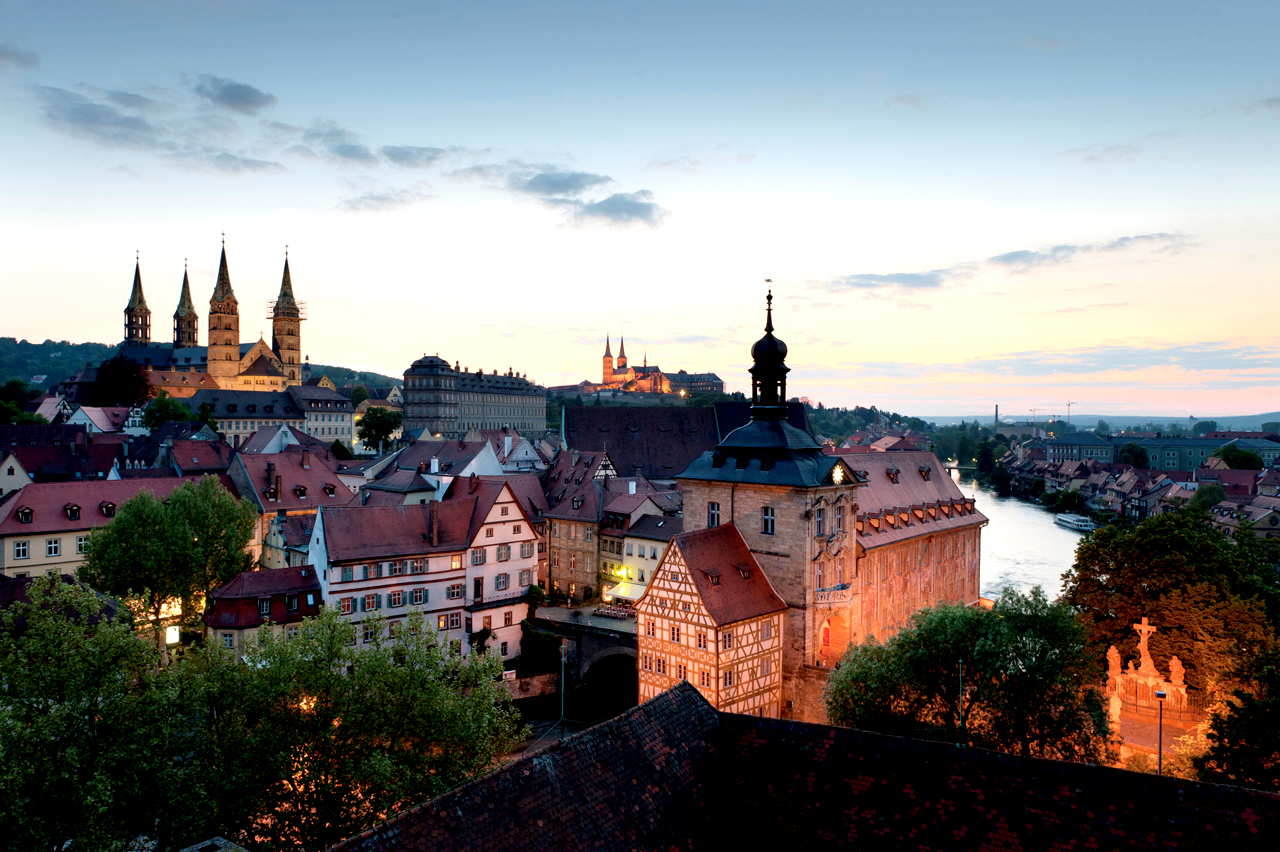
Must See – Bamberg 1

Would this be a new line of posts ?

This year I visited Germany again and after my return many people asked me to provide some information about my travels, places and countries we traveled and lived in. Some of these destinations they might never visit on their own. Especially Uruguayan friends asked that too, to learn about, by example German places which I just visited this year or Australian places, where we lived almost 12 years. I like this idea, to share some memories, experiences and accompanying photographs with all of you.

This won’t be another travel guide, just places I liked and think it is worth to write about. Some can be very well known, others might be not so common. Additional, I will try to keep my basic line, which I follow throughout the whole blog – always many many pics (remember – one picture is better then 1000 words), information about lifestyle and historic backgrounds.
I like to establish a new category and call it „Must See“. That will include, of course, all the „Must See’s“ of Uruguay too. Some posts in this category will be published in several parts, this one, Bamberg, in part 1 and 2.  Click on the pics, most of them super size !!
 

D 1 Bamberg 34

An underestimated German city.

This first post, I decided to publish, is about a city I just visited this year with one of my best friends as a perfect tour guide. This city is very well known, but I think totally underestimated throughout the international tourist population. It is Bamberg.
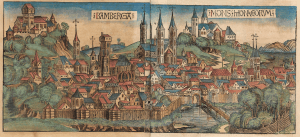
D 1 Bamberg 9 Nuremberg Chronicle 1493  Bamberg shown in the Nuremberg Chronicle 1493.
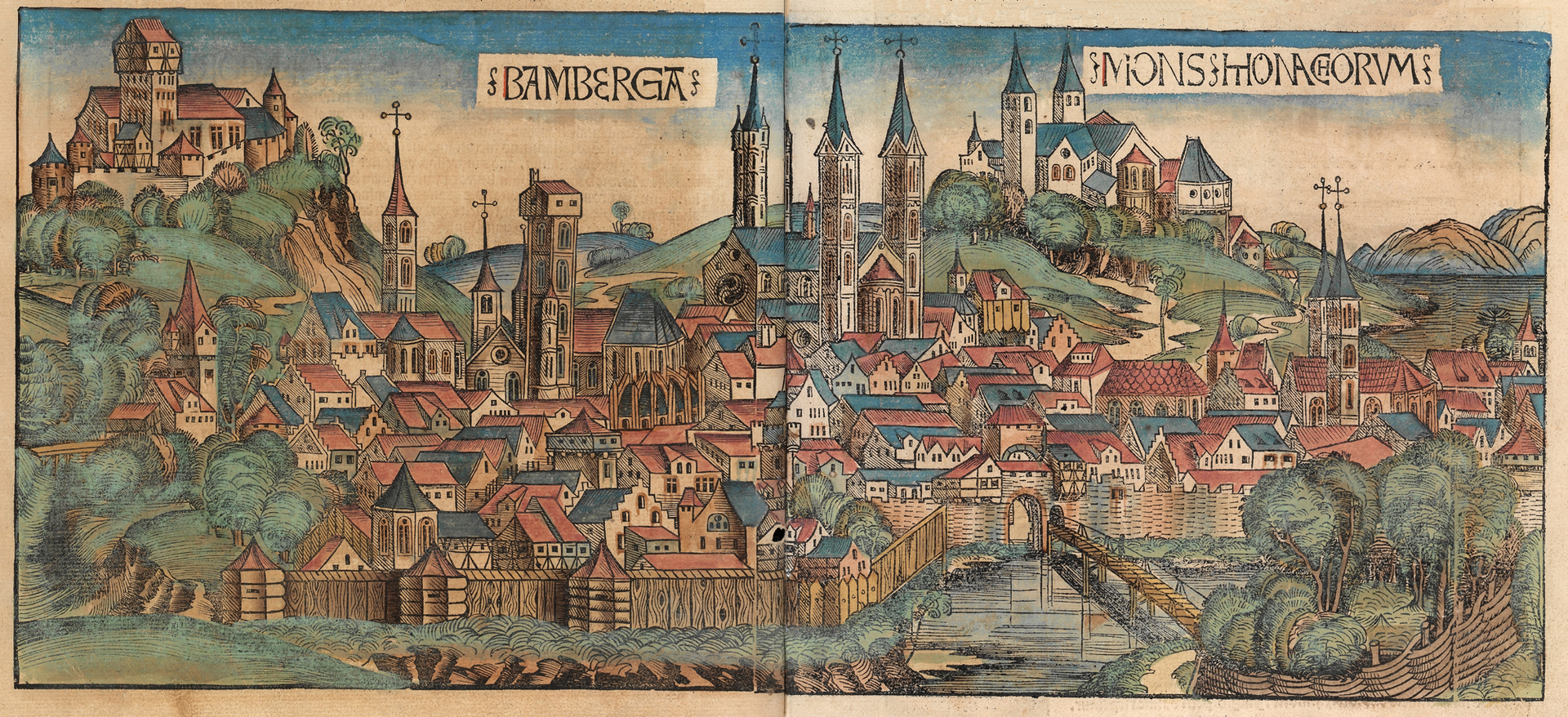
Bamberg is a city in Northern Bavaria, Germany, located in Upper Franconia on the river Regnitz close to its confluence with the river Main. Its historic city center is a listed UNESCO world heritage site. The city has just above 70.000 residents and has a mild climate through the four seasons.

The „Seven Hills“ of Bamberg.

Bamberg extends over seven hills, each crowned by a beautiful church. This has led to the city of Bamberg being called the „Franconian Rome“ — although a permanent running joke among Bamberg’s tour guides is to refer to Rome instead as the „Italian Bamberg“.
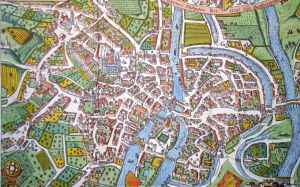
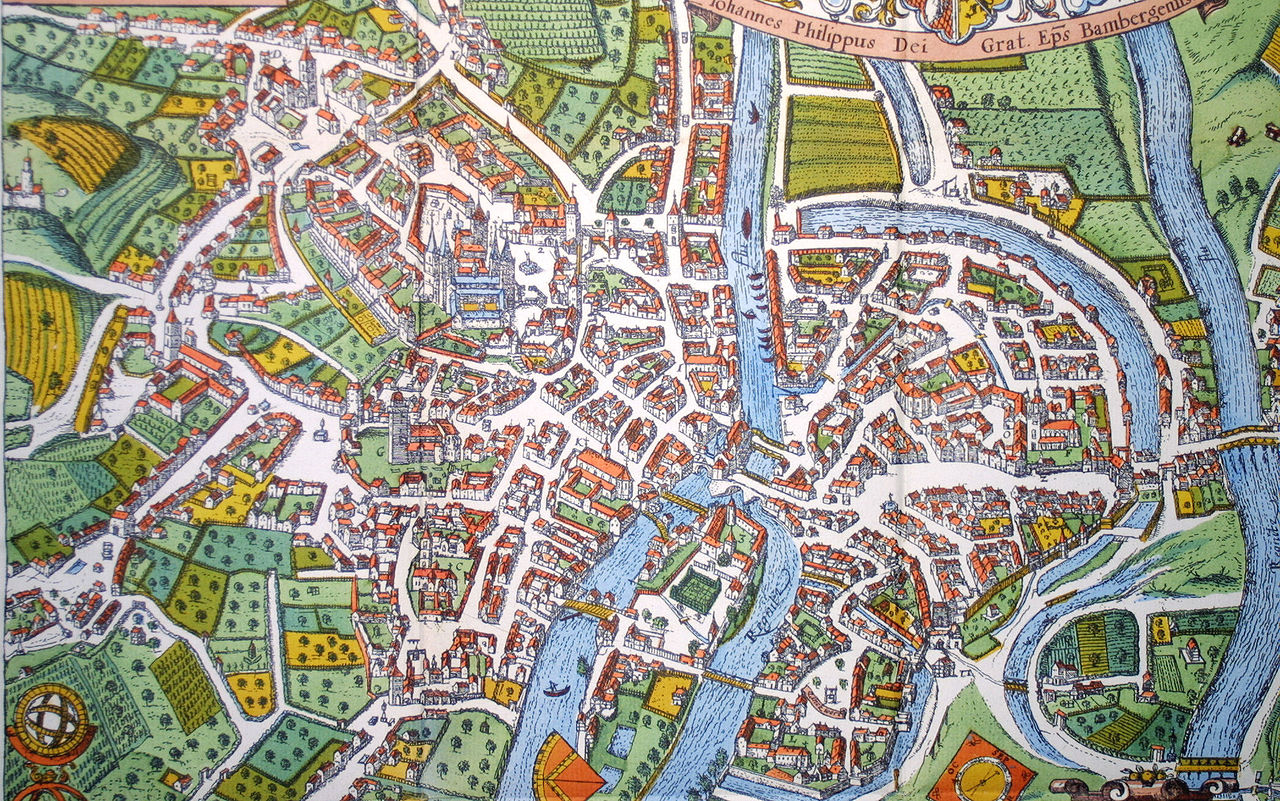
D 1 Bamberg 2 1617   The Franconian Rome in 1617.

Bamberg has been an important base for the Bavarian, German and now American military stationed at Warner Barracks. Warner Barracks was closed in fall 2014, with the last battalion leaving being the 54th Engineer Battalion.

Some of the famous residents of Bamberg.

Henry II (973-1024), Holy Roman Emperor.
Pope Clement II, bishop of Bamberg from (1040-1046).
Georg Wilhelm Friedrich Hegel (1770-1831), philosopher.
Willy Messerschmitt (1898–1978), aircraft designer.
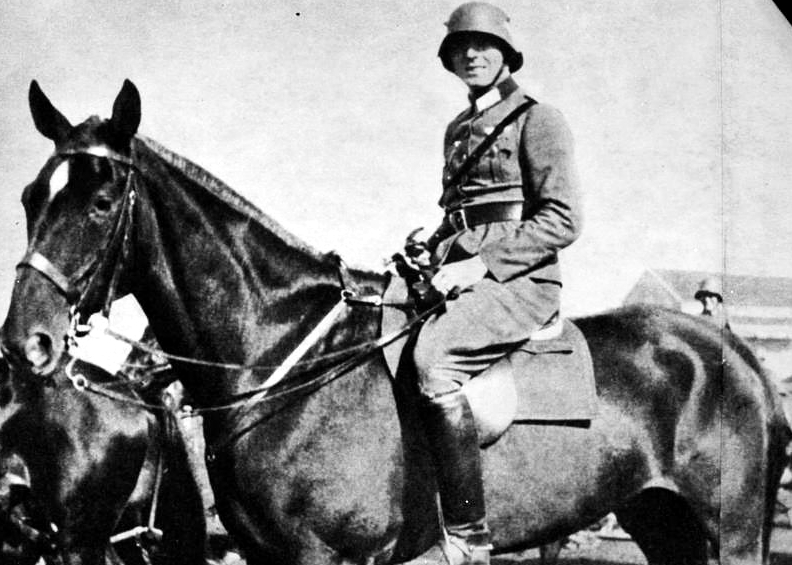
Claus Schenk Graf von Stauffenberg (1907-1944), officer who attempted to assassinate German dictator Adolf Hitler in the  20th of July 1944 Plot.
D 1 Bamberg 48 17.RReg 1926 
Claus Schenk Graf von Stauffenberg with the 17. Horse Regiment in Bamberg, 1926.
Short overview of the history of Bamberg.

The face of the city of Bamberg is marked by more than 1.000 years of history. The „Castrum Babenberg“, the fortress on the cathedral hill, was first mentioned in the year 902. In 1007, emperor Henry II founded a bishopric here. he wanted to make the town into his capital city and thus donated great gifts to it. The support by the emperor soon bore its first fruits.
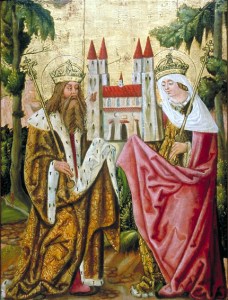
D 1 Bamberg 3 Heinrich II Kunigunde   Emperor Henry II and his wife Kunigunde.
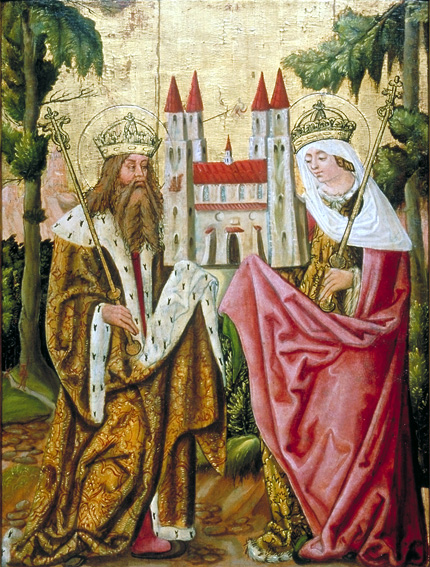
Churches and monasteries were established, so as St. Michael’s, St. Stephen’s, St. James’s and St. Gangolf’s. In the 13th century, the present-day cathedral was built on the site of Henry’s cathedral, which had burnt down earlier. Most of the churches are to be found on the seven hills of Bamberg. In the middle ages, the „Old Court“, next to the cathedral, was also the seat of the bishops, the city’s territorial lords and rulers.
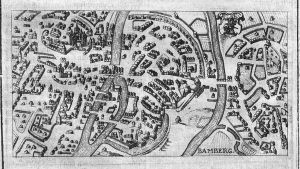
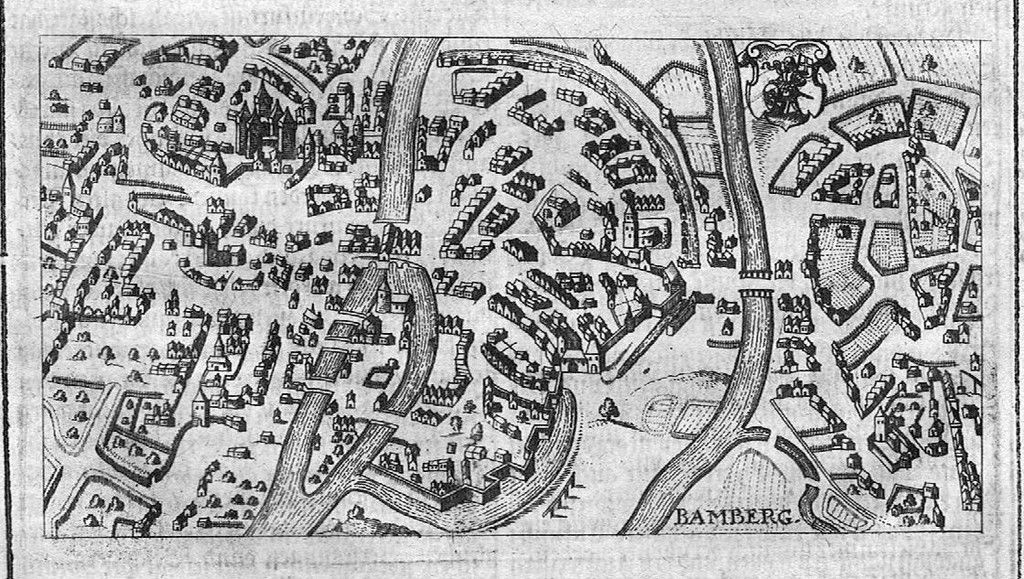
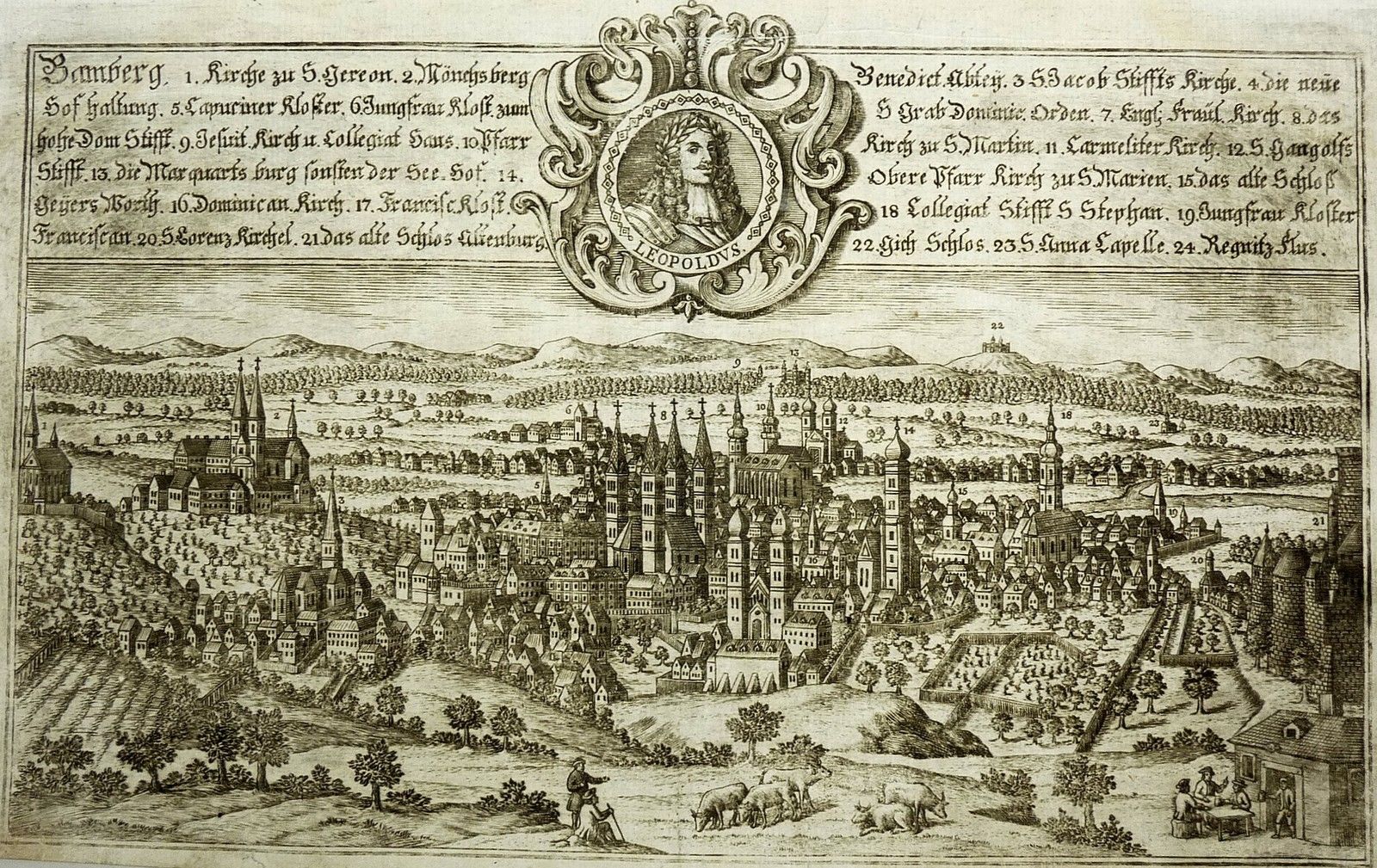
D 1 Bamberg 38 hulsius 1632   Bamberg engraving from 1632.

The bourgeois town, in contrast, developed – after its beginnings at the foot of the cathedral hill – on an island between the two arms of the river Regnitz. This differentiation between the „spiritual“ and „secular“ city is still noticeable today. The hillside area is the section of the city with quieter, almost enchanted alley-ways, the island the main shopping area.
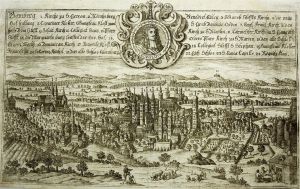
D 1 Bamberg 37 1795
Fantastic copper engraving from Bamberg 1795.
Interesting is the amount of churches, towers and monasteries against normal citizen houses.
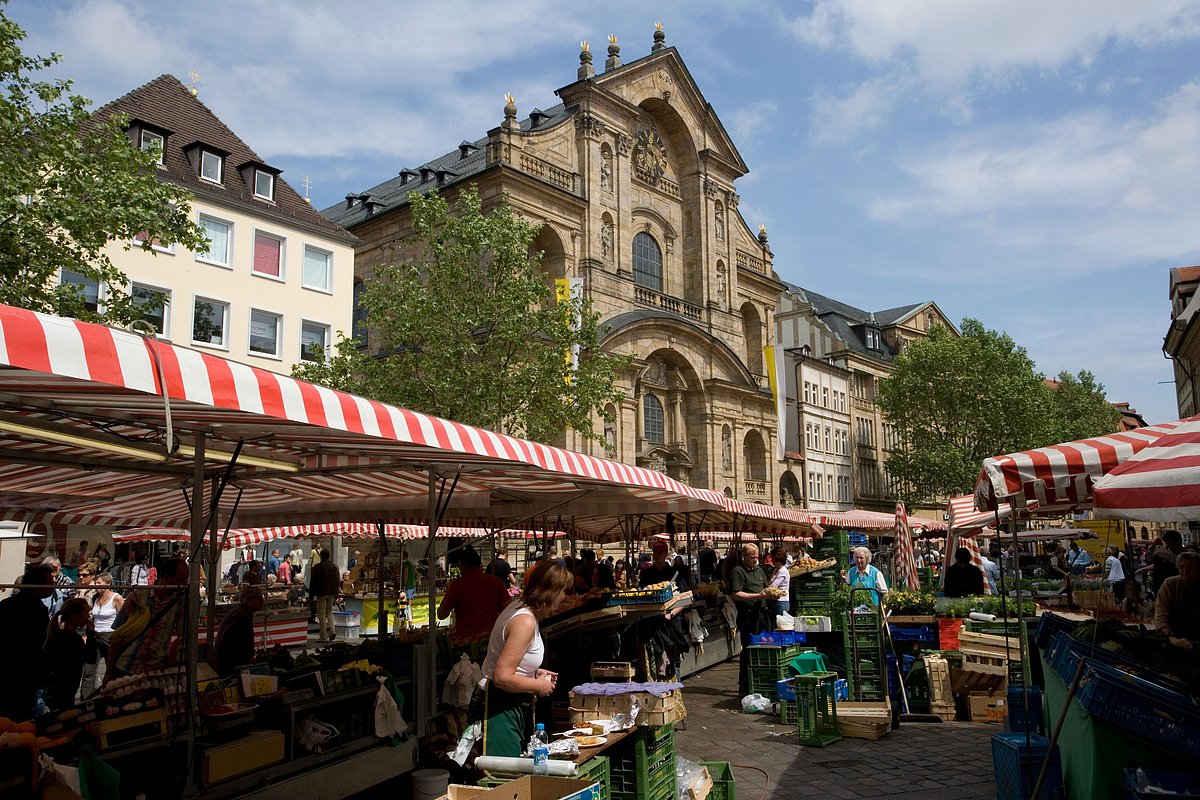
The names of the markets – Obstmarkt (fruit market), Gruener Markt (green or vegetable market), Holzmarkt (wood market) and Heumarkt (hay market) – reveal the variety in Bamberg’s economic life, even from its very beginnings. A decisive role in the economy was played by the market-gardeners, whose cultivable land east of the right arm of the Regnitz near to the hillside area and the island city adds the third element to the structure of the city.
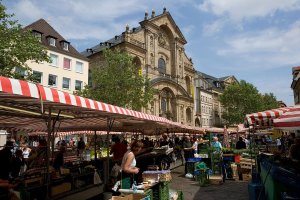
D 1 Bamberg 29   Today’s Green Market in front of  St.Martin’s Church.
This structure, the location of the streets and plots of land, is still medieval. However, the appearance of the city, the facades of the houses, the decoration of the bridges and squares, was newly shaped in the Baroque period by the Schoenborn bishops. They encouraged the citizens to renovate their houses by providing model buildings and tax incentives.
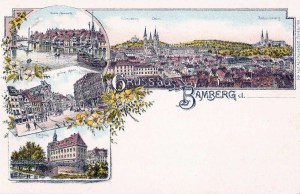
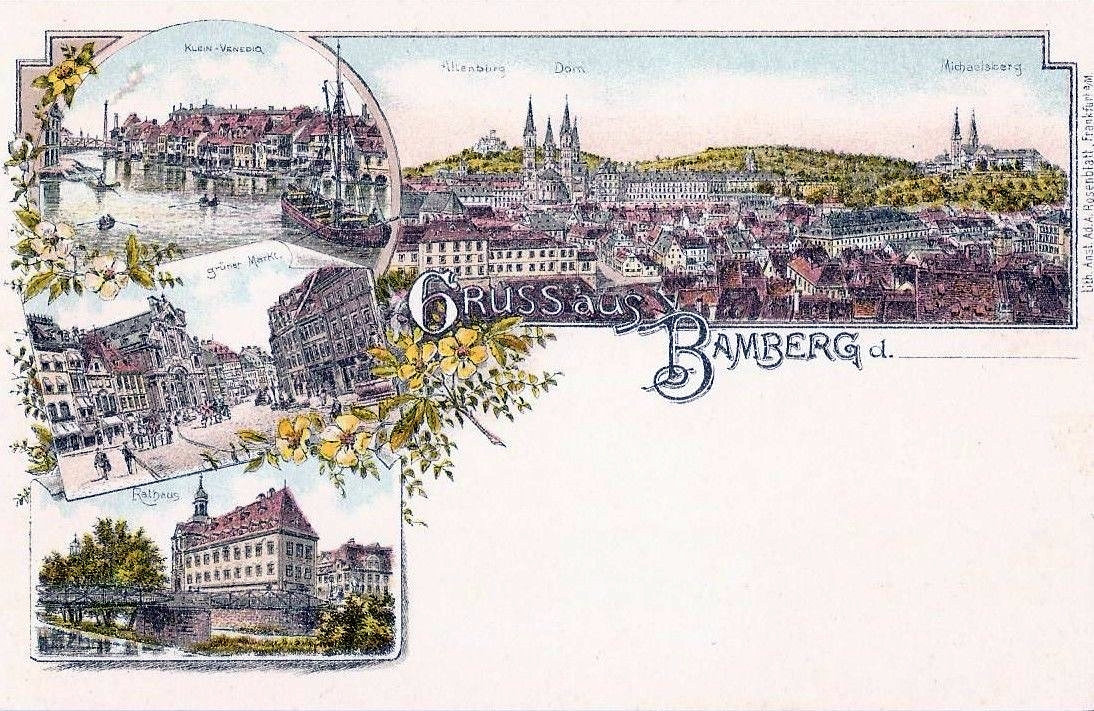
D 1 Bamberg 36 1900      Art Nouveau postcard, Bamberg 1900.

Fortunately, Bamberg remained largely untouched in the Second World War. This factor has given the city its special position; it has the largest intact old town in Germany. In 1981, Bamberg was declared a town monument and, in 1993, it was added to the „World Heritage List“ by UNESCO. Despite this status, Bamberg is not a museum. It is an extremely vibrant city, has a university, numerous schools and it serves as a shopping center and center of administration for a wide surrounding area.
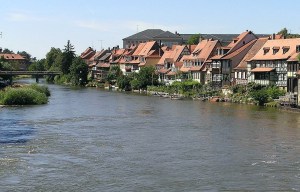
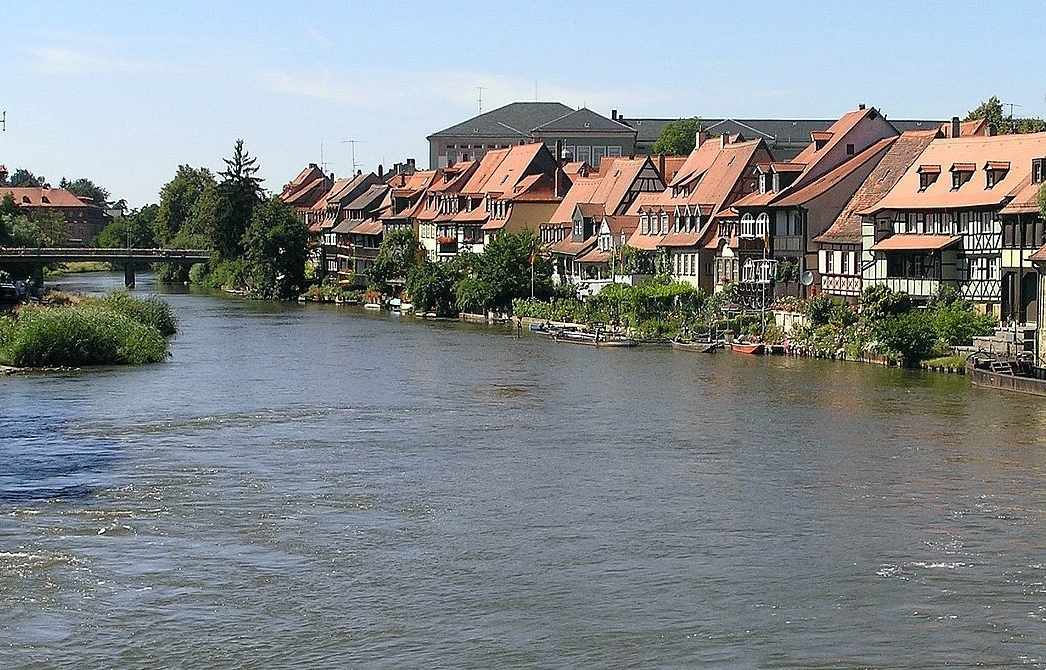
D 1 Bamberg 4 Little Venice  Riverfront part of Bamberg, called Little Venice.
It is true that much of the magic and charm of this city stems from the daily encounter with its history, but the past is not regarded with mild contempt as something from bygone days that has outgrown and, at best, can be used as nostalgic decoration for its facade. Bamberg has succeeded in integrating the knowledge of the ages, passed down, too, in works of art, traditions, houses and gardens, into the present. Look at it yourself.

Time of the „Witch Hunts“.

The former bishopric Bamberg was one of the main centers of early modern witches and wizards persecution in southern Germany, this lasted from about 1507 (establishment of the „Constitutio Criminalis Bambergensis“) till 1633 (Invasion of Swedish troops and the death of Johann Georg II. Fox von Dornheim in 1633).
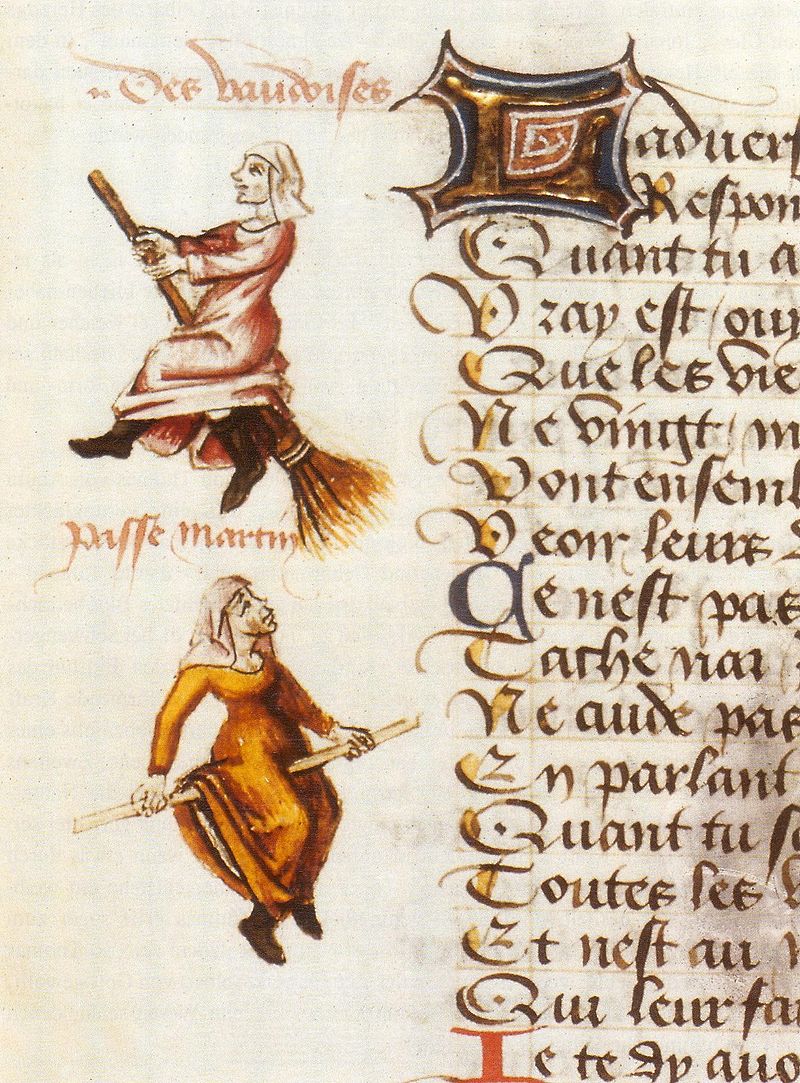
D 1 Bamberg 41 hex 1451 flying    Flying witches, hand colored manuscript from 1451.
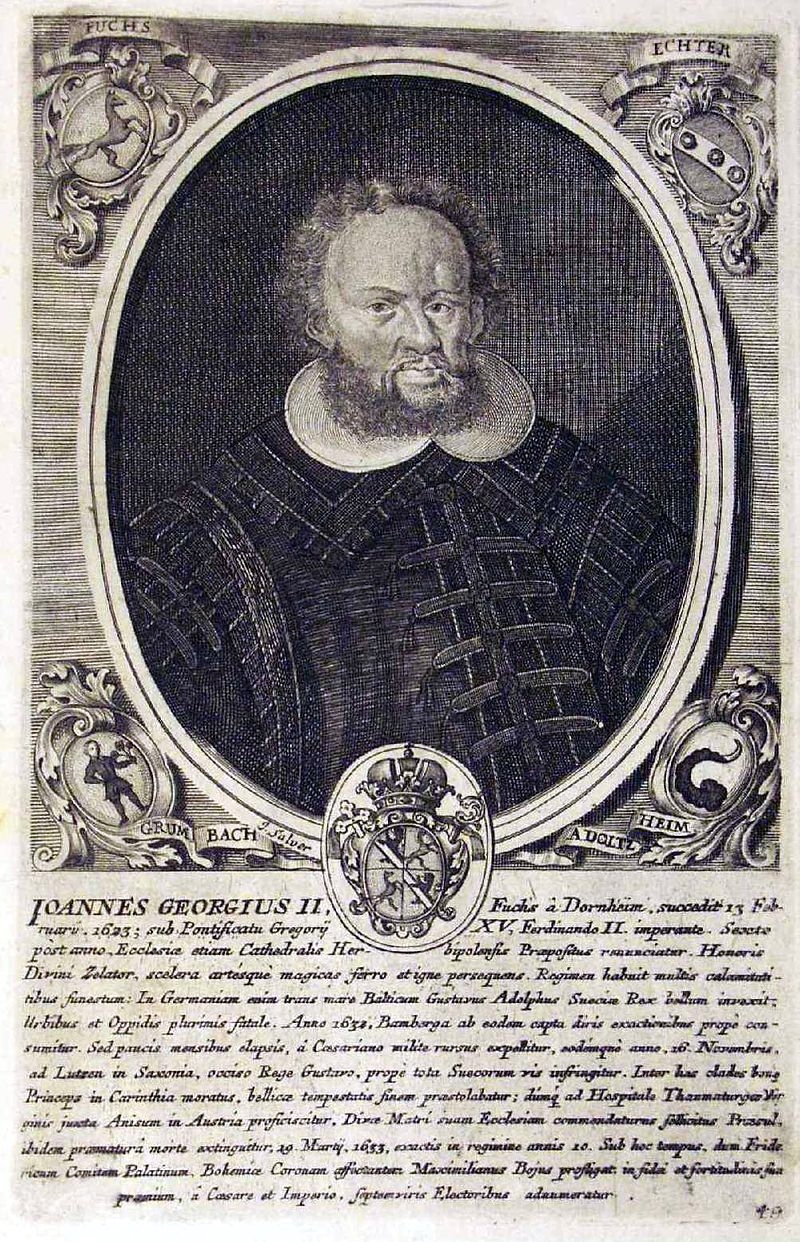
Due to long-lasting, sometimes violent power struggles between citizens and the respective ruling prince-bishop of Bamberg, caused by crop failures in the Little Ice Age and the effects of war famine and a strong personal belief in witchcraft of the reigning Bamberg Prince-Bishop Johann Georg II. Fox of Dornheim, called the Witch Burner (1623 1633), reached the persecution and execution of individuals and entire families on charges of witchcraft in Bamberg in the 1620s and early 1630s peaked.
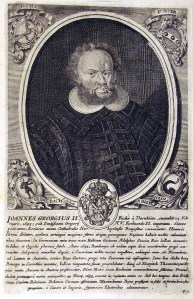
D 1 Bamberg 43 hex 1623  The Witch Burner „Fox of Dornheim“, engraving 1623.
The auxiliary bishop Friedrich Förner was the most important preacher and the real agitators of witch-hunting. Johann Georg II. Fox of Dornheim built specifically for the detention of accused of witchcraft in 1627 that was once located in the area of today’s so-called promenade Drudenhaus, also called Malefizhaus.
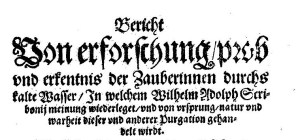
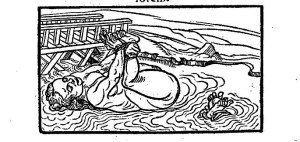
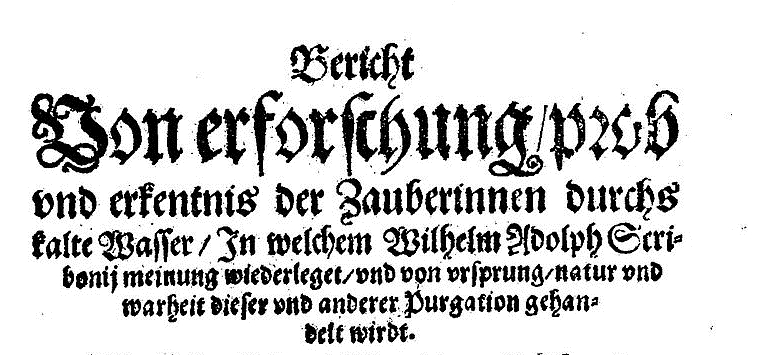
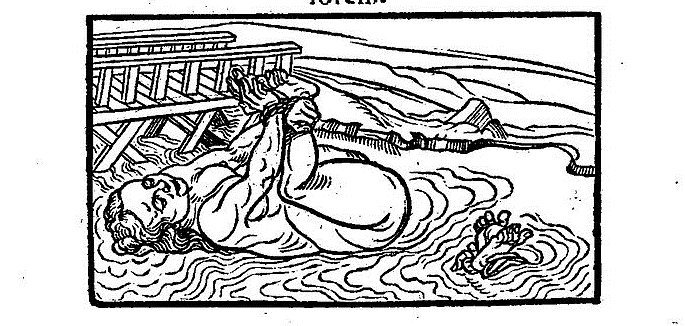
D 1 Bamberg 42 hex 1581 watertest a   D 1 Bamberg 42 hex 1581 watertest b
Old document from 1581, describing how to test if a person is guilty to be a witch or magician.
Throw them bound on hand and feet into the water; if they swim on the water they are guilty
and will be burned, if they drown, they are innocent.
The city council of Bamberg has taken a decision to the witch trials in the bishopric of Bamberg on 29 April 2015 (almost 400 years later) and agreed on a text for a plaque at the monument behind castle Geyerswörth: „In the bishopric of Bamberg about 1000 men, women and children were accused innocent in the 17th century , tortured and executed.“
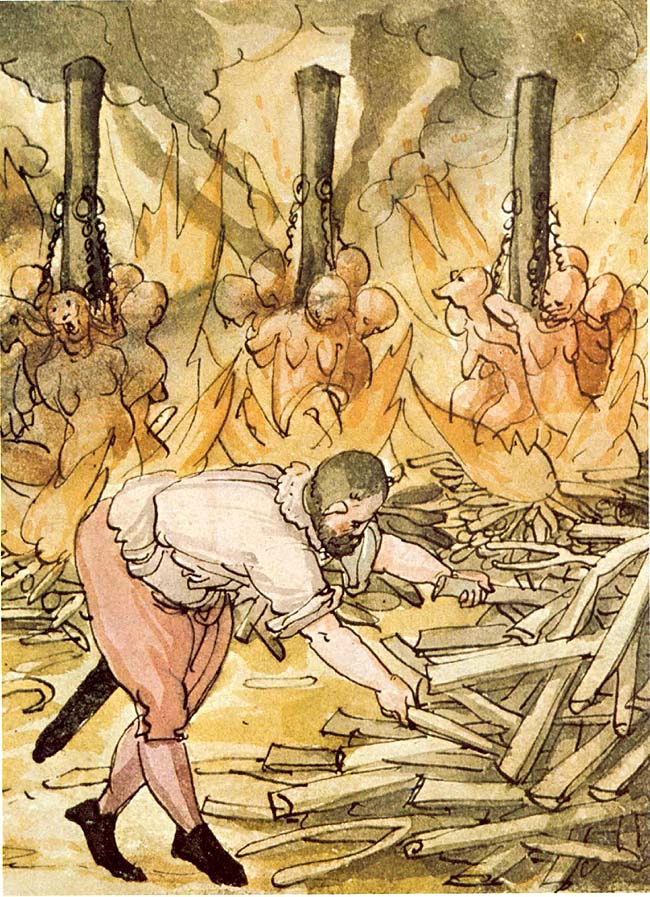
D 1 Bamberg 39 hex 1587   Bamberg witch burning in the 17th century !!
The cathedral of St. Peter and St. George.
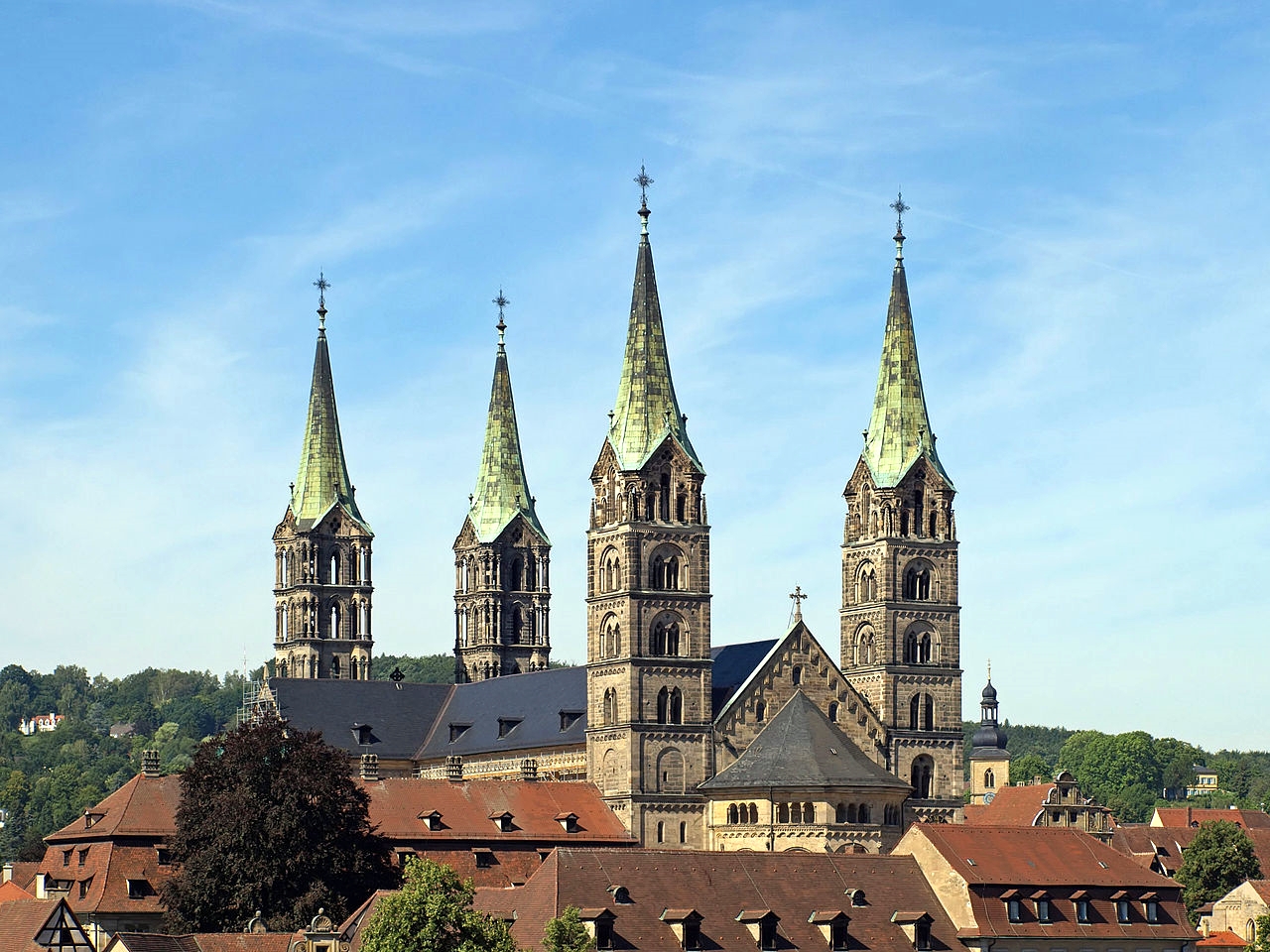
D 1 Bamberg 1 Dom

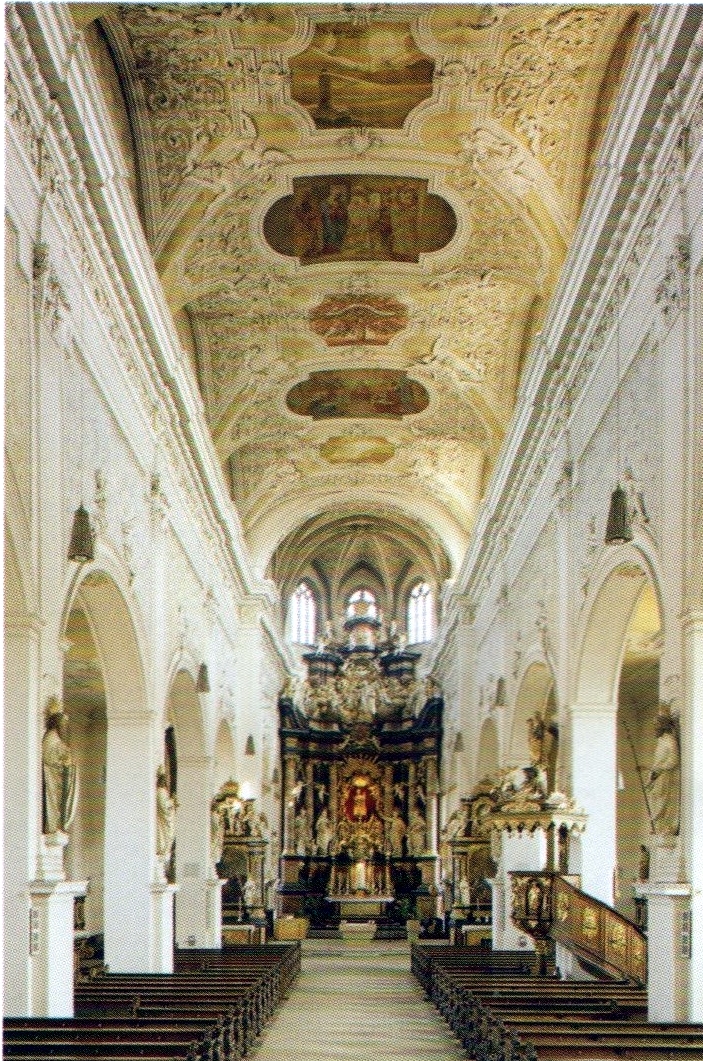
Bishopric church of the archbishop of Bamberg. The cathedral represents the peak of artistic development at the time of transition from Romanesque to Gothic periods in Germany. Four towers (very rare), two chancels and a transept at the west end. The cathedral is a late Romanesque building with four grand towers. It was founded in 1004 by the emperor Henry II, finished in 1012 and consecrated on May 6, 1012. It was later partially destroyed by fire in 1081.
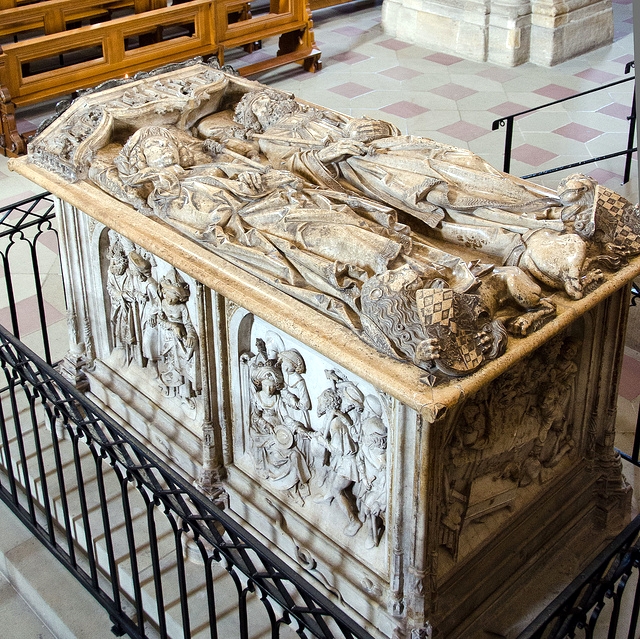
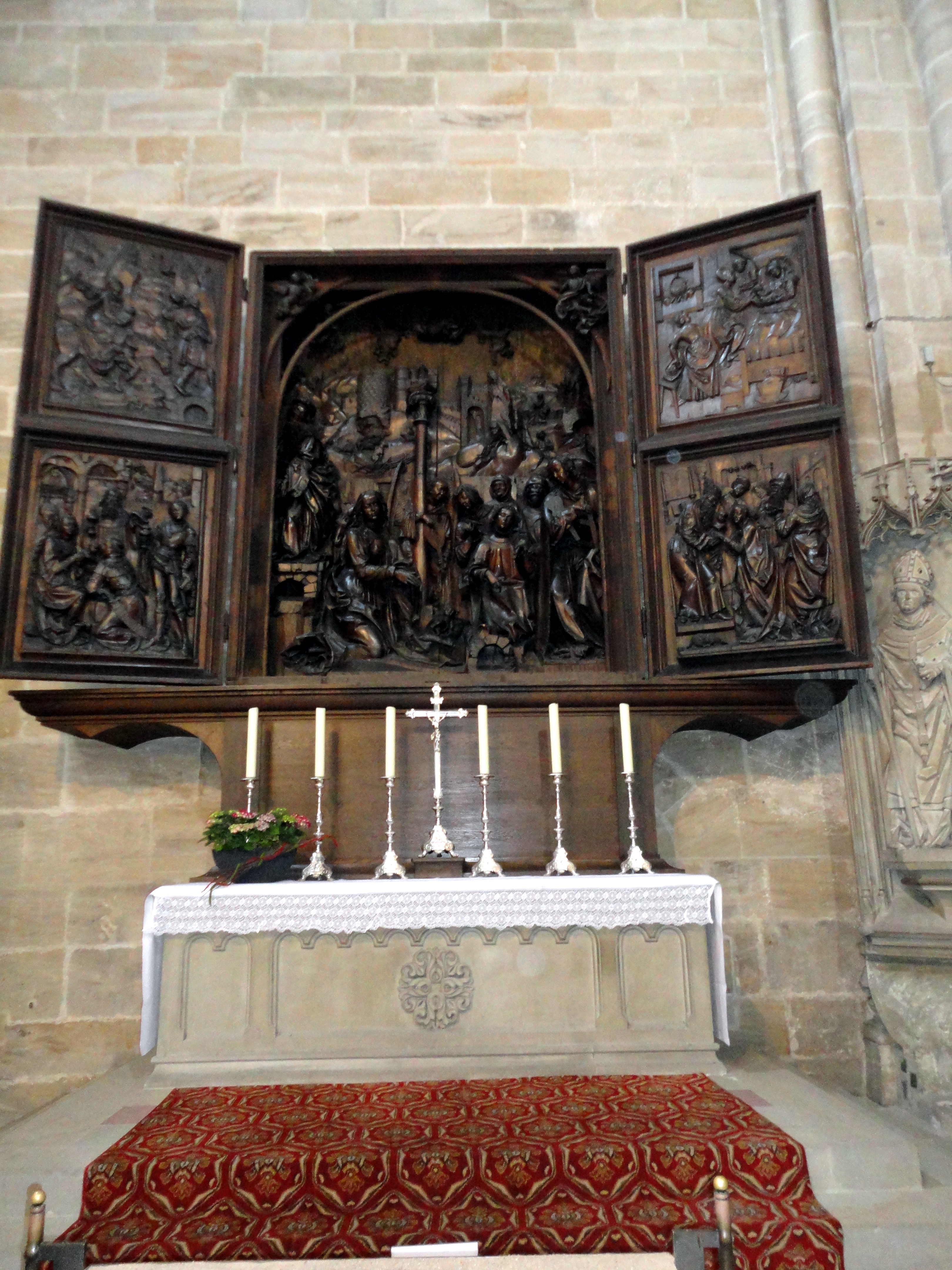
D 1 Bamberg 71         DSC01591

Above left: The imperial marble tomb of Henry II and his wife Kunigunde, carved by Tilman Riemenschneider 1499 til 1513. The reliefs show Kunigunde’s ordeal by fire as she walked over red-hot plough-shares to prove her innocence; and Kunigunde  giving the builders of St Stephen’s their „fair wage“; Henry’s death; the weighing of his soul and finally Henry being healed by St. Benedict.
Above right: The Christmas Altar.
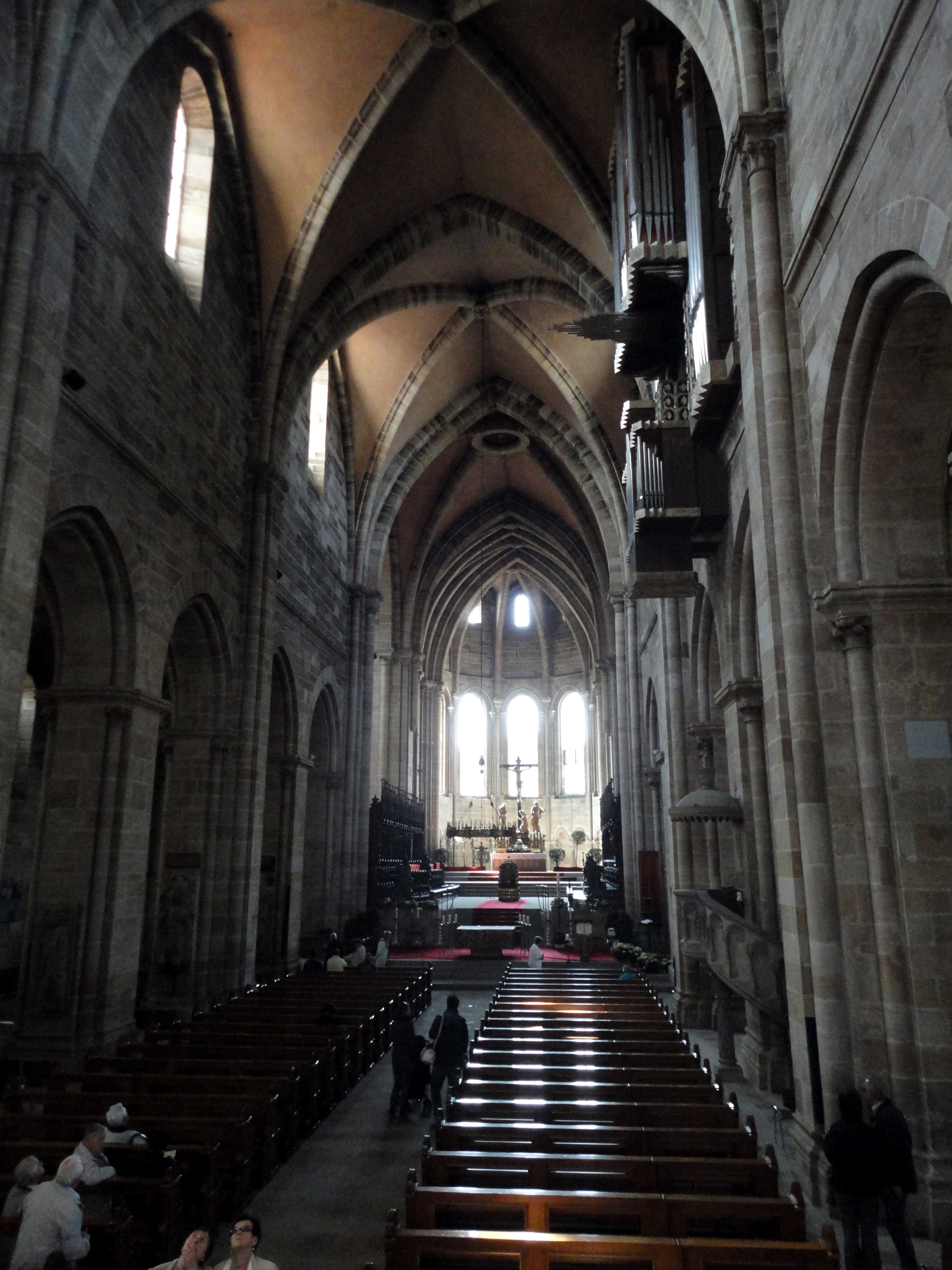
DSC01588

Above: Inside the massive cathedral which is 94 m (308 ft) long, 28 m (92 ft) broad, 26 m (85 ft) high, and the four towers are each about 81 m (266 ft) high.

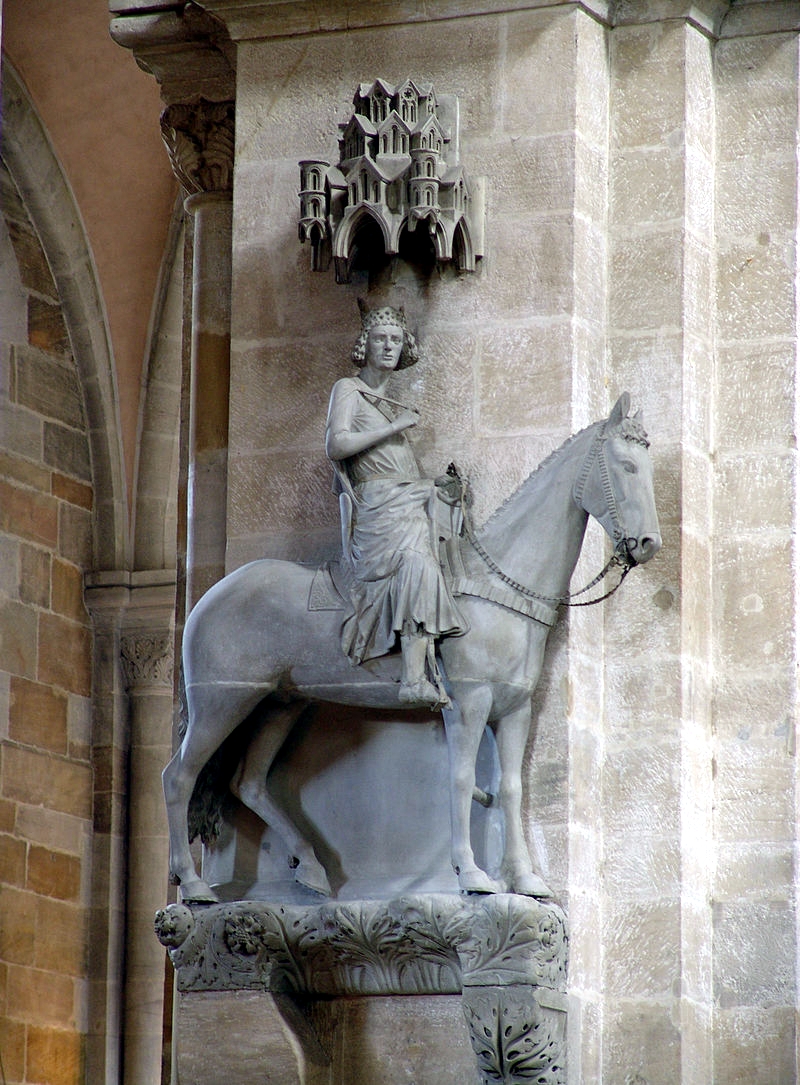
The „Bamberg Horseman“.

In German: Der Bamberger Reiter.  A life-size stone equestrian statue by an anonymous medieval sculptor in the cathedral of Bamberg, Germany.
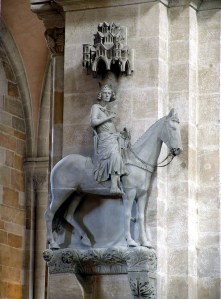
D 1 Bamberg 45   Another treasure of Bamberg.

Being located in a church and showing a crowned yet unarmed man, it is believed that it represents a specific king, perhaps one who was a saint. A candidate is Saint Henry II, Holy Roman Emperor (973-1024) who is buried in the cathedral along with pope Clement II, but he would likely have been depicted with Imperial Regalia. Another possibility is his brother-in-law, holy king Stephen I of Hungary (975-1038) who stops his horse and looks towards the tomb of Henry.
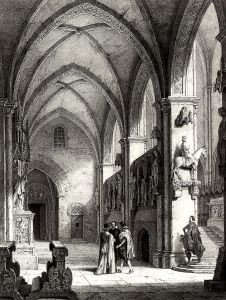
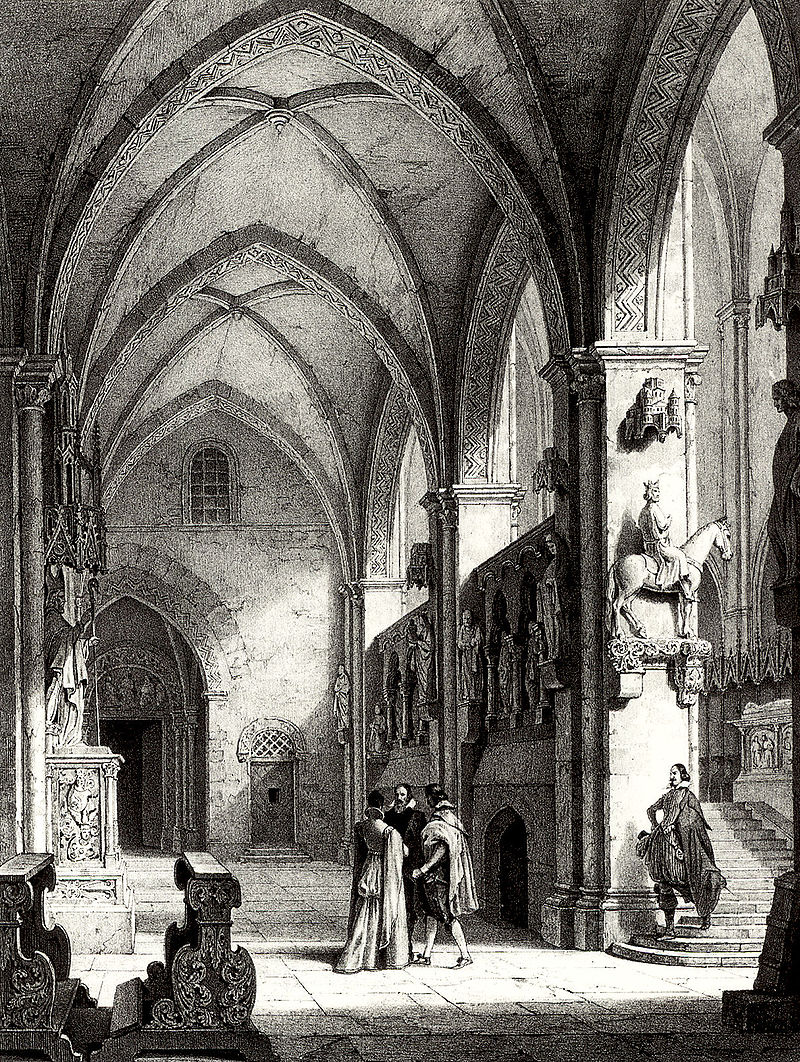
D 1 Bamberg 46  Undated, very old engraving, shows the horseman in the Cathedral.
Another theory favors Frederick II, the Holy Roman Emperor at the time, who financed much of the rebuilding of the cathedral. Another theory is, supported by the University of Bayreuth,  that the figure represents the messiah according to the Book of Revelation.
It is considered the first monumental equestrian statue since classical antiquity, and also one of the first to depict a horse shoe.
The statue also serves as a symbol of the city.
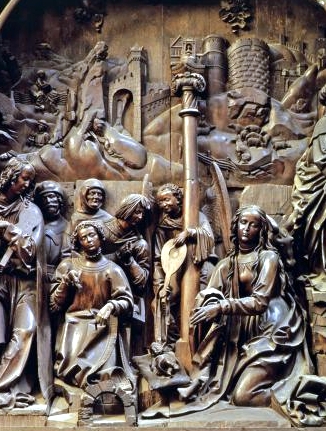
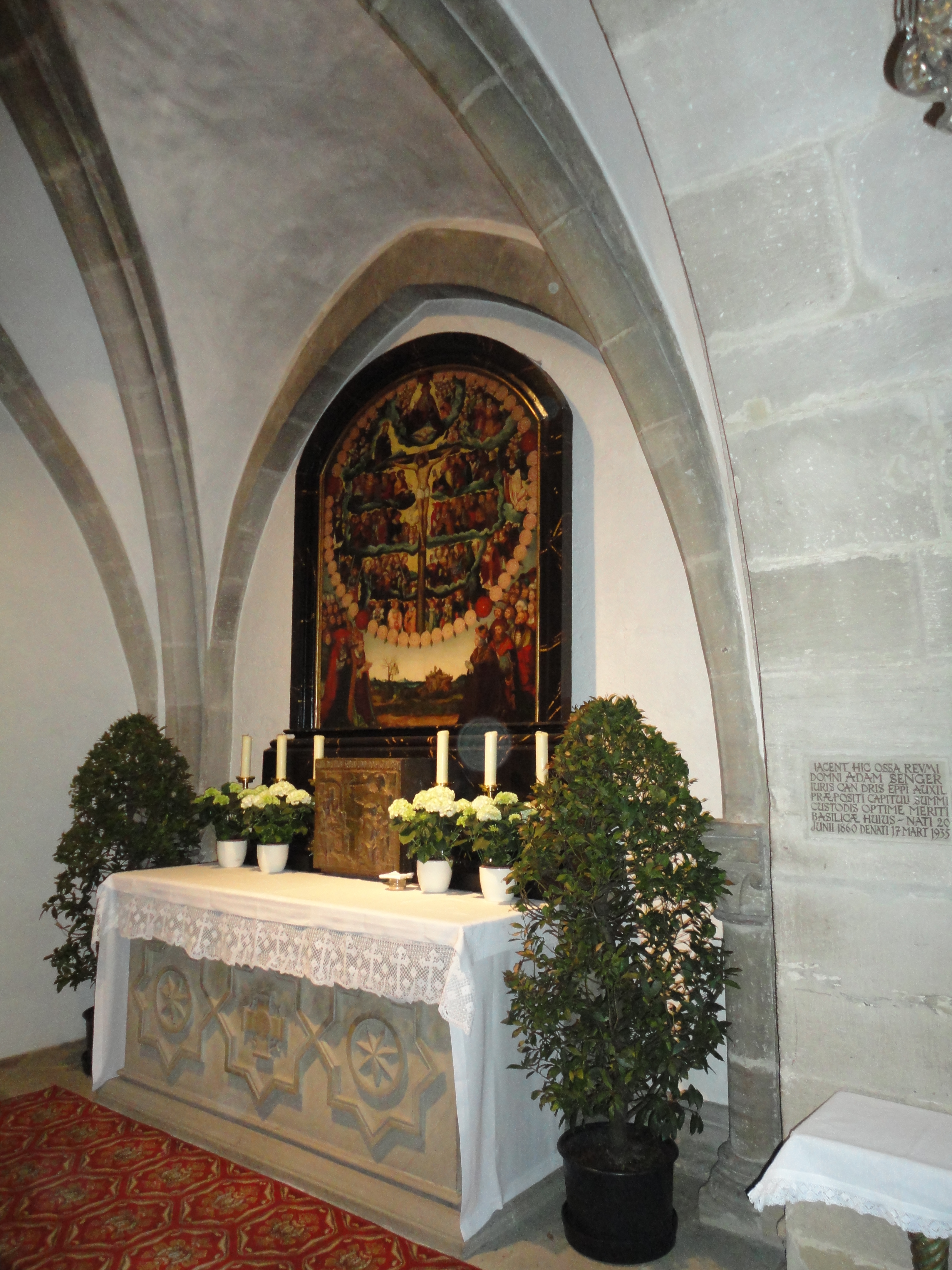
D 1 Bamberg 31 Christmas Altar Kaiserdom               DSC01590

Left: Centerpiece of the Christmas Altar, carved from wood. Right: The Lady Altar made by Veith Stoss around 1523.

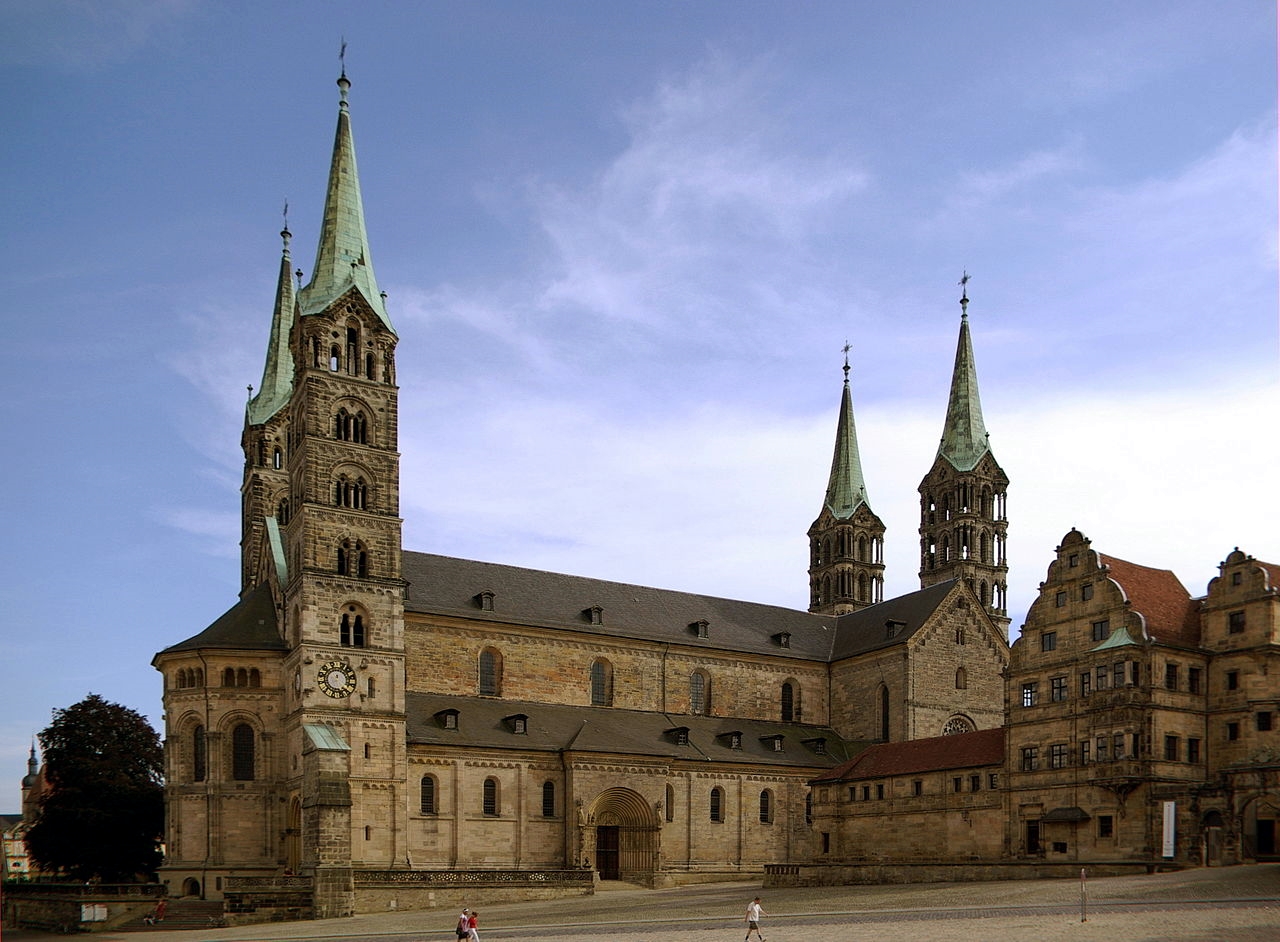
The new cathedral, built by Saint Otto of Bamberg, was consecrated in 1111 and in the 13th century received its present late-Romanesque form. Built at the request of the bishops Otto and Ekbert von Andechs-Meranien to replace the cathedral of Emperor Henry II, which had burnt down in 1081 and which was destroyed again by fire in 1185.
D 1 Bamberg 10 Cathedral       Cathedral with the Old Court on the right.
The „Old Court“.
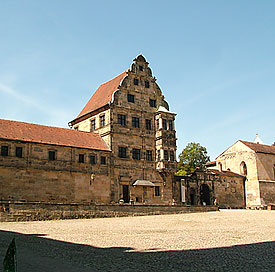
D 1 Bamberg 50 old court          D 1 Bamberg 69
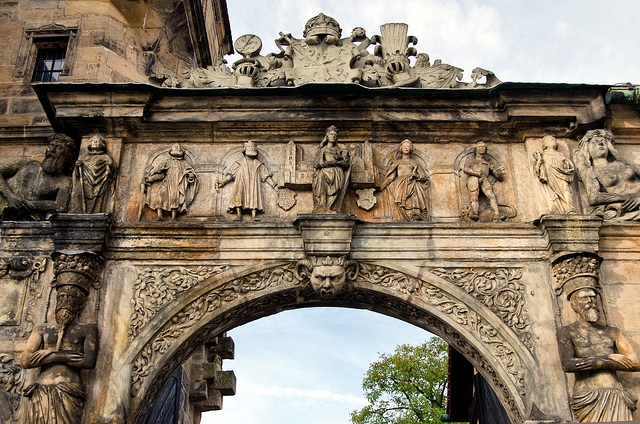
Left, the chancery of the old court and right the beautiful gate.

Seat of the bishop in the middle ages. Former palace of emperor Henry II. The plateau on which it sits was inhabited by Slavs and Germanic tribes as early as the 7th century.
The consecration of St. Thomas’s chapel in the tower was celebrated in 1020. 1479/1487 half-timbered buildings were built around the inner courtyard, they all were commercial buildings.  By example, lots and lots of horse stables.
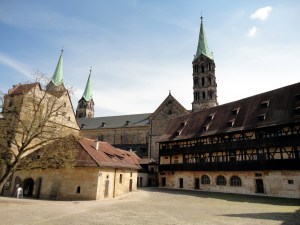
 DSC01594     The buildings were in 3 to 5 levels high.
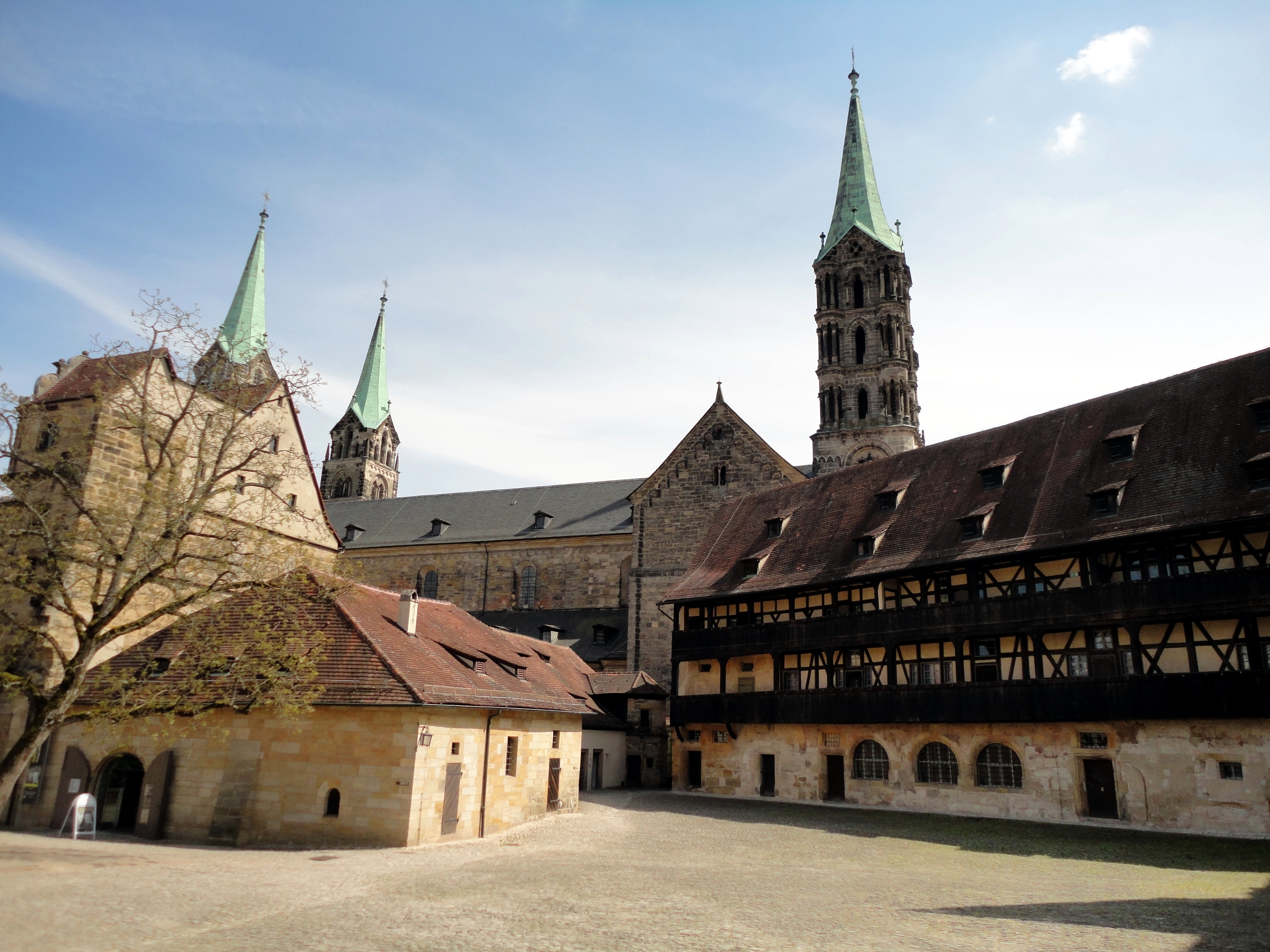
In 1568 the chancery was built for bishop Veit II of Wuerzburg by the master builder Asmus Braun.The so named „Beautiful Gate“, the gateway to the courtyard was made by sculptor Pankraz Wagner, Mary with Heinrich and Kunigunde, St. Peter and St. George; on either side of the rivers Main and Regnitz. Today the old court is home of the historical museum of Bamberg. One can see objects from the stone age to the 20th century; for example the oldest view of Bamberg, a painting „Farewell to the Apostles“ from 1483, or a wooden model of the Fourteen Saints Church.

Residence of the Prince Bishop.
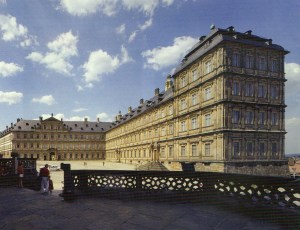
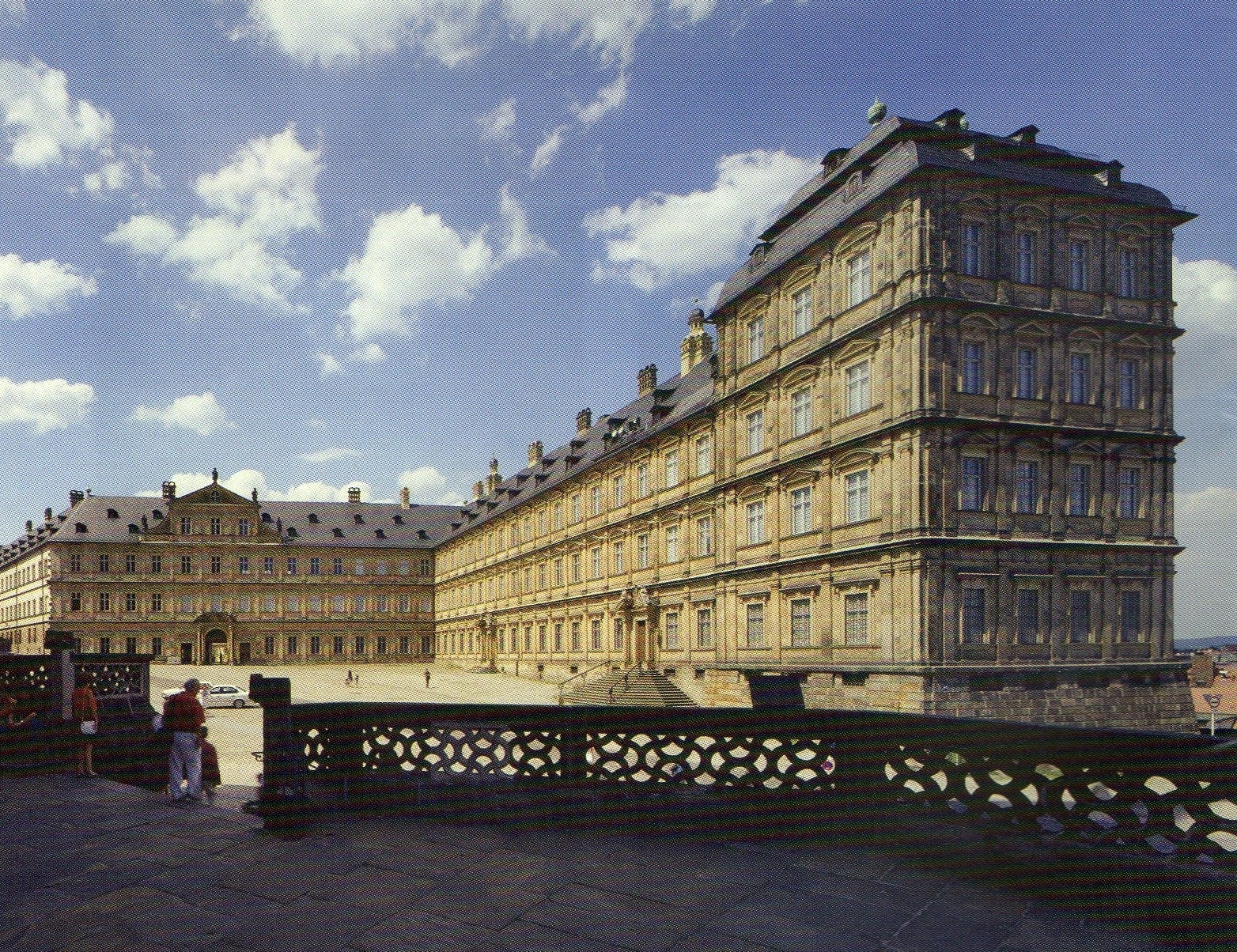
D 1 Bamberg 55       The New Residence.

The New Residence signals the starting point for other baroque monumental buildings in Upper Franconia and is expression of an absolutist will to rule. 1605 the west wing was built by Nuremberg master builder Jakob Wolff for the Prince Bishop Johann Philipp von Gebsattel. From 1697 til 1703 the construction of the two wings on the Cathedral Square were built by Leonhard Dientzenhofer for the Prince Bishop Lothar Franz von Schoenborn.
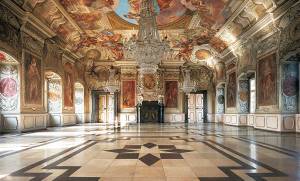
D 1 Bamberg 21 Imperial Hall New Residence   The Imperial Hall inside the New Residence.
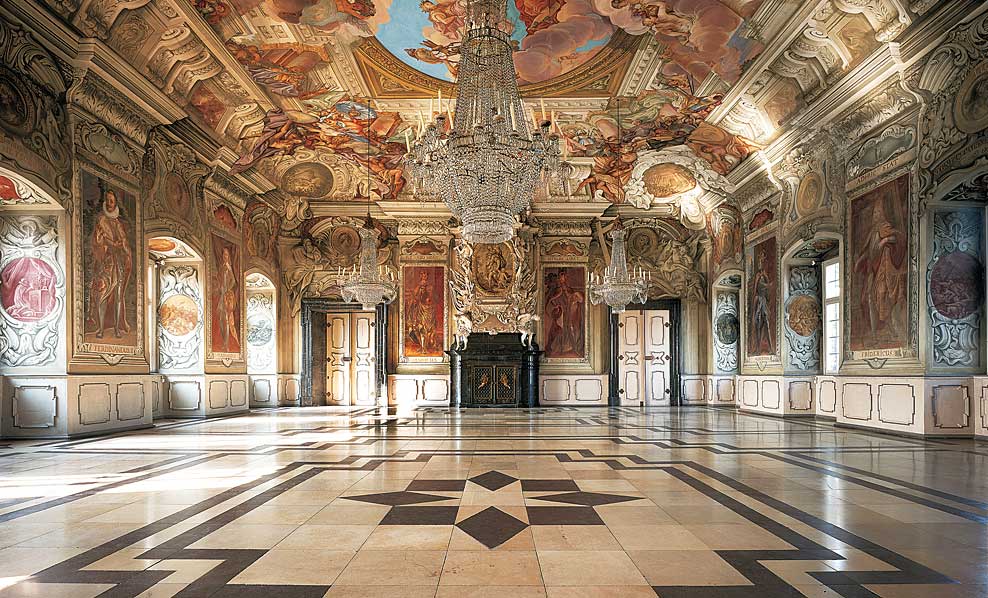
Inside one can visit the Emperor’s Chamber from 1707. Furthermore the state library with more then 4.500 manuscripts of the 5th century and the famous Rose Garden with more then 4.500 rose bushes. From the rose gardens you will have a magnificent view over the roots of Bamberg up to the Michelsberg Monastery.
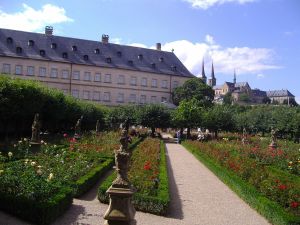
D 1 Bamberg 14 Rose garden New residence  Over 4500 rose bushes in the New Residence gardens.
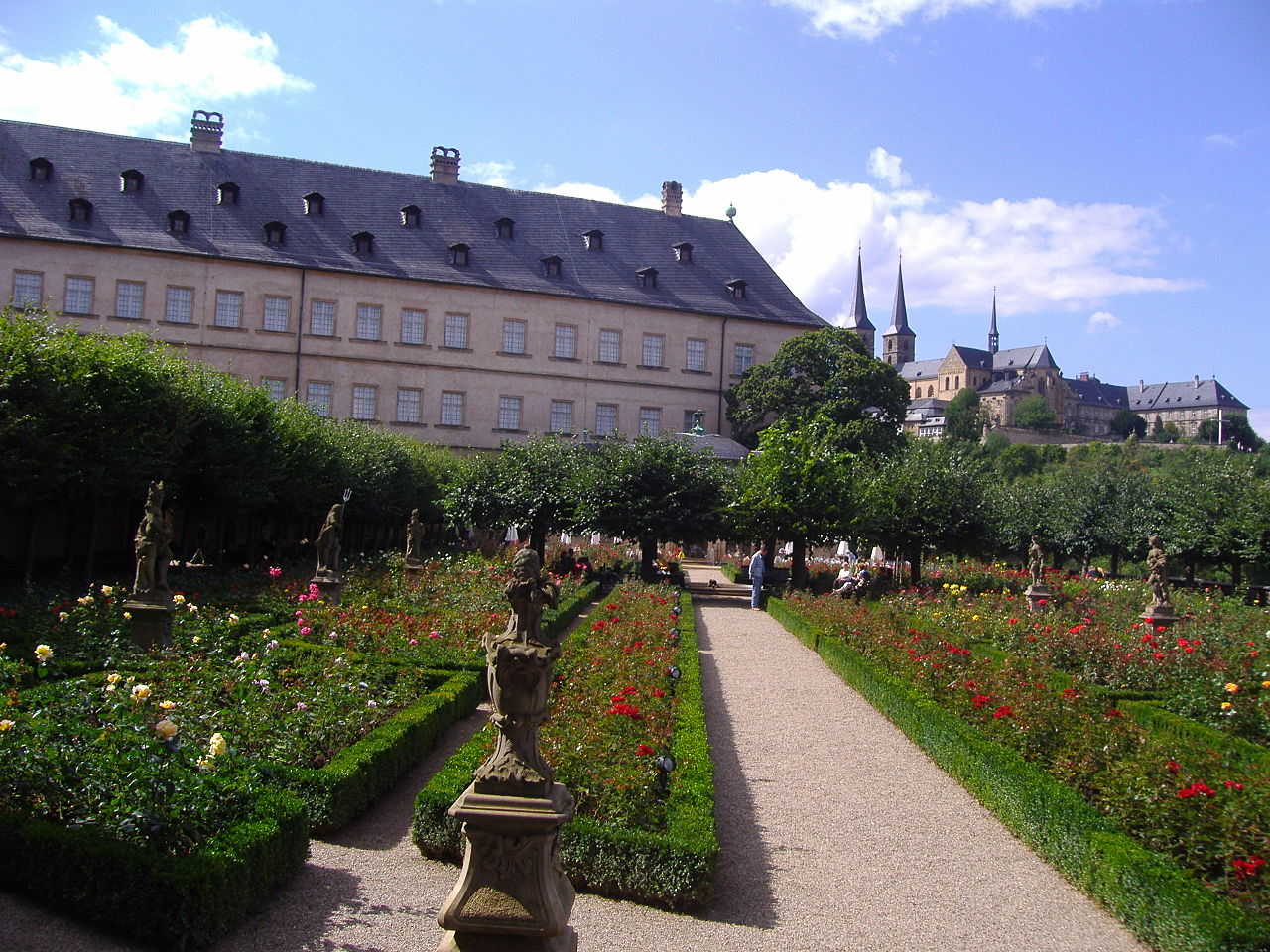
Michelsberg monastery.
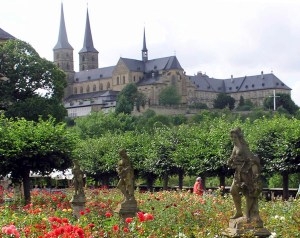
D 1 Bamberg 6 St. Michael        St. Michael seen from the rose gardens.
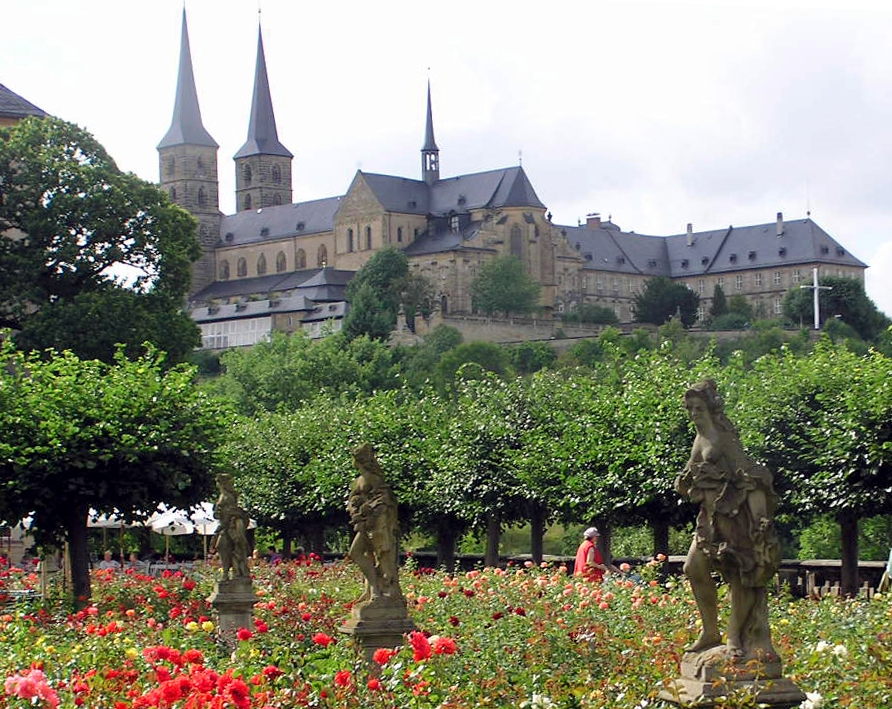
This was a former Benedictine monastery, founded in 1015 by the Bamberg bishop Eberhard. 1121 took place the new construction of the church, in which the canonized bishop Otto von Bamberg was buried in 1139. 1610 a destruction of the roof by fire.
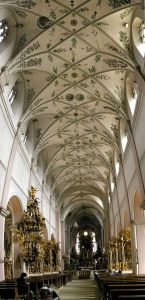
D 1 Bamberg 57 st. michaels nave     Fantastic – the nave of St. Michael’s, former abbey church. Click to super size.
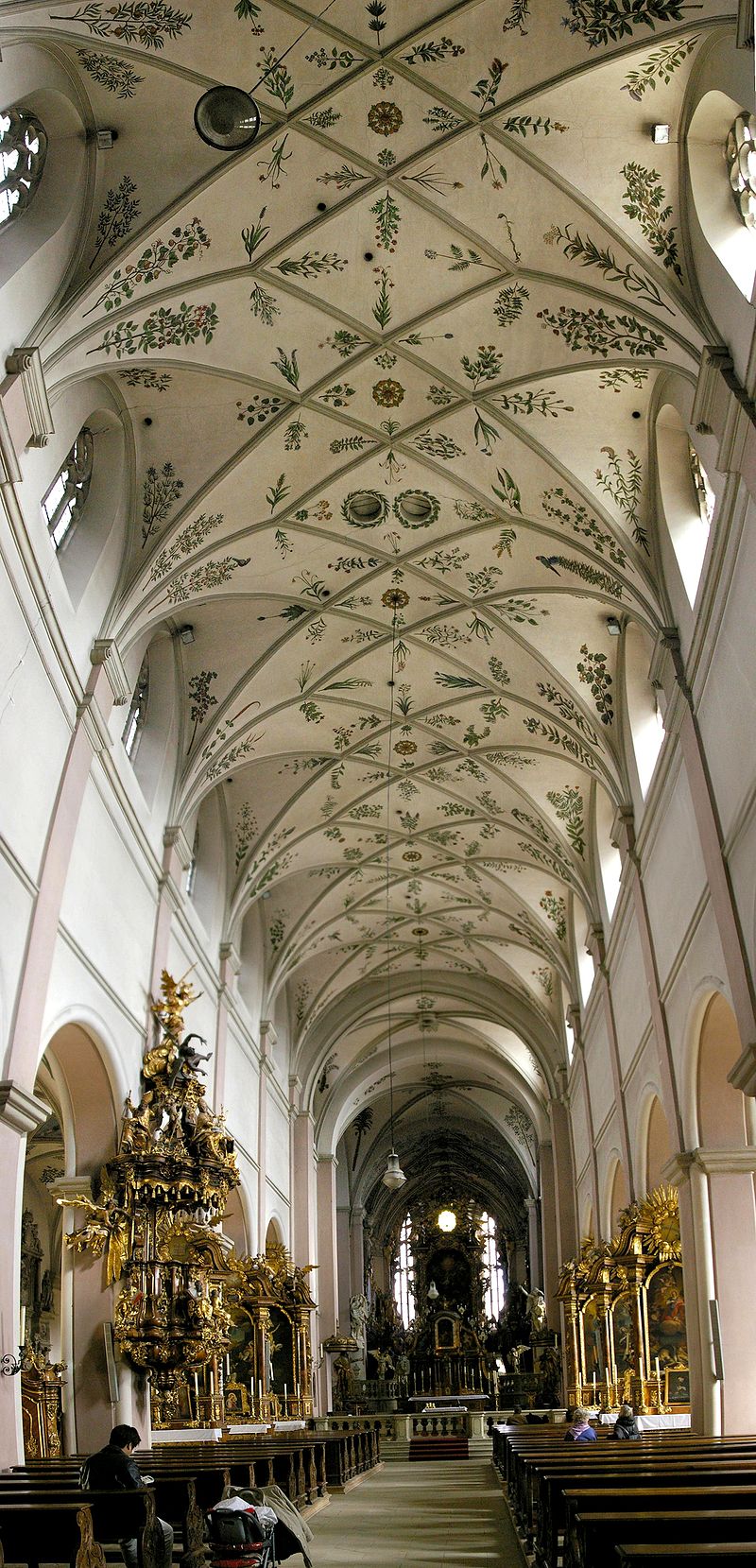
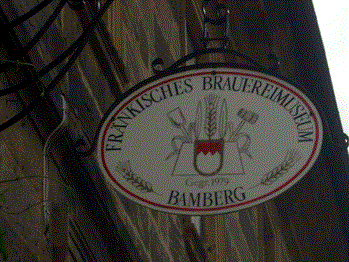
A new ceiling vaults with the famous „Heavenly Garden“; 578 biologically exact paintings of plants and herbs. 1696 til 1750 a baroque conversion of the church and monastery by the Dientzenhofer brothers. From 1803, dissolution of the monastery and establishment of a civic hospital. Inside one visits the tomb of St. Otto, monuments to ten former Bamberg bishops from the 16th to the 18th century, the Holy Sepulcher Church and the famous Bamberg Brewery Museum.
D 1 Bamberg 36

Way of the Cross.

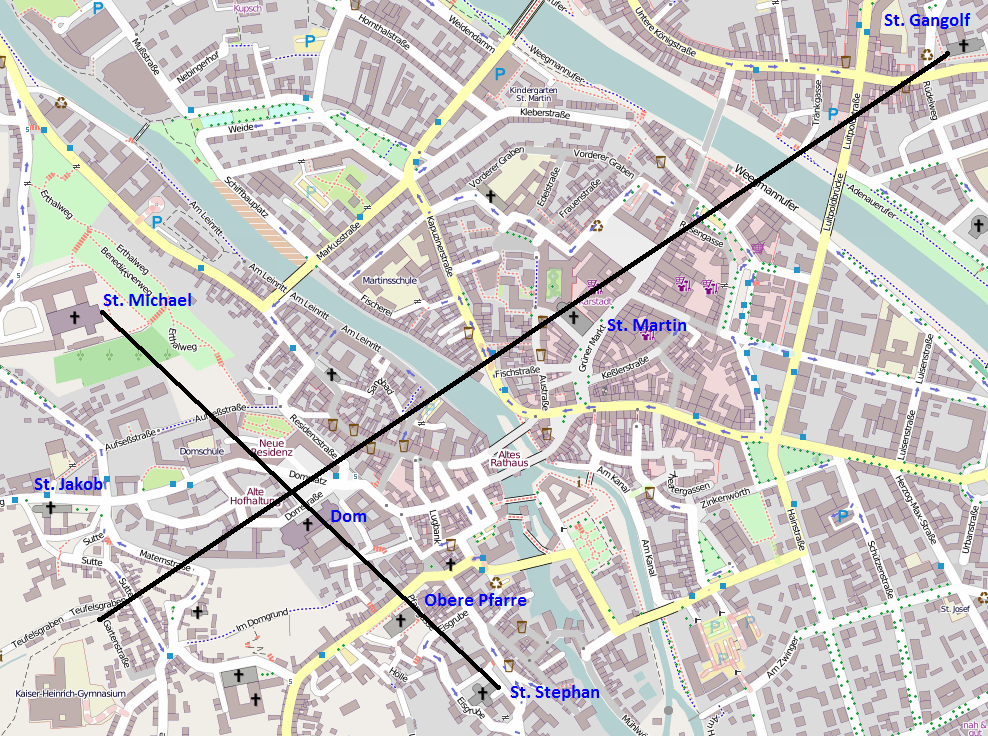
This way of the cross has seven stations from St. Elisabeth’s church to St. Getreu, dating from around 1500. Thus the oldest Way of the Cross in Germany. See, as an example, the modern map of Bamberg.
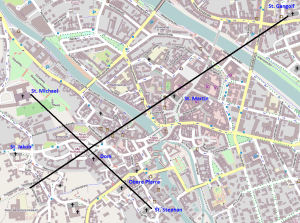
D 1 Bamberg 44     The „Way of the Cross“.

The Carmelita monastery.
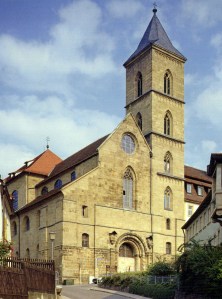
D 1 Bamberg 59    Carmelita monastery with its Lions Gate.
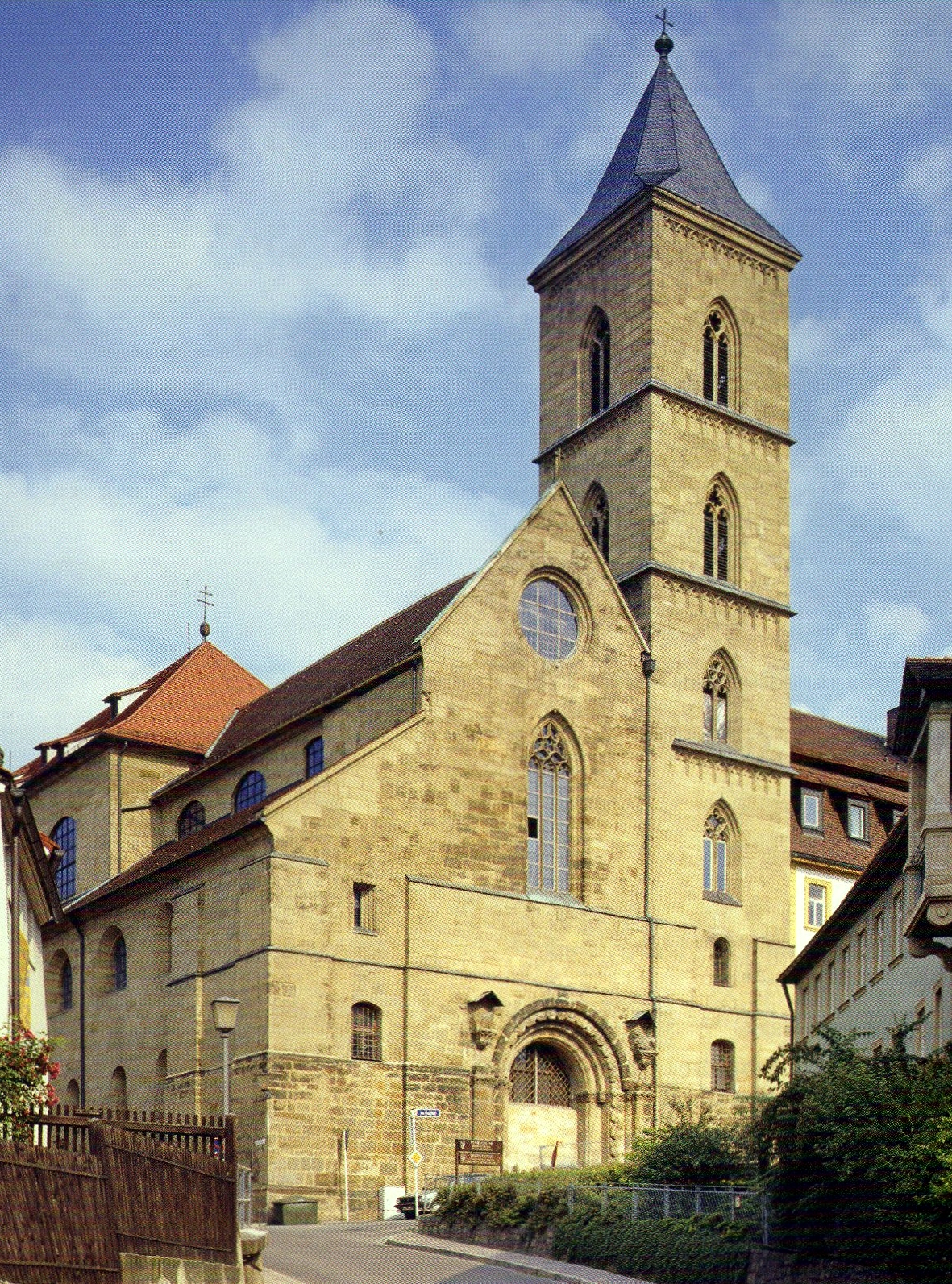
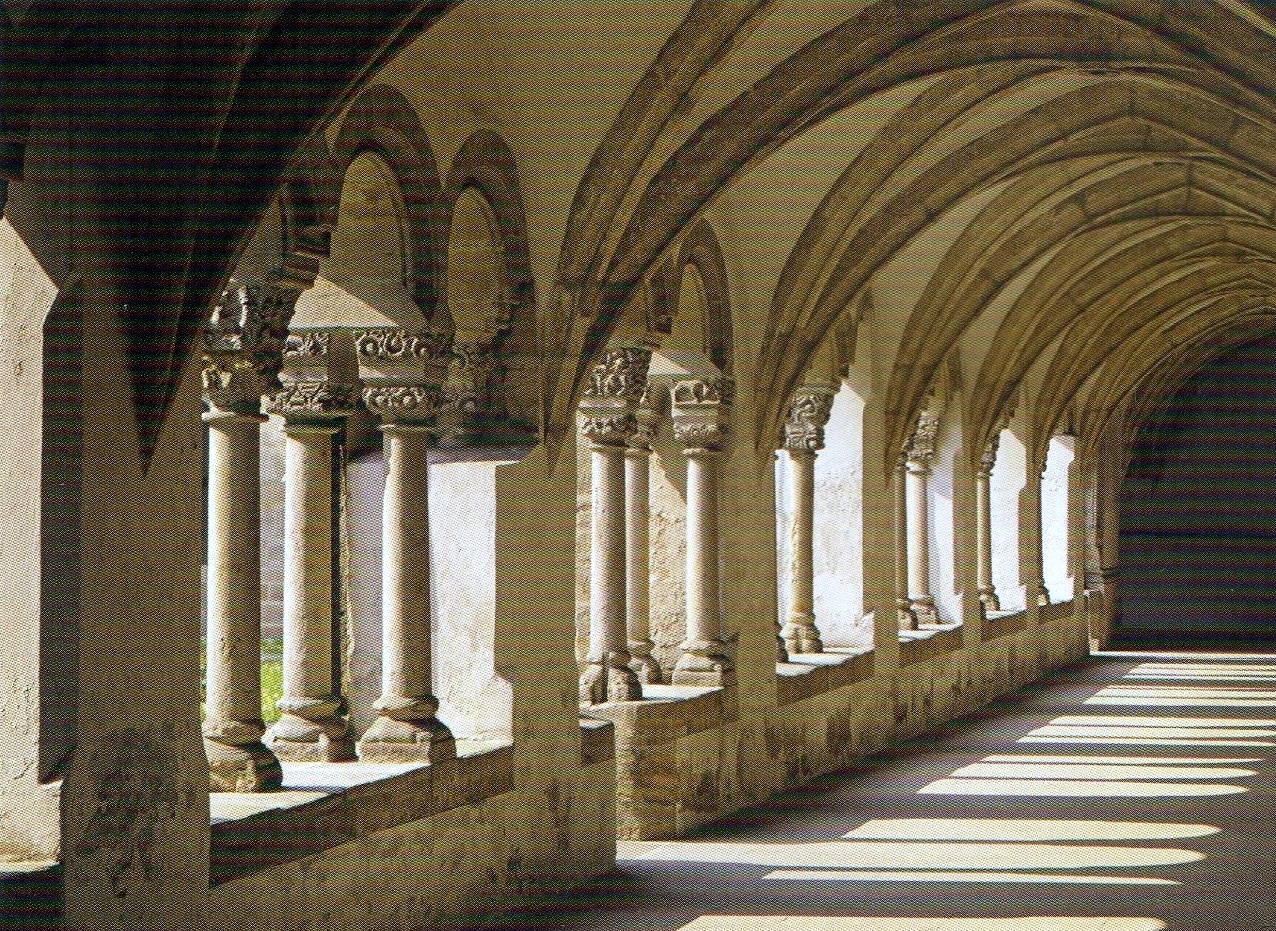
Atmospheric Gothic cloisters with carved figures in the capitals, a church with two facades. 1157 was the foundation of the St. Theodor Convent. 1589 Carmelita monks inhabited the abandoned convent. 1803 dissolution of the monastery during the secularization. 1902 return of the Carmelita monks to the monastery.
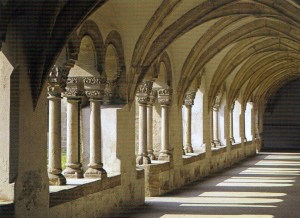
D 1 Bamberg 60    The cloisters from 1392.

Entrance to the cloisters to the left of the Baroque church facade. On the other side of the church, to the west, the Romanesque facade of the church from the Hohenstaufen period with its Lions Gate, which remains totally intact.

Church of Our Lady.
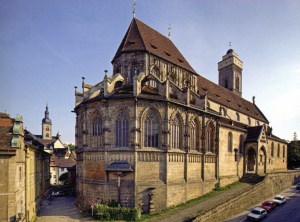
D 1 Bamberg 61   Church with the Bridal Porch on the right.
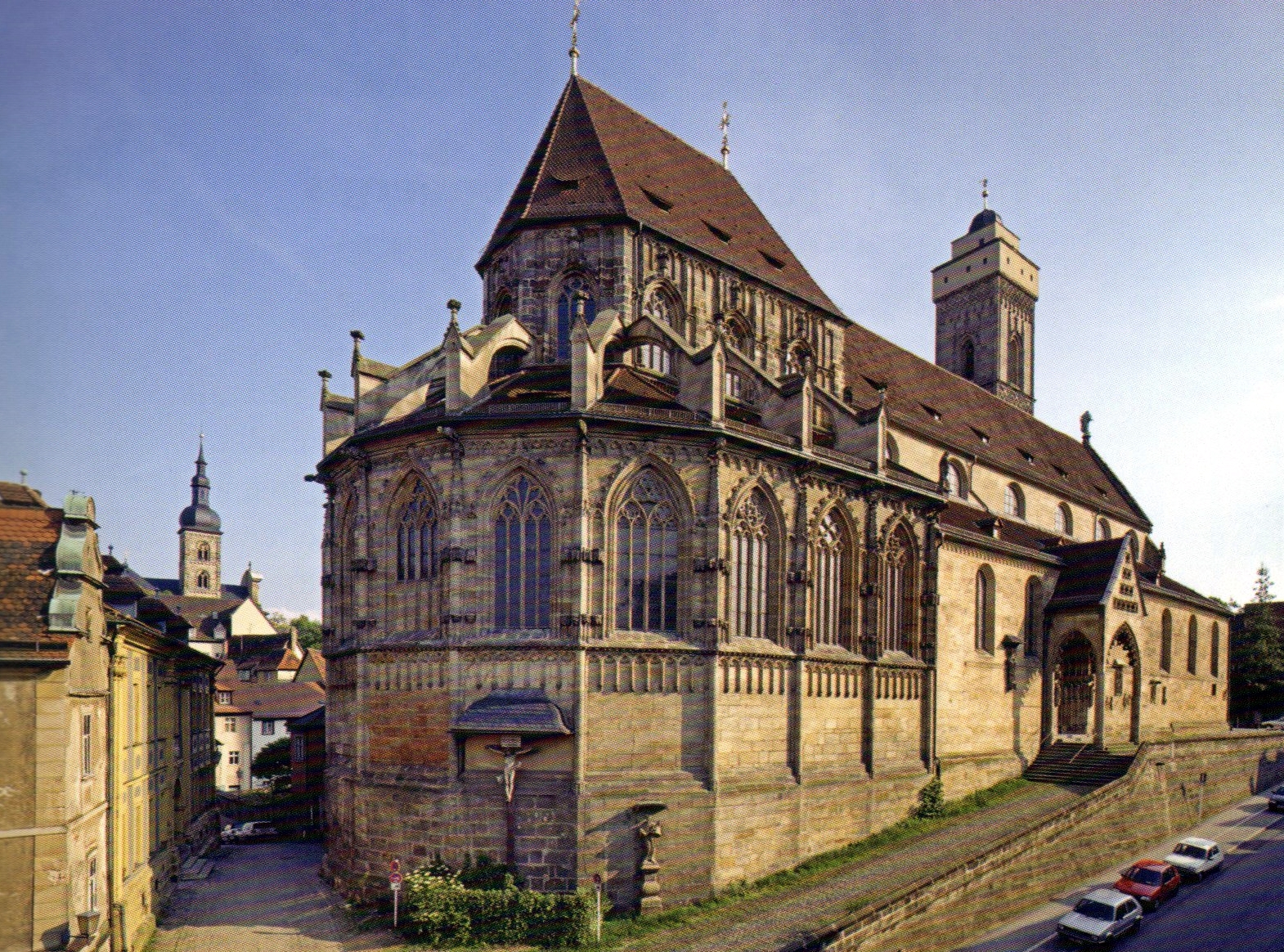
A catholic parish church, Bamberg’s most important Gothic building. Beginning of the building of the nave was in 1338. 1350 was built the Bridal Porch with the Wise and Foolish Virgins. The chancel, influenced by the Parler masons guilds erected in 1392.
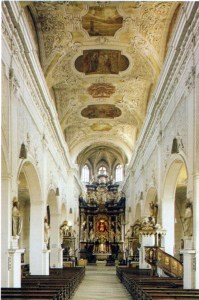
D 1 Bamberg 62    Inside the church of Our Lady.

Inside the Upper parish Church, The savior and the 12 Apostles on the pillars of the nave from 1481. Miraculous statue of the Madonna at the center of the high altar from 1330.Or the ascension and coronation of the Virgin Mary, wooden reliefs from the former high altar, around 1500.

St. Martins Church.
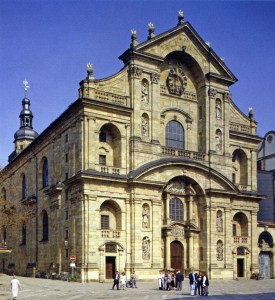
D 1 Bamberg 63    Baroque building of St. Martins church.
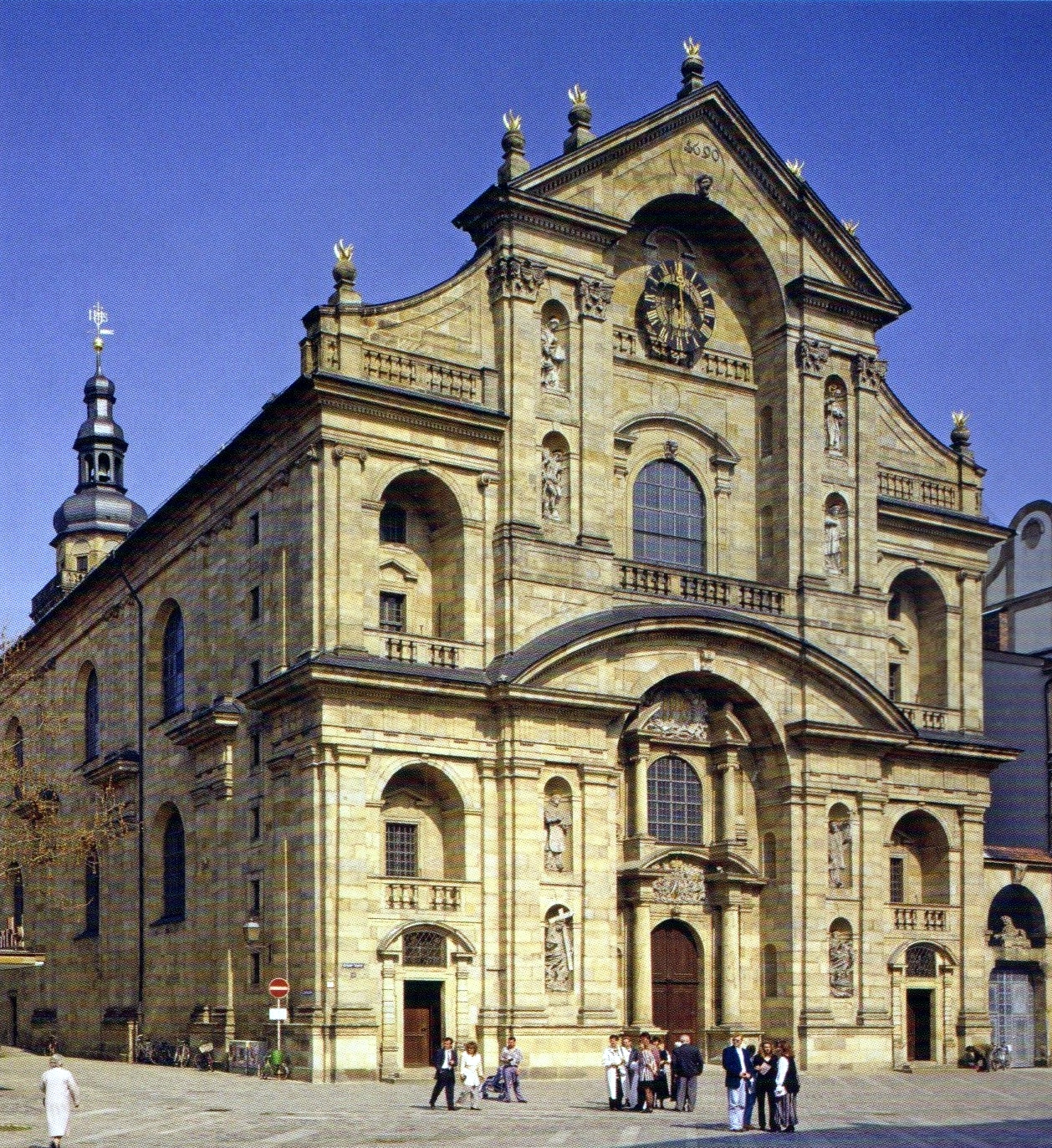
Catholic parish church, a former Jesuit church, built by Georg Dientzenhofer between 1686 and 1693, as an example of the counter reformation. St. Martin, right in the city center, became in 1804 the city’s main parish church.
DSC01578  Side altar. Sadly the High Altar was under renovation.
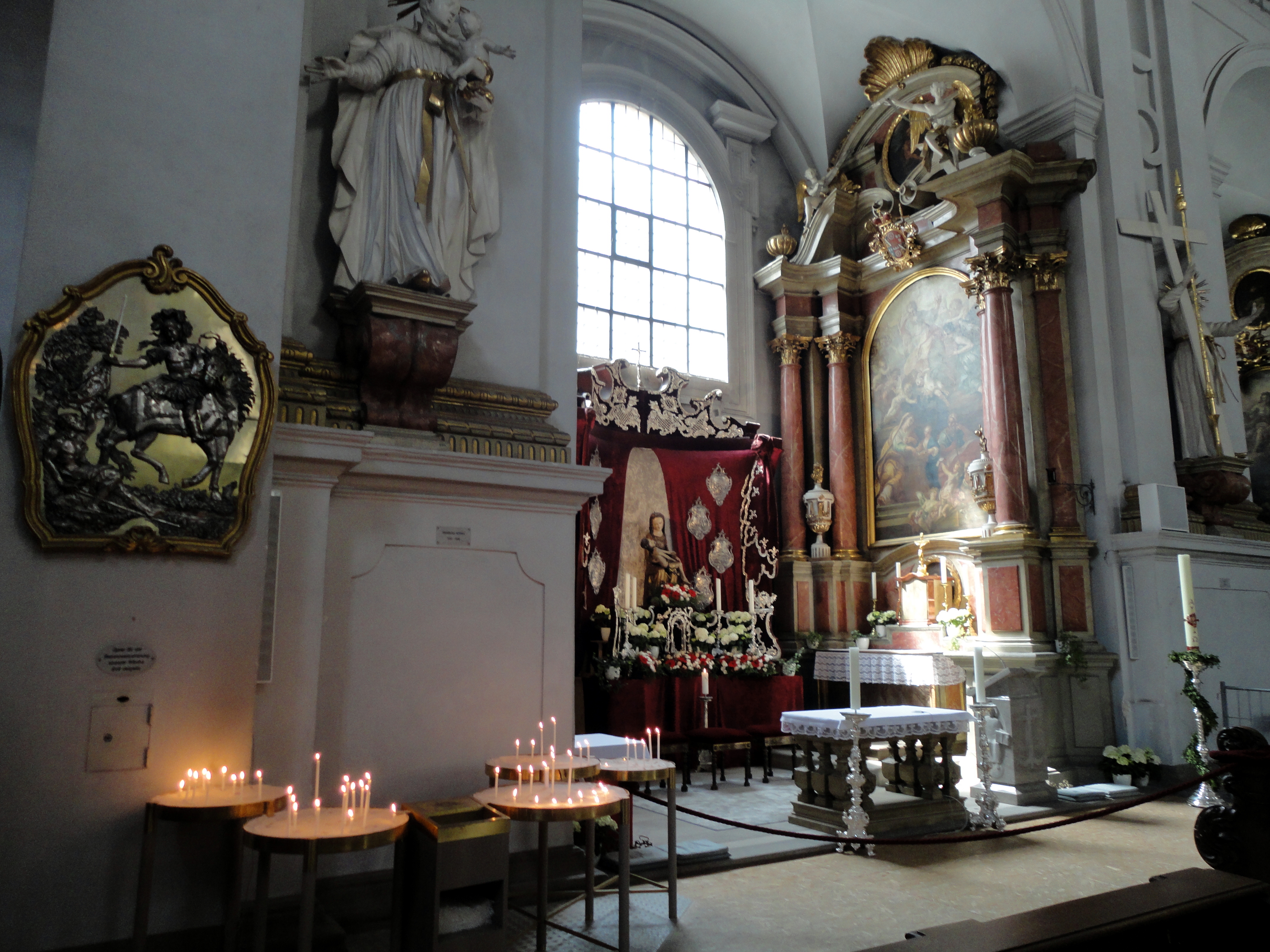
Inside the Pietra, Cologne 1330, the mortal agony panels on the wall of the right transept, depiction of Christ’s Passion from 1511. The high altar in stucco marble from 1701, which is undergoing this year a massive renovation, so I could not see it.
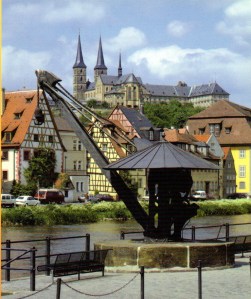
D 1 Bamberg 64  Beautiful historic Bamberg, worth visiting/exploring.
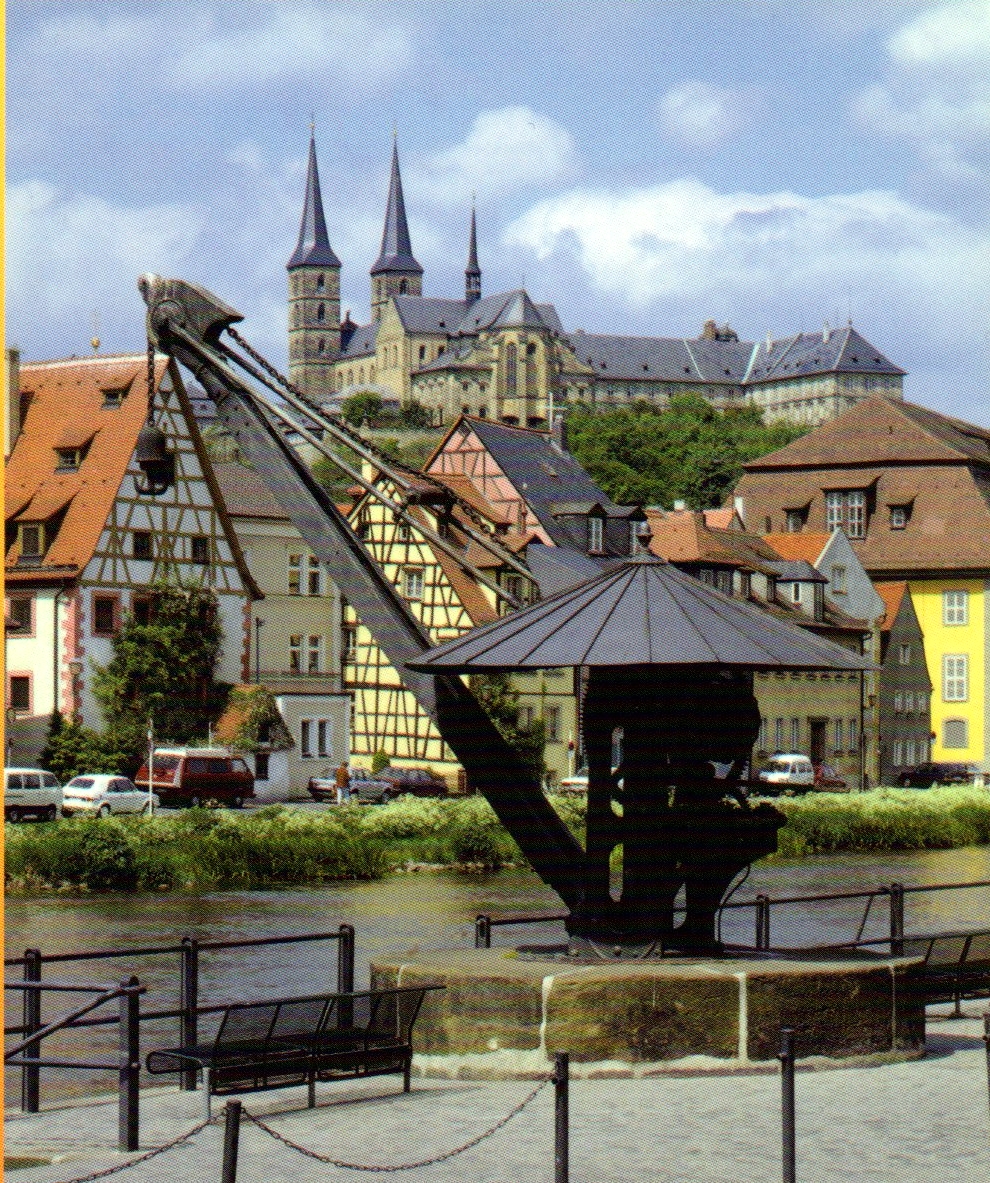
This first part of Bamberg introduced to history and buildings, the second part will mainly introduce to Bamberg’s lifestyle.   Stay tuned !

Veröffentlicht unter History, Lifestyle, Must See, Travel | Verschlagwortet mit | Hinterlasse einen Kommentar

Culinary Tour of Japan

ito 23

A 70th Birthday Surprise – a Culinary Tour of Japan.

My wife and I were treated to a unique culinary experience for Uruguay. Weeks ago our good friend Mike had ordered a custom designed luncheon as a surprise to celebrate his wife’s 70th birthday. However, neither we, nor Anna knew this at the time. We had only been told to reserve August 7th on our calendar. The nature of the event was to be kept a mystery until then.

ito 31         It’s a surprise !!!

The day arrived, and, still being kept in the dark as to what was to unfold, we motored into Montevideo and parked along a busy street in the center of Pocitos. By this time, we had already guessed that it would be a luncheon out; but, as we walked along the street, we kept passing all the likely prospects only to suddenly turn into the entrance of an apartment block.

ito 30          Still a surprise, be patient !!!

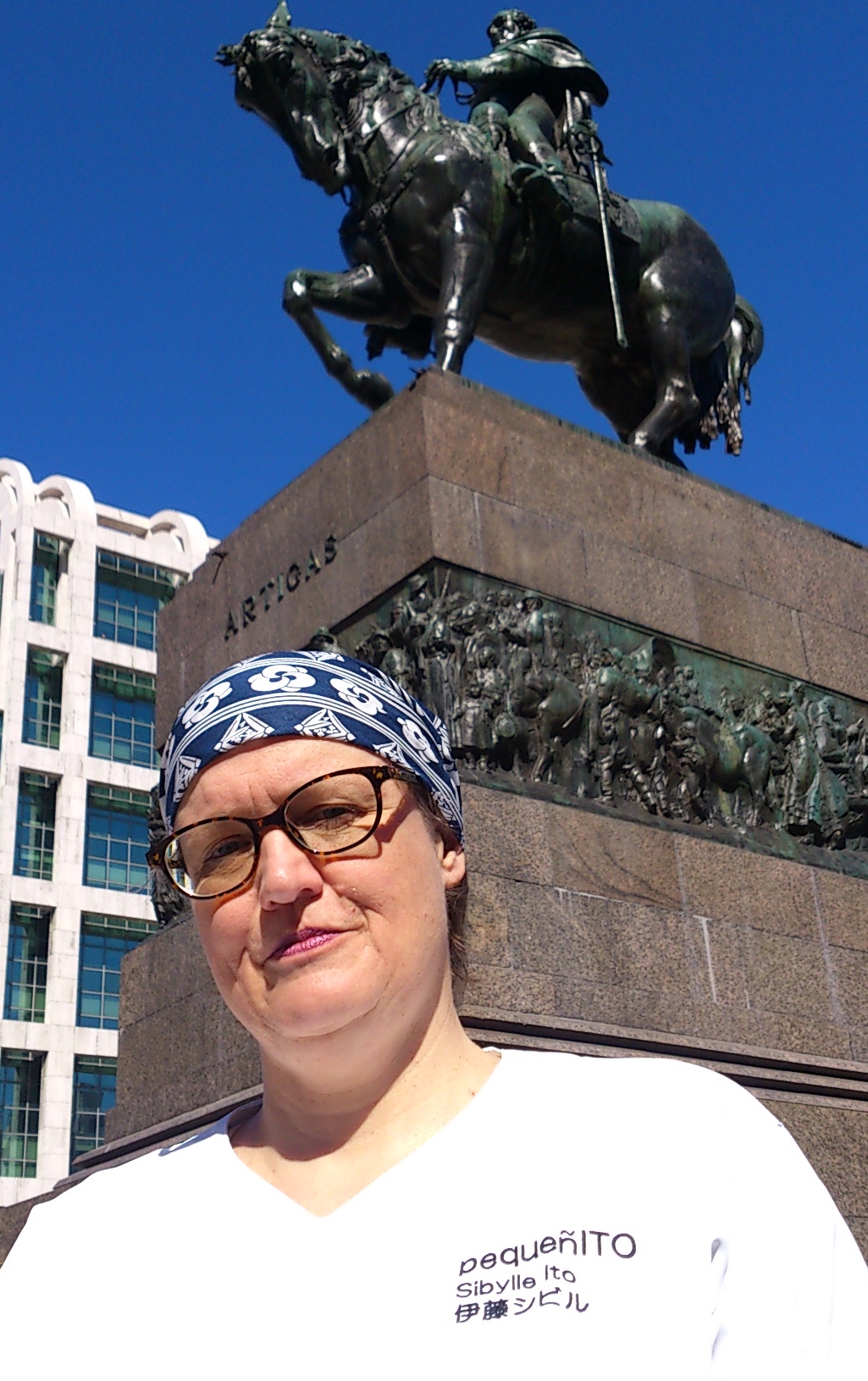
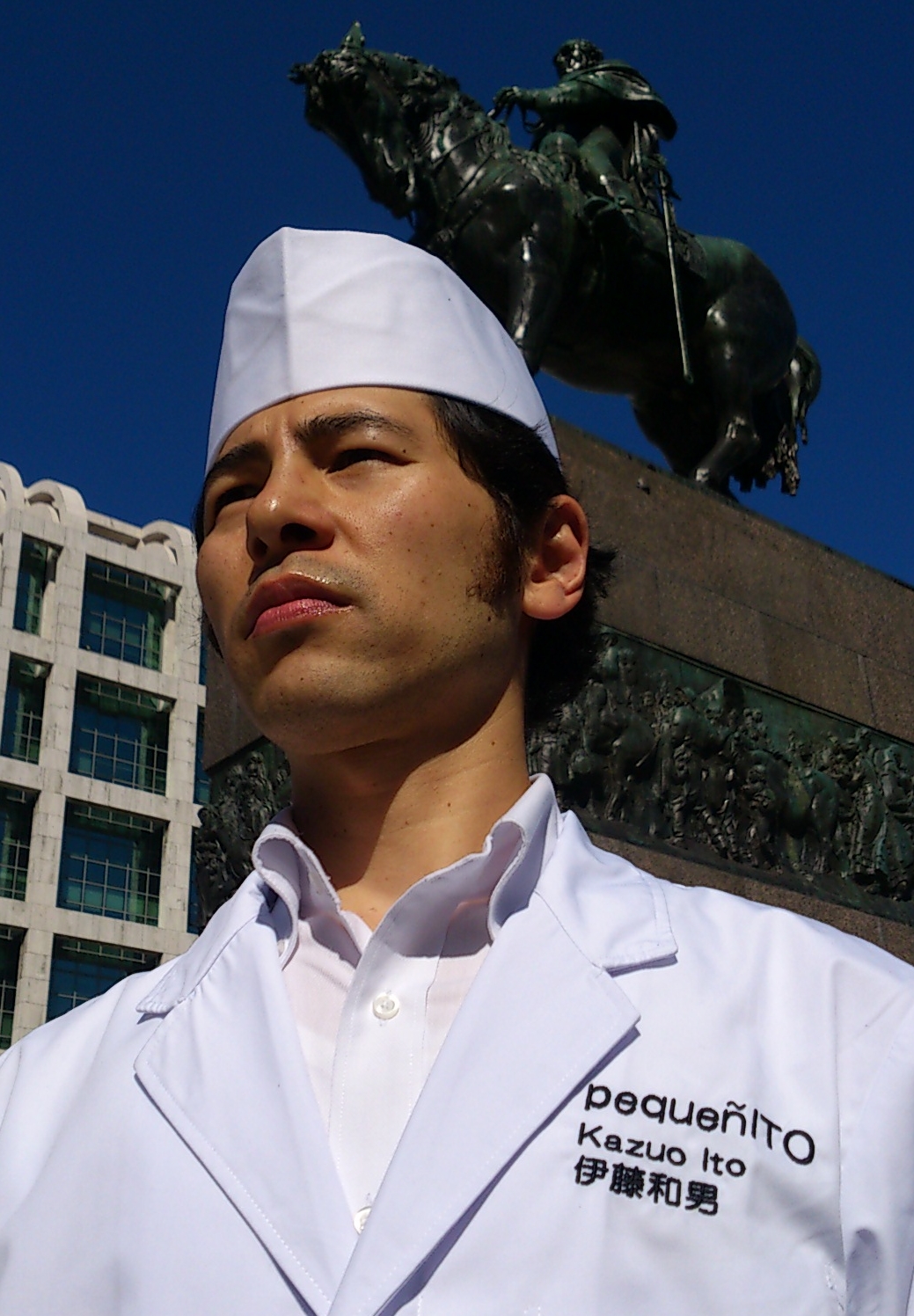
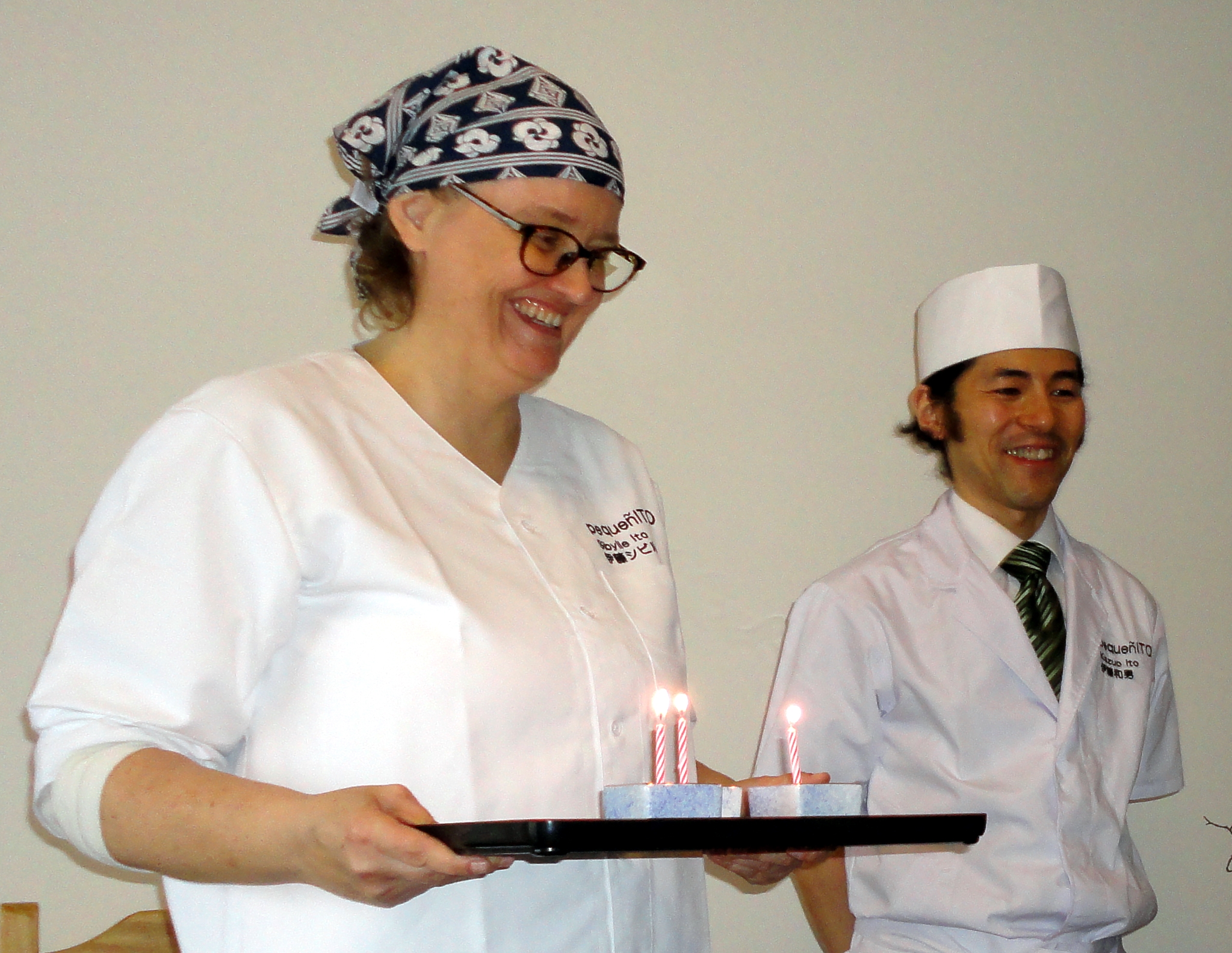
What’s going on? Taking the tiny elevator which barely accommodated the four of us, we stepped out onto the 9th floor and knocked on one of three doors. We were greeted by a couple dressed in chef’s whites. They were Sibylle and her husband Kazuo Ito. Sibylle, we were to learn, originated from Switzerland and spent fourteen years in Japan where she met and married Kazuo, a master Sushi chef. Sibylle and Kazuo are in the process of launching a boutique catering service from their apartment home and would cater our very exclusive luncheon today.

Warm Welcome to a Private Home.

ito 6 Sibylle           ito 5 kazuo    Sibylle and Kazuo Ito.

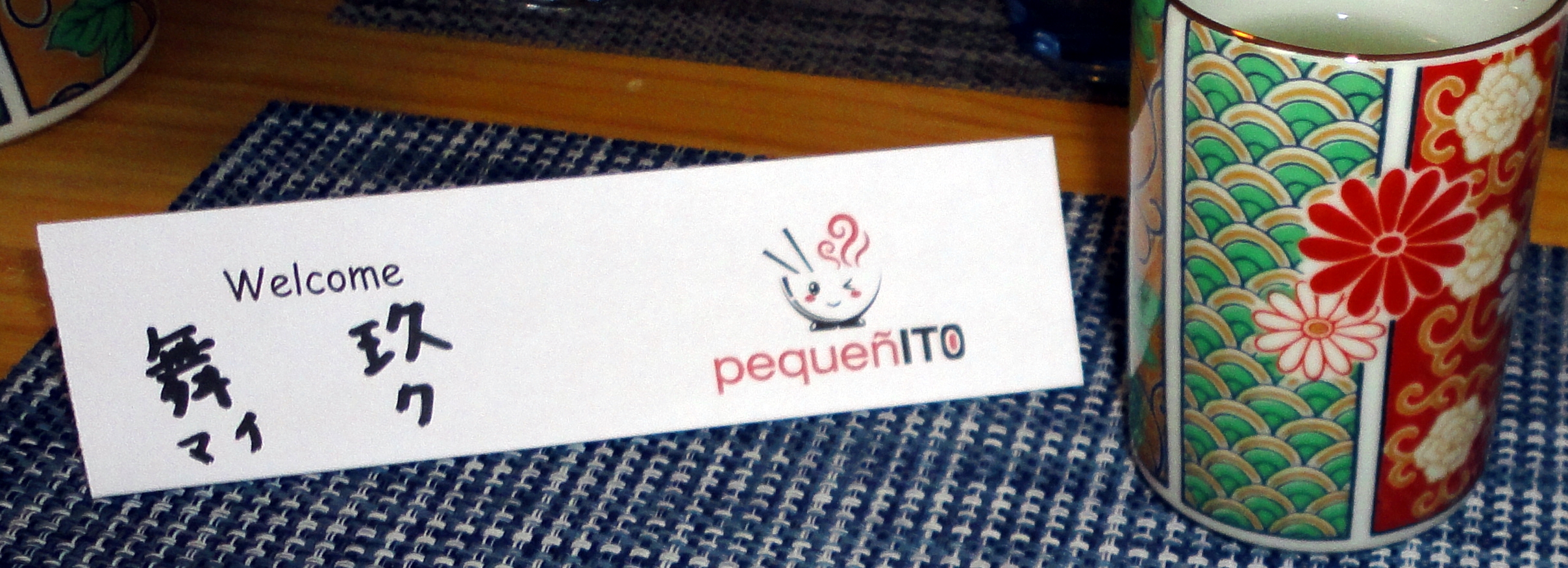
The apartment itself although sparsely furnished with bare walls was brightly lit by a window wall of glass overlooking the rooftops of the surrounding city. In the living room was a plain wooden dining room table set for four. At each, a card with Japanese characters indicated where each person was to sit. It was explained that each character represented the sound of a syllable in our name which was also a word in Japanese. For instance, the three characters of my name equated to: Helper/Protector; Genius; and, Good Fortune. So the place names also served as a kind of unintentional fortune cookie.

006a     Specially made Japanese Welcome Cards.

The meal which began with a toast of champagne to the guest of honor consisted of seven courses each representing a different region of Japan.

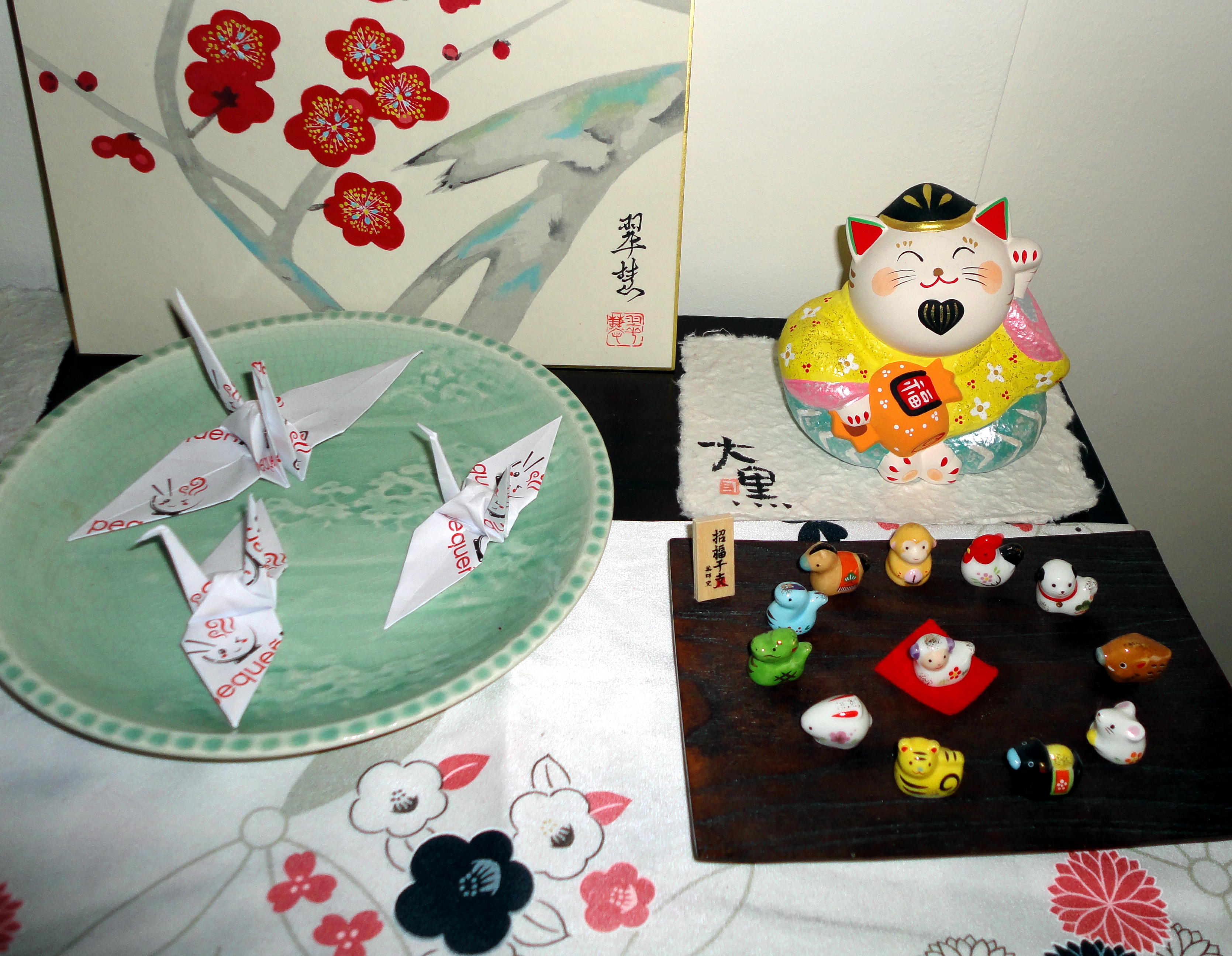
008    Little Japanese shrine at Sibylle’s and Kazuo’s home.

Each course was presented with an explanation of it’s origin and ingredients. Music from the region the dish was from played softly in the background. The service was very friendly and attentive, our hosts often joining in the laughter of the moment. It was obvious in speaking with them that Sybille and Kazuo strove toward authenticity and excellence in their preparation with the best ingredients they could find, some of which had been imported. (written by W.R., Thank you.).

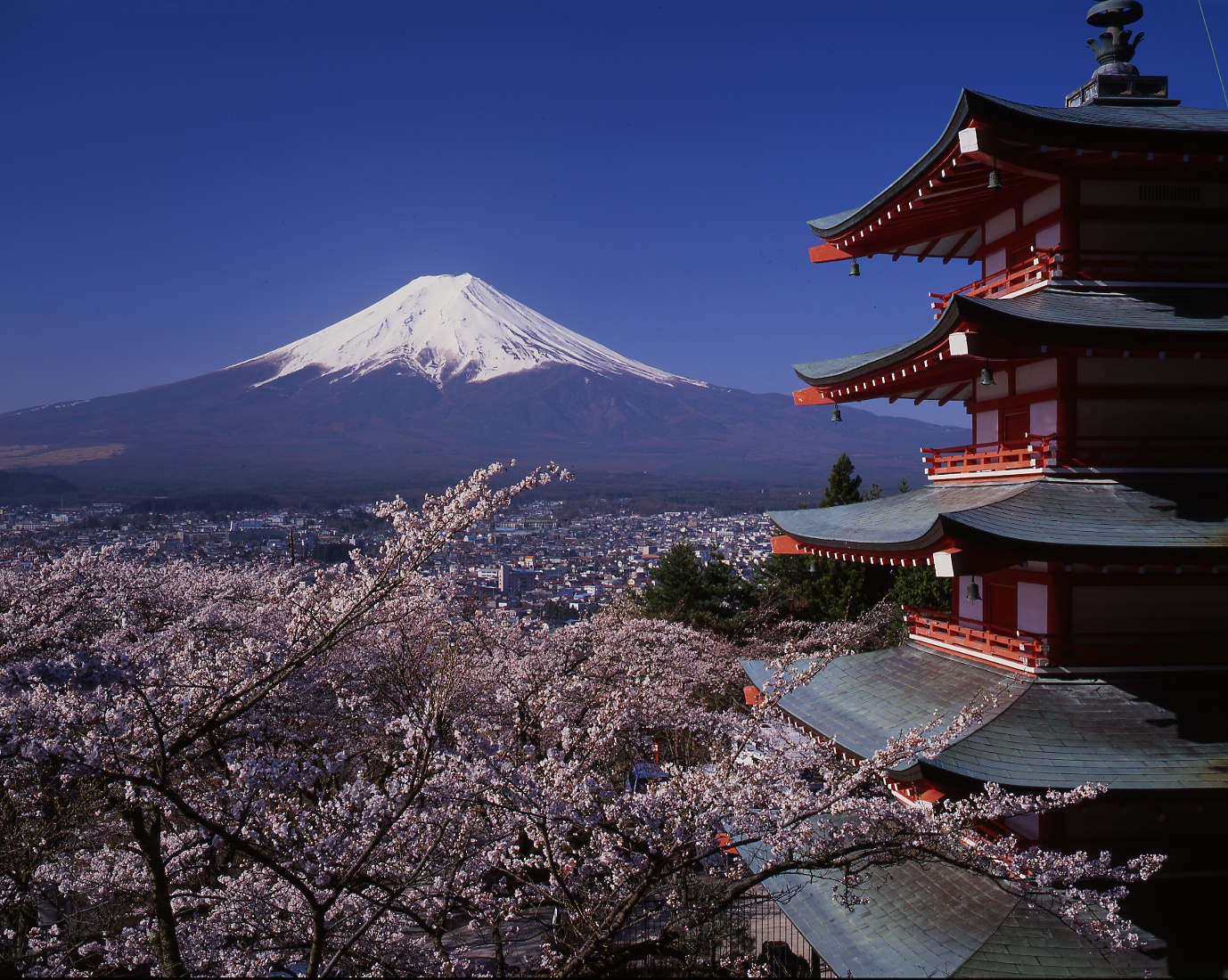
ito 20 Mount Fuji  Worldwide known, Mount Fuji Japan.

Let’s start the „Tour Japan“ with a short introduction of the places in Japan as well as a
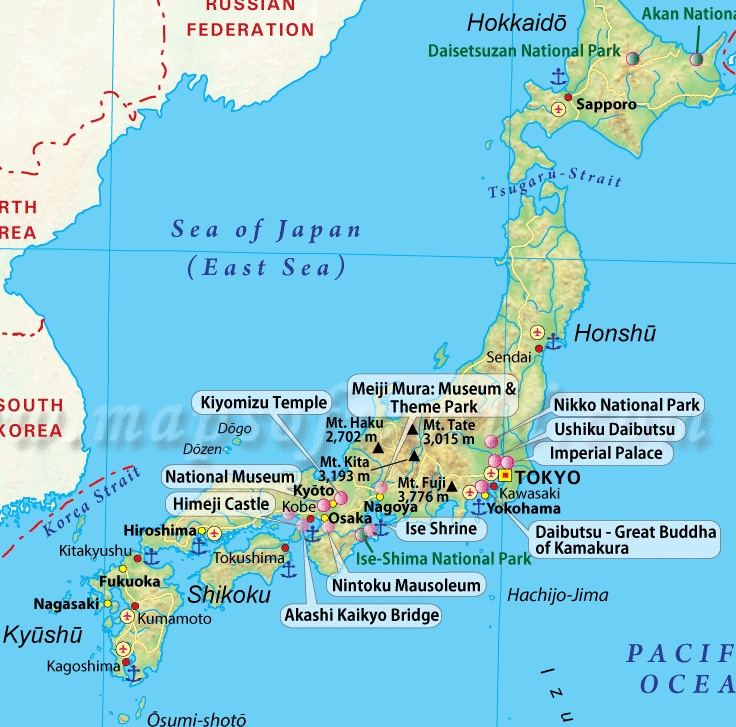
short explanation of the courses, like Sibylle did for us. Seven authentic foods from seven different regions in Japan. You can follow them on the map below.
Sadly you can’t smell and taste these delicious servings.

ito 19a
Touring  Seven „culinary“ regions of Japan. Click on map (mapsoftheworld) to super size.

We go by numbers of the courses,  First to Seventh .

First:
Kyoto.

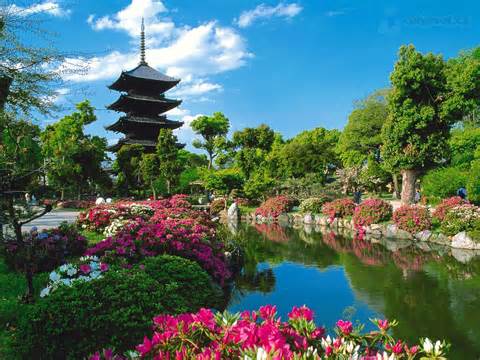
ito 1 Kyoto To-ji      Thousands of gardens around Kyoto.
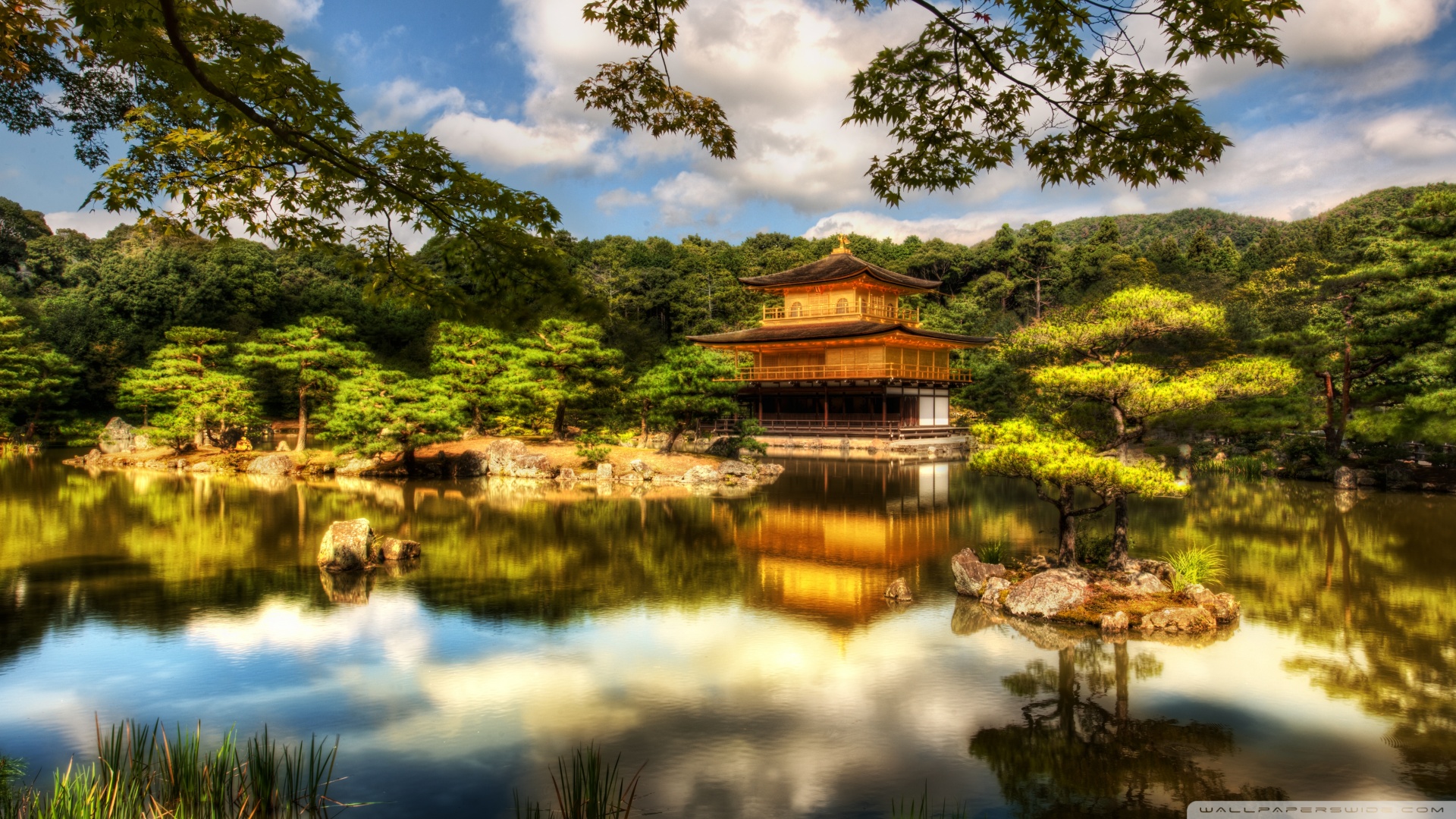
ito 2 Kyoto Golden Pavillon     The Golden Pavilion near Kyoto.

Kyoto,formerly known in the West as Meaco is a city located in the central part of the island of Honshu, Japan. It has a population close to 1.5 million. Formerly the imperial capital of Japan for more than one thousand years. Kyoto is also known as the City of Ten Thousand Shrines. The first dish comes out of this region:

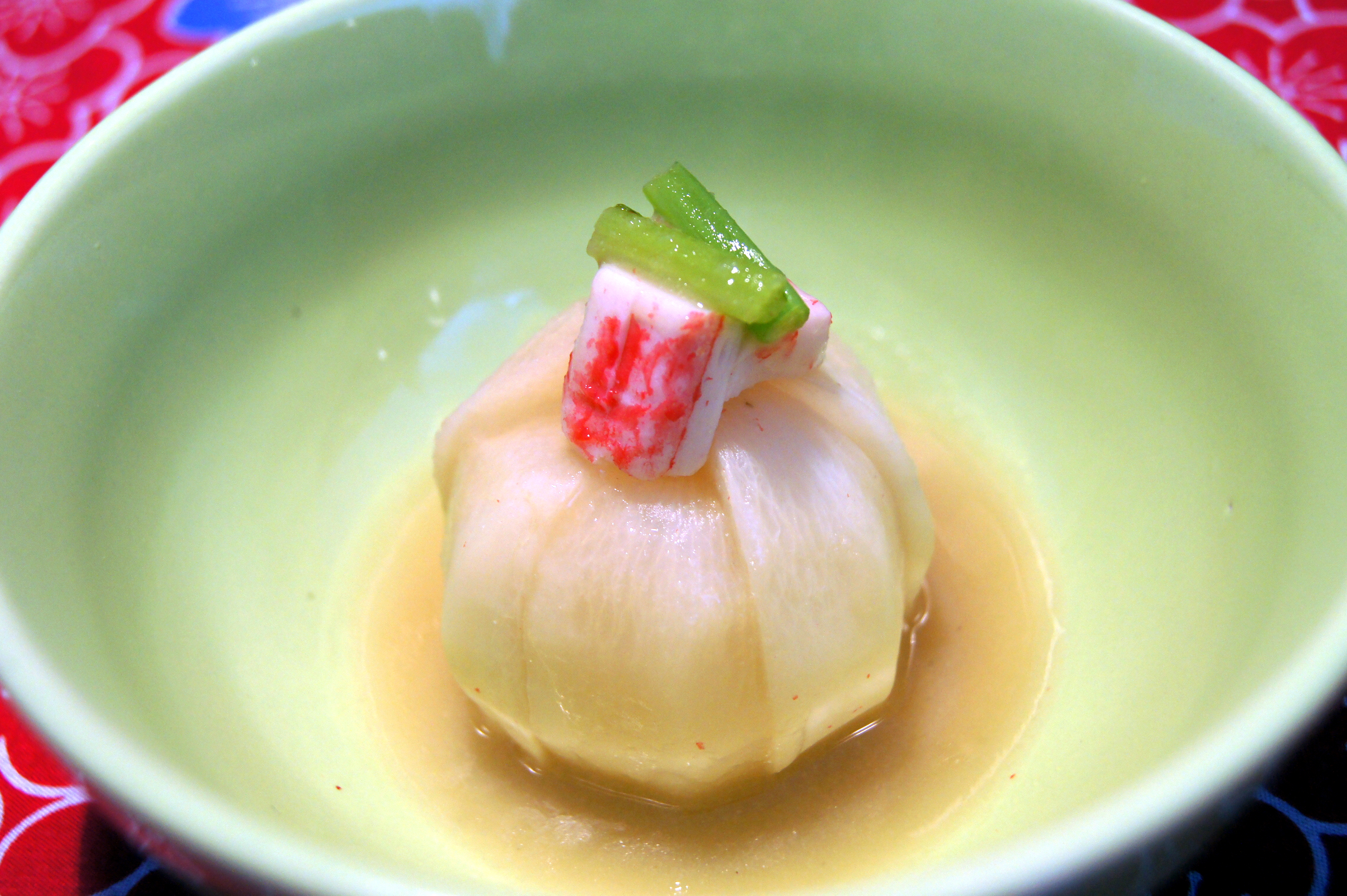
Turnip with Kanikama.

DSC01703

A turnip carved in a perfect sphere and sliced delicately into six sections topped with pieces of imitation crab (kanikama).
Traditional simmered in umami rich light sauce. Umami, a savory taste, is one of the five basic tastes,together with sweet, sour, bitter and salty.

Second:
Tsukiji, Tokio.

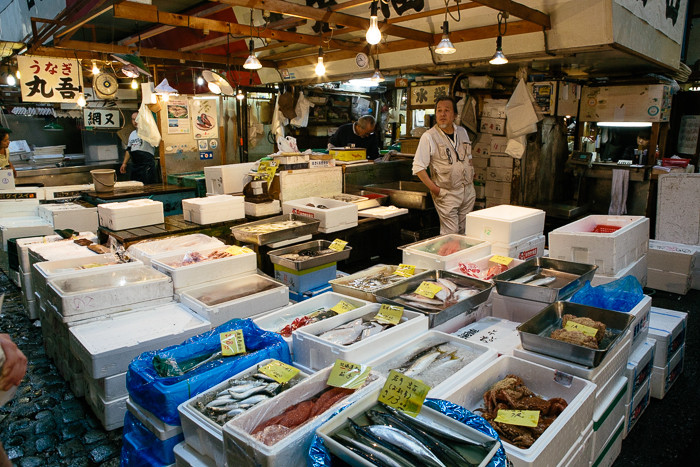
ito 4 Tsukiji Fish Market 2    The fish markets of Tokio are in Tsukiji.
ito 3 Tsukiji Fish Market 1    Famous in the markets are the daily fish auctions.

Tsukiji is a district of Chūō, Tokyo, the site of the Tsukiji fish market. Literally meaning „reclaimed land,“ it lies near the Sumida River on land reclaimed from Tokyo Bay in the 18th century. The Tsukiji markets are well known for their sushi stands and restaurants.

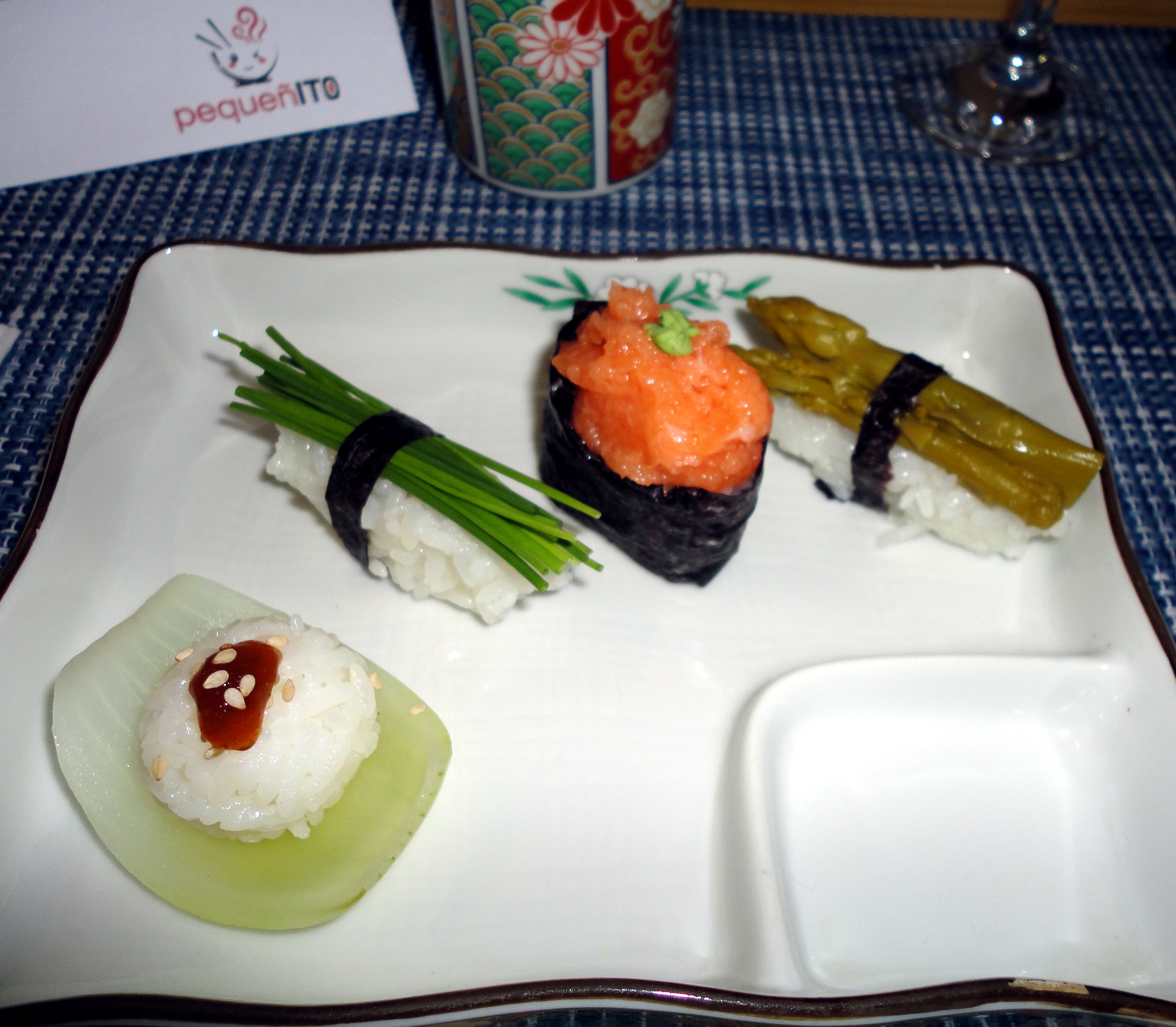
Tsukiji Sushi Rolls.

007

Four Sushi rolls: Chopped Salmon, Rice on a leaf of steamed onion with a dab of soy paste on top (my favorite), rice with chives with a band of nori to hold it together and, steamed asparagus on rice again held together with a belt of nori.
Definition of Sushi; it is a Japanese food consisting of cooked vinegared rice (sushi-meshi) combined with other ingredients like seafood, vegetables and sometimes tropical fruits. Ingredients and forms of sushi presentation vary widely, but the ingredient which all sushi have in common is rice.

Third:
Koyasan.

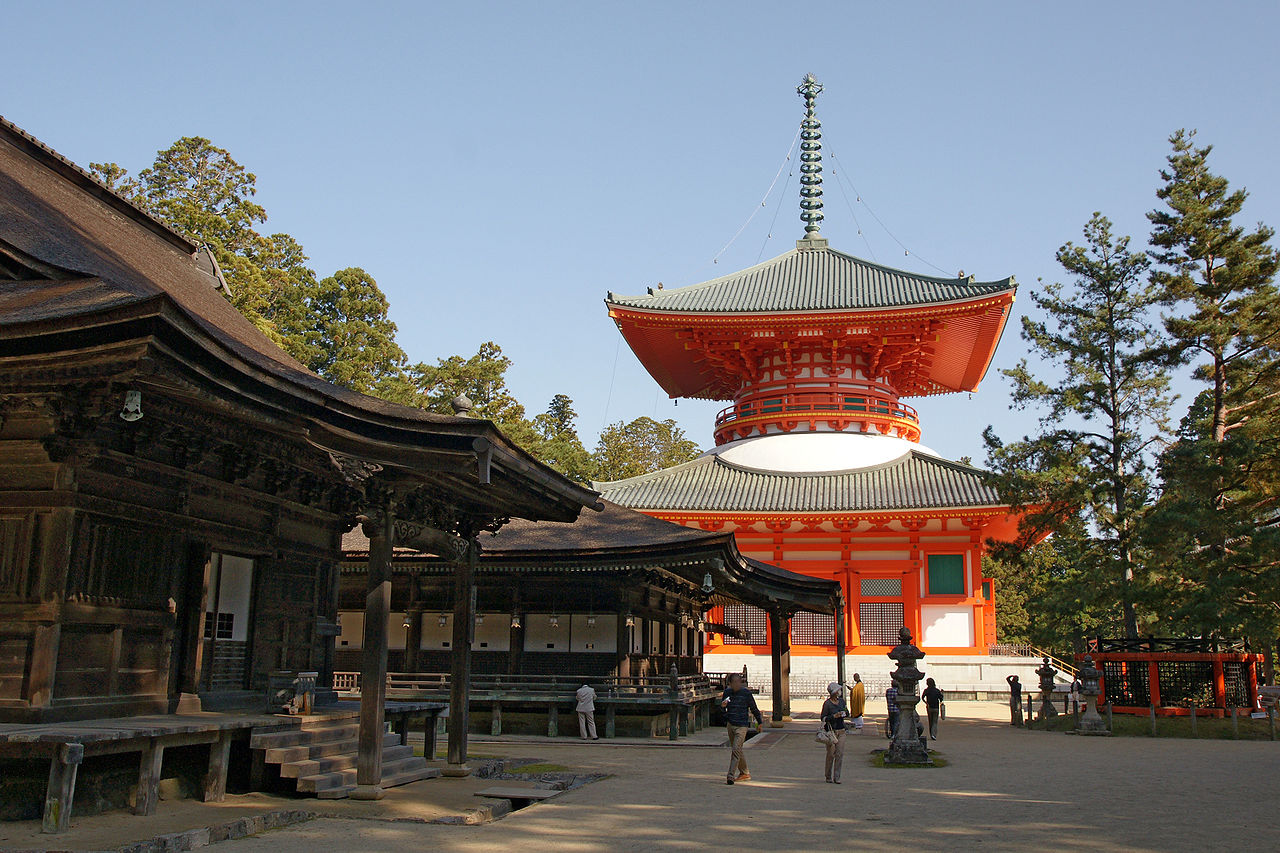
ito 8 Koyasan center point Mt. Koya    The Center Point of Mount Koya.
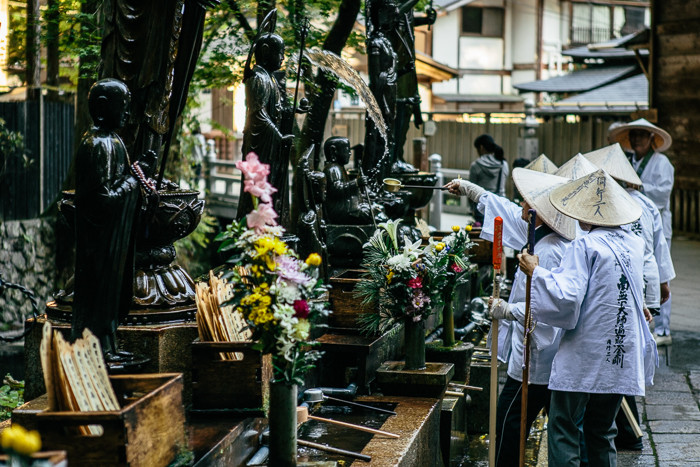
ito 9 Koyasan cemetry   Koyasan cemetery celebrations.

Koya-san is the name for a group of mountains. Koyasan, or Koya mountain, is located south of Osaka, on the Kii peninsula. It holds the village of Koya, and is most known as the center of the Shingon sect of Japanese Buddhism. Koya was founded in 819 by the monk Kukai. Now, Koya has about 7000 inhabitants, and many of them are Buddhist monks, with about 120 temple. The third dish is from this region.

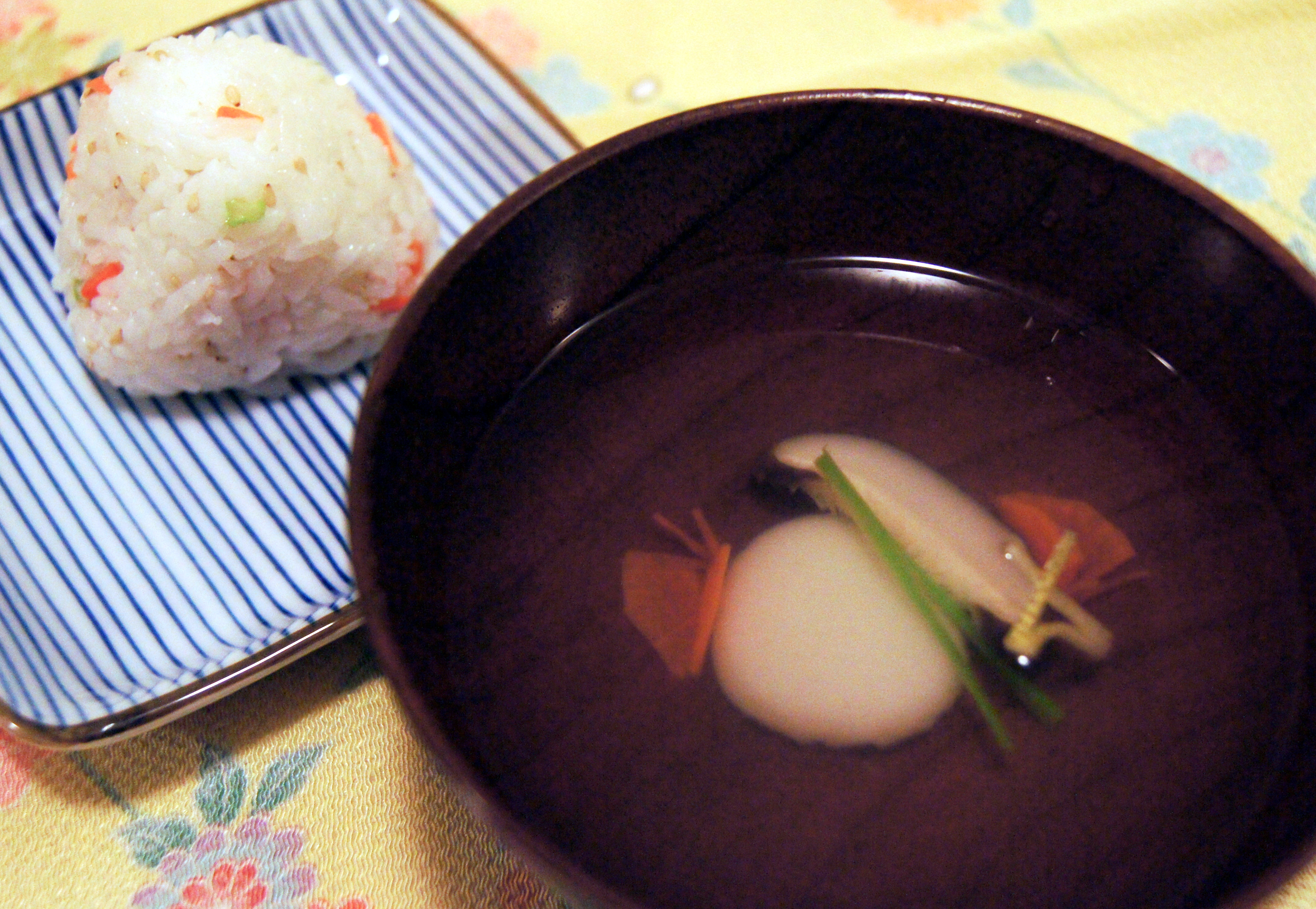
Osuimono soup, Omusubi.

DSC02126 mike

Sticky Rice balls with vegetables (carrots, turnip etc.) and sesame seeds mixed in. Eaten with a bowl of a light broth containing shiitake mushroom and vegetables . Very healthy !!

Fourth:
Yokohama.

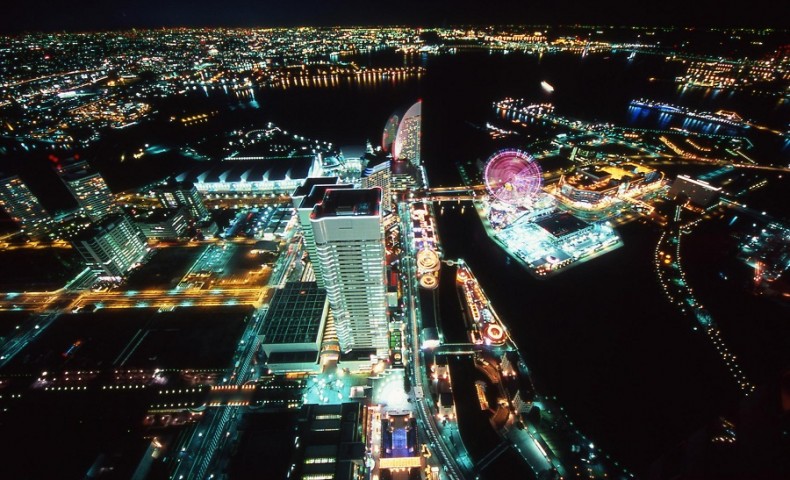
ito 11 Yokohama Sky Garden   Yokohama by night from the Sky Garden.
ito 10 Yokohama Enmei-in Temple   Enmei-in Temple near Yokohama.

Yokohama is the second largest city in Japan by population after Tokyo, and most populous municipality of Japan. It lies on Tokyo Bay, south of Tokyo. It is a major commercial hub of the Greater Tokyo Area.
Yokohama’s population of 3.7 million makes it Japan’s largest incorporated city. Yokohama developed rapidly as Japan’s prominent port city. Fourth dish now.

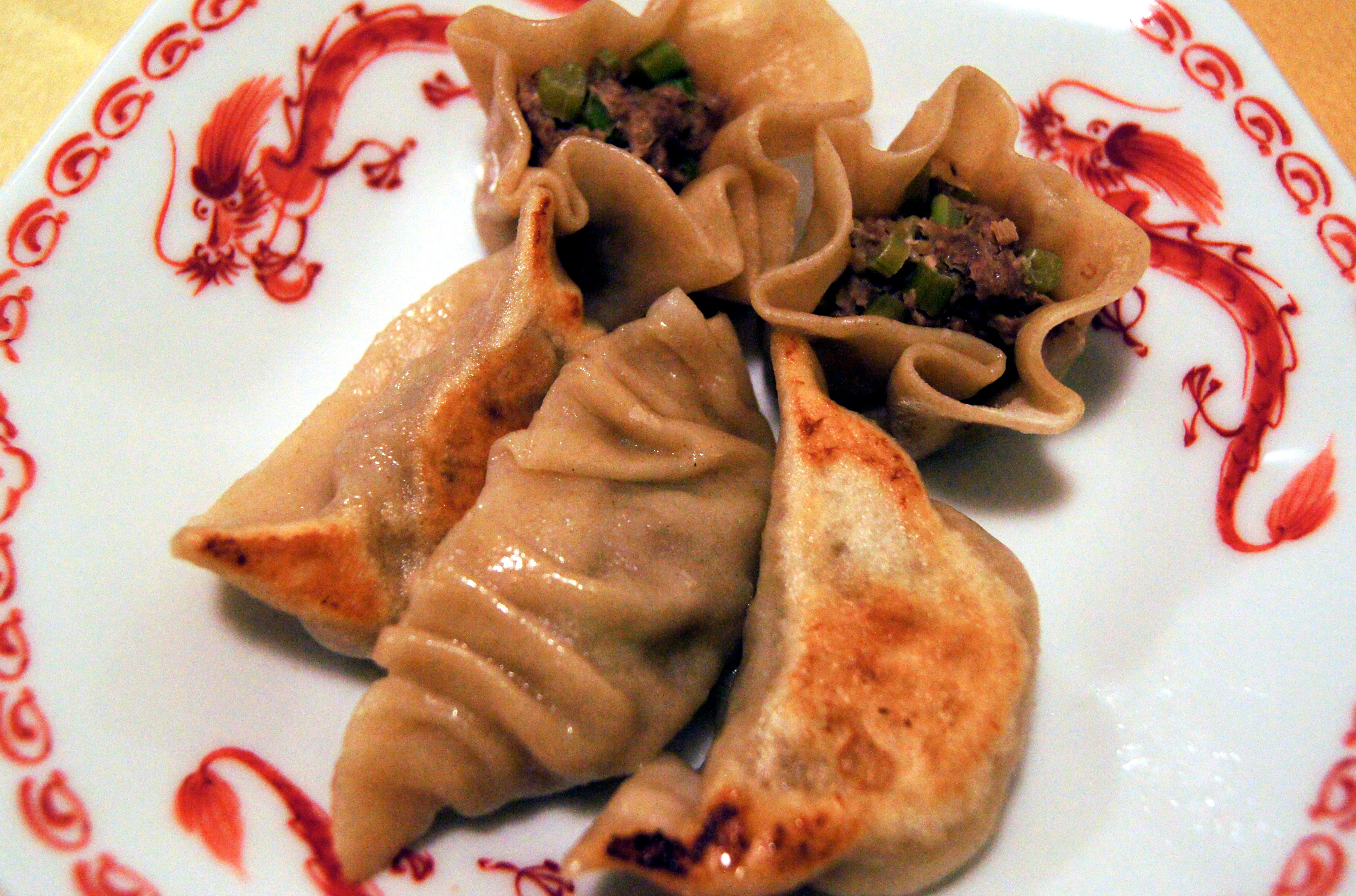
Gyoza and Shumai.

DSC02125 mike

Pirogues sized dumplings stuffed with meat (shrimp, chicken and pork) and vegetables.
Accompanied with a nice soy-vinegar dressing.

Fifth:
Ise Shrine.

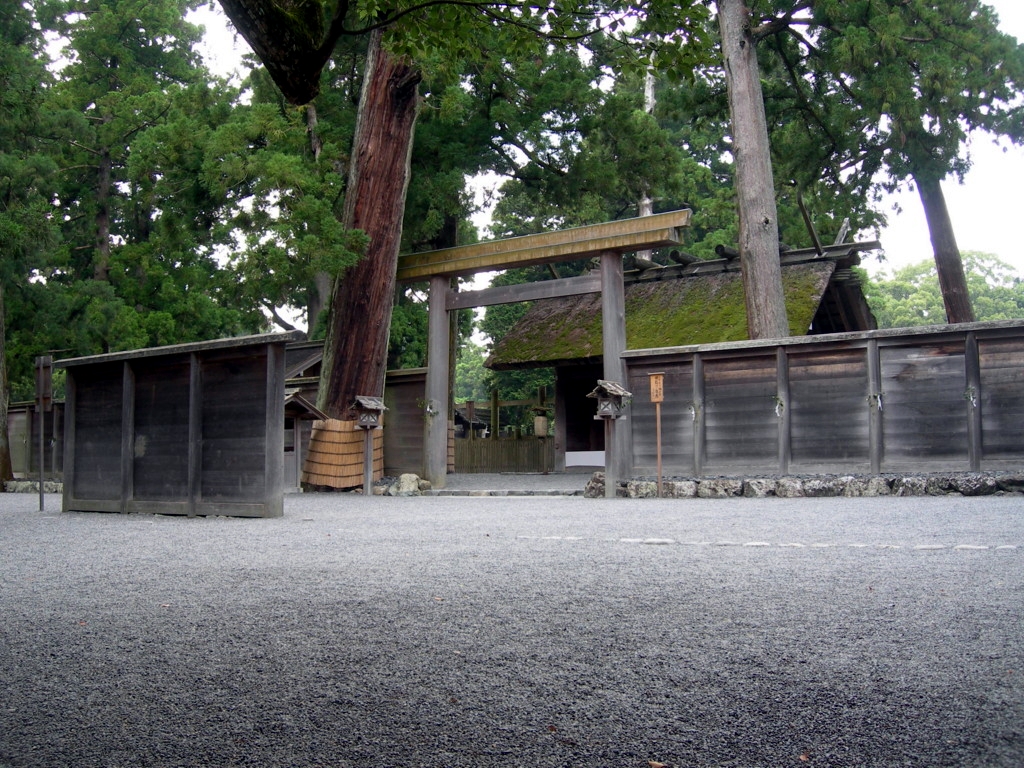
 ito 12a ise main schrine  Grand Shrine, secured by 4 different fences.
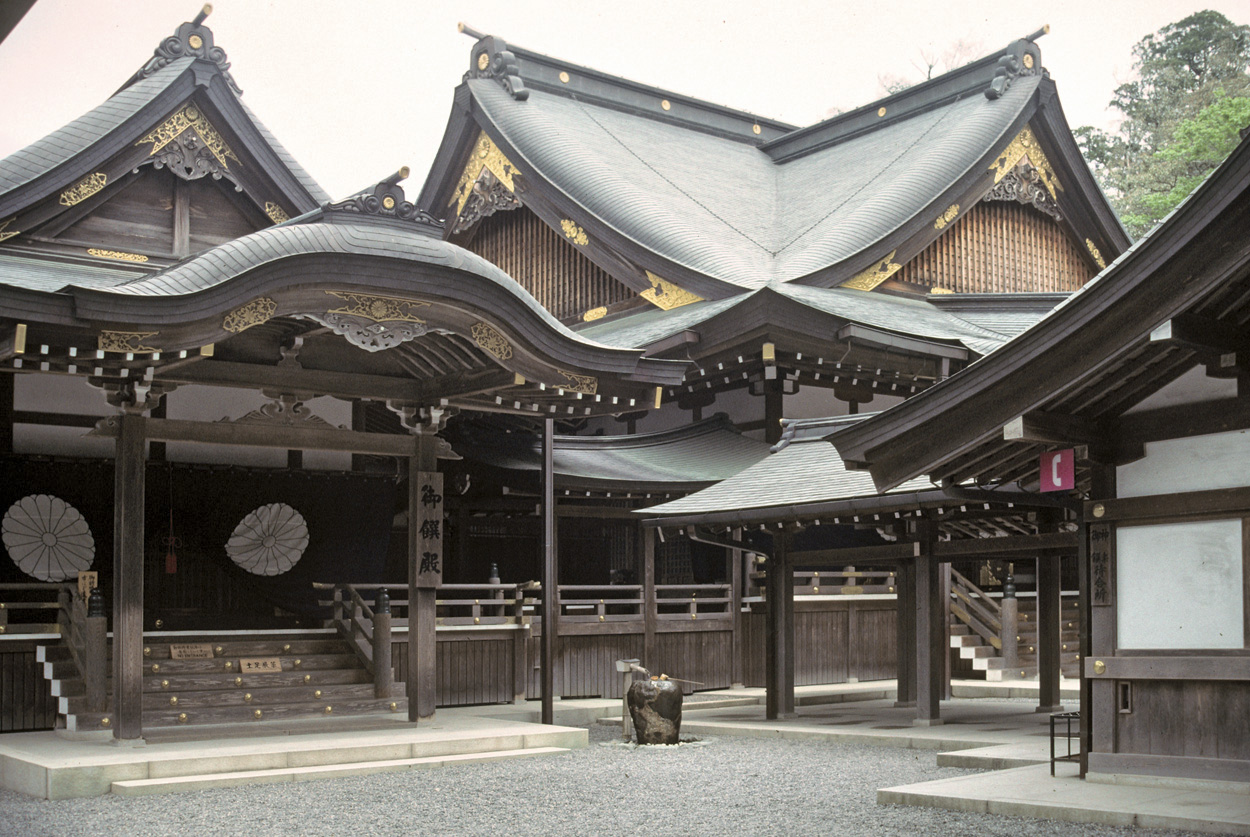
ito 13 Ise Shrine  Kaguraden, for special dances and prayers.

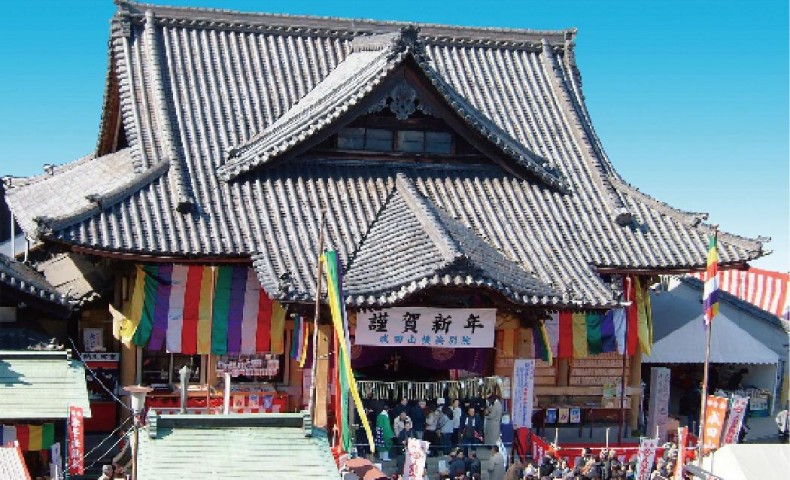
Ise Grand Shrine, located in the city of Ise. It is a Shinto shrine dedicated to the goddess Amaterasu-ōmikami. Officially known simply as Jingū, Ise Jingū is in fact a shrine complex composed of a large number of Shrines. Ise’s history is directly linked to that of Ise Grand Shrine. Ise Grand Shrine is separated into two main parts: The Inner Shrine and the Outer Shrine. Despite the names, these are actually two physically separate shrines approximately six kilometers apart.The Ise Grand Shrine is the most sacred Shintō Shrine in Japan, and is thus a very popular destination for tourists. Fifth dish from Ise area.

Ise Udon.

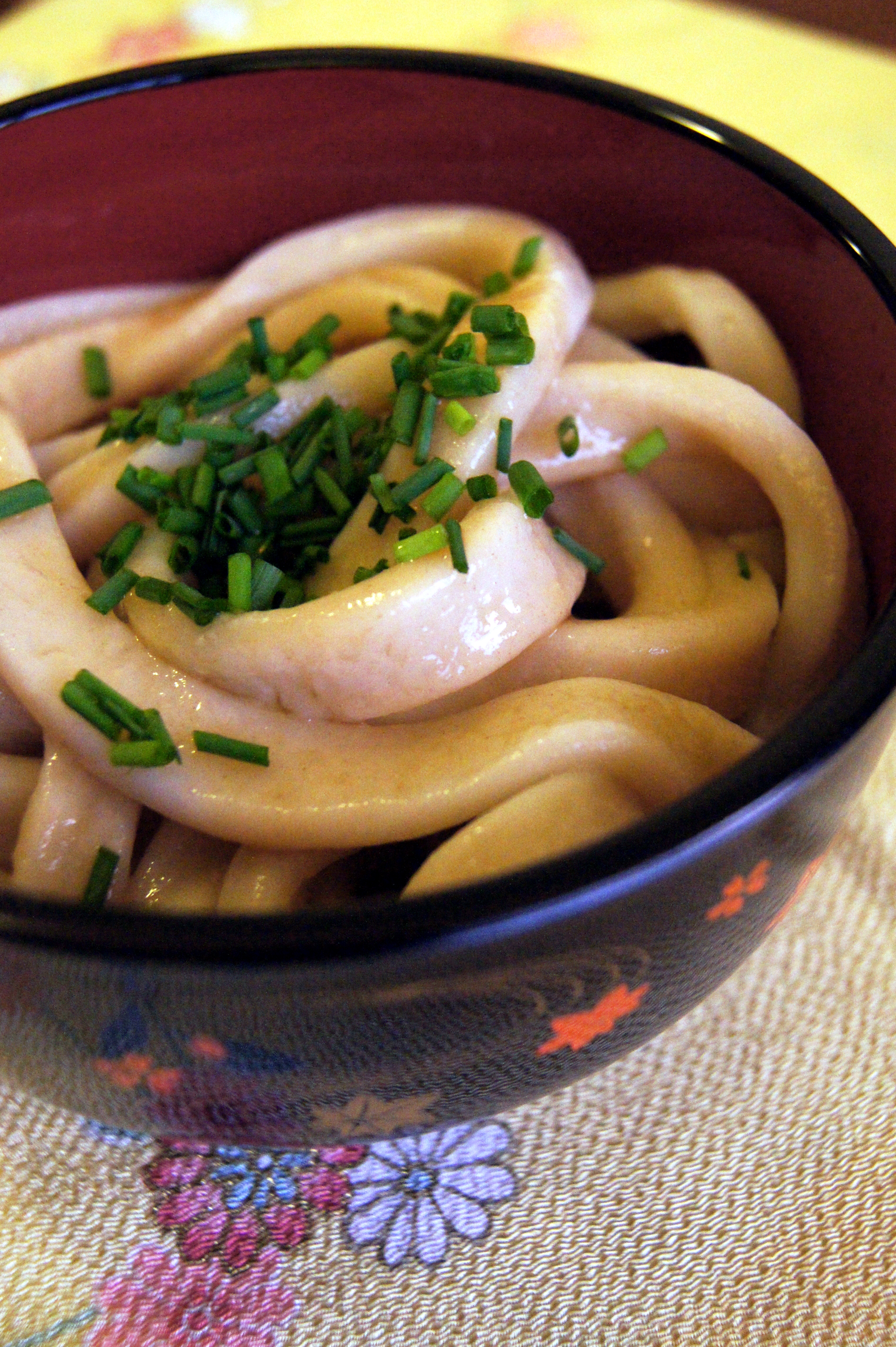
DSC02117 mike

Udon – Fat noodles made by hand, served cold in a savory soy sauce broth, sprinkled with chives.  From the area of the most important Shinto Shrine in Japan.

Sixth:
Hokkaido.

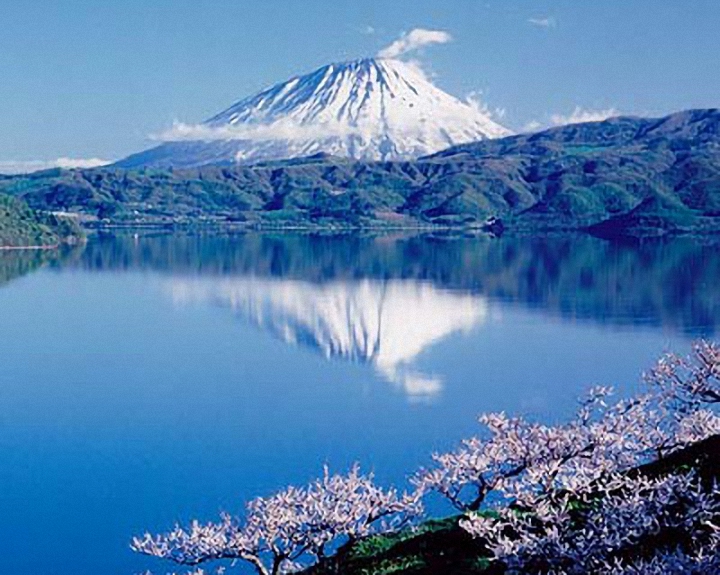
ito 14 Hokkaido Mt. Asahidake     Mount Ashidake on Hokkaido Island.
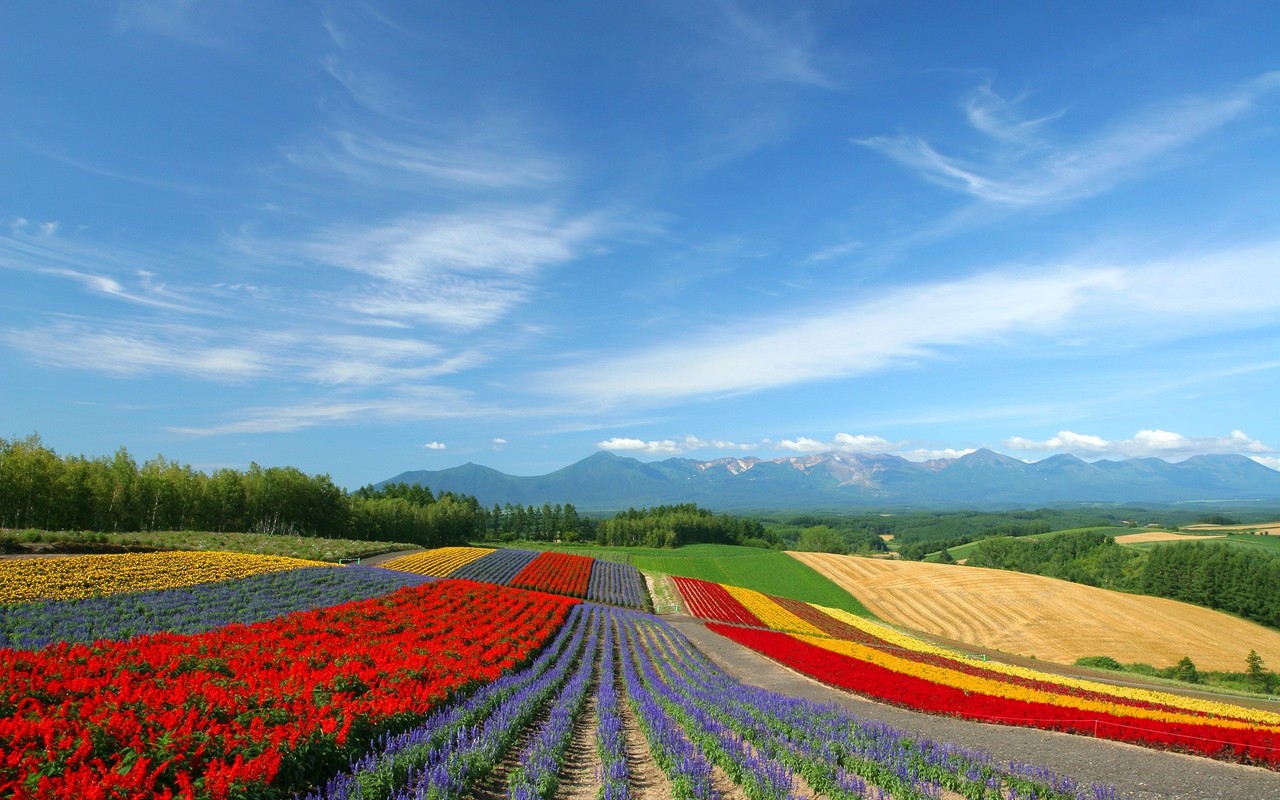
ito 15 Hokkaido     Hokkaido, also the island of flowers.

Hokkaido is Japan’s second largest island; it is also the largest and northernmost one. Here is where the winter starts in Japan, cradle of the hot pots. The Tsugaru Strait separates Hokkaido from Honshu, although the two islands are connected by the underwater railway Seikan Tunnel. The largest city on Hokkaido is its capital, Sapporo.  Hokkaido, also the island of flowers, has more tulip fields then whole Holland.

Hokkaido Ishikari Nabe.

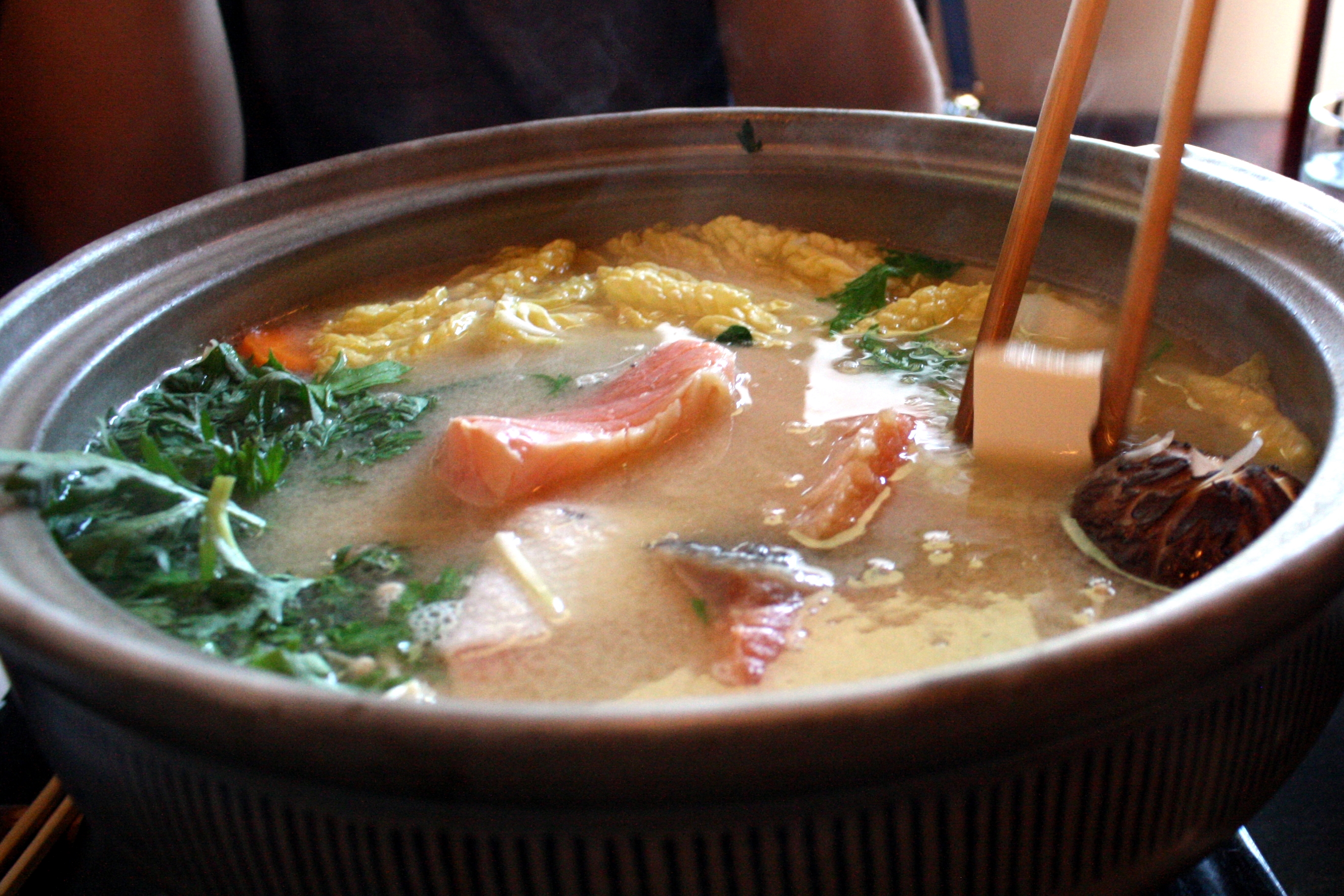
ito 32 ishikari nabe

When the weather turns wintry, the Japanese long for hot-pot dishes to warm their bodies and souls. By adding fish and vegetable to miso soup, hot pot dishes become very nutritious.  A hot stew, flavoured with sesame oil, consisted of carrots, nappa cabbage, potato, onions, Shitaki mushrooms with pieces of Linquado fish served in a huge, ceramic bowl, which allows slow simmering of the dish. The sixth dish from this island.
Miso is a traditional Japanese seasoning produced by fermenting soybeans with salt and the fungus Aspergillus oryzae, known in Japanese as kōji.
Some Japanese say, sharing a Nabe creates close friends instantly.

Seventh:
Kagoshima.

ito 17 Kagoshima     Mt. Sakurajima, always active volcano.
ito 16 Kagoshima     No ashes on tropical Kagoshima beaches.

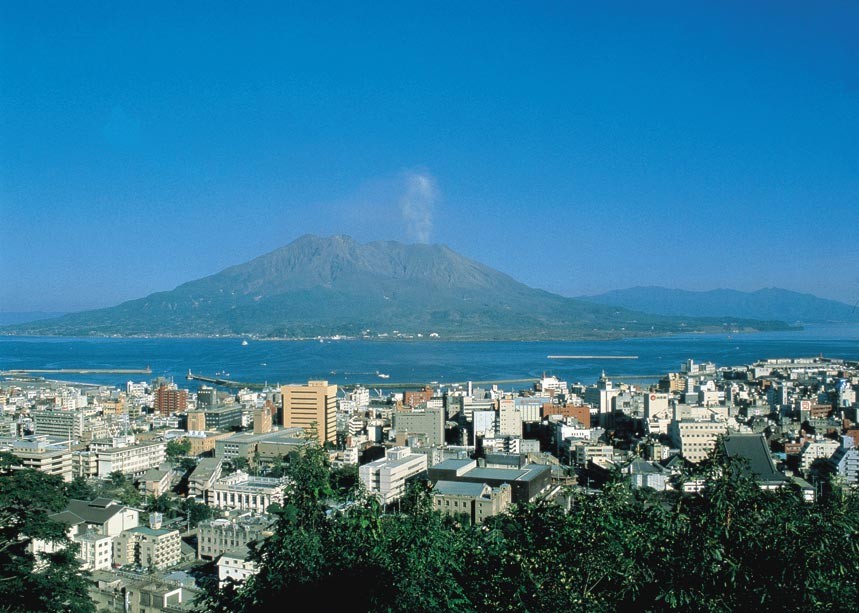
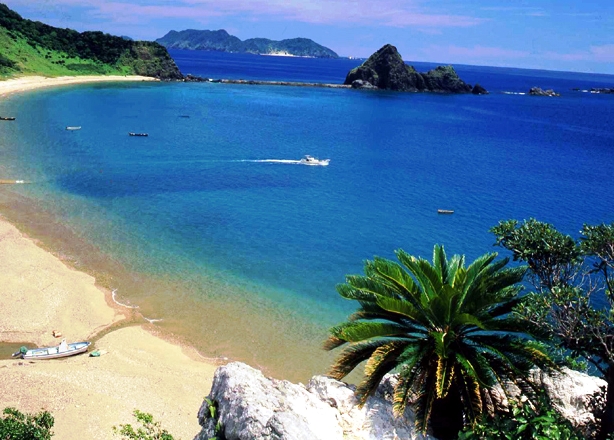
Sunny Kagoshima has a personality to match its climate, voted Japan’s friendliest city nationwide. Its backdrop/deity is Sakurajima, a very active volcano just across the bay. Locals raise their umbrellas against the mountain’s recurrent eruptions, when fine ash coats the landscape like snow and obscures the sun like fog – mystical and captivating. The entire prefecture even has a special ‚Ash Forecast‘ as part of the weather report. Once ash starts falling you’ll understand why: it stings, coats your teeth with grit, dirties futons and laundry, and makes anyone who has just washed their car burst into tears.
And the seventh dish is from the far South.

Warabimochi.

011

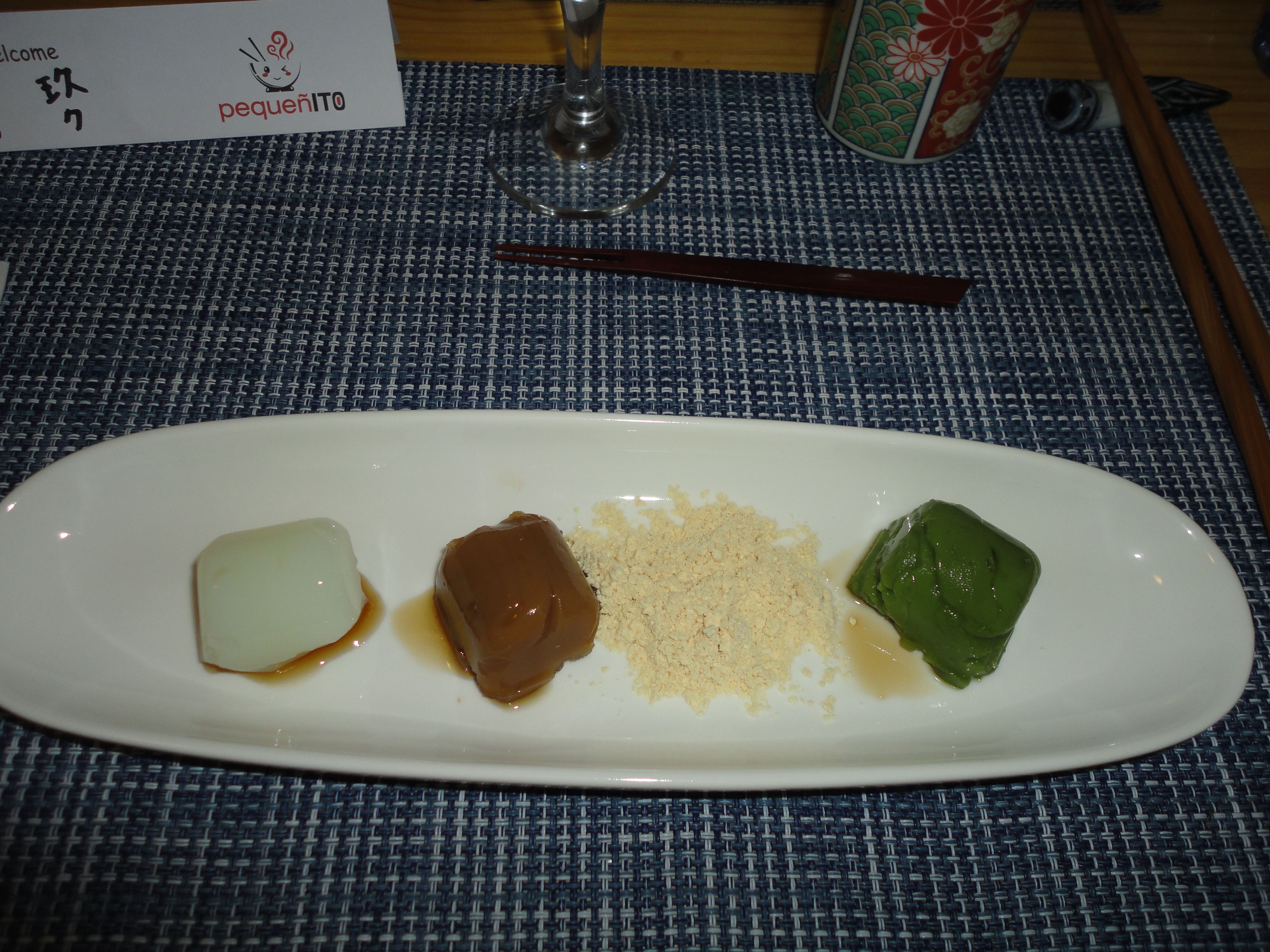
Warabimochi is a thick, jellied dessert made of red bean paste, agar, and sugar a desert of three jellied balls made of corn starch – a white one, a green one and a brown, coffee flavored one with a powdery mound of soy bean flour  for dipping, eaten with a long, beautifully shaped, two-pronged, wooden utensil.

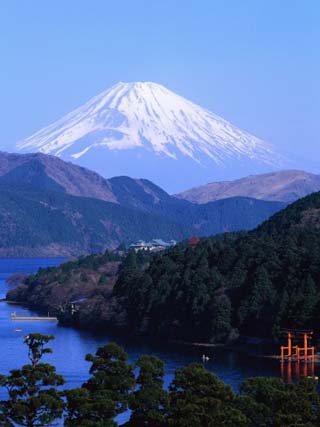
ito 18 Japan Ashino Lake  Ashino lake with Mount Fuji in the background.

Since we have us eaten through the whole country of Japan, from Hokkaido in the north to Kagoshima in the south, we learned that there are volcano’s everywhere. They look so beautiful on postcards, but – wow – they are a permanent danger.

One could ask questions now. Don’t hesitate to do so.
Some I like to answer upfront:
We spent about 3 hours for the whole session, we brought our own wines (so – no discussion about the quality necessary) and we paid without any comment. If I get the service I expect and have the quality of food, personal attention and ambiance I call „lifestyle“, then I won’t care about a few dollars more or less. Everything at pequenito’s was „round and balanced“ and worth while. For sure a place to go again.

010a   ito 29

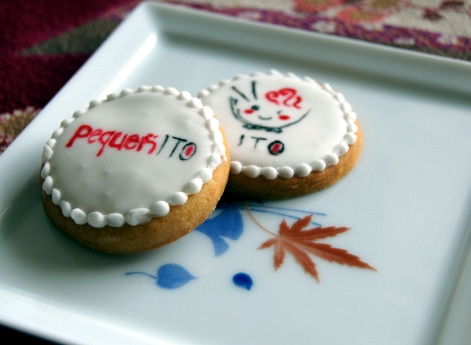
If one thought, after 7 courses, all was over, you are mistaken. Sibylle and Kazuo turned up with candles and a birthday gift for A. and we all got a lovely „farewell cookie“.
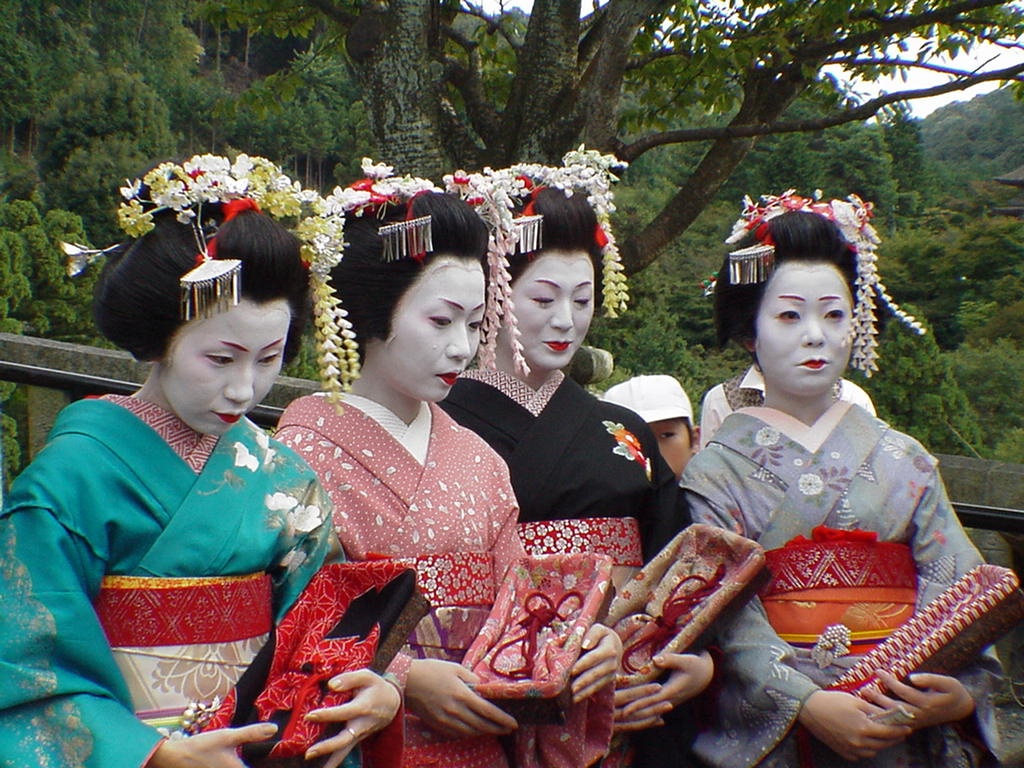
Only thing I really missed – the porcelain faces of some Geisha’s !!

ito 22 Geishas     Click on pics – most are super sizing !
Experiencing authentic Japanese cuisine right in the middle of Montevideo was adventurous, but we all had such a wonderful time. Thank you – everybody – so much, for a truly memorable afternoon.

Veröffentlicht unter Lifestyle, Travel, Uncategorized, Uruguay | Verschlagwortet mit | Hinterlasse einen Kommentar

Potatoes – Three Ways

potato 21


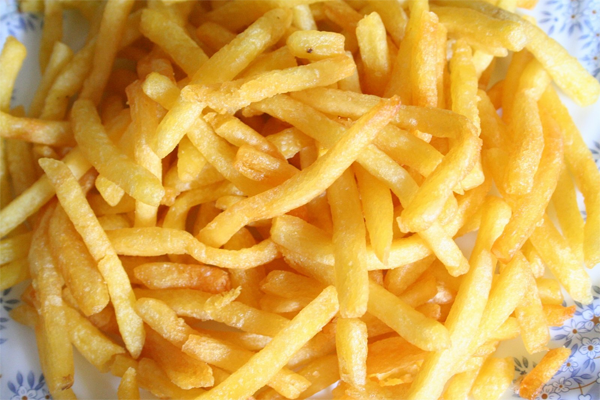
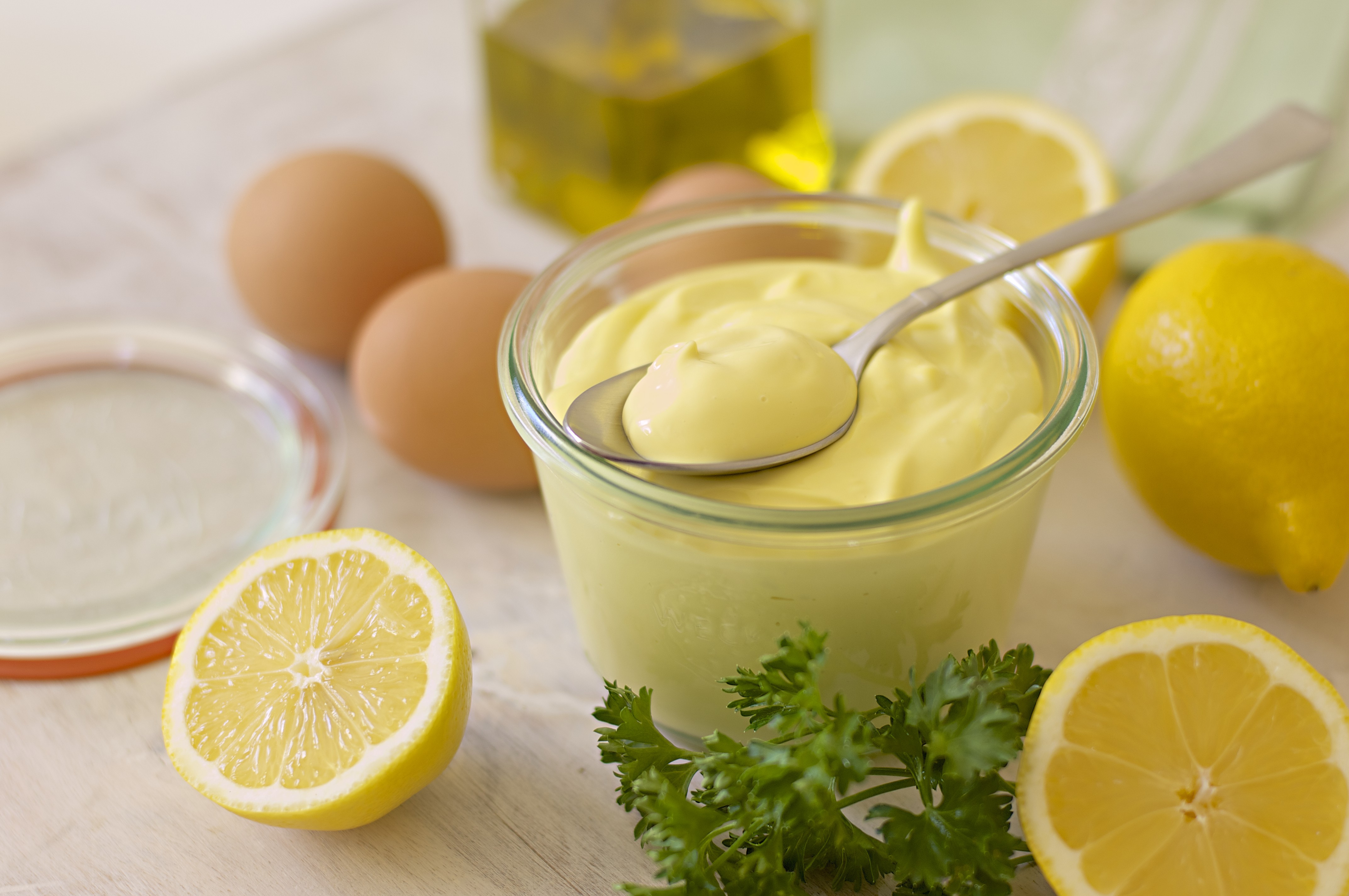
Oven Baked Fries (the first way) With Homemade Mayo.

There’s nothing like homemade fries and mayonnaise.
It’s not hard to make but it seems like a luxury.
See how quickly and simply you can achieve a bit of bliss.

french_fries   Lovely homemade french fries.

Ingredients.

For the mayonnaise:
2 cups light flavored olive oil
good splash of lemon juice
2 fresh egg yolks, room temperature
sea salt

Home made Mayonnaise   Just a few ingredients  =  mayonnaise.

For the fries:
5 large baking potatoes
3 cloves garlic, thinly sliced
sprig of fresh rosemary or parsley
Olive oil
Flakey sea salt

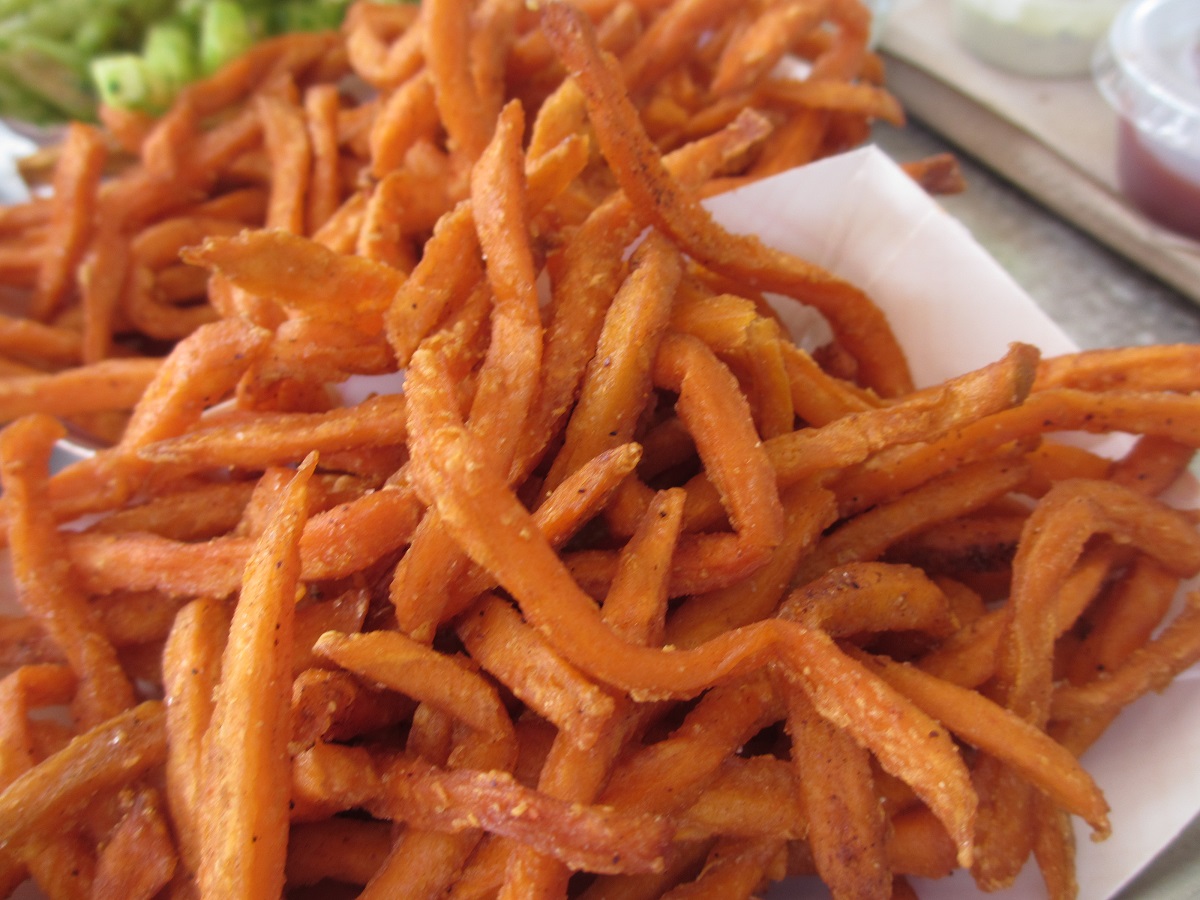
 potato 17   Fries made from sweet potato.

How to do.

Slowly drip oil into egg yolk, whisking gently to form a good emulsion.
Work until oil is fully incorporated. Season with salt and juice. Set aside.

Preheat Oven to 220°C (450°F). Cut potatoes into wedges (we like the thinner ones).
Toss potatoes, garlic and rosemary (broken into pieces/leaves) with a healthy dosing of oil
so they are nicely coated. Place on baking sheet taking care to not overlap wedges.
Bake for 45 minutes in preheated oven.
If you use a fryer, bake them once to cook through, let them cool and bake again to brown.
Serve with homemade mayonnaise.

Tips.

potato 18
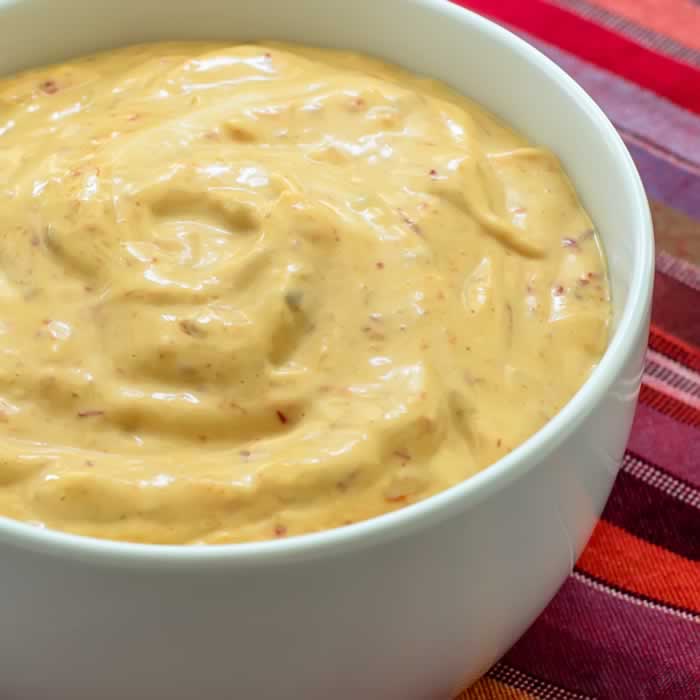
Sometimes I upgrade the mayonnaise with Paprika powder or Chilli powder,
better fresh grated chilli,  to give it a kick.
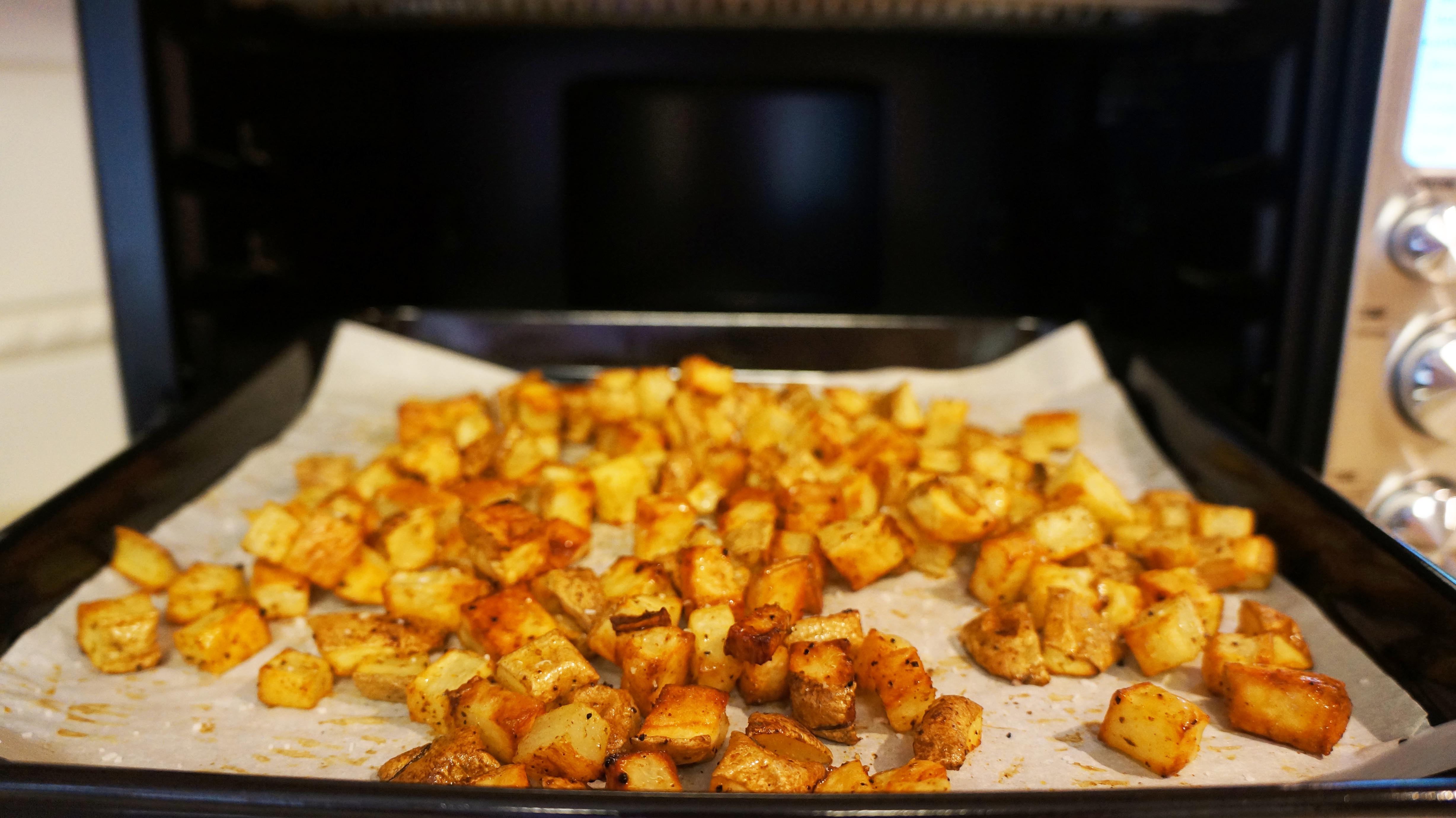
potato 8   Or try same recipe with potato cubes, delicious.
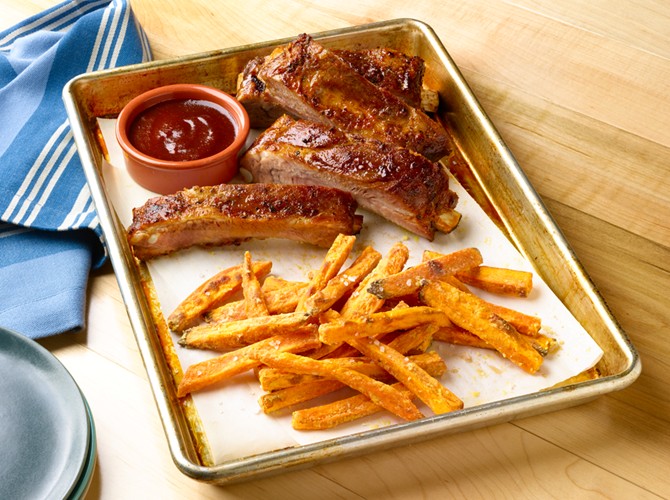
 potato 16  Ribs – fries – BBQ Sauce (try my Alabama White) .


Baked Potatoes – The Second Way.

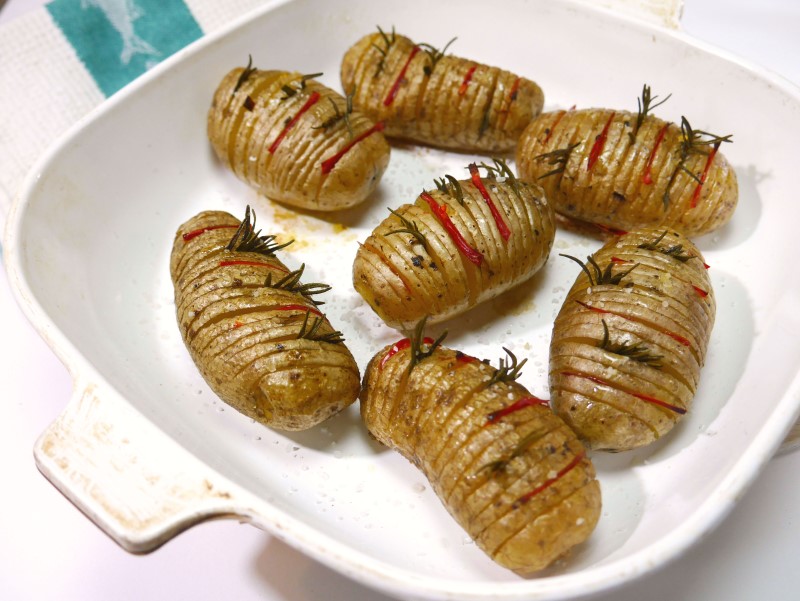
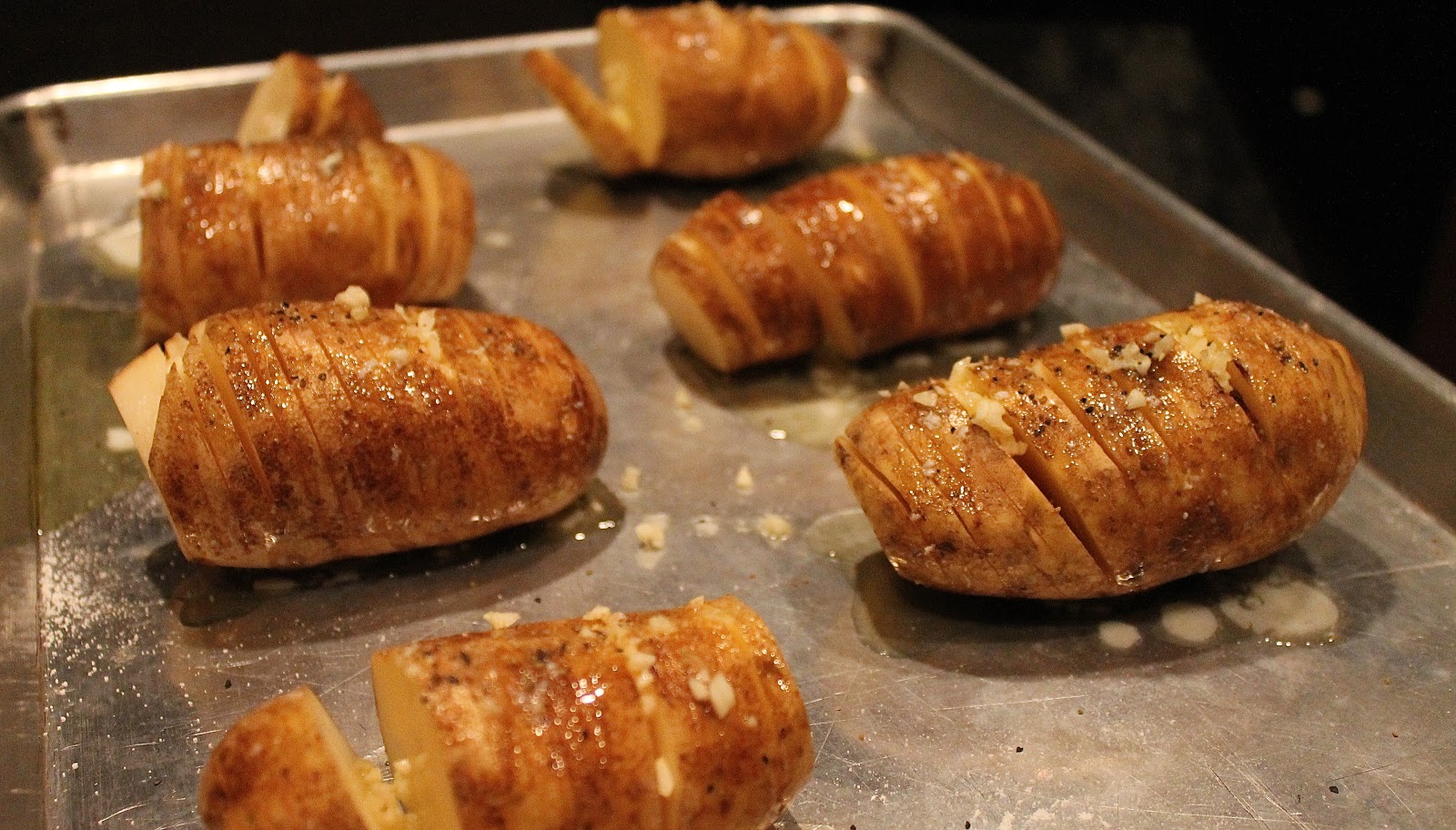
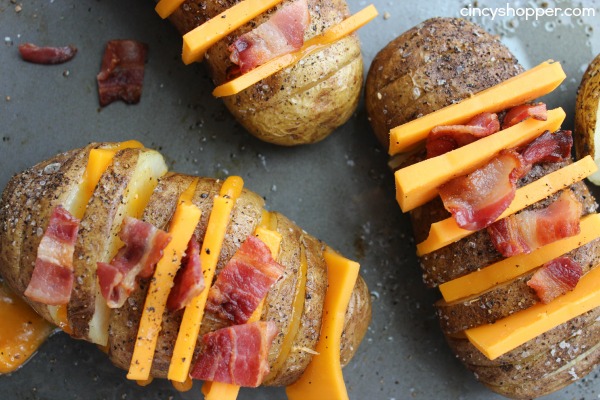
potato 4     Stuffed with thyme and chilli flakes.

Ingredients:

6 to 8 potatoes (any long and narrow waxy heirloom will work), based on skillet size
8 tablespoons unsalted butter, melted
4 garlic cloves, minced
4 tablespoons finely minced herbs (I use parsley, rosemary, and thyme.)
4 tablespoons grated Parmesan (optional)
Salt and pepper, to taste

potato 9     How nice when they come fresh out the oven.

How to do:

Preheat oven to 210°C (425°F).
Scrub the potatoes thoroughly and remove all the hard bits from the skin, as the skins will be left on. Slice one thin layer off each potato, along the length, then set aside.
This serves as a solid base to rest on while you slice them.

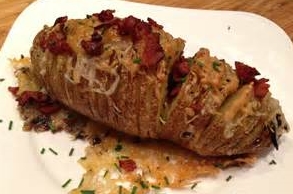
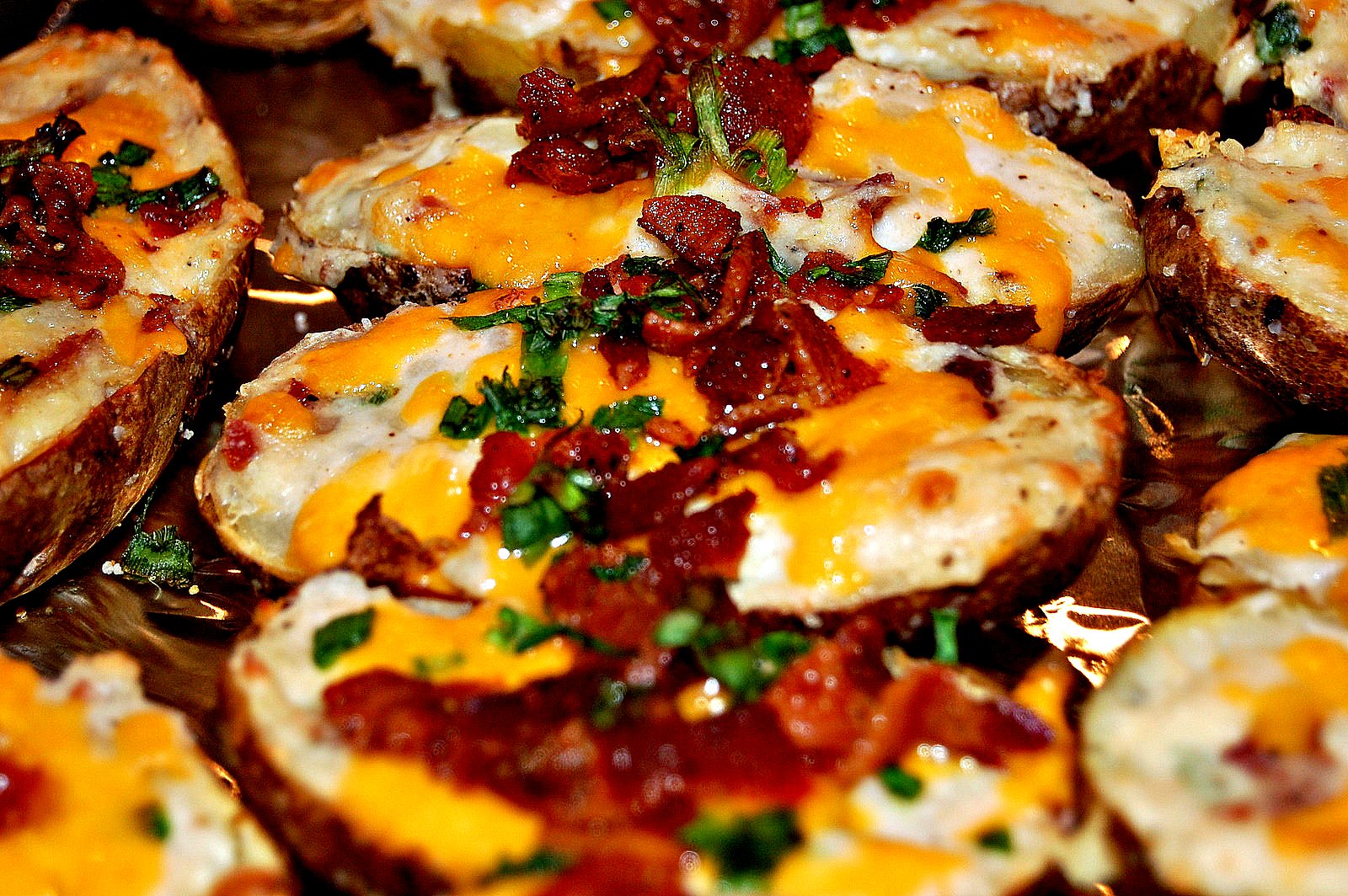
potato 11  Try to bake them twice with herbs and bacon.

Place a potato flat side-down and use a sharp knife to make slices that are about 1/8-inch apart; slice into the potato but not completely through it — the slices should stay connected at the bottom. Carefully fan out the sliced pieces without breaking them apart. Repeat with each potato.
In a small mixing bowl, combine the melted butter, garlic, and minced herbs. Set aside.

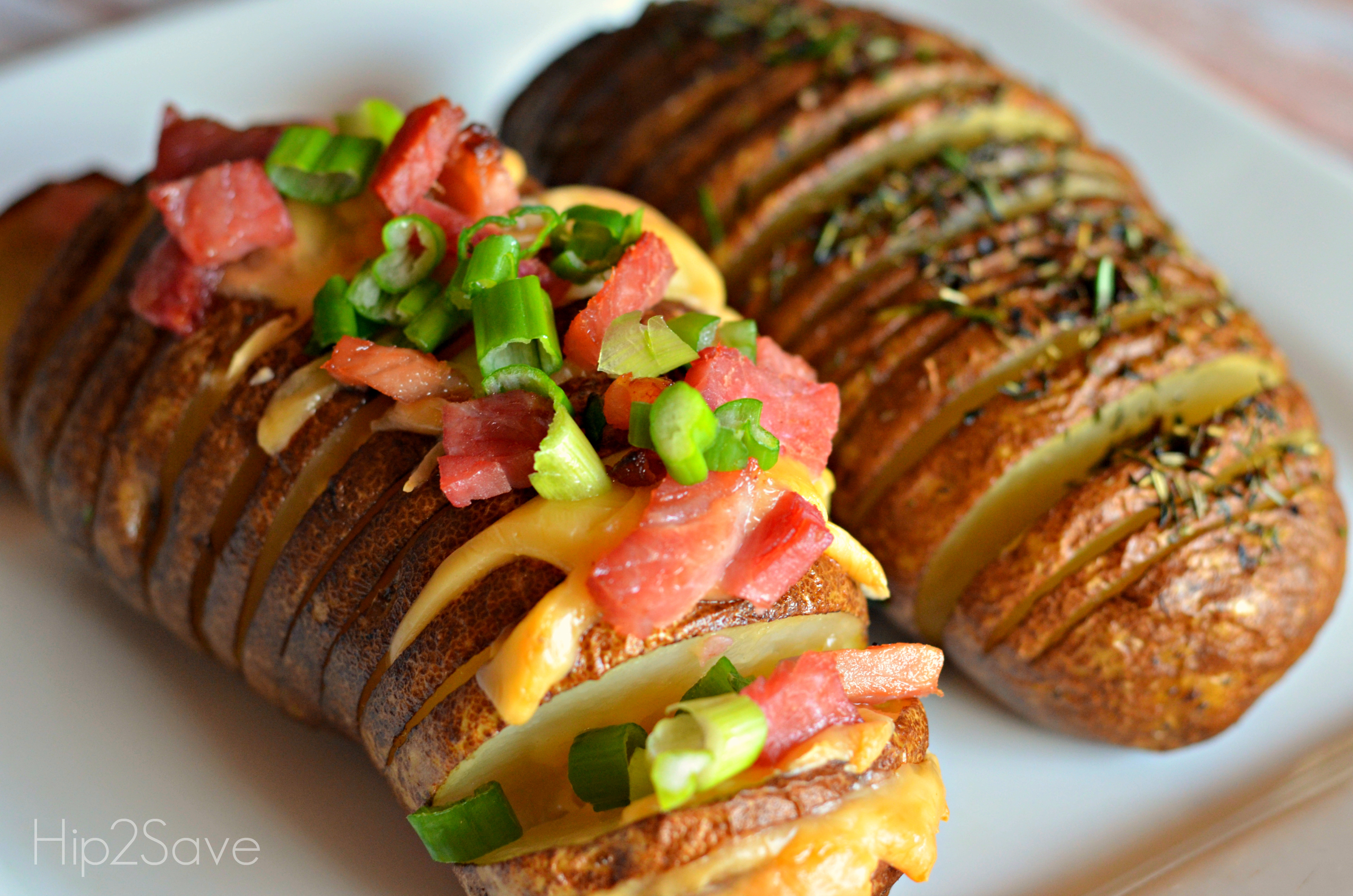
potato 14    Baked once with thyme or with ham and cheese.

Using a pastry brush, brush the bottom and sides of a cast iron skillet and each potato with the garlic-herb butter mixture. Brush the potatoes generously, making sure to get in between each slice.

potato 10  The old style baked potato with „your“ filling.

Reserve 1/3 of the garlic-herb butter for basting. Nestle the potatoes into the skillet.
Sprinkle with Parmesan cheese (if using) and salt and pepper, to taste.
Bake for 1 hour, basting the potatoes every 15 minutes with the remaining garlic-herb butter, or until tender on the inside and crisp on the outside.

potato 13 Bake once, then fill with ham and cheese and bake again.

Tips.

Place a chopstick on either side of the potato so that you hit the chopstick before slicing all the way through. I wouldn’t use cheese if you use the potatoes as a side dish, Parmesan cheese has to much own flavor. But great as a „solo“ dish.

potato 12   My breakfast potato filled with egg and bacon.


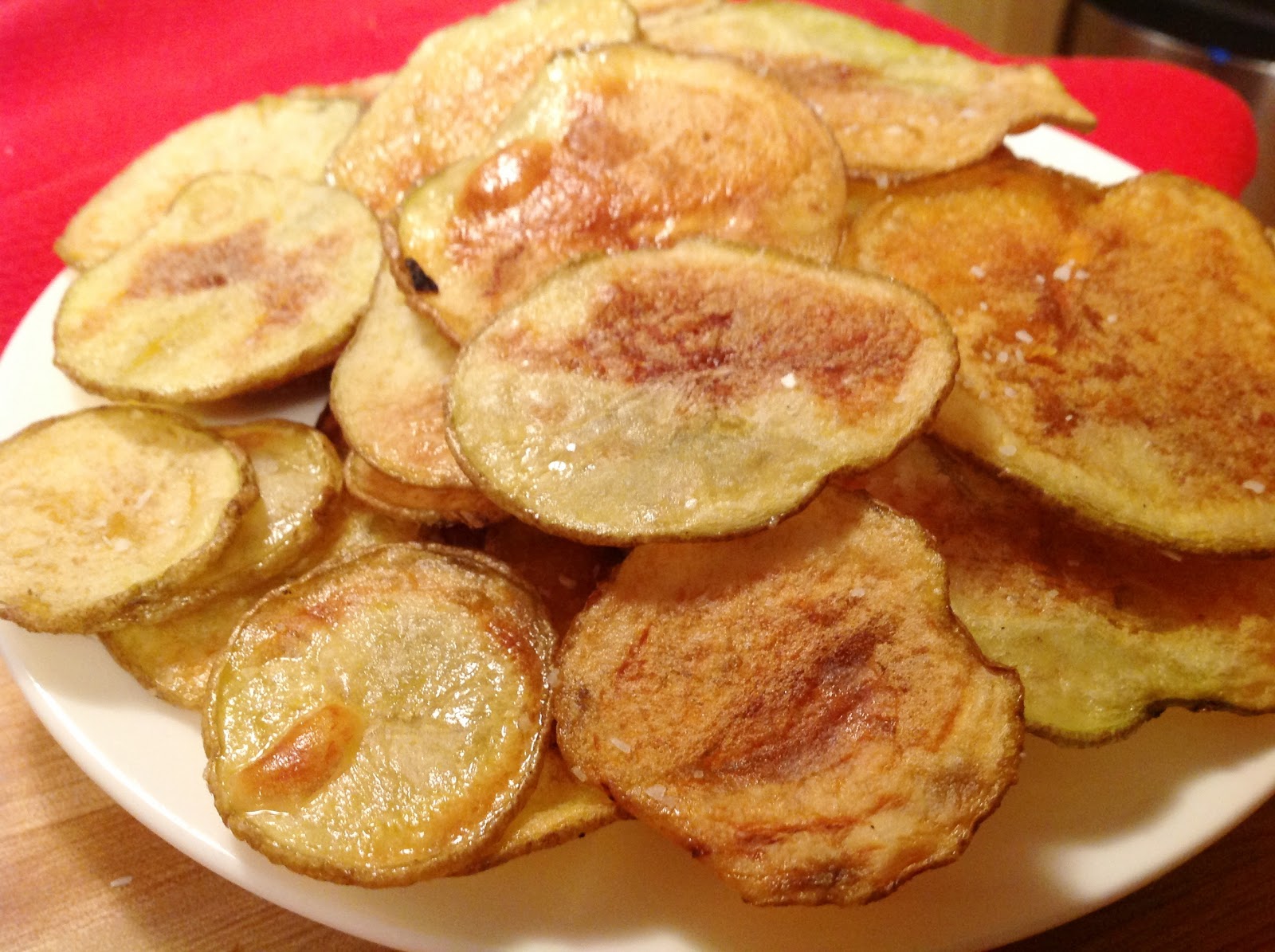
Your own Potato Chips – the third way.

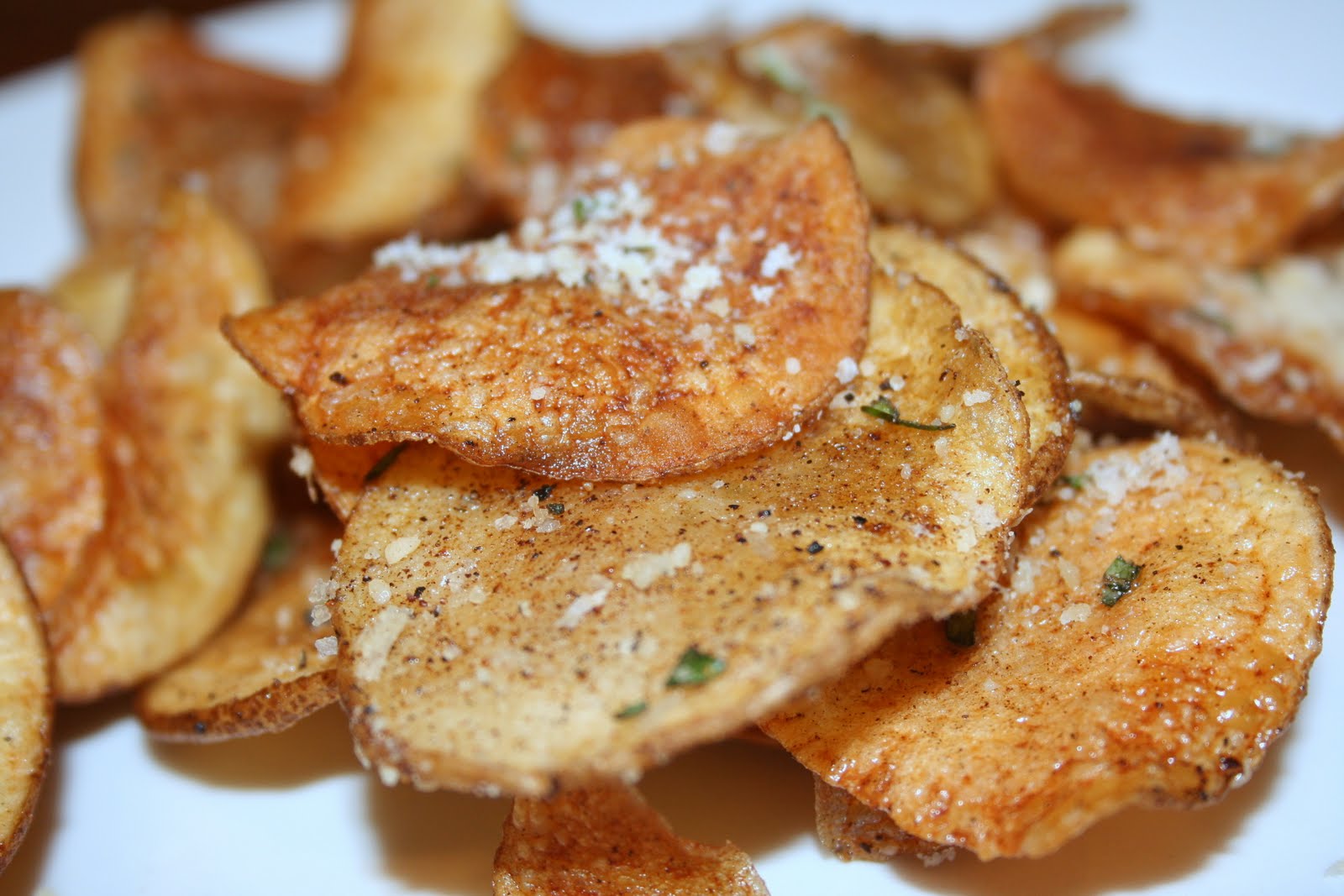
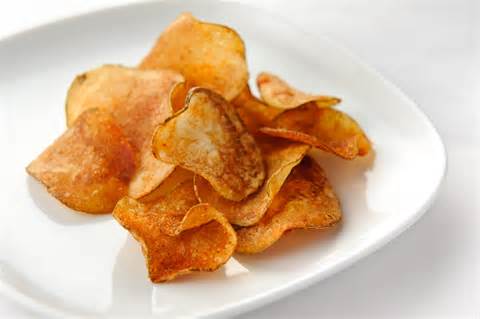
potato 16     Aren’t they delicious ??

Ingredients.

3 to 4 medium size potatoes
sliced paper thin (peel optional),
1 tablespoon vegetable oil,
1/2 teaspoon salt, or to taste,

potato 14 Slice them very thin (no skin) and they will bend.

How to do.

Pour the vegetable oil into a plastic bag.
Add the potato slices, and shake to coat.
Coat a large dinner plate lightly with oil or cooking spray.
Arrange potato slices in a single layer on the dish.

potato 15  Baked with skin on, also delicious.

Cook in the microwave for 3 to 5 minutes, or until lightly browned
(if not browned, they will not become crisp).
Times will vary depending on the power of your microwave.

Remove chips from plate, and toss with salt (or other seasonings). Let cool.
Repeat process with the remaining potato slices.
You will not need to keep oiling the plate.

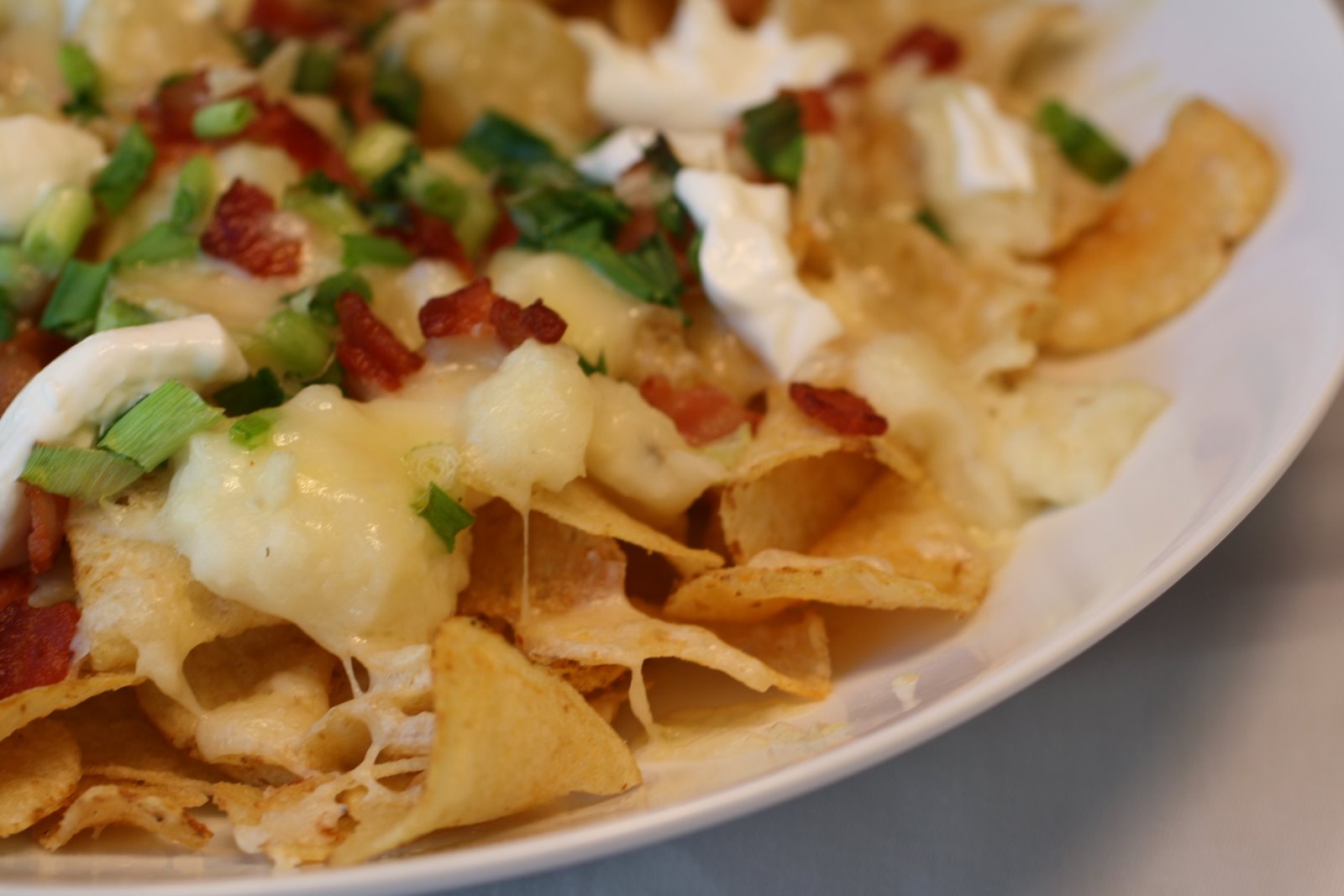
potato 17

Serious party or TV (Super Bowl) eats – loaded baked potato chips  – Nacho style.  Enjoy !!!
Veröffentlicht unter Recipes | Verschlagwortet mit | 2 Kommentare

Computer Solution Atlantida

comp repair 2

That’s what we all have waiting for !!!

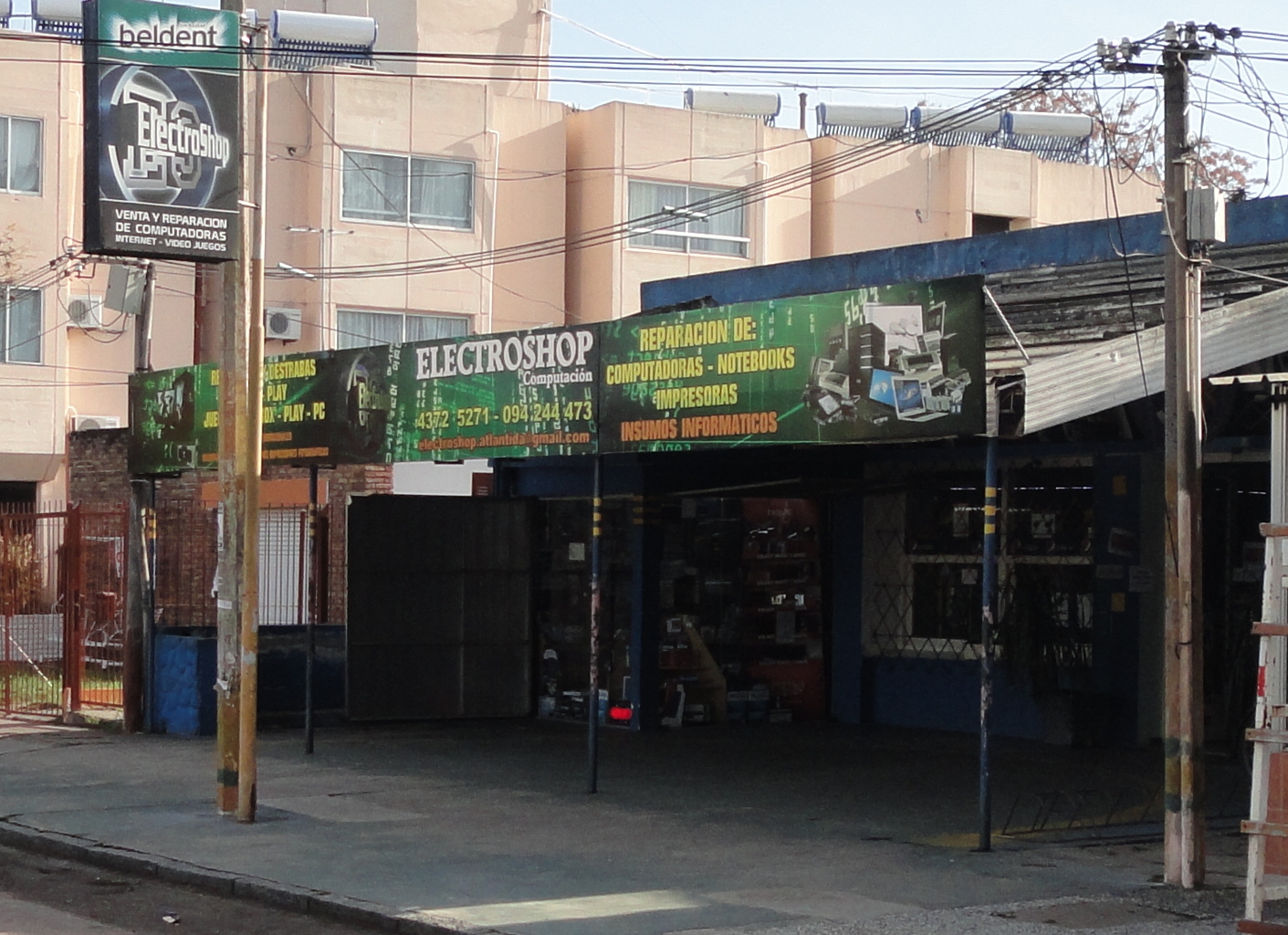
20150710a  Across Don Vito’s in Atlantida.

Whatever your computer problem might be, they will fix it.
And they fix it with an excellent know how and reasonable prices.
If I am happy, I like to write and share with my readers, writing the
„negative“ I’ll leave to others. Honest – I am happy here.

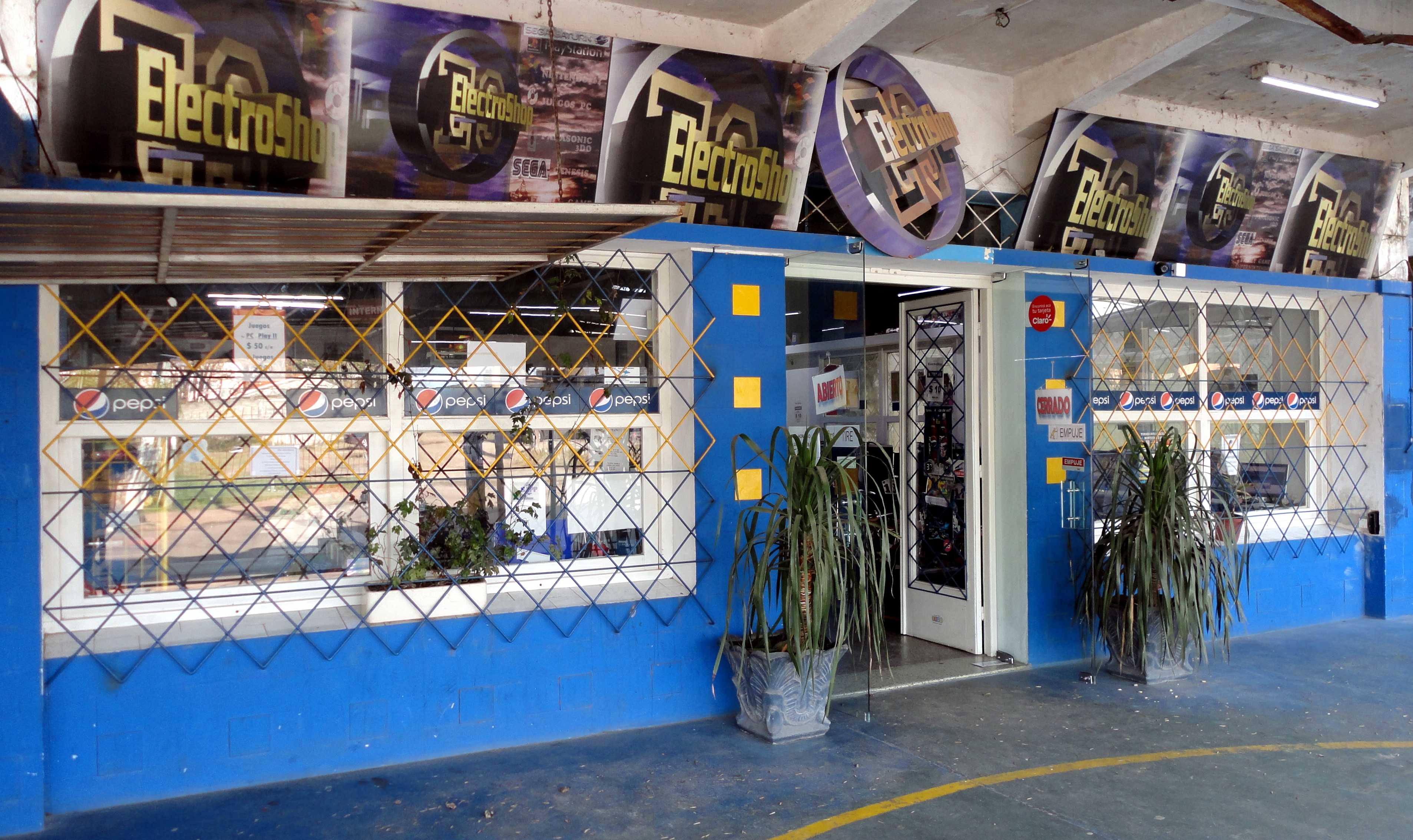
20150713  Entry to the electroshop Atlantida.

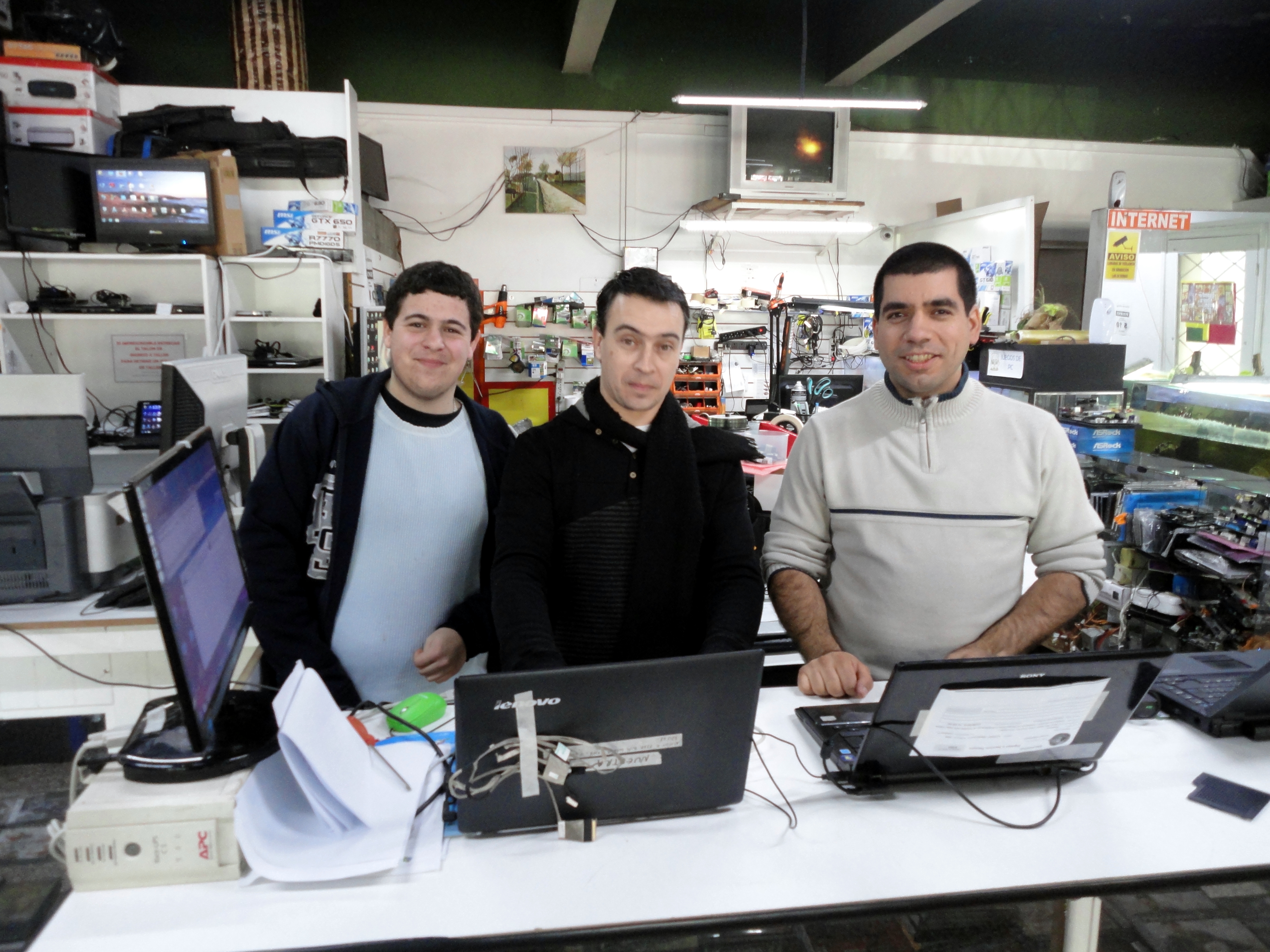
Luis, the manager, Gabriel and Jonathan are the friendly people behind
the „Electroshop“. They understand and communicate also in English,
„mas o meno“, but always enough to understand and solve your problems.

20150715  From left:  Jonathan, Luis and Gabriel.

I am not the most patient person if my technique is „hurting“ me, but these
guys always help me to calm down and look for a solution, not the problem.

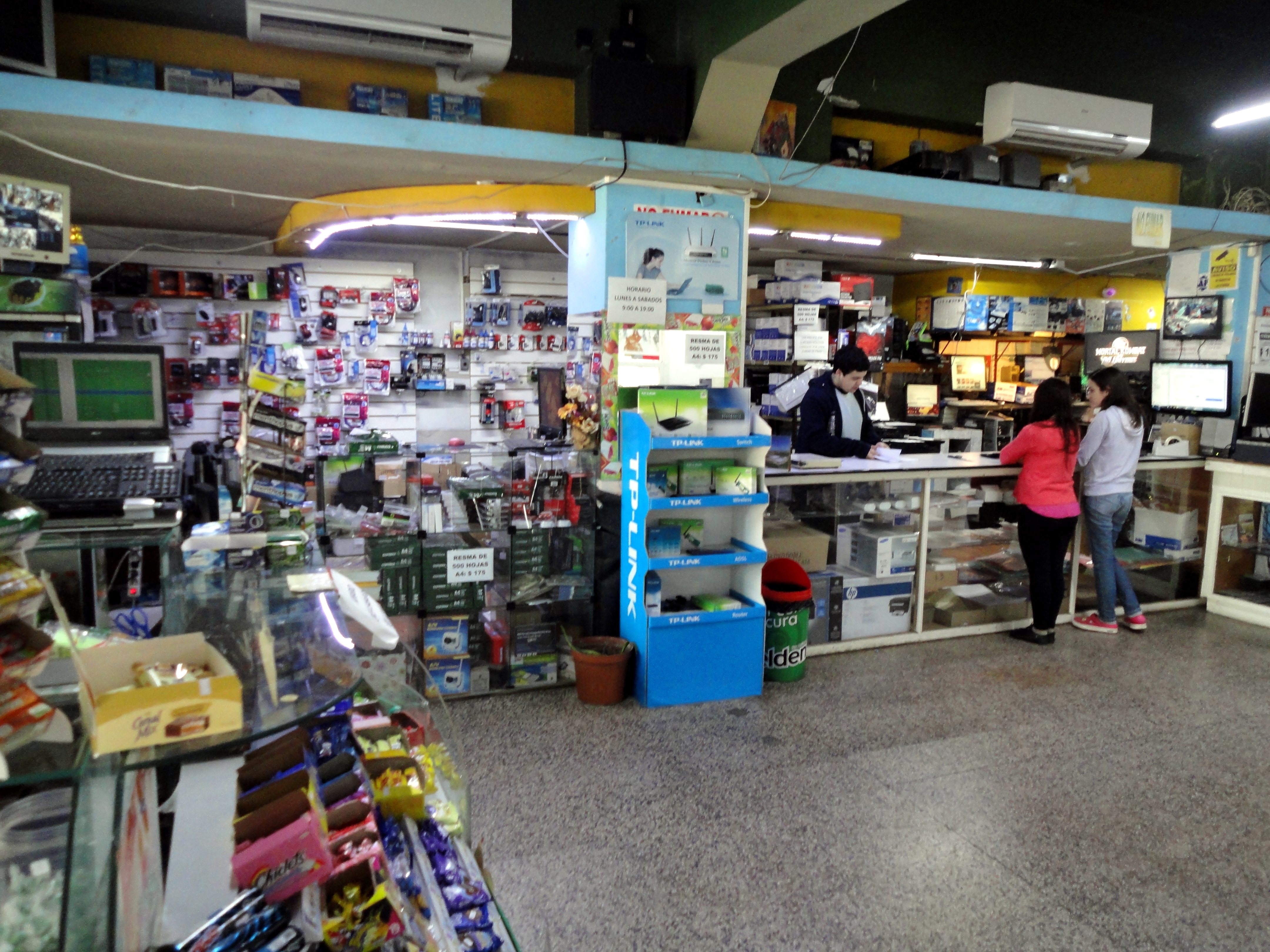
20150711    The Sales counter section.

I have been there a few times, always friendly, smiling and they have directly
time for you. Immediately you feel welcome in this shop. AND – NEVER I had
the feeling „they are after my money“.

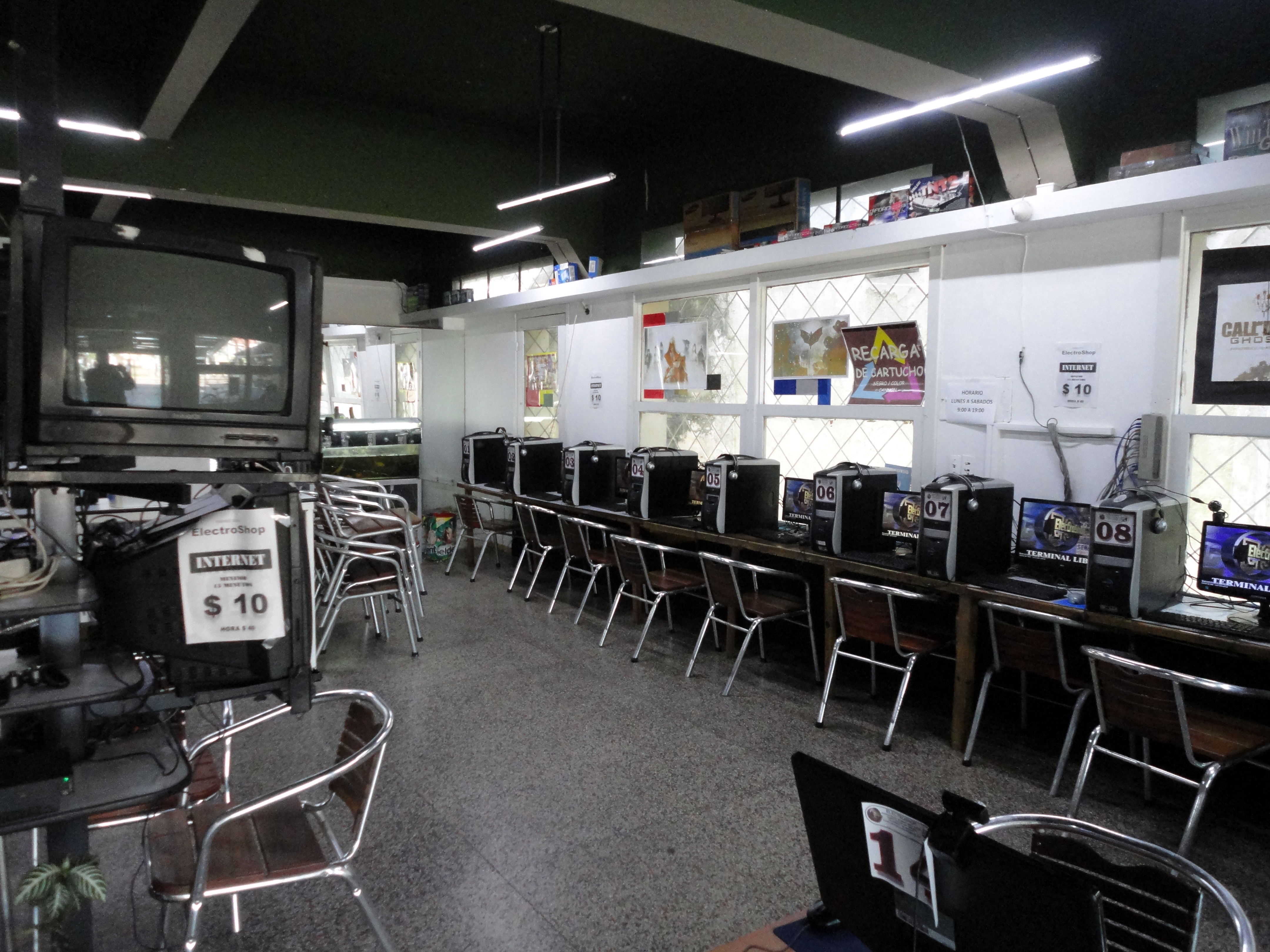
20150712   The Internet-Cafe section.   „Coffee ???“.

The whole staff always shows very correct behavior and customer handling.

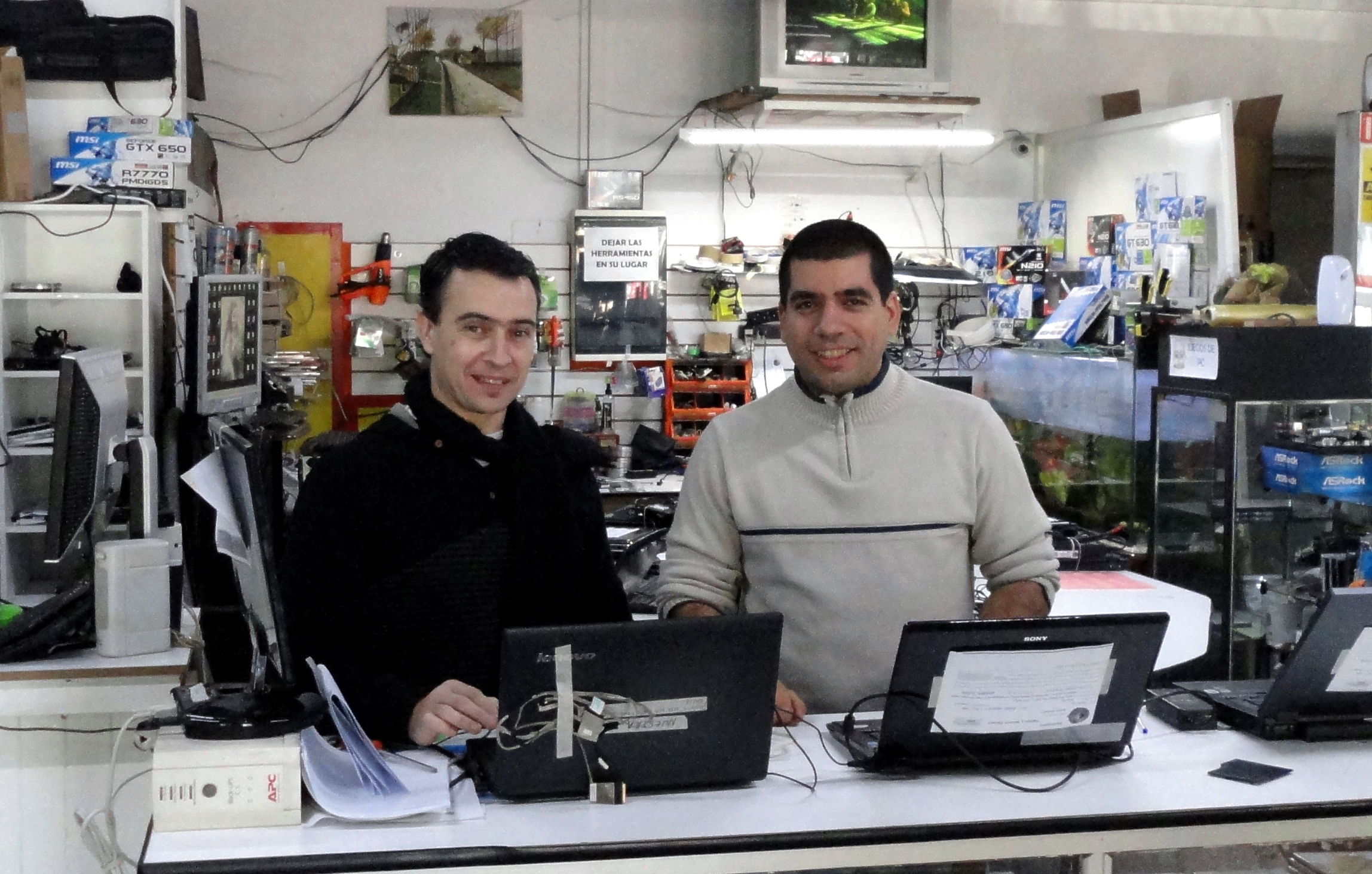
20150714   Luis and Gabriel – especialistas absolutos .

Located in the center of Atlantida, about 50 meters north/across Don Vito’s !!
See address label down here.

img001  Here’s the full address and phones.

They also have lots of little needs in stock. My replacement ink for the printer,
AVAILABLE,  1/2price then Geant and not far to drive.  Check it out yourself.

Veröffentlicht unter Atlantida, Information, Uncategorized | 2 Kommentare

Productos de Coco

coconut 1

Coconut Oil and Milk in Uruguay.

People often ask me where to get coconut oil or milk in Uruguay.
Here is the answer.

20150709_110028

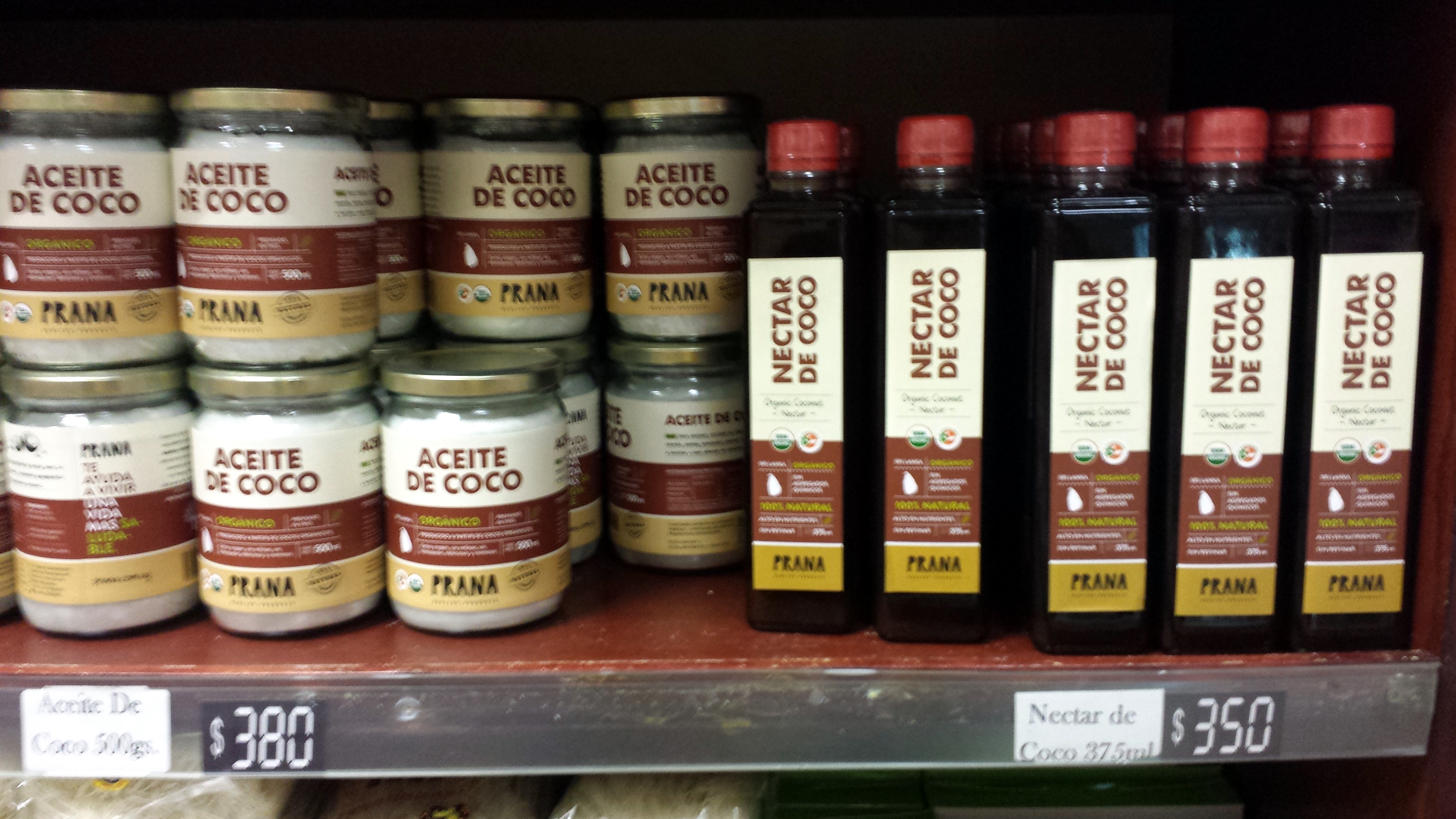
At El Granero in Montevideo you will find „Aciete de Coco“ (coconut oil).
500ml jars = peso 380,–,
and „Nectar de Coco“ bottled for peso = 350,–. See pic.

027

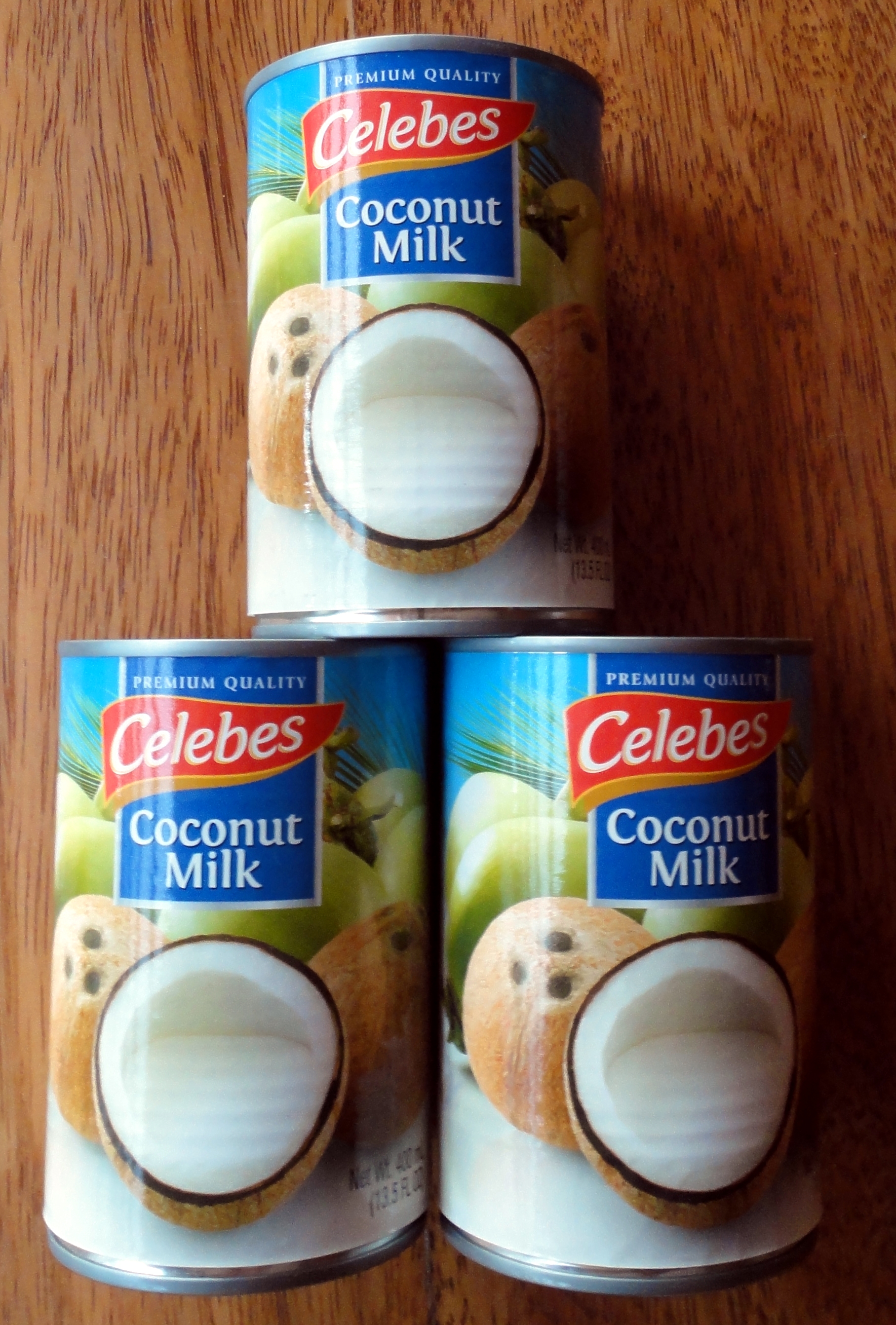
Also they sell „Leche de Coco“ ( Coconut Milk) from Celebes, Philippines.
400ml can = peso 62,–. See pic.
I tried it several times. Good quality and the price is o.k. too.

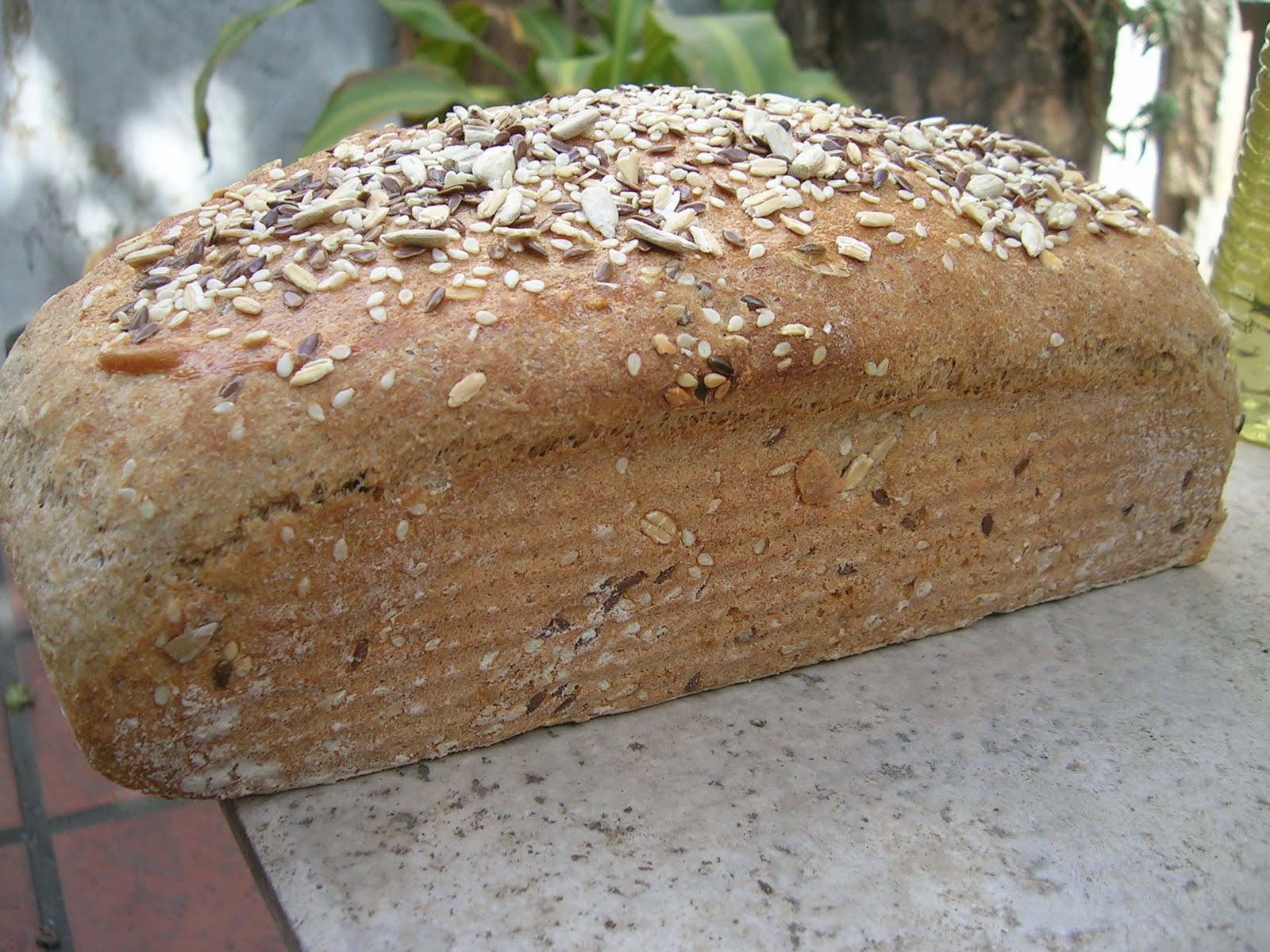
integral 1 We bake with integral products from El Granero.

If you have never been at „El Granero“, its worth to check it out. They
have lots of natural goodies, nuts, spices, Japanese and American products
you’ll find nowhere else. It’s a yellow building with a mill on it.

integral 2
Here is the address: El Granero, J. Batlle y Ordonez 3224, Montevideo.
Check out products and prices at http://www.elgranero.com.uy !!
Happy shopping!

Veröffentlicht unter Information, Lifestyle, Uruguay | 1 Kommentar

From Stagecoach to Taxi

Reisekarte 26

During my recent travel to Germany, I had the opportunity to dive into postal coach history and got some more background to one of my very very rare collectors items, a „Post Coach Road Map“ from 1806-1810. Visiting the city of Bad Kissingen you can’t get around without having contact to the magnificent historic Post Coach. Read a bit about this travel event.

Ancient and Modern Times.

Reisekarte 4  Copper engraving of a 1800’s coach.

As early as the „Cursus publicus“, the postal service of ancient Rome, touring cars had been used. As all former postal systems they were only for government purposes, so as business trips. The ancient Roman traveling carriage, Carrucae, already used a closed passenger cabin and a simple suspension.

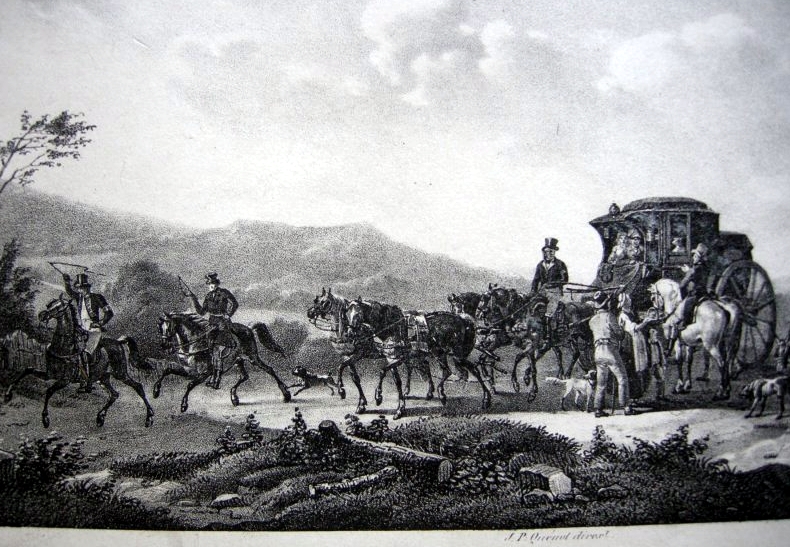
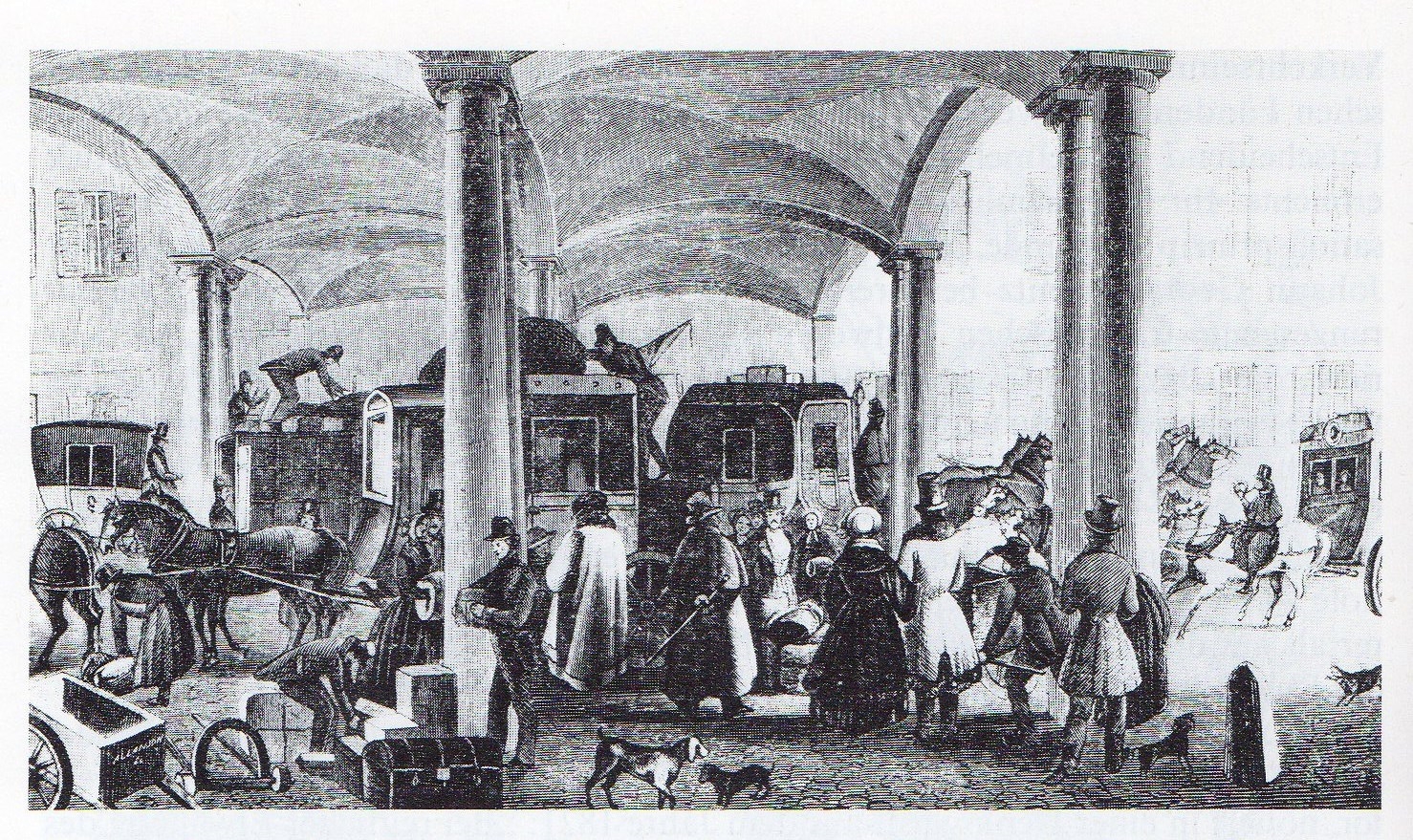
Reisekarte 1a   Life around the stage coach.

The reintroduction of postal services in the early modern period began with messengers on horseback. Since the 17th century it went on to the messenger post that could also carry people and larger mailings. In England the first stagecoach line between London and Chester was put into operation in 1657.

Reisekarte 14  Saxony  post wagon with basket weave weather top.

Unlike England and France were in German-speaking countries as a result of the territorial fragmentation of the Holy Roman Empire no uniform driving postal system, but a complex web of the run by the colonel general postmasters from the house of „Thurn und Taxis Imperial Reichspost“ and the position of individual states – and in 1805 territorial states.

Development of the Mail Coach.

Reisekarte 2    Reisekarte 63
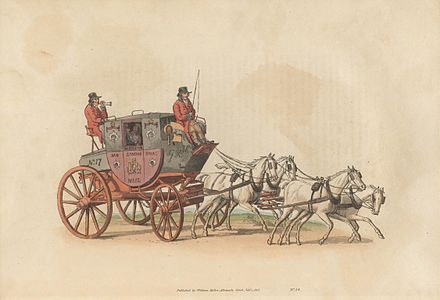
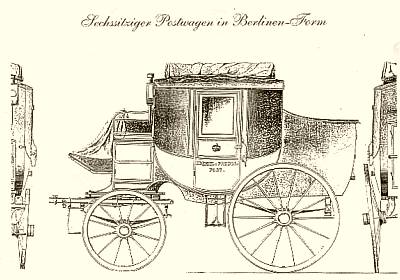
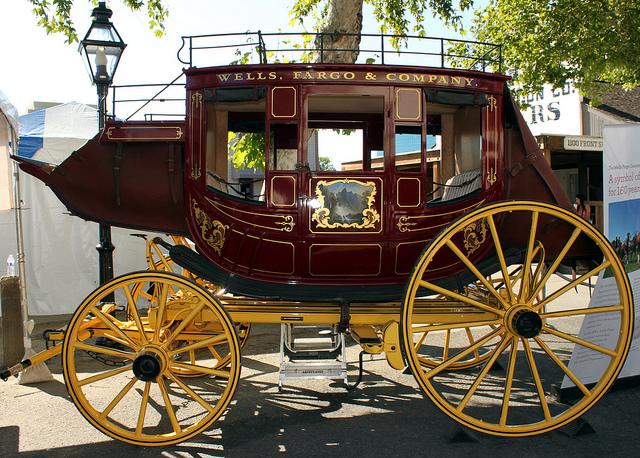
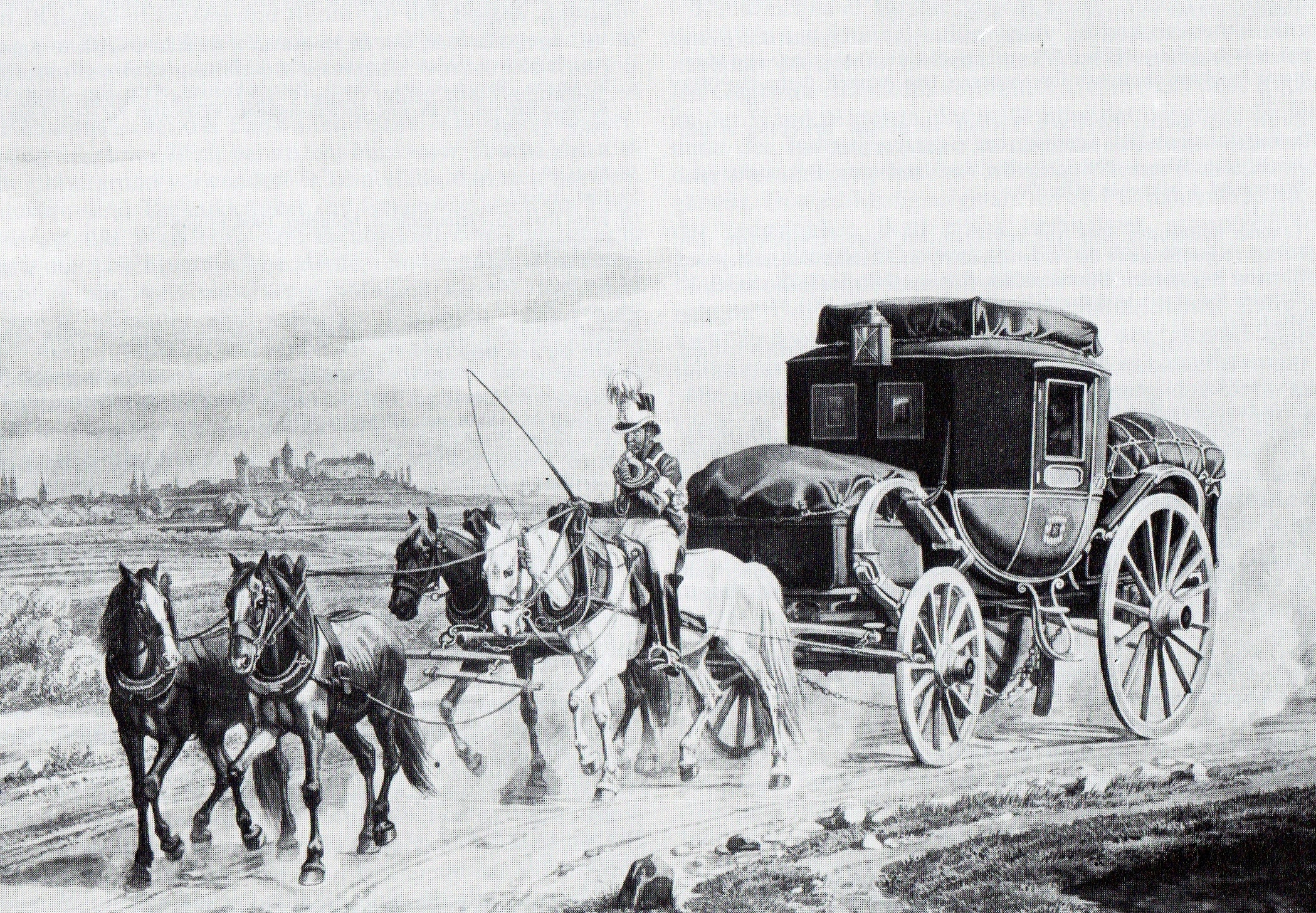
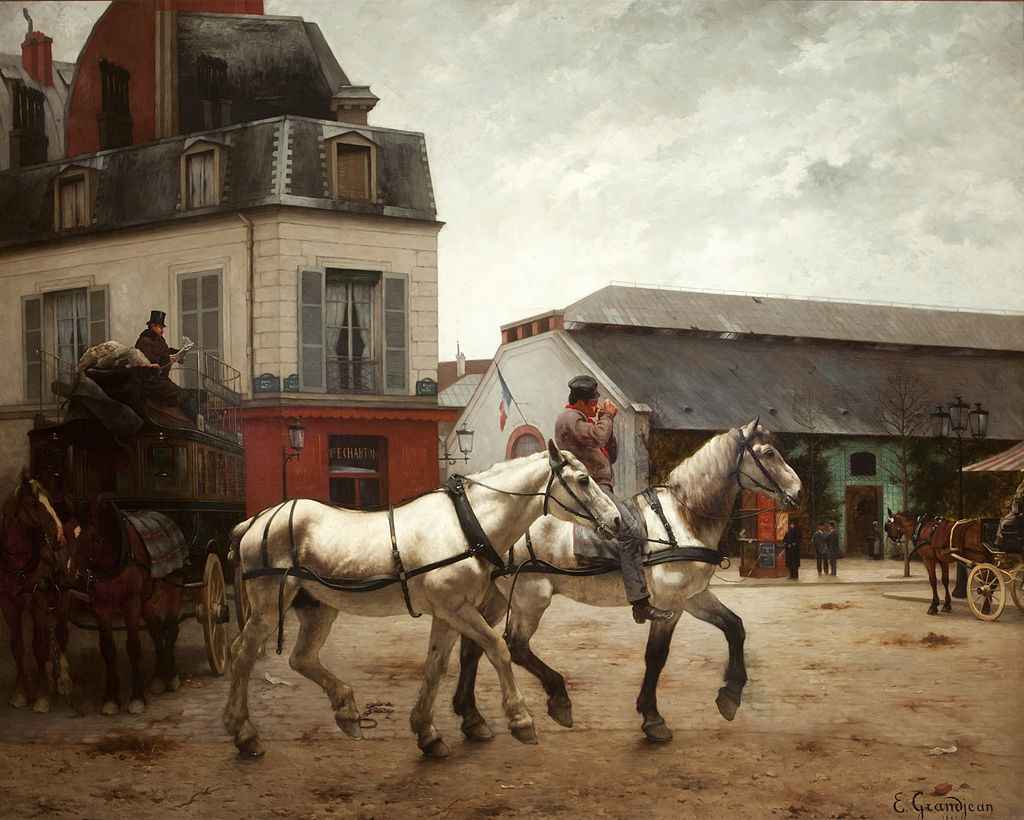
This was the most used form of fast Post Coach travel, the Berline. 6 seats inside and 2 upfront. Most well known type in the Old West of United States, see the Wells Fargo Coach, of course more modern and comfortable (see suspension). Drawn usually by 4 Horses, sometimes 6 horses for greater speed.

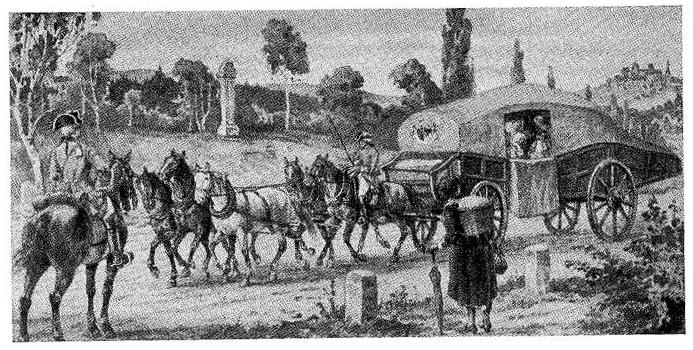
The first mail cars were, not only in Germany, no carriages in the strict sense, but unsprung wagons with a basket weave, which was spanned later with a tarp. Nevertheless, they were even then generously called as „coach“ when they had at least one top. One sat in it on wooden benches with fur blankets.

Reisekarte 9a  Bavarian Coach near Nuremberg 1823.

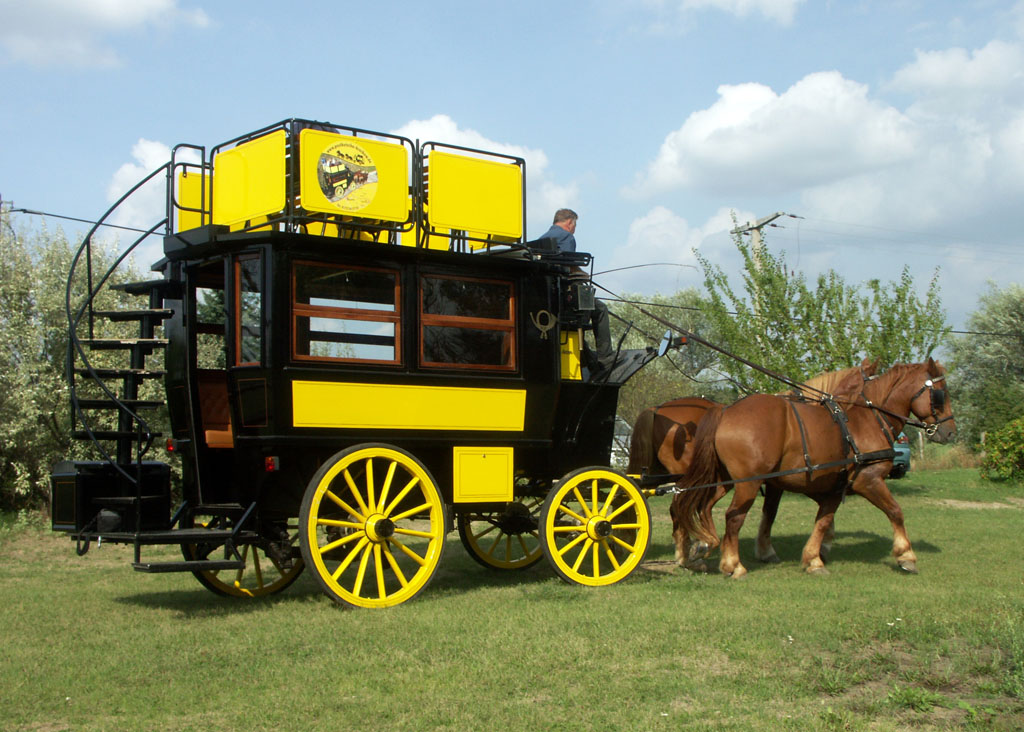
Since the 18th century the importance of stagecoaches increased for passenger traffic. It was used initially the type of Berline for four to six passengers and the mail Coach for 13 to 15 passengers (of which only were four to six indoor seats).

Reisekarte 29  Horse omnibus for 24 passengers.

Ordinari-mail and Extra Post.

Partly not, partly with bumpy cobblestones paved roads, allowed only slow travel speeds. In the invention of derogatory names for carriages and ways people of the 18th century were due to the uncomfortable locomotion extremely creative: Knead mill, torture box, field carts, bone cracker, devils way, hell path are just the more moderate.

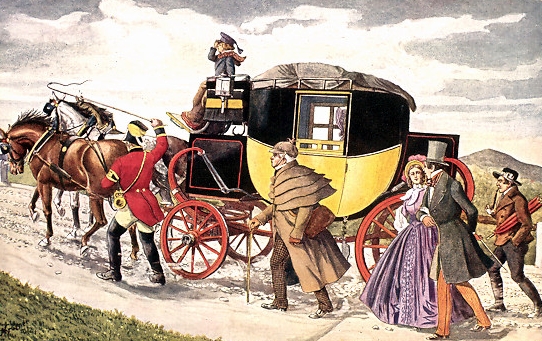
Reisekarte 6a Lots of walking, pushing and helping outside the coach.

In order to prevent the transport and travel times out of hand, there were organizational arrangements. In the post stations, that the post ultimately gave the name (posta / „post“ within the meaning of supply station) horses were changed. While travelers of Ordinary-post also stayed overnight in post stations, the extra post drove day and night.

Upcoming and Downfall.

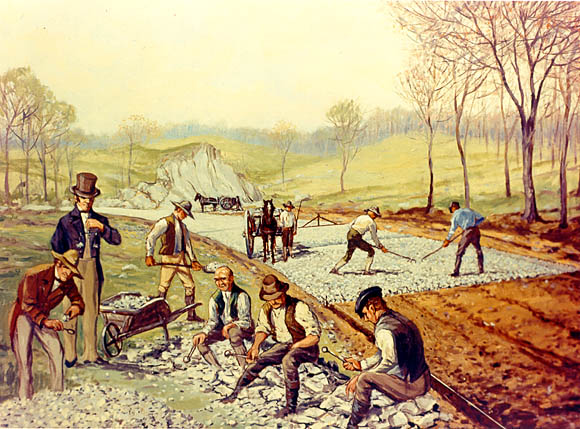
Reisekarte 38 USA 1823    Building roads in the US around 1823.

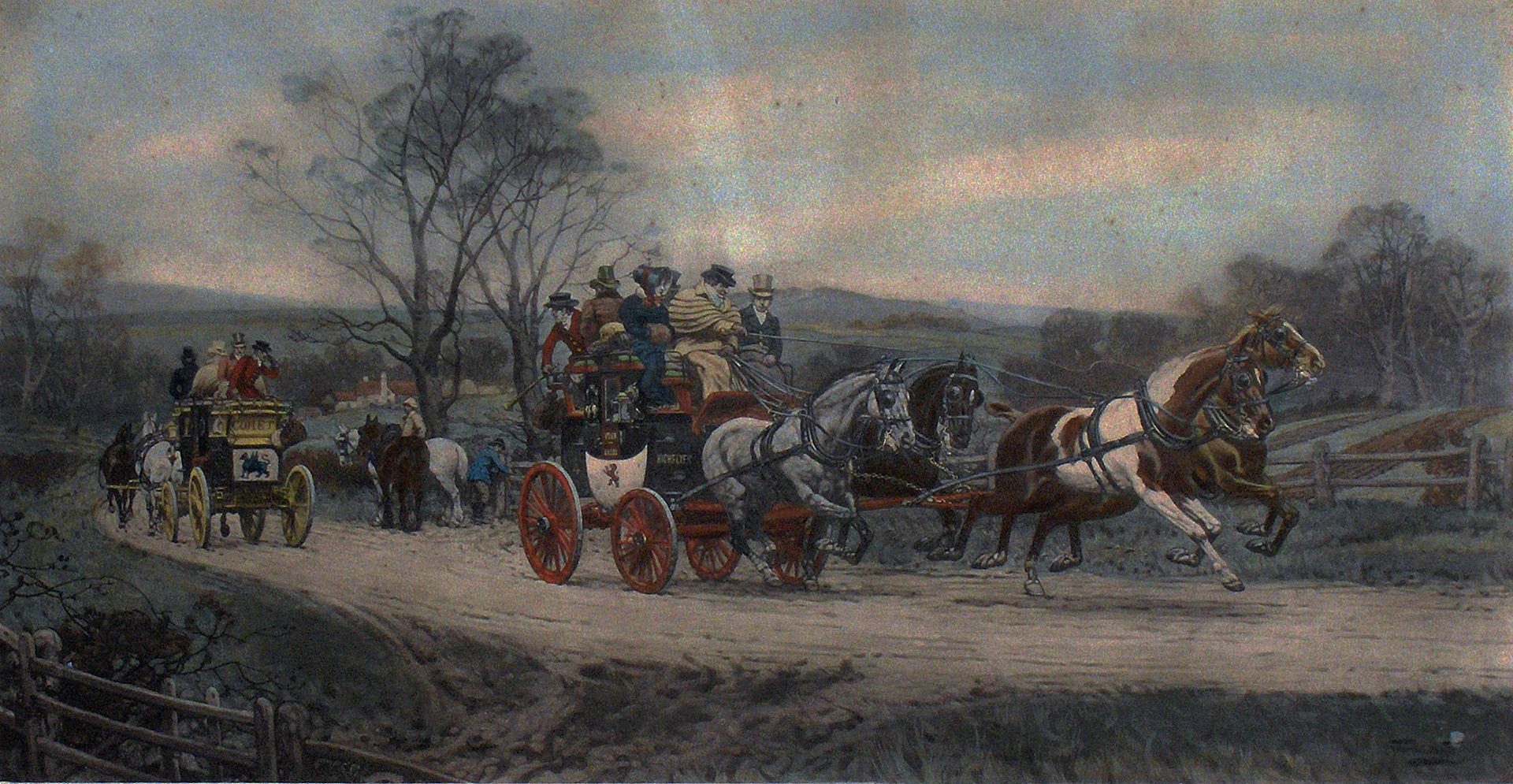
A significant improvement experienced the benefits of driving Post by expanding the roads in the 18th and 19th centuries. In 1820 the major overland postal rates were so well developed that the carriages could keep up with the pace of individual riders. The cruising speed of the mail coach was enhanced by road of about 2 km / h in 1700 to about 10 km / hour in 1850. A carriage  sometimes could cover more than 100 kilometers a day.
With the expansion of the railways (coherent Central European network since 1849) the often romanticized era of stagecoaches went into coming to an end.

Reisekarte 36 England 1827    Busy roads, coach traffic in England 1827.

Thurn and Taxis Post.

The Princely House of Thurn and Taxis (German: das Fürstenhaus Thurn und Taxis) is a German noble family that was a key player in the postal services in Europe in the 16th century and is well known as owners of breweries and builders of many castles.

Reisekarte 43 Karl Alexander T+T 1827           Reisekarte 39
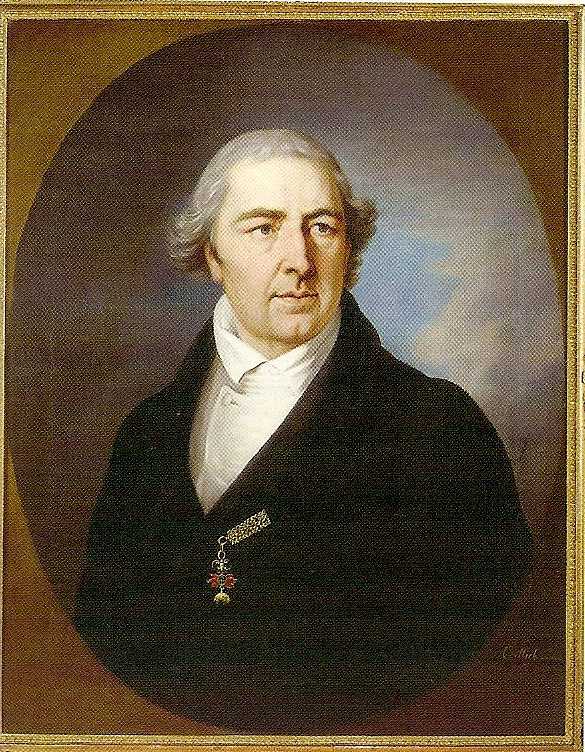
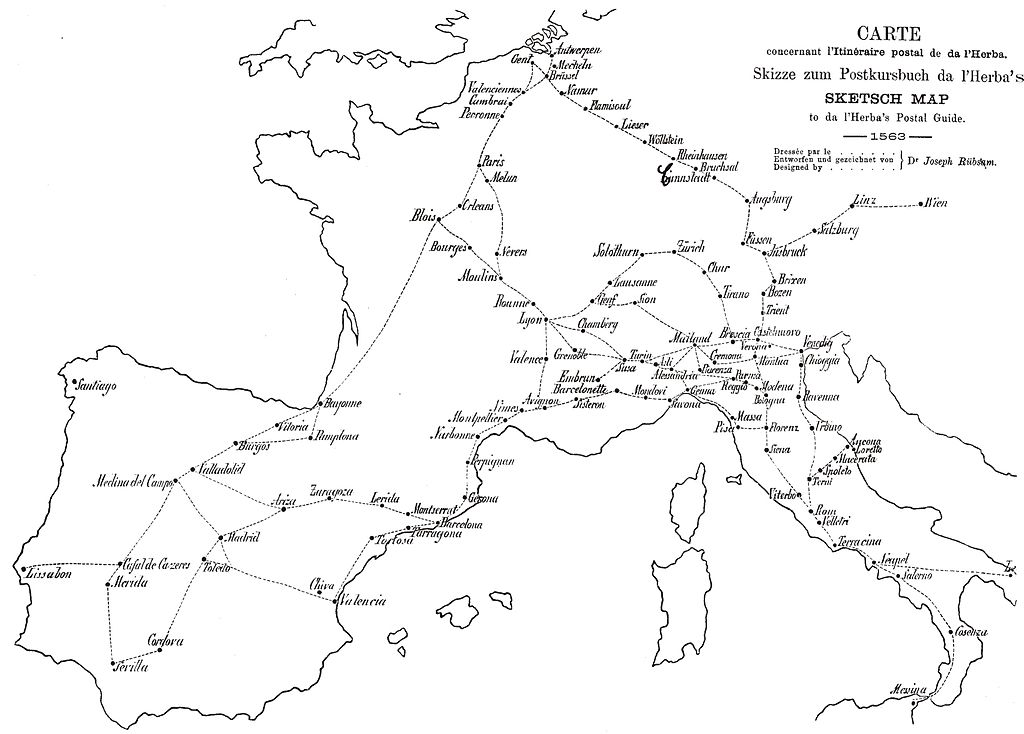
Karl Alexander von Thurn und Taxis 1827. And one of the earliest postal road maps with „posts“ (stations),
in Southern Europe, from l’Herba’s Postal Guide, dated 1563 !!!
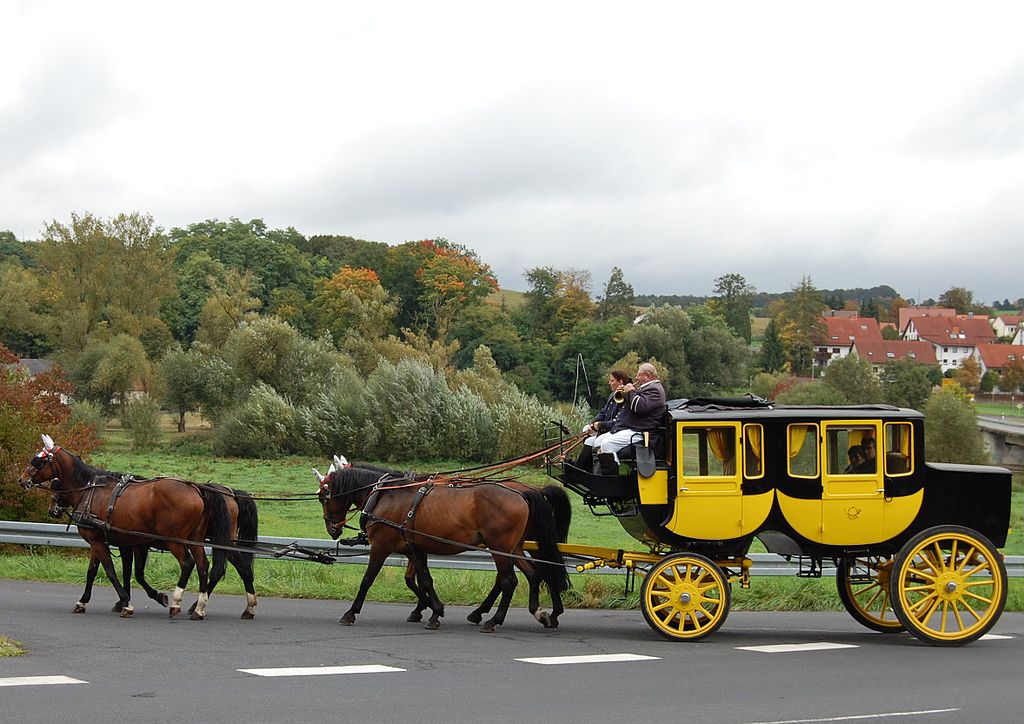
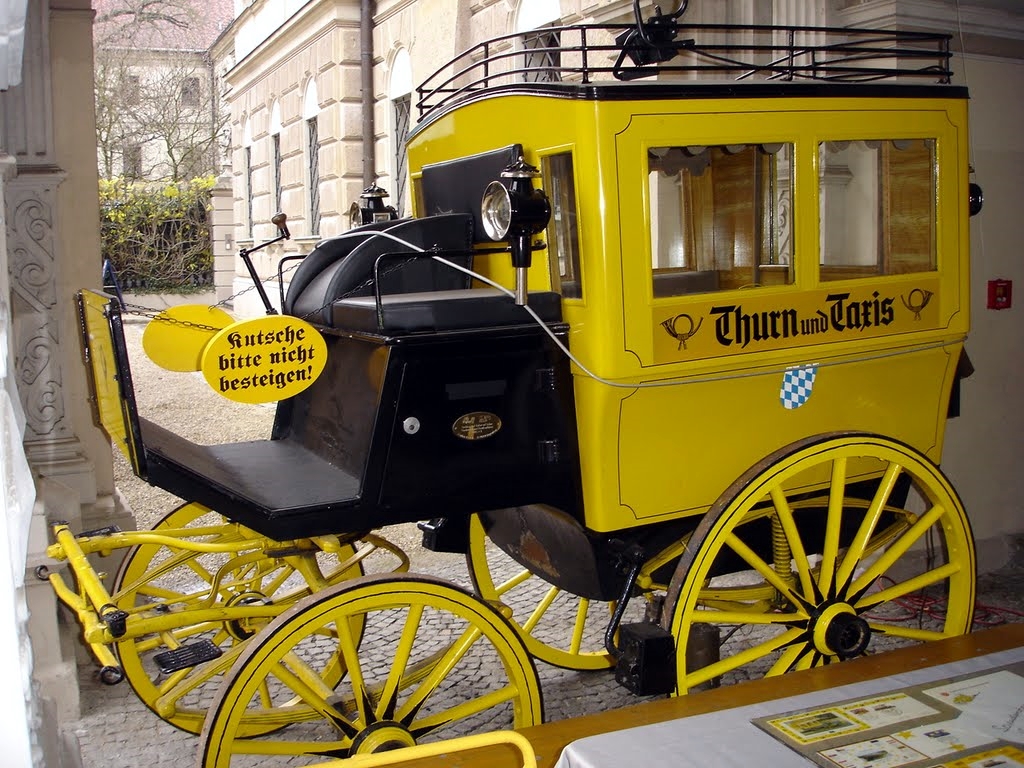
Reisekarte 68  Thurn and Taxis, colors in yellow and black.

The Thurn-und-Taxis Post was a private company and the successor to the Imperial Reichspost of the Holy Roman Empire. The Thurn-und-Taxis Post was operated by the Princely House of Thurn and Taxis between 1806 and 1867. The company was headquartered in Regensburg from its creation in 1806 until 1810 when it relocated to Frankfurt am Main where it remained until 1867.

Reisekarte 16  A Thurn and Taxis station (post) about 1820.

On 1 August 1808, the Kingdom of Bavaria placed the postal system under its government’s control. The Grand Duchy of Baden followed suit on 2 August 1811. After Karl Theodor Anton Maria von Dalberg ceded Regensburg to Bavaria in 1810, the House of Thurn and Taxis relocated the headquarters of its postal operations to Frankfurt am Main.

Reisekarte 37 Schweiz 1830  Post station and horse change in Switzerland 1830.

After the defeat and exile of Napoleon, the Congress of Vienna recognized the postal claims of the House of Thurn and Taxis in several member states of the German Confederation as legitimate. This recognition resulted in Article 17 of the German Federal Act of 8 June 1815 which required states that had established their own postal system, or intended to do so, to give the House of Thurn and Taxis fair compensation for its loss of revenue.

Reisekarte 32    Not for everyone, post coach travel in winter time.

On 14 May 1816, Karl Alexander entered into a contract with William I, Elector of Hessen to operate the postal system of Hessen-Kassel. Prior to the contract, the Thurn-und-Taxis Post had a 23 January 1814 mutual transportation agreement with Hessen-Kassel’s state postal system. On 27 July 1819, the Kingdom of Württemberg transferred the ownership and management of its state postal system to the Thurn-und-Taxis Post due to its inability to pay its compensation owed to the House of Thurn and Taxis.

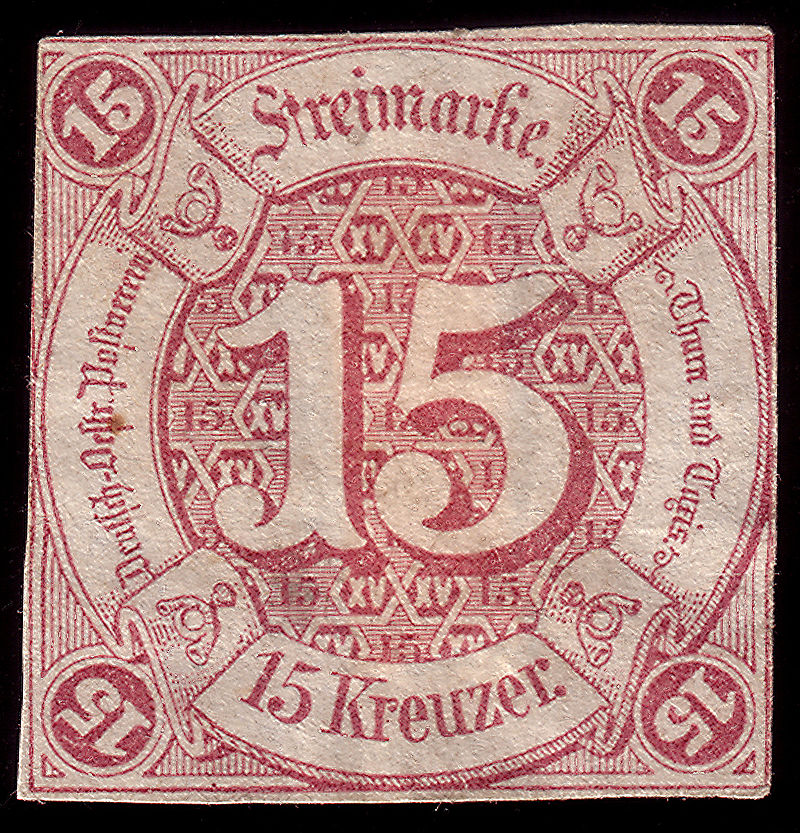
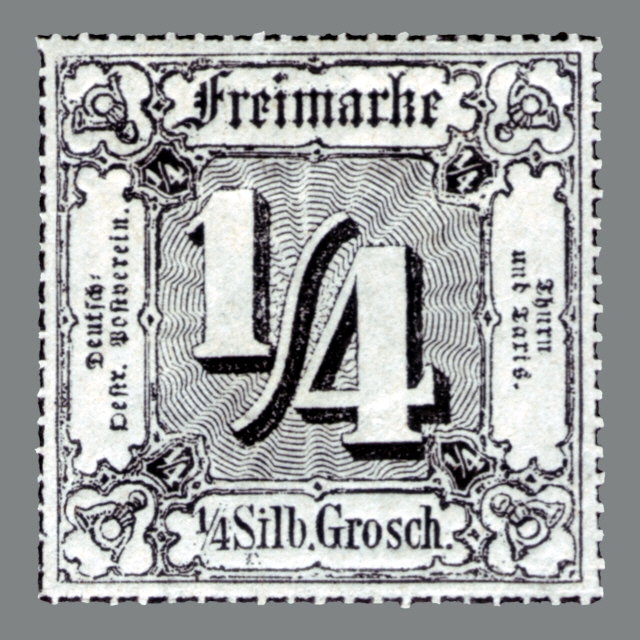
Reisekarte 44 1859        Reisekarte 67 1866Extremely rare postal stamps, of the „Thurn und Taxis“ company, from 1859 (left) and 1866 (right).

After the Prussian victory in the Austro-Prussian War, the Prussians occupied the Free City of Frankfurt and the Thurn-und-Taxis Post’s headquarters. The Thurn-und-Taxis Post transferred its postal system contracts to the Prussian state for the sum of three million Thaler after a contract was signed and ratified on 28 January 1867. The handover of control of the postal system took place on 1 July 1867.

Reisekarte 18 c.1850              Reisekarte 13b
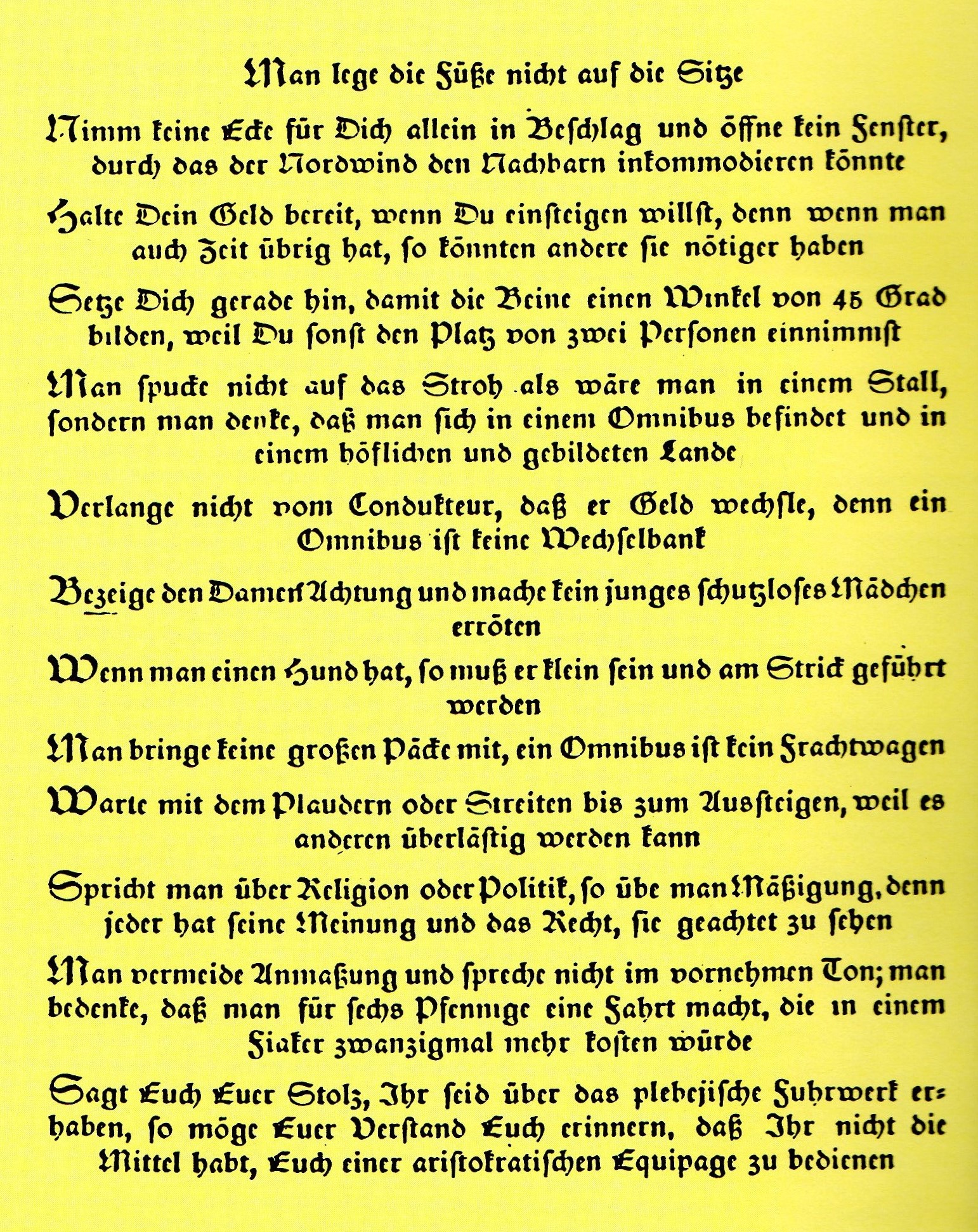
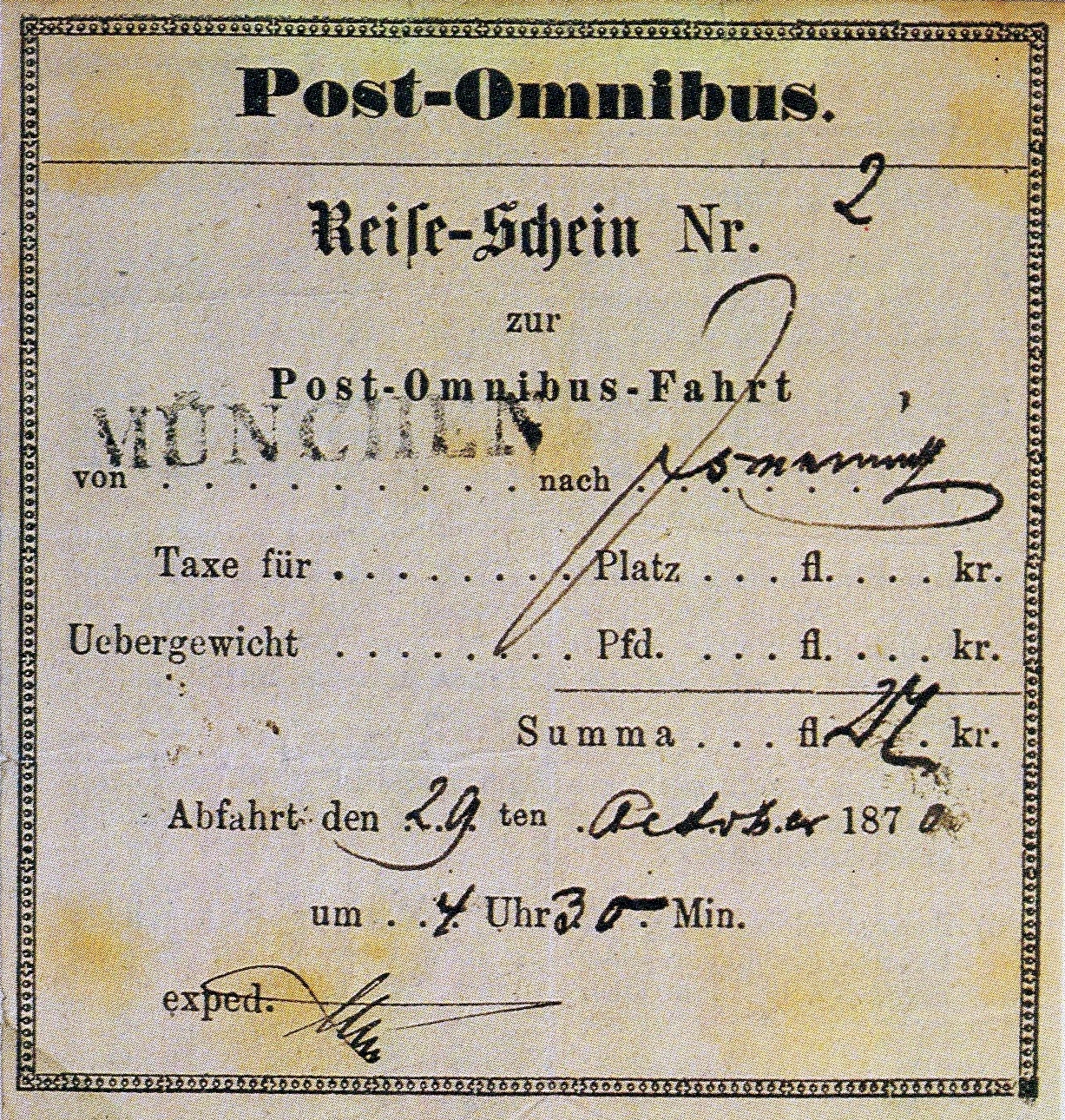
Very rare sheet of rules for passengers using postal coach services. Sadly not translatable into English because of the „Old German“ language, c. 1860’s. But great fun, if you can read it. And a rare Post Omnibus ticket, Munich 1870.

Mail Coach Road Map.

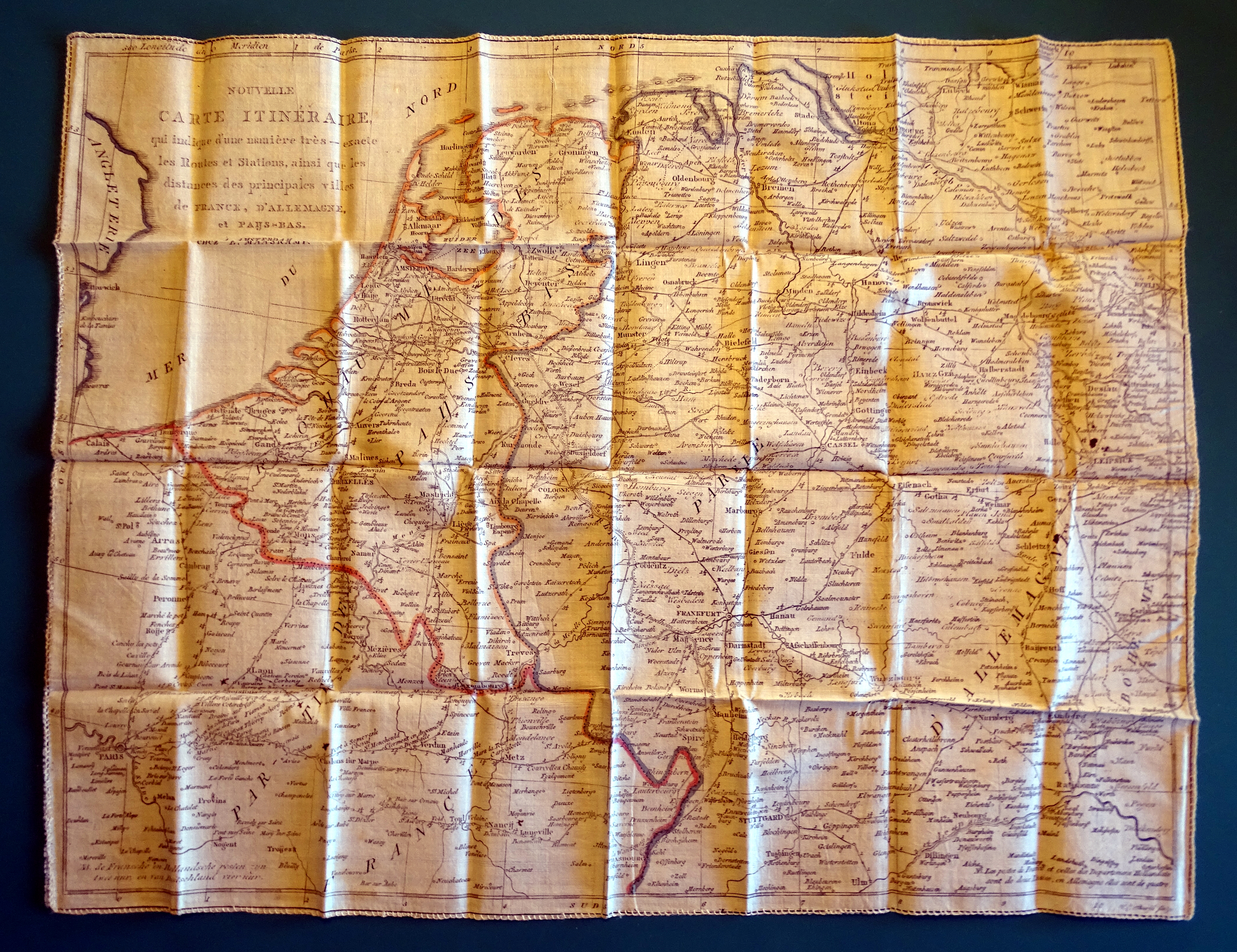
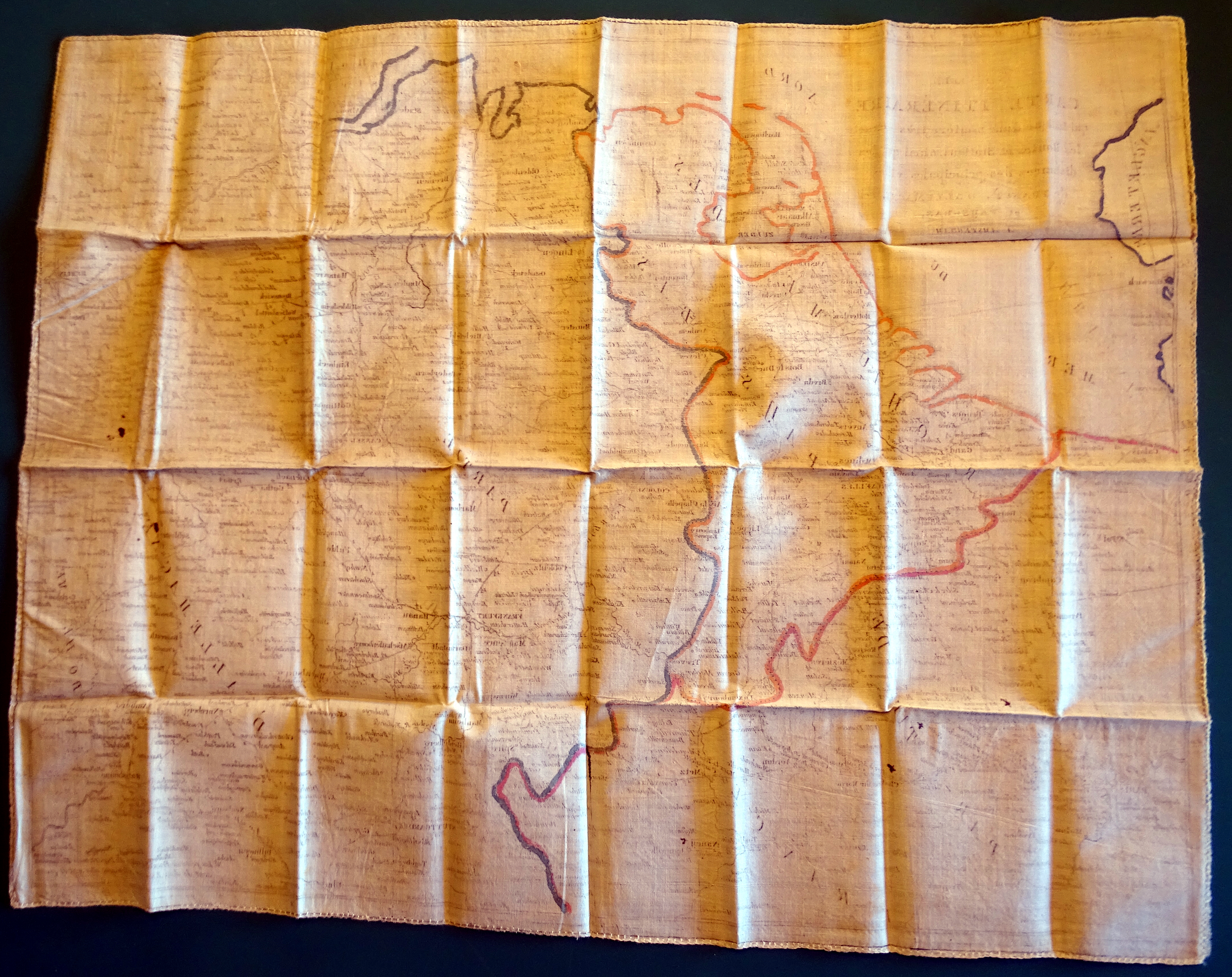
Into this time of Thurn and Taxis, the golden era of postal services, was delivered this magnificent Travel Map, printed on silk/cotton.
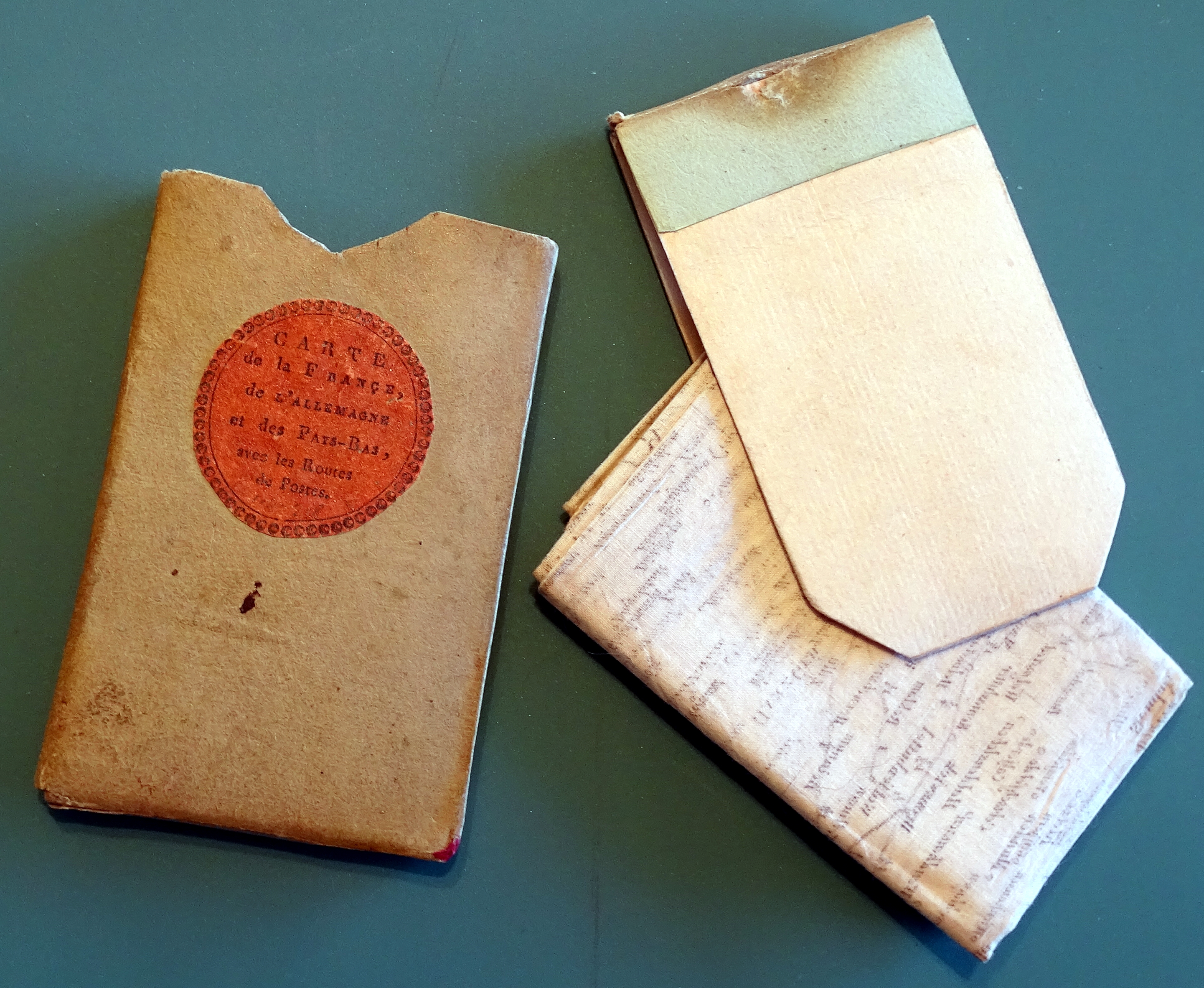
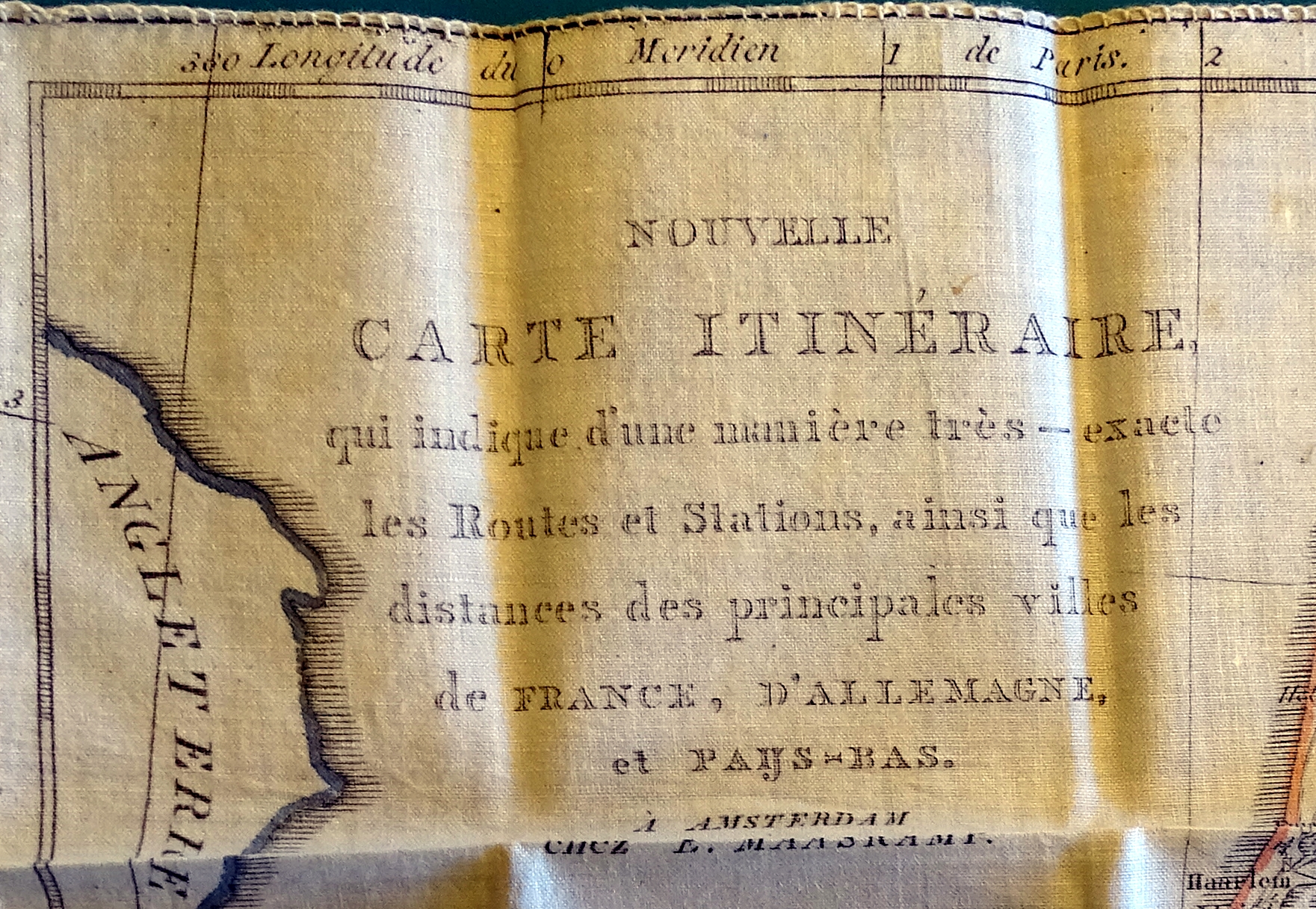
This Ultra Rare Roadmap was printed in Amsterdam by Chez E. Maaskamp. It is a foulded map covered by a slipcase and weights 28gram only.

DSC00047b  Rarity, front of the postal route map 1806.

Perfect for travelling and storing in a pocket.
This, over 200 year old map looks, in immaculate condition, like a youngster. For sure a Museum worthy collectors item.  It is in authors rarity collection and now for sale.
Have a look under the category „For Sale“.

DSC00041  Folded map with the original slipcase.

This Carte Itineraire, from 1806-1810, also included the Netherlands to the Kingdom „Napoleon Bonaparte“. From1813 to 1815, the „United Kingdom of the Netherlands“ under King Wilhelm I was established. From about 1800 to 1830 (the first railways were on) was the „golden era of the stagecoach“. In England it was the „Regency Period“. Carriages became, out of primitive companions, elegant, comfortable touring cars. Also, the roads had a positive impact the travel speeds. The areas in Central Europe were soon so-called by a dense network.

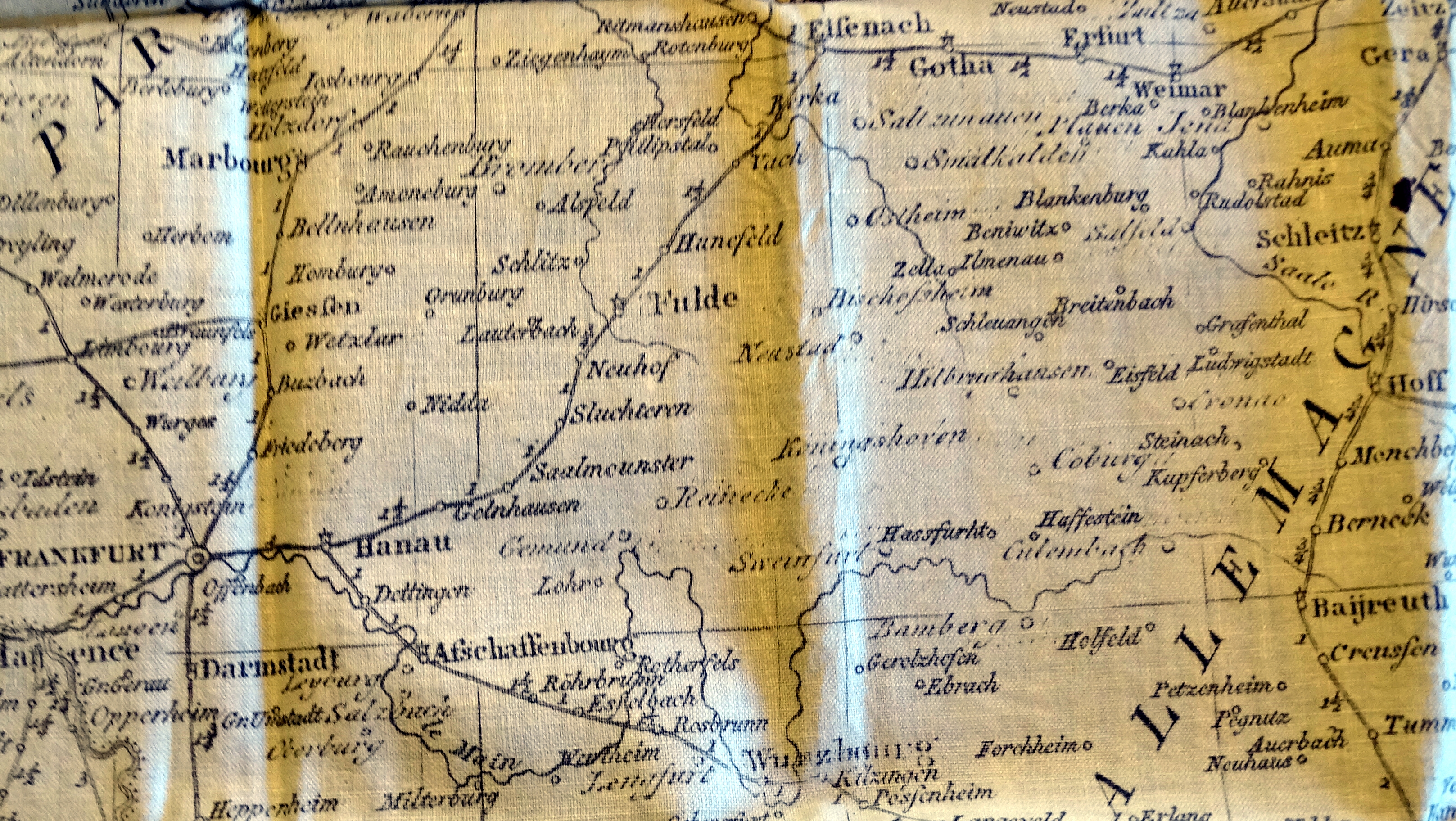
DSC00044a   DSC00045
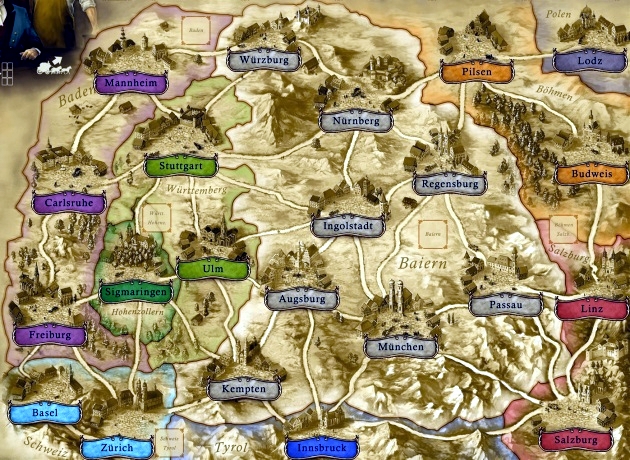
The map shows travel stations (posts = post stations) and distances in travel hours. The area covered from Hamburg to Ulm and from Leipzig to Paris, including the whole Be-ne-lux country’s.

Nostalgia.

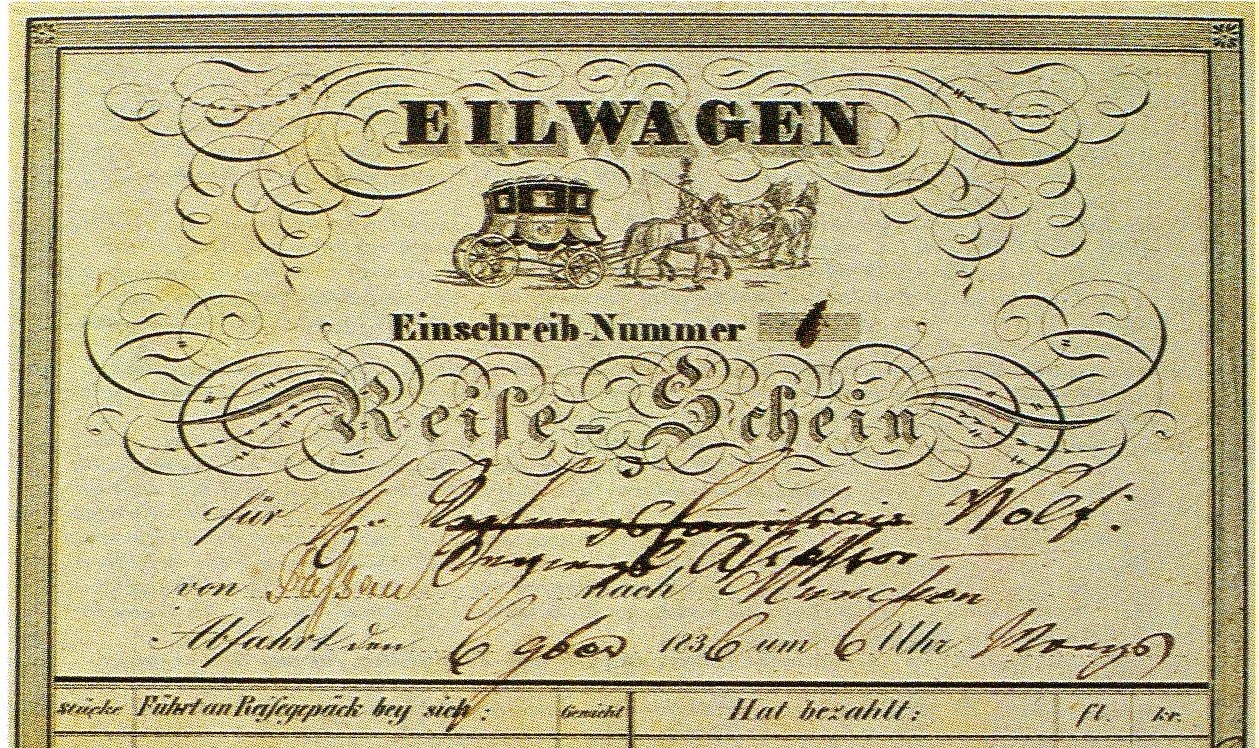
Reisekarte 17  Extremely rare ticket for an „Urgent Coach“ 1836.

For a long time there are in German-speaking countries outside of traditional events no official stagecoaches anymore. But 1938-39 was the German Post for use in 25 German spas again new stagecoaches type „Berline with Coupe“, manufactured by Aug. Nowack AG  in Bautzen as well as some post carriages. The last coach in 1938 by order of the German Reich Post was imported and then interrupted during World War II. Tourist Postal Service still runs between Bad Kissingen and Bad Bocklet.

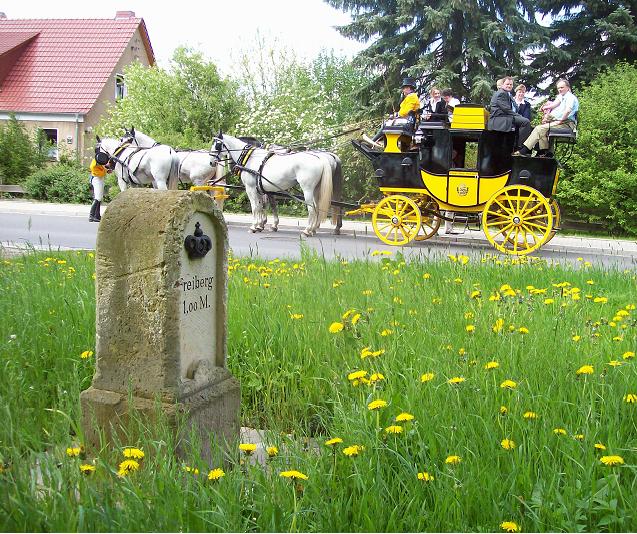
Reisekarte 35  Great coach and old milestone near Freiberg.

In Eastern Germany there are again tourist stagecoach offers, among others, on the long-distance Hamburg-Berlin, Berlin-Leipzig and Leipzig-Dresden with original stagecoaches and the project „land of historical postal roads“ with regular trips from three stagecoaches and a post carriage.

Bad Kissingen – Bad Bocklet – Aschach Castle.

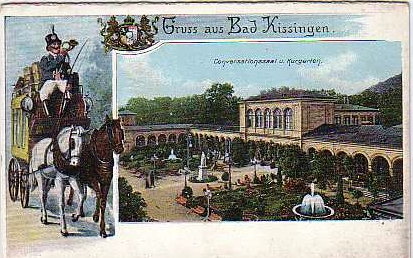
Reisekarte 24 Wonderful old postcard from Bad Kissingen.

The stagecoach line celebrated last year its 75th anniversary.
It’s a horse-person Post Bad Kissingen – Bad Bocklet or Bad Kissingen Aschach Castle.
The gracious symbol of a time, had nothing to do with the travel rush. It became over the years an attraction for all ages in Bad Kissingen and the Biedermeier spa Bad Bocklet.
The first stagecoach was established 450 years ago. From 1595 the Prince’s of Thurn and Taxis were given the monopoly for stagecoach lines. In 1830, the first time a perverse Royal Bavarian stagecoach between Bad Kissingen and the former hub Poppenhausen.

DSC01746a                      DSC01747a
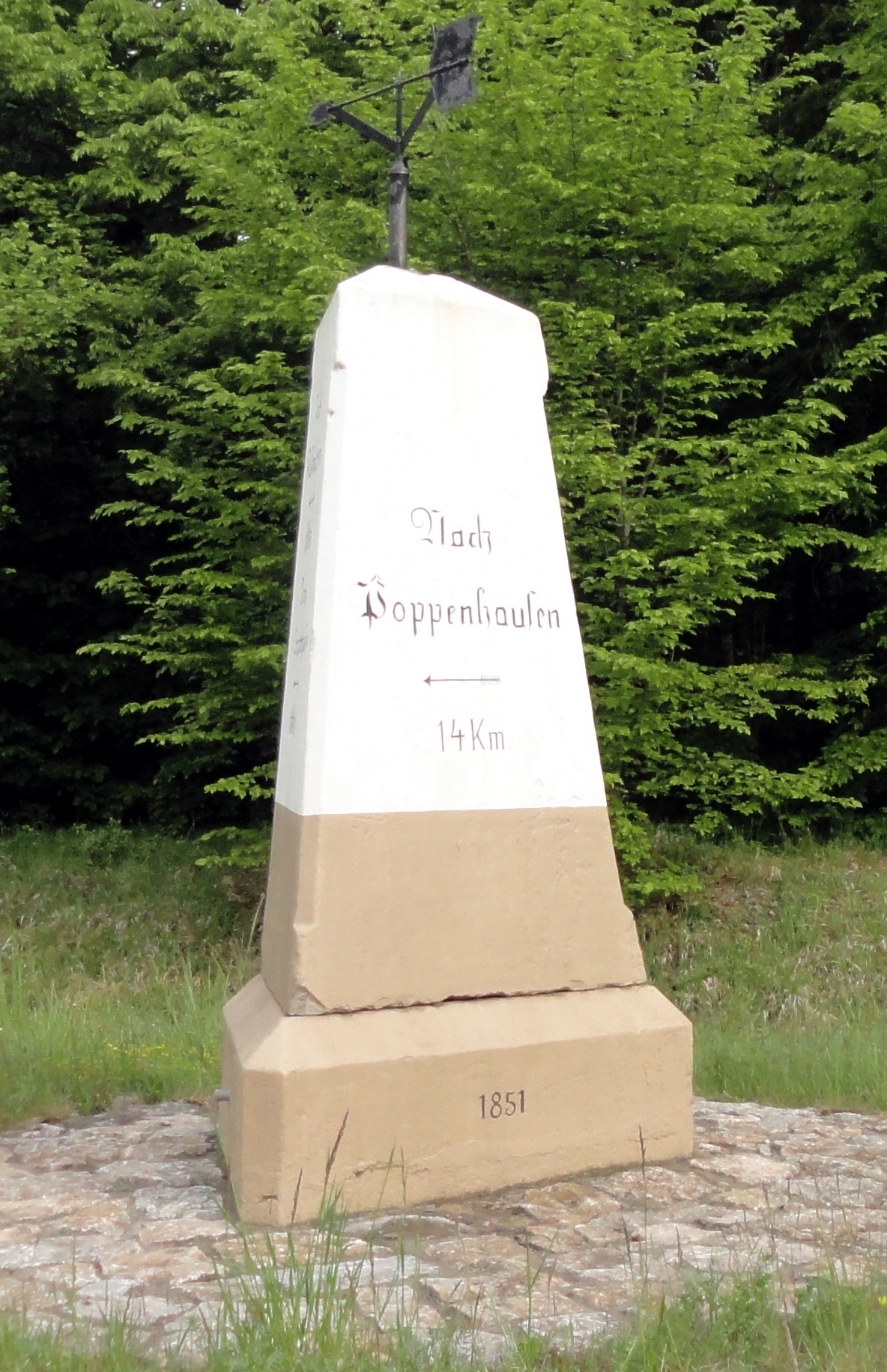
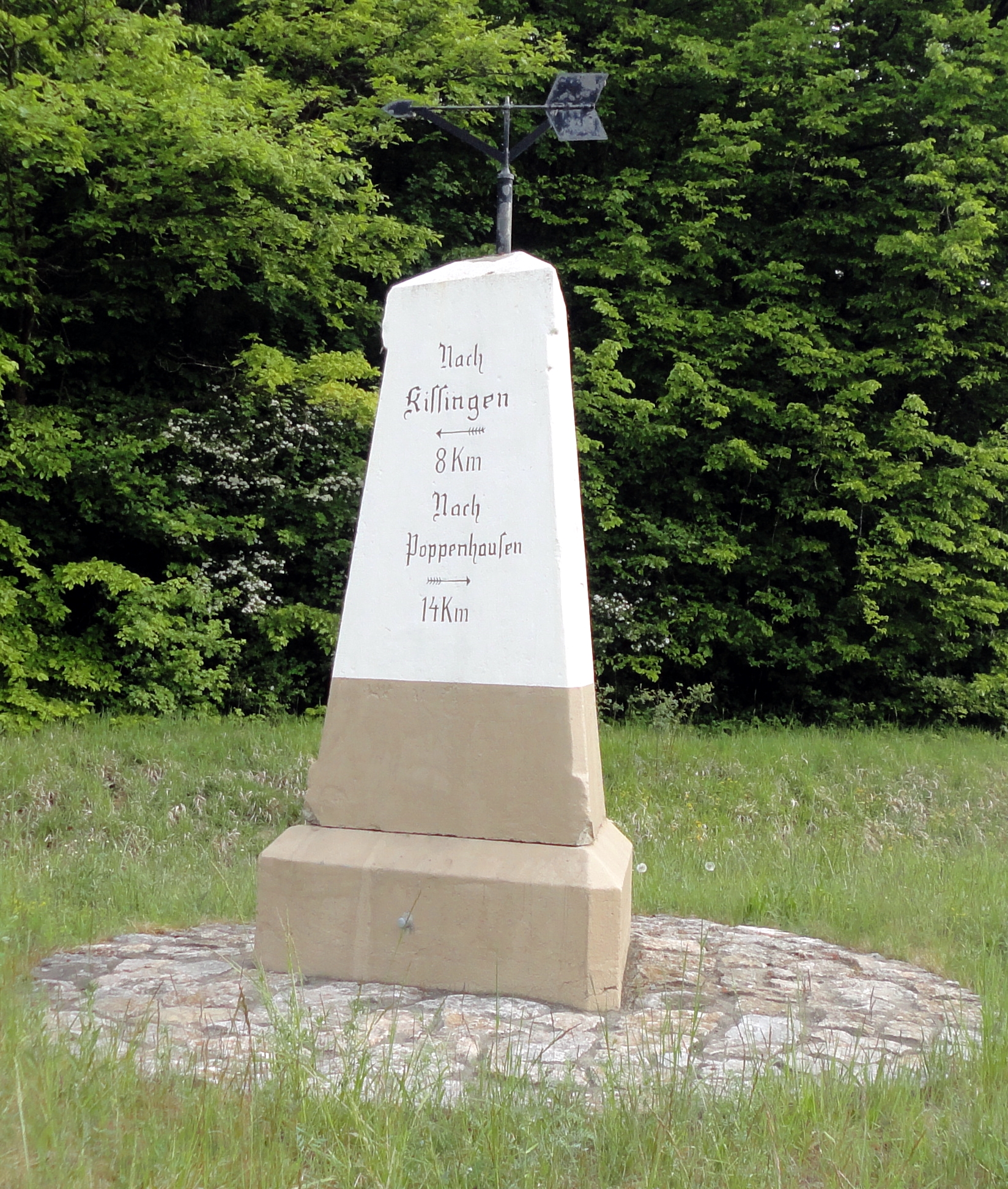
Old milestone for postal carriages near Bad Kissingen. From 1851 shows distances in kilometers.

But as early as 1937 was the former imperial post 24 coaches („Berline with coupe“) rebuild, to put them in scenic areas of Germany. The resumption of stagecoach rides took place with the intention to illustrate the historical development of postal services and travel of transport by a living example. Tourism of spa towns of Bad Kissingen and Bad Bocklet, and the charming landscape of the Saale valley were ideal for this project.

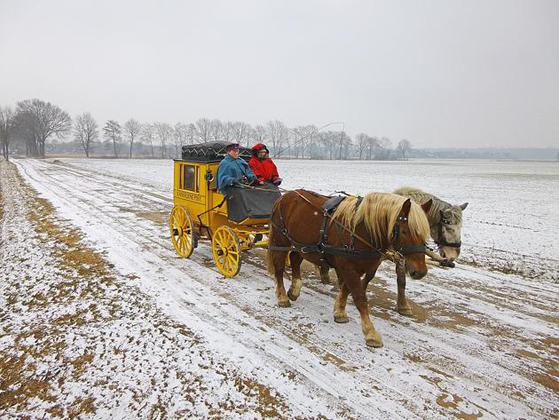
Reisekarte 25a  Bad Bocklet – Bad Kissingen tourist coach.

On 07.06.1939 the opening drive of the horse people Post Bad Kissingen found – Bad Bocklet instead. The coach, a replica from the period of the Imperial Reichspost, wrong time twice more from Bad Kissingen to Bad Bocklet. The driving must be reinstated shortly after the outbreak of World War 2.

Reisekarte 23   Reisekarte 31
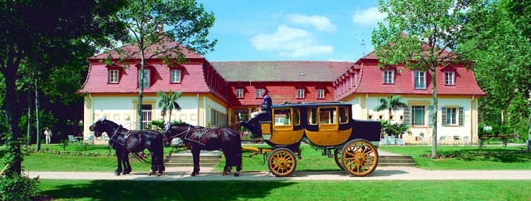
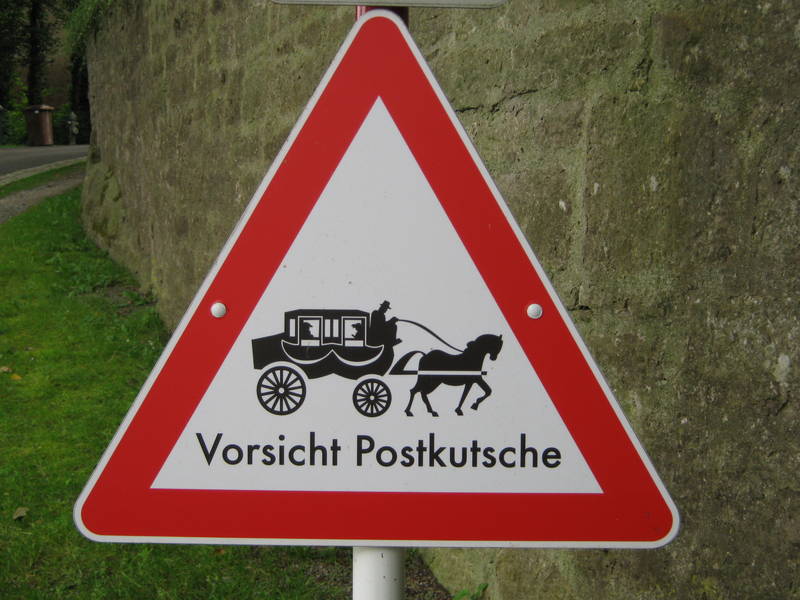
Bad Kissingen coach at the station in Aschach castle.  And a „modern“ road sign warning of coach traffic.

In 1950, the horse people Post Bad Kissingen was – Bad Bocklet reestablished. On August 13, the stagecoach rides organized Rakoczy Festival between Bad Kissingen and Bad Bocklet were the first to be resumed for. The line was operated post officially, team and driver were provided by the company but Kohlhepp.

Reisekarte 34, aschach  Reisekarte 33, aschach 1
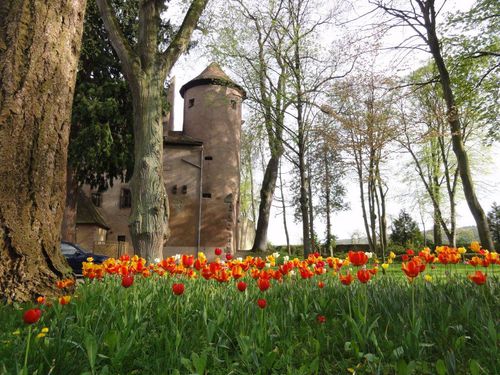
Beautiful Aschach castle, worth visiting all year round. Famous are  the castles „Christmas Light“ celebrations.

On 17th of April 1967 took place the opening drive with a new coach, which has been produced in the main workshops for motor postwagens in Bamberg. This new coach is similar to the previous coach, the first operated between two resorts on 7th of June 1939. This is a replica of a carriage from the time of the Imperial Reichspost. It is technically improved and equipped with all modern conveniences. The nearly 2,000-kg vehicle was equipped with a hydraulic four-wheel brake and extended wheelbase of 2.55 meters. Four magnificent horses are harnessed to the carriage, which offers seats for 9 people, plus Coachman and Postilion, bearing the Royal Bavarian Postillions uniform (see pic).

Reisekarte 21  Coach Postillion blowing his horn in Bad Kissingen.

If you visit Germany and are interested in nostalgic history visit Bad Kissingen and drive one of the last Post wagons available.
The journeys of the stagecoach will take place from early May to mid-October, on Mondays, Wednesdays, Fridays and Sundays to Bad Bocklet and on Tuesdays, Thursdays and Saturdays to Aschach Castle. Departure is at 14.00 clock in Bad Kissingen, coming back is is about to 17.15.Uhr. The fare (in 2015) 18,– Euro per person round trip. This is the last official Post Service in Germany.

Reisekarte 62  Bad Kissingen coach on tour. See it on YouTube.

Where does the name TAXI is coming from ??

„Taxi“ comes from the Thurn und Taxis.
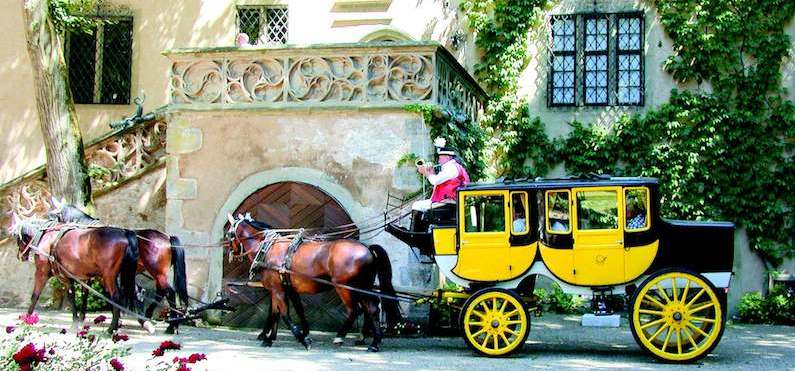
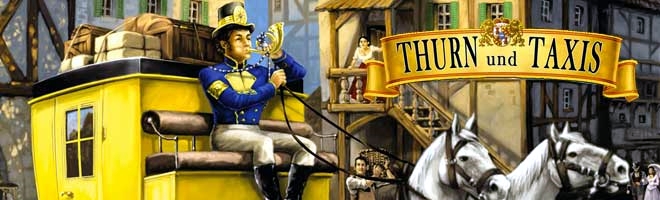
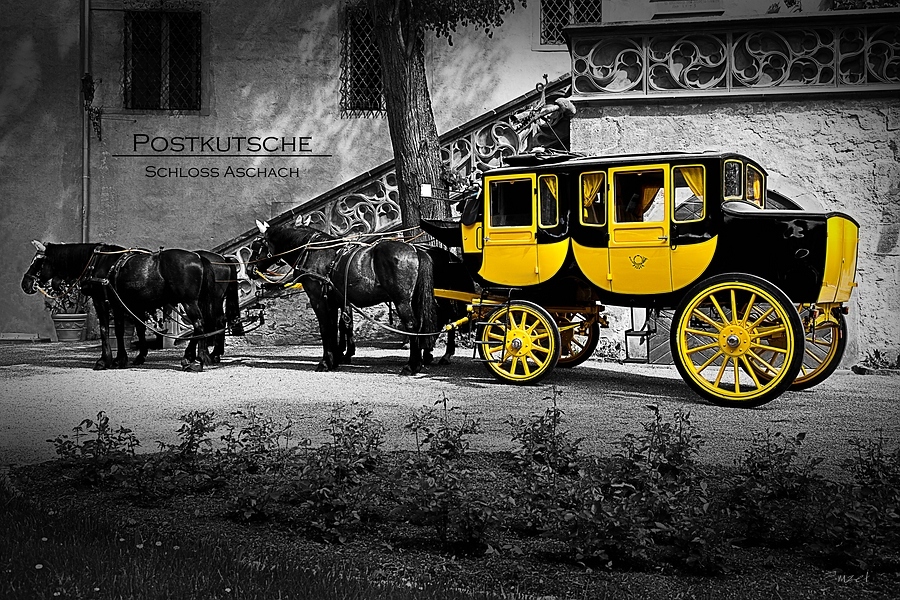
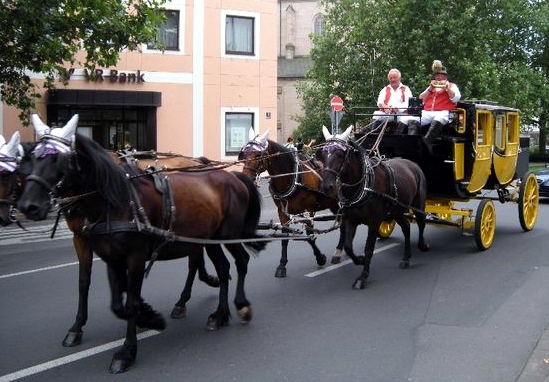
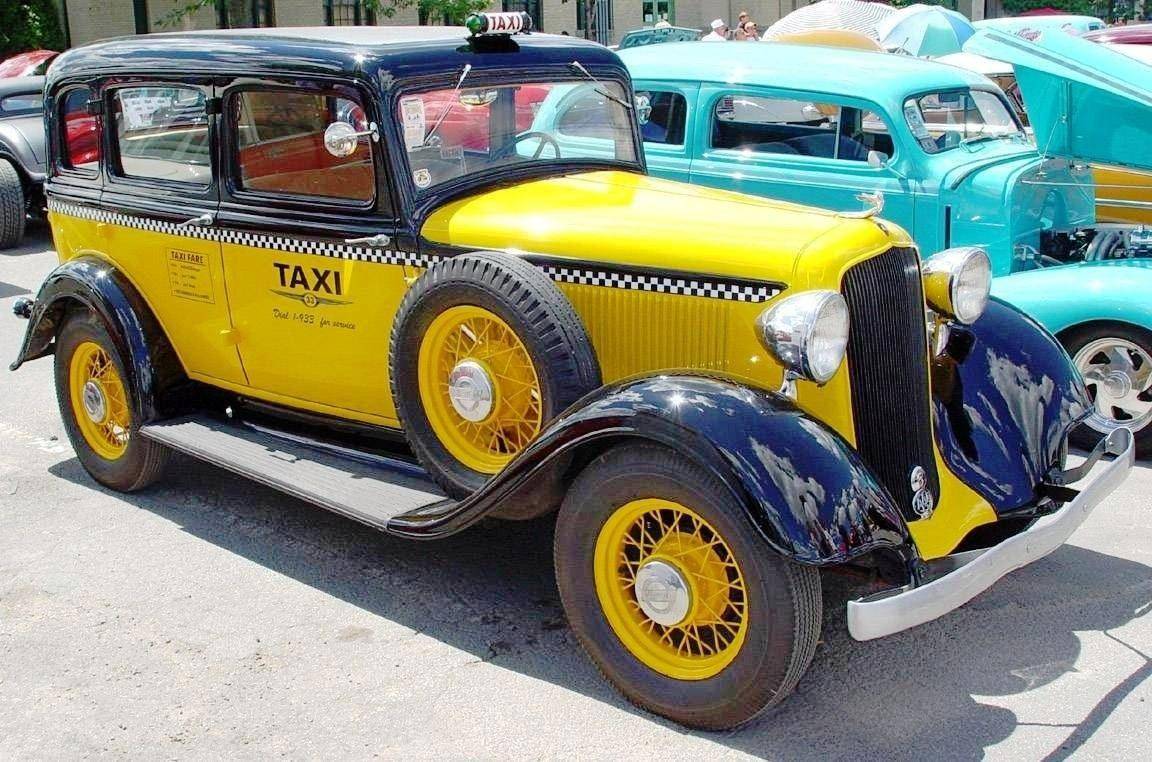
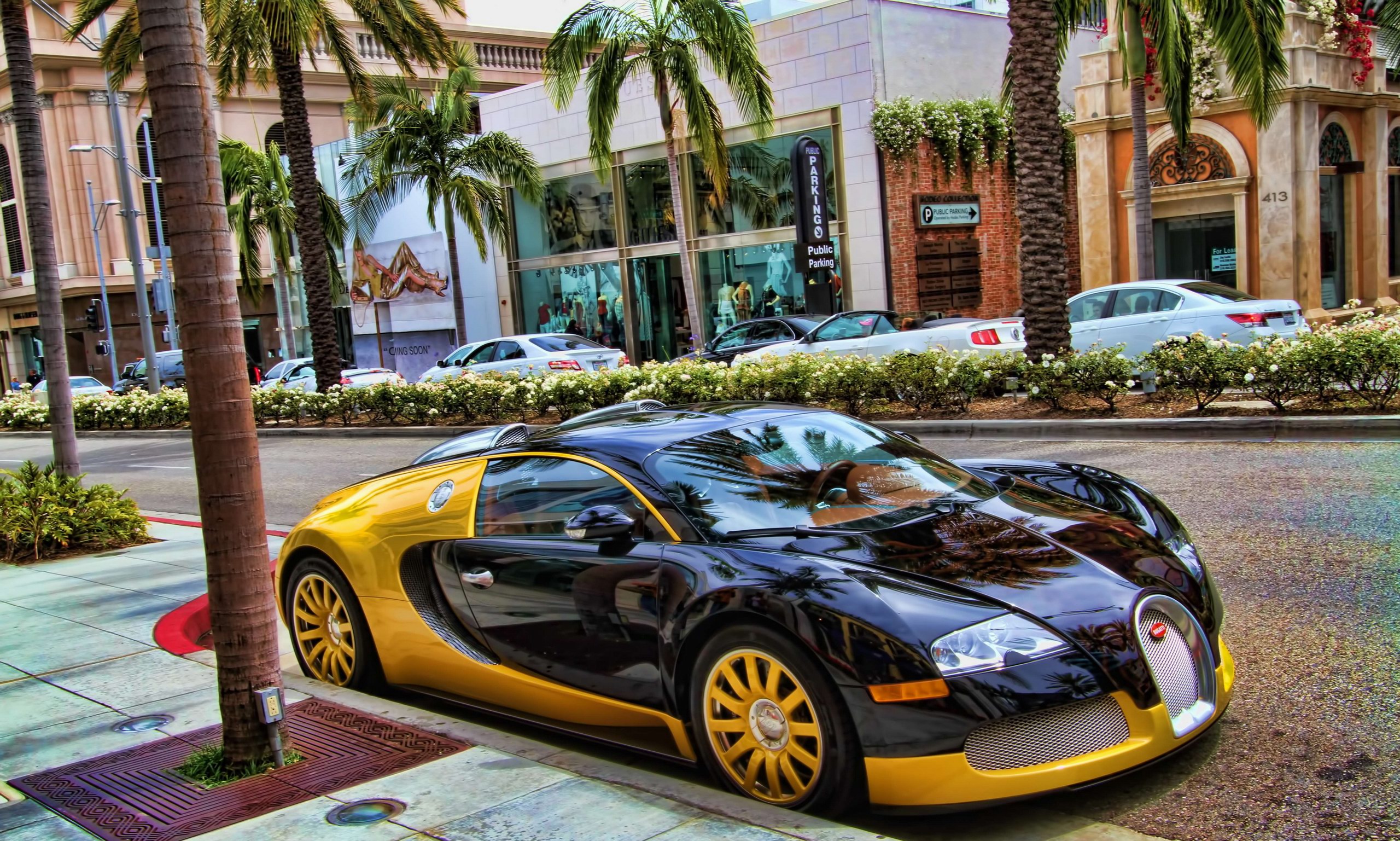
In the „German Reich“ colors black and yellow, was allowed the entrepreneur Francesco Tassi, an Italian resident in the Netherlands, carrying imperial dispatches. Since that time all „Taxi’s“ and „Post Coaches“ have to have the colors yellow and black, around the world.

Reisekarte 65   Castles and Estates of the Thurn and Taxis.

Maximilian I had allowed him in 1490 to set up a courier service between Brussels and Innsbruck. But as the Emperor’s pay notoriously not enough,  Tassis – Germanized: Taxis could transport on own account for private and expand his network.

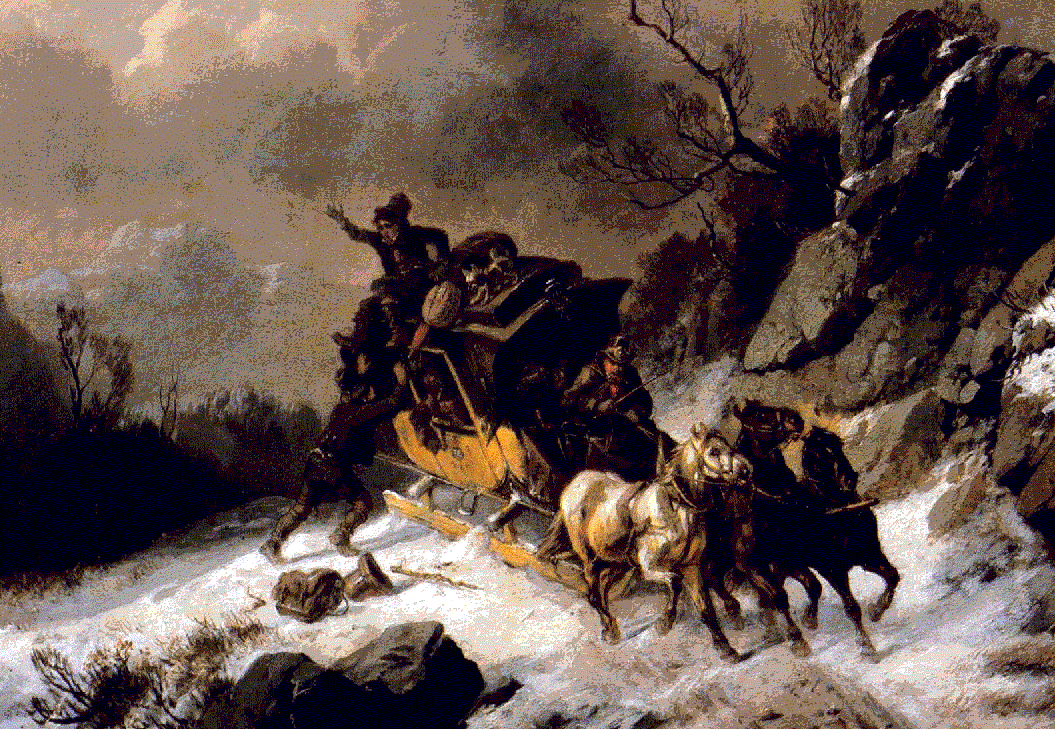
 Reisekarte 69  A Thurn and Taxis post coach sled in the alps.

Thus, from the „imperial post shelf“ a commercial monopoly (Thurn and Taxis), which spanned the whole of Europe with express couriers: At the change post, every five miles (about 37.5 km in that time) signaled riders and teams coming up with a post horn and gave the charge on. From Brussels to Paris  broadcasts took 44 hours only.

 Reisekarte 66 Regensburg  Old post coach in Taxis Castle of Regensburg.

The name „Thurn und Taxis“ does not come from a partner of those of Taxis, but in the past the Tassis family: After a genealogist commissioned by the Tassis had led the „evidence“ of a relationship with the Italian princes de la Torre, was allowed the family since 1650, with imperial permission called „de la Tour et Tassis“. Since its formal inclusion in the imperial princes in 1695 „von Thurn und Taxis“.

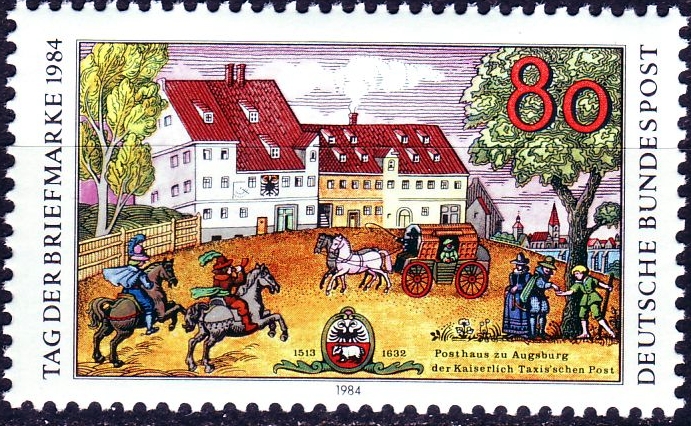
Reisekarte 42 1984  „Imperial Taxis’s Post“ (1513 – 1632) printed 1984.
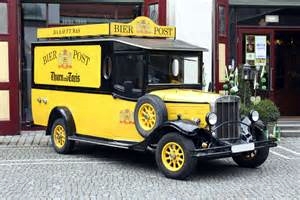
 Reisekarte 64  Advertizing car of Thurn and Taxis breweries.

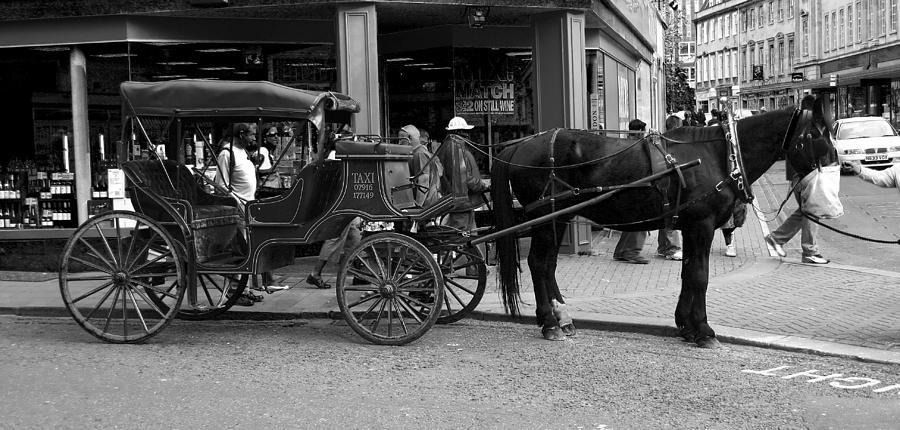
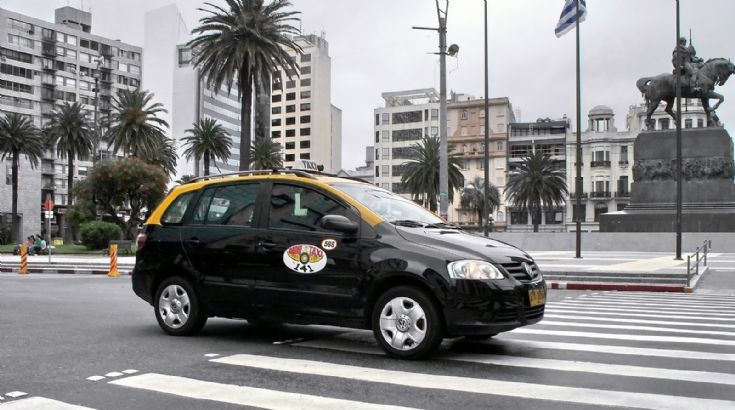
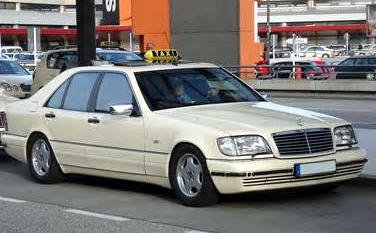
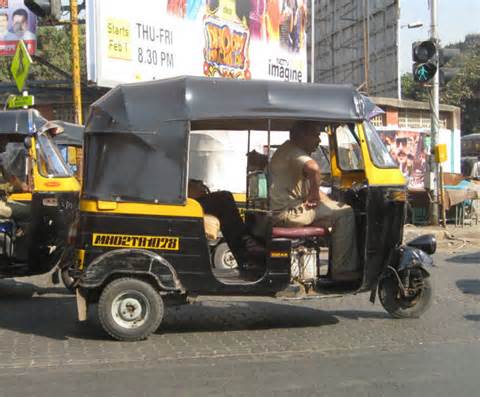
During the years mankind called the „Thurn and Taxis“ carriages short „Taxis“ – and then, later – just „“ TAXI „“ !!  And – as the post coaches – all are still in yellow and black !!

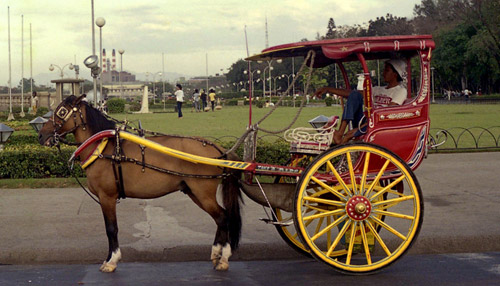
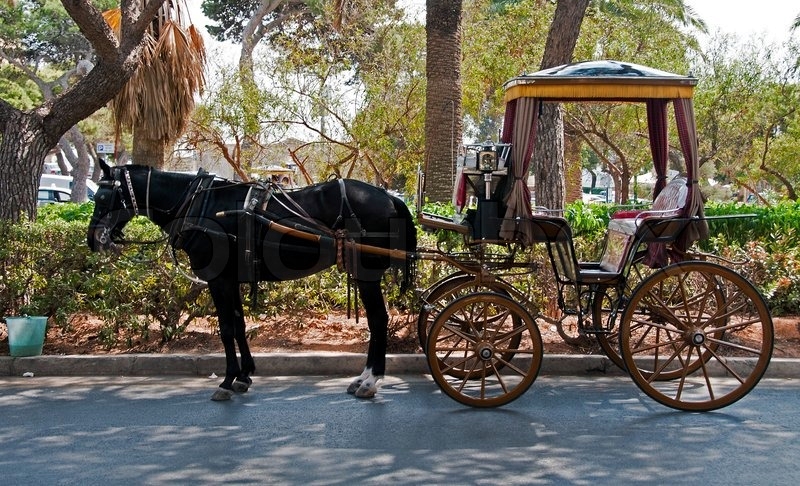
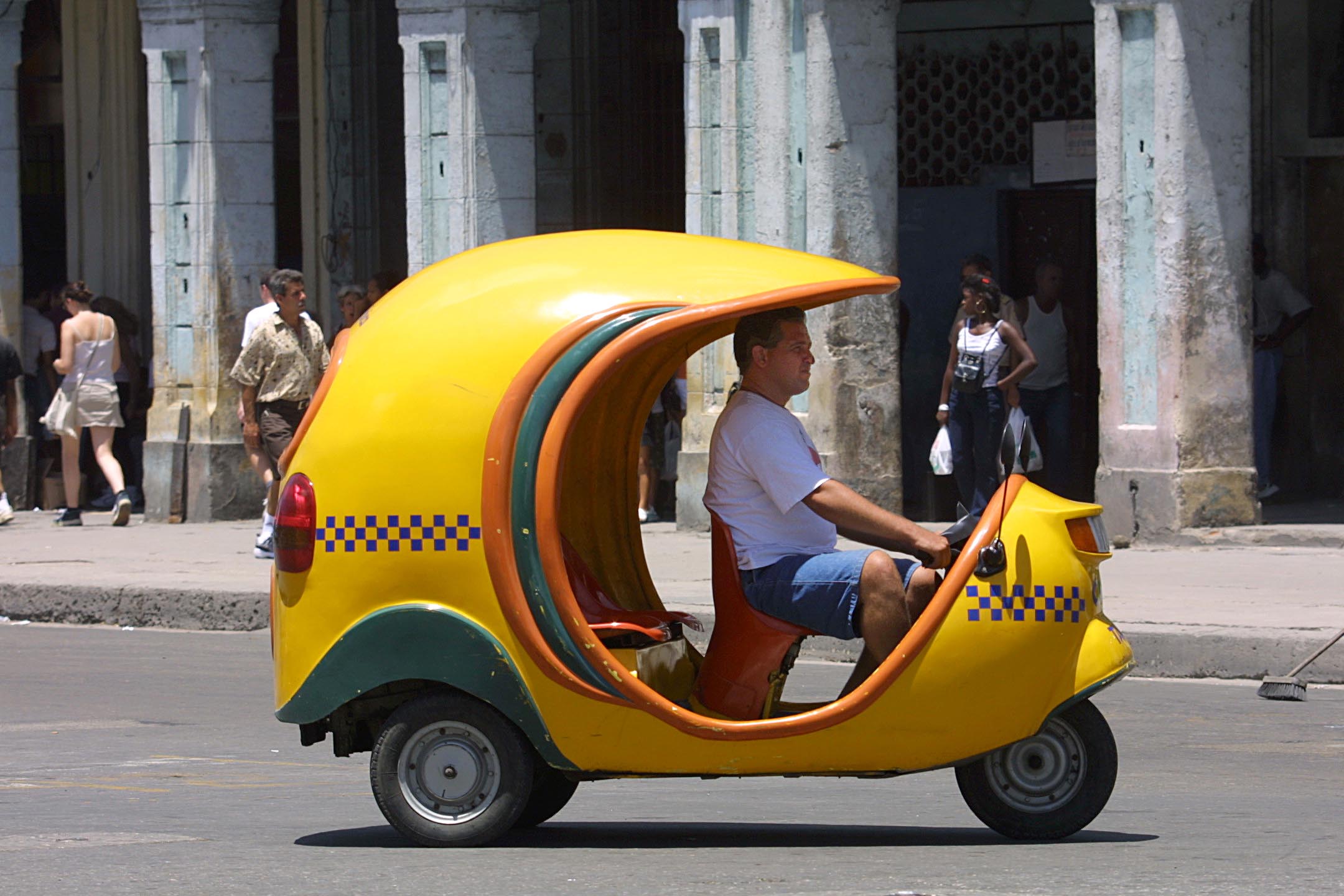
Here some taxi images from around the world.

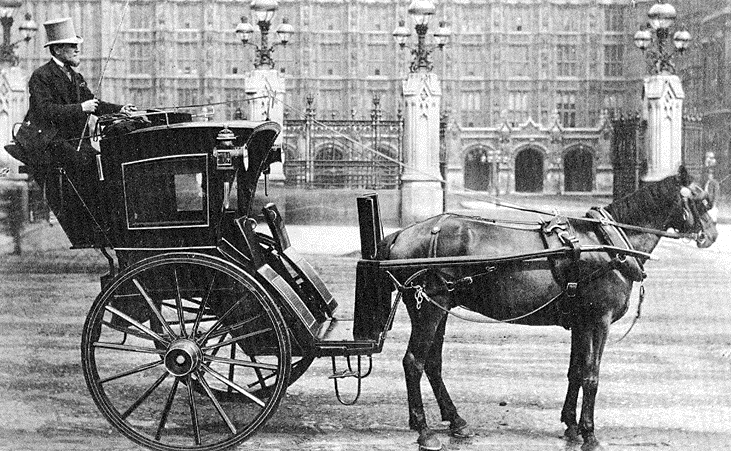
Reisekarte 57a London   Hansom Cab London 1895.

Reisekarte 55 USA   Taxi in the US.

Reisekarte 45 Baguio Philipp.   Taxi in Baguio, Philippines.

Reisekarte 61Malta   Taxi on the island of Malta.

Reisekarte 49 Mexico   Taxi in Mexico City.

Reisekarte 50 Cuba   Taxi in Havana, Cuba.

Reisekarte 56 MVD   Taxi in Montevideo, Uruguay.

Reisekarte 46 Frankfurt   Taxi in Frankfurt, Germany.

Reisekarte 51 Bombay   Taxi in Bombay, India.

Reisekarte 52 Dubai   Taxi in Dubai, Emirates.

Reisekarte 60
Ever saw a horse crying ? Is this tear about the loss of horse drawn taxis or about the horse cruelty in many parts of the world ???  Hope you enjoyed this post.

Veröffentlicht unter Collecting, History, Hobbies, Information, Must See, Travel | Verschlagwortet mit | Hinterlasse einen Kommentar

Postal Travel Map – US$ 2.600,–/or offer

Mail Coach Road Map.

DSC00047b Front of the map.

It is the time of Thurn and Taxis, the golden era of postal services.
Here was this magnificent Travel Map, printed on silk or fine cotton.
This Ultra Rare Roadmap was printed in Amsterdam by Chez E. Maaskamp.
It is a foulded map covered by a slipcase and weights 28gram only.

DSC00041  Slipcase with folded map.

Perfect for traveling and storing in a pocket. The case is in used condition, but
the, over 200 year old, map looks in immaculate condition, like a youngster.
For sure a Museum worthy collectors item.

DSC00044a   Title of the map.

And an important part of postal history, a sought after collectors item.
It is in authors rarity collection and now for sale.
See also the post „From Stagecoach to Taxi“.

DSC00045  Detail of map with stations.

This Carte Itineraire, printed 1806-1810, also includes the Netherlands to the
Kingdom „Napoleon Bonaparte“. From 1813 to 1815, the „United Kingdom of the
Netherlands“ under King Wilhelm I was established. From about 1800 to 1825
(the first railways were on) was the „golden era of the stagecoach“.
In England it was the „Regency Period“. Carriages became, out of primitive
companions, elegant, comfortable touring cars. Also, the roads had a positive
impact the travel speeds. The areas in Central Europe were soon so-called
by a dense network.

DSC00048  Rearside of the map.

The map shows travel stations (posts = post stations) and distances in travel
hours. The area covered from Hamburg to Ulm and from Leipzig to Paris,
including the whole Be-ne-lux country’s. This map is in TOP-condition.

Veröffentlicht unter For Sale | Verschlagwortet mit , | Hinterlasse einen Kommentar

Easy to do – Chipotle Adobo

adobo 2

Adobo upgrade to Chipotle Chilli’s in Adobo Sauce.

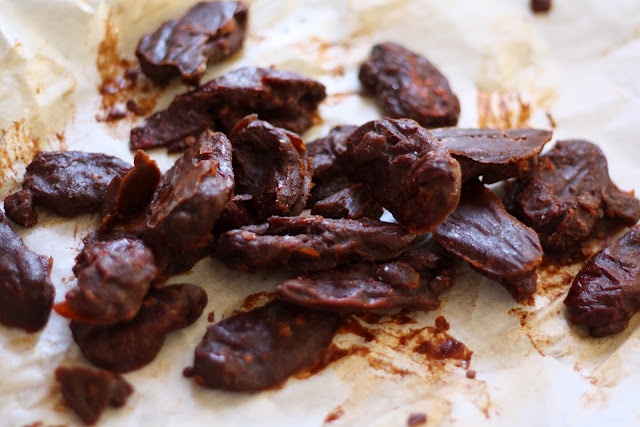
chipotle chilli is a smoked or dried jalapeño chilli that originated in the area surrounding Mexico City. People who lived there before the Aztec civilization are thought to have invented it. The chilli’s may have been smoked to keep them from rotting, since the jalapeño is prone to quickly deteriorating when stored.

chilli 14a   Fresh chipotle chilli’s from the market.

Ingredients.
7 to 10 dried chipotle  chilli’s, de-stemmed and slit lengthwise
1/2 an onion, diced
1/3 cup apple cider vinegar
2 cloves garlic, minced
1/4 cup ketchup
1/4 cup soy sauce
1/4 teaspoon salt
3 cups water

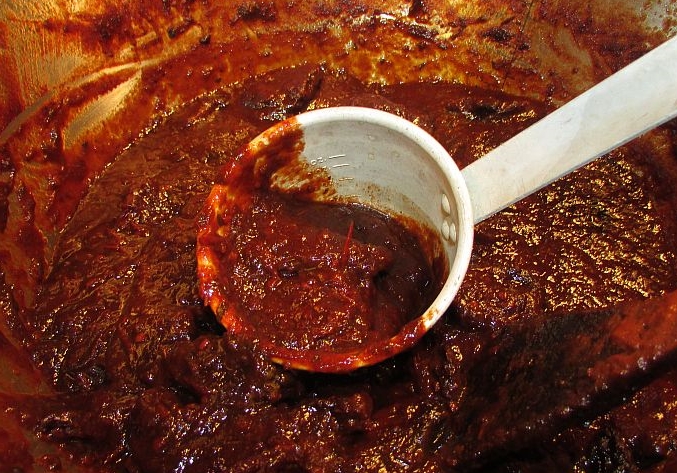
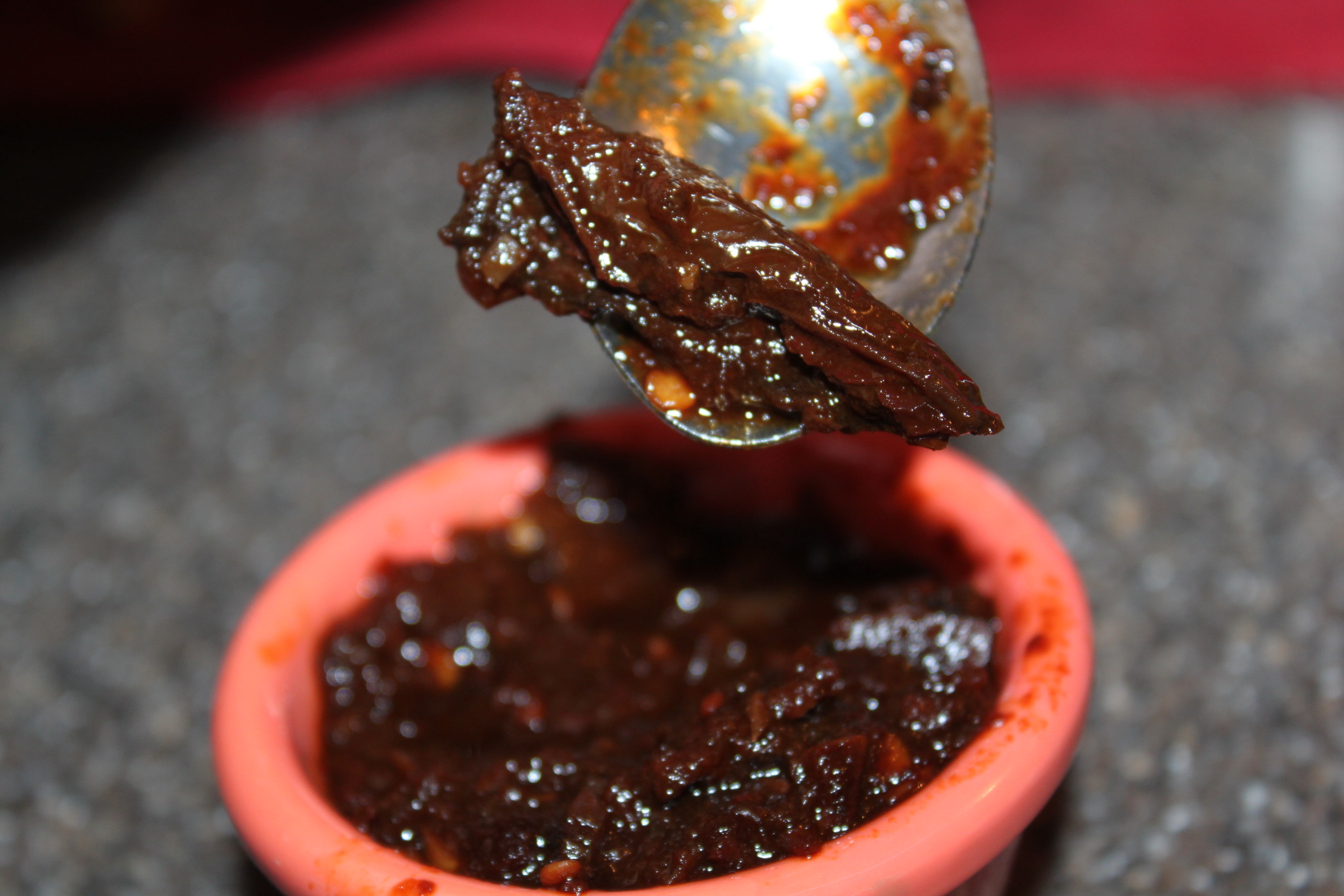
adobo 5 chipotle   Cook very long on very low heat to a smooth paste.

How to do.
Combine all of the ingredients in a pan and simmer, covered, over low heat heat until the liquid is reduced to about a cup. This should take about an hour to an hour and a half. Once the chipotle chilli’s in adobo sauce has reduced you are ready to let it cool and then use or store it.

adobo 4   Chipotle in adobo sauce ready to use.

Tips.
This adobo sauce recipe will keep for several weeks in the refrigerator in an airtight container, or you can freeze or can the chipotle chilli’s in adobo sauce for up to a year.
See also my comments and pics from the earlier post „Easy to do – Adobo“.

chilli 13
Of course you can buy premade „Chipotle in Adobo“ in cans ! But where is the fun of gourmet cooking ?
Main Course Variations with Adobo Sauce.

This famous sauce is not only typical for Mexico. Far around the world it is well known in the Philippines. Adobo is sometimes called the Filipino national dish. Filipino adobo sauce doesn’t have the chipotle chilli’s in it, but here are some variations of the classic Filipino adobo recipes with the chipotles added.

To make main courses with adobo sauce from scratch you can take the above recipe and reduce the number of chilli’s and add the meat. Here are a few variations:

Chicken with Adobo Sauce.

Ingredients.
2-3 Chipotle chilli’s (more or less to taste)
2-3 Pounds Chicken: breast, thighs, and/or legs
Other ingredients from above adobo sauce recipe.

adobo bd   adobo bb
Ready to marinade chicken in adobo before grilling. And adobo chicken in coconut sauce.

How to do.
Take the chicken and sear it in a pot over high heat until the chicken is browned all over, about 5 minutes per side.
Set the chicken aside and turn the burner down to medium heat.
Pour the vinegar and 1/2 the water into the pan and scrap the bits of chicken off the bottom with a wooden spoon.

adobo ba     Chicken in adobo on white rice.

Add the onion, chipotle chilli’s, garlic, ketchup, salt, and the browned chicken to the pot.
Add enough water to almost cover the chicken.
Simmer the chicken adobo mixture over low heat until the chicken is cooked through and tender, about 30 minutes, turning the pieces of chicken occasionally.

 adobo bc  Chicken platter with chipotle adobo glaze/sauce.

Tips.
I like to serve my chicken with adobo sauce recipe over white or brown rice. That way all the adobo sauce is soaked up and doesn’t go to waste.


Pork Roast with Adobo Sauce.

Ingredients.
3-4 Chipotle chilli’s (more or less to taste)
3-4 Pounds Pork Roast (pork shoulder, pork butt)
Other ingredients from above adobo sauce recipe.

 adobo ca  Wonderful pork tenderloin with adobo sauce.

How to do.
Take the pork and sear it in a pot over high heat until the pork is browned all over, about 7 minutes per side.
Set the pork aside and turn the burner down to medium heat.
Pour the vinegar and 1/2 the water into the pan and scrap the bits of pork off the bottom with a wooden spoon (deglazing the pan).

adobo cb
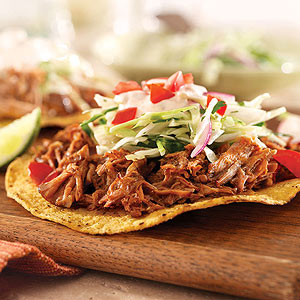
Tortilla filled with pulled pork, adobo cream and slaw. How delicious ?

Add the onion, chipotle chilli’s, garlic, ketchup, salt, and the browned pork to the pot.
Add enough water to almost cover the chicken.
Simmer the pork adobo mixture over low heat until the pork is cooked through and tender, about 60 minutes.

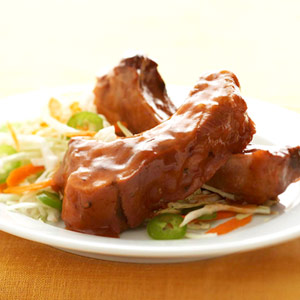
adobo cc  Baby ribs with adobo sauce on salad bed.

Tips.
I like to serve my pork with adobo sauce recipe shredded over Spanish rice with black beans.


Beef Roast with Coconut Adobo Sauce.

Ingredients.
4-5 Chipotle chilli’s (more or less to taste)
3-4 Pounds Beef Roast (beef shoulder, beef butt, stew beef)
1 can coconut milk (12 ounces, 350-400ml)
Other ingredients from above adobo sauce recipe.

adobo db  Beef roast with adobo, serve it with rice or quinoa.

How to do.
Take the beef and sear it in a pot over high heat until the beef is browned all over, about 7 minutes per side.
Set the beef aside and turn the burner down to medium heat.
Pour the vinegar and 1/2 the water into the pan and scrap the bits of beef off the bottom with a wooden spoon.

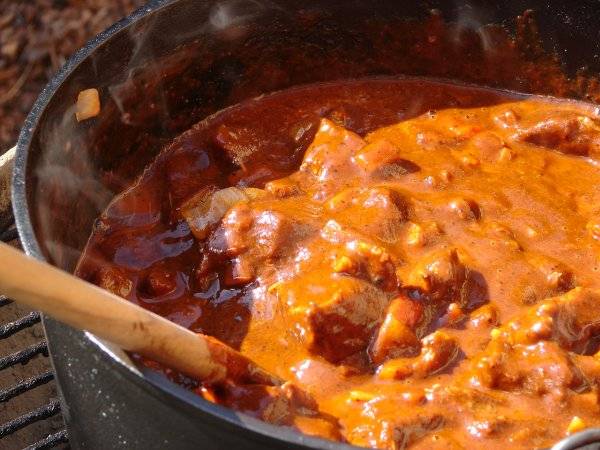
adobo da  I like this recipe with lots of sauce, like a nice curry.

Add the onion, chipotle chilli’s, garlic, ketchup, salt, and the browned beef to the pot.
Add enough water to almost cover the beef.
Simmer the beef adobo mixture over low heat until the beef is cooked through and tender, about 80 minutes.
Stir in the coconut milk and cook for around 5 minutes.

adobo aa             adobo ab
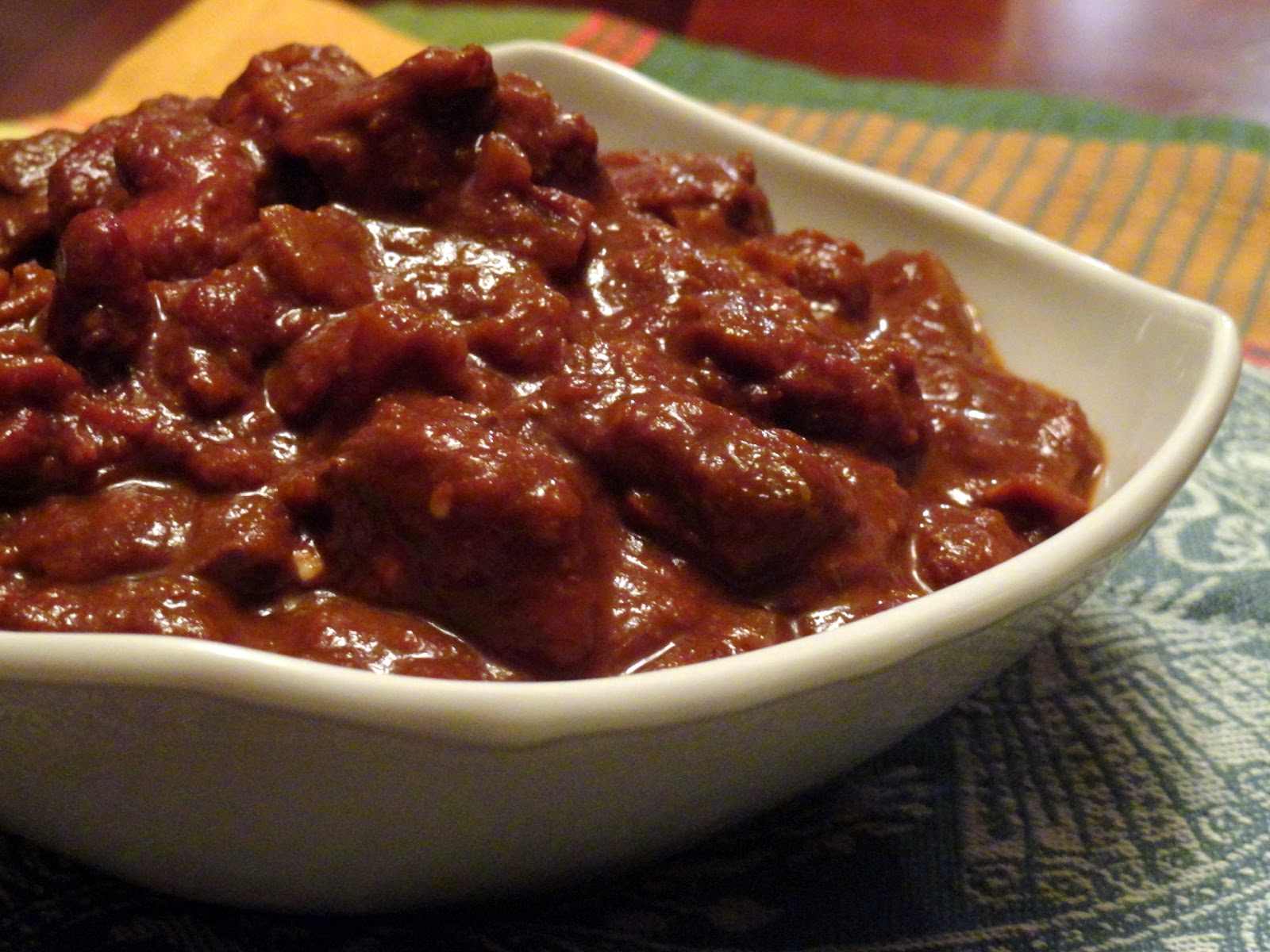
Make your favorite meatballs, they go very well with chipotle adobo sauce.

Tips.
I like to serve my beef with adobo sauce recipe cut into chunks over white rice a side or with tortillas. And a mexican beer (a German beer will do to) or a dry white wine. Enjoy !!
Veröffentlicht unter Recipes | Hinterlasse einen Kommentar

Easy to do – Adobo

adobo 3

Basic Adobo Sauce Recipe.

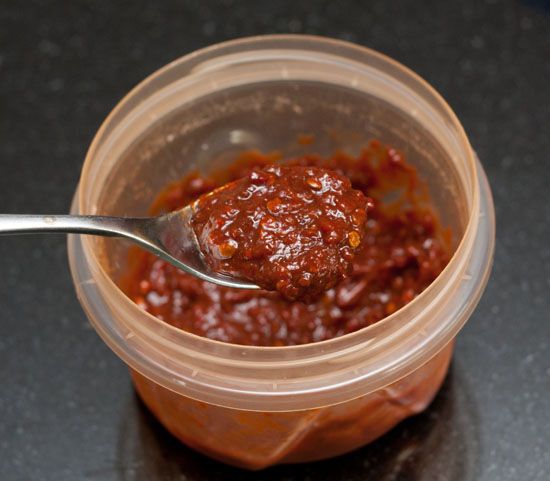
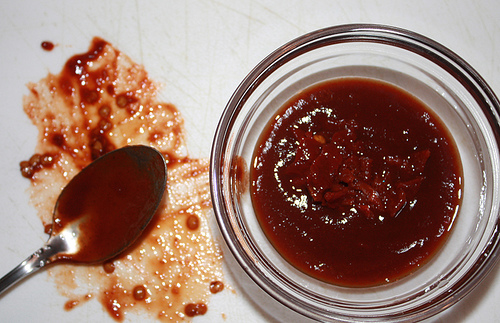
Adobo sauce is a type of hot sauce or marinade used in Mexican and Southwestern cuisines. Adobo is a Spanish word for „sauce“ or „marinade“. The dark red adobo sauce is used in many contexts in Mexican food. Its main ingredients are typically chilli’s, garlic, and vinegar, though variations are common. Tomatoes, onions, and a variety of herbs and spices often complete the recipe.

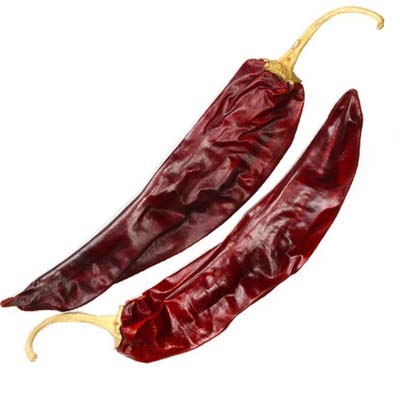
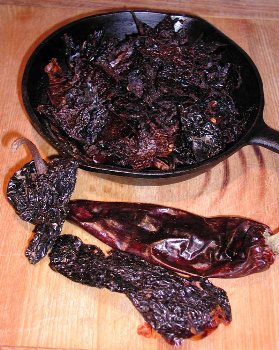
chilli 7 guajillo Guajillo chilli’s, semi dried.

Ingredients.
90 gram (3 ounces) guajillo chilli’s (about 10-12),
wiped clean, de-stemmed, slit open, seeded, and deveined
3/4 cup water for blending, or more if necessary
2 cloves garlic, peeled
1 1/2 teaspoons apple cider vinegar
3/4 teaspoon fine salt, or 1 1/2 teaspoons kosher salt
3/4 teaspoon sugar
1/4 rounded teaspoon ground cumin

adobo 1

How to do.
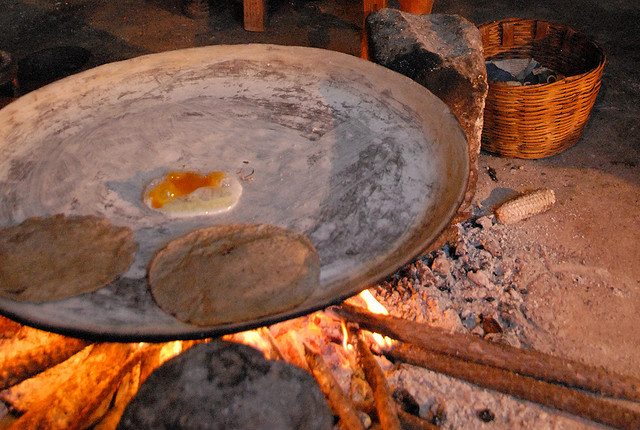
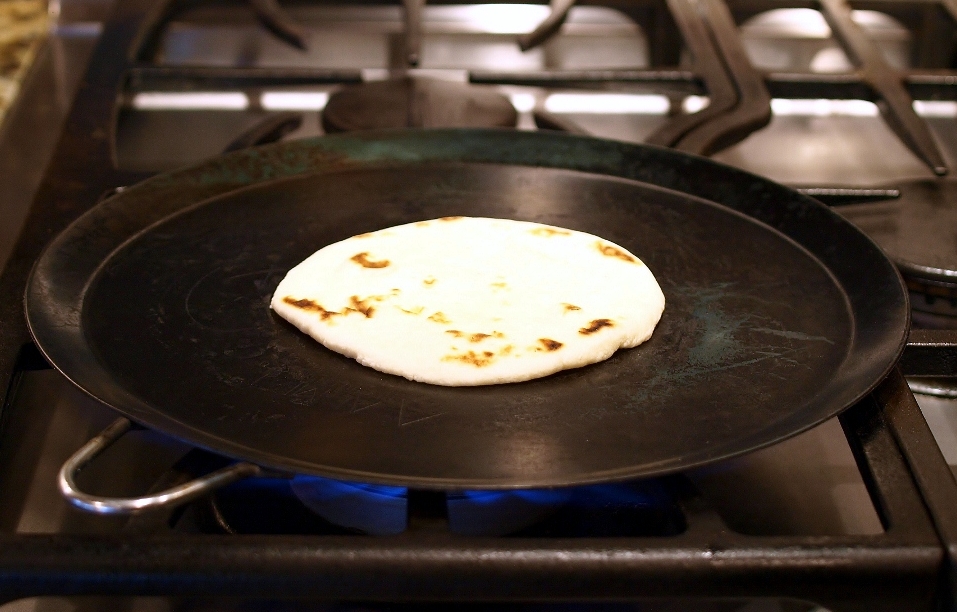
Heat a comal, griddle, or heavy skillet over medium-low heat, and toast the chilli’s 2 or 3 at a time, turning them over and pressing down on them with tongs frequently, until they’re fragrant and their insides have changed color slightly, about 1 minute per batch.

comal 3    Traditional comal cooking.
comal 2     Modern comal cooking.

Soak the chilli’s in enough cold water to cover until they’re soft, about 30 minutes. Drain and discard the soaking water.

adobo 6   Toasting the chilli’s on a heavy skillet.

Put the 3/4 cup of fresh water in the blender jar with the chiles and the remaining ingredients. Blend until smooth, at least 3 minutes, adding a little more water if necessary to puree. If you’d like a silky texture, strain the adobo through a medium-mesh sieve.

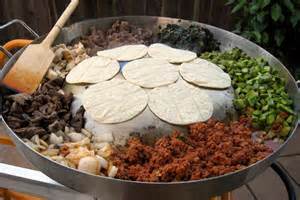
comal 1  A full meal on a comal, Mexican tortilla cooking.

Take your time and follow the next post with chipotle adobo ideas and a few main courses how to use adobo sauce. Enjoy !!

Veröffentlicht unter Recipes | Hinterlasse einen Kommentar

Easy to do – Spread

pesto 4a

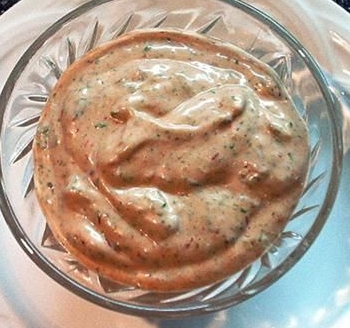
Chipotle-Cilantro Spread

This is one of my big favorites. It is usable almost for everything. You can have it as a smooth paste, to spread, like described here, or you roll it in foil and refrigerate. Then use slices onto your fresh grilled meat. I even tried it once as a base taste on pizza, instead of always tomato paste, delicious !

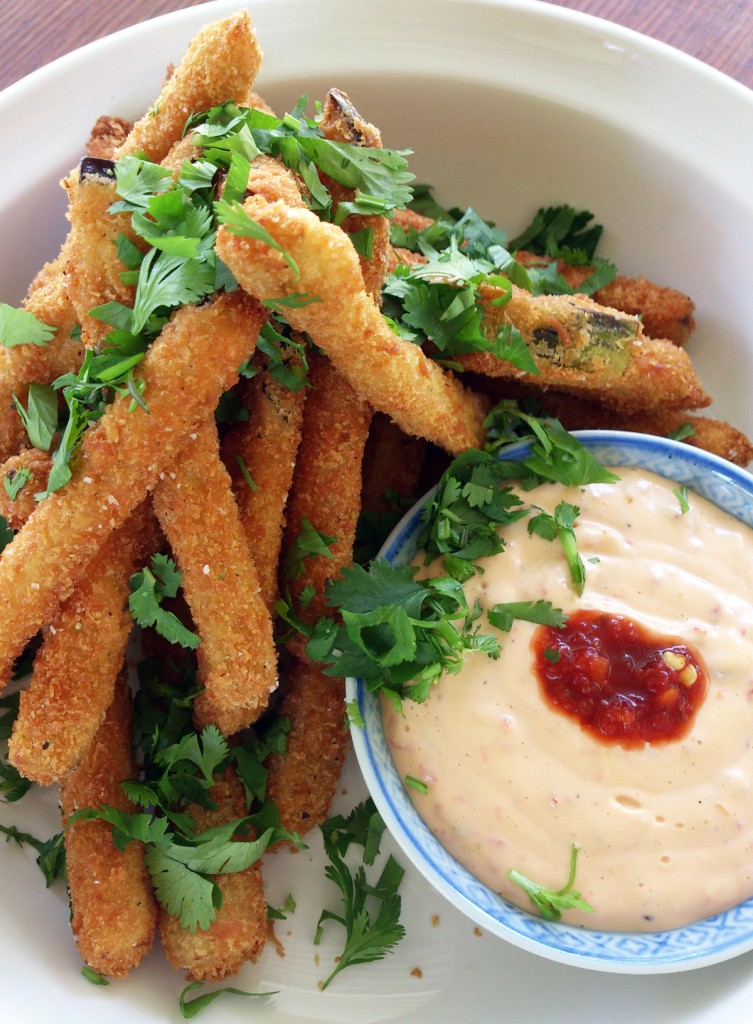
pesto 4d eggplant   Eggplant fritters and cilantro with a spread dip.

Ingredients.
3/4 cup mayonnaise
1/2 cup loosely packed, chopped cilantro
Zest and juice of 1 lime
1 canned chipotle chilli, roughly chopped
3 tsp adobo sauce
Salt and pepper

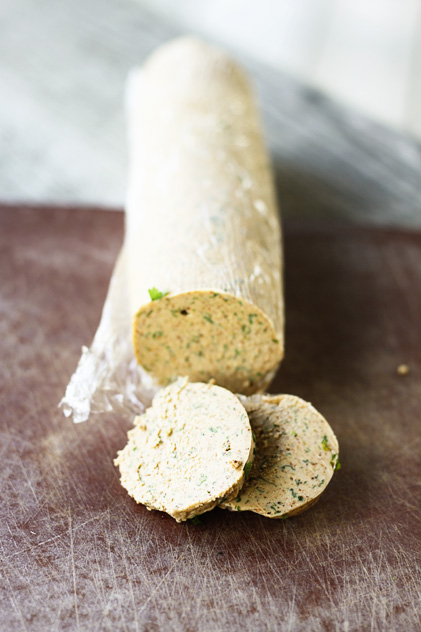
pesto 4g   Refrigerated spread roll, ready to use.

How to do.
In a small bowl, add all the ingredients.
Using an immersion blender, puree mixture,
or add all the ingredients into the bowl of a food processor and puree.

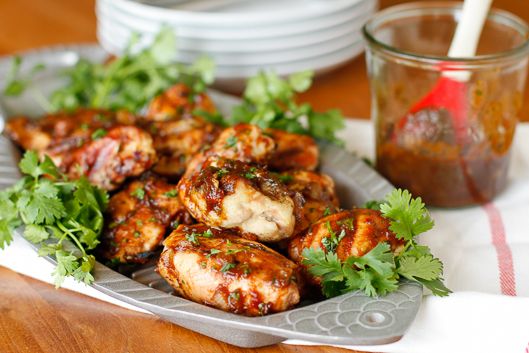
pesto 4b    Chicken thighs with spread on cilantro salad.

Tips.
Depending on your desired spice level, play around with the amount of chipotle and the adobo sauce it gets packed in.
In a following post I will introduce you to chipotle-adobo sauce and how to make it yourself.

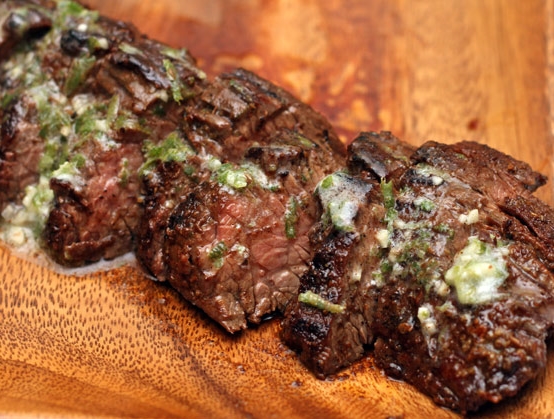
pesto 4e Spread on your steak, instead boring garlic butter.

Smear a dab onto burgers or hot dogs; use as a potato-salad base; or thin with a couple tablespoons of white vinegar for a slaw base.
The color of this spread will outcome always different, depends on the additional ingredients you use.

pesto 4c     pesto 4f
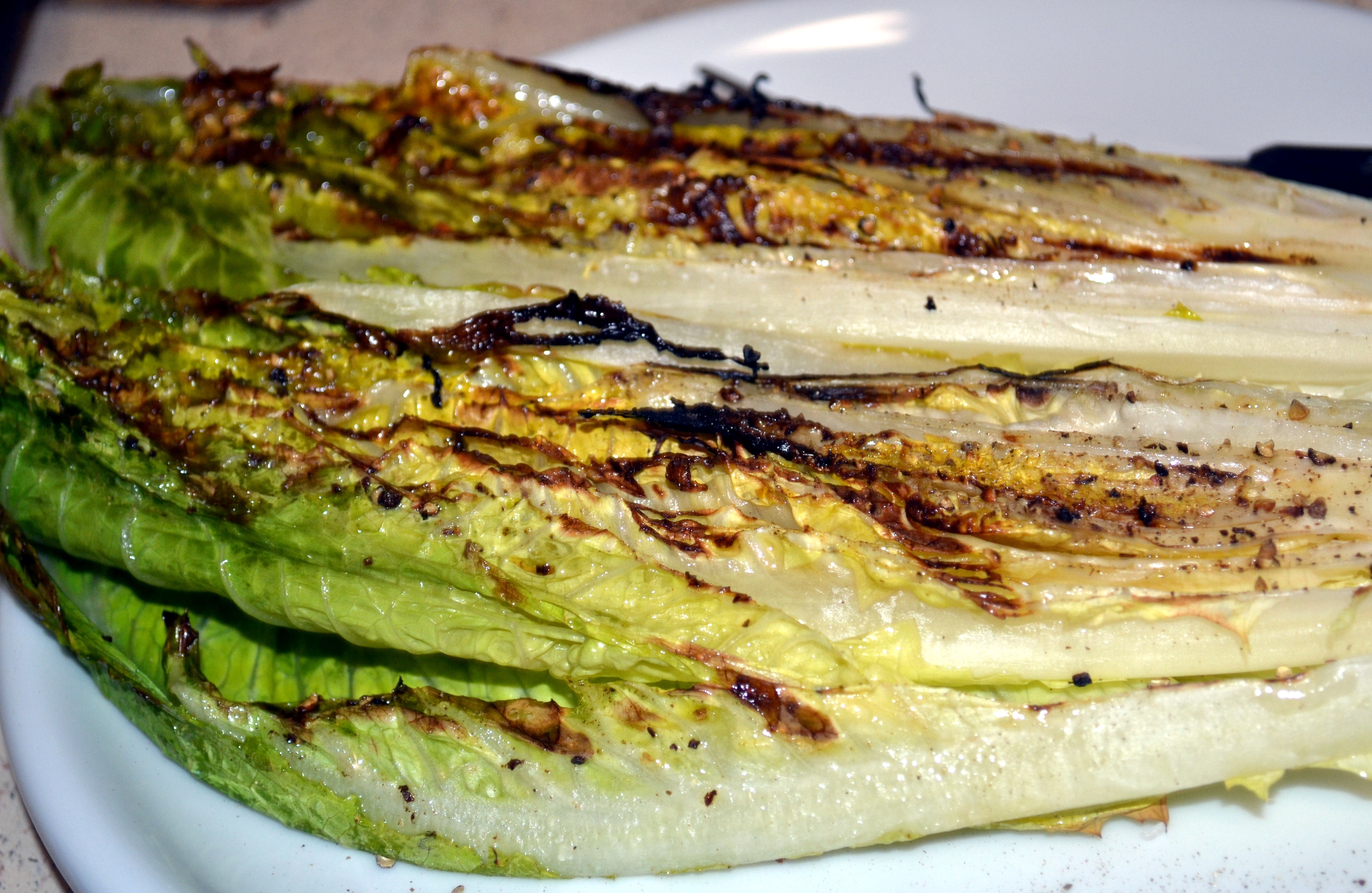
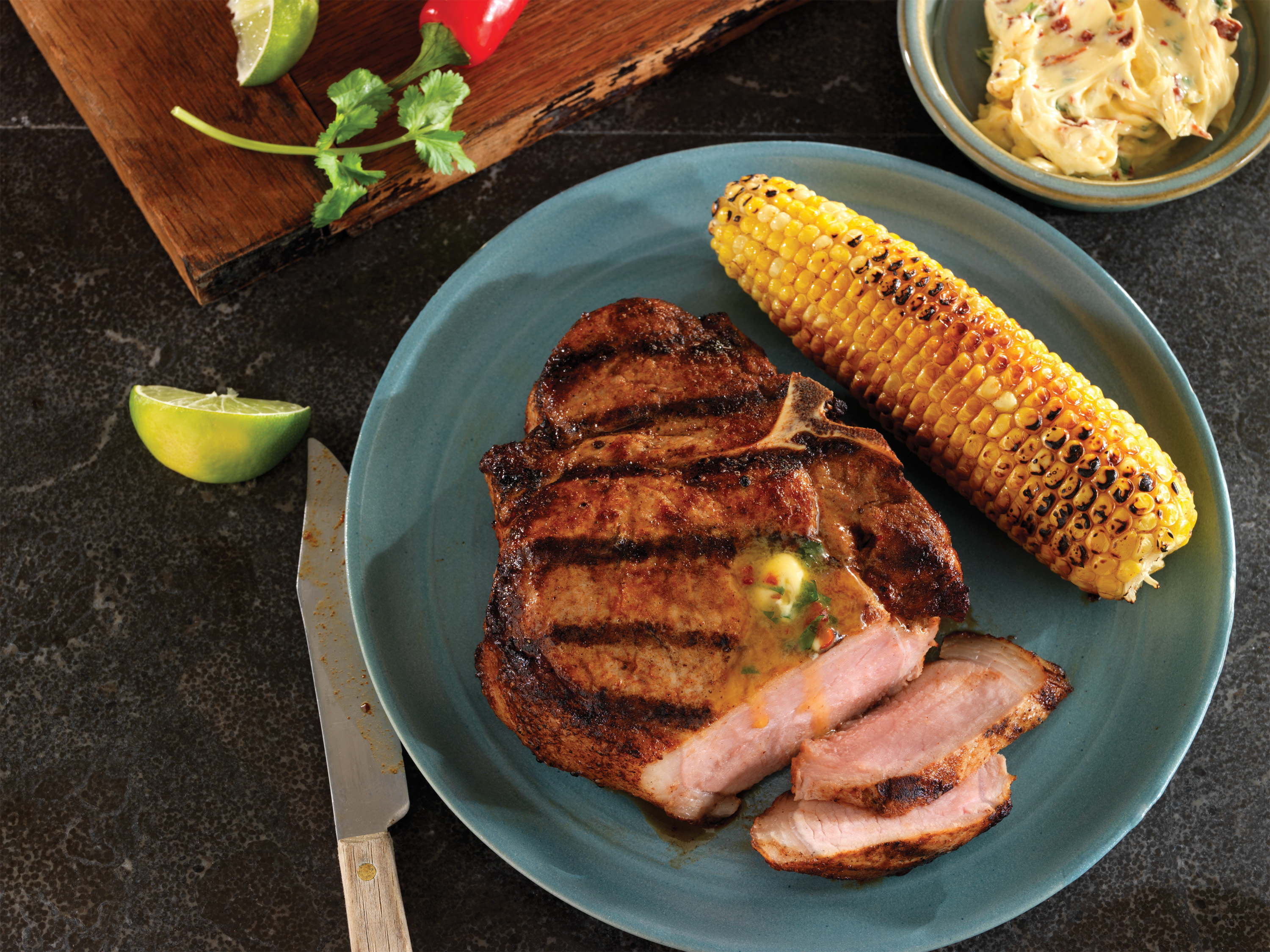
Grilled iceberg salad with spread and a wonderful t-bone steak with corn and spread.

I also use it on veggies, on chicken, pork and beef. It’s a great dip for french fries or smear like butter onto your sweet corn. This spread is an all rounder for every occasion.  Enjoy !!

Veröffentlicht unter Recipes | Hinterlasse einen Kommentar