
A 70th Birthday Surprise – a Culinary Tour of Japan.
My wife and I were treated to a unique culinary experience for Uruguay. Weeks ago our good friend Mike had ordered a custom designed luncheon as a surprise to celebrate his wife’s 70th birthday. However, neither we, nor Anna knew this at the time. We had only been told to reserve August 7th on our calendar. The nature of the event was to be kept a mystery until then.
 It’s a surprise !!!
The day arrived, and, still being kept in the dark as to what was to unfold, we motored into Montevideo and parked along a busy street in the center of Pocitos. By this time, we had already guessed that it would be a luncheon out; but, as we walked along the street, we kept passing all the likely prospects only to suddenly turn into the entrance of an apartment block.
 Still a surprise, be patient !!!

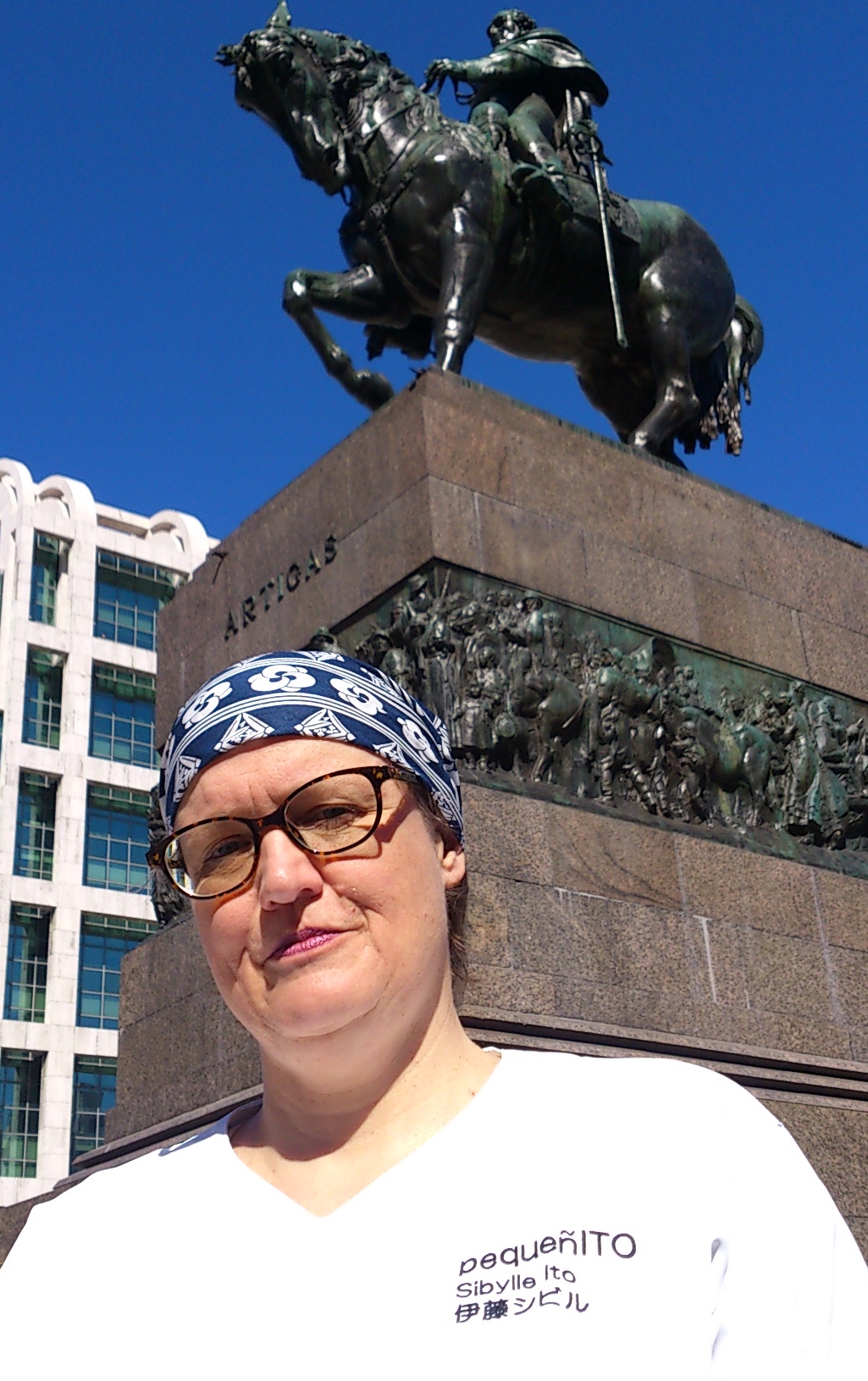
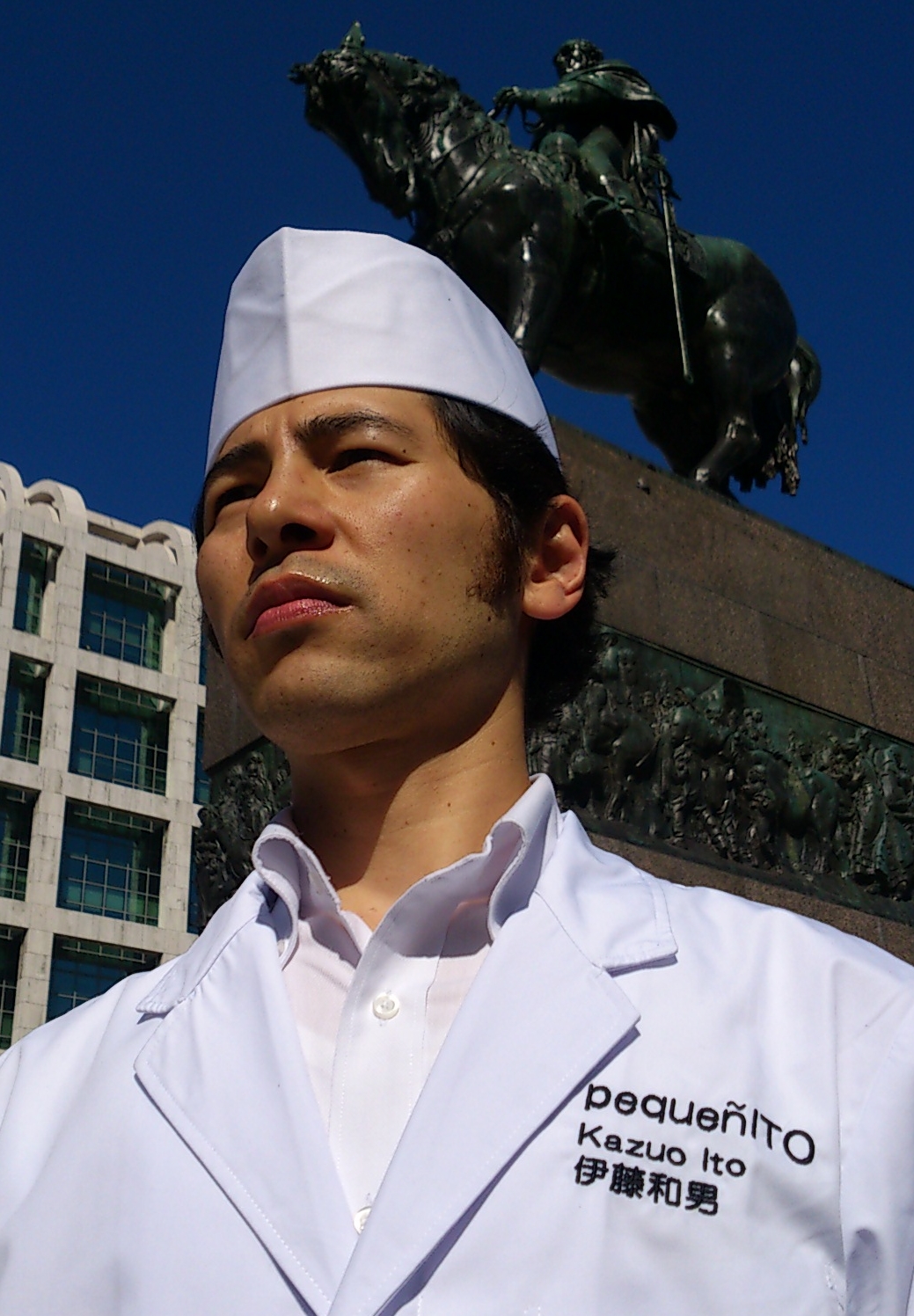
What’s going on? Taking the tiny elevator which barely accommodated the four of us, we stepped out onto the 9th floor and knocked on one of three doors. We were greeted by a couple dressed in chef’s whites. They were Sibylle and her husband Kazuo Ito. Sibylle, we were to learn, originated from Switzerland and spent fourteen years in Japan where she met and married Kazuo, a master Sushi chef. Sibylle and Kazuo are in the process of launching a boutique catering service from their apartment home and would cater our very exclusive luncheon today.
Warm Welcome to a Private Home.
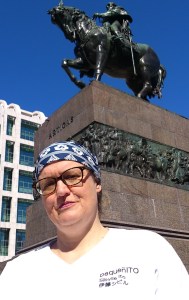
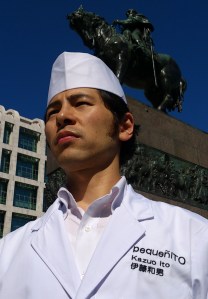 Sibylle and Kazuo Ito.
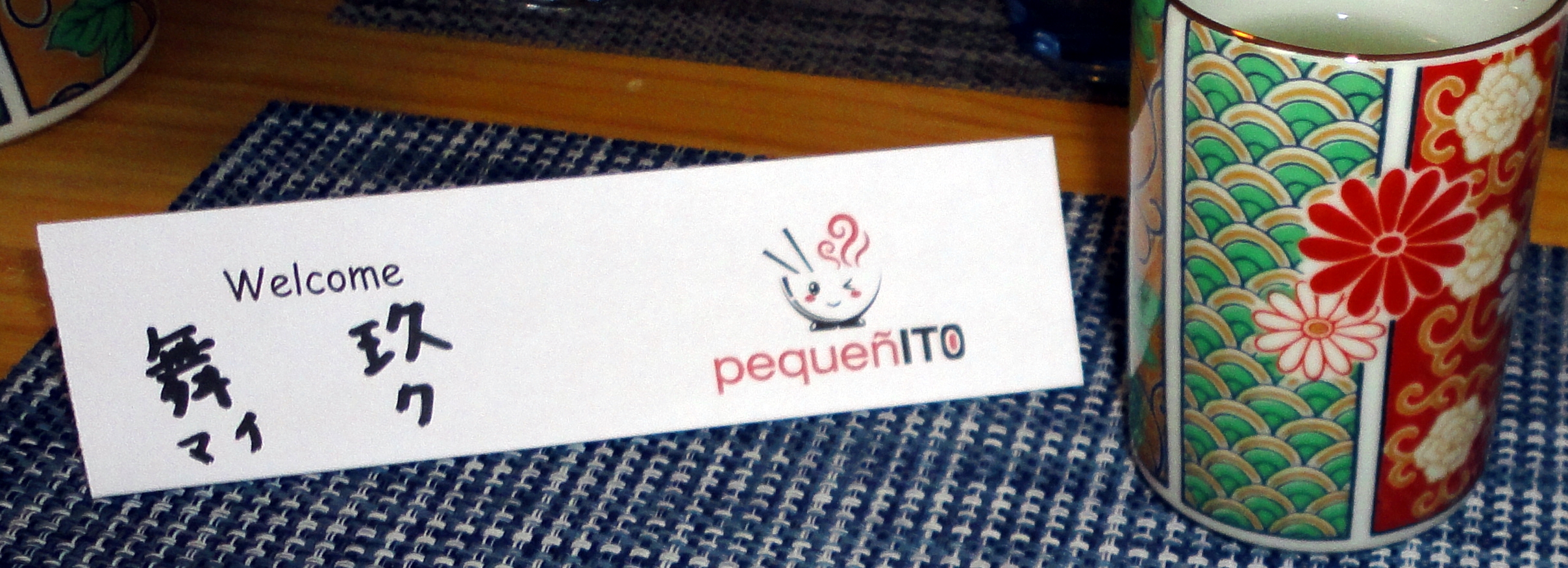
The apartment itself although sparsely furnished with bare walls was brightly lit by a window wall of glass overlooking the rooftops of the surrounding city. In the living room was a plain wooden dining room table set for four. At each, a card with Japanese characters indicated where each person was to sit. It was explained that each character represented the sound of a syllable in our name which was also a word in Japanese. For instance, the three characters of my name equated to: Helper/Protector; Genius; and, Good Fortune. So the place names also served as a kind of unintentional fortune cookie.
 Specially made Japanese Welcome Cards.
The meal which began with a toast of champagne to the guest of honor consisted of seven courses each representing a different region of Japan.
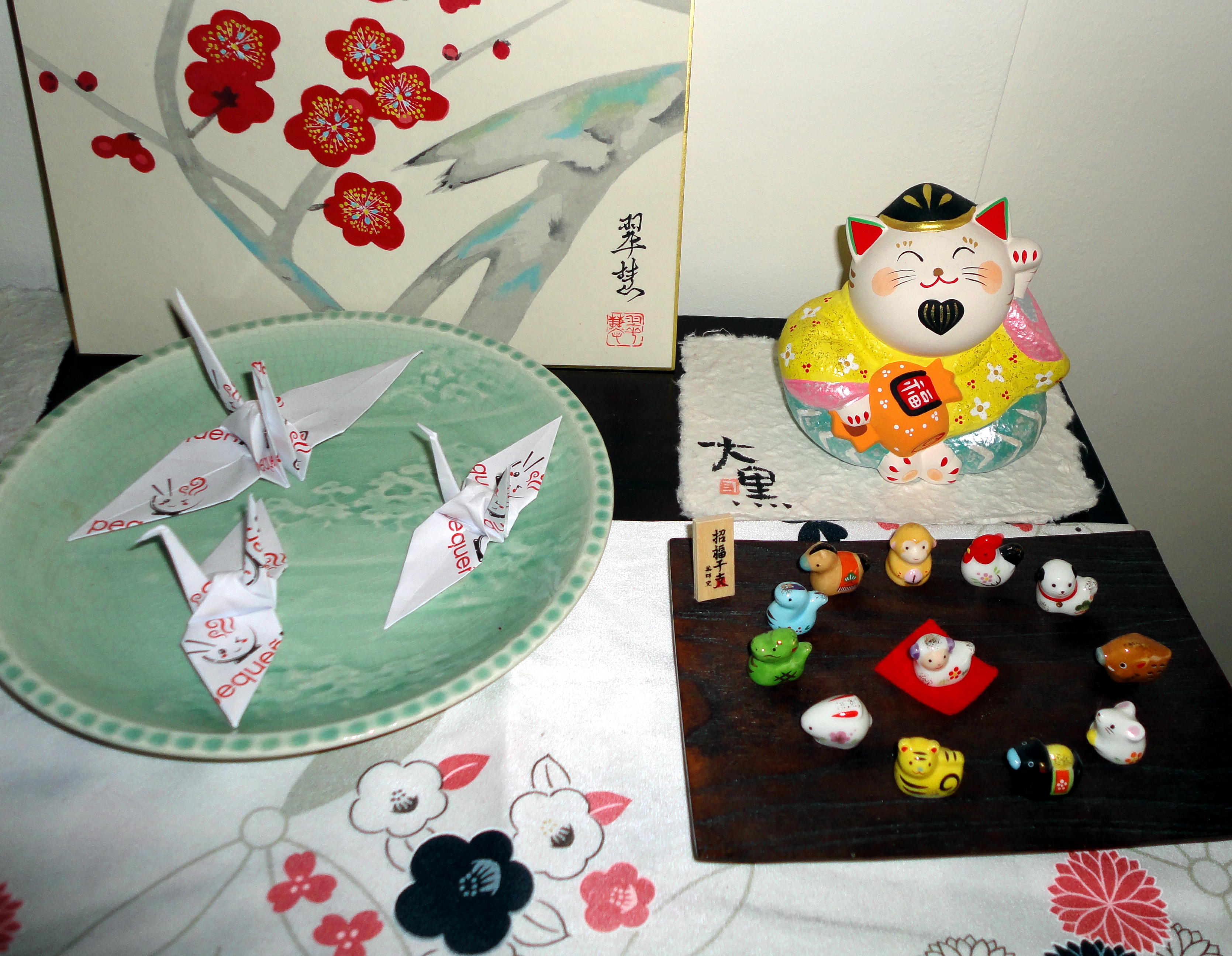
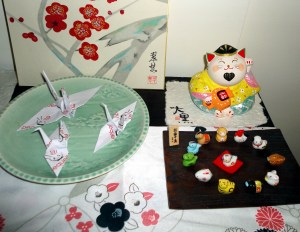 Little Japanese shrine at Sibylle’s and Kazuo’s home.
Each course was presented with an explanation of it’s origin and ingredients. Music from the region the dish was from played softly in the background. The service was very friendly and attentive, our hosts often joining in the laughter of the moment. It was obvious in speaking with them that Sybille and Kazuo strove toward authenticity and excellence in their preparation with the best ingredients they could find, some of which had been imported. (written by W.R., Thank you.).
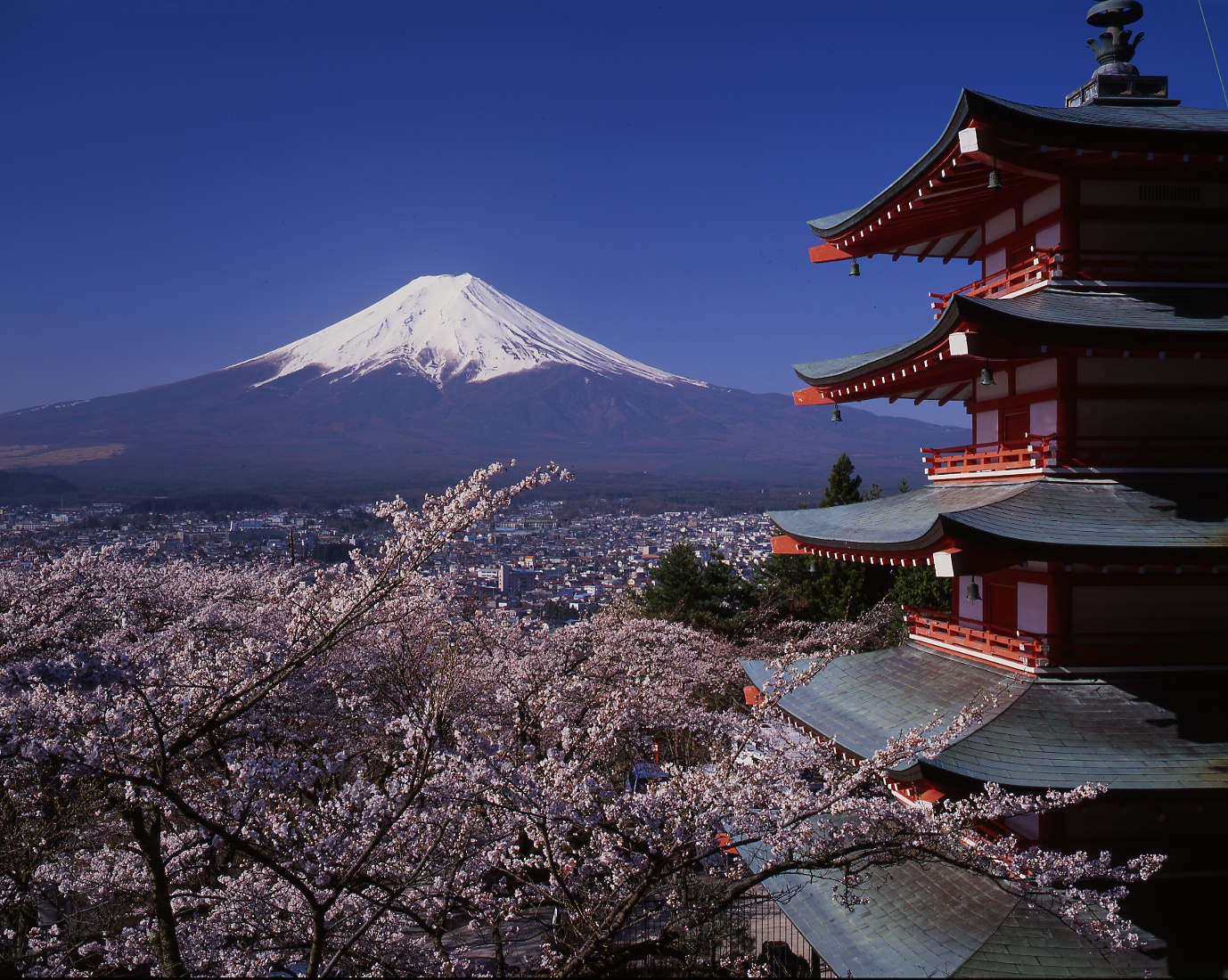
 Worldwide known, Mount Fuji Japan.
Let’s start the „Tour Japan“ with a short introduction of the places in Japan as well as a
short explanation of the courses, like Sibylle did for us. Seven authentic foods from seven different regions in Japan. You can follow them on the map below.
Sadly you can’t smell and taste these delicious servings.
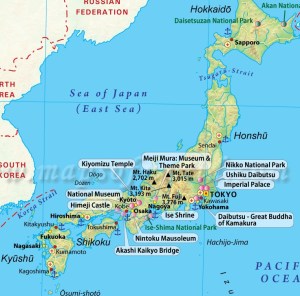
Touring Seven „culinary“ regions of Japan. Click on map (mapsoftheworld) to super size.
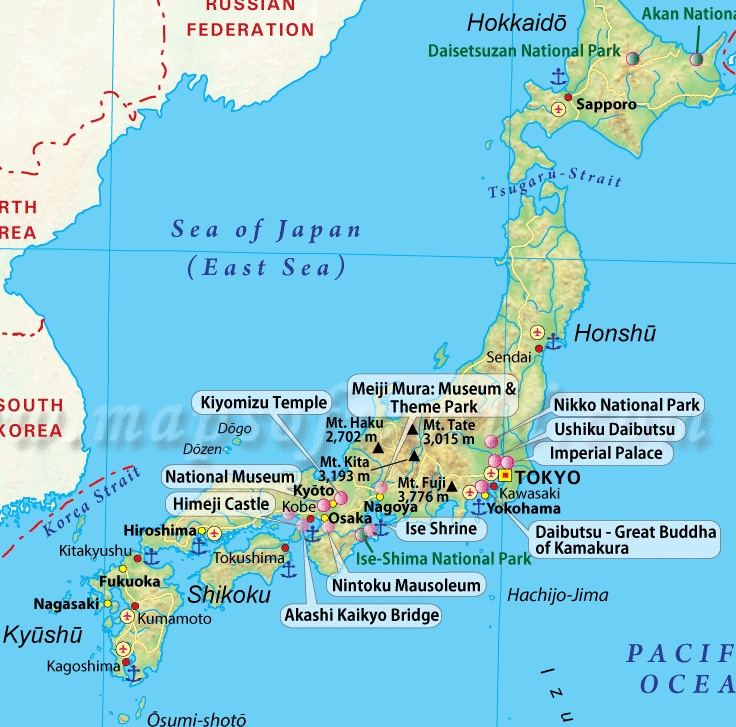
We go by numbers of the courses, First to Seventh .
First:
Kyoto.
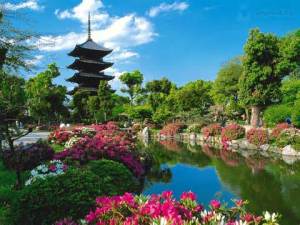 Thousands of gardens around Kyoto.
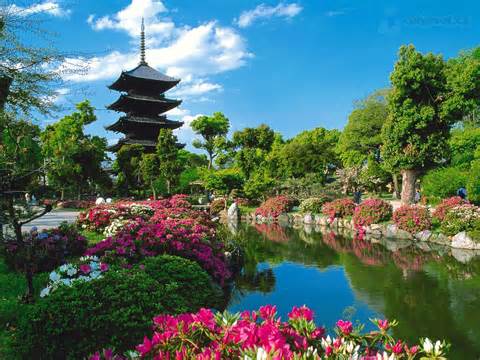
 The Golden Pavilion near Kyoto.
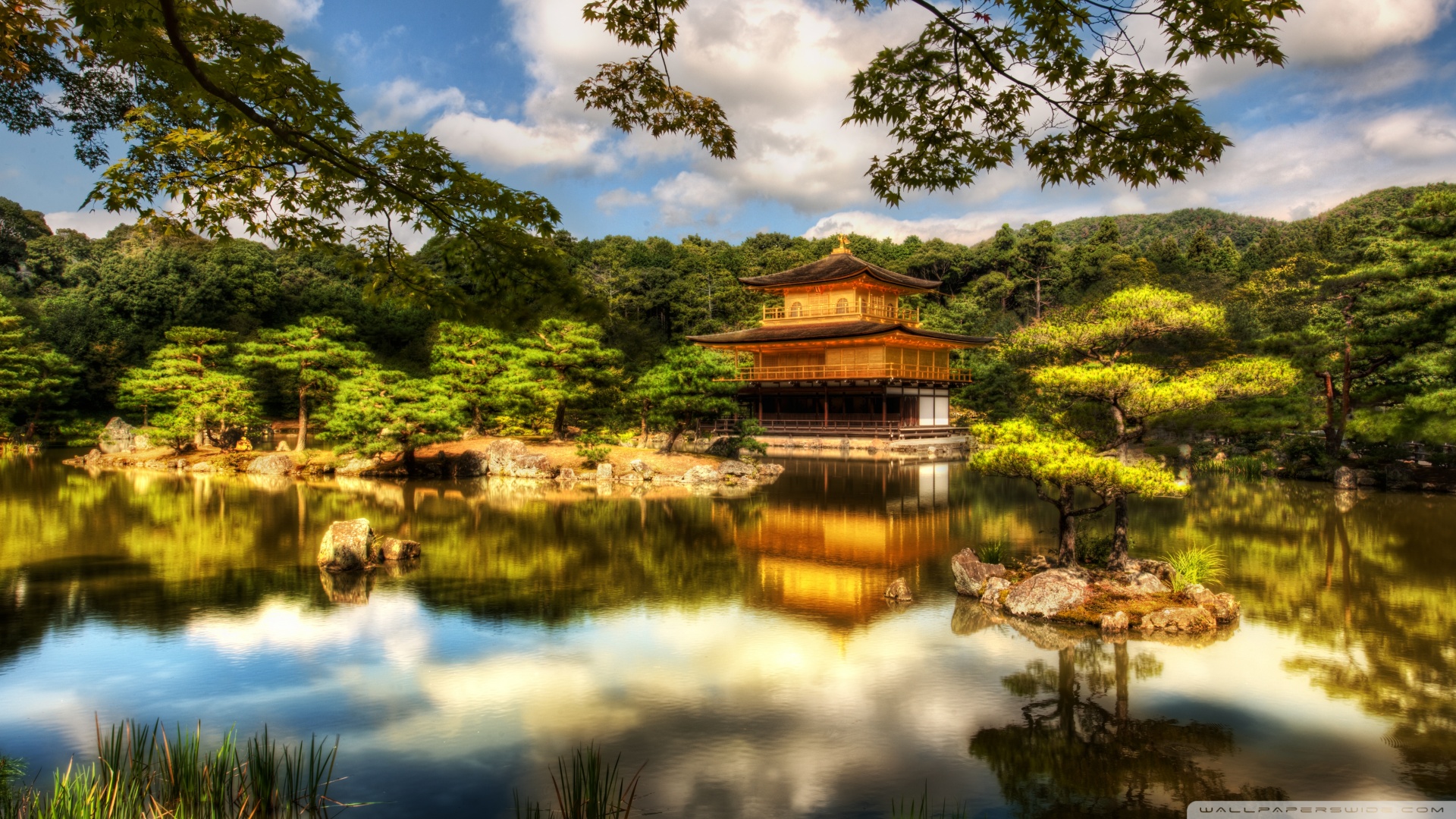
Kyoto,formerly known in the West as Meaco is a city located in the central part of the island of Honshu, Japan. It has a population close to 1.5 million. Formerly the imperial capital of Japan for more than one thousand years. Kyoto is also known as the City of Ten Thousand Shrines. The first dish comes out of this region:
Turnip with Kanikama.
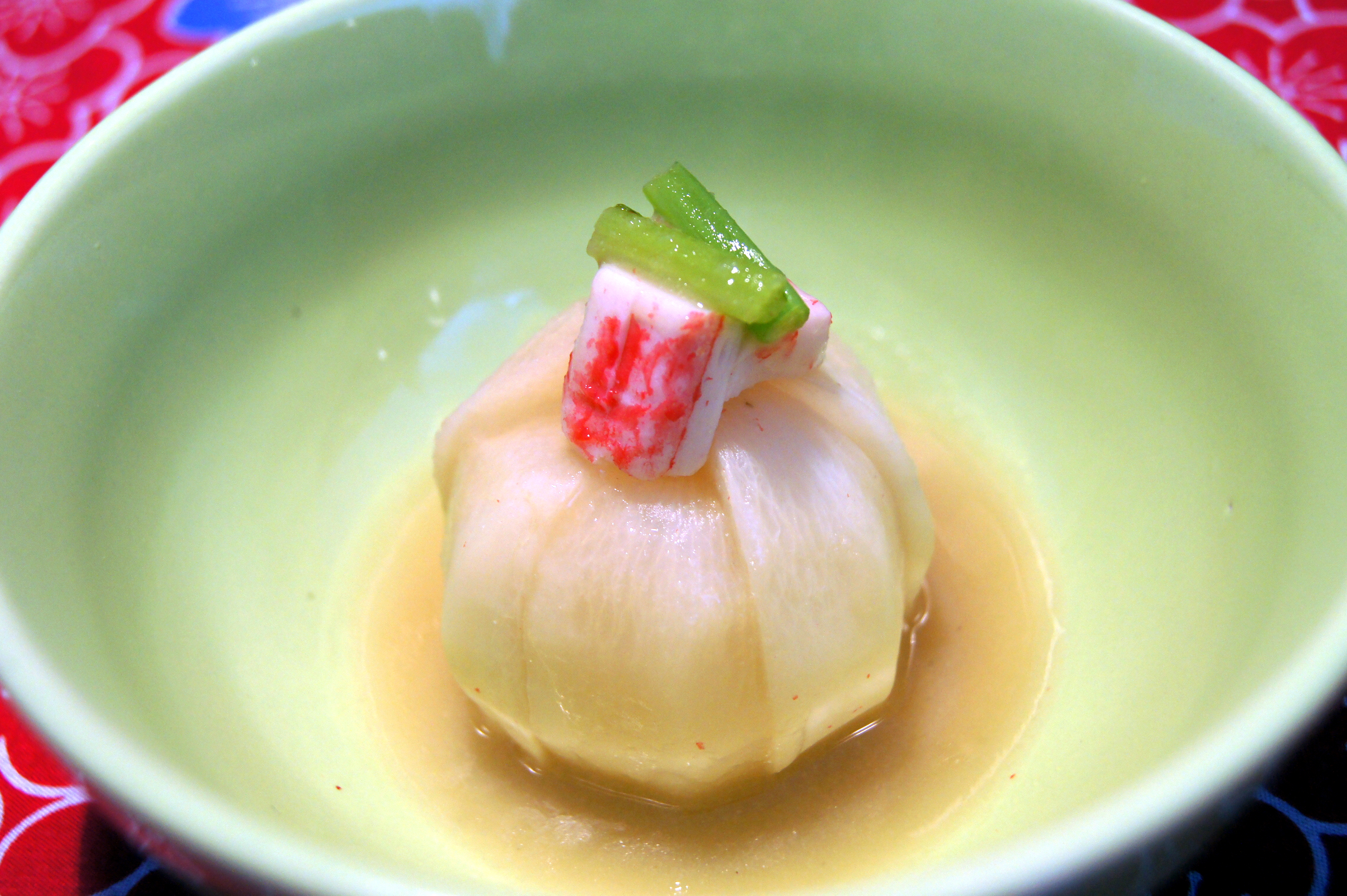
A turnip carved in a perfect sphere and sliced delicately into six sections topped with pieces of imitation crab (kanikama).
Traditional simmered in umami rich light sauce. Umami, a savory taste, is one of the five basic tastes,together with sweet, sour, bitter and salty.
Second:
Tsukiji, Tokio.
 The fish markets of Tokio are in Tsukiji.
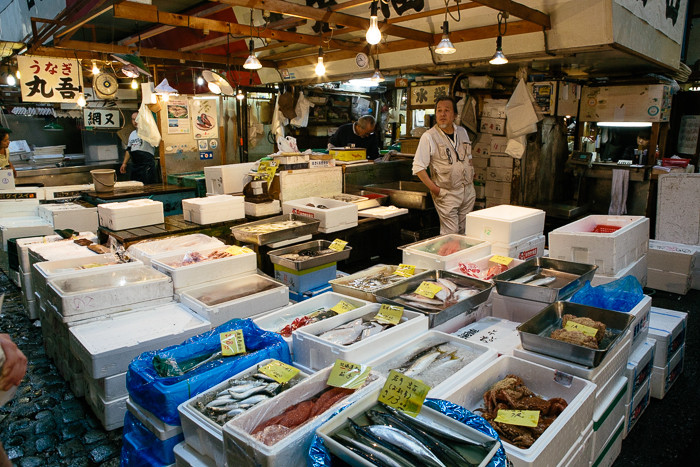
 Famous in the markets are the daily fish auctions.
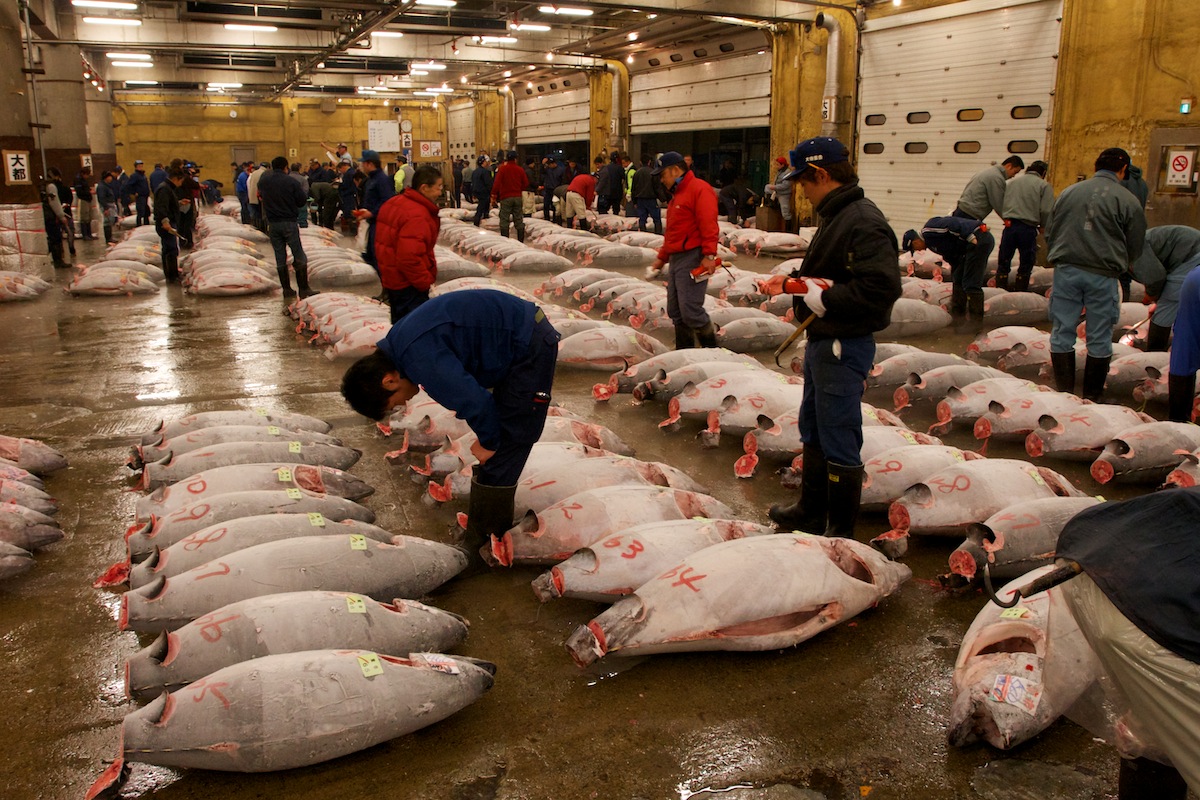
Tsukiji is a district of Chūō, Tokyo, the site of the Tsukiji fish market. Literally meaning „reclaimed land,“ it lies near the Sumida River on land reclaimed from Tokyo Bay in the 18th century. The Tsukiji markets are well known for their sushi stands and restaurants.
Tsukiji Sushi Rolls.
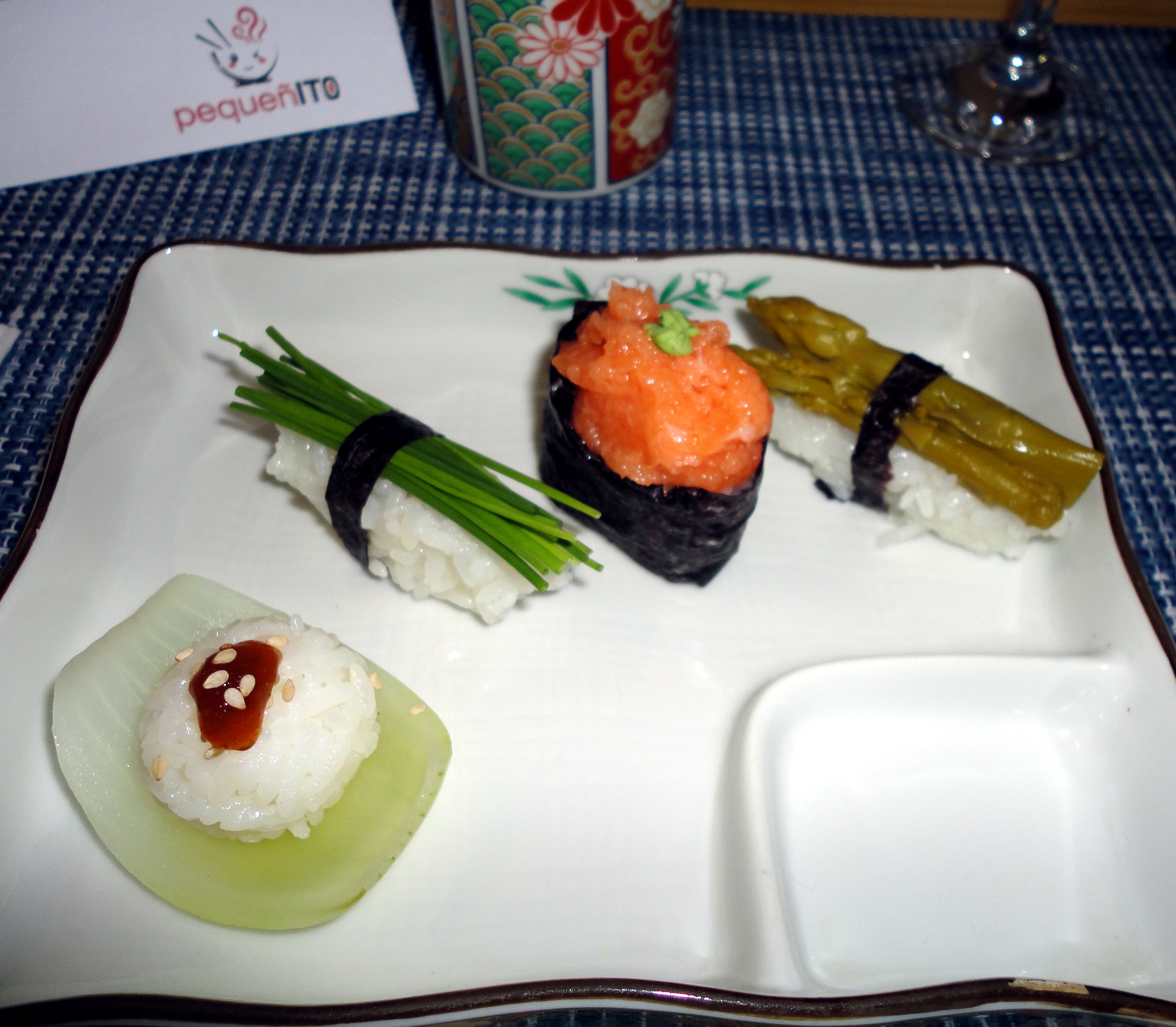
Four Sushi rolls: Chopped Salmon, Rice on a leaf of steamed onion with a dab of soy paste on top (my favorite), rice with chives with a band of nori to hold it together and, steamed asparagus on rice again held together with a belt of nori.
Definition of Sushi; it is a Japanese food consisting of cooked vinegared rice (sushi-meshi) combined with other ingredients like seafood, vegetables and sometimes tropical fruits. Ingredients and forms of sushi presentation vary widely, but the ingredient which all sushi have in common is rice.
Third:
Koyasan.
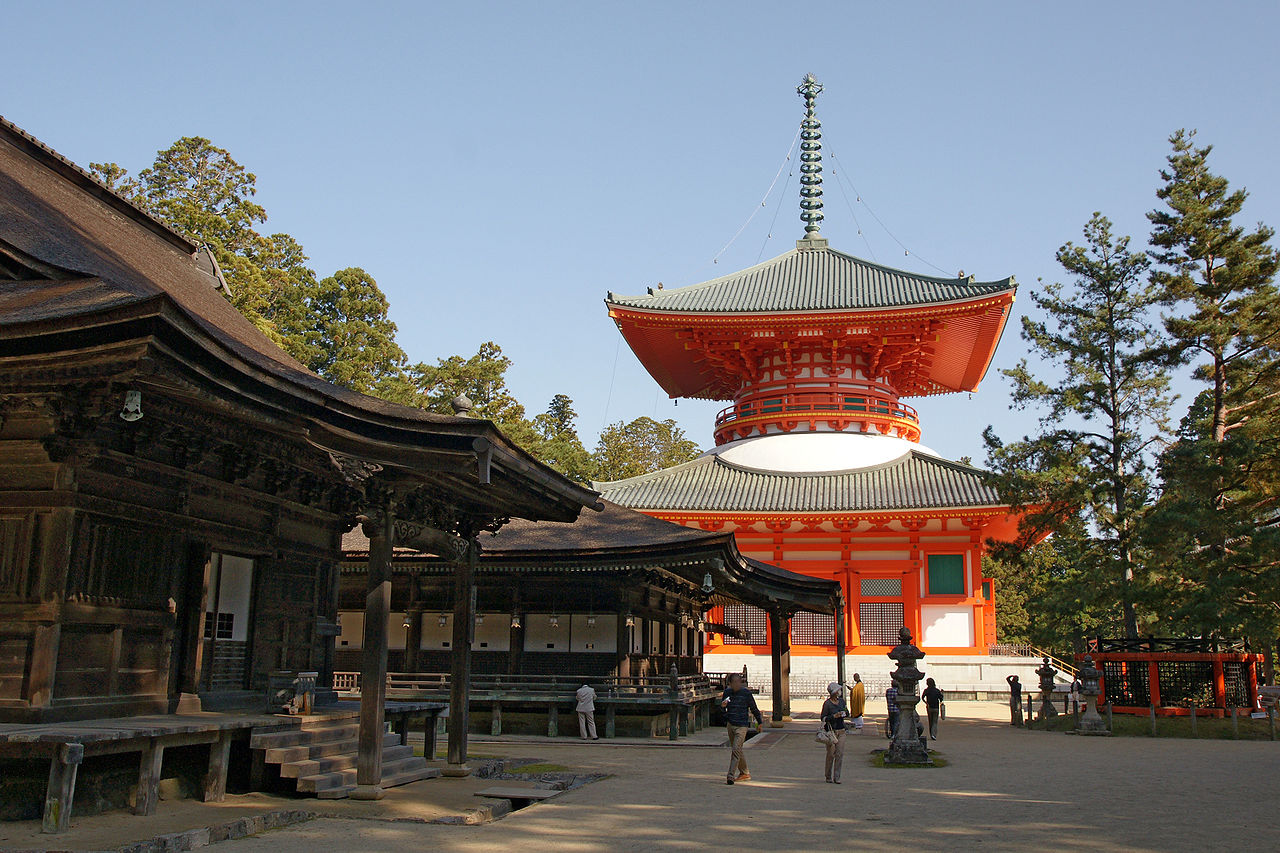
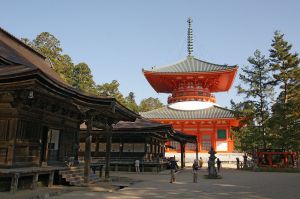 The Center Point of Mount Koya.
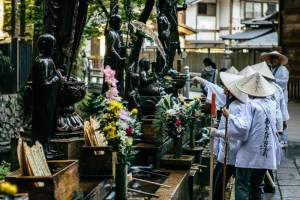 Koyasan cemetery celebrations.
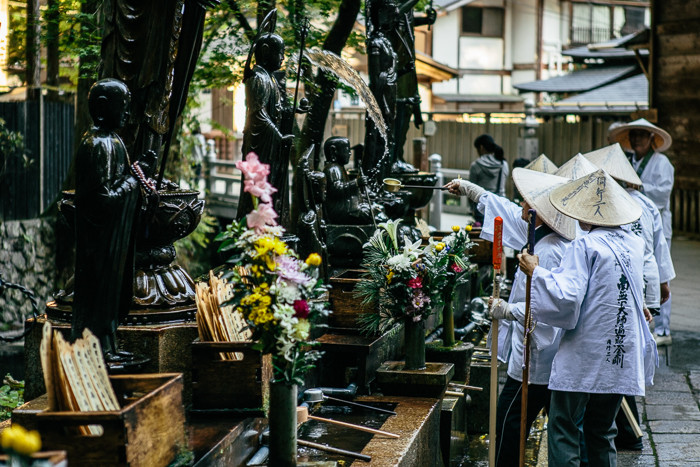
Koya-san is the name for a group of mountains. Koyasan, or Koya mountain, is located south of Osaka, on the Kii peninsula. It holds the village of Koya, and is most known as the center of the Shingon sect of Japanese Buddhism. Koya was founded in 819 by the monk Kukai. Now, Koya has about 7000 inhabitants, and many of them are Buddhist monks, with about 120 temple. The third dish is from this region.
Osuimono soup, Omusubi.
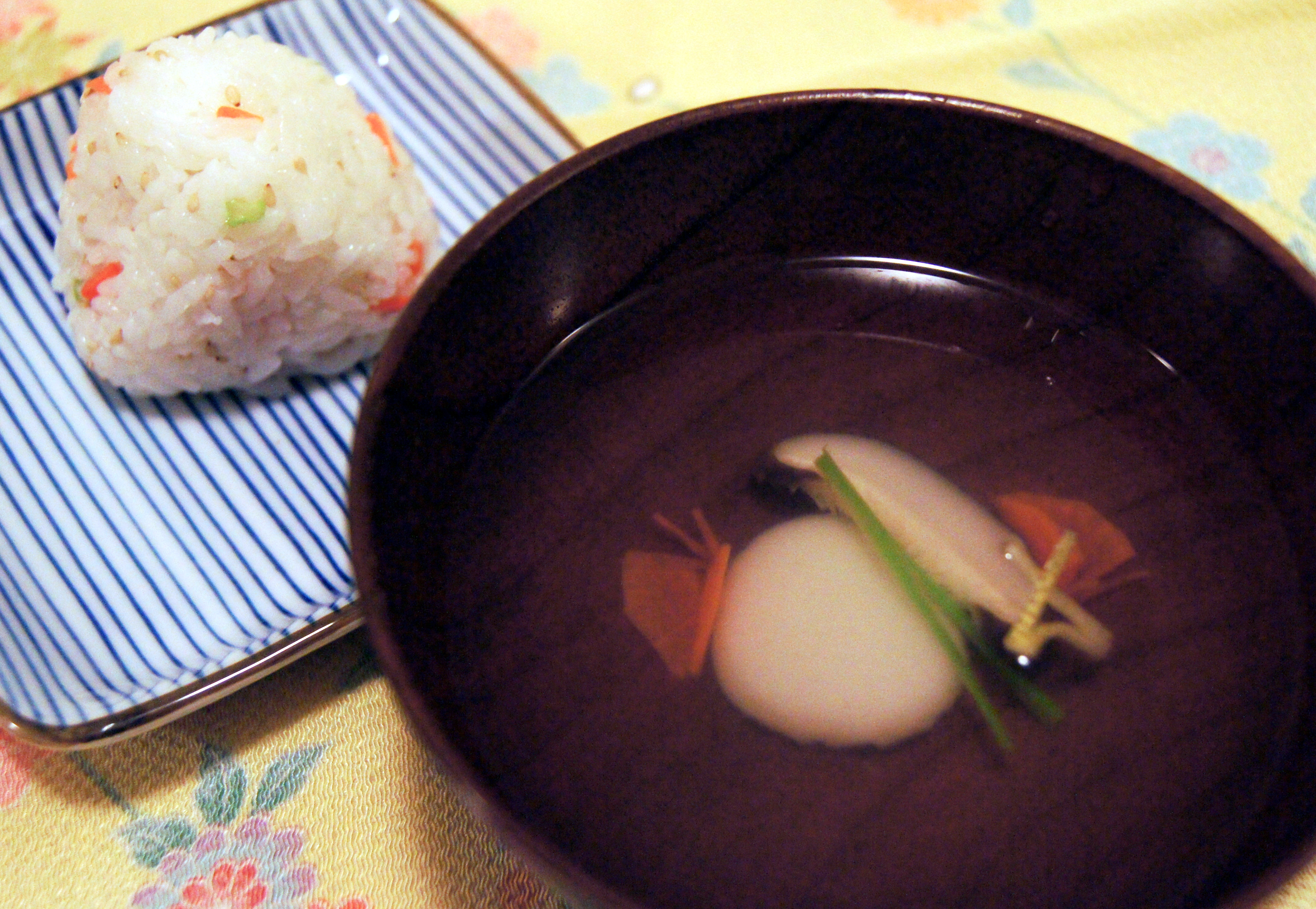
Sticky Rice balls with vegetables (carrots, turnip etc.) and sesame seeds mixed in. Eaten with a bowl of a light broth containing shiitake mushroom and vegetables . Very healthy !!
Fourth:
Yokohama.
 Yokohama by night from the Sky Garden.
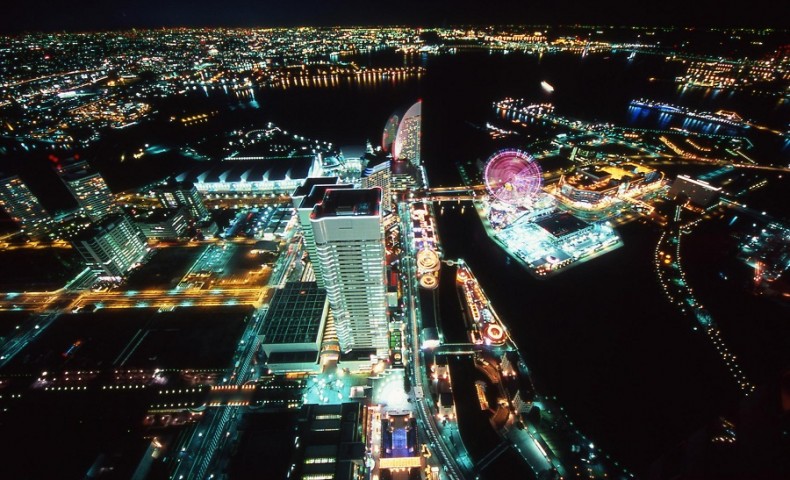
 Enmei-in Temple near Yokohama.
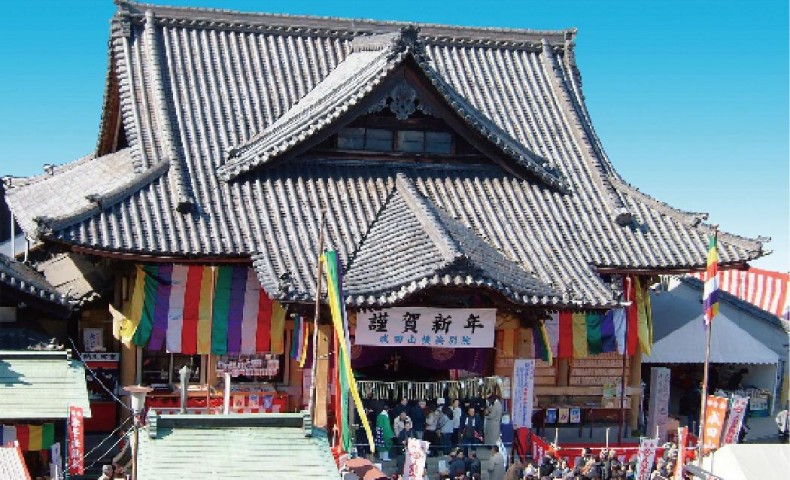
Yokohama is the second largest city in Japan by population after Tokyo, and most populous municipality of Japan. It lies on Tokyo Bay, south of Tokyo. It is a major commercial hub of the Greater Tokyo Area.
Yokohama’s population of 3.7 million makes it Japan’s largest incorporated city. Yokohama developed rapidly as Japan’s prominent port city. Fourth dish now.
Gyoza and Shumai.
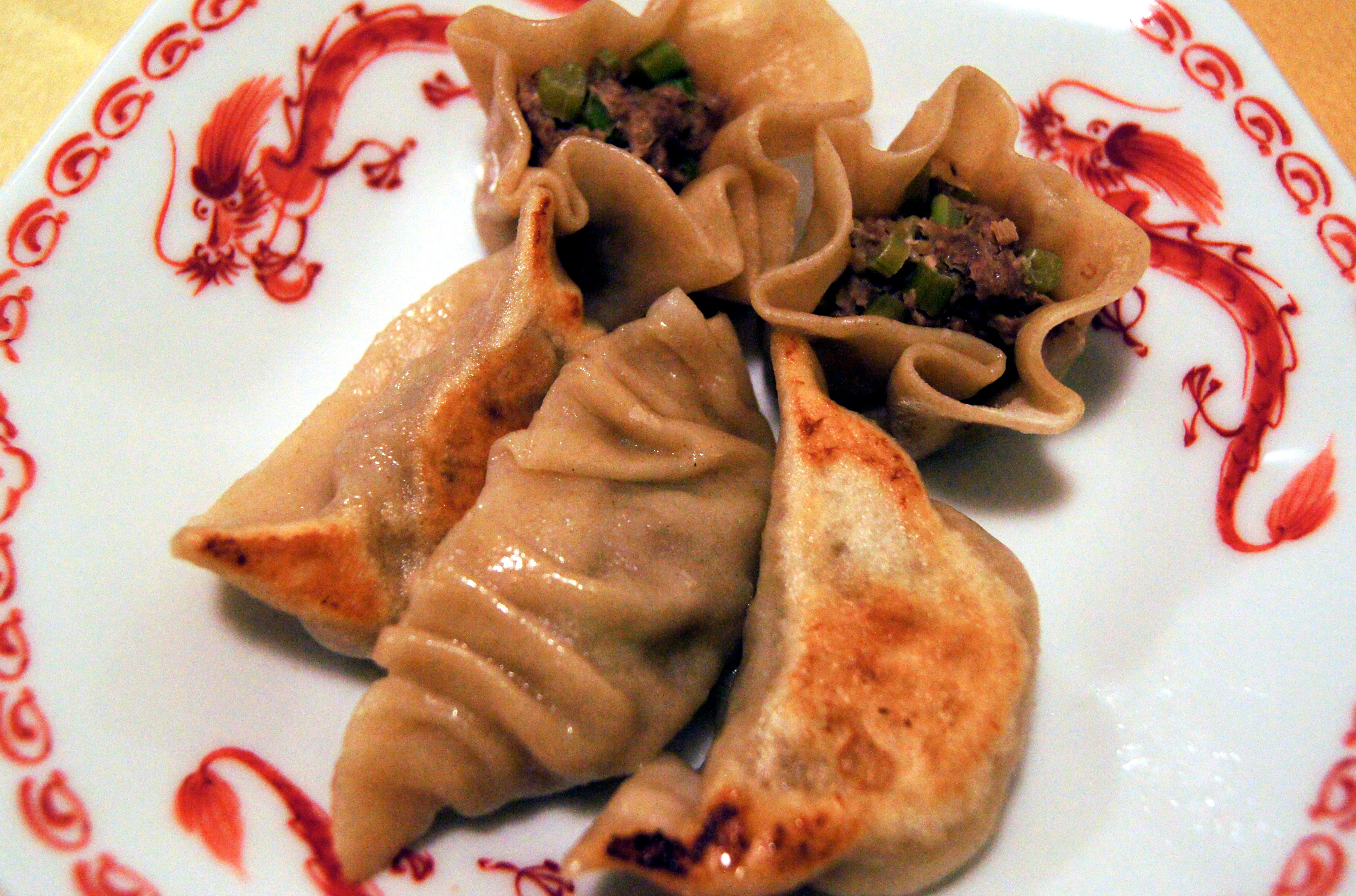
Pirogues sized dumplings stuffed with meat (shrimp, chicken and pork) and vegetables.
Accompanied with a nice soy-vinegar dressing.
Fifth:
Ise Shrine.
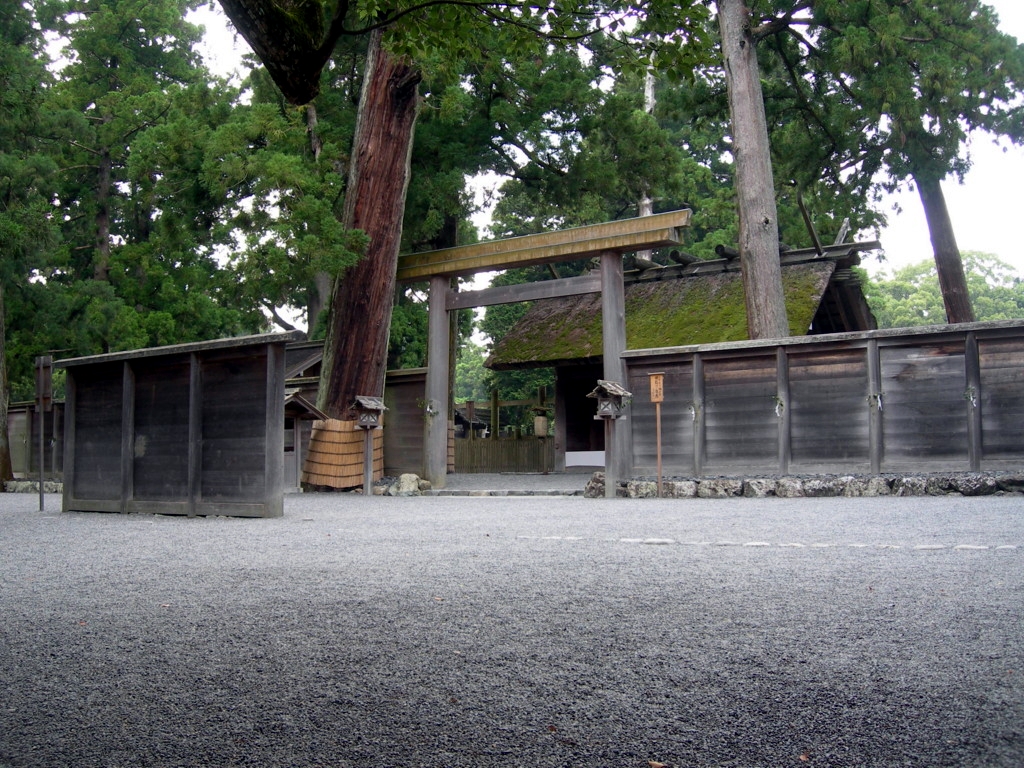
 Grand Shrine, secured by 4 different fences.
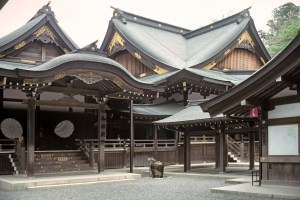 Kaguraden, for special dances and prayers.
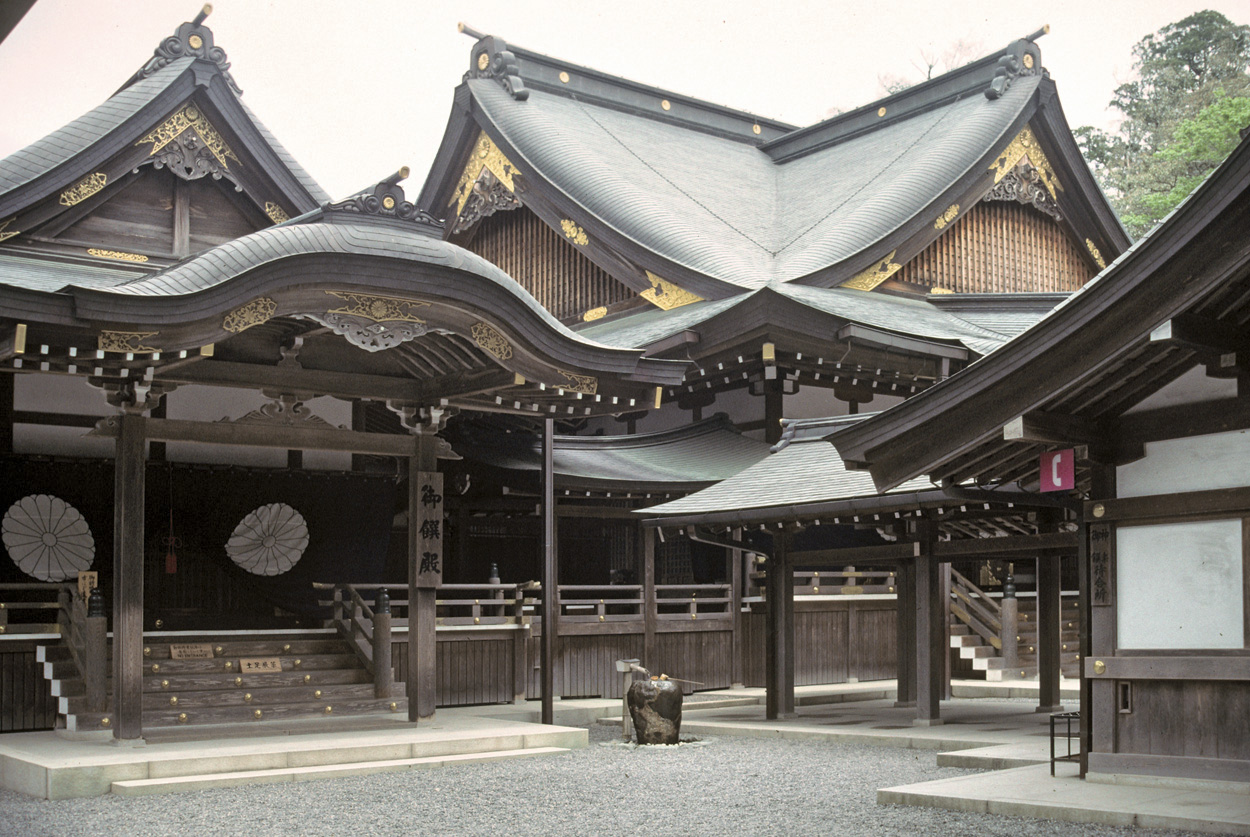
Ise Grand Shrine, located in the city of Ise. It is a Shinto shrine dedicated to the goddess Amaterasu-ōmikami. Officially known simply as Jingū, Ise Jingū is in fact a shrine complex composed of a large number of Shrines. Ise’s history is directly linked to that of Ise Grand Shrine. Ise Grand Shrine is separated into two main parts: The Inner Shrine and the Outer Shrine. Despite the names, these are actually two physically separate shrines approximately six kilometers apart.The Ise Grand Shrine is the most sacred Shintō Shrine in Japan, and is thus a very popular destination for tourists. Fifth dish from Ise area.
Ise Udon.
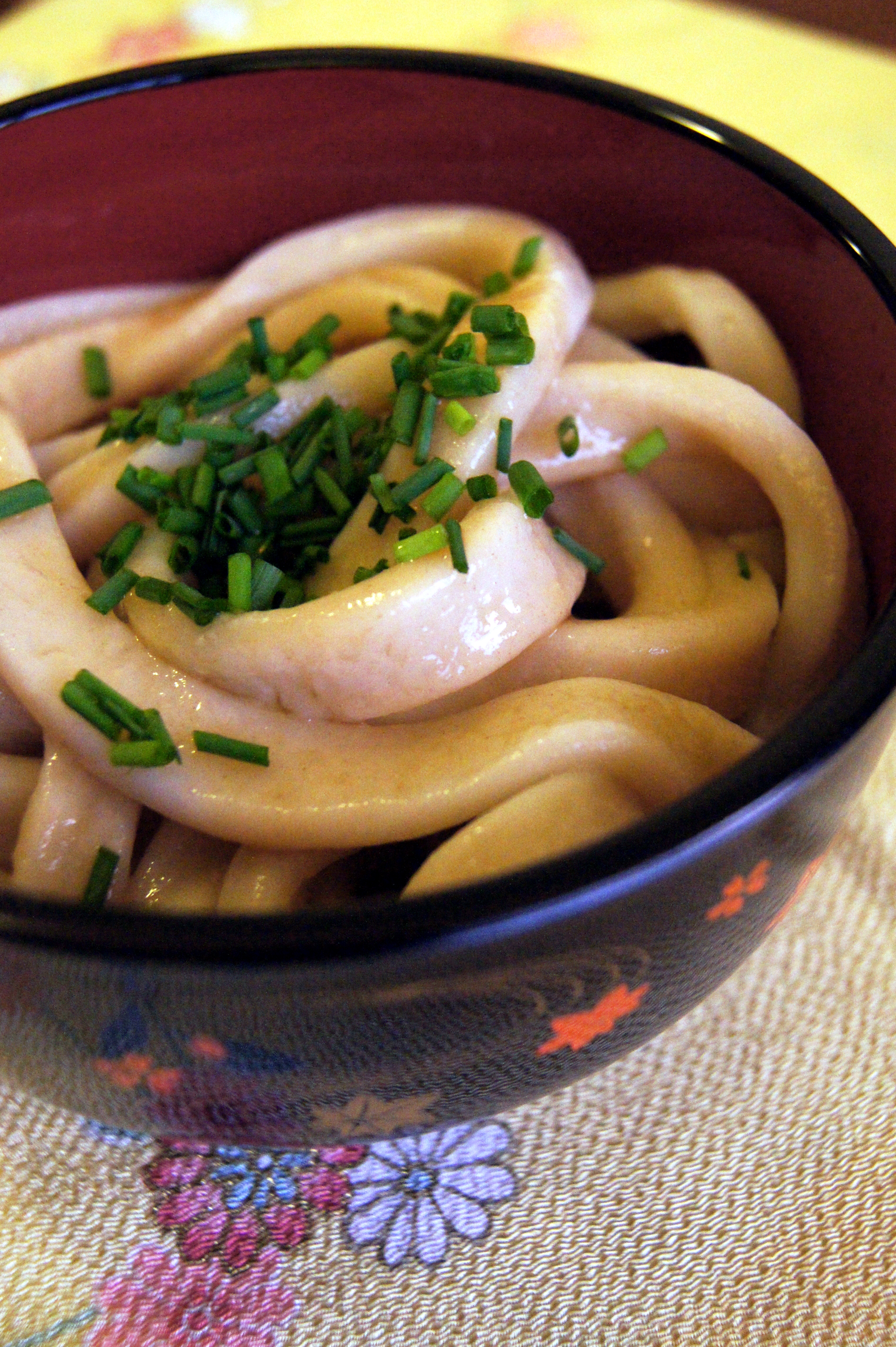
Udon – Fat noodles made by hand, served cold in a savory soy sauce broth, sprinkled with chives. From the area of the most important Shinto Shrine in Japan.
Sixth:
Hokkaido.
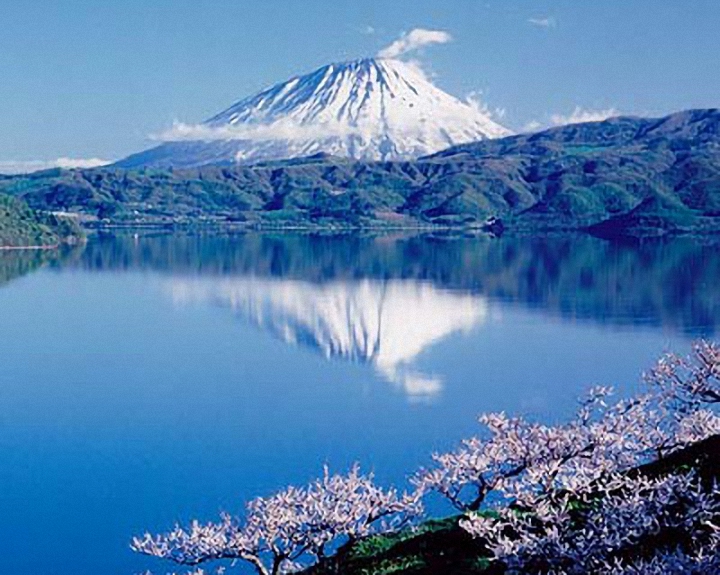
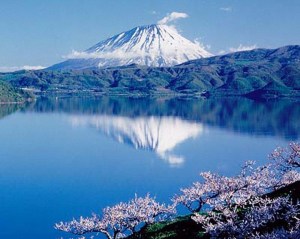 Mount Ashidake on Hokkaido Island.
 Hokkaido, also the island of flowers.
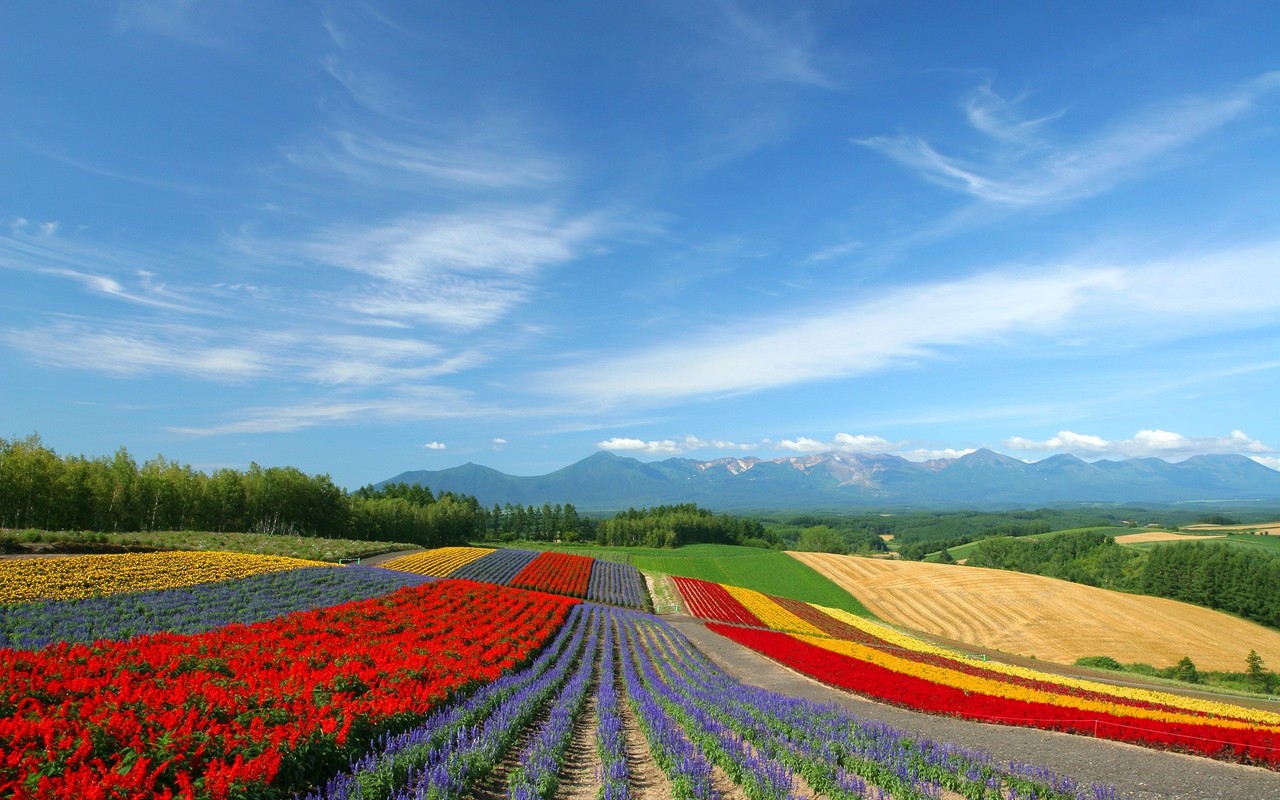
Hokkaido is Japan’s second largest island; it is also the largest and northernmost one. Here is where the winter starts in Japan, cradle of the hot pots. The Tsugaru Strait separates Hokkaido from Honshu, although the two islands are connected by the underwater railway Seikan Tunnel. The largest city on Hokkaido is its capital, Sapporo. Hokkaido, also the island of flowers, has more tulip fields then whole Holland.
Hokkaido Ishikari Nabe.
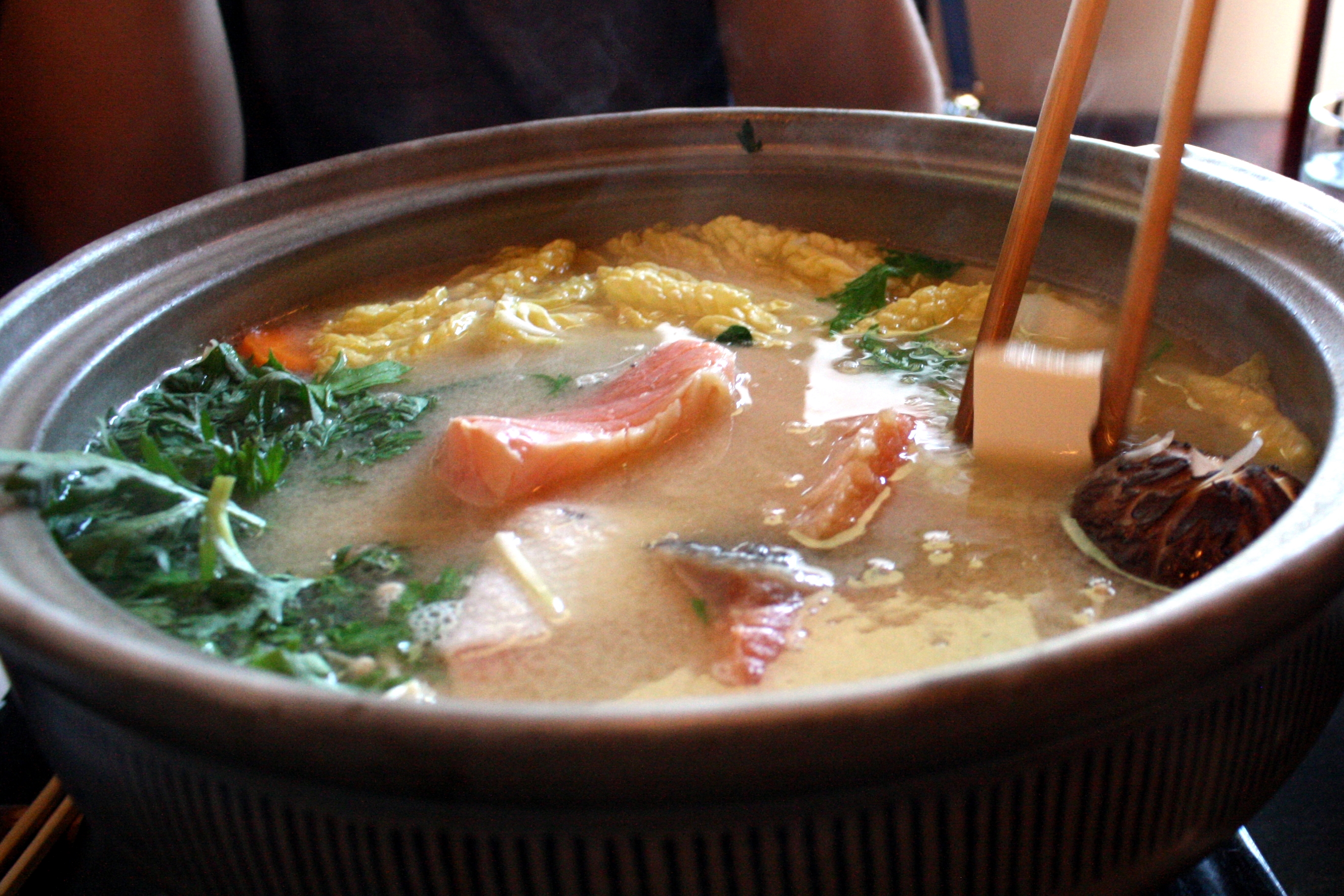
When the weather turns wintry, the Japanese long for hot-pot dishes to warm their bodies and souls. By adding fish and vegetable to miso soup, hot pot dishes become very nutritious. A hot stew, flavoured with sesame oil, consisted of carrots, nappa cabbage, potato, onions, Shitaki mushrooms with pieces of Linquado fish served in a huge, ceramic bowl, which allows slow simmering of the dish. The sixth dish from this island.
Miso is a traditional Japanese seasoning produced by fermenting soybeans with salt and the fungus Aspergillus oryzae, known in Japanese as kōji.
Some Japanese say, sharing a Nabe creates close friends instantly.
Seventh:
Kagoshima.
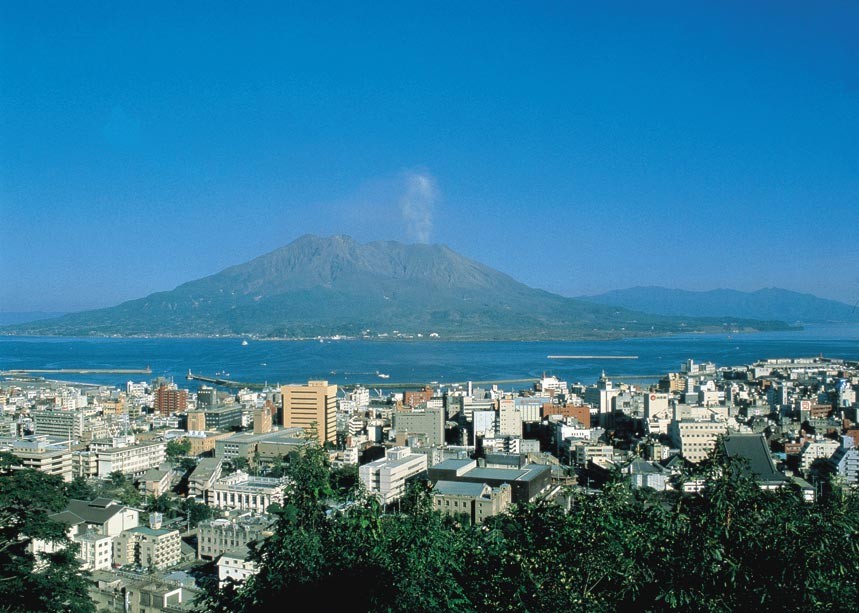
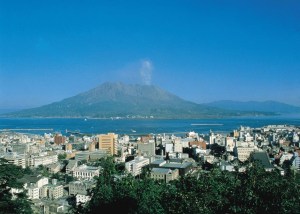 Mt. Sakurajima, always active volcano.
 No ashes on tropical Kagoshima beaches.
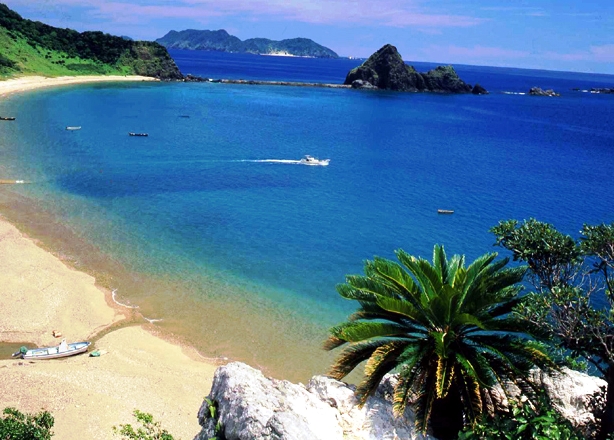
Sunny Kagoshima has a personality to match its climate, voted Japan’s friendliest city nationwide. Its backdrop/deity is Sakurajima, a very active volcano just across the bay. Locals raise their umbrellas against the mountain’s recurrent eruptions, when fine ash coats the landscape like snow and obscures the sun like fog – mystical and captivating. The entire prefecture even has a special ‚Ash Forecast‘ as part of the weather report. Once ash starts falling you’ll understand why: it stings, coats your teeth with grit, dirties futons and laundry, and makes anyone who has just washed their car burst into tears.
And the seventh dish is from the far South.
Warabimochi.
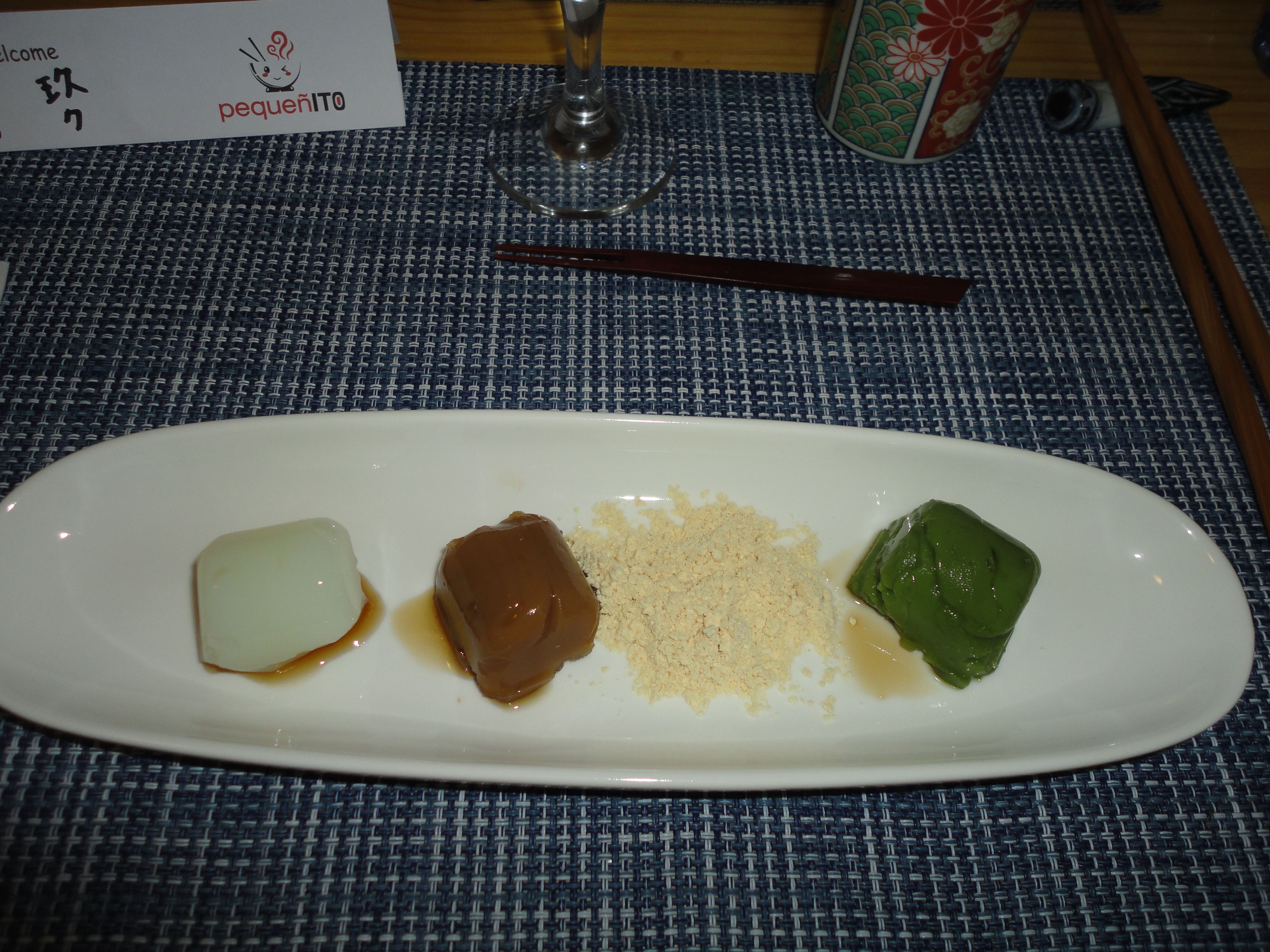
Warabimochi is a thick, jellied dessert made of red bean paste, agar, and sugar a desert of three jellied balls made of corn starch – a white one, a green one and a brown, coffee flavored one with a powdery mound of soy bean flour for dipping, eaten with a long, beautifully shaped, two-pronged, wooden utensil.
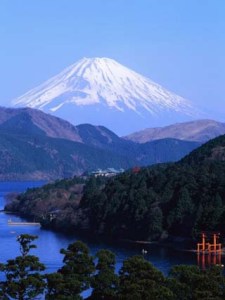 Ashino lake with Mount Fuji in the background.
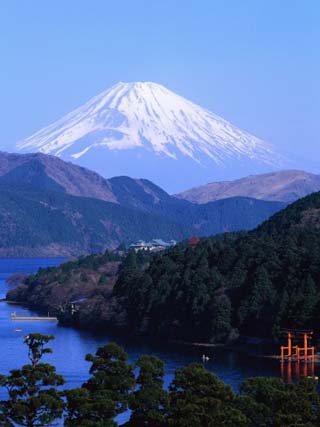
Since we have us eaten through the whole country of Japan, from Hokkaido in the north to Kagoshima in the south, we learned that there are volcano’s everywhere. They look so beautiful on postcards, but – wow – they are a permanent danger.
One could ask questions now. Don’t hesitate to do so.
Some I like to answer upfront:
We spent about 3 hours for the whole session, we brought our own wines (so – no discussion about the quality necessary) and we paid without any comment. If I get the service I expect and have the quality of food, personal attention and ambiance I call „lifestyle“, then I won’t care about a few dollars more or less. Everything at pequenito’s was „round and balanced“ and worth while. For sure a place to go again.
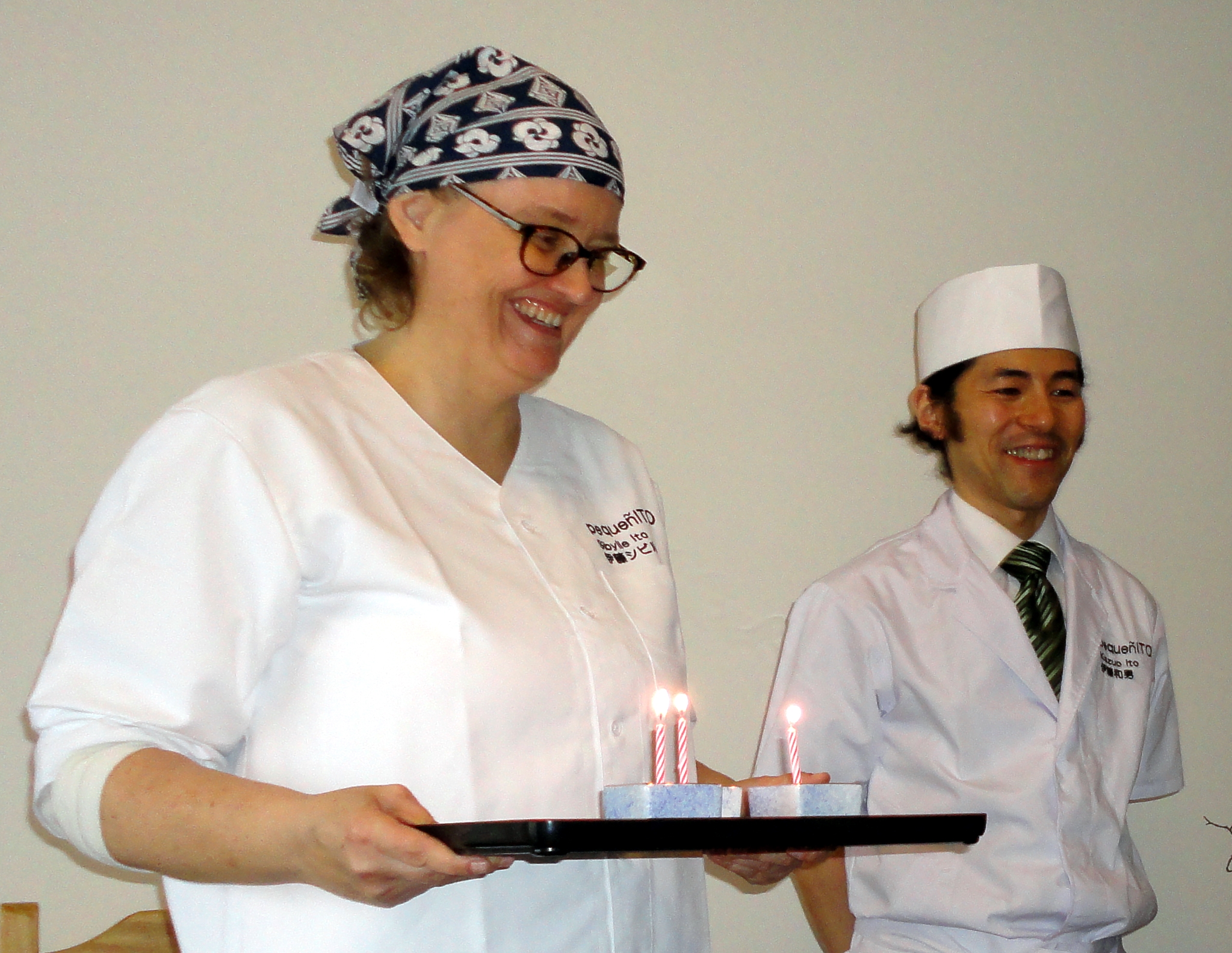
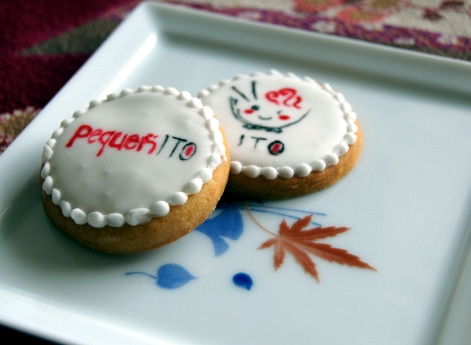
If one thought, after 7 courses, all was over, you are mistaken. Sibylle and Kazuo turned up with candles and a birthday gift for A. and we all got a lovely „farewell cookie“.
Only thing I really missed – the porcelain faces of some Geisha’s !!
 Click on pics – most are super sizing !
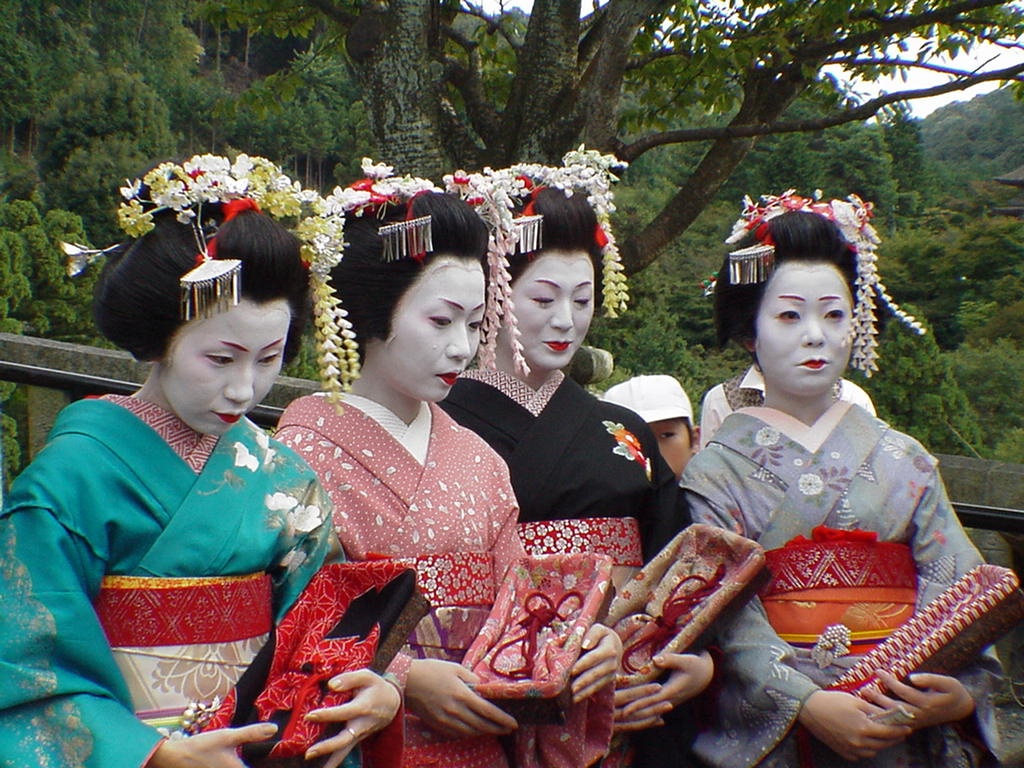
Experiencing authentic Japanese cuisine right in the middle of Montevideo was adventurous, but we all had such a wonderful time. Thank you – everybody – so much, for a truly memorable afternoon.

