
Colorful mountains, burning waterfalls and unique formations. On our planet, there are numerous natural phenomena that seem incredible at first glance. However, there is a plausible explanation behind almost every phenomenon.
I like to show you a selection of – as I name it – Natural Wonders Of The World !! During my life and many years of traveling I had the opportunity to see many of these wonders in all parts of the world. Sadly my pictures – mostly 30-50 years ago were made on slides, which are now faded and not anymore worth to show, except a few. Give yourself a favor and click on pictures you like, most of them will supersize to enjoy !!
The internet shows most of them in perfect condition and made them look alike as the ones I took. Here a selection of the best ones. Enjoy this trip through our beautiful world during these hard times of Covid-19 Pandemic. I like to wish all of you „GOOD HEALTH“ !
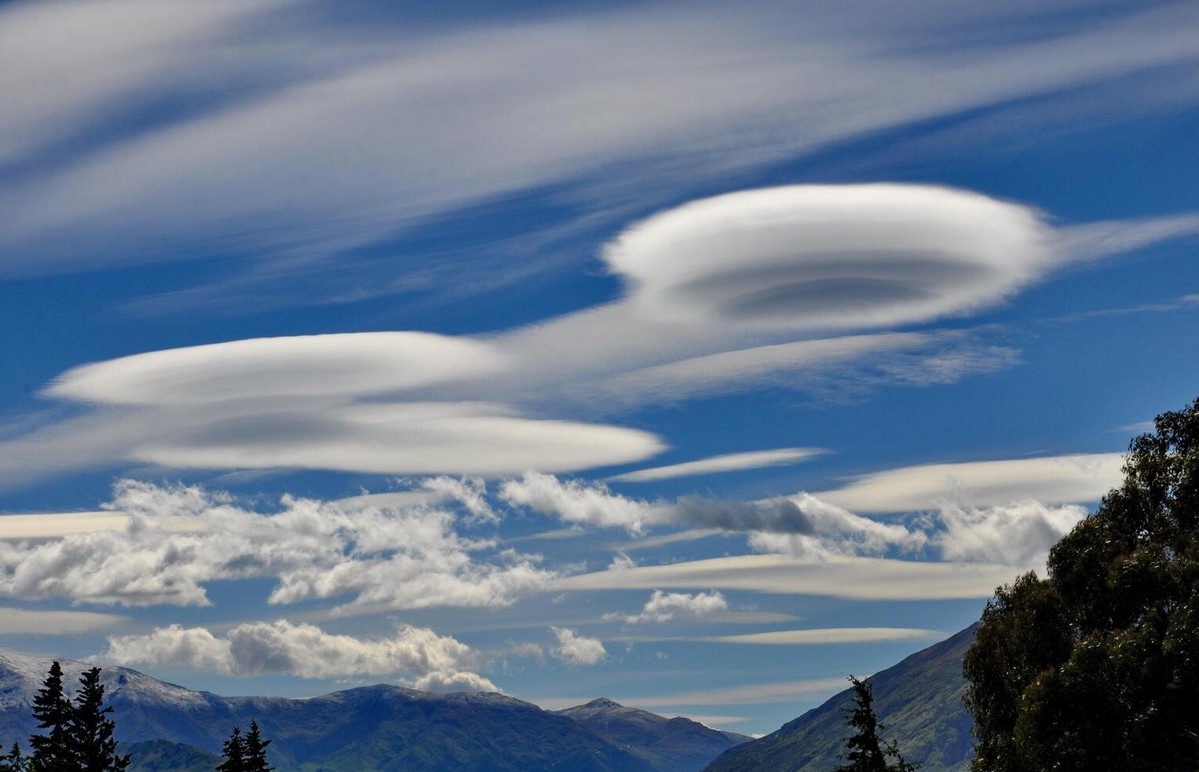
This is a lenticularis cloud. This type of cloud is sometimes mistaken for an UFO because of its lenticular appearance. Lenticularis clouds form when the air is lifted over mountains. They can also form at the boundary of two different superimposed layers of air.
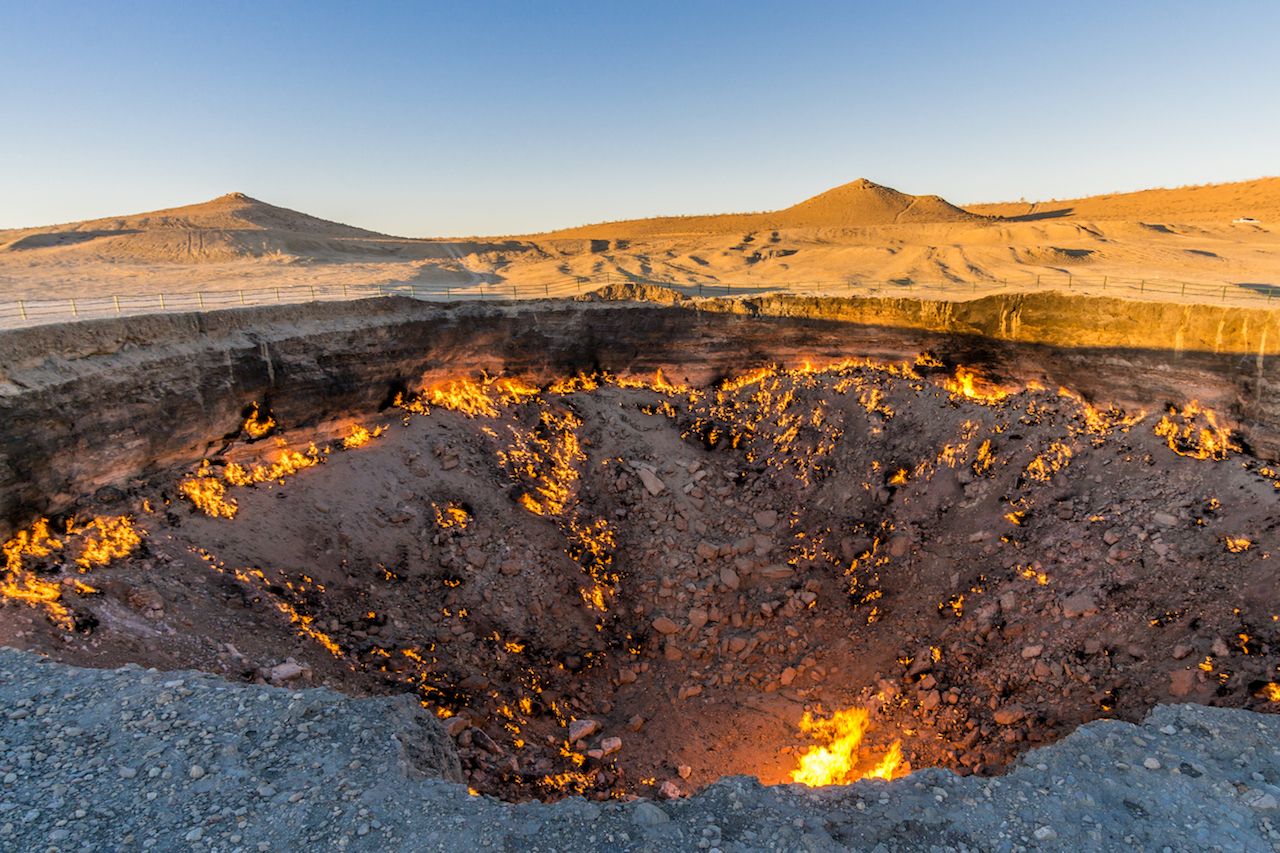
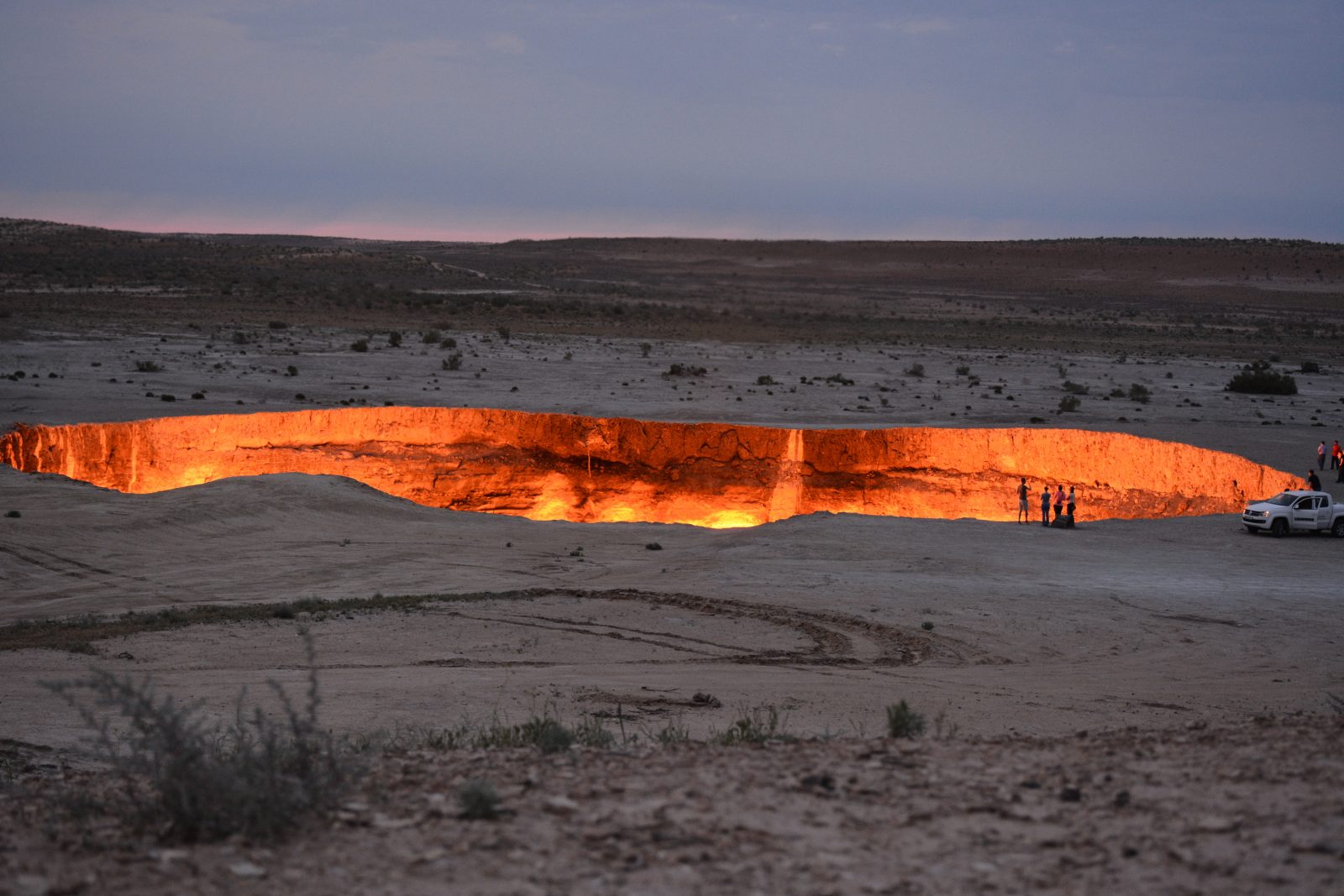
Darvaza Gas Crater is a natural gas crater. Scientists believe that it has been burning nonstop since 1971 and was the result of a drilling accident. While the first expedition of the crater didn’t happen until 2013, origin stories claim that it was formed after Soviet scientists tried burning noxious gases but underestimated how much gas was under the ground they were burning. Now it became a world known tourist attraction.
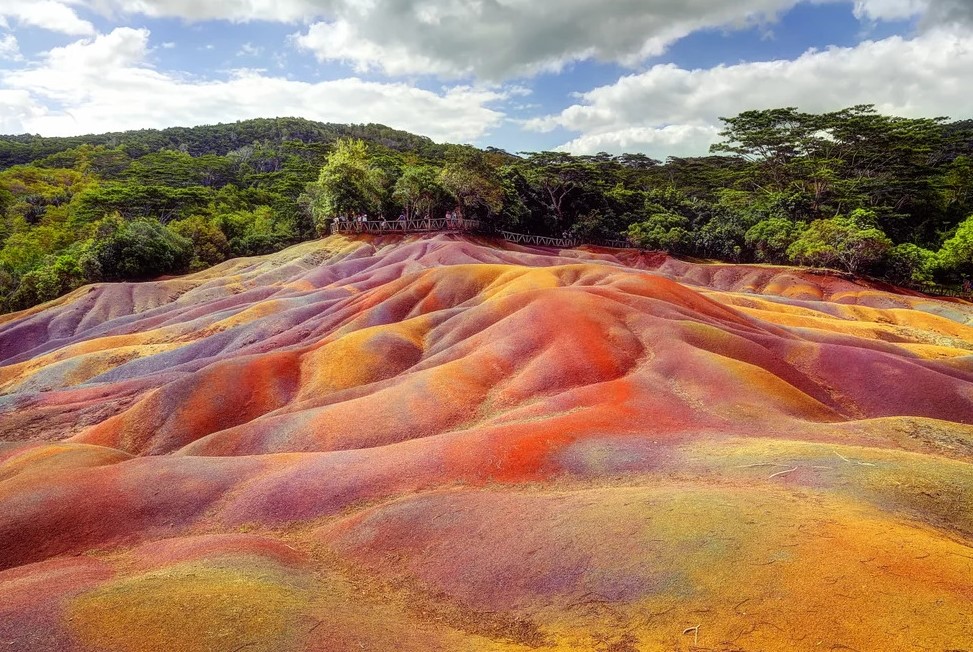
This image seems strangely artificial, but it was taken near the village of Chamarel in Mauritius. The phenomenon is called the Seven Colored Earth. The island is of volcanic origin. The colors came about because basalt lava was transformed into clay minerals. Iron and aluminum provide the color spectrum.
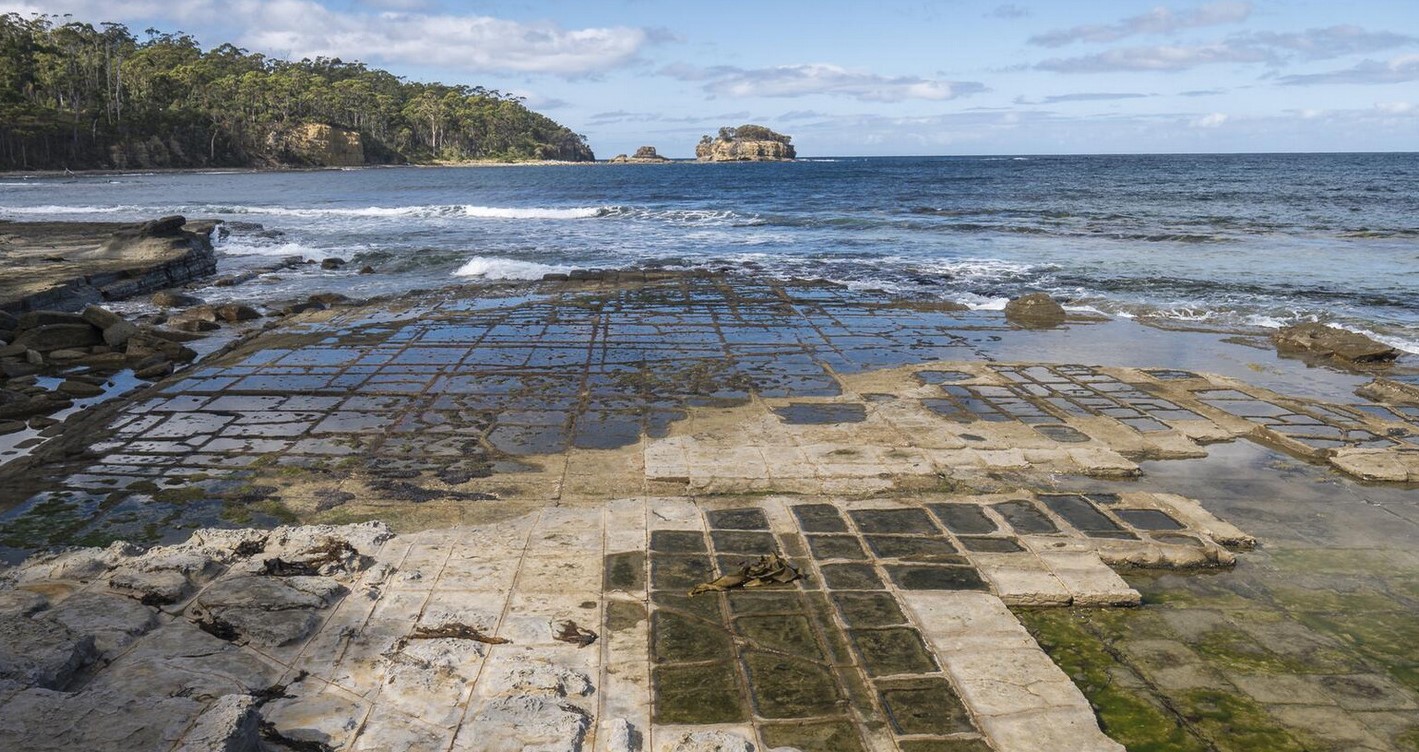
The Tessellated Pavement in Eagle-hawk Neck, Tasmania (Australia) is a natural terrace and consists of a flat rock that has divided into many squares, rectangles and the like. Some rocks are washed out because they dry out more during low tide. Salt crystals make the surface erode faster there. Other stones are raised because the sand flows along the joints and wears them away.
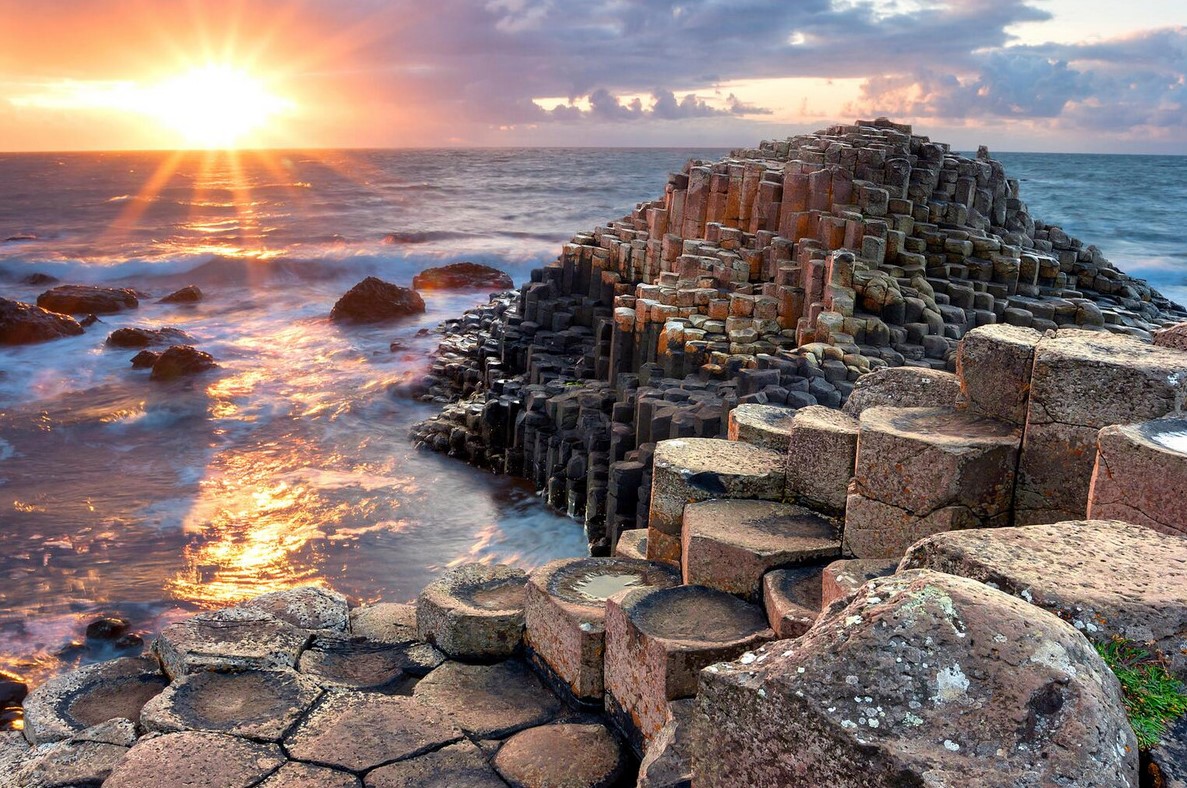
In Ireland, about 40,000 basalt columns rise out of the Atlantic. The so-called Giant’s Causeway was formed 60 million years ago in a volcanic age. Geologists assume that the formation of the columns is due to the cooling of hot lava.
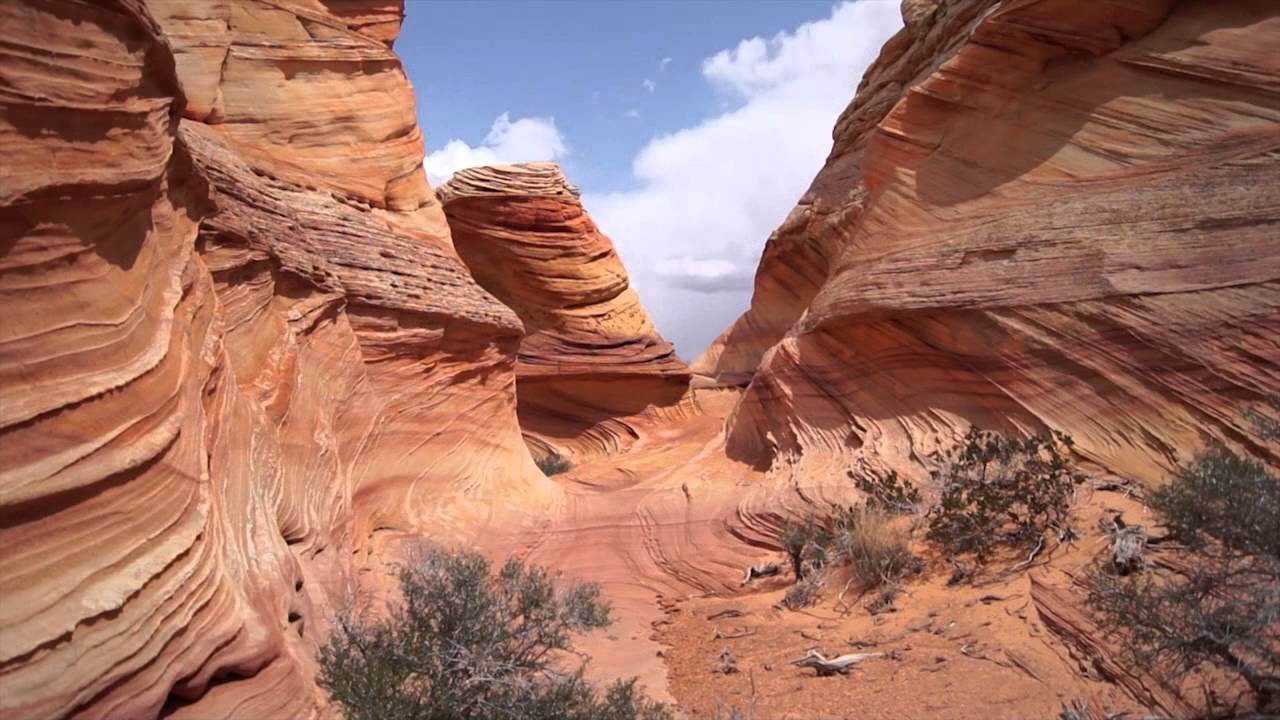
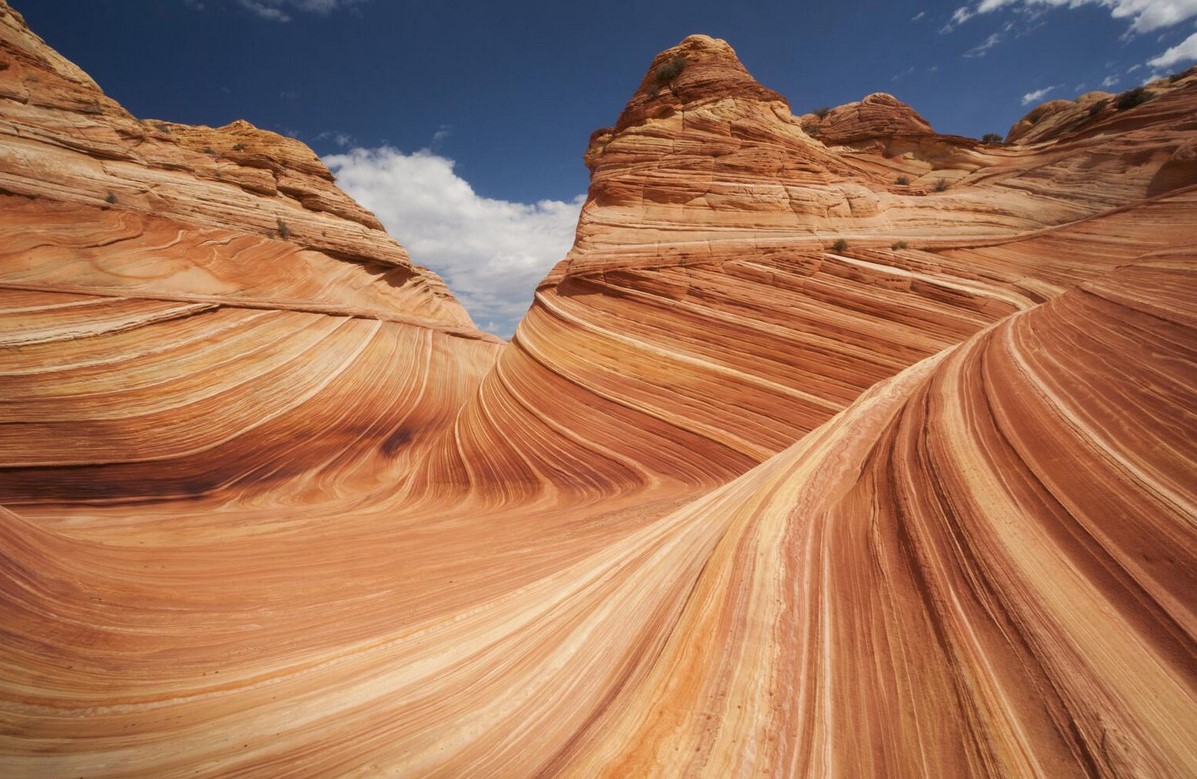
The Coyote Buttes are a spectacular canyon landscape in Arizona. A popular excursion destination is the rock formation „The Wave“ ( right picture above). Hundreds of thousands of years ago, the area was a lake landscape. When this dried up, wind and weather formed the wave-like patterns. Click on pictures to supersize.
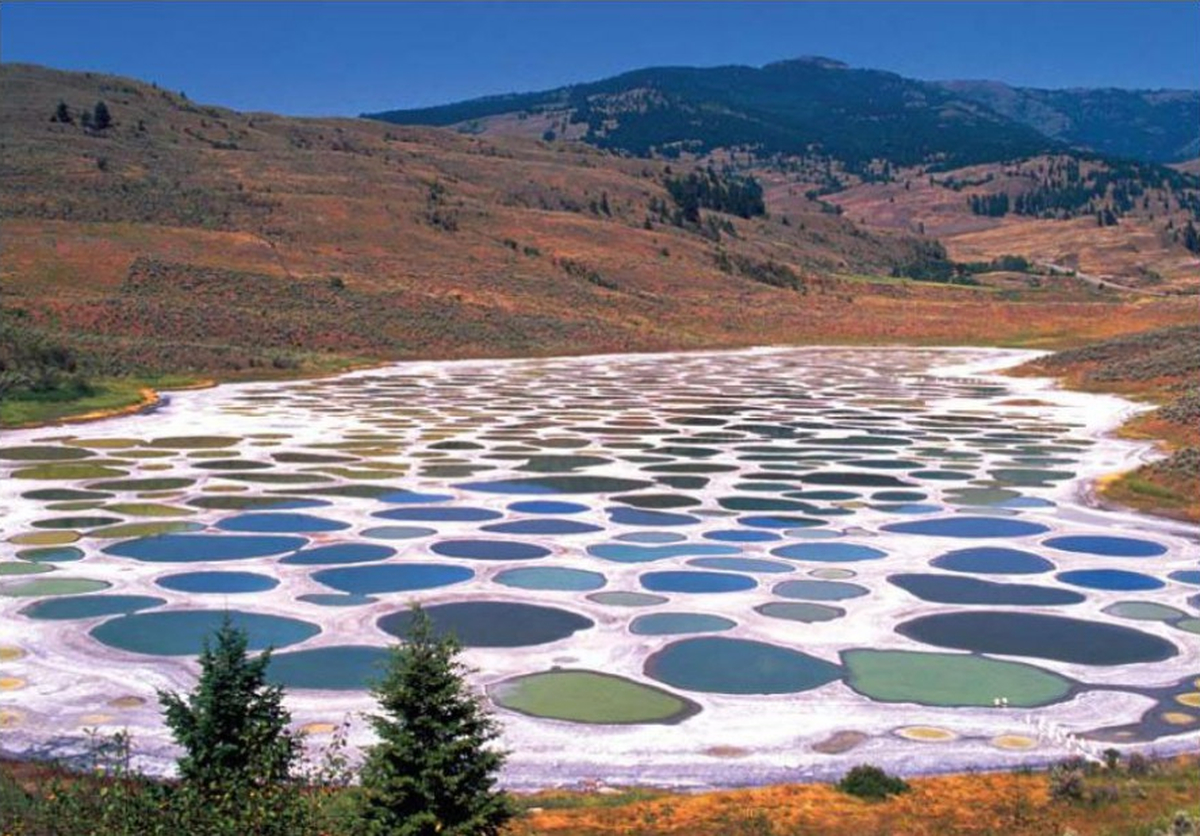
Spotted Lake, near Kliluk, is located in the Canadian province of British Columbia and has no outlet. It owes its name to a variety of minerals. In summer, a large part of the water in the lake evaporates and the concentration of calcium, sodium or magnesium sulfate, for example, increases. The minerals then become visible in the form of colorful pools. This attraction is called Canada’s best kept secret.
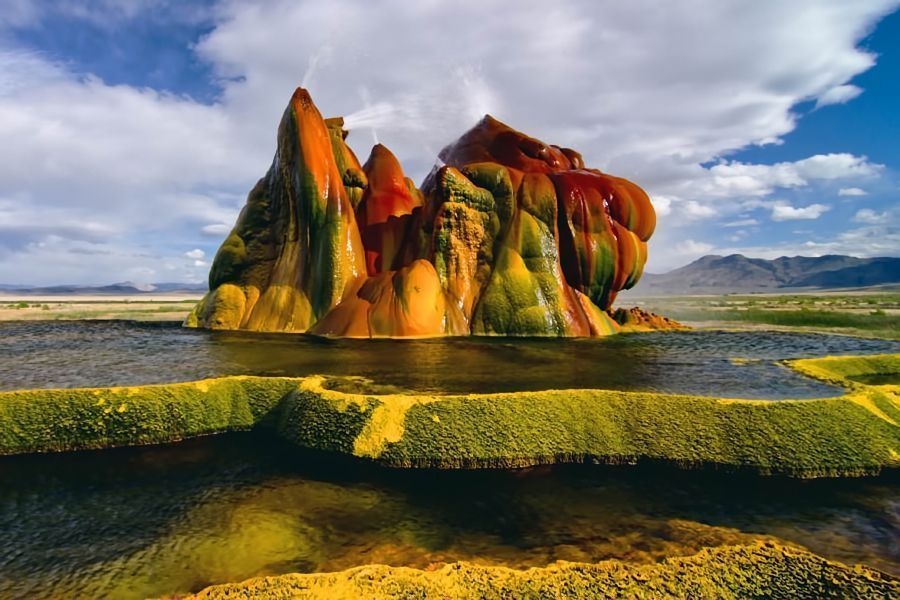
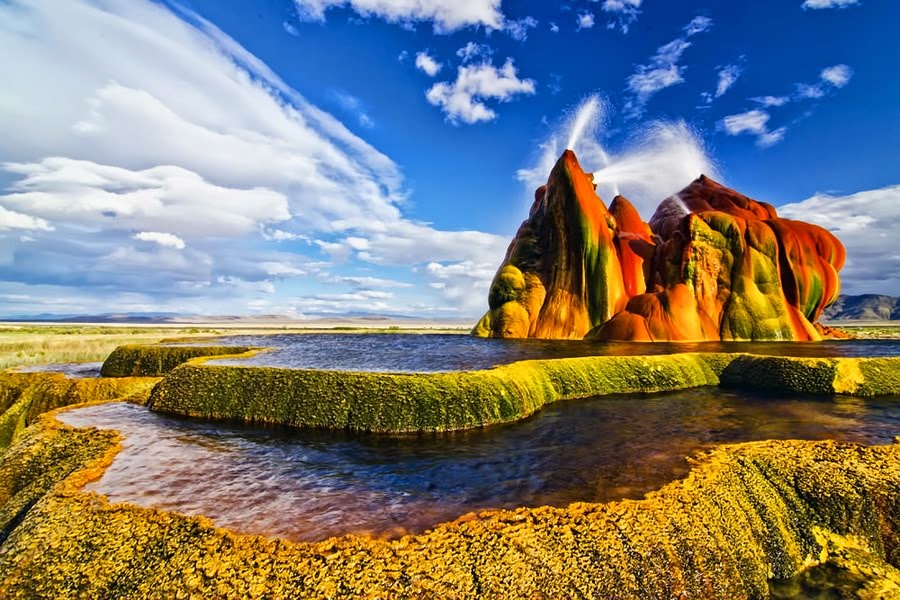
The Fly Geyser, located on private land in Washoe County (USA) was virtually man-made. It is the result of an incorrectly drilled well. The hole was not properly plugged, causing water to rise and minerals to be carried to the surface. These were deposited at the exit of the hole, creating the colorful cone over the past decades. It’s about 1,5 meters high and about 4 meters wide and still growing.
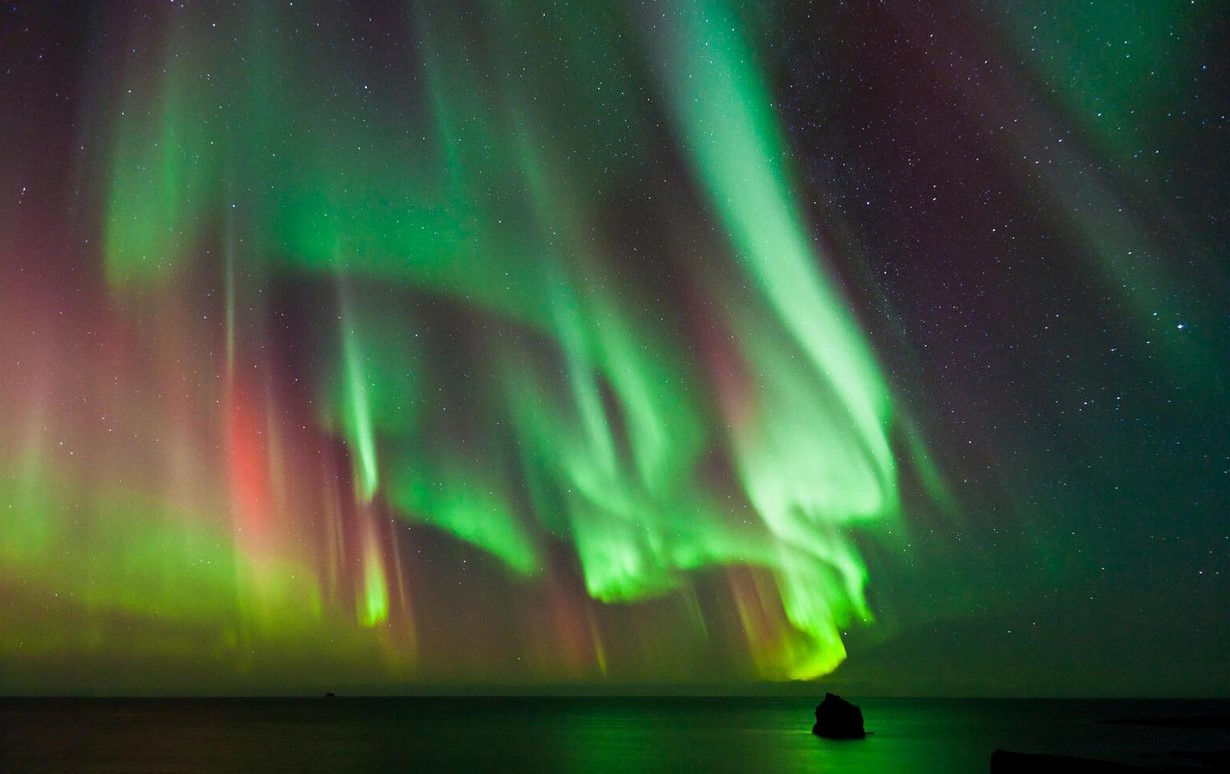
The aurora borealis, also called polar light, is seen mainly near the magnetic poles. It occurs when electrically charged particles from the magnetosphere hit the atmosphere. Nitrogen and oxygen atoms are excited in the process. Best areas to see is the Northern part of Canada and Northern Europe.
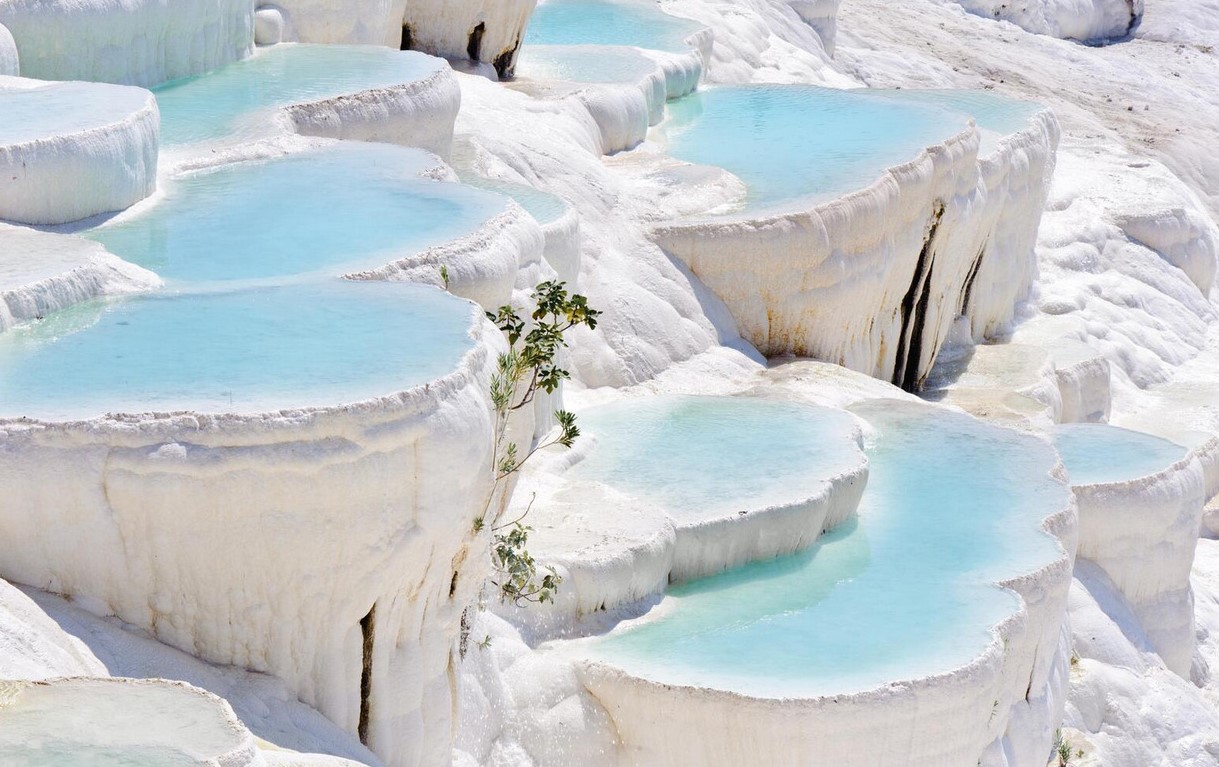
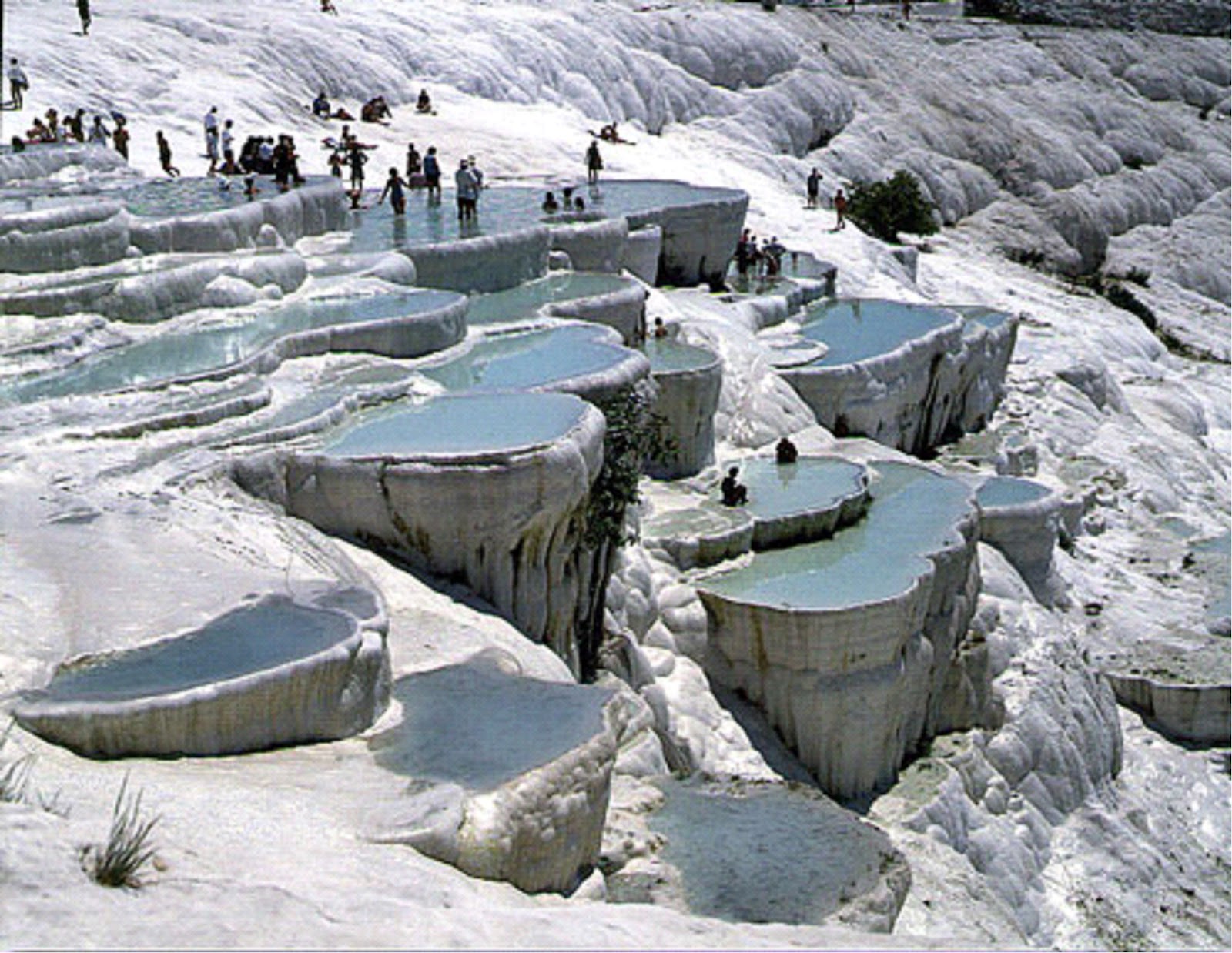
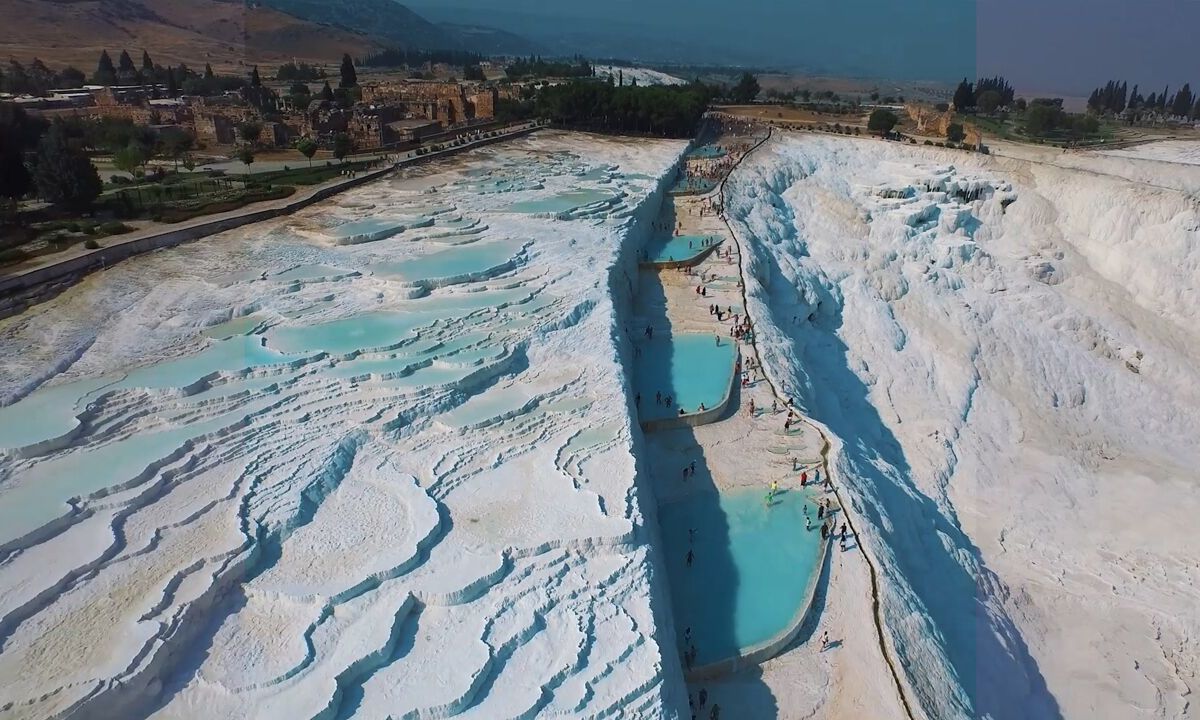
Pamukkale in Turkey is best known for its limestone terraces. Pamukkale means „Cotton Castles“ (notice large picture above). In the past millennia, calcareous thermal water ran steadily down the terraces from the spring. Thus formed the steps, which are still filled with the water today. Big parts of it are now closed for tourists (left pic). The damage they made was to high. But there are still areas where people can enjoy the hot springs. Click on the right picture and size up to enjoy the view.
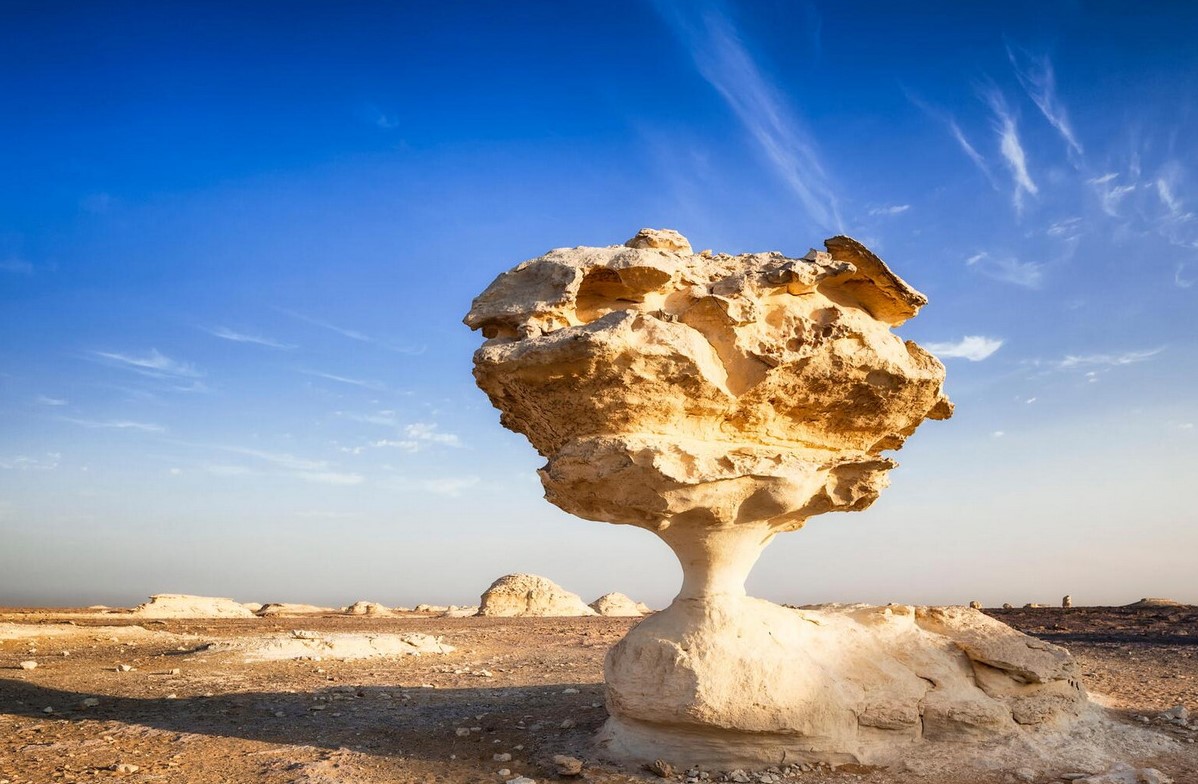
In the White Desert of Egypt there are some fascinating limestone monoliths. They are made of plankton. 80 million years ago, what is now the Mediterranean Sea covered the desert. Due to wind, weather and the extreme temperature differences the material eroded and the most different formations were formed.
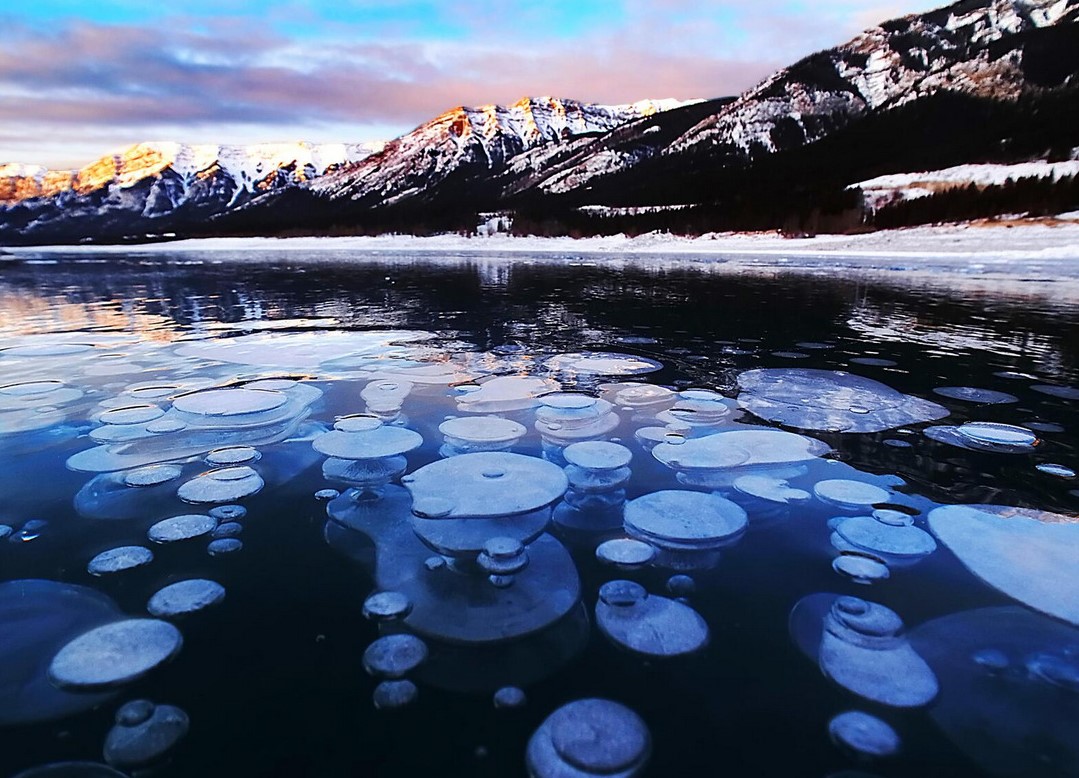
When it is particularly cold in winter, observers can admire white bubbles in the clear ice of Abraham Lake in Canada. These are frozen methane bubbles. Methane rises from the bottom of the lake year-round. When it reaches colder water layers in winter, it freezes.
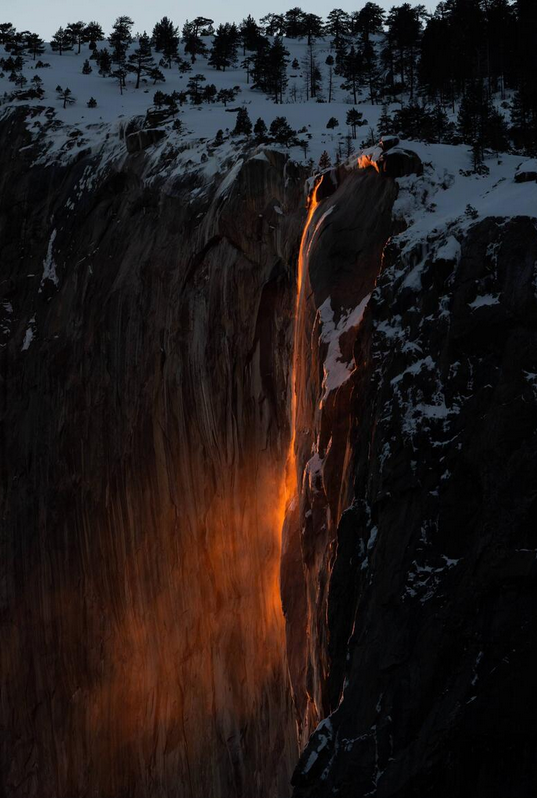
In Yosemite National Park in California, there is a waterfall that only catches fire on a few days in February. The so-called Ponytail Falls – or Firefall – is illuminated by the setting sun during this time so that it looks as if it is on fire. What a phenomenon – worth to see.
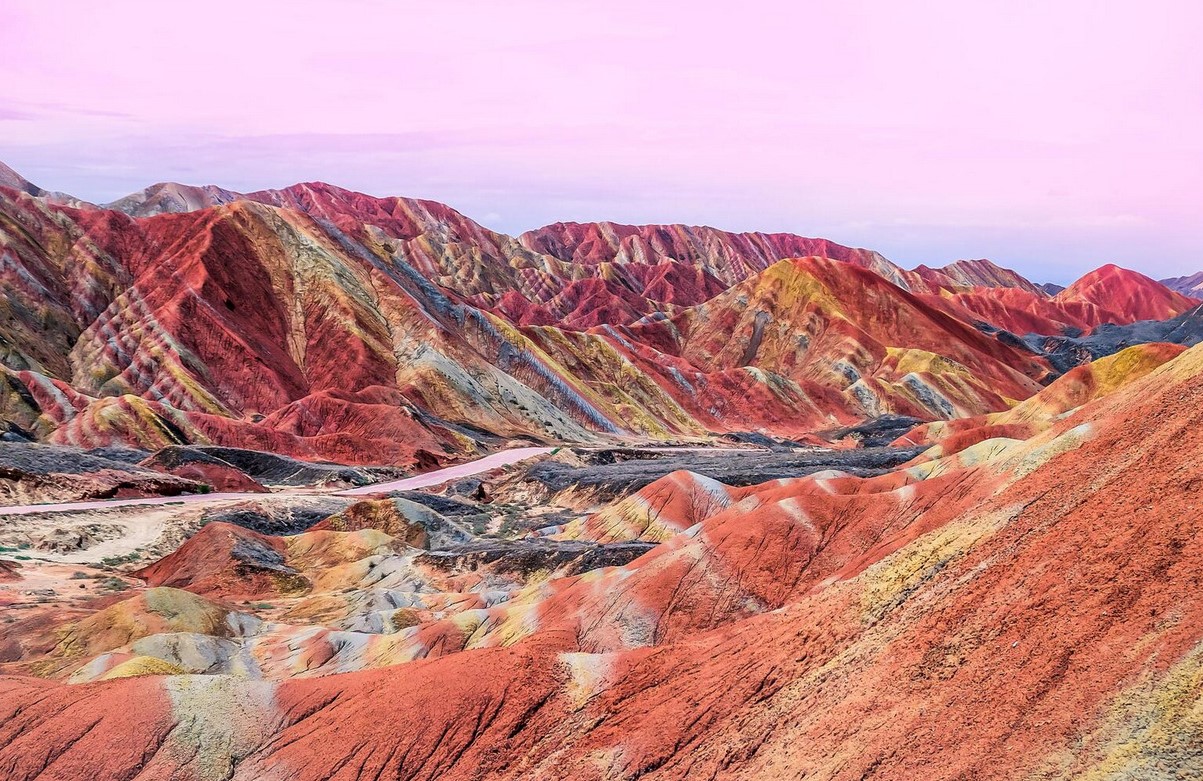
They are also called the Rainbow Mountains, the Danxia Mountains in China are made up of different layers of sandstone. Erosion and weathering have created this unusual variety of colors.
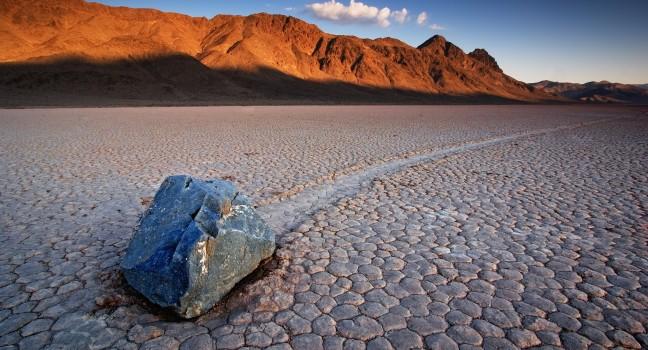
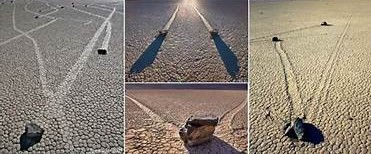
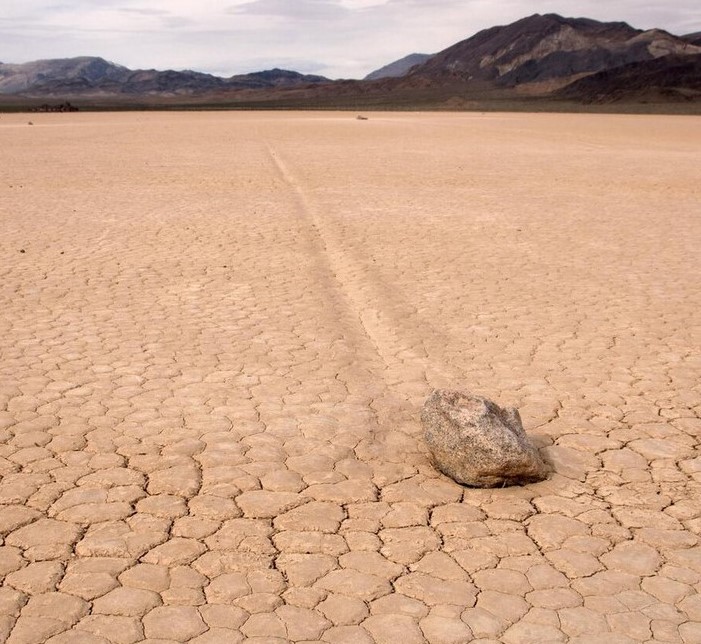
In California’s Death Valley National Park, large and heavy stones wander across a dried-up lake, leaving their mark. The right conditions have to be right for this to happen: In winter, an area fills with water just enough to form a floating layer of ice. The stones must not sink. When it is just the right temperature at night, the ice shatters into pieces by the rising sun. A little wind blows the ice floes over the surface, pushing the stones in front of them. Interesting to read in Wikipedia about those „sailing stones“ and why they sail !
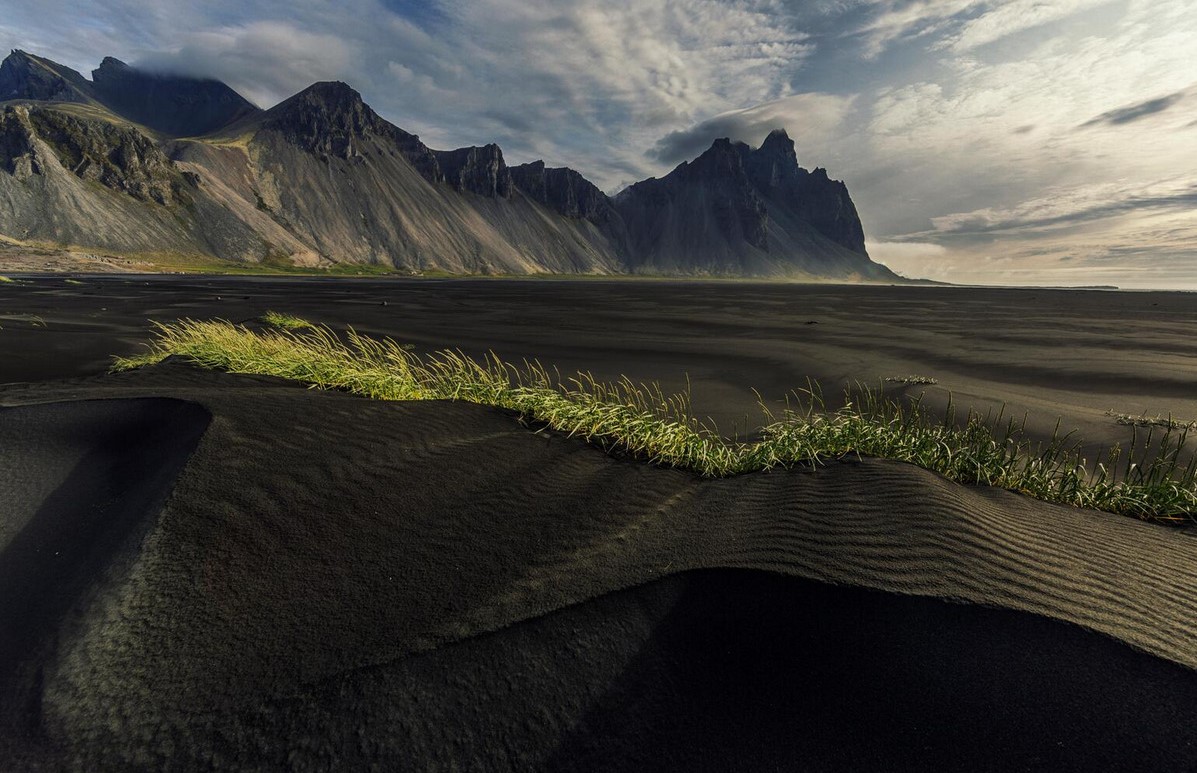
At the foot of the mountain Vestrahorn, Iceland there are black sand dunes. Such beaches are formed after volcanic eruptions. When the lava hits the sea, it explodes and cools off. In the process, cooled, crushed lava and volcanic ash settle out – in the form of black sand.
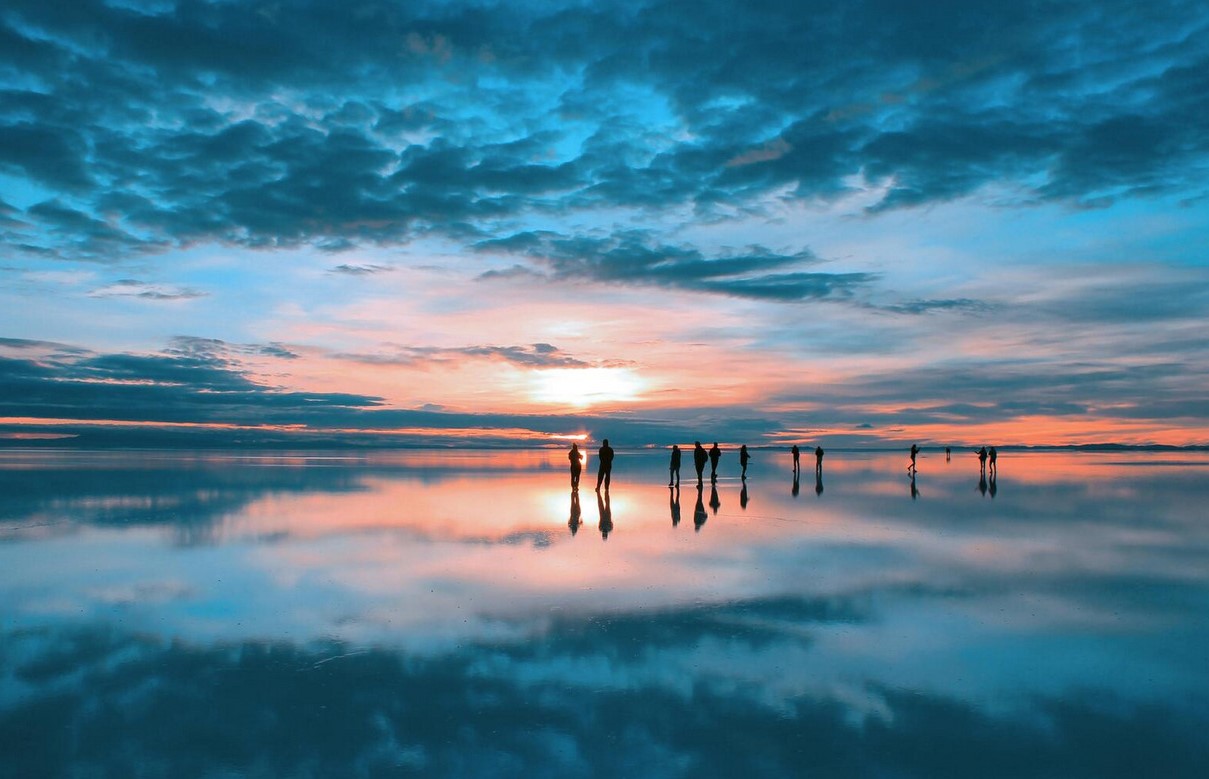
The largest salt plain in the world is the Salar de Uyuni in Bolivia. It is so vast and flat that when it rains it becomes probably the largest mirror in the world.
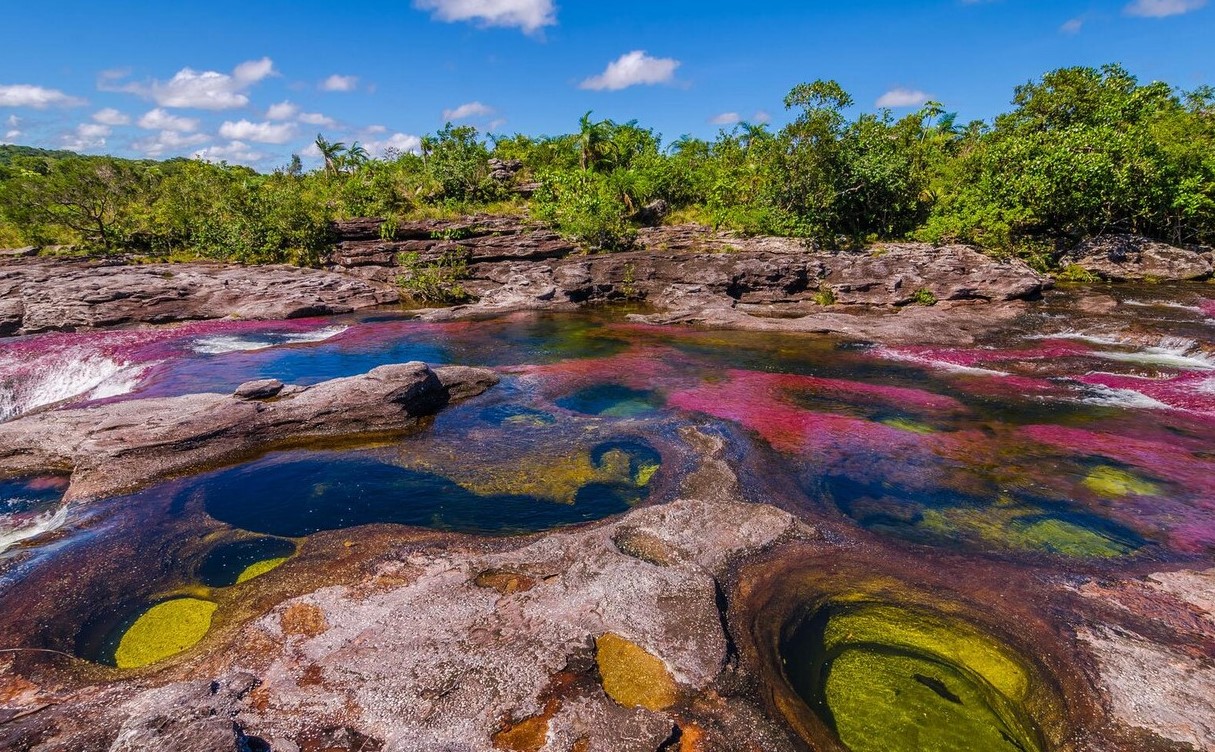
The Cano Cristales is a river in Colombia, also called the „River of Five Colors“. Between September and November it resembles a flowing rainbow. This is due to a unique plant species, also called Macarenia clavigera, that grows at the bottom of the river. Only within a short period of time between the rainy and dry seasons, when the water level is just right, does it develop a bright red.
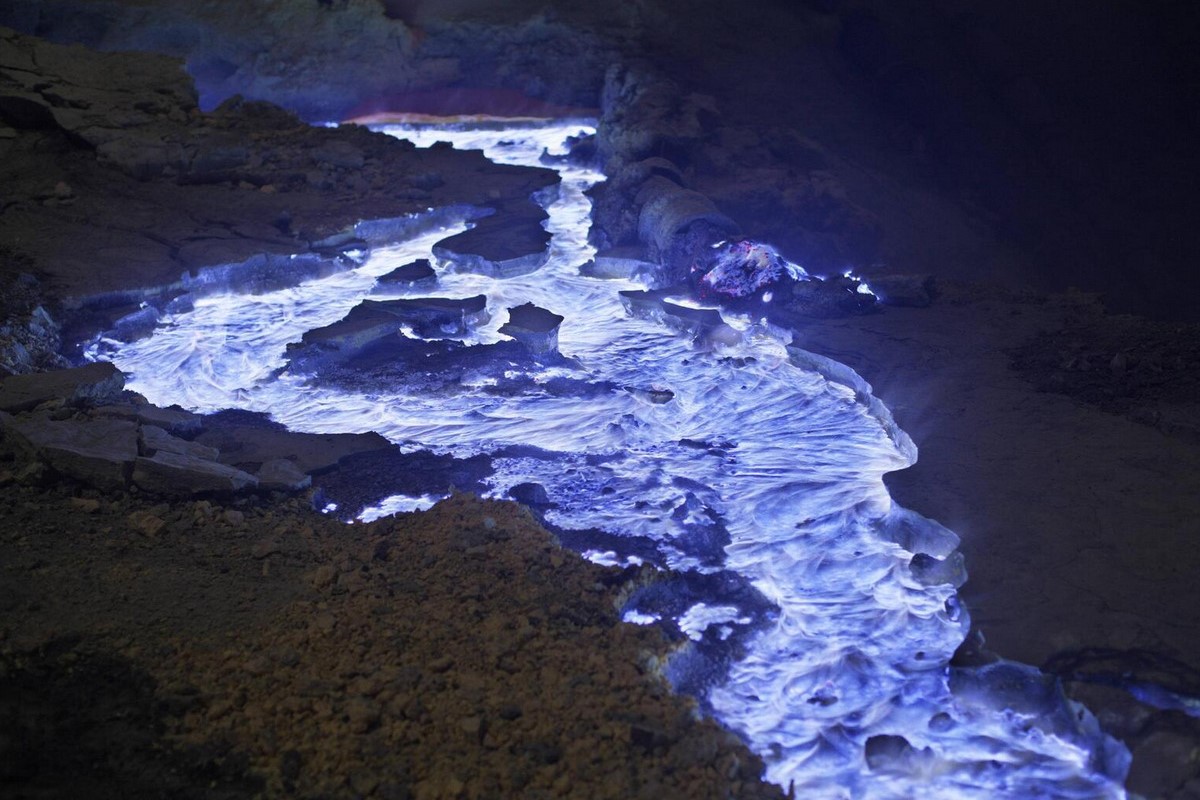
The Kawah Ijen volcano in Indonesia spews blue lava during an eruption. Liquid sulfur flows out of the volcanic vent and is so hot that it burns bright blue.
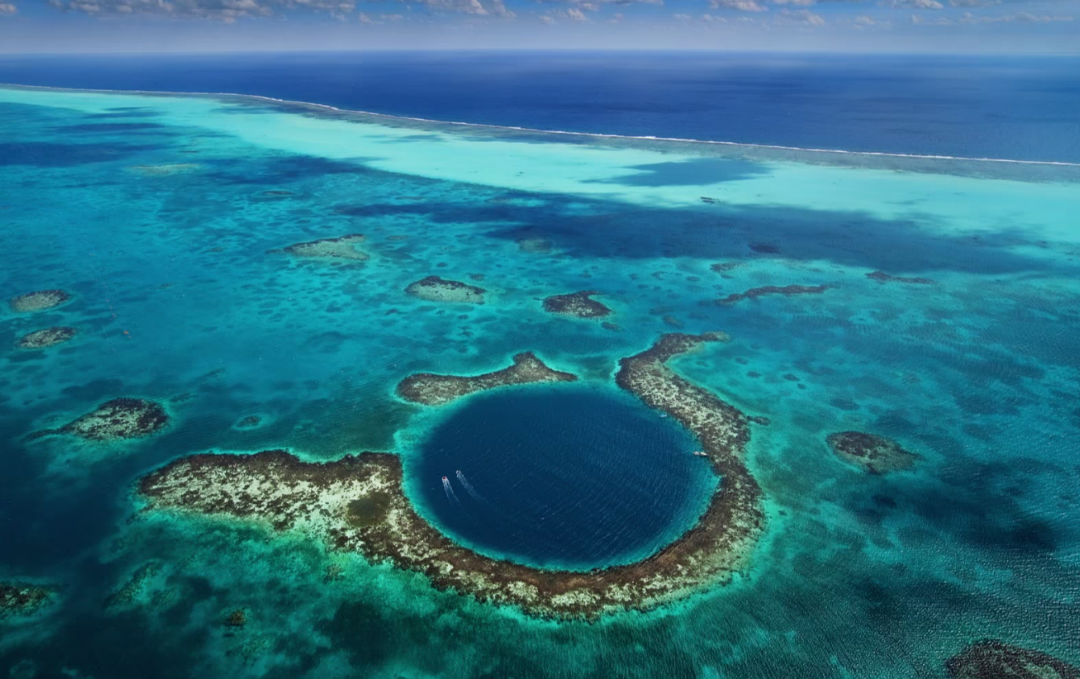
Belize’s Great Blue Hole is the world’s largest known sinkhole. It measures 300 meters (984 feet) wide and 125 meters (410 feet) deep. It wasn’t until 2019 that expedition teams were able to explore what’s at the bottom of it. Among the discoveries found were never-before-seen mineral formations and a layer of hydrogen sulfide. Researchers hope this information will help shed light on the hole’s origins.
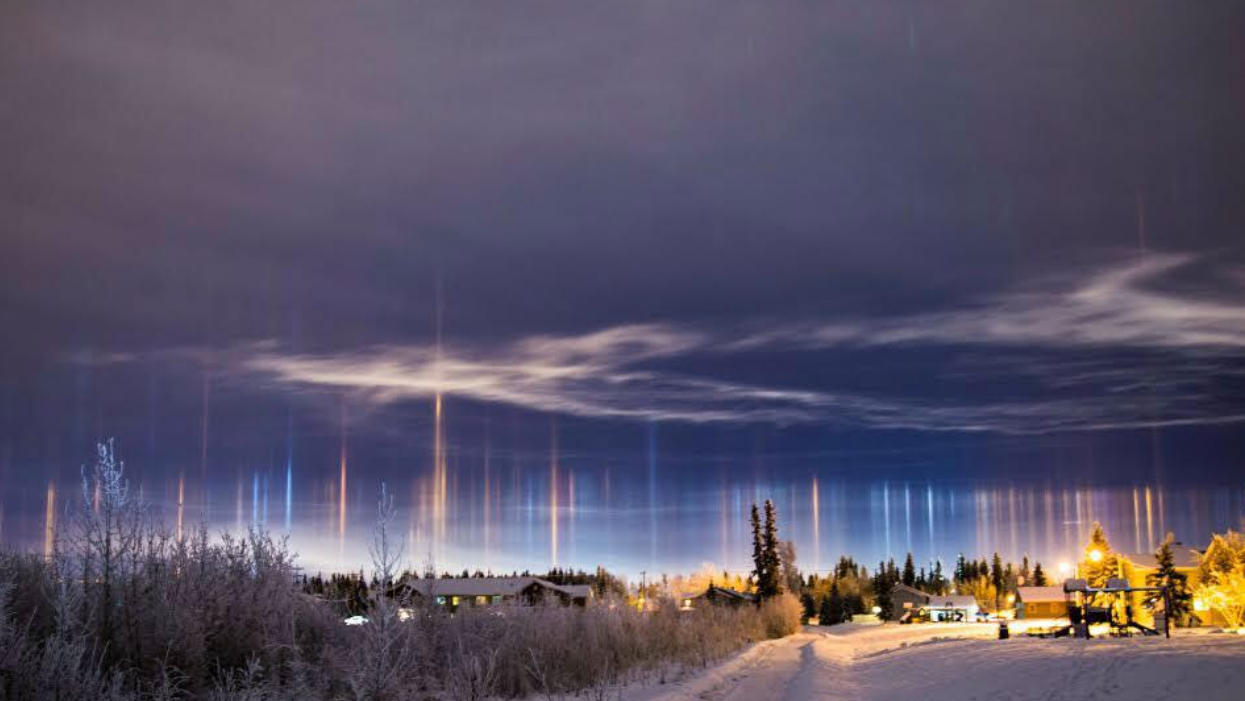
This is not where the aurora borealis was photographed, as shown further above. In many places on Earth, you can see what are called solar columns – pillars of light that seem to rise. Flat, flickering ice crystals reflect the sunlight in the upper atmosphere. When it’s particularly cold, as it is in Alaska, these ice crystals can also form near the ground as a kind of light snow. When they reflect light from the ground, they can form these lights.
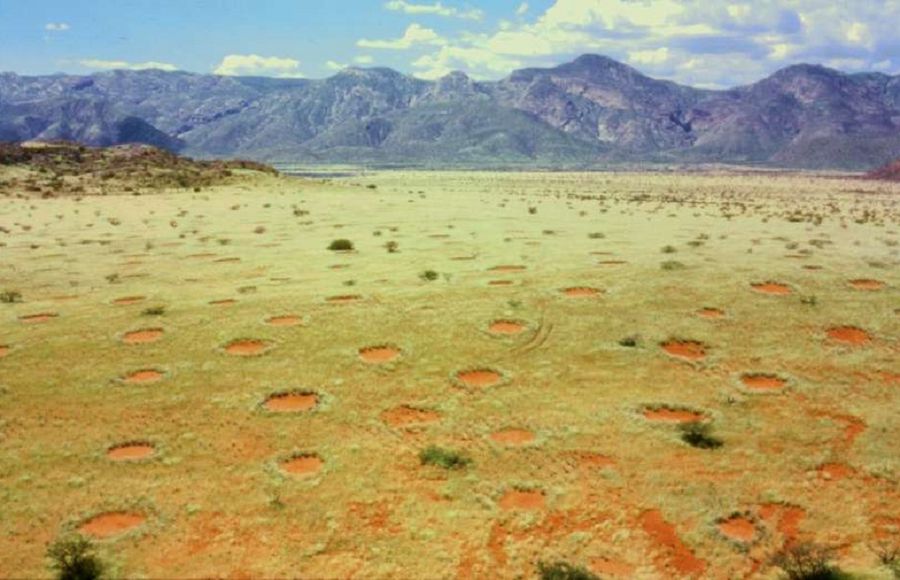
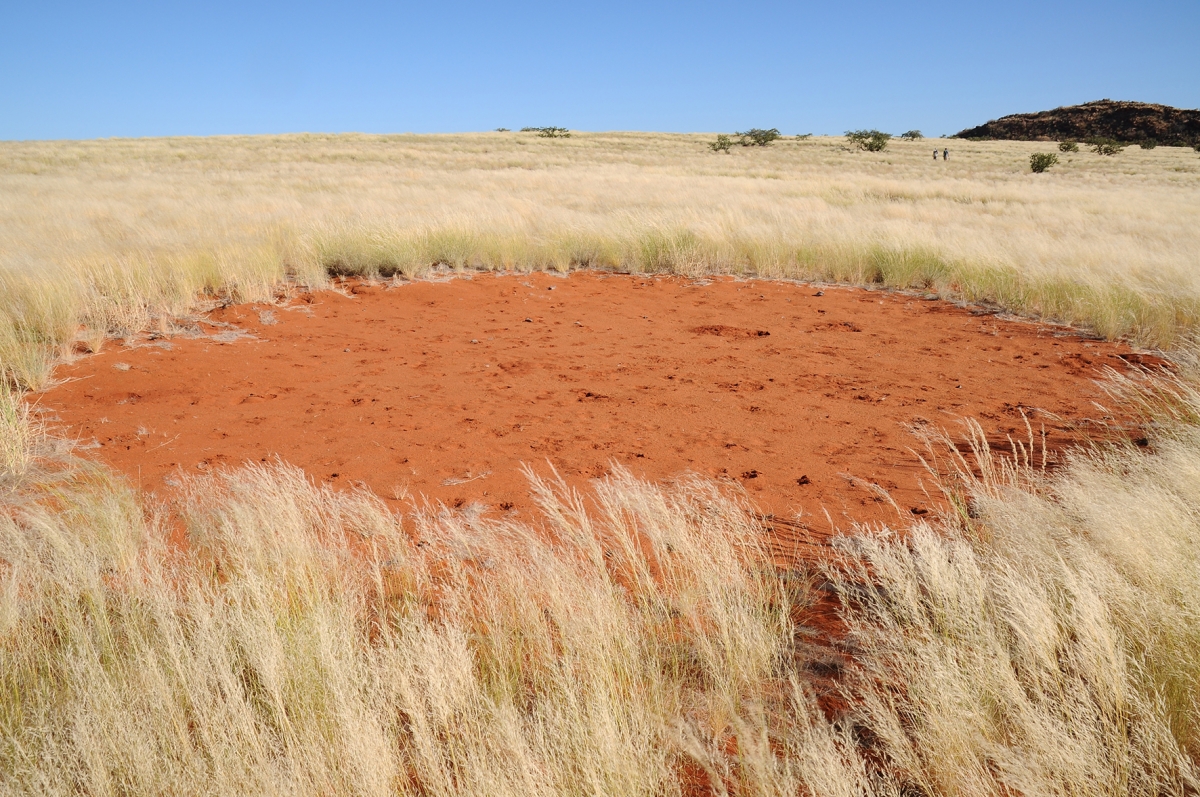
The so-called fairy circles occur, for example, in the Namibian desert. They are bare patches in the middle of grassy areas, enclosed by lushly growing grass wreaths. The reason for this are: Termites. The animals eat away the roots of the grasses around their nests. Without them, more water remains in the soil, which is essential for termites to survive. Some termites have nests only underground, not above ground, like in Australia.
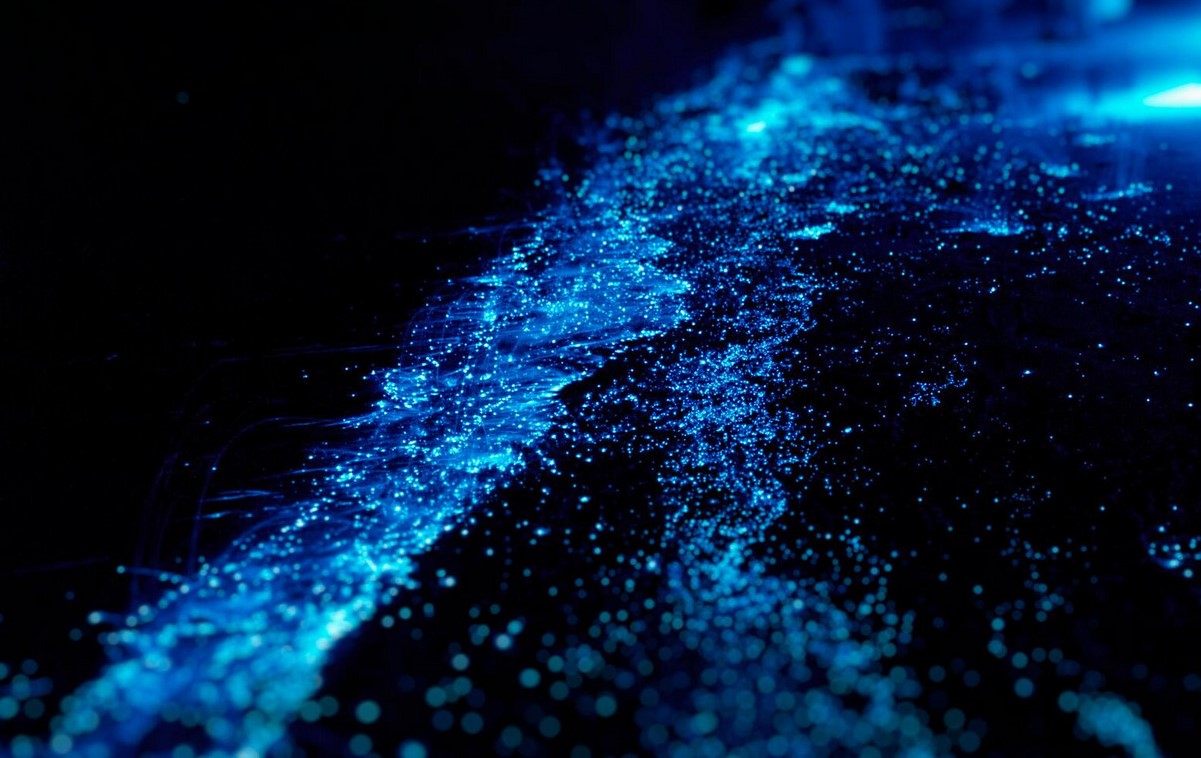
Living creatures that produce light make the sea in the Maldives glow blue. This phenomenon is called bioluminescence and is mostly triggered by tiny algae. The substrate luciferin reacts in them with the enzyme luciverase. In the process, oxygen is absorbed and the enzyme takes on a more energetic state. This additional energy is emitted as light. The higher the solar activity was during the day, the more the algae glow at night.
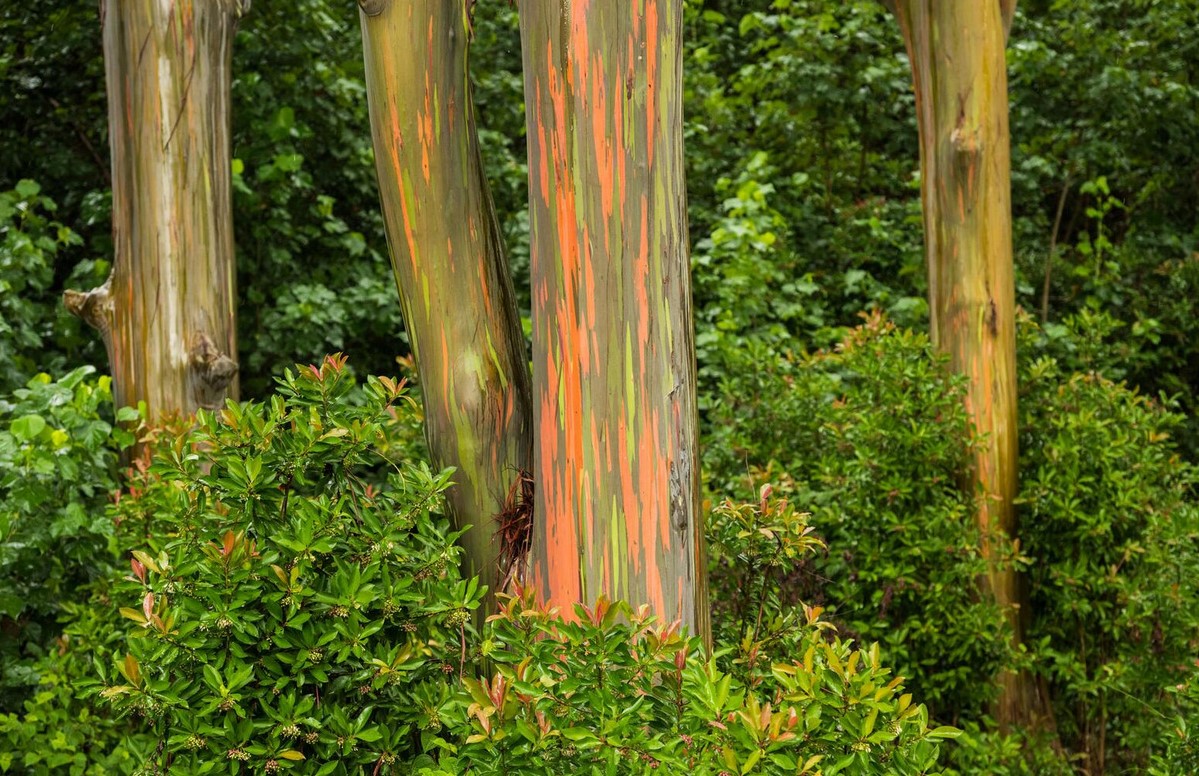
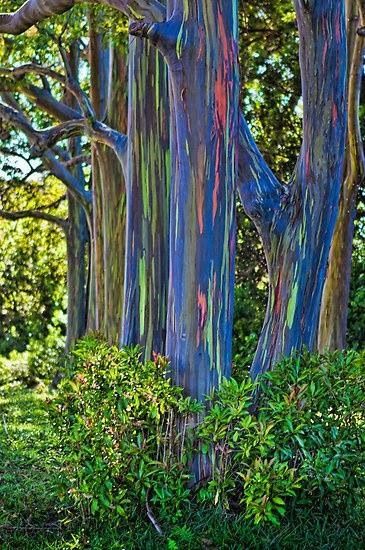
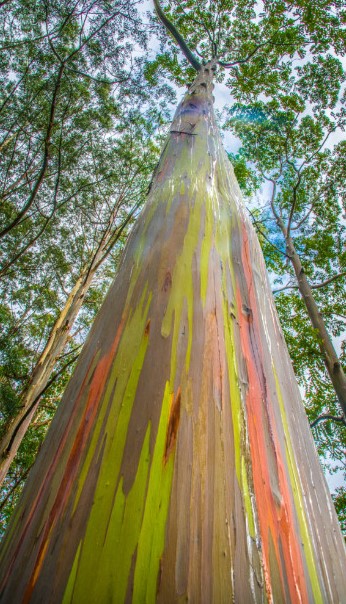
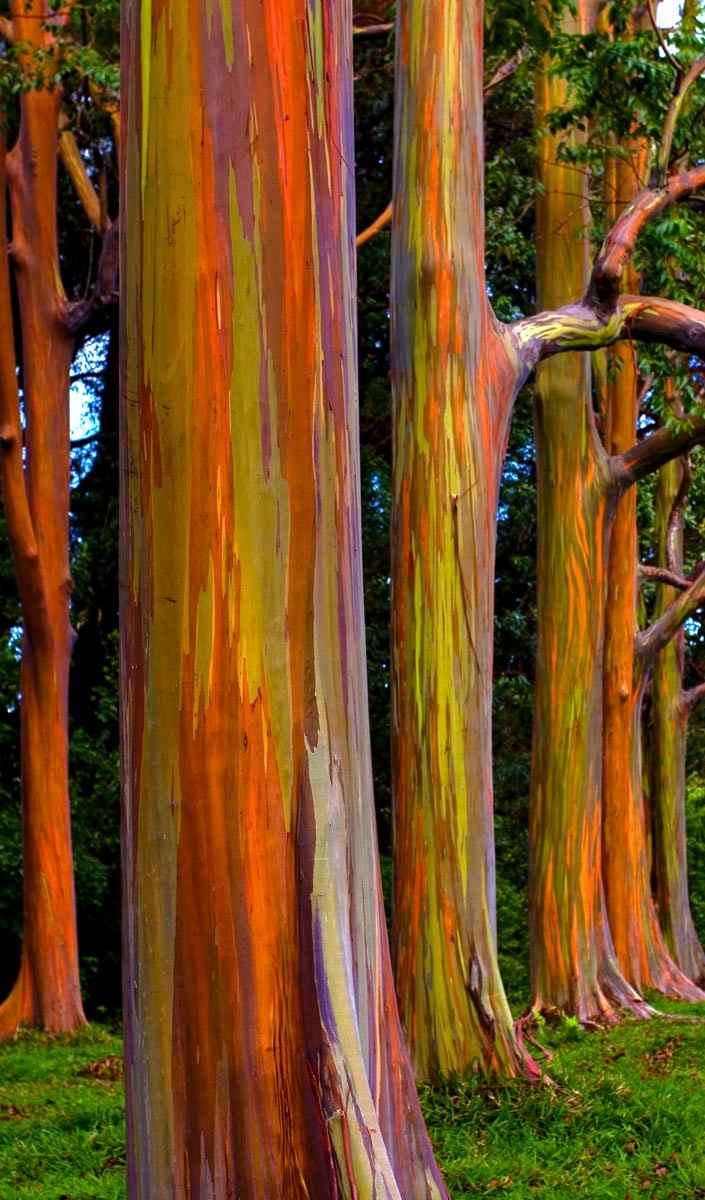
The plant species Eucalyptus Deglupta is also called rainbow tree and is one of the fastest growing tree species in the world. The older bark is brown to yellowish in color. It regularly peels off, exposing the younger, green layer underneath. Over time, this slowly changes color, becoming blue, purple or red. This is how the colorful pattern is created. One of the finest Rainbow Eucalyptus Trees, a whole forest, I’ve seen on the road to Hana on Maui Island, Hawaii. May be I will show you this amazing forest in a later post.
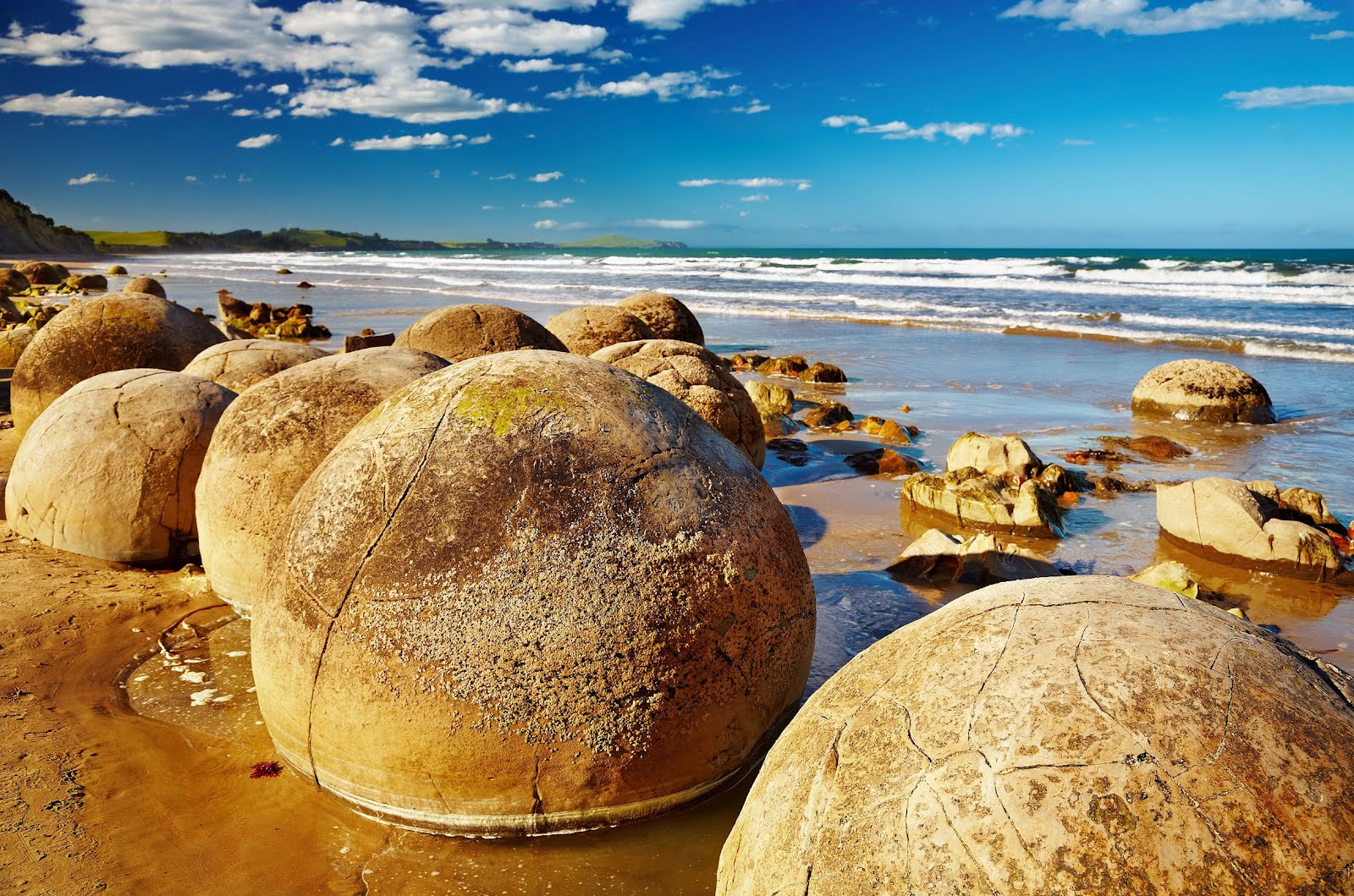
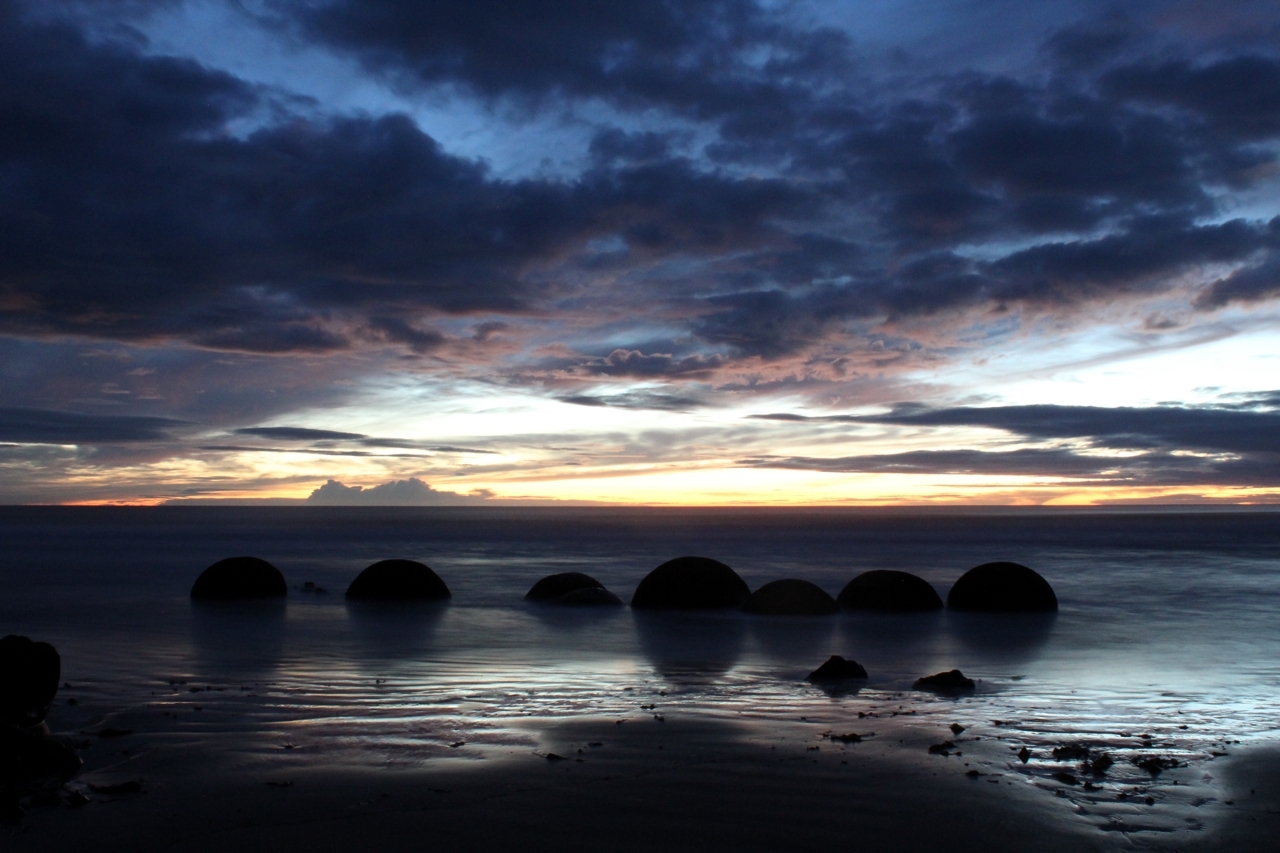
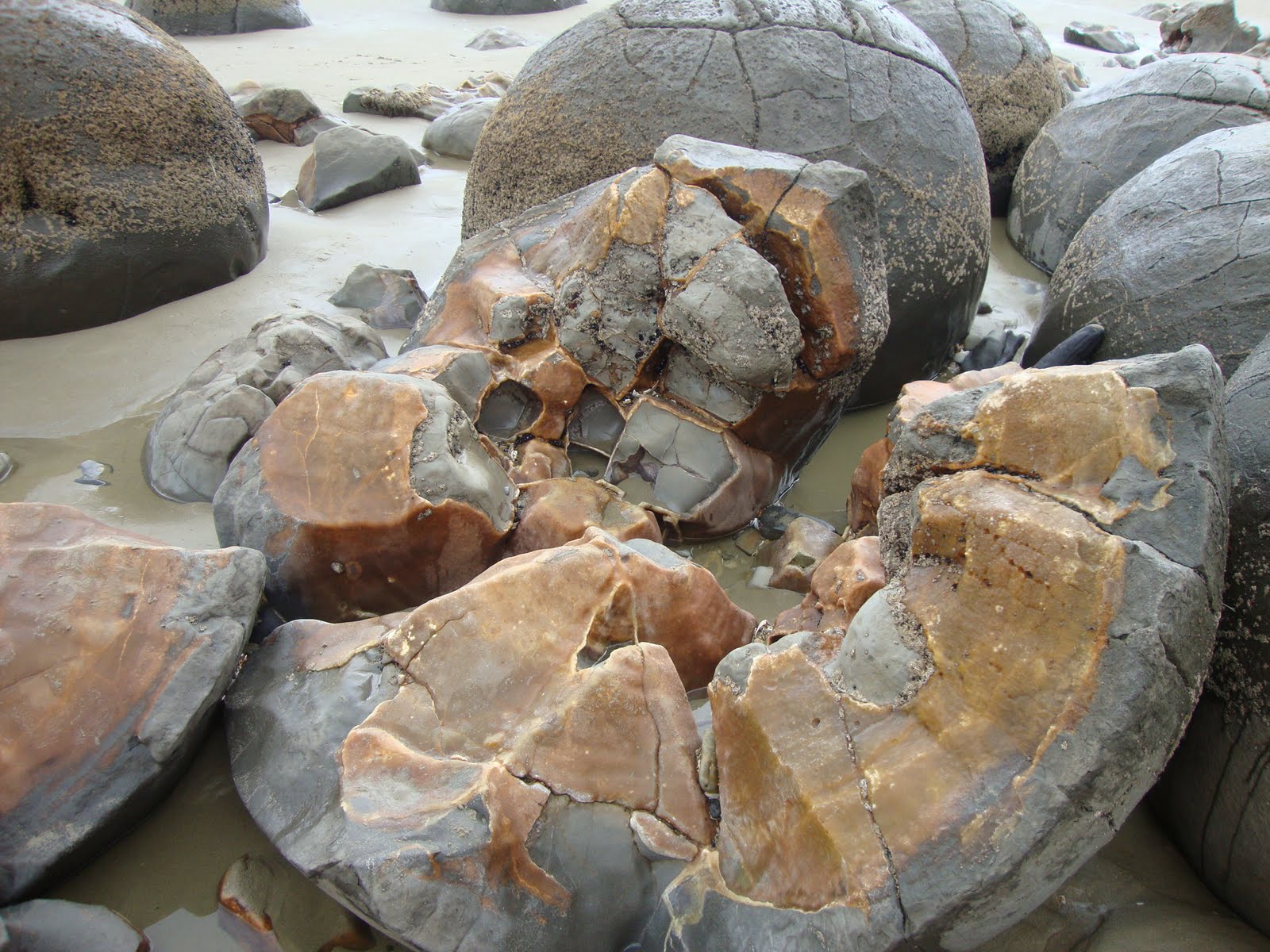
The Moeraki Boulders are unusually large and spherical boulders lying along a stretch of Koekohe Beach on the wave-cut Otago coast of New Zealand between Moeraki and Hampden. They occur scattered either as isolated or clusters of boulders within a stretch of beach where they have been protected in a scientific reserve. The erosion by wave action of mud-stone, comprising local bedrock and landslides, frequently exposes embedded isolated boulders. These boulders are grey-colored septarian concretions, which have been exhumed from the mud-stone enclosing them and concentrated on the beach by coastal erosion. Click on smaller pics to supersize.
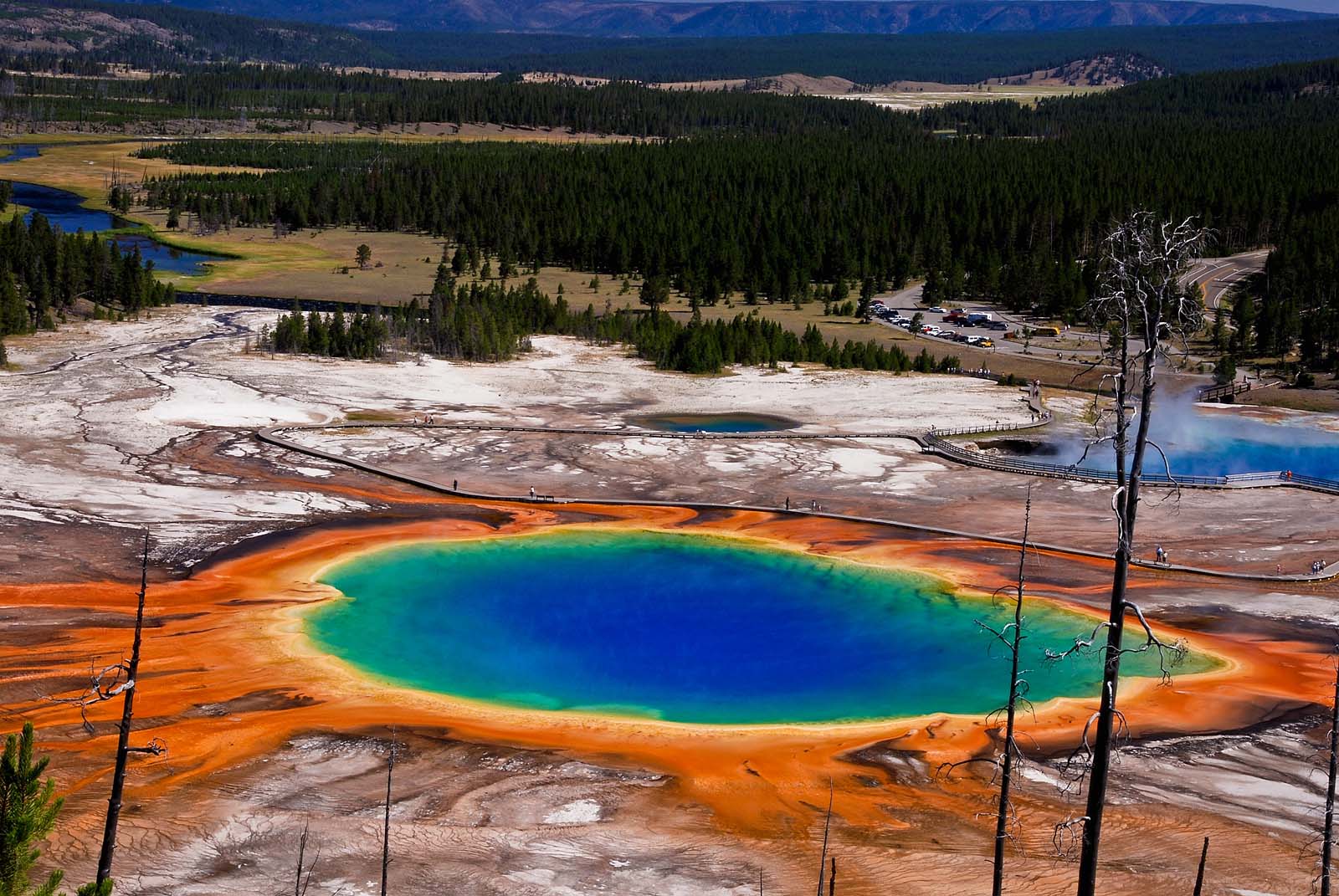
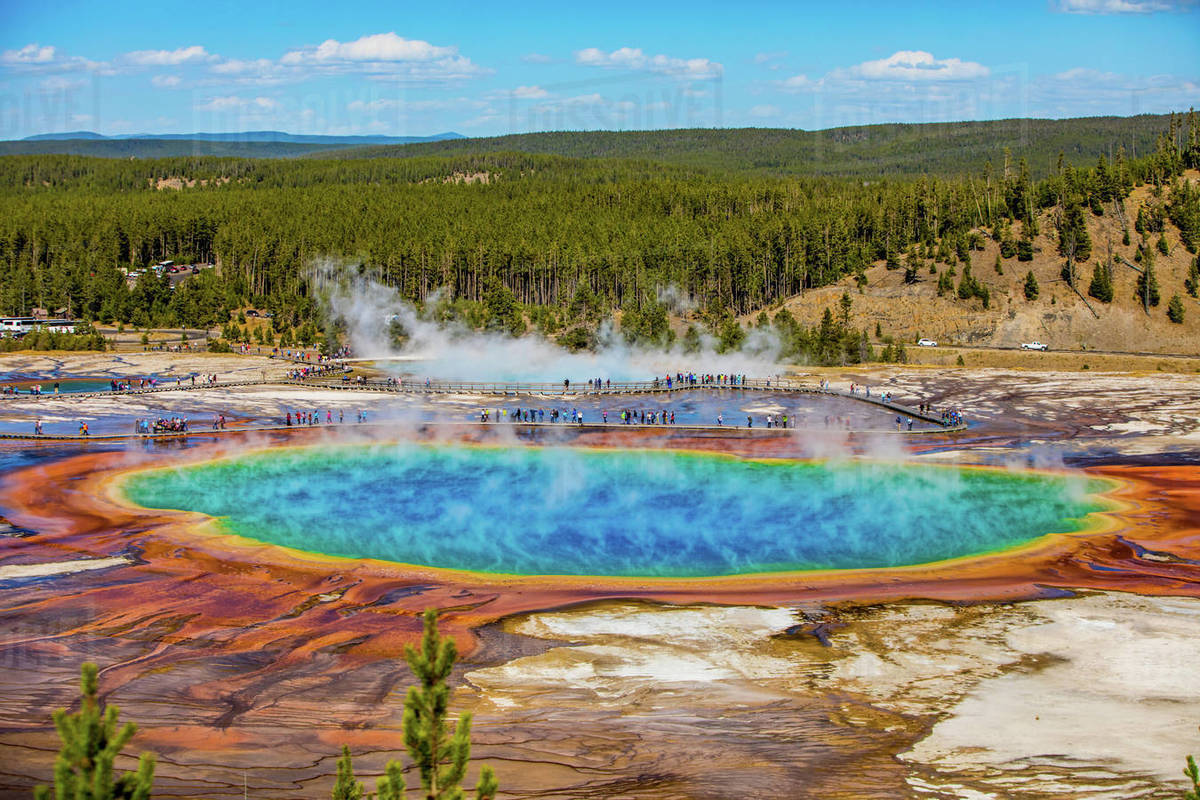
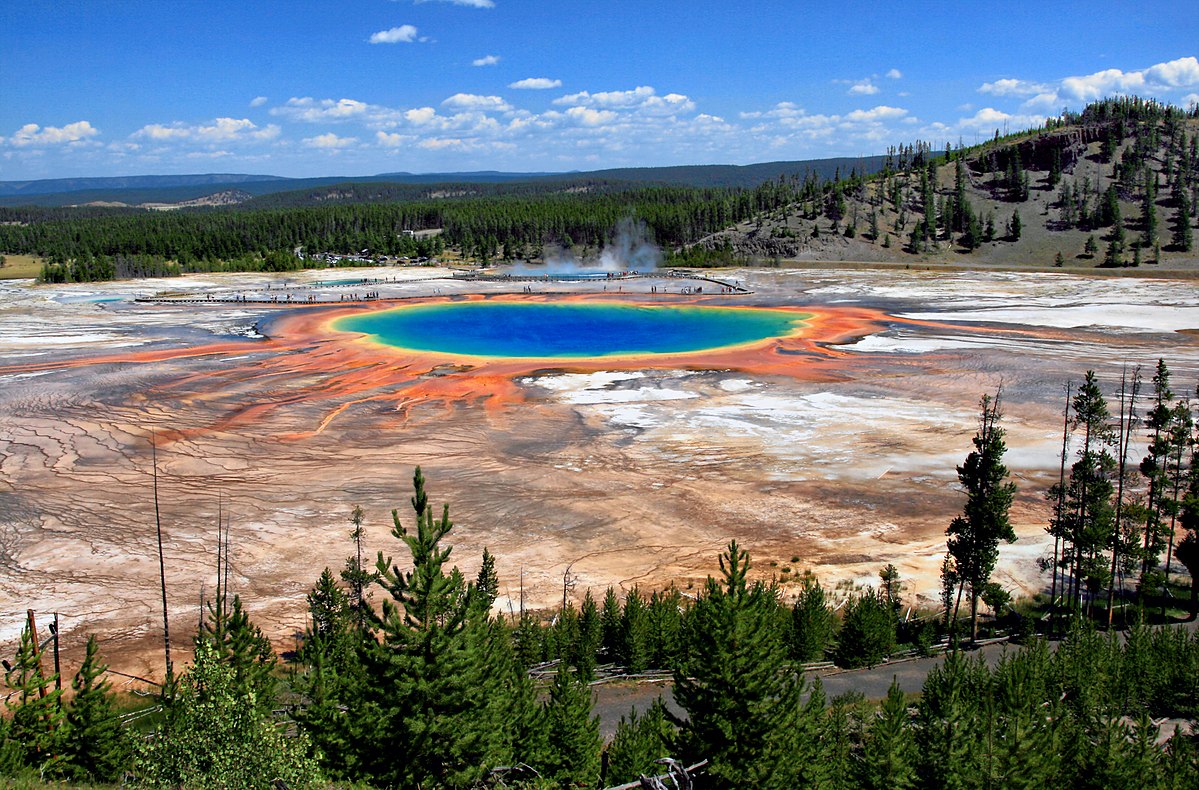
Tucked away in Yellowstone Park is the Grand Prismatic Springs. While not as well-known as Old Faithful, Grand Prismatic is actually the largest hot spring in the world. The heat-loving bacteria in the spring make the water rainbow-colored. While the spring is gorgeous to look at, it’s not the best place to take a swim, as the water reaches over 1000 degree Celsius (188.6 Fahrenheit). It is worth to click on smaller pictures.
I hope you enjoyed my selection of „The Natural Wonders Of The World“ !!

