
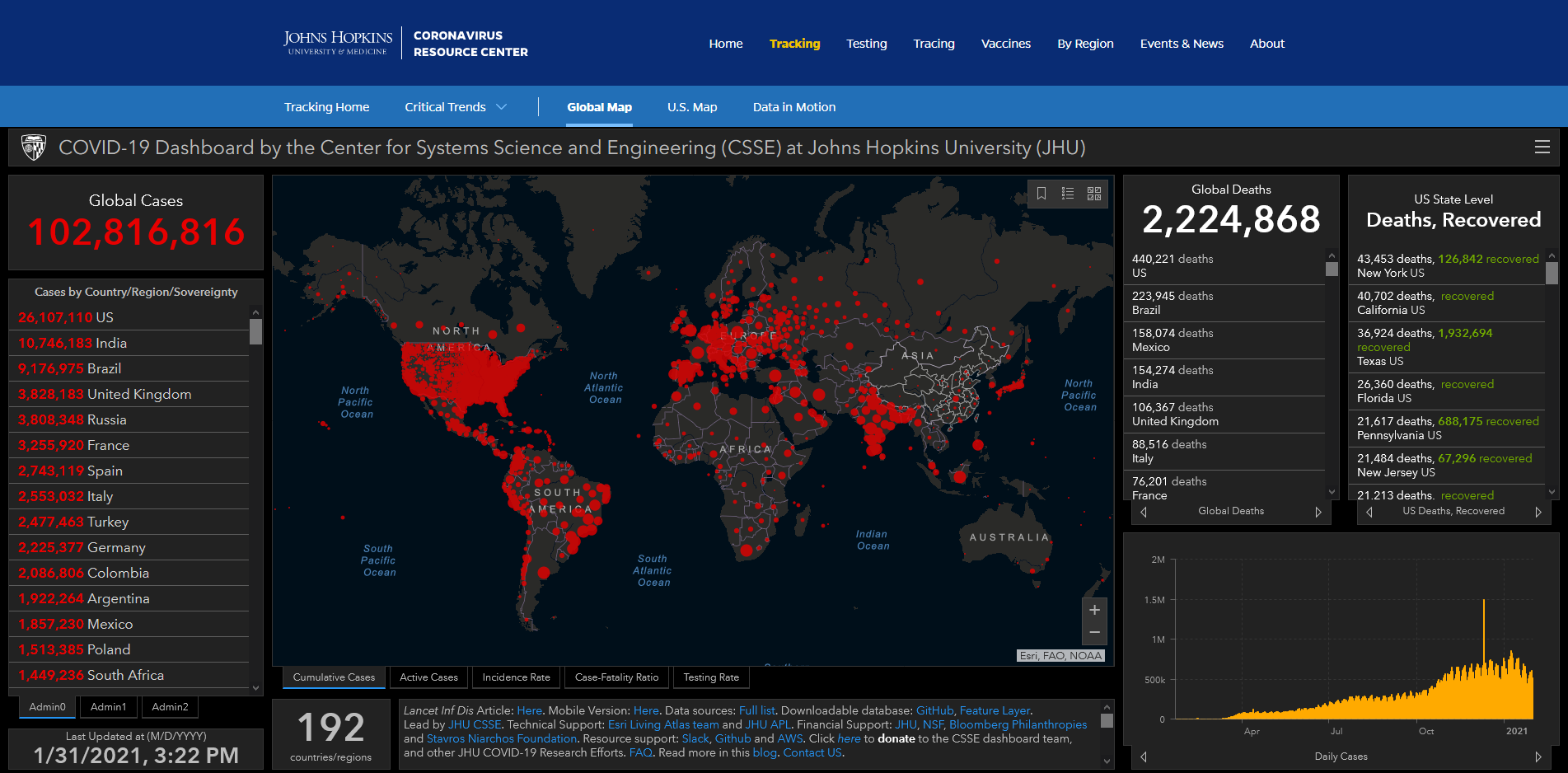
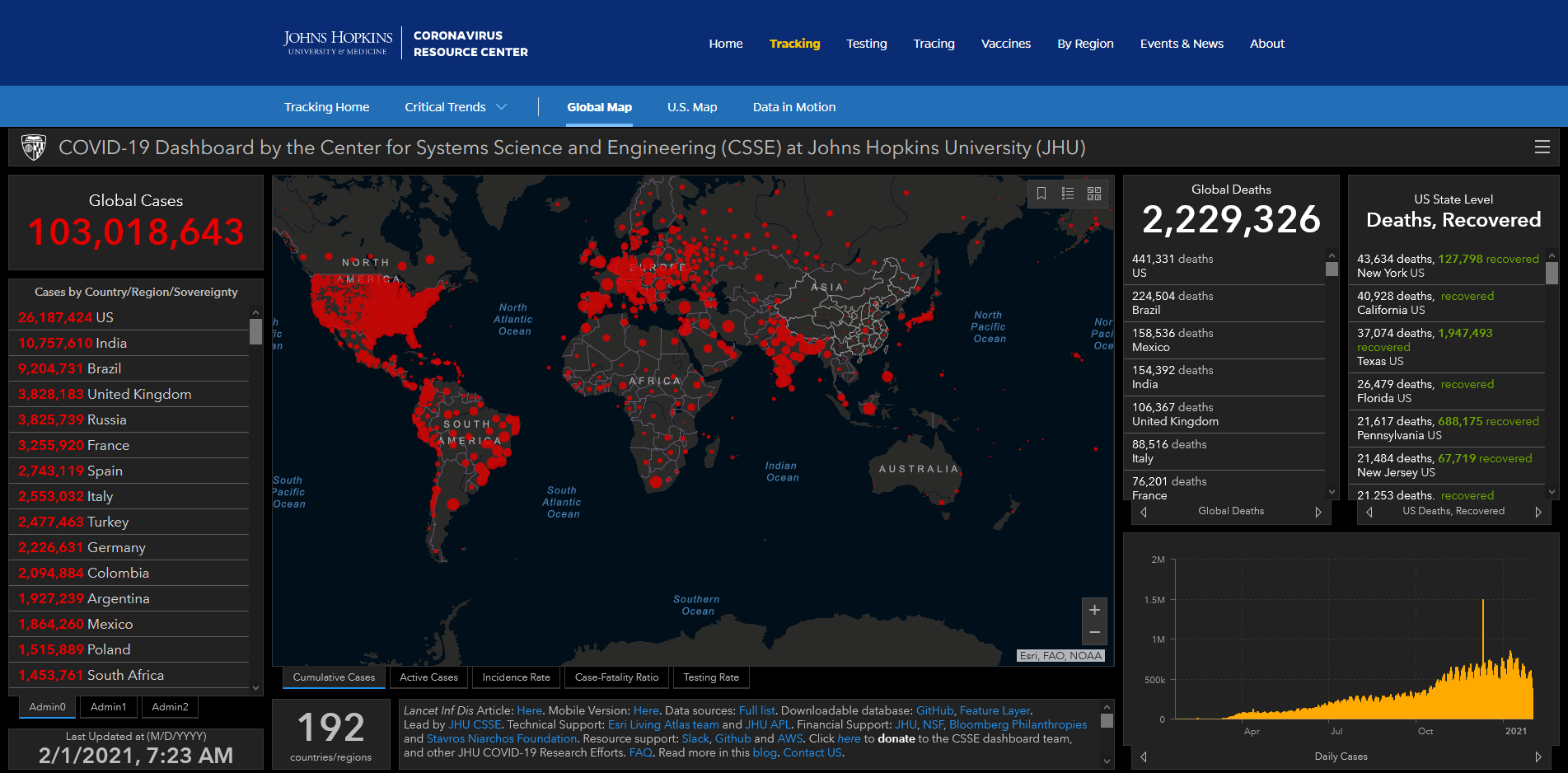
What a difference ONE DAY makes:
I have no answers to these important questions, what was and what will be. Not even an answer to questions like, what can we learn or what can we do or how can we be prepared and so on.
The coronavirus pandemic isn’t the first to hit the human civilization. But it is a new one and NO ONE has any experience with it. Throughout history there have been numerous pandemics, others much worse than COVID-19, that claimed the lives of thousands even millions of people. Ever since humans learned to live in groups forming communities where they live close to each other and also travel across the seas, the world has seen numerous diseases spread like wildfire.
Distance, masks, isolation, shutting down public life, school closures, no travel, quarantine rules and much much more.
These measures to contain the Corona pandemic are not new to humanity. There were also strict lock downs in the days of the plague and the Spanish flu. The rules then are very reminiscent of the current ones, but there are differences.
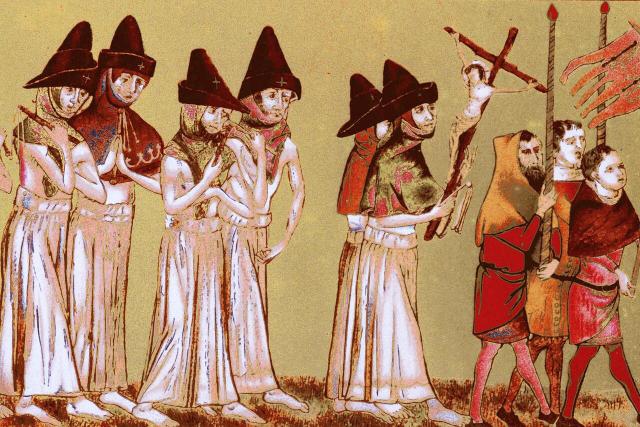
It was the deadly pandemic that swept through Europe and Asia among other continents and killed an estimated 25 million people in Europe. Aside from having fever and chills, those afflicted also had blood and pus seeping out of swellings all over the body.
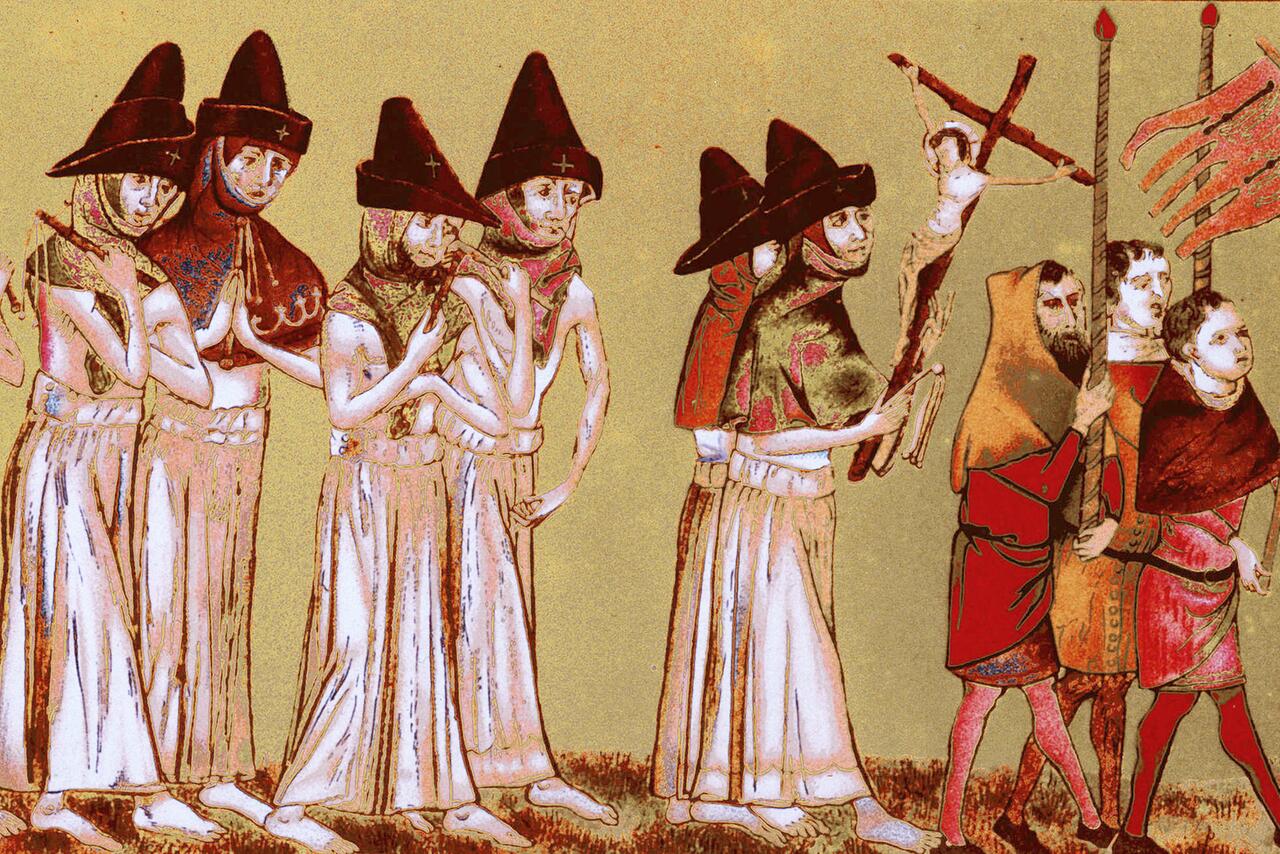
A disease breaks out and spreads across several countries and continents within a short time. Because numerous people die from the disease, further infections are to be prevented. To this end, patients are isolated, events are canceled, and residents are only allowed to leave their homes for shopping.
These rules were imposed on people in Italy in the 16th century. An Italian doctor wanted to contain the plague – with measures that are strikingly similar to the current Corona restrictions. Similar rules were also in place at the time of the last massive pandemic, the Spanish flu. Today’s approach to preventing the spread of COVID-19 is based on the measures taken during the plague wave in the early modern period.
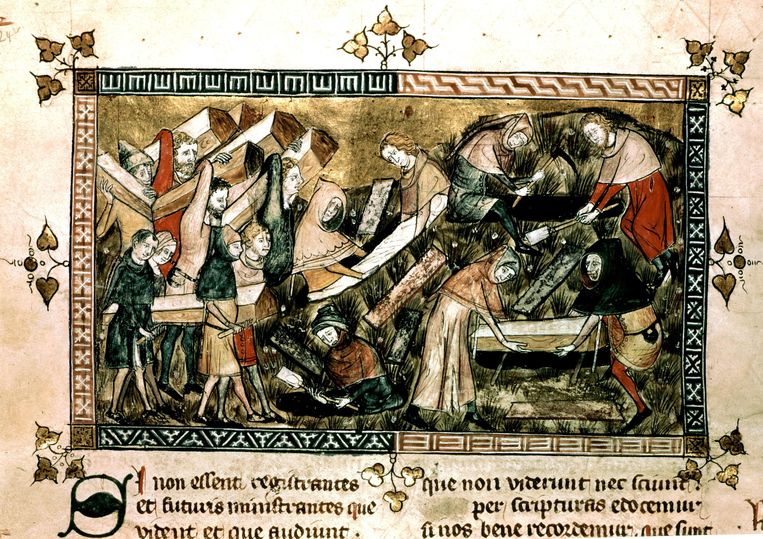
In the 14th century, the disease spread throughout Italy. It is estimated that between 1347 and 1357 a third of the European population died of the plague. Over the next centuries, other waves of plague struck parts of the world.
Due to the enormous threat to public health, the political authorities took action against the plague into their own hands. „Early medical practitioners existed as early as the Bronze Age,“ says medical historian Karl-Heinz Leven. He is director of the Institute for the History and Ethics of Medicine at the University of Erlangen-Nuremberg, and epidemic history is one of his main areas of research.

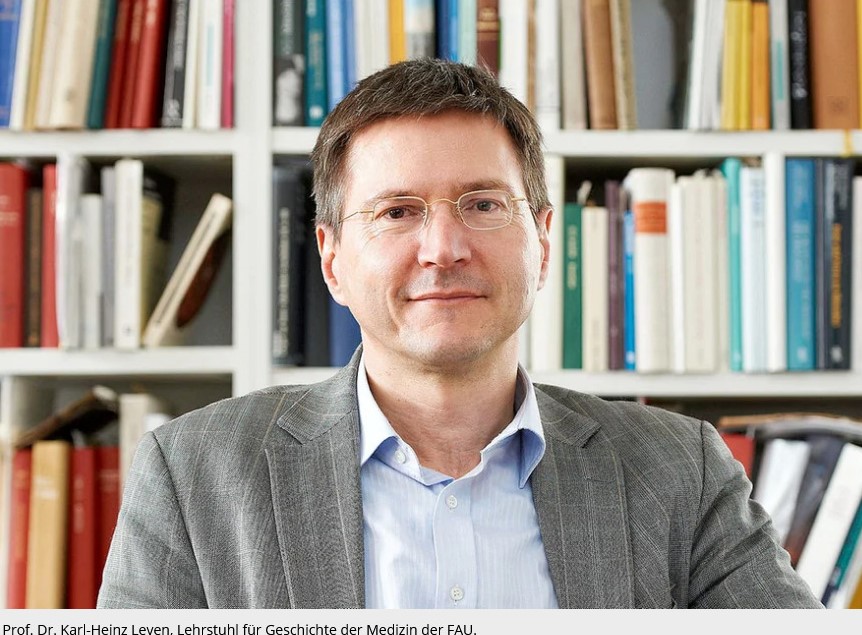
„But it was in dealing with the plague that public health policy began.“ This made the containment of the disease a state task for the first time in history. People were only allowed to leave their homes to go shopping. Then, too, a kind of lock down was imposed, bringing public life to a standstill.
The Italian physician Quinto Tiberio Angelerio (b. 1532, d. 1617) established a lockdown for the Sardinian coastal town of coastal town of Alghero, according to the National Center for Biotechnology Information, 57 rules.
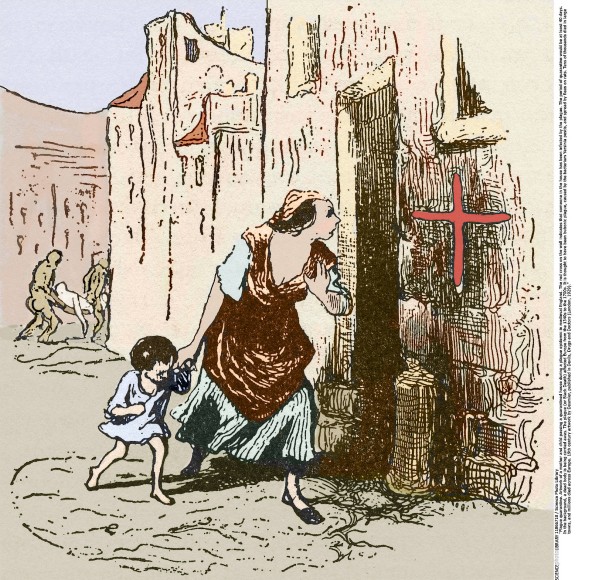 Medieval quarantine: The doors of those infected with the plague were signed with a red cross and barricaded for 40 days, as depicted by the French painter Daumier.
He had previously practiced in the Sicilian city of Messina and had been able to observe the plague there. Angelerio crippled trade with people outside Alghero by erecting a triple barrier along the city wall. He also decreed that only one person per household could leave the house.
Private meetings and events were forbidden; instead, keeping one’s distance became the order of the day. In order not to come too close to others, people were supposed to carry a two-meter-long stick as a guide. Citizens were expected to clean and disinfect their homes and clothing, for example by using heat in the oven, and they were to burn cheap furniture right away. In addition, regular airing of the rooms and the air in the city was to be purified – according to the knowledge of the time – by firing cannonballs.
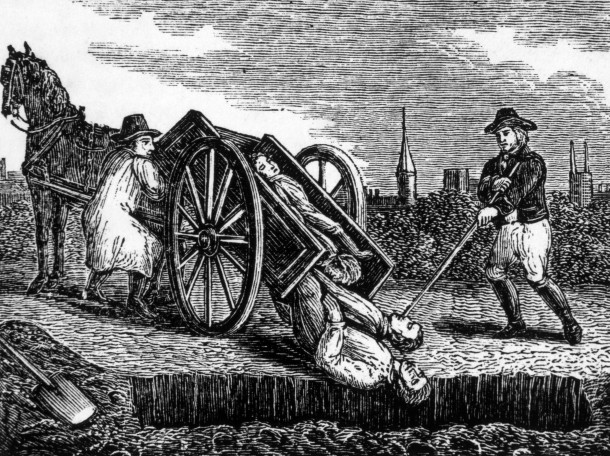 The plague dead were buried in mass or group graves, as here in London in 1665. Wood engraving from 1834.
Neighbors betrayed each other when disobeying the rules. Infected people were isolated in specially set up infirmaries, and for people who had contact with sick people were subject to strict curfew. Security guards guarded and contact persons to ensure compliance with the rules. The contaminated houses in front of which they stood were marked with a red cross, and whoever did not report a new plague infection after six hours at the latest was punished.
Furthermore the towns people were supposed to report it if anyone defied the rules, they were even paid money for doing so. Doctors like Angelerio could not explain the infections medically at that time. They only knew that the plague was contagious, and they suspected that it was related to poor hygiene, with stench, filth and rot.
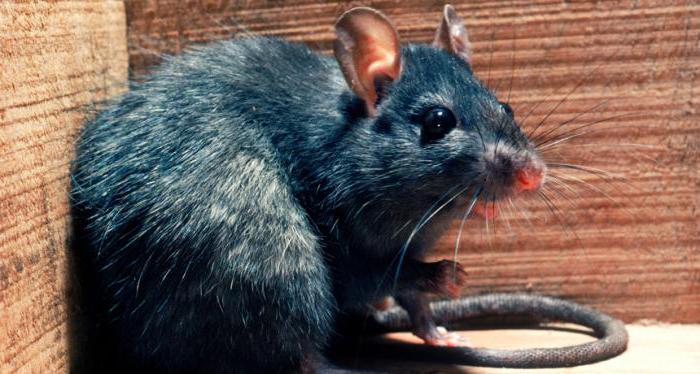
In this way they took up an idea from the Middle Ages, but in reality the so-called
rat plague was transmitted by fleas living in the fur of rodents or by fleas moving between
migrated between people.
Masks were intended to prevent droplet infections with Spanish influenza. Nonetheless, the speculation about contagions at the time led to Angelerio’s measures proving effective.
Today, scientists consider the Italian physician’s approach as extremely successful, not least because researchers have now been able to scientifically proven. „That’s why a lot of it has been taken up again today,“ Leven says.
And also during the Spanish flu between 1918 and 1920, similar rules were put in place: Schools and places of entertainment were closed and people were expected to wear masks. Unlike the plague, which is an infectious disease transmitted by bacteria, the Spanish flu as a viral disease is medically comparable to COVID-19. The pathogen also primarily attacks the respiratory tract, so droplet infections were also to be prevented at that time by covering the mouth and nose.
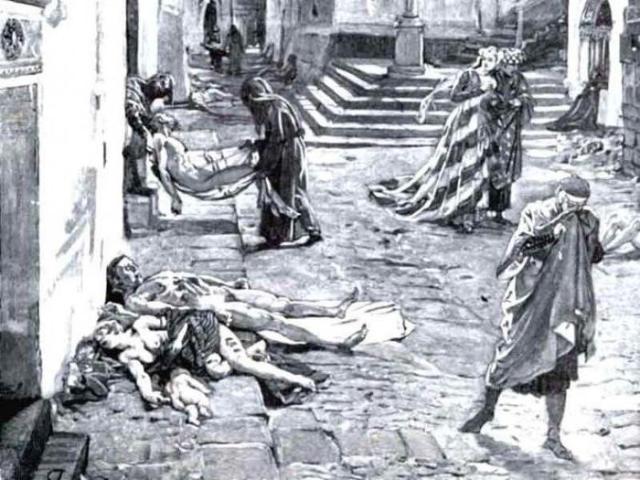
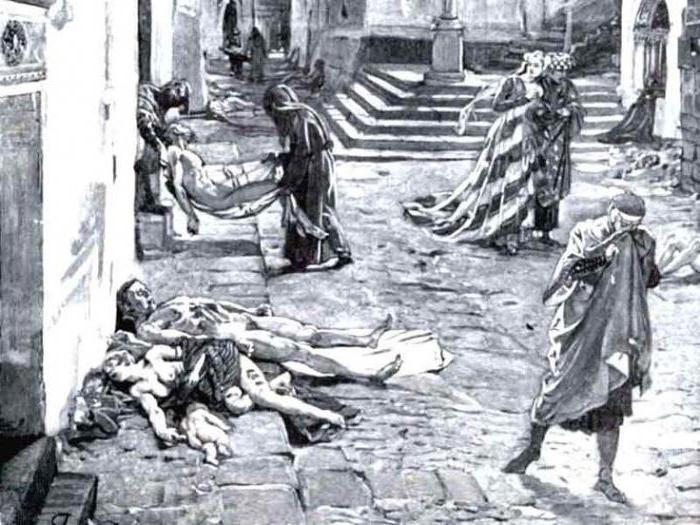
The plague dead lay in heaps in the streets. There were hardly any people who could clean up the bodies.
Viral disease 100 years ago was more deadly than the Corona pathogen. On the whole, however, the containment rules were neither consistent nor imposed on the citizens imposed on citizens over a long period of time, Leven says. So there is a difference here to the approach taken in the Corona pandemic. Between the fall of 1918 and the spring of 1919, 300,000 people in Germany died from the Spanish flu. „People were so traumatized by the war, they just accepted the dying.“
The disease was not seen as an existential threat, but the plague was – and today, coronavirus is considered a public health threat. „In comparison, the Spanish flu was more deadly than Corona, though,“ Leven says. When it spread around the world shortly after World War I, it was mainly young, fit people who died.
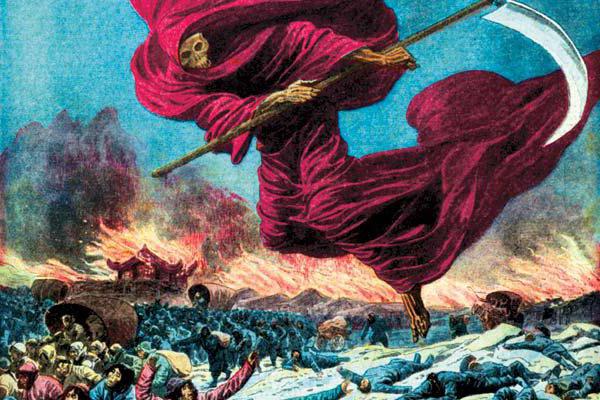
Often whole districts were closed off and burned out.
Emaciated people survived the Spanish flu paradoxically. What sounds contradictory, the scientist explains, is that „healthy and well-nourished bodies responded to the virus with an immune overreaction and did not survive.“ Someone who was emaciated from the war had no reserves for it, so the German population was least affected by the Spanish flu.
Fortunately, in contrast to that and the plague pandemic, medical treatment is possible, Leven says. „There are 25,000 intensive care beds available for that, just in Germany, which is enormous.“ In addition, a vaccine was available about a year after the outbreak of COVID-19, normally it takes up to 10 years, faster than at any time in human history.
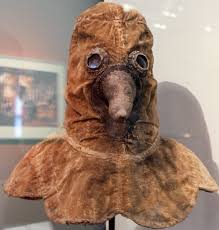 Typical plague mask in the Middle Ages.
A Virus expert explains: This is why pandemics originate in Asia and Africa.
In a guest article for „I fucking love science“, Dr. Suresh Kuchipudi, deputy director of the animal diagnostics laboratory at Penn State University, has now come up with a theory as to why „deadly pandemics are increasingly emerging in Asia and Africa. In addition to the current coronavirus, the scientist also refers to the outbreak of the Sars virus (2002/2003) and the Mers virus (2012). He finds it particularly worrying that the time span between pandemics has become shorter and shorter over the past 20 years.
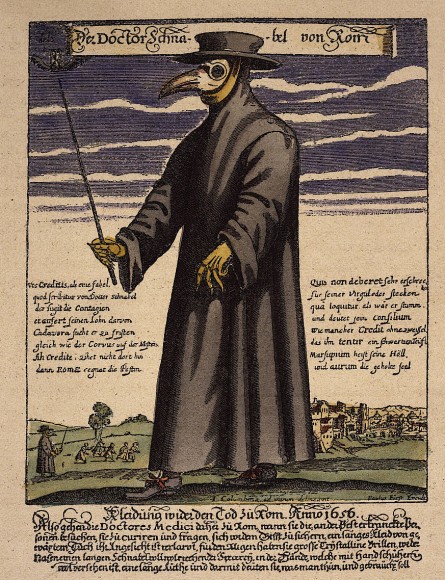 The doctor beak of Rome.
Suresh Kuchipudi sees one origin in the unchecked urbanization in Asia and the Pacific region. What follows could be described as a tragic chain reaction. To create residential areas, forests would be destroyed, pushing back wild animals and eventually bringing them closer to humans and their domestic animals. Wild animals often harbor viruses, which in special cases can jump from species to species and would eventually infect humans.
The expert on zoonotic viruses, those that spread from animals to humans, describes his concerns as follows: Due to the loss of their habitat, more and more predators are dying. This, in turn, favors the population of rodents, which spreads explosively. This, according to studies, would also increase the risk of zoonotic diseases.
In addition, there would be other factors, which the virologist discusses. For one thing, tropical regions are fundamentally rich in biological diversity and thus naturally have a large number of pathogens. Furthermore, the cohabitation of families with their small livestock would contribute to the spread of viruses.
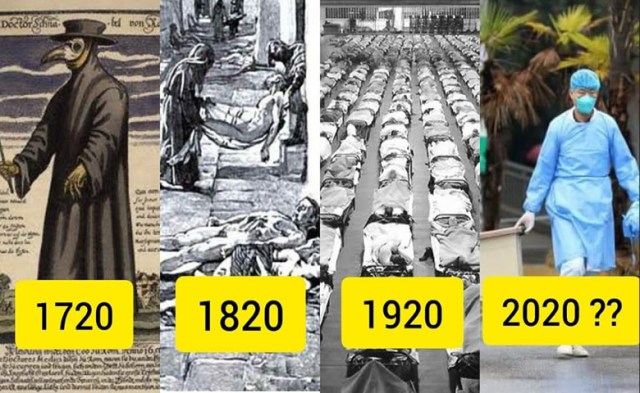 Isn’t it interesting that we have every 100 years a massive pandemic outbreak ???
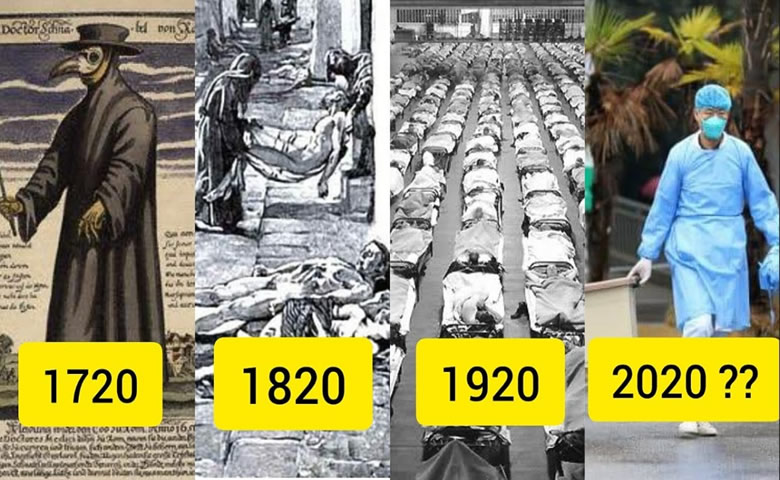
Disease control and feed supplements would be virtually non-existent. Another factor would be markets where „intimate mixing of multiple species, including humans“ would prevail. Further, meat from hunting wild animals-meat would be „a clear and primary route for zoonotic disease transmission.“ Parts of tigers, bears, rhinos, pangolins, and other species that find their way into questionable medicines would also play a part in the spread.
We are all currently experiencing a historical world event the likes of which we could never have imagined. We know pandemics only from history books – and now we are in one ourselves. It is true that mankind has repeatedly suffered terrible plagues with numerous victims. But no pandemic has ever spread around the globe as quickly as Covid-19. Looking back at what happened can also be a look forward to what may lie ahead.
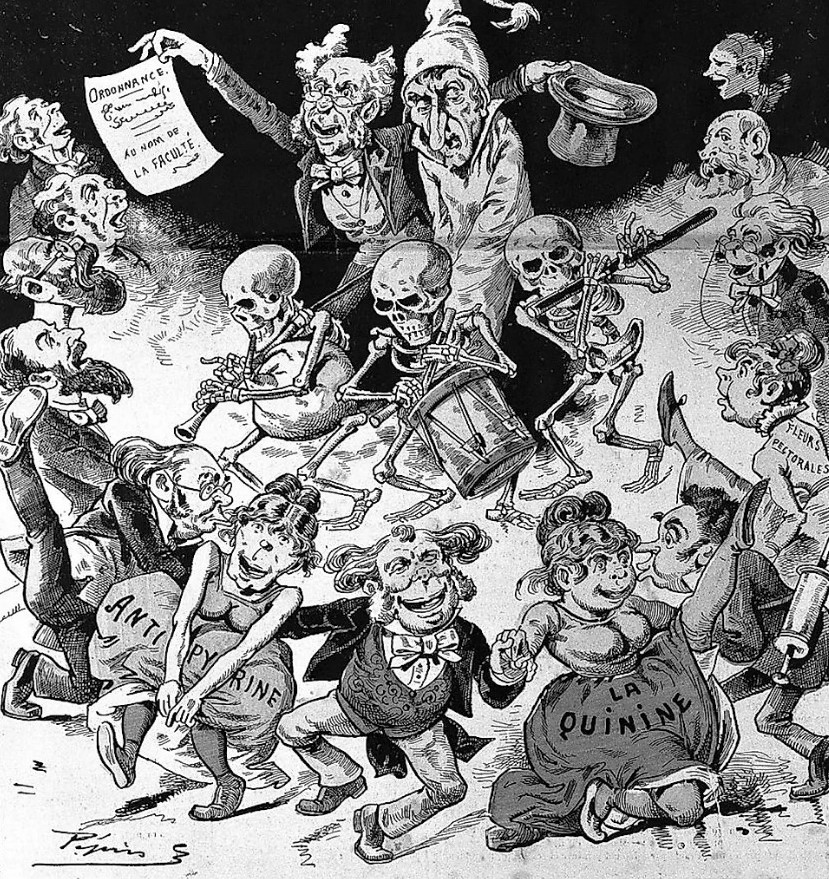
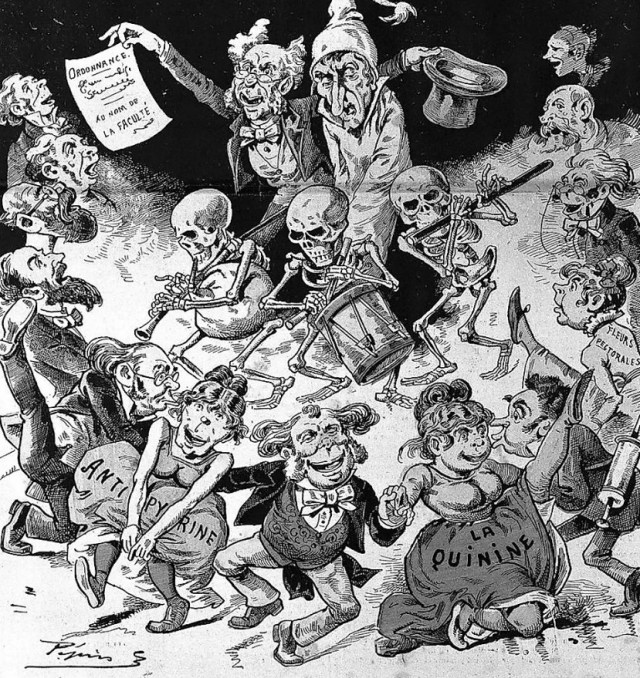 The 12 January 1890, edition of the Paris satirical magazine Le Grelot, France depicted an unfortunate influenza sufferer bowled along by a parade of doctors, druggists, skeleton musicians and dancing girls representing quinine and antipyrine. In all centuries, during all pandemics, there were the deniers, the radical demonstrators against rules and warnings, who ridiculed the experts, the conspiracy theorists, the alleged physicians who already celebrated a solution and many more.
All of them did not even look at the fact that death was already richly harvesting.
It is exactly the same today.
The plague in the mid-14th century probably claimed the most victims. It is estimated to have claimed more than 200 million lives worldwide; in Europe alone, around half the population is thought to have perished. It took about 100 years for the population to recover to pre-plague levels. The political, economic and cultural impact was dramatic.
Better remembered collectively is the Spanish flu of 1918 to 1920, which was the last major pandemic of modern times to date and occurred just 100 years ago. It was a mutation of avian flu and came from the USA to war-ravaged Europe. According to estimates, 25 to 50 million people died from it.
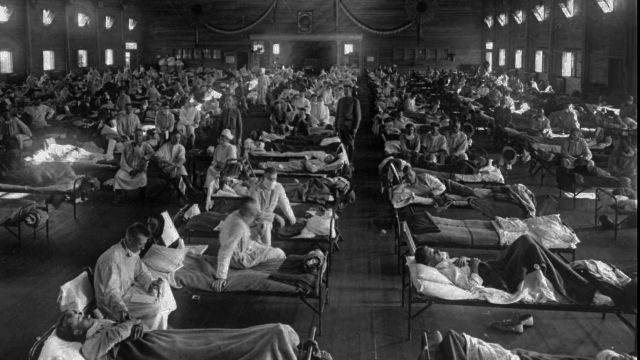 Completely overstretched hospitals housed patients in cleared-out factory halls. Here, patients were no longer treated or cared for, only death is their chance.
Does it have to come again so far, must the few Corona-refuser’s determine over the health of the mass ?
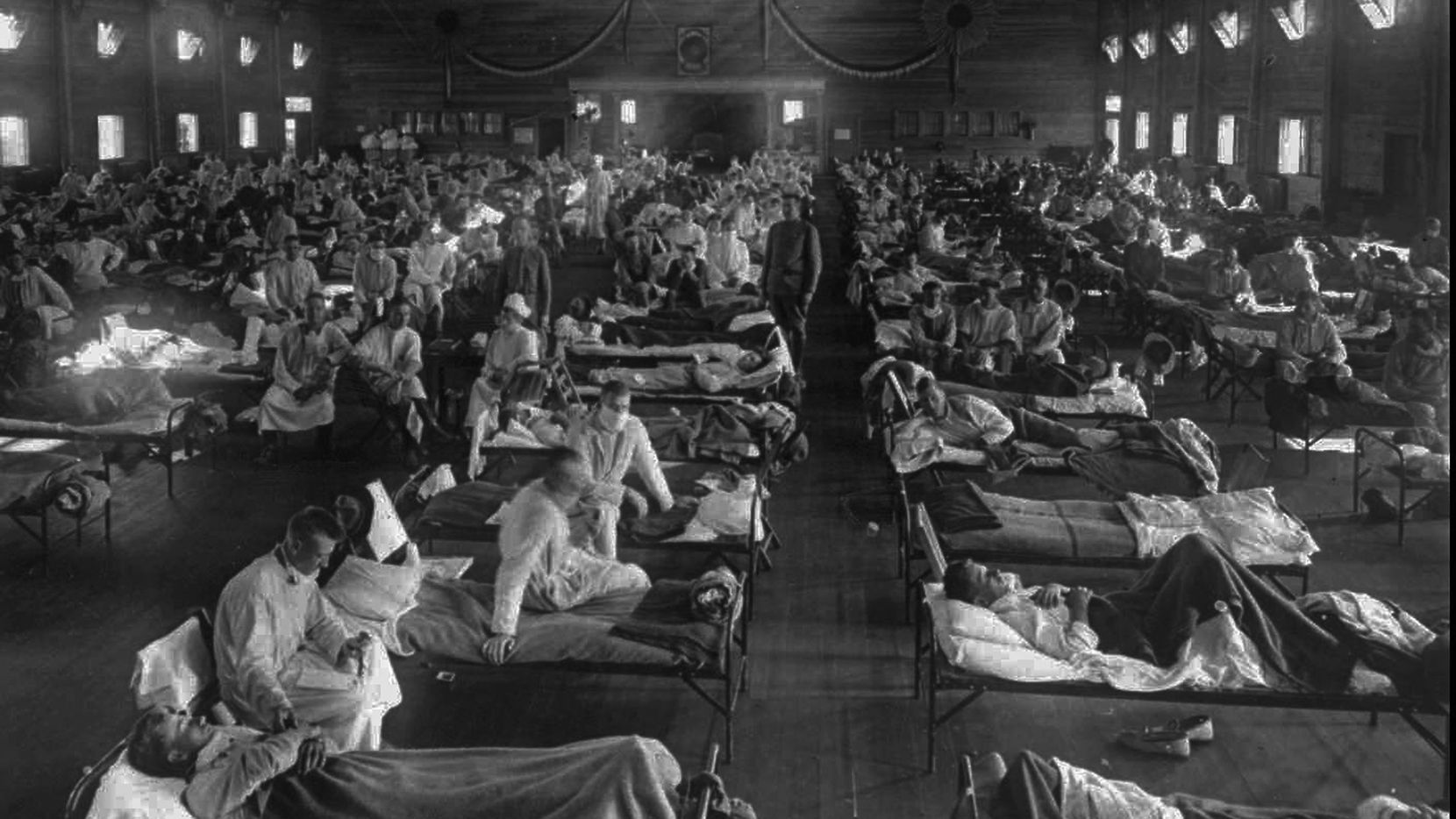
The Spanish flu is not only closer in time to us than previous pandemics. Despite the considerable level of scientific and medical knowledge even then, it caught the healthcare system completely unprepared. Pneumonia was also the cause of death at that time, but the disease mostly affected younger people between the ages of 20 and 25. About 40% of the dead belonged to this age group.
The spread of the Spanish flu was accelerated by a special form of globalization: the First World War. Hundreds of thousands of U.S. soldiers were shipped to Europe, bringing the virus with them. It is called Spanish flu, by the way, because Spanish media first wrote about it. The military censorship of those participating in WW1 prohibited any reporting.
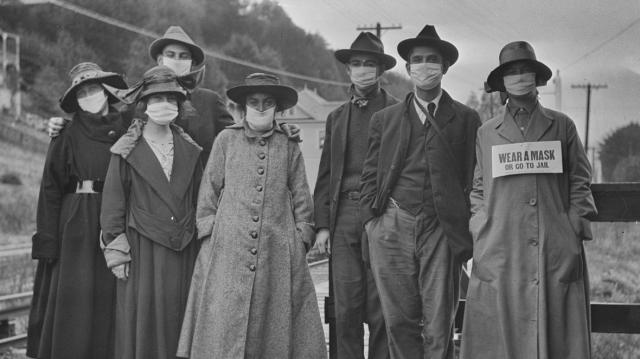 Such a strong order and warning would be wise to establish today also.
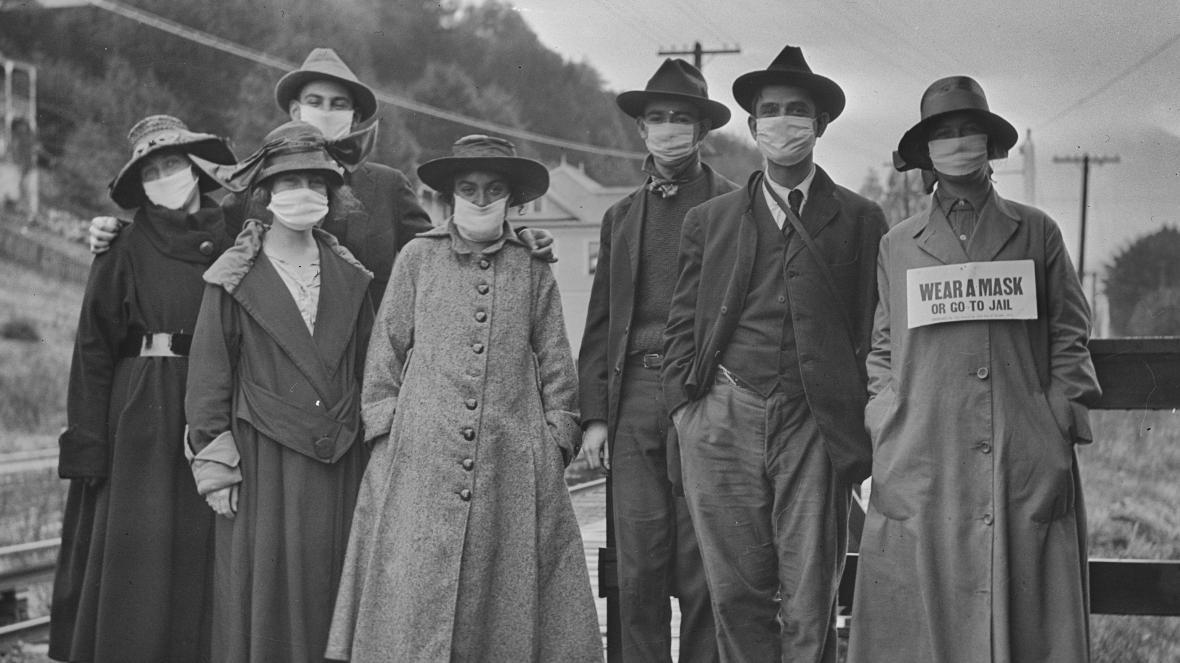
Today’s globalization is fortunately not based on war, but the intensive travel between countries and continents has facilitated its rapid and global spread. And then, as now, there was no international coordination of countermeasures, even after the end of the war.
The Spanish flu swept across the world in three waves. The first wave broke out in the spring of 1918, but was not initially noticed in view of the many thousands of deaths at the front every week. Only later did it become apparent that the American army, for example, lost almost as many soldiers to influenza as to warfare.
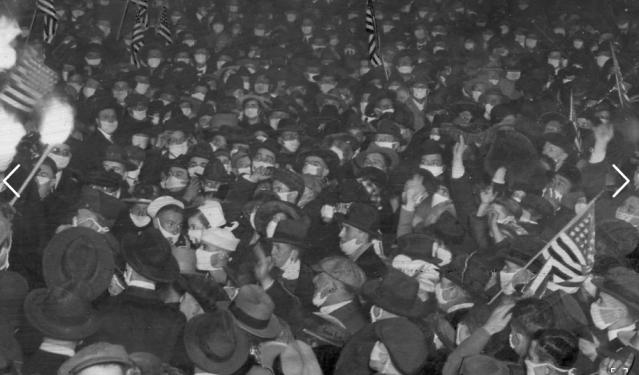 Also at that time thousands of incorrigibles demonstrated against restrictions and limitations. Far more than half of them paid for it with their lives.
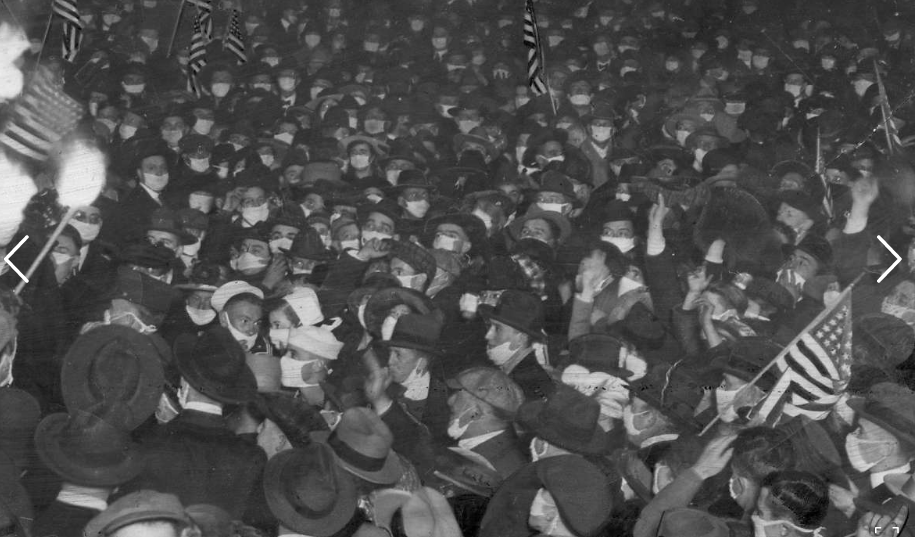
The second and third waves were particularly deadly, beginning in the fall of 1918 and the spring of 1919, respectively. Two out of three people became infected with the virus. In industrialized countries, the mortality rate was around five per thousand, and in poorer countries up to ten per thousand. Italy was particularly affected at that time as well, but the central and southern parts. Overall, the flu claimed more lives than the First World War. Around two percent of the world’s population, of 1.8 billion people, died from it.
The casualty figures for today’s Covid-19 pandemic are still very far from the horror figures of the Spanish flu. What both pandemics have in common is their rapid spread around the globe and high mortality rates. The world is in a better state today than it was in 1918 at the end of the World War. The conditions for success in the fight are infinitely more favorable.
But okay ‚a virus: we have the flu every year anyway, what’s so bad about this? Who is to blame for the pandemic?

That’s exactly it, we have the flu every year. everyone has had the flu at some point in their lives (and often multiple times). And every time we get sick from it, we become immune to it, until the flu mutates far enough and we get sick from it again and so we have had a sort of „immune upgrade“.
When Europeans began to colonize America in 1492, some 90% of the native Americans died from the viruses (influenza, measles, smallpox) they brought with them that illustrates the power of that accumulated immunity.
Like the Native Americans, we as humans now have no built up immunity to this virus because it is a totally new virus for us. Unlike the flu, where we always get a variation of the flu we’ve already had, our bodies are now getting a totally new disease that is making us sick.And this is the biggest challenge for scientists and politicians too.
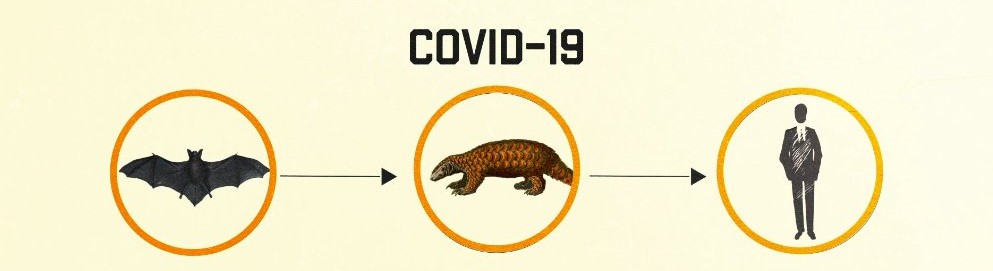
This is exactly where corona virus differs. The term zoonosis is important to understand here: these are infections of vertebrates that are transmitted to humans. The important fact is that the virus lives and mutates (reservoir) among different animal groups. Which in the case of the corona virus has most likely been the bat. And there is a strong suspicion that the bat transmitted it to another animal, and thus got to the market in Wuhan, China and mutated there and infected the first humans.
It attacks the lungs first, and when our body picks it up within 2 weeks of us getting sick and the immune system starts attacking the virus, corona also makes the immune system sick. This weakens the immune system for some people so much that they eventually die from Corona.
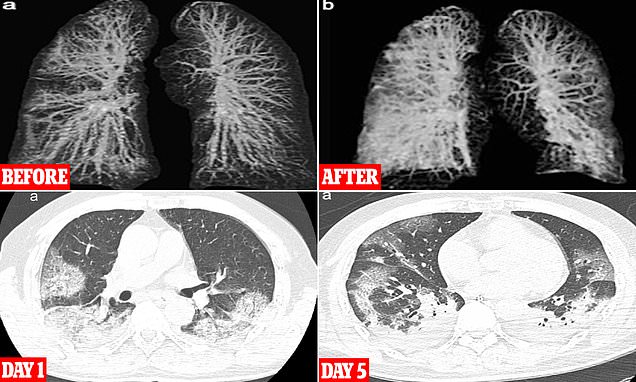 Corona does a lot of damage to the lungs, with long-term effects!
What is a „wet market“ – means – in China ?
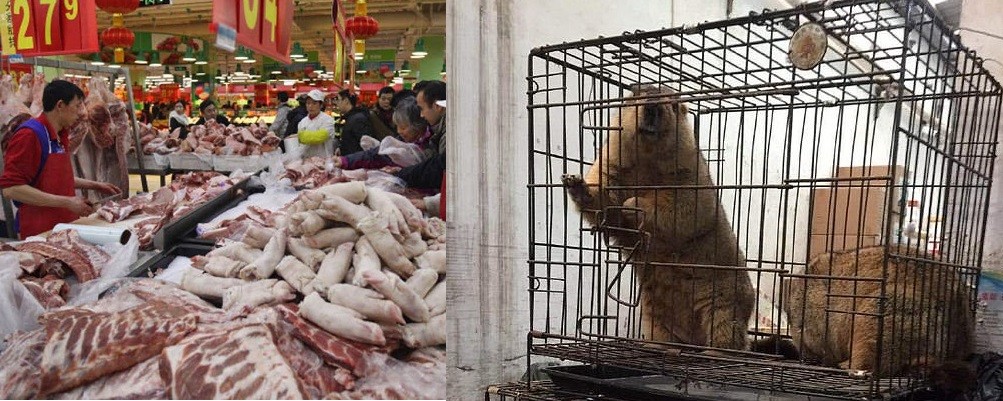
A wet market is a market where you can buy fresh meat. You will find live animals, which are slaughtered and „cleaned“ on the spot. You will find stacks of cages with live (sick) animals and their bodily fluids (urine, poop, blood, pus) mixing together. You can easily imagine: this is the perfect place for animals to get sick. You can find such wet markets all over the world.
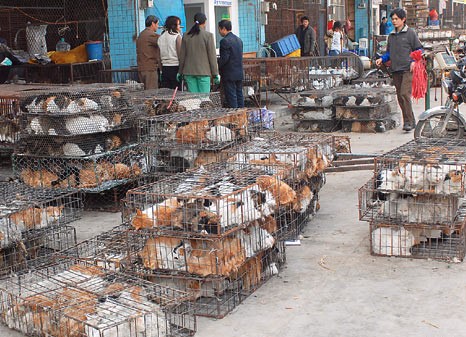 Living animals next to…
 …butcheries with open meat, mostly never cooled.

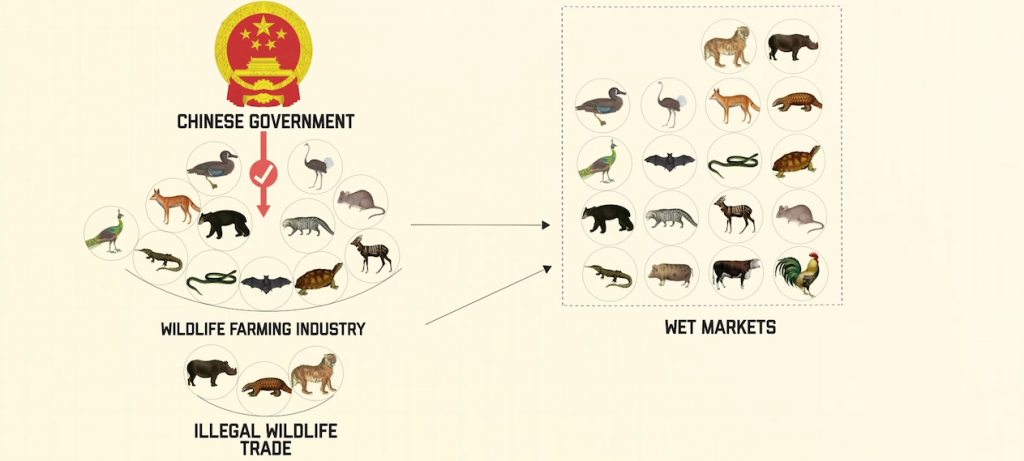
But in China it was different. In the 1970s under the Communist regime there was famine and so the then Chinese government decided to allow the capture and breeding of game as well. This worked so well that people could live from it, and was thus protected and ten years later also done on an industrial scale. Thus, there are hundreds of different animals to be found in these kinds of markets from all over the world, legally (but also illegally) all of which carry potentially different diseases.
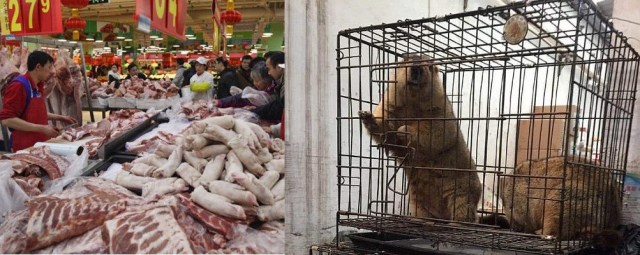 Open stacked cages, different animals, poor hygiene, and open meat, these are the perfect conditions for the development of diseases.
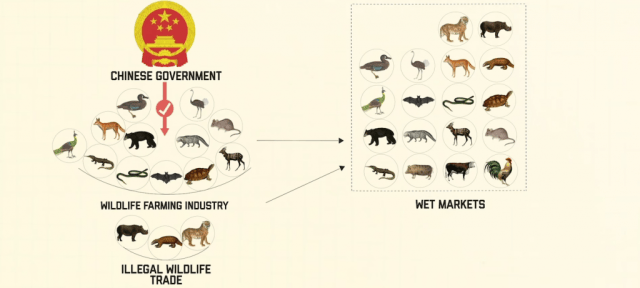 The Chinese government has approved numerous animals, but illicit trade has also found its place in these markets. So you have many animals close together, with a high potential variety of diseases, under poor conditions, and that’s waiting for a disease to break out.
Think late 80s, early 90s with BSE ‚the mad cow‘ disease originated in England.
How about Q fever of sheep in 2007-11 in the Netherlands.
Or influenza (h7n9) from poultry in 2013.
And Influenza (h5n8) in 2016/17.
Or foot-and-mouth disease in livestock animals.
HIV caused by eating primates (Bush-meat).
Spanish flu of 1918 (also an influenza).
Measles (a mutation of rinder-pest from cattle)
Smallpox (a mutation of camel pox)
Mumps, Rota virus, plague, typhoid,
But actually all of human history has these types of diseases:
All types of pandemic, measles, smallpox, Spanish flu, plague, cholera, typhoid fever, HIV epidemic and on and on.
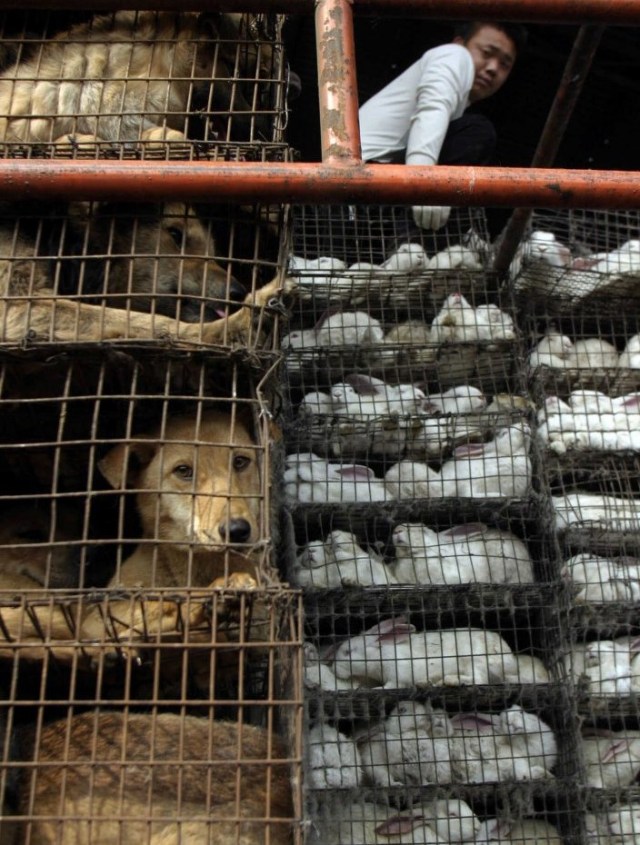 As long as we cage animals like this, to store and sell on wet markets for butchering, we have to face epidemics every few years. AND – IT WILL BE WORSE IN THE FUTURE !!
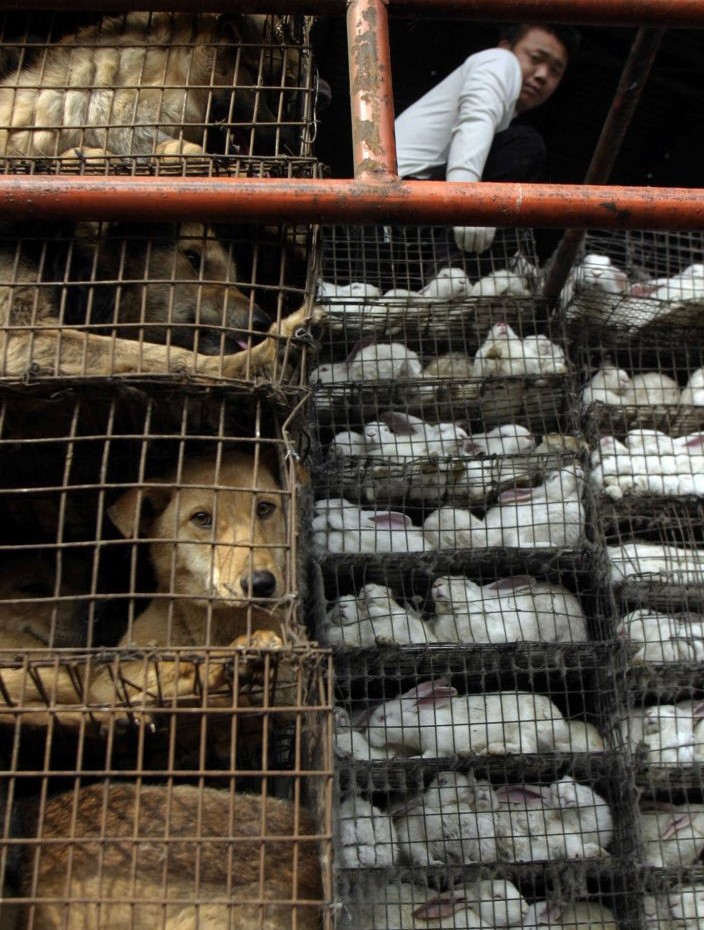
So animals are to blame for this pandemic?
Or do we have to blame Chinese meat eaters?
I don’t think so. We have a large population, some 8 billion people.
We have Globalizing, or international travel and logistics in increase.
And we have a large number of (different) animals, about 60 billion livestock animals, just to feed the world population. It is never enough anyhow, right ? What can we do ?
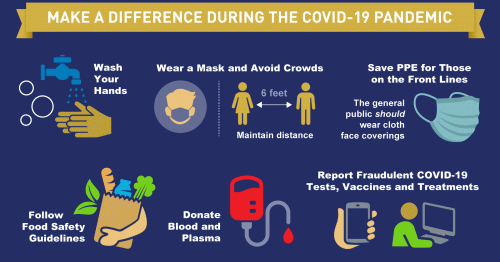
Just let’s try to make a difference in our personal small world and be prepared for more to come.
And it will happen, the world will never be as before Corona, just face it !!!
However, we still know quite little about today’s Covid-19 pandemic. Unpleasant surprises may lie in wait. For example, it is uncertain whether Covid-19 will also occur in multiple waves and whether the virus will mutate from wave to wave, allowing it to re-infect people who have already been immunized. Encouragingly, we now have much better and more numerous scientific capacity to develop an antidote. But it is still uncertain when the scientists will be successful and how quickly their work results will benefit as many people around the world as possible. Especially if they, the scientists – and all of us – have to deal with brainless idiots like Trump, Bolsonaro and others, which still play the danger down and therefore increase the human death toll !
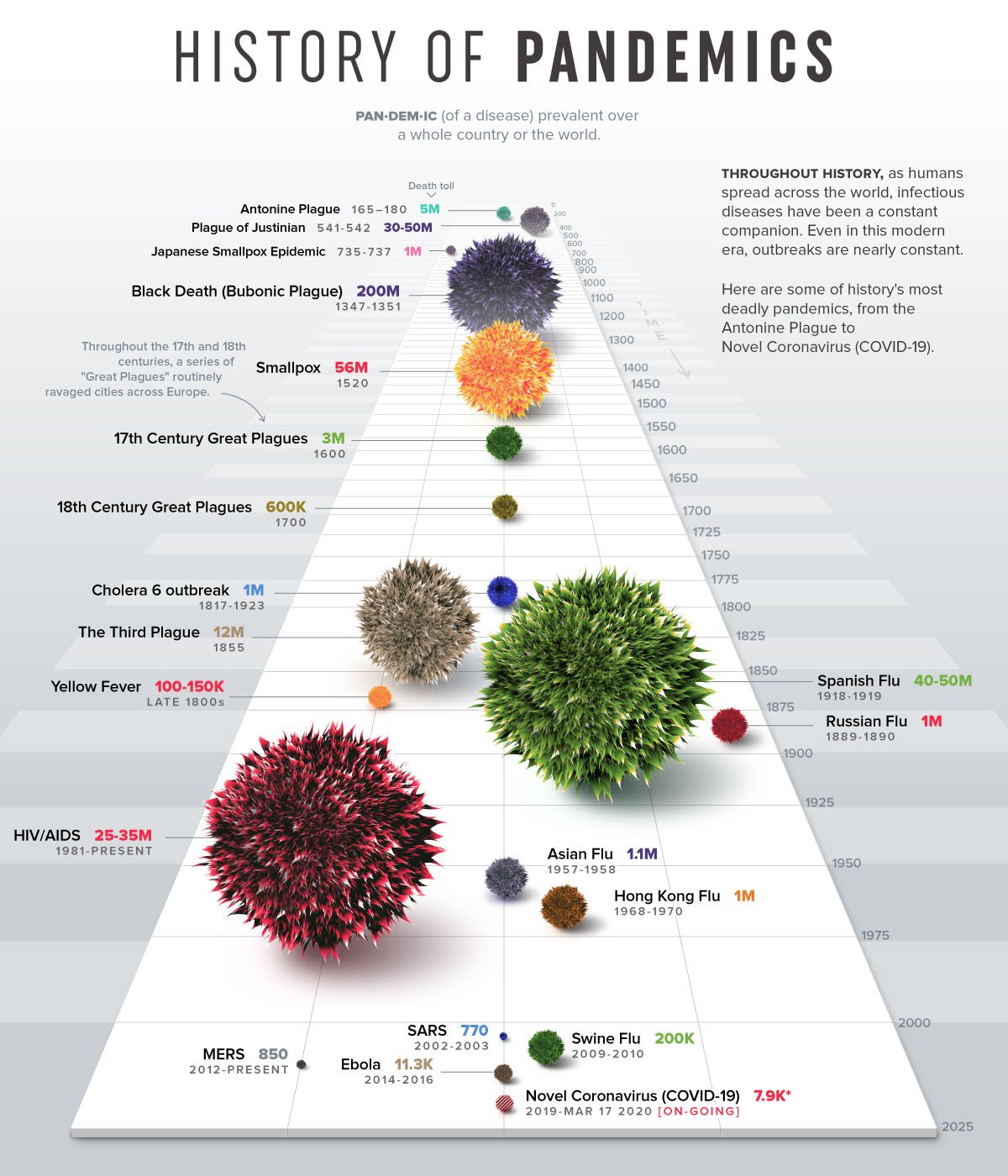
The dot symbolizing Covid-19 in the above graphs still looks very small, but the graph is from March 2020. Now, in January 2021, we already have over 103.000.000 global cases and more then 2.230.000 global deaths. So – the covid-19 dot must be already over double sized than the Hong Kong Flu dot !!!
The number of infected and dead is still very small compared to previous pandemics. But the dynamics of Covid-19 are frightening. And we still know almost nothing about the economic and political consequences of our pandemic.
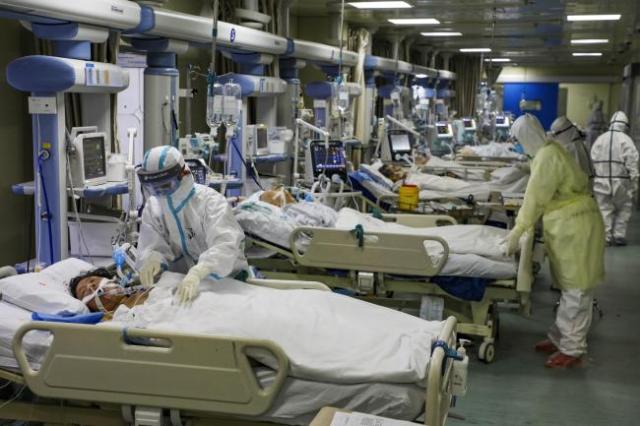 Over the capacity filled emergency stations – all fake news ? – YEAH RIGHT !!!
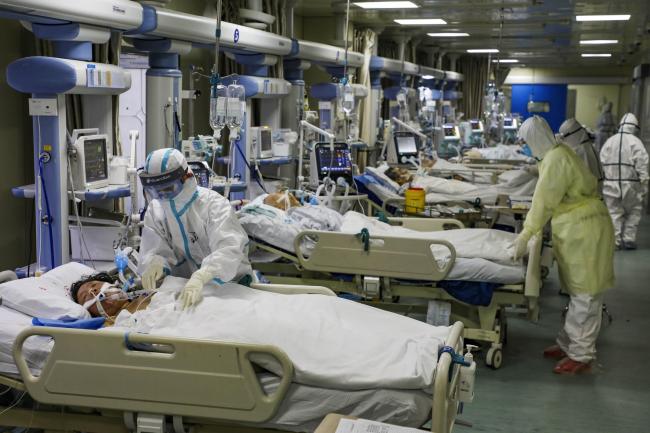
The situation worldwide will get much worse. However, the impatient youth (which is quite a youthful right) is so spoiled, so effeminate, that they do not want to and can not do without anything they are familiar with. The older (perhaps not so impulsive) generation is more patient.
The youth can’t, not even for a short time, give up their habits, such as skiing, lying on the beach, or partying and so on. They believe that following a few rules to contain a worldwide pandemic deprives them of their personal freedom. Since they have never had to do without anything in their lives and do not know the struggle for survival, they immediately go violently to the barricades.
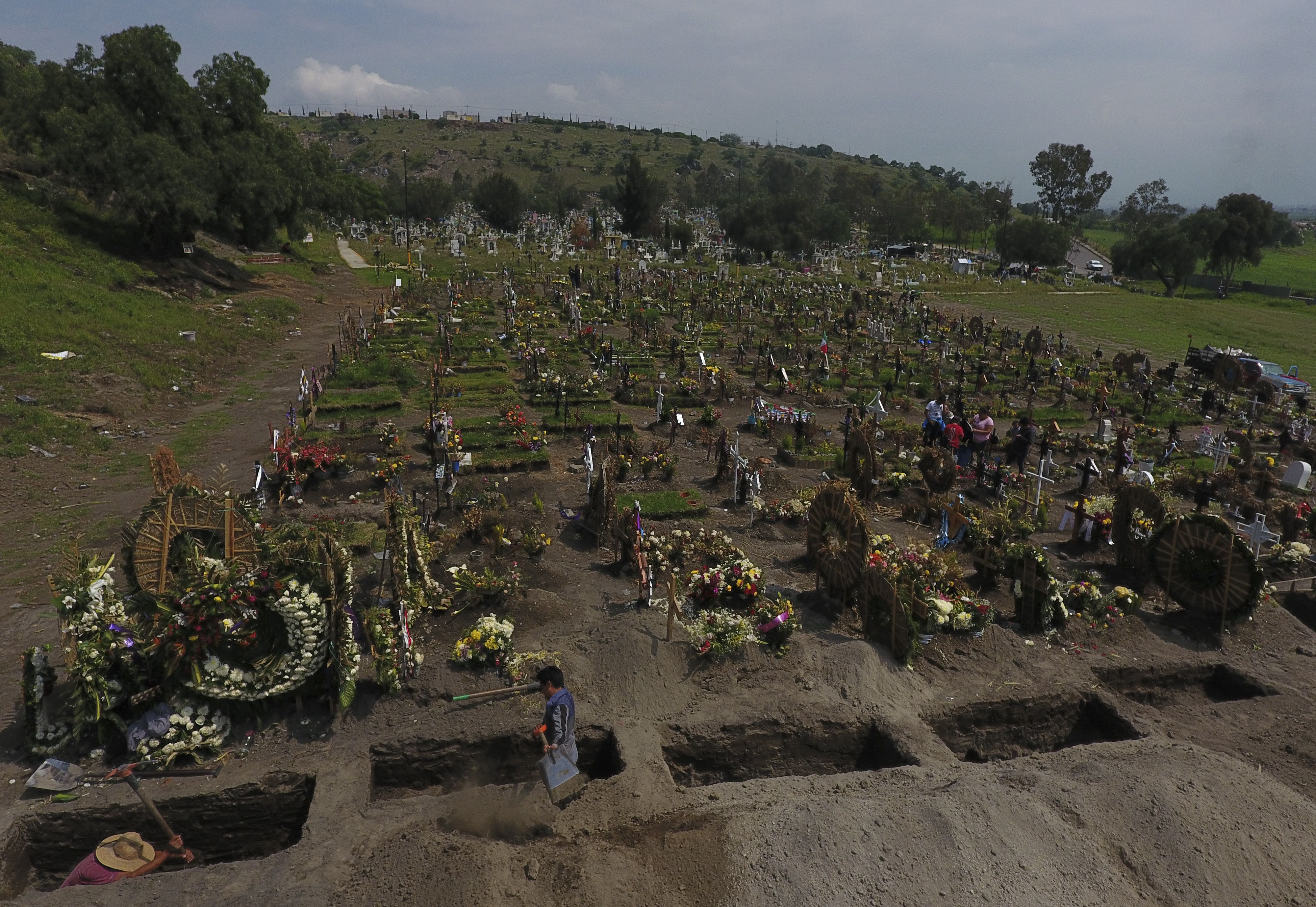
Millions of death, special Corona cemetery’s – all fake news ? – YEAH RIGHT !!!
In addition, we have in most countries „soft politics“, which does not enforce and is not, according to the situation, harshly enough. The protection of the majority and their health, as well as consistent action, is equated with dictatorship.
So – it will get worse and the majority of the population has to pay for what the minority messes up! They won’t learn, learn from the past and learn from history, nothing changes, millions of lives will be lost unnecessary.
 The above is for my special friends, the „conspiracy theorists“ and their „partisan media outlets“, which believe and spread around these and many other theory’s:
COVID death rates are inflated.
Blaming 5G.
COVID is a plot by Big Pharma.
The US military imported COVID into China.
COVID was created as a biological weapon.
Bill Gates as scapegoat.
COVID-19 doesn’t actually exist.
The pandemic is being manipulated by the ‘deep state’, their members secretly breed small children and drink their blood.

Actually, it’s so funny and hilarious, if it wasn’t so serious ! But the history of epidemics teaches us that there will be consequences and that they have usually been significant.
We are only at the beginning of an unpredictable upcoming development.

