
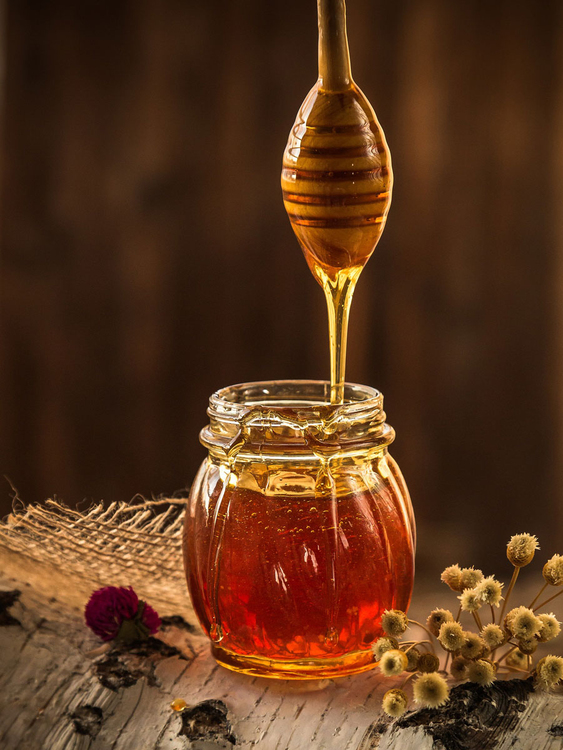
LIQUID GOLD.
The production of sweet, golden honey is a masterpiece of bees that has amazed people for thousands of years. Bees suck up nectar or honeydew with their proboscises and transport it in their honey bladders – taking pollen with them as they fly by.
Worker bees collect the raw material of honey – nectar from flowers for the production of flower honey. Honeydew is collected for the production of forest honey. For this purpose, the sieve tube sap of deciduous or coniferous trees, which is excreted again by scale, bark or aphids, is taken up. The pollen sticks to the bee’s coat while collecting the nectar and is transferred to the stigma of the next plant species it visits.

„For a 500-gram jar of honey, honeybees pollinate 75 million flowers and thus make a very significant contribution to the preservation of species and plant diversity in our nature,“ explains Torsten Ellmann, President of the German Beekeepers‘ Association. Ellman with chancellor Merkel and minister of agriculture Kloeckner.

In this way, the bee ensures the continued life of plants, humans and animals practically as it flies by – as Albert Einstein put it: „Once the bee disappears from the earth, humans will only have four years to live. No more bees, no more pollination, no more plants, no more animals, and no more people“.
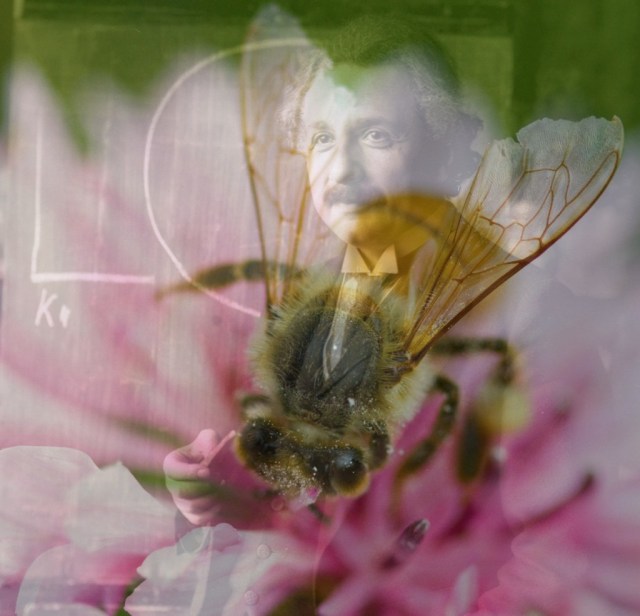
Professor Albert Einstein, the learned scientist, once calculated that if all bees disappeared off the earth, four years later all humans would also have disappeared.Wenn die Biene vier Jahre nicht fliegt, stirbt der Mensch. Es gibt nur zwei Dinge, die sind unendlich, das Universum und die Dummheit der Menschen!
A closer look shows why the diligence of bees is legendary: they collect their honey in a radius of three kilometers around the hive. A collecting bee makes up to ten trips per day. One kilo of honey requires around 150,000 kilometers of flight and a visit to up to two million flowers. Back in the hive, the collecting bee passes the still unripe honey on to the hive bees, which transfer the nectar several times – taking it up again and again and releasing it again. In the process, the nectar is enriched with enzymes, proteins, acids and other substances, and the water content is reduced.
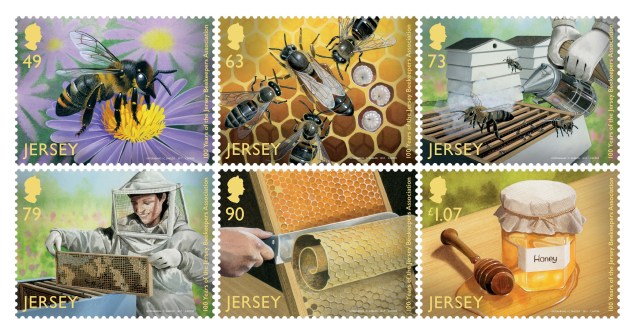 The whole bee-work and honey-production, well to see on a set of stamps of the island of Jersey. One of the channel islands belonging to the United Kingdom.
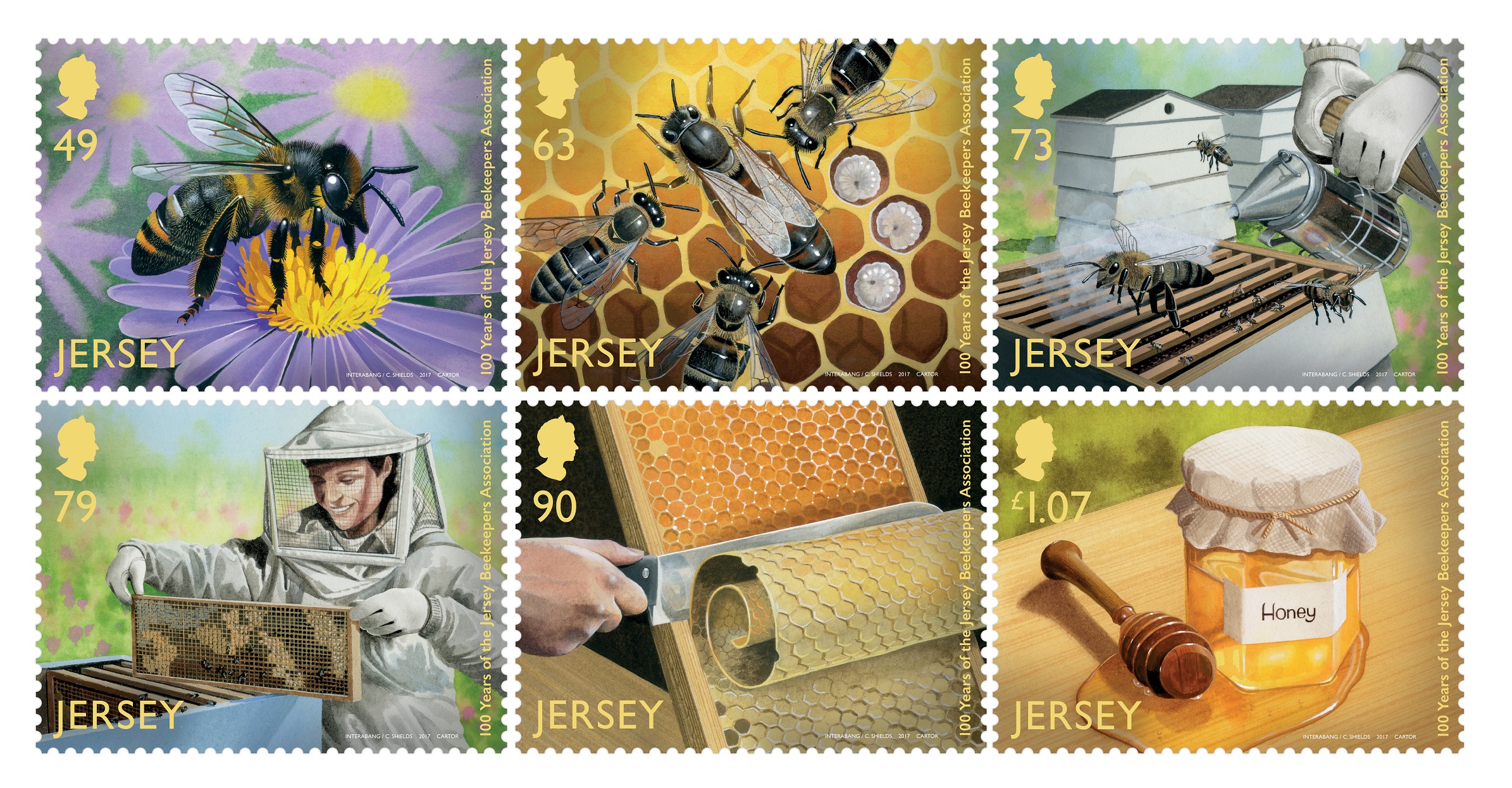
Finally, the finished honey is stored in hexagonal storage cells, which finally form a honeycomb. By fanning the bees with their wings, the moist air is transported out of the hive, and dry outside air can flow through the hive. In this way, the bees manage to reduce the water content from an initial level of about 75 percent to less than 20 percent. As soon as the desired water content is reached, the bees seal the honey cells with air-impermeable wax lids.
MIRACLE FOOD AND SUPERFOOD.
The diversity and richness of its ingredients make honey a unique natural product: more than 180 different substances, including various sugars, amino acids, enzymes, essential oils, polyphenols, flavones, tannins and vitamins (B1, B6, C). The effectiveness of honey for health has long been proven. As a natural antibiotic, it brings rapid relief from colds and respiratory ailments.
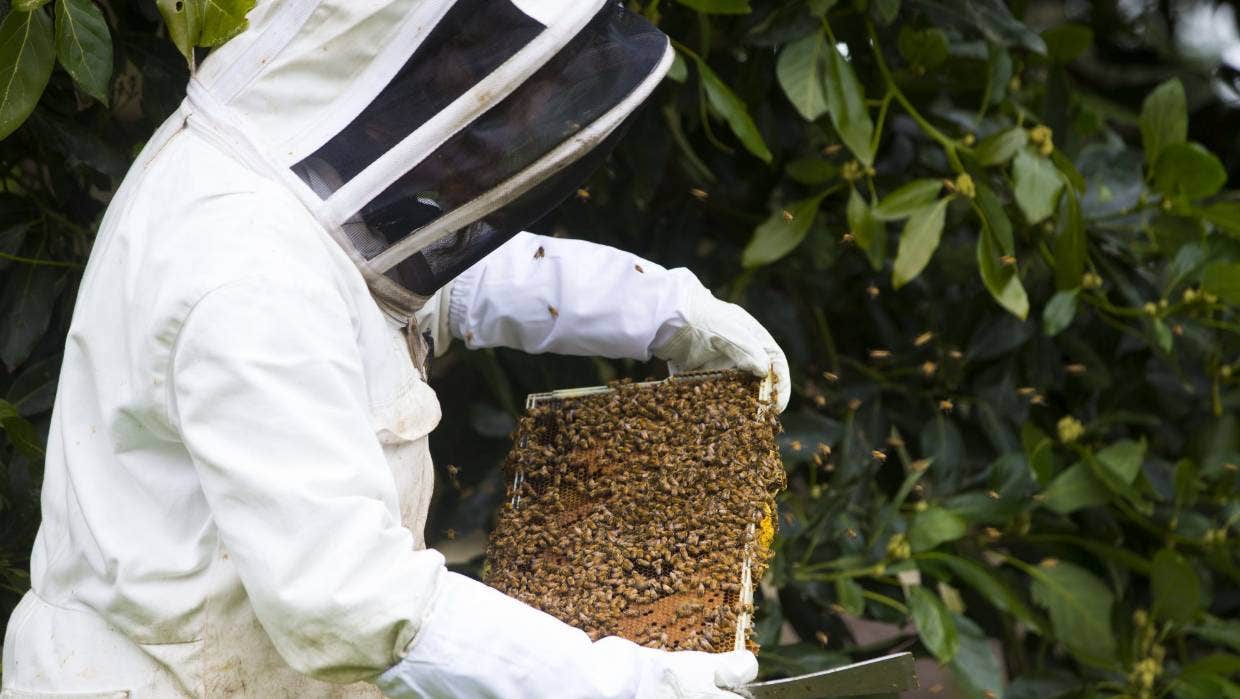
A study published last year by a team of researchers led by Hiba-tullah Abuelgasim of the Oxford University Medical School seems to confirm this scientifically. The researchers summarized the results of 14 studies with nearly 1,800 participants and came to the conclusion that honey works better for respiratory infections than standard treatment, especially for the strength and frequency of the cough. In addition, honey could shorten the duration by one to two days, the study found.
Honey is also used as a natural remedy for bacterial, internal and external diseases, fungal infections, colds and stomach and intestinal disorders. Even for the treatment of wounds honey can be used. „Qualitätshonig“ (German for quality honey) of the beekeeper contains innumerable valuable contents materials, which for our immune system, our digestion and our general well-being can be valuable.
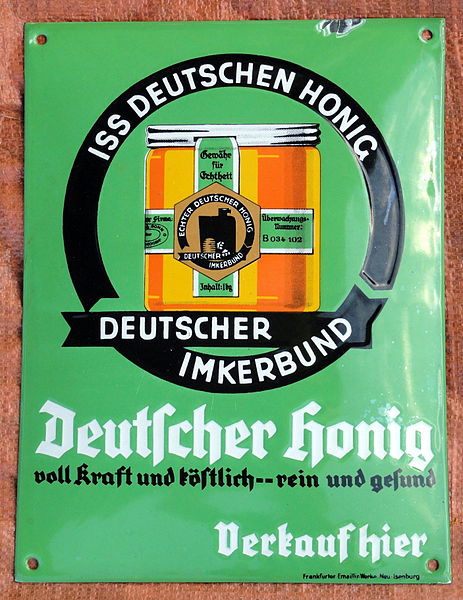
An extremely rare enamel advertising sign for German honey from the 1930s.
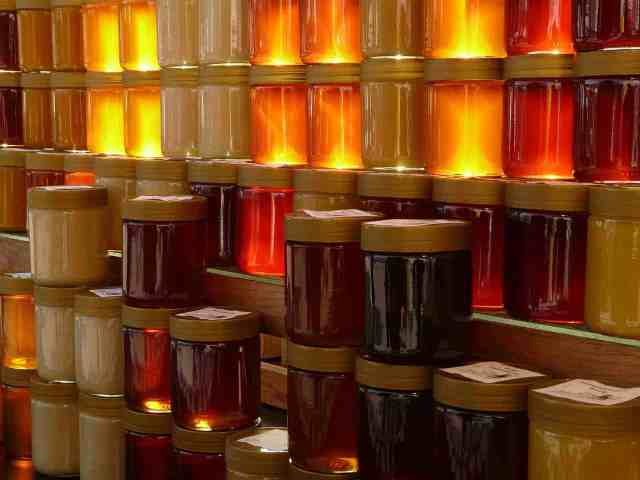 Its golden color, its very special taste and its health-promoting ingredients make honey something special. It is a super-food with healing properties for body and mind. And with its noble shine like a caress for the soul.
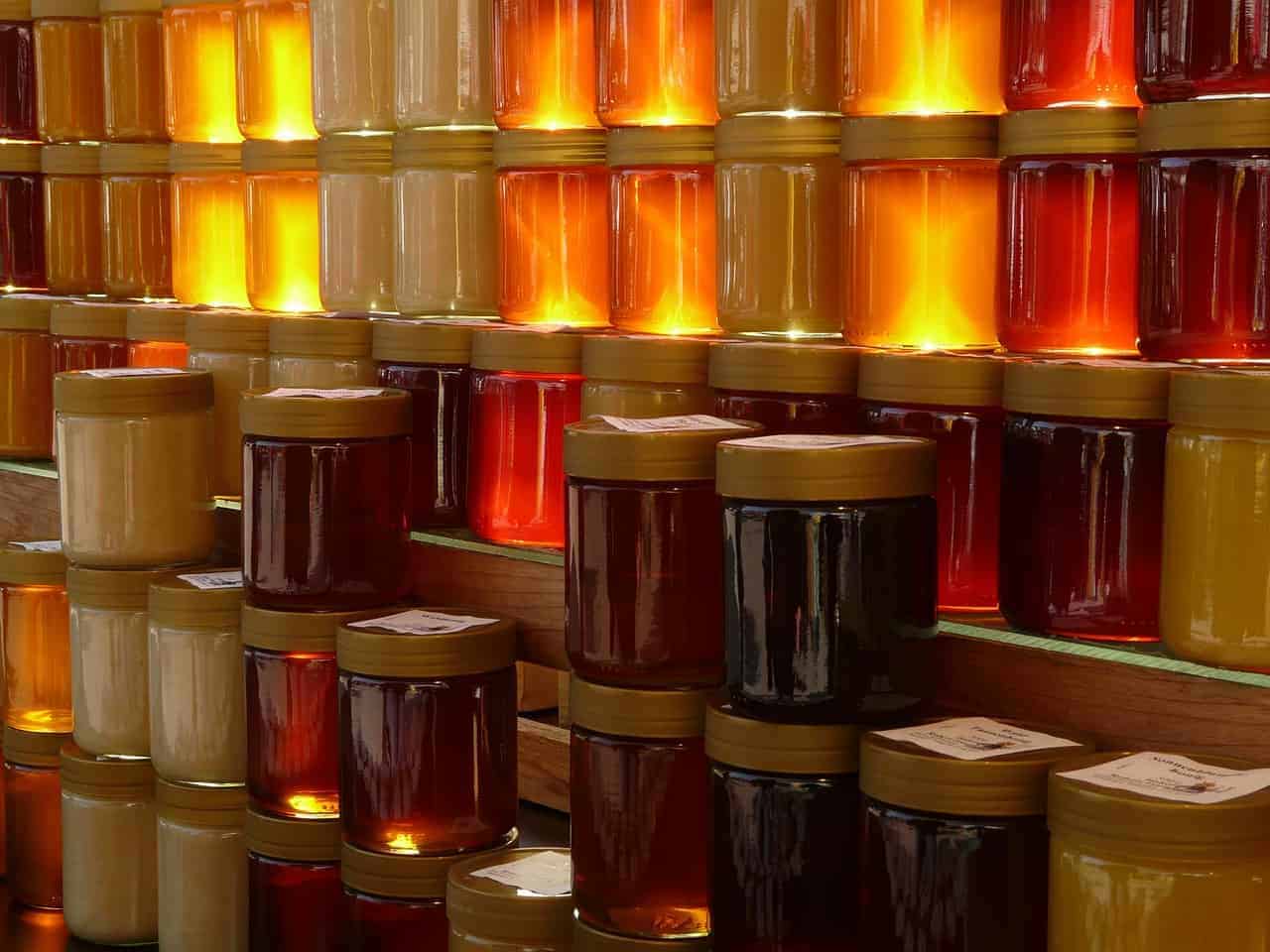
„For me, it is the sum of its properties, but first and foremost its taste, consistency and aesthetics. A loaf of honey bread for breakfast makes me happy,“ says beekeeper Georg Rohrauer from the Rohrauer organic farm in Burgenland, Austria.
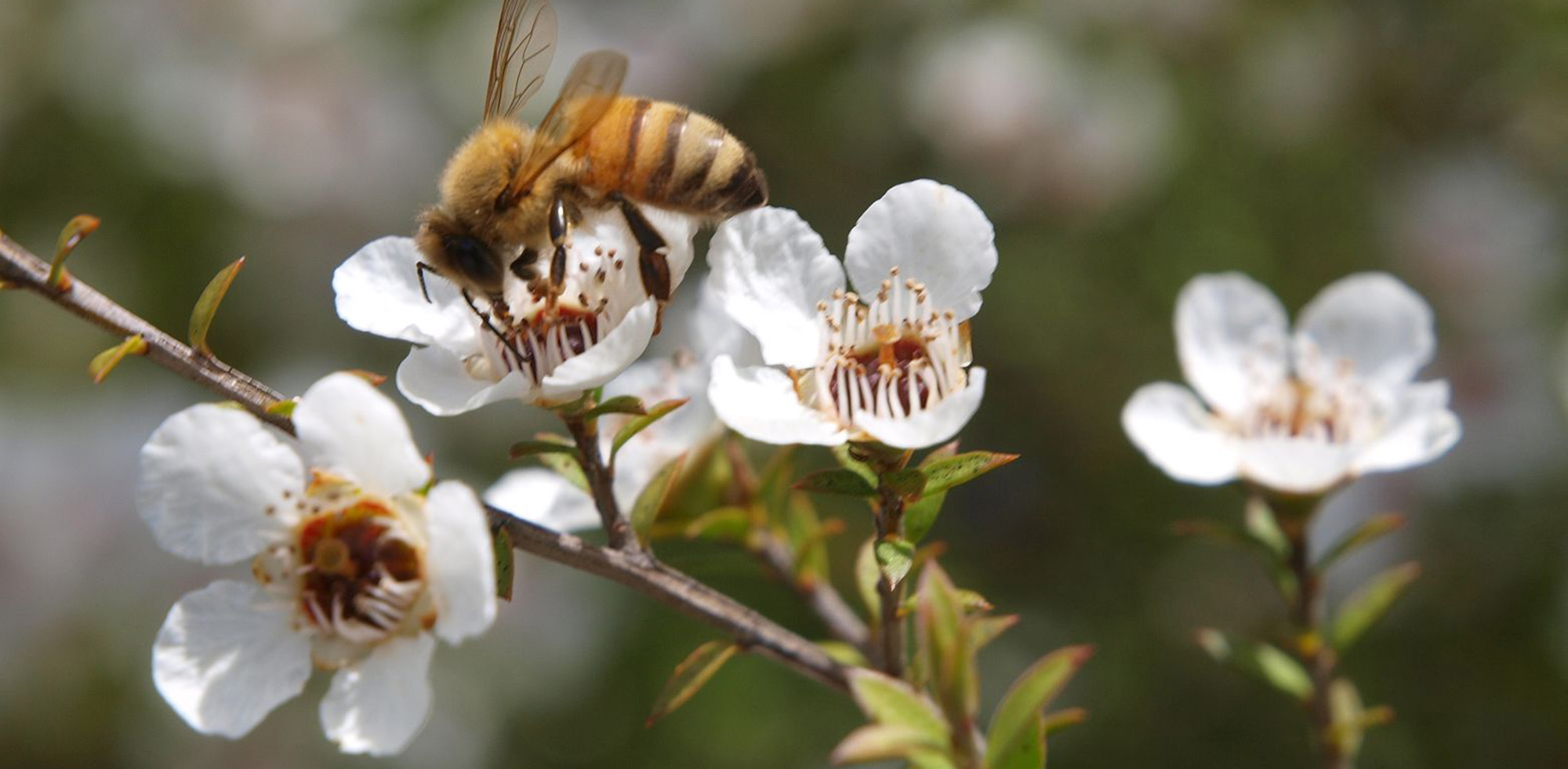
One type of honey has proven to be particularly helpful for health and has established itself as a super-food: Manuka honey from New Zealand. This is won from the flower nectar of the South Sea myrtle. What makes it so unique is the additive methylglyoxal, with which it can fight particularly aggressively against bacteria.
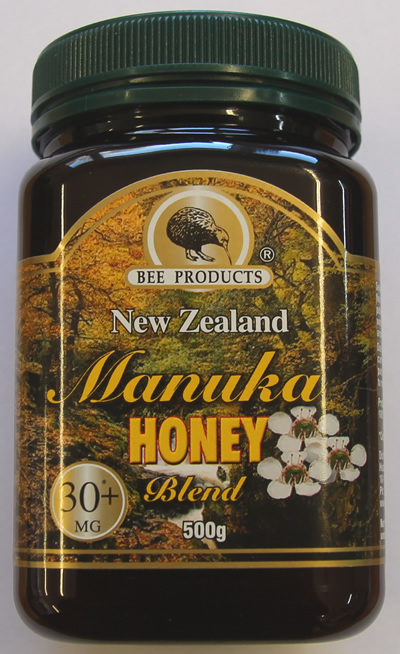
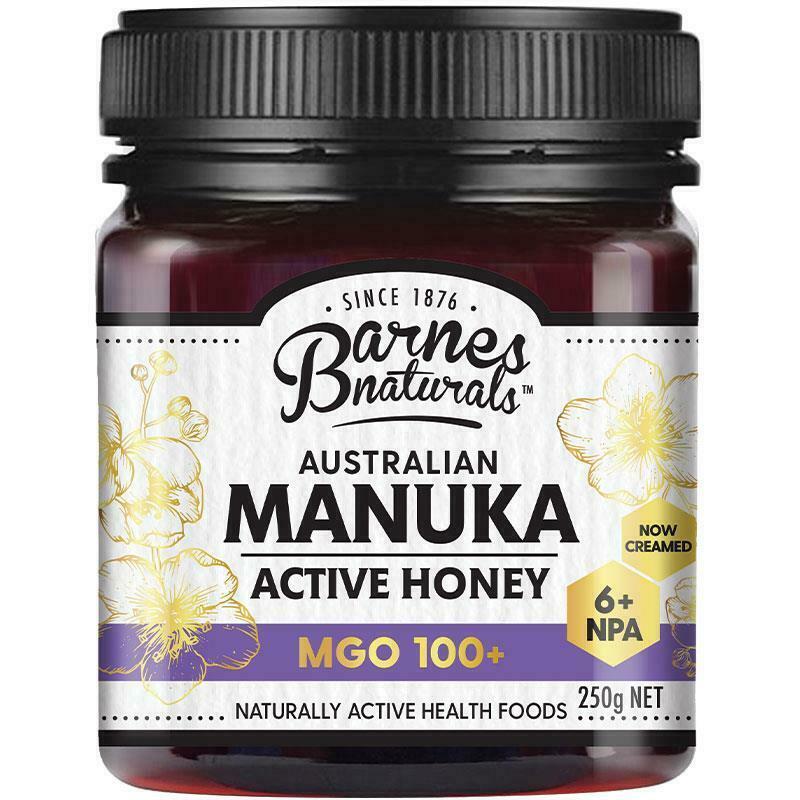
Manuka honey from New Zealand, left, and Manuka honey from Australia, right. That one we used for many years in Australia, the taste – absolutely delicious. Both are harvested from the South Sea Myrtle Flower, as you can see in the following picture.
Depending on the concentration of the active ingredient in the honey, prices of over 60 euros per 100 g can be achieved. „In addition to honey, there are several other bee products that are true super-foods,“ explains Maria Binder from the Vienna District Beekeeper’s Association. Thus for example bloom pollen is led in Austria under the food auxiliary means. „For humans, flower pollen provides 21 of 22 vital amino acids. In addition, minerals and trace elements such as potassium, magnesium and iron and almost all vitamins (B1-B12, C, D, E, K, A) and many other substances that are beneficial for the natural regeneration of the body,“ continues Binder.
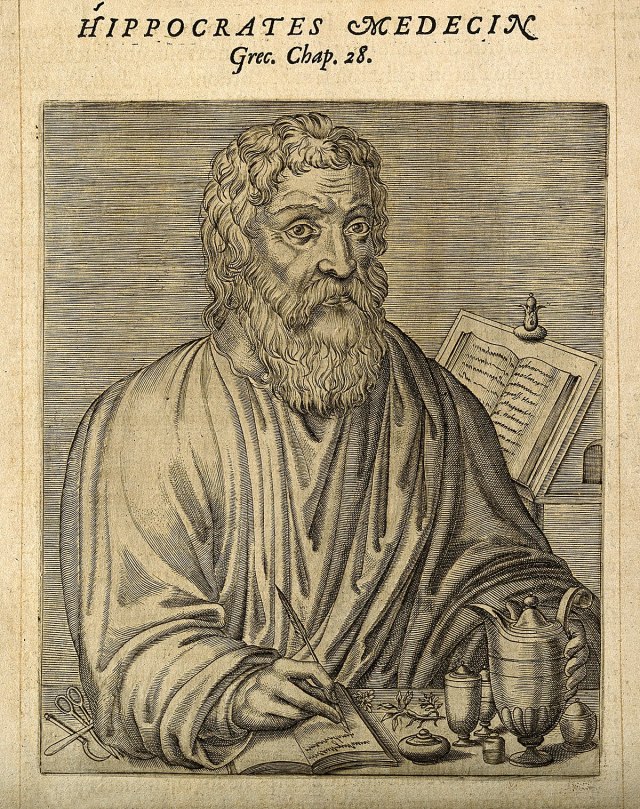 Hippocrates (c. 460 – c. 370 BC) was a Greek physician of the Age of Pericles (Classical Greece), who is considered one of the most outstanding figures in the history of medicine.
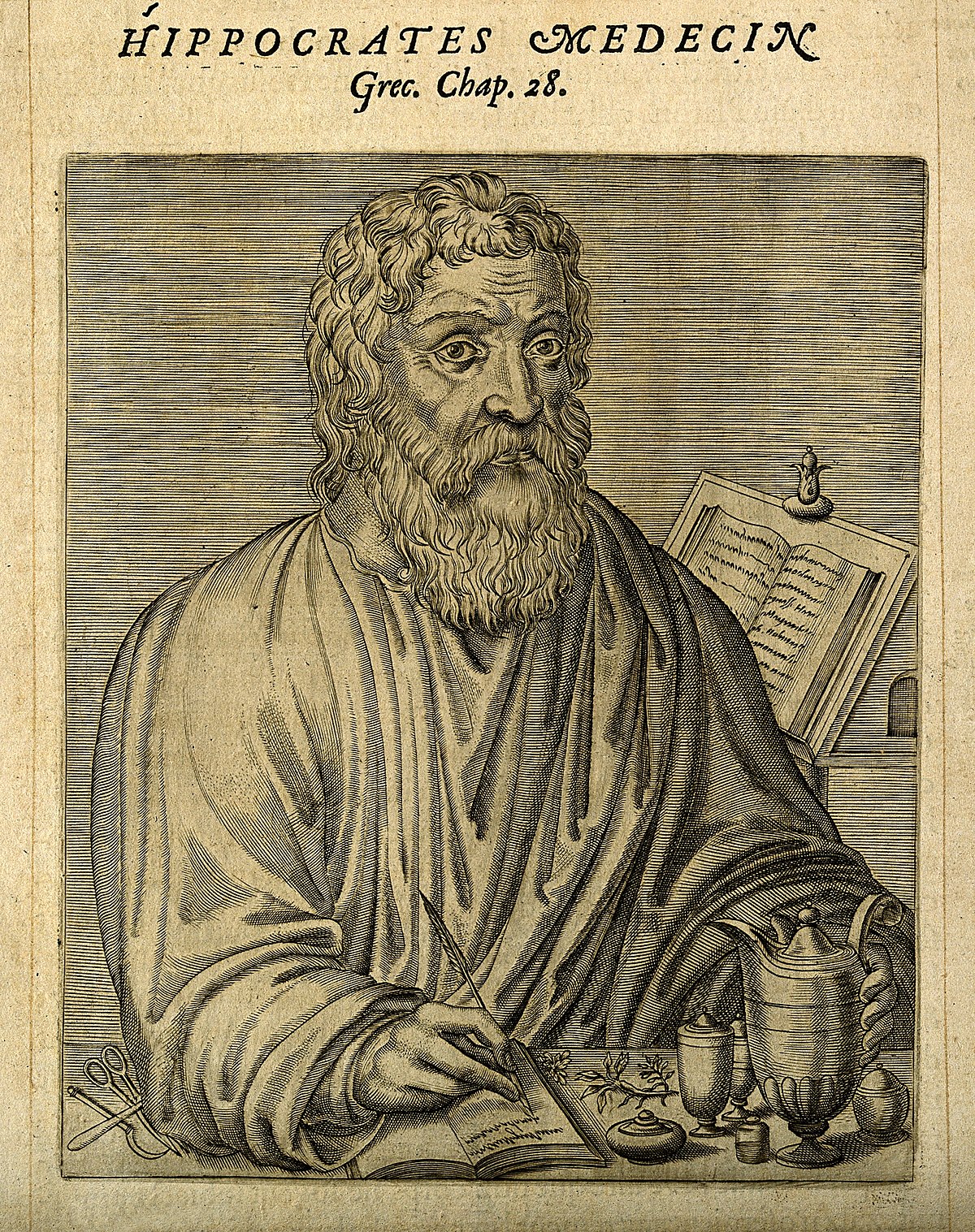
FROM HIPPOCRATES TO GOETHE.
The medical effectiveness of honey was recognized very early. As early as 400 BC, Hippocrates (around 460 BC to about 370 BC), who is considered the father of modern medicine, treated his patients with honey. According to his experience, honey was supposed to help with fever, headaches and open wounds or boils. For this purpose, he often mixed it with vinegar or alcohol. He also experimented with bee venom for joint inflammation.
 Pythagoras (c. 570 – 495 BC) was an ancient Ionian Greek philosopher and the eponymous founder of Pythagoreanism. He relied on the healthy effect of honey.

For Pythagoras (around 570 B.C. to about 500 B.C.) honey was an elixir of life. He was convinced that regular consumption of honey would protect him from disease and give him a long life. Honey was therefore part of every meal he ate. Alternatively, he drank a glass of wine with his meal, in which he had dissolved a spoonful of honey.
The Roman epic poet Virgil (70 B.C. to 19 A.D.) dedicated the fourth book of his „Georgica“ to beekeeping and described the life of bees – but in his case a bee king was the boss of the hive.
Among the bee lovers we find Johann Wolfgang von Goethe, who was not only a poet, but also a passionate naturalist. He kept bees in his garden in Weimar, which inspired him to write many a poem.

Goethe was not only a poet, but also a naturalist. With his wife, he kept bees in the garden in Weimar. The bees inspired him again and again to comparisons or poems. One example:
A flower bell from the ground out
Had sprouted merrily in lovely bloom.
There came a little bee and nibbled finely,
Oh, they must both be for each other!
O.k. in English it doesn’t rhyme anymore, but still nice.
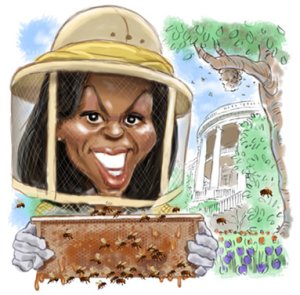 Michelle Obama with beehive in the White House.
MORE FAMOUS BEEKEEPERS.
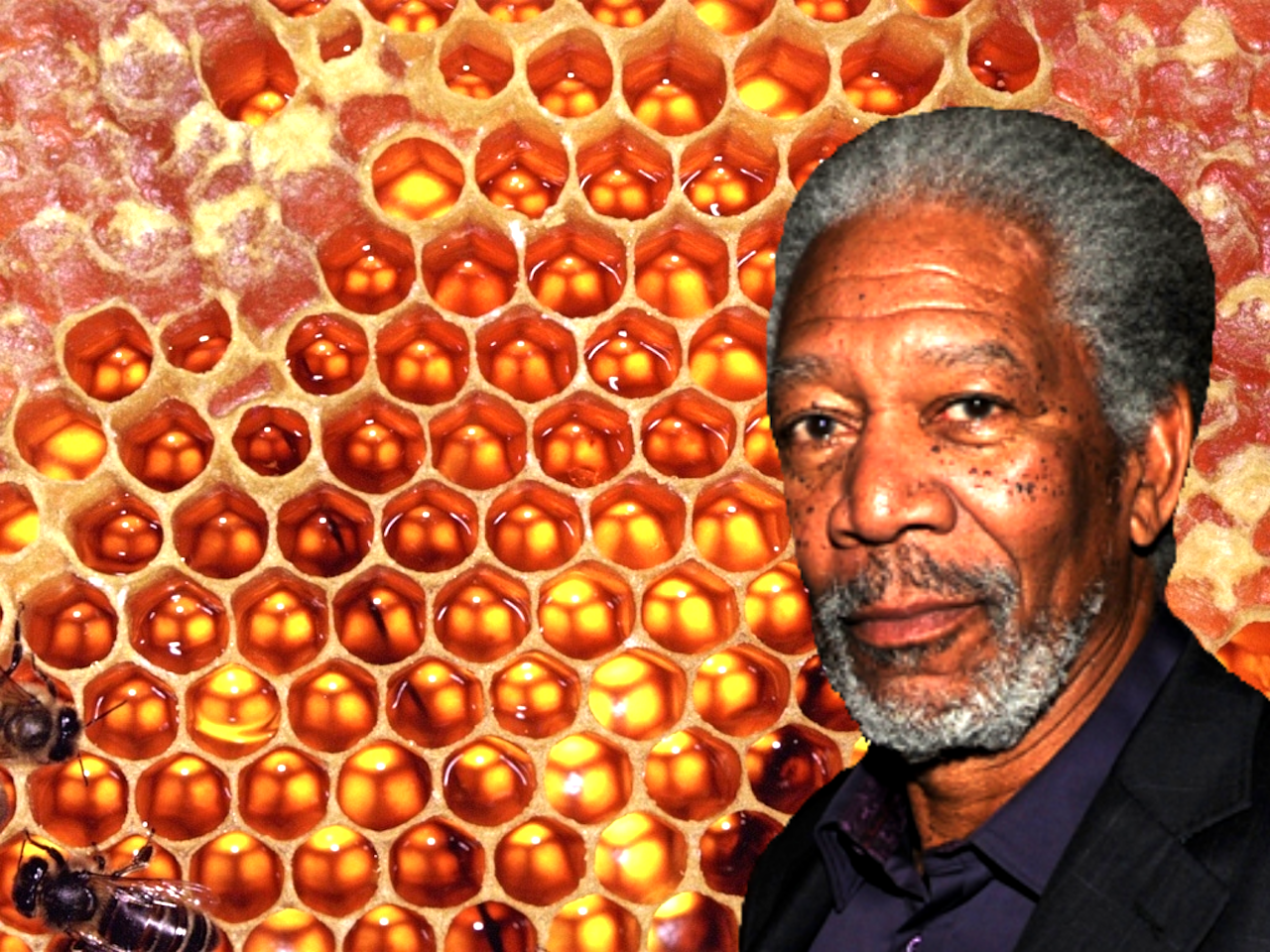
The American presidents George Washington and Thomas Jefferson also devoted themselves to bees in addition to their political careers. And Sir Edmund Hillary, the first man to climb Mount Everest, was actually a professional beekeeper. Other famous beekeepers are known, like Sherlock Holmes, Henry Fonda, Leo Tolstoy, Maria von Trapp, Michelle Obama, Morgan Freeman, Martha Stewart, Leonardo Di Caprio and many more.
HISTORY OF HONEY.
The fact that honey is an important part of human history is shown by cave paintings of „honey hunters“ dating back more than 9.000 years and by shards of vessels in which beeswax has been found. These prove that already humans in the Neolithic Age had discovered bees as suppliers of honey and wax for themselves. Honey served at that time not only as food, but was used also purposefully as bait with the bear hunt.
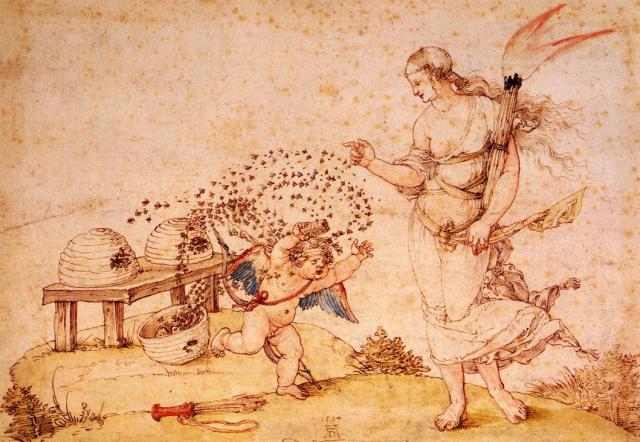
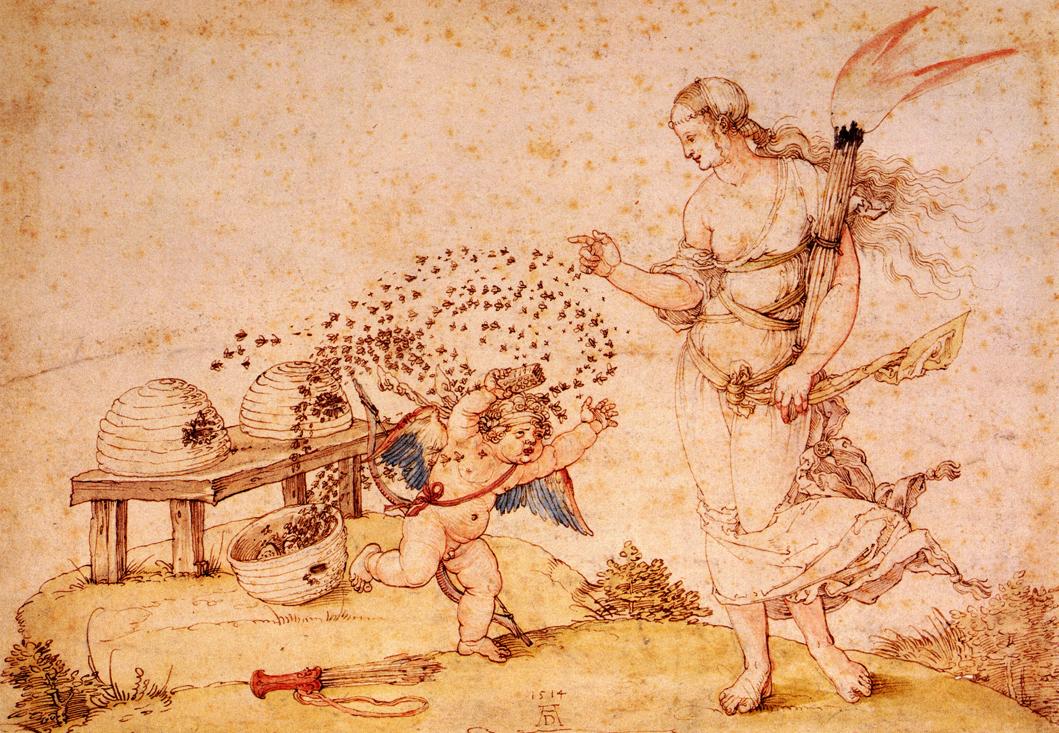
Wonderful bee drawing by Albrecht Dürer (21 May 1471 – 6 April 1528). He was a German painter, print-maker, and theorist of the German Renaissance.
Cave paintings of people collecting honey can be found in Spain, in today’s Algeria, in Libya or in South Africa. Starting with the early Neolithic farmers in Anatolia, we can trace how the regular use of beeswax spread across Europe: In western Turkey, wax remains are found in sherds that are around 7.500 years old, and in the Balkans a few centuries later.
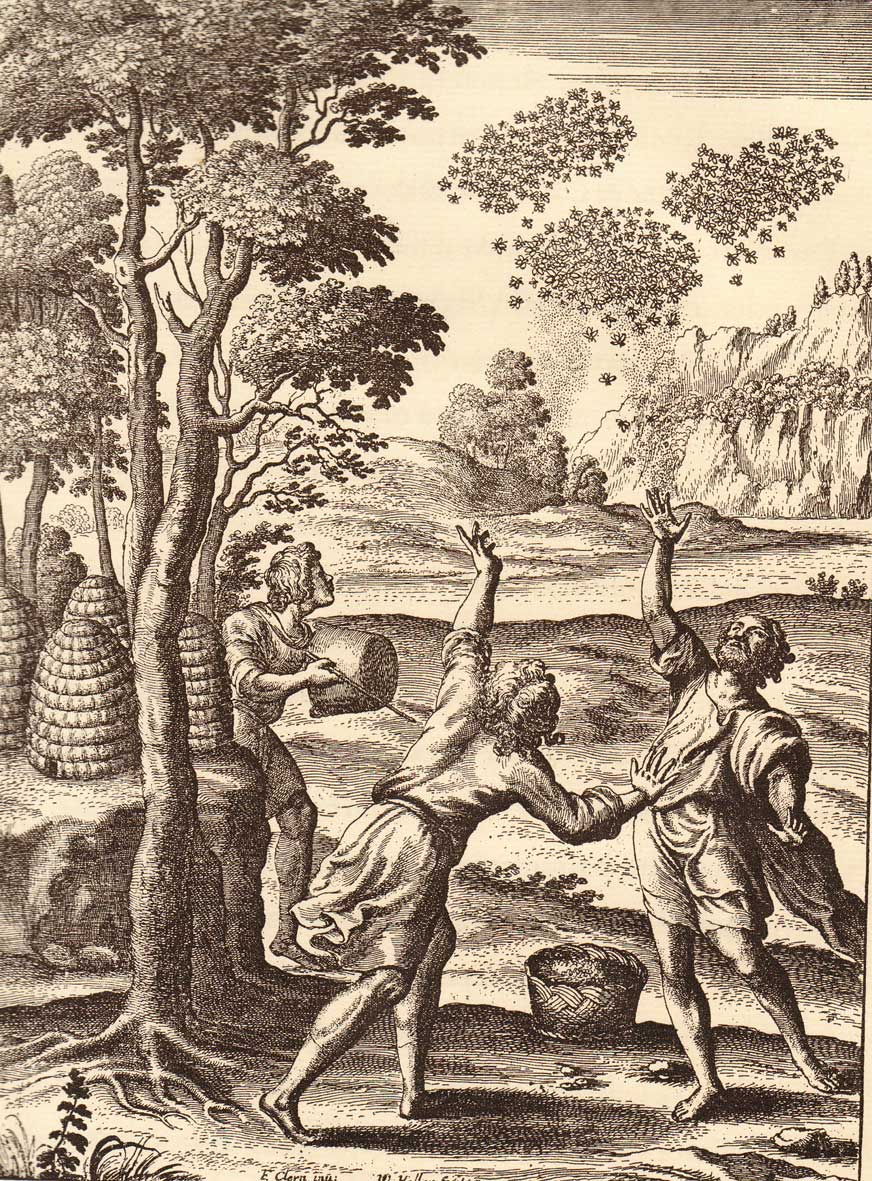
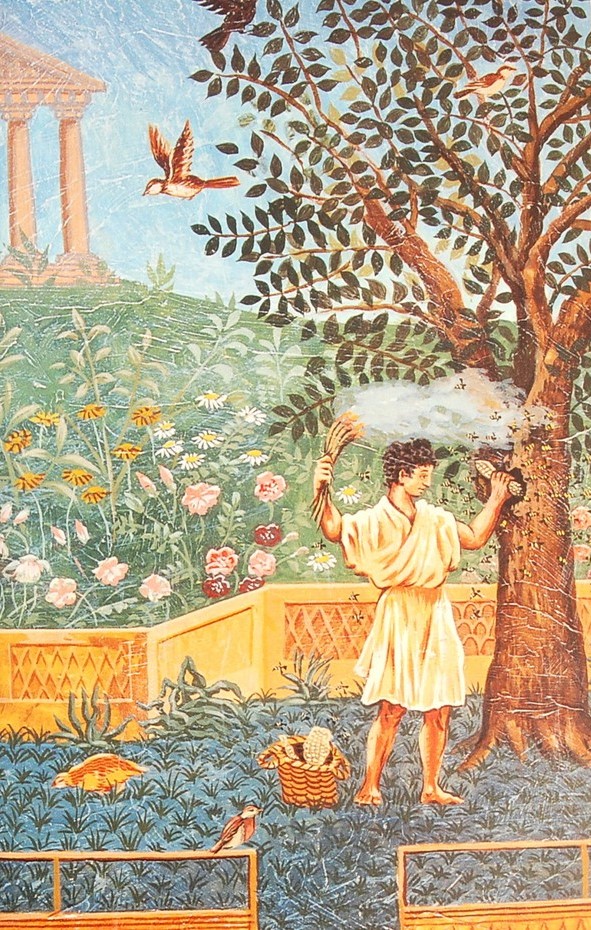
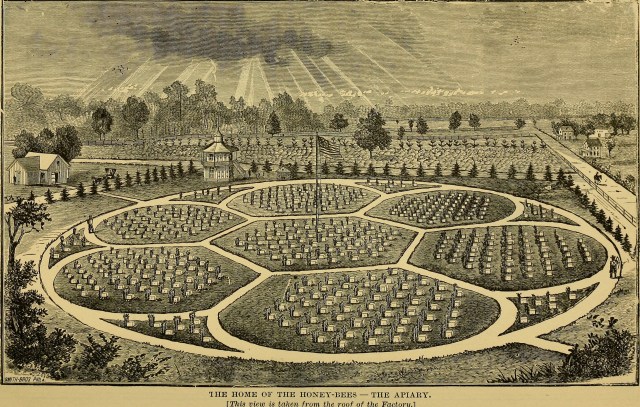 Above, two pics of historical honey extraction. Below, contemporary woodcut of an American apiary.
In Greece, the oldest wax remains date from around 7.800 to 5.000 years ago. In numerous early advanced civilizations, the golden delicacy served not only as a foodstuff and remedy, but also as an offering, burial gift and means of payment. In ancient Egypt, honey was considered the „food of the gods“ and the „source of immortality. A pot of the precious commodity had the same value as a donkey.
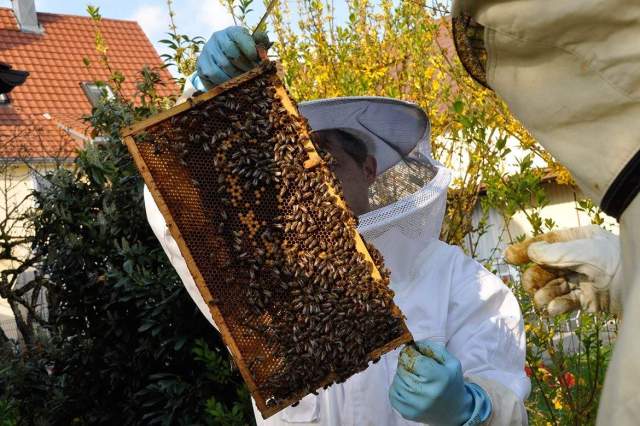
Handwork Honey production involves a lot of manual labor for beekeepers. From the work on the hive, to the harvest, to the filling and labeling of the honey jars.
Honey also had a high religious value among the Mayans. In Central Europe, the Germanic tribes were known for their love of honey, as they used it to make mead, the drink of the gods. This was not only consumed at celebrations, mead was also used as a sacrifice to the gods and for ritualistic acts, which is also described in the „Edda“, the work containing the stories and sagas of the Germanic gods and heroes.
BEEKEEPERS – ALLIES OF THE BEES.
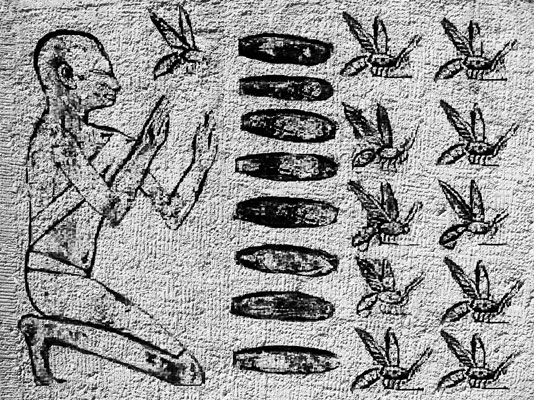
The starting shot for the modern way of beekeeping, according to experts, fell about 7.000 BC. In ancient Egypt, about 5.000 years ago, there was already a specific beekeeping, which is evidenced by murals and reliefs of beehives and beekeepers.
With a production of about 250.000 tons of honey per year, the EU is the second largest honey producer in the world after China. Of this, the Swiss and Austrians consume 1.2 kilograms per capita per year, making them among the most diligent honey consumers in Europe. In Germany the consumption with approximately one kilogram honey per capita lies only scarcely under it.
In fact, beekeeping and honey production still involve a great deal of manual labor for beekeepers. From the work at the beehive, over the harvest up to the filling and labeling of the honey jars innumerable handles are transacted. Beekeeping is more than a hobby, it is a vocation, because the care of the bee colony is costly. Bad weather, heat or extreme cold, as well as diseases, cause problems for the bee colonies and decimate them. Here the full commitment of the beekeeper is in demand. Of course, it also depends on the location.
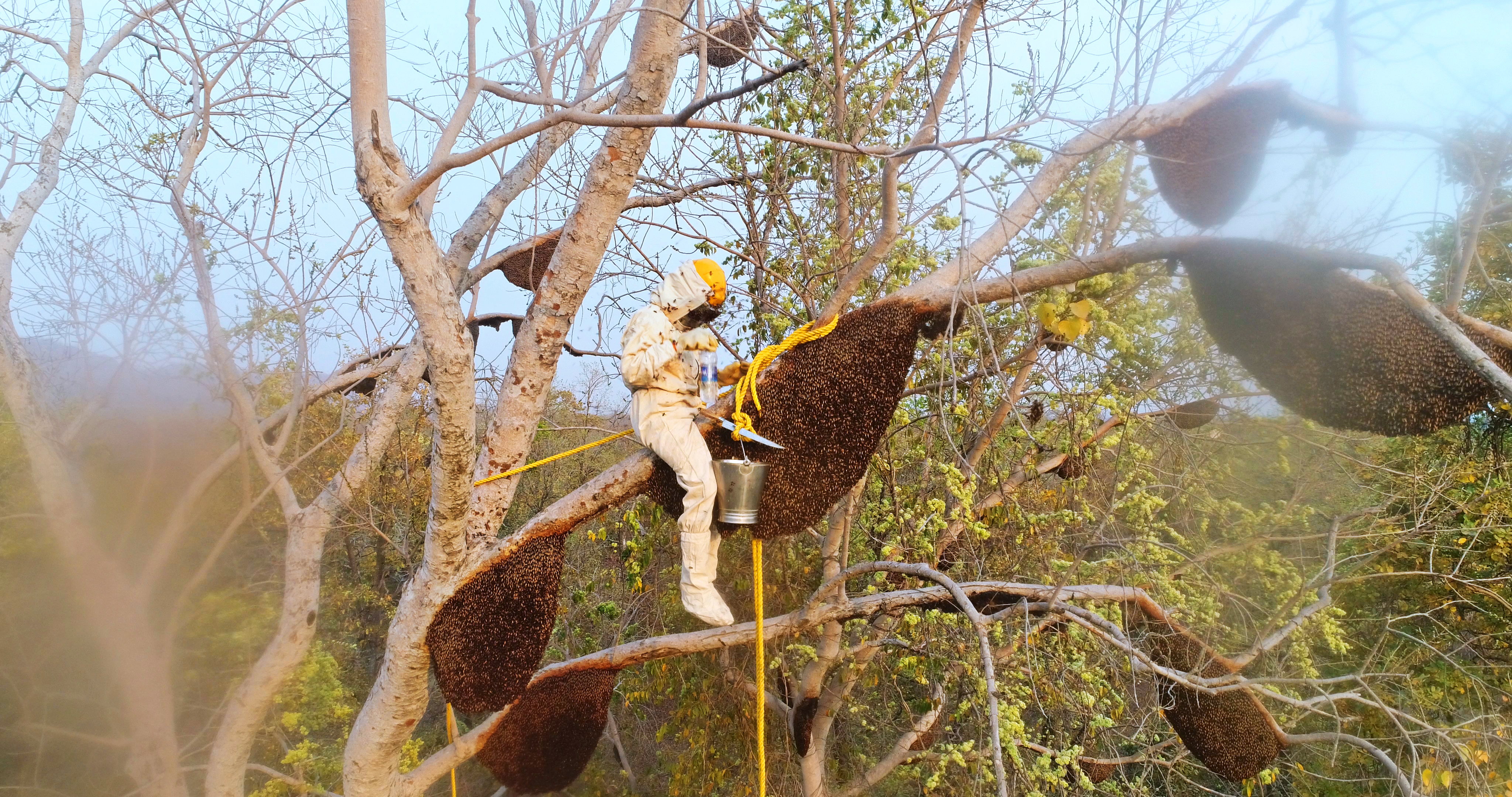
The biodiversity of harvesting honey.
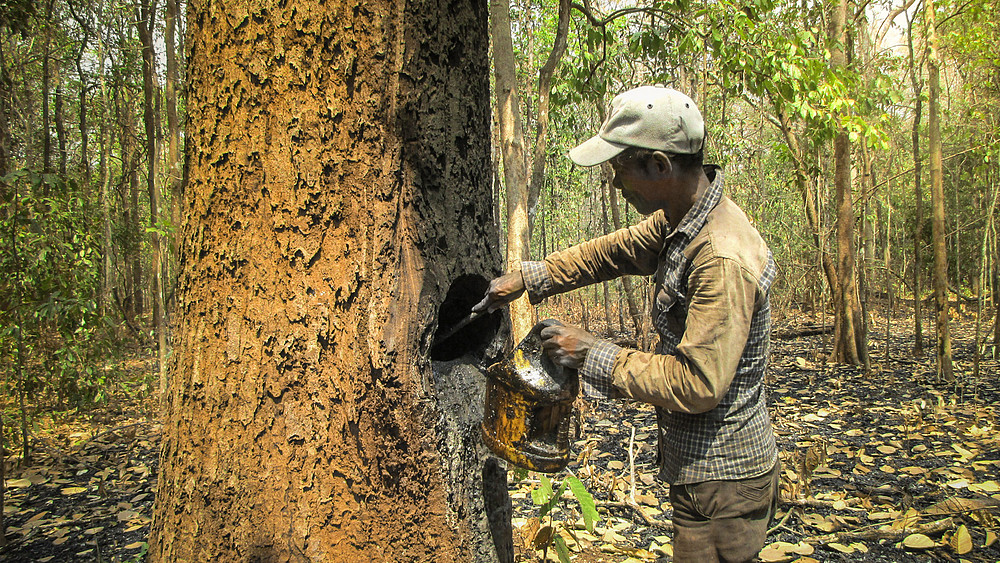
Hardly any other product is as strongly influenced by its origin as honey. It is able to capture the diversity of an ecosystem and the differences of the seasons around the bee colony. In large-scale mono-cultures, very uniform honeys are produced. In ecosystems rich in biodiversity, it is possible to harvest very complex and interesting honey. Finding the best sites for bees is an important cultural achievement and is passed down from generation to generation and also among colleagues. Whether a site turns out to be valuable or not is only known with certainty after a long period of observation.
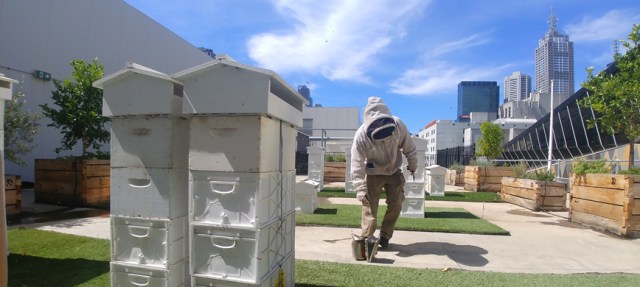 Bee hives over Melbourne, Australia.
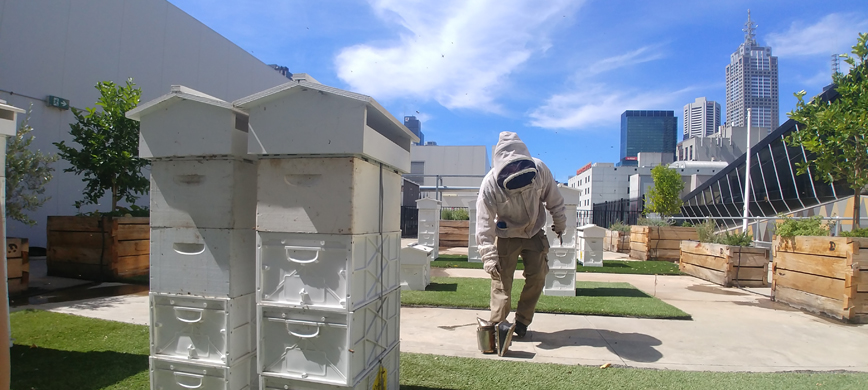
HONEY FROM THE CITY JUNGLE.
But whoever assumes that the industrious honey producers only live near fields, mountains and forests, is wrong. Beekeeping also has a long tradition in the large metropolises, because the big city is a paradise for bees. The variety of flowers is often greater here than in the countryside. Trees and flowers grow next to streets and in parks, on balconies, terraces, in gardens and in cemeteries. In addition, it is on average two to three degrees warmer in the cities than in the countryside, which allows the plants to bloom longer. In addition, bees here are exposed to fewer pesticides and plant protection products.
 Beehives on the roof of Palais Garnier in Paris, France.
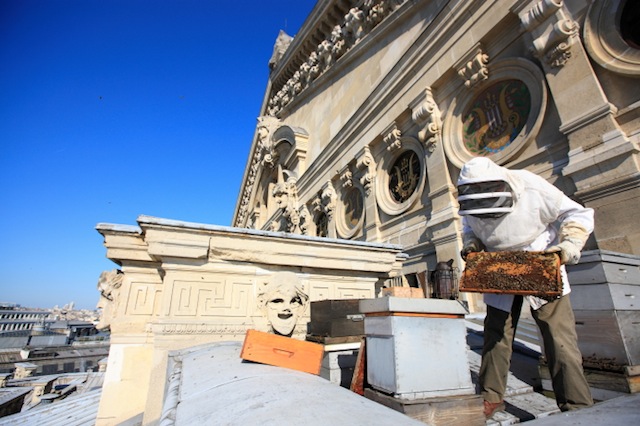
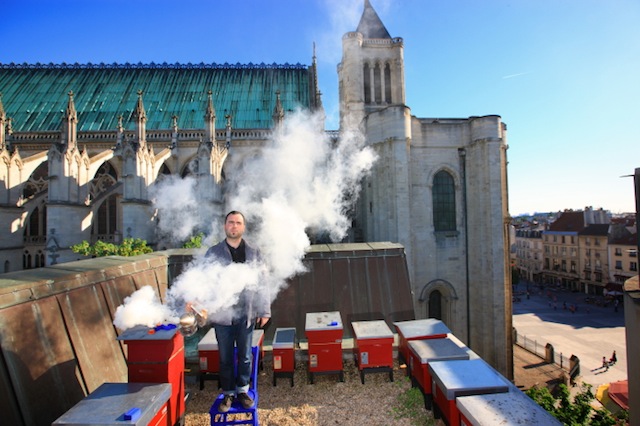
THAT’S WHY IT’S BUZZING ON THE ROOFS OF PARIS.
The oldest beehives in the Seine metropolitan area have been on the roof of the Paris Opera House in the Palais Garnier for more than 100 years. More than 1.000 beehives are estimated to exist in Paris. The exact number cannot be determined, as the installation of beehives has not had to be authorized for almost ten years.
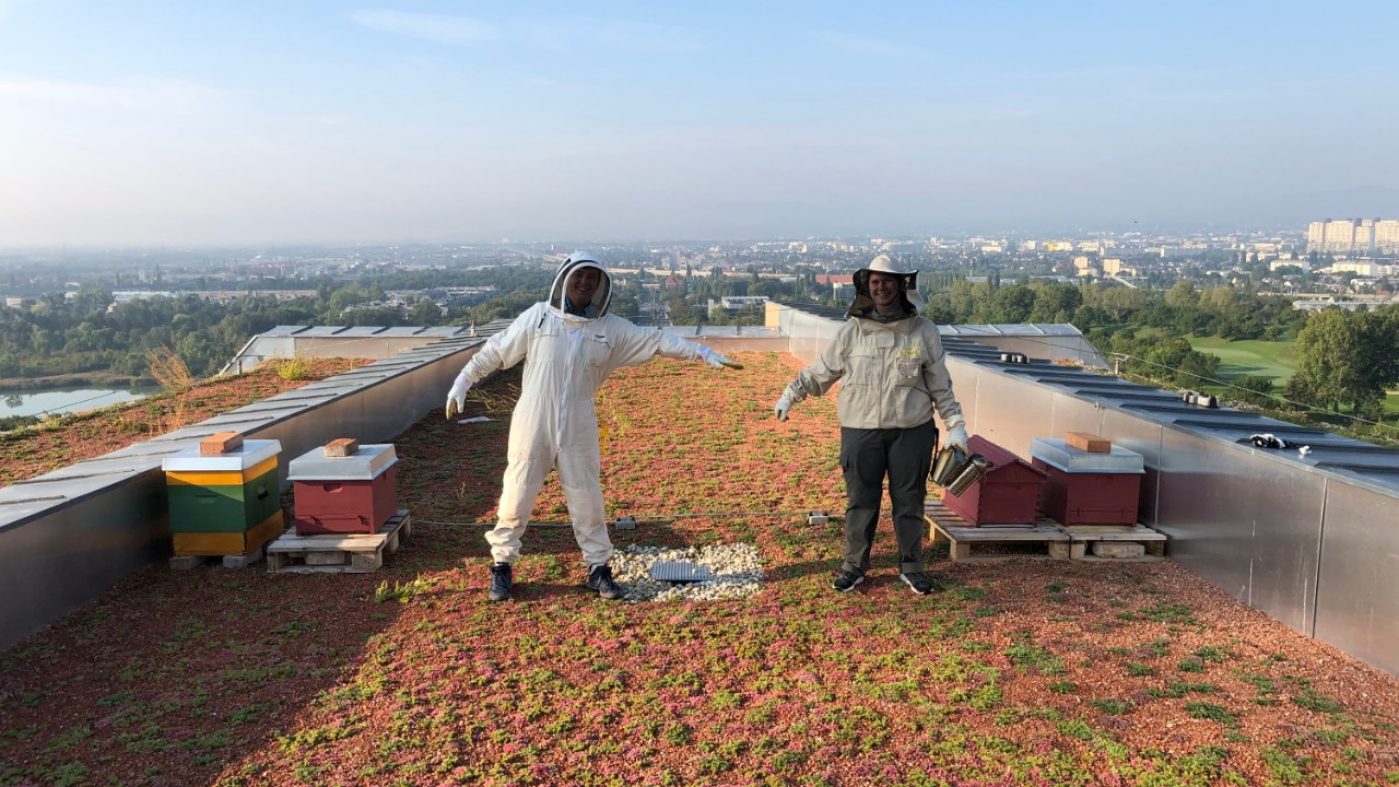
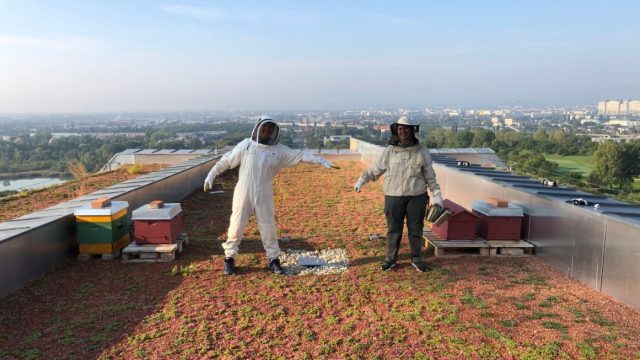 Beekeepers over the city of Vienna, Austria.
FROM THE SEINE TO THE DANUBE.
In Vienna, more than 700 beekeepers are active and look after around 5.000 beehives distributed throughout the city. Hives are owned by private individuals as well as hotels, companies and public institutions such as ministries and universities. Around 2.000 of the total of 160.000 German beekeepers are at home in Berlin. And there are more and more of them every year, because urban beekeeping is also quite trendy in the German capital. Here, the liquid gold is cultivated in backyards and on roofs. Since 2011, there has even been a beehive on top of the House of Representatives.
 Famous honey market in Berlin, Germany.

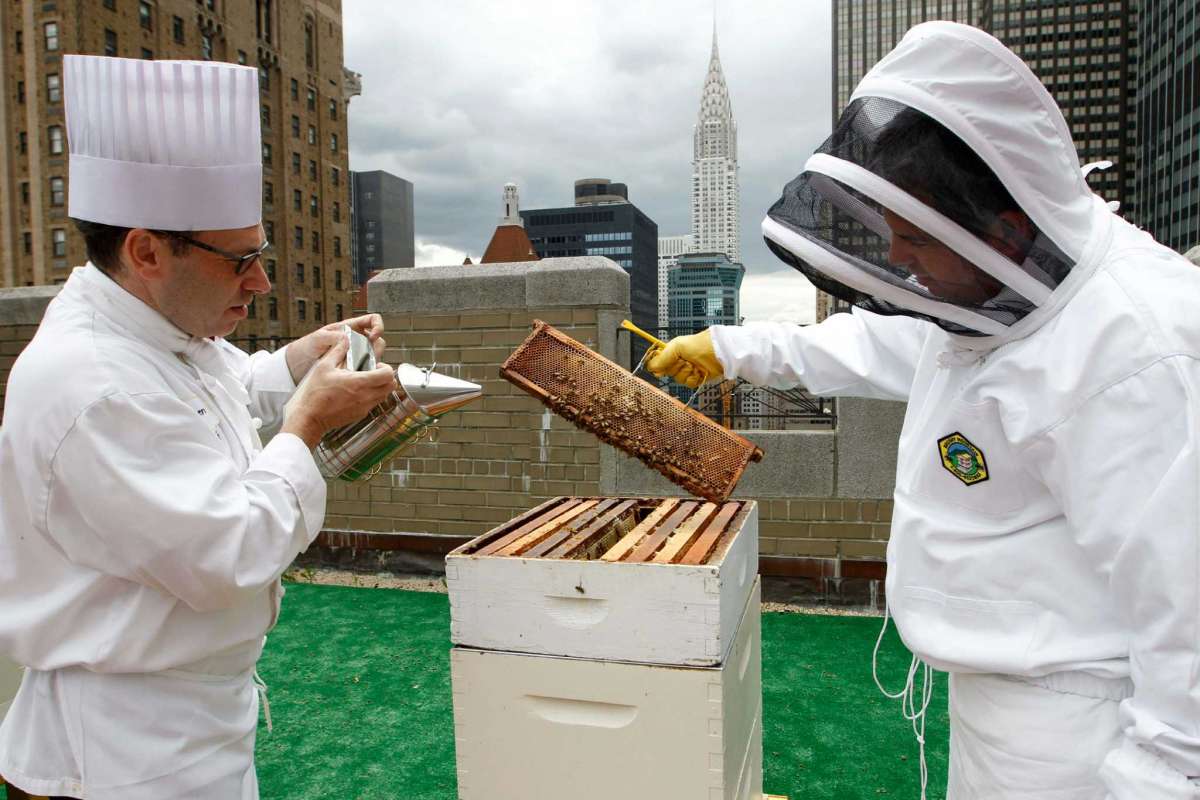
With more than 16.000 bee colonies, urbane Zurich is also a stronghold of beekeeping. Nationwide, this number is surpassed only by Bern. In Zurich, many a beehive can be found at lofty heights, such as on the terrace of the Zurich Marriott Hotel. But some beekeepers want to go even higher. Those who produce their honey in New York. They have now set up more than 200 beehives on the roofs of hospitals and schools, on balconies and in community gardens. And New Yorker’s love their heavenly-tasting city honey. After all, it is produced almost in the clouds!
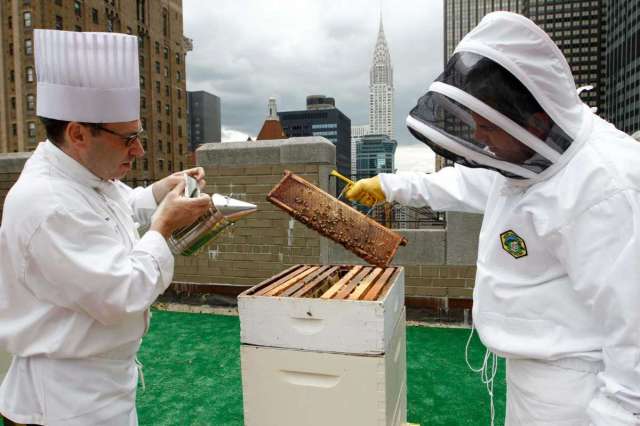 Honey harvesting on the roof of Waldorf Astoria Hotel in New York.
LAST BUT NOT LEAST.
Not only bees are producing honey. For completion I like to inform you about some more honey producers in the animal world.
There are about 500 species of sting-less bees in the world, some of which also produce honey. Sting-less bees, which live in warm areas of Australia, are capable of producing just enough honey for humans to collect and enjoy. This type of honey is known as sugar-bag. The flavor of sugar-bag is much different than our own raw honey. It has a tangier taste and runnier texture as it has higher water content.
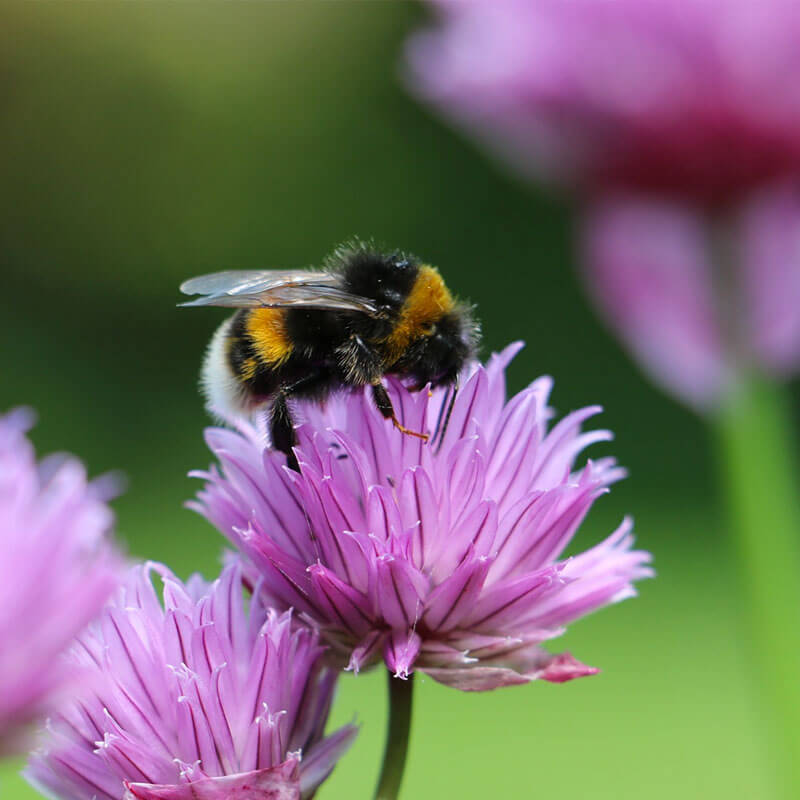
Bumblebees also make honey, albeit on a very small scale. The nectar they store in wax honey pots is mostly for the queen’s consumption, to maintain her energy during reproduction. Because very few bumblebee colonies establish permanently, they don’t need to store large quantities of honey. This makes it almost impossible to manage these bees for honey production.
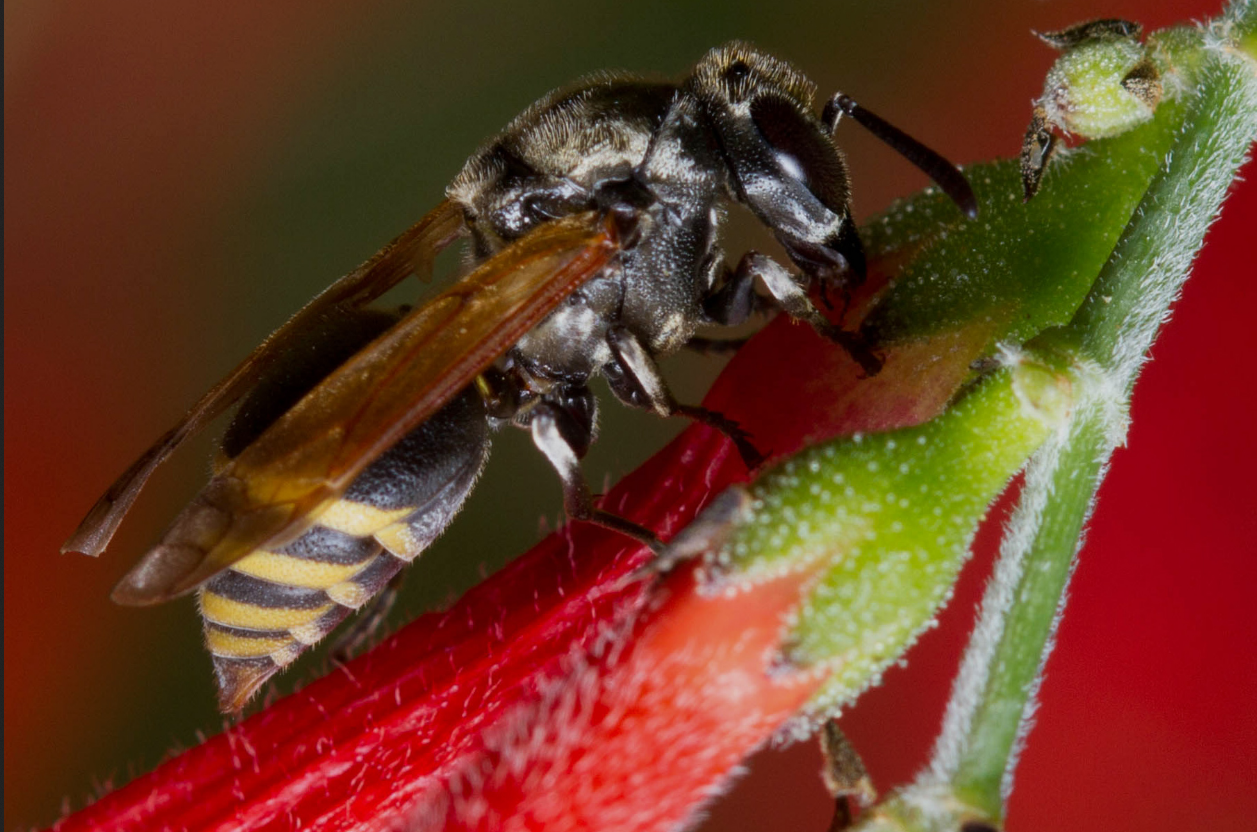
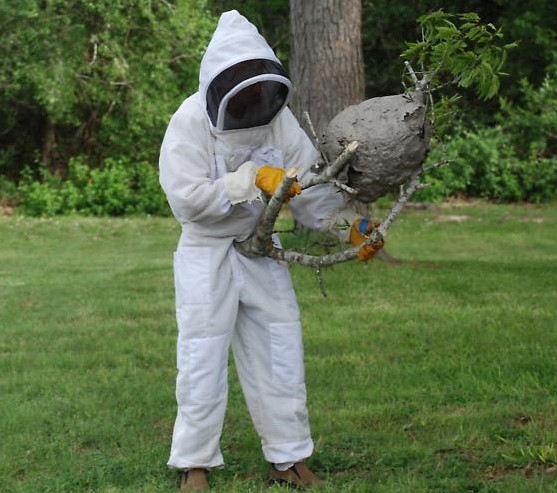
Bees aren’t the only hymenopterans that make honey. Some species of paper wasps, particularly the Mexican honey wasps , also store excess nectar in their cardboard nests. Local indigenous communities value these wasps as a source of food, income and traditional medicine.
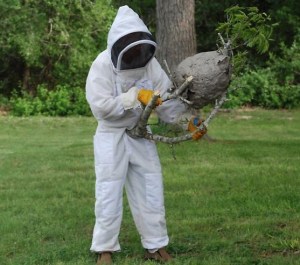 Merxican honey wasp and the wasp nest.
HONEYPOT ANTS.
Honeypot ants also make and store honey, but they do so in a very surprising way. While honey bees store honey in their hives, honeypot ants gorge on nectar until their abdomens swell up to the size of a grape. In their nests, they regurgitate the honey from their abdomen to feed the rest of the colony. These ants are domestic mainly in African and Australian deserts.
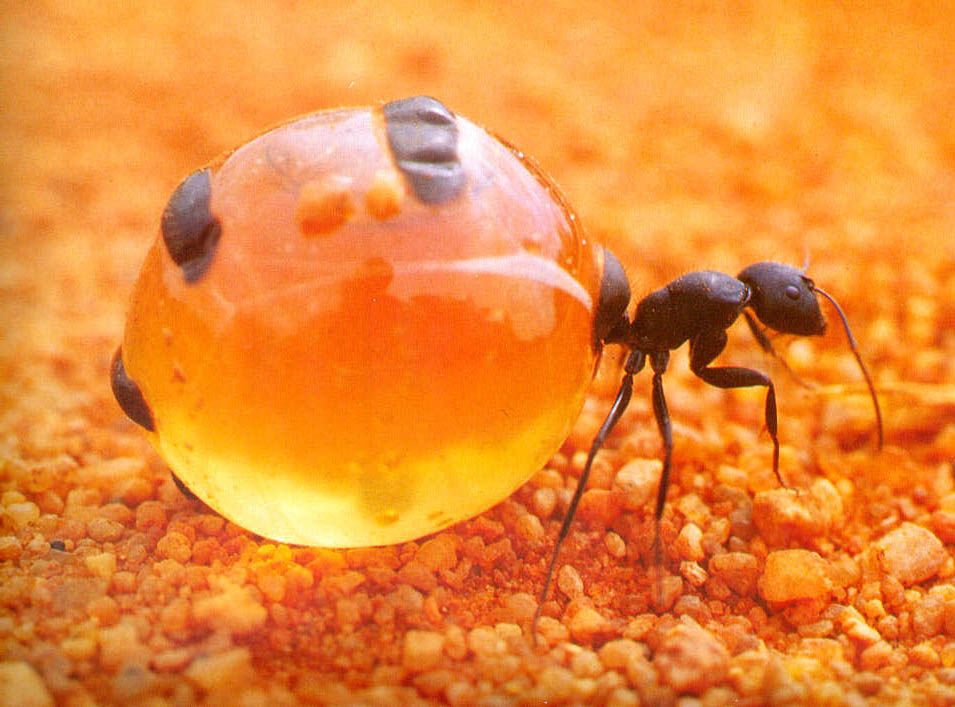
But Why Do They Do This? Honeypot ants live in very arid environments, and food can be difficult to come by. So when food is available, some of the honeypot ants, called repletes, become pantries full of honey.
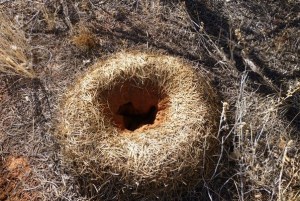
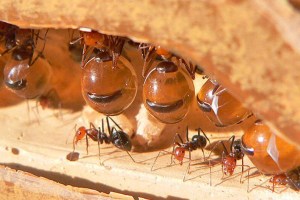
Honey ants live under ground, a nest (left) and storage of honey under ground (right).
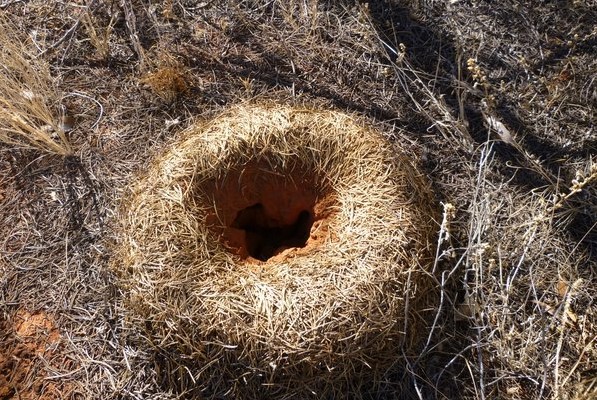
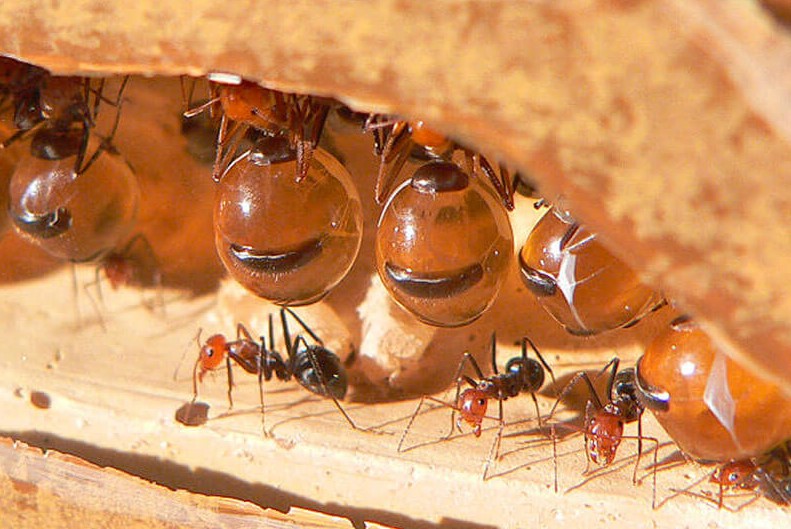
Aphids produce a sweet sugary syrup called honeydew. They attach themselves onto different plants and feed on the sap. The waste that they produce from the sap is actually sweet and delicious! Honeydew is an important source of energy for animals and insects, especially when winter arrives and resources become scarce. Indigenous communities also value honeydew as a sugar source.
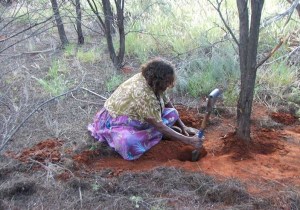
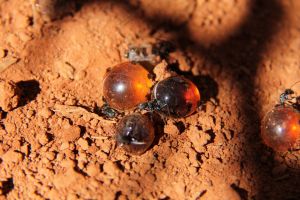 It takes a lot of patience to dig a big, c. 1 meter deep, hole to reach the honey chamber.
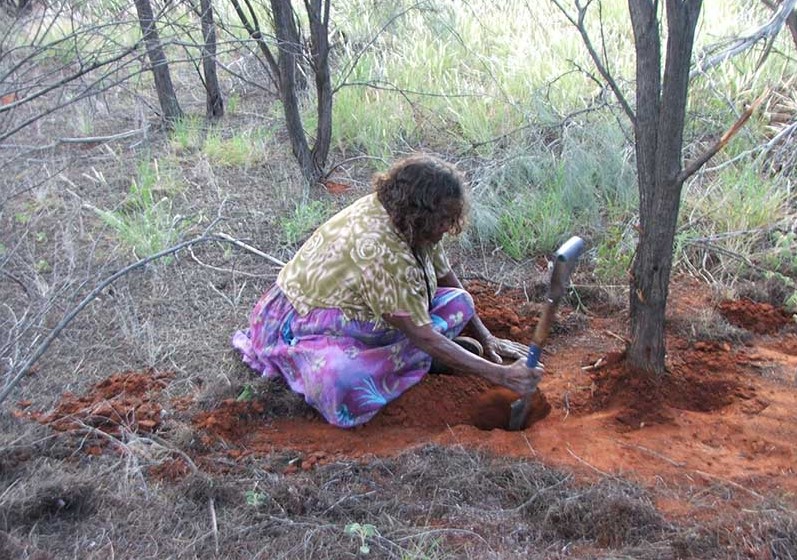
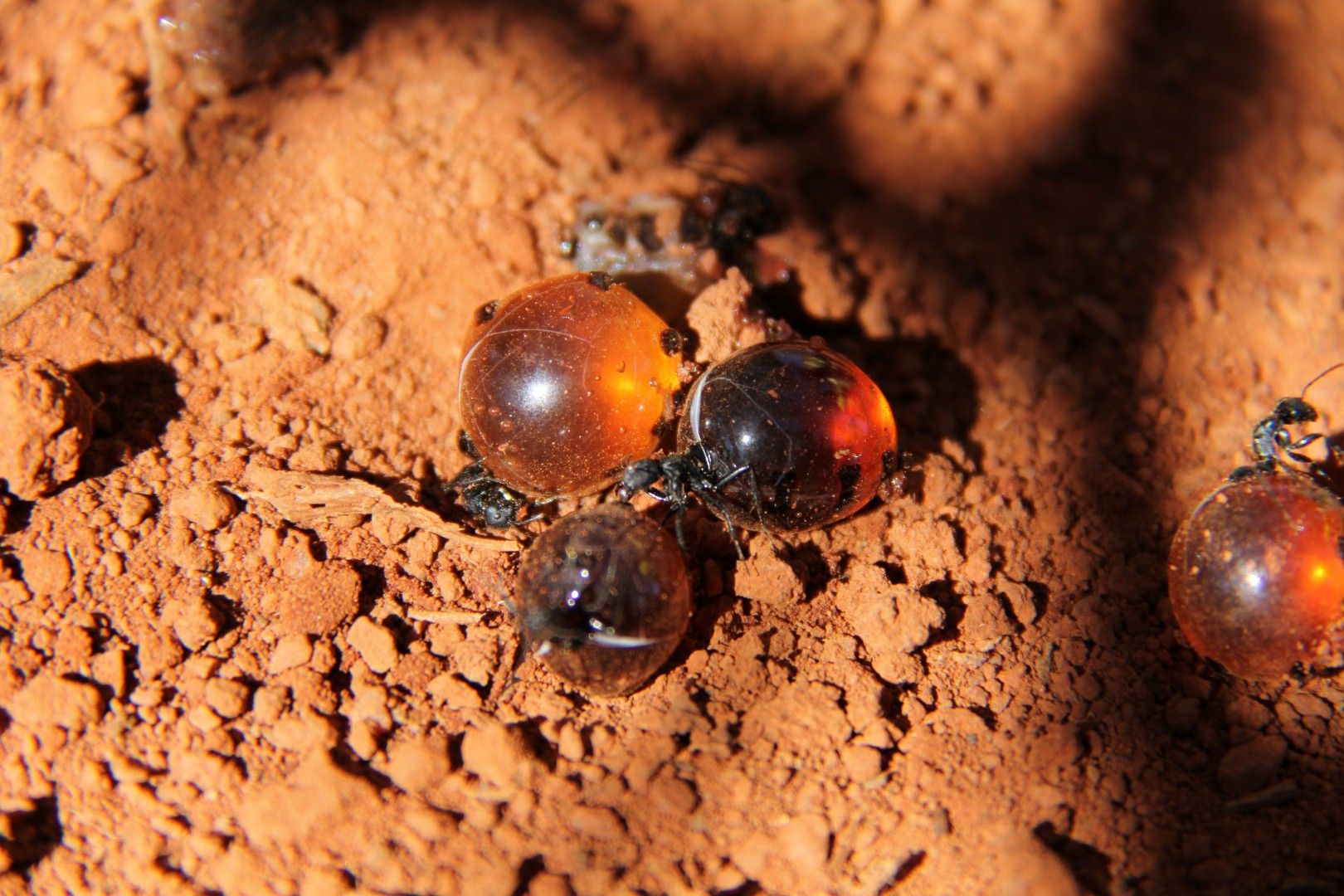
During my several weeks of living with Aboriginal people in Australia and some more later travels throughout the country I had a few opportunities to learn how to find these honey sources and how to harvest them. It was an experience I’ll never will forget in my life. When we located the ant hives, we were digging downwards until we reach the honey pot underground. The funny – and good/safe part – these ants don’t bite. The honey tastes exactly like bee honey, very sweet and saturating.
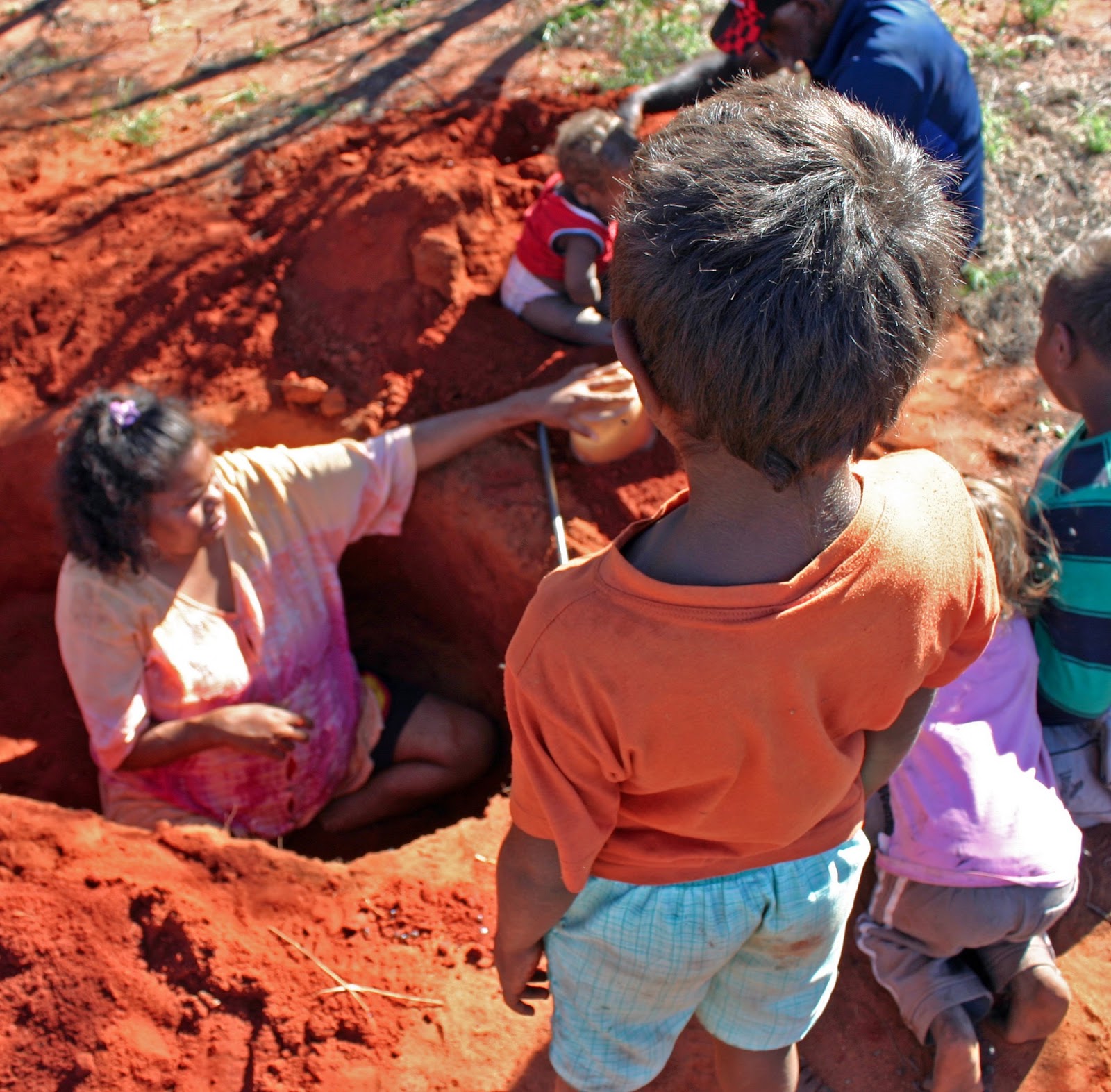
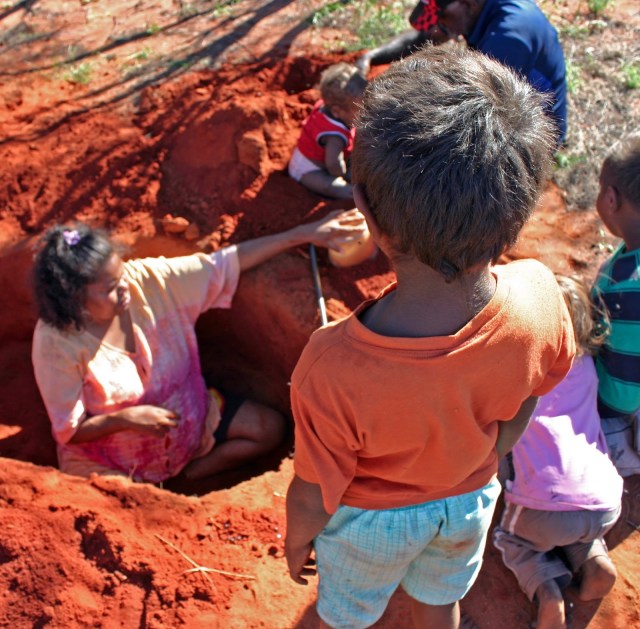 Everyone waiting for the reward of hours long digging.
The honey ant has a symbiotic relationship with the Mulga trees. The worker ants collect secretions from the tree and take it down into the nest and feed it to specialized honey ants during the good months of the year. The women search under the Mulga trees for the holes that lead down into the nest.
 This is the result of one ants nest, one hand full of treats. Click on pics to supersize.
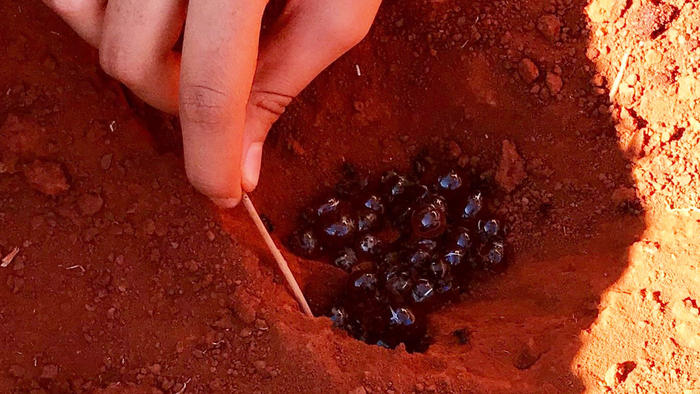
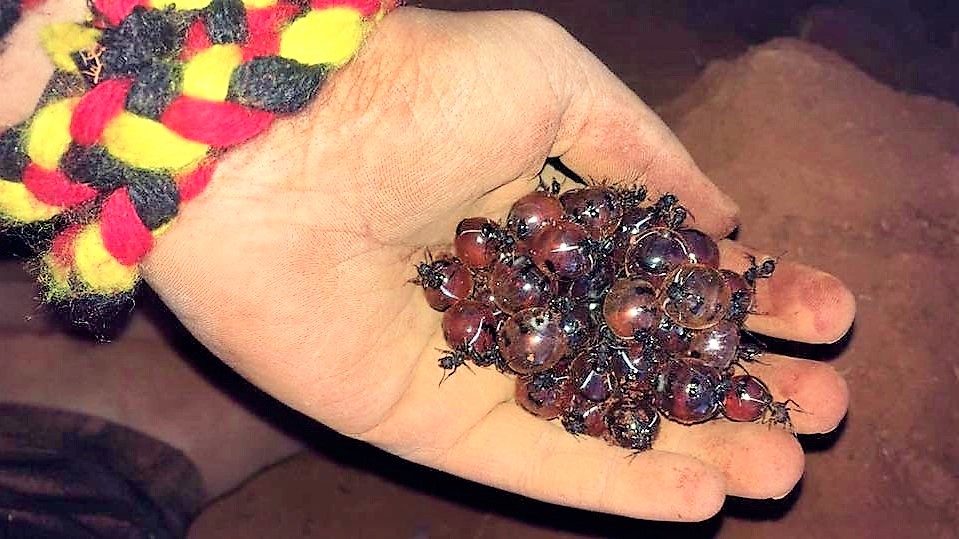
They dig down about a meter into the nest searching for the chambers that run off to the side where the honey pot ants are hanging from the ceiling – their abdomen extended to marble size by the honey they are storing. This is regurgitated to feed all the ants through the lean times.
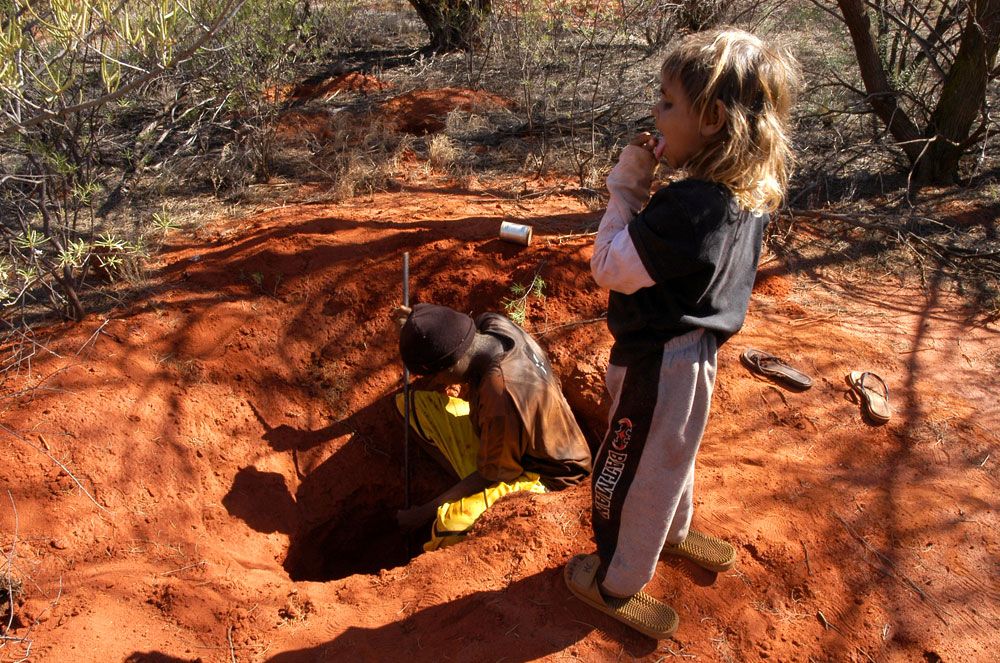
They are a highly desired treat for the desert dwellers. They eat them like they dig them out the ground. I always took the time to take the ant off first. Ants will die when taking off the honey ball. And one ball in your mouth is like a big spoon full of pure bee honey. The aborigine kids press the ball down in their hand and then lick the hand (see above) for an hour or longer, they have learned to appreciate the value of food like this.

 How important these honeypot ants are to the Australian Aboriginals, shows a children’s book series. Also an important theme in Aboriginal Art Dreaming’s. Have a look into my posts about Australian Aboriginal Art.
FINAL TIP ABOUT HONEY.
Everyone knows about crystallization of honey when you leave it untouched for a while. Natural honey contains sugar molecules that interlock with each other. This is how crystallization occurs. Some honeys crystallize very quickly, while others take a very long time. There are two ways to reverse crystallization: Heat or stirring. Since stirring is not very practical in a commercial jar, heat is the only way to liquefy honey.
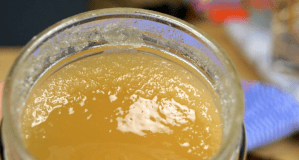
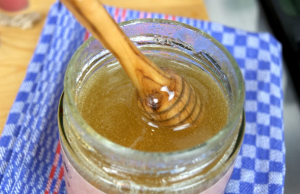 Before and after warming up the honey. Click on pics if you like.
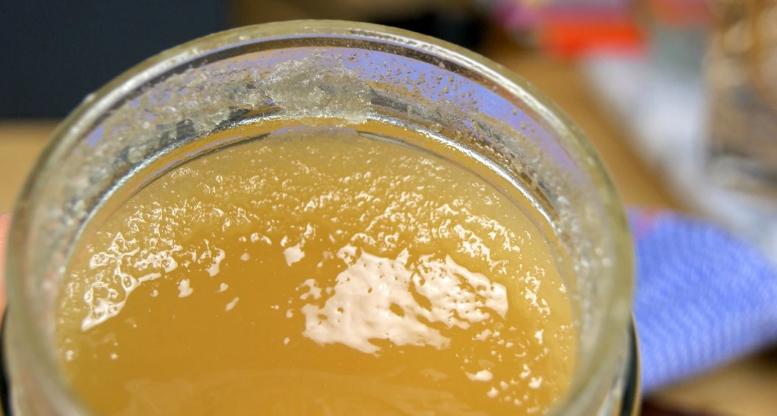
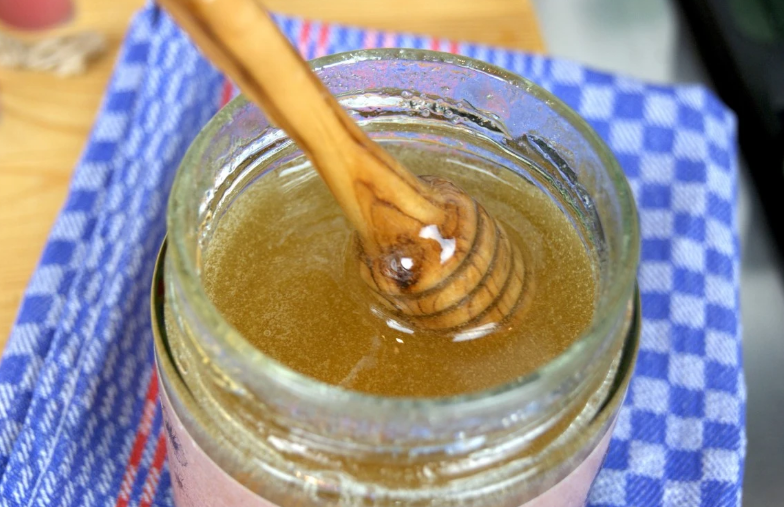
Honey generally likes it warm. At a high ambient temperature, it even becomes liquid again quite quickly. However, it is a bit of a balancing act, because at too high ambient temperatures the valuable ingredients such as the enzymes are lost.
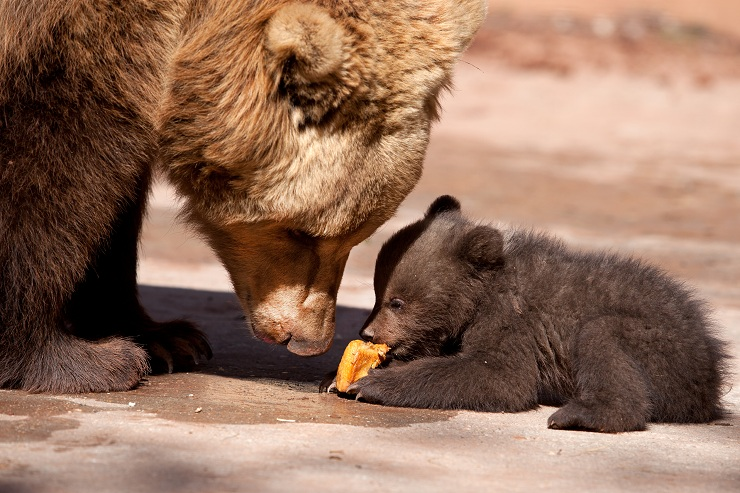
How to love and use honey and learning what to do with it, means a whole life experience. Not even 1001 and more possibilities of honey use would be enough. Have a look into the internet if you are interested. However you like to use honey, enjoy it !

