
Would this be a new line of posts ?
This year I visited Germany again and after my return many people asked me to provide some information about my travels, places and countries we traveled and lived in. Some of these destinations they might never visit on their own. Especially Uruguayan friends asked that too, to learn about, by example German places which I just visited this year or Australian places, where we lived almost 12 years. I like this idea, to share some memories, experiences and accompanying photographs with all of you.
This won’t be another travel guide, just places I liked and think it is worth to write about. Some can be very well known, others might be not so common. Additional, I will try to keep my basic line, which I follow throughout the whole blog – always many many pics (remember – one picture is better then 1000 words), information about lifestyle and historic backgrounds.
I like to establish a new category and call it „Must See“. That will include, of course, all the „Must See’s“ of Uruguay too. Some posts in this category will be published in several parts, this one, Bamberg, in part 1 and 2. Click on the pics, most of them super size !!
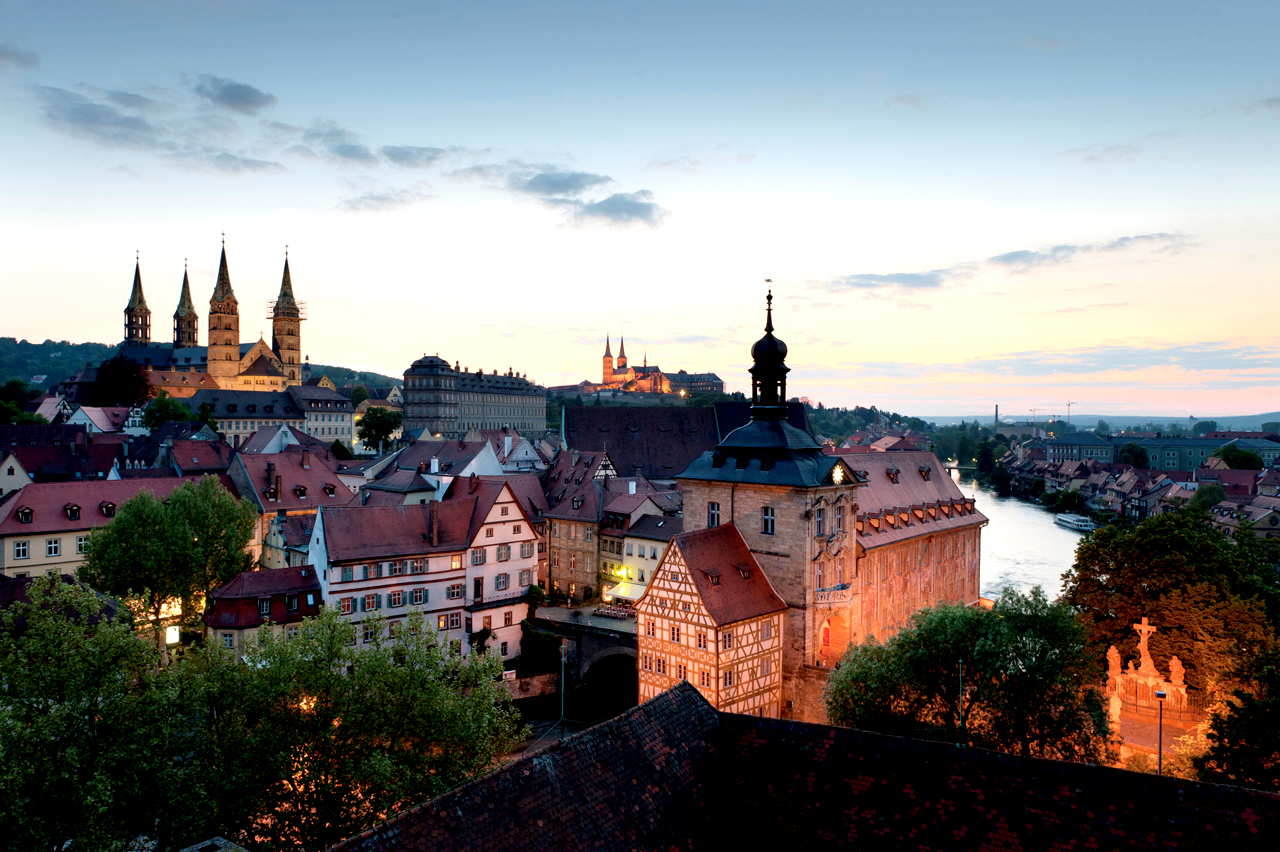
An underestimated German city.
This first post, I decided to publish, is about a city I just visited this year with one of my best friends as a perfect tour guide. This city is very well known, but I think totally underestimated throughout the international tourist population. It is Bamberg.
 Bamberg shown in the Nuremberg Chronicle 1493.
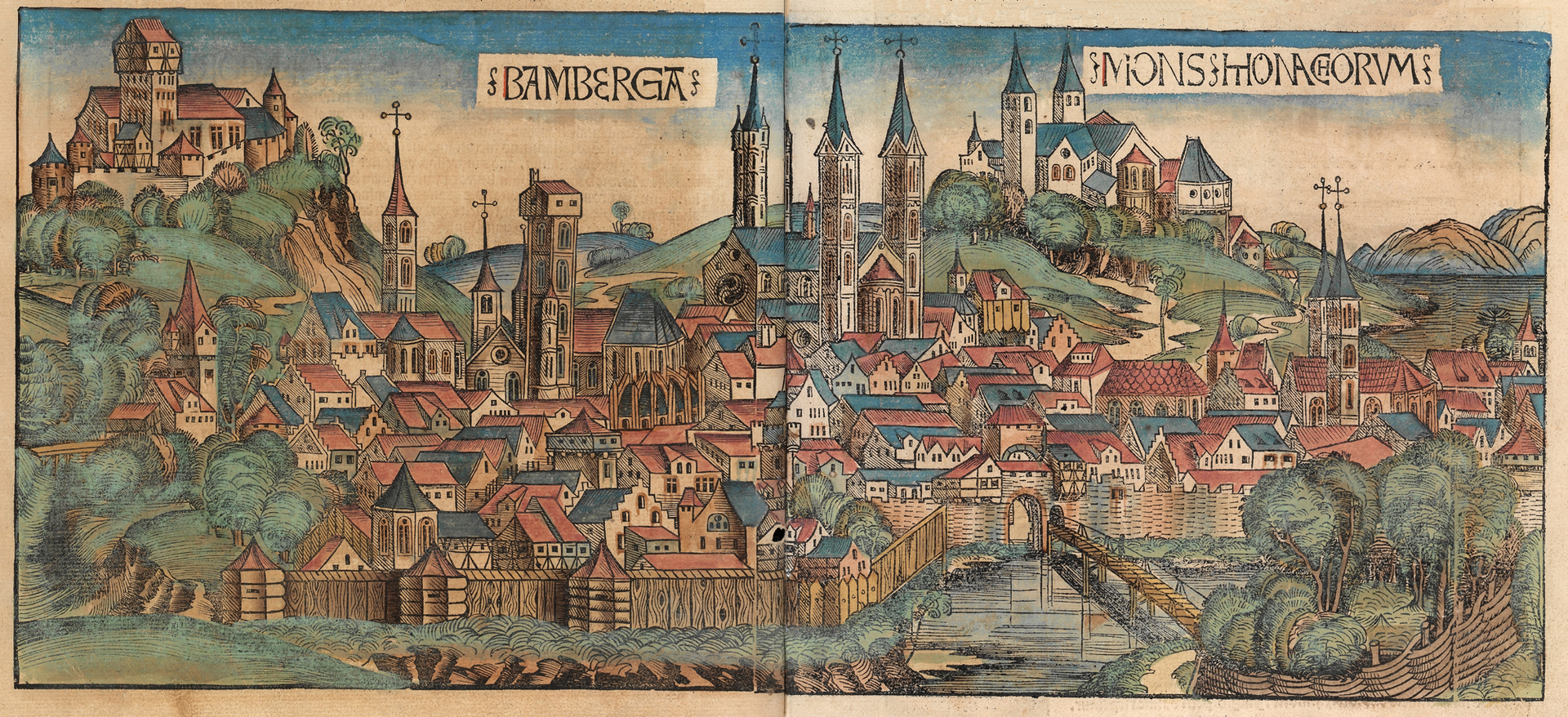
Bamberg is a city in Northern Bavaria, Germany, located in Upper Franconia on the river Regnitz close to its confluence with the river Main. Its historic city center is a listed UNESCO world heritage site. The city has just above 70.000 residents and has a mild climate through the four seasons.
The „Seven Hills“ of Bamberg.
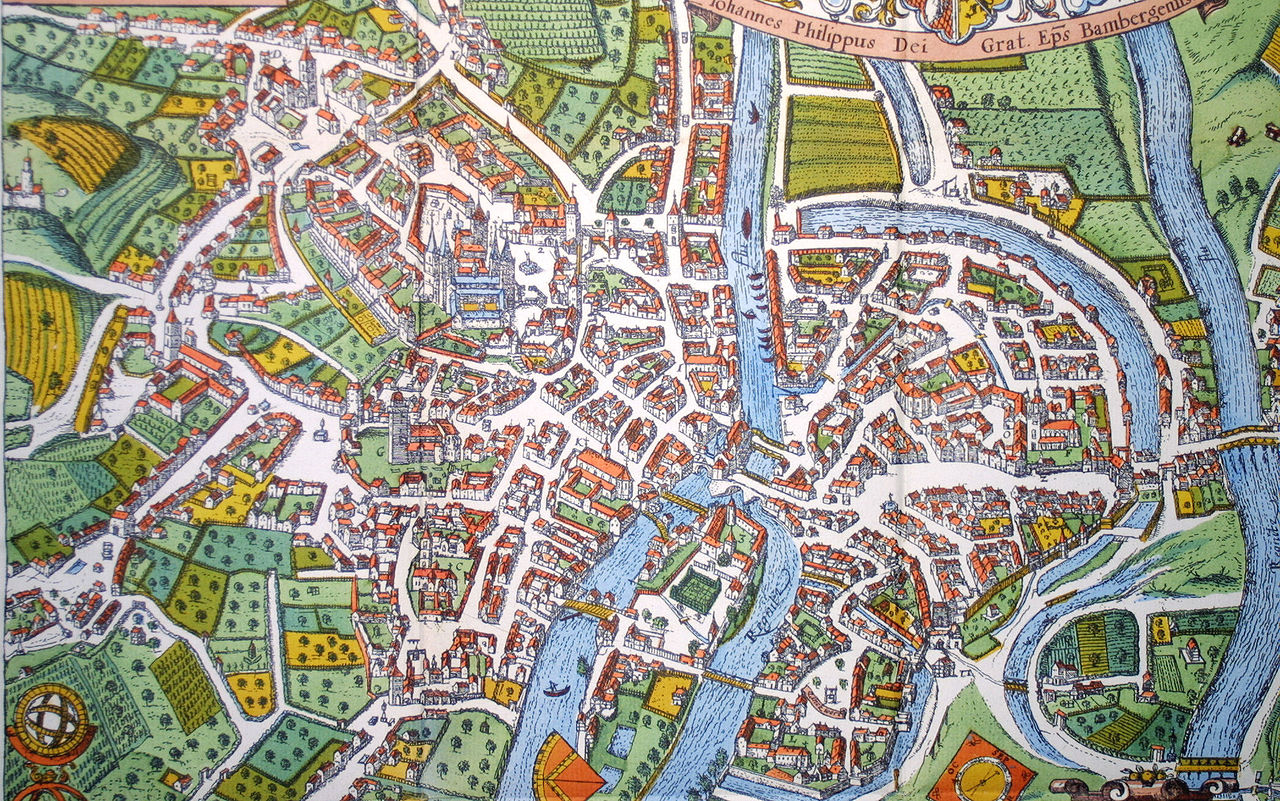
Bamberg extends over seven hills, each crowned by a beautiful church. This has led to the city of Bamberg being called the „Franconian Rome“ — although a permanent running joke among Bamberg’s tour guides is to refer to Rome instead as the „Italian Bamberg“.
 The Franconian Rome in 1617.
Bamberg has been an important base for the Bavarian, German and now American military stationed at Warner Barracks. Warner Barracks was closed in fall 2014, with the last battalion leaving being the 54th Engineer Battalion.
Some of the famous residents of Bamberg.
Henry II (973-1024), Holy Roman Emperor.
Pope Clement II, bishop of Bamberg from (1040-1046).
Georg Wilhelm Friedrich Hegel (1770-1831), philosopher.
Willy Messerschmitt (1898–1978), aircraft designer.
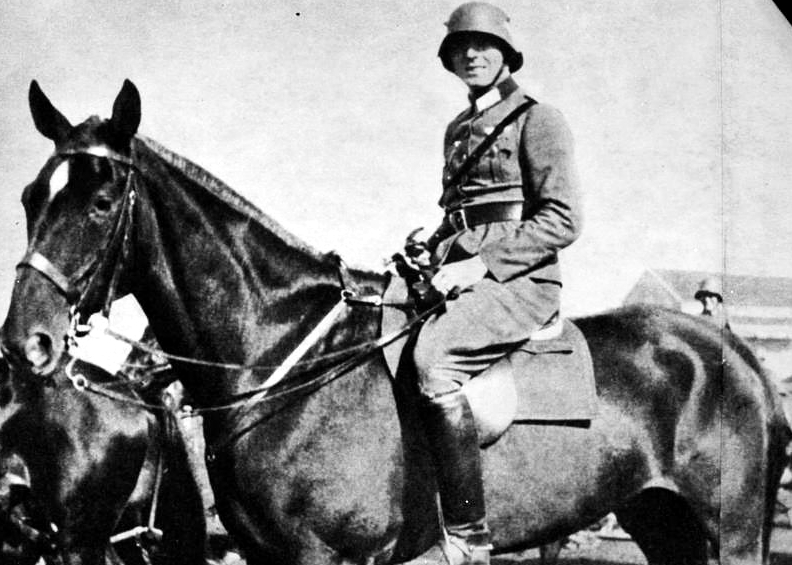
Claus Schenk Graf von Stauffenberg (1907-1944), officer who attempted to assassinate German dictator Adolf Hitler in the 20th of July 1944 Plot.
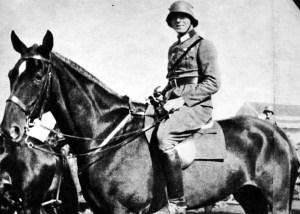
Claus Schenk Graf von Stauffenberg with the 17. Horse Regiment in Bamberg, 1926.
Short overview of the history of Bamberg.
The face of the city of Bamberg is marked by more than 1.000 years of history. The „Castrum Babenberg“, the fortress on the cathedral hill, was first mentioned in the year 902. In 1007, emperor Henry II founded a bishopric here. he wanted to make the town into his capital city and thus donated great gifts to it. The support by the emperor soon bore its first fruits.
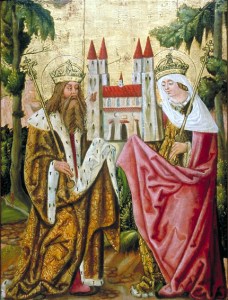 Emperor Henry II and his wife Kunigunde.
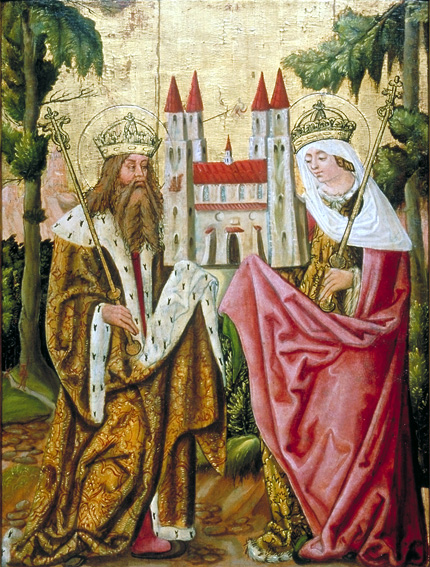
Churches and monasteries were established, so as St. Michael’s, St. Stephen’s, St. James’s and St. Gangolf’s. In the 13th century, the present-day cathedral was built on the site of Henry’s cathedral, which had burnt down earlier. Most of the churches are to be found on the seven hills of Bamberg. In the middle ages, the „Old Court“, next to the cathedral, was also the seat of the bishops, the city’s territorial lords and rulers.
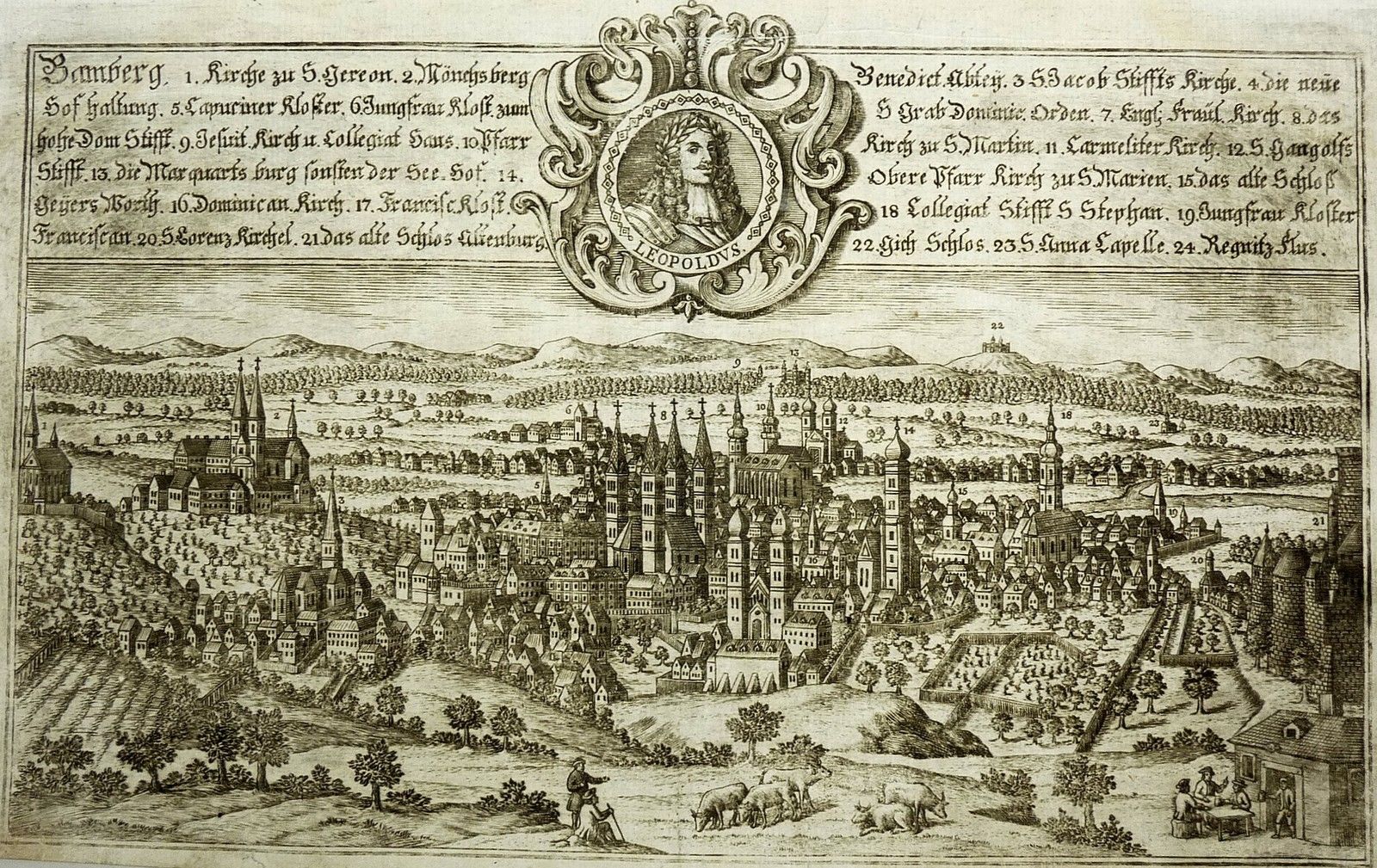
 Bamberg engraving from 1632.
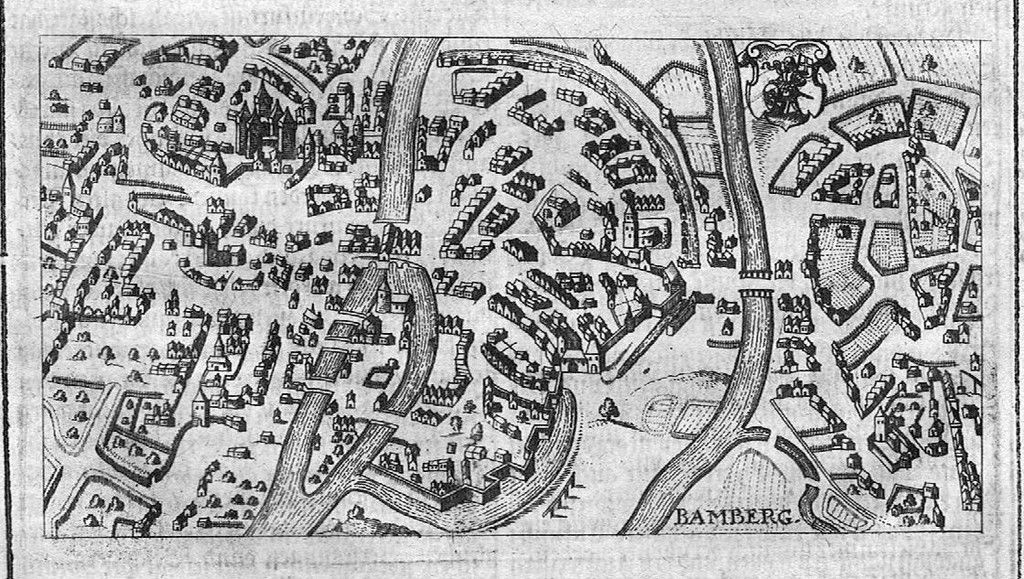
The bourgeois town, in contrast, developed – after its beginnings at the foot of the cathedral hill – on an island between the two arms of the river Regnitz. This differentiation between the „spiritual“ and „secular“ city is still noticeable today. The hillside area is the section of the city with quieter, almost enchanted alley-ways, the island the main shopping area.
Fantastic copper engraving from Bamberg 1795.
Interesting is the amount of churches, towers and monasteries against normal citizen houses.
The names of the markets – Obstmarkt (fruit market), Gruener Markt (green or vegetable market), Holzmarkt (wood market) and Heumarkt (hay market) – reveal the variety in Bamberg’s economic life, even from its very beginnings. A decisive role in the economy was played by the market-gardeners, whose cultivable land east of the right arm of the Regnitz near to the hillside area and the island city adds the third element to the structure of the city.
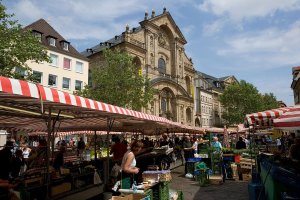 Today’s Green Market in front of St.Martin’s Church.
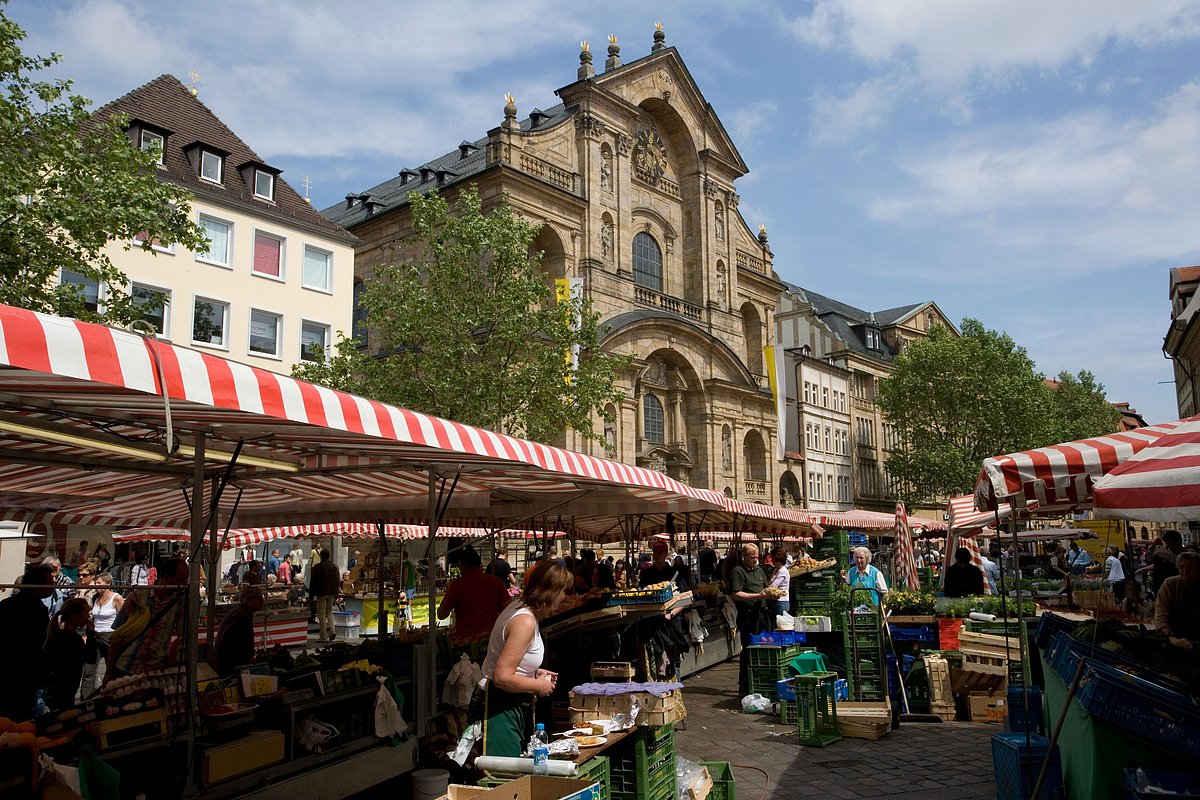
This structure, the location of the streets and plots of land, is still medieval. However, the appearance of the city, the facades of the houses, the decoration of the bridges and squares, was newly shaped in the Baroque period by the Schoenborn bishops. They encouraged the citizens to renovate their houses by providing model buildings and tax incentives.
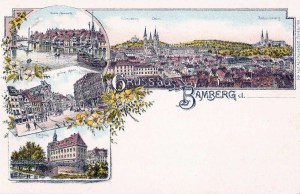 Art Nouveau postcard, Bamberg 1900.
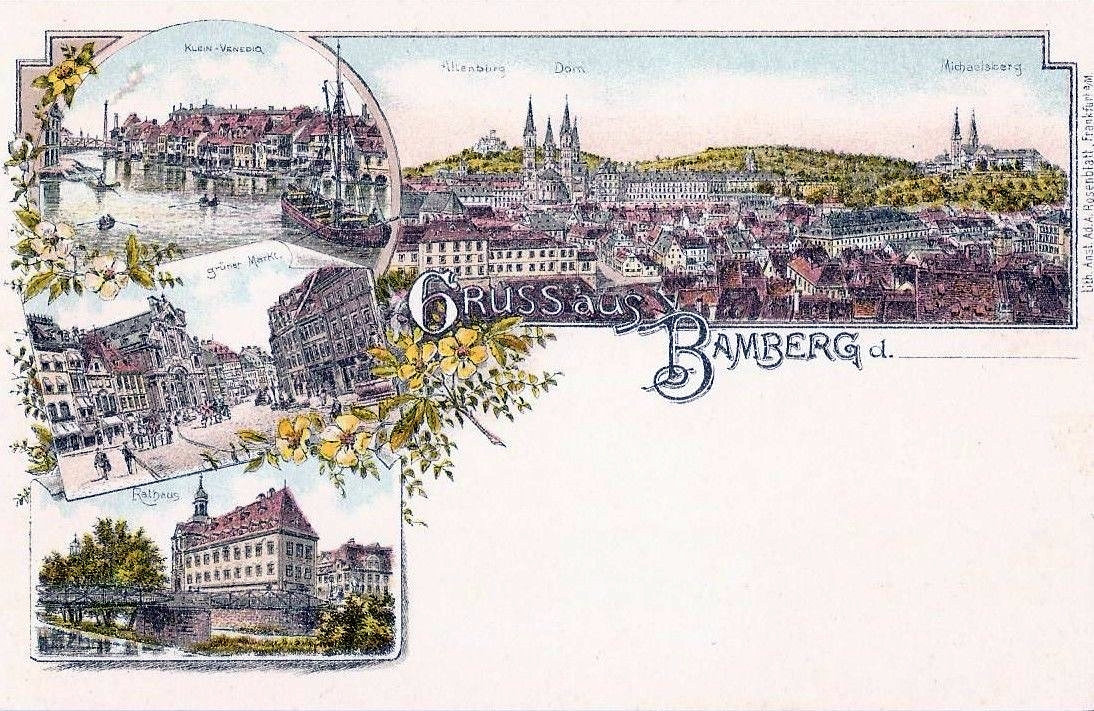
Fortunately, Bamberg remained largely untouched in the Second World War. This factor has given the city its special position; it has the largest intact old town in Germany. In 1981, Bamberg was declared a town monument and, in 1993, it was added to the „World Heritage List“ by UNESCO. Despite this status, Bamberg is not a museum. It is an extremely vibrant city, has a university, numerous schools and it serves as a shopping center and center of administration for a wide surrounding area.
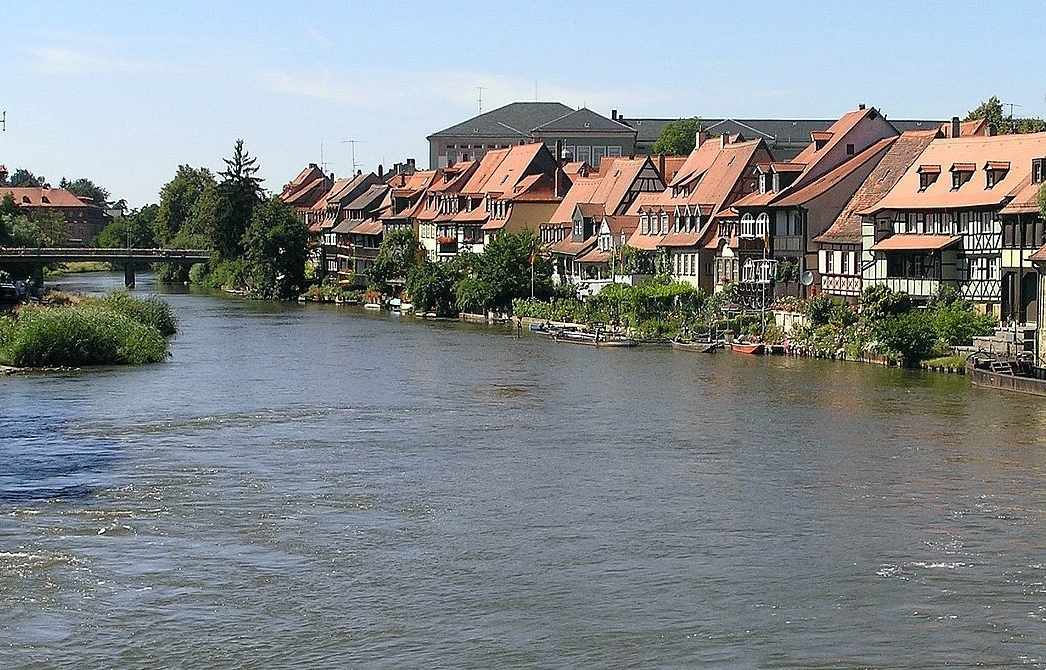
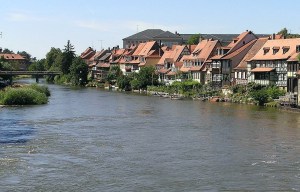 Riverfront part of Bamberg, called Little Venice.
It is true that much of the magic and charm of this city stems from the daily encounter with its history, but the past is not regarded with mild contempt as something from bygone days that has outgrown and, at best, can be used as nostalgic decoration for its facade. Bamberg has succeeded in integrating the knowledge of the ages, passed down, too, in works of art, traditions, houses and gardens, into the present. Look at it yourself.
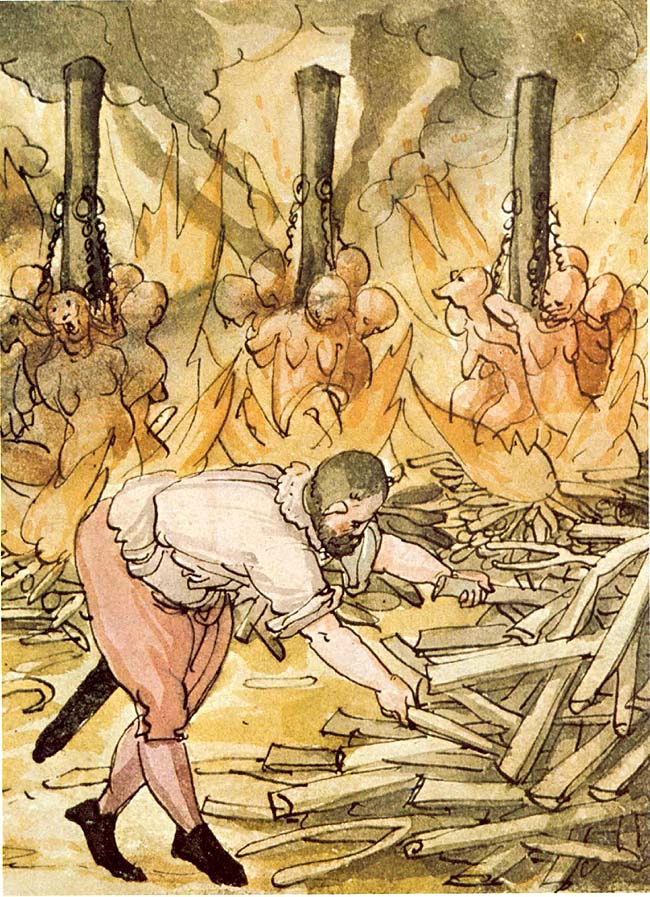
Time of the „Witch Hunts“.
The former bishopric Bamberg was one of the main centers of early modern witches and wizards persecution in southern Germany, this lasted from about 1507 (establishment of the „Constitutio Criminalis Bambergensis“) till 1633 (Invasion of Swedish troops and the death of Johann Georg II. Fox von Dornheim in 1633).
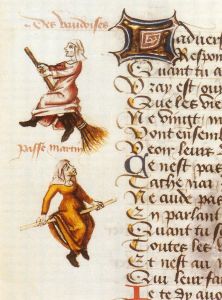 Flying witches, hand colored manuscript from 1451.
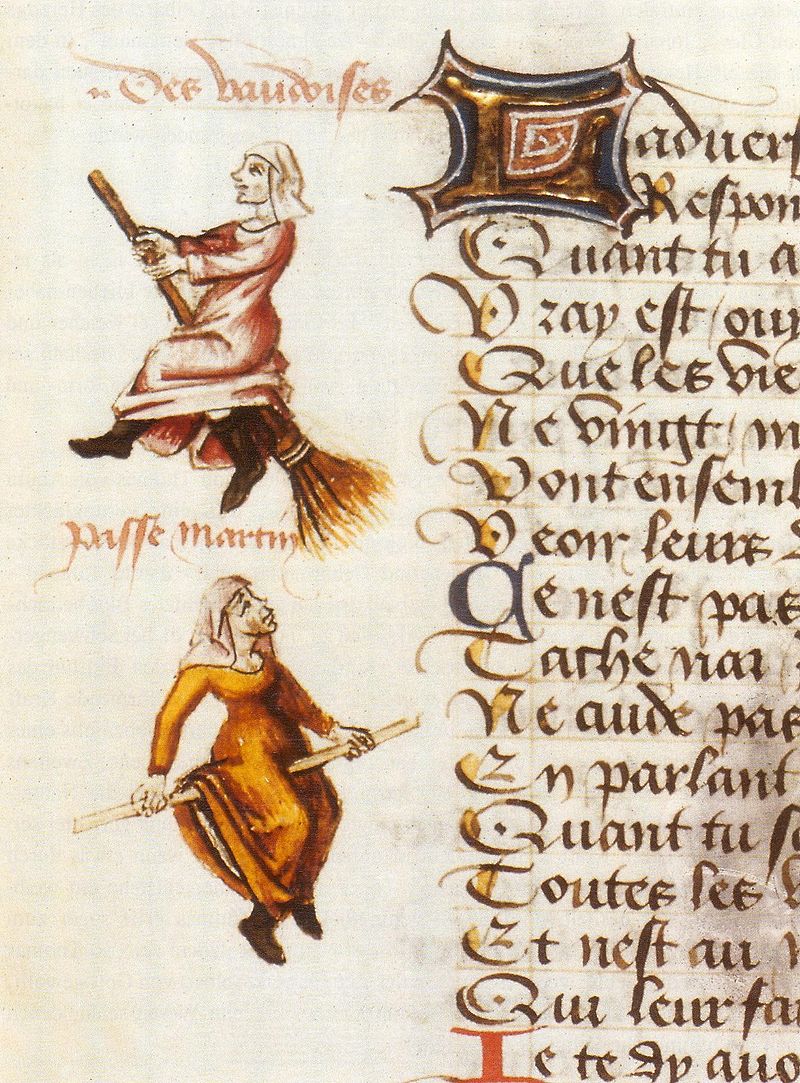
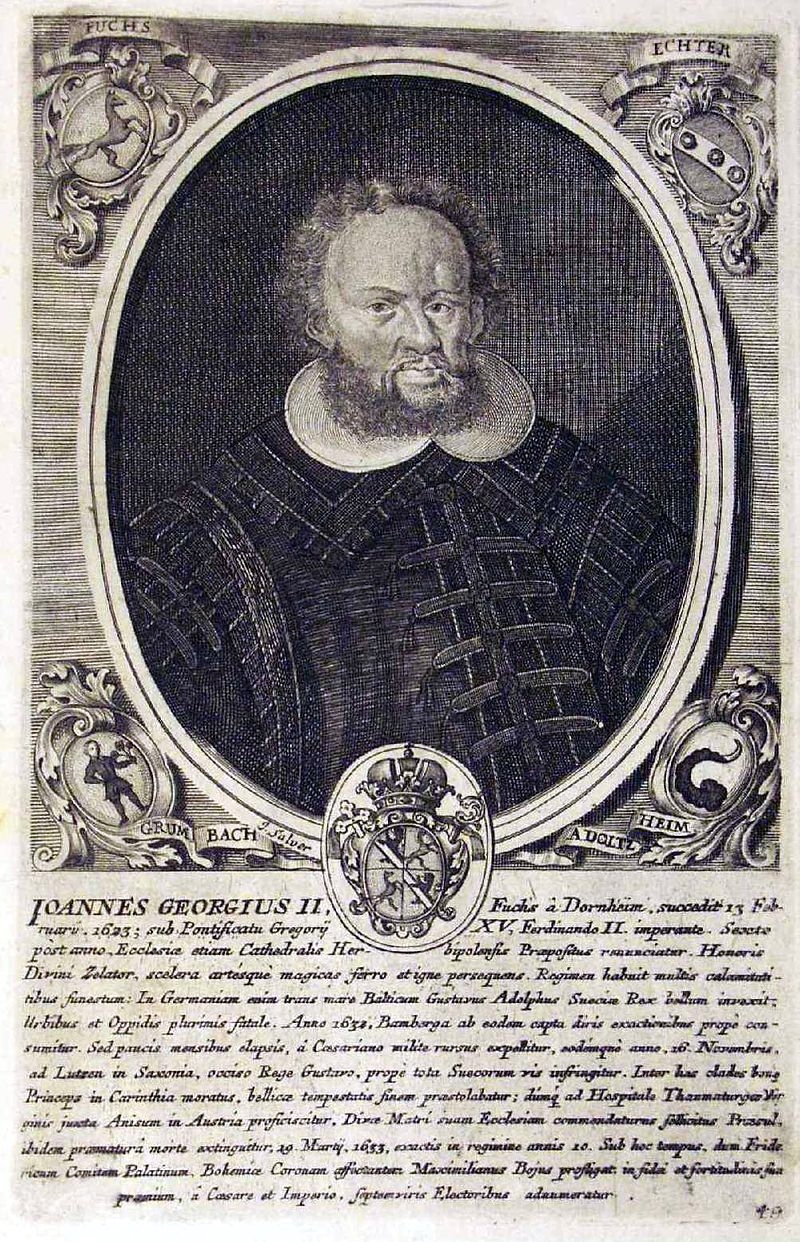
Due to long-lasting, sometimes violent power struggles between citizens and the respective ruling prince-bishop of Bamberg, caused by crop failures in the Little Ice Age and the effects of war famine and a strong personal belief in witchcraft of the reigning Bamberg Prince-Bishop Johann Georg II. Fox of Dornheim, called the Witch Burner (1623 1633), reached the persecution and execution of individuals and entire families on charges of witchcraft in Bamberg in the 1620s and early 1630s peaked.
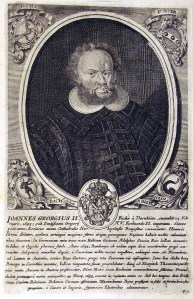 The Witch Burner „Fox of Dornheim“, engraving 1623.
The auxiliary bishop Friedrich Förner was the most important preacher and the real agitators of witch-hunting. Johann Georg II. Fox of Dornheim built specifically for the detention of accused of witchcraft in 1627 that was once located in the area of today’s so-called promenade Drudenhaus, also called Malefizhaus.
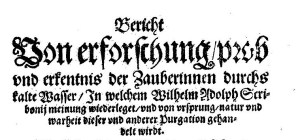
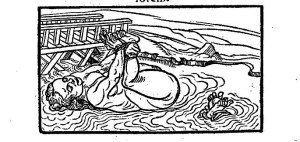
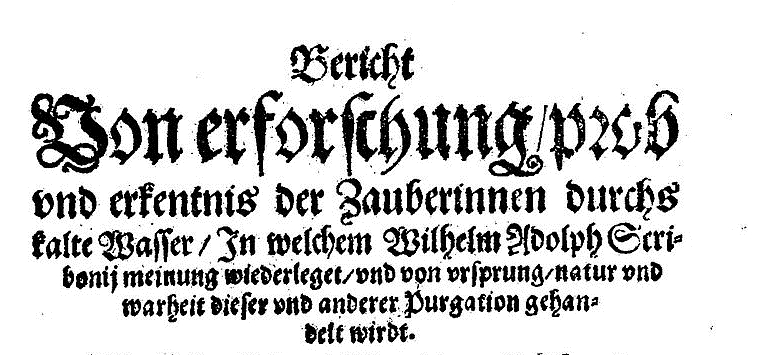
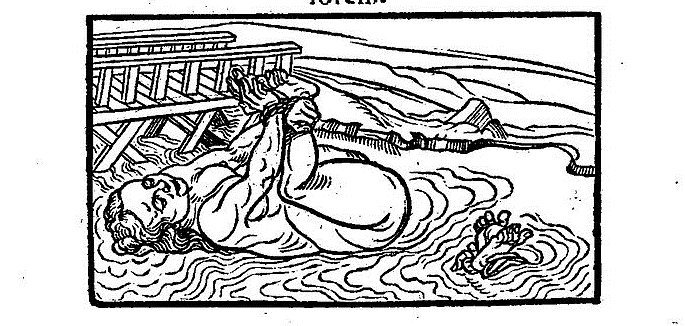
Old document from 1581, describing how to test if a person is guilty to be a witch or magician.
Throw them bound on hand and feet into the water; if they swim on the water they are guilty
and will be burned, if they drown, they are innocent.
The city council of Bamberg has taken a decision to the witch trials in the bishopric of Bamberg on 29 April 2015 (almost 400 years later) and agreed on a text for a plaque at the monument behind castle Geyerswörth: „In the bishopric of Bamberg about 1000 men, women and children were accused innocent in the 17th century , tortured and executed.“
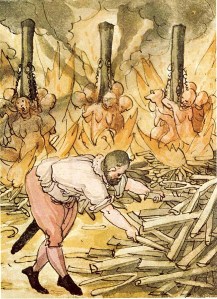 Bamberg witch burning in the 17th century !!
The cathedral of St. Peter and St. George.
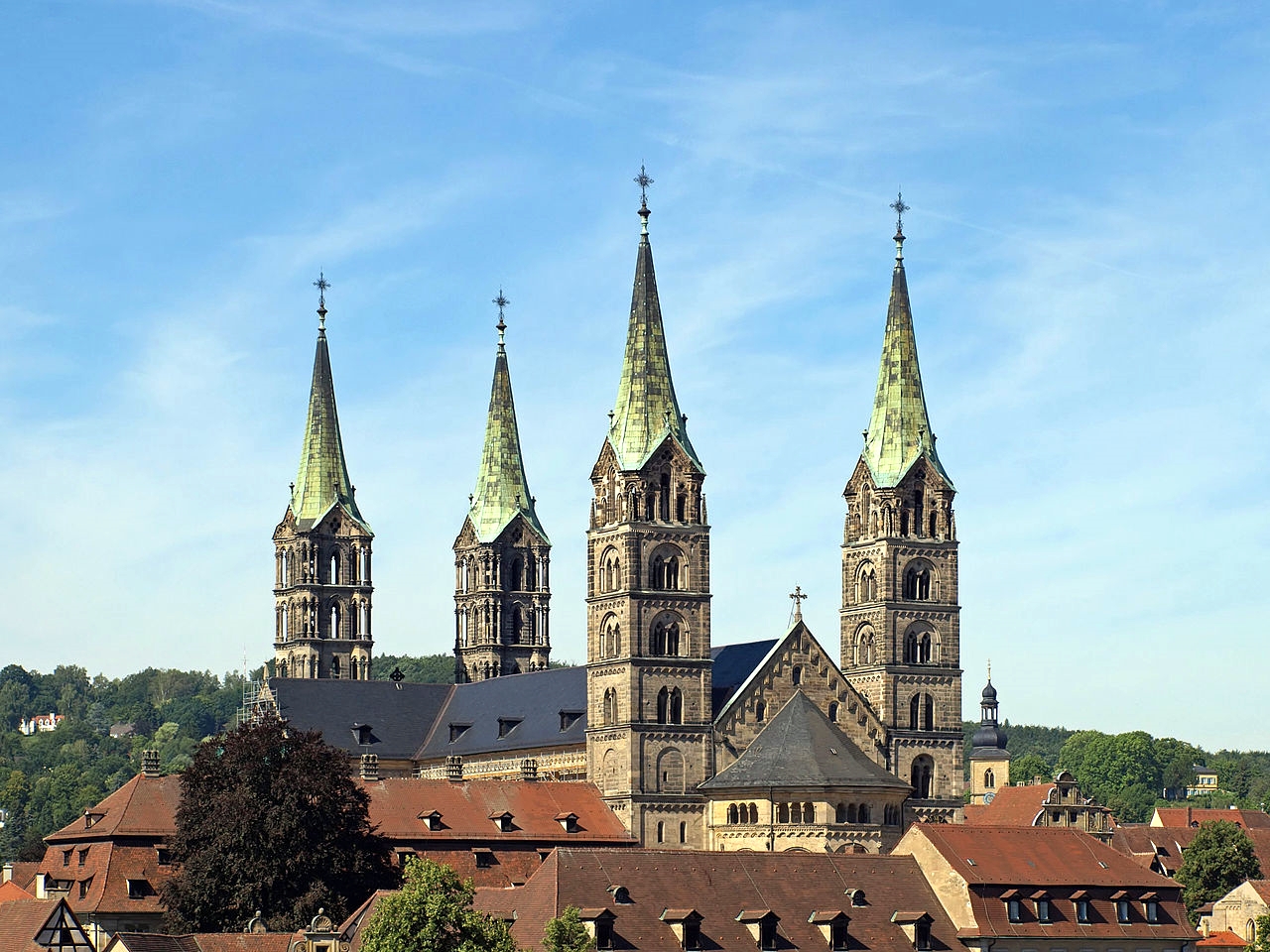
Bishopric church of the archbishop of Bamberg. The cathedral represents the peak of artistic development at the time of transition from Romanesque to Gothic periods in Germany. Four towers (very rare), two chancels and a transept at the west end. The cathedral is a late Romanesque building with four grand towers. It was founded in 1004 by the emperor Henry II, finished in 1012 and consecrated on May 6, 1012. It was later partially destroyed by fire in 1081.
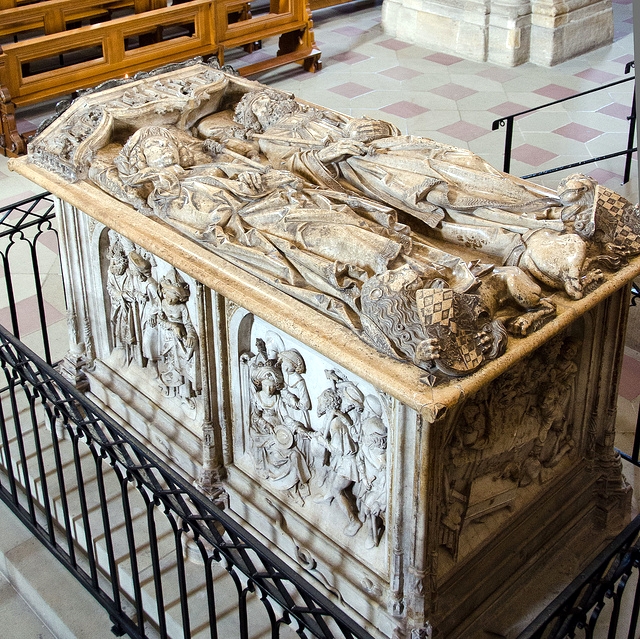
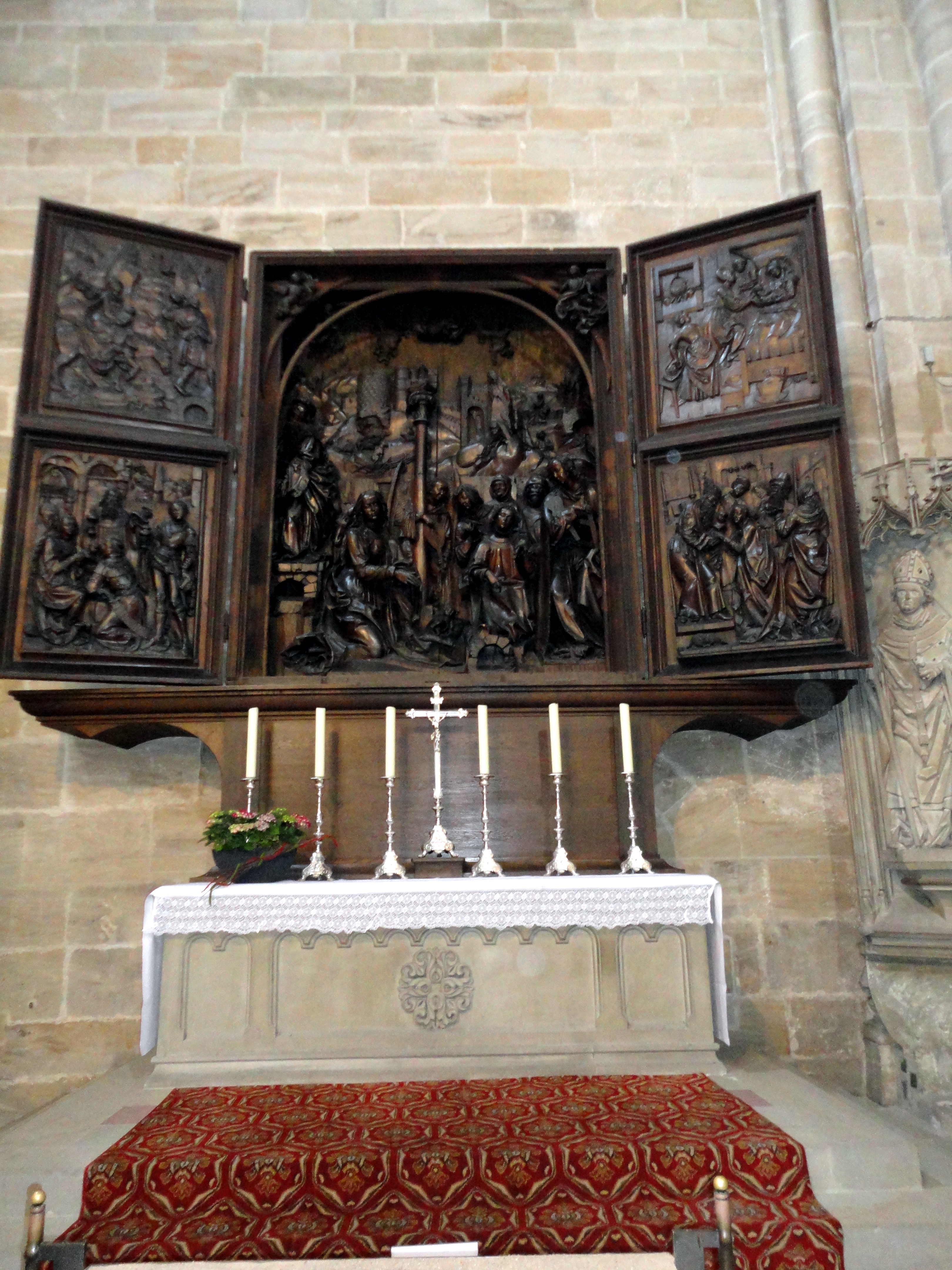
Above left: The imperial marble tomb of Henry II and his wife Kunigunde, carved by Tilman Riemenschneider 1499 til 1513. The reliefs show Kunigunde’s ordeal by fire as she walked over red-hot plough-shares to prove her innocence; and Kunigunde giving the builders of St Stephen’s their „fair wage“; Henry’s death; the weighing of his soul and finally Henry being healed by St. Benedict.
Above right: The Christmas Altar.
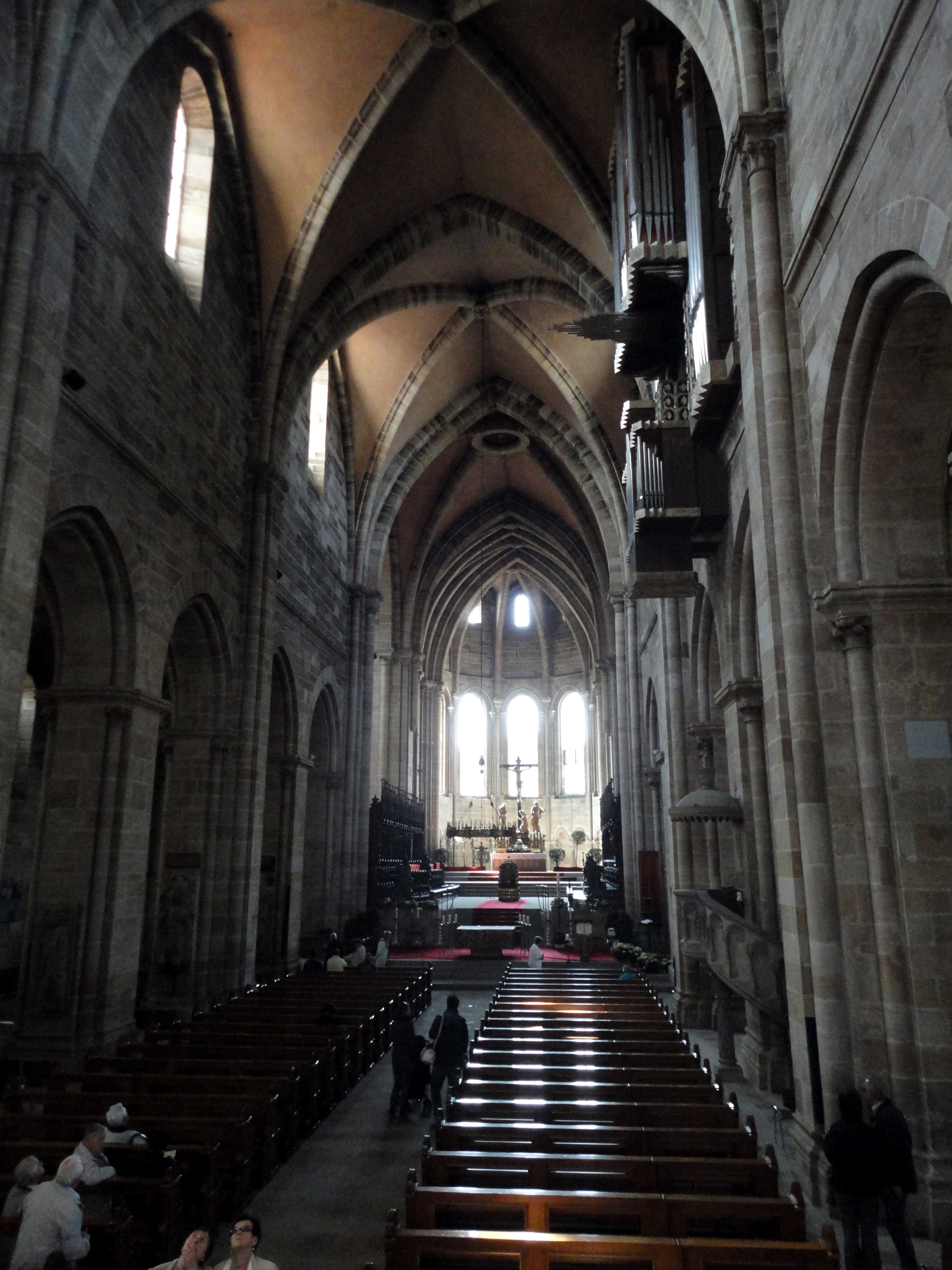
Above: Inside the massive cathedral which is 94 m (308 ft) long, 28 m (92 ft) broad, 26 m (85 ft) high, and the four towers are each about 81 m (266 ft) high.
The „Bamberg Horseman“.
In German: Der Bamberger Reiter. A life-size stone equestrian statue by an anonymous medieval sculptor in the cathedral of Bamberg, Germany.
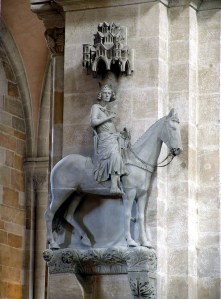 Another treasure of Bamberg.
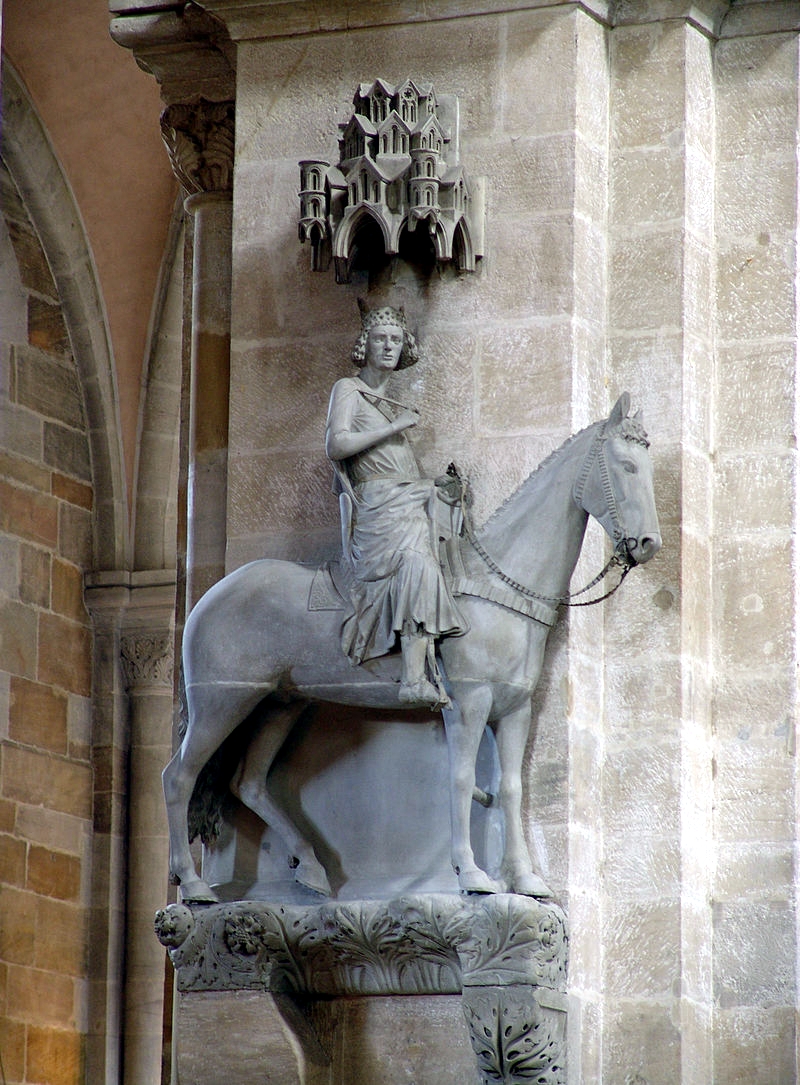
Being located in a church and showing a crowned yet unarmed man, it is believed that it represents a specific king, perhaps one who was a saint. A candidate is Saint Henry II, Holy Roman Emperor (973-1024) who is buried in the cathedral along with pope Clement II, but he would likely have been depicted with Imperial Regalia. Another possibility is his brother-in-law, holy king Stephen I of Hungary (975-1038) who stops his horse and looks towards the tomb of Henry.
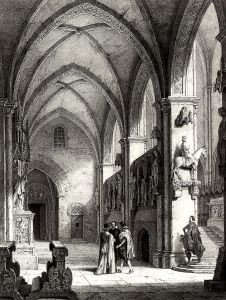 Undated, very old engraving, shows the horseman in the Cathedral.
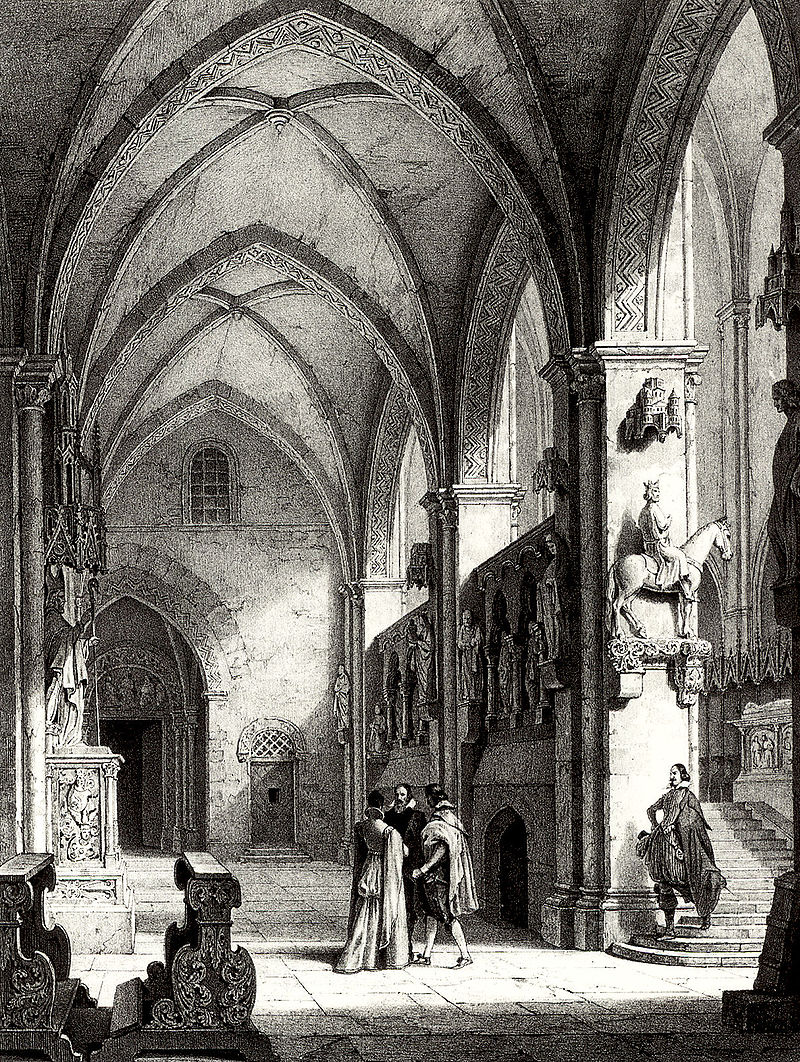
Another theory favors Frederick II, the Holy Roman Emperor at the time, who financed much of the rebuilding of the cathedral. Another theory is, supported by the University of Bayreuth, that the figure represents the messiah according to the Book of Revelation.
It is considered the first monumental equestrian statue since classical antiquity, and also one of the first to depict a horse shoe.
The statue also serves as a symbol of the city.
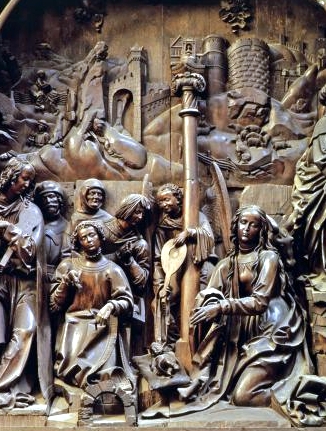
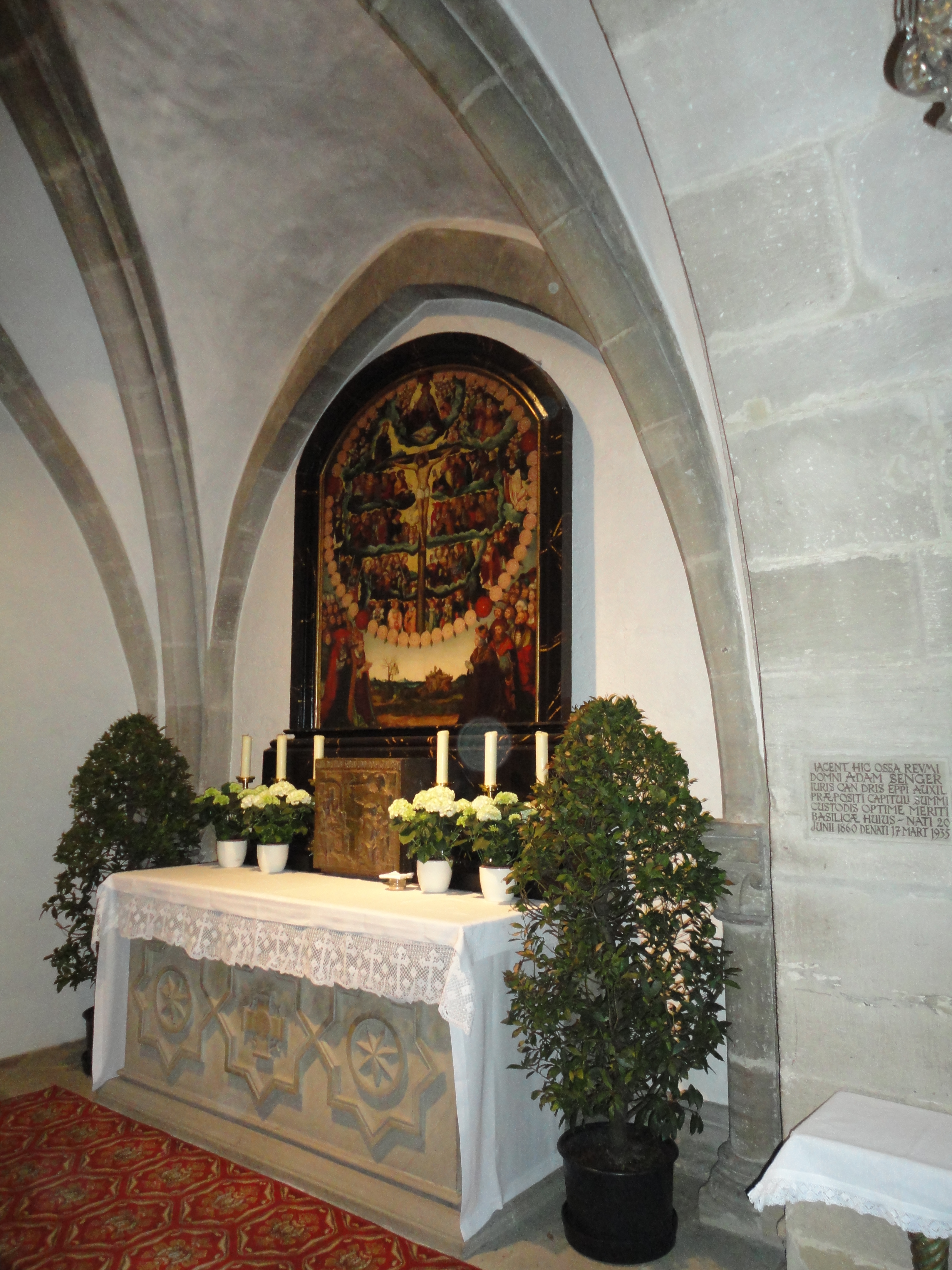
Left: Centerpiece of the Christmas Altar, carved from wood. Right: The Lady Altar made by Veith Stoss around 1523.
The new cathedral, built by Saint Otto of Bamberg, was consecrated in 1111 and in the 13th century received its present late-Romanesque form. Built at the request of the bishops Otto and Ekbert von Andechs-Meranien to replace the cathedral of Emperor Henry II, which had burnt down in 1081 and which was destroyed again by fire in 1185.
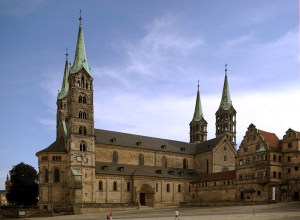 Cathedral with the Old Court on the right.
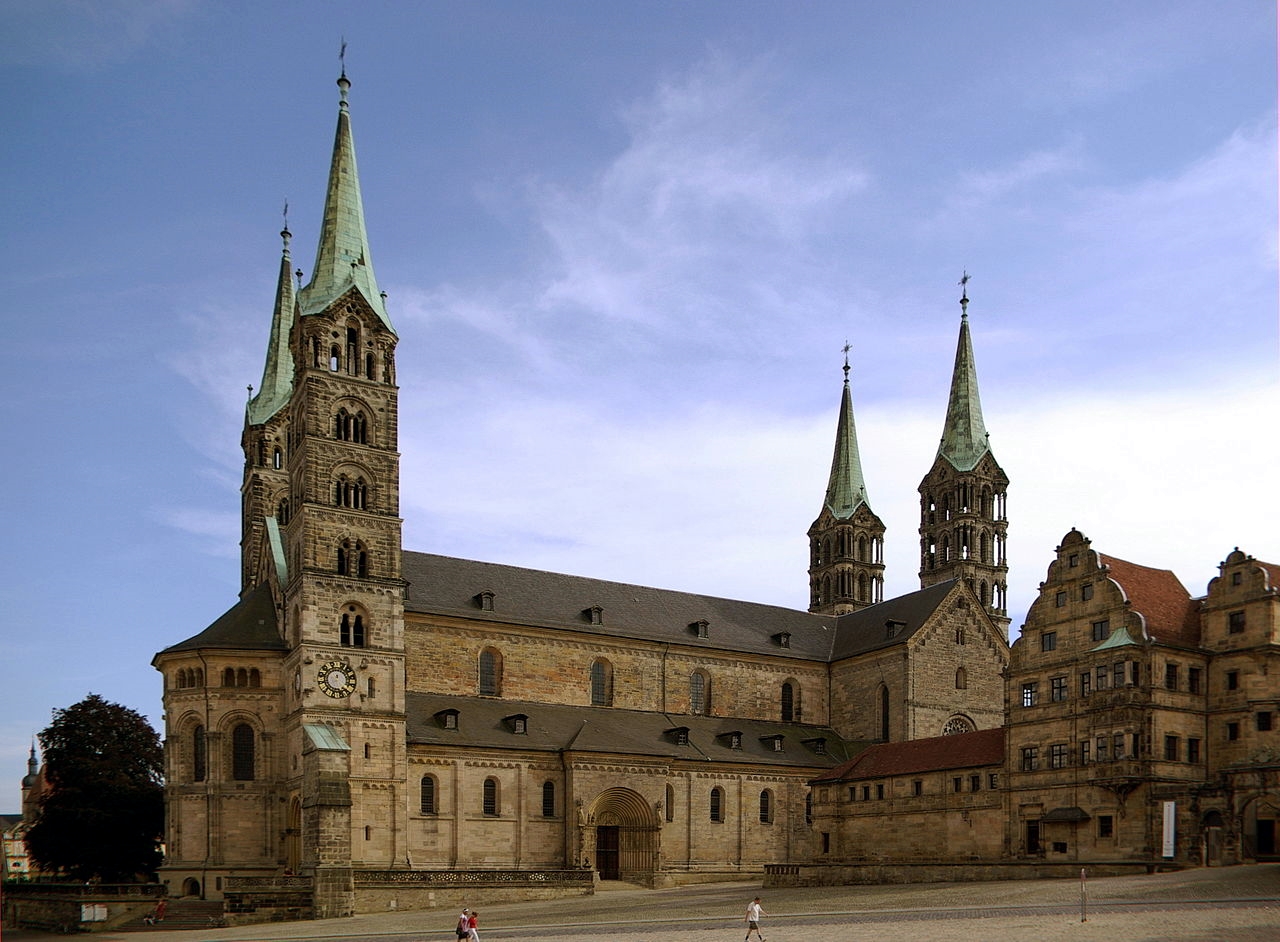
The „Old Court“.
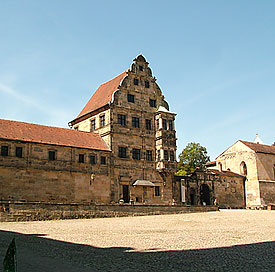
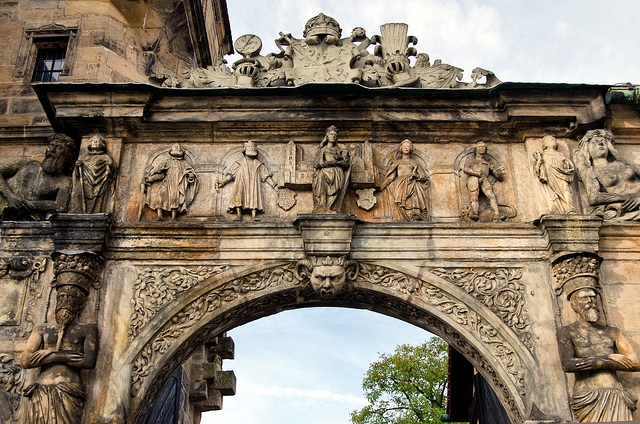
Left, the chancery of the old court and right the beautiful gate.
Seat of the bishop in the middle ages. Former palace of emperor Henry II. The plateau on which it sits was inhabited by Slavs and Germanic tribes as early as the 7th century.
The consecration of St. Thomas’s chapel in the tower was celebrated in 1020. 1479/1487 half-timbered buildings were built around the inner courtyard, they all were commercial buildings. By example, lots and lots of horse stables.
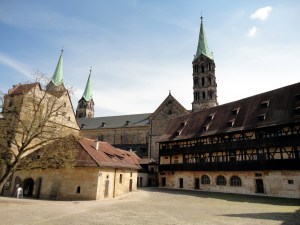 The buildings were in 3 to 5 levels high.
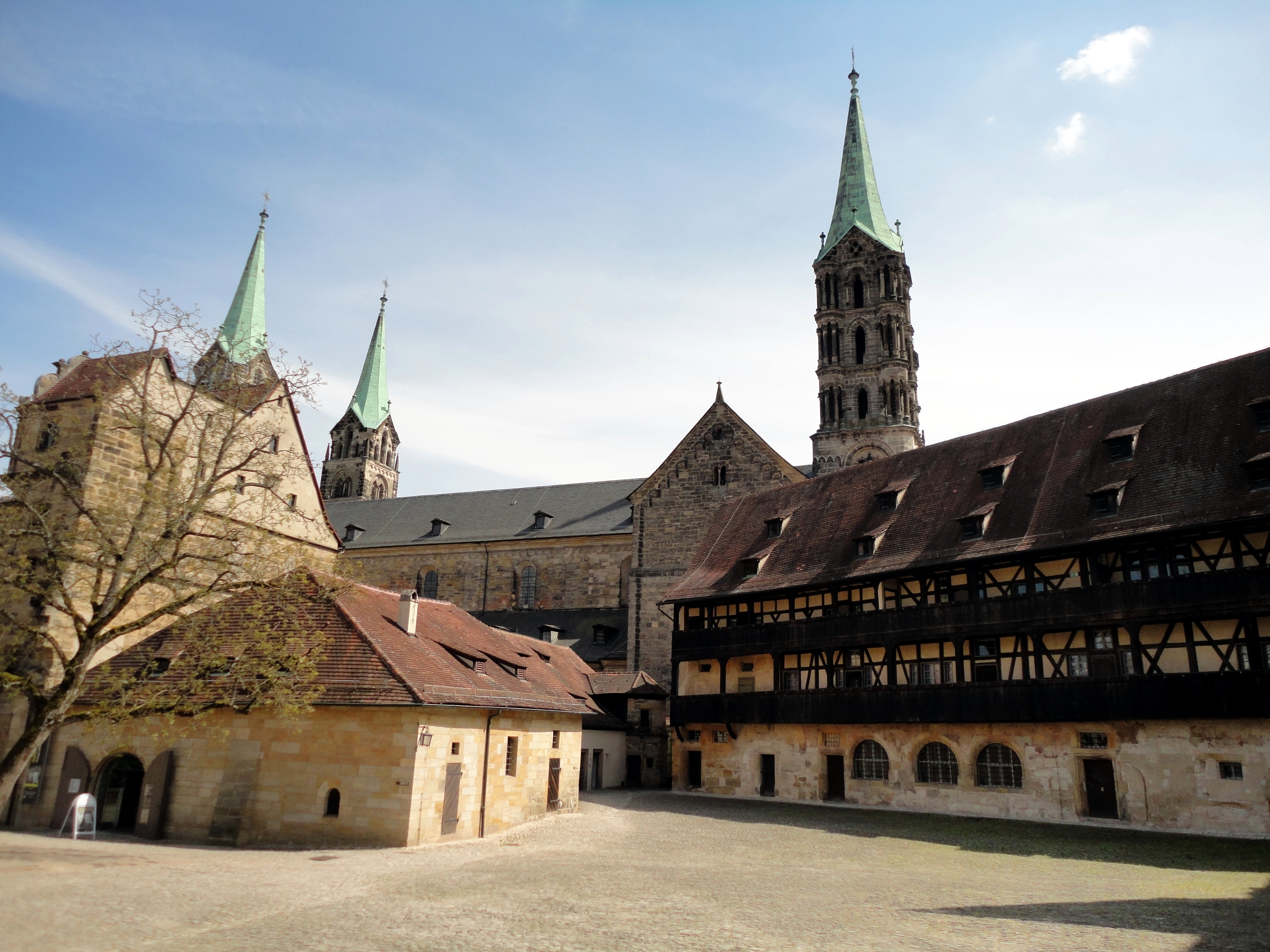
In 1568 the chancery was built for bishop Veit II of Wuerzburg by the master builder Asmus Braun.The so named „Beautiful Gate“, the gateway to the courtyard was made by sculptor Pankraz Wagner, Mary with Heinrich and Kunigunde, St. Peter and St. George; on either side of the rivers Main and Regnitz. Today the old court is home of the historical museum of Bamberg. One can see objects from the stone age to the 20th century; for example the oldest view of Bamberg, a painting „Farewell to the Apostles“ from 1483, or a wooden model of the Fourteen Saints Church.
Residence of the Prince Bishop.
 The New Residence.
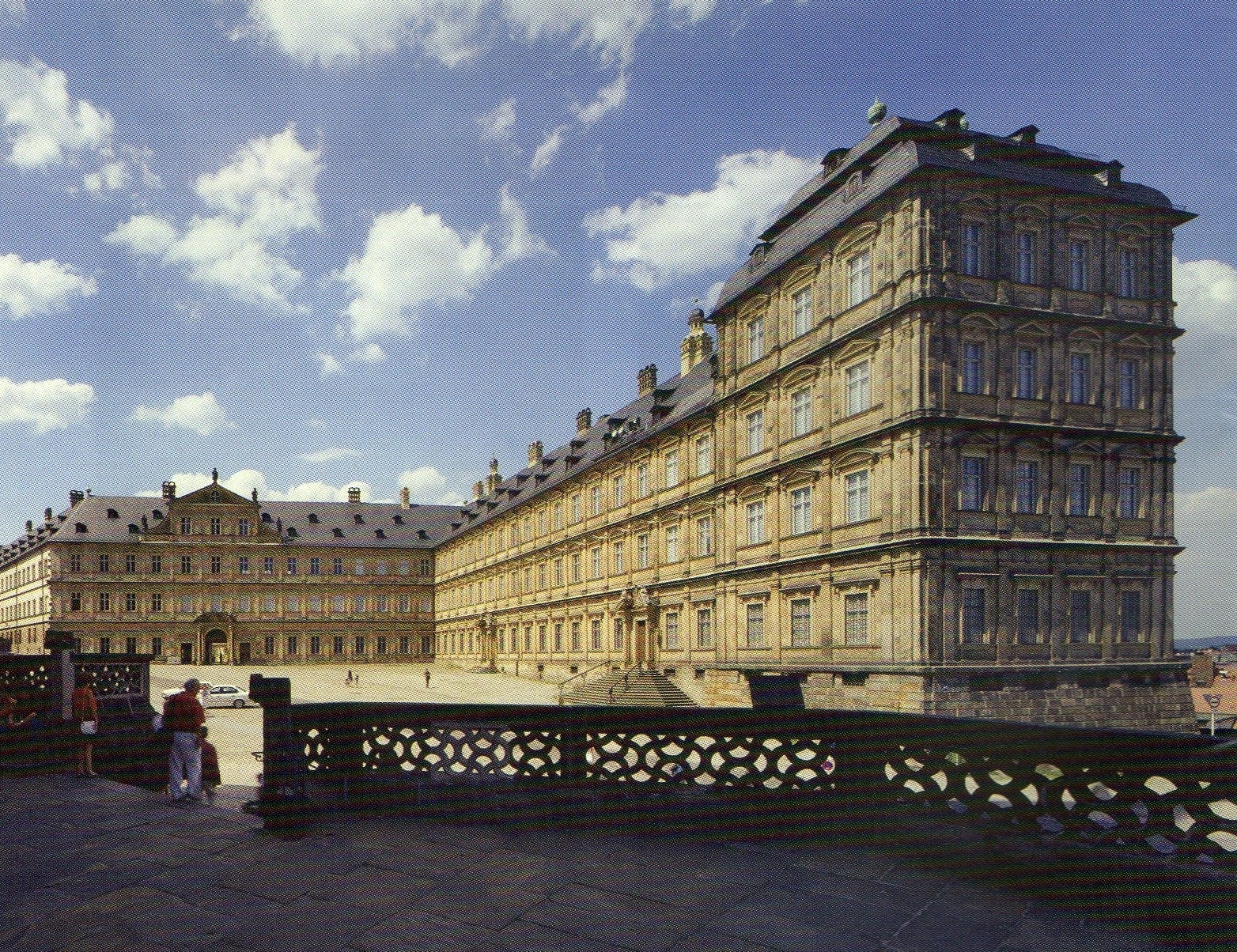
The New Residence signals the starting point for other baroque monumental buildings in Upper Franconia and is expression of an absolutist will to rule. 1605 the west wing was built by Nuremberg master builder Jakob Wolff for the Prince Bishop Johann Philipp von Gebsattel. From 1697 til 1703 the construction of the two wings on the Cathedral Square were built by Leonhard Dientzenhofer for the Prince Bishop Lothar Franz von Schoenborn.
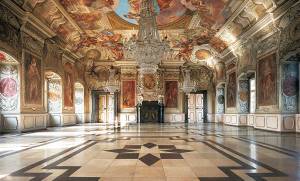 The Imperial Hall inside the New Residence.
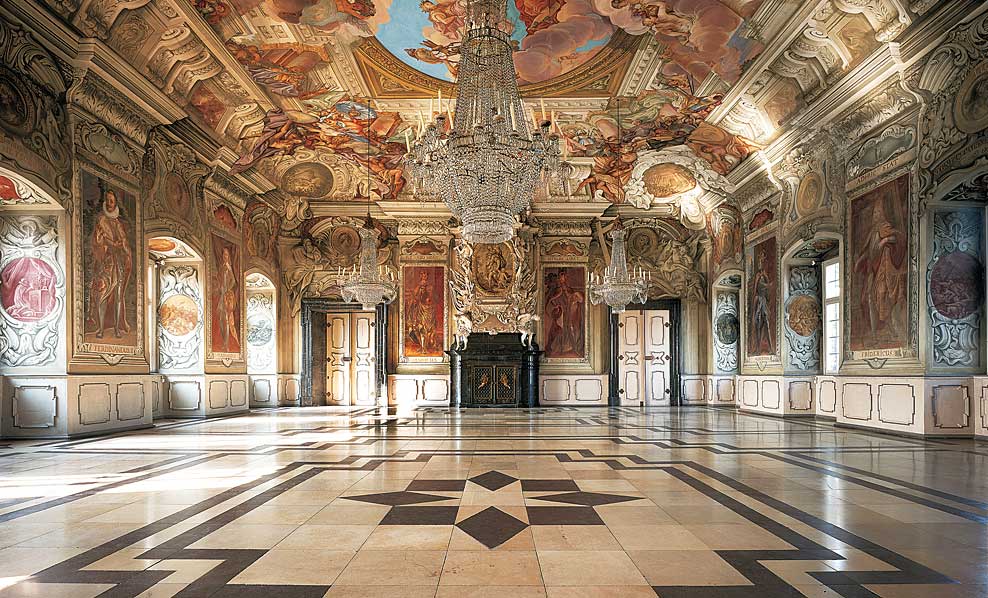
Inside one can visit the Emperor’s Chamber from 1707. Furthermore the state library with more then 4.500 manuscripts of the 5th century and the famous Rose Garden with more then 4.500 rose bushes. From the rose gardens you will have a magnificent view over the roots of Bamberg up to the Michelsberg Monastery.
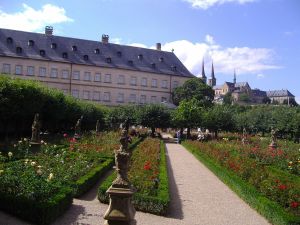 Over 4500 rose bushes in the New Residence gardens.
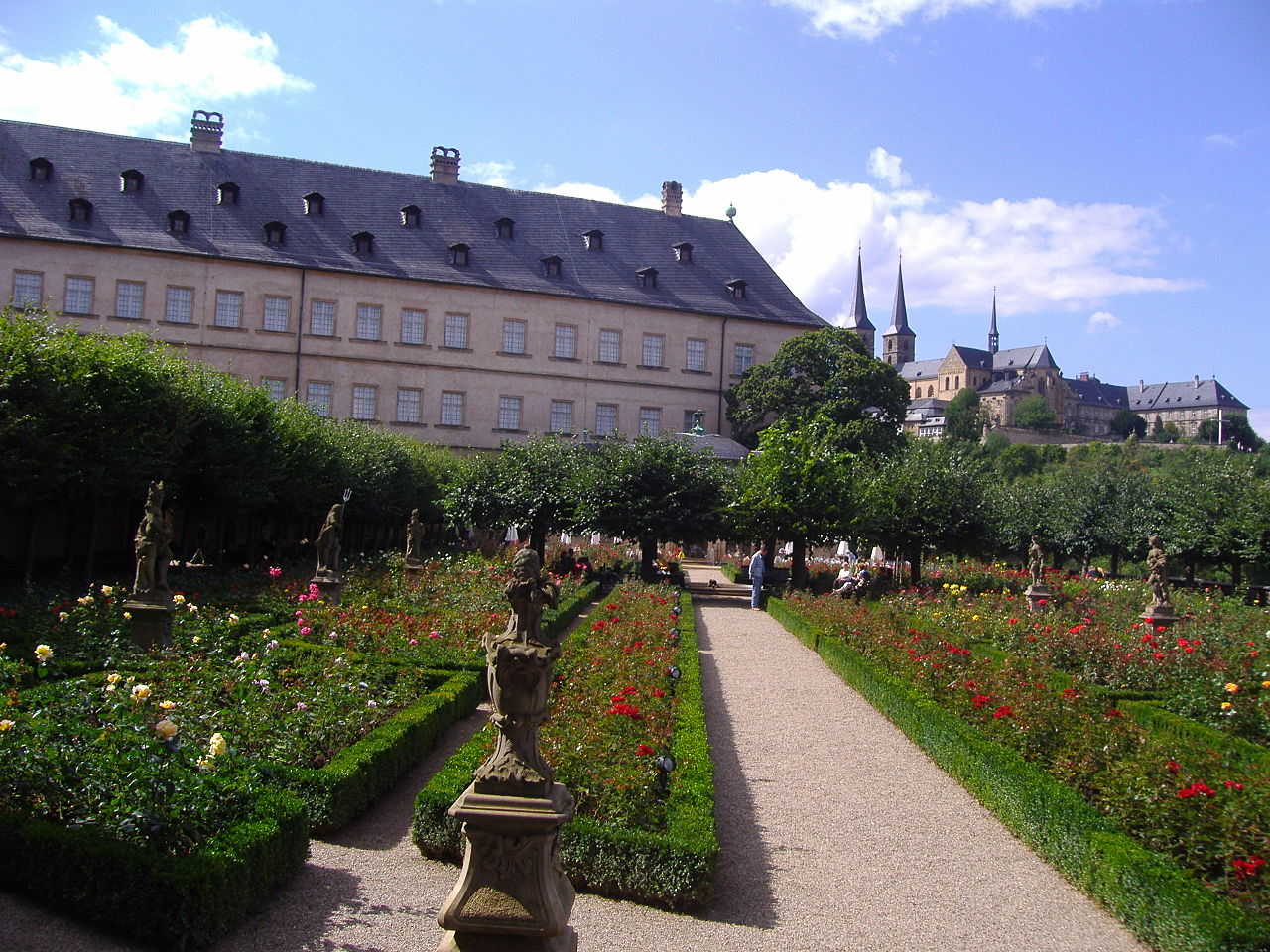
Michelsberg monastery.
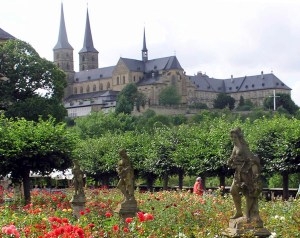 St. Michael seen from the rose gardens.
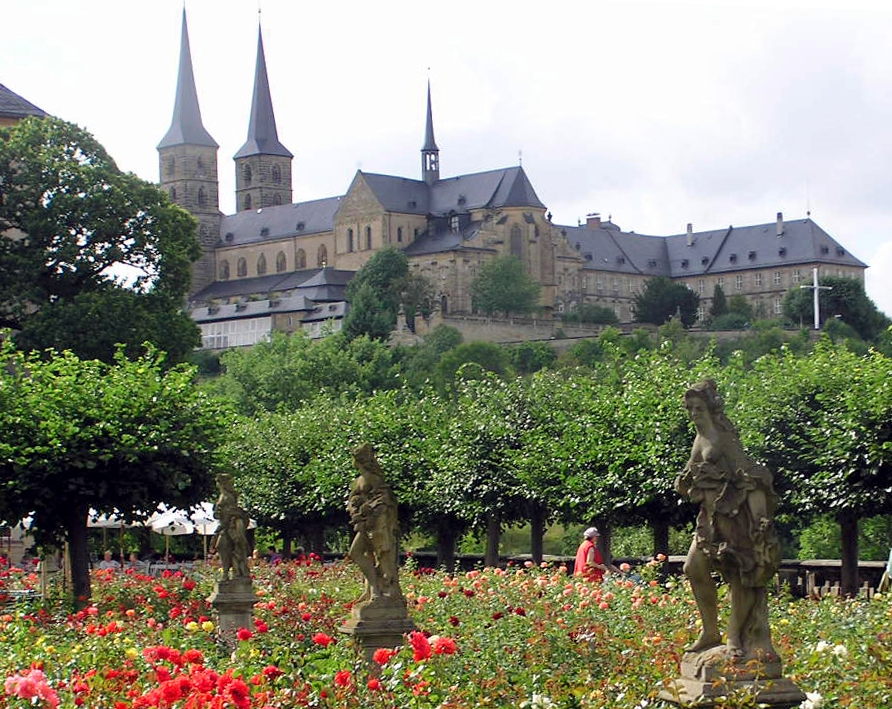
This was a former Benedictine monastery, founded in 1015 by the Bamberg bishop Eberhard. 1121 took place the new construction of the church, in which the canonized bishop Otto von Bamberg was buried in 1139. 1610 a destruction of the roof by fire.
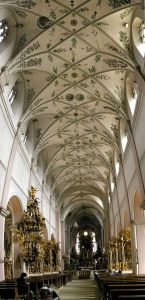 Fantastic – the nave of St. Michael’s, former abbey church. Click to super size.
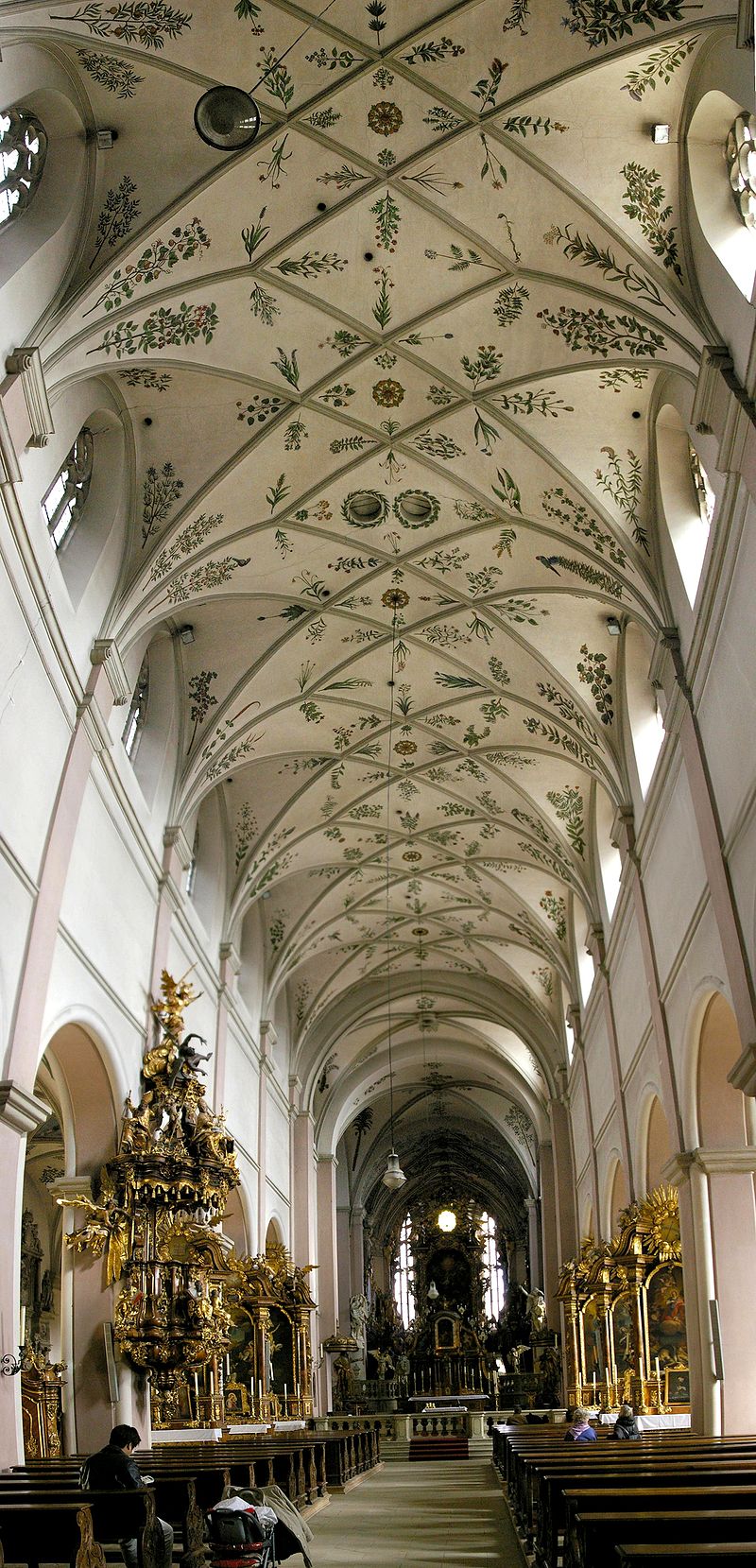
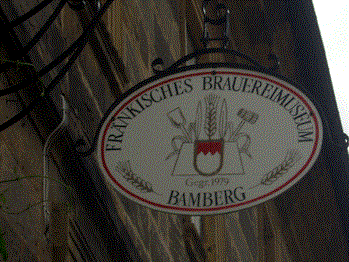
A new ceiling vaults with the famous „Heavenly Garden“; 578 biologically exact paintings of plants and herbs. 1696 til 1750 a baroque conversion of the church and monastery by the Dientzenhofer brothers. From 1803, dissolution of the monastery and establishment of a civic hospital. Inside one visits the tomb of St. Otto, monuments to ten former Bamberg bishops from the 16th to the 18th century, the Holy Sepulcher Church and the famous Bamberg Brewery Museum.
Way of the Cross.
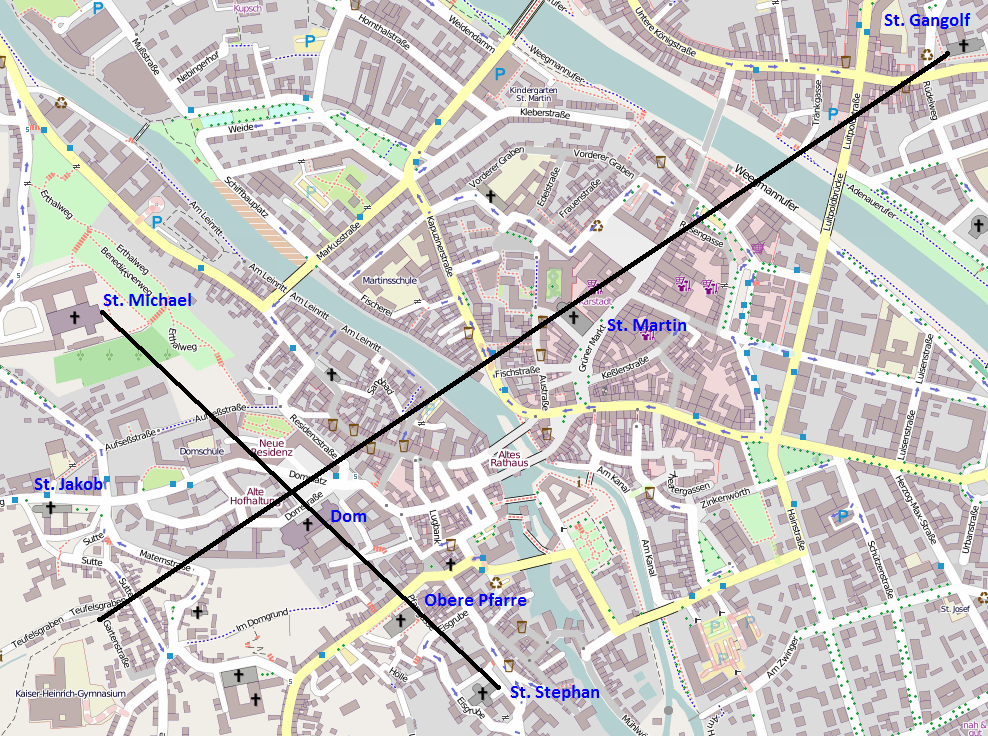
This way of the cross has seven stations from St. Elisabeth’s church to St. Getreu, dating from around 1500. Thus the oldest Way of the Cross in Germany. See, as an example, the modern map of Bamberg.
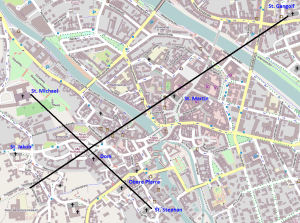 The „Way of the Cross“.
The Carmelita monastery.
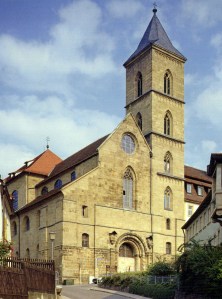 Carmelita monastery with its Lions Gate.
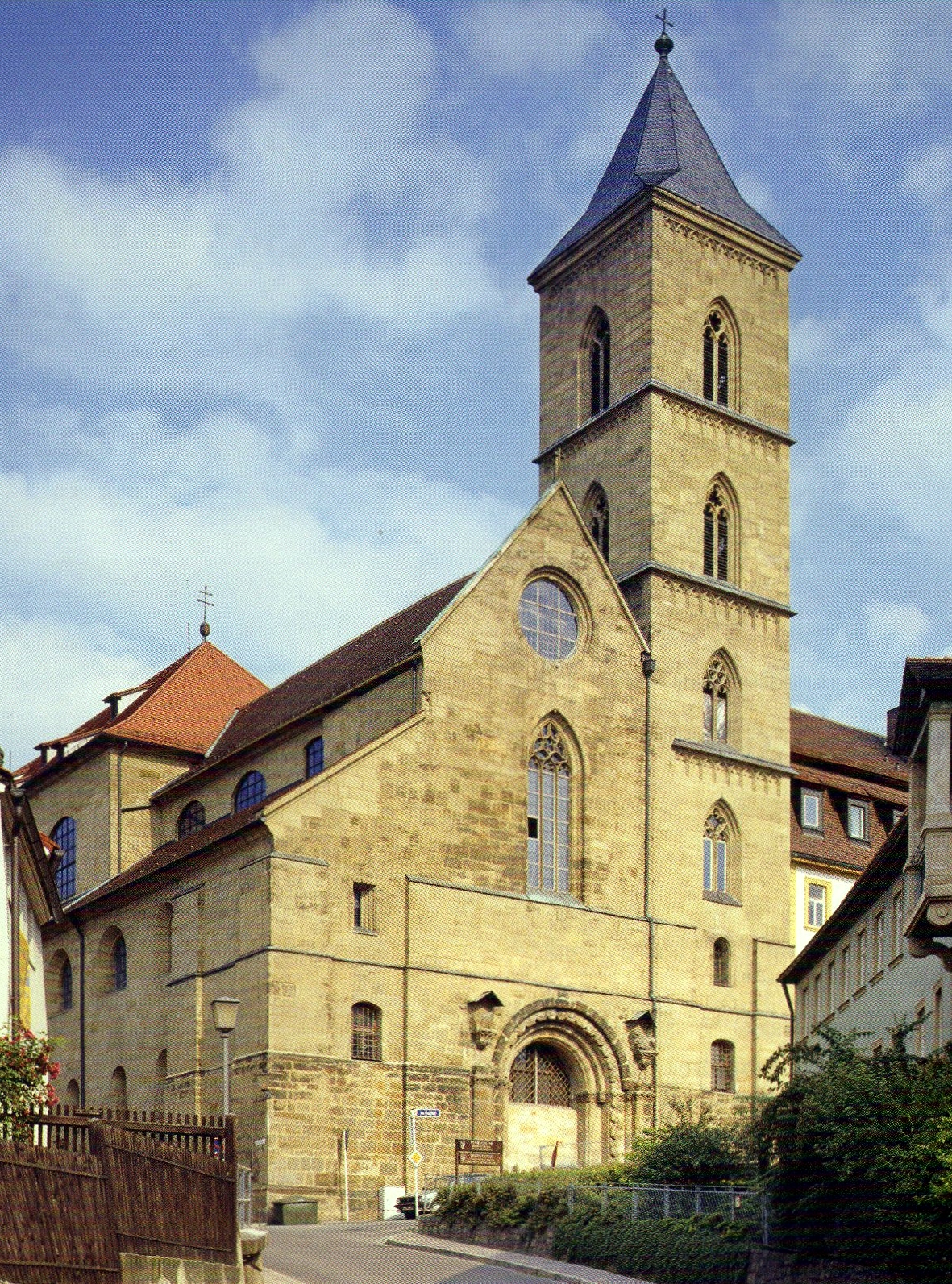
Atmospheric Gothic cloisters with carved figures in the capitals, a church with two facades. 1157 was the foundation of the St. Theodor Convent. 1589 Carmelita monks inhabited the abandoned convent. 1803 dissolution of the monastery during the secularization. 1902 return of the Carmelita monks to the monastery.
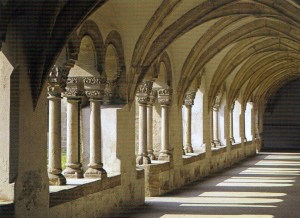 The cloisters from 1392.
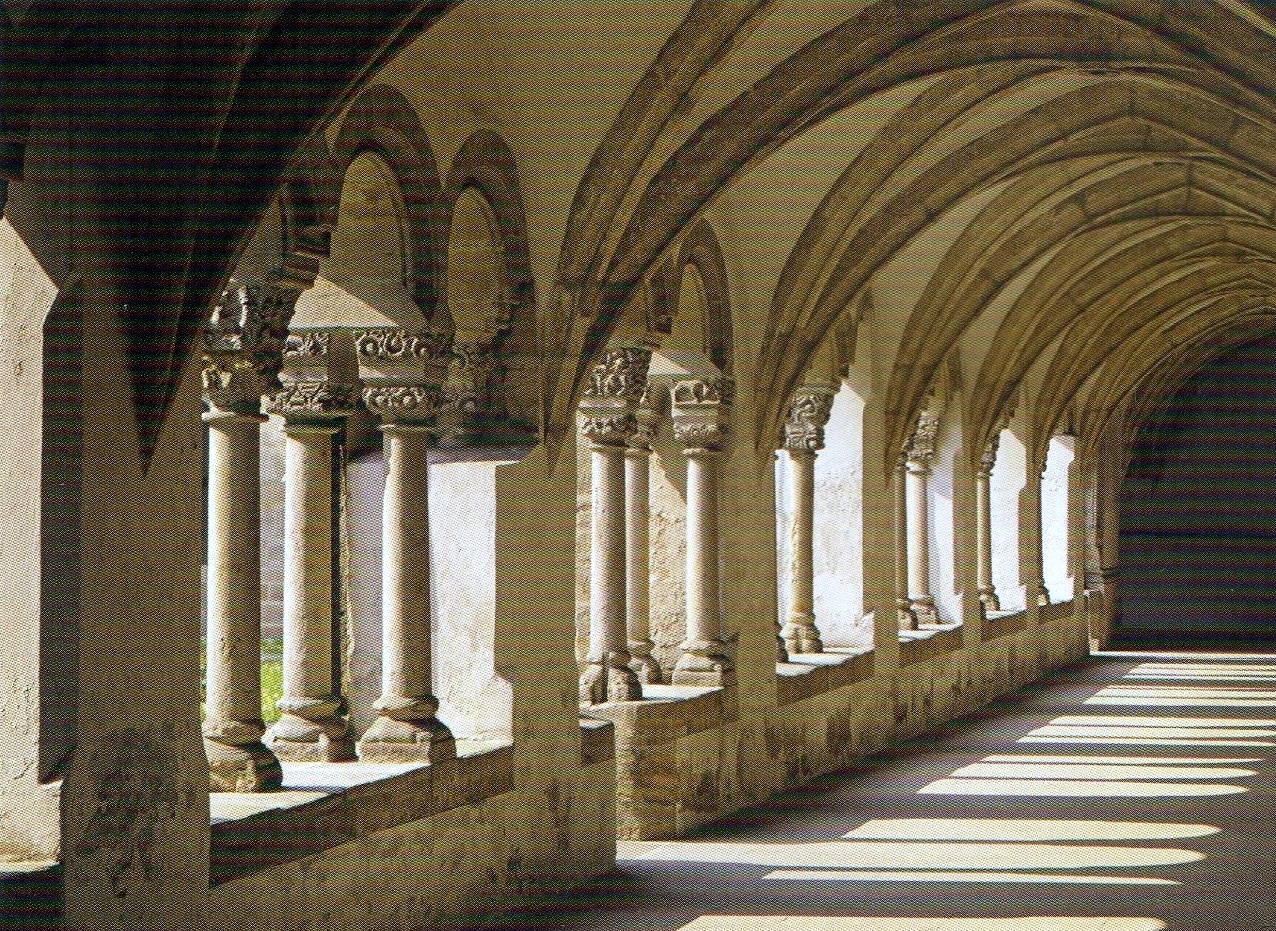
Entrance to the cloisters to the left of the Baroque church facade. On the other side of the church, to the west, the Romanesque facade of the church from the Hohenstaufen period with its Lions Gate, which remains totally intact.
Church of Our Lady.
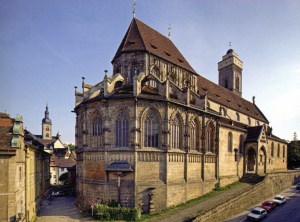 Church with the Bridal Porch on the right.
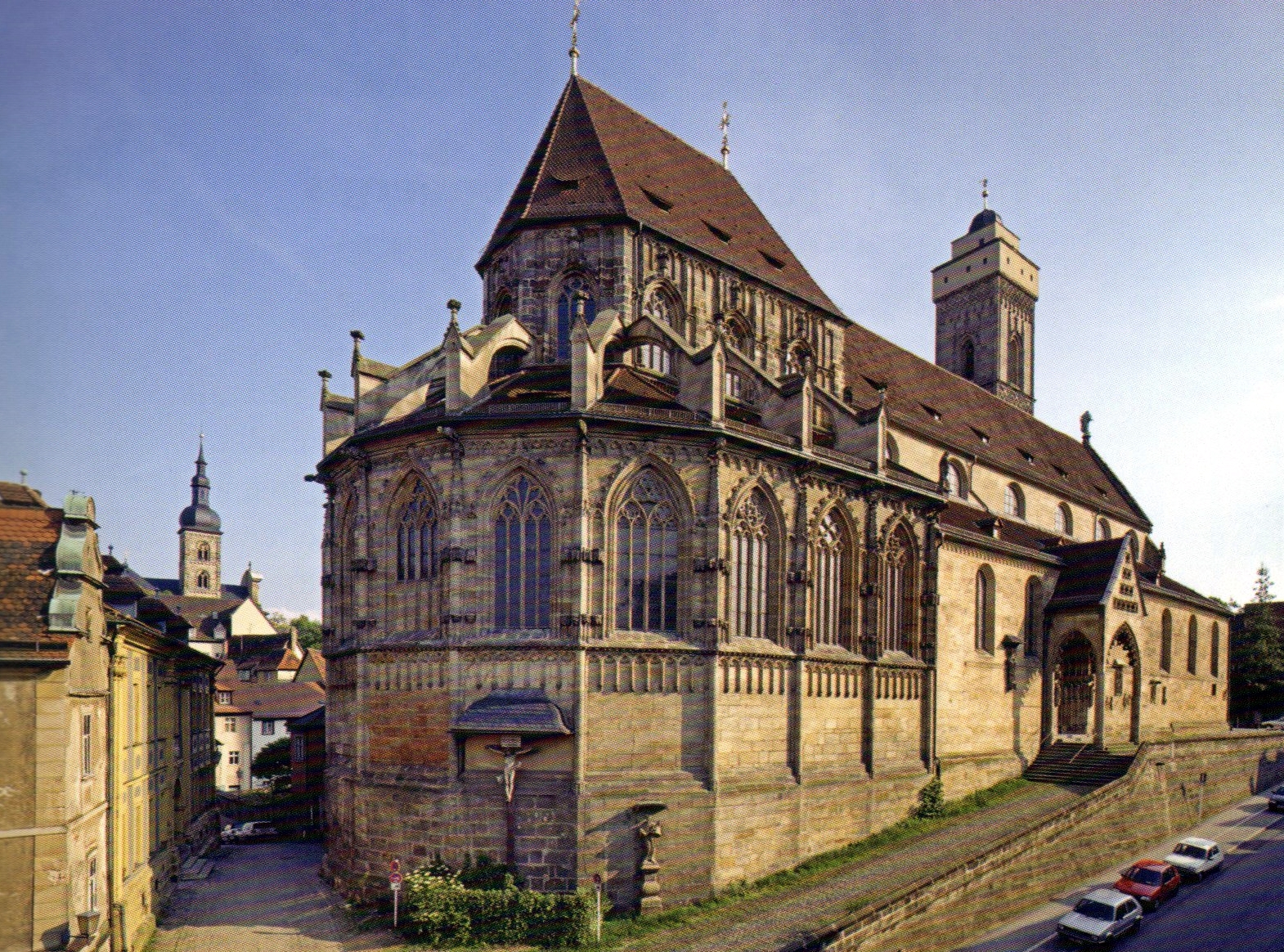
A catholic parish church, Bamberg’s most important Gothic building. Beginning of the building of the nave was in 1338. 1350 was built the Bridal Porch with the Wise and Foolish Virgins. The chancel, influenced by the Parler masons guilds erected in 1392.
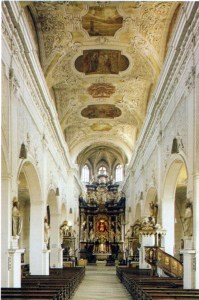 Inside the church of Our Lady.
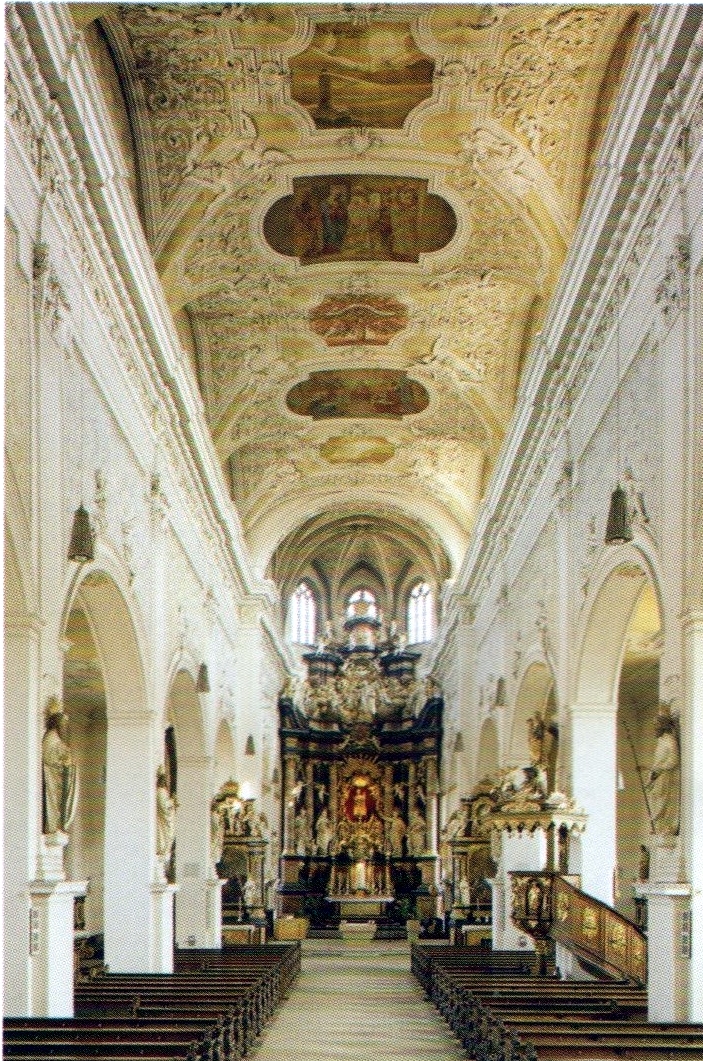
Inside the Upper parish Church, The savior and the 12 Apostles on the pillars of the nave from 1481. Miraculous statue of the Madonna at the center of the high altar from 1330.Or the ascension and coronation of the Virgin Mary, wooden reliefs from the former high altar, around 1500.
St. Martins Church.
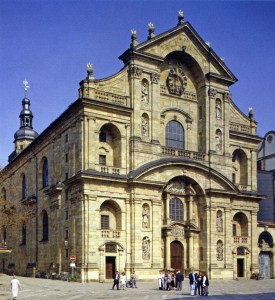 Baroque building of St. Martins church.
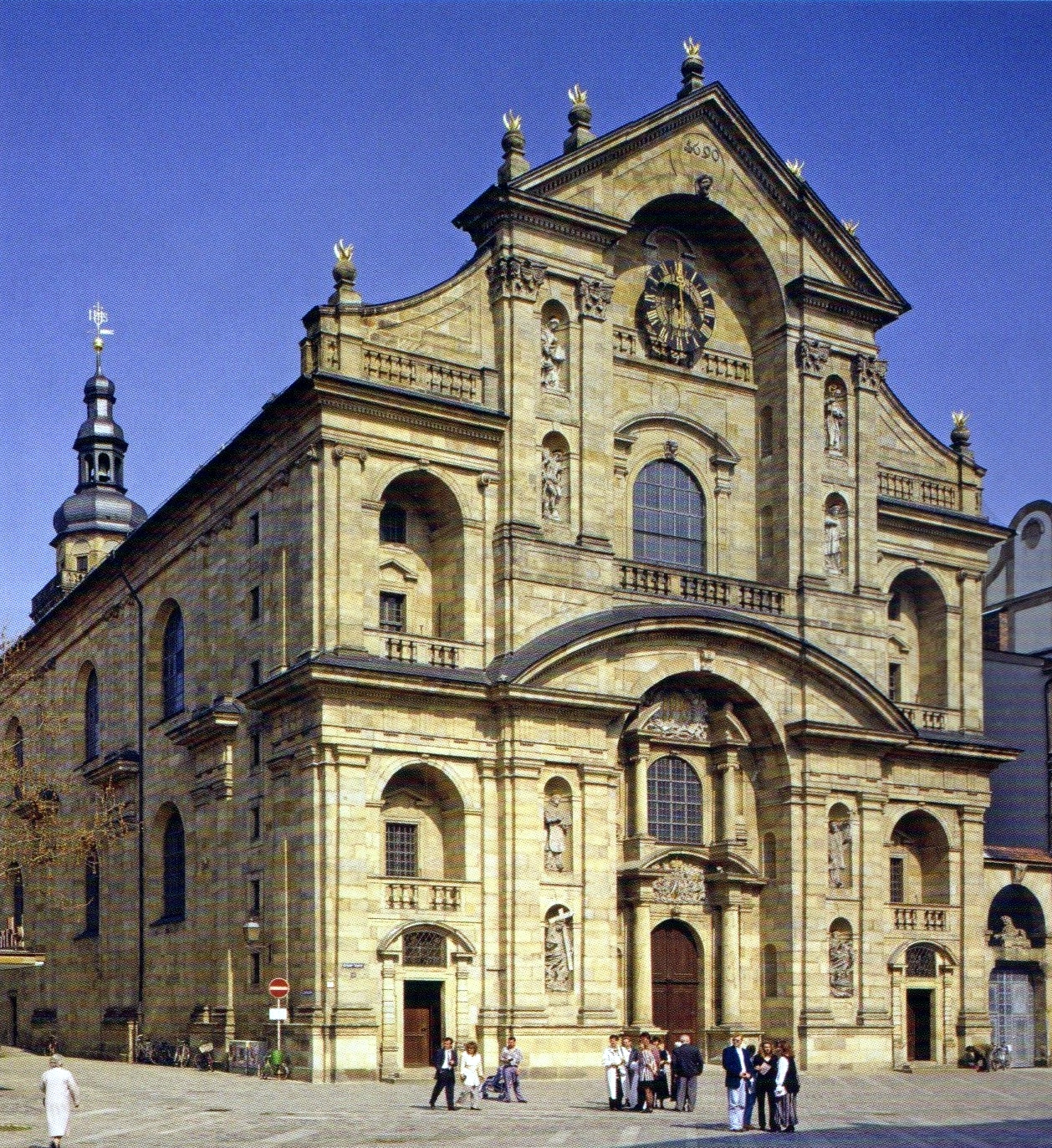
Catholic parish church, a former Jesuit church, built by Georg Dientzenhofer between 1686 and 1693, as an example of the counter reformation. St. Martin, right in the city center, became in 1804 the city’s main parish church.
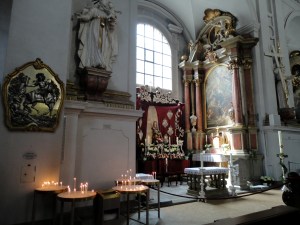 Side altar. Sadly the High Altar was under renovation.
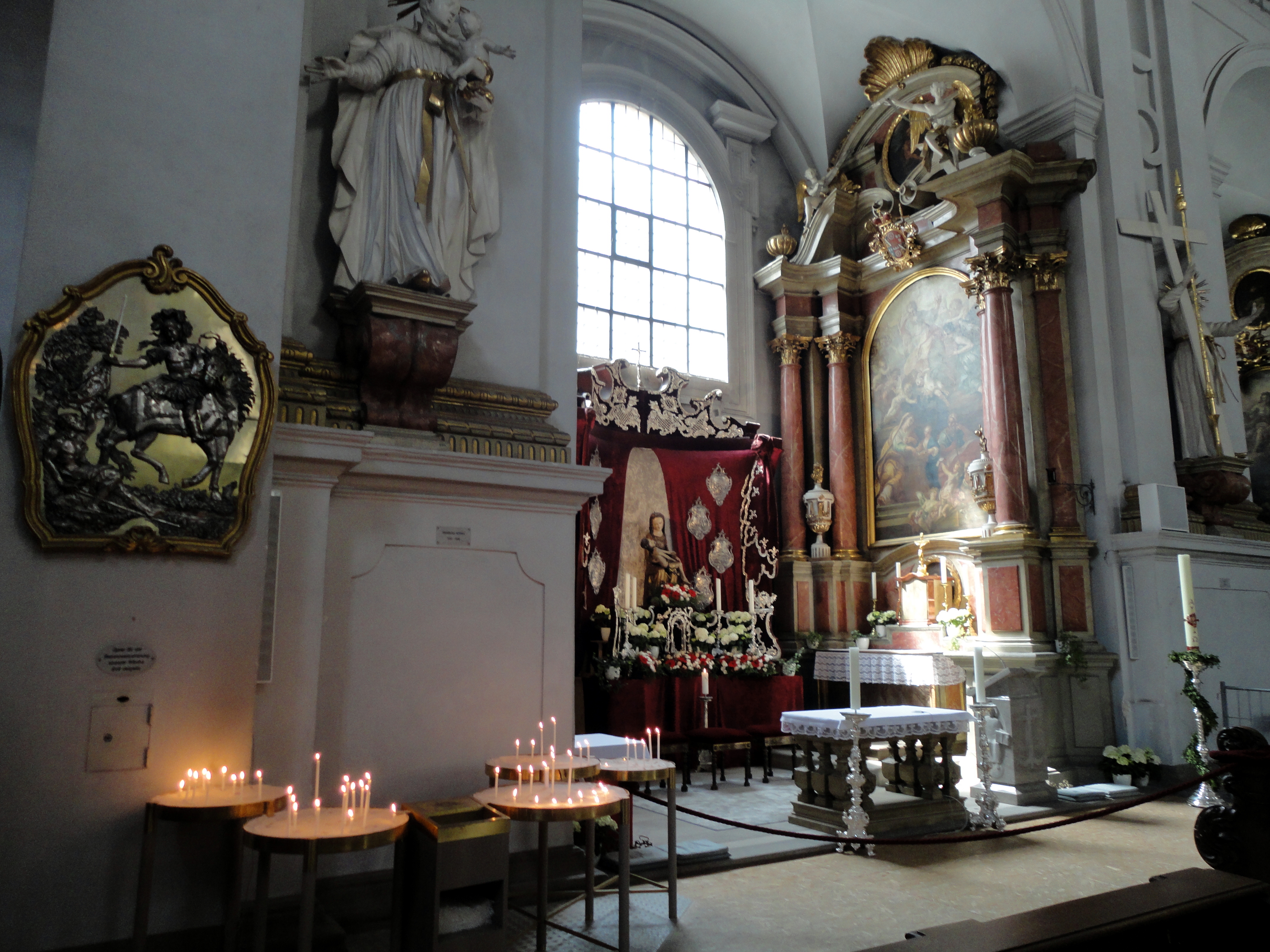
Inside the Pietra, Cologne 1330, the mortal agony panels on the wall of the right transept, depiction of Christ’s Passion from 1511. The high altar in stucco marble from 1701, which is undergoing this year a massive renovation, so I could not see it.
 Beautiful historic Bamberg, worth visiting/exploring.
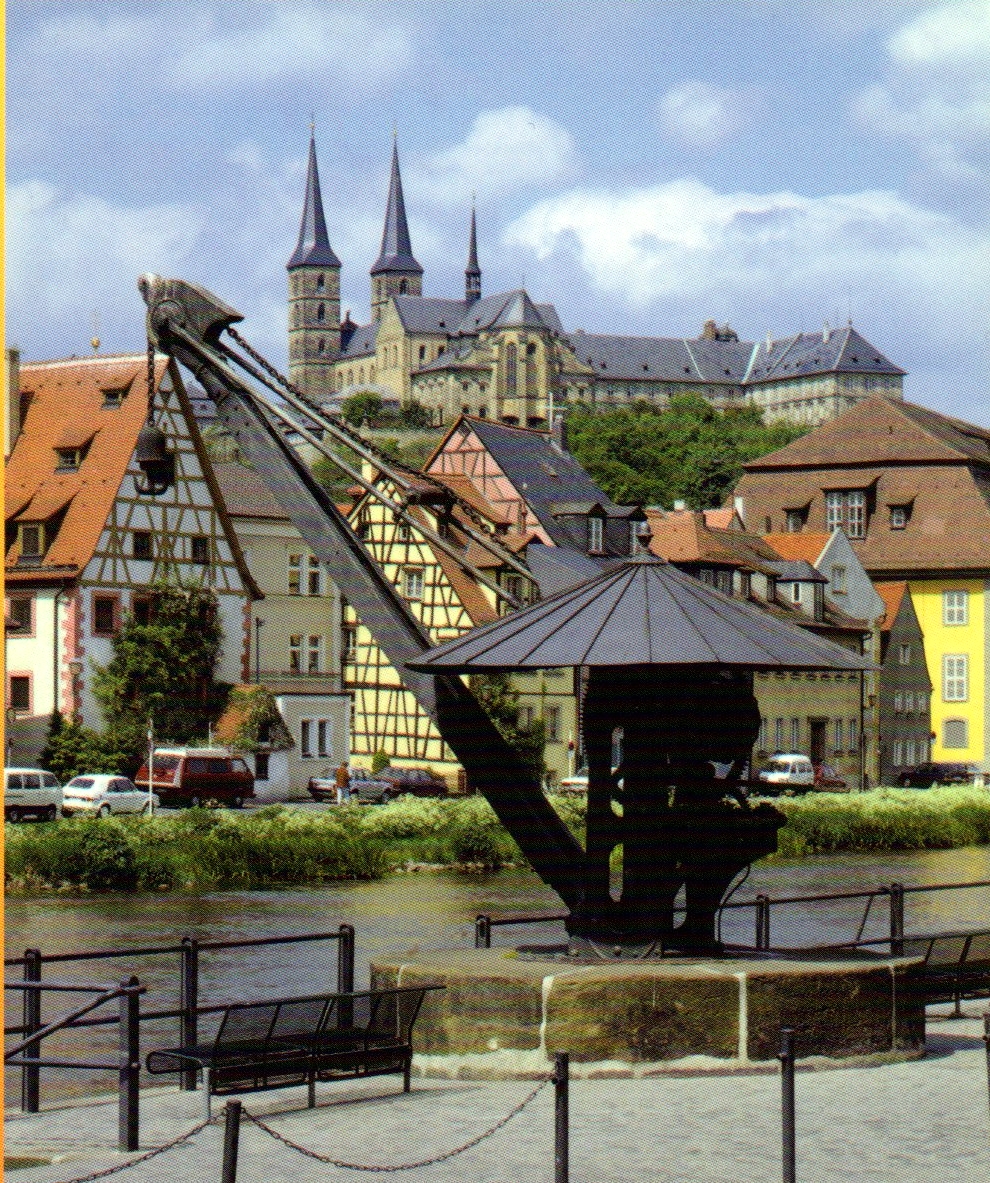
This first part of Bamberg introduced to history and buildings, the second part will mainly introduce to Bamberg’s lifestyle. Stay tuned !

