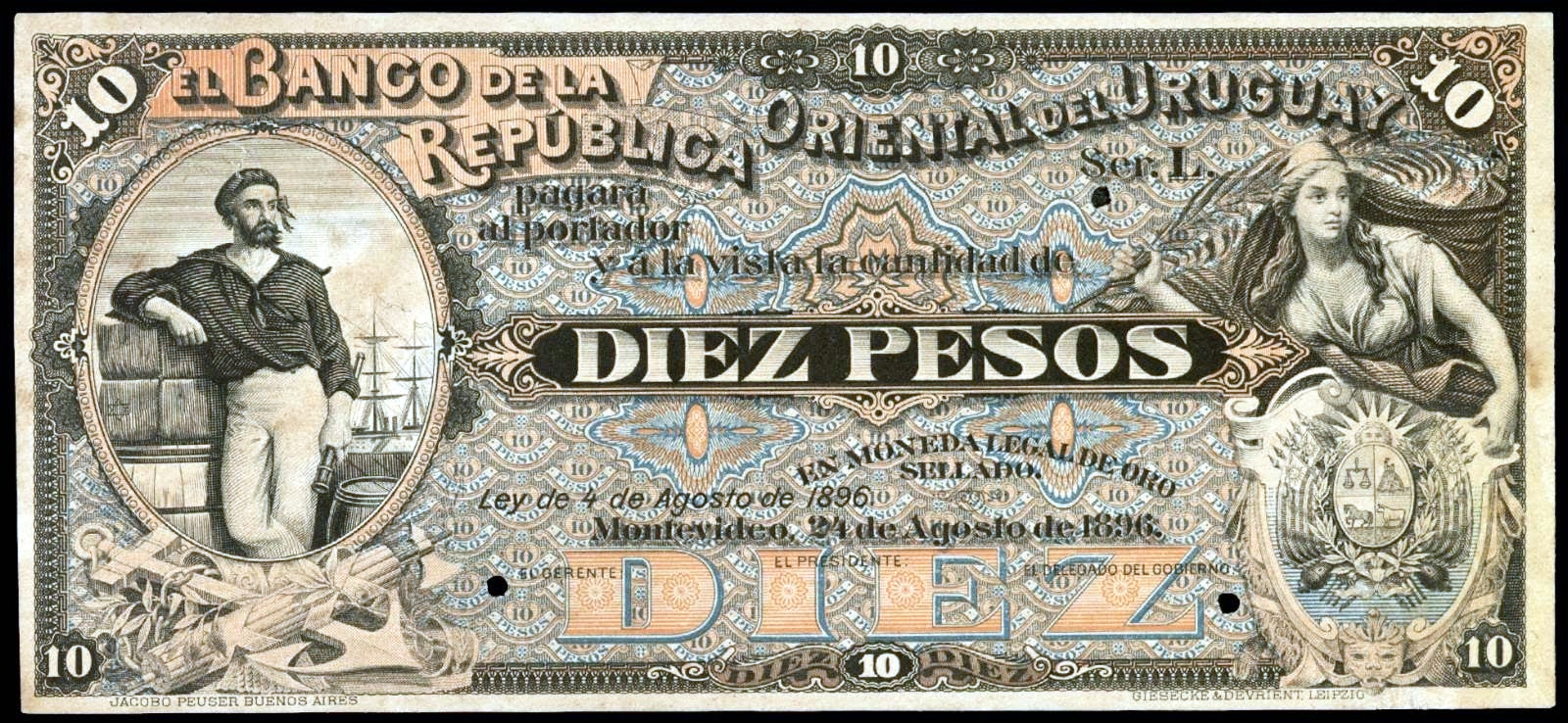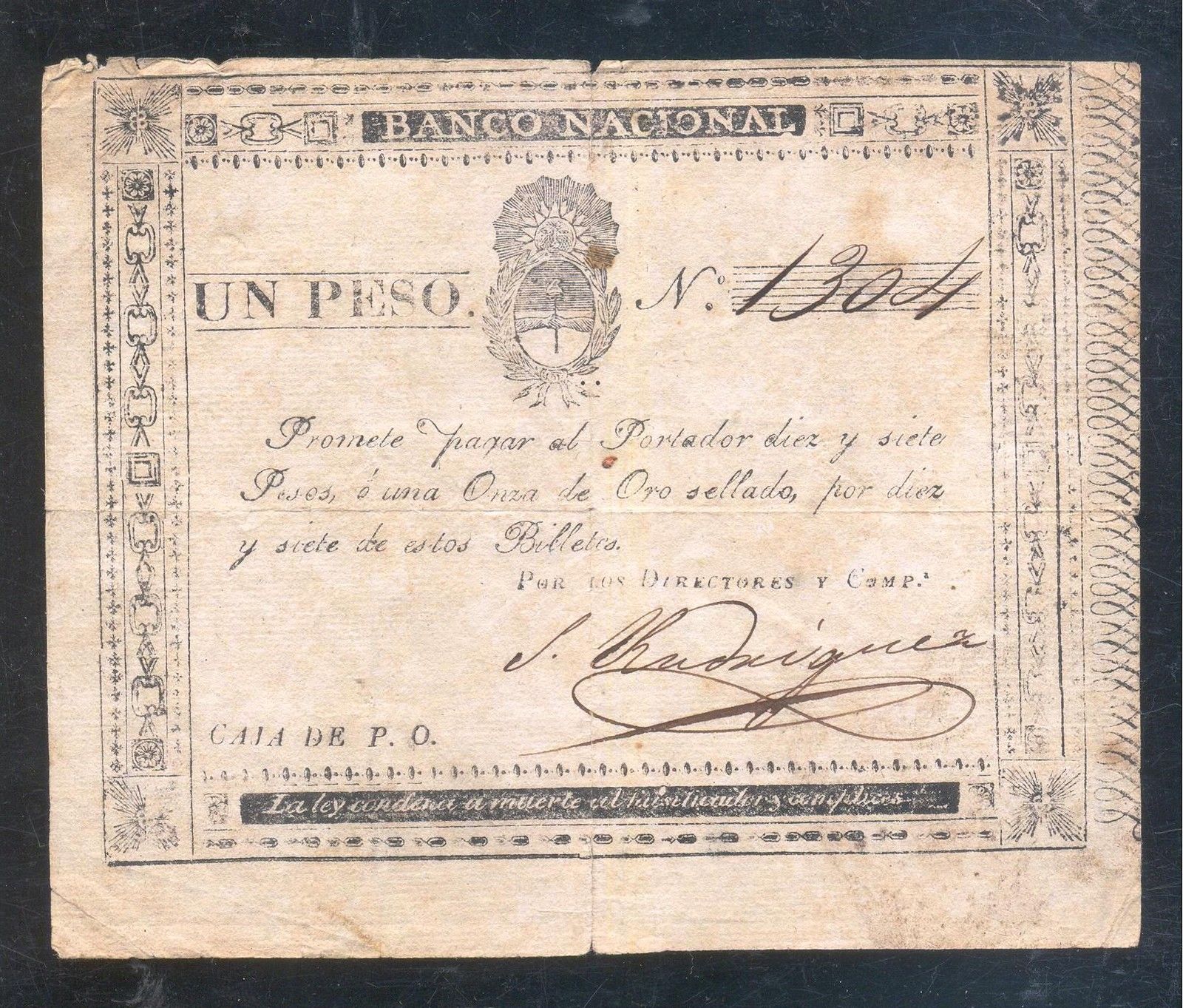
The Oldest known Uruguayan Banknote

peso 45 uruguay 1826

History of Uruguayan Currency.

After my  series „Who are They“ about Uruguayan banknotes, I was asked a few times to describe the history of UY currency. I didn’t like that in the begin, because it is a never ending theme. But since I discovered the OLDEST URUGUAYAN BANKNOTE (see above), I thought it’s worth to show you this paper and where it fit’s in to local history. Click on pics to supersize.

Uruguay’s currency was initially that common to all of Spanish America.

During the struggle over this region, initially between Spain and Portugal, then between Argentina (Spain)  and Brazil (Portugal), the coinage of both contestants circulated.

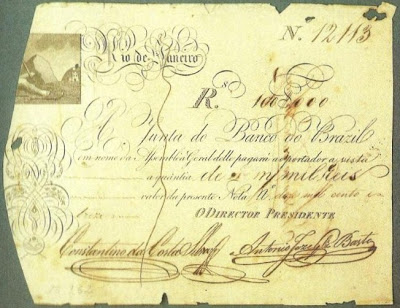
When the area was annexed to Brazil in 1821 as Provincia Cisplatina, the Portuguese (Brazilian) administration put notes of Banco do Brazil into circulation.
peso 38 brazil 1810  Brazilian banknote from 1810, brought into circulation in Uruguay (Cisplatina).  Courtesy of Central Bank’s Values Museum Brazil.
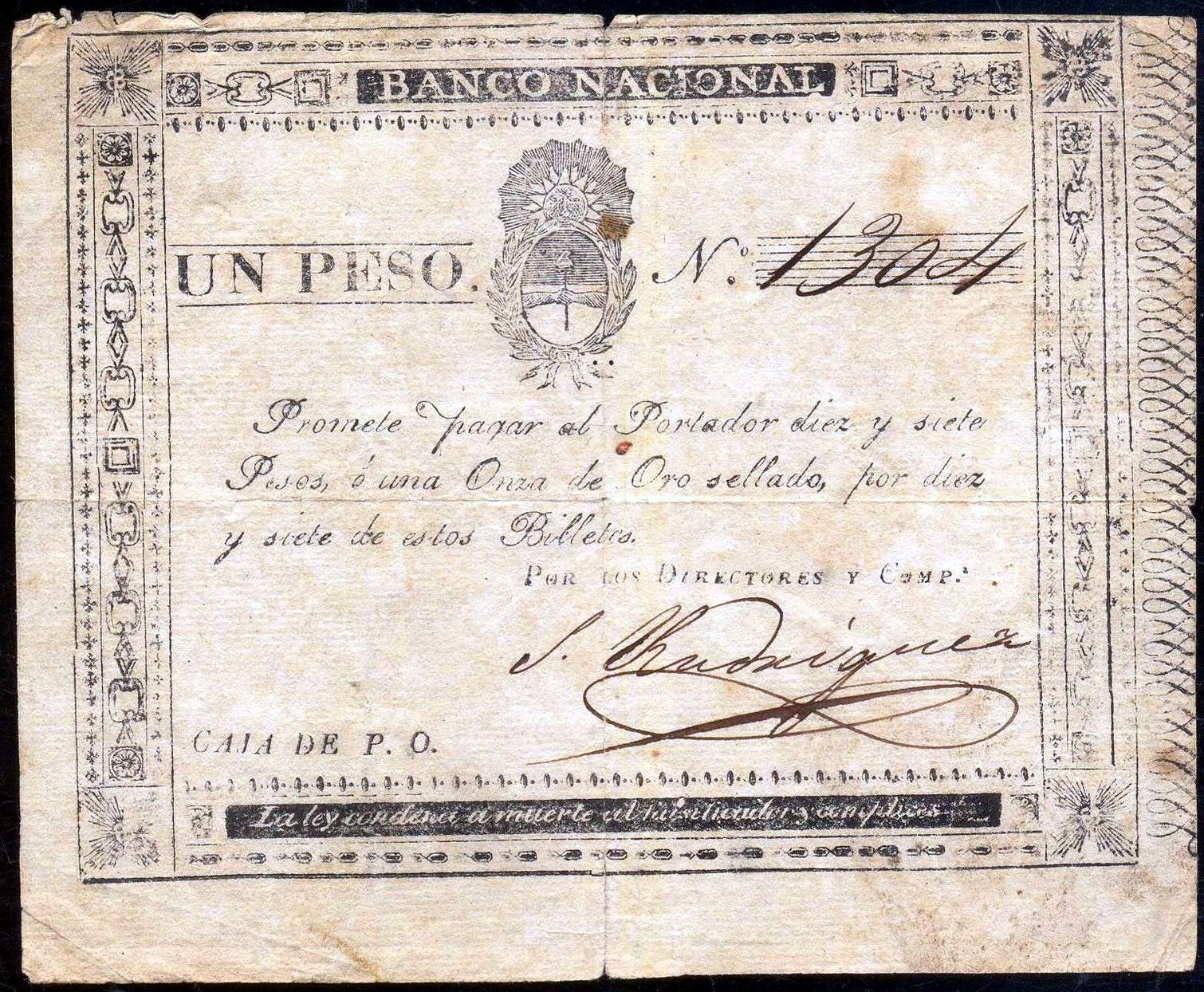
This was the first paper money to circulate in Uruguay. Then, in 1826–1828, Argentine troops fighting against Brazil were paid in one-peso notes issued by Banco Nacional of Buenos Aires for Provincia Oriental („Eastern Province“, „Provincia Oriental = P.O.“ i.e. Uruguay).

The Oldest known Uruguayan Banknote.

ARGENTINA BANKNOTE
FIRST URUGUAY NOTE
UN PESO (1826) BANCO NACIONAL
„CAJA DE P.O.“ means „Provincia Oriental“
means „Bank of the Eastern Province“,
PROVINCIA ORIENTAL DEL URUGUAY.
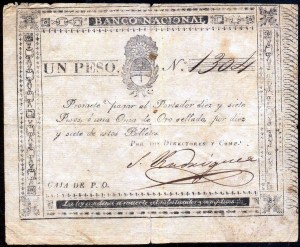
peso 36 1826 front   The oldest known Uruguayan Banknote 1826.
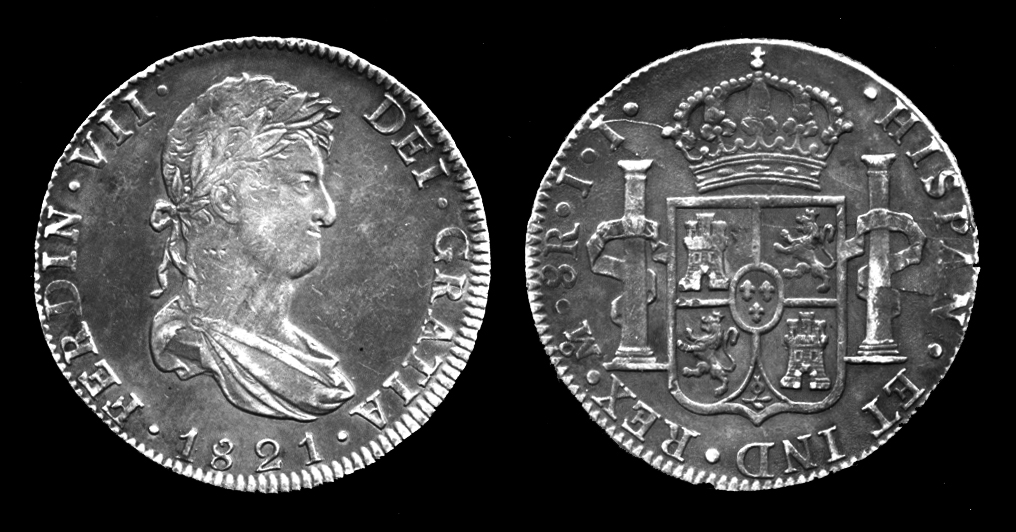
All parties to the conflict used the Spanish dollar (Spanish peso, Portuguese patacão), which circulated with a value of 8 Spanish reales or 960 Brazilian reis. Circulation consisted of coins from mints in Mexico, Potosí, Brazil, and Buenos Aires. During the turbulent period of conflict preceding independence, a considerable amount of poor-quality copper coins from both Buenos Aires and Brazil came into circulation.
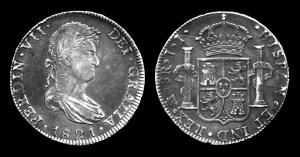
peso 49 sp silv $ 1821  Spanish Silver Coin of 8 reales from 1821.
Uruguay’s Currency is Born.

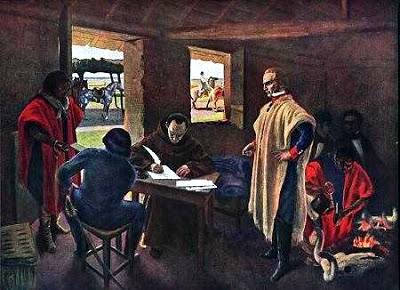
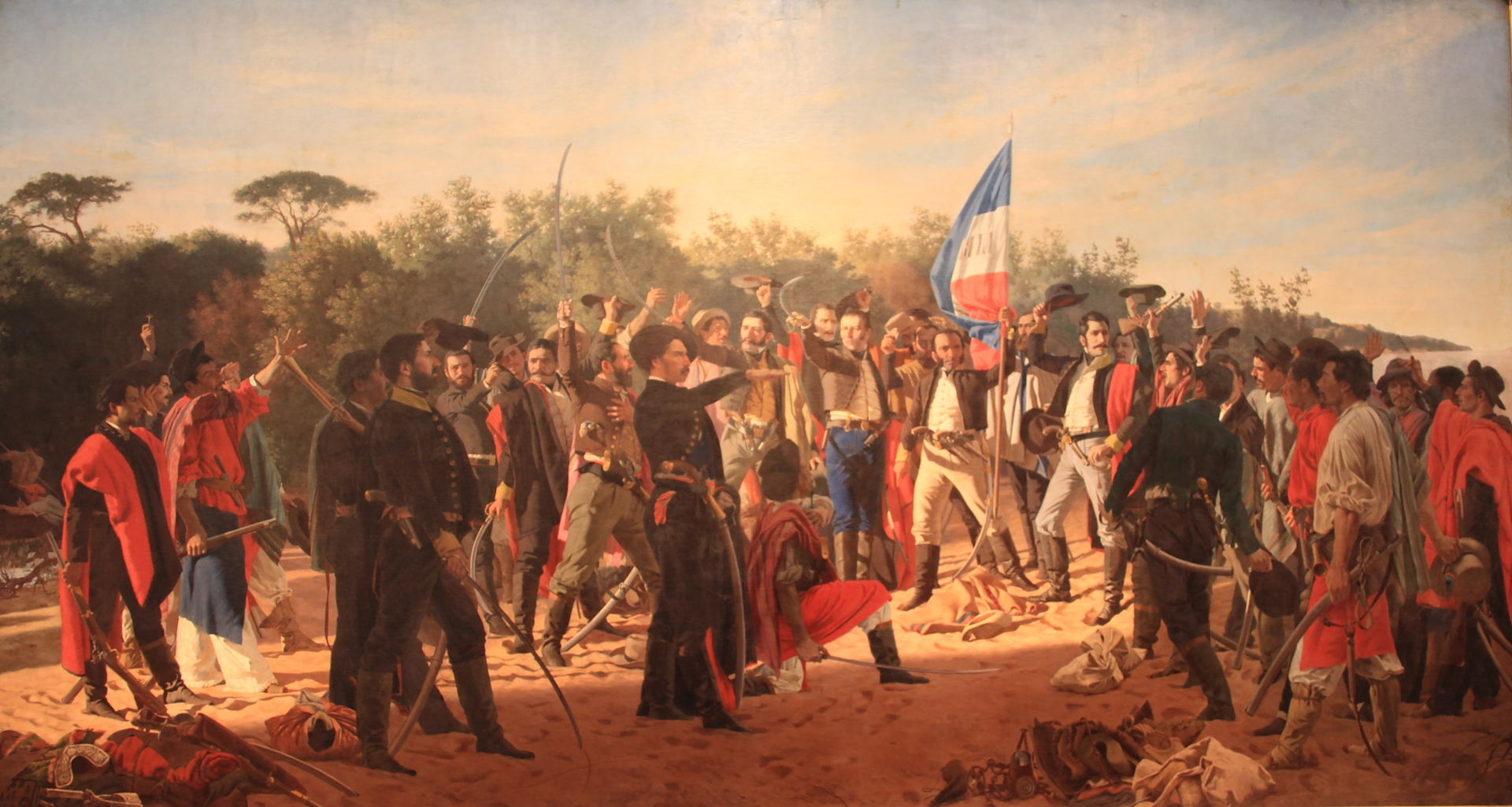
As a reaction to the annexation of the Cisplatina aerea a group of Uruguayan nobles, the Thirty-Three Orientals led by Juan Antonio Lavalleja declared independence on 25 August 1825 supported by the United Provinces of the Río de la Plata.
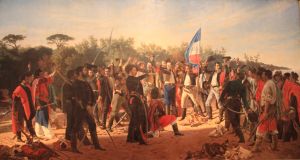
peso 50 oath of the 33 orientales Juan m. blanes museum  Oath of the 33 Orientales, Juan Manuel Blanes museum.
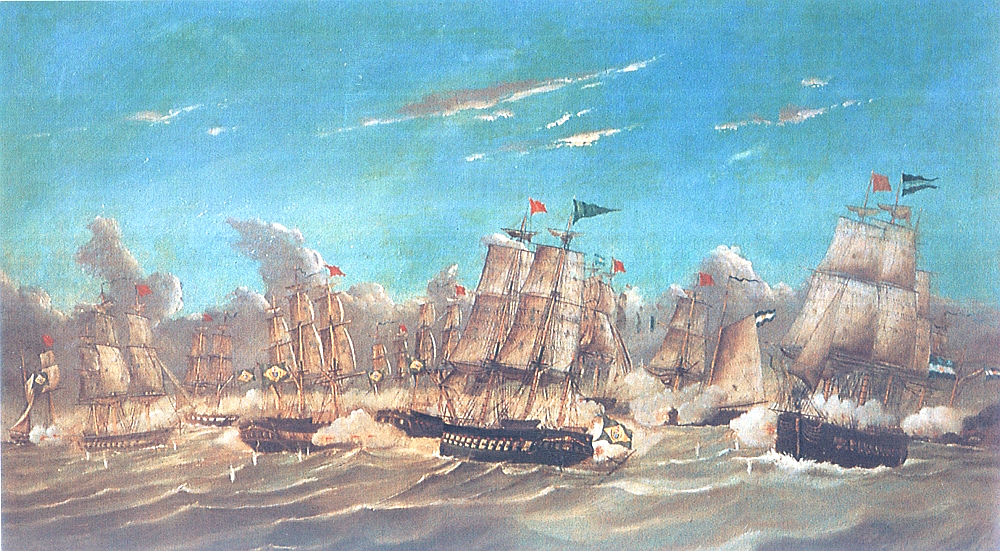
This led to the 500-day Cisplatine War. Despite the Argentine victory in the battle of Ituzaingó, neither side gained the upper hand, and in 1828 the Treaty of Montevideo, fostered by the United Kingdom, gave birth to Uruguay as an independent state, and – more importantly to planned British goals – established the international status of the Rio de la Plata, so that international commerce was easier to accomplish.
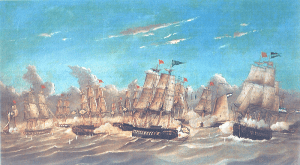
peso 51 battle punta colorada arg-braz Cisplatine war, Arg-Braz battle at Punta Colorada.
In 1828, Uruguay’s currency was based on the silver peso ($) of eight reales (R or r), commonly known as the patacón, and the gold onza de oro, valued at 16 pesos silver.
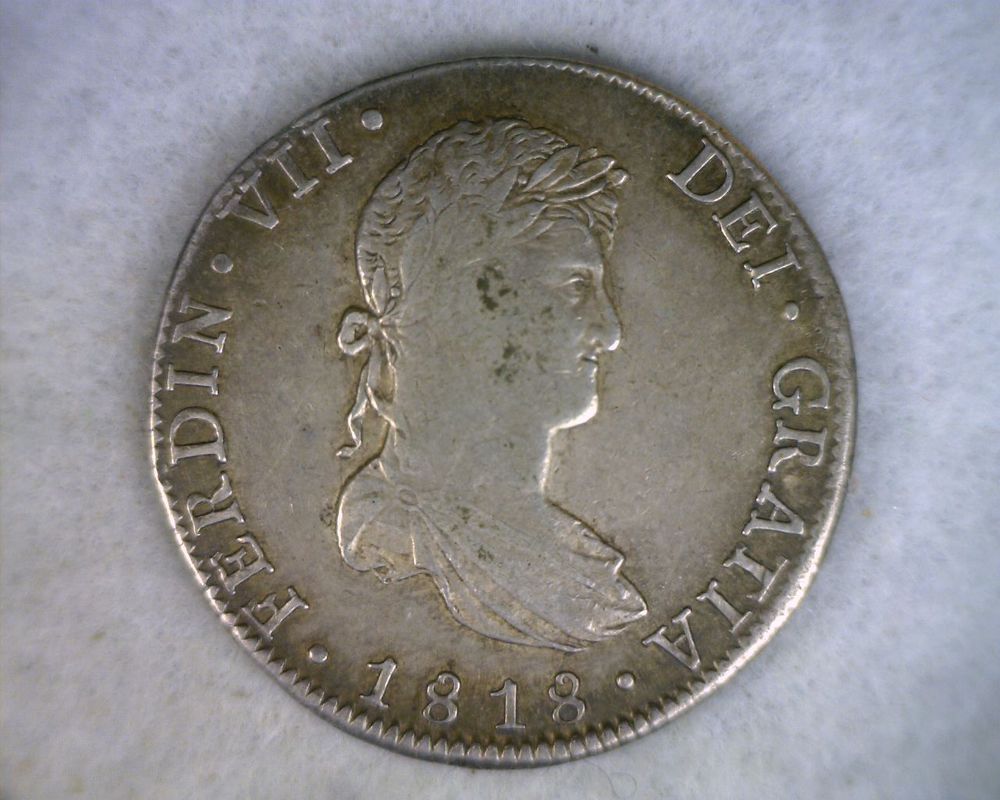
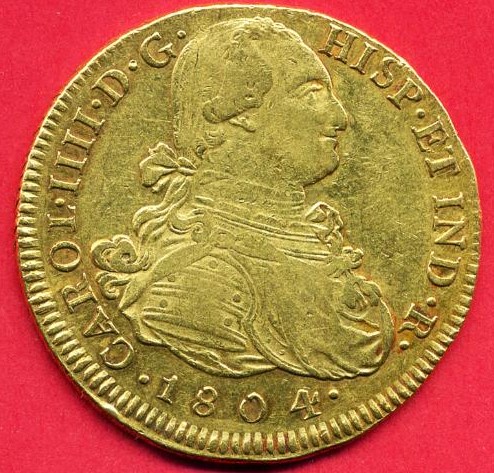
peso 54 8 reales 1818    peso 55 onza del oro carlos IV
Silver Peso of 8 Reales from 1818, Ferdinand III.  And Gold Peso of „una onza del oro“ 1804, Carlos IV.

In January 1831, Gen. Fructuoso Rivera demonetized all copper coin in circulation, i.e., the coppers ceased to be legal tender for individuals and would be neither received nor paid out by public offices. Next, it was withdrawn at one patacón (8 reales) in silver or gold for 13 reales in copper.
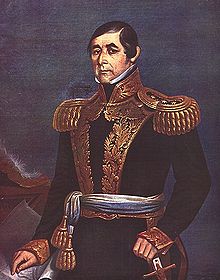
peso 48 Fructuoso_Rivera 1. pres UY  Jose Fructuoso Rivera y Toscana (October 17, 1784 – January 13, 1854) was a Uruguayan general and patriot who assisted in the efforts to force Brazilians out of the Banda Oriental. He was the 1. President of Uruguay.
To meet the need for small change, the government obtained Buenos Aires coins of one-tenth real (decimos de la ciudad de Buenos Aires; 24 mm, dated 1822 and 1823), and put about 1·6 million of them into circulation at half face value (Law 17 of 15 March 1831). This is considered the first money issued by Republica Oriental del Uruguay.
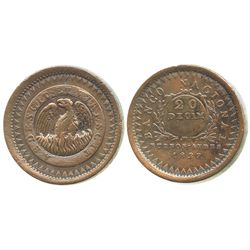
peso 52 copper decimo 1827    Copper coin, 20 decimos, Buenos Aires from 1827.
Uruguay did not issue any paper money during this period, but paper near-money did appear. The Law of 26 January 1831 provided for a copper exchange company (Sociedad encambio del cobre) to issue notes for 1 and 5 pesos in exchange for copper coin. These notes were payable to bearer at sight after 90 days in gold onzas, silver pesos fuertes or patacones, or in subsidiary Brazilian silver, and they were received by government offices at par with silver and gold coin.
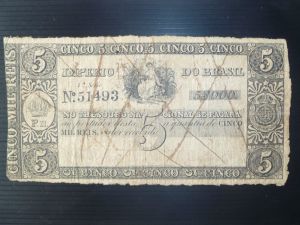
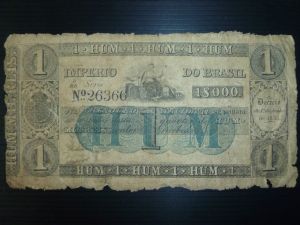
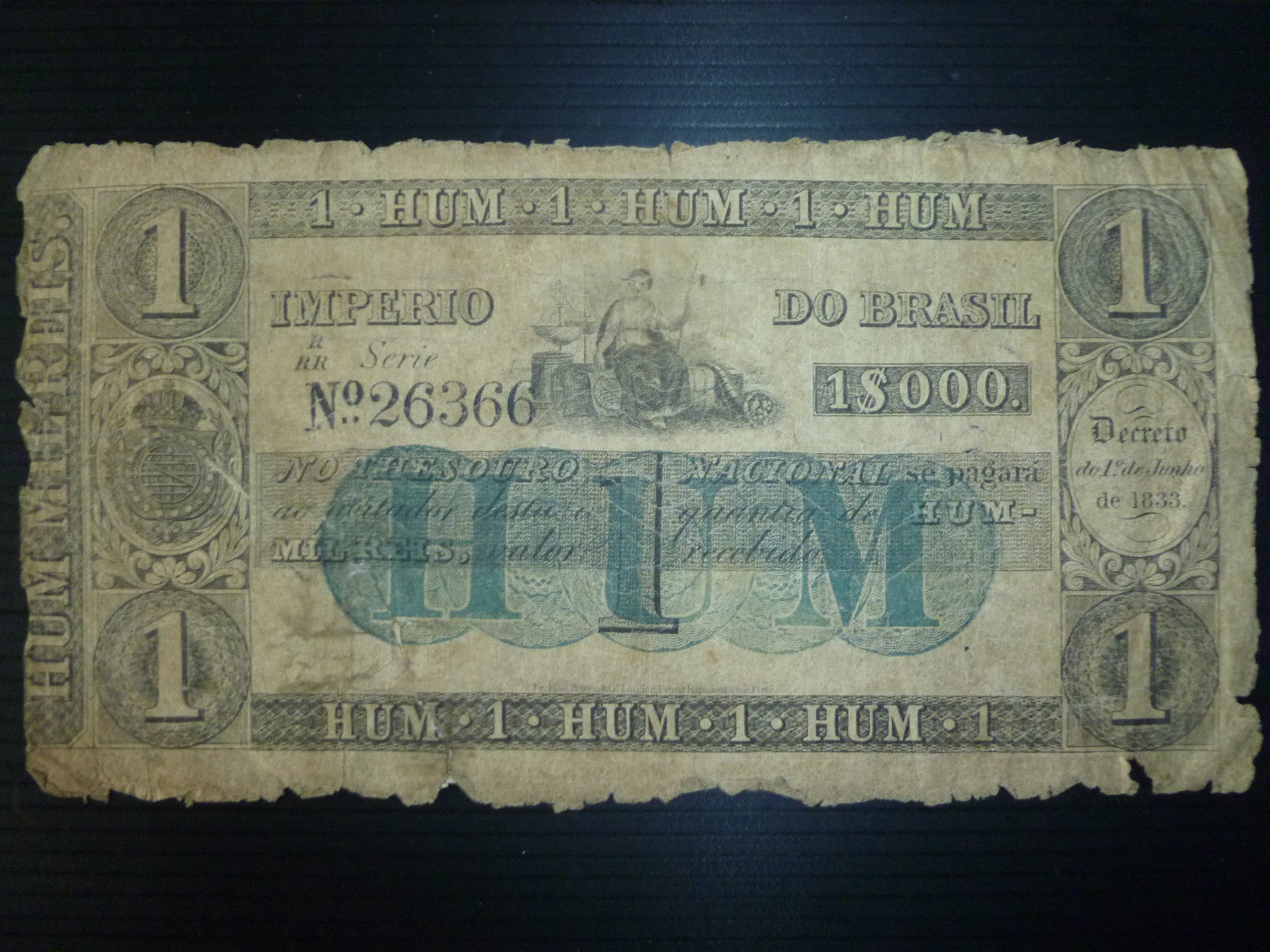
peso 46 brazil 1833 5 mil reis   peso 47 brazil 1833 1 hum mil reis   Brazilian notes, both from 1833, to 5 mil reis and 1hum mil reis.   Changeable into gold coins.
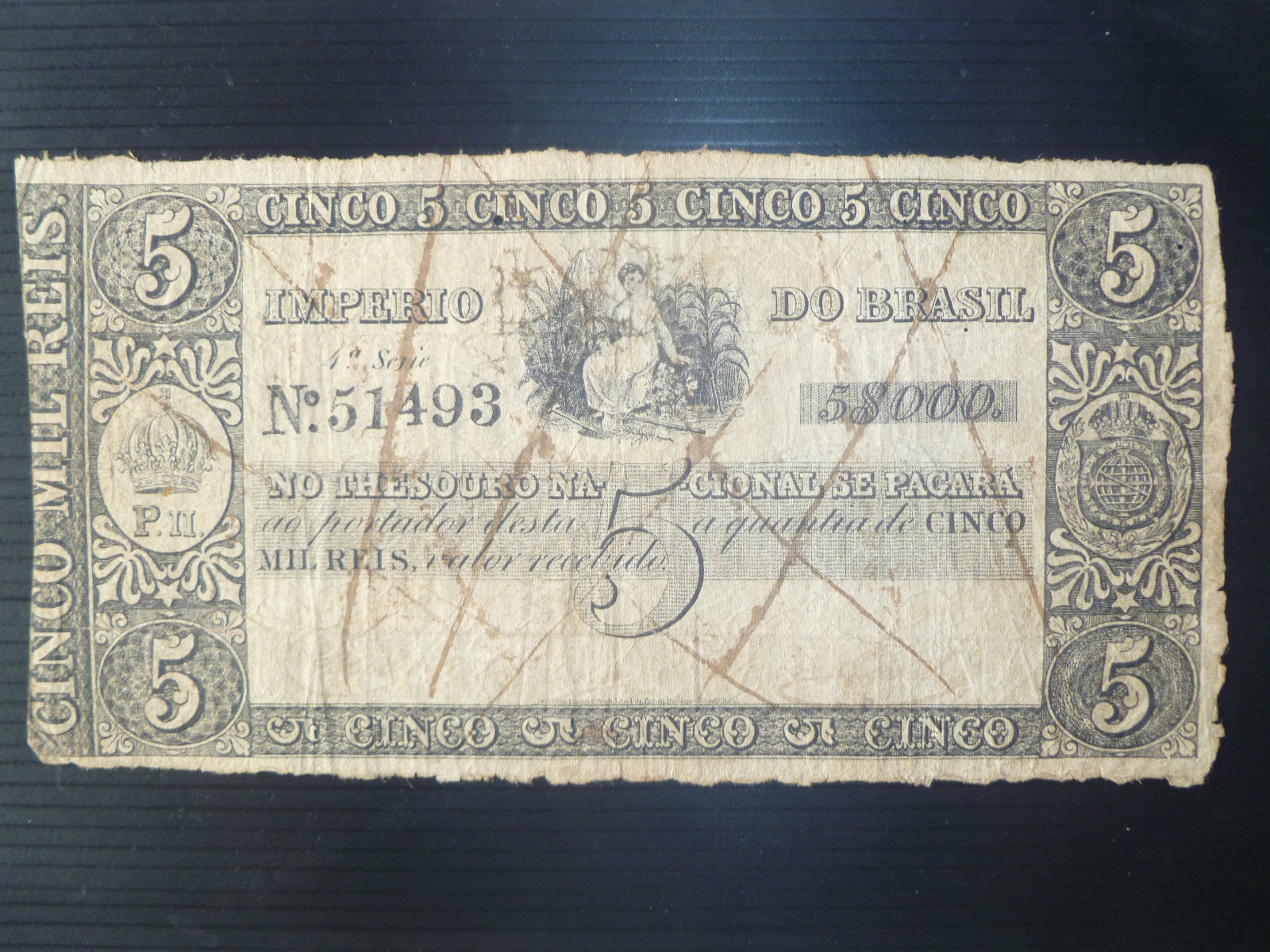
peso 43 uruguay 1835  Second oldest banknote of Uruguay from 1835. Remember, the oldest note from 1826 was still printed in Argentina ! This is the oldest one printed from the new Republica Oriental del Uruguay, 500 Pesos . These notes were printed (wonderful copper engravings ie harbor of Montevideo) in 400, 500, 2000 and 5000 Peso notes. Courtesy atsnotes.
Brief information about the modern Uruguayan Peso.
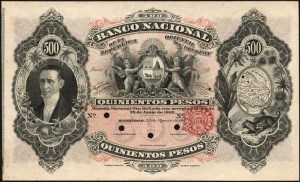
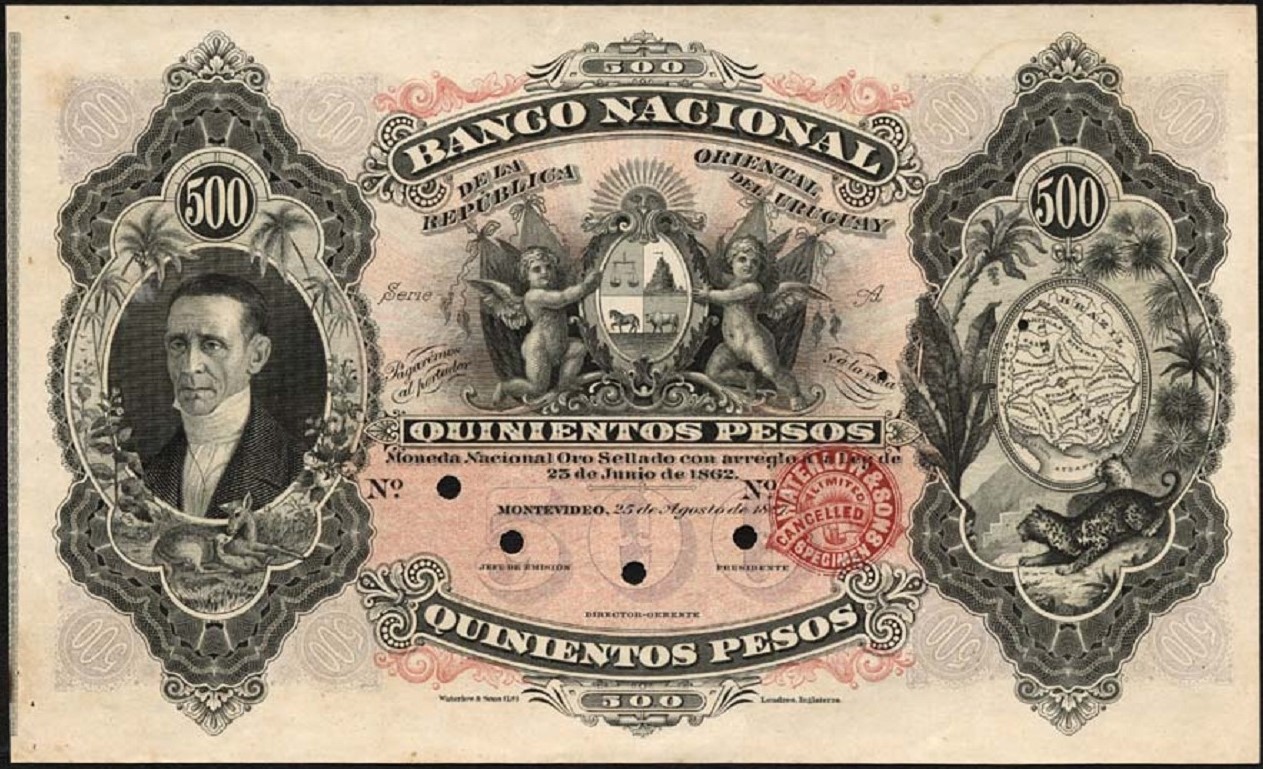
peso 16 1862 Banco Nacional de la Republica Oriental del Uruguay, 500 Pesos gold sealed, Montevideo 1862/1887.  See the fantastic steel engravings. click on pics to supersize.
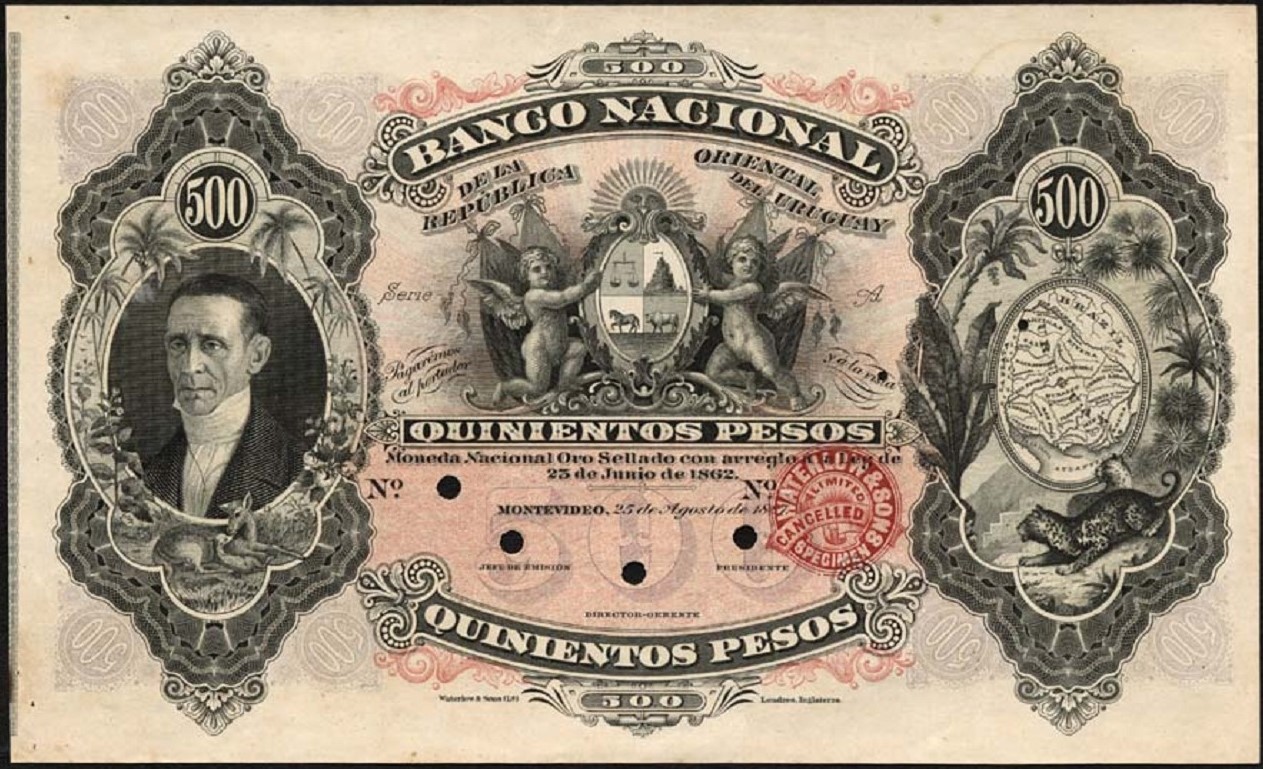
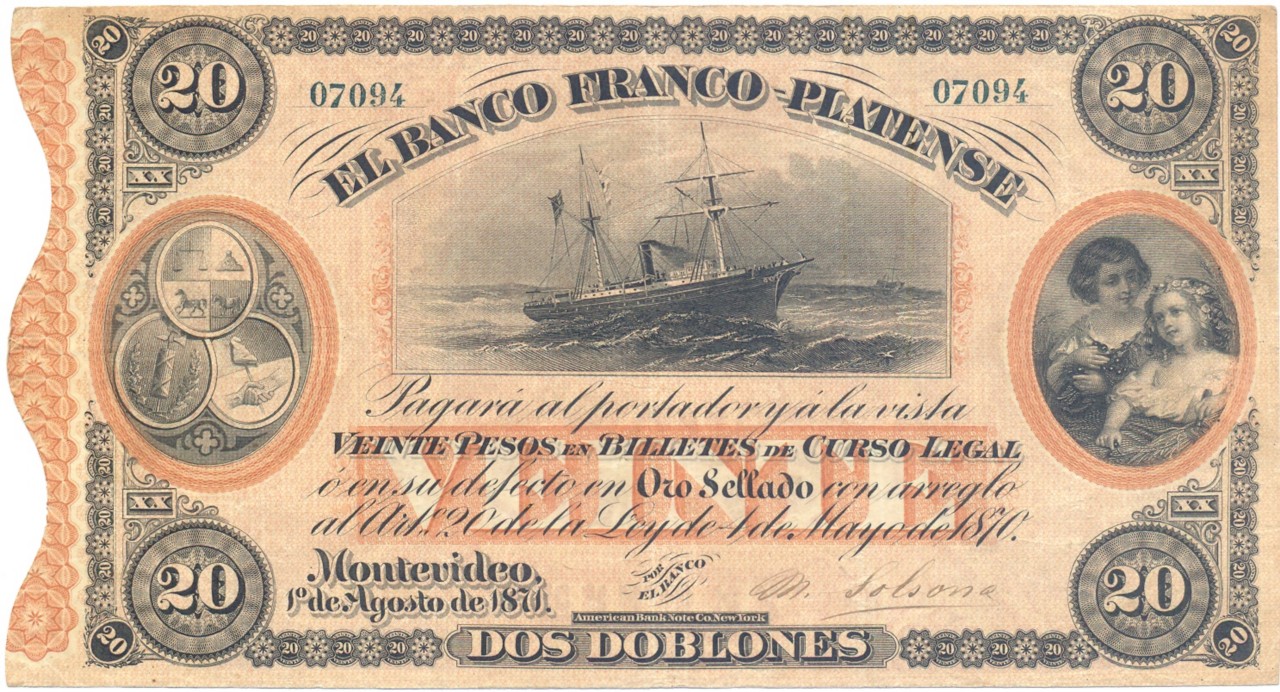
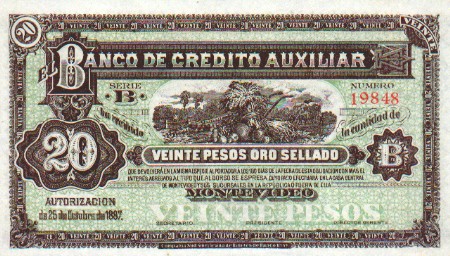
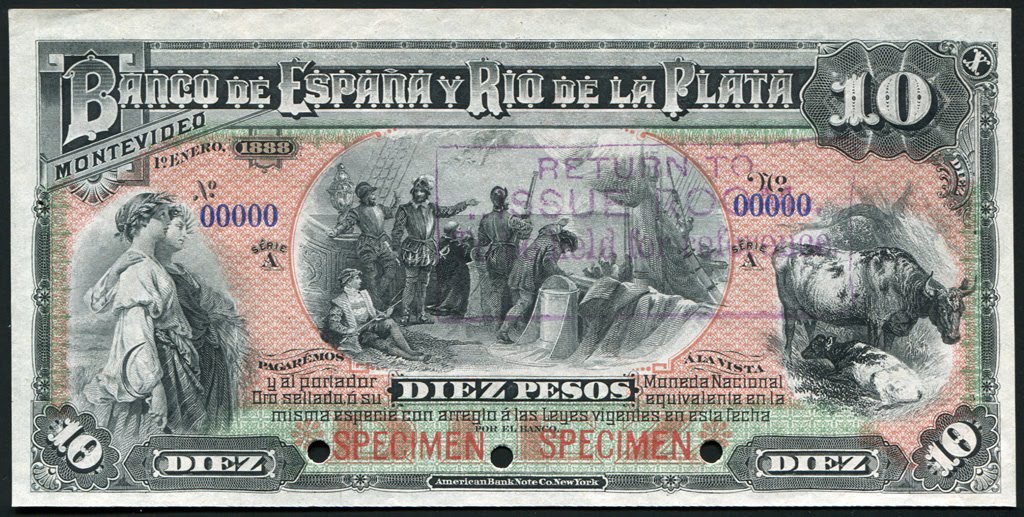
The following pics of banknotes have nothing to do with the description of the modern Uruguayan Peso. I only like to show you how many different banks were involved in printing Uruguayan paper money. Now, very rare collectors items and highly priced.
peso 18 1888 Banco de Espana y Rio de la Plata, 1888.
The Uruguayan peso, denoted UYU, is the official currency of Uruguay. The currency is subdivided into 100 centesimos, and the version of the peso that we know today, was replaced into what is known as the „new“ Uruguayan peso (UYN) on March 1, 1993 (at a changing rate of 1000 (old) to 1 (new).
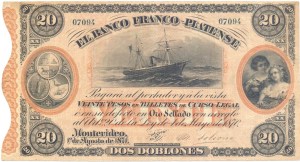
peso 20 1871  El Banco Franco – Platense, 1870.

A key characteristic of the currency is its instability factor, which peaked in Spring 2002, during Uruguay’s worst ever-financial crisis. Uruguayans have become accustomed to the constant devaluation and instability of their currency, and have as a result developed a fitting lingo. Periods of real appreciation, for example, are called „atraso cambiario,“ which literally means, „the exchange rate is running late“.
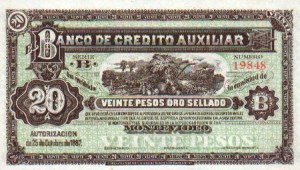
peso 22  Banco de Credito Auxiliar, 1887.

Because the local currency is so unstable, prices for most big-ticket items (real estate, cars and at times, salaries) are denominated in US dollars. The UYU had a crawling peg to the United States Dollar (USD) during military rule, and the government published a table of the future values of the dollar, called the „tablita,“ daily.
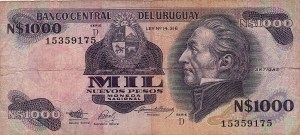
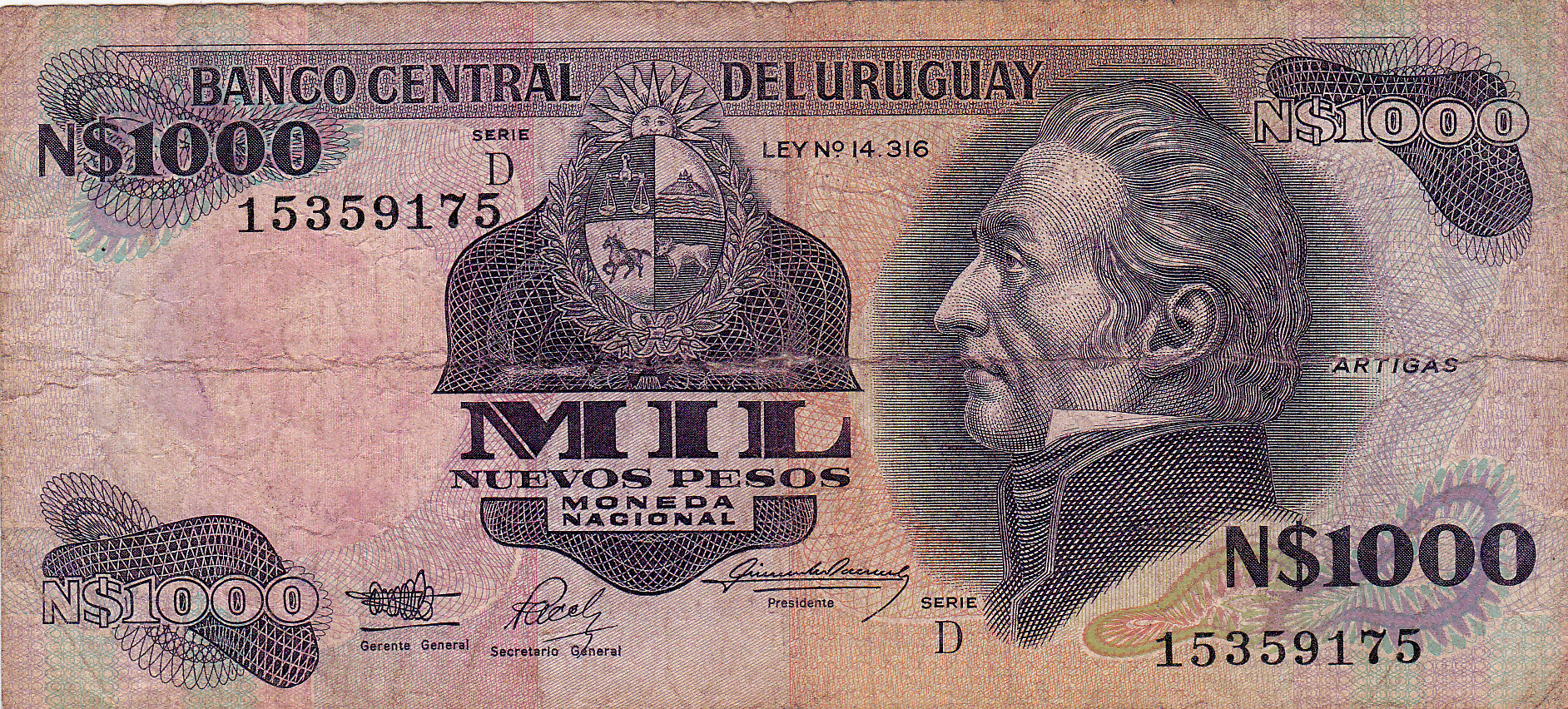
peso 19  Banco Central del Uruguay, 1991.

When the currency was devalued in 1982, it was said, „the tablita was broken.“ Thousands of companies were thrown into bankruptcy at this time, but Uruguay made changes. In the 1990s, a sliding range mechanism-geared towards providing predictability-was introduced. The sliding range was comprised of top and bottom margins at which the government would intervene.
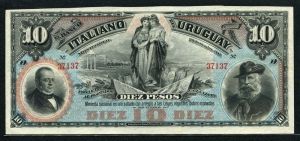
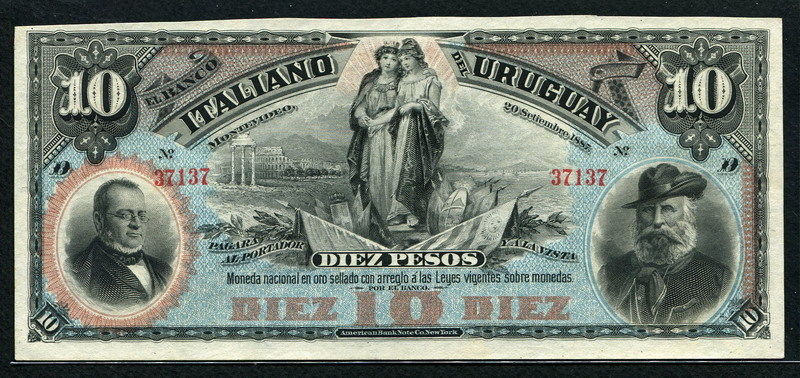
peso 25 1887  Banco Italiano del Uruguay, 1887.

In 2002, after the banking crisis, the currency was again allowed to float. Uruguayans found hope for their currency in 2004 when it appreciated against the USD. The government hopes that a floating currency will „de-dollarize“ the economy.
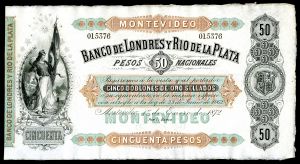
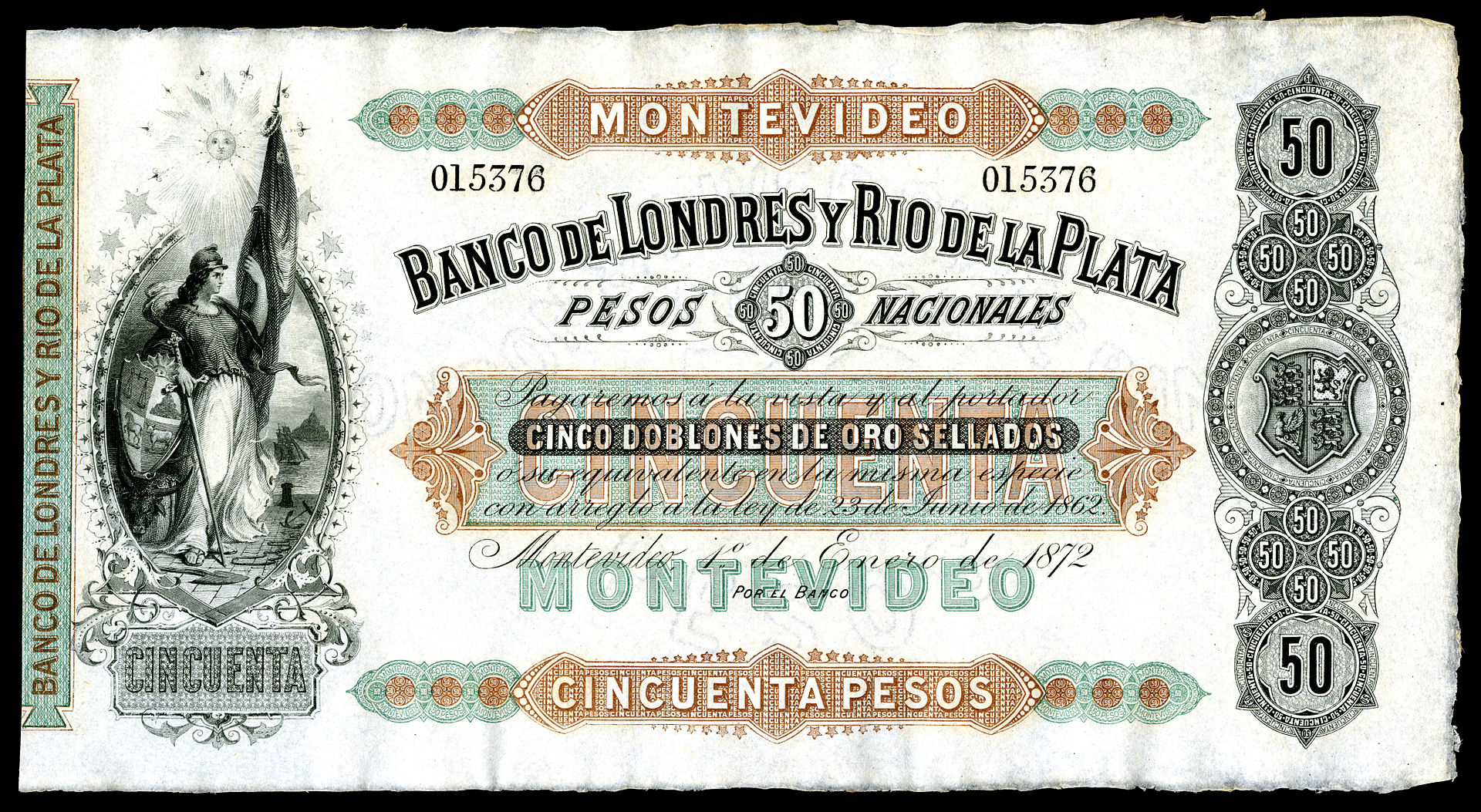
peso 26 1872   Banco de Londres y Rio de la Plata, 1872.
And the floating is visuable every day. In 2010 the exchange rate was about 18 Pesos to 1 US Dollar. With an inflation rate of about 8,5% in 2015/2016 , the exchanging rate is now around 32 Pesos to 1 US Dollar, the value of the dollar almost doubled within 5 years. Some insiders expect a changing rate of 40 pesos and more to 1 US Dollar within the following years.
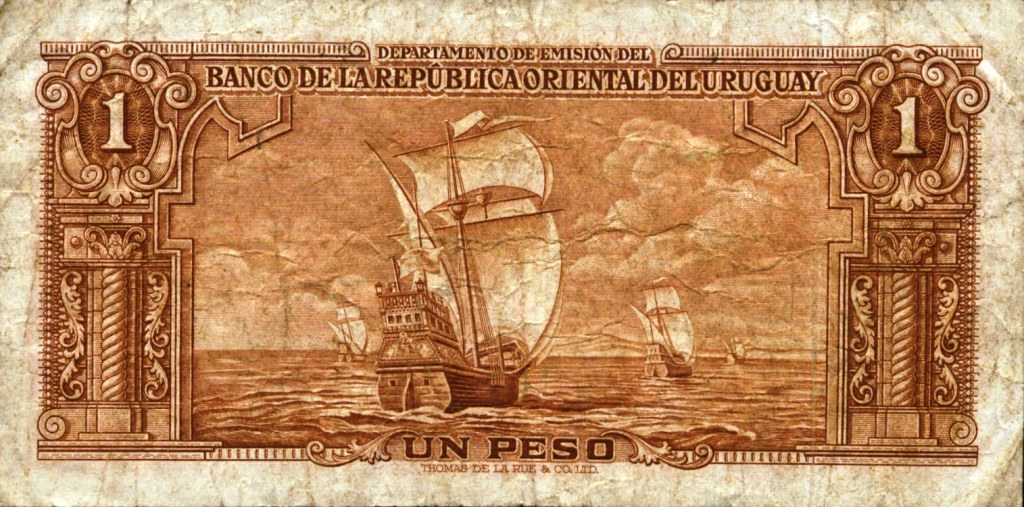
peso 27 1939   Banco de la Republica Oriental del Uruguay, 1939.
Veröffentlicht unter Collecting, History, Hobbies, Information, Uruguay | Verschlagwortet mit , | Hinterlasse einen Kommentar

Easy to do – Tzatziki

tzatziki 8

Yes, very easy to make, your own original Greek Tzatziki. It tastes like in Greece and you can impress your guests.
The main ingredients are about 500g yogurt, 1/2 cucumber, 2 cloves of garlic and
2 tablespoons of extra virgin olive oil.

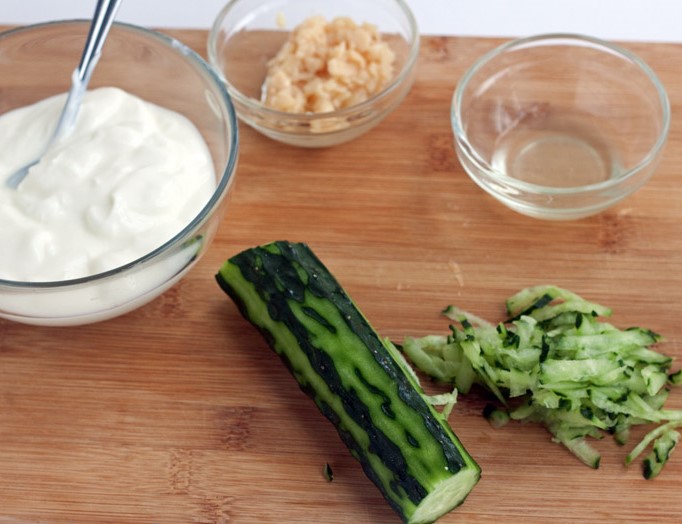
tzatziki 3   Yogurt, cucumber garlic and olive oil.

If you can’t get original Greek yogurt you can use „Quark 40% fat“ and „whole milk yogurt“ in equal parts. In Uruguay I use „Queso blanco“ and „joghurt natural“ in equal parts.

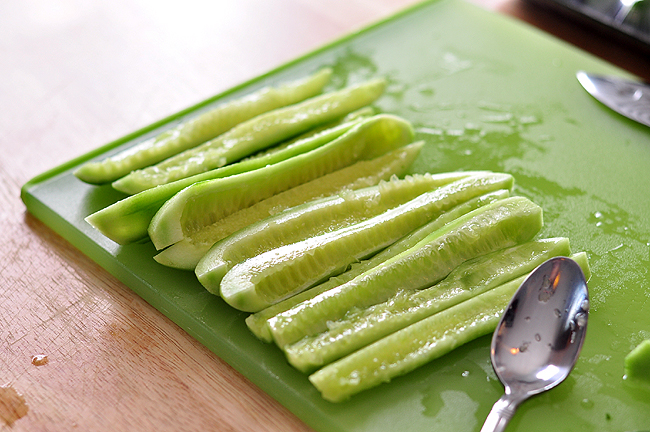
tzatziki 1  Clean out the seeds of your cucumber.

Wash ½ cucumber (normal size) or a whole Libanese cucumber (they are much smaller), clean out the seeds , grate coarsely and drain in a colander. I always scratch off a third of the green skin, otherwise it’s getting to bitter.
Peel 2 cloves of garlic and chop finely or press through a garlic press.

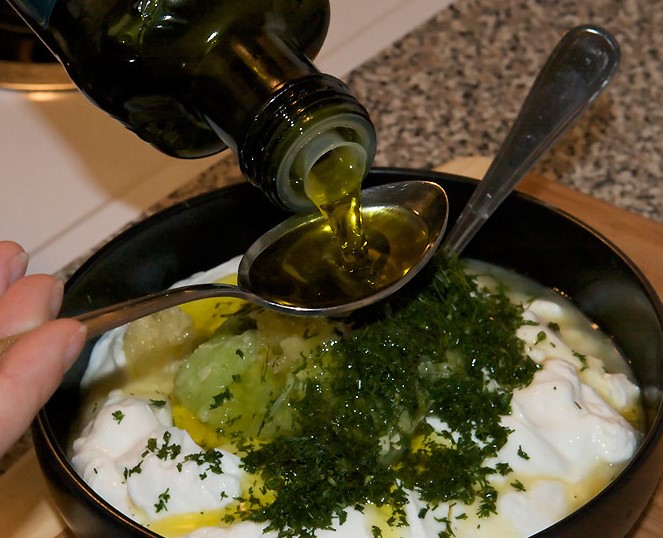
tzatziki 2  Mix all ingredients well together.

Mix all your ingredients well together and season with salt and pepper. That is all – Easy !! Where to use tzatziki ? Whereever you like, following a few ideas.

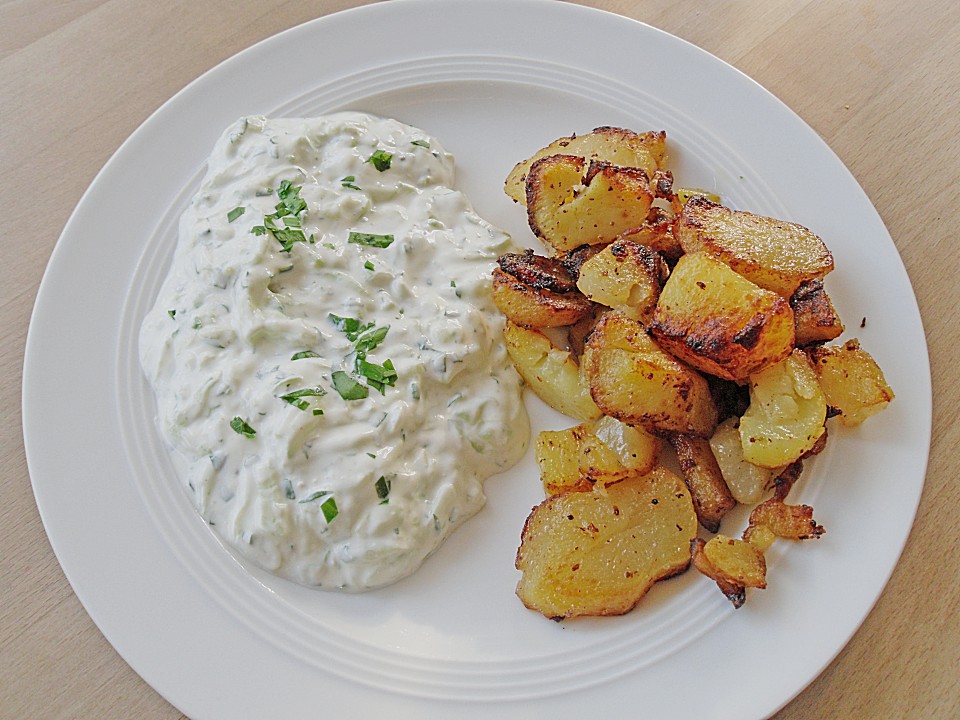
tzatziki 5    Very plain, tzatziki with baked potatoes.

Now it is up to your taste to mix in a few fresh herbs , by example some dill or basil. Or spice it a bit up with fresh chilli or like. For decoration always use a bit drizzled olive oil, that will give your sauce/dip a nice shine. I sometimes use also a sprinkle of paprika powder or chives, only for decoration,  as you see in the first pic.   Enjoy !!!

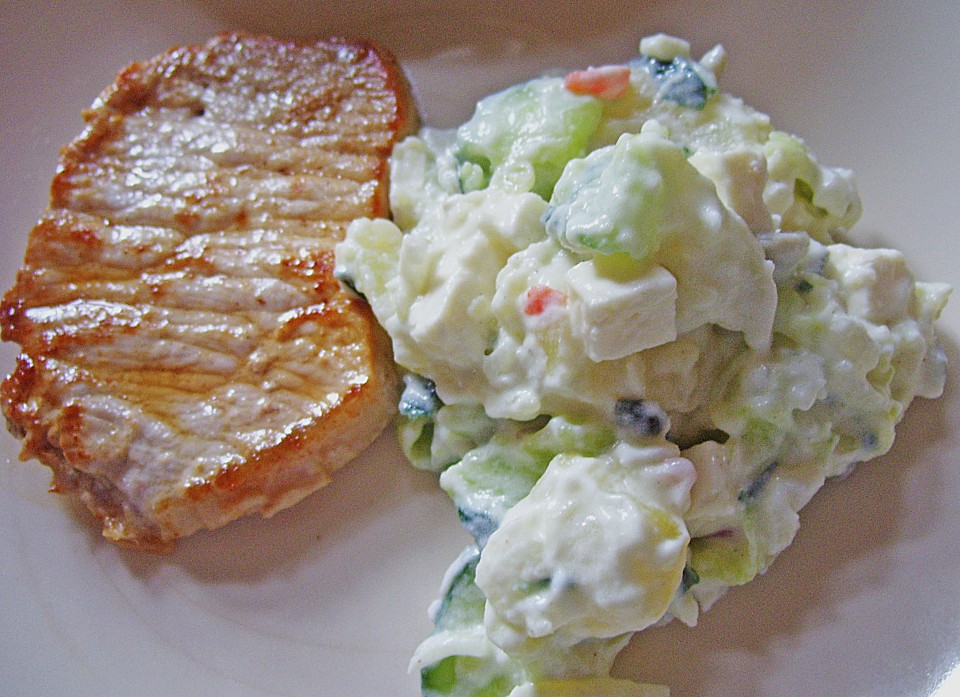
tzatziki 6 German-Greek, tzatziki potato salad and a „Schnitzel“.
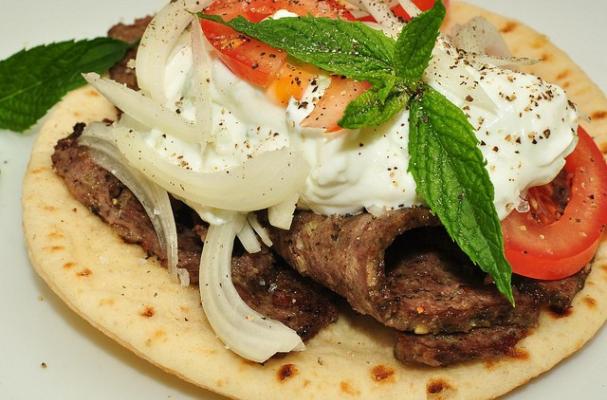
tzatziki 7  A bit more work, tzatziki with Uruguayan milanesa accompanied with fresh tomatoes and onion slices on tortilla.
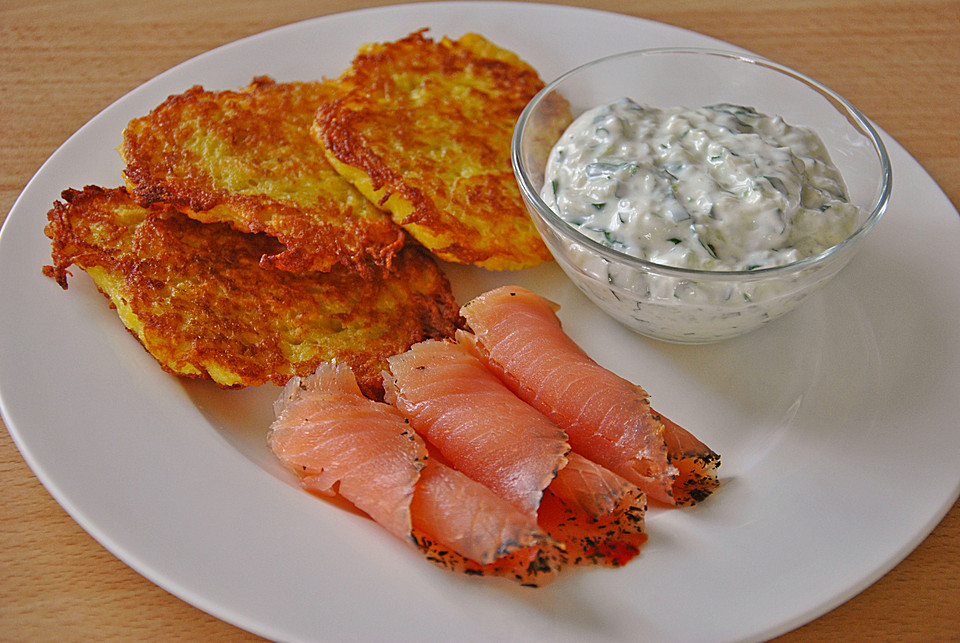
tzatziki 4   And the gourmet idea, tzatziki with smoked salmon and „Swiss Potato Roesti“.
Veröffentlicht unter Recipes | Verschlagwortet mit | Hinterlasse einen Kommentar

Uruguay in Pictures

UY in pictures

My dear readers.  Today I like to introduce you to a new e-book of my good friend David Hammond. For many years David is running an Uruguay Blog and is in my opinion the capacity in knowledge of the country, Uruguayan real estate and many other popular questions about Uruguay.
He just came up with an e-book about the „The top eight places to travel and live“
in Uruguay. It is a brief travel guide of the important places of Uruguay and accompanied with many great Photographs. I like it very much. If you are interested, David will send you a free copy if you subscribe to his blog.
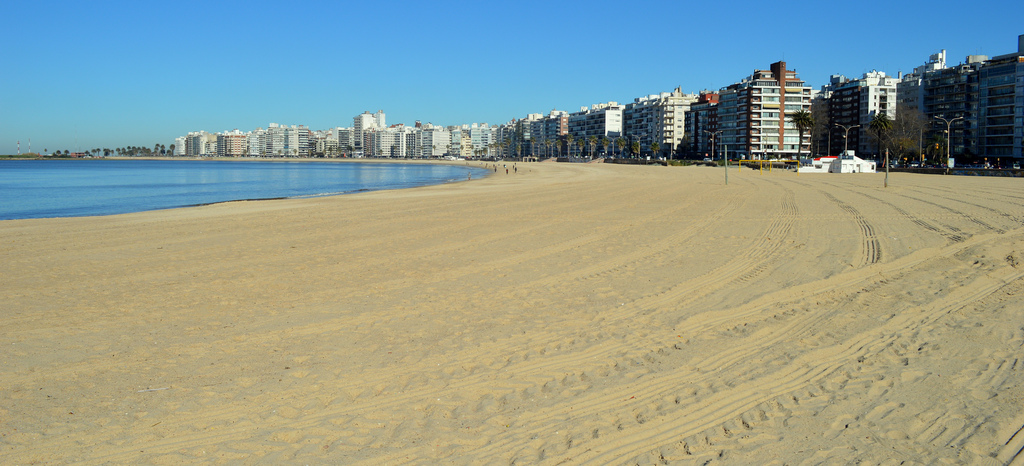
montevideo 4    Montevideo, Playa de los Pocitos.

Uruguay Insider

Life in Uruguay, Uruguay travel, Uruguay relocation, Uruguay sights, Uruguay culture, Uruguay real estate, Uruguay current events, and more…

Paradise Uruguay Blog

The blog about traveling, living, and investing in Uruguay. To get your free copy, subscribe here :

 David Hammond:    Uruguay in Pictures is a 20-page PDF e-book showing my eight favorite places to travel and live in Uruguay.  I’m offering it as an incentive to new Uruguay Insider subscribers. Since you’re already a subscriber, I’d like to make it available to you, too. To get your complimentary copy of this e-book, just click on above and ask me to mail „Uruguay in Pictures“.

uruguay 4

Veröffentlicht unter Information, Travel, Uruguay | Verschlagwortet mit | Hinterlasse einen Kommentar

It’s Pizza Time

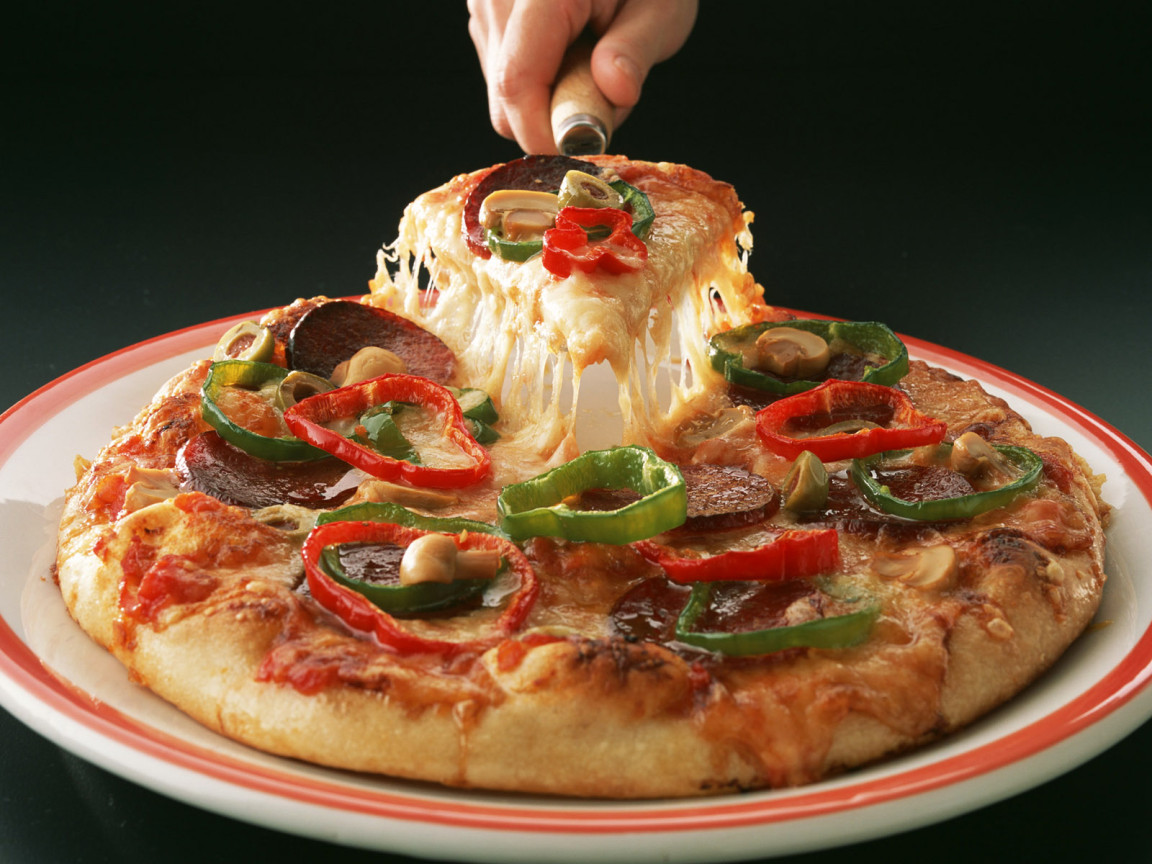
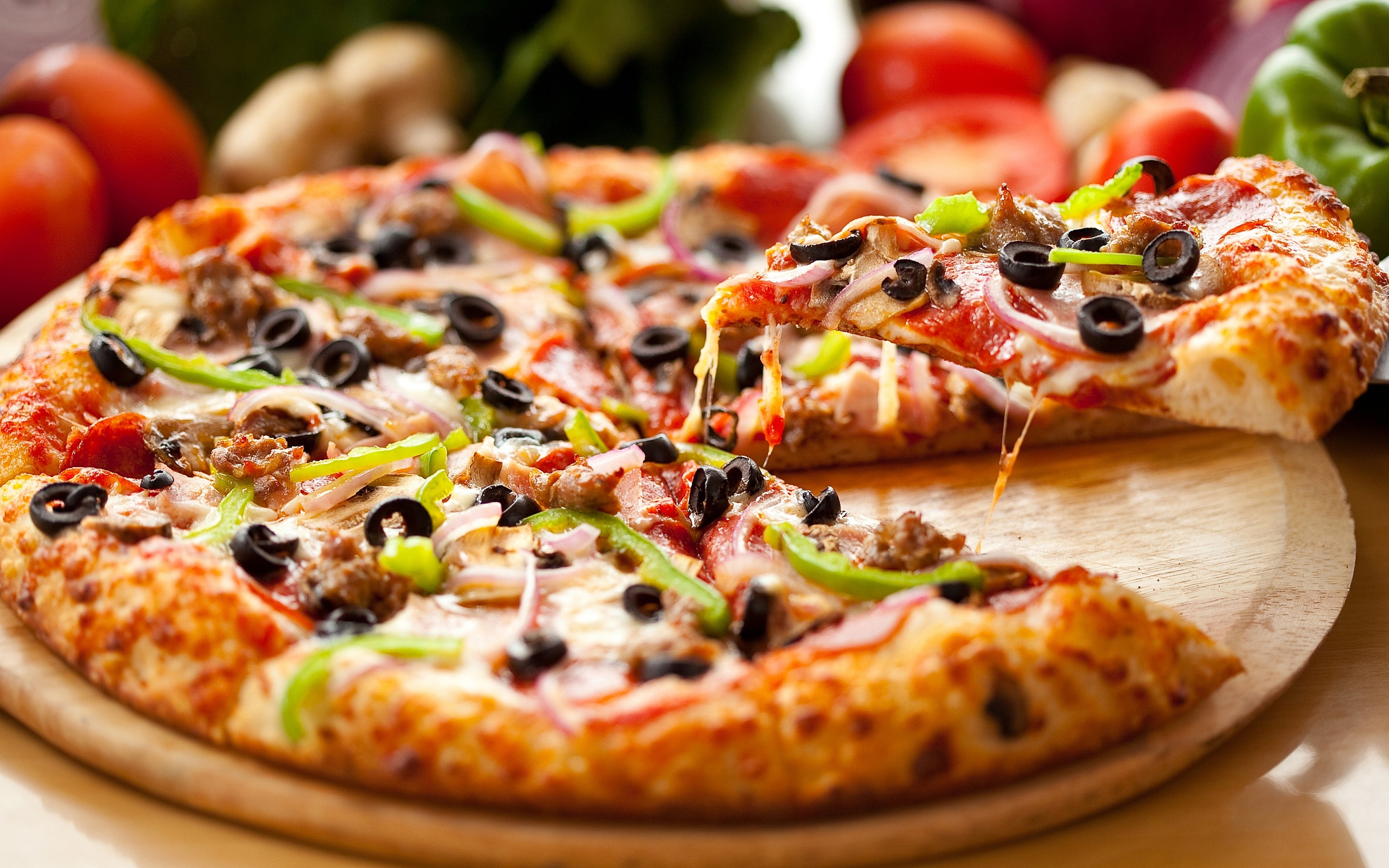
Tasty_hot_pizza

Meantime everyone knows that I like cooking and celebrating good food. One of my all time favorites is PIZZA. I am a pizza lover, but to get a satisfying good one is as rare as lion-eggs, HA ! Let me introduce you to a few thoughts about pizza.

A brief history of pizza.

The origin of the word pizza (Italian: pittsa ) is uncertain. The word pizza was first documented in 997 AD in Gaeta, Italy, and successively in different parts of Central and Southern Italy. The precursor of pizza was probably the focaccia, a flat bread known to the Romans as panis focacius, to which toppings were then added.

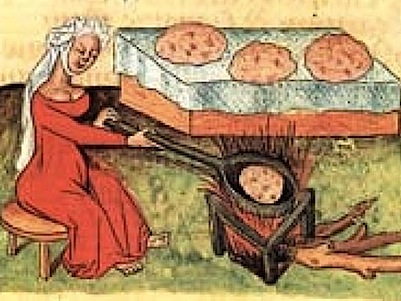
 pizza hist 2  Pizza baking in Renaissance times.
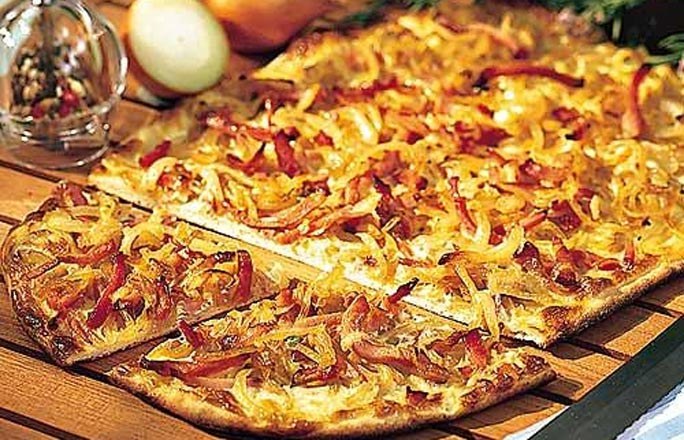
Foods similar to flatbreads in other parts of the world include the Indian Paratha (in which fat is incorporated), the Central and South Asian Naan (leavened) and Roti (unleavened), the Sardinian Carasau, Spianata, Guttiau, Pistoccu and Finnish Rieska. Also worth note is that throughout Europe there are many similar pies based on the idea of covering flat pastry with cheese, meat, vegetables and seasoning such as the Alsatian Flammkuchen, German Zwiebelkuchen, and French Quiche.
pizza hist 6  German Zwiebelkuchen, German Onion cake.

In 16th century Naples, a Galette flatbread was referred to as a pizza. Known as the dish for poor people, it was sold in the street and was not considered a kitchen recipe for a long time. This was later replaced by oil, tomatoes (after Europeans came into contact with the Americas) or fish. In 1843, Alexandre Dumas described the diversity of pizza toppings.

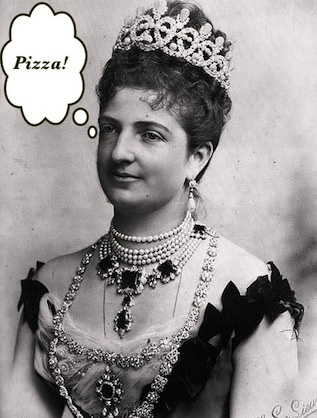
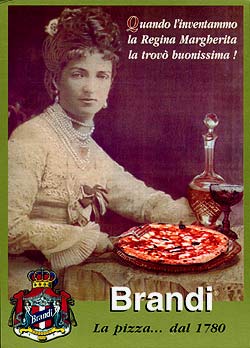
pizza hist 4 queen-margherita    Queen Margherita.     pizza 31 brandi 6

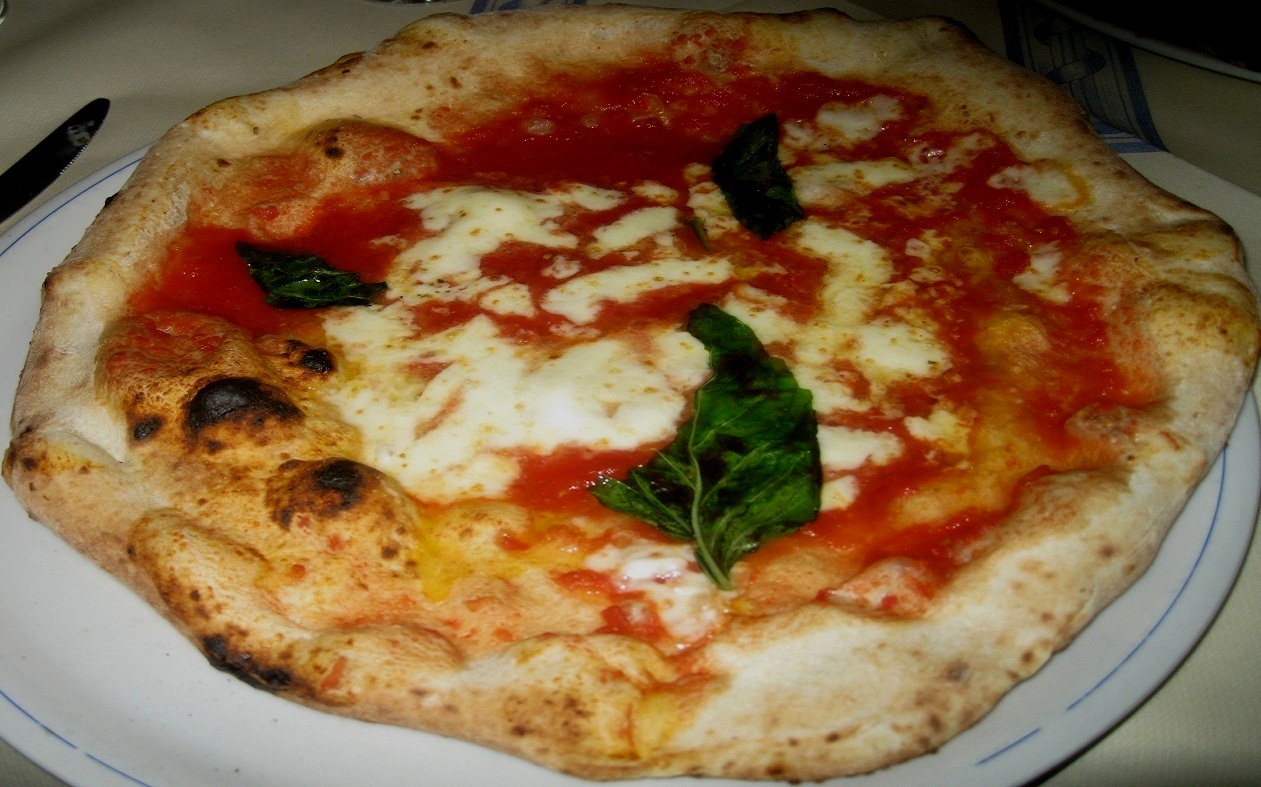
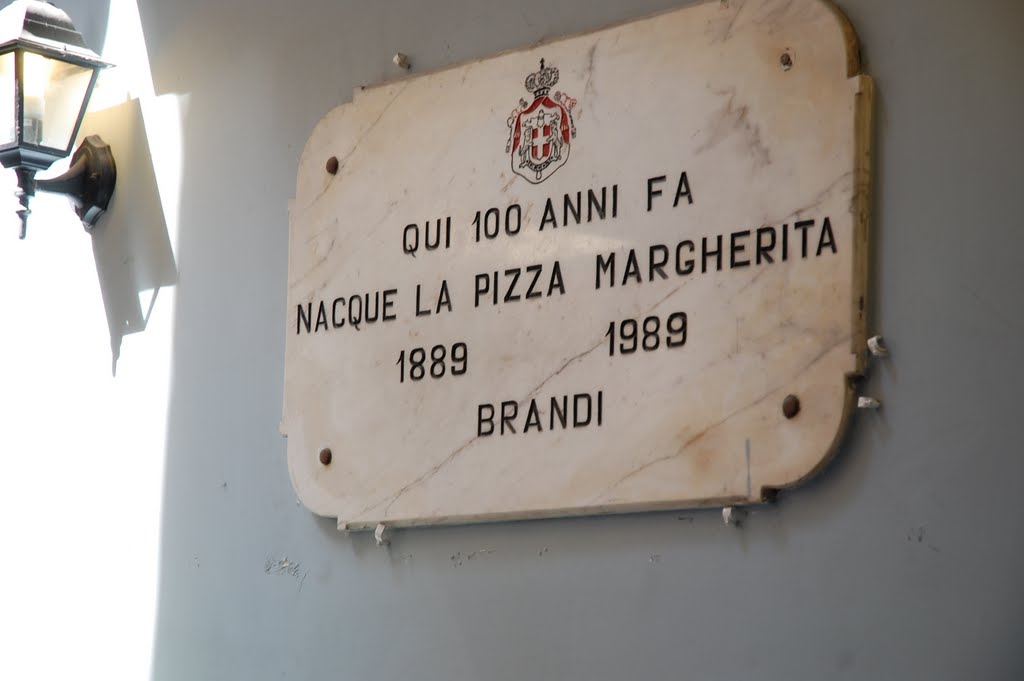
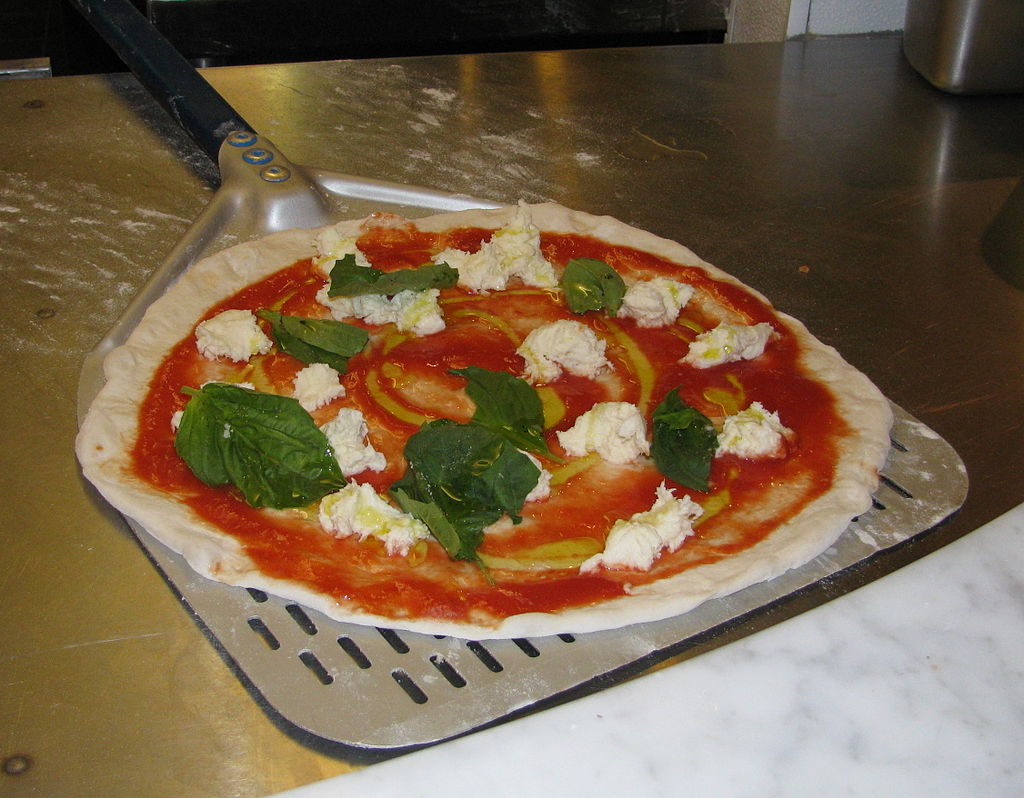
An often recounted story holds that on 11 June 1889, to honour the Queen consort of Italy, Margherita of Savoy, the Neapolitan pizzamaker Raffaele Esposito created the „Pizza Margherita“, a pizza garnished with tomatoes, mozzarella, and basil, to represent the national colours of Italy as on the Italian flag.

pizza 31 brandi 5 margherita 2  pizza 31 brandi 4Todays tourist attraction, Brandi’s Pizza Margherita. And commemorate plate on the restaurant Brandi wall.

Pizza is now a type of bread and tomato dish, often served with cheese. However, until the late nineteenth or early twentieth century, the dish was sweet, not savory, and earlier versions which were savory more resembled the flat breads now known as schiacciata. Pellegrino Artusi’s classic early twentieth century cookbook, „La Scienza in cucina e l’Arte di mangiar bene“ gives three recipes for pizza, all of which are sweet. However, by 1927, Ada Boni’s collection of regional cooking includes a recipe using tomatoes and mozzarella.

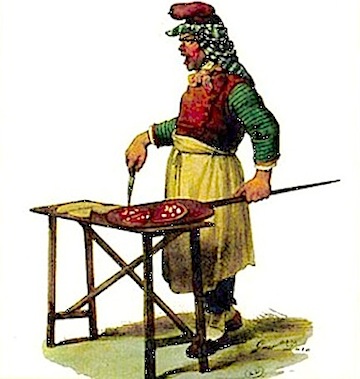
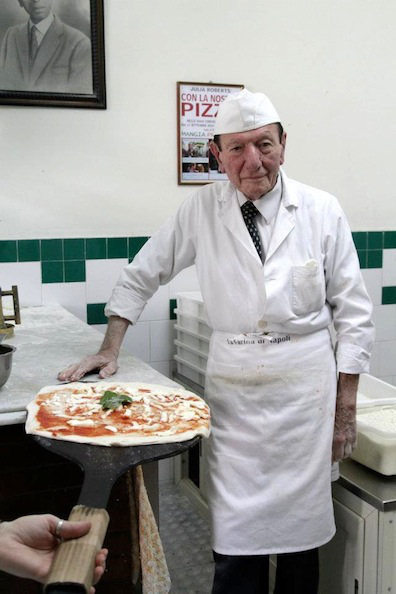
pizza hist 1 Then – Pizzaiolo – Now   pizza hist 5 pizzaiolo-don-luigi-condurro-of-lantica-pizzeria-da-michele

We could go on and on with the interesting history of pizza and pizza making and hundreds of recipes. I like to introduce you to some tips for home cooking your own pizza.

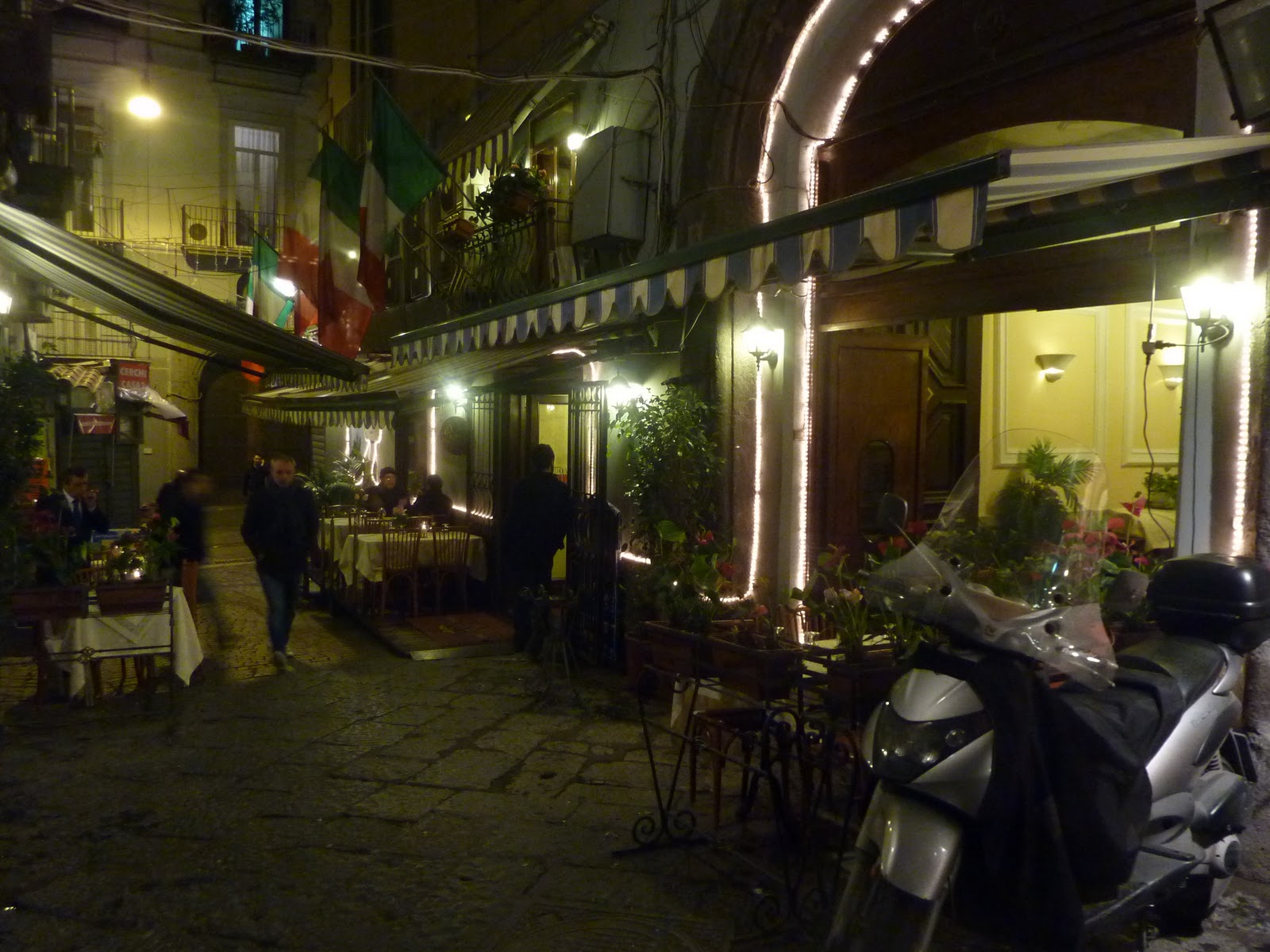
pizza 31 brandi 2  Hard to beat, the special atmosphere of an Italian Pizzeria, here Brandi in Naples, Italy.  Sit down, relax, enjoy a pizza and some wine and dream of the good life „you“ have. In Italy or at home, a pizza night is always worth while.
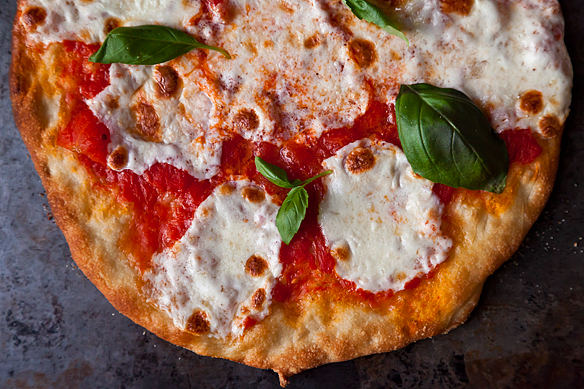
pizza 27 napoli    Pizza Napolitana, Margherita with olive oil.

6 Ways to make your homemade pizza better.

Now – let’s start to do our own pizza. Whether by pie or slice, piled with toppings or minimalist, pizza is a classic dinner staple. The combination of blistered crust, gooey cheese, and fresh ingredients tastes right just about any night. But you don’t have to pick up the phone and order to get the perfect one. You can make dynamite pizza in your own oven. Just try it and you will find out they are all much better then the „ordered“ ones.   And – it’s soooooo easy !!

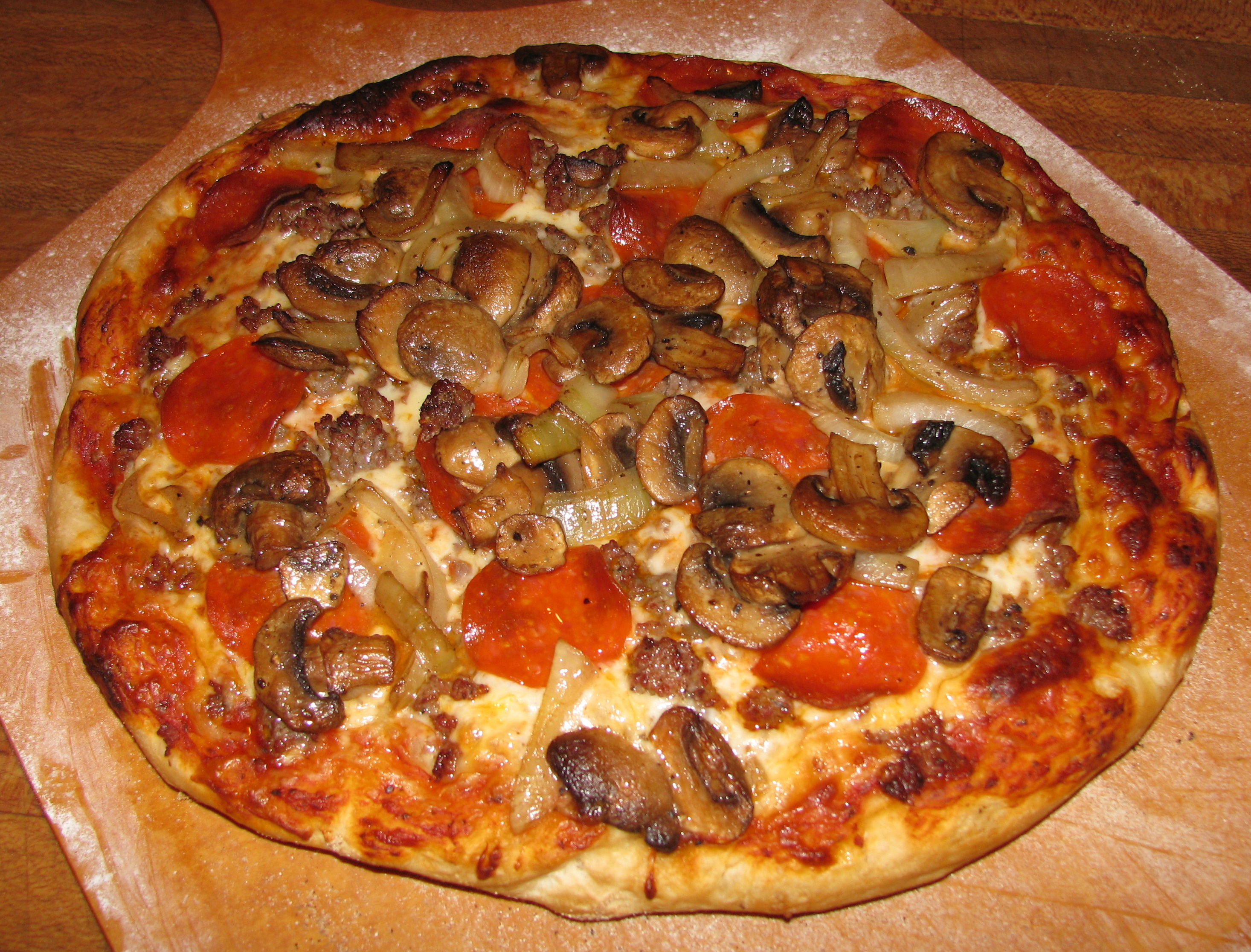
pizza 33 salami and black olives  Pizza Salami with black olives, thick crust.

1. Make your dough.

Making pizza is supposed to be fun!  This means that if you have the time and patience to make the dough, go for it. In most country’s you can buy  „no knead pizza dough“. It’s fast, simple, easy to practice, and is as hands off as possible. The following is our favorite pizza dough recipe, often tried and always good for thin crispy one or a thick one, perfect !!

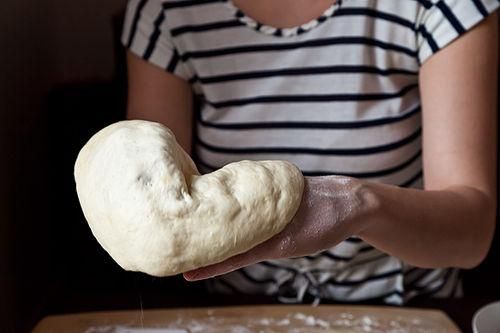
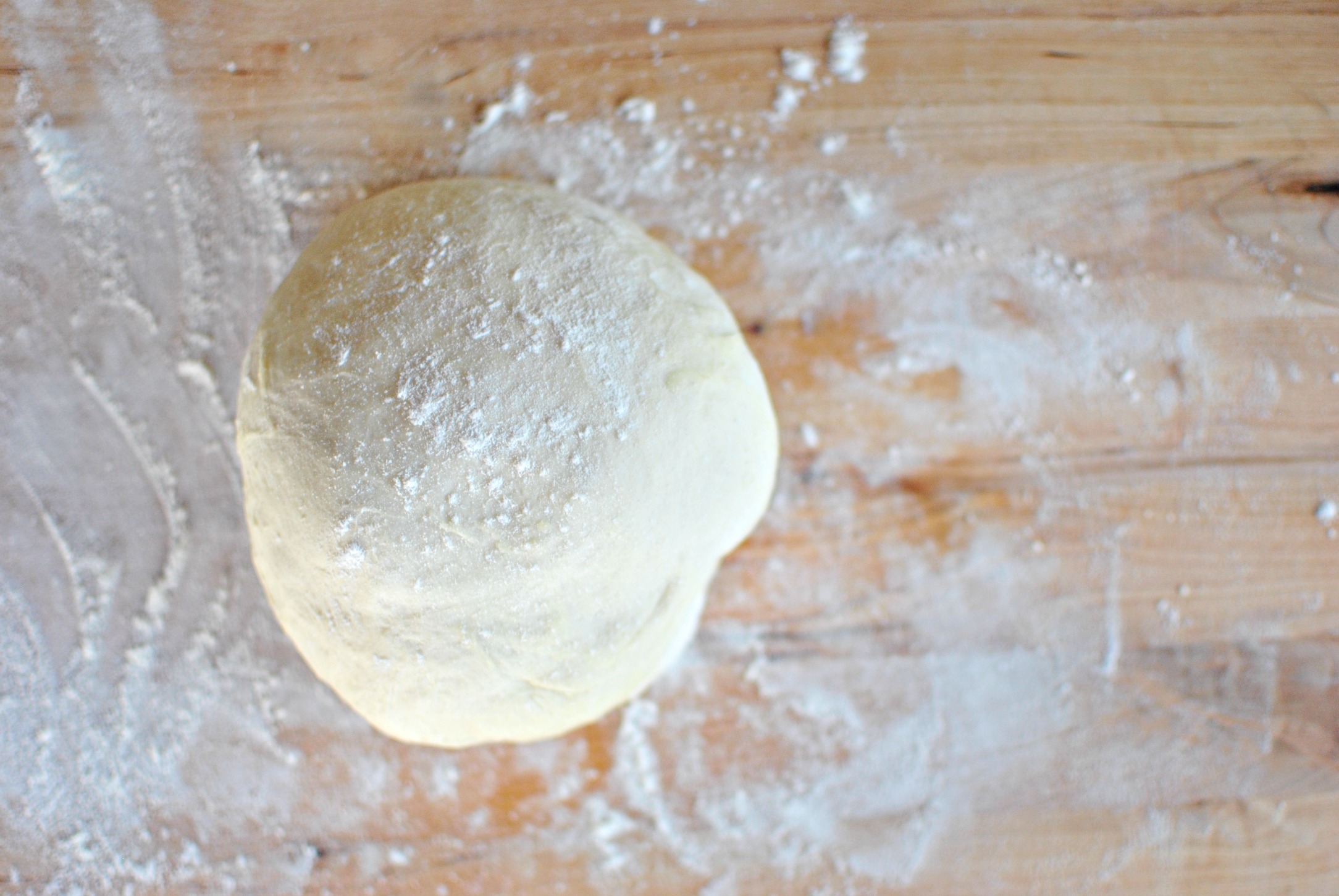
pizza 21a   Make your own pizza dough, it’s soooo easy.

Ingredients.

500 grams (16 oz) all purpose flour, plus more for shaping the dough
10 gram (1 teaspoon) fine sea salt, (sometimes we use garlic salt instead garlic oil)
20 grams (2 teaspoons) dry yeast,
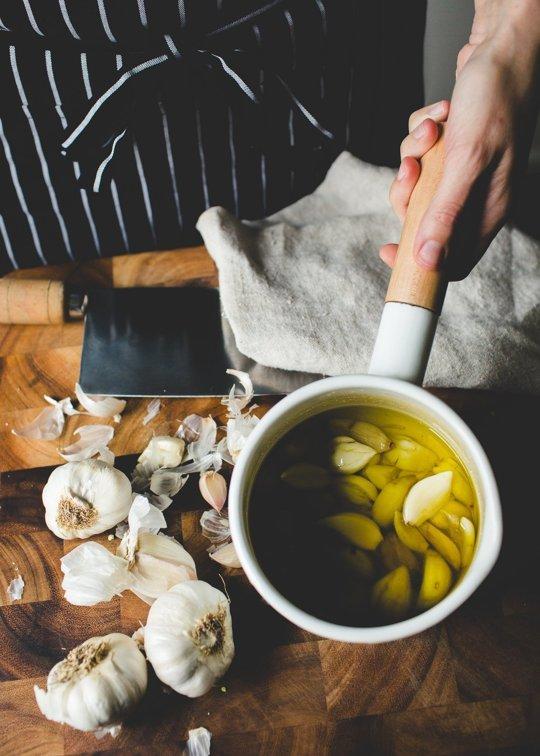
60 ml (3 tablespoons) good olive oil,  (we often use garlic infused olive oil)
250 ml (8 oz) water

pizza 11  Easy to make – your own garlic infused olive oil.

How to do.

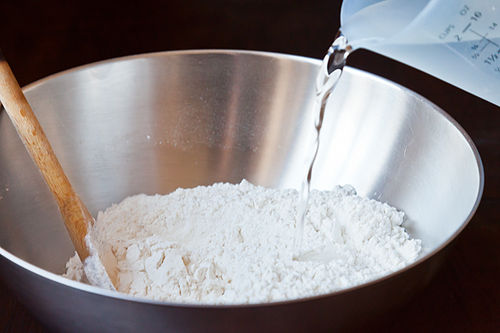
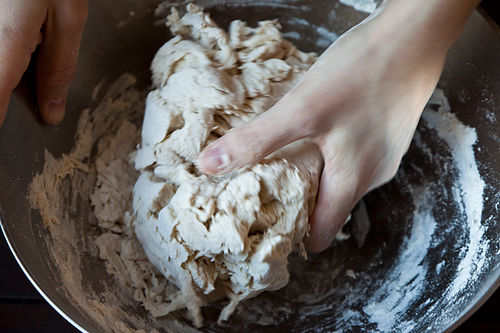
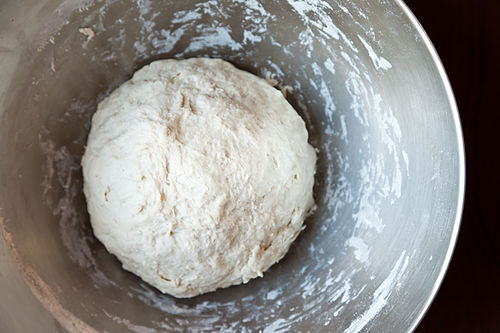
In a bowl, thoroughly blend the flour, yeast, oil and salt. Add the water and, with a wooden spoon and/or your hands, mix thoroughly.

pizza 2  pizza 3        Mix all ingredients together and then knit through and through.

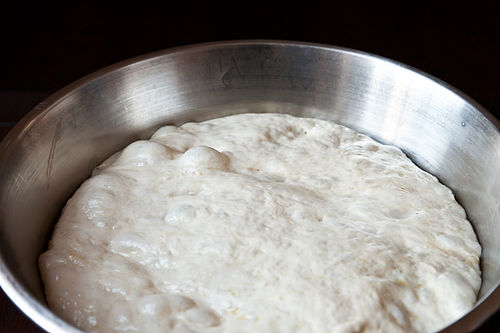
Cover the bowl with plastic wrap or a kitchen towel and allow it to rise at room temperature (about 72F = 22C)  until it has more than doubled. It will take longer in a chilly room and less time in a very warm one.
Flour a work surface and scrape out the dough. Divide it into 4 equal parts and  shape each portion into a round  or square or whatever you like. Roll out to thin or thick what ever you prefer, this dough is good for all purposes. The dough should not be sticky, if it is, dust with more flour.

pizza 4  pizza 5       On a warm place let the dough rise to double size. This can take a few hours.

If you don’t intend to use the dough right away, wrap the balls individually in plastic and refrigerate for up to 3 days. Return to room temperature by leaving them out on the counter, covered in a damp cloth, for 2 to 3 hours before needed.

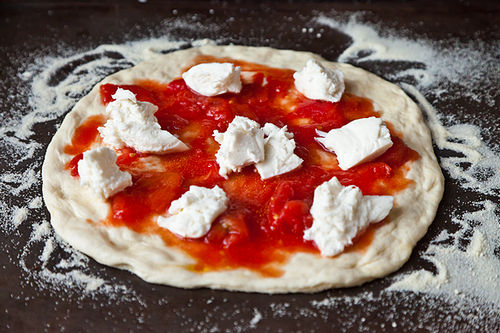
pizza 7  pizza 8         Ready to bake and done after about 20 minutes (200C). Garnish with fresh basil and like in Italy – buon appetito !!

2. Turn up the heat.

But don’t burn down the house. Most restaurant pizza recipes call for a really hot oven, but don’t go overboard trying to replicate pizzeria temperatures. Try as hot as your oven will do. Don’t try tricks like baking in cast iron pots and pans, and even packing the home oven with refractory bricks to mimic the conditions of a brick oven.

pizza 21b  This oven provides 280 C (580F), normally 240 C (500F).

3. Use a baking steel.

We can describe this tool as the “Holy Grail of home baking equipment.” A ¼-inch piece of food-grade steel that works like a traditional baking stone, it’s a great heat conductor which accounts for its arguably magical pizza powers.

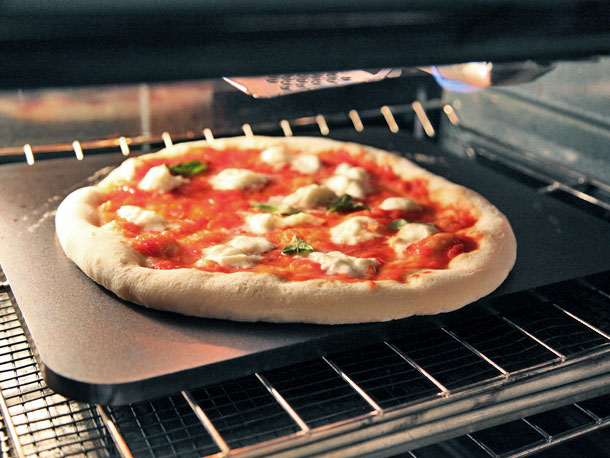
pizza 39   pizza 40    Use the baking steel on top rail in your oven to preheat and bake the pizza under your grill, also on top rail.

All you need to do is preheat your baking steel, and oven, for an hour at 500F (240C), then bake your pizza directly on the steel. Be sure to use a peel to both put your pizza on the steel and to take your pizza off it, you don’t want to burn yourself!

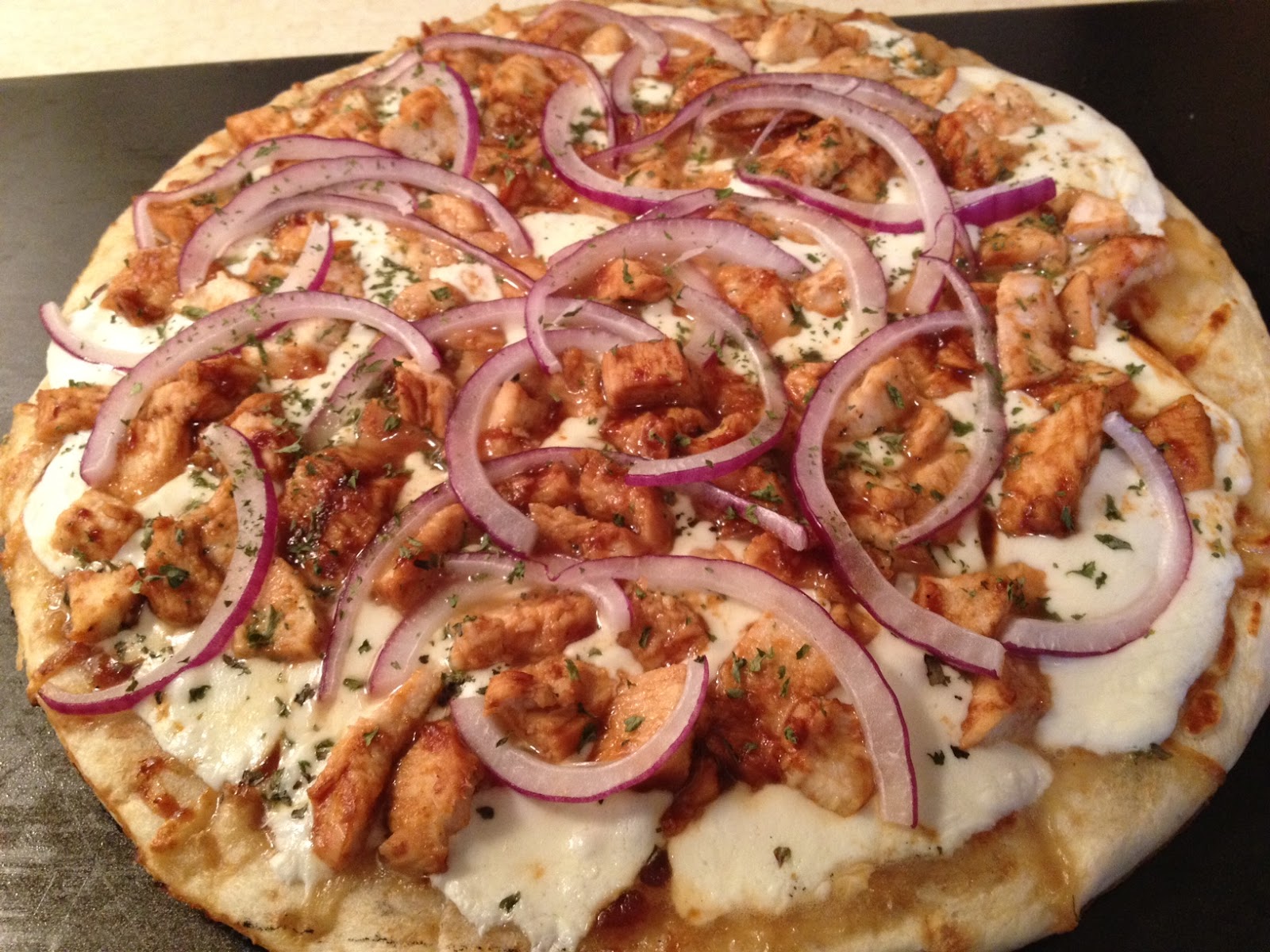
pizza 23 grilled 1 bbq chuck  Delicious pizza, spicy chicken, mozzarella, red onion.

Using a baking steel ensures a very consistent bake and has made the best crust you will have ever eaten from a home oven. If you have plans to regularly bake bread or pizza at home I highly recommend buying one. Just make sure to thoroughly dry and oil it after washing to keep it from rusting and never cut your pizza directly on the steel.

pizza 23 grilled 5 oniontommush  Pizza topped with red paprika, onion and mushrooms.

4. Relax the dough.

Do not forget to let your dough rest at room temperature before shaping it—a crucial step that will make it much easier to handle. If the dough is too sticky, just add a little extra flour to your hands and the table.

pizza 24 pizza 41

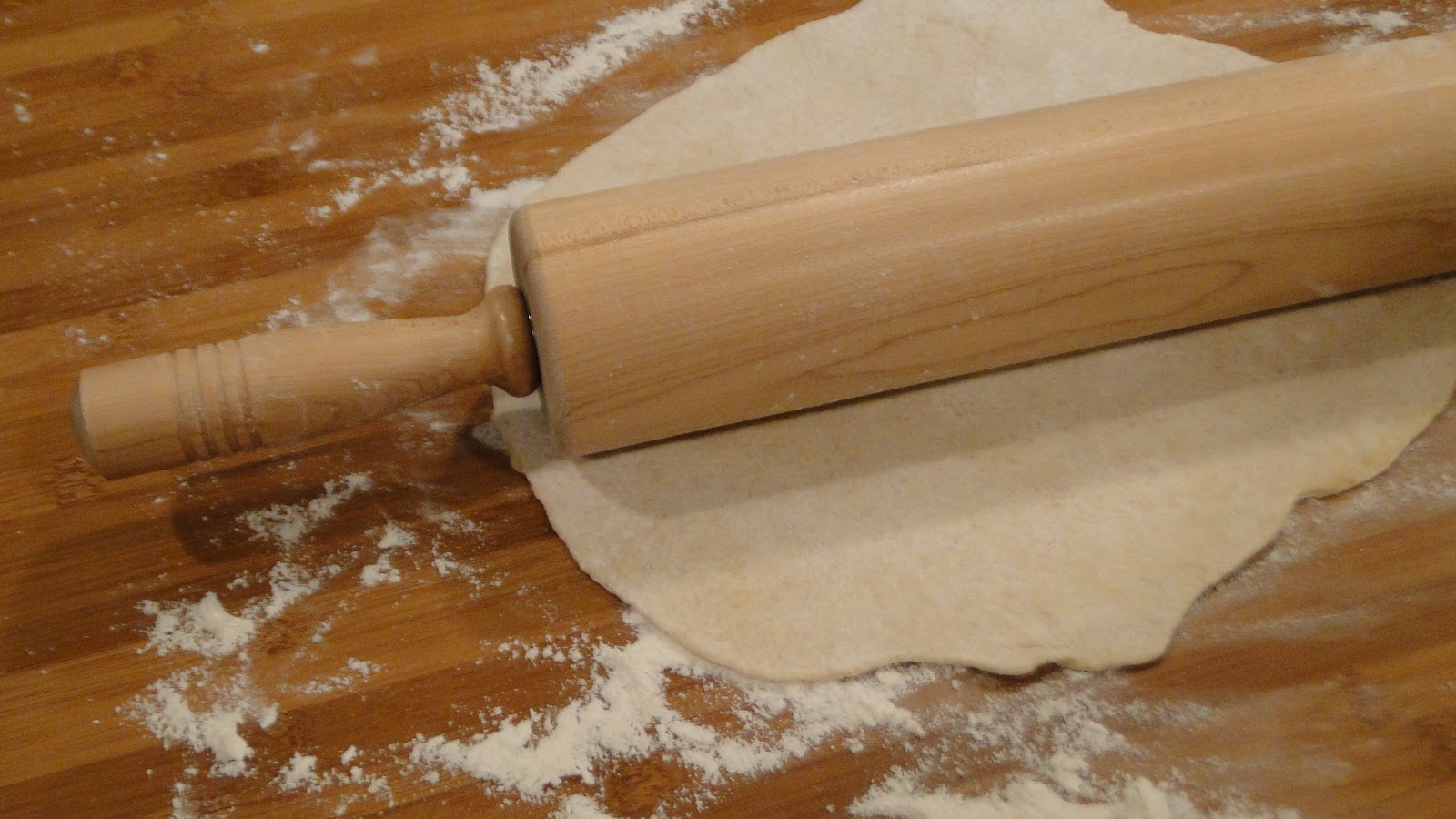
You best roll out the dough with a French rolling pin, so if you have one. If not you always can use an empty wine bottle.  Do not, however, get too caught up in making a perfectly circular pizza, which can led to overworking the dough.

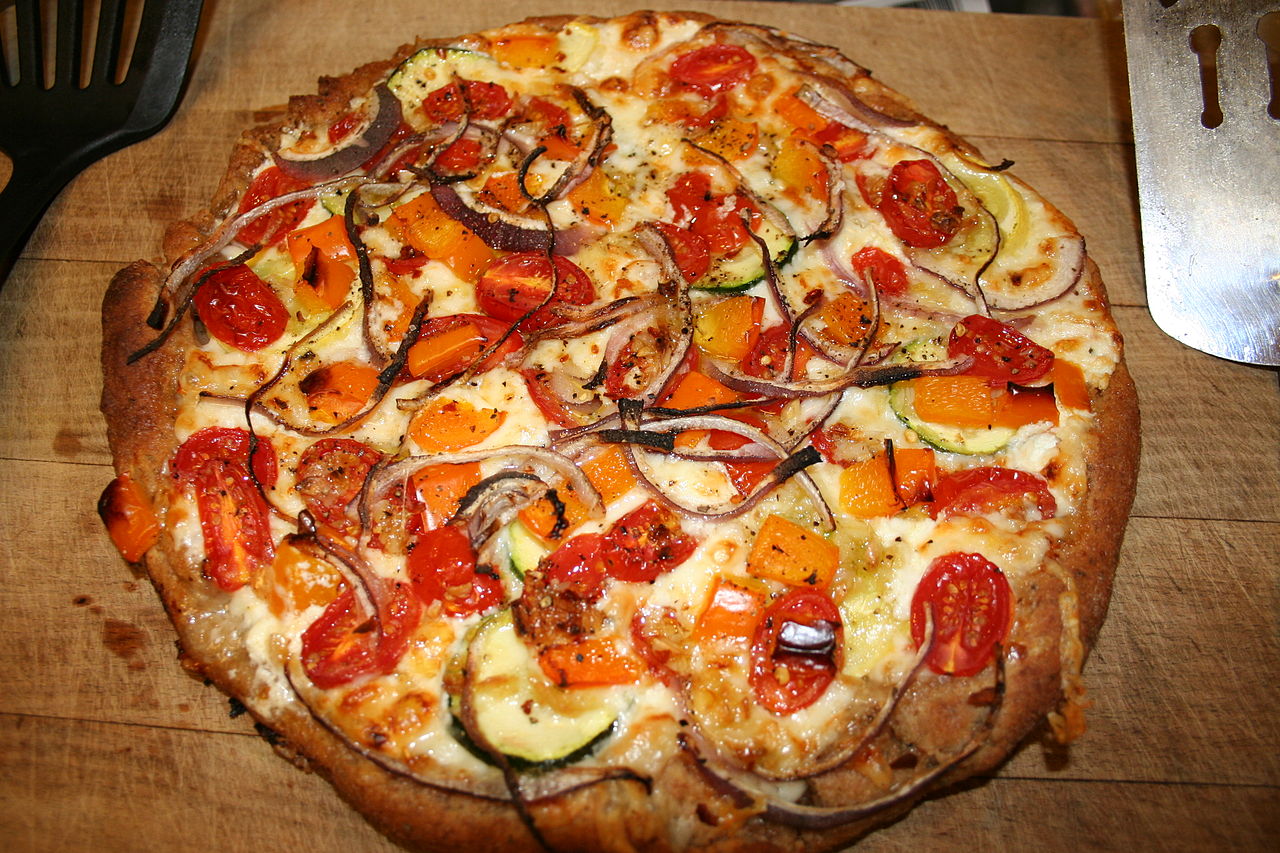
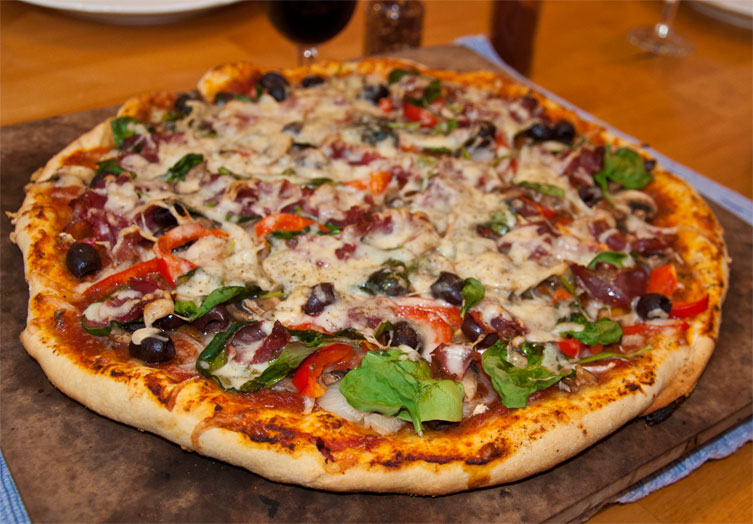
pizza 30 vegetarian  Vegetarian pizza, well done, but still too many toppings.

5. Minimize your toppings

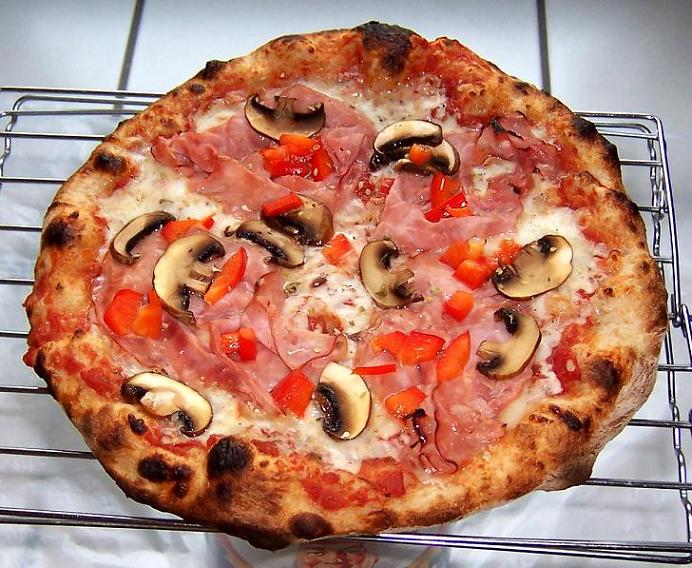
Minimalism is a mantra when it comes to toppings, don’t overload with „everything“.
Home bakers, myself included, can go a little crazy on the pizza toppings. But tons of cheese and sauce does not make a masterpiece.

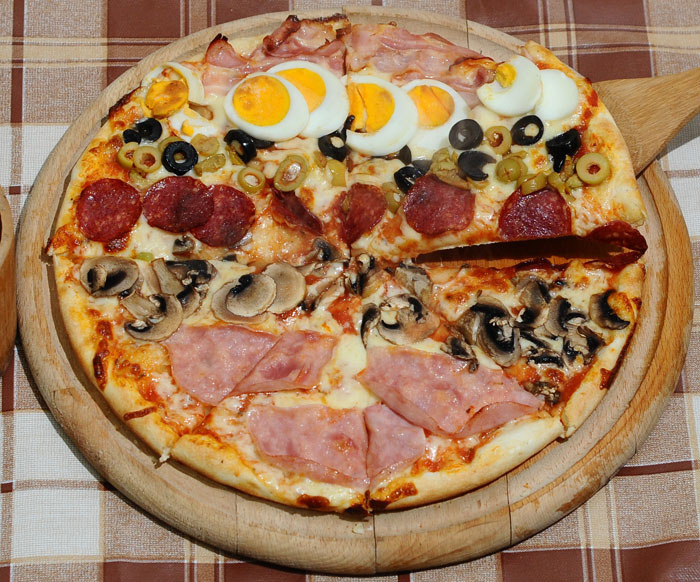
pizza 29   Nice pizza, anything for everyone, looks good.

Instead, stick to a few high quality ingredients. I suggest crushed tomatoes, some decent shredded cheese, a little olive oil, and salt as a great starting point. Or start with Margherita toppings, or Hawaii (just ham and a bit pineapple). Or what I like, thin crust and topped with olive oil a few sun dried tomatoes and slices of red onion.

pizza 23 grilled 6   Less is more !

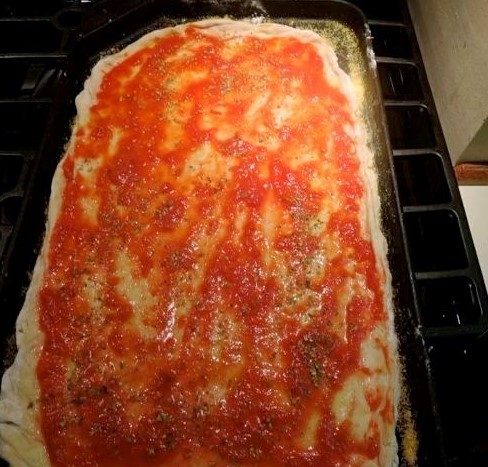
To distress a basic sauce, I like to use „extract de tomatoes“. Smear it on the dough evenly, it gives a good taste and does not „liquid“ the dough. Practice makes perfect, so make a pizza as often as possible and experiment—see what you like, what bakes well, and what tastes best. And at the end of the day, don’t get stressed, it’s only pizza!

pizza 12a       pizza 12
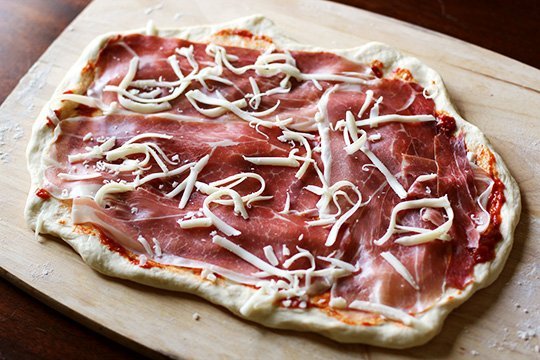
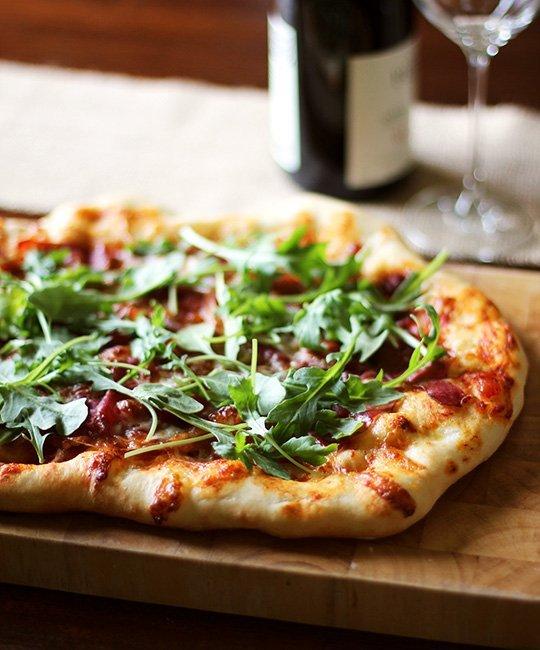
Understatement pizza with Parma ham (expensive) and a bit cheese. Beetroot pizza with fresh greens.

6. Grill your pizza.

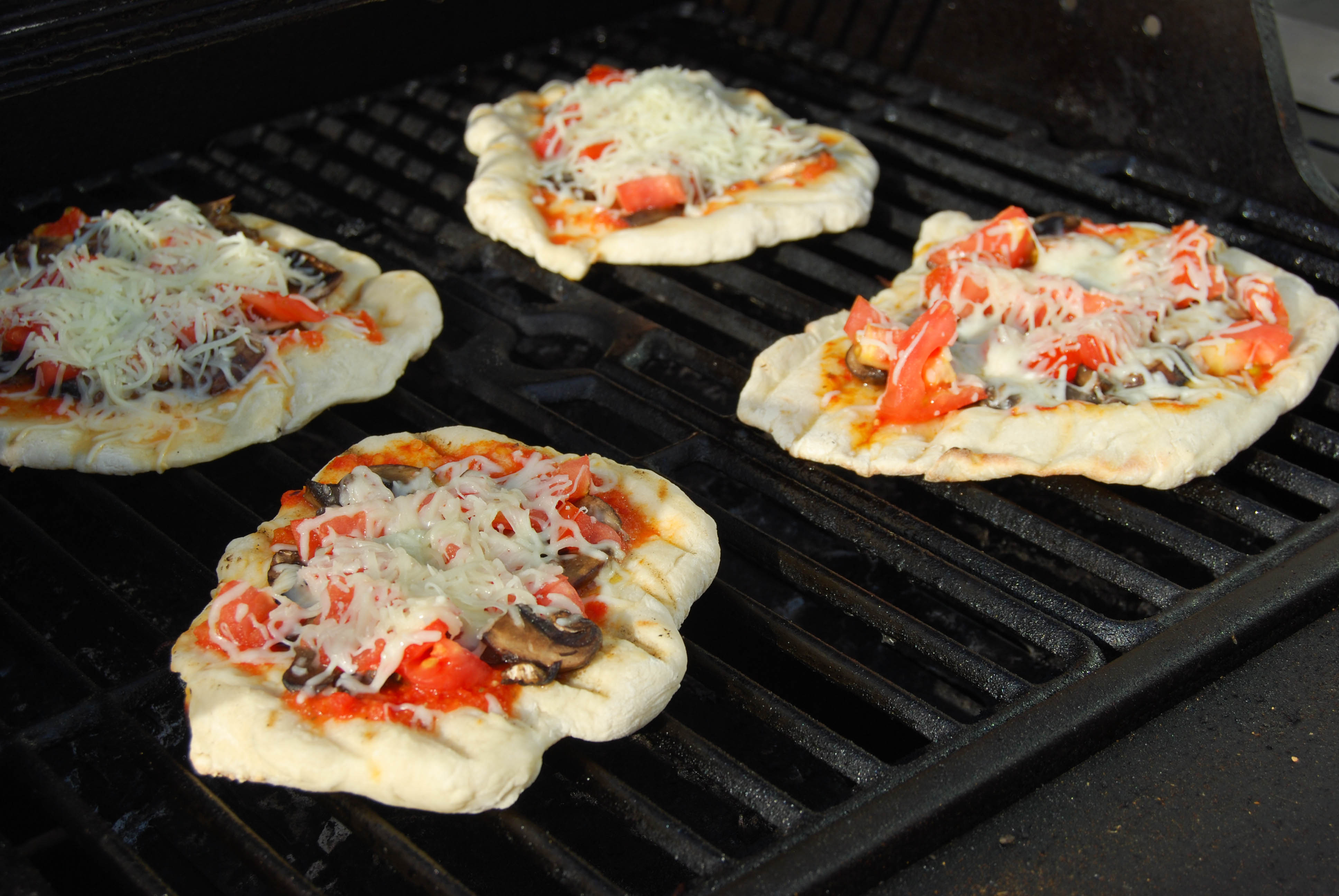
Grilled pizza! This is probably the best way to cook a good thin-crust pizza. Grilling pizza isn’t just an alternate method for when you don’t want to heat up your oven (although that is a side benefit). The best pizza is made in the hottest oven possible, and since your grill can get so much hotter than your oven, for most people it is the best instrument for making terrific pizza.

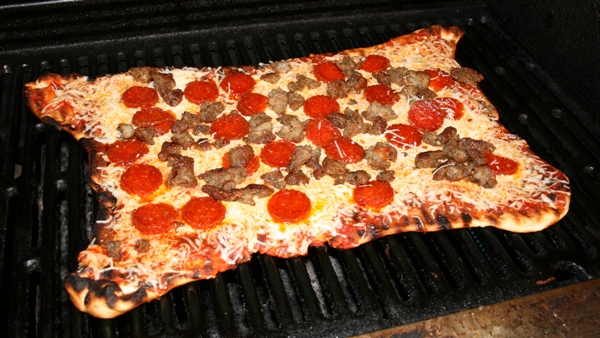
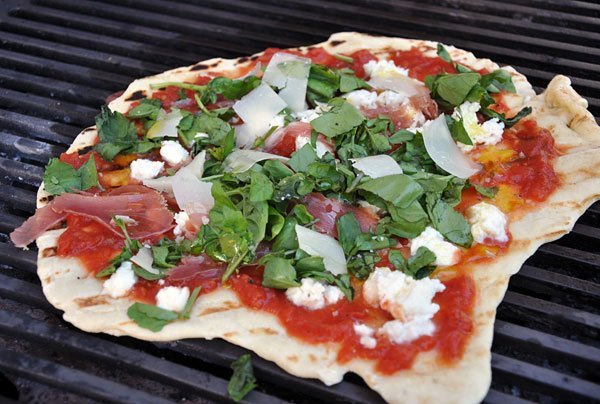
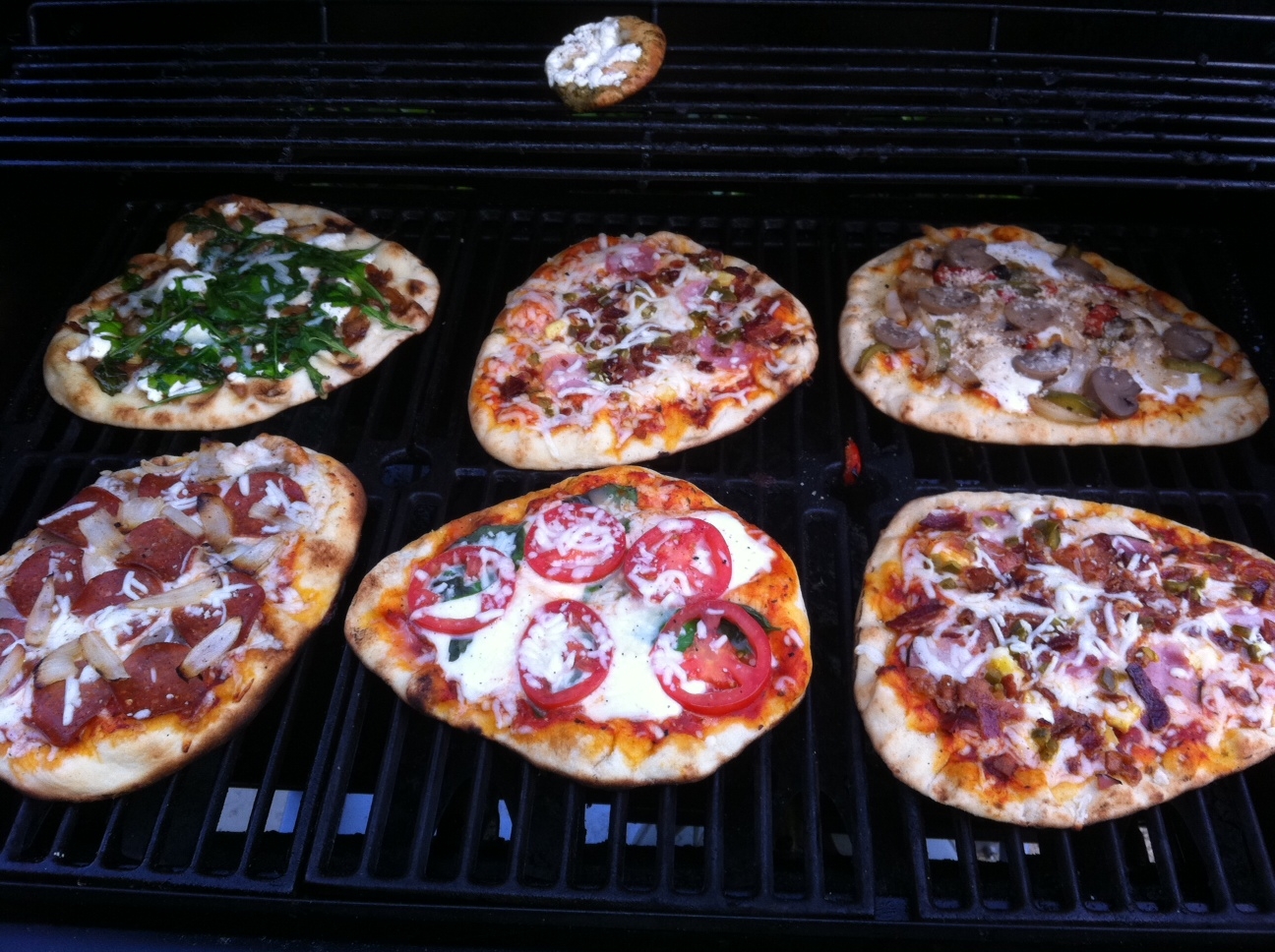
pizza 23 grilled 11  Grilled pizza, sized for four.

Your kitchen isn’t heated up by the oven, and a blazingly hot grill means a crisper bite and those deliciously charred spots on the bottom of the crust. Not too charred, of course, but hopefully just enough for your taste!

pizza 25  Our dough, see above, this time mixed with dry herbs.

Why should I grill pizza?

Because it’s the easiest way to get crisp, charred, crackly, poofy, smoky, crunchy, perfect pizza at home without resorting to hacking your oven or grill or building your own pizza oven. Successful grilled pizza belongs to the organized.
I actually used to be very intimidated by grilling pizza. I had a couple of bad experiences (charred crust! Flaming pizza sauce!) but then I got my method straight. It’s not hard, but you do need to be organized.

pizza 23 grilled 8 all on   Almost overloaded, but who cares, it’s mouthwatering.

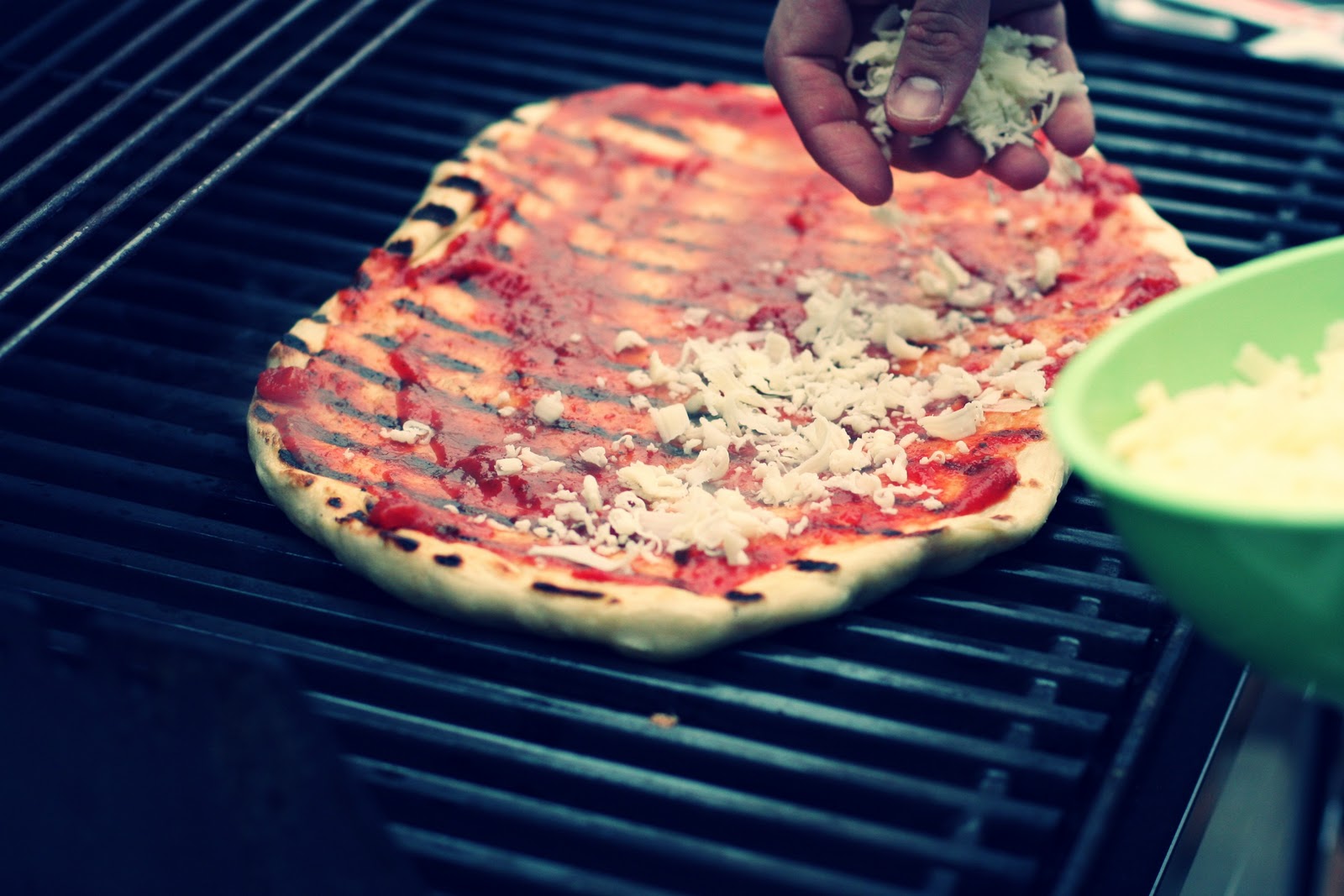
When you grill pizza, you need to have everything ready to go — all the toppings, the sauce, the cheese. This is because the key to pizza on the grill is to top the pizza after you’ve put it on the grill. It also helps if you cook the dough for a minute or two, flip it, and then top it. Grills take mostly bigger sizes then ovens, above a pizza for four.

pizza 23 grilled 3  It is easier then you think, you only have to be quick.

Heat the grill.

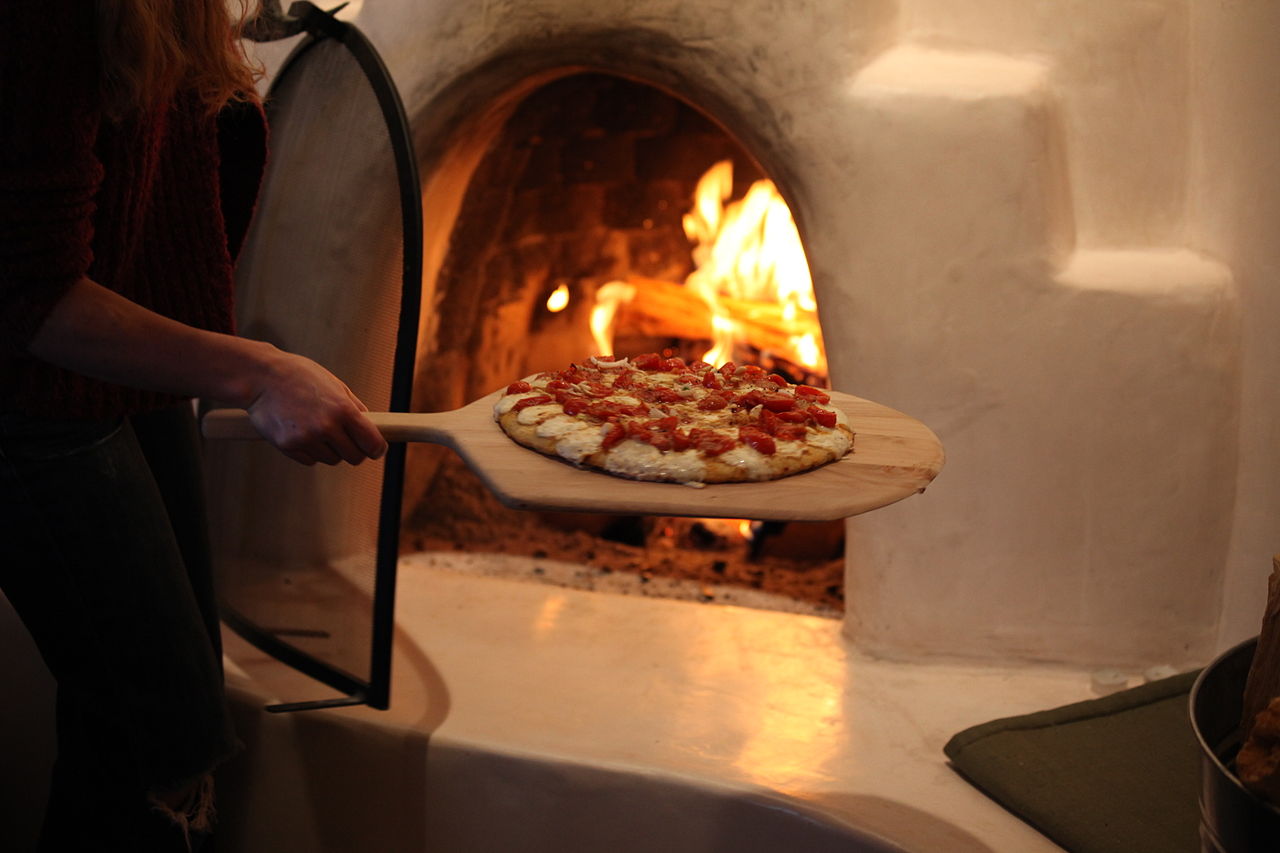
You should heat it quite hot; my grill was about 600F (285 C) with the lid on while baking this particular pizza. Aim for at least 525F (250 C). In Uruguay we don’t have the grills like Weber US or Gasplate Australia anymore. We work with open wood fire coals in the barbacoa. But here you can  work ideal with direct and indirect heat. Pizza should be over high direct heat. Also many houses here have their PIZZA OVEN – perfect.

pizza 28  Almost professional – Uruguayan pizza/bread oven.

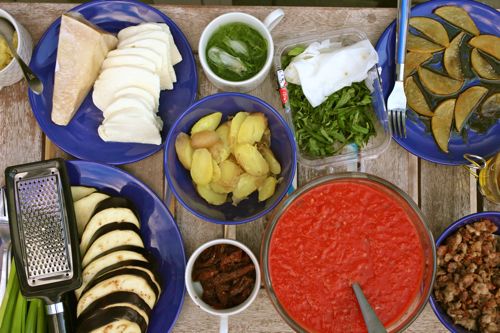
Gather your ingredients and toppings: Set up a table or bench near the grill so you have easy access to everything. Good grilled pizza is as much about the organization and logistics as it is about actual cooking!

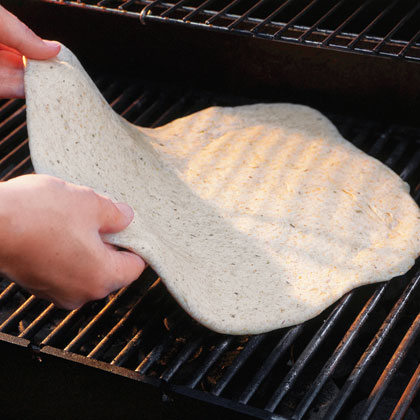
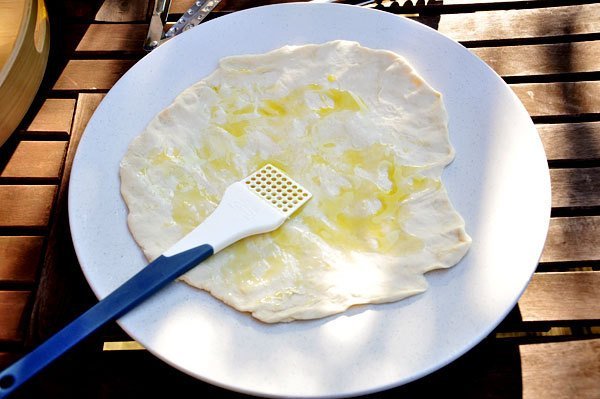
pizza 16   Oil your pizza dough on one side.

Also have your tools close to hand: You will want a pair of long metal tongs. A metal spatula may be helpful, although not absolutely necessary.
Prep your dough: It should be stretched or rolled out into a thin circle. Circle-ish — as you can see, my pizzas usually resemble continents more than they do the moon!

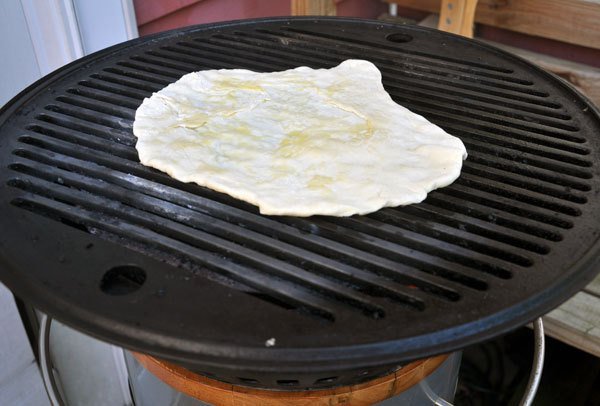
pizza 17  Put it down on your HOT grill, oil side down.

Brush one side of the dough with olive oil; this is the side you’ll lay down on the grill.
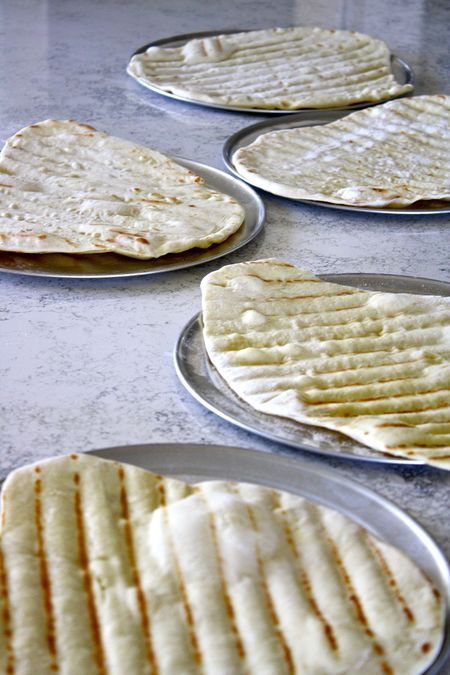
Brush the top of the dough with a thin layer of olive oil, too. Let the dough cook for about 3 minutes, with the lid off, or 1 to 2 minutes with the lid on.

pizza 18  Decorate the GRILLED SIDE with toppings.

Use the tongs to lift up the dough from time to time, checking on how it is doing. You want grill marks on it, but you don’t want the dough to get crispy; it should be just set.
Flip the dough over with the tongs or spatula. The dough should come up easily and flip without tearing. Now is where your organization comes in! You need to top the pizza quickly. Spread on a thin layer of sauce, some cheese, and toppings. It shouldn’t be too heavily loaded, or the pizza won’t cook well.

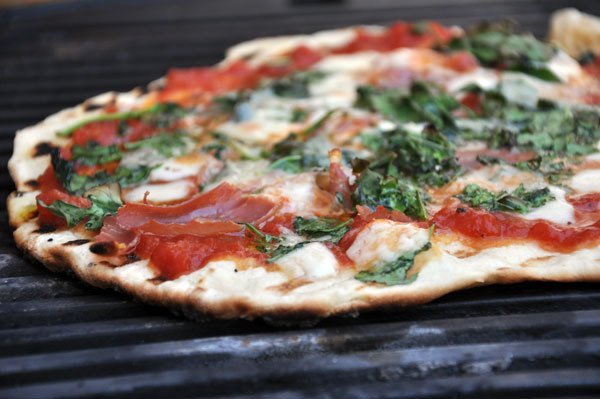
pizza 19  Grill till crust is crispy and toppings are heated through.

Put the lid on and cook for 3 to 5 minutes. Use your sense of smell; if the pizza smells like it’s scorching, take the lid off and move the pizza to a cooler part of the grill or turn the heat down.

pizza 23 grilled 7b self deco  Good idea to have every person decorated it’s own pizza.

On our open grills we cook may be a bit longer but not anymore on highest heat. The toppings should be cooked well, but never burn the bottom, just crispy. During this stage you have to watch your pizza all the time.
Remove the finished pizza: Remove the lid and check the pizza. The edges should be crisp and well done, and the cheese should all be melted. Drag the pizza off with the spatula or tongs. Let cool for 3 minutes, then cut into pieces and eat!

pizza 23 grilled 7 self deco Just prepare the dough, like above seen and provide all the ingredients, pizza toppings and let your guests decorate themselves. Good fun.

Tips.

Every grill is different! You know your grill and it cooks differently than mine. Your pizza may take longer or shorter depending on how hot the grill gets and where your areas of direct and indirect heat are. Consider your first pizza a sacrifice to learning just how to control your grill temperature.

pizza 23 grilled 7a self deco  Great results, everyone baked it’s own pizza.

Cooking times will vary! On that same note, of course, you need to keep an eye on the heat. This method works perfectly every time on my own grill, but the timing depends on how thin you stretch your dough, and how hot your grill gets. Flipping the dough gives you an extra measure of control and certainty, though, that the crust will be cooked through by the time your toppings have melted and warmed.

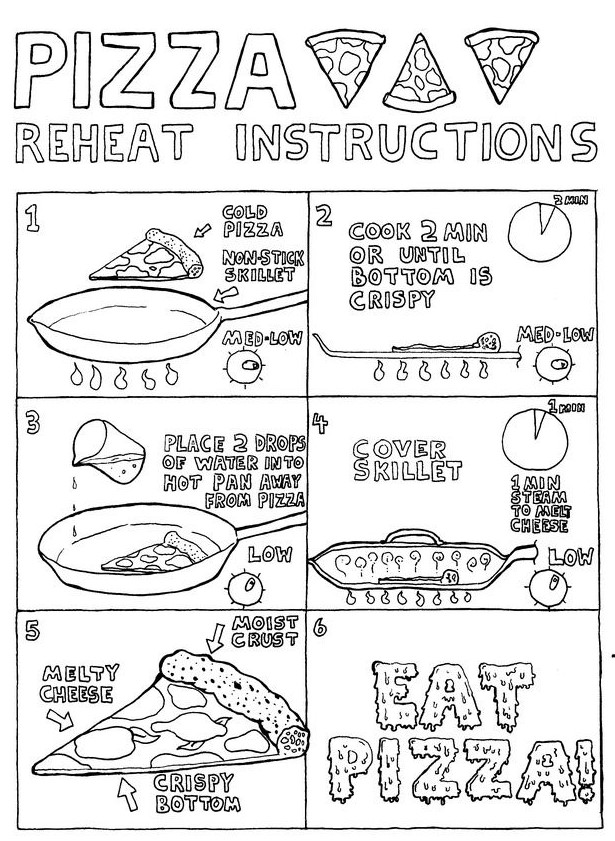
pizza 22  To reheat pizza leftovers is for most people a problem. It never tastes as good as fresh made. The worsted method – I think – is to reheat in the microwave. Much better already is to reheat in your oven, but it is time intensive. Recently I found this way ( see chart above ) on the internet (without any author) and we tried it. A bit of work, yes, but you get your crispy taste back, without chewing „rubber“. Try also.

pizza 23 grilled 17    Don’t forget to click on pics, most will supersize.

Some pizza ideas.

Free choice:
Pizza dough, as described before.
Sauces – spaghetti, Alfredo, pesto, olive oil, salad dressing, tomato etc.
Veggies – roasted paprika’s (peppers), artichoke hearts, olives etc.
Fresh herbs – basil, oregano, fennel, rucola, chilli green or red etc.
Meats – salami, pepperoni, cooked sausage or hamburger, chicken or ham etc.
Fish – mackerel flakes, any kind of white fillets (all precooked), tuna flakes in oil etc.
Cheese – Parmesan, mozzarella, cheddar, also blue cheese is fine etc.
Red paprika (pepper) or chilli flakes, other kinds of dry herbs like oregano, herbs de Provence, basil, cilantro etc.

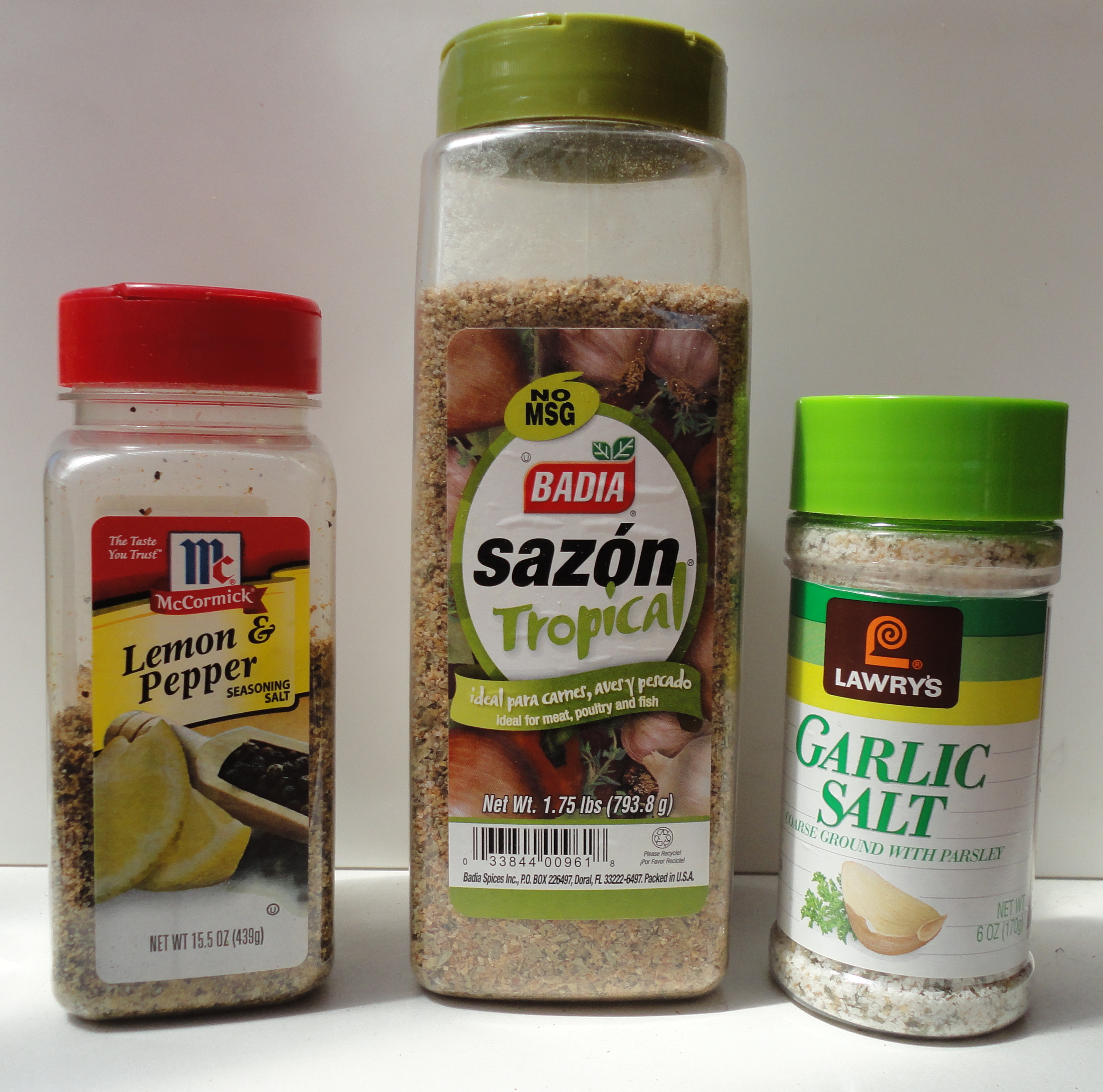
pizza 55  Some of my pizza seasonings.

There are three herb/spice mixtures I like to use very often, the premix lemon&pepper, premix garlic&salt and the „TROPICAL“ seasoning, which I brought recently from Panama. The Tropical is ideal on any kind of pizza, but please – to your taste, not mine. One last tip, use dry seasonings before you have the final baking of your pizza, that they can soften, mix in and cook with your toppings.

pizza 57a        pizza 56  Typical Uruguayan „one meter pizza“, a bit of cheese, some crushed tomatoes and lots of dry Oregano (spread on pizza after cooking). This is not my taste, sorry !

In Uruguay they use one dried herb almost on everything – OREGANO – you can buy in supermarkets in 5kg bags !?!  Very very unimaginative to season ! And – they throw a handful dry Oregano at the end over your pizza – horrible – it tastes like you chew on dry sand and have the „sand“ between your teeth. But – different cultures – different styles.

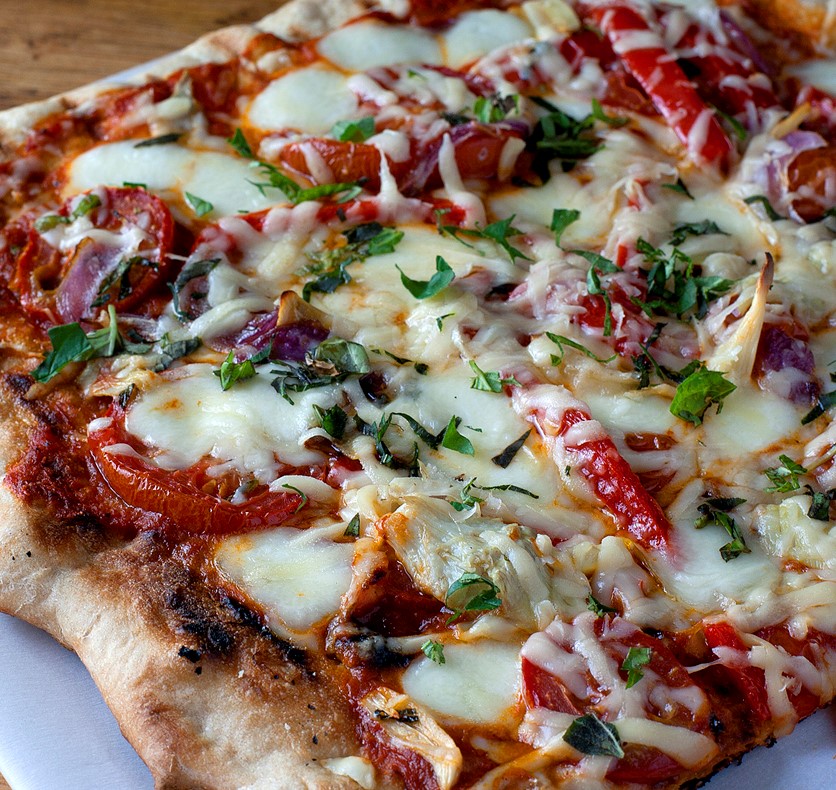
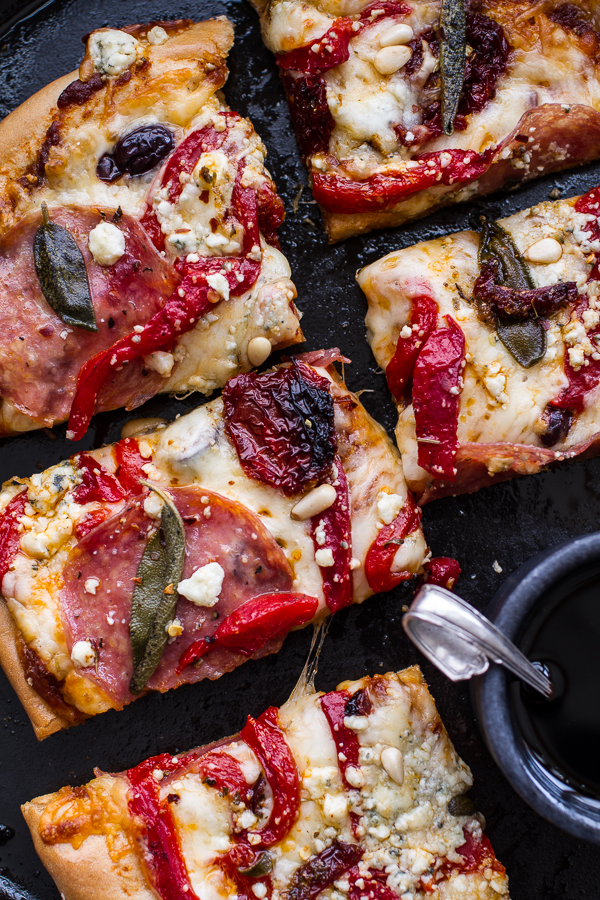
pizza 32 Sun-Dried-Tomato-and-Olive-Pesto-Pizza-with-Salami-Roasted-Red-Peppers.-7  Sun dried tomato, olives, pesto, salami and roasted red paprika (pepper).

Sweet choice:
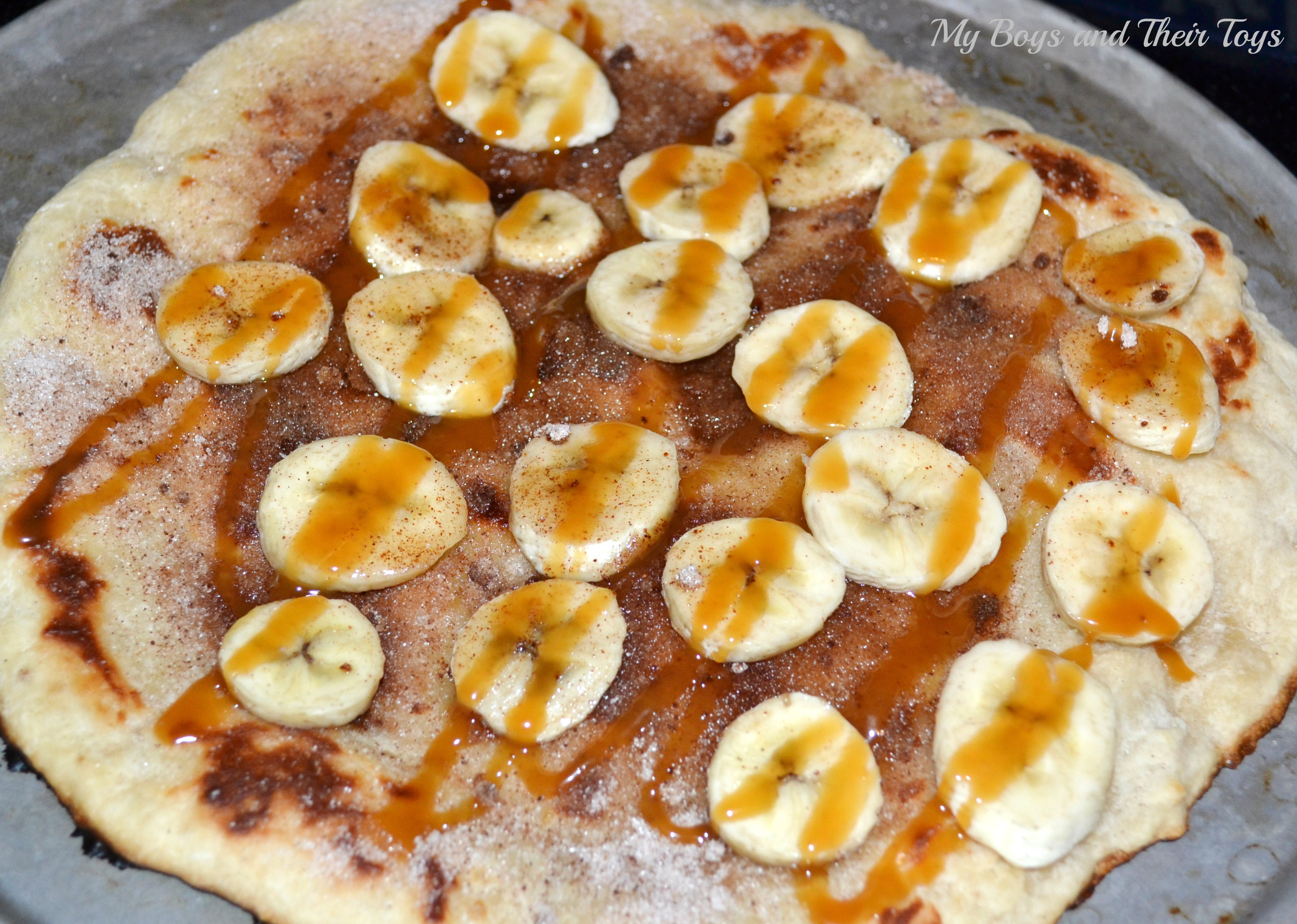
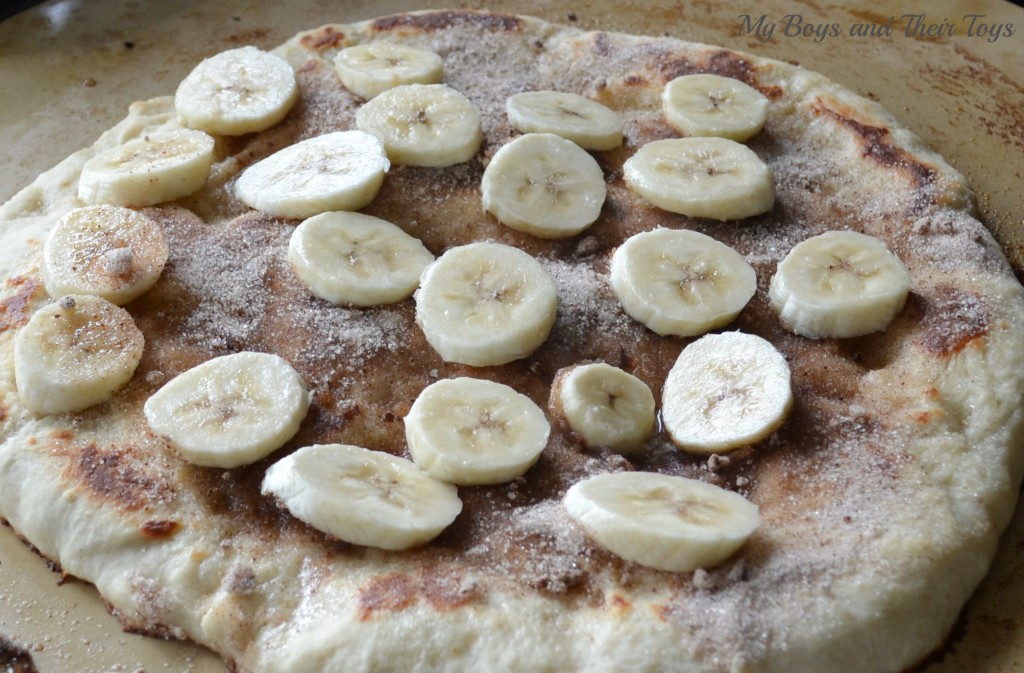
Grilled cinnamon banana dessert pizza
Pizza dough, as described before
1/4 cup granulated sugar
1 teaspoon ground cinnamon
1/4 teaspoon ground star anise
1/3 stick unsalted butter, at room temperature
1 banana
caramel sauce , you also can use honey or Marple syrup,

pizza 23 grilled 16 sweet    You have to try one to adore it !

How to do.

Knead the pizza dough into a round pizza
Heat each side of the dough on the grill for a few minutes, or until golden brown
While the pizza is cooking, mix the sugar, cinnamon, and star anise in a small bowl.

pizza 23 grilled 16 sweet 2  So easy to make and so delightful.

Slice the banana. Next, brush the top of the pizza with butter, then sprinkle the mixture over top and add the bananas. Close the grill cover and cook an additional 1 minute.
Cut into quarters and drizzle with caramel sauce, and serve.

Use your imagination for other fruit- or topping variations.

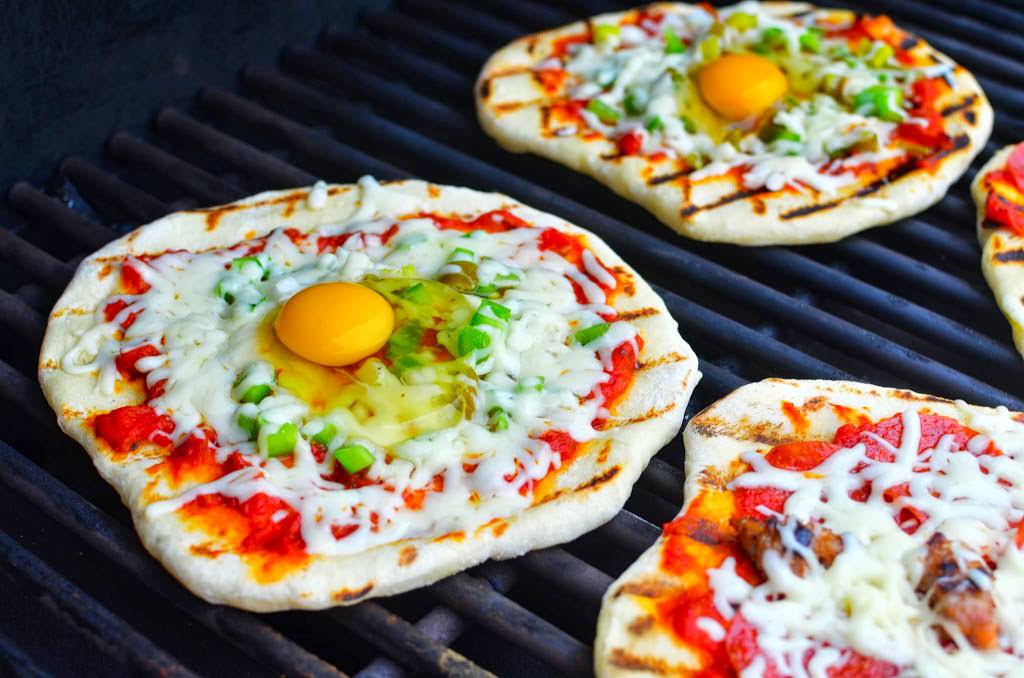
pizza 23 grilled 10 sin egg pizza 23 grilled 9 con egg  Some „breakfast“ pizzas, small-crispy-delish, with egg or without, whatever you like.

pizza 37 batman  Just be creative. We made for a birthday boy his favorite salami and cheese pizza and cut it out as a „Batman Pizza“. Great success !

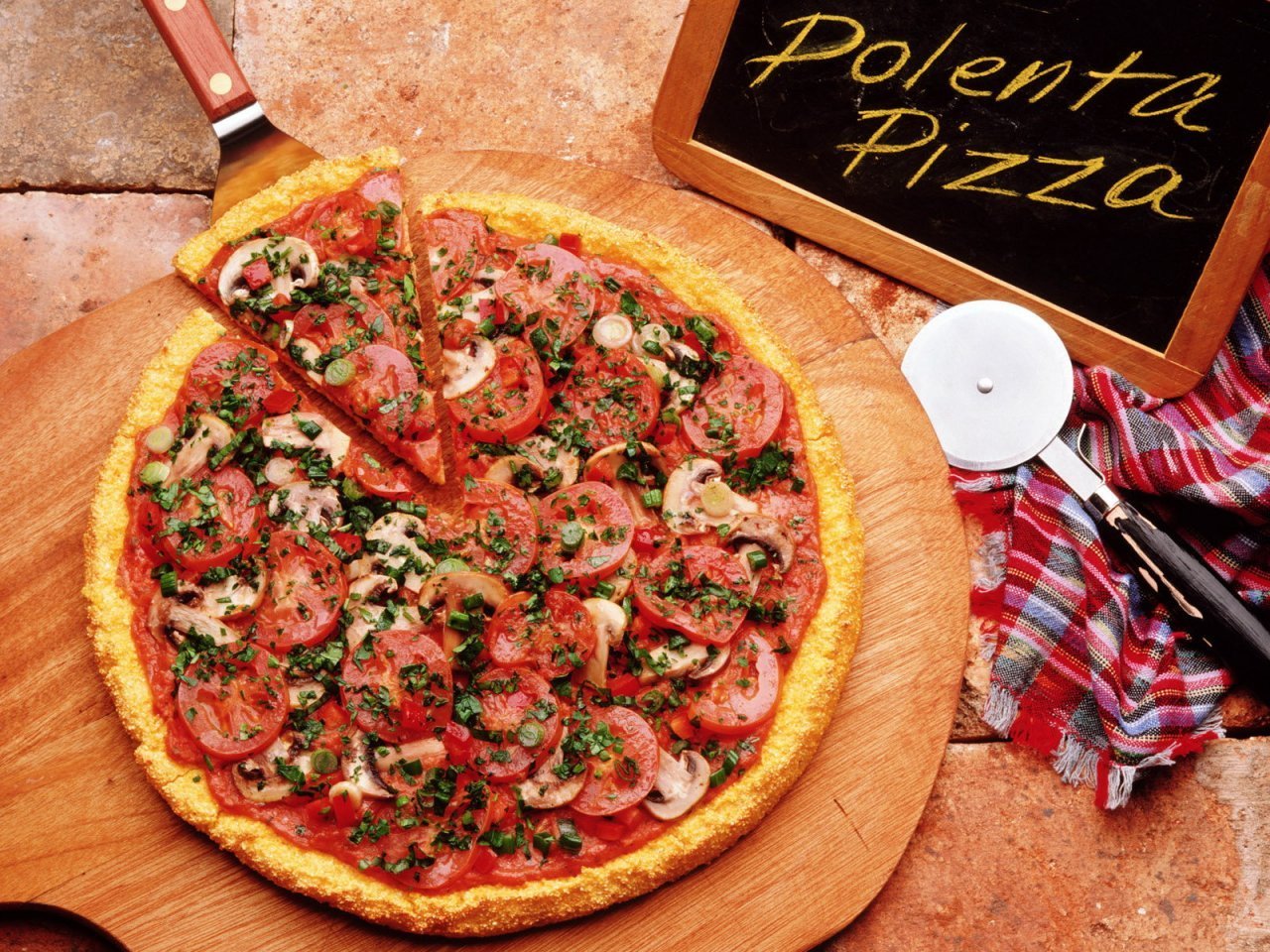
pizza 35 polenta  Another fantastic idea, I found, a Polenta (dough) pizza.
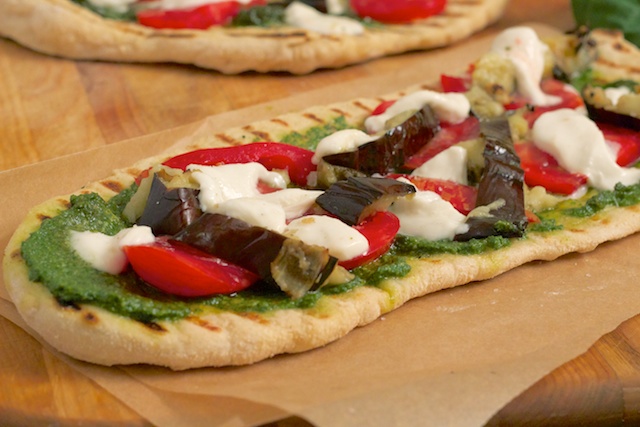
pizza 23 grilled 4 eggplant & pesto  Or, for vegetarians, a grilled eggplant and pesto pizza.

Now it’s enough with all the ideas and tips. I hope you enjoy pizza making as we do. Sorry, but I am off now for another pizza delight tonight.

Veröffentlicht unter Information, Lifestyle, Recipes | Verschlagwortet mit , | 2 Kommentare

Collecting – Weird Beers

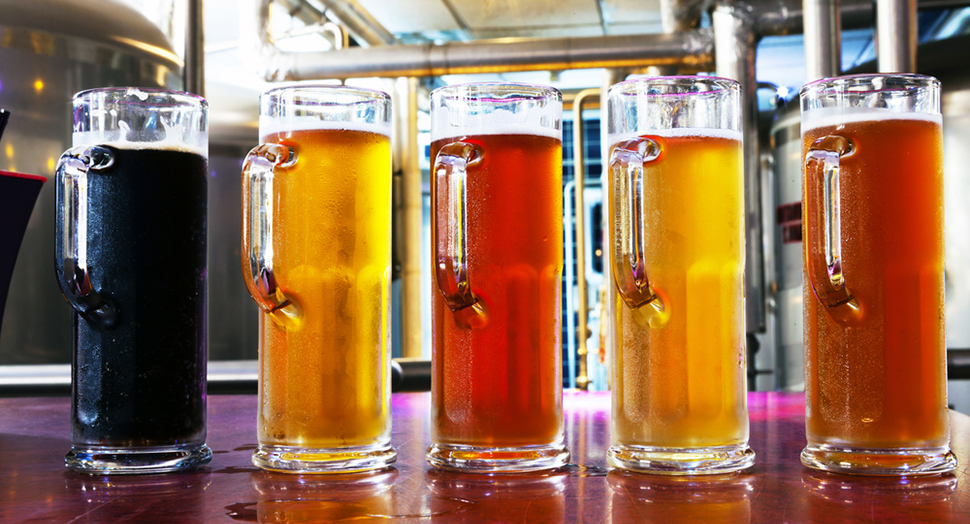
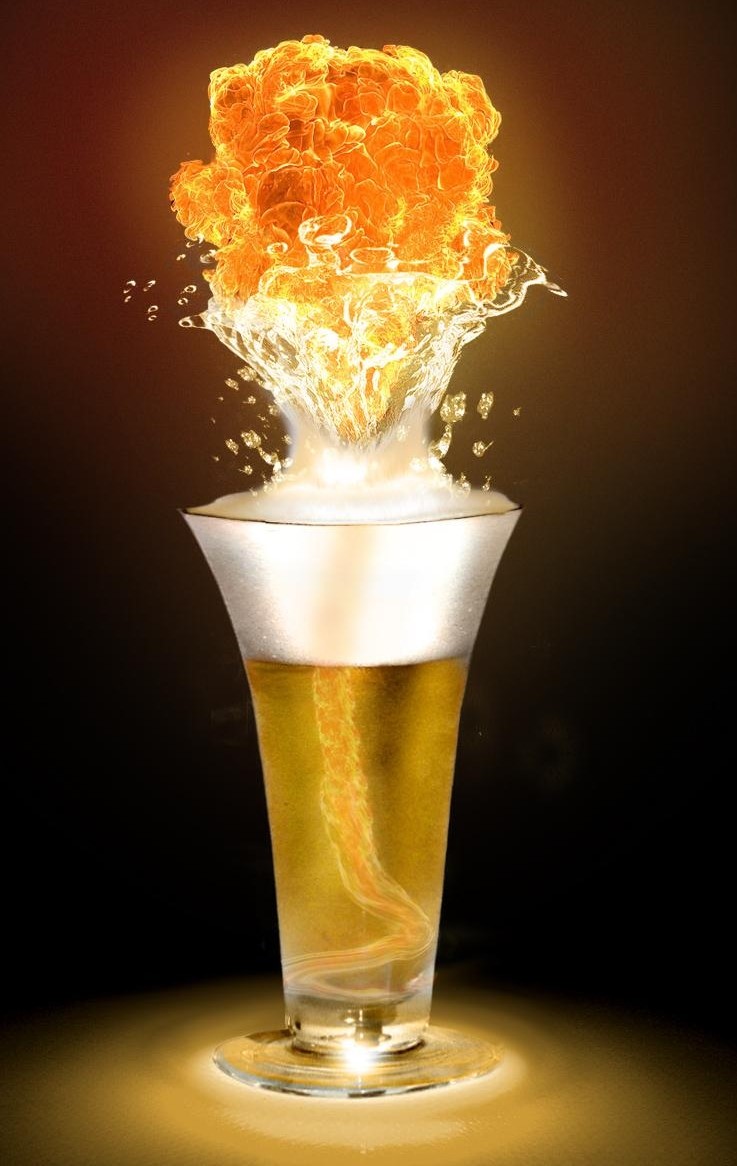
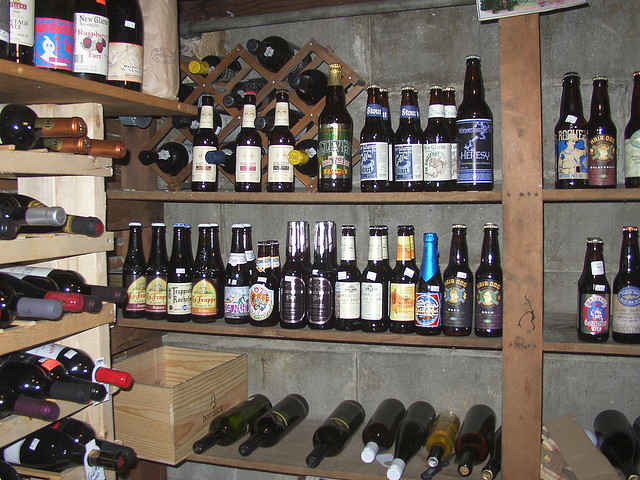
beer 34

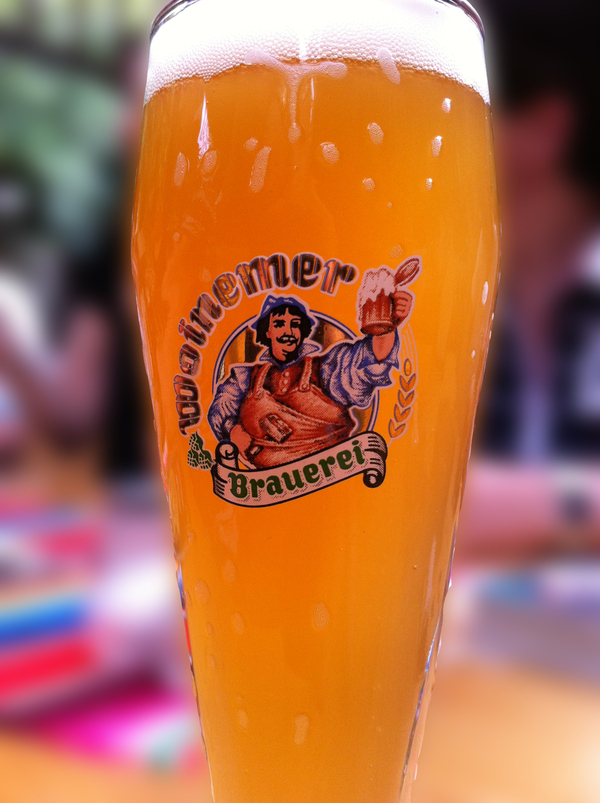
Nothing exists what people are not collecting. After my post about beer I thought it is interesting what people collect. Collecting beer mats, coasters, cans, bottles, steins etc. is well known, but collecting rare beer itself is still a novelty. Here are some unusual examples out of the modern breweries.

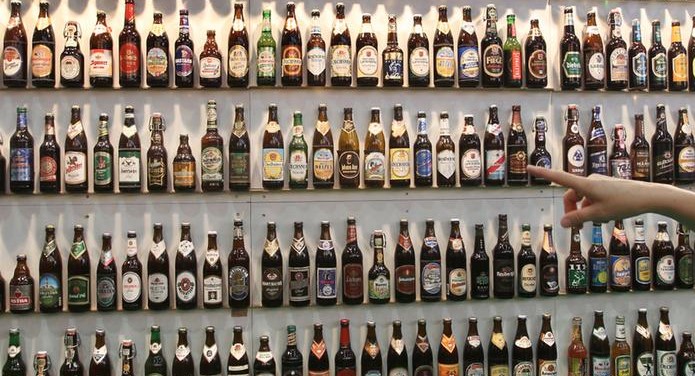
beer 19   A beer bottle collection.

It’s easy to get lost in a sea of seasonals and special releases when wandering across the ever-expanding world of microbrews. Almost every brewery these days issues a special-edition batch that fetches a serious premium. Just how expensive can these limited production brews get? These six wallet-busters prove that beer can also be experienced on a Champagne budget.

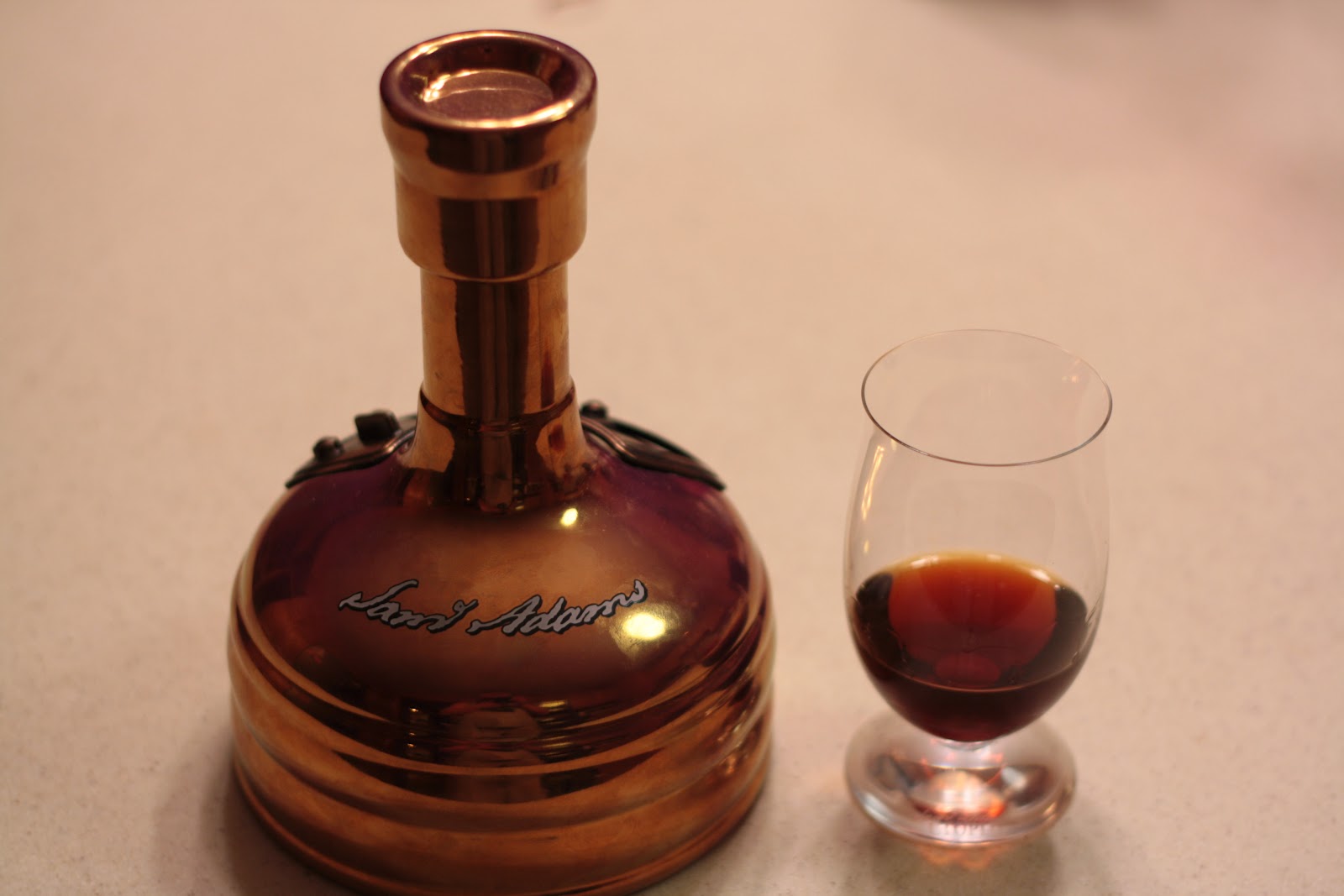
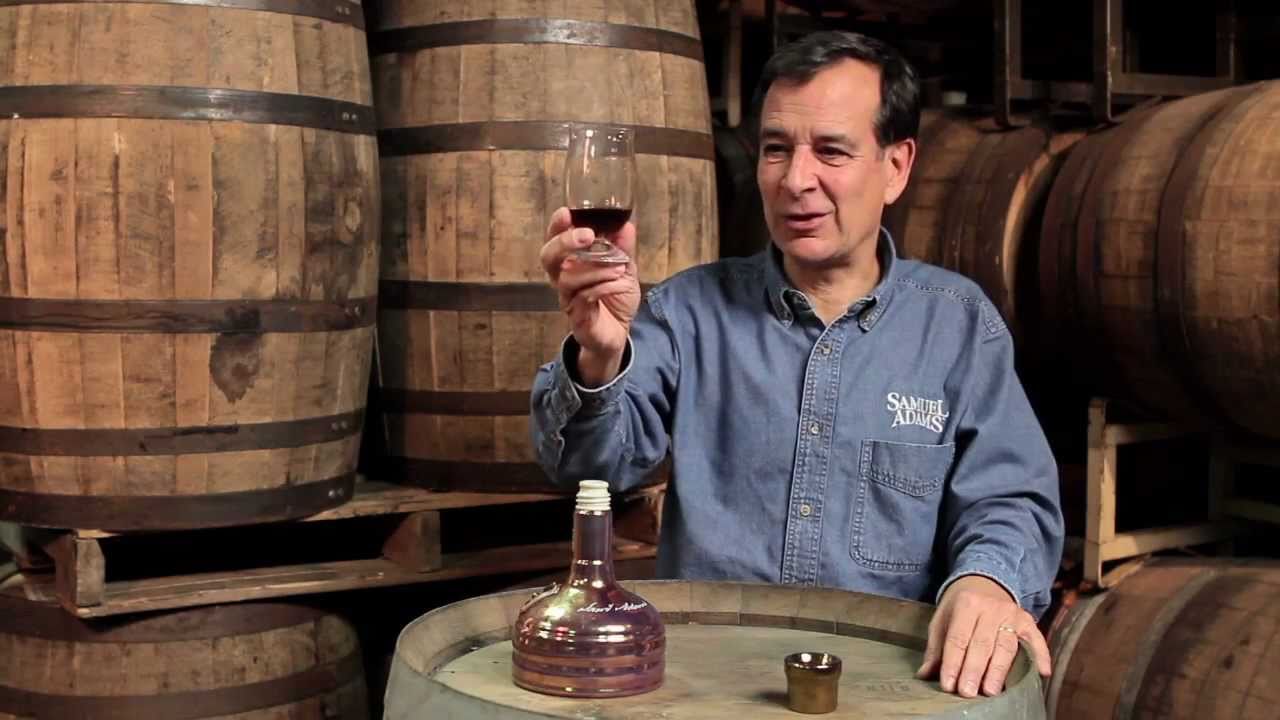
exp beer 3   Samuel Adams.

1. Samuel Adams Utopias.

Country of origin: United States
Style: American Strong Ale
ABV: 28%
Price: $150,– for 750 ml ($ 0,20 per ml)

exp beer 4   Samuel Adams.

Boston brewer Samuel Adams has been producing its Utopia edition every two years since 2002. The aged, uncarbonated beer resembles a fine sherry or cognac more than it does a bottle of suds. So much so, it’s recommended that you serve this brew at room temperature. Each batch is aged in brandy, bourbon and Scotch casks for up to 18 years and is generally limited to less than 15,000 bottles per run—making it highly coveted among beer aficionados. As a bonus, each series of Utopias is bottled in numbered, ceramic decanters.

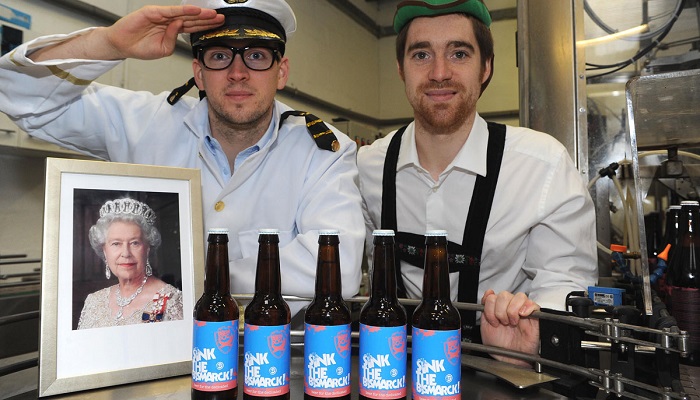
exp beer 5   BrewDog’s.

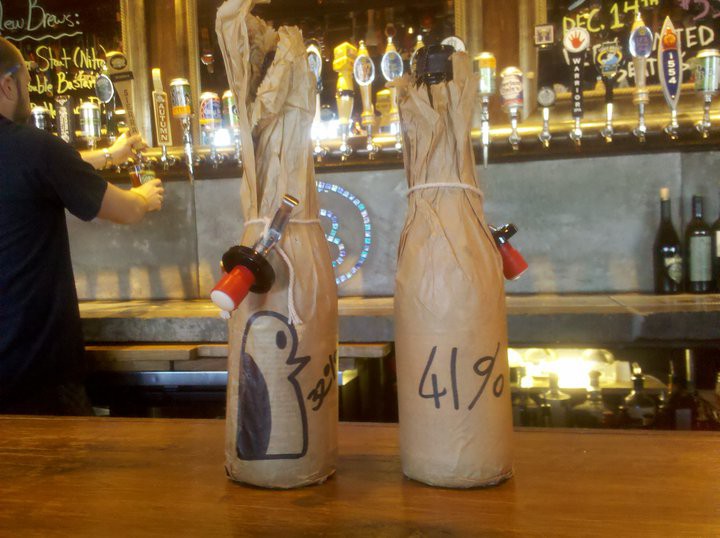
2. BrewDog’s Sink the Bismarck.

Country of origin: Scotland
Style: Quadruple IPA
ABV: 41%
Price: $80,– for 375 ml ($ 0,21 per ml)

exp beer 6   BrewDog’s.

What do you do when a standard IPA isn’t enough? If you’re Scotland’s BrewDog brewery you multiply it by four. Released in 2010, this quadruple IPA has four times as many hops, it’s freeze-distilled four times and is four times as bitter as a conventional beer. The end result is a potent 41% ABV—and a hefty bar tab. If your motto is “drink, pee, repeat,” this probably isn’t the beer for you.

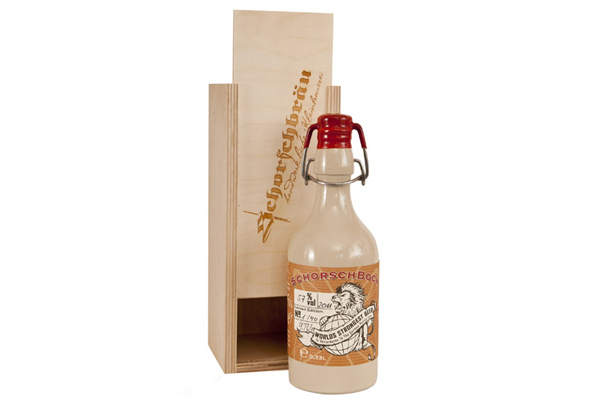
exp beer 7   Schorschbraeu’s.

3. Schorschbraeu’s Schorschbock 57.

Country of origin: Germany
Style: Eisbock
ABV: 57.50%
Price: $275,– for 330 ml ($ 0,83 per ml)

exp beer 8   Schorschbraeu’s.

Dubbed “the strongest beer in the world,” Schorschbraeu’s Schorschbock 57 is a mind-boggling 110-proof bock. Anything higher would breach Germany’s 500-year-old Beer Purity Law. Tasters have described this beer as everything from smoky and nutty to overpowering and breathtaking. Produced in 2011, Schorschbock 57 was a limited edition brew that yielded just 36 bottles.

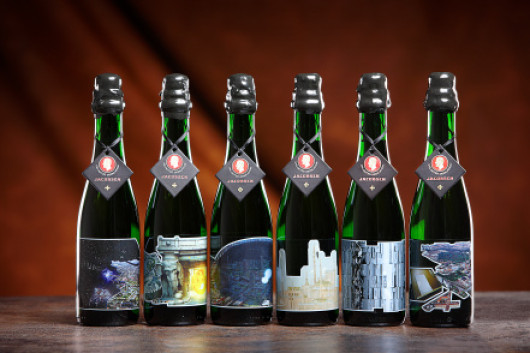
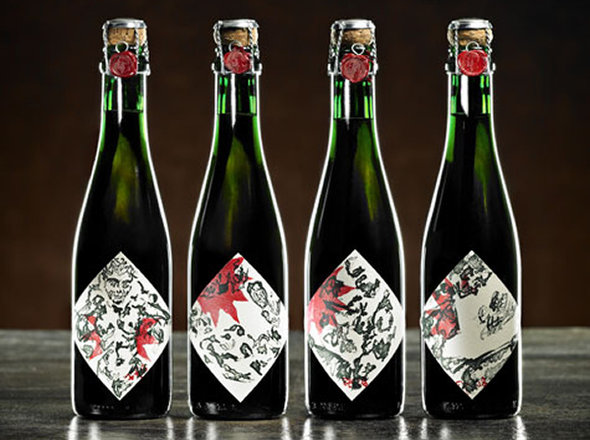
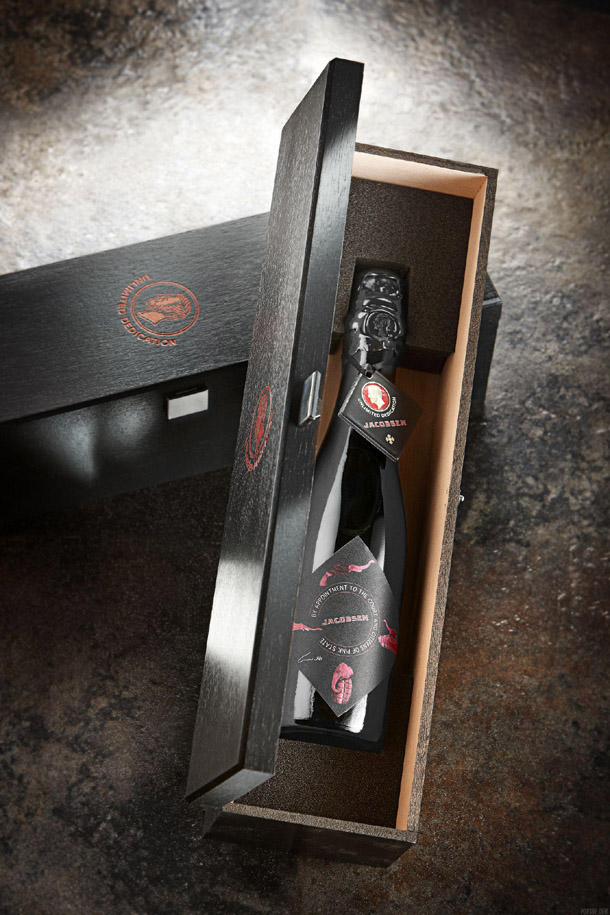
exp beer 9   Carlsberg’s.

4. Carlsberg’s Jacobsen Vintage No. 1.

Country of origin: Denmark
Style: Barley wine
ABV: 10.5%
Price: $400,–  for 375 ml ($1,06 per ml)

exp beer 10   Carlsberg’s.

Produced in 2008, Jacobsen Vintage No. 1 was the first in a vintage trilogy of limited edition brews created by Carlsberg’s Jacobsen brewery. The 10.5% ABV barley wine was aged for six months in oak barrels, giving Vintage No. 1 tones of “vanilla, smoke, caramel and port.” Each series was done in conjunction with a famous artist who contributed the artwork for the bottles. Only 600 bottles were produced in 2008, so finding one on the open market is rough going. The price with this bottle is made mostly by the artwork on the bottles instead the beer itself content.

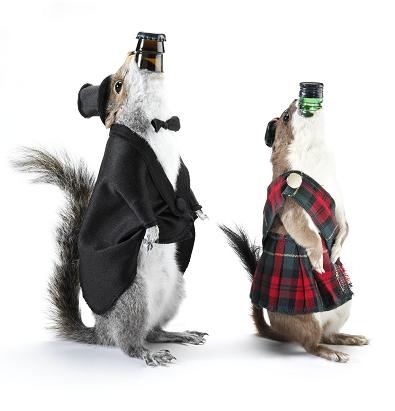
exp beer 1   BrewDog’s.

5. BrewDog’s The End of History.

Country of origin: Scotland
Style: Blond Belgian Ale
ABV: 55%
Price: $765,– for 330 ml ($2,31 per ml)

exp beer 2   BrewDog’s.

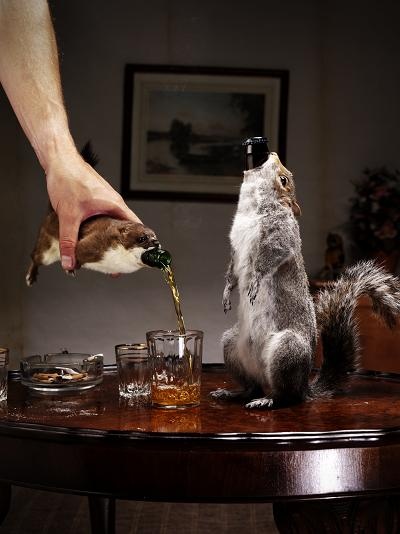
Leave it to the Scots to come up with one of the strongest—and weirdest—brews out there. BrewDog’s potent 55% ABV blond Belgian ale is infused with nettles and juniper berries, but don’t expect a light and fruity taste. This beer has been described as having tastes of mushrooms, soy sauce, beef, leather and tobacco. The kicker? Each bottle is presented in a stuffed squirrel or stoat that was specially created by a taxidermist for this limited edition beer. Don’t worry, animal lovers: The company claims all the animals used in the production of this beer were a result of roadkill. Aren’t the Scot’s crazy, or what ?

exp beer 11   Nail’s.

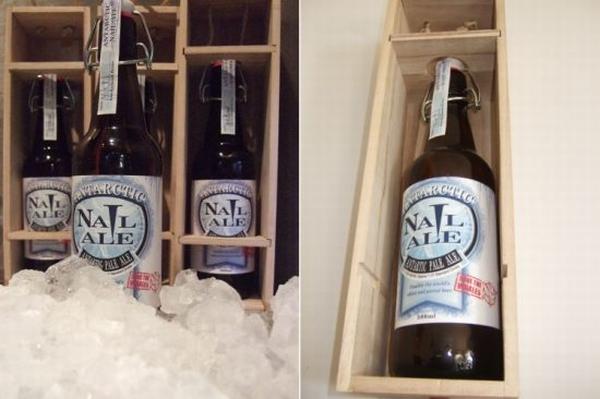
6. Nail Brewing’s Antarctic Nail Ale.

Country of origin: Australia
Style: Pale Ale
ABV: 10%
Price: $1,850,– for 500 ml (highest winning bid at auction) ($3,70 per ml)

exp beer 12   Nail’s.

Nail Brewing’s Antarctic Nail Ale takes the expression “cracking open a cold one” to a whole new level. As the story goes, members of the Sea Shepherd Conservation Society brought melted ice from an Antarctic iceberg back to Perth, Australia, to be used in one of Nail Brewing’s limited edition brews. The result was a 30-bottle run of Antarctic Nail Ale. A beer you could feel good about drinking, 100% of the profits from an auction of this refreshing pale ale went to the Sea Shepherds to aid in protecting the world’s marine life.

Veröffentlicht unter Collecting, Hobbies, Information, Lifestyle | Verschlagwortet mit | Hinterlasse einen Kommentar

It’s Beer Time

beer claim 1a

MyUy – Little Beer Almanac !

For the Germans, beer has anyway a very special place and it is not surprising if
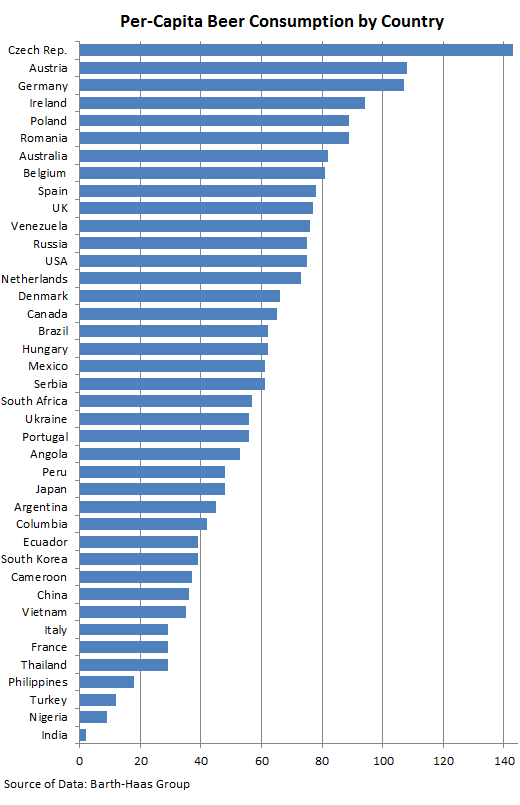
sometimes magical powers are attributed to the beer. German’s are not world champions in beer drinking. Although Germany produces a third of the 15,000 beers worldwide and has 1500 breweries, but the consumption gold medal goes to another country.

beer 41   The whole world is drinking beer, how about you ?

Germans drink per person per year approximately 110 liters (equivalent to approximately 300 ° to 320 beers) while the Czechs consume 140 to 150 liters and thus clear lead. Finally, the „Pilsner“ beer was born in the city of Pilsen, Czech Republic.

beer 42 beer spa ZOTO Prague   beer 46
beer 47      beer 48
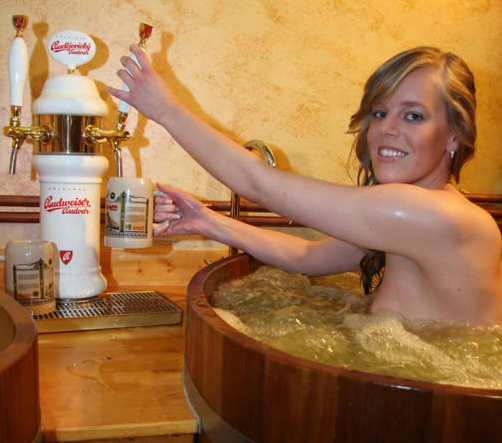
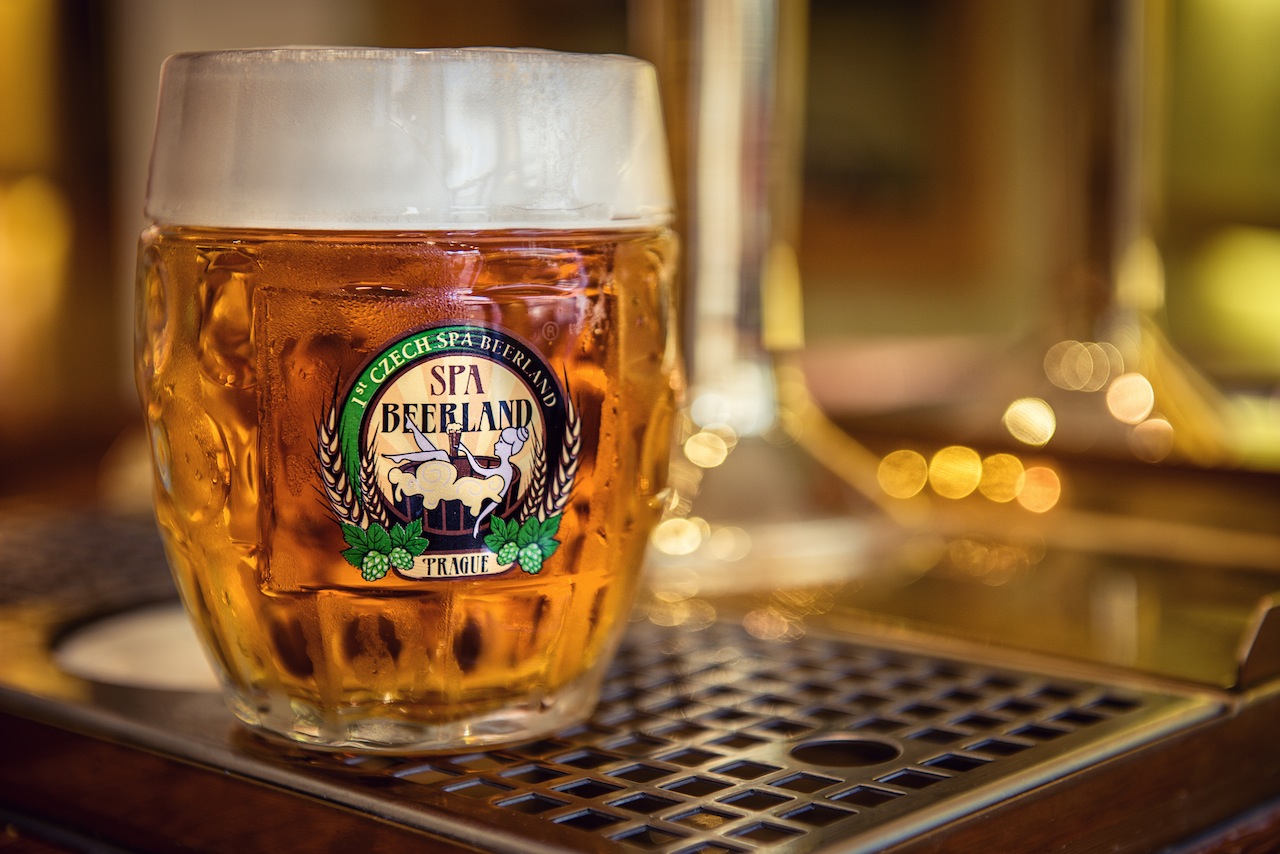
Inside the beer spa „Spa Beerland“, Prague, Czech Republic.


Some statistics.

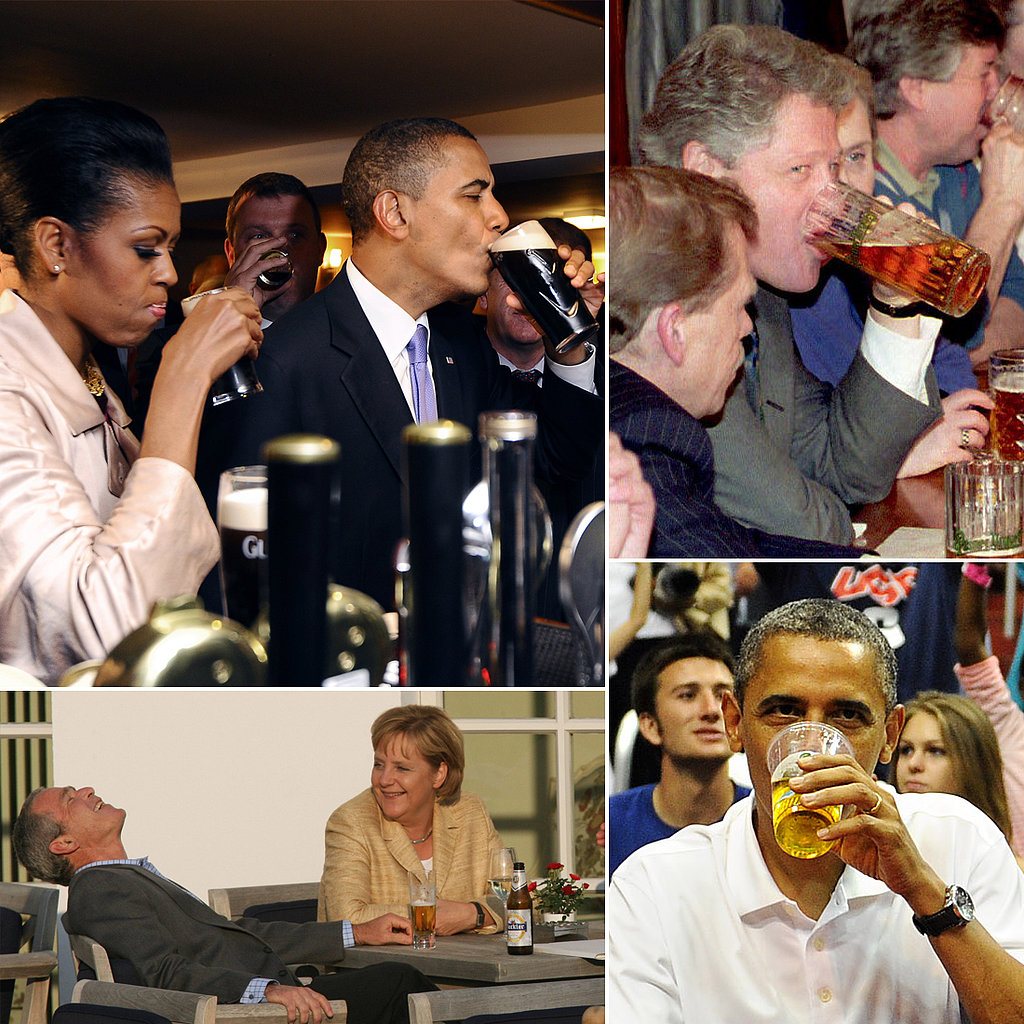
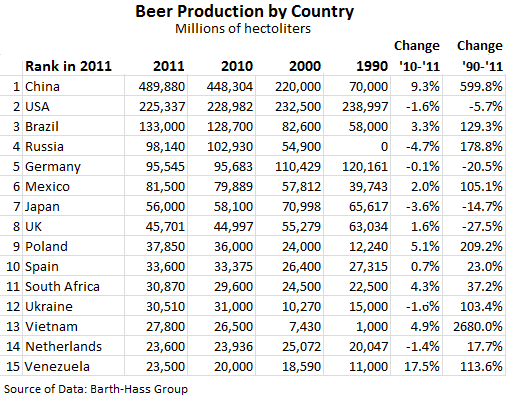
beer 44           beer 43                                       Interesting, some BIG beer consumers are not between the producers. Click on pics.


Let’s have some BEER FUN now.

Last Monday my friends  Agnes and Jonathan inspired and convinced me to write about beer. Of course there is so much to tell that one doesn’t know where to begin. That’s why I thought to write about some statements, claims, rules or/and more which always come up in beer discussions.  When someone says for example that you get a bigger bust drinking beer, you should be suspicious. Here some of the „sayings“.

beer claim 1

1: Beer makes you fat.

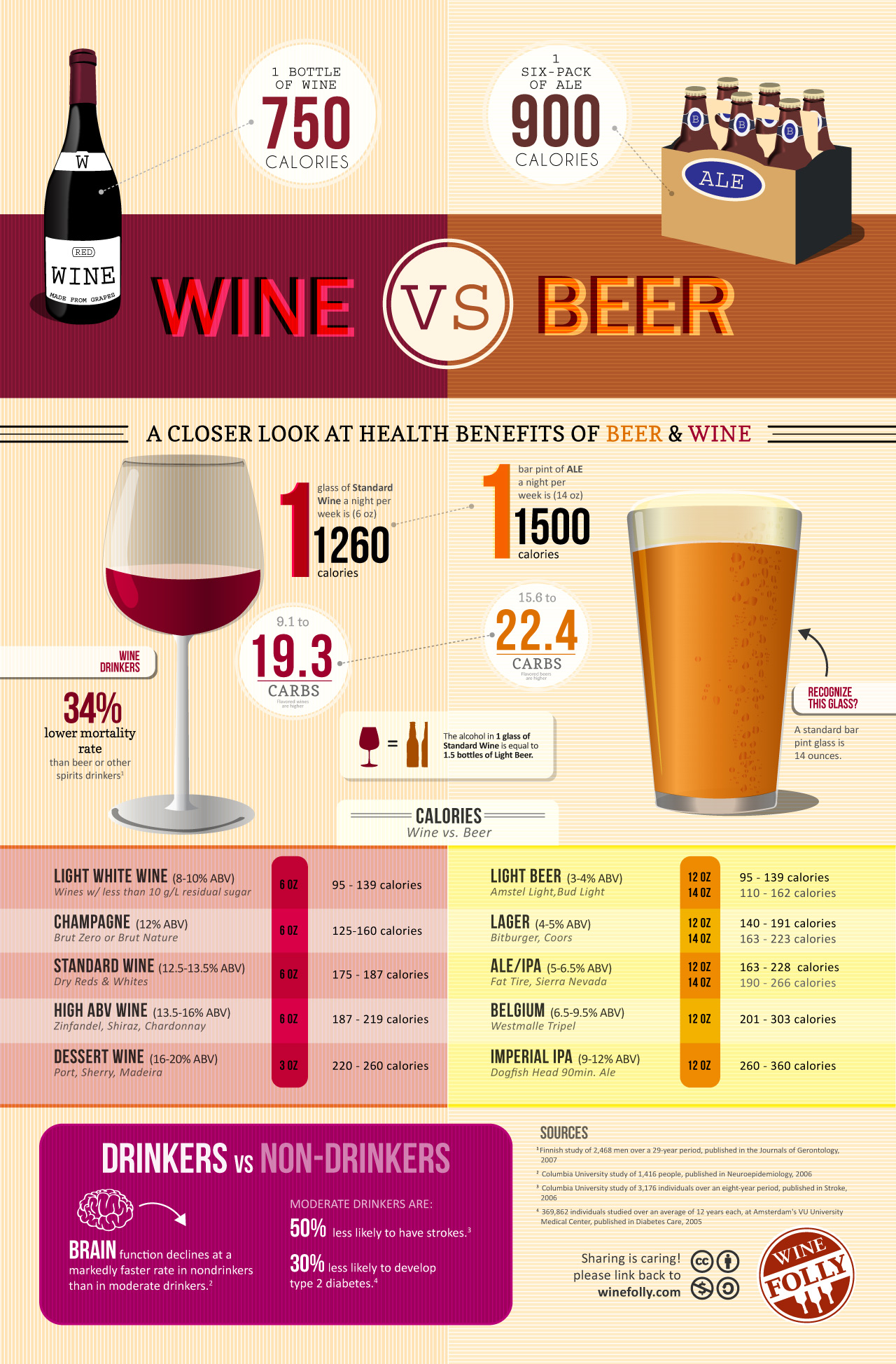
„Three beers are a steak“ or „a beer is two slices of bread“ – So it’s colloquially often.  Even apple juice and milk have more calories,  in red wine stuck twice as many.
Beer makes as opposed to a proper snack also not satisfied, but also stimulates the appetite instead. Who also accesses addition to pints of beer in sausages and pretzels is actually thick – just not the beer it is.

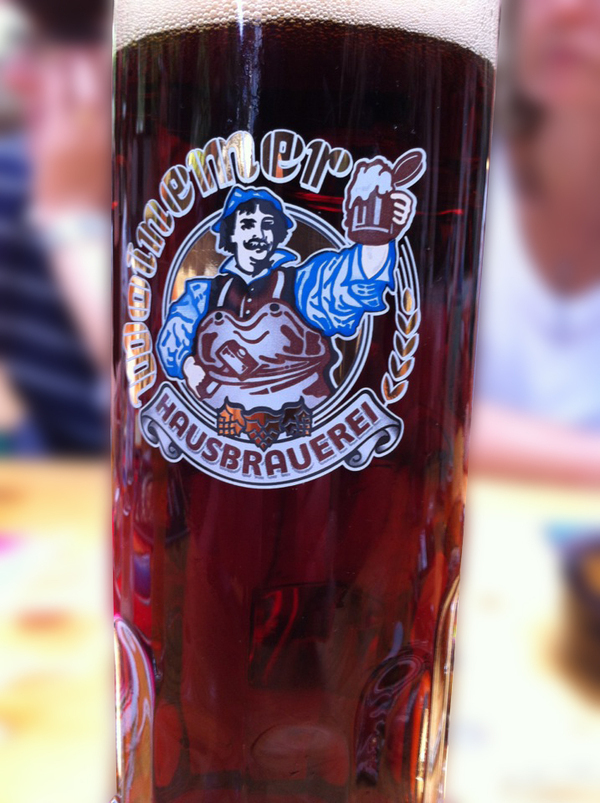
hausbrau 15  Not the beer makes fat, just the goodies around.

beer claim 4

2: A good beer takes seven minutes.

The seven-minute rule beer spigot is also a common myth, which they should not be believed. After seven minutes, the beer is in fact a primarily: stale. It could be that relates the old rule of thumb to become obsolete dispensers. When in use today taps it takes the empty glass to the delicious Pils only about three minutes.

beer claim 3

3: Beer makes a beer belly.

Now for the lords of creation: Representative studies have shown that the consumption of beer has no effect on the girth. The belly is probably still of the hearty meals. Then drink this up!

beer claim 2

4: Beer makes a larger bust.

Plant estrogen’s in the beer often falsely lead to believe that women are a couple of cup sizes could wash these by regular consumption of beer. The low estrogen content and lack of scientific evidence supporting this optimistic theory, however, you should take a self-test distance: If in doubt, you would need to drink an enormous amount of beer for the effect.

beer claim 5b   beer claim 5

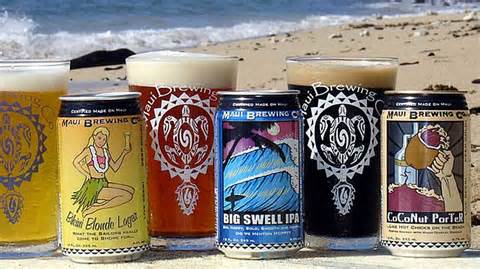
5: There is no beer in Hawaii.

Hard to believe that you can get on earth no beer somewhere. Even if Paul Kuhn (well known German singer) in his hit 1963 rock solid claims to the contrary: „There is no beer in Hawaii“. There are even own breweries. For many German tourists, the Pacific island should be so again slipped into the list of dream destinations.

beer claim 6

6: Beer on wine, let it be.

Treasure trove vernacular: Although the saying is so catchy that almost everyone can have a say him, he is not busy. The mnemonic probably has much more to do with the historical class thinking: Beer was considered a drink of poor people. Who picked up the filthy beer after the noble wine, committed by the beverage selection to descend into the lower ranks.

beer claim 7a  beer claim 7

7: beer helps you fall asleep.

The truth is: hop relaxed and promotes sleep readiness. Not established is the same effect by beer consumption. Experts recommend instead Bedtime and a regular sleep schedule.

beer claim 8        beer claim 8b

8: Beer makes beautiful skin and hair.

Unfortunately it is not. Although the vitamin B2 and pantothenic acid from the beer always maintain skin, hair and nails, but only in small doses to contain. With other foods such as legumes and whole grains will give you better results – while avoiding a frenzy.

beer claim 10

9: Beer can be bad/rot.

The answer is not simple: Although there are no disease-causing substances in beer, which has passed the expiration date, but it is slowly losing flavor. And that’s bad enough.

beer claim 10b

10: Warm beer helps colds.

Ironically, here we find a good piece of advice. Essential oils and bitter substances in beer have an antibacterial effect, the heat increases this effect also. When fever but they should be careful because the alcohol – whether in beer or other beverages – weakens the immune system.

beer 27

Try warm beer (body temperature) with an egg beaten into it. I don’t know if it helps but it is nourishing. Or have a bath in warm beer. It can’t harm and I don’t know if it helps either, Dear lord, what drugs are you on.
The only time you whack an egg in a beer is if you are making a „redeye“.  I guess, you all know how to make a „redeye“.

beer claim 10a   Of course not this kind of redeye.

And – WARM weather, COLD beer is always better then COLDS and WARM beer !!
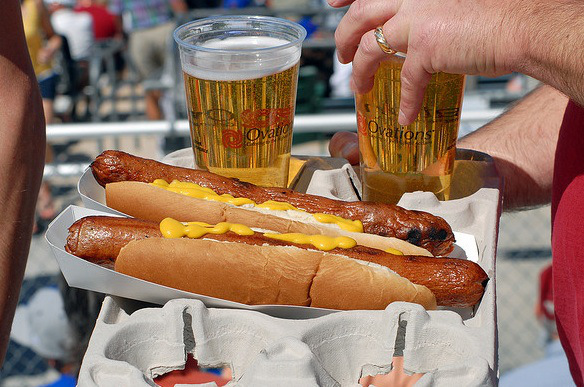
hot dog, cold beer, hot chicks, cold beer, hot beach, cold beer. hot food, cold beer !!!

beer claim 10 hotdog    Warm_beach_cold_beer

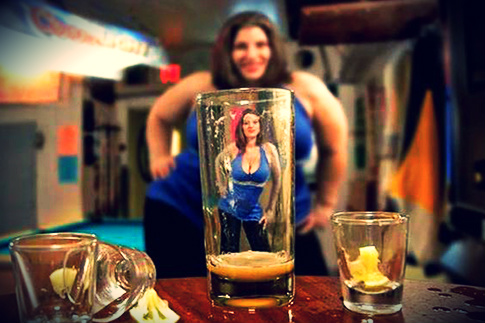
11.You can drink yourself every person beautiful.

beer 15                        beer 15a

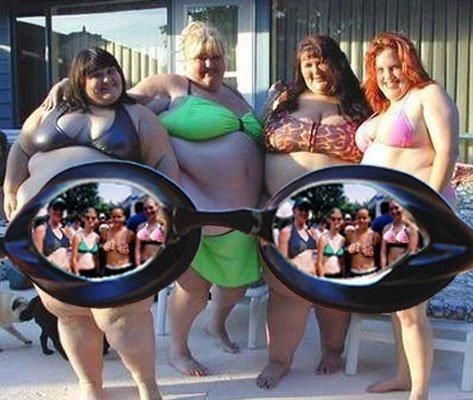
TRUE, no further explanation needed, I guess. Or have you got different experiences ?? Or you never used „beer goggles“, right ??

beer 17 beer google   beer goggles

Facts Every Self-Respecting Beer Drinker Should Know.

There was a time (very recent) in history where the depth of knowledge required to order the perfect beer for you was knowing whether you wanted it in a real bottle, or one shaped like a bowling pin. We now live in the midst of a beer renaissance, though, and between all the sours, lagers, stouts, Belgians, and reds out there, getting the right beer means expanding your knowledge.

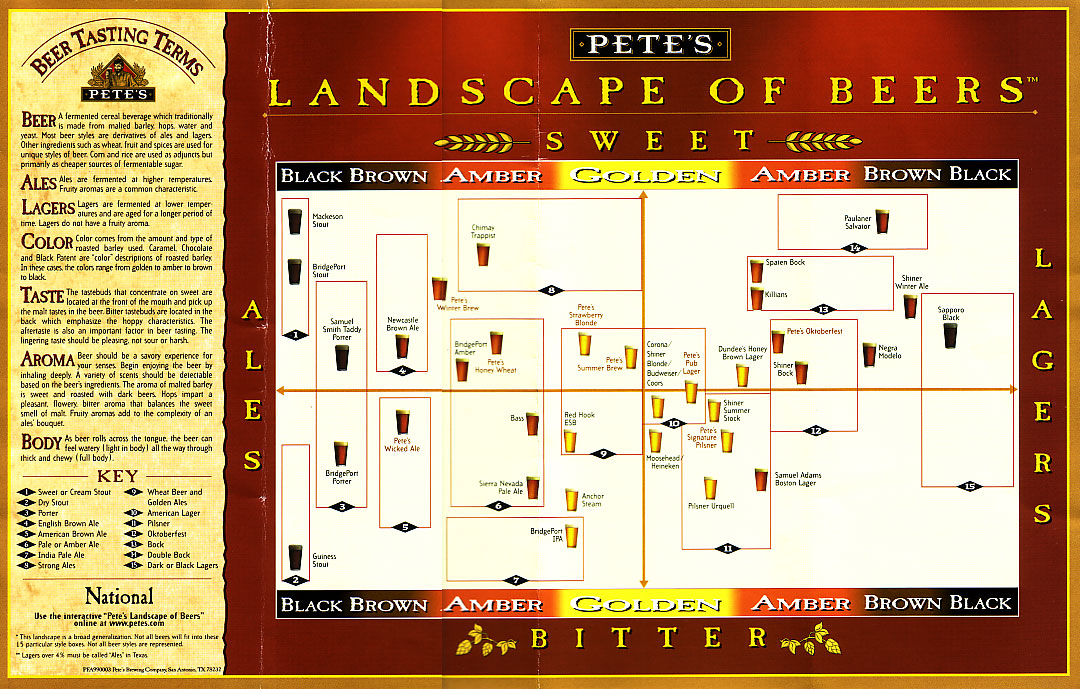
beer tasting landscape                beer wine 1                                  Beer knowledge for every occasion. Just invest a bit in more knowledge, it’s fun.

Luckily, with beer forever being the beverage of the people, the amount of smarts required to get what you like is relatively pocket-sized. These tips will help you navigate beer lists, talk to bartenders and shop clerks, and give you a huge leg up out in the wild. Use them to improve your hard-earned night out. Use them to impress your date. But above all, use them everywhere.

beer 9a

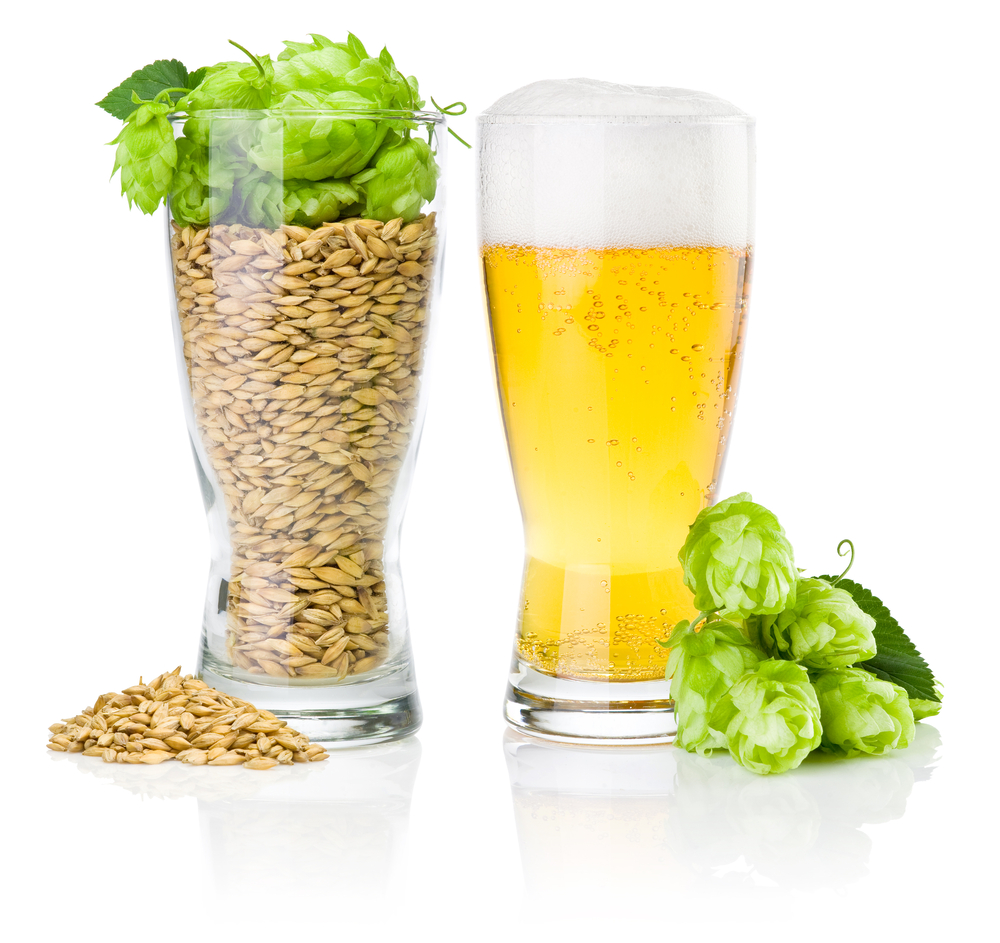
The four main ingredients of beer are grain, hops, yeast, and water.

Just like baking bread, the ingredients that go into beer play huge parts in their own rights. Grains (usually malted barely, but sometimes a blend of rye, oats, or other grains) give beer the sugar needed for fermentation. Water (which, at 95% of the product, is often the unsung hero) has to be treated to make sure nothing affects flavor or fermentation, and allows for all of the chemical reactions to take place. Hops act as a preservative and provide the bitterness to counterbalance the sweetness of beer and give it beautiful aromas. Yeast is the actual worker behind it all, converting sugar into alcohol and actually creating beer.

beer 9

The oldest brewery in the world.

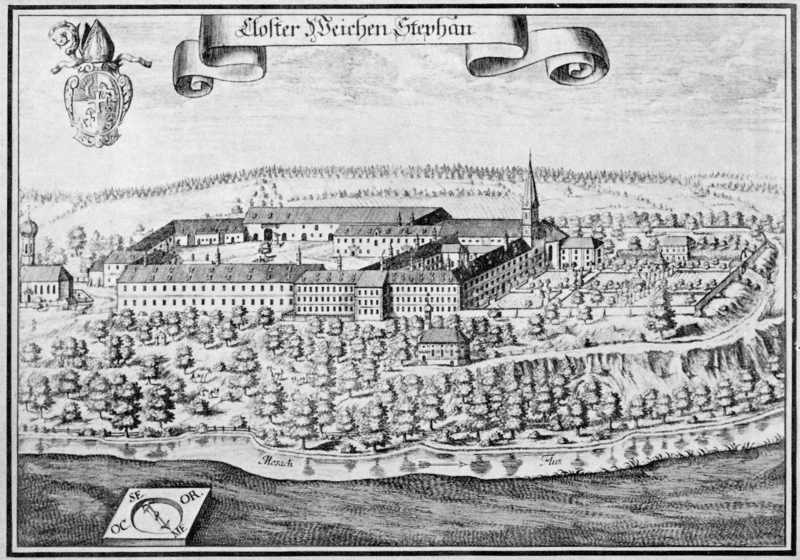
Weihenstephan Abbey (Kloster Weihenstephan) was a Benedictine monastery in Weihenstephan, now part of the district of Freising, in Bavaria, Germany. Brauerei Weihenstephan, located at the monastery site since at least 1040, is said to be the world’s oldest continuously operating brewery.

beer 29 old 1   beer 29 old 2

German Beer Purity Law in English, is the collective name for a series of regulations limiting the ingredients in beer in Germany and its predecessor states. The most well-known version of the law was adopted in Bavaria in 1516,
This purity law has ensured the ingredients have stayed the same since the 1500s. Contrary to popular belief, the bid is no longer in force – the EU cashed it in 1987. Many brewers still adhere to the traditional.

beer claim 9a   beer claim 9 some mens choice

Other ingredients are called adjuncts, as well as flavorings.

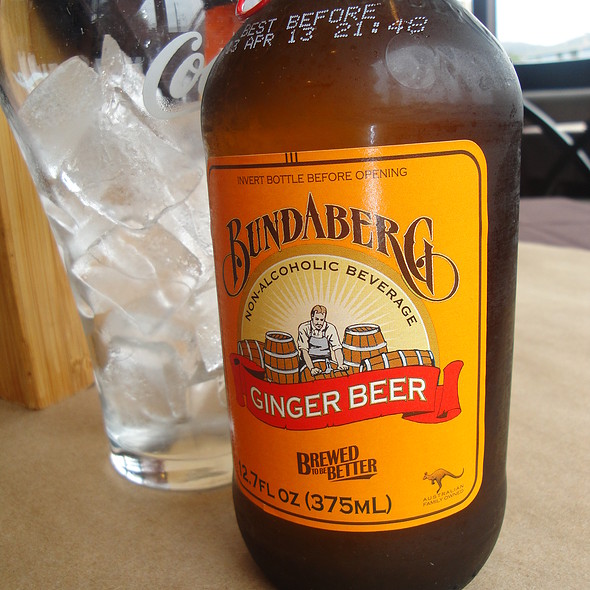
Wheat, oats, corn, rice, and sugar are regularly added to the mash to up the amount of fermentable sugar, build a beer’s body up or tone it down… or to cut corners. A lot of cheap beers are made using a huge amounts of corn and rice to save money on malted barely. Other ingredients are also very common, including spices like coriander and sage, coffee, chocolate, milk, fruit, or honey – all of which have a more direct effect on the flavor of beer. See examples above.

Hausbrau 2              hausbrau 3

The color of your beer has nothing to do with its alcohol content.

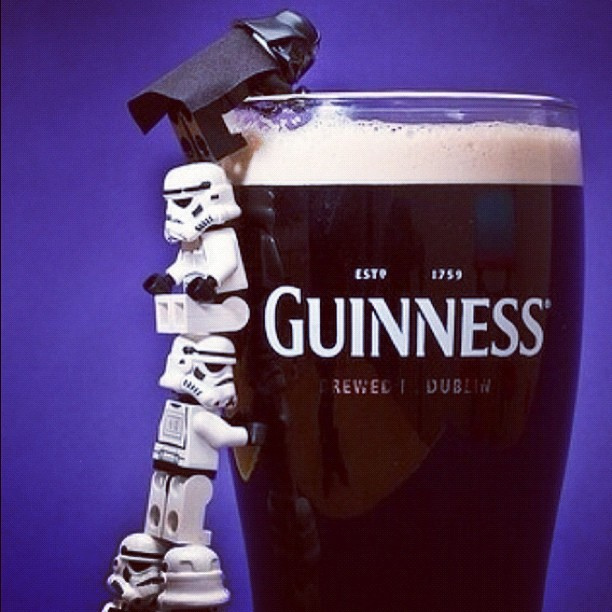
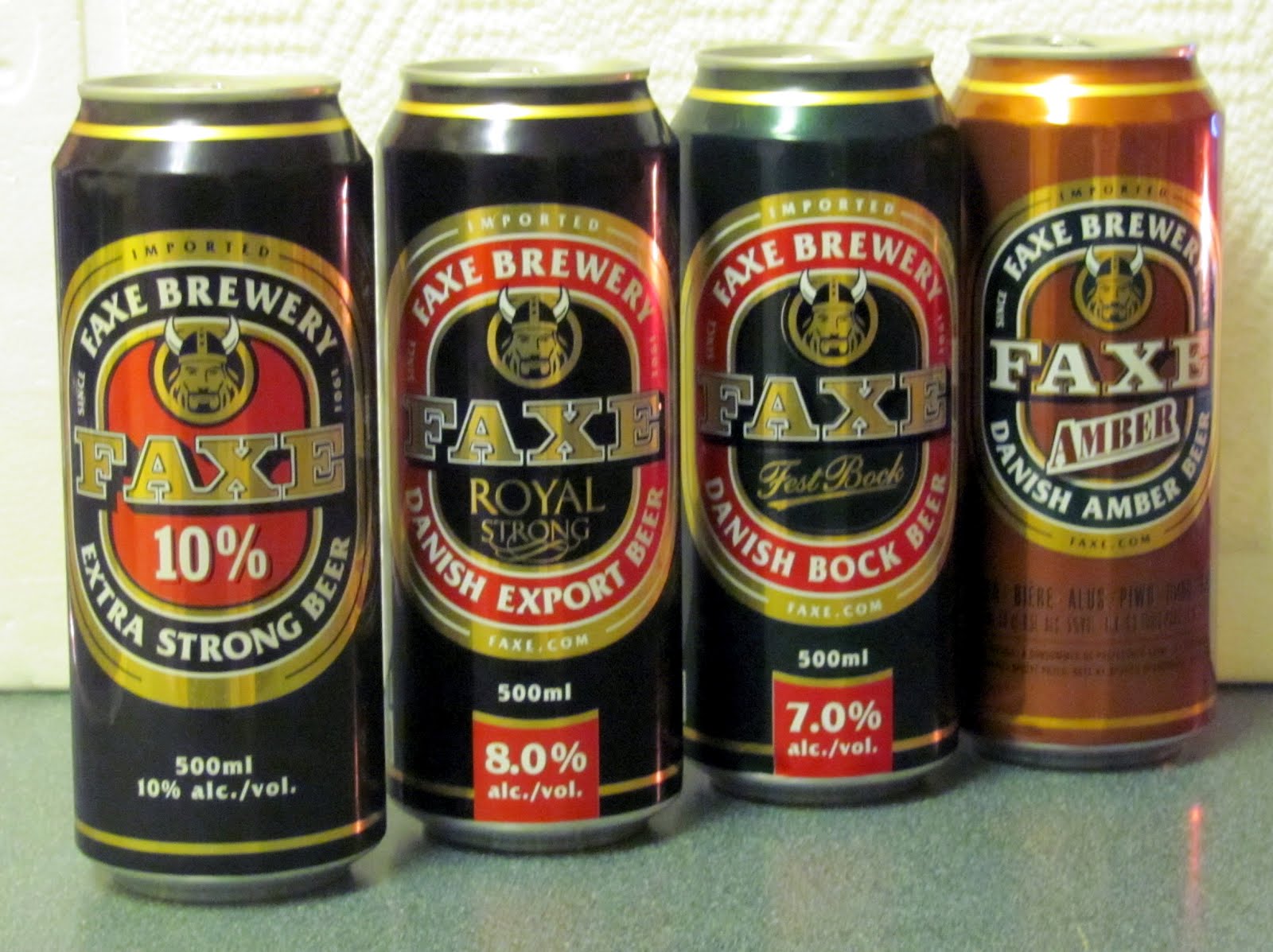
I’m not sure if it’s a carryover of a misunderstanding of spirits or the term “light beer,” but there’s a persistent misbelief that darker beers are heavier in alcohol than their pale counterparts. Consider that Belgian strong golden pale ales like Duvel (which clocks in at 8.5% ABV, or the Danish FAXE with 10% ABV) are night and day compared to jet-black stouts such as Guinness Draught, which, despite your favorite St. Pat’s reveler’s assertions, clocks in at a mere 4%. By the way Duvel and FAXE are available in Uruguay.

beer 25

A small, foamy beer doesn’t mean a bartender’s ripping you off.

Most people associate foamy beer with bad experiences at keg parties, which is why most people balk at being handed a beer that isn’t pure liquid to the top. But head does a lot to improve your beer: it’s hugely important for delivering aromas to your nose – both before and after each sip – and has a huge impact on the texture of a beer in your mouth.

beer 22       beer 20a

Each style is different, but an inch to an inch and a half of head is considered to be part of a “perfect pour” in most cases (much more for wheat beers). And if an inch still has you feeling cheated, realize that even the simplest glassware usually includes an extra bit of space to accommodate for it. So you’re good! In Germany it is the law to have an so named „Eichstrich“ (it’s a measure line, an official calibration mark) at all glasses, by example 0,2l or 0,3l or 0,5l etc. Up to this line you have to have clear beer filled and above is room for the wanted foam.  I do not like the „English way“ to fill beer glasses – up to the top !

beer 24English – sorry, but it looks like „Pi“ and tastes like „Pi“ !
beer 21     This is what people like to avoid with „full filling“! I agree, that’s cheating !
beer-sausage  How mouthwatering is a real beer with a „head“ ?


All „Hefeweizens“ are wheat beers, but not all wheat beers are „Hefeweizens“.

This is a semantics thing that drives even some experienced beer drinkers crazy, but knowing the difference will help you find a beer you like. Hefeweizens are the German style of wheat beer made using at least 50% wheat and a Bavarian yeast strain that gives it that bubblegum, banana, and clove flavors most people associate with wheat beers. Wheat beers are also made with wheat (duh), but instead use a different strain of yeast that doesn’t give off the same clove flavors as their German cousin.

beer 26  Hefeweizen is also available in Uruguay.

The point of drinking beer is to enjoy it, not be a snob.

It’s amazing how this simple (and in my opinion most important) rule is the first thing people forget when hitting the bar these days. The industry of beer may be in the greatest growth spurt it has seen in over a century, but the tried-and-true act of lifting a glass to your lips and taking a sip is as old as civilization itself. Be adventurous. Learn what you like and what you don’t. Share it with your friends. Use it to take a load off after a long week at work. And never settle for drinking something you don’t love, no matter what that beer is!  Down here, beer enjoyment earlier and now.

beer 12           beer 28

Canned beer is in no way inferior to bottled beer.

The myth of all canned beer being cheap swill needs to die once and for all. If anything, it’s arguably better! Cans block out all light, protecting beer even more than brown glass can from spoiling faster. Cans are much lighter weight (just try carrying a case of bottles versus a case of cans), more outdoors-friendly with their durability, and better for the environment in the long run. I encourage everyone to test drive this at some point with a side-by-side bottle vs. can tasting of the same beer. You have nothing to lose – and then you get to drink two beers at once!

beer 29 old 4    beer 29 old 5

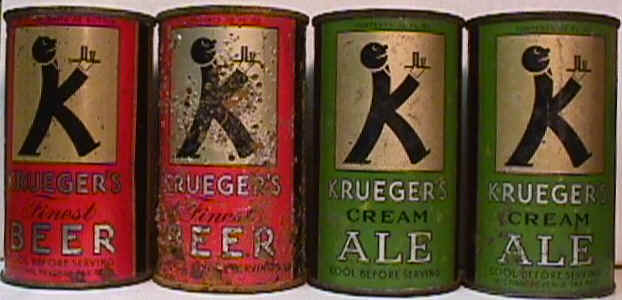
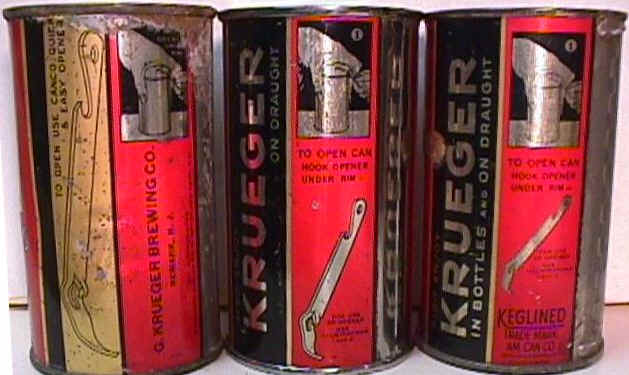
Krueger’s – The first canned beer.

The technology for canning beer existed long before it actually occurred. Some evidence of experimentation dates back to the late 1910’s. Prohibition (1919-1933) put those efforts on hold. Once Prohibition for beer was repealed in April of 1933, American Can Company renewed its efforts to entice brewers to can their product. The first fish to take the bait was not the biggest. In fact it was a moderately sized brewer in Newark, New Jersey, the Gottfried Kreuger Brewing Company. The first known production run was in late 1933.

beer 3

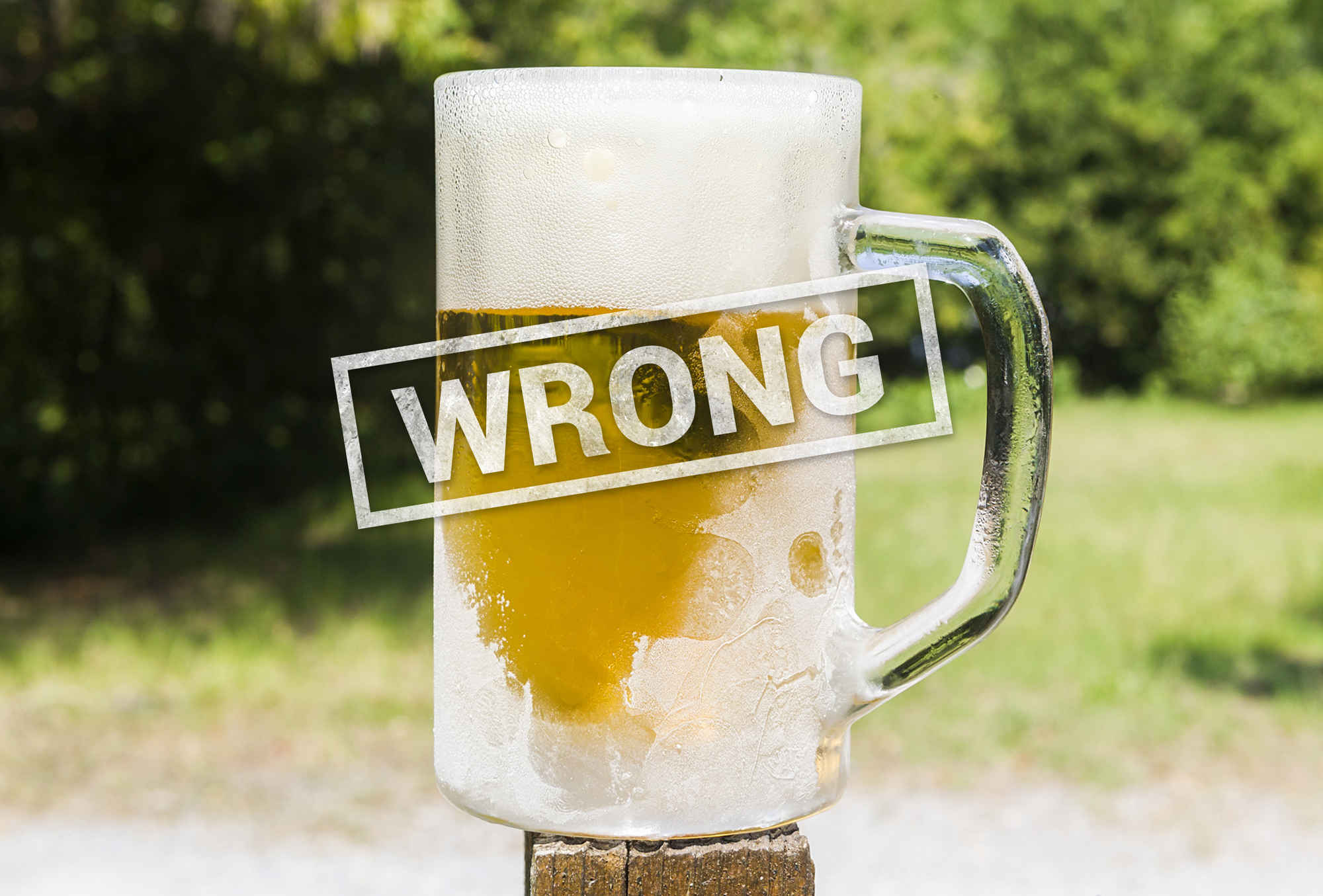
Freezing your glasses is bad for your beer.

I always hate being the bearer of bad news with this fact, but pouring beer into a frozen glass or mug is bad for your brew. The ice crystals will cause the beer to foam right up, essentially killing all of the aromas and carbonation before you can even get a sip of it. What you’re essentially left with is a flat, mostly flavorless beer that will only be truly frigid for a few sips.

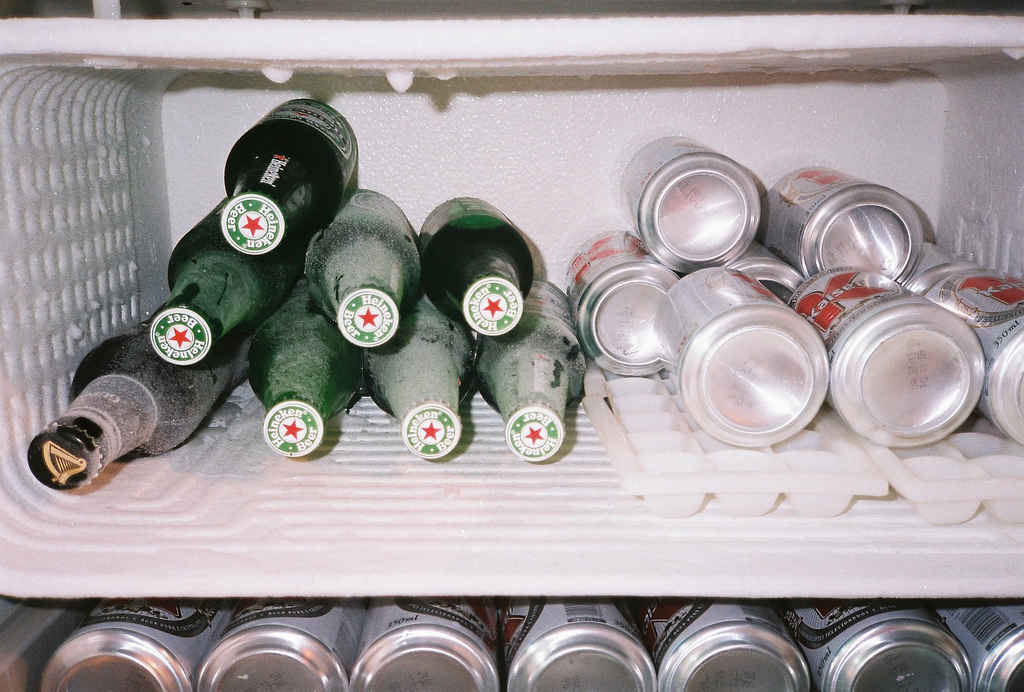
beer 4  beer 2   Don’t store beer wrong (in your freezer) and too long (modern beers have an expiring date) .

About temperature.

Most beers have an ideal serving temperature. There’s a chart below outlining which styles are served at what temperature, but as a general rule the temperature at which to serve a beer is correlated to the strength of the beer. As beers go up in alcohol, they are generally drunk at a warmer temperature. This is because stronger beers often are sipped slowly, and enjoyed for their complexity of flavor and aroma while weaker beers are often consumed for refreshment.Temperature is the most important issue for „beer happiness“.

beer 33  That’s life. A great meal and a great beer !

Don’t get me wrong, I have nothing against cold beer, on the contrary I like cool beers, but never ice cold or frozen glasses. For no style is this more apparent than American macro lagers, which are generally drunk so cold that you can’t taste them. There’s a reason those big brewers want people to drink their beers at tongue-numbing temperatures. As they warm up, they don’t taste very good.

Some temperature suggestions.

Very Cold: 35-40 F (1,6-4,4 C) degrees.

American Adjunct Lagers (“Macros”)
Malt Liquors
Light or low alcohol beers
Non alcoholic beers

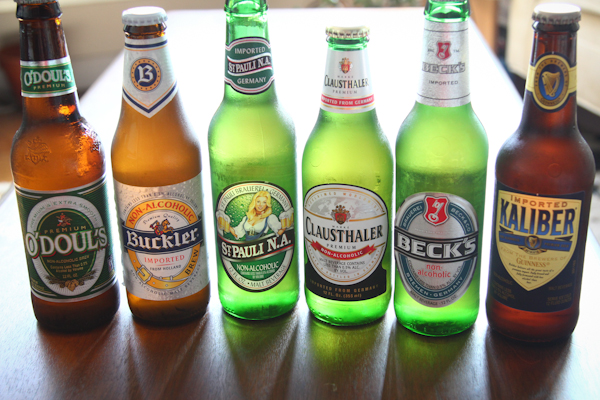
beer 31 non alc  Some non alcoholic beers.

Cold: 40-45 F (4,4-7,2 C) degrees.

Pilsner
Light-bodied lagers
German Koelsch
Belgian Wit
Hefeweizen
Berliner Weisse
American Wheat
Uruguayan Pilsners and Lights

beer 18  Berliner Weisse, woodruff or rasberry taste.

Cool: 45-50 F (7,2-10 C) degrees.

American Pale Ales
Medium-bodied lagers
India Pale Ale (IPA)
Porters
German Alt
Irish Stouts
Sweet Stout
Urugayan Ambers and Porters

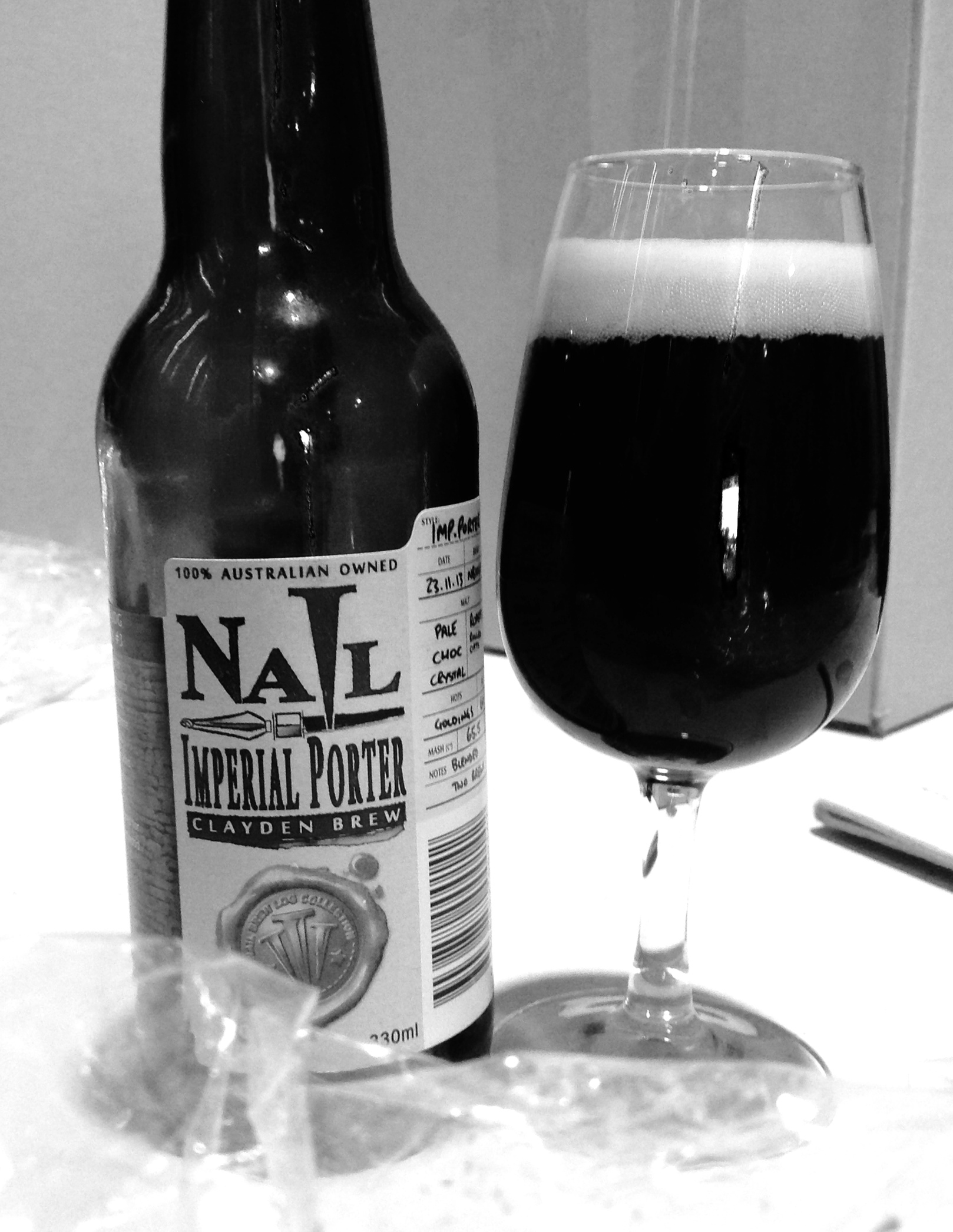
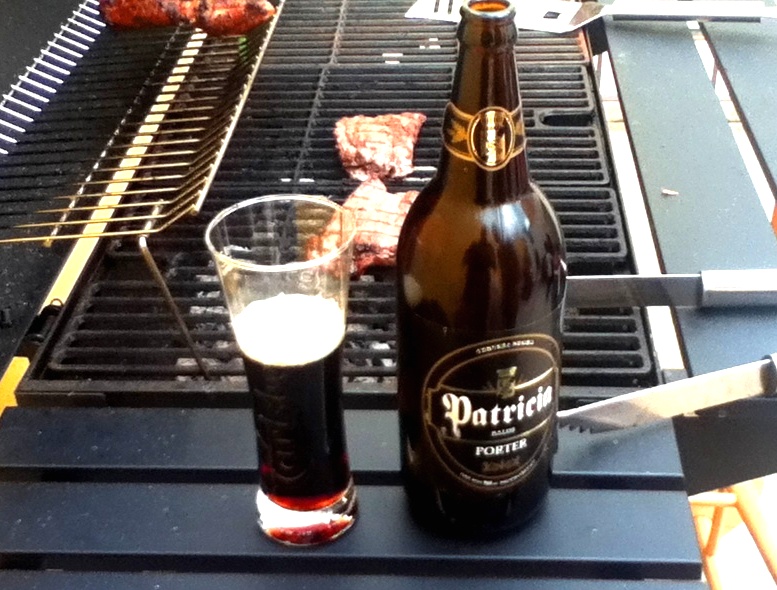
beer 36       Patricia Porter in Uruguay.

Cellar Temp: 50-55 F (10-12,7 C) degrees.

Sour Ales
Lambic/Gueuze
English Bitter
Strong Ales
Baltic Porters
Bocks
Scotch Ales
Belgian Ales
Trappist Ales
Urugayan Stouts

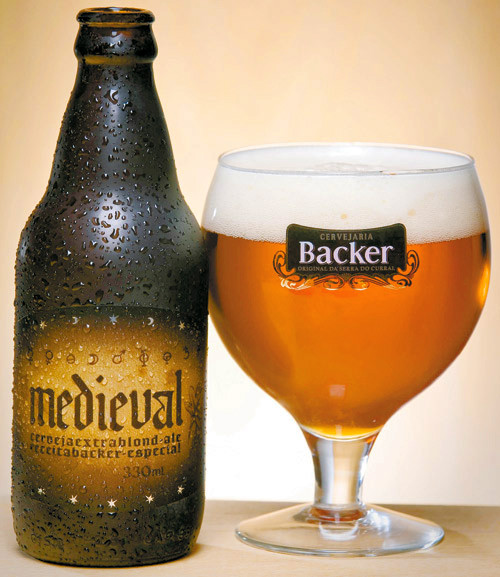
beer 37  Belgium extrablond ale from Backer.

Warm: 55-60 F (12,7-15,5 C) degrees.

Imperial Stouts
Belgian Quads
Belgian Strong Ales
Barley Wines
Old Ales
Doppelbock
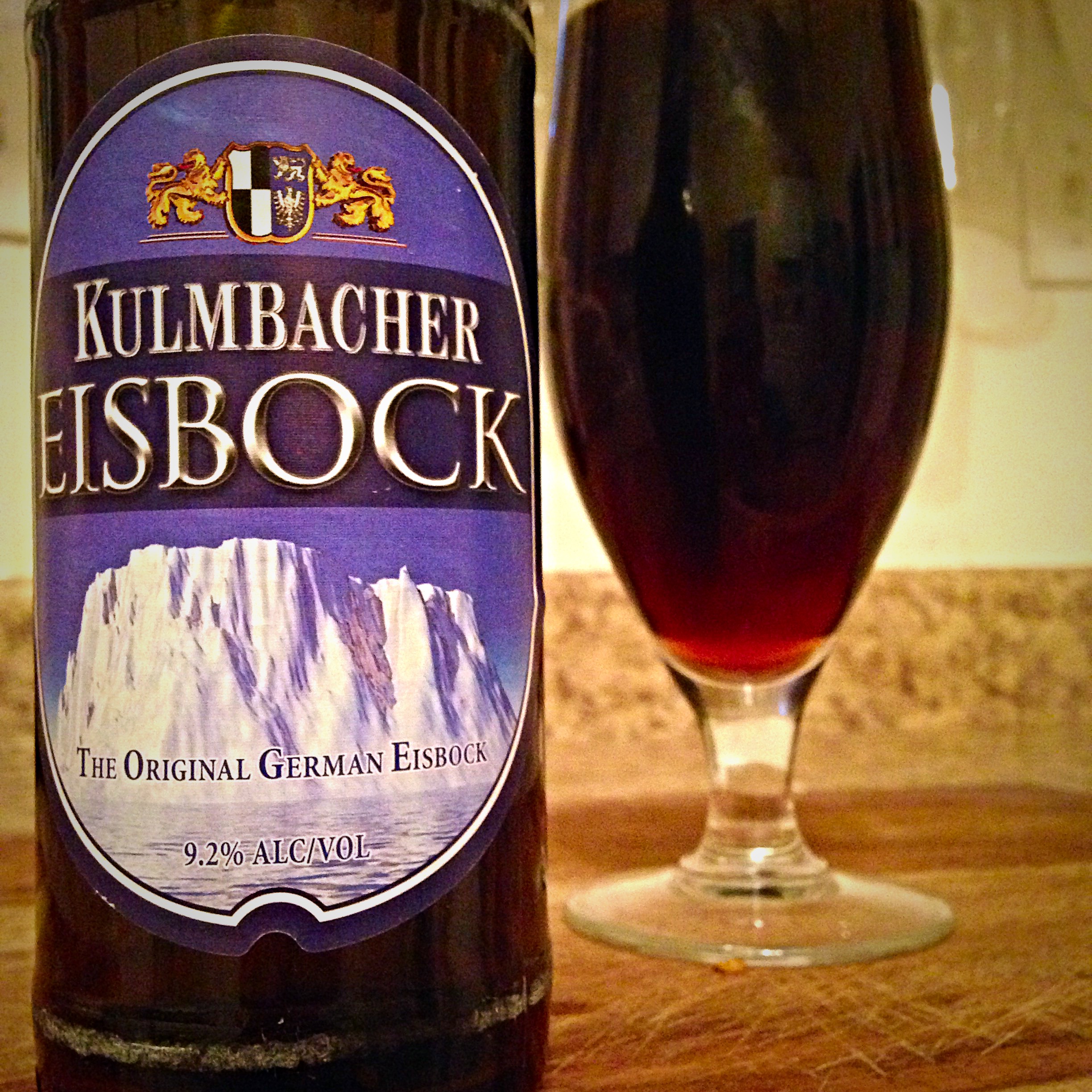
Eisbock

beer 38 graubuenden-eisbock    beer 39

And finally: You shouldn’t always strive to serve beer extra chilled, as it mutes almost all of the flavors that make it great. But if you’re still absolutely dying for a cold-as-humanly-possible beer, put the can or bottle in a bucket with salt, ice, and water, and let it sit for five minutes while you fill a clean beer glass with ice and water. Wait five minutes, dump the ice water out of the glass, and fill it with with your super-chilled beer.

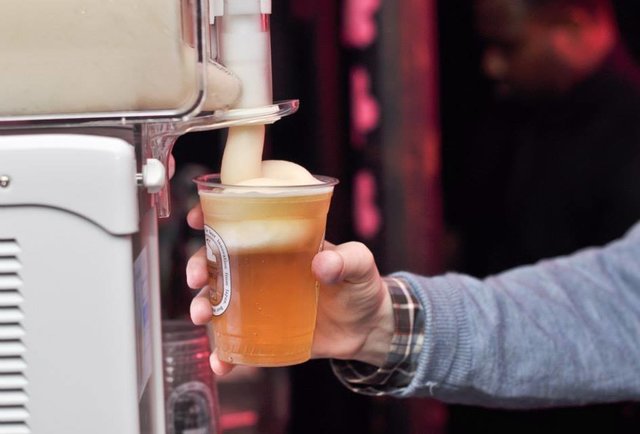
beer 40           beer 39                 This beer is DEAD !!         Why not directly use „frozen beer“ – frozen beer cream (ice cream) ??

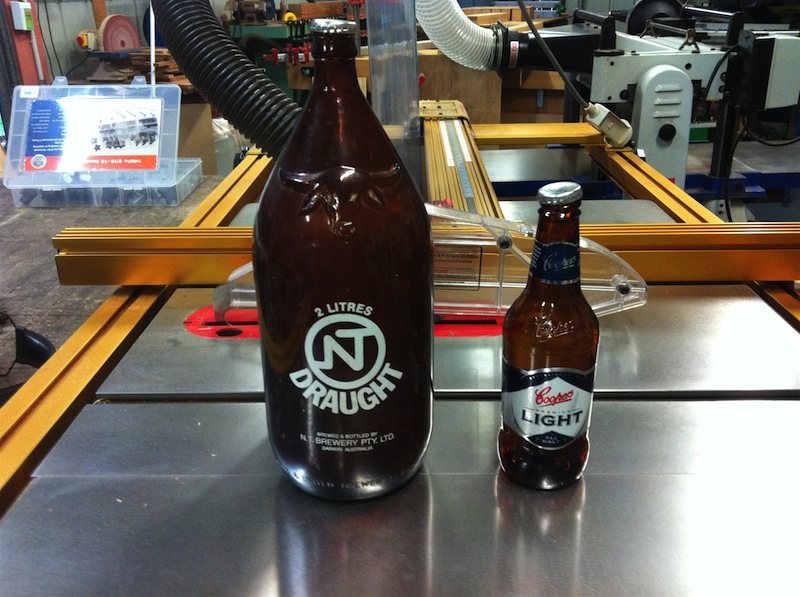
Australiens like their beers ice cold, if you get a „stubby“ (small beer bottle, about 0,375l, or sometimes 0,330l, cans in average have a content of 0,375l or 0,5l) in a pub, then you can be happy if there is no frozen beer block inside the bottle. Aussies also prefer cans over bottles and prefer very light ice cold beers (like ice water – no taste at all) over a nice glass of tasty „hopsjuice“ in style.

beer 30 aussie 2  beer 30 aussie 4

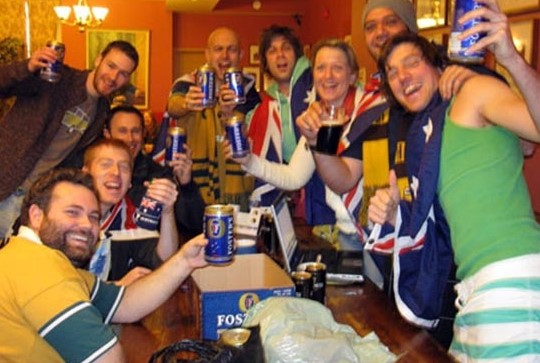
Australian beer party, nice people for sure, but no style, just getting drunk is the goal.           Next to it a normal stubby and a „2 liter Darwin stubby“, what’s the point ? Nothing against the Aussies, but they don’t have style (in this case beer drinking style) at all. They don’t care, they think it’s their personal freedom. And here we are finally, beer „drinking or celebrating“ is a personal matter. Everyone should do what one likes or not. Just have BEER – FUN !!  Following some fun without words – just PROST  !!!  Click on pics !!!

beer-holder           beer 30 aussie 3

beer 7      beer 29 old 3

Veröffentlicht unter History, Information, Lifestyle | Verschlagwortet mit | 2 Kommentare

Who are They – Part 4

peso 16 1862  Beautiful old Uruguayan banknote from 1867.

Here we have part 4 of the Uruguayan money series. One of the most dazzling personality’s on Uruguayan banknotes is :

Damaso Antonio Larranaga

peso 9   peso 9a
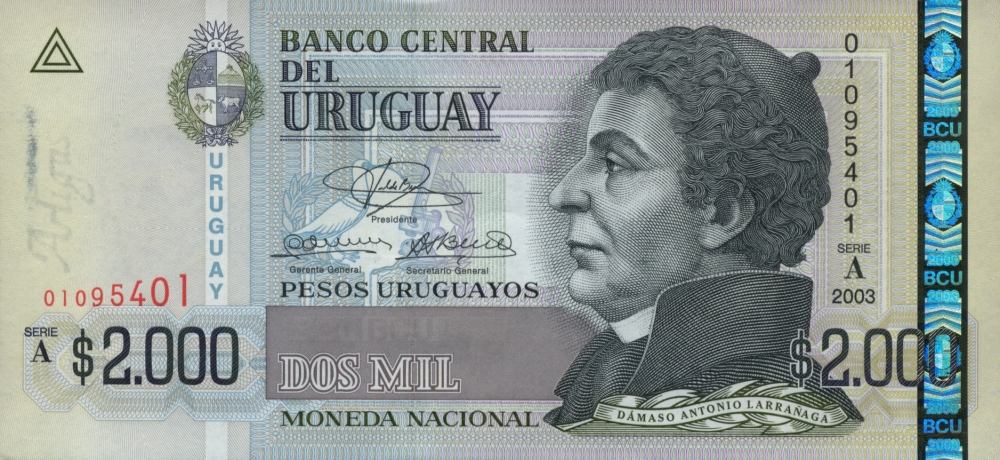
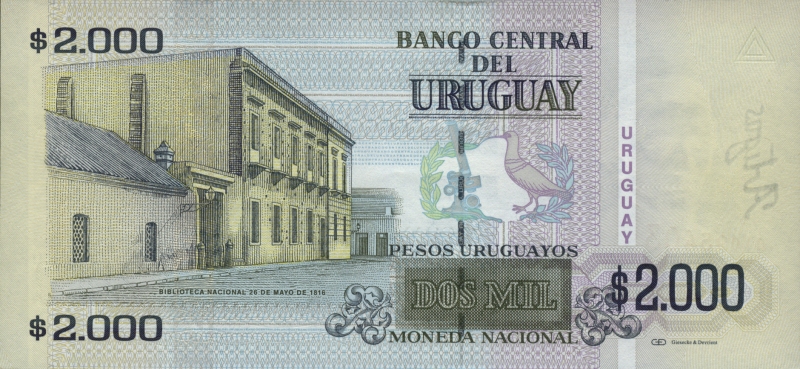
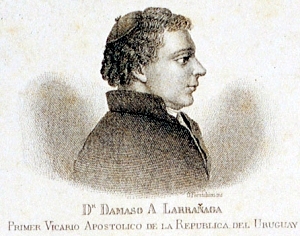
Damaso Antonio Larranaga on front of the 2000 Peso note. The back shows the „Biblioteca Nacional 26 de Mayo de 1816“, the Uruguayan National Library in Montevideo.

He was born in Montevideo on the 10th of Dcember 1771. Son of Manuel de Larranaga, Spanish immigrant from Basque, Spain. There is almost no area where Larranaga, during the years, had not layed his hands on. He was a politicion, a naturalist, a visionier a priest, a botanist and a well saught after counselor. He is for sure one of the „column’s“ of Uruguayan history.

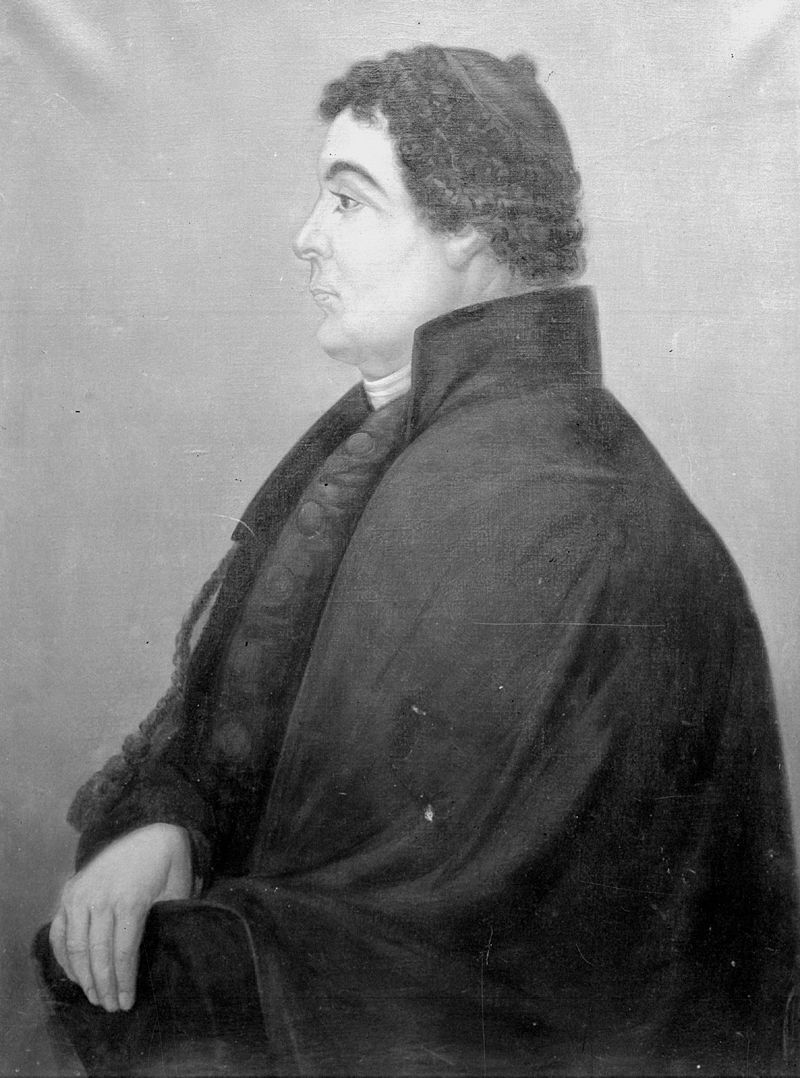
peso 9b    This picture was used for the 2000 peso note.

He was a member of the Cabildo in the colonial era, studied in Cordoba Spain and completed his preparatory studies at the Royal College of San Carlos. Returning to Montevideo in 1799, where he became chaplain of the militias.

 In 1804 he was curate of the matrix, contributing to the building of the new temple that was being built. In the British invasions with troops he marched to the issuance of the reconquest of Buenos Aires and Montevideo in making showed great zeal in caring for the wounded. Completed the same continued his religious activity, also engaging in scientific work and in his library, activities that continued until his death.

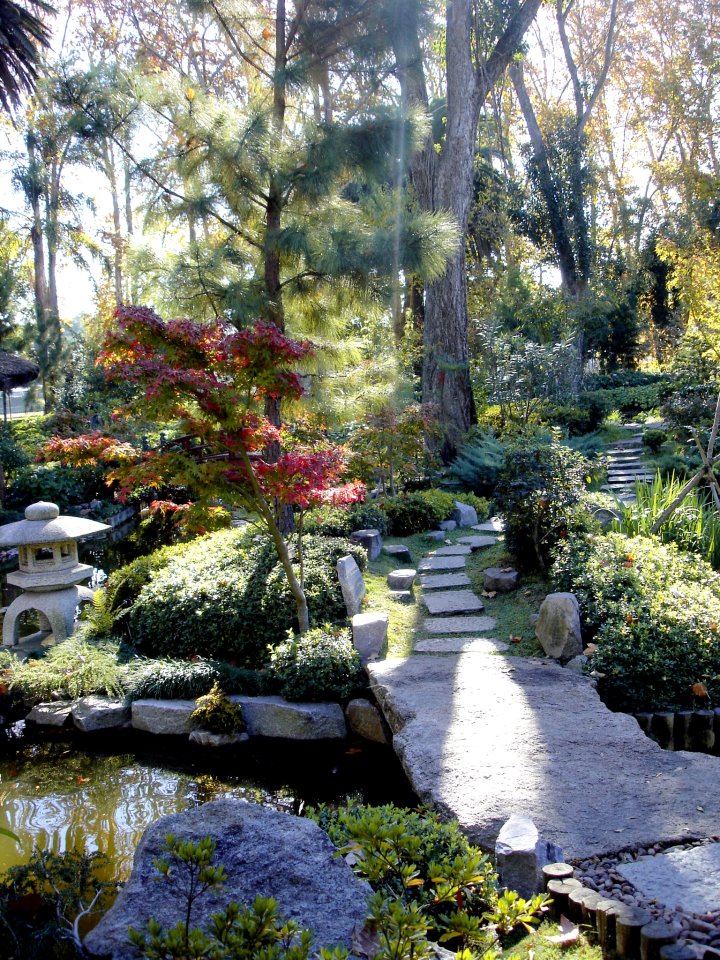
peso 9o  Larranaga was also co-founder of Botanical Gardens in MVD.

For his ideas he was expelled from Montevideo in 1811, along with other patriots priests, following the victory of Artigas in the Battle of Las Piedras. 

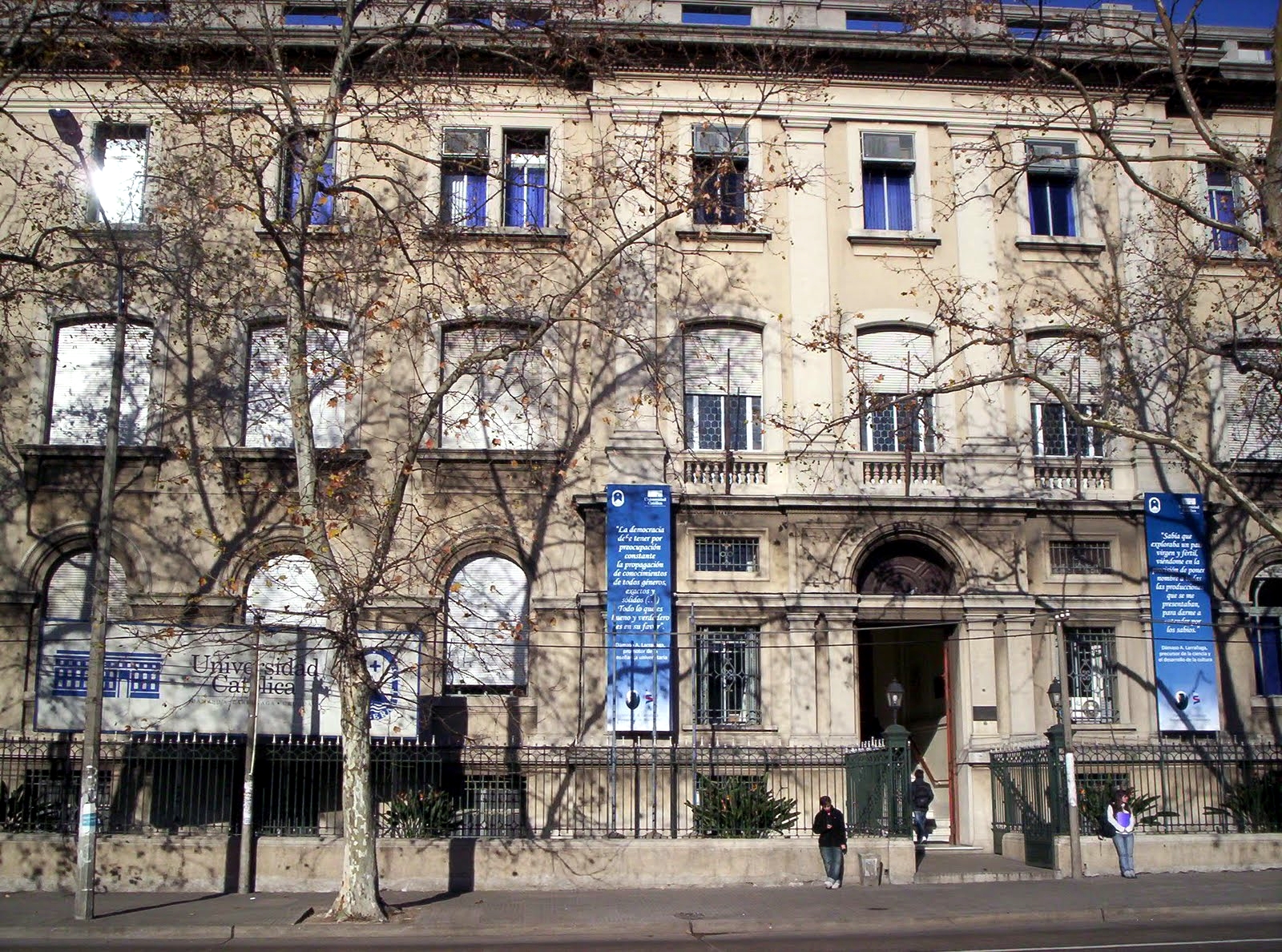
peso 9h Universidad_Católica_del_Uruguay_Dámaso_Antonio_Larrañaga   The private university  „Universidad Catolica del Uruguay Damaso Antonio Larranaga“ , founded 1985, in Montevideo.

Montevideo already collected on the farm of Berro, Manga area, was commissioned by the East to attend as a delegate to the Constituent Assembly of 1813 in Buenos Aires, still carrying the Instructions of year XIII. Congress ignored its representation alleging procedural irregularity, but the real purpose was to exclude citizens of the Assembly representing very dangerous trends for absorbing most centralist plans.

peso 9e  One of the best known monuments in Montevideo is the „Museo Ozeanografico Damaso Antonio Larranaga, Villa Dolores“.

To win his case or keep him there, the Buenos Aires Board offered him the position of public librarian, who accepted, to hold it until 1815, the year he returned to the Eastern Province bringing to acclimatise in the country’s first black locust trees.

peso 9f  All of us drove  many times along this museum at the rambla in Montevideo. It is really worth to visit .

Being pastor of the First Church of Montevideo, he went to Paysandú to resolve differences between Artigas and Montevideo Cabildo. „At four o’clock in the afternoon came the General, Mr. José Artigas, accompanied by an assistant and a small escort. He greeted Larranaga without any label. Nothing seemed general, his suit was in civilian clothes, and very simple pants and blue jacket“.

peso 9q  Larranaga meets Artigas in Paysandu.

On the way he wrote his travel journal from Montevideo to Paysandu. In addition, he sought to gather evidence for his essays on chaná language. In May 1816 he was appointed director of the National Library, both of which he had a hand in its creation with Miguel Barreiro.

peso 9m     Library of Montevideo in Ave. 18 de Julio.

In the twilight of the artiguista cause Larrañaga joined the Portuguese rule, to accept the Cabildo of Montevideo humiliated the sad honor of moving to Rio de Janeiro, along with Jerome Pius Bianqui, on mission of thanks to King John VI of Portugal. In 1821 he was deputy to Cisplatin Congress convened by Carlos Federico Lecor, where the final incorporation of the Eastern Band of the Portuguese monarchy was agreed.

peso 9p    Inside the library in Montevideo.

At that time he turned more firmly than ever to everything he touched to the progress and welfare, while it must be the establishment of the Casa Cuna children abandoned in 1818 and the inauguration of the Lancastrian School in November 1821, installed in the same house Fort Government. In 1824 he was confirmed as Vicar Apostolic equivalent to the Diocesan Bishop.

peso 9c 1815   Primer Vicar Apostolico de la Republica del Uruguay.

He was not involved in the liberating revolution of 1825, since its inauguration in the Church required him to be respectful and true to the Brazilian, who then ruled.

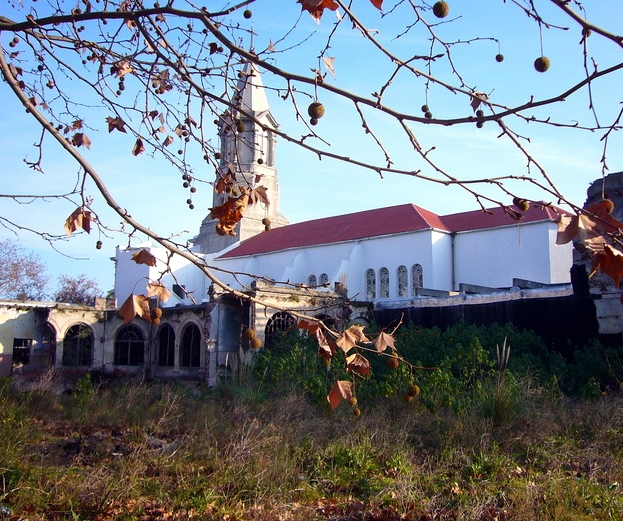
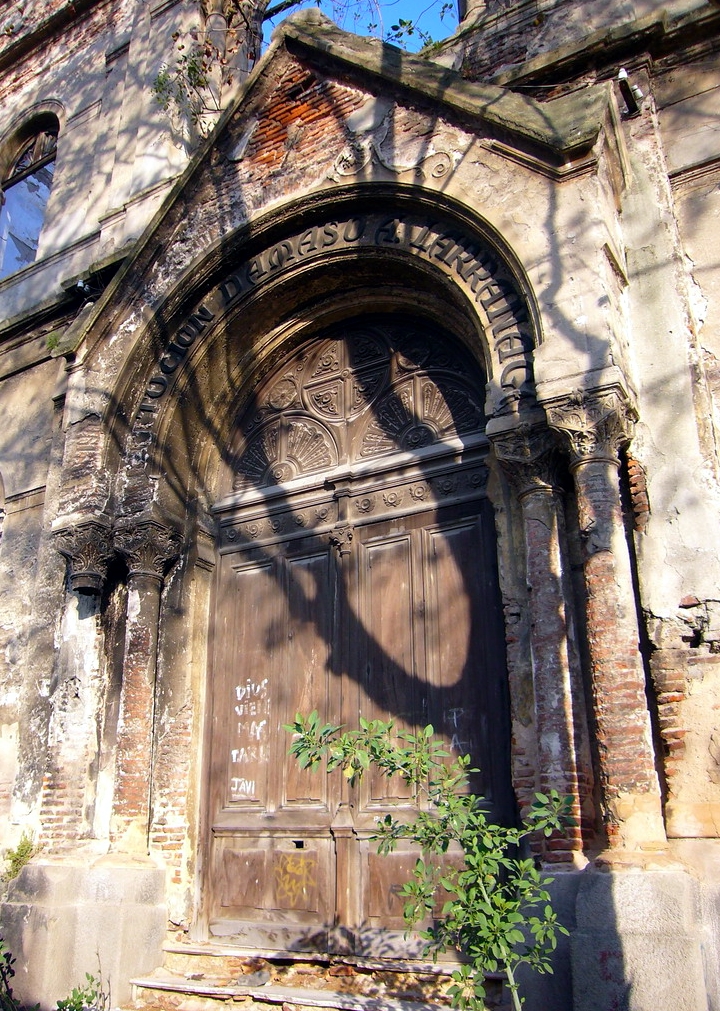
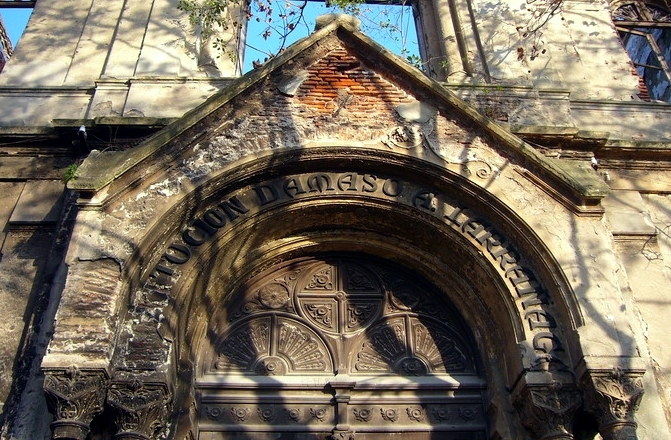
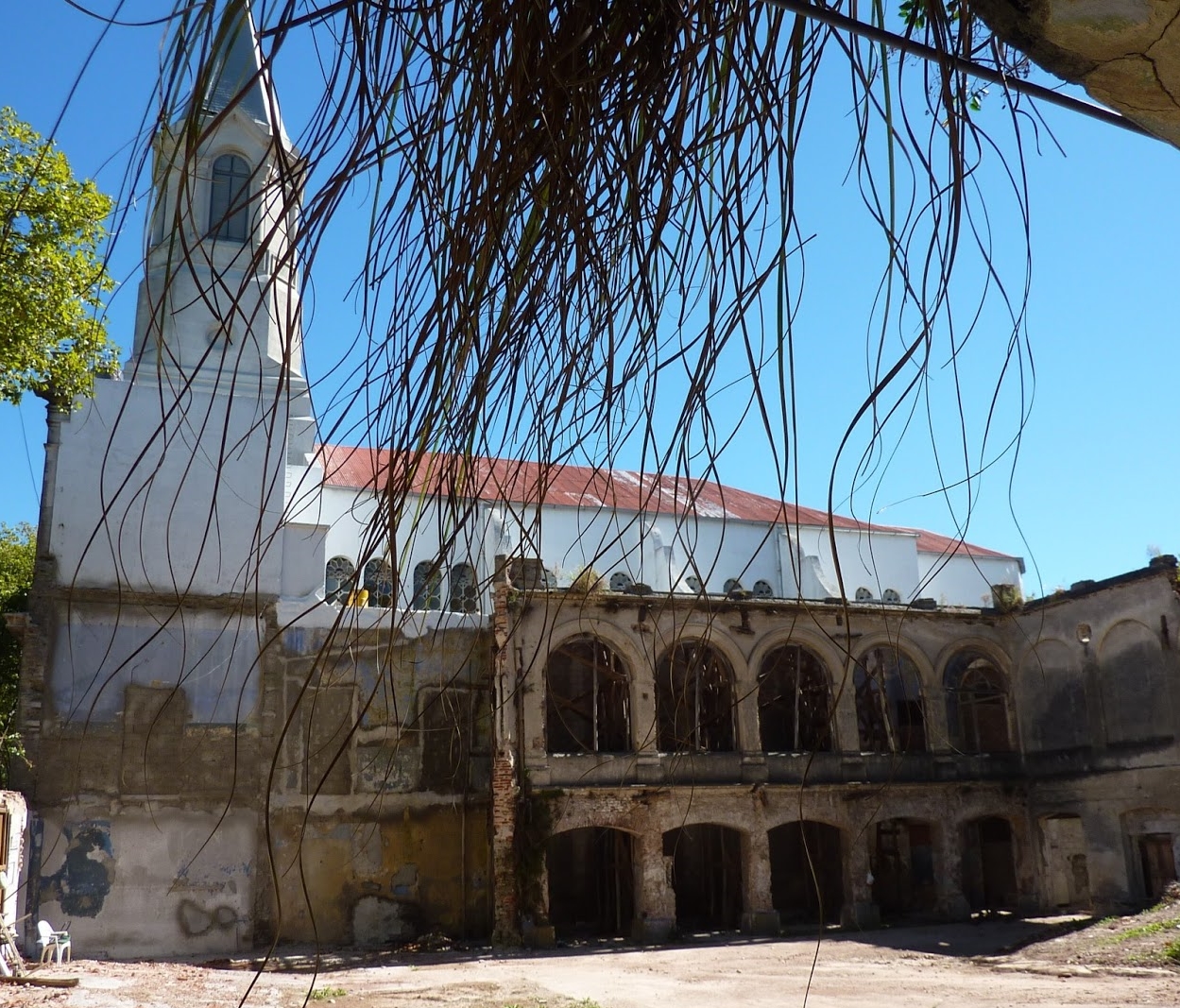
peso 9la   One of the Larranaga inheritances, „The asylum Damaso Antonio Larrañaga“ – a dangerous debris or heritage? Unused and rotting away.

He made the Republic in 1830, was elected senator for the department of Montevideo until 1835. He presented, among others, a bill restricting special cases the death penalty, and one in favor of the slaves emancipation which was provided. He concluded his Senate period is devoted to ecclesiastical functions and their studies, until 1840 when his vision and his health had declined so much.

peso 9ja         peso 9ka

At the corner of Jackson and San Salvador is located the former Foundling Asylum of Orphans and Damaso Antonio Larrañaga. At the time it was a beautiful building, then in the 90’s was partly demolished to build a housing complex there. Finally by the economic crisis it suffers to rotten to death, typical in today’s Uruguay, and the Mortgage bank won’t do anything, they just keep the rotten history in their books.

Collected in its fifth around the capital, he came to find the Great War creating the Government of Defense under President Joaquin Suarez and the Government of the Cerrito led by General Manuel Oribe with the previous similar charge. Larranaga as Vicar Apostolic, respected by all and above discord, able to reconcile the exercise of their ecclesiastical office with the duality of these two civilian authorities.

peso 9ia  The Chapel of the Asilo Dámaso Larrañaga, built between 1875-1878. It is another work of architect Rabu, who adopted here the neo – romantic, though not entirely pure. It is a single nave, covered with a roof truss, with its more than regular dimensions: 40 meters long and 12 wide.
The story behind the Asylum.
Already at the time of the Portuguese occupation (1817 – 1822), the Priest Vicar Damaso Larrañaga, worried about the fate of abandoned children and „for measures of that priest, the Portuguese General Sebastian Pinto de Araujo Correa wrote to the council October 5, 1818, urging the creation of a crib where you were to avail foundlings, order that came with the donation to the work, one hundred pesos of their salaries, while other excise taxes will fail to reach. „
„Agreed the foundation required Cabildo on October 7, ascribing to Charity Hospital, and put in charge and under the direction of Don Damaso Larrañaga. Such is the origin of our house extension. „
For more than 40 abandoned children were collected in a section of the Charity Hospital, but in 1861, the Charity Commission of reignest, created for them, „the Provisional Orphan Asylum in a house of Mrs. Vidal, located in the Cord“.
By the way, since 1865 it was building a definitive and appropriate building to serve as „Asylum of Orphans and Abandoned“, being able to start construction in 1873, with the base of the architect’s plans Rabu. The works must have gone smoothly, because the  16 September 1875, being fully enable the establishment, they moved to El Loa foundlings and orphans.
Very sad that there is no orphanage available anymore – thanks to lazy mortgage bank owners.
The building occupies an entire block, with an area no less than 5,500 square meters, and is surrounded by the streets of San Salvador, Gonzalo Ramirez, Eduardo Acevedo and Juan D. Jackson, in Montevideo.
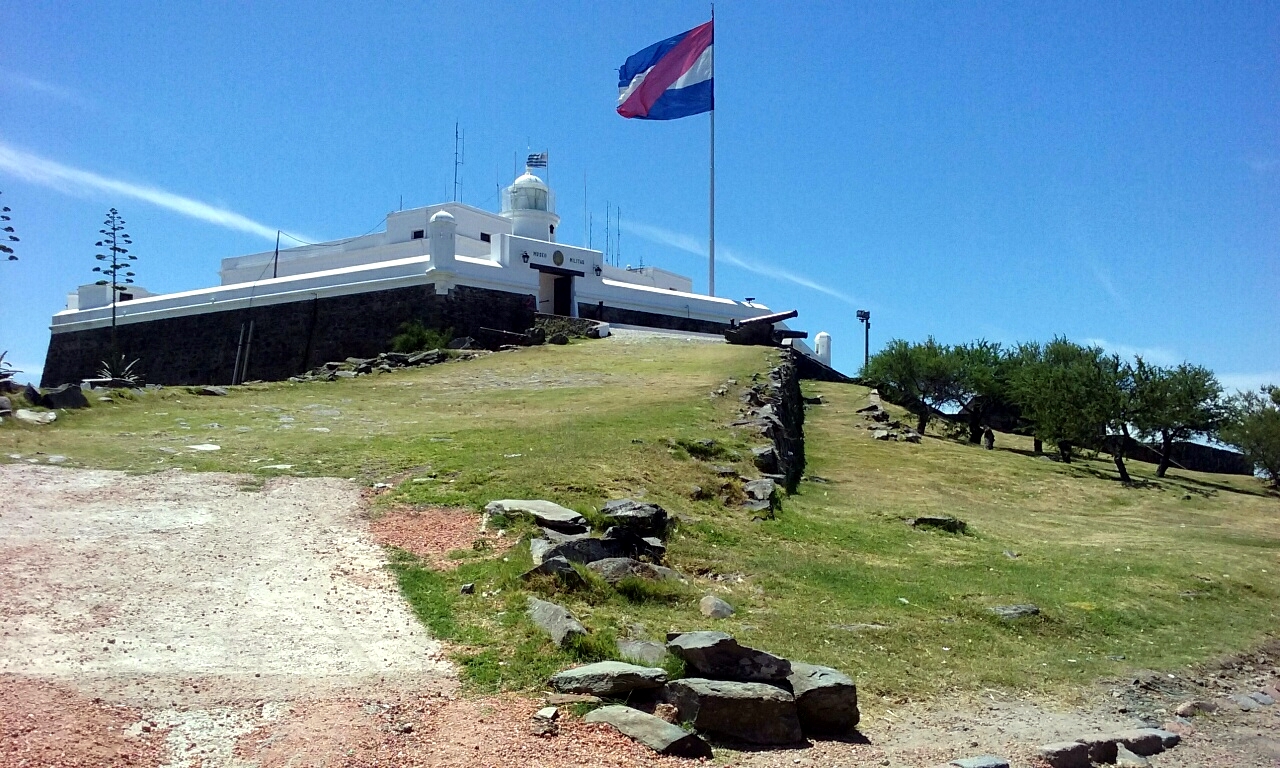
20160113_142253_resized  Even in this museum Larranaga got his honored place . Fortaleza del Cerro, also known as Fortaleza General Artigas. Located on Cerro Montevideo.

When Larranaga died of a stroke  on the 6th of February 1848, they paid him posthumous honors in the field of Cerrito, being buried in the chapel of the Holy Family, as the government of Defense ordered the celebration on the premises of Montevideo funeral offices corresponding to their decretándole dignity honors General of the Republic.

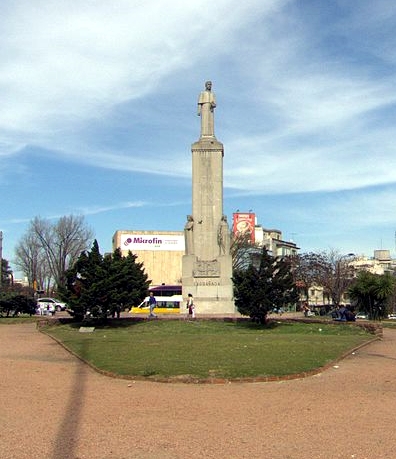
peso 9da  Larranaga monument in Montevideo.

Larrañaga, as the highest ecclesiastical authority of Uruguay, had been appointed by Manuel Oribe to play the first rector of the University of the Republic, but since it was opened a year after his death in 1849, its term was awarded to Lorenzo Antonio Fernandez, who succeeded him as apostolic vicar.  I hope you found the series interesting ! A fifth and final part will follow about the history of Uruguayan banknotes. Stay tuned !!

Veröffentlicht unter Collecting, History, Information, Uruguay | Verschlagwortet mit | Hinterlasse einen Kommentar

Uruguay’s crime ranking

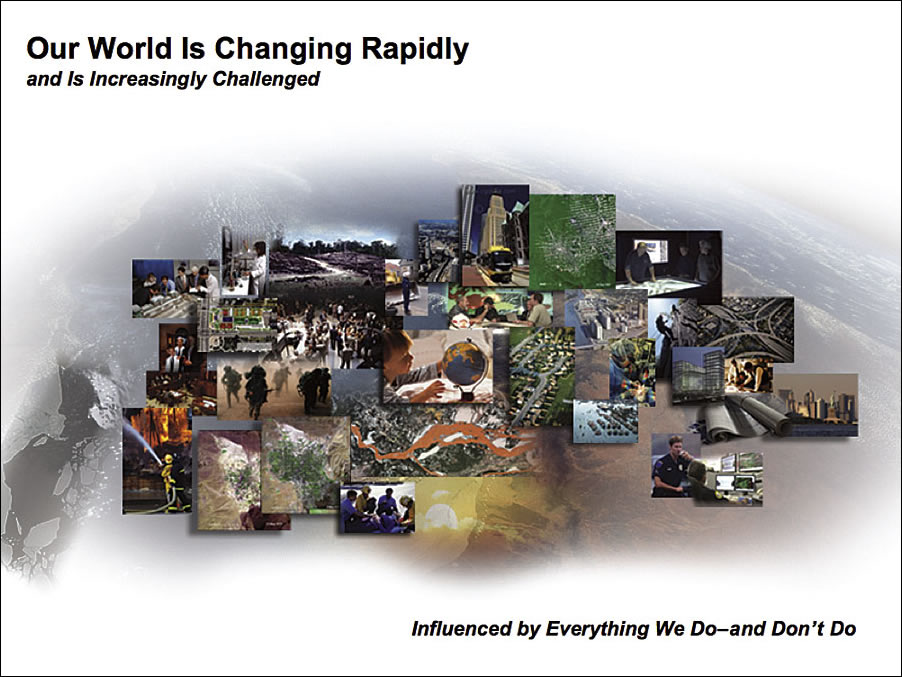
26-world-is-changing    Click on pics, most will supersize.

Everyone is aware that the world is changing dramatically at the moment. Especially the part of security rises above many others. Some new statistics and reports conclude the following information in my post.

In many parts of the world the number of murders is falling steadily. In Latin America and the Caribbean, however, they continue to rise. Now a new list of the most dangerous cities in the world was published.
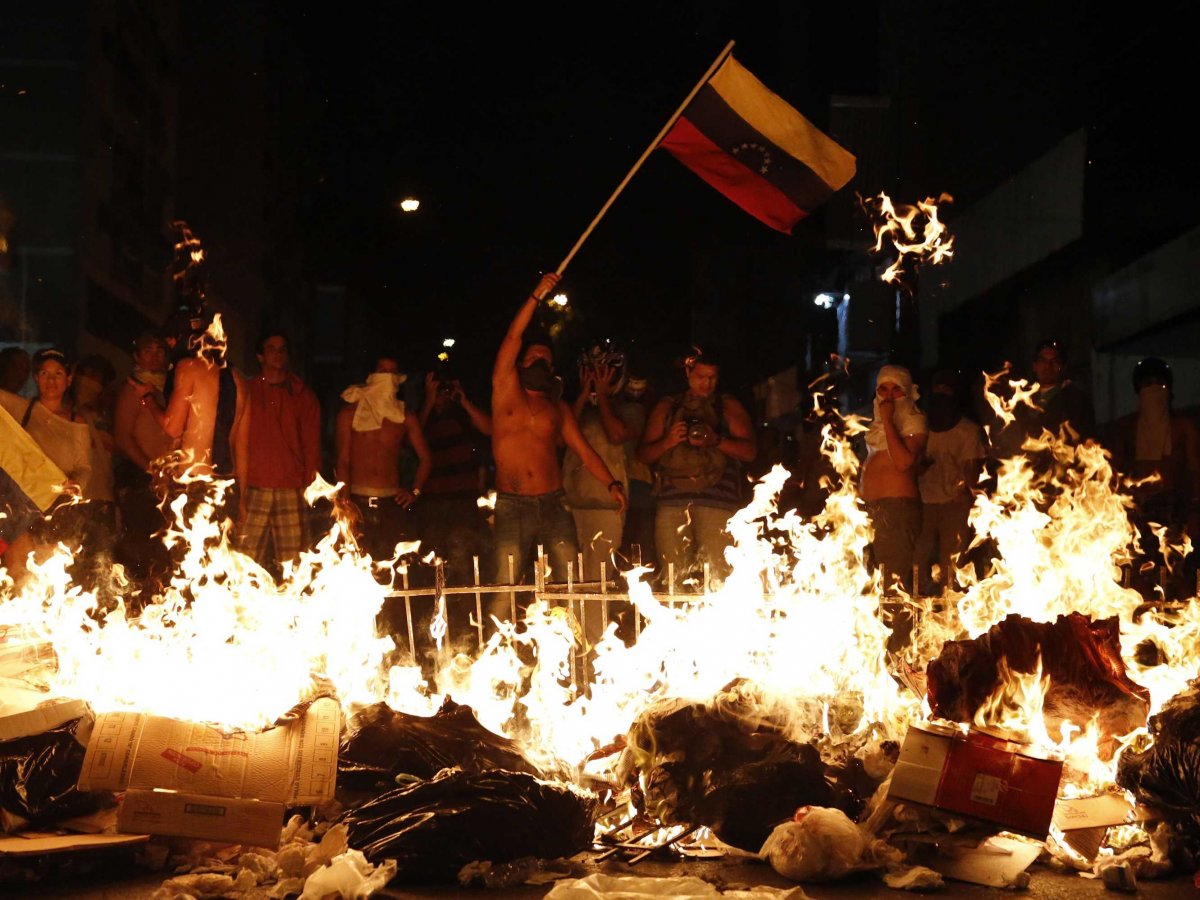
The Venezuelan capital Caracas, according to a new Statistics ranks as the most dangerous place in the world.

2-caracas-venezuela  Caracas, Venezuela.

With nearly 120 homicides per 100,000 inhabitants, the South American metropolis has the highest murder rate outside of war zones, such as the „Mexican NGO Citizens‘ Council for Public Security and Criminal“ told .

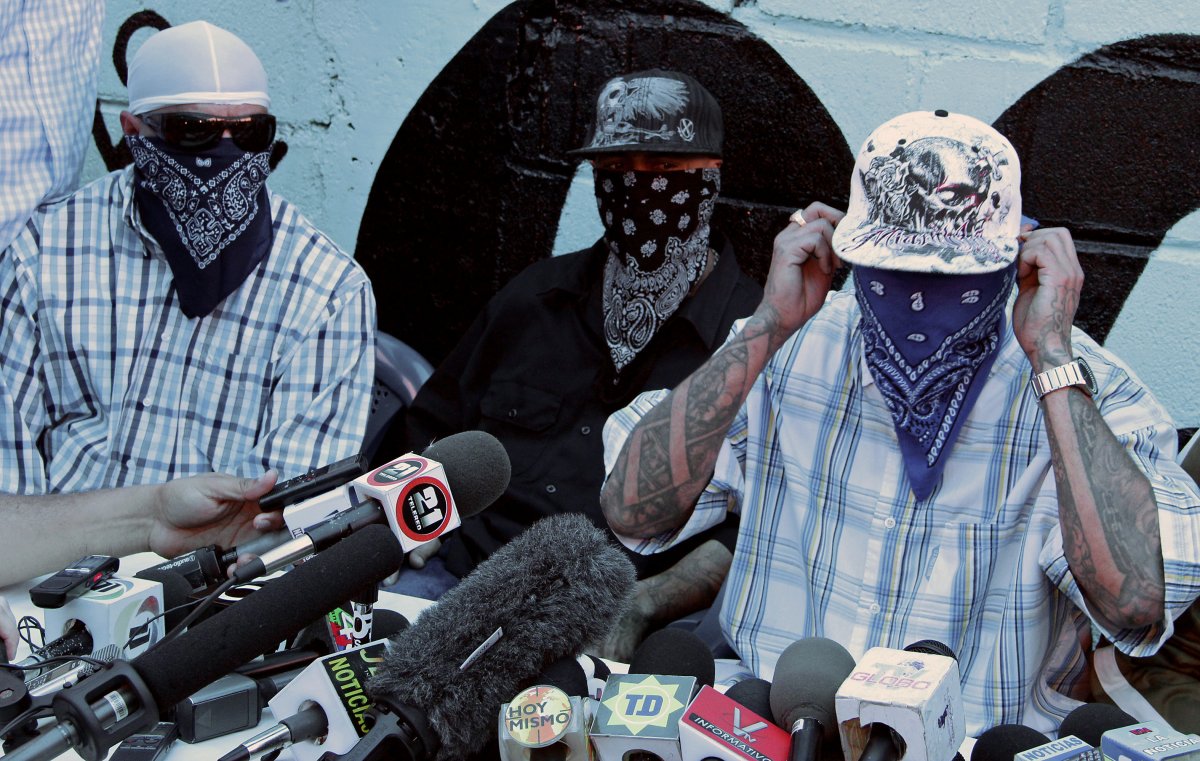
1-san-pedro-sula-honduras  San Pedro Sula, Honduras.

In second place follows San Pedro Sula in Honduras, which was previously for four consecutive years at the top. Third place went to San Salvador. In the capital of El Salvador 108 murders have each around 100,000 inhabitants.
„The overwhelming majority of the 50 most dangerous cities in the world located in Latin America,“ it said in the report.

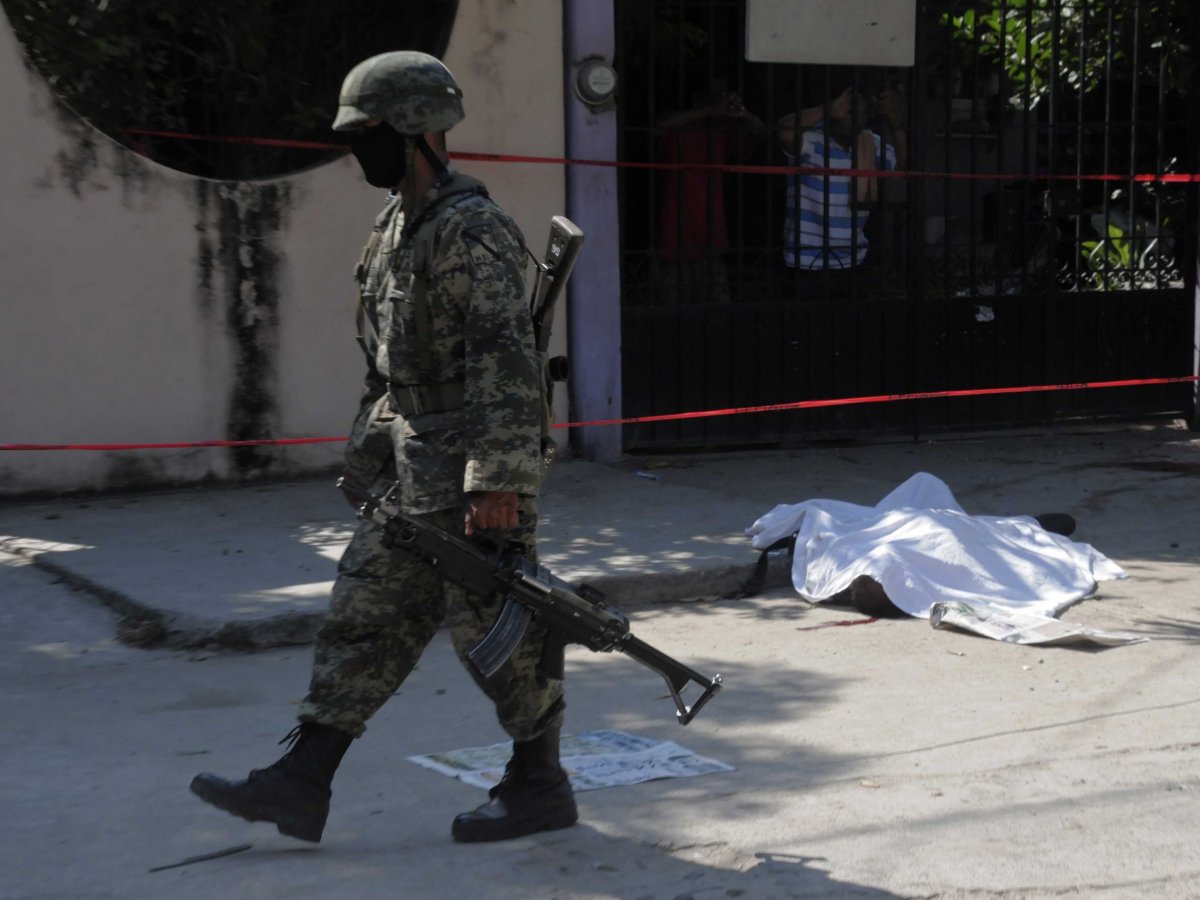
3-acapulco-mexico  Acapulco, Mexico. The wonderful holiday destination ?

Positive experts reviewed the development in Ciudad Juárez in Mexico and Medellin in Colombia. Ciudad Juarez led to the border with the US ranking of 2008 to of 2010.
The former drug stronghold Medellin was in the 1990s as the most dangerous city in the world. In the list in 2015 both cities no longer appear among the 50 most dangerous places on earth.

9-cali-colombia   Cali, Colombia.

Crime Levels in the US.

Two US cities have a place among the top 25 most dangerous cities in the world (on the basis of murder per capita statistics). St. Louis ranks 19th with a murder rate of 49.93 per 100,000 inhabitants, making it the most dangerous location in the country by far. The city is also present in rankings based on considerations for other crimes – the Missouri city has a burglary rate of 606.9 per 100,000 and an aggravated assault rate of 317.7 per 100,000. This has led many to the conclusion that St. Louis is probably the most dangerous city in the US.

19-st-louis-missouri  St. Louis Missouri, USA.
22-detroit-michigan  Detroit Michigan, USA.
28-new-orleans-louisiana  New Orleans Louisiana, USA.

Detroit is the second city included in the 2014 ranking of the world’s most dangerous cities in terms of murder rates. With its 44.87 murders per 100,000 people, Detroit is a bit further down the list than St. Louis, but is still classified a dangerous place nonetheless.
New Orleans falls further down with 39.61 murders per 100,000 residents a year, and the last US city to make the list is Baltimore, with its 33.92 murders per 100,000 people.

14-cape-town-south-africa 38-durban-south-africa
Cape Town (left) and Durban (right), both South Africa.   Rank 112 on the safety list of countries. 142 county’s are listed. Number 1 is the safest (Hong Kong) and 142 the unsafest, with the highest crime ( Congo).

Europe’s Most Dangerous Cities.

Europe may very well be the safest continent in the world, considering that none of its cities appear in the World’s Most Dangerous Cities ranking. However, there are still some cities on the Old Continent that one should be careful about when visiting.
One such city is Rotterdam in the Netherlands. This city tops the chart for European lack of safety. Poland’s Lodz takes second while Newcastle Upon Tyne, United Kingdom occupies the third position in the European city danger rankings.

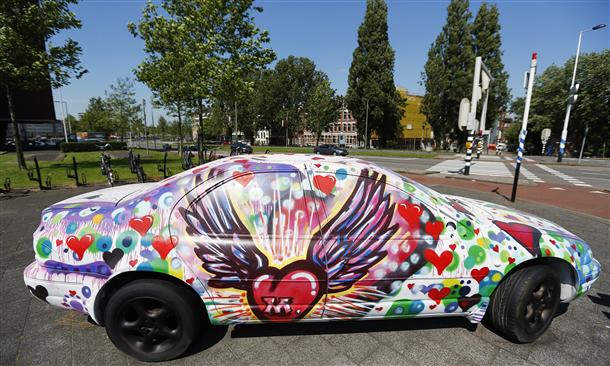
12-rotterdam-netherlands  Graffiti cars „against crime“ in Rotterdam, Netherlands.

Actual crime rates and perceptions are completely different things. Several official polls have been carried out to assess where people don’t feel safe in Europe. The cities where people felt most secure were Oviedo and Groningen, while residents of Athens (Greece), Istanbul (Turkey), Sofia (Bulgaria) and Bucharest (Romania) felt the most endangered.
Do wealth and standards of living have anything to do with security? Crime statistics do suggest that poverty and murder prevalence could be linked to each other, and some of the world’s most dangerous places are indeed located within countries plagued by political turbulence, corruption, low standards of living and economic underdevelopment. Hopefully, figures for all of these dangerous cities will decline in years to come.

15-istanbul-crime  Istanbul, Turkey.

European Domination.

Out of the top 25 countries topping the list of the globe’s safest, 17 are European, with several of the others in the top 25 hailing from Asia or Oceania, and Canada standing alone in representing the Americas. Further, Europe is also the only continent to have not seen a decline in safety and security since 2009. Seeing almost no civil wars or state-sponsored political violence Europe truly feels as the safest place to live for many there and abroad.

16-toronto-canada  Toronto, Canada – safest in the Americas.

Moreover, being formed by countries with near-full democracies or otherwise well-represented republics, most of Europe’s nations proffer unto their respective populaces high levels of freedom to express their political opinion without fear, further increasing feelings of safety and security there. According to the Global Study on Homicide, Europe, Oceania, and Asia have the lowest regional murder rates, each at around 3 per 100,000 inhabitants, compared to 12.5 in Africa and 16.3 in the Americas. Such a disparate gap between these regions is huge, and corresponds very well to the rankings discussed below.

17-norway  Norway – No. 1 country in Prosperity Ranking.

Are Wealthier Countries Safer Countries?

Analyses across a spectrum of different statistics show that living in a ‘rich’ country, or a country with a well-developed economy, generally correlates directly with positive senses of security therein. The Economy sub-index from the 2015 Legatum Prosperity Index shows that only one country (China) out of the top ten in this category is considered unsafe (did not make it to top 25). Furthermore, only 5 of the top 25 safest countries are not ranked among the Highest category in the Economy sub-index rankings. Similarly, only five of the safest countries failed to place in top 30 countries with the highest per capita Gross Domestic Products.

18-Legatum_Logo    Have a look yourself into the full report – just click down here:

Klicke, um auf PI2015Brochure_WEB.pdf zuzugreifen

20-hong-kong  Hong Kong – safest city in the world.

Scandinavia: The Safest Region In The World.

Having all three of its most prominent constituent nations (Norway, Sweden, and Denmark) among the 8 safest countries in the world, Scandinavia has to be considered the safest region. Moreover, if we more loosely consider Iceland and Finland as making up part of Scandinavia as well, this means that out of the eight safest countries in the world, 5 are located in Scandinavia. Considering intentional homicide rate averages from across these five countries, the regional rate is 0.8 annual incidences per 100,000 inhabitants. Compared to the already mentioned low rates across the continent, Scandinavia’s homicide rates stand at around merely a quarter of those seen across Europe.

 25-scandinavia  Norway, Sweden and Denmark among the 8 safest.

The Pride of Small Asian Countries.

The second-best represented region in the top 25 safest countries in the world is Asia. Aside from Japan, the Asian countries nearing the top of the list are considerably small in size, both in terms of population and physical area. What is more, two of them are not even full recognized countries by some others, with Hong Kong being a „Special Administrative Region of the People’s Republic of China“, and Taiwan (a.k.a. The Republic of China) not being fully recognized by a number of other countries that conduct business and foreign relations with China (PRC) on the mainland, Taiwan’s cross-sea economic and political rival. It is not all about local culture though.

21-singapore-  Singapore, No. 1 city for economy sub-index.

For instance, expensive tickets for minor violations of the law are also said to play a big role in low crime rates in countries like Singapore. Not only are the laws there rigorous (even selling chewing gum is forbidden) but also brutal, considering that over 88% of sentences in 2012 included some degree of caning.

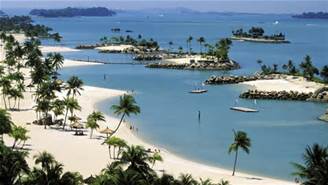
23-singapore-rasa-sentosa-shangrila Singapore, Shangri La’s Rasa Sentosa resort (pic out of my hotel room) on Sentosa island. A place not only for business, also a great lifestyle experience.

Commonalities among the World’s Safest Countries.

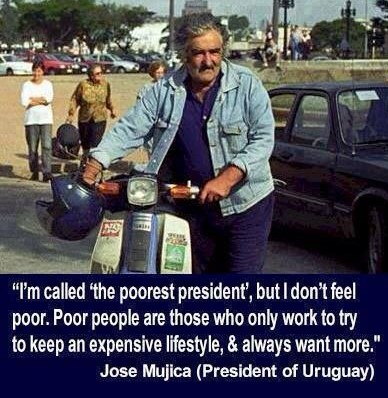
As we can see, certain regions of our globe are considered far safer and more secure than others. Among the most significant factors driving such high levels of safety include the educational levels of these populations, their levels of relative social welfare and wealth, and effective criminal justice systems. Furthermore, the governments in these places do not carry out a significant degree of state-sponsored violence and, as such, set a good example and foundations of healthy relationships with their citizens. See Pepe down here.

uruguay 9   The above was perfectly presented by „President Pepe“.

Sian Hansen, Executive Director, Legatum Institute, says:

„The Prosperity Index tells us that the story of human progress goes beyond economics. It tells us that for nations to flourish they must provide opportunity and freedom to their citizens. It shows how access to quality healthcare and education provide the foundations on which nations can grow. It proves that effective and transparent government empowers citizens to take control of their lives. And it shows that protection from violence and oppression, as well as strong social bonds, are crucial to a thriving society.“

24-sian-hansen  Sian Hansen, Legatum Institute.

Legatum Index Safety and Security Ranking, best 25 – plus.

Hong Kong 1
Iceland 2
Finland 3
Ireland 4
Sweden 5
Taiwan 6
Denmark 7
Norway 8
Canada 9
Luxembourg 10
New Zealand 11
Singapore 12
Switzerland 13
Slovenia 14
Australia 15
Austria 16
South Korea 17
Portugal 18
Netherlands 19
Belgium 20
Germany 21
Japan 22
United Kingdom 23
Czech Republic 24
Spain 25
———-
Uruguay 28
Malta 29
France 31
United States 33
Chile 38
Argentina 50
Brazil 85
Paraguay 89
Ecuador 90
Peru 101

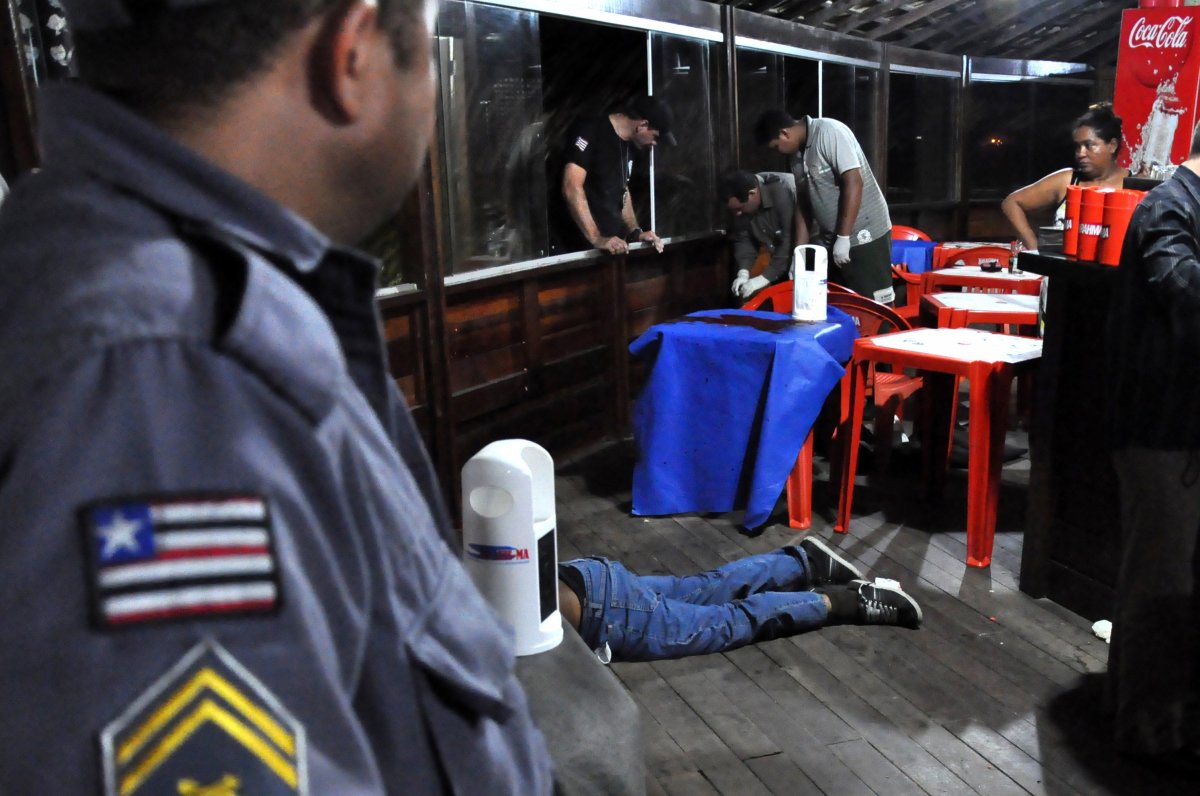
10-so-lus-brazil  3 dead after shooting – in Brazil.


Uruguay in the Legatum Index.

Uruguay is (behind Canada) the safest country in all the Americas. It ranks even safer then France and the United States. In the Prosperity Index you will find Uruguay on the 3rd place behind Canada and the USA in all Americas. It is still number one in all Latin America and would be at least 5-6 ranks better (within the first 20) if they had better points in the sub-part of education (Uruguay ranks on very bad 60th place).

uruguay 2  Uruguay is ranking 10 (of 142) for „Personal Freedom“.

Therefore Uruguay ranks in the part „Personal Freedom“ on worldwide place 10 !!! Better then by example Switzerland, Netherlands or United Kingdom and much better then the US. No wonder that we all like to live here. Prices increased the last few years in Uruguay – YES , but the SAFETY, the PERSONAL FREEDOM, the friendliness and openness of the people opposite foreigners and an effective high class and cheap HEALTH SYSTEM makes Uruguay for all of us „No. 1 country“ to live and retire.

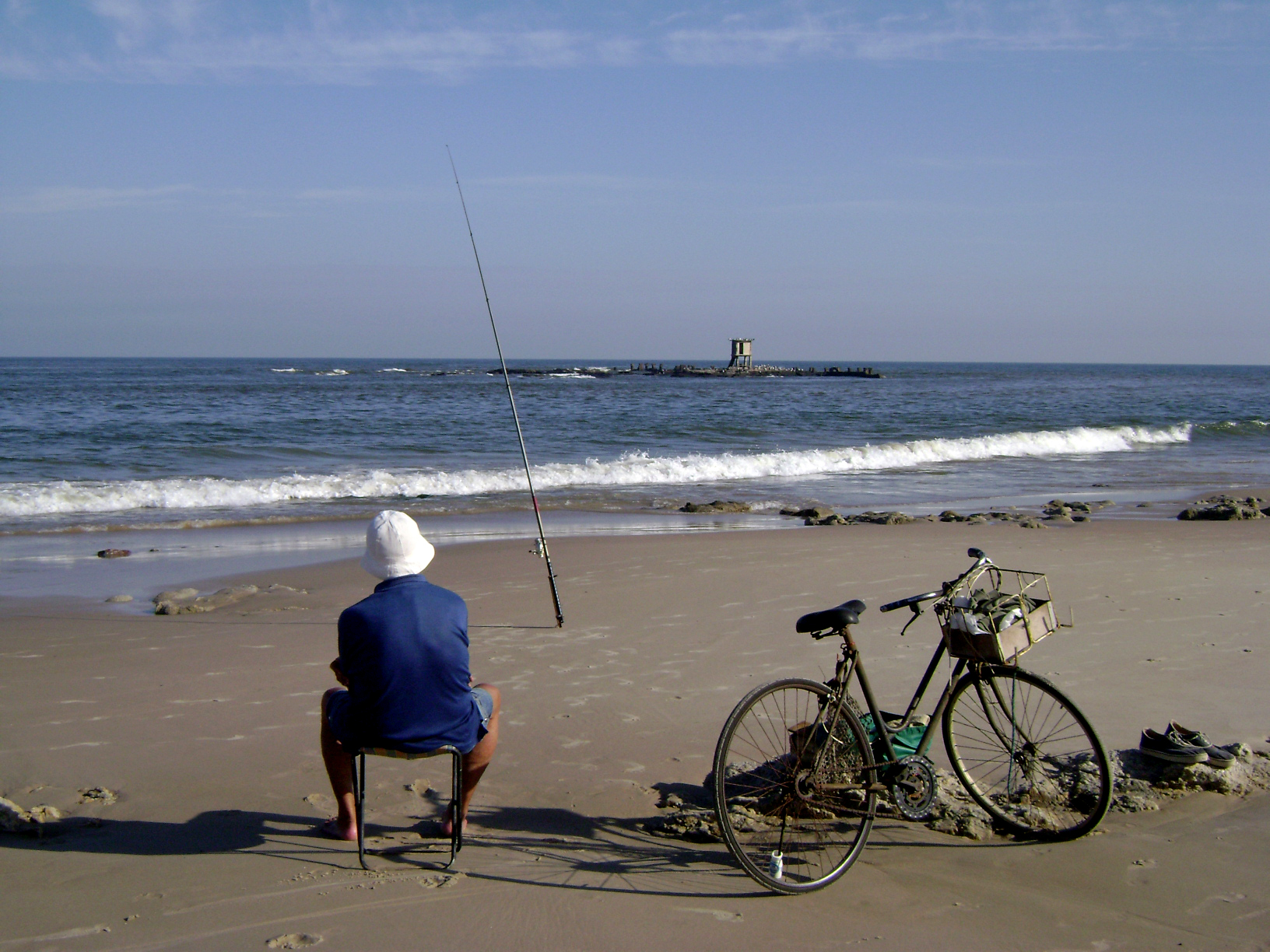
20151116_080931  Beach near La Floresta, Gold Coast Uruguay.

In Prosperity Ranking of all 142 countries Uruguay is the only country (except Australia and New Zealand) in the Southern Hemisphere ranking in midst the TOP 30. That’s another important point for all of us to live here, subtropical and warm climate, 4 soft seasons, no deep frost/snow and the best beaches in all of South America. Of course, if there are UP’s then there are DOWN’s, but on a scale the UP’s outweigh highly the DOWN’s.

uruguay 6 My motto: Uruguay – Love it or Leave it !

Veröffentlicht unter Information, Lifestyle, Uruguay | 2 Kommentare

Who are They – Part 3

peso 13a 1896  Beautiful old Uruguayan banknote from 1896.

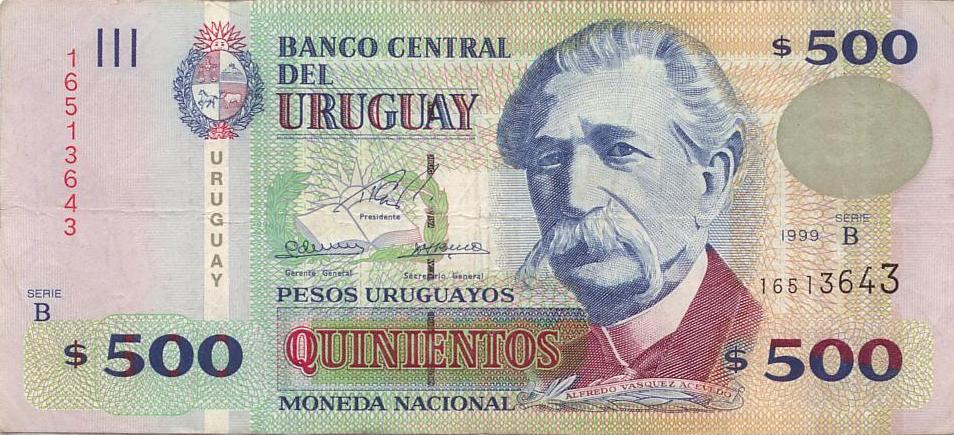
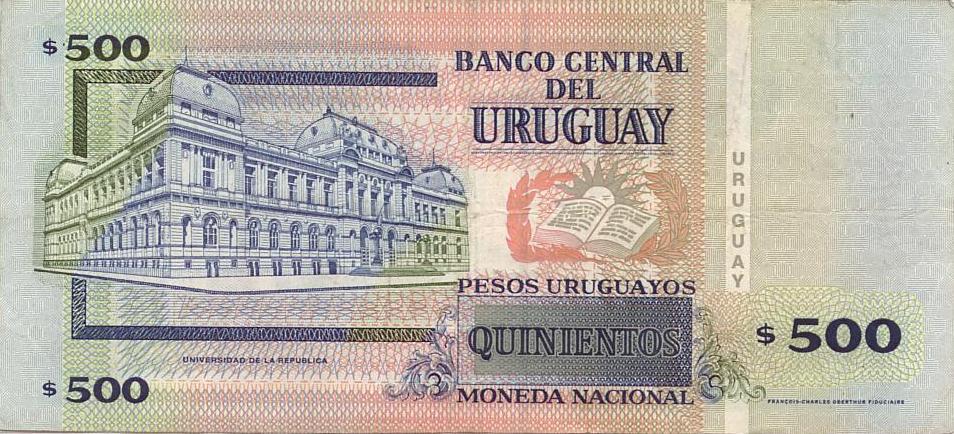
Alfredo Vasquez Acevedo.

peso 7  peso 7a
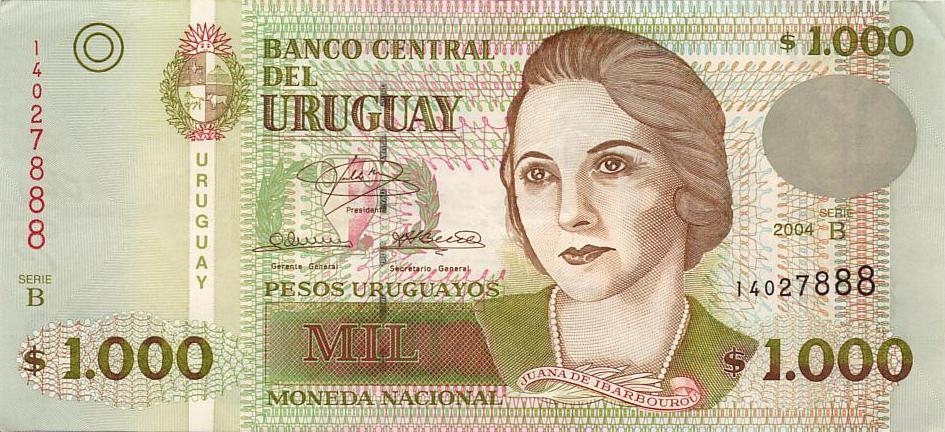
Alfredo Vasquez Acevedo on front of the 500 Peso note. The back shows the Universidad de la Republica.

He was born on 8th of July 1844 in Buenos Aires, naturalized Uruguayan, under the vagaries of the fratricidal struggles that those times imposed on the patrician families of Uruguay, which was consolidating its existence as a sovereign nation.

peso 7e 1921  This picture was used for the 500 Peso note.

Acevedo attended primary school in Buenos Aires and in 1855 the family took up residence in Montevideo. His father died and Alfredo grew up next to his uncle, the illustrious jurist Eduardo Acevedo, by whom he had an affection and respect that would be present in spirit until the end of his days. He earned his degree in Jurisprudence in 1866.

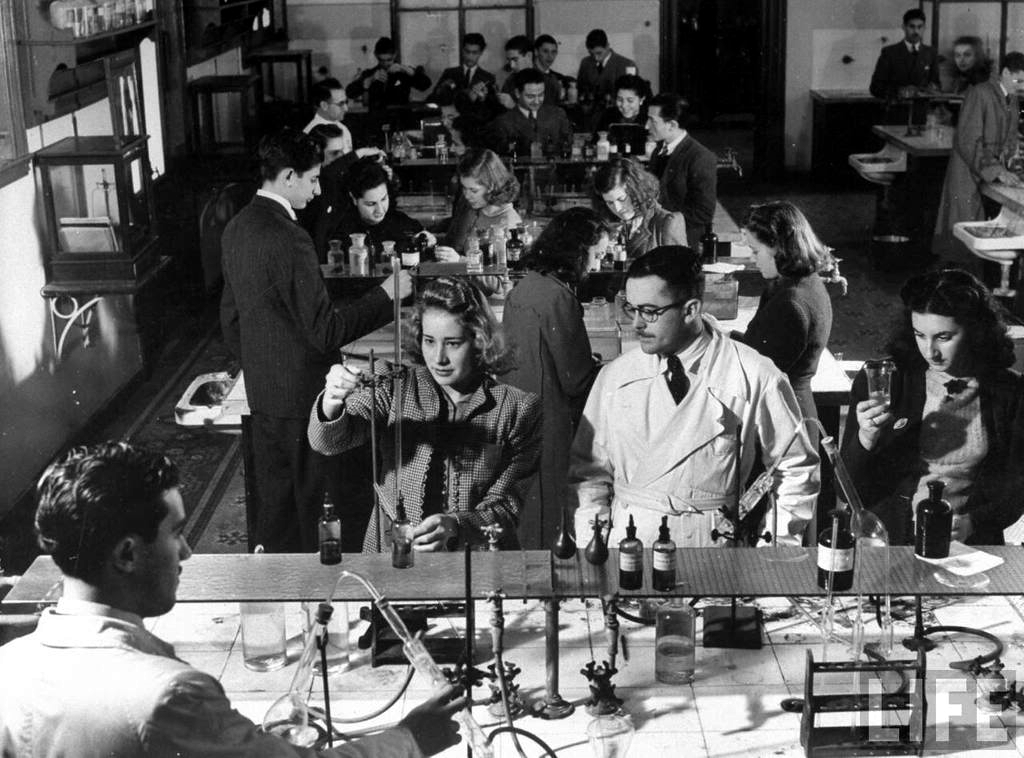
peso 7f  Acevedo with students in The University of Uruguay.

From a young age on he stood out as one of the biggest concerns people, knowledge and practical achievements in the field of public education, in a time when this was taking place with many difficulties in Uruguay.

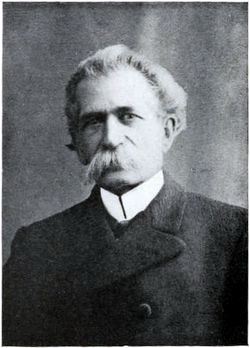
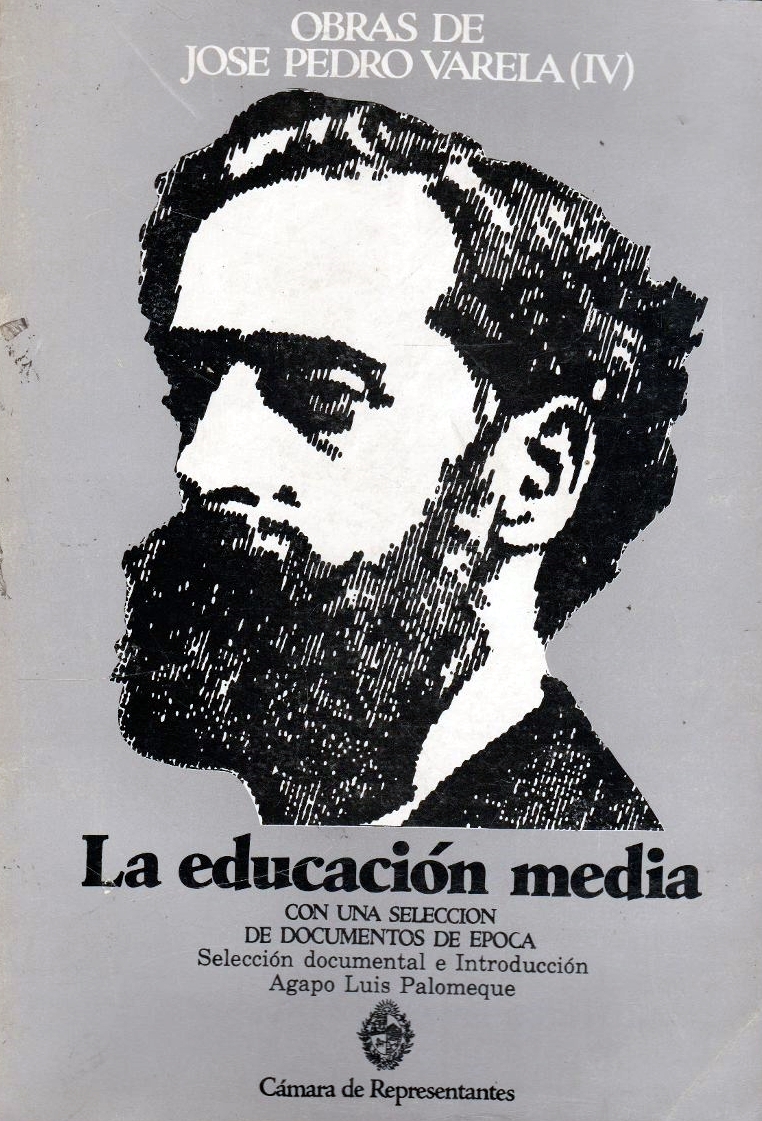
peso 4l  Close work between Acevedo and Varela in education.

Acevedo founded in 1868, along with Jose Pedro Varela, Elbio Fernandez, Carlos Maria Ramirez and other distinguished intellectuals of his time, the Society of Friends of Popular Education, whose executive committee chaired in 1879-1880 and 1900-1901.

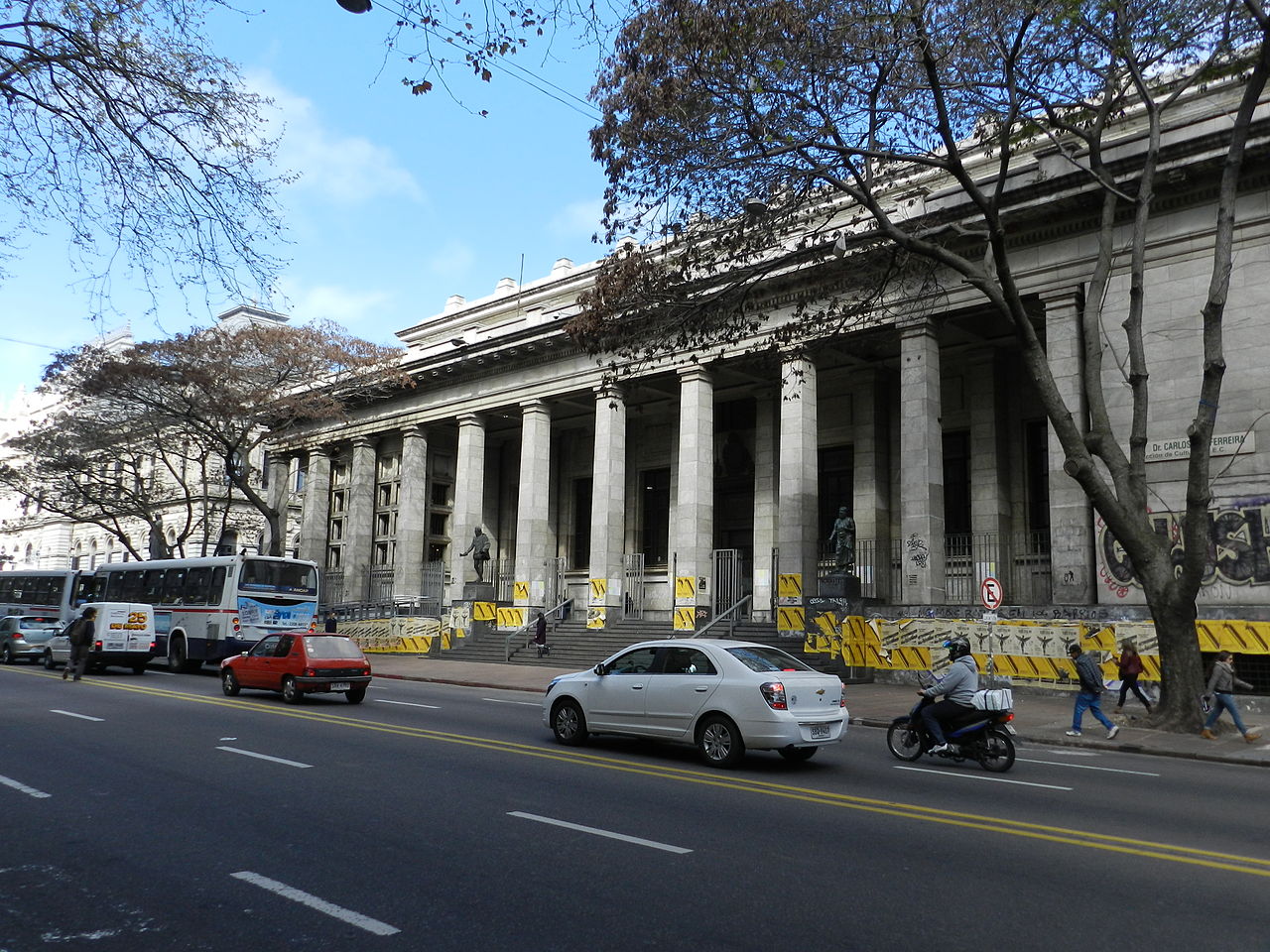
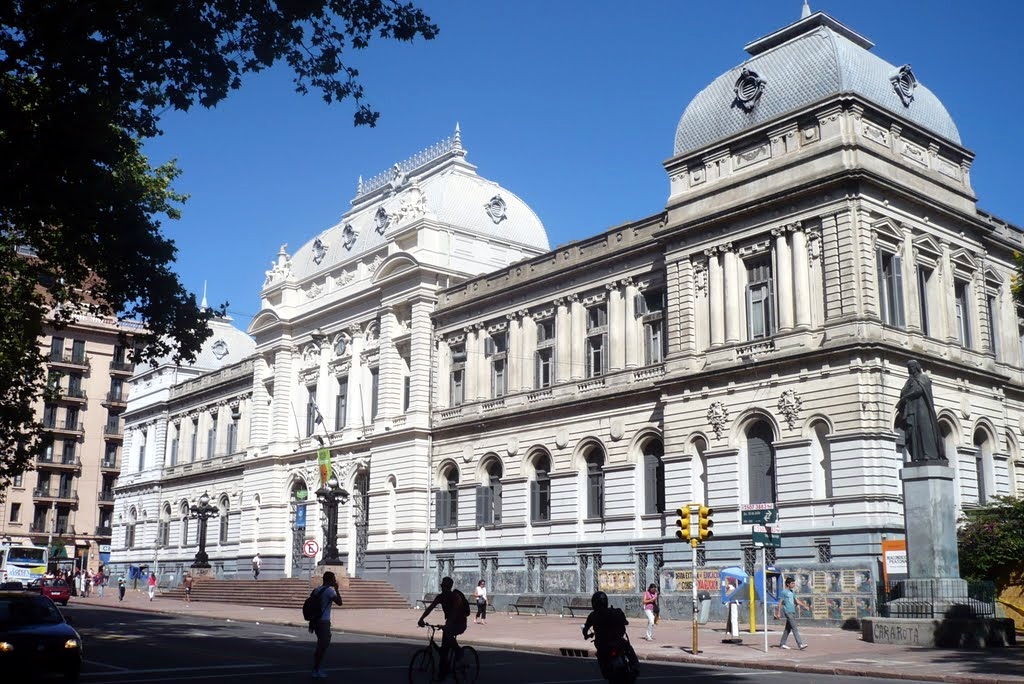
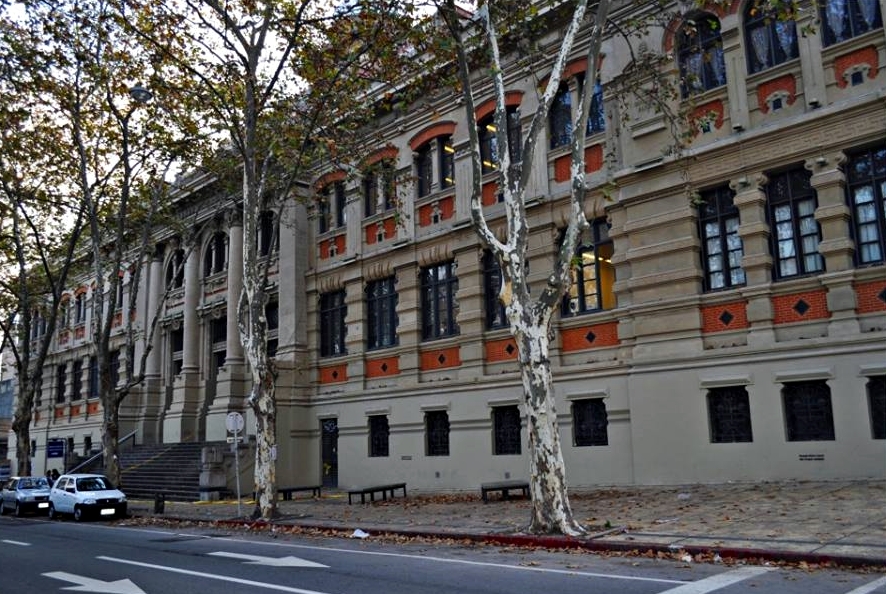
peso 7h  University of the Republic in Montevideo.

In 1880 he reached the rector of the University of the Republic, a post he held almost without interruption until 1899. Only for a brief period was replaced by Dr. Jose Pedro Ramirez and a decade later, during one year, Dr. Pablo de Maria .

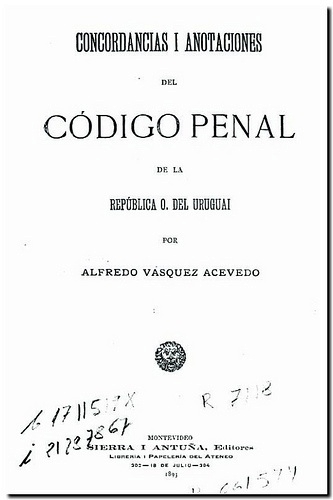
peso 7c  One of Acevedo’s many publications.

His action was a really remover in all aspects and one can say that it was the origin of the development that took the Uruguayan University, to diversity of races and powers that characterized the first quarter of the twentieth century.

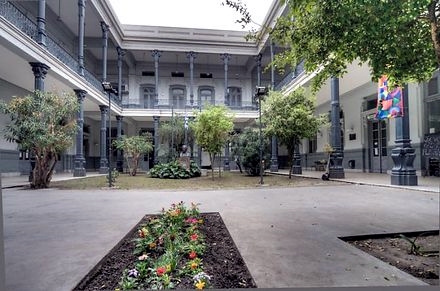
peso 7d Inside the Instituto Alfredo Vazquez Acevedo.

He held senior positions in the judiciary: Government Tax and Finance (1873-1874), Attorney Civil and Crime (1876-1879), Civil Tax (1878-1885). In 1899 he was elected senator and later deputy. He presided over the Constituent Assembly of 1917. He was also repeatedly chairman of the National Party.

peso 7b
The Instituto Alfredo Vazquez Acevedo is a building in the Uruguayan capital Montevideo.

The 1911 inaugurated building is located in the Barrio Cordón Calle Eduardo Acevedo on the 1419-1427 and the streets José E. Rodó, Guayabo and Emilio Frugoni. As an architect Alfredo Jones Brown was responsible. Since 1976, the building is classified as Monumento Histórico Nacional.

Alfredo Vasques Acevedo died on the 6th of July 1923 in Montevideo.

Juana de Ibarbourou.

peso 8   peso 8a
Juana Fernández Morales de Ibarbourou on front of the 1000 Peso note. The back shows some books of her on a shelf and the Juana palm, „La Palma de Juana“ as called in Uruguay.

Juana de Ibarbourou, original name Juanita Fernández Morales, also known as Juana de América. She was born the 8th of March 1895 in Melo, Uruguay. She was an Uruguayan poet, one of the most famous Latin American women poets. She was venerated for her lyrical celebration of love and nature.

peso 8q  This picture was used for the 1000 peso note.

Ibarbourou spent her childhood in a small village surrounded by country things. She was largely self-educated. In 1914 she married and later she bore a son. After a somewhat peripatetic existence, the family moved to Montevideo in 1918.

peso 8e 1923            peso 8c 1933
Juana always tried to look beautiful and sexy, left 1923 and right 1933.

She was one of the most popular poets of Spanish America. Her poetry, the earliest of which is often highly erotic, is notable for her identification of her feelings with nature around her. Juana de Ibarbourou was a feminist, naturalist, and pantheist.

peso 8f 1929 juana y zorrilla  Rare photo of Ibarbourou and Zorrilla (20 Peso note).

Ibarbourou’s feminism is evident in poems such as „La Higuera“, in which she describes a fig tree as more beautiful than the straight and blooming trees around it, and „Como La Primavera“, in which she asserts that authenticity is more attractive than any perfume. Also, in „La Cita“, Ibarbourou extols her naked form devoid of traditional ornamentation, comparing her natural features to various material accessories and finding in favor of her unadorned body.

peso 8l    Some of Juana’s poetry.

Ibarbourou’s poetry, rich in sensual images and expressed in simple language, deals with the themes of love and nature. Las lenguas de diamante (1919; “Tongues of Diamond”) is strikingly sensual, erotic, and pantheistic. These qualities, along with a youthful narcissism, are also present in Raíz salvaje (1922; “Savage Root”).

peso 8m    Wonderful children’s book „Natascha’s Dreams“.

The urgency and abundance in these early works gave way later, in La rosa de los vientos (1930; “Compass Rose”), to a sense of declining beauty and vitality and, finally, in Perdida (1950; “Lost”), to an expression of despair. She was deeply affected by her own illness and the deaths of her parents and husband.

peso 8n gregorio de laferrere Private Institute Juana de Ibarbourou, a private school in Gregorio de Laferrere, department Buenos Aires, Argentina.
peso 8i casa in santa clara de olimar  The sign says „Casa donde vivio Juana de Ibarbourou“, private home of Juana de Ibarbourou in Santa Clara de Olimar, ruta 7, departemento Treinta y Tres.   It sadly rots away as so many other buildings, worth preserving,  in Uruguay.  Notice the two Juana palms in front.

Although Ibarbourou’s later poetry lacked the passion and feeling of her earlier work, she remained one of the most popular poets of South America. She was elected president of the Sociedad Uruguaya de Escritores (Society of Uruguayan Writers) in 1950.

peso 8o 8 de marzo mvd  Monument on Av. 8 de Marzo in Montevideo.

Ibarbourou’s depiction of death in her poetry was not consistent throughout her body of work. In „La Inquietud Fugaz“, Ibarbourou portrayed a binary, final death consistent with Western tradition. In „Vida-Garfio“ and „Carne Inmortal“, however, Ibarbourou describes her dead body giving rise to plant life, allowing her to live on.

peso 8p 1977  Juana Ibarbourou in her late 8o’s.

In „Rebelde“, one of Ibarbourou’s most richly constructed poems, Ibarbourou details a confrontation between herself and Charon, the ferryman of the River Styx. Surrounded by wailing souls on the boat passage to the underworld, Ibarbourou defiantly refuses to lament her fate, acting as cheerfully as a sparrow. Although Ibarbourou does not escape her fate, she wins a moral victory against the forces of death.

peso 8g frente a la terminal melo  Juana de Ibarbourou monument in front the terminal in Melo.

Like most poets, Ibarbourou nursed an intense fear of death. Though it is easy to surmise this from her poetry, she states so explicitly in the first line of „Carne Inmortal.“ Juana died in the age of 87 on 15th of July 1979 in Montevideo, Uruguay.

A fourth part will follow with the 2000 Peso note, one of the most interesting personalities on an Uruguayan banknote. Stay tuned, don’t miss it.

Veröffentlicht unter Collecting, History, Information, Uruguay | Verschlagwortet mit | Hinterlasse einen Kommentar

Circular Bridge in Uruguay

bridge 2

The long awaited Laguna Garzon Bridge is set up.

The Ministry of Transport has eyeballed the prospect of a bridge over the lagoon since 1950, but the project did not start until May 2013. Many years ago a bridge was started to build but half way technical  problems and running out of funds stopped the project. It took me a while to drive along and have a look on this spectacular bridge site. Worth to see and to spend a few hours at the laguna. Now I can share it with you.

bridge 17    The Laguna Grazon Bridge and the floating hotel.

Over decades the ruin blighted the environment. Now the new bridge will replace the current system of rafts that connect the two cities, which allowed only two cars to pass at time, depriving Rocha of the development frenzy seen in Maldonado.

bridge 3    And already seen on google maps.

After six years of public hearings and agreements, the bridge that connects Rocha and Maldonado counties is a reality today. Eduardo Costantini, Argentinian real estate magnate and a Las Garzas developer and owner of Las Garzas Guesthouses and more, was the initiator and driving power . It is an iconic architectural piece designed by Rafael Vinoly, Uruguayan and international known architect.

bridge 12  bridge 13 constantini
Vinoly left and Constantini right.

The bridge was officially opened the 22nd of December 2015, together with official authorities. This marks a cornerstone in the economic growth and development of Uruguay. The Consultatio company Las Garzas was a key player in consolidating the project.  The final cost of the project is around US$11 million, with the state providing about US$ 1.8 million, almost US$ 10 million were invested by Constantini.

bridge 8 laguna garzon  The past: abandoned bridge and the 2 ferry’s.

National State and Consultatio.

„The joint effort of the National State and Consultatio made the building of the bridge possible. All legal and environmental requirements were observed and the participation of architect Rafael Vinoly greatly benefited the project“, states Eduardo Costantini. “It is an iconic architectural piece that will be a catalytic factor in driving the development of Rocha’s coastline, especially protected to preserve direct contact with nature.

bridge 1  Another view of the circular bridge.

Just 35% of the stretch between the two lagoons can be developed and 50% must be devoted to green areas”, Costantini also points out at the opening speach.
The Laguna Garzon Bridge will be an essential connection between Rocha and Maldonado counties and will improve communication in this area. It was designed  as a “lagoon inside a lagoon” and is at the same time an observatory, tourist and fishing spot.

bridge 18   Beautiful fishing in the laguna arms.

The project is round shaped with a concrete structure built on piles. There is a sector for car traffic (it is estimated that about 1000 vehicles per day will be crossing it) and one for pedestrians with an external walkway and an internal covered one.

bridge 9  A couple years ago I was so happy to reach the ferry without a waiting traffic jam. Ha ha it was just a quarter past 12.00 !! Waiting 2 hours for the next ferry? This is over now, 24/7 the traffic can roll.

From the environmental point of view, the project presented by Vignoly was approved not only because of its unique design, but also because it fits the high environmental standards in Rocha.

bridge 14   Nightfall over the laguna, front the floating hotel.

Some facts about the Laguna Garzon Bridge.

In September 2014, construction company Saceem started building the bridge that today replaces the former raft crossing. It was completed after 12 months.
Among the challenges, it is worth pointing out:
– Project with a high degree of geometrical complexity.
– Constructive procedure and use of high technology to meet deadlines.
– Complex post-stressed system which required engineering and the use of imported
equipment from Europe to carry out this project.
– Design of a wide variety of building processes and execution of multiple elements for
their implementation.
– Transportation and mounting of 70- ton pieces.

bridge 4  An architectural masterpiece in Uruguay.

Just like a roundabout, it will slow down drivers heading over the environmentally sensitive lagoon, while providing new pavilions and views for pedestrians and adding to the simple beauty of the land. further interesting is, that a similar design of a circular bridge system, only exists 3 other times (may be one or two more) in the whole world.
See down here the examples.

bridge 19 Pedestrian Bridge, Beijing, China    Pedestrian bridge in Beijing, China.
bridge 20 Hiyoshi dam, Japan    Hiyoshi dam bridge in Japan.
bridge 21 Hovenring Eindhoven, Netherlands   The Hovenring in Eindhoven, Netherlands.
bridge 5   And finally again the new „Circular“ of Uruguay.

Hope you enjoy pics of the bridge. If you have time, visit it yourself – and – click on pics !


Veröffentlicht unter Information, Travel, Uruguay | 2 Kommentare