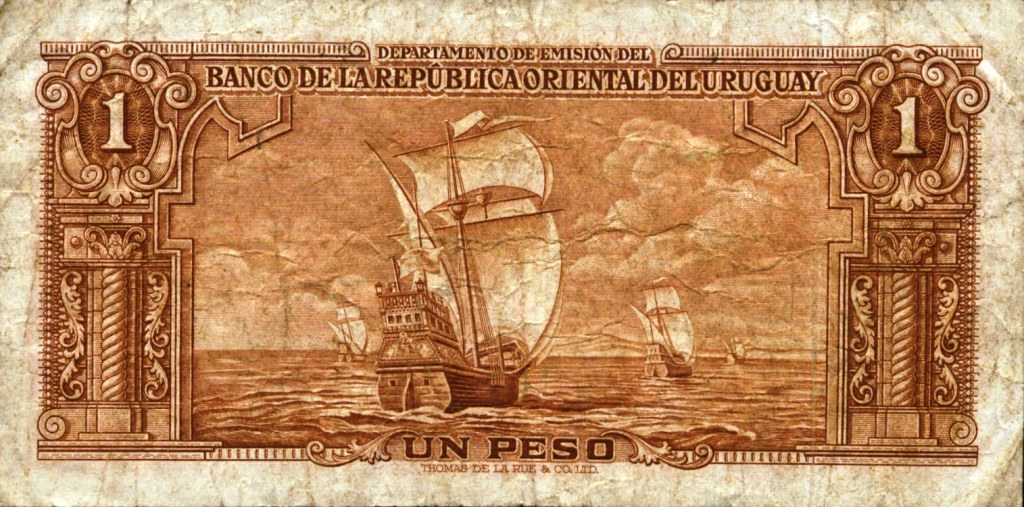
History of Uruguayan Currency.
After my series „Who are They“ about Uruguayan banknotes, I was asked a few times to describe the history of UY currency. I didn’t like that in the begin, because it is a never ending theme. But since I discovered the OLDEST URUGUAYAN BANKNOTE (see above), I thought it’s worth to show you this paper and where it fit’s in to local history. Click on pics to supersize.
Uruguay’s currency was initially that common to all of Spanish America.
During the struggle over this region, initially between Spain and Portugal, then between Argentina (Spain) and Brazil (Portugal), the coinage of both contestants circulated.
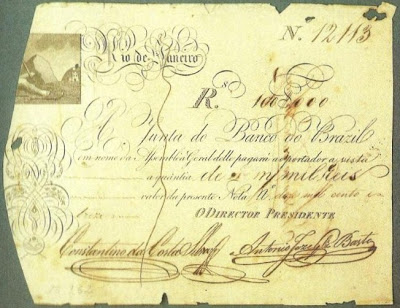
When the area was annexed to Brazil in 1821 as Provincia Cisplatina, the Portuguese (Brazilian) administration put notes of Banco do Brazil into circulation.
 Brazilian banknote from 1810, brought into circulation in Uruguay (Cisplatina). Courtesy of Central Bank’s Values Museum Brazil.
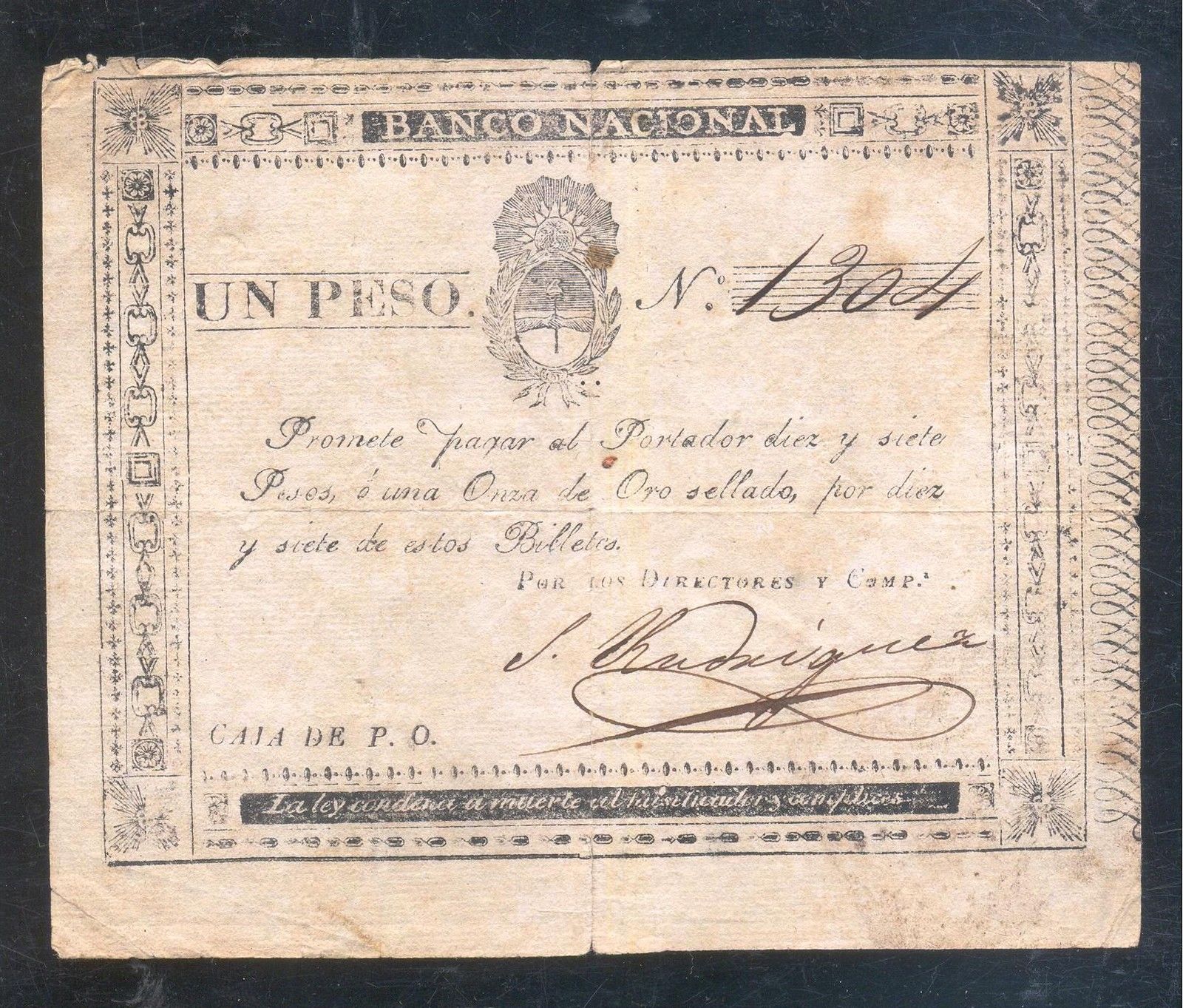
This was the first paper money to circulate in Uruguay. Then, in 1826–1828, Argentine troops fighting against Brazil were paid in one-peso notes issued by Banco Nacional of Buenos Aires for Provincia Oriental („Eastern Province“, „Provincia Oriental = P.O.“ i.e. Uruguay).
The Oldest known Uruguayan Banknote.
ARGENTINA BANKNOTE
FIRST URUGUAY NOTE
UN PESO (1826) BANCO NACIONAL
„CAJA DE P.O.“ means „Provincia Oriental“
means „Bank of the Eastern Province“,
PROVINCIA ORIENTAL DEL URUGUAY.
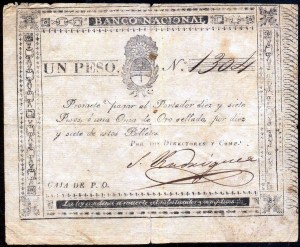 The oldest known Uruguayan Banknote 1826.
All parties to the conflict used the Spanish dollar (Spanish peso, Portuguese patacão), which circulated with a value of 8 Spanish reales or 960 Brazilian reis. Circulation consisted of coins from mints in Mexico, Potosí, Brazil, and Buenos Aires. During the turbulent period of conflict preceding independence, a considerable amount of poor-quality copper coins from both Buenos Aires and Brazil came into circulation.
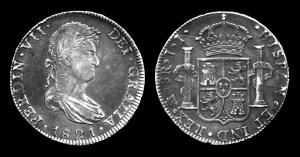 Spanish Silver Coin of 8 reales from 1821.
Uruguay’s Currency is Born.
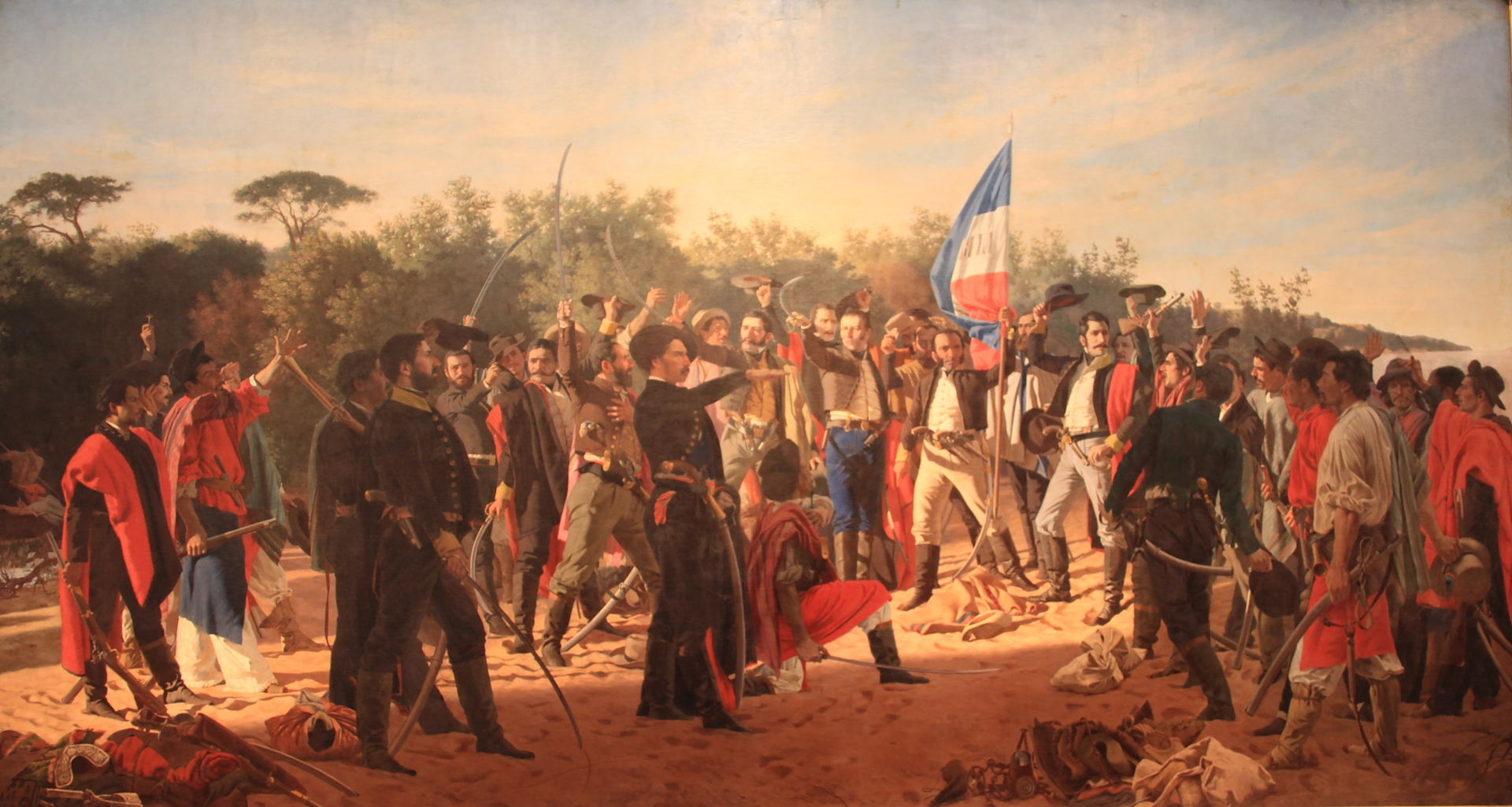
As a reaction to the annexation of the Cisplatina aerea a group of Uruguayan nobles, the Thirty-Three Orientals led by Juan Antonio Lavalleja declared independence on 25 August 1825 supported by the United Provinces of the Río de la Plata.
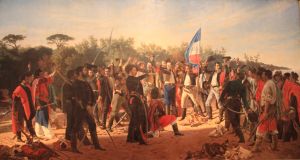 Oath of the 33 Orientales, Juan Manuel Blanes museum.
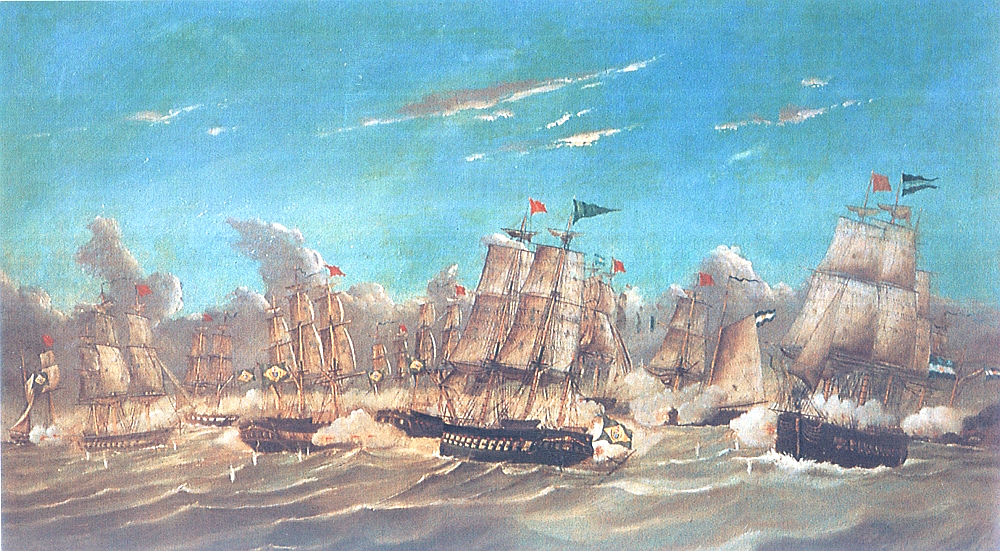
This led to the 500-day Cisplatine War. Despite the Argentine victory in the battle of Ituzaingó, neither side gained the upper hand, and in 1828 the Treaty of Montevideo, fostered by the United Kingdom, gave birth to Uruguay as an independent state, and – more importantly to planned British goals – established the international status of the Rio de la Plata, so that international commerce was easier to accomplish.
 Cisplatine war, Arg-Braz battle at Punta Colorada.
In 1828, Uruguay’s currency was based on the silver peso ($) of eight reales (R or r), commonly known as the patacón, and the gold onza de oro, valued at 16 pesos silver.
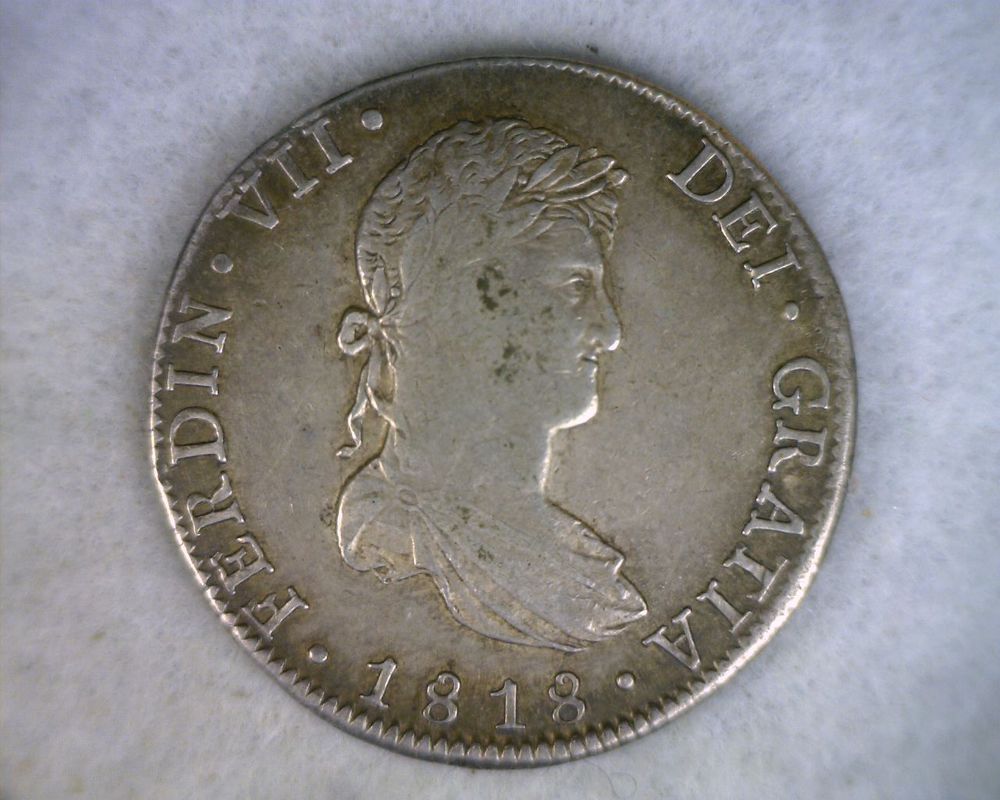
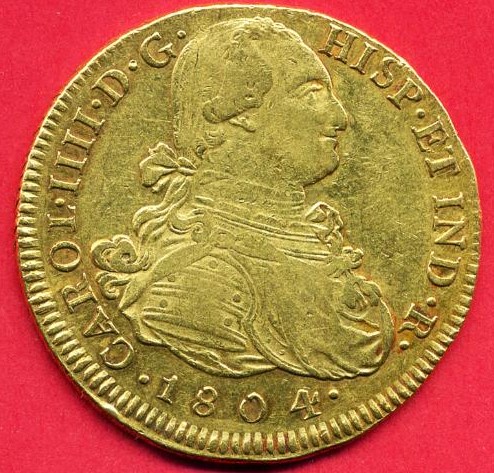
Silver Peso of 8 Reales from 1818, Ferdinand III. And Gold Peso of „una onza del oro“ 1804, Carlos IV.
In January 1831, Gen. Fructuoso Rivera demonetized all copper coin in circulation, i.e., the coppers ceased to be legal tender for individuals and would be neither received nor paid out by public offices. Next, it was withdrawn at one patacón (8 reales) in silver or gold for 13 reales in copper.
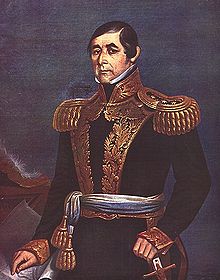 Jose Fructuoso Rivera y Toscana (October 17, 1784 – January 13, 1854) was a Uruguayan general and patriot who assisted in the efforts to force Brazilians out of the Banda Oriental. He was the 1. President of Uruguay.
To meet the need for small change, the government obtained Buenos Aires coins of one-tenth real (decimos de la ciudad de Buenos Aires; 24 mm, dated 1822 and 1823), and put about 1·6 million of them into circulation at half face value (Law 17 of 15 March 1831). This is considered the first money issued by Republica Oriental del Uruguay.
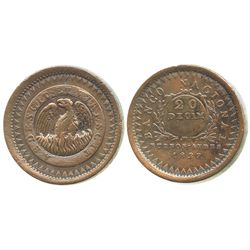 Copper coin, 20 decimos, Buenos Aires from 1827.
Uruguay did not issue any paper money during this period, but paper near-money did appear. The Law of 26 January 1831 provided for a copper exchange company (Sociedad encambio del cobre) to issue notes for 1 and 5 pesos in exchange for copper coin. These notes were payable to bearer at sight after 90 days in gold onzas, silver pesos fuertes or patacones, or in subsidiary Brazilian silver, and they were received by government offices at par with silver and gold coin.
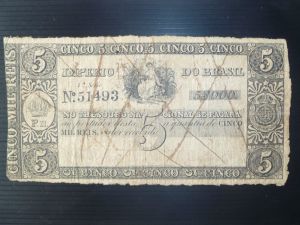
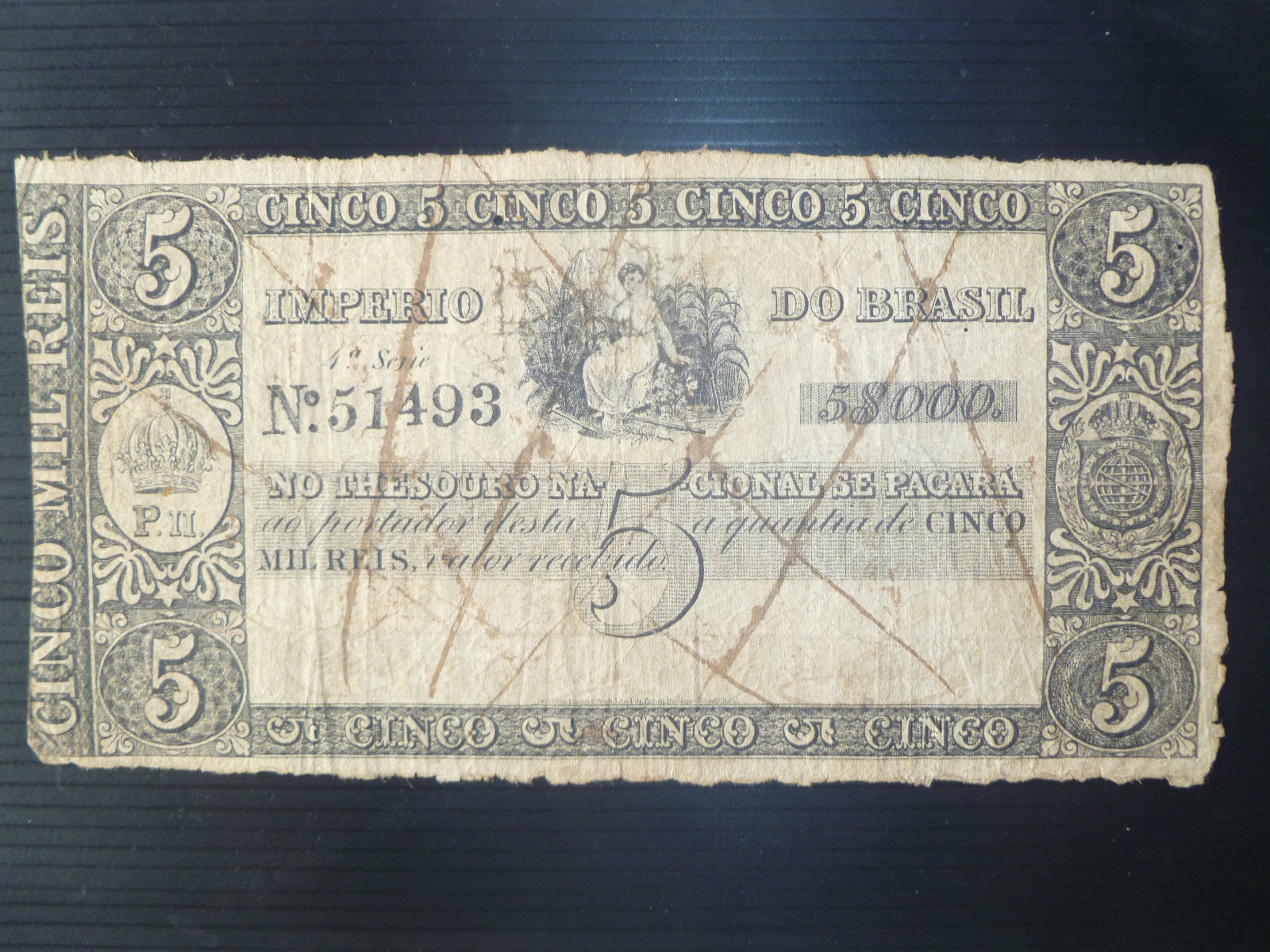
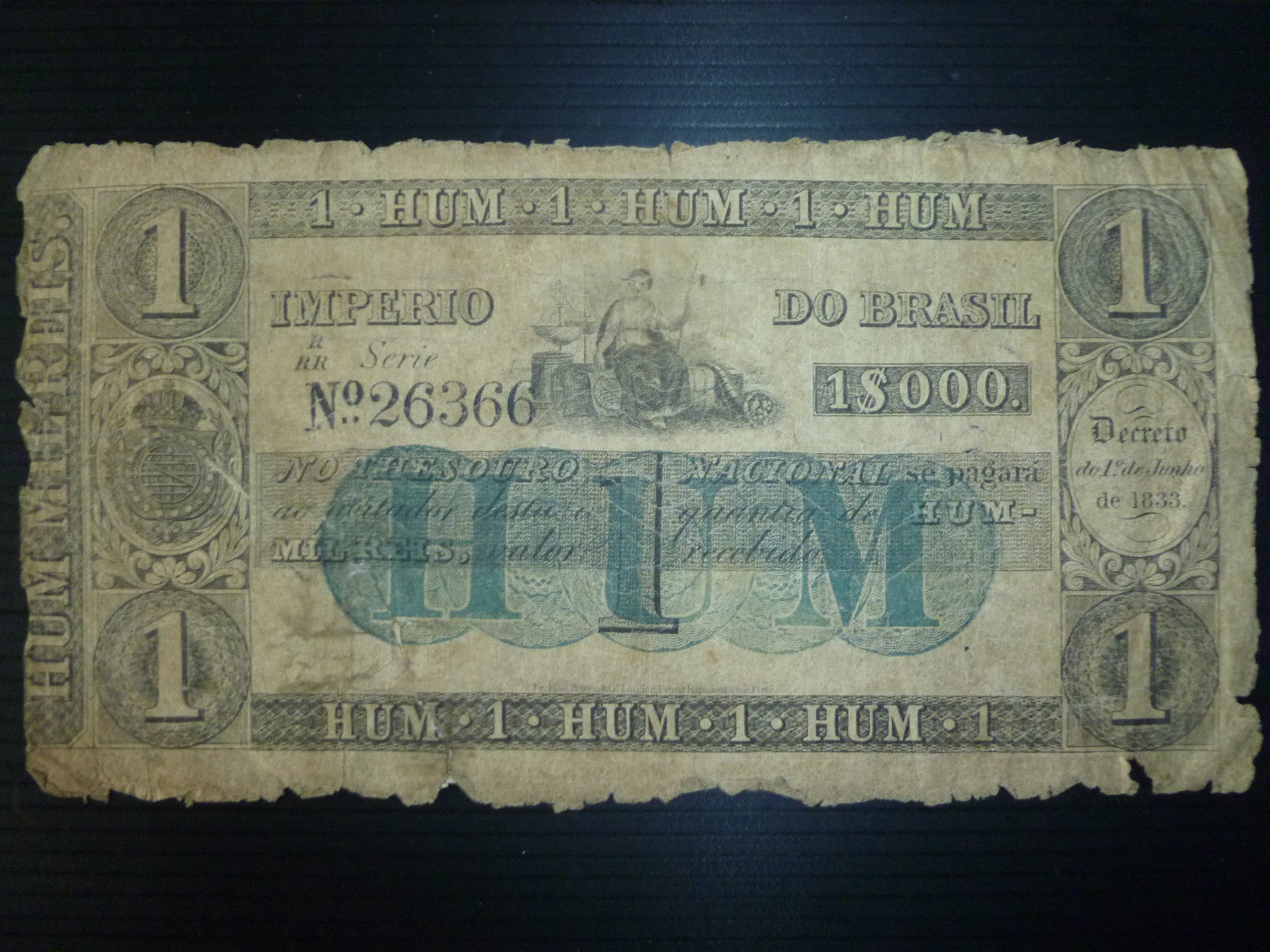
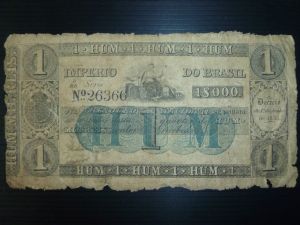 Brazilian notes, both from 1833, to 5 mil reis and 1hum mil reis. Changeable into gold coins.
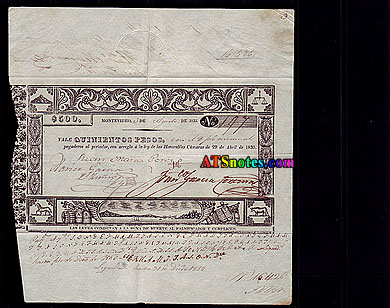
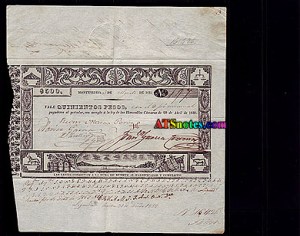 Second oldest banknote of Uruguay from 1835. Remember, the oldest note from 1826 was still printed in Argentina ! This is the oldest one printed from the new Republica Oriental del Uruguay, 500 Pesos . These notes were printed (wonderful copper engravings ie harbor of Montevideo) in 400, 500, 2000 and 5000 Peso notes. Courtesy atsnotes.
Brief information about the modern Uruguayan Peso.
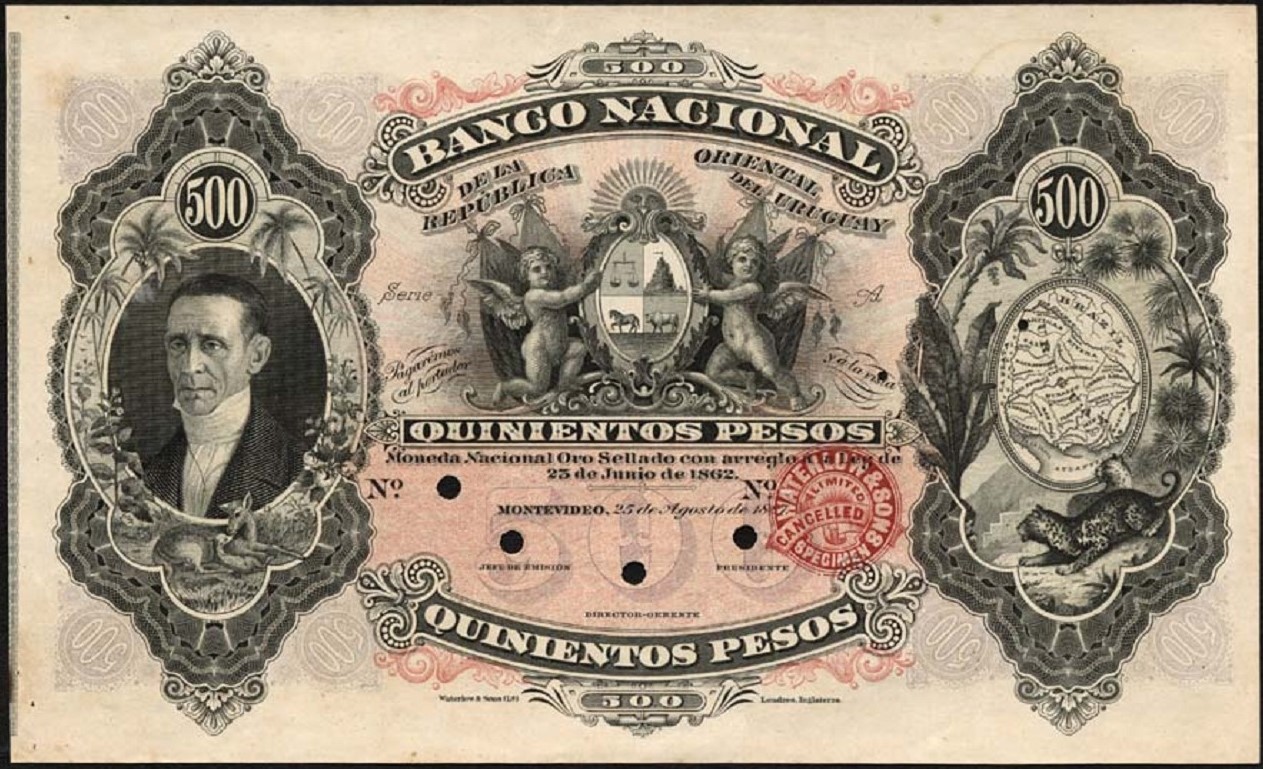
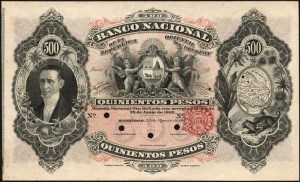 Banco Nacional de la Republica Oriental del Uruguay, 500 Pesos gold sealed, Montevideo 1862/1887. See the fantastic steel engravings. click on pics to supersize.
The following pics of banknotes have nothing to do with the description of the modern Uruguayan Peso. I only like to show you how many different banks were involved in printing Uruguayan paper money. Now, very rare collectors items and highly priced.
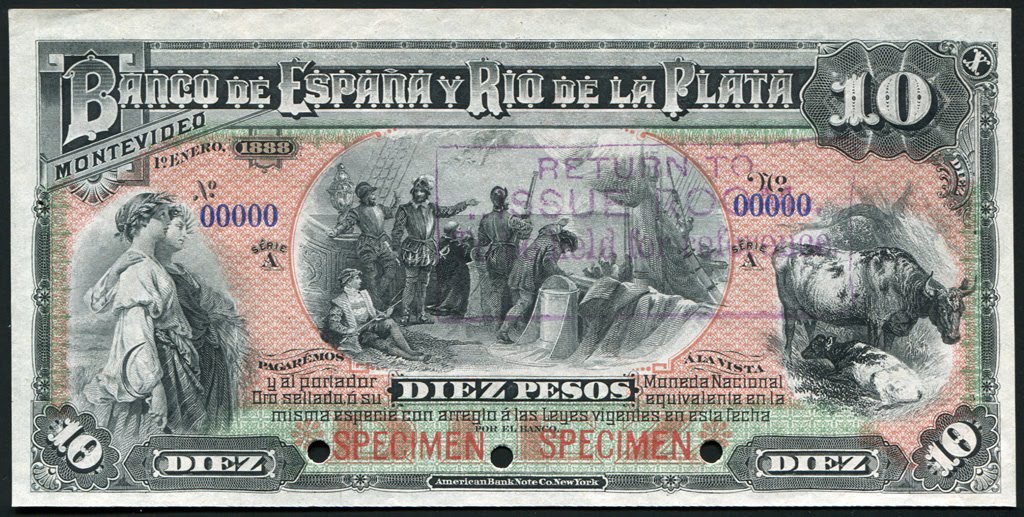
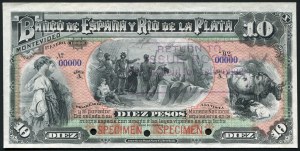 Banco de Espana y Rio de la Plata, 1888.
The Uruguayan peso, denoted UYU, is the official currency of Uruguay. The currency is subdivided into 100 centesimos, and the version of the peso that we know today, was replaced into what is known as the „new“ Uruguayan peso (UYN) on March 1, 1993 (at a changing rate of 1000 (old) to 1 (new).
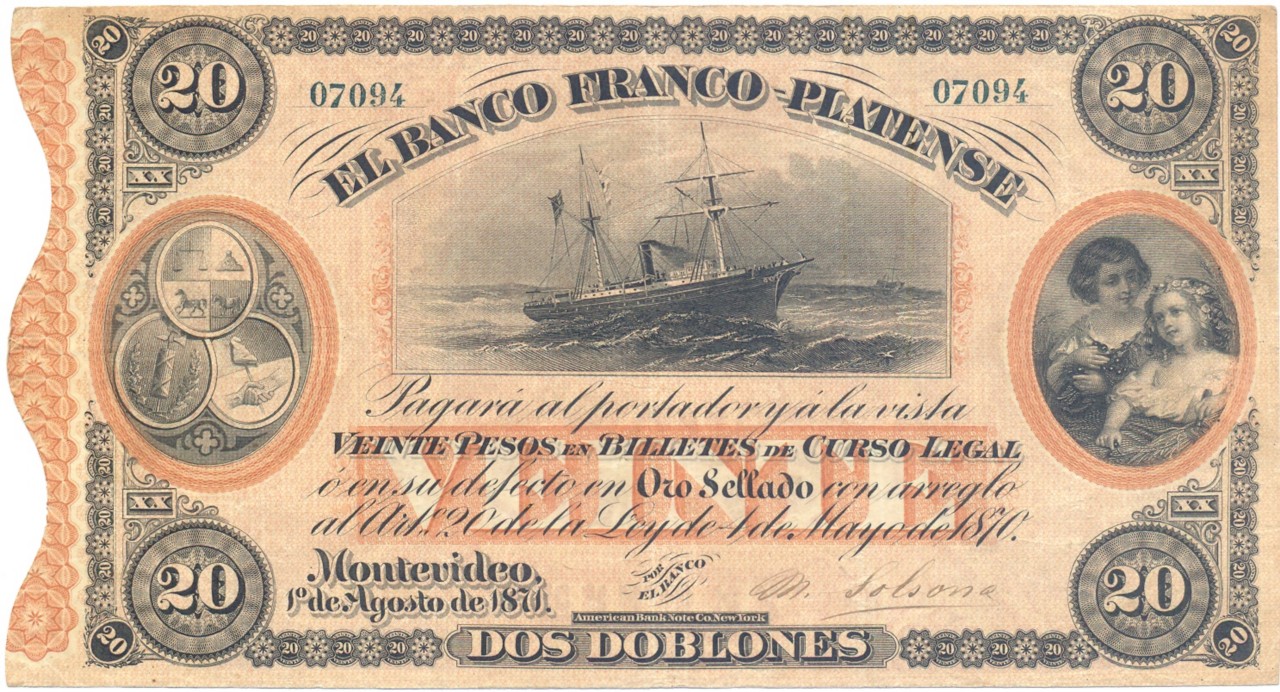
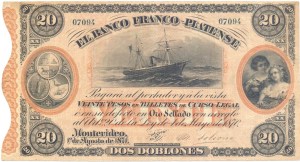 El Banco Franco – Platense, 1870.
A key characteristic of the currency is its instability factor, which peaked in Spring 2002, during Uruguay’s worst ever-financial crisis. Uruguayans have become accustomed to the constant devaluation and instability of their currency, and have as a result developed a fitting lingo. Periods of real appreciation, for example, are called „atraso cambiario,“ which literally means, „the exchange rate is running late“.
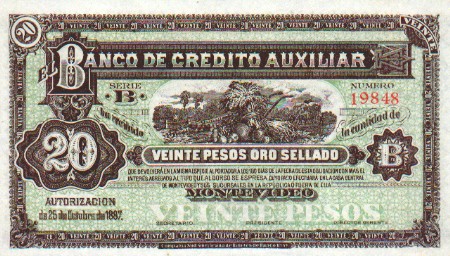
 Banco de Credito Auxiliar, 1887.
Because the local currency is so unstable, prices for most big-ticket items (real estate, cars and at times, salaries) are denominated in US dollars. The UYU had a crawling peg to the United States Dollar (USD) during military rule, and the government published a table of the future values of the dollar, called the „tablita,“ daily.
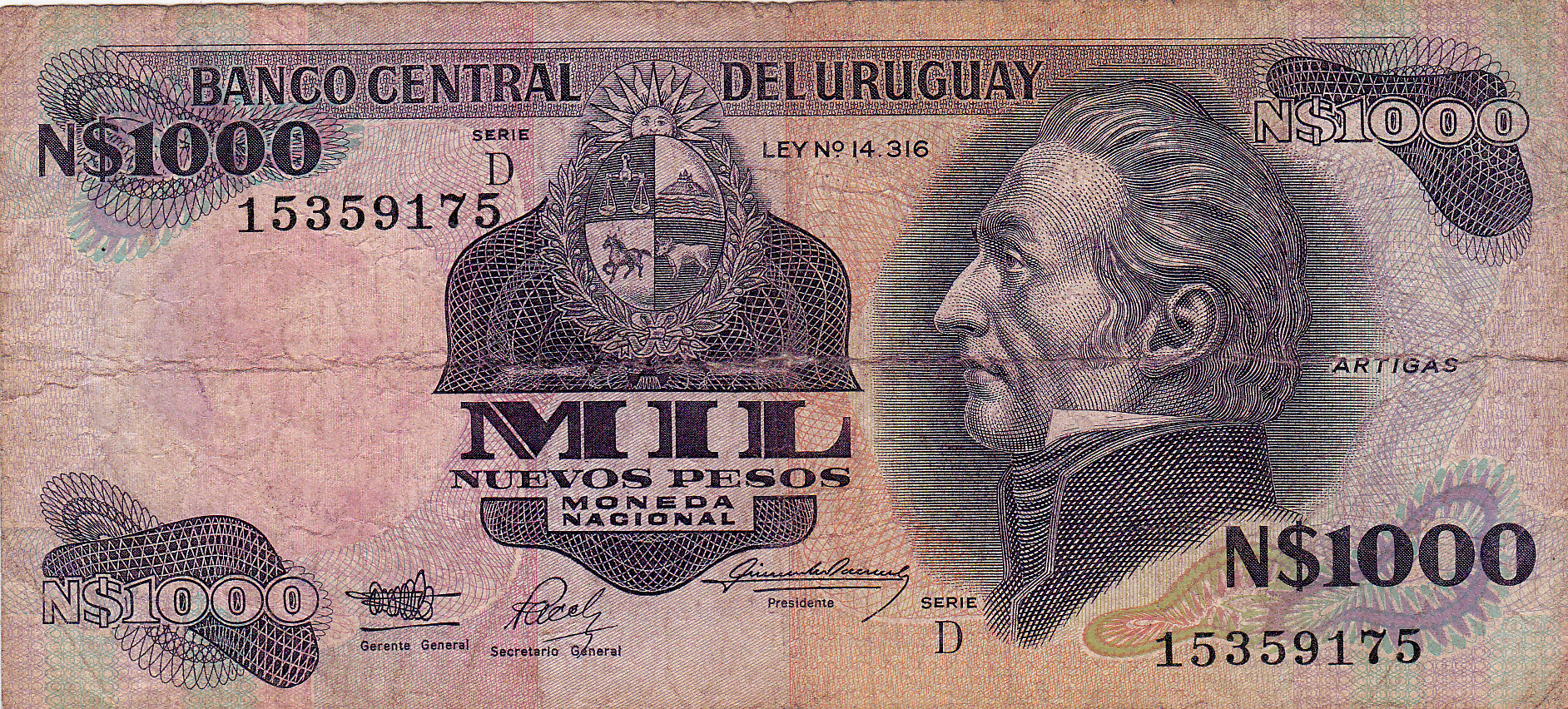
 Banco Central del Uruguay, 1991.
When the currency was devalued in 1982, it was said, „the tablita was broken.“ Thousands of companies were thrown into bankruptcy at this time, but Uruguay made changes. In the 1990s, a sliding range mechanism-geared towards providing predictability-was introduced. The sliding range was comprised of top and bottom margins at which the government would intervene.
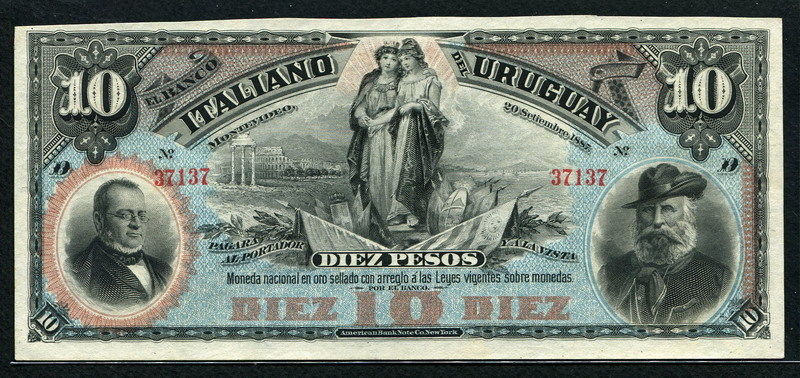
 Banco Italiano del Uruguay, 1887.
In 2002, after the banking crisis, the currency was again allowed to float. Uruguayans found hope for their currency in 2004 when it appreciated against the USD. The government hopes that a floating currency will „de-dollarize“ the economy.
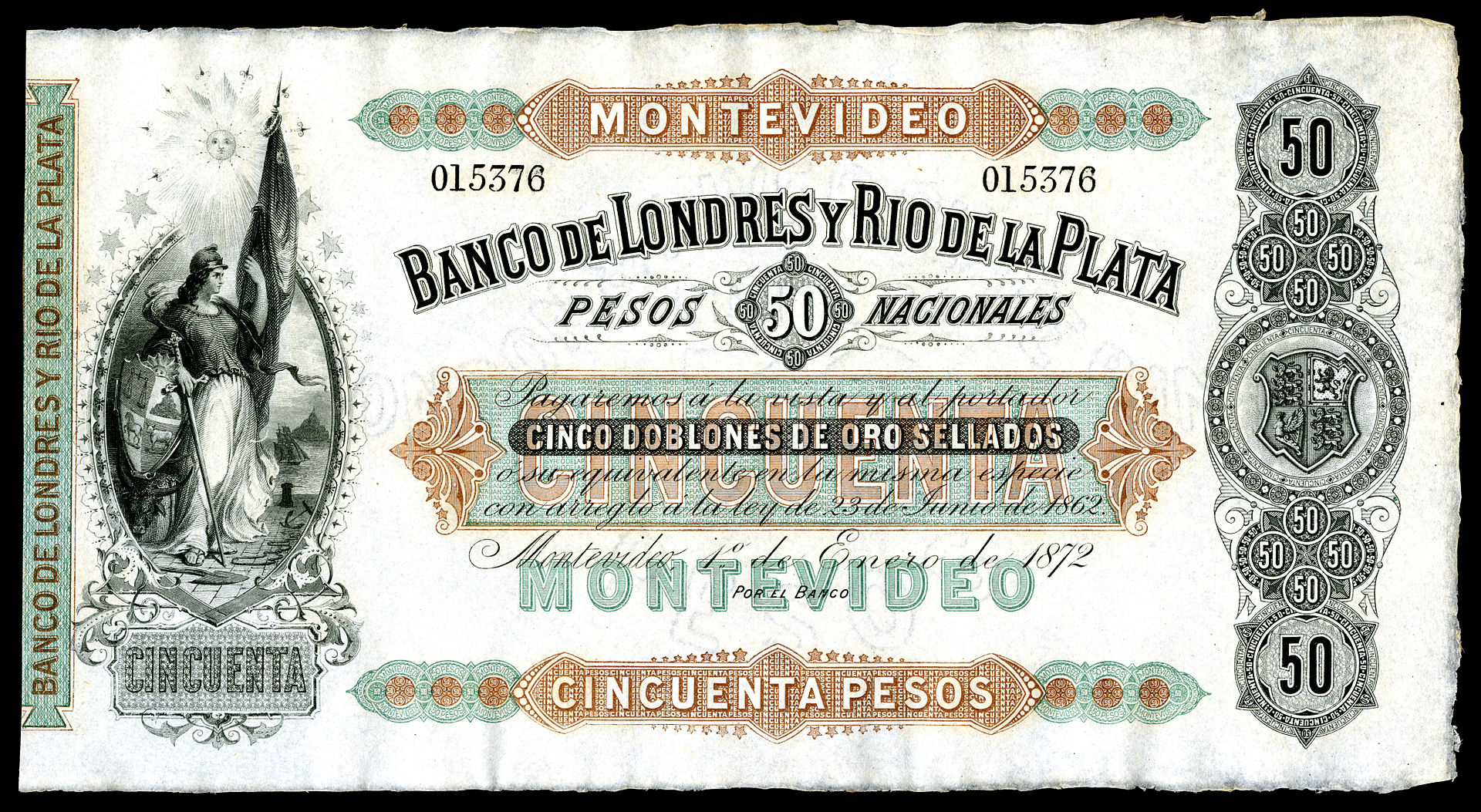
 Banco de Londres y Rio de la Plata, 1872.
And the floating is visuable every day. In 2010 the exchange rate was about 18 Pesos to 1 US Dollar. With an inflation rate of about 8,5% in 2015/2016 , the exchanging rate is now around 32 Pesos to 1 US Dollar, the value of the dollar almost doubled within 5 years. Some insiders expect a changing rate of 40 pesos and more to 1 US Dollar within the following years.