
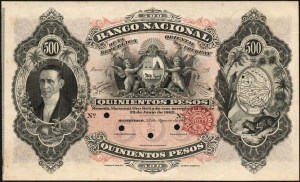
 Beautiful old Uruguayan banknote from 1867.
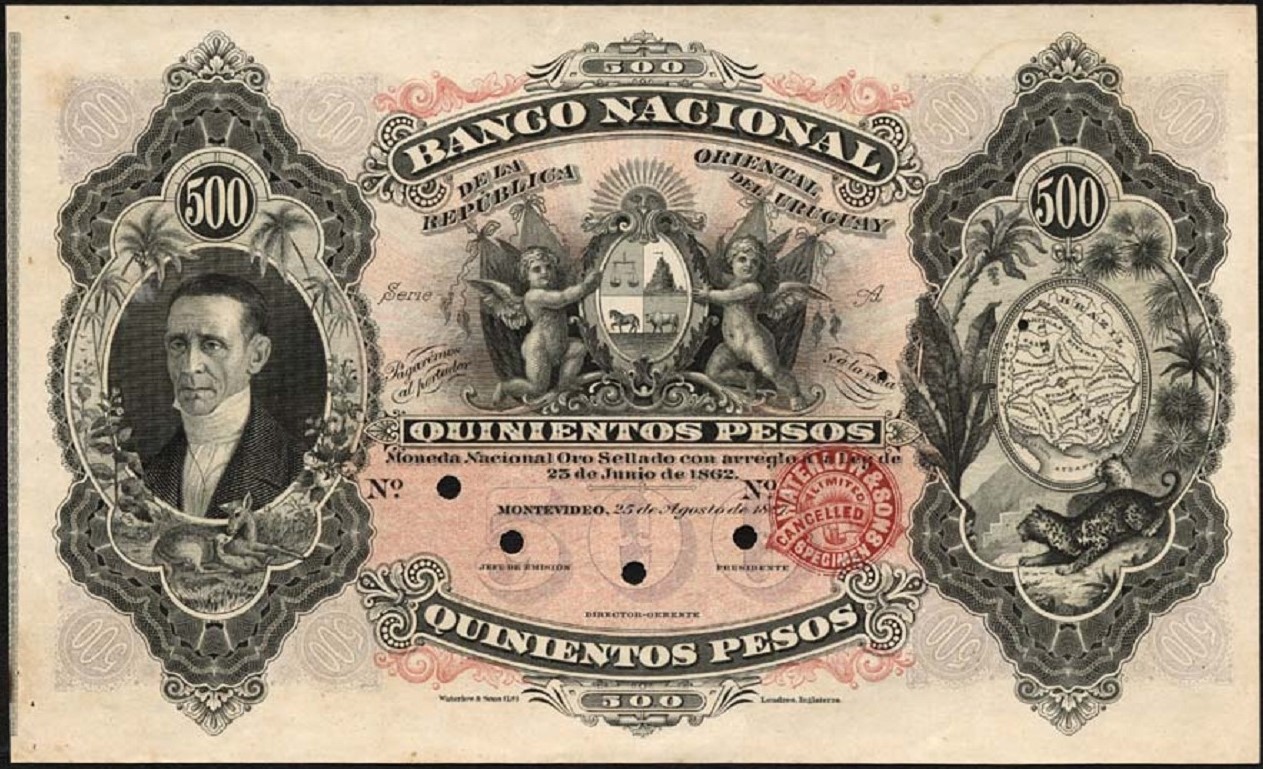
Here we have part 4 of the Uruguayan money series. One of the most dazzling personality’s on Uruguayan banknotes is :
Damaso Antonio Larranaga
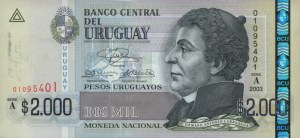
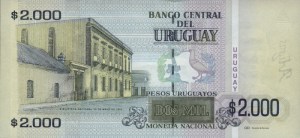
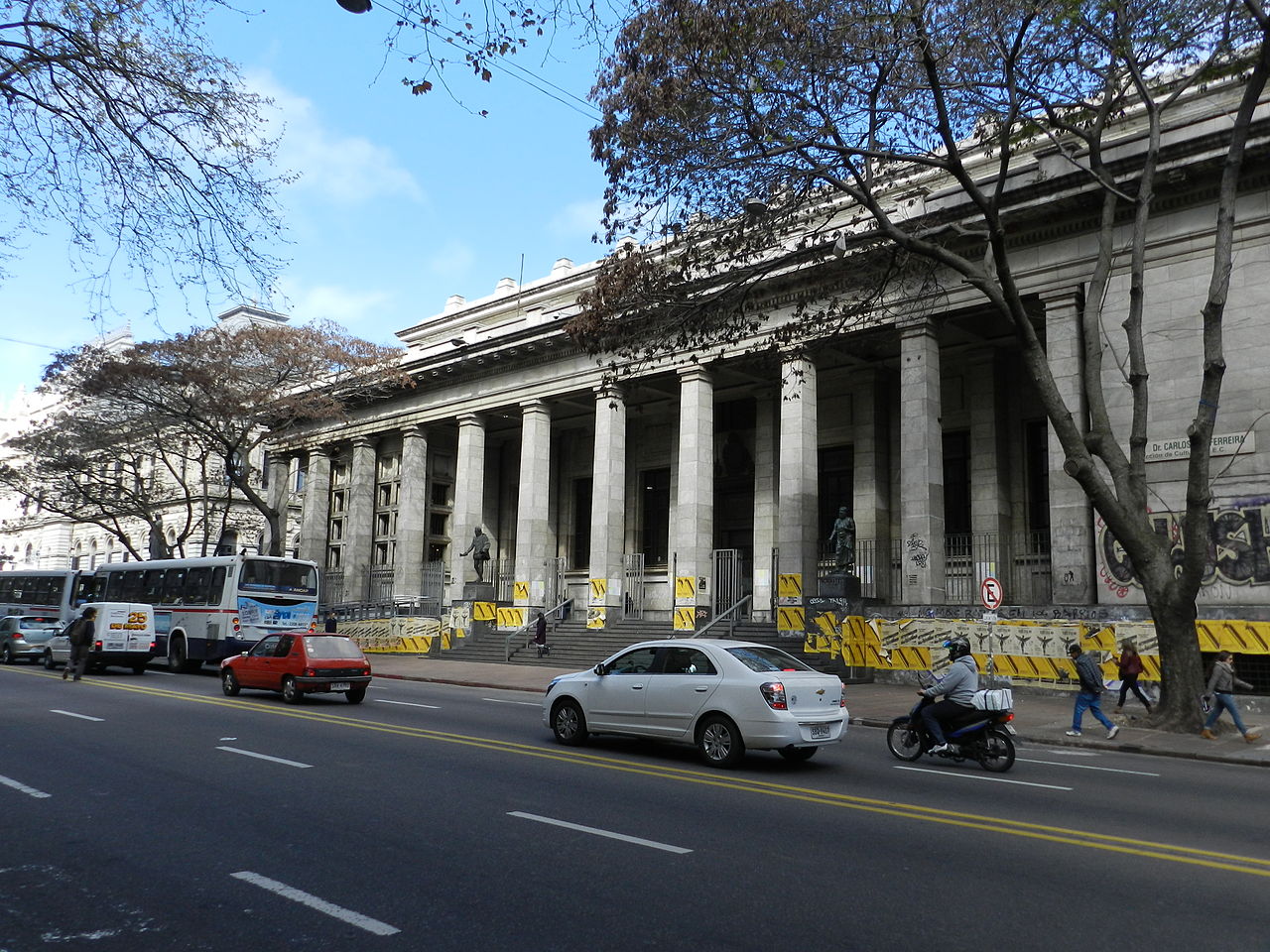
Damaso Antonio Larranaga on front of the 2000 Peso note. The back shows the „Biblioteca Nacional 26 de Mayo de 1816“, the Uruguayan National Library in Montevideo.
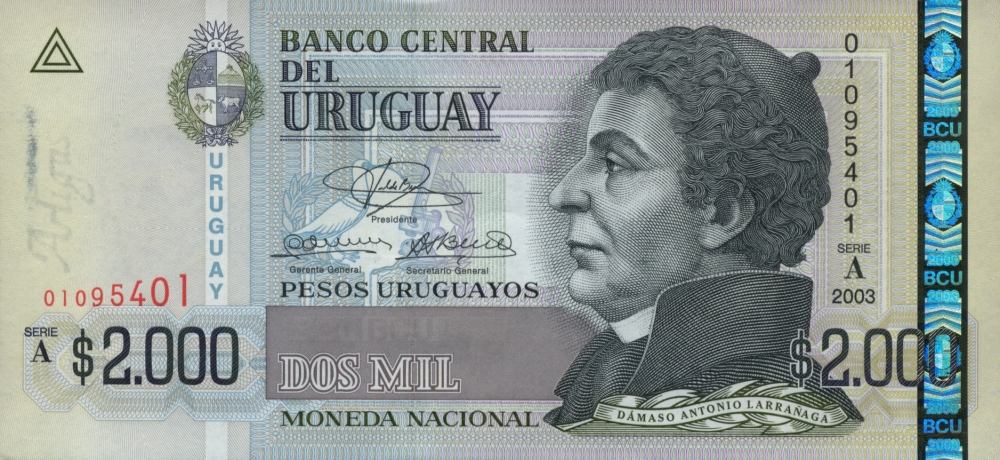
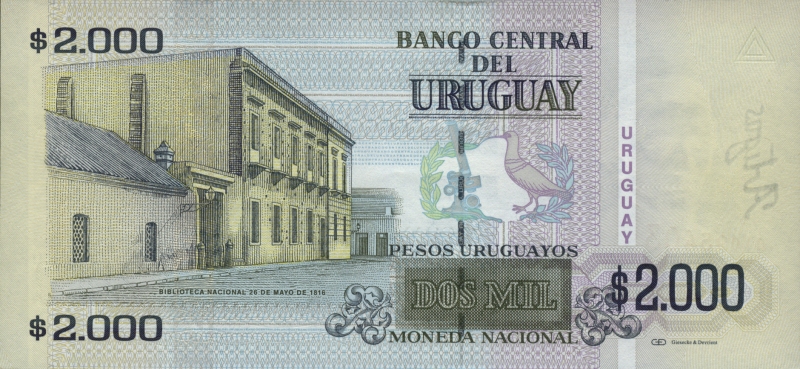
He was born in Montevideo on the 10th of Dcember 1771. Son of Manuel de Larranaga, Spanish immigrant from Basque, Spain. There is almost no area where Larranaga, during the years, had not layed his hands on. He was a politicion, a naturalist, a visionier a priest, a botanist and a well saught after counselor. He is for sure one of the „column’s“ of Uruguayan history.
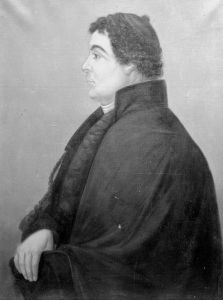 This picture was used for the 2000 peso note.
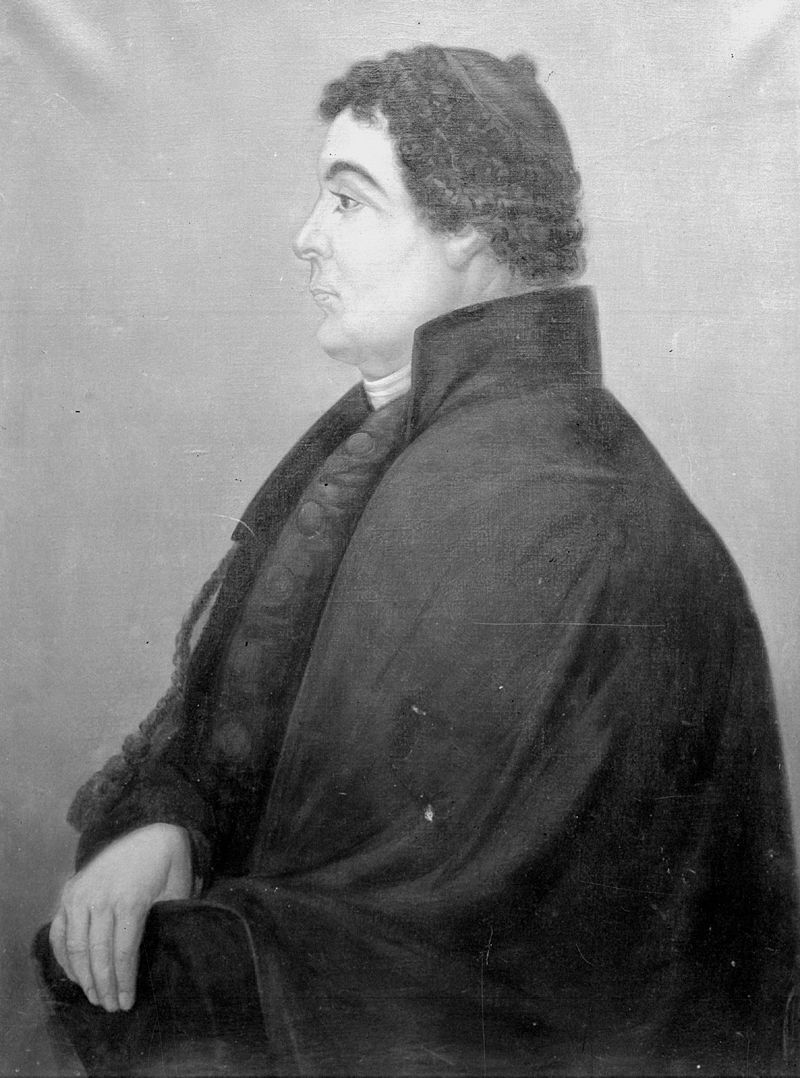
He was a member of the Cabildo in the colonial era, studied in Cordoba Spain and completed his preparatory studies at the Royal College of San Carlos. Returning to Montevideo in 1799, where he became chaplain of the militias.
In 1804 he was curate of the matrix, contributing to the building of the new temple that was being built. In the British invasions with troops he marched to the issuance of the reconquest of Buenos Aires and Montevideo in making showed great zeal in caring for the wounded. Completed the same continued his religious activity, also engaging in scientific work and in his library, activities that continued until his death.
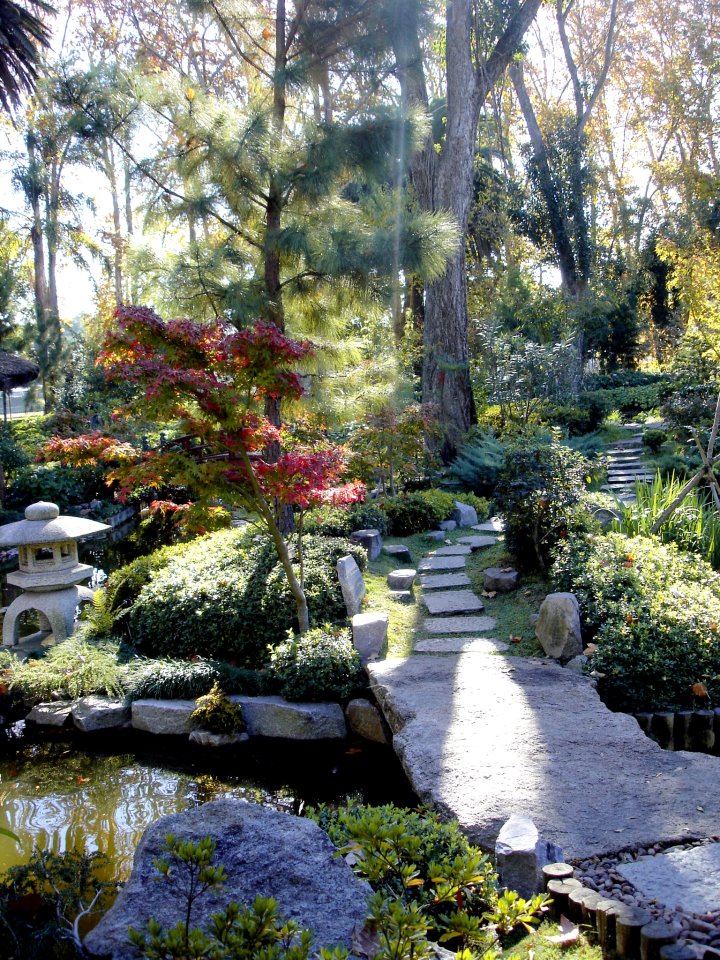
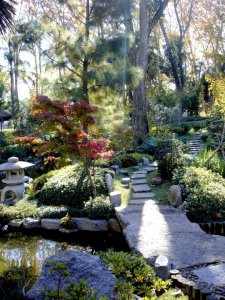 Larranaga was also co-founder of Botanical Gardens in MVD.
For his ideas he was expelled from Montevideo in 1811, along with other patriots priests, following the victory of Artigas in the Battle of Las Piedras.
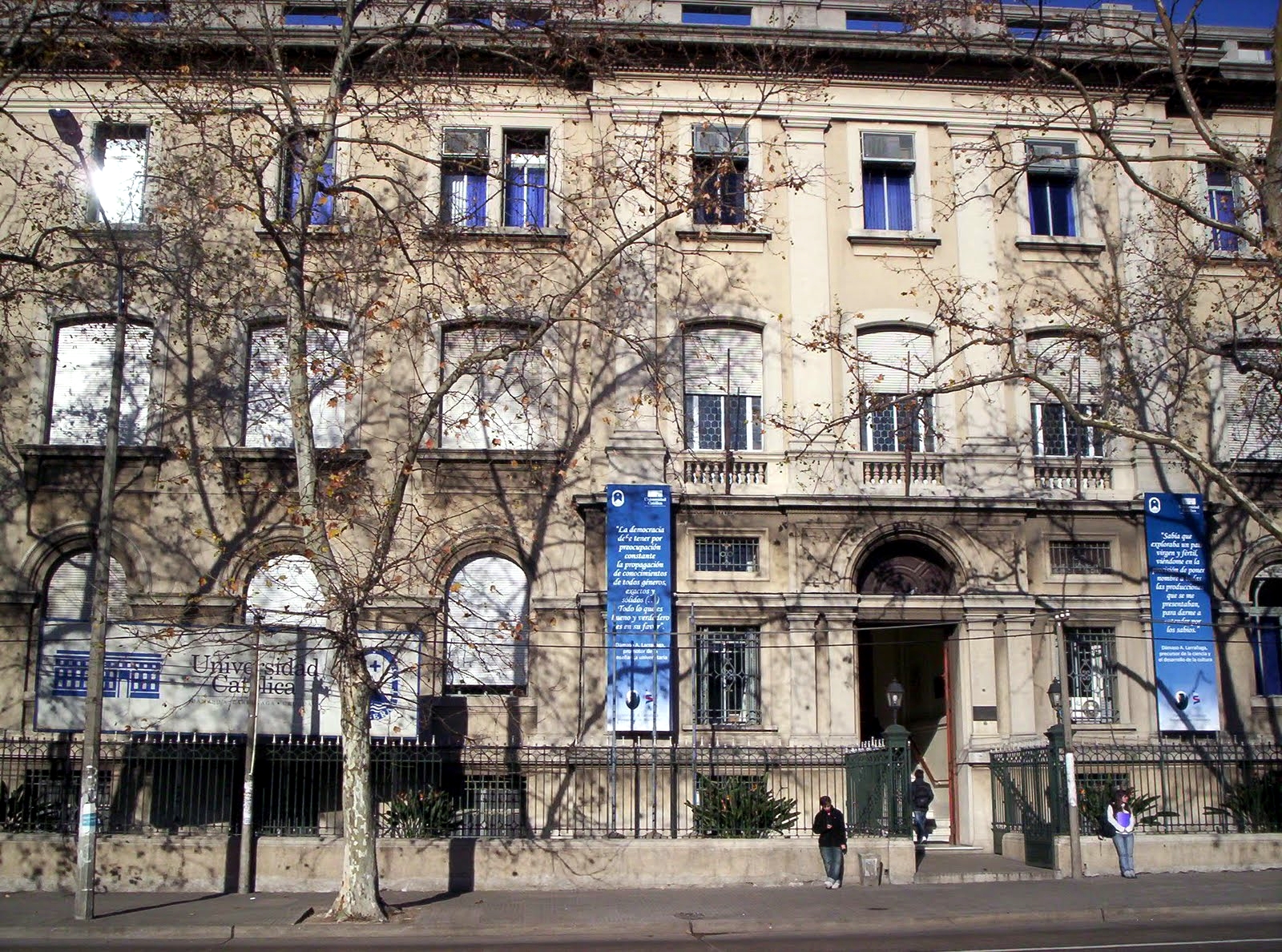
 The private university „Universidad Catolica del Uruguay Damaso Antonio Larranaga“ , founded 1985, in Montevideo.
Montevideo already collected on the farm of Berro, Manga area, was commissioned by the East to attend as a delegate to the Constituent Assembly of 1813 in Buenos Aires, still carrying the Instructions of year XIII. Congress ignored its representation alleging procedural irregularity, but the real purpose was to exclude citizens of the Assembly representing very dangerous trends for absorbing most centralist plans.
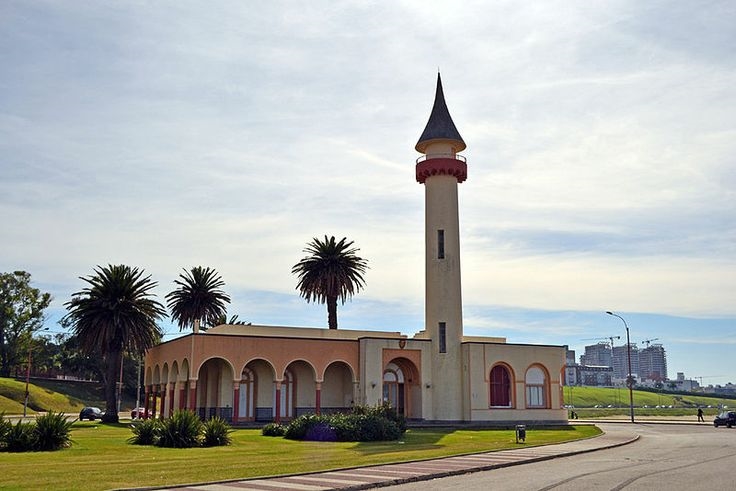
 One of the best known monuments in Montevideo is the „Museo Ozeanografico Damaso Antonio Larranaga, Villa Dolores“.
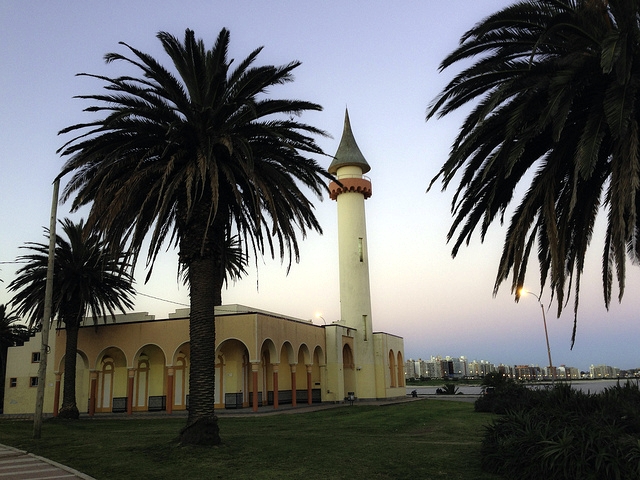
To win his case or keep him there, the Buenos Aires Board offered him the position of public librarian, who accepted, to hold it until 1815, the year he returned to the Eastern Province bringing to acclimatise in the country’s first black locust trees.
 All of us drove many times along this museum at the rambla in Montevideo. It is really worth to visit .
Being pastor of the First Church of Montevideo, he went to Paysandú to resolve differences between Artigas and Montevideo Cabildo. „At four o’clock in the afternoon came the General, Mr. José Artigas, accompanied by an assistant and a small escort. He greeted Larranaga without any label. Nothing seemed general, his suit was in civilian clothes, and very simple pants and blue jacket“.
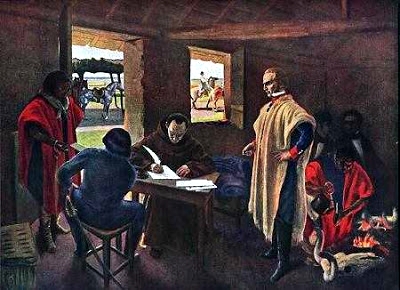 Larranaga meets Artigas in Paysandu.
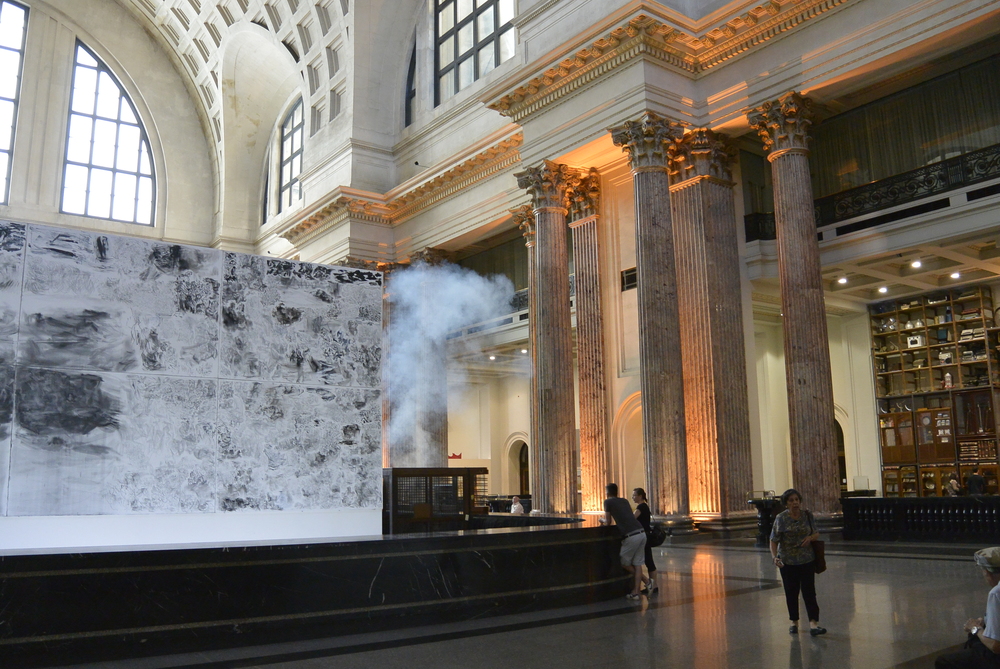
On the way he wrote his travel journal from Montevideo to Paysandu. In addition, he sought to gather evidence for his essays on chaná language. In May 1816 he was appointed director of the National Library, both of which he had a hand in its creation with Miguel Barreiro.
 Library of Montevideo in Ave. 18 de Julio.
In the twilight of the artiguista cause Larrañaga joined the Portuguese rule, to accept the Cabildo of Montevideo humiliated the sad honor of moving to Rio de Janeiro, along with Jerome Pius Bianqui, on mission of thanks to King John VI of Portugal. In 1821 he was deputy to Cisplatin Congress convened by Carlos Federico Lecor, where the final incorporation of the Eastern Band of the Portuguese monarchy was agreed.
 Inside the library in Montevideo.
At that time he turned more firmly than ever to everything he touched to the progress and welfare, while it must be the establishment of the Casa Cuna children abandoned in 1818 and the inauguration of the Lancastrian School in November 1821, installed in the same house Fort Government. In 1824 he was confirmed as Vicar Apostolic equivalent to the Diocesan Bishop.
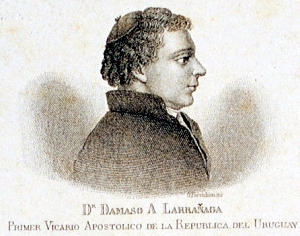 Primer Vicar Apostolico de la Republica del Uruguay.
He was not involved in the liberating revolution of 1825, since its inauguration in the Church required him to be respectful and true to the Brazilian, who then ruled.
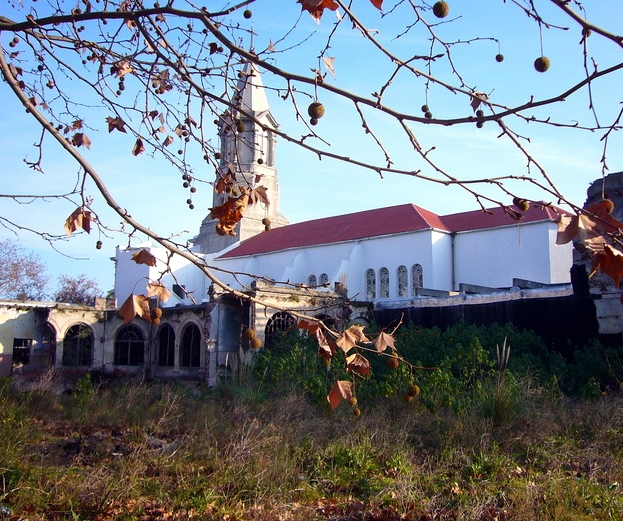
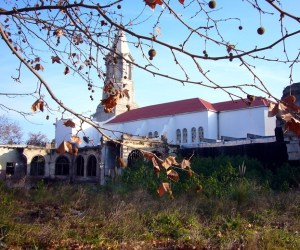 One of the Larranaga inheritances, „The asylum Damaso Antonio Larrañaga“ – a dangerous debris or heritage? Unused and rotting away.
He made the Republic in 1830, was elected senator for the department of Montevideo until 1835. He presented, among others, a bill restricting special cases the death penalty, and one in favor of the slaves emancipation which was provided. He concluded his Senate period is devoted to ecclesiastical functions and their studies, until 1840 when his vision and his health had declined so much.
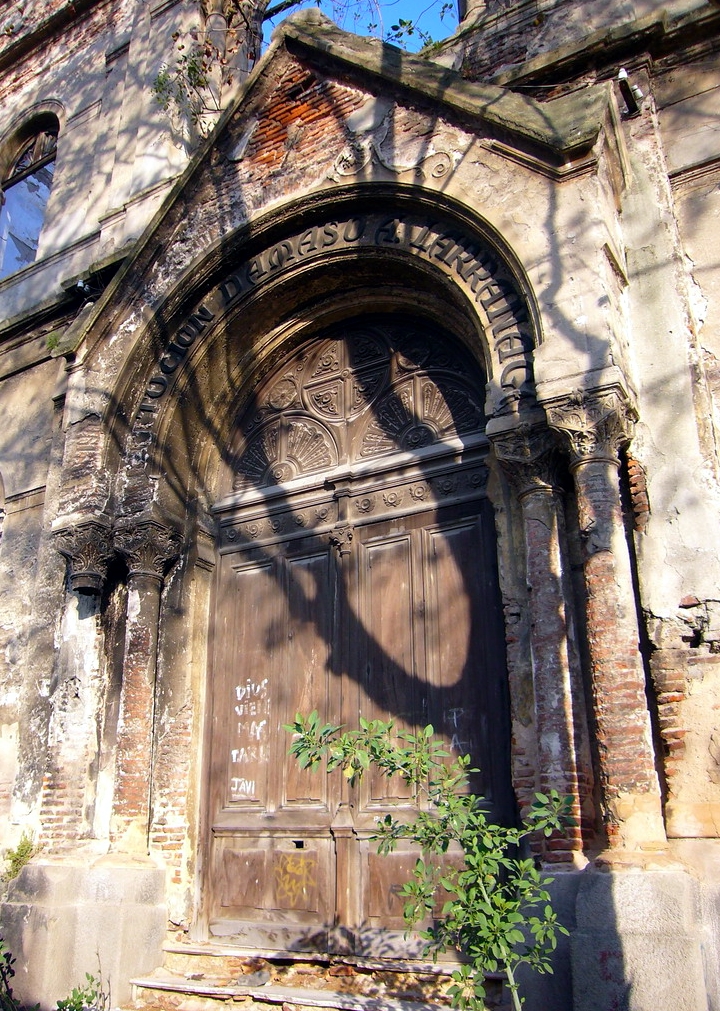
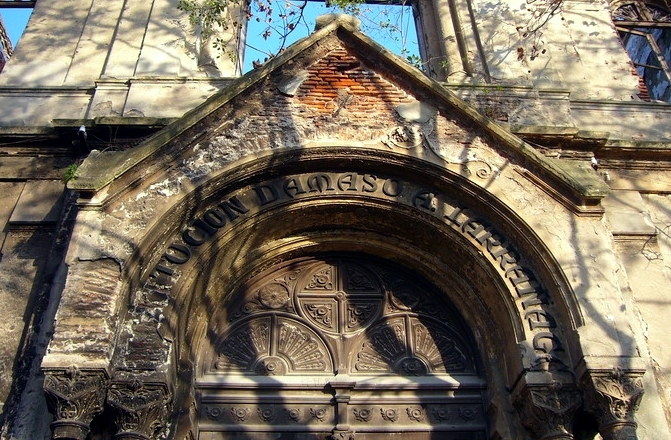
At the corner of Jackson and San Salvador is located the former Foundling Asylum of Orphans and Damaso Antonio Larrañaga. At the time it was a beautiful building, then in the 90’s was partly demolished to build a housing complex there. Finally by the economic crisis it suffers to rotten to death, typical in today’s Uruguay, and the Mortgage bank won’t do anything, they just keep the rotten history in their books.
Collected in its fifth around the capital, he came to find the Great War creating the Government of Defense under President Joaquin Suarez and the Government of the Cerrito led by General Manuel Oribe with the previous similar charge. Larranaga as Vicar Apostolic, respected by all and above discord, able to reconcile the exercise of their ecclesiastical office with the duality of these two civilian authorities.
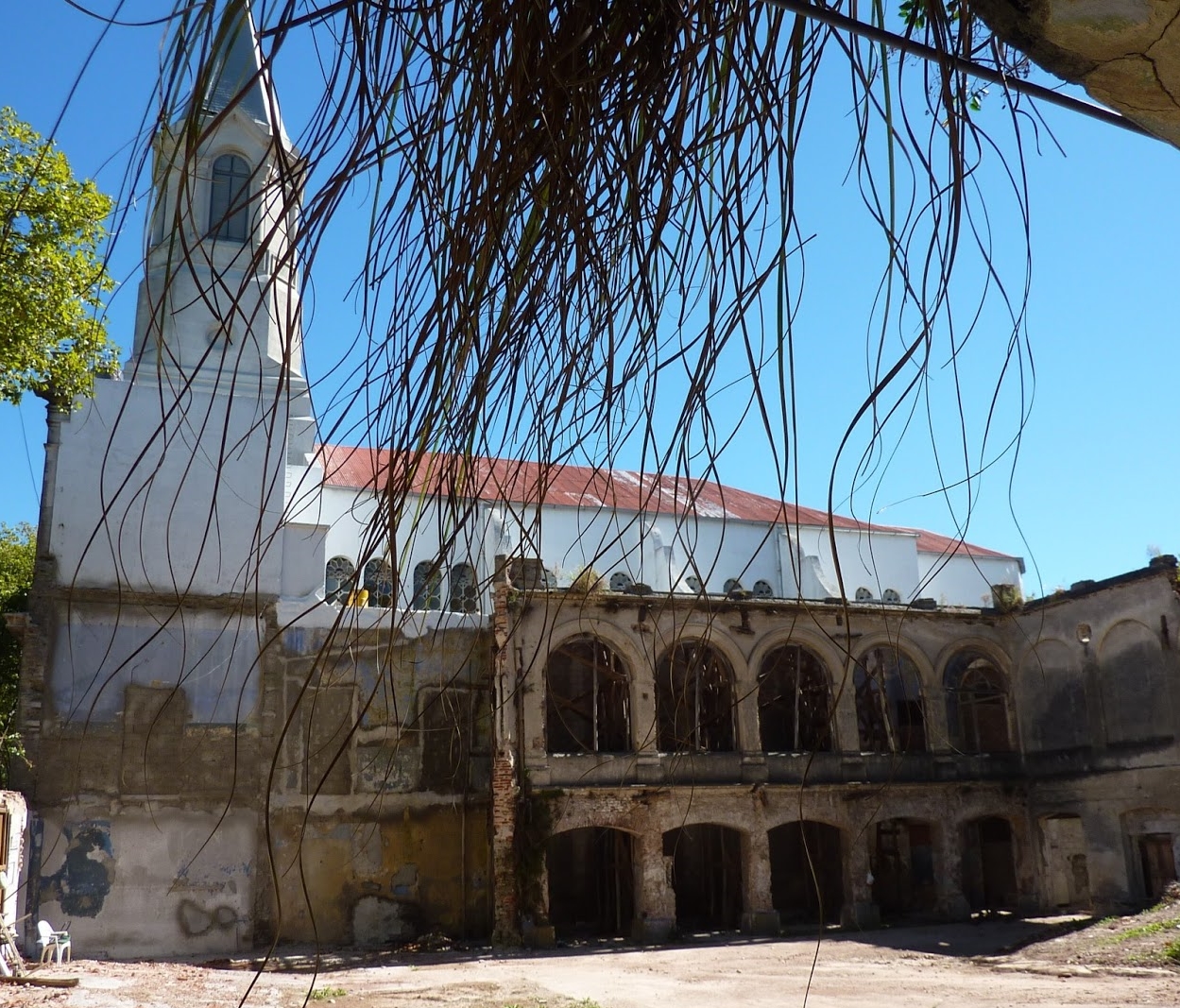
 The Chapel of the Asilo Dámaso Larrañaga, built between 1875-1878. It is another work of architect Rabu, who adopted here the neo – romantic, though not entirely pure. It is a single nave, covered with a roof truss, with its more than regular dimensions: 40 meters long and 12 wide.
The story behind the Asylum.
Already at the time of the Portuguese occupation (1817 – 1822), the Priest Vicar Damaso Larrañaga, worried about the fate of abandoned children and „for measures of that priest, the Portuguese General Sebastian Pinto de Araujo Correa wrote to the council October 5, 1818, urging the creation of a crib where you were to avail foundlings, order that came with the donation to the work, one hundred pesos of their salaries, while other excise taxes will fail to reach. „
„Agreed the foundation required Cabildo on October 7, ascribing to Charity Hospital, and put in charge and under the direction of Don Damaso Larrañaga. Such is the origin of our house extension. „
For more than 40 abandoned children were collected in a section of the Charity Hospital, but in 1861, the Charity Commission of reignest, created for them, „the Provisional Orphan Asylum in a house of Mrs. Vidal, located in the Cord“.
By the way, since 1865 it was building a definitive and appropriate building to serve as „Asylum of Orphans and Abandoned“, being able to start construction in 1873, with the base of the architect’s plans Rabu. The works must have gone smoothly, because the 16 September 1875, being fully enable the establishment, they moved to El Loa foundlings and orphans.
Very sad that there is no orphanage available anymore – thanks to lazy mortgage bank owners.
The building occupies an entire block, with an area no less than 5,500 square meters, and is surrounded by the streets of San Salvador, Gonzalo Ramirez, Eduardo Acevedo and Juan D. Jackson, in Montevideo.
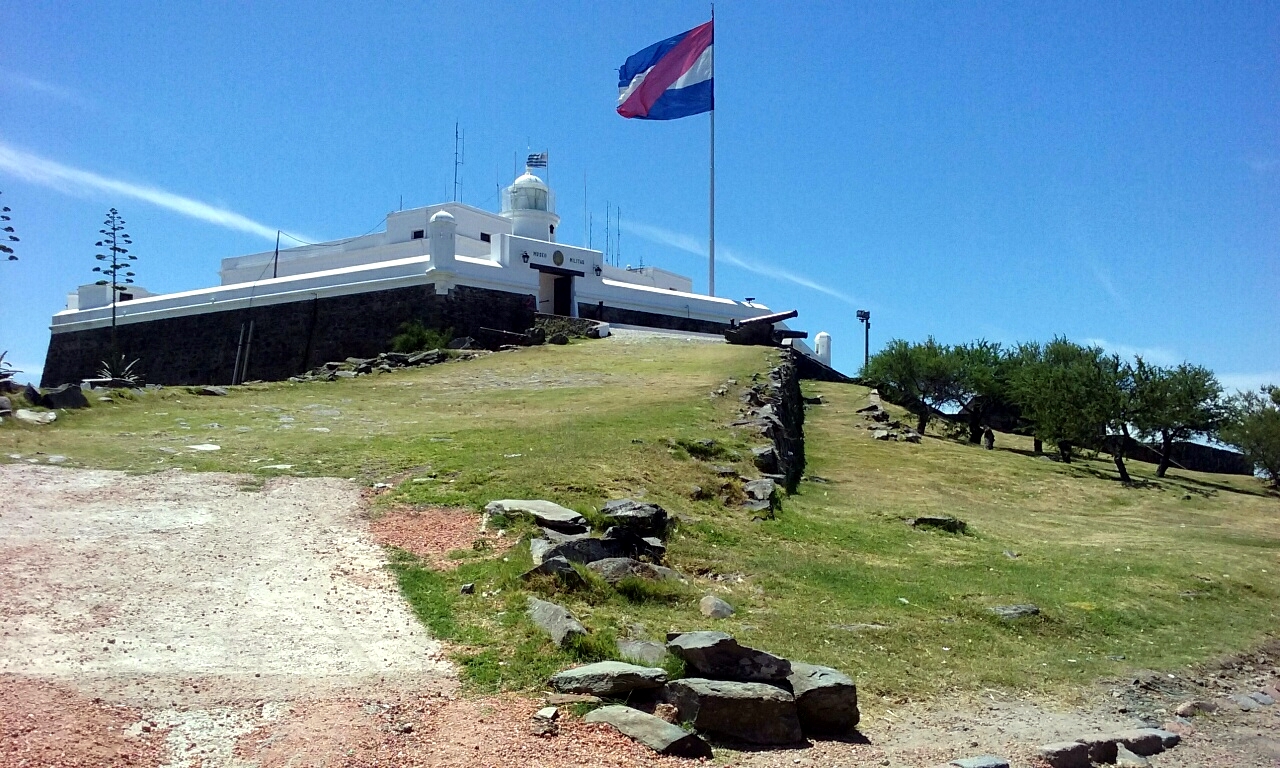
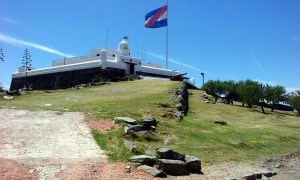 Even in this museum Larranaga got his honored place . Fortaleza del Cerro, also known as Fortaleza General Artigas. Located on Cerro Montevideo.
When Larranaga died of a stroke on the 6th of February 1848, they paid him posthumous honors in the field of Cerrito, being buried in the chapel of the Holy Family, as the government of Defense ordered the celebration on the premises of Montevideo funeral offices corresponding to their decretándole dignity honors General of the Republic.
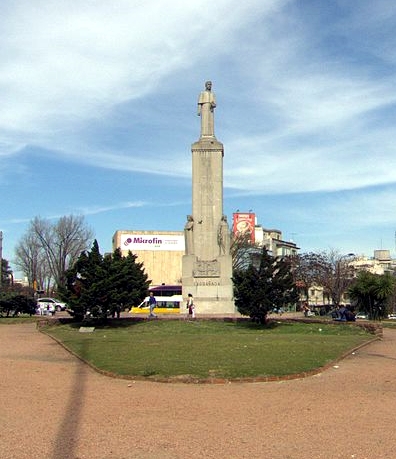
 Larranaga monument in Montevideo.
Larrañaga, as the highest ecclesiastical authority of Uruguay, had been appointed by Manuel Oribe to play the first rector of the University of the Republic, but since it was opened a year after his death in 1849, its term was awarded to Lorenzo Antonio Fernandez, who succeeded him as apostolic vicar. I hope you found the series interesting ! A fifth and final part will follow about the history of Uruguayan banknotes. Stay tuned !!

