
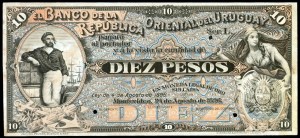
 Beautiful old Uruguayan banknote from 1896.
Alfredo Vasquez Acevedo.
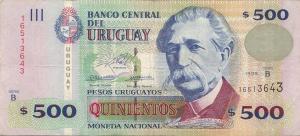
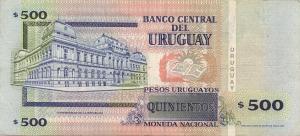
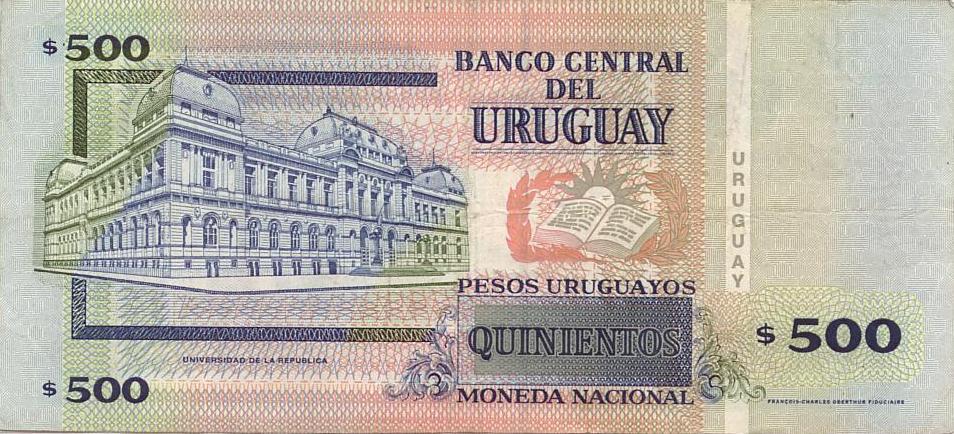
Alfredo Vasquez Acevedo on front of the 500 Peso note. The back shows the Universidad de la Republica.
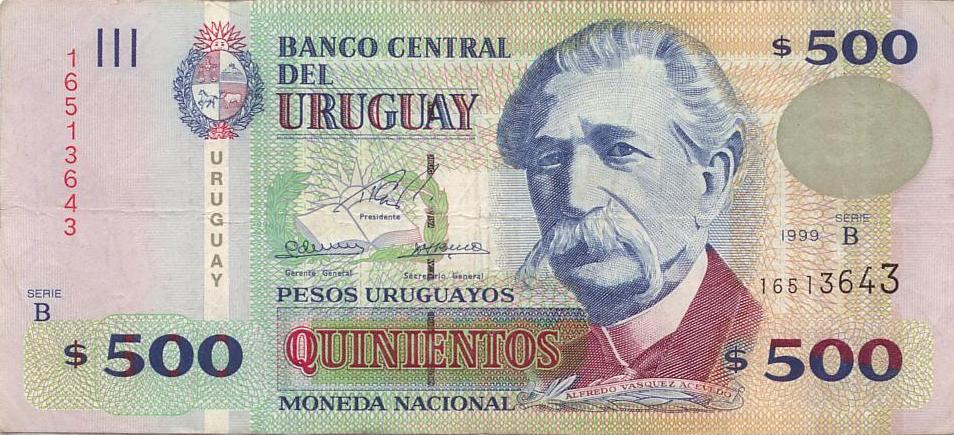
He was born on 8th of July 1844 in Buenos Aires, naturalized Uruguayan, under the vagaries of the fratricidal struggles that those times imposed on the patrician families of Uruguay, which was consolidating its existence as a sovereign nation.
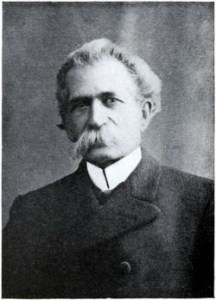 This picture was used for the 500 Peso note.
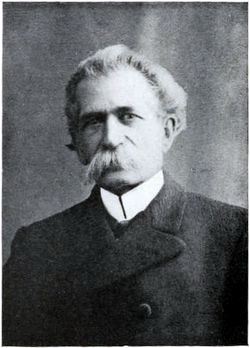
Acevedo attended primary school in Buenos Aires and in 1855 the family took up residence in Montevideo. His father died and Alfredo grew up next to his uncle, the illustrious jurist Eduardo Acevedo, by whom he had an affection and respect that would be present in spirit until the end of his days. He earned his degree in Jurisprudence in 1866.
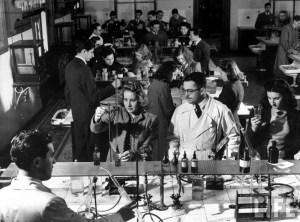 Acevedo with students in The University of Uruguay.
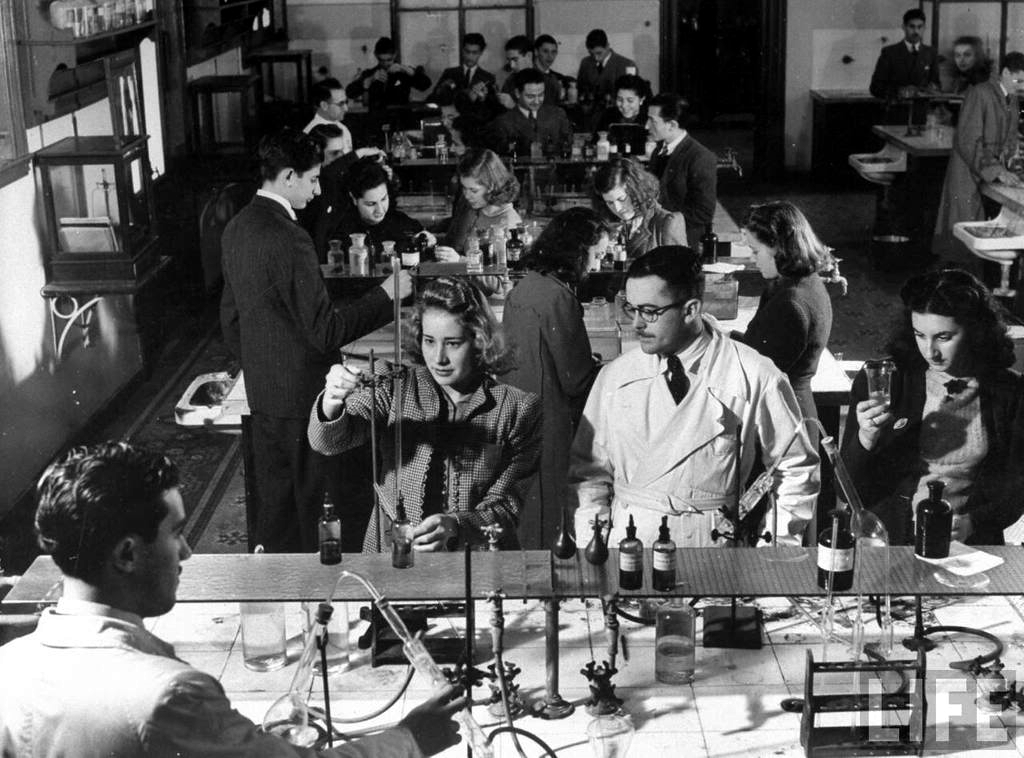
From a young age on he stood out as one of the biggest concerns people, knowledge and practical achievements in the field of public education, in a time when this was taking place with many difficulties in Uruguay.
 Close work between Acevedo and Varela in education.
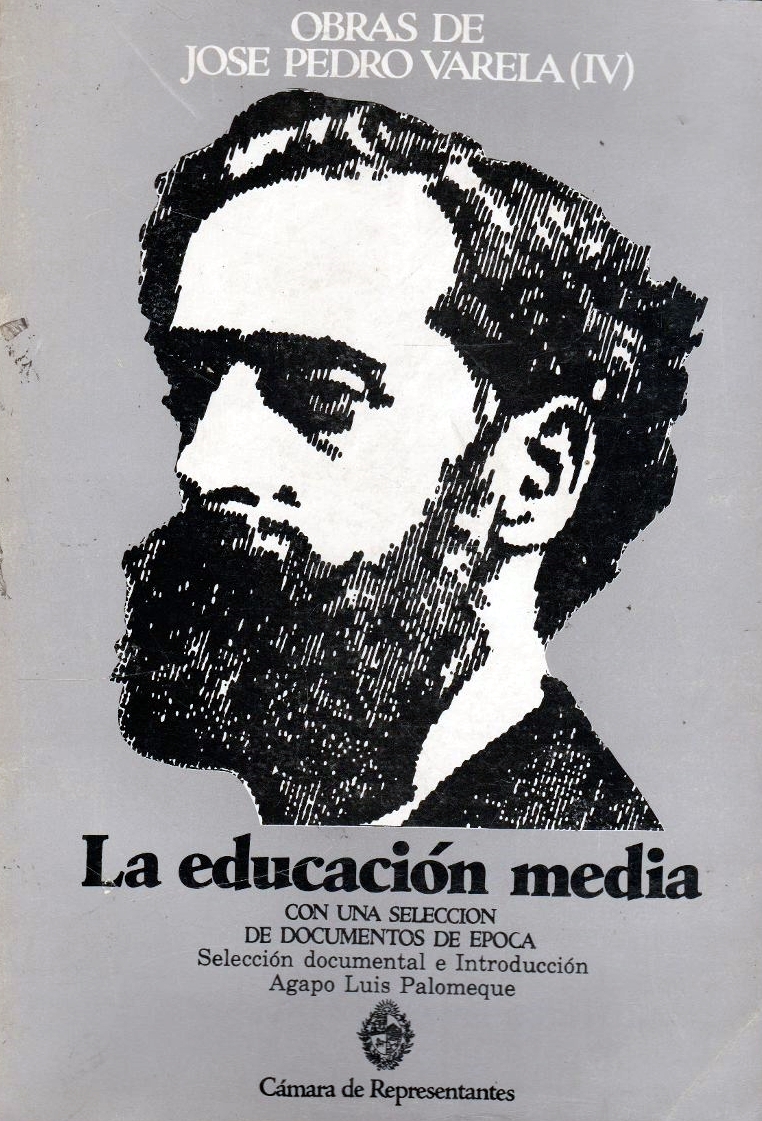
Acevedo founded in 1868, along with Jose Pedro Varela, Elbio Fernandez, Carlos Maria Ramirez and other distinguished intellectuals of his time, the Society of Friends of Popular Education, whose executive committee chaired in 1879-1880 and 1900-1901.
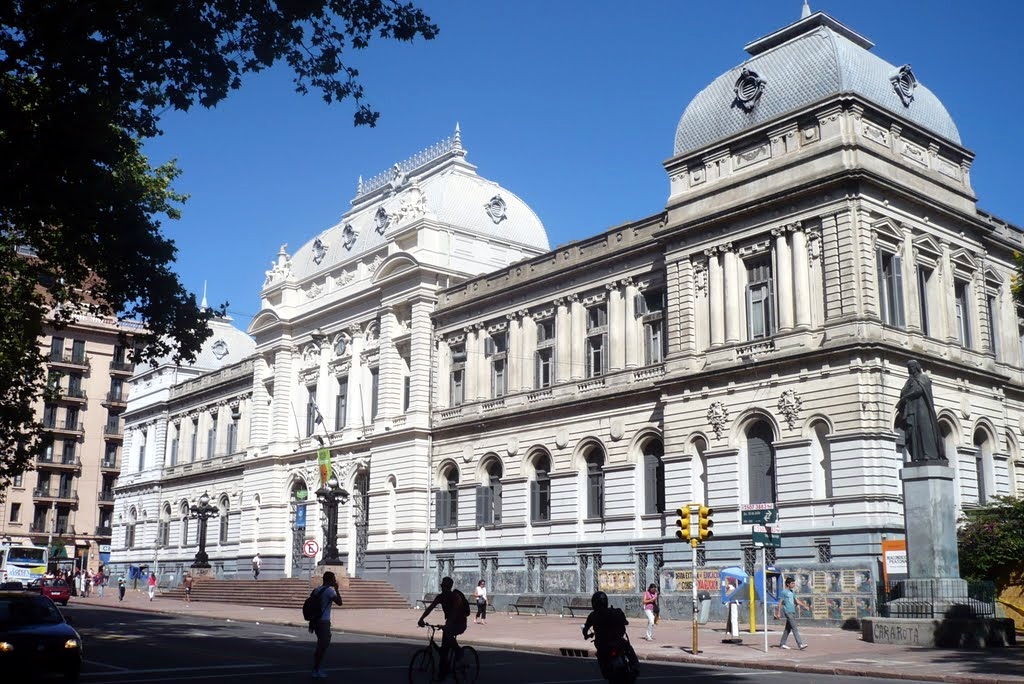
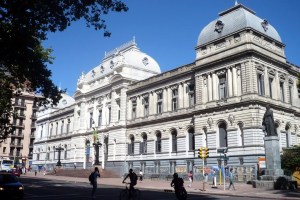 University of the Republic in Montevideo.
In 1880 he reached the rector of the University of the Republic, a post he held almost without interruption until 1899. Only for a brief period was replaced by Dr. Jose Pedro Ramirez and a decade later, during one year, Dr. Pablo de Maria .
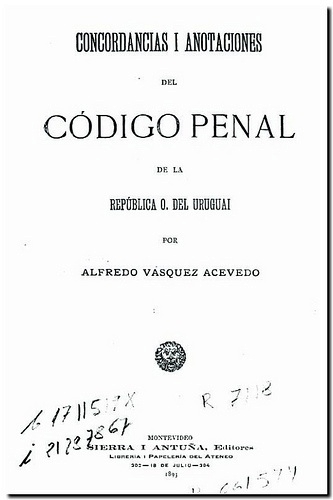
 One of Acevedo’s many publications.
His action was a really remover in all aspects and one can say that it was the origin of the development that took the Uruguayan University, to diversity of races and powers that characterized the first quarter of the twentieth century.
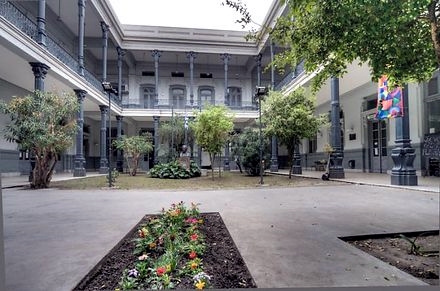
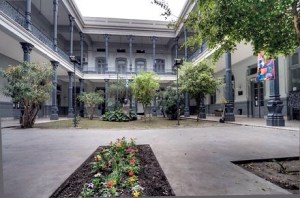 Inside the Instituto Alfredo Vazquez Acevedo.
He held senior positions in the judiciary: Government Tax and Finance (1873-1874), Attorney Civil and Crime (1876-1879), Civil Tax (1878-1885). In 1899 he was elected senator and later deputy. He presided over the Constituent Assembly of 1917. He was also repeatedly chairman of the National Party.
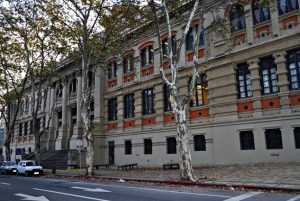
The Instituto Alfredo Vazquez Acevedo is a building in the Uruguayan capital Montevideo.
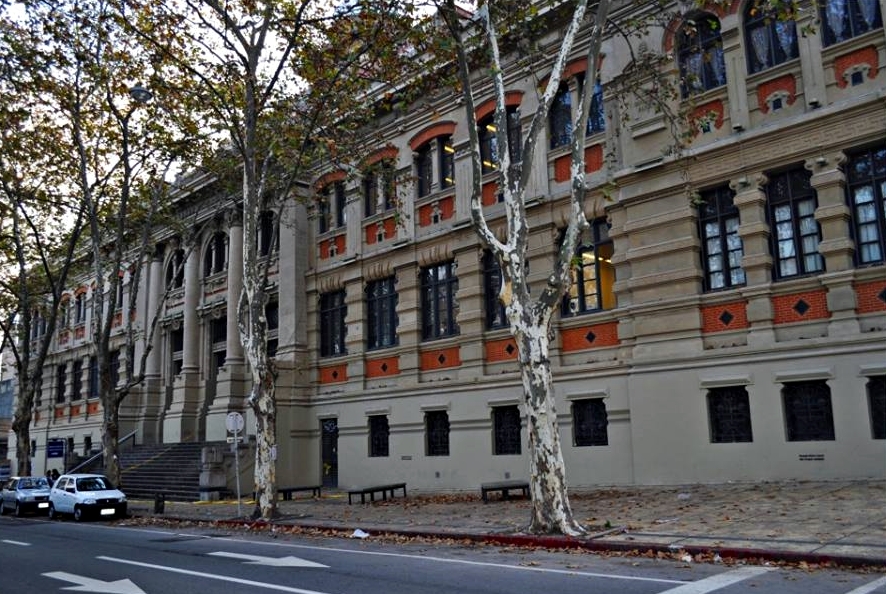
The 1911 inaugurated building is located in the Barrio Cordón Calle Eduardo Acevedo on the 1419-1427 and the streets José E. Rodó, Guayabo and Emilio Frugoni. As an architect Alfredo Jones Brown was responsible. Since 1976, the building is classified as Monumento Histórico Nacional.
Alfredo Vasques Acevedo died on the 6th of July 1923 in Montevideo.
Juana de Ibarbourou.
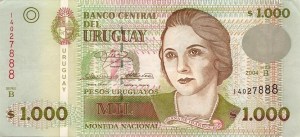
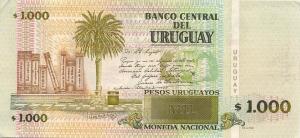
Juana Fernández Morales de Ibarbourou on front of the 1000 Peso note. The back shows some books of her on a shelf and the Juana palm, „La Palma de Juana“ as called in Uruguay.
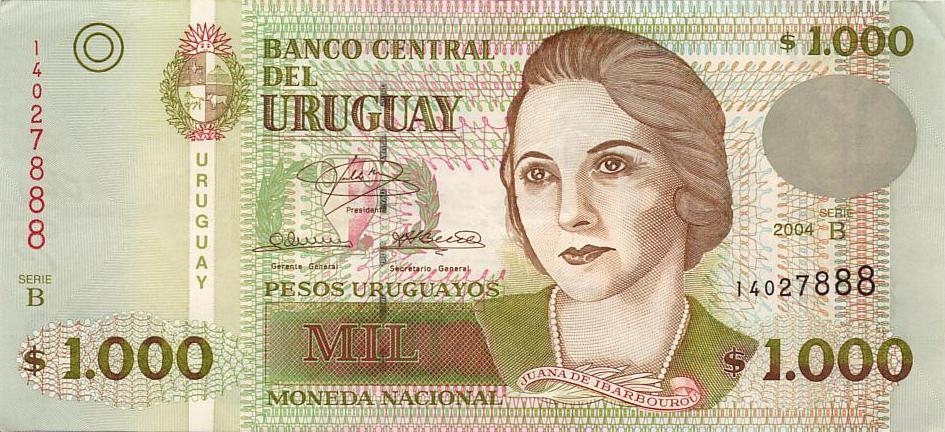
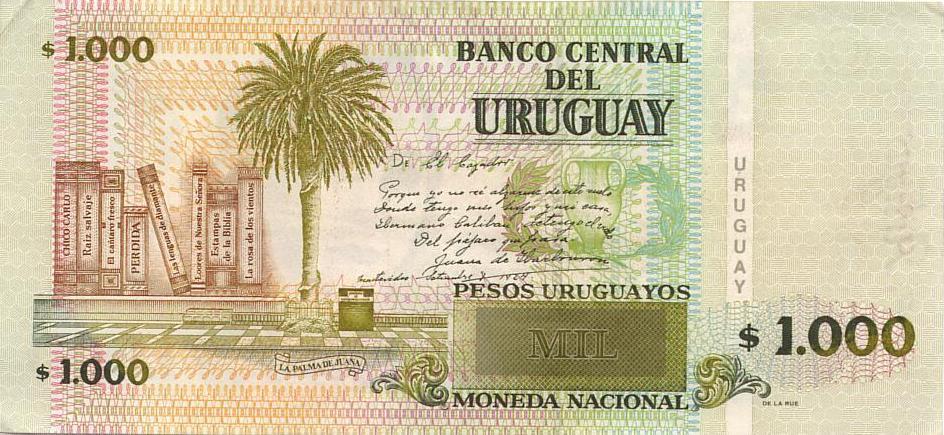
Juana de Ibarbourou, original name Juanita Fernández Morales, also known as Juana de América. She was born the 8th of March 1895 in Melo, Uruguay. She was an Uruguayan poet, one of the most famous Latin American women poets. She was venerated for her lyrical celebration of love and nature.
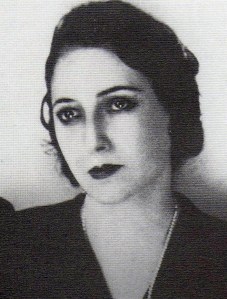 This picture was used for the 1000 peso note.
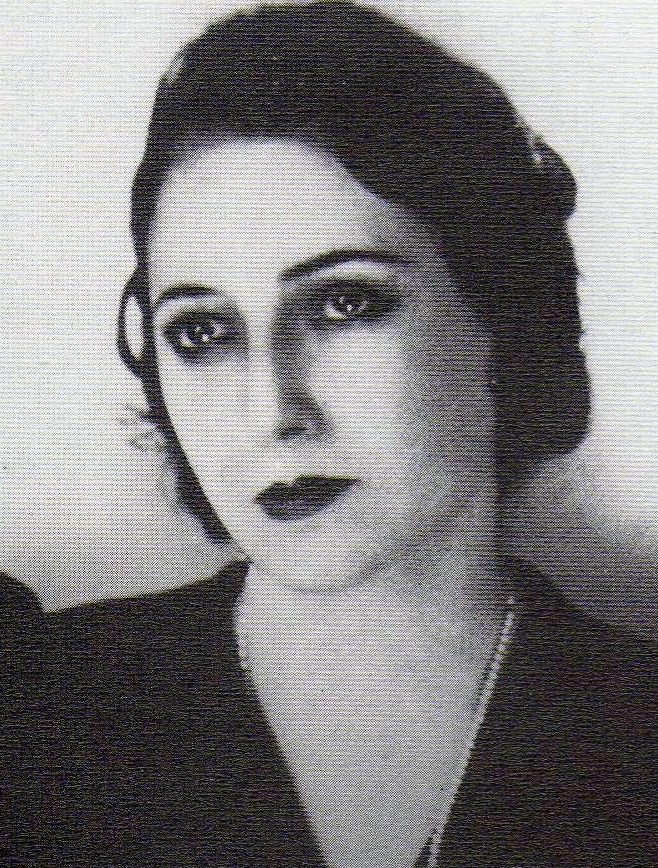
Ibarbourou spent her childhood in a small village surrounded by country things. She was largely self-educated. In 1914 she married and later she bore a son. After a somewhat peripatetic existence, the family moved to Montevideo in 1918.
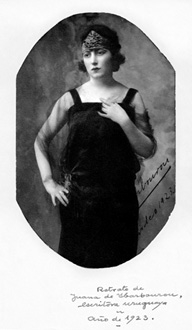
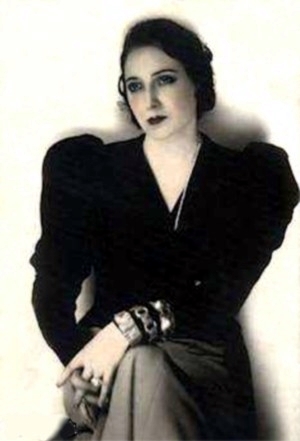
Juana always tried to look beautiful and sexy, left 1923 and right 1933.
She was one of the most popular poets of Spanish America. Her poetry, the earliest of which is often highly erotic, is notable for her identification of her feelings with nature around her. Juana de Ibarbourou was a feminist, naturalist, and pantheist.
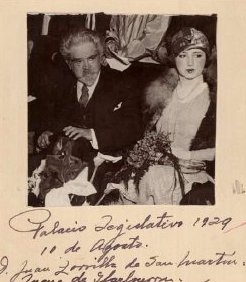 Rare photo of Ibarbourou and Zorrilla (20 Peso note).
Ibarbourou’s feminism is evident in poems such as „La Higuera“, in which she describes a fig tree as more beautiful than the straight and blooming trees around it, and „Como La Primavera“, in which she asserts that authenticity is more attractive than any perfume. Also, in „La Cita“, Ibarbourou extols her naked form devoid of traditional ornamentation, comparing her natural features to various material accessories and finding in favor of her unadorned body.
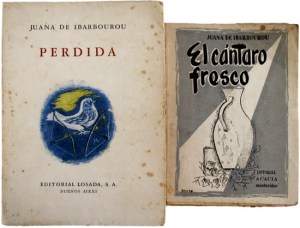 Some of Juana’s poetry.
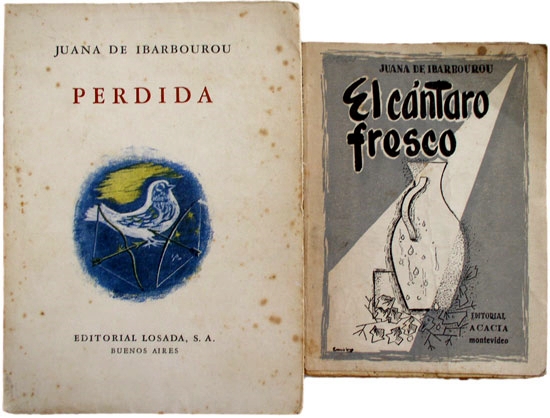
Ibarbourou’s poetry, rich in sensual images and expressed in simple language, deals with the themes of love and nature. Las lenguas de diamante (1919; “Tongues of Diamond”) is strikingly sensual, erotic, and pantheistic. These qualities, along with a youthful narcissism, are also present in Raíz salvaje (1922; “Savage Root”).
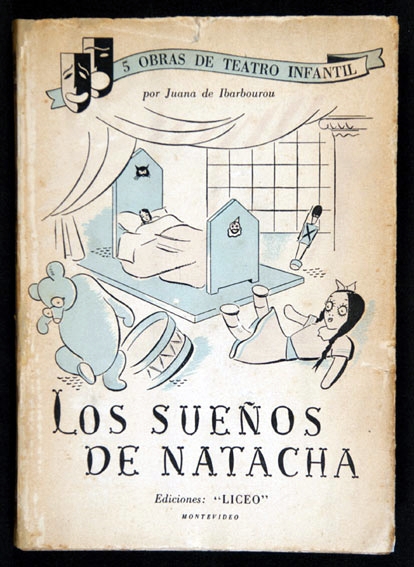
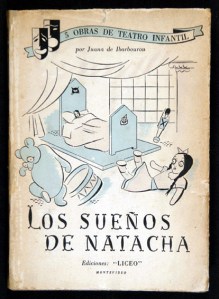 Wonderful children’s book „Natascha’s Dreams“.
The urgency and abundance in these early works gave way later, in La rosa de los vientos (1930; “Compass Rose”), to a sense of declining beauty and vitality and, finally, in Perdida (1950; “Lost”), to an expression of despair. She was deeply affected by her own illness and the deaths of her parents and husband.
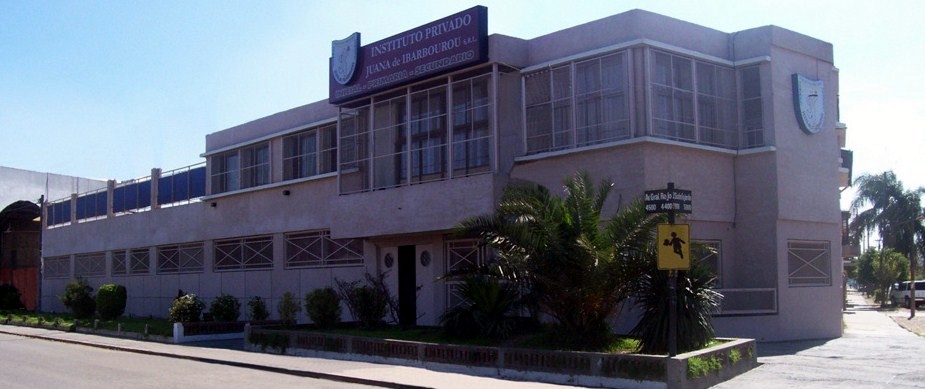
 Private Institute Juana de Ibarbourou, a private school in Gregorio de Laferrere, department Buenos Aires, Argentina.
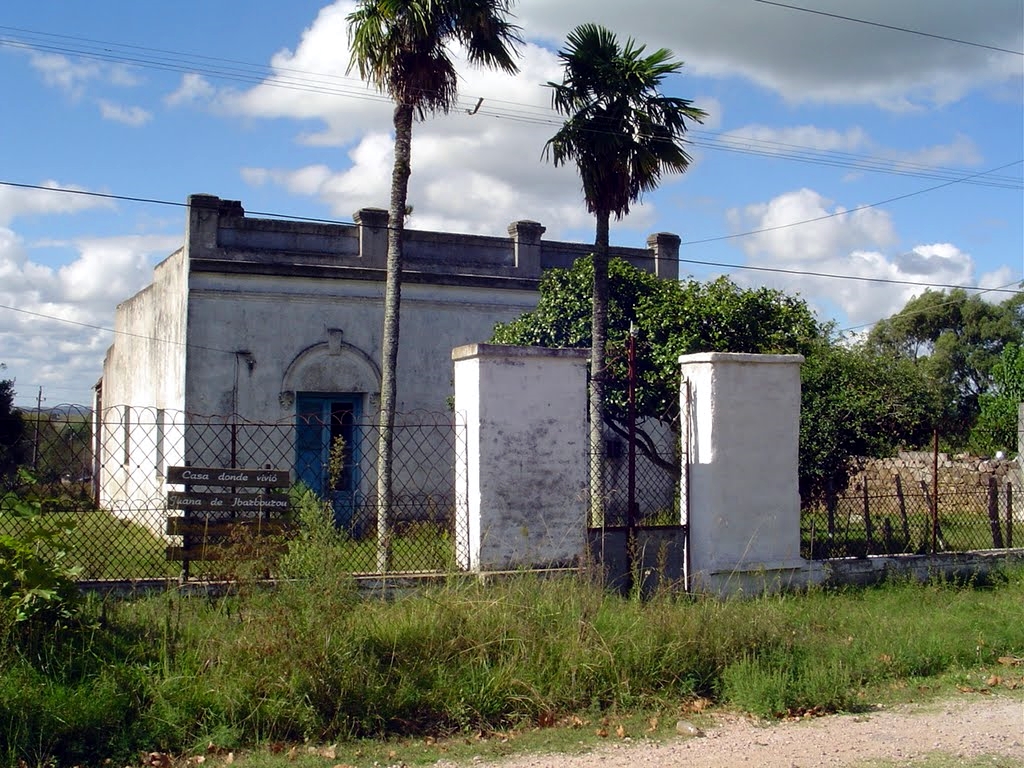
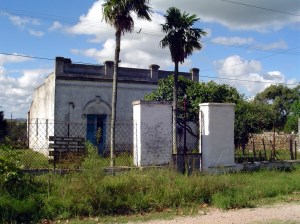 The sign says „Casa donde vivio Juana de Ibarbourou“, private home of Juana de Ibarbourou in Santa Clara de Olimar, ruta 7, departemento Treinta y Tres. It sadly rots away as so many other buildings, worth preserving, in Uruguay. Notice the two Juana palms in front.
Although Ibarbourou’s later poetry lacked the passion and feeling of her earlier work, she remained one of the most popular poets of South America. She was elected president of the Sociedad Uruguaya de Escritores (Society of Uruguayan Writers) in 1950.
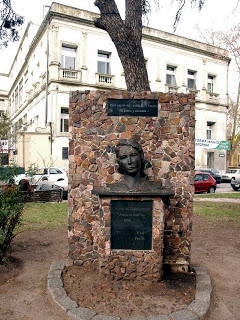
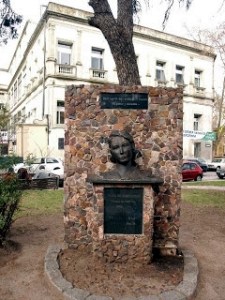 Monument on Av. 8 de Marzo in Montevideo.
Ibarbourou’s depiction of death in her poetry was not consistent throughout her body of work. In „La Inquietud Fugaz“, Ibarbourou portrayed a binary, final death consistent with Western tradition. In „Vida-Garfio“ and „Carne Inmortal“, however, Ibarbourou describes her dead body giving rise to plant life, allowing her to live on.
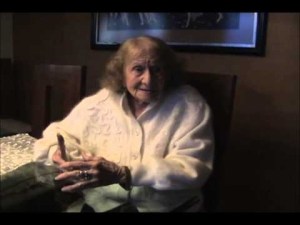 Juana Ibarbourou in her late 8o’s.
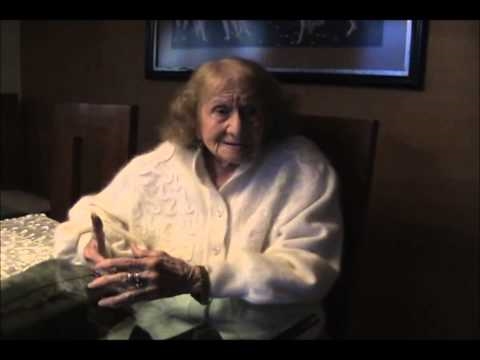
In „Rebelde“, one of Ibarbourou’s most richly constructed poems, Ibarbourou details a confrontation between herself and Charon, the ferryman of the River Styx. Surrounded by wailing souls on the boat passage to the underworld, Ibarbourou defiantly refuses to lament her fate, acting as cheerfully as a sparrow. Although Ibarbourou does not escape her fate, she wins a moral victory against the forces of death.
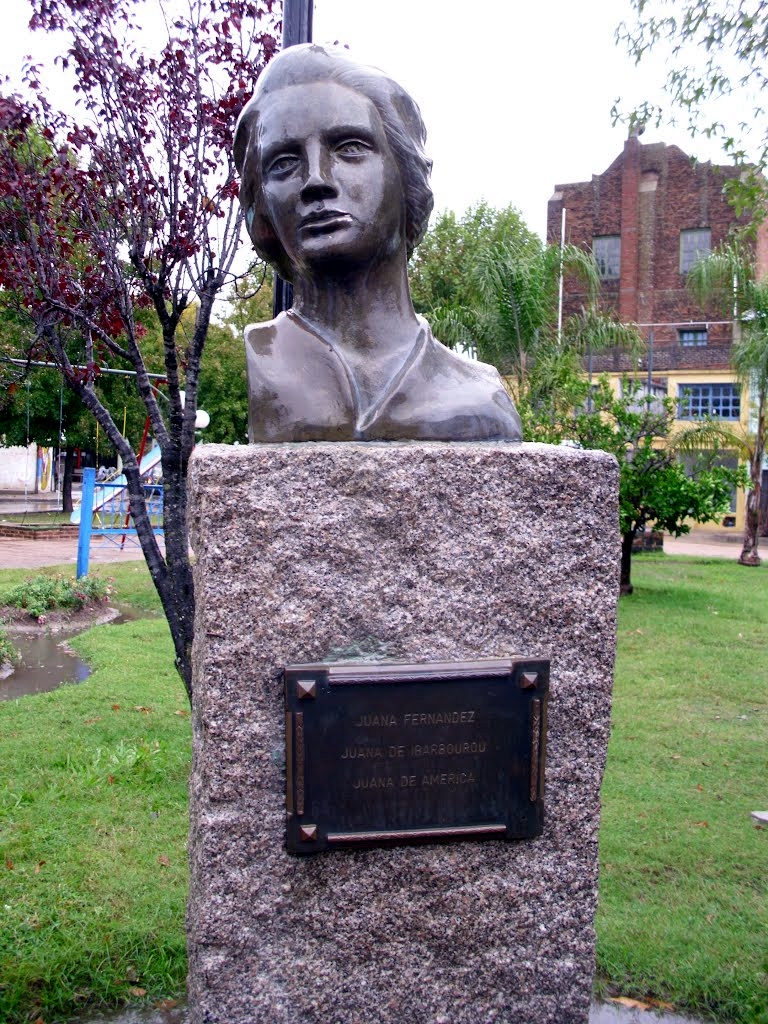
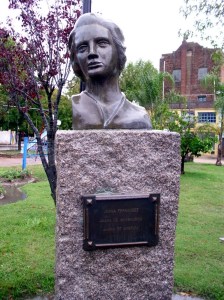 Juana de Ibarbourou monument in front the terminal in Melo.
Like most poets, Ibarbourou nursed an intense fear of death. Though it is easy to surmise this from her poetry, she states so explicitly in the first line of „Carne Inmortal.“ Juana died in the age of 87 on 15th of July 1979 in Montevideo, Uruguay.
A fourth part will follow with the 2000 Peso note, one of the most interesting personalities on an Uruguayan banknote. Stay tuned, don’t miss it.

