Filet Mignon of Salmon

Filet-Mignon-of-Salmon 1

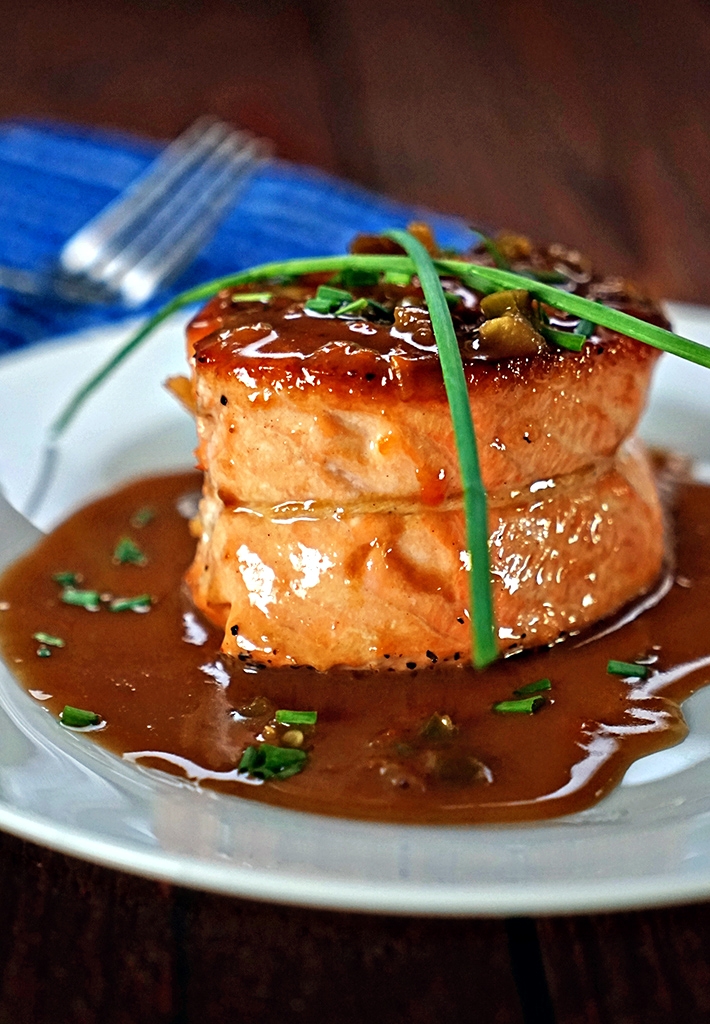
After my post „Perfect Filet Mignon“, I like to introduce you to a „special version“ of this indulging recipe.

Filet Mignon of Salmon with Marion-berry Sauce.

Filet Mignon conjures up visions of a lean and tender cut of prime beef either simply grilled or lavishly dressed up with extravagant accouterments such as fois gras, mushrooms, truffles and rich sauces like Tournedos Rossini. However they appear, they are special.

Some years back, Australian menus started offering “Surf and Turf” – entrees loaded with meat and seafood for hungry diners who wanted to strap on the old feedbag.
We had in Australia great dining and often futuristic. In the midst of other  entrees, we had once in a Sydney restaurant a spectacular “Filet Mignon of Tuna with a Red Wine Reduction” that seduced me on my first visit.

Filet-Mignon-of-Salmon 7  The basic „Surf and Turf“, or „Water and Land“.
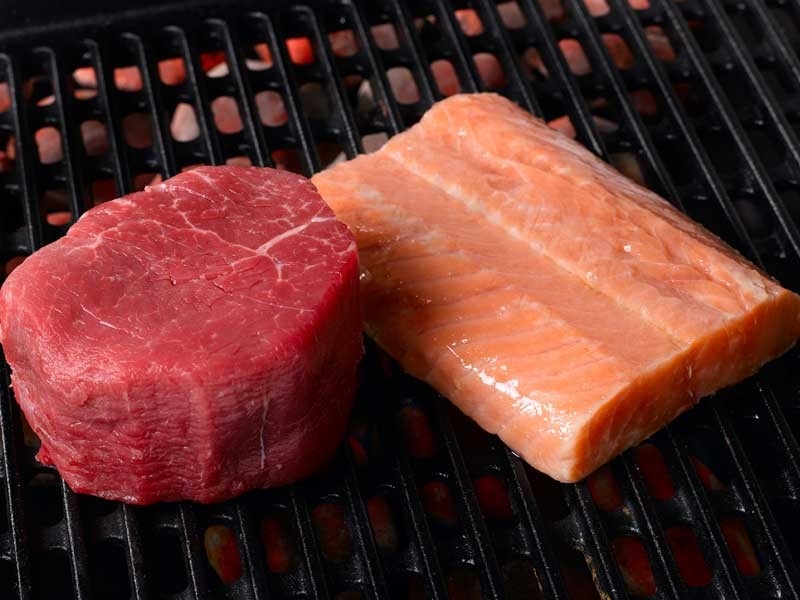
Of course I directly tried to imitate this recipe with good friends. In Australia with a fine peace of Marlin (swordfish), later we came down (without meaning it negative) to salmon. Now in Uruguay even salmon is a rare delicatessen, but available from Chile.

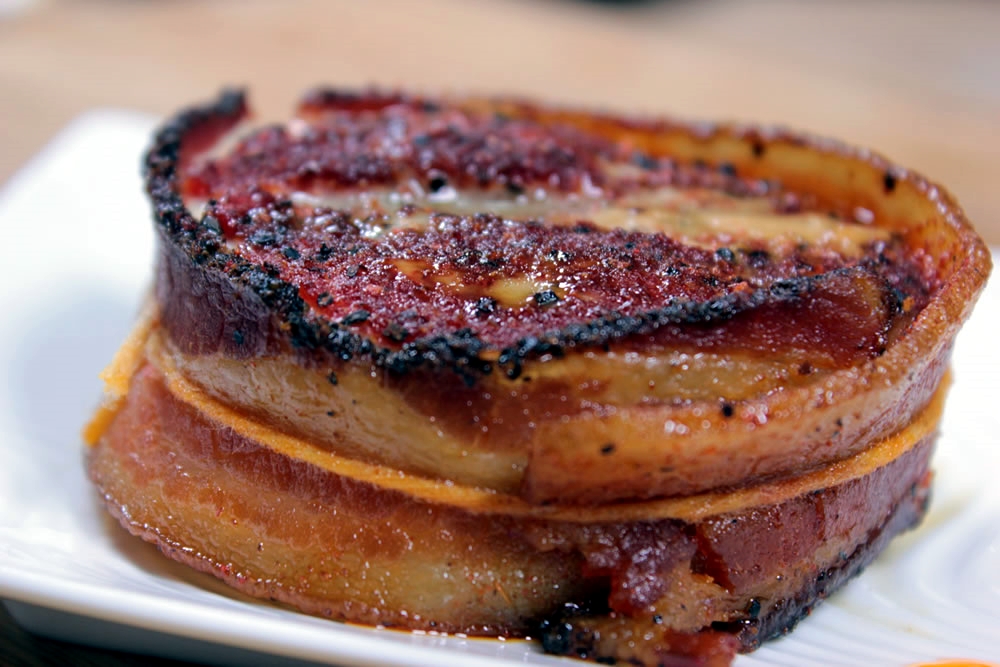
The method I am referencing is coating the filet in crispy cooked and finely sliced bacon. A little beaten egg white standing in as “glue” is the trick.

Though complicated looking and impressive in presentation, this dish is relatively simple to prepare, and the Marion-berry or blackberry sauce can be prepared days ahead.
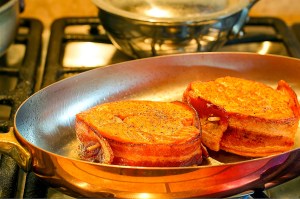
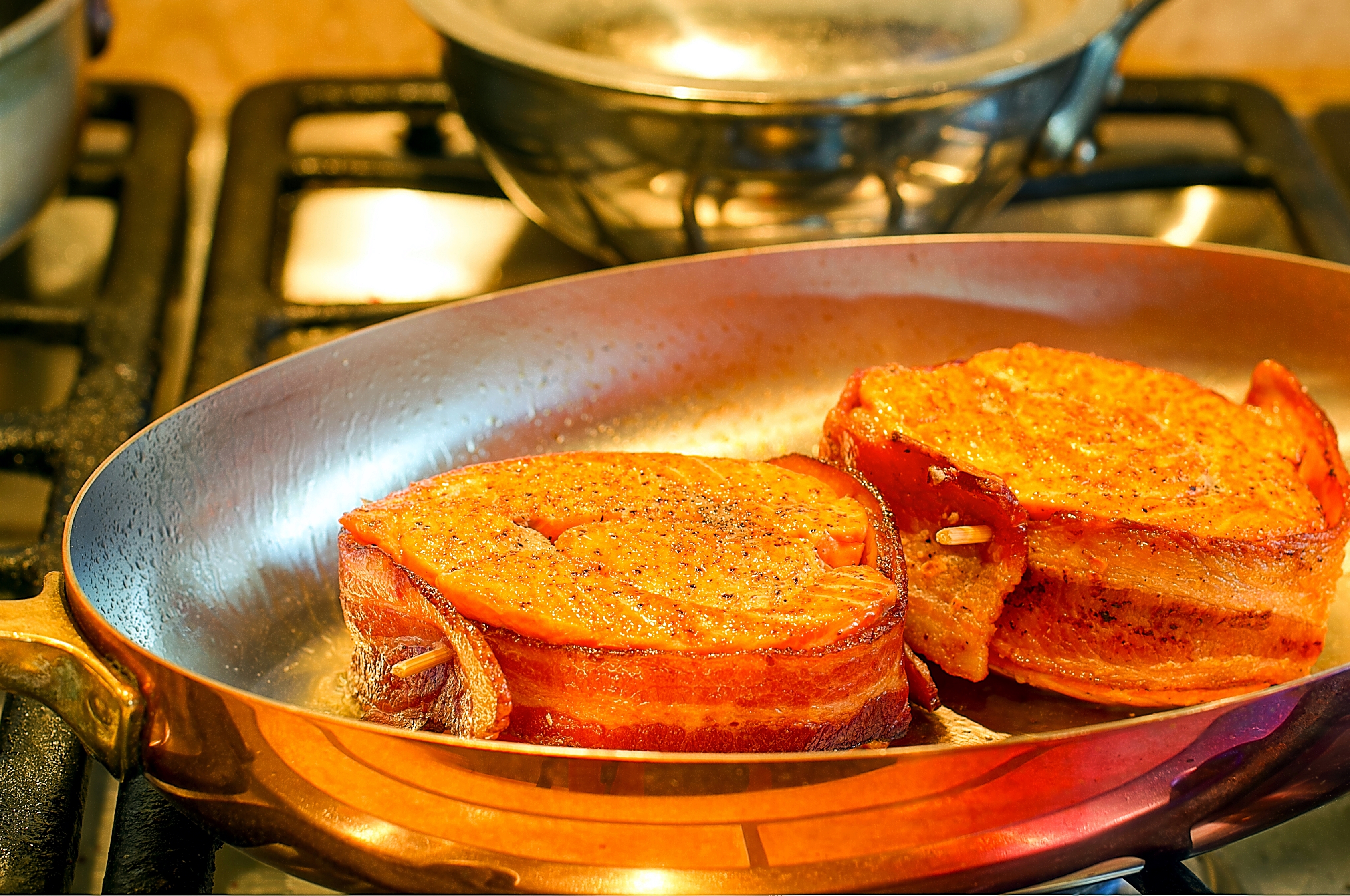
Filet-Mignon-of-Salmon 3  Filet Mignon of Salmon in bacon wrapping.
Ingredients for the Marion-berry sauce:

Set aside a few of the berries for garnishing the cooked salmon
4 cups (960 ml) Marion-berries, pureed and pressed through a food processor or fine mesh strainer to remove seeds (blackberries are a fine substitution)
6-8 tablespoons (90-120 ml) light brown sugar
2 tablespoons (30 ml) balsamic vinegar or to taste
½ teaspoon (2,5 ml) ground cinnamon
½ teaspoon (2,5 ml) ground allspice
½ teaspoon (2,5 ml) ginger
a Pinch (0,3 ml) of ground cloves
a pinch (0,3 ml) of salt and fresh ground pepper to taste

How to do:

Mix all ingredients together in a saucepan and simmer until thickened.
Taste and adjust the balance of sweet, salty, and sour if necessary.
Too sweet – add more vinegar. Too salty or sour – add more brown sugar.
This sauce has to be served pretty hot to accomplish the salmon/bacon.
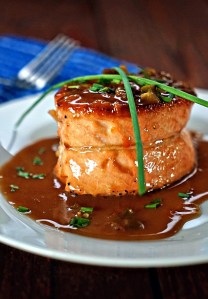
Filet-Mignon-of-Salmon 5  If you don’t like the bacon, just have the salmon.
Ingredients for the salmon:

8 salmon fillets, cut the same thickness as your bacon,  bones removed
8 slices smoked bacon, use a top quality
Skewers for securing fillets
Salt
Pepper
Oil for searing

How to do:

Preheat oven to 400°F (200°C).
Precook the bacon until done but not crisp, press the bacon down to keep the bacon slices flat. Set aside to drain.
Carefully inspect the salmon using your fingers to locate and remove any pin bones with a pair of stainless steel pliers.
Align two fillets end to end and slightly overlapping and roll into a round, filet shape.
Filet-Mignon-of-Salmon 2  Round shaped salmon (from 2 fillets) wrapped in bacon.
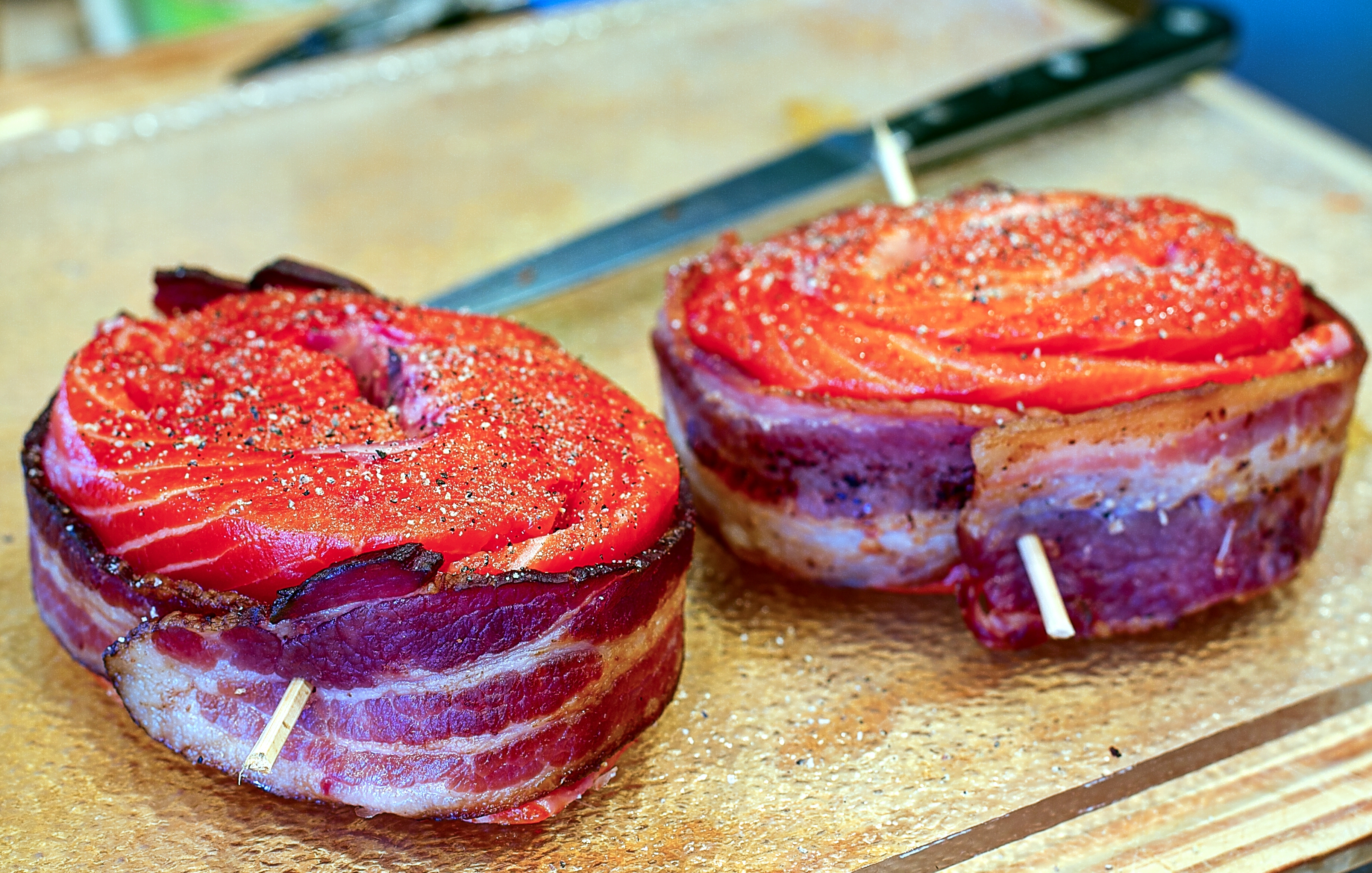
While holding the fillets, wrap 2 slices of bacon around and secure with a skewer long enough to go through all. Trim the skewer if necessary.
Sprinkle both sides of the fillets with salt and pepper.
Heat an ovenproof skillet or frying pan over medium-high heat and add the oil, coating the bottom of your pan.
Add the fillets and sear on both sides until well browned, about a minute or two per side.
Roast in the oven until a thermometer inserted into the center registers 120°F (50°C).
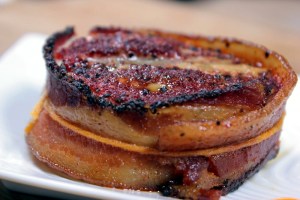
Filet-Mignon-of-Salmon 4  Here bound with cooking string instead a skewer.
Remove, let rest under a foil tent for about 5 minutes.
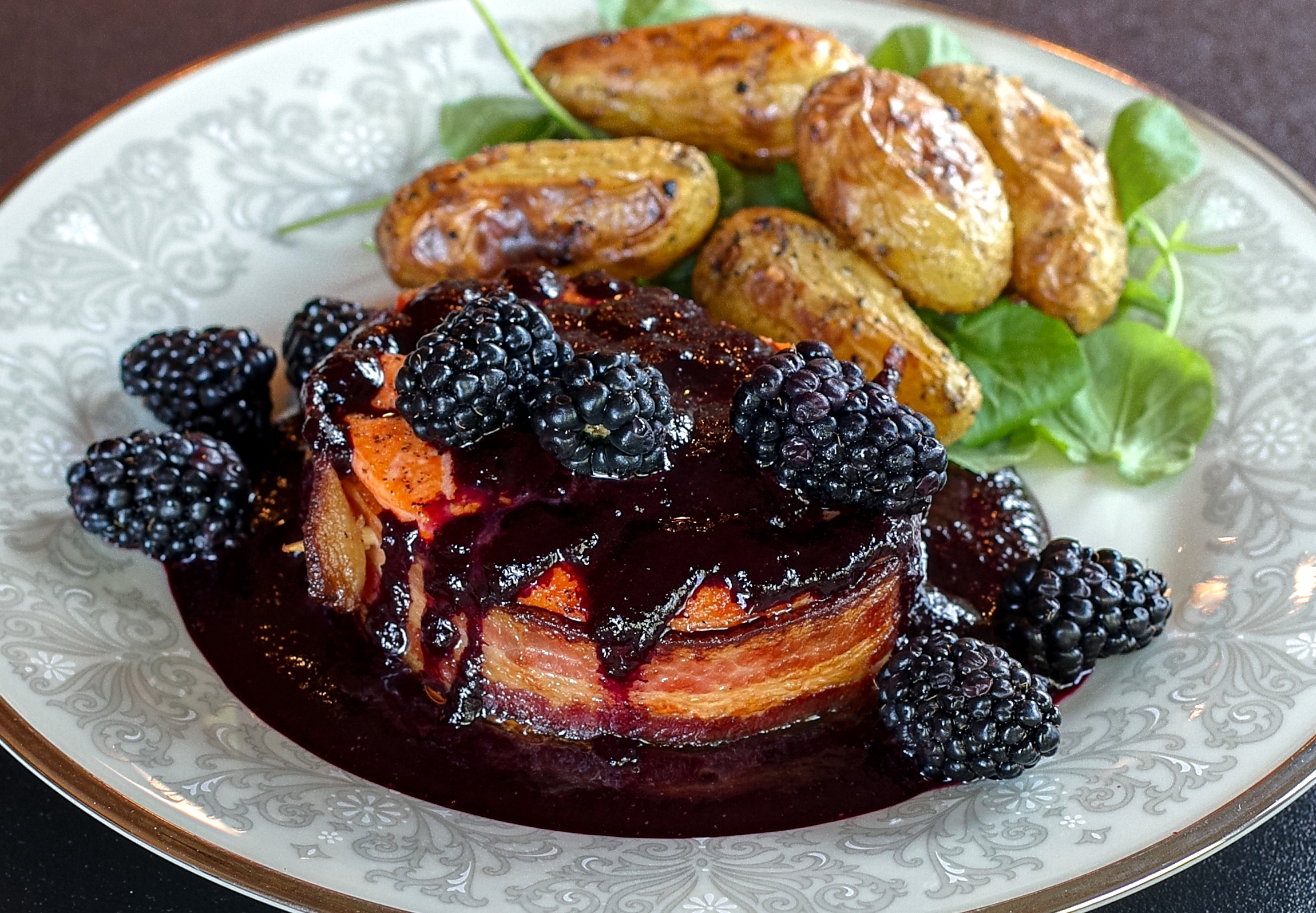
Pour a pool of the berry sauce in the plate, place one filet and drizzle more sauce over.
Garnish with a few of the fresh berries. It tastes great, fresh cool berries with hot sauce.
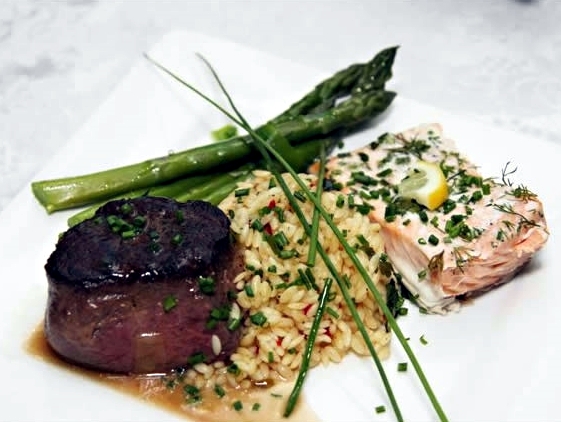
Filet-Mignon-of-Salmon 8  Let your fantasy go wild with „Salmon Mignon“.
Tips:

The smoked bacon will give the salmon a fine smoky taste. But if you don’t like bacon or you won’t eat  meat, cook the „fish“ with the bacon and take it off later.

Of course, if you roll in the salmon fillets, you do it without the skin. If you like crisp salmon skin, as I do, bake it flat in a pan (with a small brick on top) till it’s crispy dry and serve it like a „side cracker“. Absolute delicious dipped in the berry sauce.

Don’t be afraid to sear your „Salmon Mignon“ till its browned nicely. It will still be soft and cooked well inside, as long as you watch the temperature inside and – important – let the filet rest very well (in foil to keep it warm).

As sides use roasted, baby fingerling potatoes liberally coated with olive oil, salt, pepper, on a bed of fresh watercress.  See pic down here. Any other fresh green-leave salad will go also very well with this delicious dish.
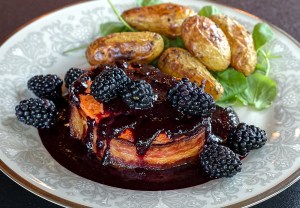
Filet-Mignon-of-Salmon 1  This recipe deserves a large amount of sauce.

With this recipe I like a heavy dry Sauvignon Blanc or German Riesling.
No „Black Tower“ or „Blue Nun“, or any of this tourist stuff – PLEASE !!!
This is a fine „show off“ recipe, try it, indulge yourself and your guests !
Veröffentlicht unter Recipes | Verschlagwortet mit | 2 Kommentare

Who are They – Part 2

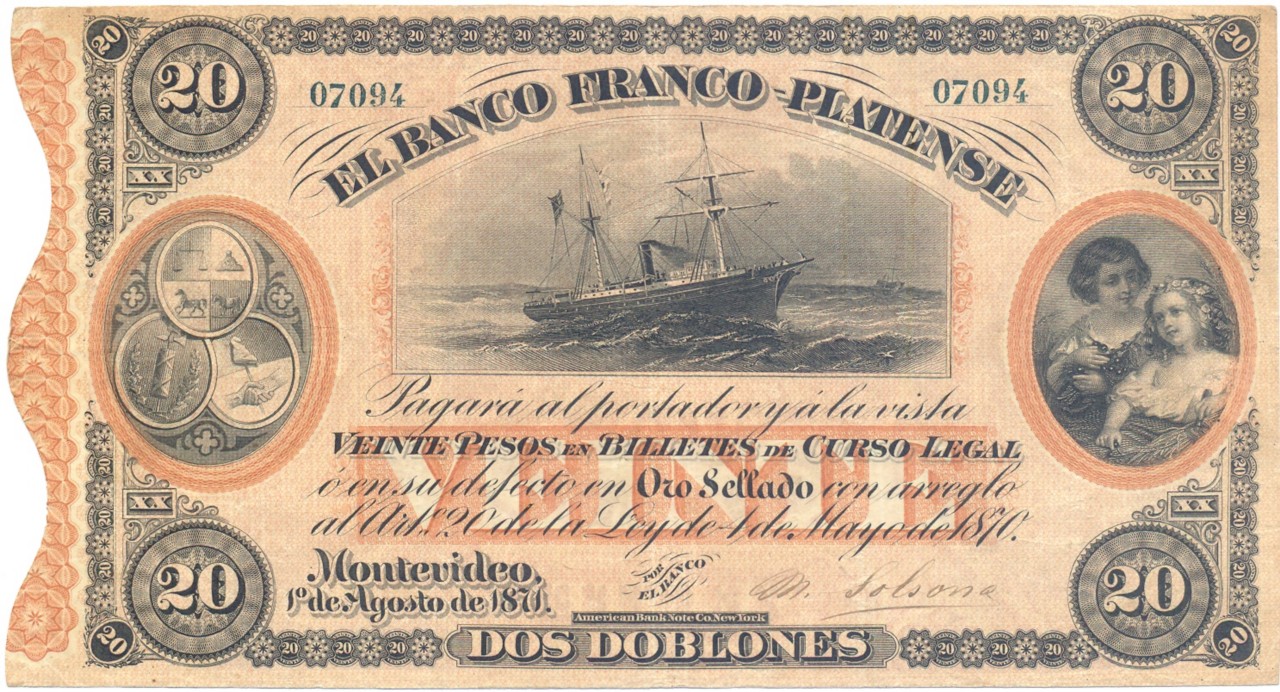
peso 20 1871    Beautiful old Uruguayan banknote from 1871.

Let’s go on with the Urugayan currency which is in circulation today:

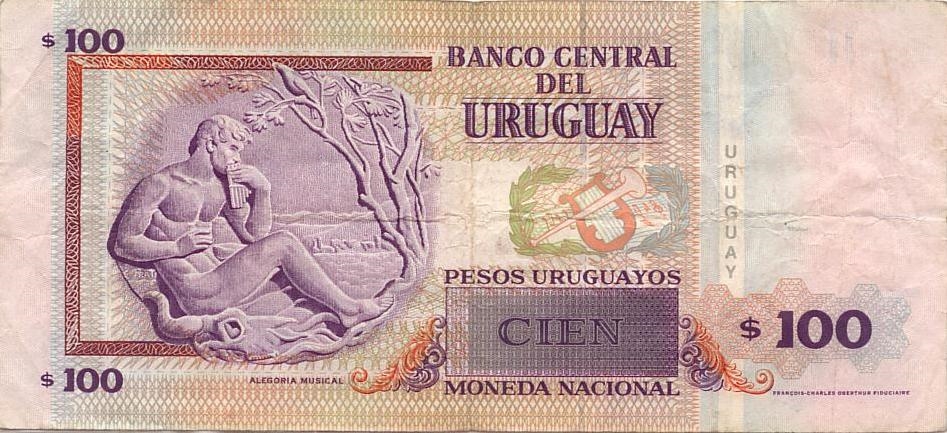
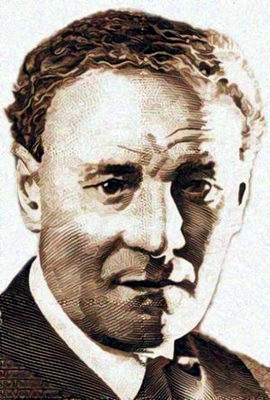
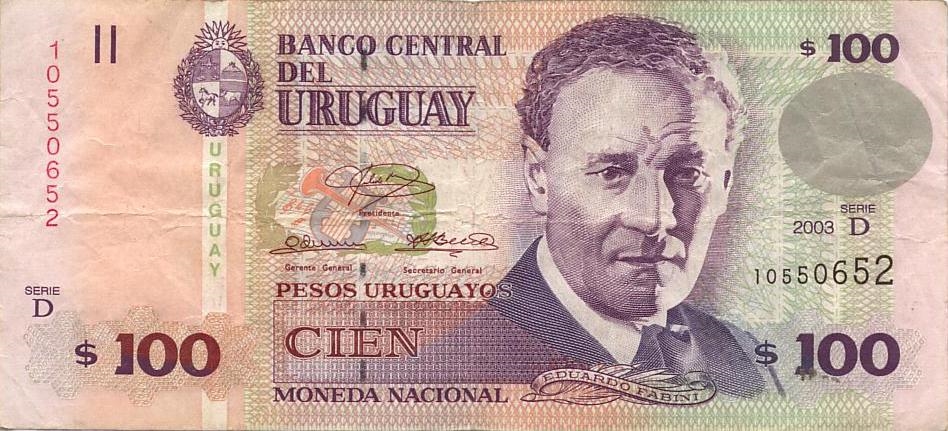
Eduardo Fabini.

peso 5  peso 5a
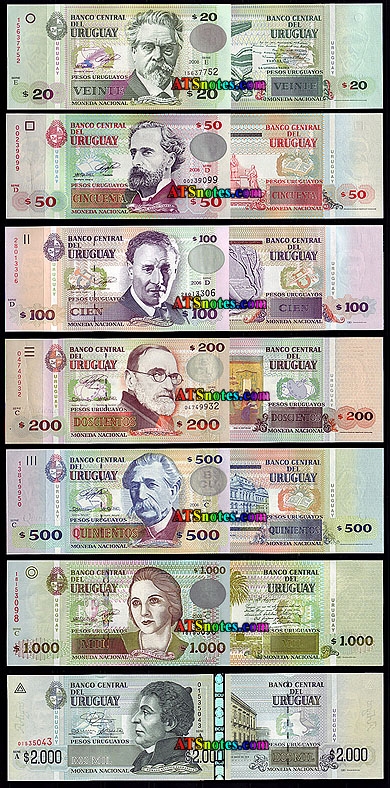
Eduardo Fabini on front of the 100 Peso note.    The back shows a musical allegory.

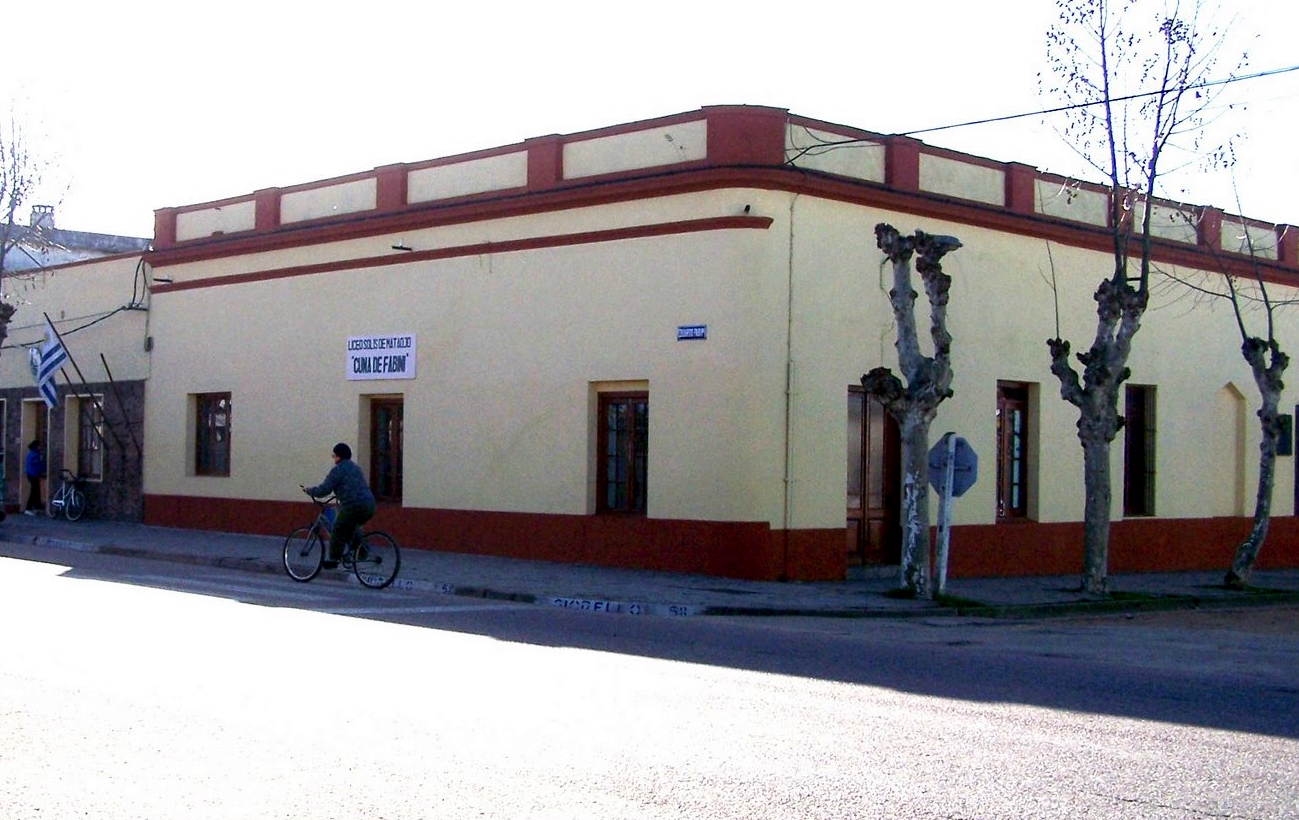
Born May 18, 1882 in the small town of Solís de Mataojo , Lavalleja , his parents were Juan Fabini and Antonia Bianchi , of Italian origin and some distinguished musicians in their family. He spent his early childhood in intimate contact with nature.

peso 5c    This picture was used for the 100 Peso note.

Fabini is considered the highest positive value of classical music in Uruguay. Having started a musical orientation in classical music forms , tones and melodies of national folk music, managed as expressions of exquisite refinement , excellent inspiration, and great musical sensitivity.

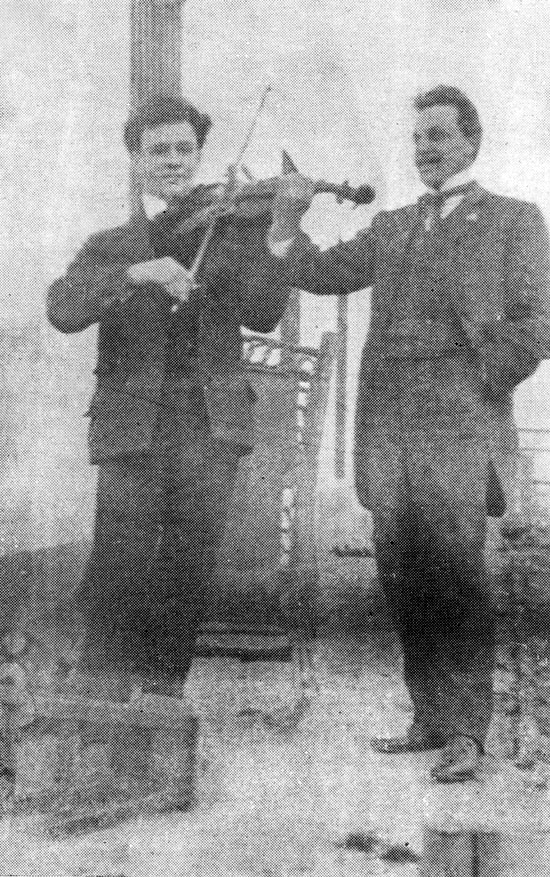
peso 5h fabini and julio herrera   Eduardo Fabini with Julio Herrera.

His musical knowledge was very early. At four years old, his favorite toy was the accordion. At six he admired his performances in the harmonium. At this time he began his musical studies violin with his older brother, who then continued in Montevideo, at the Conservatory “ The Lyre “ ( from 9 to 13 years ) with teachers Romeo Massi and Italo Casellas , and later with Scarabelli and Ferroni.

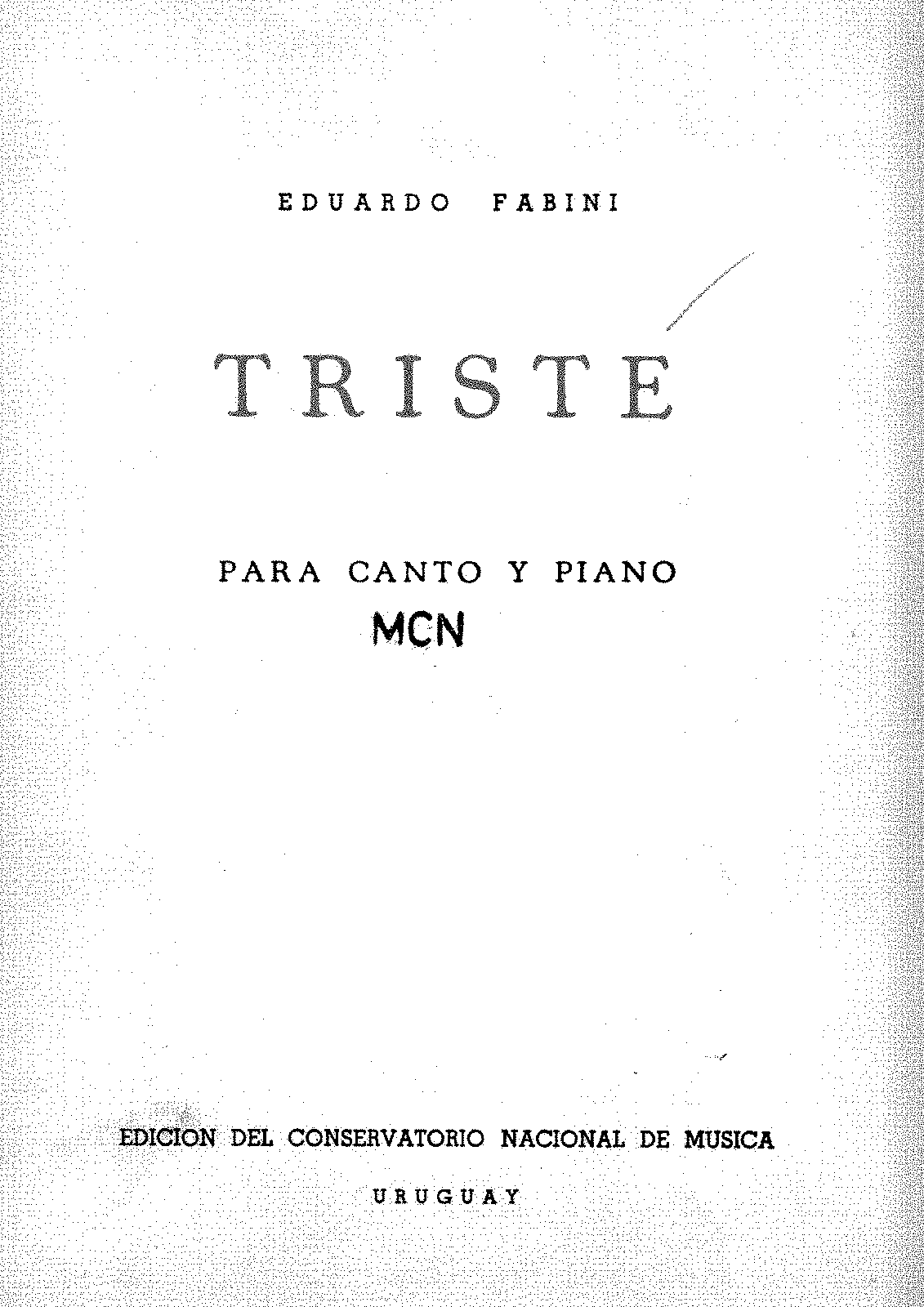
peso 5k    Music sheet of Triste.

On the advice of the teacher Perez Badia , he won a scholarship in 1899 , at age 17, which allowed him to travel to Europe and entered the music conservatory in Brussels, where he studied with teachers Deloc and Thomson and harmony with the teacher Brouk .

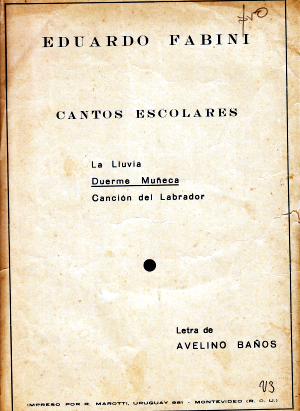
peso 5l   Music sheet of Canton Escolares.

Fabini started composing, performing the „Triste“ for orchestra, two  „Intermediate“, a “ arpegiano Study“ for piano, and a choir „Flowers of the field“. As a performer he won First Prize for Violin with Distinction , awarded by the Brussels Conservatory . Fabini was the first South American in that environment who was heard expressions of our native music .

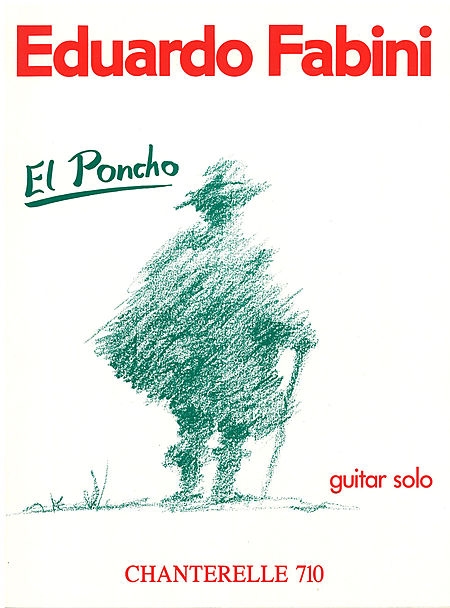
peso 5m   Music sheet of El Poncho, modern reprint.

Then he returned to Uruguay in 1903 , becoming known as soloist in various presentations made at the Teatro Solís of Montevideo, which aroused admiration.  After another trip to Europe,  in 1905  to Spain, where he remained two years. He returned to Montevideo in 1907, at which he participated with other national musicians in founding the Musical Conservatory of Uruguay (1907).

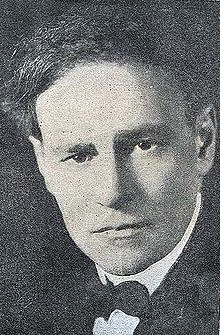
peso 5b   Eduardo Fabini.

In 1913 he was also co-founder of the Association of Chamber Music, numerous concerts sponsored entity that acted as interpreter. He is from time to time retiring to a landlife in the forests near Salus, Minas, avoiding all public activity. During this period he composed „Campo“ (started 1910), his first symphonic poem, which  was performed in public at the Teatro Albéniz in Montevideo on April 29, 1922.

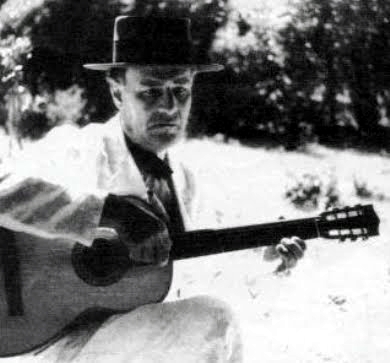
peso 5j       Fabini, a musician who never smiles.

Fabini  obtained immediately widespread recognition of his musical values, being also enshrined in Buenos Aires – where he performed in 1925 at the Teatro Colón by the Vienna Philharmonic – and soon in New York, Washington, Madrid, Barcelona, Berlin, Munich, Moscow, Valencia, Rio de Janeiro and many other major music cities such as Vienna, where it was performed by the Philharmonic orchestra in that city, under the baton of the great Richard Strauss.

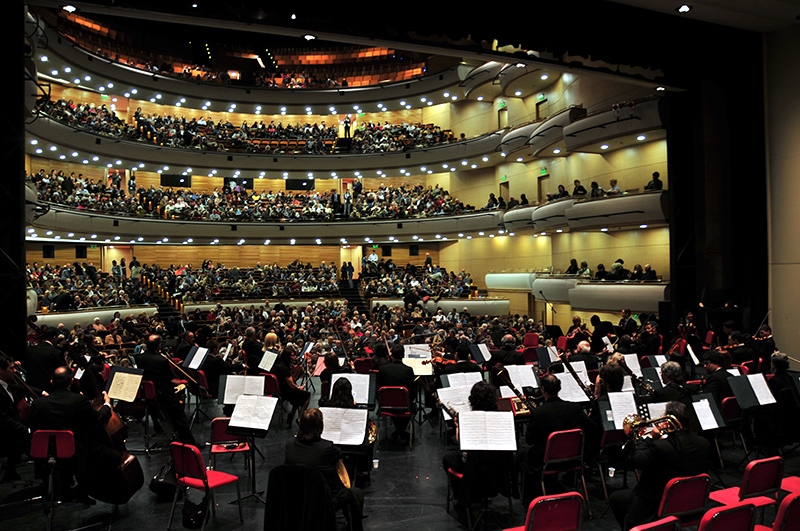
peso 5g   Eduardo Fabini room, Sodre auditorium, Uruguay.
The National Auditorium Sodre – Dr. Adela Reta National Auditorium is located at 1455 Andes Street, Montevideo. It is named after the criminal lawyer, minister of Culture and president of SODRE Dr. Adela Reta.
          peso 5i      Casa natal de Fabini en Solís.

Encouraged by this success, Fabini continued intense activity in the composition of works that evoke the sounds and atmospheres of the Uruguayan countryside; presenting soon after his other symphonic poem, entitled „The Island of Ceibos“. Among his works are numerous songs, school choirs, and fantasy for violin and orchestra. Between one other piece of ballet on the subject of a work of Fernán Silva Valdés entitled „Mburucuyá“ (1933) symphonic picture „Molga“, and child ballet „Mañana de Reyes“.

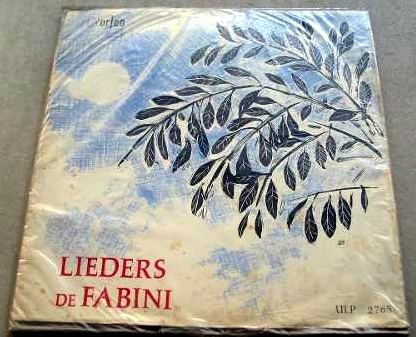
peso 5d    Record of Fabini songs.

In 1927 he was appointed as artist to the Embassy of Uruguay in the US. He  moved to the city of New York where „Field“ and „The Island of Ceibos“ were recorded in recordings made by the Philharmonic Orchestra, edited by the Company Victor Records.
Eduardo Fabini died 17th of May 1950 because of a heart condition.

Pedro Figari.

peso 6   peso 6a
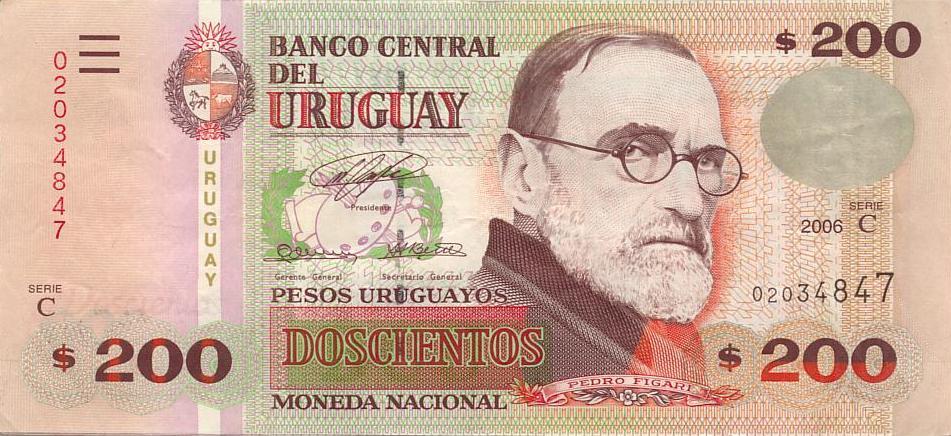
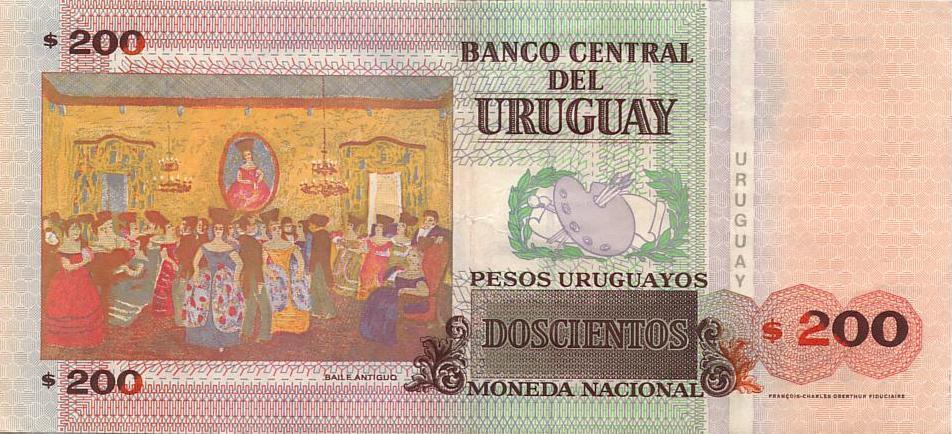
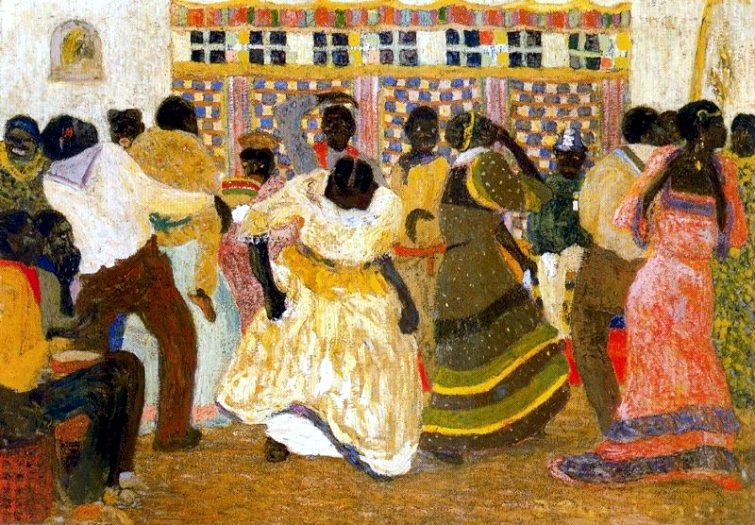
Pedro Figari on front of the 200 Peso note. The back shows „baile antiguo“,one of Figari’s wonderful paintings – what he really liked to paint – dancing and music, Uruguay’s vibrant life

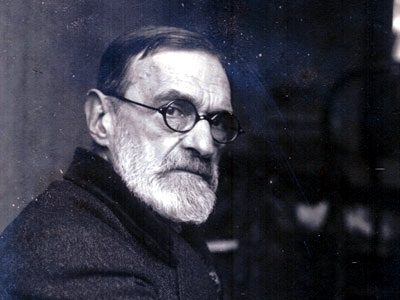
Pedro Figari. If you’ve never heard the name before, don’t worry about it, you’d be almost as likely to have heard of Pedro Figari, the lawyer, of Pedro Figari the legislator, educator, administrator, and heroic foe of social injustice, as you would Pedro Figari the artist.

peso 6b 1924    This picture was used for the 200 peso note.

Pedro Figari was born in Montevideo, Uruguay, the 29th of June 1861. Though he showed no small amount of art talent as a child, as so often happens, young Pedro was guided (or perhaps, pushed) into law school, from which he graduated in 1886.

peso 6j  Beautiful, Figari paintings are never dated.

Though he painted some as an amateur virtually all his life, Figari began a law career as what one in the U.S. calls a public defender. That means he represented in court cases of those too poor to afford private counsel. The job seldom paid very well (even today) but it’s steady work. As a result, Figari was exposed to the many areas of social injustice.

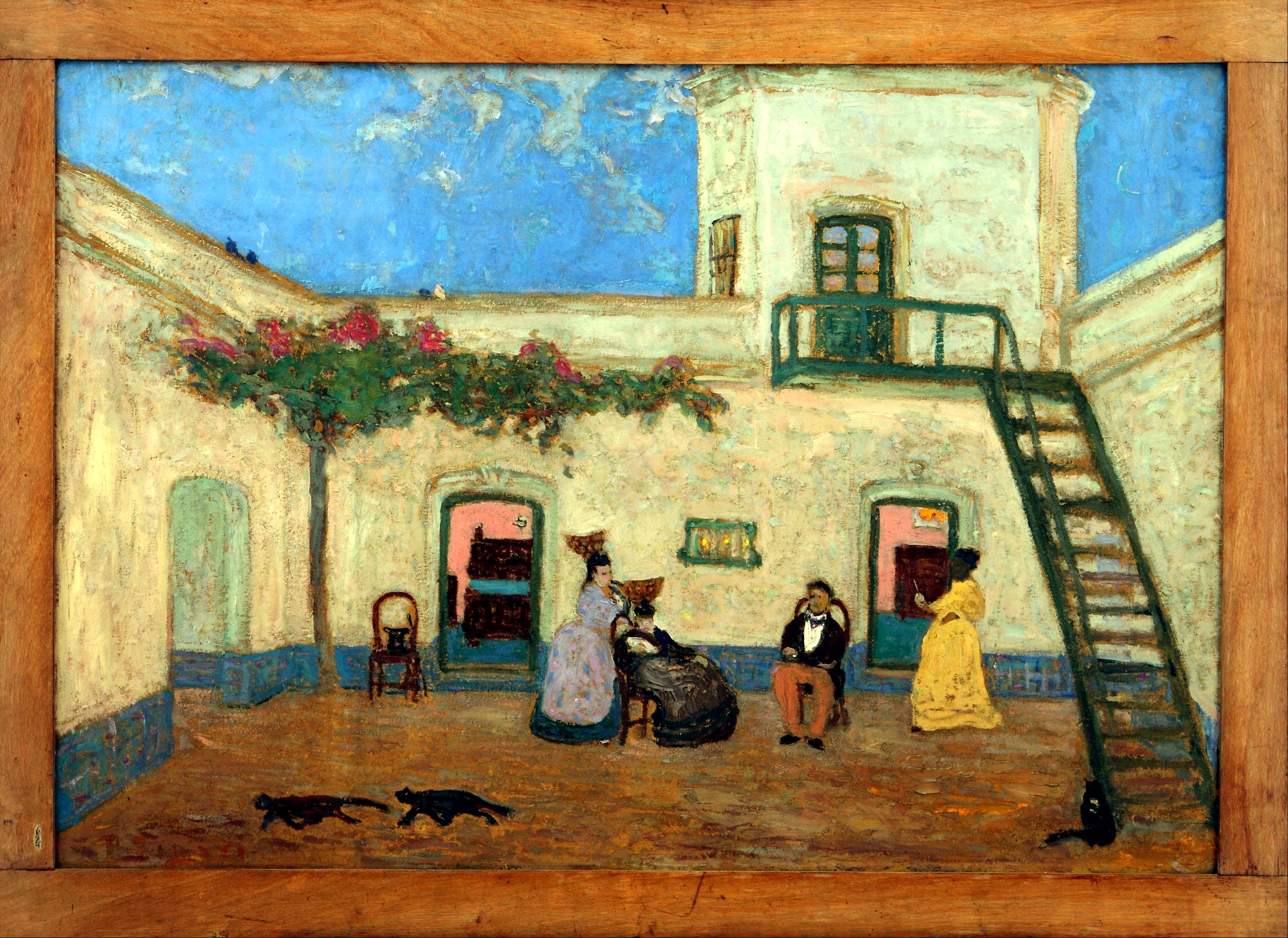
peso 6i el patio  „The Patio“, still in its cheap original frame.

Eventually, probably around 1900, Figari traveled to Europe where he studied under various French and Italian artists and gained exposure to the rough and tumble art movements we’ve come to lump together as Post-Impressionism.

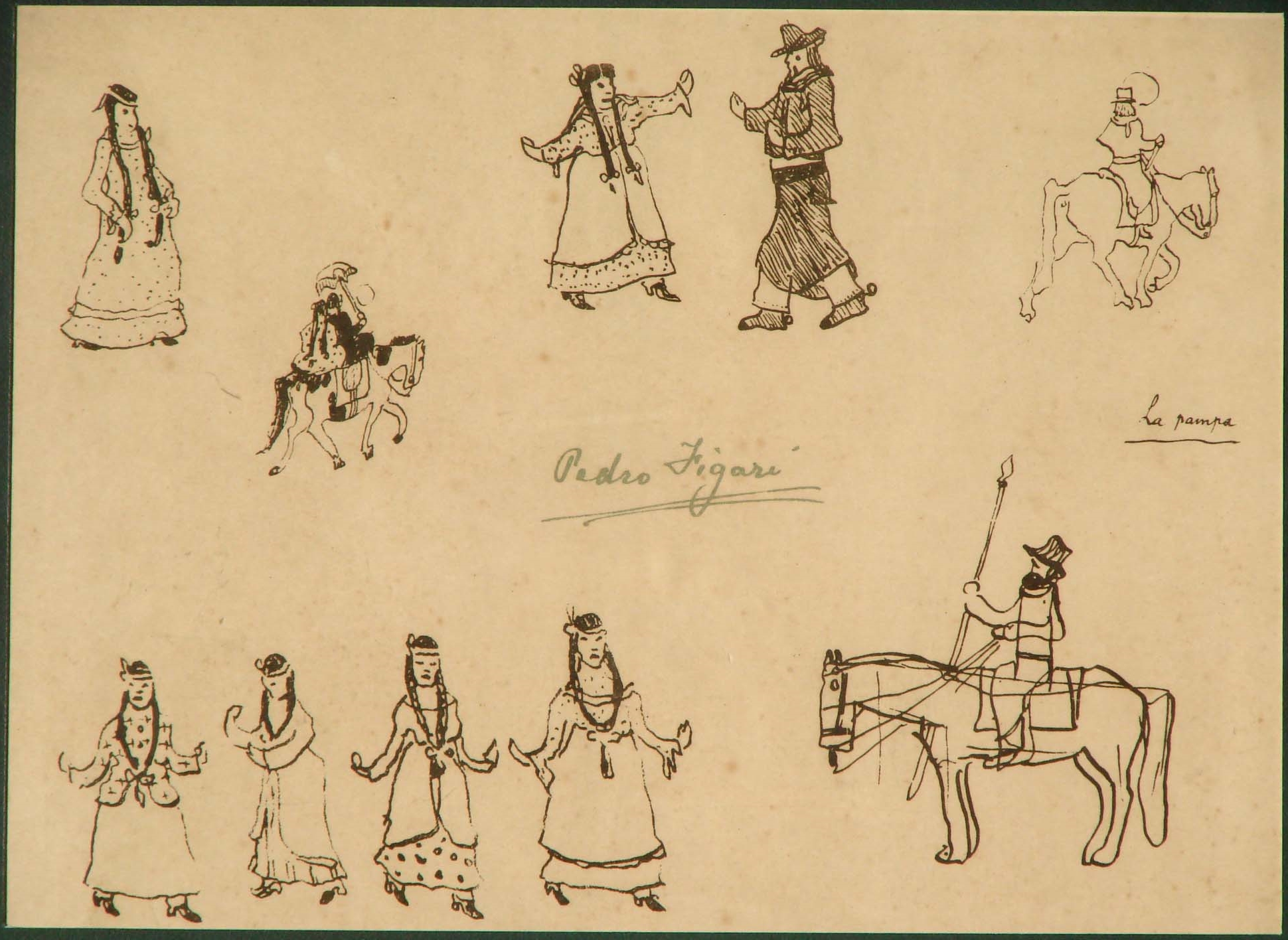
peso 6m  Very rare hand drawing of Pedro Figari.

Figari was especially influenced by the rebellious nature of the Post-Impressionist movements and the fact that they were veering further and further from traditional European academicism. In returning to Uruguay in 1916, Figari began painting and exhibiting more, attempting to define for his country a native style of painting.

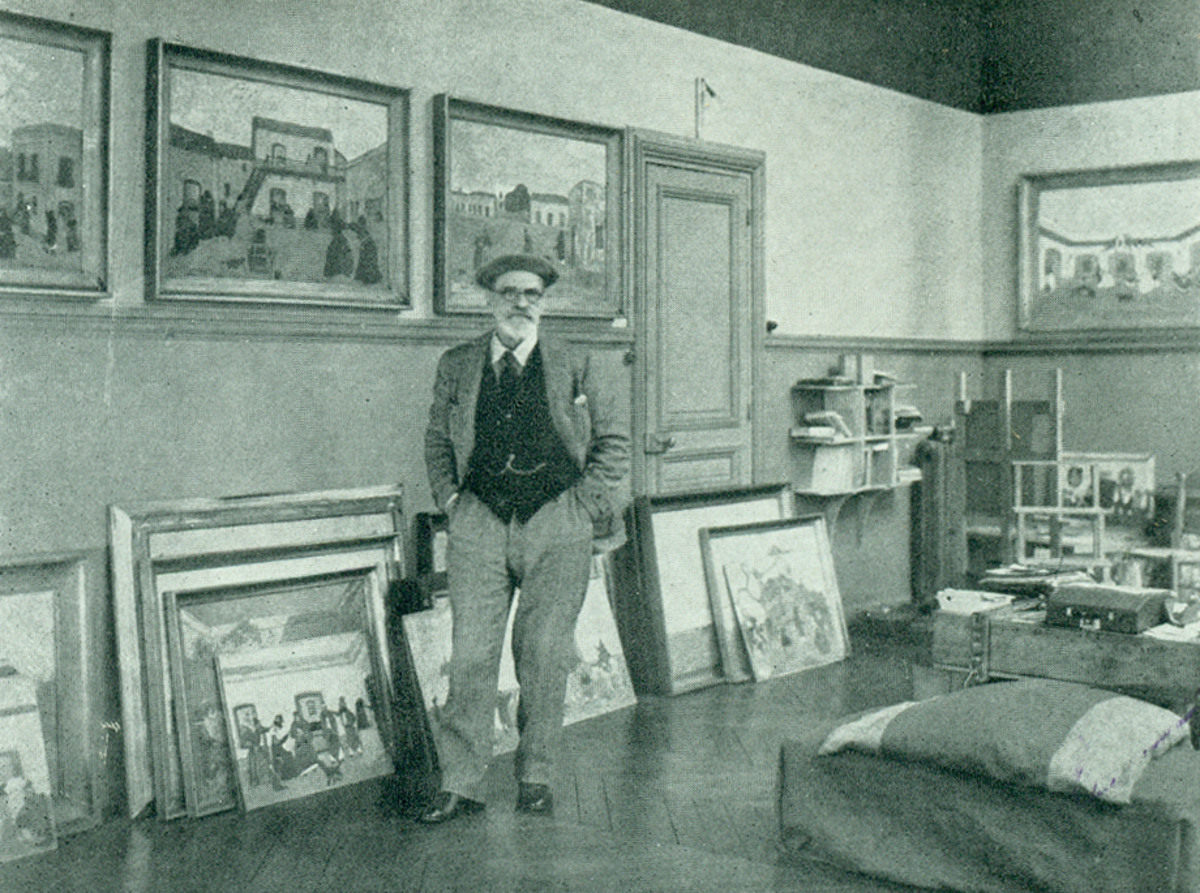
peso 6l  After retirement, finally, the artist Figari.

He was not alone in this effort; better known artists such as Diego Rivera, Gonzalo Endara Crow, Emiliano Di Cavalcanti were doing the same thing in their own countries during the first half of the 20th century. He helped establish a school of fine arts in his country while serving as a member of the Uruguayan Parliament and president of the University of Montevideo.

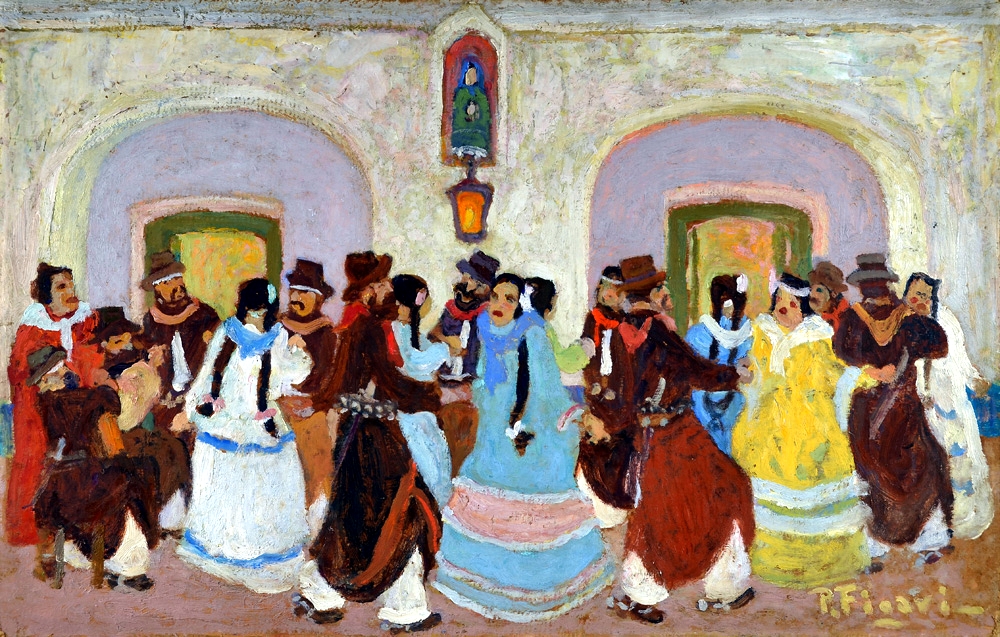
peso 6g 1921 candombe  Typical Figari painting, vibrant and colorful.

Then, in 1921, at the age of sixty, Figari retired from the practice of law and most of his political activities to paint full time. In seeing Figari’s work it quickly become apparent he cared little for natural or realistic academic elements. In fact he went out of his way to distance himself from such European influences.

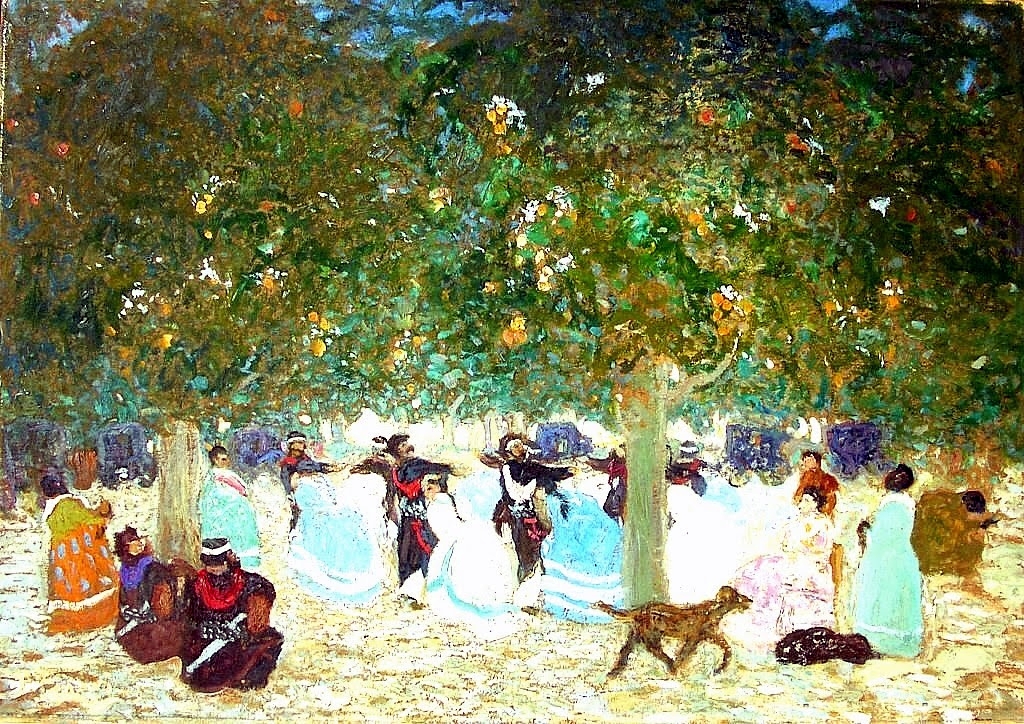
peso 6h under the orange trees   A well known Figari classic „Under the Orange Trees“.

His work is „figurative.“ By that I don’t mean „figural,“ though his paintings are sometimes heavily populated with people. Instead, Figari sought to convey scenes from the common cultural life he’d come to know so well with an almost child-like simplicity.

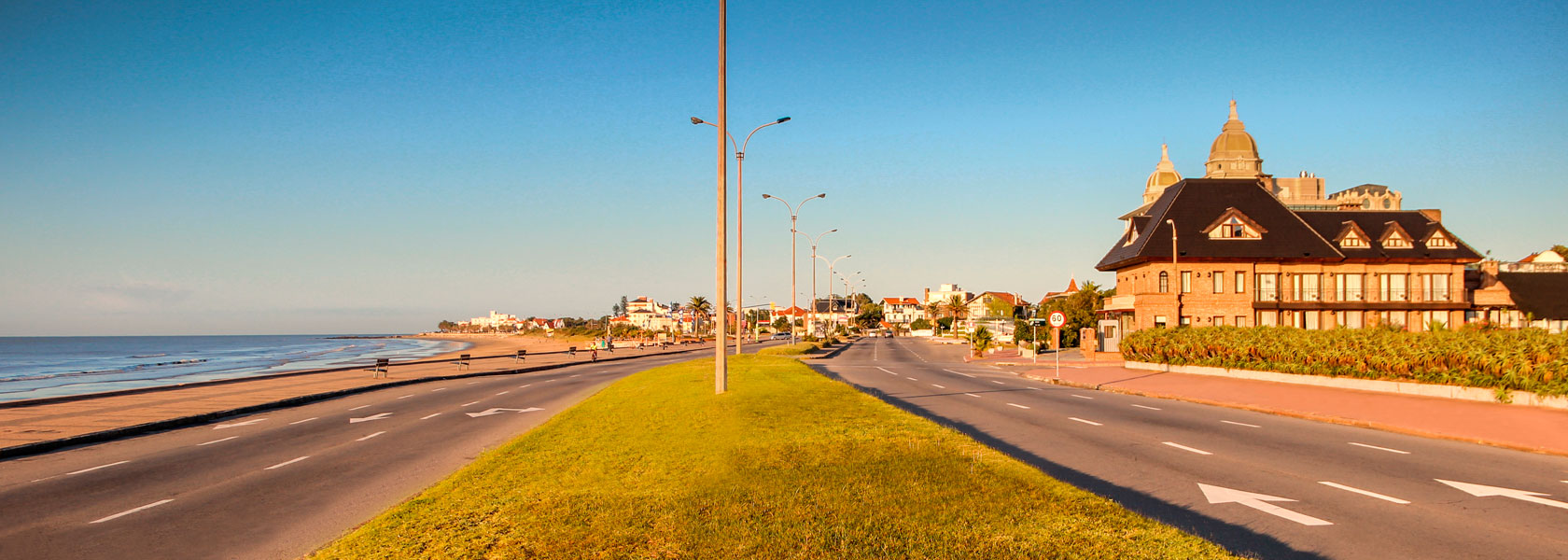
peso 6d   peso 6e „Figari – Best Western Hotel“, Rambla Montevideo. A modern monument of Figari.  Click on pics !!

Figari died on 24th of July 1938. Don’t expect to find dates associated with Figari’s paintings. As is frequently the case with such artists, virtually none of them are dated. Today, Fernando Saavedra Faget operates a small gallery and Website promoting the sale of his grandfather’s work.

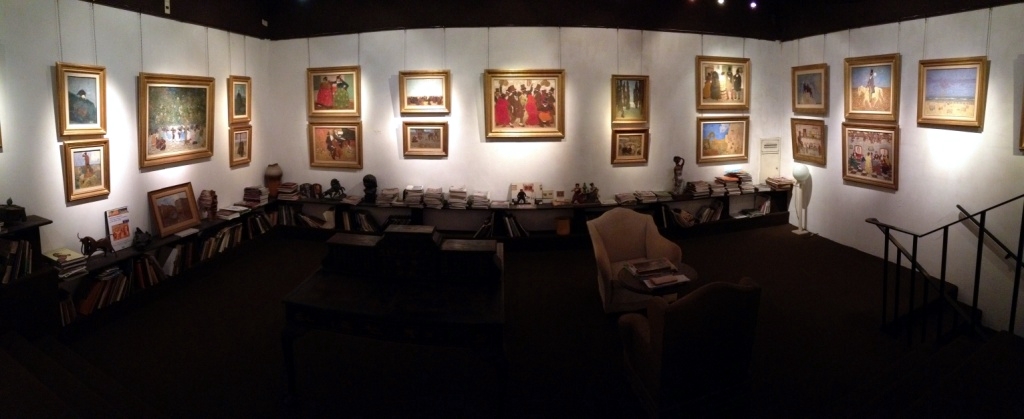
peso 6f  The gallery operated by Figari’s grandson .

As the prices for Pedro Figari’s work rise, his grandson has come to encounter a problem many such families of artists working in a highly simplified (or folk) style–fakes. Forgers see such work as easy-picking for their „skills.“
Stay tuned to part 3 of this money series.

Veröffentlicht unter Collecting, History, Information, Uruguay | Verschlagwortet mit | Hinterlasse einen Kommentar

Who are They – Part 1

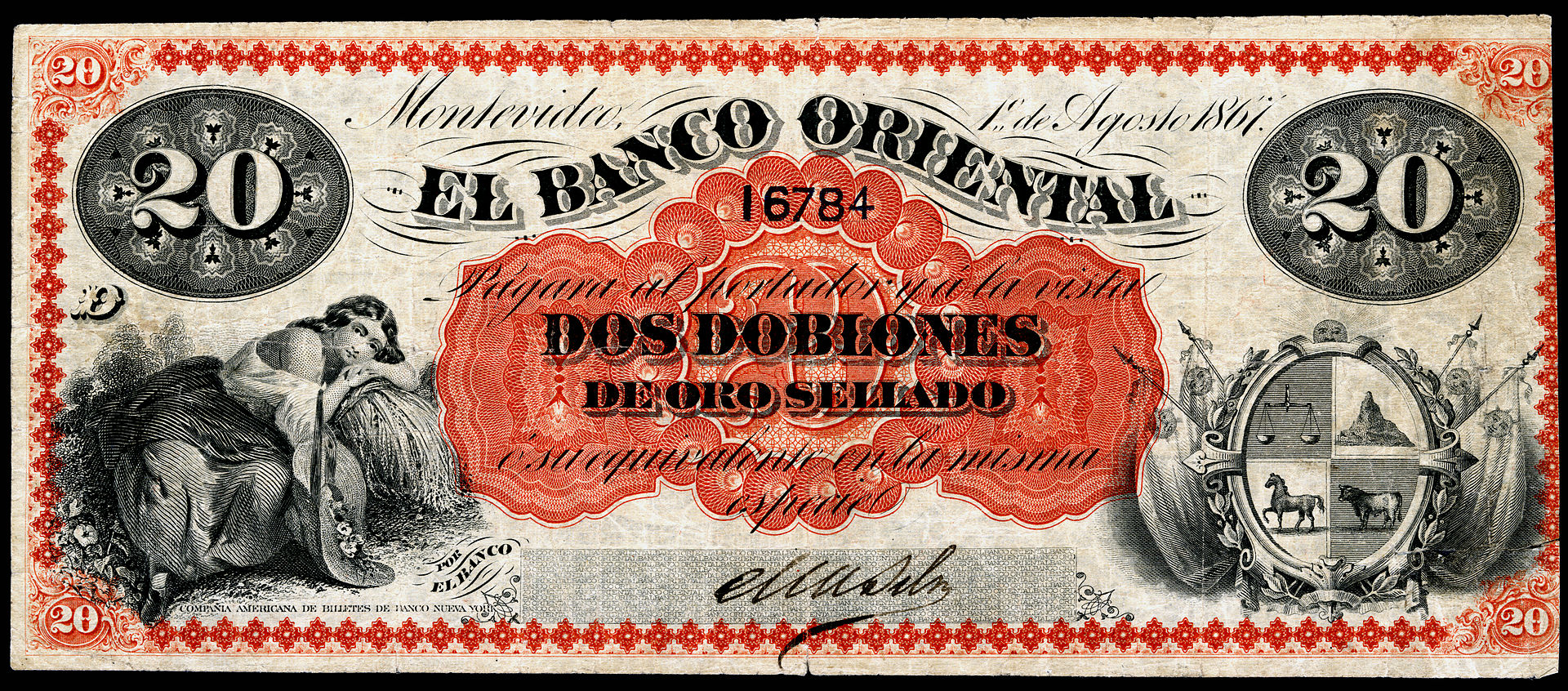
peso 31 1867    Beautiful old Uruguayan banknote from 1867.

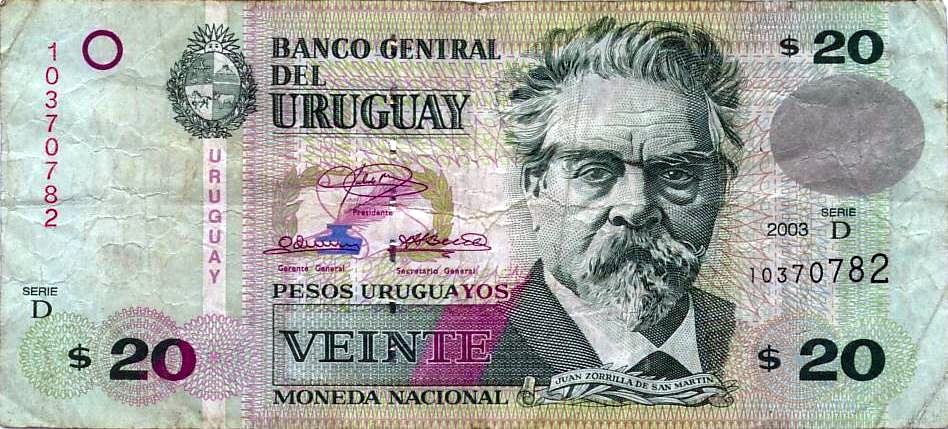
When I wrote my article about the „Cross on a Sugar Loaf“, I came across the Uruguayan 20 Peso note. Looking closer to this money note and to the others, my interest was aroused to write about the famous people on Uruguayan money. Who are they ?

We have them every day in our hands, but almost no one knows about those people portrayed on Uruguayan money. They wouldn’t be on the money if they were not famous, am I right ?  So, they are worth to learn and tell about – right ?

peso 14  In order not to exceed the scope of what is possible, I regret to the investigation, on the notes that are in circulation at the moment. This series comes with the Antigas watermark. And I will post all in  5 parts.

Juan Zorrilla de San Martin.

peso 3   peso 3a
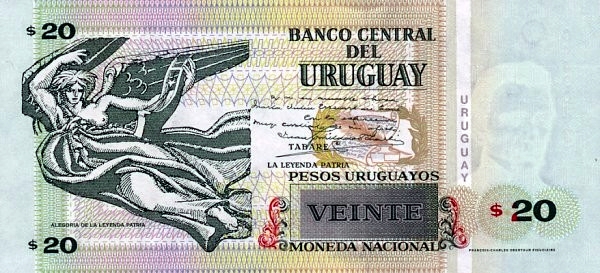
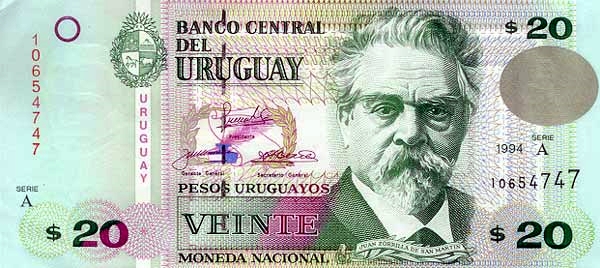
Juan Zorrilla de San Martin on front of the 20 Peso note.   The back shows Alegoria de la leyenda patria.

He was born in Montevideo on December 28, 1855, son of Spanish Juan Manuel Zorrilla de San Martín and Alejandrina Uruguayan del Pozo and Aragon, very Catholic family. His mother died when the poet was a year and a half old. He was raised with love and dedication to his aunt Juliana del Pozo and Aragon, wife of Martin Garcia de Zuniga.

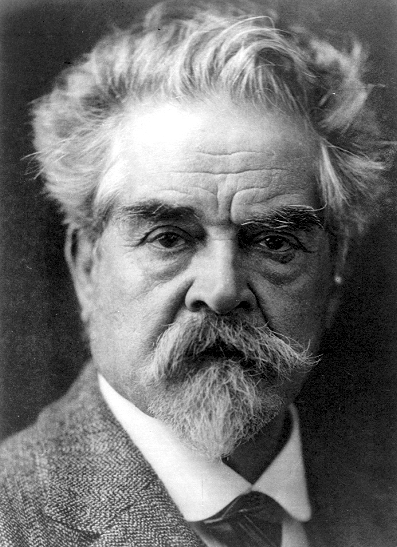
peso 3b 1922  This picture was used for the 20 Peso note.

Together with his brother Alexander in 1865 he was taken by his father to pursue his studies at the College of the Immaculate Conception in Santa Fe, Argentina. Between 1867 and 1872 he studied at the College of Fathers Bayoneses in Montevideo where he began his university studies. He received his bachelor of Santa Fe, in 1872.

peso 3g

Between 1874 and 1877 he studied at the College of the Jesuits of Santiago de Chile to complete his studies as Bachelor of Arts and Political Science. In that period he collaborated in the writing of „The Star of Chile“ and published „Notes of a Hymn“. In 1907 the Uruguayan government commissioned the creation of a historical essay on the figure of Jose Gervasio Artigas.


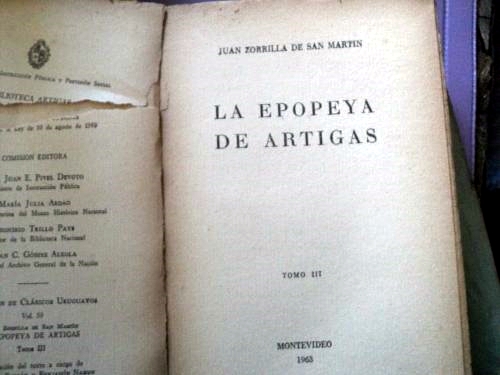
peso 3l   Published in 1910 and „The Epic of Artigas“ graduated.

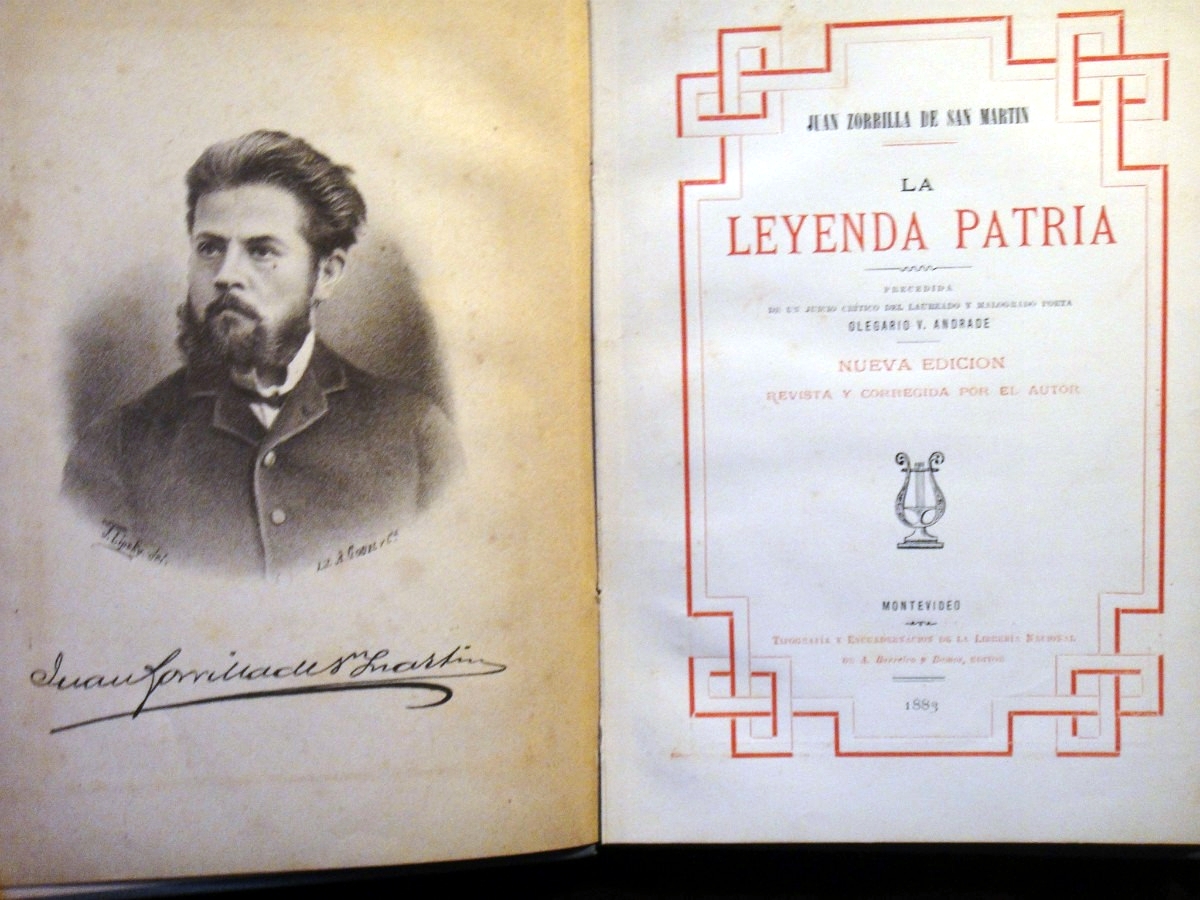
Legend Patria is a poem written by the Uruguayan Juan Zorrilla de San Martin in 1879. Sings the heroic deeds of the Thirty-Three Orientals. It is an ode to style Olmedo of Ecuador, 413 verses, he composed in a week and he became the national poet excelencia.

peso 3j   The controversial „legend homeland“.

A new accent that criticism then defined as a result of the lyrical genius of the poet noted, but also recognized that intervening in this lyrical composition and idiomatic elements hitherto unused in Uruguayan letters later appeared sharper in the epic Tabare.


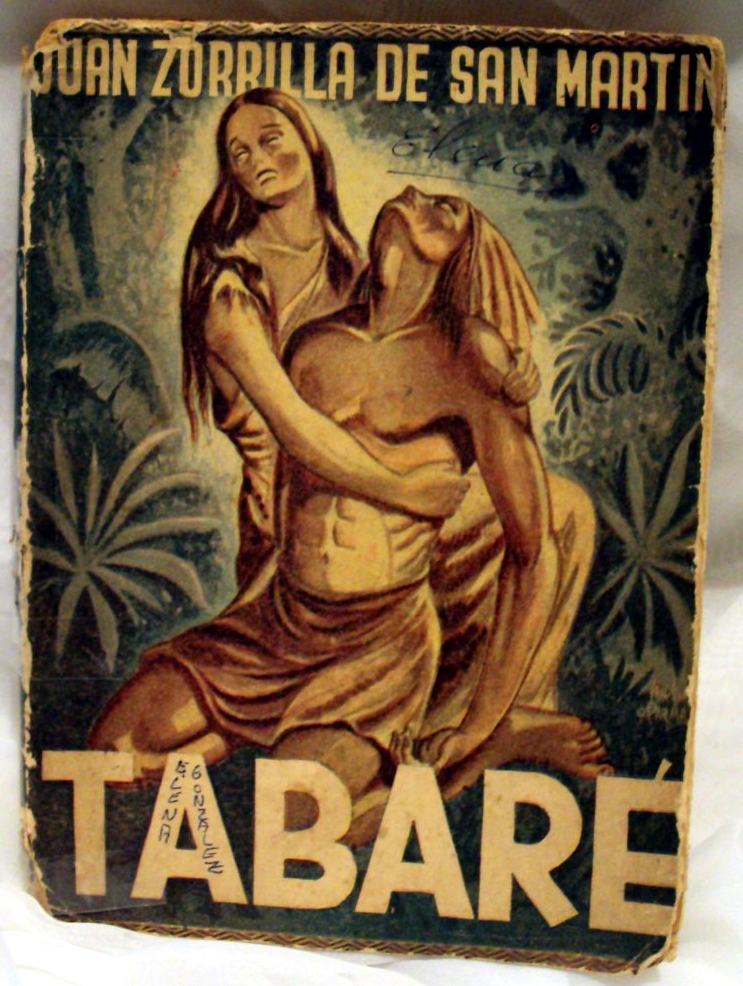
peso 3c   Tabaré is an epic poem by Juan Zorrilla de San Martín, considered the national epic of Uruguay, consisting of 4,736 verses divided into ten cantos, and first published in 1888 by the publisher Barreiro and Ramos.

In 1907 the Uruguayan government commissioned the creation of a historical essay on the figure of Jose Gervasio Artigas, who would have the aim of providing information to artists interested in performing at a competition to create a sculpture hero. This essay was finally published in 1910 and „The Epic of Artigas“ graduated.

peso 3f  It is about the love affair of the Indian Tabaré and Spanish Blanca hard against the backdrop of war between Castilian and locked charrúas in the territory of present Uruguay in the late sixteenth century. It is considered in Uruguay as one of the jewels of literature in Spanish.

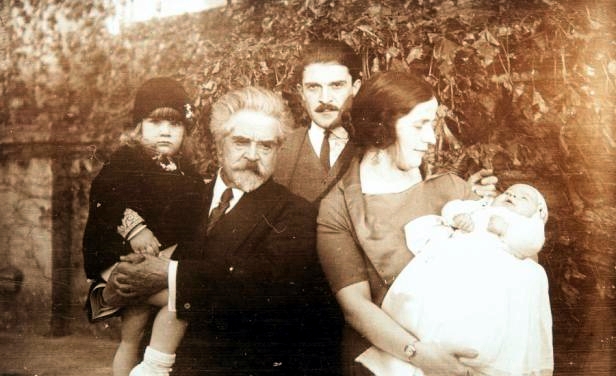
His first wife Elvira Sienra White, daughter of Juan Ildefonso White and granddaughter of the Constituent Juan Benito Blanco, with whom he had six children. A few years after her death, he contracted bond with her sister, Sienra White, who gave him ten children. Today his descendants reached around 800 people.

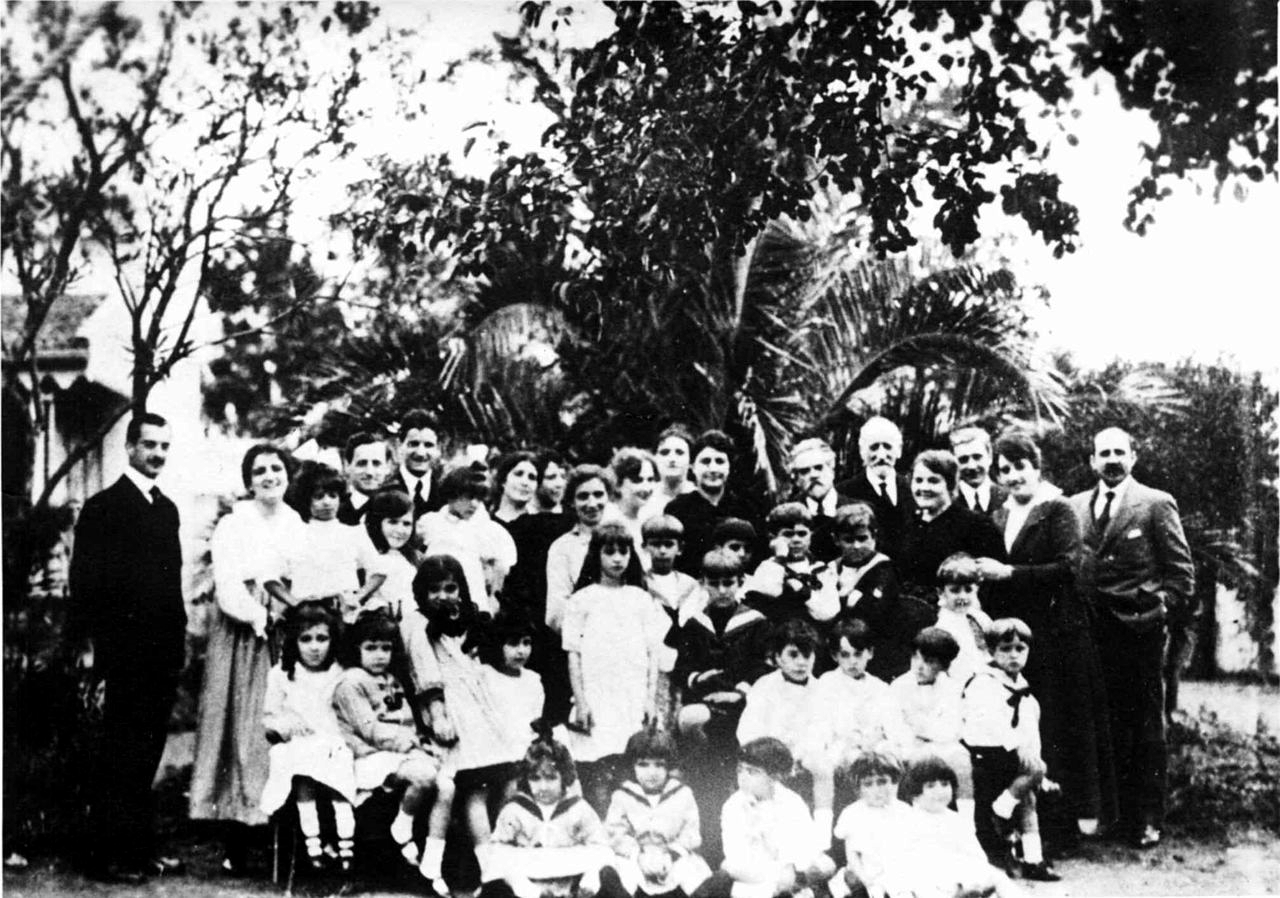
peso 3h    Zorrilla with family, in the back his son Jose Luis.

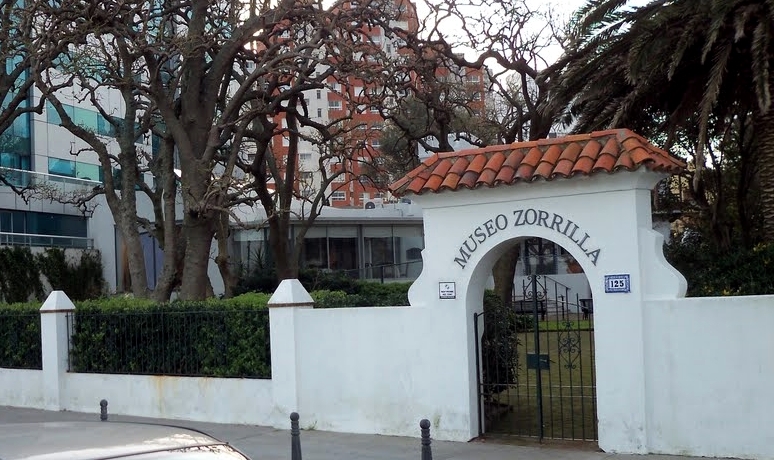
One of his sons was the sculptor Jose Luis Zorrilla de San Martin, who in 1921 directed the last transformation of his home in Montevideo neighborhood of Punta Carretas, designing the modern dining room with fireplace leading carved on top the shield Zorrilla St. Martin which contains the theme „Ensuring life in such a way to stay alive is because in death.“

peso 3d museo-zorrilla   Beautiful interior of the museum site.

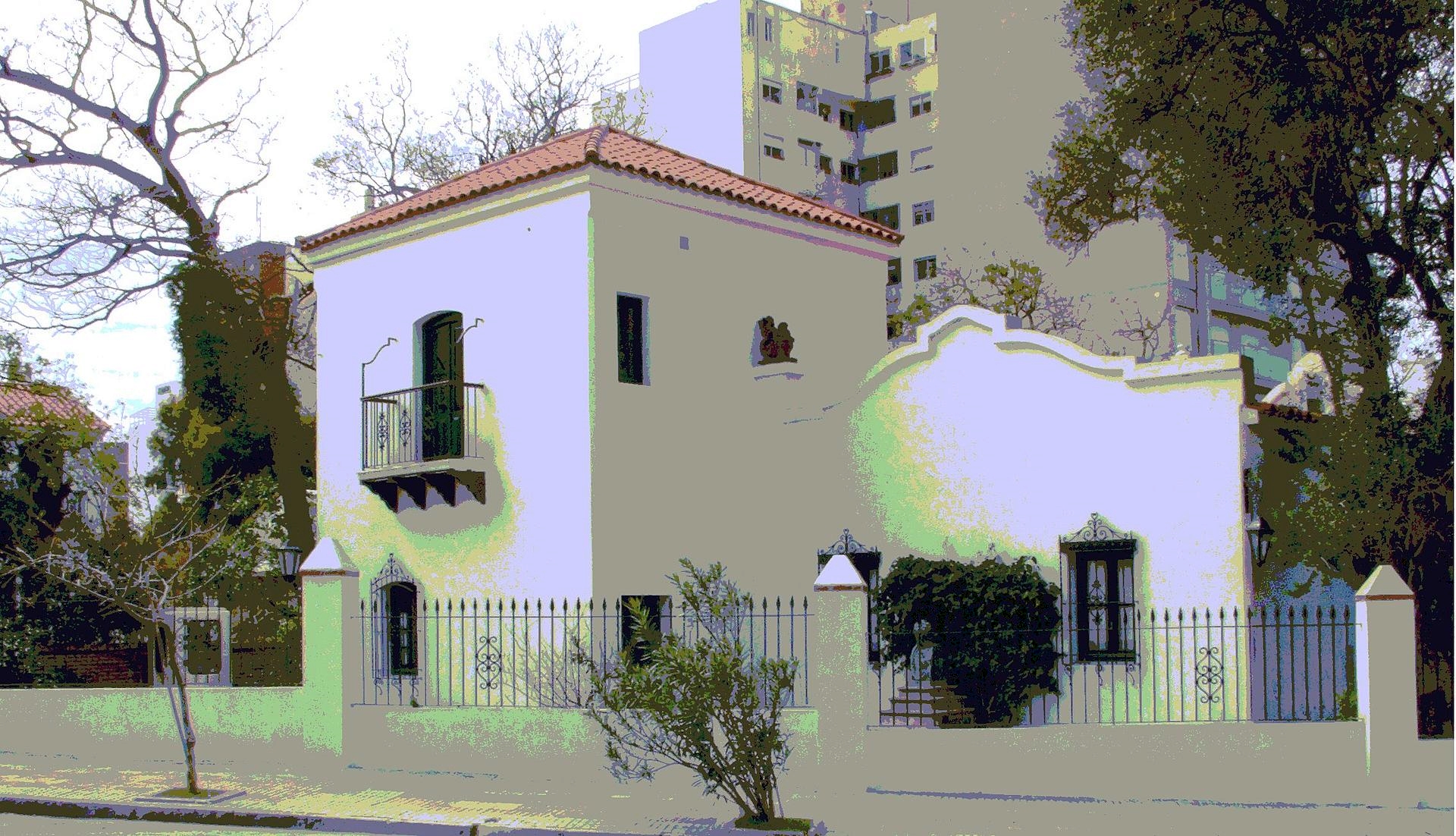
The construction began in 1904, in an unpopulated area then.  In 1936 the house became the property of the state. In 1942 it became a dependent Museum of the Ministry of Education and Culture, part of one of the historic houses belonging to the National History Museum of Uruguay.

peso 3e The museum is located on the corner of „Zorrilla de San Martin“ and  „Rambla Mahatma Gandhi“.

In 1995-2013 the museum was administered by the Commission of Friends of Zorrilla Museum, which recovered the place and built a modern hall where exhibitions and cultural events are held.

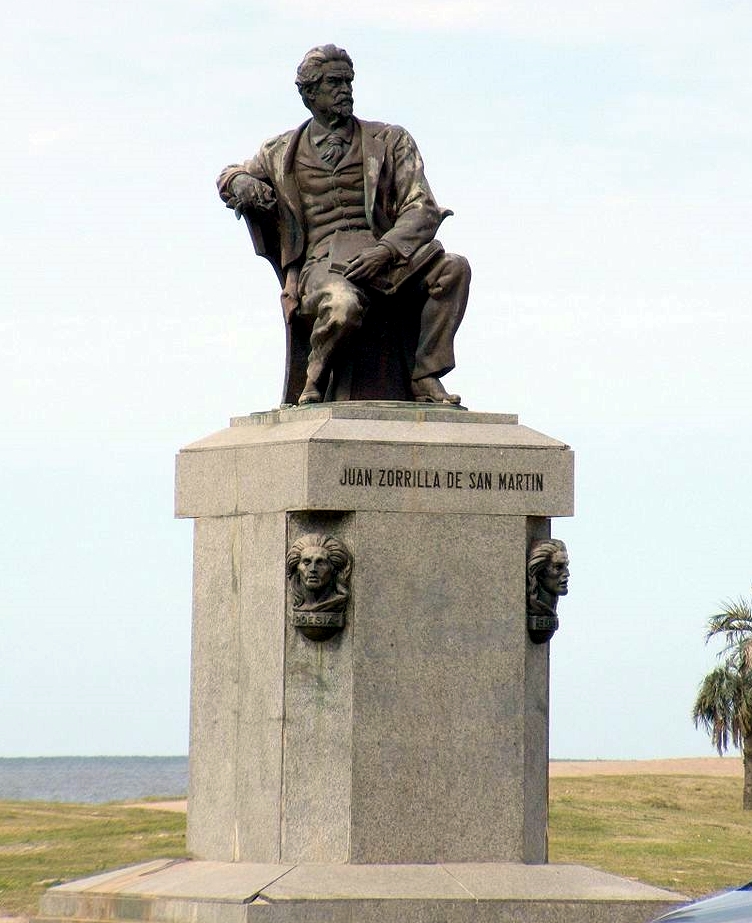
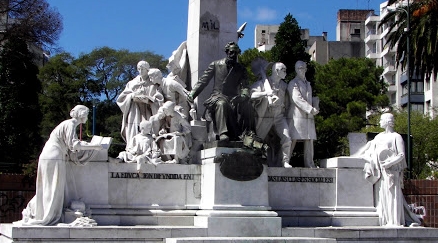
peso 3i     Zorrilla monument on the Rambla in Montevideo.

Zorrilla said once: „My whole life is between these four walls, here are my memories of family and the fruit of my efforts.“ One of his great ideas was to build the „Cross on Sugar Loaf Mountain“ in Maldonado, Uruguay (See my earlier post: „Cross on a Sugar Loaf“).

Jose Pedro Varela.

peso 4  peso 4a
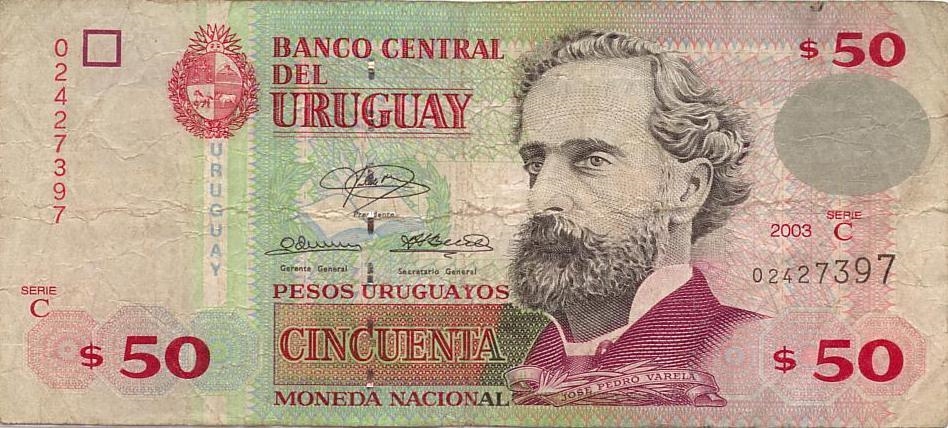
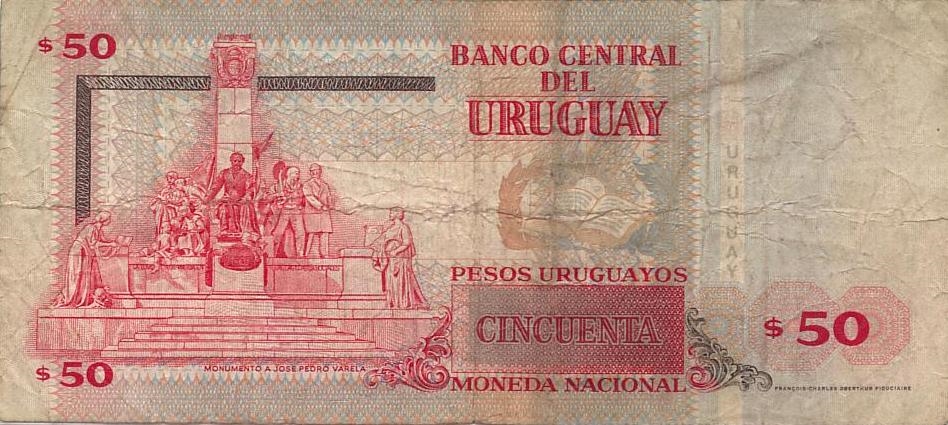
Jose Pedro Varela on front of the 50 peso note. The back shows the Varela monument in Montevideo.

He was born in Montevideo on 19th of March 1845, during the Great War.

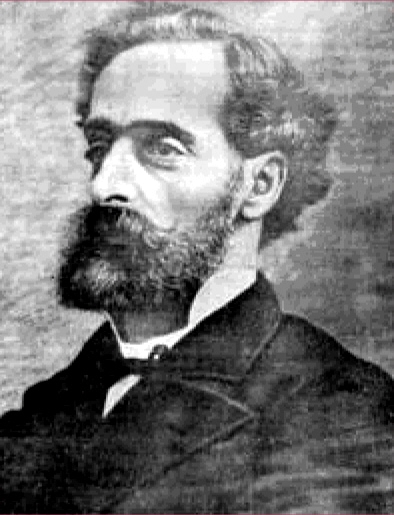
peso 4g     This picture was used for the 50 Peso note.

His father owned a deposit of „Fruits of the country,“ an Varela establishment where Jose served from his teenage years. At the age of 22 he undertook a trip to Europe and the United States, locking knowledge in Paris with the famous writer Victor Hugo, to whom he took his poems, later published in New York under the title of „Lost Echoes“.

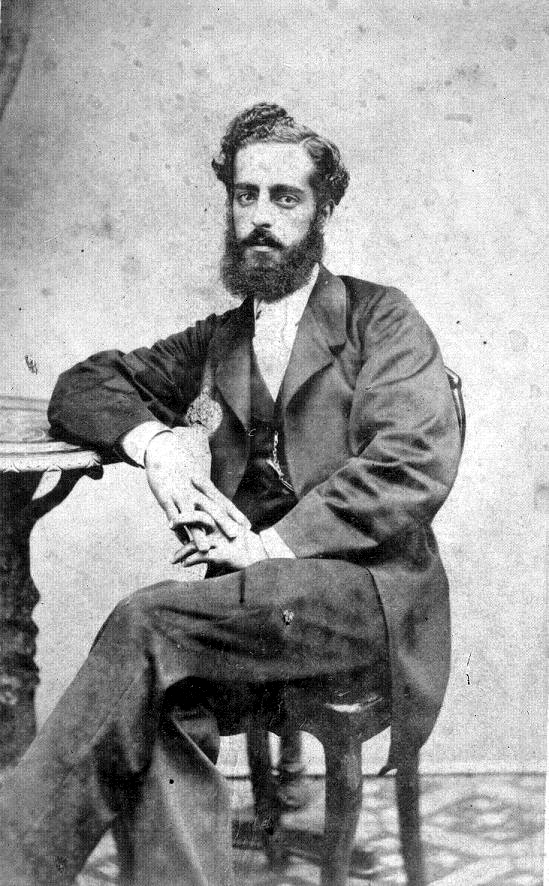
peso 4b      peso 4d   J.P. Varela.

In the United States he met with Argentine Domingo Faustino Sarmiento, whose concern for the issues of education caused  a great impact on Varela. Varela linked with various American specialists in education, which allowed him to meet many educational institutions and teachers learning their methods and objectives.

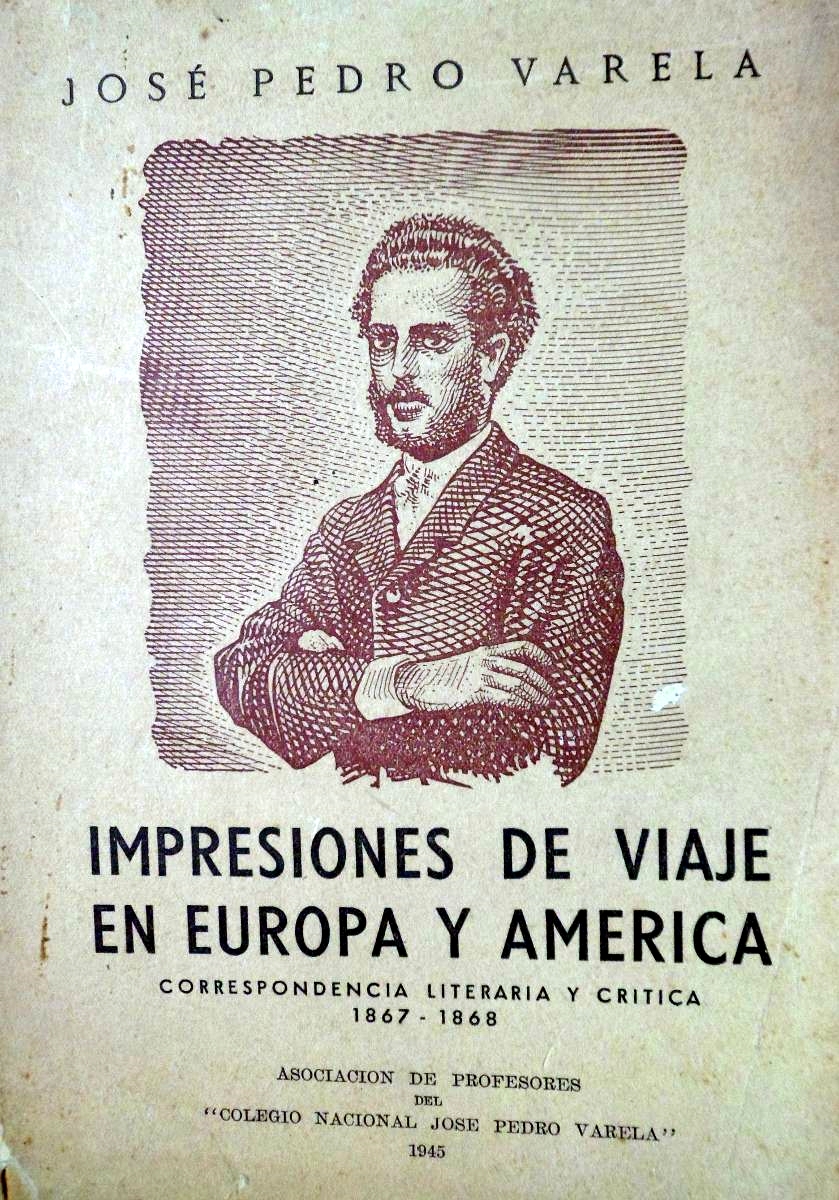
peso 4i  Travel impressions of Varela to Europe and America.

Good knowledge of English, Varela could grasp the importance of proper education for all members of society, as a factor of social and political progress.

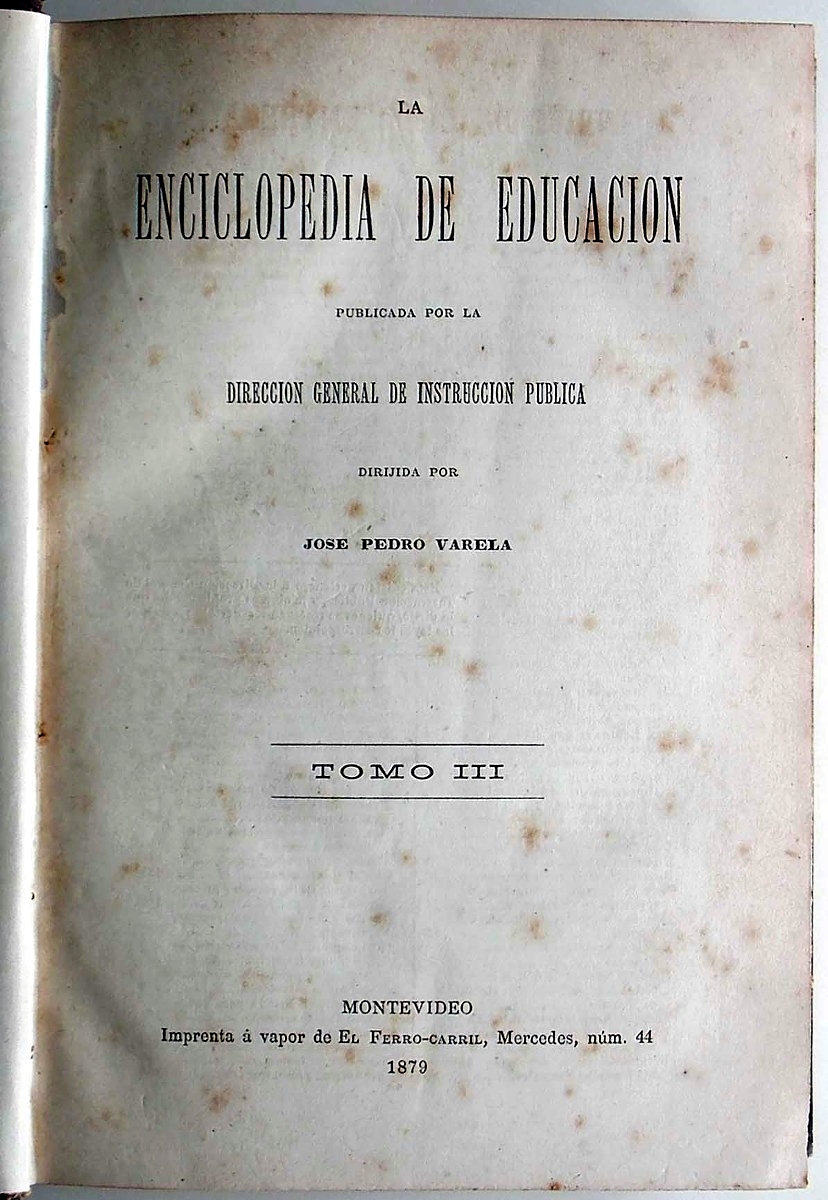
peso 4m  Varela’s encyclopedia of education in 3 volumes.

Varela returned to the River Plate in the same trip as did Sarmiento. He devoted himself to journalism through which promoted the dissemination of ideas and won the support of influential friends.

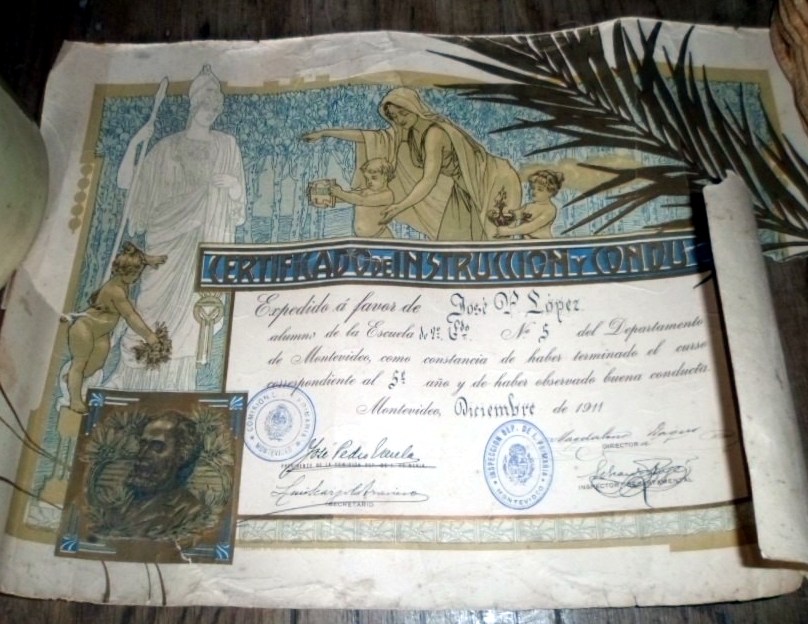
peso 4k  Very interesting and rare/old education certificate, with original signature Jose Pedro Varela, from 1911 – he died already in 1879 !!??!!

With a group of them, led by Elbio Fernandez, Carlos Maria Ramirez and Francisco Barra, he founded the „Society of Friends of Popular Education“; and in 1874 he published his book „The education of the people“ and in 1876 „The school legislation“.

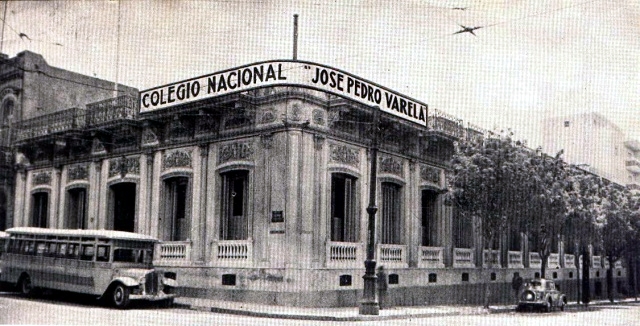
peso 4h  Early Varela institution of national education.

The government of  Lorenzo Latorre offered him the position of Director of Education, which he accepted as a means to implement his ideas. This took place through the „Law on General Education“ which was established on the requirement that all children attend school, and the creation of adequate facilities for the students by the government.

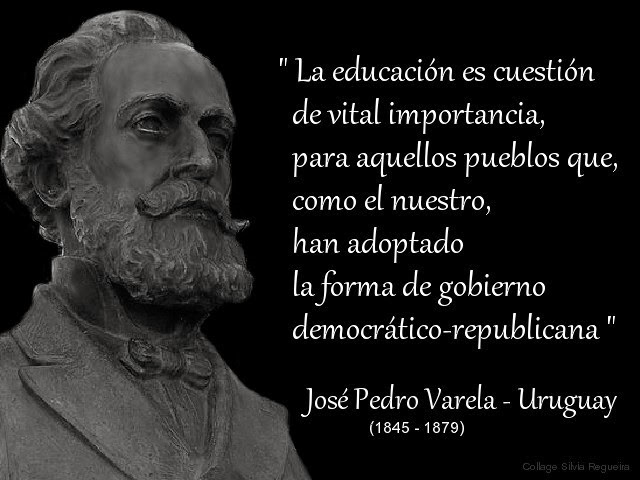
peso 4ee  Varela monument in Montevideo.

Varela was for sure the forefather and founder of Uruguayan education, sadly he died very early, at the age of 34, on 24th of October 1879.
Stay tuned to part 2 (of 5 total) of this money series !!

Veröffentlicht unter Collecting, History, Information, Uruguay | Verschlagwortet mit | Hinterlasse einen Kommentar

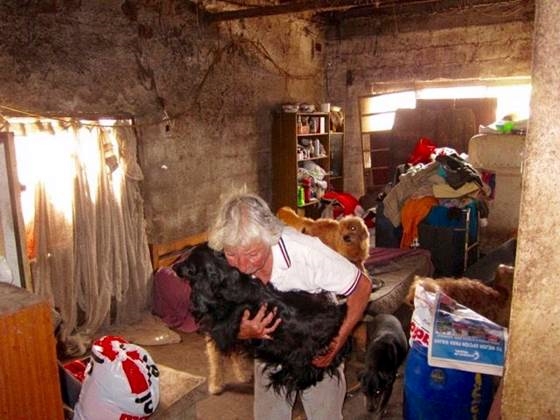
Urgent Help Needed

thelma 1

My DEAR readers, please have a look into the following site, all will
speak for itself. Click on the address below or Copy and Paste it  into
your browser. THANKS VERY MUCH !

https://www.youcaring.com/telma-marlene-larossa-501738

Veröffentlicht unter Atlantida, Information, Lifestyle, Uncategorized, Uruguay | Hinterlasse einen Kommentar

Punta Expat Information

luz del Alba 1

Punta Classic.

With this information I like to inform you about a „Christmas singing“ celebrated in the cathedral of Maldonado.

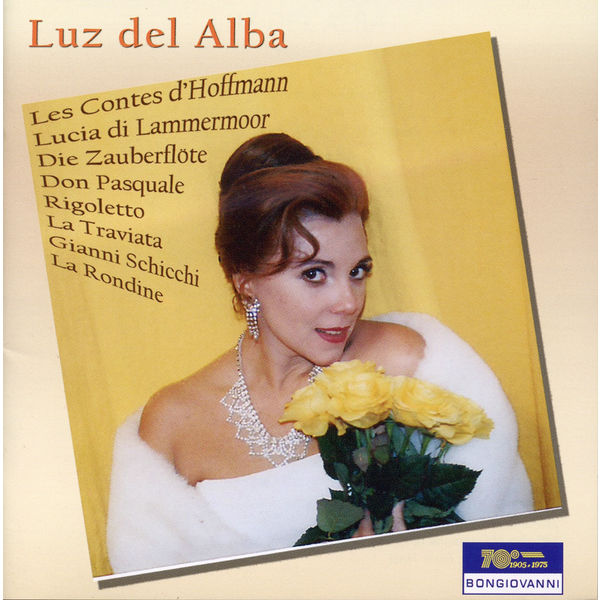
Our good friend and host of the „Punta del Este Expat Meeting“, Eduardo, in full action. Many of us know that „he can sing“, but what you see and hear here is just amazing. Eduardo is the small guy in the red shirt. Dancing with Luz del Alba is the mayor of Maldonado. Enjoy !!!

Have a look into the short youtube movie and the into the facebook movie from intendencia Maldonado. Copy and Paste the „fat“ addresses into your browser.

https://www.youtube.com/watch?v=Ss3dtcchHuw

Catedral Maldonado; Navidad 2015; tenor Eduardo en homenaje a Enrico Caruso; Cantique de Noel de Adolphe Adam;
Sacred religious concert, Punta del Este, Uruguay, cathedral singing; Christmas 2015.

https://www.facebook.com/idmuy/videos/1185693714779215/?video_source=pages_finch_main_video&theater

En el marco de la 7ª edición de PuntaClaSsic y la llegada de un nuevo año, la soprano Luz del Alba Rubio ofreció el pasado sábado un show de nivel internacional en la Catedral San Fernando de Maldonado.  ( here you can see Luz del Alba and Eduardo)

And here another information from the Punta del Este community.

Jonathan Lamb

What’s the Magpie?

It’s is a free English-language newsletter. It provides information about upcoming activities and events in Punta del Este. You’ll also find useful tips, interesting stories, and humor. Worth to read !!!

It’s delivered by email twice a month during the summer to all who request it.

According to Jonathan Lamb, the editor: „The Magpie will start off as two sides of A4: it will have no charge, no commercial advertising, no website, and no cash sponsors…“ 

Jonathan, who is from the south of England, spent two-and-a-half years in Uruguay during the mid-1980s at the British Embassy. During this time, he met and married Beatriz di Pace, a veterinarian. Jonathan’s career took the newlyweds to the UK and Romania. Then in 1993, he left the Foreign and Commonwealth Office for the European Commission in Belgium. In 2004, the couple, now with two daughters, returned to Uruguay.

In Uruguay, Jonathan is active in many creative endeavors. He writes performance verses. He designs unusual things, like a delayed-action toy catapult (‚the world’s least successful invention‘) and a croquet hoop that works on artificial surfaces. He has served as editor of the British Society in Uruguay newsletter. He writes, directs and acts in plays. And he provides English voice overs for film and TV.

Now, he’s producing the Magpie. Magpie is the shortcut from „Magazine for Punta in English“.

To receive the Magpie, simply write Jonathan at „vozinglesa@gmail.com“. Write ‘Subscribe Magpie’  in the subject line and request being added to the mailing list.

The above Magpie information I took over from David Hammond’s blog. Thank you !!

Veröffentlicht unter Information, Uruguay | Hinterlasse einen Kommentar

Cross on a Sugar Loaf

20150316_093215a   Click on pics, most will supersize !!

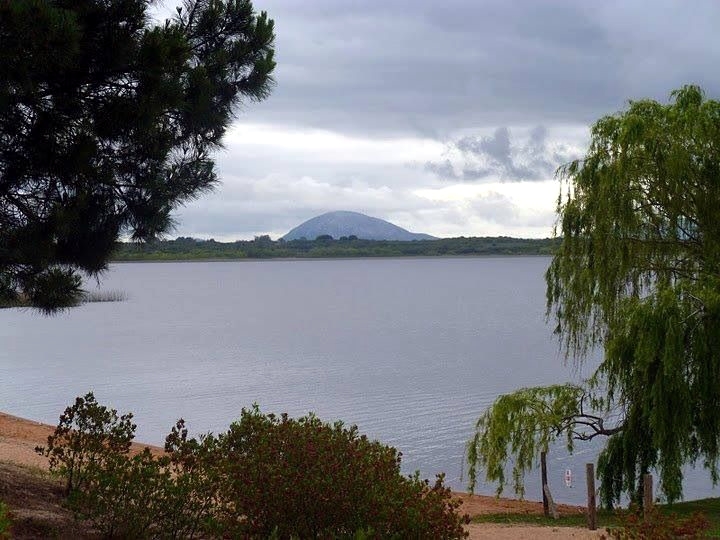
Many of us in Uruguay have looked up to the mountain with the big cross. Every time we drive the Interbalenaria between Montevideo and Punta del Este we face this view. Most of us „expats“ won’t have the chance to climb up this mountain and have a closer look.

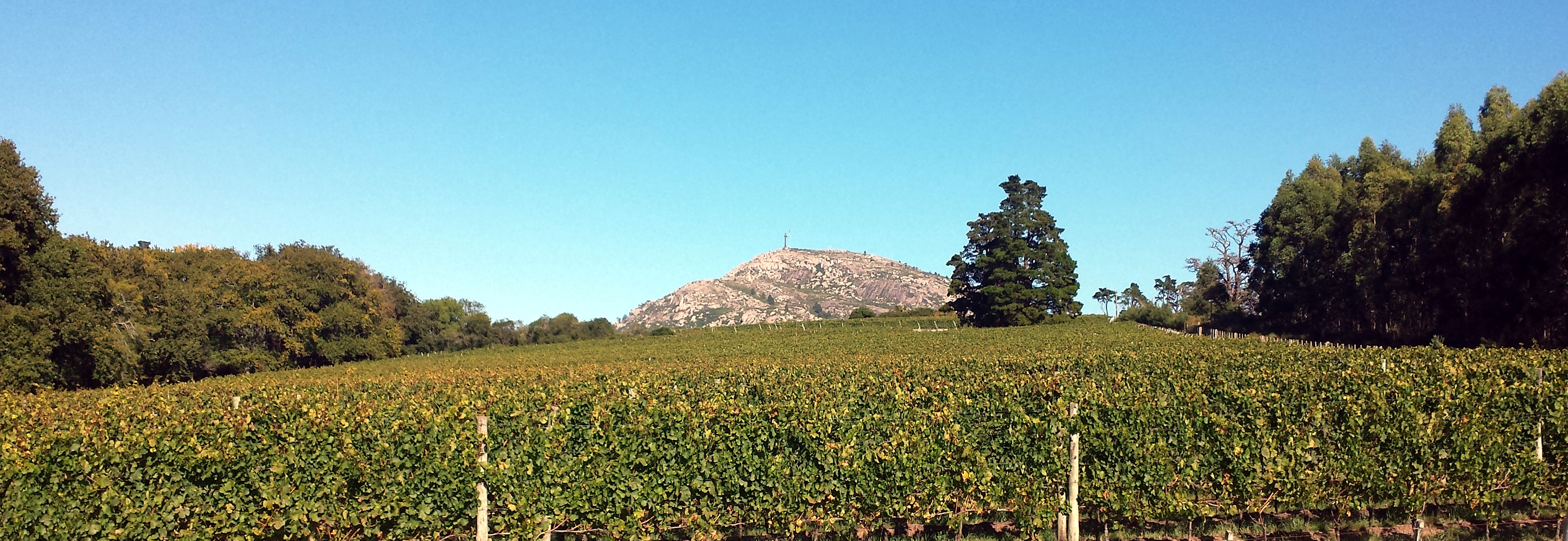
20150316_093840a  These northern views are seen from Interbalenaria.

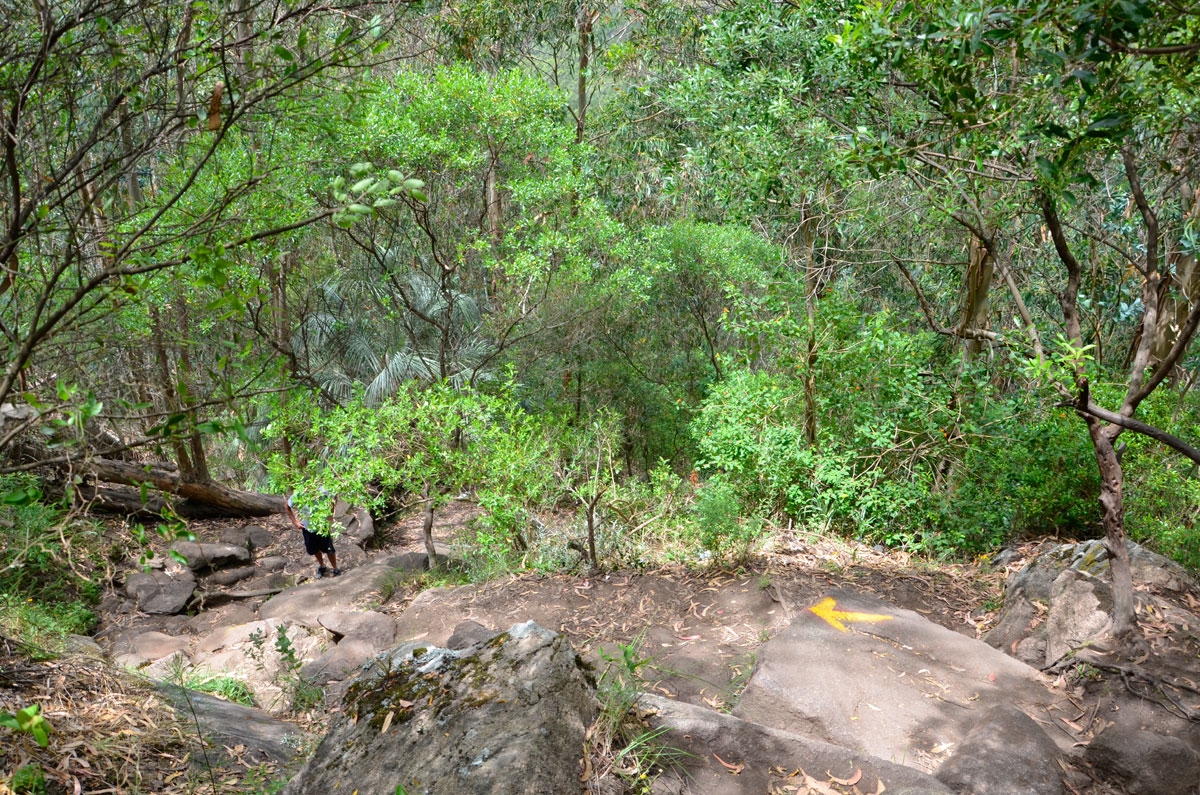
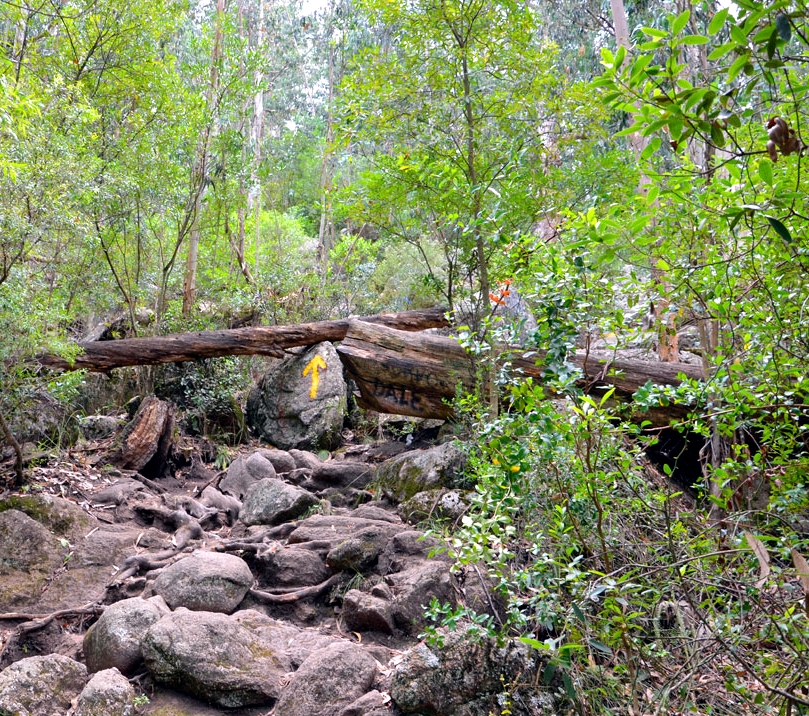
Some 5 years ago I climbed up there and I can tell you, that’s a real tough one. We all age and can’t have the fitness anymore to do so. Follow the yellow arrows – see down here !!

pan 9    pan 13a

That’s why I thought to give you some closer sights and a bit background of „La Cruz del Cerro Pan de Azucar“, the cross of the sugar loaf mountain.

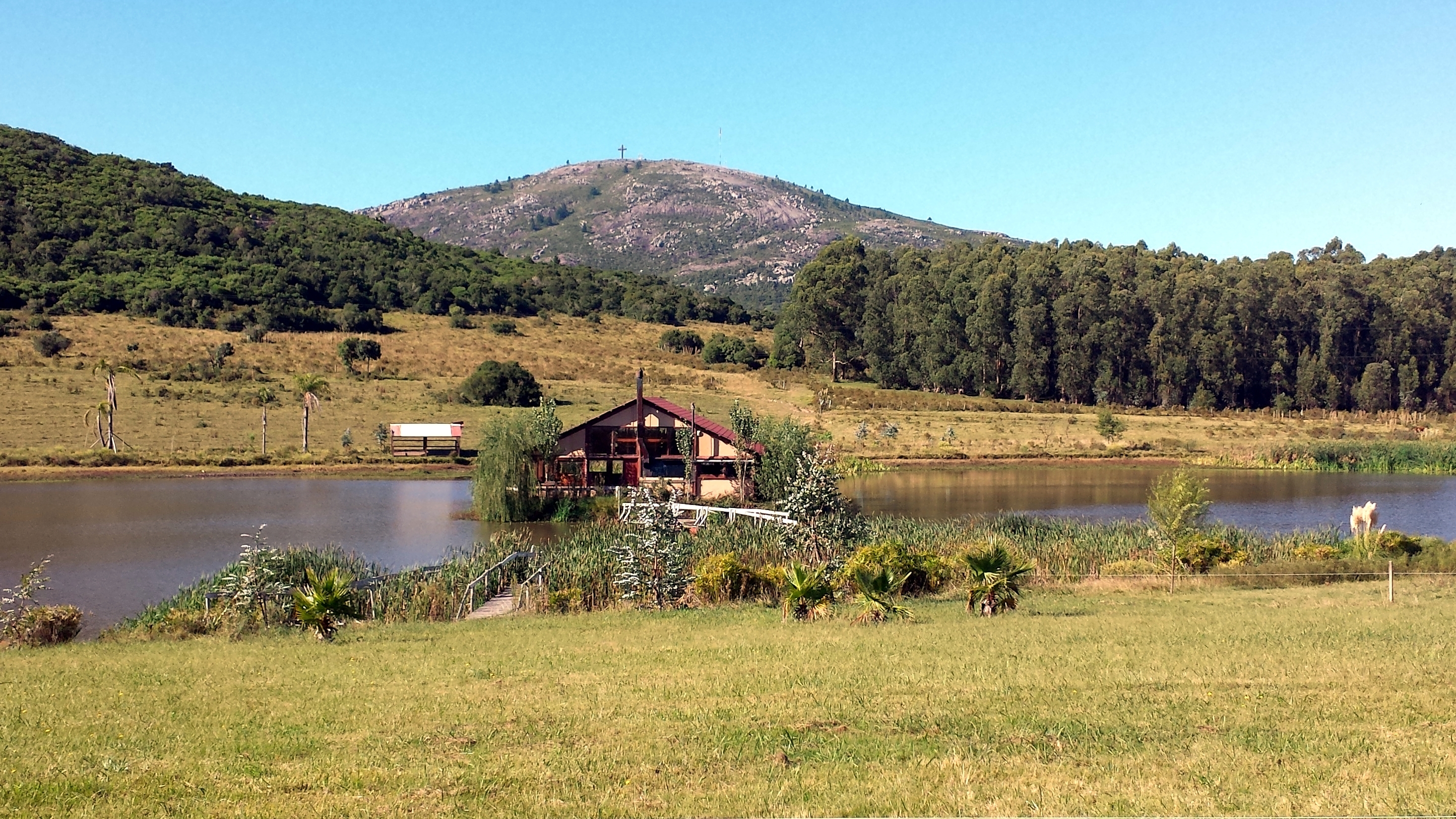
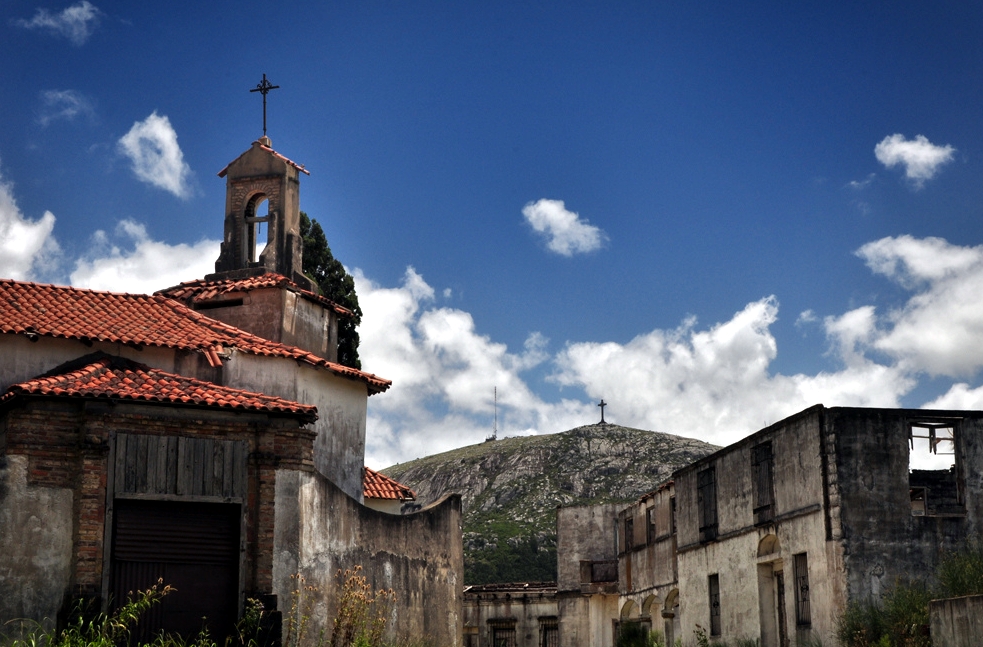
pan 1a  Southern view of the cross from an abandoned township.

The Sugar Loaf Mountain (Pan de Azucar) is located on the outskirts of Piriápolis, in a beautiful natural landscape. 423 meters high, it is the highest peak of department Maldonado and the third highest mountain in the country. For its variety of attractions around, it is a perfect spot to visit the whole family at any time of year.

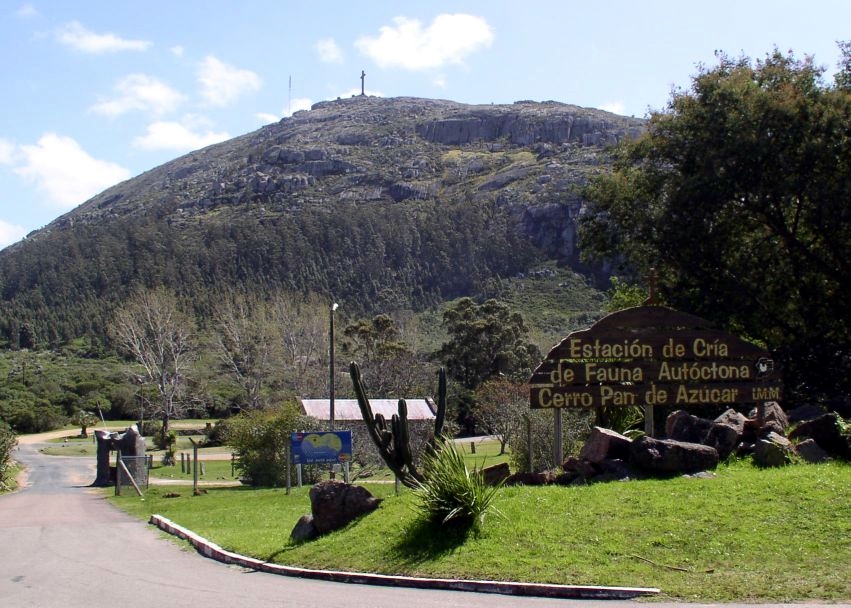
pan 2  Entry to the wildlife park, the cerro from the east.

Sugar Loaf Mountain Wildlife Reserve and Park.

In 1980 a nature conservation and breeding centre for animals threatened by extinction was founded on its east side of the mountain. This sanctuary is recognized worldwide for it’s work with endangered animals and their educational work. Also you find recreation facilities, adventure and outdoor offers, a zoo, a restaurant and much much to see for young and old.

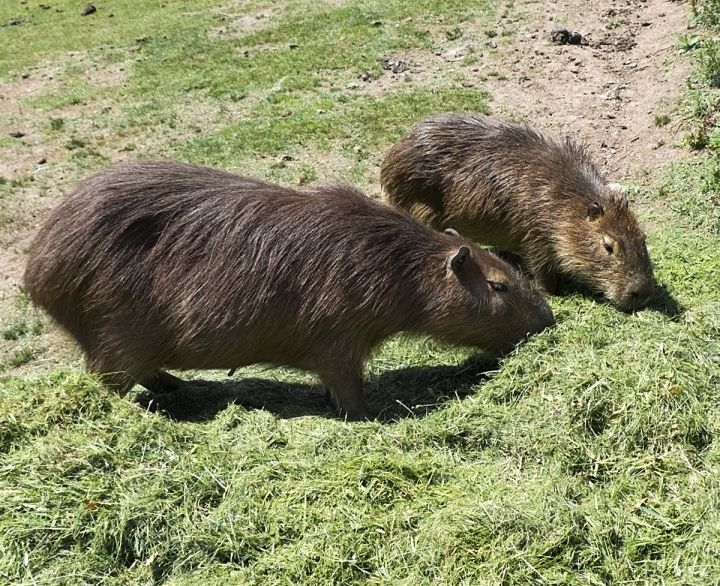
pan 15a rodents  Carpinchos (rodents) to watch at the park.

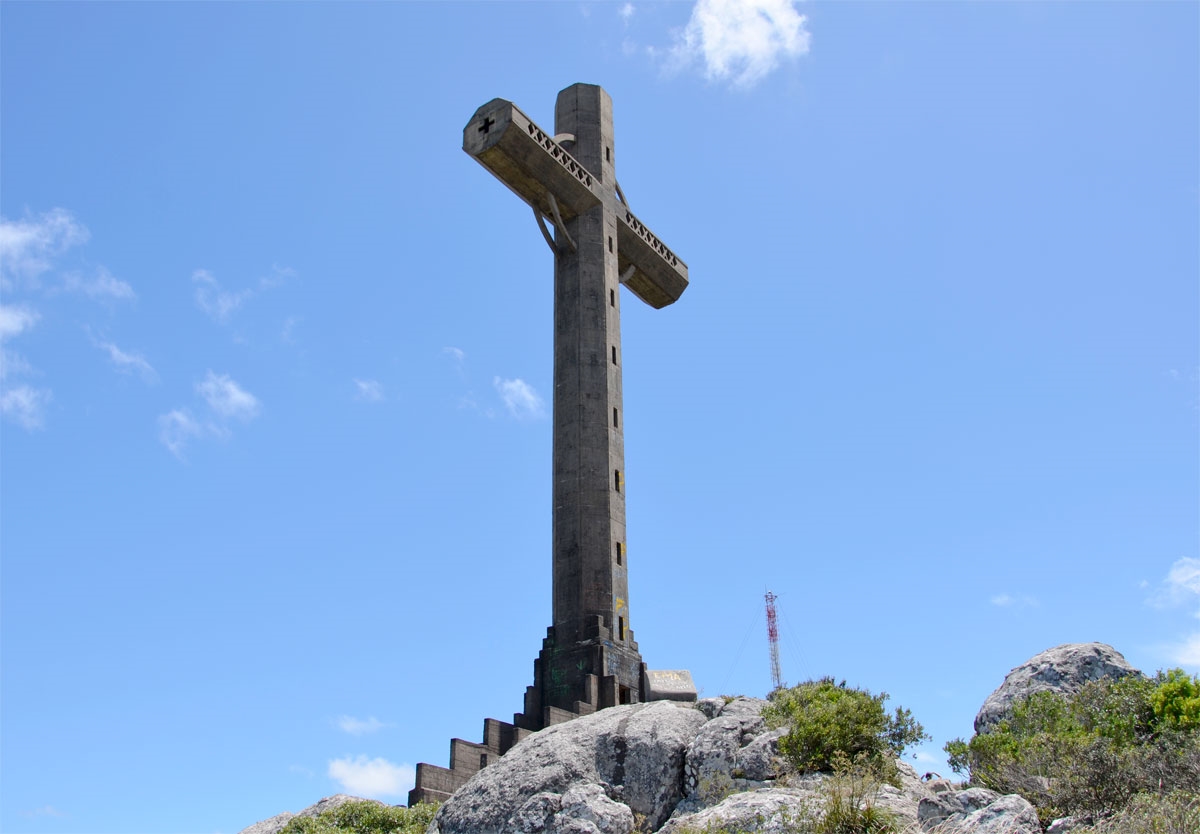
The Cross of Sugarloaf Mountain.

Conceived in 1933 by the famous poet of Uruguay Juan Zorrilla de San Martin and the Father Engels Walters.  Zorrilla’s idea and fantasie lead to this amazing Urugayan landmark. Sadly he couldn’t live long enough to see the finished monument.

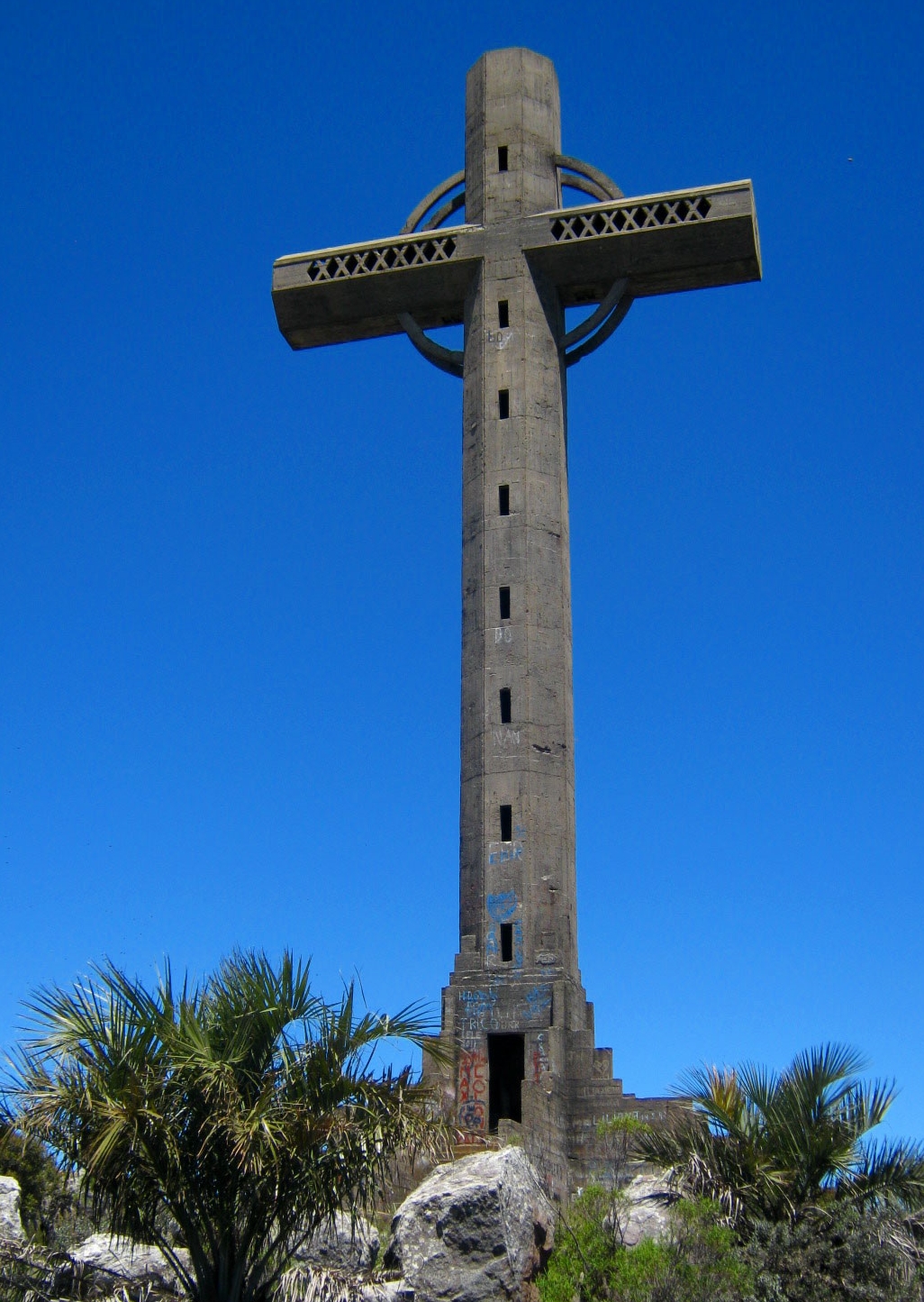
pan 31a  What a majestic cross this is.

The realization was in charge of the architects Alberico Izzola (son of Adela Piria) and Guillermo Armas O’Shanahan. The cross was built between 1933 and 1938.

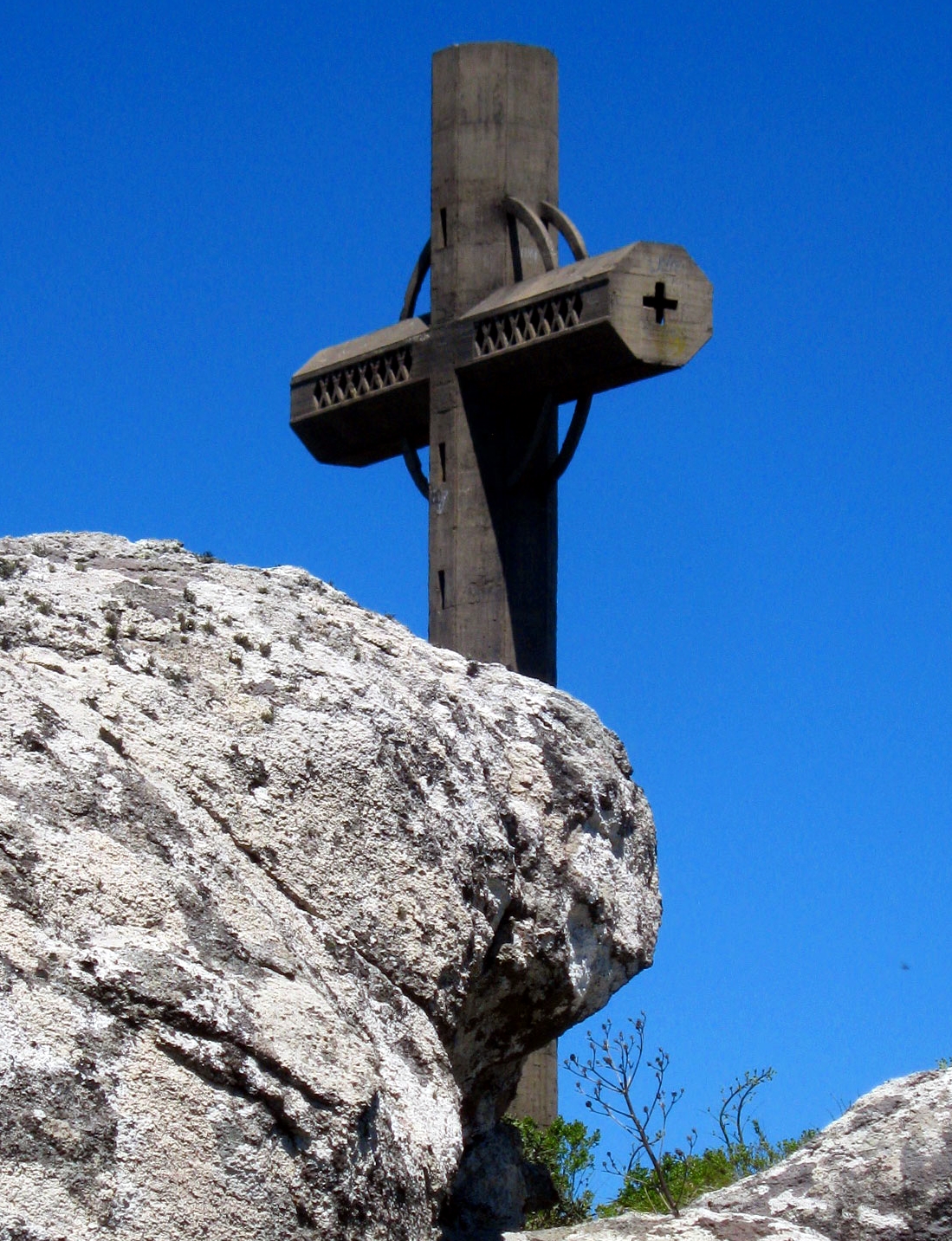
pan 5  Impressive 35 meters high and over 12 meters wide.

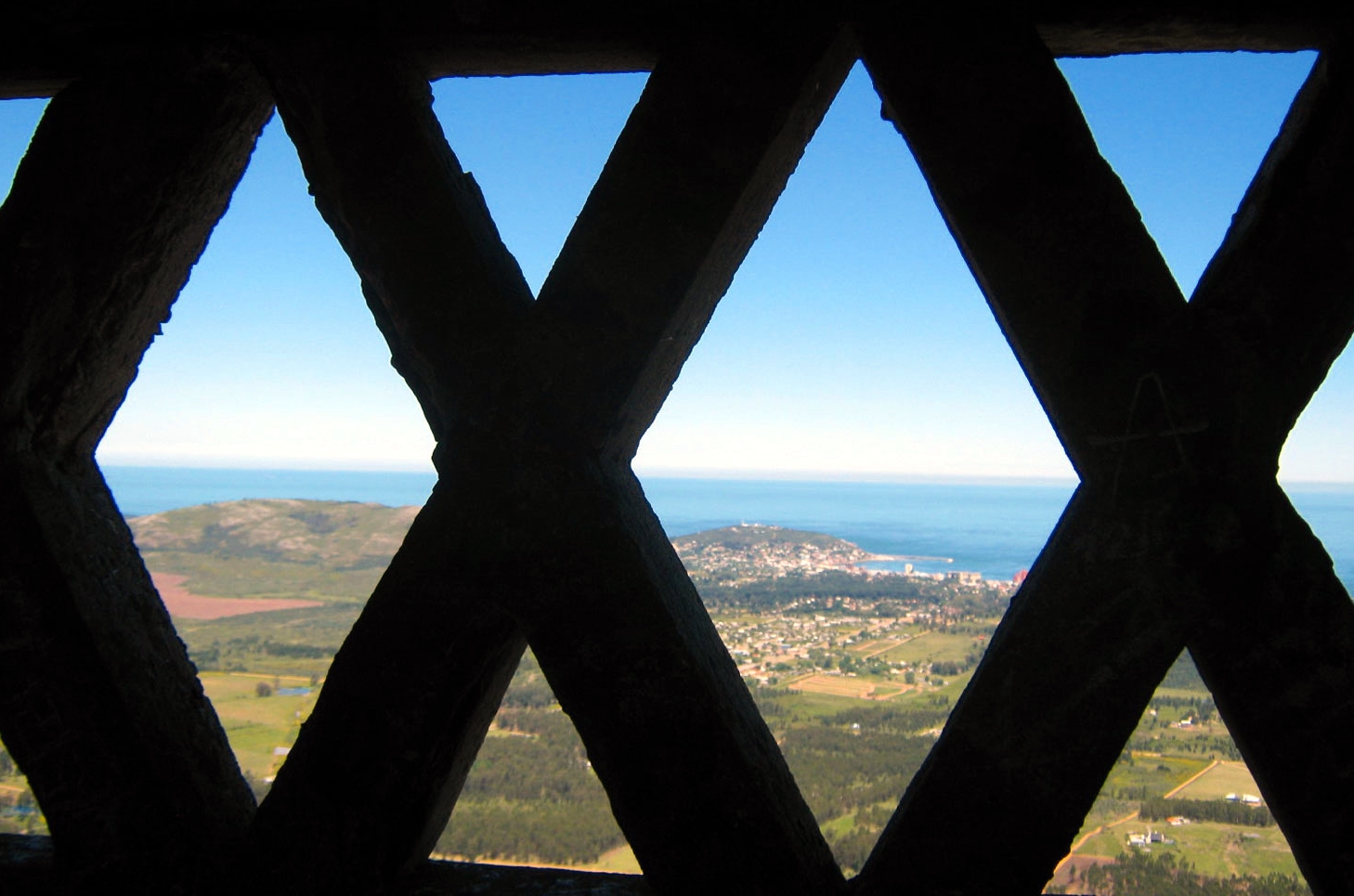
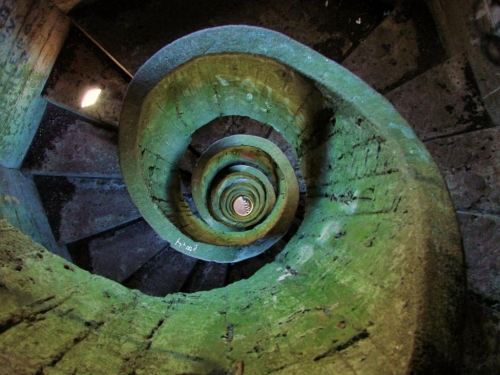
It is made of reinforced concrete, measured 35m tall and has 12m wide arms. One can climb up inside by a spiral staircase of 102 steps up to the arms. Because of the height, nothing else is higher around, you will have a magnificent panorama view.

pan 30a  Beautiful views all the way to Piriapolis.

On 27th of November 1938, the cross was blessed by Monsignor Aragone, during the 3rd. national Eucharistic Congress.

pan 6a   Exhausting 102 winding steps up to the arms.

Juan Zorrilla de San Martín.

Juan Zorrilla de San Martin (December 28, 1855 – November 3, 1931), the conceiver of the cross on Pan de Azucar, was a Catholic Uruguayan epic poet – he is referred to as the „National Poet of Uruguay“ – and a known political figure.

pan 33  Juan Zorrilla de San Martin on the 20Peso note.

Two of his most famous poems are Tabaré (the national poem for Uruguayans) and La Leyenda Patria (The patriot legend).
He is author of the Hymn to the Tree (Himno al Arbol) a well-known Spanish poem later made a song in several Latin-American countries.

pan 25 zorilla museum mvd  Villa Zorrilla in Montevideo, now the Zorrilla museum.

As a political figure Juan Zorrilla de San Martín served as a Deputy for Montevideo from 1888 to 1891 and served as Ambassador several periods. Read also my post „Who are They – Part 1“, coming up soon, stay tuned.
He was twice widowed, and left 13 children when he died.

pan 26 Zorrilla and family   Juan Zorrilla and his family members.

The internationally well known sculptor José Luis Zorrilla de San Martín was his son and father of internationally known actress China Zorrilla.
His grandson, Alejandro Zorrilla de San Martín, was to serve as a prominent Deputy, Minister and Senator.

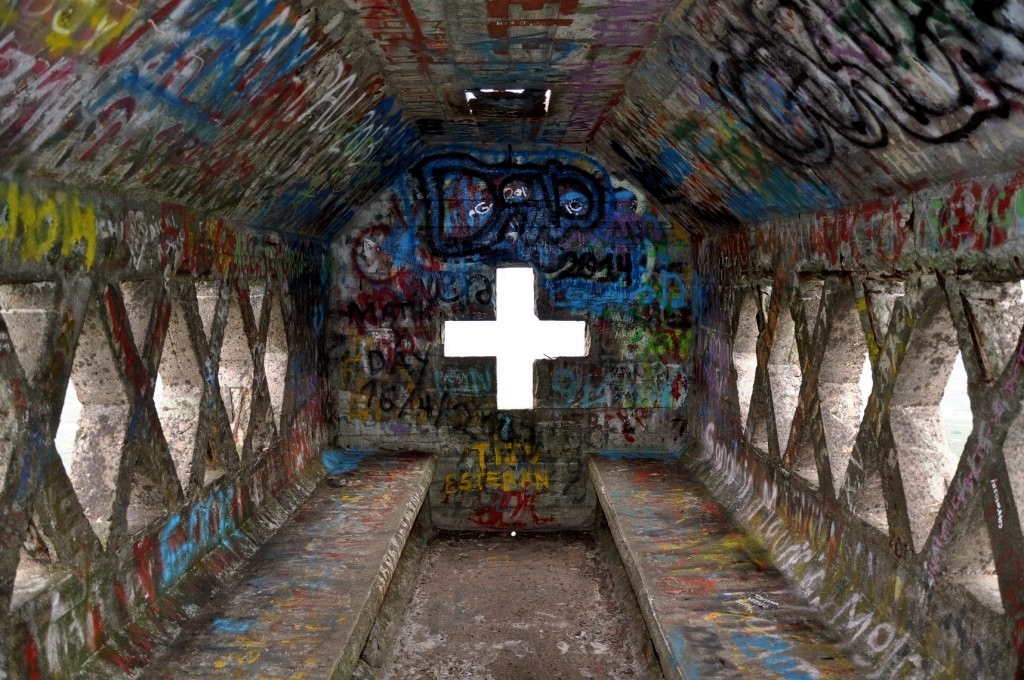
pan 12  Inside of one arm of the cross of Pan de Azucar.

One of his several granddaughters became the most famous actress of Uruguay, Concepción Zorrilla, A.K.A. China Zorrilla. She was a disciple of Margarita Xirgu and moved to Argentina in 1971 where she had a distinguished career in theater, TV and movies also in Spain and other Southamerican countries.

pan 32a   Yes, you can sit, 30m high, inside the cross and enjoy the view.

Her big successes in movies, Besos en la frente, Esperando la carroza (Waiting for the Hearse), Elsa & Fred and Conversations with Mother, for which she won the Moscow Film Festival award for best actress. She never married and never had children.

pan 8  Cerro de Pan de Azucar in the distance.
pan 21  Seen in the wildlife park, mum and her cub.

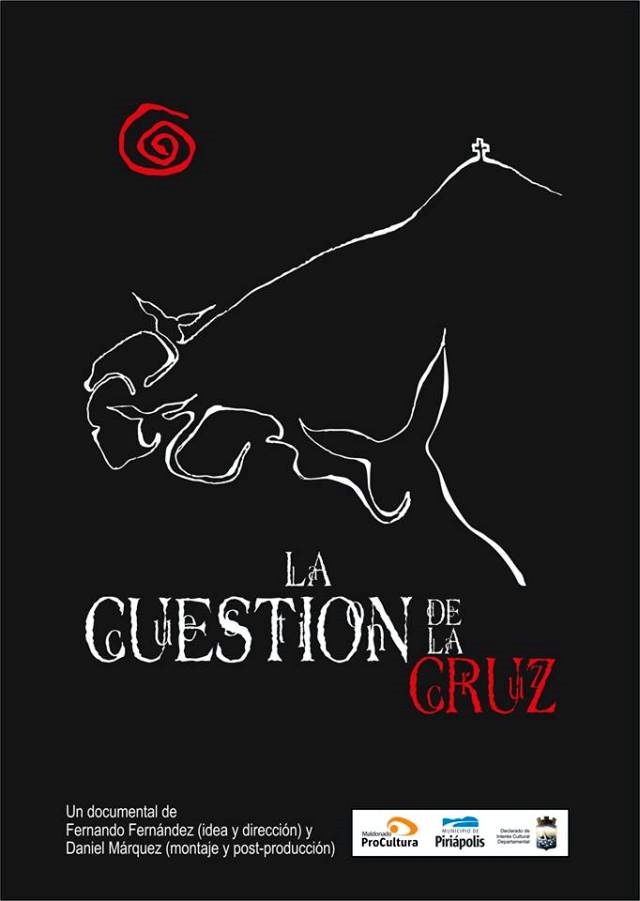
The Question of the Cross.

Fernando Fernandez, ideologist of the project and director of the documentary, in dialogue with weekly La Prensa, gave details of the film project he began in 2003: „It’s a documentary film and the idea began when we commemorated the 70th anniversary of the construction of the cross, with the title The Question of the Cross“.

pan 28 afiche-cuestion-de-la-cruz-fernando-fernandez  Title of the film which was made about the „Cross“ history.

The construction of the cross ends up being the „great excuse“ for interviewees to develop their stories and we open a window into that extremely ferment past, particularly here in Piriapolis, in the years 1920 to 1938. For this film also features photos many of them unpublished and footage of the 20s and 30s Fernandez stressed.

pan 22  Enjoyed the story about the cross on the sugar loaf ??

Fernando Fernandez: „A good opportunity to recover our memory“. A Film worth to see !!

Veröffentlicht unter History, Information, Travel, Uruguay | 2 Kommentare

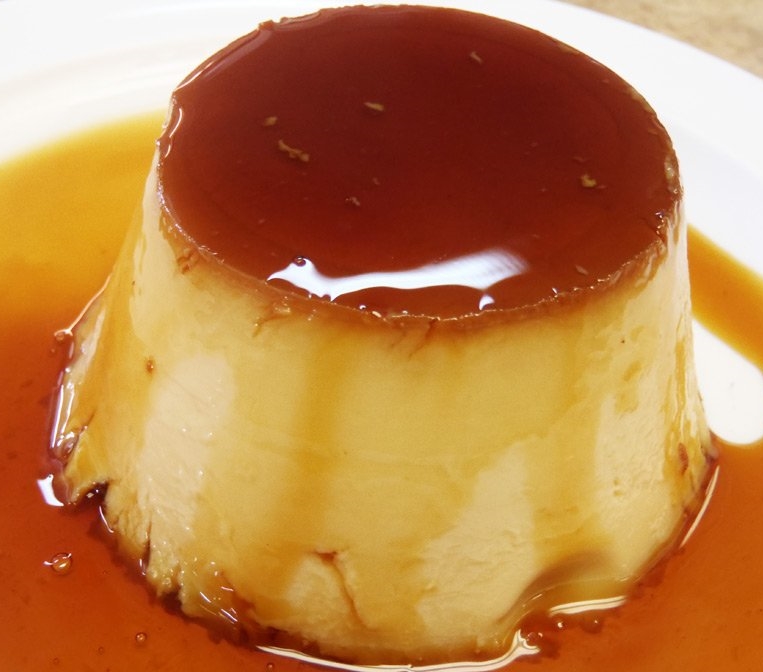
Creme Caramel – Flan

flan 11 coffee

It is in Uruguay one of the most well known and most served deserts one will find.

An important part of the traditions of the Uruguayans is related to food and deserts. When Uruguayans want to do a meeting with friends, doing so with an asado is usually one of the main options. Eating an asado, bizcochos, a flan with dulce de leche, or an arroz con leche are always good excuses to sit down and get up to the date with friends or family.

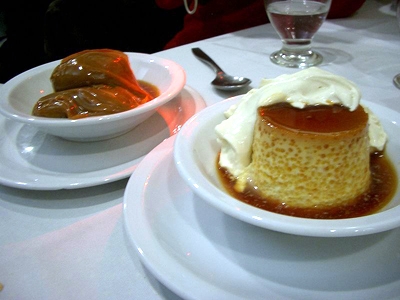
flan 19    Flan on the right, dulce de leche (ugg) on the left.

Because almost every one likes flan, I like to give you some „flan information“ and an easy recipe. But my recipe without „dulce de leche“ because I don’t like it – to sweet for me.

Flan: from French flan, from old French flaon, from Medieval Latin flado, a Germanic borrowing from Old Germanic „flado offering cake“.

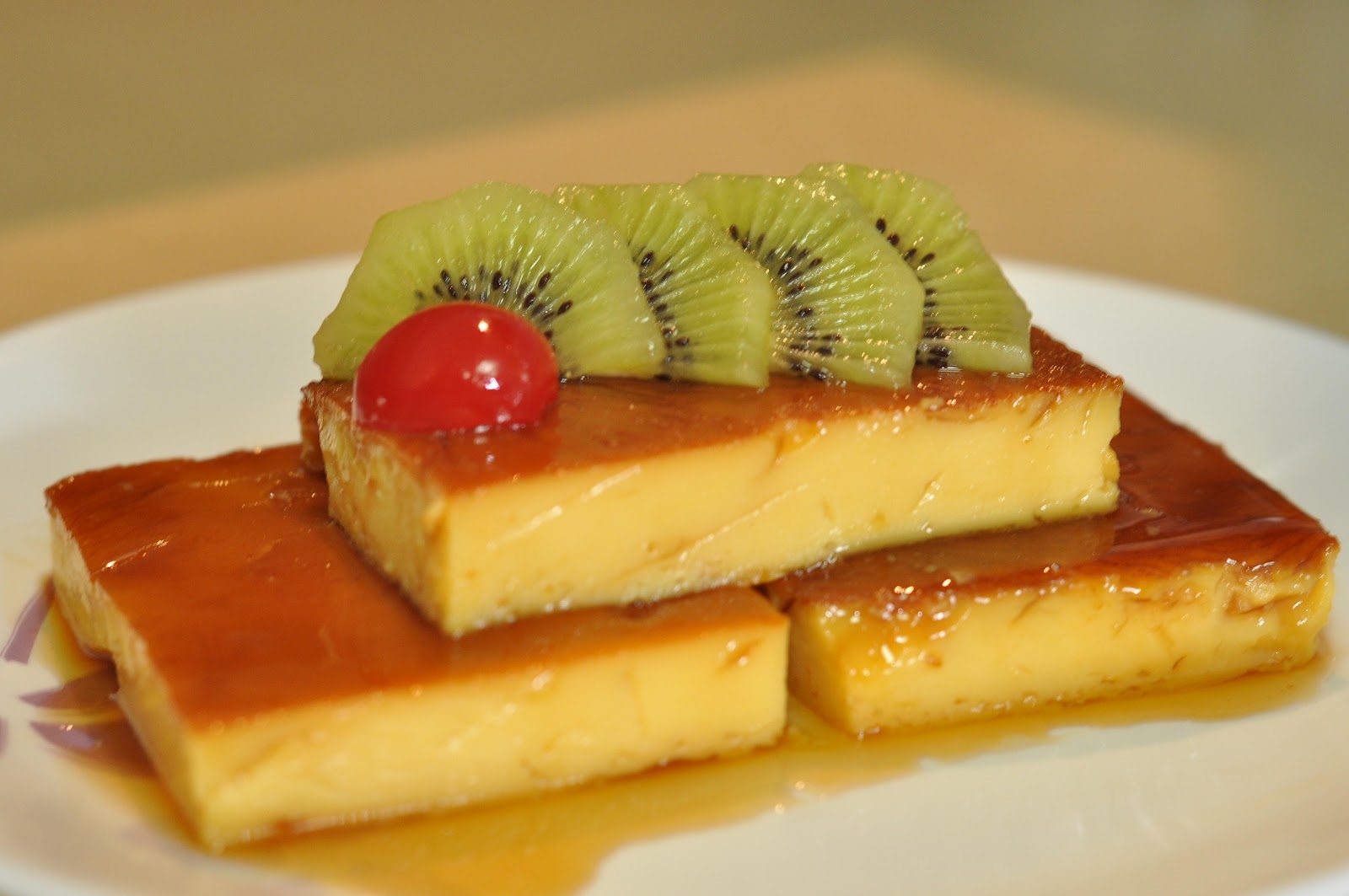
flan 18  Flan from a big plate decorated with kiwi and cherry.

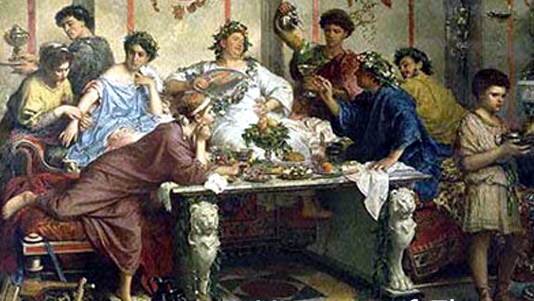
Flan In Ancient Rome.

The Romans were crazy about eggs, and eggs figured prominently in many Roman recipes. Roman flan started with milk and eggs mixed in a bowl. We doubt if it was cow’s milk, because the Romans avoided beef, and considered it a food for barbarians. They might sweeten the milk with honey. One ancient Roman recipe calls for five eggs, which were probably not chicken eggs and probably smaller. The mixture would be cooked over a fire until it became thicker. Pepper, a favorite spice of the Romans, might be added, and seems to be included in most Roman recipes.

flan 16    Ancient Rome.

Flan in Medieval Society.

Even though the Romans were eventually driven out of Europe, their customs were so deeply embedded in all societies that they continued to be practiced up to this day. Flan in the Middle Ages was more likely to be based on chicken eggs, which were more popular with northern Europeans than they had ever been with the Romans.

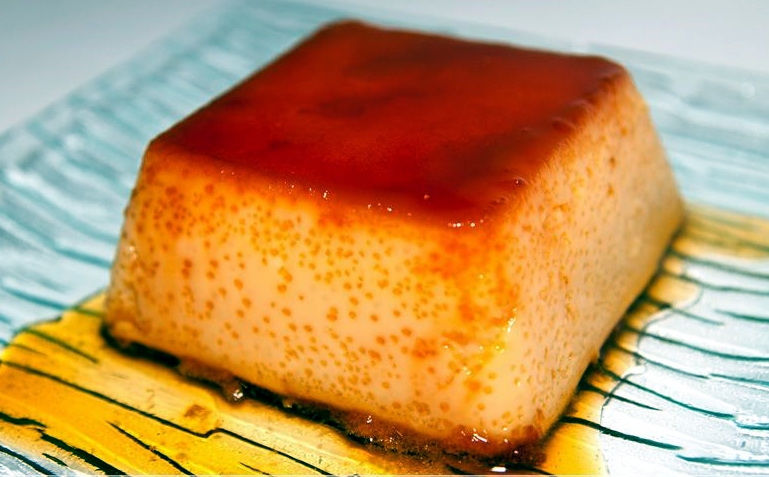
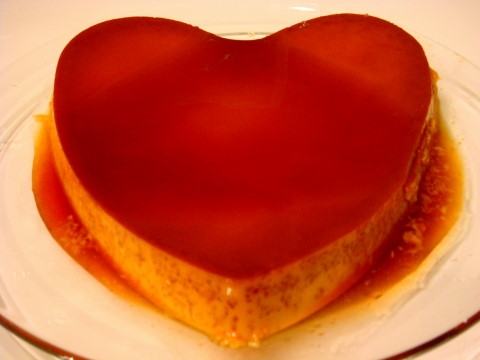
flan 10 naranja   It doesn’t matter in what size or shape you bake …

A savory medieval egg custard pie (pie with crust) was often flavored with almond milk, saffron, cinnamon, and rosewater. Some of the medieval recipes indicate that nutmegs and meat (usually fowl) would be included. In different European countries, the recipe would be customized with regional ingredients.

flan 9    …your flan, important is the taste of it.

Flan in Early Spain.

The Moorish influence on desserts in Spain during the 11th to 15th centuries cannot be discounted. The Arabian influence on flan would include almonds and honey as well as orange. In the 15th-century Spanish kitchen, rich creamery milk was most often used to prepare dessert dishes, with the result that flan quickly became the national dessert. Flan recipes eventually spread through Spain to Latin America.

flan 14   Picnic in Spain.

Flan in Renaissance Europe.

Published recipes for flan begin showing up in cookbooks in the 1600’s. In Renaissance Europe, egg custards come into two basic types: The firm baked „still“ custards and the pourable „stirred“ custards. Stirred custards were usually made over a fire or on a stove top rather than in an oven. The egg mixture would be stirred as it was brought to a point just under boiling, resulting in a thickened liquid.

flan 8    Flan out the „4 1/2 cup metal ring mold“.

Still custards were baked in a water bath in an oven (if they had one) until they formed a thicker gel. They may or may not have used a pastry crust. Meat was an infrequent treat for most people in the Middle Ages, but became more common in the Renaissance. Egg custards could thus be either sweet or savory.

flan 15   Flan serving in Renaissance Europe.

Flan in Modern Times.

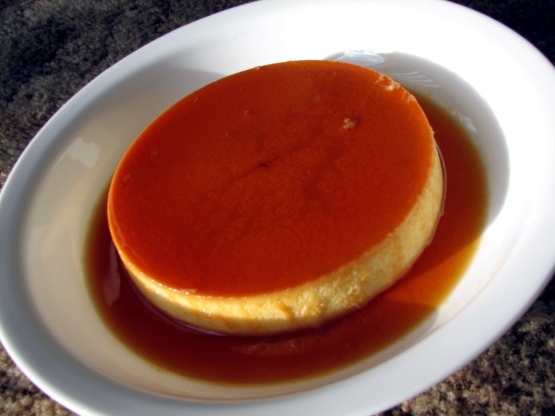
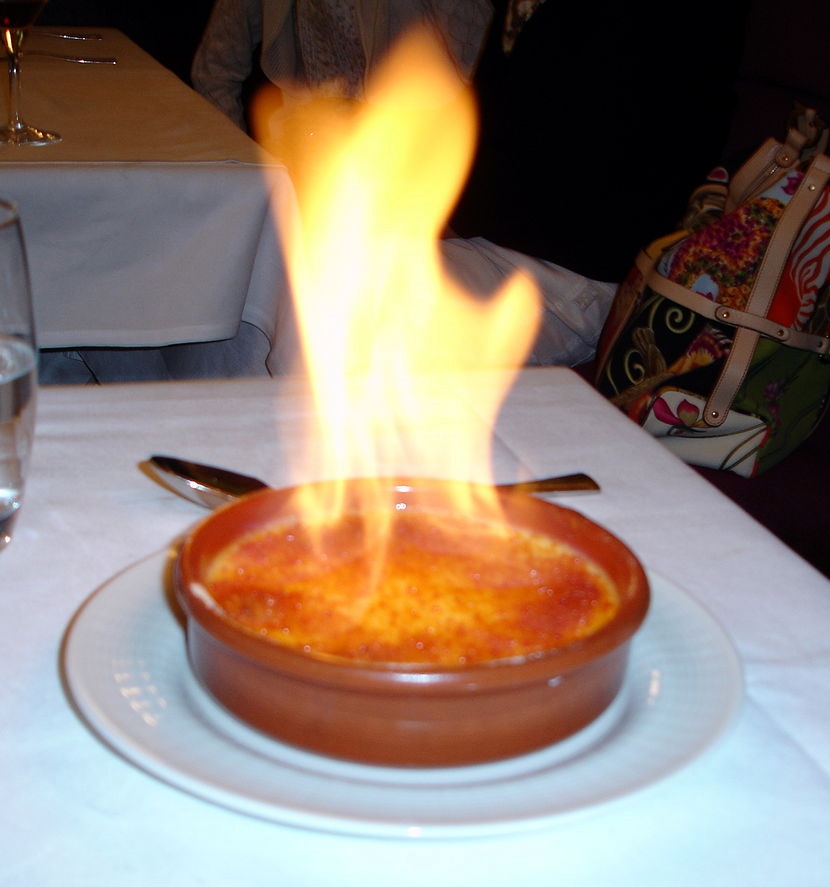
Made as a dessert and called „Creme caramel“, or caramel pudding with a layer of soft caramel on top, as opposed to creme brulee (sadly called burned cream), which is pudding with a hard caramel top. The dish is eaten, hot or cold, throughout the world. Flan was brought from the Spaniards to south America via Mexico.

flan 12 creme brulee flambee   One of my favorites, creme brulee – cognac flambe.

Make Your Own Flan.

This Flan recipe is prized for it’s simplicity. If you’ve never made flan before, now is the time to try this recipe. It is so easy to make and soooo delicious.

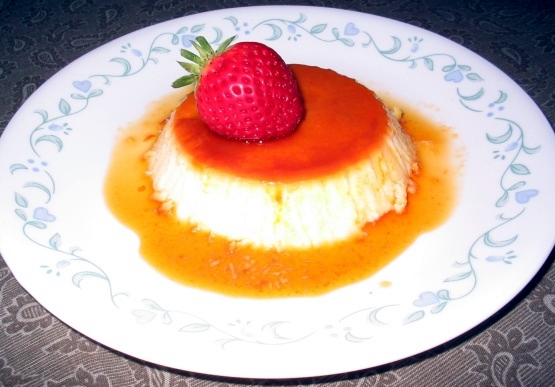
flan 7   Fluffy flan with orange influenced caramel sauce.

Ingredients.

1 cup sugar
6 large eggs
3 cups milk
2.14oz (60 gram/ml) sweetened condensed milk
1.13oz (32 gram/ml) evaporated milk
1 1⁄2 teaspoons vanilla
1 teaspoon orange rind, grated
sliced fruit (Strawberries, Kiwi or other fruit) to decorate

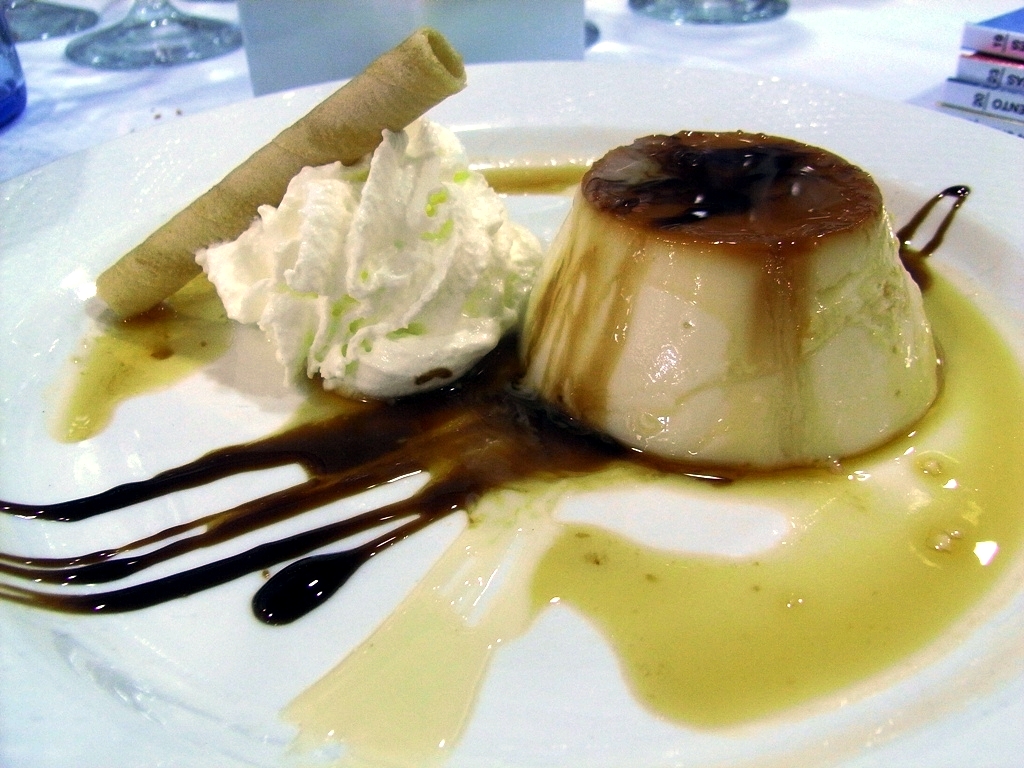
flan 13    Something special, two sauces, kiwi and chocolate.

How to do.

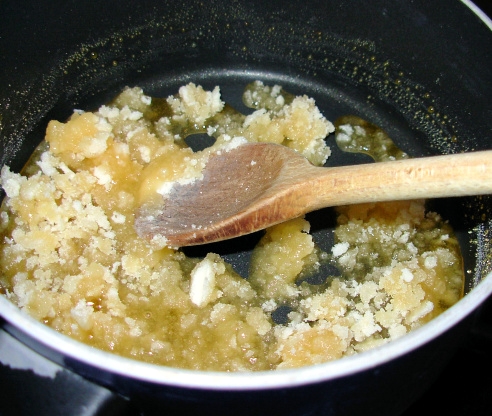
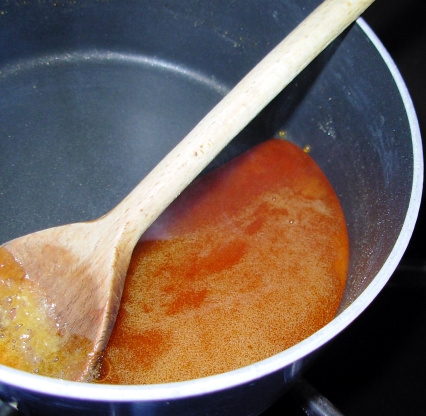
Preheat oven to 325 degrees F (160 g C). You will need 6 ramekins or other specialty flan cook ware and a large baking pan to put them in. Heat 1/2 cup sugar in a heavy skillet or saucepan, stirring constantly until it melts and turns a dark golden color.

flan 5

Remove from heat and immediately pour into 6 ramekins or a 4 1/2 cup metal ring mold, swish it around so it evenly coats the bottom of the ring mold.Reheat caramel if it starts to harden.

flan 4

In a large mixing bowl, lightly beat the eggs. Stir in milk,1/2 cup sugar, vanilla and orange peel. Blend smooth after each ingredient is added.
Place caramel coated ramekins or the ring mold in another pan and place on an oven rack.
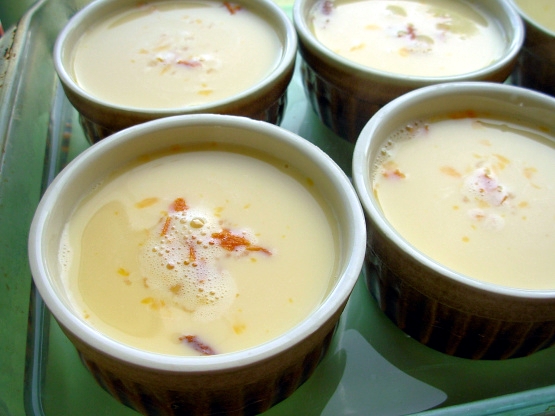
Pour egg mixture into the ramekins or the ring mold and pour the hottest tap water possible around them, to a depth of 1 inch (2,5cm).

flan 2

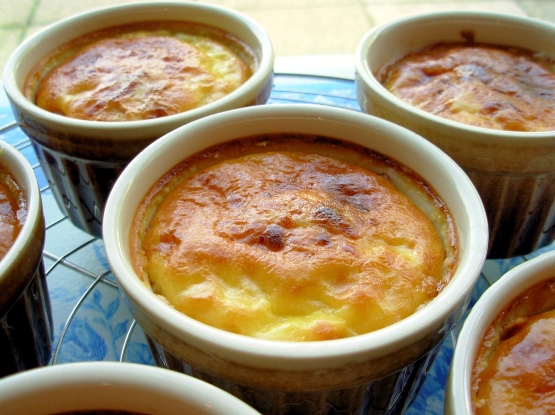
Bake at 325 F (160 C) for about to 45 minutes to l hour or until a knife comes out clean.
Cool flan on a wire rack, chill for at least 1 1/2 to 3 hours. To unmold the flan loosen edges with a spatula/knife, slip spatula/knife down the sides to let air in.

flan 1

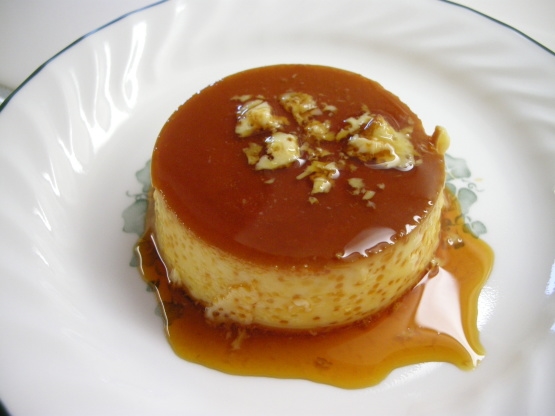
Place the serving platter over the mold and flip to allow the flan to slip onto the platter.
Spoon the caramel that may remain in the mold on top of the flan.

flan 6    YOUR final product – enjoy !!!

Veröffentlicht unter Lifestyle, Recipes | Hinterlasse einen Kommentar

Must See – Liebig’s Meat Extract – Update

bentos 26     Click on pics, most of them supersize.

After the posts of „Must See – Liebig’s Meat Extract, part 1-3“, almost a year ago, it is worth to update the information.
Meantime, in 2015, the „Museo de la Revolucion Industrial, Fray Bentos Uruguay“ earned the status „World Heritage Site“. This is , after Colonia del Sacramento, the second World Heritage title in Uruguay. Many people asked:

Why has a meat packing factory been given a World Heritage status?

bentos 18

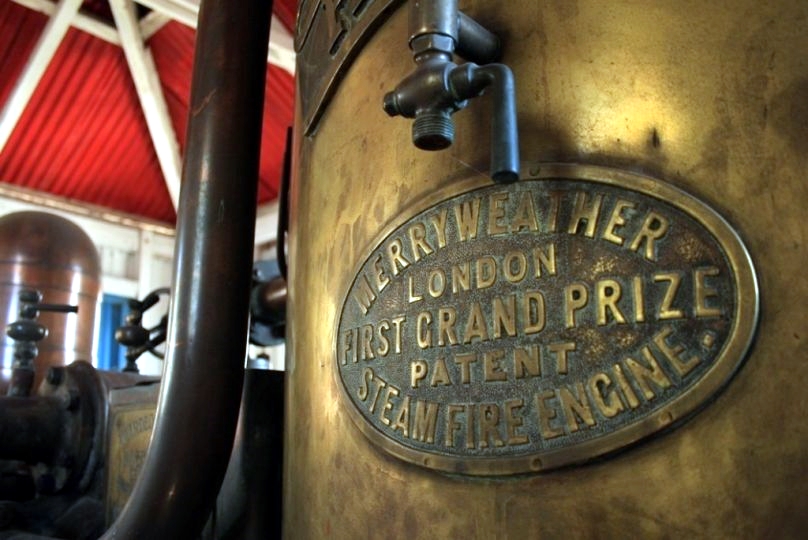
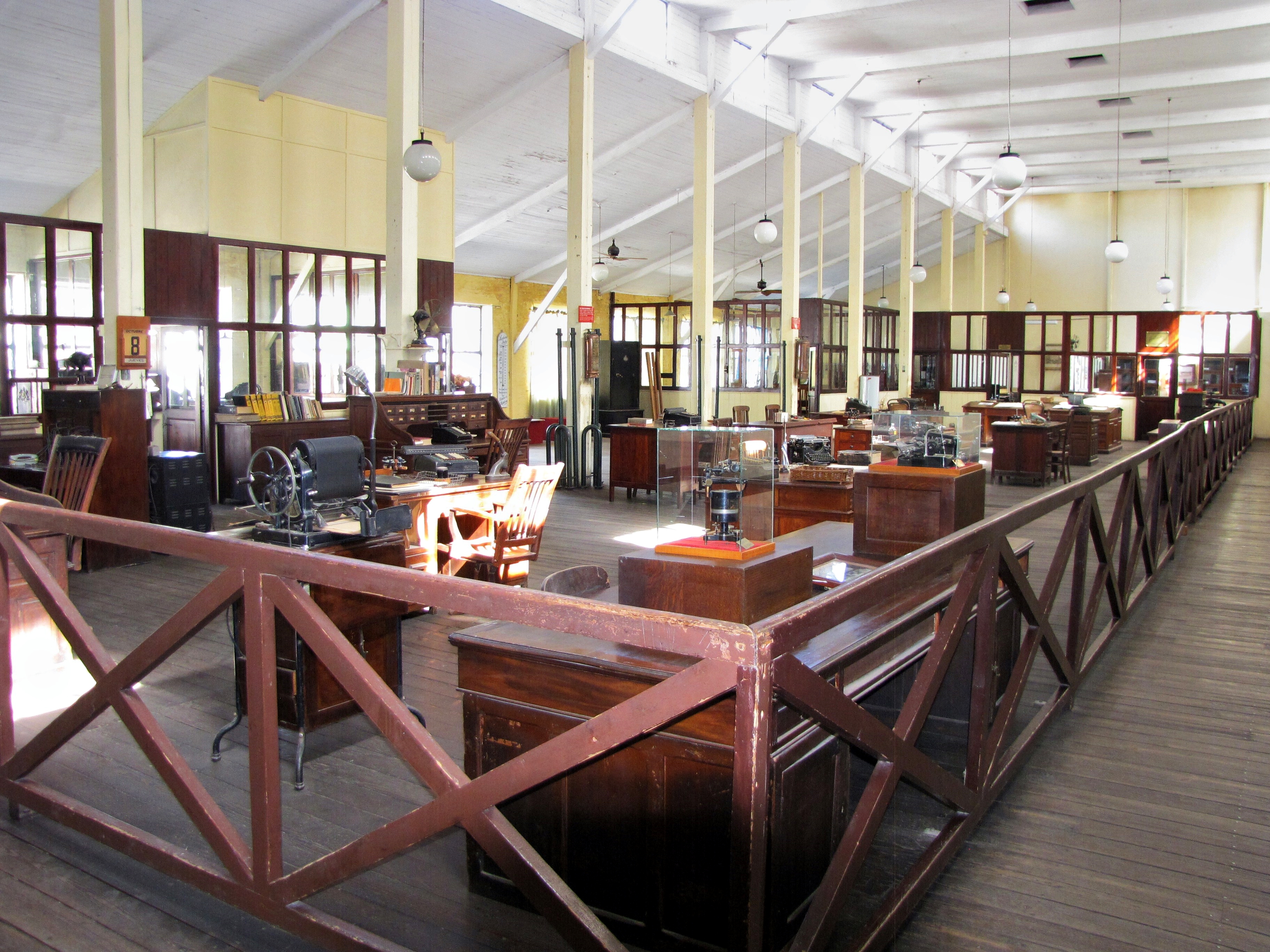
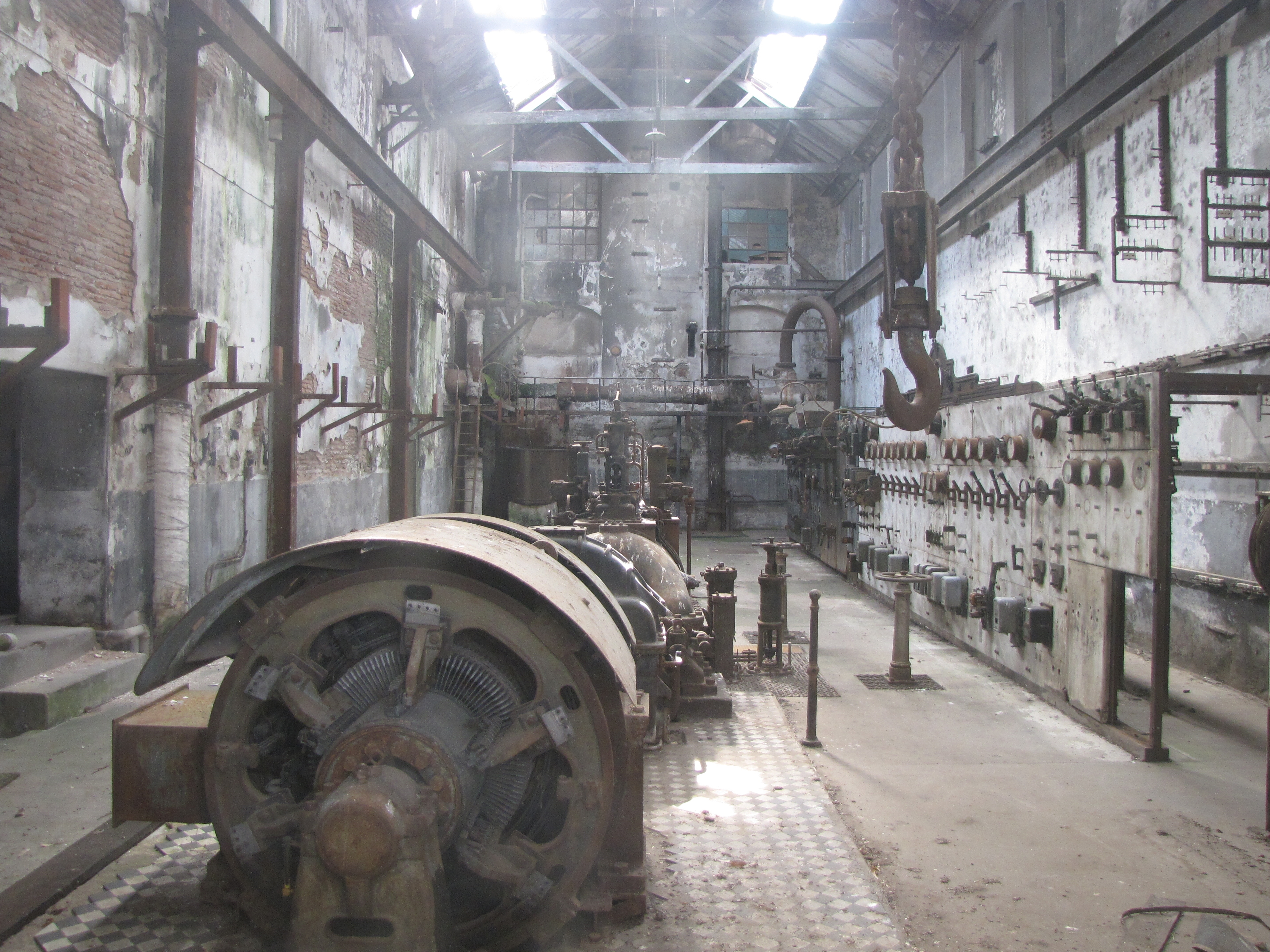
Many controversy answers are given. Here is my extract of the UNESCO World Heritage decision, filled up with some more pics out of my earlier museum visit, without comments.

bentos 11

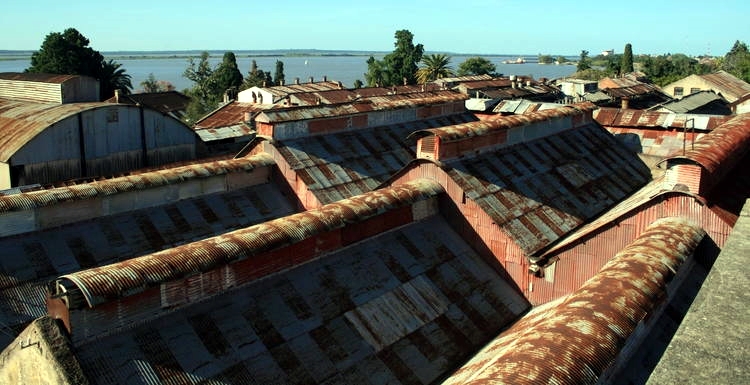
Fray Bentos Industrial Landscape.

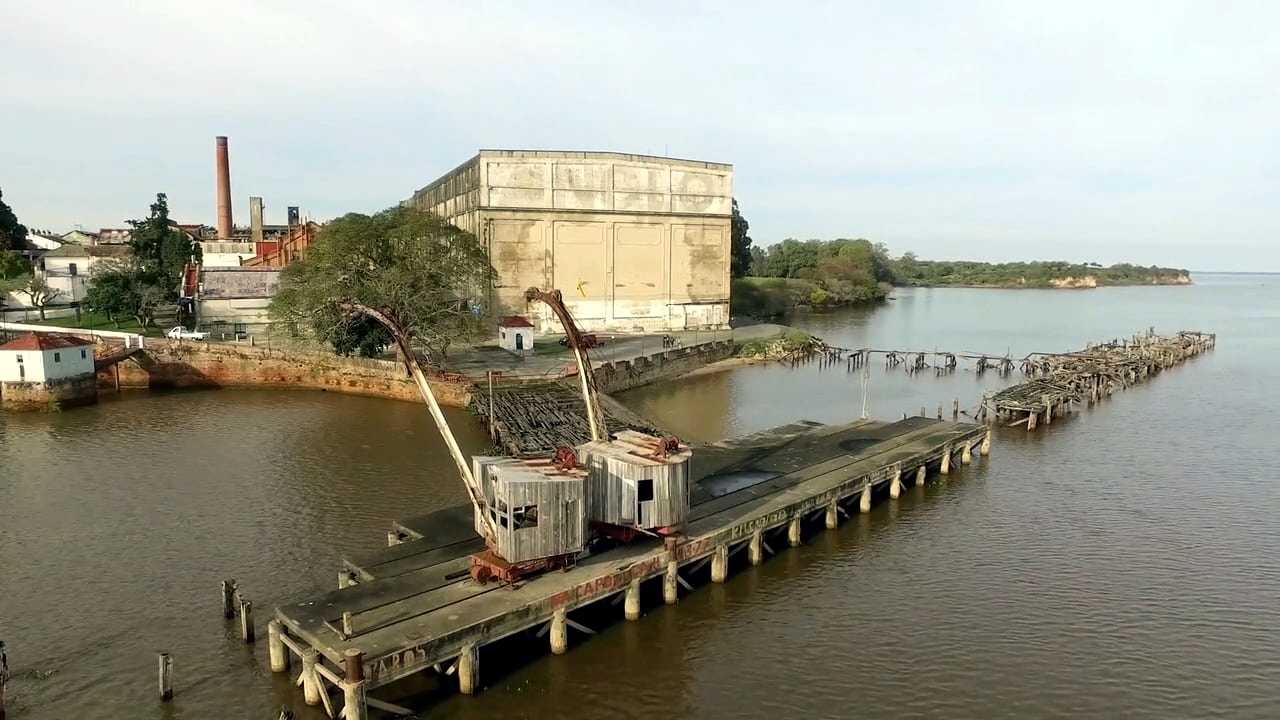
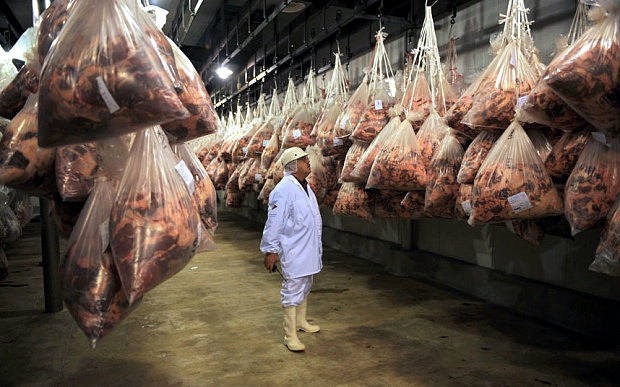
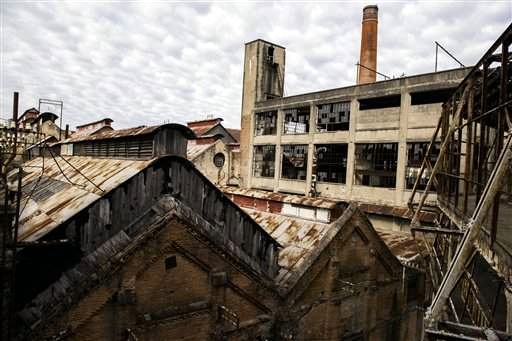
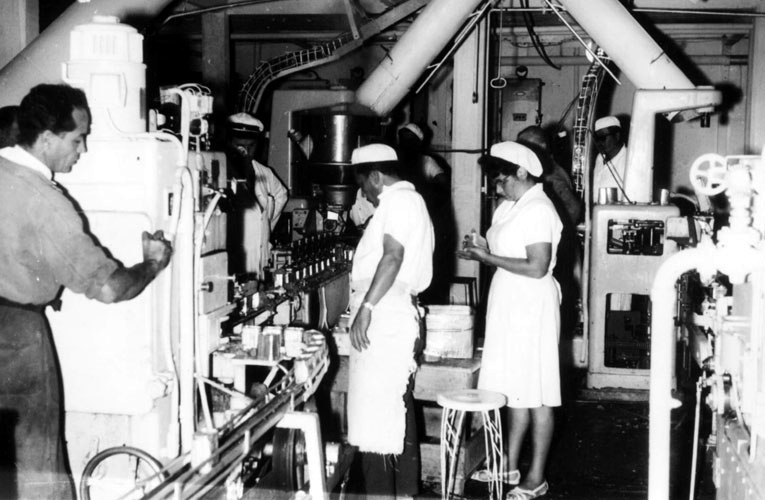
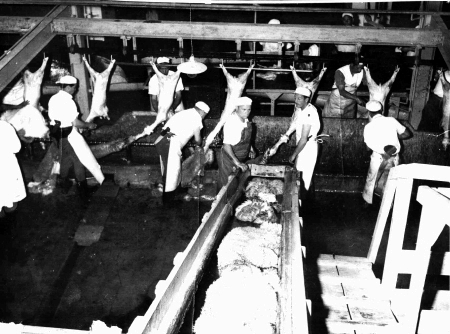
Located on land projecting into the Uruguay River west of the town of Fray Bentos, the industrial complex was built following the development of a factory founded in 1859 to process meat produced on the vast prairies nearby. The site illustrates the whole process of meat sourcing, processing, packing and dispatching.

bentos 20

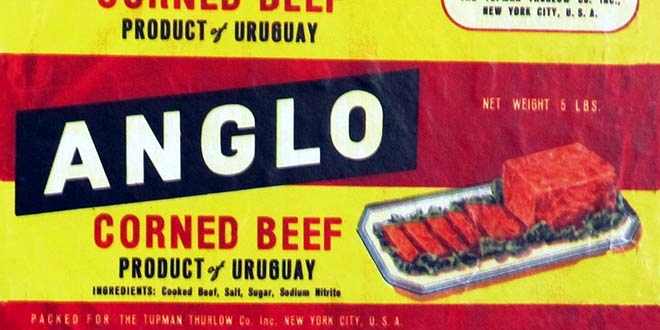
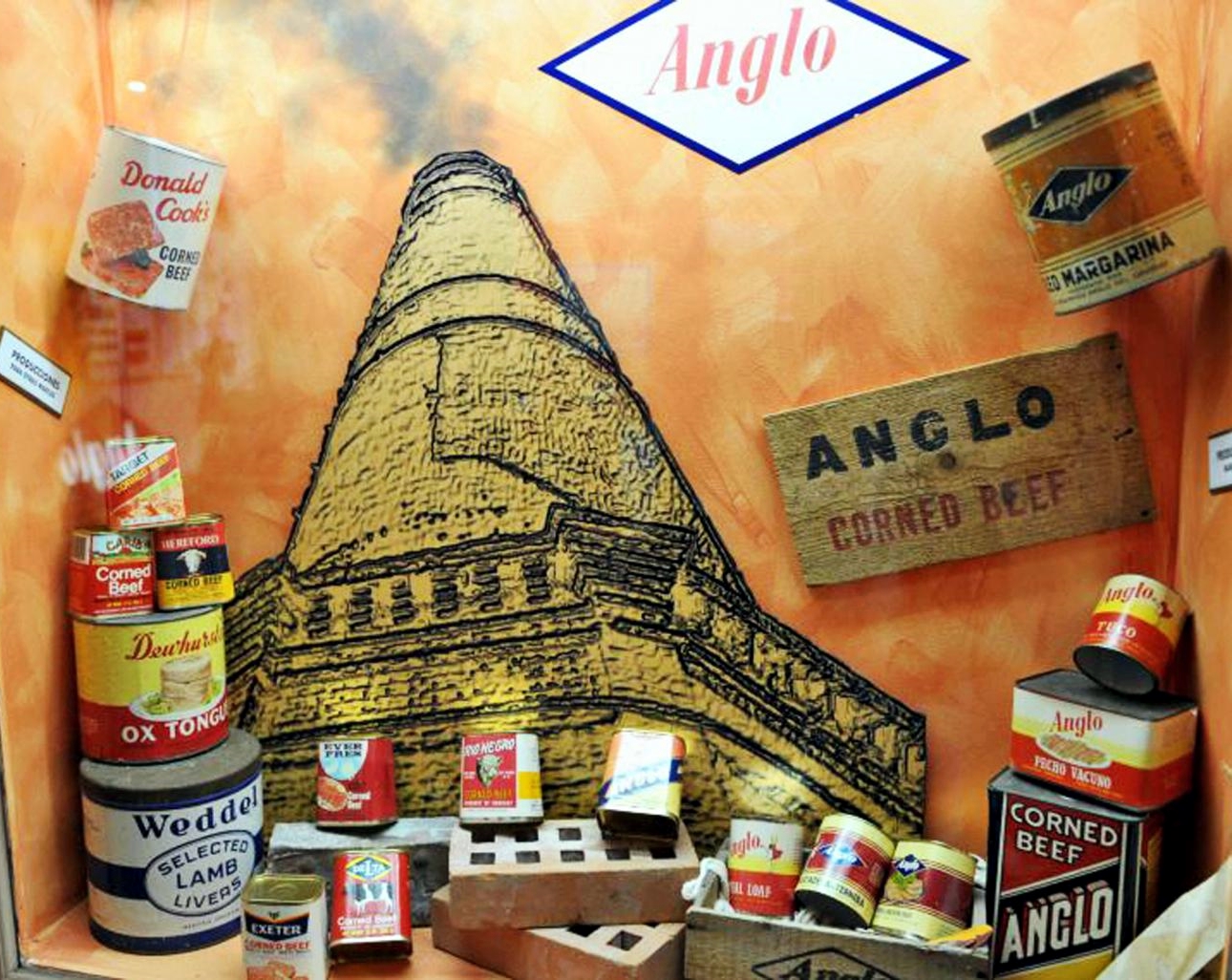
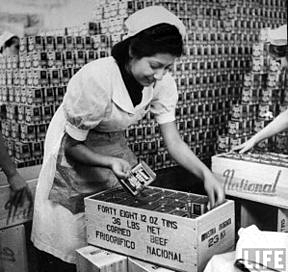
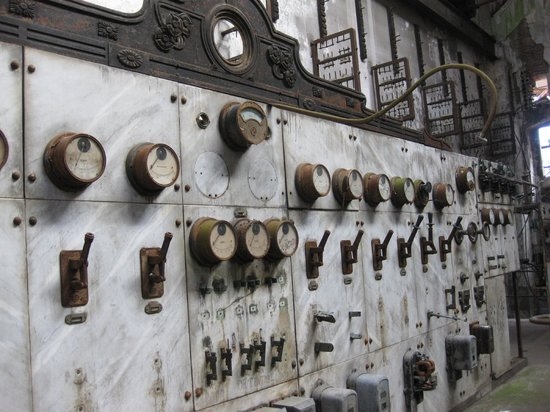
It includes buildings and equipment of the Liebig Extract of Meat Company (LEMCO), which exported meat extract and corned-beef to the European market from 1865 and the Anglo Meat Packing Plant, which exported frozen meat from 1924. Through its physical location, industrial and residential buildings as well as social institutions, the site presents an illustration of the entire process of meat production on a global scale.

bentos 22

Outstanding Universal Value.

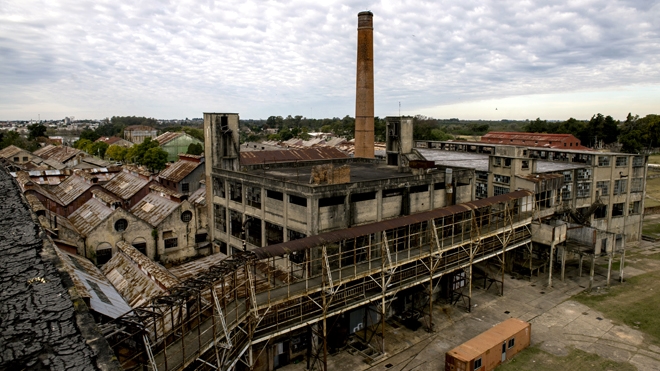
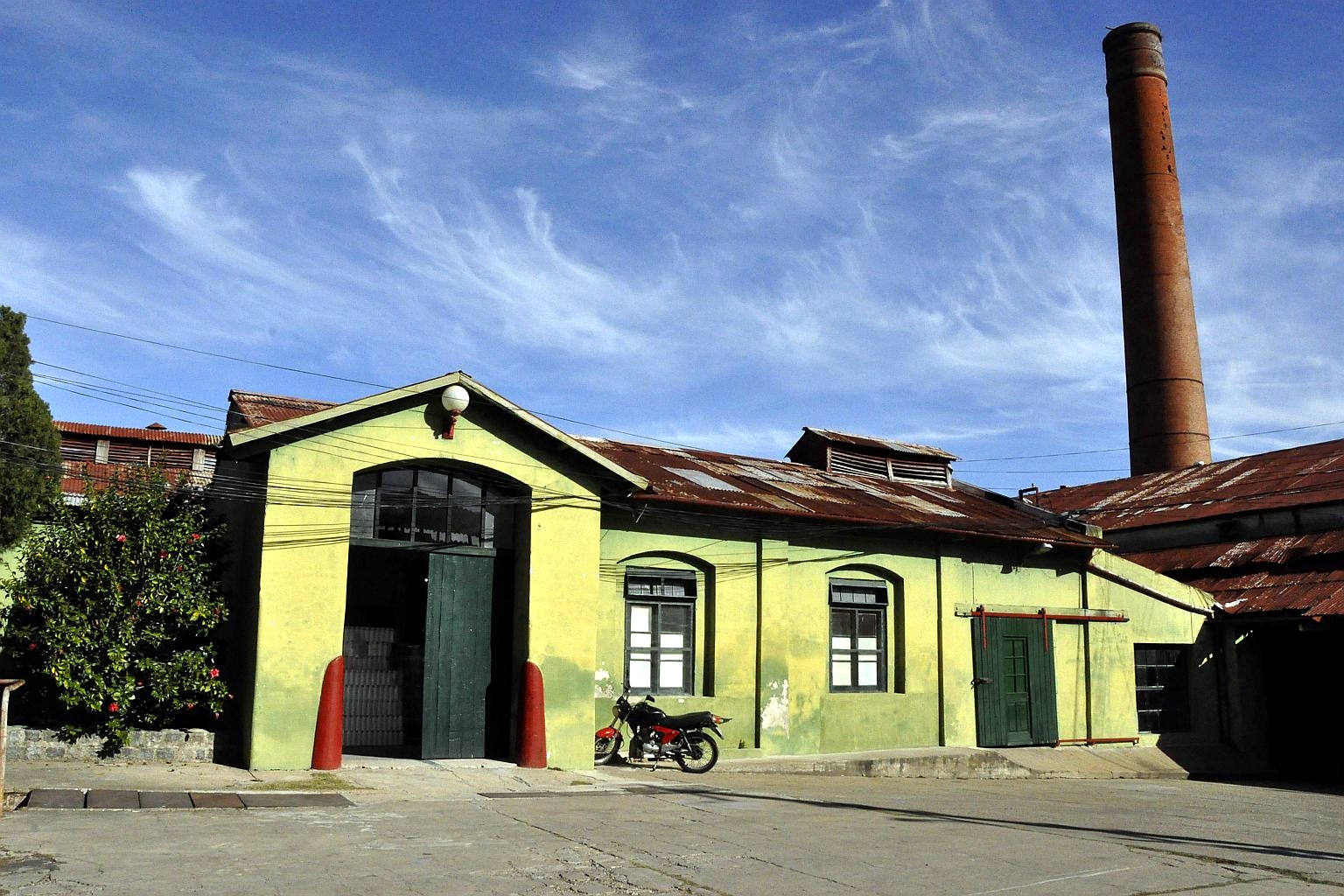
The industrial complex is marked by the enormous cold storage building and tall brick, boiler chimney which punctuate a range of saw-toothed roofs. Illustrating the whole process of meat sourcing, processing, packing and dispatch, the site includes buildings and equipment of the Liebig Extract of Meat Company.

bentos 9

Here German research and technology combined with English enterprise to provide food for a global market including to the armies of two World Wars in the 20th century. Workers housing and social institutions which accommodated and supported the cosmopolitan workers community continue in use today.

bentos 13

Criteria.

Fray Bentos Industrial Landscape is evidence of the interchange of human values between European society and the South American population of the 19th and 20th century which effected social, cultural and economic changes in both places during that period. This was due the interchange on developments in technology which enabled the production and export of canned and frozen meat on a global scale and to the immigrant workers who arrived from more than 55 nations.

bentos 24
The ensemble of cattle pasture and handling facilities, industrial buildings, mechanical facilities, port facilities, residential fabric and green areas linking the river and agricultural areas to the city of Fray Bentos Industrial Landscape stands out as an example of early 20th century industrial development.

bentos 12    bentos 27

Integrity.

The property includes all elements related to the history of the site and the period of its operation and is of adequate size to ensure the complete representation of the features and processes which convey the property’s significance. The landscape setting is appropriate in size and views form the river and town are maintained. Some buildings are in need of repair and conservation but the site does not suffer from neglect overall.

bentos 15

Authenticity.

The property is authentic in terms of location and setting, materials and substance and use/function in terms of the buildings which form part of the Museum of Industrial Revolution. The archive contains historical documents with technical information providing a source for repairs and restoration.

bentos 10

Other buildings have been adapted for new uses and workers housing has been upgraded to provide more modern accommodation for families now living there, many of whom have a connection with the property through family members who worked there.

bentos 21

Authenticity is vulnerable to proposed new development within the property including new uses for buildings and sites as well as new construction.

bentos 17

Protection and management requirements.

The property is protected as a National Historic Landmark under the Heritage Act No. 14.040, August 1971 as amended in 2008 and the Regulatory Decree 536/72. Objects owned by government agencies and non-state corporations are protected under Act No. 17.473, 9 May 2002. The Acts are administered by the National Cultural Heritage Commission.

bentos 16  Click on pics to supersize.

The property has been managed at site level by the Anglo Management Committee since 2008 with input from representatives of the Ministry of Culture and Educational Affairs; Ministry of Housing, Land Use Planning and Environment and the Municipality of Rio Negro. This body is responsible for the implementation of the Property Management Plan 2012-2015, which was approved by the National Cultural Heritage commission in January 2014.  The site was finally listed as a New Unesco World Heritage site for 2015 !!

Veröffentlicht unter History, Hobbies, Information, Must See, Uruguay | Verschlagwortet mit , | Hinterlasse einen Kommentar

Happy New Year 2016

new year aukland   Aukland, New Zealand.

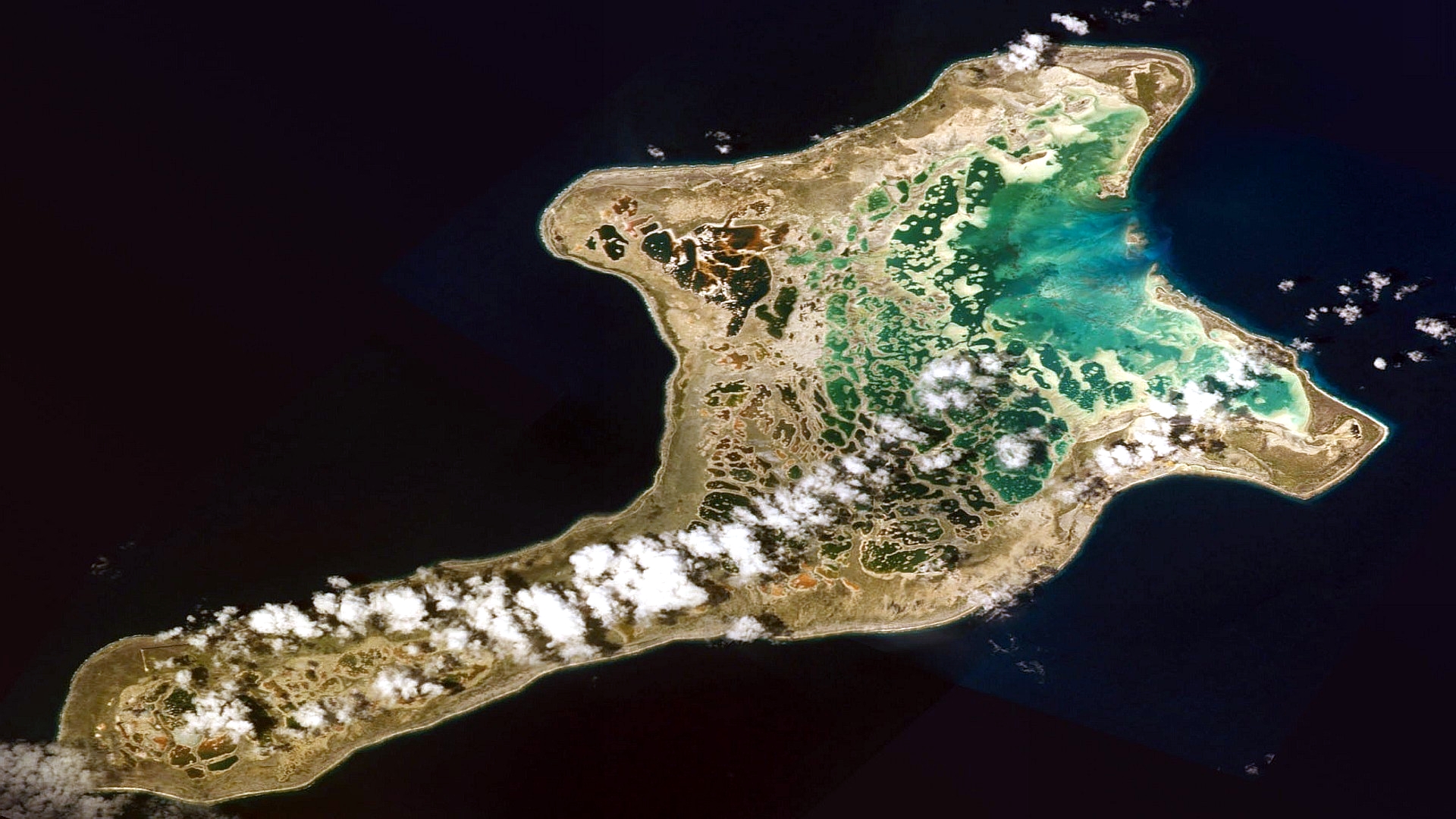
new year 2016aa  Kiritimati, Christmas Island.

The NEW YEAR 2016 starts on the Pacific islands Kiritimati, Apia, Salelologa (Savai’i)
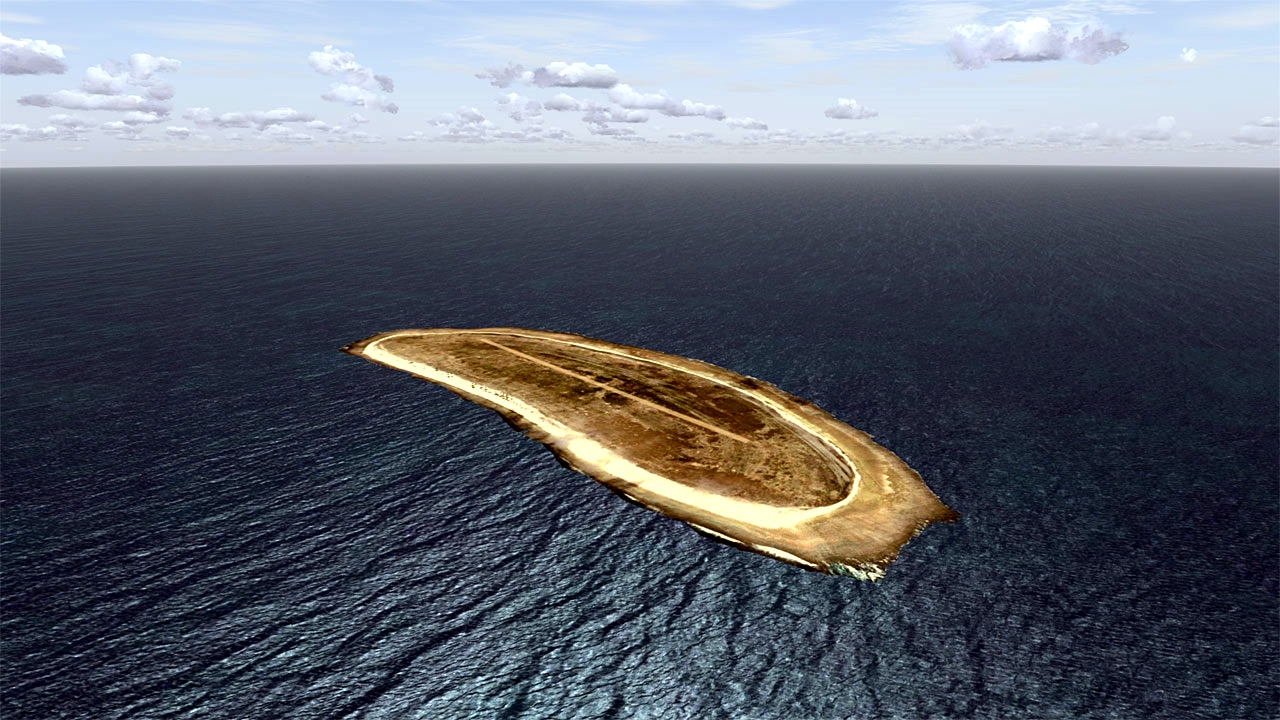
and will end on the Pacific islands  Baker Island, Howland Island, 14 hours later.

The first big country celebrating is in New Zealand (see Auckland fireworks above)
and the last big one are the US with Hawaii (see Honolulu fireworks below). Between those countries are all of us. Happy Healthy and Wealthy 2016 to all my readers !!

new year honolulu    Honolulu, Hawaii.

new year 2016b   Howland Island, USA.

Veröffentlicht unter Information, Uncategorized | Verschlagwortet mit | Hinterlasse einen Kommentar

A Little Trivia

horses 42    horses 44

What do have a space shuttle and a Roman war chariot in common ?? Read on !!

Railroad tracks.

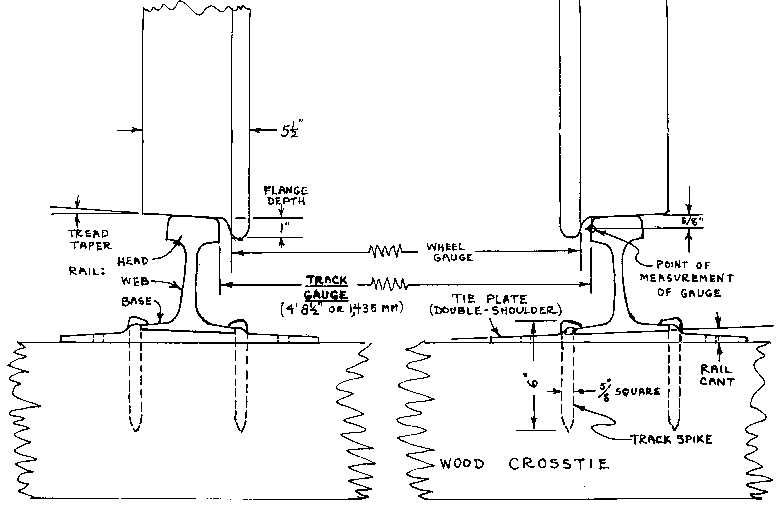
horses 6  American standard rail road track.

The US standard railroad gauge (distance between the rails) is 4 feet (121,92 cm), 8.5 inches (21,59 cm). Together 143,51 cm , that’s an exceedingly odd number.

horses 4a        The US standard railroad gauge.

Why was that gauge used?

The only standard gauge in the U.S. is a defacto 4′ 8 1/2″ (143,51cm) as recommended by the A.R.A. committee on standard wheel and track gauges in October of 1896.

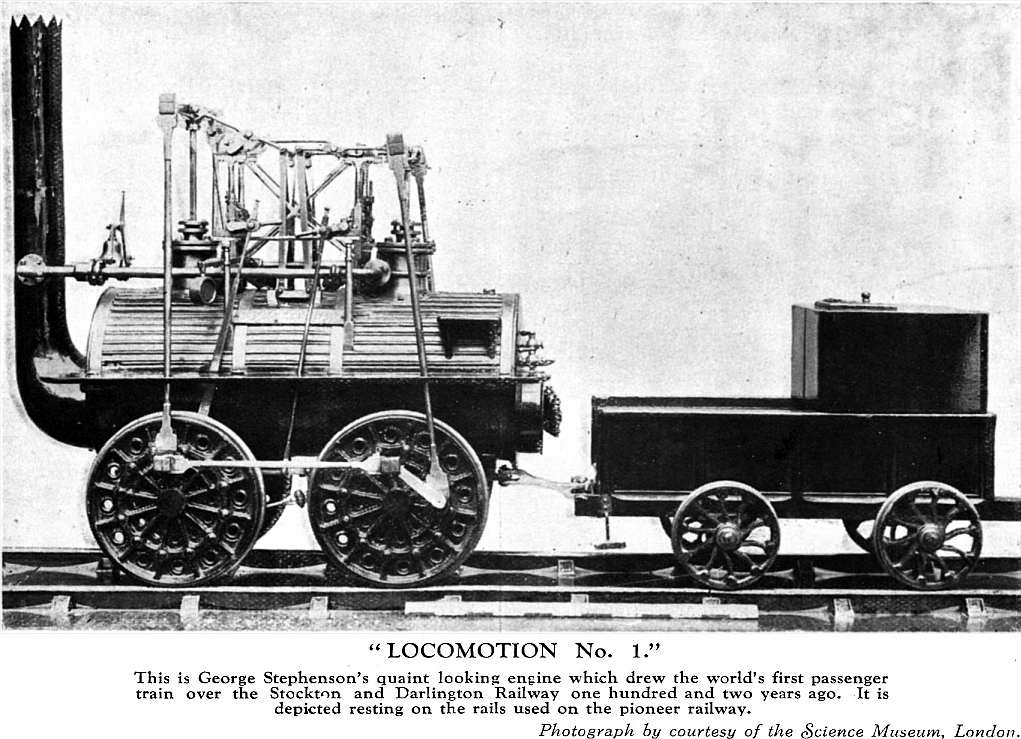
horses 21       The first railroad in England, Stockton – Darlington.

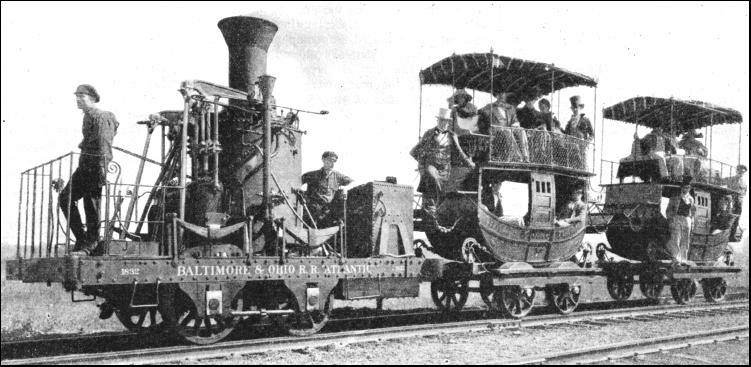
Great Britain, on the other hand, has a true standard track gauge of the same dimensions because it was mandated by an act of Parliament in 1846 that all railroads should be built to the same gauge as the Stockton and Darlington, England’s (and the world’s) first public rail line to use locomotives. And – English engineers where the ones who build the first American railroads.

horses 22 americas first  The first railroad in USA, Baltimore – Ohio.

Why did the English build them like that?

Because the first rail lines were built by the same people who built the pre-railroad tramways, and that’s the gauge they used.

horses 16    Pre-railroad tramway drawn by horses.

Why did ‚they‘ use that gauge then?

Because the people who built the tramways used the same jigs and tools that they had used for building wagons, which used that wheel spacing.

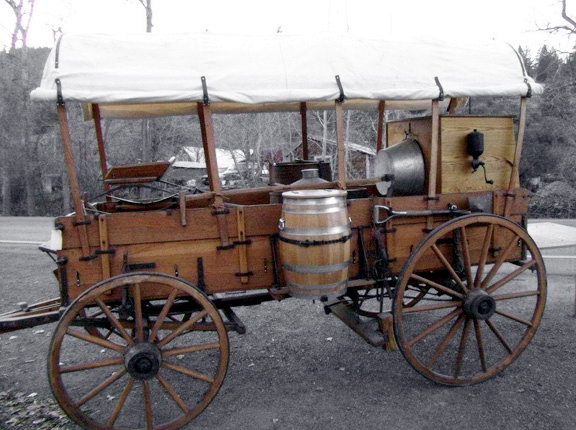
horses 36  Same methods to build old or modern wagons.

Why did the wagons have that particular odd wheel spacing?

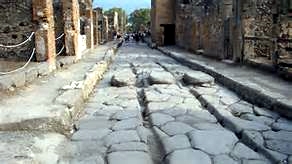
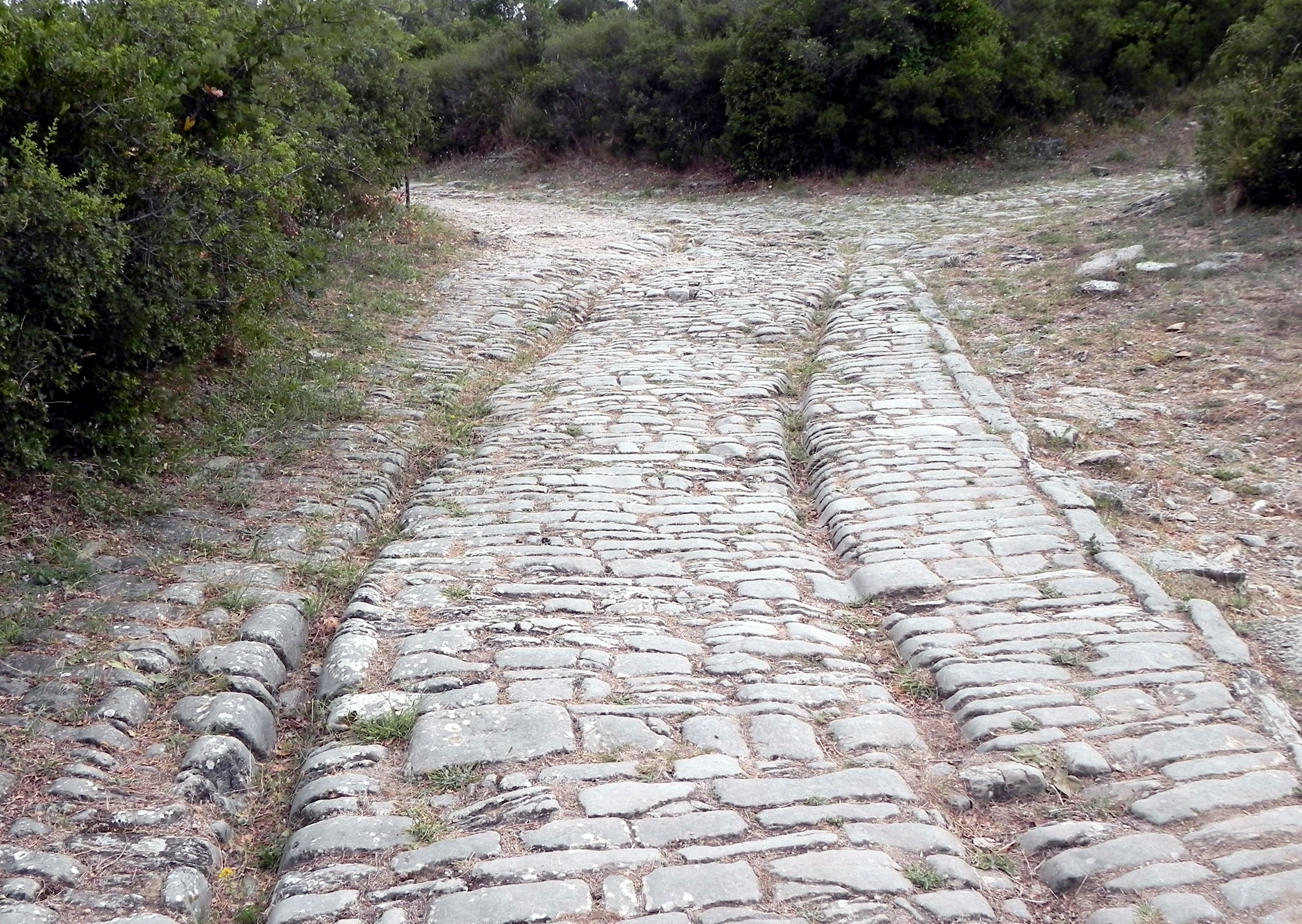
Well, if they tried to use any other spacing, the wagon wheels would break on some of the old, long distance roads in England , because that’s the spacing of the wheel ruts.

horses 23 roman road  Wheel ruts in Roman long distance roads.

So who built those old rutted roads?

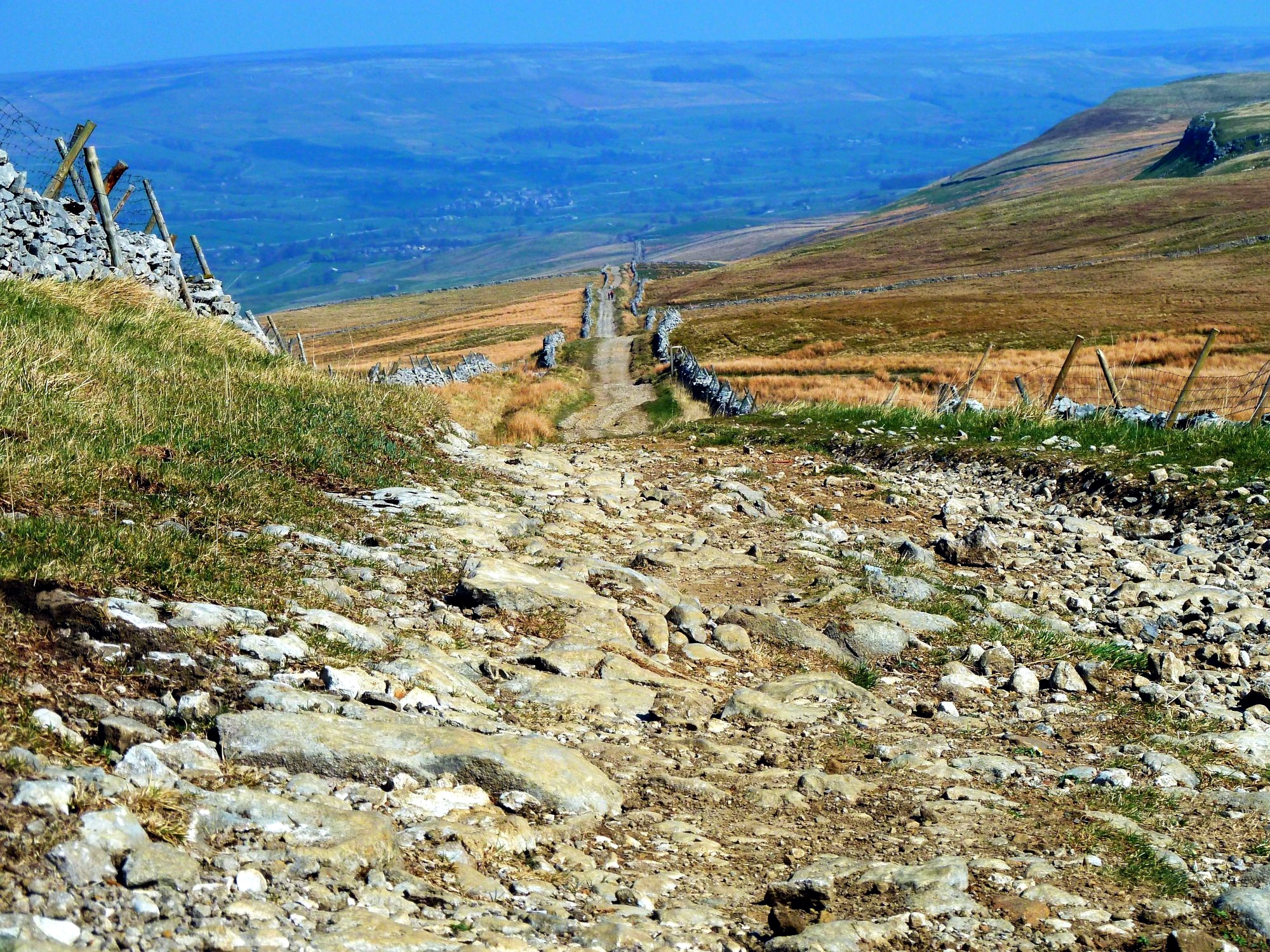
Imperial Rome built the first long distance roads in Europe (including England ) for their legions. Those roads have been used ever since.

horses 24 roman road in uk  Old Roman long distance road in the UK.

And the ruts in the roads?

Roman war chariots formed the initial ruts, which everyone else had to match for fear of destroying their wagon wheels.

horses 37    Ruts in ancient roads throughout Europe.
horses 47   Same situation with the ruts in North America.

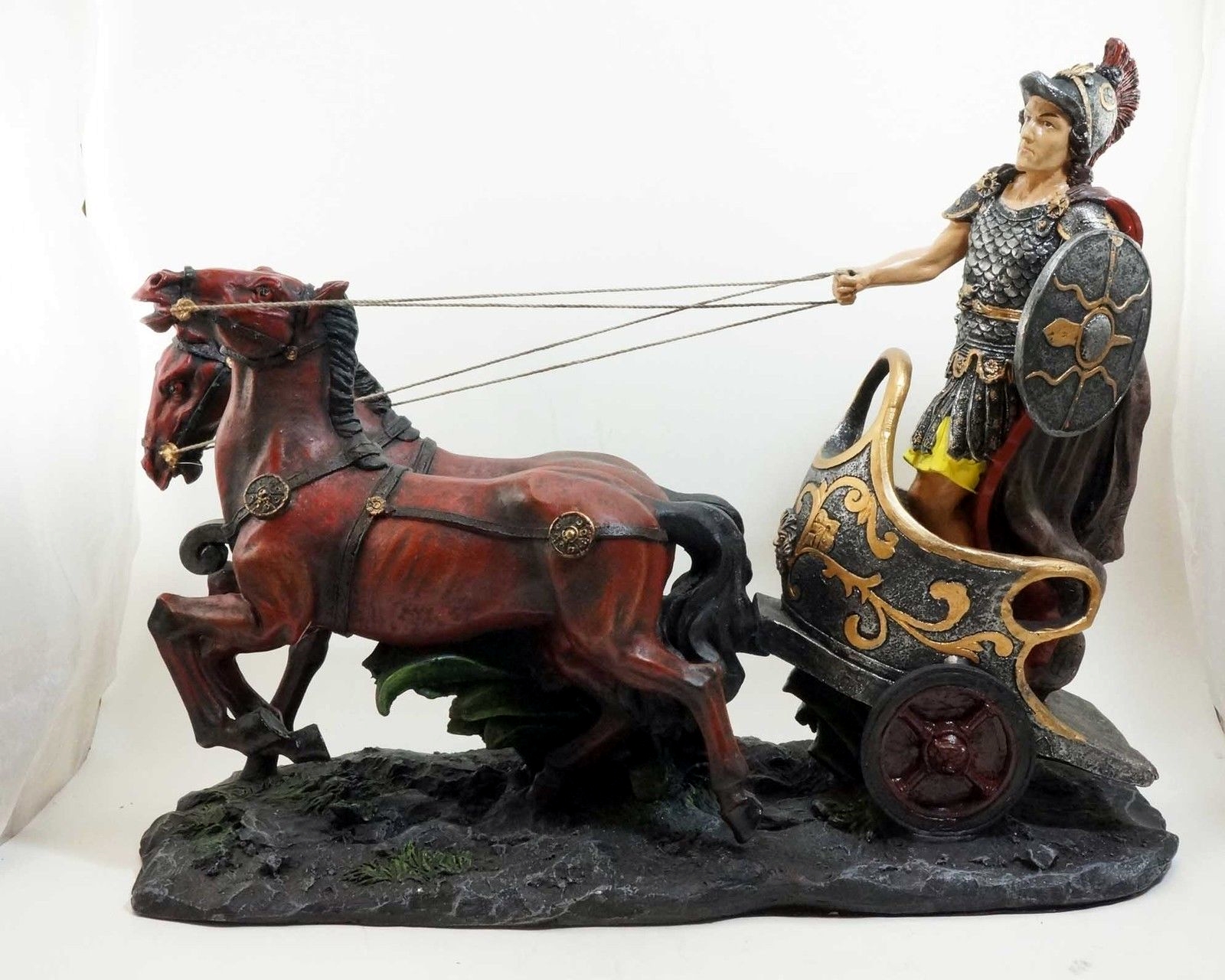
Since the chariots were made for Imperial Rome , they were all alike in the matter of wheel spacing. Therefore, the United States standard railroad gauge of 4 feet, 8.5 inches (143,51cm) is derived from the original specifications for an Imperial Roman war chariot.

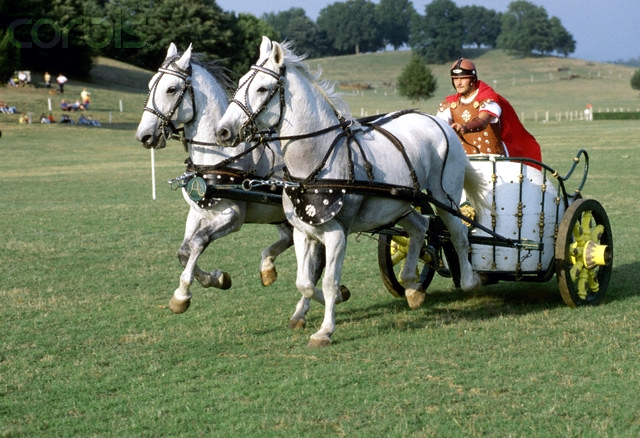
horses 15 roman chariot  A Roman war chariot.
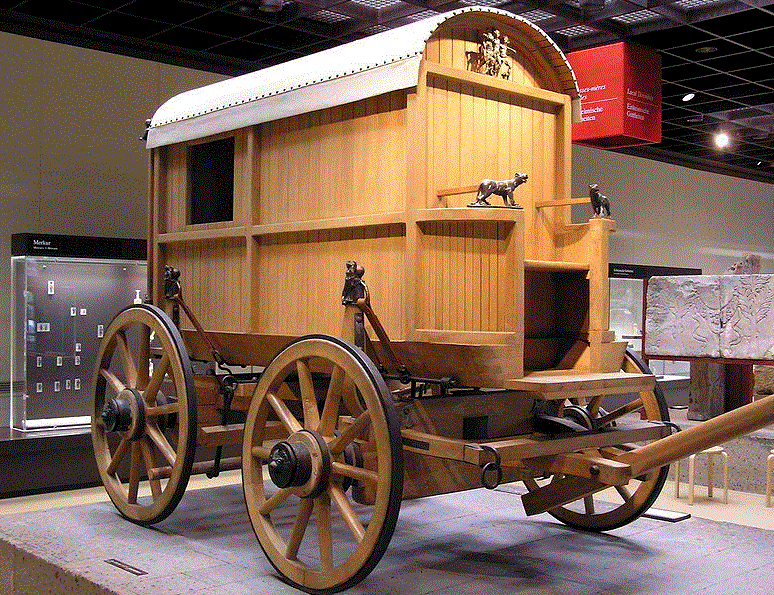
horses 11 roman carriage  And a roman carriage, who carved the ruts.

In other words, bureaucracies live forever. So the next time you are handed a specification/procedure/process, and wonder, ‚What horse’s ass came up with this?‘ , you may be exactly right.

horses 13 greek chariot       horses 9 egyptian chariot

horses 14 celtic chariot     horses 10

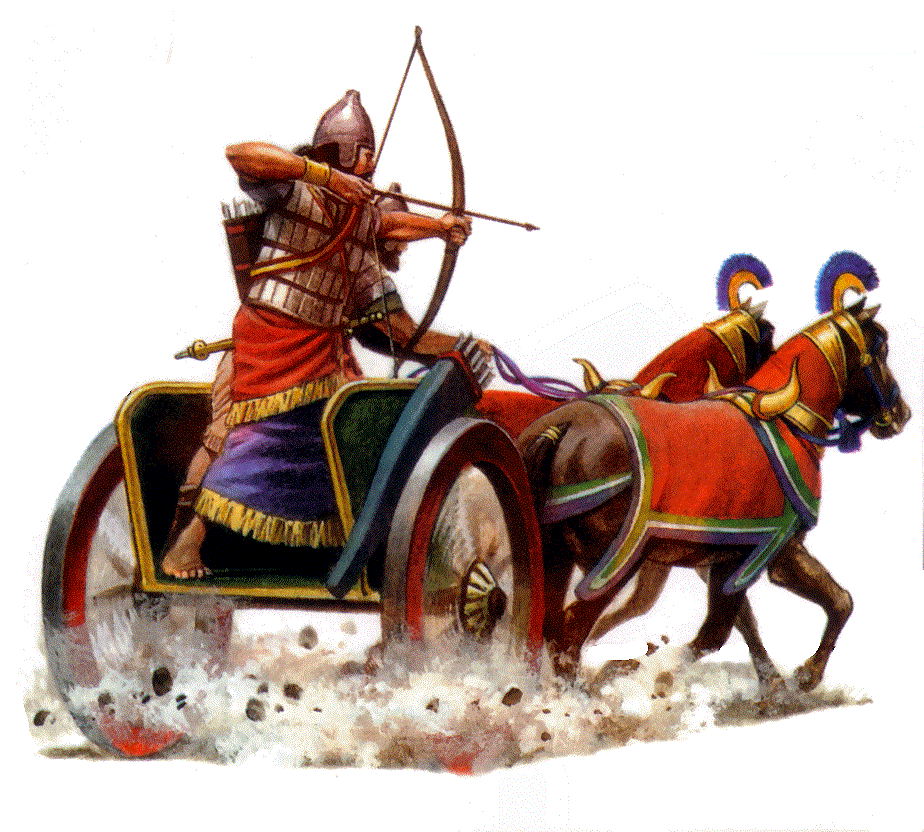
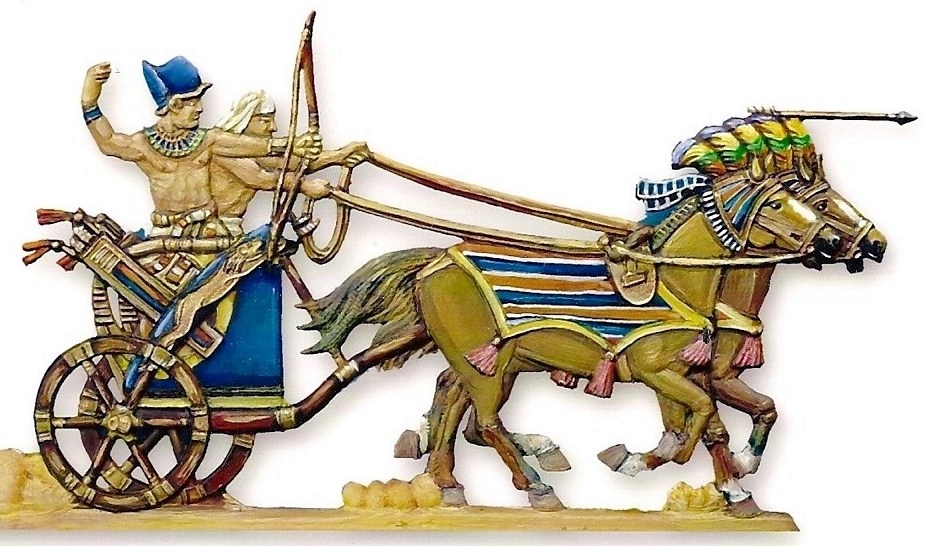
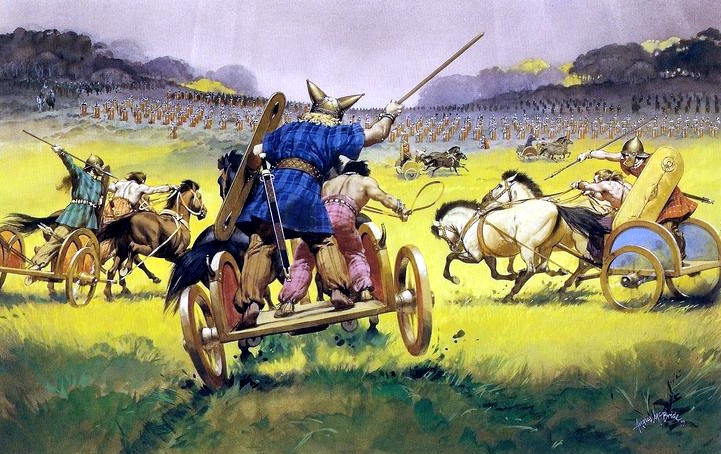
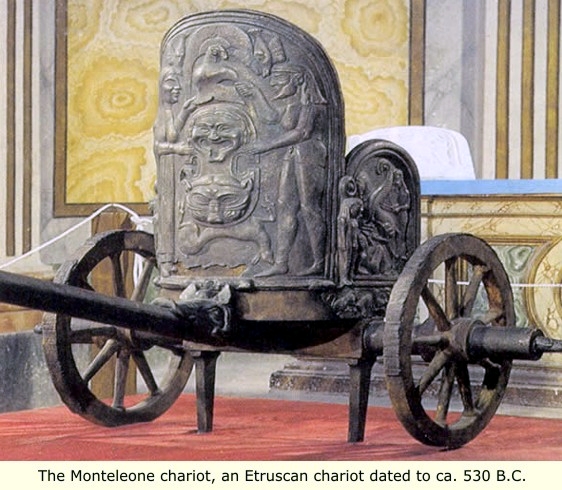
As you can see, all ancient war chariots had the same/similar wheel gauge. Top left a Greek war chariot, top right a Egyptian one, bottom left a Celtic one and bottom right  even an Etruscan war carriage, all are similar build as the Roman ones. Why ??

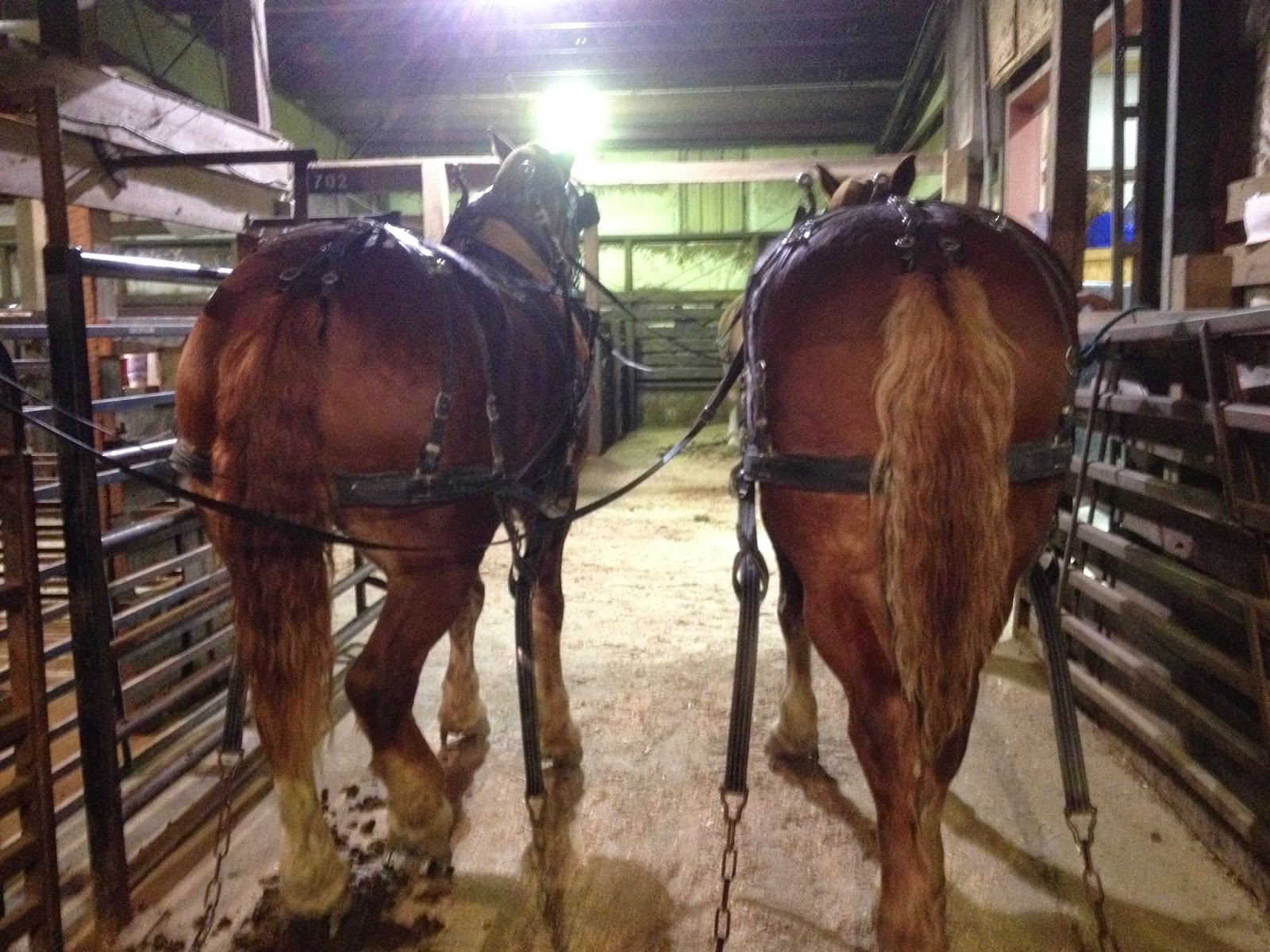
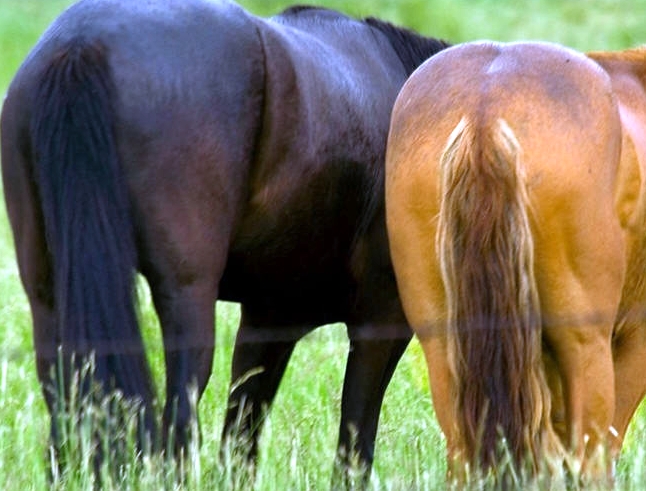
Imperial Roman army chariots (and all the others from the same time) were made just wide enough to accommodate the rear ends of two war horses.

horses 3   Two horse asses wide.

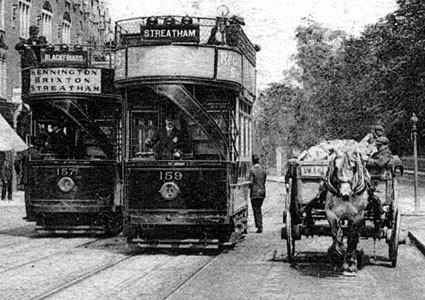
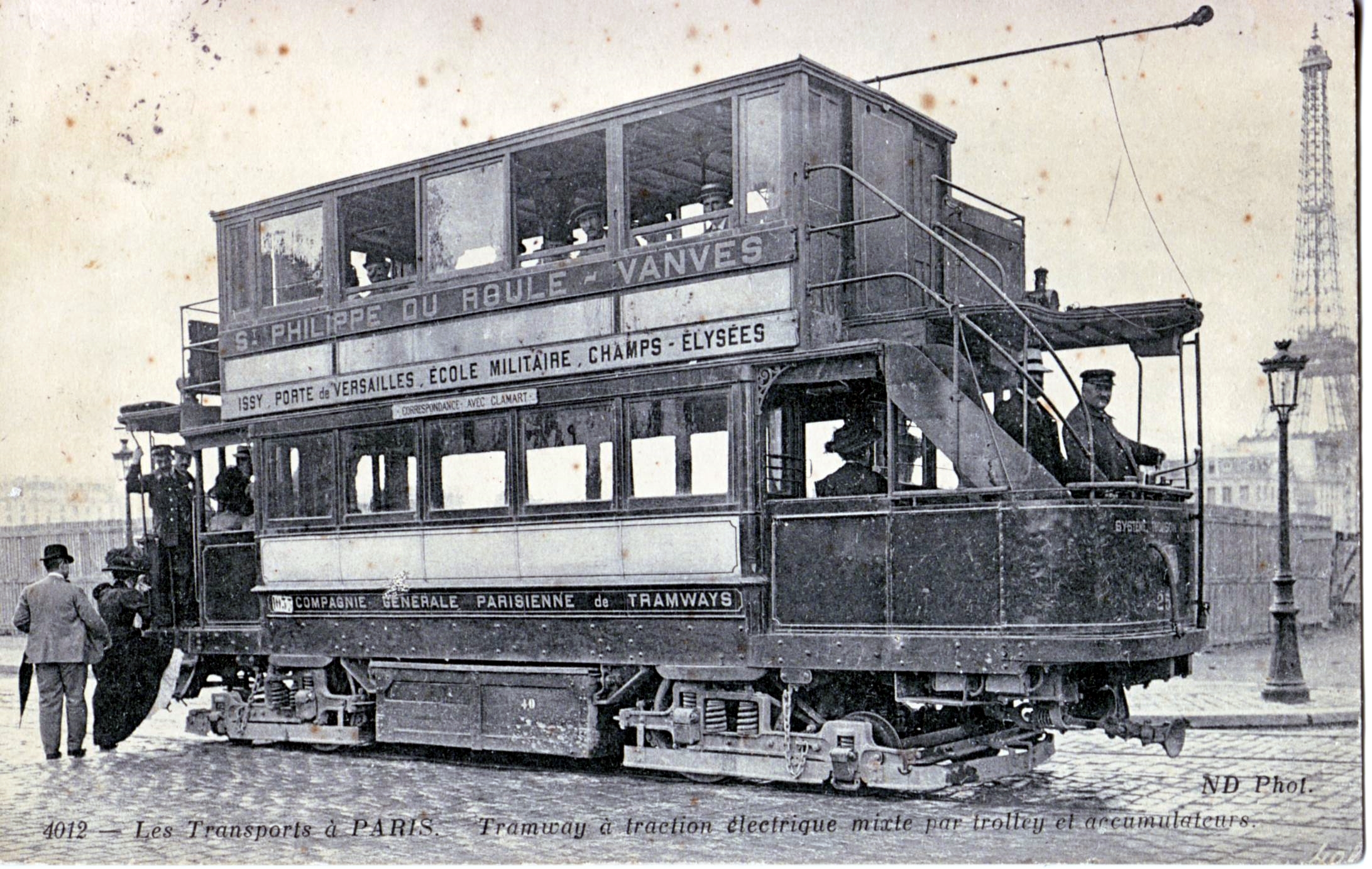
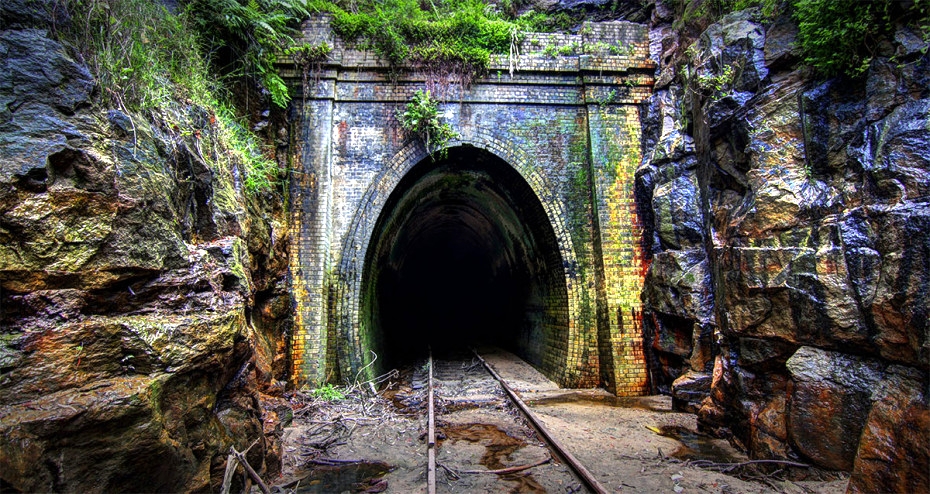
During the centuries nothing changed, the width of carriages, of waggons, of trams, of trains and of course then of bridges and of tunnels are in the same mesurements. See down here a few pics through the centuries, same gauge throughout.

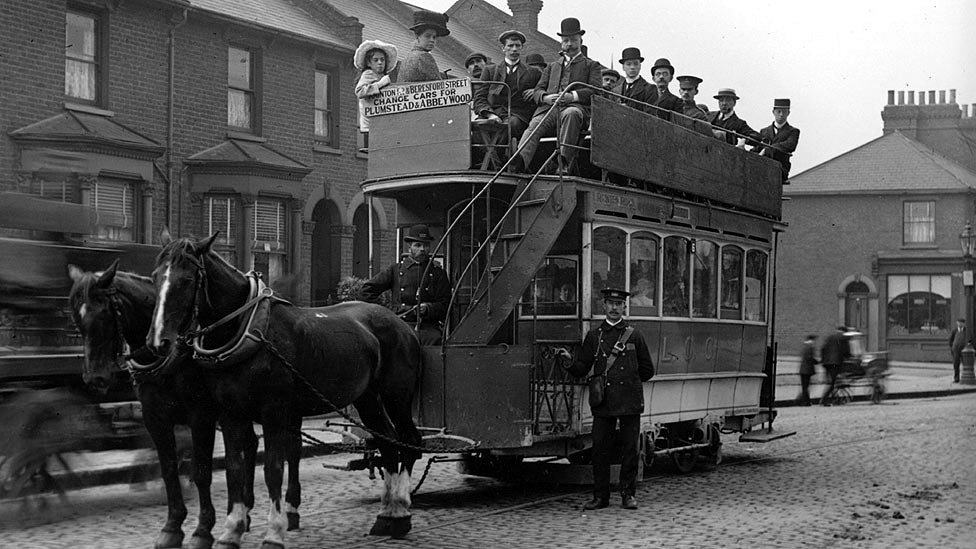
horses 17 brixton trams  Trams next a horse carriage in Brixton, England.
horses 18 First electric trams, here in Paris, France.
horses 25 helensburgh  One of the first railroad tunnels, Helensburgh Scotland.

horses 27 Eka Bhakti Karya Train              horses 40

The technique evolved, but the size of wagons are still the same. They still use the old size tunnels, bridges and therefore the size of trains and wagons. And that’s why we still have the wheel gauge as the forefathers had 2500 years ago, defacto 4′ 8 1/2″ (143,51cm).

Now, the twist to the story:

When you see a Space Shuttle sitting on its launch pad, you will notice that there are two big booster rockets attached to the sides of the main fuel tank. These are solid rocket boosters, or SRBs. The SRBs are made by Thiokol at their factory in Utah .

  horses 50   Massive size of the two booster rockets, but why not bigger?

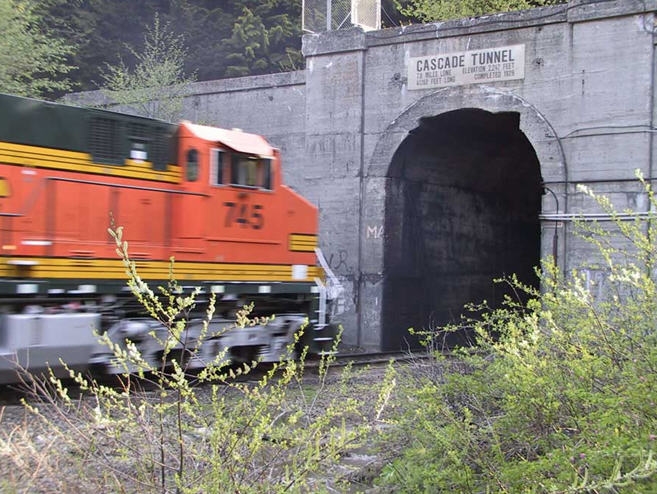
The engineers who designed the SRBs would have preferred to make them a bit larger, but the SRBs had to be shipped by train from the factory to the launch site. The railroad line from the factory happens to run through a tunnel in the mountains, and the SRBs had to fit through that tunnel.

horses 29 booster segments on train  Booster rocket segments just fit on the train.

The tunnel is slightly wider than the railroad track, and the railroad track, as you now know, is about as wide as two horses‘ behinds.

horses 39  Rail gauges are made as two horse asses are wide.

So, a major Space Shuttle design feature, of what is arguably the world’s most advanced transportation system was determined over two thousand years ago by the width of some horse’s asses.

horses 43             horses 45

Booster rocket segment on train. Assembled in Kennedy Space Center, Florida. Then a crawler-transporter moves a mobile launcher platform with two solid rocket boosters on it.

And you thought being a horse’s ass wasn’t important? Ancient horse’s asses control almost everything…and the CURRENT Horses Asses in Washington are controlling everything else! Yeah Yeah Yeah !!

horses 32 kiss my ass  Greetings from the Romans: “ Kiss my ……“ Ha Ha !!

So, Horse’s Asses control almost everything…
…Explains a whole lot of things,

doesn’t it ???

horses 31  Is that really to laugh about ? If it were not so serious !
For a long time I know this „true“ story, thanks to Bill in Park County, Colorado. He deserves this recognition.
I hope you enjoyed it as much as I do. Stay tuned for many more posts.

Veröffentlicht unter History, Information | Verschlagwortet mit | Hinterlasse einen Kommentar