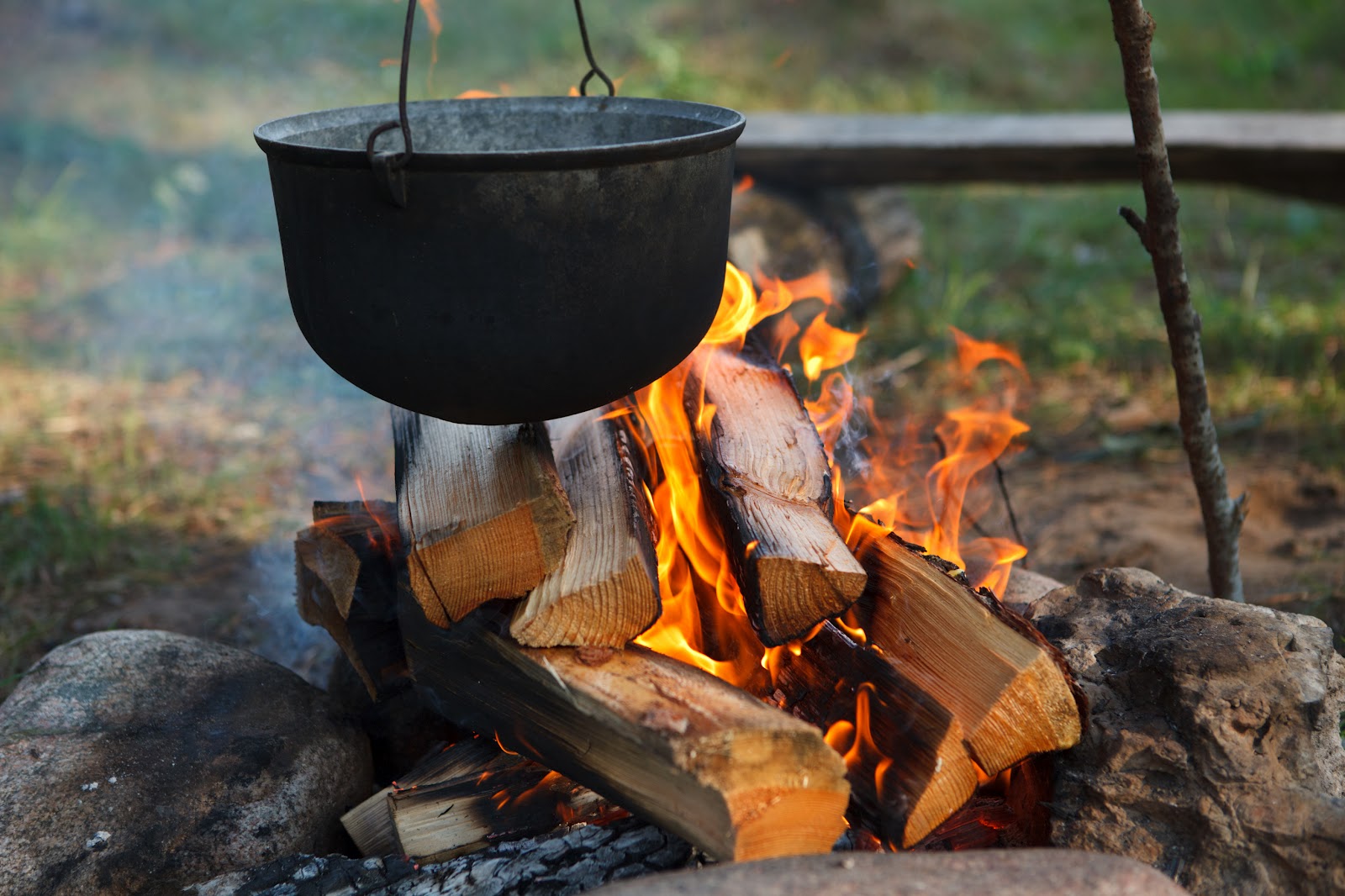
Pea Soup and More

erbsensuppe 24a

Same procedure every year.

The first cold days, we start heating and we cook the first winter meal, pea soup ! That’s what we had last weekend. I thought to give you the recipe, no problem at all. During writing down the recipe, I had a quick look into „history of pea soup“. That was a mistake and now I had a problem. I couldn’t help myself diving into history again, and into different cultures and their manners. I tried to keep it as short as possible. Here the result, almost blowing every boundary of a pea soup recipe.
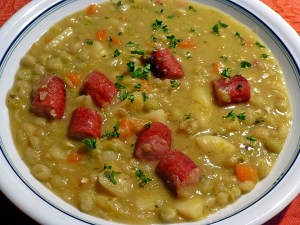
erbsensuppe 7  Getting hungry, ready to dig in ?

Pea Soup History.

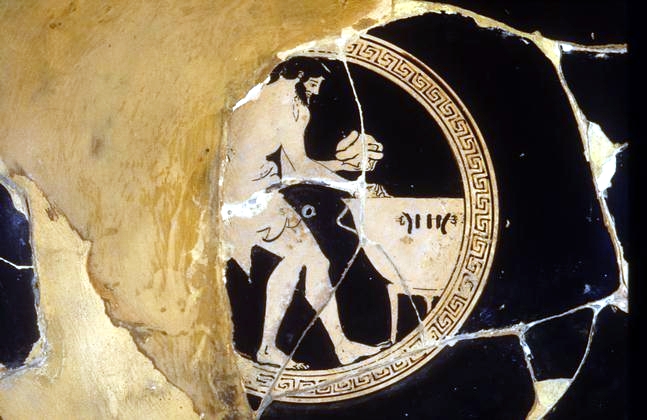
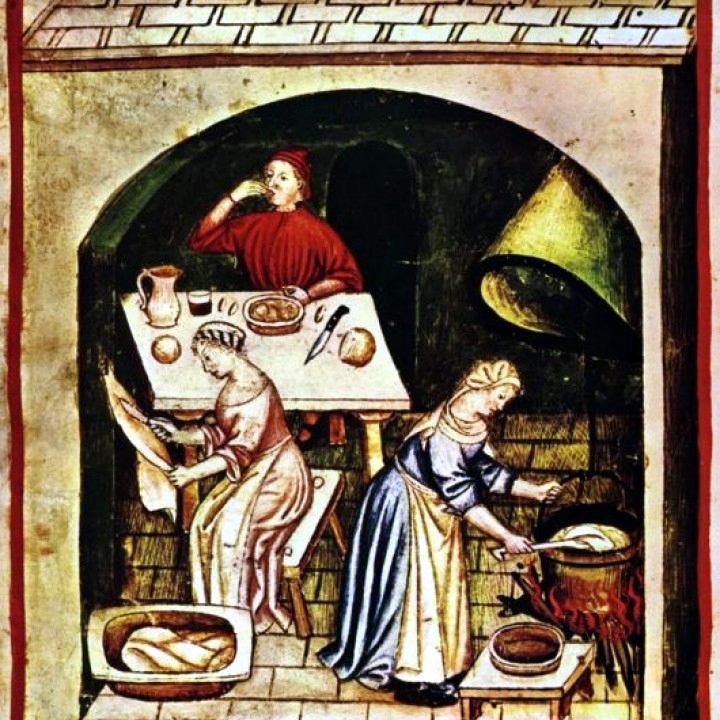
Pea soup has been eaten since antiquity. It is mentioned in Aristophanes‘ „The Birds“, and according to one source, the Greeks and Romans were cultivating this legume about 500 to 400 BC. During that era, vendors in the streets of Athens were selling hot pea soup.
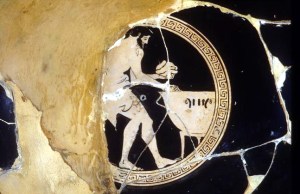
erbsensuppe 24j   Ancient Greek soup cooking.

Pea soup is a staple in many cuisines for thousands of years and is made similarly in most of them. It is considered food for the poor and was cooked aboard ships, served almost daily, because peas could be transported and kept for long periods without going bad.
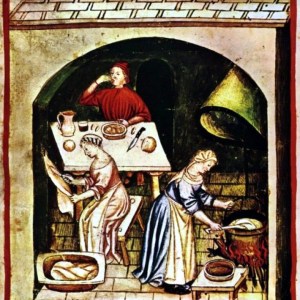
erbsensuppe 24k greek Ancient soup cooking, we won’t know which one.
Germany.

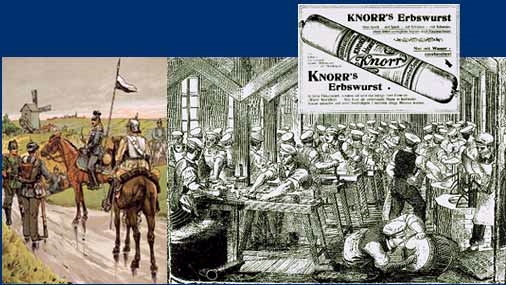
It was also used during the Franco-Prussian War  (19 July 1870 – 10 May 1871), (Deutsch Franzoesischer Krieg, often called the war of „siebzig-einundsiebzig“). To feed the soldiers of their army fighting 1870 to France, the Prussian military used as the first time the so named „Erbswurst“. The content of this „sausage“ is not made of flesh, but of a mixture of pea flour, bacon, spices and salt that is spent with a sausage syringe in paper sleeves.
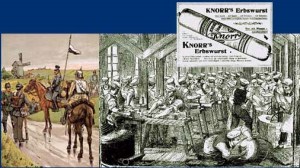
70-71 b knorr   Old Knorr advertising, using the war history from 1870-1871 and on the right the mass production during this time.
The Erbswurst was developed already in 1867. The canner Johann Heinrich Grüneberg from Berlin is the actual obstetrician of this first German „instant soup“. The Prussian state bought him from his invention for 35 thousand dollars. In the trenches of the Franco-German war then begins the triumph of this early version of fast food: 1700 workers produce per day up to 65 tons Erbswurst.
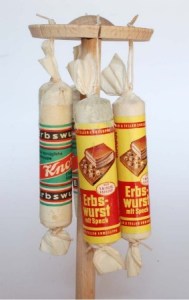
erbsensuppe 11-2  Old samples of the Erbswurst, around the 1950’s-1960’s.
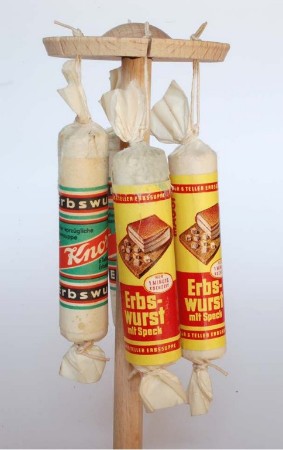
To imperial times the instant soup has a rigorous entrance exam are: In „feeding experiments“ get soldiers forcibly a diet of bread and Erbswurst. Only when they have to try to survive for six weeks without damage, the fighting troops is boarded it. Here it becomes a not unimportant contribution of modern warfare, because the durable and easy to transport duration Preserve Erbswurst makes the troops management more flexible.
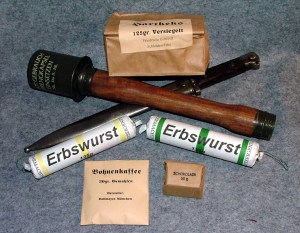
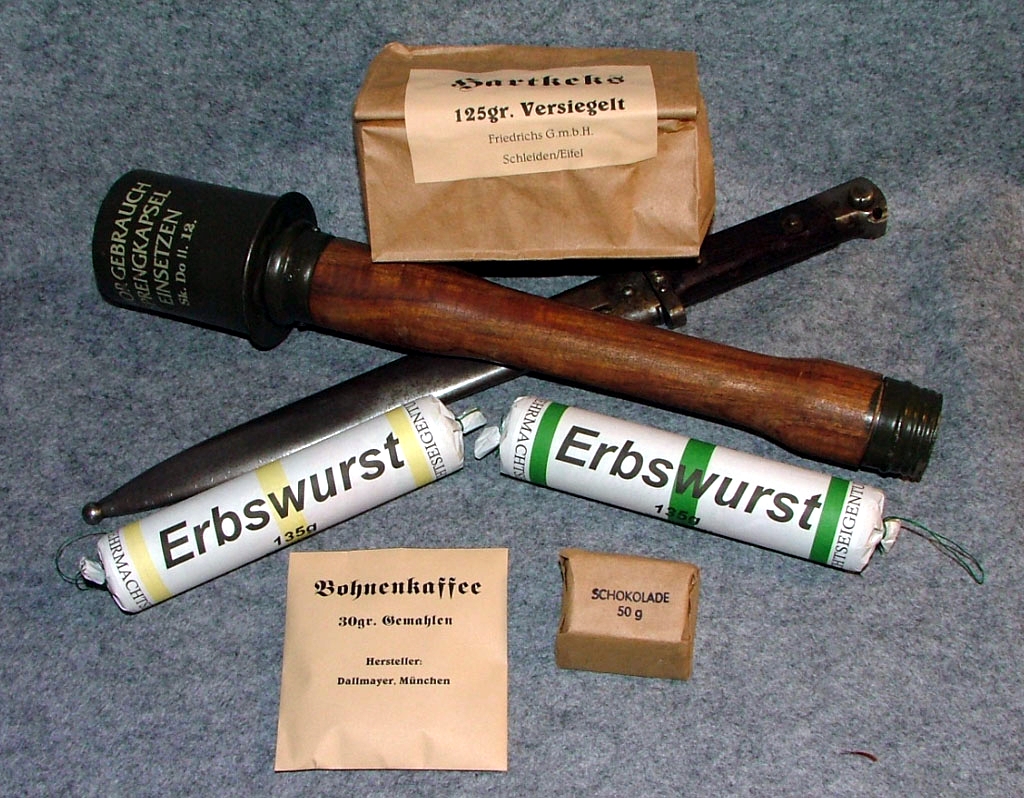
erbsensuppe 19 f 2.WW  The „one man personal MUST outfit“ during the World Wars used by German soldiers, from top to bottom: A packet of hard cookies, a long knife (bajonett-fits on top of the carbine), a hand grenade, two rolls of ERBSWURST, a sachet of grounded real bean coffee and a block of black chocolate.
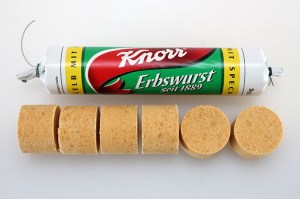
erbsensuppe 11-1  Modern Erbswurst made by Knorr and labeled 1889. It was and is, still used at a survival food. Each part makes one serving.
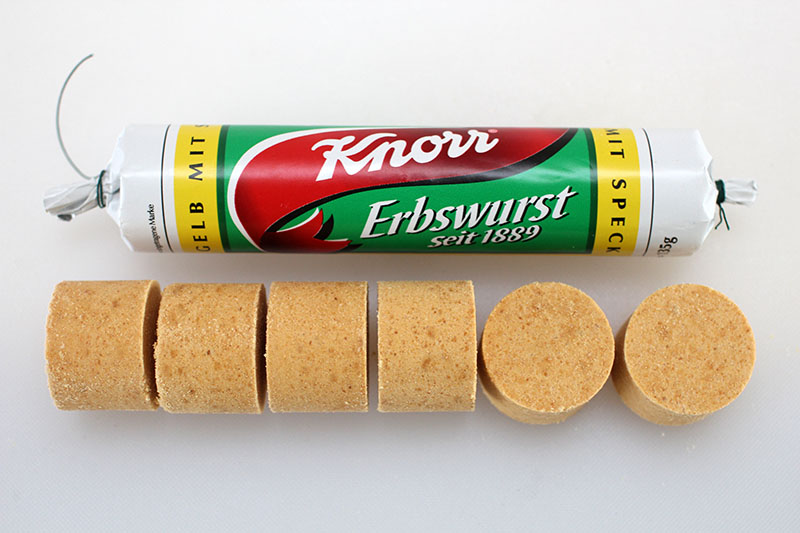
In 1889, the Knorr instant-food company bought the license. Knorr, which is today a Unilever brand, continues the production of Erbswurst to the present day.
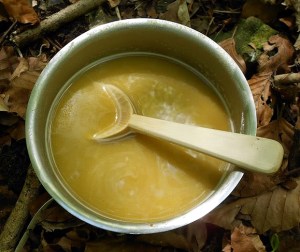
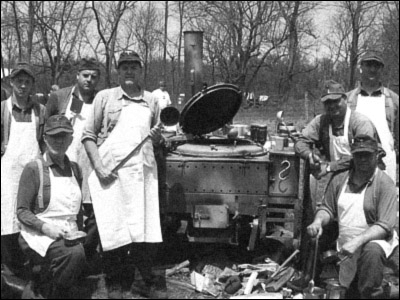
erbsensuppe 11f   Erbswurst !  We were brought up with this „chemical stuff“,  but I never liked it. Still I was, so as many many others, forced to eat it. After the war, as a kid, then during the boy scouts in the bush and finally during the military time in the field. The military also trained me to love pea soup, but the good homemade one, the „real one“, made in big amounts and out of the „goulash cannon“.
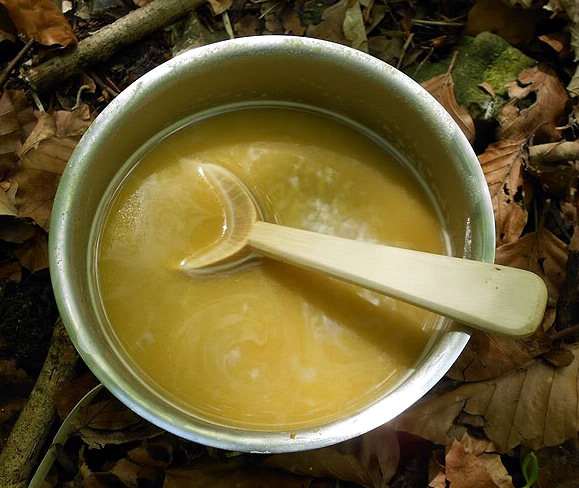
erbsensuppe 19g  At least, the Erbswurst is everywhere usable, even smallest pots and a bit water can make a suvival soup. It is like the „Liebig’s Fleisch Extrakt“ in the mid 1800’s. See my posts „Liebig’s Meat Extract – Part 1 till 4“.
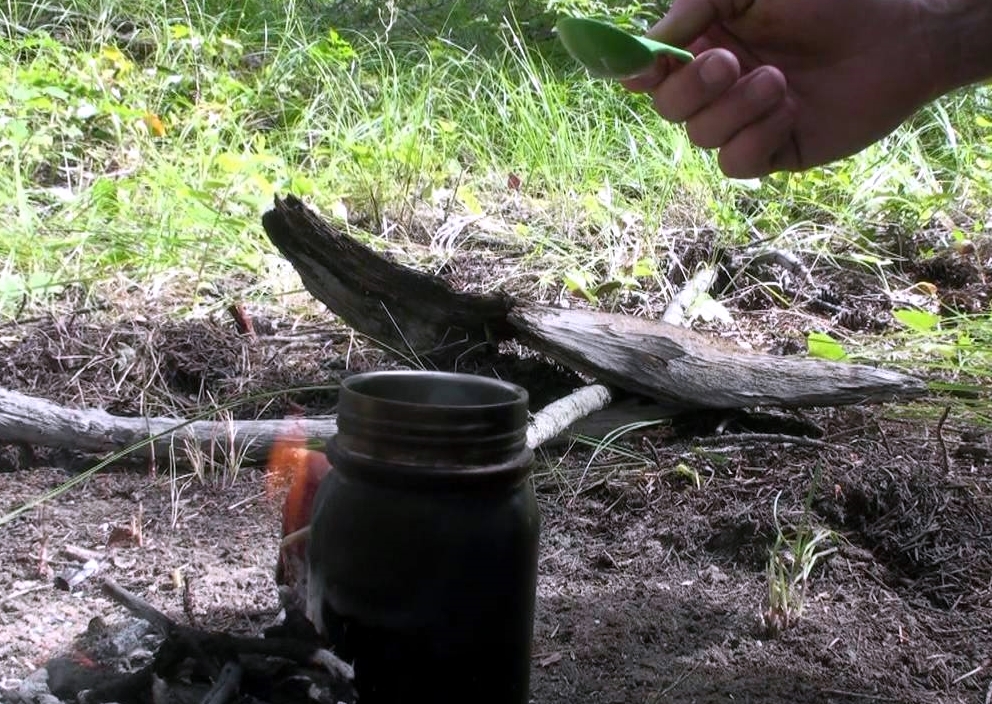
After the 2nd WW, in the 1950’s, when we were poor and had not much to eat, our mother cooked at least once or twice a week such kind of Erbswurst. We kids thought it was a horrible food. Just a slice of the roll and filled up with hot water made a bowl of soup. To us it looked like chemical pressed saw dust and to us it tasted like it. And we „had“ to empty one full soup bowl. Good thing was, we each got a big, thick slice of dark bread with it, of course with butter and salt.
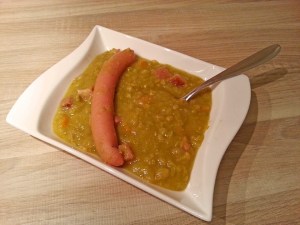
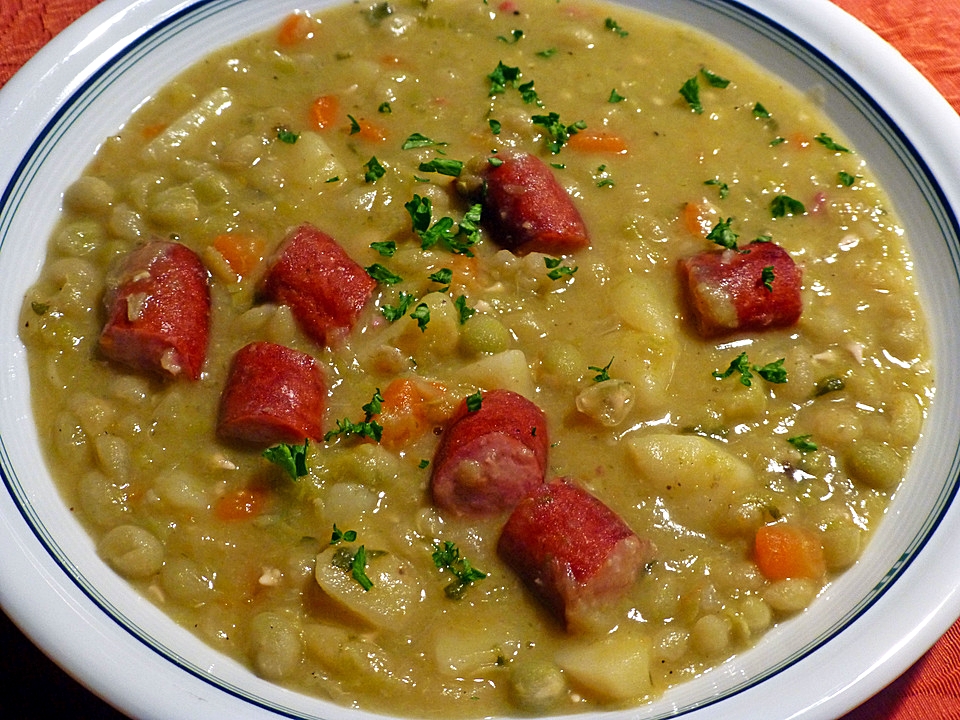
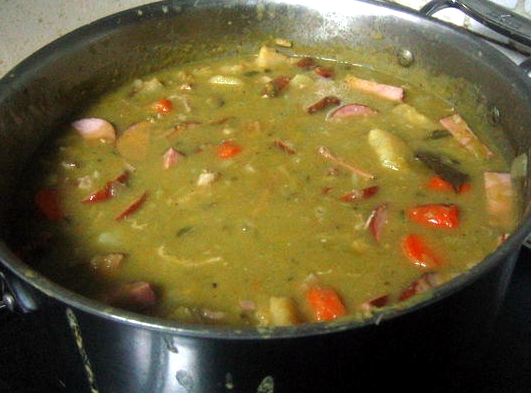
 erbsensuppe 9  What a difference to the thin, watery Erbswurst soup. Thick pea soup with bacon and Frankfurts. Yummy !
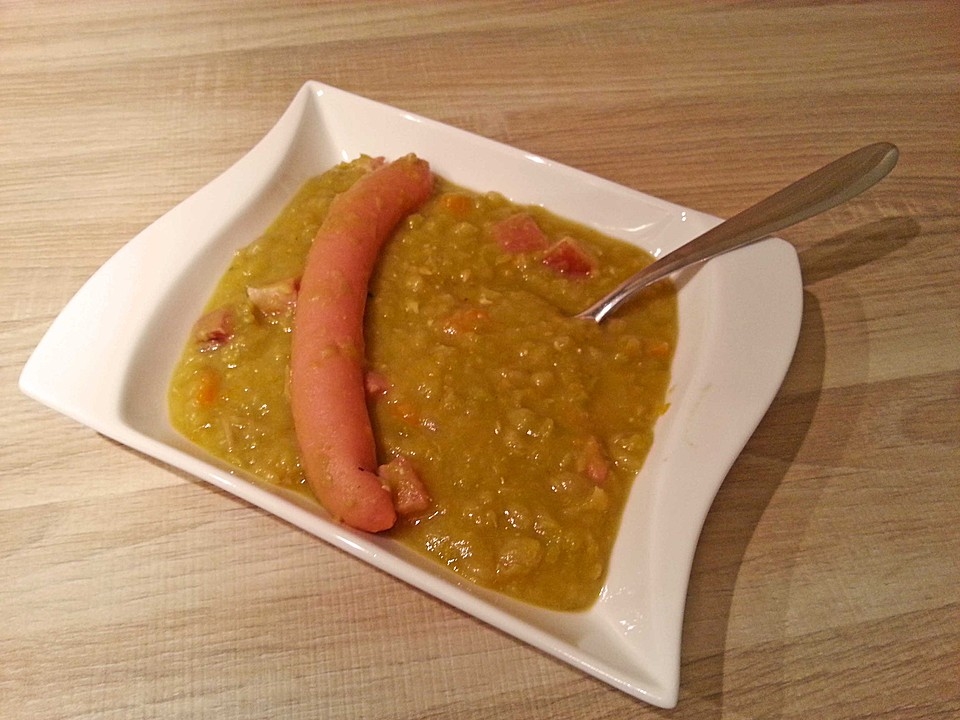
Pea soup is a common dish throughout Germany. It often contains meat such as bacon, sausage (Frankfurts) or Kassler (cured and smoked pork) depending on regional preferences. Very often, several Würste (Wurst meaning sausage) will accompany a serving of pea soup as well as some dark bread.
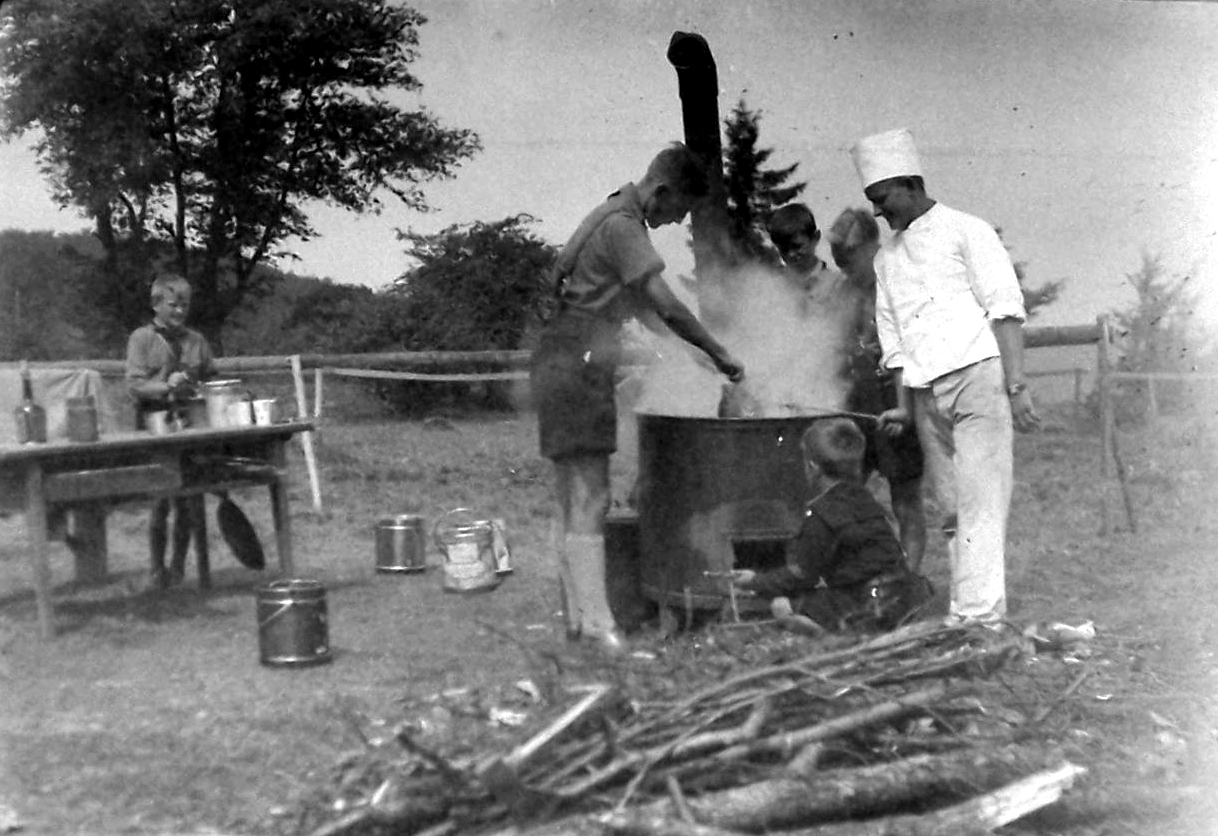
erbsensuppe 19 f zeltlager kueche  Early boy scout soup kitchen, so as I came to know it in the 1950’s. Here they lower a big peace of bacon into the pea soup – delicious. We all  loved that kind of a pea soup (see previous picture).
The Goulash Cannon.

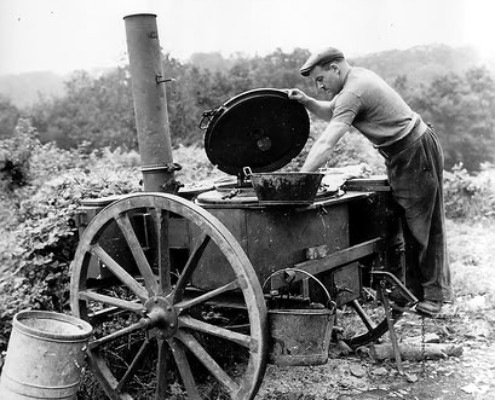
The above shown kitchen had to be mobile, of course. In the city of Idar-Oberstein, Germany, Karl Rudolf Fissler, at the turn of the century, invented the modern mobile field kitchen for use in theaters of war. Founded in 1845, the Fissler company is still existent today. Fissler is worldwide known of highest quality. Their main products include knives, pots, pans, pressure cookers, accessories and an cooking surface for induction cooking.
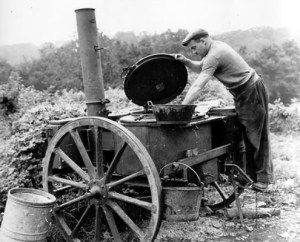
erbsensuppe 19 GoulashCannon  One of the very first mobile field kitchens.
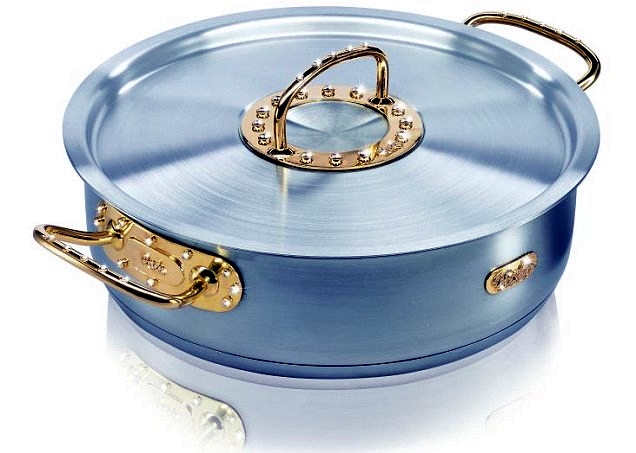
The Fissler company produces the world’s most expensive pan costing 100,000,–Pound Sterling. Fits in Gordon Ramsay’s half million pound kitchen. By now, though, most of us are wondering whether the 100,000,–Pound pan is something perhaps more suited to a successful footballer than a chef. Housewarming present for the Beckham’s, anyone?  The Fissler diamond and gold limited edition pan is to order for 100,000,– Pound Sterling during „Timeless Luxury“ week at Harrods, London.
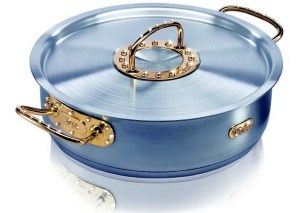
pea soup 3      World’s most expensive pot, 100.000,– Pound Sterling. How would taste our pea soup out of this pot ? If you own this pot, how about a diamond ladle for some 10.000 Pounds ??
German soldiers during World War I (WWI) quickly dubbed it: Die Gulaschkanone (goulash cannon). The “cannon” part of the nickname is due to the mobile kitchens close resemblance to an artillery piece when disassembled and towed behind a horse or motor vehicle with it’s long chimney tilted and posing as a cannon barrel. The “goulash” part is derived from the iconic Hungarian dish which was prepared on the mobile field kitchen. Other dishes included a wide variety of soups, with whatever was available, often dried vegetables such as peas, lentils and beans due to their low dry weight and the cost effective transportation.
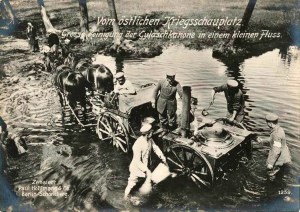
erbsensuppe 19a  WW1 mobile field kitchen, cleaning procedure in a river.
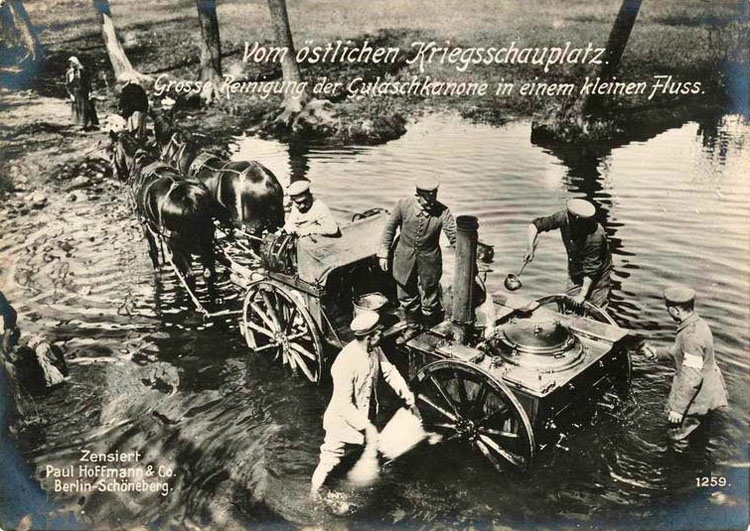
The goulash cannon was designed to function as a large pressure cooker ideal for quick cooking and stewing using limited amounts of energy and could operate on fire wood, coal, oil or whatever combustible material available. The key point being durability, flexibility and multi-functionality, thus the goulash cannon was also used to prepare hot beverages such as tea, coffee, Glühwein (hot wine with spices) or to roast edible chestnuts, bake bread or even cook Knödel.
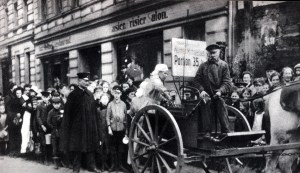
erbsensuppe 19b  Mobile kitchens were also used to feed the people. One portion of soup for 35 cents (35 German Pfennig).
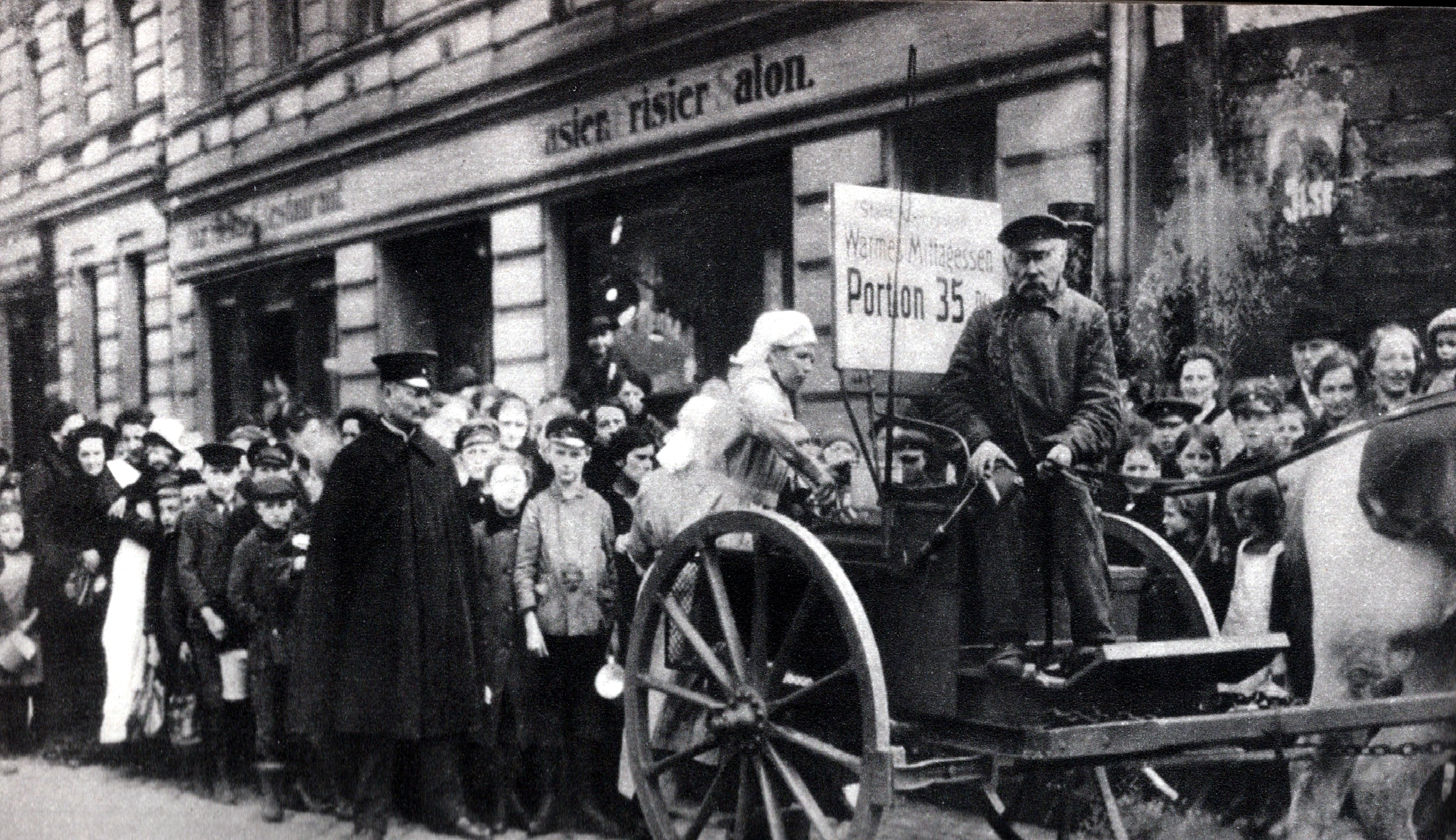
I’m quite sure that the goulash served in the trenches wouldn’t have been worthy an Honest Cooking recipe, if containing meat at all, best option would have been killed horses, donkeys, dogs or rats, most likely the doomed soldiers wouldn’t have gotten much protein at all before they themselves became butchered. And – of course Erbswurst !
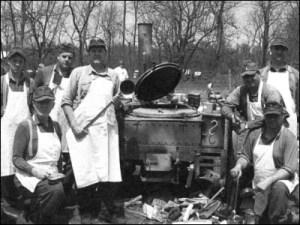
erbsensuppe 19e 29.feldkuech reg erbswurst  Lot of work to run a kitchen for 100’s of soldiers.
In Erich Paul Remark’s monumental novel “Im Westen nichts Neues” (All Quiet on the Western Front) depicting the dehumanizing experience of WWI’s trench style warfare, there’s an opening scene in which the young soldiers one day finally became properly fed, but only because they received double portion caused by the loss of half their company that day without anyone notifying the army cook managing his goulash cannon battle station. The novel further describes how the bravery of the Feldkoch (army cook) is measured in how close to the front line he dares set up shop.
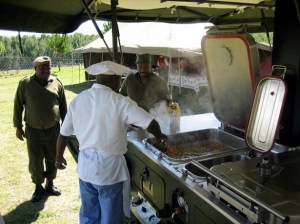
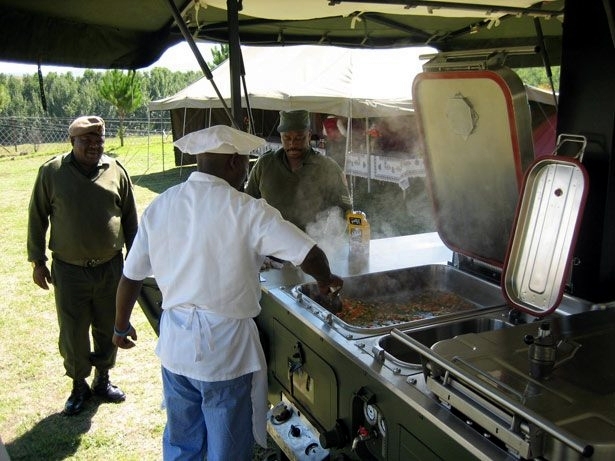
erbsensuppe 19d kaercher futuretech in lesotho  Modern mobile field kitchens are used all over the world and produced by many manufacturers. Here a Kaercher kitchen used in Lesotho, Africa.
USA.

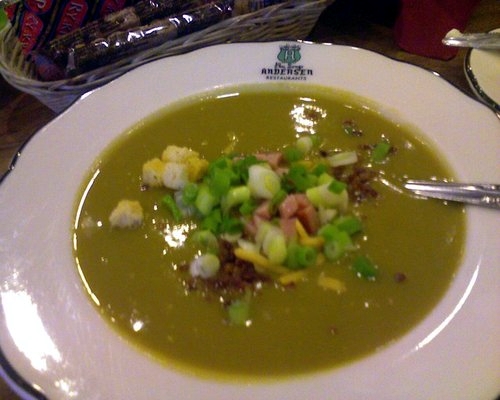
In the United States, „pea soup“ without qualification usually means a perfectly smooth puree. „Split Pea Soup“ is a slightly thinner soup with visible peas, pieces of ham or other pork, and vegetables (most commonly carrots) and is usually made from dried, green split peas. But, one of the most famous in the States is „Pea Soup Andersen’s“.
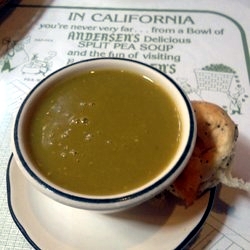
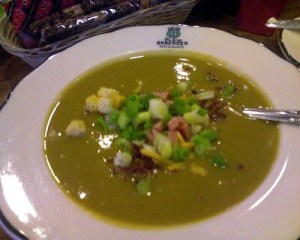
erbsensuppe 12ff              erbsensuppe 12f   Andersen’s normal pea soup serving, left. And the „de luxe“ pea soup variation on the right. The soup is the same, but added a hand full of goddies. I have seen a customer review on Andersen’s restaurant : „Had the travellers special, pea soup – all you can eat, best breakfast I ever had“.  Yeah people are different, I have to try my pea soup for breakfast once.
THE LAND OF GOLDEN OPPORTUNITY
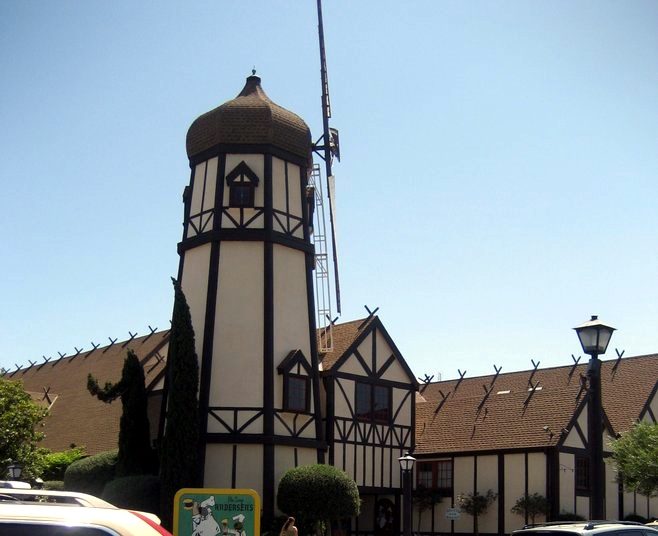
It all began on Friday, June 13th, 1924, when Anton Andersen, born in Denmark purchased a piece of the Golden State, California. Andersen, who was trained in exclusive restaurants in Europe and New York, put his tuxedo in mothballs and donned a bib apron, soon to become his personal trademark. He and his wife, Juliette, opened a tiny restaurant and named it „Andersen’s Electric Cafe,“ in honor of their possession, a new electric stove.
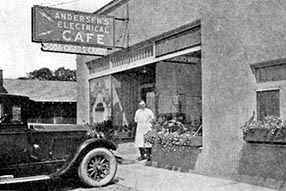
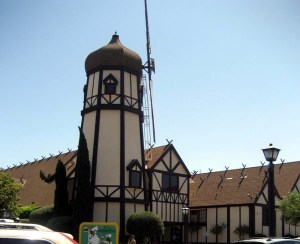
erbsensuppe 12b      erbsensuppe 12a      The Electric Cafe in the 1920’s and the Andersen buildings (restaurant, gift shop, hotels etc) in Santa Nella (on Hwy 5 California) now.
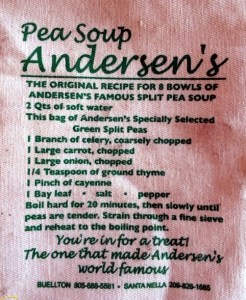
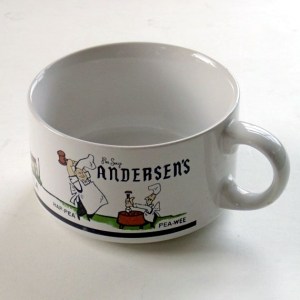
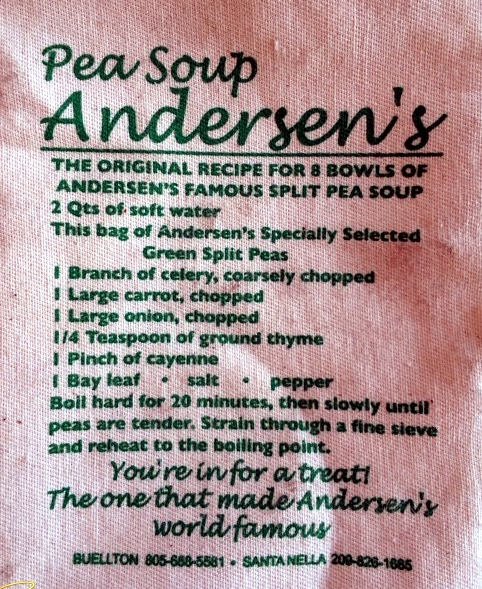
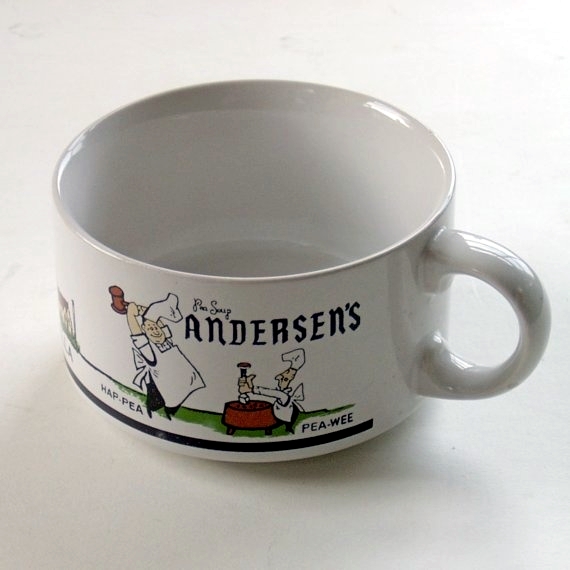
 erbsensuppe 12c                  erbsensuppe 12d 5$     Some articles one can buy in Andersen’s gift shop, a bag of dried peas or a soup cup just for $5,– bucks.
CURRENT OWNERSHIP
Pea Soup Andersen’s went through multiple ownership changes. For the first time in many years the two remaining locations are under the same ownership. Milt Guggia, a Central Coast restaurateur, purchased Pea Soup Andersen’s Buellton in 1999 and Pea Soup Andersen’s Santa Nella in 2007.

erbsensuppe 11cerbsensuppe 11d         This is how Americans (and of course others too) like to have pea soup, out of the TIN.  German produce must be good, right ? But read once the back-print.  What has GUAR GUM to do with pea soup ? Why has it to contain the rubbish from leftovers of eggs, tree nuts, fish, shellfish, wheat and more ?  May be I am mistaken, but I thought it is PEA SOUP .
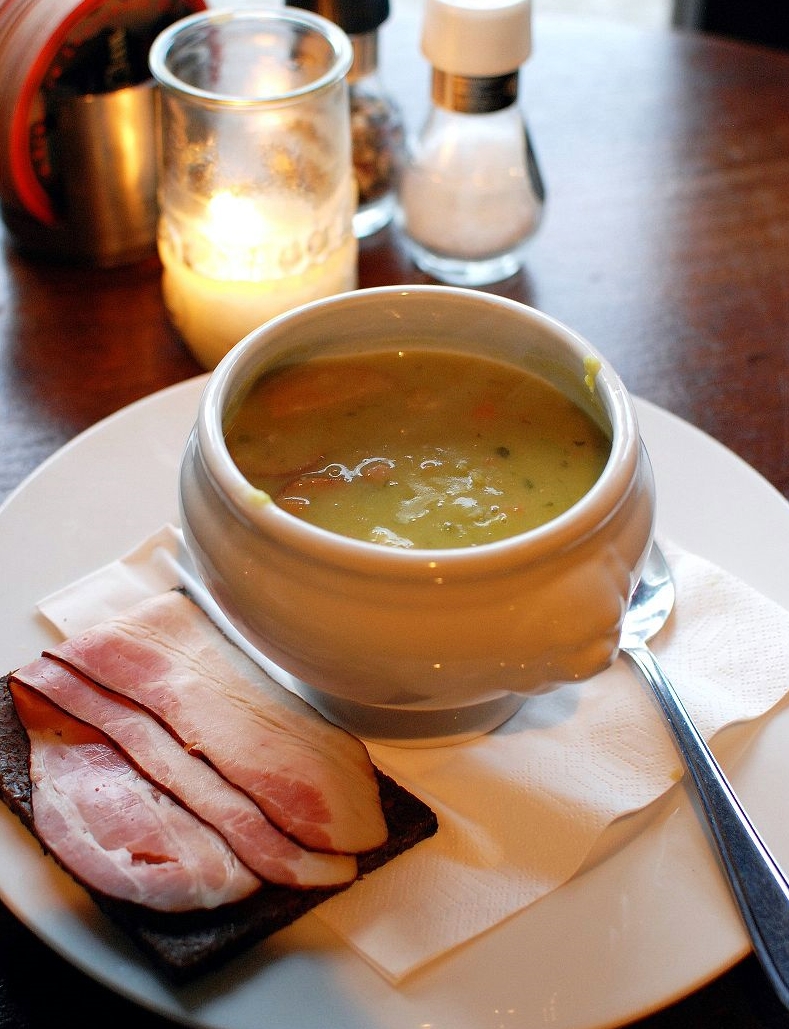
erbsensuppe 14 holland  Restaurant serving in Amsterdam – Erwtensoup.
Netherlands.

Erwtensoep, also called „snert“, is the Dutch version of pea soup. It is a thick stew of green split peas, different cuts of pork, celeriac or stalk celery, onions, leeks, carrots, and often potato. Slices of rookworst (smoked sausage) are added before serving. The soup, which is traditionally eaten during the winter, is emblematic of Dutch cuisine.
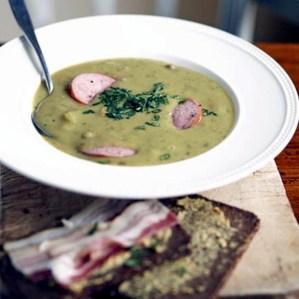
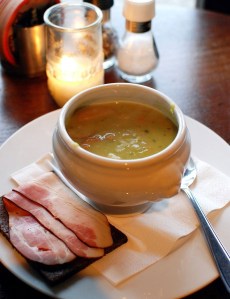
erbsensuppe 14a   The typical snert, served with cold bacon and rye bread.
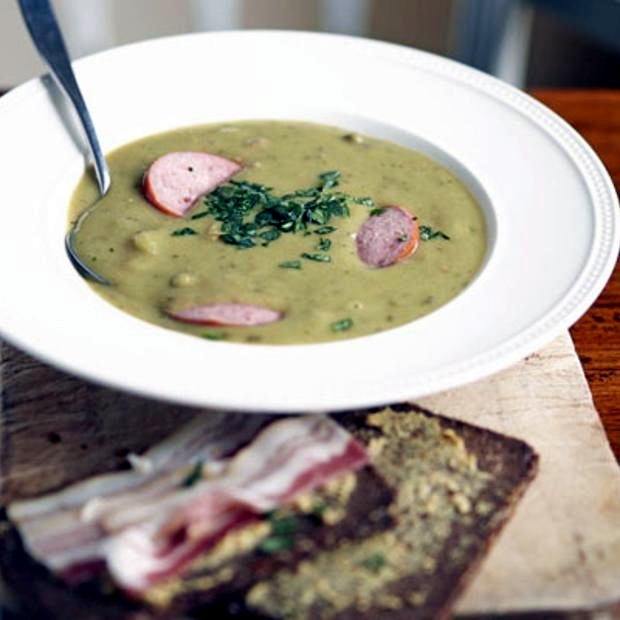
It is customarily served with frisian rye bread (roggebrood) and bacon, cheese or butter. The bacon is usually katenspek, a variety of bacon which has been cooked and then smoked. Pancakes are sometimes served with pea soup. This dish is then called snert met struif, struif referring to the pancakes.
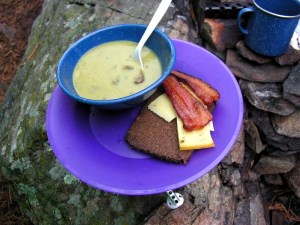
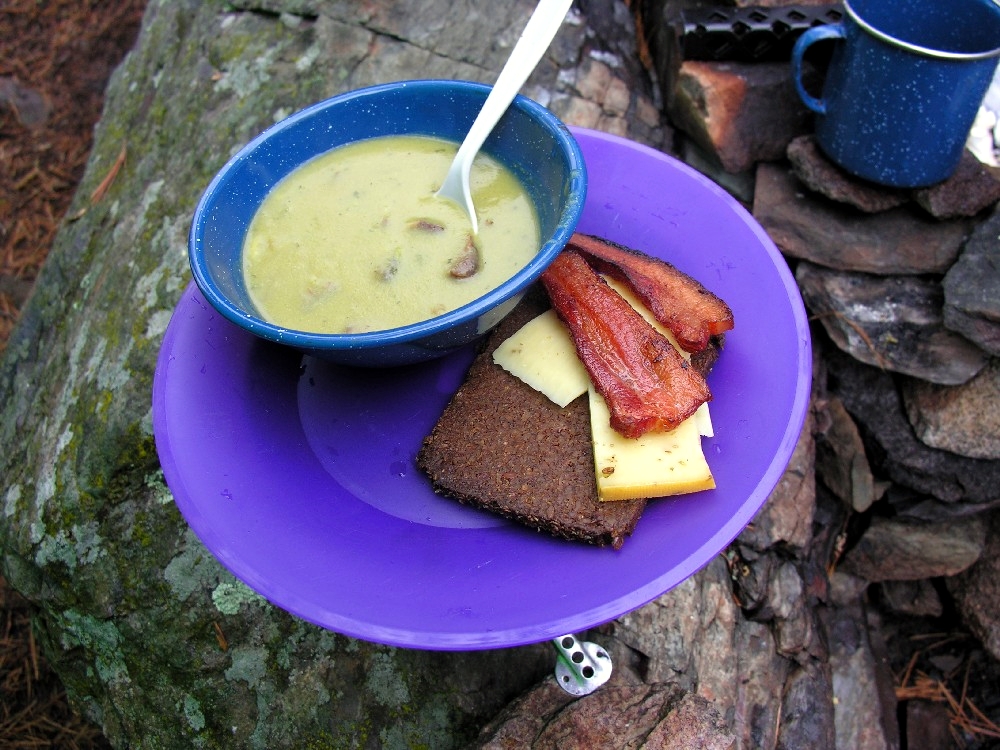
erbsensuppe 14b  Holland’s picnic – erwtensoup with hot bacon.
Scandinavia.

As Finland was until 1809 part of the Swedish Realm, Sweden and Finland, so as Danmark and Norway, share many cultural traditions, including that of the pea soup (Swedish „ärtsoppa“, Finnish „hernekeitto“, Norwegian „ertesuppe“, Danish „gule aerter“).
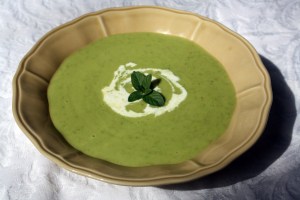
erbsensuppe 15a  Green, smooth pea soup with a dash of sour cream.
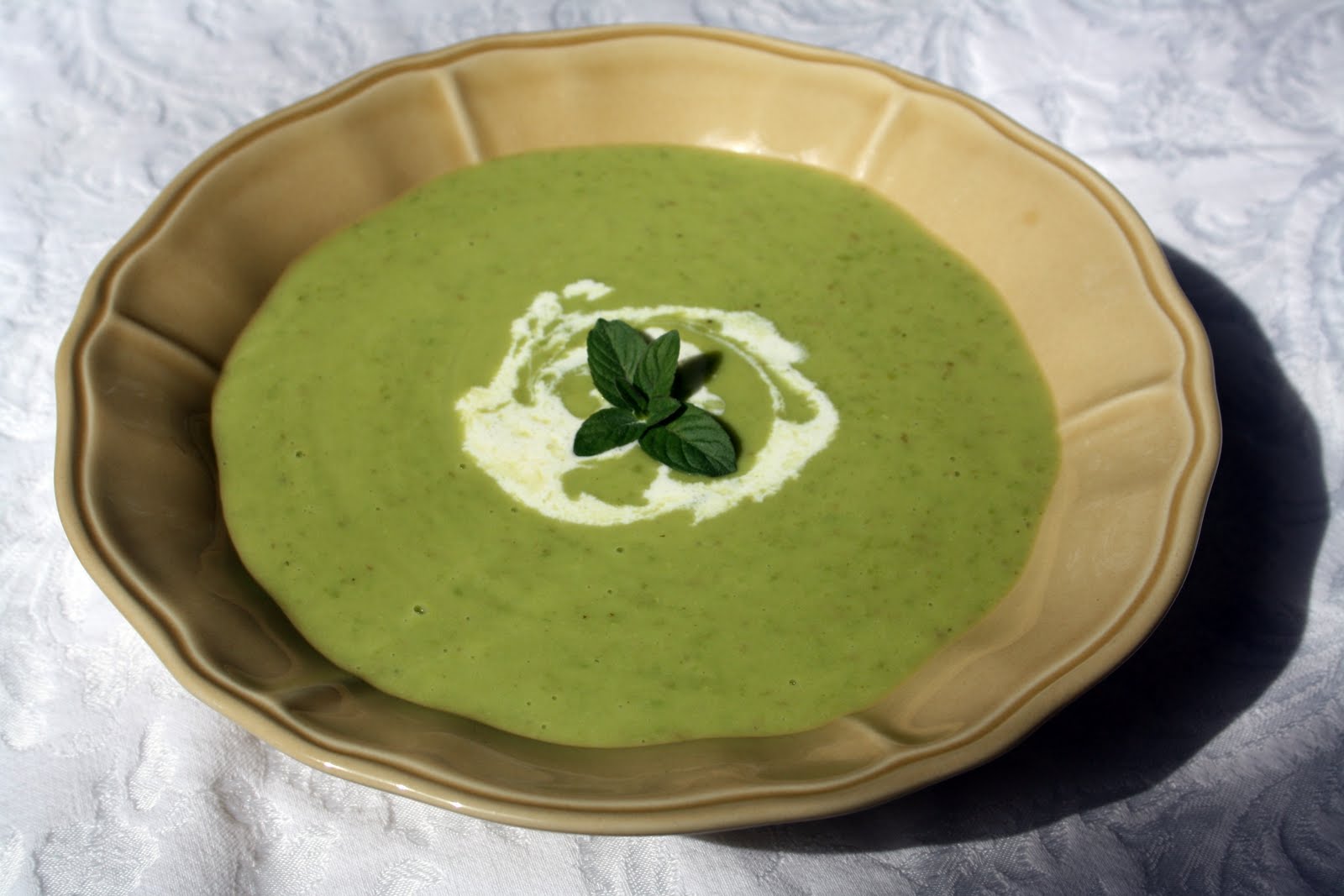
In Sweden and Finland it is traditional to eat pea soup on Thursdays, served with pork and mustard, and pancakes for dessert, in Sweden sometimes accompanied by Swedish punsch as beverage. In Finland the soup is made of green peas, in Sweden and Denmark are mostly yellow peas used.
erbsensuppe 16 yellow   Pea soup made from yellow peas.

The tradition of eating pea soup and pancakes on Thursdays is said to originate in the pre-Reformation era, as preparation for fasting on Friday.
Scandinavian pea soup is normally cooked with pork – although the meat may sometimes be served on the side – and a typical recipe would also include onions and herbs like thyme and marjoram. It is usually eaten with some mustard, often accompanied by crisp bread and often with the sweet liquor punsch (served hot).
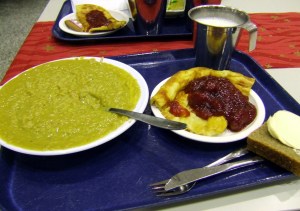
erbsensuppe 13 scandinavien  A very strange combination, but absolutely delicious.
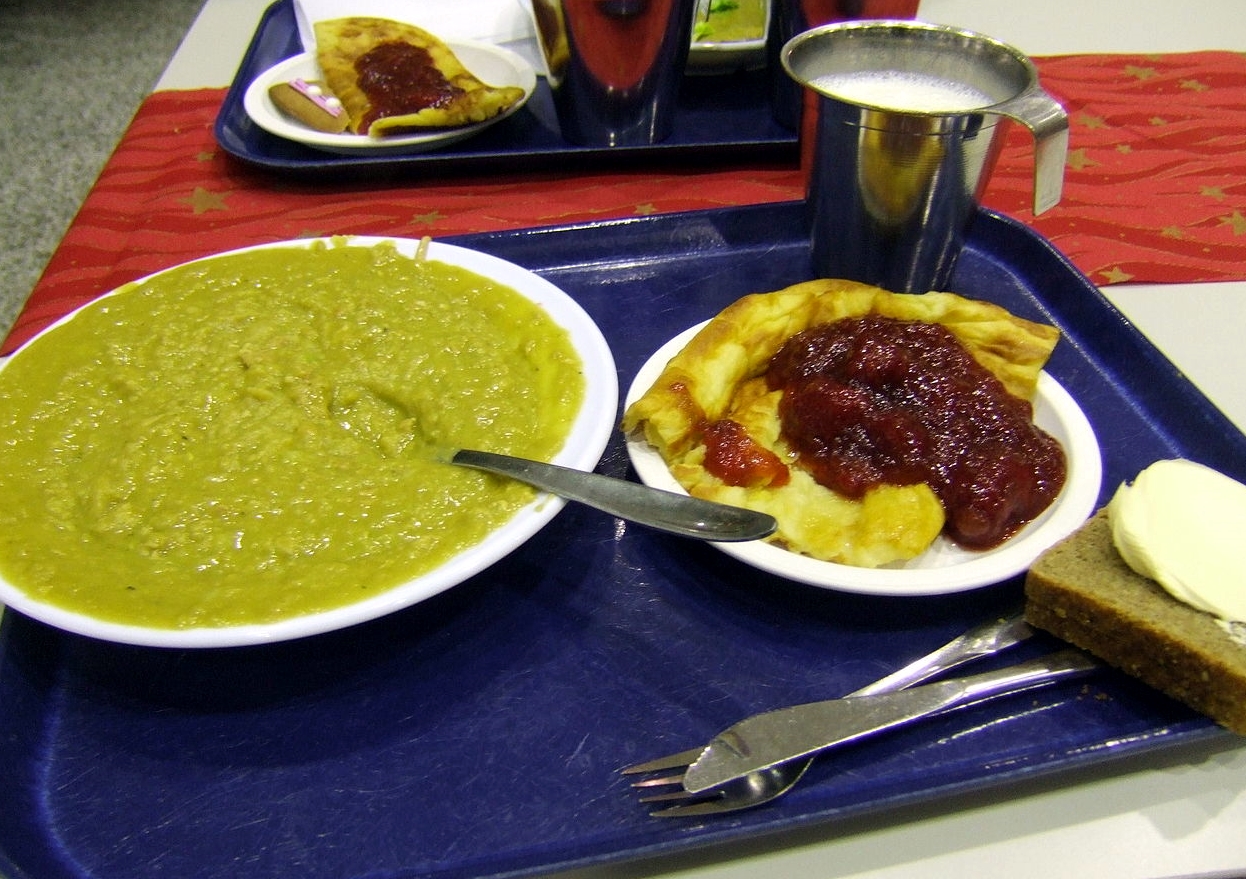
Mustard is an important part of the dish, but the soup is served without it so that diners can stir it in to taste. The soup is then normally followed by pancakes with jam (strawberry, raspberry, blueberry, cloudberry or similar) which are regarded more as part of the meal than as a dessert. In Denmark, pea soup is not served with pancakes and the mustard is scooped up with rye bread on the side. In addition, the dish is sometimes served with medisterpoelse (sort of sausage), boiled potatoes and pickled beets and often turned into a feast, with copious amounts of beer and snaps on festive occasions.

Some nice pea soup recipes.

This is how I make it.
I always make portions for 6 to 8 people, it tastes better if you cook a very large pot of pea soup. And leftovers are easy to freeze for a long time.

erbsensuppe 7  What can be better if winter time arrives ???

Ingredients.

1kg of dried green peas
6 liter water
400g bacon, good quality, not more then 50% fat
1 bunch of soup greens
250g yellow onions
350g carrots
600g potatoes, peeled
3 bay leaves
1 teaspoon dried marjoram
12 small sausages to your choice, Frankfurt’s, chorizo’s etc.
or 6-8 thick slices of kassler (smoked pork) with bone
4-6 tablespoons of white wine vinegar
3 large cubes of vegetable stock
salt and pepper
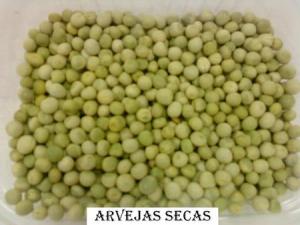
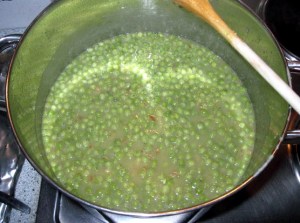
erbsensuppe 22 el granero   erbsensuppe 1al  Dried peas from El Granero (left) soaking in water over night (right).
How to do.

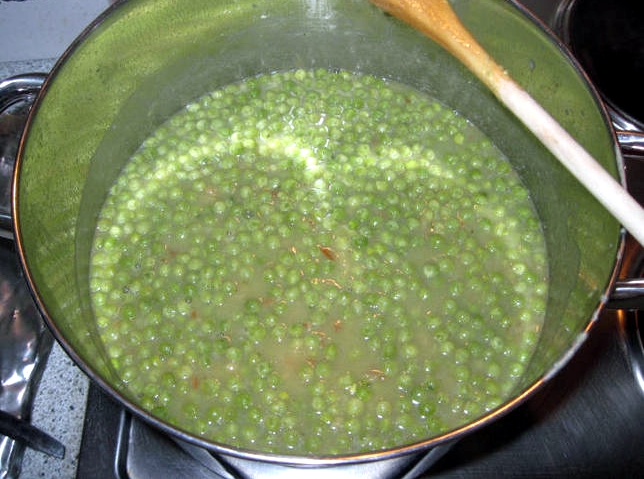
Soak the peas over night, then cook in the same water, about 90 minutes or til they are soft. Skim off the foam from time to time.
Add the bacon in big pieces after 50-60 minutes.
Meanwhile clean the soup green, carrots, onions and potatoes, but don’t cut them into pieces, leave them big.
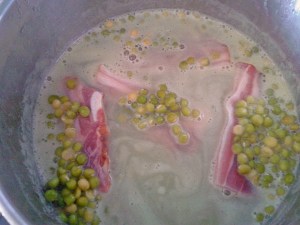
 erbsensuppe 10   Let it simmer with lid on til everything is soft.
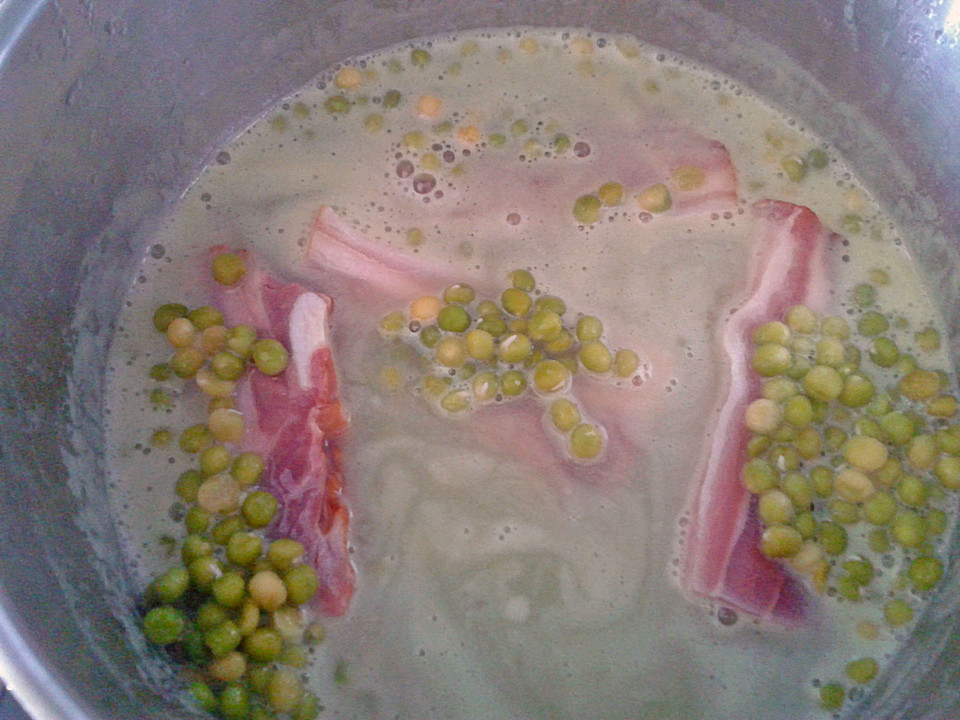
After 60-70 minutes add the vegetables, laurel and marjoram to the soup.
15min before the end of cooking time, peas must almost be soft, remove the bacon and cut into small pieces.
Then add the bacon pieces, the sausages or kassler to the soup.
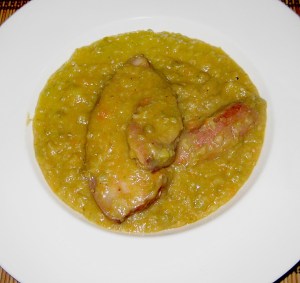
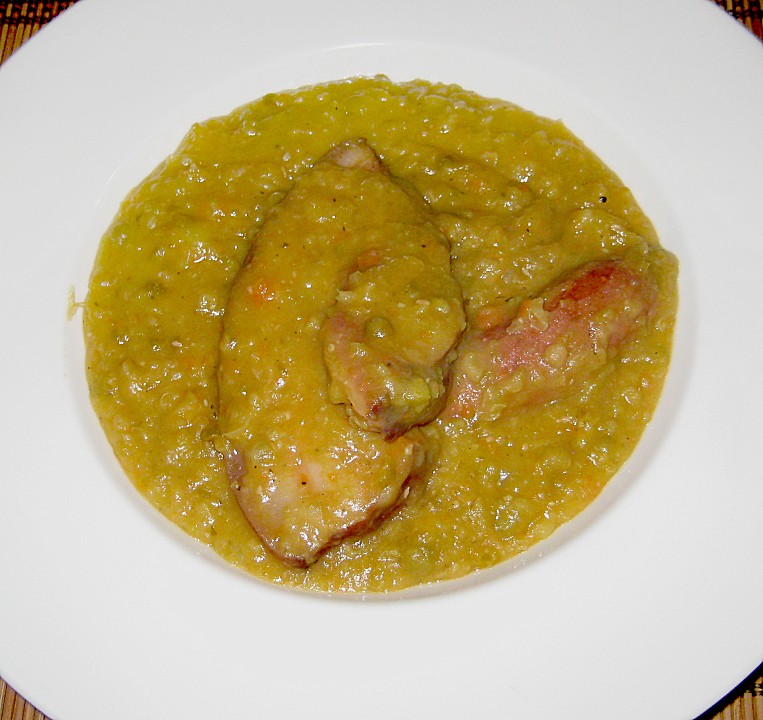
erbsensuppe 3  Thick pea soup with a slice of kassler and sausage.
Remove laurel leaves.
Remove the pieces of carrot, potato and onion and puree them to a coarse mash.
Puree the peas (soup) up to 60-70 %. Soup should still contain bity peas.
Add the potato, carrot, onion puree back to the soup.
Season all with salt, vinegar and pepper.
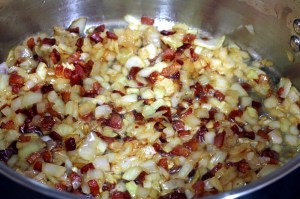
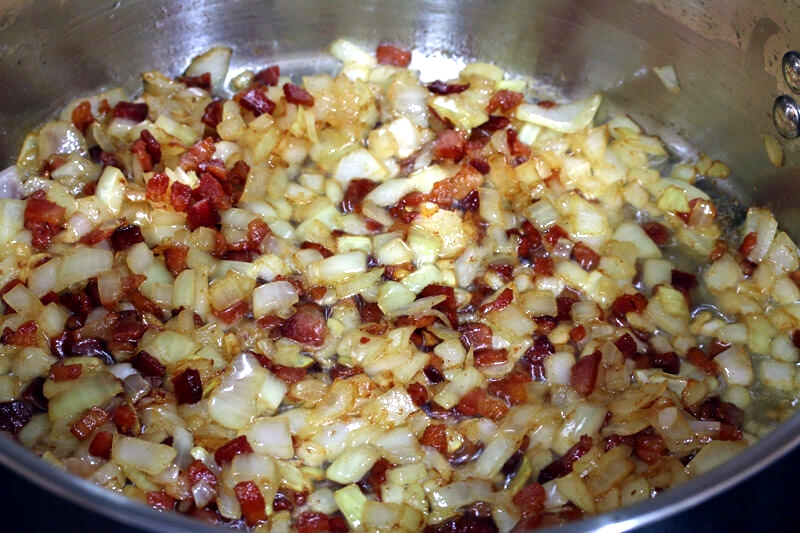
erbsensuppe 1ad  Sometimes I like to saute the onions with a bit of bacon before adding to the soup.Gives the whole soup a smoky flavor. Just another variation.
Tips.

Dried peas in Uruguay are available at El Granero. German Kassler, the smoked pork is packed in 2 slices each at Tienda Inglesa .
If you take out the meat before serving you’ll have an excellent vegetarian dish.

With the same recipes you can replace the peas with lentils, beans or mix them.
Serve hot with some bread and butter and a nice strong beer.
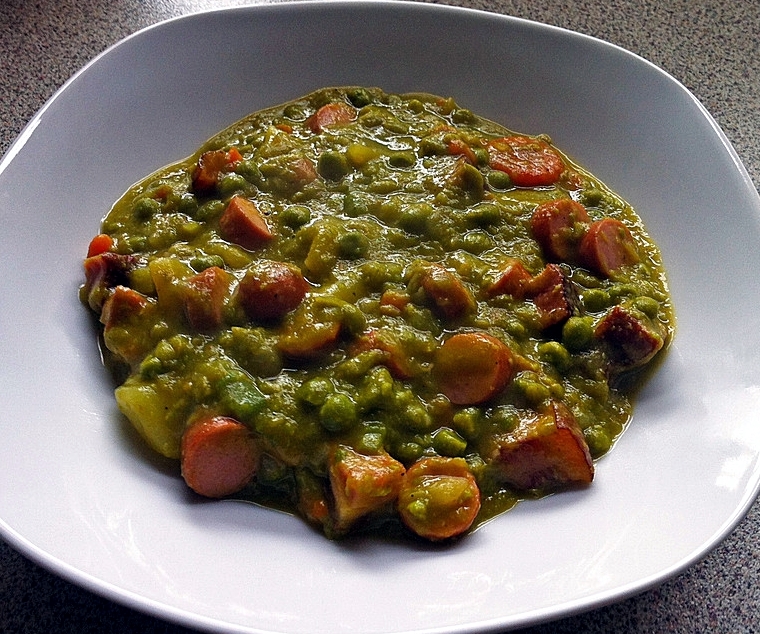
erbsensuppe 8  Less water and you have a mouthwatering pea stew.
Reheated, the soup will even taste better the next day.
Just double the ingredients if you want a larger amount.

The soup is also perfect to store in the freezer for meals to come.
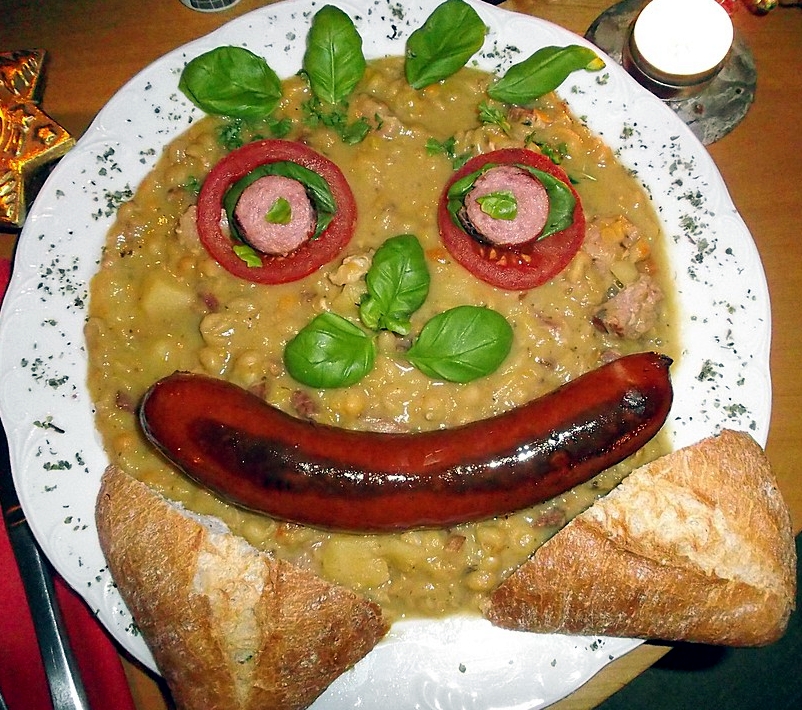
It is great fun to decorate a plate for the kids, see down here.
erbsensuppe 4  Great decorated pea soup for kids, they’ll love it.
The Swedish Combination.

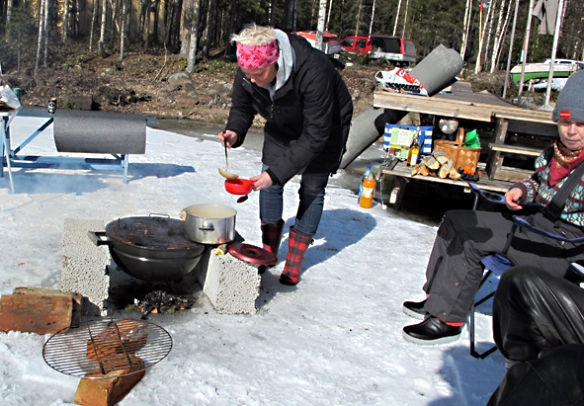
Years ago we went to a Sunday picnic in the Swedish bush near Mora at the Siljan lake. We were camping in Mora and Swedish friends invited us. It was springtime, still cold (around 0 degree Celsius) and snow, but beautiful sunshine and we had the right clothes. The friends surprised us with the typical Swedish meal „Pea soup, Punsch, Pancake„.
erbsensuppe 13b sweden  Cooking the pea soup and having hot punch.
Peasoup.

500 grams of dried yellow peas
2 liters of water
2 + 2 tsp salt
2 teaspoons thyme
2 teaspoons marjoram
1 cube of vegetable stock
300-400 grams of salted pork
1 yellow onion
2 tablespoons sweet (and coarse-grained) mustard (Swedish mustard is often sweetened), in Germany you can use the coarse sweet Weisswurst (white sausage) mustard.
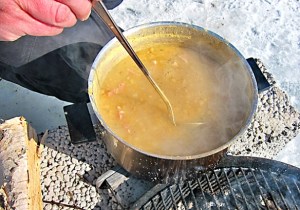
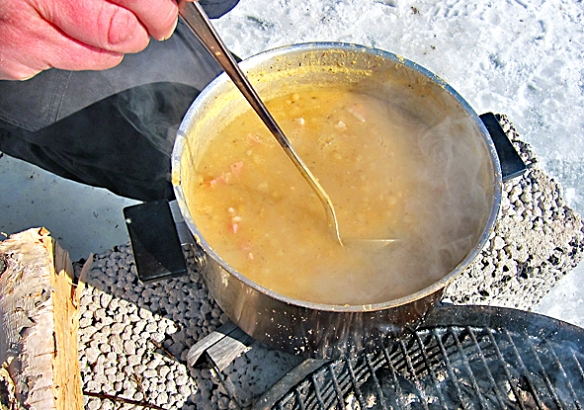
 erbsensuppe 13ff  Stirring and waiting for a great soup.
Rinse and soak the peas along with 2 teaspoons salt for 6 – 12 hours or over night.
Boil fresh water with peas, pork, the remaining salt (don’t take all at once, remember the pork will add some salt too) and herbs.
Let simmer for 1.5 to 2 hours. Have a punch while you are waiting.
Remove the pork when tender and add the onions, whole.
Cut the pork into cubes and add at the end. Season with mustard (and salt) to taste.         Let it simmer for  another 30  minutes to 1 hour. Have another punch while waiting.
Taste the peas to make sure they are completely cooked and soft.
Serve with mustard on the side and a shot of hot (or chilled in summer time) punsch.
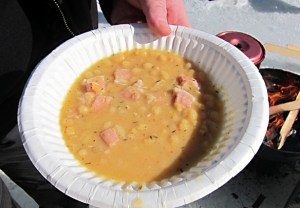
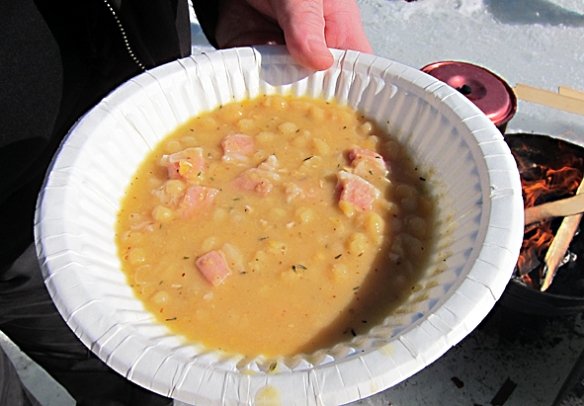
erbsensuppe 13f   Heartwarming meal on a cold camping day.
Punsch.

Punsch (not to be confused with punch) is a traditional liqueur in Sweden and Finland (known as punssi in Finnish), produced from arrack, other spirits (often brandy or rum), sugar and water. Bought ready made you can drink it cold or warm it up.
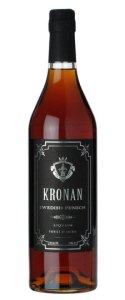
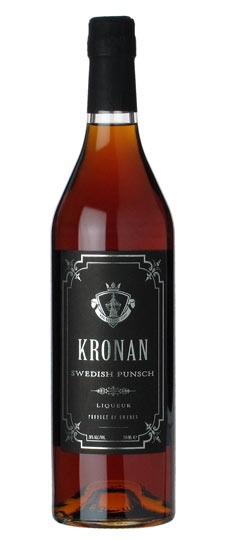
erbsensuppe 13ga Kronan, one of the most well known punsch’s you can buy everywhere in Sweden.
The Swedish East India Company started to import arrack with the arrival of their ship Fredricus Rex Sueciae to Gothenburg in 1733. It quickly became popular, especially among the wealthy, who could afford the price of imported goods. Later it spread through all levels of society.

2 1/2 pints (1,5liter) hot tea
3/4 lb (500gram) sugar, it’s a lot sugar – I recommend to start with less and sweeten later
8 lemons
1 pint (600 ml) arrack
1/4 pint (150 ml) dark rum
1/4 pint (150 ml) brandy
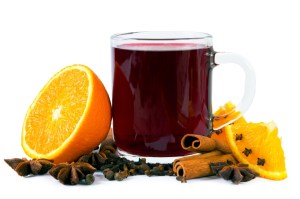
erbsensuppe 13g punsch A nice variation is – using orange instead lemon and spice up with staranis, clove, juniper and cinnamon. Or use good German „Gluehwein“ recipes instead.
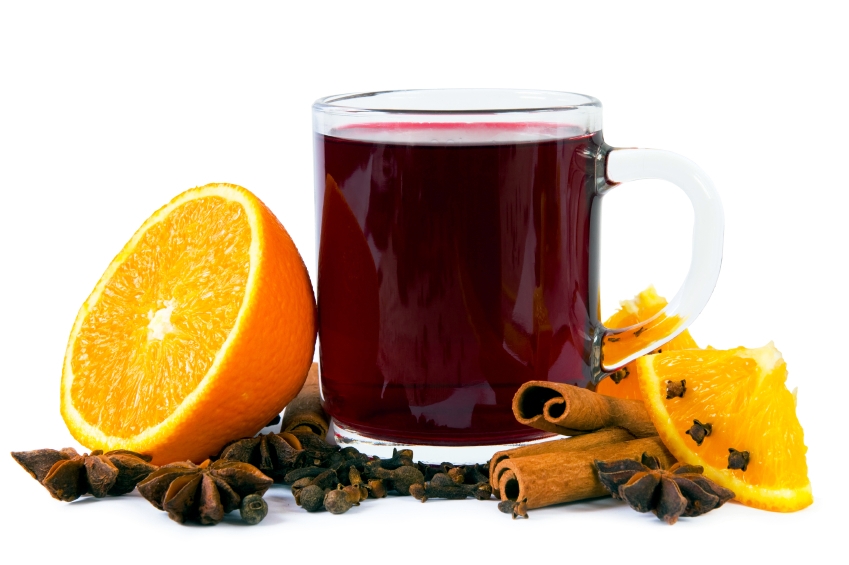
Dissolve, in two and half pints of hot tea, half or three quarters of the sugar and the peel of four lemons. Then add the juice of eight lemons, and the alcohol.  Simmer a few minutes mix well and serve. Just for your information, the Swedish love „strong“ drinks.

Pancake.

Preheat oven to 200 degrees (if you are at home).
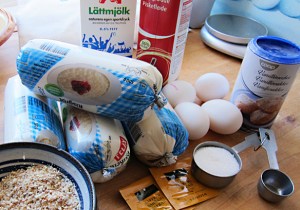
erbsensuppe 13e  All the ingredients for a great feast.
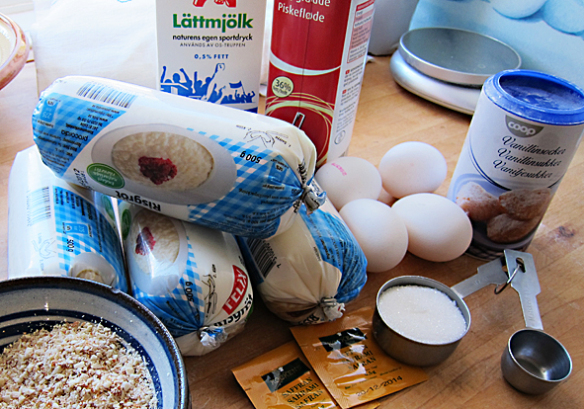
4 x 500 gram rolls with rice porridge. I make it easy for myself and buy rolls with ready-made rice porridge, but of course you can cook your own.
4 eggs
300 ml of single cream
1 gram of saffron
50 ml sugar
1 tbs vanilla sugar
100 grams of finely chopped almonds
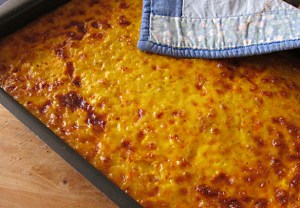
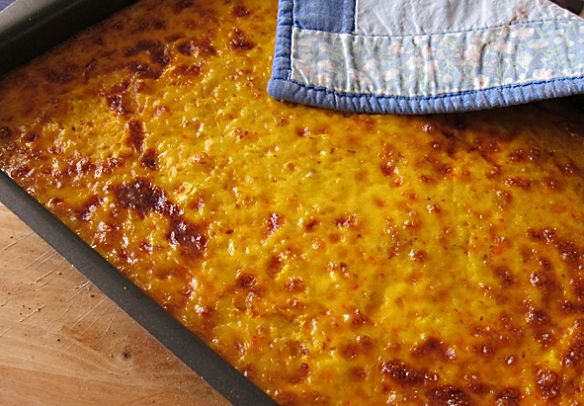
erbsensuppe 13d  They brought this cake warm from home.
Whisk eggs, cream and almonds mixed with sugar and vanilla sugar together.
Fold into the rice porridge and mix well.
Pour batter into a greased dish and bake for about 1 hour. Check with a stick that the cake has set and the stick comes out dry.
Cover with waxed paper or foil if the cake starts to get too much color.
Serve lukewarm with “Queen’s jam” (drottningsylt – a mixture of blueberries and raspberries) and whipped cream. Or of course with jams you have available.
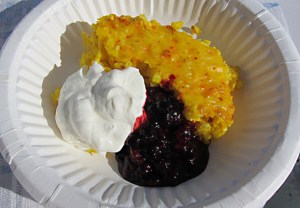
erbsensuppe 13c saffran pancake  Any better then a saffron pancake with jam and cream ?
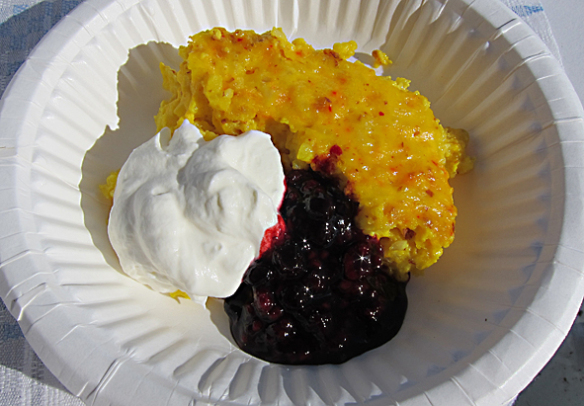
 

All that’s left is to say, “Det är jättegott!” (Swedish, “Yummy!”, literally „it’s delicious“).
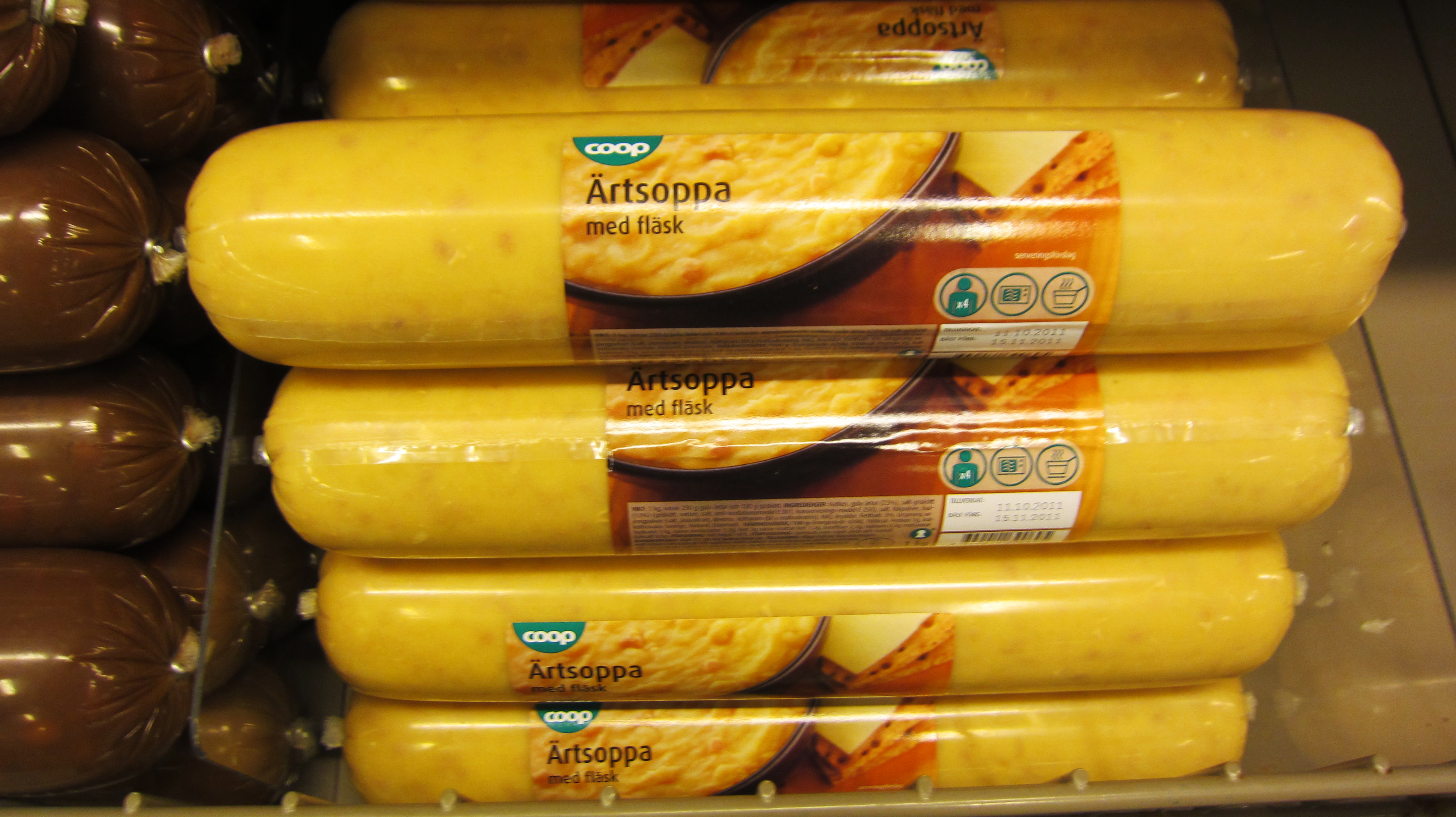
 

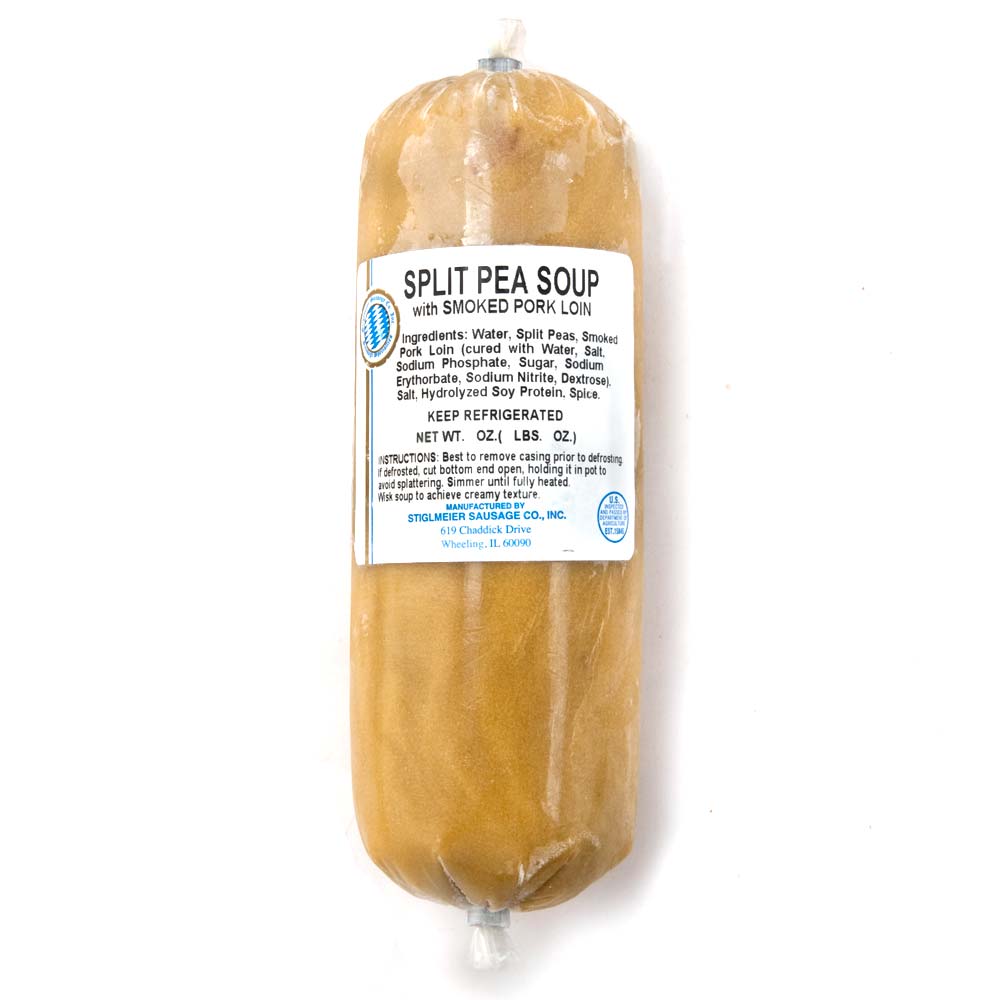
erbsensuppe 11a  erbsensuppe 11b  Found those „pea soup’s“ in Sweden (left) and in the US, from Germany, (right). Don’t use them, take the time and cook your own. It’s so easy and worth while.
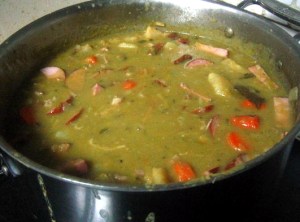
erbsensuppe 16b gruen  A difference against those artificial packages above.
France.

While the French are known for complicated cooking, their easy pea soup recipe evokes the flavors of the farmer’s market, but is as easy as a trip to your grocer’s freezer section. Made in less than twenty minutes, this savory French pea soup can be served hot or chilled, with sliced baguettes, for a distinctive soup course or light meal.
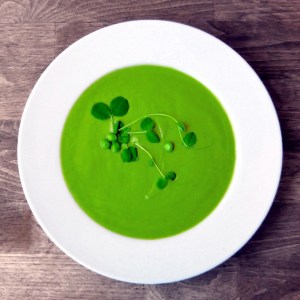
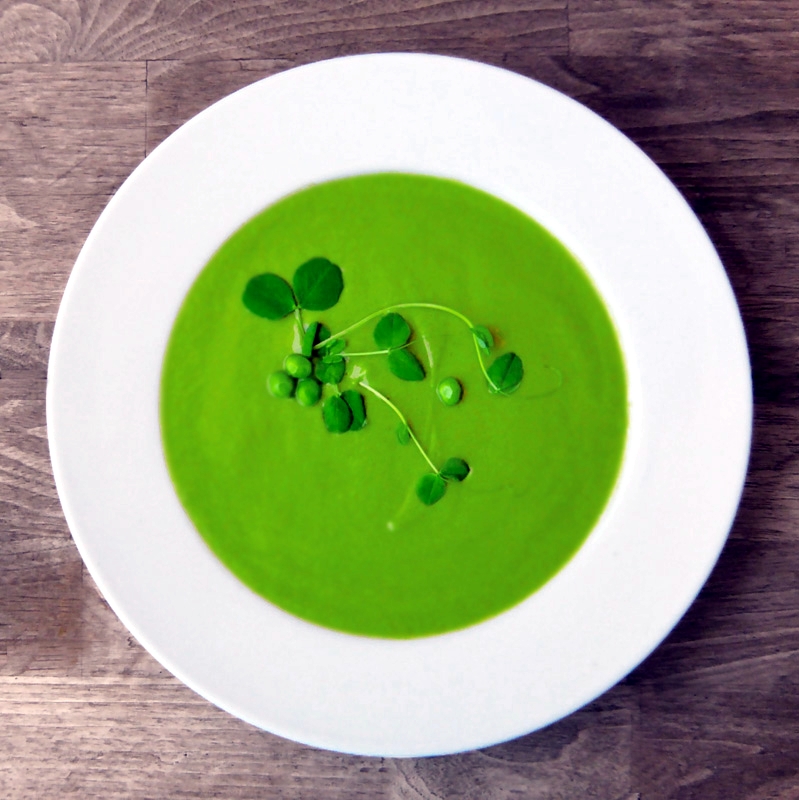
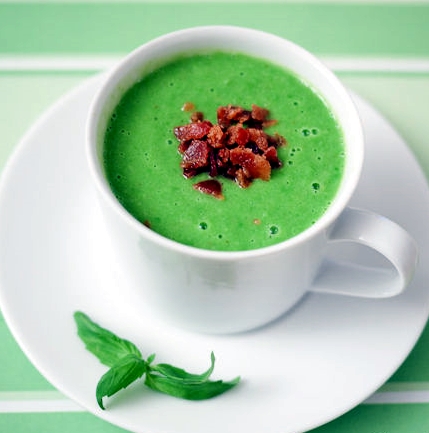
erbsensuppe 15b  How colorful is this one ? French pea soup decorated with pea sprigs. A vegetarian delight. „La soupe aux pois“ – this is for sure the most elegant pea soup variation. But in France they like light soups, as starters only. Other country’s have the pea soup as a main course.
 Ingredients.

2 tablespoons butter
1 shallot, finely chopped
6 cups frozen peas
4 cups water
1/2 cup half and half
(half and half is a dairy product consisting of equal parts light cream and milk).
1/2 teaspoon salt
1/4 teaspoon ground black pepper
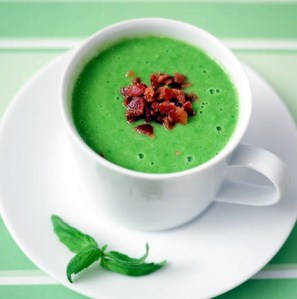
erbsensuppe 15c  Same soup for meat lovers, sprinkled with fresh crispy bacon crumbs. A tiny variation can be to cook this soup with some mint leaves – not to much, you don’t want that the mint taste is overpowering the peas.
How to do.

In a large saucepan, melt the butter over medium heat and saute the chopped shallot in the butter until it is tender. Add the peas and water to the pan and bring the mixture to a simmer. Reduce the heat to low, cover, and cook the peas for 8 to 12 minutes, until they are tender.
Puree the soup in a food processor, blender or with an immersion blender until the mixture is smooth. Stir the half and half, salt, and pepper into the soup and heat through.
Serve the pea soup hot or chilled.
This French pea soup recipe makes 4 to 6 servings. Or 2 for 2, freeze one !

Germans like their food rustic, some kind of ribald. That’s why this one down here …
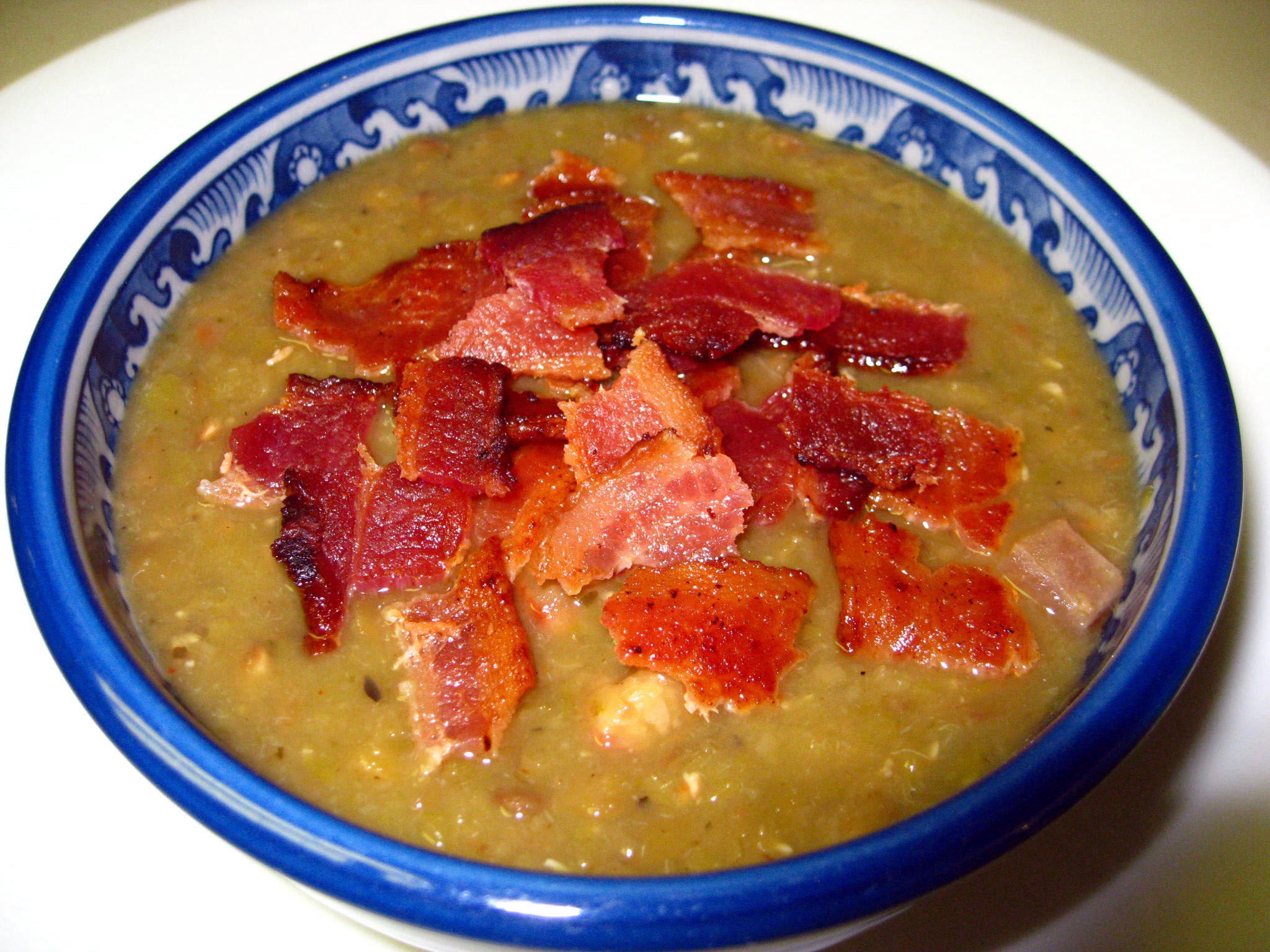
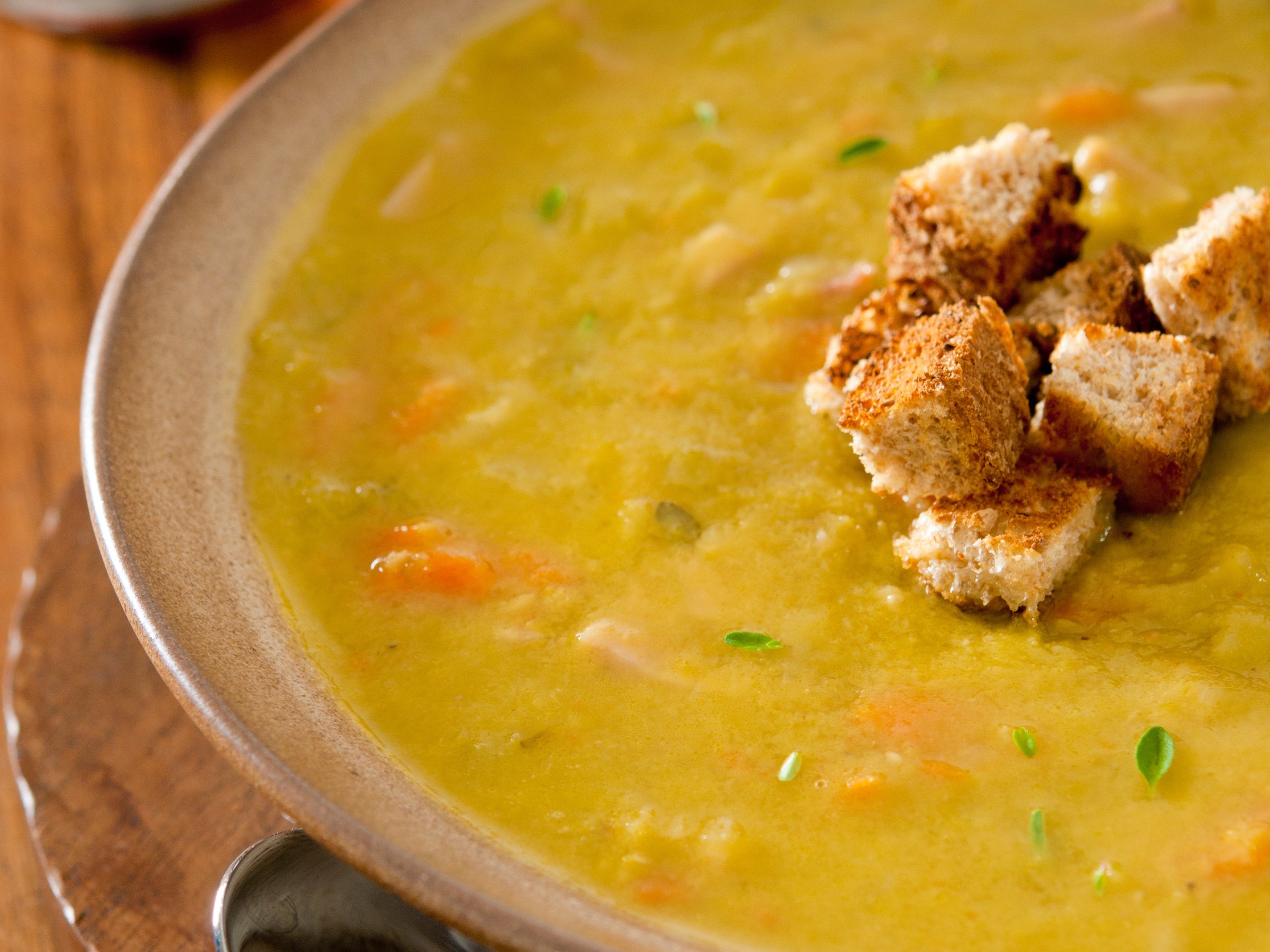
erbsensuppe 20  … is one of my absolute favorites. German pea soup with cooked kassler inside and fresh hot crispy bacon on top.  What a delicious feast ! Enjoy my friends !
Veröffentlicht unter History, Lifestyle, Recipes, Travel | Verschlagwortet mit , | 4 Kommentare

Must See – Wittenberg 1

witt 8 schlosskirche

Lutherstadt – Wittenberg.

During my last Germany trip I could sadly spend 3days and 2nights only in this wonderful city, rich of history and full of sightseeing places. But it was worth it and I like to share my impressions with you. Impressions and information’s I gathered during this stay.

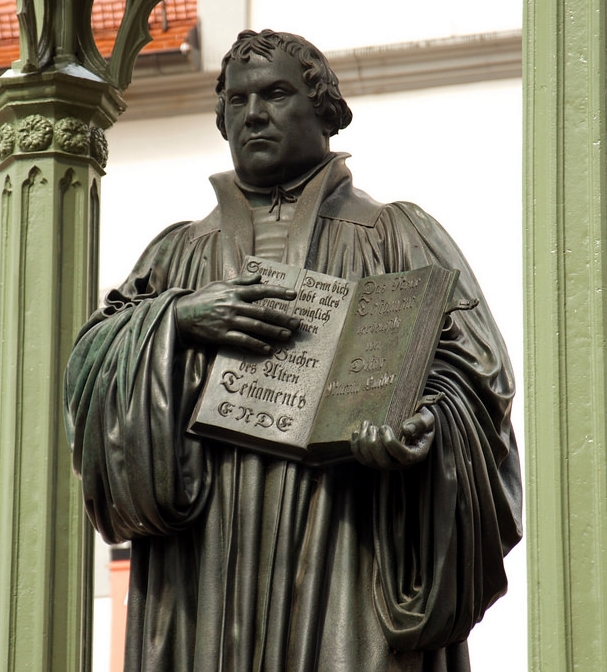
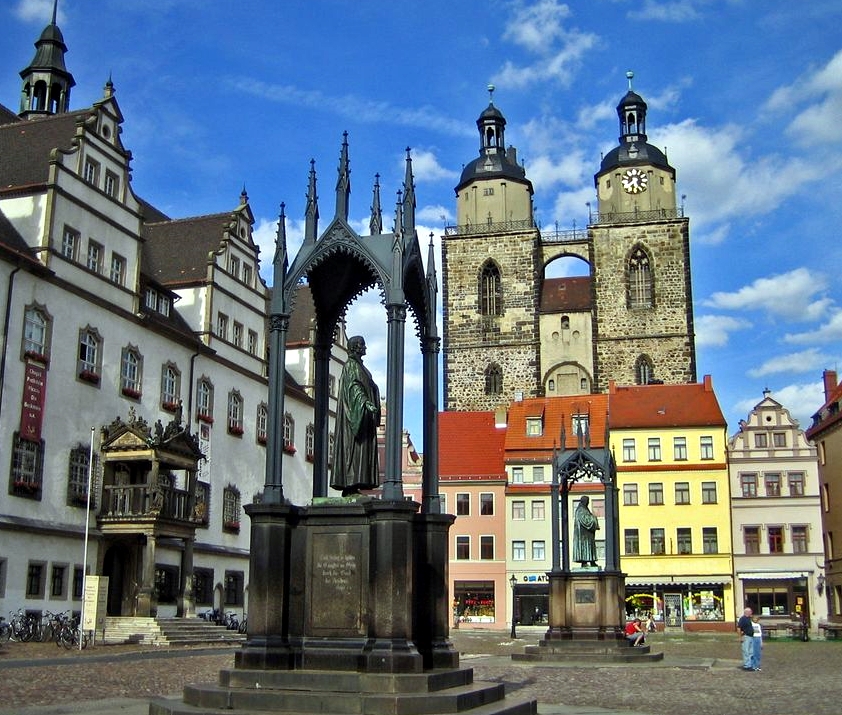
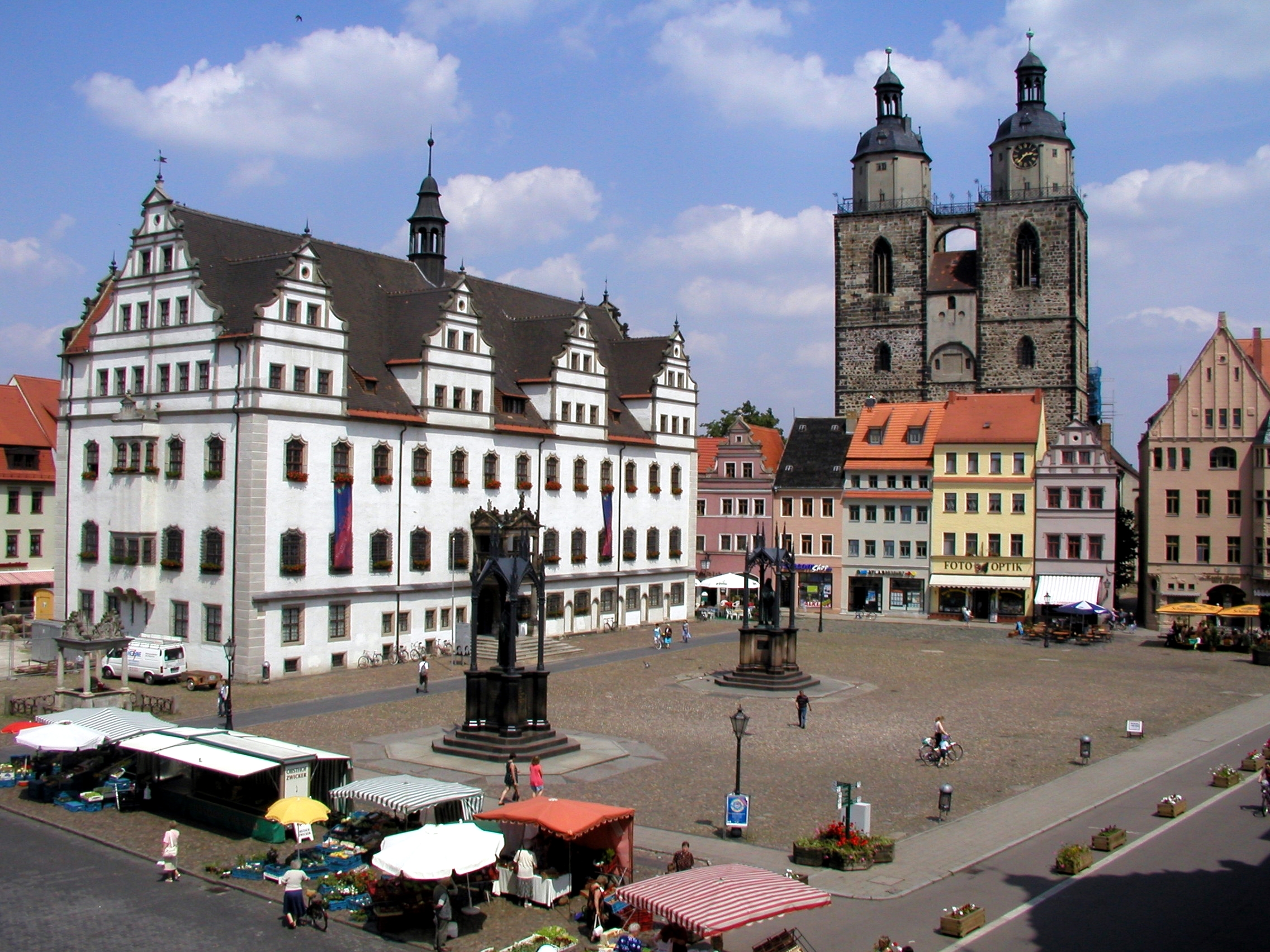
witt 4e luther   Martin Luther statue on the market square, Wittenberg.

The first settlement was mentioned in 1180 as a small village founded by Flemish colonists under the rule of the House of Ascania. In 1260, this village became the residence of the dukes of Saxe-Wittenberg, and in 1293 the settlement was granted its town charter as a free-standing town.

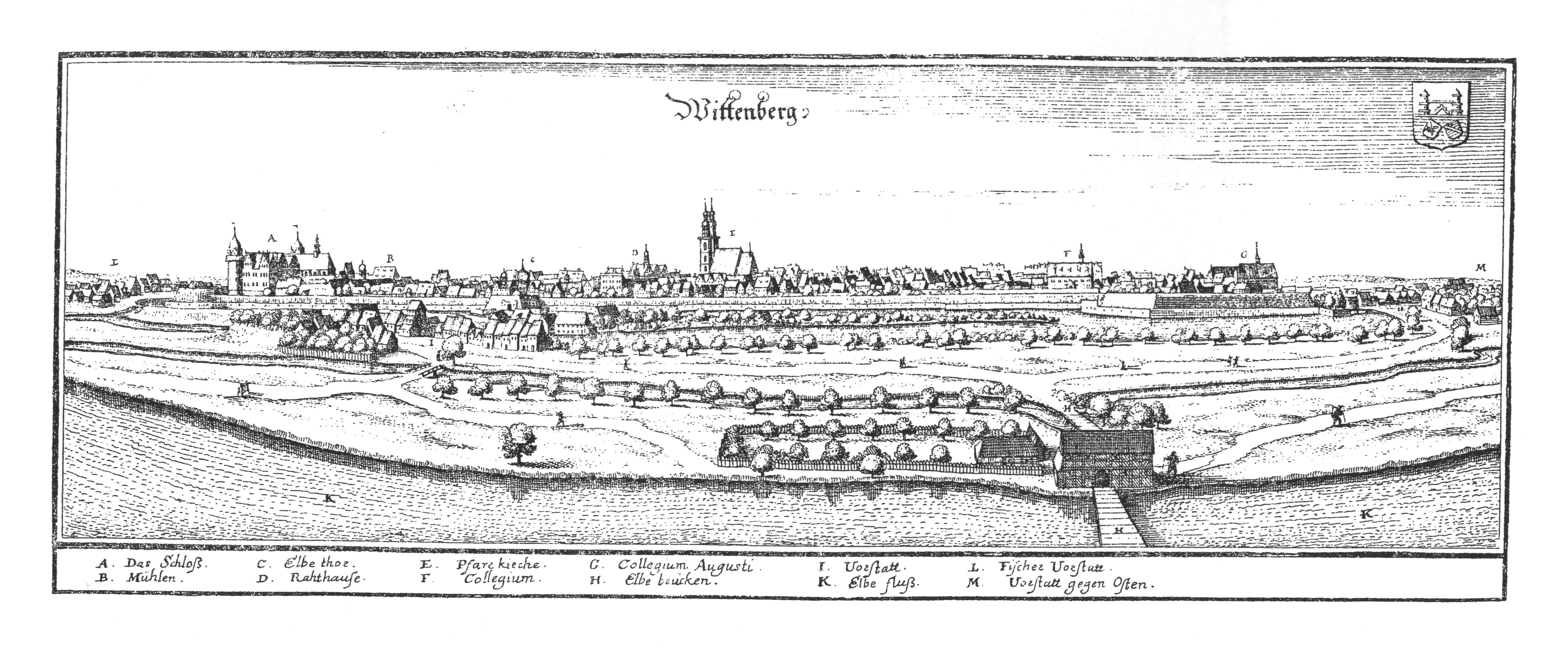
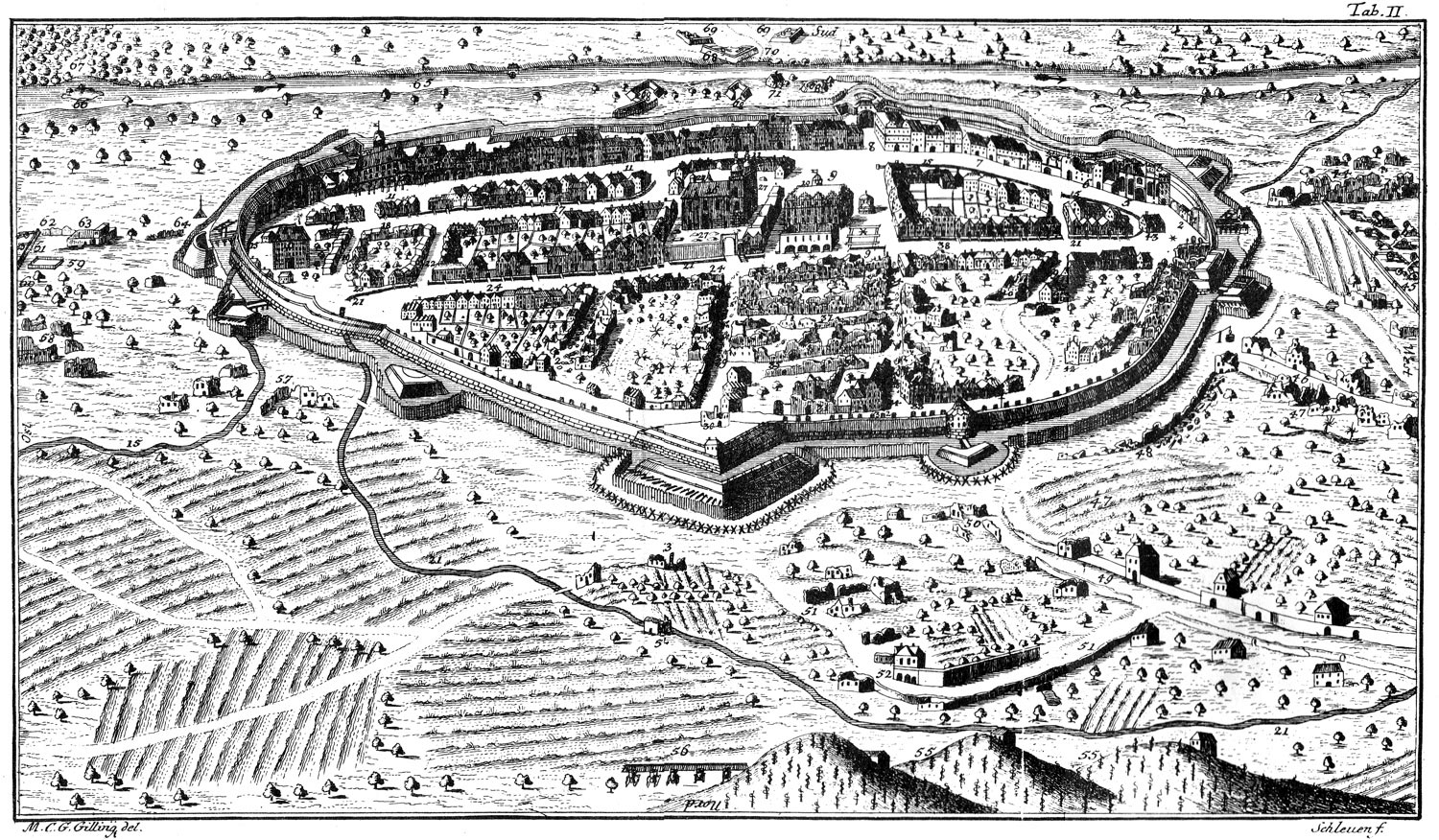
witt 1aLutherstadt Wittenberg around 1500.

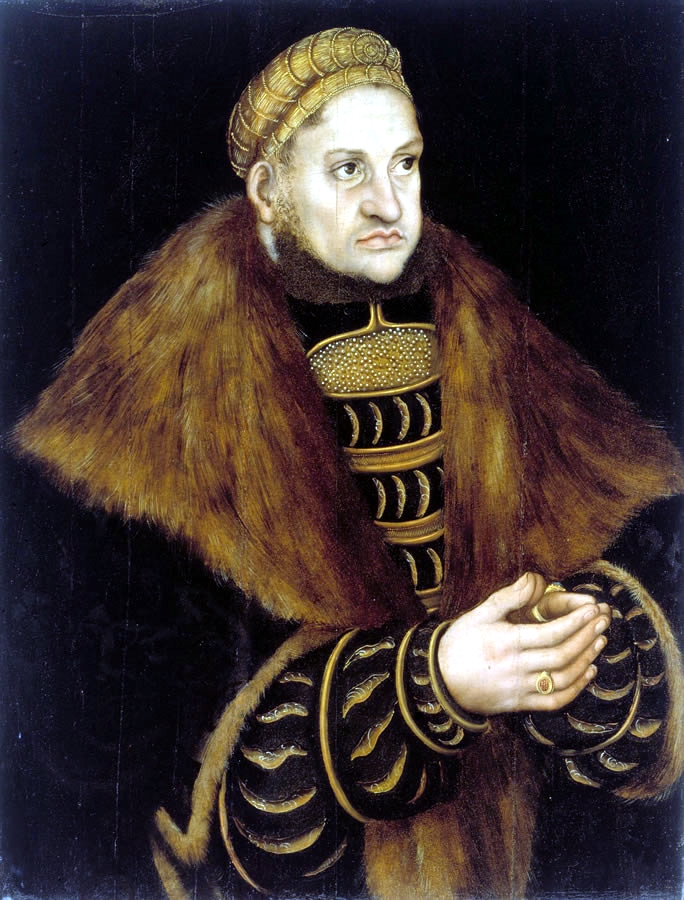
Wittenberg developed into an important trade centre during the following several centuries, because of its central location. When the Ascanians died out, the property of Saxe-Wittenberg passed to the House of Wettin. Then Wittenberg became an important regional political and cultural centre at the end of the 15th Century, when Frederick III „the Wise“, the Elector of Saxony, made his residence in Wittenberg.

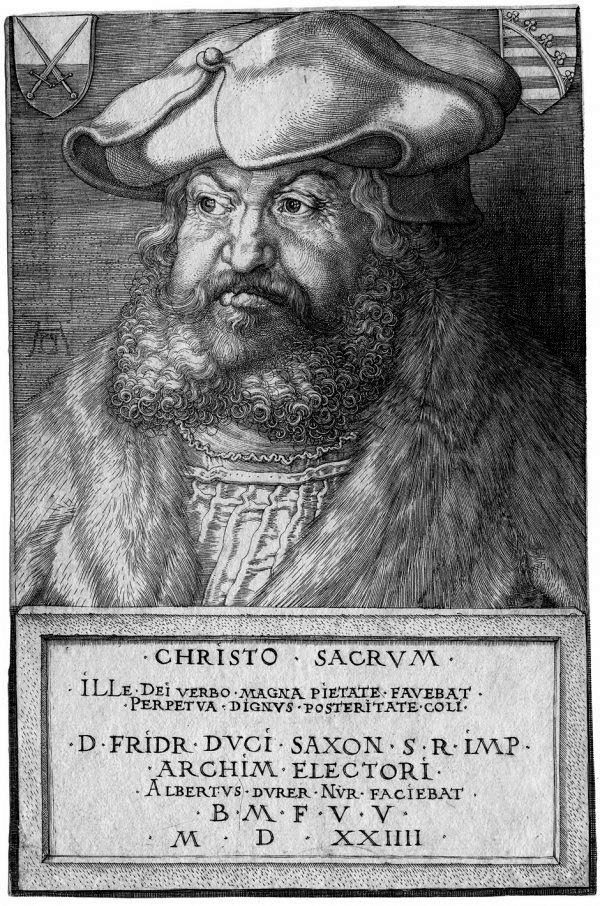
witt 1gga cranach a Kurfuerst Friedrich der III von Sachsen, named „Friedrich The Wise“. Painted by the great Lucas Cranach, which I will describe further down.

Several parts of boundaries of the town were extended soon afterward. The second bridge over the Elbe River was built from 1486 through 1490 and the castle church (the Schlosskirche in German) was erected from 1496 through 1506. The Elector’s palace was rebuilt the same time.

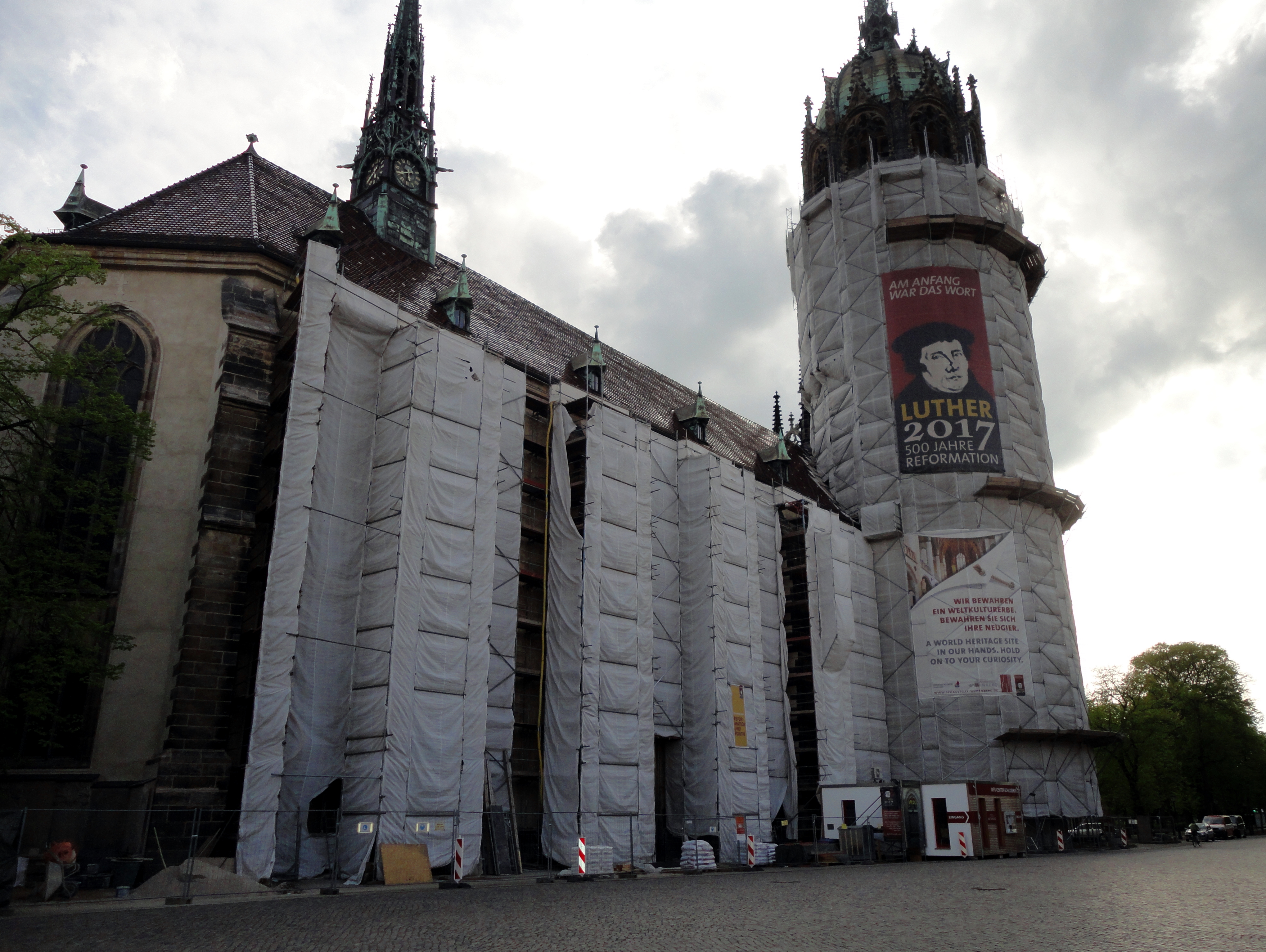
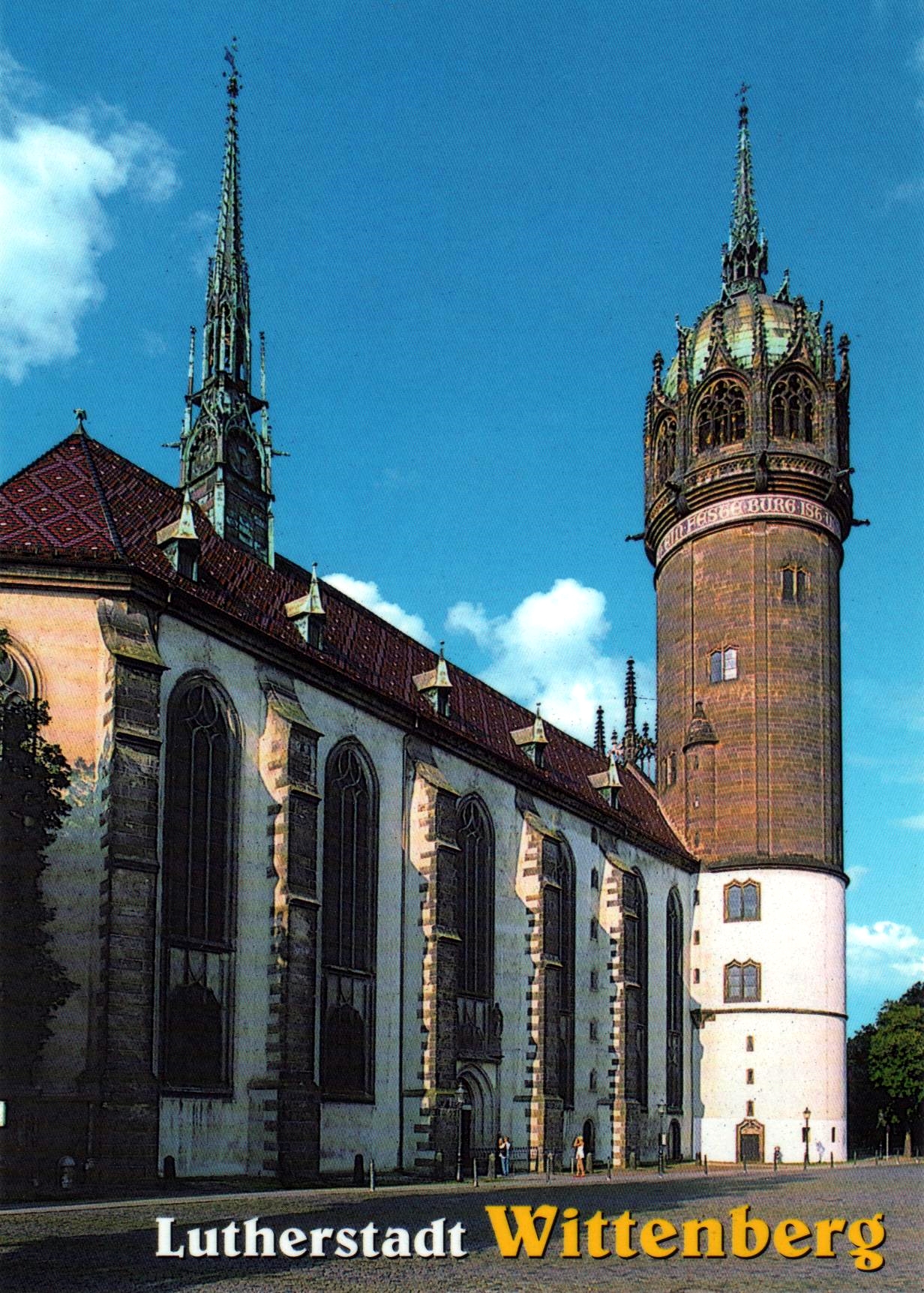
DSC01660 The castle church. Under complete renovation till 2017.

In 1502, the University of Wittenberg was founded, and it gave a home to some important thinkers, such as Martin Luther—a professor of theology beginning in 1508—and Philipp Melanchthon—a professor of Greek starting in 1518.

witt 4d Melanchton statue (foreground) and Luther statue (background) on the market square in Wittenberg. Left the city hall and strait on the town church.

On 31 October 1517, Luther nailed his 95 theses against the selling of indulgences at the door of the All Saints‘, the Castle Church, marking the beginning of the Protestant Reformation. The castle church and almost the whole city of Wittenberg is under renovation, because of the 500 year anniversary of the reformation in October 2017.

witt 1gg AD 1524  Ruler Friedrich the III from Saxony or Friedrich the Wise, wood cut by Albrecht Duerer 1524.  Albrecht Duerer (21 May 1471 – 6 April 1528) was famous for his high quality wood cuts in Europe.

This sleepy little town in rural eastern Germany doesn’t look like the center of a revolution. But the events that played out here in the 16th Century shook the foundations of Christendom.
It was here in Wittenberg, Germany, that Martin Luther lived and preached. The Protestant Reformation had begun. About this event and Martin Luther I will write a post in an upcoming second part, so stay tuned.

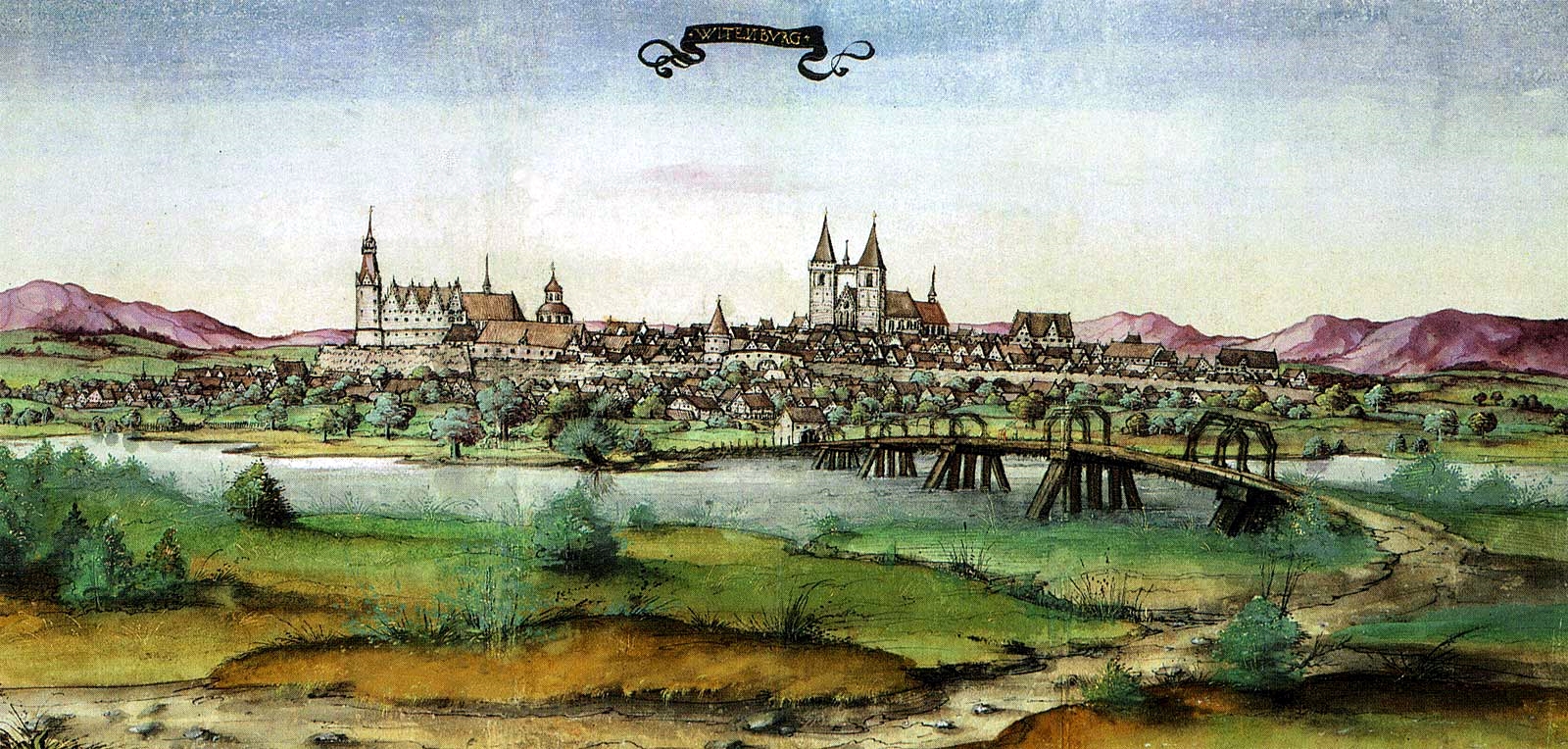
witt 1f 1536  Wittenberg in 1536. In front the first bridge over the river Elbe. Phantastic view with the castle and the castle church on the left and the town church at the center. Drawing out of the travel album of „Pfalzgraf Ottoheinrich“, 1536,  Würzburg University Library.   Click on pic to upsize.

Visitors come here from all over the world to see the places where these historic events took place. This could be a good day trip from Berlin. It’s about one hour with the IC train. But to see everything without having to rush, I would recommend spending at least two days and one night here.

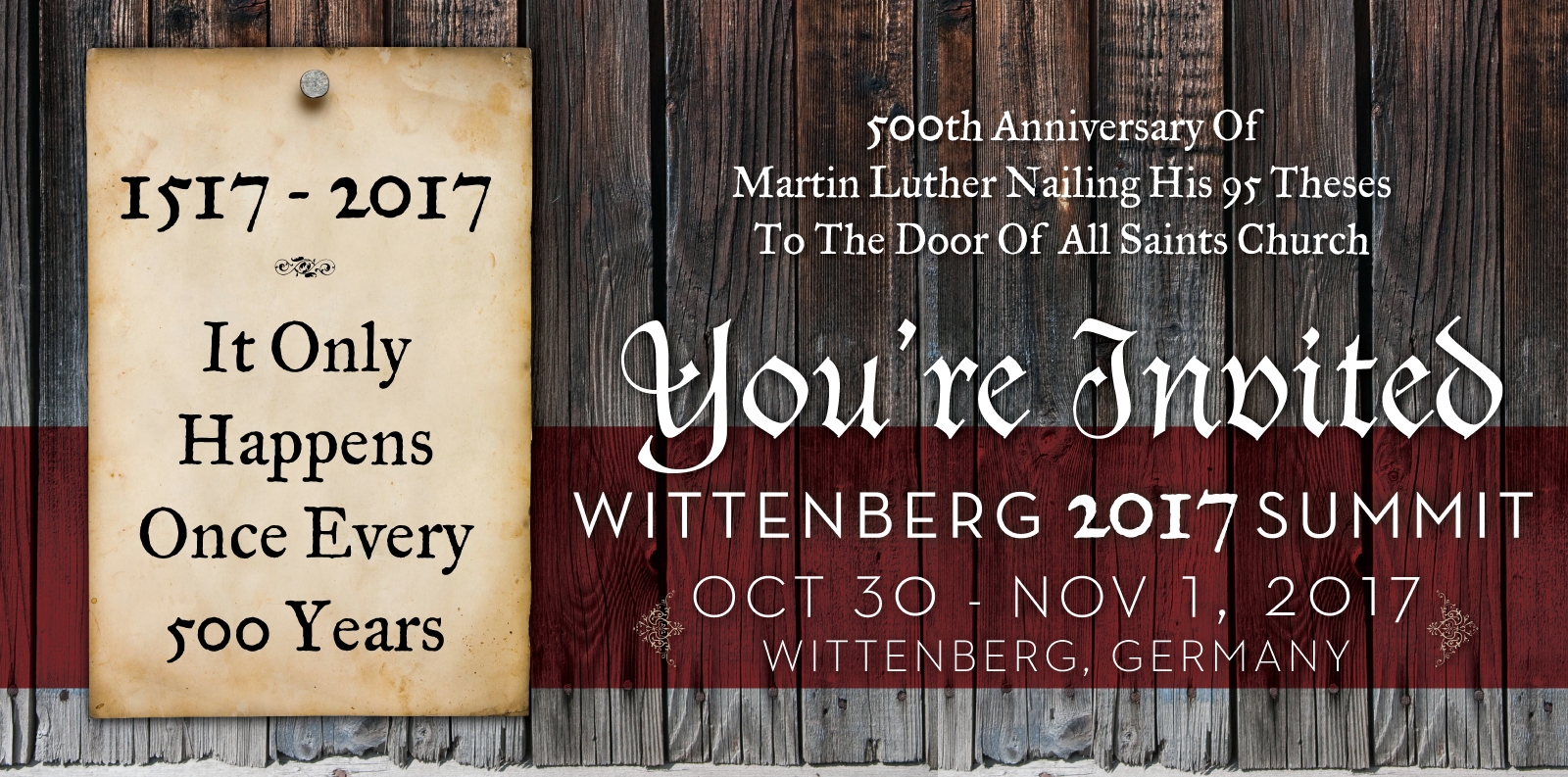
witt 1e  You are invited to celebrate the 500 years.

For such a small town, there is a lot to see:

The town itself. A charming collection of 16th Century houses and a striking market square.
The Castle Church. It was on the doors of this impressive church that, allegedly, Martin Luther nailed his 95 Theses. Luther’s tomb is inside, and works of Cranach the Elder.

witt 4b  Historic market square with the Luther and Melanchton monuments infront the town hall. Earlier pictures show the statues
The Town Church. Another beautiful Medieval church where Luther preached many sermons. And where you see works of Cranach the Younger.
Luther’s Residence. Martin Luther lived in this converted cloister with his family for many years. Now a museum.

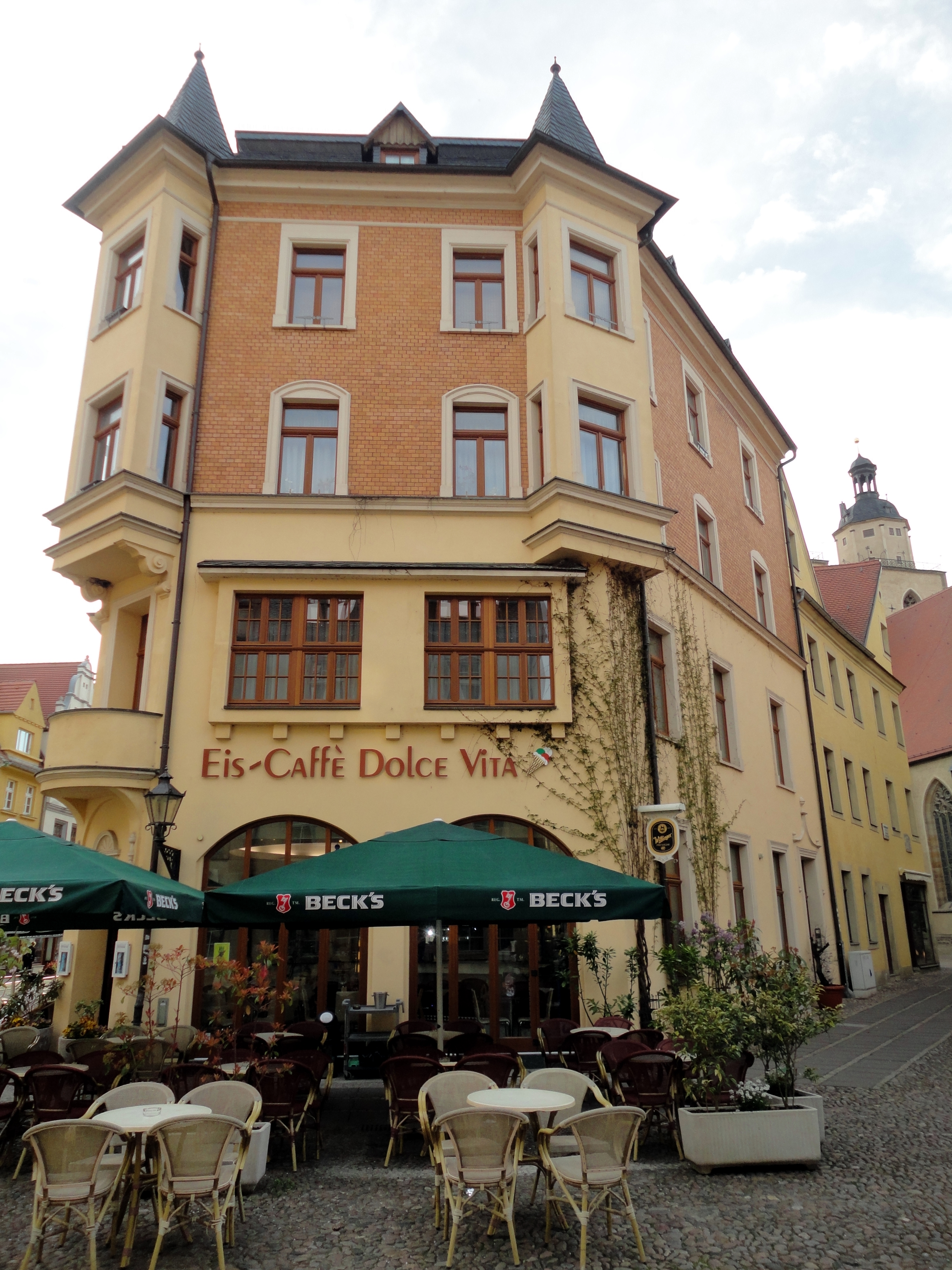
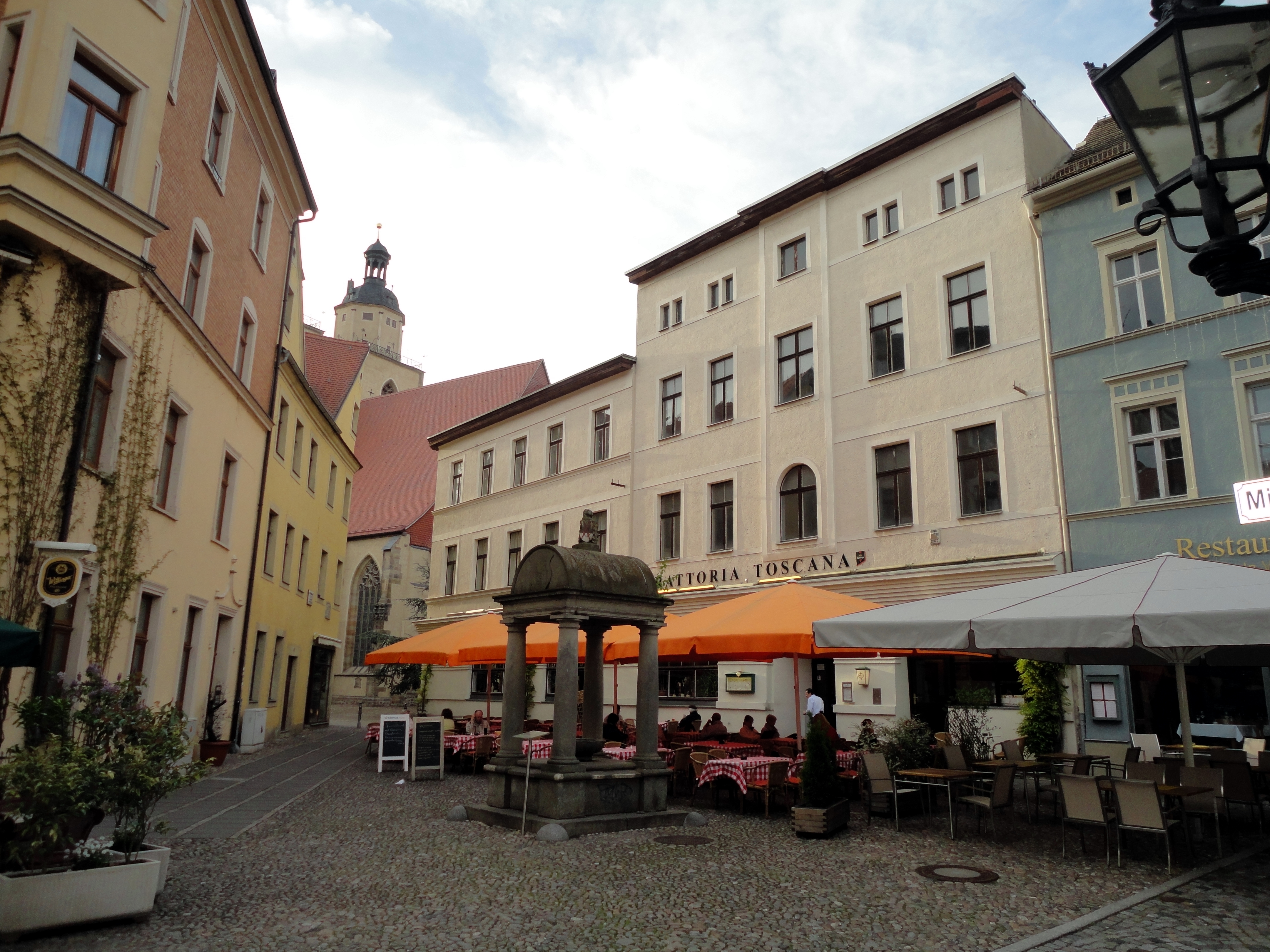
DSC01668               DSC01669               Little Italy in Wittenberg. All the fresh renovations are made in beautiful pastel colors.

The Oak Tree planted where Luther burned the Papal Bull.
Lucas Cranach’s Home and art studio. This artist documented much of the Reformation with his portraits and woodcuts.
The Castle Museum. In the castle part of the Castle Church building. History of Wittenberg, from prehistoric times through the middle ages and later as a Prussian garrison town.

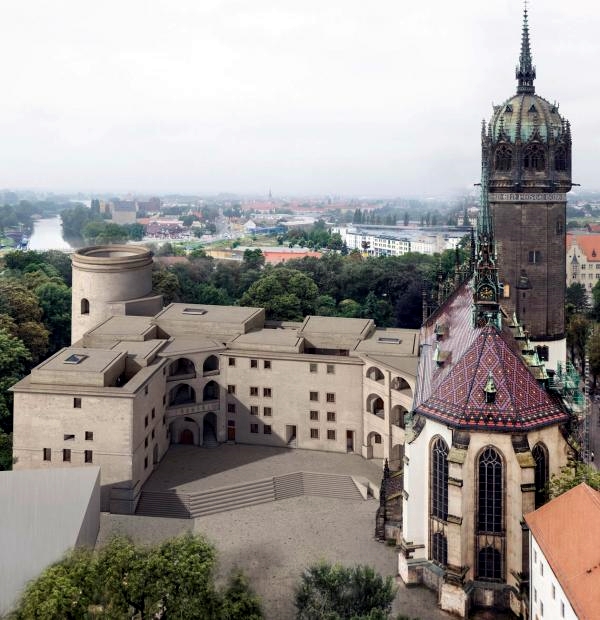
witt 8a schloss  Castle museum (left) and castle church (right).

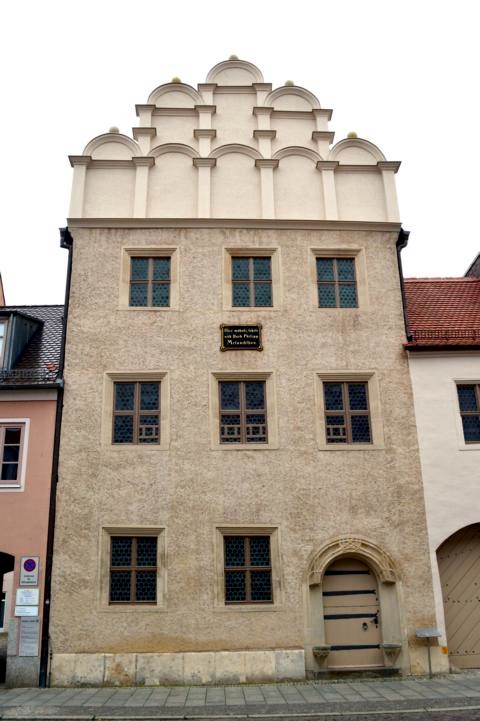
Philip Melanchthon’s House. On the Collegienstrasse. Luther’s friend and fellow theologian, who contributed enormously to Lutheran doctrine.
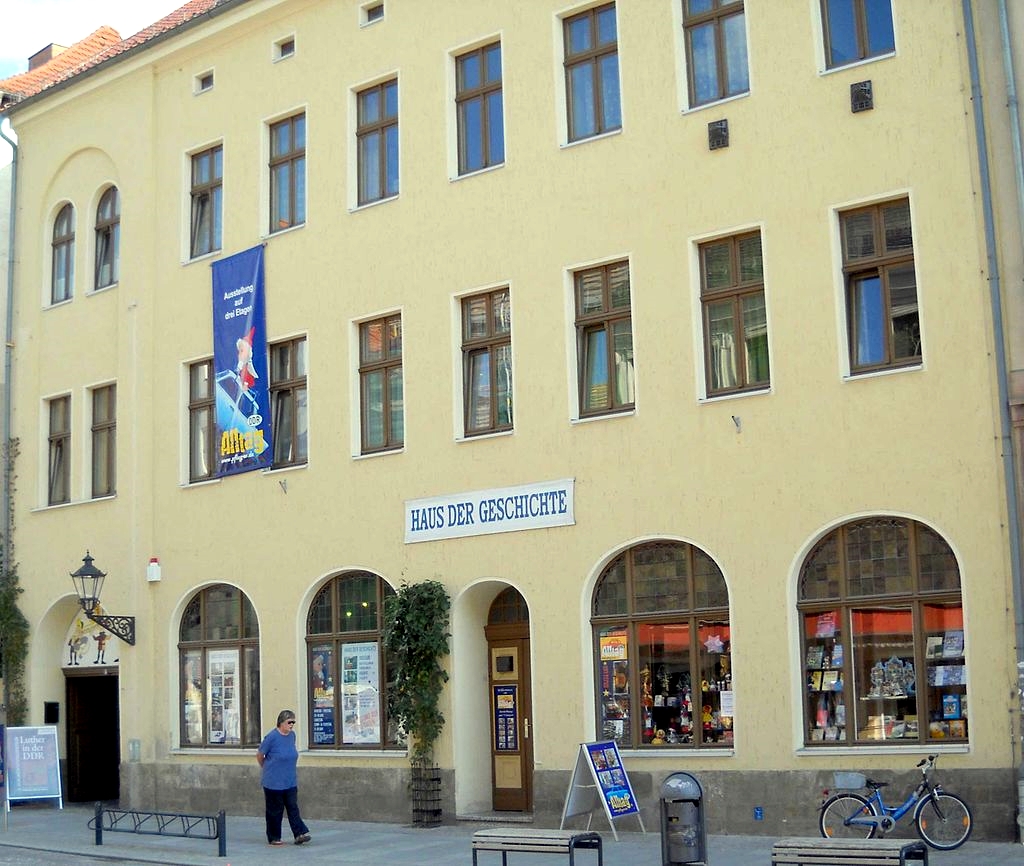
Haus der Geschichte. On Schlossstrasse. An East German nostalgia museum. Rooms furnished in 50’s, 60’s and 70’s. A good view into the former DDR lifestyle.

witt 1h 1760 no schlosskirche pic georgie witt klagegeschichte  Engraving of the city of Wittenberg, out of the book from 1760 „Die Klagegeschichte Wittenbergs,  Georgie (1702-1771)“. Interesting to see, that this engraving has no castle and no castle church. If one thinks that in the upper left corner of the city is the castle church tower, then it is on the wrong end of the city. It should be in the upper right corner of the city. Or – my guess, this engraving was made before the castle and church was build (from 1490 till 1511, at the order of Frederick III, Elector of Saxony. Reason for my guess – there is also no bridge over the river Elbe. Mistery mistery mistery !!  Click to supersize picture.
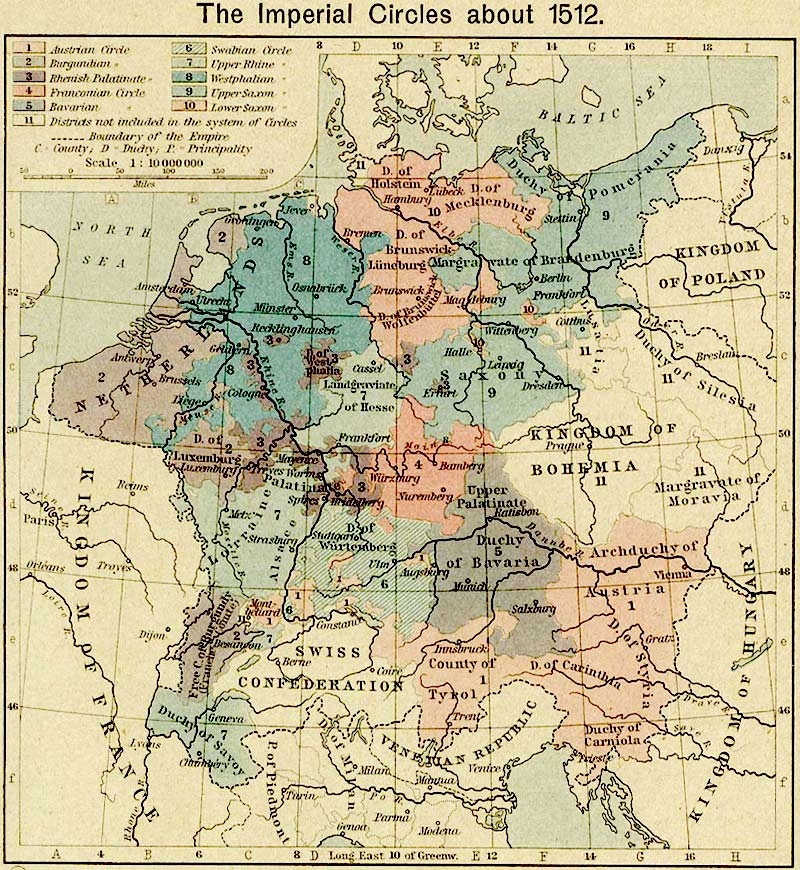
witt 1d   Map showing Wittenberg in Saxony around 1512.

The town’s official name is Lutherstadt-Wittenberg, and this is definitely Martin Luther Central! Everywhere you turn, there’s a spot associated with Martin Luther’s life. The shops carry everything you could imagine associated with their most famous resident: books, posters, mugs, statues…even Martin Luther socks! In spite of that, it’s really a pleasant little town and crammed with interesting history.

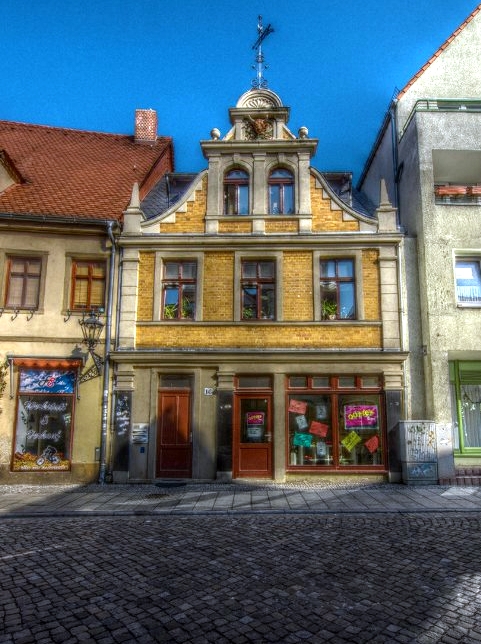
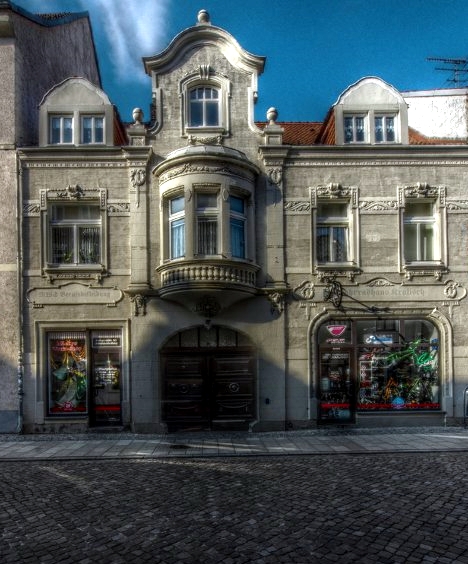
witt 9a                              witt 9b                    Some beautiful houses in the City of Wittenberg and shops full of souvenirs.

Wittenberg is designed for easy walking. The old town is long and narrow, and flat, laid out along two parallel streets: pedestrian-only Collegienstrasse (which turns into Schlossstrasse), and Mittelstrasse.

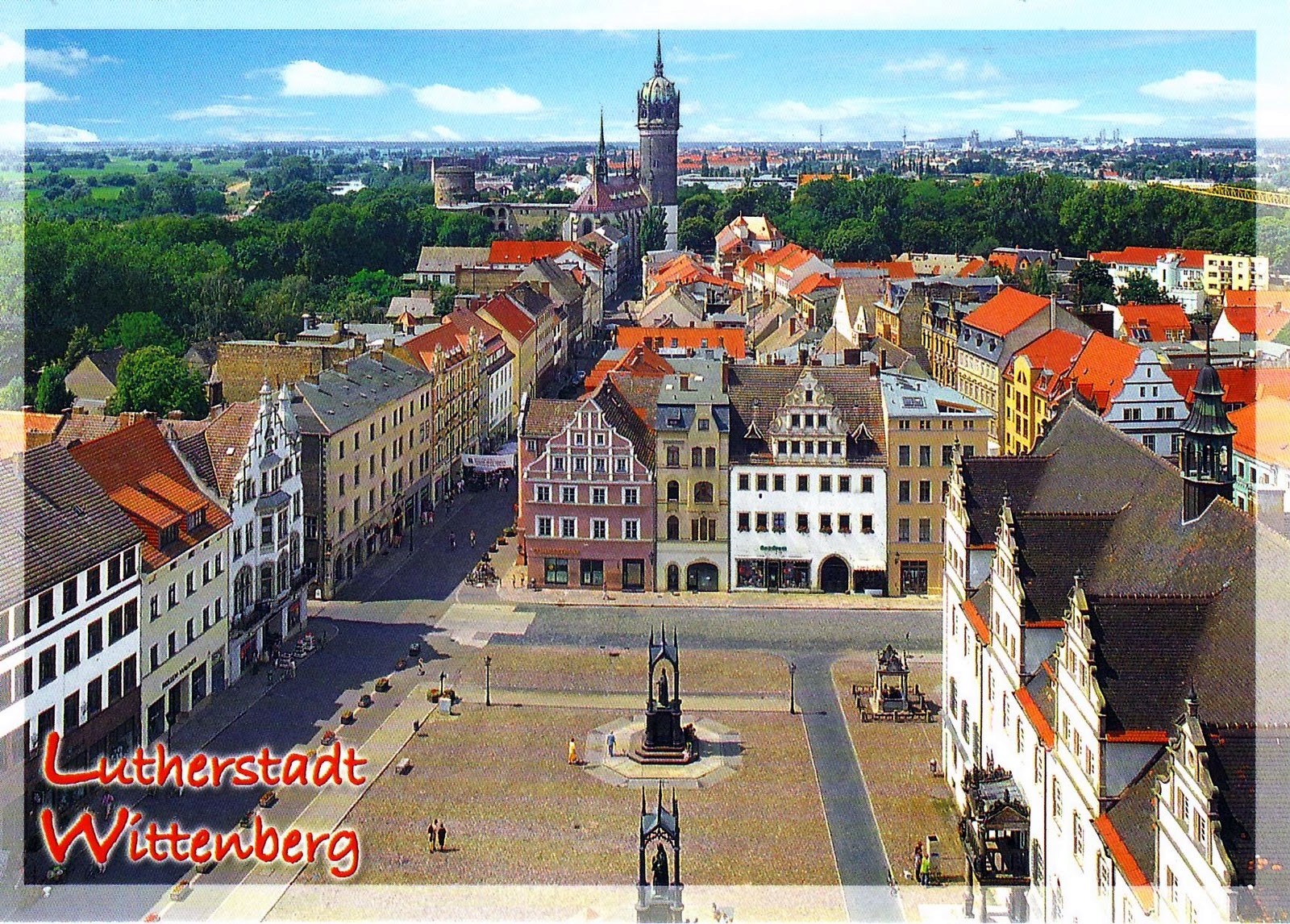
witt 9 vom turm stadtk.  Postcard of Wittenberg with the market in front and the Castle Church Tower in the rear center.

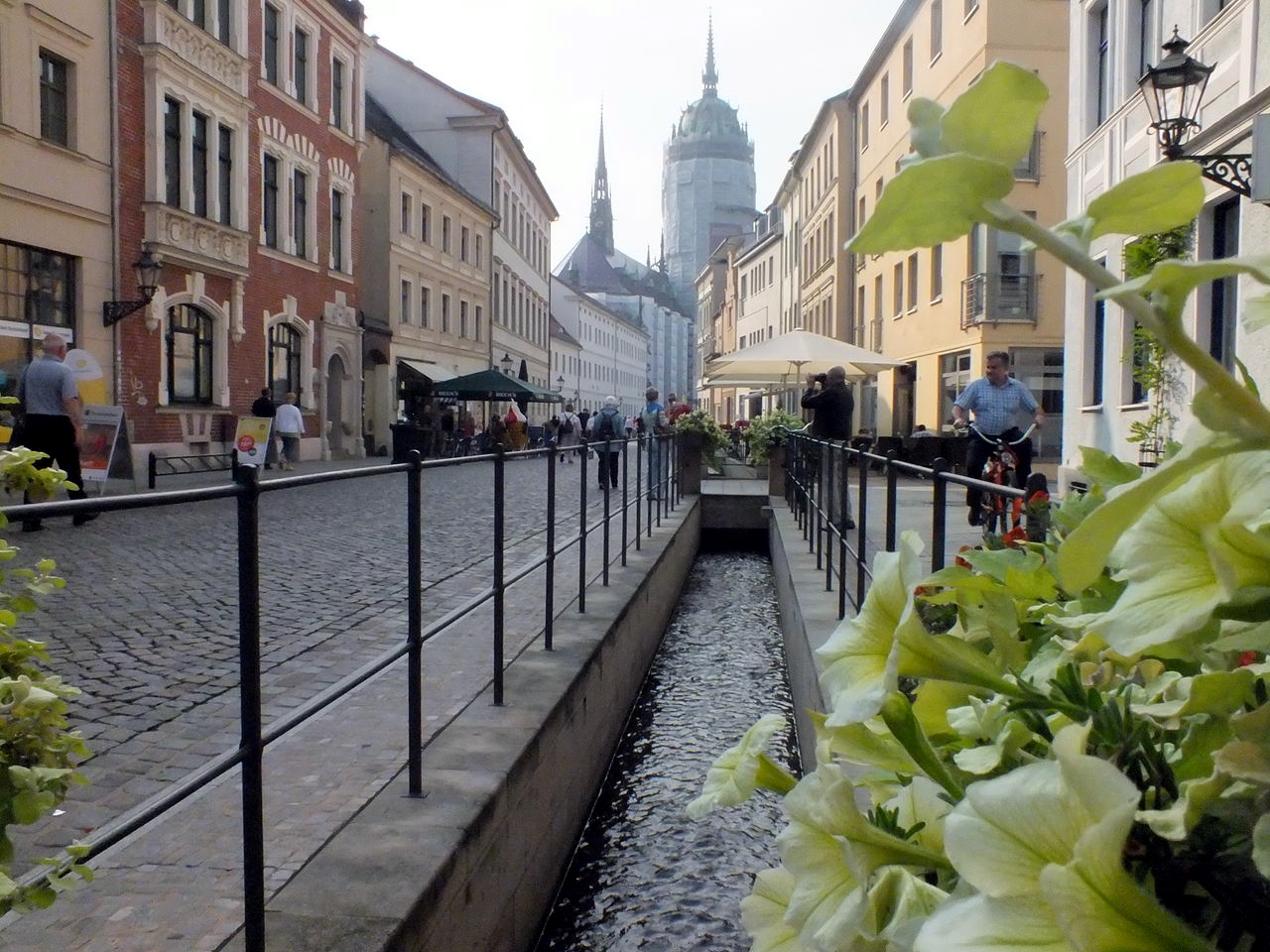
A stream runs along the main street, partially underground. Half way along, the street opens out into an attractive square, or Markt, with a statues of Martin Luther and Philip Melanchthon.

witt 8d schlossstr.    Schlossstrasse in Wittenberg with the water stream. Notice in the distance the Schlosskirche, totally wrapped (may be Christo was around !?)  for renovation.

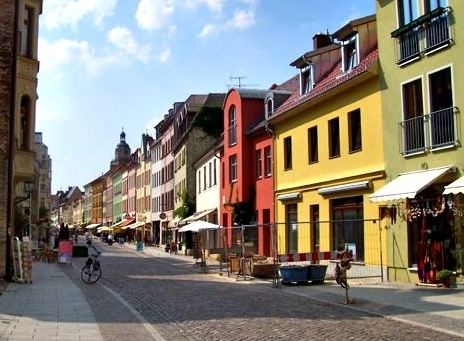
Pretty pastel-colored buildings, many from the 16th and 17th centuries, line the streets and there are a number of inviting restaurants serving hearty German cooking. During warmer weather, many of the restaurants have tables on the sidewalk, great for relaxing and people-watching. You’ll find comfortable hotels and inviting restaurants and beer gardens.

witt 1j mittelstrasse  The pastel colored houses in the Mittelstrasse.

House of History – GDR.

The House of History was initiated by the association founded in 1992 PFLUG e.V. The association concerned initially with the everyday life in the 20th century. The aspects of the environment and society played a primary role. In addition, the club lit cultural and historical research on the living conditions of women in the 20th century.

haus G 1    House of GDR History in Wittenberg.

As part of an ABM (Arbeits-Beschaffungs-Massnahme, a job creation program) project one began to collect objects of everyday life of the period. Here, the work has focused particularly on the period from 1910 to the end of the GDR (German Democratic Republic), (German: DDR, Deutsche Demokratische Republik).

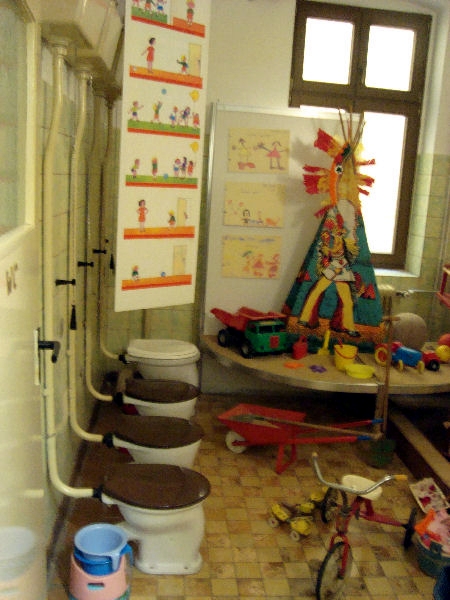
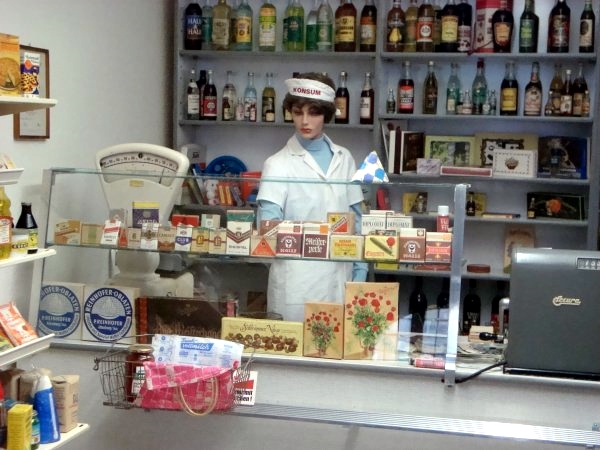
haus G 3 haus G 5     Showrooms in the House of History. Left the old original Kindergarden room – GDR style !!!  And right a grocery store „Tante Emma“.

The collection of everyday objects as well as clothing, furniture and kitchen equipment was gradually becoming more extensive, and there was the idea to present this in a permanent exhibition from the scientific perspective in living environments. Given the house’s history was opened on October 11, 1997 in rented rooms of a former kindergarten in Wittenberg, No.6 Castle Street (Schlossstrasse 6).

haus G 2 haus G 4   Exhibitions inside the House of History.

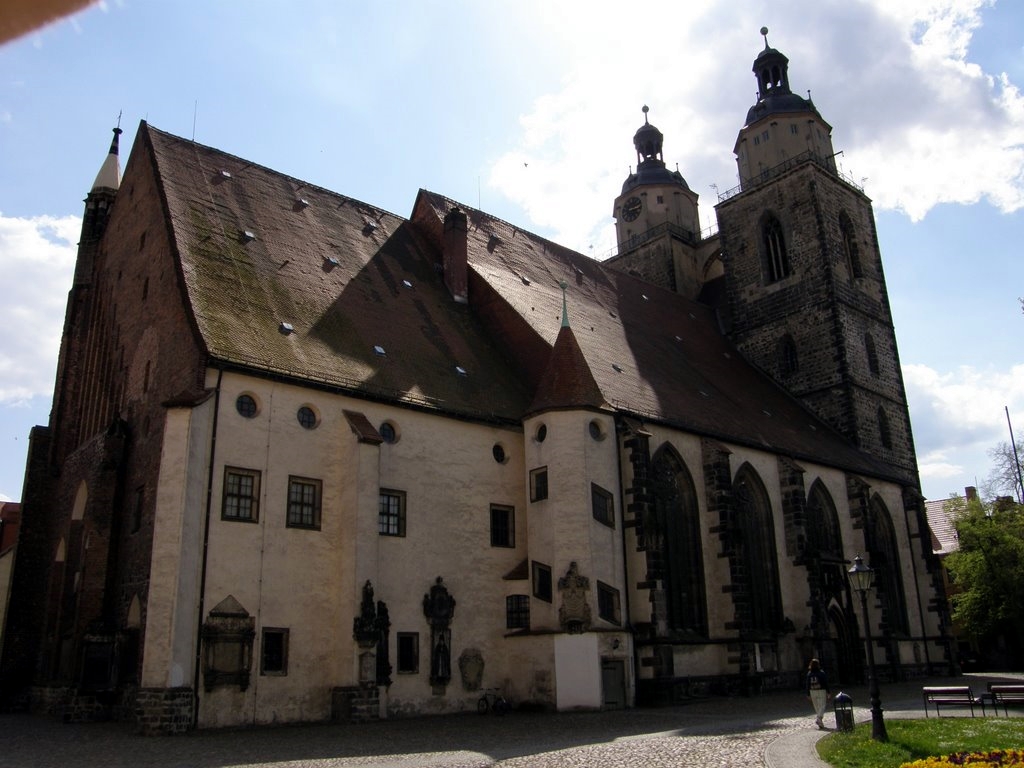
Town Church, St. Mary’s.

The Stadt- und Pfarrkirche St. Marien zu Wittenberg (Town and Parish Church of St. Mary’s) is the civic church of the German town of Lutherstadt Wittenberg
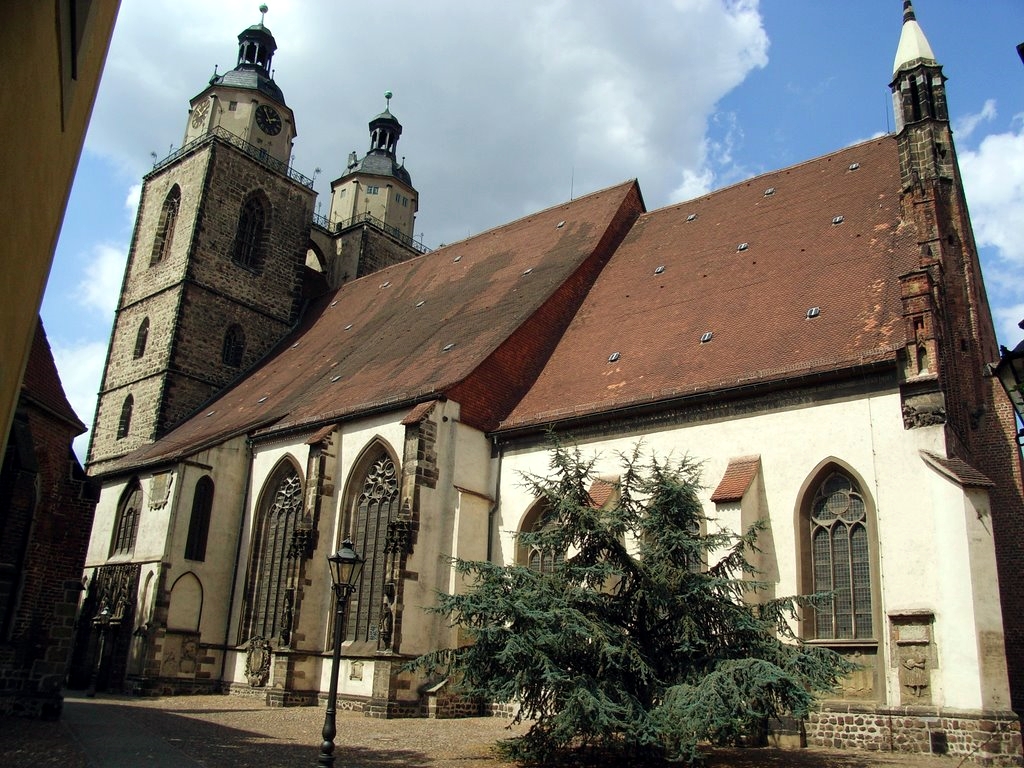
This is a lovely old church (the Stadtkirche), very large, with its double towers reaching high above the town. It is just behind the Markt on Kirchplatz. Since 1996 it has been a World Heritage Site.

witt 6d   The city church „Pfarrkirche St.-Marien“.

The first mention of the Pfarrkirche St.-Marien dates to 1187. Originally a wooden church in the Diocese of Brandenburg, in 1280 the present chancel and the chancel’s south aisle were built. Between 1412 and 1439 the nave was replaced by the present three-aisle structure and the two towers built, originally crowned by stone pyramids.

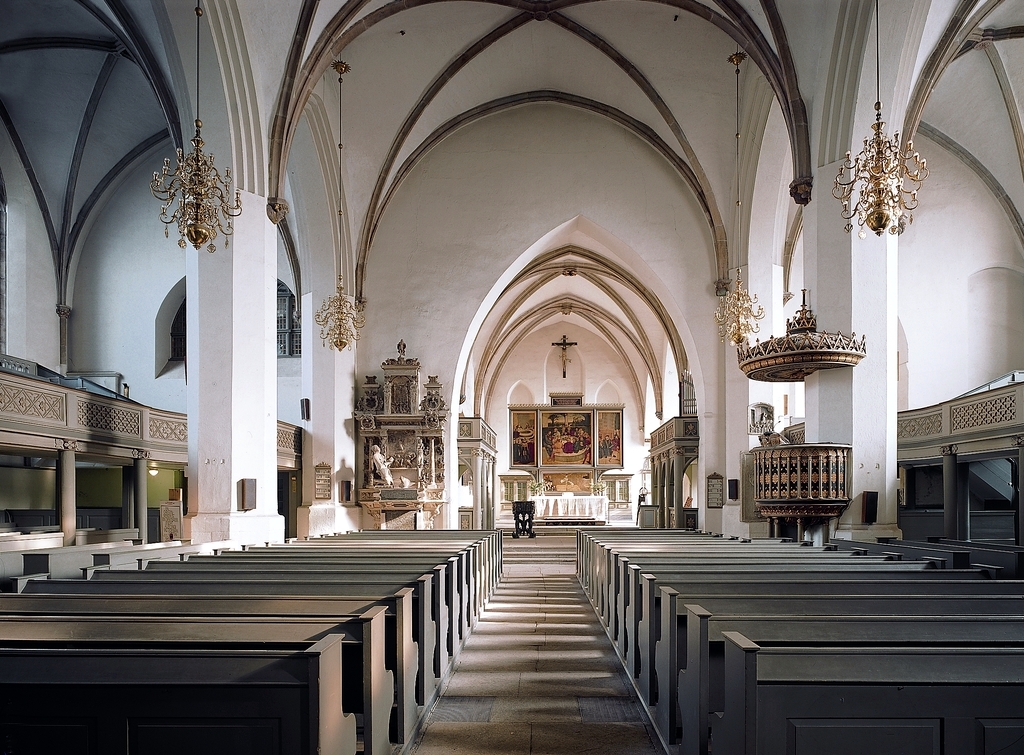
witt 6 stadtkirche  My chance for photographs, 2 minutes before closing, no people at all inside the church anymore.

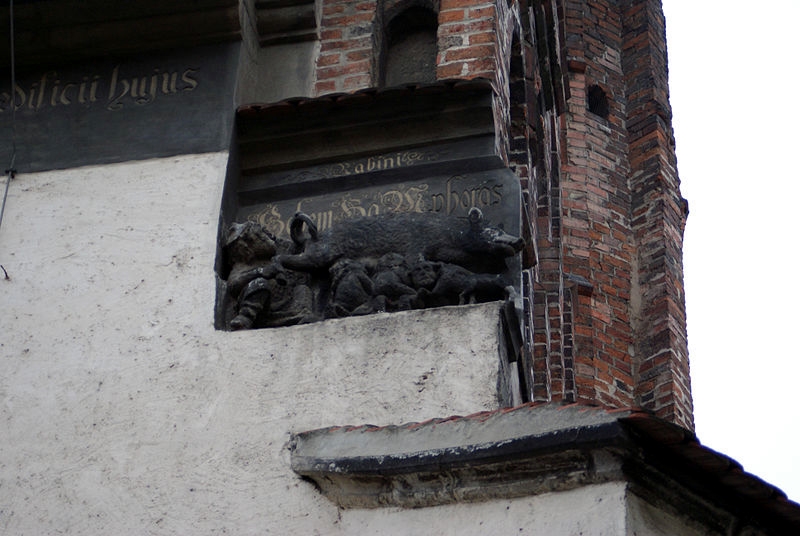
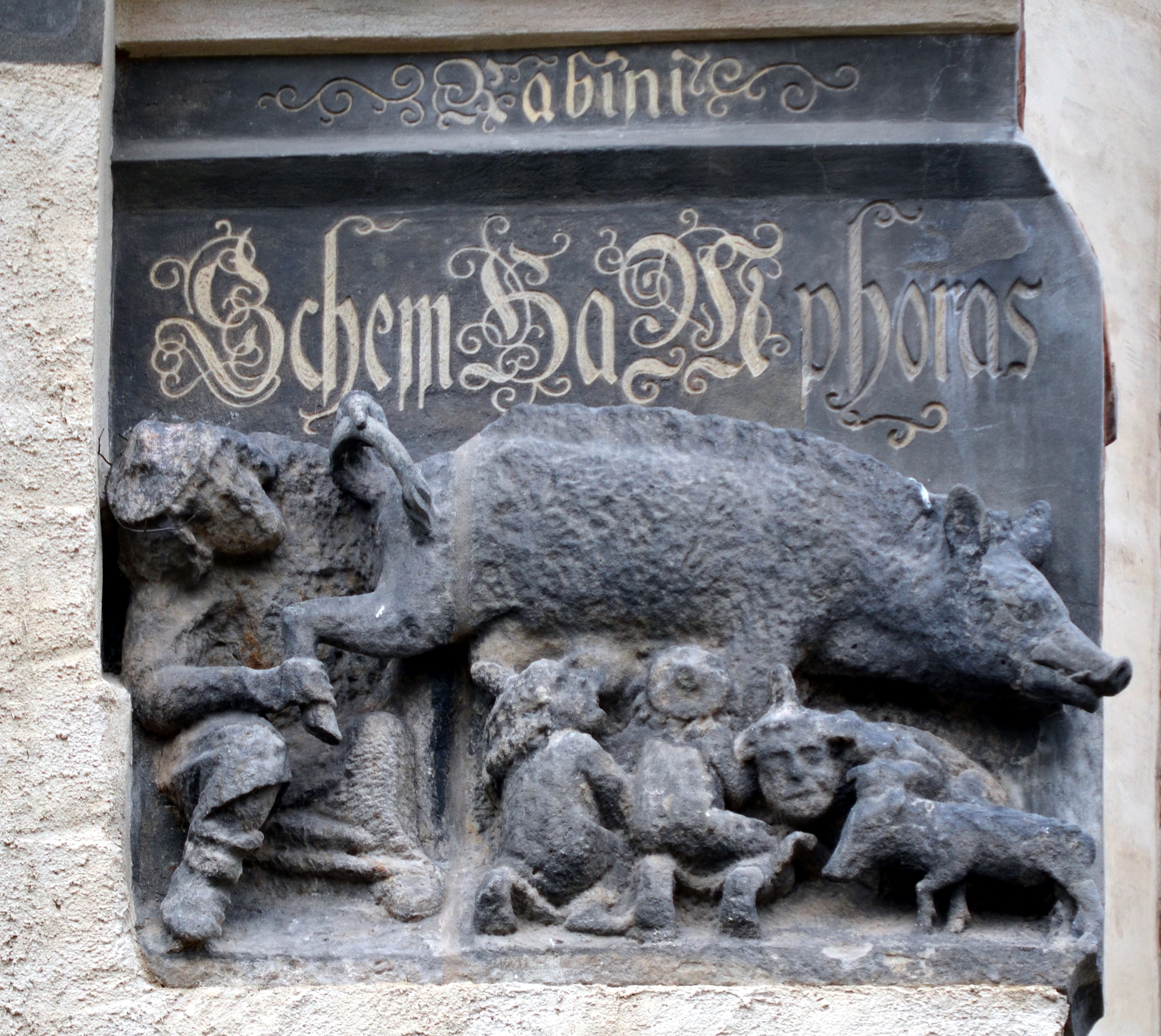
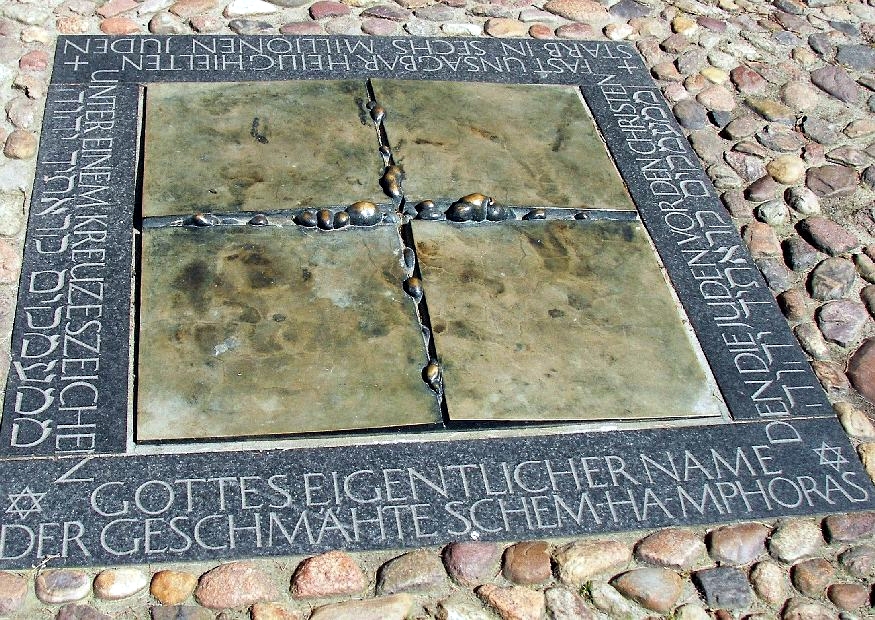
In 1522, in the wake of the iconoclasm begun by Andreas Bodenstein, almost the whole interior decoration was demolished and removed, leaving the still-surviving High Medieval Judensau on the exterior of the south wall. A Judensau (German for „Jews‘ sow“ or „Jewish sow“), also known as Saujuden is a folk art image of Jews in obscene contact with a large sow (female pig), which in Judaism is an unclean animal, that appeared during the 13th century in Germany and some other European countries; its popularity lasted for over 600 years.

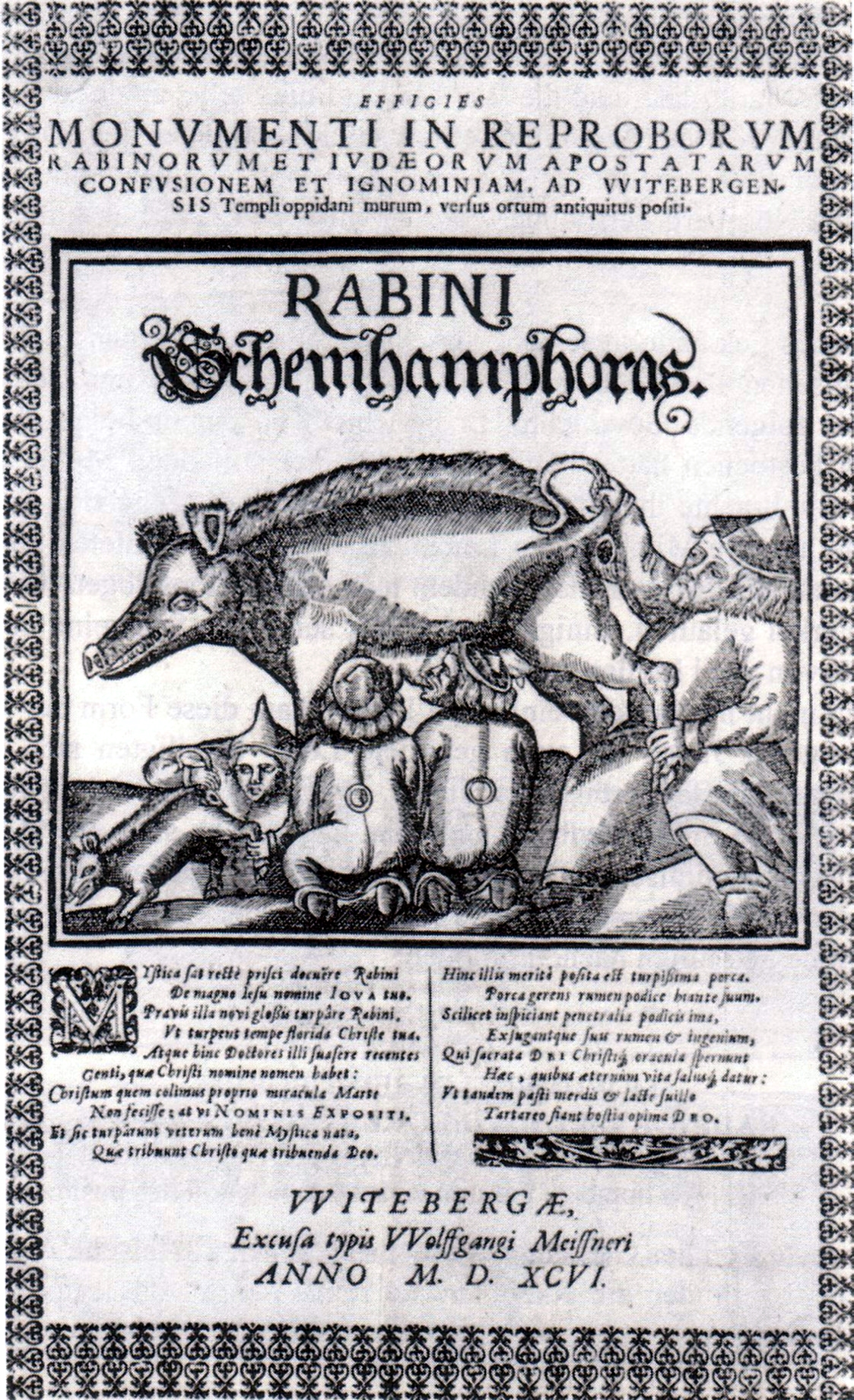
witt 6c      witt 6fff    See the „Judensau“ at the center/far right of the church.  This part dates from 1305 !! It portrays a rabbi who looks under the sow’s tail, and other Jews drinking from its teats. An inscription reads „Rabini Shem hamphoras“,
witt 6f antisemitic pig                        witt 6ff Judensau                       Left the medieval portrayal and right an engraving and explanation of the „monument“ from 1596. Dozens of these sculptures can be found at some churches around Europe today.

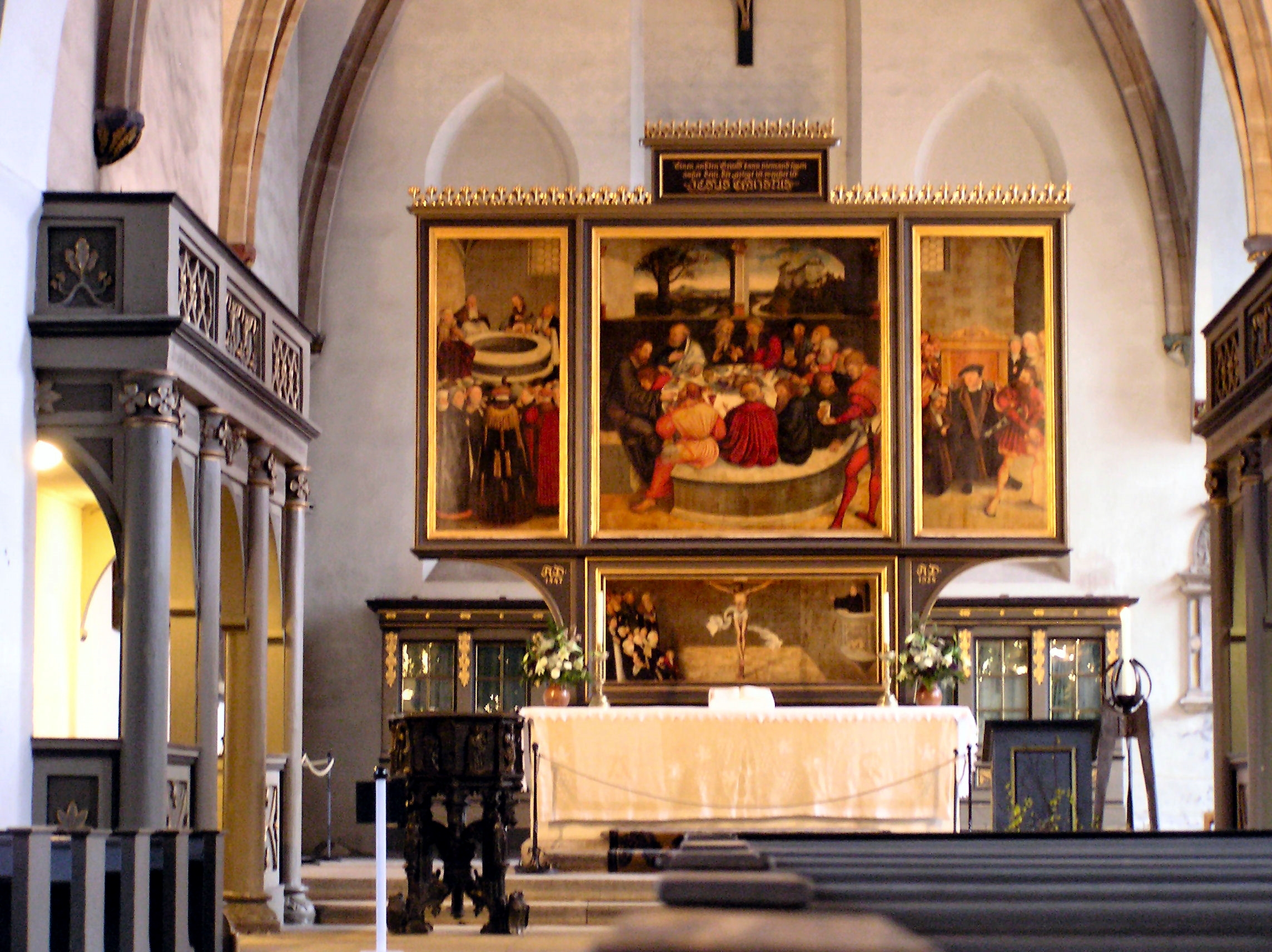
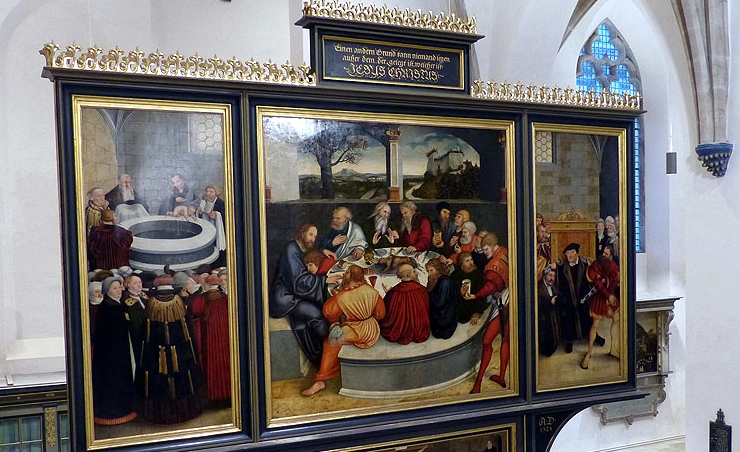
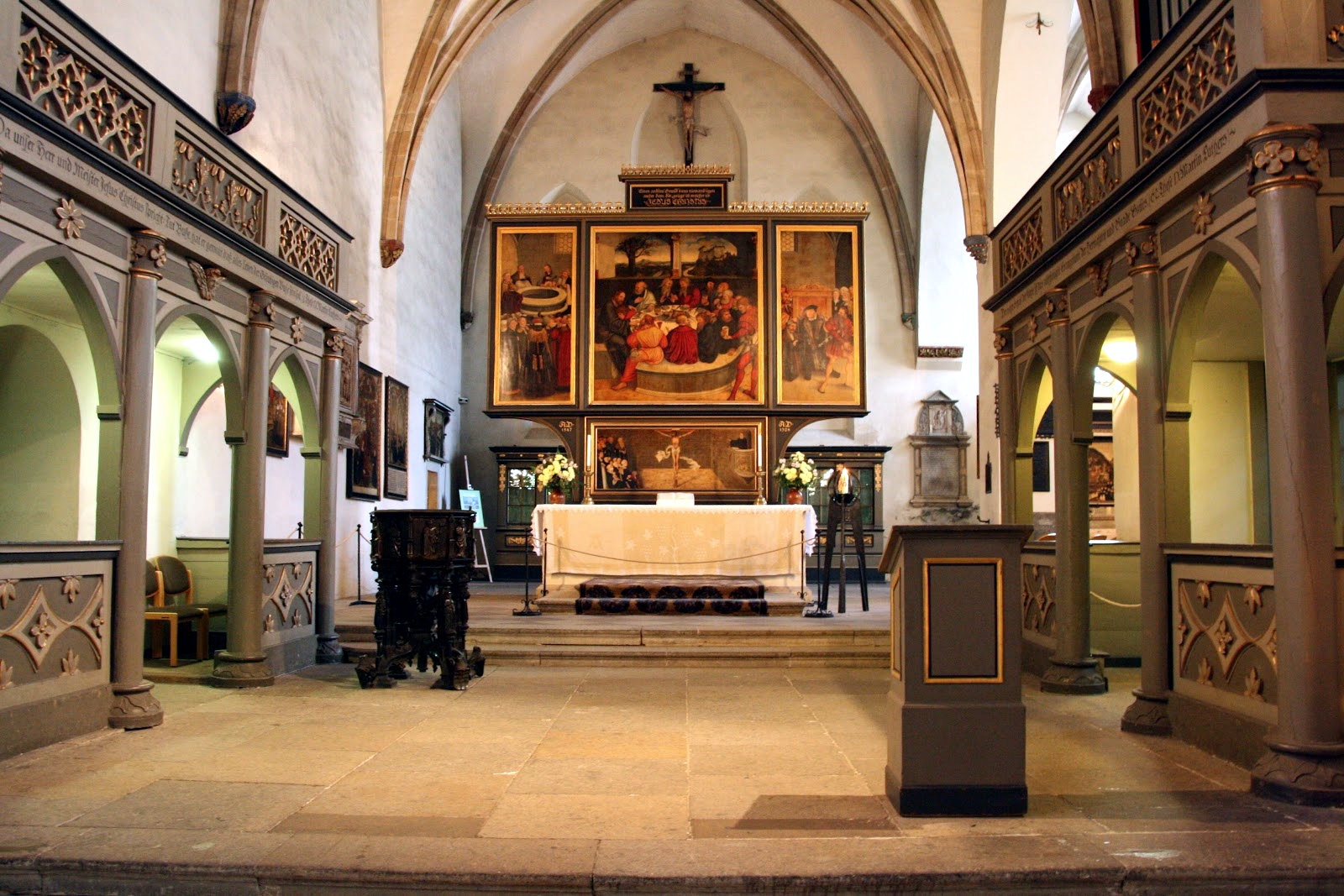
On his return to Wittenberg from the Wartburg, Luther preached his famous invocavit sermons in the Stadtkirche. In 1547, during the Schmalkaldic War, the towers‘ stone pyramids were removed to make platforms for cannon. Despite the war, an altarpiece by Lucas Cranach the Elder was unveiled in the church.

witt 6e stadtkirche chranach altar   witt 6ee    Lucas Cranach the Elder altar inside the City Church of Wittenberg. Magnificent peace of medieval art.

In 1556 the platforms were replaced by the surviving octagonal caps, a clock and a clock-keeper’s dwelling. This was followed by an extension of the east end and the overlying ‚Ordinandenstube‘. In 1811 the interior of the church was redesigned to a Neo-Gothic scheme by Carlo Ignazio Pozzi. The church was fully restored in 1928 and 1980-1983.

 witt 6h geschmaehte-schem-ha-mhoras    Compensation memorial to Judensau at Wittenberg Stadtkirche.  Outside the church underneath the Judensau.  Necessary gesture in today’s modern Germany.

Martin Luther preached many sermons in this church, and he and Katharina von Bora were married here. Their marriage is re-enacted annually in a popular festival. All of his children were baptized in the church. A large painting by Lucas Cranach the Elder is above the altar showing Luther receiving the cup at the Last Supper.

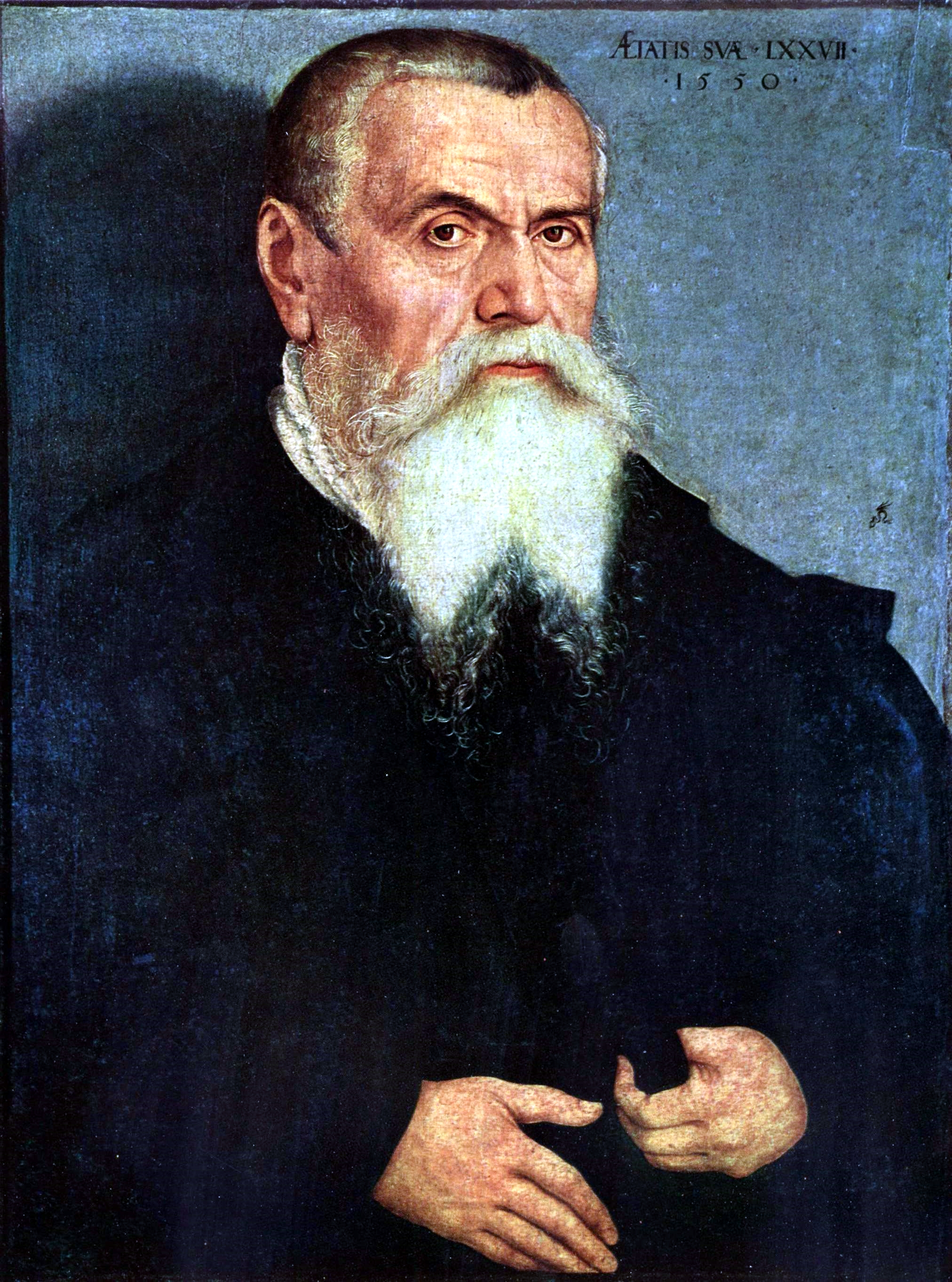
witt 16 cran a at 77 by lcran y   Lucas Cranach the Elder painted in 1550 by his son Lucas  Cranach the Younger.

Lucas Cranach the Elder.

Lucas Cranach the Elder (Lucas Cranach der Ältere, c. 1472 – 16 October 1553) was a German Renaissance painter and print maker in woodcut and engraving. He was court painter to the Electors of Saxony for most of his career, and is known for his portraits, both of German princes and those of the leaders of the Protestant Reformation, whose cause he embraced with enthusiasm, becoming a close friend of Martin Luther.

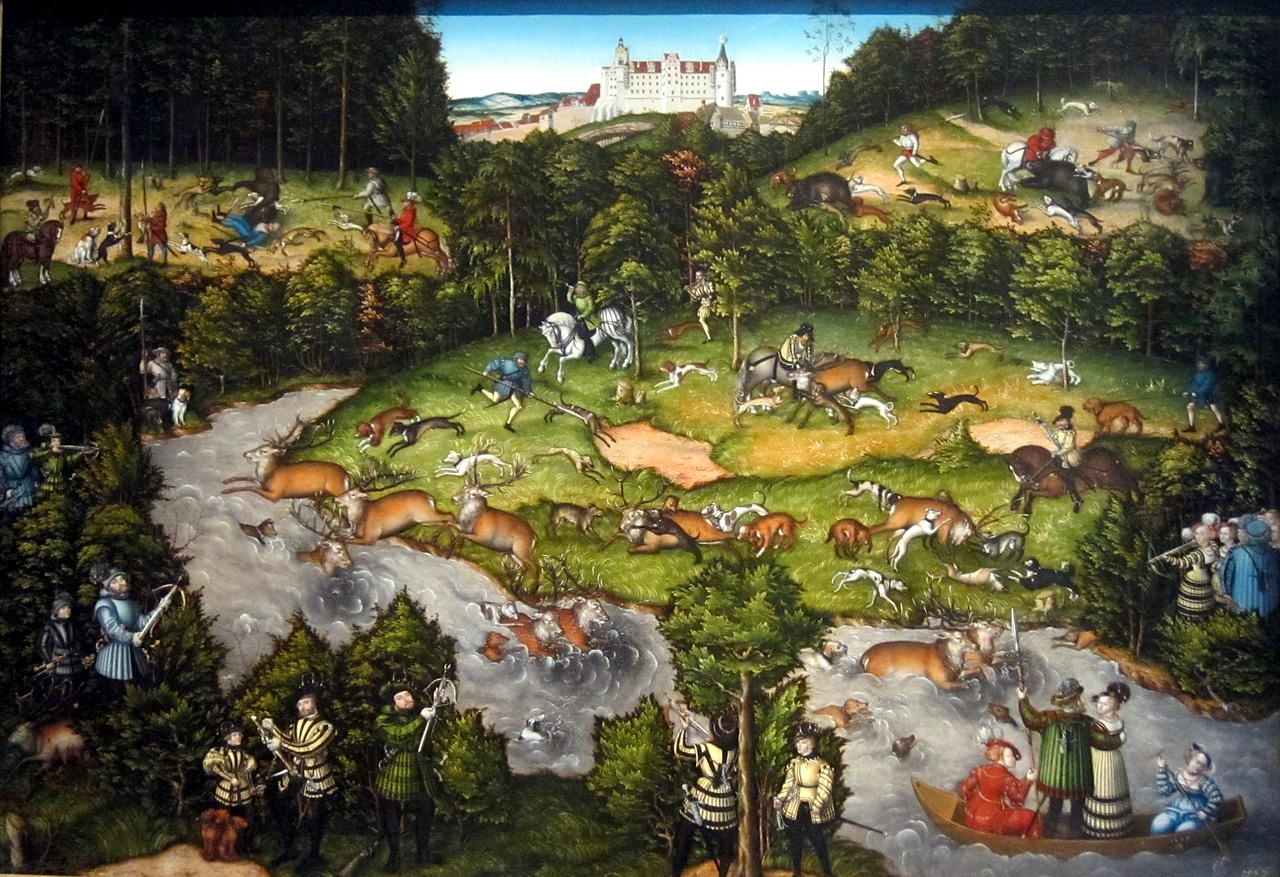
witt 16b cran a die hirschjagd 1540  Lucas Cranach the Elder „Deer Hunting“ from 1540.

He also painted religious subjects, first in the Catholic tradition, and later trying to find new ways of conveying Lutheran religious concerns in art. He continued throughout his career to paint nude subjects drawn from mythology and religion. He had a large workshop and many works exist in different versions. His son Lucas Cranach the Younger, and others, continued to create versions of his father’s works for decades after his death. Lucas Cranach the Elder has been considered the most successful German artist of his time.

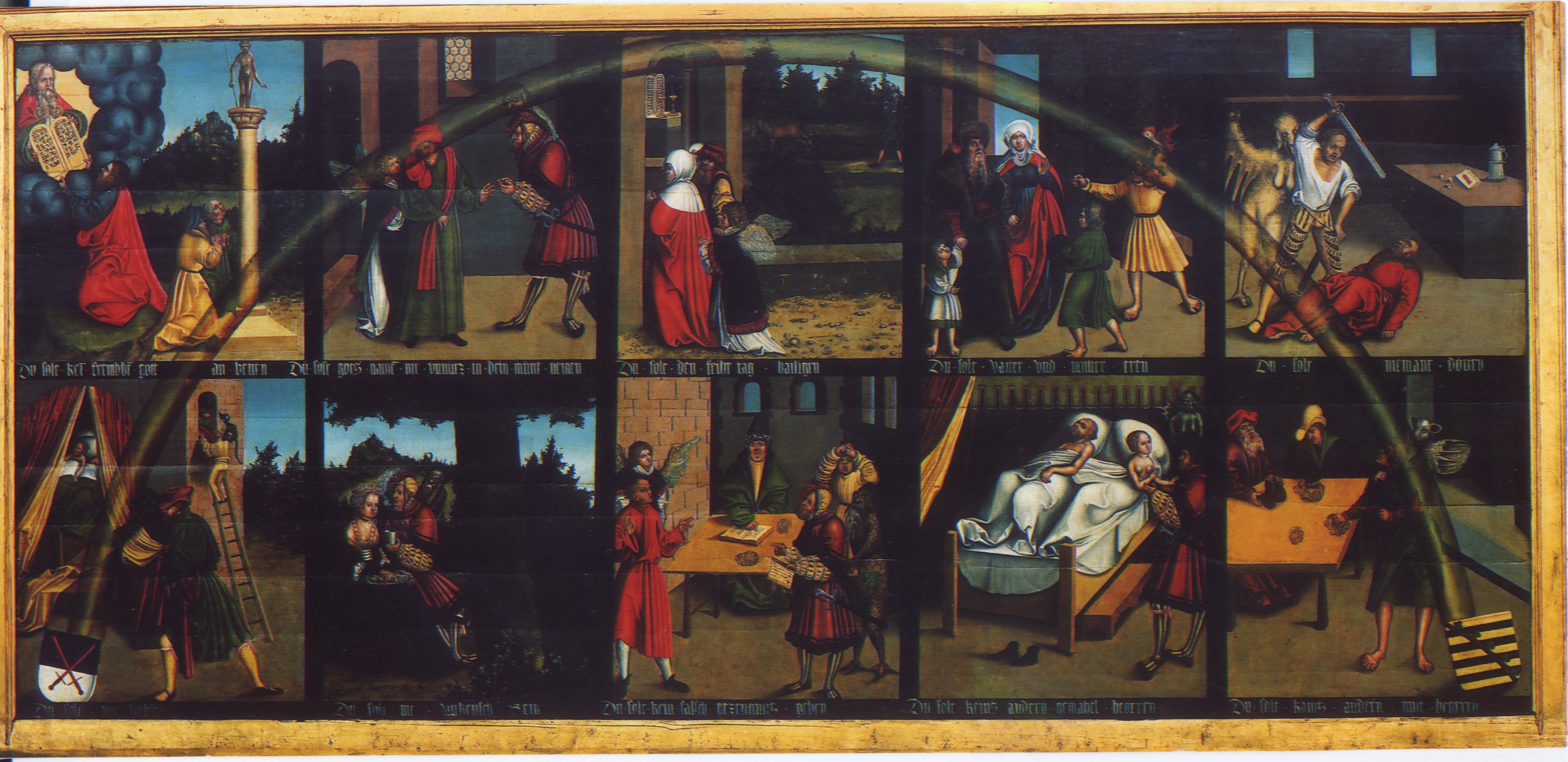
witt 16dd 10gebote cran a  „The Ten Commandments” is a wonderful piece of artwork by Reformation artist Lucas Cranach the Elder. Completed in 1516, this painting – in a modern comic style –  on wooden panels originally hung in the Wittenberg Rathaus (Townhall) where all of the townspeople could see them. Now the painting hangs in the refectory hall of Luther’s residence in Wittenberg.

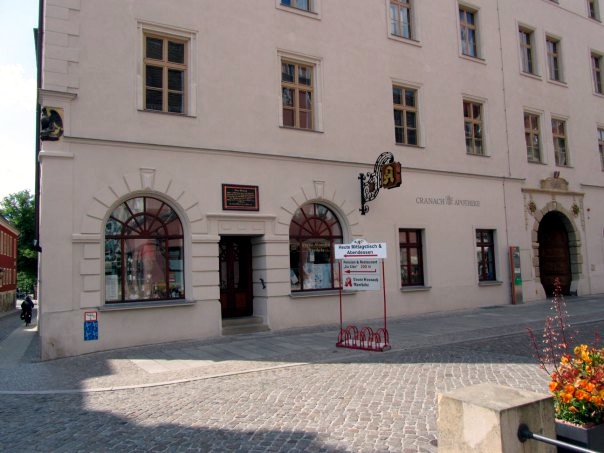
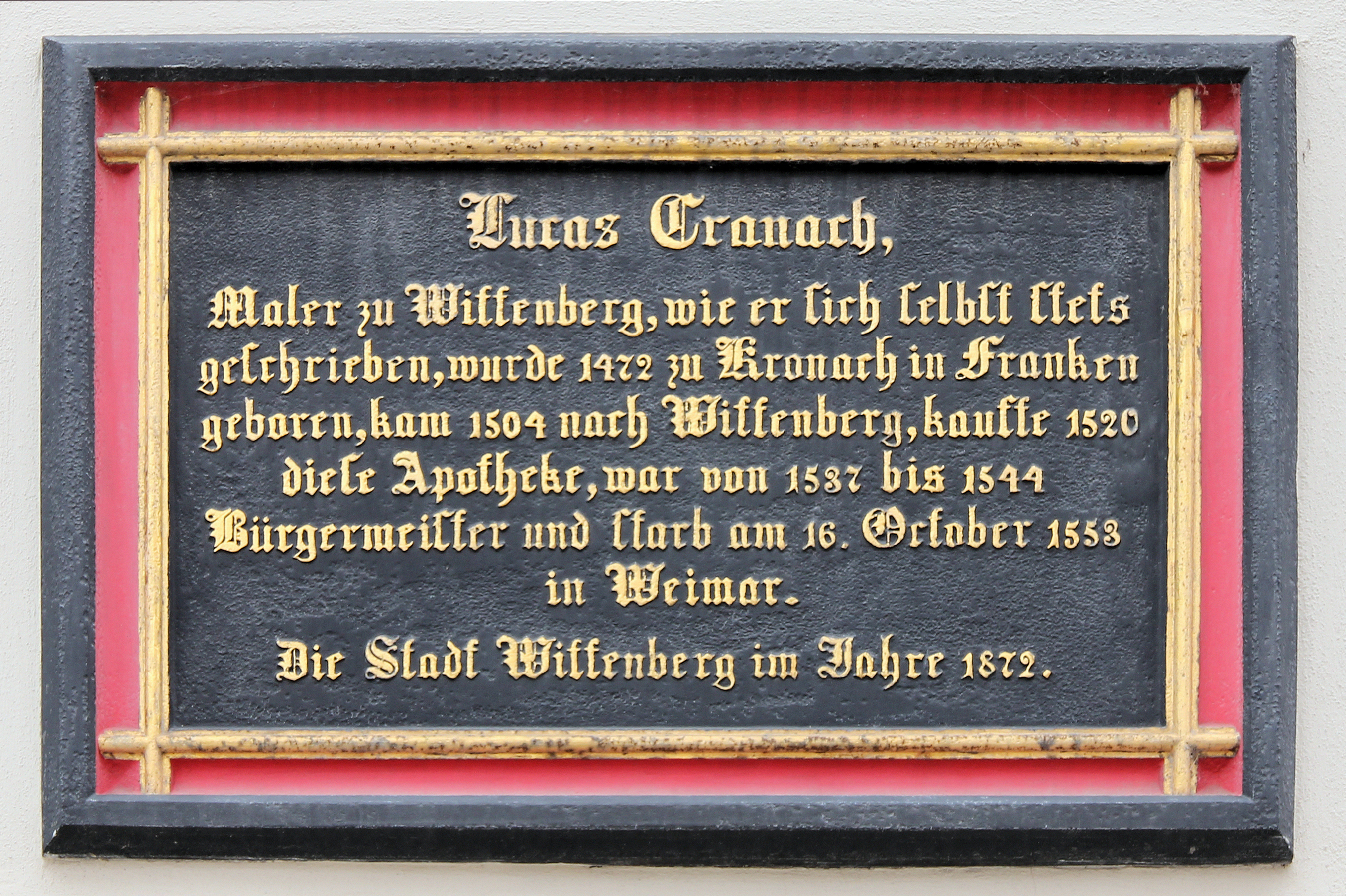
Lucas Cranach (the Elder) was not only one of the most accomplished and prolific painters of the 16th century, he was also the mayor of Wittenberg and owned a pharmacists shop, around 1520,  that is still doing business as a pharmacy (or Apotheke) in Wittenberg, Schlossstrasse 1, today! Cranach also owned a print shop where he printed 1522 Martin Luther’s first Bible in German language.

witt 16i apotheke    witt 16e cran a Schlossstr_1        The Cranach Pharmacy, since 1520 in Wittenberg, Schlossstrasse 1. Far right the entry gate to the Cranach Courtyard.  Right picture shows the Cranach commemorative plague above the pharmacy entrance.
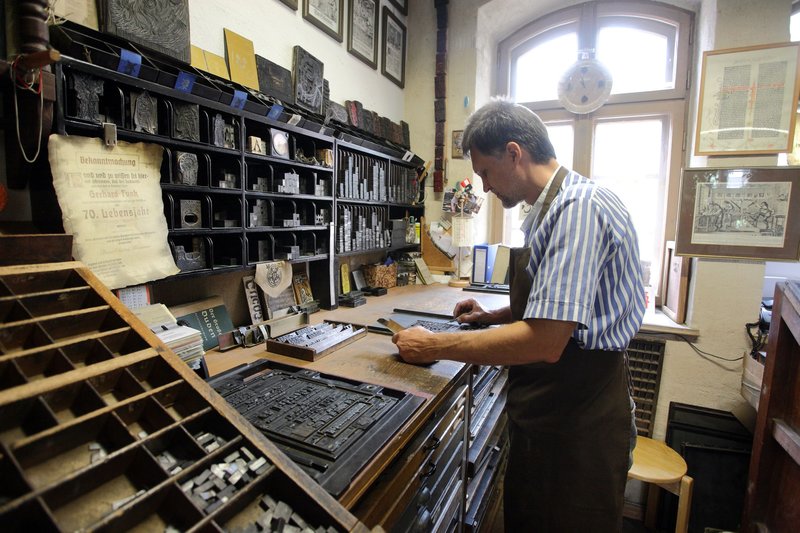
witt 16f hist druckerei cran haus     Historic Cranach print shop inside the Cranach House, where Lucas Cranach printed 1522 Martin Luther’s first Bible in German language.

His paintings, drawings and woodcuts are in museums all over Europe. His house on Collegienstrasse is now a museum and his artist studio behind the house has some interesting exhibits. Also worth to visit, the Cranachhof (Cranach courtyard), number 1 Schlossstrasse.

 witt 16h cranachdenkmal im cranachhof schlossstr. 1    Lucas Cranach the Elder monument inside the courtyard.


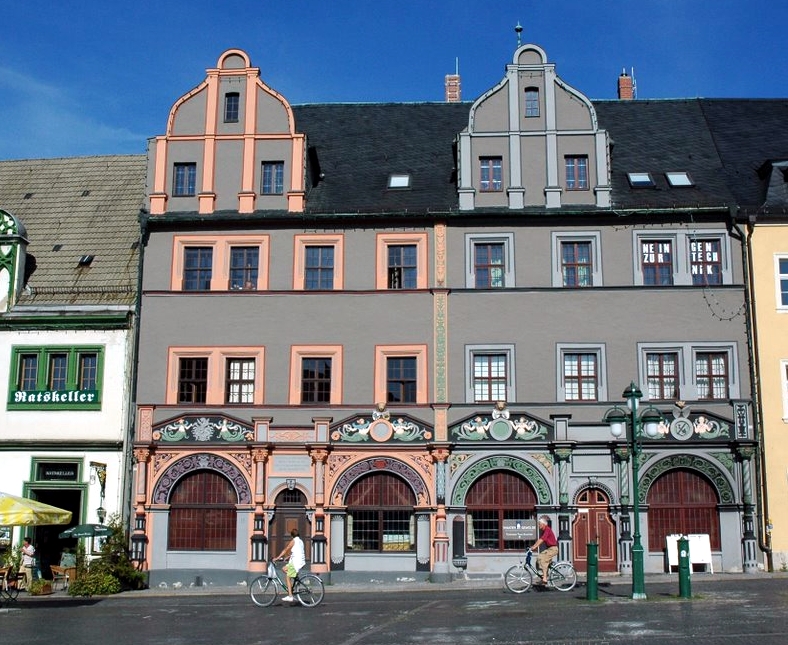
witt 16gg cran haus markt weimar   The famous painter spent the last year of his life (1549) in this Renaissance house, „The Cranach House“ at the market in Weimar. His studio was on the third floor.

Lucas Cranach the Younger.

Lucas Cranach the Younger (Lucas Cranach der Jüngere; 4 October 1515 – 25 January 1586) was a German Renaissance painter and portraitist, also known as the son of Lucas Cranach the Elder.

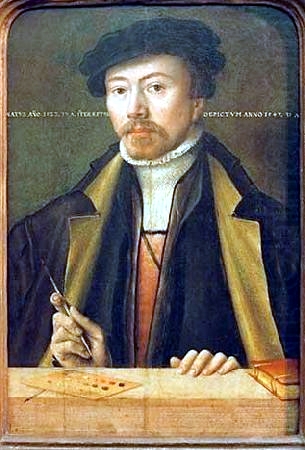
 witt 16k LC-d-J selbstbild   Lucas Cranach the Younger, self portrait around 1540.

He is known for portraits and simple versions of allegorical and mythical scenes. The style of his paintings can be so similar to those of his father that there have been some difficulties in attribution of their works. Prominent scholars seem to, nowadays, tend toward the opinion of honest description of his talent as, stoic and undeveloped, at most.

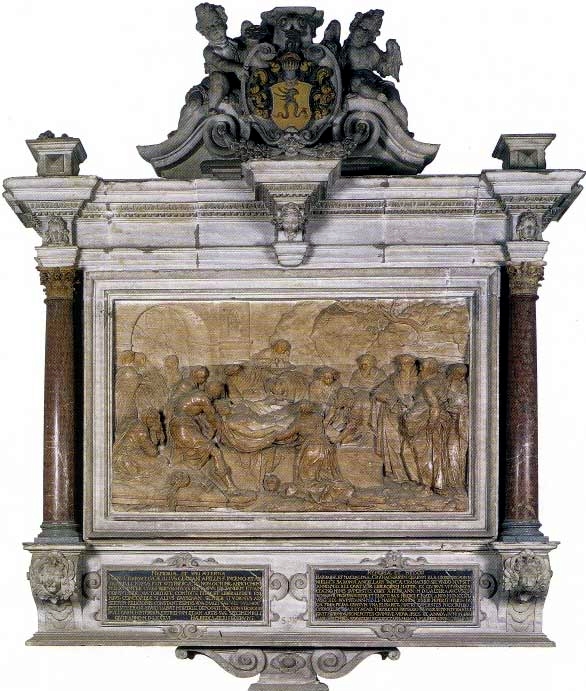
witt 17a LC_d_J                witt 17aa LC_d_J         Epitaph for Lucas Cranach the Younger and his two wife’s in the Town Church of Wittenberg.

The Town Church of St. Mary in Wittenberg is home to many original paintings by Lucas Cranach the Younger. It is also an authentic site that testifies to the life of the painter, from his earliest years to his death. The grave of Lucas Cranach the Younger is located here. This is where he heard the sermons of the great reformers; and this is likely where he was baptized and wed twice.

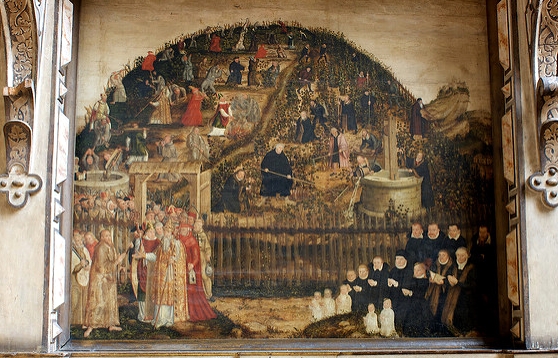
witt 6aa  The wonderful choir inside the Town Church with the Lucas Cranach the Elder and his son Lucas Cranach the Younger (co-painter) altar in the center. Left foreground the beautiful carved font. At the left wall some of the art collection and in the right background (between the columns) Cranachs  famous painting „The Vinyard of the Lord“.   Click on pic to supersize.

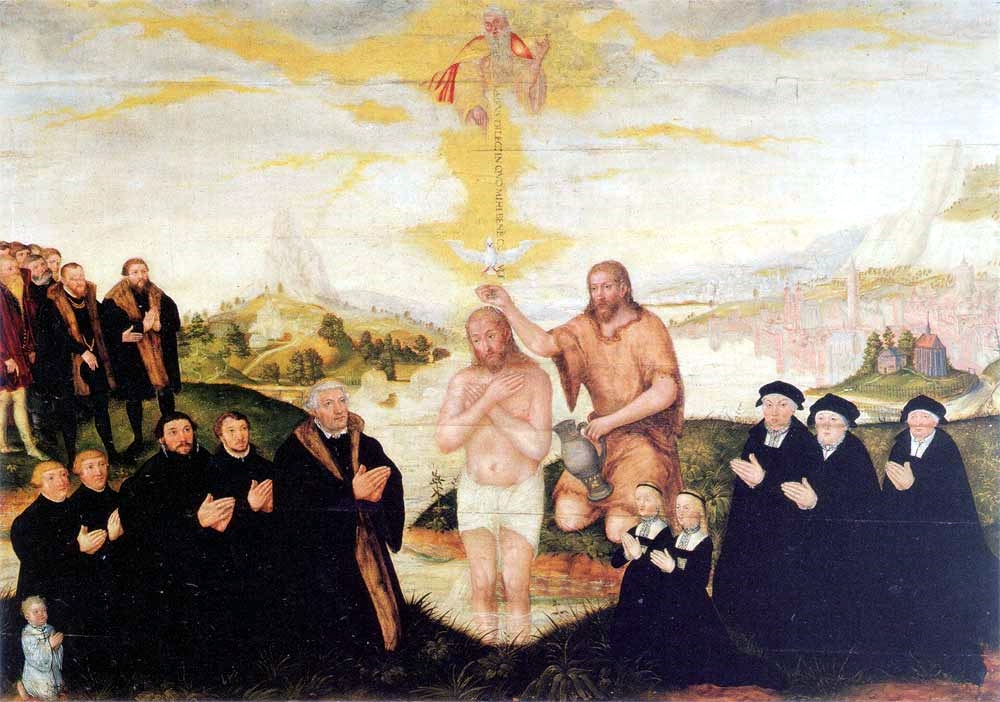
For the “Cranach’s Church” exhibition, Cranach’s works in the Town Church of St. Mary were carefully restored, among them the famous Reformation Altar, on which Lucas Cranach the Younger worked together with his father (see the part about the church itself). Other important works include the epitaphs for Johannes Bugenhagen and Paul Eber, the latter better known under the title “Der Weinberg des Herrn” (“The Vineyard of the Lord”). The works are regarded as important documents of the history of the Reformation.

witt 17ca the vinyard of the lord 1569   „The Vineyard of the Lord“, 1569 by Lucas Cranach the Younger. In the center Martin Luther working in the vineyard. Epitaph’s like this one for Paul Eber (kneeling at the bottom right with his whole family) are made and financed by wealthy citizens of the parish.
witt 17g LC-d-J taufe jesu 1560  „The Baptism of Jesus“, 1560 by Lucas Cranach the Younger. Epitaph for the 1558 deceased Johannes Bugenhagen (white hair, left), the first protestant pastor in the town church.

Melanchton House.

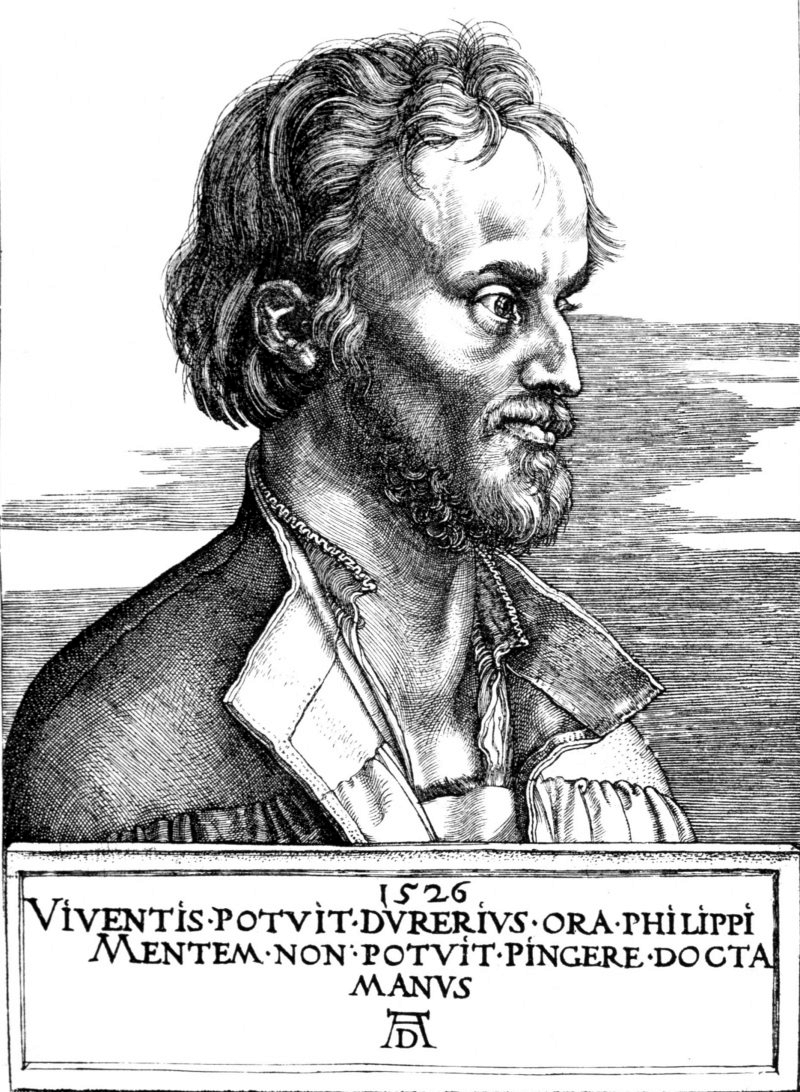
Philip Melanchthon (Philippus Melanchthon) (16 February 1497 – 19 April 1560), born as Philipp Schwartzerdt, was a German reformer, collaborator with Martin Luther, the first systematic theologian of the Protestant Reformation, intellectual leader of the Lutheran Reformation, and an influential designer of educational systems.

witt 11b melanchton by AD   Phillip Melanchton, engraving by Albrecht Duerer 1526.

He stands next to Luther and Calvin as a reformer, theologian, and molder of Protestantism. Along with Luther, he is the primary founder of Lutheranism. They both denounced what they believed was the exaggerated cult of the saints, asserted justification by faith, and denounced the coercion of the conscience in the sacrament of penance by the Catholic Church, that they believed could not offer certainty of salvation.

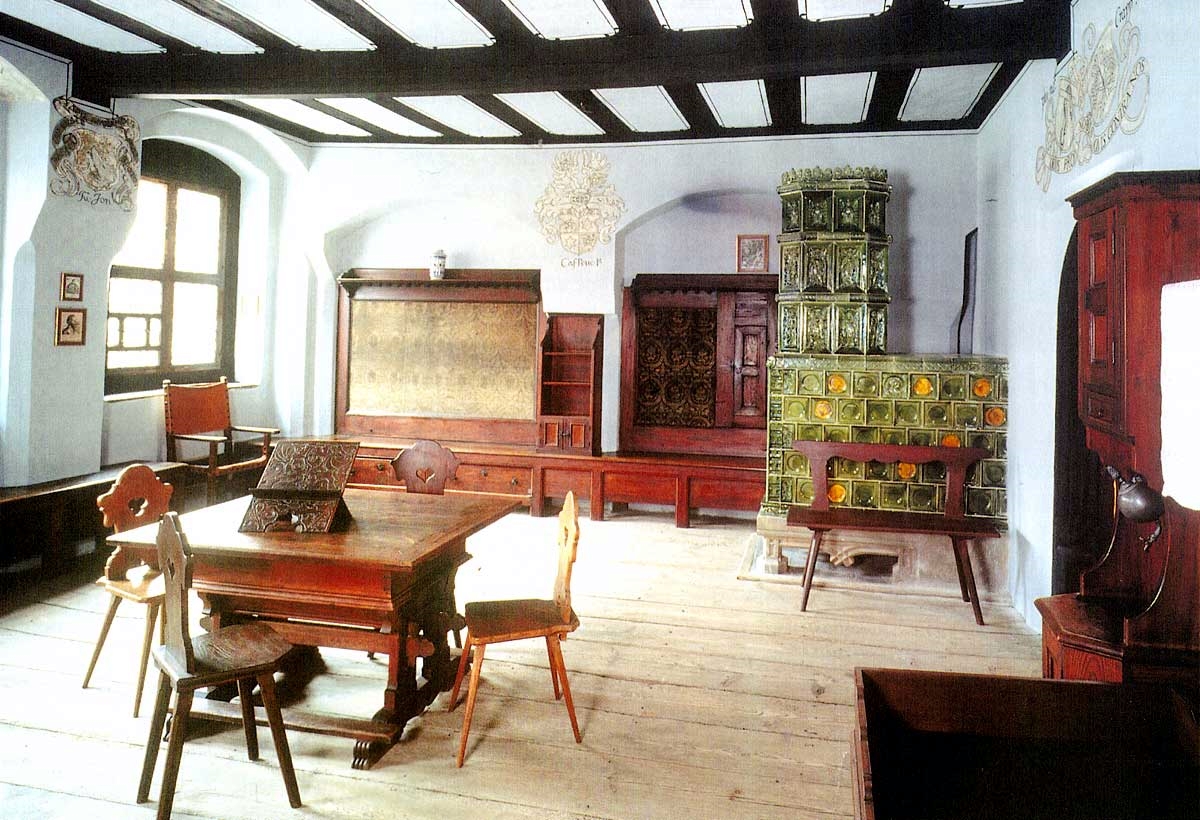
   witt 11f                  witt 11a melanchthonstube                     Left the Melanchton House in Wittenberg and right Melanchton’s Study Room on second floor.

In unison they rejected transubstantiation, the belief that the bread from the Lord’s Supper becomes Christ’s body when consecrated. Melanchton made the distinction between law and gospel the central formula for Lutheran evangelical insight. By the „law“, he meant God’s requirements both in Old and New Testament. The „gospel“ meant the free gift of grace through faith in Jesus Christ.

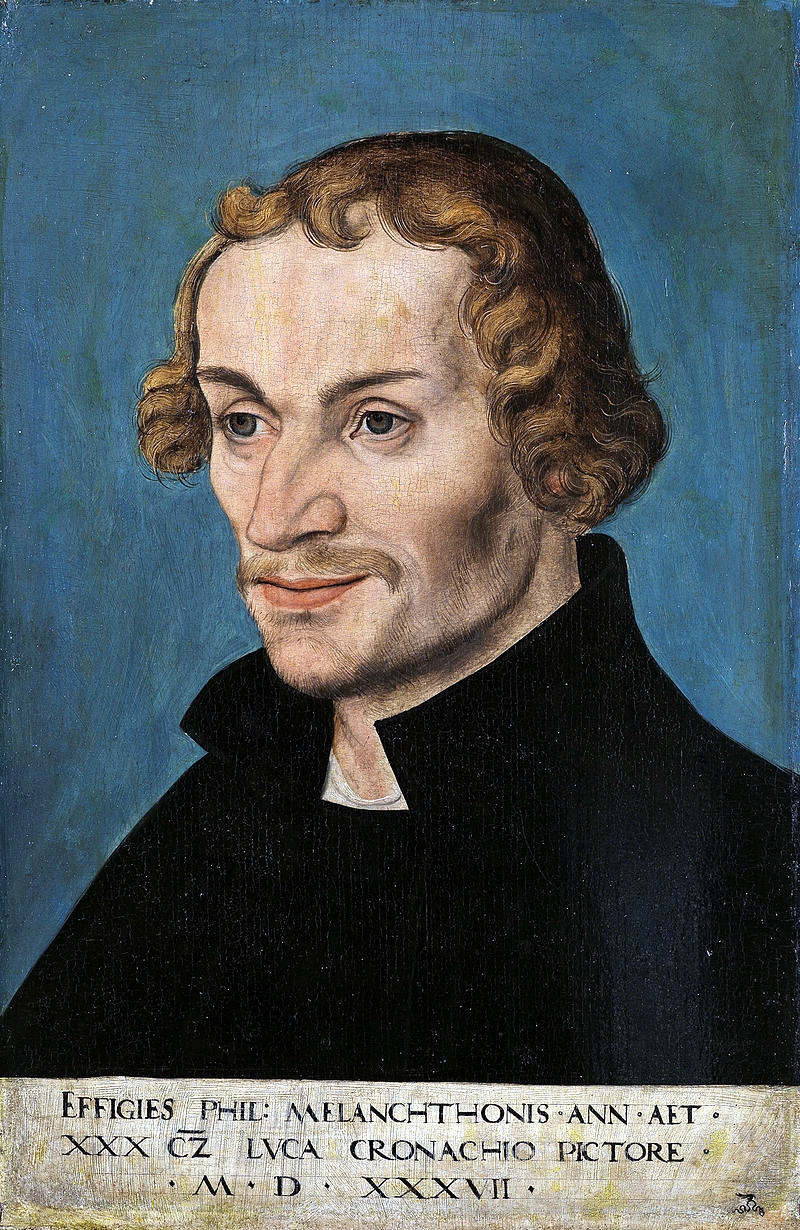
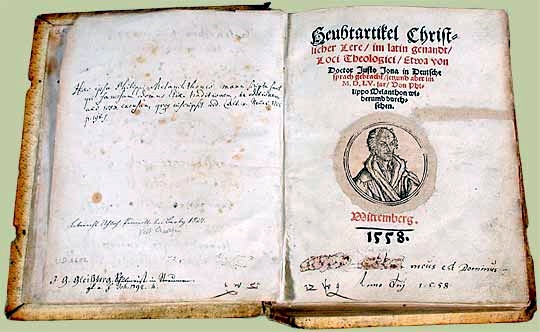
witt 11 melanchthon1537                      witt 11h                             Left Phillip Melanchton painted by Lucas Cranach the Elder in 1537.    Right the „insegnamento cristiano“, printed in Cranachs print shop in Wittenberg 1558.

Opposed as a reformer at Tübingen, he accepted a call to the University of Wittenberg by Martin Luther, recommended by his great-uncle Johann Reuchlin. Melanchthon became professor of the Greek language in Wittenberg at the age of 21. He studied the Scripture, especially of Paul, and Evangelical doctrine. He was present at the disputation of Leipzig (1519) as a spectator, but participated by his comments. Johann Eck having attacked his views, Melanchthon replied based on the authority of Scripture in his Defensio contra Johannem Eckium (Wittenberg, 1519).

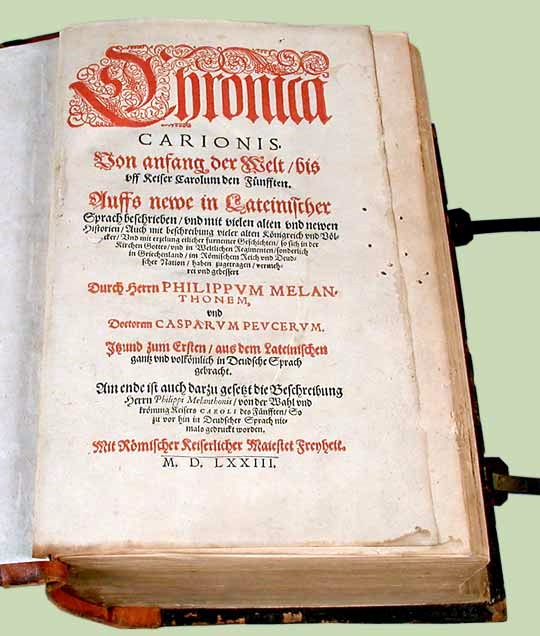
witt 11g   „Chronica Carionis“. „Vom Anfang der Welt bis Kaiser Karl dem V“ (from the beginning of the world until Emperor Charles the V). Written and translated by Phillip Melanchton in to German language. This edition printed 1573, thirteen years after the death of Phillip Melanchton.

After lectures on the Gospel of Matthew and the Epistle to the Romans, together with his investigations into the doctrines of Paul, he was granted the degree of bachelor of theology, and was transferred to the theological faculty. He married Katharina Krapp, daughter of Wittenberg’s mayor, on 25 November 1520.

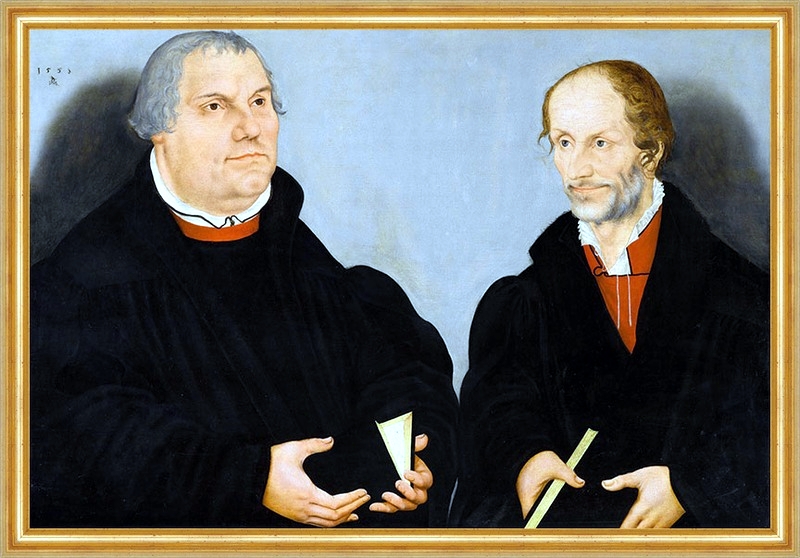
witt 17 LC-d-J luther und melanchton   Martin Luther (left) and Phillip Melanchton (right), painted by Lucas Cranach the Younger in 1557, when Martin  Luther was already 11 years deceased.
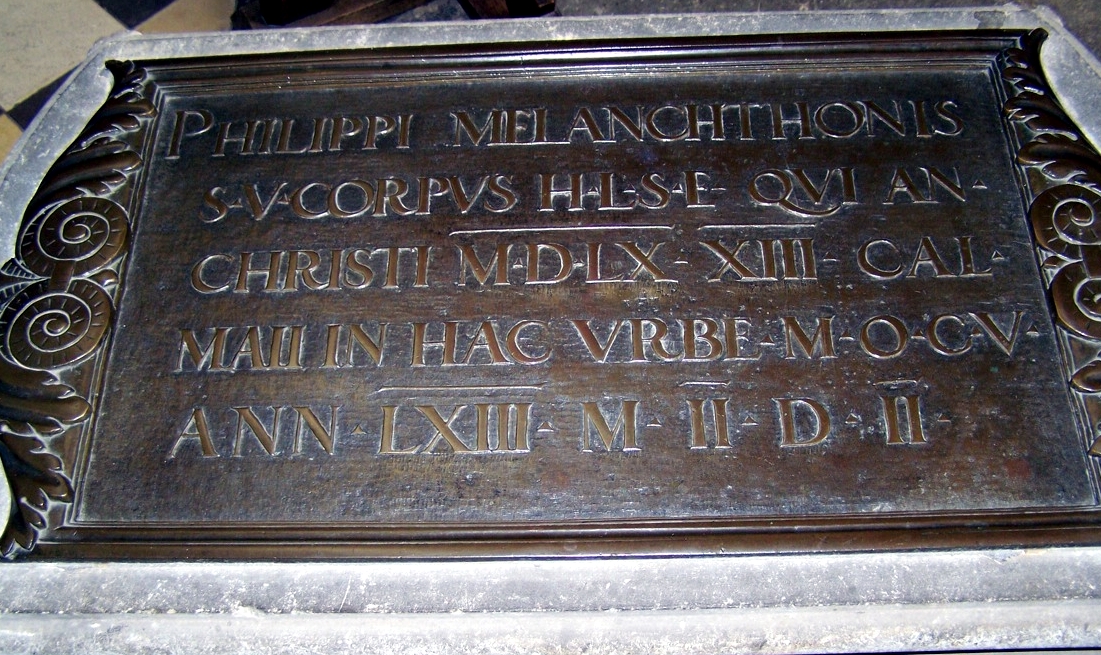
witt 8g melanchton grave   Philip Melanchthon’s tomb to find inside the Castle Church. The inscription translates to: „Here rests the body of the most commendable Philipp Melanchthon, who died on 19 April 1560, in this town after he had lived for 63 years 2 months and 2 days.“

Today the Lutherstadt (Luther Town) Wittenberg has a population around 50,000 and is located about 90 kilometers southwest of Berlin, easily accessible by car or train. Located on the Elbe River, Lutherstadt Wittenberg is also a favorite stopping point for the popular river cruise ships. It is the home town of Dr. Martin Luther, the Great Reformer, and the city affectionately known as the “Cradle of the Protestant Reformation”. Read all about this in the upcoming 2nd part of this post.

Veröffentlicht unter History, Must See, Travel | Verschlagwortet mit , , | 4 Kommentare

Biomuseo and American Trade Hotel

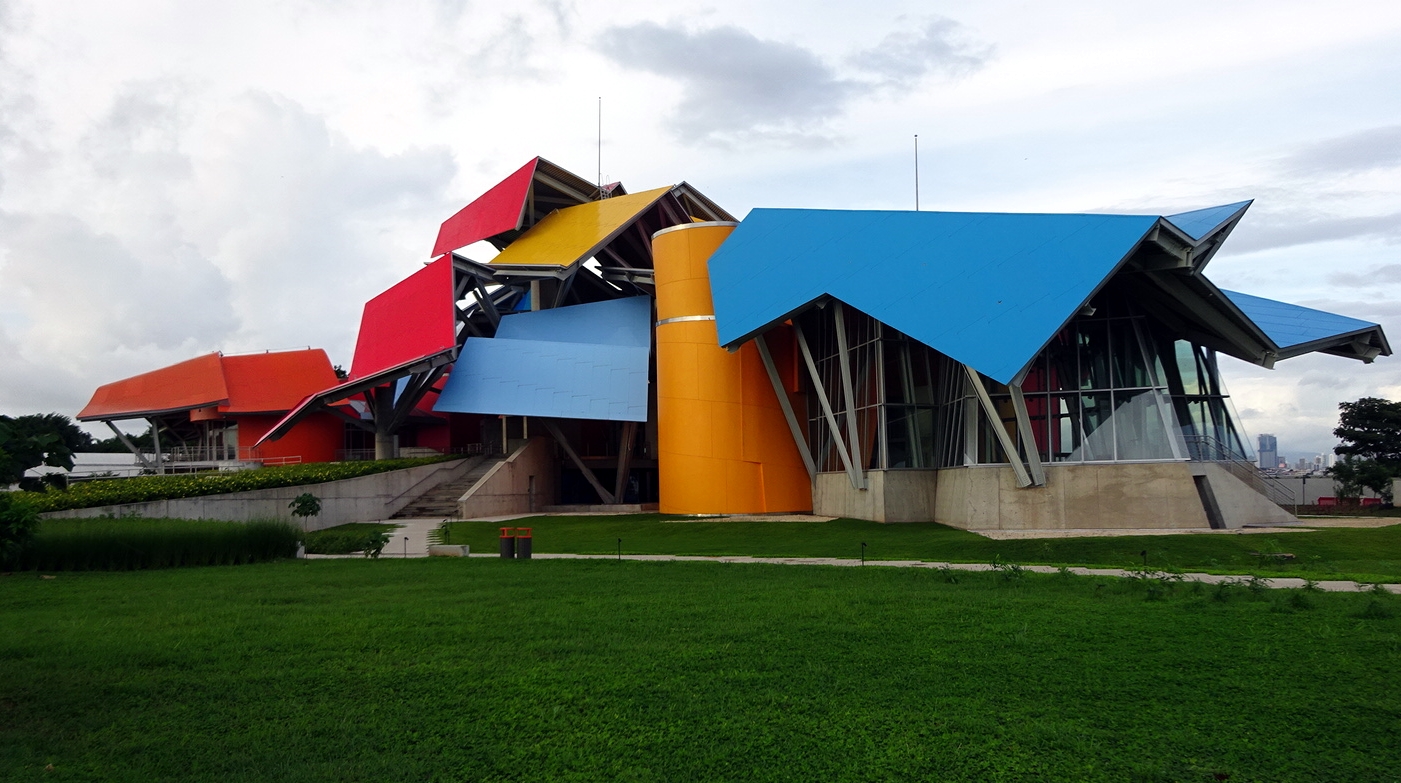
street art panama 6 biomuseo by frank gehry    Click on pictures to supersize.

Sitting at a logical centerpoint in Central America, Panama City hopes to become a new destination for ecotourism and hipsters alike. With an outpost of an Ace Hotel and a new Gehry building, the city is sure to become a destination.

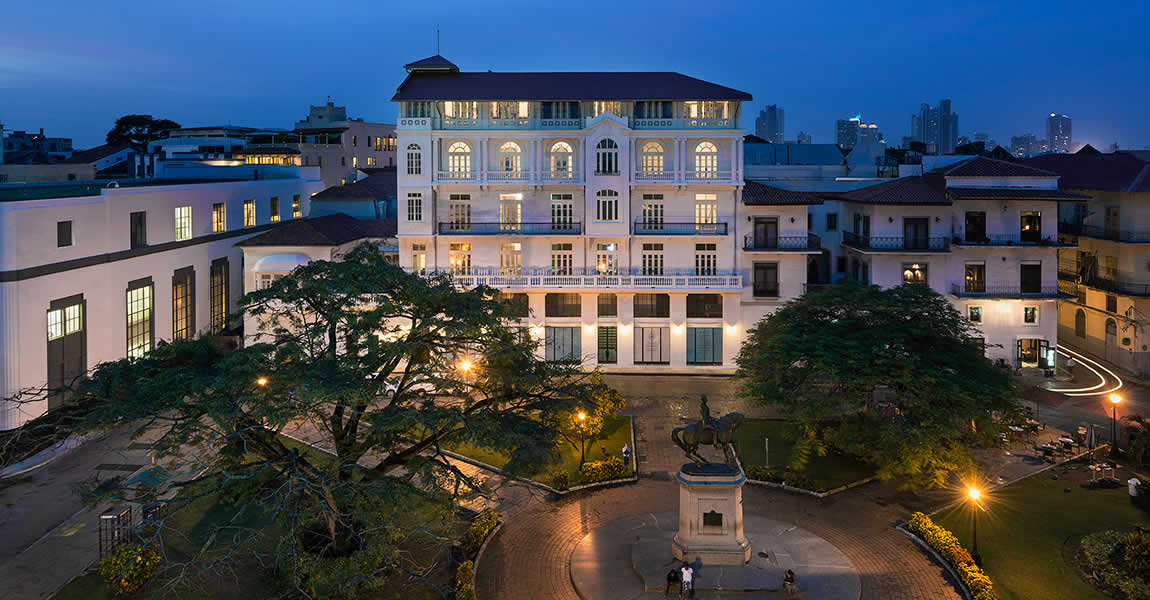
 panama 14   The American Trade Hotel – Ace – Panama City.

Last year, when I visited Panama again, I choose the Ace Hotel, a luxury boutique hotel, instead of one of the multi-story glass-monsters.  My benefit was the location right in the middle of Casco Viejo, the old, beautiful renovated,  city center.

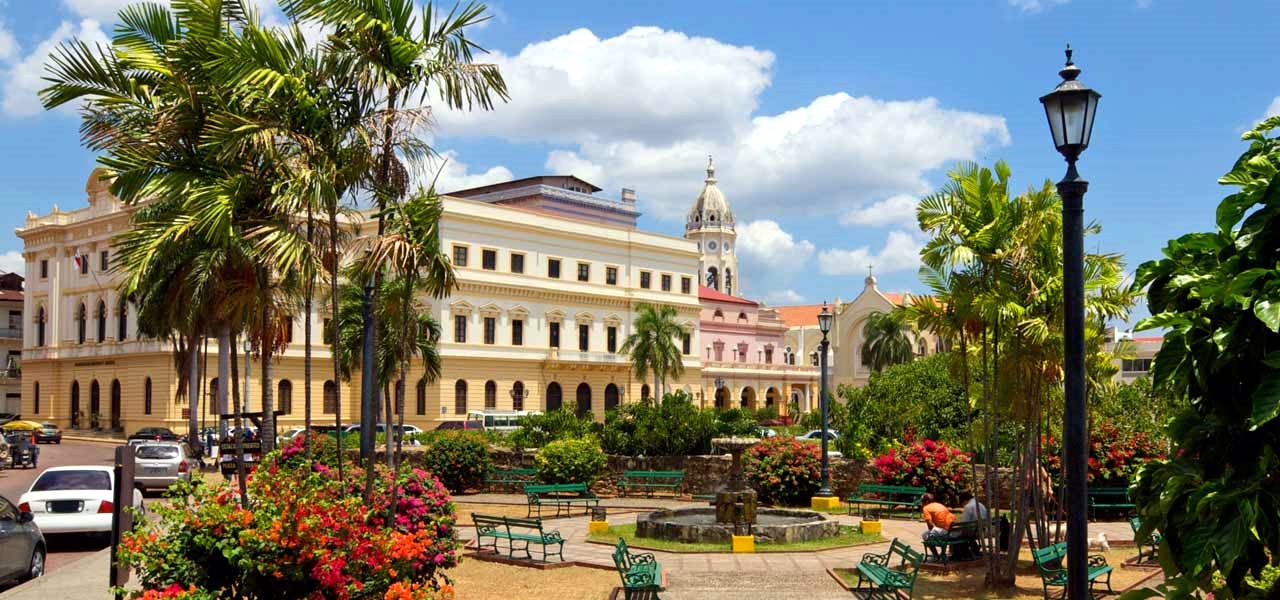
   panama 12 casco antiguo Plaza Bolivar Casco Viejo, Panama City. Meantime a clean and safe area, by day and night. Lots of cafes and restaurants around the plaza.

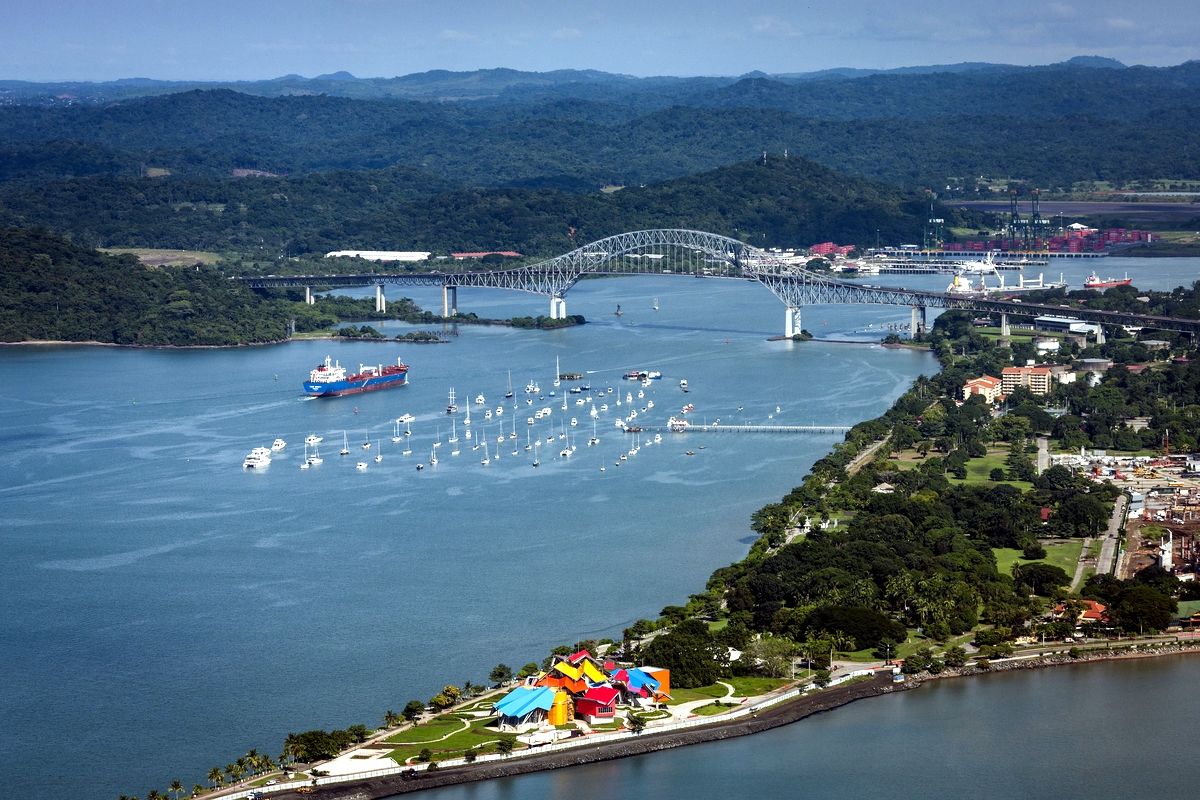
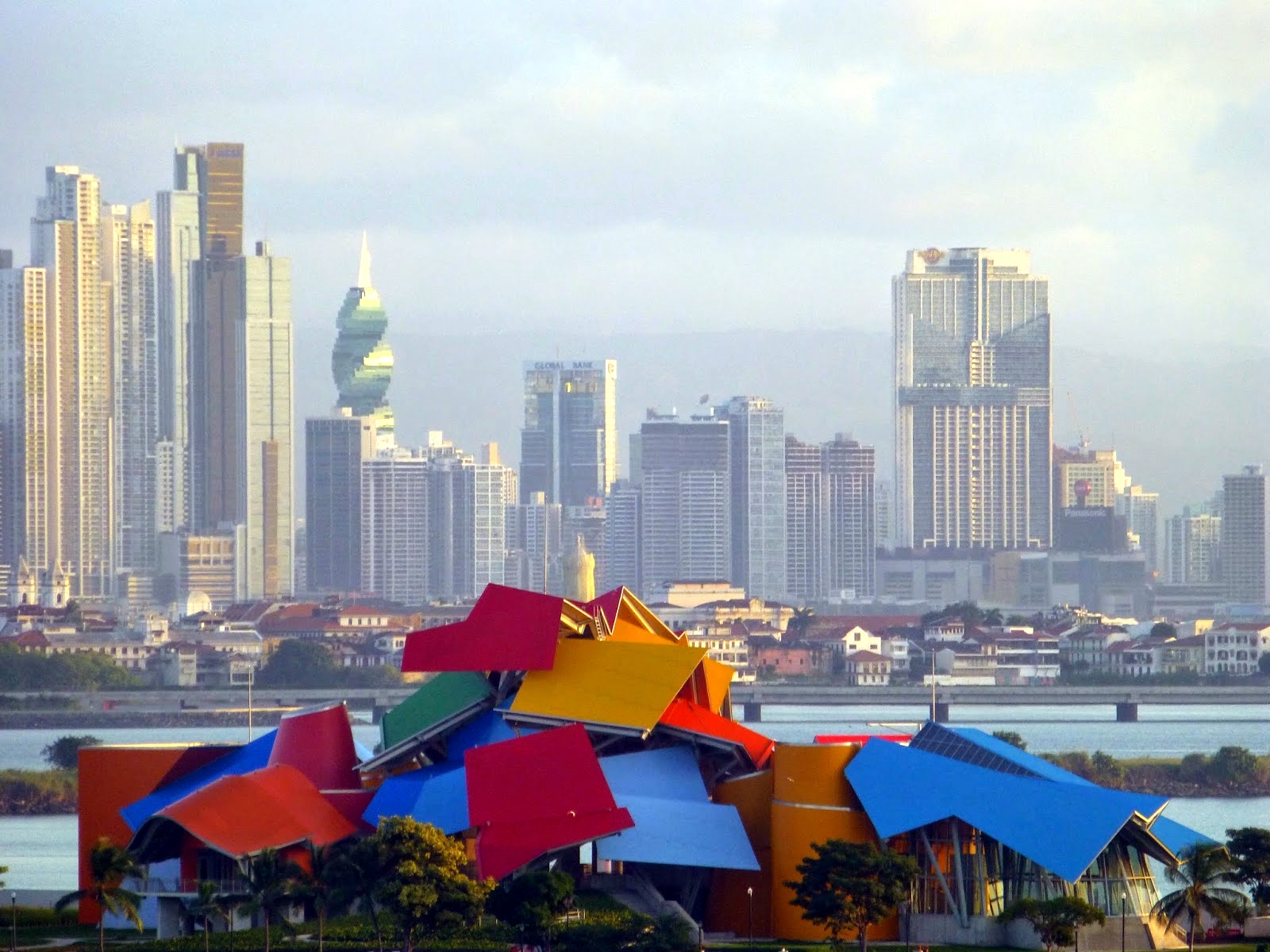
Panama likes to be the crossroads between the old world and the new world, between east and west or better north and south. Now it is set to become a significant player in the stakes as a key cultural city and important biodiversity research center. The new Gehry designed Biomuseo, a Smithsonian affiliated museum, is situated within view of the Pacific Ocean to the east and the entrance to the Panama Canal to the west, placing it at the forefront of a new cultural and eco-tourist center for the region.

street art panama 6f  What a fantastic location of the Biomuseo in Amador, Panama. Upfront the Biomuseo, behind the entry of the Panama Canal on Panama City side and the bridge (Puente de las Americas) which connects the continents of North America (left) with South America (right). The bridges (meantime 3 over the canal, connect what the canal divides – just philosophy.

The Biomuseo.

Biomuseo (also known as The Biodiversity Museum: Panama Bridge of Life) is located in Panama city’s subburb Amador just at the begin of the Amador Causeway. It was designed by renowned architect Frank Gehry. This is Gehry’s first design for Latin America.

street art panama 6e  In front the Biomuseo, in the middle the old city, Casco Viejo and at rear the skyline of Panama City.  In distance left the „corkscrew“, the F&F Tower. Will it become the new  landmark of Panama City ?

The design was conceived in 1999 and the museum opened in October 2014. In 2004 it was announced that Gehry, whose wife is Panamanian, would donate his design to the people of Panama.

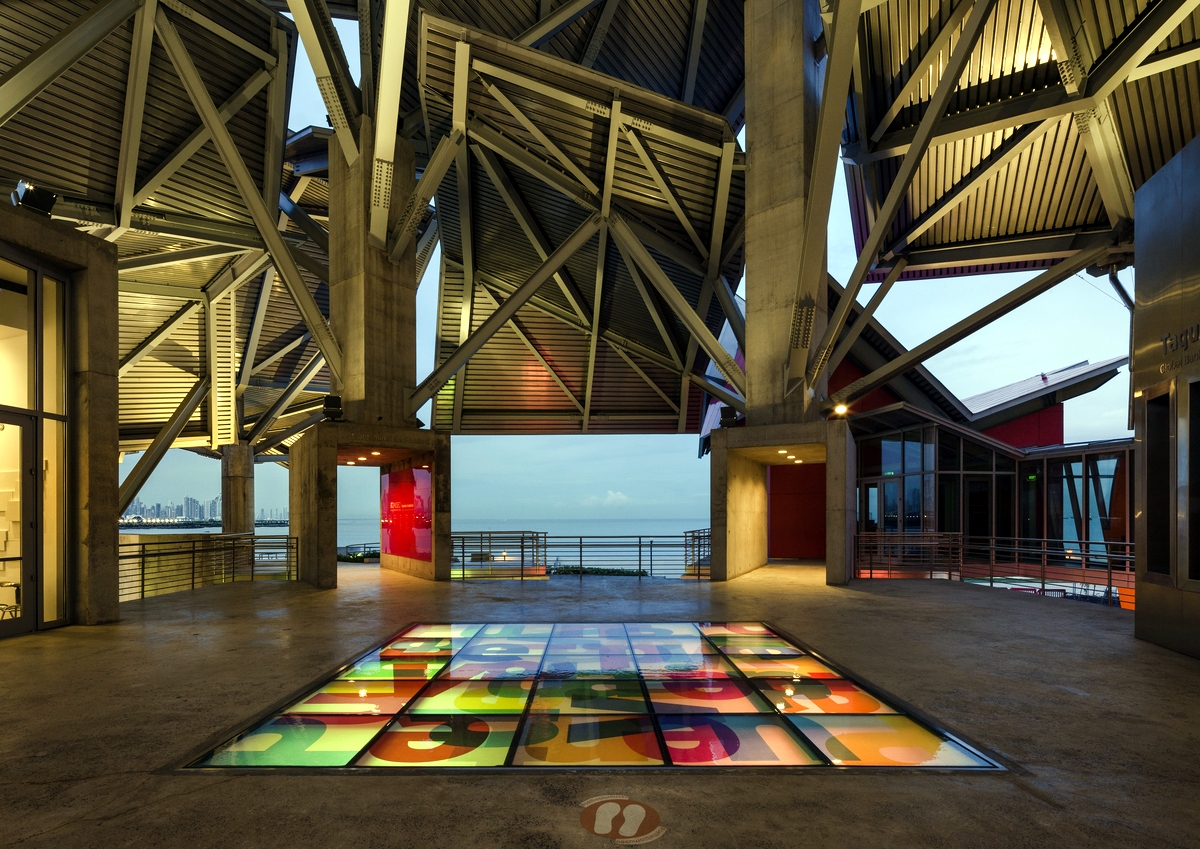
street art panama 6g  View out of the courtyard towards the city.

When we lived in Panama we could see often the progress (sometimes very very slow) of an unusual building site, but we left the country before it was finished and opened. This time it was my chance for an extensive visit.

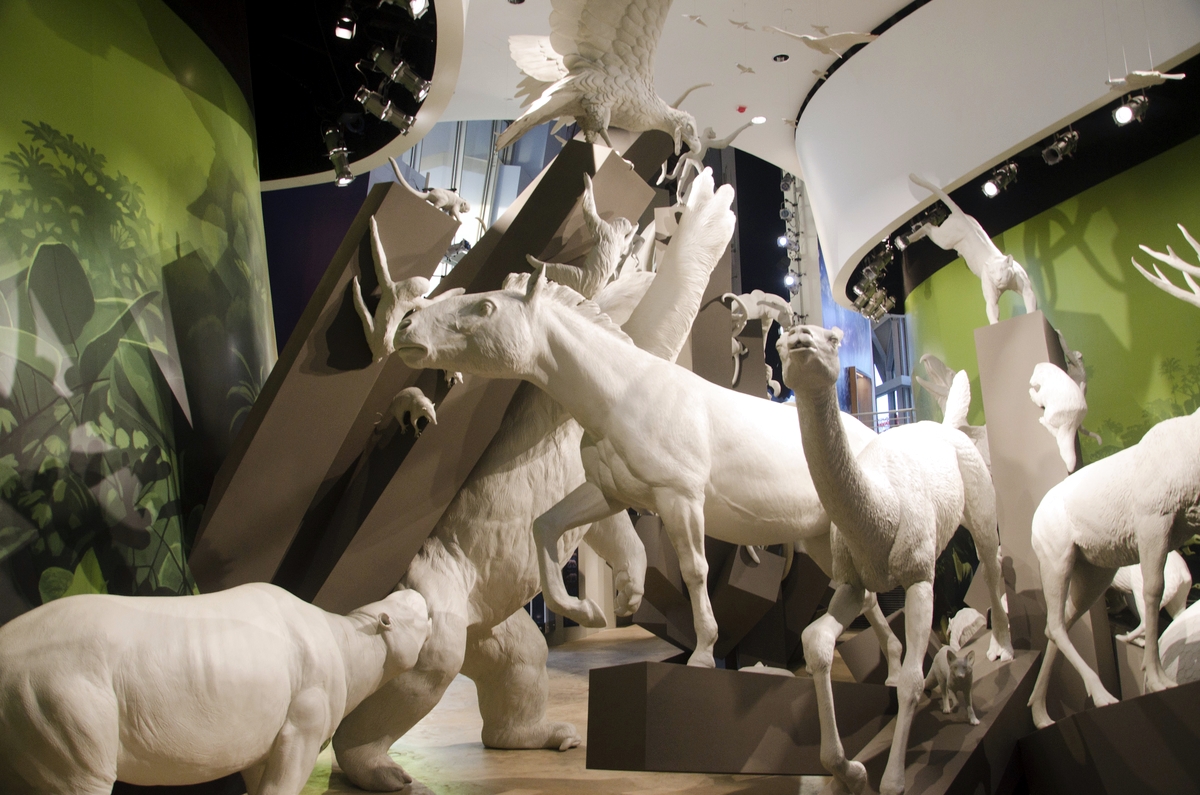
street art panama 6i  One of the many exhibitions.

The Biodiversity Museum contains 8 exhibitions, mainly revolving around the idea of Panama’s biodiversity. These exhibitions will be mainly led by the Smithsonian Institution and the University of Panama. Besides a museum it will also have the capacity to host small events such as concerts, private events and expositions.

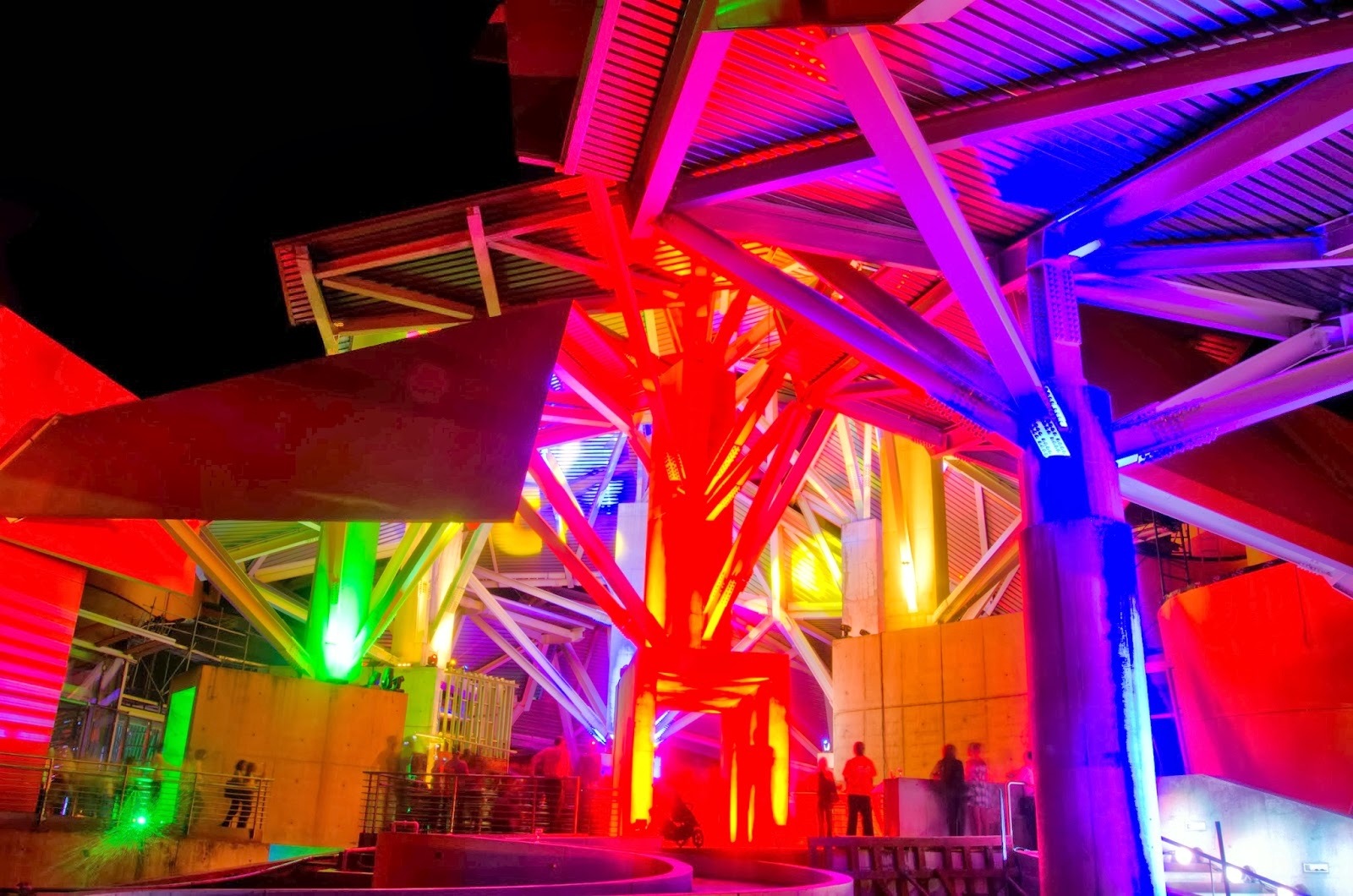
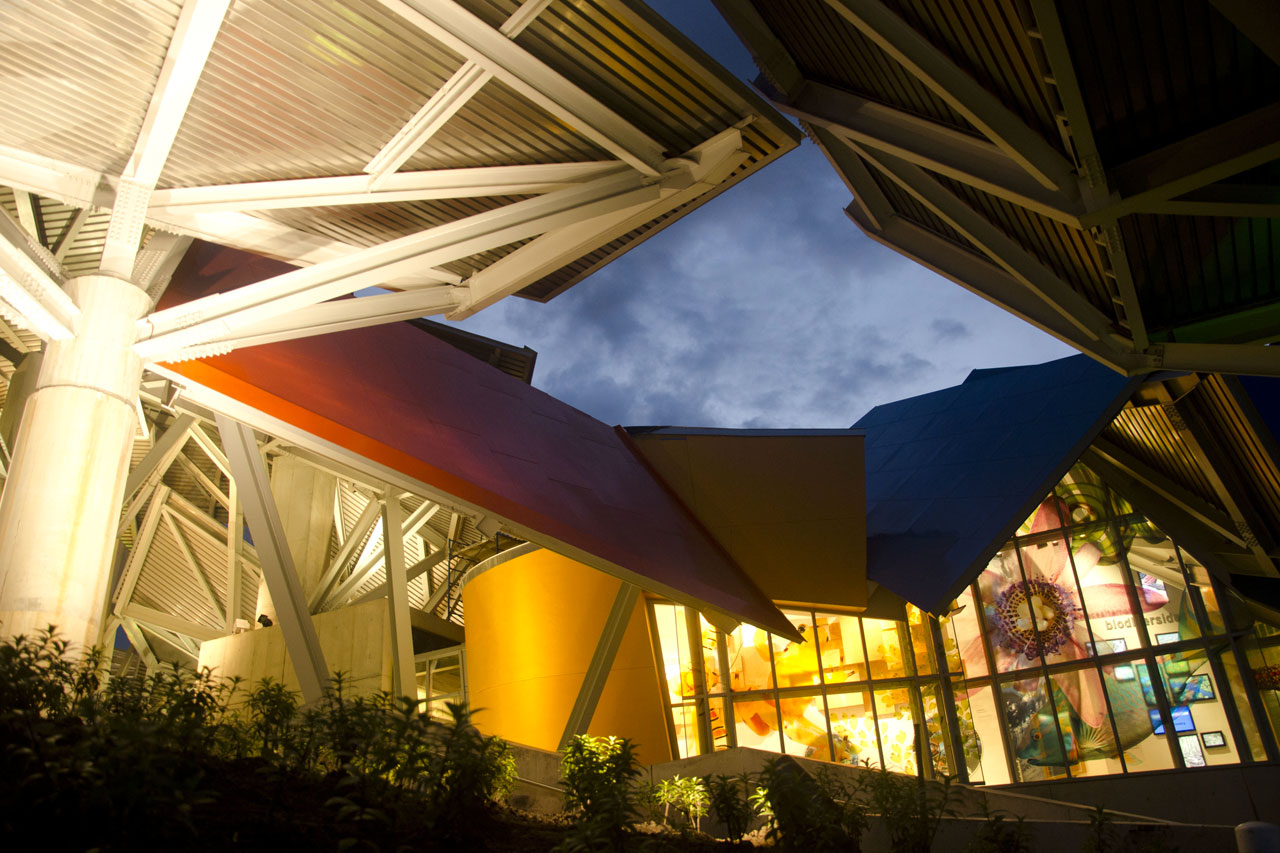
street art panama 6d  Colorful lightshow at night.

The Biomuseo is the latest interactive museum conceived by Gehry, whose projects in Bilbao-Spain , Duesseldorf-Germany, Los Angeles-USA  and many other cities have helped to revitalize cultural centers. The Biomuseo is Gehry’s first project in Latin America.

street art panama 6b  The Atrium, center of the Biomuseo.

Frank Gehry.

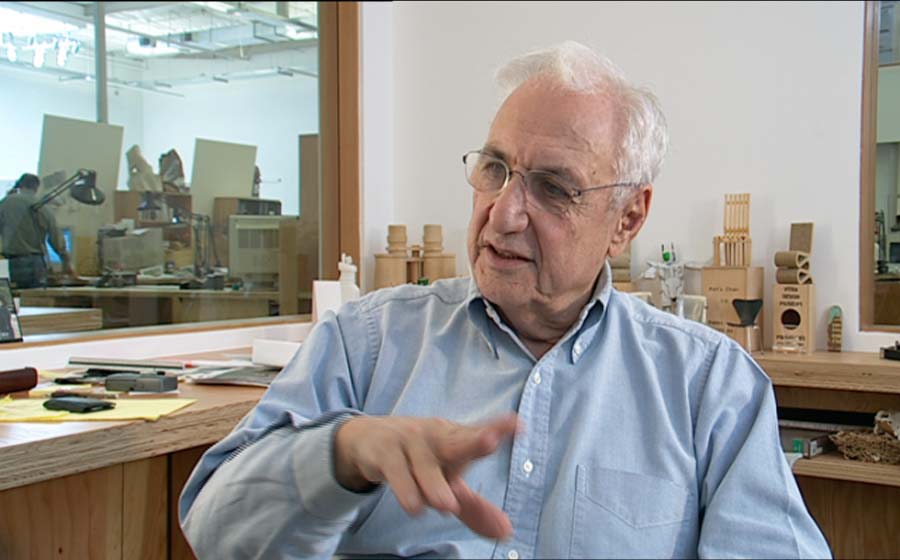
Frank Owen Gehry. Born as Frank Owen Goldberg on 28 February 1929 in Toronto. He is 87 years „young“, a Canadian-born American architect, residing now in Los Angeles.
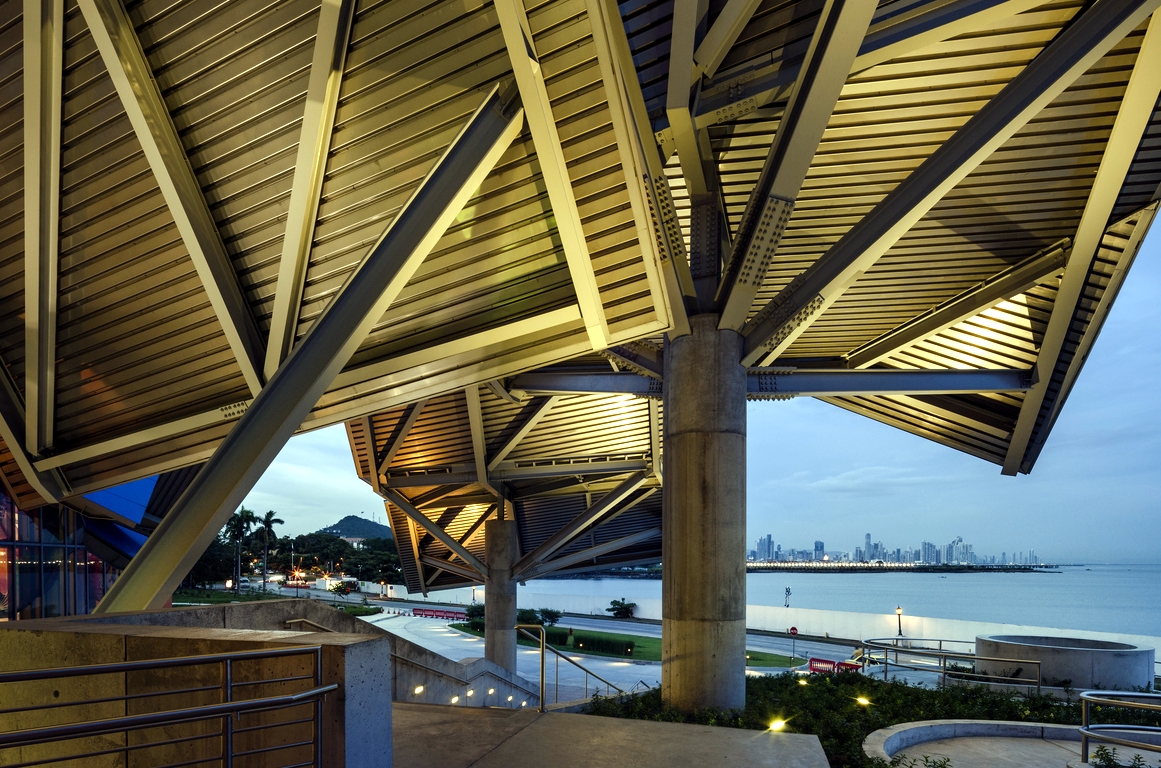
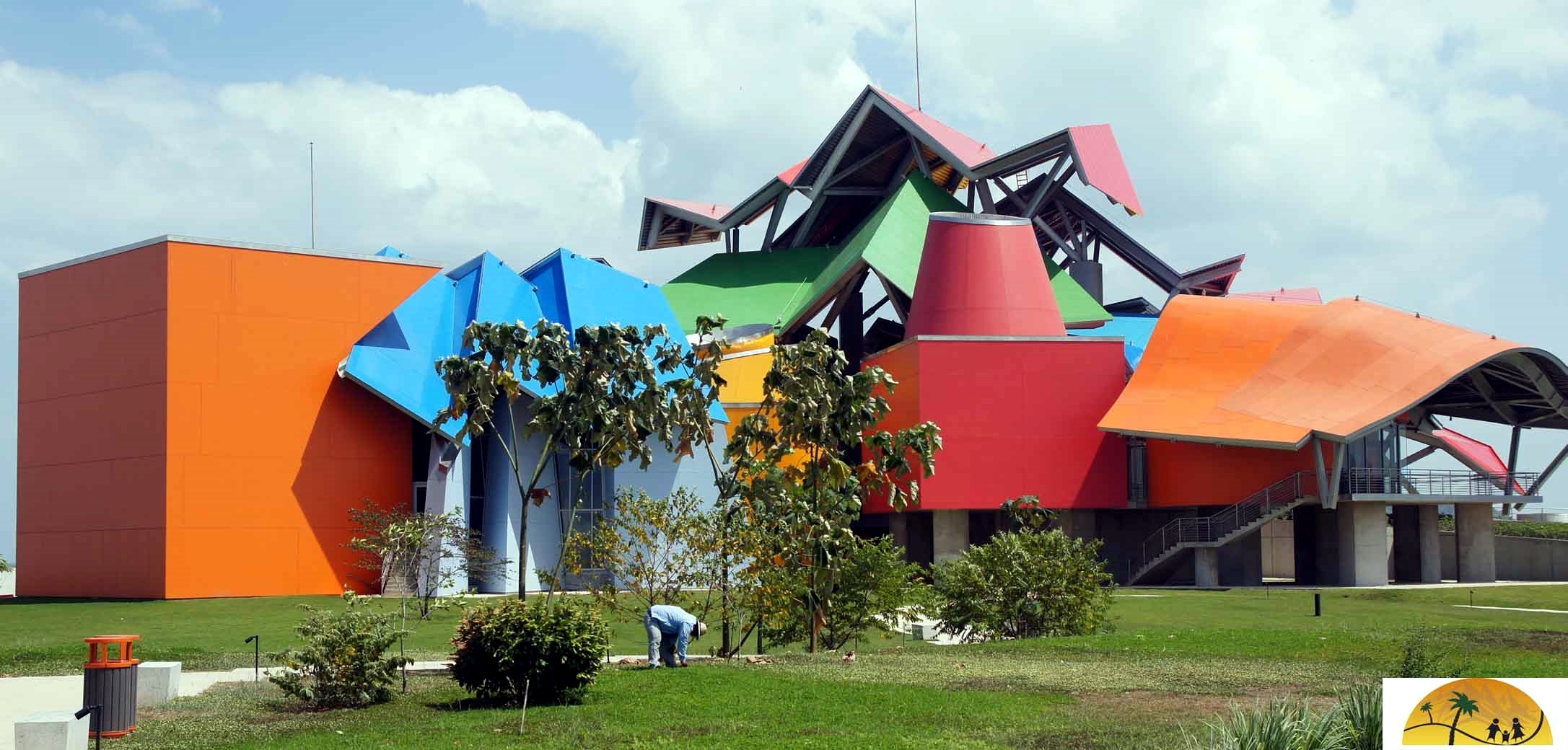
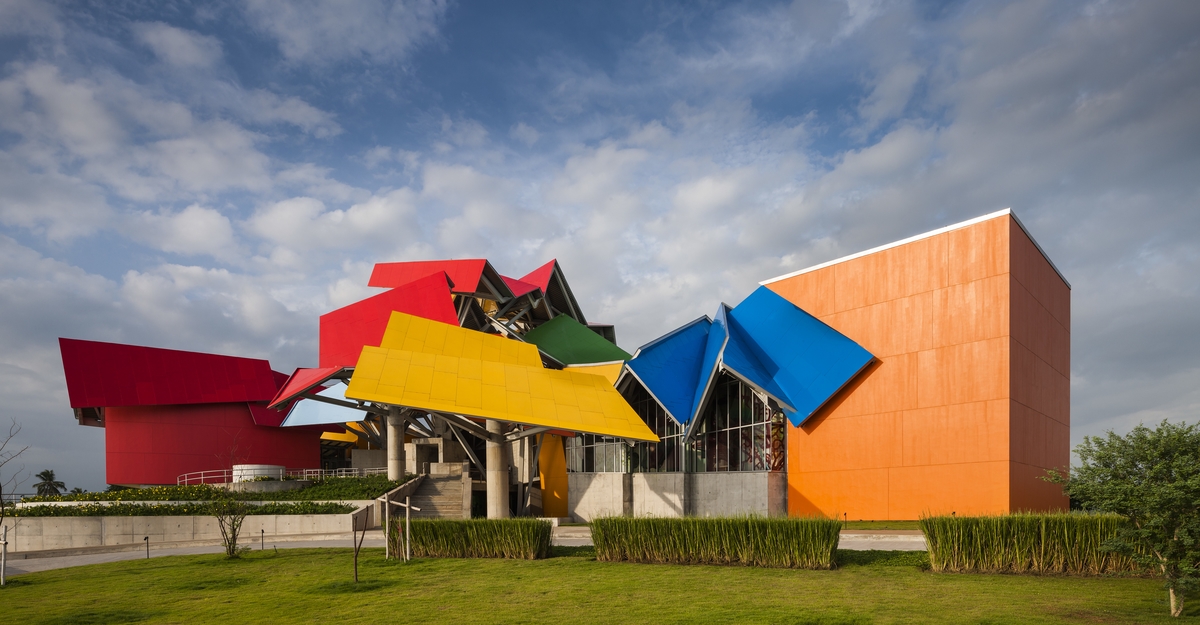
At the heart of Frank Gehry’s design for the Biomuseo is a public outdoor atrium covered by a lively assemblage of metal canopies in different shapes and strong colors: blue, red, yellow, green. The canopies recall a local vernacular of tin roofs and colorful buildings and evoke Panama’s spectacular neotropical habitat and create protection from the area’s frequent tropical rains. From the atrium level, views to the Canal and Panama City are a fantastic visual feature.

frank gehry 1   The famous Canadian architect Frank Gehry.

The Biomuseo was been developed through a collaboration between a local non-profit foundation to help raise awareness of the country’s natural and cultural history and the Government of Panama. Proud Panamanians and the government want to encourage the study and preservation of its extraordinary biodiversity.

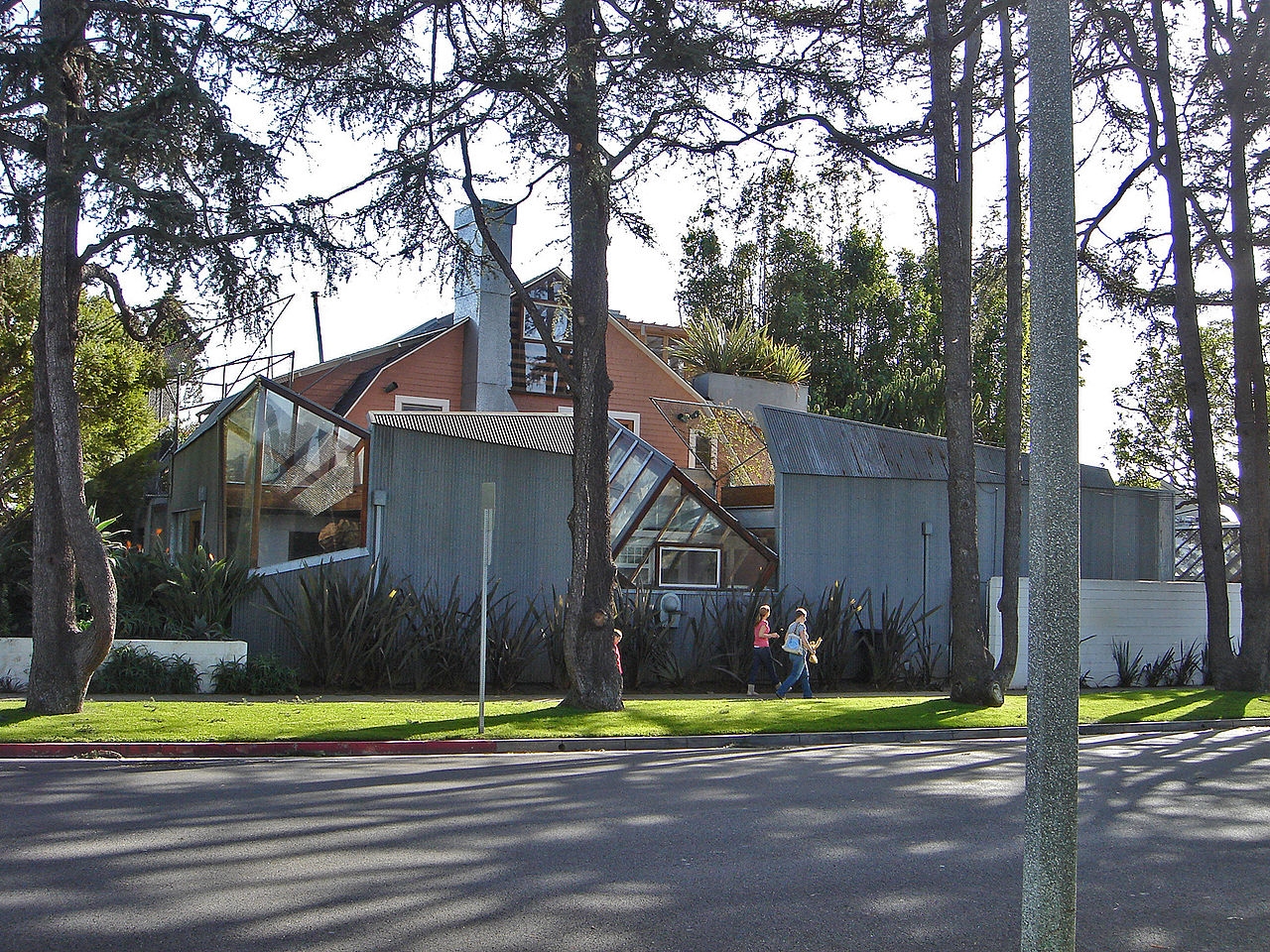
frank gehry 4 priv santa monica LA  Frank Gehry’s home in Santa Monica, Los Angeles.

In addition to content developed by the Smithsonian Tropical Research Institute, the museum will open up into a public a 6-acre (2.4-hectare) Biodiversity Park, designed in collaboration with the architect. As a destination and focus for the city, the building, exhibitions and park will provide major new civic and educational resource for the people of Panama and no doubt attract visitors from around the world.

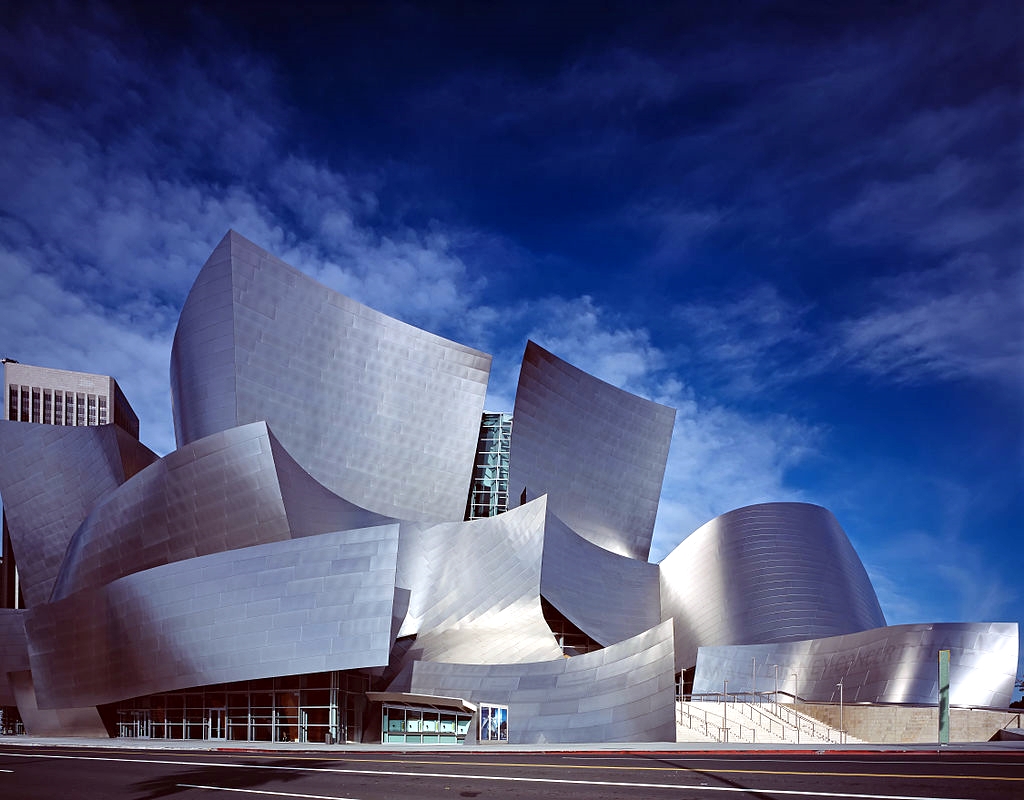
frank gehry wdisn concert hall LA Already a famous landmark in Los Angeles, USA. The Walt Disney Concert Hall designed by Frank Gehry.  Click on Wikipedia, it’s interesting to learn about him.

Frank Gehry expressed his enthusiasm for the project: “This has been a very personal project for me. I feel close ties to the people of Panama, and I believe strongly that we should all be trying to conserve biodiversity, which is threatened everywhere.”

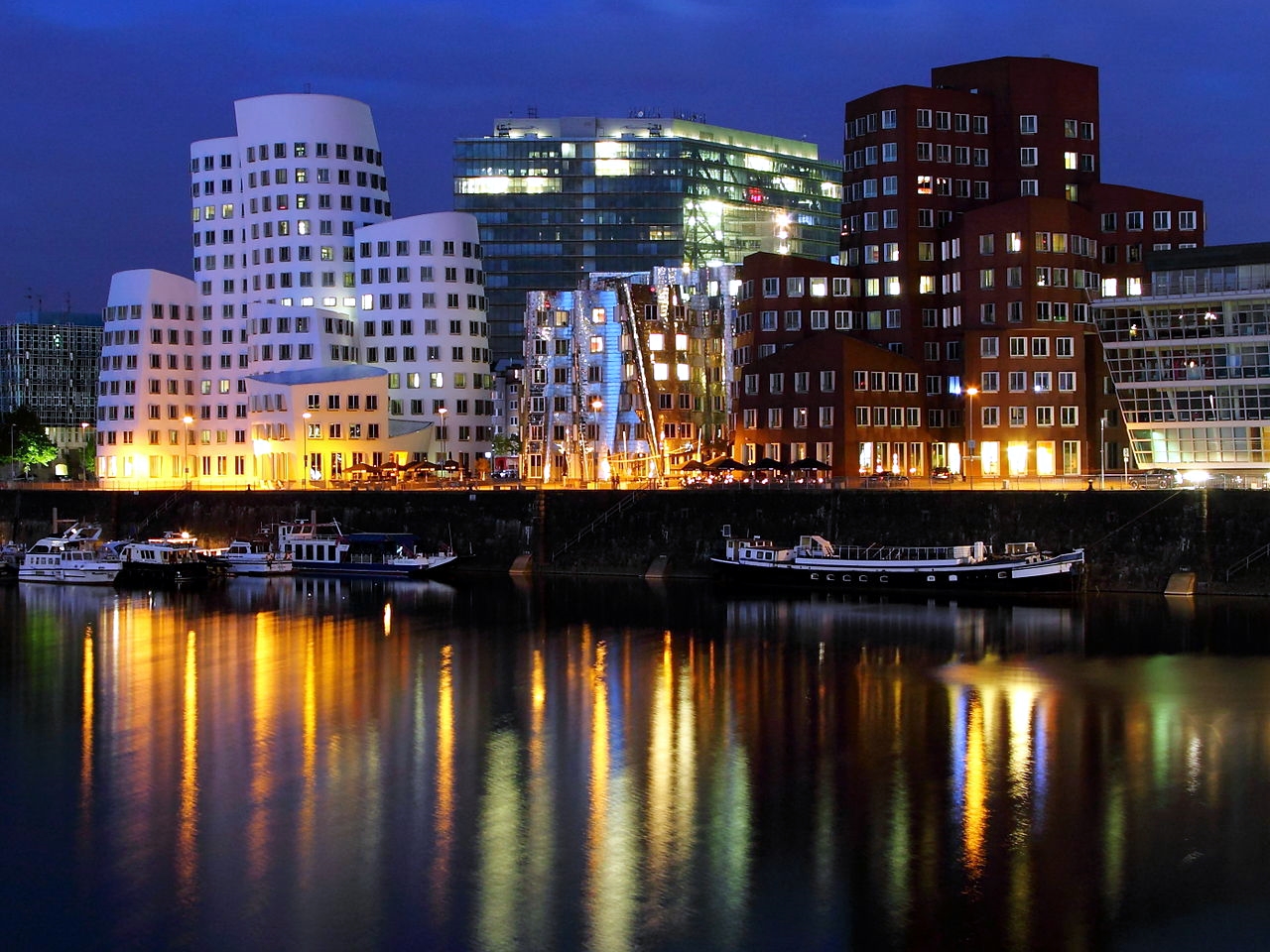
frank gehry 5 neuer zollhof ddorf     Another Frank Gehry design, the whole building ensemble „Neuer Zollhof“ at the river Rhine in Düsseldorf, Germany.

This is what Frank Gehry thinks of the rest of the architects:

“Let me tell you one thing. In the world we live in, 98 percent of what gets built and designed today is pure shit.”

frank gehry 2   Frank Gehry with his finger up during that speech.

This statement was made as response of the Canadian-American architect Frank Gehry when a journalist in Spain asked him what his thoughts were about criticism „his architecture was pure show“, as reported in El Mundo (Spanish newspaper). He continued by saying, “There’s no sense of design nor respect for humanity or anything like it. They’re bad buildings and that’s it.”

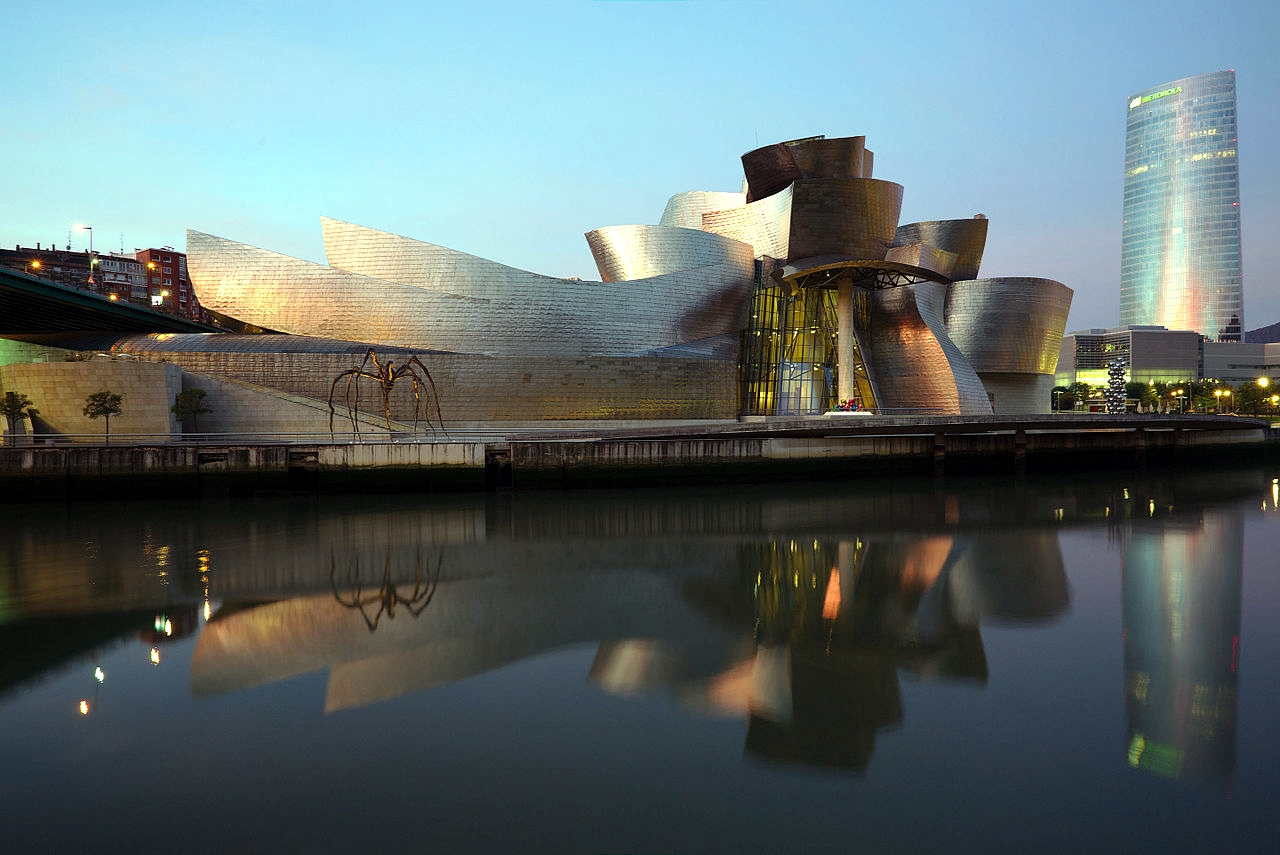
 frank gehry 3 guggmus bilbao   Frank Gehry’s Guggenheim Museum in Bilbao, Spain.

The Ace Hotel.

The city already has one of the most intriguing members of the Ace Hotel family – the American Trade Hotel and Hall (opened in 2013). Situated on Plaza Herrera, in the historic old quarter, Casco Viejo, in a restored landmark building.

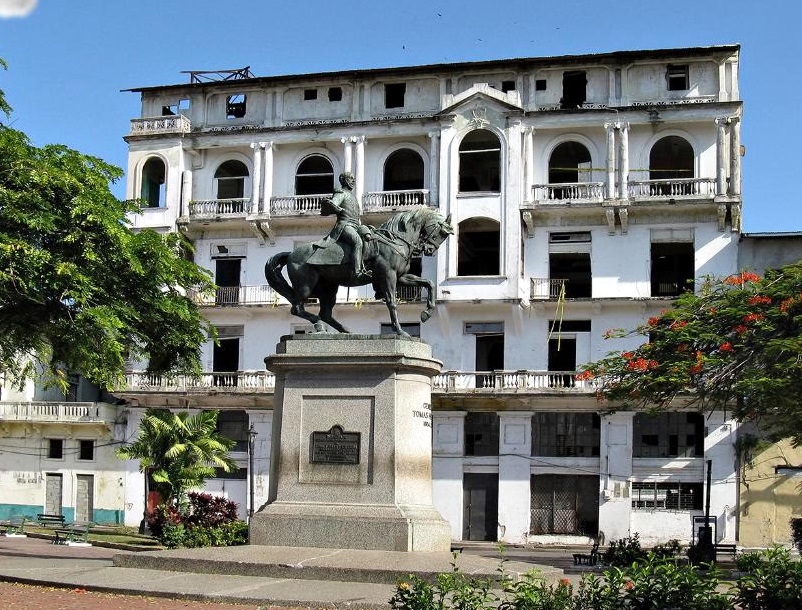
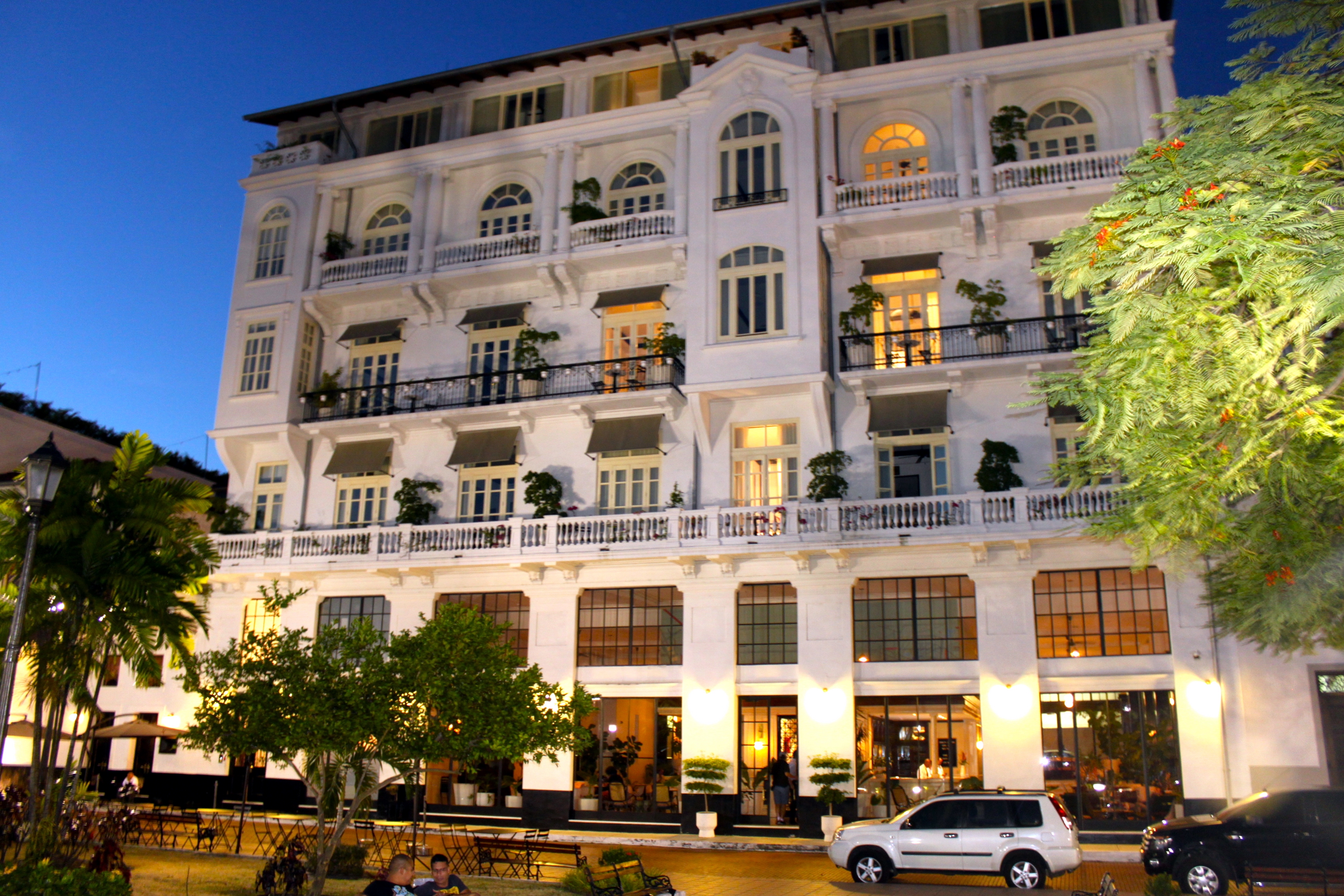
street art panama 6kk general herrera   street art panama 6k amer trade hotel - ace    Left: The former „hotel building“, with the statue of General Herrera, in 2006, when we came to Panama.  Right: And now, about 10 years later, same building as the Ace Hotel.

The hotel’s interior design reflects the history of Panama as a crossroads but also features contemporary design and modern luxuries. Stay at the Ace and take a taxi (about 3,–US$) to the Biomuseo.

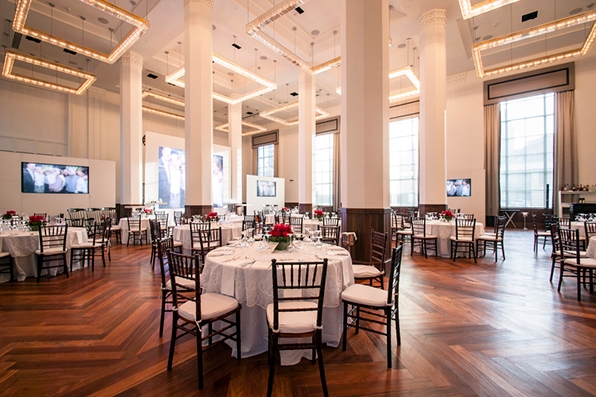
street art panama 6l   Tasteful and elegant interior at the ACE.

I am always so blown away by the innovative style the Ace Hotel brand creates, especially with this newest addition in Panama. I know it may seem weird when I get euphoric having the chance to stay in a beautiful place, being surrounded by so much history and beautiful architecture and design.

street art panama 6m  Beautiful rooms, the binoculars are a service item.

The American Trade Hall next door to the hotel was originally built as a branch of the National City Bank of New York, financier of the Panama Canal.

street art panama 6m american trade hall    Inside the American Trade Hall, dining- or ball-room.

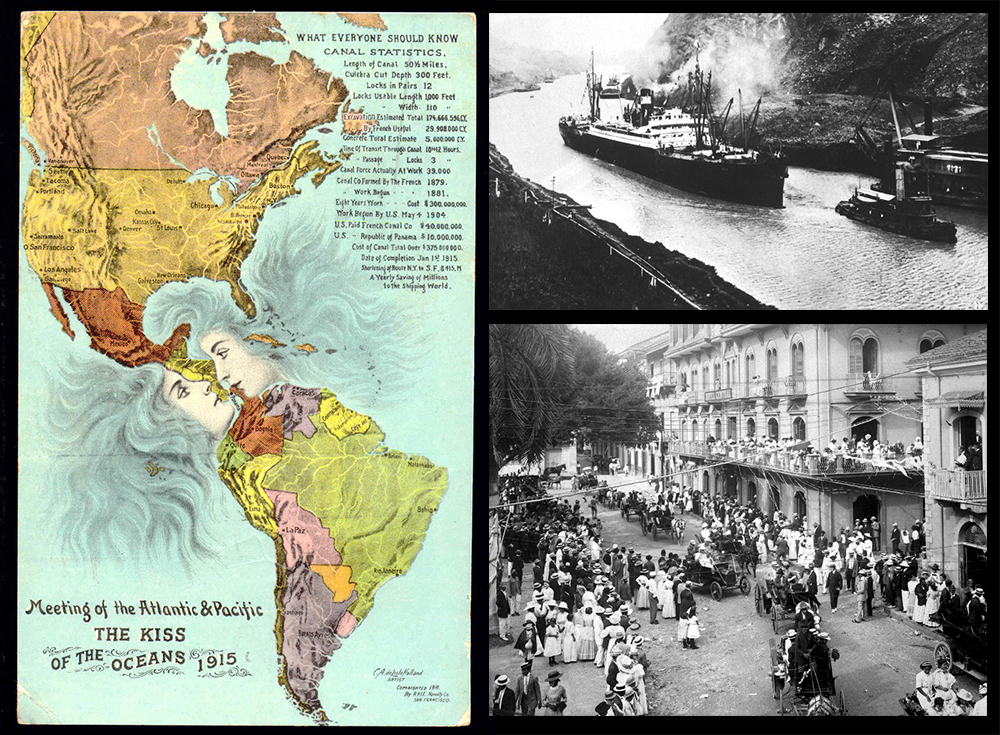
The design was modeled after the branch at 417 Broadway in New York, an esteemed example of the „Moderne style“ by the distinguished architecture firm Walker & Gillette. The space has been restored and is being used for special events. The Hotel has also opened up a new cafe area, Cafe Undido, with an exhibition of commemorative posters.

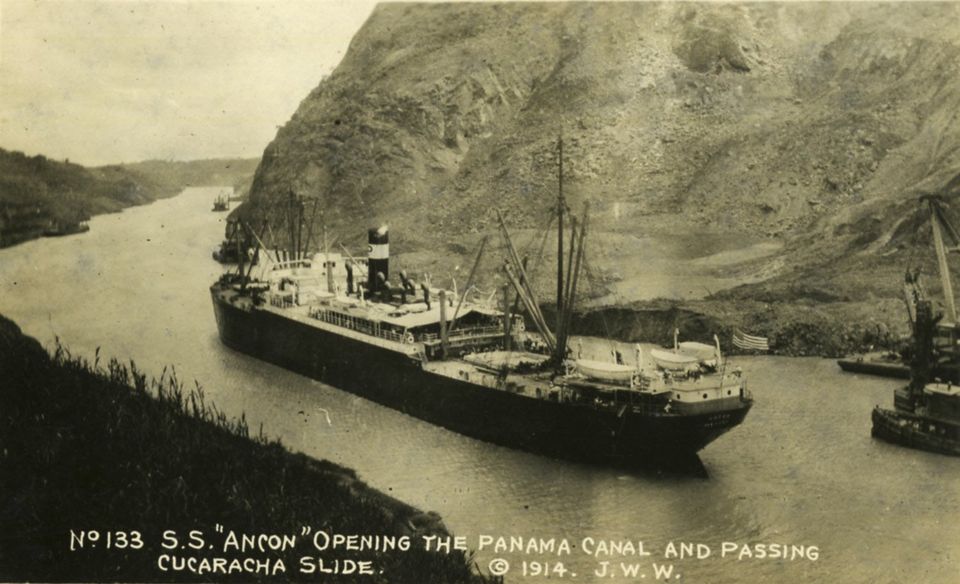
street art panama 6n street art panama 6nn  Historic pictures, a postcard with kissing oceans, Casco Viejo and the S.S Ancon crossing the Panama Canal.

The historic shipping line posters reflect on the first passage of the S.S. Ancon through the American continent and pays respect to those who worked to realize the Panama Canal, now recognized as a modern wonder of the world.

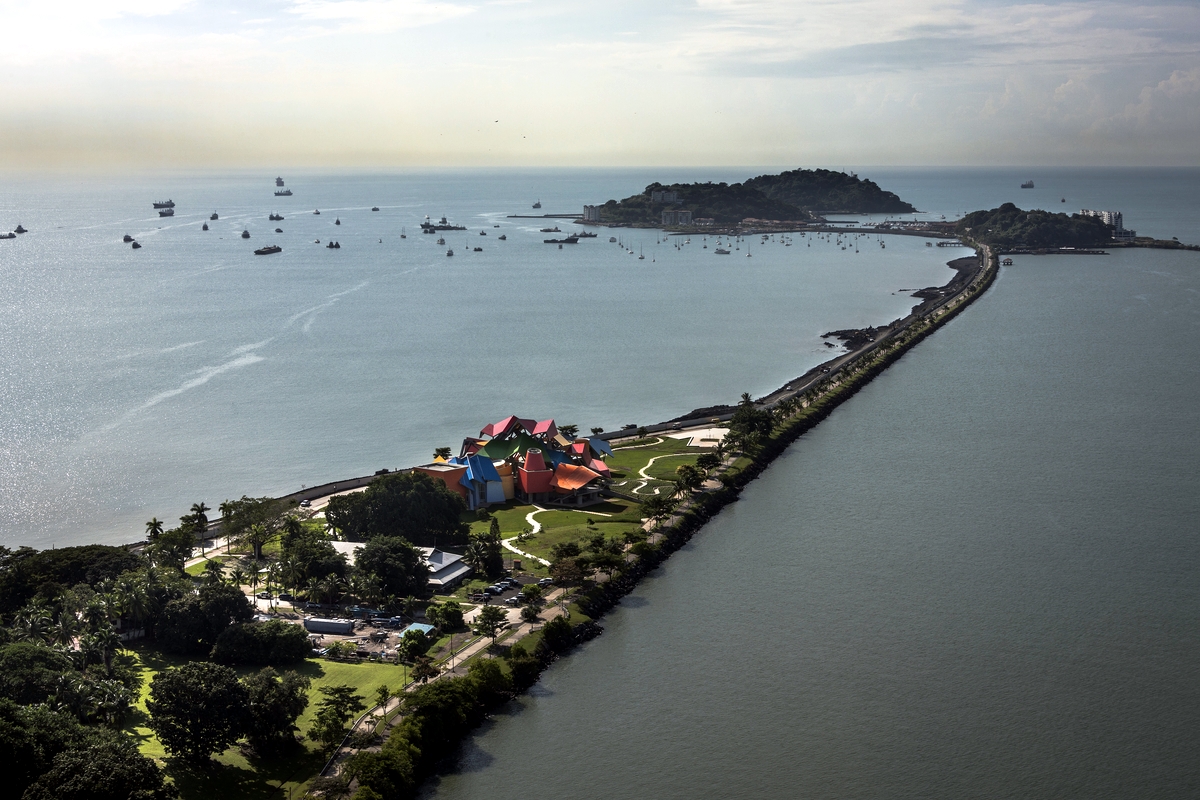
street art panama 6p   Amador Causeway.

Amador causeway connecting the mainland with the the Causeway Islands (Spanish: Islas Calzada de Amador). They are four small islands by the Pacific entrance to the Panama Canal. They are linked to the mainland via a causeway, made from rock extracted during the excavations from the Panama Canal. The islands are 1. Naos – home to a research lab run by the Smithsonian Tropical Research Institute (STRI), connected to the Biomuseo. 2. Culebra, 3. Perico, and 4. Flamenco, with magnificent views from Flamenco hill.

street art panama 6j  View over the Causeway towards the city.

It is my plan already, to write an article about the Panama Canal. The crossroads of the two American continents, tying in also the Ace Hotel  with the Biomuseo.

street art panama 6a    The vibrantly multi-colored building.

The Biomuseo is the latest cultural and eco-tourism destination, sure to be on many traveler’s list’s. If you come to Panama, give yourself a favor and try the Ace Hotel and visit the Biodiversity Museum. Stay tuned to more posts about the destination Panama.


Veröffentlicht unter Information, Travel | Verschlagwortet mit , | 2 Kommentare

Honey Pumpkin Chilli

pumpkin chili 5

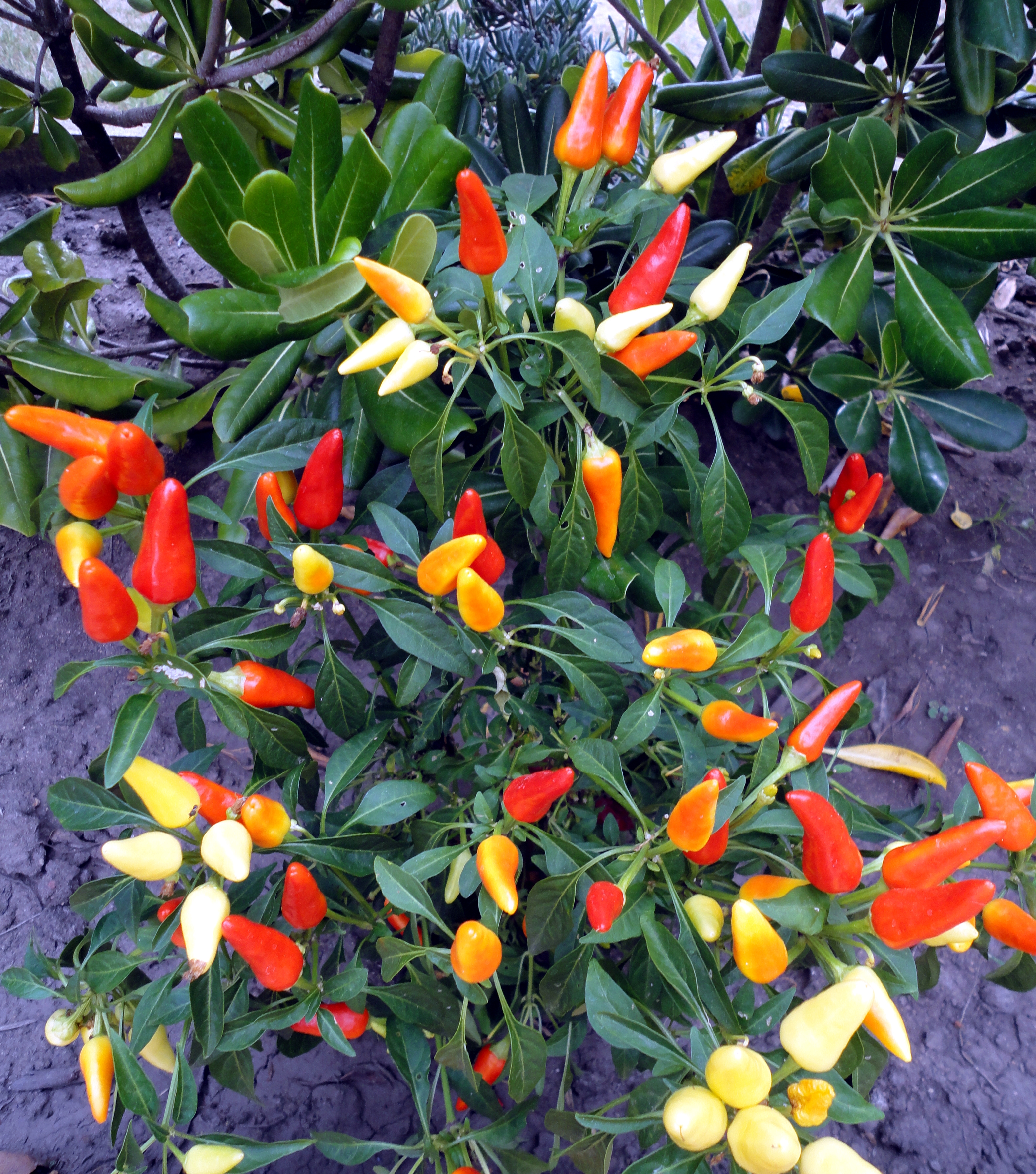
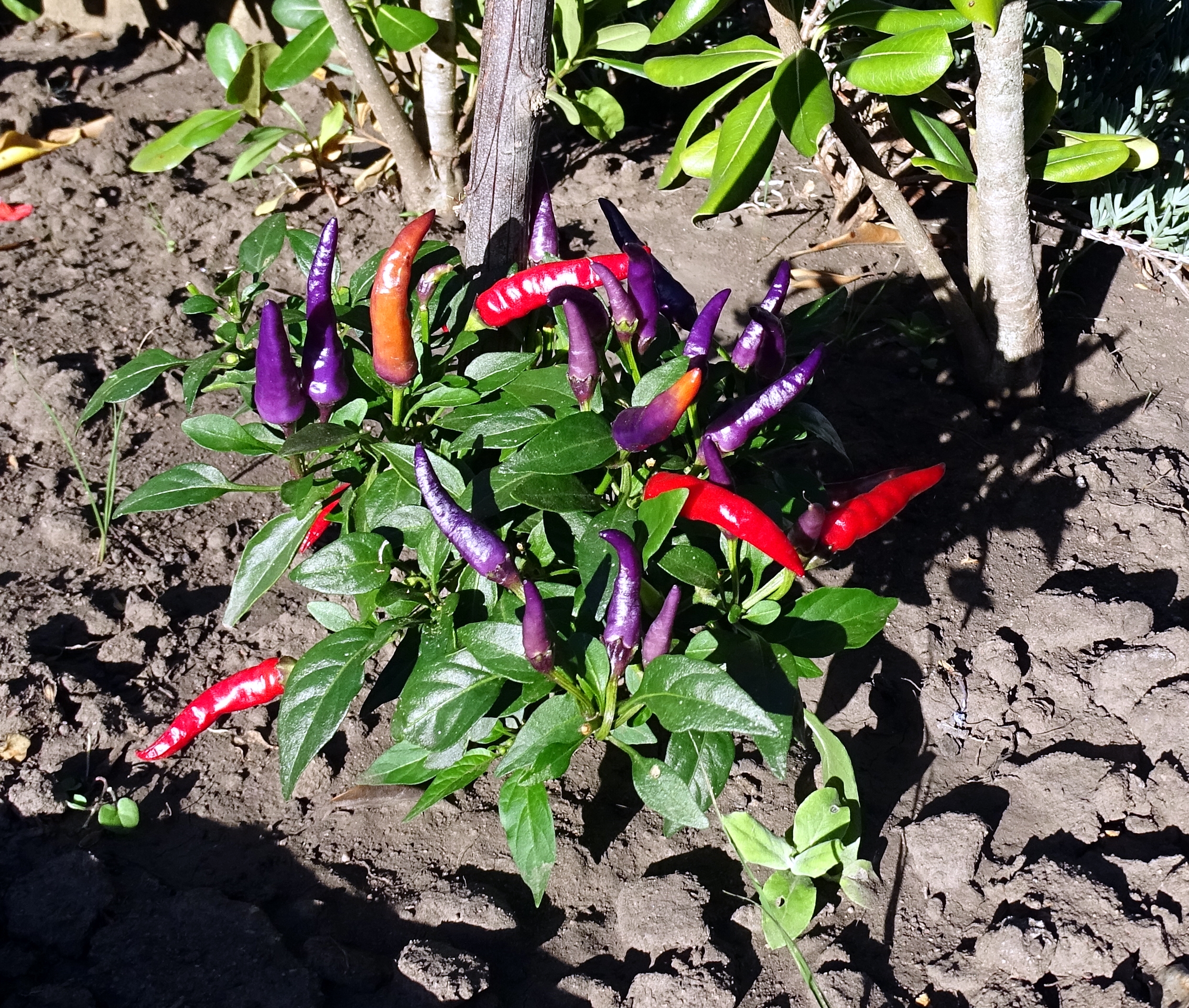
Last week, during the heavy rainy days we made some chilli, the old fashion way, with lots of birds-eye chilli’s, growing in our high-bed . It came out „very hot“, even for my taste. The solution was to extend it a bit achieving a better balance between the ingredients. So I added pumpkin mash and honey.

DSC01961       DSC00106a

See some of our chilli-plants above.  That recipe solution revealed a great result, spicy rich chilli. Why not cooking this great recipe (with pumpkin and honey) in the first place and why giving to all of you the recipe, I thought ??  Here it is.

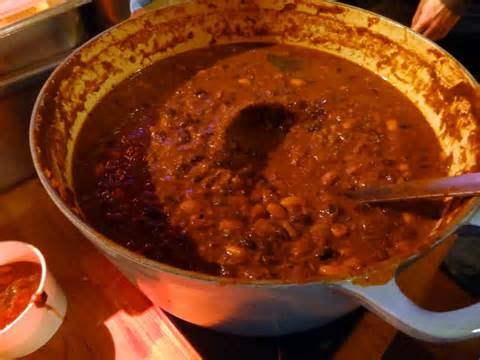
chilli 12 chipotle   The hot hot chilli before adaption.

Ingredients.

1 tablespoon  olive oil
3 mild Spanish sausages (about 2/3 pound/350 g)
1 pound (500 g) lean ground beef,
1 large yellow onion, finely chopped
1 small fennel bulb, cored and finely chopped
2 large minced garlic cloves
2 teaspoons  ground cumin
1 teaspoon  dried oregano
½ teaspoon to 1 teaspoon  hot chili powder (chipotle or birdseye)
½ teaspoon  freshly ground black pepper
2 cups (16 ounces / 500 mL) beef stock
1 cup (8 ounces /250 mL) pure pumpkin mash (puree)
1 can (14 ounces /400 ml) crushed tomatoes
1 can (14 ounces /400 ml) kidney beans, drained and rinsed
2 tablespoons  (3 full spoons if you like it sweet) good quality honey
1 ½ teaspoons salt
some cheese, coriander, creme fresh, spring onion or other garnish’s

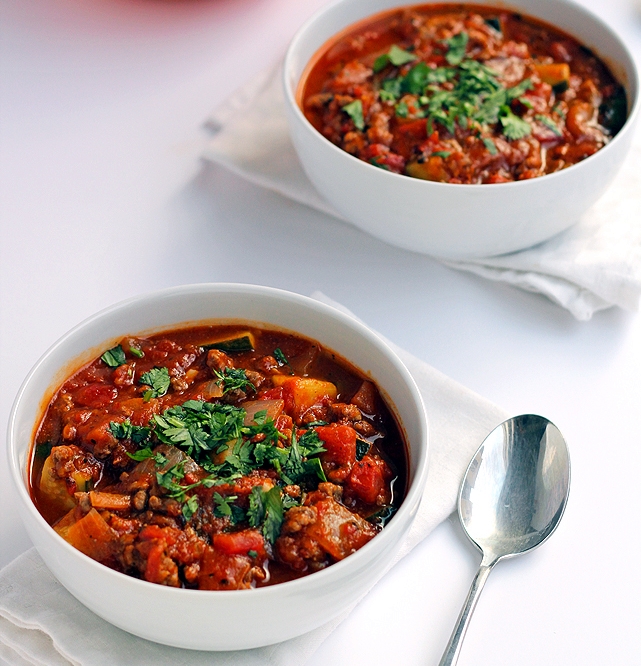
pumpkin chili 2a  The chilli after transformation, with coriander.

How to do.

Heat olive oil over medium high heat in a large, heavy pot.
Slit sausage casings and remove the filling, discard the casings.
Add sausage meat and ground beef to the pot.
Cook the meats until they are lightly browned, about 5 minutes, using a wooden fork to break up the ground meats into smaller pieces.
Stir in onion and fennel, cook for 2 more minutes.
Add garlic, cumin, oregano, chili powder and black pepper; stir to combine.
Add beef stock, pumpkin mash, tomatoes, kidney beans and honey.
Stir well as you bring the chilli up to a low boil.
Simmer for 1 hour over very low heat, stirring occasionally. Season with salt.

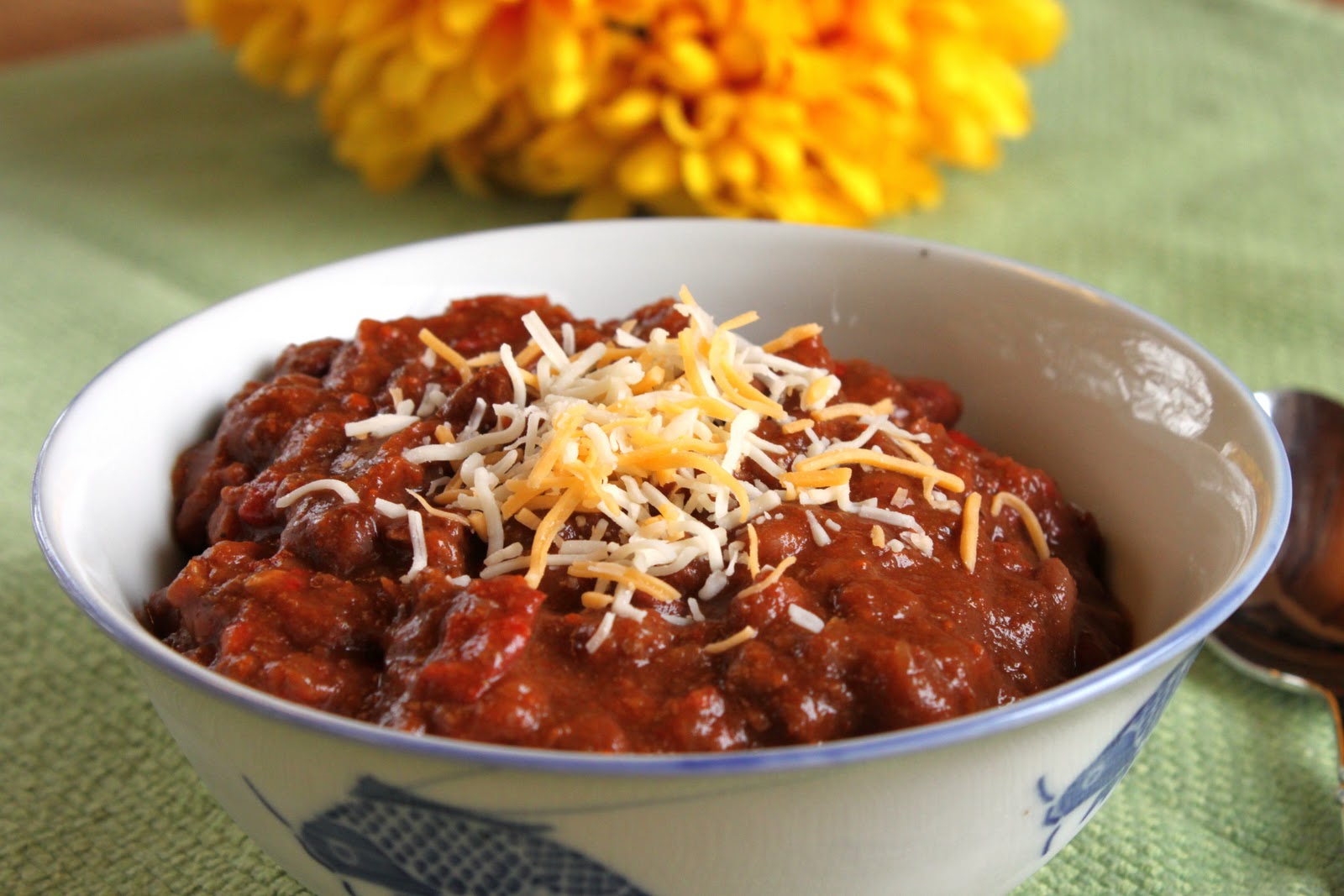
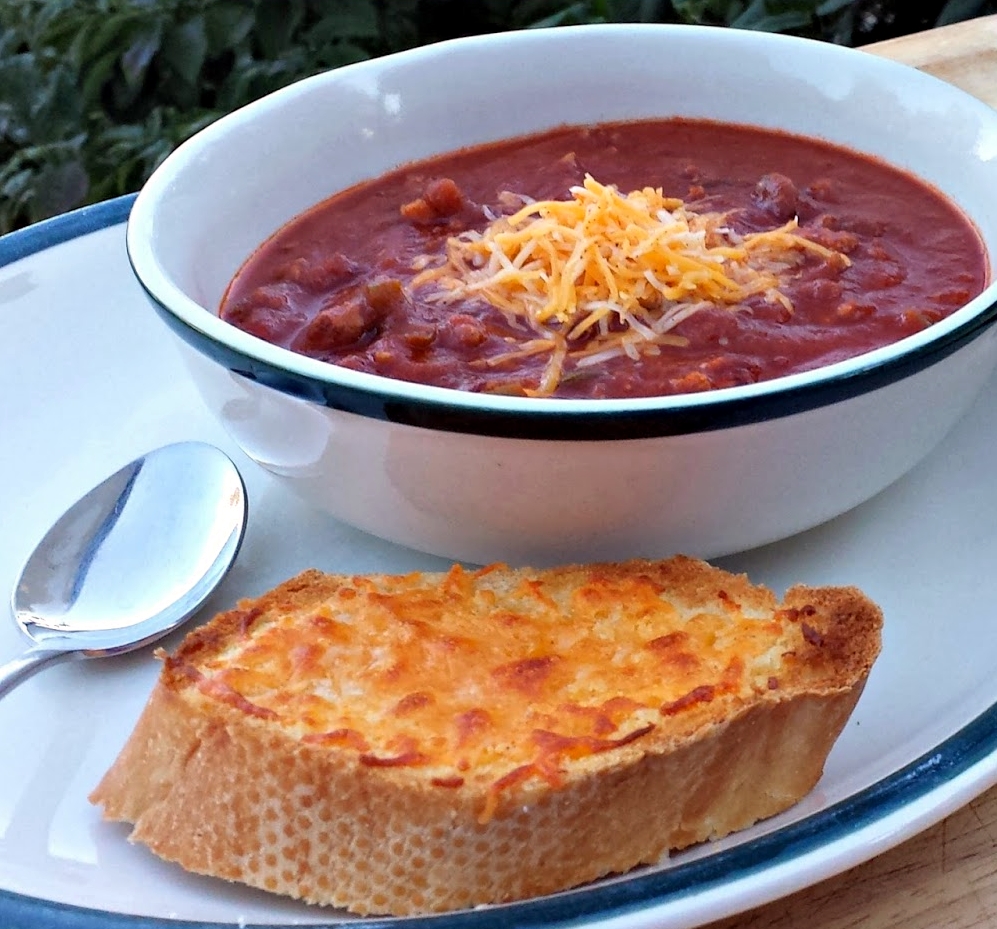
pumpkin chilli 3a  Mouthwatering rich pumpkin chilli, with baguette.

Tips.

Decorate with some slices of spring onion or some chopped coriander and grated cheese.
Serve hot with some baguette and a glass of strong red wine or your favorite beer .

pumpkin chili 6  A variation, with yogurt, cheese and sunflower seeds.

It’s even better on the next day, warmed up, when the flavors have had a chance to combine, so keep that in mind when you plan your menu.
A variation could be to replace the fennel, if one don’t like it, with celery.

See also my post „Texas Chilli“ in Recipes. Enjoy this delicious heart warming dish.

Veröffentlicht unter Recipes | Verschlagwortet mit , | Hinterlasse einen Kommentar

Street Art Panama

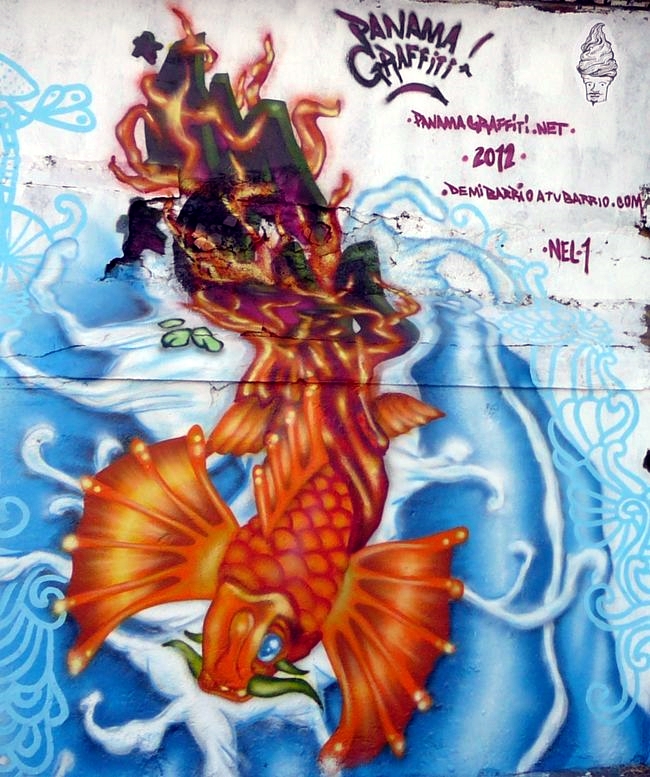
street art panama 4  Street art seen in Panama City, Panama.

After my article about Street Art in Uruguay a good friend from Panama promised me to send a few pics of street art in Panama, what he did this week. I  like to share some of these pictures with you.

street art panama 1a camila bernal     street art panama 1b annie pereda
Wonderful street art in Panama City. Left by artist Camila Bernal and right by artist Annie Pereda.
street art panama 1c nel one   street art panama 2a bienale del sur                     The left art is made by Nel 1, the right was painted during the „Bienale del Sur“.
street art panama 2       street art Panama 3     For these two paintings he couldn’t find out the artists.

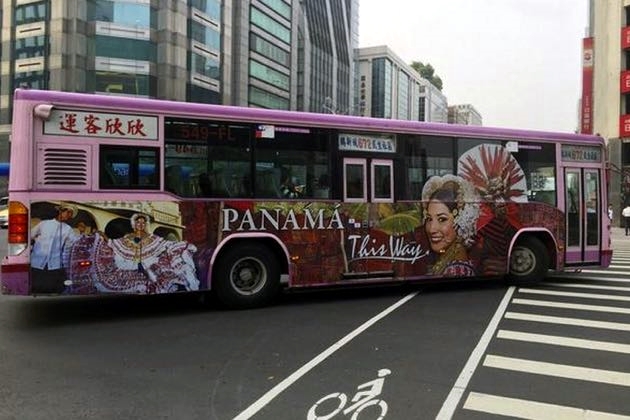
After these few pictures above, I like to add some out of my collection, because I think they are some typical and special to Panama and they are also a kind of street art, worth to see. Everywhere to find, the folk art of agriculture  and the skillfully sprayed public buses of Panama. Similar bus or taxi decoration I’ve seen on the Philippines, other end of the globe.

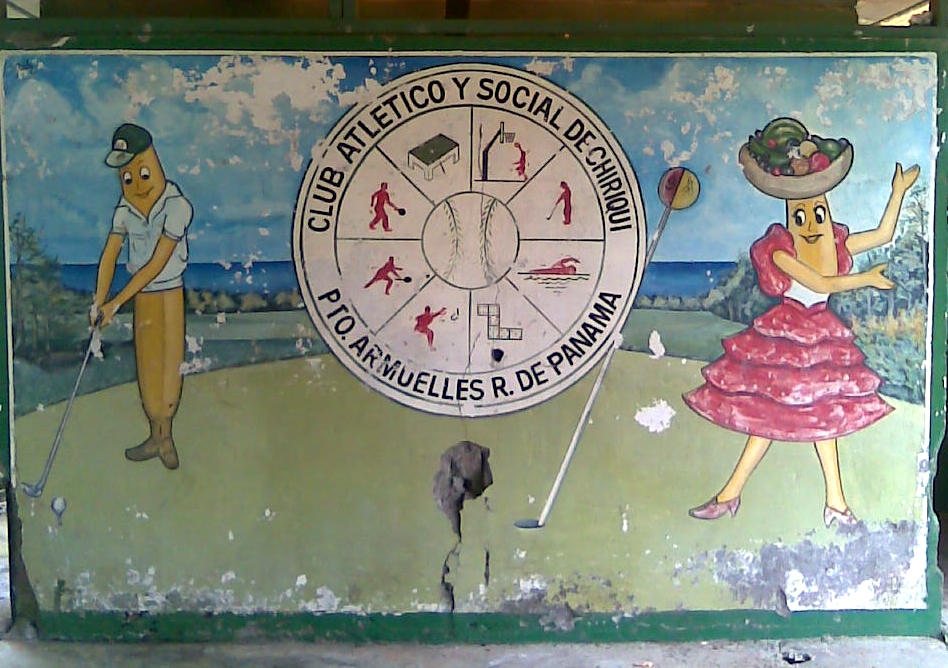
street art panama 5  Image002a      Left the maize cultivation around Aquadulce. And right an abandoned golf club in Porto Armuelles, the banana country (famous for the „chiquita“ brand) near the Costa Rican border.
street art panama 7a chicken bus       street art panama 10 diablo                      The „old ones“ – the famous „El Diablos“ – the Devils – because they drive like hell, like Devils !
street art panama 7c  street art panama 7      And the „new ones“, also painted very colorful and worth to notice.
street art panama 9 metro linea 001b  The new Panama Metro, with an unusual „El Diablo“ decoration. Pic by Foshy’s. This train is the 001 line, in case you want to drive with it, Albrook to Tocumen.

street art panama 6r
Finally a picture of the Biomuseo in Panama City. To me „One Piece of Street Art“.
Worth to describe it in a separate article, which I will post in the next few weeks.
So – stay tuned and expect much more to come. May be some of the readers have also interesting kinds of street art in your home country and like to share with us !!??

Veröffentlicht unter Hobbies, Travel | Verschlagwortet mit , | 4 Kommentare

Korean Ribs and Kimchi

korean shortribs 3

Since we have in Montevideo and the coast no decent restaurants serving Chinese-, Korean-, Thai-, Vietnam- or similar Asian -food, we have to make it ourselves. I could a bit learn about, because I had the chance to follow a few cooking classes at the Oriental Hotel in Bangkok, Thailand. The problem in Uruguay is not the cooking, if you like it, you’ll find a way. The big problem here is, to me it’s a challenge  now and not a problem anymore, to find the right ingredients. One has to be very flexible and creative.

When I flew out to Panama last time, a friend asked me to bring him some „garlic salt“, what I did gladly of course. But to replace premixed garlic salt (US) in Uruguay needs not much of creativity. A different story is Mirin, like I use in the following recipe. There is NO RICE WINE  (sake) available in Uruguay. Somehow is the import of Rice Wine banned to Uruguay.  I guess that they don’t know clearly how to tax it. Sake or other rice wine products are not WINE, its producing process is like BEER !!?? Solution, I brought my cooking Mirin from Panama, there are many US supermarkets.

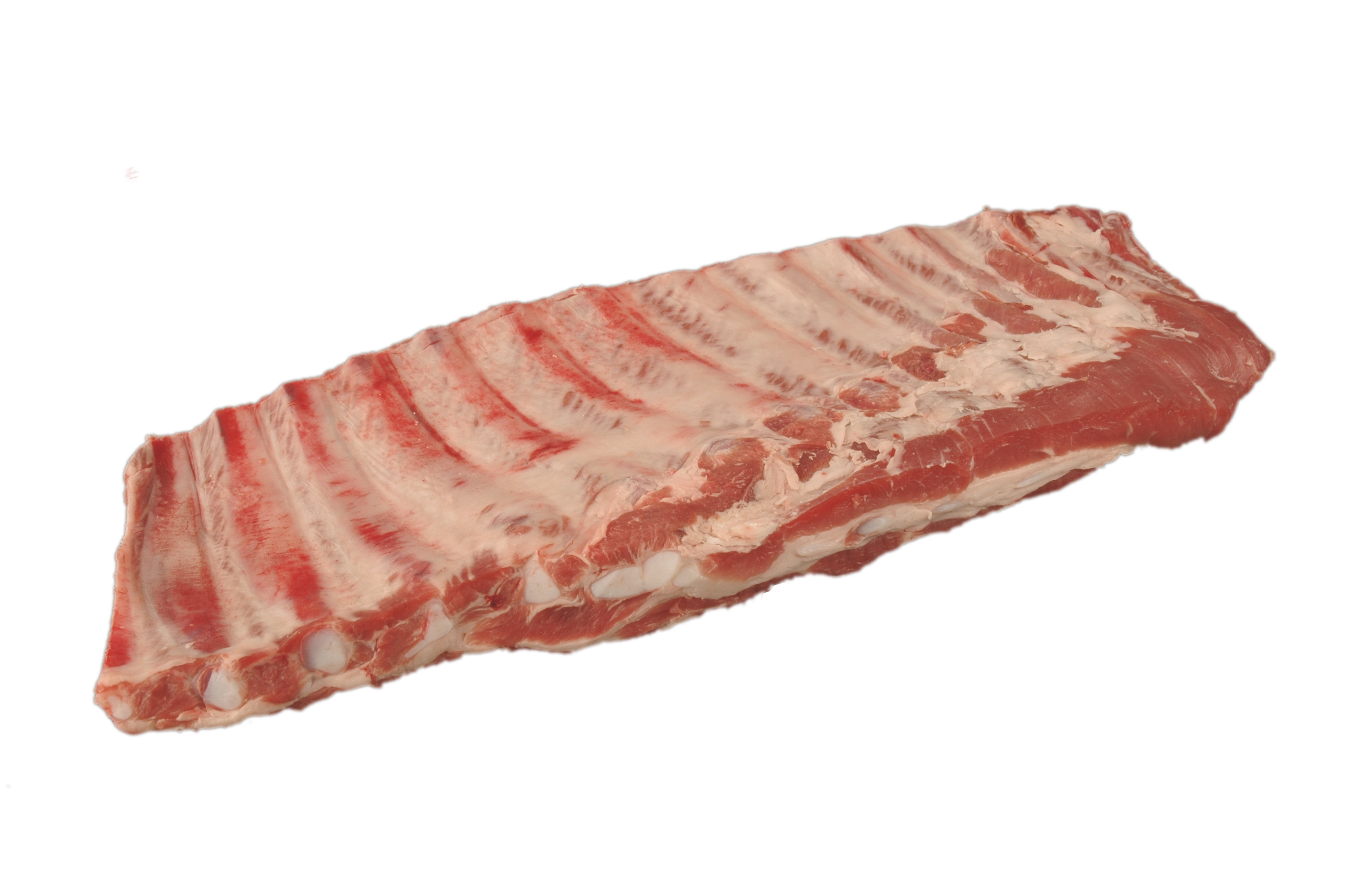
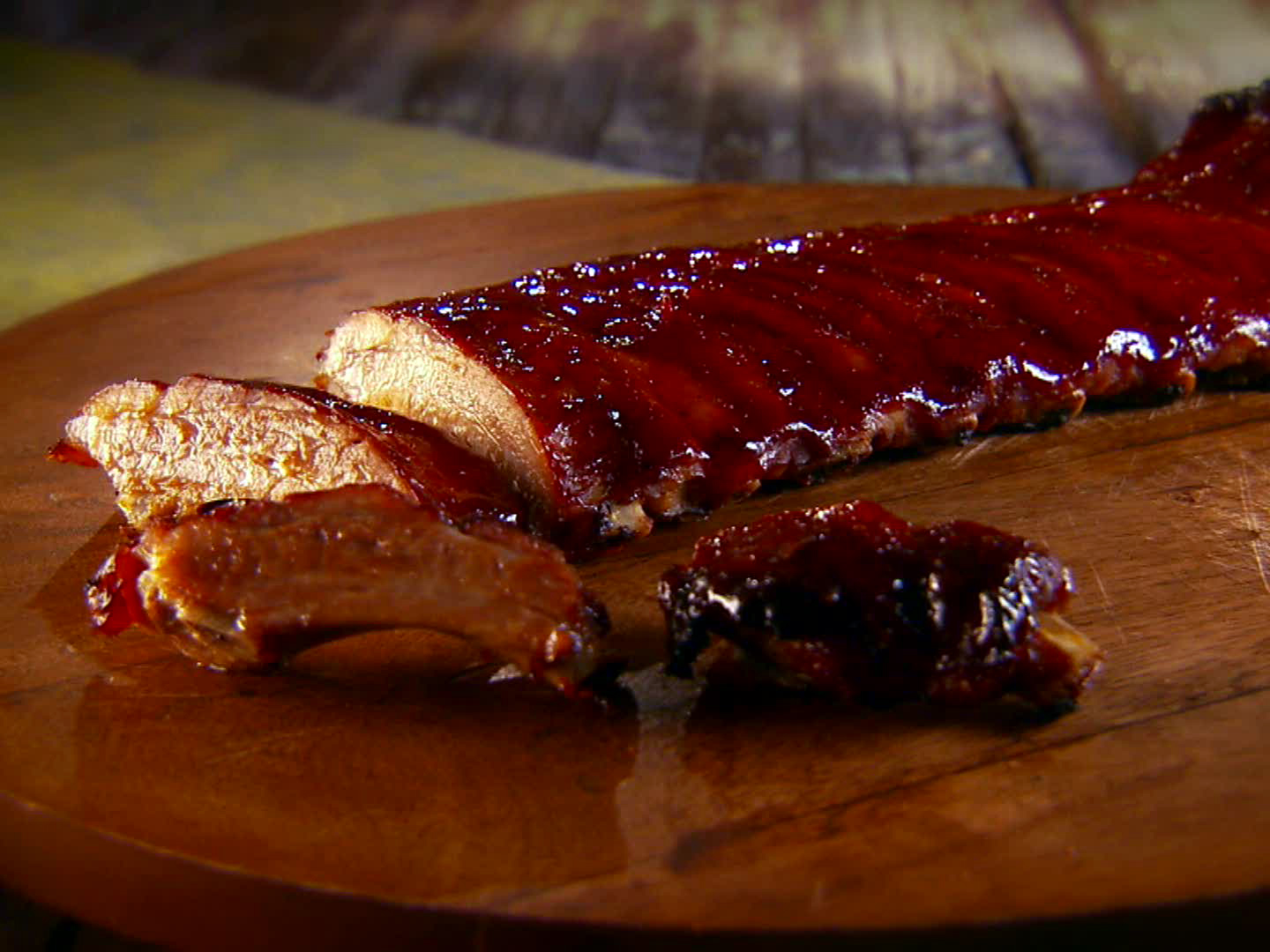
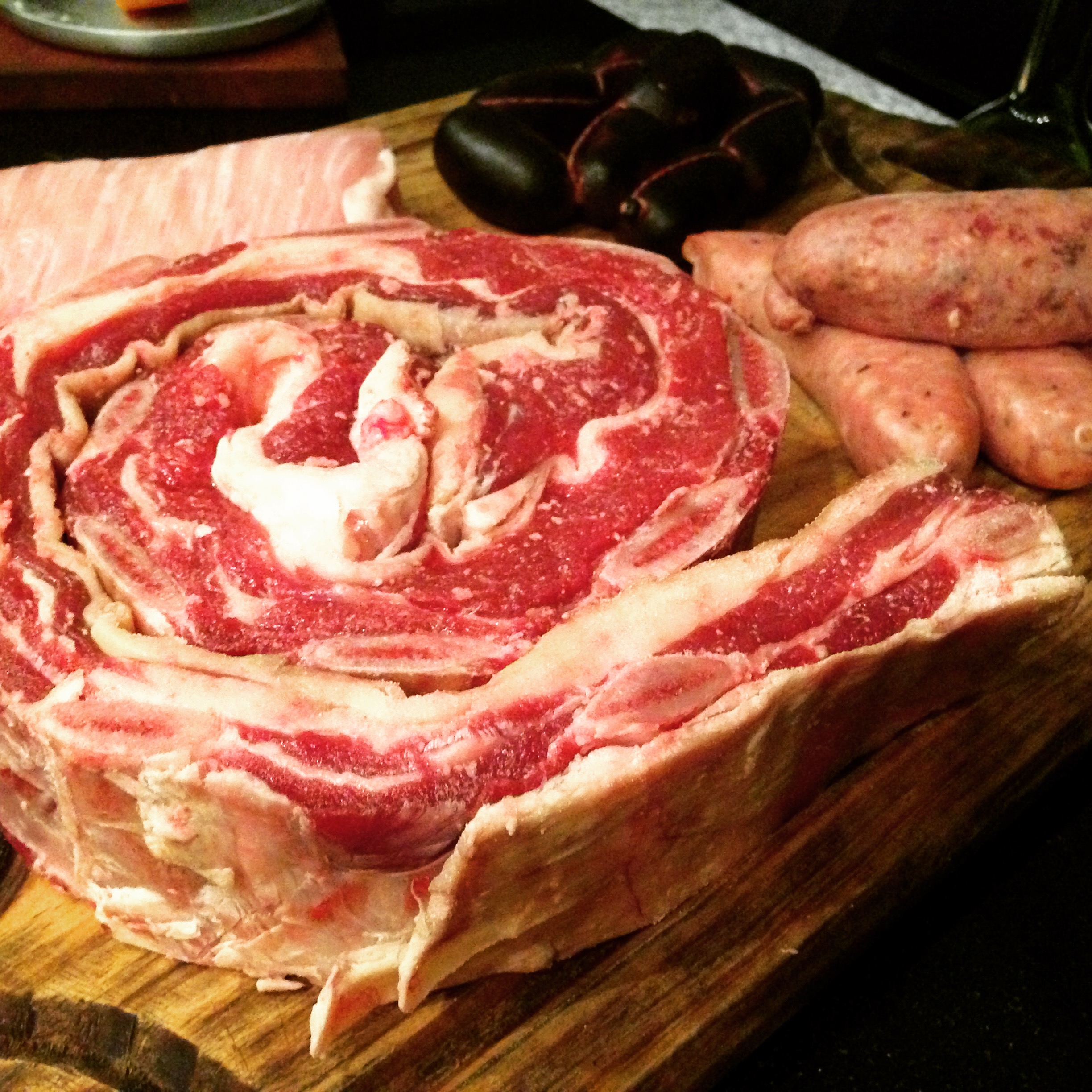
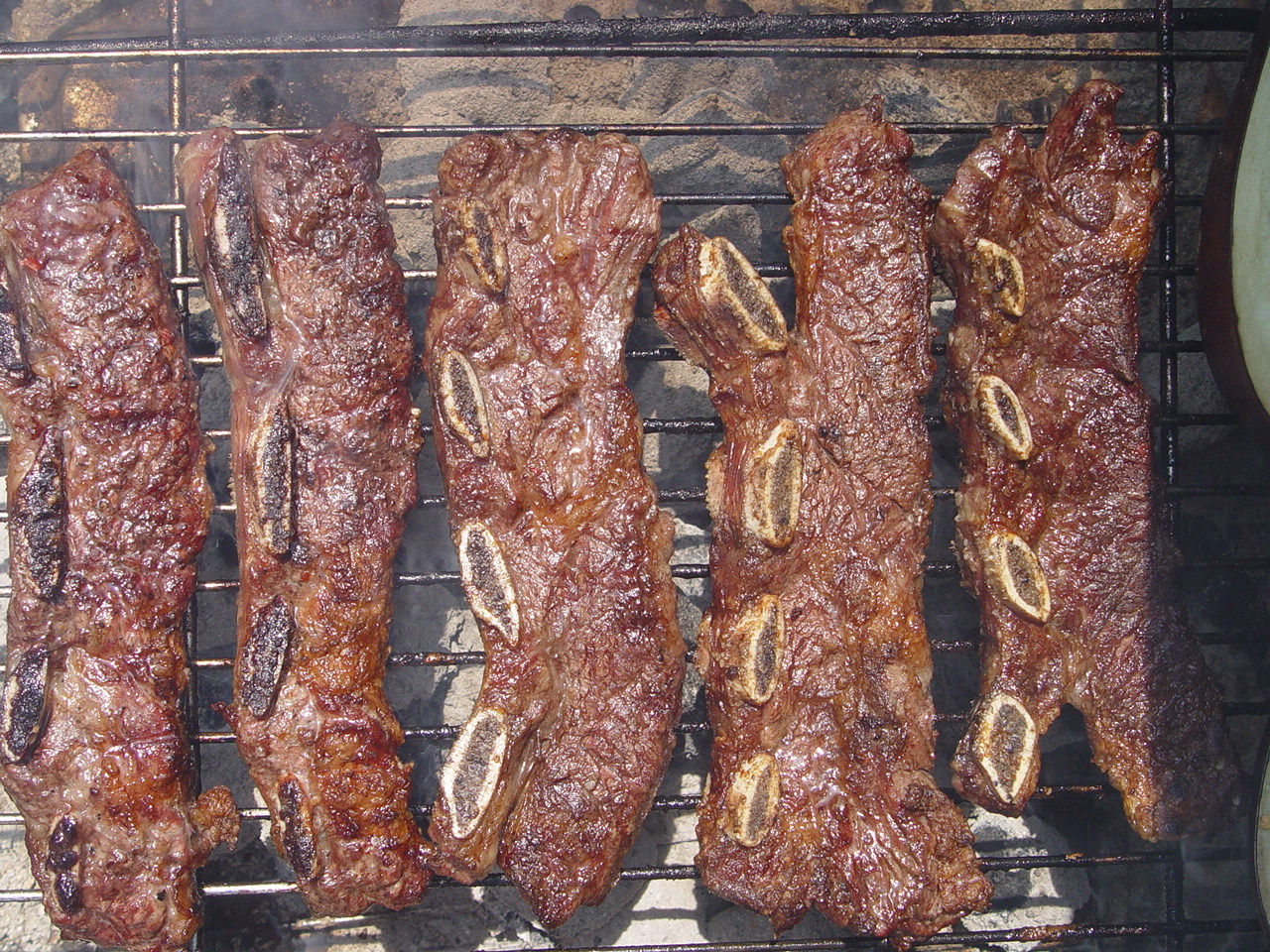
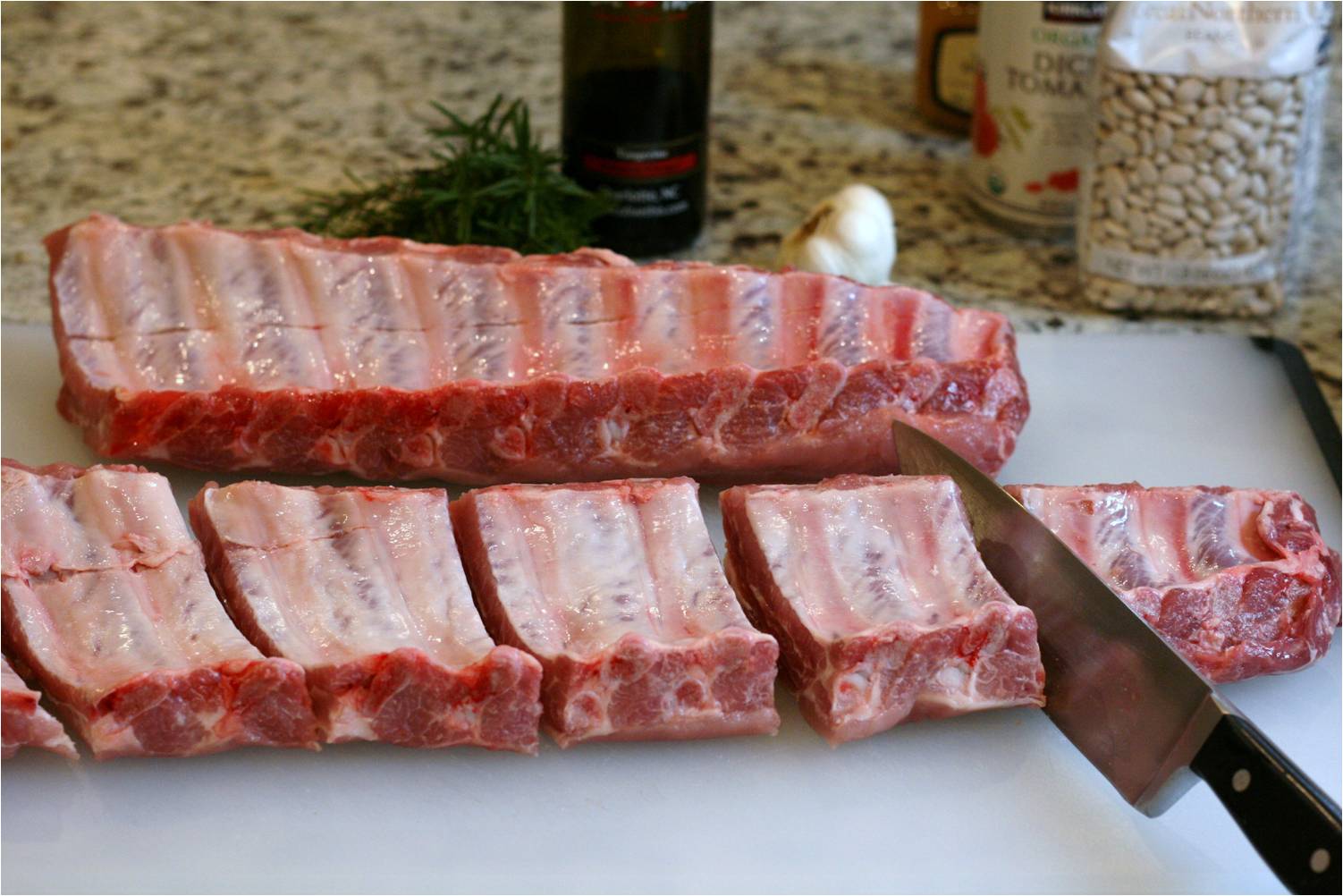
Other manners in Uruguay play into your hands. The meat cuts here are some different then in Europe or the US. By example almost no chance to find the right cut of „Baby Short Ribs“ like one has in the US. I try since years to get my butcher used to it, but they „won’t“ understand. On the other hand is the usual rib cut here perfect for the Korean recipe.

korean shortribs 5 American pork rib cut, not available in Uruguay,
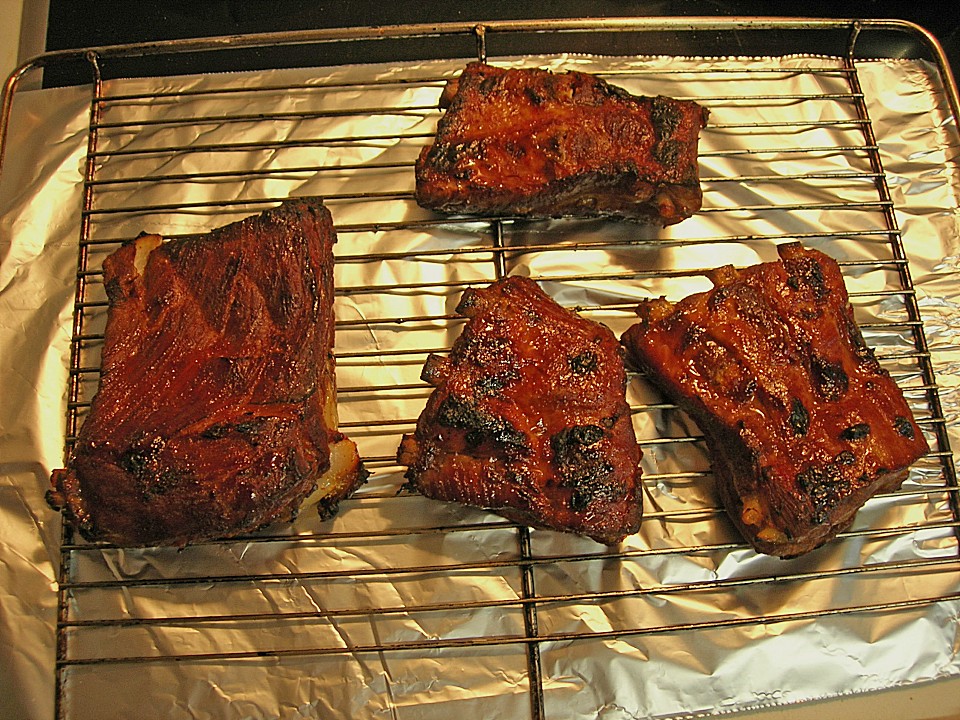
korean shortribs 12  with this barbecued result. Mouthwatering !
korean shortribs 7 tira de asado  Uruguayan cut lengthwise (mostly beef), asado used,
korean shortribs 7a  with this barbecued result. Last weekend I had suchlike Angus Ribs from the BBQ in an Atlantida restaurant. They were nice, good taste, BUT ….  They don’t look as appetizing as an American Spare Rib cut in the north. Uruguay, also Argentina are a bit rough when it comes to their BBQ style. It’s missing finesse and decoration (eyes are eating with) and foremost good seasoning and taste. BBQ sauces or marinates or glazes are totally unknown here. Ketchup yes – ugggg !!
korean shortribs 6  So I trained „my“ butcher here to do this cut for me,
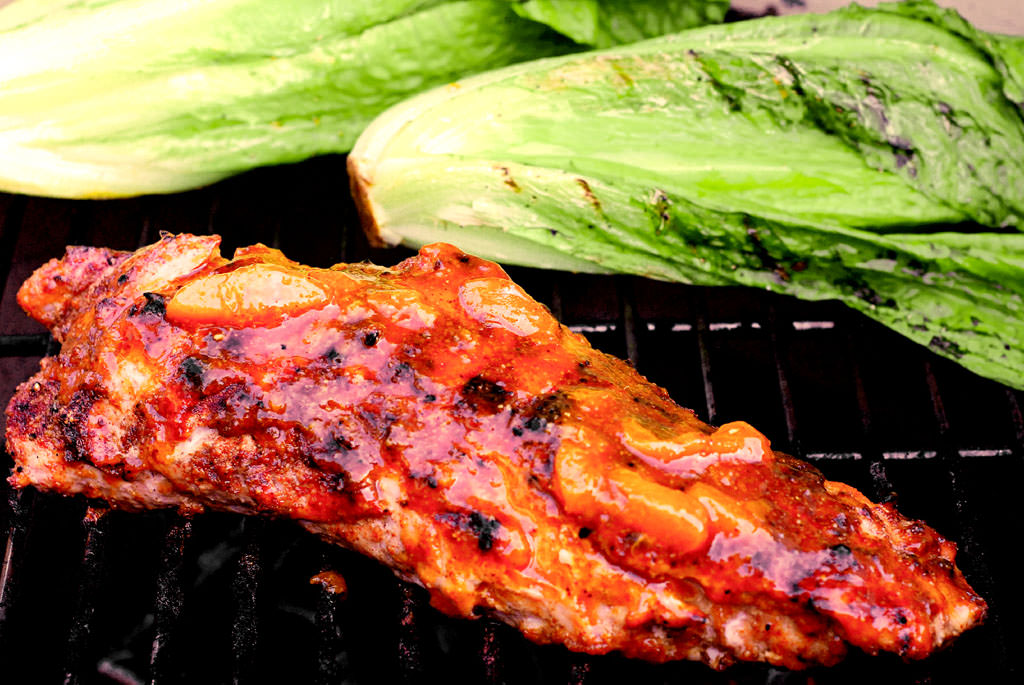
ribs 11d  with this barbecued result. We love it better this way.

Korean Ribs.

This recipe of braised short ribs, called in Korea „galbi jjim“. It is one of my favored rib recipes, because of the wonderful Asian taste (sweet and sauer, salty and spicy). It’s easy to make, no barbecue heating etc., just cooking time.

It’s a beautiful example of the economy of traditional Korean cooking, which relies on endless combinations of the same 5 to 10 pantry staples to create dozens of different dishes. Besides the short ribs and the veg, any Korean food-loving cook will already have most of these ingredients in the pantry: soy sauce, Mirin, garlic, brown sugar.

This isn’t your typical braise. You don’t brown the meat before it slow-cooks in liquid. The veggies are kind of cooked to death. But I wouldn’t change a thing. This recipe is meant to feed a crowd (6 to 8), but you can easily halve it.

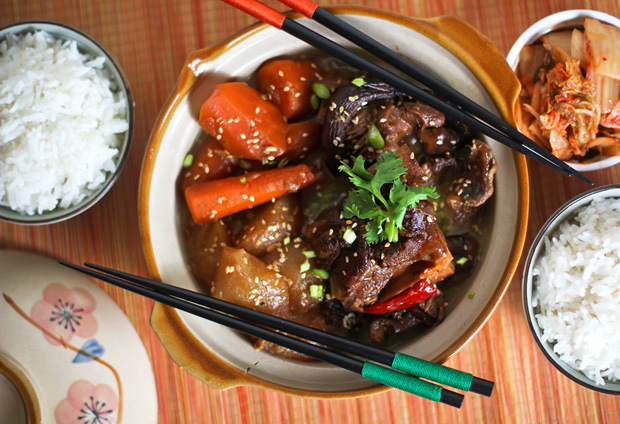
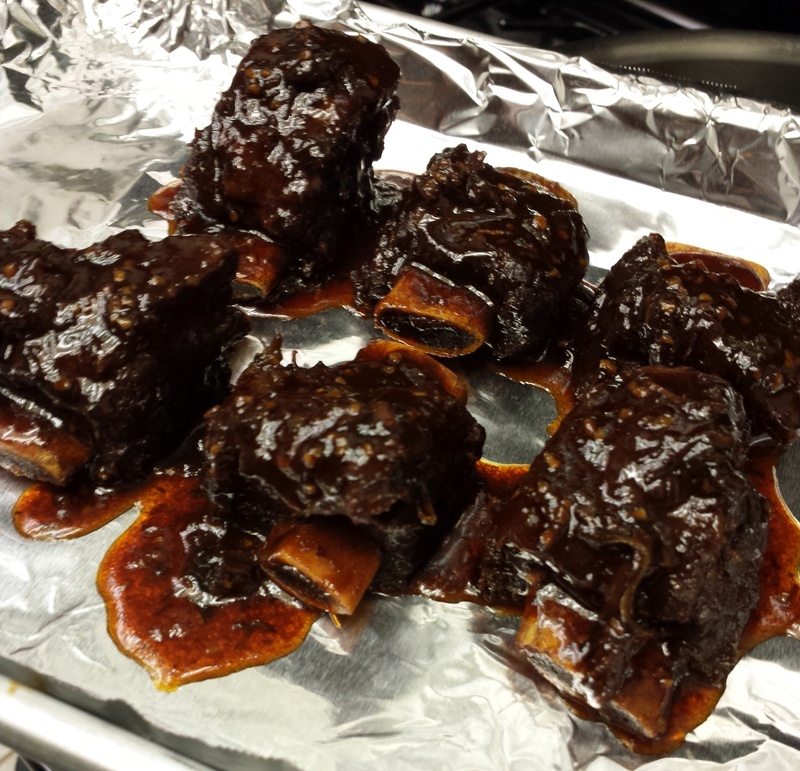
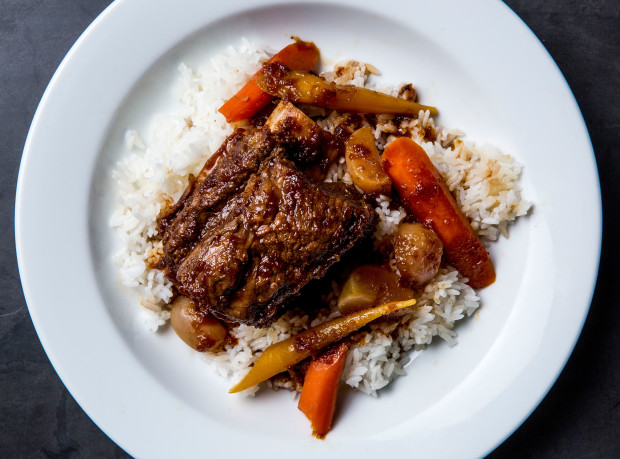
korean shortribs 2  Dark braised Korean short ribs, Uruguayan cut. Delicious !
Ingredients.

8 pounds (2kg) trimmed short ribs
1 small sweet onion
1/2 peeled kiwi
1/2 peeled pear
1/3 cup Mirin
2 medium carrots
1 large daikon raddish
1 1/2 cups soy sauce ( I like the dark one)
2 tablespoons minced garlic
1/2 cup brown sugar
water
if you like it spicy, like me, add some chilli powder to your taste

How to do.

Start with 8 pounds of trimmed short ribs. Soak them (yes, soak them—it drains the ribs of excess blood) in a very large bowl of cold water for two hours, changing the water after the first hour.
Drain the ribs and put them in a large pot or Dutch oven, cover with water, and bring to a boil. Boil ribs for five minutes, skimming off any residue, then drain and rinse in cold water.
Wash the pot you just used to boil the ribs; you’ll braise the meat in it.

In a food processor, pulse the onion,  kiwi, and the cored Asian pear until pureed.
Scrape the mixture into a bowl and stir in Mirin.
Place the clean short ribs in the pot you just washed and spoon the onion/kiwi/pear mixture over the meat.
Cook over low heat for 15 to 30 minutes.

korean shortribs 4  You can choose your favorite side dish.

While the meat is cooking, roughly cut the carrots and the daikon radish into 2″ (5cm) chunks.
Set aside. In a medium bowl, combine soy sauce, minced garlic, and brown sugar. And here the chilli powder (or even Sambal Olec) if you like.
Add the soy sauce mixture and four cups of water to the pot, give everything a good stir, then cover and bring to a boil.
Turn the heat down to low and simmer for 30 to 45 minutes.
Like any good braise, this one only gets better and better with time.

Add the chopped carrots and daikon, stir and cover again, and cook for another 30 minutes until vegetables and meat are cooked through and you can easily pierce through them with a fork.
Serve with steamed rice and your favorite side vegetables. I favour a crunchy „daikon kimchi“. Means daikon radish added to the kimchi.
Why not cooking a whole Korean meal if you already go for Korean ribs.

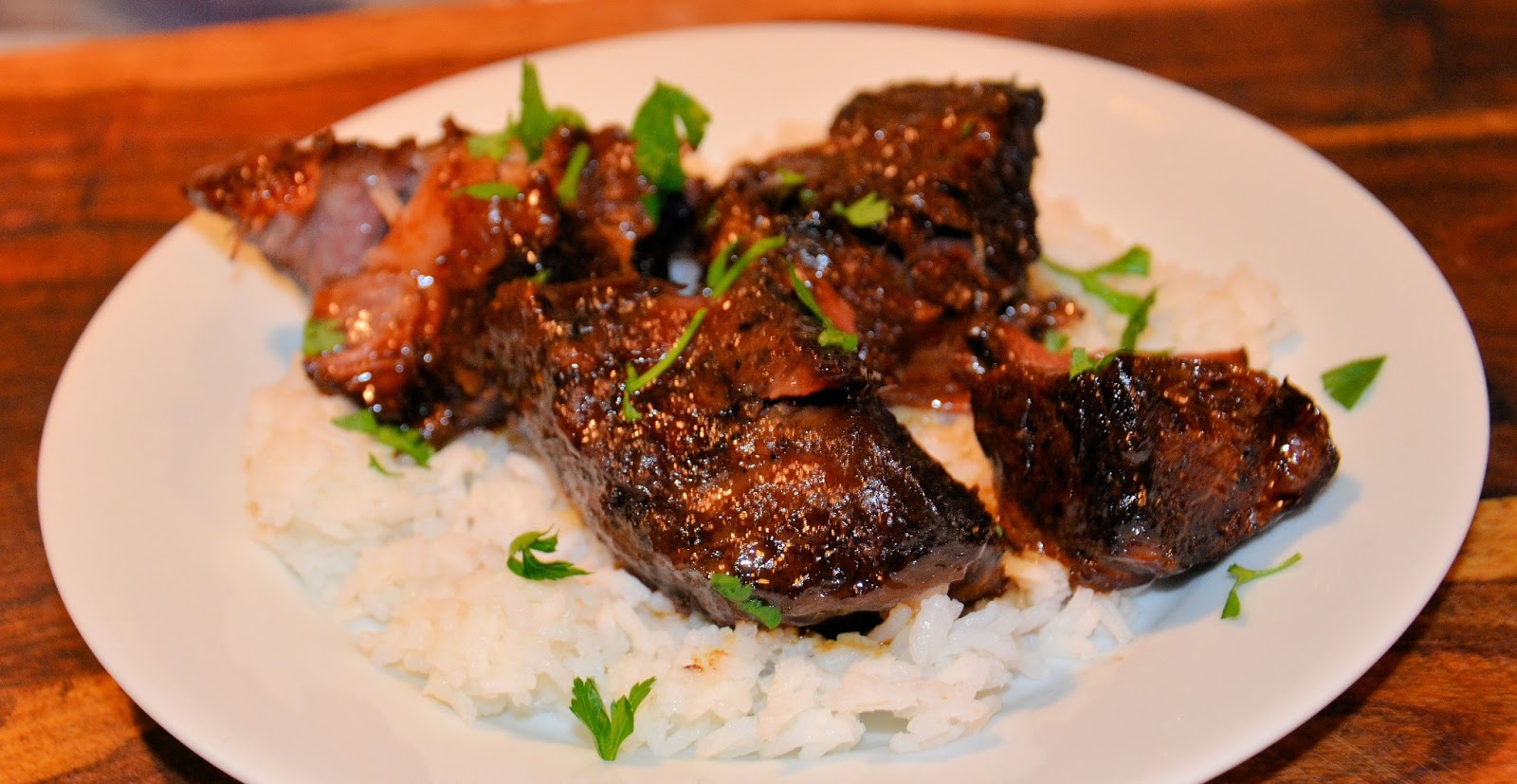
korean shortribs 1  As described, Korean ribs with veggies on rice.

Kimchi.

Kimchi is often recommended as a valuable food source both at home and abroad. In fact, there has been a significant increase in Kimchi exports in recent years. Korean immigrants to China, Russia, Hawaii and Japan first introduced Kimchi abroad, and have continued to eat Kimchi as a side dish. It gradually gained popularity even among foreigners. Accordingly, Kimchi may be found wherever Koreans live.

Ingredients.

1 Carrot
4 cups of cold water
3 tablespoons of sea salt/kosher salt
1 tablespoon of fresh garlic, finely chopped
1 tablespoon of fresh ginger, finely chopped
1 tablespoon of fresh green onions ( scallions ), finely chopped
1 Napa Cabbage – approximately one pound
1 teaspoon of dried red chili pepper flakes
1 1/2 to 2 teaspoons of sugar
Anchovy sauce (optional), you also can use fish sauce, if you like it
Sesame oil, just a bit, its very strong tasting

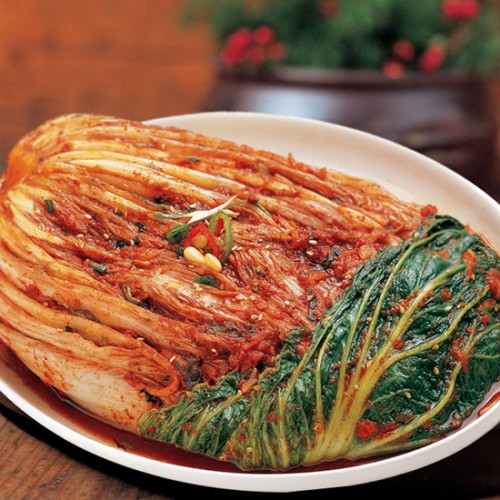
kimchi 1  Beautiful kimchi, cabbage left whole.

How to do.

Separate and wash cabbage leaves.
Sprinkle 2 tablespoons of sea or kosher salt evenly on cabbage leaves.
Place salted cabbage leaves in a large bowl, add 4 cups of cold water, cover with plastic wrap, and place in refrigerator overnight.
Be sure that water covers all cabbage leaves – place a plate or other heavy object on top of leaves to ensure that they stay covered with water.
The next day, pour off water and thoroughly rinse cabbage leaves.
You can shake them gently in the sink to remove excess moisture.
Cut the carrot into thin strips, length is around 3cm and width is around 0.2 to 0.5 cm.
Mix all the ingredients – carrot, sea salt, garlic, ginger, green onions, dried red chili pepper flakes, sugar, anchovy sauce and sesame oil together.
If you like sesame, can add some sesame oil into the seasoning also.
Use your hands to rub seasoning evenly into all cabbage leaves.

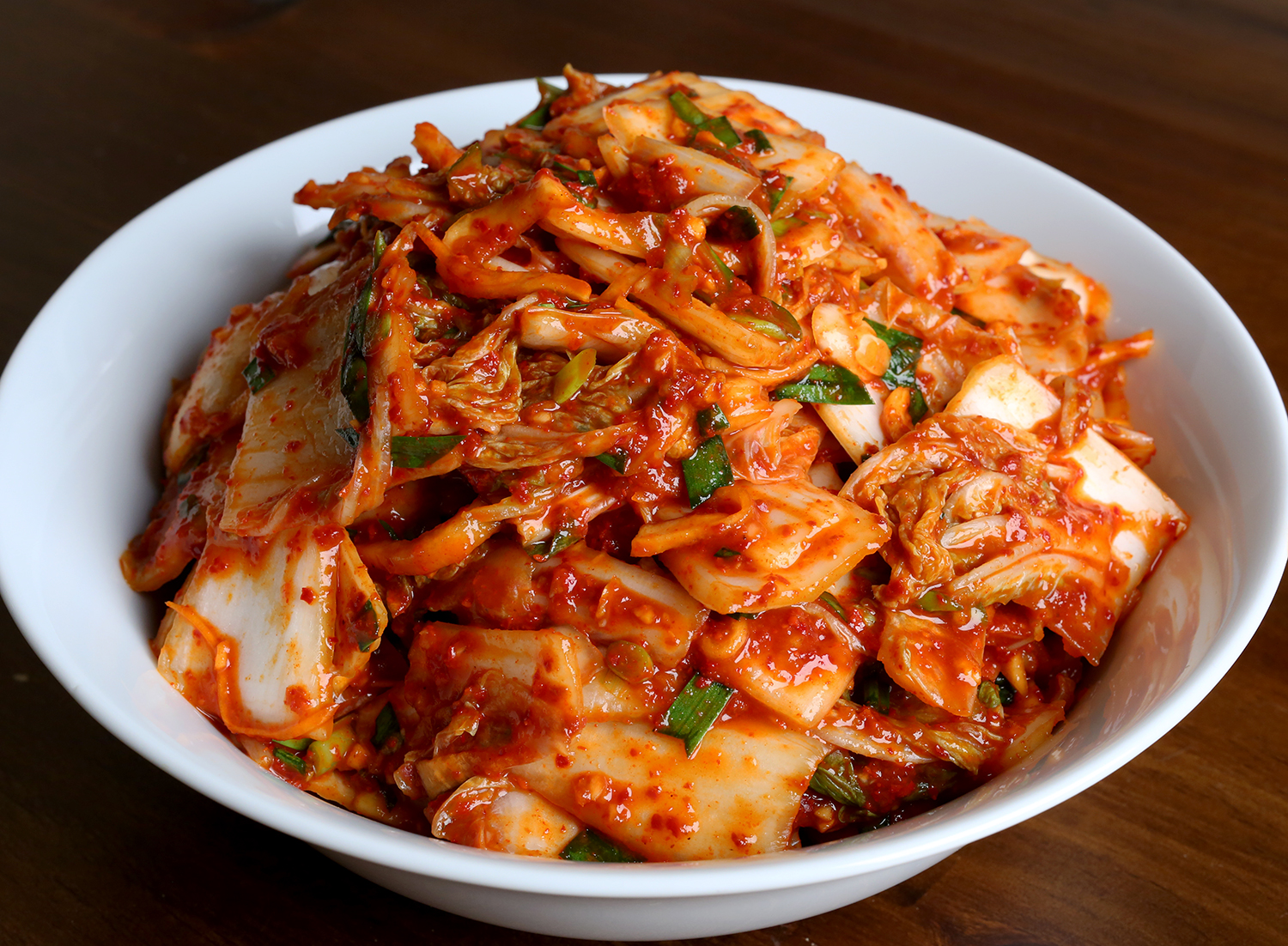
kimchi 2  Kimchi cut into side dish portions, with radish.

Be sure to use gloves to do this, otherwise, your hands will burn from chili flakes.
If you are pressed of time, mix seasoning ingredients with about a cup of warm water before adding them to cabbage to allow for easier distribution on cabbage leaves.
Transfer seasoned cabbage leaves into a large glass container. A bottle type with a wide opening is the best.
Be sure to use firm pressure with your hands to push down on cabbage leaves as they stack up inside the container.
Transfer any liquid that accumulated during the mixing process into the bottle as well – it will become Kimchi Brine.
Some liquid will also come out of the cabbage leaves as you press down on them as they are stacked in the container/bottle.
Leave about 2 inches (5cm) of room at top of the bottle before capping it tightly with a lid.
Allow bottle of Kimchi to sit at room temperature for 2 – 3 days.
At this stage I like to add a finely sliced daikon radish. This adds a good crunch to the recipe.

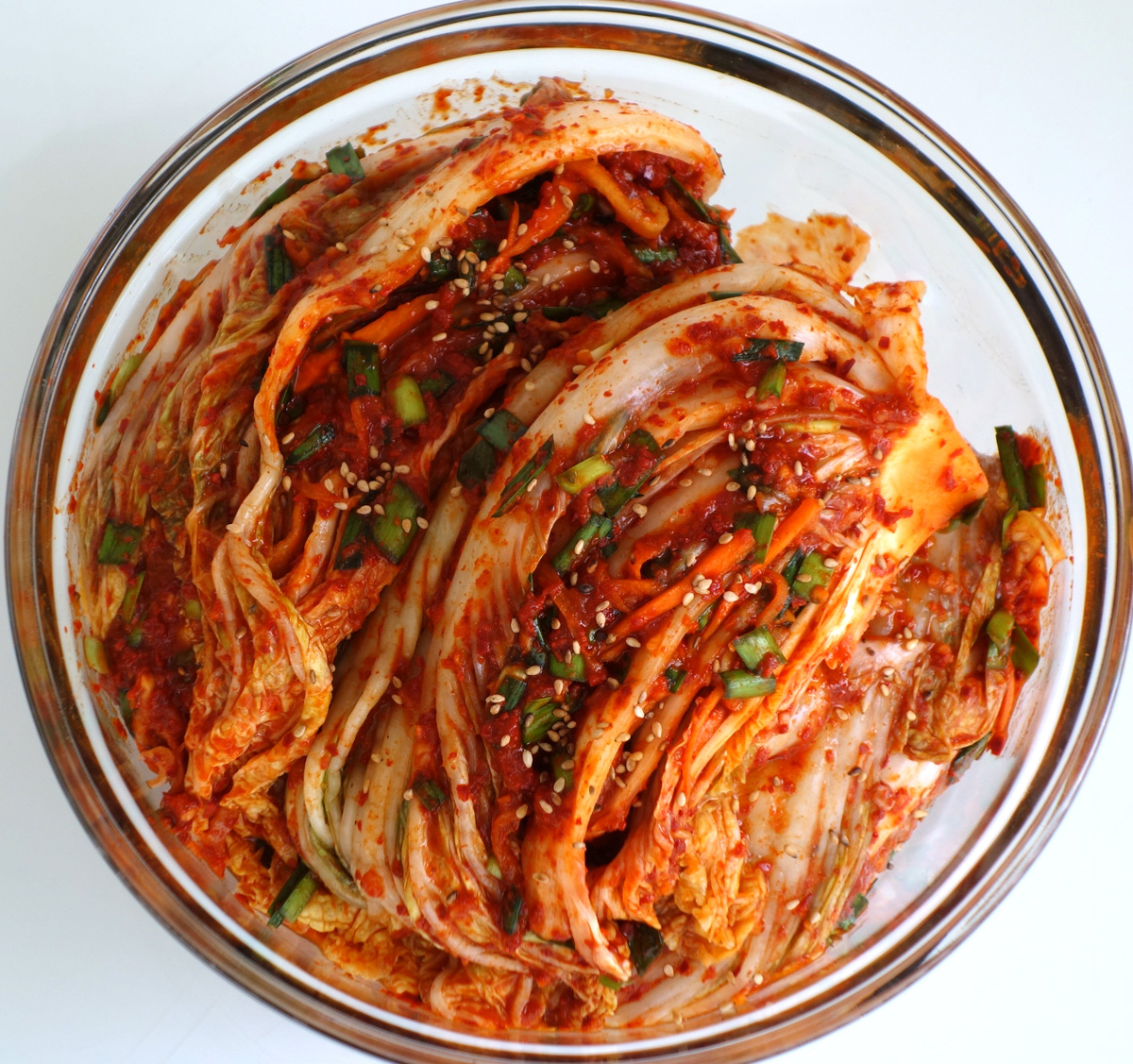
kimchi 3  Kimchi fresh out of the glass container.

Your Kimchi is now ready to eat! Use scissors or a knife and cutting board to cut cabbage leaves into 2 inch pieces before serving as a side dish to a bowl of rice, soup, and perhaps a piece of fish. Refrigerate remaining Kimchi and take out small portions right before meals.
The refrigerated Kimchi will continue to ferment slowly in the refrigerator over time, becoming more sour and flavorful with each passing day. So long as you use clean utensils to take out small portions, it will keep for up to a month in your refrigerator.

Tips.

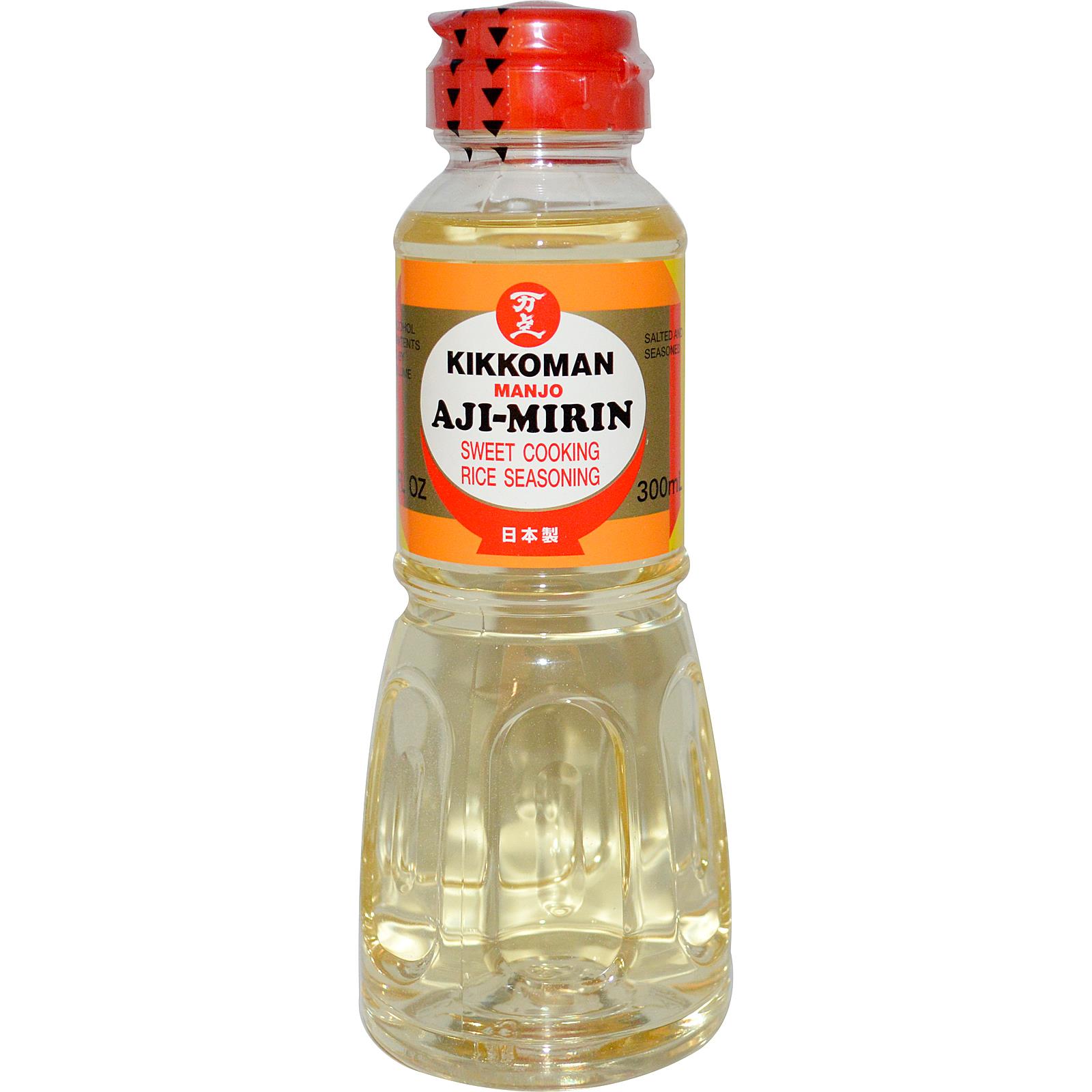
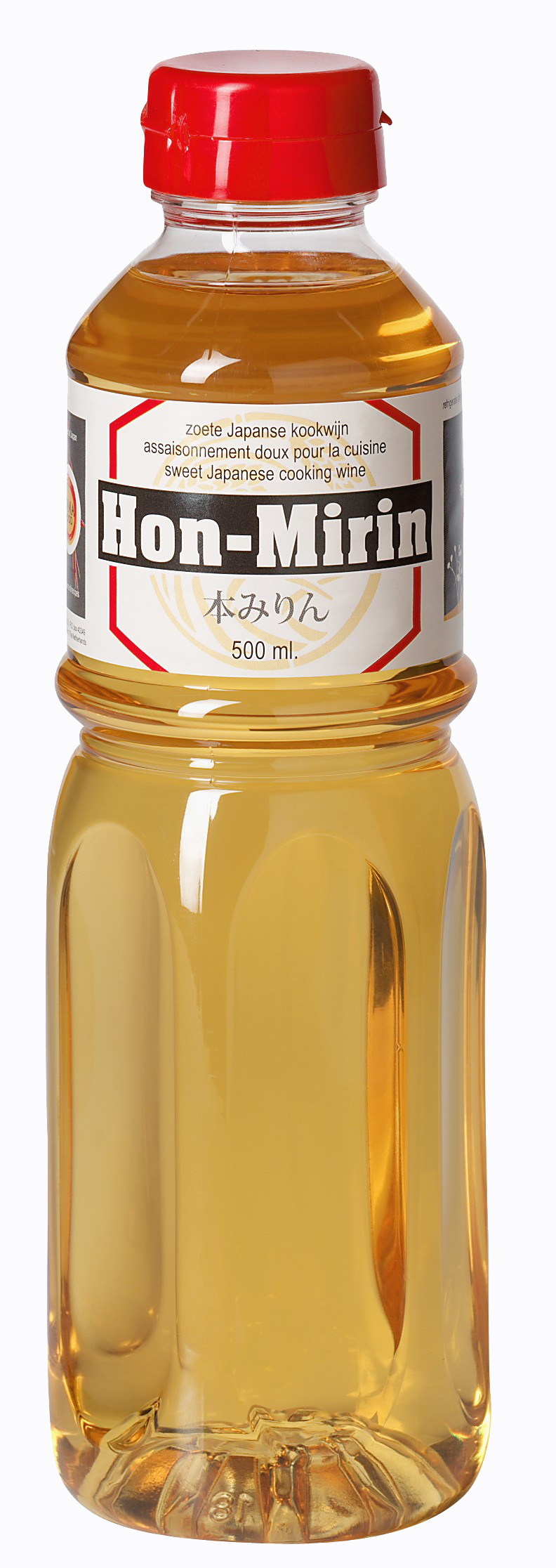
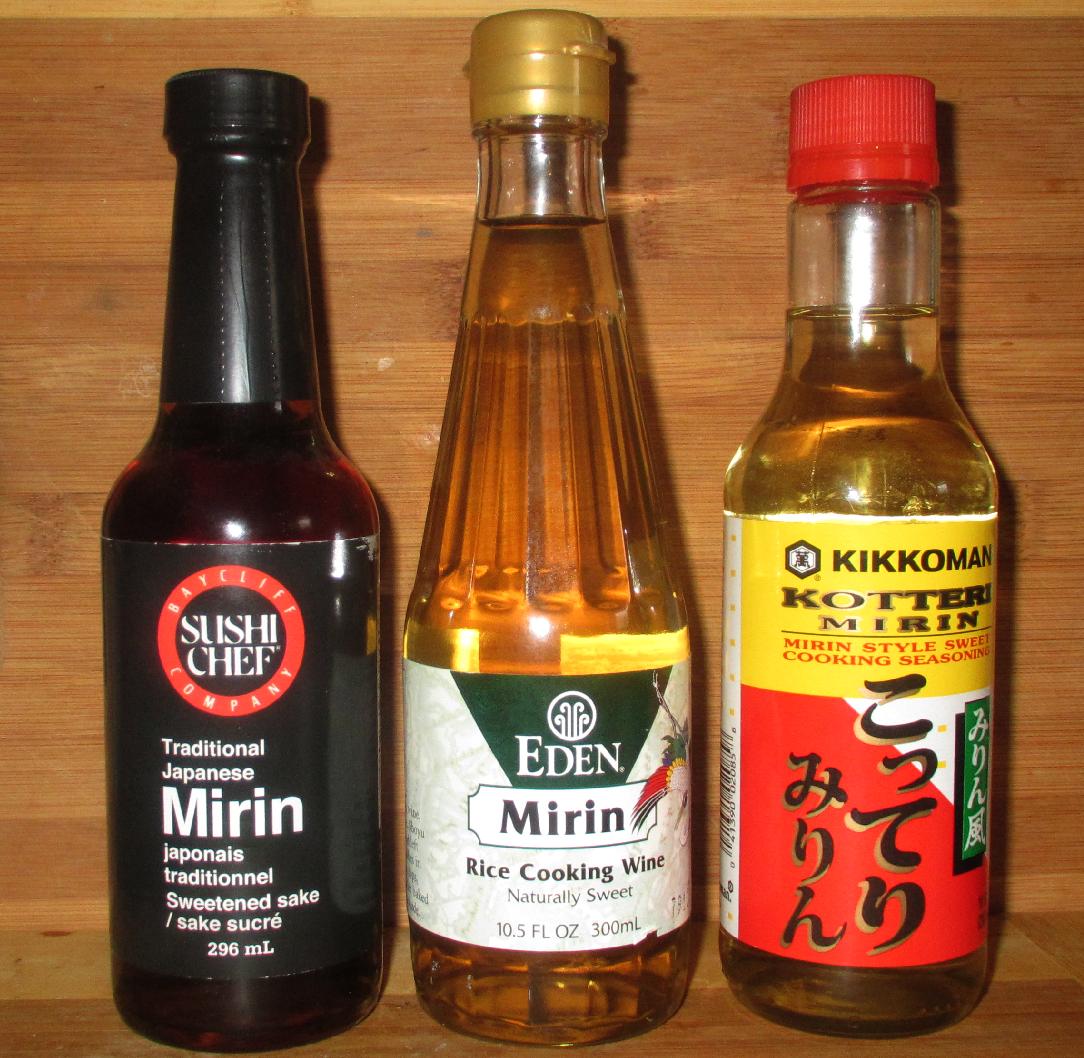
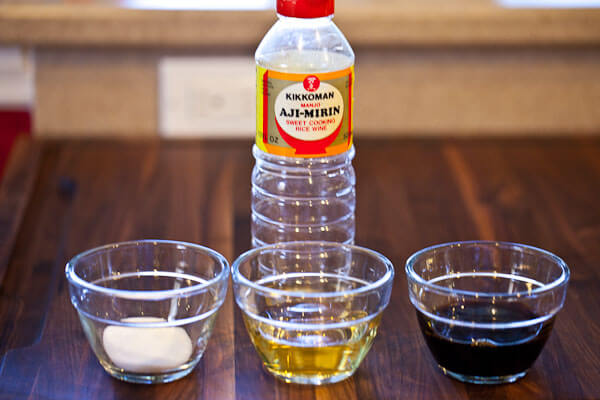
Mirin is an essential condiment used in Japanese cuisine. It is a type of rice wine similar to sake, but with a lower alcohol content and higher sugar content. The sugar content is a complex carbohydrate formed naturally via the fermentation process; it is not refined sugar. The alcohol content is further lowered when the liquid is heated.

mirin 2    mirin 4 Hon-mirin is the „real stuff,“ fermented rice wine that is naturally sweet without the addition of sugar or corn syrup. Aji-mirin is rice wine with added sugar.

There are three general types of Mirin.
The first is Hon Mirin (literally: true Mirin), which contains approximately 14% alcohol and is produced by a forty- to sixty-day mashing (saccharification) process.
The second is Shio Mirin (literally: a sort of sustitute Mirin), which contains alcohol as well as 1.5% salt to avoid alcohol tax.
The third is Shin Mirin (literally: new Mirin), or Mirin-Fu Chomiryo (literally: Mirin-like seasoning), which contains less than 1% alcohol yet retains the same flavor.

mirin 3  Cooking Wine, Cooking Sake, Cooking Seasoning.

Shio-Mirin.

When Sake is not available, like here in Uruguay, a substitute to Shio-Mirin can be made as shown here. This is not a very good substitute but o.k. and can be used when no Mirin or Sake is available. Remember, we talked about flexibility and creativity, why not DIY ?

Ingredients.

½ cup white wine
¼ cup rice vinegar
1 tablespoon Sherry (if available) or white Port or similar
¼ cup white sugar
2 tablespoons water

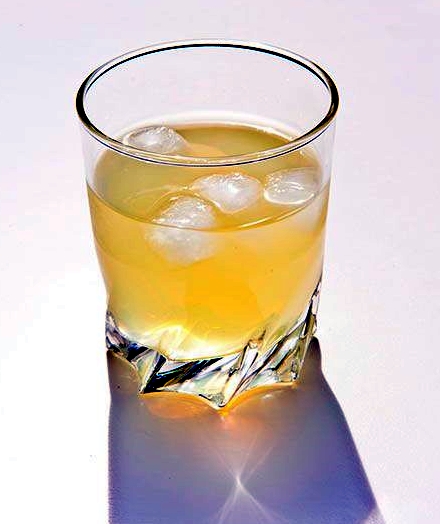
mirin 5  Shio Mirin used as a drink, not every ones taste, but healthy.

How to do.

Add water to the rice vinegar in a saucepan and gently warm up the mixture, then add the sugar till it dissolved.
Ensure the mixture is not brought to a boil.
Add the white wine and Sherry and warm for two minutes, again ensuring the mixture does not boil.
Cool before using in your recipes.

Teriyaki.

mirin 6  Equal amount of sugar, Mirin and soy sauce.

The secret is, teriyaki sauce is really only 3 ingredients. Sure, you can get all fancy and put more, like sesame seeds, a little grated ginger and garlic. But plain and simple, teriyaki sauce is equal parts sugar, sweet cooking wine (Mirin) and soy sauce. Though, if you’re like me, and prefer a less-sweet version, I use a lot  less sugar.

To make a Teriyaki sauce, just bring all three ingredients to a simmer until all the sugar dissolves, about 1 minute. That’s it!

You are able now, to cook a whole Korean meal. Impress your guests, it’s so easy, try it.

Ps:
Cooking my best ribs here is great fun, but sometimes I still miss this in Uruguay:

korean shortribs 14 Click on pic to get hungry. Sweet honey roasted ribs.

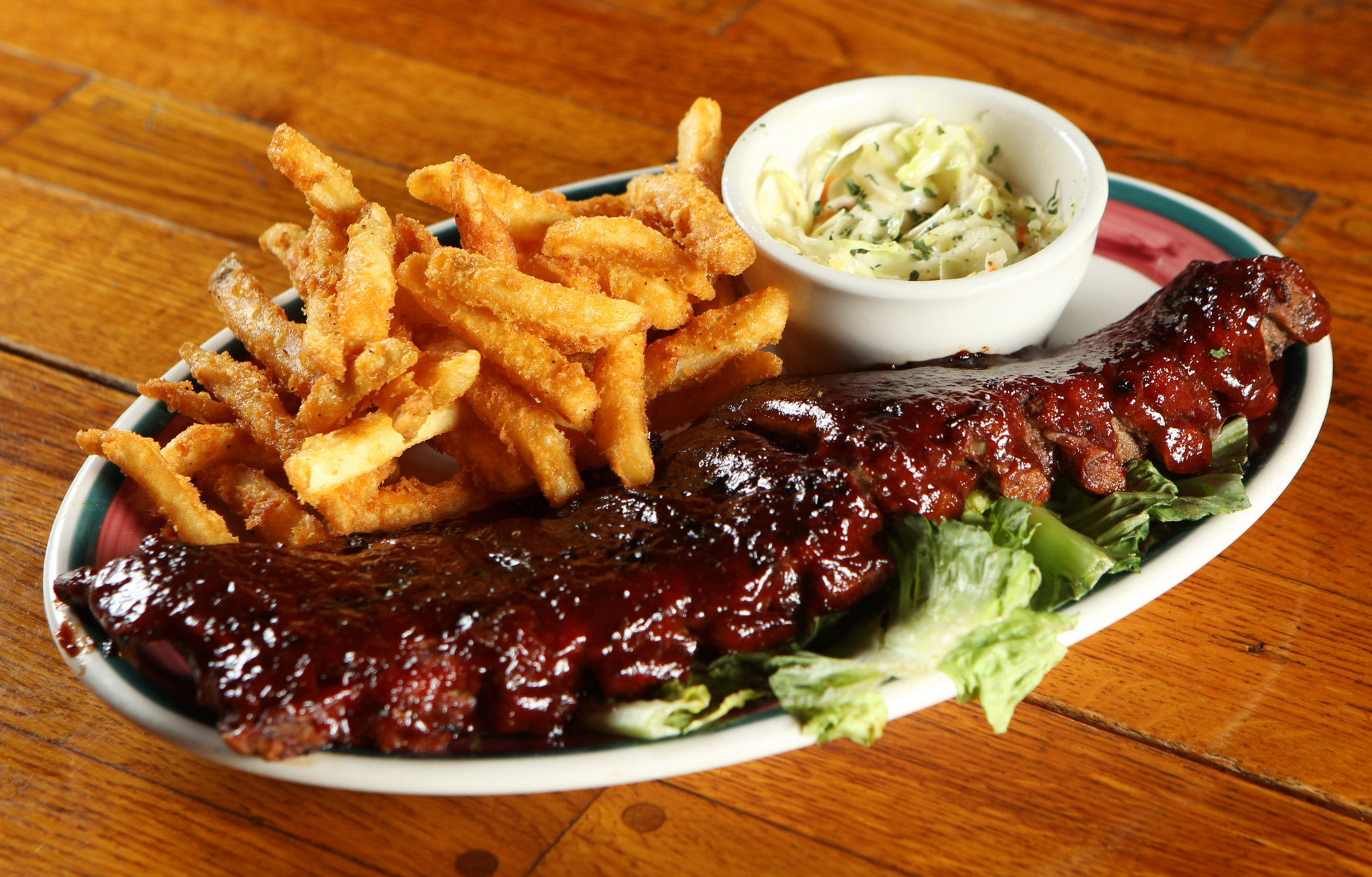
A couple years ago at „Bennucci’s, A Chicago Oven and Grill“ in Kalamazoo, a full rack of baby ribs with coleslaw and french fries US$ 12.99. No problem to finish this portion.

Veröffentlicht unter Lifestyle, Recipes | Verschlagwortet mit | 2 Kommentare

Street Art Uruguay

street art world 4 sydenham

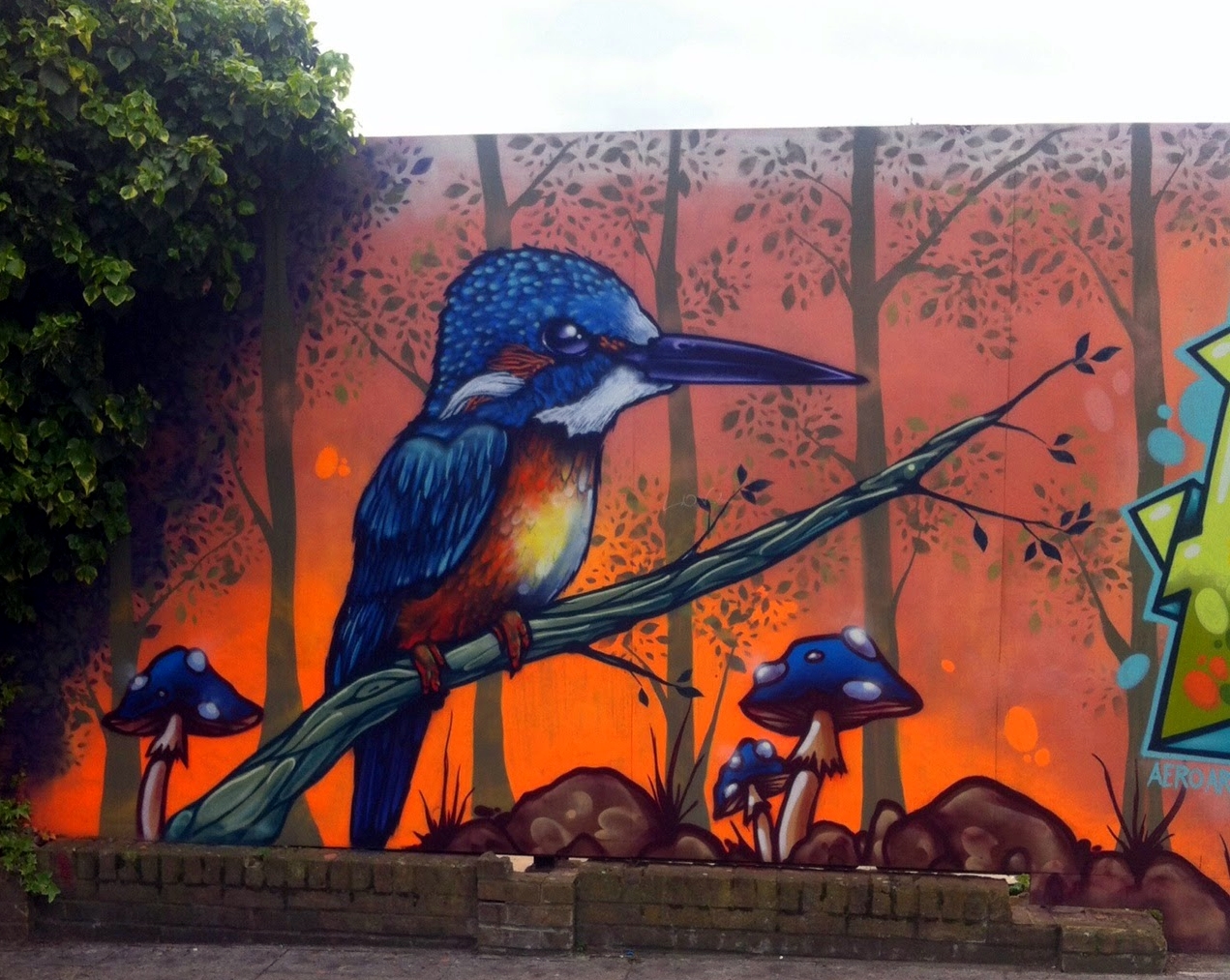
During the last 6 years in Uruguay I always couldn’t take off my eyes from „street art“. Some were nice, pretty, ambitious – some ugly, offensive, mean – and some were really eye catching, worthy to look at and to photograph. And some are so interesting and wonderful pieces of art that I decided to collect them with my camera. Meantime, because I was much more focused on art of such, I saw hundreds and pictured dozens, not only in Montevideo but allover the country. Also I found many in my travel library. Some of them I like to share with you. But first, as always, a bit of research, background and history.

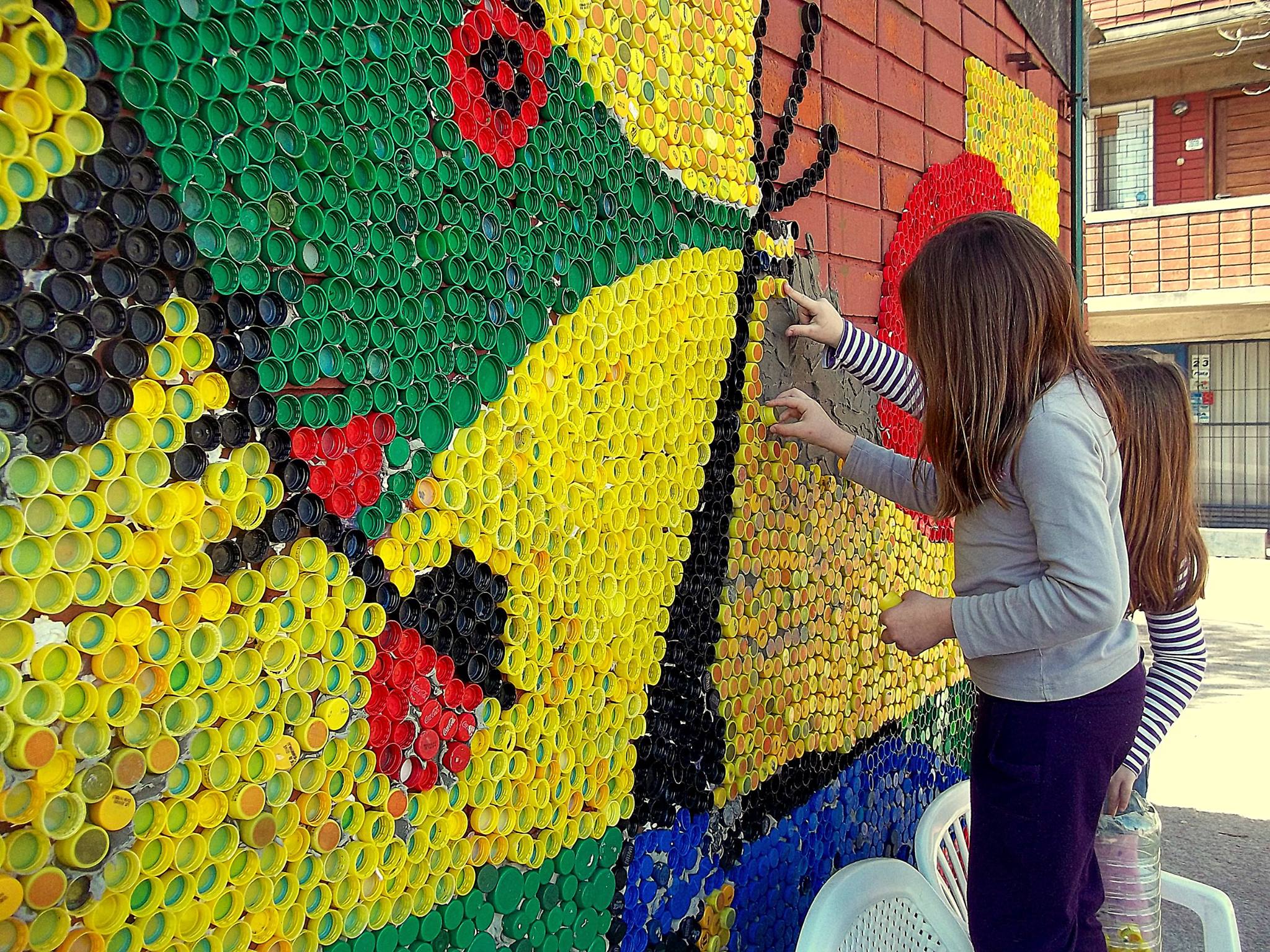
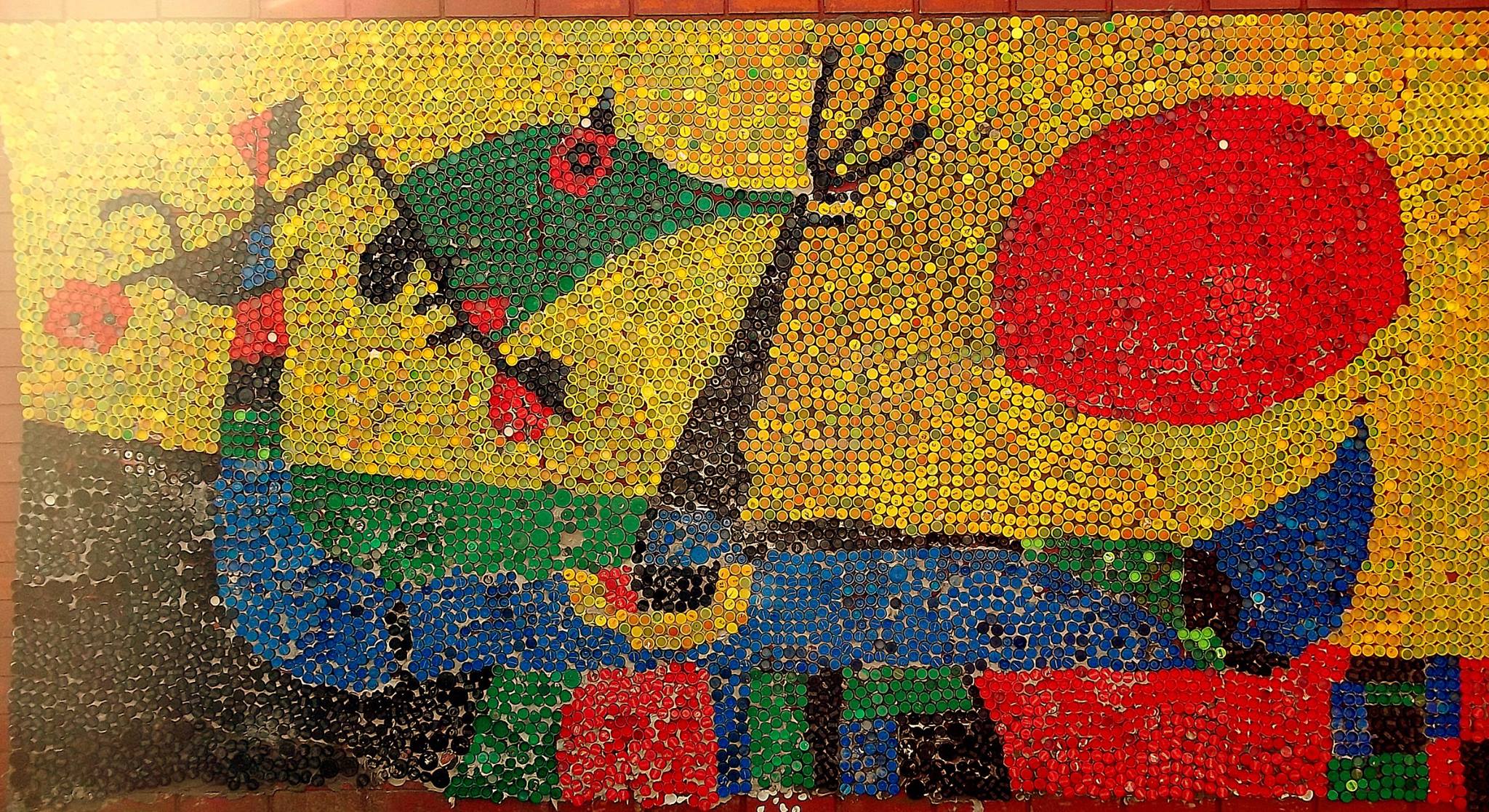
street art MVD 39 bottle tops 2015 street art MVD 39a bottle tops - miro  Wonderful modern street art in Montevideo.    Kids glue with bottle tops a Miro design on a wall.

Origin.

Street painting, also commonly known as pavement art, street art, and sidewalk art, is the performance art of rendering artistic designs on pavement such as streets, sidewalks, and town squares with impermanent and semi-permanent materials such as chalk.
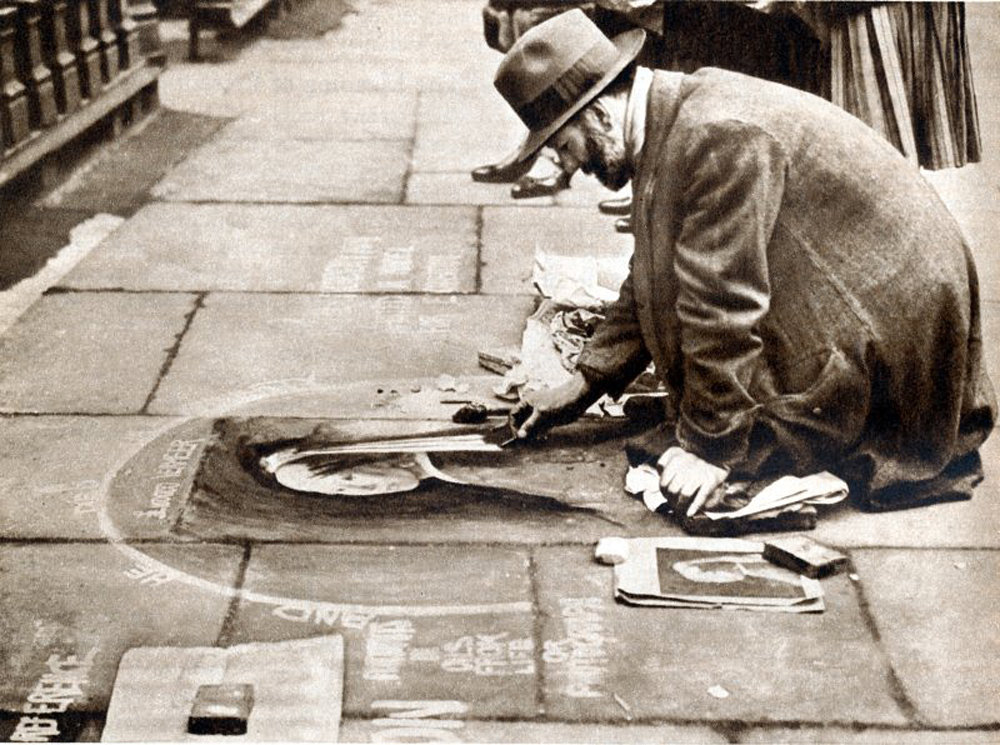
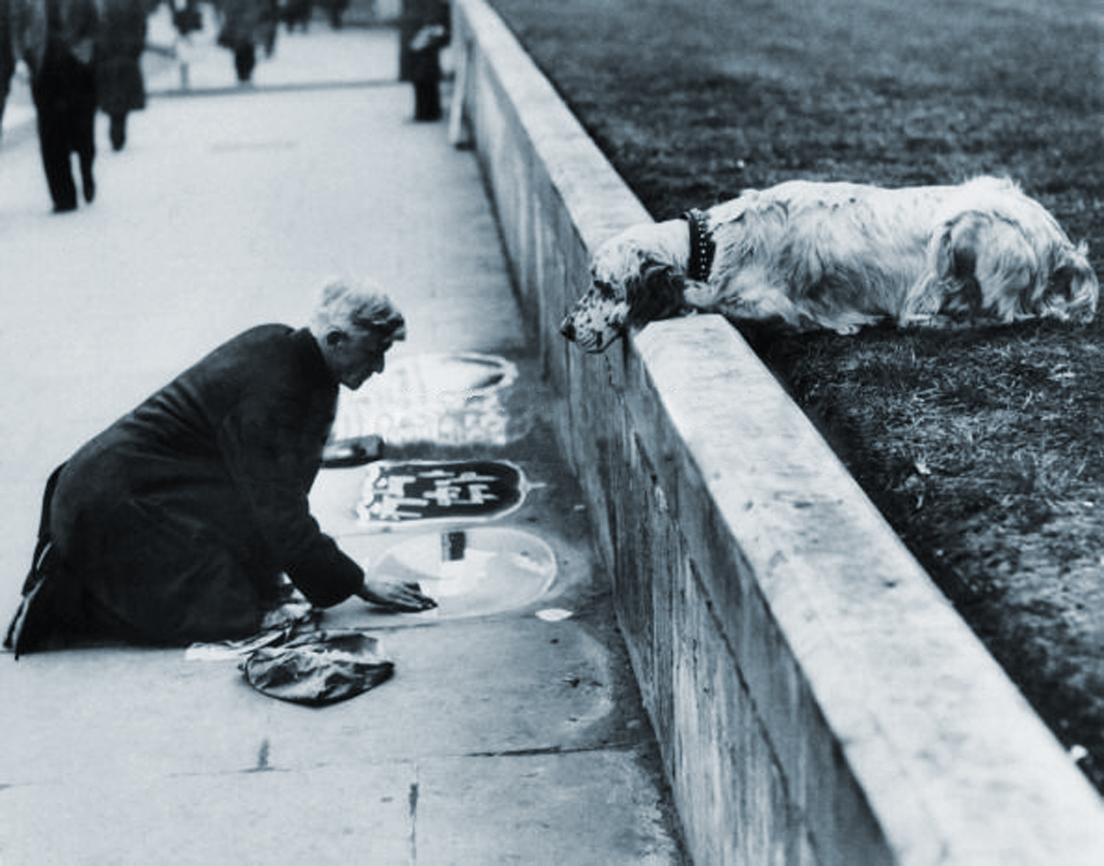
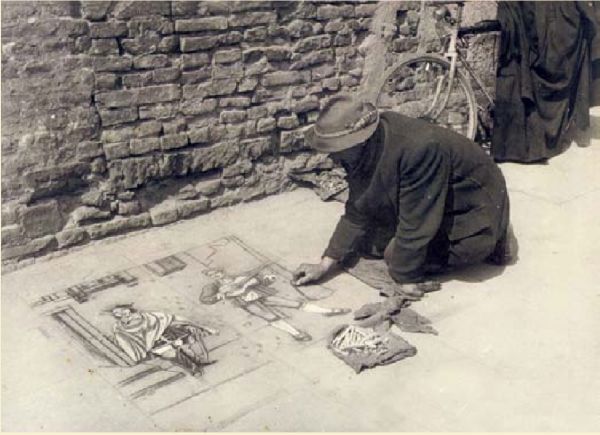
The origins of modern street painting can be traced to Britain. Pavement artists were found all over the United Kingdom and by 1890 it was estimated that more than 500 artists were making a full-time living from pavement art in London alone.

street art world 27 screever london 1925 street art world 29 london 1953 keystone Screever in London. Left from 1925 and right from 1953. Nothing changed till today.

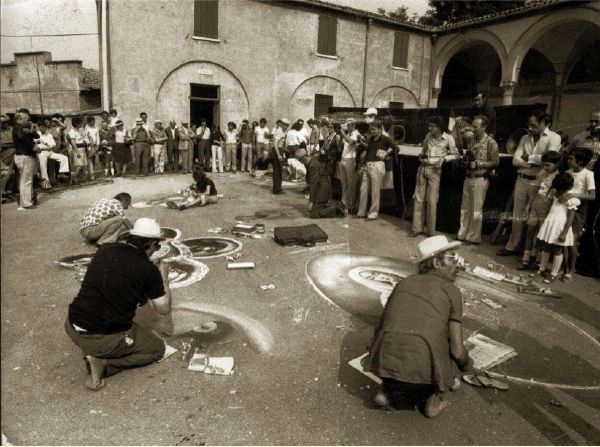
Italian madonnari were vagabond artists noted for a life of travel between festivals, and were the visual arts counterpart of minstrels.. They often lived solely from the coins tossed onto or next to their drawing as homage to the Madonna and possibly their skill. They arrived in towns and cities to paint religious pictures directly on the beaten earth or paved public squares, using chalk, brick, charcoal, and colored stones as their medium. In Italy, street painters are called madonnari after their practice of reproducing images of the Madonna (St. Mary).

street art world 25 madonnari italy street art world 25a madonnari italy Madonnari in Italy. Every tourist visiting Italy in the 50’s to 70’s will remember them.

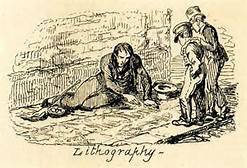
The British term for pavement artist is „screever“. The term is derived from the writing style, often Copperplate, that typically accompanied the works of pavement artists since the 1700s. The term screever is most commonly cited as Shakespearean slang dating from around 1500.

street art world 26 george cruikshank litho 1829  Lithography by George Cruikshank „street artist“ from 1829.

The first recorded street-painting competition and ‚festival‘ was held in London in 1906.

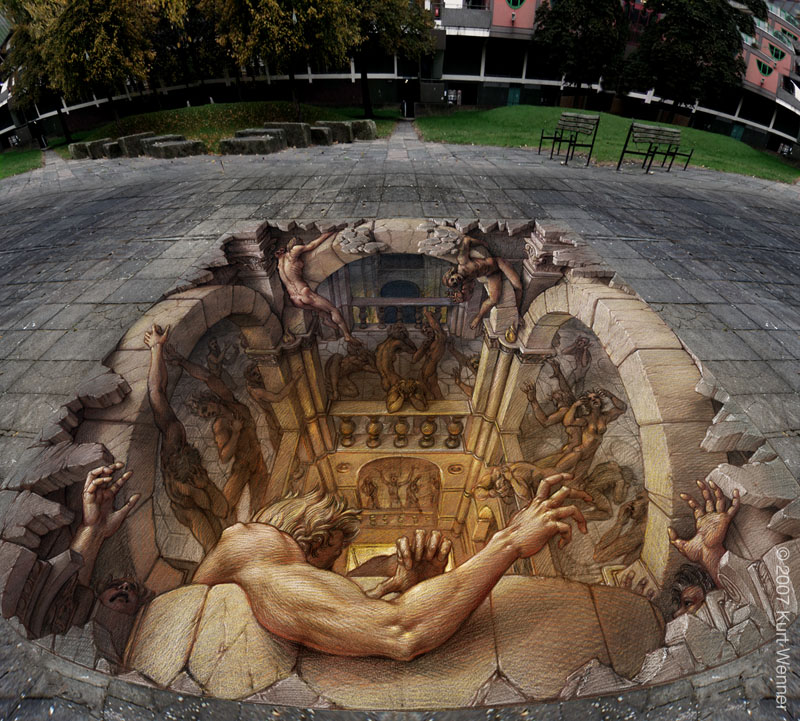
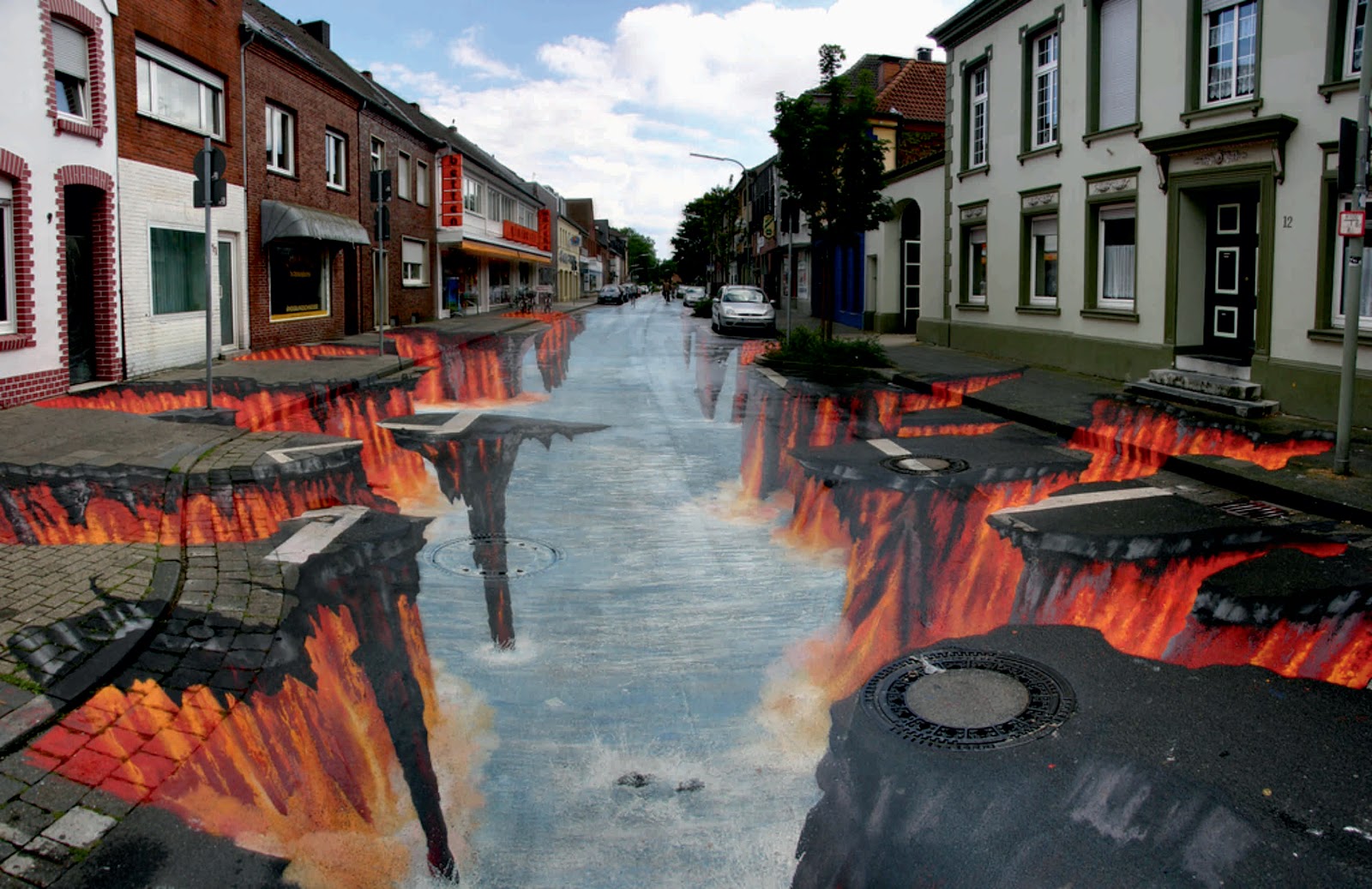
    street art world 3D 1 kurt wenner      street art world 3D 2 Modern street pavement art in 3D technique.  Left by the inventor and master of 3D street painting Kurt Wenner and right a famous street painting of Edgar Mueller.

Around The Globe.

Street art exists worldwide. Large cities and regional towns of the world are home to some form of street art community, from which pioneering artists or forerunners of particular mediums or techniques emerge. Internationally known street artists travel between such locations to promote and exhibit their artwork. The HOT city’s for street art are now London, Brussels, Paris, Berlin, Buenos Aires, New York and Montreal.

street art world 13 askew y henare christchurch     street art world 6 curiot y botkin mexico
You will find street art all around the world. From  Askew and Henare, Christchurch New Zealand (left), to Curiot and Botkin, Mexico (right).

Street Art.

Street art is visual art created in public locations, usually unsanctioned artwork executed outside of the context of traditional art venues. The term gained popularity during the graffiti art boom of the early 1980s and continues to be applied to subsequent incarnations. Stencil graffiti, wheat pasted poster art or sticker art, and street installation or sculpture are common forms of modern street art.

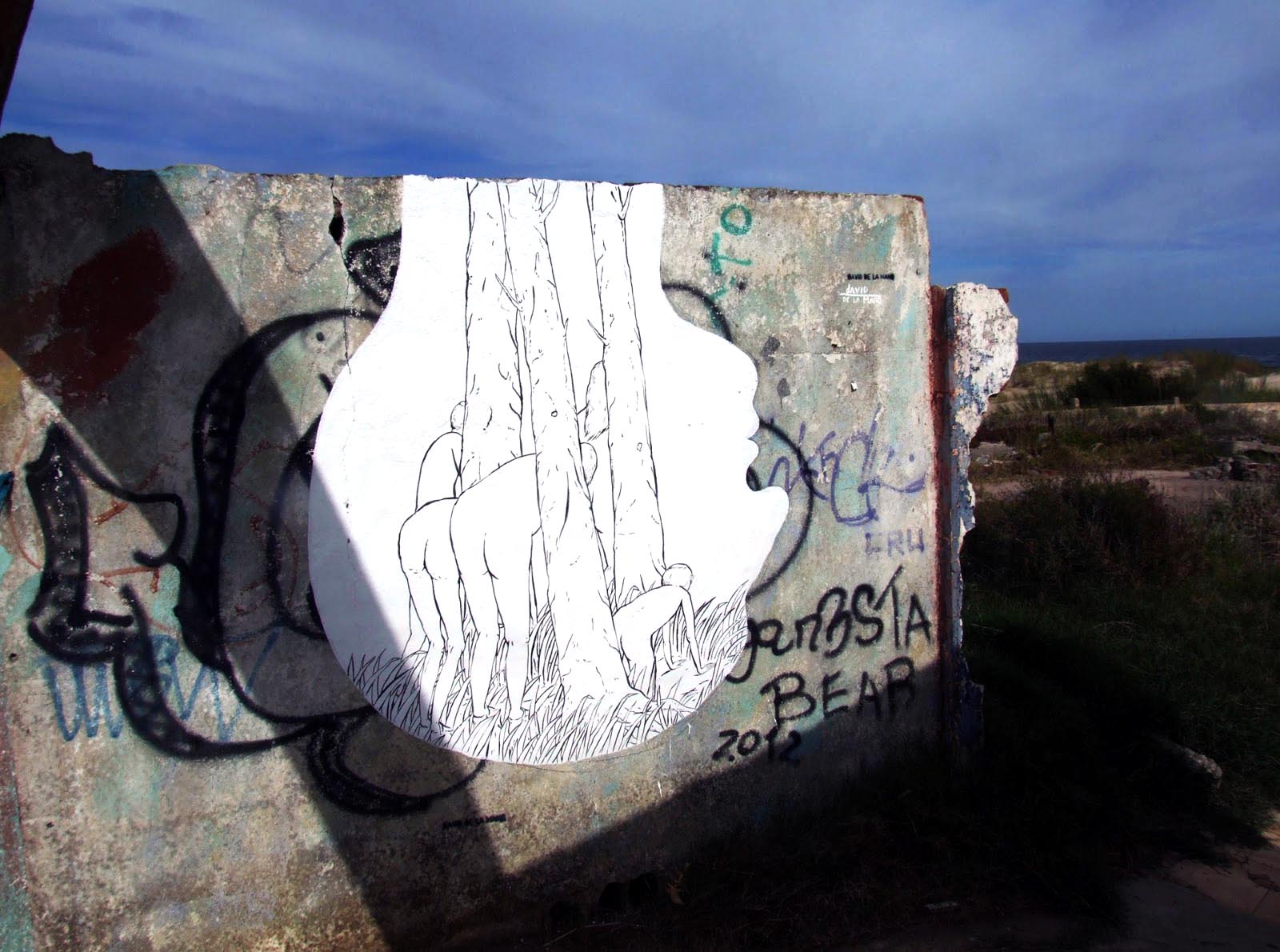
street art villa soriano 3 david de la mano street art villa soriano 4 david de la mano     What a great performance of street art. Artist David de la Mano, Villa Soriano Uruguay. Click on pics !

The terms „urban art“, „guerrilla art“, „post-graffiti“ and „neo-graffiti“ are also sometimes used when referring to artwork created in these contexts. Traditional spray-painted graffiti itself is often included in this category, excluding territorial graffiti or pure vandalism.

street art world 1 vandalism muenster, germany  Graffiti vandalism on private property, Germany.

Street art is often motivated by a preference on the part of the artist to communicate directly with the public at large. Street artists sometimes present socially relevant content infused with esthetic value, to attract attention to a cause or as a form of „art provocation“.
Street artists often travel between countries to spread their designs. Some artists have gained cult-followings, media and art world attention, and have gone on to work commercially in the styles which made their work known on the streets.

street art MVD 5 street art MVD 24 marion     Very rare to catch an artist and painting during different stages of completion, Montevideo Uruguay.

Graffiti.

Graffiti ( Italian: ɡrafˈfiːti; plural of graffito: „a graffito“, but „these graffiti“) are writing or drawings that have been scribbled, scratched, or painted illicitly on a wall or other surface, often within public view. Graffiti range from simple written words to elaborate wall paintings, and they have existed since ancient times, with examples dating back to Ancient Egypt, Ancient Greece, and the Roman Empire.

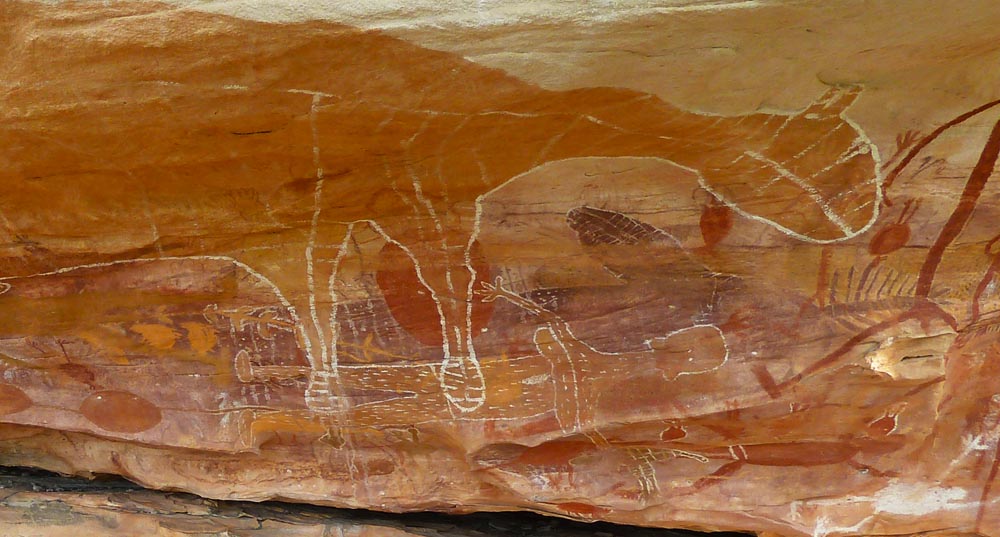
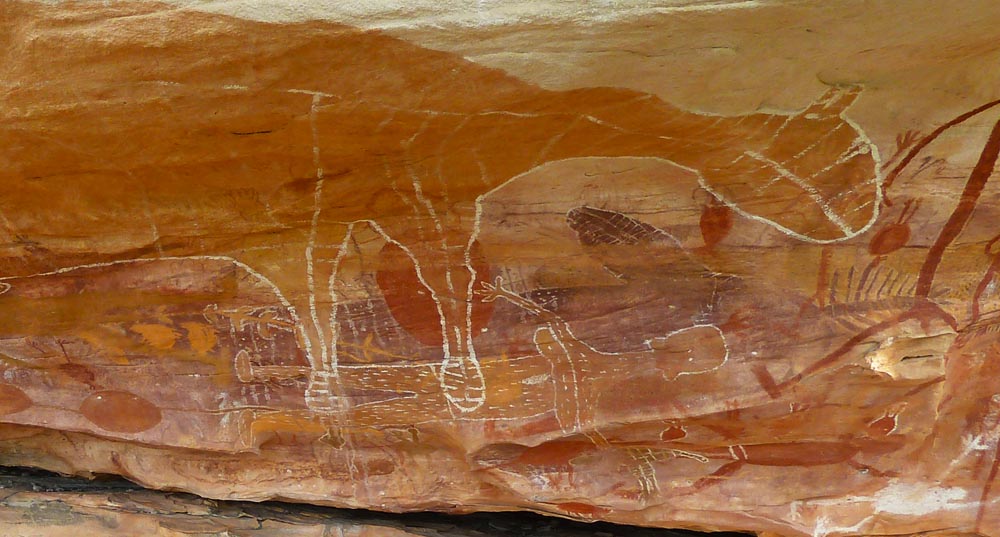
abo 31 ad laura 6m giant-horse Ancient art at Laura Australia, A 6m giant horse .

In modern times, paint (particularly spray paint) and marker pens have become the most commonly used graffiti materials. In most countries, marking or painting property without the property owner’s permission is considered defacement and vandalism, which is a punishable crime.

street art world 15a curiot y nosego los angeles  Curiot and Nosego painting in Los Angeles, USA.

We declare the world as our canvas !

I don’t know who said this.
But it really hits the philosophy behind all the „dirty hands“ smearing on every wall, aloud or not. And it also covers the philosophy of all the great artists around the world who are able to make our grey world a bit lighter and brighter.

street art world 16 berlin  Beautiful wall art sprayed by vandals, Berlin Germany.

North America.

The „Kilroy Was Here“ graffiti of the World War II era was one such early example. A simple line-drawing of a long-nosed man peering from behind a ledge. Author Charles Panati indirectly touched upon the general appeal of street art in his description of the „Kilroy“ graffiti as „outrageous not for what it said, but where it turned up“.

graffiti 1 Washington_DC_WWII_Memorial Permanent „KILROY“ at WWII Memorial, Washington.

Much of what can now be defined as modern street art has well-documented origins dating from New York City’s graffiti boom, with its infancy in the 1960s, maturation in the 1970s, and peaking with the spray painted full-car subway train murals of the 1980s centered in the Bronx.

street art world 11 cern y jaz new york     graffiti 2 NY bronx  Left: Cern and Jaz painting on a building site wall, New York.  Right: Graffiti in the Bronx of New York.

Europe.

In Europe the begin was in London and Paris and of course Berlin.
Street art on the Berlin Wall was continuous during the time Germany was divided, but street art in Berlin continued to thrive even after reunification and is home to street artists such as Thierry Noir and SP 38. Post-communism, cheap rents, and ramshackle buildings gave rise to street art in areas such as Prenzlauer Berg, Kreuzberg, and Friedrichshain.

street art world 7  The Berlin Wall art, before it came down.

As I walk through Berlin and clicking myself away, I have the impression that nobody really cares to maybe remove the paintings for beautification. No, these amazing street art displays have become part of the city picture for a long time already and attract visitors and artists alike. See examples further down at East Side Gallery.

street art world 8a montevideo  Street art in Montevideo. Should read BANKSY, not Bansky.
street art world 2 steve jobs by banksy  street art world 2aBanksy painting of Steve Jobs. Banksy is one of the more well known English street artists.

Actually the East Side Gallery in Berlin is an international memorial for freedom. Its 1.3 km along the Spree River is a build up of originals remains of the Berlin Wall and artists from around the world have painted the walls in 1990.

street art world 18 berlin street art world 19 berlin street art world 21 berlin street art world 22 berlin          Photographed at the East Side Gallery in Berlin, Germany.

South America.

The South American cities of Buenos Aires (Argentina) and São Paulo (Brazil) have become prominent centers of contemporary street art. And they still are.

street art world 10 angelina y christina sao paulo street art world 9 sam y mea buenos aires     Left: Art of Angelina y Christina, Sao Paulo.    Right: Art of Mea y Sam, Buenos Aires.

My Header Image.

Argentine street artist Gualicho has revealed the inspiration behind his incredible interventions in the former prison of Miguelete in Montevideo, Uruguay.  Miguelete Prison was the first jail in Uruguay. It was opened in 1889 with four wings and a central tower based on the same floor plan as Pentonville Prison in London. Its design meant guards could view the goings-on in 344 cells on three floors without the inmates knowing they were being watched. It was closed in 1986 but was kept going as a centre for juvenile offenders until 1990 when it was abandoned and left to the elements.

street art MVD 49a             street art MVD 49b                              The prison art project was organized by BA Steet Art with Argentinian street artist Gualicho.

A new reconstruction project begun in 2008 has converted one of the wings into the first contemporary art space in the country, named Espacio de Arte Contemporáneo (EAC). And the cells which once housed prisoners have been turned into rooms displaying exhibitions of art, film and photography. Go and have a look yourself.

street art MVD 49 gualicho y bruster m   Gualicho wall art on an old prison wall in Montevideo.

Uruguay.

Uruguay is not an international art center, but the range of art is increasing and especially in Montevideo worthy to pay attention to. About street art in Uruguay you find excellent examples of local and international artists. In the years Montevideo already hosted a world competition of street art. The best way to see all this is to book a „street art tour“.

street art MVD 7    Beautiful street art in Montevideo by Carlos Paez Vilard, 2003 :   The Old Mother, the Herb Doctor,  the Broomsman and the candombe band.  Follow my post „Tango Uruguay 3 – Candombe“.

By example „toursbylocals.com/montevideo“ or „MVD Walking Tour“, they organize „Montevideo Uruguay Street Art Tour“ (about 3 1/2 hours walking/bus tour for US$35,–) SORRY – JUST GOT THE INFORMATION – THAT MVD WALKING TOUR IS NOT OPERATING ANYMORE – VERY SAD !!

street art MVD 8 alice paquini  Montevideo street art by Alice Paquini.

Montevideo has seen a growth in the street art scene in recent years. Street artists from all over the world have left their marks in graffiti, brush painting and stencil. Street artists decorate the city’s walls with colorful drawings, each with their own style. Walking the back streets of Ciudad Vieja Montevideo, this barrio is filled with crumbling Spanish colonial structures and beautifully vibrant graffiti street art.

street art MVD 40 mano y MUTA str art fest mvd  David de la Mano y MUTA, street art festival MVD.

See down here some of the coolest street art murals in Montevideo, and the up and coming artists behind them. Montevideo street art is on the rise, not far behind the other great South American cities such as Sao Paulo and Buenos Aires.  And – besides Montevideo, the whole country of Uruguay has some street art to offer.

street art la floresta 3a  „Forbidden to look beyond“ – street art in La Floresta.

My intention is not and can not be a perfect overview about street art or street artists. First, this article – how much I ever will write – can only show a glimpse of the whole and secondly, I am not experienced in art enough to give special insights.

street art MVD 2      One of the most well known paintings in Montevideo, „I Love My Neighborhood“ . In 2012, at the invitation of the U.S. Ambassador to Uruguay, Julissa Reynoso, Dister brought his „I Love My Hood“ project to Montevideo and painted 3 walls.  Dister is living in Washington Heights, New York.

At least I like to focus on two well known artists you’ll find all over Uruguay – Franco „Jaz“ Fasoli (Buenos Aires)  and David de la Mano (Salamanca Spain), others are Maldito Bastardo, Pablo Machioli or Alice Paquini and many more. My reason was to open your eyes a bit for all the „colorful sights“ on the „street canvas“ around us.

street art MVD 42 david de la mano street art MVD 42a  „High Tide“ by David de le Mano in the barrio Prado, Montevideo. He is well known all over the world.
street art villa soriano 1 franco fasoli  street art villa soriano 2 franco fasoli    „The Tiger“ by Franco Fasoli photographed in Villa Soriano,  Uruguay.

The political art really made an impact, especially after learning more about how street artists have really blossomed after being free from the oppression Uruguay was under during their military dictatorship in the 70’s-80’s.

street art MVD 48 street art MVD 48a    Artist Mel Dominguez all over the city of Montevideo. He sells prints of his art for around US$400,– each.

Fine arts students and universities members will intervene 320 storm drains located in the streets of Montevideo as a way to celebrate the centennial of the Sanitation of the capital.

street art MVD 47 storm drains  Another form of street art, seen in Montevideo.

Subsequent is published an essence of Uruguayan places where I found street art in the past few years. I will not repeat „Uruguay“ all the time, just the city names, they are all photographed in Uruguay. I respect the copyrights of the artists, but for some pics I don’t know the title or the artist. All information I have is shown here. May be my readers can complete the information.

Enjoy !

street art MVD 1 street art MVD 6     Both pics Montevideo.
street art MVD 10 Nicolas-Sanchez               street art MVD 11 Nicolas-Sanchez                          Both pics Montevideo, artist Nicolas Sanchez.
street art MVD 12      street art MVD 14 Both pics Montevideo.
street art MVD 18             street art MVD 17              Both photos are made in Montevideo.
street art MVD 19       street art MVD 45 barrio palermo   Both paintings  seen in barrio (neighborhood) Palermo, Montevideo.
street art MVD 15                street art MVD 37 maldito bastardo
This is supreme art, both from artist Maldito Bastardo.   Clic on pics to supersize and enjoy. It is impressive what this artist already painted and delivered. I like his art very much.
street art MVD 27 museo de carnival street art MVD 28 museo de carnival  Street art of another kind, outside of the Museo de Carnival in Montevideo.
street art MVD 26 school wall street art MVD 33 pre school     Two painted school walls in Montevideo.
street art MVD 32 street art MVD 23 bordalPowerful art examples, left from RAF (??) and right from Bordal.
street art MVD 30 stinkfish 2 street art MVD 30 stinkfish 3     Two examples from the artist „stinkfish“.
street art MVD 36 street art MVD 41 Albama y Maria Noel Instituto Eduland      The left one is unknown to me, except that we all know „the biter“ ! The right is made by Albama y Maria Noel, Instituto Eduland, Montevideo.
street art MVD 29 alice pasquini street art uy maldito bastardo     Two more excellent paintings from the artist Alice Pasquini left and from Maldito Bastardo right.

All those above were from the city area of Montevideo. Let’s follow down here some art work seen and photographed at different towns and cities in Uruguay. Some are very professional, made by international known artists, others are local paintings from unknown artists, just loved by the community. And some are already very old, because they were never over painted as it is usual in the city. I posted in this article over 100 photos, collected during years. I don’t know if all this art is still existing.

nuevo berlin 1a nuevo berlin 2a     Urban art seen in Nuevo Berlin, left the community hall, right an abandoned factory.
street art Pan de Azucar street art Pan de Azucar      Wall paintings in Pan de Azucar.
street art Soca street art 1 Maldonado      And here some local wall paintings, left seen in Soca, right in Maldonado.

street art carmelo 1a   street art carmelo 2a

street art carmelo 3a marion  street art carmelo 4     The above 4 tremendous art works are seen in Carmelo. Made by artist DLV . I couldn’t find any closer information about this artist. May be some readers would know.
street art carmelo 5 street art carmelo 7     Two more paintings jumped my eye in Carmelo. And – I have seen many more in Carmelo, its a real little street art center, worth a visit.
street art colonia del sacramento 1       DSC00077    street art colonia del sacramento 3       street art colonia del sacramento 2aNever miss out Colonia del Sacramento, the whole old city is a peace of art, inside and outside.
street art la montanesa 1 street art la montanesa 3 Unusual tile paintings (religious street art) seen at an abandoned winery in La Montanesa.
street art la floresta 5 street art la floresta 2b     Nice street art in the Gold Coast town of La Floresta.
street art piriapolis alfalfa street art piriapolis david de la mano     Wall art in and around Piriapolis, left Alfalfa, right David de le Mano.
street art salinas pablo machioli street art villa soriano 5 david de la mano Extraordenary art works, left in Salinas by Pablo Machioli and right in Villa Soriano by David de la Mano.
street art ruta 60 busstop street art ruta 60 ruina  Urban street art at a bus stop on Ruta 60.
street art punta d.E. 1 street art punta d.E. 2 street art punta d.E. 3 street art punta d.E. 6 street art punta d.E. 4 school wall street art punta d.E. 5 marylin and woody  Finally six different impressions seen in Punta del Este, the last pic on the right shows Marilyn and Woody at  banio doors in a Punta del Este restaurant.

It was a lot of work, during the last few month, to compile this article and all the pictures, but it also was a lot of fun and I only can hope that you enjoy colorful art work as I do.

DSC00617aa DSC00958aa

Warm regards from Casa Colores, our small contribution to street art.

Veröffentlicht unter Hobbies, Travel, Uruguay | Verschlagwortet mit | 6 Kommentare

Ombu

ombu 12e evergreen     Click on pictures to supersize.

When I visited my „house winery“ BraccoBosca  last week, to stock up for Easter, Enrique came up with a surprise, a taste of a new wine.

ombu 11a  And Mike – what do you think about this wine ? – muses Enrique.

I had a look onto the bottle and couldn’t make out the name first. Was it Ambi or Dinbi or whatever?  The taste convinced me to take a few bottles home.

DSC01997a   The new wine label from BraccoBosca.

What a surprise when I read the label. First, the name was Ombu !!! Second, Ombu is a tree (what is the connection between a tree and a winery ?) and sudden my research curiosity was awakened. What I found out I like to share with you.

DSC01997b     A blend of Syrah (Shiraz), Tannat and Petit Verdot, filling year 2015.

Did you know that there are bushes the size of large trees? In the Pampas grasslands in South America there is a „bush“ or a „tree“ called the Ombu (Phytolacca dioica).

ombu 30 atlantida Beautiful Ombu near Atlantida, around 20m (60f)  high and wide.

The noun OMBU has one sense only: „Fast growing herbaceous evergreen tree of South America having a broad trunk with high water content and dark green oval leaves“. It is the only tree-like plant that lives on the Pampas because it does not need a lot of water to survive.

ombu 21 arg pampas  Lonely Ombu tree in the Argentinian pampas.

The Ombu can be found in Argentina, Brazil and Uruguay. Normally they grow isolated, only in Uruguay you will find a whole forest, the largest OMBU FOREST  in the world.
It does not need much water considering there is only 10-30 inches of rainfall a year in its natural habitat.

ombu 12b rocha   Tree trunk in the Ombu forest near Rocha.

That amount of water is not enough to support a lot of trees and even the Ombu plants are widely spaced because of the limited availability of water. Droughts can occur in the grasslands, so the plants that grow there often develop unique characteristics.

ombu 12c mvd     ombu 12d mvd  Massive Ombu trees in Montevideo.

The Ombu Tree.

The Ombu is a large evergreen with an umbrella like canopy. It can have a girth of 40 to 50 feet(14 to 17 meters) and its height can reach 40 to 60 feet (14 to 18 meters).
It grows rapidly. Its wood is soft and spongy, soft enough to be cut with a regular knife.
The Ombu often has multiple trunks and is the only tree-like species for miles. Its sap is poisonous, therefore the bush is not browsed by cattle.

ombu 13                     ombu 13a fruit-seed                                   Ombu flowers , fruits or seeds and leaves.  Pick a few and cultivate in your garden. Be careful, they grow big !

It is also immune to locusts and other pests. The bush is covered with dark, glossy, green leaves. It has greenish-white flowers that grow in long clusters. These clusters droop from the weight of the crimson, ripe berries that develop from these flowers.

ombu 14   The Uruguayan national tree on a stamp.

The Ombu’s massive, fire resistant trunks contain water storage tissue, an excellent adaptation for intense grassland fires which are common in this region.
The „trees“ have enlarged bases in which they store water.

ombu 25 albert park aukland  Ombu trees ar native to South America, but found now allover the world where the climate conditions are similar. This giant pictured here I’ve seen in Albert Park, Aukland New Zealand. Centuries ago the „companias“, like East or West India company shipped plants and seeds allover the world. Like coffee, which was totally unknown to The Americas. Click on pics to appreciate.
ombu 29 barcel 1914  Ombu’s allover the world. Here Barcelona, Spain, planted 1914.

The Ombu is also known as the „Lighthouses“ of the pampas, since the „tree“ provides shade for gauchos (South American cowboys) and other people that are traveling through the grasslands. And – most of them where standing out like monuments against the sky – travelers could use them as orientation points.  Sometimes the leaves are used locally for a hot drink, or dried, used as smoke.

ombu 19b   Gaucho lunch under an Ombu tree.
ombu 20  Well known novel (lovestory, drama)  about a magnificent ranch in the middle of the Argentine pampas. Santa Montefiore is a London based author.

The Ombu Bonsai.

This plant makes an amazing Bonsai plant and is easily grown in a container. And may be the coolest tree you will ever grow! Another name for it is Elephant Tree.
Elephant Tree = Phytolacca dioica means „The Beautiful Shade“.

ombu 18c   Wonderful Ombu Bonsai.

If you want to grow them, for bonsai or your garden, you easily can buy seeds on eBay.
Place the seeds for germination in semi-shaded beds or pots containing clayey soil, cover them with a light layer of the substrate and screened irrigate twice a day.

ombu 18b  The art of Ombu Bonsai. Click on pics.

Transplant the seedlings to individual containers when 4-5 cm, which will be ready for planting in situ in 4 months. The growth of plants in the field is quite fast.
Germination in about 6 to 8 weeks, so be patient. It’s drought tolerant. Average water needs, water regularly, do not over-water. Full sun to part shade.

ombu 15 isla de los ombues, lavalleja  Isla de los Ombues, Lavalleja Uruguay.

The Ombu Forest.

The world’s largest ombú forests can be found in the area near the Laguna de Castillo in the department of Rocha, Uruguay. Some of the trees that stand there are more than 500 years old. Legend has it that those who visit these forests suddenly remember early childhood experiences. I like those story’s.

ombu 22  Ombu forest near Laguna de Castillos, Rocha.

The Ombú is a large evergreen tree that mostly stands solitary. It has a special value in Uruguay since it provides shelter and shade. These unusual large groups of Ombu trees that can be found in Rocha include ancient trees, with huge gnarled roots. Some fig trees grow surrounding the Ombu trunks.

ombu 18 ebay  What a massive tree trunk.

The Ombu wine.

Why does BraccoBosca calls a wine series „Ombu“ ? The answer you’ll find on their label.

DSC01998a     Supersize this label picture and read the story. I like this kind of fairy tale.

When I read the label I faced a few surprises. First the name, second the tree connection, third the rear label in English (specially made for export), fourth the Germans are already importing this great wine (as you can see at the bottom of the rear label) and fifth the quality of this fine blend wine to an affordable price.

ombu 1  BraccoBosca vinyards north of Atlantida.
ombu 8 tree   The Ombu at BraccoBosca winery has still to grow a few years.
ombu 6 syrah  Syrah grapes (the treasure) at BraccoBosca.
ombu 7  Ombu labeled wine making at BraccoBosca.
DSC01996a  The Ombu blend from Tannat, Syrah and Petit Verdot.

A very interesting wine with a special taste, sweet and mild. The hardness of the Tannat is gone and the flavors bring out a good taste of cinnamon and coffee, a bit of a woody touch. The nose will inhale twice to get it and the eyes will discover a very dark ruby color. NICE !

DSC01999a  See this dark ruby color, even better against a candle.

Visit the winery yourself and meet the always helpful and friendly couple Adriana and Enrique. Take a few bottles with you, in an affordable low range of 200,–peso (just over six dollars) a bottle, for such a very good quality. This wine also makes an excellent gift for a wine lover. And YES, they have other wines too.

ombu 18a   Wine or tree,   ENJOY OMBU !!!

Veröffentlicht unter Atlantida, Information, Lifestyle, Uruguay | Verschlagwortet mit , | 6 Kommentare

Guava Glazed Tenderloin

pork 8 guava glaze

Guava fruits.

Usually 4 to 12 centimetres (1.6 to 4.7 in) long, are round or oval depending on the species.They have a pronounced and typical fragrance, similar to lemon rind but less sharp. The outer skin may be rough, often with a bitter taste, or soft and sweet. Varying between species, the skin can be any thickness, is usually green before maturity, but becomes yellow, maroon, or green when ripe. The pulp inside may be sweet or sour and off-white („white“ guavas) to deep pink („red“ guavas).

guava 1     Red guava fruit from Brazil.

In Mexico, the guava agua fresca beverage is popular. The entire fruit is a key ingredient in punch, and the juice or also guava paste is often used in culinary sauces (hot or cold), as well as artisan candies, dried snacks, fruit bars, desserts, or dipped in chamoy. Pulque de guava is a popular blend of the native alcoholic beverage.

guava 2  Tropical fruit (yellow guava) from a Panama market.

In many countries, guava is eaten raw, typically cut into quarters or eaten like an apple, whereas in other countries it is eaten with a pinch of salt and pepper, cayenne powder or a mix of spices like masala.

guava 7 hawaiian strawberry guava   pork 10 guava glaze Hawaiian Strawberry Guava. We could buy those ingredients in Panama including the Hawaiian strawberry guava jam. In the bag 5-spice powder to season the glaze.  All together perfect for a pork, chicken or even flan glaze. See my post „Creme Caramel – Flan“ under recipes.

It is known as the winter national fruit of Pakistan. In the Philippines, ripe guava is used in cooking sinigang. Guava is a popular snack in Taiwan, sold on many street corners and night markets during hot weather, accompanied by packets of dried plum powder mixed with sugar and salt for dipping. In east Asia, guava is commonly eaten with sweet and sour dried plum powder mixtures. Guava juice is popular in many countries like the Us Australia or Europe. The fruit is also often prepared in fruit salads.

guava 11 mexico guava 12 usa  Some Mexican guava jam and US produced guava juice.

Because of its high level of pectin, guavas are extensively used to make candies, preserves, jellies, jams, and marmalade’s (such as Brazilian goiabada and Colombian and Venezuelan bocadillo), and for juices, aguas frescas or may be used in a marmalade jam on toast.

guava 10   Don’t be shy to buy guava fruit at your local market.

Red guavas can be used as the base of salted products such as sauces, substituting for tomatoes, especially to minimize acidity. A drink may be made from an infusion of guava fruits and leaves, which in Brazil is called cha-de-goiabeira, a „tea“ of guava tree leaves, considered medicinal.

guava 13 yuca-bread-guava-chile-butter   Mouthwatering at a Chilean breakfast, freshly baked yucca bread rolls and guava butter from Chilean guavas.
guava 8 chilenian guava     guava 8b Chilean guava bush flowering and the small fruit they produce. What a work to make jam out of it.
guava 9   What a treat, delicious guava sponge cake.

With this post I like to introduce you to a delicious guava recipe with pork tenderloin. And as always some more variety’s and tips.

Guava Glazed Pork Tenderloin.

Served with Cilantro-Jalapeno Salsa (sauce). This delicious pork tenderloin recipe features a wonderful guava glaze. The cilantro-jalapeno salsa that’s served alongside is addictive.

pork 3 guava ginger orange glaze   Guava glazed pork tenderloin with roasted sweet potato.

Ingredients
Glazed pork.

1 tablespoon vegetable oil
1 tablespoon minced onion
1 garlic clove, minced
220gr (7 ounces) guava paste
1/2 cup water
1 tablespoon soy sauce
1 tablespoon ketchup
1 teaspoon cayenne pepper
Salt to season
Two 375gr   (3/4 pound or 12 ounces) pork tenderloins
Cilantro sprigs, for garnish

guava 16 (2)     guava 16 (3) Guava paste bought from El Granero, Montevideo. Very firm, dark red paste, fruity sweet and direct usable.

Salsa.

1/2 cup chopped cilantro
1/3 cup vegetable oil
1/4 cup white wine vinegar
1/4 cup minced onion
2 tablespoons chopped chives
2 hot chilli’s (jalapenos), minced
1 garlic clove, minced
Salt

pork 2 guava glaze Guava glazed tenderloin with cilantro-chilli salsa.

How to do.

Heat the oil in a small saucepan. Add the onion and garlic and cook over moderate heat, stirring, until softened, about 1 minute.
Reduce the heat to low. Add the guava paste and water and cook, stirring constantly, until the paste has dissolved, about 5 minutes.
Stir in the soy sauce, ketchup and cayenne. Season with salt.

pork 6 guava glaze  Brush guava glaze allover your pork loin.

Set the pork tenderloins in a  glass baking dish and brush them all over with half of the guava glaze.

Light a fire or heat a grill pan over moderate heat. Grill the pork, turning and brushing with the remaining glaze, until browned on all sides and cooked through, about 15 minutes.
Transfer the pork to a cutting board, cover loosely with foil and let stand for 10 minutes.

pork 9 guava glaze  Making a marinade with guava paste and orange juice.

Mix the cilantro, oil, vinegar, onion, chives, jalapenos and garlic. Season with salt.

Thinly slice the pork. Garnish with cilantro sprigs and serve with the salsa.

pork 4 guava orange glaze tenderloin    Same recipe with thick Uruguayan pork ribs.

Tips.

Guava paste is available in the Latin section of most supermarkets. In Uruguay at El Granero, a 600g can from Brazil for just 86,–peso (c. 2,70 US$). The remaining paste  is always usable in drinks, jams, sauces, fruit salads and much more. Or try it as spread on cream cheese. We keep the paste in a tight plastic container and in the fridge for weeks.

pork 1a guava glaze     Served with roasted vegetables.

Try the same recipe with a „Guava Ginger Orange Glaze“ or „Guava Orange Glaze“. Just add a teaspoon of fresh grated ginger and 1/3 cup of fine sliced orange flesh to the above recipe. Good choice for people who don’t like it spicy, leave the chilli and use ginger/orange. You will love it.

pork 1 guava glaze       Served with a fresh coleslaw and apple salad.

Serve With different roasted side dishes like roasted vegetables, roasted sweet potatoes, roasted pumpkin. Also delicious is a side salad from coleslaw and apple.  Enjoy !!

Veröffentlicht unter Information, Recipes | Verschlagwortet mit | Hinterlasse einen Kommentar

Australia – Aborigine Art 1

aust 12  Its a BIG BIG country. Click on pics to size up.

With this article I like to start a new series of posts about Australia. A country which I visited very often for over 50 years and lived there permanently for almost 12 years. During all those years I traveled hundreds of thousands of kilometers through Australia, seeing almost every corner of this amazing continent. Now, take part of my memories.

WARNING:
This article can contain images of and reference to both living and deceased Indigenous people from diverse cultural backgrounds and communities in Australia. This warning is written out of respect to the Aboriginal culture.

aust 22  Uluru or Ayers Rock, the largest monolith on earth.

AUSTRALIA.

Many years ago I was privileged to catch a glimpse of real aboriginal art history when visiting a sacred site with aboriginal friends from Papunya community in the Northern Territory of Australia.

aust 23a  The secret meeting site near Chambers Pillar.

I made some journeys to the country and the Red Center before, but this trip ignited a lifelong interest into Aborigine culture and Aborigine Art. Cultural experience  from thousands of years ago combined with the excursion of a hunting trip for Kangaroo and Goanna. Afterwards enjoying a typical picnic with a Wallaby on the fire .

aust 24a               aust 25a             aust 26a
BBQ-ing a Kangaroo Aborigine style with Clifford Possum, one of the most well known and successful Aborigine artists. They through the whole animal into the fire and wait till it’s cooked really well, it’s cooking in it’s own body juices. From time to time it needs some hot coal allover it and finally done,  ready to cut. The body juices will be drained and kept, then they eat it from outside in, delicious meal I tell you.

Aborigine or Origin ?

Aborigine people have been living in Australia at least 60,000 years. The English invaders christened the „Origin“ population of Australia „Aborigines“, because they did not look like English people. That means, the true Aborigines in Australia are the English !! Whatever, we leave it like it is known.

aust 27  aust 28  Who is the aboriginal one in Australia??

Let’s talk about art. The oldest rock paintings in Australia are up to 60.000 years old. That’s not the oldest art in the world, but it’s the world’s oldest continuous tradition of art.

aust 14   Aboriginal painted home.

Indigenous Australian art has a history which covers more than 30,000 years, and a wide range of native traditions and styles. These have been studied in recent decades and their complexity has gained increased international recognition.

aust 15  Painted wall at an industrial site.

Aboriginal Art covers a wide variety of media, including sand painting, painting on leaves, wood carving, rock carving, sculpture, body painting and ceremonial clothing, as well as artistic embellishments found on weaponry and also tools. Art is one of the key rituals of Aboriginal culture. It was and still is, used to mark territory, record history, and tell stories about „The Dreaming“.

aust 20  Bark painting art, on all kinds of wooden artifacts.

Aboriginal people believe in a creation time, or Dreamtime, when ancestral beings emerged from beneath the earth. They resembled plants and animals, but were part human. The ancestors created everything that formed the world. They were the law makers and from their deeds the Aboriginal people learnt the correct way to behave and to live with each other.

aust 16  aust 7  Aboriginal desert art, primitive – but origin desert art. And the modern version around Yuendumu.

Tjukurrpa is the Aboriginal word which we interpret as Dreamtime. To Aborigines, the Tjukurrpa means existence in the past, present and future.

abo 31ab   Dreamtime – dancing festival and body painting.

Ancient aboriginal art history.

It is now thought that aboriginal history began longer ago than previously believed, although a seven million year old hominid-like skull found at Bega in New South Wales in 2005 suggests that previous races, perhaps homo erectus, pre-dated aboriginal settlement.

aust 21 As a memorial, during the 200 year celebration of Australia, the Aborigines build 200 bone coffins out of trees. To see at the National Art Gallery in Canberra, Australia.

When we lived near Bega, on the far South Coast of New South Wales in Australia, one day in May 2005, the “Bega News” published the following information:

“THE endocast of a primitive hominid-like skull was recovered from among the rubble of a volcanic plug in the Bega district in May 2005.
The fossil was discovered by noted prehistory researcher Rex Gilroy of Katoomba NSW, where he operates the „Australian-Pacific Archaeological Research Centre“.

gilroy 2  Rex Gilroy.

He discovered the fossil projecting from the base of a volcanic deposit while researching volcanic sites on the NSW far south coast.
As geologists have lately dated the volcanoes of the Bega region as having last erupted around 7 million years ago, this makes the „Bega Man“ the oldest known hominid skull found in the Australasian region.

gilroy 1 Imagine where the scull will fit in – 7 million years old.

The remaining fossil has lost a portion of the underside and a shallow section of the skull dome is also gone, giving it a flattish appearance. The remaining endocast measures 15.7cm in length by 9cm in width across the facial section by 10cm in depth. The height of the individual would have been hobbit size, around one meter, says Mr Gilroy.”

abo 30 ewaninga NT  Ancient rock carving Ewaninga, North.Territory.

Of course, Aboriginal Australians themselves believe that they have occupied this land since the beginning of time, so the discovery may have come as a surprise to them.
Aboriginal art history is famously displayed in rock carvings such as the ancient examples at Dampier in the Pilbara region of Western Australia, the wonderful Mimi paintings from Kakadu and the Bradshaw and Wandjina figures, scattered throughout the Kimberley region. To my opinion, the Kimberley’s are the most beautiful region in whole Australia.

AUSTRALIA, Western Australia, West Kimberley. Aboriginal rock art in gore of lower Charnley River.    Rock painting at Charnley river, West Kimberley.

Symbols and motifs, which appear on durable rock faces, sometimes become part of the rock structure itself but others are seasonably “touched up” as part of the on-going nature and cultural importance of their spiritual meaning. Although used on rock faces and under rock overhangs, similar symbols are also used on bark paintings and, more recently, on canvas acrylic paintings.

abo 30a mt.chambers gorge SA   Ten-thousands of years old rock carving.

Rock Painting.

The oldest art examples we see today are the rock paintings. That’s not because Aboriginal people in the old days would only paint rocks. It’s because rock is more durable than other materials and those paintings have therefore been preserved until today.

aust 13  X-Ray figure as Aboriginal rock painting.

Even on the rocks, most of the paintings have been preserved inside caves, where they have been protected from weather, while the paintings on outside rock surfaces have often been washed away.

abo 31 ad laura giant-horse    Rock painting (ochre) „The Giant Horse“ near Laura.

There is an enormous variation in the styles of Aboriginal rock art, depending on their age and location. Both the abstract dot paintings and naturalistic art, including X-ray style has been found in rock art of various ages.

abo 24 nsw library H.King foto dubbo  Tree carving near Dubbo, NSW library, King collection.

Traditional Methods in Aboriginal Art History.

Whether they were painting rocks, bark, tools, weapons or anything else, traditionally Aboriginal people all over Australia used Ochre to make paint. Ochre is a name given to different iron oxide minerals that were used as pigments. Having been weathered from iron deposits, these oxides all have reddish color. It’s the same mineral that makes Australian outback soils and many famous rocks like Uluru (see pic far above) red.

abo 31a laura,quensl abo dance      abo 31ac  Body painting with ochre colors and ceremony dancing at the Laura festival, Queensland.

Ochre Colors.

Depending on the exact conditions under which those minerals formed, their color can be anything from yellow to orange, red, purple and dark brown. That gave a whole range of different colors to mix and play with. Black pigment was made from charcoal, and white from calcite, ash or different clay minerals. Mixing black or white with other colors made them darker or brighter and further increased the amount of variations. White and black were mixed to make grey, often used with body painting.

abo 32 raw ochre  Collection of raw Ochre.

Preparing Ochre paint.

Preparing Ochre paints was a time-consuming work. First the rocks containing iron oxide minerals had to be found and collected. Then the rock had to be powdered by grinding, and then that powder had to be mixed with some sort of fluid – a so-called binder – to become paint. Nowadays you can buy binders, but in the old days Aboriginal people used animal fat, plant sap, reptile egg yolks, bush honey, kangaroo blood and others. Water or saliva isn’t good enough, they do get the paint on the rock or a piece of bark, but they won’t hold it there for thousands of years.

sonda 4 (2)  Beautiful „acryl on canvas“ painting titled „Women’s Fire Ceremony“, made by Sonda Turner Nampitjinpa. It is also used as a book cover  of Jennifer Isaacs book „Australian Aboriginal Paintings“ from 1989. Notice the colors used, made in typical Ochre style.
abo 32a alice+darwin airport  Now you know and won’t be surprised anymore why a bar in Alice Springs International Airport has such a strange name.

The aboriginal sand art.

Aboriginal sand art is considered a ritual in the traditional aboriginal culture. It is used to signify territorial landmarks and tells the history as well as the origin of the aborigines. More specifically, it showcases the aborigines’ creation myth known as “The Dreamtime”. The Dreamtime is re-enacted today to remind people of the sacred creation ritual.

abo 26 abo mystic bora ceremony  Mystic Bora Ceremony using sand art.

Any art form that includes sand art is made by two people, specifically, a man and a woman. It is every person’s responsibility to ensure the continuity of the sacredness of “The Dreamtime” myth, thus, making sure that the order of creation is passed on to the next pair of man and woman.

aust 18  Sand painting, dotting with two fingers.

These traditional aboriginal art forms also show elements of nature such as fire and waves of energy. The designs transcend time and show the past, present and future with the characterization of concentric circles and interconnection of energies emitted by the ancestors’ spirit.

aust 5 (2)  One of the most well known Aboriginal artists is Michael Nelson Tjakamarra, here with one of his dot paintings. See how the colors reflect the landscape. Stokes pic.
aust 4 (2)  The granite mosaic pavement in the open forecourt of the new Parliament House in Canberra was designed by Michael Nelson Tjakamarra. By the way, the Aboriginal meaning of the name Canberra is „meeting place“. Meeting place predominantly for the cities of Sydney and Melbourne, which were fighting over the decision to be Australia’s capital city. Decision was made for a new capital city 1/2 way between Sydney and Melbourne. Canberra as the „Australian Capital“  was born on the 12th of March 1913. Stokes pic.

Canvas and Acrylic Paints.

Modern Aboriginal art still uses the old styles and symbols, but when it comes to the methods, it is a mixture of the traditional Aboriginal and the modern culture. The big turn happened in the 1970s when a European artist Geoffrey Bardon helped Papunya People in central Northern Territory to develop their dot painting by painting it on canvas with acrylic paints. It developed into the famous Papunya Tula School with about 150 artists.

abo 35 Old-Tom-Onion-and-Geoffrey-Bardon-Papunya 1971  Geoffrey Bardon with Old Tom Onio, Papunja 1971.

Several other modern styles have developed like the watercolor paintings of Albert Namatjira, and the Hermannsburg School. Aboriginal people from many different parts of Australia, particularly central, northern and South Australia, Arnhem Land and Tiwi Islands have now taken up acrylic painting.

abo 37 mens painting room papunja 1972   How it all began – men’s painting room in Papunja 1972,  printed in: Benjamin, Roger and Weislogel, Andrew C., New York.


yuendumu 1 art shool    Yuendumu art school members in the early 1970’s.

Acrylic.

Doing it in the modern way has many advantages. Using acrylic colors and canvas saves them tons of time, and they can still choose to use the traditional yellowish-reddish-brownish colors if they want. And maybe most importantly – as opposed to bark and rock paintings, canvas paintings are easy to sell.

aust 8a eunice  Eunice Napangardi on a „Bush Banana Dreaming“.

Canvas.

Using canvas to paint on has given Aboriginal People an opportunity to get their art out there, and modern Aboriginal art, particularly the famous dot painting has taken off and started selling on big scale even internationally. This gives the Aboriginal artists an opportunity to get their culture more recognized internationally, and earn an income from it while doing something they love to do. Apart from canvas paintings, they paint on pottery, and various tools and instruments like boomerangs, didgeridoos and clapping sticks – some of the most popular souvenirs to buy in Australia.

sonda 1a  Sonda Turner Nampitjinpa – at an artist and art show at  Sydney harbor. She told me to call this upcoming painting „Bush Plum and Honey Ant Dreaming“.

Dot painting.

Dot painting consists of various paint colors like yellow (representing the sun), brown (the soil), red (desert sand) and white (the clouds and the sky). These are traditional Aboriginal colors. Dot paintings can be painted on anything though in aboriginal times they were painted on rocks, in caves, etc. The paintings were mostly images of animals or lakes, and the Dreamtime. Stories and legends were depicted on caves and rocks to represent the artists‘ religion.

sonda 2  Sonda Turner detail, she always uses different technics, stick dotting, brush painting etc. But she likes to be very detailed and colorful.

On modern artwork, dots are generally applied with one of two instruments, first – bamboo satay sticks and second –  ink bottles. The larger flat end of bamboo satay sticks are more commonly used for single application of dots to paintings, but the sharp pointier end is used to create fine dots. To create superimposed dotting, artists may take a bunch of satay sticks, dip the pointy ends into the paint and then transfer it onto the canvas in quick successions of dotting.

aust 11a billy  Billy Stockman finishing one of his „Snake Dreamings“.

How to read dot paintings ?

There are some different meanings. But about 80% of all desert art in Australia, no matter which artist or which tribe describes the „Dreaming“, have a similar explanation and can be interpreted by any other Aborigine. Here some samples. Just click on pics to size up.

abo 25      aust 2

aust 3 (2)       Painting by Michael Nelson Tjakamarra.
aust 3 (3)       And it’s interpretation.


Papunya Tula dot painting.

As mentioned before, in 1971–1972, the art teacher Geoffrey Robert Bardon (1940-2003)  encouraged Aboriginal people in Papunya, North West of Alice Springs to put their Dreamings onto canvas. These stories had previously been drawn on the desert sand and disappeared with the next brise in a day or two. Now they were given a more permanent form.

abo 36 billy stockman-geoffrey bardon-clifford possum  Founders of Papunja Tula Artist PTY,. Geoffrey Bardon (center) with Billy Stockman (left) and Clifford Possum (right) infront a „Snake Dreaming“ dot painting of Billy Stockman.

The dots were used to cover secret-sacred ceremonies. Originally, the Tula artists succeeded in forming their own company with an Aboriginal Name, Papunya Tula Artists Pty Ltd, however a time of disillusionment followed as artists were criticized by their peers for having revealed too much of their sacred heritage.

abo 23a  Papunya school book created in desert art style.

Secret designs restricted to a ritual context were now in the market place, made visible to Australian Aboriginal painting. Much of the Aboriginal art on display in tourist shops traces back to this style developed at Papunya. One of the most famous artists to come from this movement was Clifford Possum Tjapaltjarri.

aust 29   Observing Billy Stockman and his wife. Billy, born 1927 is an extraordinary man and one who is one of the most well known and famous Western Desert artists.

To this, I would name it, first generation of dot painters (about 1972 till end 1980’s), also belong famous artists like Paddy Carroll Tjungurrayi,Big Dave Oldfield Tjupurrula, Colin Dixon Tjapanunga, Mary Dixon Nungurrayi, Dinny Nolan Tjampitjinpa, William Sandy, Eunice Napangardi, Billy Stockman Tjapaltjarri, Sonda Turner Nampitjinpa, Wenton Rubuntja, Michael Nelson Tjakamarra and many others.

aust 30  Negotiation with Wenton Rubuntja (Wenton is on the left with a hat) about purchasing this painting which he will finish for me the next few days.

Wenton Rubuntja is a senior custodian of the Aranda Tribe and one of the traditional owners of the land around Alice Springs. He was previously Chairman of the Central Lands Council.

aust 30a  Finally finished ! Wonderful detailed and painted in highest quality from Wenton Rubuntja. See the detailed background painting.

The only exception in style of traditional painting was from begin on Billy Stockman. Everyone used the „stick dotting method“, clear round dots made by wooden sticks.
Billy used a small brush and dotted with a short smudge, I call it „brush dotting“.

billy stockman 1         abo 34 stick dotting            Billy Stockman with his brush dotting on left and the typical stick dotting on the right.

Billy’s dots look like small brush blurrings, from distance also recognizable as dot paintings. I asked Billy once, „Why are you doing it like this?“ His short answer was „Not me do, brush do !!“. What could I say?

Veröffentlicht unter Collecting, History, Hobbies, Information, Travel | Verschlagwortet mit , | 3 Kommentare