
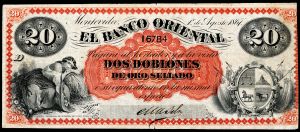
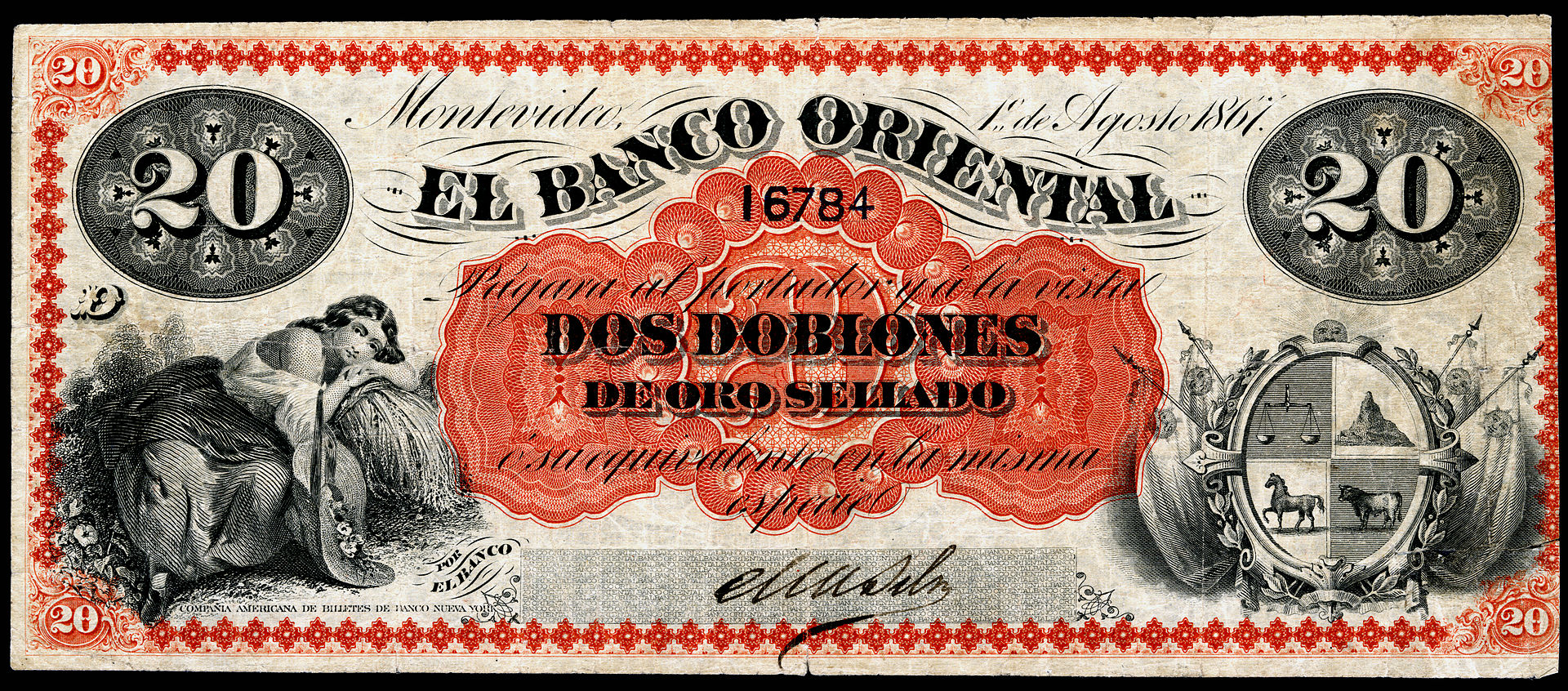
 Beautiful old Uruguayan banknote from 1867.
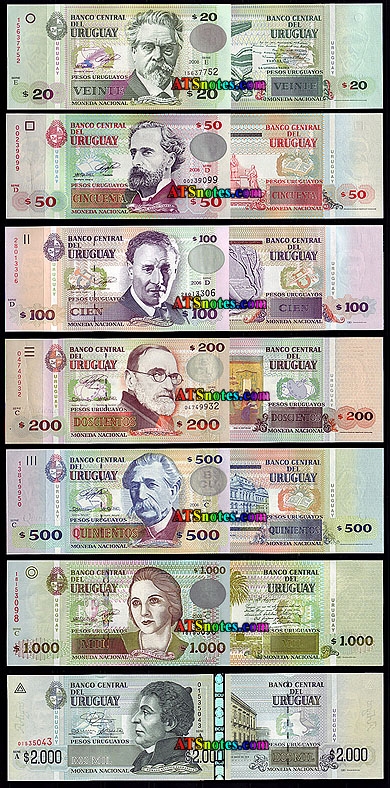
When I wrote my article about the „Cross on a Sugar Loaf“, I came across the Uruguayan 20 Peso note. Looking closer to this money note and to the others, my interest was aroused to write about the famous people on Uruguayan money. Who are they ?
We have them every day in our hands, but almost no one knows about those people portrayed on Uruguayan money. They wouldn’t be on the money if they were not famous, am I right ? So, they are worth to learn and tell about – right ?
 In order not to exceed the scope of what is possible, I regret to the investigation, on the notes that are in circulation at the moment. This series comes with the Antigas watermark. And I will post all in 5 parts.
Juan Zorrilla de San Martin.
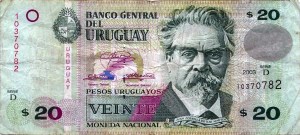
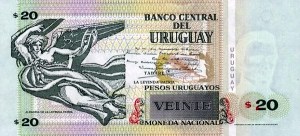
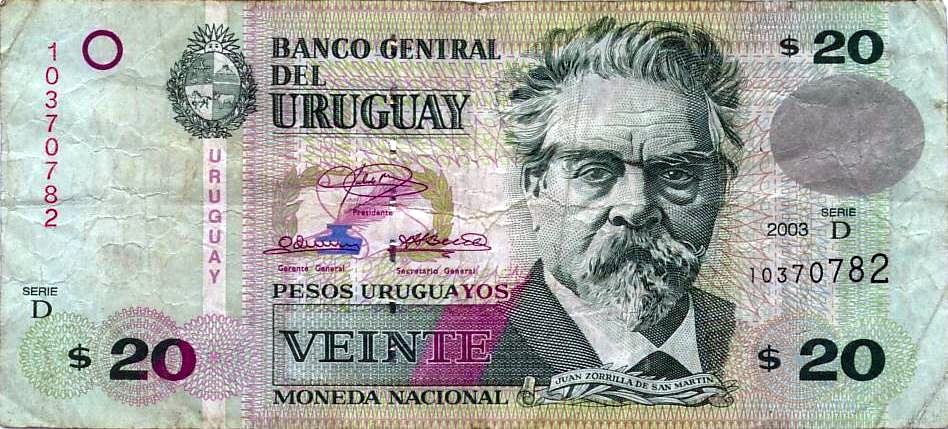
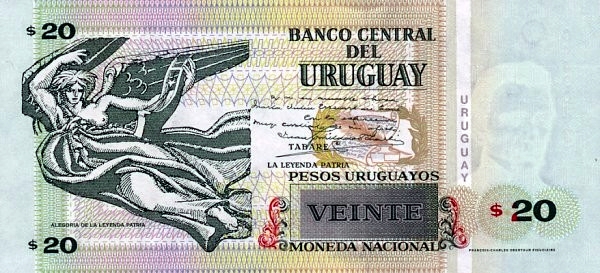
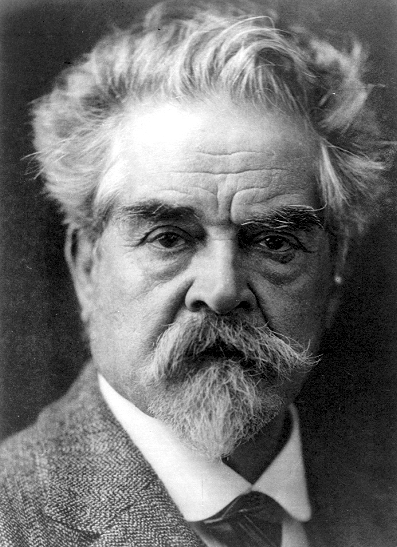
Juan Zorrilla de San Martin on front of the 20 Peso note. The back shows Alegoria de la leyenda patria.
He was born in Montevideo on December 28, 1855, son of Spanish Juan Manuel Zorrilla de San Martín and Alejandrina Uruguayan del Pozo and Aragon, very Catholic family. His mother died when the poet was a year and a half old. He was raised with love and dedication to his aunt Juliana del Pozo and Aragon, wife of Martin Garcia de Zuniga.
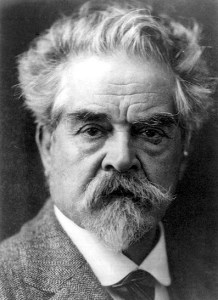 This picture was used for the 20 Peso note.
Together with his brother Alexander in 1865 he was taken by his father to pursue his studies at the College of the Immaculate Conception in Santa Fe, Argentina. Between 1867 and 1872 he studied at the College of Fathers Bayoneses in Montevideo where he began his university studies. He received his bachelor of Santa Fe, in 1872.
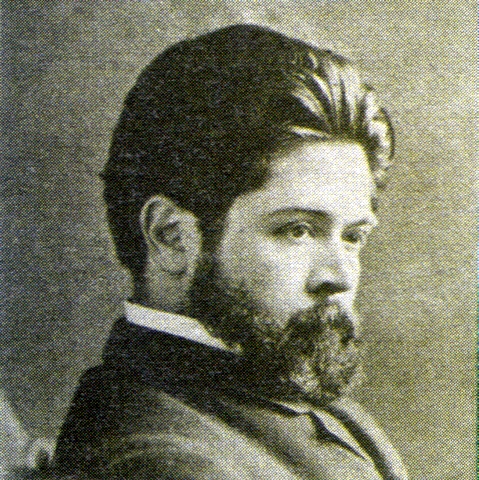
Between 1874 and 1877 he studied at the College of the Jesuits of Santiago de Chile to complete his studies as Bachelor of Arts and Political Science. In that period he collaborated in the writing of „The Star of Chile“ and published „Notes of a Hymn“. In 1907 the Uruguayan government commissioned the creation of a historical essay on the figure of Jose Gervasio Artigas.
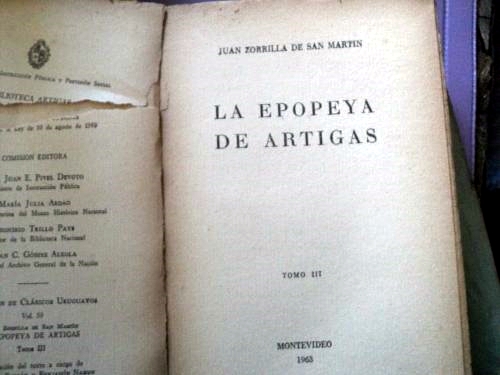
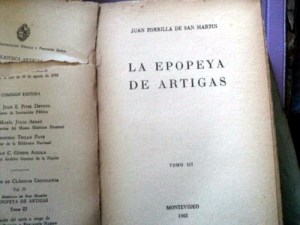 Published in 1910 and „The Epic of Artigas“ graduated.
Legend Patria is a poem written by the Uruguayan Juan Zorrilla de San Martin in 1879. Sings the heroic deeds of the Thirty-Three Orientals. It is an ode to style Olmedo of Ecuador, 413 verses, he composed in a week and he became the national poet excelencia.
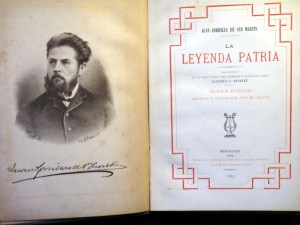 The controversial „legend homeland“.
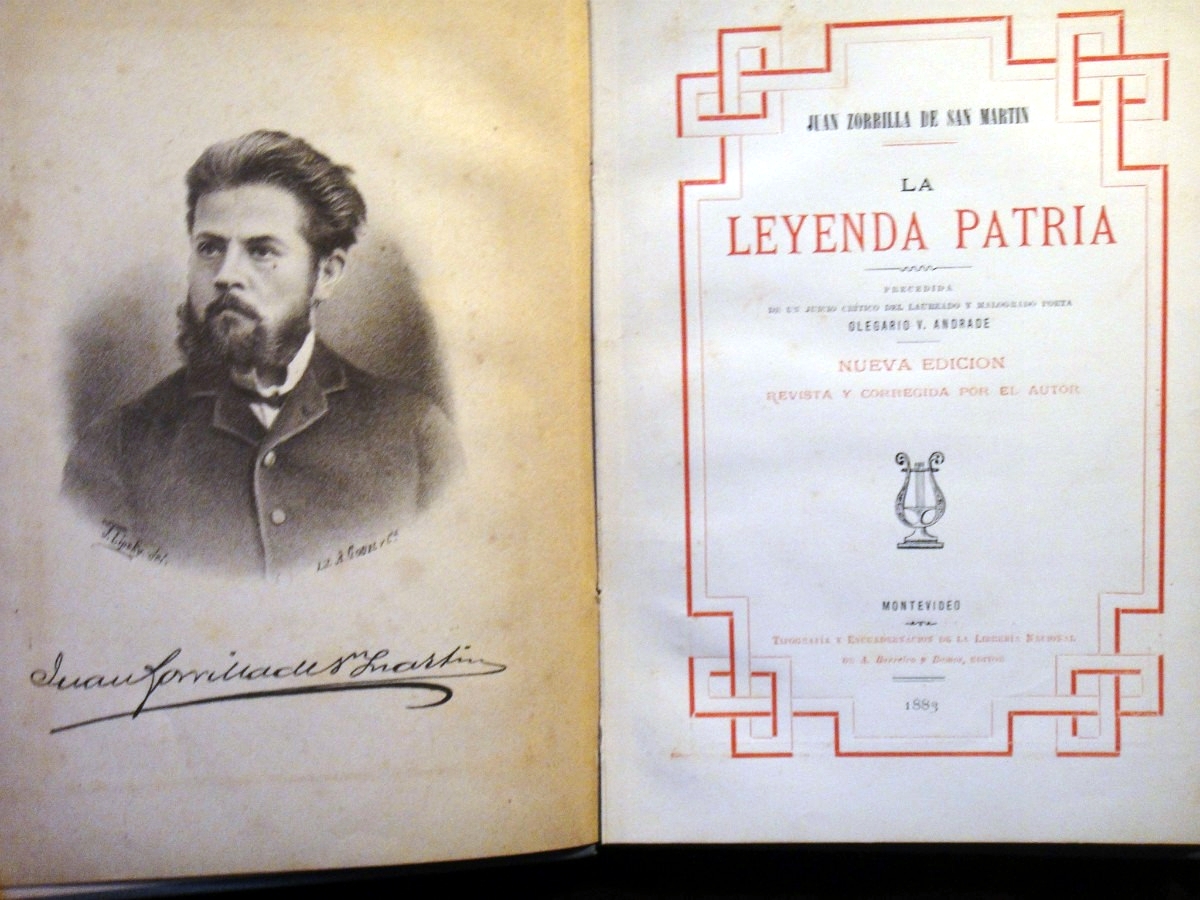
A new accent that criticism then defined as a result of the lyrical genius of the poet noted, but also recognized that intervening in this lyrical composition and idiomatic elements hitherto unused in Uruguayan letters later appeared sharper in the epic Tabare.
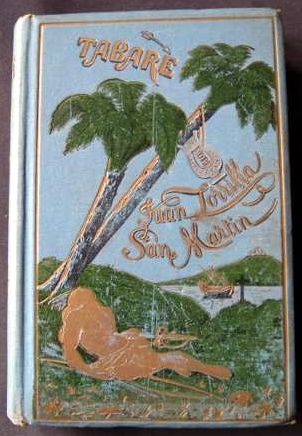
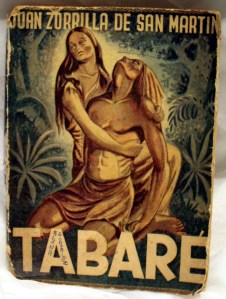 Tabaré is an epic poem by Juan Zorrilla de San Martín, considered the national epic of Uruguay, consisting of 4,736 verses divided into ten cantos, and first published in 1888 by the publisher Barreiro and Ramos.
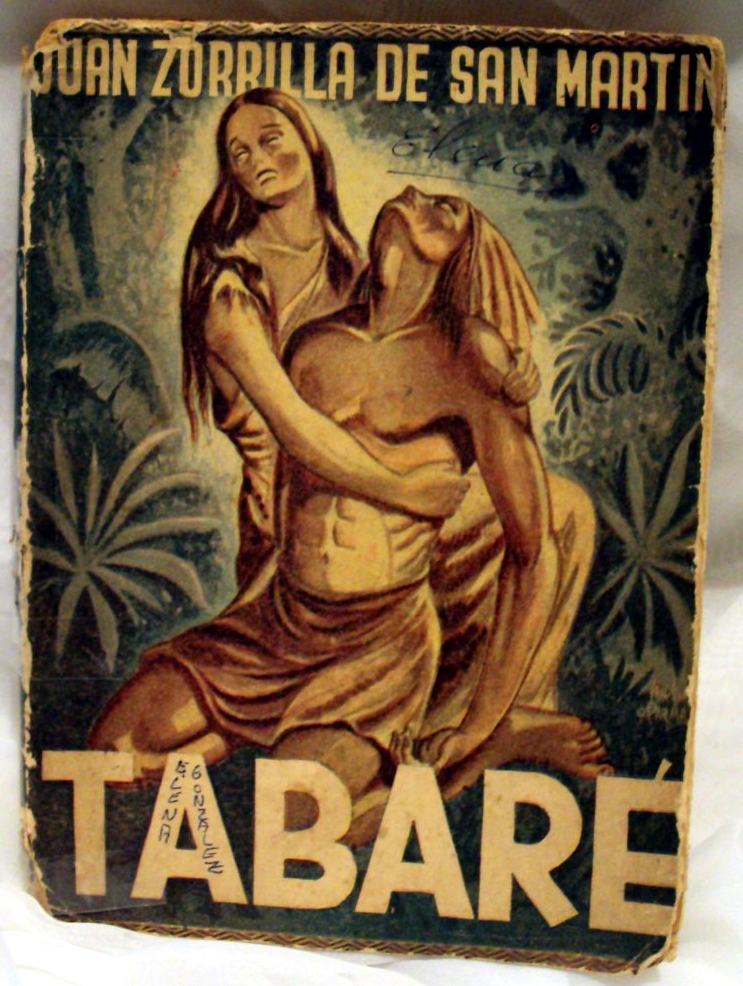
In 1907 the Uruguayan government commissioned the creation of a historical essay on the figure of Jose Gervasio Artigas, who would have the aim of providing information to artists interested in performing at a competition to create a sculpture hero. This essay was finally published in 1910 and „The Epic of Artigas“ graduated.
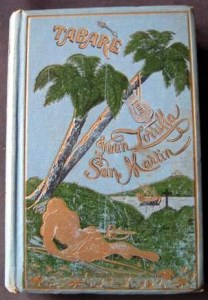 It is about the love affair of the Indian Tabaré and Spanish Blanca hard against the backdrop of war between Castilian and locked charrúas in the territory of present Uruguay in the late sixteenth century. It is considered in Uruguay as one of the jewels of literature in Spanish.
His first wife Elvira Sienra White, daughter of Juan Ildefonso White and granddaughter of the Constituent Juan Benito Blanco, with whom he had six children. A few years after her death, he contracted bond with her sister, Sienra White, who gave him ten children. Today his descendants reached around 800 people.
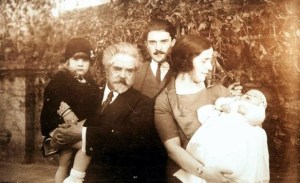 Zorrilla with family, in the back his son Jose Luis.
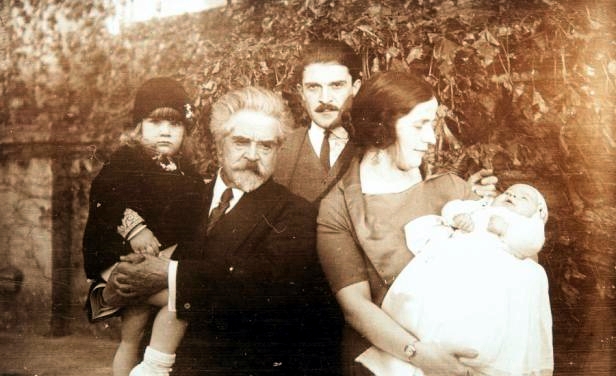
One of his sons was the sculptor Jose Luis Zorrilla de San Martin, who in 1921 directed the last transformation of his home in Montevideo neighborhood of Punta Carretas, designing the modern dining room with fireplace leading carved on top the shield Zorrilla St. Martin which contains the theme „Ensuring life in such a way to stay alive is because in death.“
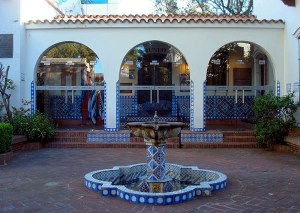 Beautiful interior of the museum site.
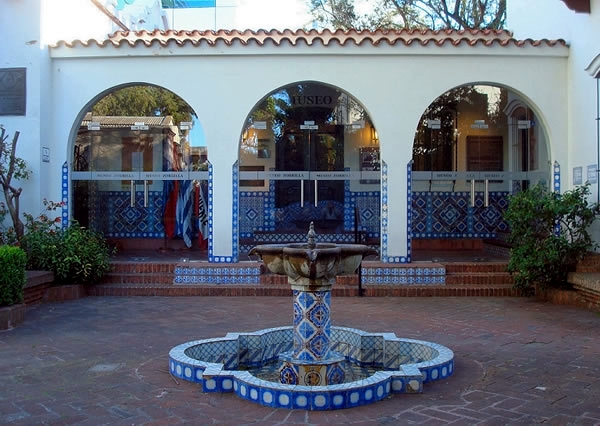
The construction began in 1904, in an unpopulated area then. In 1936 the house became the property of the state. In 1942 it became a dependent Museum of the Ministry of Education and Culture, part of one of the historic houses belonging to the National History Museum of Uruguay.
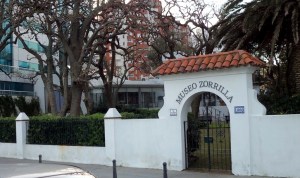 The museum is located on the corner of „Zorrilla de San Martin“ and „Rambla Mahatma Gandhi“.
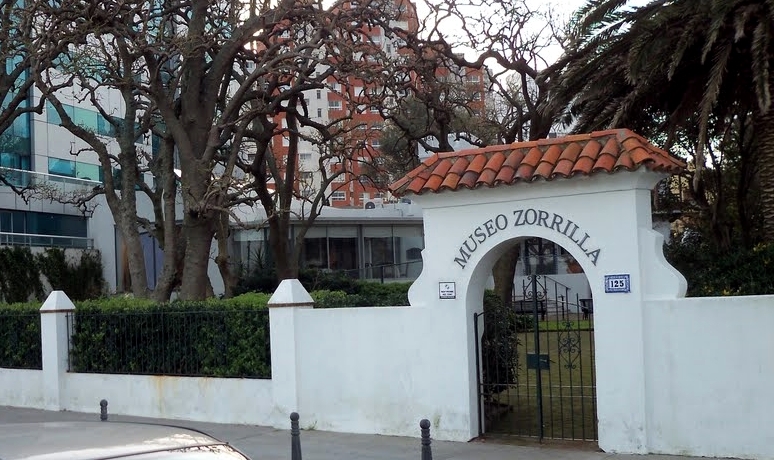
In 1995-2013 the museum was administered by the Commission of Friends of Zorrilla Museum, which recovered the place and built a modern hall where exhibitions and cultural events are held.
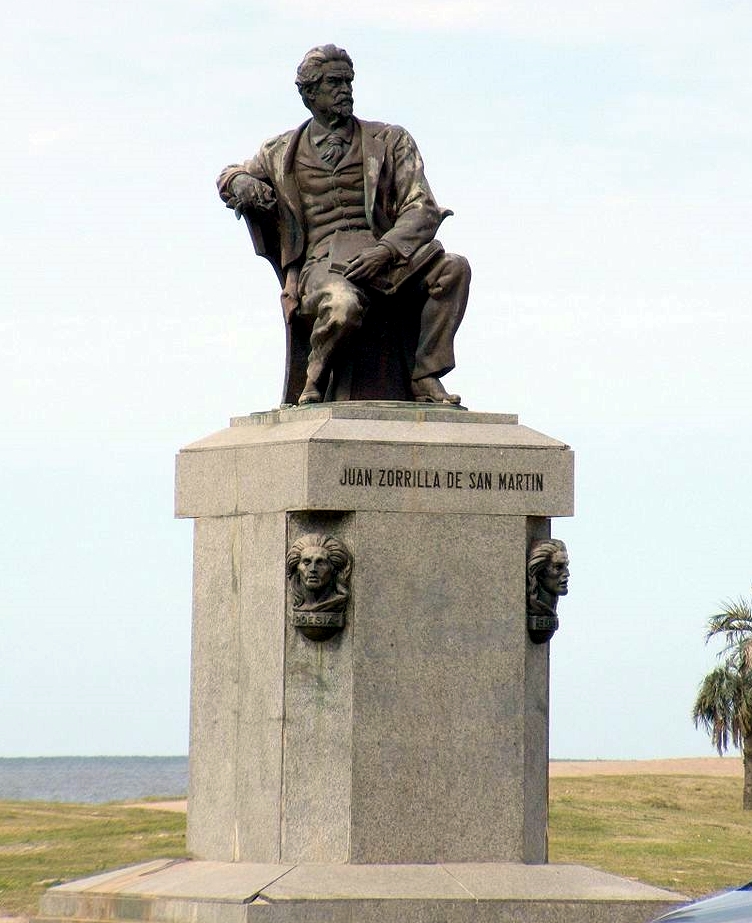
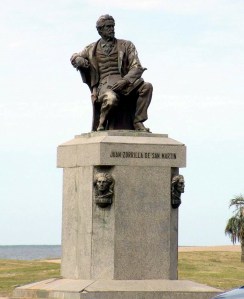 Zorrilla monument on the Rambla in Montevideo.
Zorrilla said once: „My whole life is between these four walls, here are my memories of family and the fruit of my efforts.“ One of his great ideas was to build the „Cross on Sugar Loaf Mountain“ in Maldonado, Uruguay (See my earlier post: „Cross on a Sugar Loaf“).
Jose Pedro Varela.
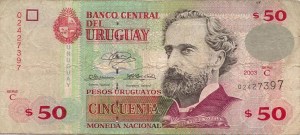
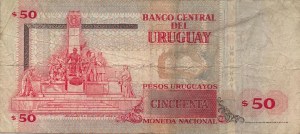
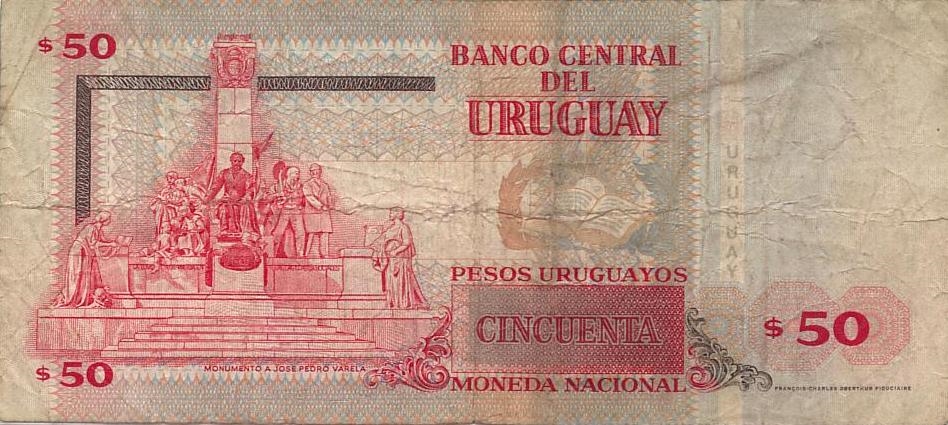
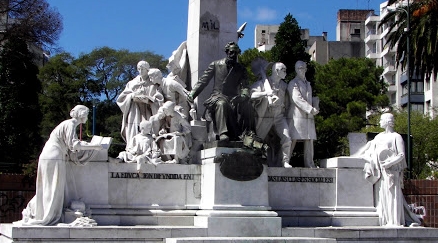
Jose Pedro Varela on front of the 50 peso note. The back shows the Varela monument in Montevideo.
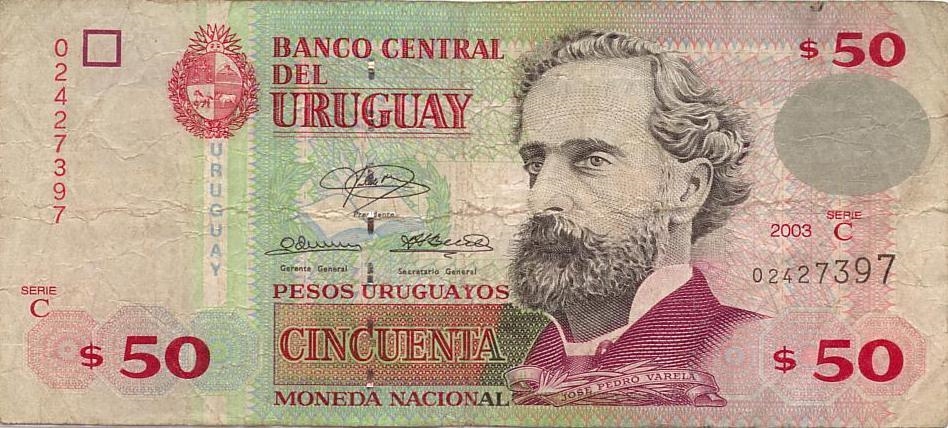
He was born in Montevideo on 19th of March 1845, during the Great War.
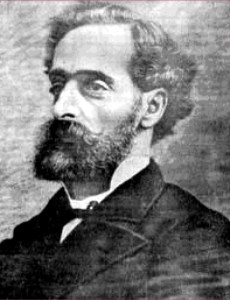 This picture was used for the 50 Peso note.
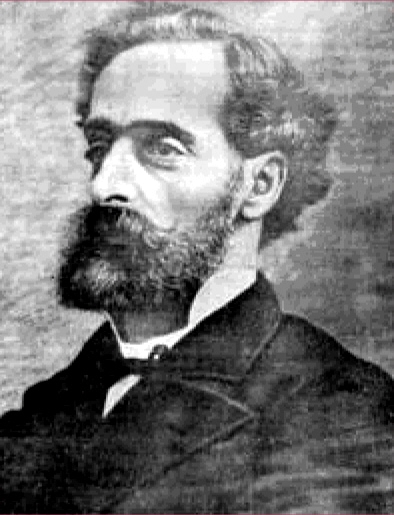
His father owned a deposit of „Fruits of the country,“ an Varela establishment where Jose served from his teenage years. At the age of 22 he undertook a trip to Europe and the United States, locking knowledge in Paris with the famous writer Victor Hugo, to whom he took his poems, later published in New York under the title of „Lost Echoes“.
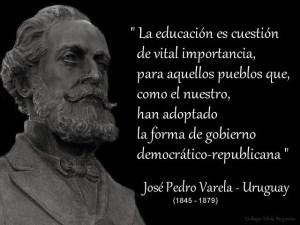 J.P. Varela.
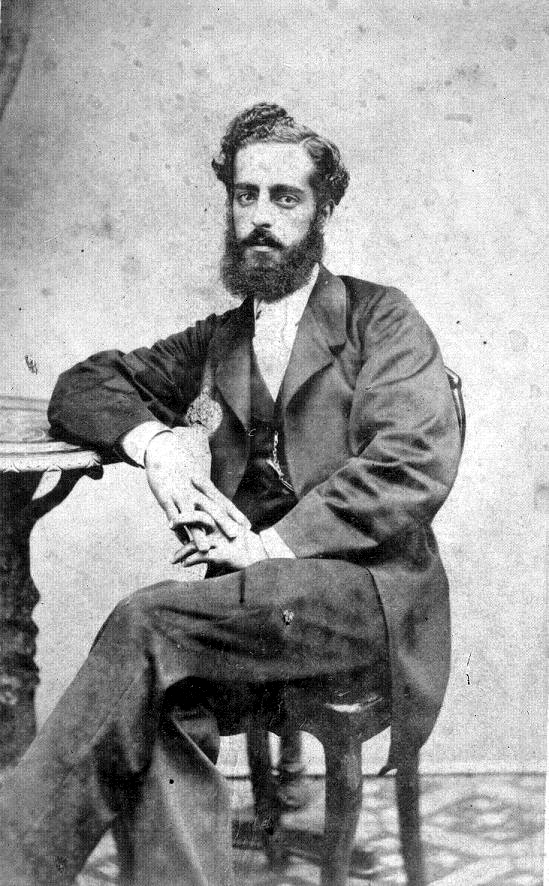
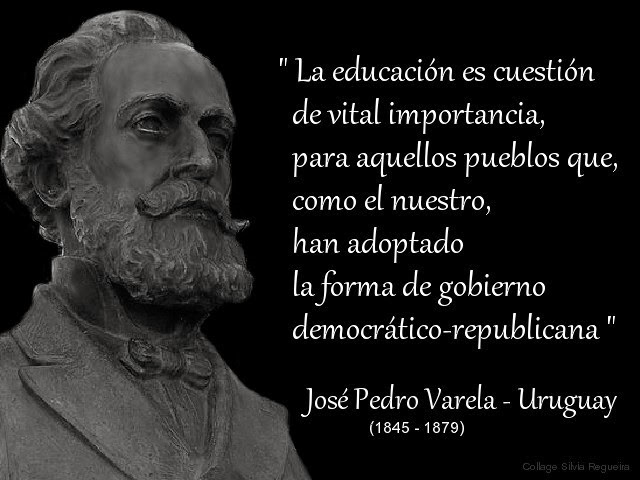
In the United States he met with Argentine Domingo Faustino Sarmiento, whose concern for the issues of education caused a great impact on Varela. Varela linked with various American specialists in education, which allowed him to meet many educational institutions and teachers learning their methods and objectives.
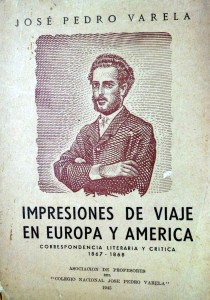 Travel impressions of Varela to Europe and America.
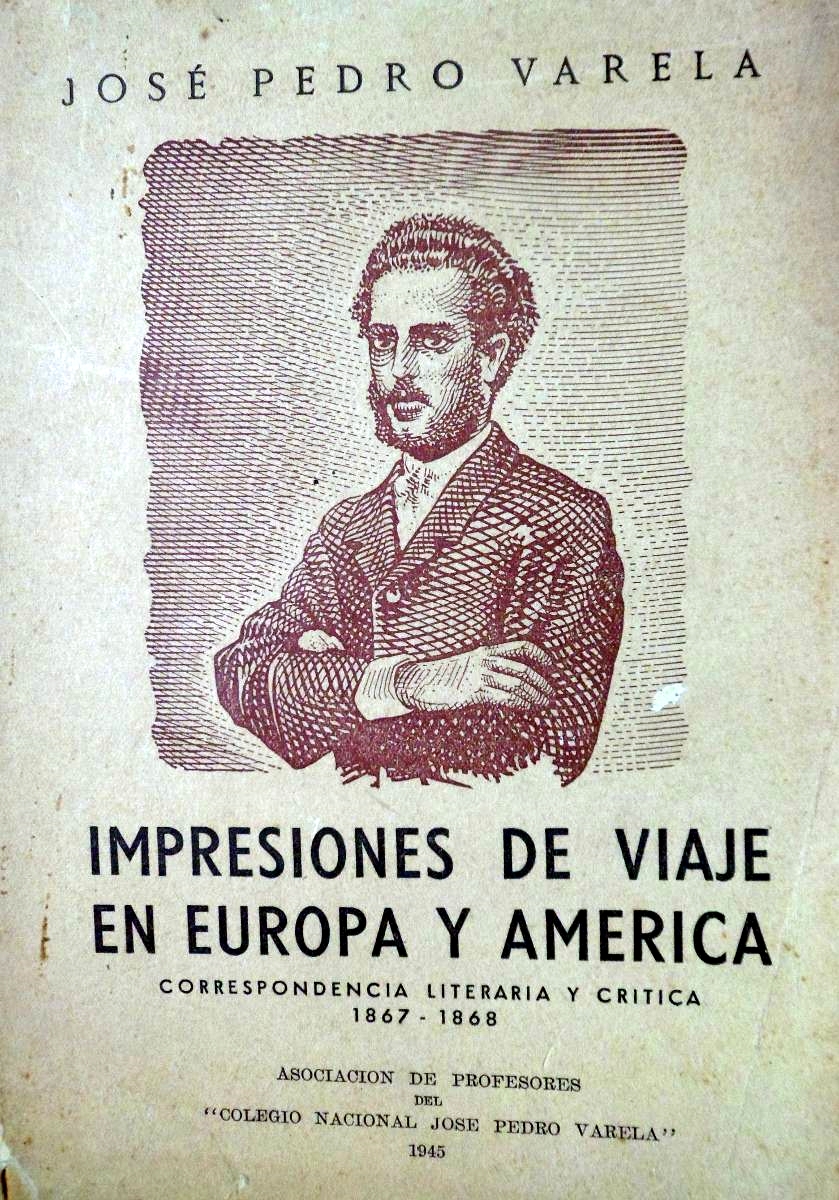
Good knowledge of English, Varela could grasp the importance of proper education for all members of society, as a factor of social and political progress.
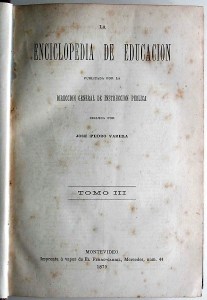 Varela’s encyclopedia of education in 3 volumes.
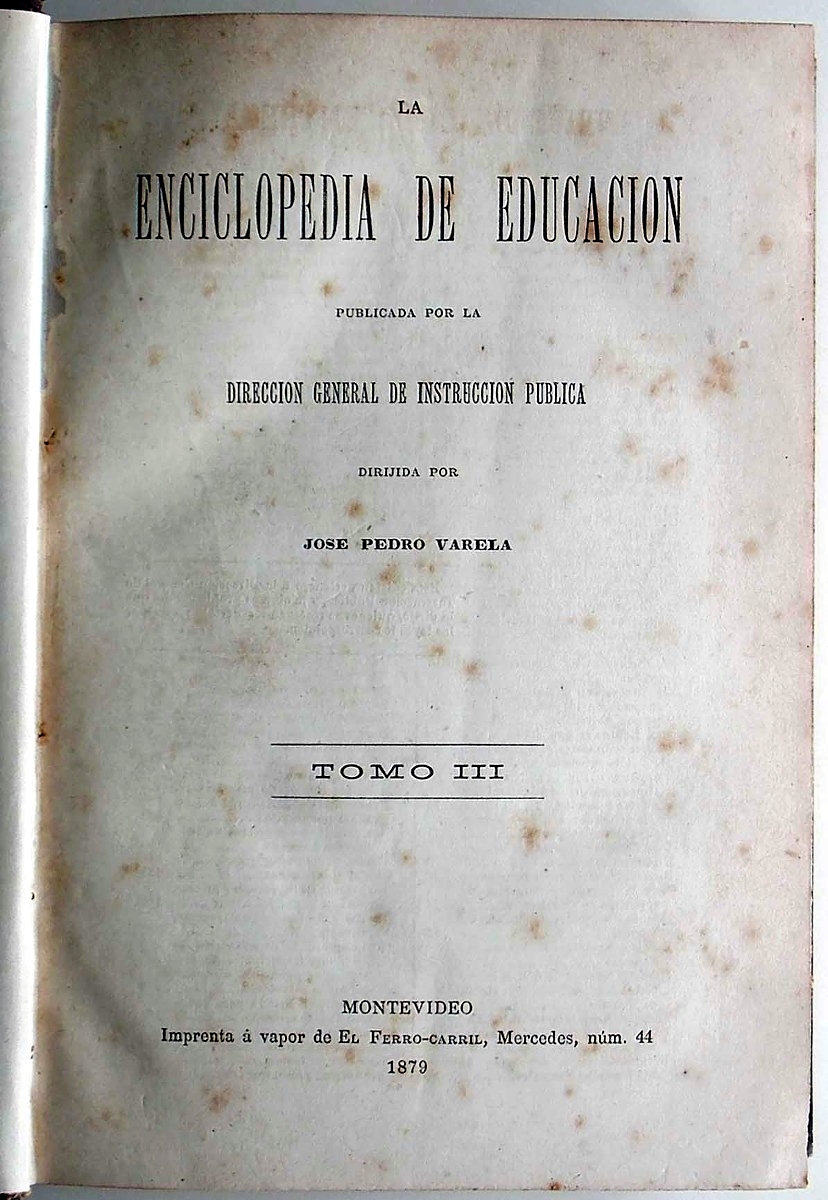
Varela returned to the River Plate in the same trip as did Sarmiento. He devoted himself to journalism through which promoted the dissemination of ideas and won the support of influential friends.
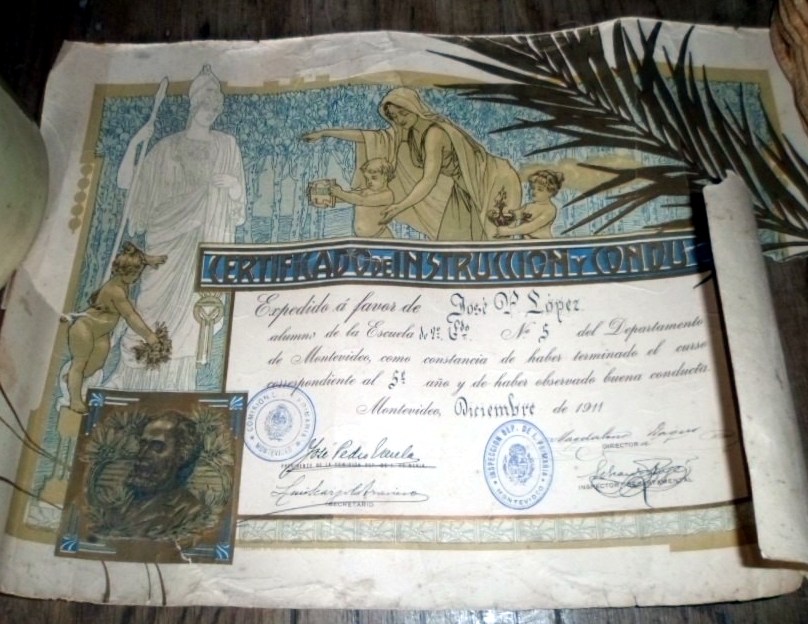
 Very interesting and rare/old education certificate, with original signature Jose Pedro Varela, from 1911 – he died already in 1879 !!??!!
With a group of them, led by Elbio Fernandez, Carlos Maria Ramirez and Francisco Barra, he founded the „Society of Friends of Popular Education“; and in 1874 he published his book „The education of the people“ and in 1876 „The school legislation“.
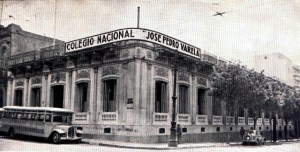 Early Varela institution of national education.
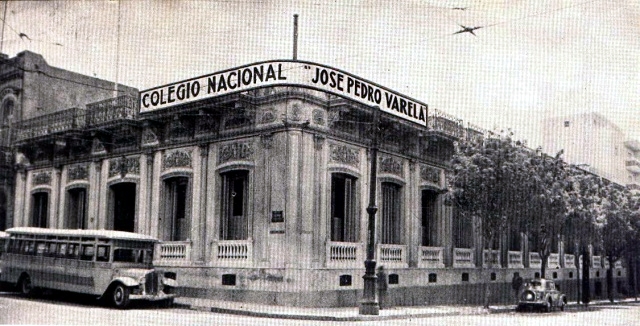
The government of Lorenzo Latorre offered him the position of Director of Education, which he accepted as a means to implement his ideas. This took place through the „Law on General Education“ which was established on the requirement that all children attend school, and the creation of adequate facilities for the students by the government.
 Varela monument in Montevideo.
Varela was for sure the forefather and founder of Uruguayan education, sadly he died very early, at the age of 34, on 24th of October 1879.
Stay tuned to part 2 (of 5 total) of this money series !!

