
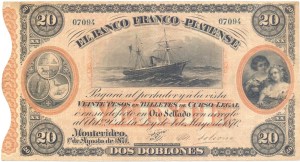
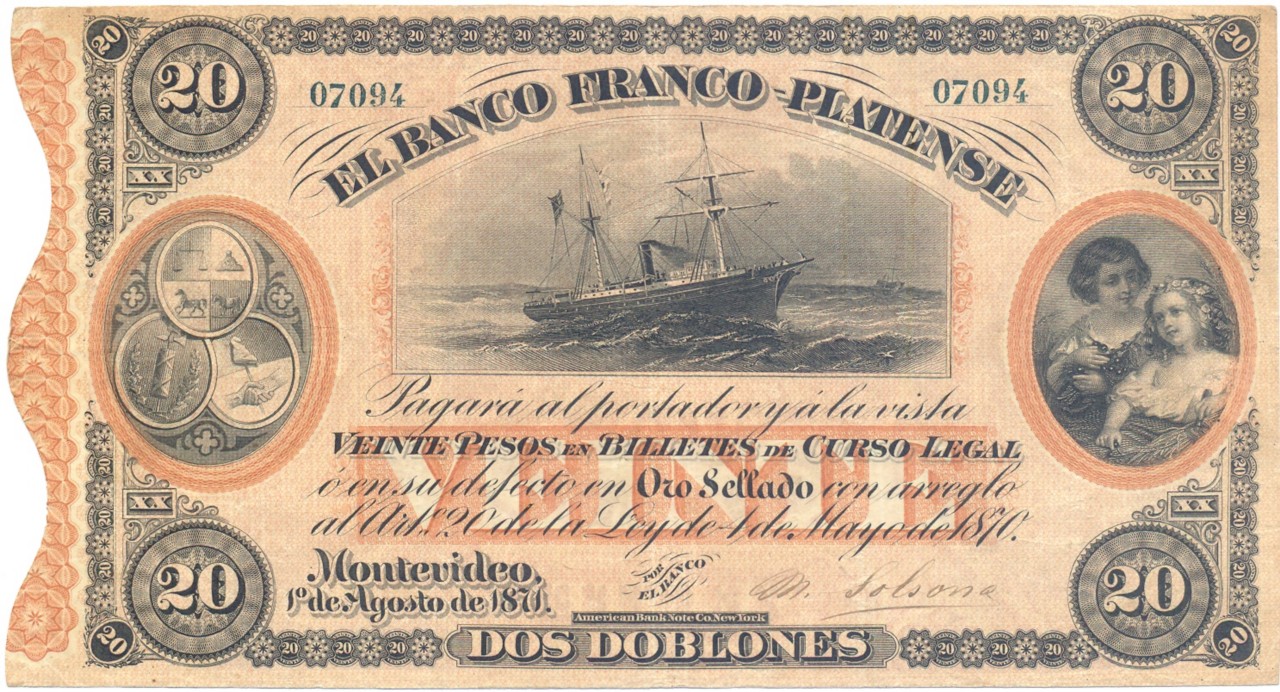
 Beautiful old Uruguayan banknote from 1871.
Let’s go on with the Urugayan currency which is in circulation today:
Eduardo Fabini.
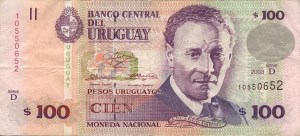
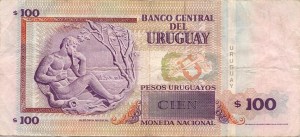
Eduardo Fabini on front of the 100 Peso note. The back shows a musical allegory.
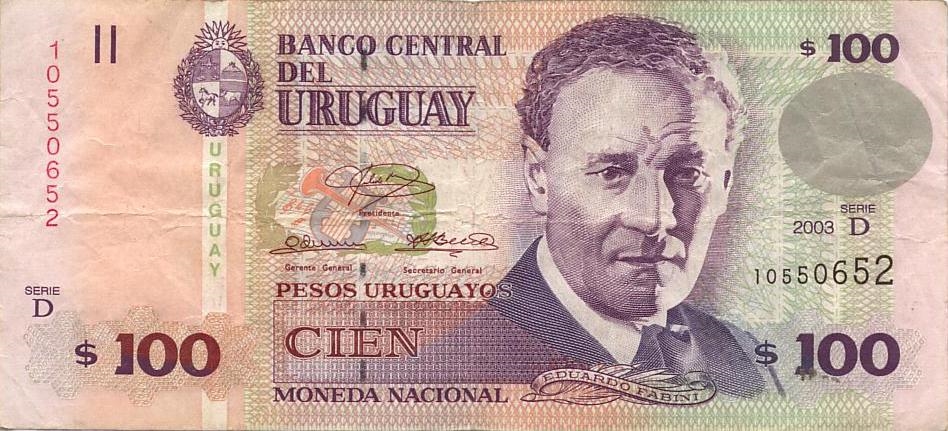
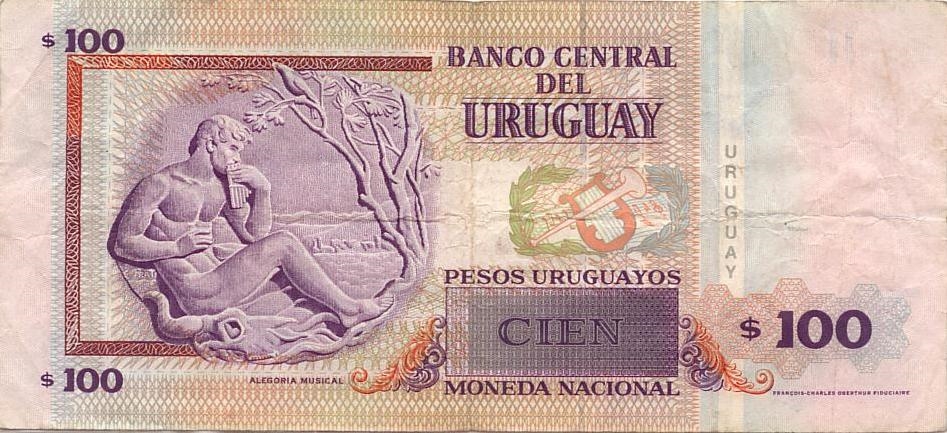
Born May 18, 1882 in the small town of Solís de Mataojo , Lavalleja , his parents were Juan Fabini and Antonia Bianchi , of Italian origin and some distinguished musicians in their family. He spent his early childhood in intimate contact with nature.
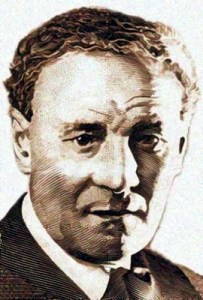 This picture was used for the 100 Peso note.
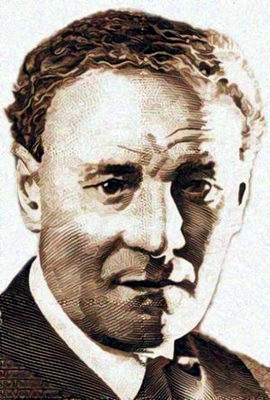
Fabini is considered the highest positive value of classical music in Uruguay. Having started a musical orientation in classical music forms , tones and melodies of national folk music, managed as expressions of exquisite refinement , excellent inspiration, and great musical sensitivity.
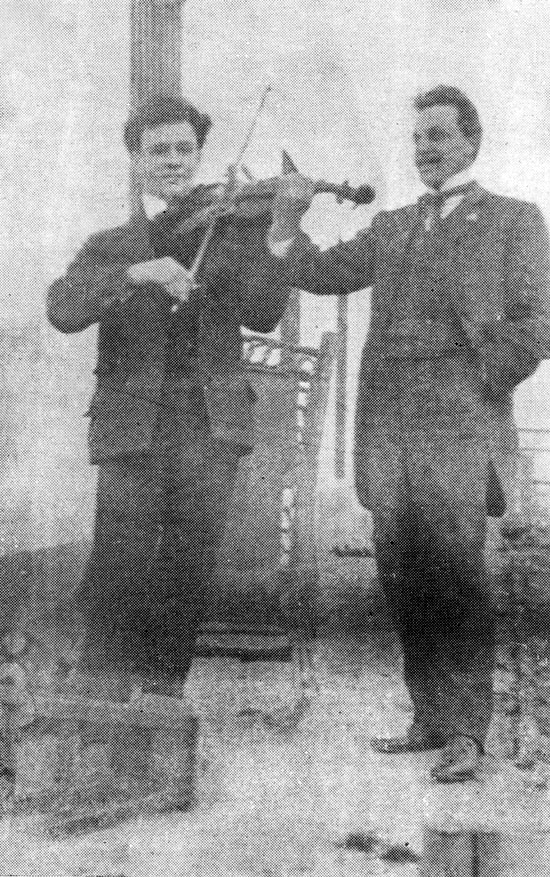
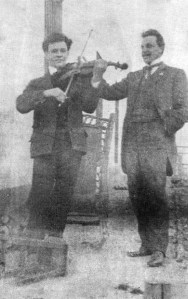 Eduardo Fabini with Julio Herrera.
His musical knowledge was very early. At four years old, his favorite toy was the accordion. At six he admired his performances in the harmonium. At this time he began his musical studies violin with his older brother, who then continued in Montevideo, at the Conservatory “ The Lyre “ ( from 9 to 13 years ) with teachers Romeo Massi and Italo Casellas , and later with Scarabelli and Ferroni.
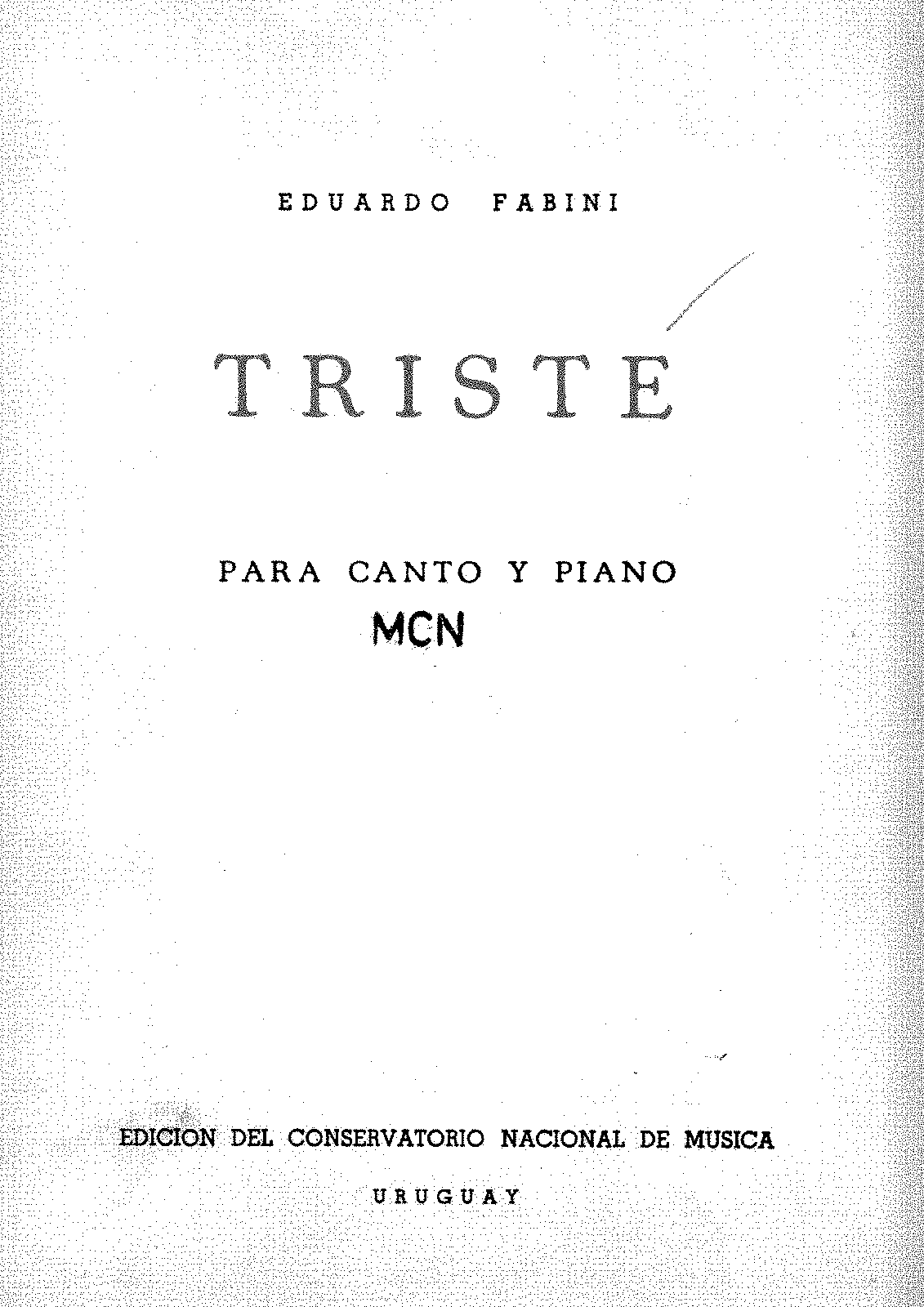
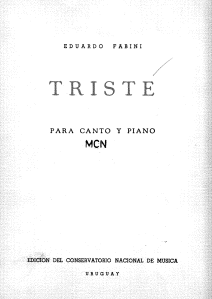 Music sheet of Triste.
On the advice of the teacher Perez Badia , he won a scholarship in 1899 , at age 17, which allowed him to travel to Europe and entered the music conservatory in Brussels, where he studied with teachers Deloc and Thomson and harmony with the teacher Brouk .
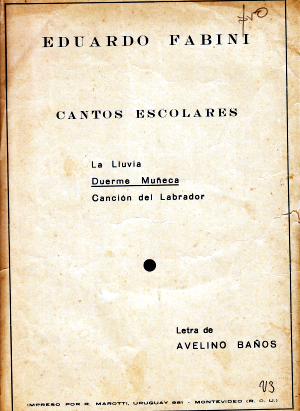
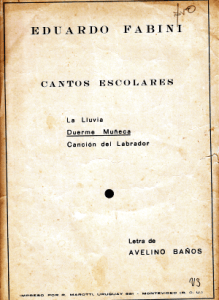 Music sheet of Canton Escolares.
Fabini started composing, performing the „Triste“ for orchestra, two „Intermediate“, a “ arpegiano Study“ for piano, and a choir „Flowers of the field“. As a performer he won First Prize for Violin with Distinction , awarded by the Brussels Conservatory . Fabini was the first South American in that environment who was heard expressions of our native music .
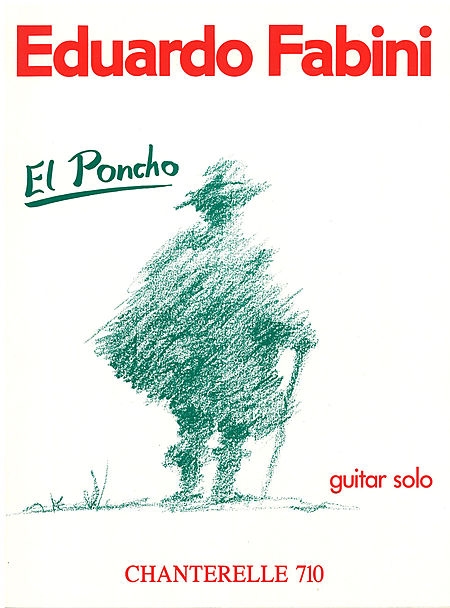
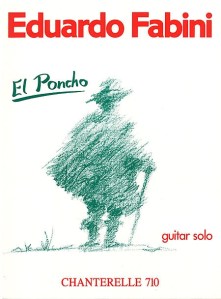 Music sheet of El Poncho, modern reprint.
Then he returned to Uruguay in 1903 , becoming known as soloist in various presentations made at the Teatro Solís of Montevideo, which aroused admiration. After another trip to Europe, in 1905 to Spain, where he remained two years. He returned to Montevideo in 1907, at which he participated with other national musicians in founding the Musical Conservatory of Uruguay (1907).
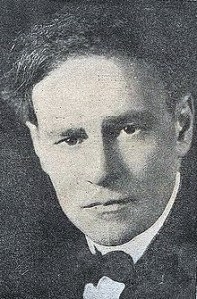 Eduardo Fabini.
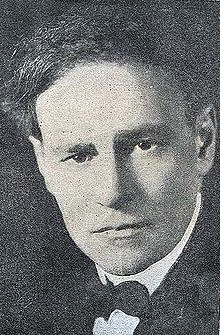
In 1913 he was also co-founder of the Association of Chamber Music, numerous concerts sponsored entity that acted as interpreter. He is from time to time retiring to a landlife in the forests near Salus, Minas, avoiding all public activity. During this period he composed „Campo“ (started 1910), his first symphonic poem, which was performed in public at the Teatro Albéniz in Montevideo on April 29, 1922.
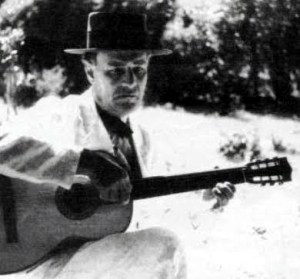 Fabini, a musician who never smiles.
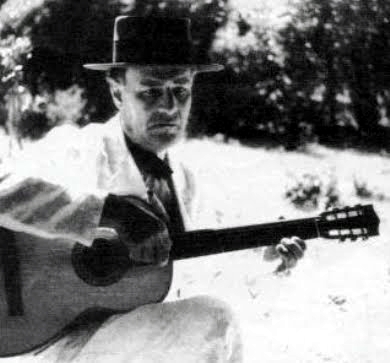
Fabini obtained immediately widespread recognition of his musical values, being also enshrined in Buenos Aires – where he performed in 1925 at the Teatro Colón by the Vienna Philharmonic – and soon in New York, Washington, Madrid, Barcelona, Berlin, Munich, Moscow, Valencia, Rio de Janeiro and many other major music cities such as Vienna, where it was performed by the Philharmonic orchestra in that city, under the baton of the great Richard Strauss.
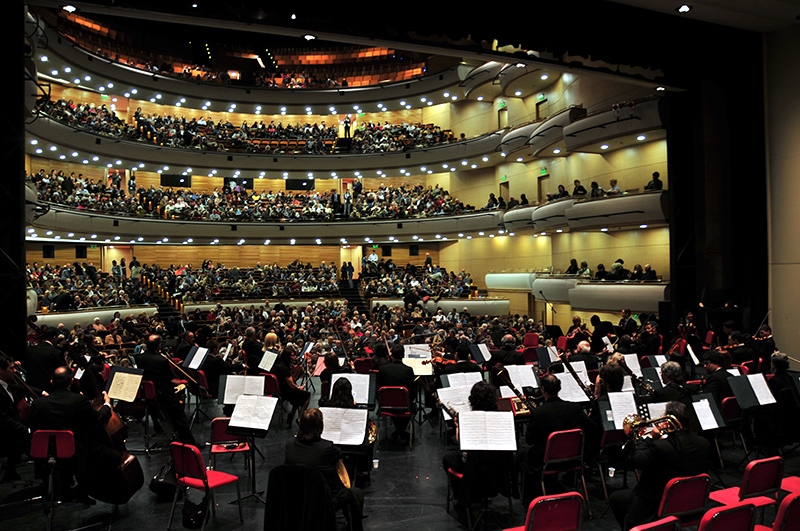
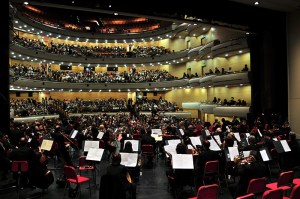 Eduardo Fabini room, Sodre auditorium, Uruguay.
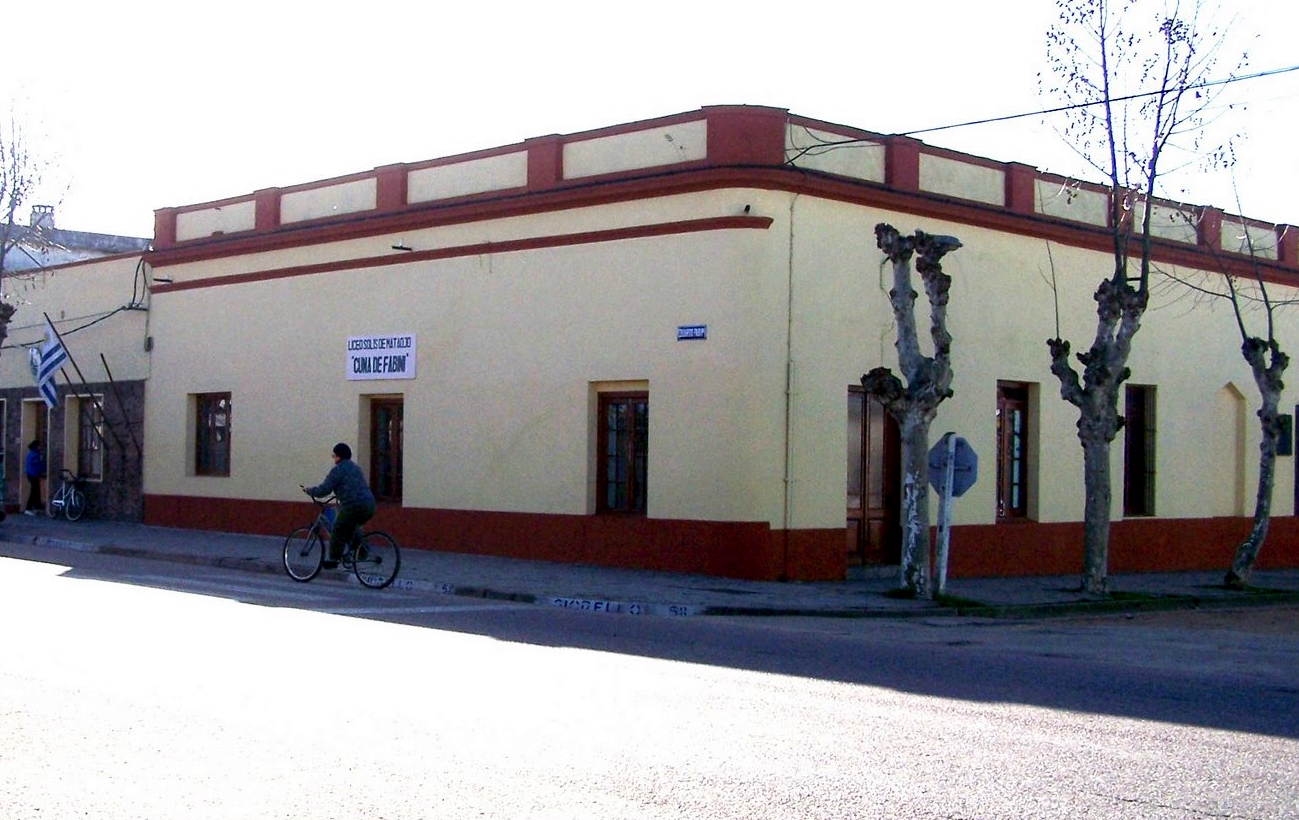 Casa natal de Fabini en Solís.
Encouraged by this success, Fabini continued intense activity in the composition of works that evoke the sounds and atmospheres of the Uruguayan countryside; presenting soon after his other symphonic poem, entitled „The Island of Ceibos“. Among his works are numerous songs, school choirs, and fantasy for violin and orchestra. Between one other piece of ballet on the subject of a work of Fernán Silva Valdés entitled „Mburucuyá“ (1933) symphonic picture „Molga“, and child ballet „Mañana de Reyes“.
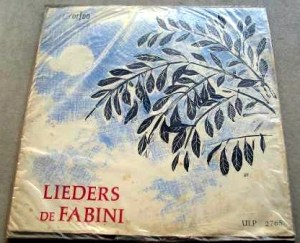 Record of Fabini songs.
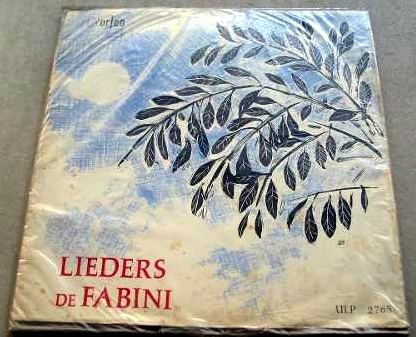
In 1927 he was appointed as artist to the Embassy of Uruguay in the US. He moved to the city of New York where „Field“ and „The Island of Ceibos“ were recorded in recordings made by the Philharmonic Orchestra, edited by the Company Victor Records.
Eduardo Fabini died 17th of May 1950 because of a heart condition.
Pedro Figari.
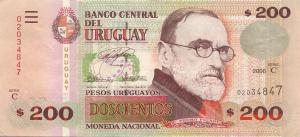
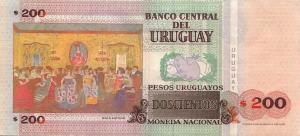
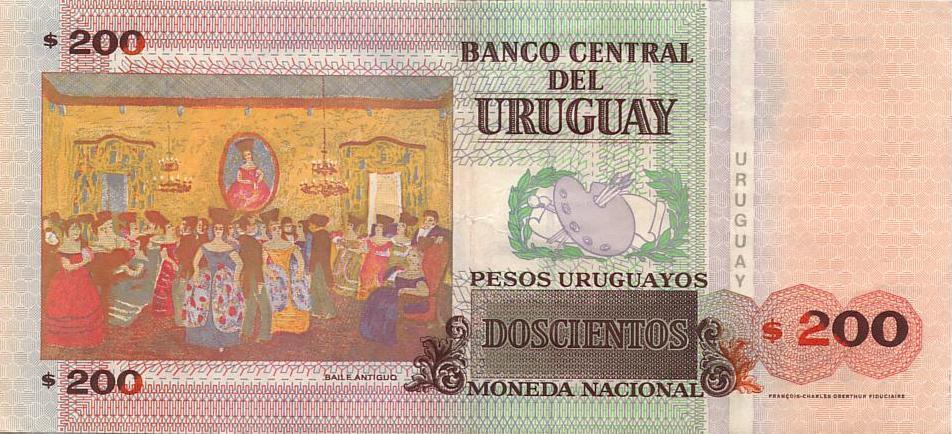
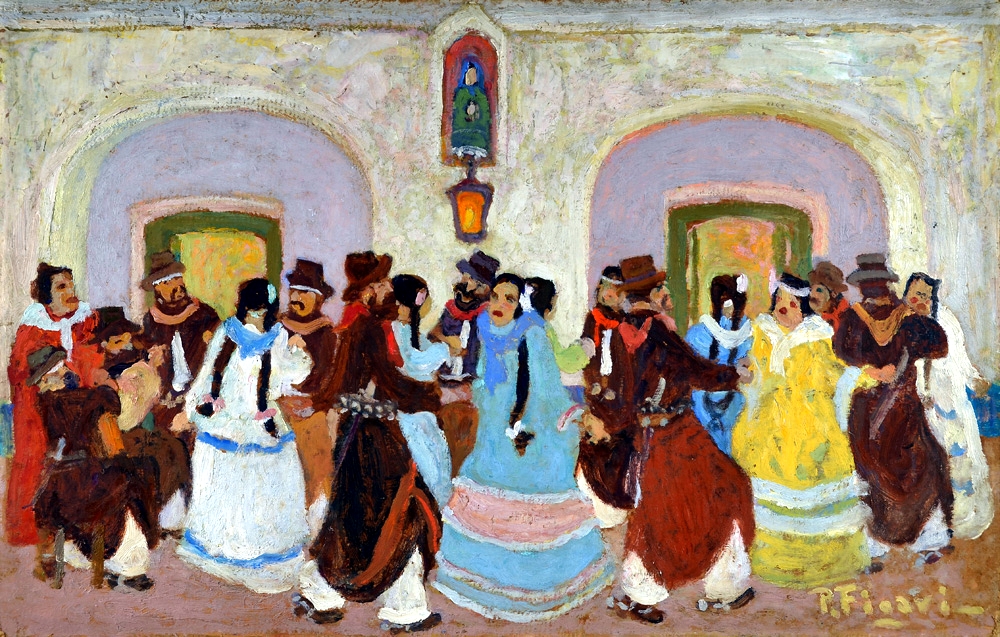
Pedro Figari on front of the 200 Peso note. The back shows „baile antiguo“,one of Figari’s wonderful paintings – what he really liked to paint – dancing and music, Uruguay’s vibrant life
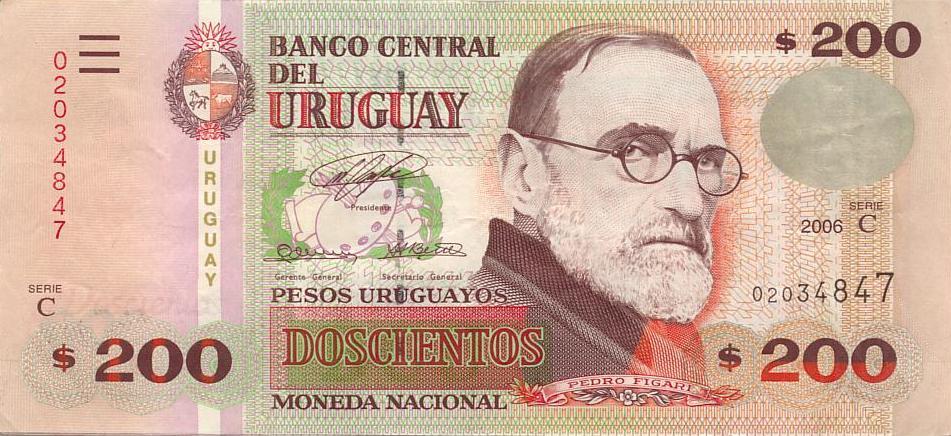
Pedro Figari. If you’ve never heard the name before, don’t worry about it, you’d be almost as likely to have heard of Pedro Figari, the lawyer, of Pedro Figari the legislator, educator, administrator, and heroic foe of social injustice, as you would Pedro Figari the artist.
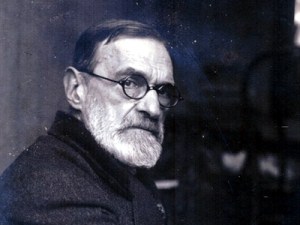 This picture was used for the 200 peso note.
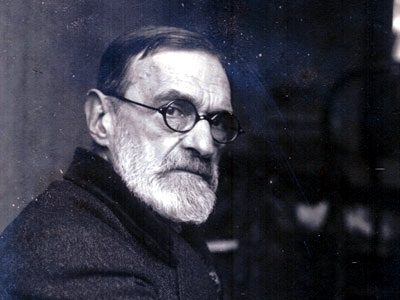
Pedro Figari was born in Montevideo, Uruguay, the 29th of June 1861. Though he showed no small amount of art talent as a child, as so often happens, young Pedro was guided (or perhaps, pushed) into law school, from which he graduated in 1886.
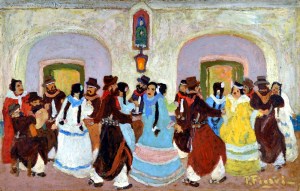 Beautiful, Figari paintings are never dated.
Though he painted some as an amateur virtually all his life, Figari began a law career as what one in the U.S. calls a public defender. That means he represented in court cases of those too poor to afford private counsel. The job seldom paid very well (even today) but it’s steady work. As a result, Figari was exposed to the many areas of social injustice.
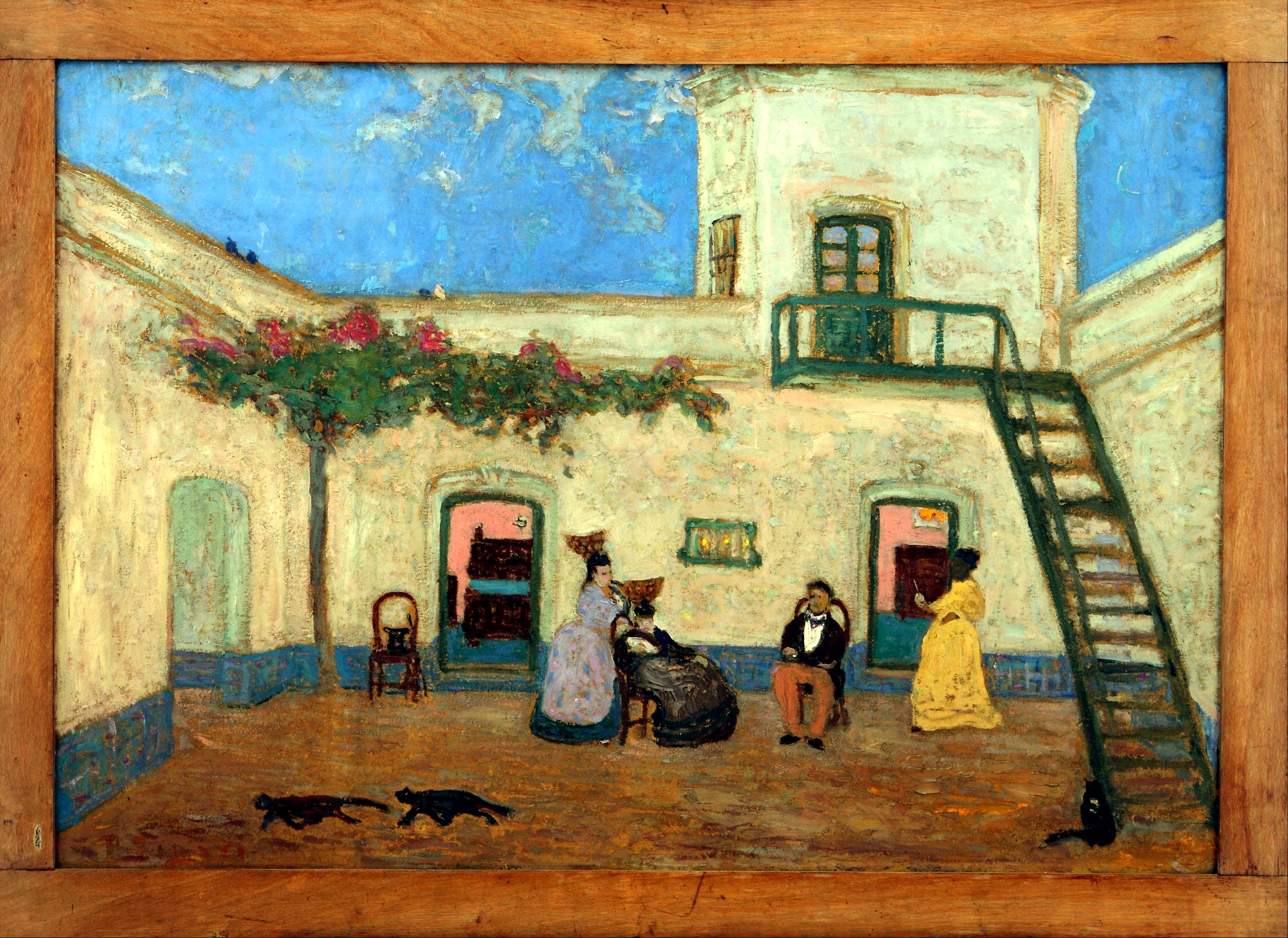
 „The Patio“, still in its cheap original frame.
Eventually, probably around 1900, Figari traveled to Europe where he studied under various French and Italian artists and gained exposure to the rough and tumble art movements we’ve come to lump together as Post-Impressionism.
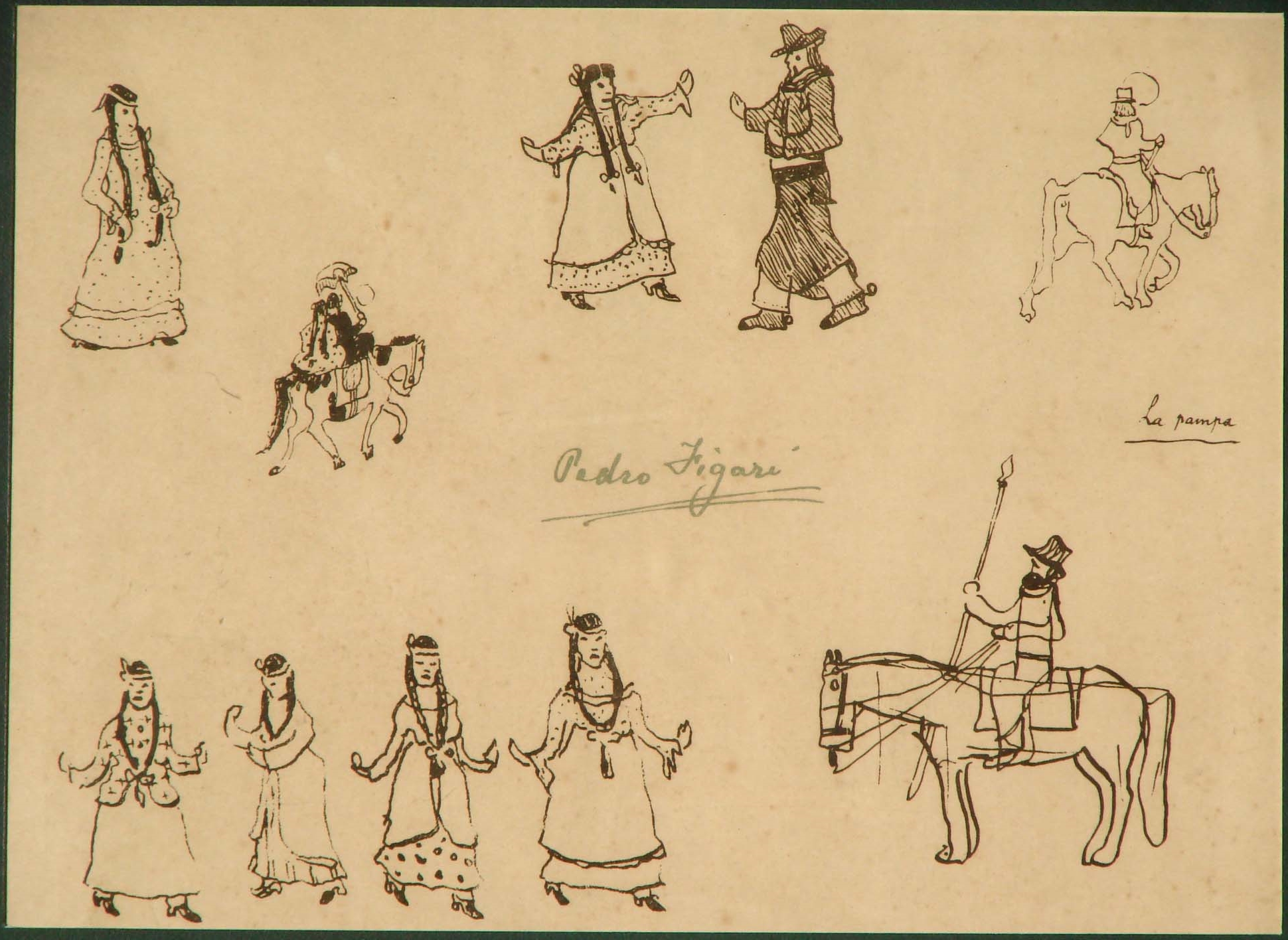
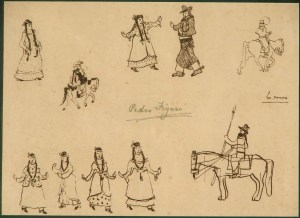 Very rare hand drawing of Pedro Figari.
Figari was especially influenced by the rebellious nature of the Post-Impressionist movements and the fact that they were veering further and further from traditional European academicism. In returning to Uruguay in 1916, Figari began painting and exhibiting more, attempting to define for his country a native style of painting.
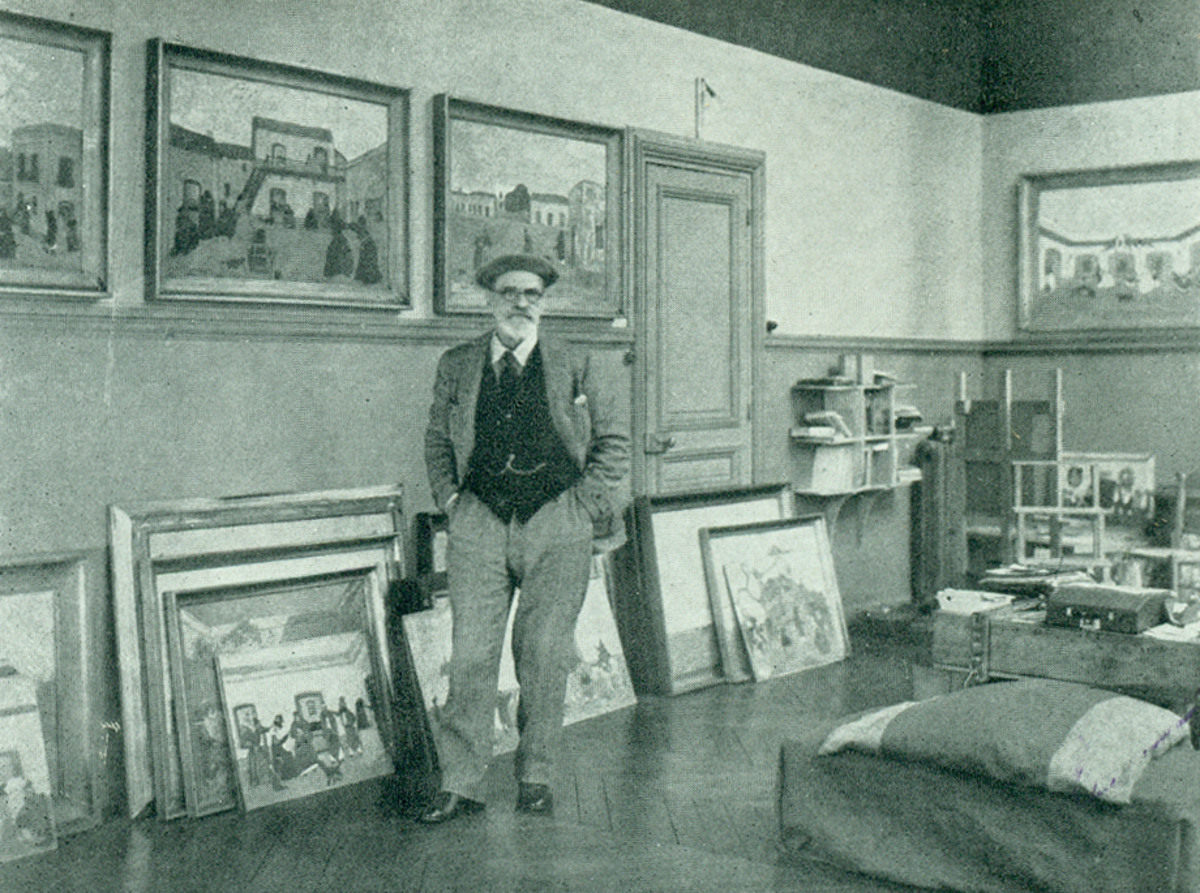
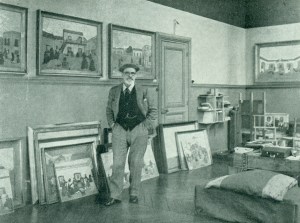 After retirement, finally, the artist Figari.
He was not alone in this effort; better known artists such as Diego Rivera, Gonzalo Endara Crow, Emiliano Di Cavalcanti were doing the same thing in their own countries during the first half of the 20th century. He helped establish a school of fine arts in his country while serving as a member of the Uruguayan Parliament and president of the University of Montevideo.
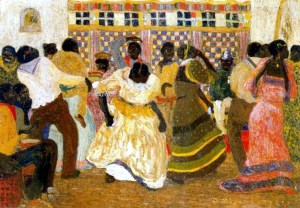 Typical Figari painting, vibrant and colorful.
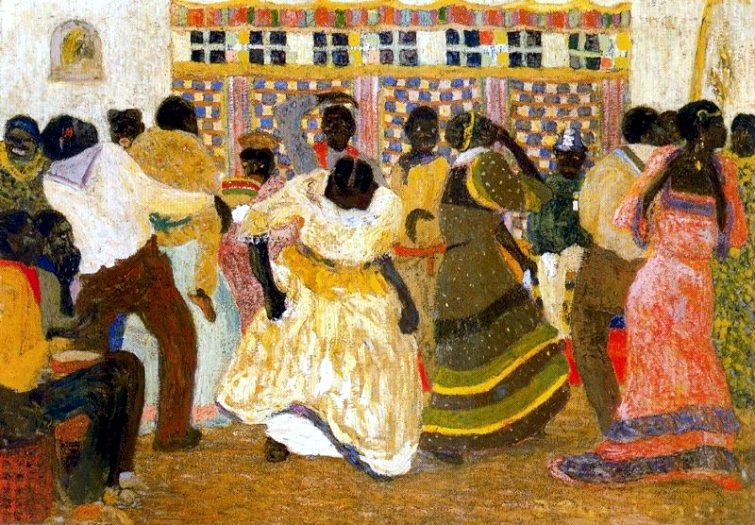
Then, in 1921, at the age of sixty, Figari retired from the practice of law and most of his political activities to paint full time. In seeing Figari’s work it quickly become apparent he cared little for natural or realistic academic elements. In fact he went out of his way to distance himself from such European influences.
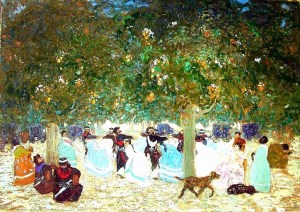 A well known Figari classic „Under the Orange Trees“.
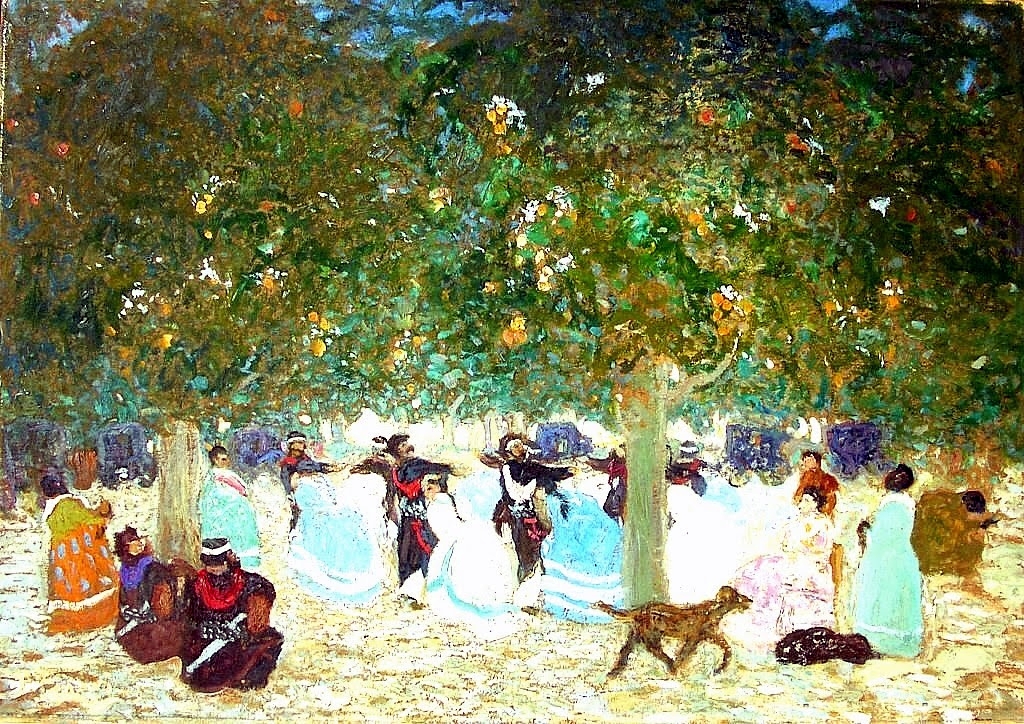
His work is „figurative.“ By that I don’t mean „figural,“ though his paintings are sometimes heavily populated with people. Instead, Figari sought to convey scenes from the common cultural life he’d come to know so well with an almost child-like simplicity.
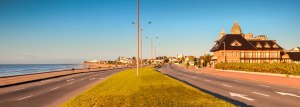
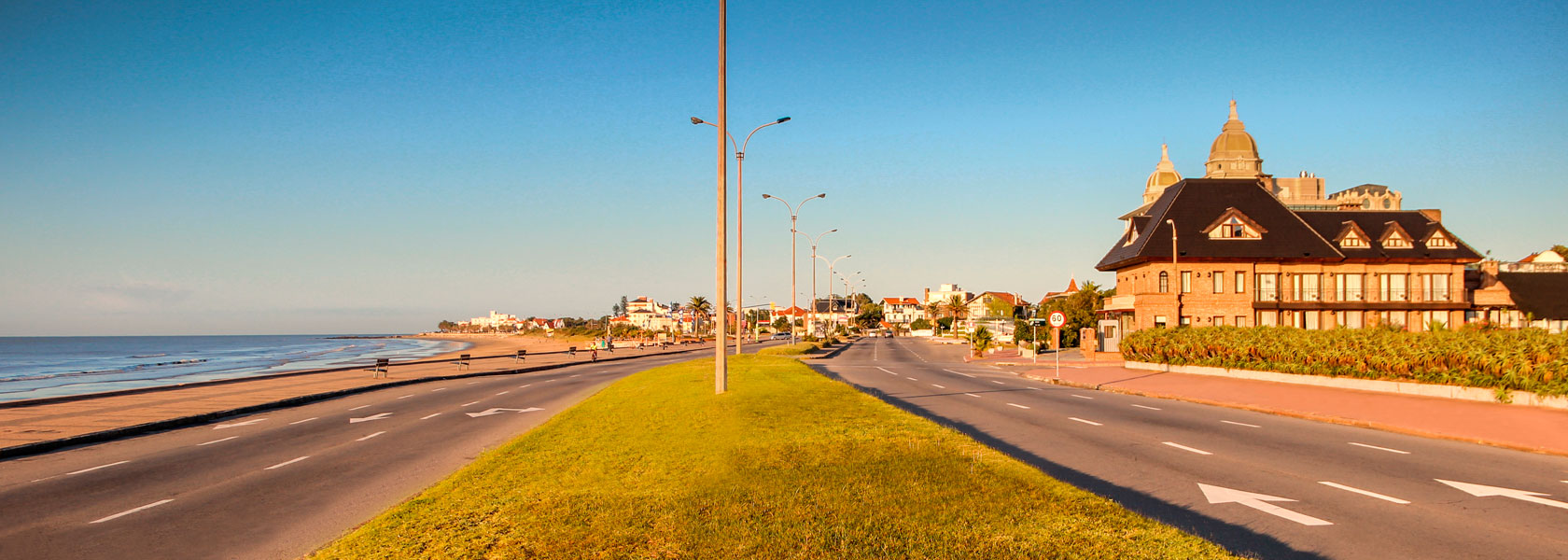
 „Figari – Best Western Hotel“, Rambla Montevideo. A modern monument of Figari. Click on pics !!

Figari died on 24th of July 1938. Don’t expect to find dates associated with Figari’s paintings. As is frequently the case with such artists, virtually none of them are dated. Today, Fernando Saavedra Faget operates a small gallery and Website promoting the sale of his grandfather’s work.
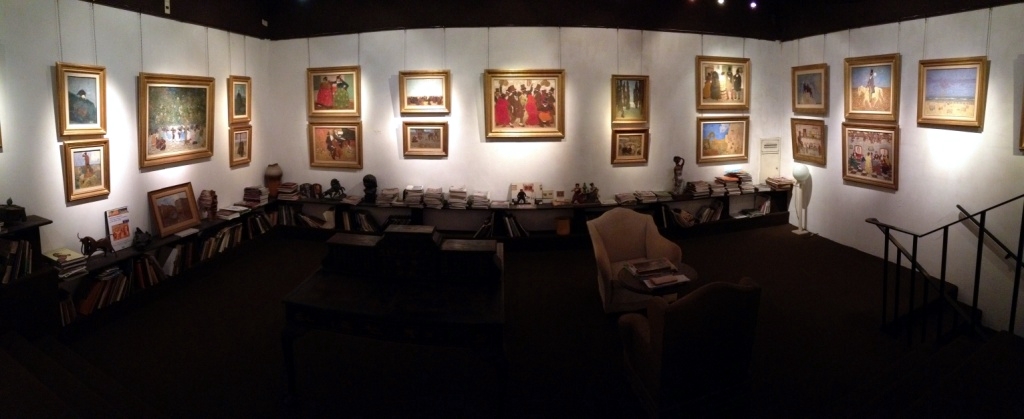
 The gallery operated by Figari’s grandson .
As the prices for Pedro Figari’s work rise, his grandson has come to encounter a problem many such families of artists working in a highly simplified (or folk) style–fakes. Forgers see such work as easy-picking for their „skills.“
Stay tuned to part 3 of this money series.

