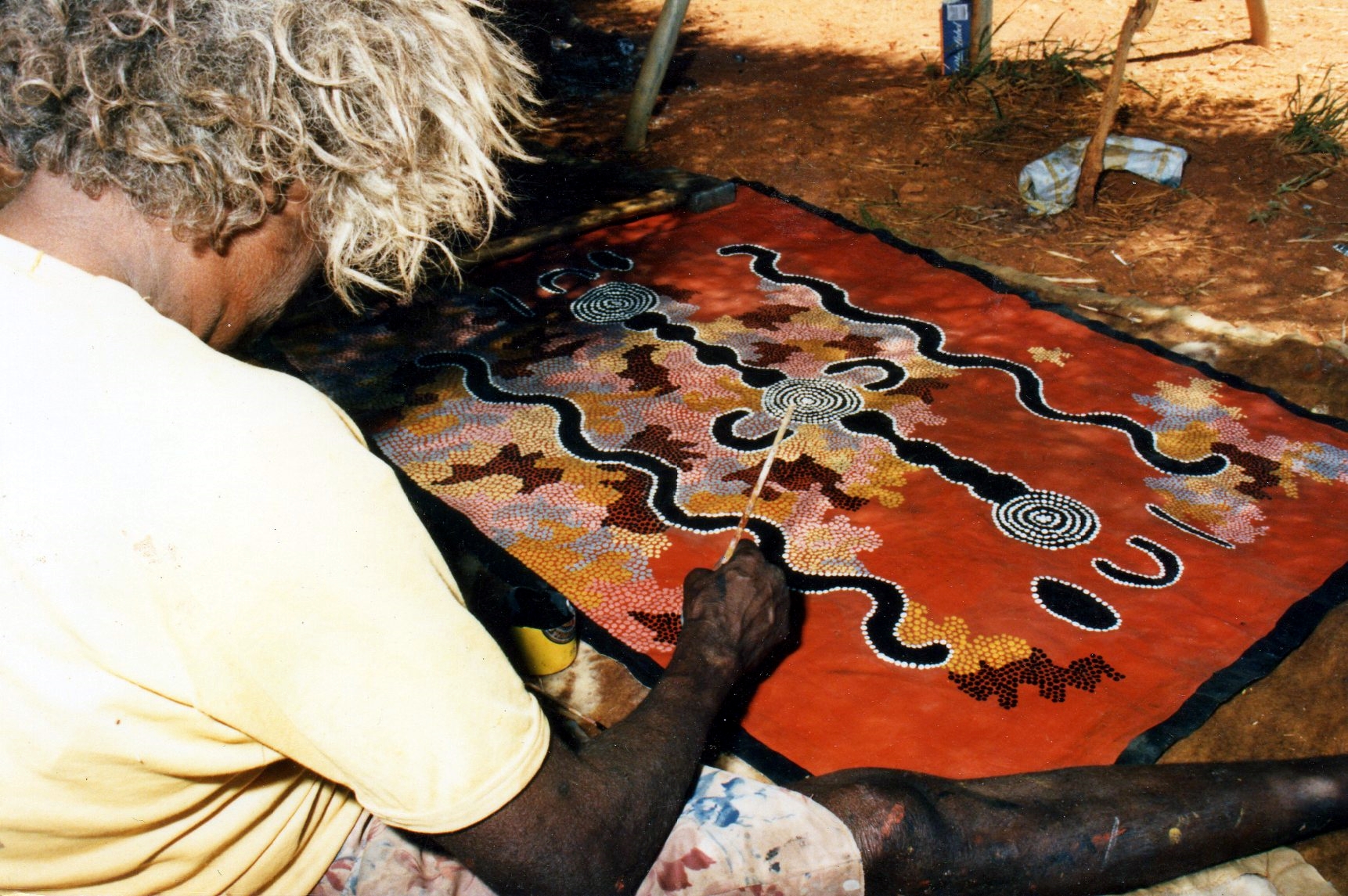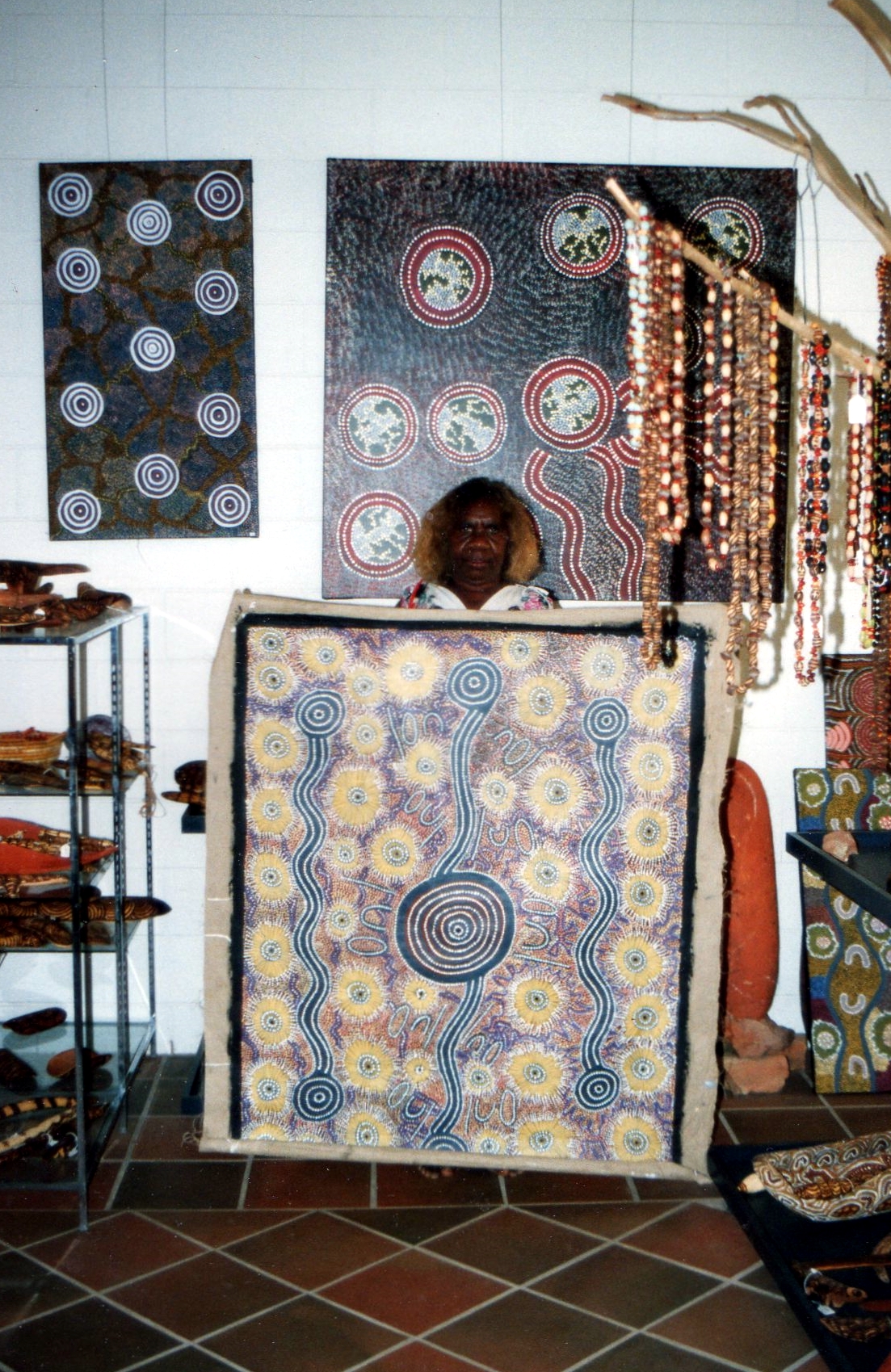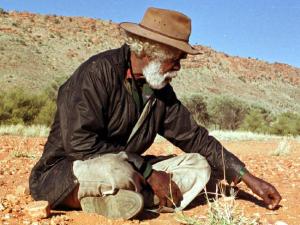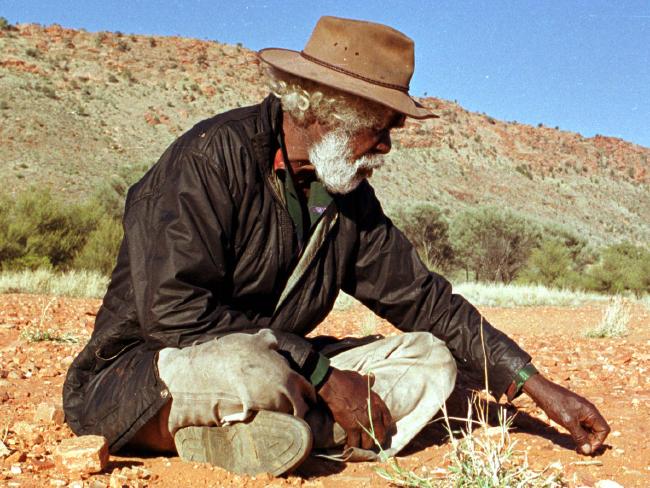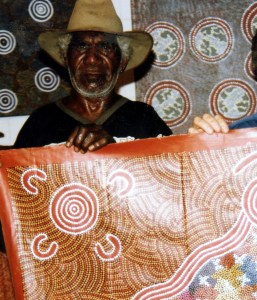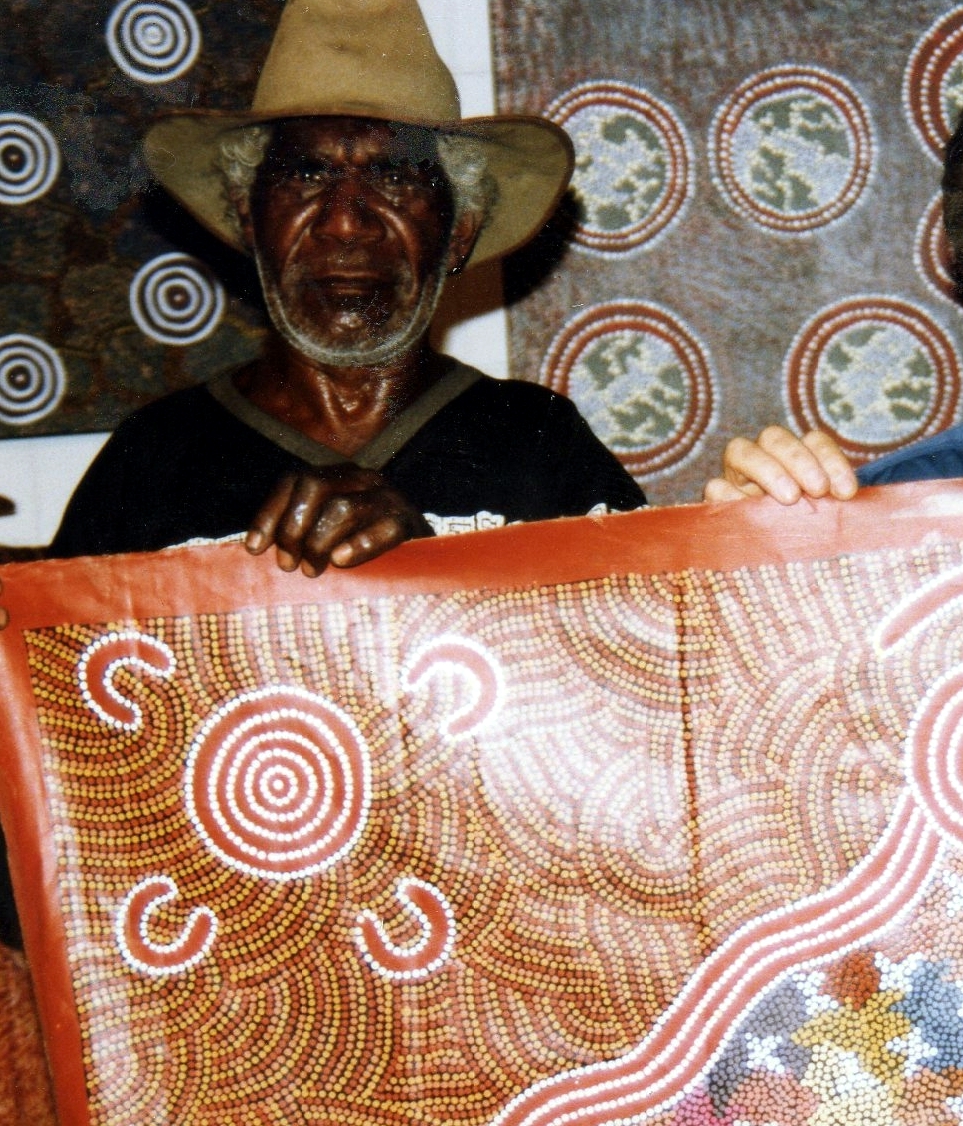
Australia – Aborigine Art 2

aust uluru 4

WARNING:
This article can contain images and/or names of and reference to both,
living and deceased Indigenous people from diverse cultural backgrounds
and communities in Australia.
This warning is written out of respect to the Aboriginal culture.

Before you read this article, please give yourself a favor and read the article „Australia – Aborigine Art 1“ first. Just click right on Art or in Archives on month „March 2016“.

Australia. A country which I visited very often for over 50 years and lived there permanently for almost 12 years. During all those years I traveled hundreds of thousands of kilometers through Australia, seeing almost every corner of this amazing continent.

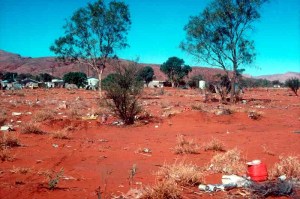
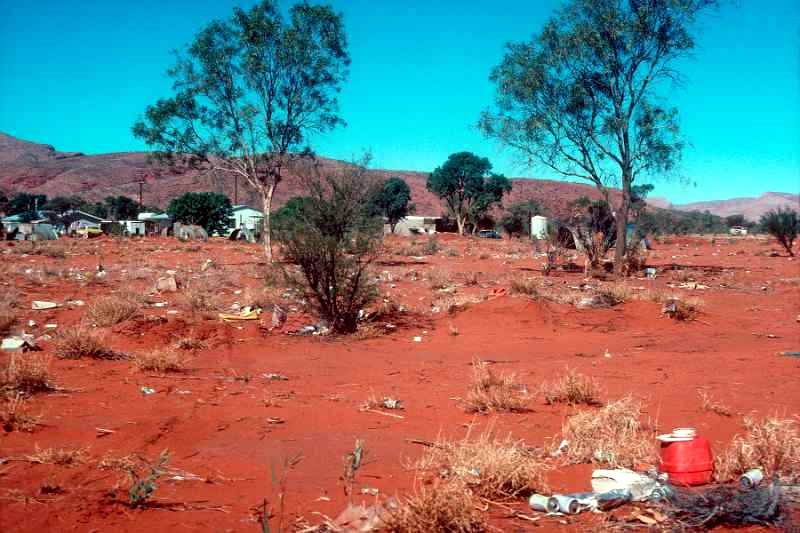
abo 14 (2)  Mount Liebig Aboriginal community, about 325km west of Alice Springs. Most people living here are former residents of Papunya or Haasts Bluff.

I had the opportunity to live a few weeks together with Aborigine people in their community (also in secluded areas), all around the Papunya and Mount Liebig area. I learned about their life and lifestyle, their surviving, hunting, history and have seen many things a tourist won’t never experience.

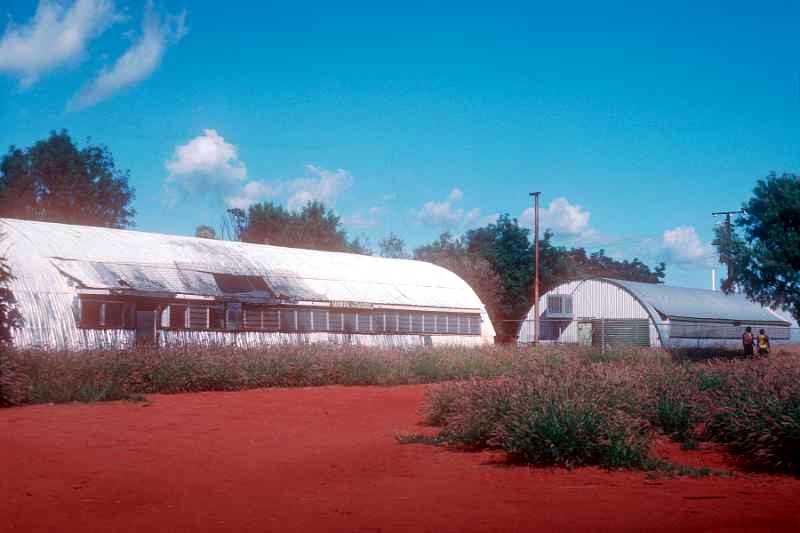
  abo 8 (2)   Quonset Huts in Papunya Aboriginal community. Those prefabricated structures of corrugated galvanized steel, produced during World War II were still used widely here in the eighties. Can one imagine how hot it is inside if you have outside already more then 40 degree Celsius.
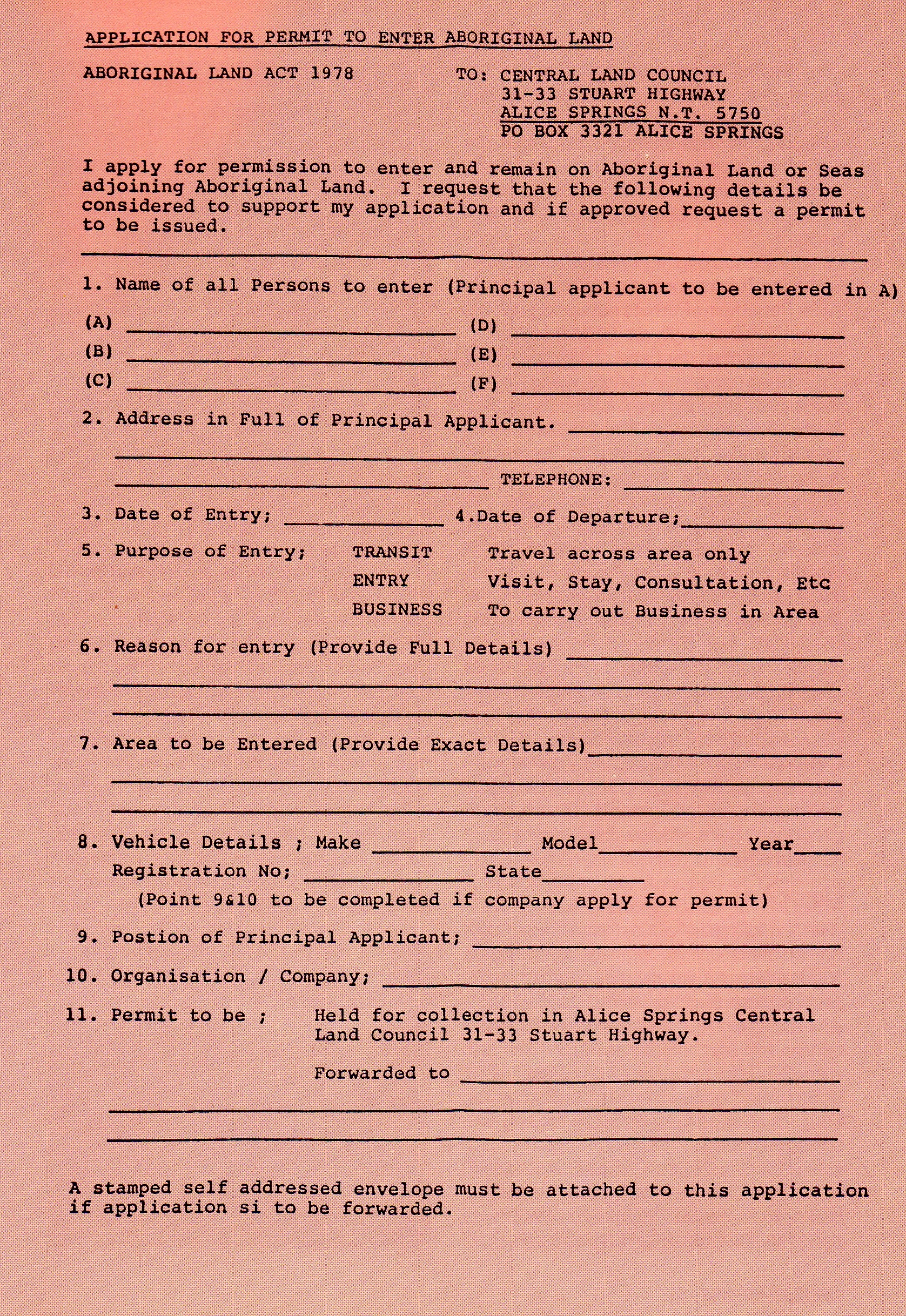
img072    Most of the communities are only to be visited by a special permit, which I had in those times. Not that easy to get, best is on invitation of local people.

In the years mid 1980’s to early 1990’s I specialized in collecting art from the Central Desert area of Australia, met almost all artists which were important to this time and my collection. About all this I organized dozens of slide shows about Australia and several exhibitions about the Aboriginal Painting Art allover Europe.

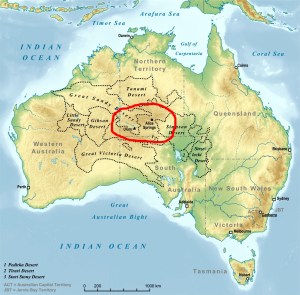
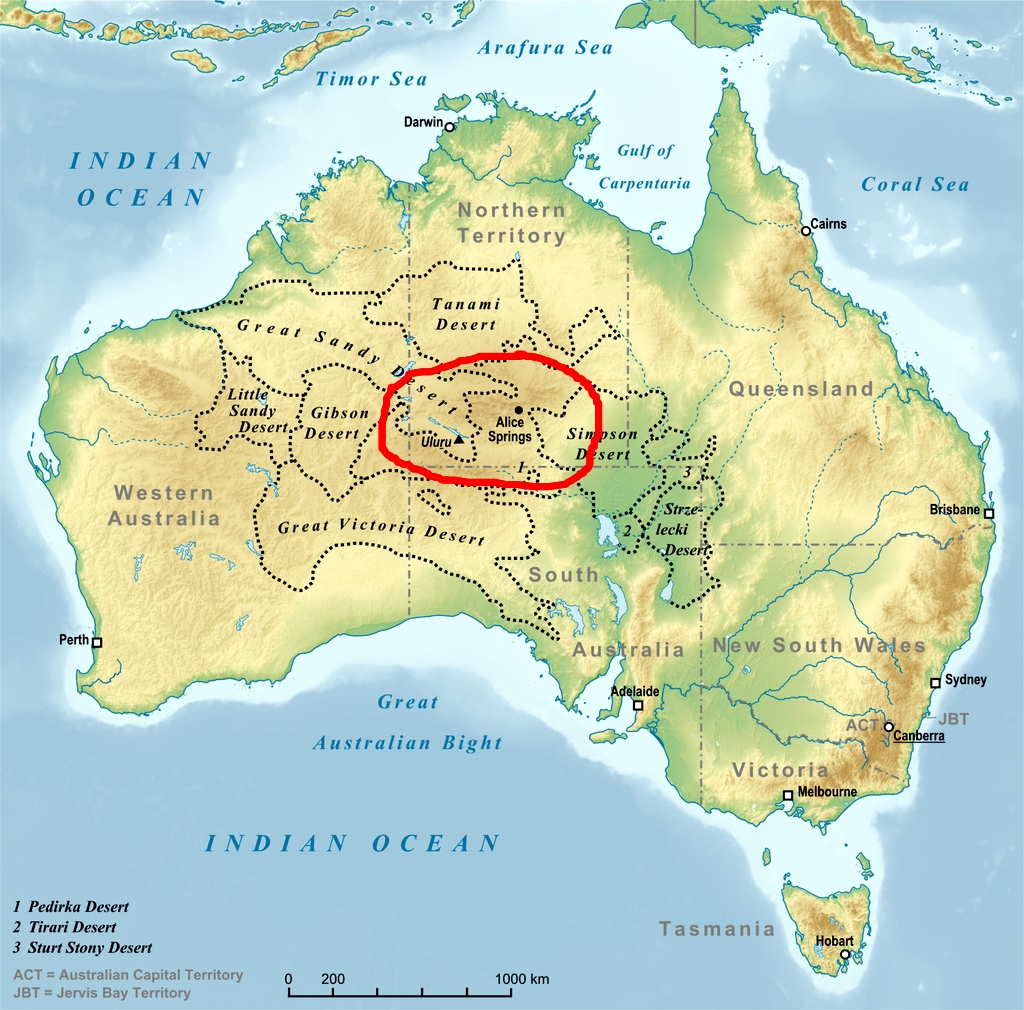
aust desert 1a Central desert is about inside the red circle. Sometimes also called „The Red Center“ of Australia.

Now it is the time to separate myself from the last part of my painting collection. All of the here offered paintings are from artists of the so named „first or second generation of Central Desert artists“. I’ll take the chance to inform you about it in this blog and will also offer the opportunity to purchase the art if you like. Most of the shown art is not available anywhere in the market and some of the artists are deceased meantime.

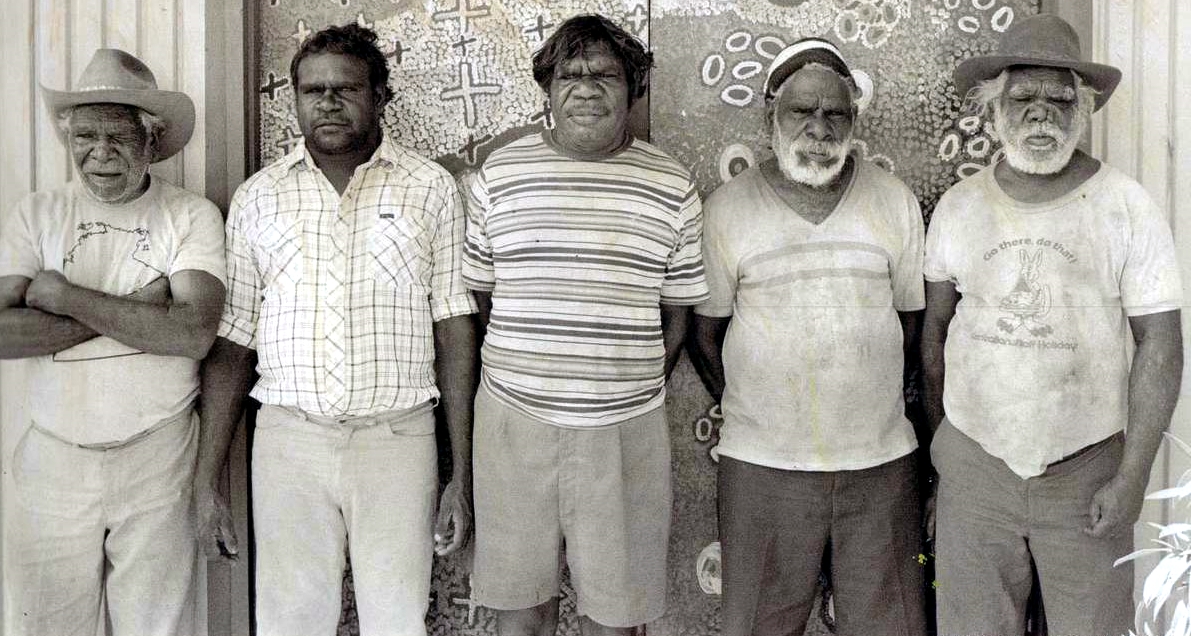
aust yuendumu 1 warlukurlangu artists  Founding members of Yuendumu Art Center. Pic by Warlukurlangu history collection.

If you click on pictures, most will supersize and show you details of art !
The paintings for sale are numbered from „Painting 1“ up to „Painting 22“.
In this post you will find the paintings 1 to 7.  Prices are negotiable.

Yuendumu Art Center.

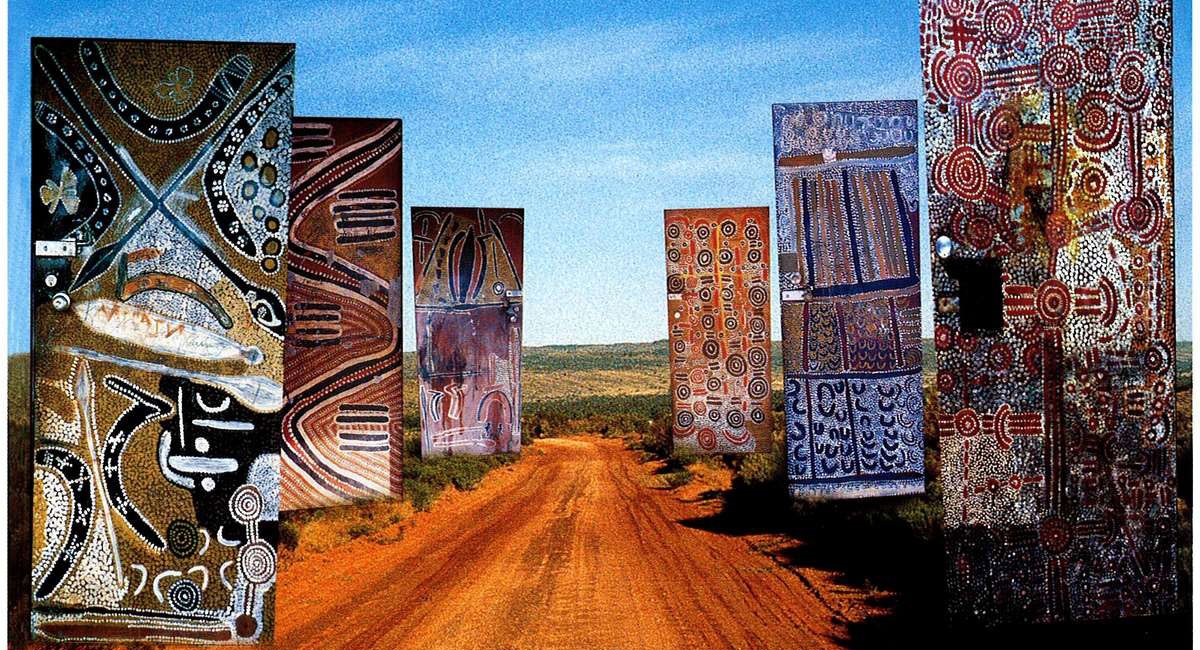
In the early 1970s Paddy Japaljarri Stewart was involved in the painting of the mural on the Papunya School wall. In 1983 he and Paddy Japaljarri Sims were instrumental together with other senior men in the painting of the now famous Yuendumu school doors. The Warlukurlangu art centre in Yuendumu was founded in 1985, incorporated in 1986.

aust yuendumu 2 school doors  The, meantime very famous, Yuendumu Doors, pic by Warlukurlangu history collection.

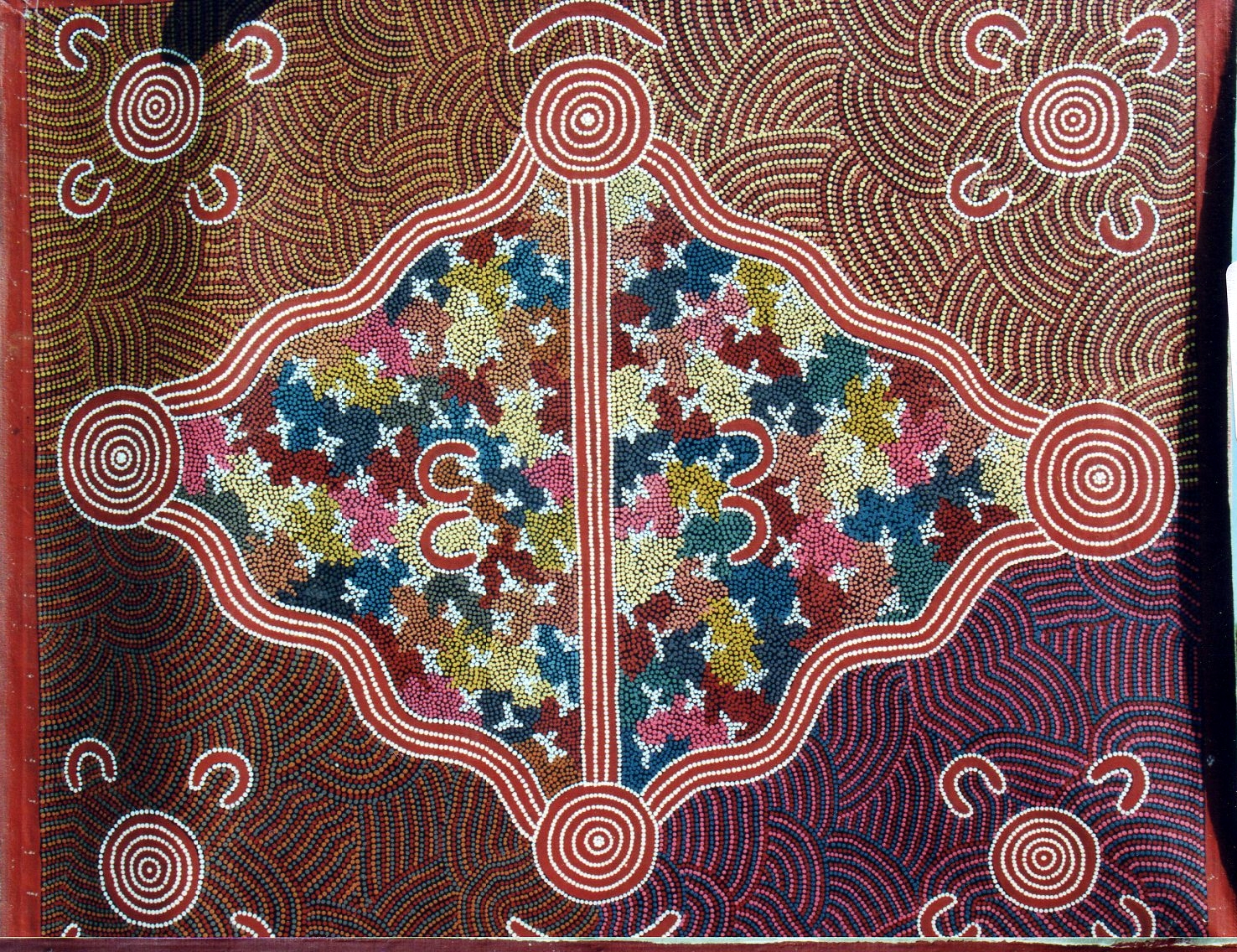
The following 3 paintings were purchased 1992 from a junior artist class in the Yuendumu Art Center. The theme was „snake dreaming“ and they were exhibited in the Aboriginal Desert Art Gallery in Alice Springs. The names of the artists are unknown.

ABO 101 1
Painting 1: Snake Dreaming, 1992. 70cm x 130cm. Price on request.


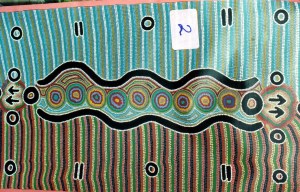
ABO 101 2
Painting 2: Snake Dreaming, 1992. 70cm x 130cm. price on request.


ABO 101 3
Painting 3: Snake Dreaming, 1992. 95cm x 172cm. Price on request.


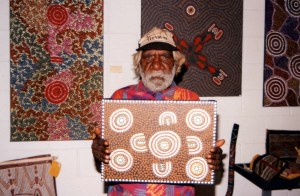
Kudd+Ji.

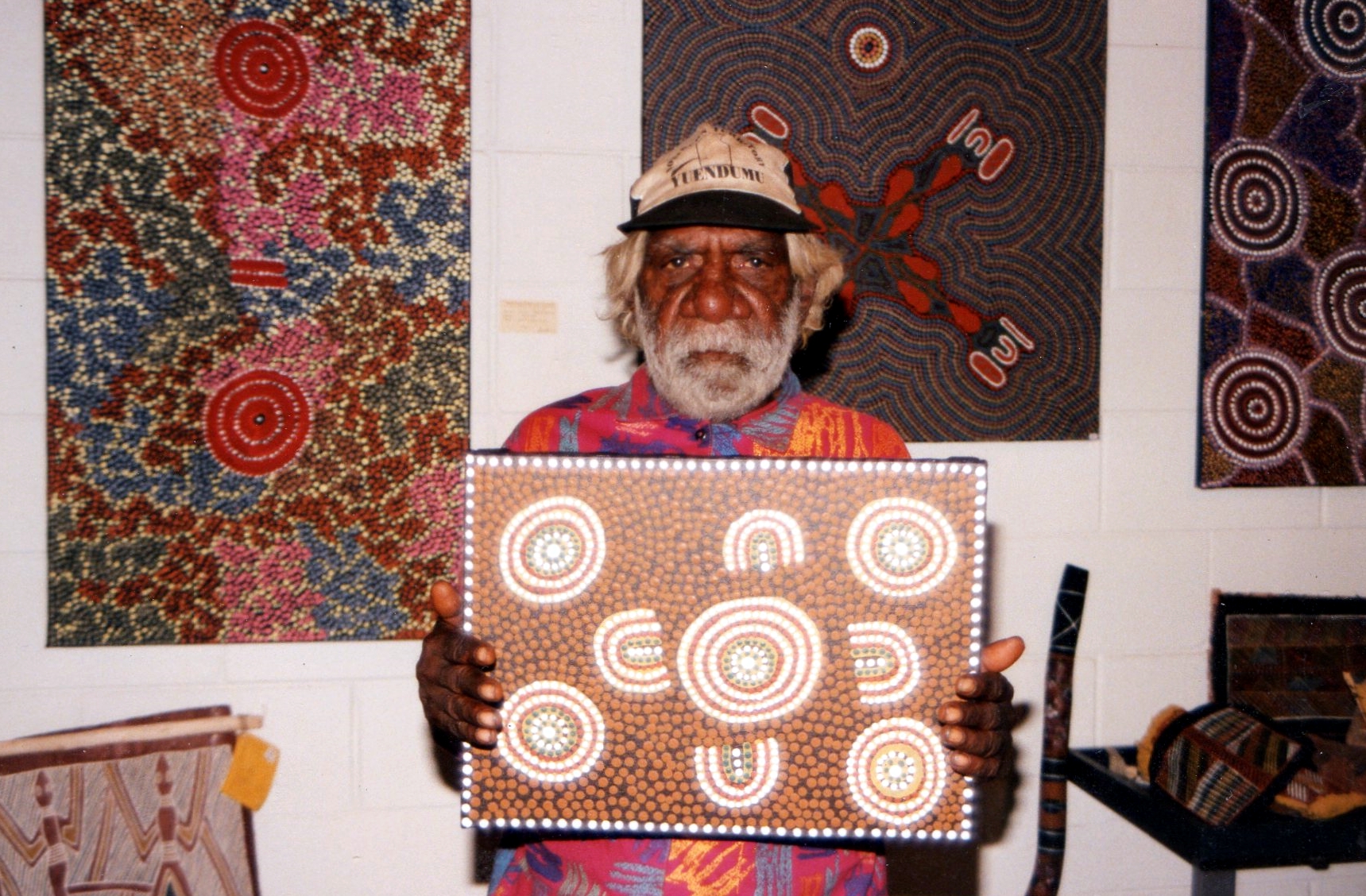
Kudd+Ji was born c. 1930, and is an Anmatyerre elder who commenced painting in the early 80’s. His traditional country is situated approximately 300 kms north east of Alice Springs (Utopia area). He is the brother of renowned artist Emily Kame Kngwarreye. Kudd+Ji’s traditional depictions have been represented in major international exhibitions and he has gained world-wide recognition.

img073a    Kudd+Ji with the painting.

His main stories are Emu Dreamings, Country Paintings and Man’s Dreaming Stories.

ABO 102 4
Painting 4: Emu Water Hole Dreaming, 1992. 31cm  x 41cm. Price on request.


Charlie Eagle Tjapaltjarri.

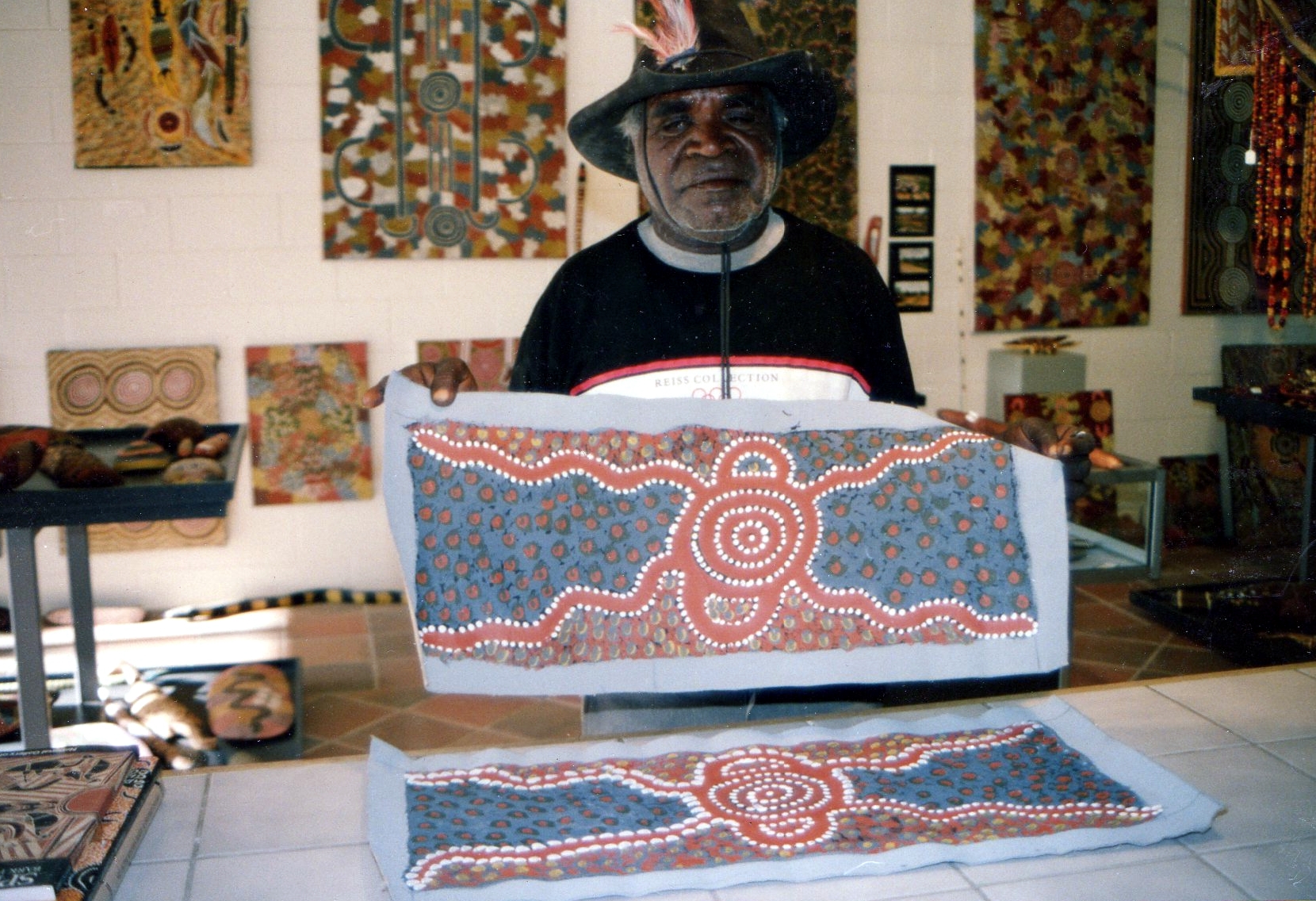
Charlie Egalie Tjapaltjarri was born about 1940 at Vaughan Springs, northwest of Mt. Liebig. Charlie passed the traditional Aboriginal initiation ceremonies at Haasts Bluff to ‘become a man’. In the early days of the art movement at Papunya, about 1972, Charlie commenced painting with the encouragement of Johnny Warangkula, Kaapa Tjampitjinpa and Billy Stockman.

img074a  Charlie Eagle during a rare visit in Alice Springs, showing one of his other paintings.

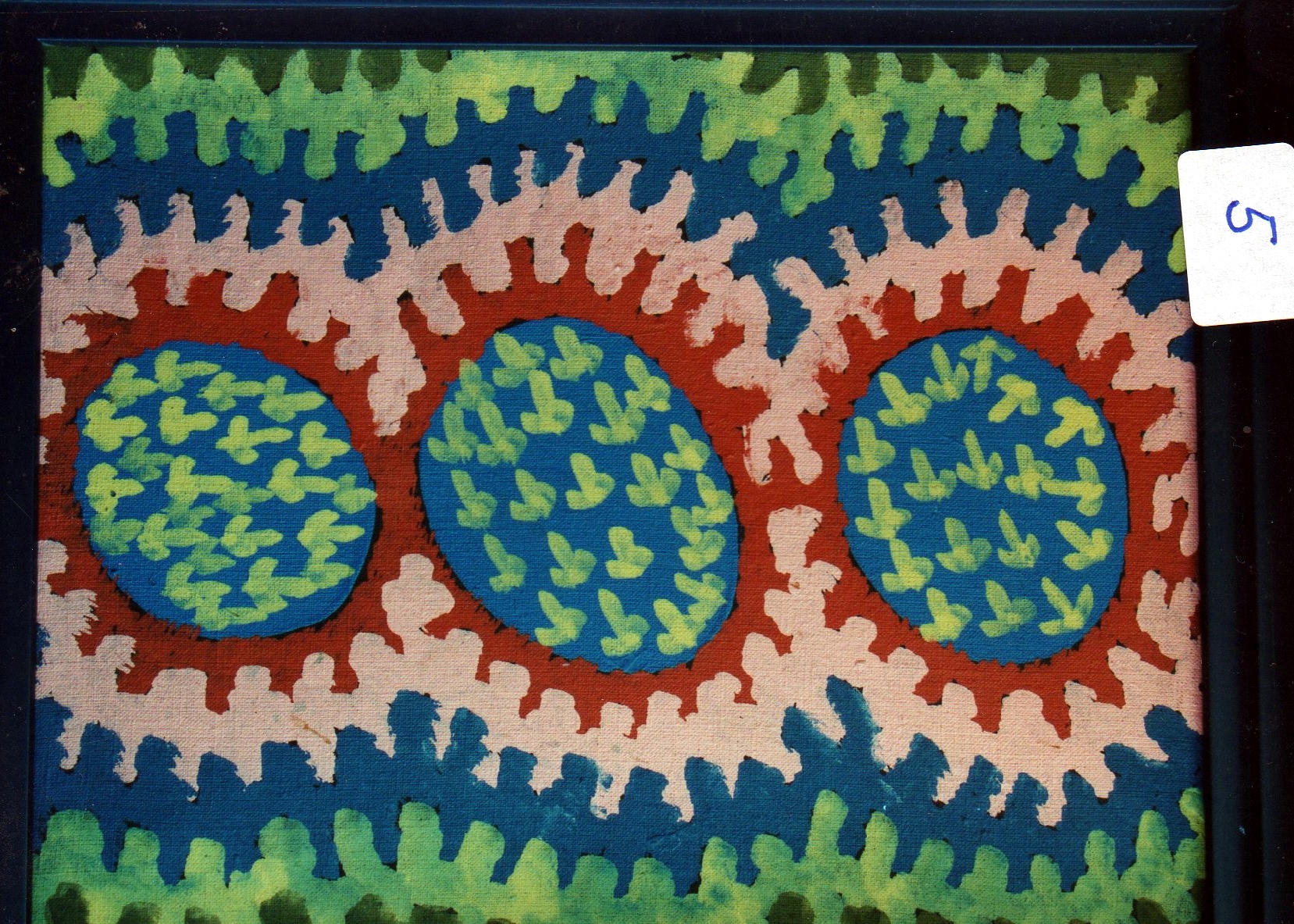
Charlie paints dreamings associated with Mens Dreaming, Budgerigar and Bushfire stories. Some paintings depict the journey of the Wallaby Spirit and other Spirit Beings across the desert sandhill and spinifex country, east of Yuendumu. Tracks represent his journey from waterhole to waterhole (roundels) while the background dot work represents the desert topography.

ABO 102 5
Painting 5: Budgerigar Dreaming, 1992. 32cm x 40cm. Price on request.


Pansy Napangardi.

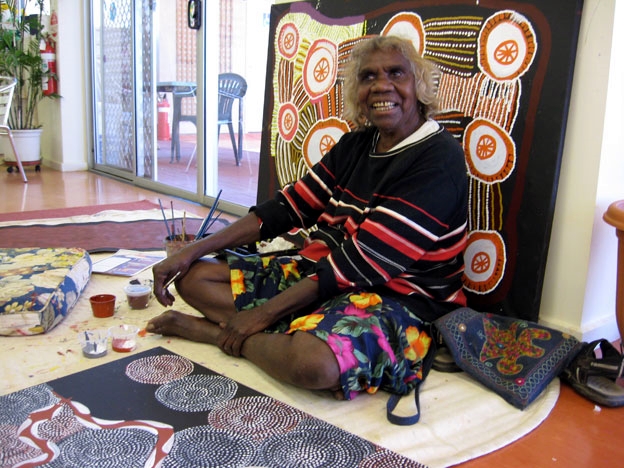
Pansy Napangardi was born in Haasts Bluff, Central Western Desert. Whilst Pansy learnt her father’s Dreamings from artist Rennie Robinson which include Bush Banana, Water Snake, Marlu (Kangaroo), Cockatoo, Bush Mangoes and Willy Wagtail, her mother’s Dreamings were taught by her mother’s cousin and include Seven Sisters, Hail, Luritja Country, Desert Raisin and Kungkakutjara (Two Women).

aust pansy 1  Pansy painting in Alice Springs gallery.

Pansy recalls her grandparents storys, telling her Dreamings and teaching her how to depict them by drawing in the sand. Thus, her childhood was abundant with artistic influence and cultural teachings.

aust pansy 4 Pansy in Papunya, painting a Water Snake Dreaming.

In the 1960’s Pansy moved to Papunya where she observed family and renowned artists such as Johnny Warangkula and Kaapa Tjampitjinpa creating Aboriginal masterpieces. At this stage, she began to experiment with paintings, practicing on paper and later progressing to collages which featured Ininti Seeds (traditionally used in ceremonial jewellery). Unlike many female Aboriginal artists Pansy did not apprentice a male painter; rather she developed her own unique style independently.

aust pansy 3  Pansy Napangardi with her very early art in 1987.

In 1983 Pansy commenced work with Papunya Tula Artists and by the late 1980’s had established herself as a leading female artist. The painting here for sale is one of her very first individual artworks, 1987 ! This is museums quality !

ABO 102 6
Painting 6: Womens Dreaming, 1987.  101cm x 129cm. Extremely rare old painting. Price on request.


Teddy Egan.

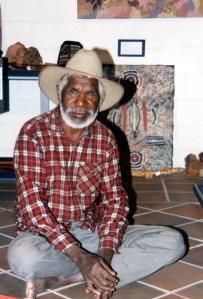
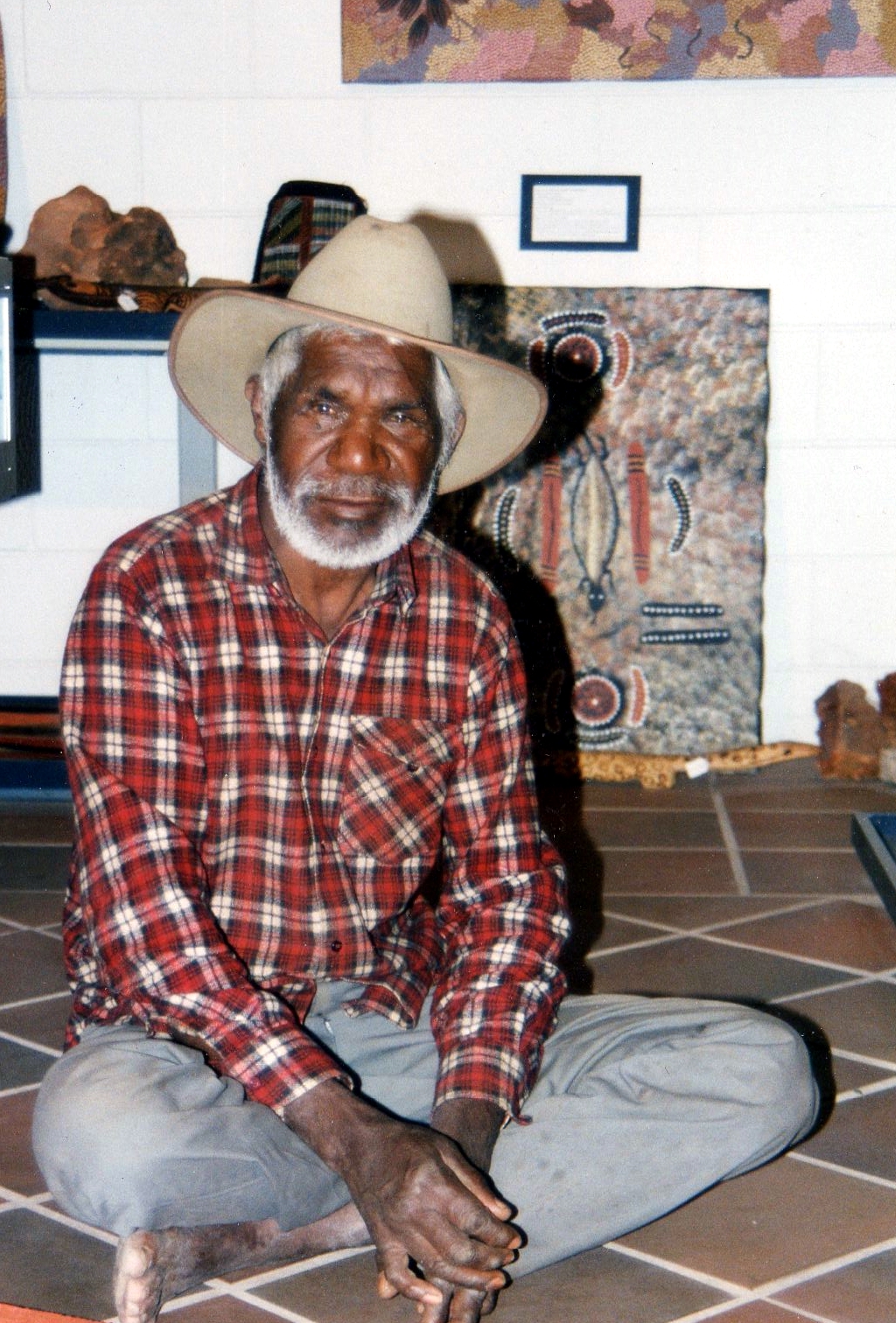
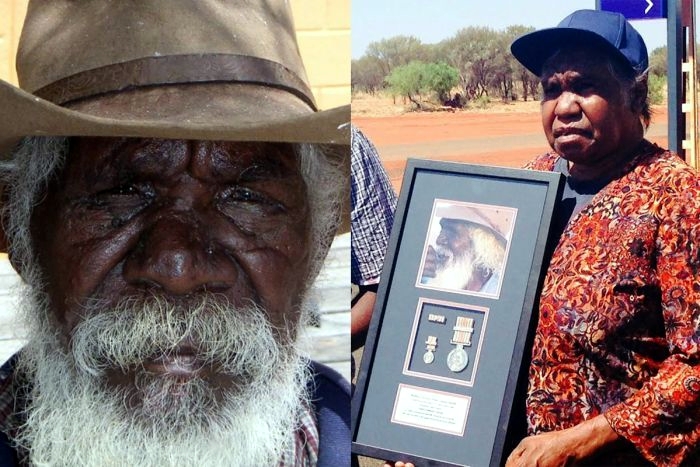
Teddy Jangala Egan was born during World War Two at Coniston, north-west of Alice Springs. He was honoured with posthumous Medal of Valour 50 years after tracking down Billy Benn. Teddy was for sure the best police tracker the country ever had. Through a later friendship with Billy Benn he came to dot painting. Teddy Egan passed away in 2011.

aust teddy egan 3  Teddy Egan, met in Alice Springs.

Buyers of this Egan painting will have included the full story about his tracking life. Just to attract one, here a bit of this story:

„For 40,000 years indigenous trackers have led their clan on the paths of survival throughout Australia’s harsh lands.

Thanks to their intimate knowledge of the bush, ability to read human prints and follow animal traces, trackers have always led hunts and had a central role in Aboriginal clans.
One of the most memorable manhunts of all time that was led by an indigenous tracker named Teddy Egan Jangala. In 1964 another tracker, named Billy Benn, murders a rival and escapes into the steep mountains of Central Australia. During his flight from justice, Billy shoots and seriously injures two police officers. For several days, numerous police squads—either on horseback or in 4x4s—try everything they can to catch this outlaw tracker but to no avail. Billy meticulously erases his footprints and every trace of himself. He even creates fake clues of the direction he’s going in to put his pursuers off track. Billy’s brilliant manoeuvres would’ve outsmarted the police if they hadn’t turned to Teddy. During a 13-day track filled with danger, Teddy intuits the best way to follow Billy’s true direction and leads the police right to him.

aust teddy eagan 4  Teddy Egan received posthumous the medal of valor, received by his daughter.     His greatness was obvious to police during the height of his powers in the mid 1960s and he was called upon as late as 2001 to track down the still-missing Peter Falconio, a worldwide known murder case.
aust teddy egan 2  Aboriginal tracker Teddy Egan sifting for clues in the disappearance of British tourist Peter Falconio in 2001.  Source – News Limited.

Today, there are only a handful of skilled indigenous trackers in Australia. The Queensland’s police now employ only one full time tracker, Barry Port, in the small town of Coen in Cape York. Barry and his colleagues watch over a territory as large as Switzerland. Numerous marijuana growers and drug traffickers operate in hidden parts of this area. George, Teddy and Barry are the last trackers to master their ancestral art of bonding people with the land. This gives them the uncanny ability to put themselves in the skin of the person they track. They’re able to follow a person by even the most indistinct traces left on the ground or surrounding nature“.

aust teddy egan 1a  Teddy Egan with his fantastic work of art. He painted only a few, but the extreme quality of dot painting sticks out. To own a Teddy Egan painting is EXTREMELY RARE.
ABO 103 7
Painting 7: Mens Waterhole Ceremony, 1989. 109cm x 129cm. Extremely rare painting. Price on request.

Follow the next group of artwork (Paintings 8 to 14) and artist description in the post „Australia – Aborigine Art 3“, coming up next week. Don’t hesitate to ask questions !    And – comments are most welcome.

Veröffentlicht unter Collecting, For Sale, History, Hobbies | Verschlagwortet mit , | 1 Kommentar

Cut Your Cake Right

There is an actual scientific way to cut a cake !
And you’ve been doing it wrong !

cake 5

Everyone pretty much cuts the cake in the same way – but you’ve been doing it wrong for your entire life.
That’s right – there is actually a scientific way to cut up your cake goodness, and it will keep the sponge moist and the cream soft for many days longer.
The standard way to cut up a cake is to roughly estimate where the center is and cut from there to the edge, before cutting a rough-sized angle to create a triangle slice.
However, this leaves it exposed to dry out quickly, meaning day number two’s slice is a massive disappointment.

cake 4  This is how we all did it wrong – till now.

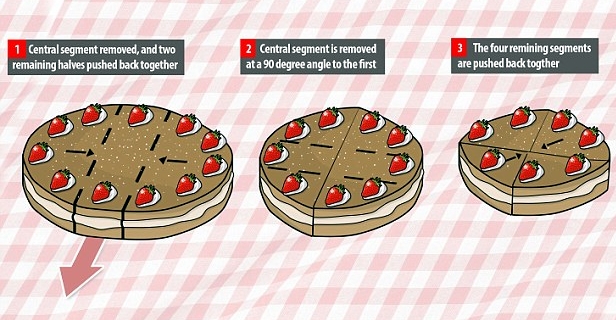
But the scientific method, unearthed by baking fans, states that slices are cut into rectangles – and your cake will keep its goodness for a lot longer than you are used to.
Are you ready to have your mind blown? Here’s how you do it:

cake 3 Three easy steps to cut your cake right.

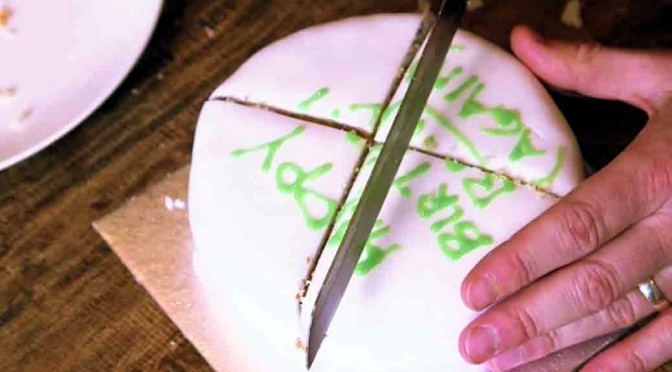
Step 1, cut the cake into quarters so you have four, equal-sized triangular portions.
If you can resist eating one of those chunks, then step 2 is to cut next to the same line made when slicing it in half.
What you should be left with are two rectangular slices ready to be enjoyed.
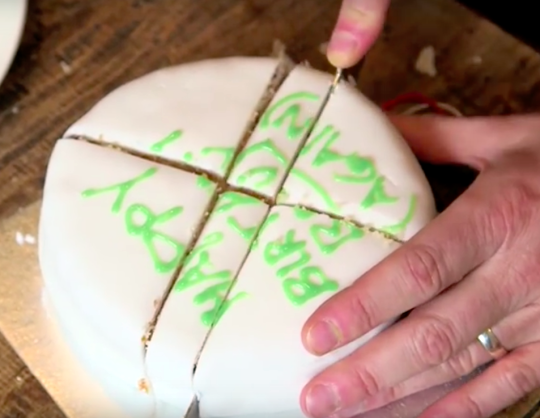
Step 3, simply push the remainder of the cake together – this will keep everything fresh as you are essentially stopping any air from drying out the inside.

cake 2a cake 2      Take off the pieces you need and push the remaining together. Your cake will stay fresh longer.

This ingenious method was devised in 1906 by a mathematician who wanted his cake soft and creamy and the remaining parts kept fresh longer.

cake 1

Eating cake has, unbelievably, just got even better. Enjoy cake cutting as I do !

Veröffentlicht unter Information, Lifestyle | Verschlagwortet mit | 1 Kommentar

Salt Salt Salt

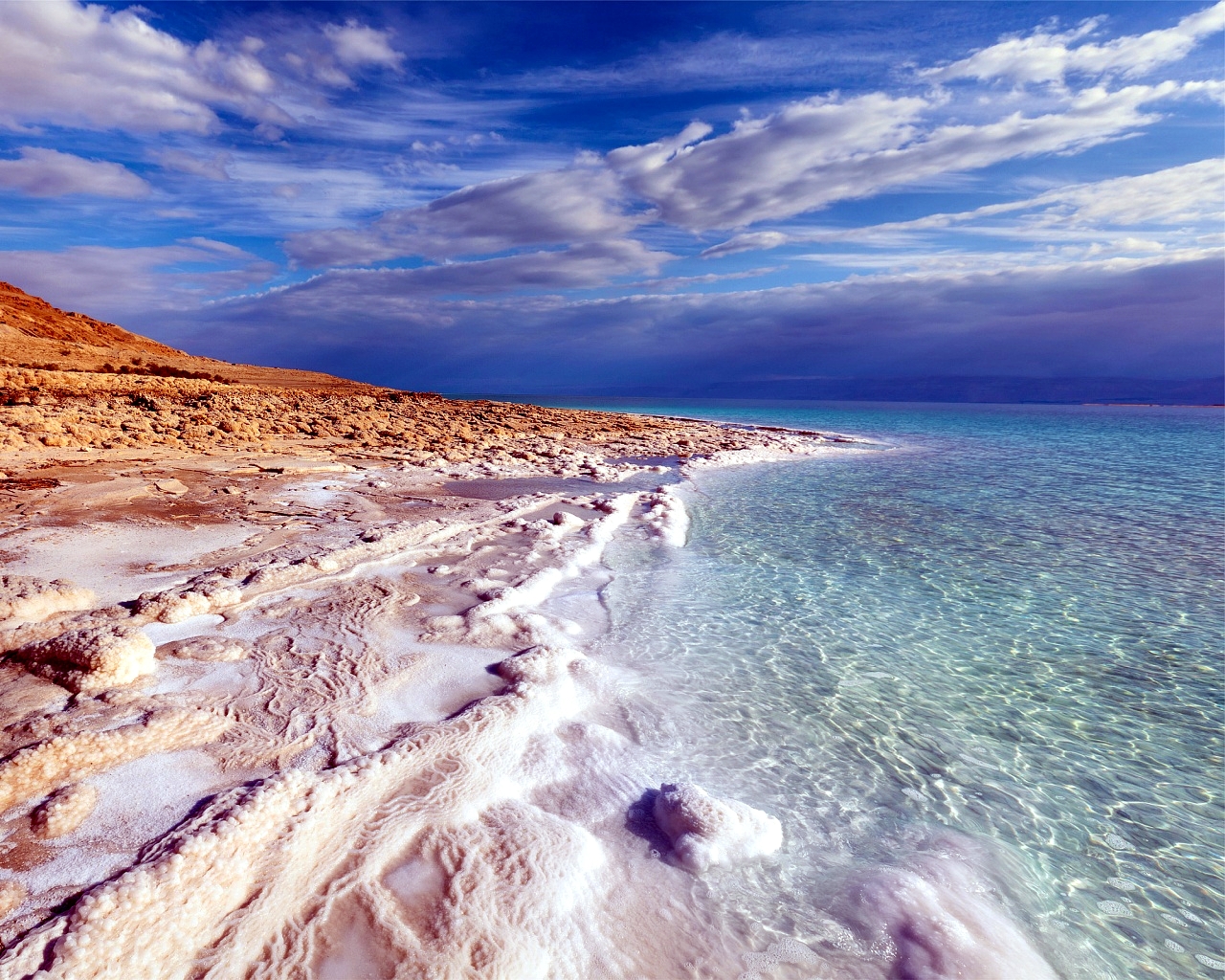
salt 4c sea salt foam

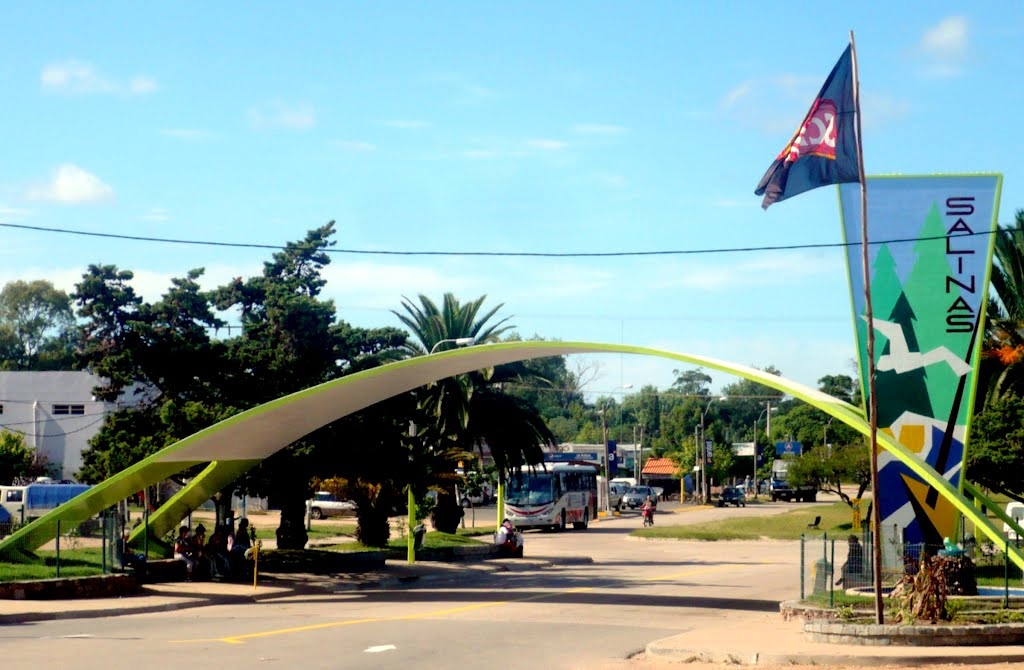
When we lived in Salinas Uruguay, my interest was aroused why this place was called „Salinas“. The word Salinas is „a Portuguese and Spanish word meaning salt works, salt mines, or salt pans“. But in Salinas Uruguay there are no connections to salt in any way. Bad luck, I couldn’t find out anything about the connection to salt and Salinas is a very joung town also, just founded in the 1950’s. So – why did someone and who called this place Salinas ?? May be after a person, named Salinas ??

 salt 28  The Arch, city symbol of Salinas, Uruguay.

But once again, my inclination to discover new information’s and backgrounds awakened. This time around salt. Salt, the most used ingredient by humans around the world. What are the differences, why people use so many different salts and why don;t we have ample information about it?  Here, after searching and reading hundreds of pages written about salt my essence, as short as possible for you.

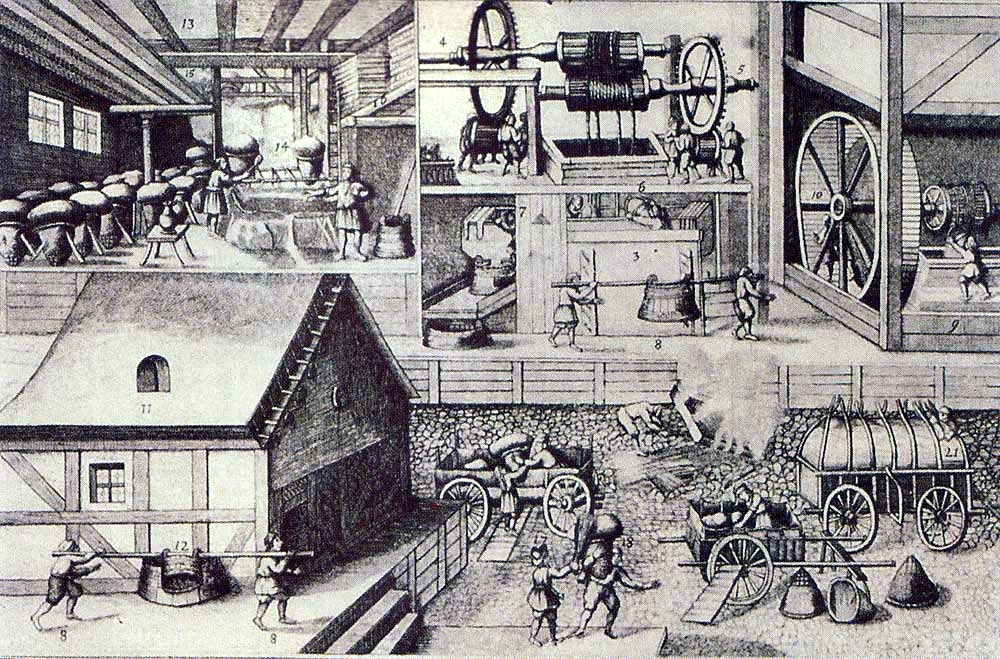
salt 1 halle 1670    Salt harvesting and processing near the city of Halle, Germany. Engraving from 1670.

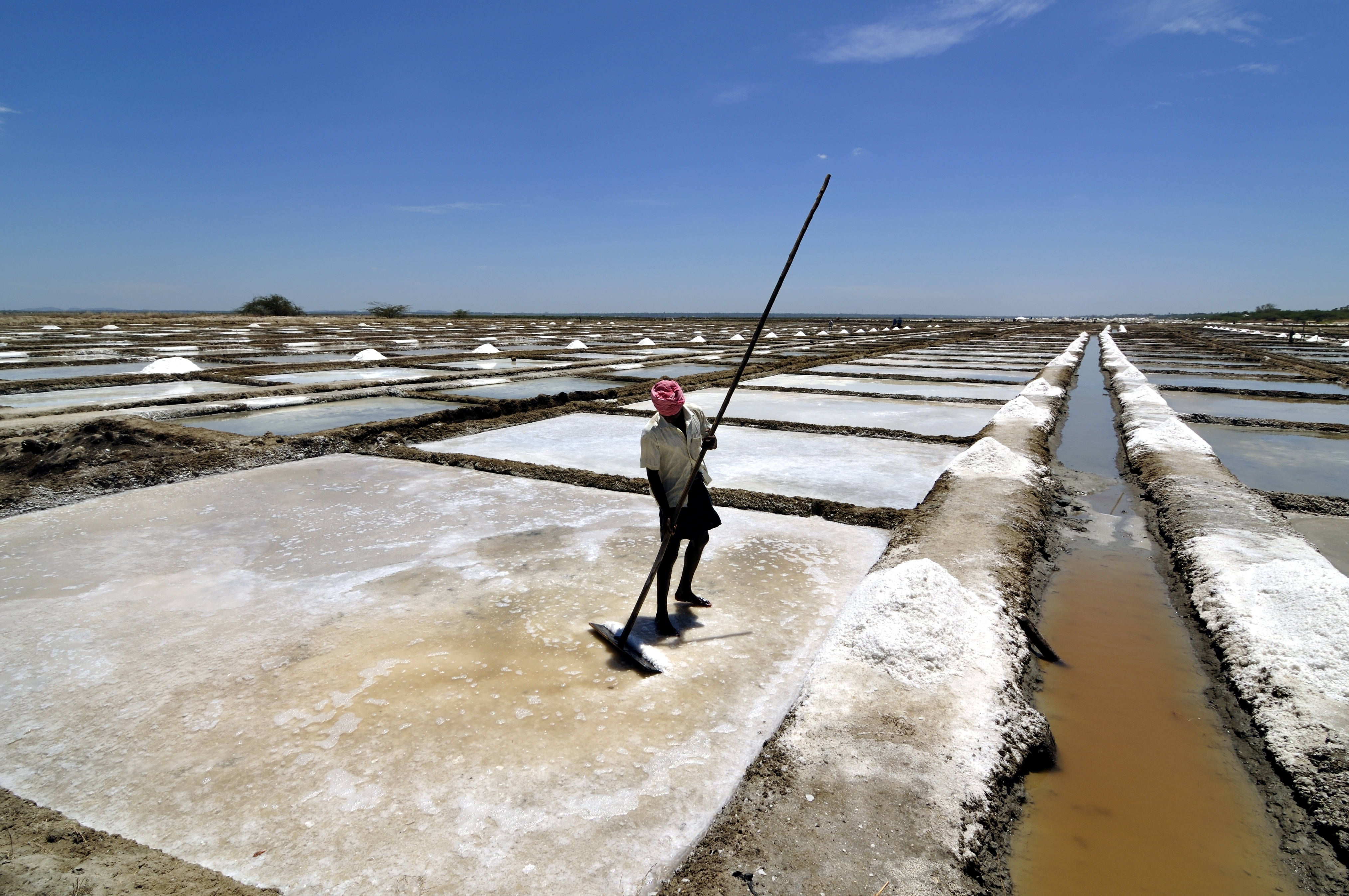
Most of the world’s salt is harvested from salt mines, or by evaporating sea water or other mineral-rich waters.

salt 11 marakkanam salt pans  Salinas, salt pans in Marakkanam, India.

Cooking and baking, salt-rimmed glasses, marinades and rubs – the uses for salt seem endless, and that’s just within the food and recipe realm of salt. Salt is the most common and readily available nonmetallic mineral in the world. In 2013, total world production of salt was 264 million tonnes, the top five producers being China (71 million), the United States (40 million), India (18 million), Germany (12 million) and Canada (11 million).

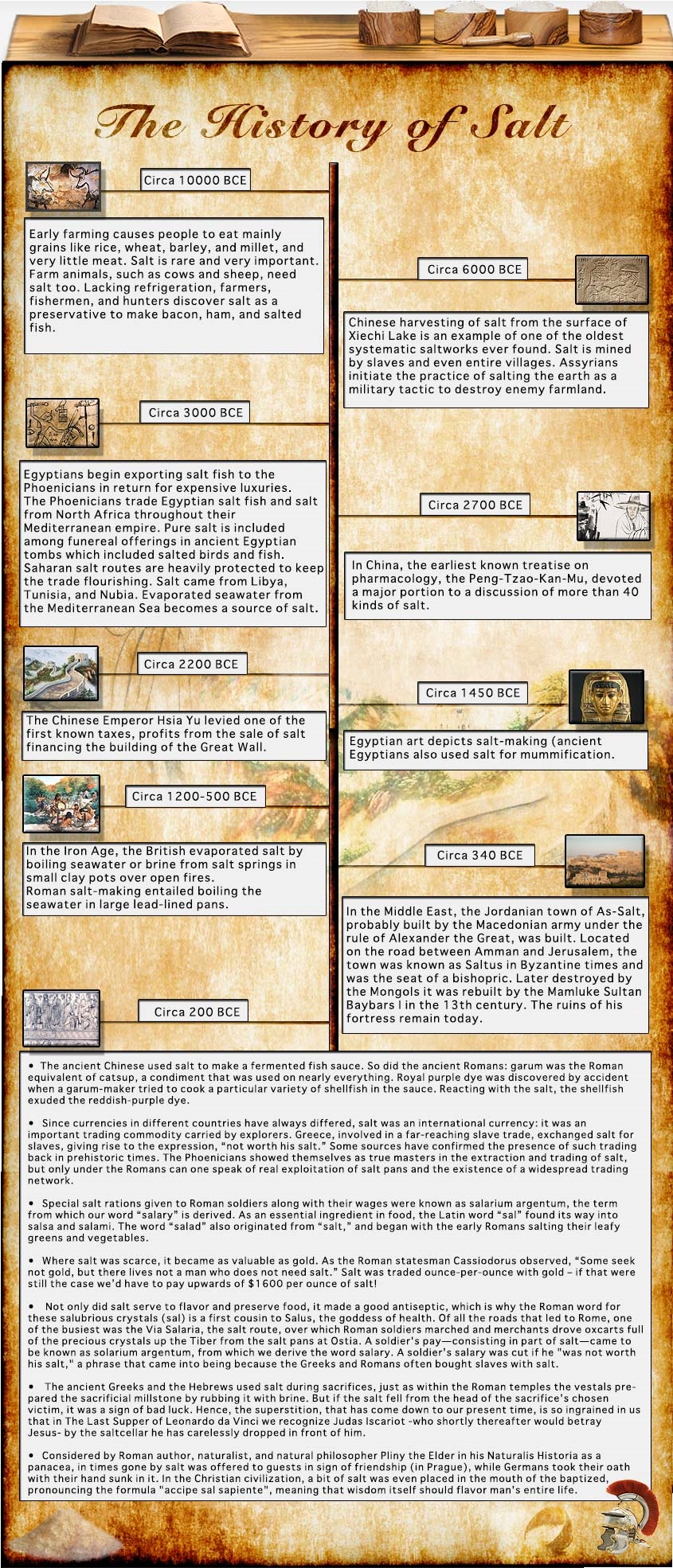
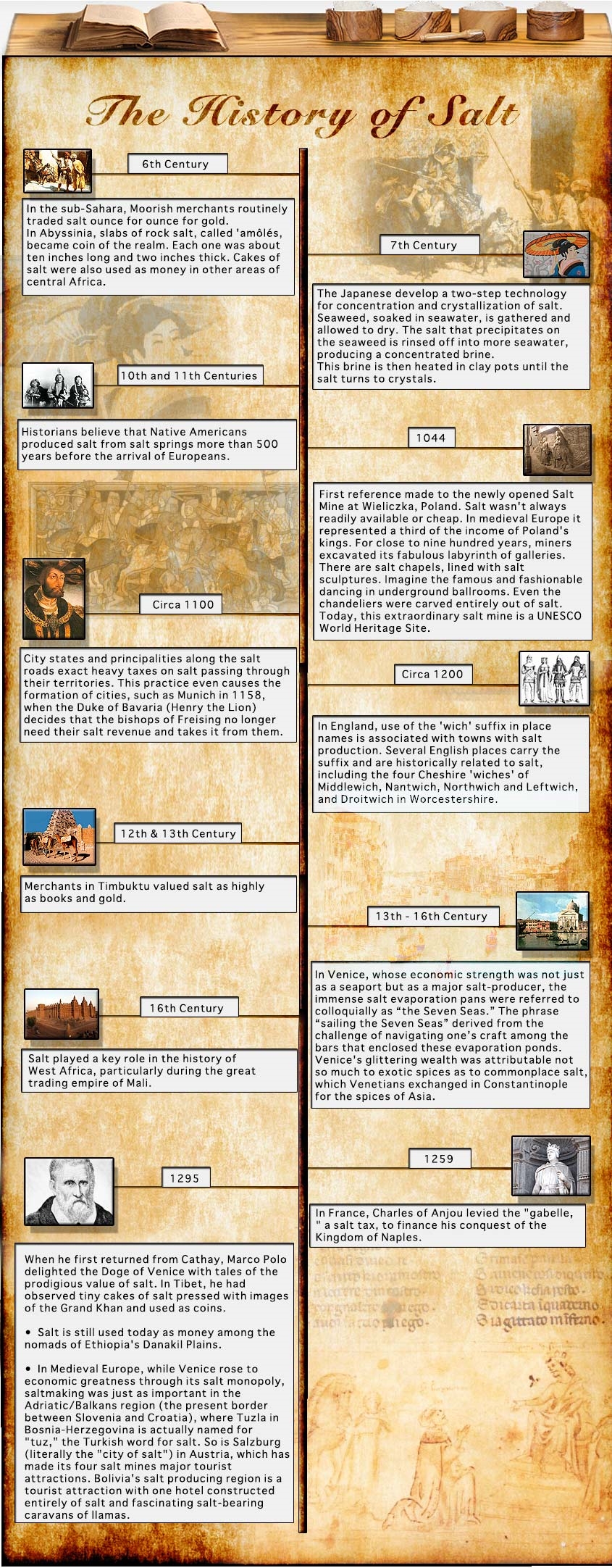
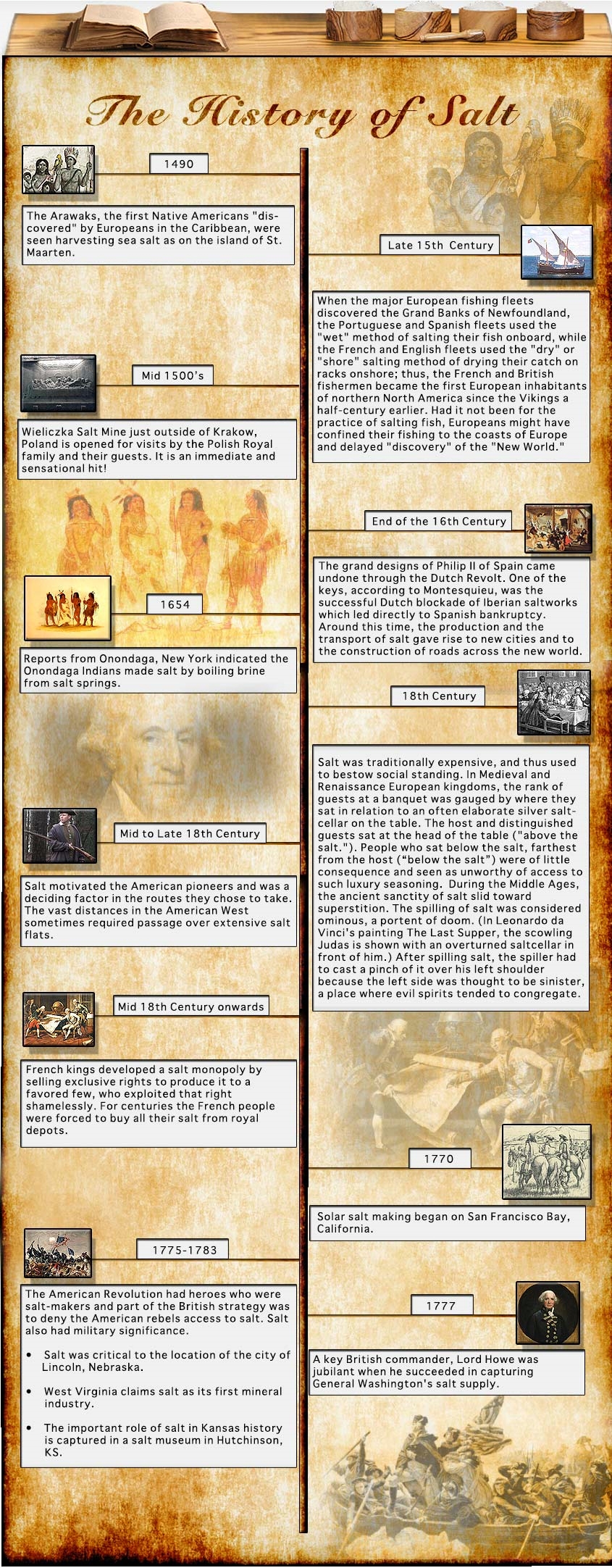
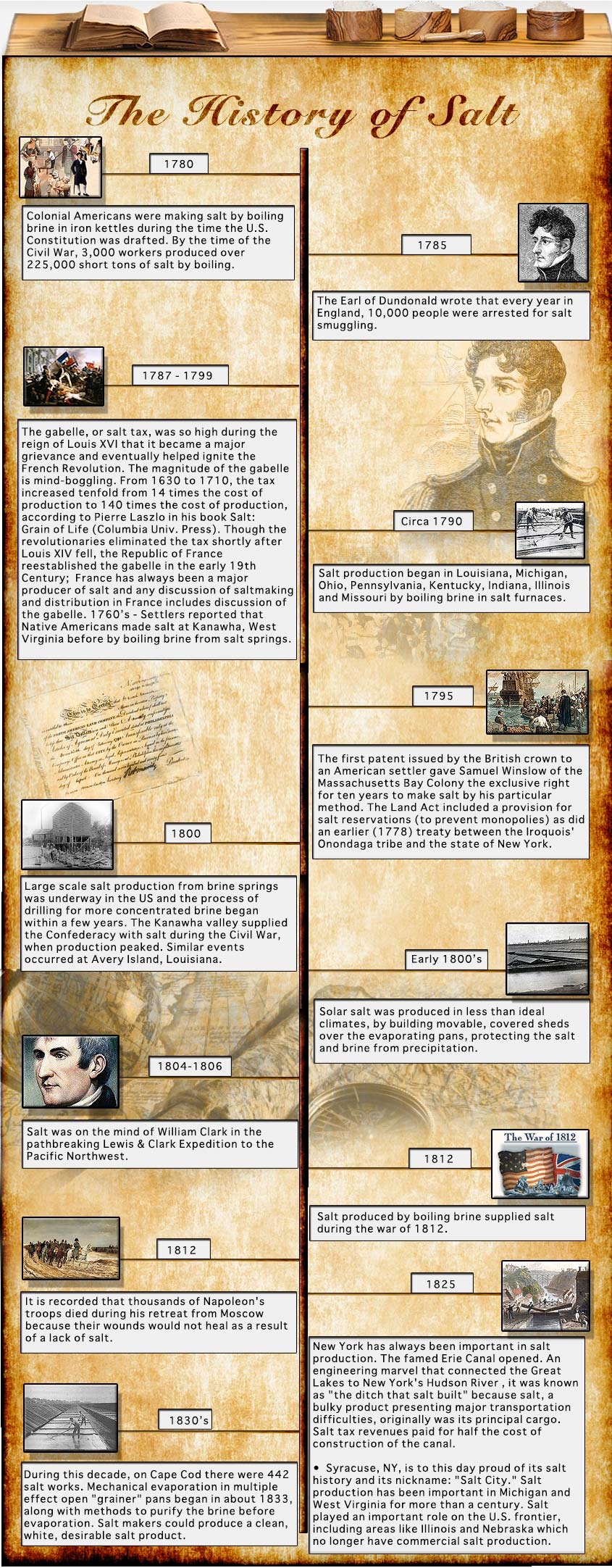
The history of salt.

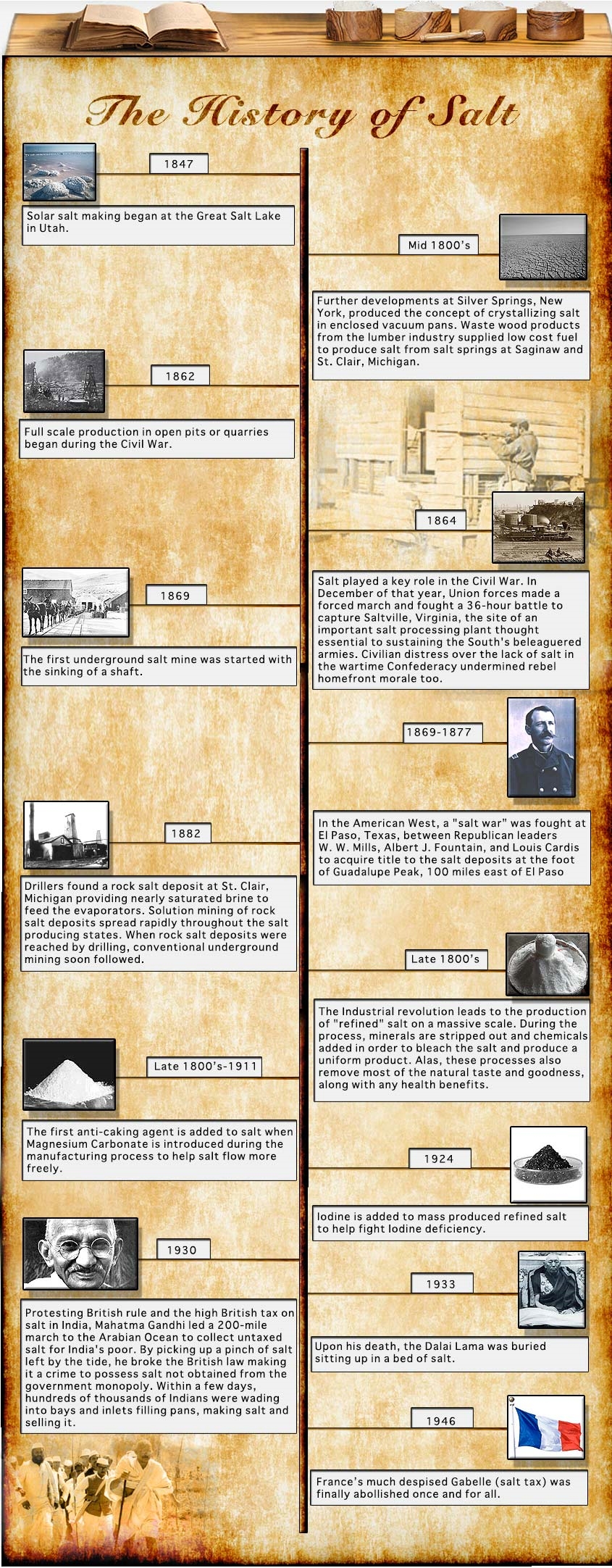
salt 27 history  salt 27a  salt 27b  salt 27c  salt 27d
This interesting history of salt I found in the internet, but sadly no source of design. Click on single charts, from left to right, to supersize and follow the history.

The types of salt and their benefits.

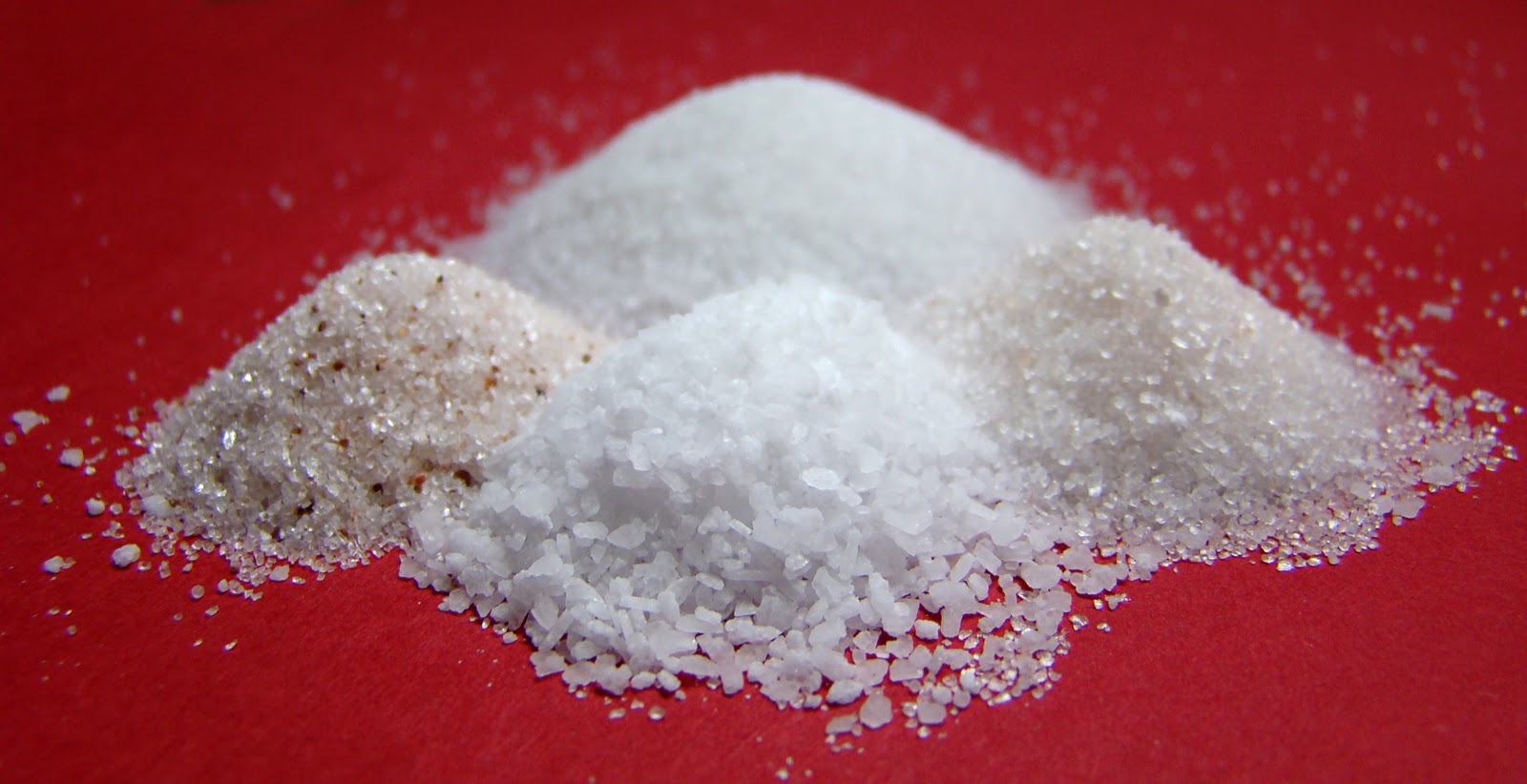
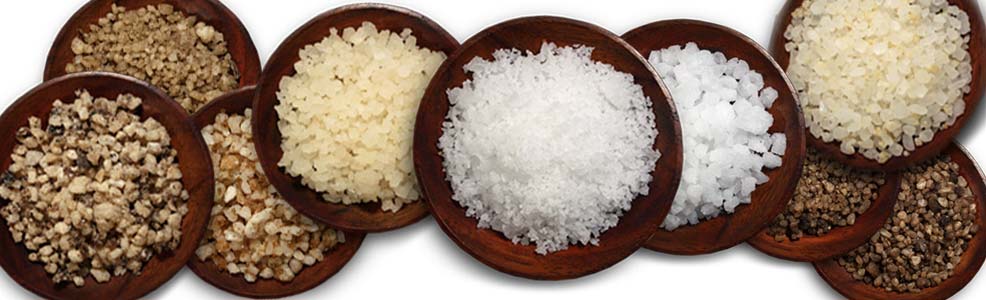
salt 1 back table salt, front (left to right) natural sea salt, kosher (coarse grain), Himalayan salt   In the rear, normal table salt. Front left natural sea salt, front middle kosher (coarse grain) salt and front right Himalayan salt. Most pics supersize if you click on.

Salt is what makes things taste bad when it isn’t in them. Salt is arguably the most important ingredient in cooking. Without it, most meals would taste bland and unexciting. However, not all salt is created equal and there are many “types” to choose from.
We have Himalayan Pink Salt, Kosher Salt, Sea Salt, Celtic Salt (to name a few). And then we have plain old refined table salt. Not only do they differ in taste and texture, but there are also some differences in mineral and sodium content.

salt 27e pics from salts of the earth 120 for sale  Salt benefits are known since ancient times.

This post describes the most popular salt types and will give you a direct comparison of their nutritional properties to help you make the right choices of what to use. Let’s take a look at what salt is and why it’s such a controversial ingredient among health experts.

What is salt and how does it affect health.

salt 8b kosher   Salt every time on everything, is this healthy ?

Salt is a crystalline mineral made of two elements, sodium and chlorine. Sodium and chlorine are absolutely essential for life in animals and humans. They serve important functions like helping the brain and nerves send electrical impulses. Salt is used for various purposes, the most common of which is adding flavor to foods. Salt is also used as a food preservative, because bacteria have trouble growing in a salt-rich environment.
The reason salt is often perceived as unhealthy (in large amounts), is that it can bind water in the bloodstream and raise blood pressure.

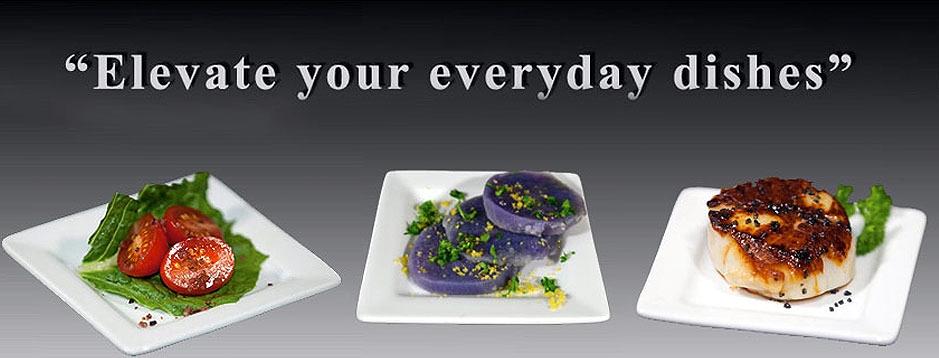
salt 27g  Salt to season your everyday dishes.

But even though studies have suggested that lowering salt intake can reduce blood pressure by 1-5.4 mm/Hg, there is no evidence that lowering salt prevents heart attacks, stroke or death.
The great majority of sodium in the Western diet comes from processed foods. If you eat mostly whole, unprocessed foods then you don’t need to worry about adding some salt to your meals. Only thing I really „hate“, are people which sit down on the table and start salting (mostly massive) without having a taste of the food. This is an insult to every cook !
No problem of course, if you want to „spice up“ your taste, but PLEASE TRY FIRST !

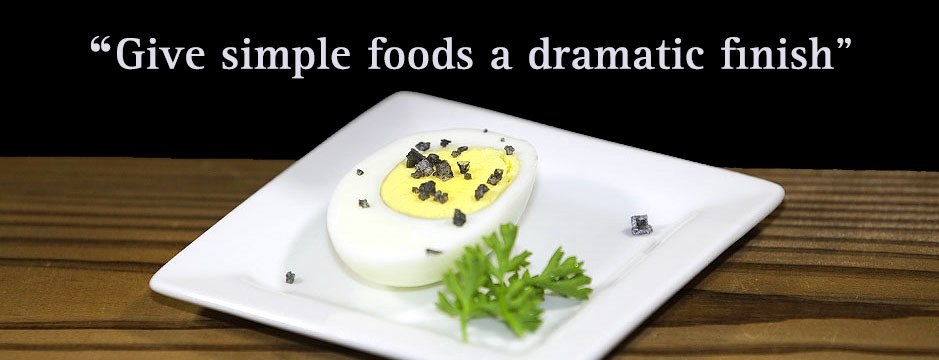
salt 27j  Dramatic seasoning with black salt from India.


Refined Salt (regular table salt).

salt 9 table salt from salt mines Refined salt from salt mines.

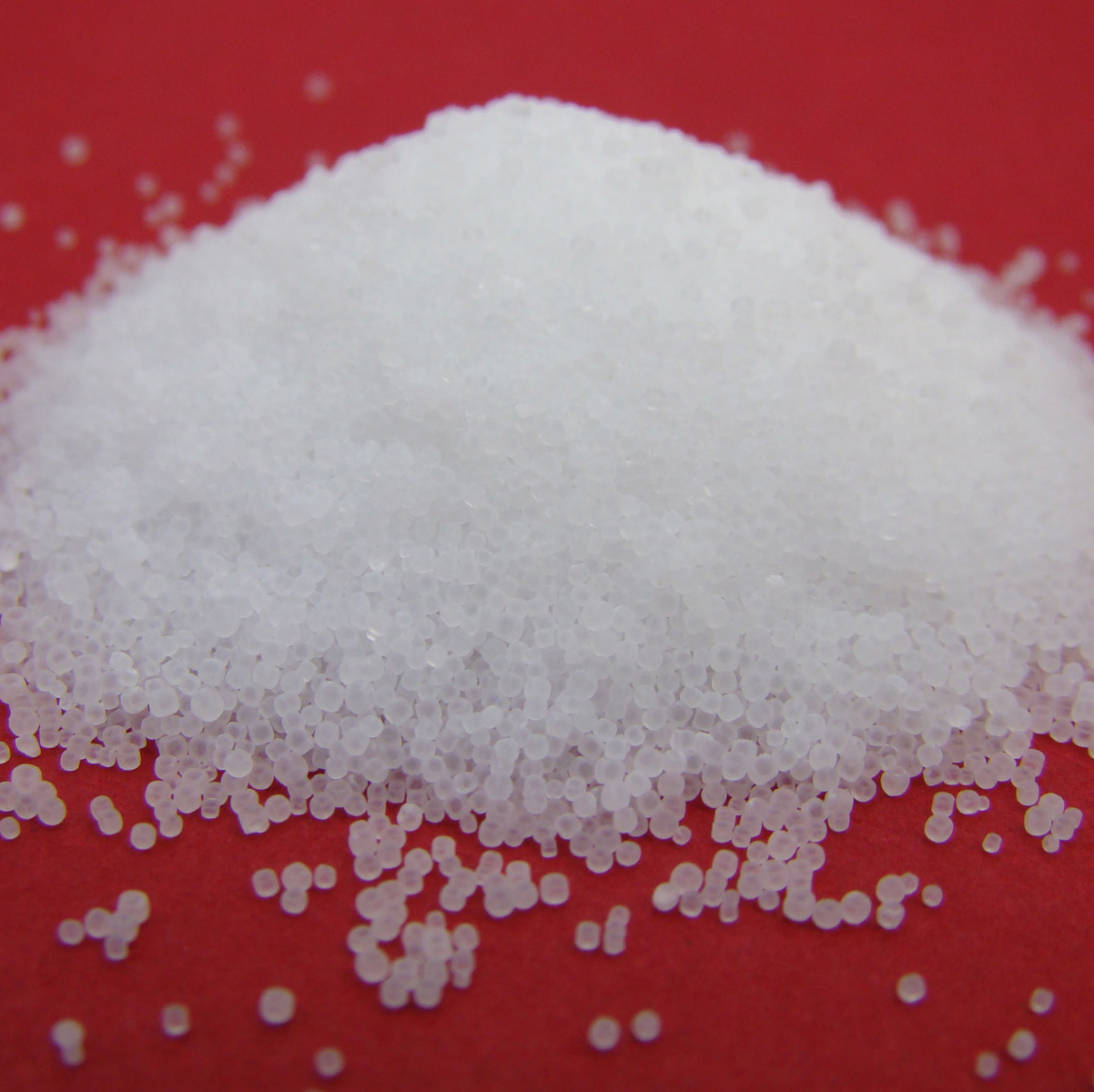
The most commonly used salt is plain old table salt. This salt is usually highly refined. It is heavily ground and most of the impurities and trace minerals are removed. The problem with heavily ground salt is that it can clump together. For this reason, various substances called anti-caking agents are added so that it flows freely. Food-grade table salt is almost pure sodium chloride, 97% or higher. Here’s an important point – iodine is often added to table salt.  „Light“ or „half“ salt products contain approximately 50% less sodium than regular table salt, that’s the only difference.

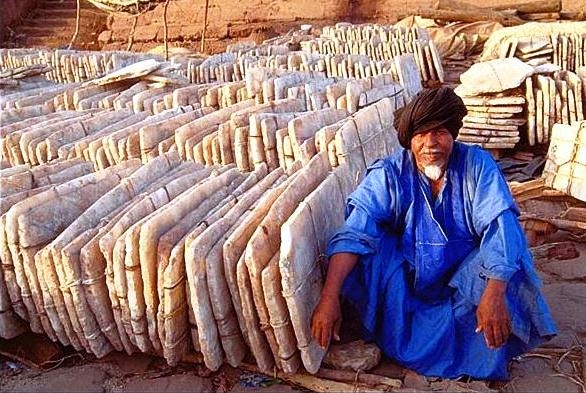
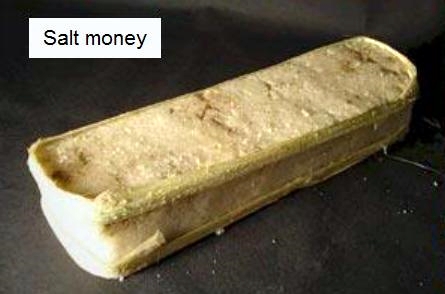
salt 26 merchant africa salt 25  Merchant with his salt plates on a salt market in Africa. Salt bars like silver or gold bars used as payment.

This was a successful public health preventative measure against iodine deficiency, which was (and still is) common in many parts of the world and a leading cause of hypothyroidism, mental retardation and various health problems. Therefore, if you choose not to eat regular iodine-enriched table salt, then make sure you’re eating some other foods that are high in iodine, like fish, dairy, eggs and seaweed etc.

Sea Salt.

salt 4a  Sea salt harvested from ocean salt water.

Sea salt is made by evaporating seawater. Like table salt, it is mostly just sodium chloride. However, depending on where it is harvested and how it was processed, it usually does contain some amount of trace minerals like potassium, iron and zinc. The darker the sea salt, the higher its concentration of “impurities” and trace nutrients will be.

salt 9 pink sea salt  Pink sea salt harvested in China.

Keep in mind that due to the pollution of oceans, sea salt can also contain trace amounts of heavy metals like lead. Sea salt is often less ground than regular refined salt, so if you sprinkle it on top of your food after it has been cooked, it may have a different mouth feel and cause a more potent “flavor burst” than refined salt. The trace minerals and impurities found in sea salt can also affect the taste, but this varies greatly between different brands.

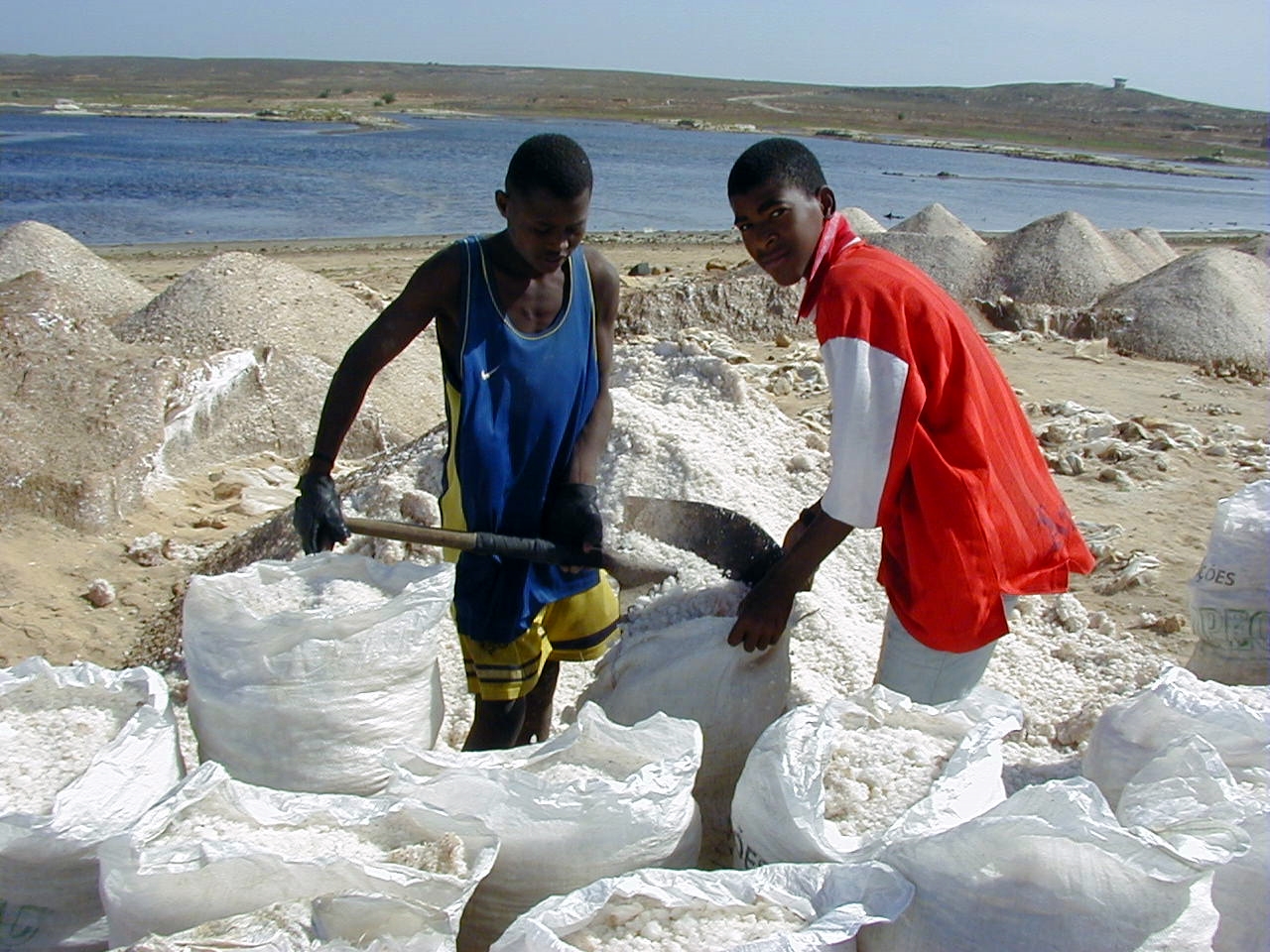
salt 4d minemaio  Hard job to shovel salt with over 40 degree Celsius.

To find the „right“ brand for yourself can be a lifelong procedure, especially because our taste changes from time to time.
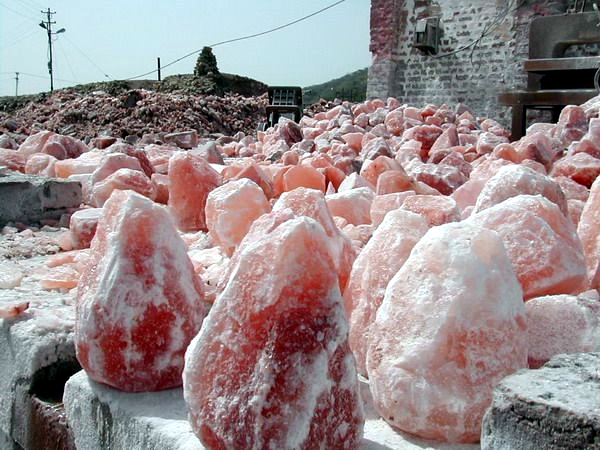
Rock salt deposits are usually the remains of inland seas that evaporated millions of years ago. It is either mined from underground, or from surface deposits. Underground deposits can also be flushed out with water.

Himalayan Pink Salt.

salt 9a himalayan salt

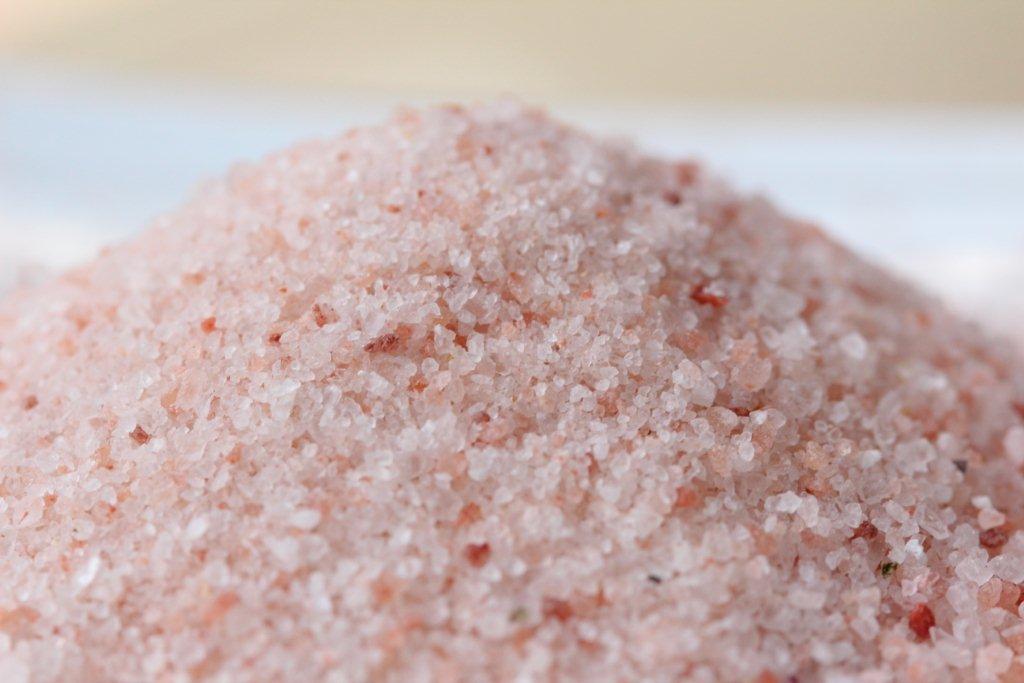
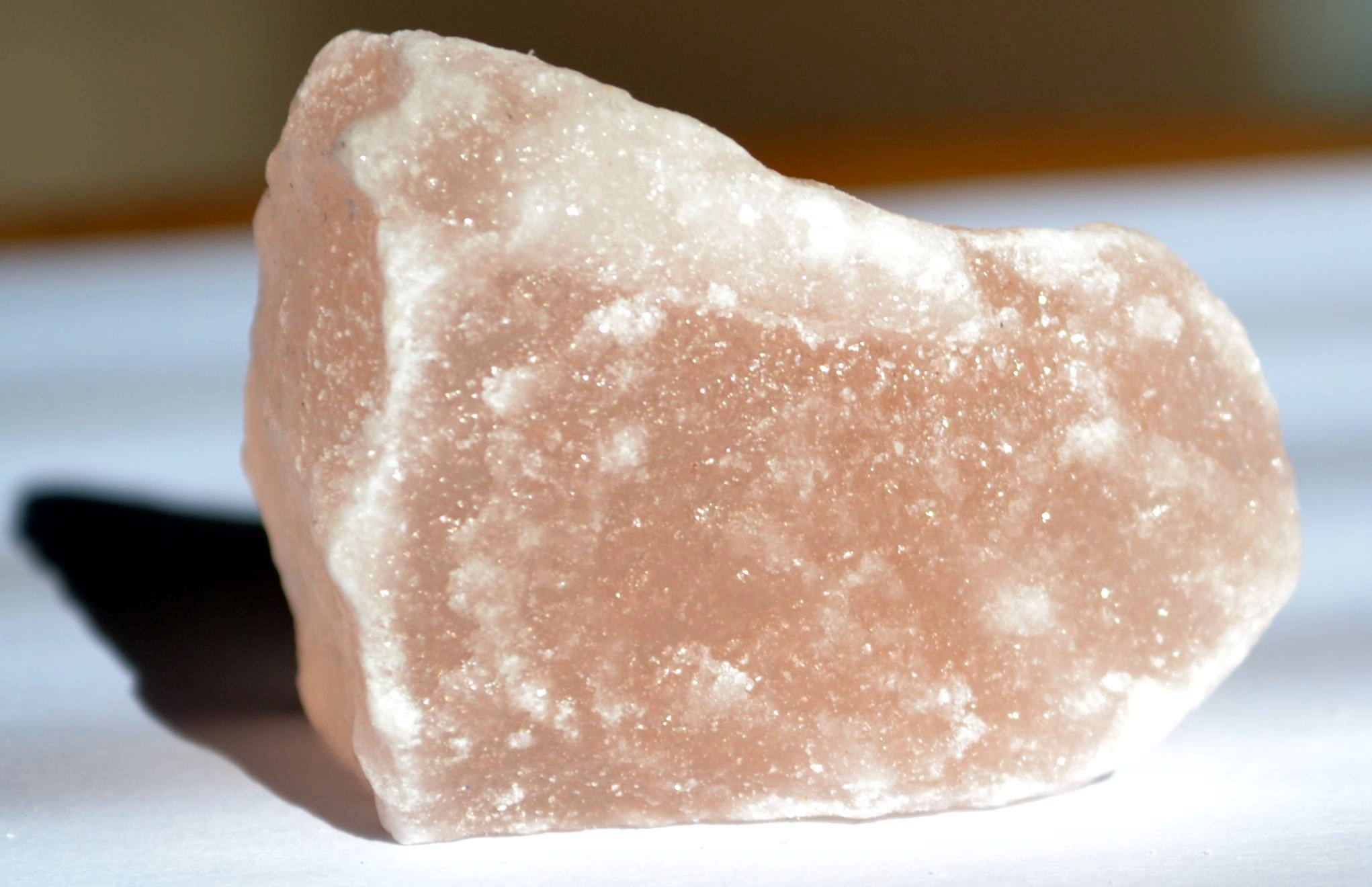
Himalayan salt is harvested in Pakistan. It is mined from the Khewra Salt Mine, the second largest salt mine in the world. Himalayan salt often contains trace amounts of iron oxide (rust), which gives it a pink color. It does contain small amounts of calcium, iron, potassium and magnesium. It also contains slightly lower amounts of sodium than regular salt.

salt 10 khewra rock salt  A salt rock, about 120kg weight, from Khewra salt mine in Pakistan. Such kind of Himalayan salt also is harvested in Kashmir, India. Both are named Himalayan salt.

A lot of people prefer the flavor of Himalayan salt compared to other types of salts, but personally I haven’t been able to notice a difference. The main difference seems to be the color, which can give a meal a nice look if you sprinkle it on top after it has been cooked.

Kosher Salt.

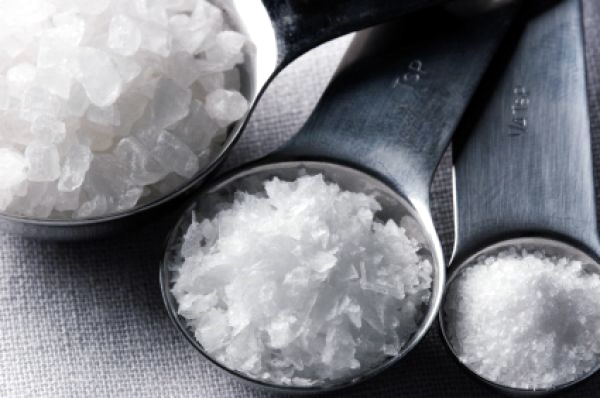
salt 3  Kosher salt, left coarse, middle flakes, right fine.

Kosher salt was originally used for religious purposes. Jewish law required blood to be extracted from meat before it was eaten. Kosher salt has a flaky, coarse structure that is particularly efficient at extracting the blood. The main difference between regular salt and kosher salt is the structure of the flakes. Chefs find that kosher salt, due to its large flake size, is easier to pick up with your fingers and spread over food. Kosher salt will have a different texture and flavor burst, but if you allow the salt to dissolve in the food, then there really isn’t any difference compared to regular table salt. However, kosher salt is less likely to contain additives like anti-caking agents and iodine.

Celtic Salt.

salt 9 fleur de mer sel gris Fleur de Mer sel Gris, cloggy french salt.

Celtic salt is a type of salt that originally became popular in France. It has a grayish color and also contains a bit of water, which makes it quite moist. Celtic salt contains trace amounts of minerals and is a bit lower in sodium than plain table salt.

Differences in taste.

salt 5  Different salts for the „gourmets – foodies“.

Foodies and chefs primarily choose their salt based on taste, texture, color and convenience. The impurities, including the trace minerals, can affect both the color and taste of the salt.
The size of the salt can also affect how the salty flavor hits the tongue. Salt with a larger grain size can have a stronger flavor and last longer on your tongue. However, if you allow the salt to dissolve in the food, then there shouldn’t be any major taste difference between plain refined salt and the other “gourmet” types of salt. If you like to use your fingers to sprinkle salt on food, then dry salts with a larger grain size are much easier to handle.

Minerals in different types of salt.

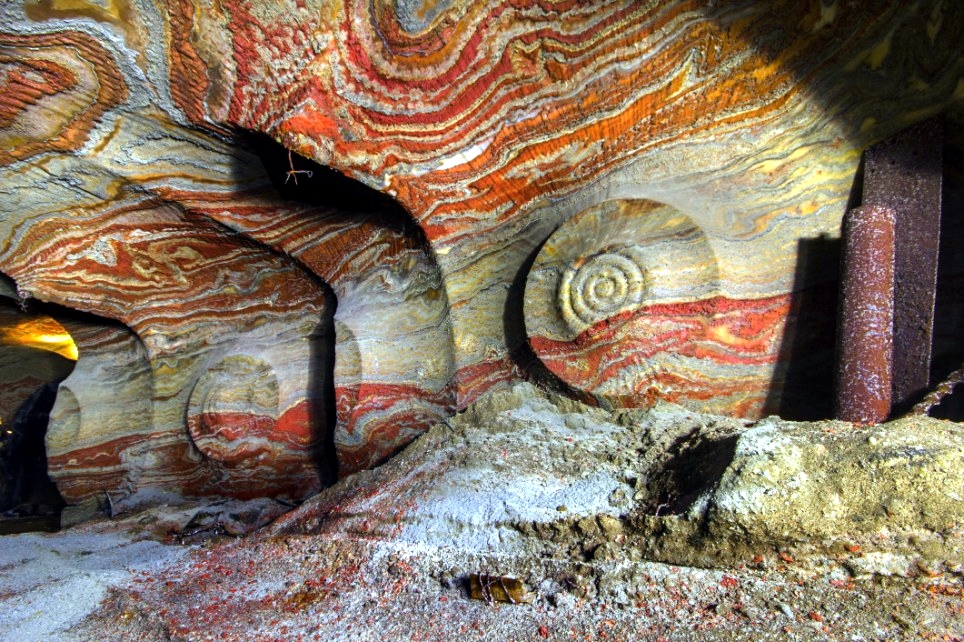
salt 14 strange-natural-patterns-in-salt-mine-in-Russia    Unbelieveable piece of art – strange patterns in a salt mine in Russia. The different colors are caused by different minerals .

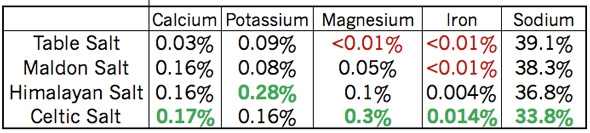
There is one study that compared the mineral content of different types of salt (7).
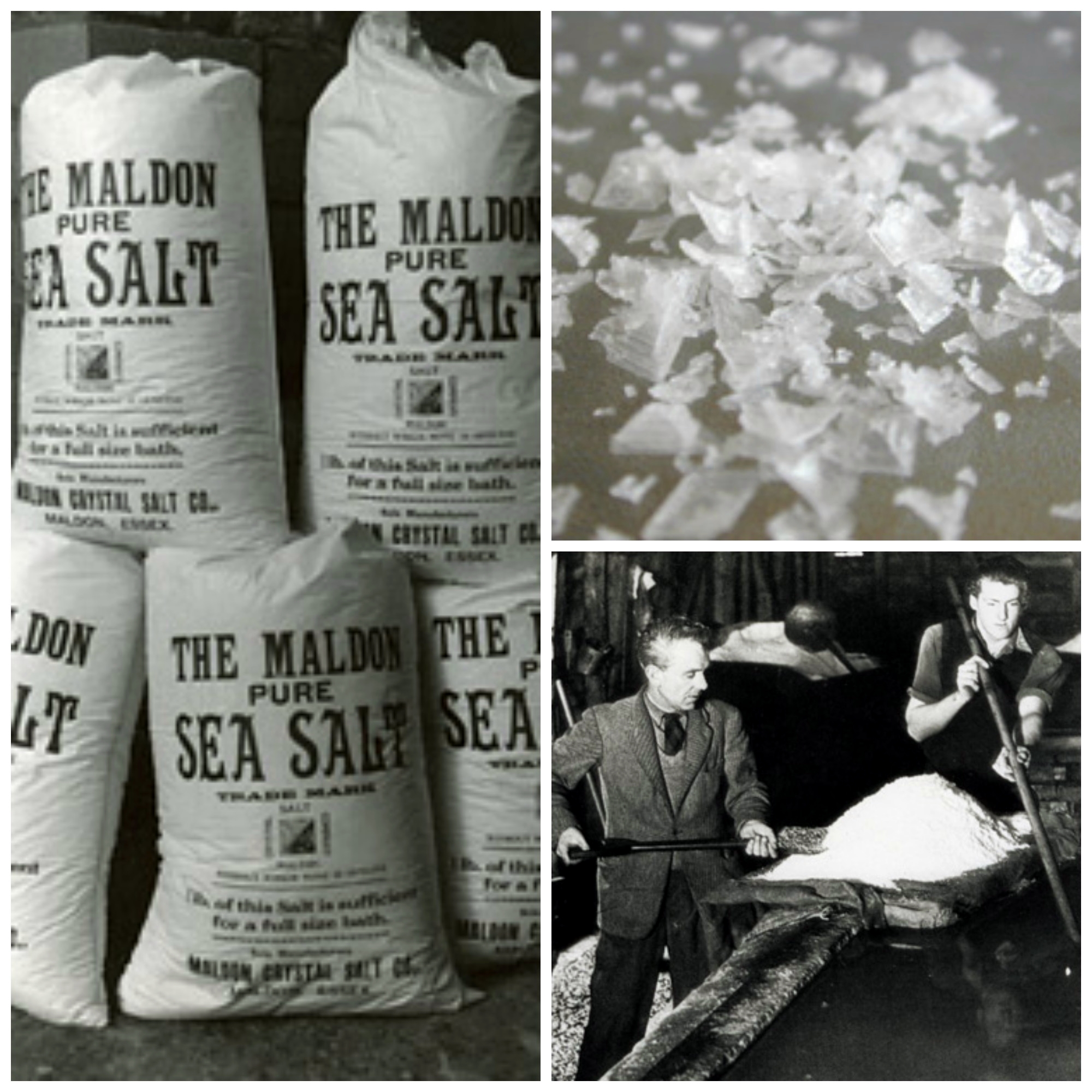
The table below shows the comparison between Table Salt, Maldon Salt (a typical sea salt), Himalayan Salt and Celtic Salt:

salt 6

As you can see, celtic salt has the least amount of sodium and the highest amount of calcium and magnesium. Himalayan salt contains a bit of potassium. Keep in mind that these really are tiny amounts. For example, the 0.3% content of Magnesium for celtic salt implies that you would need to eat 100 grams of salt to reach the recommended daily amount. For this reason, the mineral content of the various salts is actually not a compelling reason to choose one salt over the other. These amounts really are negligible compared to what you get from food.

Which salt is the healthiest.

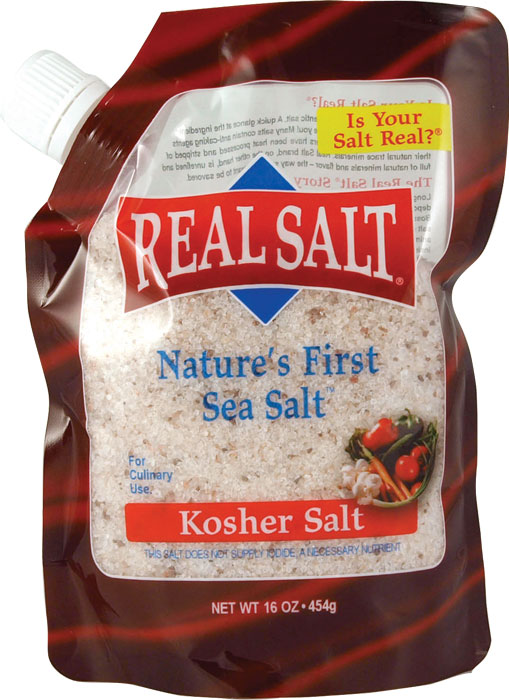
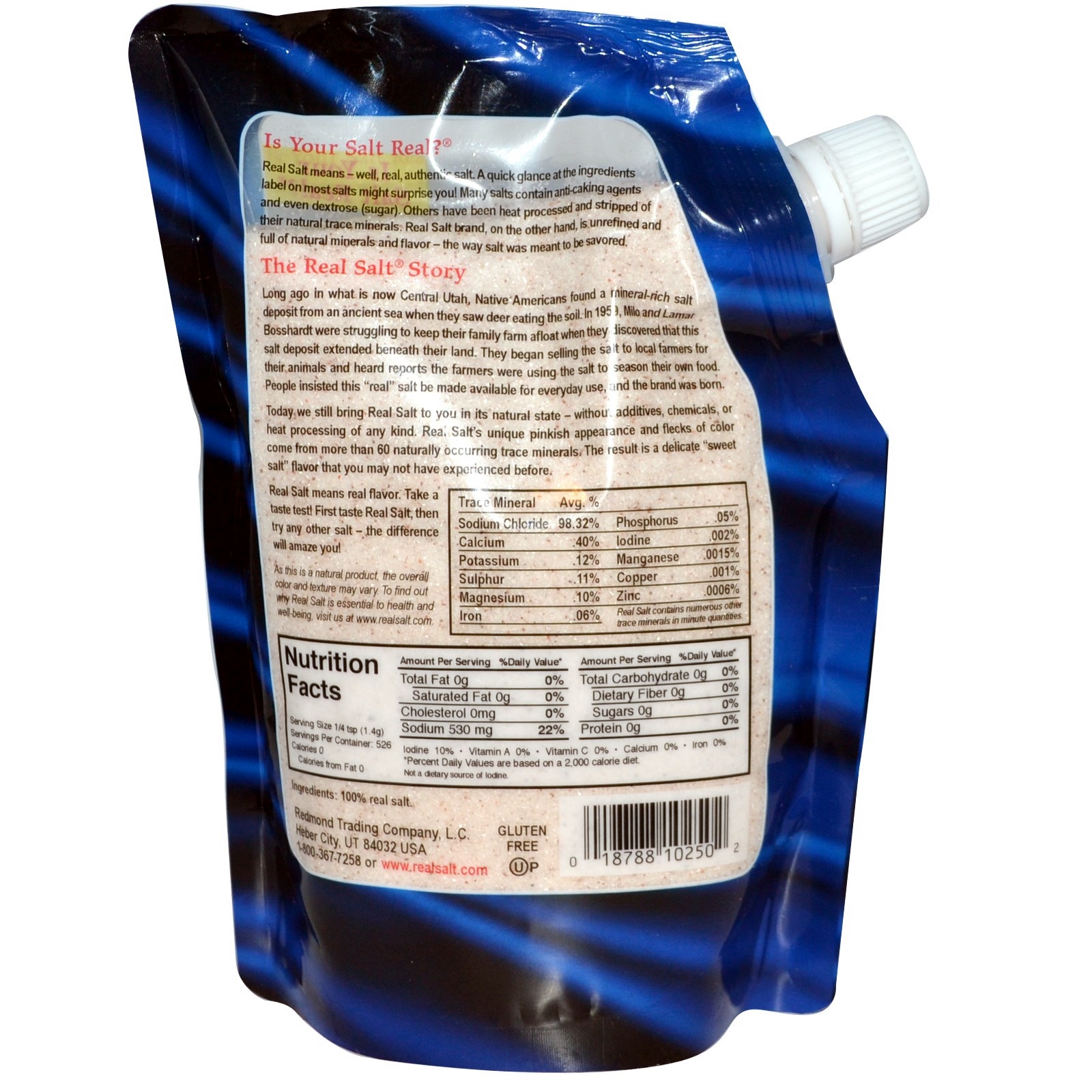
salt 7                    salt 7b              Yeah yeah – try to look for „healthy“ salt. Ha ha – just this package suggests „REAL SALT“ and „NATURE SALT“ and „SEA SALT“ and „KOSHER SALT“ and „CULINARY SALT“ and „NO IODINE“, but „IODINE a necessary ingredient“. All this is written on the above package and much more. And this is an example only.

I looked long and hard and read dozens of articles and couldn’t find a single study actually comparing the health effects of different types of salt. If such a study were done, I highly doubt they would find a major difference. Most of the salts are similar, consisting of sodium chloride and tiny amounts of minerals. The main benefit of choosing more “natural” types of salt is that you avoid additives and anti-caking agents that are often added to regular table salt.

salt 24  Once it was the „wealth“ of the world. Today we don’t think about so much anymore. We just use it, throwing salt blocks in front the cattle, or bags full of salt into our swimming pools,  or tons of it on the icy winter roads year by year..

At the end of the day, salt is salt, its main purpose is to add flavor, not nutrition. Still everyone will have its own personal opinion and I recommend, stick to it if it makes you happy. This post will inform and nothing more. And – dear tourist in Uruguay. Uruguay does not aloud restaurants, by law, to have salt on the tables. If you want some, just order it – no problem.

Some other varieties.

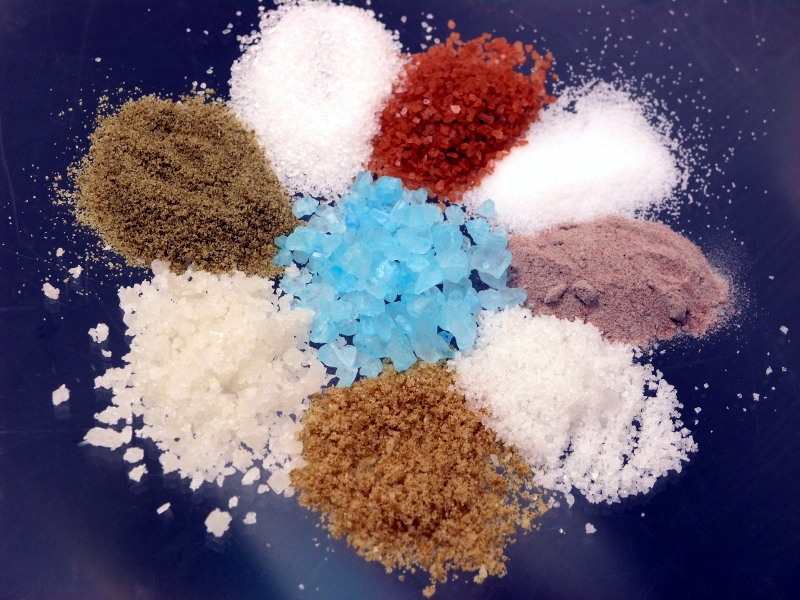
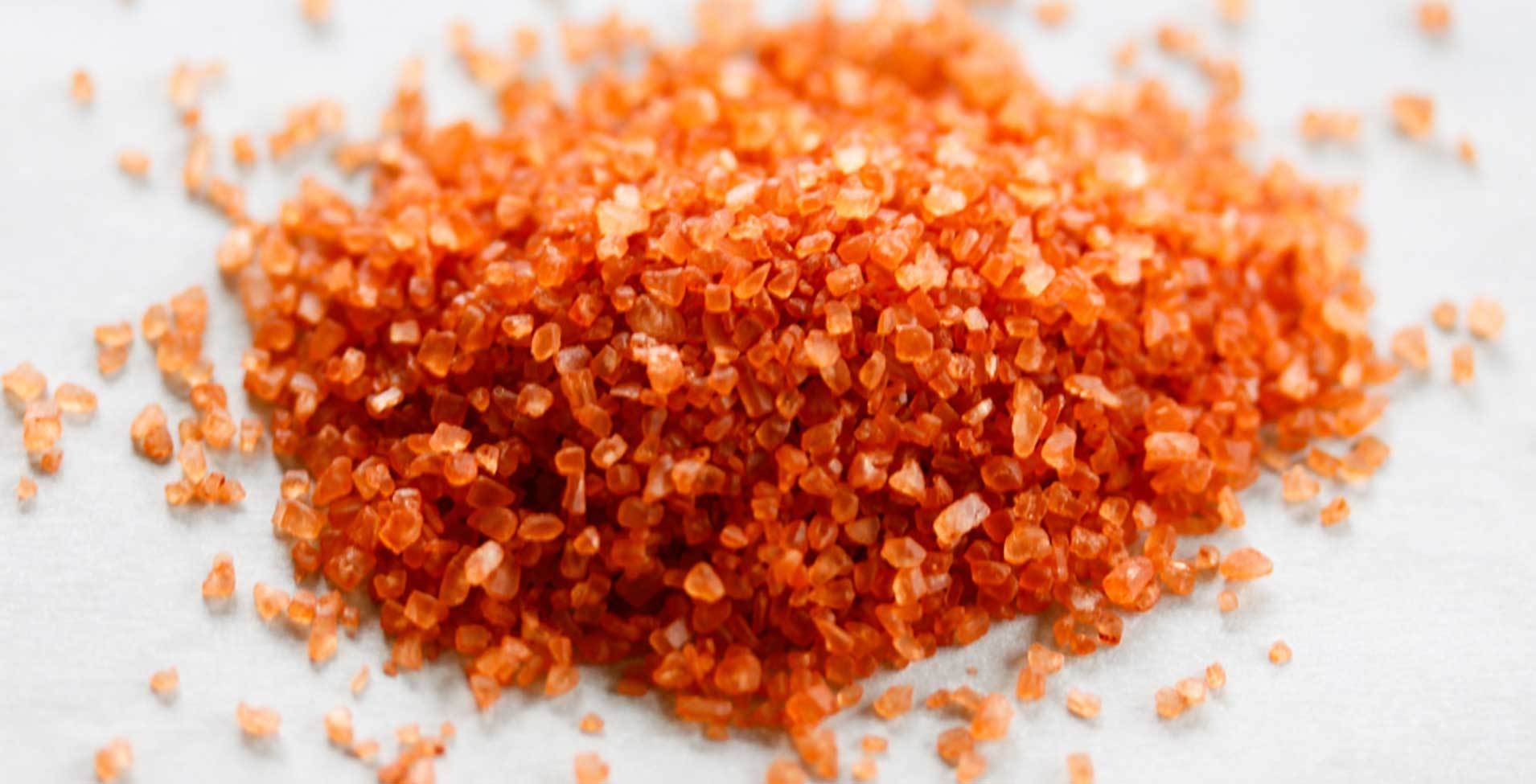
salt 4b Variety of Salt Hawaiian Pink Clay Salt, Regular Iodized,Black Sea Salt,Fleur De Sel, Smoked, Grey Sea Salt, Celery Salt, Coarse Sea Salt and Jamaican Blue Rock Salt

River or lake salt is harvested from saline lake waters, underground brines, and dry river and lake beds. It is usually unrefined, so contains numerous trace elements, which can add color and a mineral flavor. It is marketed as a natural, gourmet salt and commands a higher price. Pink river/lake salt is produced in Australia.
Pink salt is the most common of the natural-coloured salts that have taken the culinary world by storm in recent years. Popular varieties found in Australia include:

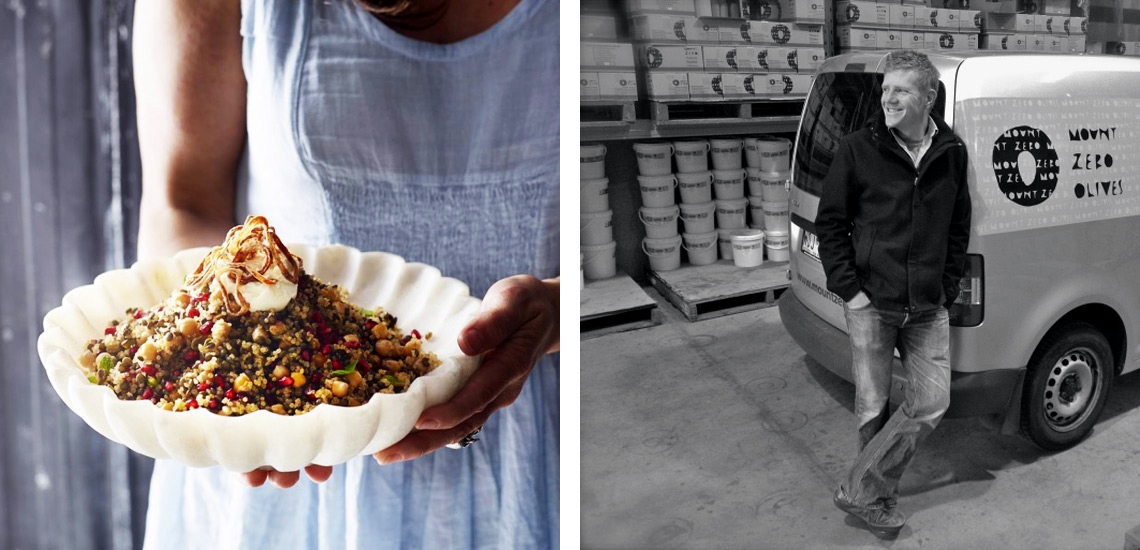
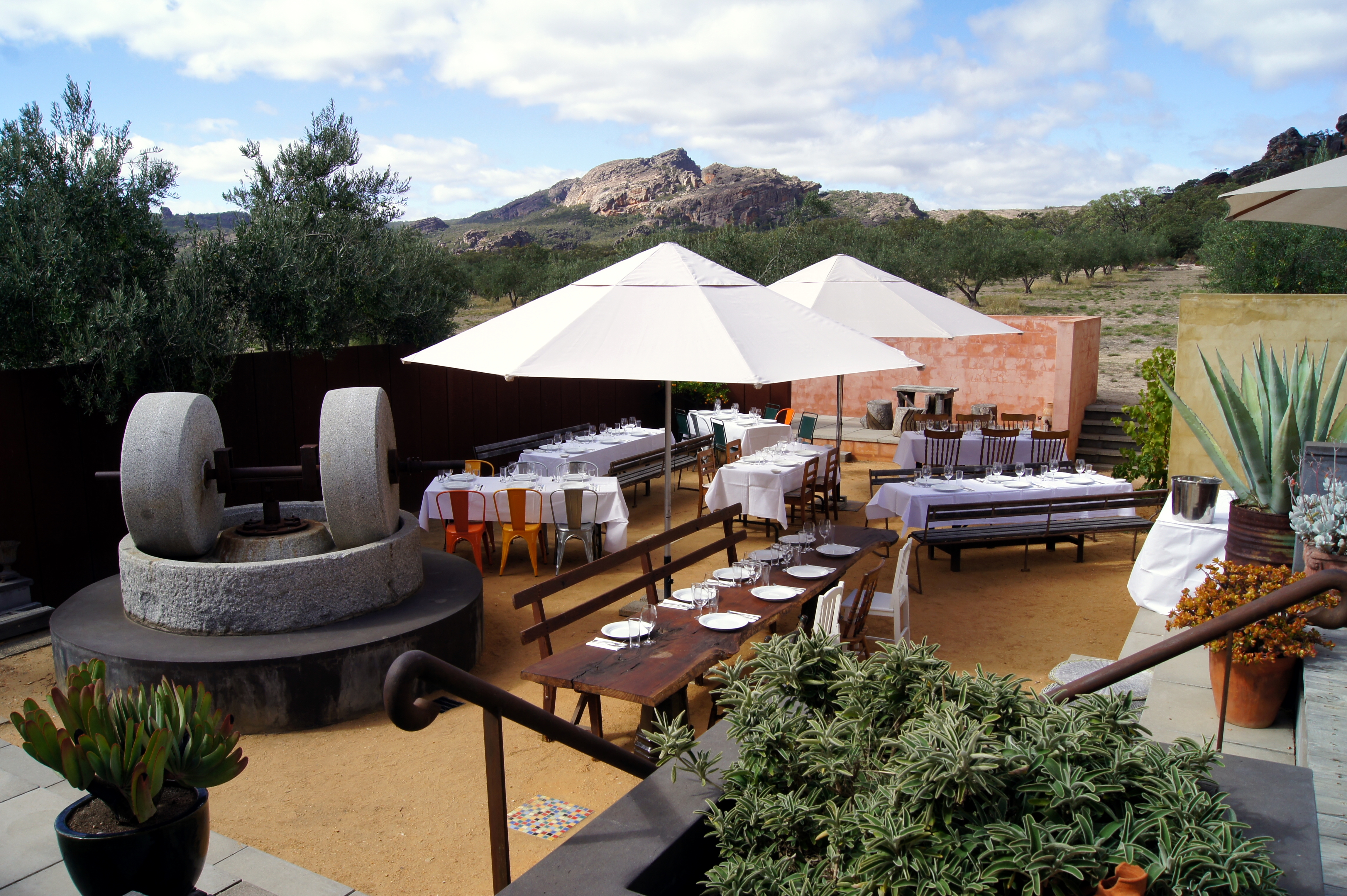
salt 21b salt 21d  Mount Zero, a whole little industry with salt, olives, restaurants, giftshop etc. etc. But I loved it there and it is worth to visit something else in this wine region of Australia.

Mount Zero salt is hand harvested from the Pink Lake near Dimboola in Victoria. The salt loses its pink hue when it dries and looks grey in color. It has a rounded flavor. Murray River salt is harvested from underground saline water in Victoria’s Murray Darling River region. The soft pearly pink color comes from minerals in the water. It has a soft mineral taste. Another big salt mine (ocean salt pans) is known near Port Hedland, Australia.

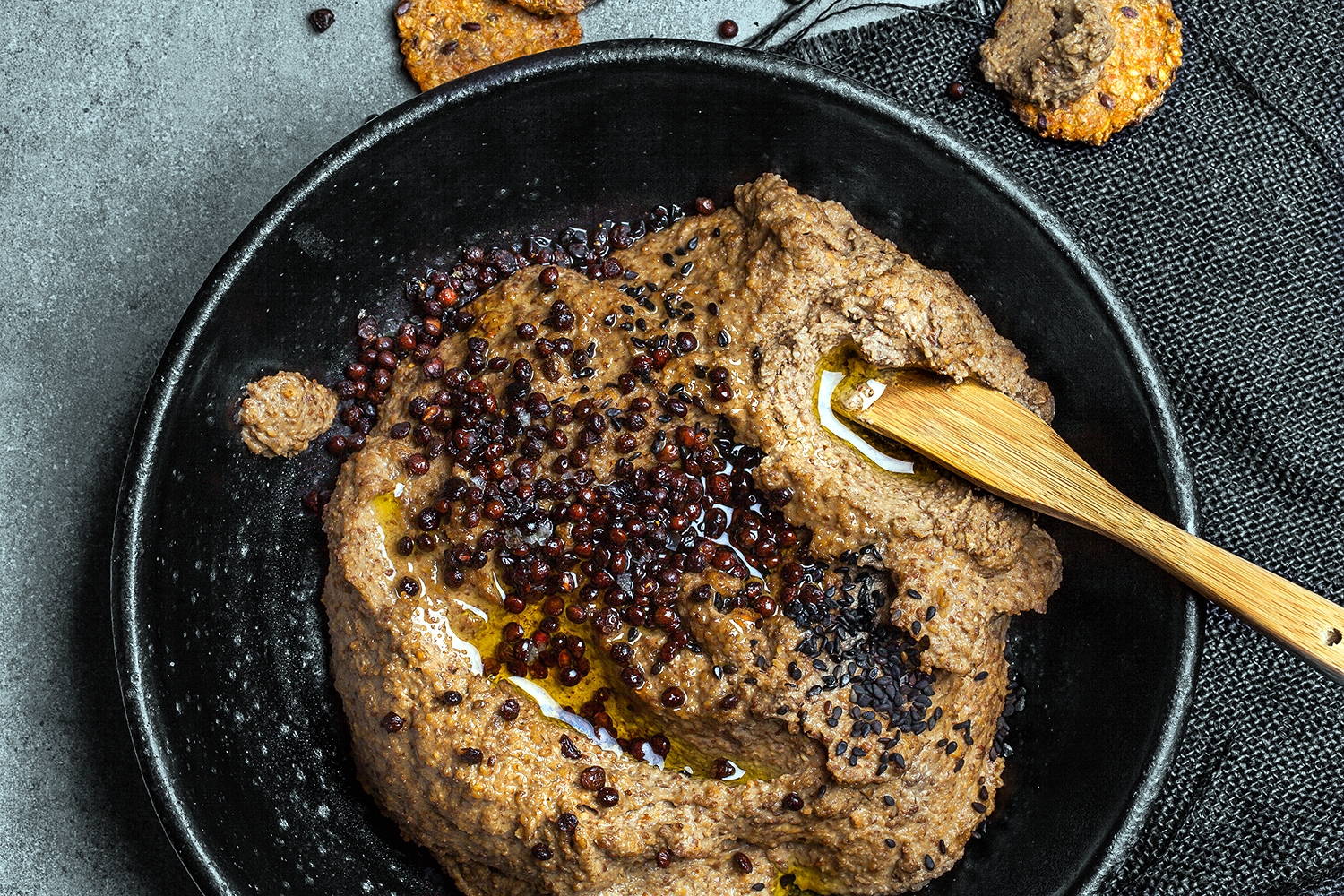
salt 21c  A feast for the eyes and palate, Mount Zeros tapanade from wild olives and olive oil, pink lake salt and Caviar black Lentils. All home made and a MUST to taste. Have some crunchy bread or/and the Zero salad (see above) with it, joined by a terrific local wine.

Salt from around the world.

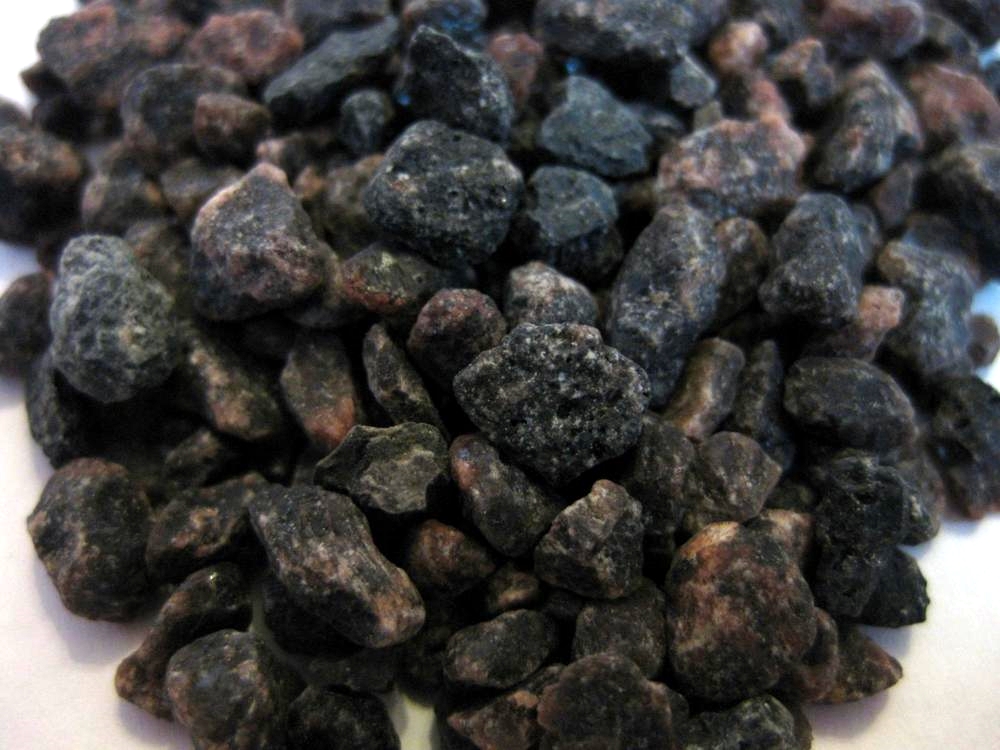
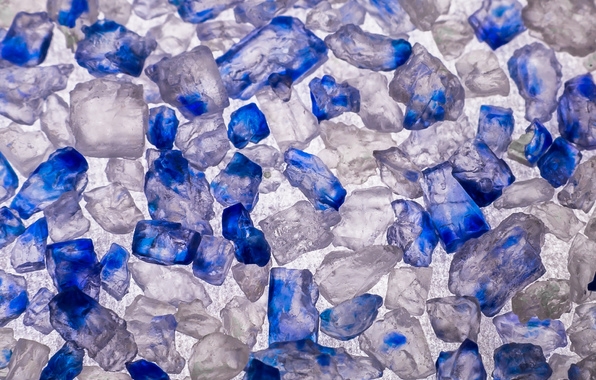
Other colored salt varieties include Hawaiian Alaea (reddish-brown), Persian Blue, Peruvian Mountain Salt (white to light pink colored, called also Salt de los Incas, just got a small bag from good friends), and Kala Namak (black colored) from India.

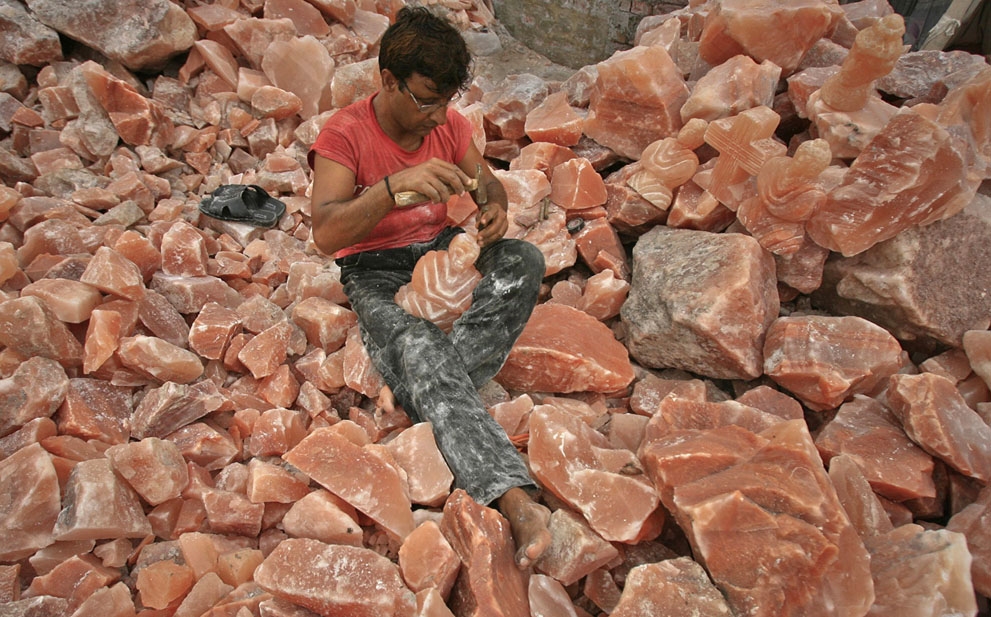
salt 17 carving in pink salt lahore pakistan salt 19 kala namak india salt 20 persian blue salt 21 hawaiian alaea   From top left to bottom right, carving figures into pink salt in Lahore, Pakistan. Black salt from Kala Namak, India. Persian blue salt and the Hawaiian Alaea pink salt. Very decorative.

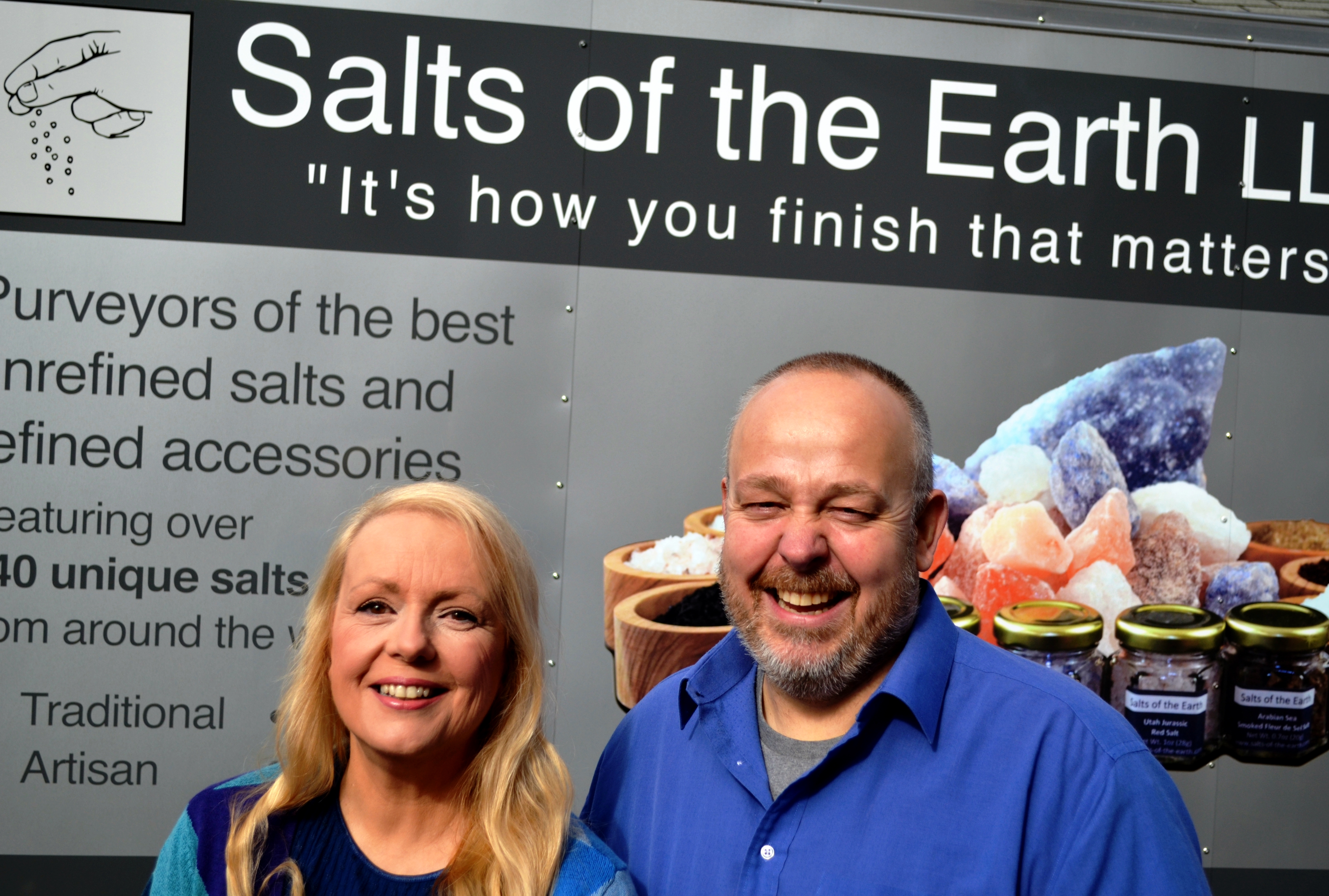
This American couple, Donna and Keith, runs an on line salt store which offers more then 120 different varieties of salt from all over the world.

salt 27o Keith-and-Donna   Donna and Keith.

Just short, where does salt come from?

Salt is one of the few useful and abundant minerals on earth.
Salt is all around us. Underground and on the earth’s surface in the dried up residues of ancient seas. Some salt has even arrived from outer space in meteors. But our biggest source of salt is in our seas and oceans. With an average of 26 million tonnes per cubic kilometre, sea water offers a seemingly inexhaustible supply which if extracted, would cover the world’s total land mass to a depth of 35 metres.

salt 22 maldon family sea salt flakes The well known Maldon Sea Salt Flakes.

As we already learned, there are many different types and grades of salt and a number of different methods of production. White salt is produced by evaporating ‘solution-mined’ brine in pressure vessels. The rock salt we use for gritting roads comes from mining ancient deposits. In some countries the natural energy of the sun is used to evaporate brine produced from sea water.

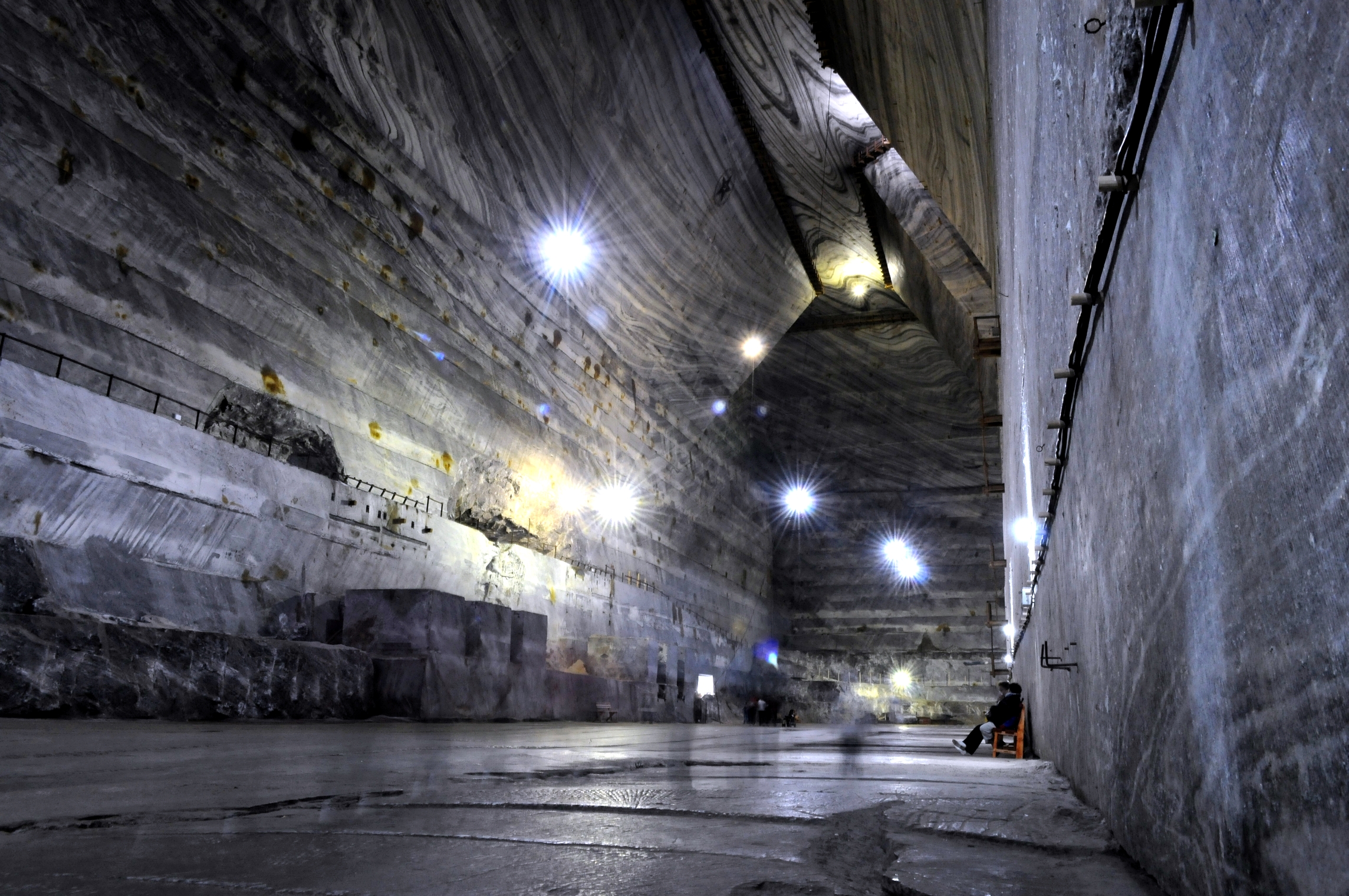
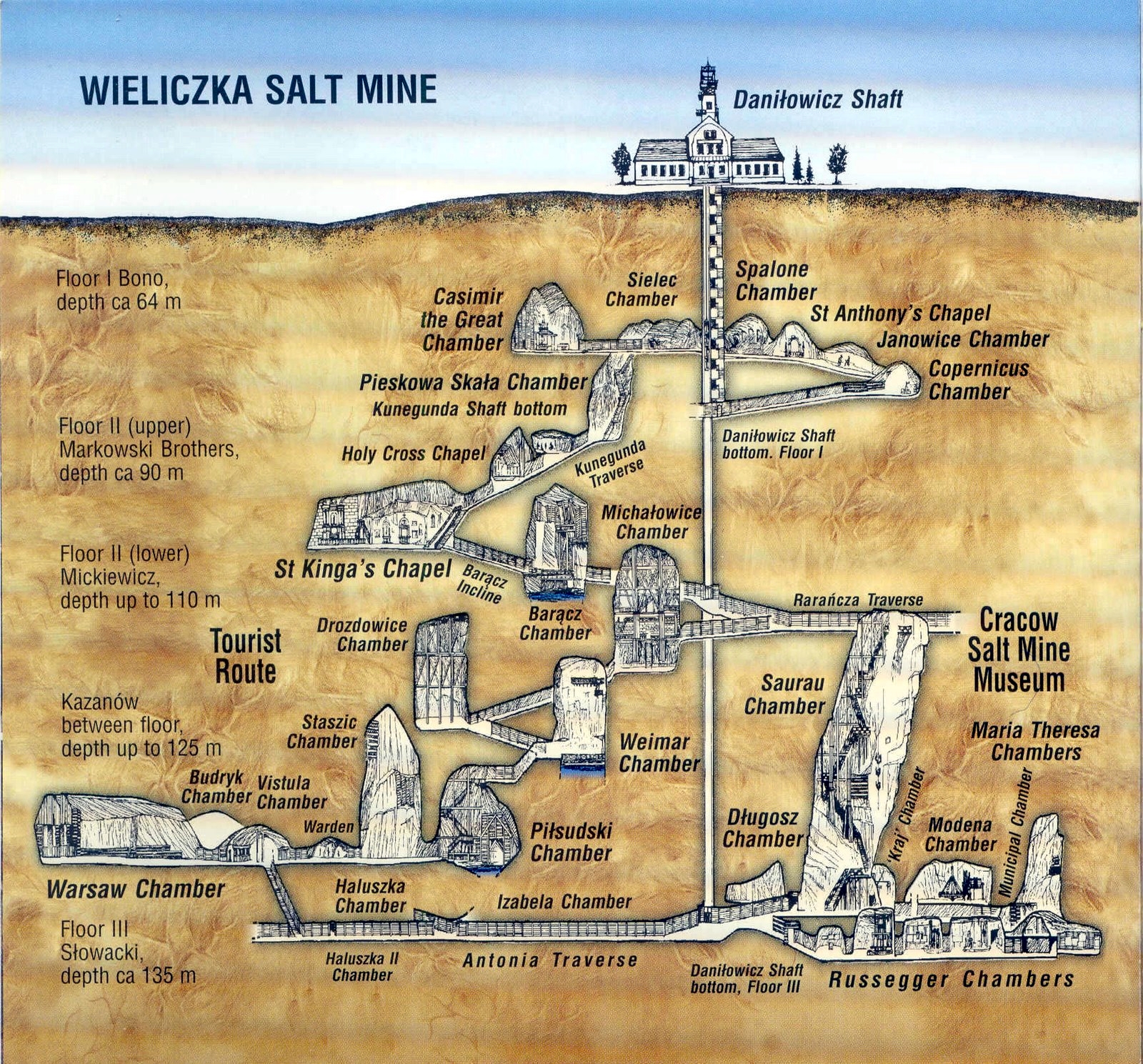
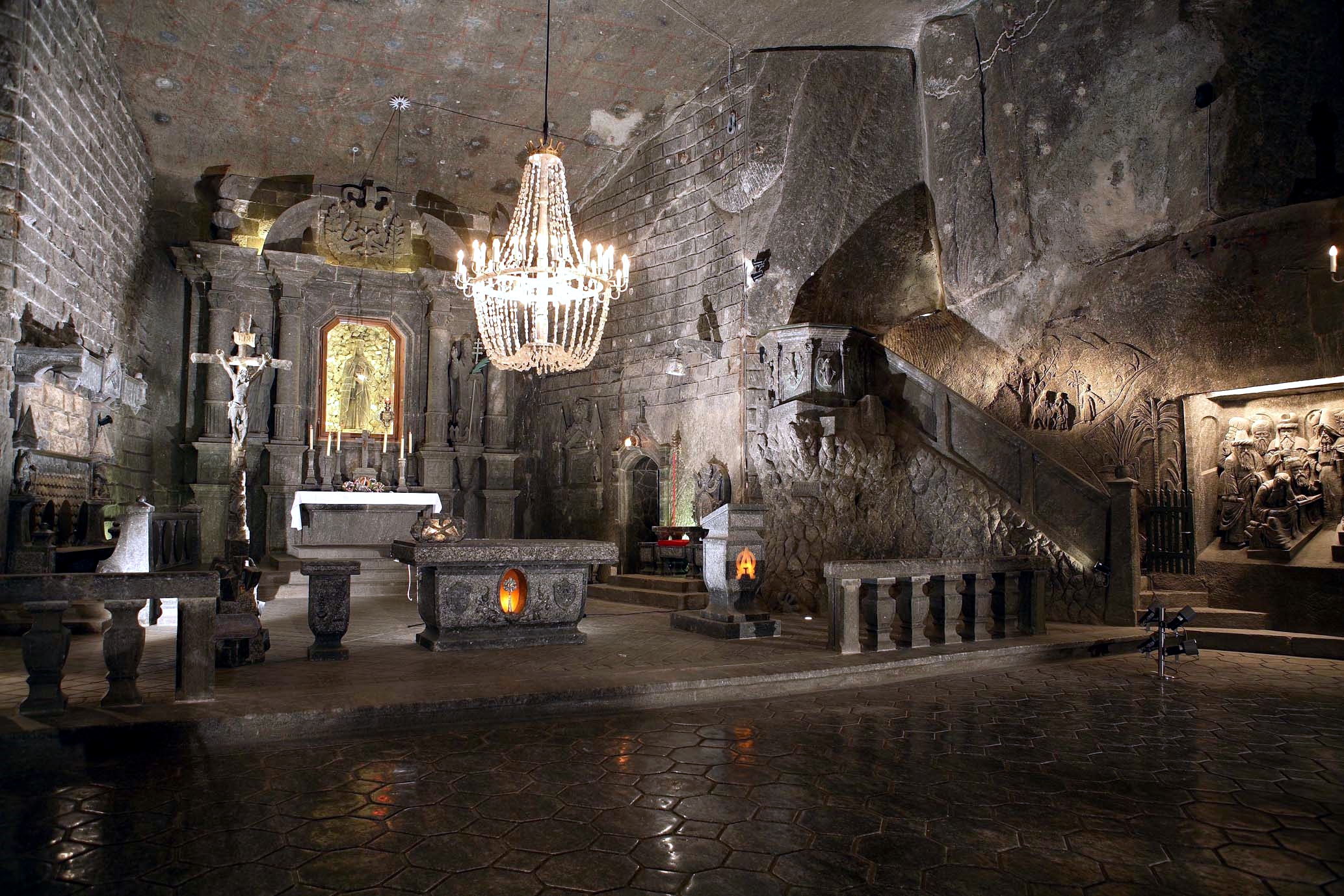
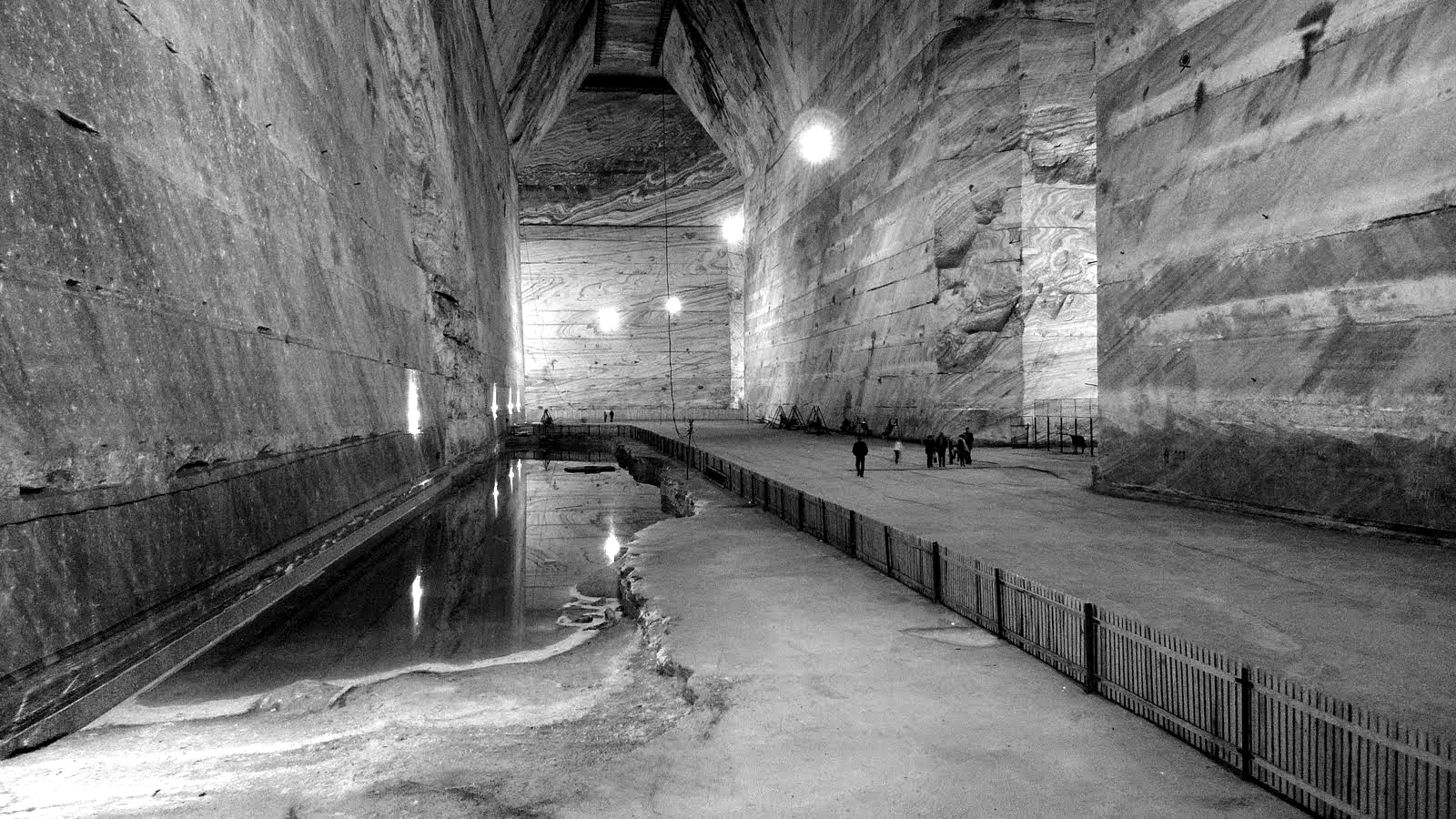
salt 13 largest underground world prahova rumaenia salt 12a Wieliczka Poland salt 12 underground salt church Wieliczka Salt Mine Krakow Poland salt 16 mine in roumania Finally the largest salt mine in the world. Wieliczka, near Krakow in Poland. The images speak for themselves. Most of the mine is a massive tourist center and museum today. Look at the bottom left picture, a whole cathedral build out of salt. This mine works as so named deep shaft mining.

Salt Production.
Salt is generally produced one of three ways: deep-shaft mining, solution mining or solar evaporation.

Deep-Shaft Mining.
Deep-shaft mining is much like mining for any other mineral. Typically, the salt exists as deposits in ancient underground sea beds. Most salt produced this way is used as rock salt.

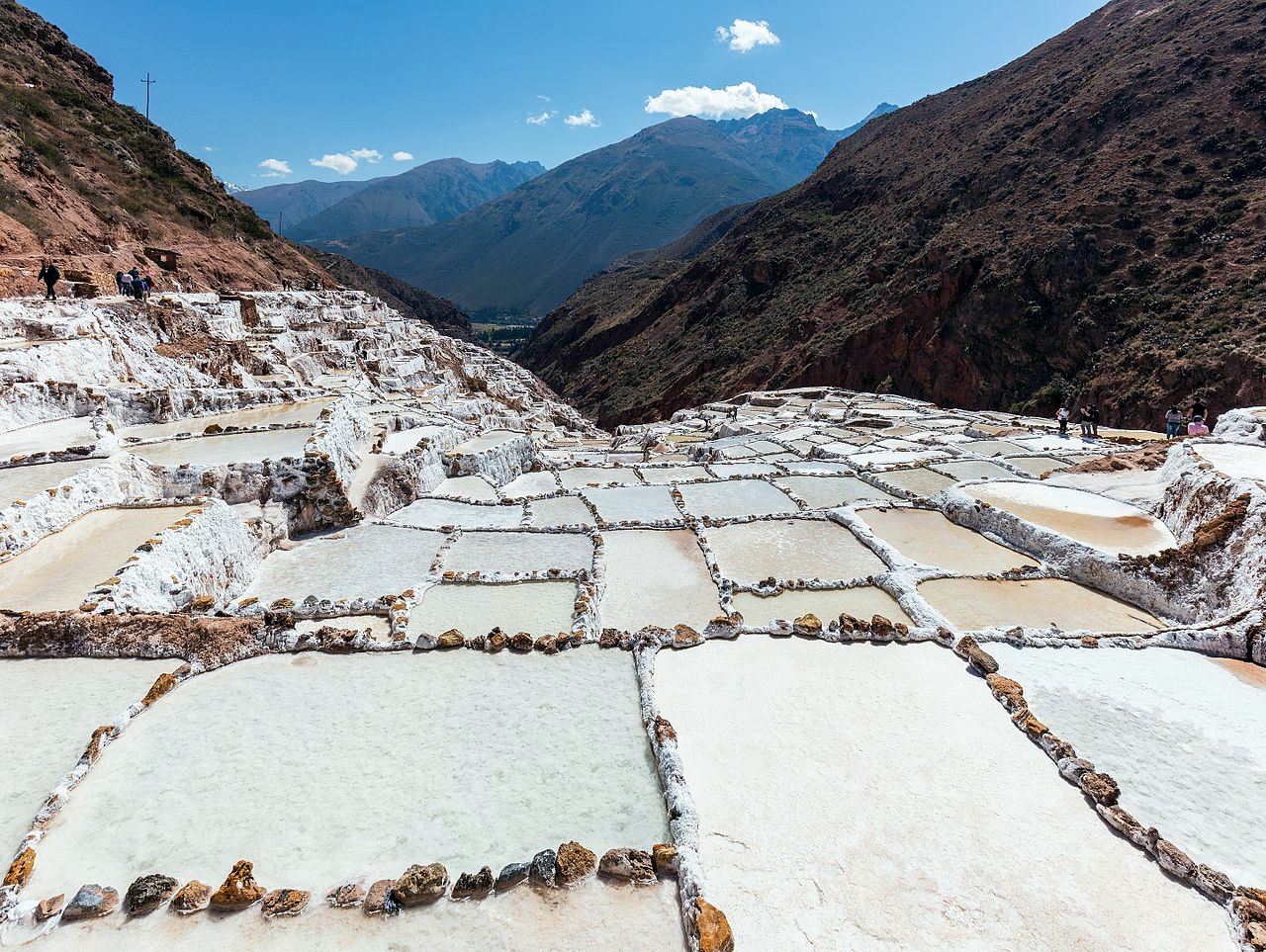
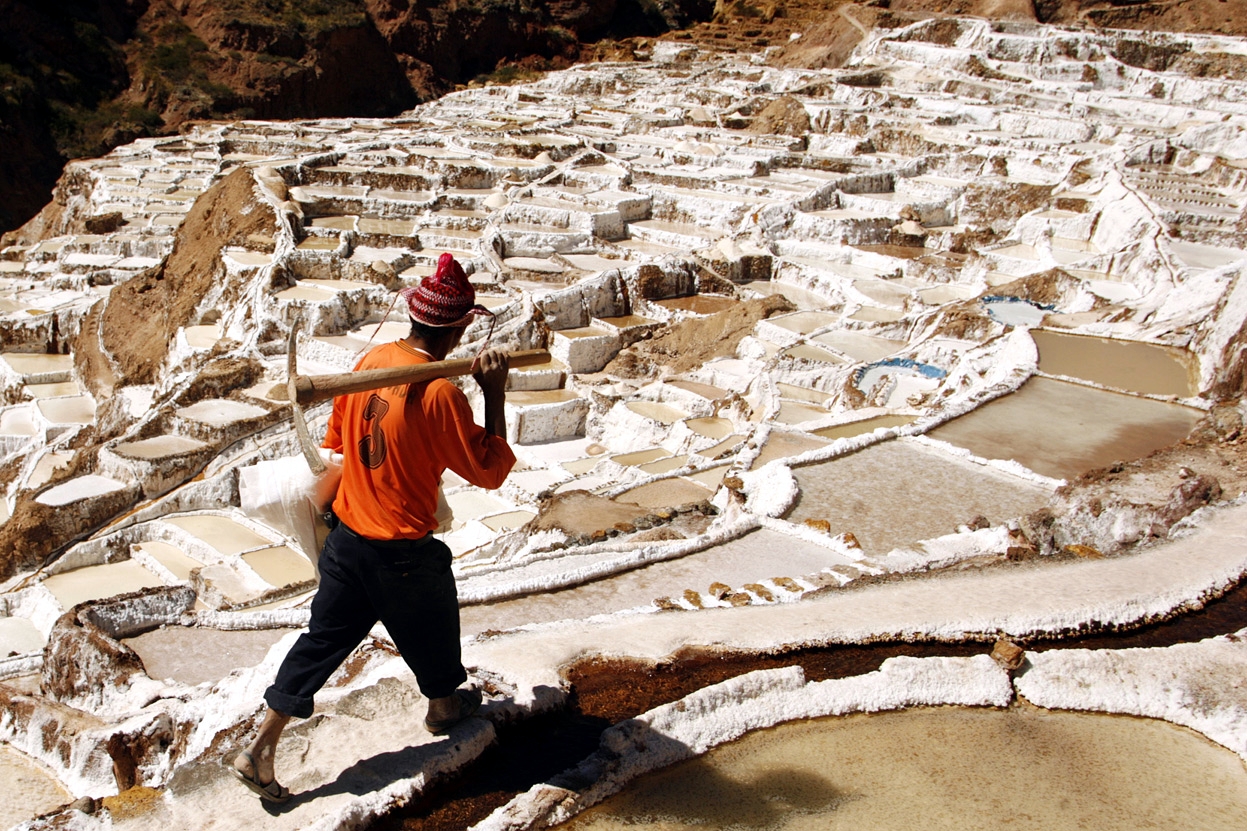
salt 15 salineras de maras peru salt 15 maras 40km cuzco      The Maras salt pans high in the mountains, about 40kilometers north of Cusco in Peru. It’s believed that already the Incas harvested salt here. Today also a tourist atraction selling „Sal de los Incas“. Here they use solution mining, not only pumping water, also using the mountain rainwater which is directed into the salt pans.

Solution Mining.
In solution mining, wells are erected over salt beds and fresh water is injected to dissolve the salt. Then the salt solution, or brine, is pumped out and taken to a plant for evaporation. Most common table salt are produced this way.

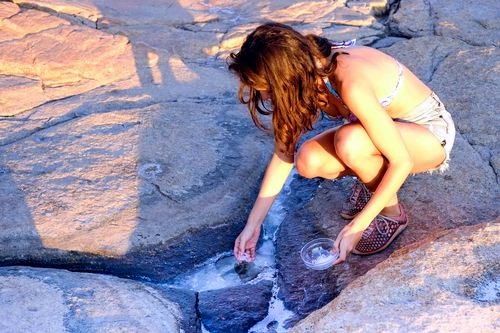
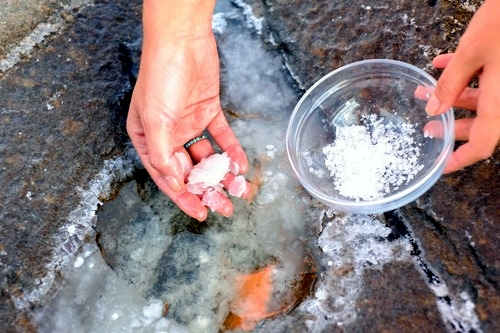
salt 23b salt 23c      This might be the only place to find salt in Uruguay. In some little rock holes the seawater evaporates and one can harvest a bit of „Atlantic Ocean Salt“. Great name hey ?? Seen at the beach rocks around Jose Ignacio. Sadly not enough to start a business. Typical solar evaporation salt harvesting.

Solar Evaporation.
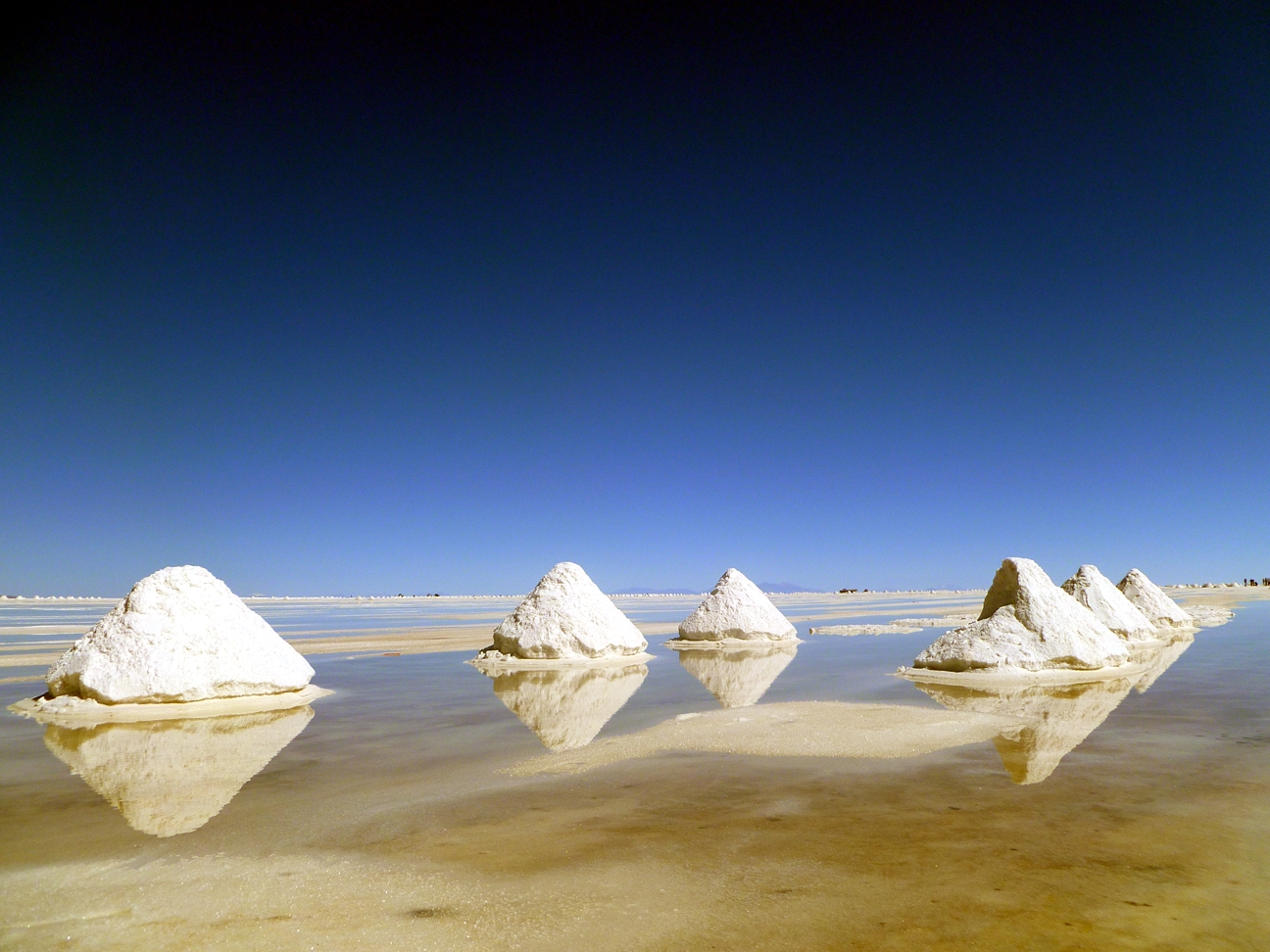
Salt is harvested through solar evaporation from seawater or salt lakes. Wind and the sun evaporate the water from shallow pools, leaving the salt behind. It is usually harvested once a year when the salt reaches a specific thickness. This only works in areas with low rainfall and a lot of sun – Mediterranean countries and Australia for example.

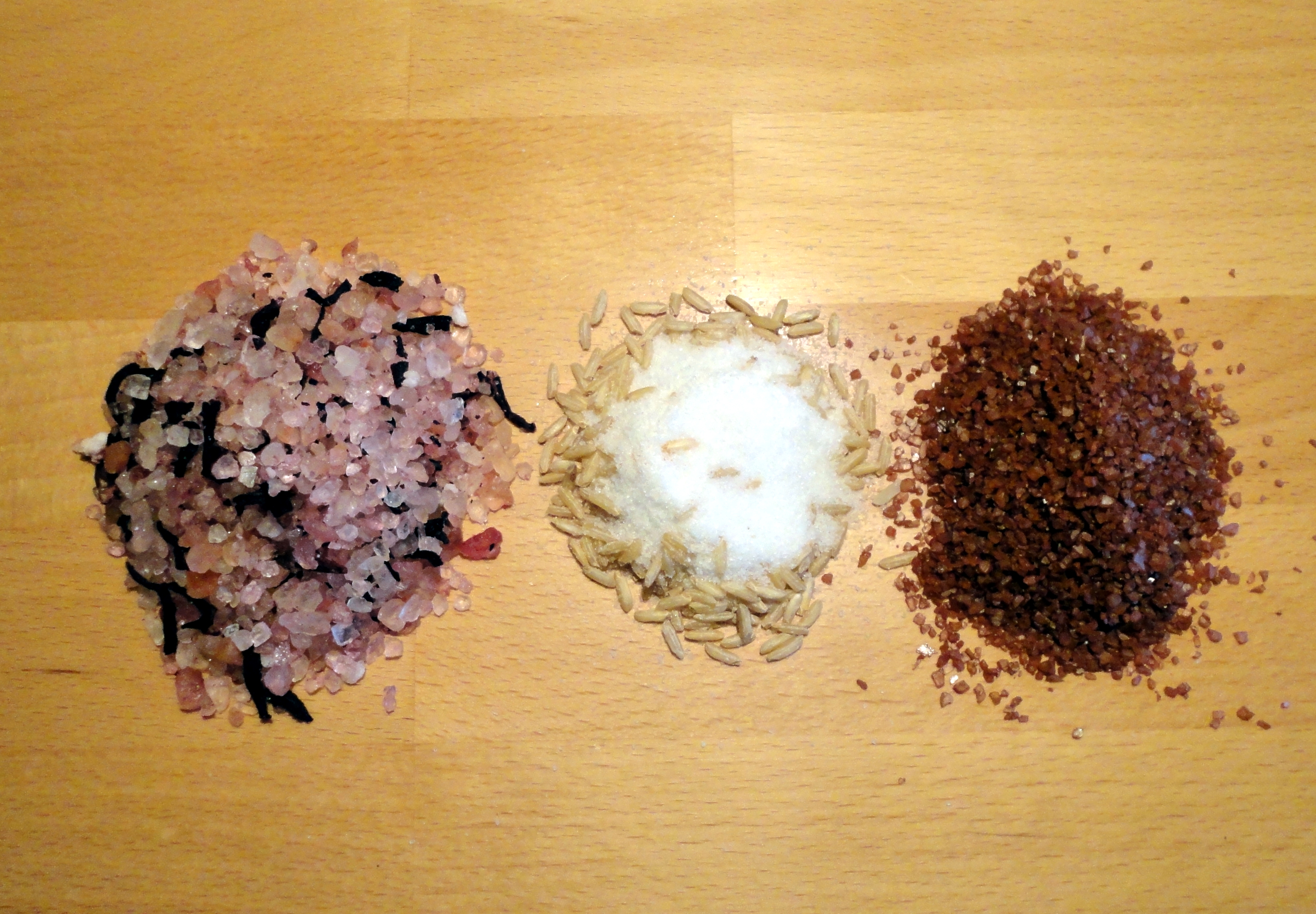
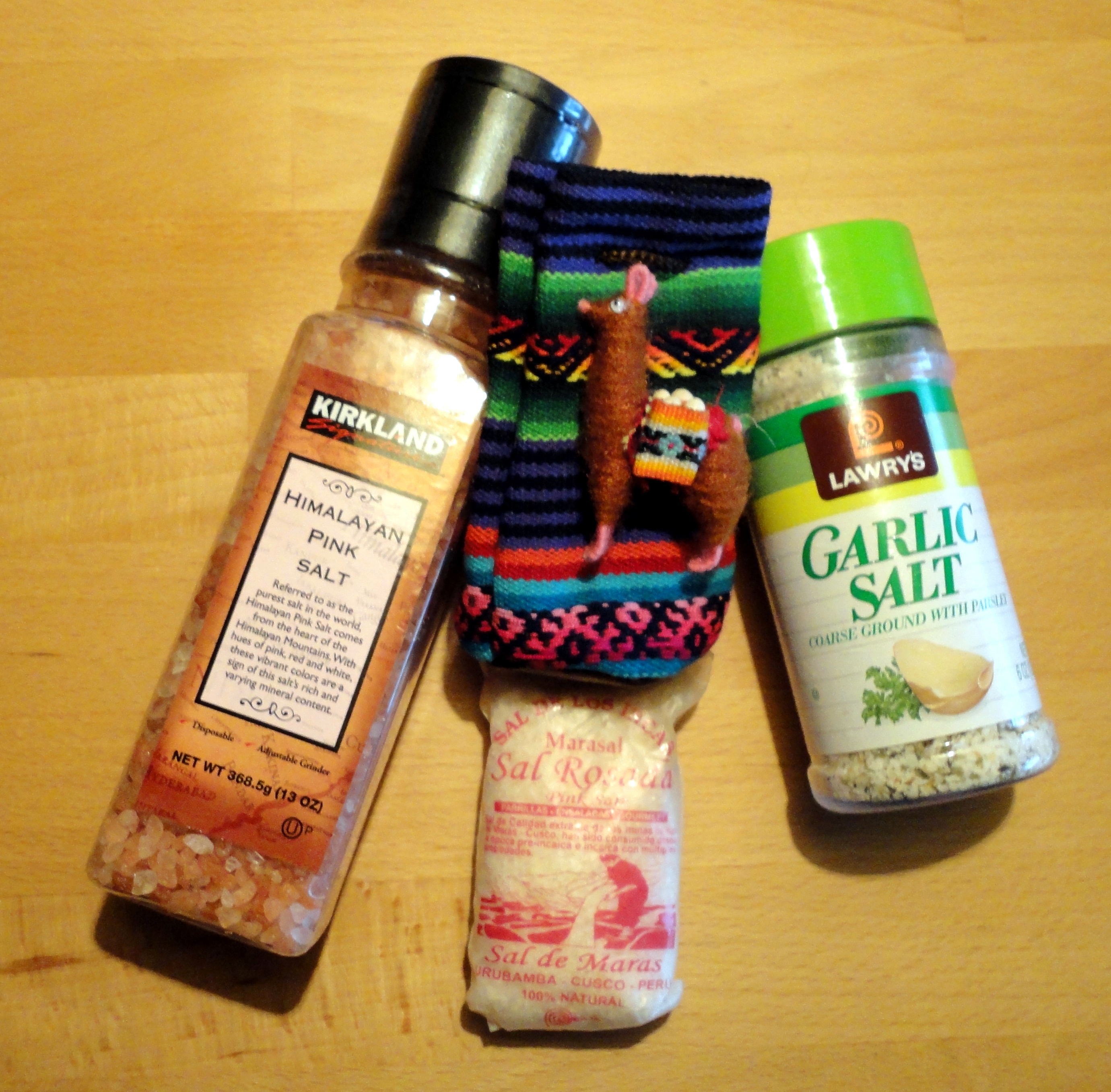
DSC02078a   DSC02079a    These are  the salts I mostly use. Left, Himalayan salt diamonds from Kaschmir mixed with dried Hibiscus flowers ( I love this salt and use it where ever I can – wonderful flavor), gives a very nice taste and soft flavor for all dishes. Middle, usual table salt which I have in different thickness (here very fine, mixed with rice corns to keep the ability to sprinkle). Right, Hawaiian dark red sea salt, to show off some dishes and excellent for all kind of seafood.  Right picture shows a nice little hand made souvenir bag from Cusco, Peru with a content of „Sal de los Incas“. Premixed garlic and salt, something for lazy cooks.  I hope you enjoyed this post !!


Veröffentlicht unter Information, Lifestyle | Verschlagwortet mit , | Hinterlasse einen Kommentar

Bouillabaisse

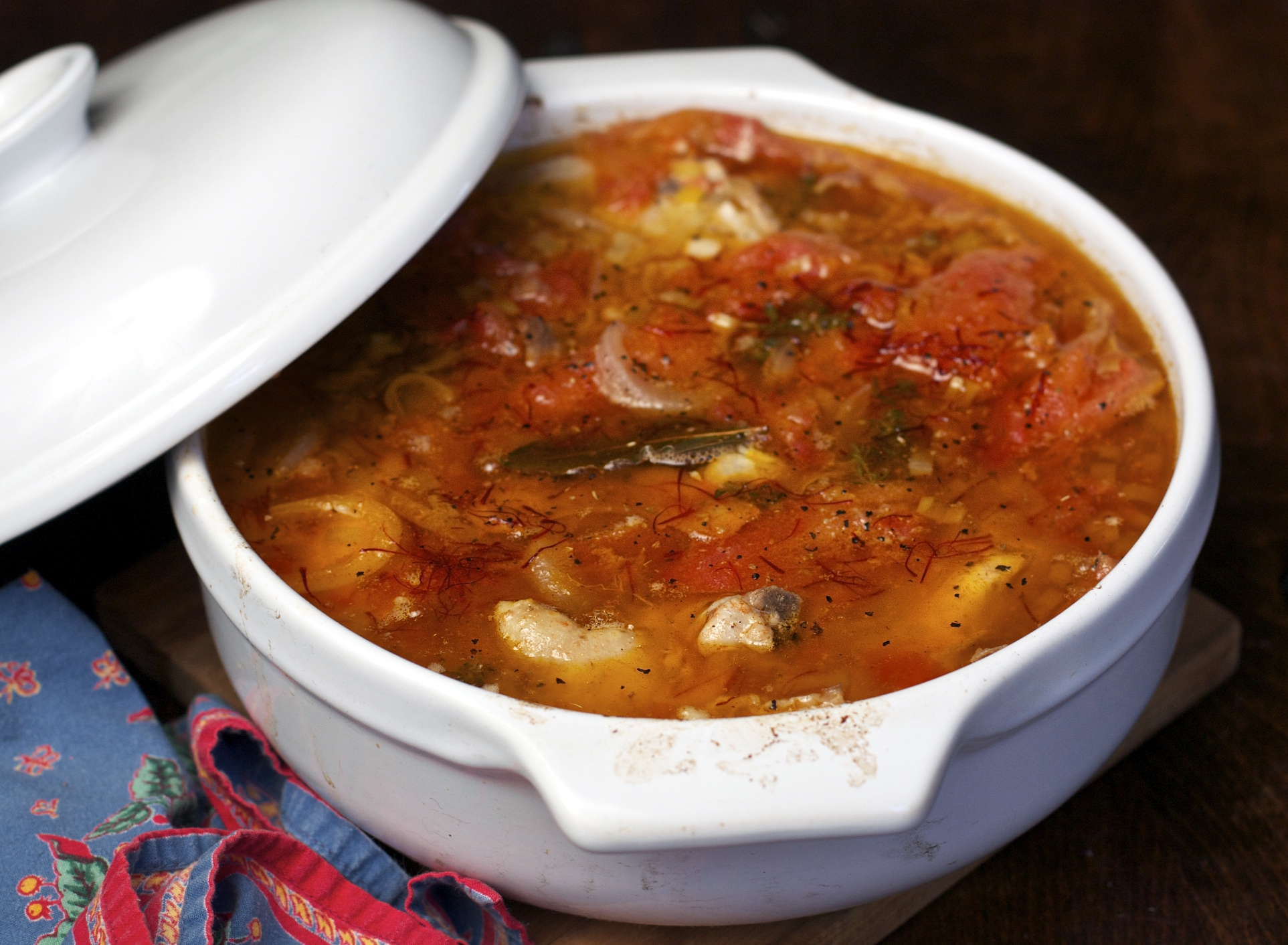
bouillabaisse 20d

Last weekend I had a long skype chat with my old friend Mathis from Switzerland. He lives with his wife Louna, both retired, in Aix-en-Provence near Marseille in France. Of course we exchanged many memories, so as our common food tours around Provence. To make a long story short, we turned each other on with the memory of Bouillabaisse.

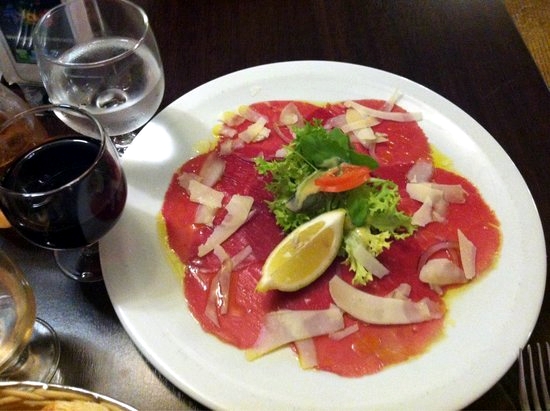
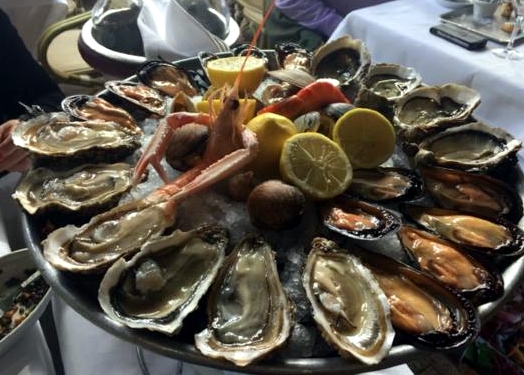
bouillabaisse 16d      bouillabaisse 16 chez laurette carpaccio  Restaurant Chez Laurette and their wonderful carpaccio.

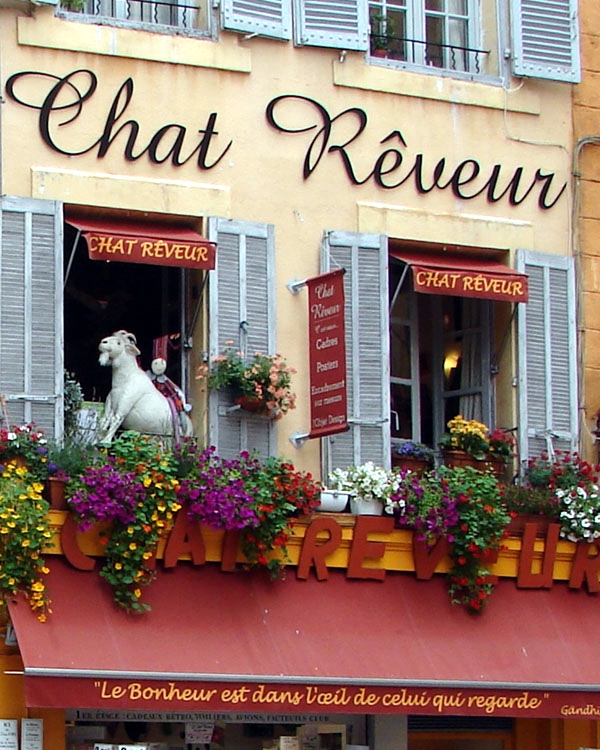
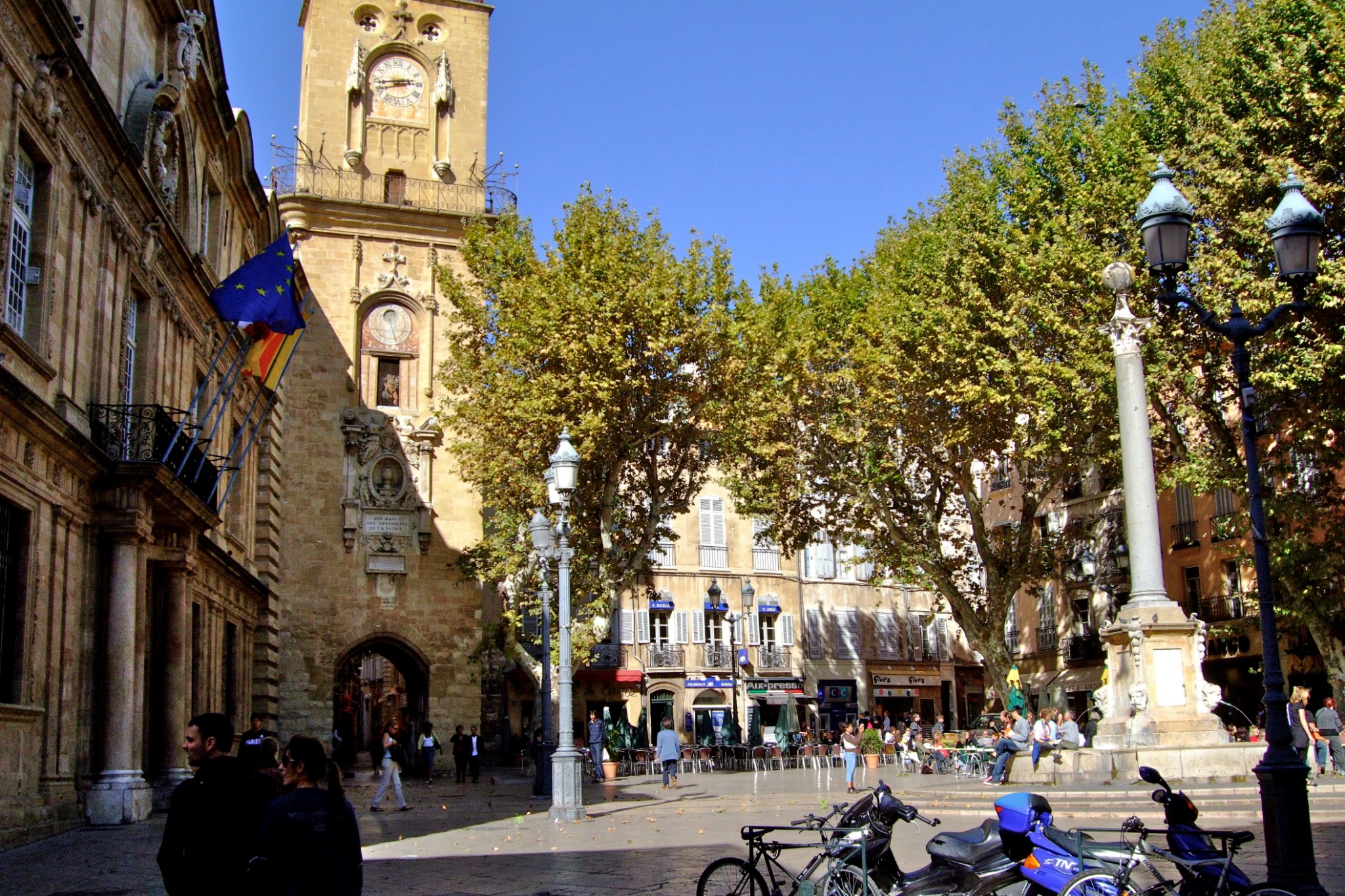
Especially the authentic „Bouillabaisse Marseillaise“ at the restaurant Chez Laurette, Place de Cardeurs in Aix, or the first floor restaurant Chat Reveur (now the Mandarine) at Place de l’Hotel de Ville, where we spent some wonderful culinary nights together.

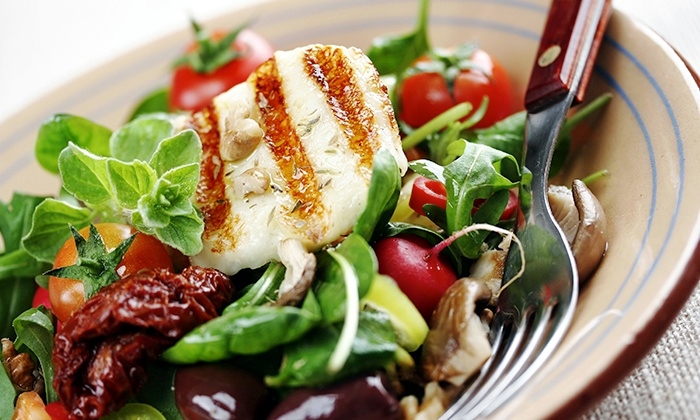
bouillabaisse 17                   bouillabaisse 16a   Restaurant Chat Reveur and their delicious Mediterranean salad with Halloumi.

Aix-en-Provence.

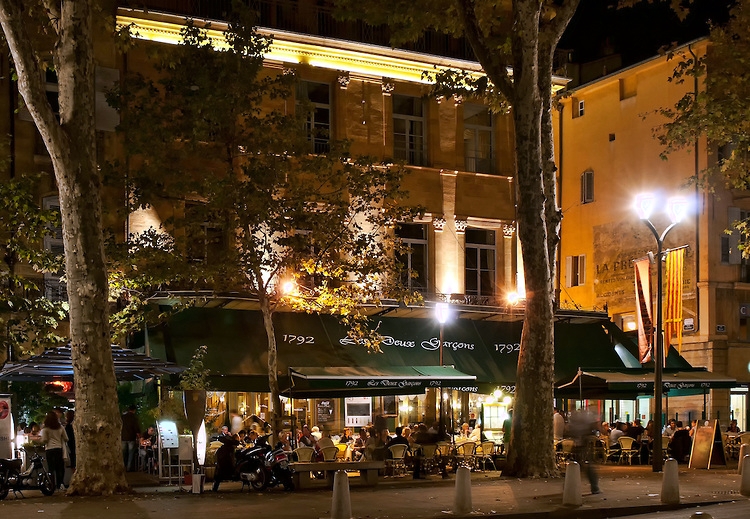
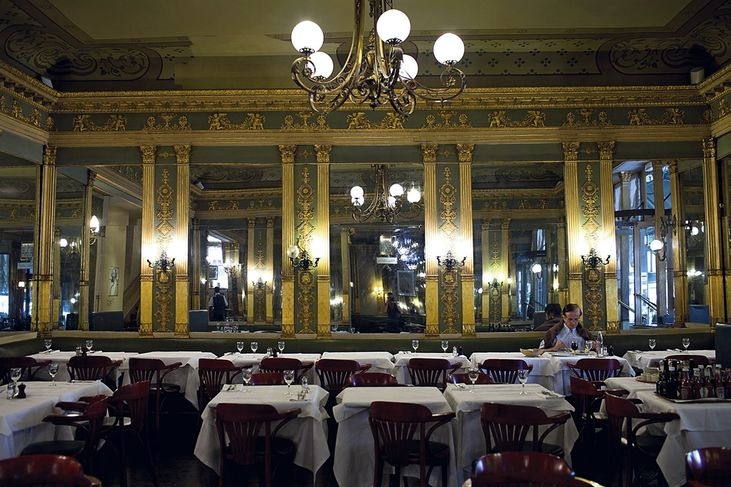
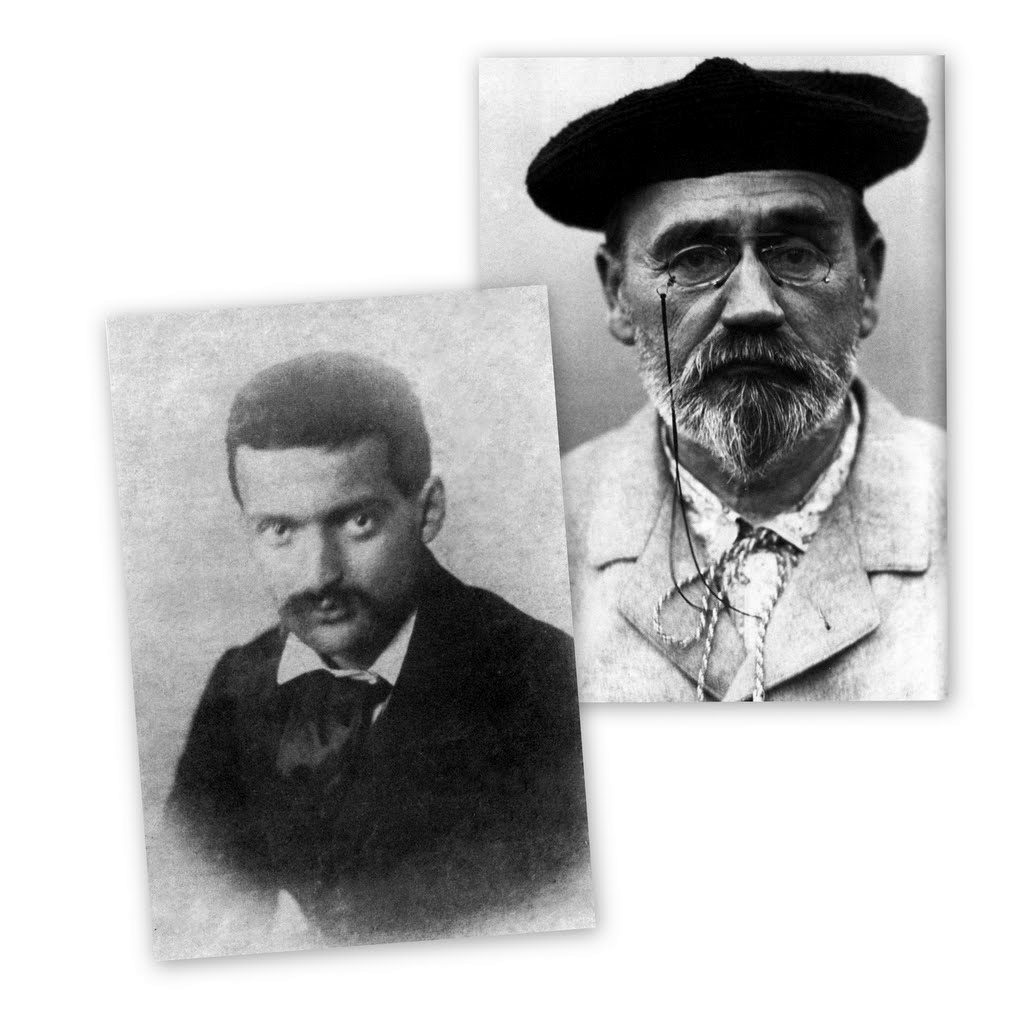
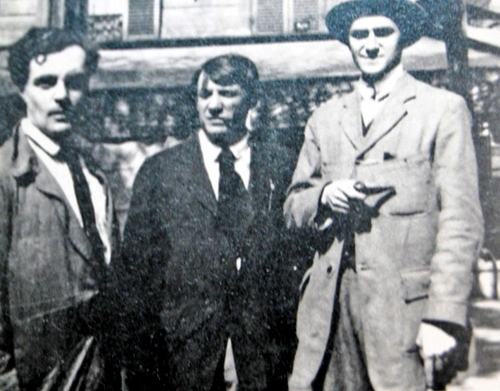
Those who visit Aix can enjoy peaceful walks, beautiful scenery, sunshine and cafes. In fact, the most famous brasserie in Aix – the Deux Garçons, which was built in 1792 was often visited by Ernest Hemingway, Emile Zola, Picasso and Paul Cezanne, among others.

bouillabaisse 18 bouillabaisse 18b      The worlds very well known Brasserie Deux Garcons (Two waiters, doesn’t sound as well in English).

I told him about the unusual cold weather we have in Uruguay now and how I miss a good Bouillabaisse. His comment, „you are a good cook, make one yourself“ !!  Yes I would, but where to get the seafood from. He couldn’t believe, that there is no good seafood available in a country located on so many kilometers of seashore.

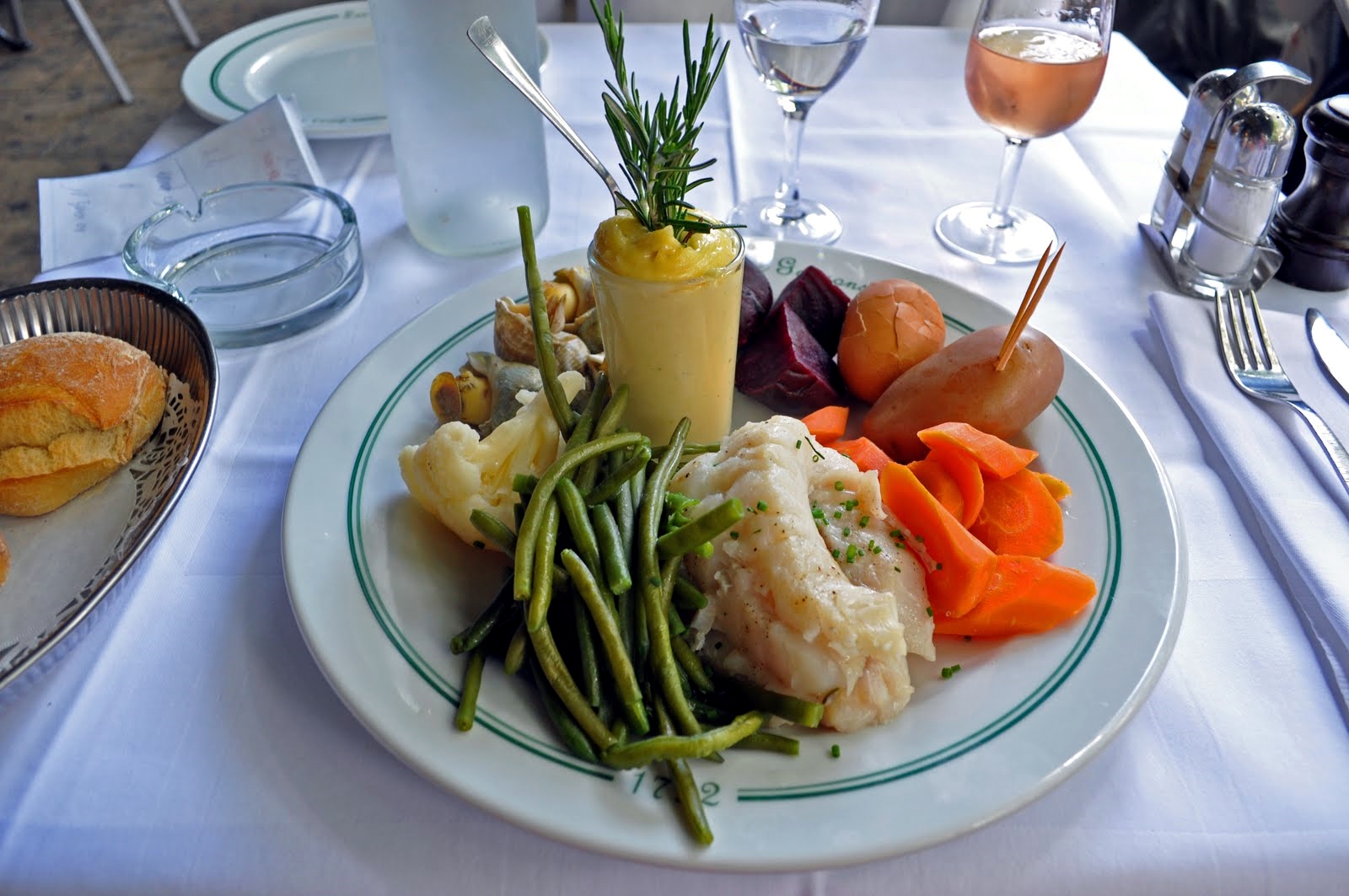
bouillabaisse 18a  That’s life at Deux Garcons.

Yes, I told him, it’s a fact – very poor availability of seafood – and if, expensive and poor quality and/or imported frozen. A good friend of ours, a Japanese Sushi Master in Montevideo,who runs a small restaurant answered once on the question: „You are a sushi master, why don’t you offer good sushi, there is nothing like it in Montevideo?“, „Sorry, but I can’t get good quality fresh fish in Uruguay!“. Ja ja, my friends, Uruguay is a meat country – that’s why !!

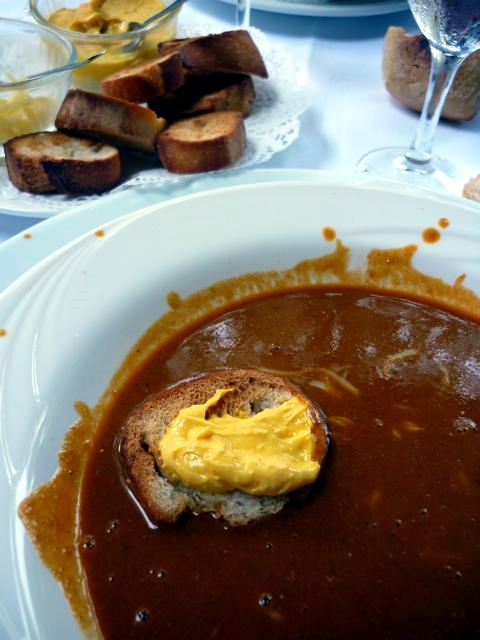
bouillabaisse 18d aix soup Another french specialty we had at Deux Garcons, „onion soup“.

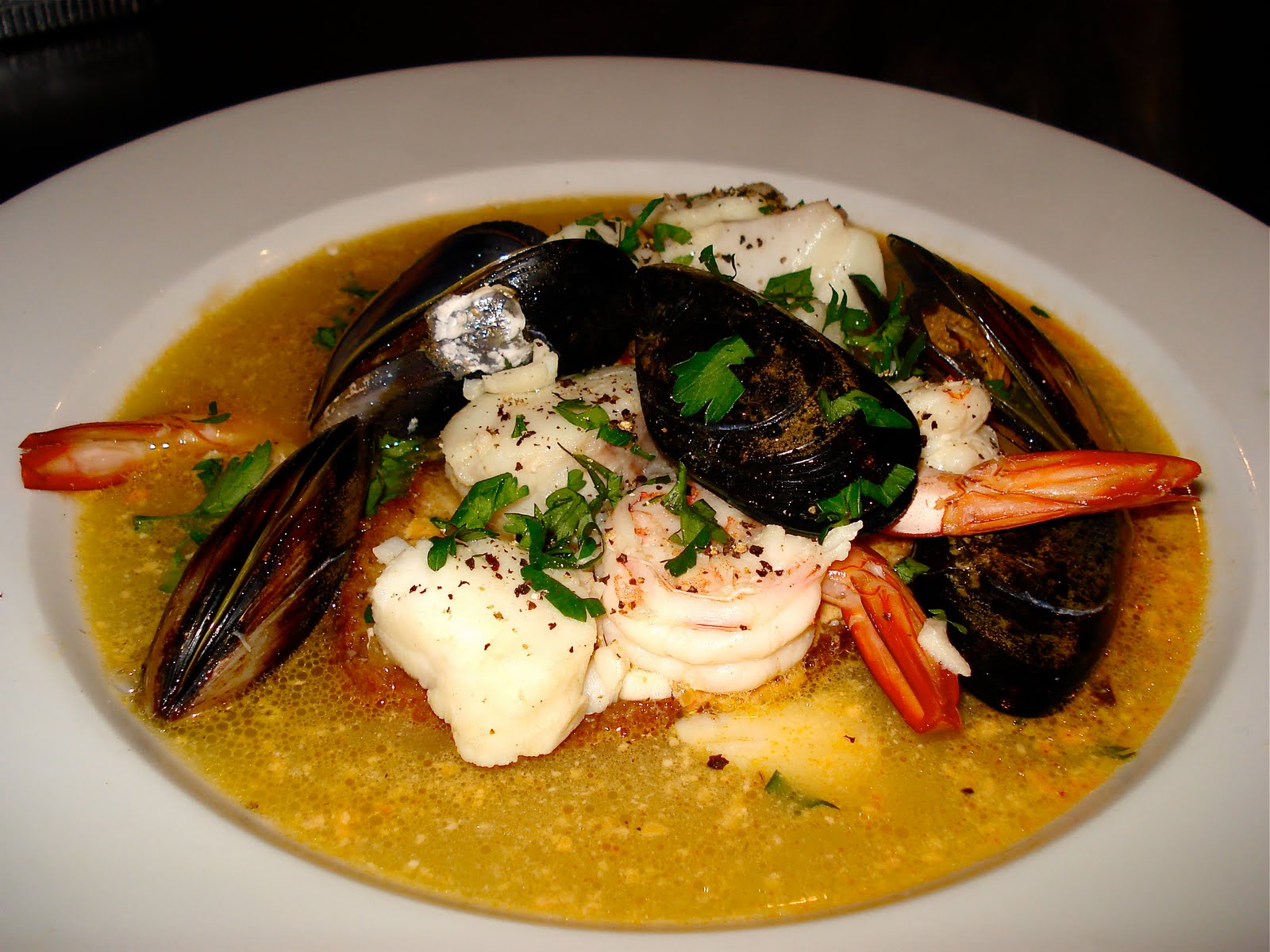
Bouillabaisse is normally a fish stew that is the regional specialty of Marseille, France. It’s like a cioppino, chock full of fish and shellfish in a tomato broth. It’s served with something called a “rouille,” (pronounced “roo-wee”) which is the spicy mayo/ aioli dollop that you see on most of the final products.

bouillabaisse 18c  And here their „vegetarian feast“, no complaints.

The fishermen of Marseille originated bouillabaisse when they couldn’t sell all fish, so they made a stew of the leftovers. First it was just a cheap soup, but throughout the years it evolved to a fine meal of highest quality. Of course, today’s ingredients are from region to region and from restaurant to restaurant very different.

bouillabaisse 18g paul cezanne - emile zola    bouillabaisse 18i    Paul Cezanne and Emile Zola (left) were frequent guests at Deux Garcons, so as Pablo Picasso, Ernest Hemingway and Paul Gaugain (right). The Deux Garcons also housed  Woody Allan movie scenes from „Midnight in Paris“, 2011.

At the end of our skype conversation Mathis promised to send some pics of the restaurants and food we had there in Aix. Meantime I got some and work them into this post.

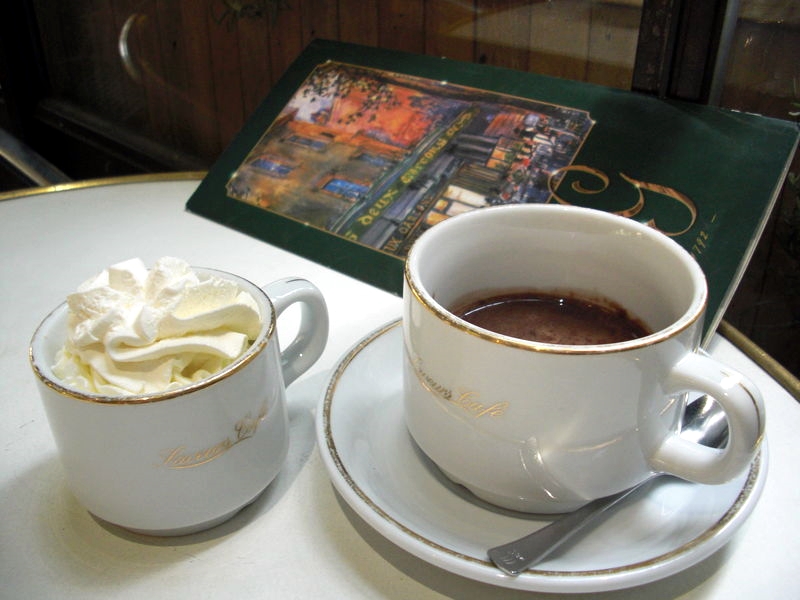
bouillabaisse 18f  Double espresso and fresh cream to round a meal.

Also we brought up the idea to improvise, as we always do in Uruguay, if we can’t get what we are looking for. That means, I will make bouillabaisse with chicken. During my cooking years I made bouillabaisse very often but this recipe I made New Years Eve 2000 (in Australia) the first time after Julia Child’s recipe, because I adore her basic french recipes very much. It is also great fun to watch her early TV shows.

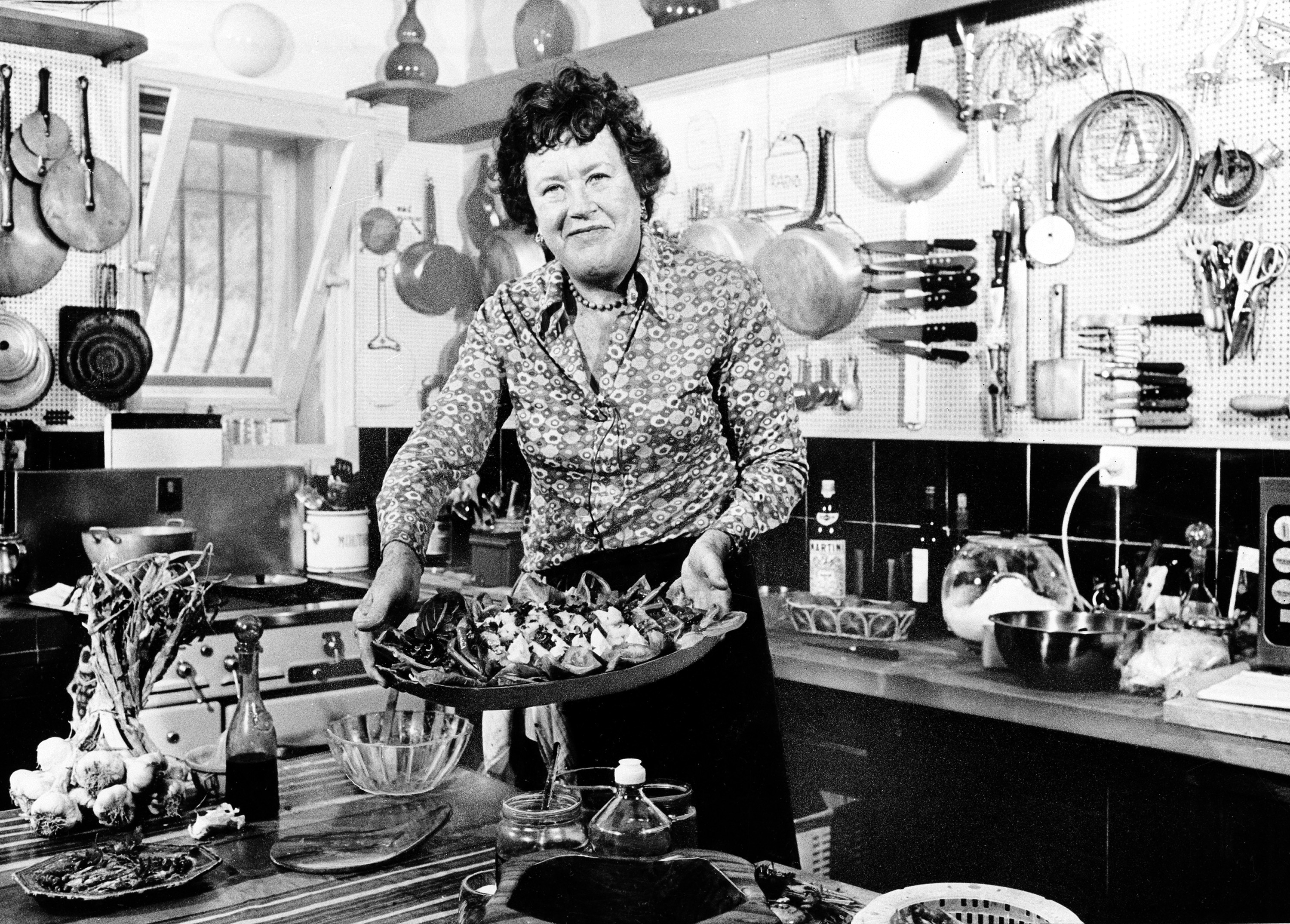
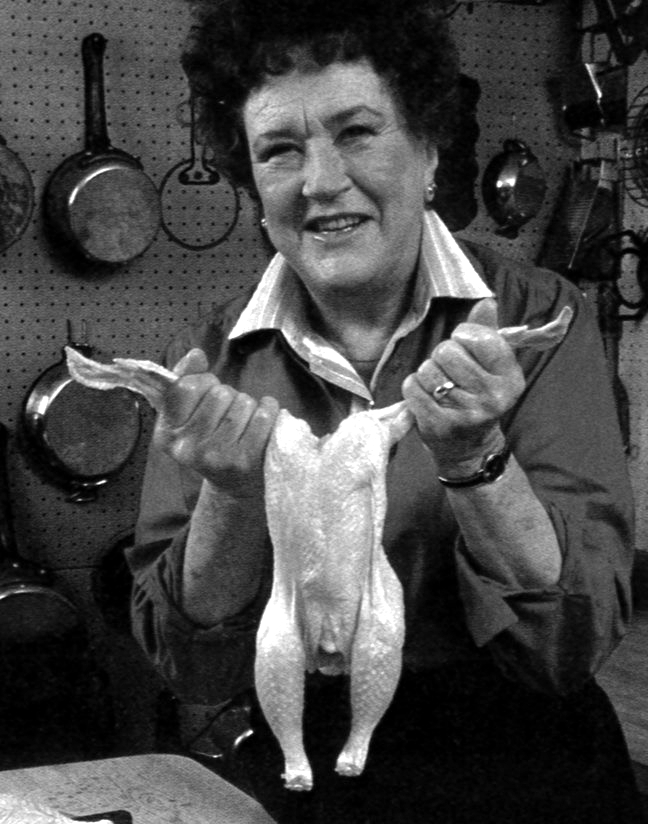
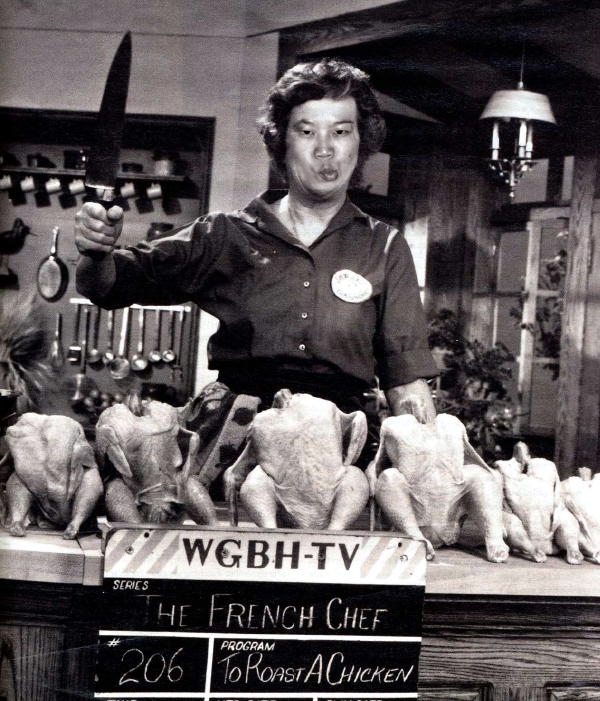
bouillabaisse 20 julia child            bouillabaisse 20a  Julia Child in her TV kitchen, which is belonging to the Smithsonian Museum now. And her philosophy !!!

Julia Carolyn Child (maiden name, Mac Williams, August 15, 1912 – August 13, 2004) was an American chef, author, and television personality. She is recognized for bringing French cuisine to the American public with her debut cookbook, Mastering the Art of French Cooking, and her subsequent television programs, the most notable of which was The French Chef, which premiered in 1963.

bouillabaisse 20b                    bouillabaisse 20c                     Julia’s TV shows are always good fun. Up here the bouillabaisse part.

Believe it or not, just last night I watched on Sony Tv the movie „Julie and Julia“, Meryll Streep starring Julia Child. Great fun ! Here is Julia’s chicken bouillabaisse recipe, for all of you adoring bouillabaisse, but can’t get or don’t like seafood so much.

Bouillabaisse de Poulet avec Pistou.

Another tidbit of using chicken that attracted me was the recipe’s use of anise seed and/or Pernod, which is a licorice liqueur made back in the day as a substitute for absinthe, when it had gotten a bad rap. Another part of my Mediterranean cooking experience is to check out what ingredients I had and what I needed to get. By the way, the original bouillabaisse has very often some kind of vegetables, like carrots, or potatoes added.

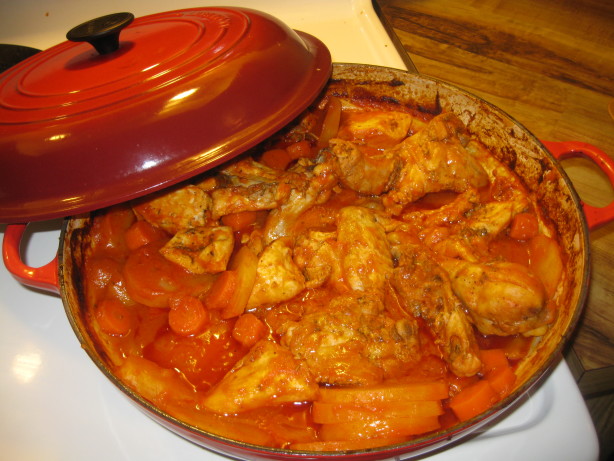
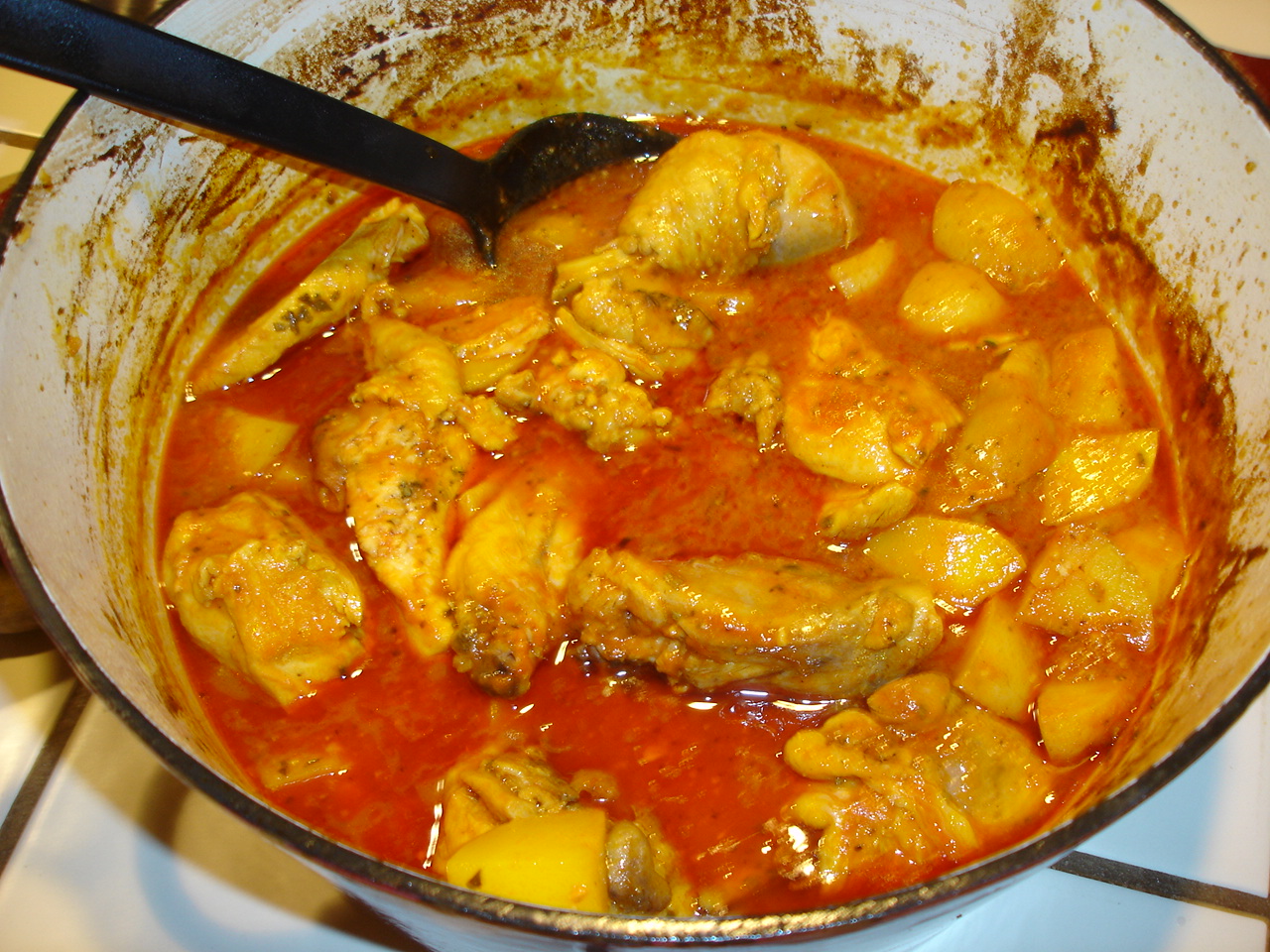
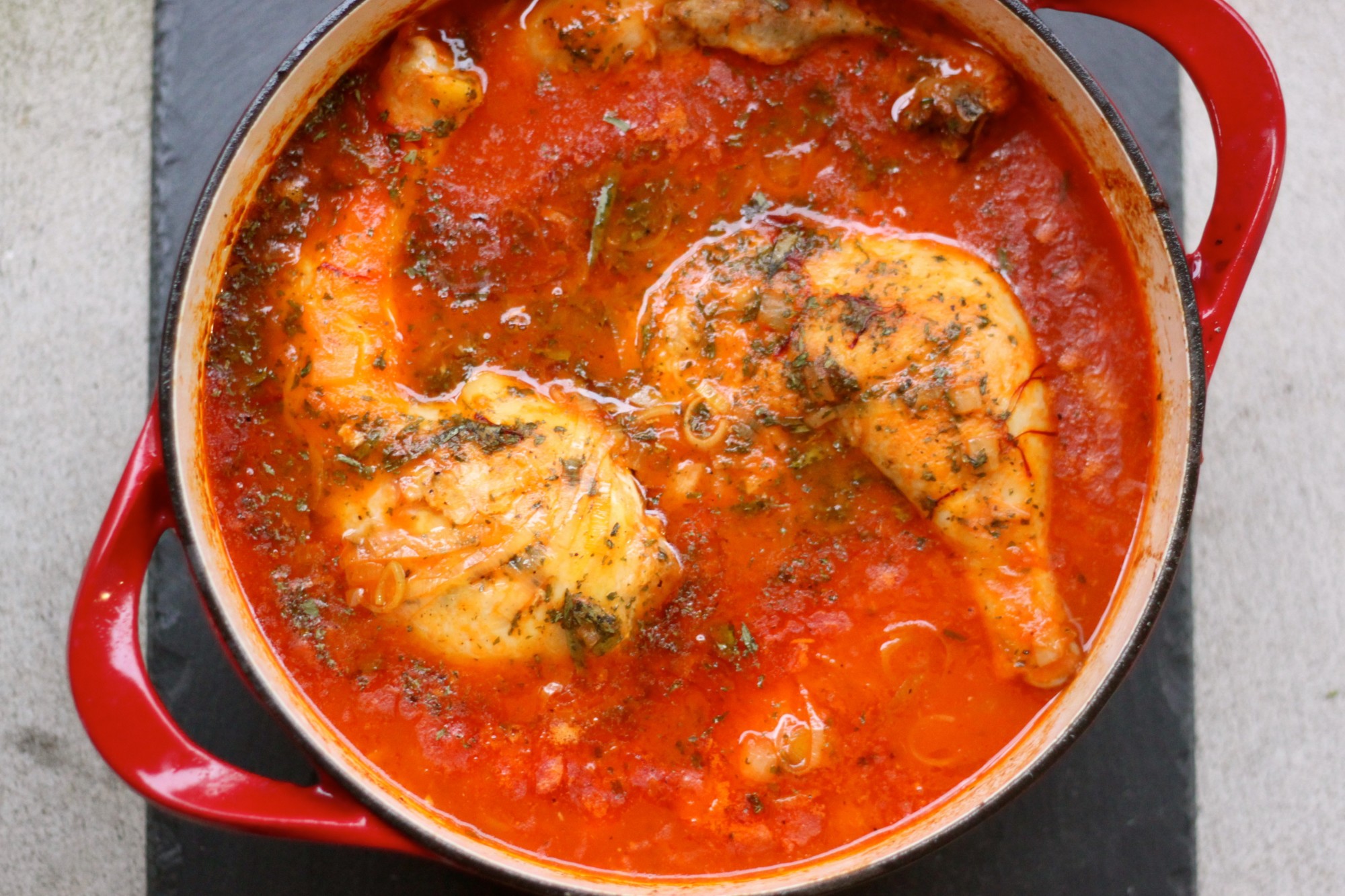
bouillabaisse 4  Chicken and carrot bouillabaisse, delicious !

First, I had to butcher a chicken. It’s very simple and has a cool accent.  Why would I butcher my own chicken? Well, I happened to have had a whole chicken waiting in the fridge for its ultimate destiny. But cost has a lot to do with this, too. A “whole cut up chicken” at the supermarket or the butcher costs much more, instead doing it yourself.

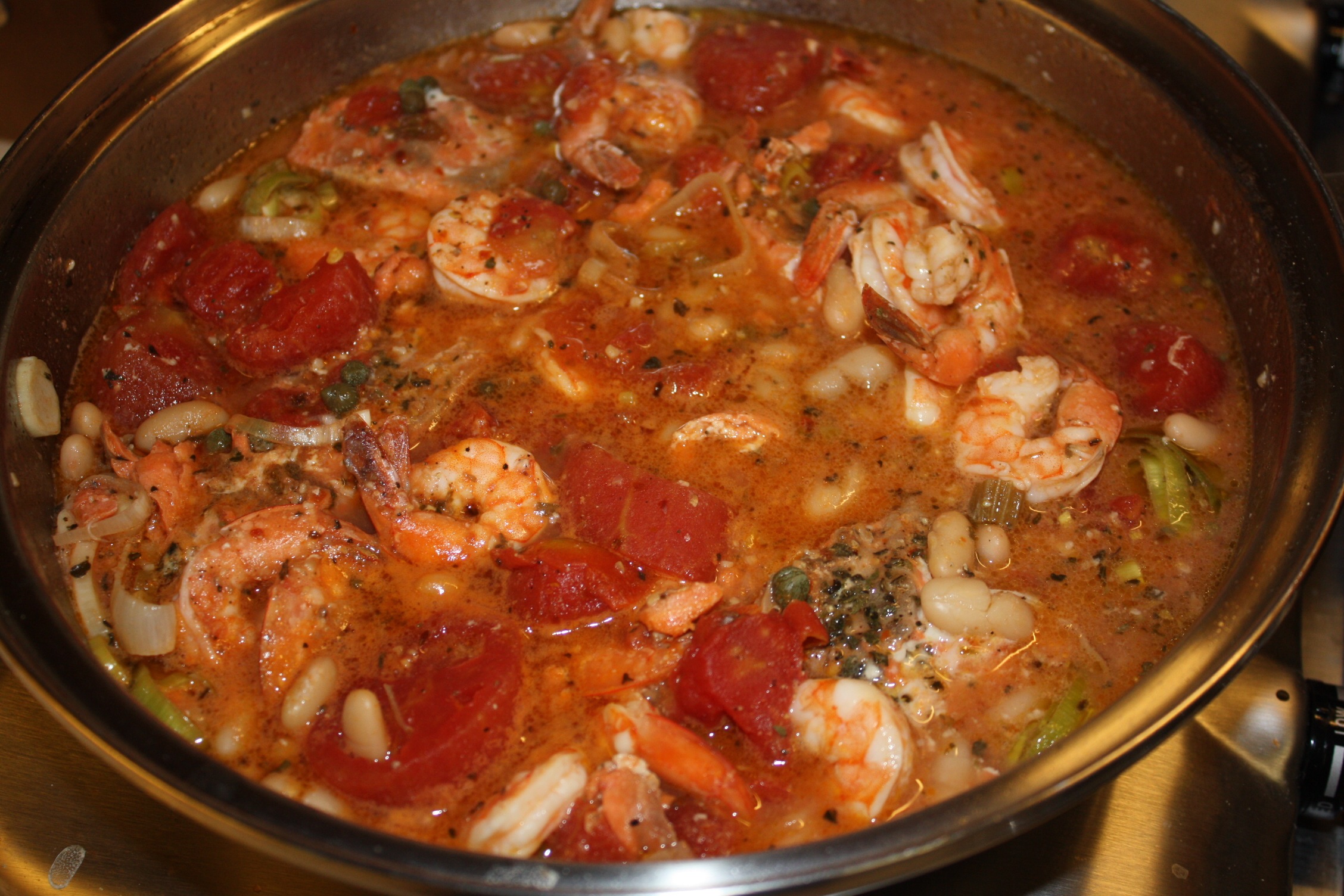
bouillabaisse 9  Our original seafood bouillabaisse.  Not so much difference to the chicken one shown above.

The recipe calls for fennel seed, but I like to use fresh fennel, because its easy to get in Uruguay. On the other hand I have lots of anise/fennel seeds and that’s what I use.
This dish takes a few hours to make, but the result is an elegant winter stew that has a flavor with an unbelievable depth to it.

“Bouillabaisse de Poulet” (Chicken Poached in White Wine with Provencal Vegetables, Herbs, and Flavorings) which included a “Pistou” (Herb, Cheese, and Garlic Finish). Get some crusty bread to eat with it and you’ll feel like your in southern France, too.

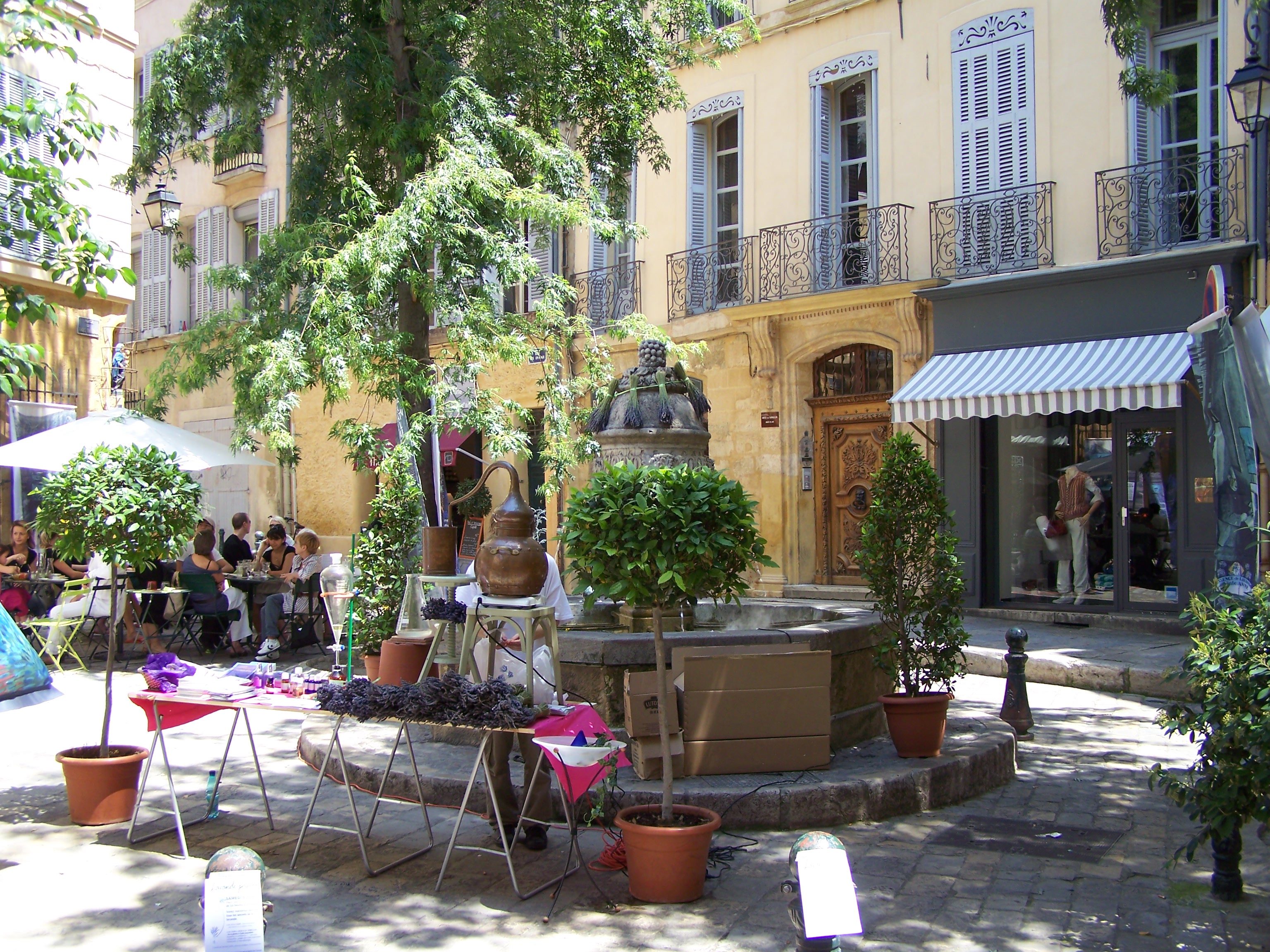
bouillabaisse 17a   bouillabaisse 17b    This is in Aix-en-Provence, Place de l’Hotel de Ville  and a lavender seller in front the fountain.

Bouillabaisse de Poulet Ingredients.

1 small white onion, sliced
1 small sliced leek, white part only
25 ml olive oil
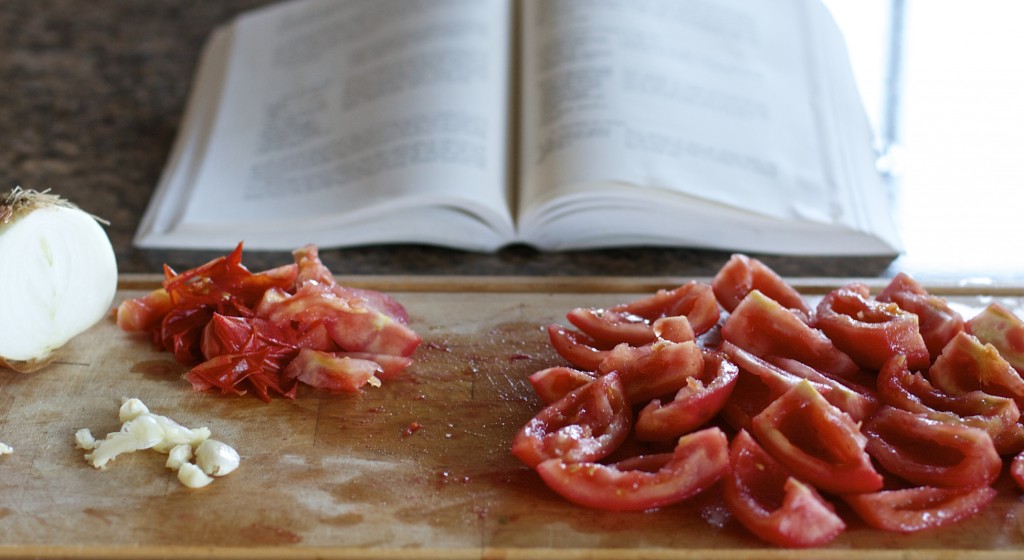
4-5 whole tomatoes, peeled and seeded
2 cloves garlic, smashed
3 pound ( 1 1/2kg) chicken,  cut into smaller (about 5x5cm) parts,
(breast and thigh will be best, you also can leave thigh on the bone)
salt to taste
200 ml dry white wine
150 ml chicken stock
1 bay leaf
1/2 tsp. thyme
1/4 teaspoon fennel seeds, smashed (alternatively 1 shot Pernod)
2 pinches saffron
about 5cm piece of orange peel
big pinch of pepper
pinch of cayenne
more salt to taste

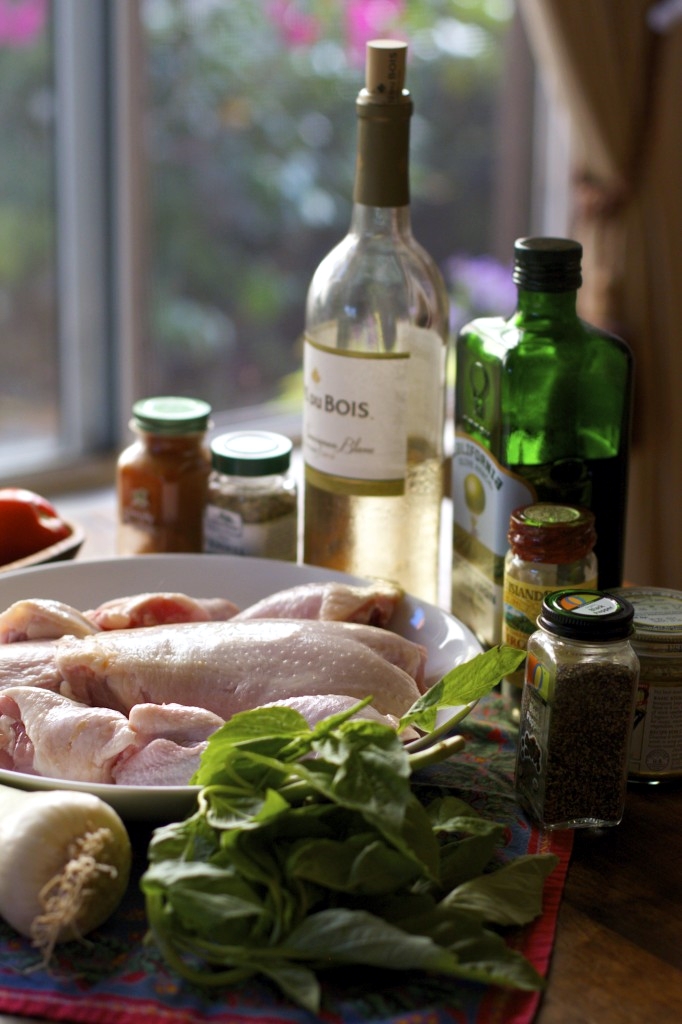
bouillabaisse 10b  Some ingredients for a great „chicken bouillabaisse“.

Pistou Ingredients.

2 large cloves garlic
12 large fresh basil leaves
30g Parmesan, freshly grated
3 tablespoons tomato paste
4 dashes Tabasco sauce

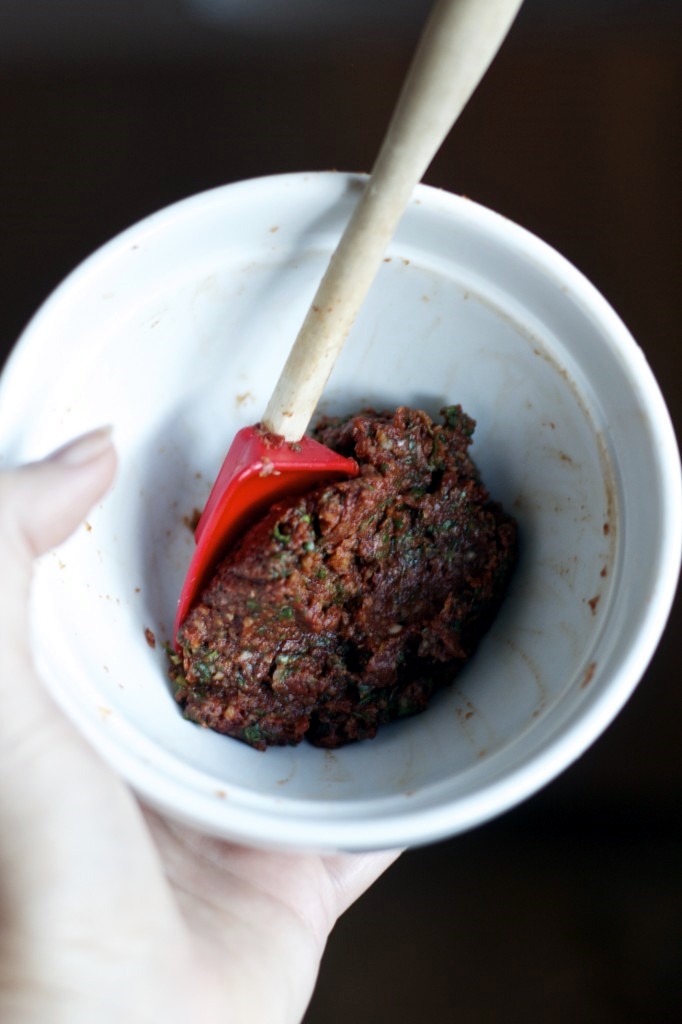
bouillabaisse 10e  Pistou as it should be.

How to do.

In a large and covered heavy pan (I like to use my Le Creuset) or casserole which can do double duty on the stove top and oven, cook the onions and leeks in the olive oil over low heat, about 10 minutes, till they are golden, do not let them brown.

 bouillabaisse 10d  Take the time and prepare the tomatoes well, its worth it, not to chew around on the tomato skin.

While the onions are cooking, prepare the tomatoes by adding them whole to a heat proof measuring cup and pouring boiling water over them. Allow them to sit about a minute before pouring off the hot water and adding cold. The peelings should rub right off. Cut each in half and scrap out the seeds. Discard peelings and seeds. Add the tomatoes and garlic to the onion mixture and cover, allowing to cook for 5 minutes. Remove the lid and increase the heat to medium and allow the released juices to nearly evaporate.

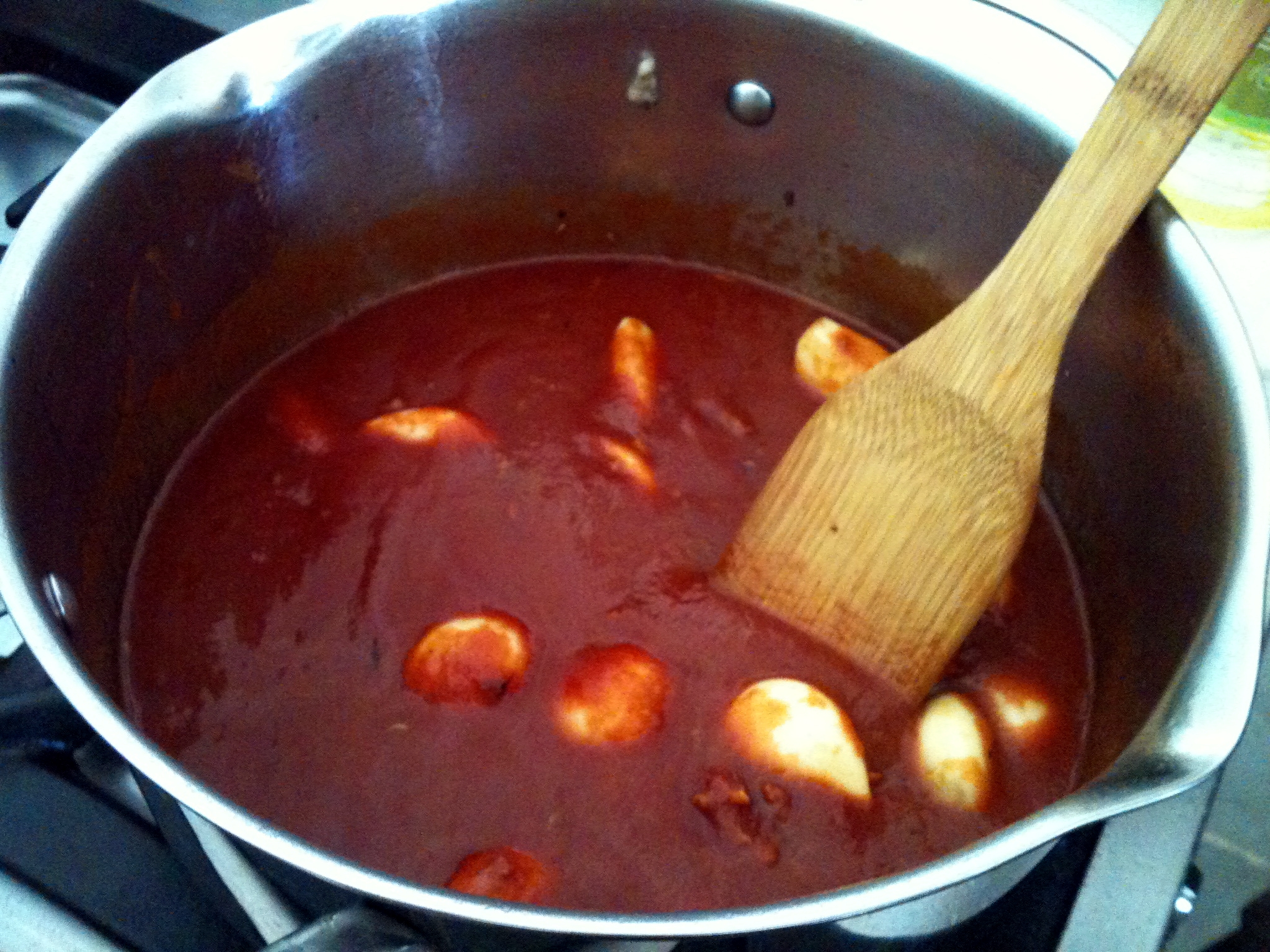
bouillabaisse 10  Preparing the bouillabaisse broth.

While the tomatoes are cooking, lightly salt the chicken pieces, then add them to the tomato and onion mixture. Nestle the pieces down into the pan and spoon some of the tomatoes over the top of the chicken pieces. Cover and cook/braise for 10 minutes, turning the pieces once about half way through the cooking time.

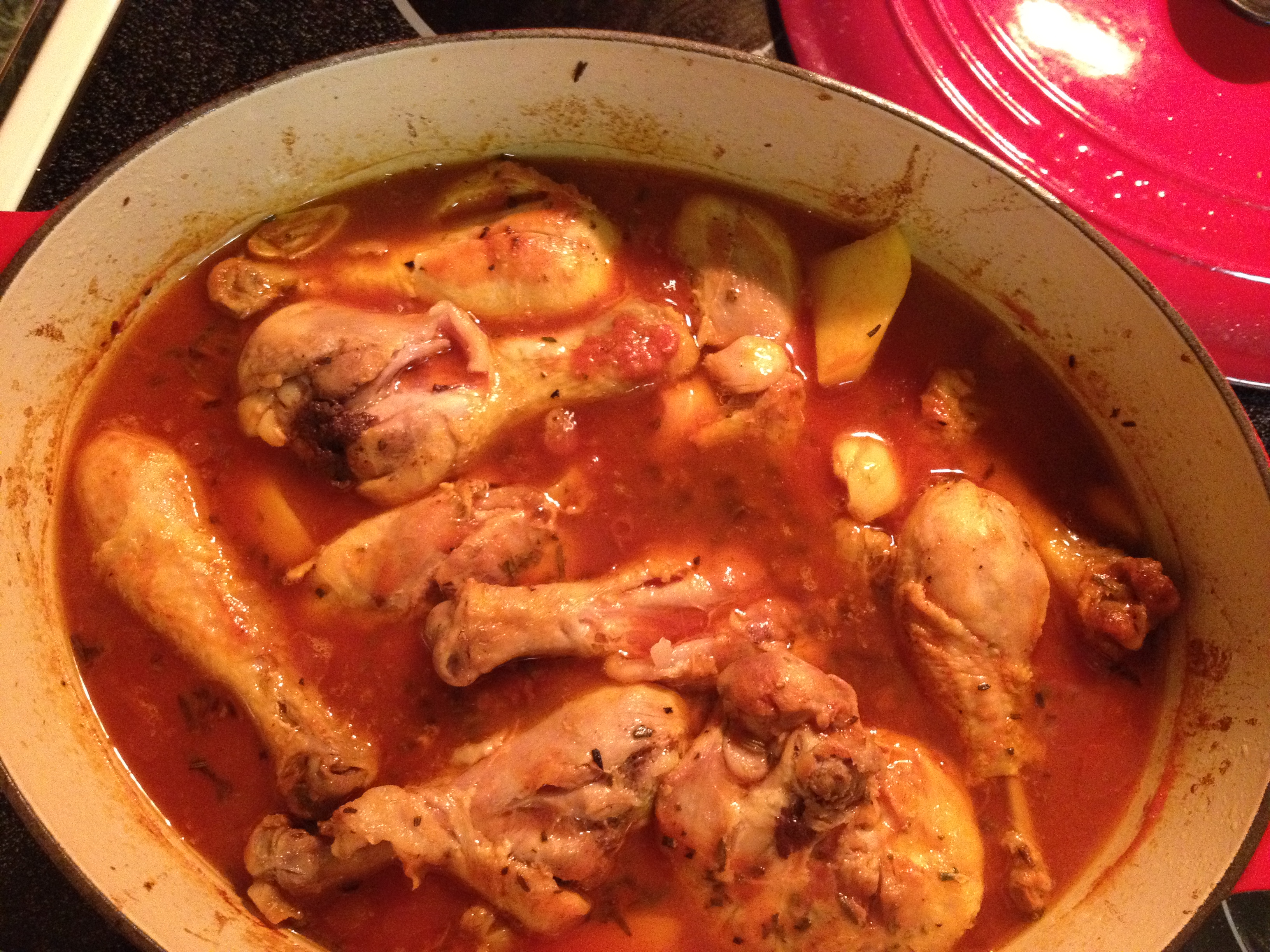
bouillabaisse 1  Cooking the chicken (here with drumsticks) in the broth.

Pour the wine and the broth over the chicken making sure the pieces are completely submerged. Add the herbs and other seasonings, stirring lightly to mix them into the liquid. Cover and bring to a simmer, allowing to cook 25 minutes more either in a preheated 160 C (325 F) degree oven or on the stove top until the chicken is done.

While the chicken is cooking prepare the pistou by mincing the garlic with a bit of salt until it is a paste. Stack the basil leaves on top of one another, roll them together, then slice very thinly. Add the garlic past and basil to a small bowl and combine with the Parmesan, tomato paste, and Tabasco sauce. Mix well. When the chicken is done, stir the pistou into the broth.
Taste to correct seasoning and serve directly from the pot.

bouillabaisse 2  Mixed chicken pieces bouillabaisse, ready to serve.

Tips.

Although the name of this dish may sound fancy, it’s quite a simple dish that is easy to prepare.
The recipe allows for many options such as canned tomatoes instead of fresh, dried herbs in place of fresh, and French vermouth instead of white wine.
The broth is truly heavenly! We enjoyed this with pieces of crusty bread we used to soak up the broth.

bouillabaisse 5  Bouillabaisse with whole chicken legs. One each for each person and you have a full, mouthwatering main course. Serve with lots of baguette and a green side salad.

Bouillabaisse is traditionally a type of fish stew made with vegetables similar to  the chicken version presented here.
Essentially, the technique involves bringing the ingredients to a boil, then simmering them with Provencal herbs before serving it poured over bread and a rouille which describes as a “garlic, pimento, chili pepper sauce.
I decided to go with the pistou instead. But, I leave you the rouille recipe too. Rouille is an Aioli like, creamy paste.

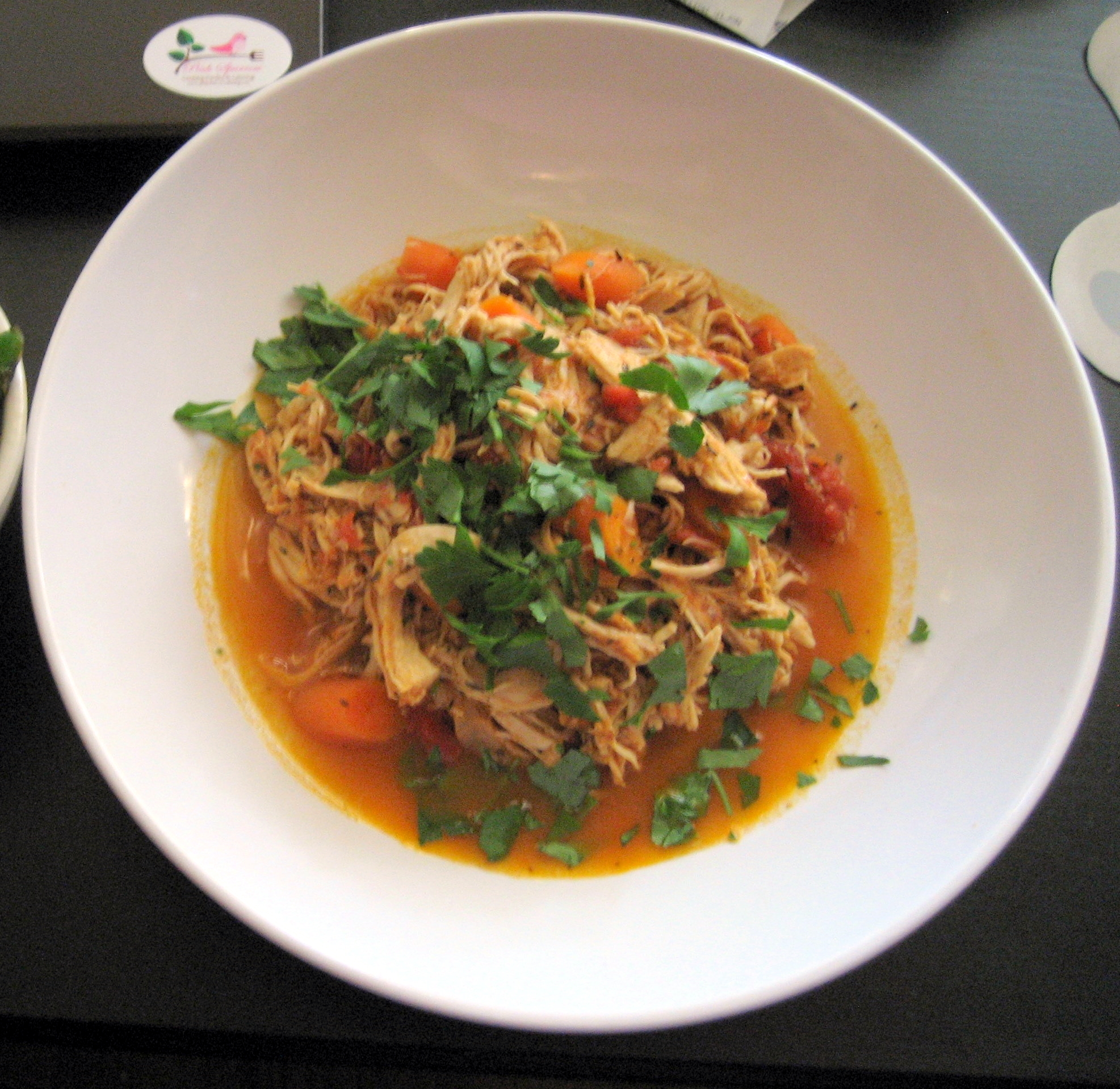
bouillabaisse 6 pulled chicken  More elegant version, pulled chicken bouillabaisse.

If you leave the skin on the chicken during the cooking process,  there is fat that needed to be spooned off before serving.
If you decided to make this dish a day before, the fat would solidify in the fridge and removing it before reheating would be easy.
This dish is actually quite good served cold, but we loved it so much there were no left overs to find that out for ourselves.
Normally I don’t like to peel or seed tomatoes when I cook, but every once in a while decide not to be so lazy. You also can easily use „canned peeled“ tomatoes, but still no seeds and no juice please.

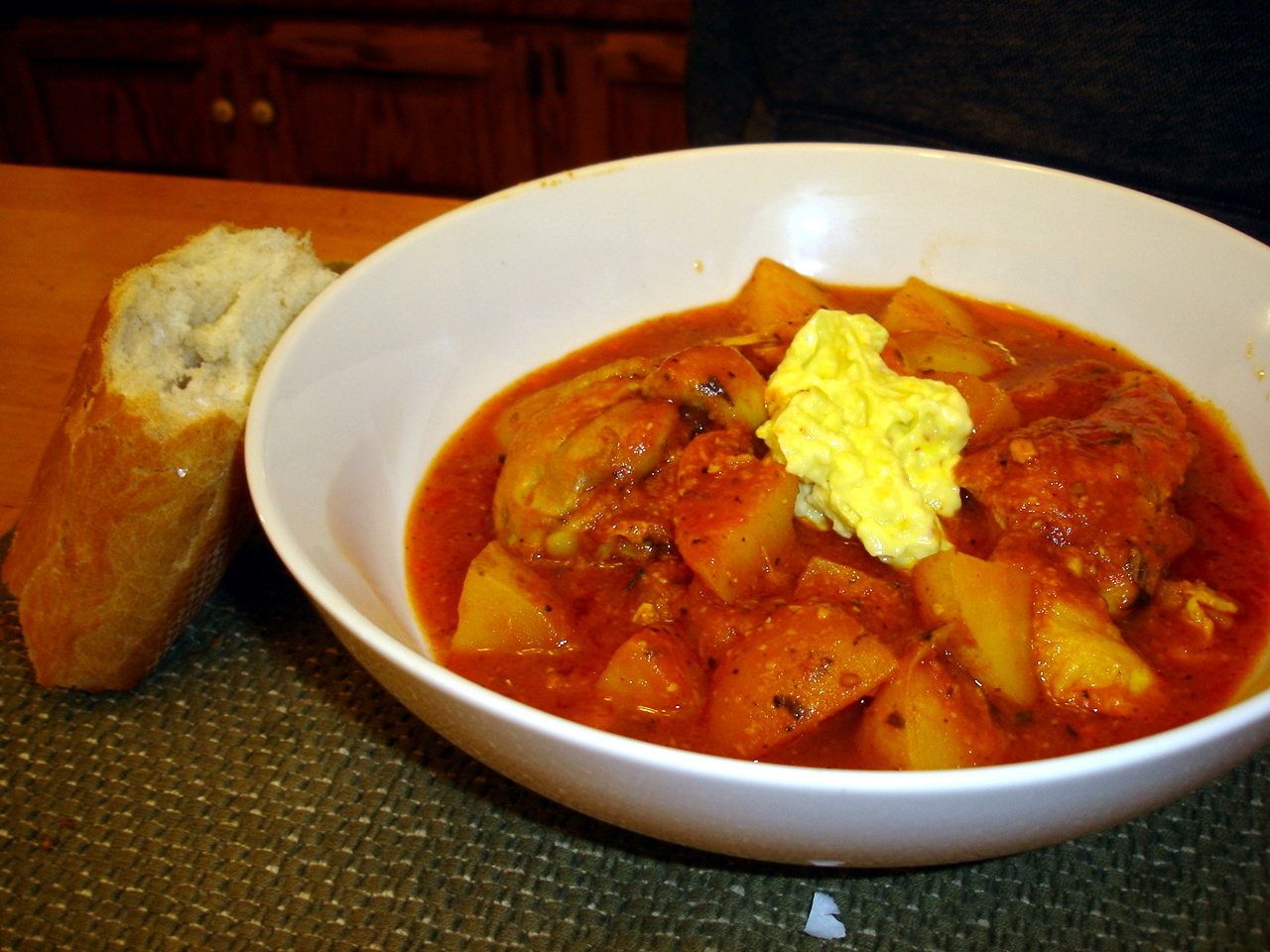
bouillabaisse 11  Rouille on bouillabaisse and fresh baguette.

Rouille.

3 large garlic cloves
1 teaspoon kosher salt
1 extra-large egg yolk (it’s very important that the egg is at room temperature)
1 1/2 tablespoons fresh lemon juice
1/2 teaspoon saffron threads
1/4 teaspoon red pepper flakes (or chilli powder, if you like it hot)
1/2 cup extra-virgin olive oil

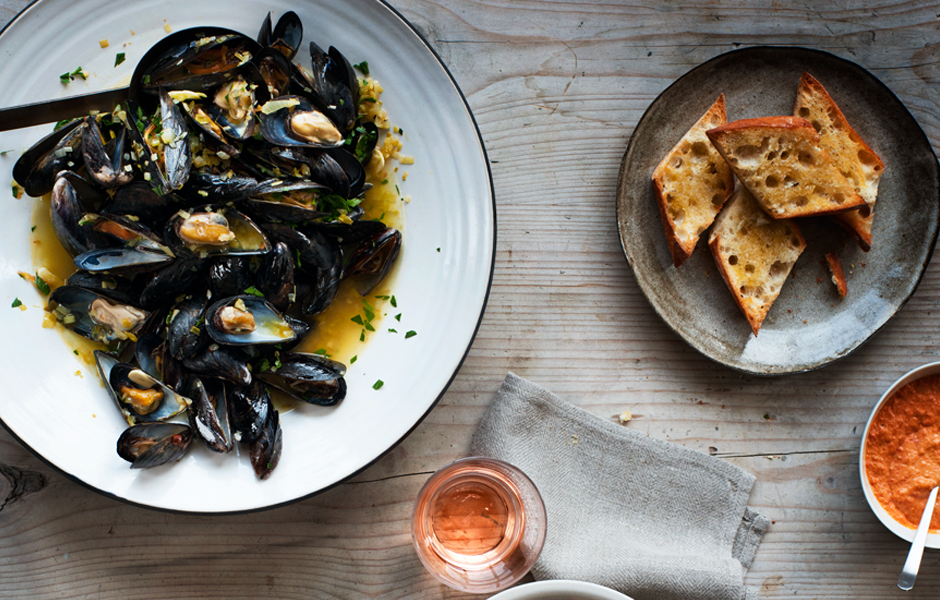
bouillabaisse 14      Rouille with a blue mussel and garlic bread dish, as well as Mathis’s favorite Provence rose wine.  One of the pictures Mathis sent me.  Mmmmm – fresh blue mussels – not in Uruguay.

Place the garlic and salt on a cutting board and mince together to form a paste.
Transfer to the food processor and add the yolk, lemon juice, saffron, and red pepper flakes (or chilli).
Process until smooth. Add the olive oil in a thin, steady stream through the feed tube to make a thick emulsion.
Taste and add more salt if needed.
Transfer to a serving bowl and keep in the refrigerator until ready to use.
Its made to dollop this on top of the bouillabaisse. Actually I had the real deal once in Marseille, there they take the Aioli (Rouille), spread it on the bread, and then toast or broil the bread.
Then one dips the bread into the stew.
While the Aioli in the stew was really good, it was quite rich, but the Rouille on the bread would probably be more to our tastes.  Anyway ENJOY !!!

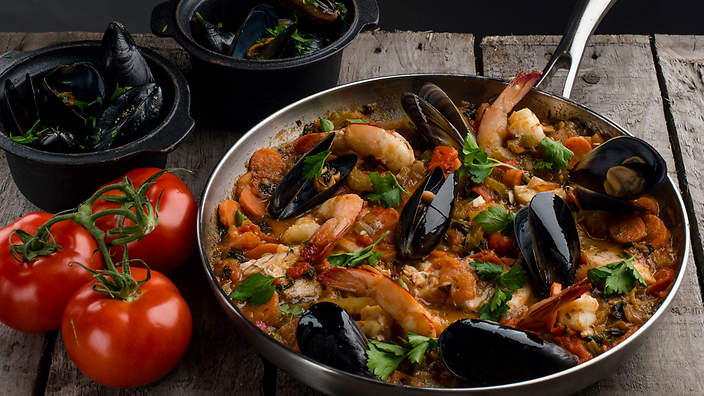
bouillabaisse 15 aussie     bouillabaisse 15a  And these are two more pics from Mathis. Wonderful fresh bouillabaisse on the left and a special bouillabaisse on the right, almost a paella, but no rice just the bouillabaisse broth. Thanks very much Mathis for participating.


Veröffentlicht unter Lifestyle, Recipes, Travel | Verschlagwortet mit , | 3 Kommentare

Ladrillos de San Carlos

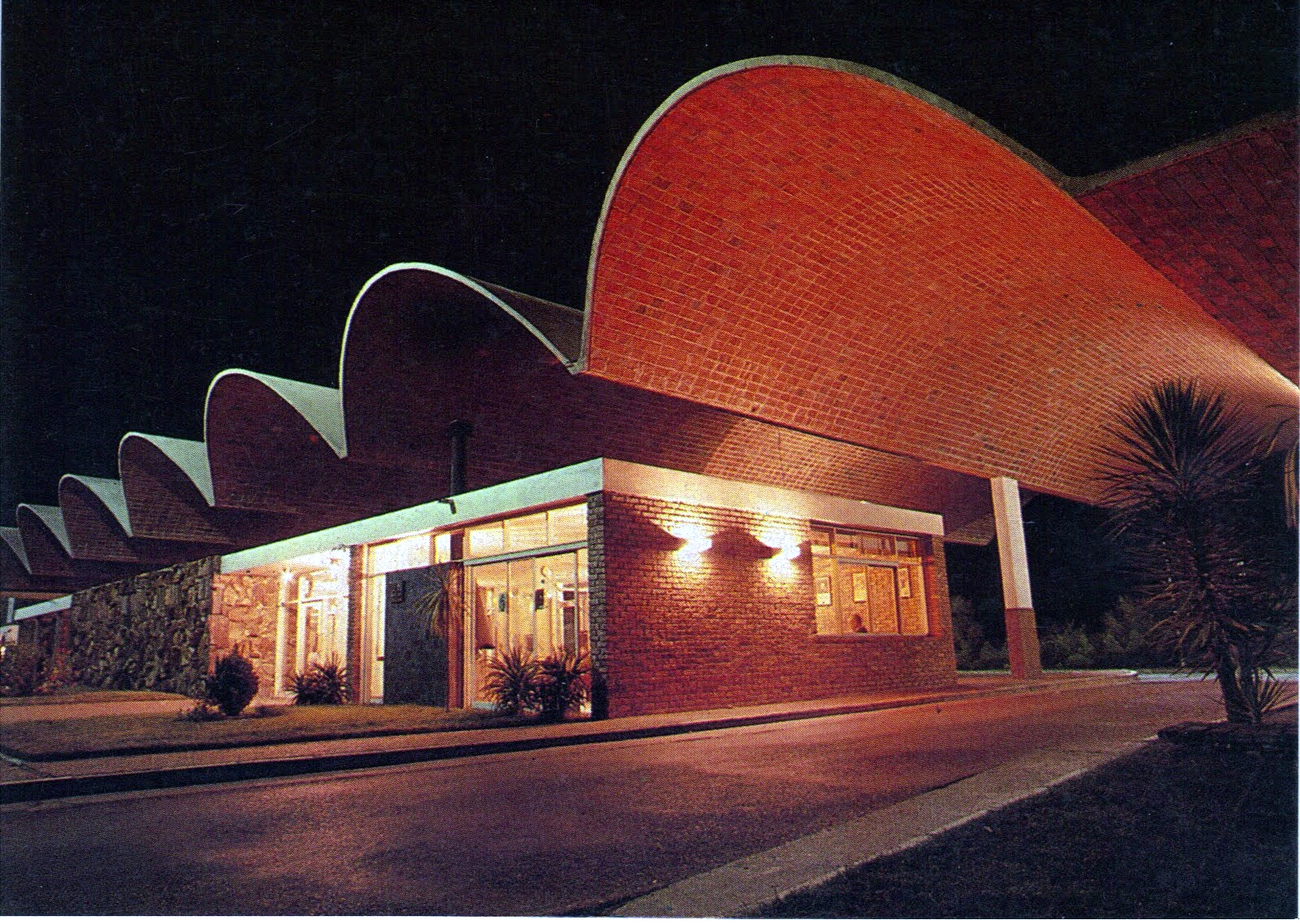
 brick 8  Eladio Dieste brick work. Old bus terminal in Salto.

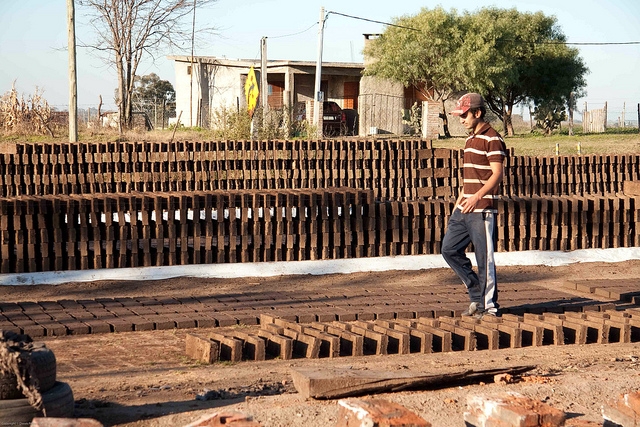
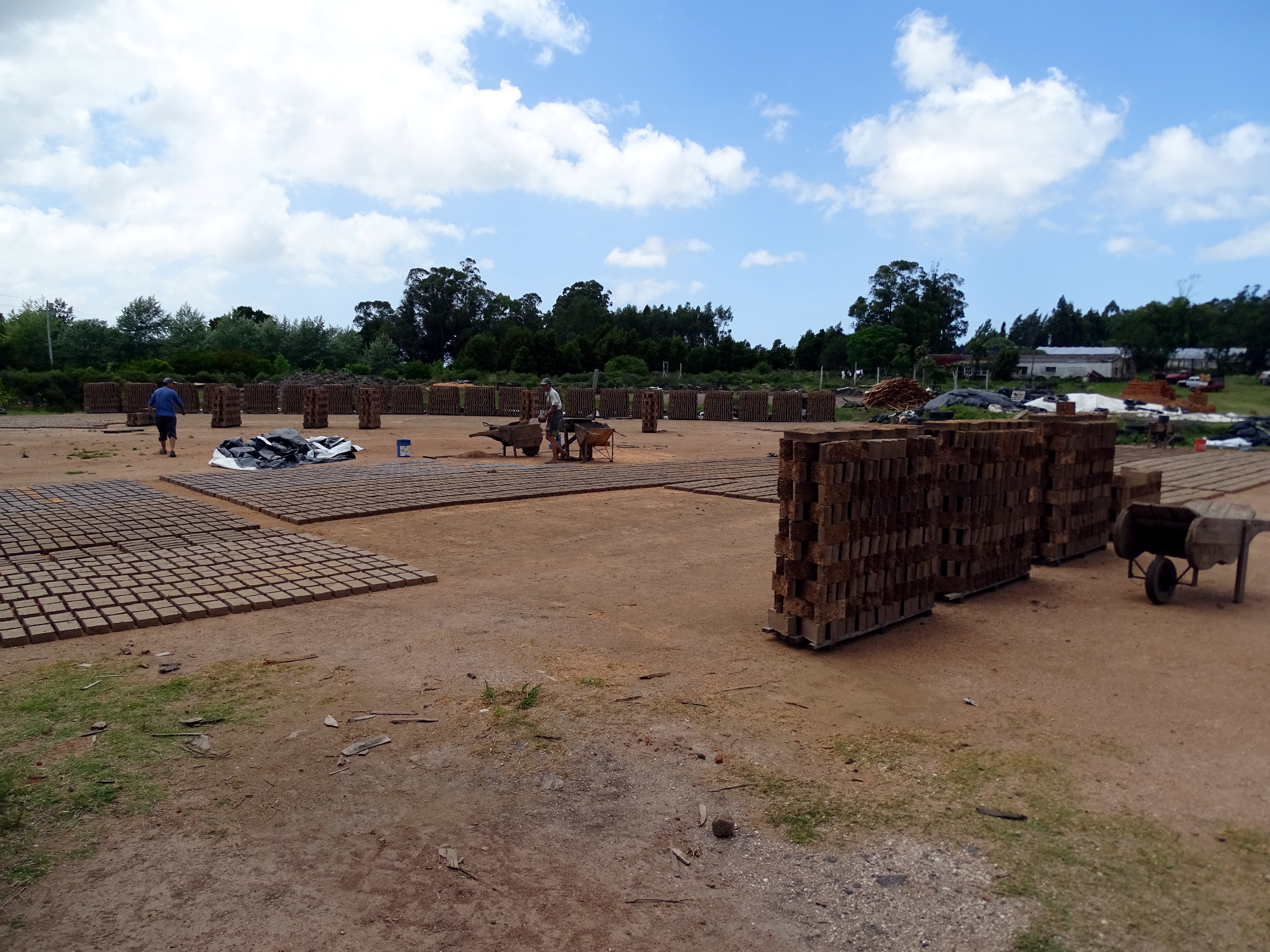
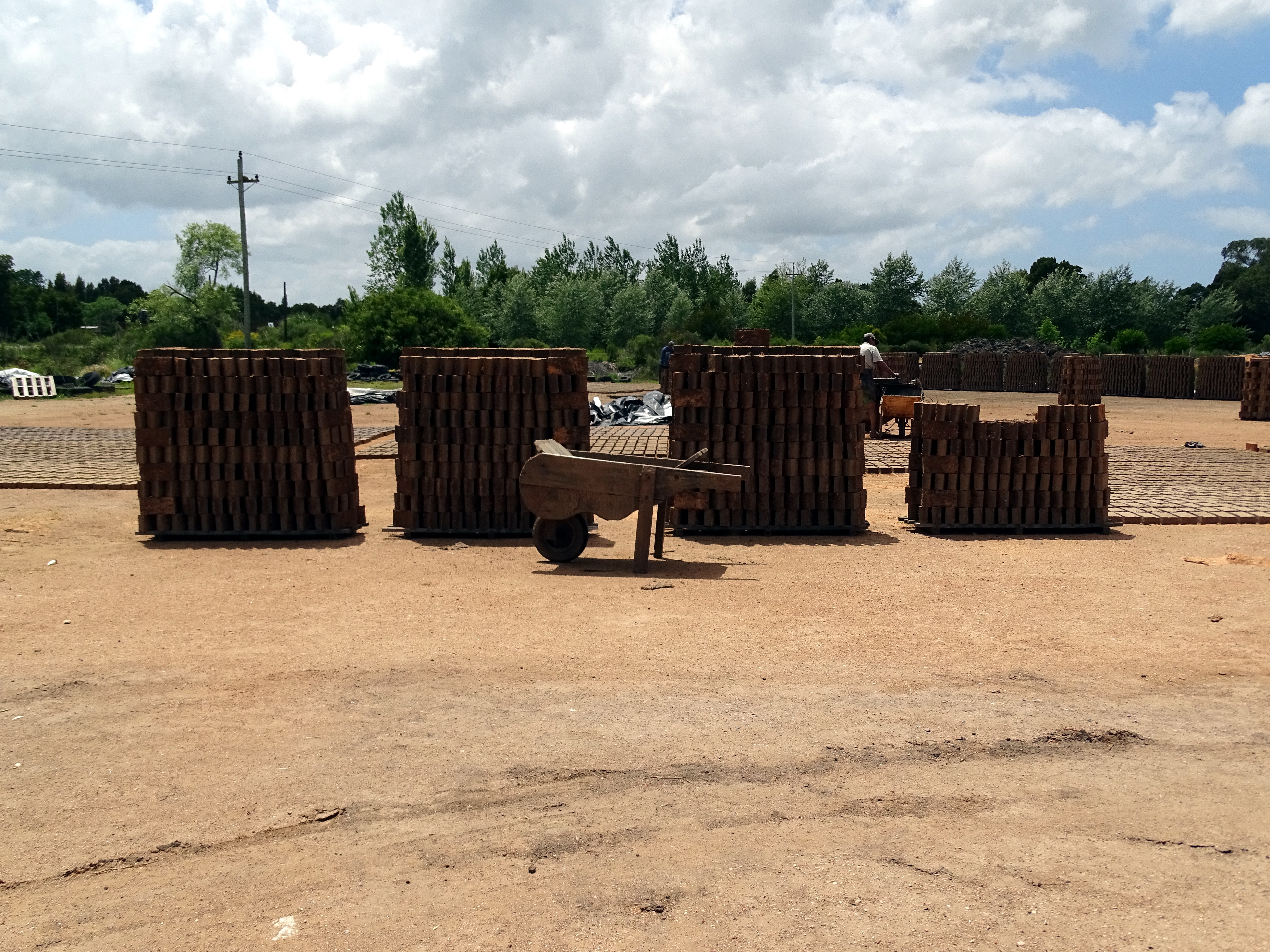
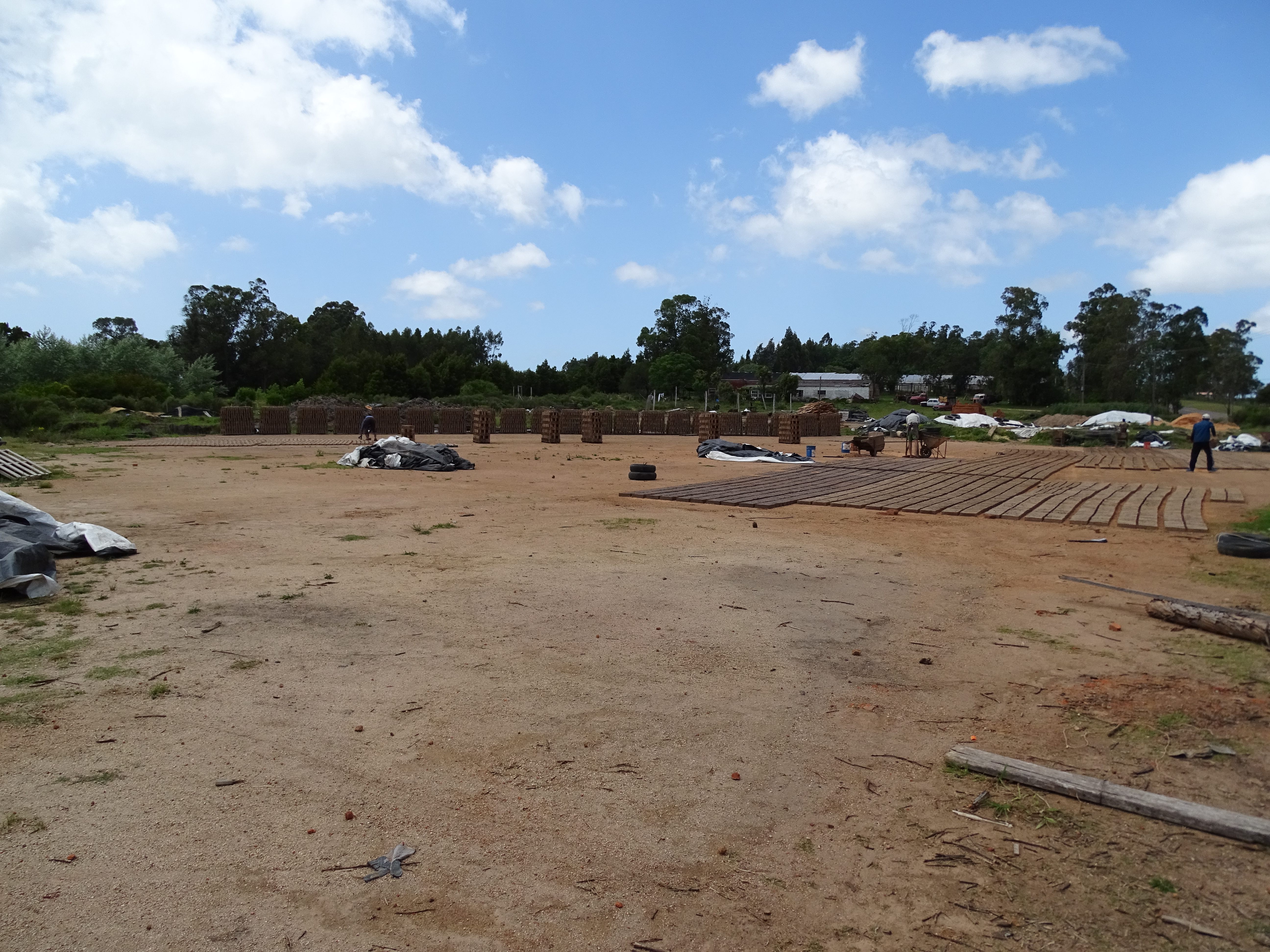
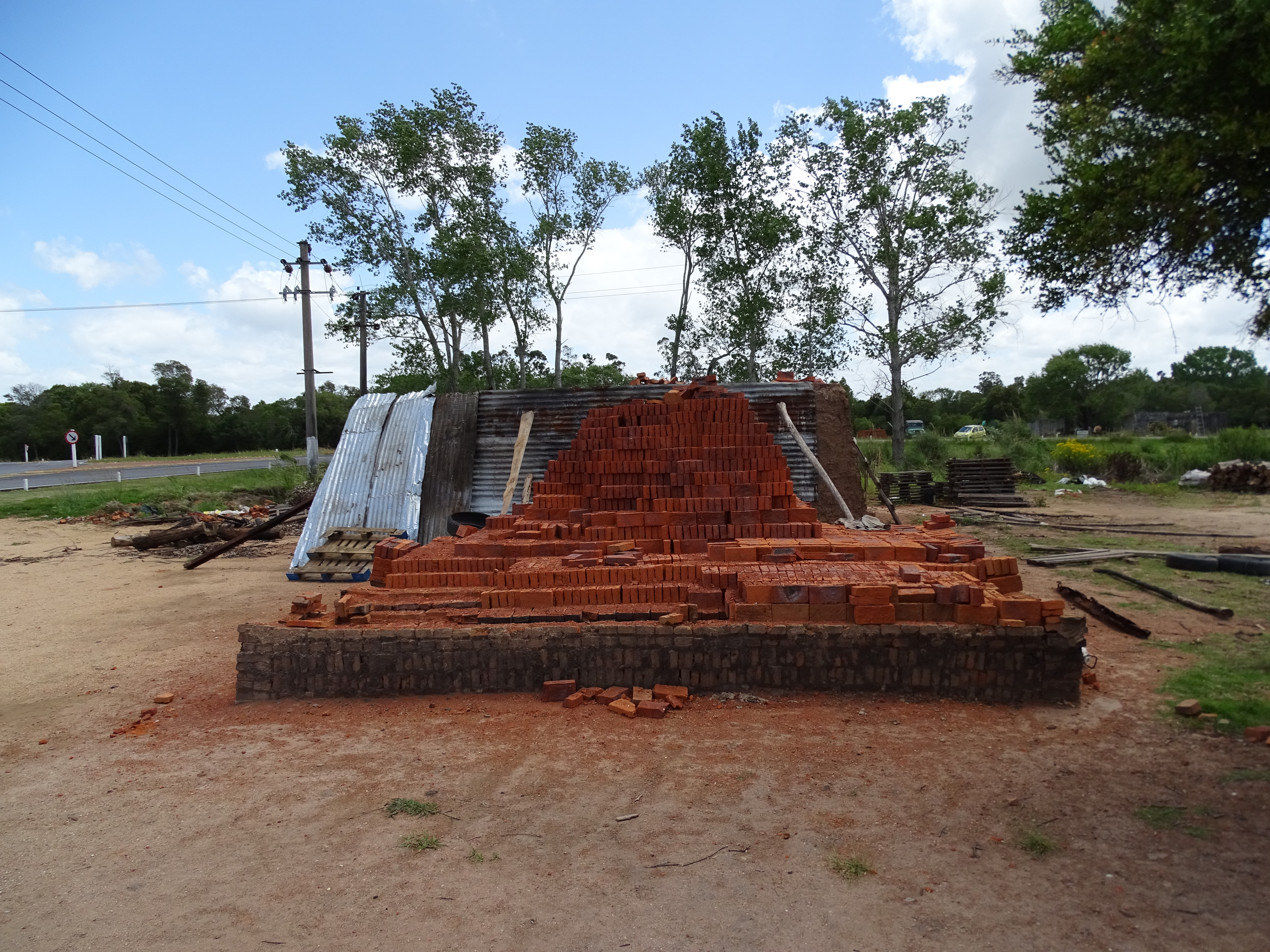
A few month ago, during a trip around Punta del Este area I came along a very interesting and almost forgotten craft and trade. Brick making.  At the cross point of ruta 104 and ruta 9 I stopped and watched how they do it. Every few 100meters one can find working craft sites or abandoned sites or the building results of this local (all around San Carlos) trade.

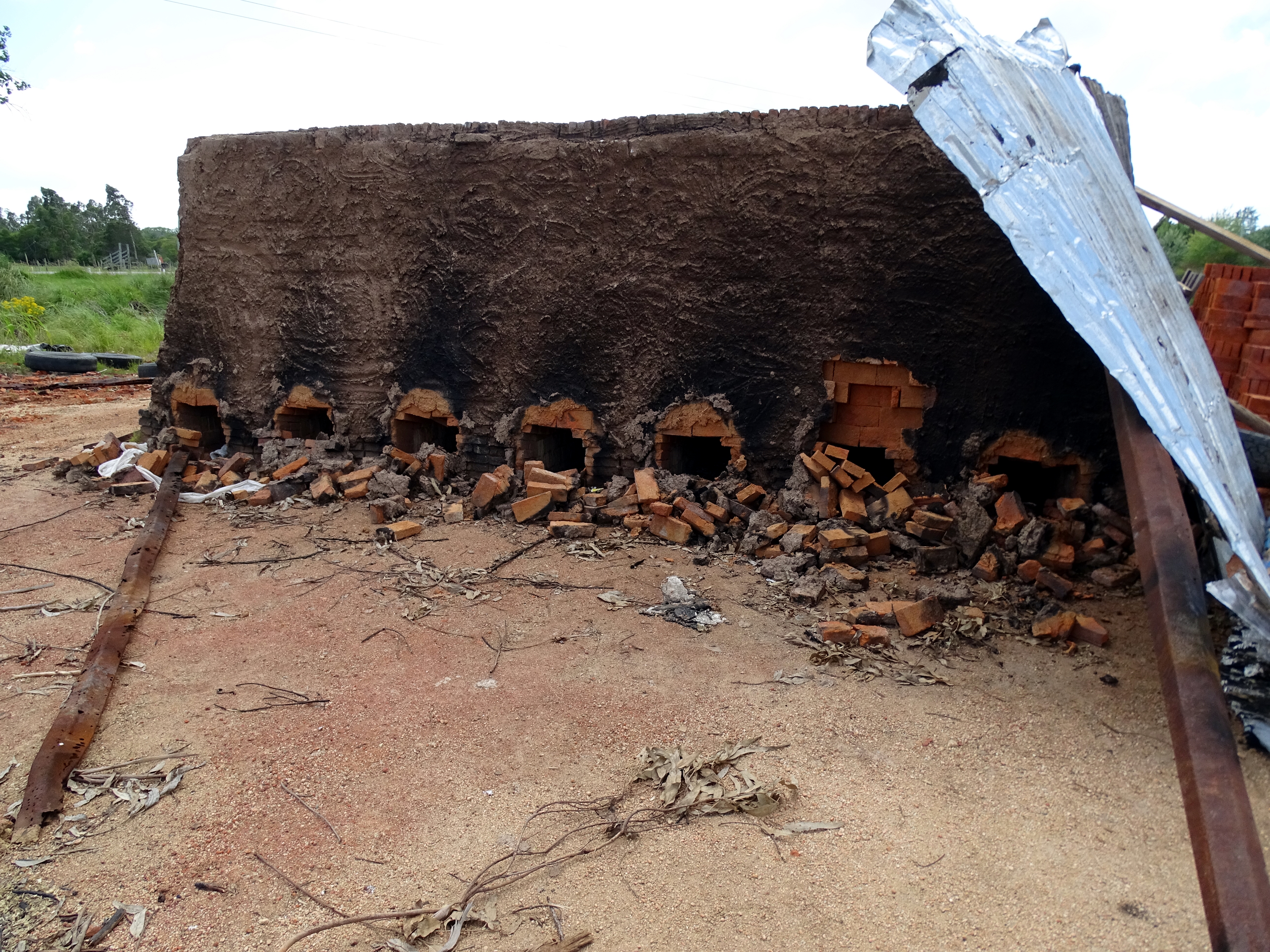
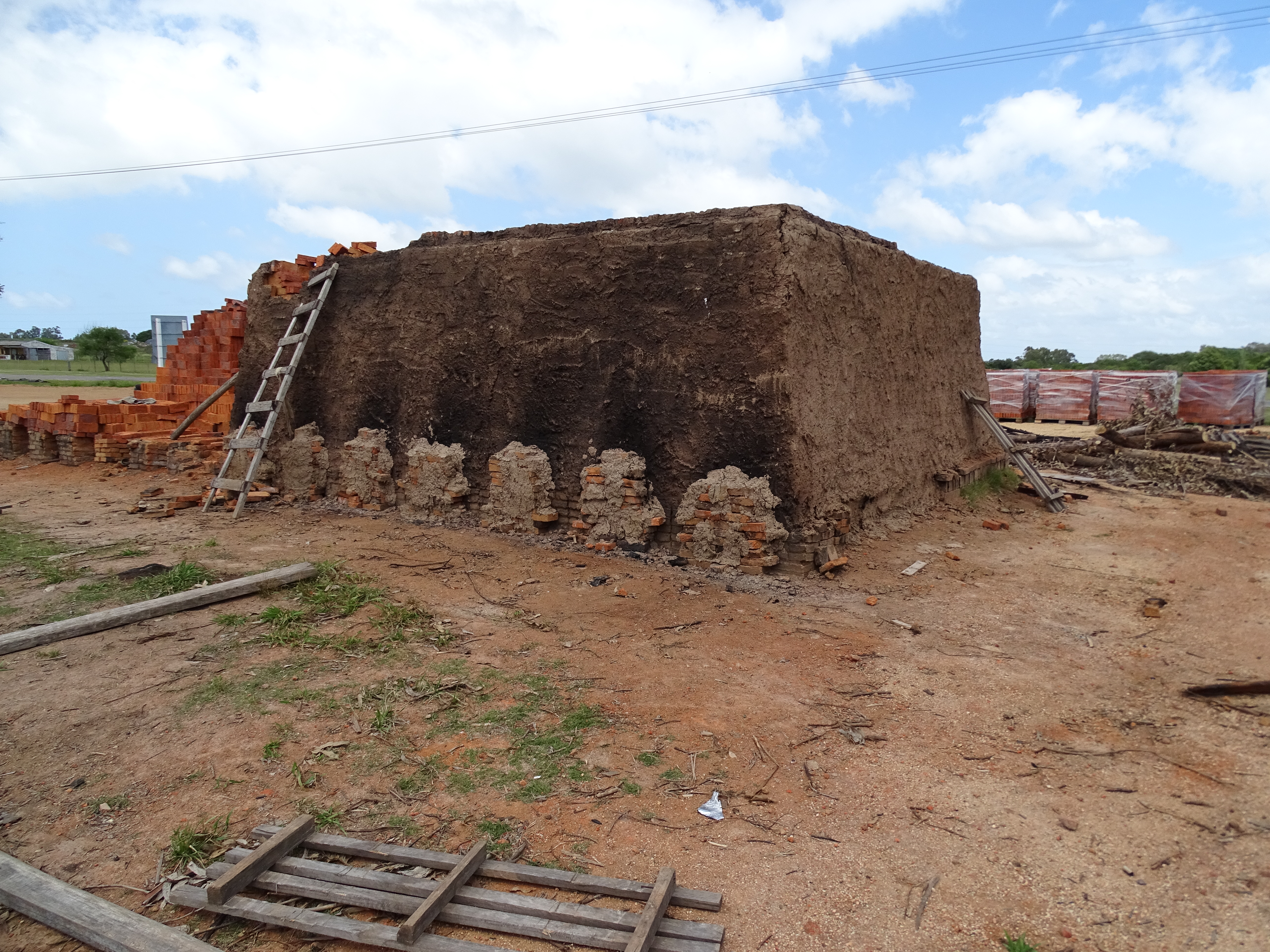
DSC00093  Brick kiln near San Carlos, Uruguay.

Early brick making.

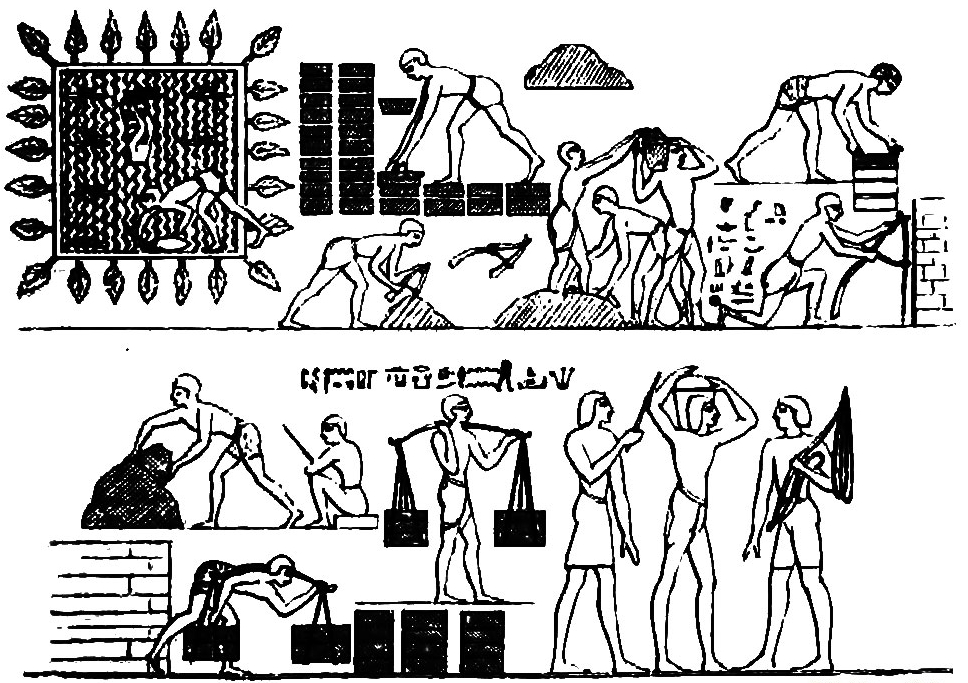
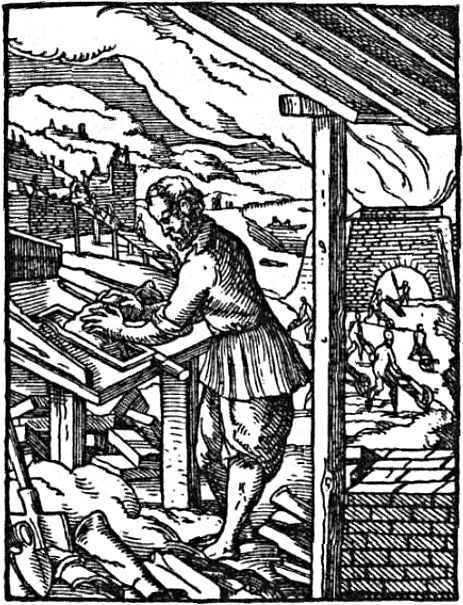
The earliest bricks in this world were dried bricks, meaning they were formed from clay bearing earth or mud and dried (usually in the sun) until they were strong enough for use. The oldest discovered bricks, originally made from shaped mud and dating before 7500 BC. Ceramic, or fired bricks were used as early as 3000 BC.

brick 2              brick 19 grav 1568       Engravings of brick making in ancient Egyptian times and in Germany around the 1500’s.

Early civilizations around the Mediterranean adopted the use of fired bricks, including the Ancient Greeks and Romans. The Roman legions built large brick structures throughout the Roman Empire, stamping the bricks with the seal of the legion.

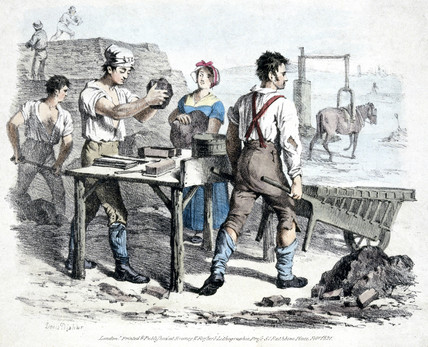
brick 3      Since the Middle Ages the steps of brick making are almost the same. Mixing the clay by horse power, forming the clay in molds and finally fire drying in large kilns. They still use the same methods in the Uruguayan San Carlos area.

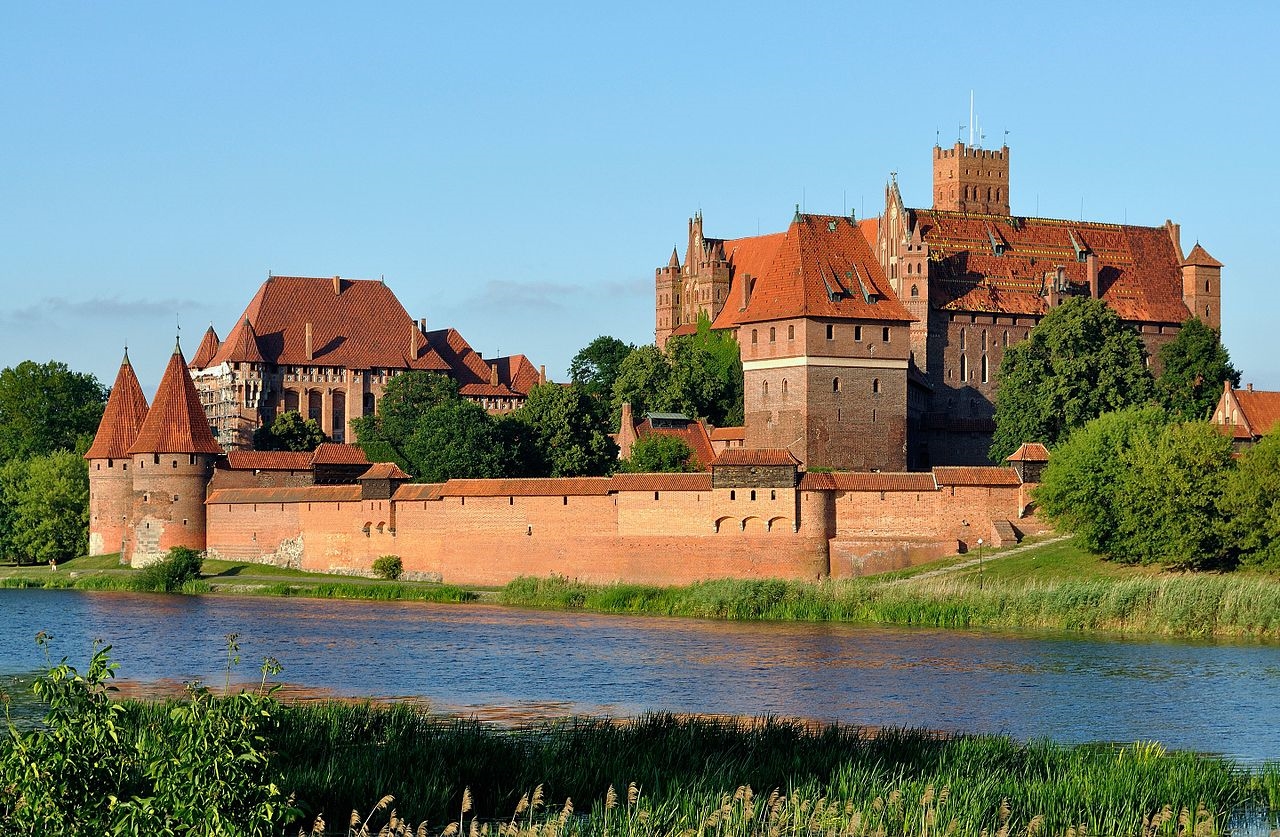
During the Early Middle Ages the use of bricks in construction became popular in Northern Europe, after being introduced there from Northern-Western Italy. An independent style of brick architecture, known as brick Gothic (similar to Gothic architecture) flourished in places that lacked indigenous sources of rocks. Examples of this architectural style can be found in modern-day Denmark, Germany, Poland, and Russia.

brick 4 malbork castle  Malbork Castle, worlds largest brick build castle.

The castle was built between 1274 and 1300 in Marienburg, Prussia (now Malbork, Poland) by the Teutonic Knights, a German Roman Catholic religious order of crusaders, in a form of an Ordensburg fortress. The Order named it Marienburg (Mary’s Castle). The town which grew around it was also named Marienburg.

brick 4a iron warriors  Inside Malbork (Marienburg) Castle, the Iron Soldiers. Notice the fantastic brick work. Click on pics to supersize.

How bricks are being made.

This short clay brick making guideline will show you how to make clay bricks in simple steps. When I talked to the people brick making in San Carlos they confirmed that the method is the same for hundreds of years.

1. Soil testing:

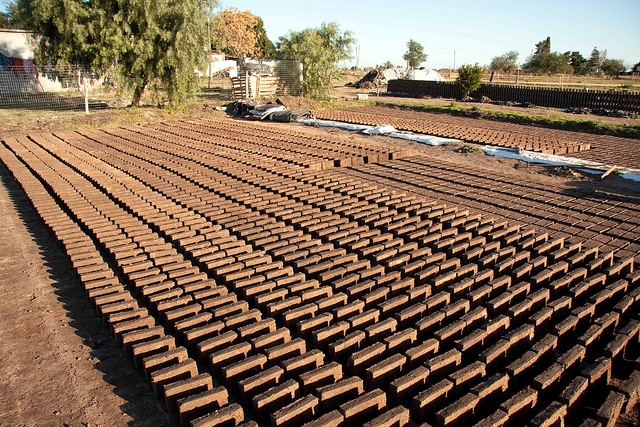
brick 1  Bricks stacked for air drying, takes ca. 4-6 weeks.

One need to test the soil from which one plan to prepare the brick. The proportion of sand to clay in the soil should not be more than 50% (minimum 30%). But how to test that? A simple method is to mix 10 teaspoons of the soil to a glass of clean water, stir it completely, and keep it overnight. You will see two clear layers of clay and sand. From the size of each layer you can find out the proportion.

2. Prepare the mold:

brick 1b    Double mold for usual size bricks.

Wooden (ideally beech wood) planks and nails are used to prepare brick molds. There are excising hundreds of sizes and shapes, depending on personal taste and requirement. Its possible to make make molds for single brick as well as multiple bricks.

3. Prepare the clay:

DSC00091  Preparing the clay, in the background.

One digs the required amount of soil and ship it to the brick making site. Then they test if the soils need to be mixed with some additional amount of sand. Remember the sand plays an important role for removing the brick from the mold. The mixing of a sufficient amount of water to the soil is important to make it clay. This kind of mixing is done by hand and shovel, bigger amounts they have done with horses, now one uses a tractor.

  DSC00098  Look at this handmade, old style, wheel barrow.

The clay should be solid enough to hold its shape, but at the same time it should be liquid enough to fill in the mold. This stage mostly decides about the place where people make bricks, closest to the source of soil and sand. Preparing the clay is, with firering, an important part of craftsmanship and experience.

4. Make the raw brick:

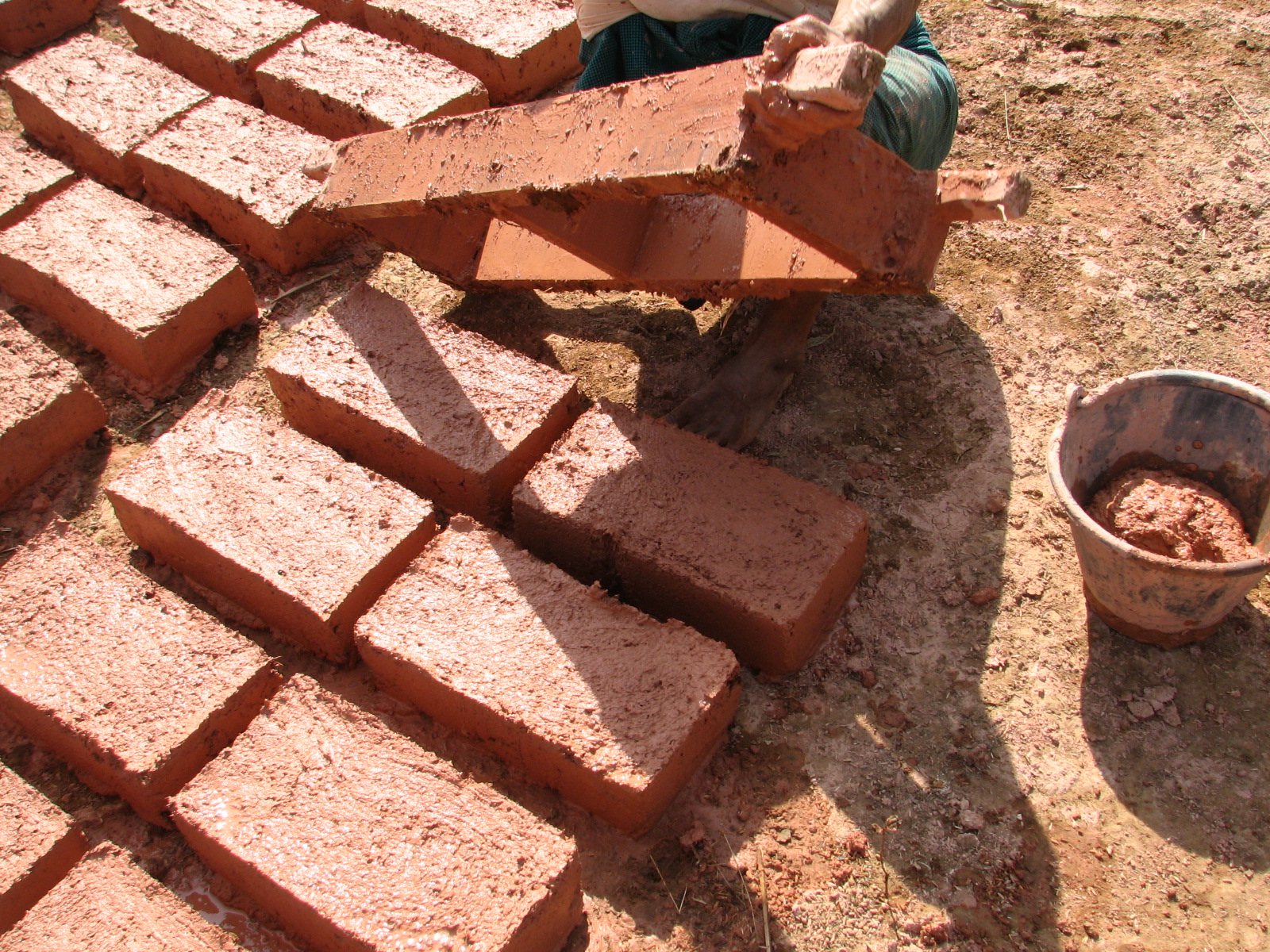
DSC00096  Making the raw bricks, means moulding the bricks.

Then they pour the prepared clay into the mold and let it set for half an hour. After that it should easily come out from the mold as raw brick.

5. Sun drying:

brick 1a         In San Carlos they use a combined method to dry bricks. First a few days sun drying and then a few days fire drying in a kiln oven.

Raw brick should be kept on dry sand in the sun for drying. This is an important step for making adobe brick. The brick should be left until all the exposed edges become white. After that they turn them on their edges. This whole process may take at least three weeks, if the weather supports the process. The final moisture content of the adobe clay brick will be around 10-15%. At this point, the adobe bricks will be ready to use.

6. Fire Drying:

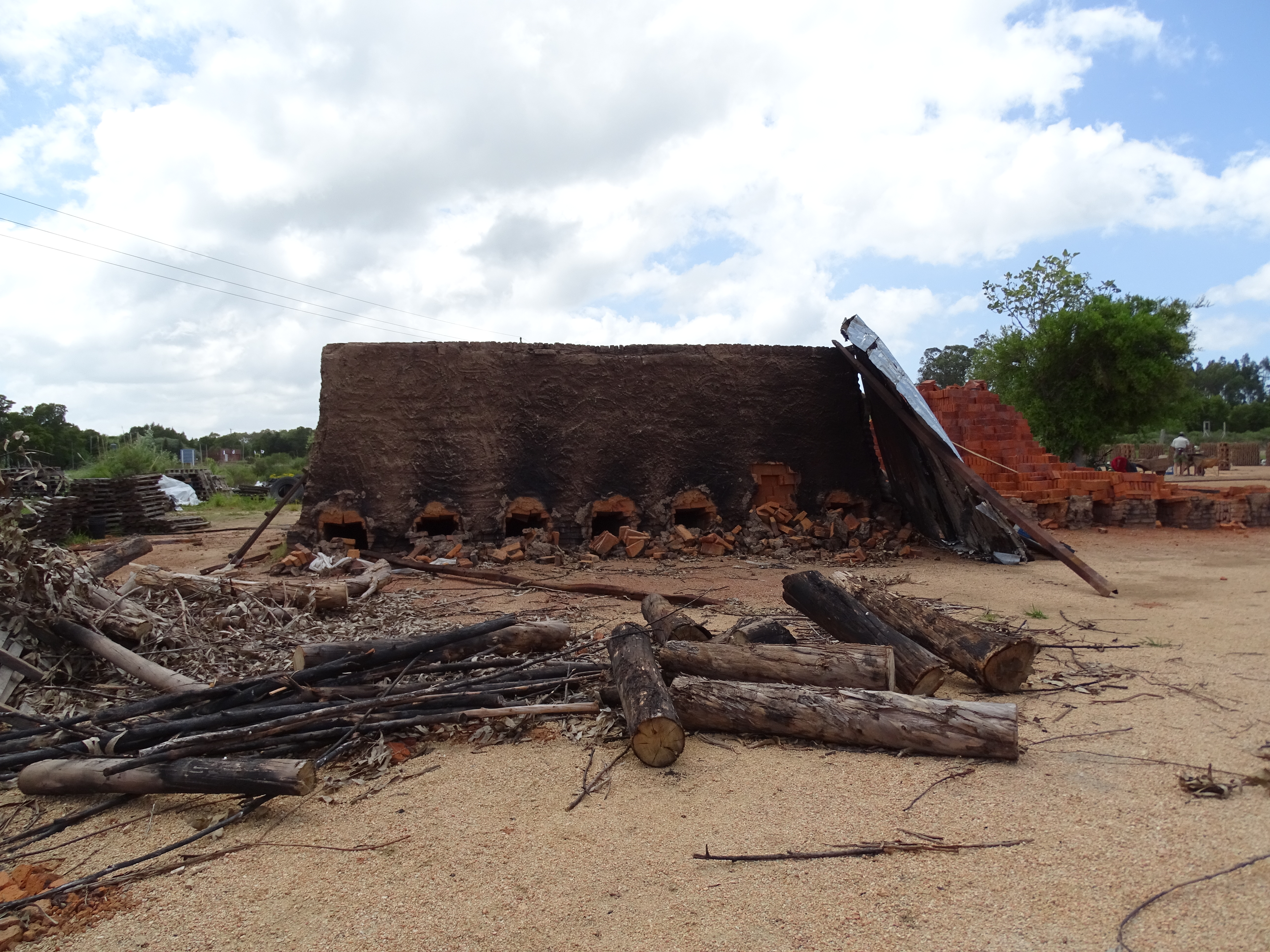
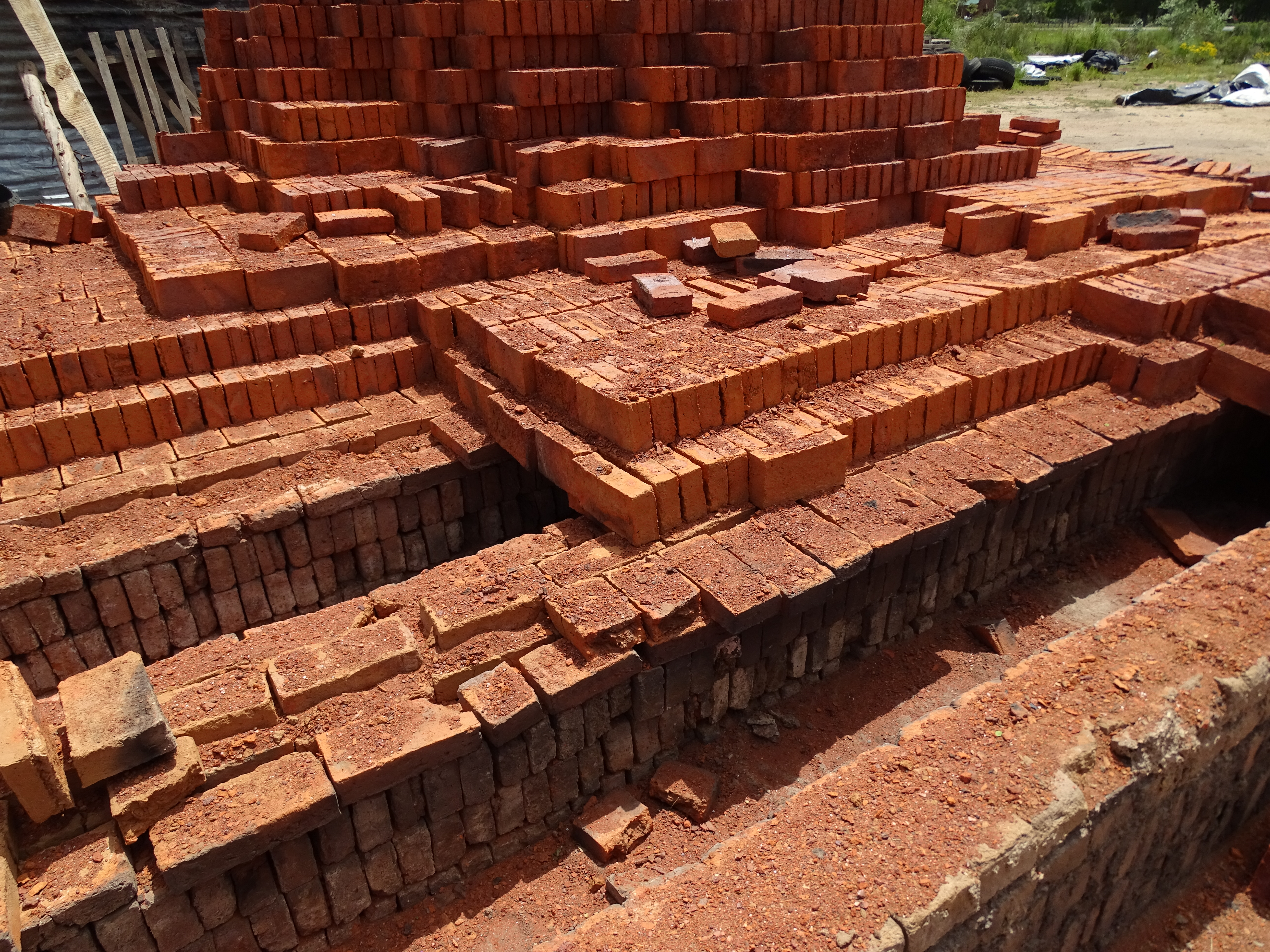
DSC00095  DSC00094   Brick kiln to fire the bricks. Fire holes opened and closed and kiln just breaking off.

In case one uses to make fired red clay bricks, its needed to cure the brick in an oven (called kiln) under 1800 degrees Fahrenheit (about 1000 degrees Celsius) temperature for seven more days. This method is needed in colder countries where you can’t count on permanent secure sunshine. And – one needs long experience to do it right.

DSC00090  DSC00097  Collecting the fired bricks out of the kiln.  See how interesting they stack the bricks.
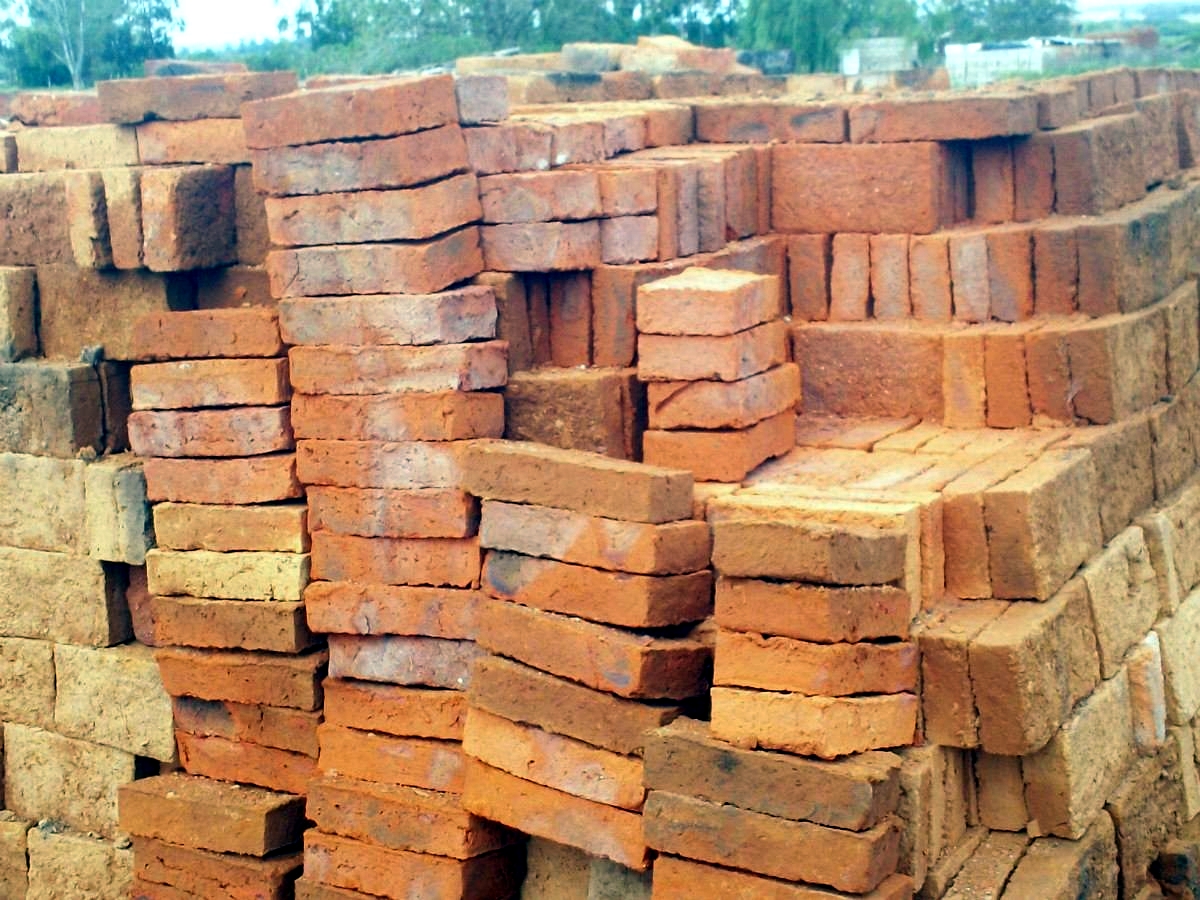
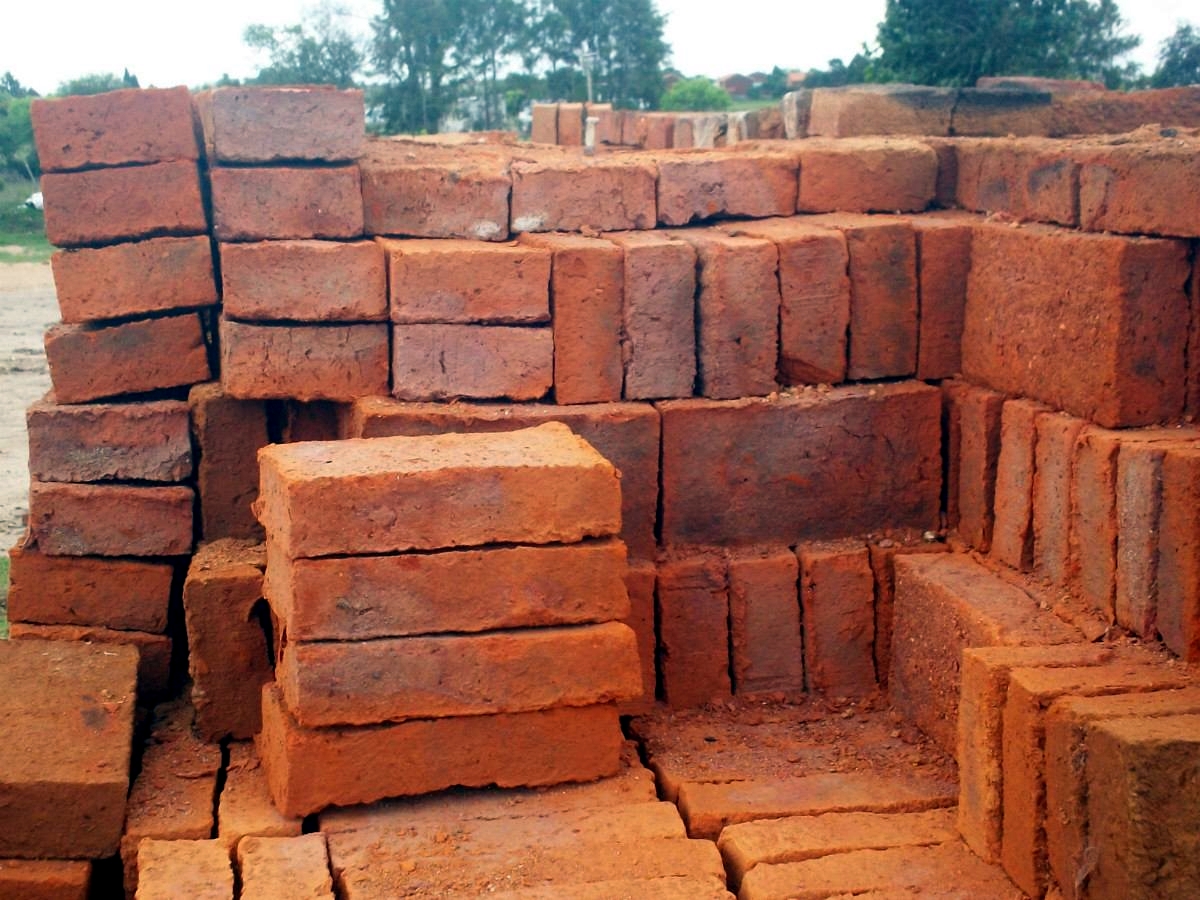
brick 12a  brick 12 Different brick qualities for sale from „San Carlos Brickworks“. They sell on Mercadolibre for about 450,—500,– peso per 100 bricks.

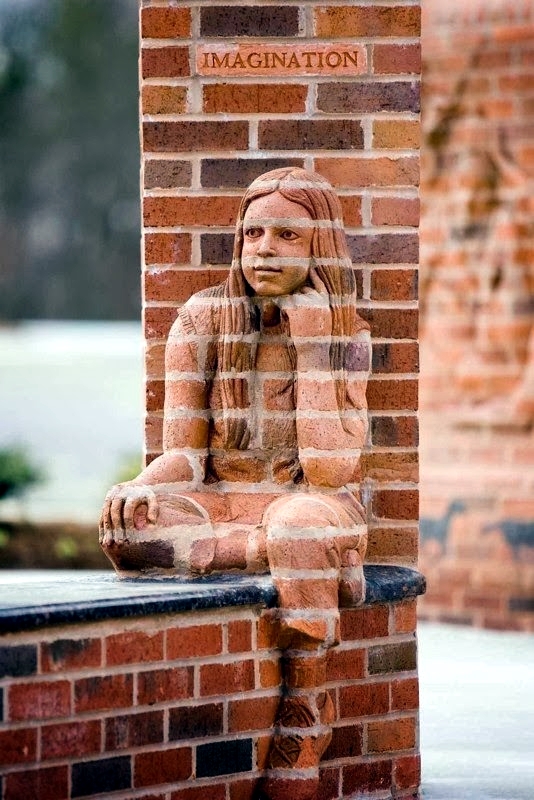
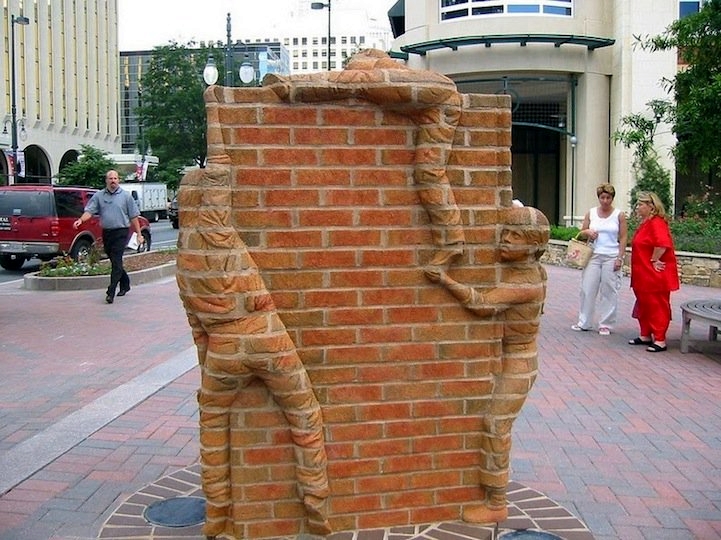
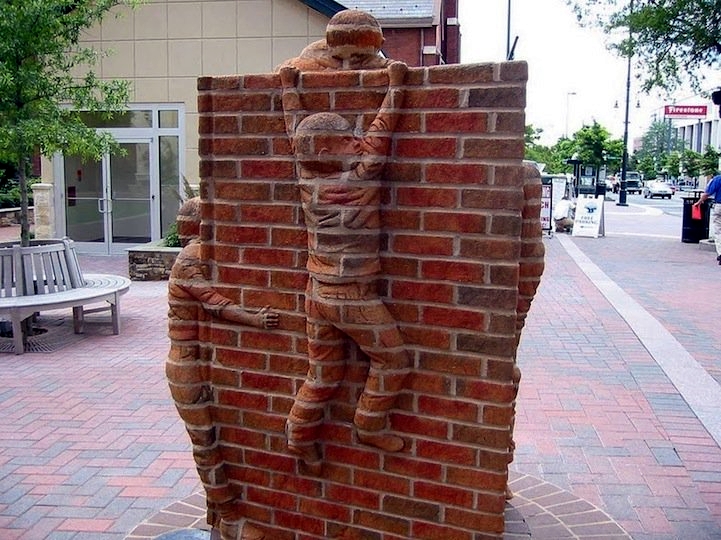
Brick artist Brad Spencer.

American artist Brad Spencer works with bricks to produce eye-catching, figurative sculptures. Each piece of work in the sculptor’s growing collection is an intriguing look at a common medium used in an unconventional way.

brick 25e  Spencer brick art.

The fact that bricks are typically an architectural material whose visual shapes rarely extend beyond anything more than a boxy wall makes them all the more attention-grabbing.

brick 25b Spencer brick art.

Spencer says of his material of choice: „Brick sculpture can be dated back to ancient Babylon but remains a fresh and interesting enhancement to any building, wall or environment.

brick 25a Spencer brick art.

The brick medium has all the same characteristics of durability and low maintenance as a brick building, blends well in settings where other brick construction is present, looks good with landscaping and has a familiarity which is comforting to people.“

brick 9a brick 9 benz 6,5t  Another example of brick art, made by a Japanese artist. This brick Mercedes weights over 6,5 tons and was sold to a collector for 90.000,–$US.

Uruguayan Brick Art.

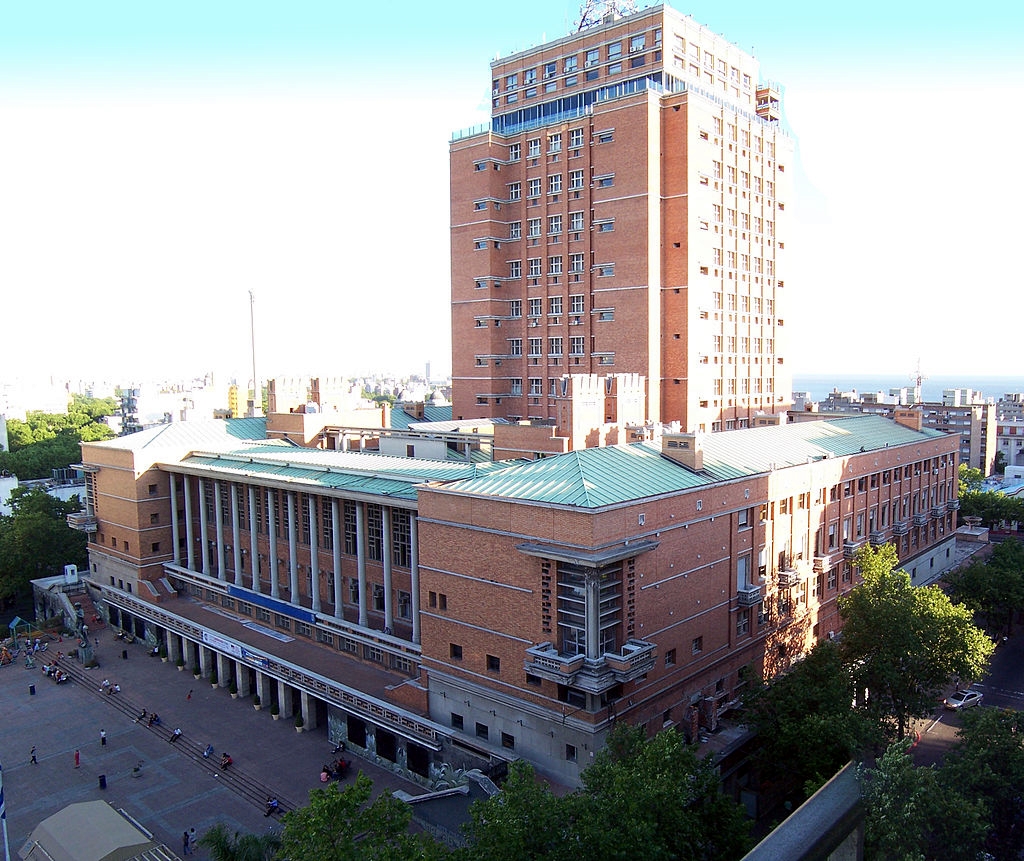
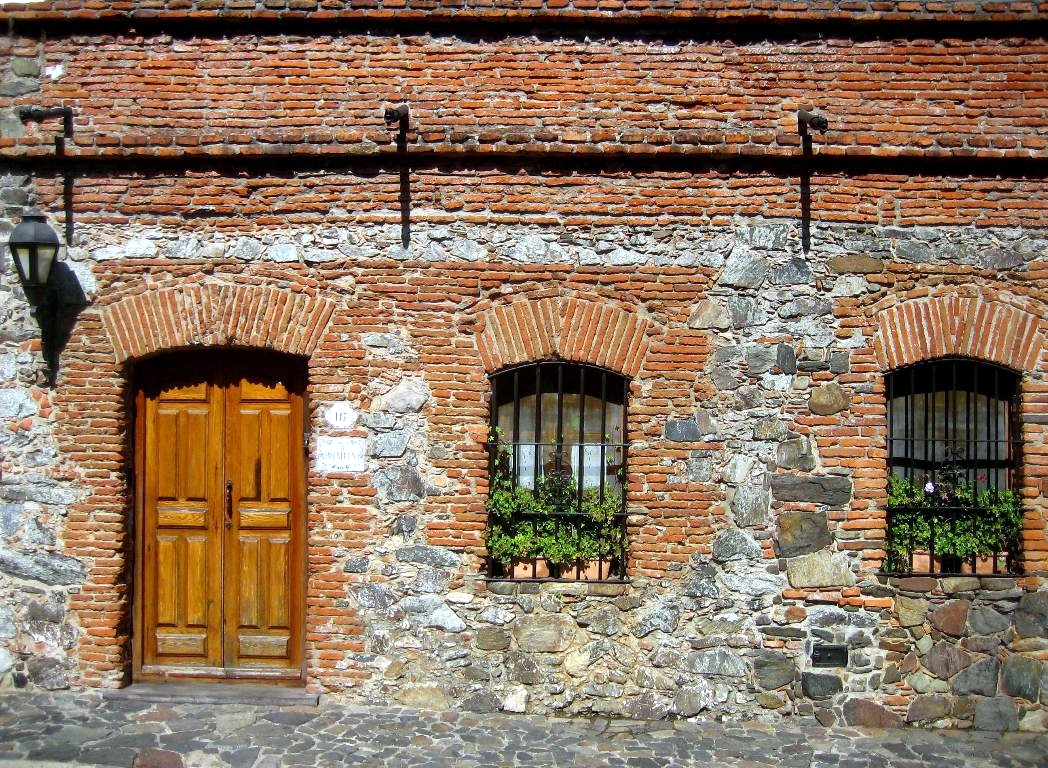
  brick 11  brick 23 colonia  Fantastic examples of Uruguayan brick building. Left, the Intendencia Municipal de Montevideo (on Avenida 18 de Julio). Also called Palacio Municipal, the construction began in 1935 and inaugurated on July 16, 1941 . Right, a fantastic historic brick building in Colonia del Sacramento from the early 1800’s. Notice the double length size of bricks above the windows and door. As always, click on pictures to supersize.
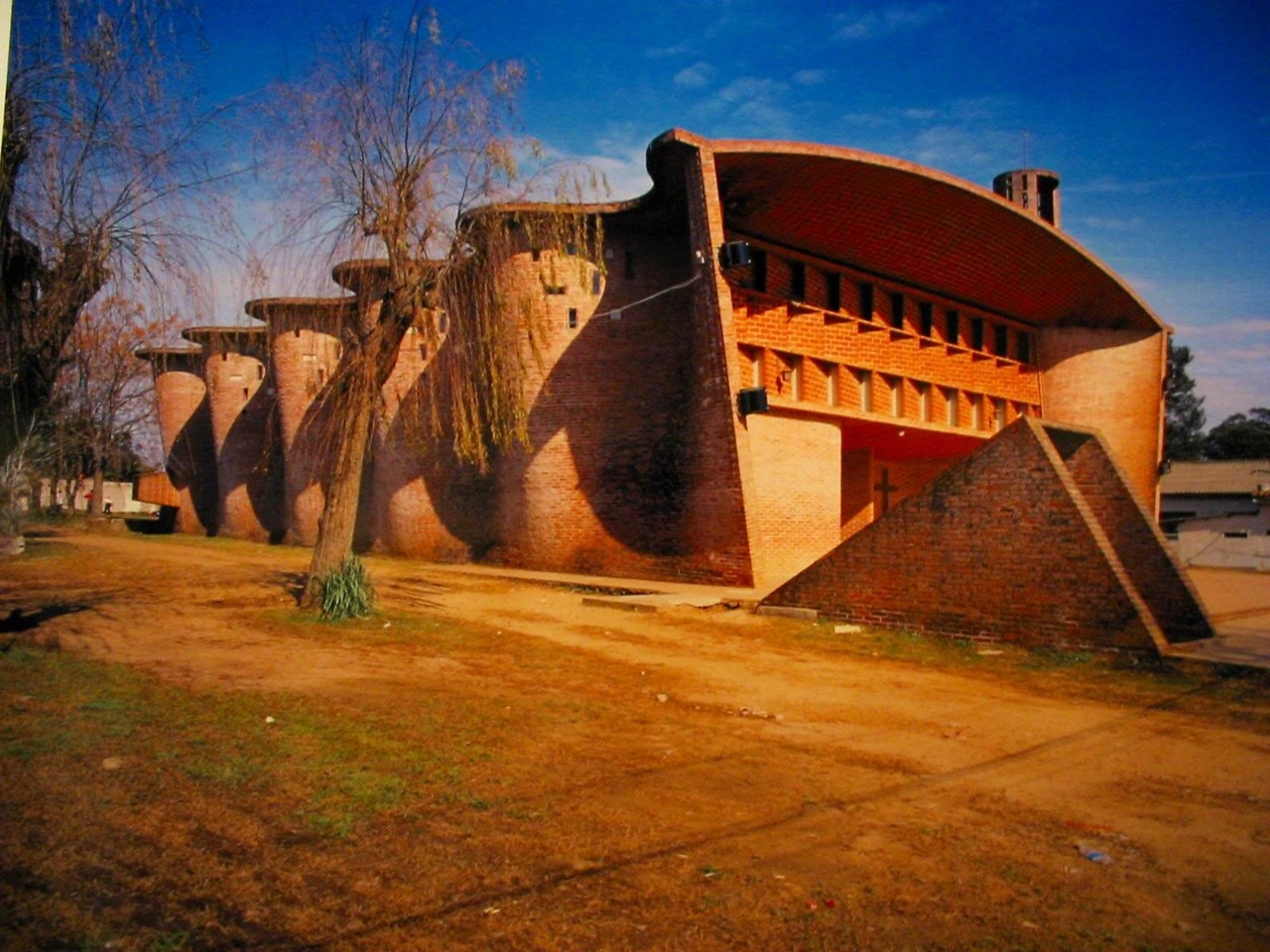
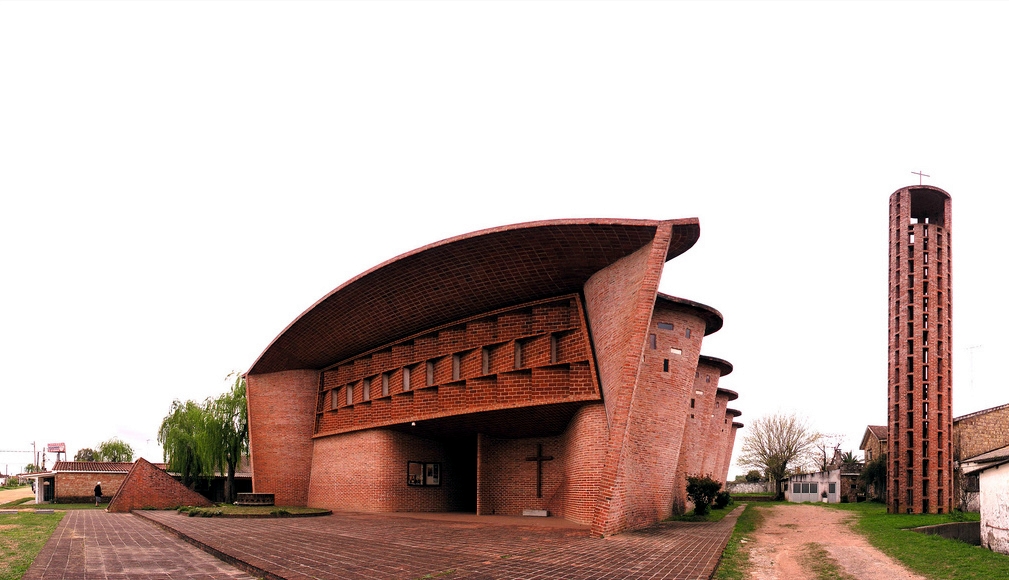
brick 10a     brick 10  And this is Uruguayan brick art of the finest. The famous Eladio Dieste church in Atlantida Norte. Read my article about it under Category Atlantida, article „Must See – An Innovative Brick Artist“.

Brick Monuments around the world.

Many many brick buildings are produced around the world. But Northern Europe is at least an important center of this ancient and artistical  architecture. Within Germany many of the worlds leading brick buildings. Look at a few of them.

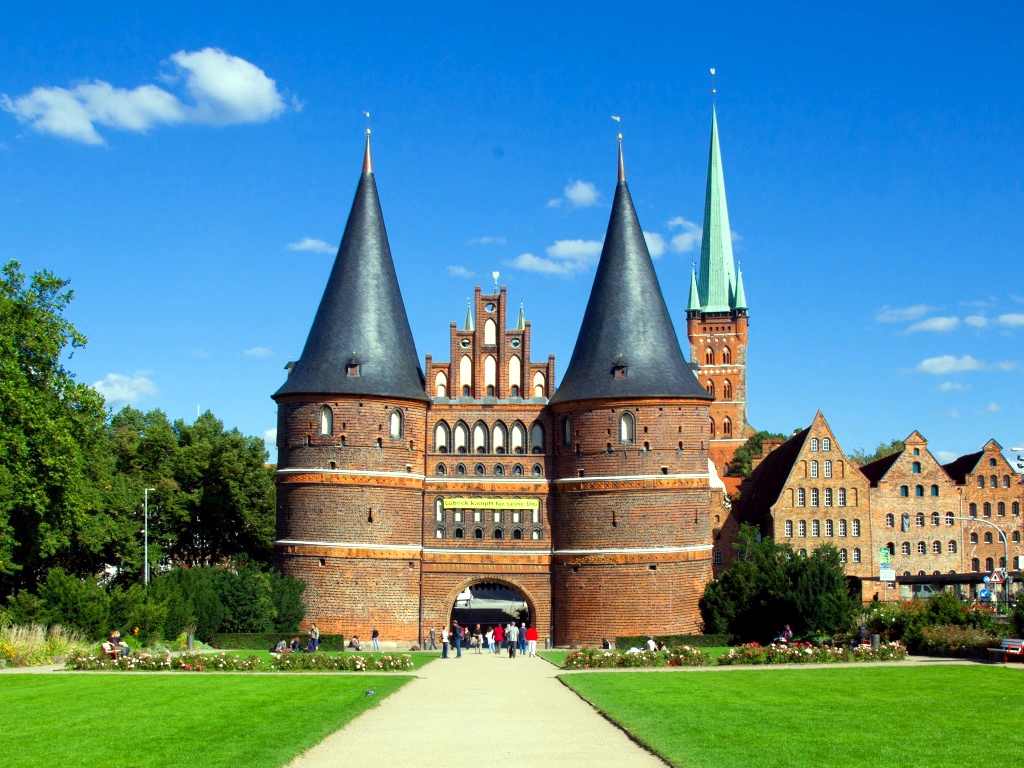
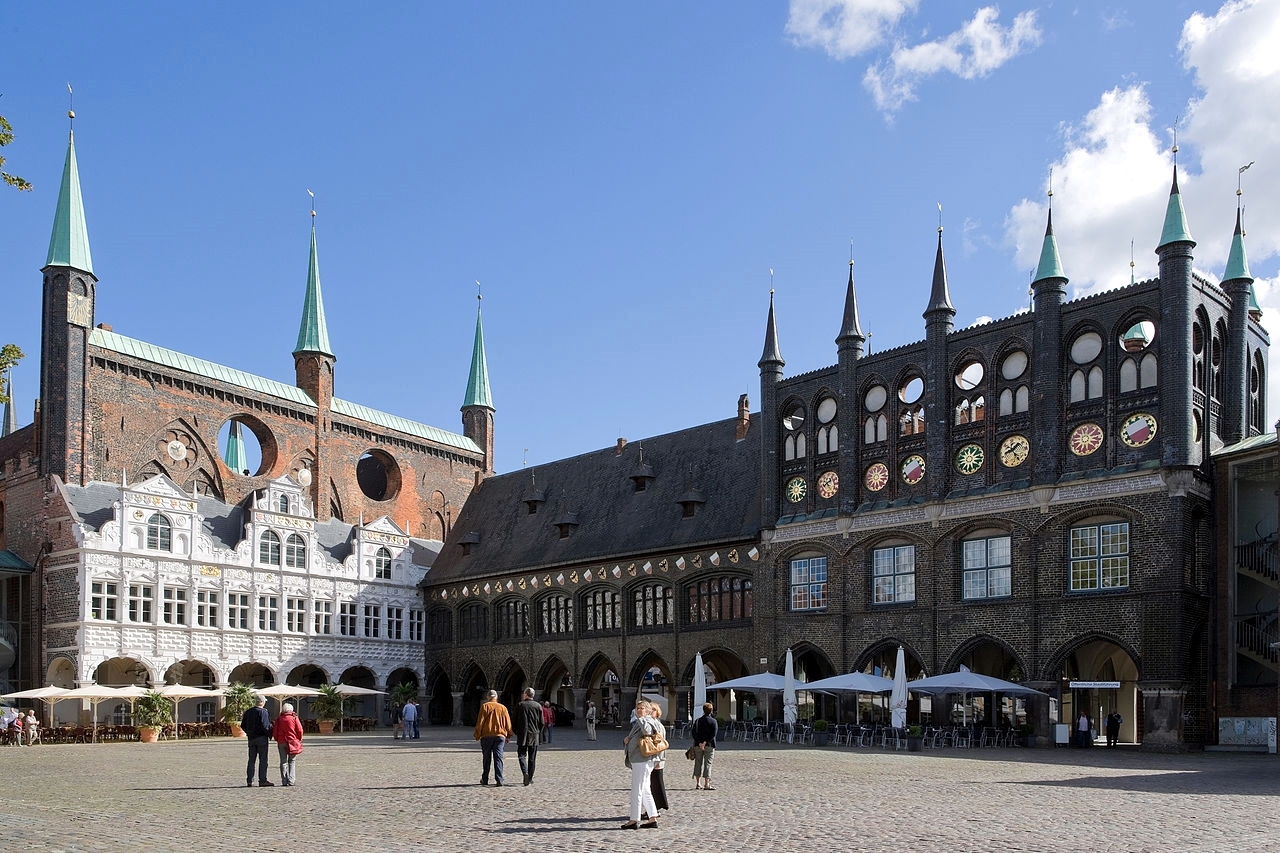
welt 10a holstentor   brick 5 townhall luebeck     The whole inner city of the Hanseatic city of Luebeck, Germany is one brick architecture from as early as the 12th century. Above the Holstentor and the Townhall. The whole inner city is listed as a World Heritage Site.
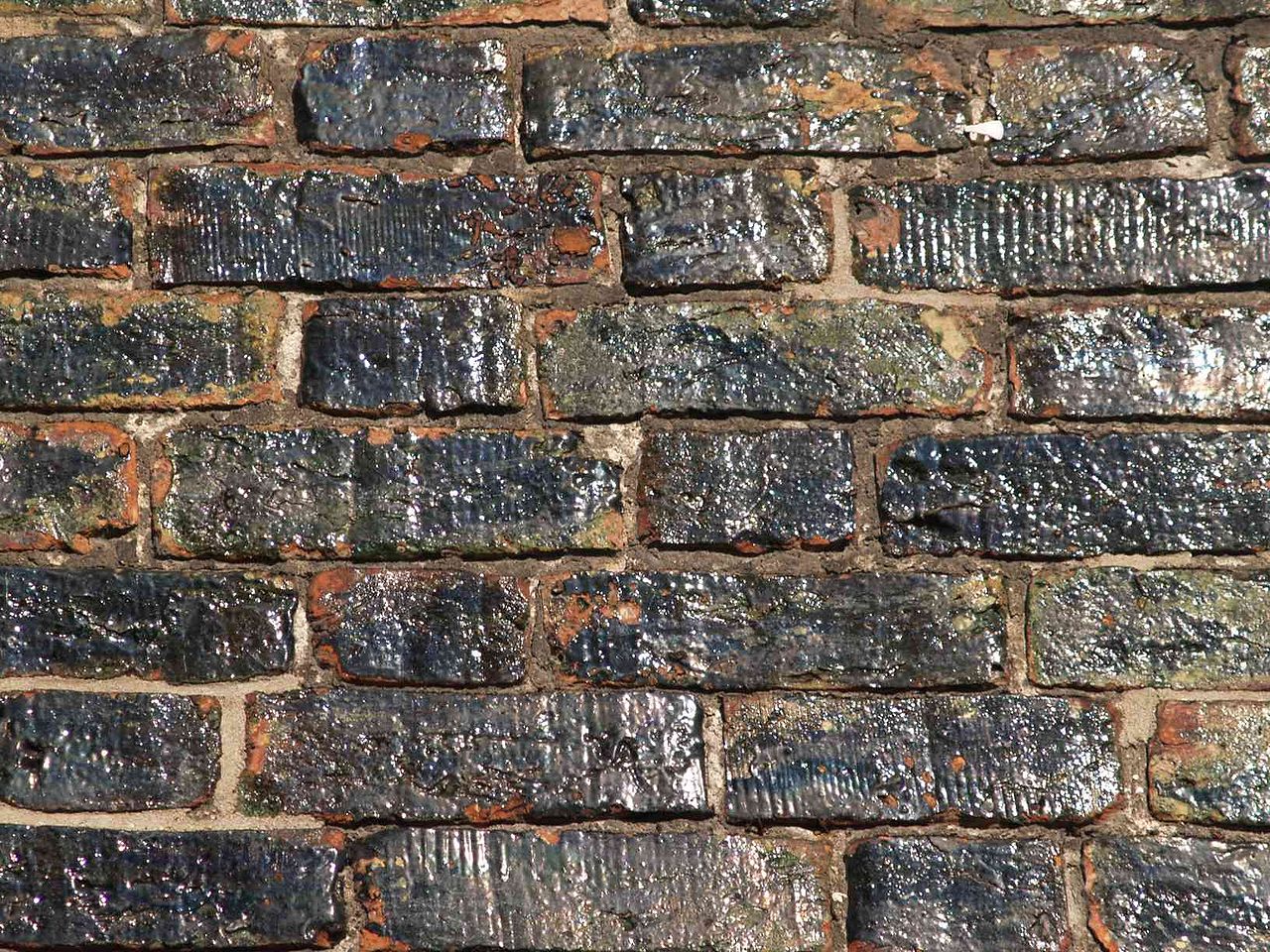
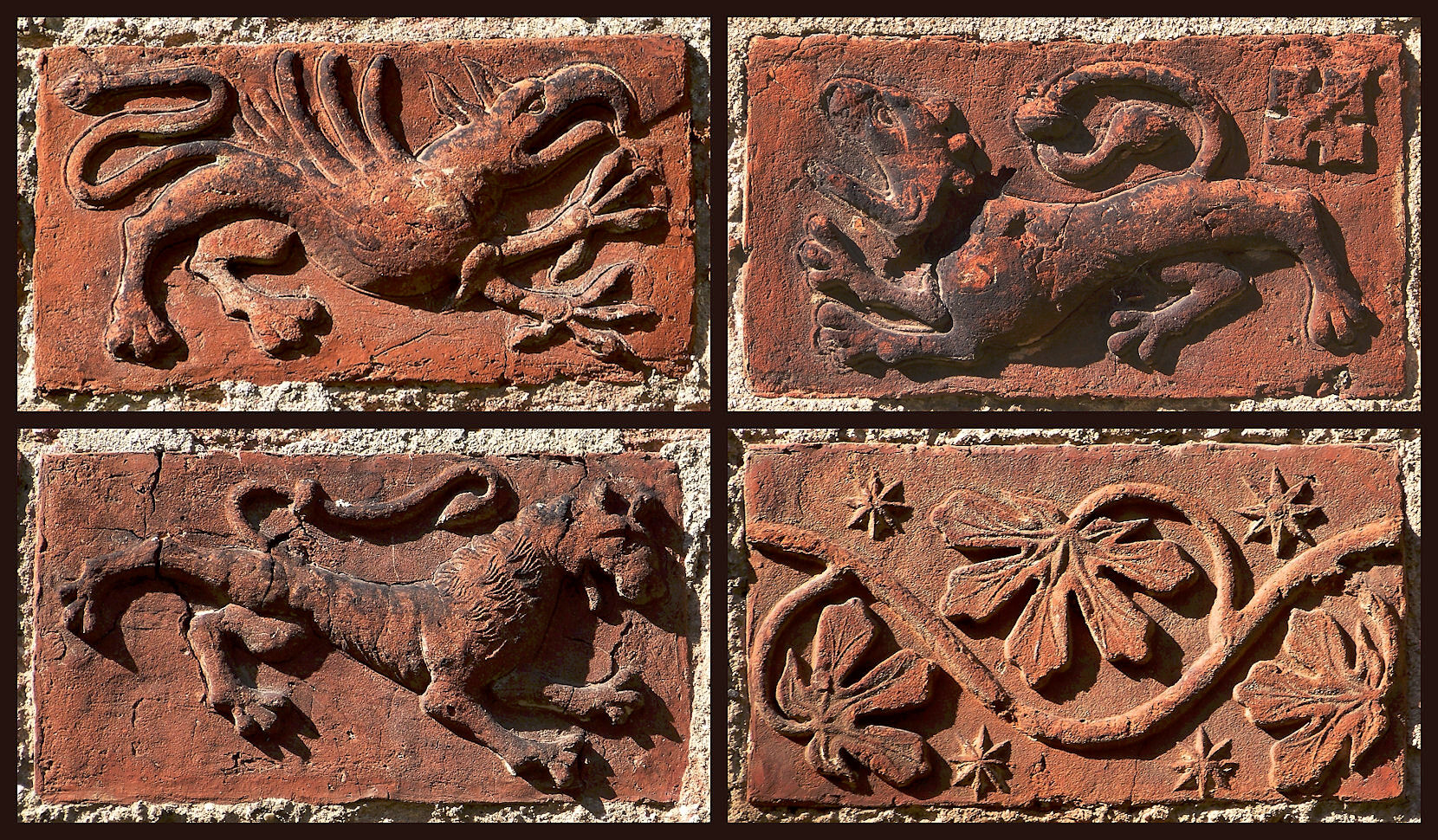
brick 16 glasiert ziegel luebeck rathaus  brick 13 friese steffenshagen  Many of the buildings are made from glazed bricks, which is very difficult and expensive to produce. Such kind is unknown in Uruguay. Also, most of the old brick works have so named „Master-stones“, to show who’s masterwork the building is. Or they have still some Romanian Legion signs burned into the bricks.
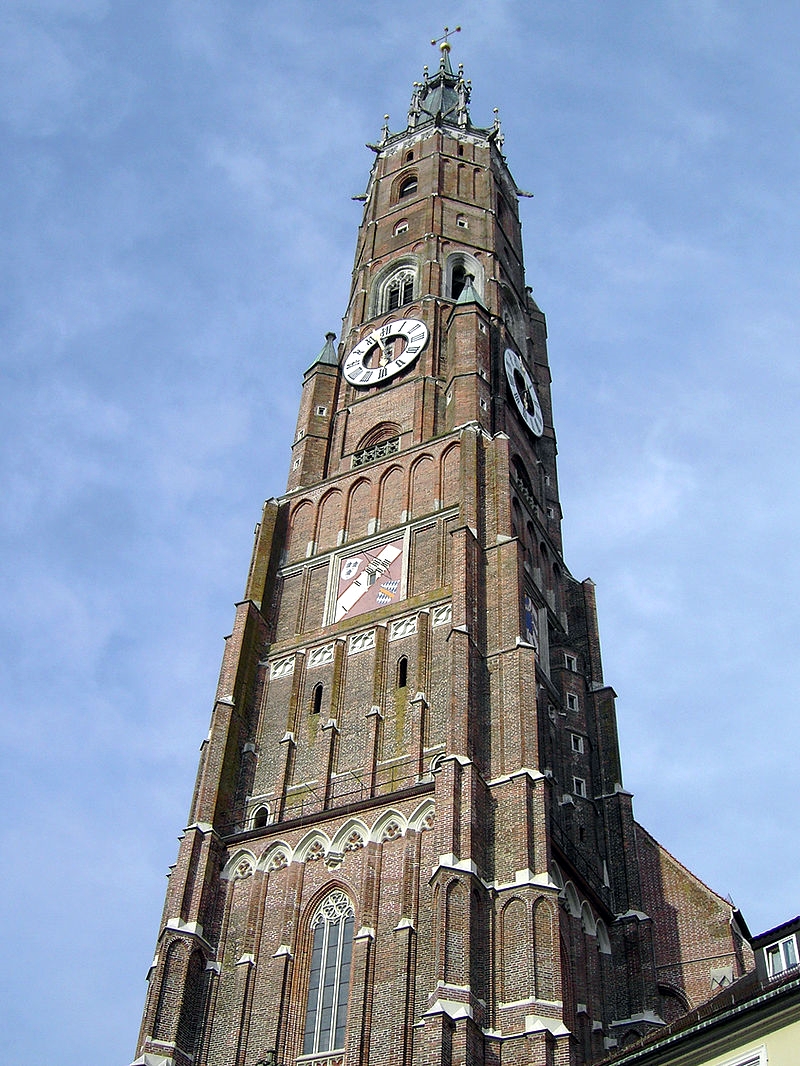
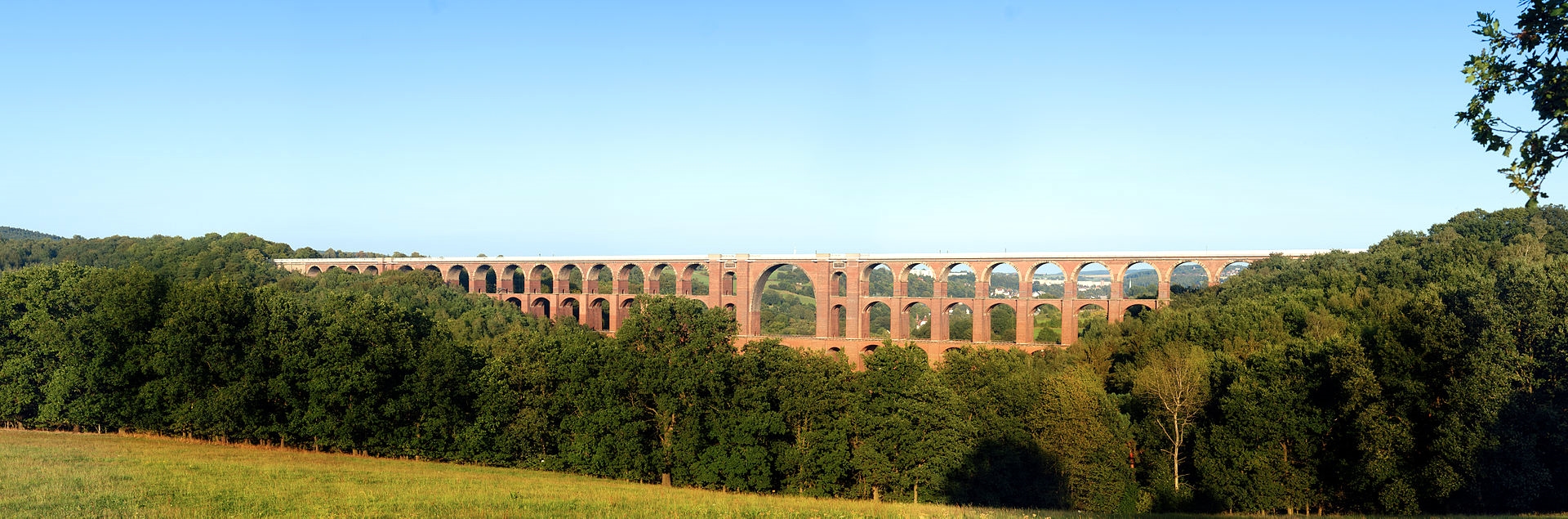
brick 14 highest martinskirche landshut            brick 15 goetzschtalbruecke groesste ziegelbruecke                     The highest brick build church tower in the world belongs to St. Martins church in Landshut, Germany. The largest brick build bridge in the world is to find in the Goetzschtal, Germany. Click on pics.
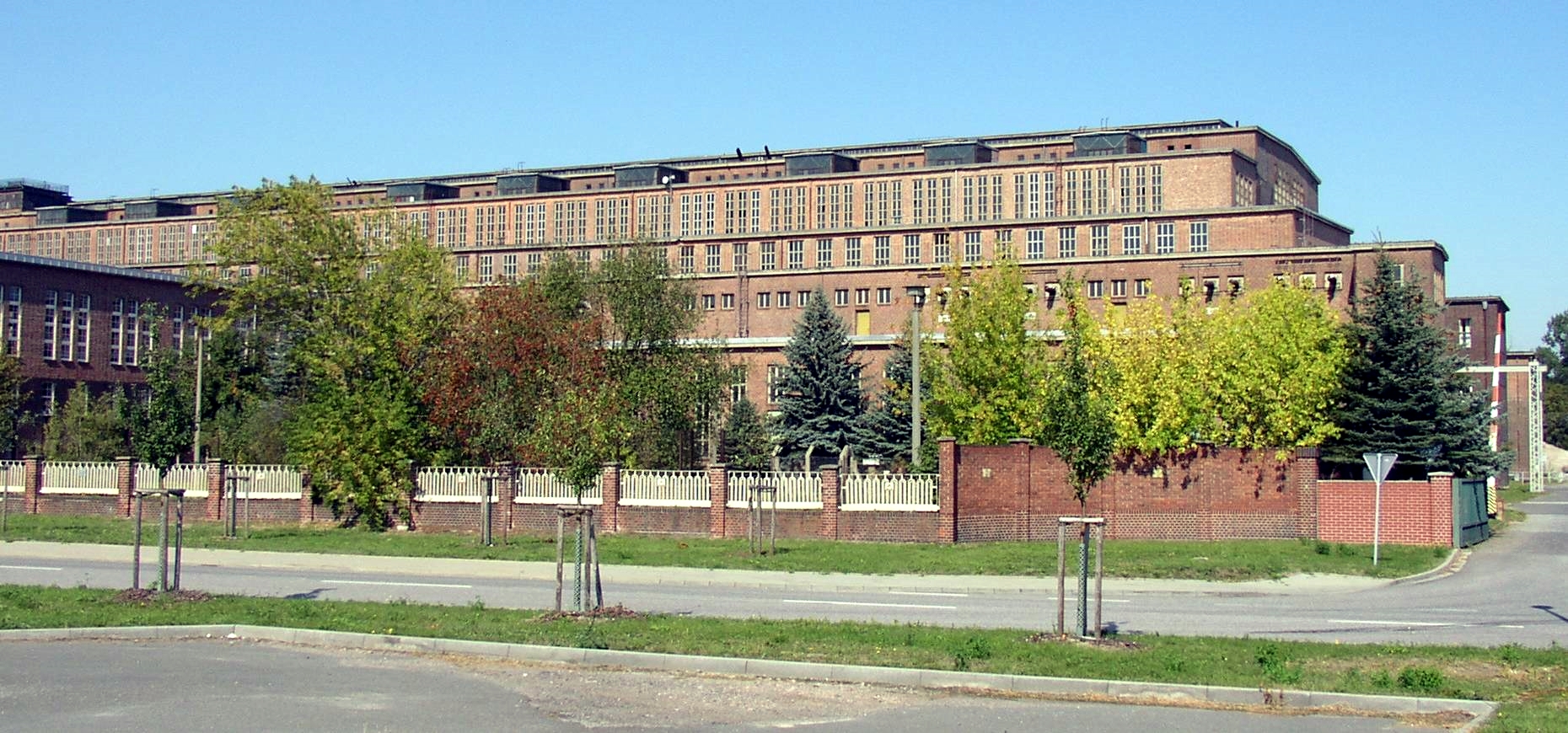
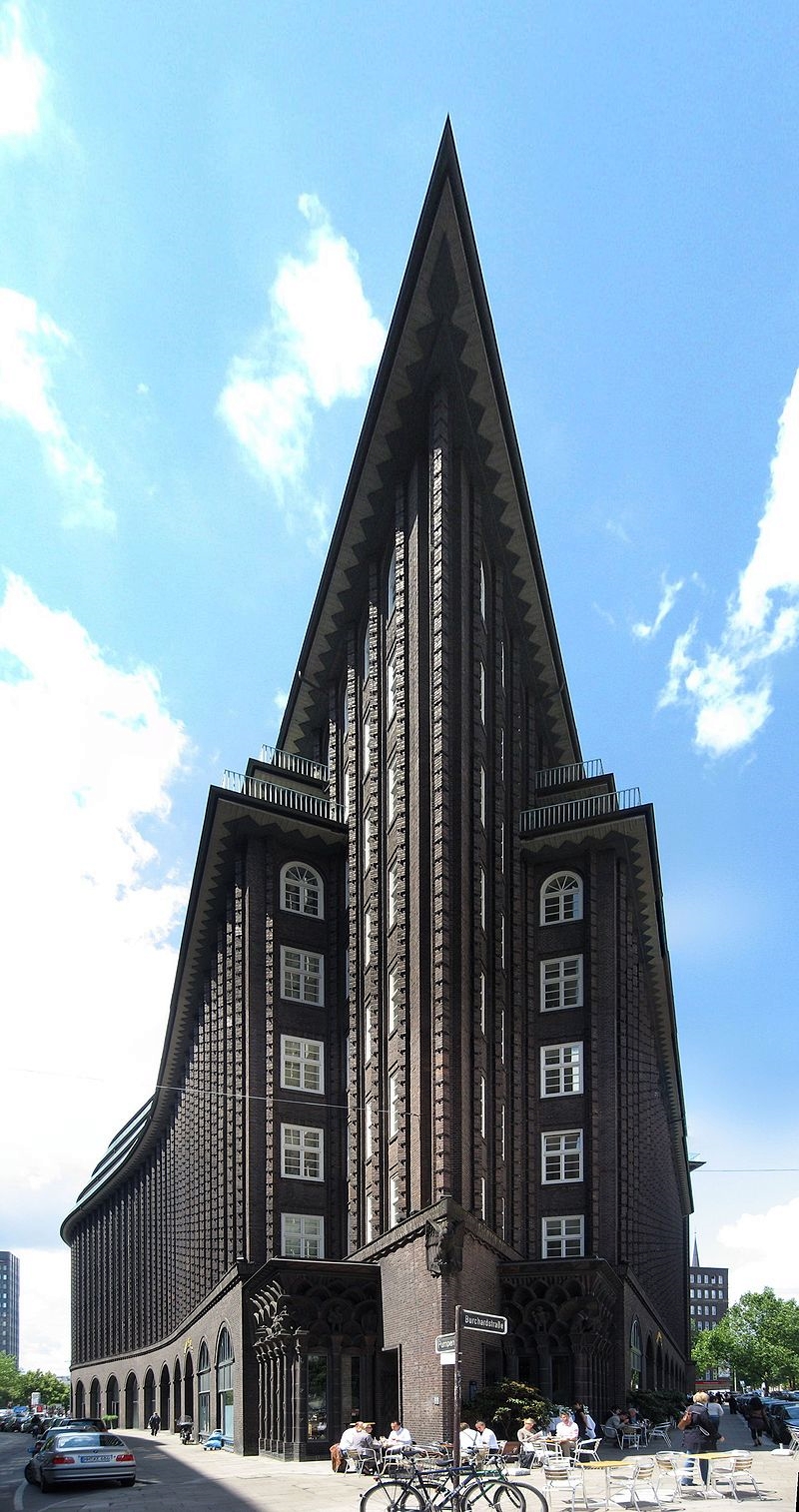
brick 19 vockerode powerplant               brick 20 chile house hamburg   Some of the largest brick buildings in the world are the old power plant in Vockerode and the Chilehaus in Hamburg, Germany.
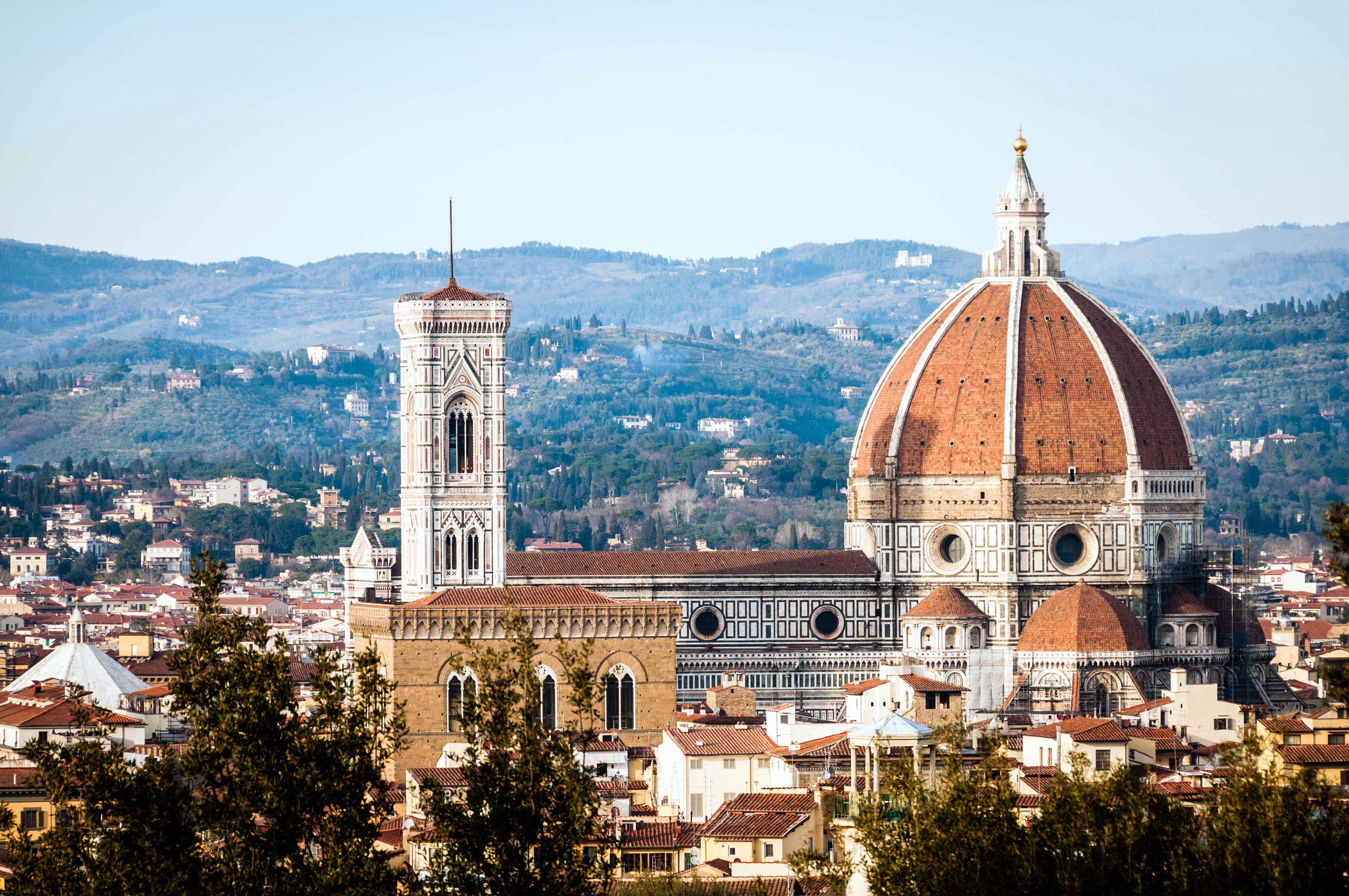
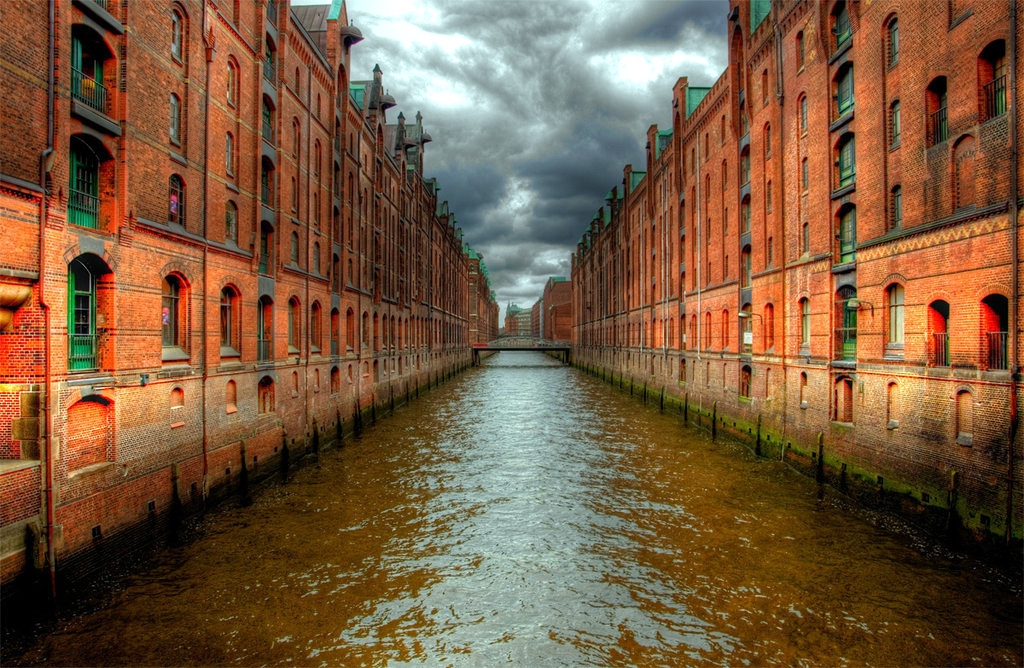
   brick 21   brick 30    The world largest church Dom, brick made, is the „Cupola Santa Maria del Fiore“ in Florence, Italy. Right  the largest brick building ensemble in the world, the Speicherstadt (storehouse city) in Hamburg, Germany.
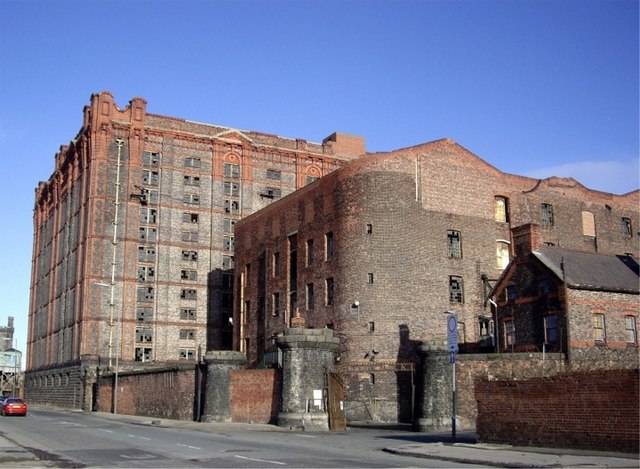
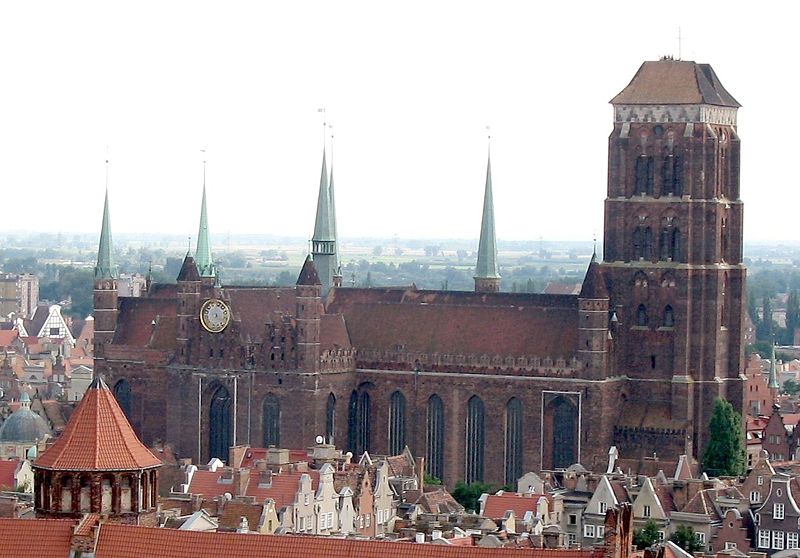
brick 26   brick 28 st. mary's gdansk      Old tobacco warehouse in Stanley, England reputedly one of the world’s largest brick built structure. And right the worlds largest church building, St. Mary’s, in Gdansk, Poland, former Danzig, Germany, a Hanseatic City. Danzig or Gdansk now, is like Luebeck one of the old (Hanseatic) brick city’s.

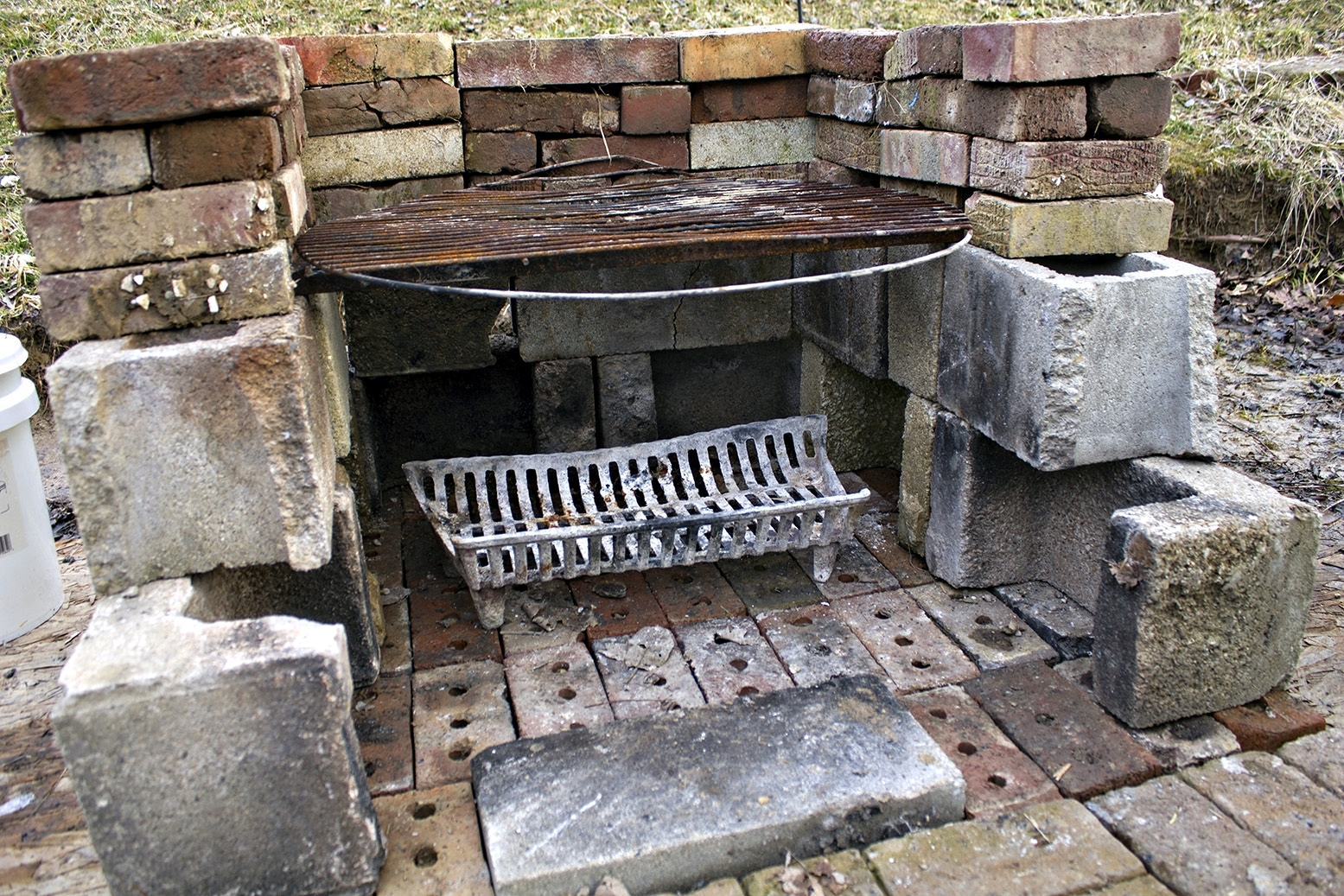
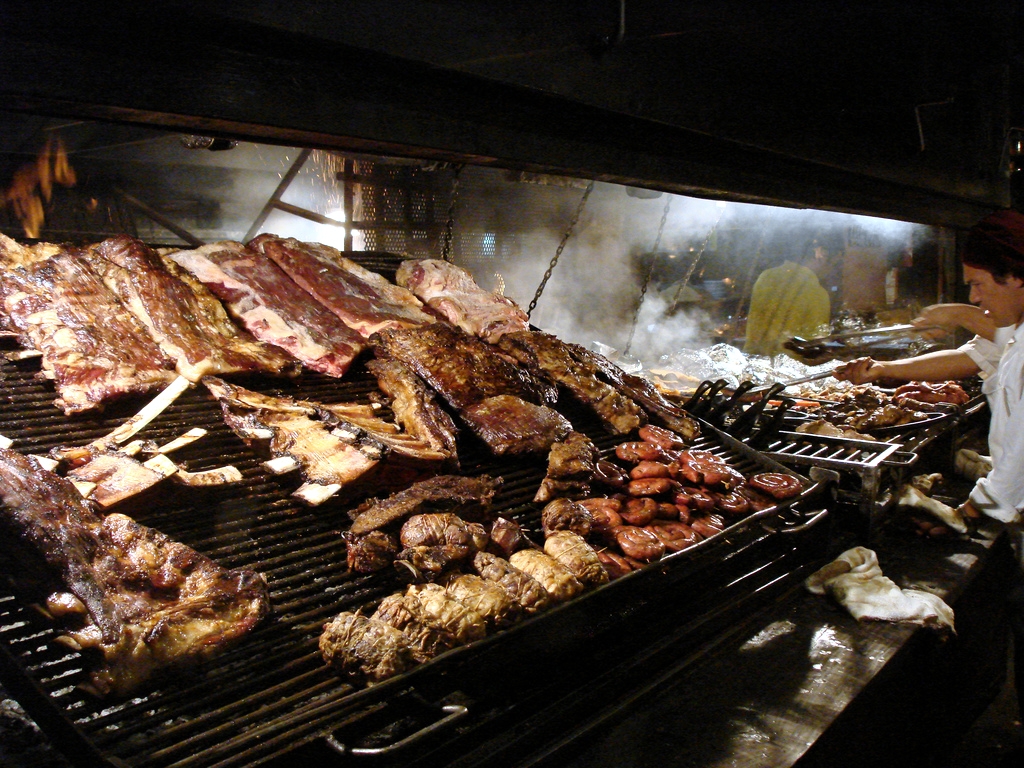
brick 6 bbq  Finally again a „brick building“ from San Carlos Brickworks, seen in Las Vegas, Uruguay.  Typical local parrilla, the Uruguayan „giant outdoor grill“. Hope you enjoyed my „brick excurse“. Much more will come !!


Veröffentlicht unter History, Information, Travel, Uruguay | Verschlagwortet mit , | 3 Kommentare

The Gaucho

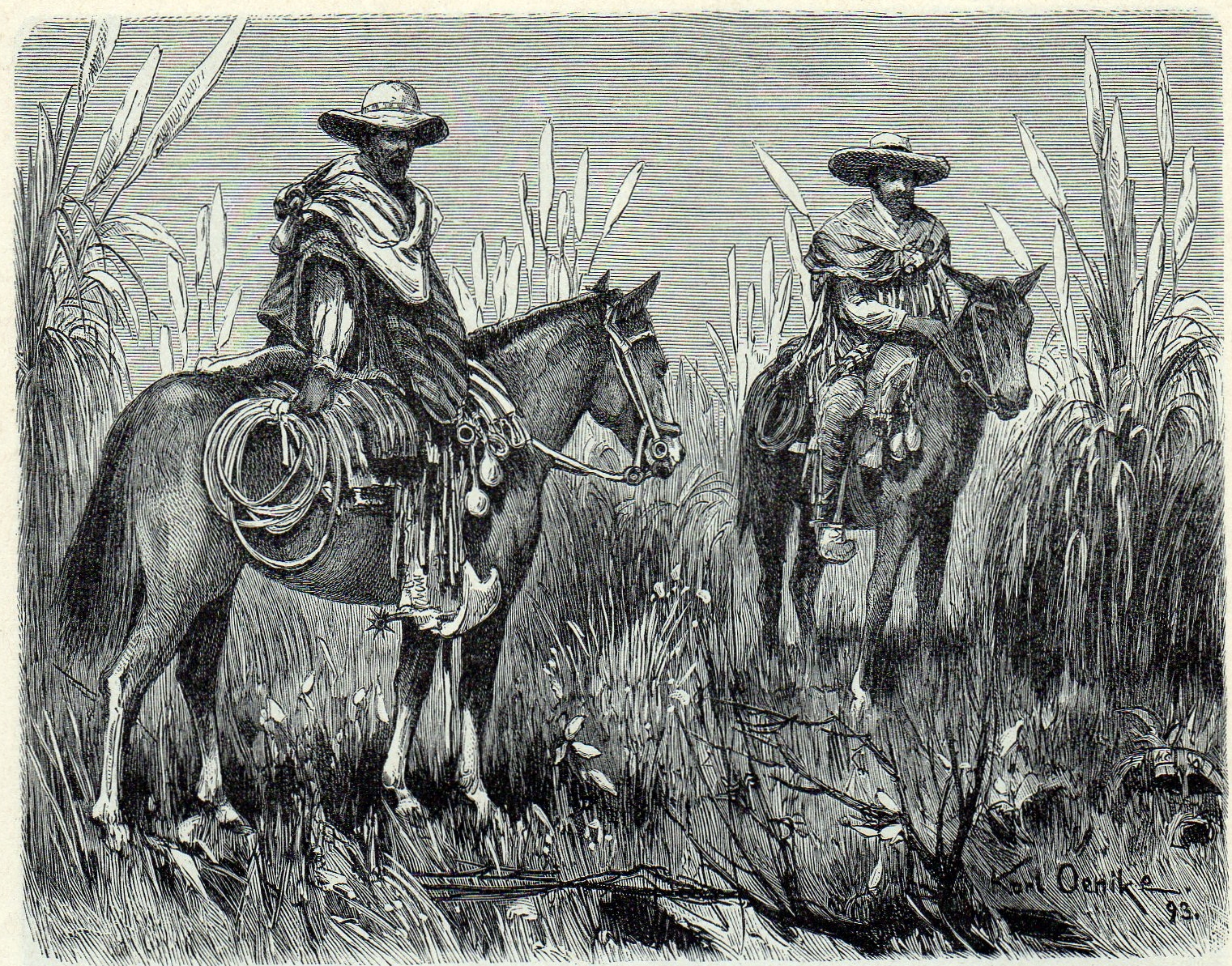
gaucho 26 dia national de gaucho  National heroes in Argentina and Uruguay.

Last week I posted the article about the dog „El Gaucho“, now the article about „The Gaucho“ himself. Recently I took the chance to visit the Gaucho Museum in Montevideo. I like you, to participate in some views of this interesting species (the gaucho), mixing my impressions and illustrations into the whole story. Enjoy.

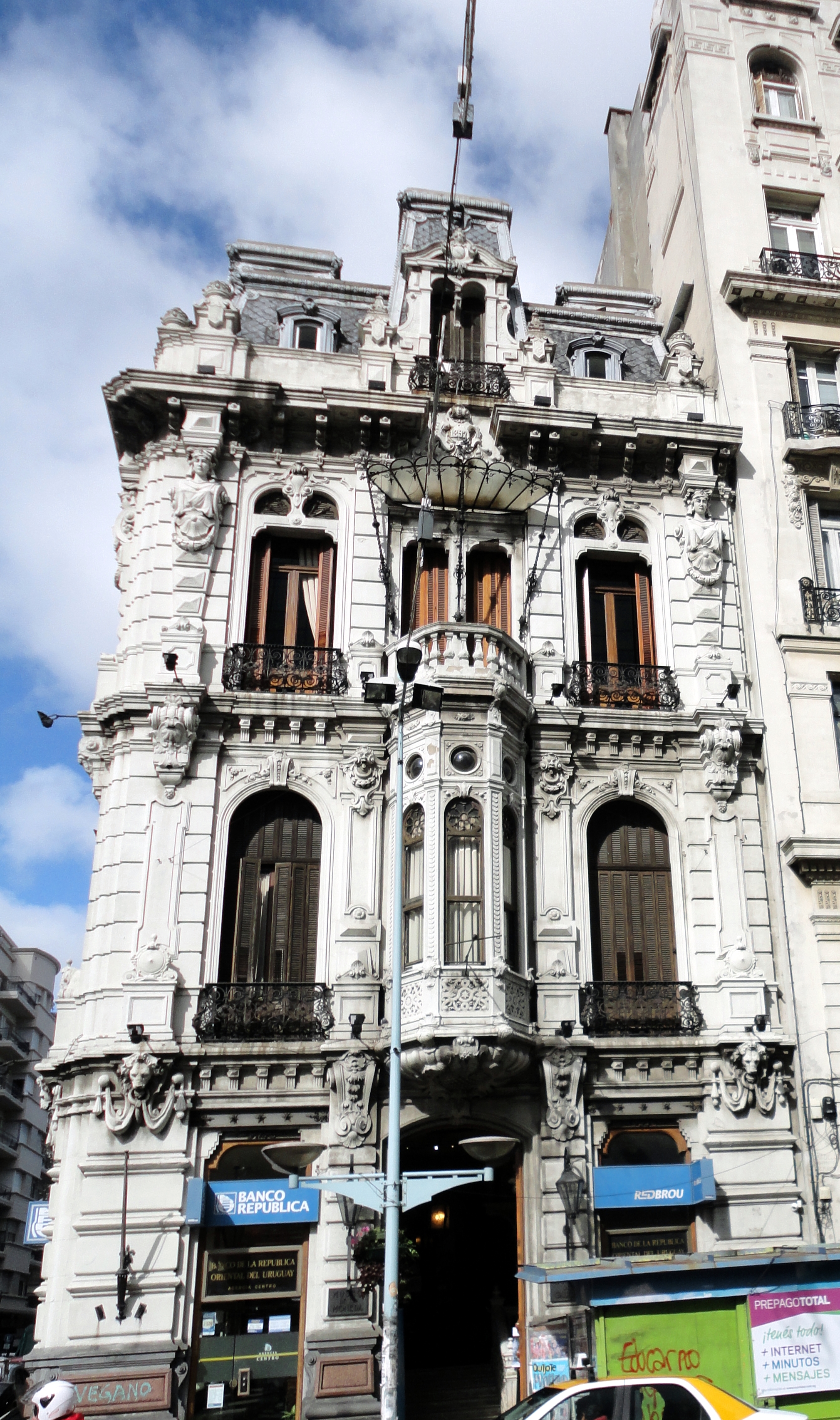
DSC02036a     The Gaucho Museum, Ave. 18th de Julio, Montevideo.

Gaucho is a word with several meanings. In its historical sense a gaucho was „a mestizo who, in the 18th and 19th centuries, inhabited Argentina, Uruguay and Rio Grande do Sul in Brazil“. Today, in Argentina and Uruguay, a gaucho is simply „a country person, experienced in traditional cattle ranching work“.

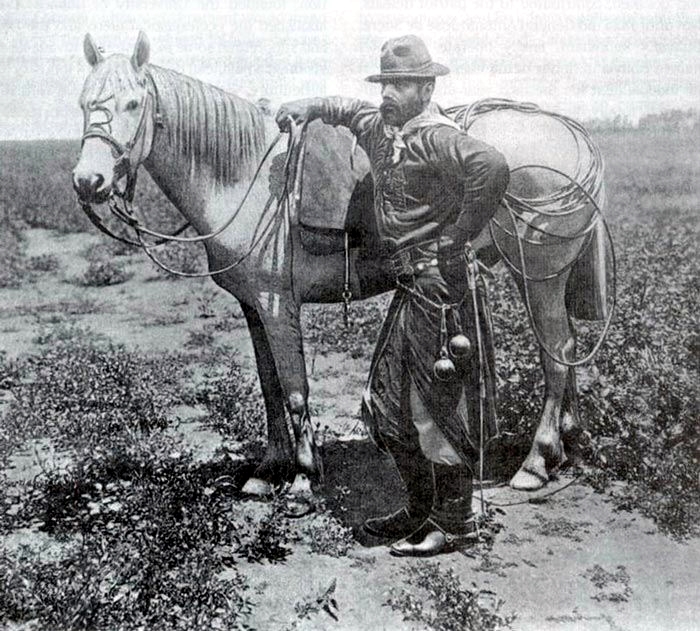
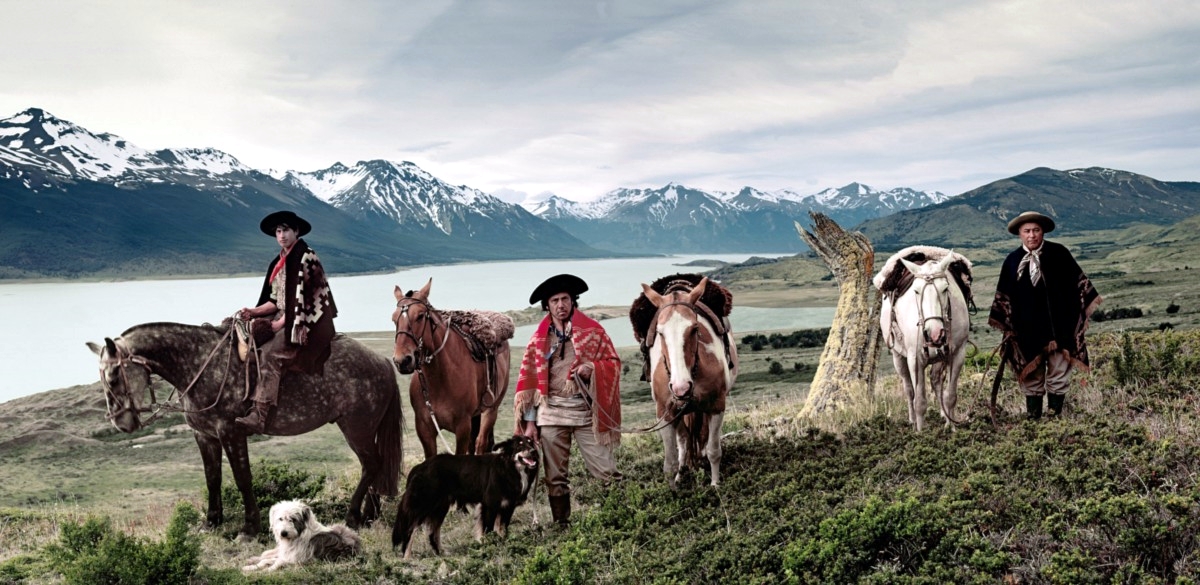
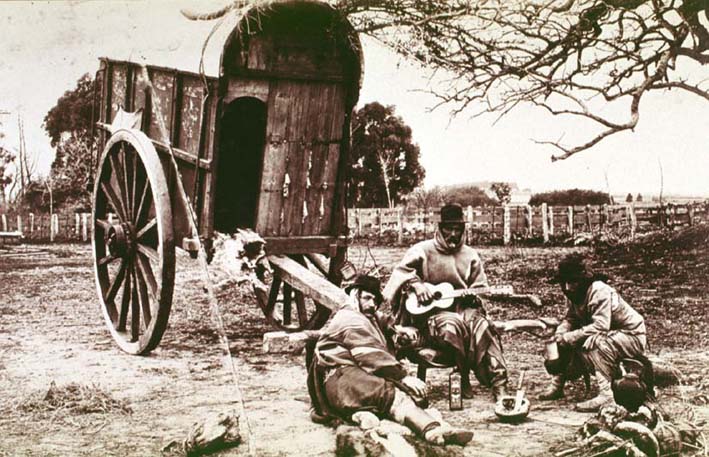
gaucho 24  Typical Gaucho from the late 1800’s.

Brief history.

In Portuguese the word gaucho means „an inhabitant of the plains of Rio Grande do Sul or the pampas of Argentina descended from European man and Indian woman who devotes himself to lassoing and raising cattle and horses“.

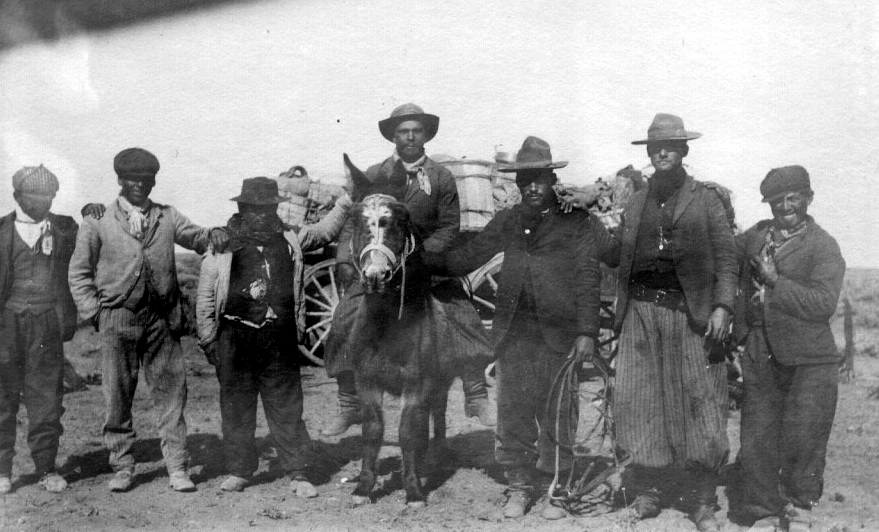
gaucho 9a  Gauchos in the early 1900’s …….

Gaucho is an equivalent of the North American „cowboy“ (vaquero, in Spanish), the Chilean huaso, the Peruvian chalan, the Venezuelan or Colombian llanero, the Ecuadorian chagra and the Mexican charro, which are terms that often connote the 19th century more than the present day. Then, gauchos made up the majority of the rural population, herding cattle on the vast estancias, and practicing hunting as their main economic activities.

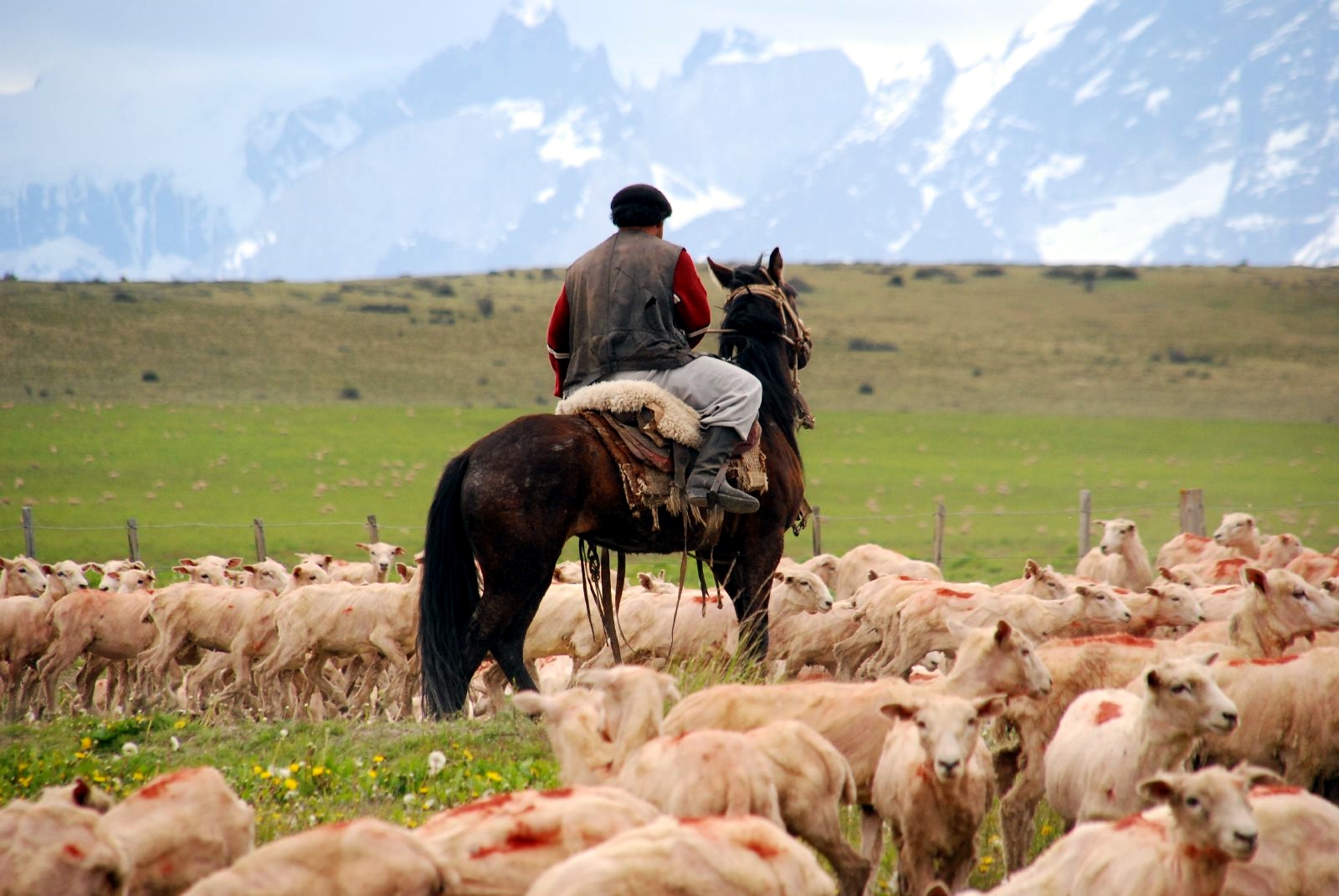
gaucho 13 patagonia  ……. and now, picture taken in Patagonia, Argentina.

The gaucho is a national symbol in both Argentina and Uruguay. Gauchos became greatly admired and renowned in legends, folklore and in literature and became an important part of their regional cultural tradition. Beginning late in the 19th century, after the heyday of the gauchos, they were celebrated by South American writers.

gaucho 47c  „Sunset in the Pampas“ or may be „burning pampa“, beautiful water color painting. Gaucho enjoying sunset under „his tree“ for the night.

The Gaucho Martin Fierro, by Jose Hernandez 1872.

„“His hope is his courage,
his defense is his caution,
his horse is his salvation,
and he spends the sleepless night
with no more protection then the sky
and no other friend then his blade““.

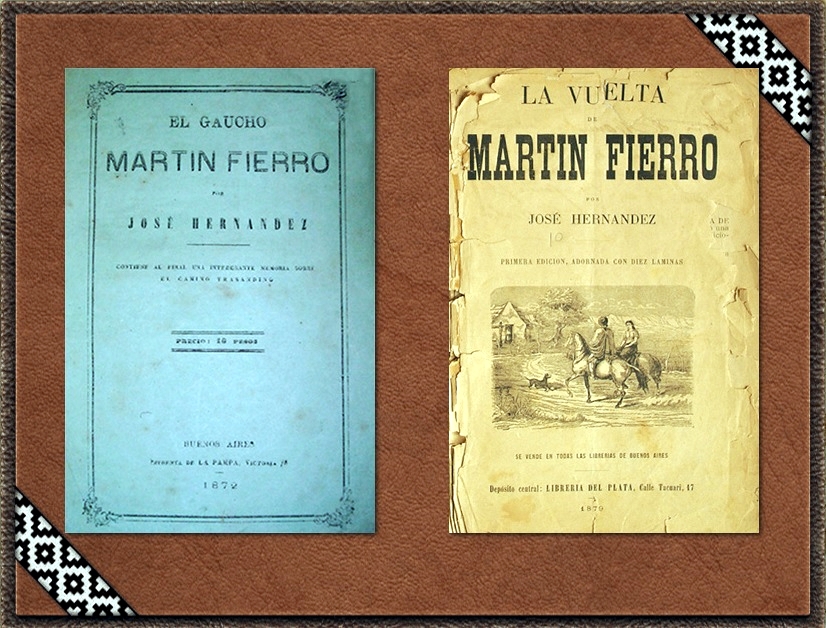
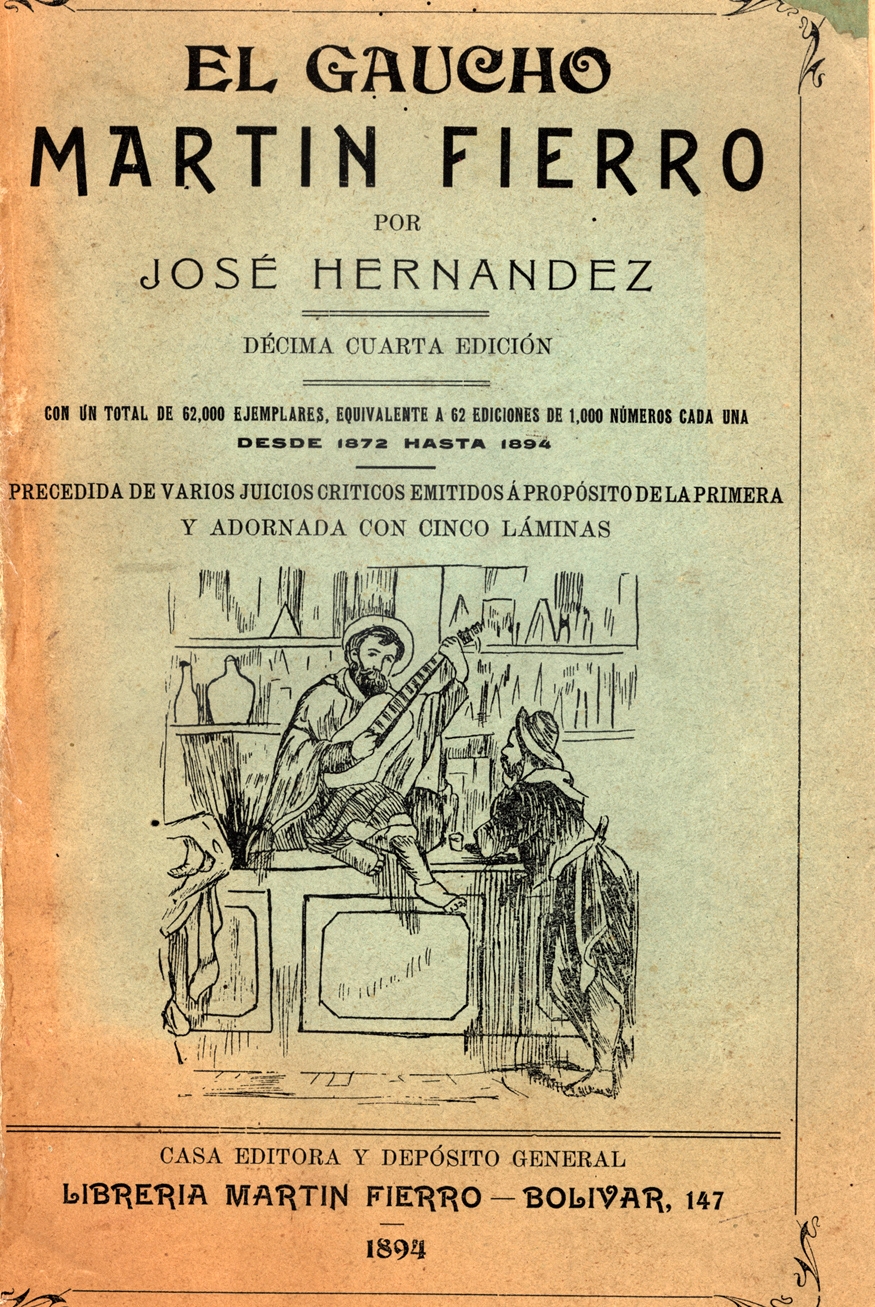
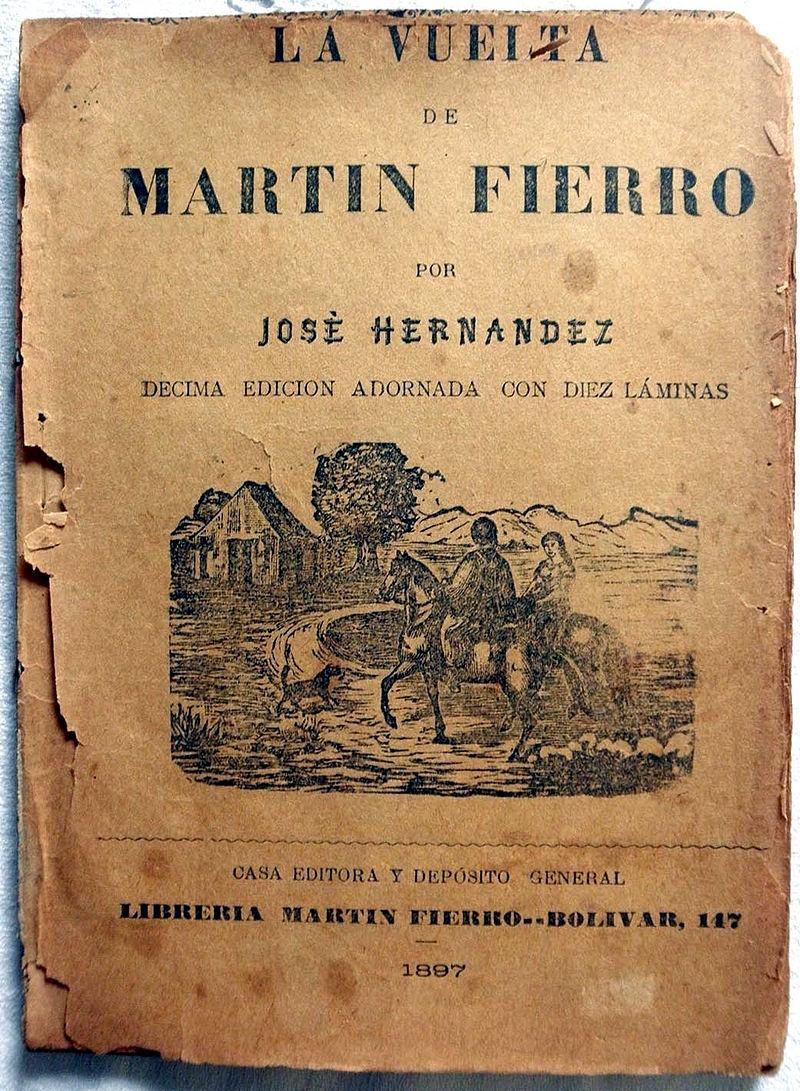
Martin Fierro is a 2,316 line epic poem by the Argentine writer Jose Hernandez. The poem was originally published in two parts, El Gaucho Martín Fierro (1872) and La Vuelta de Martín Fierro (1879).

gaucho 47f  First editions from 1872 and 1879. Extremely rare.
gaucho 47                           gaucho 47b      Two later editions of Hernandez‘ Fierro poetry, left from 1894 and right from 1897. Both are very rare collectors items.

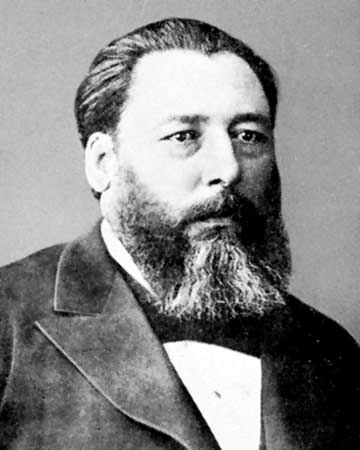
Jose Hernandez (November 10, 1834 – October 21, 1886) was an Argentine journalist, poet, and politician.

gaucho 47a josehernandez  Jose Hernandez, Argentinian author.

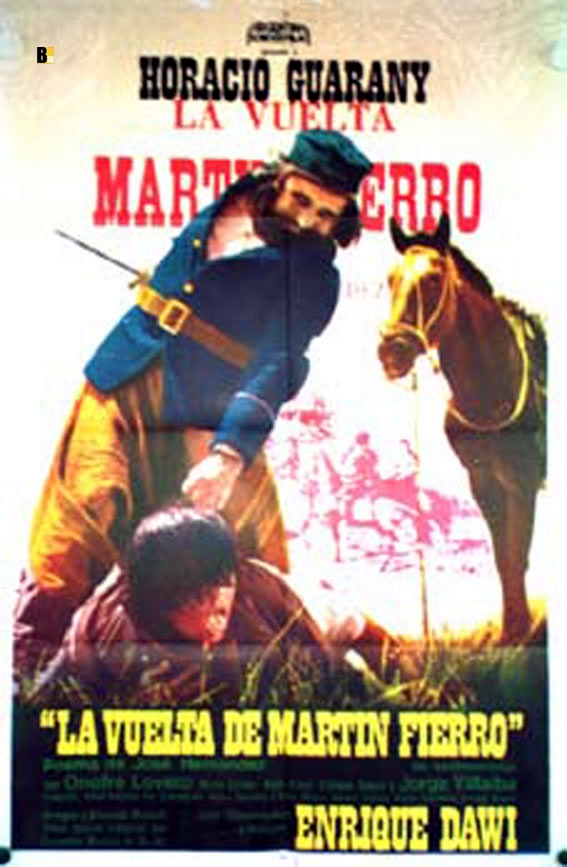
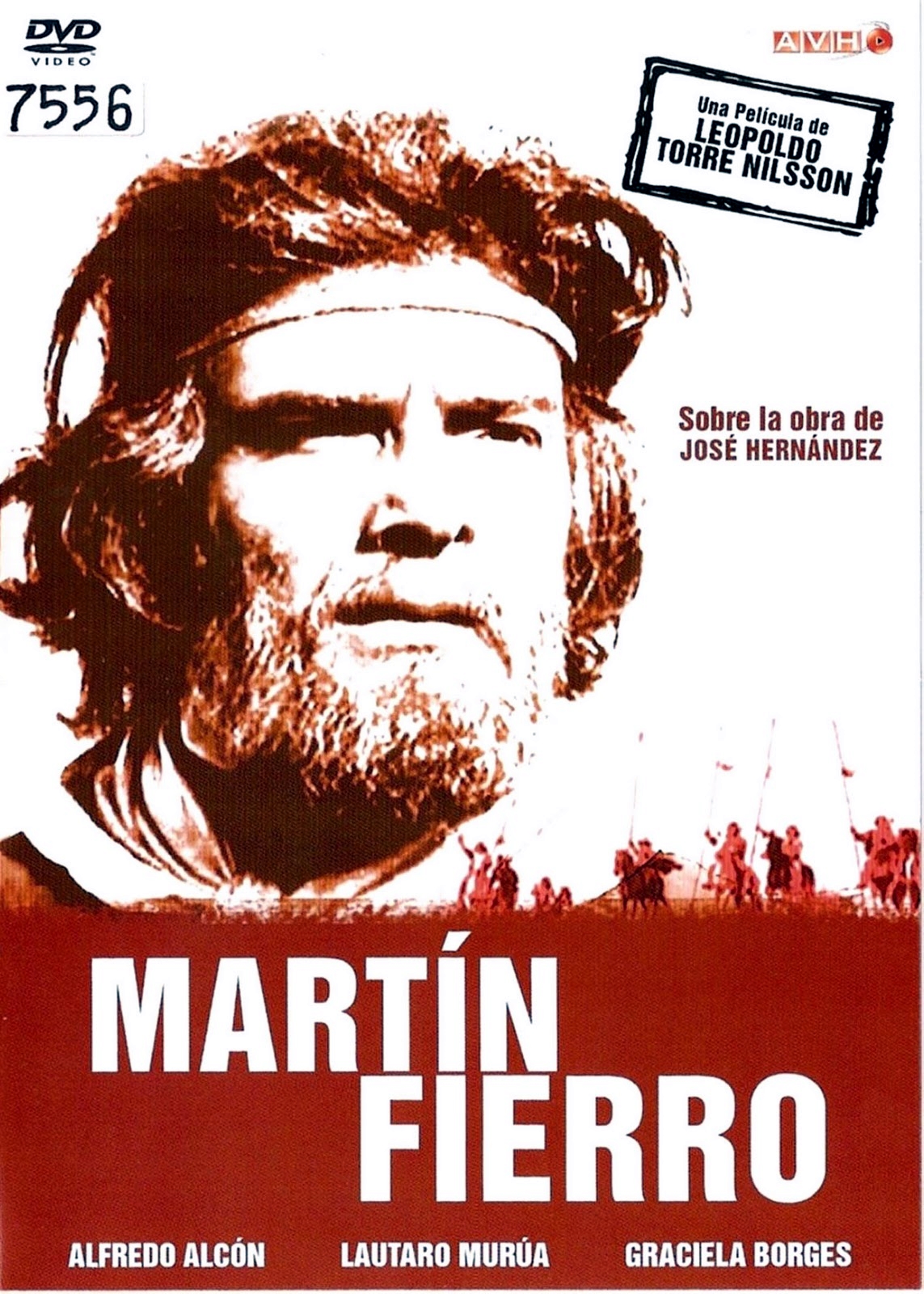
The movie „Martin Fierro“ from 1968.

This story is taken from the 1872 poem. Martin (Alfredo Alcon) is a gaucho and a happily married family man who is drafted by the army. Sent to a remote outpost to fight Indians, he is relegated to working on the camp commandant’s farm. After his tour of duty, Martin is held at gunpoint and forced to continue working the farm. He finally escapes, but returns home to find his family gone and his home destroyed.

gaucho 47d   First Martin Fierro  gaucho movie from 1952.

Drunk and dependent, he kills a black man in a fight and is forced to flee. When the deputy Craze (Altar Mural) sees how bravely Martin fights against the posse, he helps Martin kill off his adversaries. The two move out to an Indian camp where white men are accepted. They are content for many years until Martin leaves when his friend Craze dies. He returns to civilization and relocates his estranged sons before having a showdown with the brother of the man he killed.

gaucho 47g 1968   The, most well known, movie from 1968.

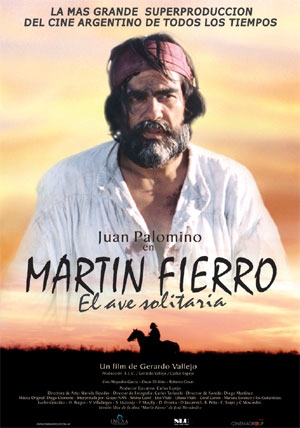
The movie was remade a few times during the last – almost 50 years. If you like to watch the original movie, its available in full length on
YouTube: https://www.youtube.com/watch?v=y-Olc5DfN_I

gaucho 47e  Modern remake from the 1990’s.

Gauchos were solitary men, independent nomads whose social status in Argentina evolved over three centuries from semi savage half-breeds to displaced outlaws to freedom fighters to common ranch hands to national symbols of honor, bravery and self-reliance.

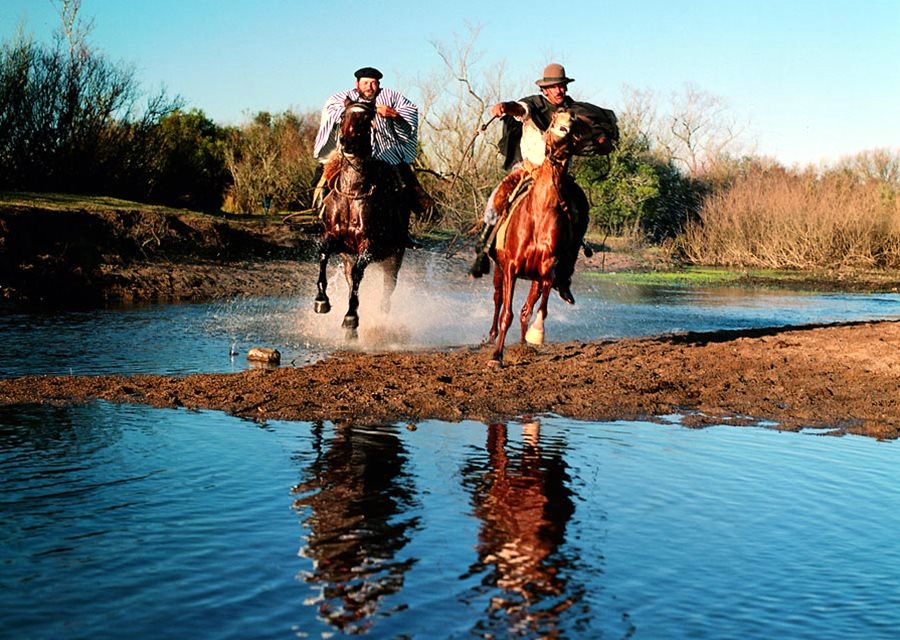
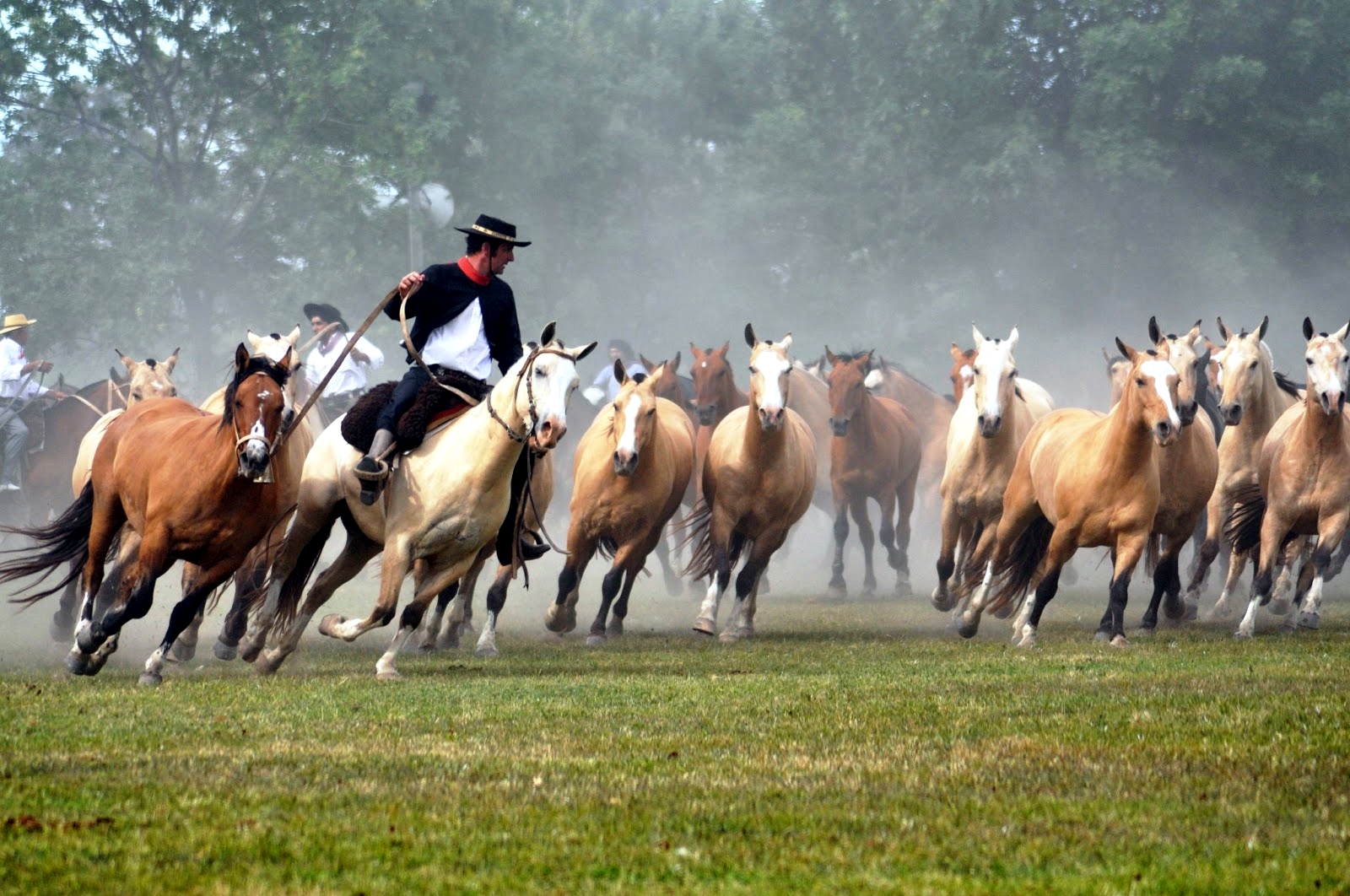
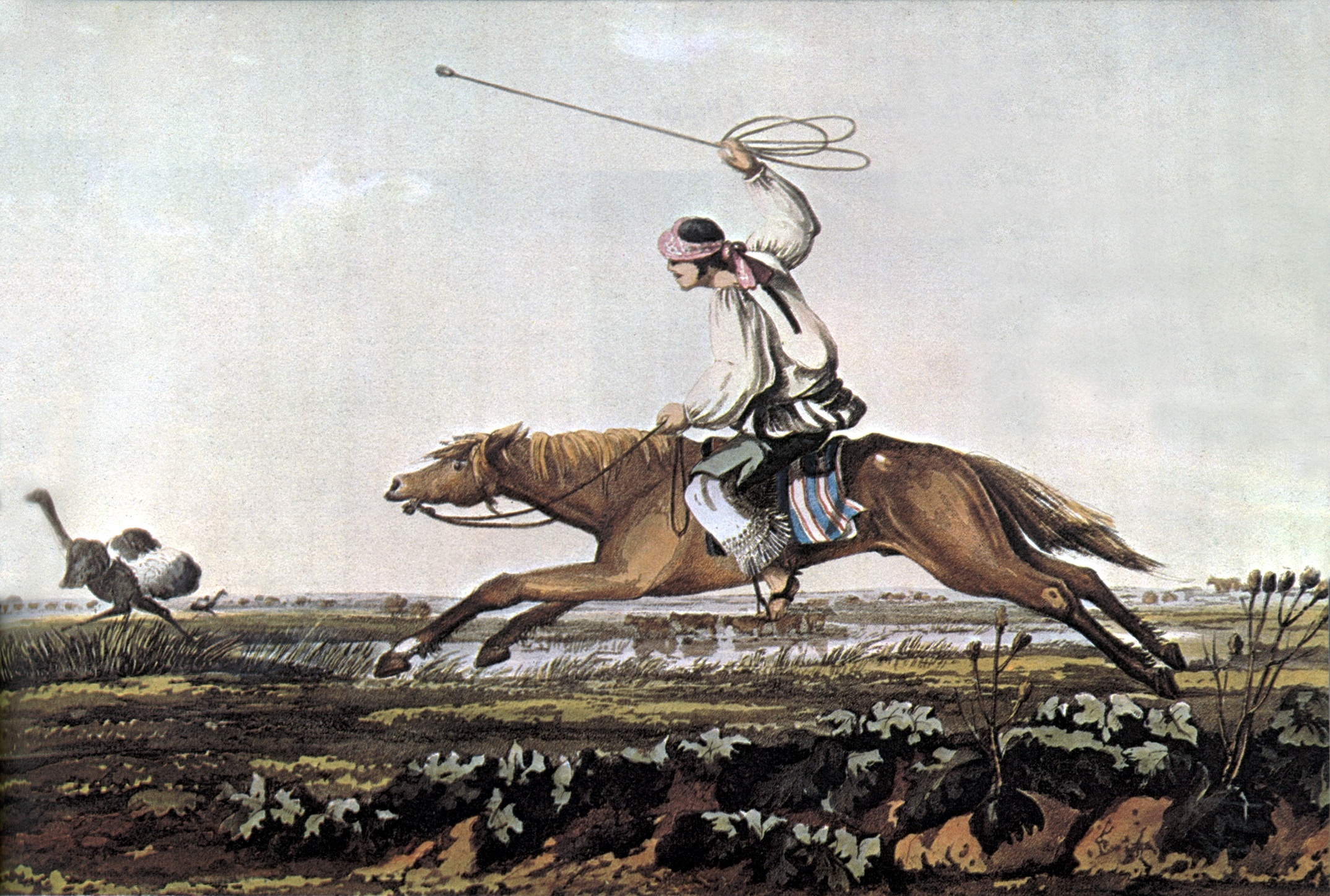
gaucho 1   Gauchos in full speed.

Uruguay and Argentina.

The first gauchos were sons of the pioneers, mostly Andalusian, who settled the coastal region of Argentina in the mid-16th century. Unlike the Pilgrims these settlers came to the New World without their women, and intermarriage or, at the least, intermingling with the natives was common. The resulting mestizos, mixed bloods, were the earliest gauchos, a name believed to be derived from the Indian word huacho, meaning orphan.

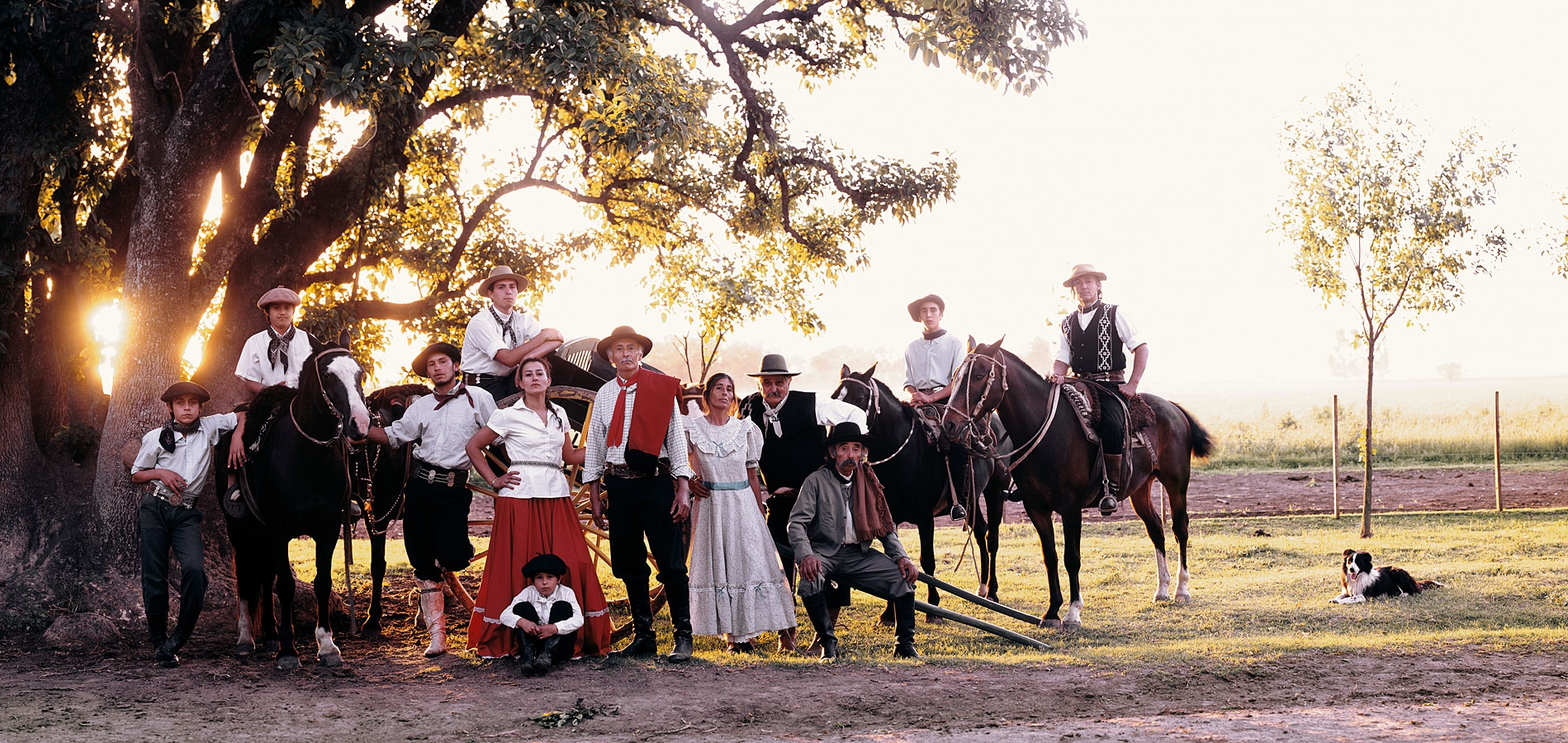
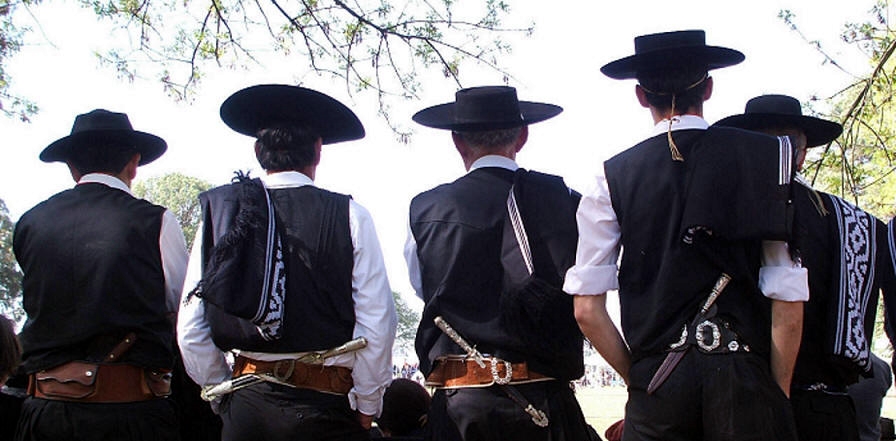
gaucho 34  Click on pictures to supersize. Then you’ll see the proudness of gauchos. Interesting in modern times the equal wearing of hats or Baskian Bonetas (berets). In the old times there were hats, in all kinds and shapes, only.

They were part of neither the white man’s world nor the Indians. „My joy is to live as free as the bird in the sky. I make no nest on this earth,“ Jose Hernandez wrote in his 1872 epic poem, The Gaucho Martin Fierro, the definitive work on the subject.

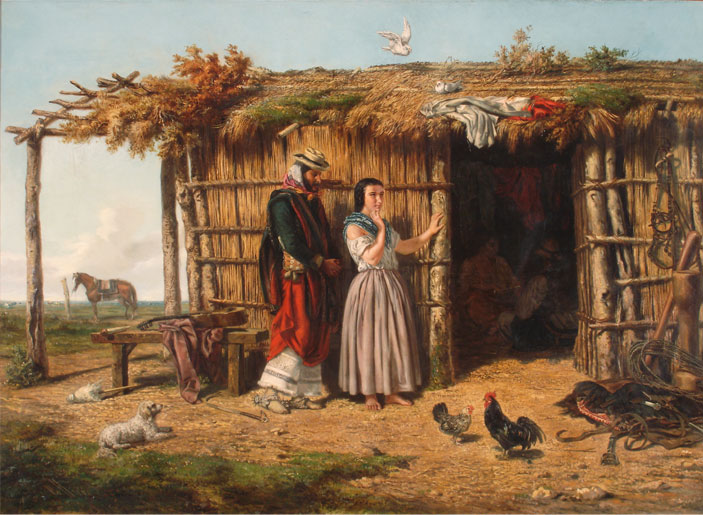
gaucho 23  Gaucho, pampas home and their Indian women.

From their Indian forebears the gauchos were said to have inherited their love of freedom, disdain for civilization and disregard for law and order. From the Andalusian’s, who were part Arab, they inherited nomadic tendencies and unparalleled horsemanship. From the Spanish they inherited passion, superstition and a love of poetry and music. It was a rich and tempestuous stew.

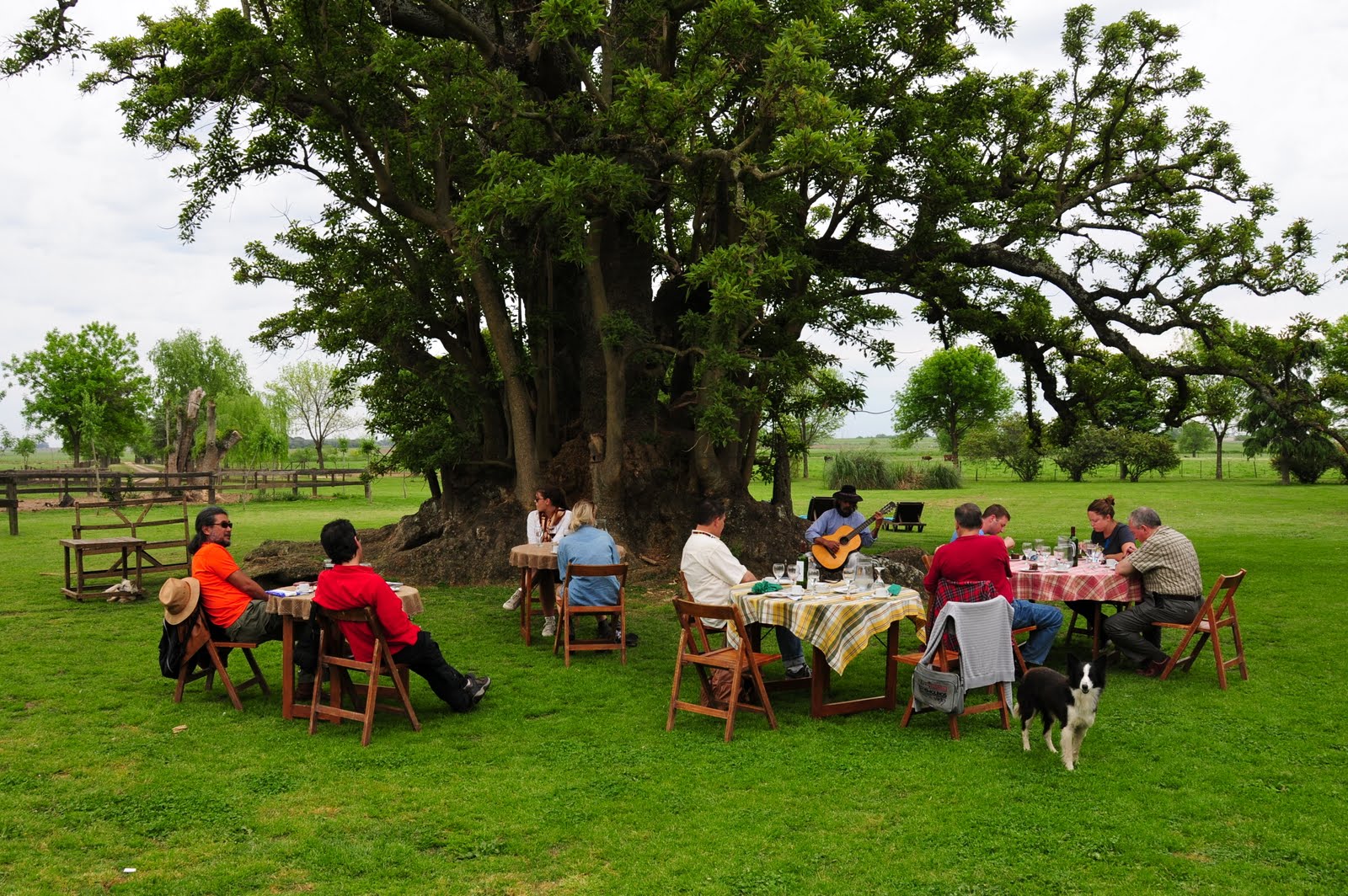
gaucho 12    ombu 19b gaucho lunchGaucho BBQ lunch under the OMBU tree. Gauchos love the outdoors and music. Holiday on an estancia.

The pampas on which the early gauchos roamed were populated by vast herds of horses and cattle, wild descendants of livestock that had escaped from the earliest Spanish settlements. Since the pampas were largely free of predators, except Indians, these wild herds were as abundant as the vast buffalo herds of the North American frontier and afforded the gauchos their way of life.

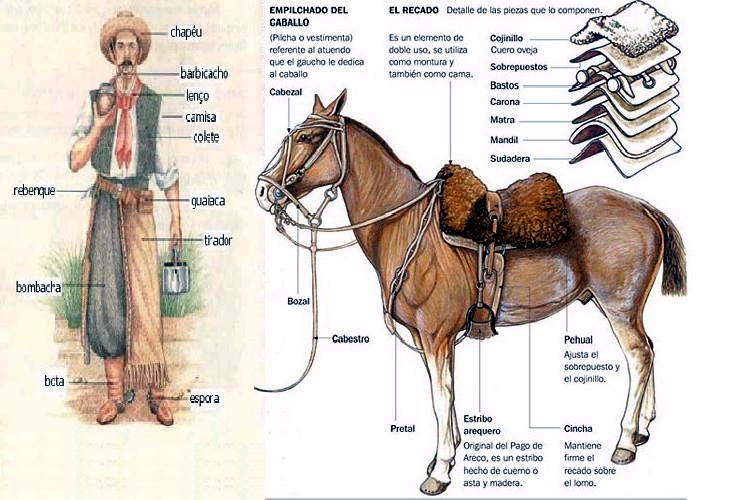
gaucho 25         gaucho 25aaSome detailed information. Interesting that the gauchos use no saddles as cowboys in the north do.

The horses were caught, broken and used to run down the cattle on the open range. Gauchos were foragers, not cattlemen. The cows were butchered for sustenance, not for sale. There was no refrigeration, of course, and salt for curing meat was expensive, so the only commercial value of a cow was in its hide and tallow. The gauchos would trade these for rum, tobacco and mate, the herbal tea to which they were addicted. Those pleasures, his horse and his freedom were all he asked for.

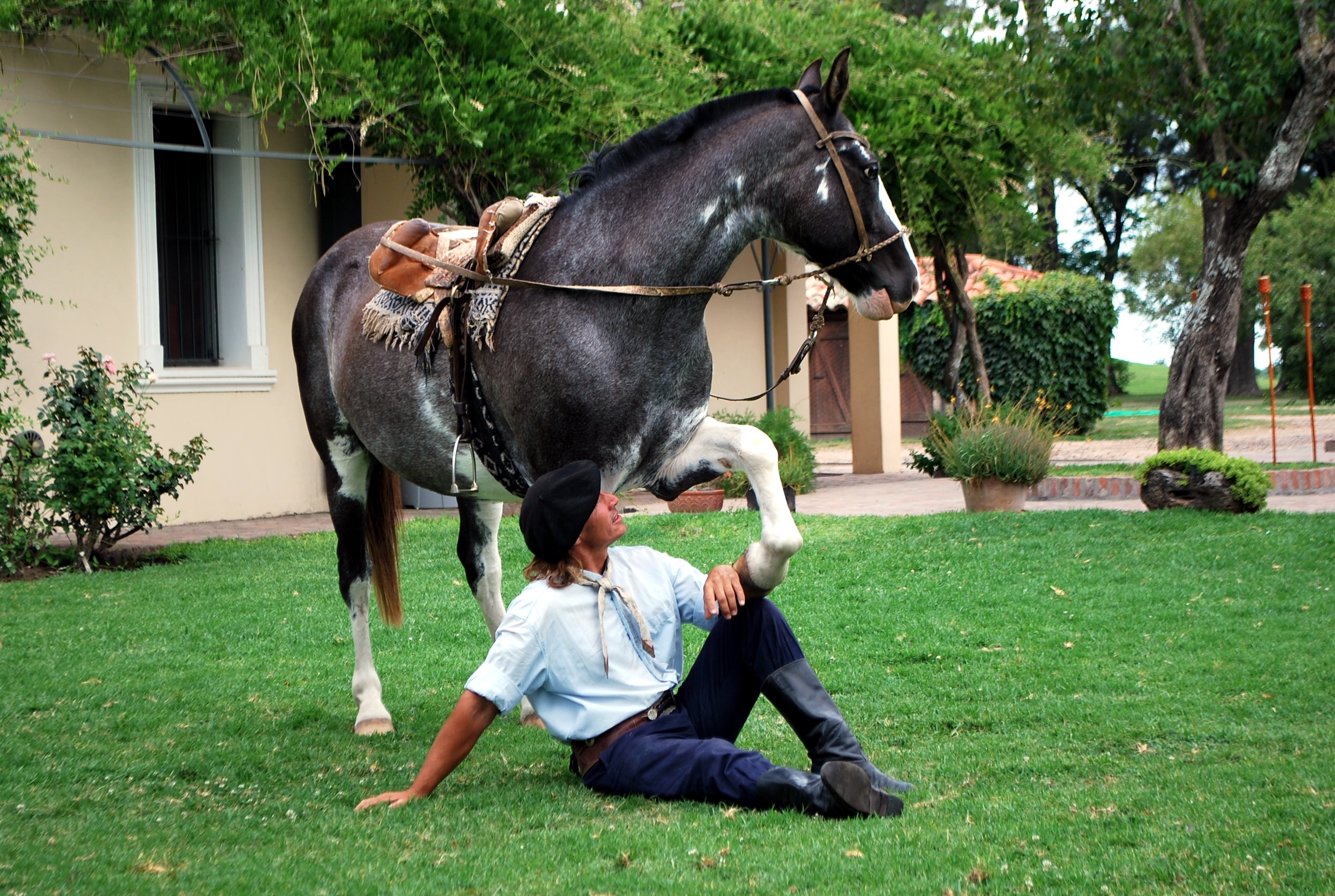
gaucho 10     gaucho 33a  The Gaucho and his best friend, show off during an estancia fiesta.

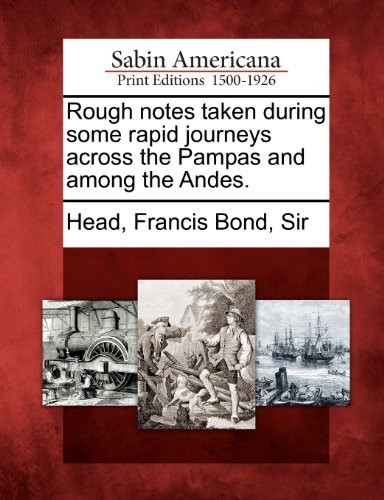
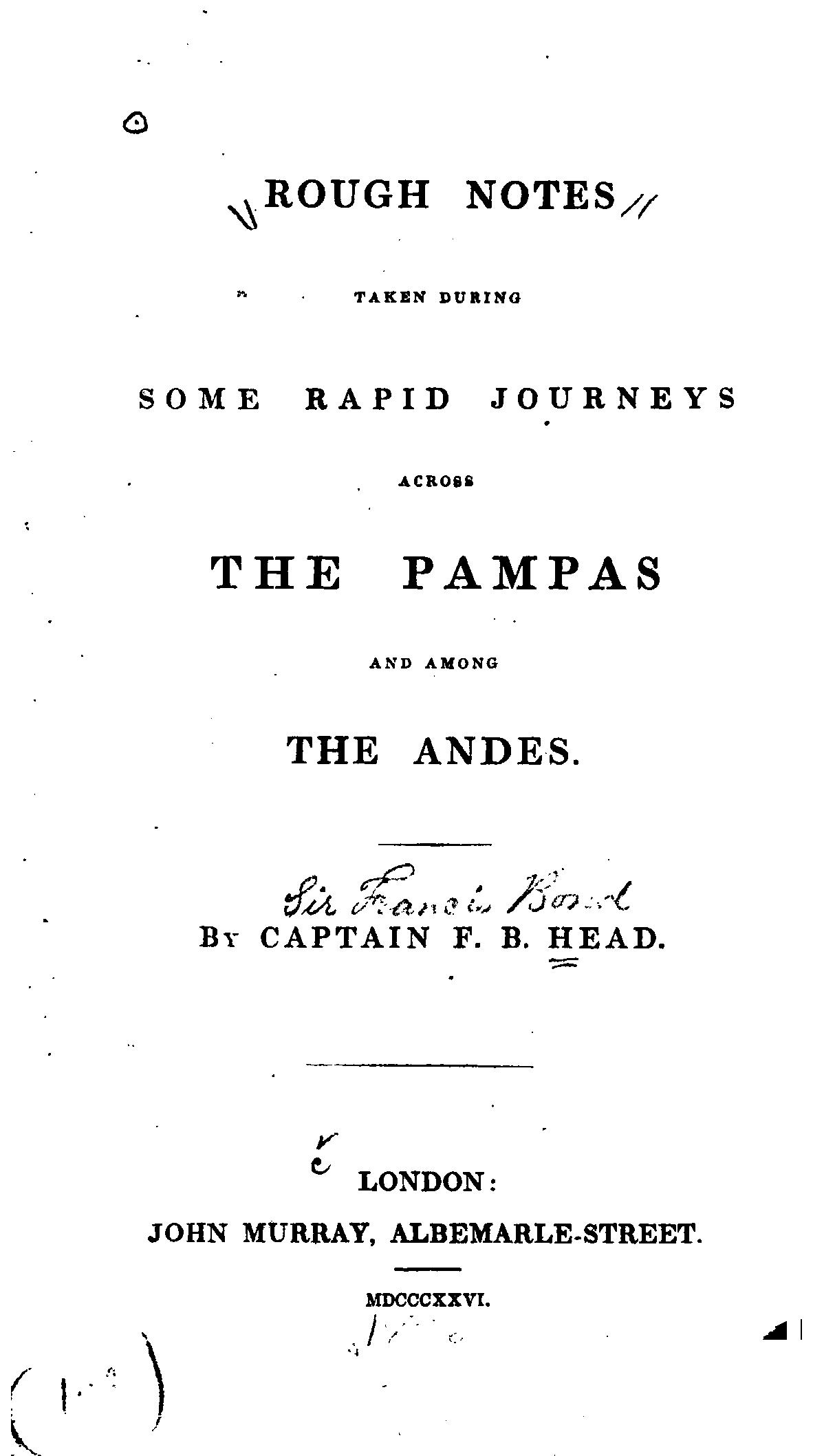
„The gaucho has no luxuries; but the great feature of his character is that he is a person without wants,“ English mining adventurer Francis Bond Head, author of the 1828 travel volume Rough Notes, wrote, „If he has got a good saddle and sharp spurs, he does not consider that money has much value. I made it a rule never to be an instant without my (fire)arms, and to cock both barrels of my gun whenever I met any gauchos. They were often perceived as being as wild as Indians, and just as interesting.“

gaucho 48    gaucho 48a            Captain Francis Bond Head (1793-1875). Rough notes taken during some rapid journeys across the Pampas and among the Andes, 1828.

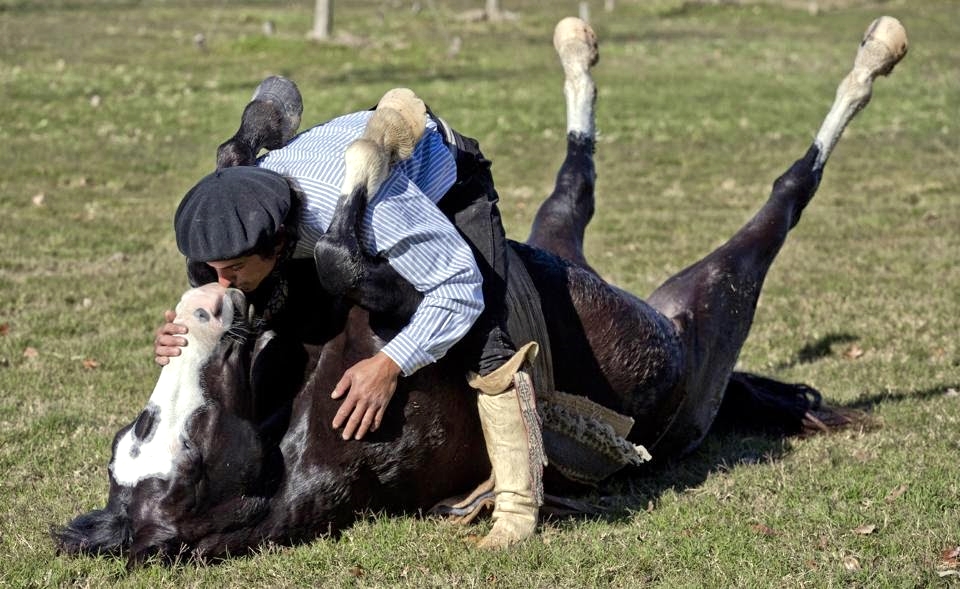
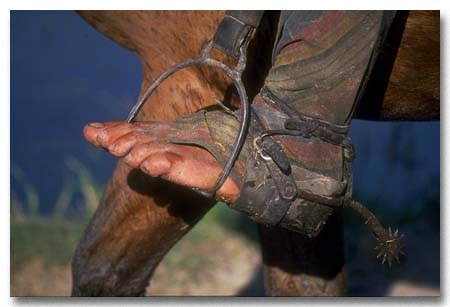
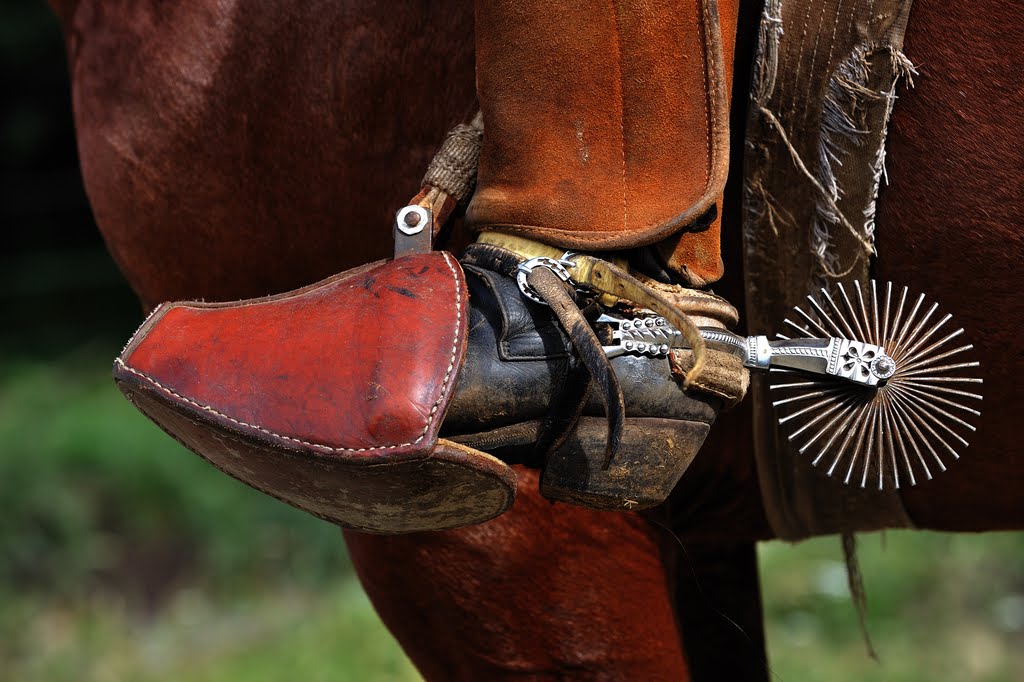
The gaucho was thought of as a sort of centaur. So seldom would he dismount that he stood severely bowlegged and had a crabbed gait. He even bathed while mounted. The tips of his boots were open so he could grip long pieces of knotted rawhide, which served as stirrups, between his toes.

gaucho 22 Estancia-san-juan-de-poriahu   gaucho 22a   Left, very old style of gaucho „boots“, Estancia San Juan de Poriahu. Right, more modern, full boot wearing.

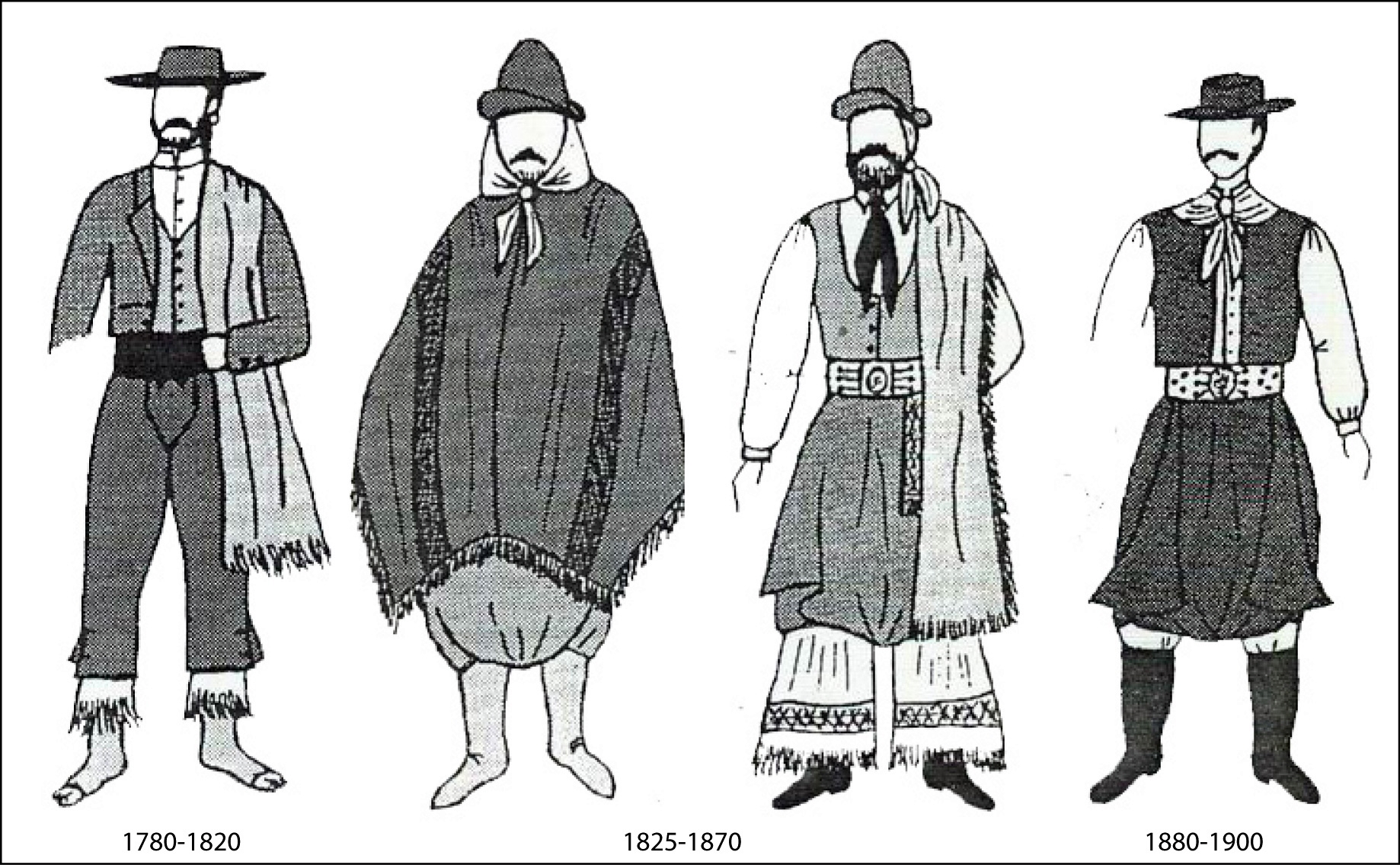
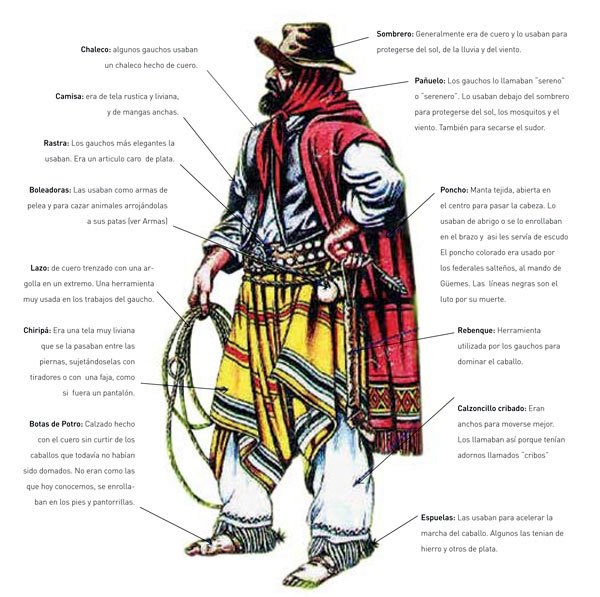
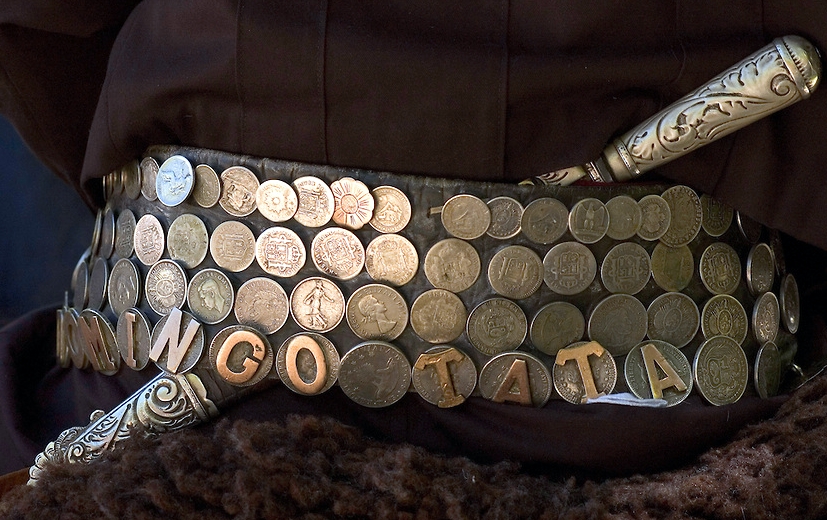
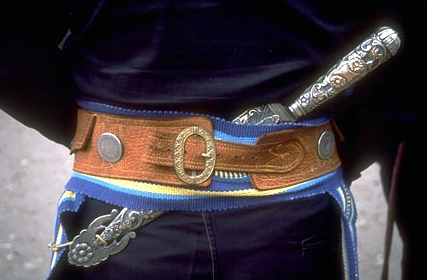
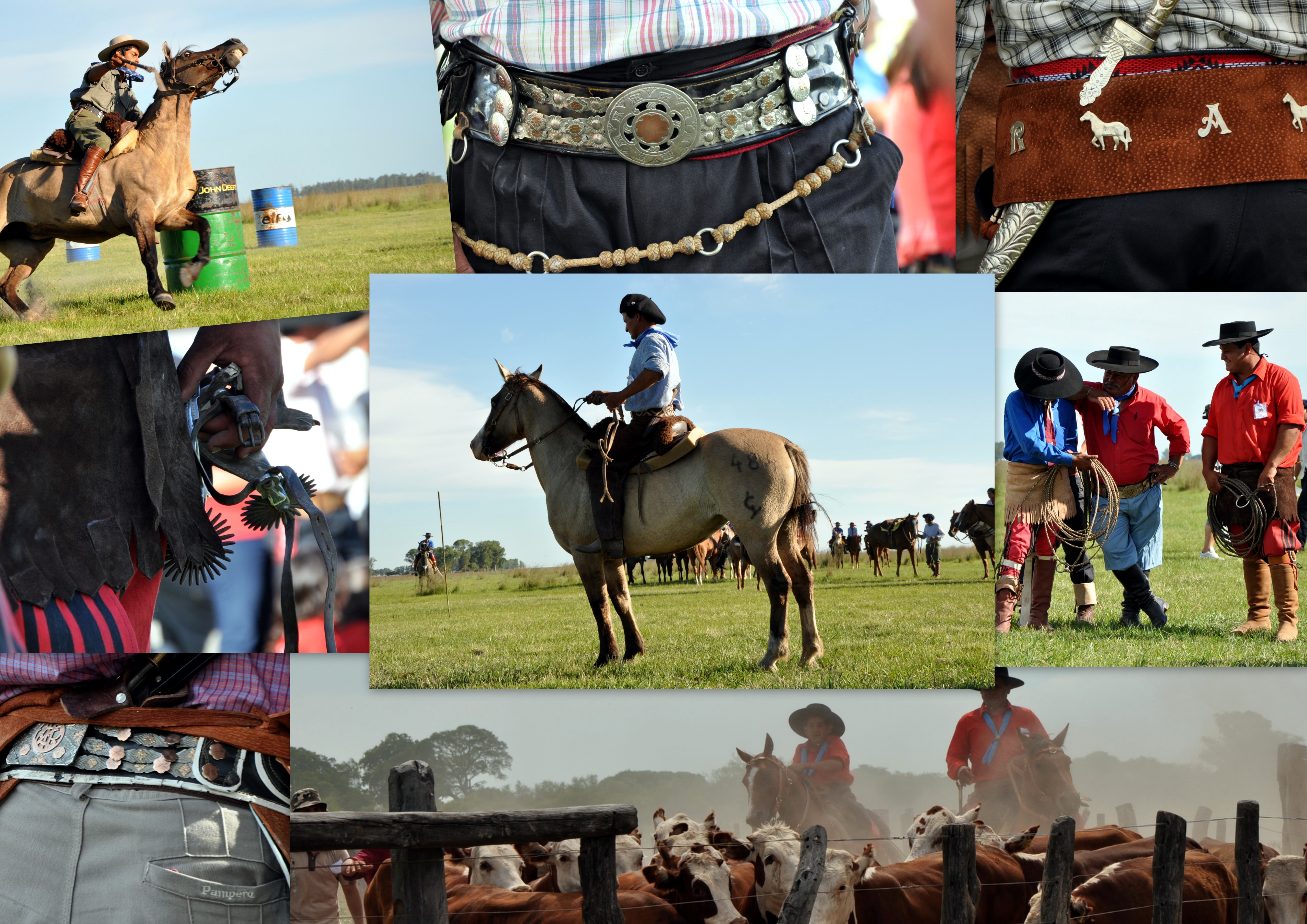
A gaucho carried all his worldly possessions with him as he rode. His saddle was sheepskin and cloth laid over a leather-covered frame, and it doubled as his bedroll. He had no pockets in his baggy pants, so he wore a thick leather belt that supported his back as he rode and was adorned with silver coins. His woolen poncho was used as a raincoat by day, a blanket by night, and, during knife fights, as a shield when wrapped around his forearm.

gaucho 31   gaucho 21g garment  Details and description of a typical gaucho outfit and the silver/gold belt (garment) of a wealthy gaucho.

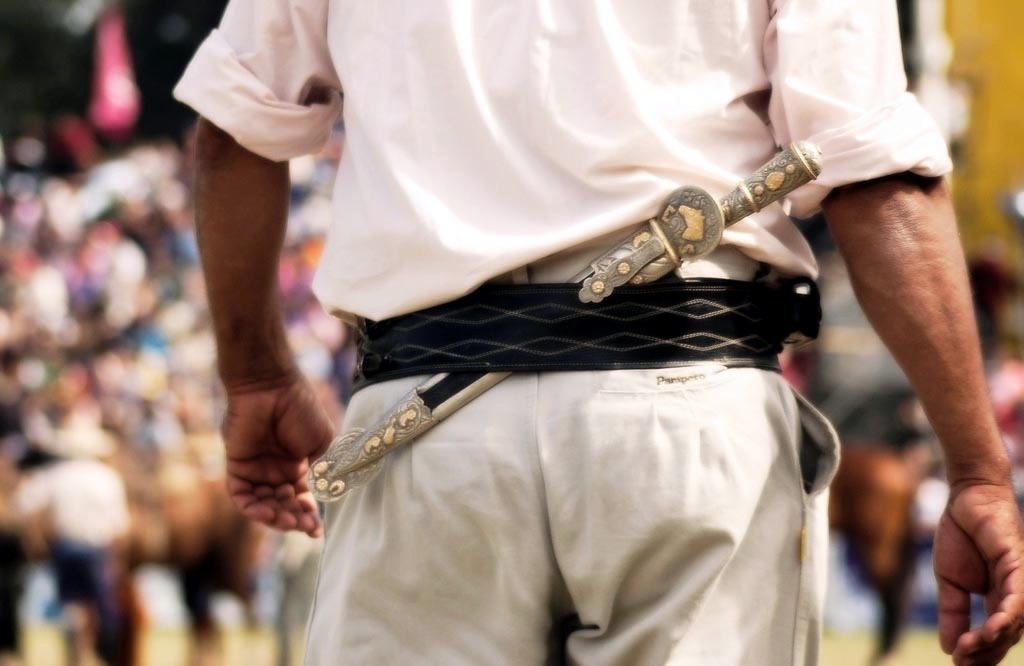
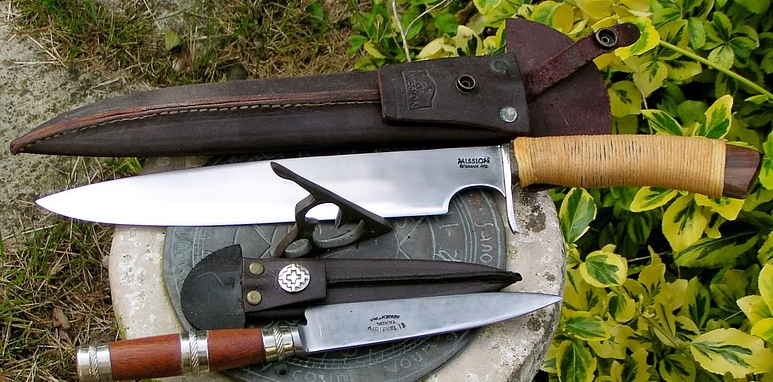
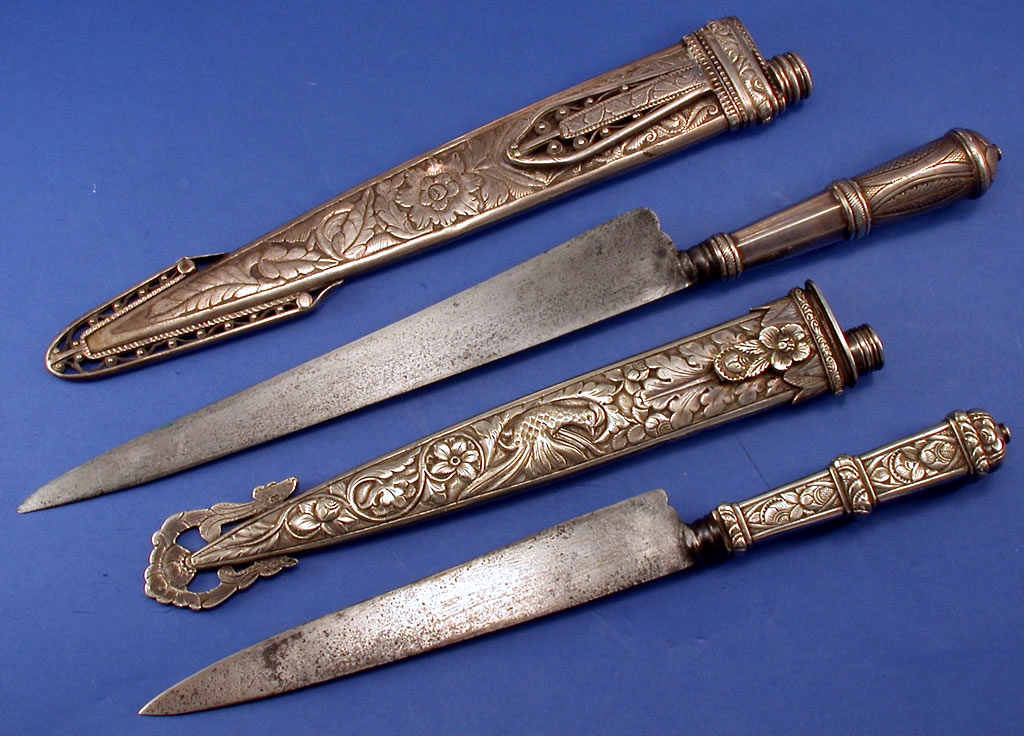
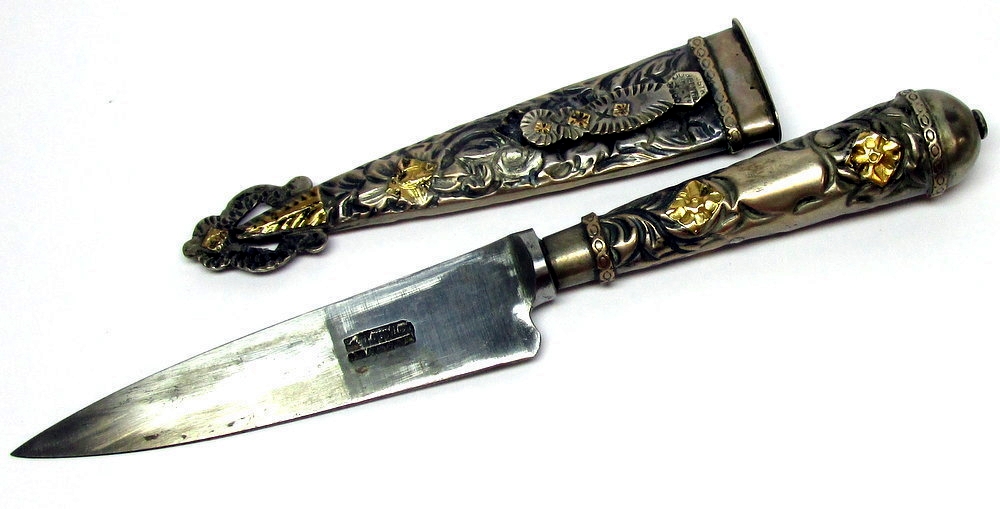
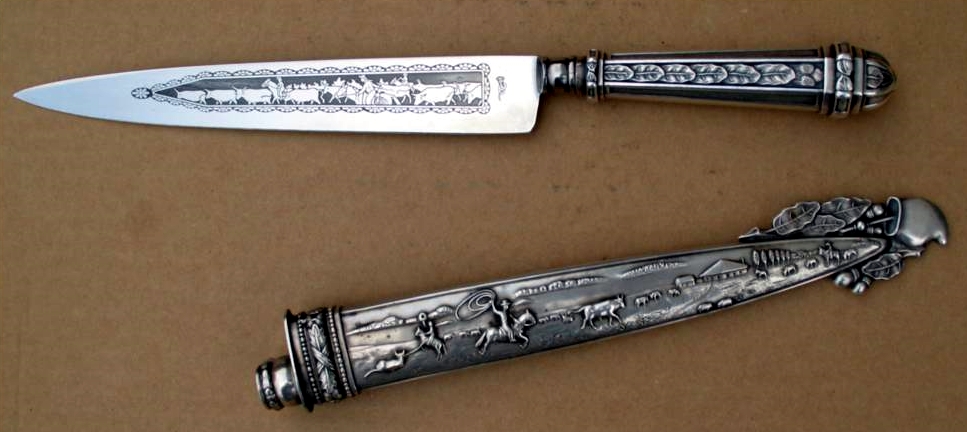
The gaucho’s most prized possession, though, was his knife, or facon. „The facon was the gaucho’s third arm,“ says Charles Balbe, who is called the English Gaucho by friends because his grandfather emigrated from Scotland. „He used it for finely chopping tobacco for his cigarettes, for eating, for cleaning his horse’s hooves and for ending a conversation.

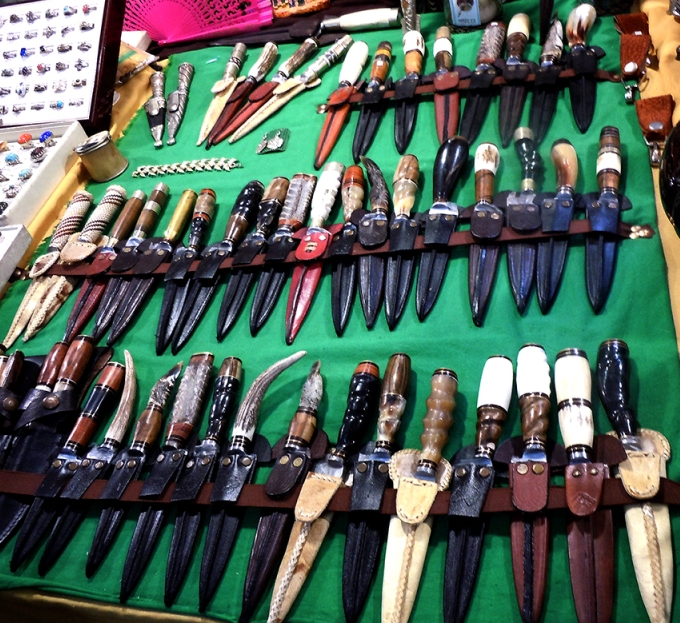
gaucho 21f gaucho 21h gaucho 21i gaucho 21e gaucho rodeo   Gauchos and their facons, large and small ones and an selection for sale on a gaucho festival.

He didn’t approve of firearms. He only loved his knife, and in a duel he wouldn’t try to kill you. He’d try to cut you to leave a scar. That way every time you saw the scar, you’d remember how you’d been bested. You’d respect him.“

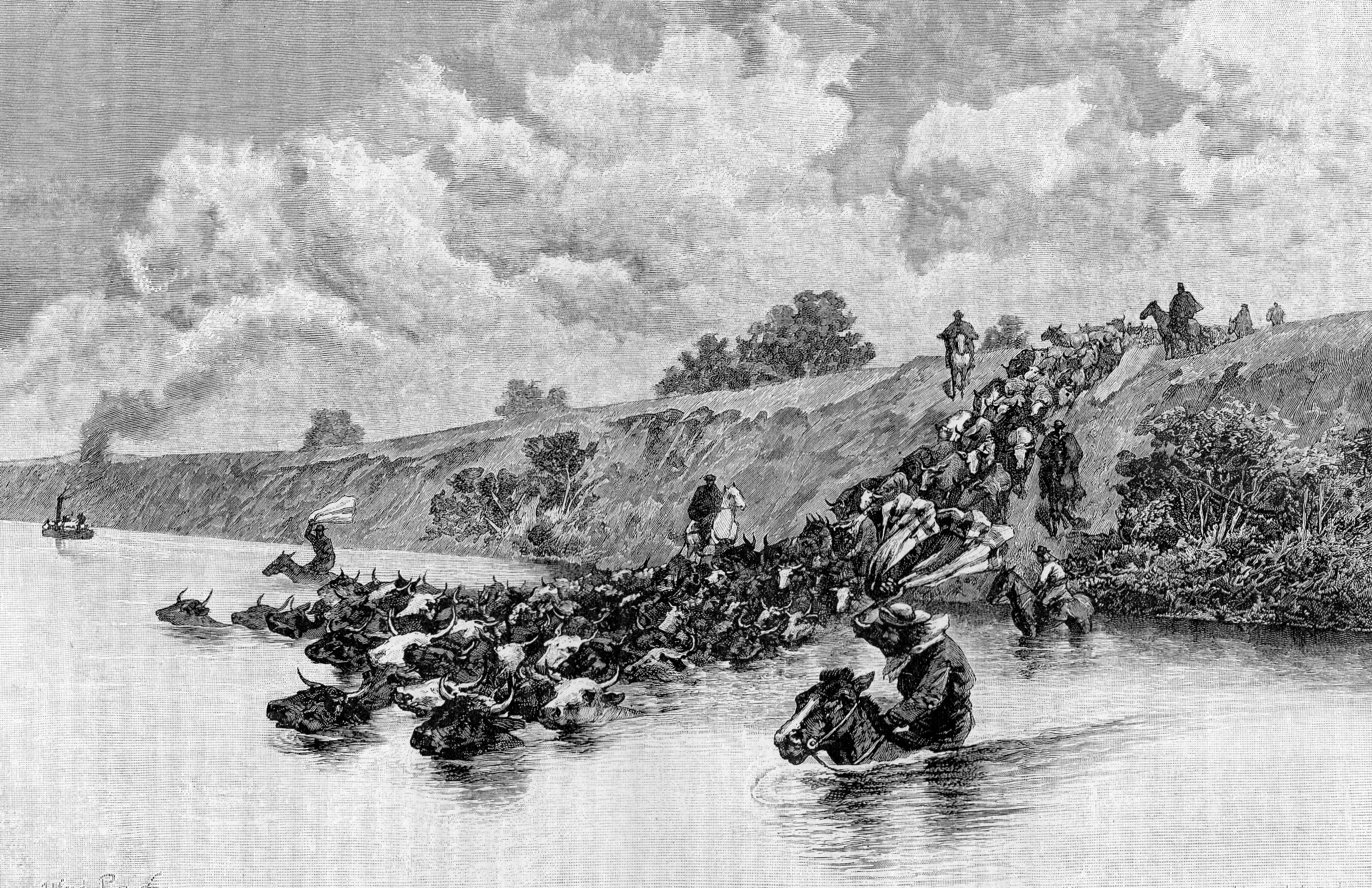
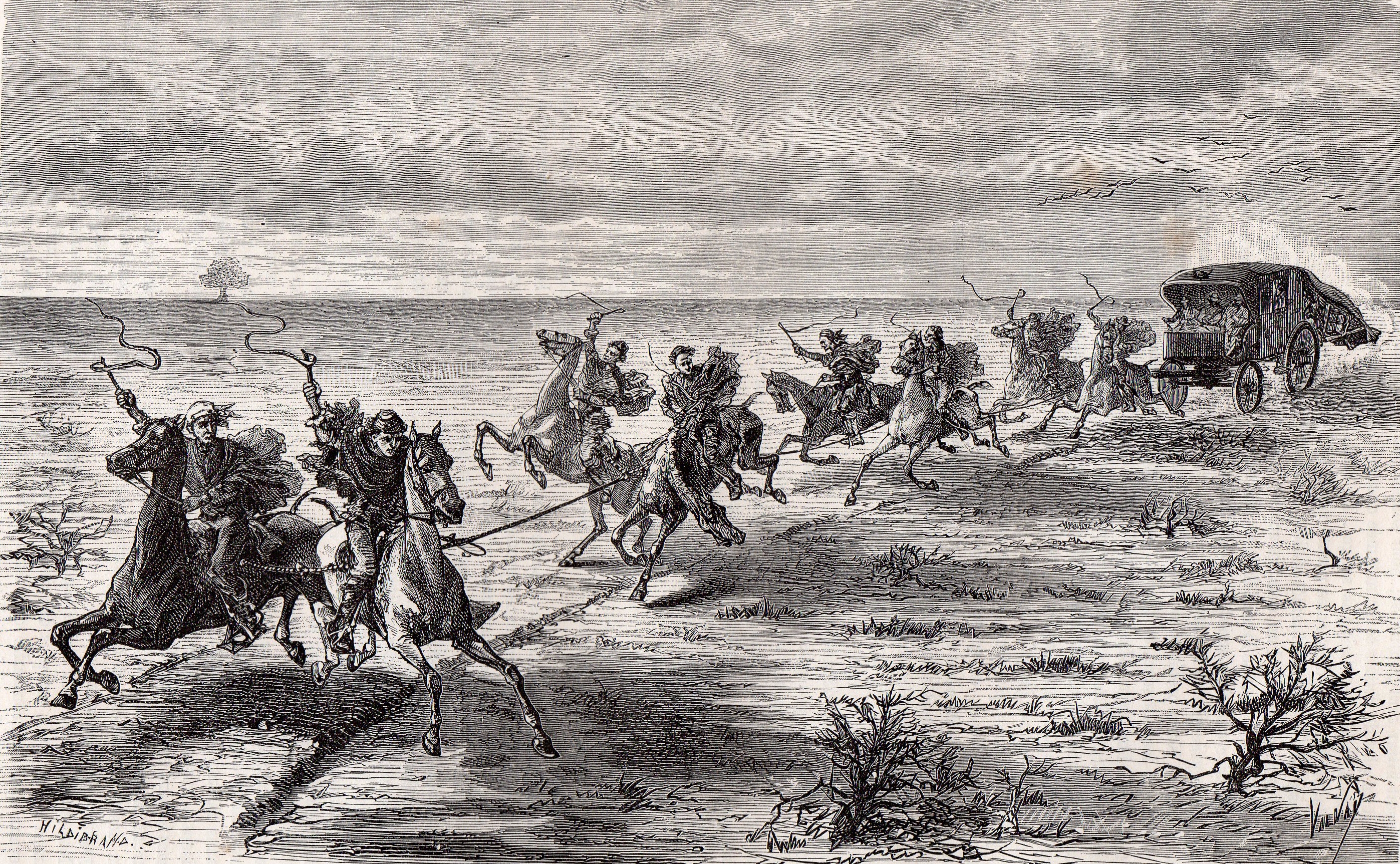
gaucho 29 gaucho 49fa gaucho 14 gaucho 49ba        All of them are gauchos and they all have the same duty and philosophy, no matter if they drive horses, cattle, sheep, or mostly unknown, a stagecoach through the pampas.

Knife fights between gauchos might break out at the slightest offense when liquor was flowing. „A dispute easily arises about a hand of cards or the heart of a woman, and a sharp word is too often answered by a sharp knife,“ wrote T.W. Hinchliff in 1863 in South American Sketches.

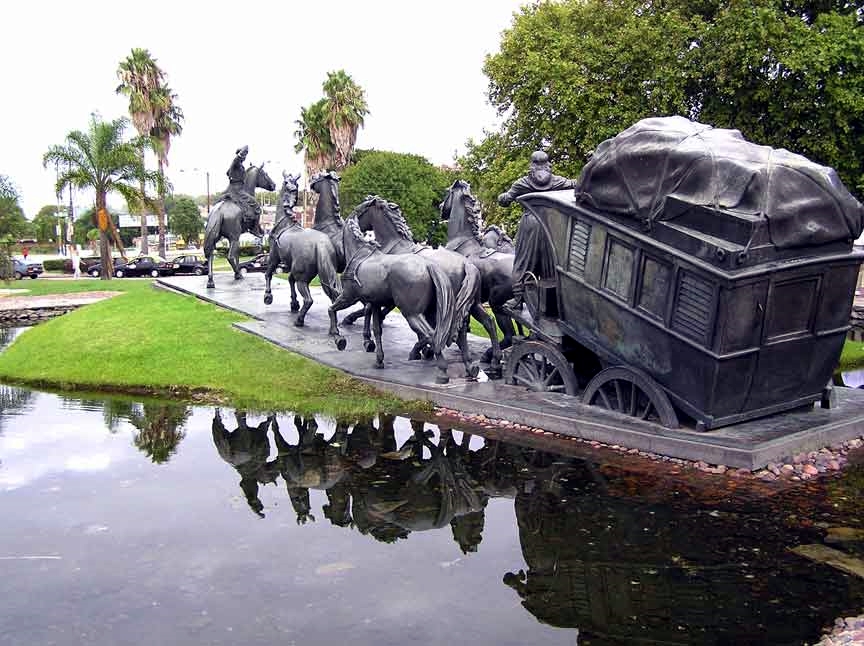
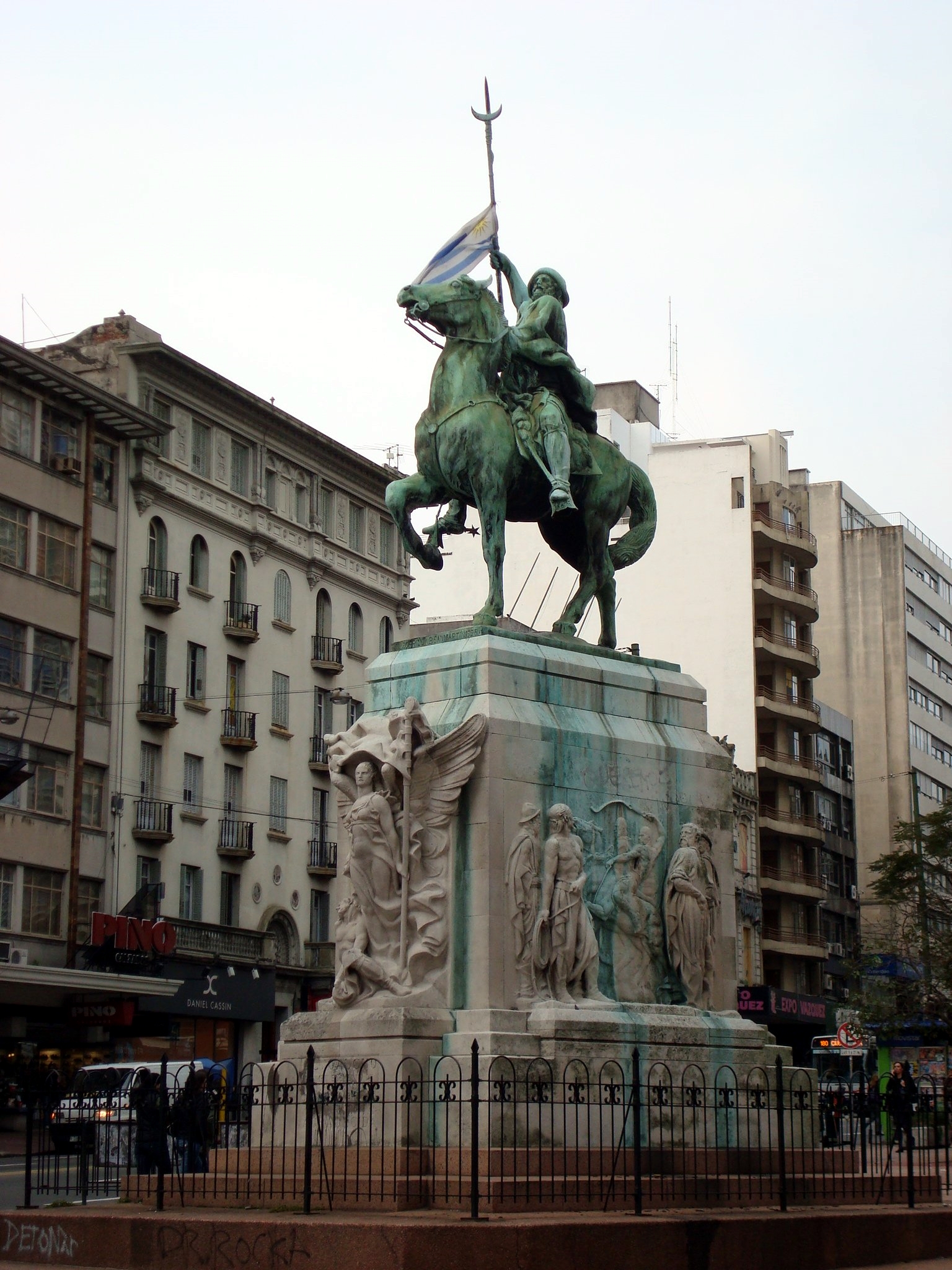
gaucho 18 g help a wagon train     gaucho 35c   Another monument in Montevideo. Gaucho helps a wagon train to cross a river.  Gaucho life on a hacienda.

In his book Far Away and Long Ago (1918) Argentine naturalist William Henry Hudson wrote that gauchos „loved to kill a man, not with a bullet, but in a manner to make them know and feel that they were really and truly killing.“
„They liked to see blood,“ he says. „They wouldn’t hang a horse thief, as they did in the American West. They’d slit his throat without blinking an eye. They liked the color red.“

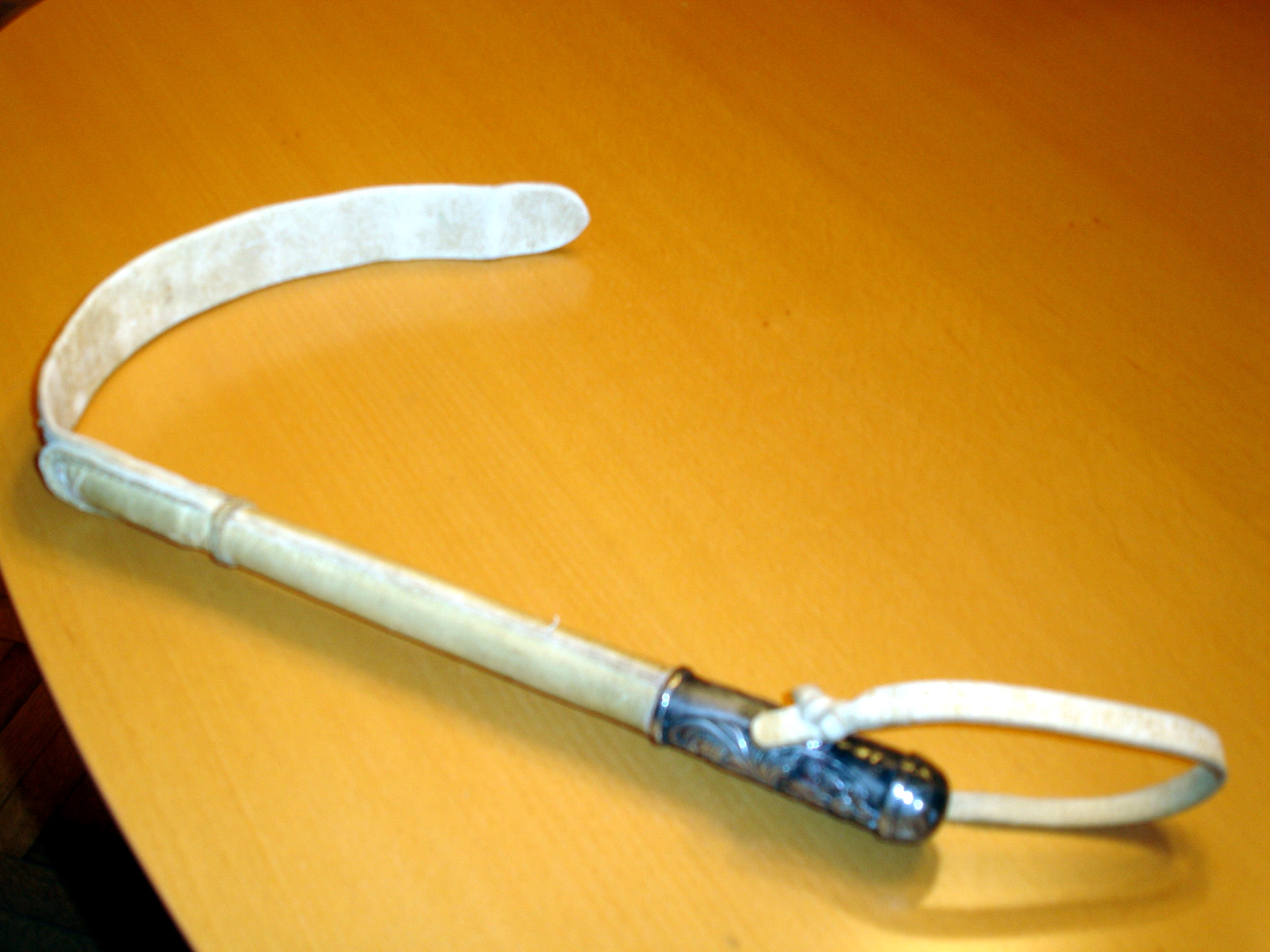
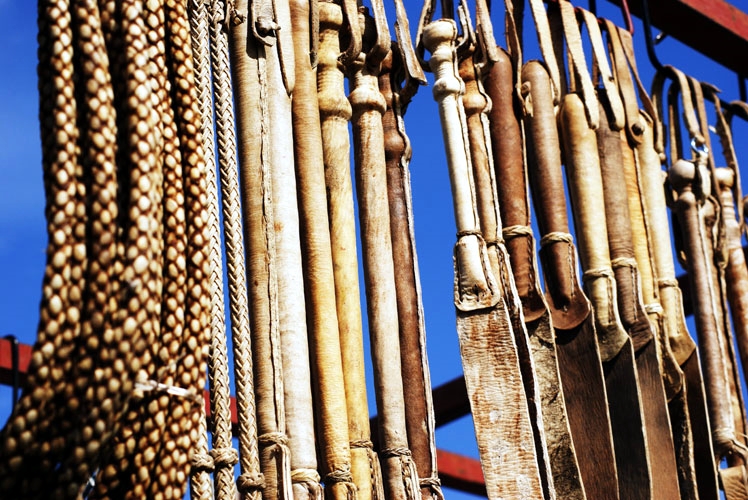
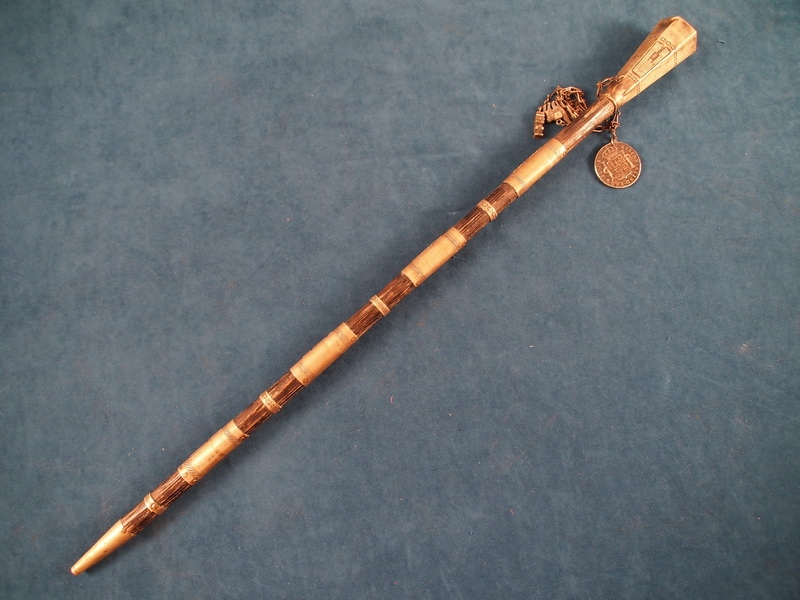
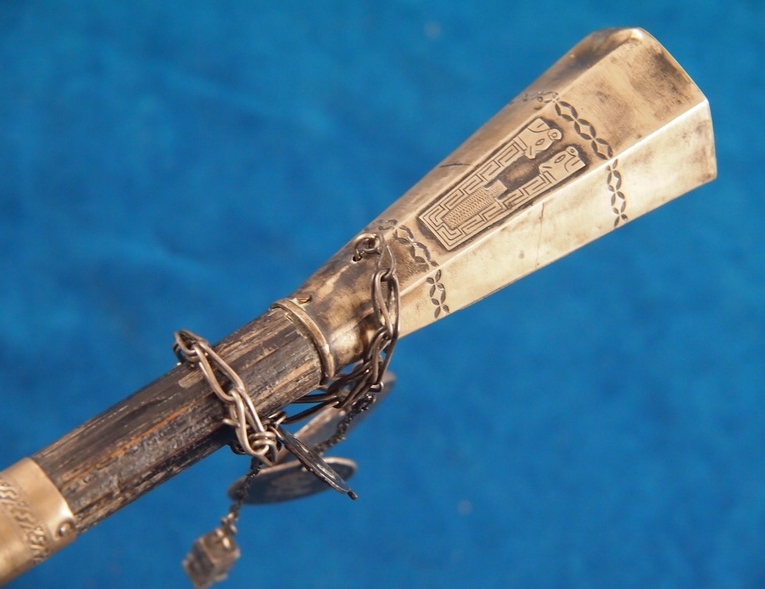
gaucho 32b rebenque    gaucho 32c     Nice old gaucho whip, called rebenque, with silver handle.   And modern whips for sale during a rodeo.

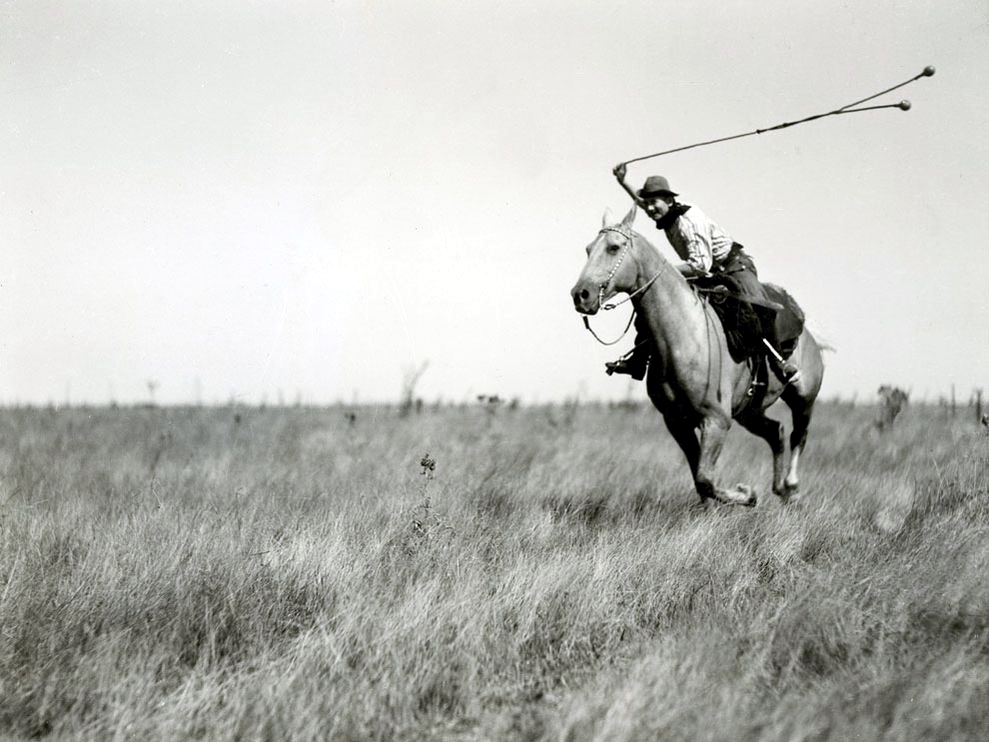
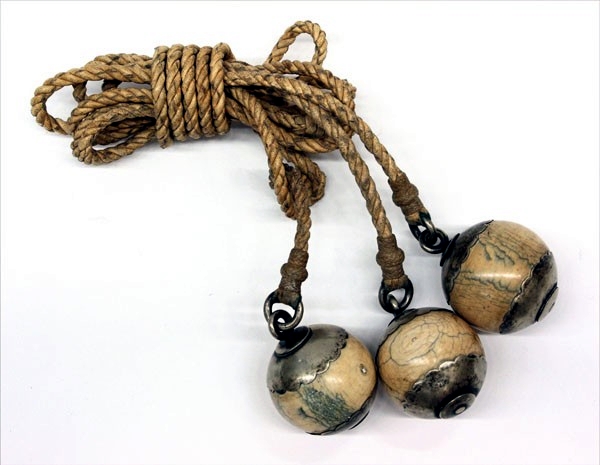
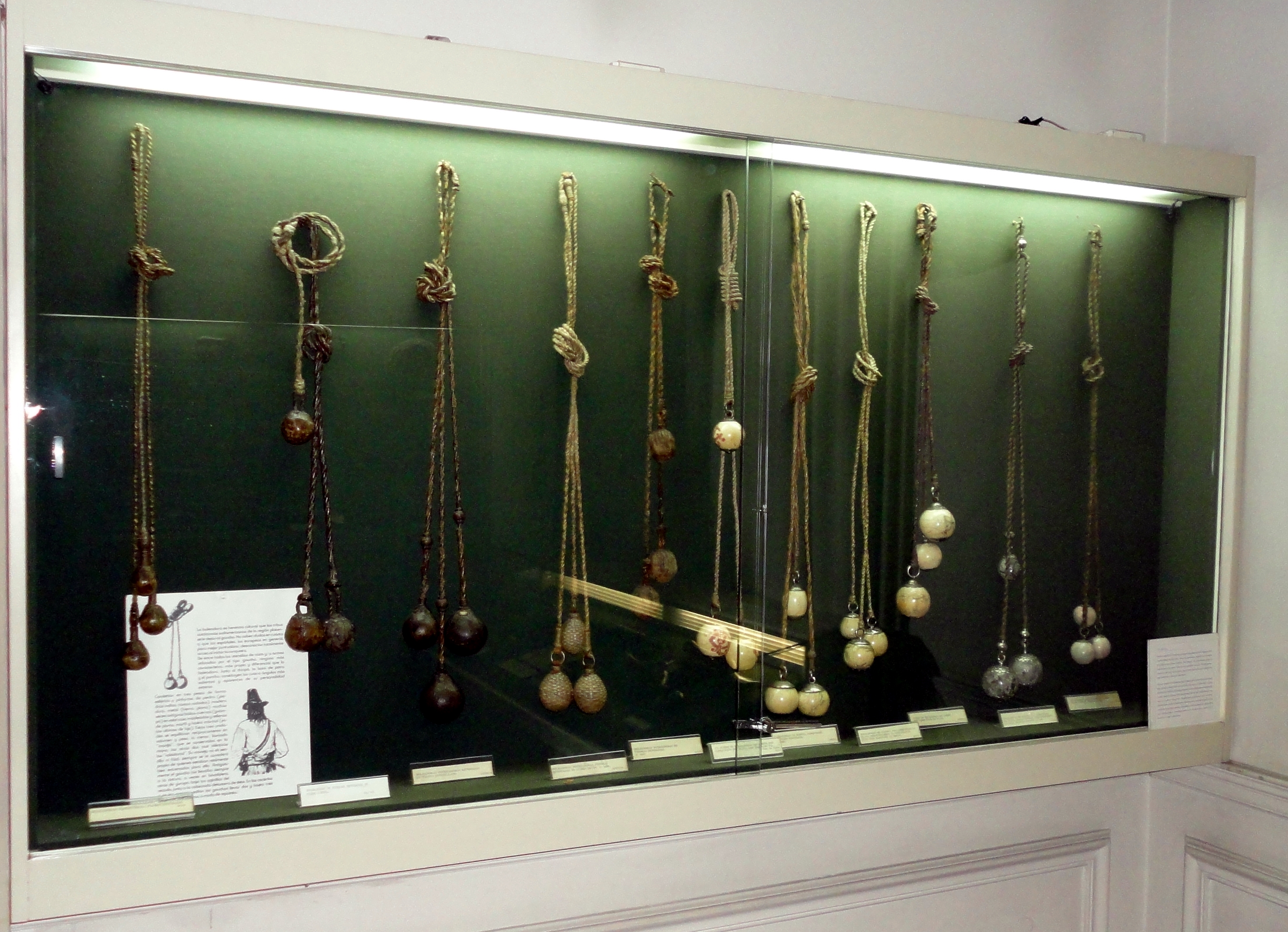
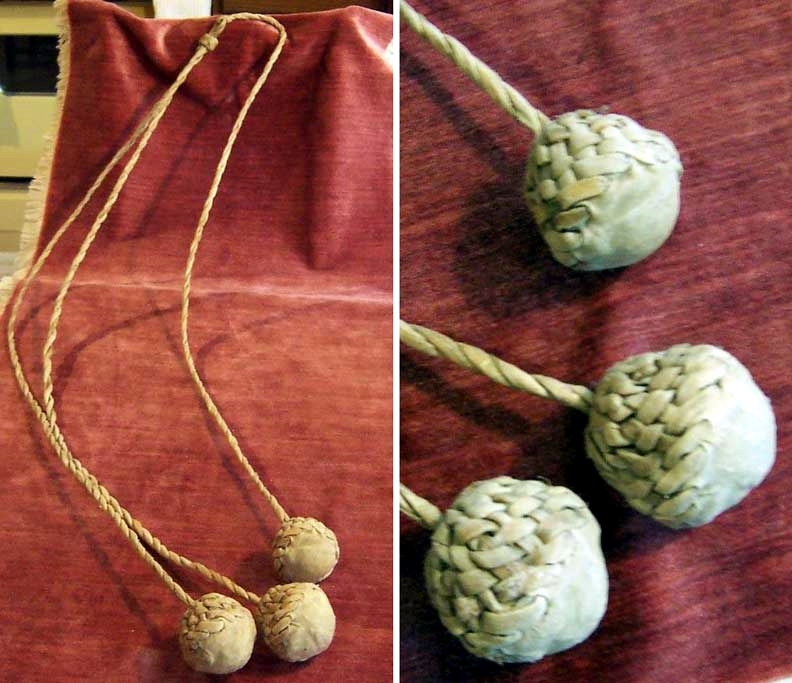
The bola was the gaucho’s other weapon of choice, though it was primarily employed to capture game. An Indian invention, the bola was fashioned of three billiard-ball-sized rocks or iron balls that were covered in leather and attached to long lengths of rawhide. Holding the middle ball, the gaucho would swing the bola over his head, lasso-style, and fling it at the legs of his prey.

gaucho 17 gaucho 17b  Swinging the bola in full gallop is gauchos art. An antique bola in a very fine, silver decorated condition.

It would unwrap them as neat as you please. In this manner he could bring down rheas, small, ostrich like birds, cattle or horses. If the horse happened to have a man on its back, that man was in trouble, which is why gauchos used to train their mounts to run with their hind legs tied together. They also took pride in being able to land on their feet if their horses took a header. Indians galloped from pursuers with their lances pointing backward to deflect a bola’s flight.

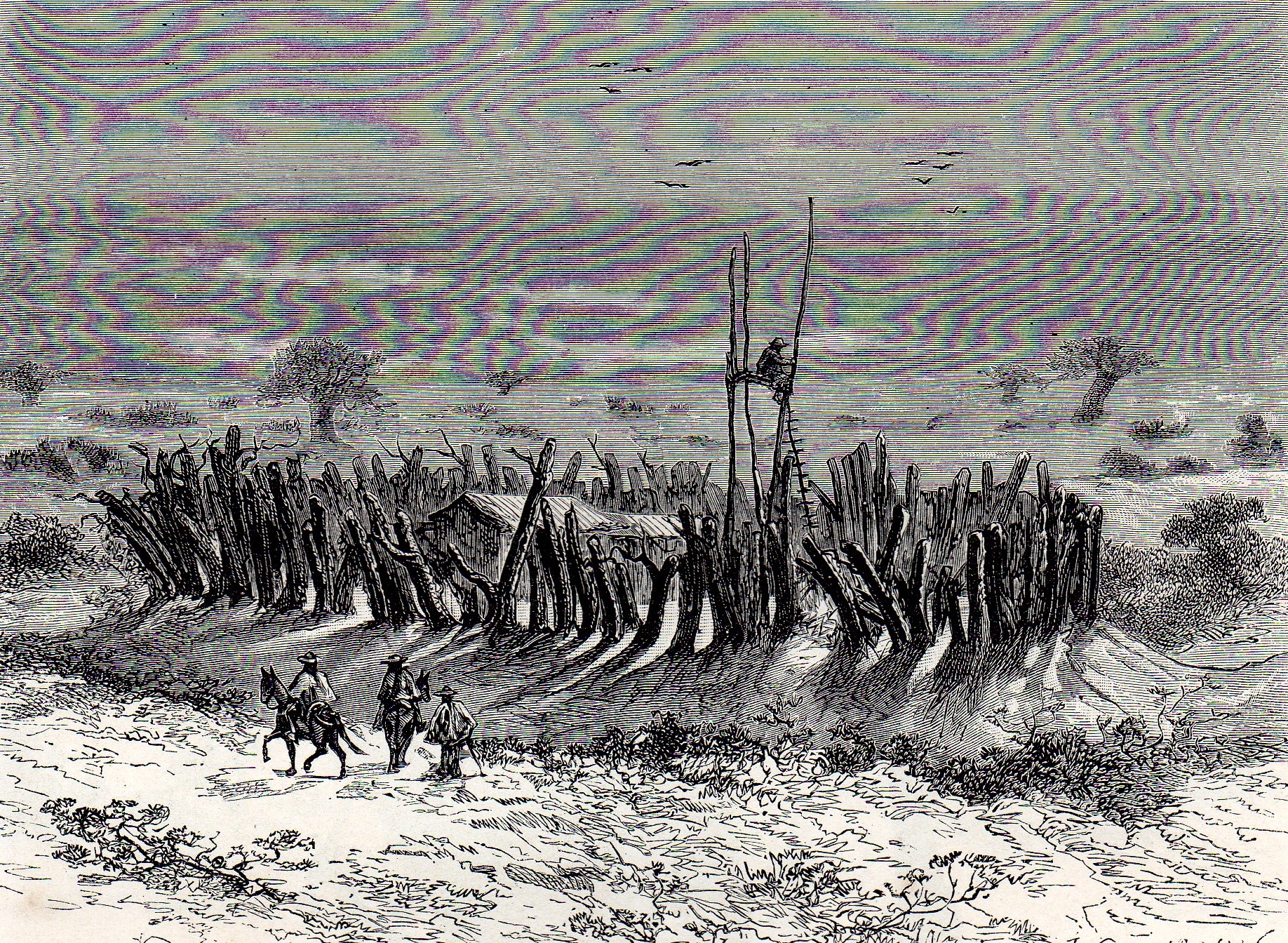
gaucho 49ea    One of the very first Gaucho Fortresses against the Indians. This one „Fort Romero“, later expanded to a garrison of 3 to 5 soldiers with families. Places where gauchos found a safe rest overnight and guarded trading spots. Wood engraving from the early 1800’s.

The Gaucho Museum.

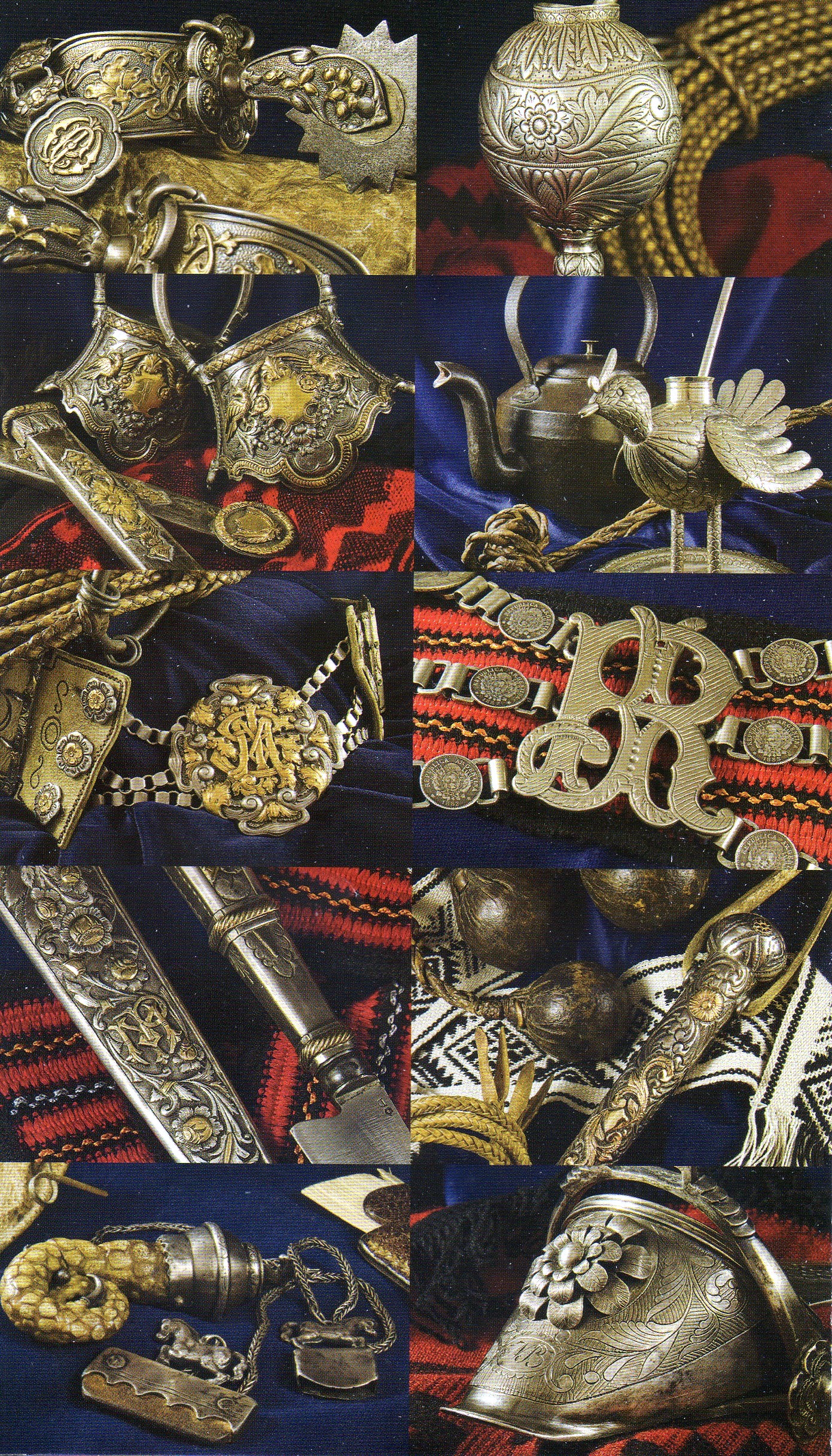
img047                gaucho 33 rodeo    Display items of the museum and a gaucho rodeo, views assembled from different pictures.

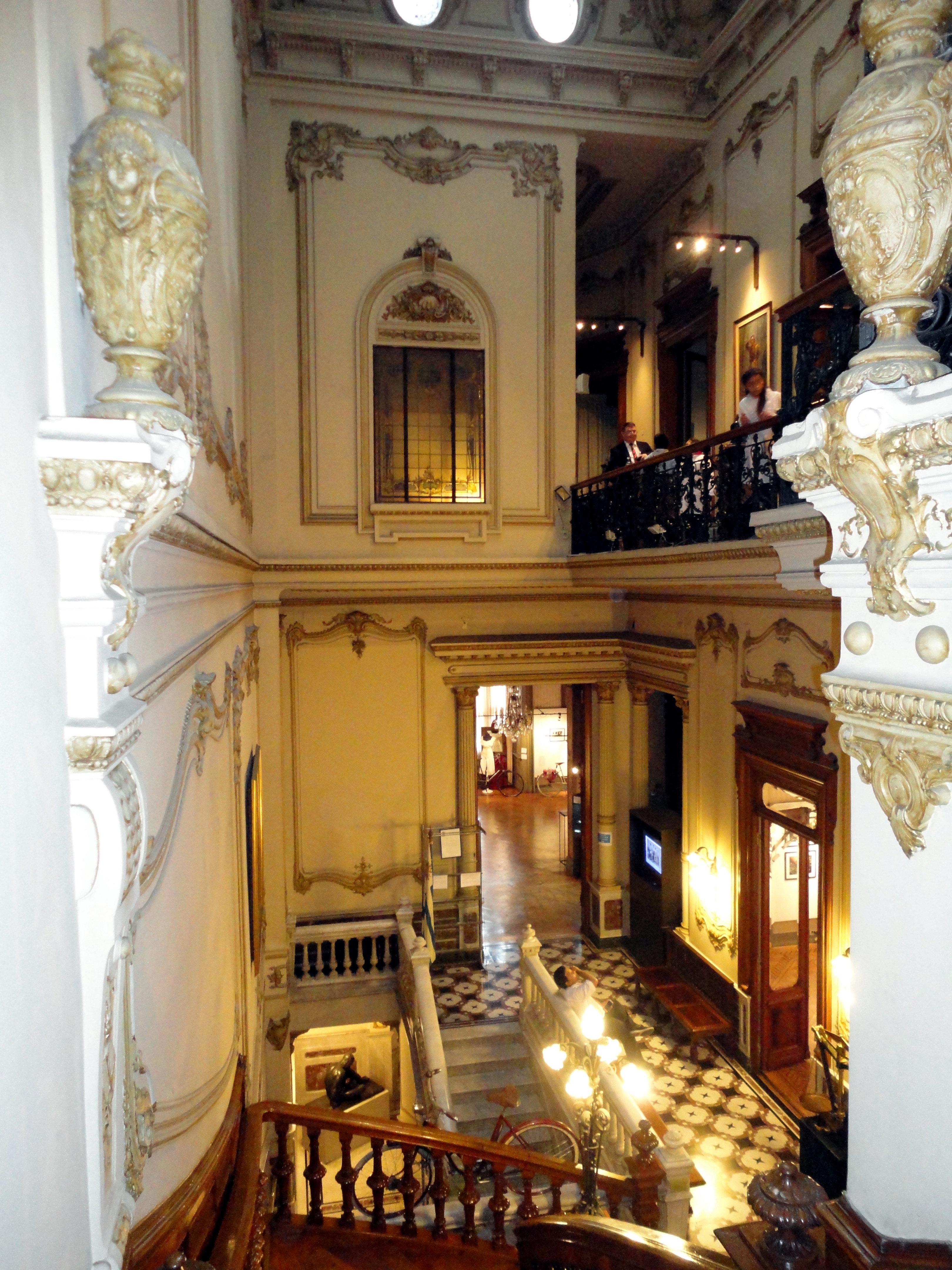
It is located on the second floor of the Heber Jackson Residence Palace in Montevideo. This building was constructed near 1896 by Alberto Heber Jacksons widow Margarita Uriarte. The building conceived the prevailing taste of the 19th century in Uruguay, with strong Italian influences. Today the building is owned by Banco Republica.

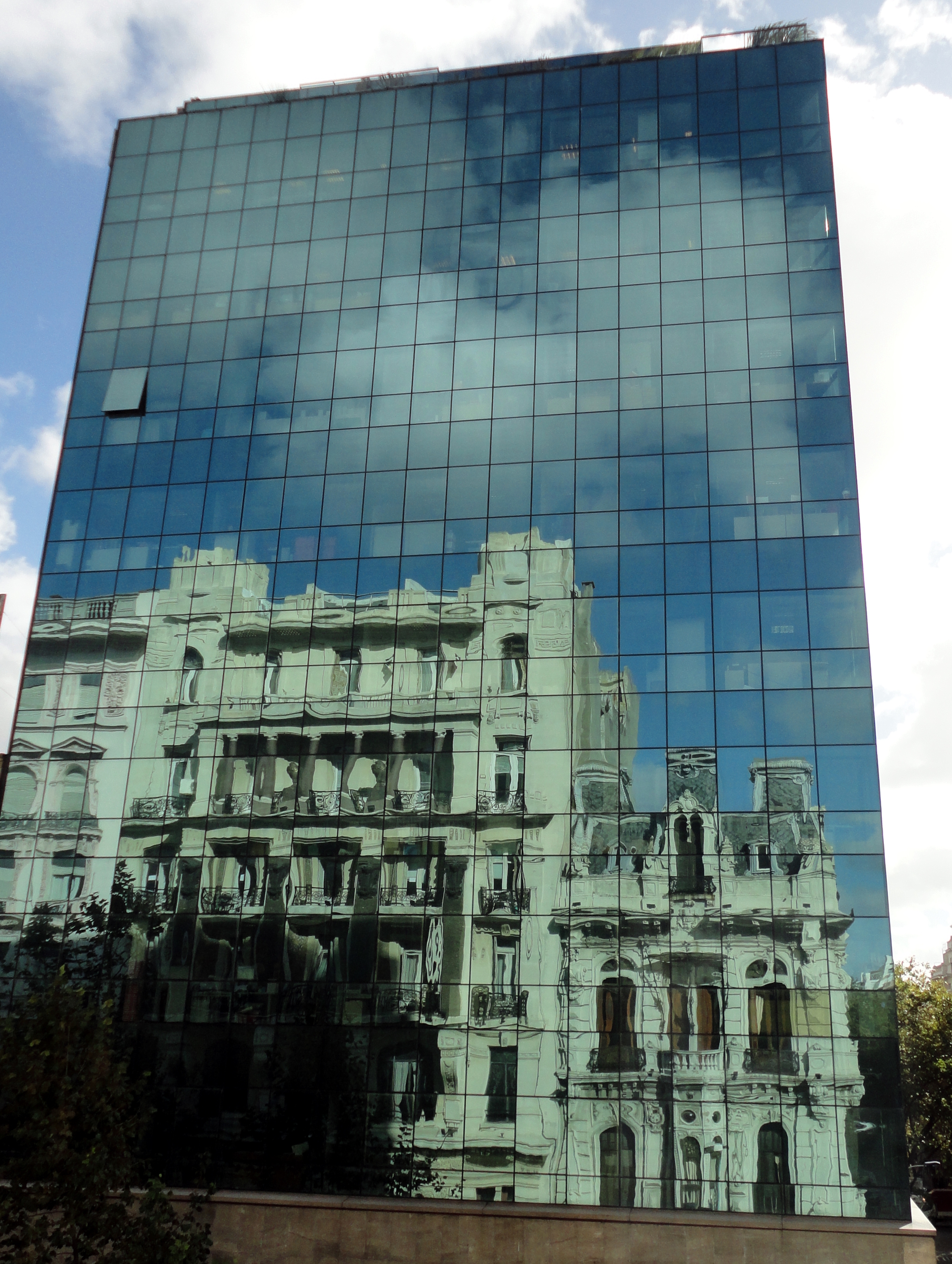
DSC02023                DSC02034       Pic on the left:  The smaller building on the right is the Heber Jackson Residence, reflecting in a modern high riser across the road. Pic on the right : The beautiful restaurated, Italian style stair case inside the building.

It is a place where history and arts of of a specific period of time of Uruguay and the Rio de la Plata region join together. The collections display representative pieces of the traditional popular arts in Uruguay, created under the influence of the native culture and that of the Spanish and Portuguese colonists.

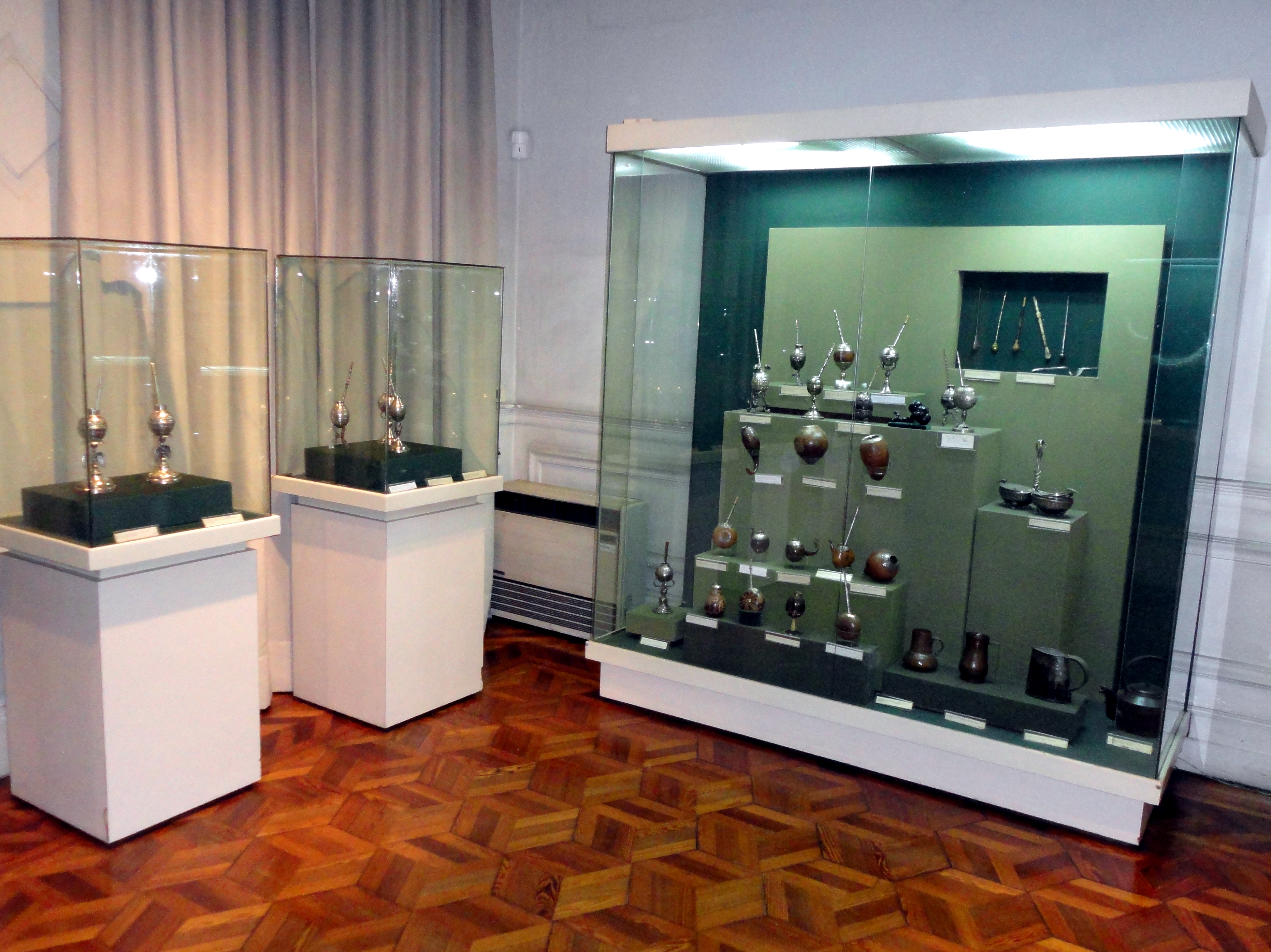
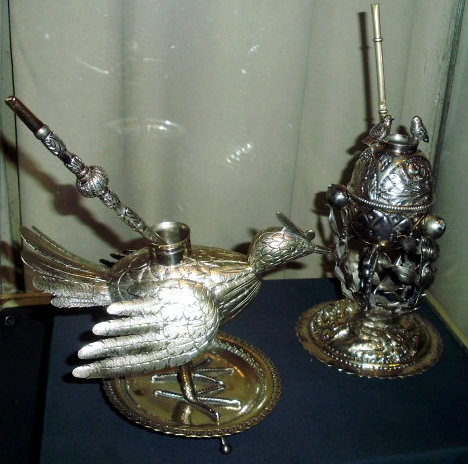
DSC02031       gaucho 35b  The Mate Room of the Gaucho Museum and a very exclusive mate set.
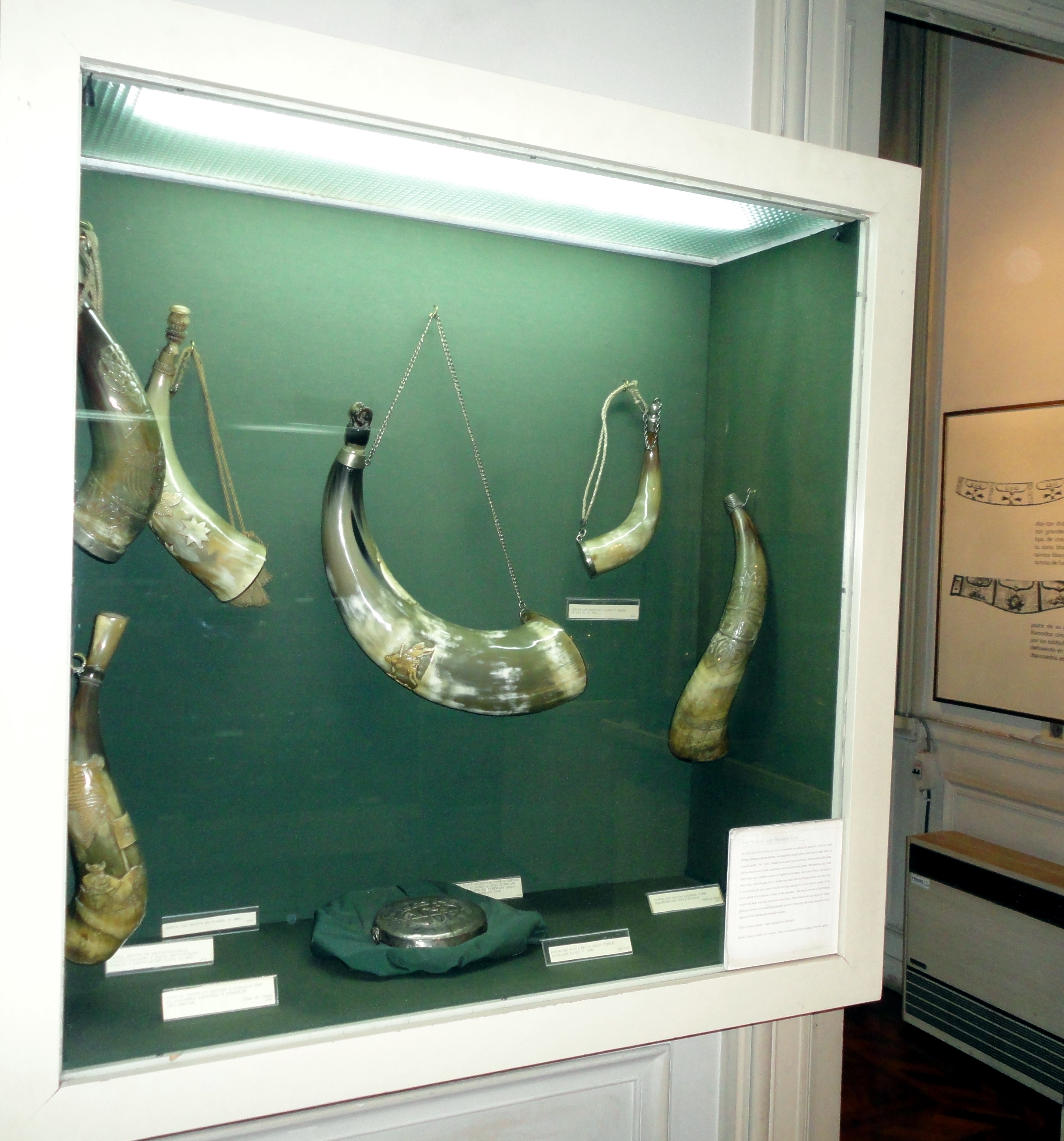
DSC02032          gaucho 21k    Horn vases and  rich gold and silver gaucho belts (called garments) in extraordinary quality.

The museum displays the pieces in different theme rooms, like

Mate room ( mates, straws, horn vases),
Belts, waistbands, gaucho buttons and smoking gear room,
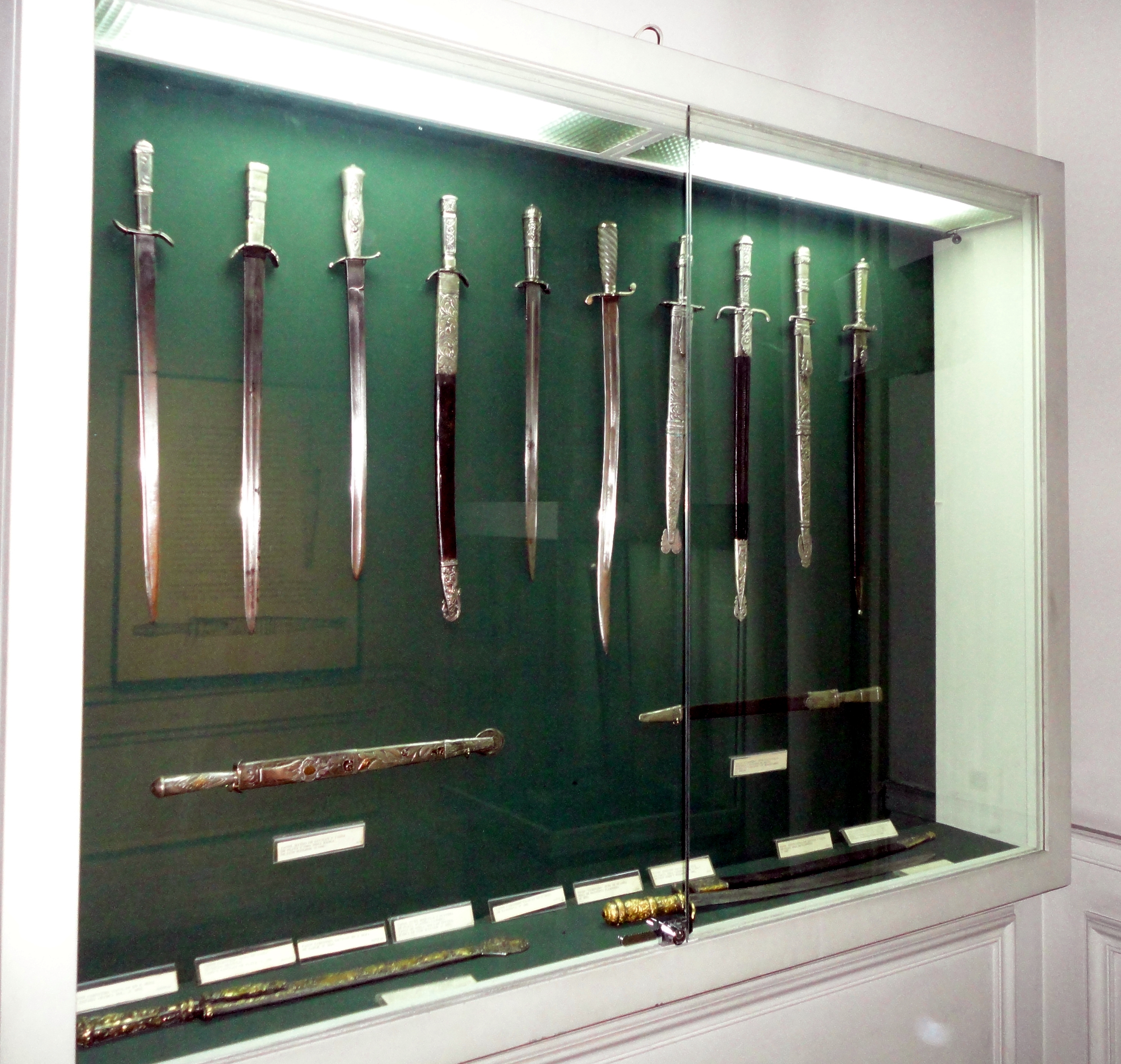
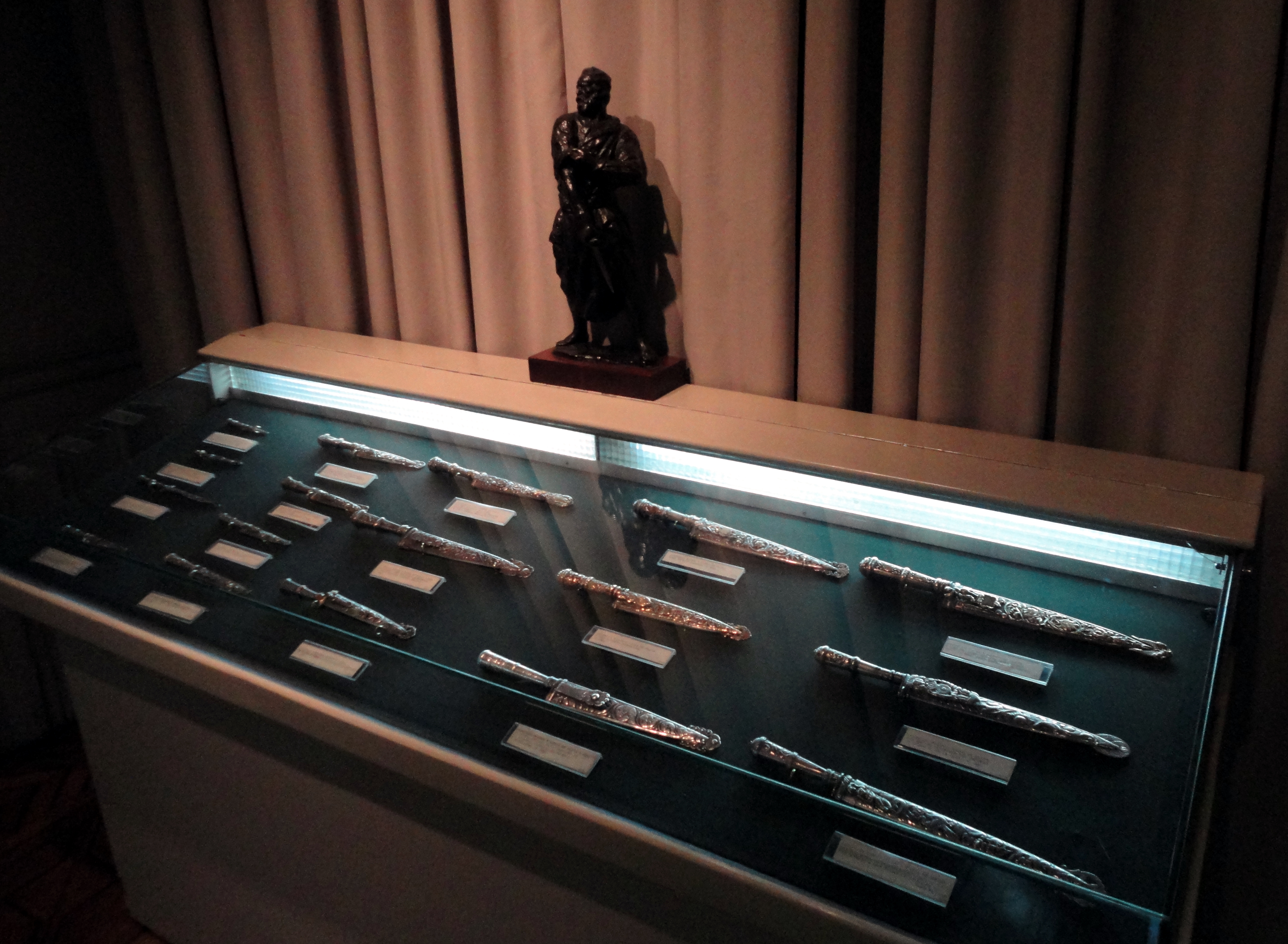
Knives room (different types of gaucho knives),
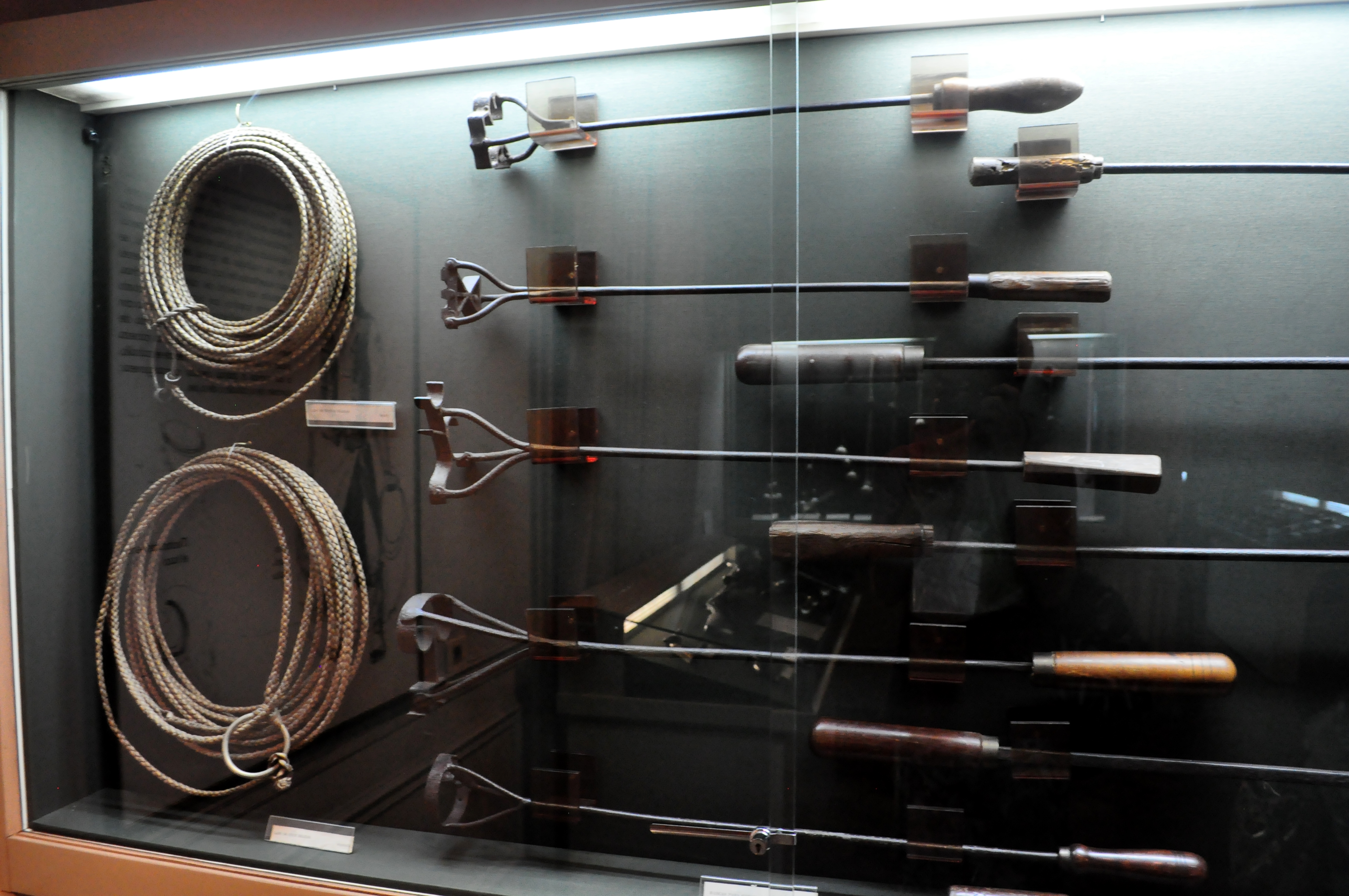
Spears, bolas, branding irons and fire weapons room,
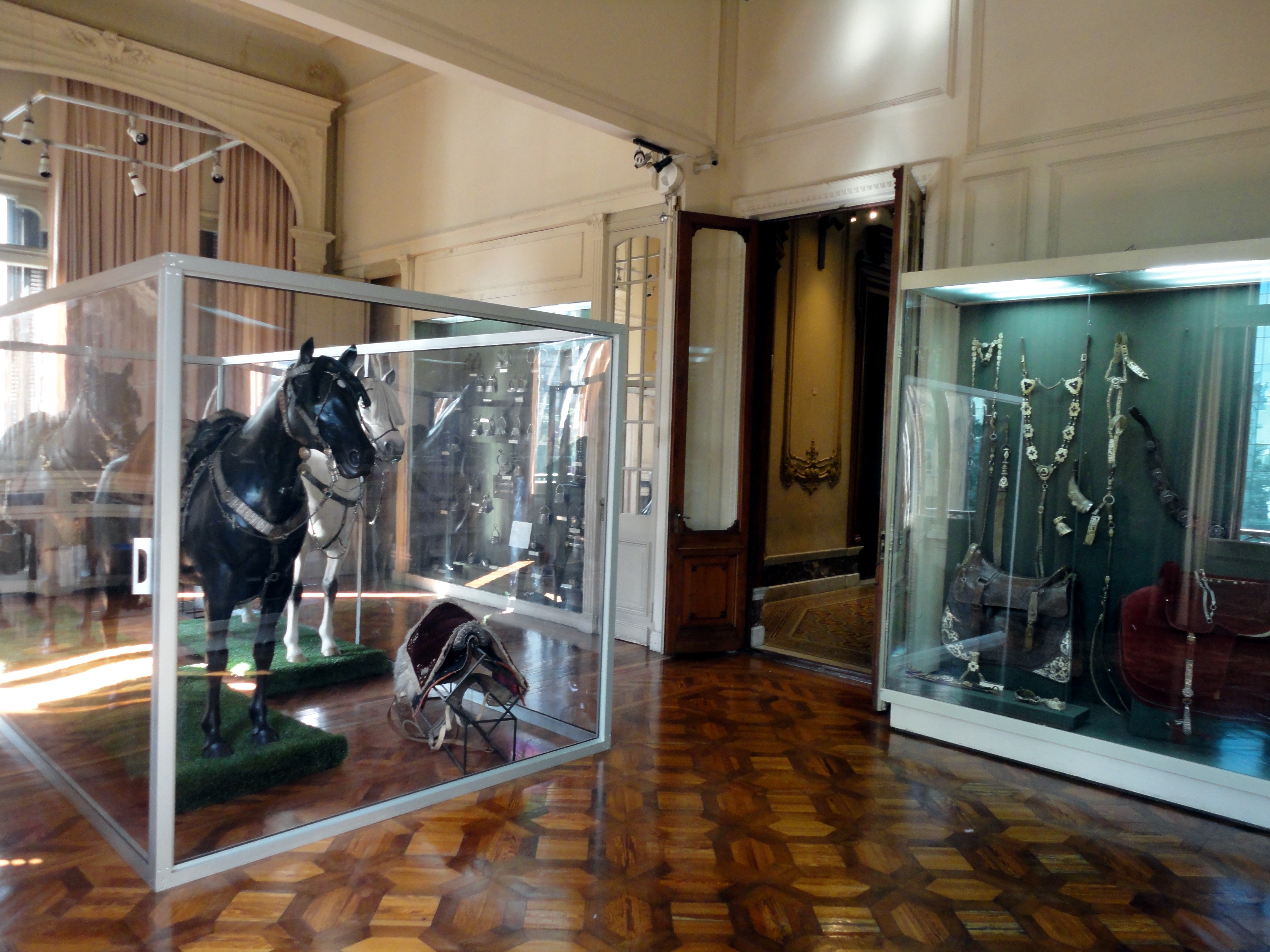
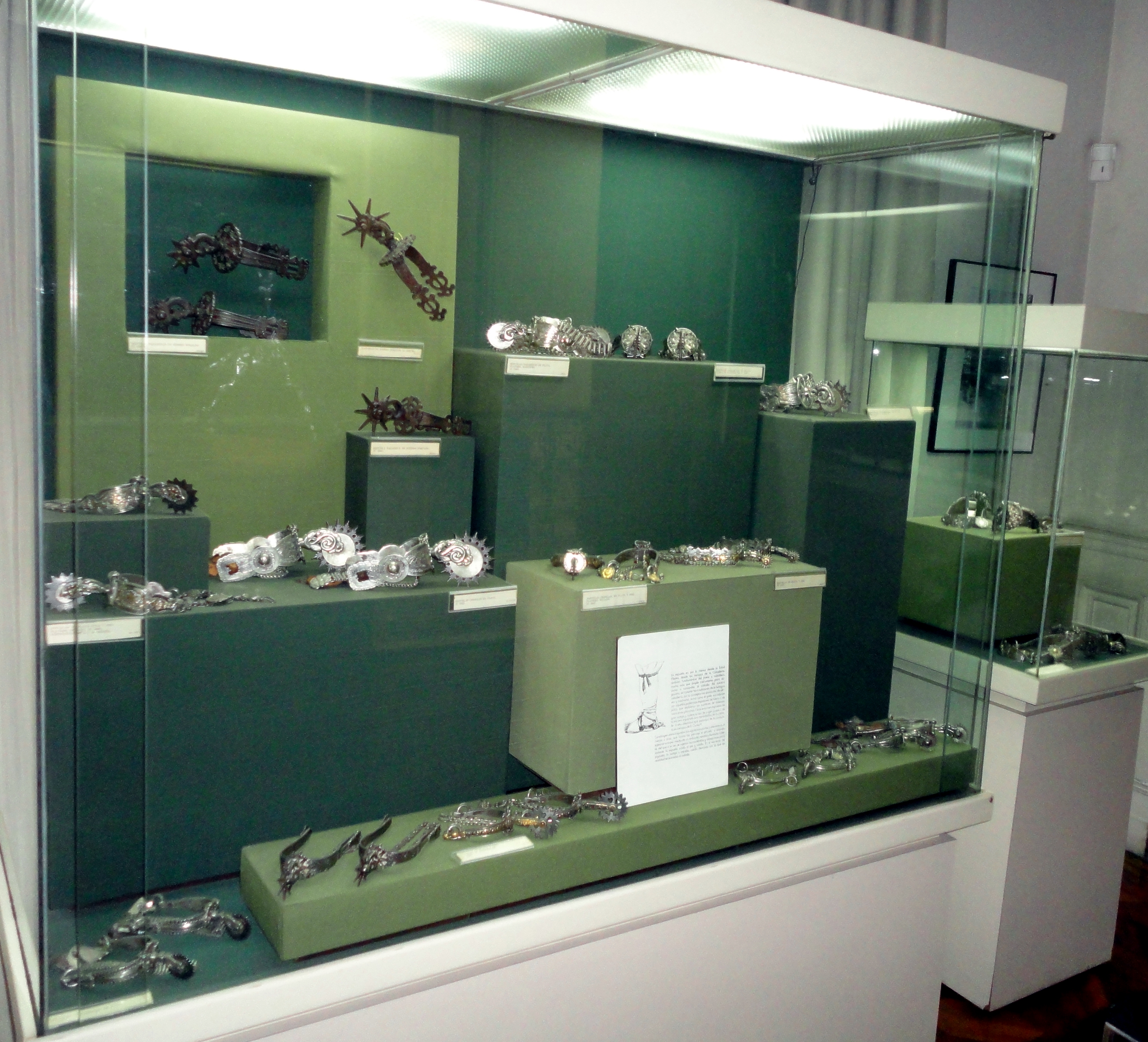
Spurs and whips room, and finally the Horses room.

gaucho 37       DSC02026  Branding irons and lassos, as well as a superb bola collection.
DSC02022     DSC02024   The Horse Room and a nice collection of spurs.

Many many of the items are the very high quality of the time, made from silver. Silver, obtained from the Potosi mines, was the material used for the manufacturing of extraordinary pieces, like horse harnesses, mates, straws, spurs, belts and of course the gaucho knives.

DSC02028 DSC02029 gaucho 21 antik gaucho 21d antik           It is worth to see such a fine gaucho knife collection. Mostly, but hardly mentioned, the gauchos carried 2 different knifes. A sword like one, over 12 inch (30cm up to 60cm) long blade, used in fights and killings and a short one for daily use like food cutting etc.  Today they only wear the medium size one (around 12 inch, 30cm) carried in the back belt.
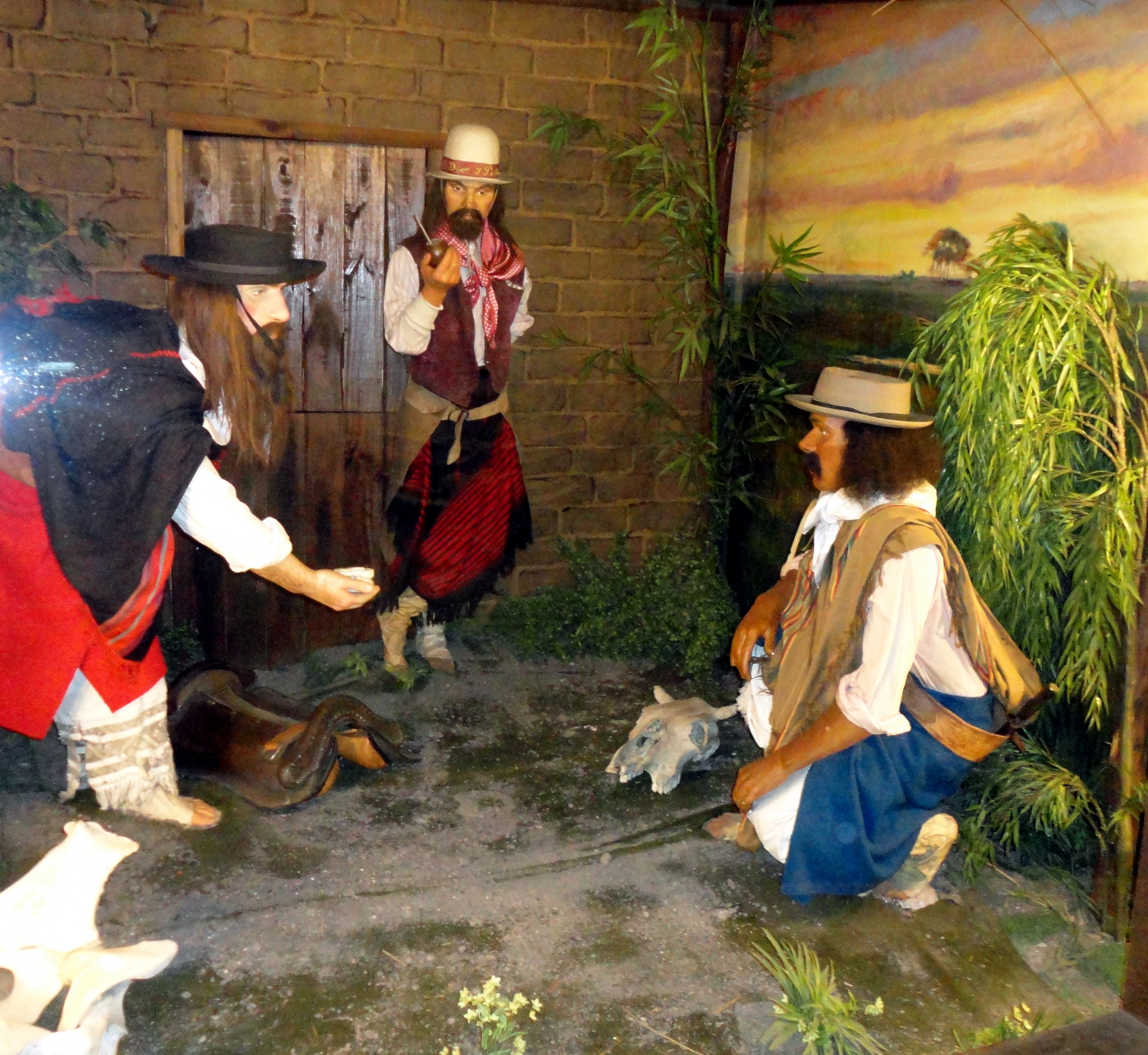
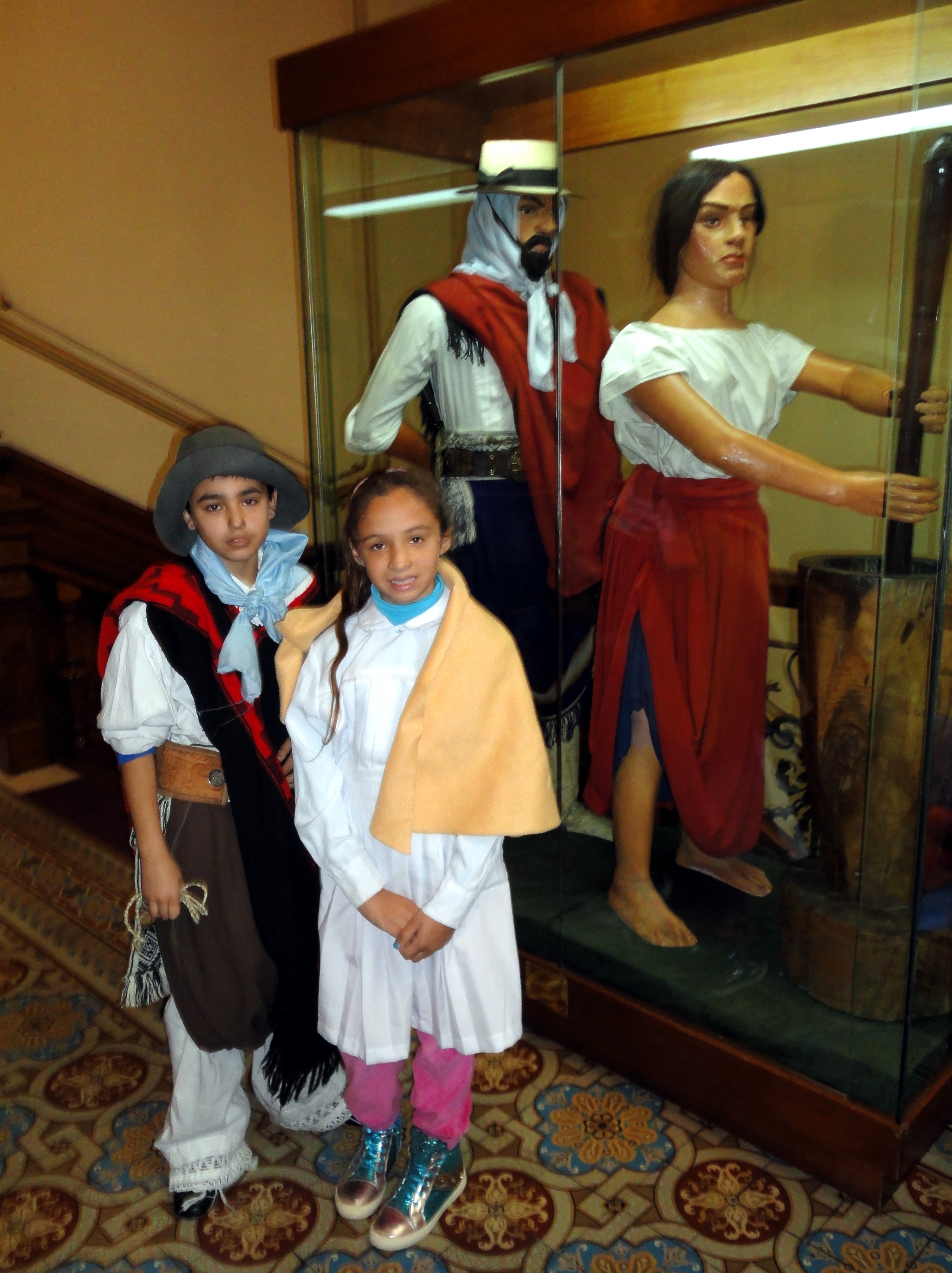
DSC02021a                     DSC02020      Dioramas showing the lifestyle of the gauchos. Good fun for the kids, they get education, may dress up like gauchos and can take pictures home. Those two were a bit shy, pictured by a „Gringo“.

In several dioramas one can see the gauchos clothing, utensils, settings and gaucho lifestyle. The museum has always changing exhibitions in so named temporary exhibition rooms. When I was there they had an interesting exhibition of Uruguayan bikes throughout the last century. Also they offer workshops of different kinds and guided tours. During school hours you can face dozens of school kids lamenting through the rooms and following search-exercise maps. Not a problem, but very noisy.

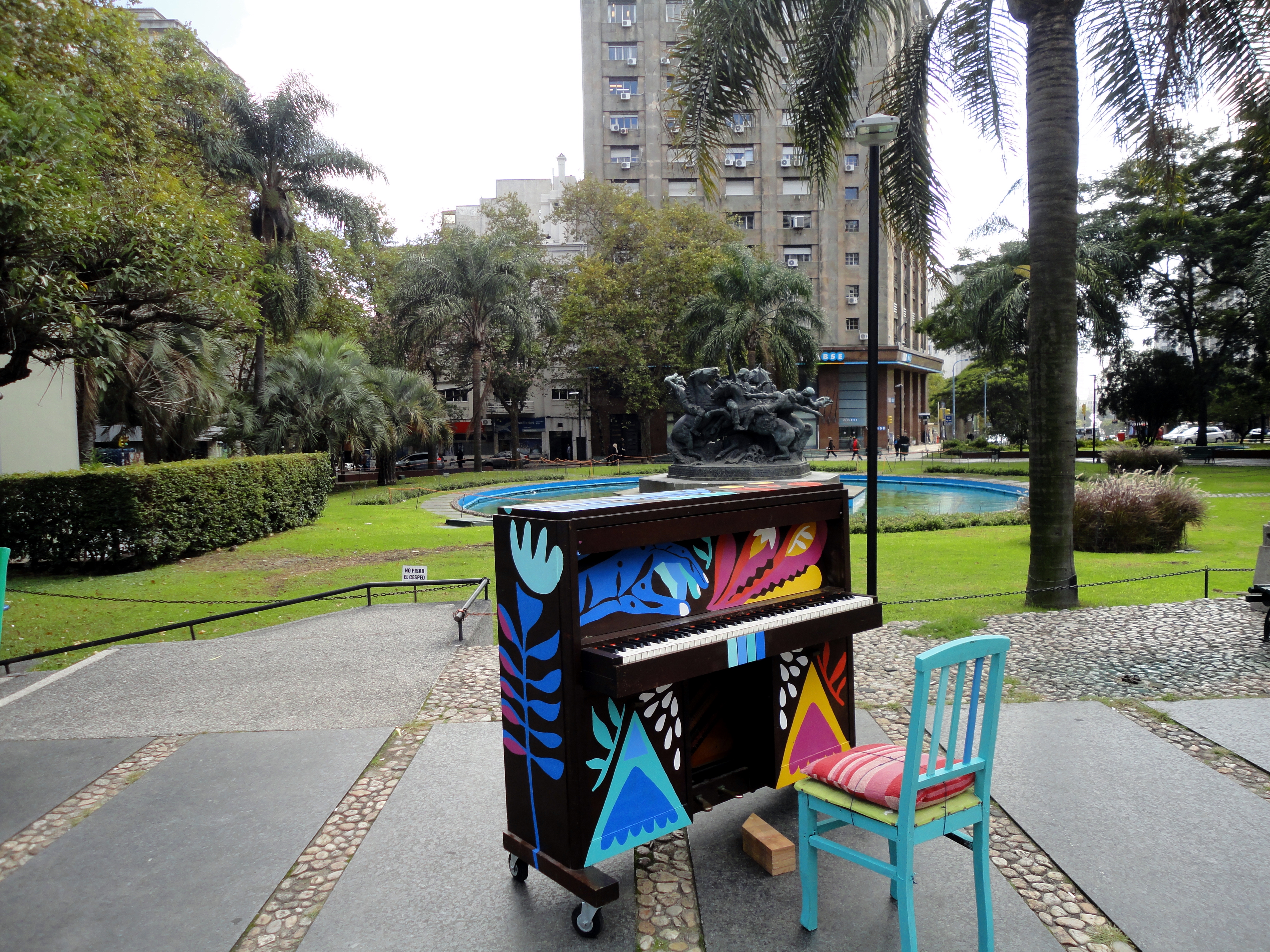
DSC02037                gaucho 30 el gaucho montevideo     After visiting the museum you can relax on Plaza del Entrevero, play a bit piano there, have a snack or a coffee in one of the many restaurants around or walk 7 blocks east on Calle 18 Julio (along Plaza Cagancha and the Intendencia of Montevideo), to see the Gaucho Monument (Monumento al Gaucho).

Collecting Gaucho Memorabilia.

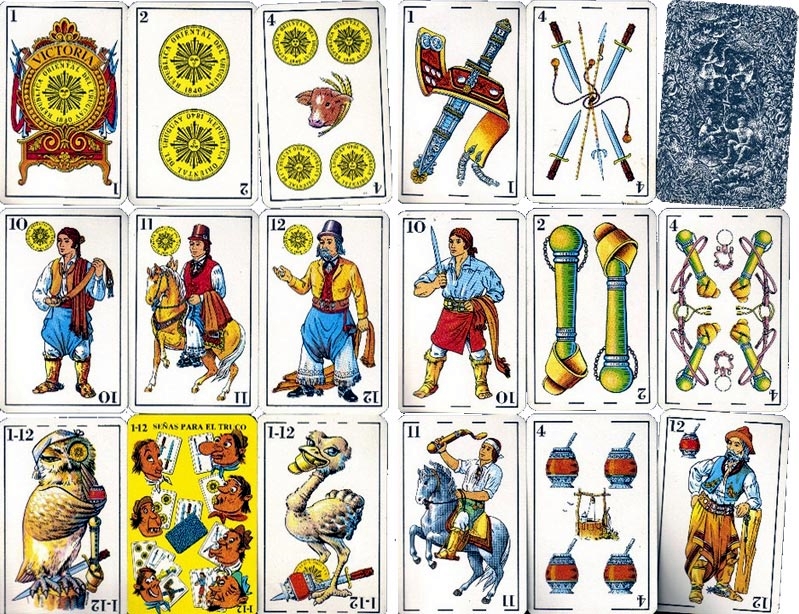
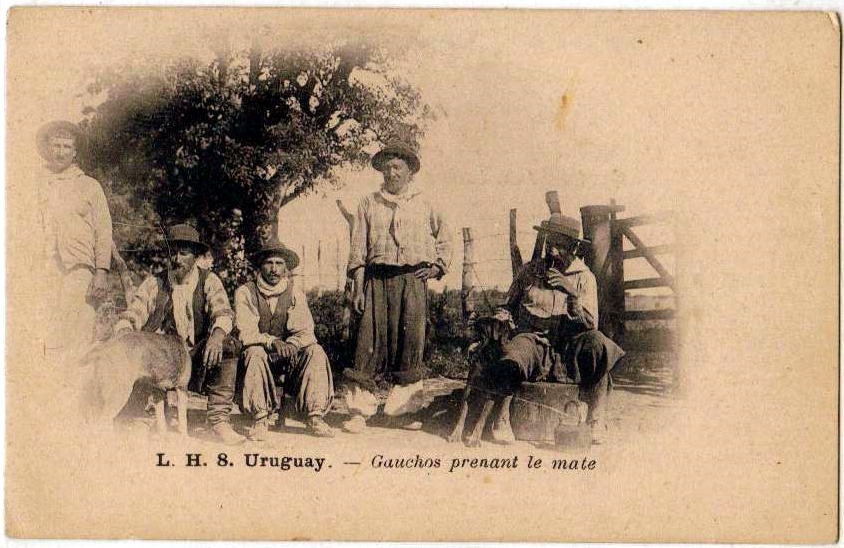
gaucho 15   gaucho 39 1900   Very collectable – gaucho items, like bolas, knives, buttons and paper memorabilia. Here a very rare deck of playing cards with gaucho motives and a rare old postcard from 1898, showing gauchos with their devoted companions (their dogs) drinking mate.
gaucho 21b antik  gaucho 32a whip-baton mexico  gaucho 32aa  gaucho 17a bola    gaucho 49aa  gaucho 45    Very rare and highly collectable are of course antique gaucho knives, or a whip-baton with carved horn handle and inlays, or bolas (all seen on Montevideo flew markets) or old gaucho images, painted or engraved.
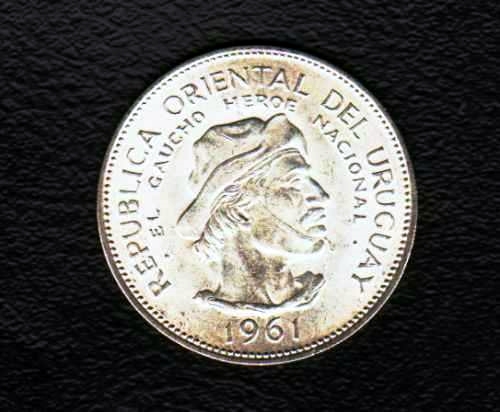
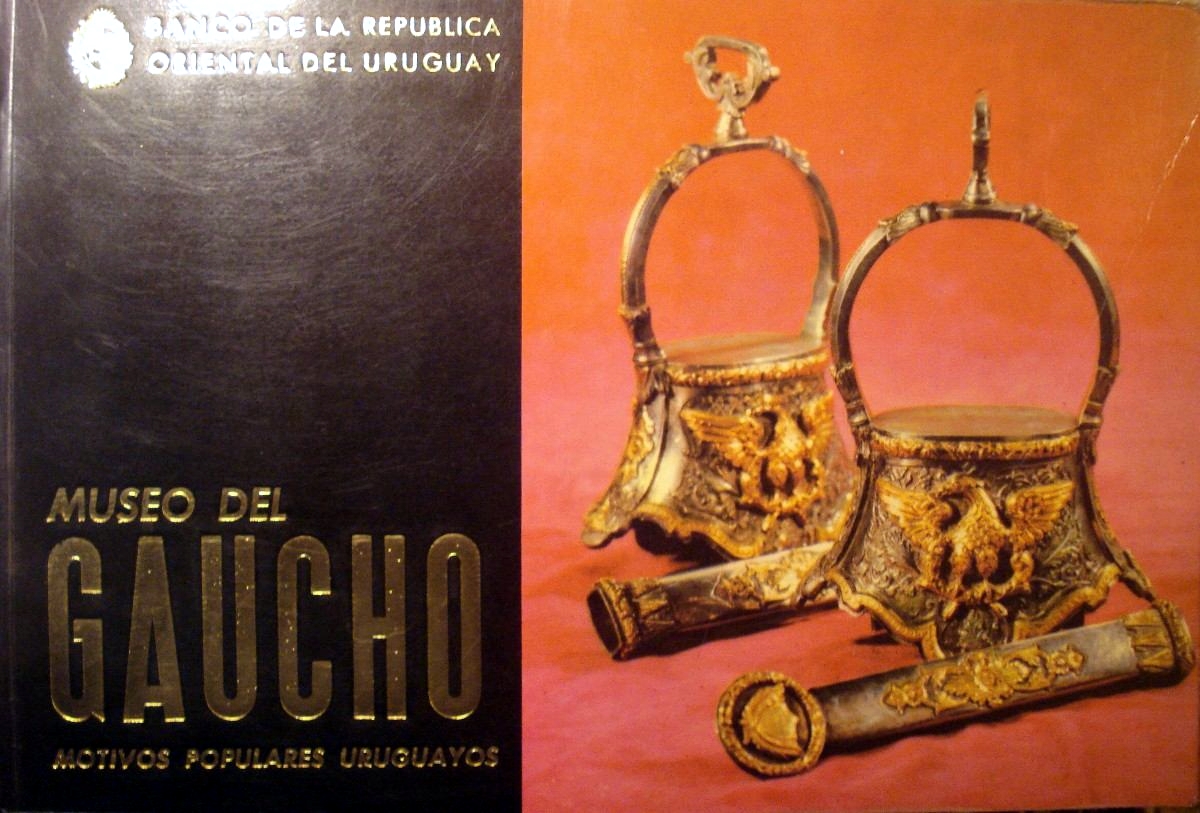
gaucho 4a                  gaucho 44 gaucho 41 10-pesos-1961-plata   gaucho 46    The gaucho is a national hero of Uruguay. They honor him on stamps, on coins (here the 10 peso one from 1961) or in many parts of literature. This one is an illustrated guide of the Gaucho Museum in Montevideo. An out of print edition of the Bank of the Republic of Uruguay (BROU). Lavishly illustrated in black and white, highly collectable first edition, 180 pages, assembled by Professor Fernando Assuncao. Assuncao put together the first original collections of the Gaucho Museum. Printing year, I guess, is in the late 1980’s.

Finally – the gaucho food.

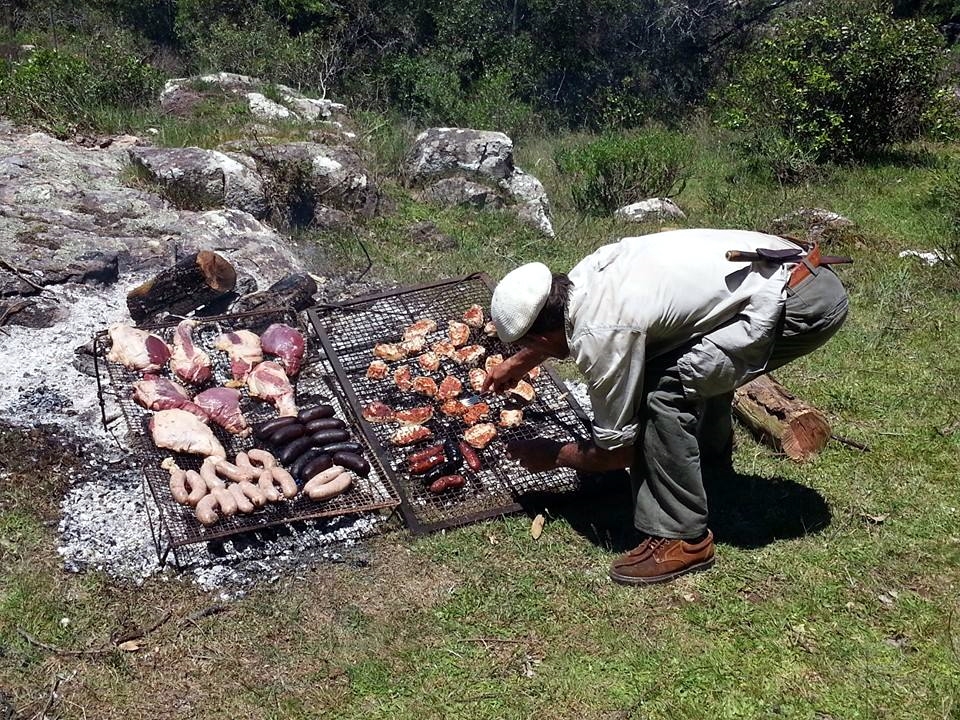
asado 11  Open BBQ with some different meat, its asado.

Fresh killed meat cooked over open fire is 90 and more % of gauchos meals. They can eat 3 times a day some meat. Combined with some tortillas or baked beans. Fresh veggies or some kind of healthy food (in our modern opinion) was unknown.

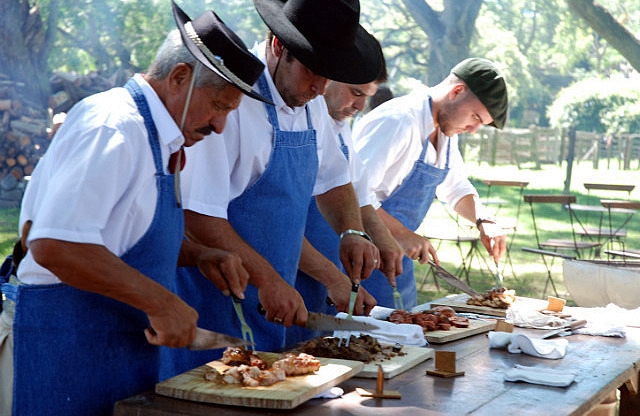
gaucho 5  Preparing food is a serious competition during a fiesta.

After 100dreds of years Uruguayans and Argentinians still love their meat from the fire. Called Asado from the Parrilla. You can learn here that no part of an animal is wasted. By statistics the Uruguayans eat 9 times per week some meat !!! But that’s a different story.

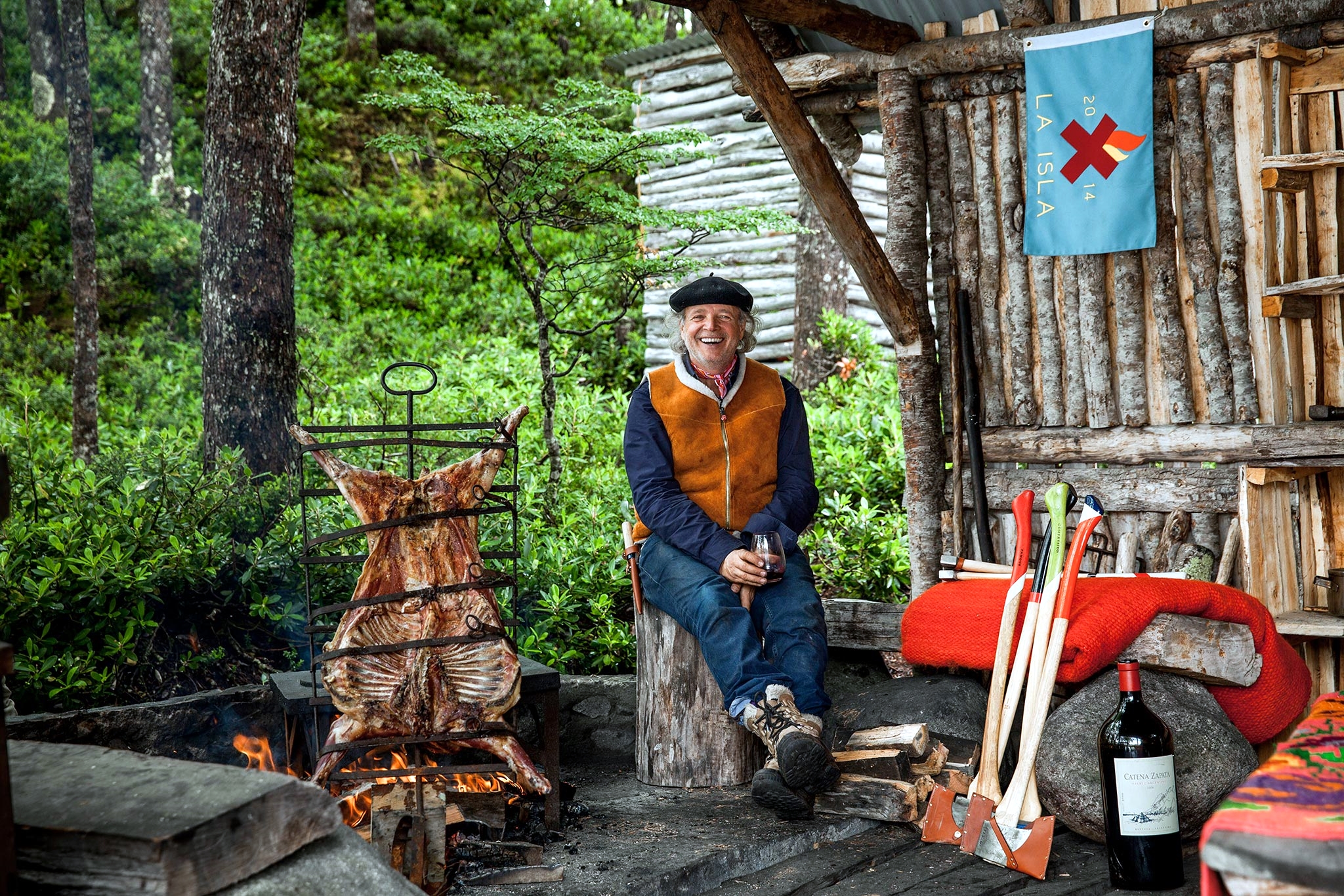
gaucho francis mallmann  One of the most well known „Gaucho Cooks“.

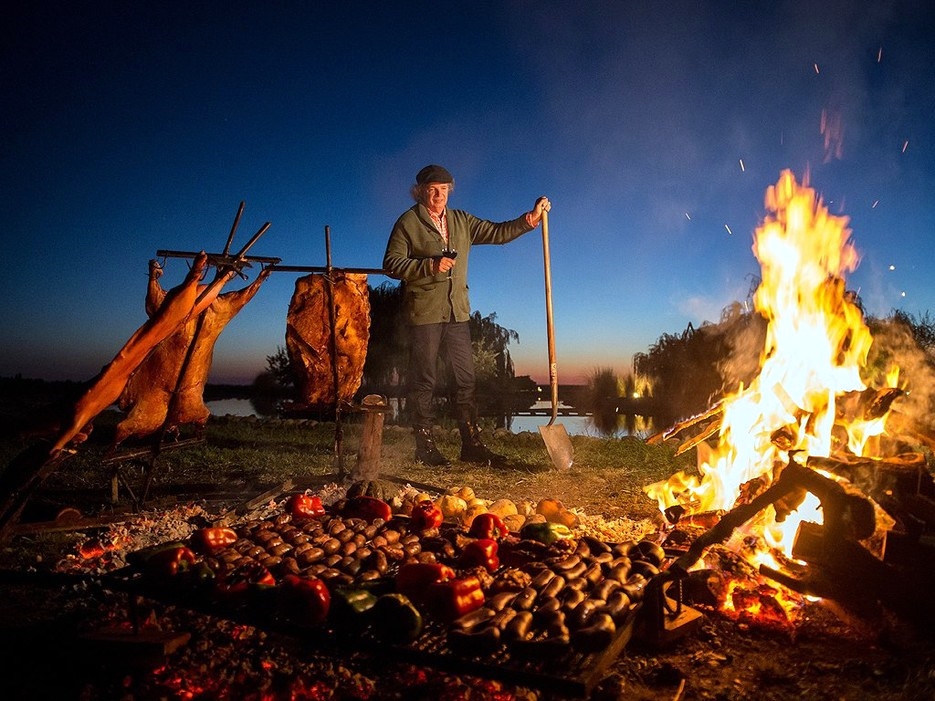
It is the Argentinian cook Francis Mallmann. He shows how to cook delicious meals alfresco on or with open fires. At twenty, Mallmann began managing a restaurant with a partner. He then traveled to Paris, where he spent over two years learning alongside Paul Bocuse and other reputable chefs.

gaucho francis mallmann 2  Sunny-boy Francis in Patagonia.

He opened several restaurants and then he began working in television in the early 1980’s. Between 1987 and 1996, the program was recorded in his restaurant and, in the summer months, in Punta del Este, Uruguay. He always tried to show off with the special outdoor cooking in Argentina and Uruguay. His books, you tube movies and much more are everywhere to find. Hope you enjoyed this glimpse of the Gaucho Life.

Veröffentlicht unter Collecting, History, Information, Uruguay | 2 Kommentare

El Gaucho

gaucho 42h  Uruguayan gaucho and his dog.

Recently I visited the Gaucho Museum in Montevideo and prepared an article about it, also a bit of history of the Gauchos in Uruguay and Argentina. During my research I came along the story of „El Gaucho“ the dog of Durazno. During my travel to Durazno a few years ago I made some pictures of an unusual dog monument without knowing the background. Now I went into it and here it is. The Gaucho post will follow next week.

gaucho 42f   The annual gaucho festival in Durazno, Uruguay.

The Legend Dog from Durazno, Uruguay.

In the 1960s Durazno puppy „El Gaucho“, became a true living legend for residents of the Uruguayan city, and visitors taking knowledge of its history as for his nobility. The legend is told today in several different variations. I took out the facts which are told almost every time. The dog Gaucho was well known and loved by the people of this city.

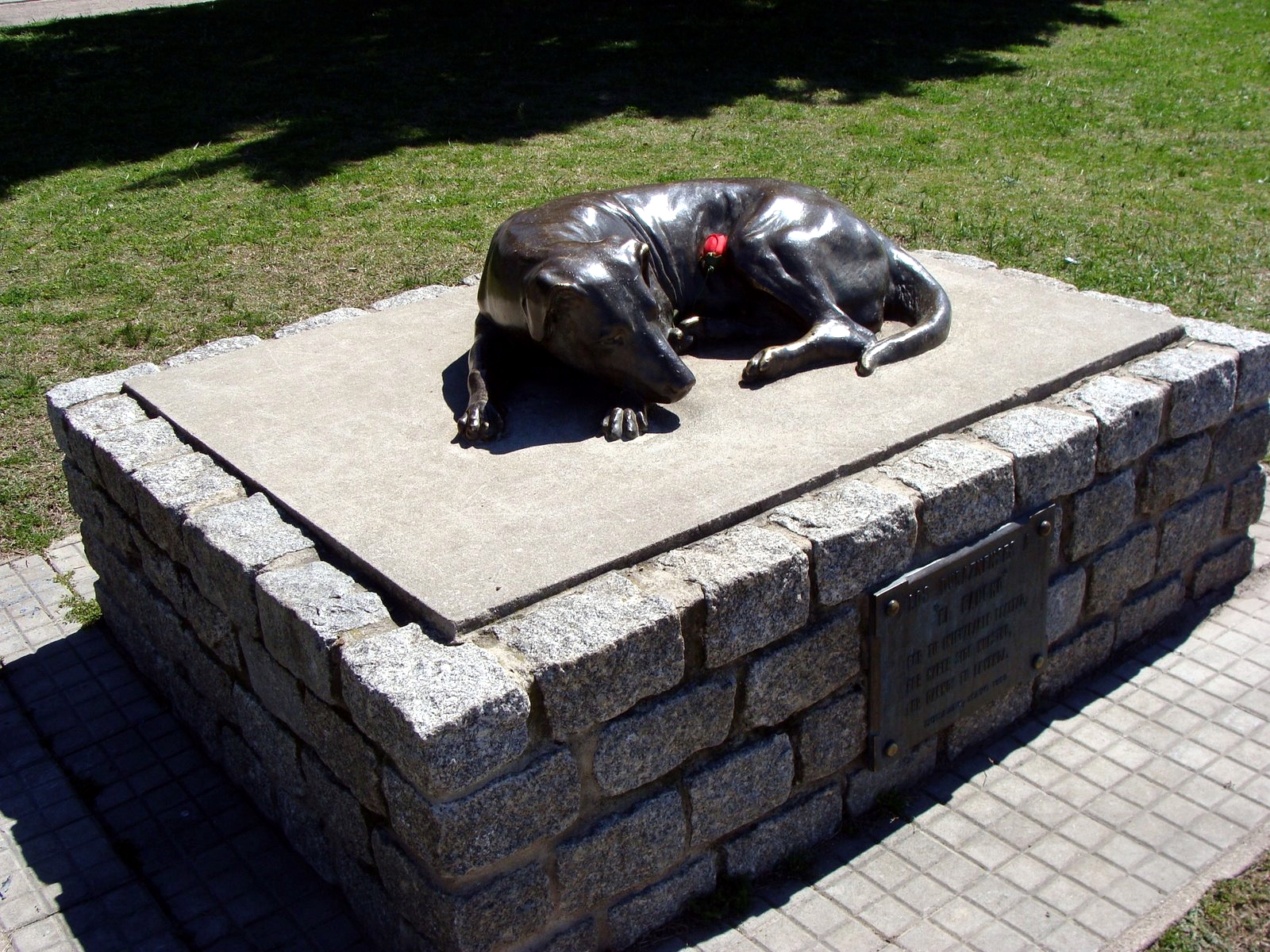
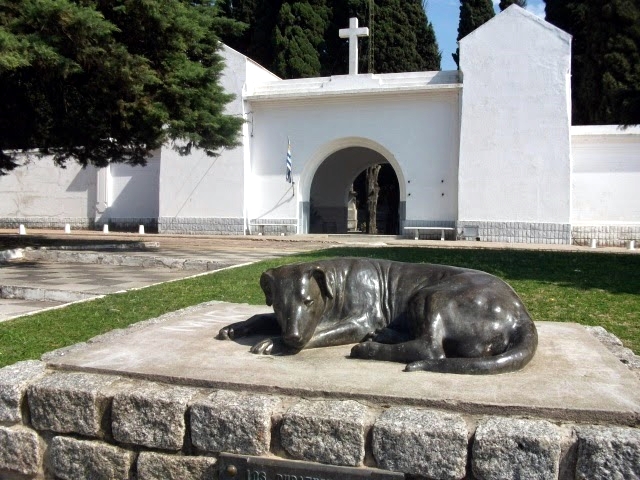
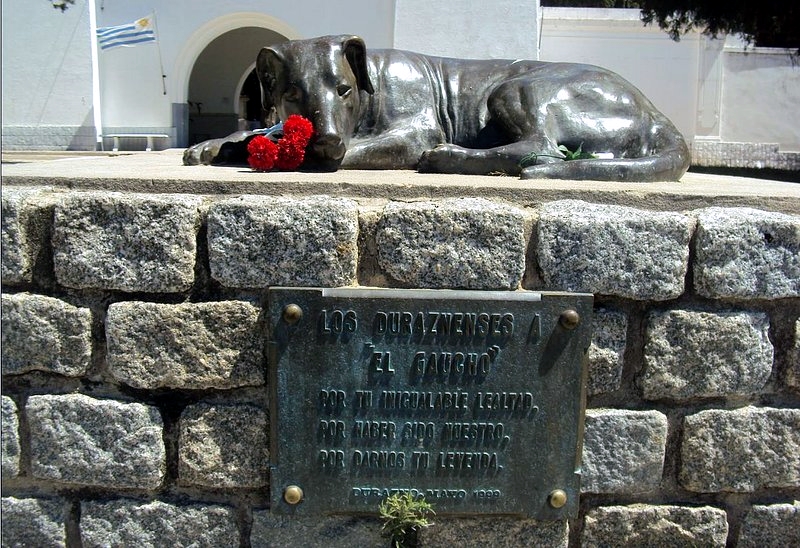
gaucho 42b  A well deserved bronce monument of the famous dog „Gaucho“ of Durazno, Uruguay. Click on pics to supersize.

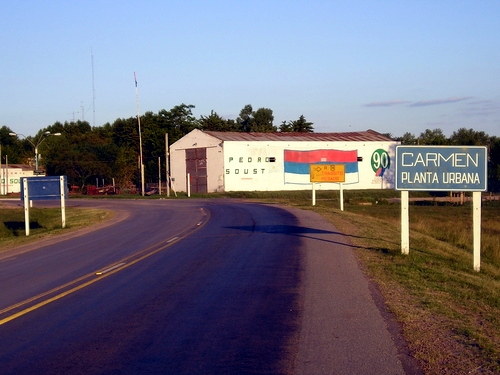
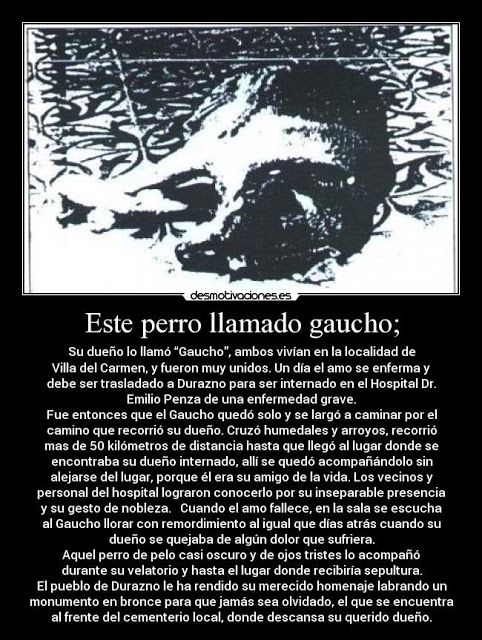
His owner, Facundo Ferro, called him „Gaucho“, both lived in the town of Villa del Carmen, and were very close. One day the master became ill and must be moved to Durazno to be admitted to the Hospital Dr. Emilio Penza.

gaucho 42g VILLA-DEL-CARMEN  Villa del Carmen.

It was then that „Gaucho“ was alone and took off to walk the path followed its owner. He crossed wetlands and streams, ran more than 50 kilometers away until he reached the place where its owner was boarding.

gaucho 42d  From time to time the history is warmed up in newspapers.

There the dog remained without departing from accompanying him, because he was his friend for life. Residents and hospital staff managed to meet its inseparable presence and gesture of nobility. When the master died, in the room listening to Gaucho mourn with remorse like days ago when its owner complained of any pain he suffered.
That dog almost dark hair and sad eyes accompanied him during his wake and till he received burial.

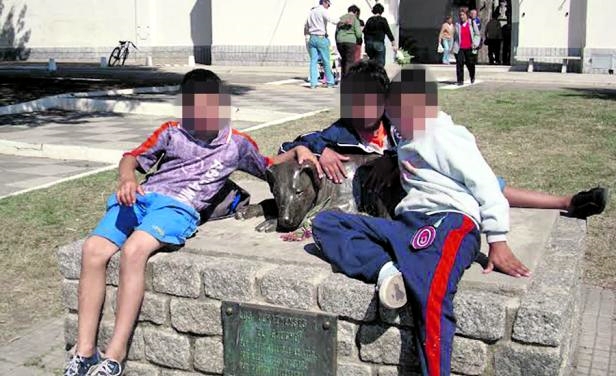
gaucho 42c  Local kids still love this dog „Gaucho“ (pic El Pais).

For more than 30 days Gaucho guarded that grave, cemetery workers gave him water and food, but he did not accept it. Then one day he left in the mornings to pick up some food that the people would provide him. Roaming the streets, to return late again beside the grave of his master there in the cemetery.

gaucho 42e  „El Gaucho“ monument in front the cemetery of Durazno.

Several people tried to seize him, giving him food, but he ate and then went away and its course was always the cemetery.
Thus he lived a long time, people say about 9 years, becoming endeared to people and children in the city area of Durazno.

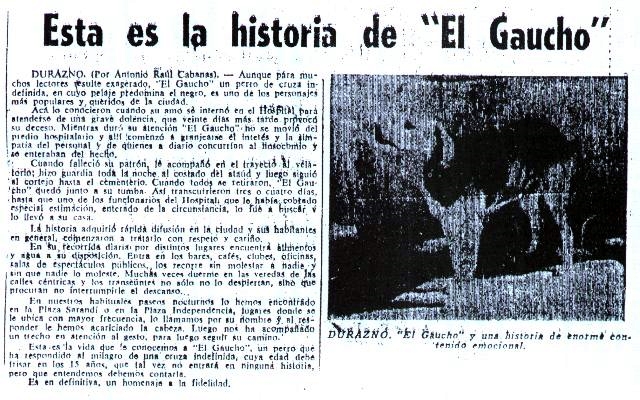
gaucho 42a  Durazno newspaper article after „Gaucho’s“ dead.

When the animal died people of the area had a great sorrow to know the history of this extraordinary loyalty. The people of Durazno had paid this tribute, carving a bronze monument to never be forgotten, which is located in front of the local cemetery where rests his beloved owner.

gaucho 42 Bronce monument of the dog „Gaucho“ in Durazno.

„Sometimes we have many apprehensions to the cemeteries, often we are committed to something intimate and personal, when we go through these places we may have something that hurts us. But cemeteries have a collective sense, keep the memory of a society and then we also have to get used to cross them to know and learn more about our collective being“. Padron Favre, director of Museums of the Municipality of Durazno.

gaucho 42j      Does he look at you ?

The „Gaucho“, highlighted by a dog be powered with its existence, the bread of loyalty. Best friend of human beings.

Veröffentlicht unter History, Information, Uruguay | Verschlagwortet mit | Hinterlasse einen Kommentar

Best Countries

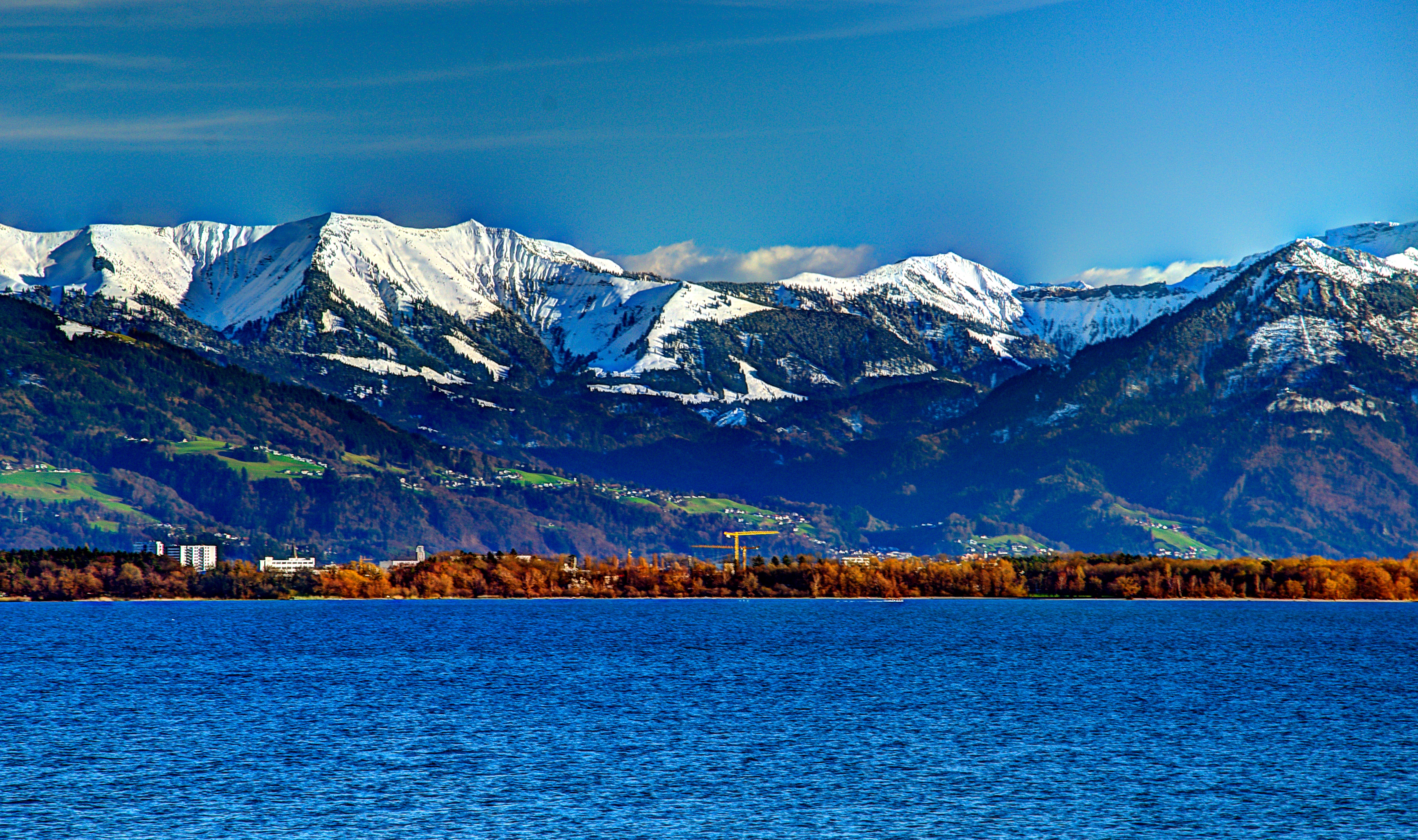
welt 10e bodensee Lake Constance and the Alps, Germany.

Recently I read this interesting survey and would like you to participate of the information. In an US ranking, the 24 „best“ countries in the world were selected. Key criteria in the selection have included sustainability, economic strength, impact on neighboring countries and quality of life.

The header image shows Hamburg, Binnenalster in Germany. Binnenalster or Inner Alster Lake is one of two artificial lakes within the city limits of Hamburg, Germany, which are formed by the river Alster (the other being the Außenalster). The phrase „inner“ refers to the old city walls of Hamburg. The Binnenalster was the part of the lake that was „inside“ the city walls. The lake was originally created to serve as a reservoir for a mill.

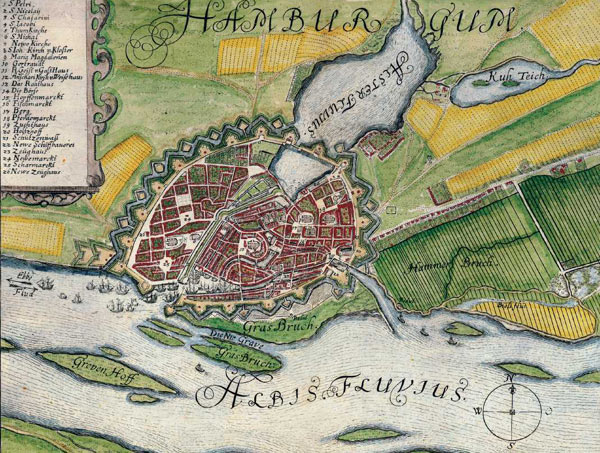
welt 11i hamburg um 1660  Hamburg with the Alster lakes. Alster is coming from the top of the map, running into the river Elbe on the bottom of the map.  Map around 1660 (Wikipedia).

The ranking results from the world survey of over 16,000 (sixteen thousand) people. The survey is pretty new, but I doubt, if we ask again today, the same result will appear, with all the problems in Europe and the „Extreme Crazy Election Circus“ in the US.

welt 10l neuschwanstein One of the most visited tourist destinations in Southern Germany, Castle Neuschwanstein. Til now over 61 million visitors. The palace was erected in today’s shape from King Ludwig the II of Bavaria and  intended as a personal refuge for the reclusive king. Finished in 1886 and opened to the paying public immediately after his death in 1886.

In the „Best Countries-ranking“ of „U.S. News & World Report“ along with the Wharton School of the University of Pennsylvania and a consulting firm. Drum roll for the top 10 !

10. Denmark.

Denmark, a country of friendly, open and happy people lands at No. 10.

welt 1 kopenhagen nyhaven welt 1a Copenhagen, the Nyhaven from the 17th century and the The statue of the Little Mermaid, an icon of the city and a popular tourist attraction. Most photographed site in Denmark.

9. Netherlands.

The beautiful capital Amsterdam is known for its many canals.

welt 2 niederlande tulpen welt 2b amsterdam Famous tulip fields and the „Grachten (canals) of Amsterdam“. Oude Kerk (old church) tower, consecrated in 1306, seen in the background. Expensive to own one are the houseboats in the canals. People love the lifestyle in these little houses. Some are very luxurious and  comfortable.

8. France.

Although France economically not very far is according to the study forward, it can still convince with its combination of culture and good quality of life.

welt 3 paris welt 3a mont st. michel       The Eifel Tower, constructed as the entrance to the 1889 World’s Fair in Paris. And Mont Saint-Michel, a monastery since the 8th century on an rocky island in the Normandie, France. Must See in France.

7. Japan.

The neat land is located in the Asian part of the world. Japan snatched as the third largest economy the 7th place of the best countries in the world.

welt 4 japan welt 4a Japans Fujiyama (Mount Fuji), the highest mountain in Japan, 3,776.24 m (12,389 ft) high and around 100km south-west of Tokyo, one of Japan’s „Three Holy Mountains“ along with Mount Tate and Mount Haku.  The „Torii of Itsukushima Shrine“ near Hiroshima, one of the Three Views of Japan and a UNESCO World Heritage Site.

6. Australia.

Australia can score with its high quality of life. Especially the cities Melbourne, Adelaide, Sydney and Perth bestow Down Under.

welt 5a welt 5   Worlds most well known opera house, in Sydney. The cutest Australian animal, the „Koala Bear“. But it is not a Bear, it is a „arboreal herbivorous marsupial“ mammal, common to many other species like kangaroos, wallabies, possums, opossums, and wombats.

5. Sweden.

Now we come to the top 5. Sweden lands by its pronounced civil rights in this place.

welt 6 stockholm welt 6a midsommer  Stockholm, Sweden’s metropolis is build on 14 islands. Midsummer festivals take place between June 19 and June 25. The celebration of Midsummer’s Eve (St. John’s eve among Christians) was from ancient times a festival of the summer solstice. One should spend midsummer time in Sweden, its unforgettable.

4. United States of America.

The US has indeed managed only 4th place, but they are allowed to decorate „the world’s most powerful country,“ according to the study entitled.

welt 7 grand canyon welt 7a uss abraham lincoln       The Grand Canyon carved by the Colorado river in Arizona is for sure one of the world’s natural wonders, over 800 meters deep – over 440 kilometers long and up to 29 kilometers wide. USS Abraham Lincoln is the fifth Nimitz-class aircraft carrier in the United States Navy. Read about this powerful military potential.

3. Great Britain.

The bronze medal goes to Great Britain. The United Kingdom won of its stable economy, the culture and its global influence.

welt 8 tower bridge welt 8a      The Tower Bridge, opened 1894 became an iconic symbol of London  . The so called Queens Guard or Kings Guard, if the ruler is a male. The British Army has regiments of both Horse Guards and Foot Guards predating the English Restoration (1660), and since the reign of King Charles II these regiments have been responsible for guarding the Sovereign’s palaces. They are not purely ceremonial, despite tourist perceptions to the contrary. The Queen’s Guard are highly trained, operational-duty soldiers armed with functional firearms loaded with live ammunition.

2. Canada.

A tribute to its particularly high quality of life. No wonder, with this landscape.

welt 9a calgary welt 9 lake luise  Calgary, largest city in Alberta and the first one to host the Winter Olympics in Canada (1988), situated at the confluence of the Bow river and the Elbow river, about 80 kilometers away from the Rocky Mountains. Lake Louise, a beautiful glacier lake in-midst the Banff National Park. We had the pleasure to spend a few nights at the Lake Louise Mountain Resort, Canadian hospitality and landscape par excellence.

1. Germany.

Big drum roll for the winner: Germany! The economic power is mainly celebrated as the best country for entrepreneurship and can proudly wear the title „best country in the world“ !! The winner deserves a few more photographs then the other countries, right ? Makes me proud, because I am German – BUT ….

welt 10a holstentor welt 10g ruegen  Germany north, the „Holsten Tor“ (Holsten Gate), a Gothic brick gate build in 1464 marking off the western boundary of the old center of the Hanseatic city of Luebeck. Famous chalk rocks of the island of Ruegen in the Baltic Sea. Germany’s largest island and very popular as a tourist destination.
welt 10p st. pauli piers  welt 10r schwerin     The most wonderful city of Hamburg with its old St. Pauli piers and the Palace of Schwerin .The first records of a castle at this location date from AD 973. Renaissance chateaux’s of the Loire valley  inspired Friedrich Franz the II and contributed to the construction from 1843 until 1851, to today’s appearance.
welt 10b welt 10f heidelberg Germany center, Berlin of course and Heidelberg castle. No more words needed.
welt 10c church st. bartholomew welt 10d freiburg  Germany South, Church St. Bartholomew in the Koenigssee (Kings Lake) and the Inner City of Freiburg.
welt 10m rathaus frauenkirche welt 10s ochsenfurt        We won’t forget Munich with its City Hall (foreground) and the Frauenkirche. Also the hundreds of small towns with their half-timbered houses drawing the German picture in the world. Here Ochsenfurt houses from the 13th century.

…. just in case my personal opinion, my favorite, that’s why we live here, is off the survey, so I put it in my own ranking on ZERO.

welt 11h  Montevideo Uruguay.

0. Uruguay.

A little bit sleepy, old fashioned and sometimes too lax in dealing with laws and regulations. But very open and warmhearted people, personal freedom, a wonderful climate and the best place to retire. There are many many more „pro’s“ to mention, but not here and not today. Just one more, the low crime rate (at time), much better then all the countries ranked before !! Remember, most pics supersize, if you click on them.

welt 11 uy welt 11a piriapolis welt 11b milonga welt 11c las canas welt 11g welt 11fThat’s Uruguay, the climate, the beaches, food (they love their asados and parrillas), fun and life style and not thinking in problems, just living a relaxed life !

Anyway – have a good life, where ever you live.

Veröffentlicht unter Information, Lifestyle, Travel, Uruguay | Verschlagwortet mit , | Hinterlasse einen Kommentar

Must See – Wittenberg 2

witt 1e   You are invited !!!

Martin Luther.

Wittenberg is inseparable connected with Martin Luther. Luther has many places in Germany where he left history. But only two city’s are officially aloud to use the name „Lutherstadt“ (Luther city), this is Eisleben where he was born and died and of course Wittenberg where he spent most of his life and established the church reformation.
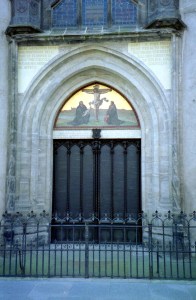
witt 7c  World famous, the 95 theses of Martin Luther at the door of the castle church in Wittenberg, Germany. Today the door and theses are made from heavy bronze.

It is unbelievable how much is to say and write about Martin Luther. In this post I can summarize only a short overview of his life and achievements and some facts which are not so well known.
     witt 14wwa geburtshaus eisleben   Luther’s birthplace in Eisleben, now a museum.

Born in Eisleben, Germany in 1483, Martin Luther became one of the most influential figures in Christian history when he began the Protestant Reformation in the 16th century. He called into question some of the basic tenets of Roman Catholicism, and his followers soon split from the Roman Catholic Church to begin the Protestant tradition.
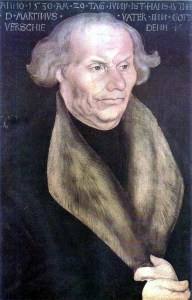

witt 14m             witt 14mm                                                                   Martin Luthers parents, painted by Lukas Cranach the Elder in 1550.

His father, Hans Luther, the farmer, miner, mine owner and later council member, allowed his son to study at the University of Erfurt, with the aim to become a lawyer. When the young Martin Luther in 1505 fell into a devastating storm, he vowed in dread to become a monk and joined a little later in the Order of Augustinian Hermits in Erfurt.

witt 14dd luther as augustinian monk   Martin Luther as Augustinian monk.

Luther began studying theology, was ordained a priest in 1507 and 1512 doctorate. Since then he has worked as a professor of theology in Wittenberg. In the same year he traveled to Rome.

witt 7h martin-luther-as-augustinian-friar-1520-24  Luther as professor of theology at the Augustinianum Wittenberg 1520.

In the following years falls, the exact date is disputed, the key for his knowledge that man justice only gets by God’s grace, not by good work. As Luther himself reported, he learned that enlightenment in his study of his Wittenberg monastery tower, which is why this crucial experience is called „tower experience“.

witt 7d                 witt 7i Luther-Nailing-95-Thesis-Oct.-31-1517 before the diet of worms               Luther nailed the 95 theses on the castle church door and then had to fight heavy discussions.

In 1517, Pope Leo X announced a new round of indulgences to help build St. Peter’s Basilica. On 31 October 1517, Martin Luther nailed a sheet of paper with 95 theses on the castle church  door in Wittenberg. Though he intended these to be discussion points, the Ninety-Five Theses laid out a devastating critique of the indulgences as corrupting people’s faith.

witt 14u reichstag zu worms      witt 14uu ML denkmal worms  The Diet of Worms relating to Luther took place from 16 to 18 April 1521. Left Luther infront of Johann Eck, defeating his theses. Right todays Martin Luther Memorial in Worms. His statue is surrounded by the figures of his lay protectors and earlier Church reformers including John Wycliffe, Jan Hus and Girolamo Savonarola.

Luther also sent a copy to Archbishop Albert Albrecht of Mainz, calling on him to end the sale of indulgences. Aided by the printing press, copies of the Ninety-Five Theses spread throughout Germany within two weeks and throughout Europe within two months.
witt 14s luthers triumph  Contemporary woodcut titled „Luthers Triumph“ over Pope Leo X. Notice the Pope holding a crumbling bible.

1518 by the Roman Catholic Church initiated a preliminary investigation for heresy against Luther, who refused to recant his writings and only a little later publicly questioned the infallibility of the Pope and the Councils.

witt 14 wa     Discussion about the reformation. Notice how „small“ the Catholic delegation (no names) is painted against the „big“ persons of Calvin, Luther, Melanchton and their fellows (all of them are named).  Don’t know who painted this excellent piece of art.

1520 Martin Luther published over 30 journals, including the four major Reformation writings „Sermon on Good Works“, „To the Christian Nobility of the German Nation of the Christian Estate,“ „On the Babylonian Captivity of the Church“ and „On the Freedom of a Christian „.
witt 14b deutsche luther bibel          witt 14f luther bible 1545   On the left the first edition of the German Luther Bible and right a later print, with wonderful woodcuts, from 1545. Both exhibited in the Luther Museum, Wittenberg.

In January 1521, Martin Luther was officially excommunicated from the Roman Catholic Church. In March, he was summoned before the Diet of Worms, a general assembly of secular authorities. Again, Luther refused to recant his statements, demanding he be shown any scripture that would refute his position. There was none. But – the Catholic church fought by any means against Luther and the reform movement.
witt 14n luther as hercules germanicus     Book page, showing Luther as „Hercules Germanicus“, everything striking dead what was valid til then, by example „Homer“ and „Aristoteles“.  This page is included in the „sibend, acht vnd neunt buch“, Euclidis Megarensis, printed in Augsburg 1555.
witt 14o sieben koepfe                 witt 14oo   The Catholic church published this (left) engraving : „Hans Brosamer, Seven-headed Martin Luther – 1529“. A year later the reformation (later Lutheran church) answered with this (right) woodcut:  „Anonymous, The seven-headed papal beast – 1530“.  Those above three examples show how hard in public the „reformation“ was fought.

On May 8, 1521, the council released the Edict of Worms, banning Luther’s writings and declaring him a “convicted heretic.” This made him a condemned and wanted man.
witt 7ee             witt 7e burning popes bull at east gate decem 1520                             The Pope’s banning „bulla“ against Luther (left) and the burning of this bulla through Martin Luther (right).

1521 came to excommunication and subsequently lead to the outlawry. Under the protection of the Saxon Elector Frederick the Wise, Luther was abducted to the Wartburg near Eisenach, where he in  the following 10 months was hiding and living under the name of „Junker Jörg“.
witt 14vb junker joerg by LC d A 1521  Martin Luther, as Junker Joerg on Warthburg, painted by Lukas Cranach the Elder 1521. Notice Luther with a beard to cover his real identity.

While there on the Wartburg Luther created the first German translation of the Bible, meantime the Reformation walked further and further away.
witt 14v wartburg      witt 14va      The Warthburg, near Eisenach, on the left and Luthers study room in original state from 1521 inside the castle, right.   On the small table, locked under glas, a first edition of Luther’s German bible translation. Click on pics to supersize.

In March 1522 Luther returned to Wittenberg and worked mainly as a professor of theology in Wittenberg, pastor and writer. 1525 he married the former nun Katharina von Bora, with whom he had six children. From 1533 to 1546, Martin Luther served as the dean of theology at University of Wittenberg.
witt 14k luther and wife LC-d-A  Luther and wife Katharina von Bora, Cranach the Elder.

On his last journey, which took him to his birthplace Eisleben, to settle inheritance disputes. Luther, for some time suffering from a heart condition, died at his birthplace in Eisleben at the age of 62 and was buried three days later in the Castle Church in Wittenberg. See his tombstone inside the church further down.
witt 14w luther totenbett LCd A 1546                  witt 14wwa sterbehaus eisleben                        Martin Luther on his deathbed (again painted by Lukas Cranach the Elder 1546) and next to it the house in Eisleben where Luther died.

Martin Luther is one of the most influential and controversial figures in the Reformation movement. His actions fractured the Roman Catholic Church into new sects of Christianity and set in motion reform within the Church. A prominent theologian, his desire for people to feel closer to God led him to translate the Bible into the language of the people, radically changing the relationship between church leaders and their followers.
DSC01662a  So much to see in Lutherstadt Wittenberg, Just look behind the houses or into courtyards. A lovely renovated city after the „East German Times“.

Castle Church

The lovely Late Gothic Schlosskirche, built in 1500 as All Saints Church, is now better known as the Reformation Memorial Church due to its ties with Martin Luther. It was to the church’s original wooden doors that Luther nailed his famous Theses in 1517. Although the original doors were destroyed during the Seven Years War, the present bronze replacements, installed in 1858, bear their Latin text.
witt 8b             Inside the Castle Church with the alabaster statues on the left and right of the Electors of Saxony as well as Martin Luther and Phillip Melanchton. Click on pic.

Luther gave some of his sermons in this church and now is buried just under the pulpit. The church was severely damaged twice during wars in the centuries following the Reformation, but it was rebuilt each time.
witt 8hh                witt 8h luther grave
Martin Luther’s tomb is under the pulpit in the Castle Church. The inscription translates to: „Here lies the body of Martin Luther, Doctor of Divinity, who died at Eisleben, his birthplace, on the 12th of the Calends of March, in the year 1546, when he had lived 63 years, 3 months, and 10 days.“

Inside are life-size alabaster statues of Electors Frederick the Wise and John the Constant of Saxony-Wittenberg, the tombs of Luther and Melanchthon, and the Early Renaissance monument of Elector Frederick III from 1527. On the columns of the nave are life-size figures of Luther, Melanchthon, and other Reformers.
witt 8i taufbecken                   witt 8j altar a                  Beautiful antic font on the left and the altar of the Castle Church on the right.

It is called the Castle Church because it is part of a church-castle complex. The castle unusual rounded tower rises high above Wittenberg and you can climb the winding stone stairs for a great view of the town.
witt 8aa  Castle Church (right) connected to the Castle itself (left), old postcard from the 1950’s.

A mighty fortress. Ein feste Burg.

During church opening hours, they will sing few times a day with and for tourists the famous Martin Luther hymn „Ein feste Burg ist unser Gott   „. You can sing along the same hymn at the same place Martin Luther did. Following just the first verse of Luther’s hymn.
witt 14g einfesteburg   Martin Luther’s famous chorale, „Ein‘ feste Burg ist unser Gott“ (a mighty fortress is our God),  as published in 1529.

Ein’ feste Burg ist unser Gott,
Ein gute Wehr und Waffen;
Er hilft uns frei aus aller Not,
Die uns jetzt hat betroffen.
Der alt’ böse Feind,
Mit Ernst er’s jetzt meint,
Gross’ Macht und viel List
Sein’ grausam’ Ruestung ist,
Auf Erd’ ist nicht seingleichen. Text und Musik 1529.
witt 14t luther inspiration bach               witt 14tt bach     The music to this choral was composed by Johann Sebastian Bach (31 March 1685 – 28 July 1750), picture on the right. The left one shows a church window where Bach receives inspiration through Martin Luther.  Click on pic as usual to get a closer view.

Ein feste Burg ist unser Gott (A mighty fortress is our God),  is a church cantata by Johann Sebastian Bach. He composed the chorale cantata in Leipzig for Reformation Day, 31 October, first performed between 1727 and 1731. It is based on Martin Luther’s hymn „Ein feste Burg ist unser Gott“.
witt 14gga  Contemporary hymn singing in the „Luther House“.

Something cool: English services are conducted on Saturday evenings at 6 p.m., at either the Castle Church or the Town Church. You can sing Luther’s most famous hymn, A Mighty Fortress is Our God in English, in the church where he sang it.
witt 14gg   A very early English translation of Luther’s hymn.

A mighty fortress is our God,
a bulwark never failing;
our helper he, amid the flood
of mortal ills prevailing.
For still our ancient foe
does seek to work us woe;
his craft and power are great,
and armed with cruel hate,
on earth is not his equal. Text and Music 1529.
witt 8a schloss  Wittenberg castle with the museum inside. The round tower on the right is a separate building, belonging to the castle and is not a typical church tower, even if it looks like one.

Castle Museum.

To the south of the Schlosskirche stands the Schloss (castle), the old electoral residence dating from 1525 and now home to the Museum of Town History. Highlights include exhibits detailing the development of the town, as well as historical archives and an impressive collection of natural history and ethnographic artifacts from prehistoric times to the middle ages. Worth to visit if you have the time.
DSC01670  The Luther House, Martin Luther’s residence.

Martin Luther’s Residence

One of the first buildings on the left on Collegienstrasse as you enter the old town is the large cloister that Martin Luther used as a home, the „Luther Haus“. The Luther Haus, where Martin Luther lived from 1508 to 1546, was built in 1504 as a house of Augustinian Hermits and soon after became the Reformer’s home. It was altered between 1844 and 1900 when it was converted into a museum dedicated to the Reformation.
witt lutherhaus  Todays entry to the Luther Haus and museum. The gallery is connecting Luthers residence on the left with the old Wittenberg University on the right.

The Luther family, wife and six children, and various students and visitors lived in the central part of the building. He was given the building by one of the aristocrats supporting his movement.
DSC01671  The banquet hall or school hall in the residence.

The museum, maintains Luther’s living rooms in their original state. This is where Luther sat with his family and friends in the evenings, discussing a wide range of subjects from the sublime to the earthy (yes, earthy, not earthly!).
DSC01672  Luthers private study room, all original from the 1500’s.

Martin Luther was known for his rather blunt way of speaking as well as for his eloquence. Students were allowed to be present during these evening discussions; they took notes and later published thousands of his comments in a book called „Table Talk“.
DSC01674  On this table they had their „table talks“.

Inside the museum are some interesting artifacts from that period, including one of chests used for collecting money for indulgences, an „indulgence“ letter itself, and the pulpit that Martin Luther used for preaching.
witt 5a  Springtime in Luthers residence garden.

Lucas Cranach’s fascinating painting of the Ten Commandments is located on wood panels in the refectory of Martin Luther’s home. The Wicked Deeds are presented quasi-cartoon style for the faithful to ponder.
witt 0e katharina von bora  A bronce statue is seen in the courtyard infront of Luthers residence. It shows his wife Katharina von Bora. The building seen in the above picture is part of the university where Luther taught. University and Luther Residence are building a big square complex, all connected to eachother.

Luther’s Oak

In 1520, Martin Luther’s supporters piled up a stack of writings of Church doctrine and set them on fire. Luther threw in the Papal Bull, the document threatening him with excommunication unless he recanted his writings.
witt 7la   Martin Luther Oak.

The oak tree was planted on the spot where all this allegedly took place. The tree is at the corner of Am Lutherstrasse and Collegienstrasse on the way in from the train station, just before you enter the old town.
  witt 7l luthers oak    Wittenberg’s Luther Oak is dying.

In 1813, during the Napoleonic Wars, the oak was cut down because fuel was needed. The Luther Oak that stands in Wittenberg today, was planted in 1830. On Christmas Eve 1904, an unknown person tried in vain to cut it down. Today, it is a dying tree.

Wittenberg University.
witt 10a uni 17.jahrh.  Wittenberg University in the late 1600’s.

There has been a university here since Martin Luther’s time, located on Collegienstrasse. Parts of the structure date back to that period, and Luther himself worked within these walls. Quotations of his are displayed on the walls in the entrance hall.
witt uni 1 18xx witt uni 2  Wittenbergs University buildings then and now. On the left will be the Lutherhaus.

At the beginning of the 16th century Wittenberg had developed into a strong fortification on the middle Elbe. Nevertheless, it remained a modest central town of about 2,000 inhabitants. 1502 Friedrich der Weise decided the way to build the University of Wittenberg in his newly built residence. This university was the first of a country gentlemen and not founded by the Church University in the kingdom. The Fridericianum (Old College 1503) was the first building of the University and in 1504 the „Black Cloister“ was build.
witt the black cloister  The Black Cloister in Wittenberg.

Under the influence of Philipp Melanchthon, building on the works of Martin Luther, the university became a centre of the Protestant Reformation, even incorporating, at one point in time, Luther’s house in Wittenberg, the Lutherhaus, as part of the campus.
witt uni 3  One of the newer (around 1850’s) outbuildings of the University of Wittenberg ( now called University Halle – Wittenberg ).

Besides Lucas Cranach the Elder, who had come to the city in 1505, was in 1508 also attracted Martin Luther of the developing city. The art of printing has been established, and the city itself experienced a stormy economic and intellectual growth. was reinforced this trend, as 1517 Luther on October 31 made known his 95 theses to the public. This exerted a great attraction for many scholars and students, so that the Wittenberg university became one of the most important of the 16th century. It was a modern, humanism Open University, taught at the 1518 Philipp Melanchthon and which was attended by eminent scholars and senior princes.
witt 10b uni hospital halle   The new Klinikum (hospital) of the University Halle-Wittenberg. One of the most modern in Germany.

Friedensreich Hundertwasser.

„“Nimm deine schönsten Farben und mach dich auf die Reise in die Welt deiner Fantasie““ „“ Take your best colors and prepare for the journey into the world of your imagination „“ (Friedensreich Hundertwasser).
witt 2i hundertwasser 1998 (1928-2000)   Hundertwasser at the age of 70 (1998).

Friedensreich Hundertwasser was born on 12.15.1928 under the name Friedrich Stowasser. With the age of seven he came to a Montessori school in Vienna. His local art teacher said that he has an „extraordinary form and color sense.“ Later, his mother sent him to a state Viennese School.
After matriculation examination in 1948, he attended the winter semester 1948/49 for three months the Vienna Academy of Fine Arts. There he began his work with the pseudonym (pun: Sto = hundred in Slavic languages) to sign.

witt 2iii     A collection of typical Hundertwasser paintings.

After he stopped his studies, he made numerous trips with the artist Rene Bro, whom he had met on his first trips to Italy. In his travels, he always had a miniature paint box with him, to always painting right away. His first exhibition was Hundertwasser 1952 and 1953 in his hometown Vienna.
On February 19, 2000 Friedensreich Hundertwasser died on the return journey from New Zealand to Europe aboard the Queen Elizabeth 2 caused by a heart failure.
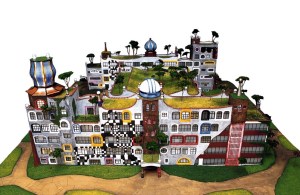
witt 2f archit model   Model of the Hundertwasser School in Wittenberg.

The Hundertwasser Schule.

„“Two values are better and diviner than everything which is part of the human personality: truth and justice““ (Philipp Melanchthon).
The official name is „The Luther – Melanchton Gymnasium“. The school has the task of exploring and developing both, truth and justice.
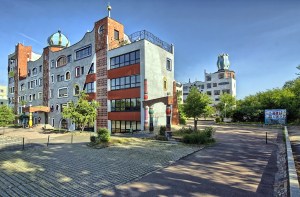
witt 2b

The school consists of two different buildings since the beginning of August 2006: „The Hundertwasser House“ and „The Melanchthon House“.

The Hundertwasser House.

The Hundertwasser building of Luther-Melanchton-Gymnasium was built as a plain new building  and has been a boring monstrosity since then. But at the beginning of the nineties several students thought in their art lessons about how to improve its outward appearance. Consequently a lot of ideas came into being which were oriented to the type of construction of Friedensreich Hundertwasser (well-known for Hundertwasserhaus in the capital of Austria). A letter was written and sent to Vienna. Therefore Hundertwasser decided to participate in the project.
Since 29th May 1999 the (according to Hundertwasser’s plans) restaurated building is complete and is admired by numerous tourists from all over the world.
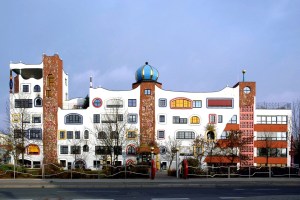
witt 2d

The Melanchthon House.

1371 A first “rector scholarum“ (principal) in the building between the chapel and the road to church is mentioned.
1502 Founding of a university by the Elector Friedrich the Wise; upswing of the education
1564-1565 Moving of the Latin School in a new building (instead of the adjacent building) in the street Jüdenstraße; three floors with four classrooms and a teacher’s apartment.
1827 Rebuilding and enlargement into the current appearance of the building; title “Königliches Gymnasium“.
1888 The official opening of the new building, three floors, gym; area 1 ha.
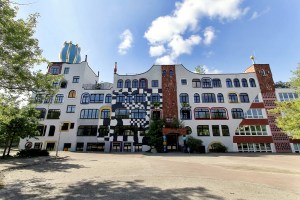
witt 2g
15.02.1897 (the evening before Philipp Melanchthon’s 410th birthday) The title “Melanchthon-Gymnasium” is conferred.
1919 Title “Staatliches Gymnasium Melanchthon”

1945-1990 After the war (the years of the GDR (German Democratic Republic) the school was also an institution preparing students for university. Many citizens have passed their final exams and proved themselves in different fields of work until today: school, economy, research, politics, health, administration and much more.
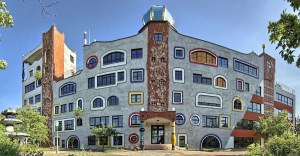
witt 2a

2006 Luther-Gymnasium and Melanchthon-Gymnasium go together to the Luther-Melanchthon-Gymnasium.

According to Luther and Melanchthon
education has to serve the following tasks:

On the one hand, one has to receive the logic, poetry and rhetoric of Aristoteles.
Otherwise the knowledge of foreign languages like Latin, Greek or Hebrew and the subjects mathematics, history and art have a great importance.
According to Luther and Melanchthon the Greeks were „astonishing intelligent and bright people“ listening to languages, learning history and playing music with the help of mathematics.
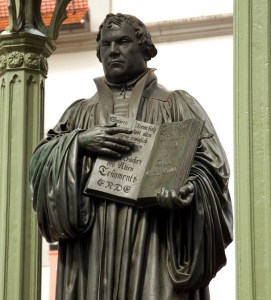
witt 4e luther    Martin Luther.

You do not need „only highly educated teachers“. The people have to become wise.
Luther was proud of the teachers: „Anybody is able to pay their worthful work as they deserve.
Luther and Melanchthon wanted every child „to be forced by the authorities to go to school.“ Still a valid rule in our time and modern country’s.
Luther claimed – apart from the knowledge of words and facts – the comprehensibility of all lessons, a thorough scientific education and respect of teachers. He demanded that the State has to build German schools for boys and girls. In 1530 the council of Lutherstadt Wittenberg decided to found the first school for girls.
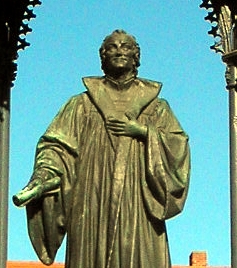
witt 4c melanchton a    Phillip Melanchton.

„One is not capable to fulfill a function“ without a good education.
At first, Luther founded a private school in his house: the „schola privata“. The students were allowed to attend school for free, they should observe a planned structure of life and get used to a systematic way of working. They hold the view:
„A person wanting to teach other people must be highly skilled and very capable.“
Isn’t this a truly task for our modern education systems ??
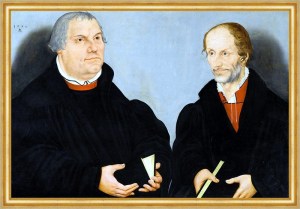
witt 17 LC-d-J luther und melanchton  Luther and Melanchton, by Cranach the Younger, 1553.


Finally – the excellent food in Wittenberg.

If you are around Wittenberg a few days and discover so much history and walk around hours and hours, like I did, then you want a good night sleep and some real good food. The hotel situation in Wittenberg is excellent, but I won’t spend my time to write about, that’s everybody’s personal choice. Good food is interesting for most visitors, so – here are a few recommendations.
witt 0a13 beyerhof  The Brauhaus Wittenberg housing the Beyerhof.

Brauhaus Wittenberg.

„A beautiful, old yard“. Martin Luther reportedly liked his beer, and his wife, Katharina von Bora, is said to have brewed a tasty barley pop. Today, the Lutherstadt Wittenberg brewing tradition is being carried on at the Brauhaus-Hotel Wittenberg, where you can have a drink, enjoy a meal, or spend the night amid the vats.
DSC01665                   DSC01667                 Nice decoration inside the Beyerhof. Lots of little colorful birds houses, before the spring-summer colors are back on trees. I really liked this idea. You know already my recommendation, click on pics to supersize.

The Brauhaus occupies the Beyerhof, a restored house on the Markt in Wittenberg’s Old Town, that was built by Christian Beyer (then mayor of Wittenberg) in 1512. The three-story building houses the brewing apparatus, a 140-seat dining room, a number of guest rooms, and (in nice weather, which I luckily had) a courtyard beer garden.
witt 0a12 galerie braukessel                           witt 0a7   Watch the beer brewing, or have a taste from the diverse tabs inside.    Of course you can take a beer souvenir home with you.

Wittenberg’s brewhouse, with its cobbled courtyard, indoor brewery and shiny copper vats, thrums with the noise of people having a good time. The menu is hearty, but also features smaller dishes for waist-watchers. Oh, and there’s beer also. Lots of fun.
witt 0a11 galerie keller  The „Galerie Keller“ (gallery cellar), occupied as usual.

The Brewery House Wittenberg is the only brewery in and around Wittenberg.The Brewery House extends over three floors. On two of them you can watch the process of beer- brewing live while sitting in the restaurant. In the courtyard you also come across a technical monument from the 16th century, called the “Virgin pipe Water”. Built in 1556 to supply fresh water. It is fed by a spring in the north of Wittenberg.
witt 0a14 bayr platte     witt 0a10 brauhauspfanne        I couldn’t resist and went twice for lunch, had both times a very good meal in the courtyard, springtime warm weather and lovely covered against the elements, plus a beer of course, freshly pored from the tab.    Makes you mouthwatering too I hope:    Left, a fresh made „tartar a la Brauhaus“ (not for everyone, but I like it) nicely spiced!    And right a „BrauhausPfanne“ with „Schaeufele on Sauerkraut“ and baked potatoes on greens.    Had some delicious black beers with it. Wish I could have spent more time there, it’s the right place to hang out with friends, day or night.
witt 0a4  Not too bad the accommodation at the Brauhaus.
witt 0a5       witt 0a9a   And not too bad either the food offering they have. Parma ham or giant crab, if you like it, or a roasted piglet (at the right you’ll see the portion for 4).  For all I had to miss out this time, but I definitely will be back.

On one of the walls you can see a statue of Prince Elector Johann Frederic the Generous. It is thought to have been sculpted by someone from the Cranach workshop, not necessarily by the master himself.
witt 0a brauhaus                        witt 0a1                                  The „Virgin Pipe“, left.  And the relief of „Prince Elector Johann Frederic the Generous“, right.

Alte Canzley.
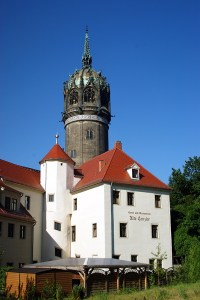
witt 0b2  witt 0b alte canzley  Alte Canzley.

„Excellent organic food“. In Wittenberg one will find one of the best restaurants, the Alte Canzley. The building is very old, from 1391, so the name Alte – Old is justified.   It’s a certified organic restaurant and the food is just wonderful.
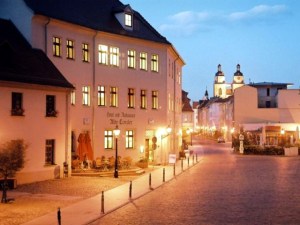
witt 0b3  I had an extraordinary dinner at Alte Canzley.

Dinner there by example, beef in a black-beer crust, spinach rolls with pasta, orange-ginger soup to name just a few dishes. They served a very interesting dessert, asparagus ice-cream. I had never had that before in my life. Not sweet, but very refreshing and really tasted of asparagus.
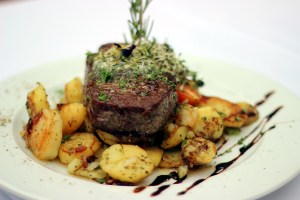
witt 0b1 rumpsteak 1  My meal at the Alte Canzley was the ginger-orange soup, an excellent rump-steak on baked potatoes, wonderful red wine and the asparagus ice cream with coffee. Indulgent ? YES !!! Life is to short for a bad meal or a bad wine !!

Tante Emma’s.
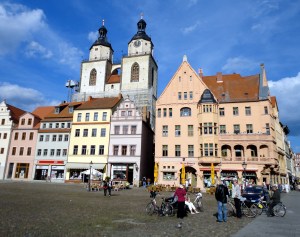
DSC01657  Tante Emma restaurant (behind the yellow umbrellas) on the market square in Wittenberg.

Tante Emma’s (Ant Emma) Bier und Café Haus. Cosy, old-worldly German restaurant.
Take a step back to the ‘good old times’ in this German country kitchen, where servers wear frilly white aprons and the room is chock-full of bric-a-brac – from dolls and books to irons and a gramophone.
witt 0c8  Tante Emma’s leaflet doesn’t show who she is.

No idea who „Aunt Emma“ was, whom they named the place after. But the whole atmosphere is like a visit with relatives – Auntie is cooking the traditional family dishes for you. Many dishes have personal names as „Uncle August’s pork roast“ and such. The place is very popular with locals, too.
witt 0c2      witt 0c6   Tante Emma’s interior is just different, but very cosy. Best restaurant on a rainy day, which I haven’t – lucky.

You are greeted by a life size puppet of „Aunt Emma“. The interior is cosy, a bit old-fashioned on purpose with oak furniture and embroidered tablecloths, and decorated all over with old knickknack, dolls, household items… a cute and pleasant place. In case you choose to sit outside in the square, at least have a look inside.
witt 0c tante emma    Tante Emma’s „Gemuesepfanne“. Real „Lecker“.

That night I was not too hungry, because I had a heavy lunch at the Brauhaus and a good nap on my hotel bed afterwards (why not, it’s holiday), so I did not want a big meat dish. I ordered a vegetable and potato pan, baked in the oven with cheese. Very tasty.  Together with a couple beers it was a fine dinner. As a desert I just had a glass of „Kraeuterlikoer“.
witt 0c7b                    witt 0c7c                 Half a liter of Kraeuterlikoer (herb liqueur) in a heavy bottle (about 1kg weight in my suitcase), expensive – huhhh !! That was my souvenir from Wittenberg. Its recipe, they say, is the same as Martin Luther used in 1529, a very rare drink.  True, I never had a more delicious herb liqueur before.

Dolce Vita.
witt 0d1 dolce vita  Little Italy in Wittenberg, Eis-Cafe Dolce Vita.

Eis-Cafe Dolce Vita is a pit stop for ice cream, very pleasant place and I needed some rest for a while, so I stopped at this Italian gelateria. It seems to be popular with both locals and tourists, the place was quite well occupied.
witt 0d  What a delicious treat after hours of sightseeing.

It is hard to go wrong with original Italian ice cream and cafe. Their menu has an abundant assortment of various sundaes, the clients are spoilt for choice. My choice was the spaghetti ice with berries. The fruit sauce turned out to be a compote like Rote Grütze which was very tasty with the vanilla ice cream. I enjoyed Wittenberg very very much.

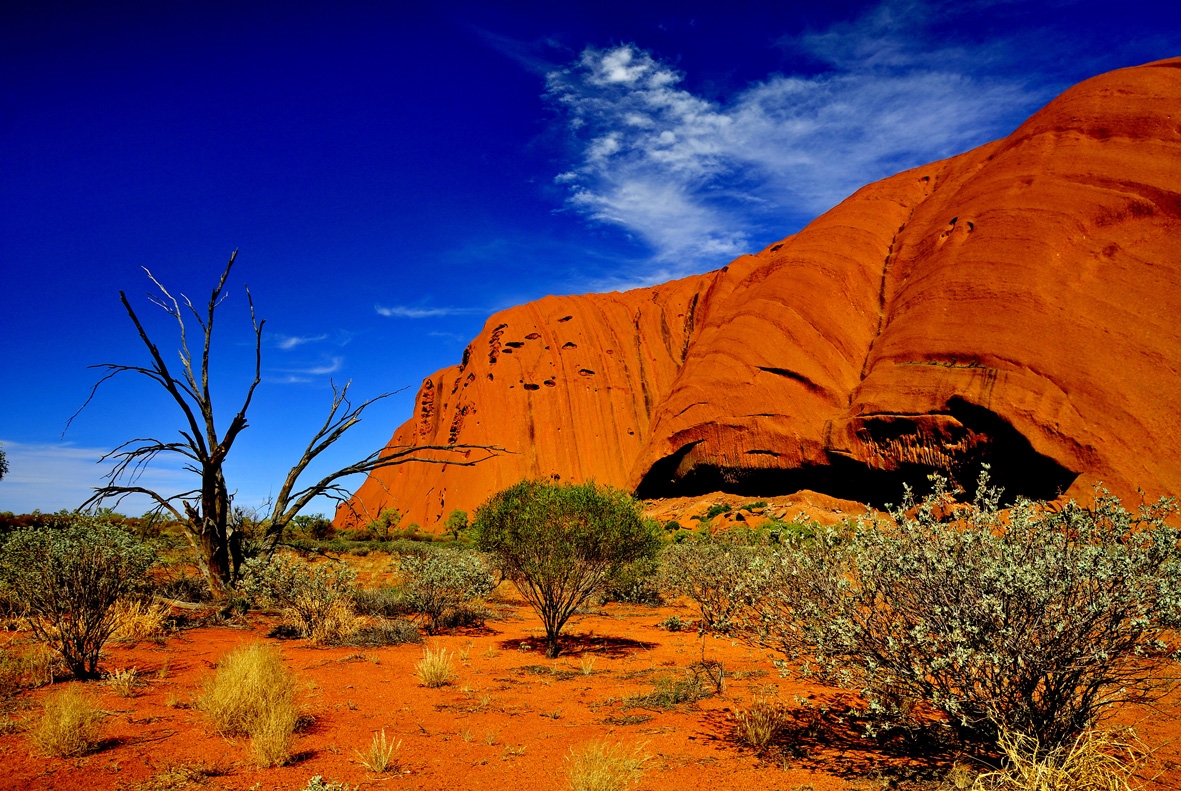
Veröffentlicht unter History, Must See, Travel | Verschlagwortet mit , , | Hinterlasse einen Kommentar

Thai Pea Soup

erbsensuppe 26d

Thai flavored fresh pea soup.

After the pea soup article one of my friends demanded the „Thai Pea Soup Recipe“. O.k. my friends, here it is. I know, there are many different ones, but I like this one best because of the smoky flavor touch from sauteed onions.
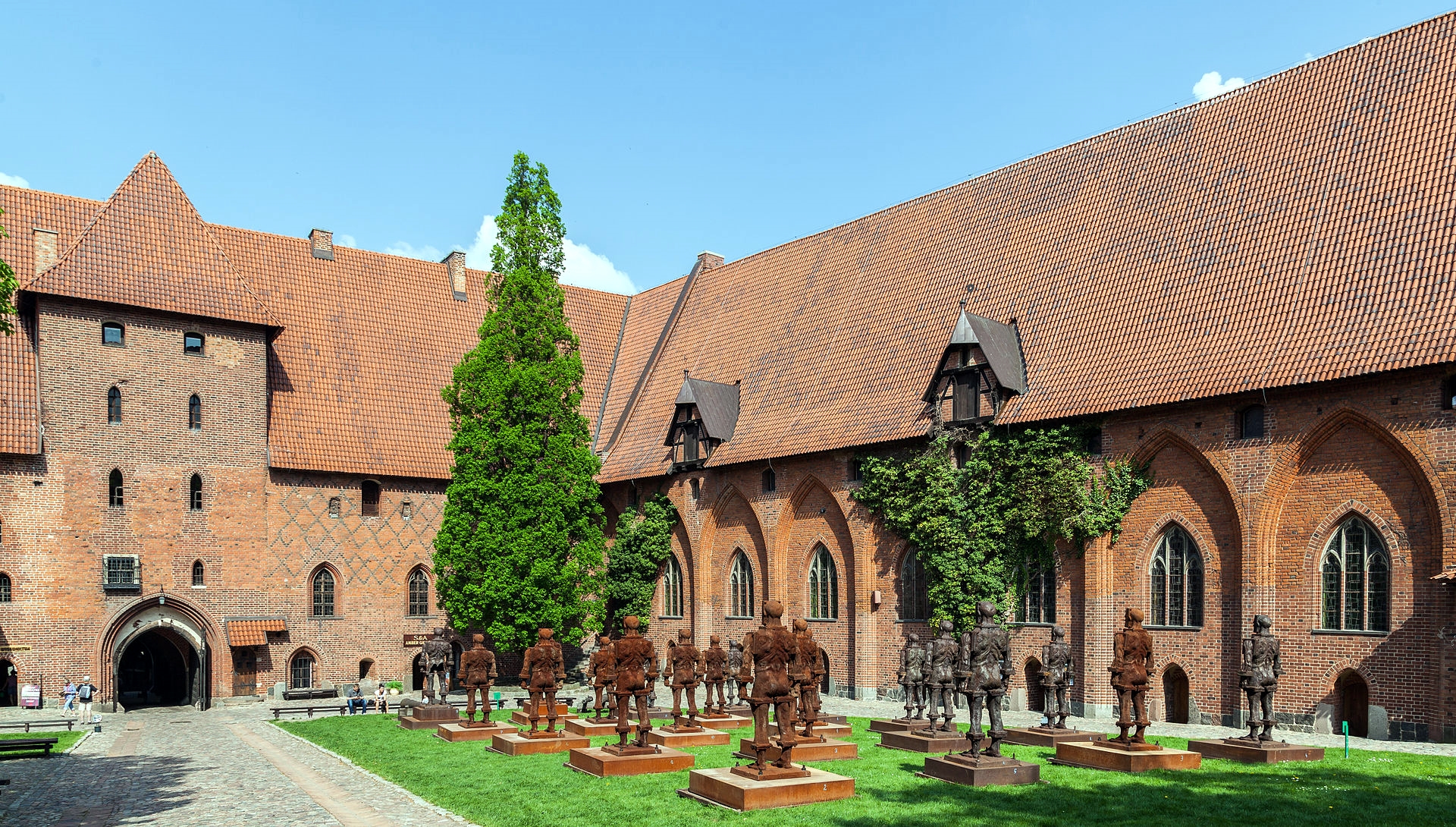
If you can get them, petite peas are what you want in this recipe. They’re easier to blend into a creamy soup. The header image above is a „Thai Butterfly Pea“ plant, flowering.

I make my own curry paste but if you want to you can buy premade one. Just be aware to use GREEN curry paste.  Maesri green curry paste or – my favorite – May Ploy (made in Thailand) paste. Both are not available in Uruguay, so I make my own one. A bit more work, but it’s worth it.  If you want to make your own curry paste read my article „Curry“ in the Category „Recipes“. Good luck.

erbsensuppe 26b

I find two scant teaspoons of this paste to be pretty spicy. But cut back to one teaspoon if you don’t want a lot of heat. You always can stir in more at the end but you never can’t take it out again.

I also love Rapunzel No Salt Vegetable Bouillon. It has a pure, clean taste. If you can’t find it then substitute your favorite bouillon or omit the bouillon and just use water or use the same amount of your favorite vegetable broth or stock. If your bullion or broth has salt, then adjust the salt in the recipe.

I use a little full fat coconut milk here for it’s creamy texture. Don’t shake the can. Start with 1/3 of the can, taking some of the coconut cream that settles at the top. It will give the soup a lovely texture.

erbsensuppe 26e

Ingredients.

3 x 400g or 500g bags of frozen petite peas
2 medium yellow onions, diced
2 cloves of garlic finely minced or pressed in a garlic press
1 x 2 1/2 piece of ginger, peeled and minced (optional)
1 x 400ml can of full fat coconut milk
1-2 teaspoons of green curry paste (see tips)
1 vegetable bouillon cube
3 cups of water
1 teaspoon of sea salt, or to taste
Coconut oil or other oil for cooking

erbsensuppe 26c

How to do.

Saute the onions in some coconut oil with a pinch of salt in a large pot until they’re soft.
Then add the garlic, ginger and green curry paste.
Stir and saute for about a minute.
Add the water, salt, bouillon cube and two 1/2 bags of petite peas. Set 1/2 bag aside.
Partially cover the pot and bring to a simmer.
Simmer for about five minutes or until the peas are tender but still bright green.
Whiz the soup with an immersion blender or in a regular blender or food processor until smooth.
Stir in the reserved 1/2 bag of peas and the coconut milk.
Try to take all of the coconut cream that usually settles on top lid.
Use enough coconut milk to give it a creamy consistency or to your taste.
Warm through, don’t boil.
Finish it with freshly squeezed lime juice, some young pea sprigs and a sprinkle of dry chilli flakes, or any of the below suggestions.

erbsensuppe 26a

Tips.

Serving Options: shredded unsweetened coconut, fresh Thai basil, regular basil, fresh mint, squeeze of lime juice, crusty bread, crackers, steamed jasmine rice.
If you like this soup more luxury decorate with hot freshly grilled prawns.
Thai’s like almost everything with peanuts, why not decorate with some grated peanuts.
Have this delicious soup as a starter or main course, serve some garlic baguette and fresh white wine with it. Enjoy !!

Veröffentlicht unter Recipes | Verschlagwortet mit , | 2 Kommentare