
 Click on pictures to supersize.
Sitting at a logical centerpoint in Central America, Panama City hopes to become a new destination for ecotourism and hipsters alike. With an outpost of an Ace Hotel and a new Gehry building, the city is sure to become a destination.
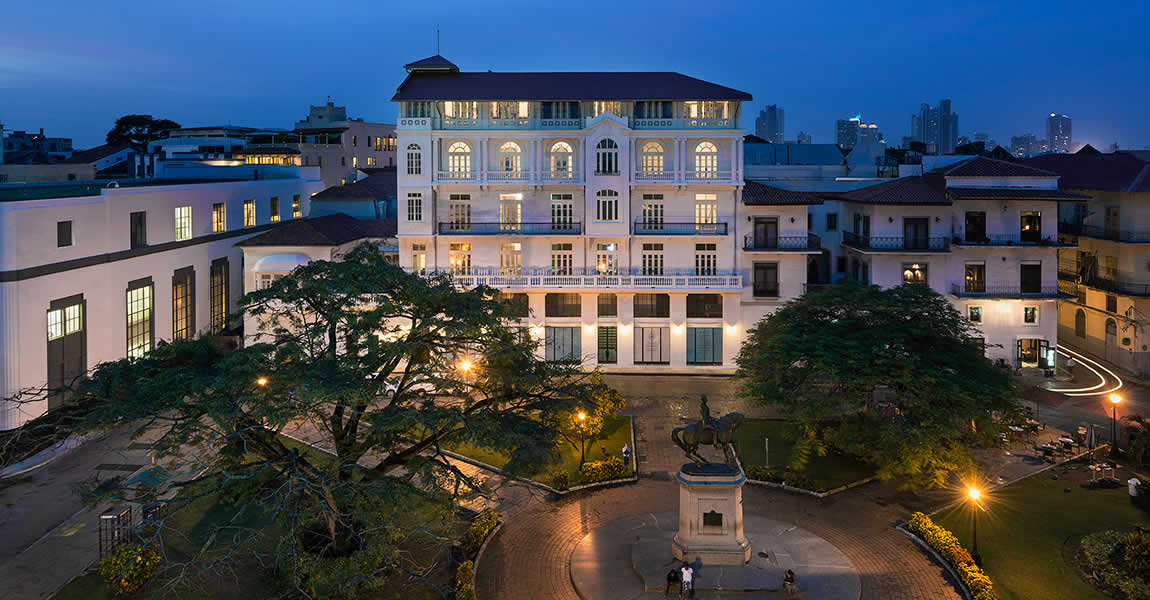
 The American Trade Hotel – Ace – Panama City.
Last year, when I visited Panama again, I choose the Ace Hotel, a luxury boutique hotel, instead of one of the multi-story glass-monsters. My benefit was the location right in the middle of Casco Viejo, the old, beautiful renovated, city center.
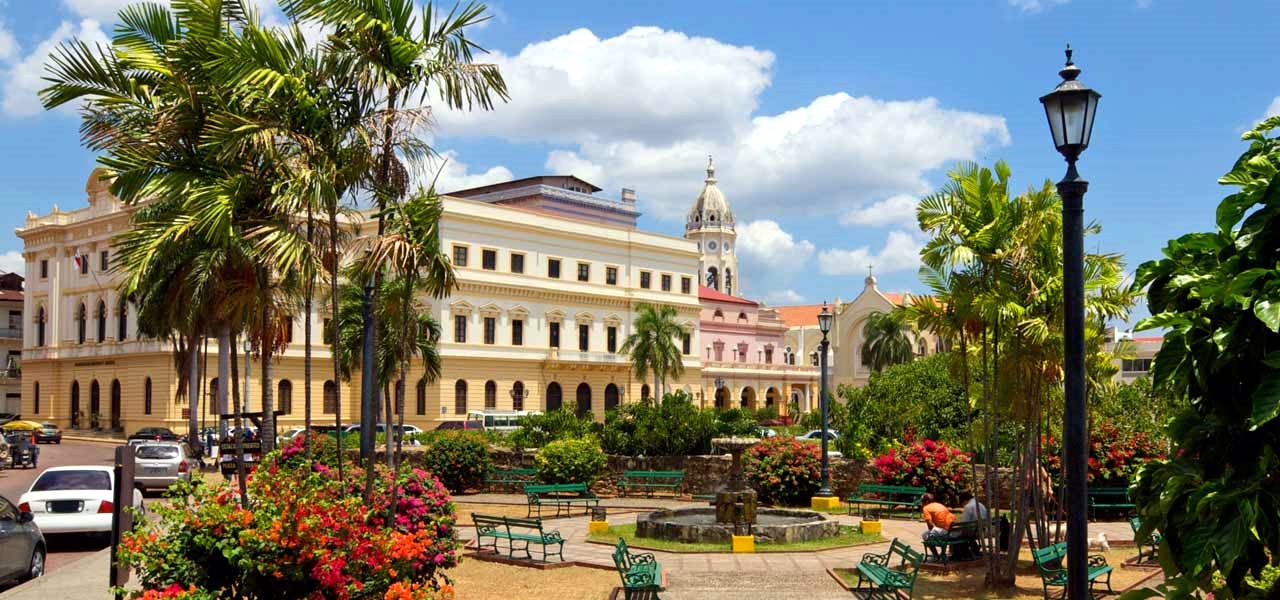
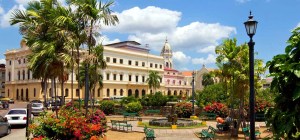 Plaza Bolivar Casco Viejo, Panama City. Meantime a clean and safe area, by day and night. Lots of cafes and restaurants around the plaza.
Panama likes to be the crossroads between the old world and the new world, between east and west or better north and south. Now it is set to become a significant player in the stakes as a key cultural city and important biodiversity research center. The new Gehry designed Biomuseo, a Smithsonian affiliated museum, is situated within view of the Pacific Ocean to the east and the entrance to the Panama Canal to the west, placing it at the forefront of a new cultural and eco-tourist center for the region.
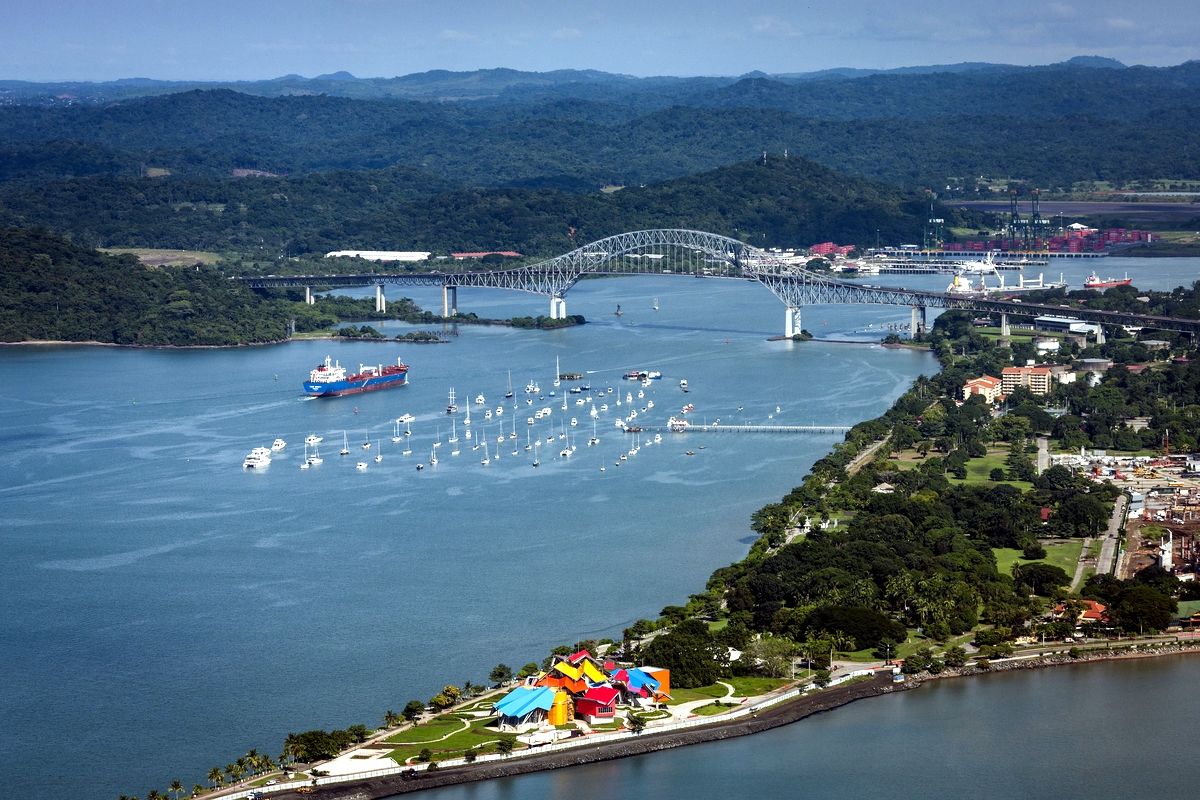
 What a fantastic location of the Biomuseo in Amador, Panama. Upfront the Biomuseo, behind the entry of the Panama Canal on Panama City side and the bridge (Puente de las Americas) which connects the continents of North America (left) with South America (right). The bridges (meantime 3 over the canal, connect what the canal divides – just philosophy.
The Biomuseo.
Biomuseo (also known as The Biodiversity Museum: Panama Bridge of Life) is located in Panama city’s subburb Amador just at the begin of the Amador Causeway. It was designed by renowned architect Frank Gehry. This is Gehry’s first design for Latin America.
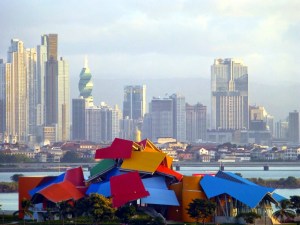 In front the Biomuseo, in the middle the old city, Casco Viejo and at rear the skyline of Panama City. In distance left the „corkscrew“, the F&F Tower. Will it become the new landmark of Panama City ?
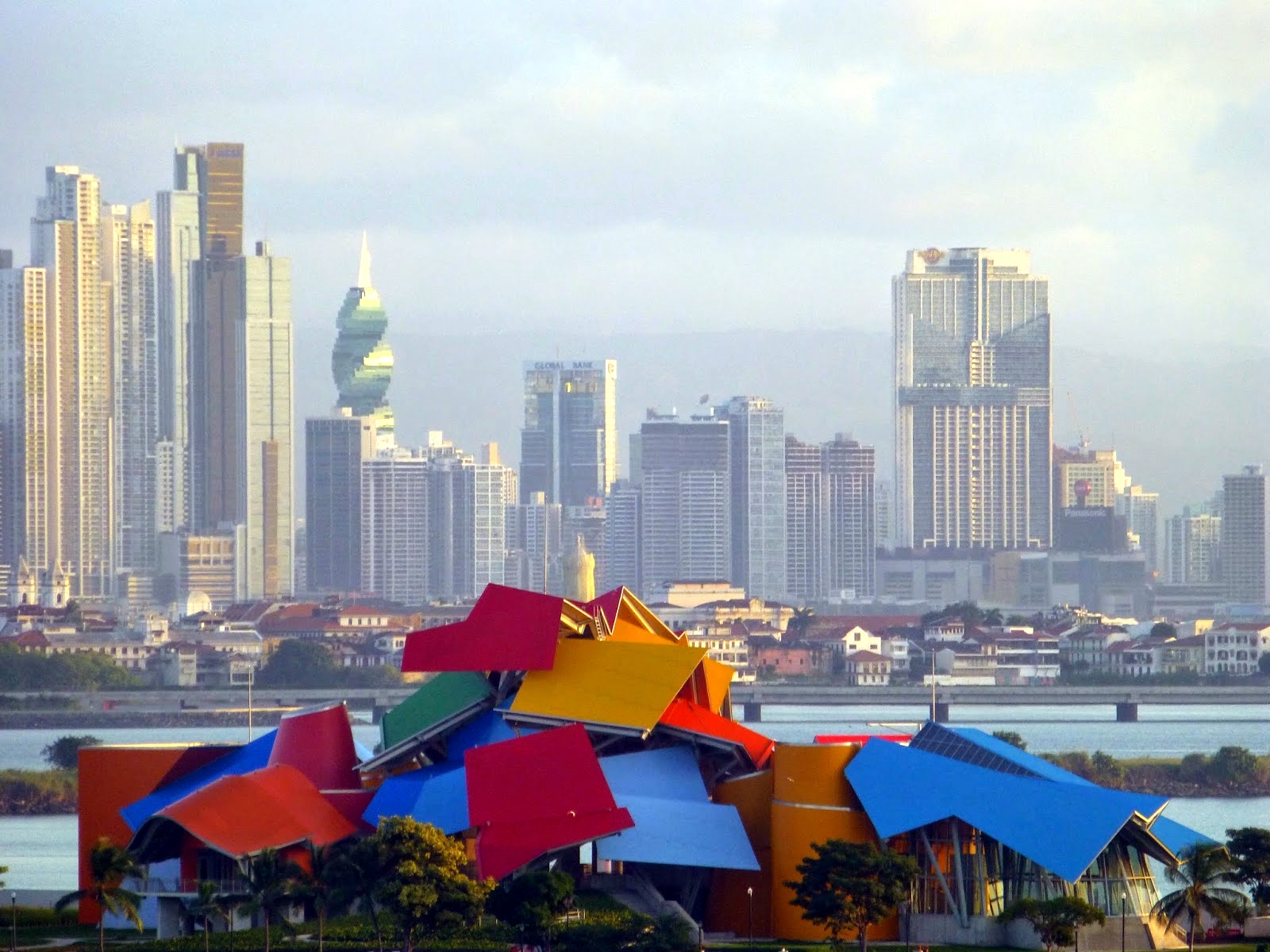
The design was conceived in 1999 and the museum opened in October 2014. In 2004 it was announced that Gehry, whose wife is Panamanian, would donate his design to the people of Panama.
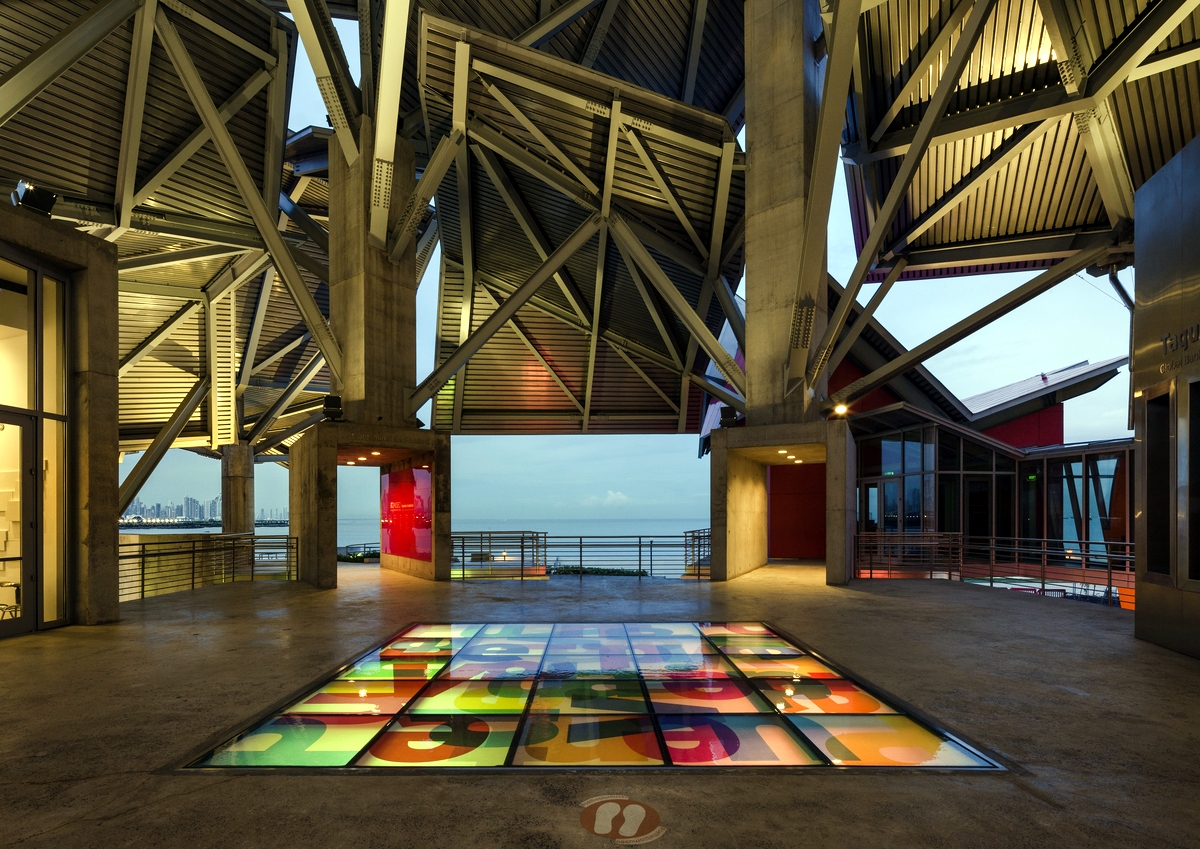
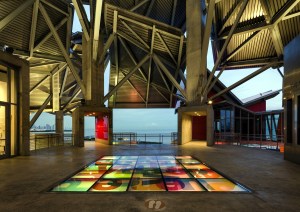 View out of the courtyard towards the city.
When we lived in Panama we could see often the progress (sometimes very very slow) of an unusual building site, but we left the country before it was finished and opened. This time it was my chance for an extensive visit.
 One of the many exhibitions.
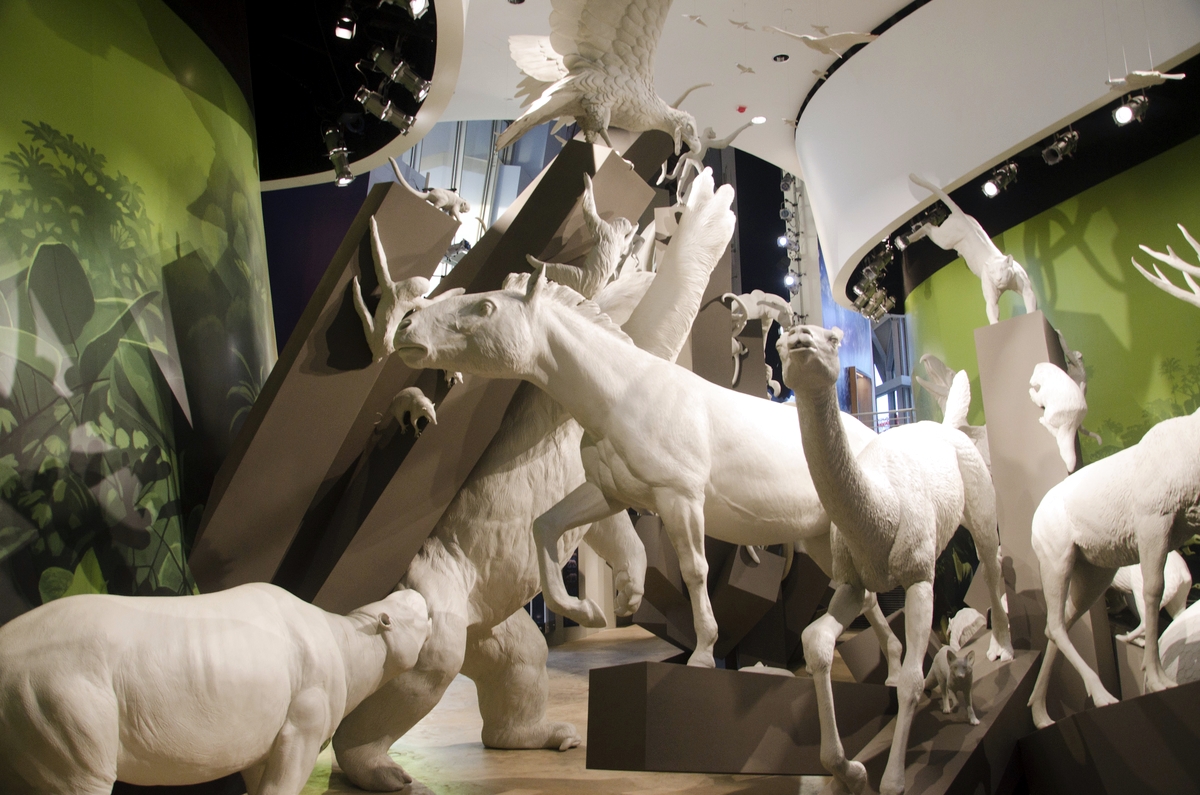
The Biodiversity Museum contains 8 exhibitions, mainly revolving around the idea of Panama’s biodiversity. These exhibitions will be mainly led by the Smithsonian Institution and the University of Panama. Besides a museum it will also have the capacity to host small events such as concerts, private events and expositions.
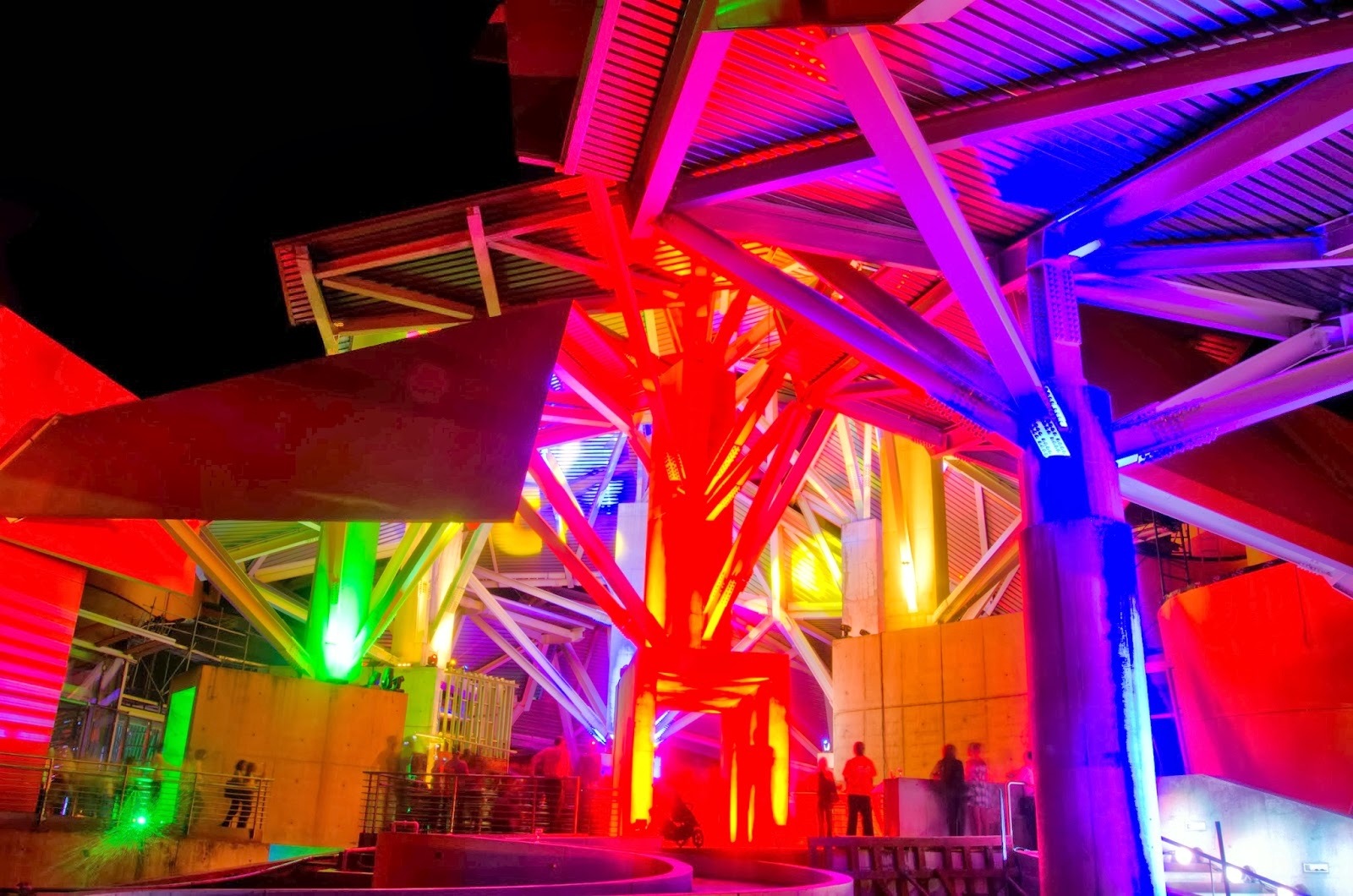
 Colorful lightshow at night.
The Biomuseo is the latest interactive museum conceived by Gehry, whose projects in Bilbao-Spain , Duesseldorf-Germany, Los Angeles-USA and many other cities have helped to revitalize cultural centers. The Biomuseo is Gehry’s first project in Latin America.
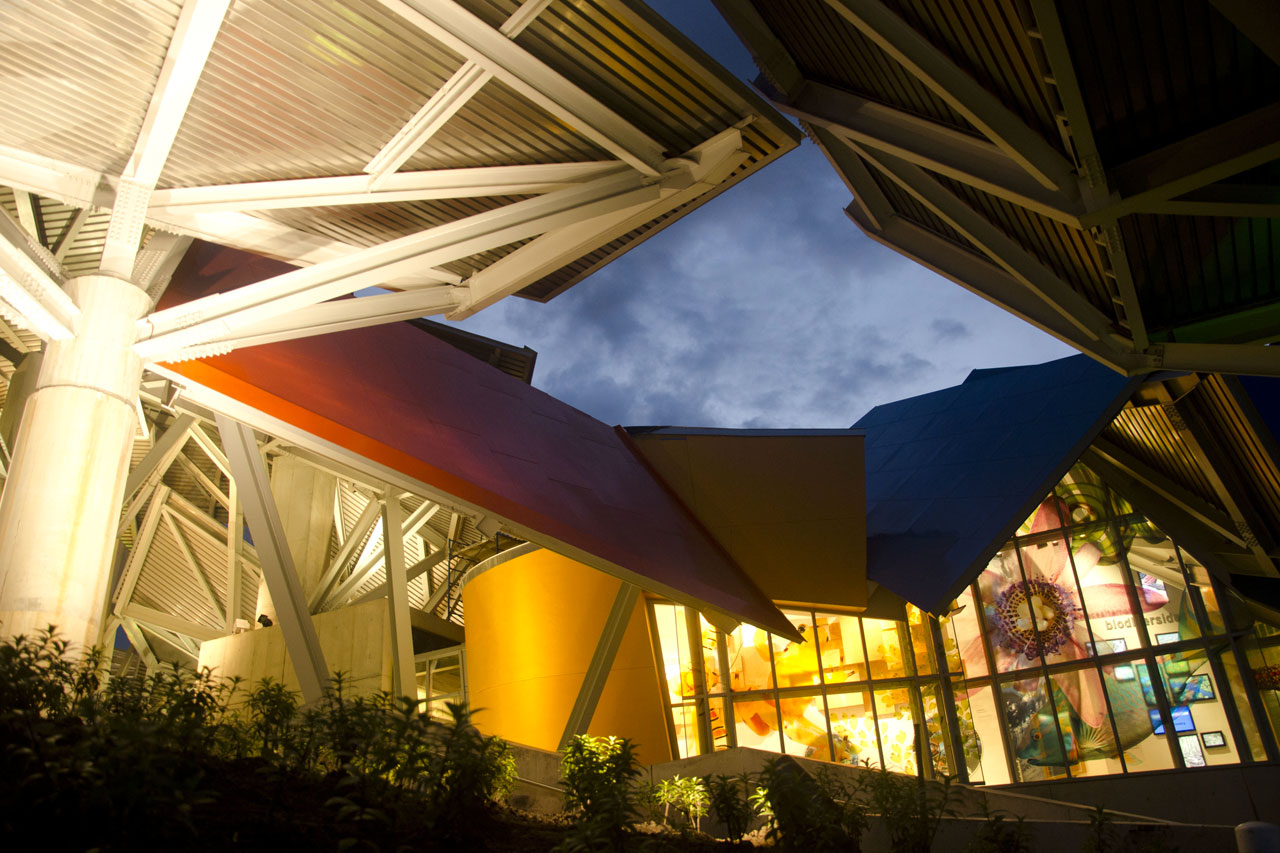
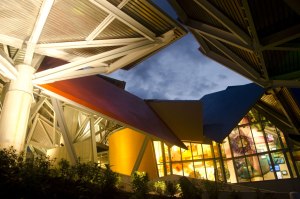 The Atrium, center of the Biomuseo.
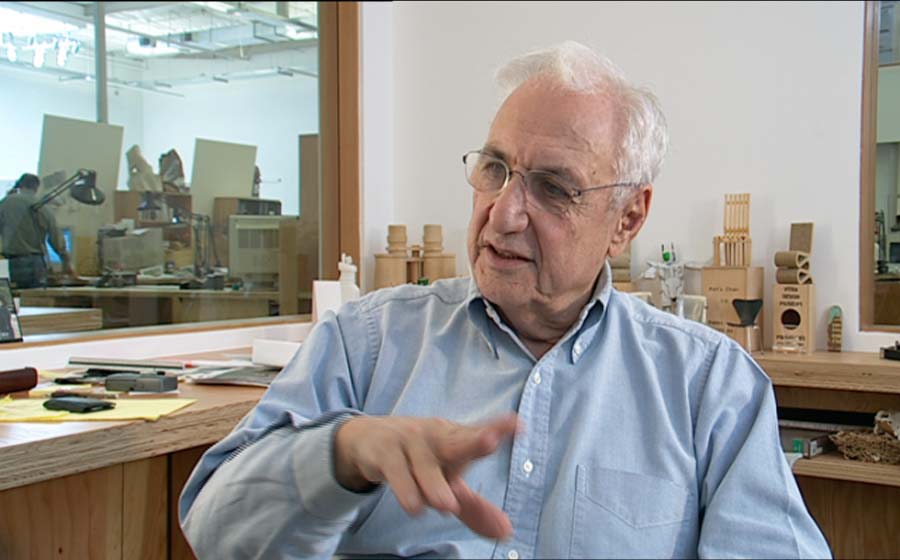
Frank Gehry.
Frank Owen Gehry. Born as Frank Owen Goldberg on 28 February 1929 in Toronto. He is 87 years „young“, a Canadian-born American architect, residing now in Los Angeles.
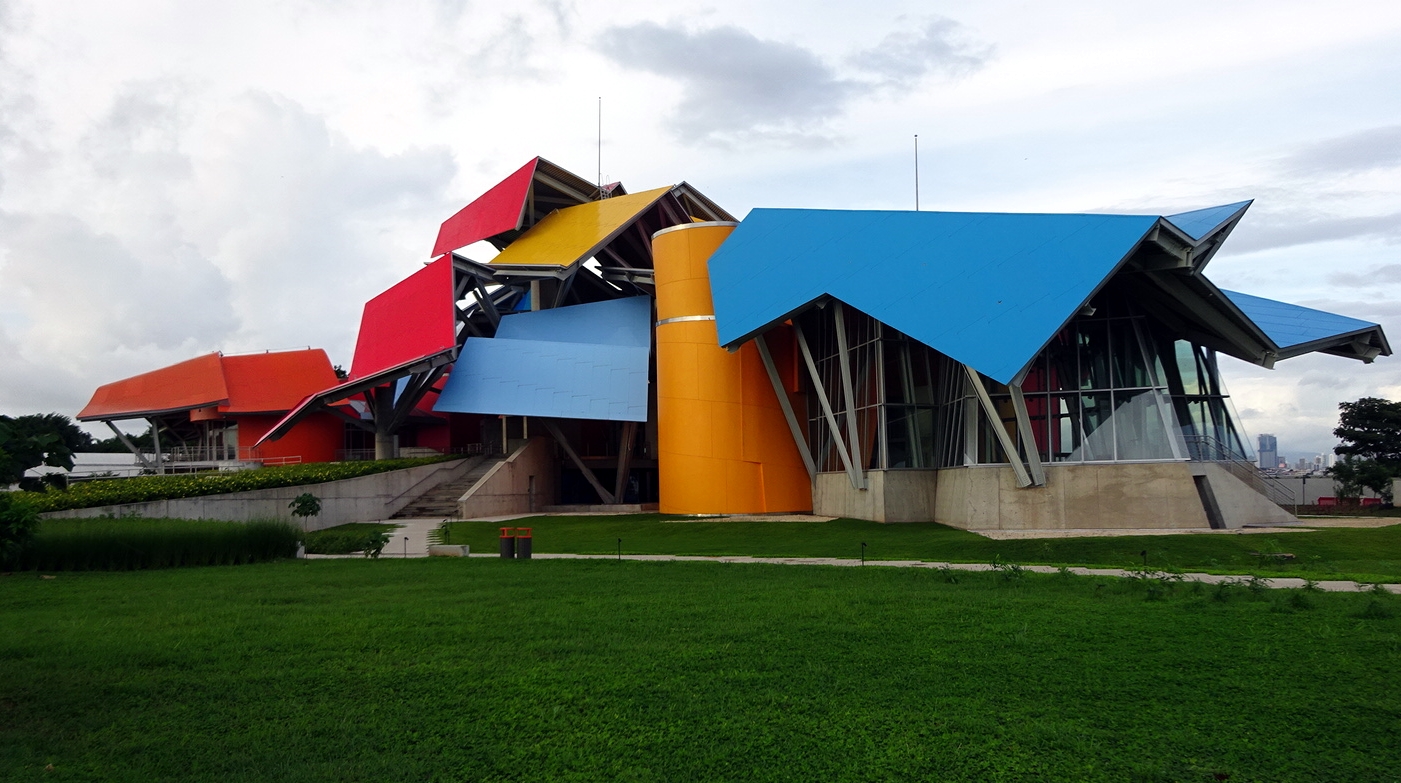
At the heart of Frank Gehry’s design for the Biomuseo is a public outdoor atrium covered by a lively assemblage of metal canopies in different shapes and strong colors: blue, red, yellow, green. The canopies recall a local vernacular of tin roofs and colorful buildings and evoke Panama’s spectacular neotropical habitat and create protection from the area’s frequent tropical rains. From the atrium level, views to the Canal and Panama City are a fantastic visual feature.
 The famous Canadian architect Frank Gehry.
The Biomuseo was been developed through a collaboration between a local non-profit foundation to help raise awareness of the country’s natural and cultural history and the Government of Panama. Proud Panamanians and the government want to encourage the study and preservation of its extraordinary biodiversity.
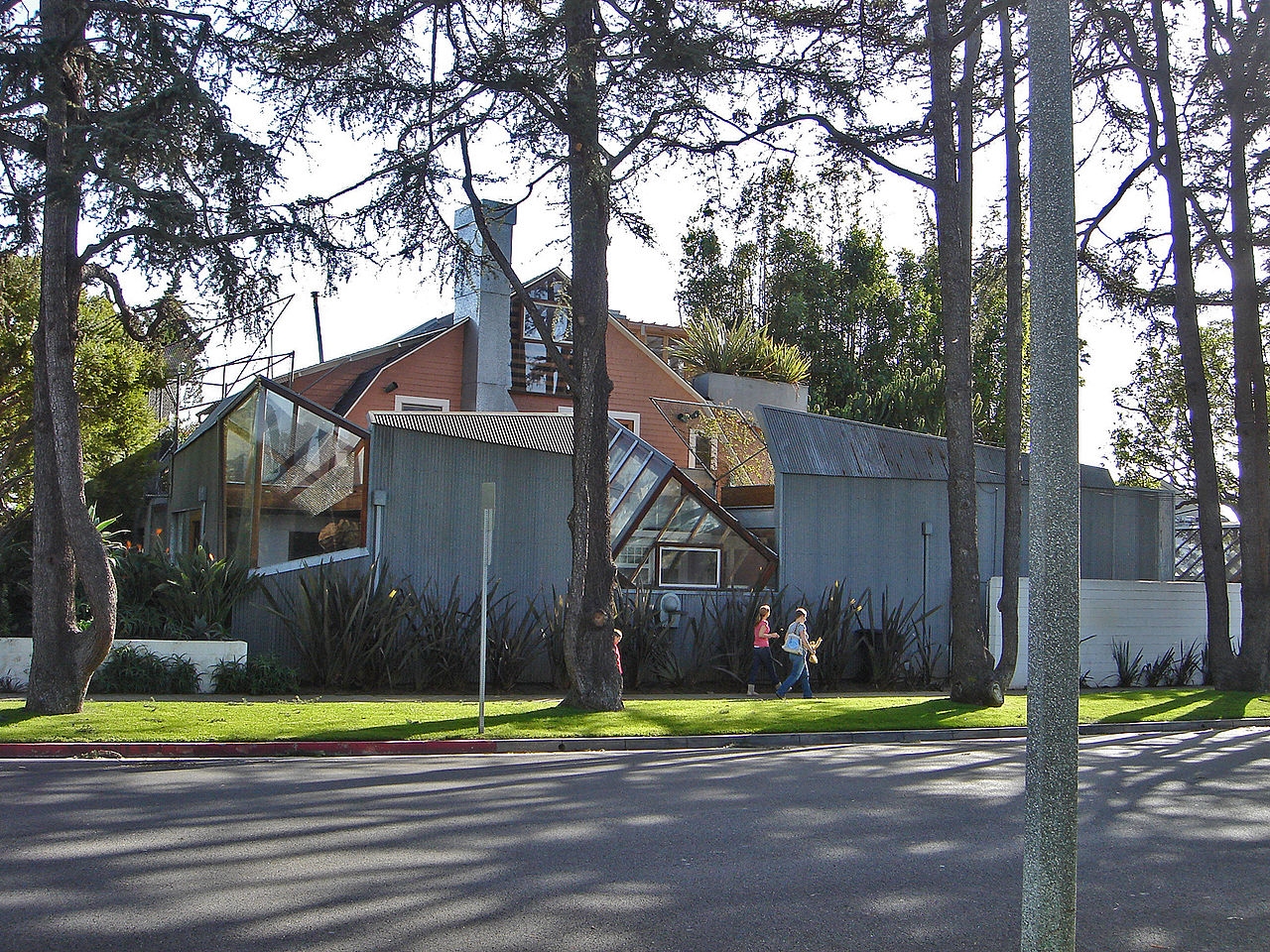
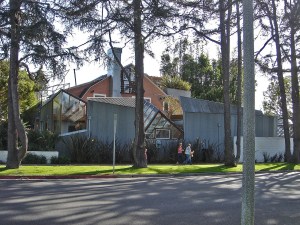 Frank Gehry’s home in Santa Monica, Los Angeles.
In addition to content developed by the Smithsonian Tropical Research Institute, the museum will open up into a public a 6-acre (2.4-hectare) Biodiversity Park, designed in collaboration with the architect. As a destination and focus for the city, the building, exhibitions and park will provide major new civic and educational resource for the people of Panama and no doubt attract visitors from around the world.
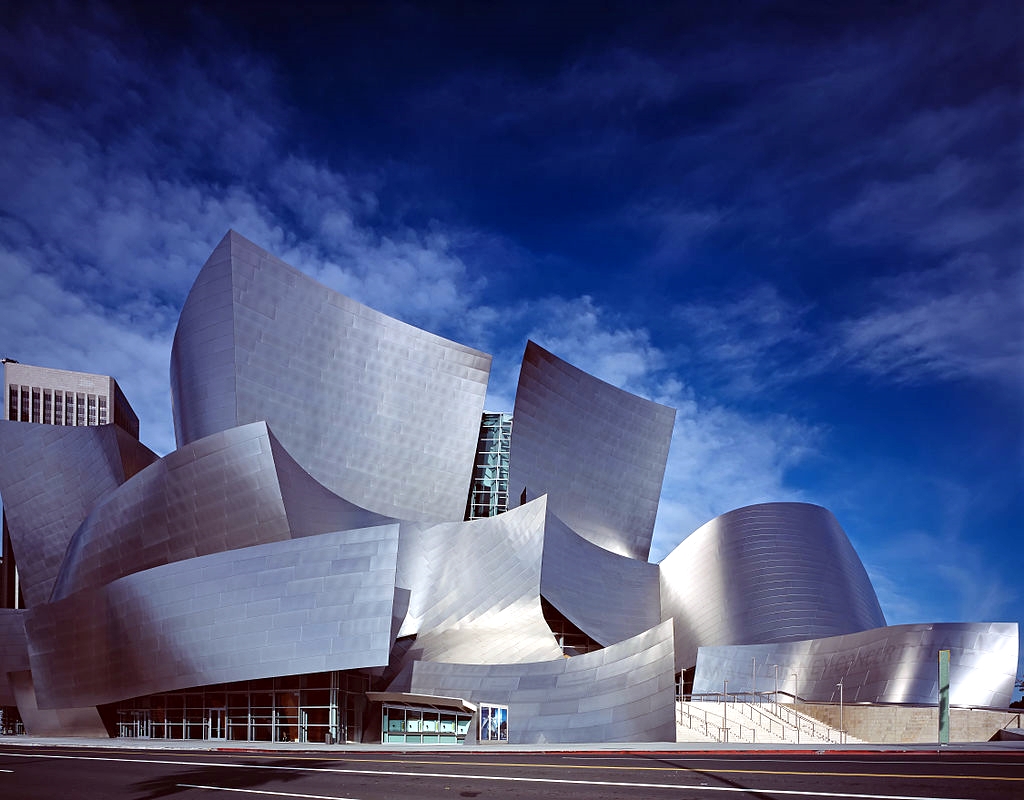
 Already a famous landmark in Los Angeles, USA. The Walt Disney Concert Hall designed by Frank Gehry. Click on Wikipedia, it’s interesting to learn about him.
Frank Gehry expressed his enthusiasm for the project: “This has been a very personal project for me. I feel close ties to the people of Panama, and I believe strongly that we should all be trying to conserve biodiversity, which is threatened everywhere.”
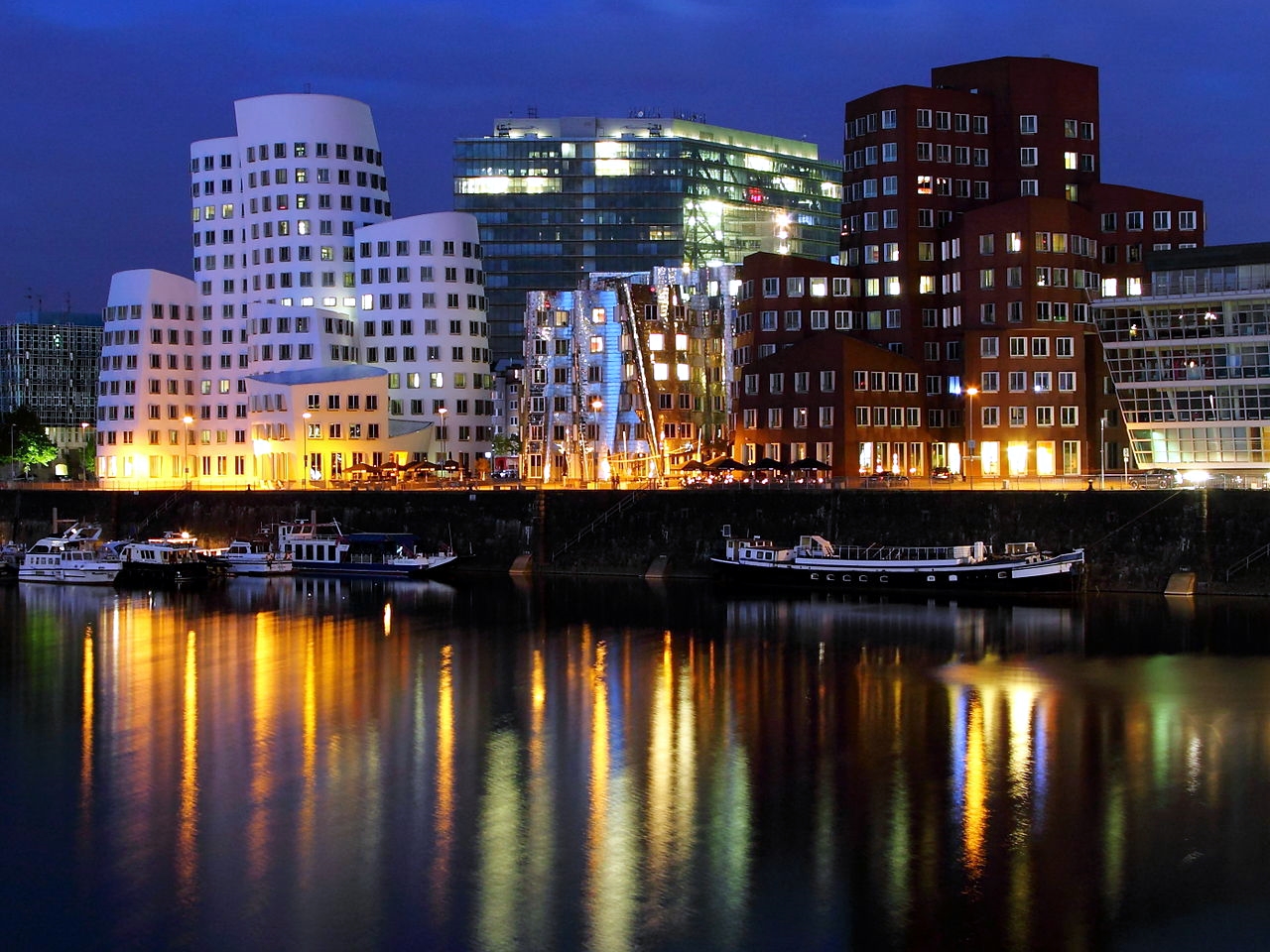
 Another Frank Gehry design, the whole building ensemble „Neuer Zollhof“ at the river Rhine in Düsseldorf, Germany.
This is what Frank Gehry thinks of the rest of the architects:
“Let me tell you one thing. In the world we live in, 98 percent of what gets built and designed today is pure shit.”
 Frank Gehry with his finger up during that speech.
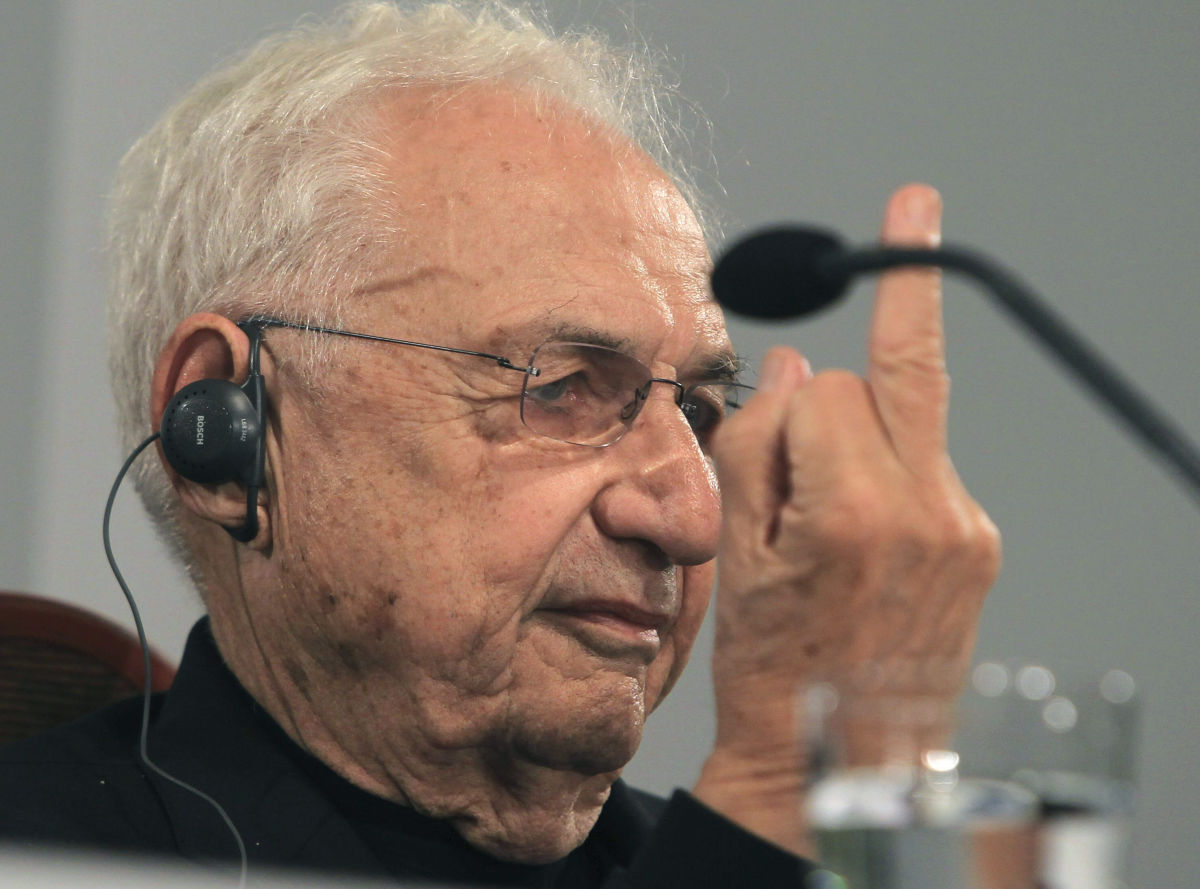
This statement was made as response of the Canadian-American architect Frank Gehry when a journalist in Spain asked him what his thoughts were about criticism „his architecture was pure show“, as reported in El Mundo (Spanish newspaper). He continued by saying, “There’s no sense of design nor respect for humanity or anything like it. They’re bad buildings and that’s it.”
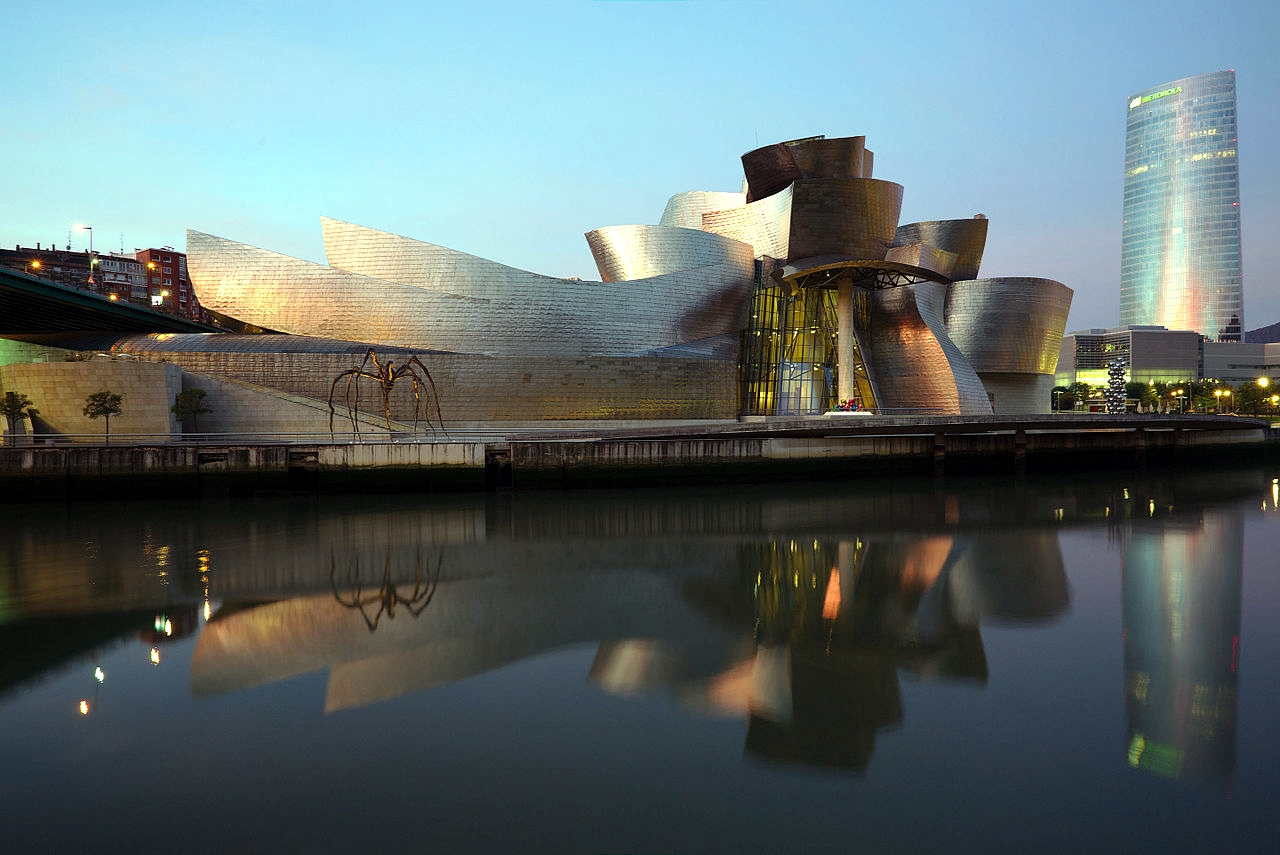
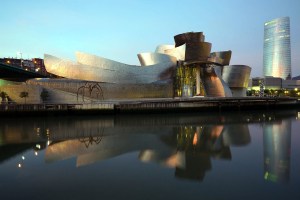 Frank Gehry’s Guggenheim Museum in Bilbao, Spain.
The Ace Hotel.
The city already has one of the most intriguing members of the Ace Hotel family – the American Trade Hotel and Hall (opened in 2013). Situated on Plaza Herrera, in the historic old quarter, Casco Viejo, in a restored landmark building.
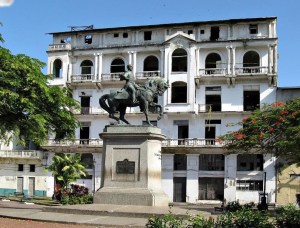
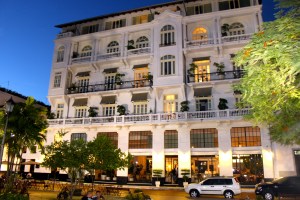 Left: The former „hotel building“, with the statue of General Herrera, in 2006, when we came to Panama. Right: And now, about 10 years later, same building as the Ace Hotel.
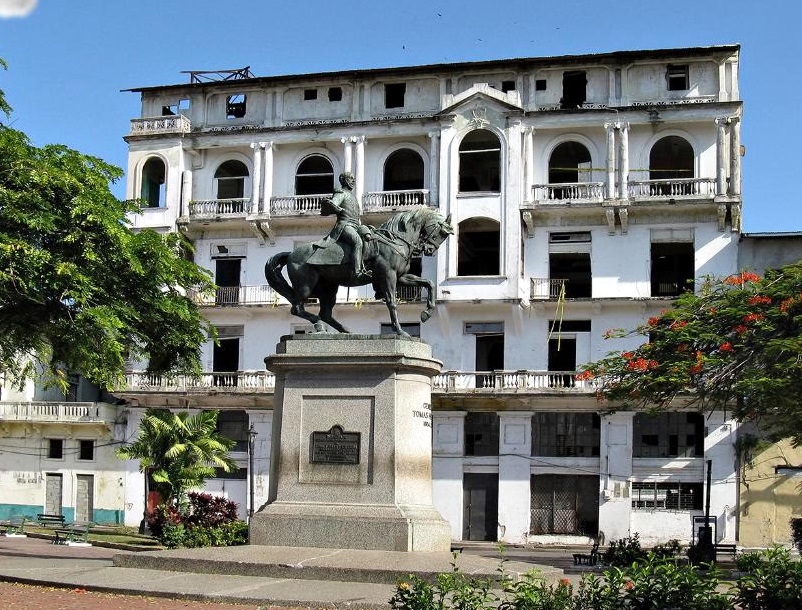
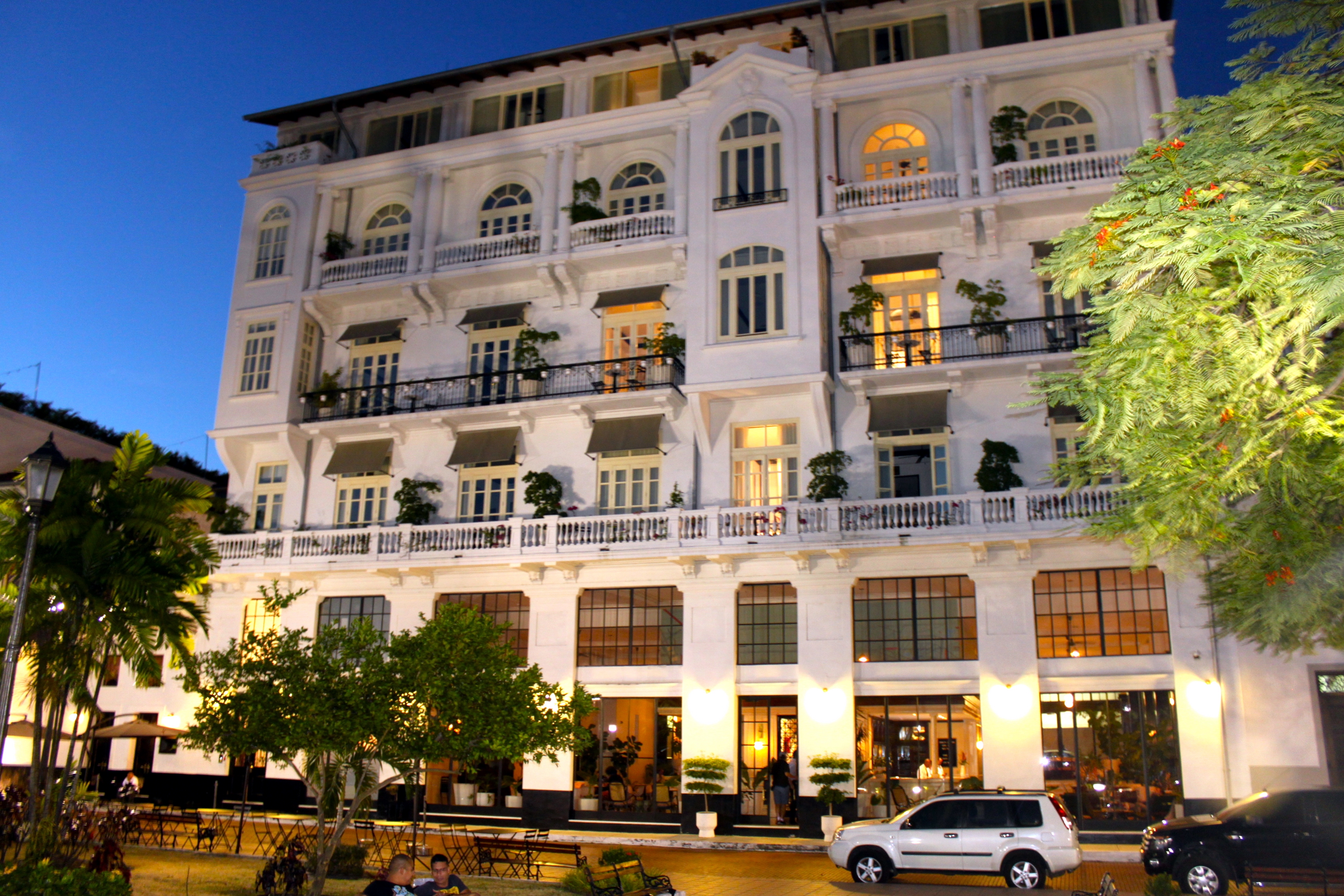
The hotel’s interior design reflects the history of Panama as a crossroads but also features contemporary design and modern luxuries. Stay at the Ace and take a taxi (about 3,–US$) to the Biomuseo.
 Tasteful and elegant interior at the ACE.
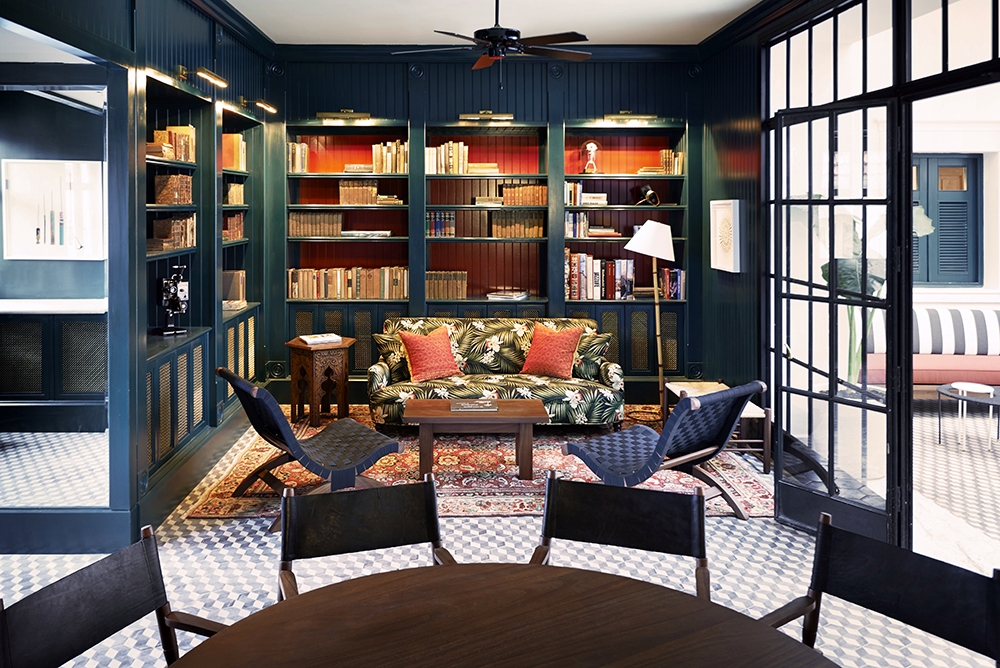
I am always so blown away by the innovative style the Ace Hotel brand creates, especially with this newest addition in Panama. I know it may seem weird when I get euphoric having the chance to stay in a beautiful place, being surrounded by so much history and beautiful architecture and design.
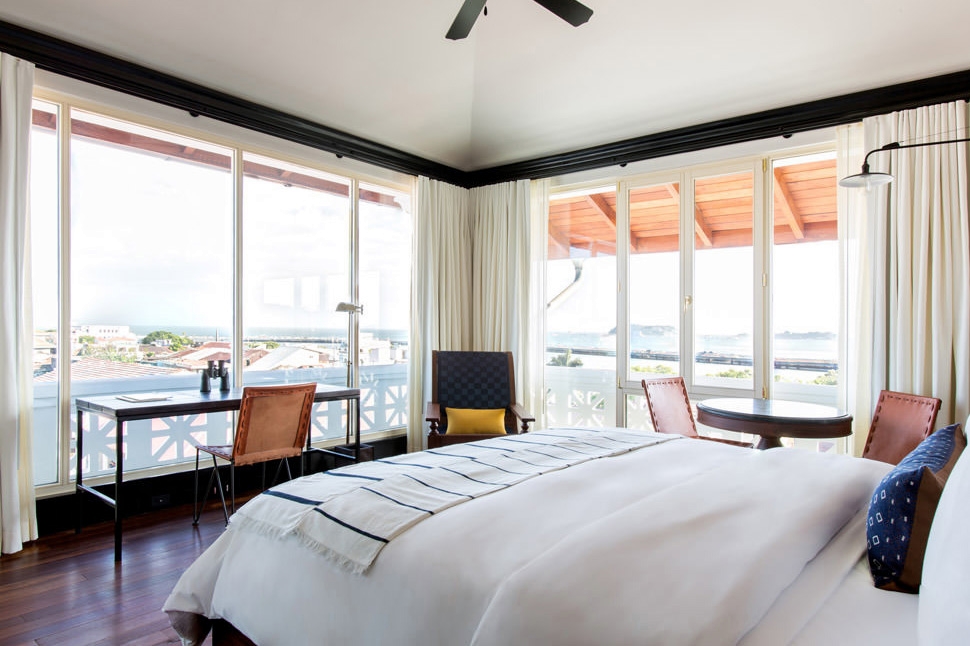
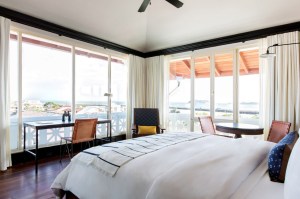 Beautiful rooms, the binoculars are a service item.
The American Trade Hall next door to the hotel was originally built as a branch of the National City Bank of New York, financier of the Panama Canal.
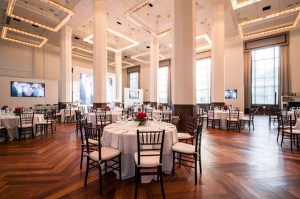 Inside the American Trade Hall, dining- or ball-room.
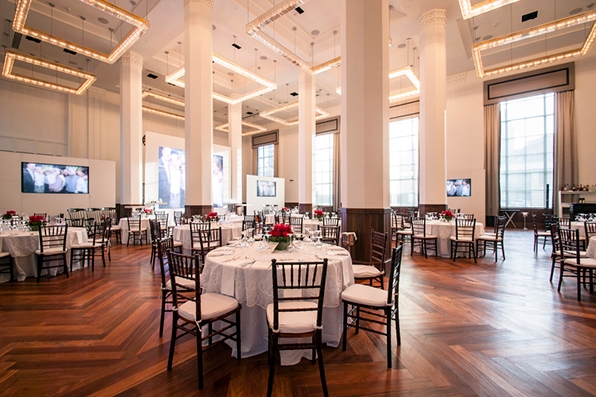
The design was modeled after the branch at 417 Broadway in New York, an esteemed example of the „Moderne style“ by the distinguished architecture firm Walker & Gillette. The space has been restored and is being used for special events. The Hotel has also opened up a new cafe area, Cafe Undido, with an exhibition of commemorative posters.
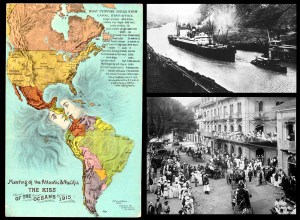
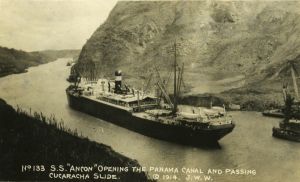 Historic pictures, a postcard with kissing oceans, Casco Viejo and the S.S Ancon crossing the Panama Canal.
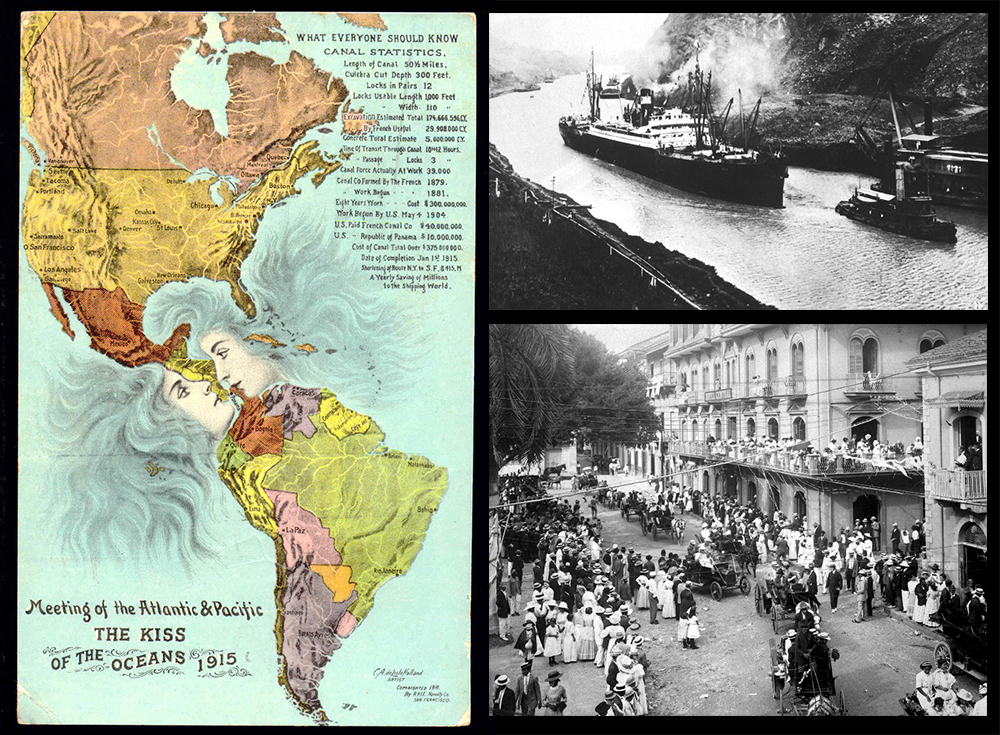
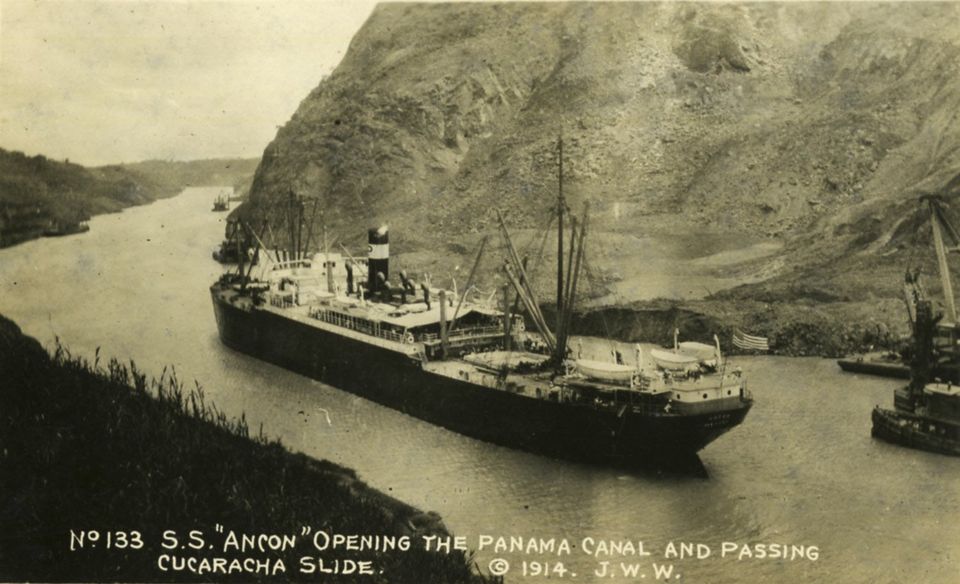
The historic shipping line posters reflect on the first passage of the S.S. Ancon through the American continent and pays respect to those who worked to realize the Panama Canal, now recognized as a modern wonder of the world.
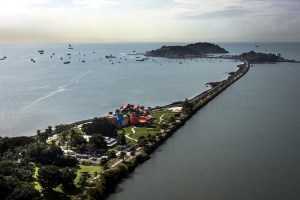 Amador Causeway.
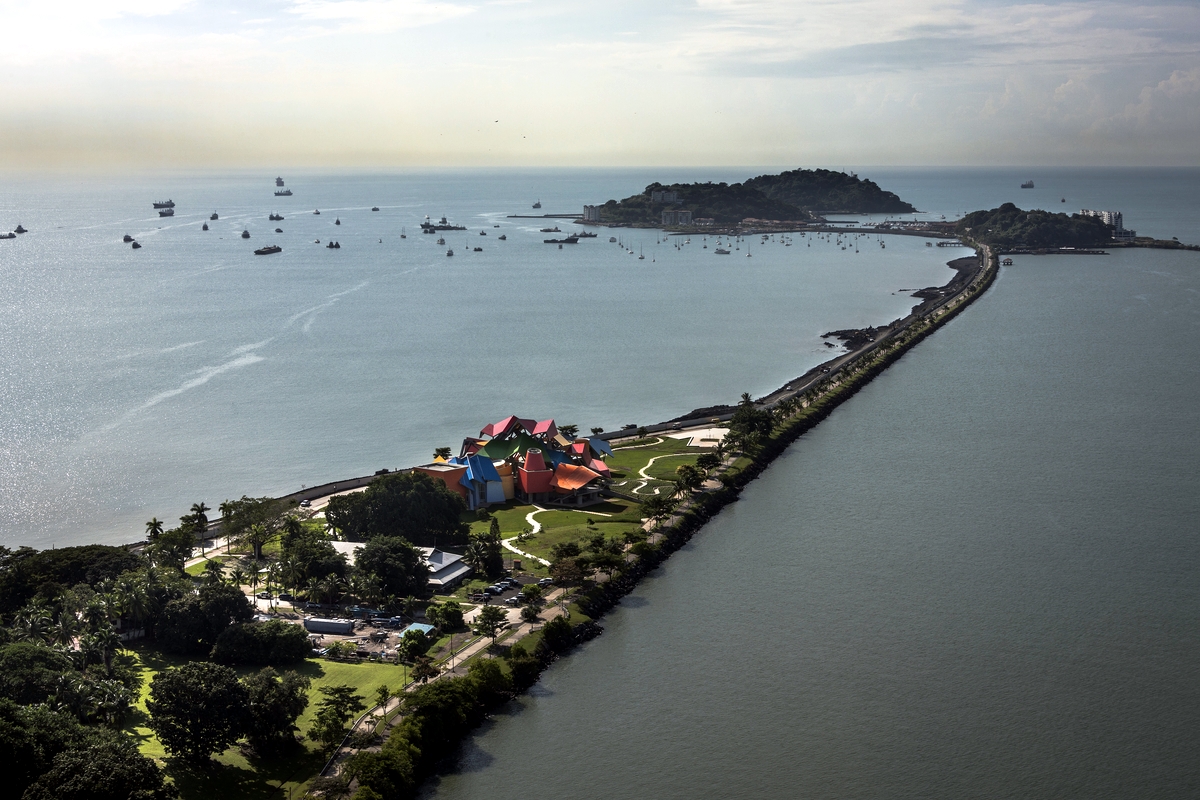
Amador causeway connecting the mainland with the the Causeway Islands (Spanish: Islas Calzada de Amador). They are four small islands by the Pacific entrance to the Panama Canal. They are linked to the mainland via a causeway, made from rock extracted during the excavations from the Panama Canal. The islands are 1. Naos – home to a research lab run by the Smithsonian Tropical Research Institute (STRI), connected to the Biomuseo. 2. Culebra, 3. Perico, and 4. Flamenco, with magnificent views from Flamenco hill.
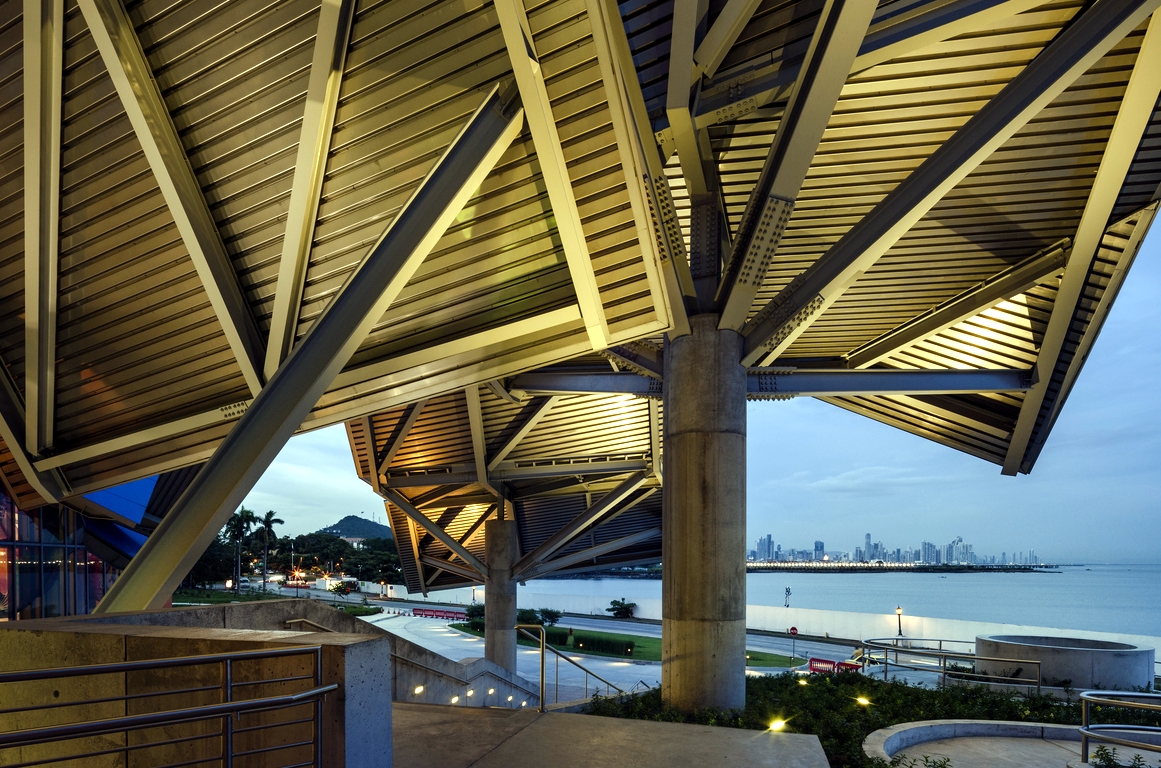
 View over the Causeway towards the city.
It is my plan already, to write an article about the Panama Canal. The crossroads of the two American continents, tying in also the Ace Hotel with the Biomuseo.
 The vibrantly multi-colored building.
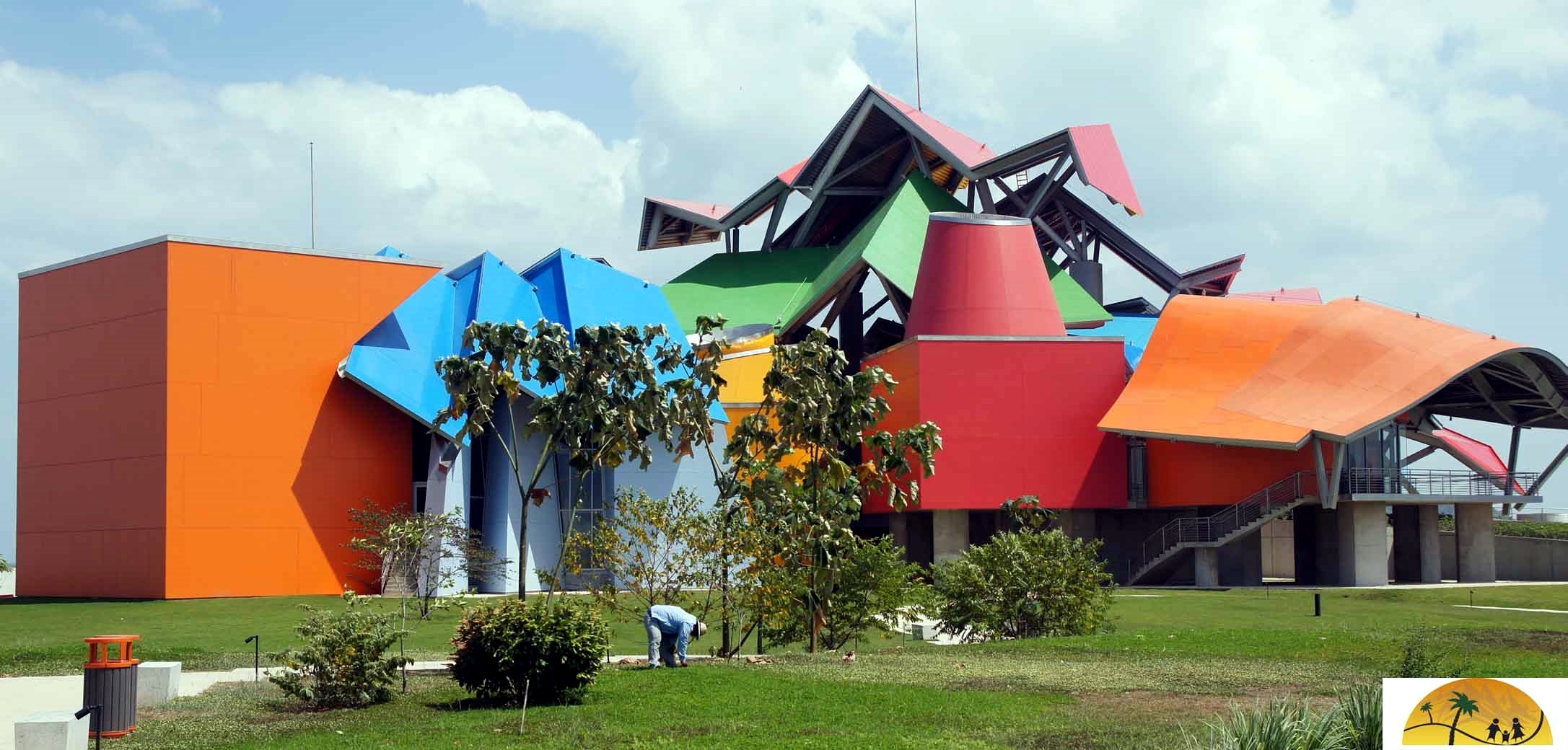
The Biomuseo is the latest cultural and eco-tourism destination, sure to be on many traveler’s list’s. If you come to Panama, give yourself a favor and try the Ace Hotel and visit the Biodiversity Museum. Stay tuned to more posts about the destination Panama.


Hi Mike,
we just came back from a week trip to Costa Rica. It was amazing as always.
Commented already the article about Panama Street Art, have a look.
Crossing the border with our own car, out and into Panama, is still a nightmare.
Man – what a wonderful article again, this one is. I drove along the Museo few times,
never stopped and visited. Now I will do, it looks so exciting and you motivated us.
The hotel , great, but nothing for us. As you know, we still have our little apartment
in Obarrio, using it when we need to stay over in the city.
Tutto il meglio il mio amico, Luigi.
LikeLike
Dear Luigi,
yes, the Biomuseo is worth to visit, because of the exhibitions, but also because it is a peace of art itself. Glad that you like my articles. Abrazos to the family and to you, miss the „golfing days“ with you,
cheers Mike.
LikeLike