
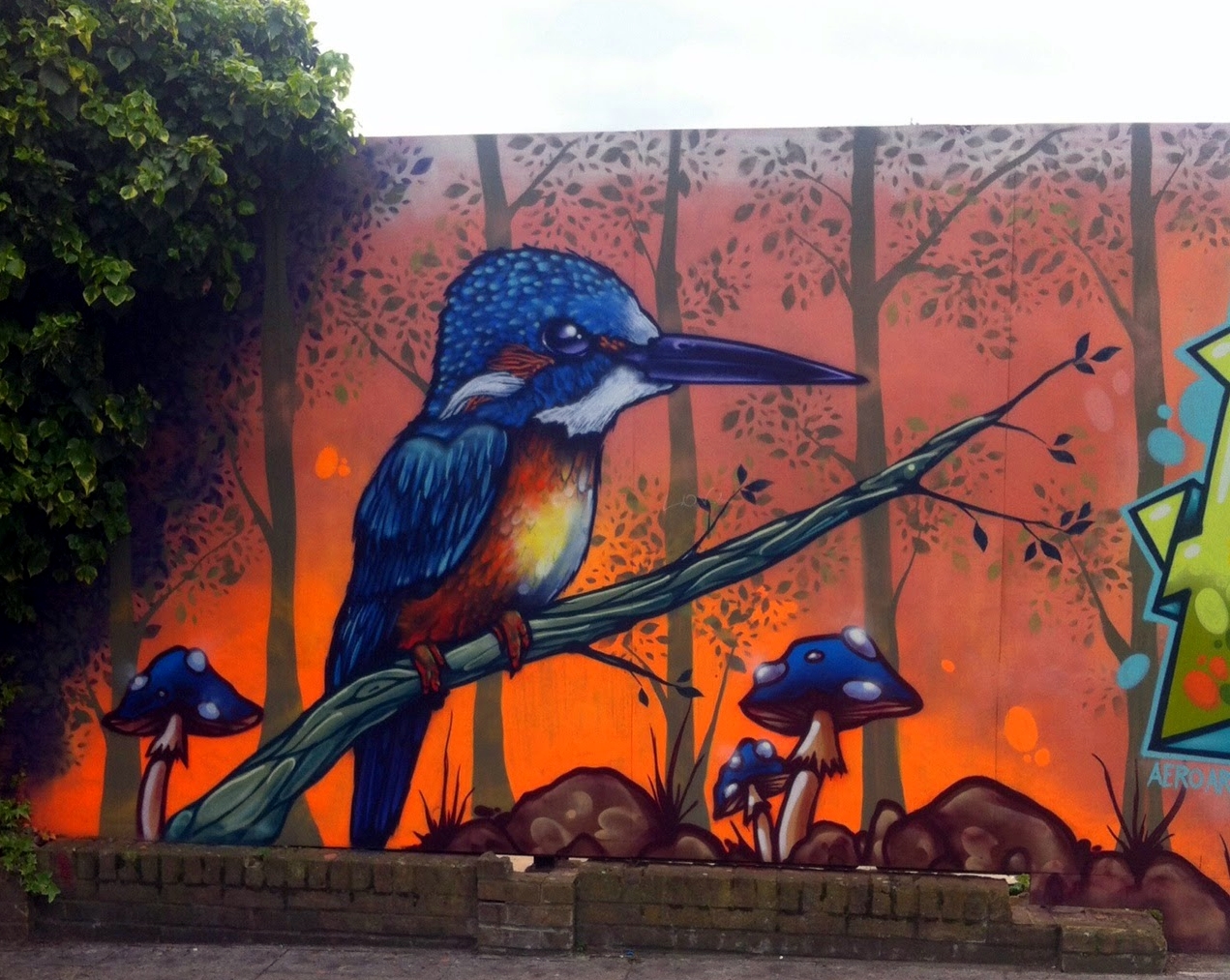
During the last 6 years in Uruguay I always couldn’t take off my eyes from „street art“. Some were nice, pretty, ambitious – some ugly, offensive, mean – and some were really eye catching, worthy to look at and to photograph. And some are so interesting and wonderful pieces of art that I decided to collect them with my camera. Meantime, because I was much more focused on art of such, I saw hundreds and pictured dozens, not only in Montevideo but allover the country. Also I found many in my travel library. Some of them I like to share with you. But first, as always, a bit of research, background and history.
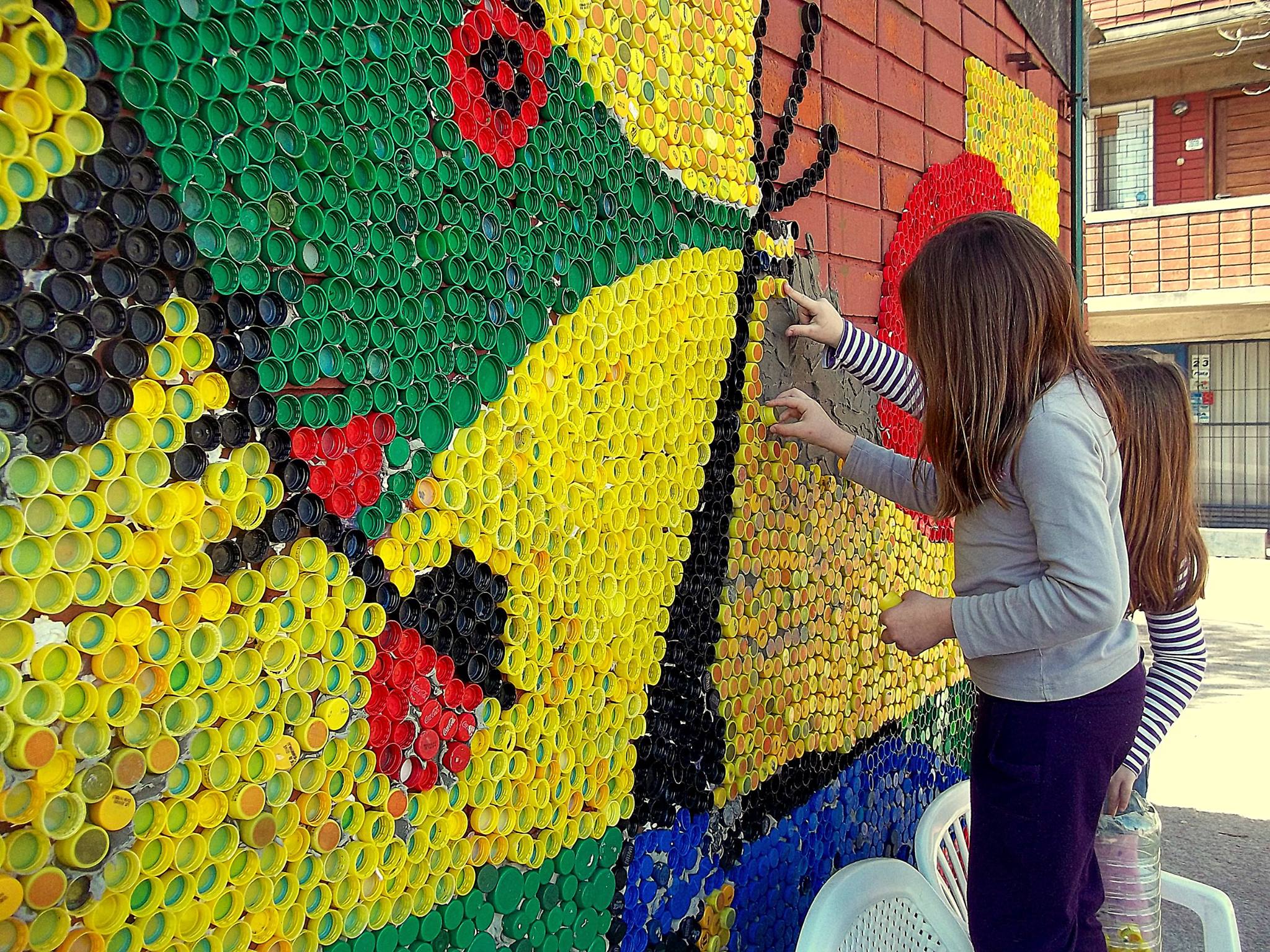
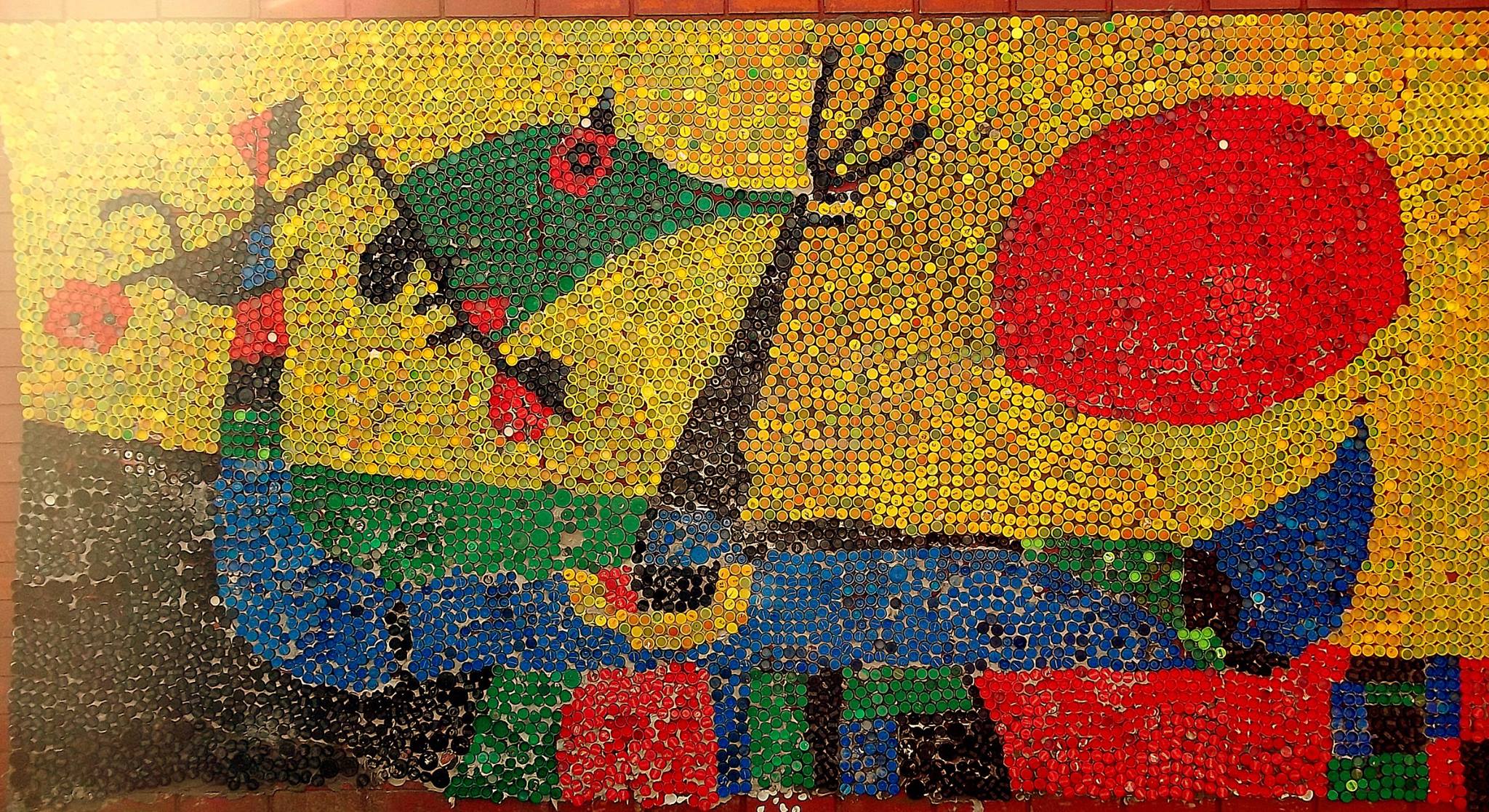
 Wonderful modern street art in Montevideo. Kids glue with bottle tops a Miro design on a wall.
Origin.
Street painting, also commonly known as pavement art, street art, and sidewalk art, is the performance art of rendering artistic designs on pavement such as streets, sidewalks, and town squares with impermanent and semi-permanent materials such as chalk.
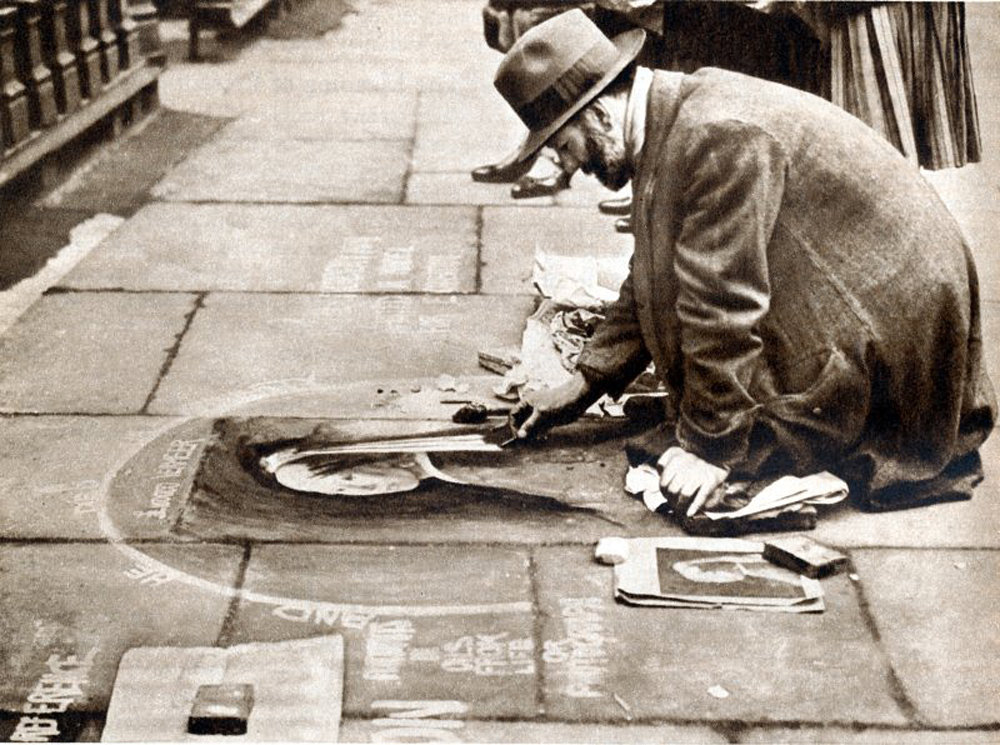
The origins of modern street painting can be traced to Britain. Pavement artists were found all over the United Kingdom and by 1890 it was estimated that more than 500 artists were making a full-time living from pavement art in London alone.
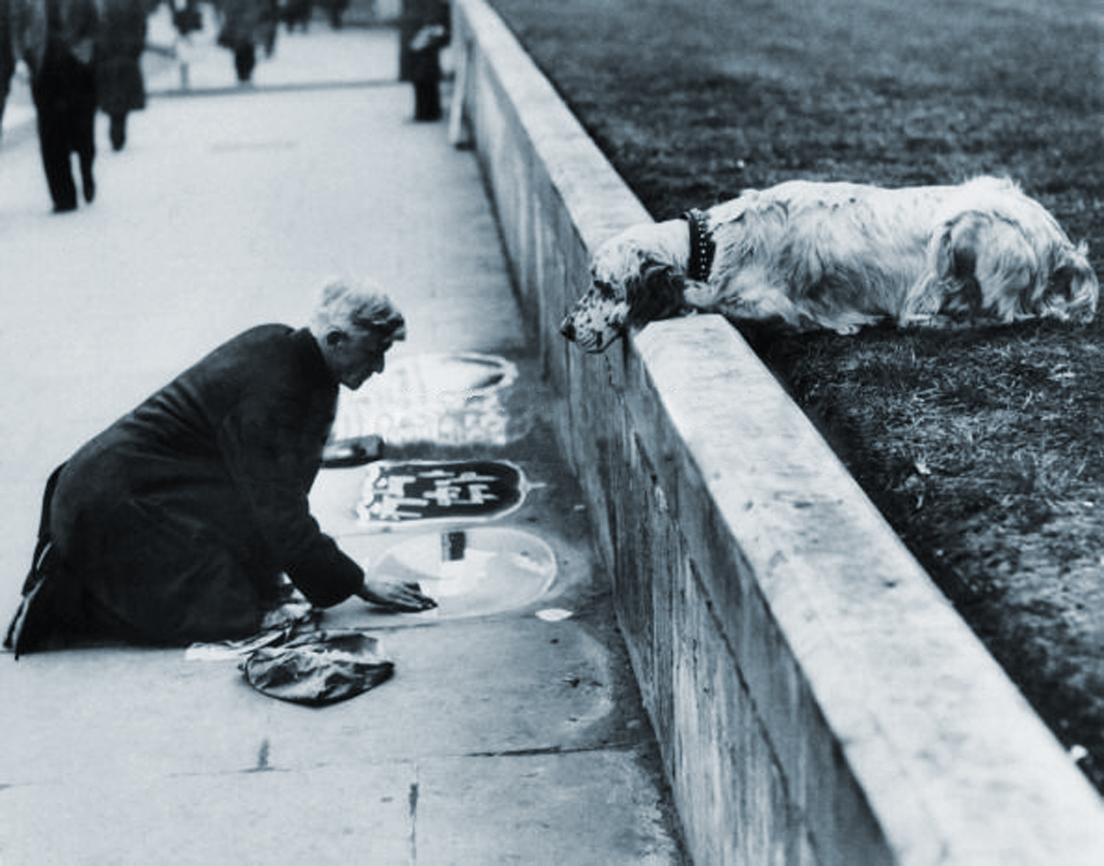
 Screever in London. Left from 1925 and right from 1953. Nothing changed till today.
Italian madonnari were vagabond artists noted for a life of travel between festivals, and were the visual arts counterpart of minstrels.. They often lived solely from the coins tossed onto or next to their drawing as homage to the Madonna and possibly their skill. They arrived in towns and cities to paint religious pictures directly on the beaten earth or paved public squares, using chalk, brick, charcoal, and colored stones as their medium. In Italy, street painters are called madonnari after their practice of reproducing images of the Madonna (St. Mary).
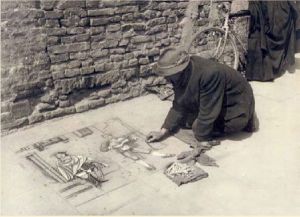
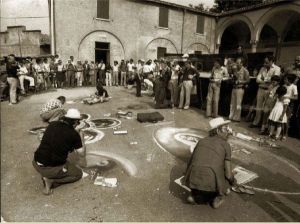 Madonnari in Italy. Every tourist visiting Italy in the 50’s to 70’s will remember them.
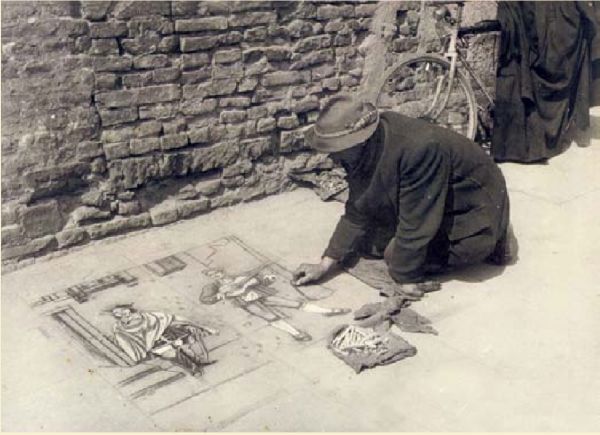
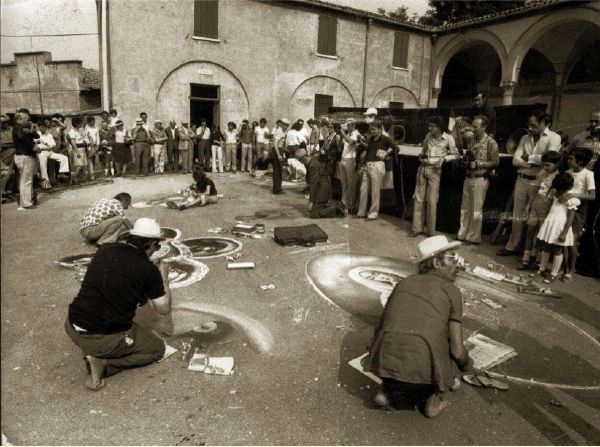
The British term for pavement artist is „screever“. The term is derived from the writing style, often Copperplate, that typically accompanied the works of pavement artists since the 1700s. The term screever is most commonly cited as Shakespearean slang dating from around 1500.
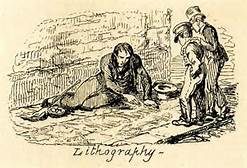 Lithography by George Cruikshank „street artist“ from 1829.
The first recorded street-painting competition and ‚festival‘ was held in London in 1906.
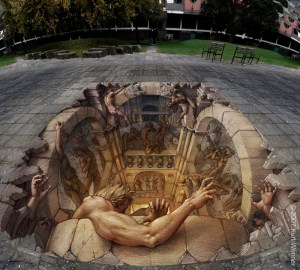
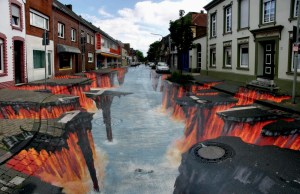 Modern street pavement art in 3D technique. Left by the inventor and master of 3D street painting Kurt Wenner and right a famous street painting of Edgar Mueller.
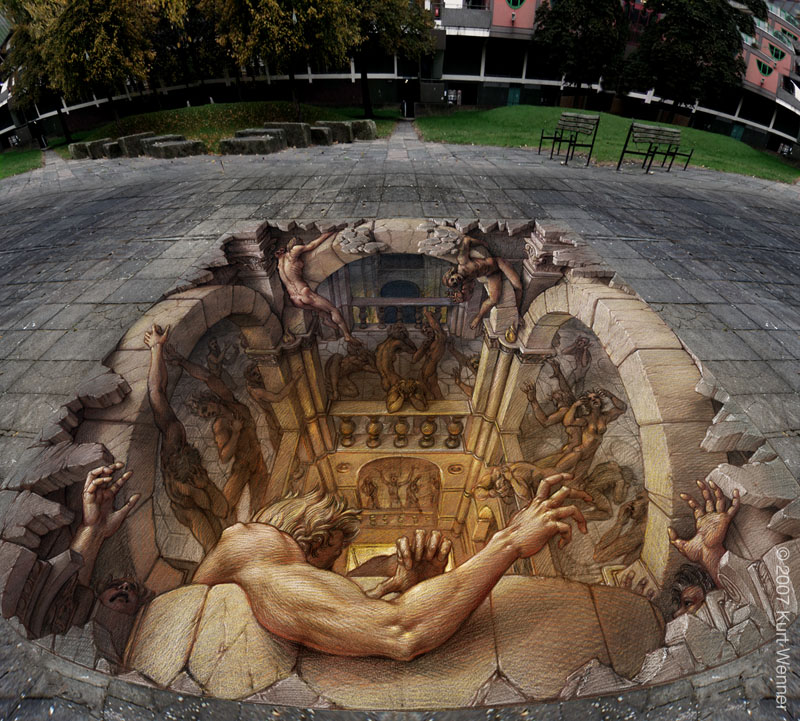
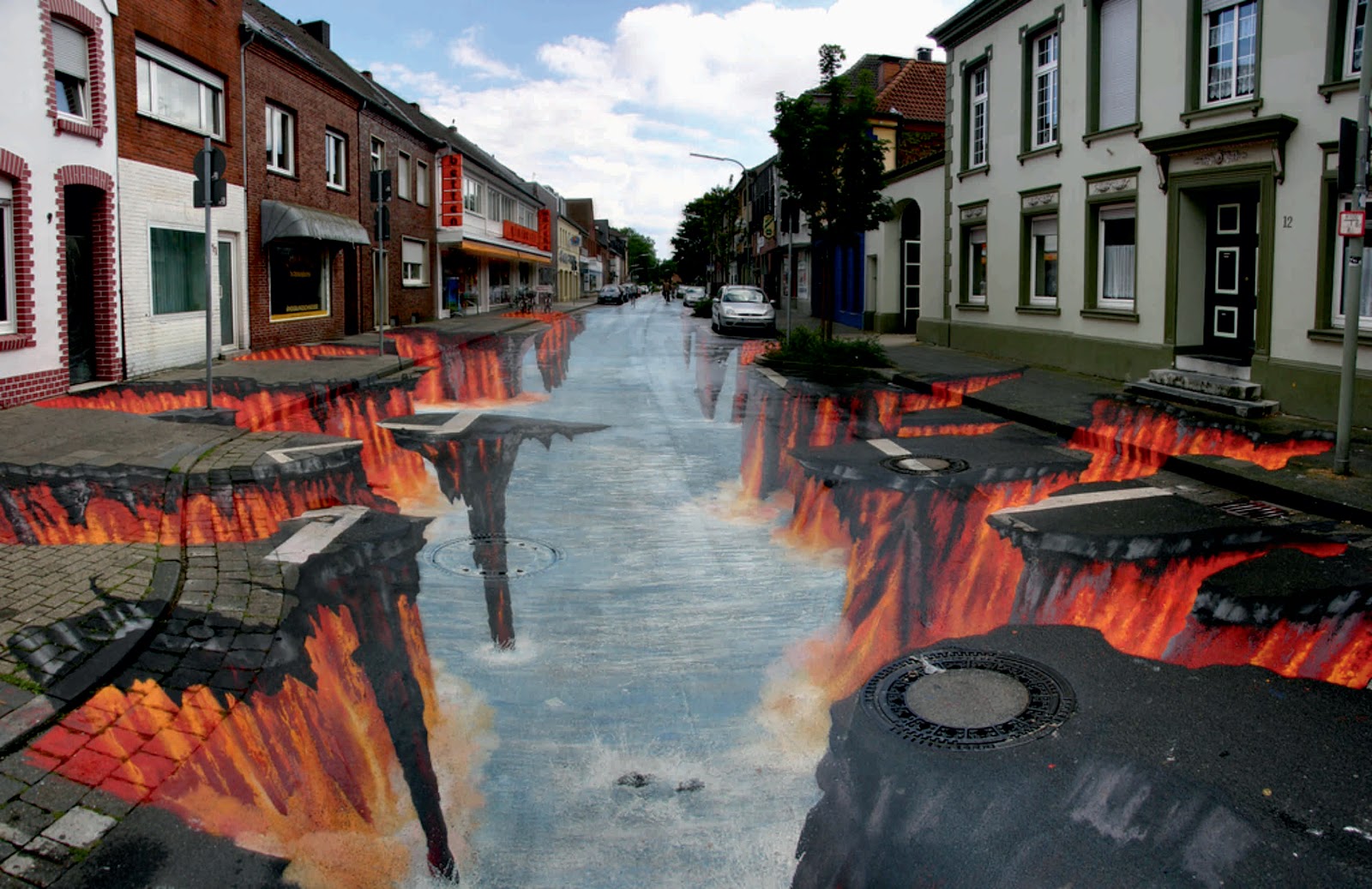
Around The Globe.
Street art exists worldwide. Large cities and regional towns of the world are home to some form of street art community, from which pioneering artists or forerunners of particular mediums or techniques emerge. Internationally known street artists travel between such locations to promote and exhibit their artwork. The HOT city’s for street art are now London, Brussels, Paris, Berlin, Buenos Aires, New York and Montreal.
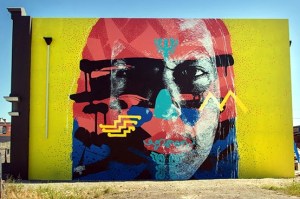
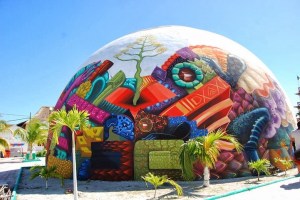
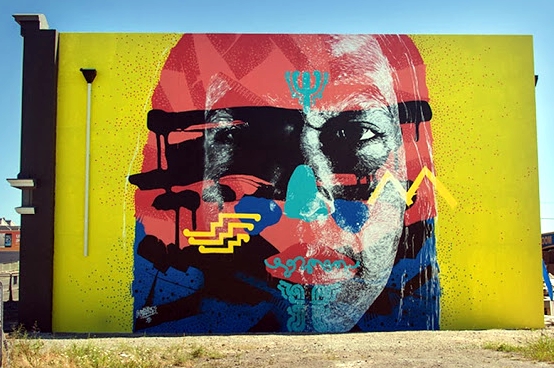
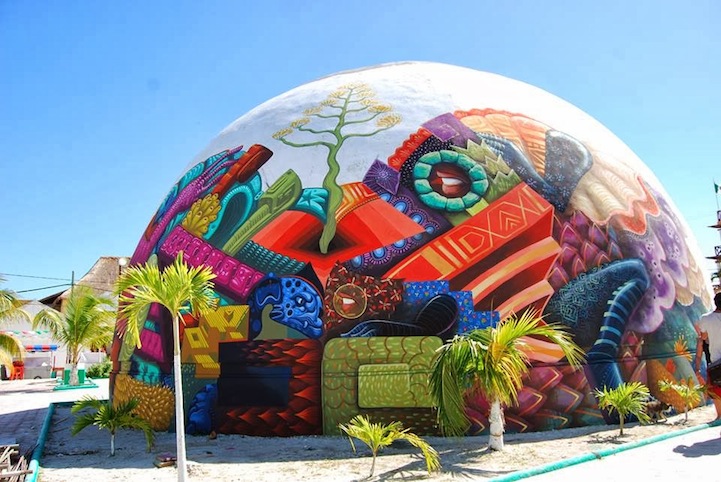
You will find street art all around the world. From Askew and Henare, Christchurch New Zealand (left), to Curiot and Botkin, Mexico (right).
Street Art.
Street art is visual art created in public locations, usually unsanctioned artwork executed outside of the context of traditional art venues. The term gained popularity during the graffiti art boom of the early 1980s and continues to be applied to subsequent incarnations. Stencil graffiti, wheat pasted poster art or sticker art, and street installation or sculpture are common forms of modern street art.
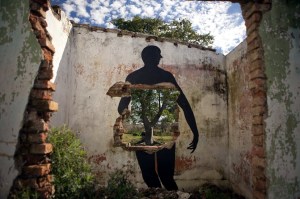
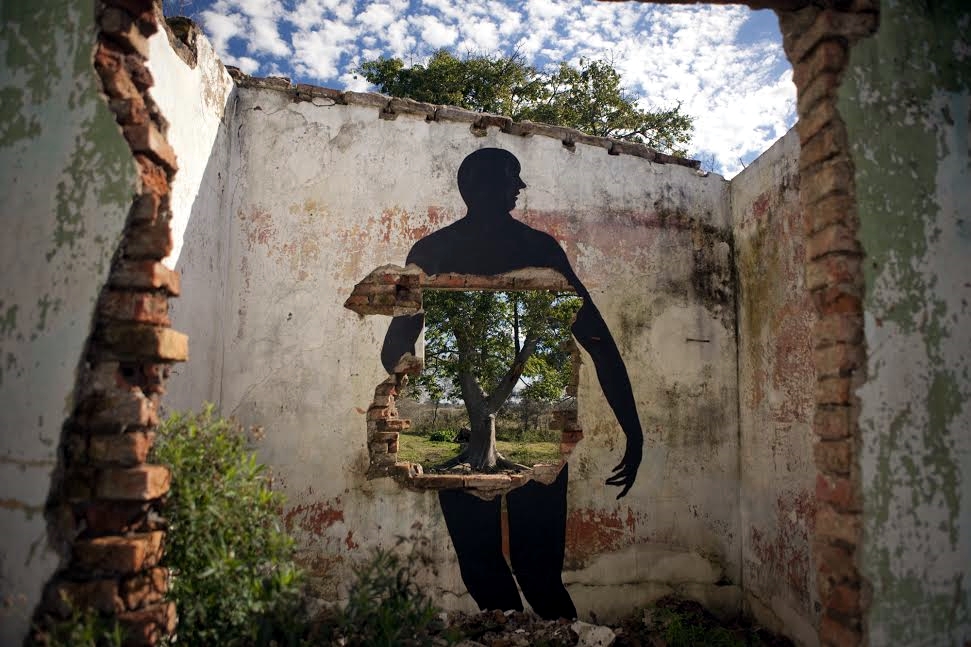
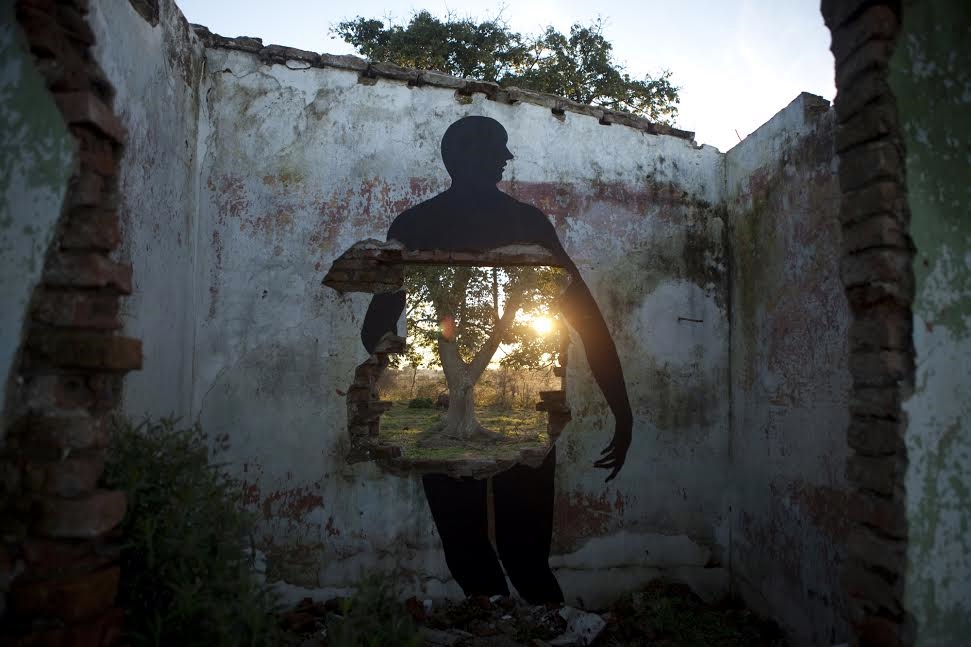
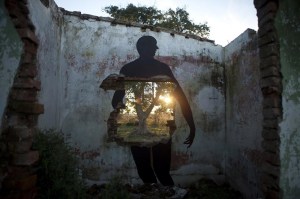 What a great performance of street art. Artist David de la Mano, Villa Soriano Uruguay. Click on pics !
The terms „urban art“, „guerrilla art“, „post-graffiti“ and „neo-graffiti“ are also sometimes used when referring to artwork created in these contexts. Traditional spray-painted graffiti itself is often included in this category, excluding territorial graffiti or pure vandalism.
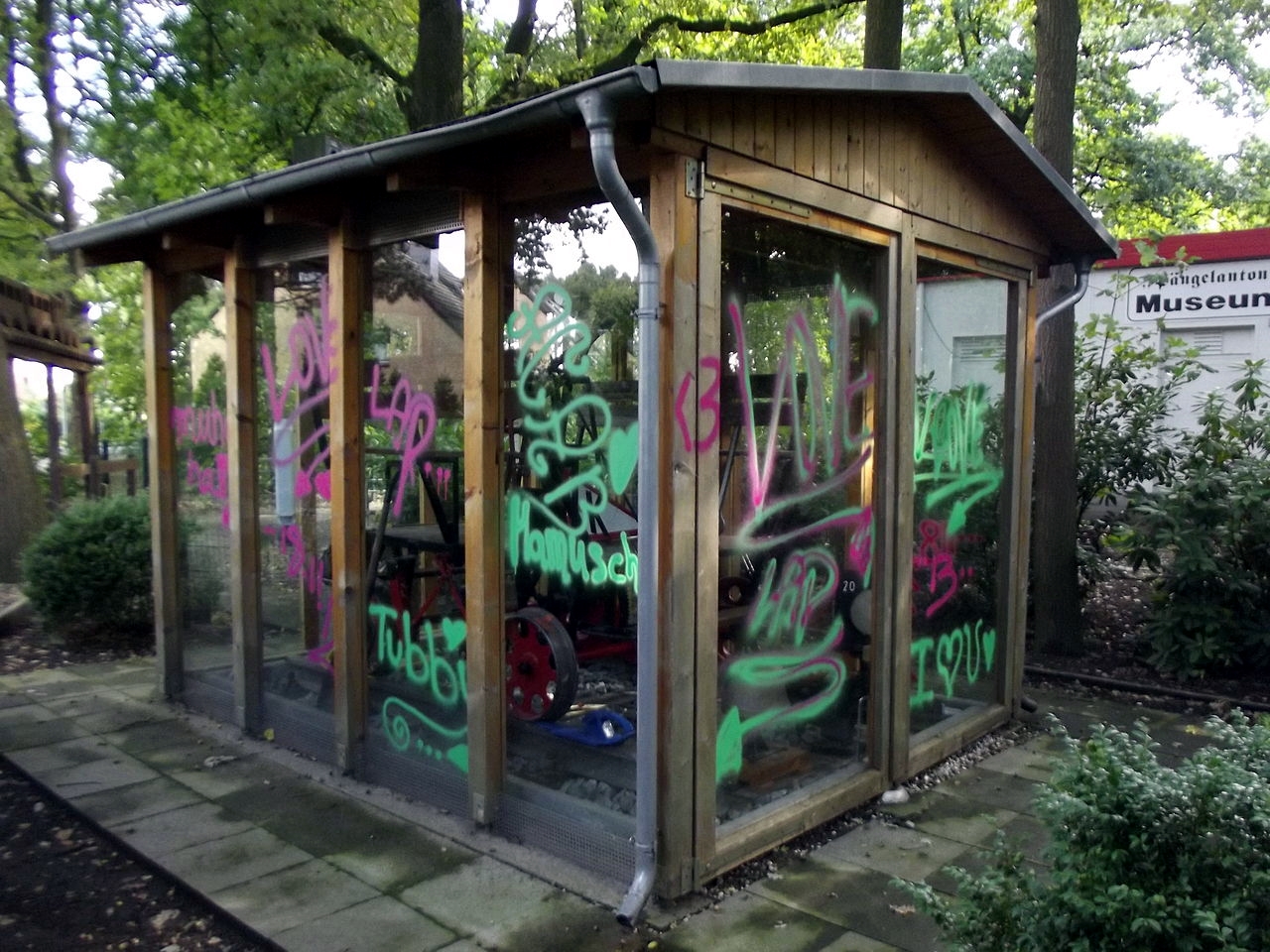
 Graffiti vandalism on private property, Germany.
Street art is often motivated by a preference on the part of the artist to communicate directly with the public at large. Street artists sometimes present socially relevant content infused with esthetic value, to attract attention to a cause or as a form of „art provocation“.
Street artists often travel between countries to spread their designs. Some artists have gained cult-followings, media and art world attention, and have gone on to work commercially in the styles which made their work known on the streets.
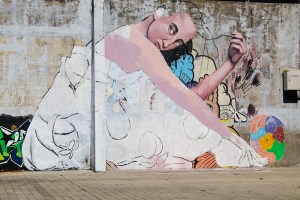
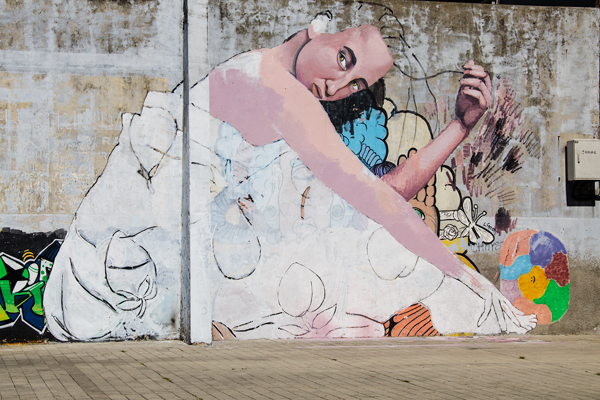
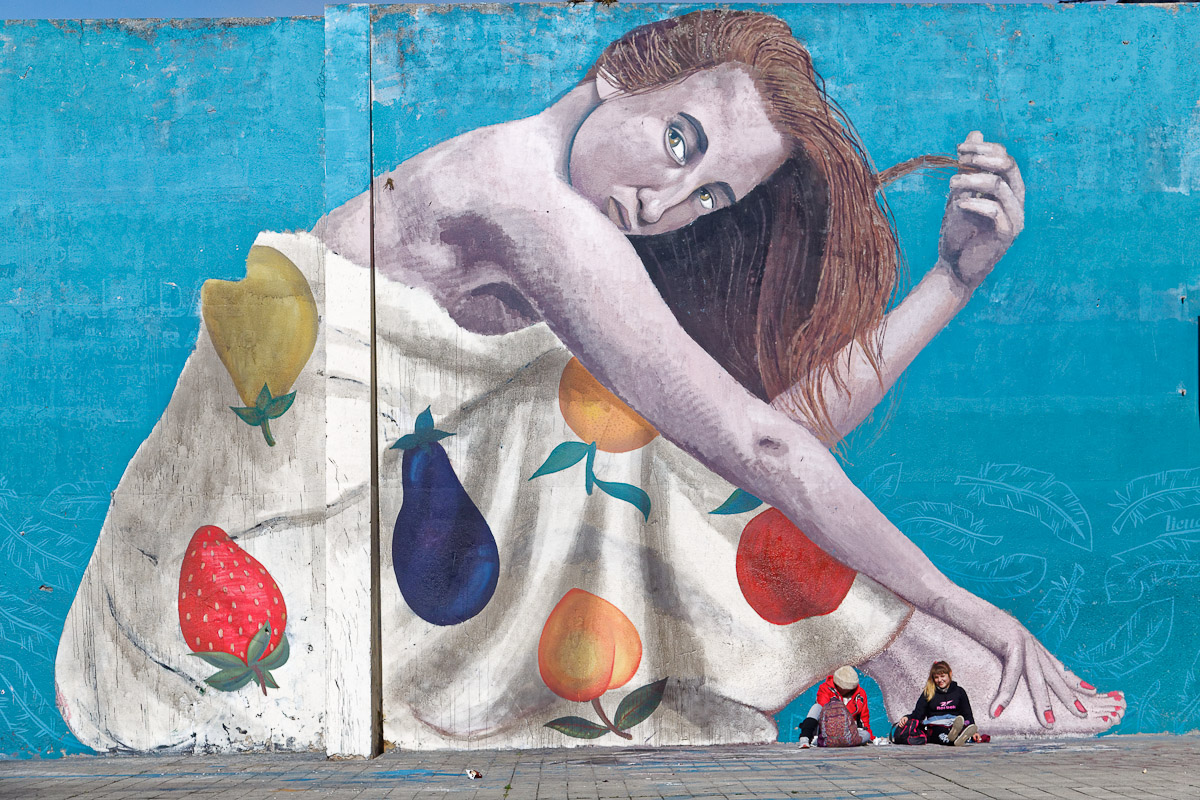
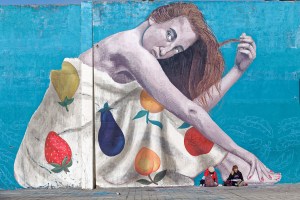 Very rare to catch an artist and painting during different stages of completion, Montevideo Uruguay.
Graffiti.
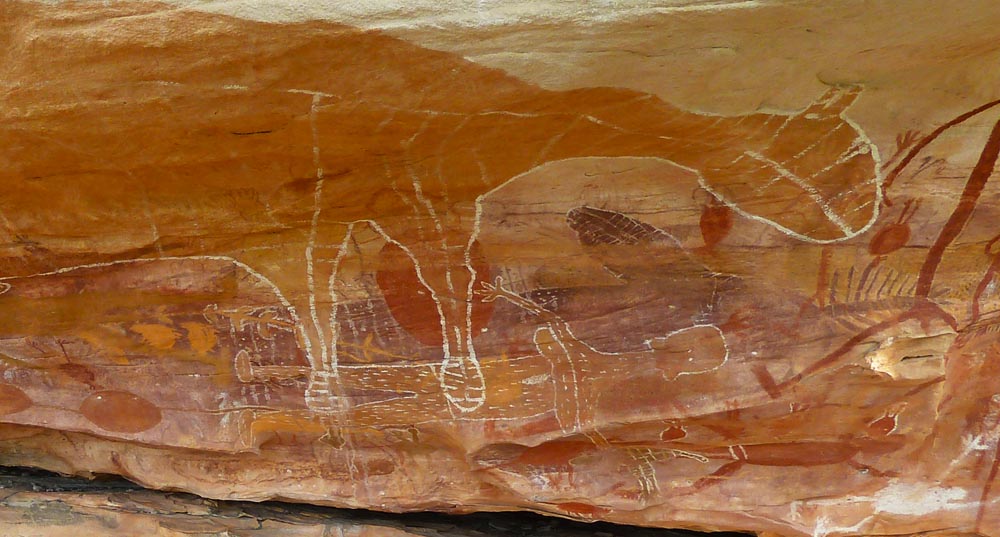
Graffiti ( Italian: ɡrafˈfiːti; plural of graffito: „a graffito“, but „these graffiti“) are writing or drawings that have been scribbled, scratched, or painted illicitly on a wall or other surface, often within public view. Graffiti range from simple written words to elaborate wall paintings, and they have existed since ancient times, with examples dating back to Ancient Egypt, Ancient Greece, and the Roman Empire.
 Ancient art at Laura Australia, A 6m giant horse .
In modern times, paint (particularly spray paint) and marker pens have become the most commonly used graffiti materials. In most countries, marking or painting property without the property owner’s permission is considered defacement and vandalism, which is a punishable crime.
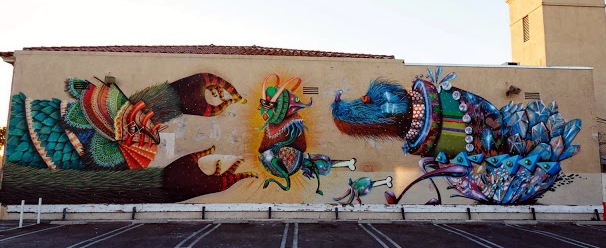
 Curiot and Nosego painting in Los Angeles, USA.
We declare the world as our canvas !
I don’t know who said this.
But it really hits the philosophy behind all the „dirty hands“ smearing on every wall, aloud or not. And it also covers the philosophy of all the great artists around the world who are able to make our grey world a bit lighter and brighter.
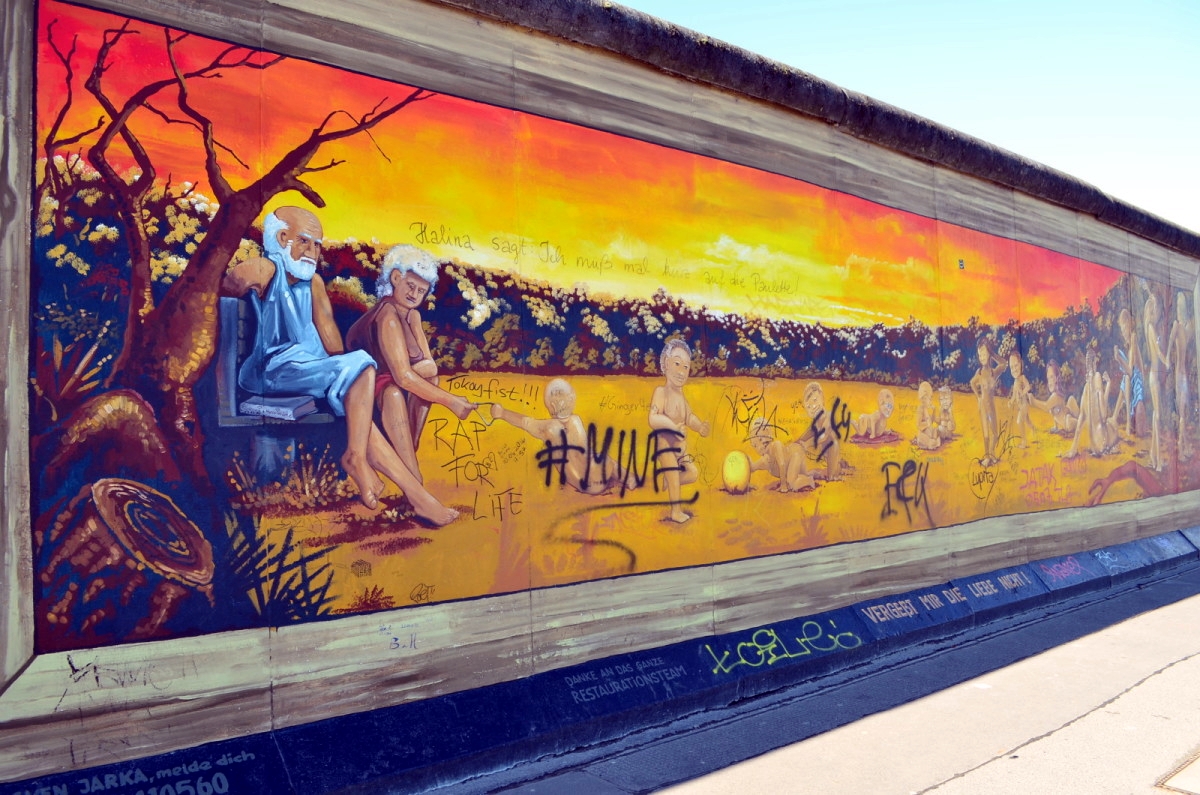
 Beautiful wall art sprayed by vandals, Berlin Germany.
North America.
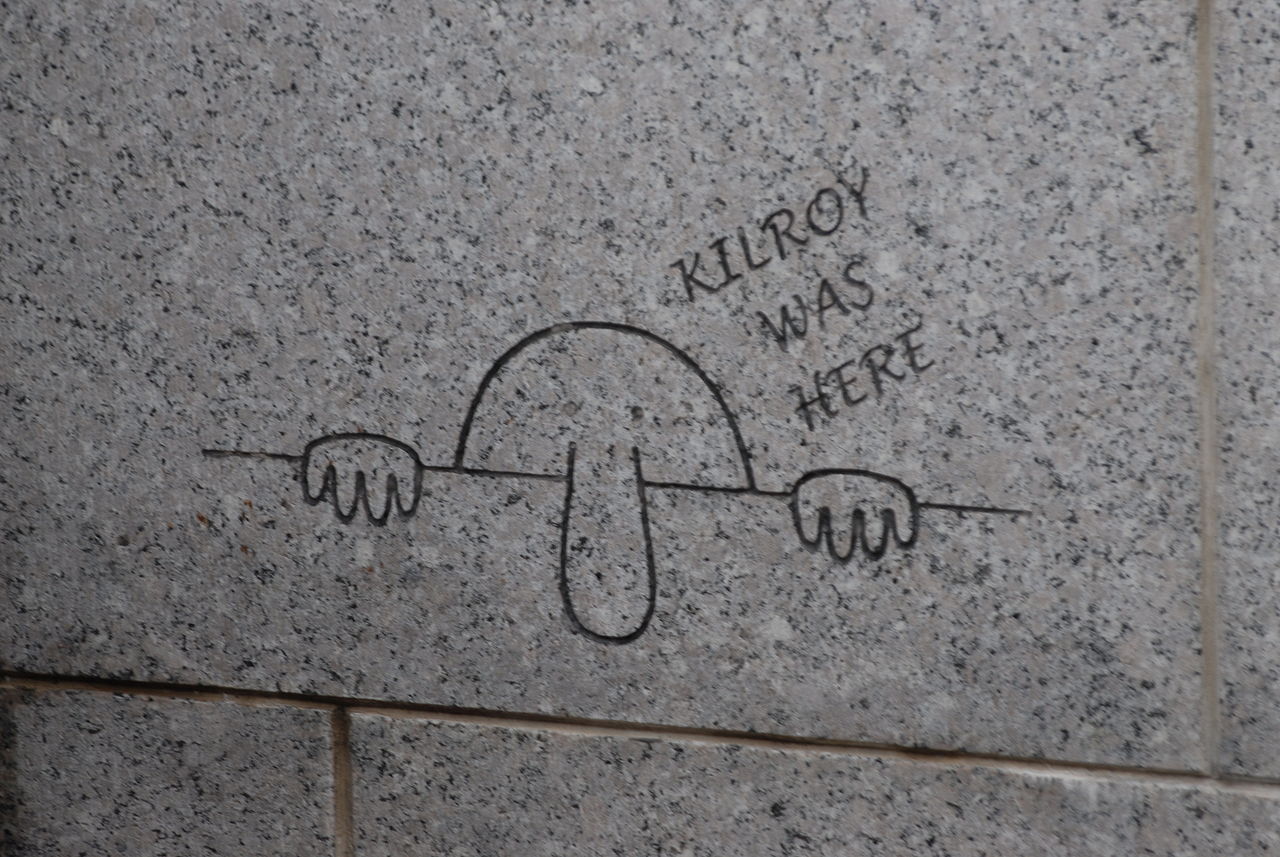
The „Kilroy Was Here“ graffiti of the World War II era was one such early example. A simple line-drawing of a long-nosed man peering from behind a ledge. Author Charles Panati indirectly touched upon the general appeal of street art in his description of the „Kilroy“ graffiti as „outrageous not for what it said, but where it turned up“.
 Permanent „KILROY“ at WWII Memorial, Washington.
Much of what can now be defined as modern street art has well-documented origins dating from New York City’s graffiti boom, with its infancy in the 1960s, maturation in the 1970s, and peaking with the spray painted full-car subway train murals of the 1980s centered in the Bronx.
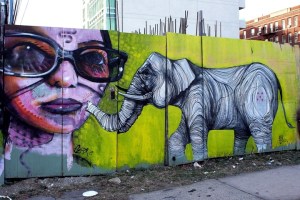
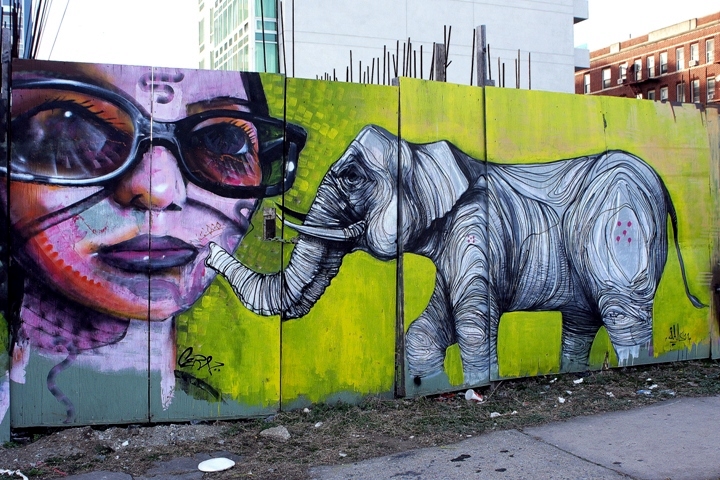
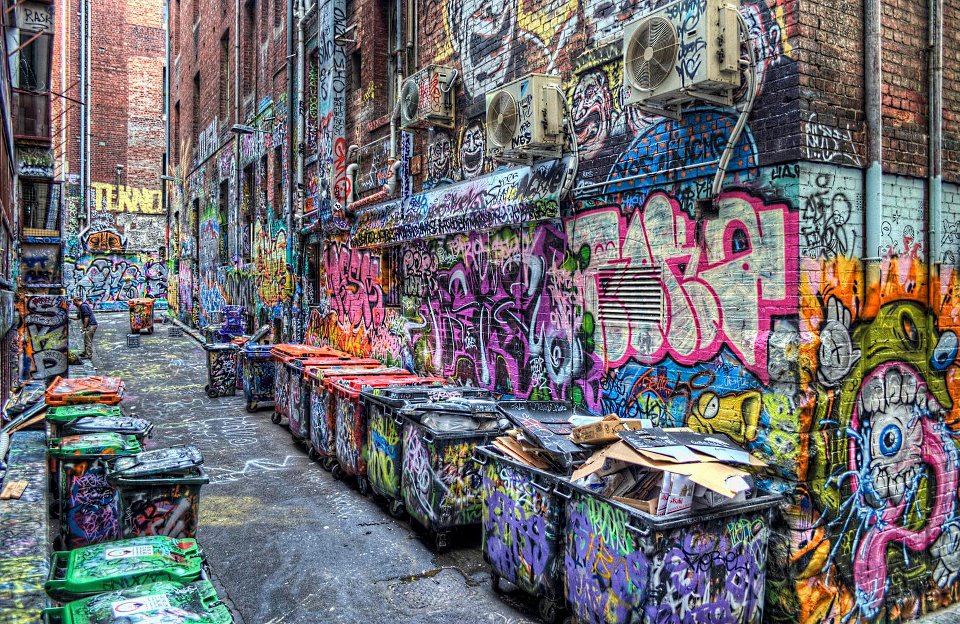
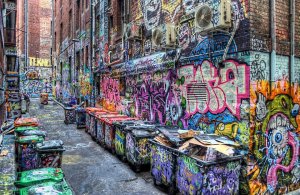 Left: Cern and Jaz painting on a building site wall, New York. Right: Graffiti in the Bronx of New York.
Europe.
In Europe the begin was in London and Paris and of course Berlin.
Street art on the Berlin Wall was continuous during the time Germany was divided, but street art in Berlin continued to thrive even after reunification and is home to street artists such as Thierry Noir and SP 38. Post-communism, cheap rents, and ramshackle buildings gave rise to street art in areas such as Prenzlauer Berg, Kreuzberg, and Friedrichshain.
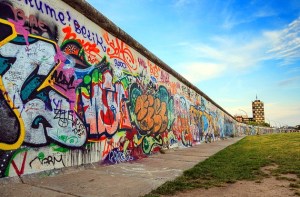 The Berlin Wall art, before it came down.
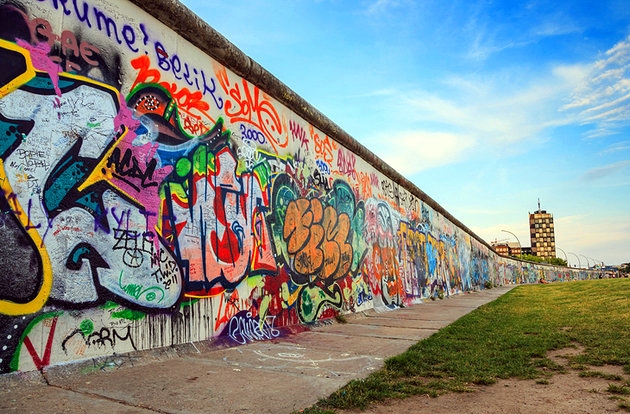
As I walk through Berlin and clicking myself away, I have the impression that nobody really cares to maybe remove the paintings for beautification. No, these amazing street art displays have become part of the city picture for a long time already and attract visitors and artists alike. See examples further down at East Side Gallery.
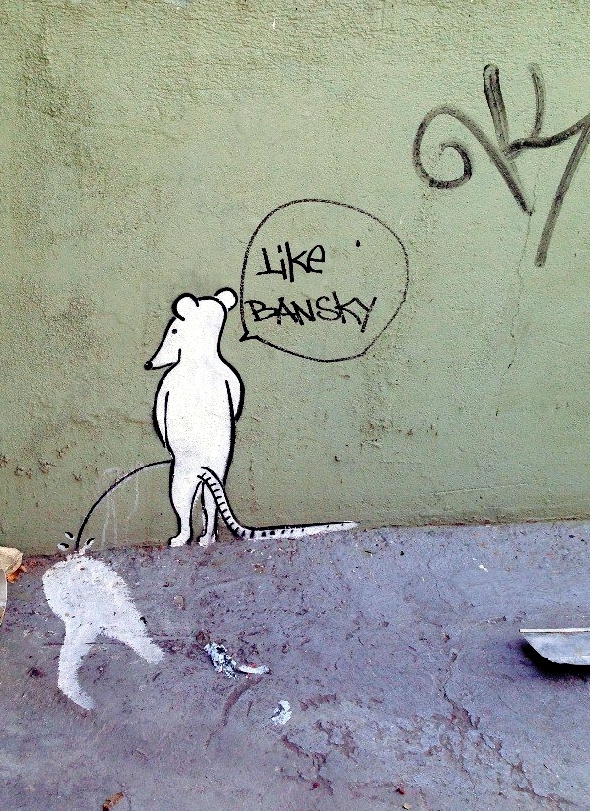
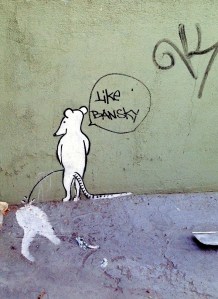 Street art in Montevideo. Should read BANKSY, not Bansky.
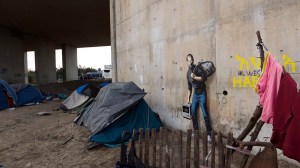
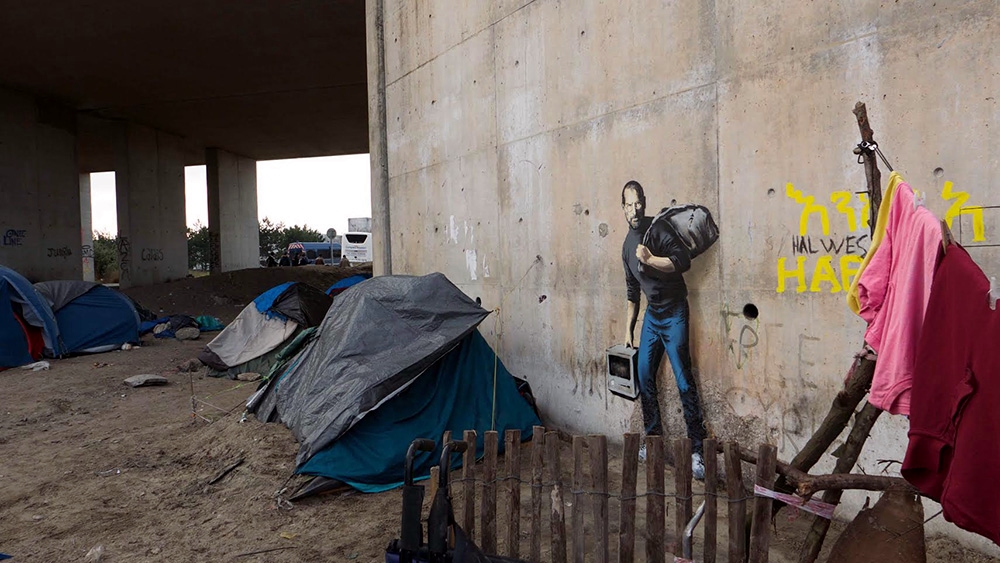
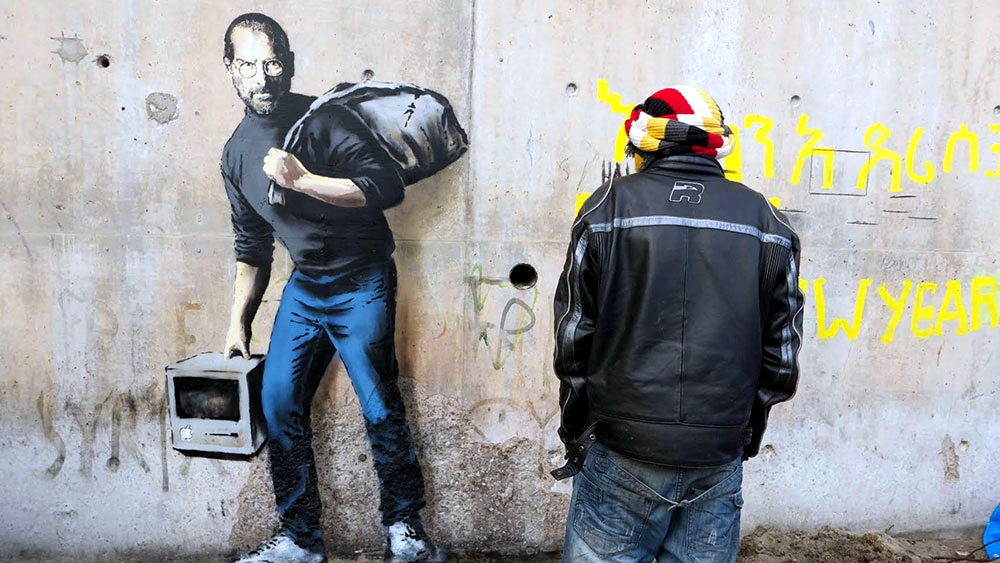
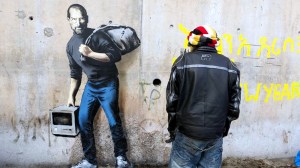 Banksy painting of Steve Jobs. Banksy is one of the more well known English street artists.
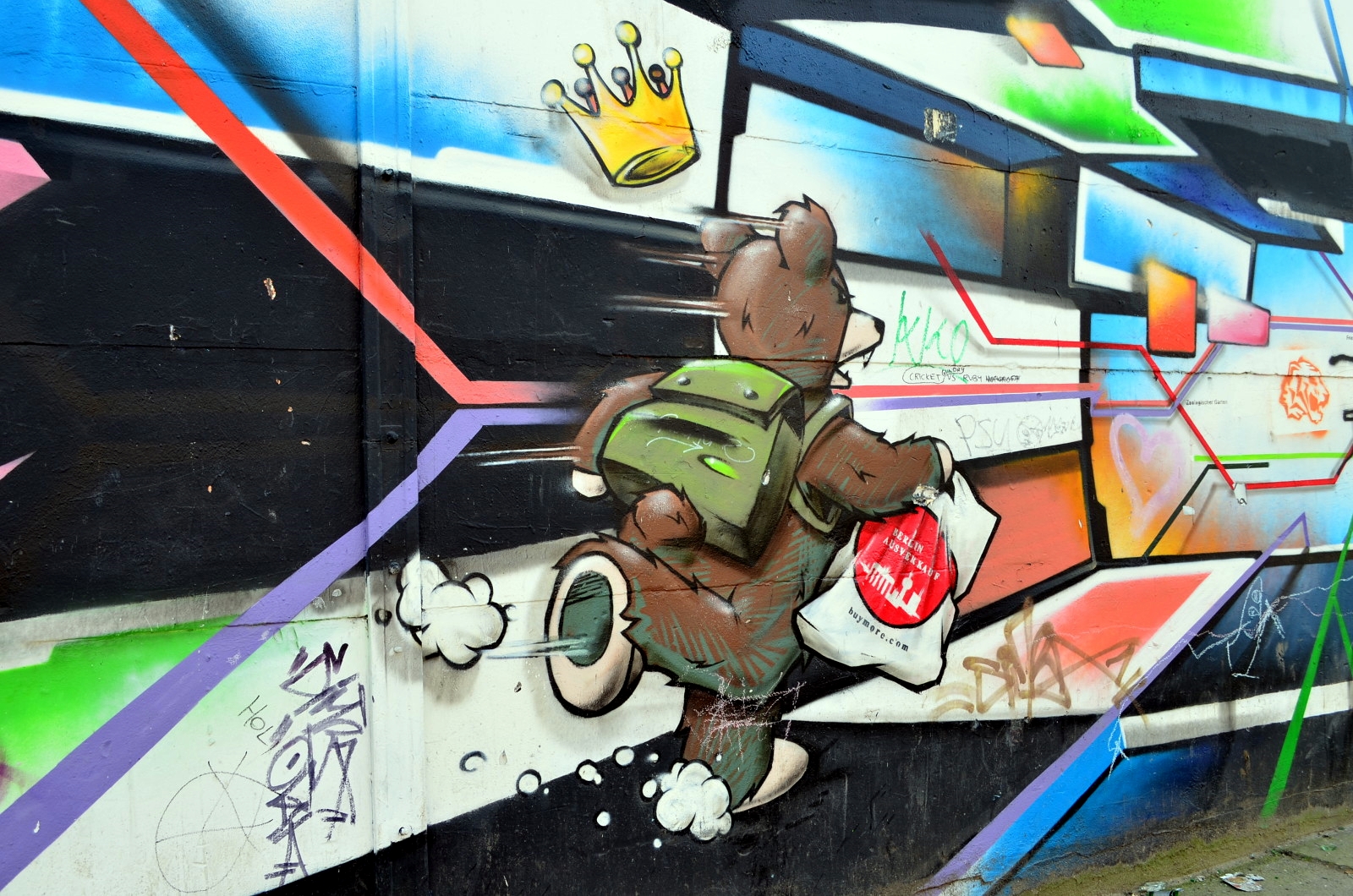
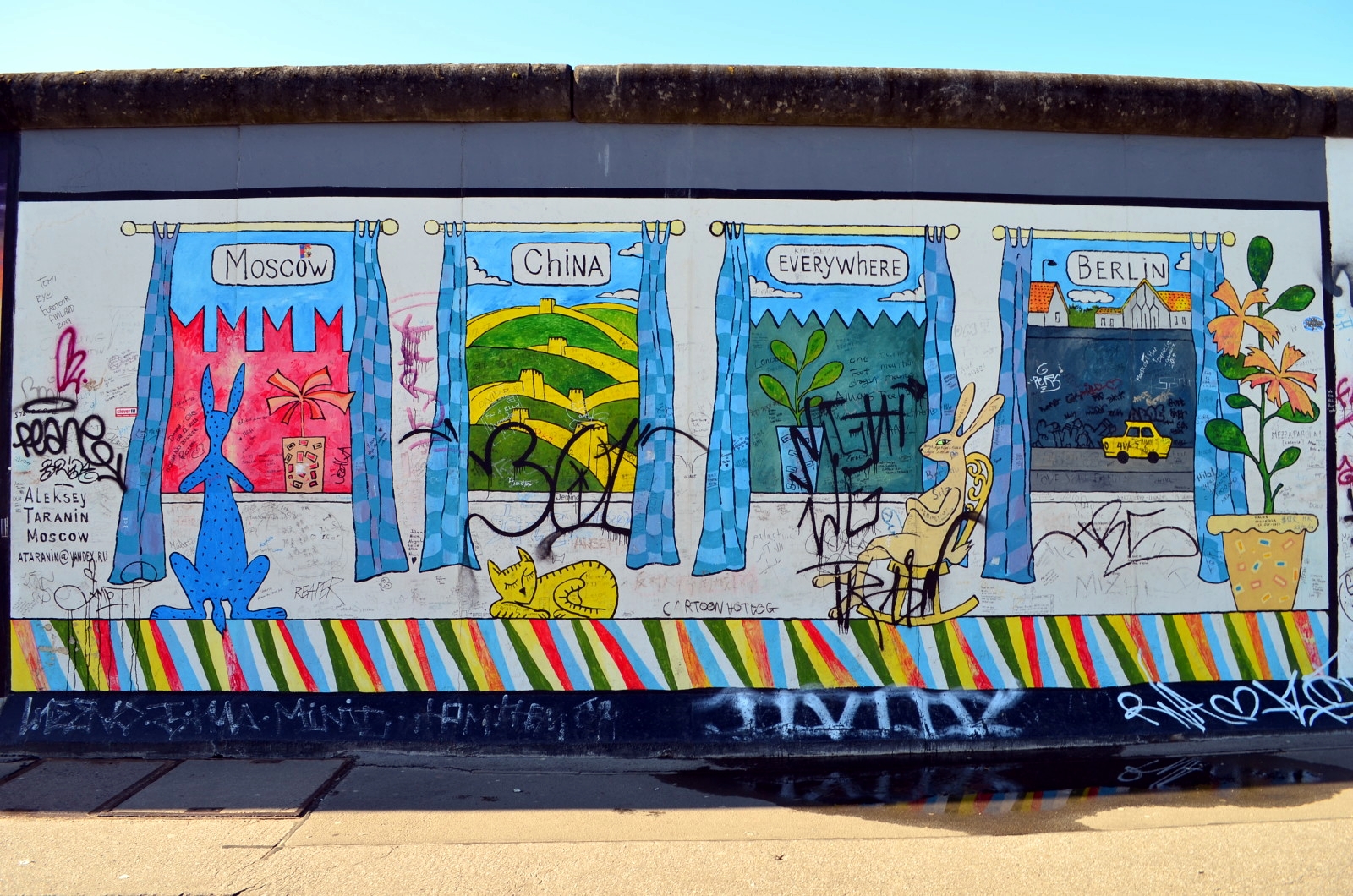
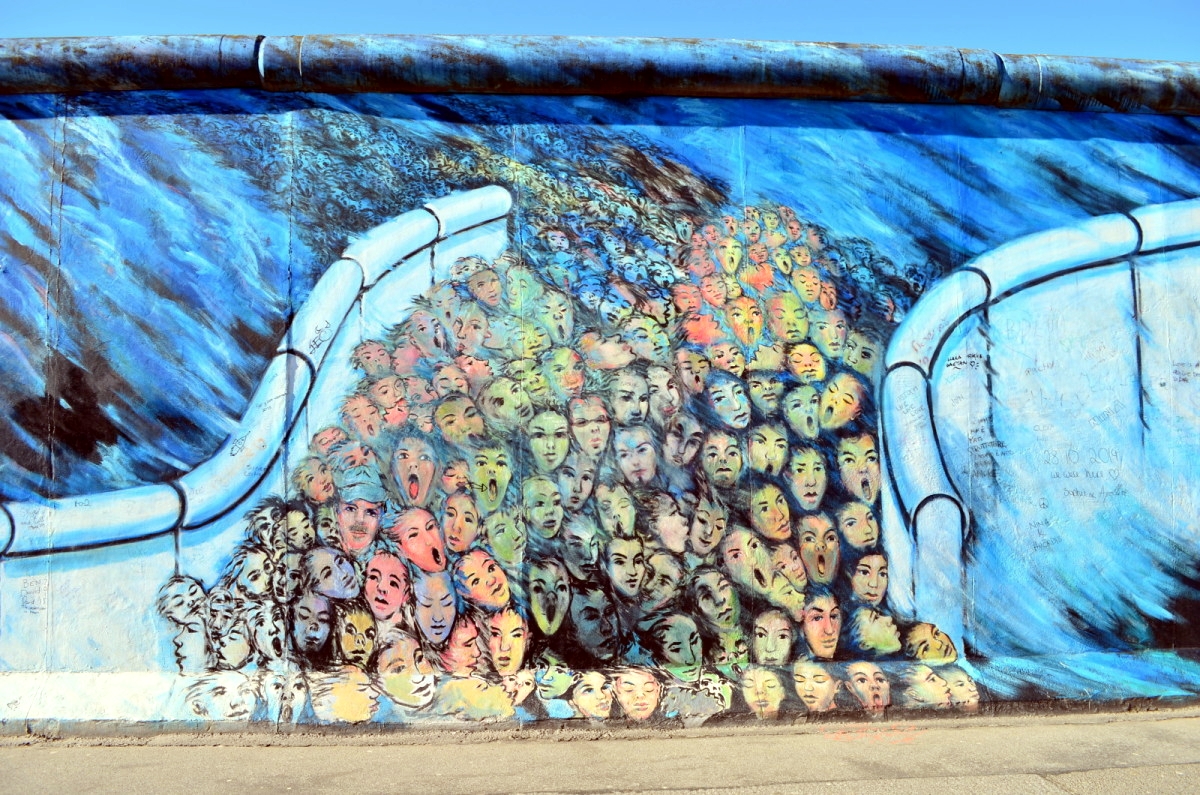
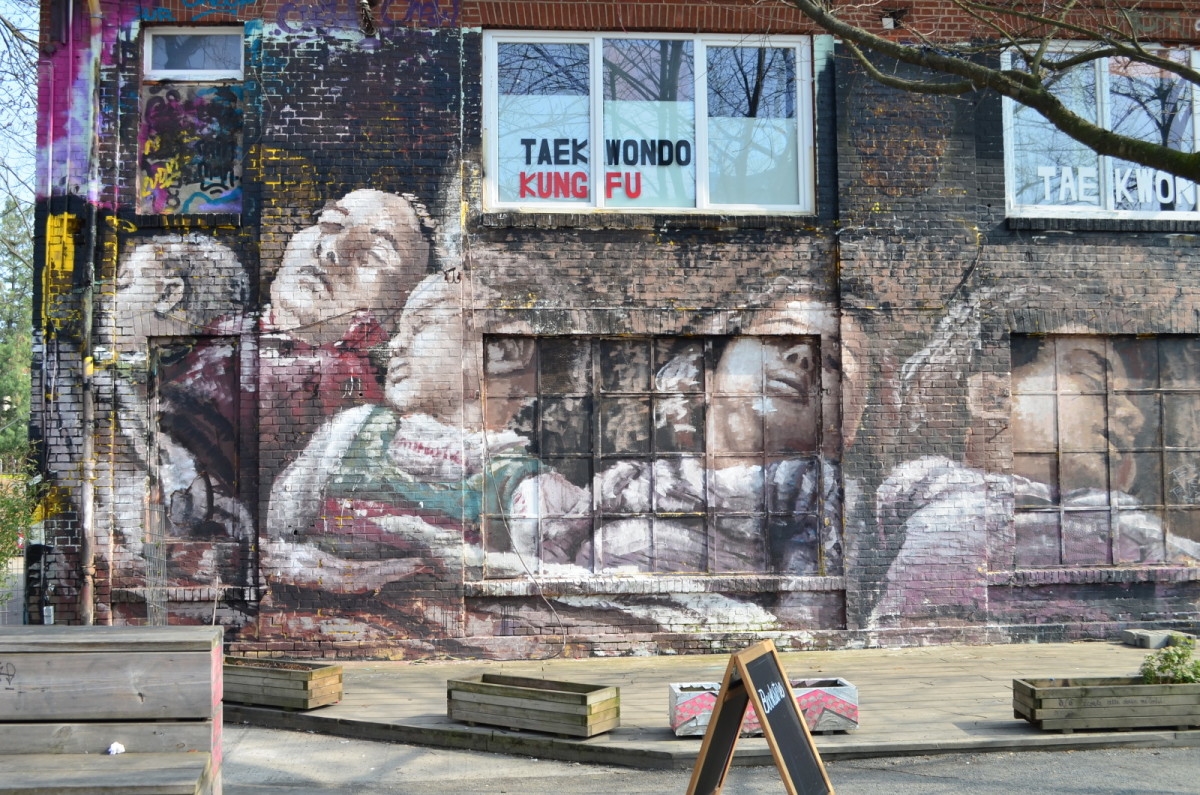
Actually the East Side Gallery in Berlin is an international memorial for freedom. Its 1.3 km along the Spree River is a build up of originals remains of the Berlin Wall and artists from around the world have painted the walls in 1990.
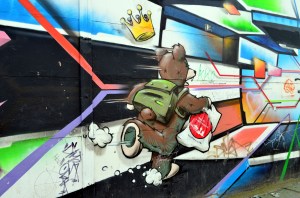
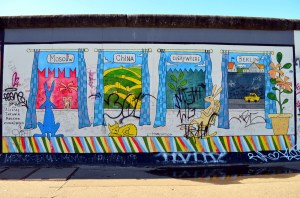
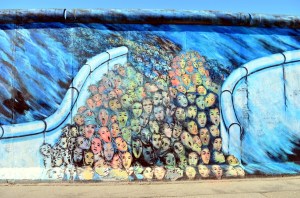
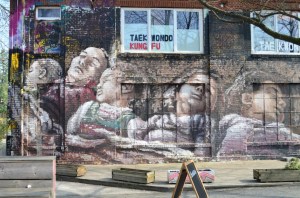 Photographed at the East Side Gallery in Berlin, Germany.
South America.
The South American cities of Buenos Aires (Argentina) and São Paulo (Brazil) have become prominent centers of contemporary street art. And they still are.
 Left: Art of Angelina y Christina, Sao Paulo. Right: Art of Mea y Sam, Buenos Aires.
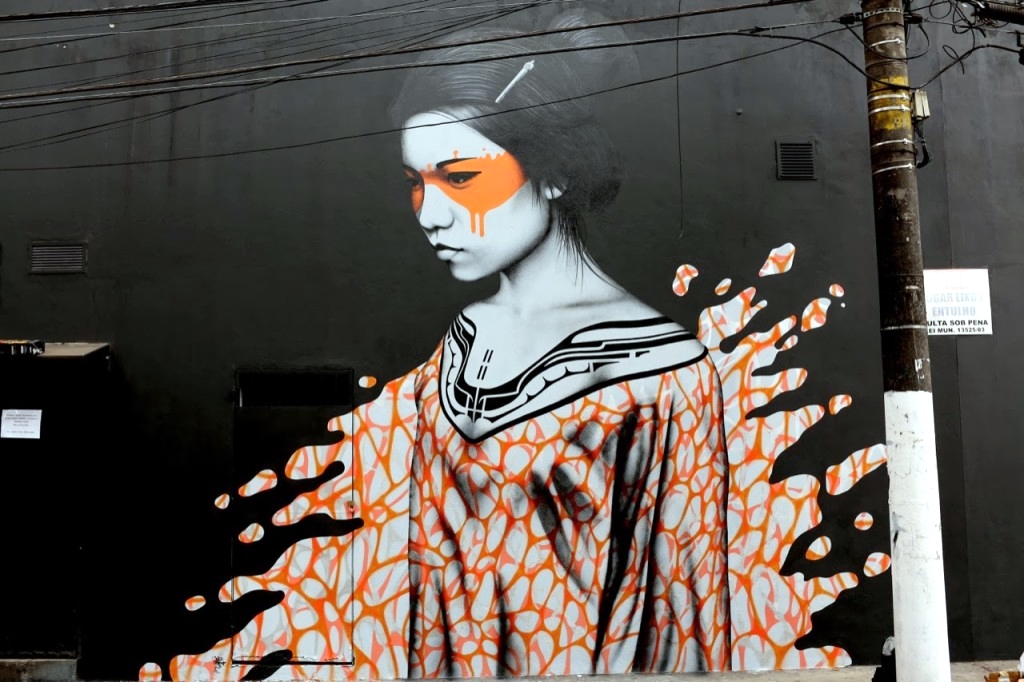
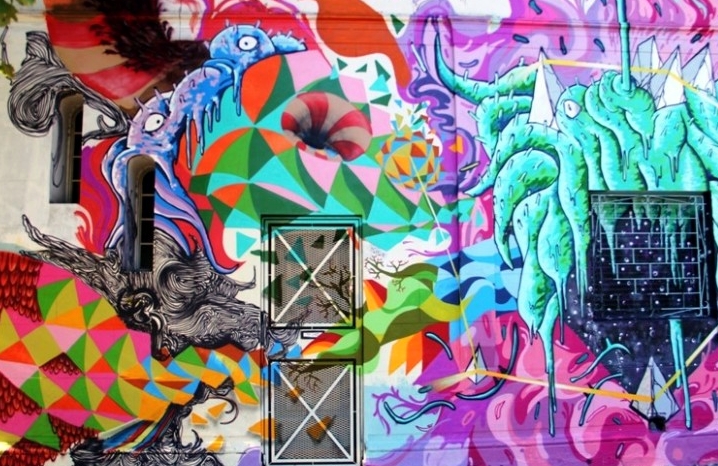
My Header Image.
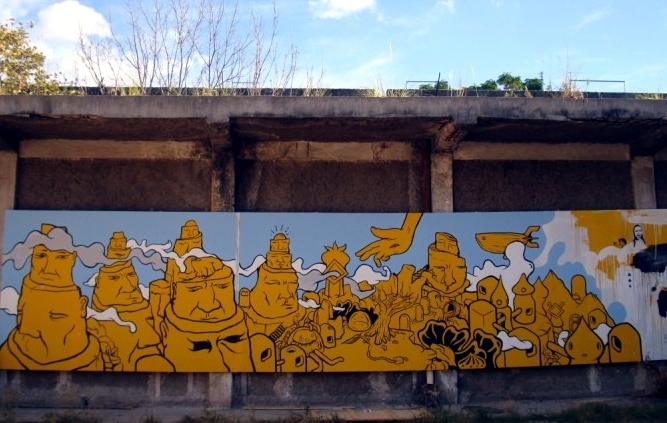
Argentine street artist Gualicho has revealed the inspiration behind his incredible interventions in the former prison of Miguelete in Montevideo, Uruguay. Miguelete Prison was the first jail in Uruguay. It was opened in 1889 with four wings and a central tower based on the same floor plan as Pentonville Prison in London. Its design meant guards could view the goings-on in 344 cells on three floors without the inmates knowing they were being watched. It was closed in 1986 but was kept going as a centre for juvenile offenders until 1990 when it was abandoned and left to the elements.
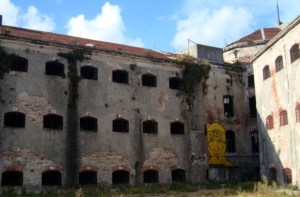
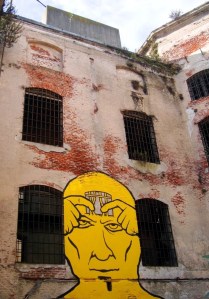 The prison art project was organized by BA Steet Art with Argentinian street artist Gualicho.
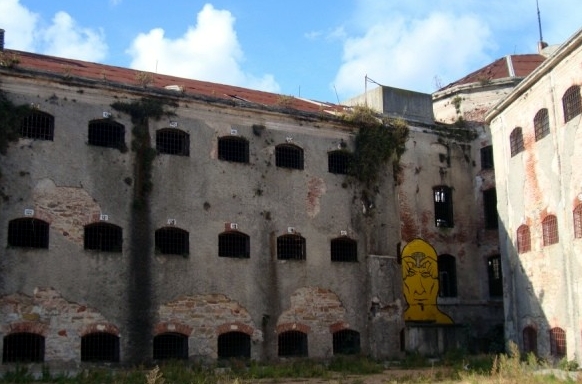
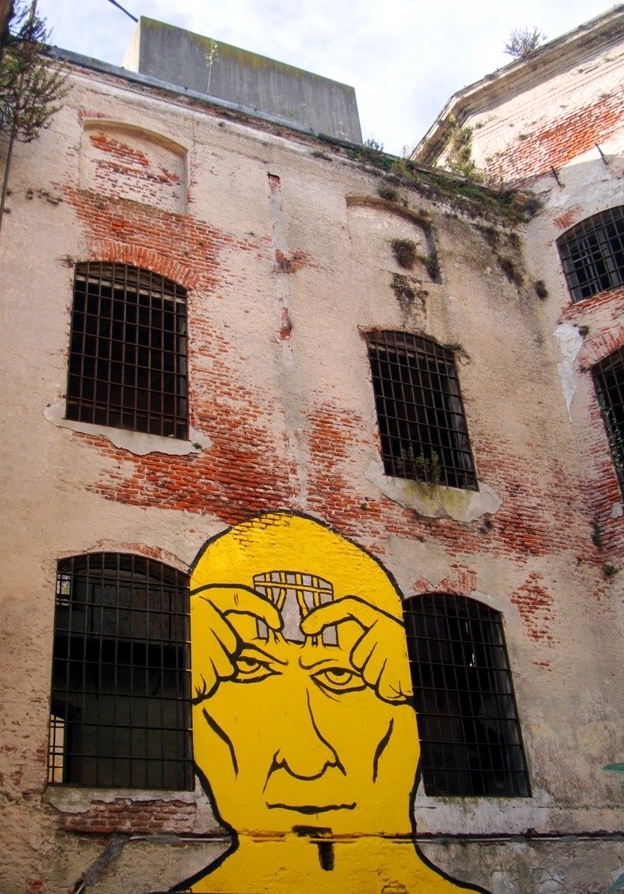
A new reconstruction project begun in 2008 has converted one of the wings into the first contemporary art space in the country, named Espacio de Arte Contemporáneo (EAC). And the cells which once housed prisoners have been turned into rooms displaying exhibitions of art, film and photography. Go and have a look yourself.
 Gualicho wall art on an old prison wall in Montevideo.
Uruguay.
Uruguay is not an international art center, but the range of art is increasing and especially in Montevideo worthy to pay attention to. About street art in Uruguay you find excellent examples of local and international artists. In the years Montevideo already hosted a world competition of street art. The best way to see all this is to book a „street art tour“.
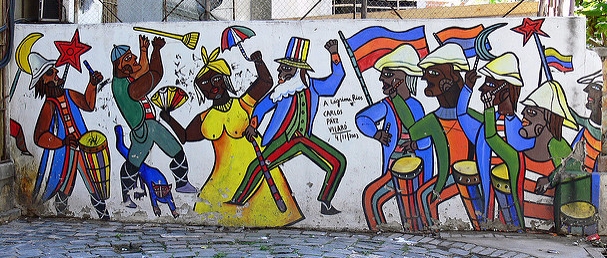
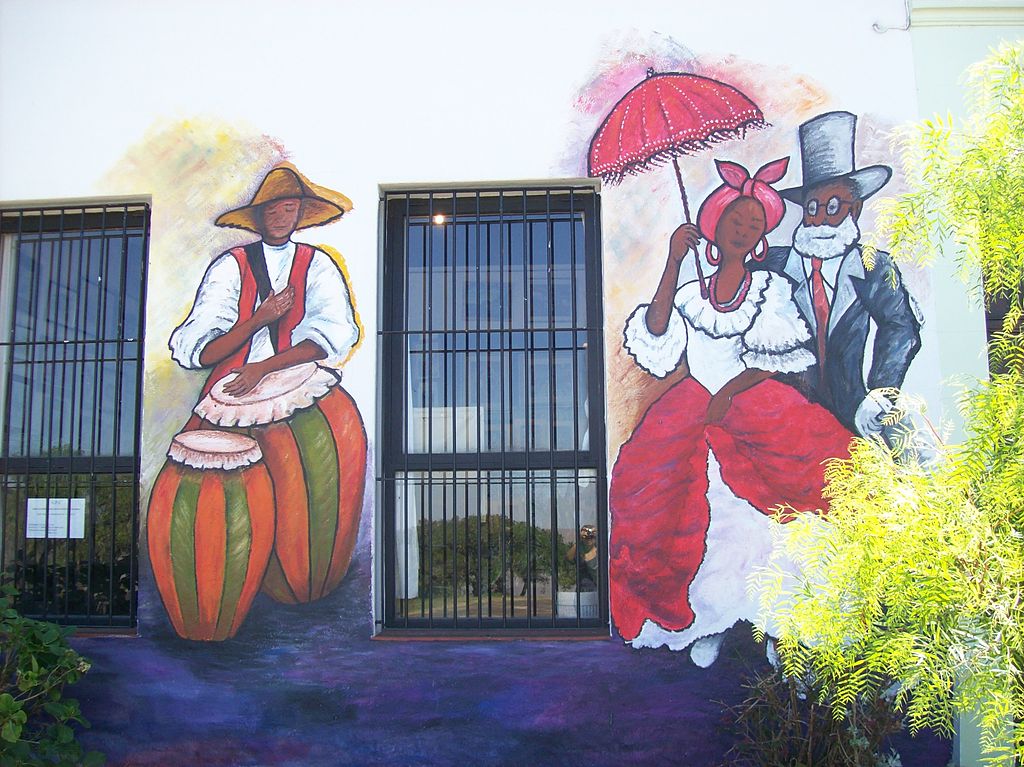
 Beautiful street art in Montevideo by Carlos Paez Vilard, 2003 : The Old Mother, the Herb Doctor, the Broomsman and the candombe band. Follow my post „Tango Uruguay 3 – Candombe“.
By example „toursbylocals.com/montevideo“ or „MVD Walking Tour“, they organize „Montevideo Uruguay Street Art Tour“ (about 3 1/2 hours walking/bus tour for US$35,–) SORRY – JUST GOT THE INFORMATION – THAT MVD WALKING TOUR IS NOT OPERATING ANYMORE – VERY SAD !!
 Montevideo street art by Alice Paquini.
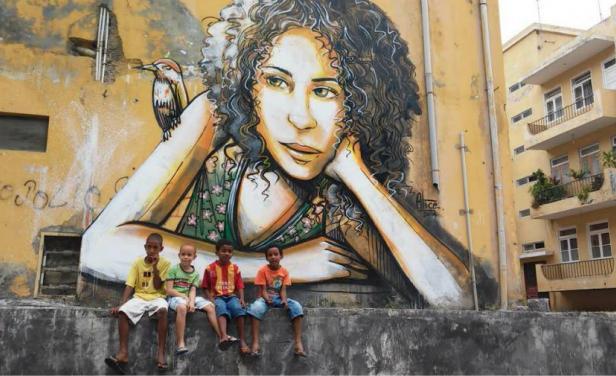
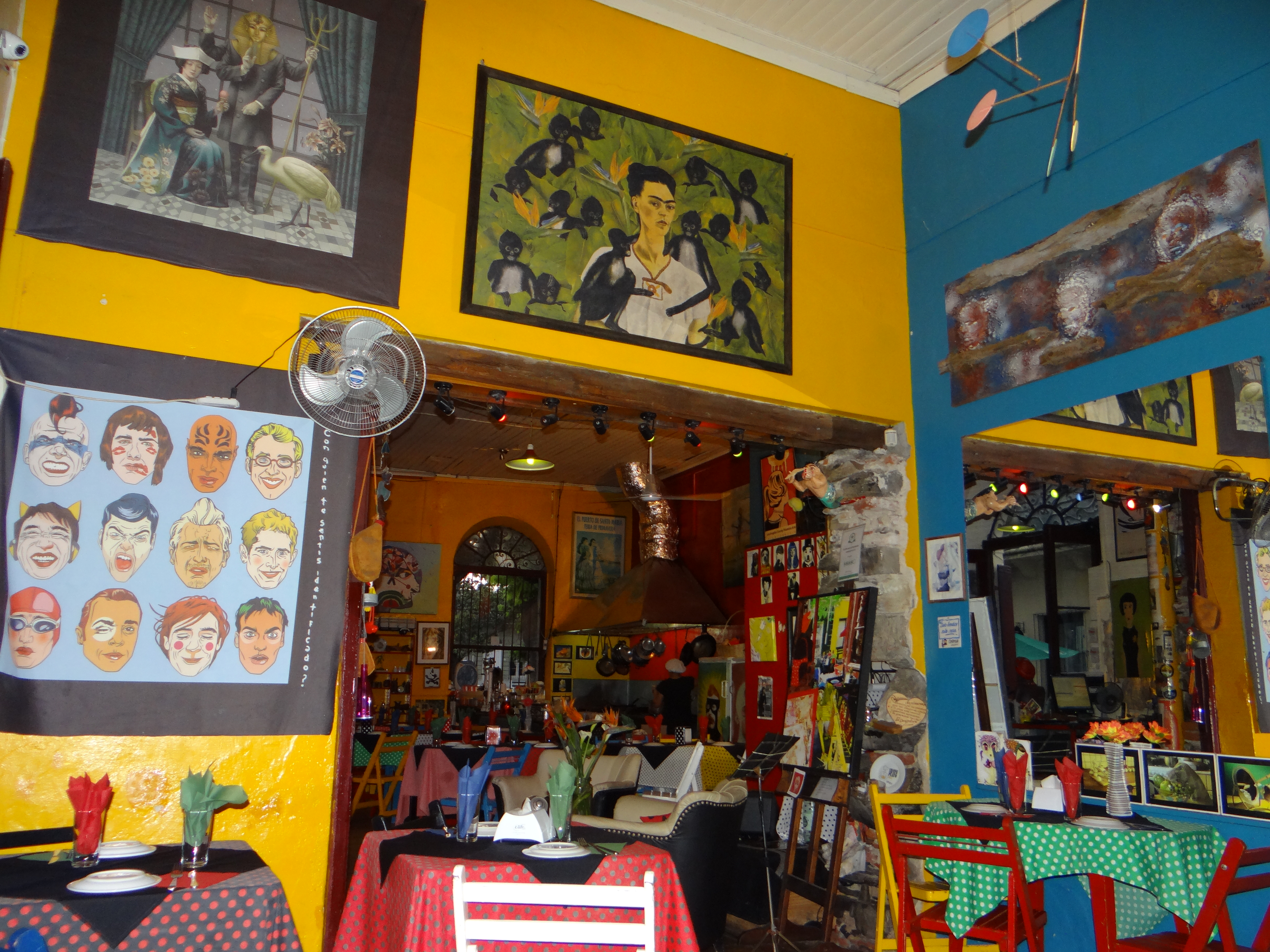
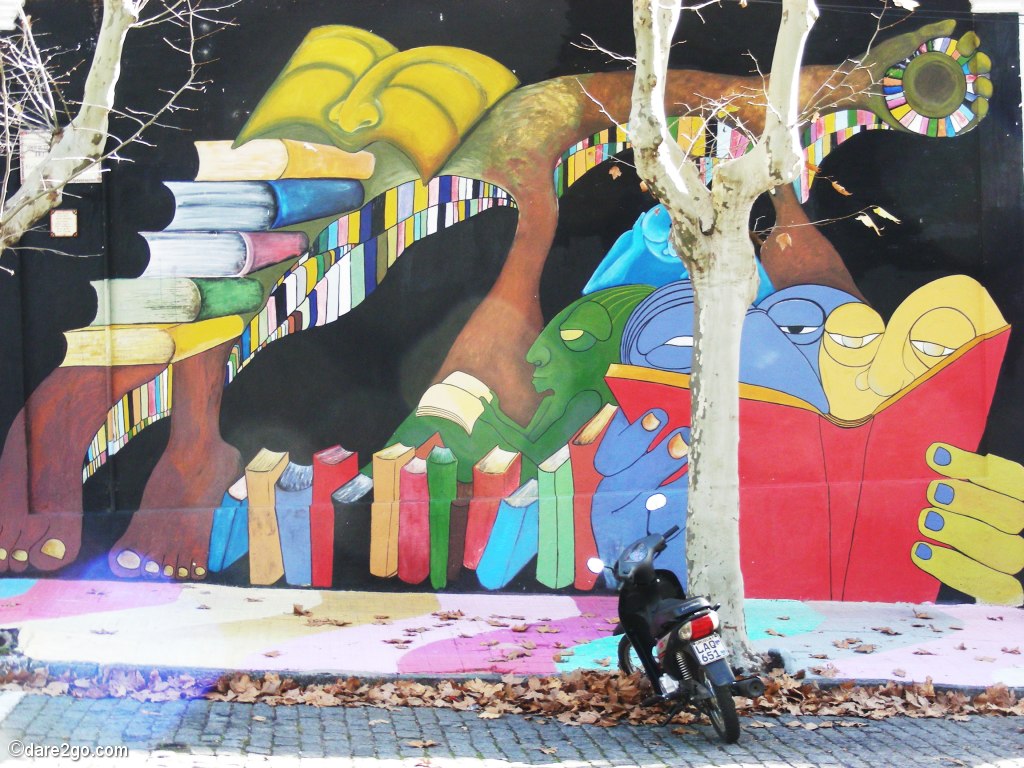
Montevideo has seen a growth in the street art scene in recent years. Street artists from all over the world have left their marks in graffiti, brush painting and stencil. Street artists decorate the city’s walls with colorful drawings, each with their own style. Walking the back streets of Ciudad Vieja Montevideo, this barrio is filled with crumbling Spanish colonial structures and beautifully vibrant graffiti street art.
 David de la Mano y MUTA, street art festival MVD.
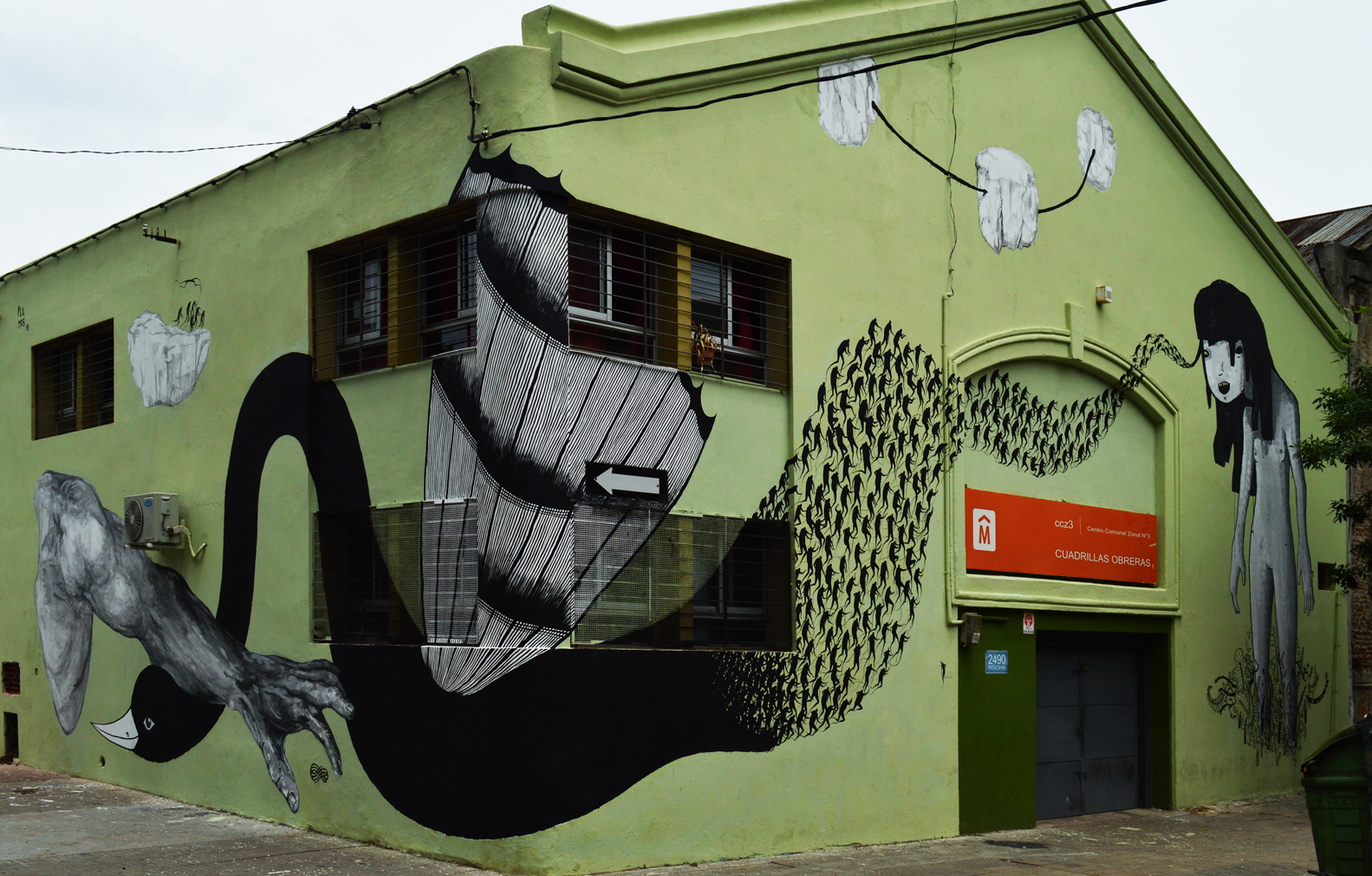
See down here some of the coolest street art murals in Montevideo, and the up and coming artists behind them. Montevideo street art is on the rise, not far behind the other great South American cities such as Sao Paulo and Buenos Aires. And – besides Montevideo, the whole country of Uruguay has some street art to offer.
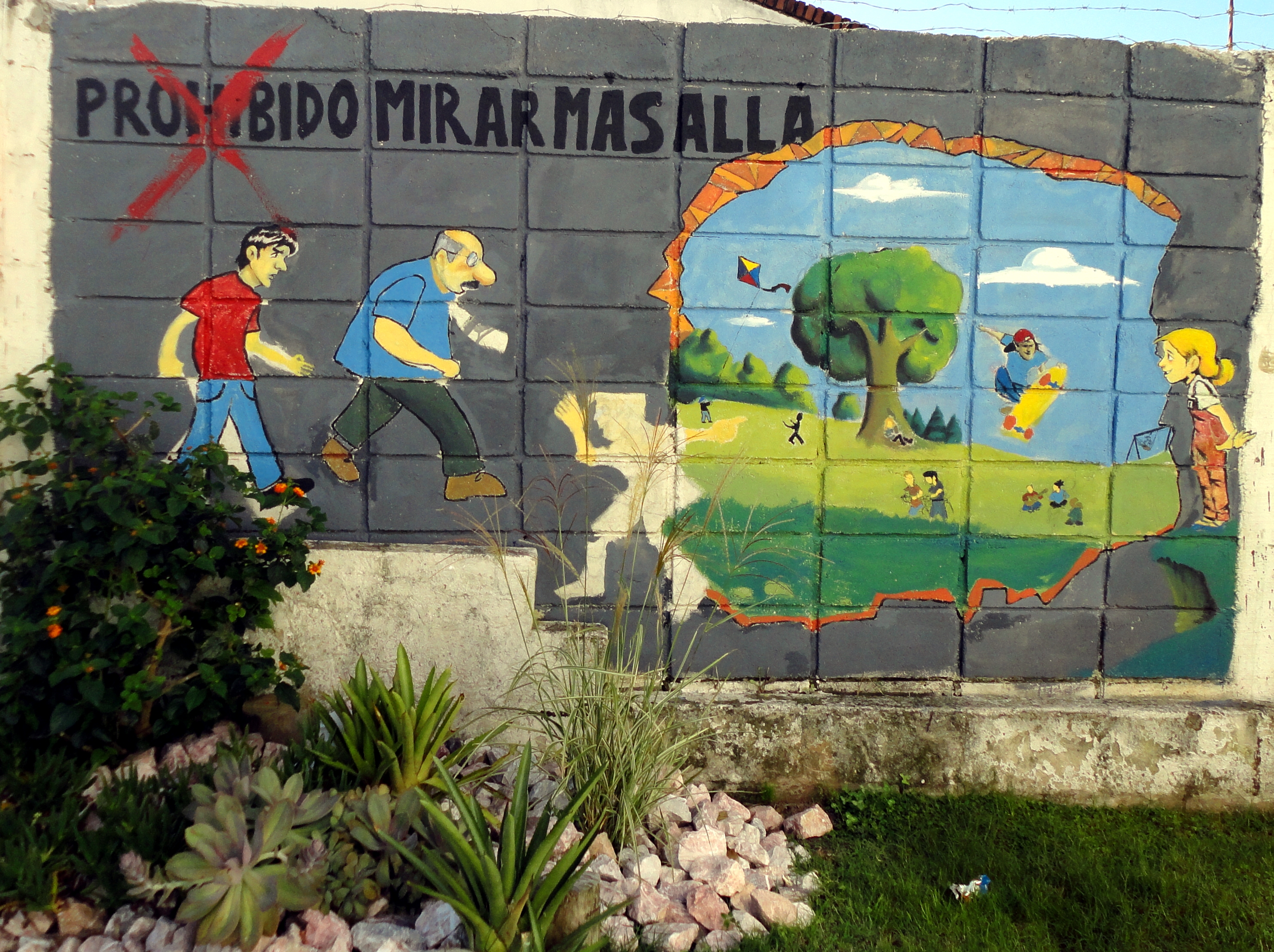
 „Forbidden to look beyond“ – street art in La Floresta.
My intention is not and can not be a perfect overview about street art or street artists. First, this article – how much I ever will write – can only show a glimpse of the whole and secondly, I am not experienced in art enough to give special insights.
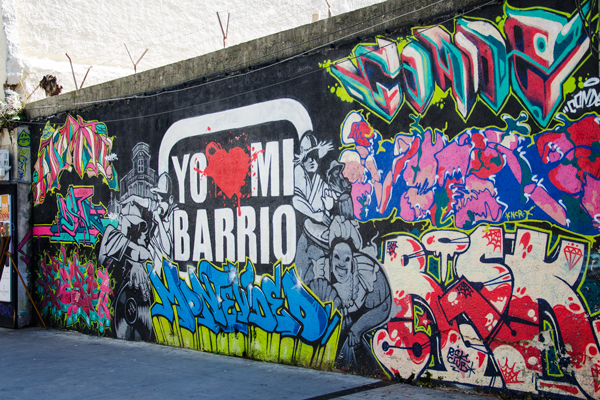
 One of the most well known paintings in Montevideo, „I Love My Neighborhood“ . In 2012, at the invitation of the U.S. Ambassador to Uruguay, Julissa Reynoso, Dister brought his „I Love My Hood“ project to Montevideo and painted 3 walls. Dister is living in Washington Heights, New York.
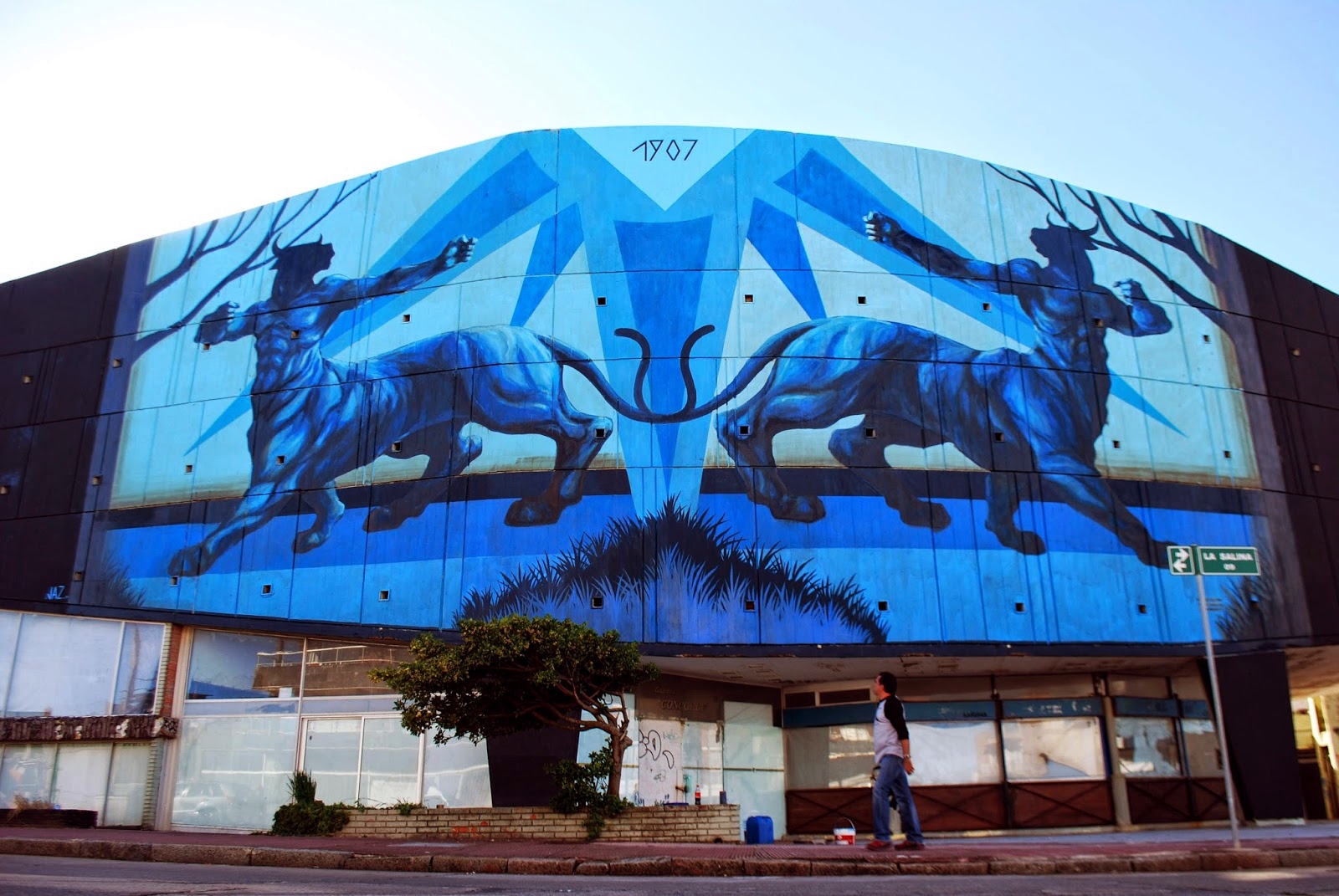
At least I like to focus on two well known artists you’ll find all over Uruguay – Franco „Jaz“ Fasoli (Buenos Aires) and David de la Mano (Salamanca Spain), others are Maldito Bastardo, Pablo Machioli or Alice Paquini and many more. My reason was to open your eyes a bit for all the „colorful sights“ on the „street canvas“ around us.
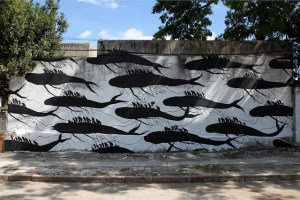
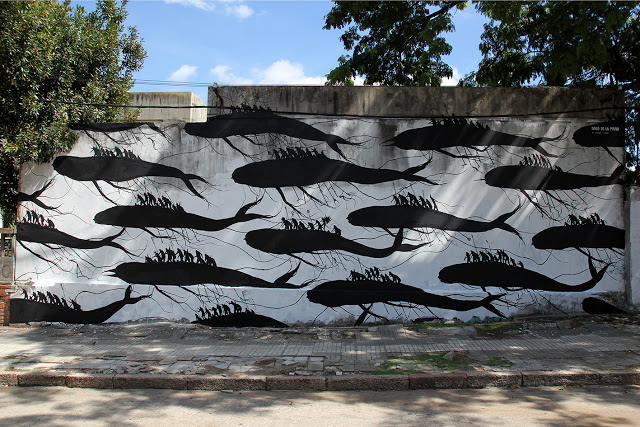
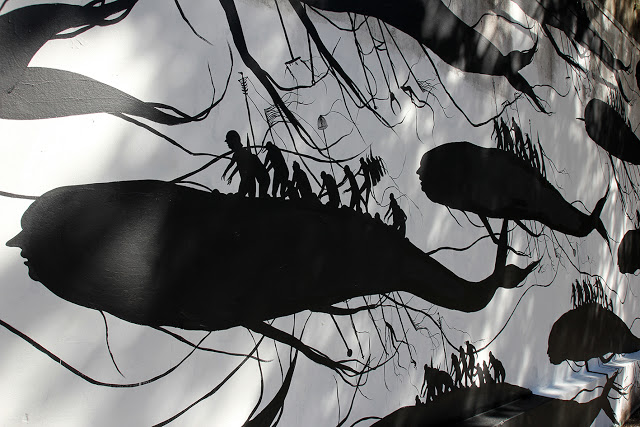
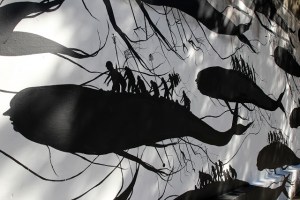 „High Tide“ by David de le Mano in the barrio Prado, Montevideo. He is well known all over the world.
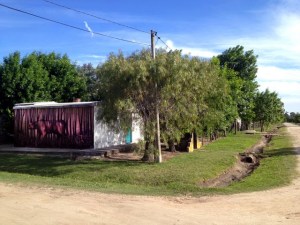
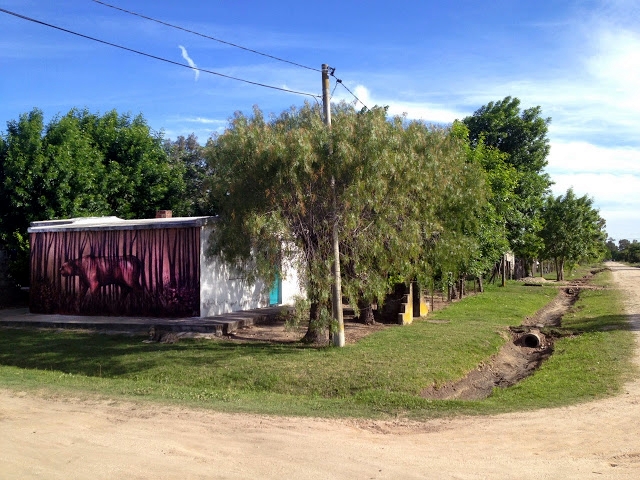
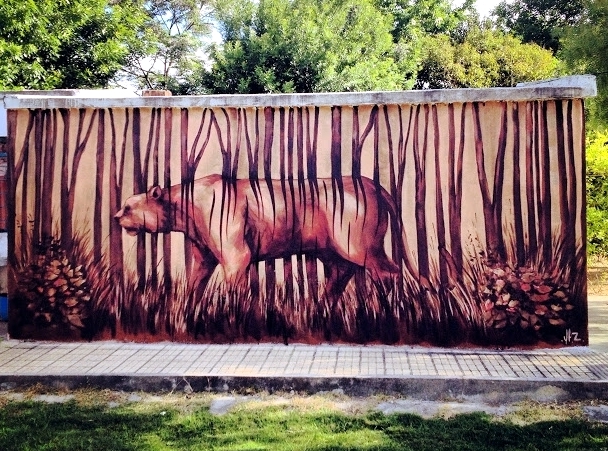
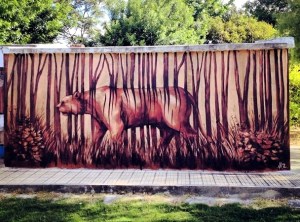 „The Tiger“ by Franco Fasoli photographed in Villa Soriano, Uruguay.
The political art really made an impact, especially after learning more about how street artists have really blossomed after being free from the oppression Uruguay was under during their military dictatorship in the 70’s-80’s.
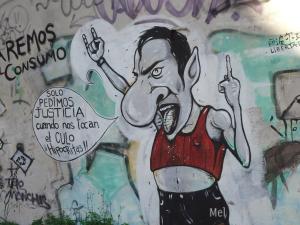
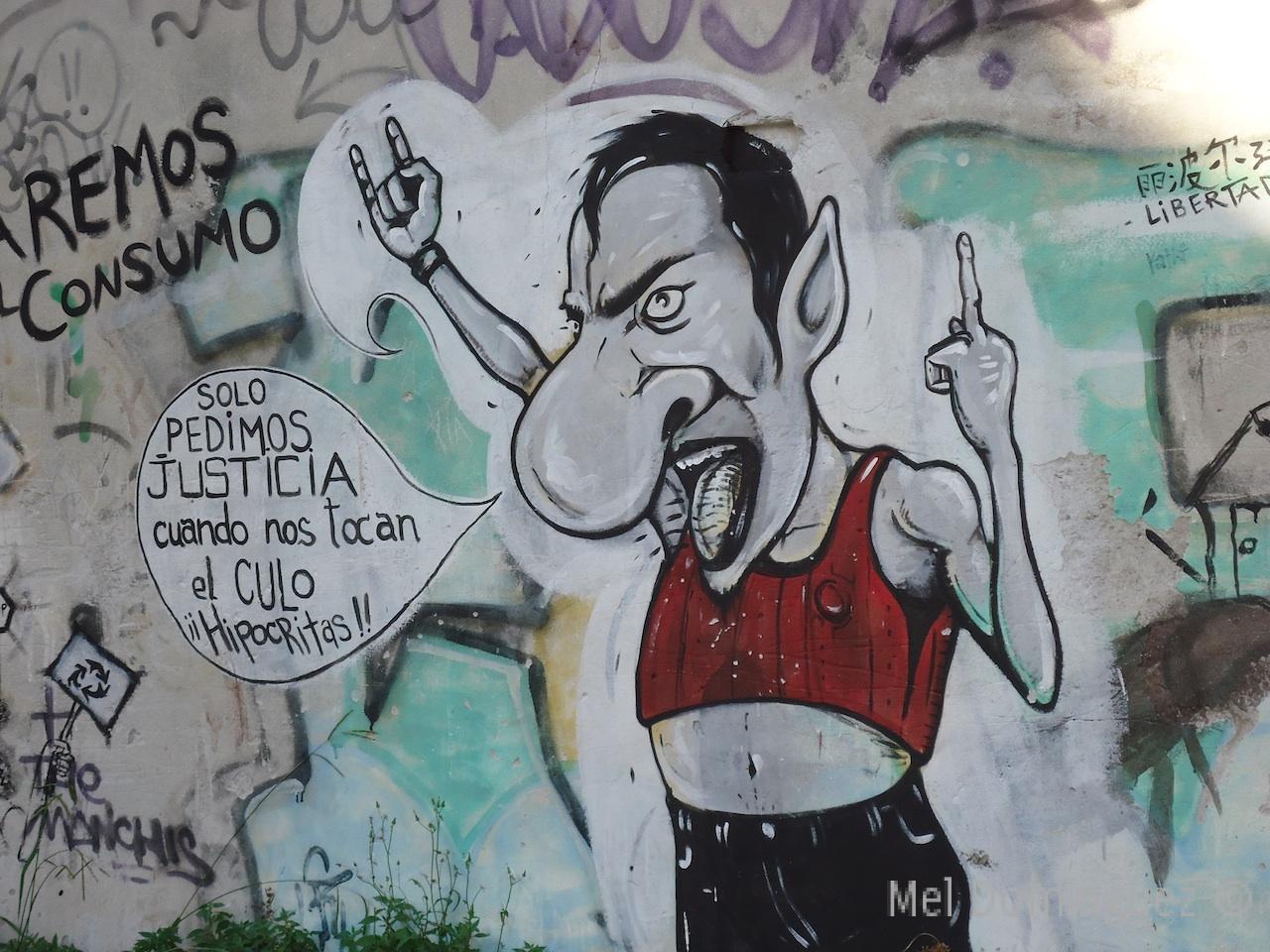
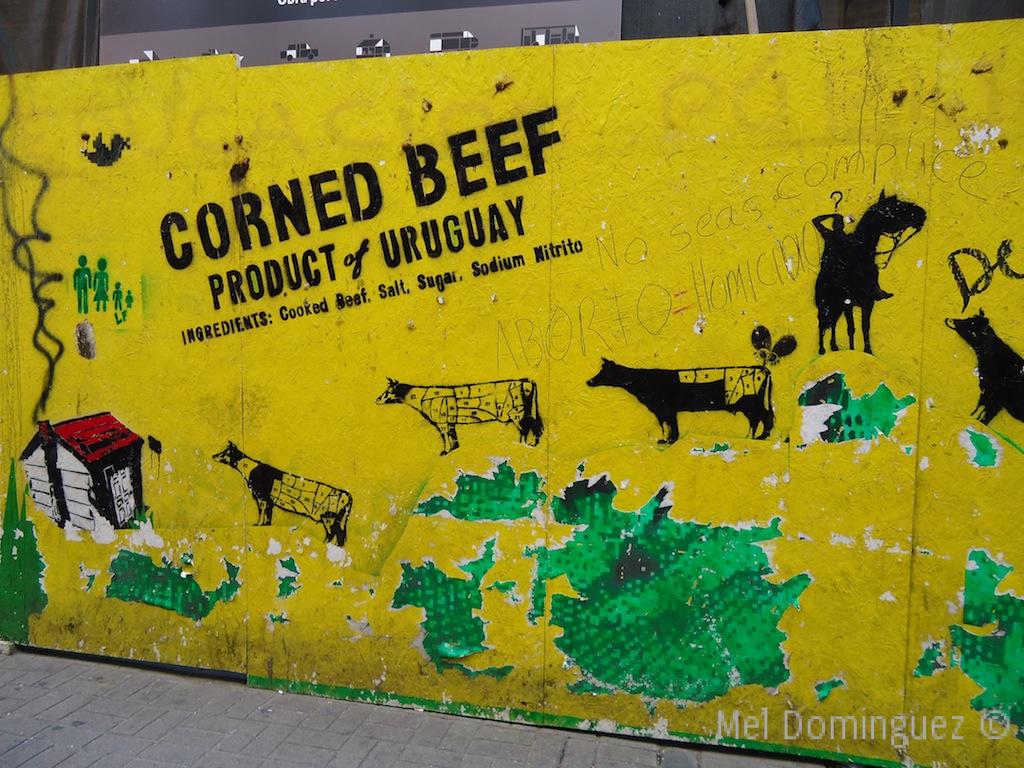
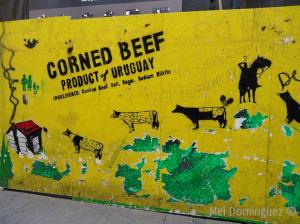 Artist Mel Dominguez all over the city of Montevideo. He sells prints of his art for around US$400,– each.
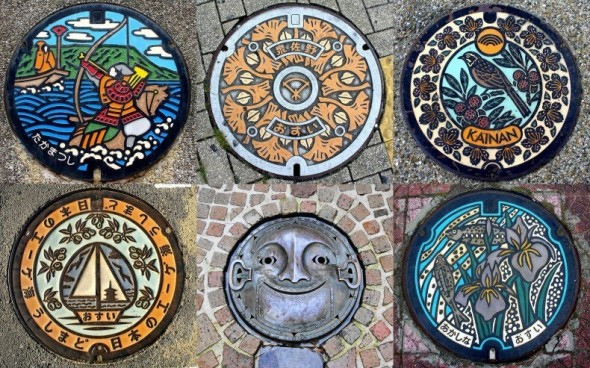
Fine arts students and universities members will intervene 320 storm drains located in the streets of Montevideo as a way to celebrate the centennial of the Sanitation of the capital.
 Another form of street art, seen in Montevideo.
Subsequent is published an essence of Uruguayan places where I found street art in the past few years. I will not repeat „Uruguay“ all the time, just the city names, they are all photographed in Uruguay. I respect the copyrights of the artists, but for some pics I don’t know the title or the artist. All information I have is shown here. May be my readers can complete the information.
Enjoy !
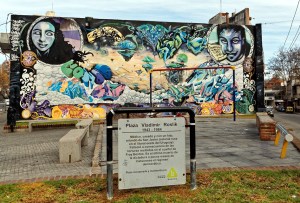
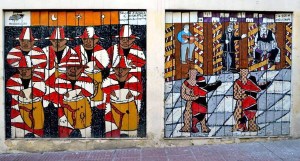 Both pics Montevideo.
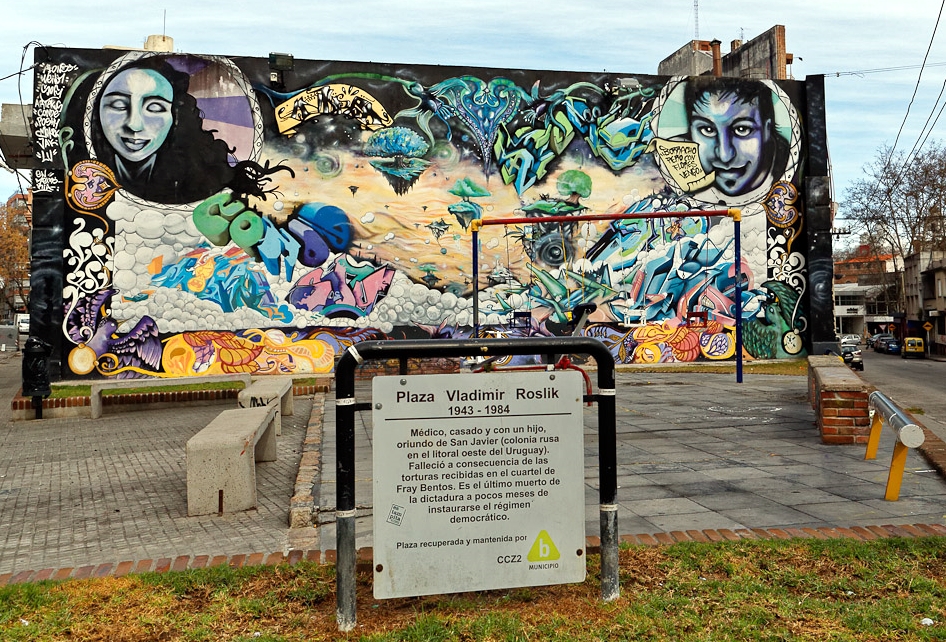
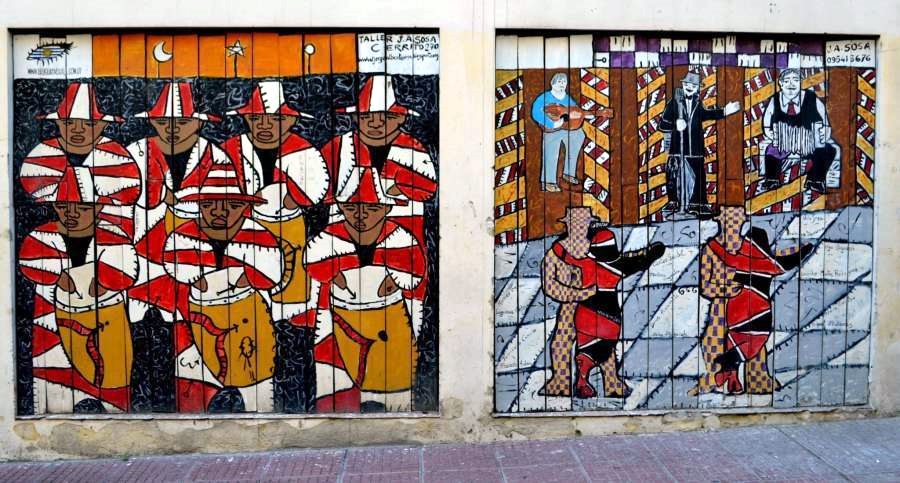
 Both pics Montevideo, artist Nicolas Sanchez.
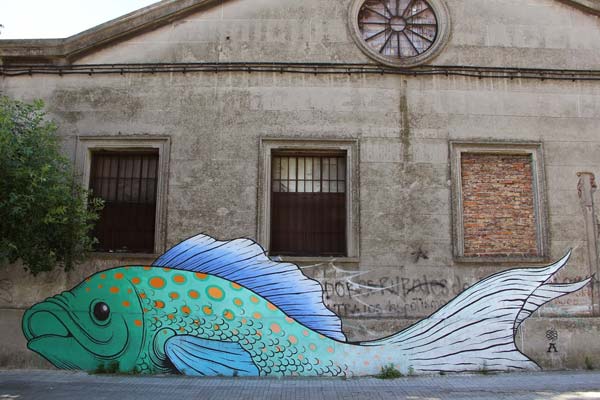
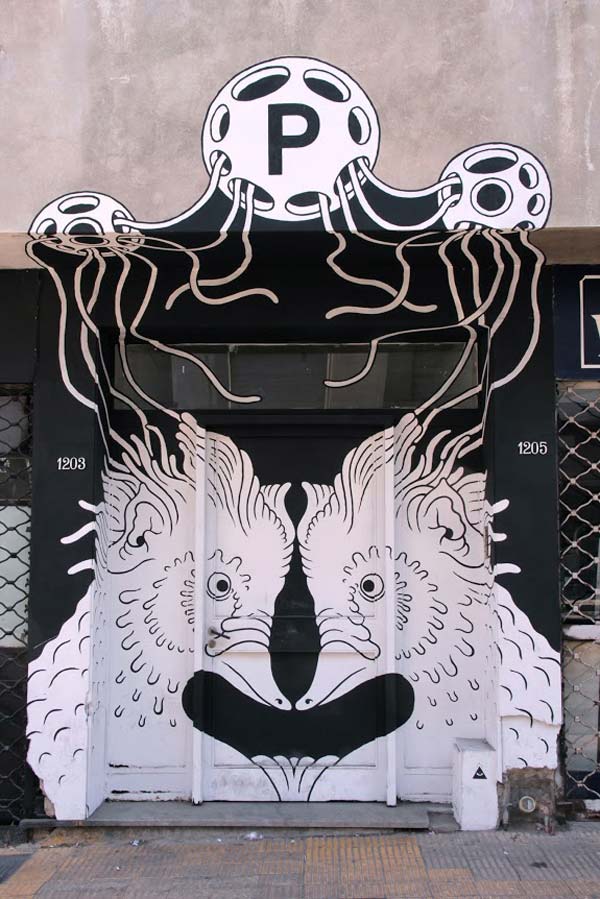
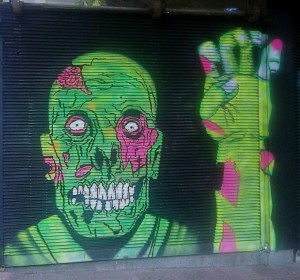
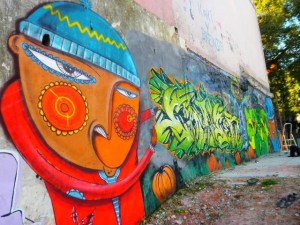 Both pics Montevideo.
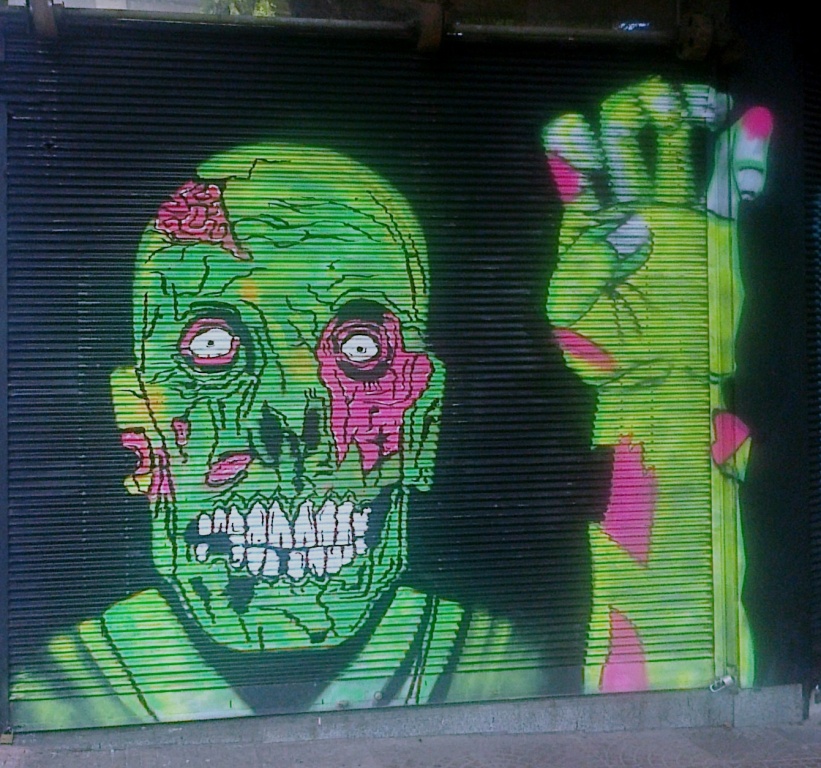
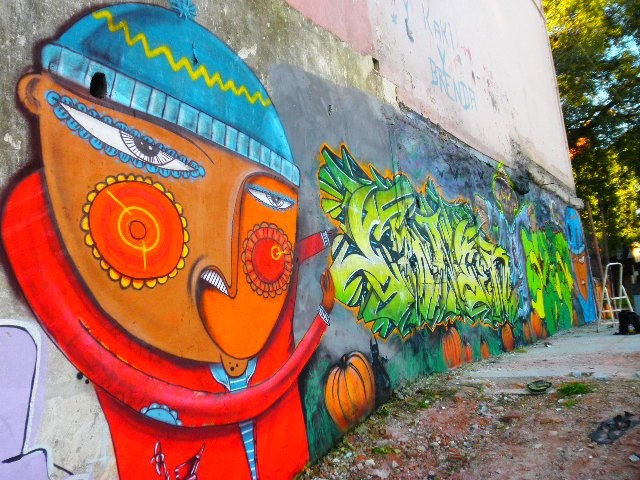
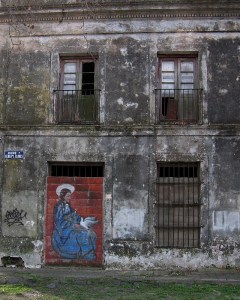
 Both photos are made in Montevideo.
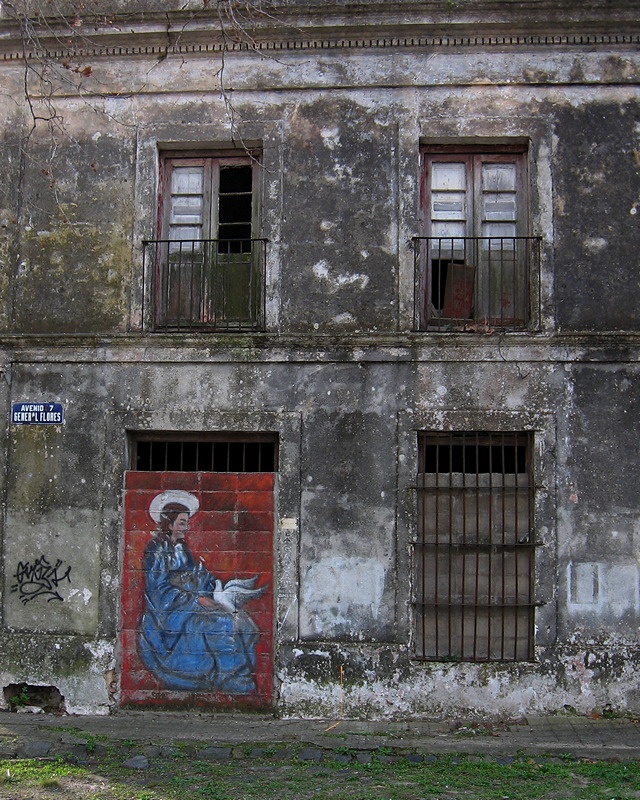
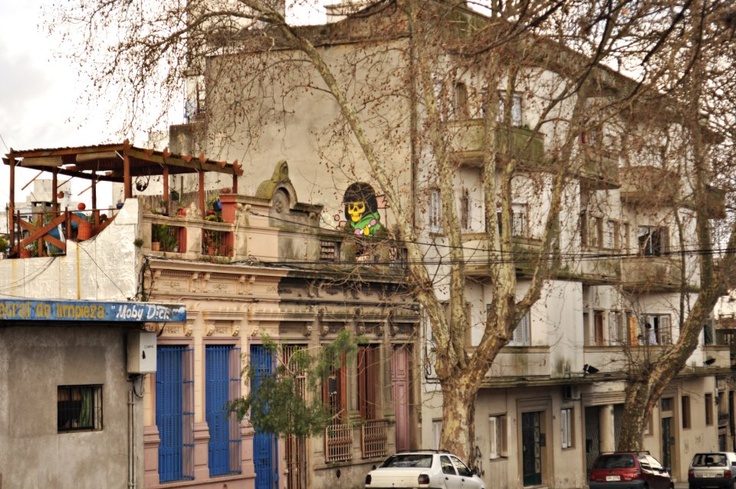
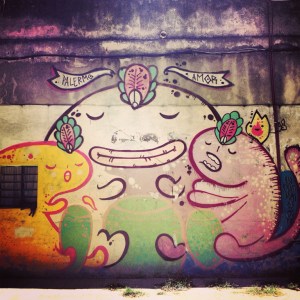
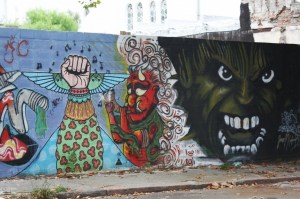 Both paintings seen in barrio (neighborhood) Palermo, Montevideo.
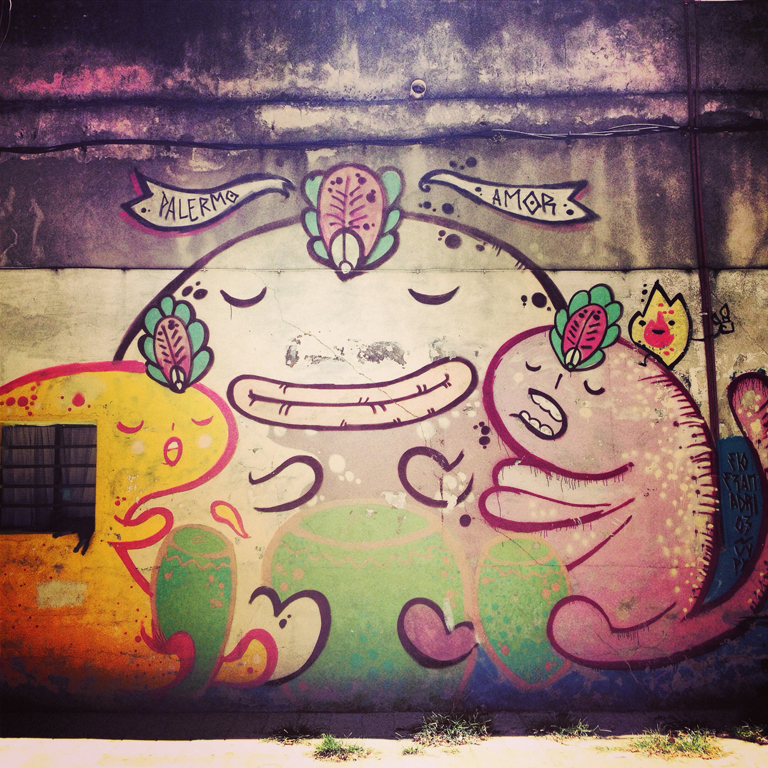
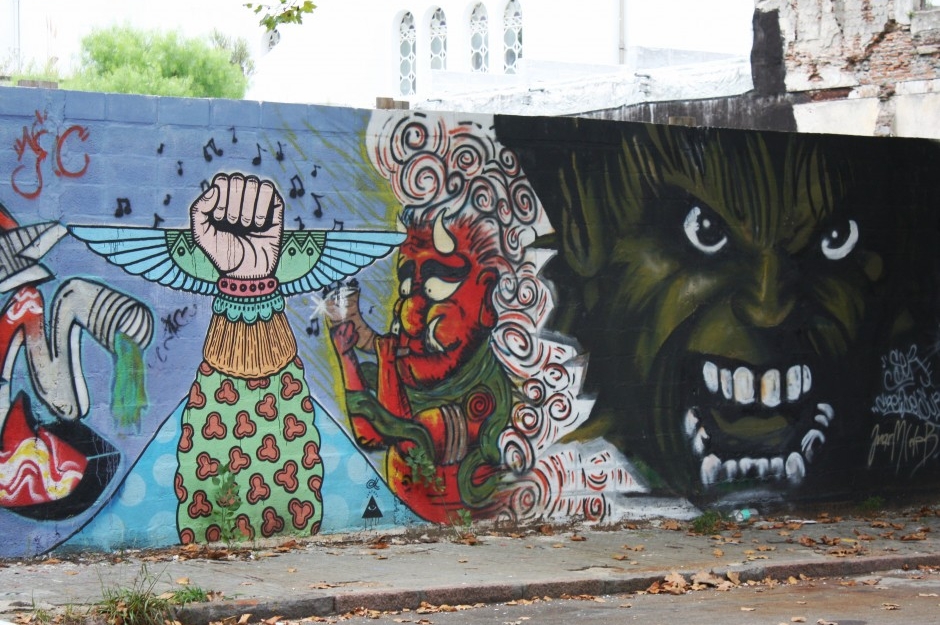
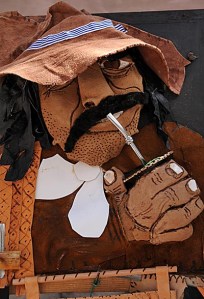
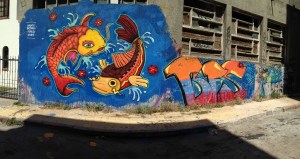
This is supreme art, both from artist Maldito Bastardo. Clic on pics to supersize and enjoy. It is impressive what this artist already painted and delivered. I like his art very much.
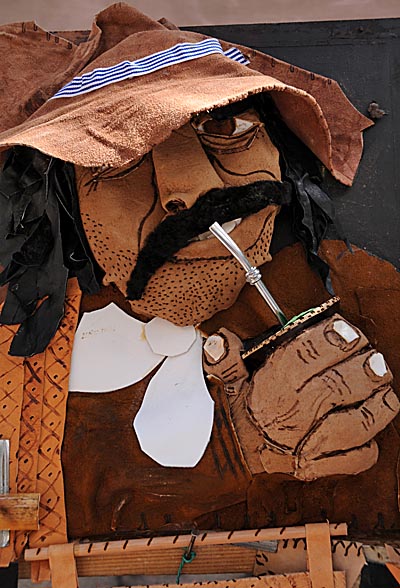
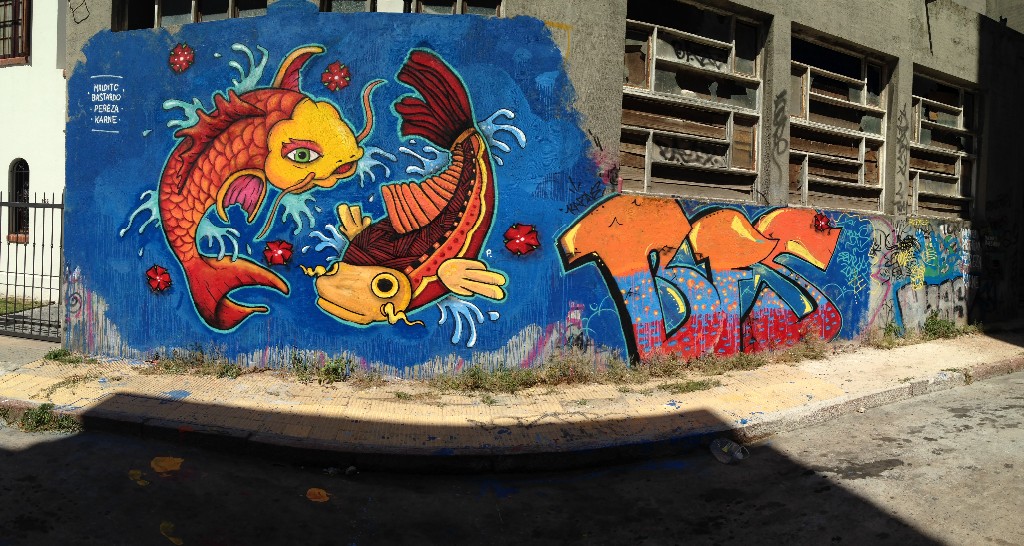
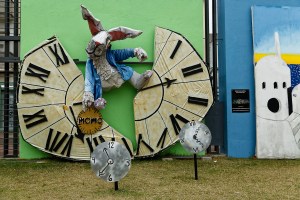
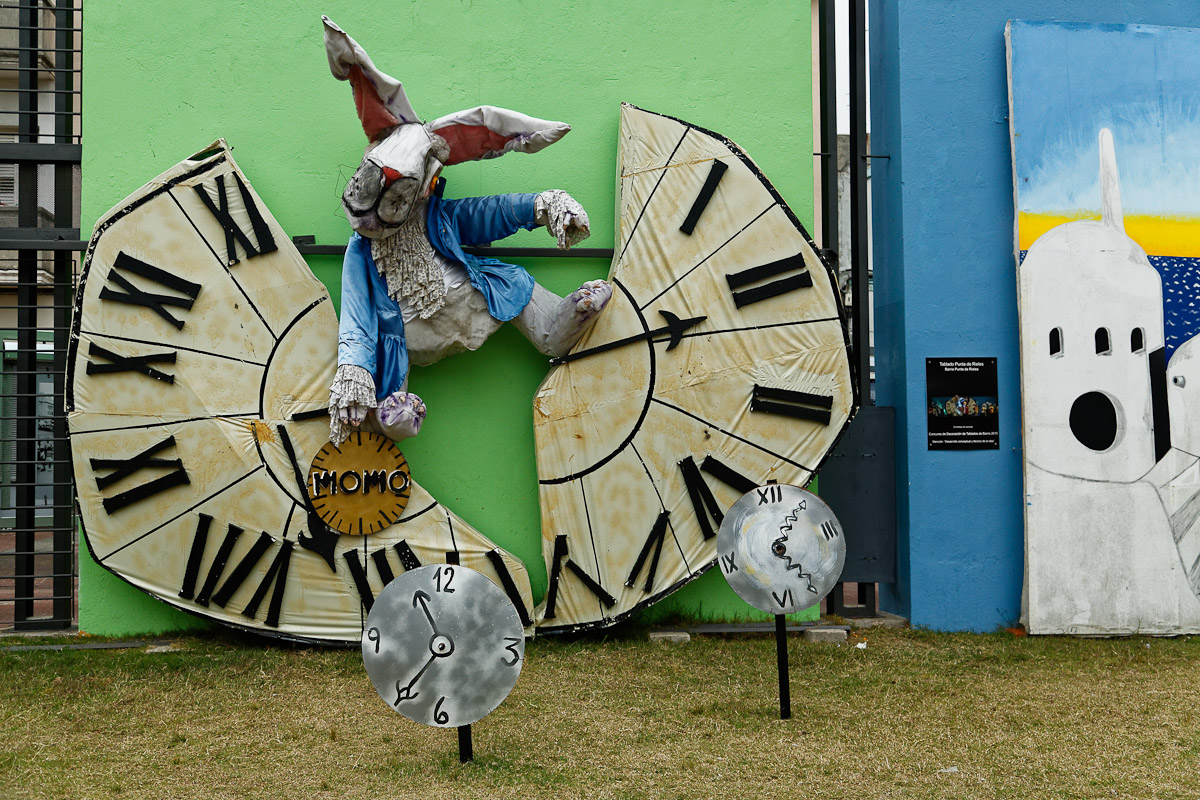
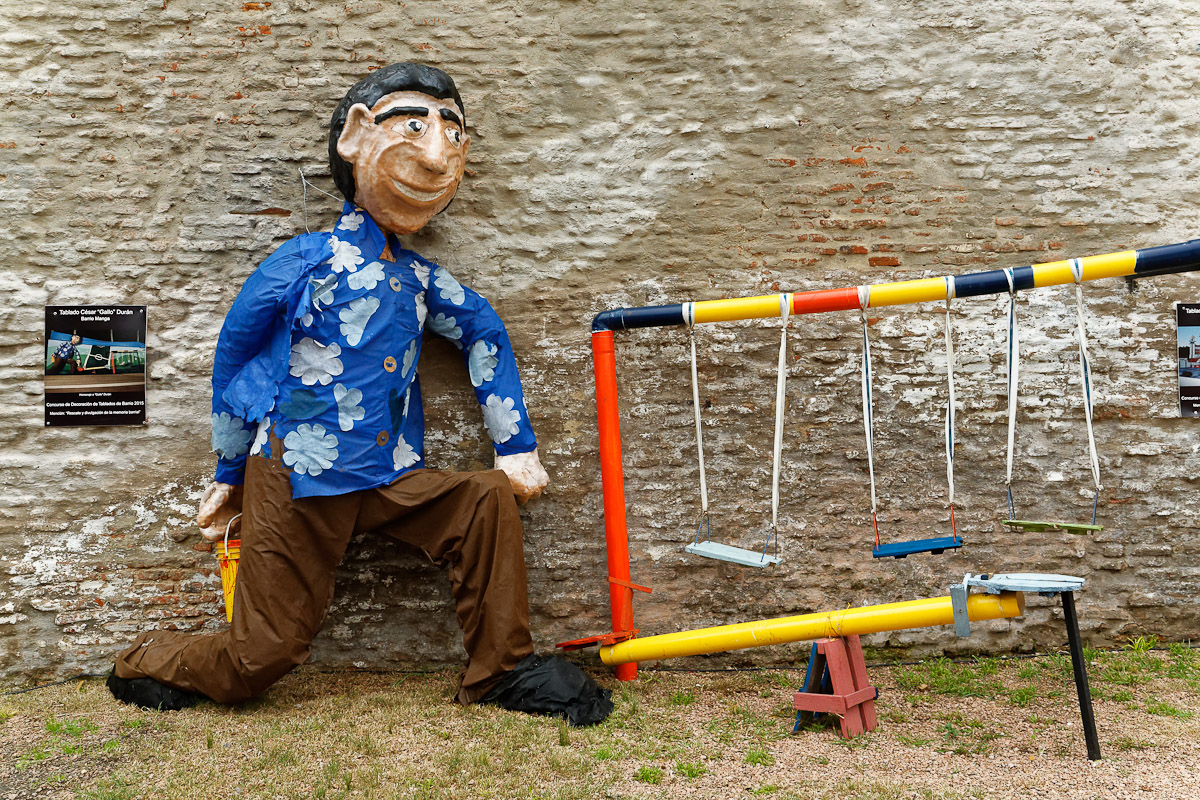
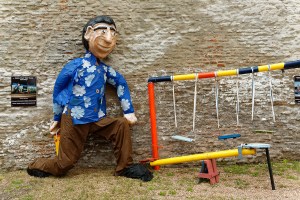 Street art of another kind, outside of the Museo de Carnival in Montevideo.

 Two painted school walls in Montevideo.
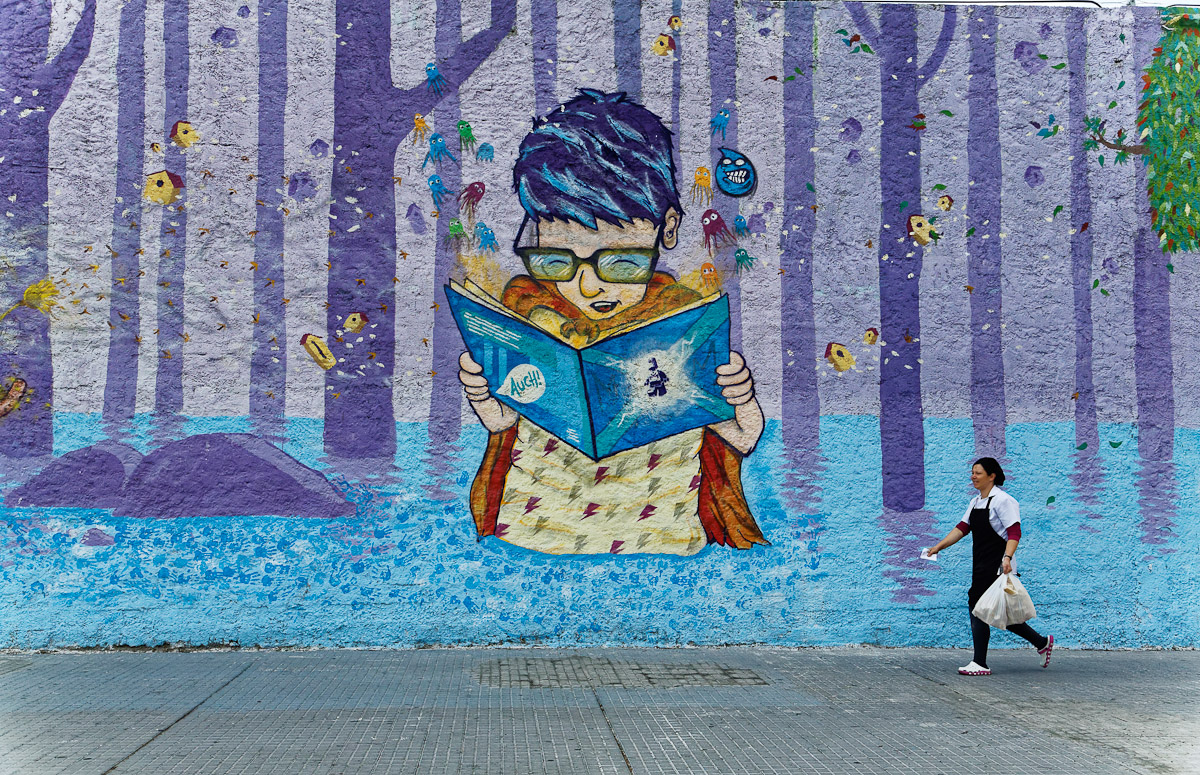
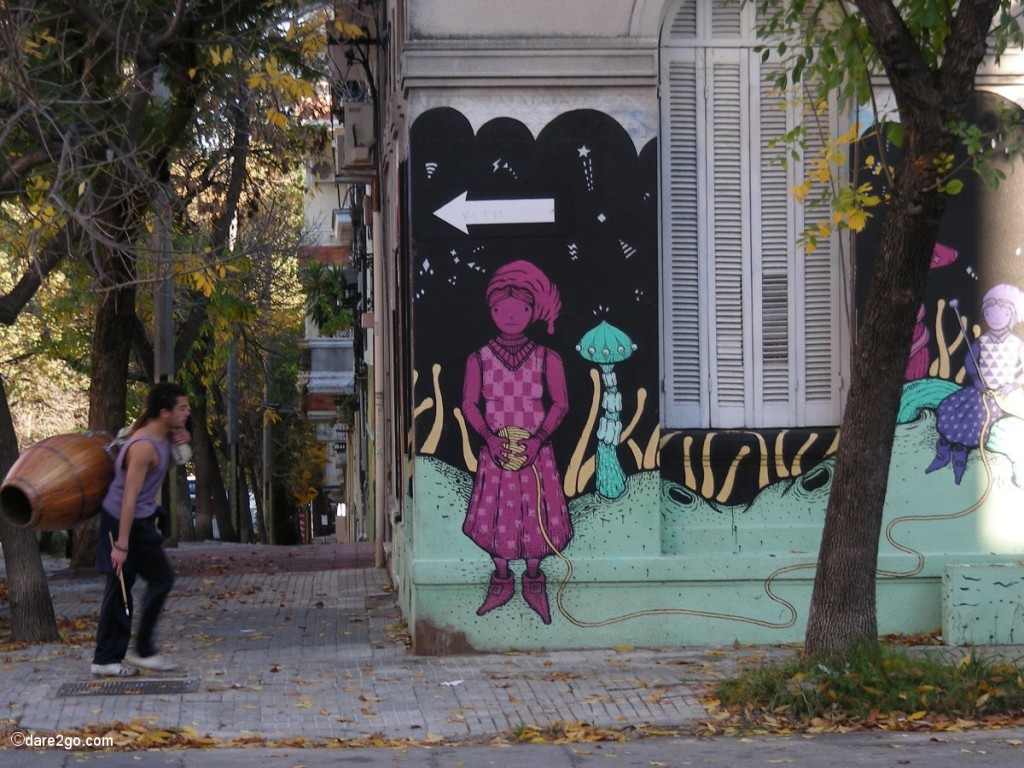
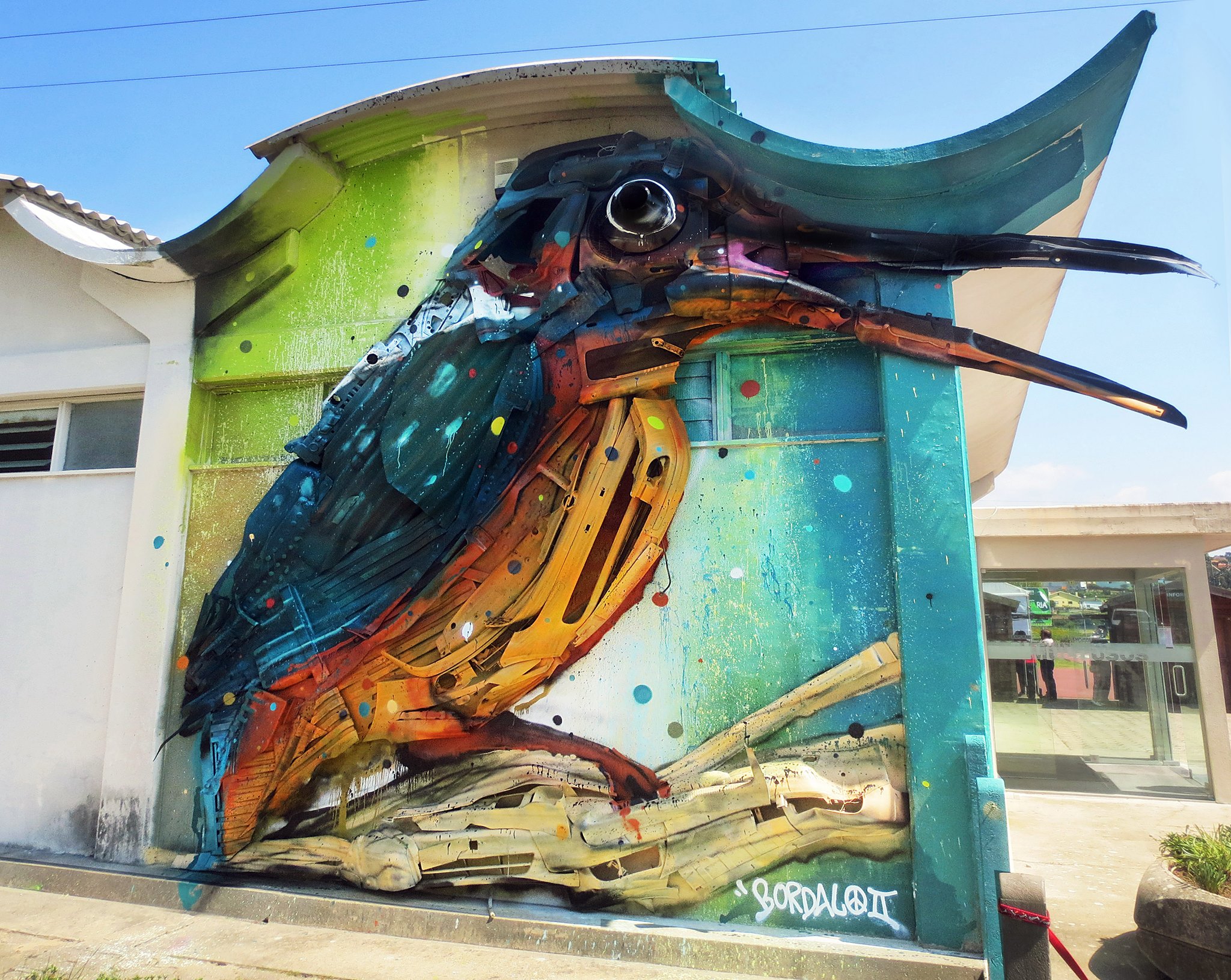
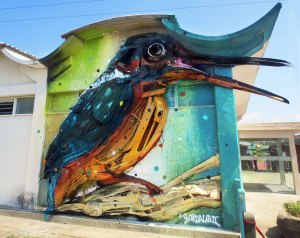 Powerful art examples, left from RAF (??) and right from Bordal.
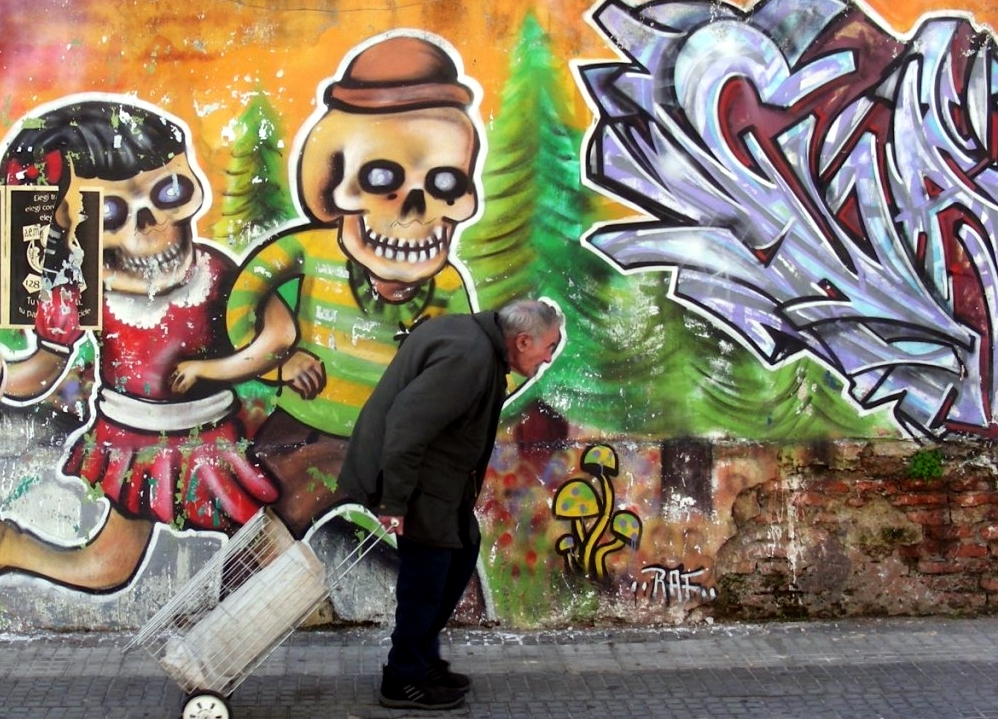
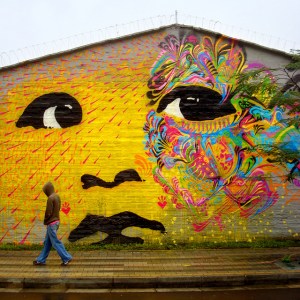 Two examples from the artist „stinkfish“.
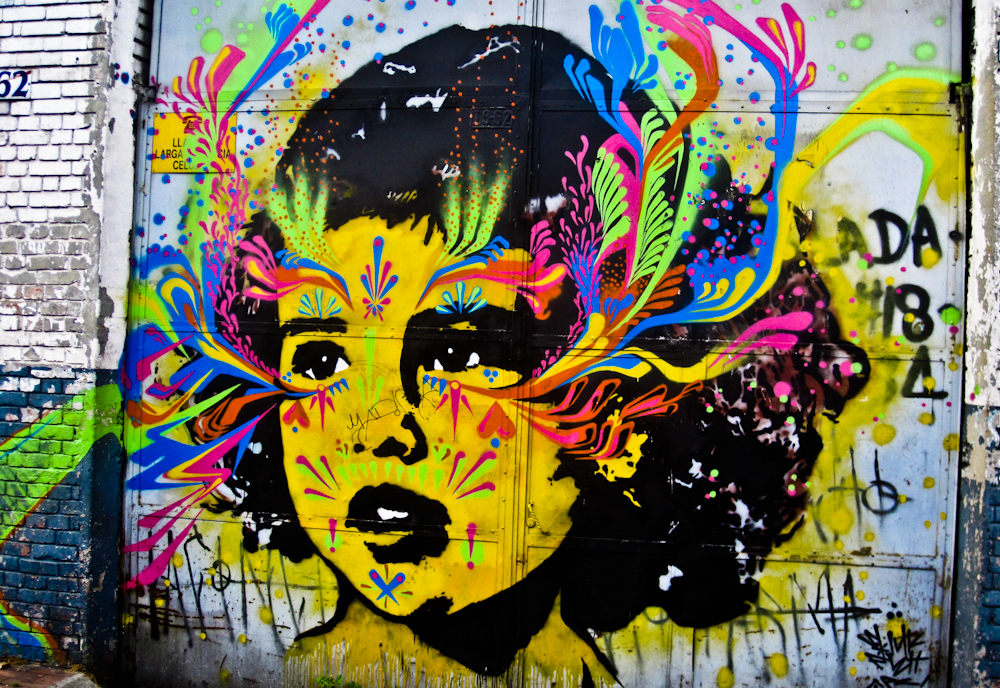
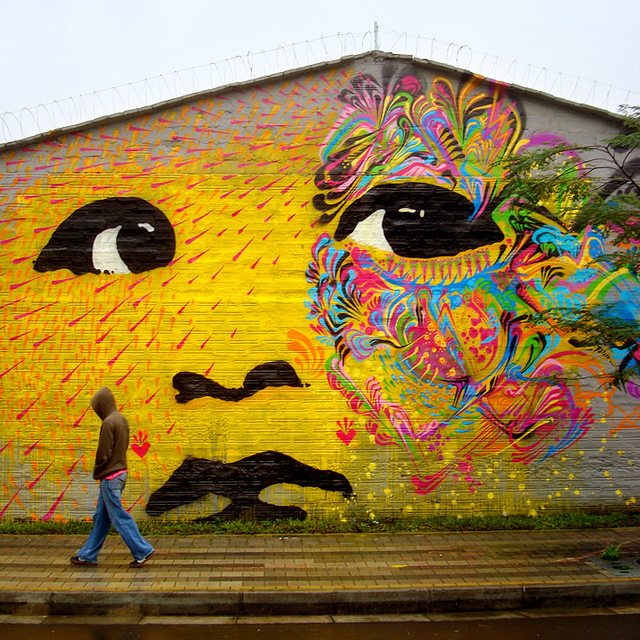
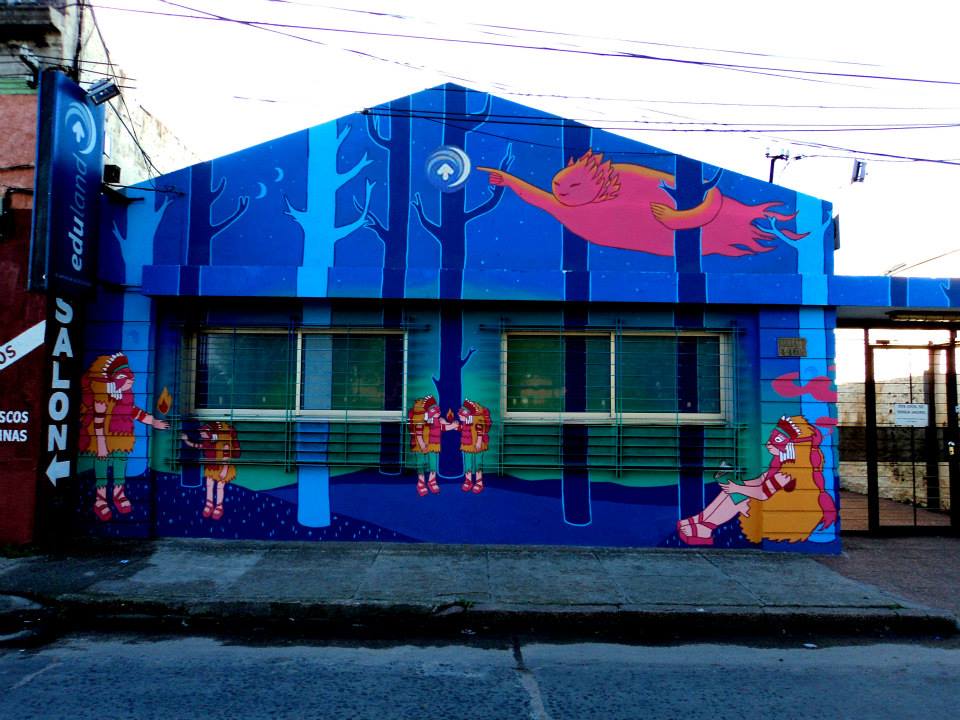
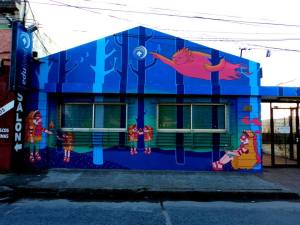 The left one is unknown to me, except that we all know „the biter“ ! The right is made by Albama y Maria Noel, Instituto Eduland, Montevideo.
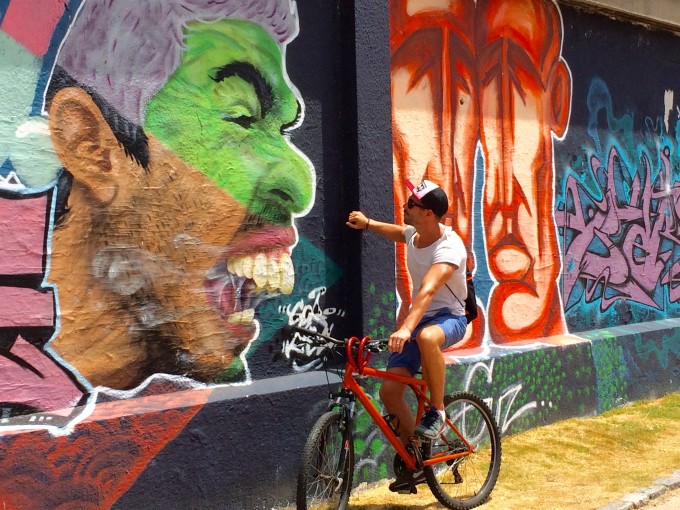
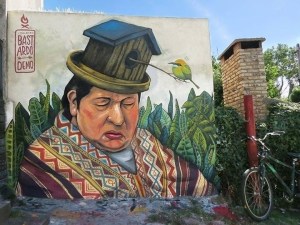 Two more excellent paintings from the artist Alice Pasquini left and from Maldito Bastardo right.
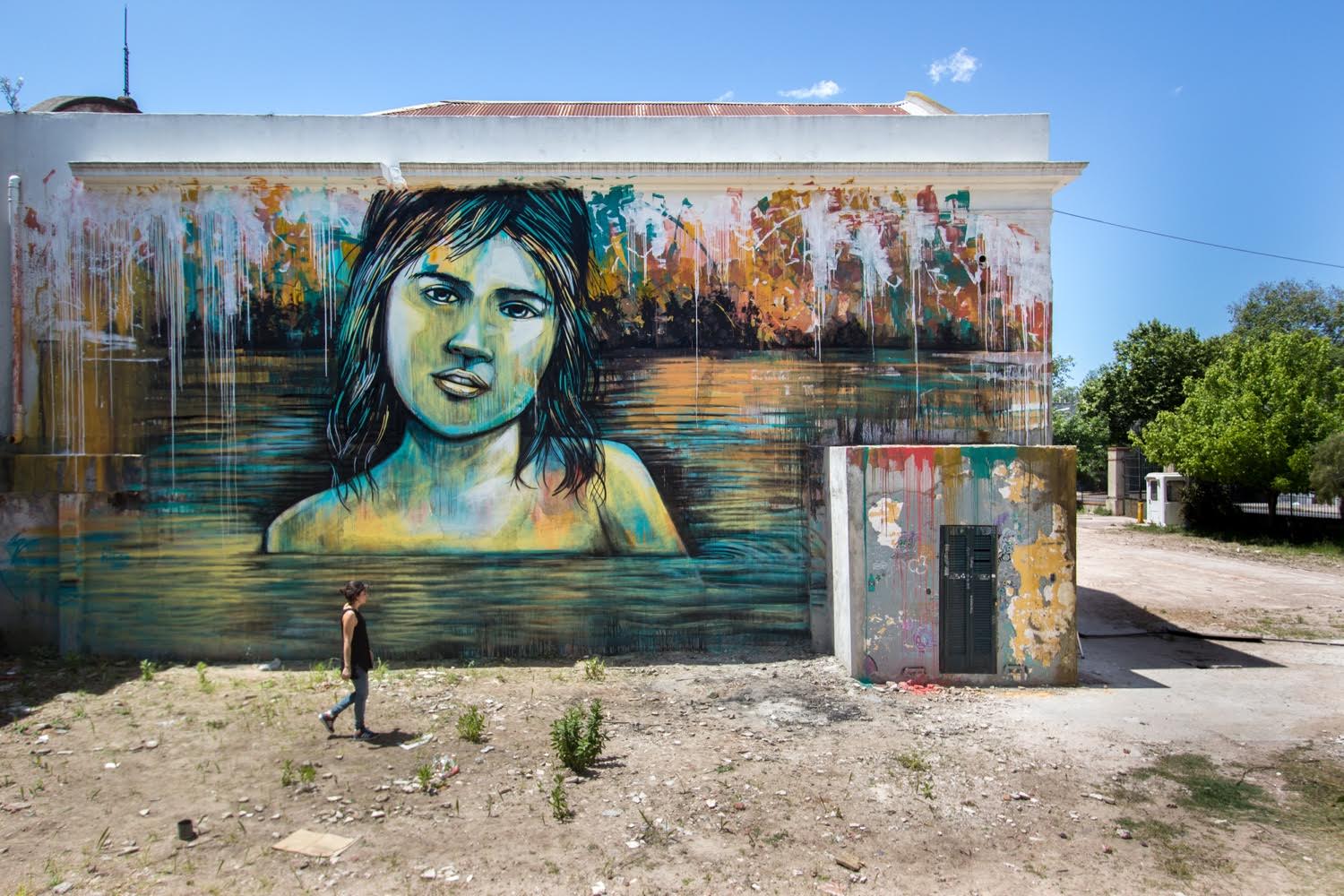
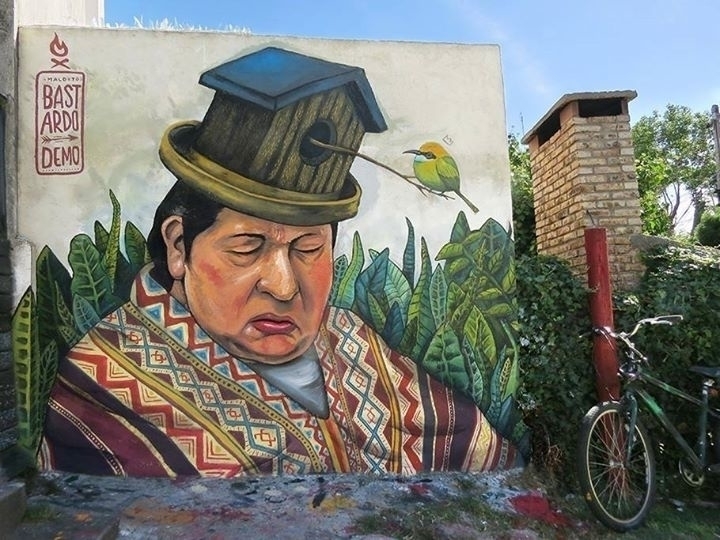
All those above were from the city area of Montevideo. Let’s follow down here some art work seen and photographed at different towns and cities in Uruguay. Some are very professional, made by international known artists, others are local paintings from unknown artists, just loved by the community. And some are already very old, because they were never over painted as it is usual in the city. I posted in this article over 100 photos, collected during years. I don’t know if all this art is still existing.
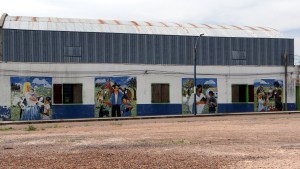
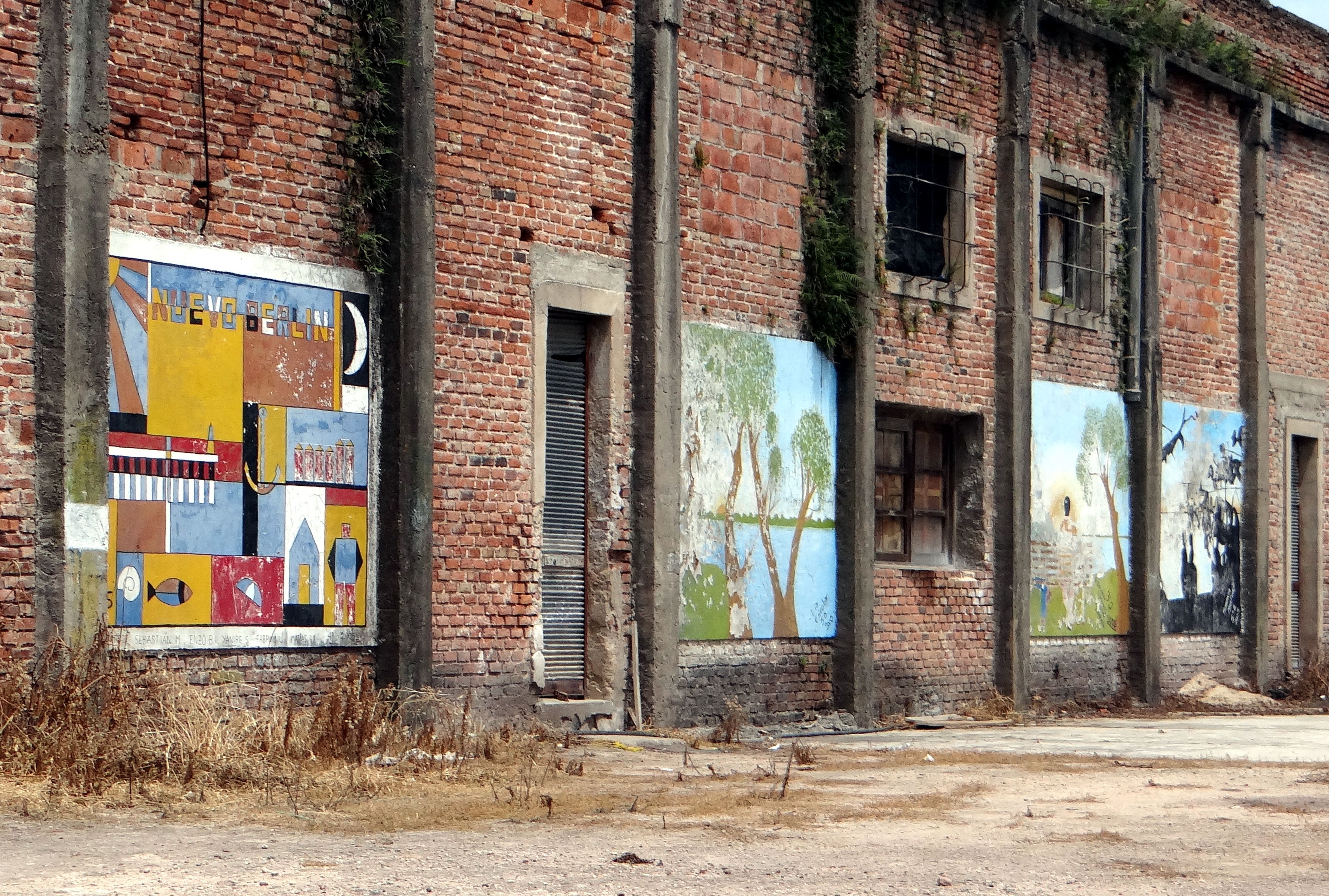
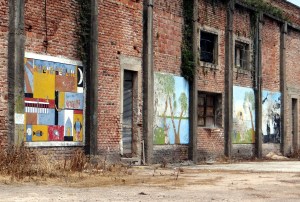 Urban art seen in Nuevo Berlin, left the community hall, right an abandoned factory.
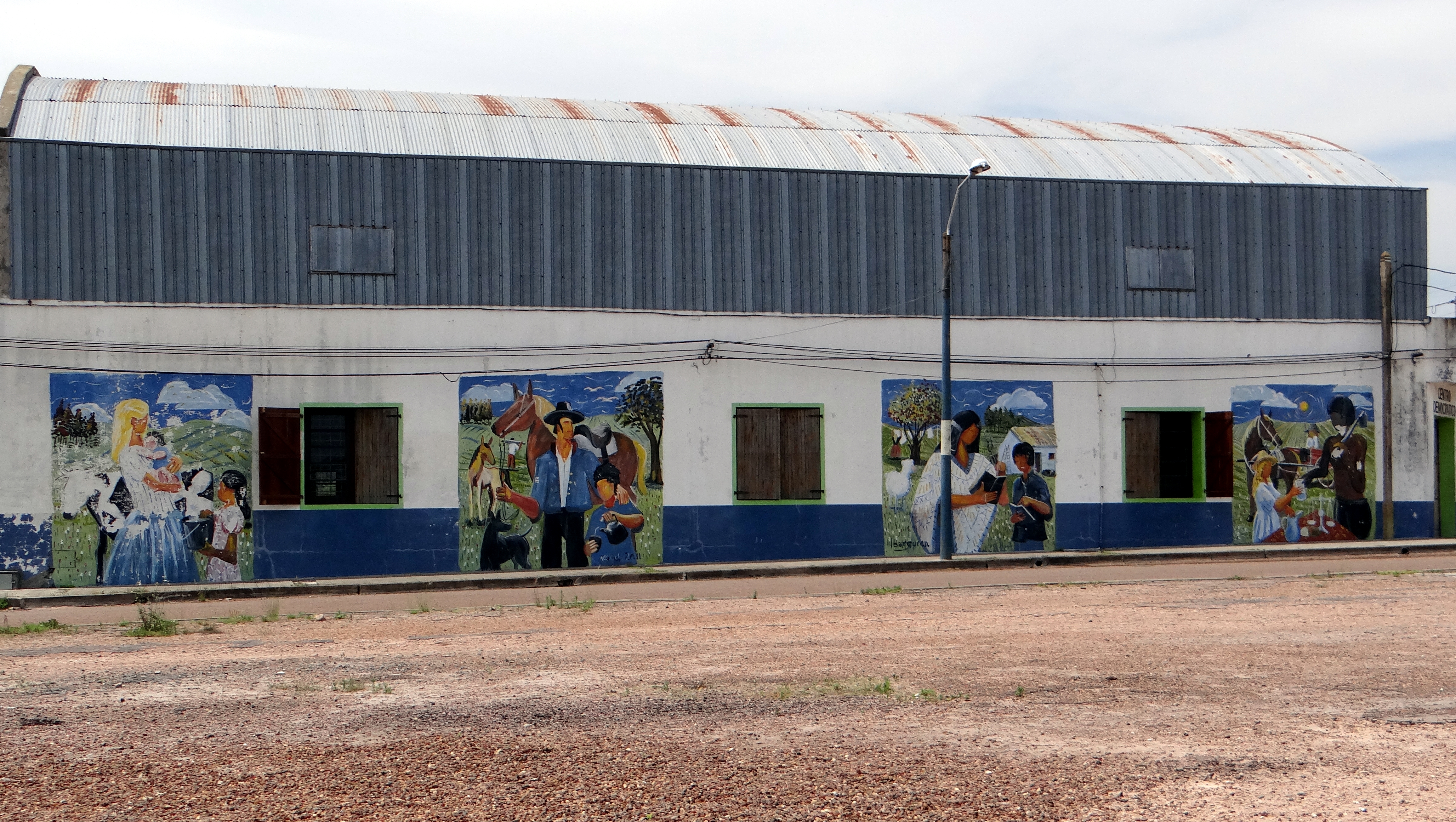
 Wall paintings in Pan de Azucar.
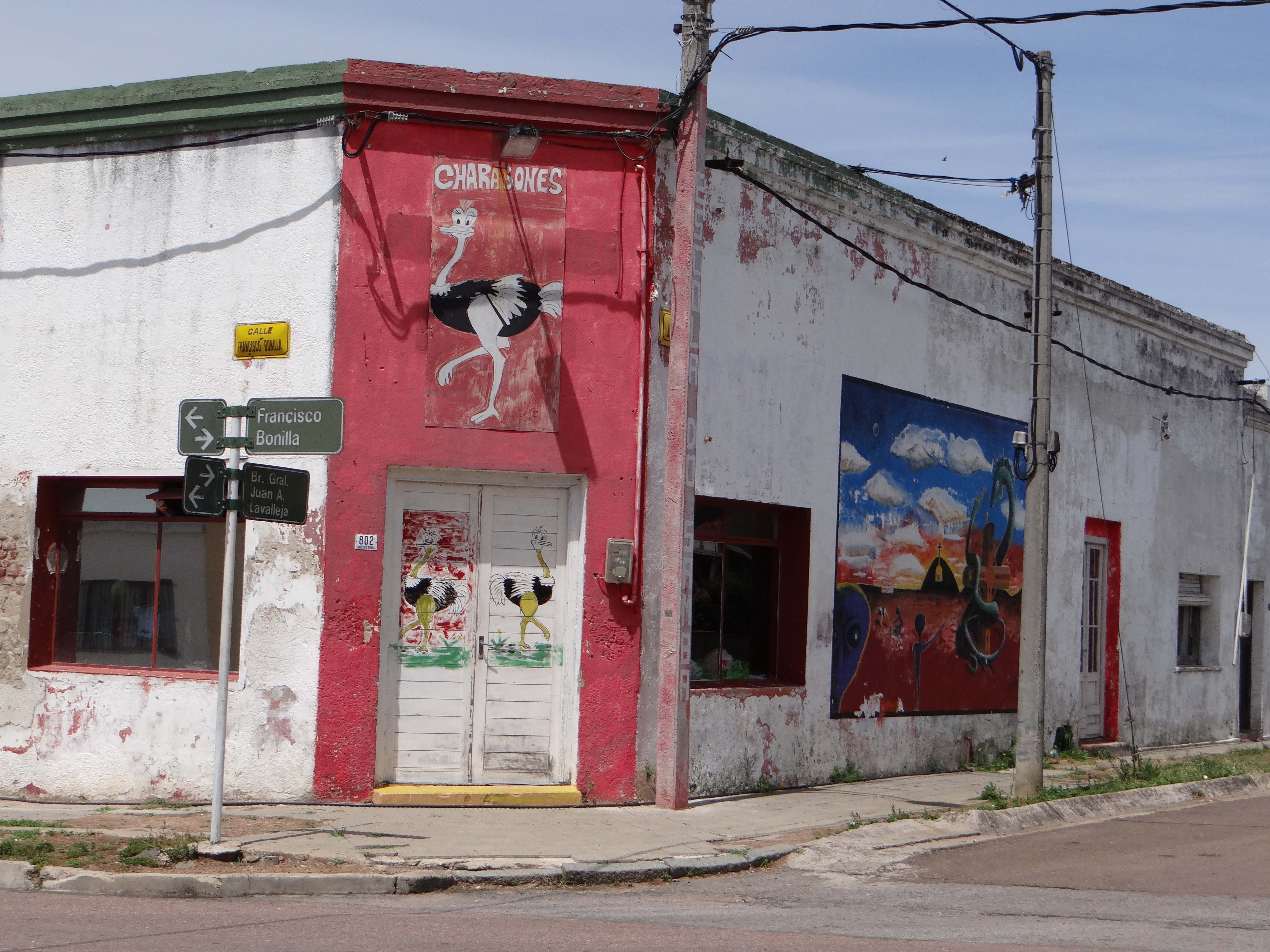
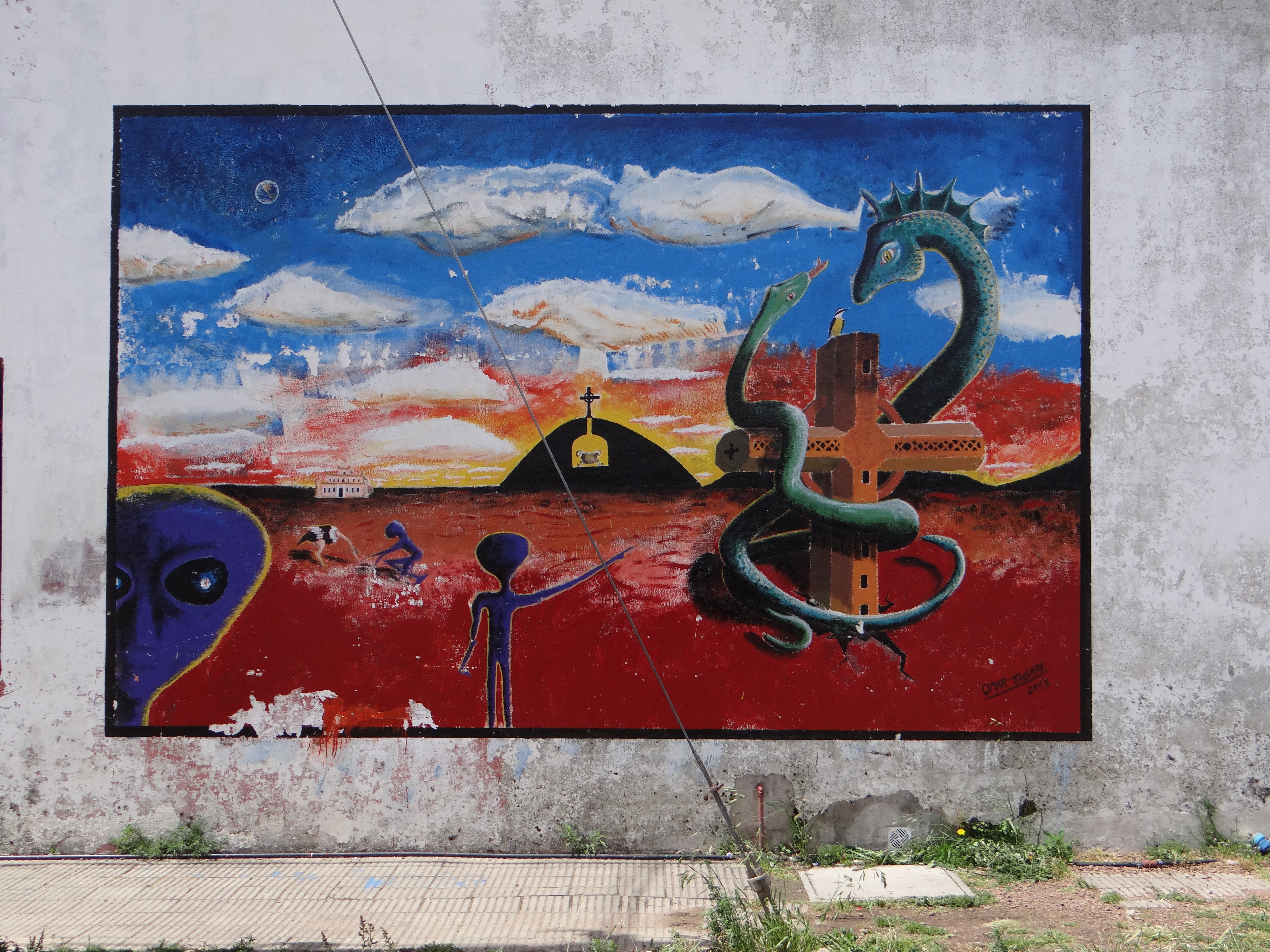
 And here some local wall paintings, left seen in Soca, right in Maldonado.
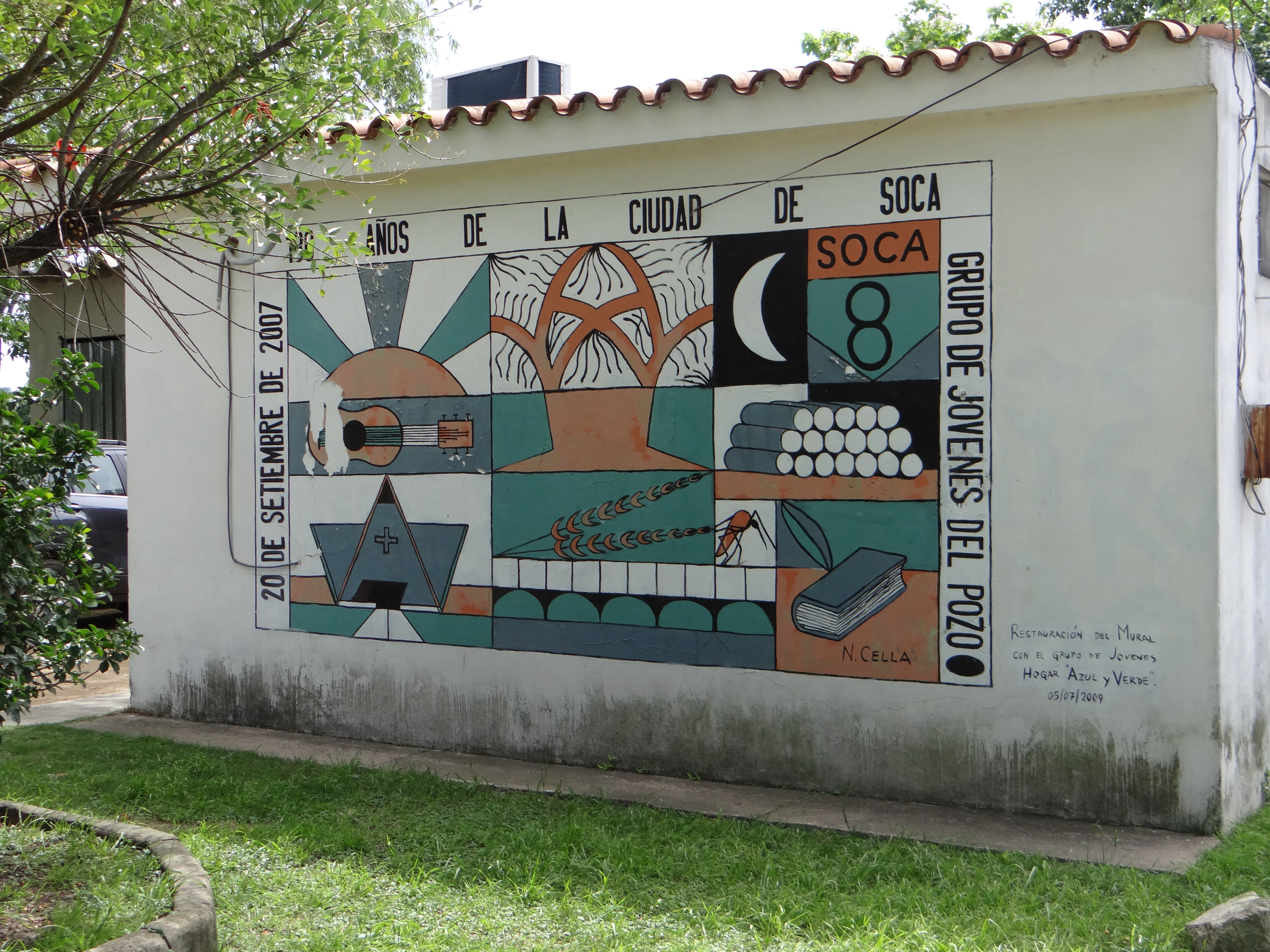
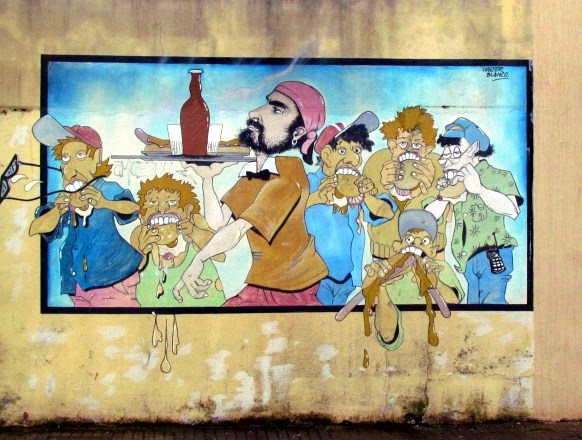
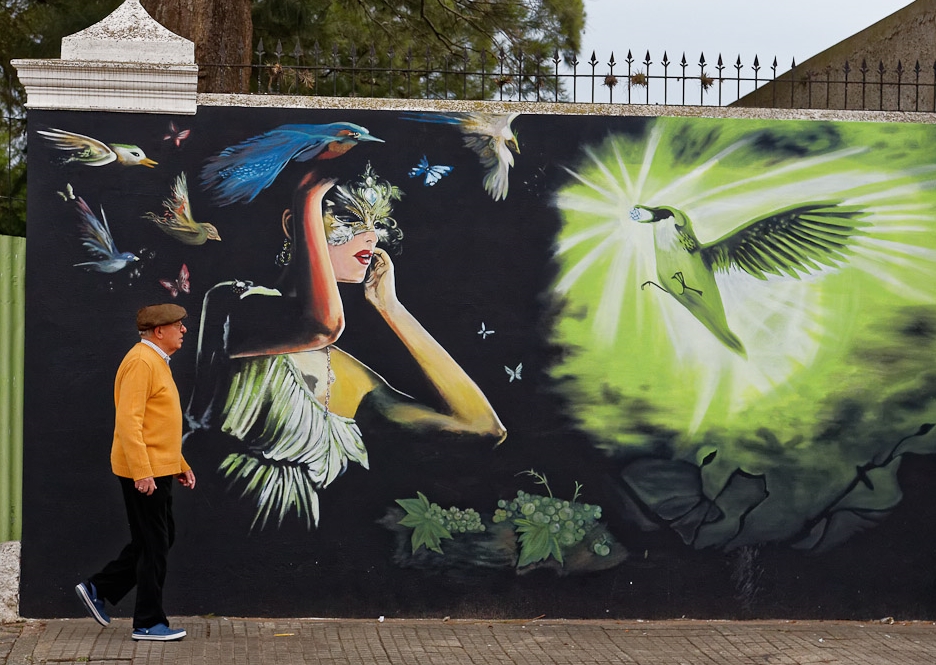
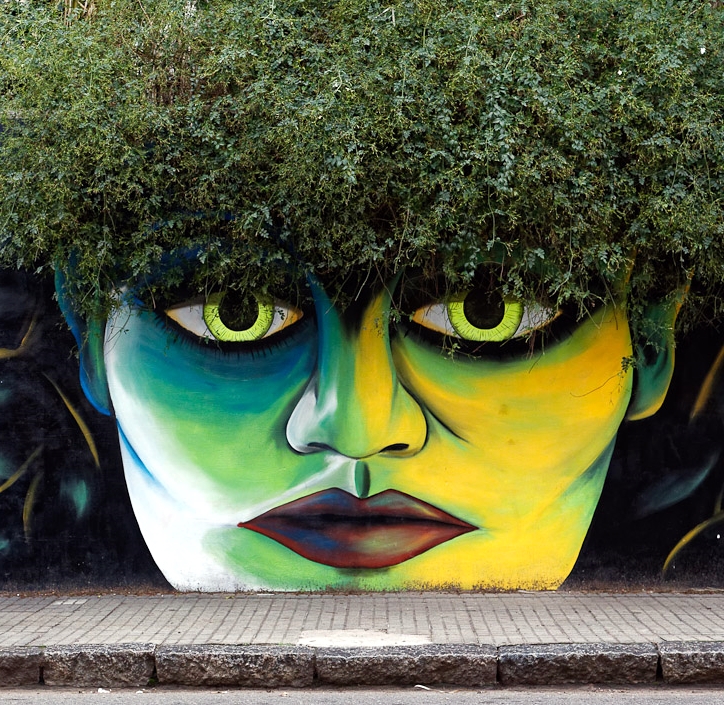
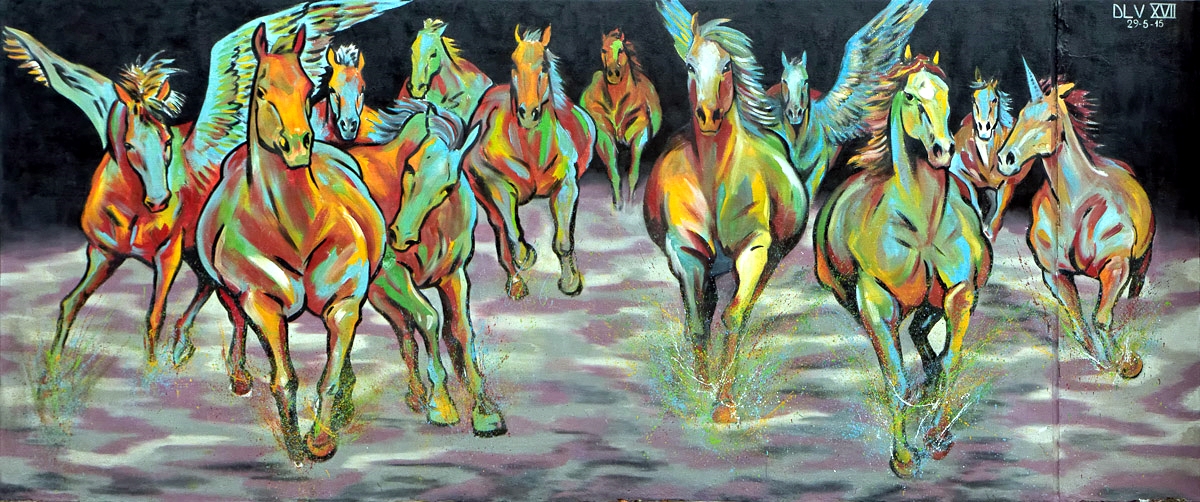
 The above 4 tremendous art works are seen in Carmelo. Made by artist DLV . I couldn’t find any closer information about this artist. May be some readers would know.
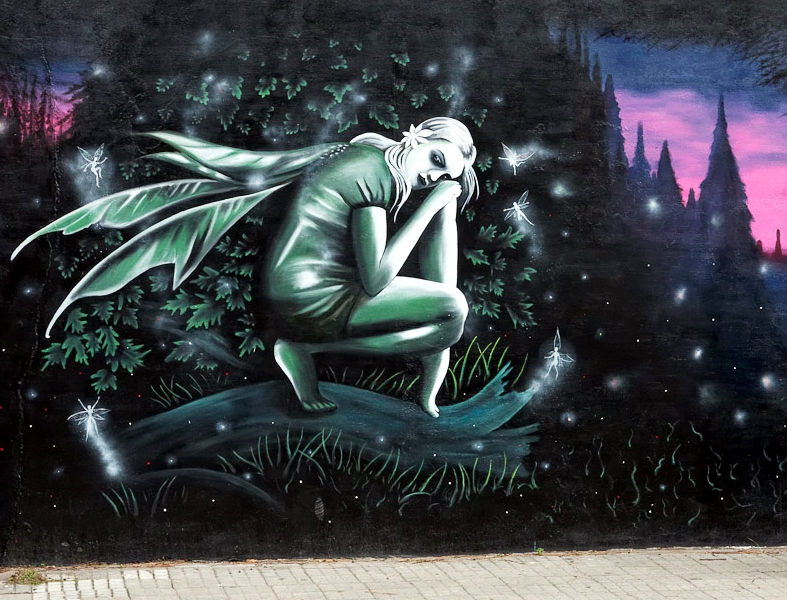
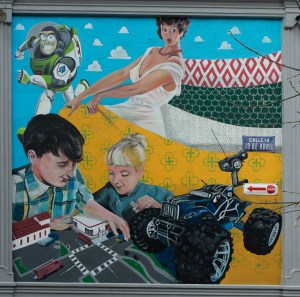
 Two more paintings jumped my eye in Carmelo. And – I have seen many more in Carmelo, its a real little street art center, worth a visit.
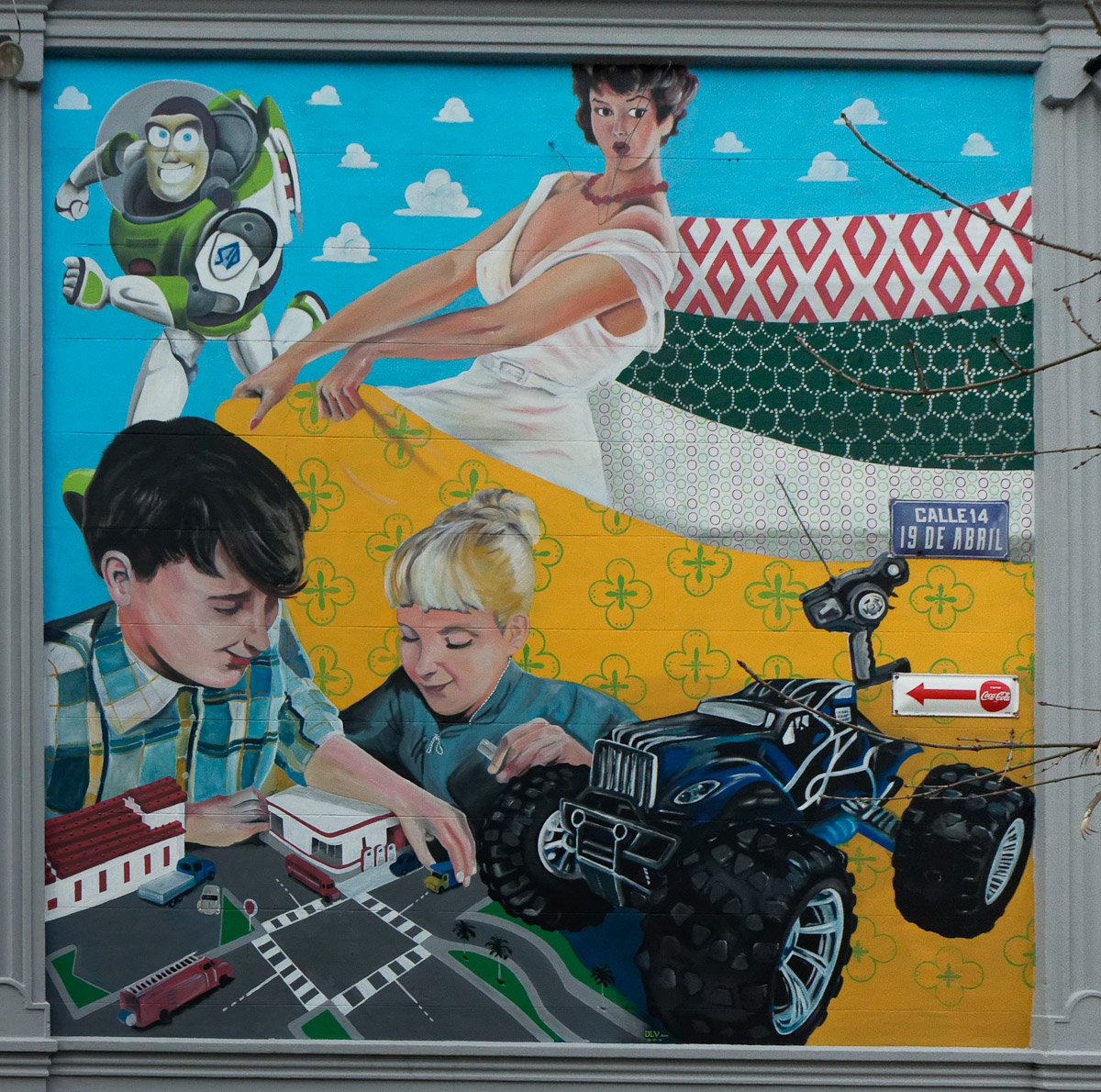
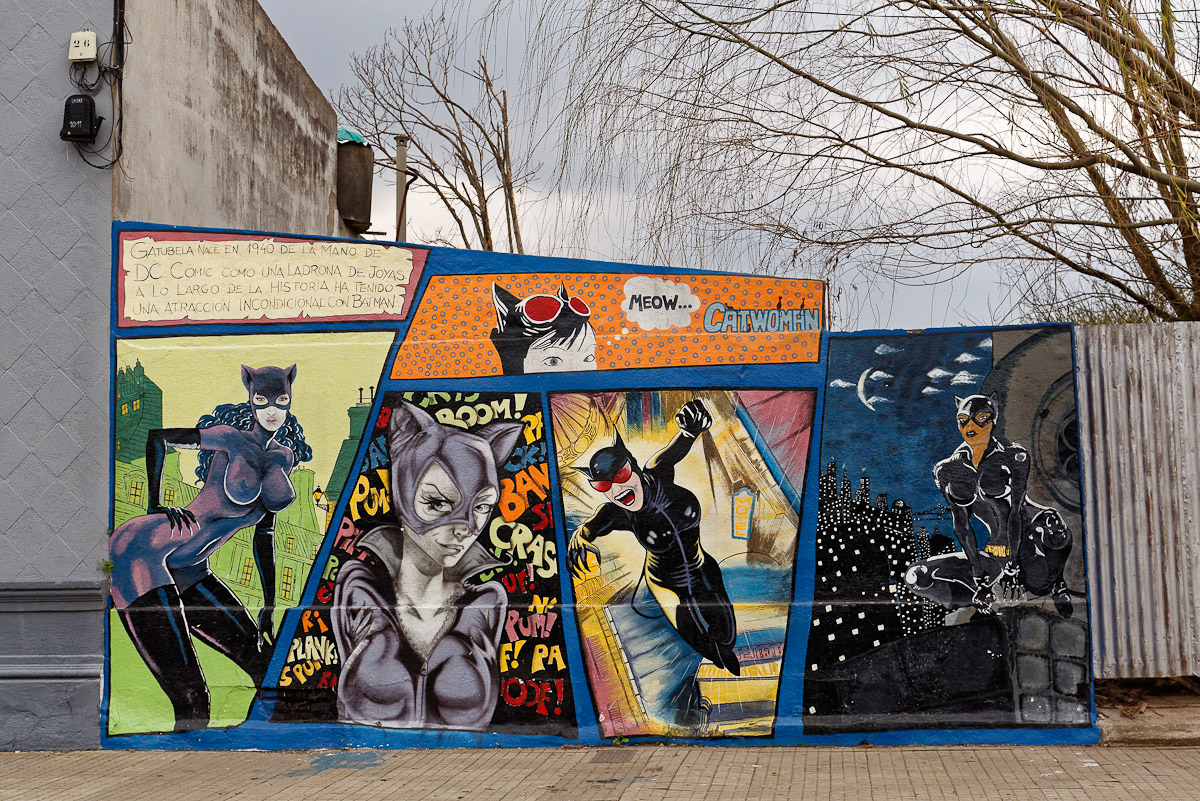
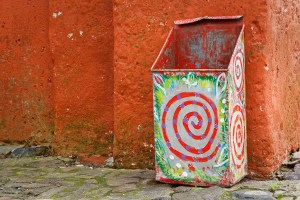
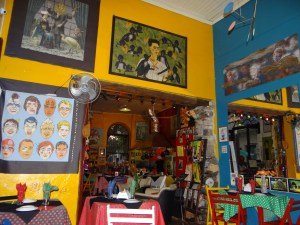
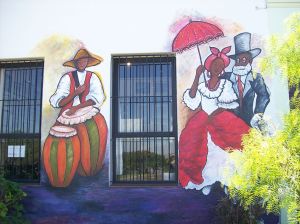
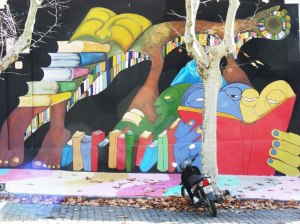 Never miss out Colonia del Sacramento, the whole old city is a peace of art, inside and outside.
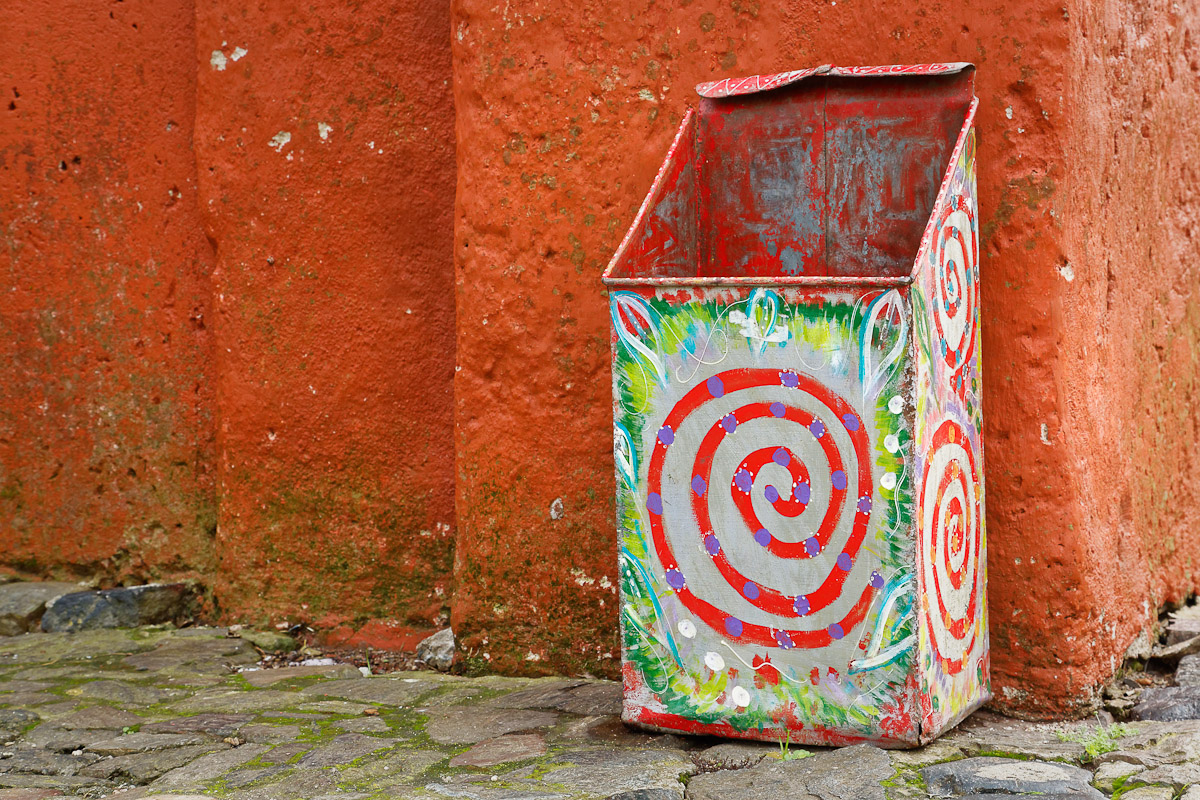
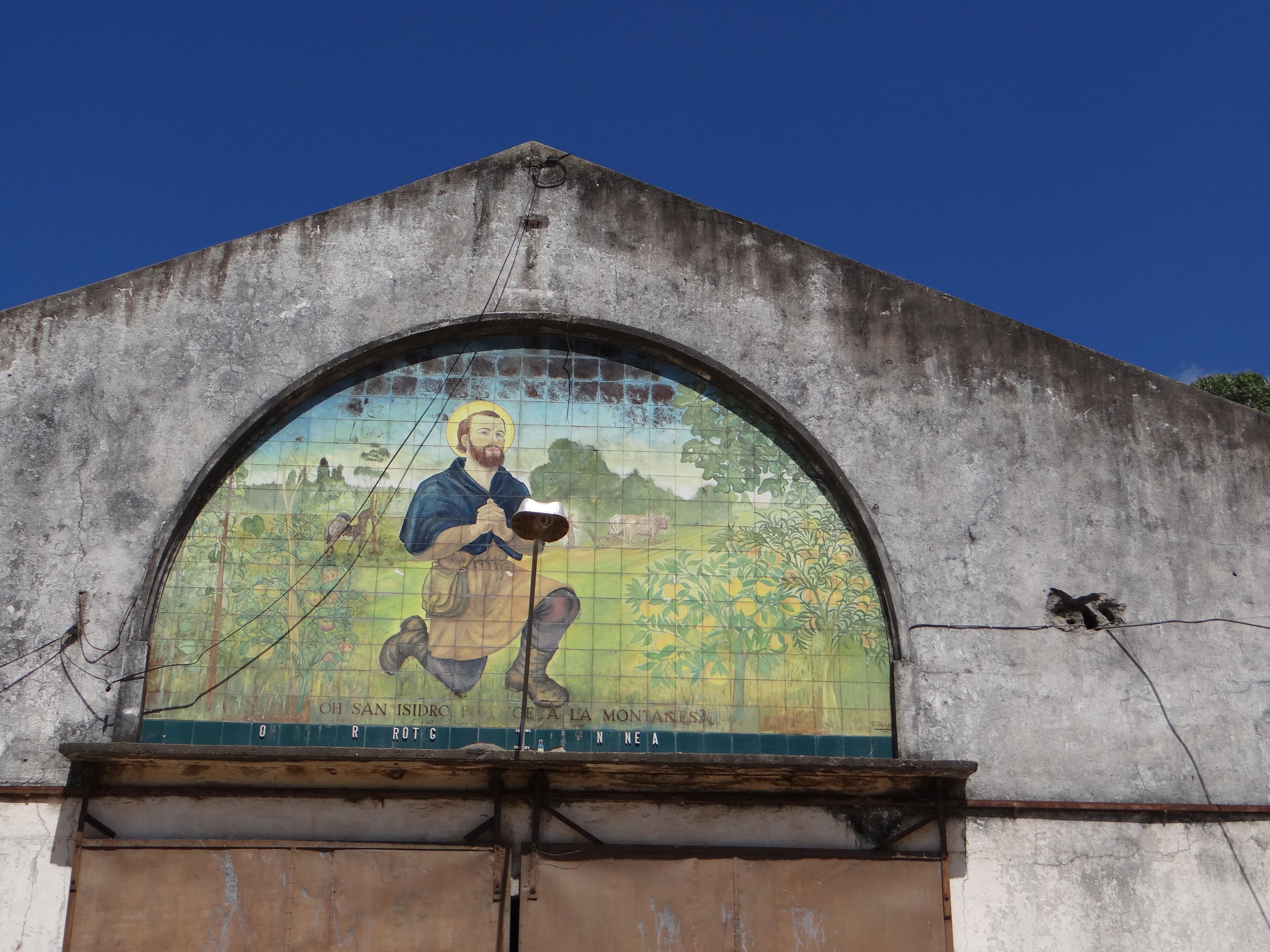
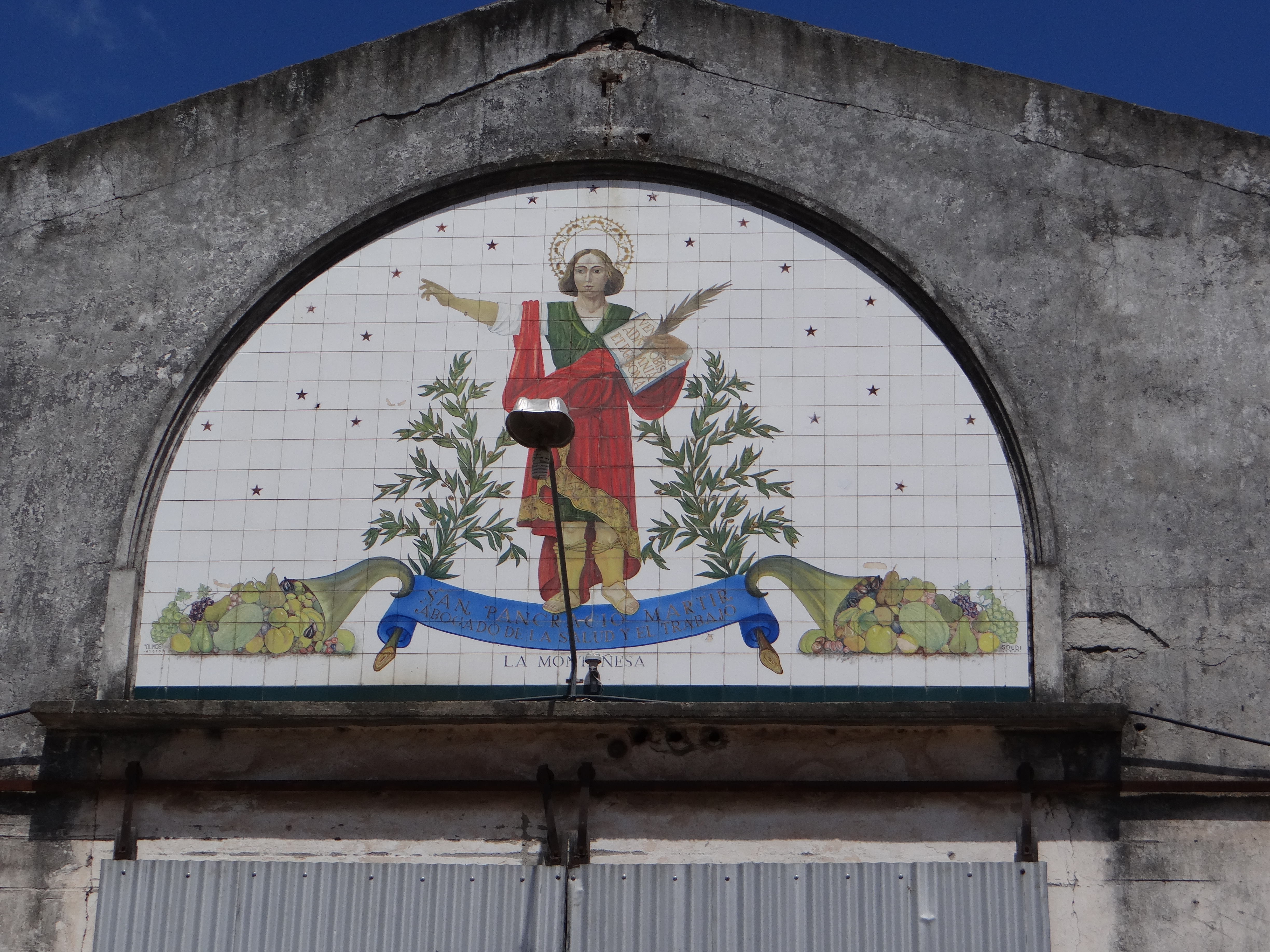
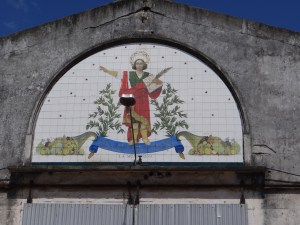 Unusual tile paintings (religious street art) seen at an abandoned winery in La Montanesa.
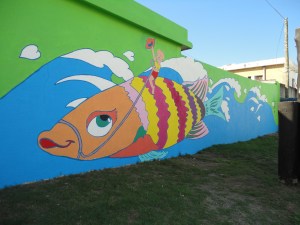
 Nice street art in the Gold Coast town of La Floresta.
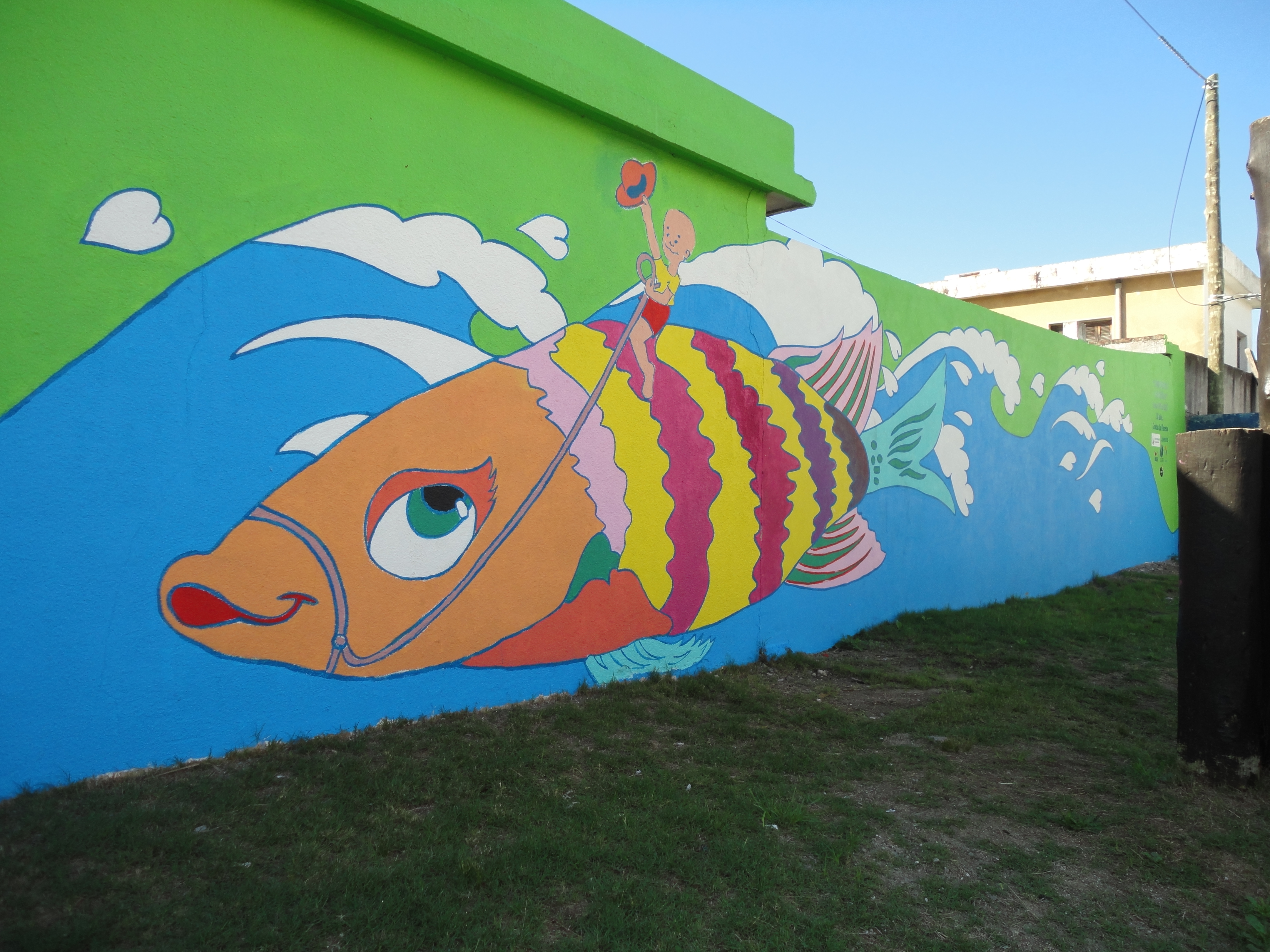
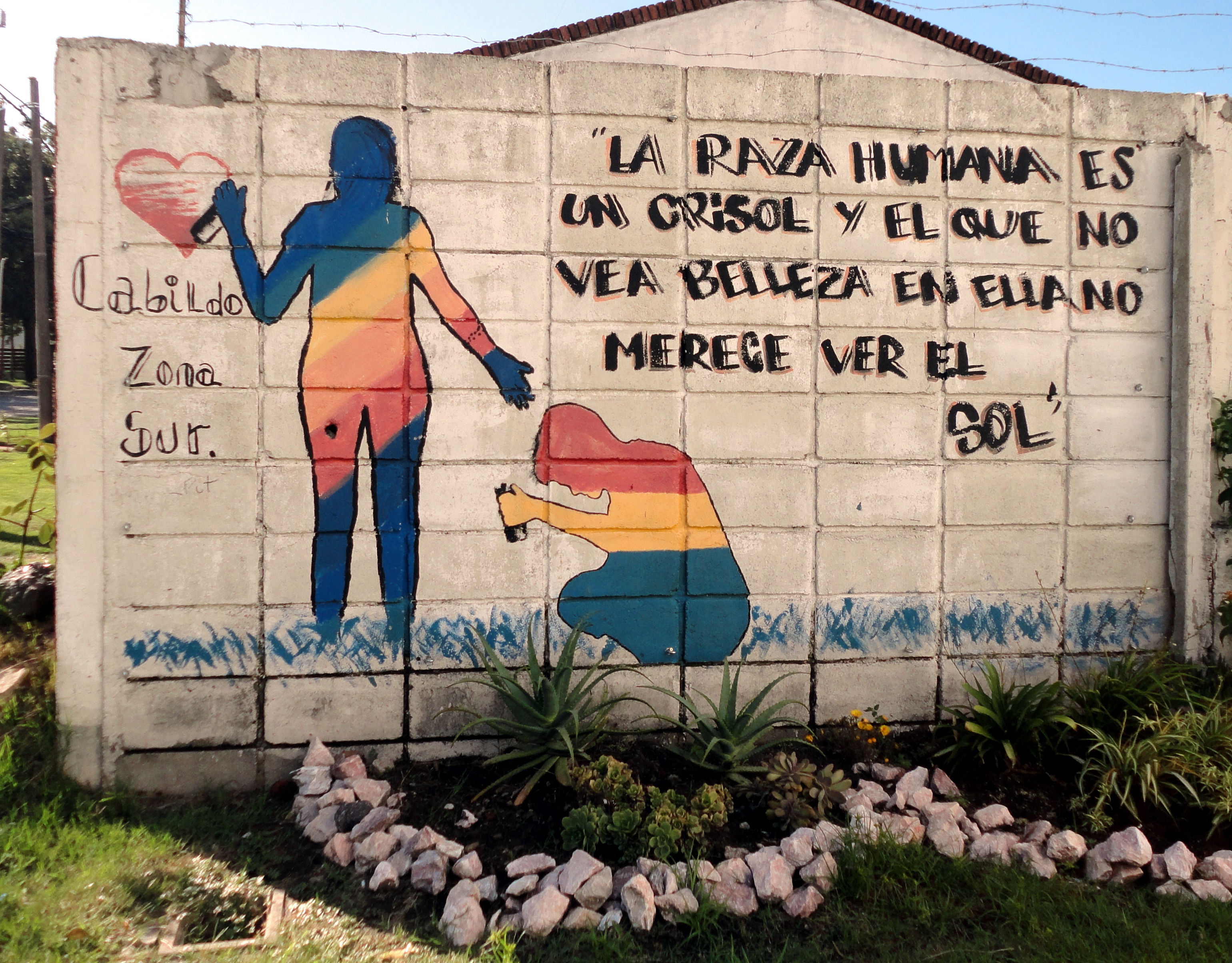
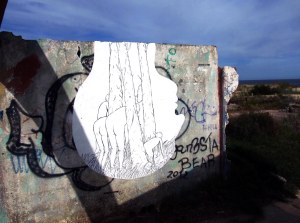 Wall art in and around Piriapolis, left Alfalfa, right David de le Mano.
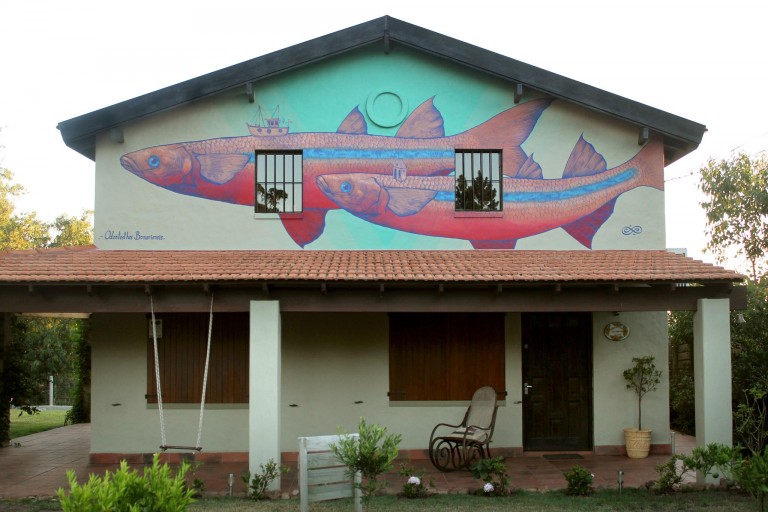
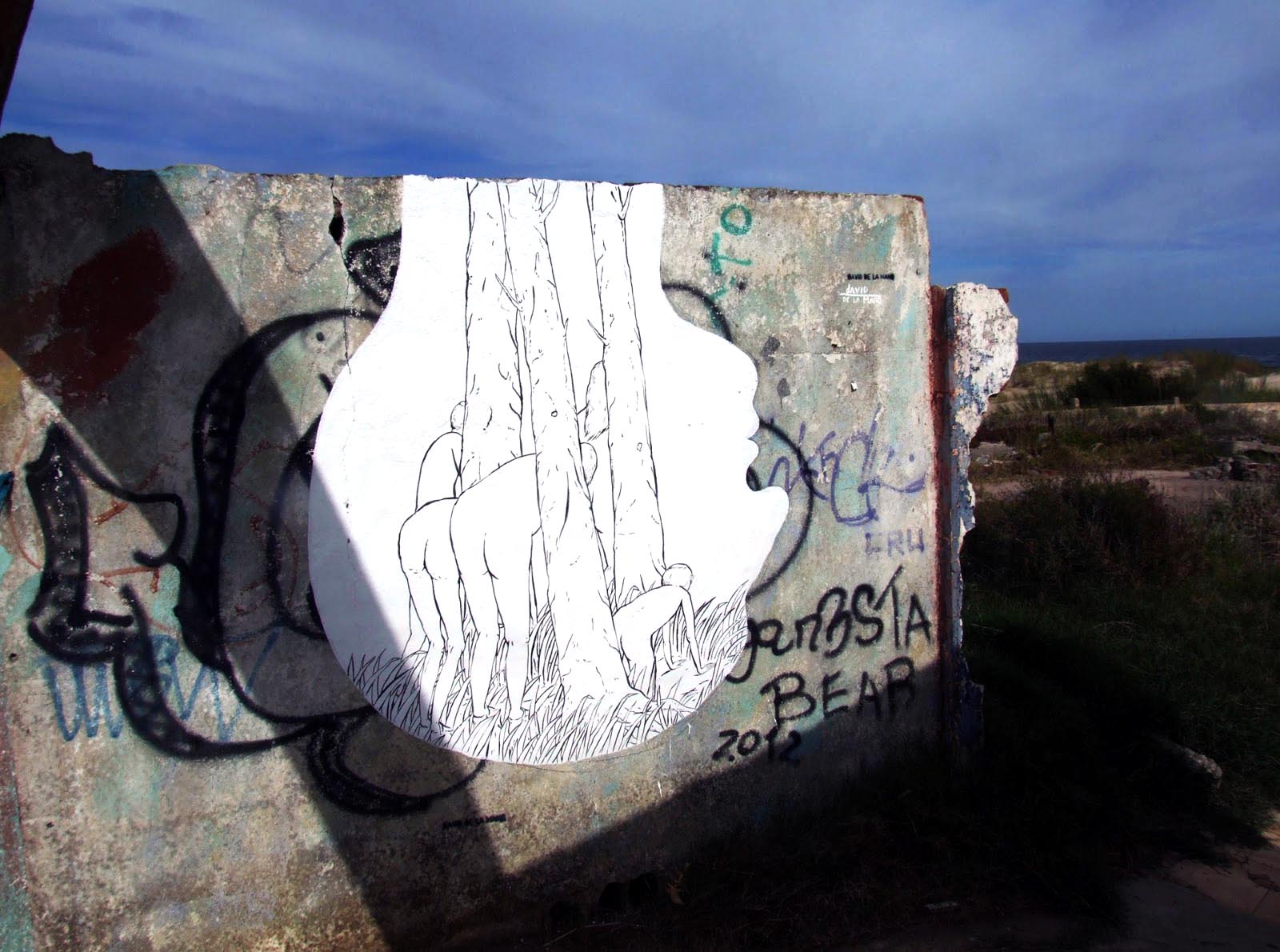
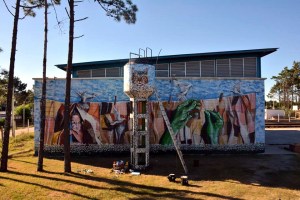
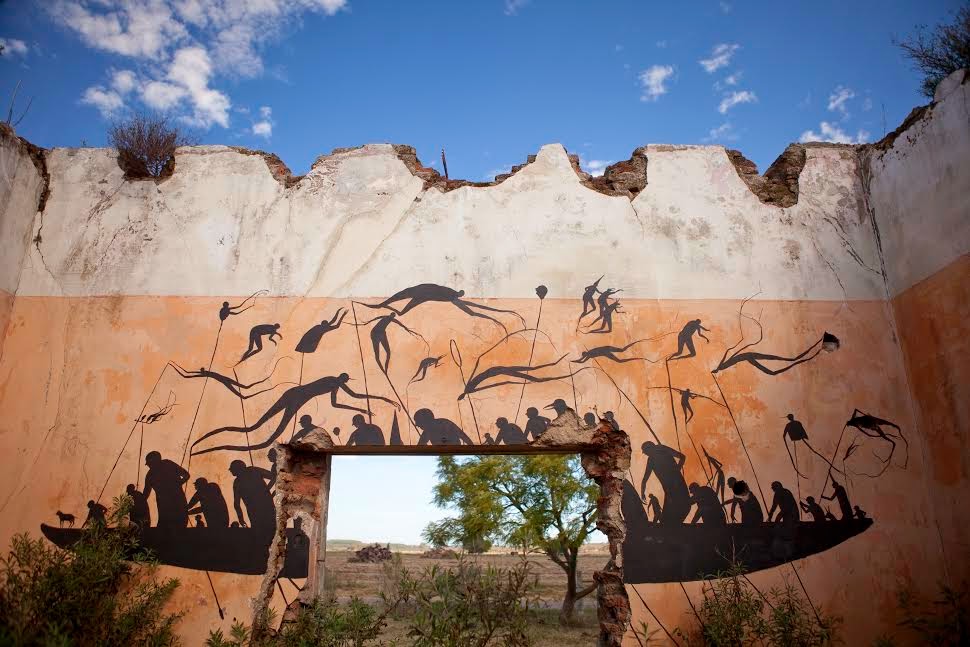
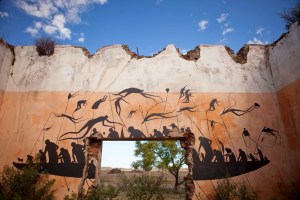 Extraordenary art works, left in Salinas by Pablo Machioli and right in Villa Soriano by David de la Mano.
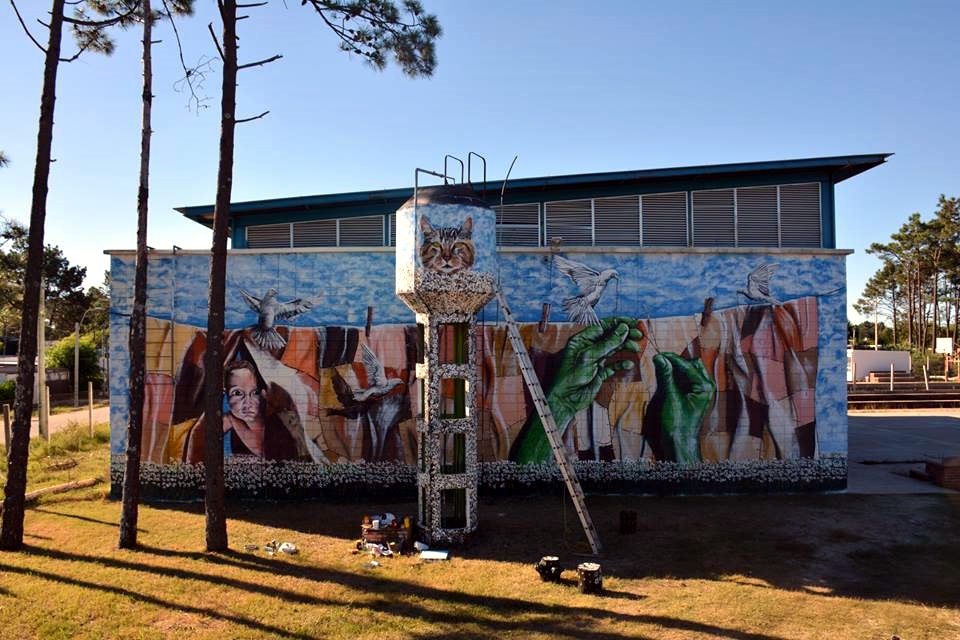
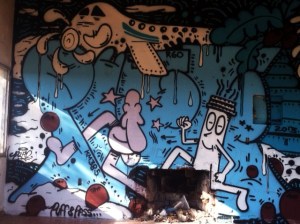
 Urban street art at a bus stop on Ruta 60.
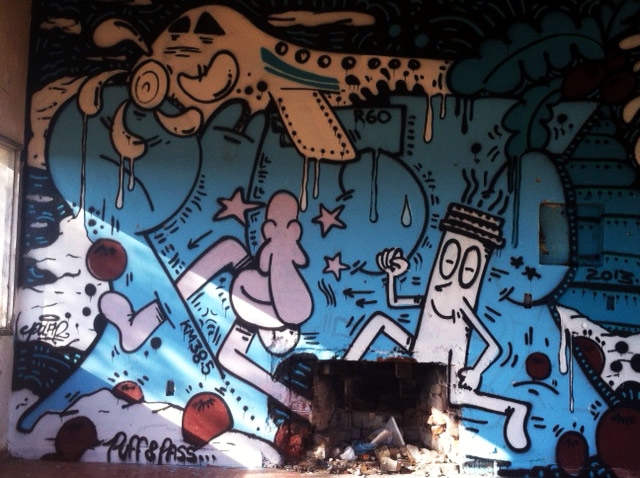
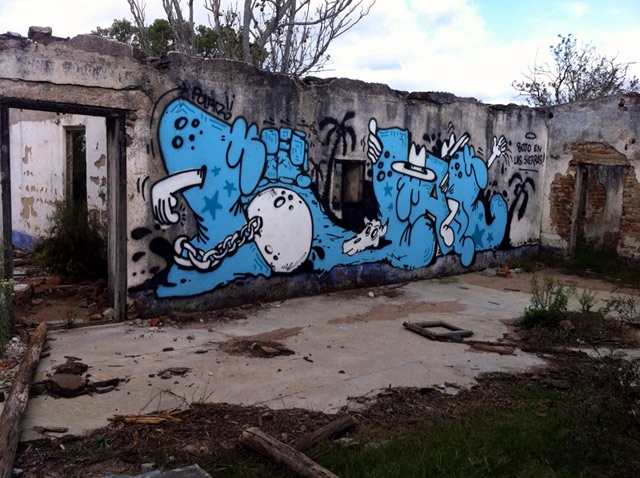
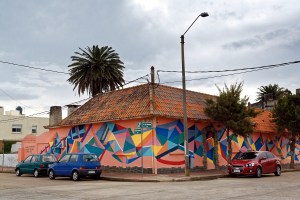
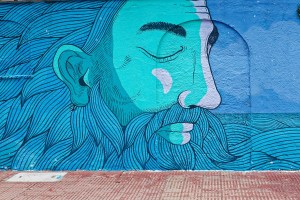
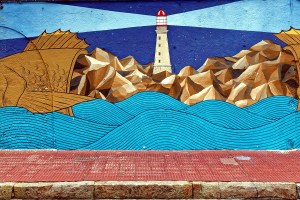
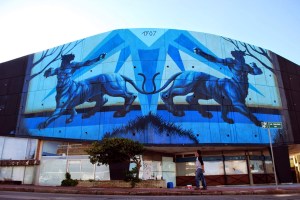
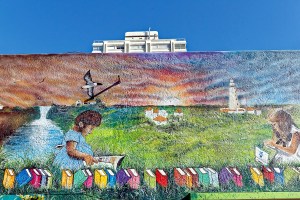
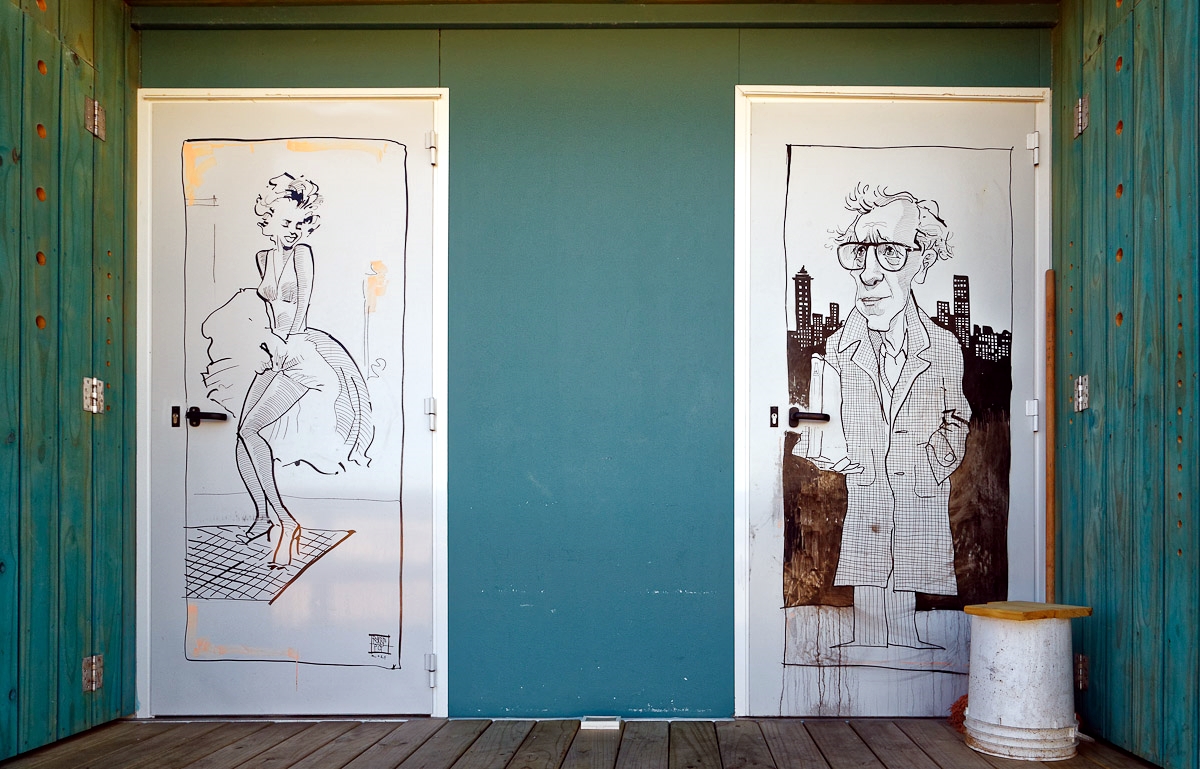
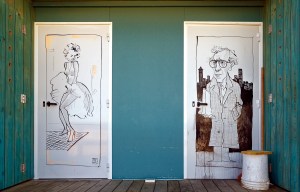 Finally six different impressions seen in Punta del Este, the last pic on the right shows Marilyn and Woody at banio doors in a Punta del Este restaurant.
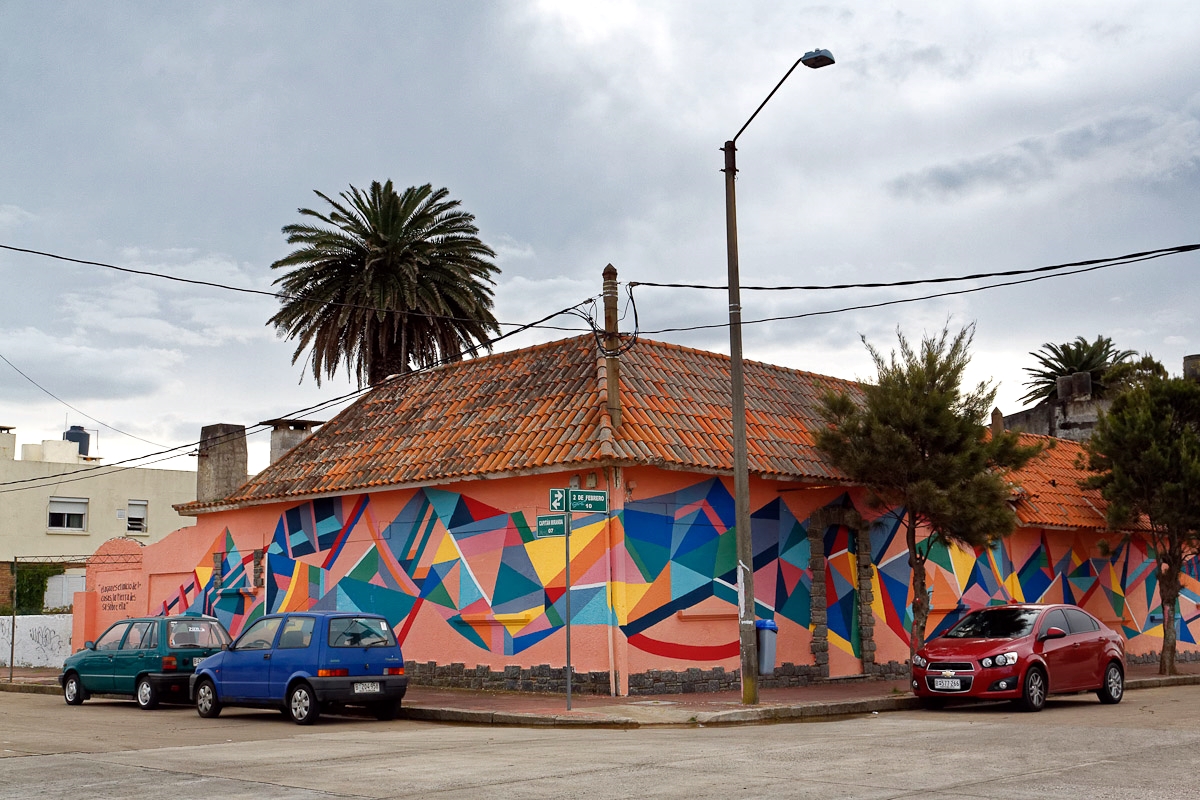
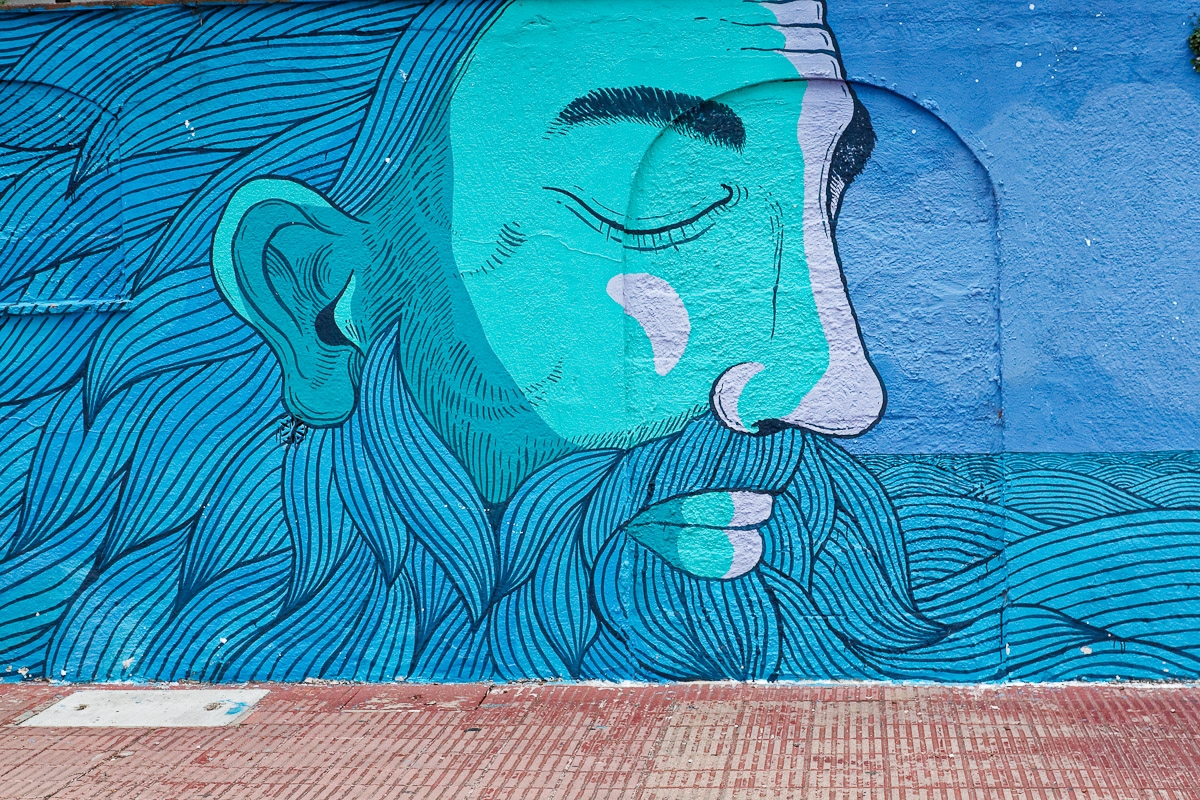
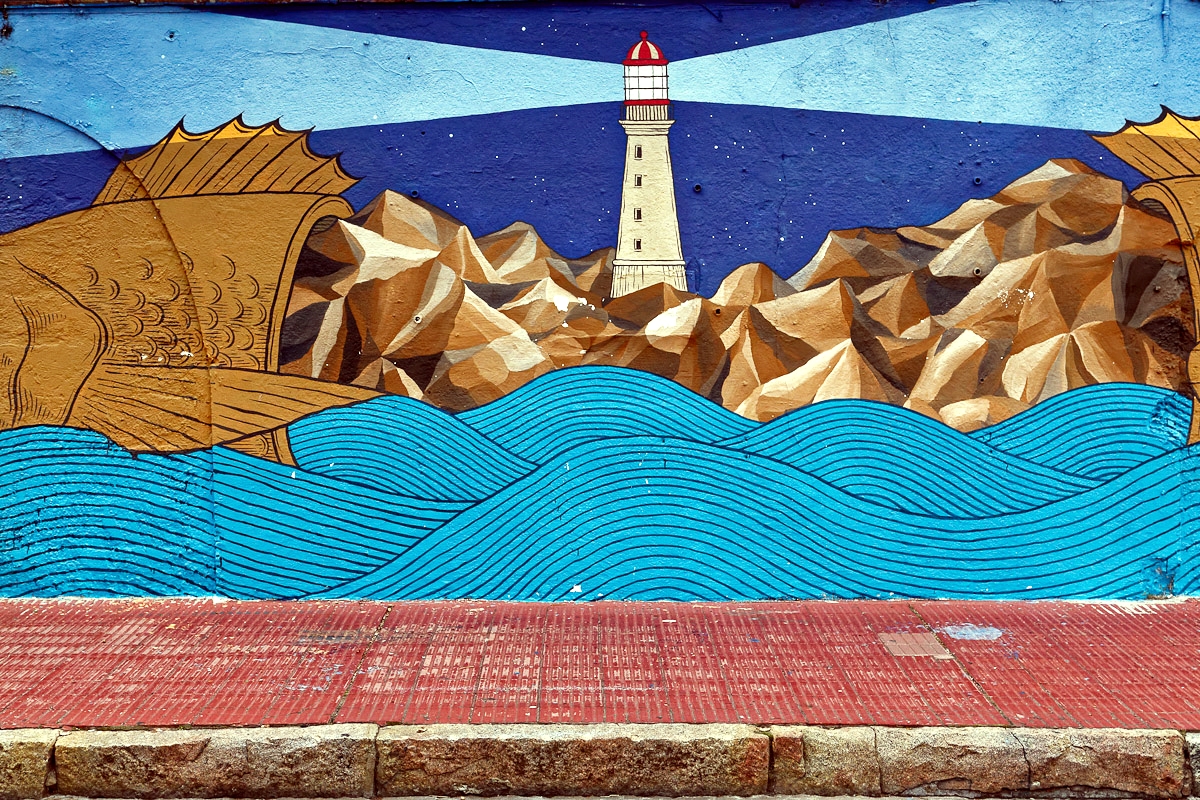
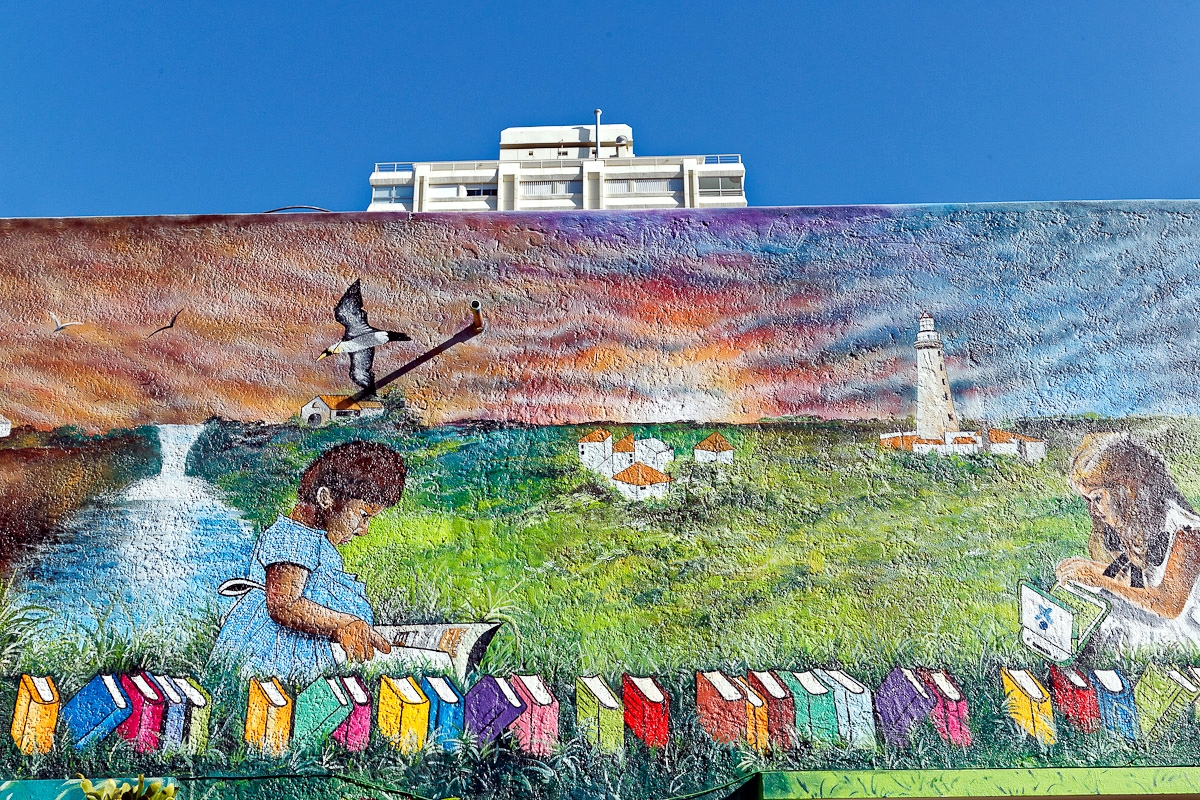
It was a lot of work, during the last few month, to compile this article and all the pictures, but it also was a lot of fun and I only can hope that you enjoy colorful art work as I do.
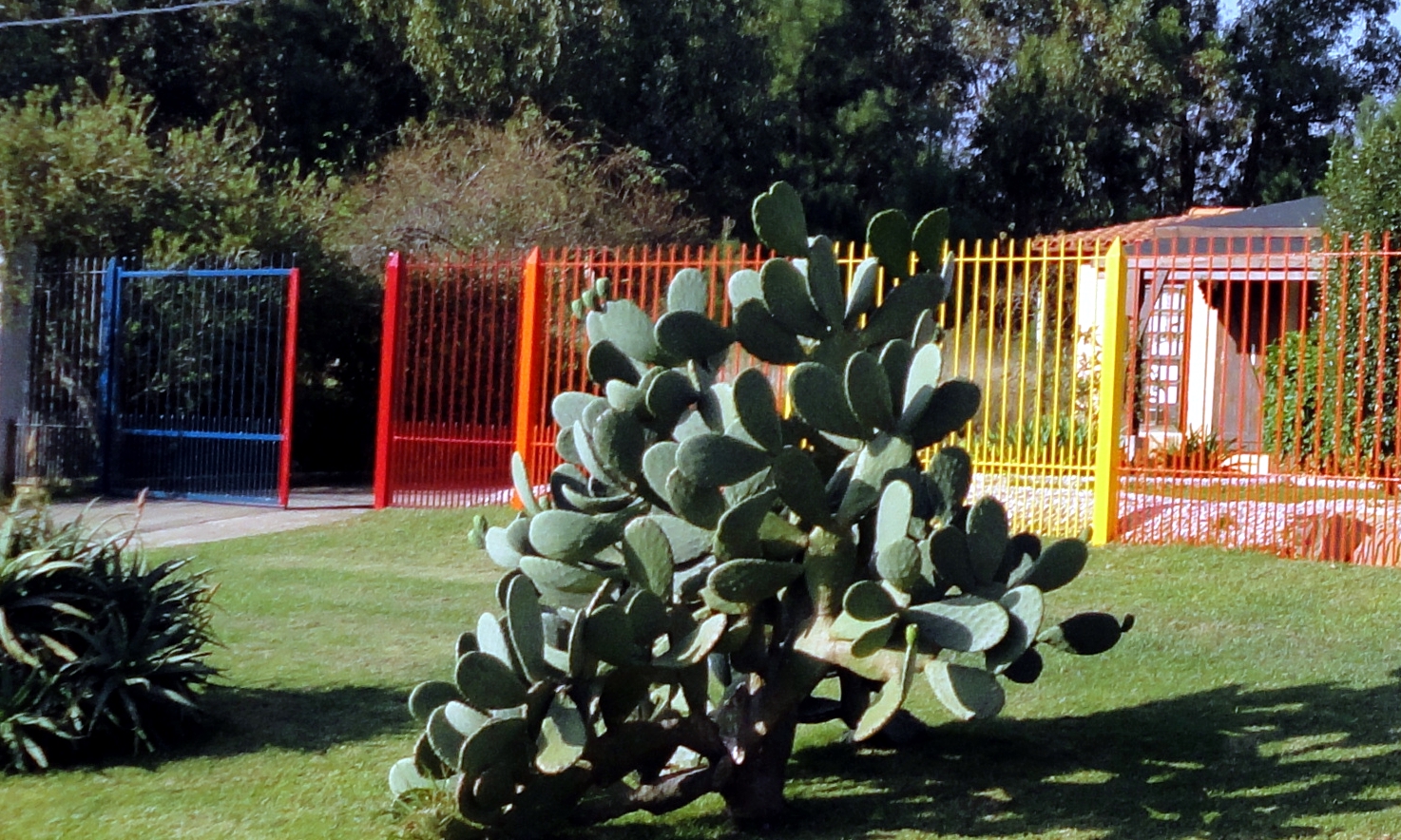
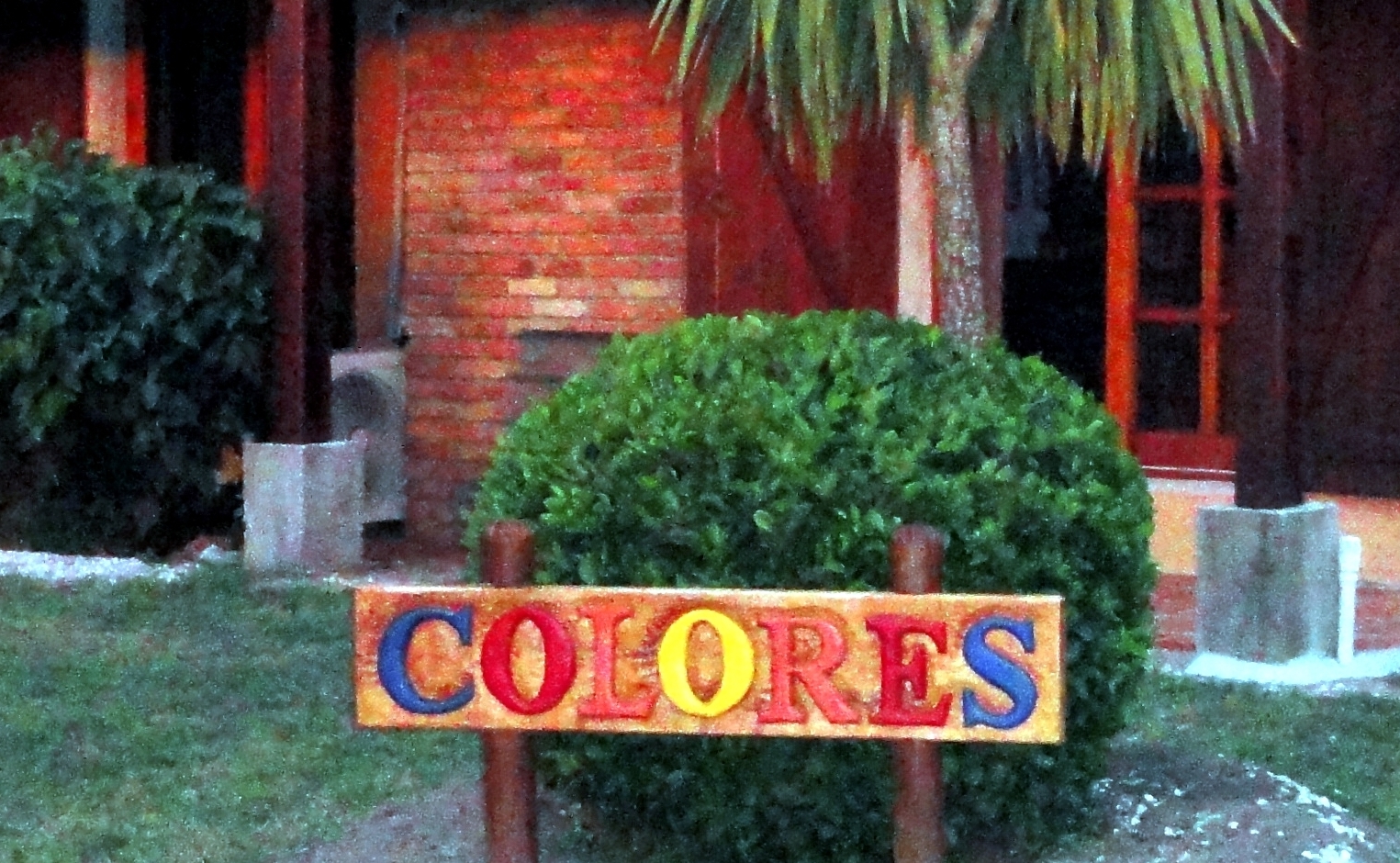
Warm regards from Casa Colores, our small contribution to street art.


„LIke Banksy“ graffiti with the rat or mouse was painted in Montevideo, in Av. Rivera and Bulevar Artigas. It was painted in the wall of a little supermarket. I worked near there for years and used to have my lunch break just there…looking at the rat. Now it is erased.
LikeLike
Thank’s very much for this info. I couldn’t remember. Already changed the post.
May be someone got more information about other arts too.
Especially I can’t remember where (street ?) the kids glued the bottle tops (Miro art).
LikeLike
Hello my friend,
what a great article again. I read it over several times,
so many wonderful photographs, wow !
Sometimes I think, that people don´t appreciate enough
all the work, time and effort you put into your blog.
Yesterday I drove through P.city and had a good look on
street art. Boy – we have some nice stuff too here, never
realized it before.
Thanks for this magnificent article, go on like that, Luigi.
LikeLike
Thanks so much Luigi.
I promise, I will go on with posting !!
Would like to see some Panama street art. You are right, when
I lived there, I didn’t realize either.
Abrazos from UY.
LikeLike
Will be next week in Panama city and take a few photos for you which I have seen.
LikeLike
Great, THANKS Luigi !
LikeLike