
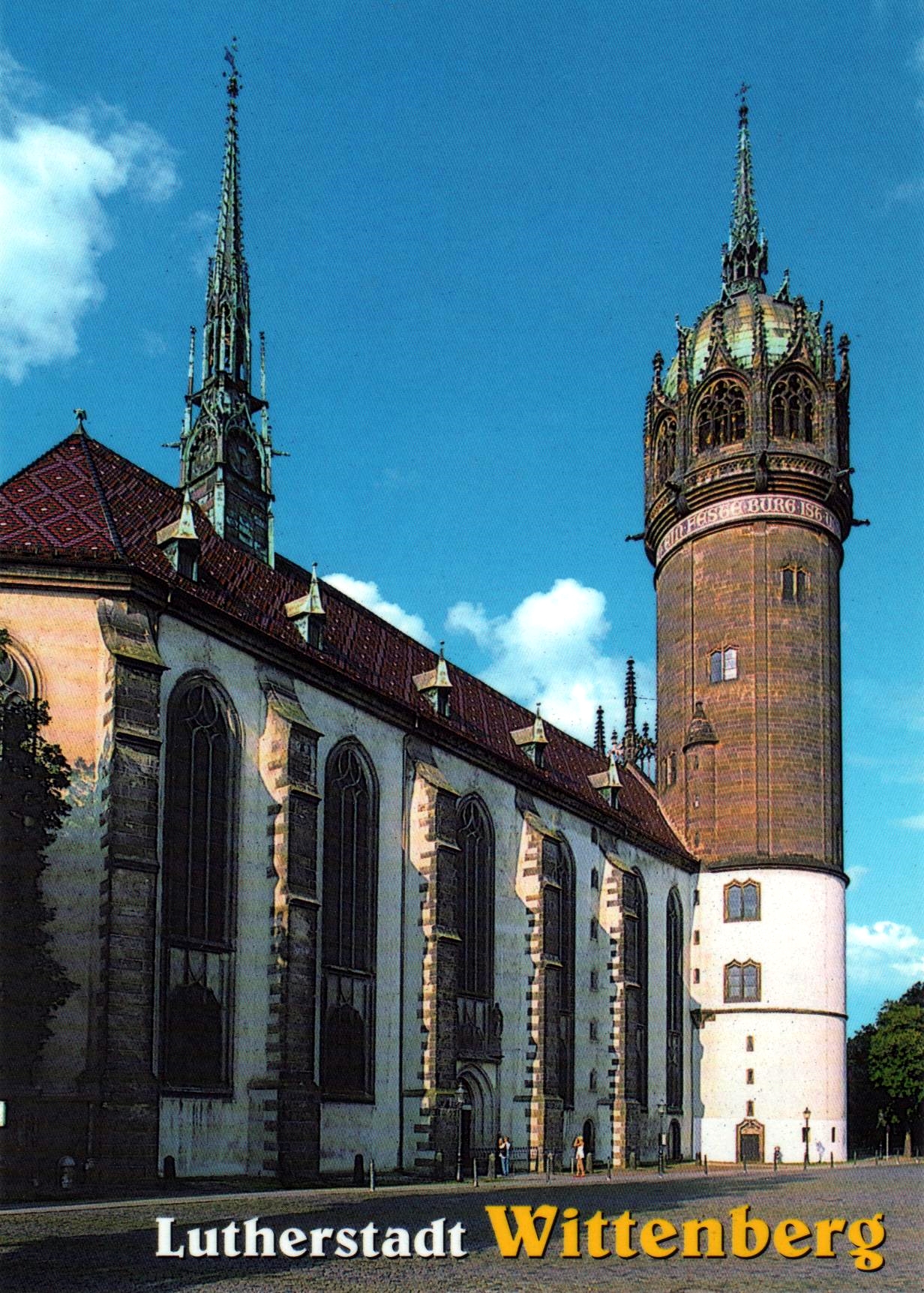
Lutherstadt – Wittenberg.
During my last Germany trip I could sadly spend 3days and 2nights only in this wonderful city, rich of history and full of sightseeing places. But it was worth it and I like to share my impressions with you. Impressions and information’s I gathered during this stay.
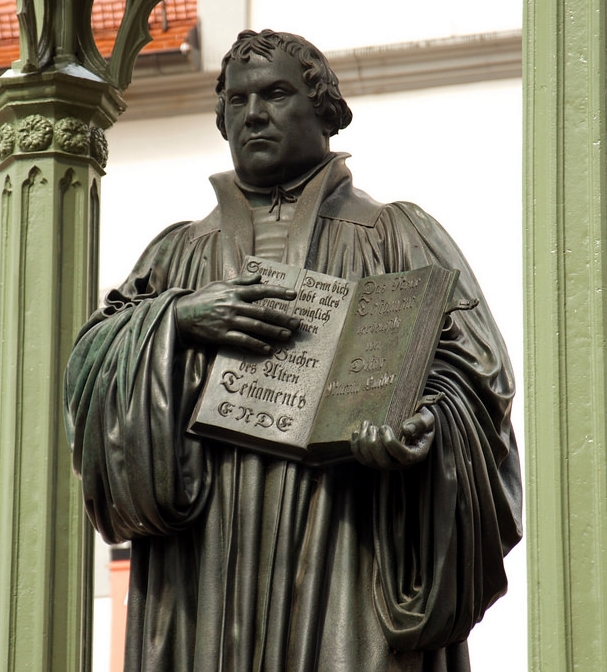
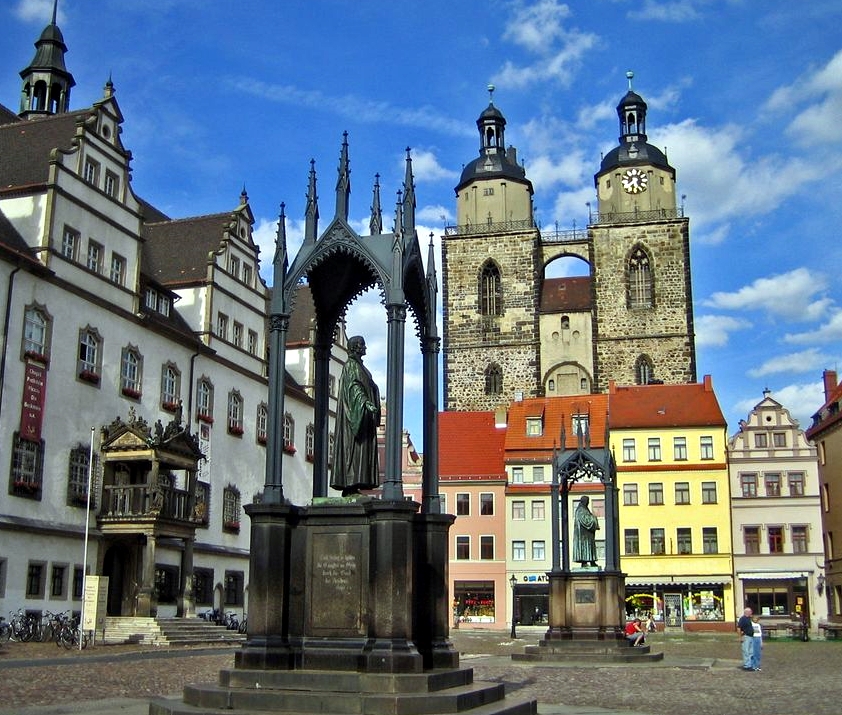
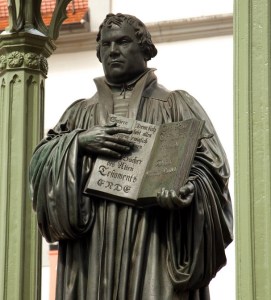 Martin Luther statue on the market square, Wittenberg.
The first settlement was mentioned in 1180 as a small village founded by Flemish colonists under the rule of the House of Ascania. In 1260, this village became the residence of the dukes of Saxe-Wittenberg, and in 1293 the settlement was granted its town charter as a free-standing town.
 Lutherstadt Wittenberg around 1500.
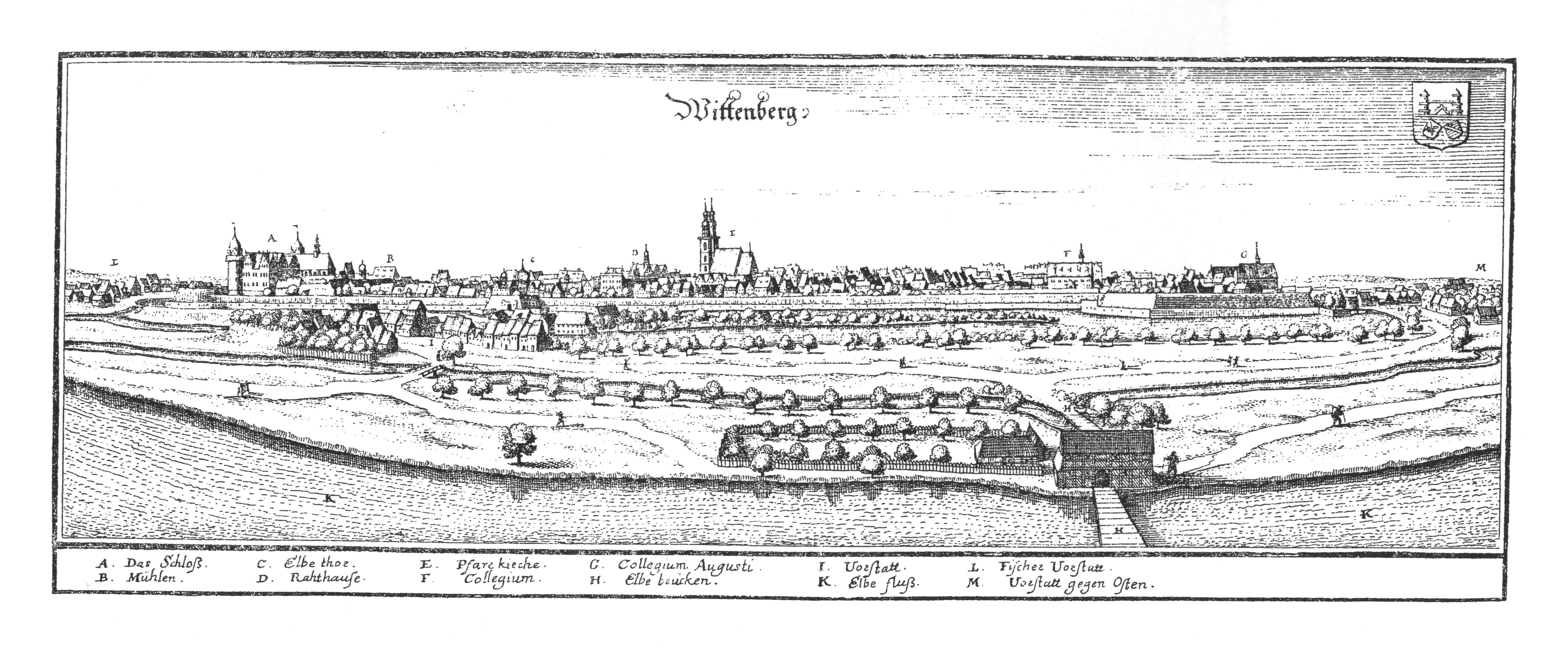
Wittenberg developed into an important trade centre during the following several centuries, because of its central location. When the Ascanians died out, the property of Saxe-Wittenberg passed to the House of Wettin. Then Wittenberg became an important regional political and cultural centre at the end of the 15th Century, when Frederick III „the Wise“, the Elector of Saxony, made his residence in Wittenberg.
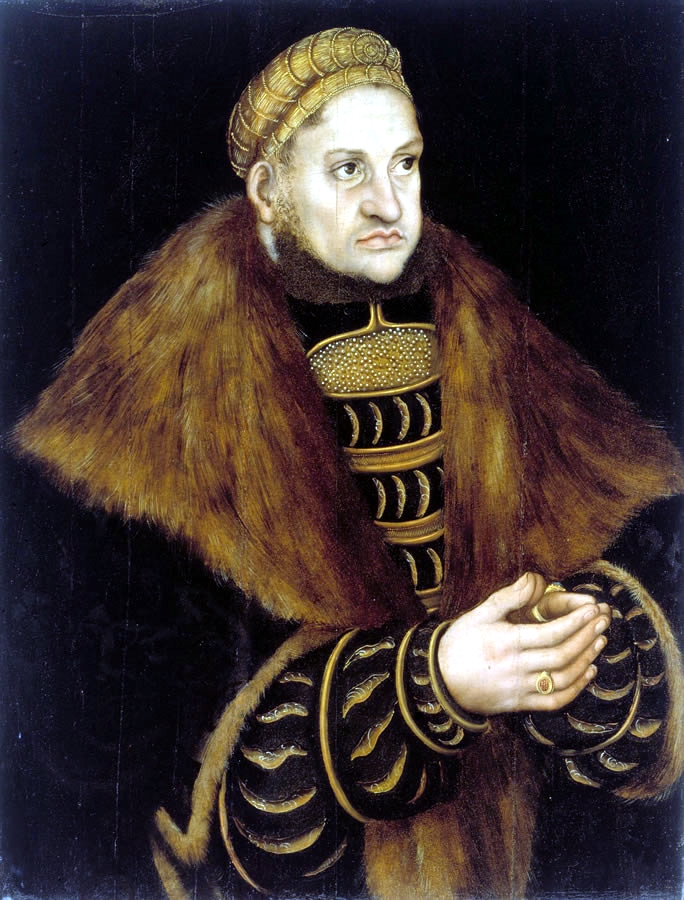
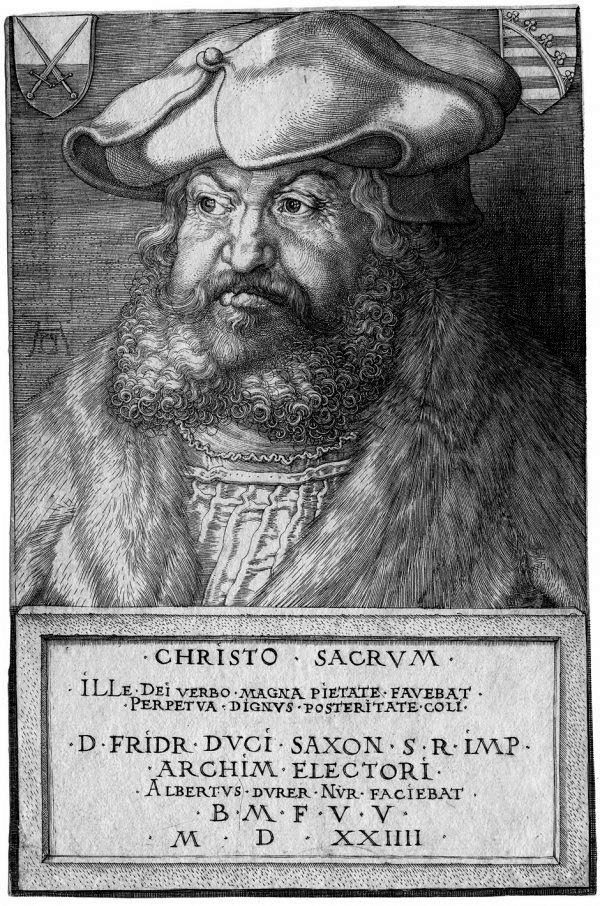
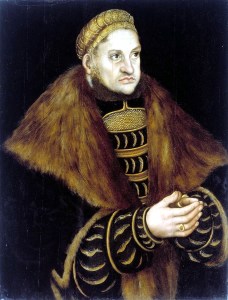 Kurfuerst Friedrich der III von Sachsen, named „Friedrich The Wise“. Painted by the great Lucas Cranach, which I will describe further down.
Several parts of boundaries of the town were extended soon afterward. The second bridge over the Elbe River was built from 1486 through 1490 and the castle church (the Schlosskirche in German) was erected from 1496 through 1506. The Elector’s palace was rebuilt the same time.
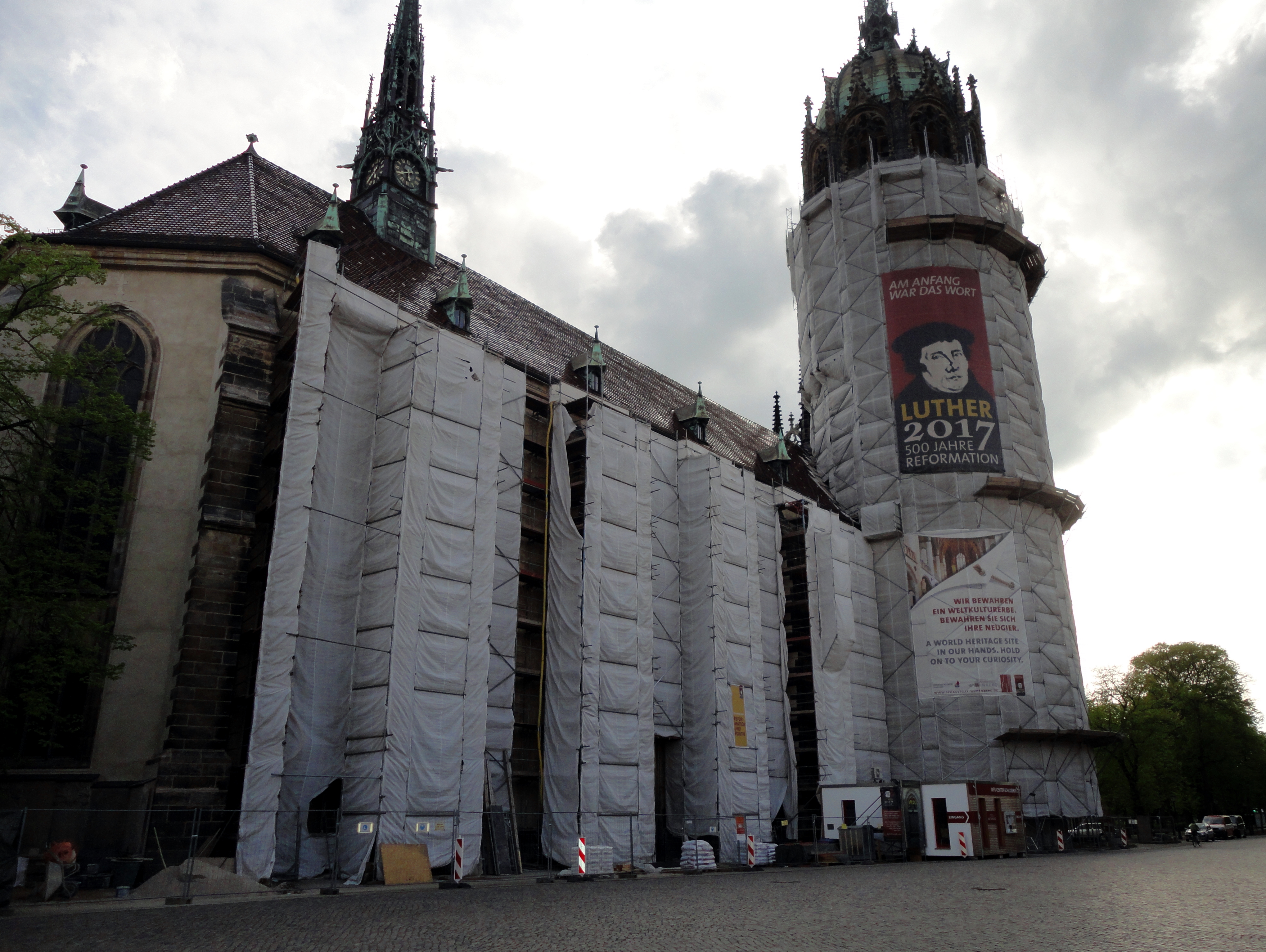
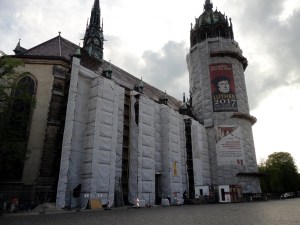 The castle church. Under complete renovation till 2017.
In 1502, the University of Wittenberg was founded, and it gave a home to some important thinkers, such as Martin Luther—a professor of theology beginning in 1508—and Philipp Melanchthon—a professor of Greek starting in 1518.
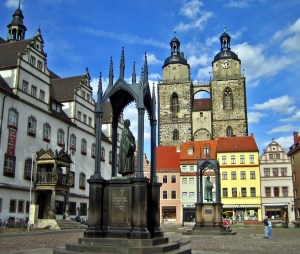 Melanchton statue (foreground) and Luther statue (background) on the market square in Wittenberg. Left the city hall and strait on the town church.
On 31 October 1517, Luther nailed his 95 theses against the selling of indulgences at the door of the All Saints‘, the Castle Church, marking the beginning of the Protestant Reformation. The castle church and almost the whole city of Wittenberg is under renovation, because of the 500 year anniversary of the reformation in October 2017.
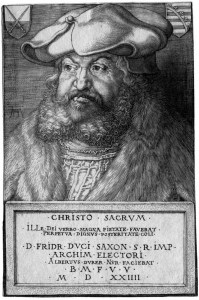 Ruler Friedrich the III from Saxony or Friedrich the Wise, wood cut by Albrecht Duerer 1524. Albrecht Duerer (21 May 1471 – 6 April 1528) was famous for his high quality wood cuts in Europe.
This sleepy little town in rural eastern Germany doesn’t look like the center of a revolution. But the events that played out here in the 16th Century shook the foundations of Christendom.
It was here in Wittenberg, Germany, that Martin Luther lived and preached. The Protestant Reformation had begun. About this event and Martin Luther I will write a post in an upcoming second part, so stay tuned.
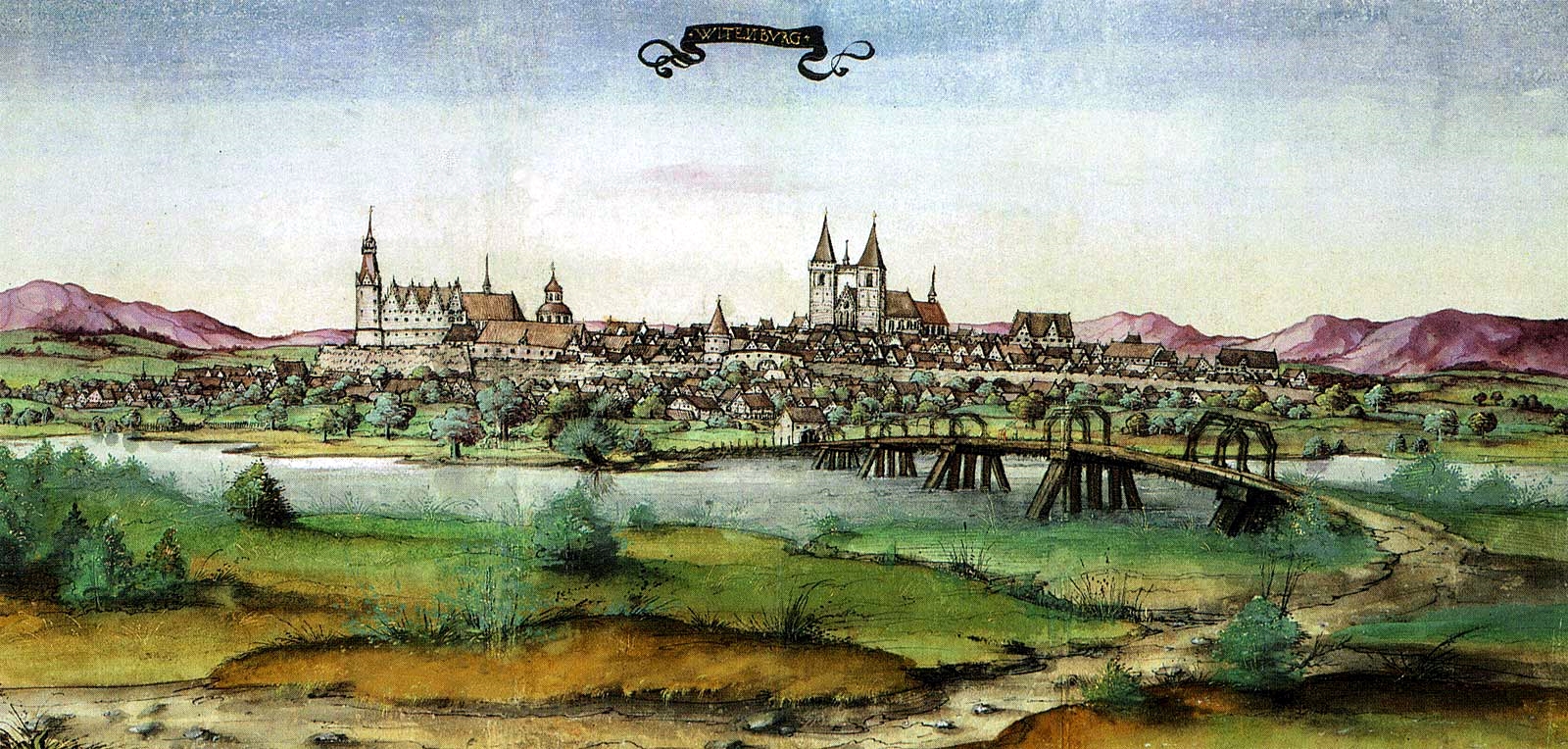
 Wittenberg in 1536. In front the first bridge over the river Elbe. Phantastic view with the castle and the castle church on the left and the town church at the center. Drawing out of the travel album of „Pfalzgraf Ottoheinrich“, 1536, Würzburg University Library. Click on pic to upsize.
Visitors come here from all over the world to see the places where these historic events took place. This could be a good day trip from Berlin. It’s about one hour with the IC train. But to see everything without having to rush, I would recommend spending at least two days and one night here.
 You are invited to celebrate the 500 years.
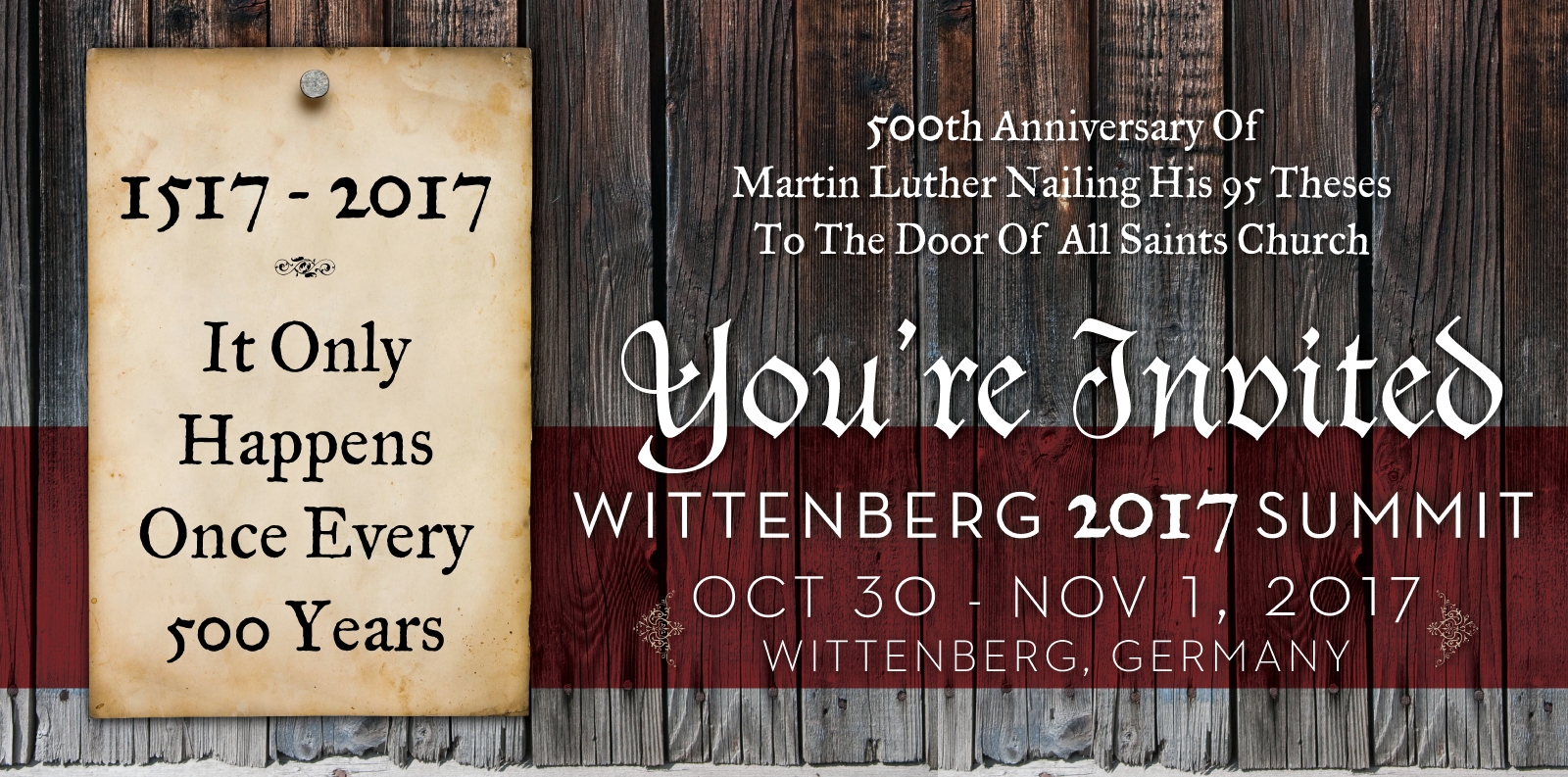
For such a small town, there is a lot to see:
The town itself. A charming collection of 16th Century houses and a striking market square.
The Castle Church. It was on the doors of this impressive church that, allegedly, Martin Luther nailed his 95 Theses. Luther’s tomb is inside, and works of Cranach the Elder.
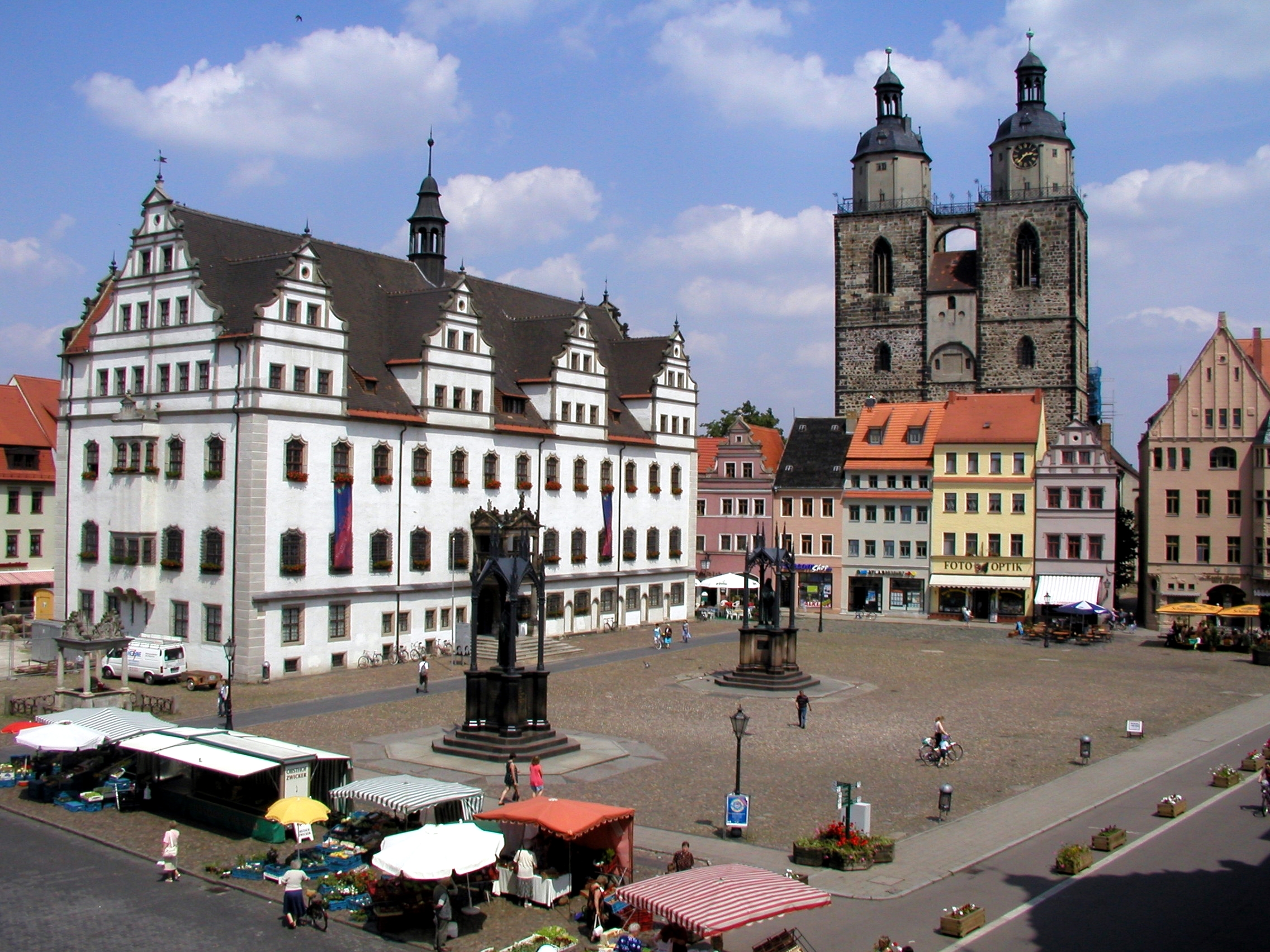 Historic market square with the Luther and Melanchton monuments infront the town hall. Earlier pictures show the statues
The Town Church. Another beautiful Medieval church where Luther preached many sermons. And where you see works of Cranach the Younger.
Luther’s Residence. Martin Luther lived in this converted cloister with his family for many years. Now a museum.
 Little Italy in Wittenberg. All the fresh renovations are made in beautiful pastel colors.
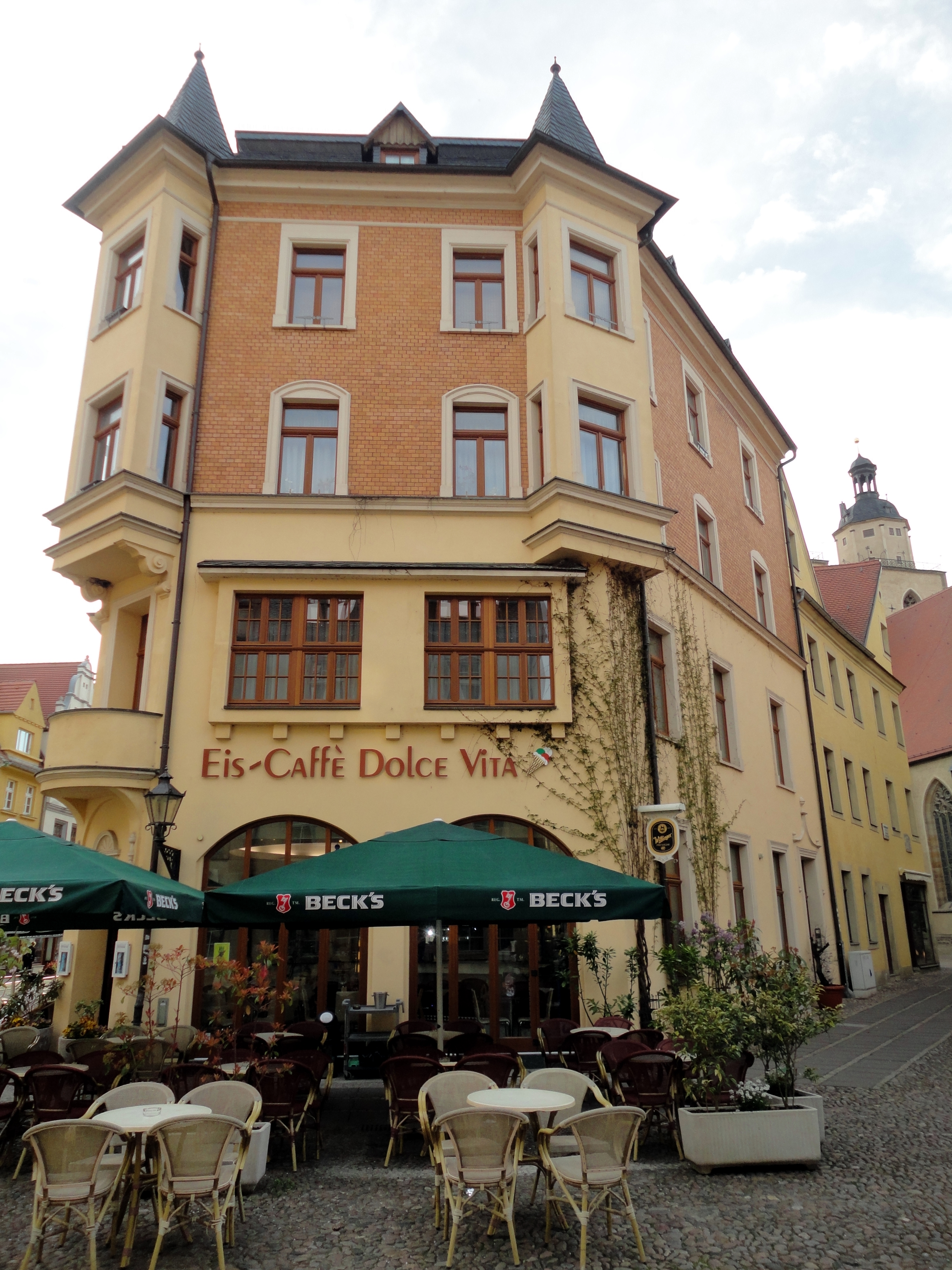
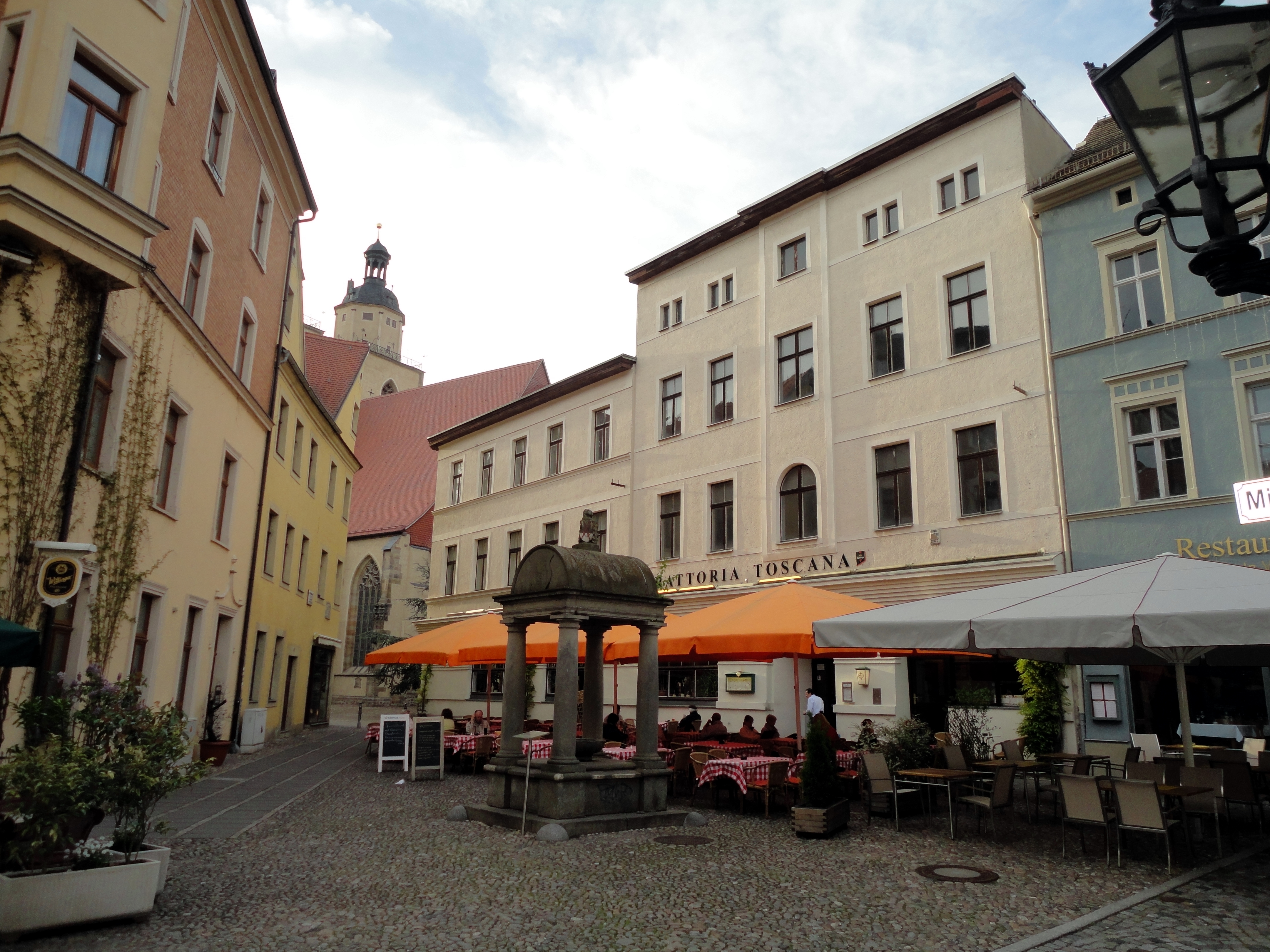
The Oak Tree planted where Luther burned the Papal Bull.
Lucas Cranach’s Home and art studio. This artist documented much of the Reformation with his portraits and woodcuts.
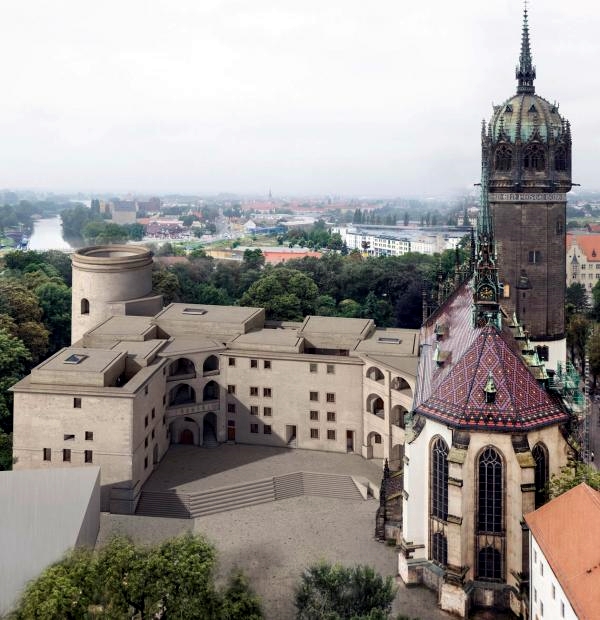
The Castle Museum. In the castle part of the Castle Church building. History of Wittenberg, from prehistoric times through the middle ages and later as a Prussian garrison town.
 Castle museum (left) and castle church (right).
Philip Melanchthon’s House. On the Collegienstrasse. Luther’s friend and fellow theologian, who contributed enormously to Lutheran doctrine.
Haus der Geschichte. On Schlossstrasse. An East German nostalgia museum. Rooms furnished in 50’s, 60’s and 70’s. A good view into the former DDR lifestyle.
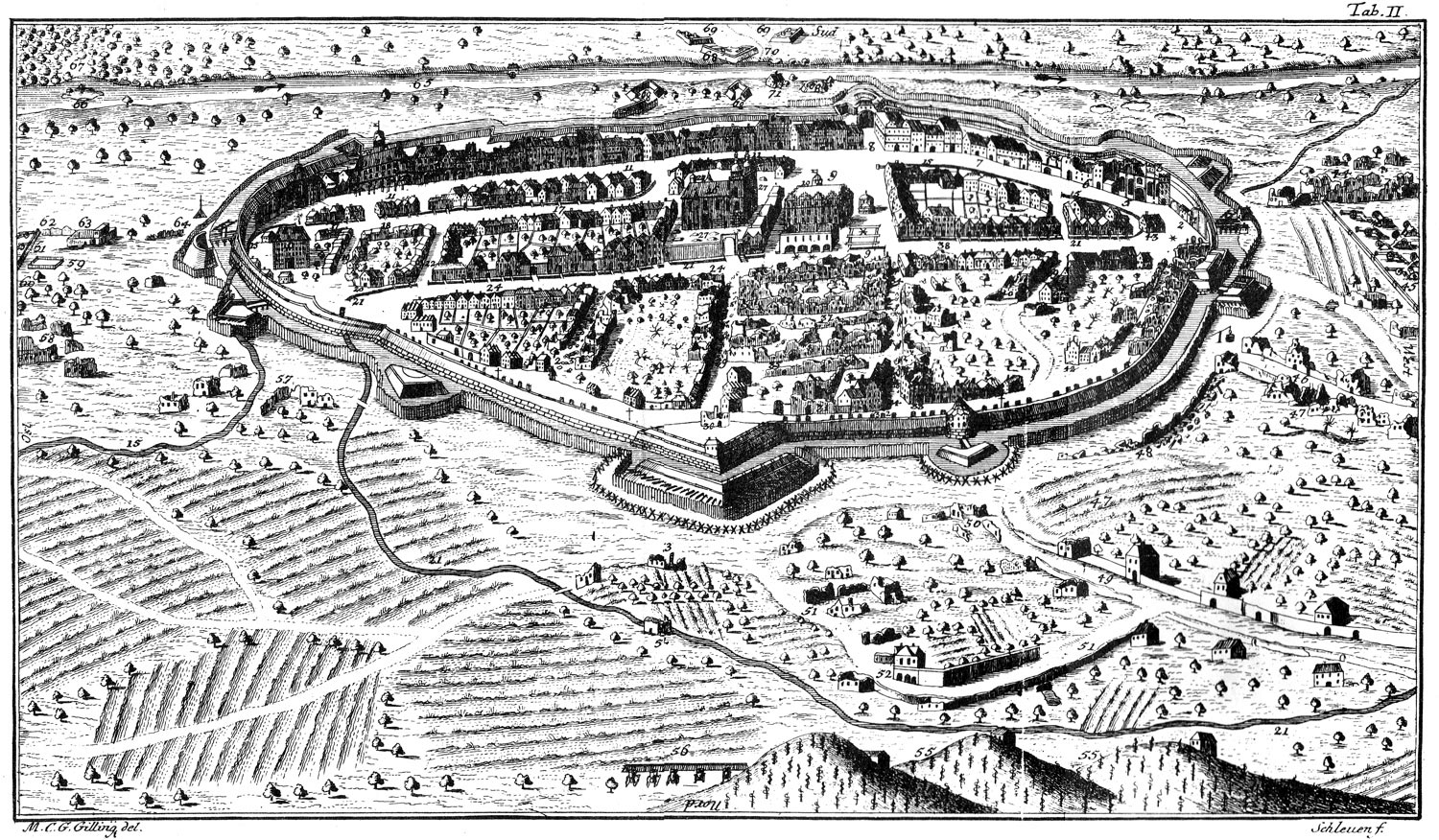
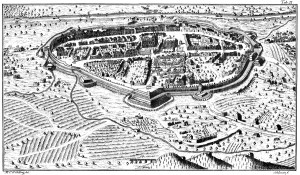 Engraving of the city of Wittenberg, out of the book from 1760 „Die Klagegeschichte Wittenbergs, Georgie (1702-1771)“. Interesting to see, that this engraving has no castle and no castle church. If one thinks that in the upper left corner of the city is the castle church tower, then it is on the wrong end of the city. It should be in the upper right corner of the city. Or – my guess, this engraving was made before the castle and church was build (from 1490 till 1511, at the order of Frederick III, Elector of Saxony. Reason for my guess – there is also no bridge over the river Elbe. Mistery mistery mistery !! Click to supersize picture.
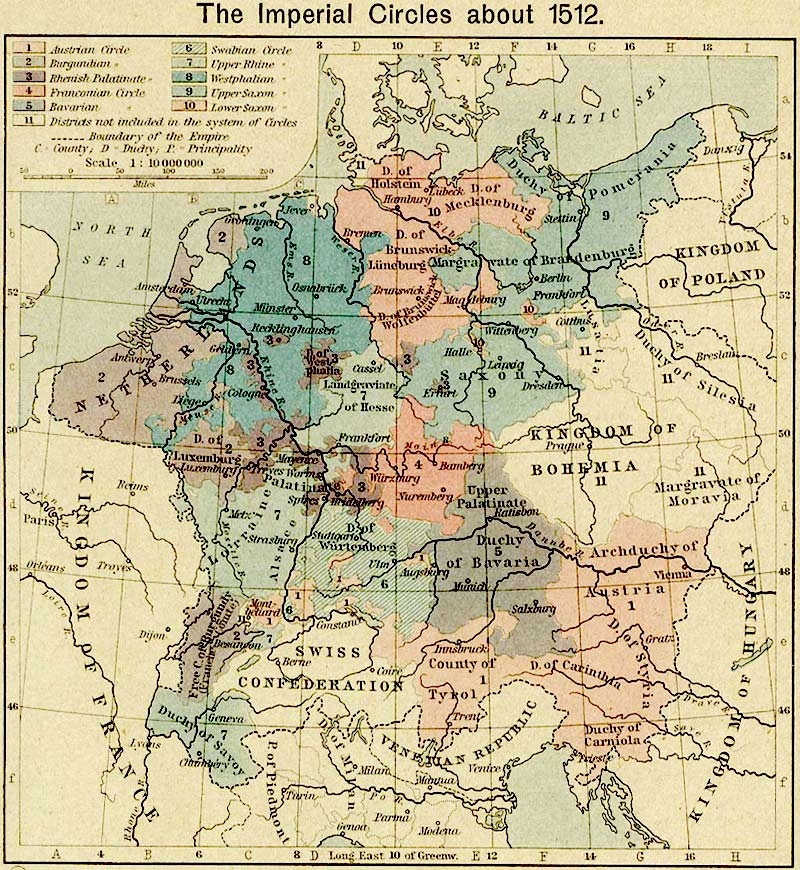
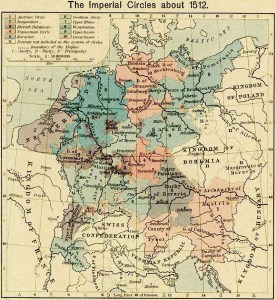 Map showing Wittenberg in Saxony around 1512.
The town’s official name is Lutherstadt-Wittenberg, and this is definitely Martin Luther Central! Everywhere you turn, there’s a spot associated with Martin Luther’s life. The shops carry everything you could imagine associated with their most famous resident: books, posters, mugs, statues…even Martin Luther socks! In spite of that, it’s really a pleasant little town and crammed with interesting history.
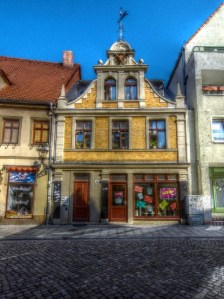
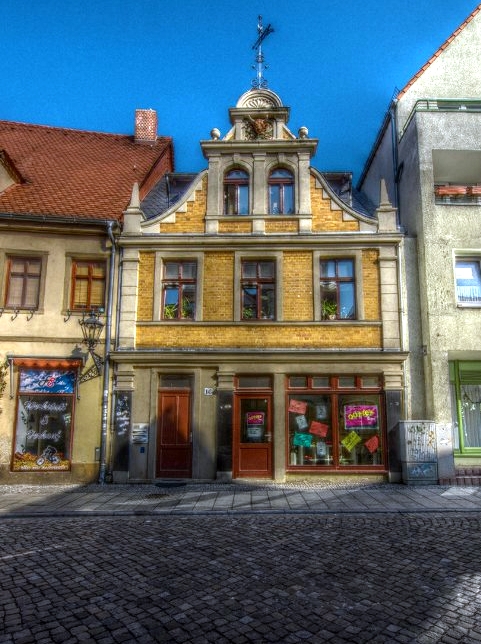
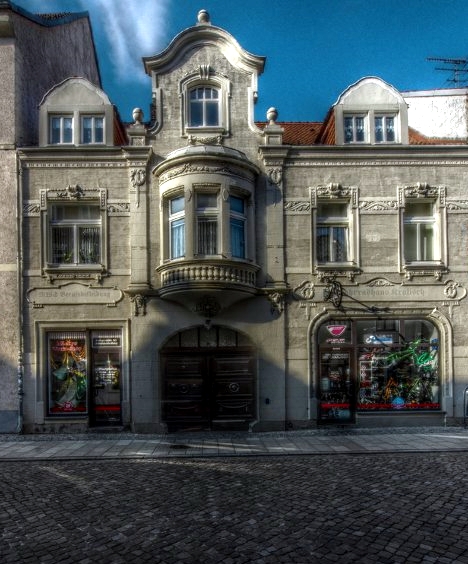
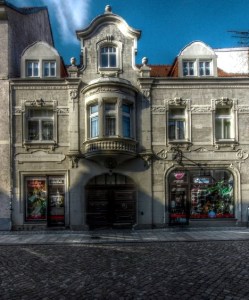 Some beautiful houses in the City of Wittenberg and shops full of souvenirs.
Wittenberg is designed for easy walking. The old town is long and narrow, and flat, laid out along two parallel streets: pedestrian-only Collegienstrasse (which turns into Schlossstrasse), and Mittelstrasse.
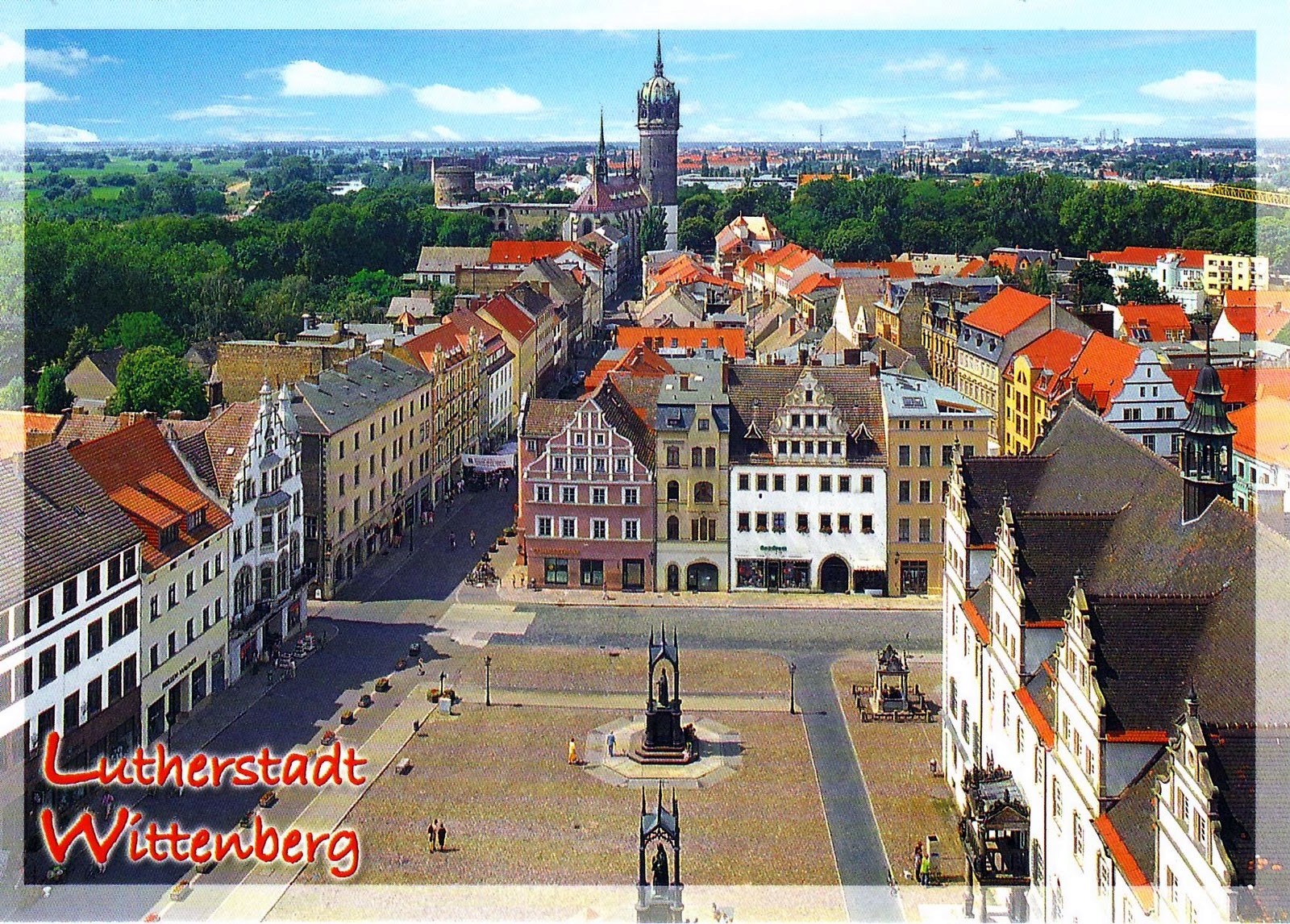
 Postcard of Wittenberg with the market in front and the Castle Church Tower in the rear center.
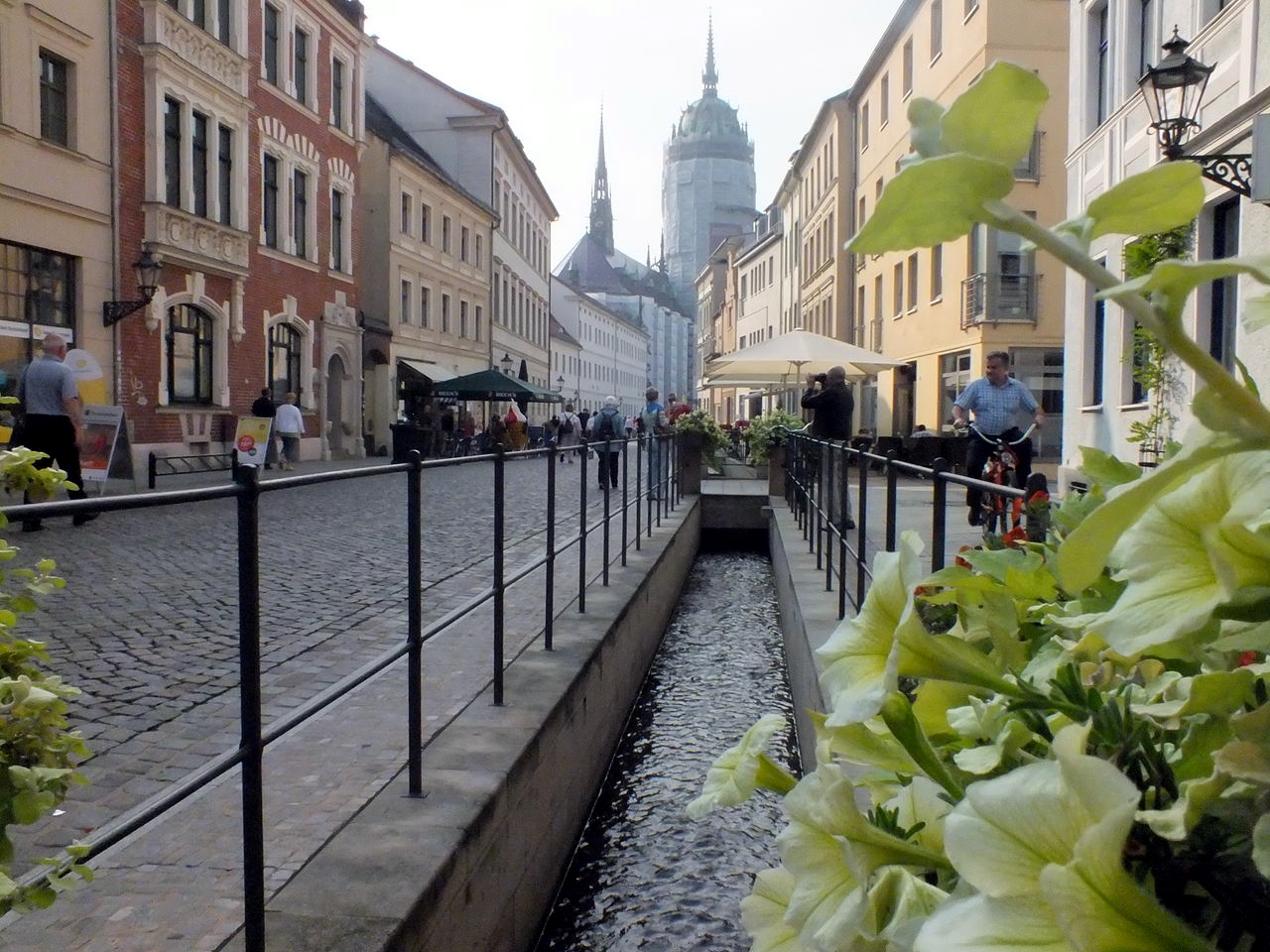
A stream runs along the main street, partially underground. Half way along, the street opens out into an attractive square, or Markt, with a statues of Martin Luther and Philip Melanchthon.
 Schlossstrasse in Wittenberg with the water stream. Notice in the distance the Schlosskirche, totally wrapped (may be Christo was around !?) for renovation.
Pretty pastel-colored buildings, many from the 16th and 17th centuries, line the streets and there are a number of inviting restaurants serving hearty German cooking. During warmer weather, many of the restaurants have tables on the sidewalk, great for relaxing and people-watching. You’ll find comfortable hotels and inviting restaurants and beer gardens.
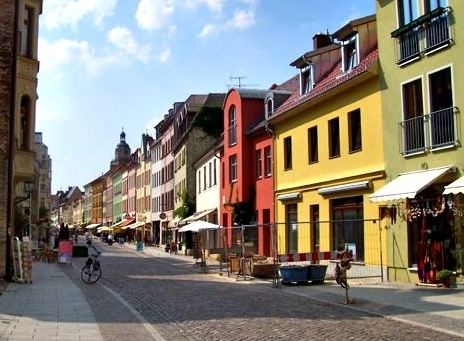
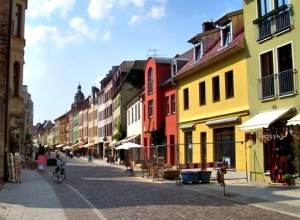 The pastel colored houses in the Mittelstrasse.
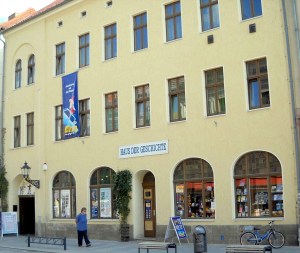
House of History – GDR.
The House of History was initiated by the association founded in 1992 PFLUG e.V. The association concerned initially with the everyday life in the 20th century. The aspects of the environment and society played a primary role. In addition, the club lit cultural and historical research on the living conditions of women in the 20th century.
 House of GDR History in Wittenberg.
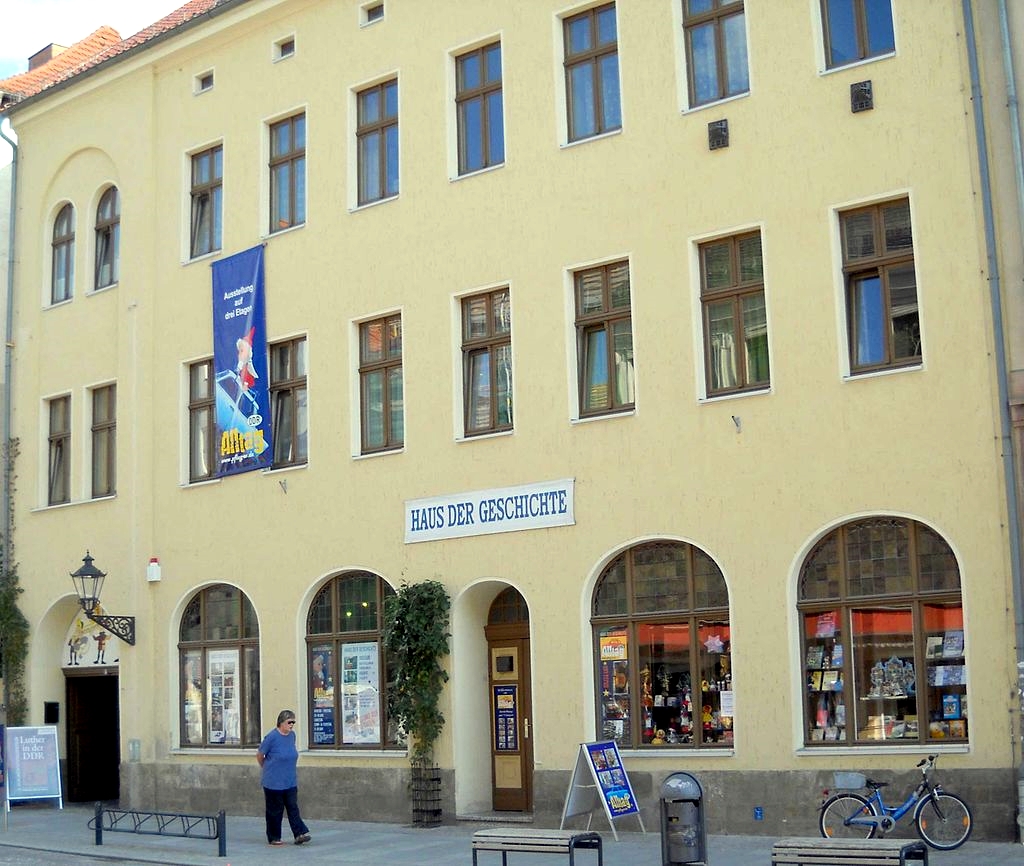
As part of an ABM (Arbeits-Beschaffungs-Massnahme, a job creation program) project one began to collect objects of everyday life of the period. Here, the work has focused particularly on the period from 1910 to the end of the GDR (German Democratic Republic), (German: DDR, Deutsche Demokratische Republik).
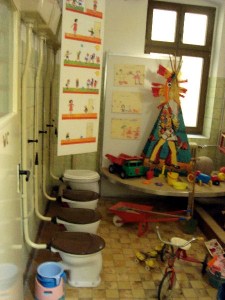
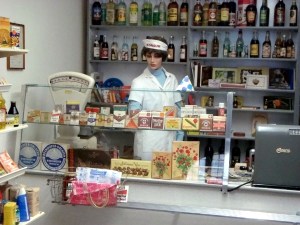 Showrooms in the House of History. Left the old original Kindergarden room – GDR style !!! And right a grocery store „Tante Emma“.
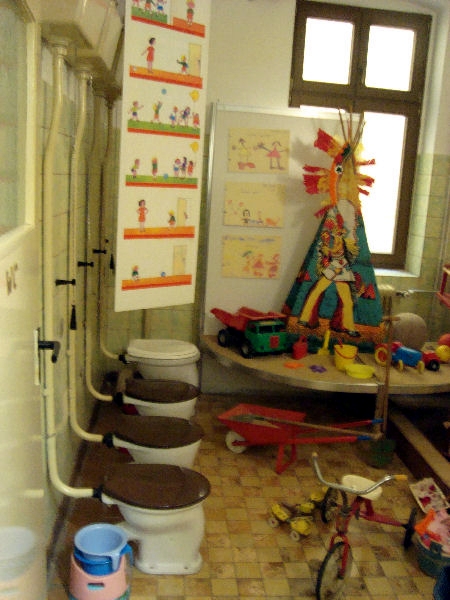
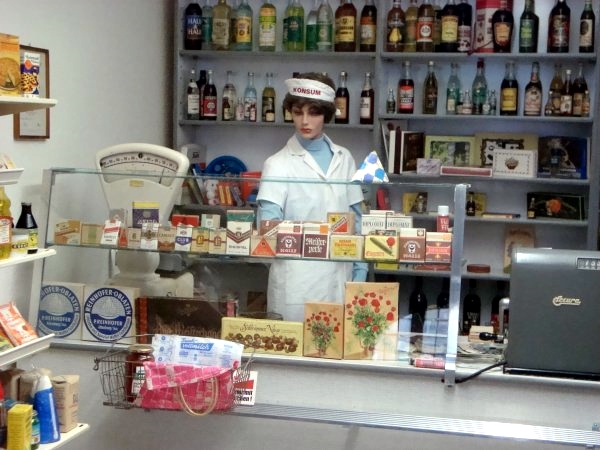
The collection of everyday objects as well as clothing, furniture and kitchen equipment was gradually becoming more extensive, and there was the idea to present this in a permanent exhibition from the scientific perspective in living environments. Given the house’s history was opened on October 11, 1997 in rented rooms of a former kindergarten in Wittenberg, No.6 Castle Street (Schlossstrasse 6).
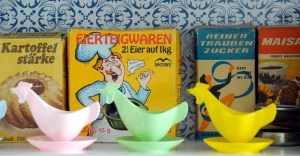
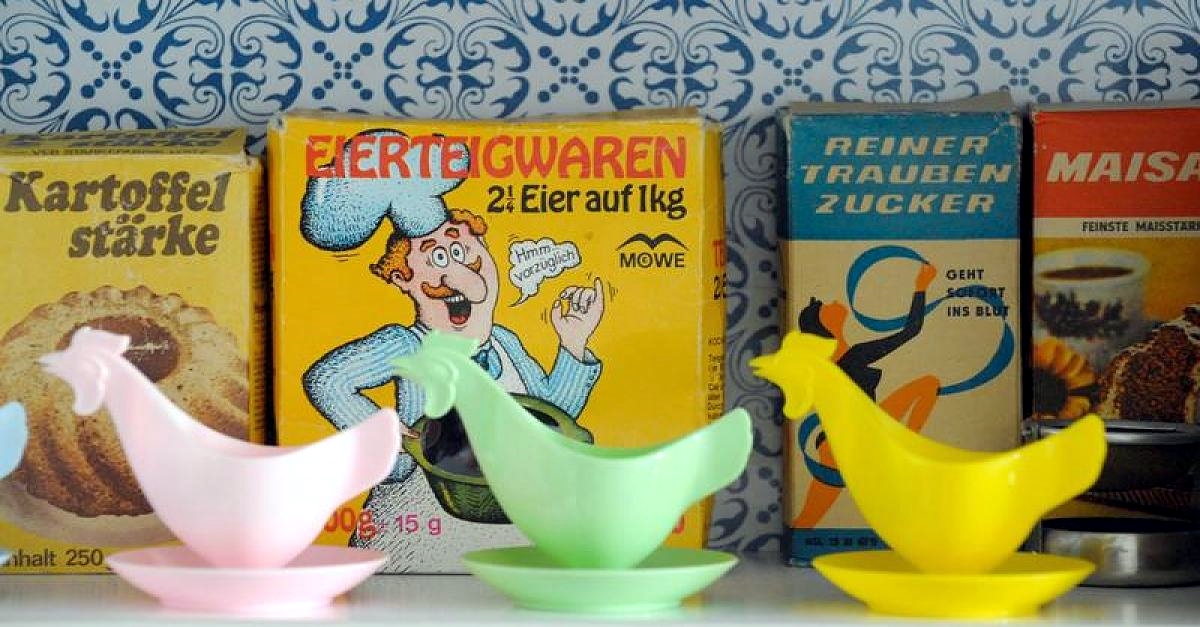
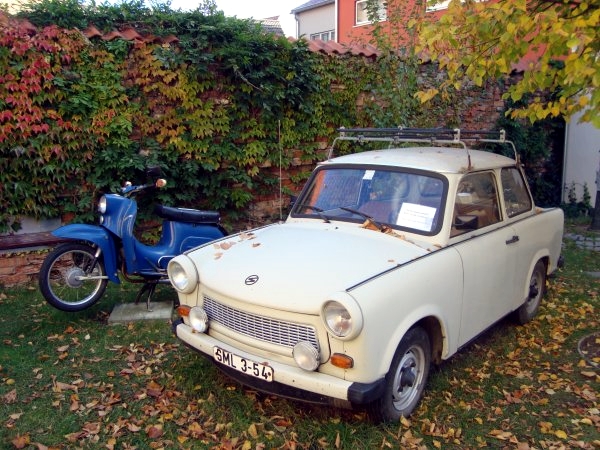
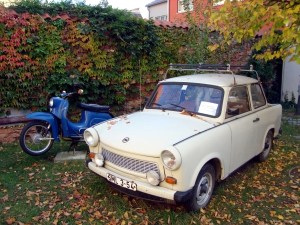 Exhibitions inside the House of History.
Town Church, St. Mary’s.
The Stadt- und Pfarrkirche St. Marien zu Wittenberg (Town and Parish Church of St. Mary’s) is the civic church of the German town of Lutherstadt Wittenberg
This is a lovely old church (the Stadtkirche), very large, with its double towers reaching high above the town. It is just behind the Markt on Kirchplatz. Since 1996 it has been a World Heritage Site.
 The city church „Pfarrkirche St.-Marien“.
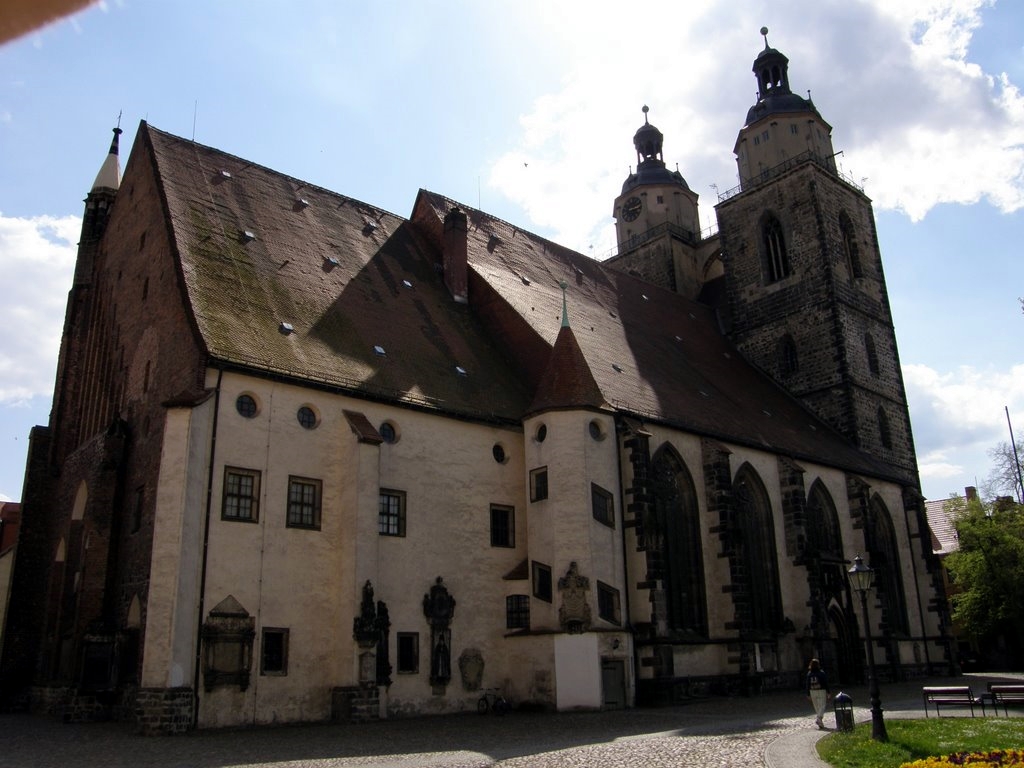
The first mention of the Pfarrkirche St.-Marien dates to 1187. Originally a wooden church in the Diocese of Brandenburg, in 1280 the present chancel and the chancel’s south aisle were built. Between 1412 and 1439 the nave was replaced by the present three-aisle structure and the two towers built, originally crowned by stone pyramids.
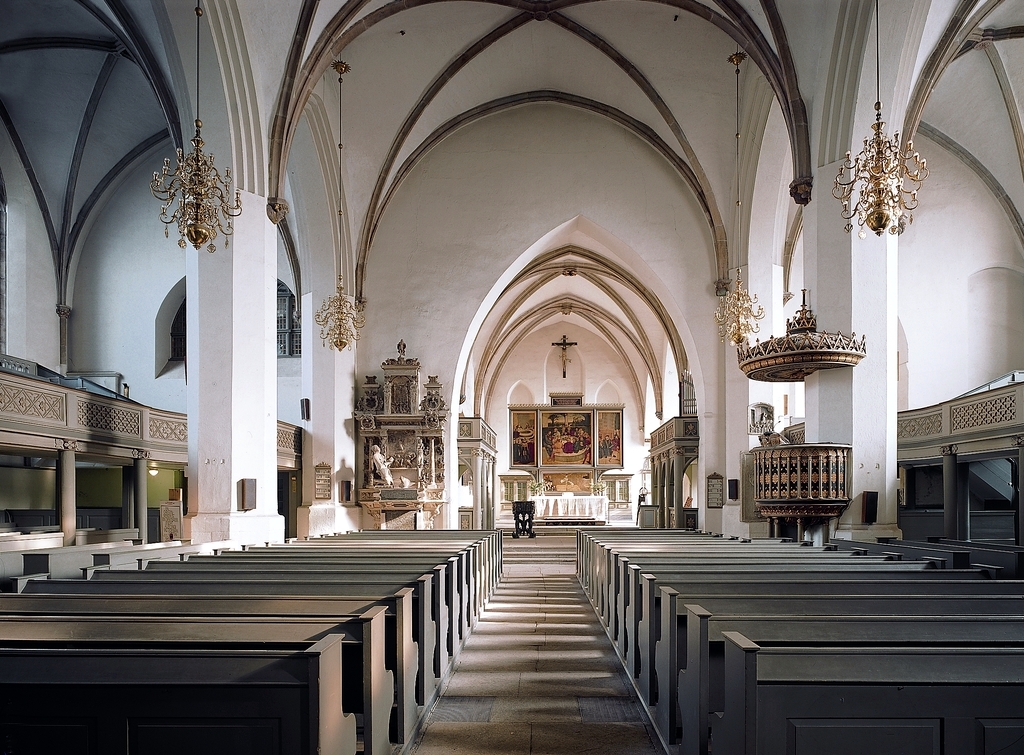
 My chance for photographs, 2 minutes before closing, no people at all inside the church anymore.
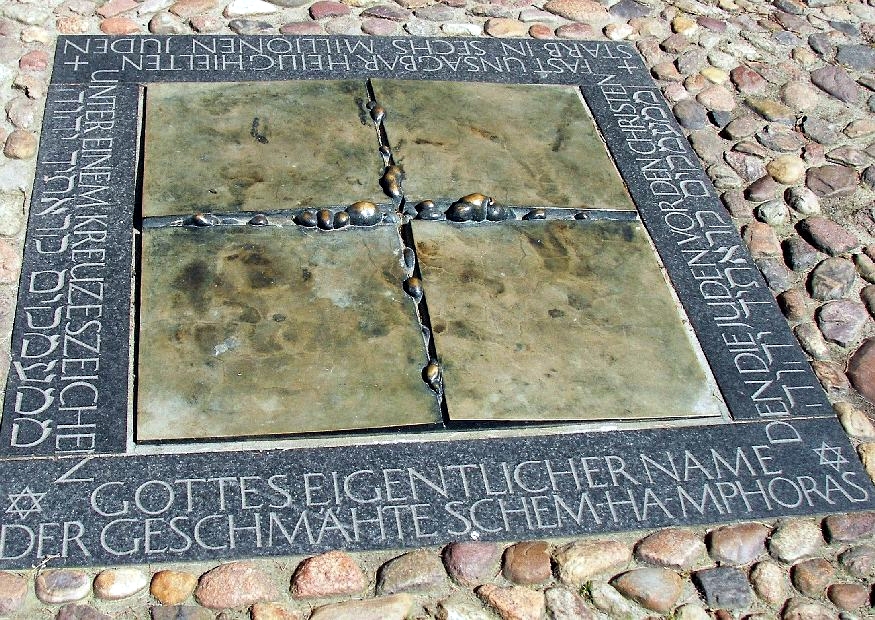
In 1522, in the wake of the iconoclasm begun by Andreas Bodenstein, almost the whole interior decoration was demolished and removed, leaving the still-surviving High Medieval Judensau on the exterior of the south wall. A Judensau (German for „Jews‘ sow“ or „Jewish sow“), also known as Saujuden is a folk art image of Jews in obscene contact with a large sow (female pig), which in Judaism is an unclean animal, that appeared during the 13th century in Germany and some other European countries; its popularity lasted for over 600 years.
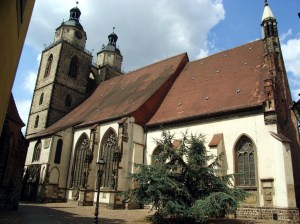
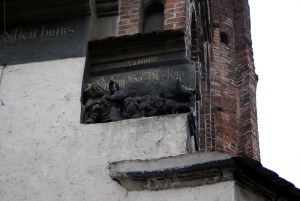 See the „Judensau“ at the center/far right of the church. This part dates from 1305 !! It portrays a rabbi who looks under the sow’s tail, and other Jews drinking from its teats. An inscription reads „Rabini Shem hamphoras“,
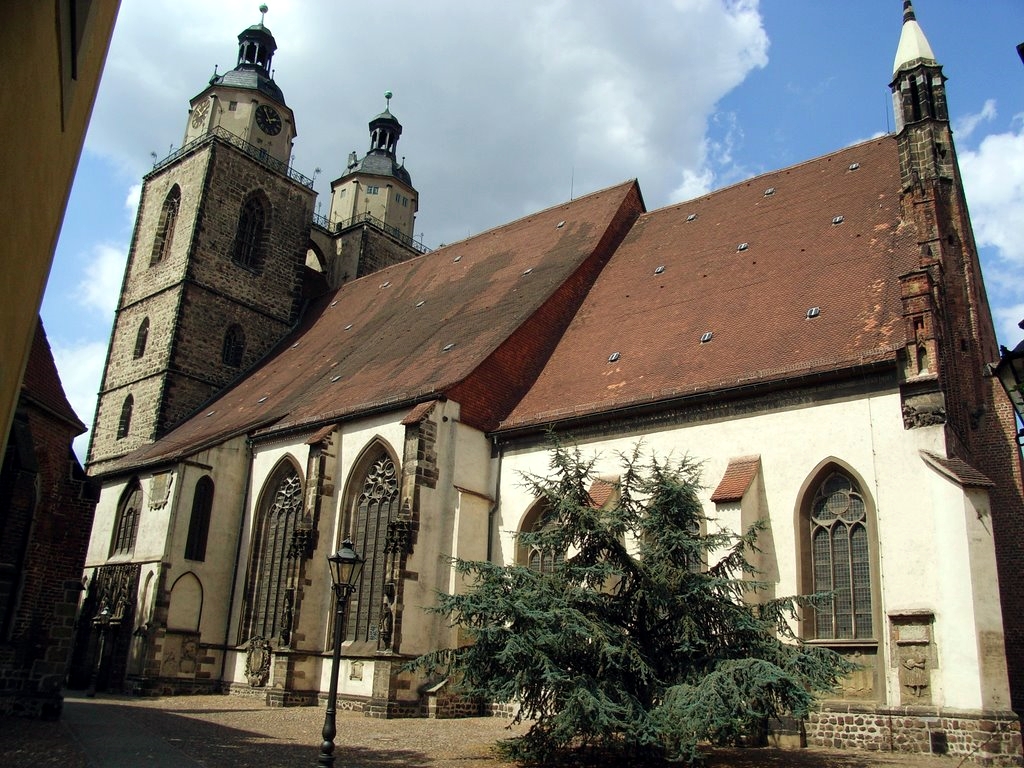
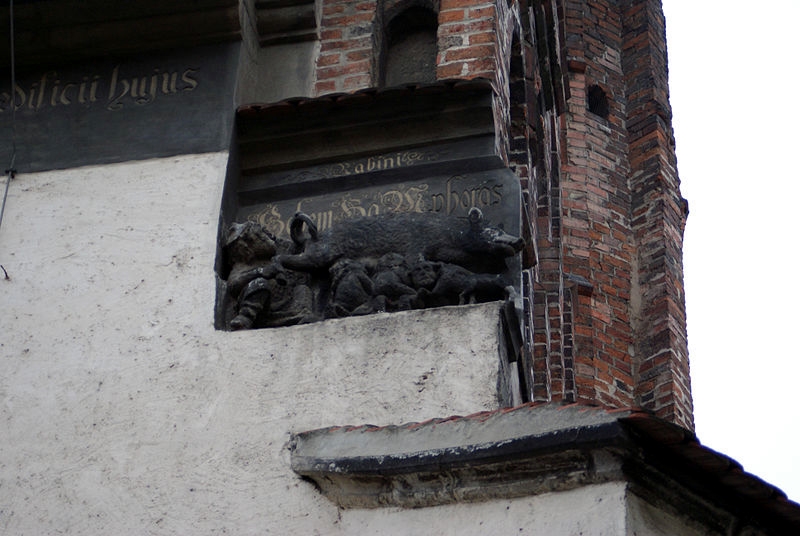
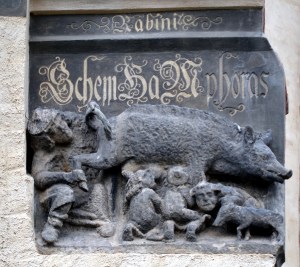
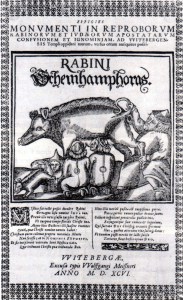 Left the medieval portrayal and right an engraving and explanation of the „monument“ from 1596. Dozens of these sculptures can be found at some churches around Europe today.
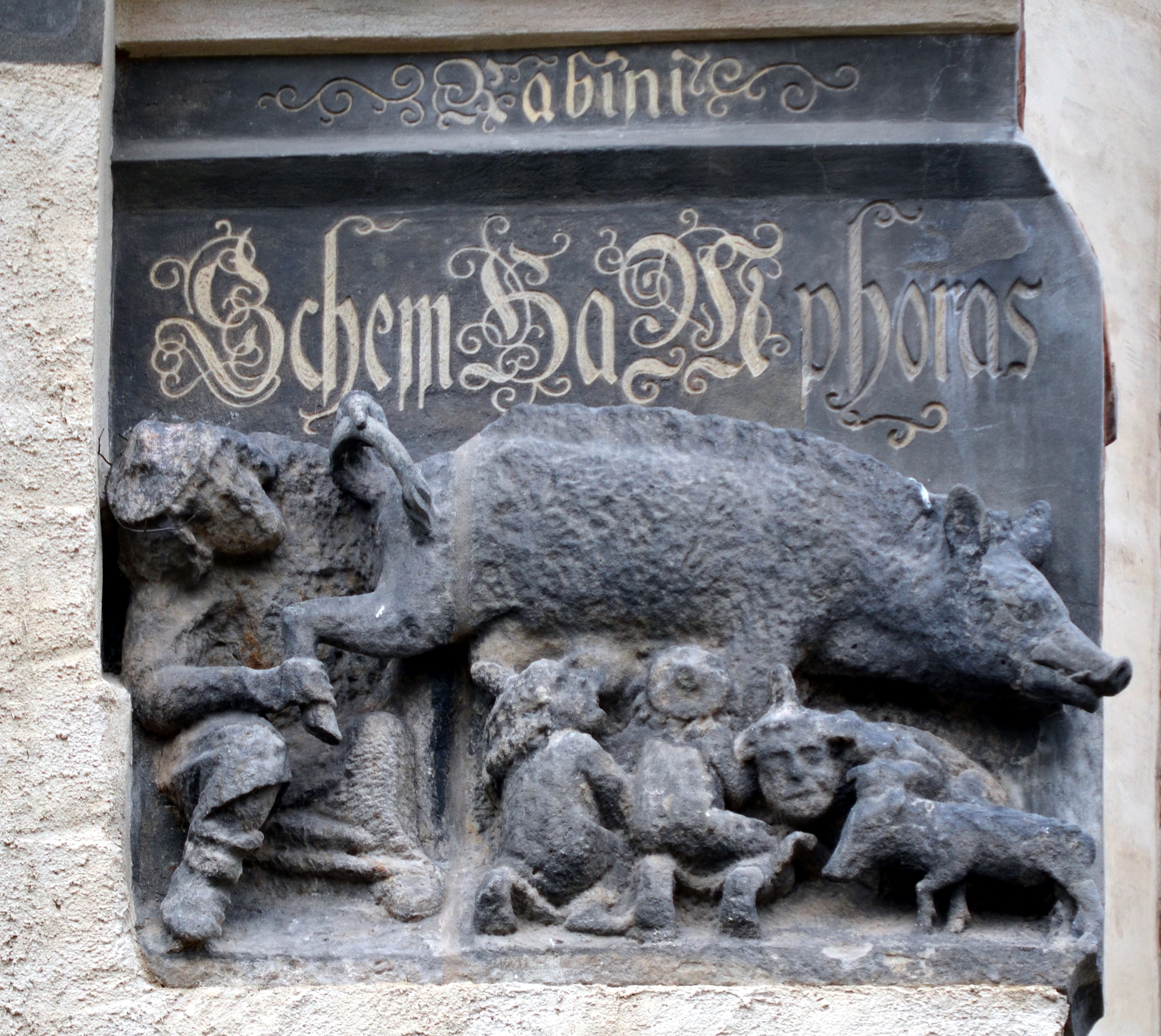
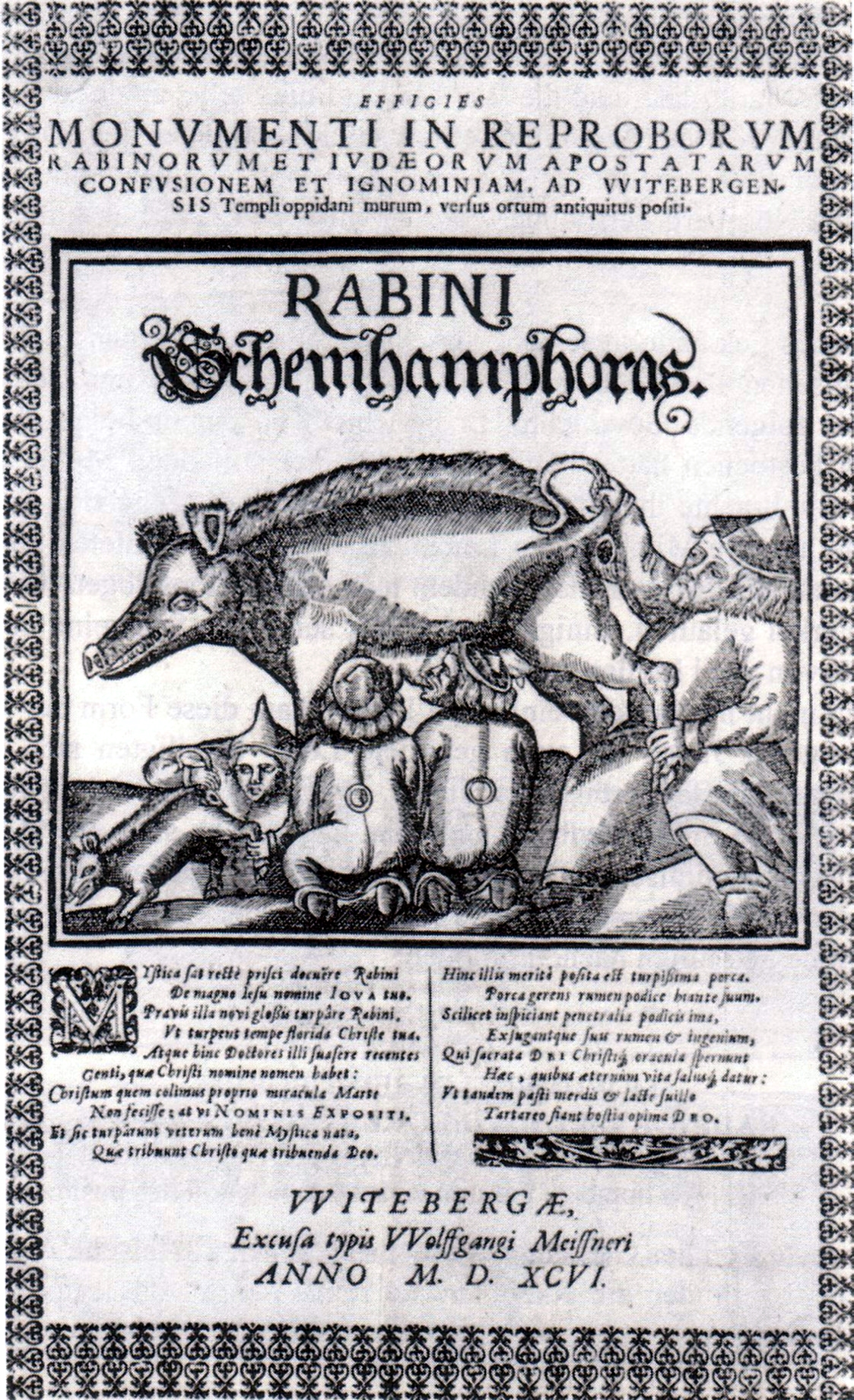
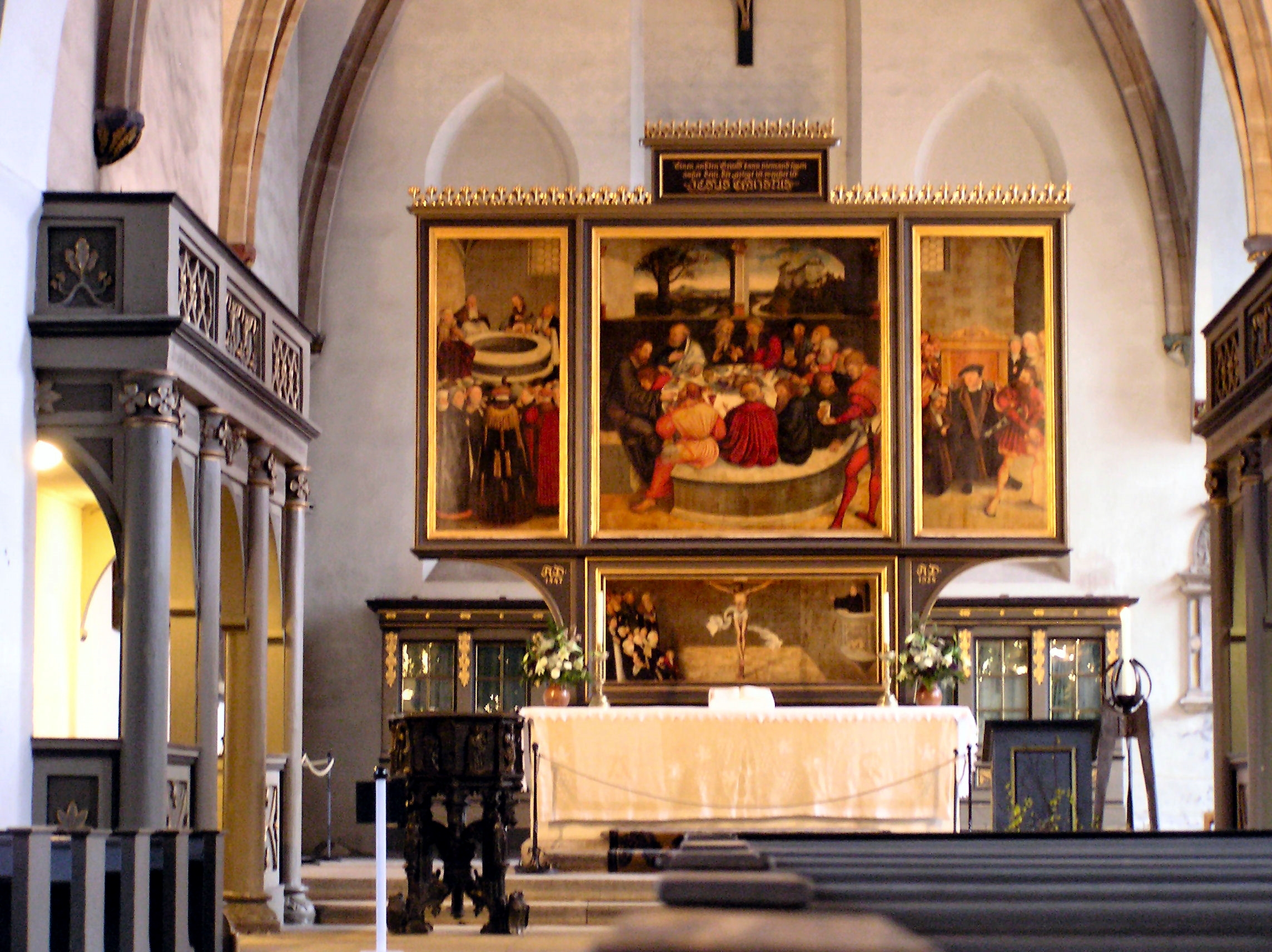
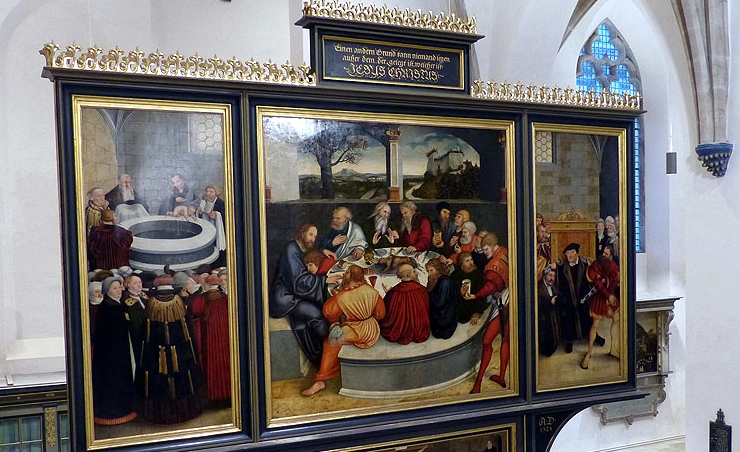
On his return to Wittenberg from the Wartburg, Luther preached his famous invocavit sermons in the Stadtkirche. In 1547, during the Schmalkaldic War, the towers‘ stone pyramids were removed to make platforms for cannon. Despite the war, an altarpiece by Lucas Cranach the Elder was unveiled in the church.
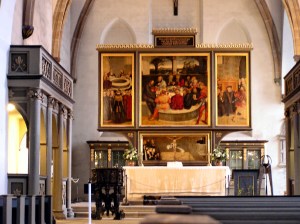
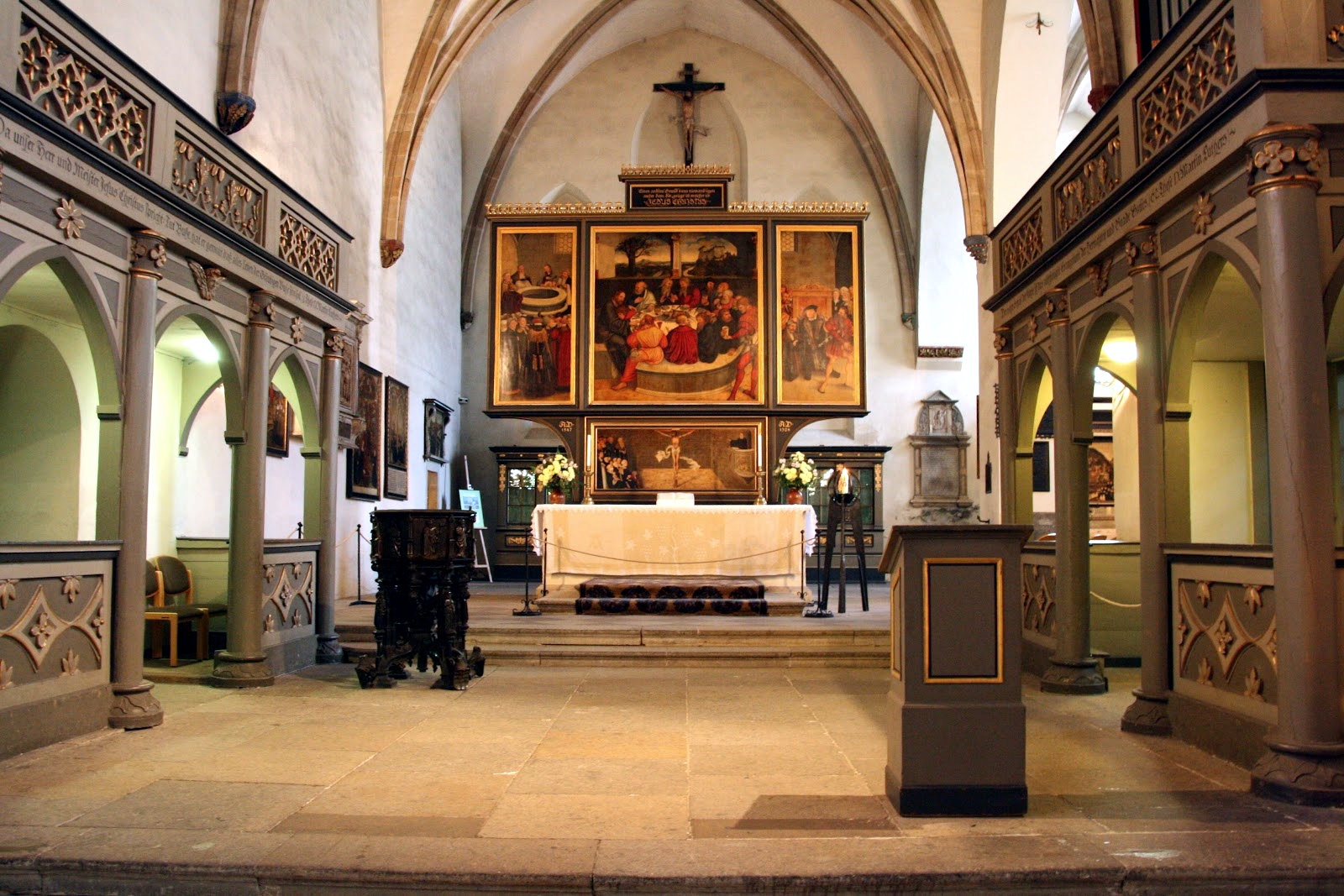
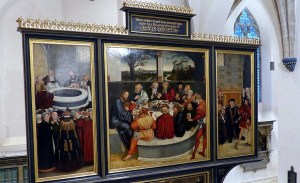 Lucas Cranach the Elder altar inside the City Church of Wittenberg. Magnificent peace of medieval art.
In 1556 the platforms were replaced by the surviving octagonal caps, a clock and a clock-keeper’s dwelling. This was followed by an extension of the east end and the overlying ‚Ordinandenstube‘. In 1811 the interior of the church was redesigned to a Neo-Gothic scheme by Carlo Ignazio Pozzi. The church was fully restored in 1928 and 1980-1983.
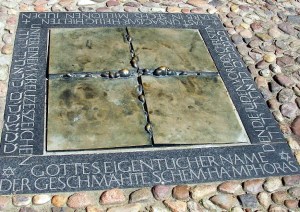 Compensation memorial to Judensau at Wittenberg Stadtkirche. Outside the church underneath the Judensau. Necessary gesture in today’s modern Germany.
Martin Luther preached many sermons in this church, and he and Katharina von Bora were married here. Their marriage is re-enacted annually in a popular festival. All of his children were baptized in the church. A large painting by Lucas Cranach the Elder is above the altar showing Luther receiving the cup at the Last Supper.
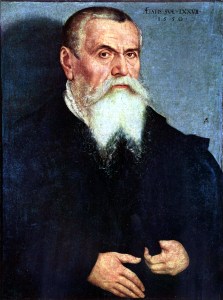 Lucas Cranach the Elder painted in 1550 by his son Lucas Cranach the Younger.
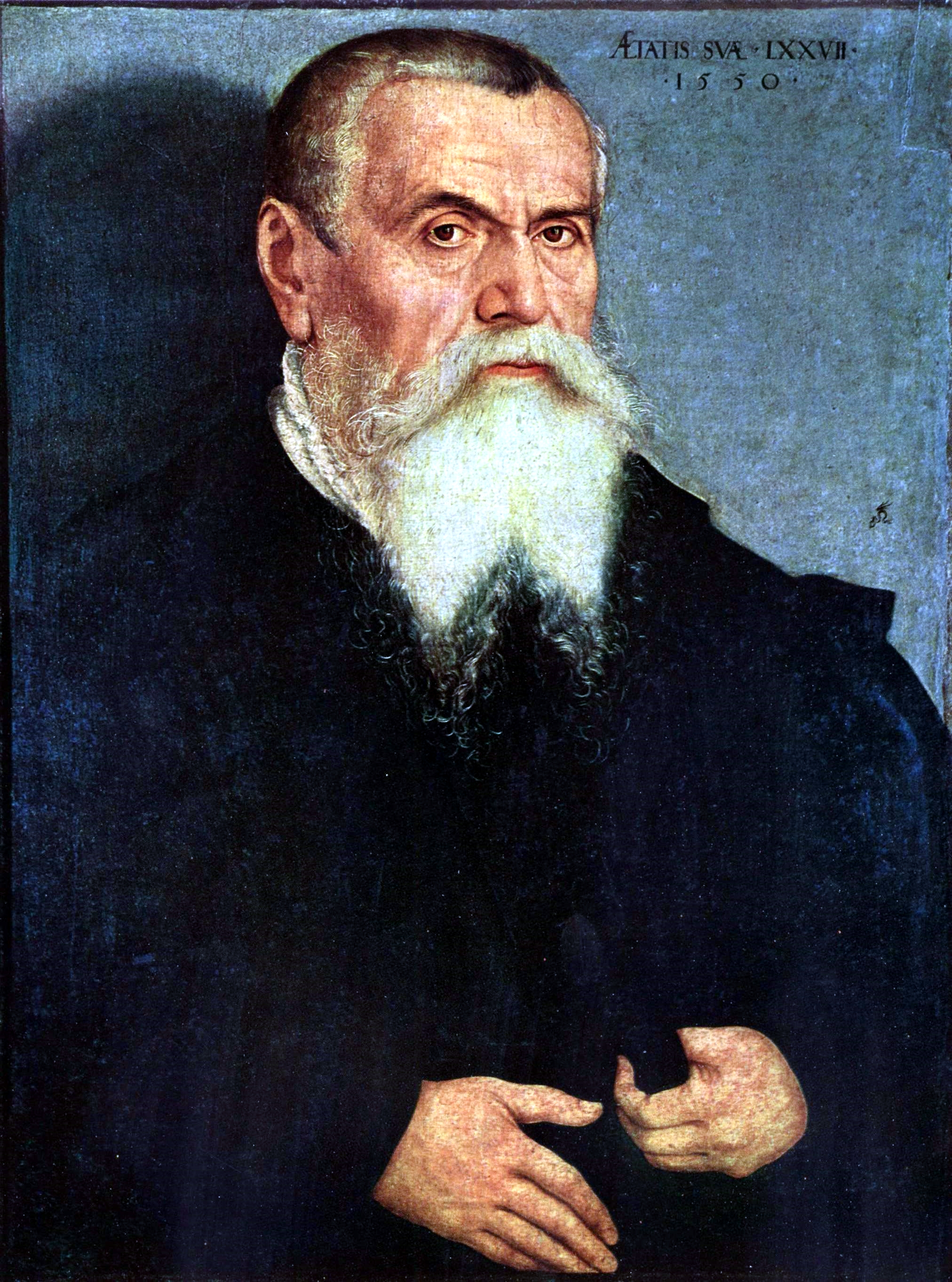
Lucas Cranach the Elder.
Lucas Cranach the Elder (Lucas Cranach der Ältere, c. 1472 – 16 October 1553) was a German Renaissance painter and print maker in woodcut and engraving. He was court painter to the Electors of Saxony for most of his career, and is known for his portraits, both of German princes and those of the leaders of the Protestant Reformation, whose cause he embraced with enthusiasm, becoming a close friend of Martin Luther.
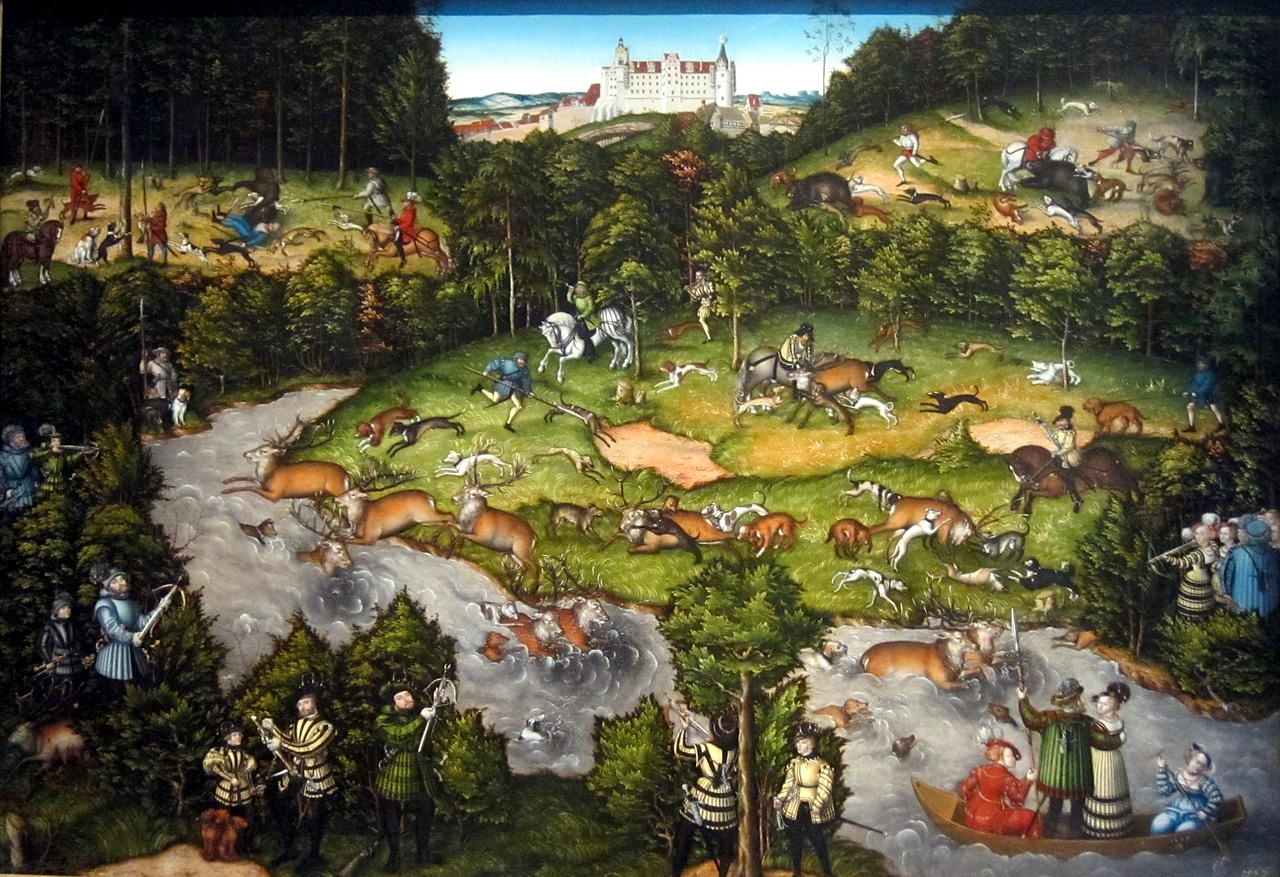
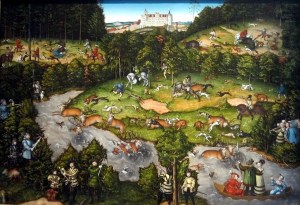 Lucas Cranach the Elder „Deer Hunting“ from 1540.
He also painted religious subjects, first in the Catholic tradition, and later trying to find new ways of conveying Lutheran religious concerns in art. He continued throughout his career to paint nude subjects drawn from mythology and religion. He had a large workshop and many works exist in different versions. His son Lucas Cranach the Younger, and others, continued to create versions of his father’s works for decades after his death. Lucas Cranach the Elder has been considered the most successful German artist of his time.
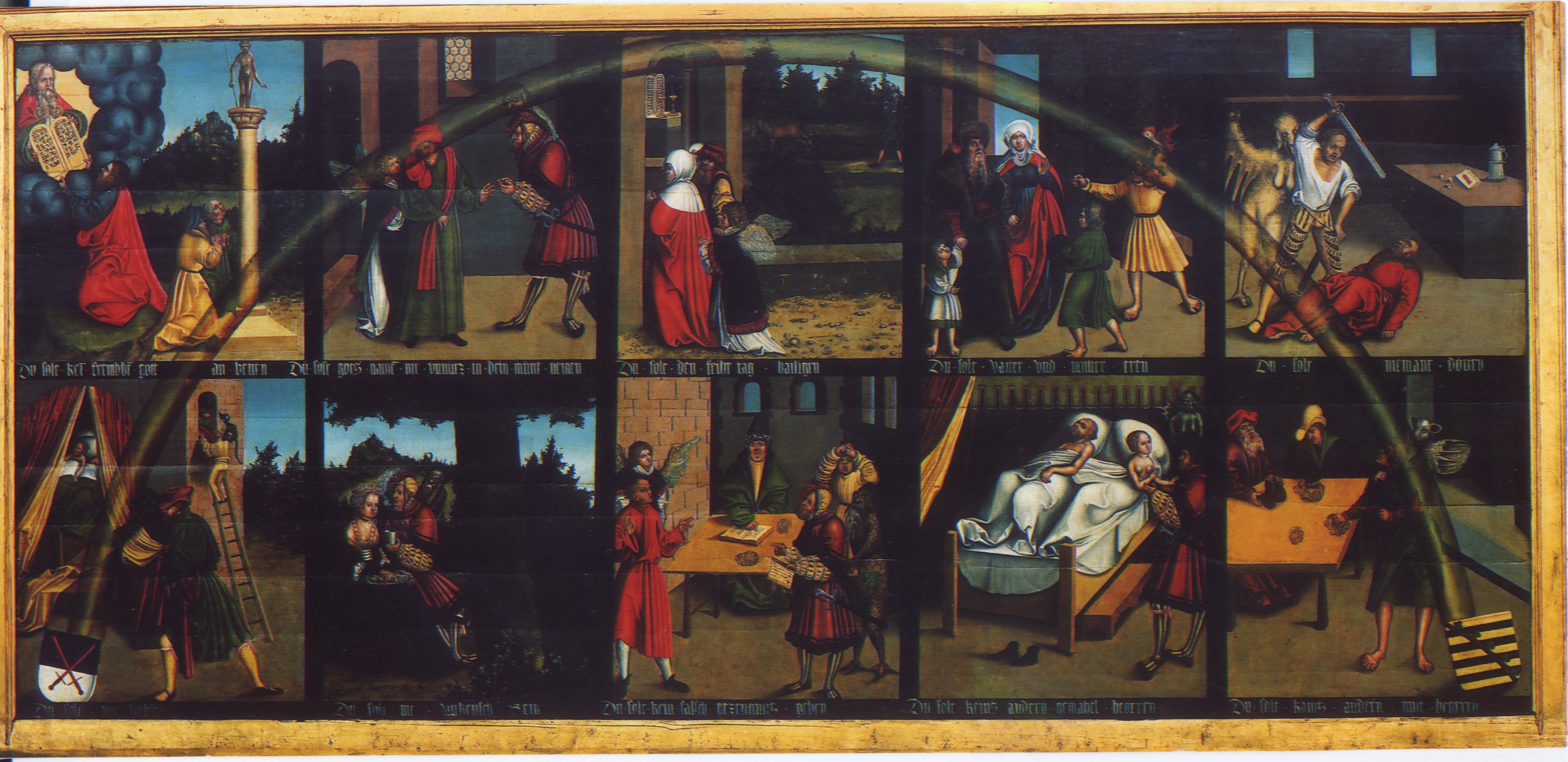
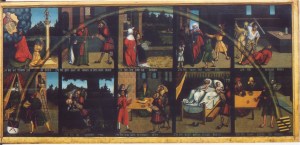 „The Ten Commandments” is a wonderful piece of artwork by Reformation artist Lucas Cranach the Elder. Completed in 1516, this painting – in a modern comic style – on wooden panels originally hung in the Wittenberg Rathaus (Townhall) where all of the townspeople could see them. Now the painting hangs in the refectory hall of Luther’s residence in Wittenberg.
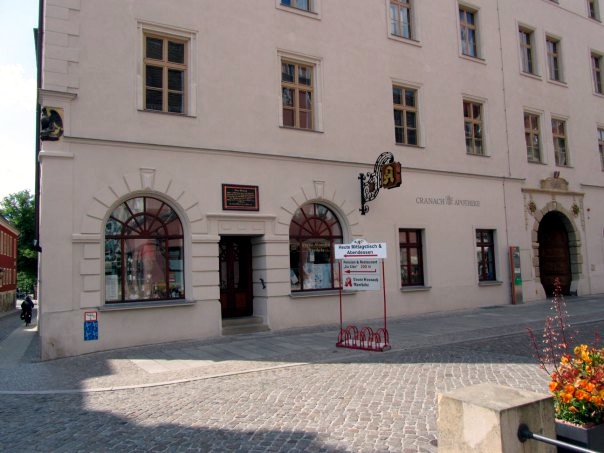
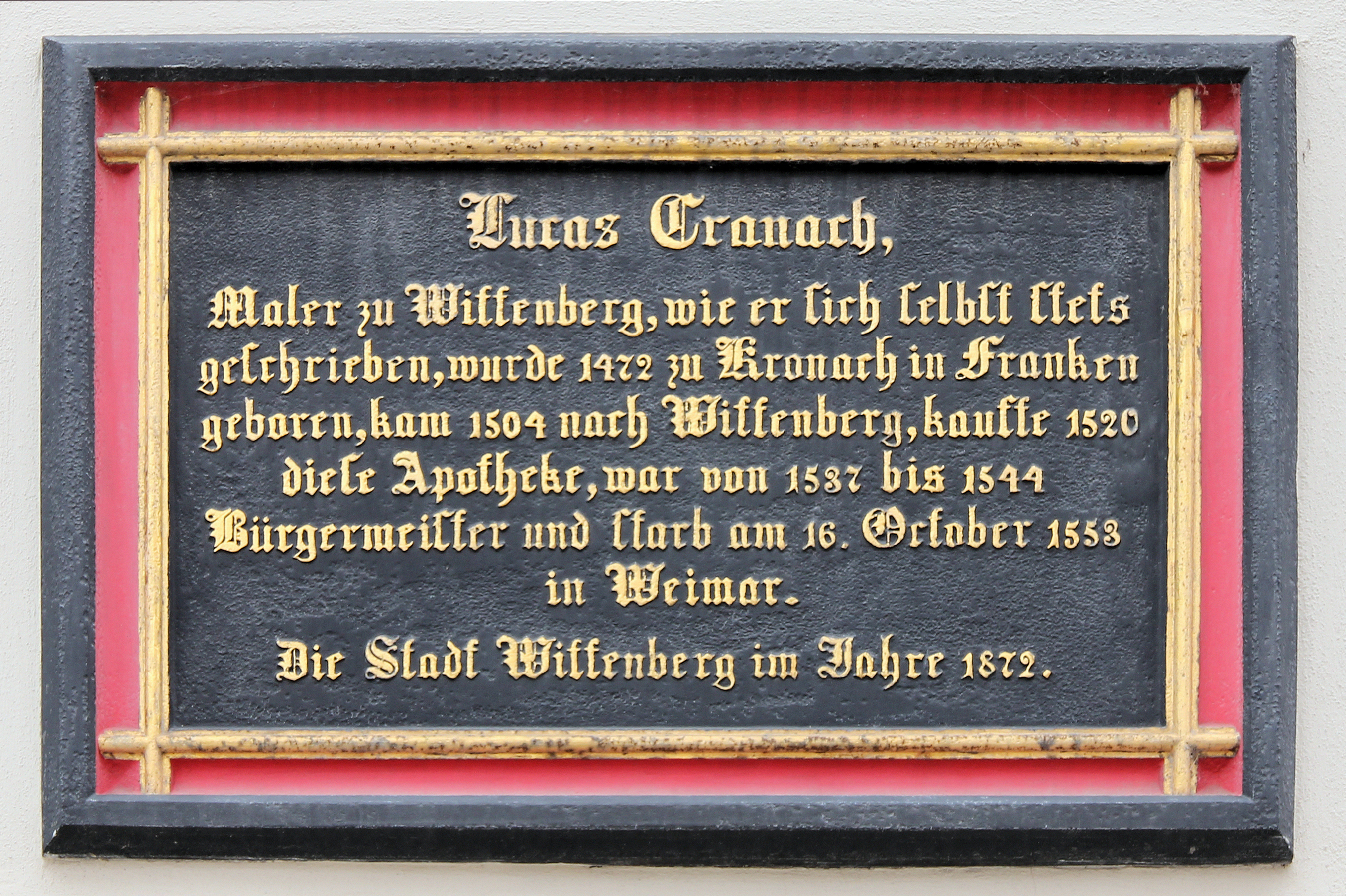
Lucas Cranach (the Elder) was not only one of the most accomplished and prolific painters of the 16th century, he was also the mayor of Wittenberg and owned a pharmacists shop, around 1520, that is still doing business as a pharmacy (or Apotheke) in Wittenberg, Schlossstrasse 1, today! Cranach also owned a print shop where he printed 1522 Martin Luther’s first Bible in German language.
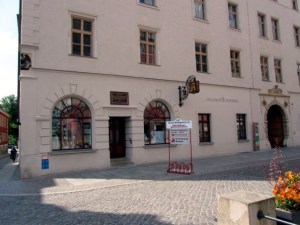
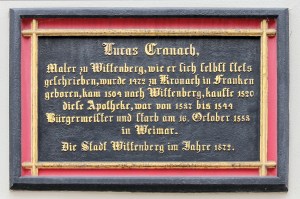 The Cranach Pharmacy, since 1520 in Wittenberg, Schlossstrasse 1. Far right the entry gate to the Cranach Courtyard. Right picture shows the Cranach commemorative plague above the pharmacy entrance.
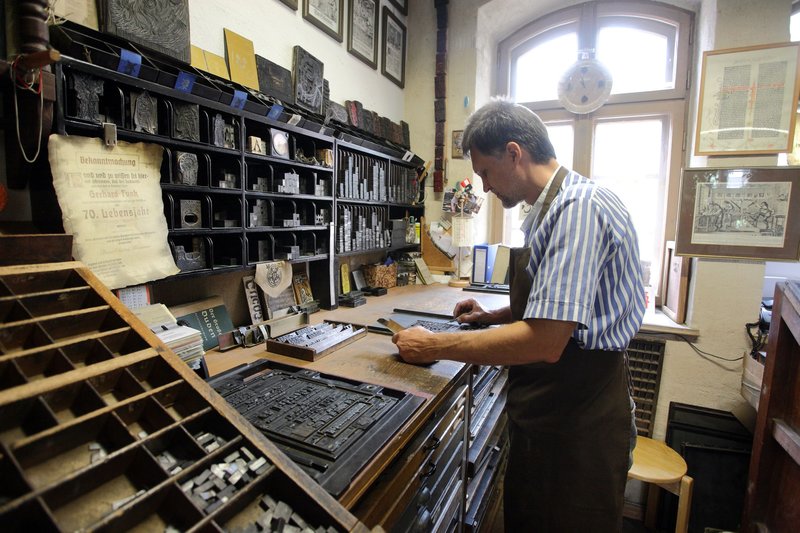
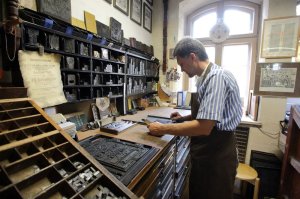 Historic Cranach print shop inside the Cranach House, where Lucas Cranach printed 1522 Martin Luther’s first Bible in German language.
His paintings, drawings and woodcuts are in museums all over Europe. His house on Collegienstrasse is now a museum and his artist studio behind the house has some interesting exhibits. Also worth to visit, the Cranachhof (Cranach courtyard), number 1 Schlossstrasse.
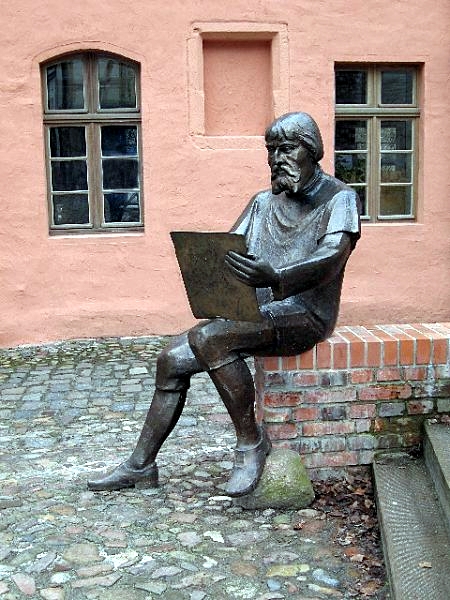
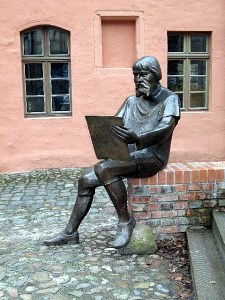 Lucas Cranach the Elder monument inside the courtyard.
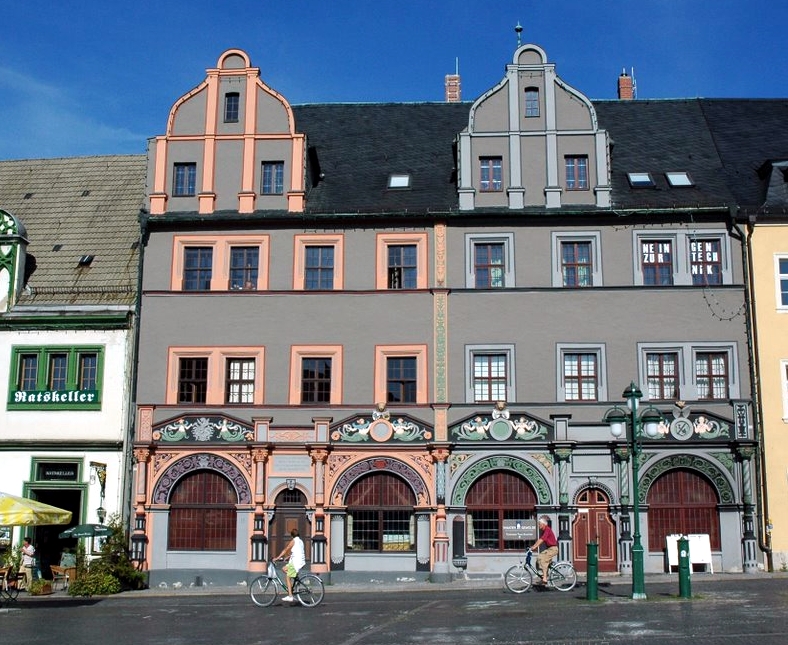
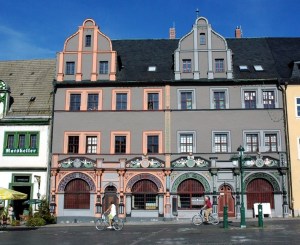 The famous painter spent the last year of his life (1549) in this Renaissance house, „The Cranach House“ at the market in Weimar. His studio was on the third floor.
Lucas Cranach the Younger.
Lucas Cranach the Younger (Lucas Cranach der Jüngere; 4 October 1515 – 25 January 1586) was a German Renaissance painter and portraitist, also known as the son of Lucas Cranach the Elder.
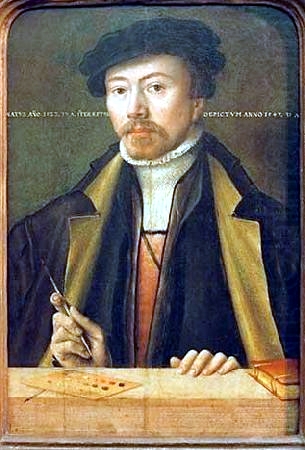
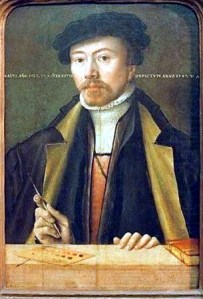 Lucas Cranach the Younger, self portrait around 1540.
He is known for portraits and simple versions of allegorical and mythical scenes. The style of his paintings can be so similar to those of his father that there have been some difficulties in attribution of their works. Prominent scholars seem to, nowadays, tend toward the opinion of honest description of his talent as, stoic and undeveloped, at most.
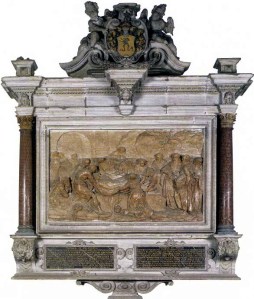
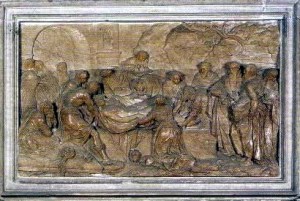 Epitaph for Lucas Cranach the Younger and his two wife’s in the Town Church of Wittenberg.
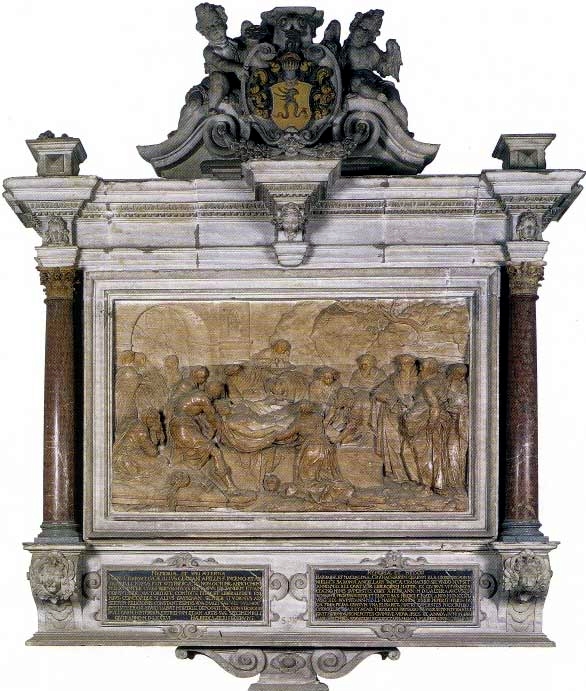
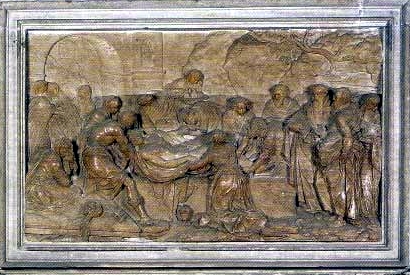
The Town Church of St. Mary in Wittenberg is home to many original paintings by Lucas Cranach the Younger. It is also an authentic site that testifies to the life of the painter, from his earliest years to his death. The grave of Lucas Cranach the Younger is located here. This is where he heard the sermons of the great reformers; and this is likely where he was baptized and wed twice.
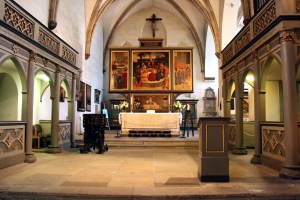 The wonderful choir inside the Town Church with the Lucas Cranach the Elder and his son Lucas Cranach the Younger (co-painter) altar in the center. Left foreground the beautiful carved font. At the left wall some of the art collection and in the right background (between the columns) Cranachs famous painting „The Vinyard of the Lord“. Click on pic to supersize.
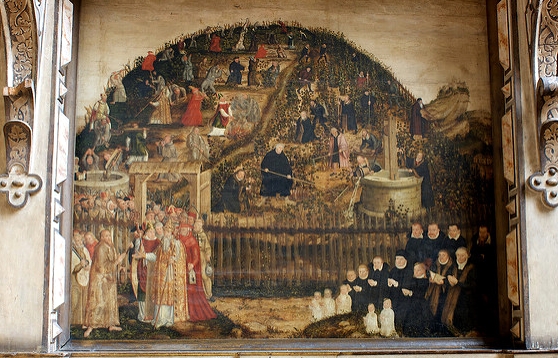
For the “Cranach’s Church” exhibition, Cranach’s works in the Town Church of St. Mary were carefully restored, among them the famous Reformation Altar, on which Lucas Cranach the Younger worked together with his father (see the part about the church itself). Other important works include the epitaphs for Johannes Bugenhagen and Paul Eber, the latter better known under the title “Der Weinberg des Herrn” (“The Vineyard of the Lord”). The works are regarded as important documents of the history of the Reformation.
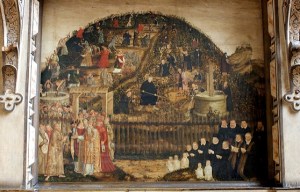 „The Vineyard of the Lord“, 1569 by Lucas Cranach the Younger. In the center Martin Luther working in the vineyard. Epitaph’s like this one for Paul Eber (kneeling at the bottom right with his whole family) are made and financed by wealthy citizens of the parish.
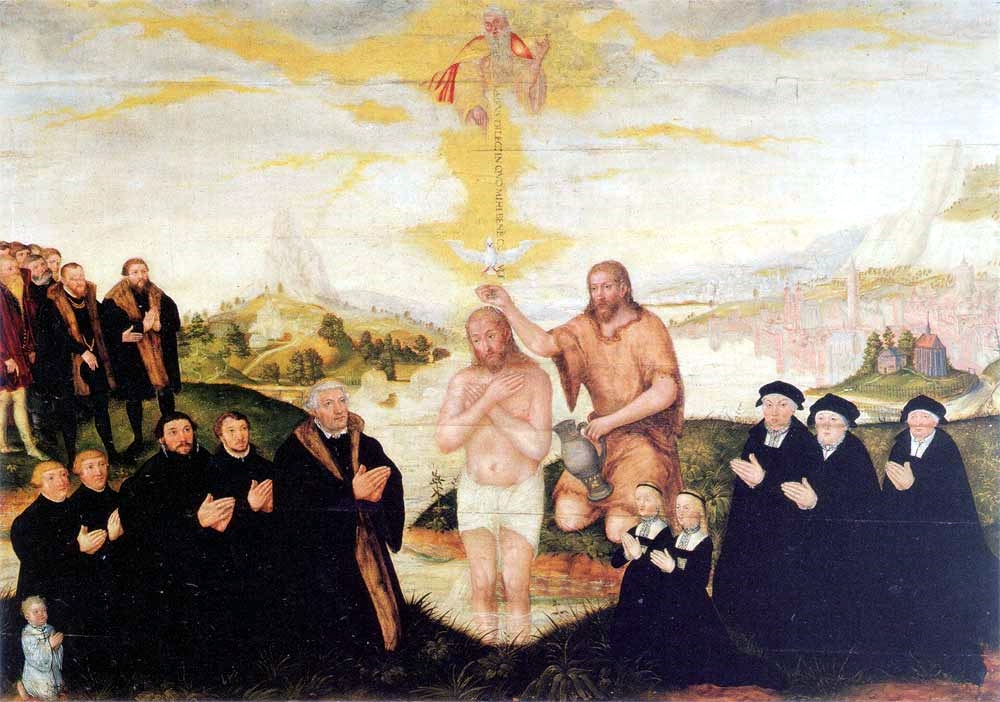
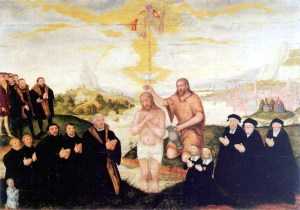 „The Baptism of Jesus“, 1560 by Lucas Cranach the Younger. Epitaph for the 1558 deceased Johannes Bugenhagen (white hair, left), the first protestant pastor in the town church.
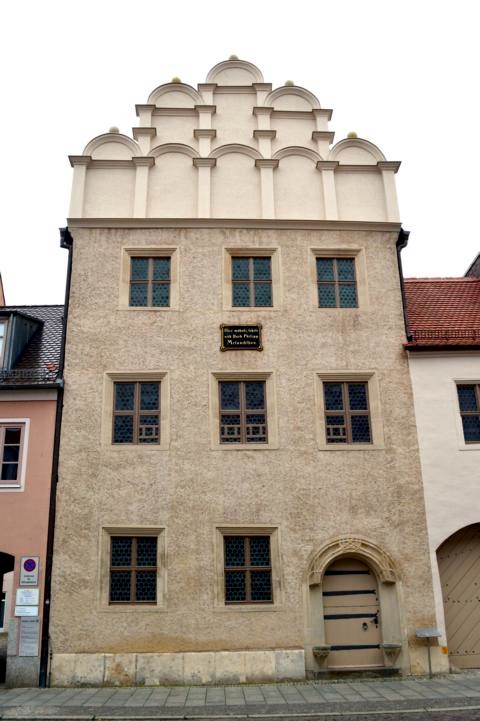
Melanchton House.
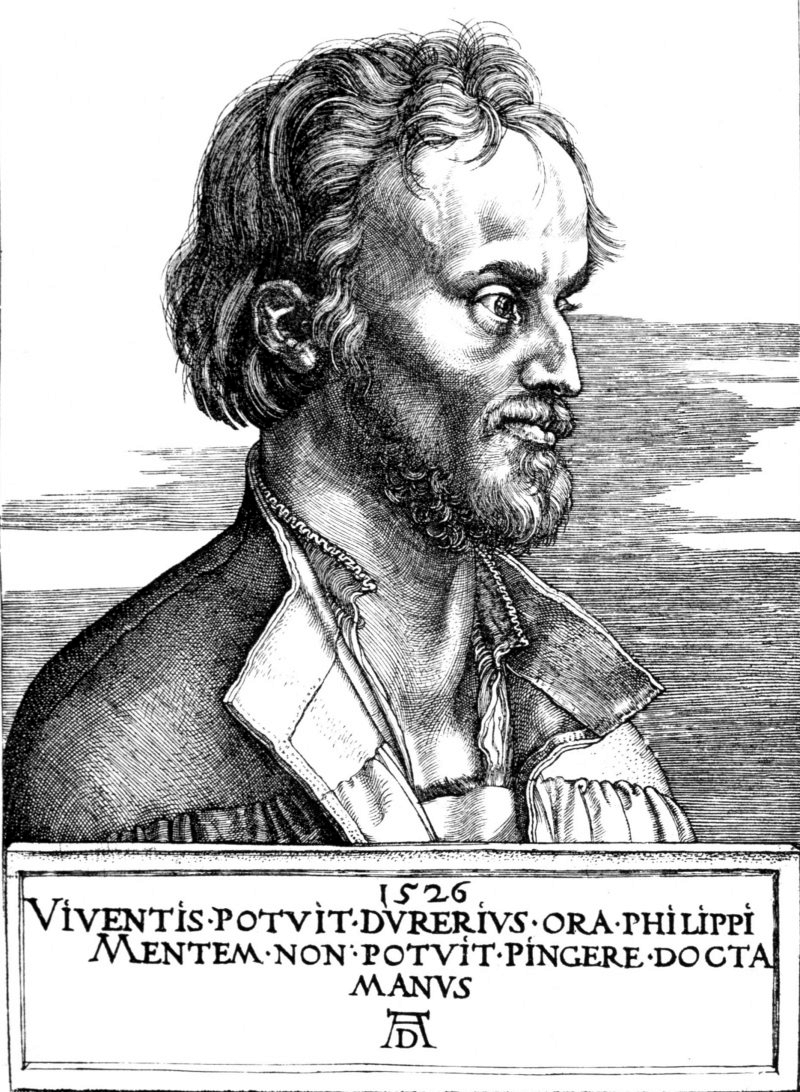
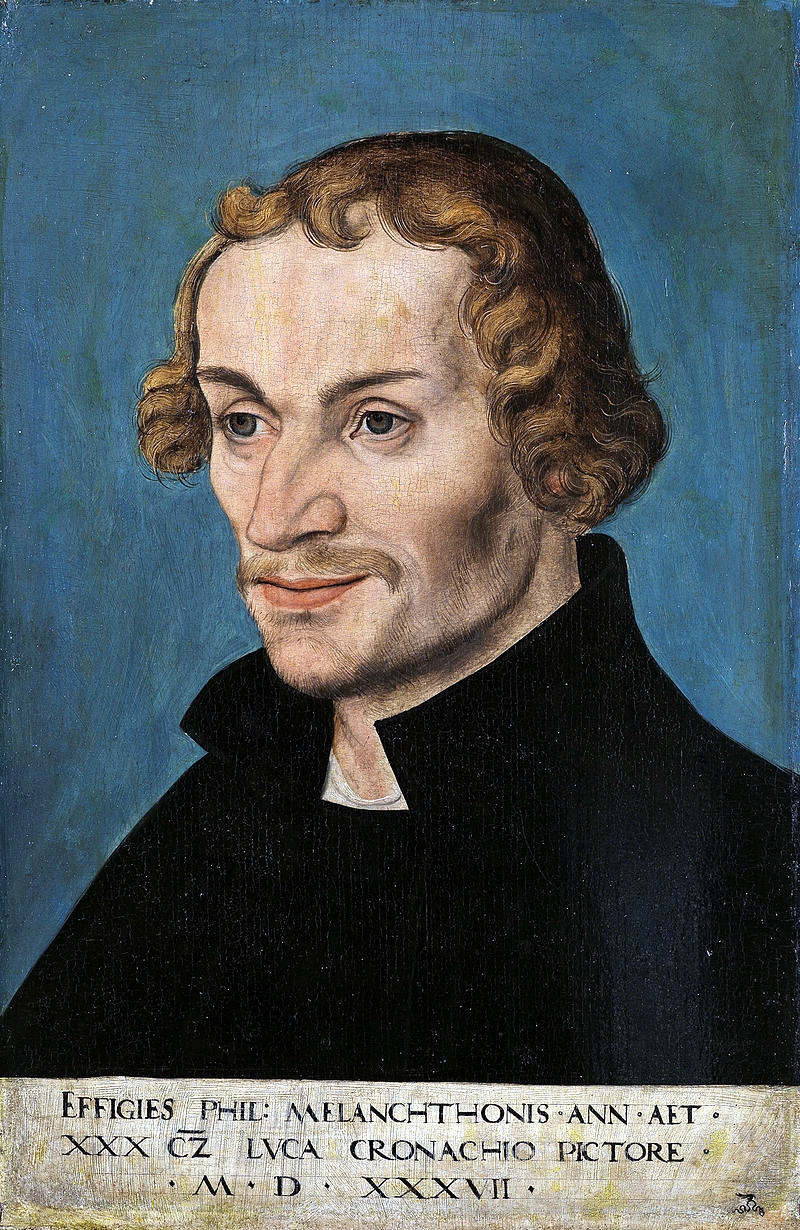
Philip Melanchthon (Philippus Melanchthon) (16 February 1497 – 19 April 1560), born as Philipp Schwartzerdt, was a German reformer, collaborator with Martin Luther, the first systematic theologian of the Protestant Reformation, intellectual leader of the Lutheran Reformation, and an influential designer of educational systems.
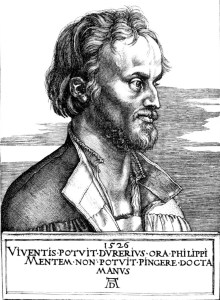 Phillip Melanchton, engraving by Albrecht Duerer 1526.
He stands next to Luther and Calvin as a reformer, theologian, and molder of Protestantism. Along with Luther, he is the primary founder of Lutheranism. They both denounced what they believed was the exaggerated cult of the saints, asserted justification by faith, and denounced the coercion of the conscience in the sacrament of penance by the Catholic Church, that they believed could not offer certainty of salvation.
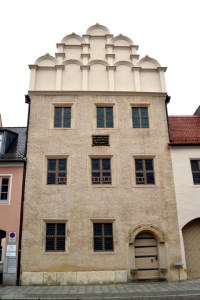
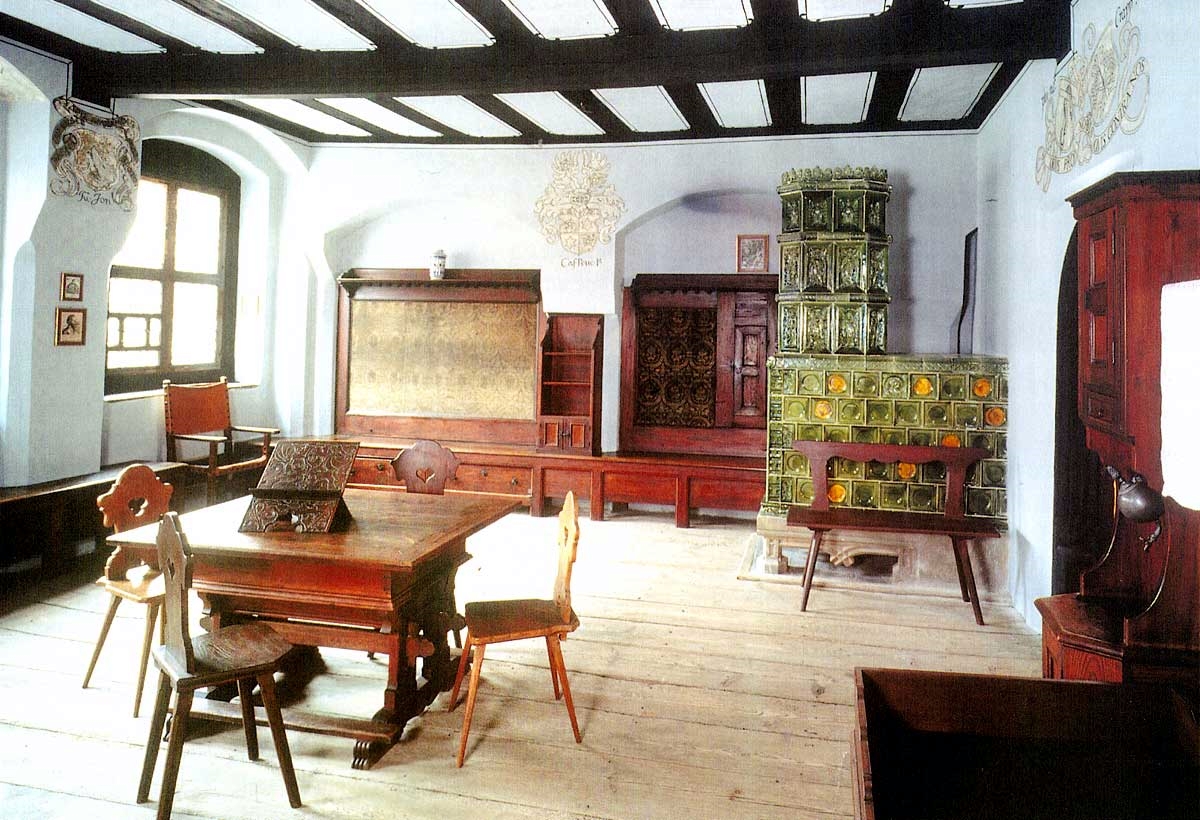
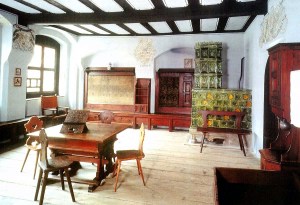 Left the Melanchton House in Wittenberg and right Melanchton’s Study Room on second floor.
In unison they rejected transubstantiation, the belief that the bread from the Lord’s Supper becomes Christ’s body when consecrated. Melanchton made the distinction between law and gospel the central formula for Lutheran evangelical insight. By the „law“, he meant God’s requirements both in Old and New Testament. The „gospel“ meant the free gift of grace through faith in Jesus Christ.
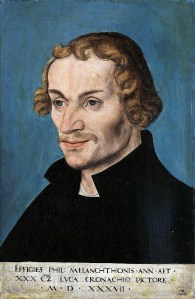
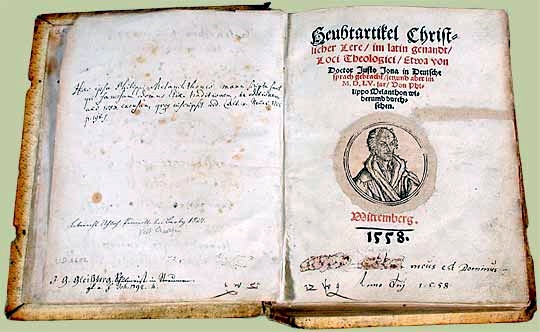
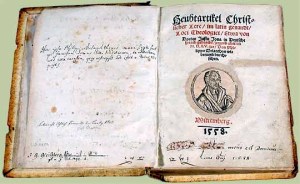 Left Phillip Melanchton painted by Lucas Cranach the Elder in 1537. Right the „insegnamento cristiano“, printed in Cranachs print shop in Wittenberg 1558.
Opposed as a reformer at Tübingen, he accepted a call to the University of Wittenberg by Martin Luther, recommended by his great-uncle Johann Reuchlin. Melanchthon became professor of the Greek language in Wittenberg at the age of 21. He studied the Scripture, especially of Paul, and Evangelical doctrine. He was present at the disputation of Leipzig (1519) as a spectator, but participated by his comments. Johann Eck having attacked his views, Melanchthon replied based on the authority of Scripture in his Defensio contra Johannem Eckium (Wittenberg, 1519).
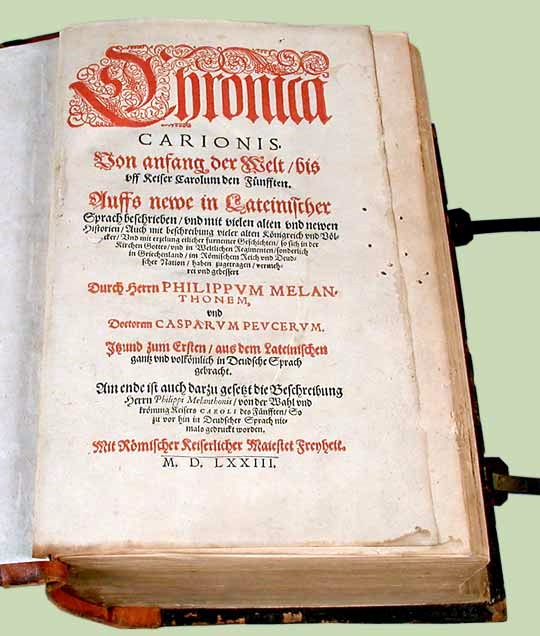
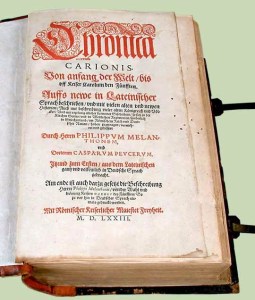 „Chronica Carionis“. „Vom Anfang der Welt bis Kaiser Karl dem V“ (from the beginning of the world until Emperor Charles the V). Written and translated by Phillip Melanchton in to German language. This edition printed 1573, thirteen years after the death of Phillip Melanchton.
After lectures on the Gospel of Matthew and the Epistle to the Romans, together with his investigations into the doctrines of Paul, he was granted the degree of bachelor of theology, and was transferred to the theological faculty. He married Katharina Krapp, daughter of Wittenberg’s mayor, on 25 November 1520.
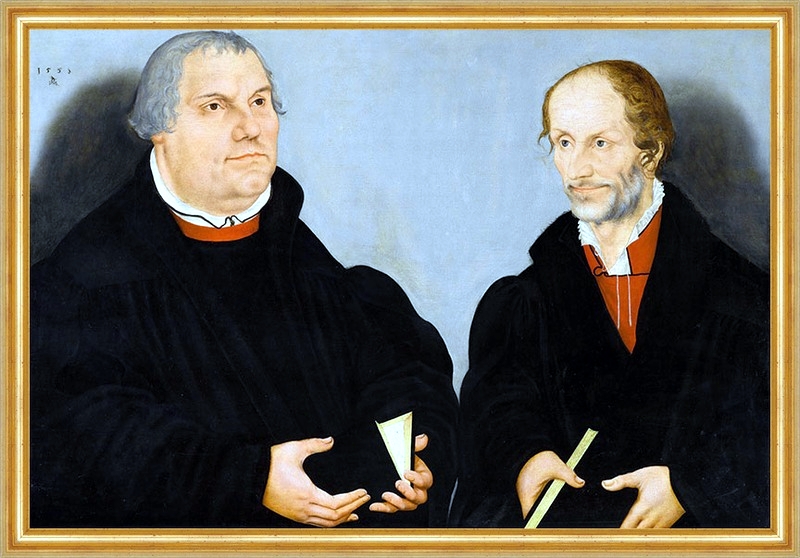
 Martin Luther (left) and Phillip Melanchton (right), painted by Lucas Cranach the Younger in 1557, when Martin Luther was already 11 years deceased.
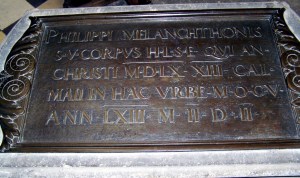 Philip Melanchthon’s tomb to find inside the Castle Church. The inscription translates to: „Here rests the body of the most commendable Philipp Melanchthon, who died on 19 April 1560, in this town after he had lived for 63 years 2 months and 2 days.“
Today the Lutherstadt (Luther Town) Wittenberg has a population around 50,000 and is located about 90 kilometers southwest of Berlin, easily accessible by car or train. Located on the Elbe River, Lutherstadt Wittenberg is also a favorite stopping point for the popular river cruise ships. It is the home town of Dr. Martin Luther, the Great Reformer, and the city affectionately known as the “Cradle of the Protestant Reformation”. Read all about this in the upcoming 2nd part of this post.


Danke – sehr gute Info. Erinnere mich an meine Besuche in dieser schönen Stadt.
LikeLike
Danke herzlich fuer’s compliment Bernd,
haette Dich gern dabei gehabt. Es war wirklich eine schoene Tour.
Alles Gute fuer Dich, Mike.
LikeLike
Mike, since we can’t fly to see such wonderful destinations, we are so pleased that you show us some „Must See’s“. Great article as always – thanks .
Do you bring up Martin Luther information in the second part ? Can’t wait, ciao Luigi.
LikeLike
Dear Luigi,
thanks very much for your, always generous, comment.
Sure it will come the Luther part in post 2, already working
on it. Also working on a post about your favorite island
Sardegna, where I lived over a year. But it depends on how
and when I get my old slides converted.
Be in touch my friend, Mike.
LikeLike