
Since we have in Montevideo and the coast no decent restaurants serving Chinese-, Korean-, Thai-, Vietnam- or similar Asian -food, we have to make it ourselves. I could a bit learn about, because I had the chance to follow a few cooking classes at the Oriental Hotel in Bangkok, Thailand. The problem in Uruguay is not the cooking, if you like it, you’ll find a way. The big problem here is, to me it’s a challenge now and not a problem anymore, to find the right ingredients. One has to be very flexible and creative.
When I flew out to Panama last time, a friend asked me to bring him some „garlic salt“, what I did gladly of course. But to replace premixed garlic salt (US) in Uruguay needs not much of creativity. A different story is Mirin, like I use in the following recipe. There is NO RICE WINE (sake) available in Uruguay. Somehow is the import of Rice Wine banned to Uruguay. I guess that they don’t know clearly how to tax it. Sake or other rice wine products are not WINE, its producing process is like BEER !!?? Solution, I brought my cooking Mirin from Panama, there are many US supermarkets.
Other manners in Uruguay play into your hands. The meat cuts here are some different then in Europe or the US. By example almost no chance to find the right cut of „Baby Short Ribs“ like one has in the US. I try since years to get my butcher used to it, but they „won’t“ understand. On the other hand is the usual rib cut here perfect for the Korean recipe.
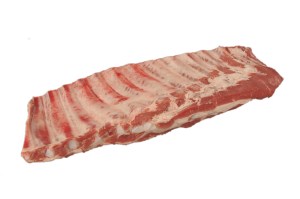 American pork rib cut, not available in Uruguay,
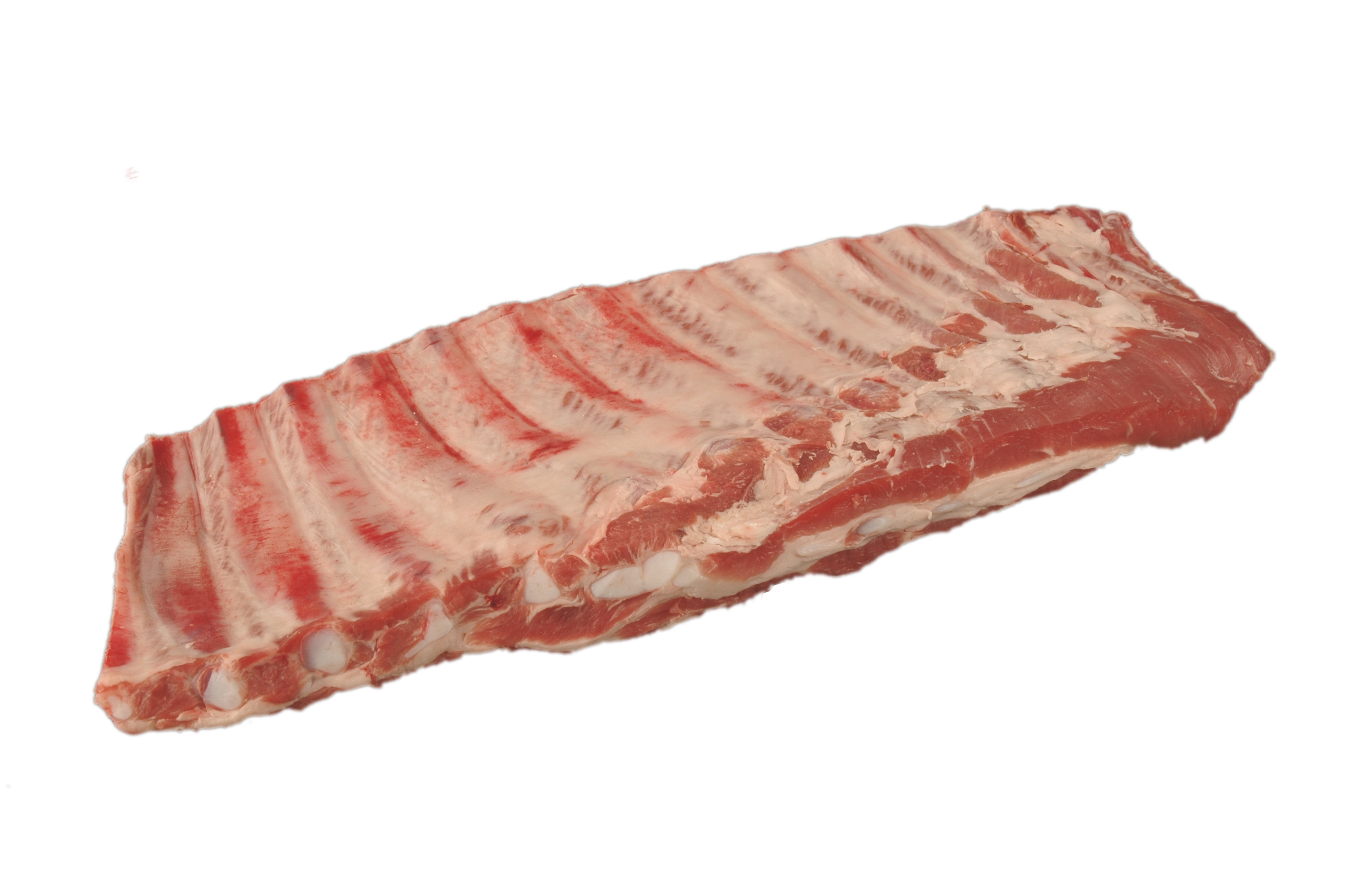
 with this barbecued result. Mouthwatering !
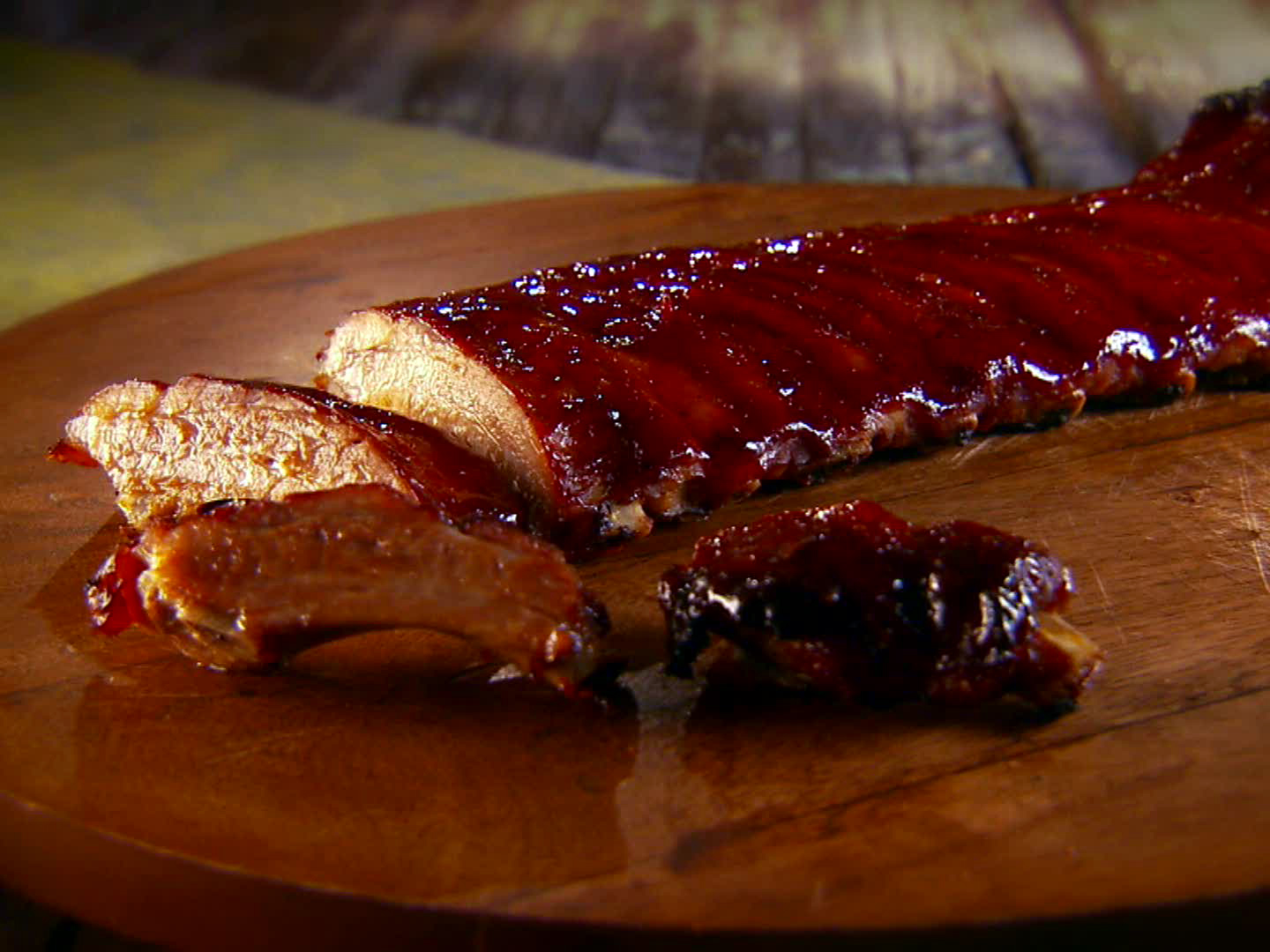
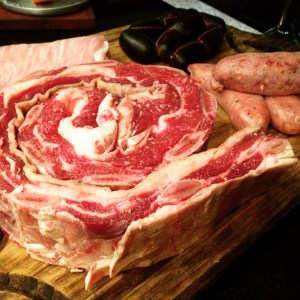 Uruguayan cut lengthwise (mostly beef), asado used,
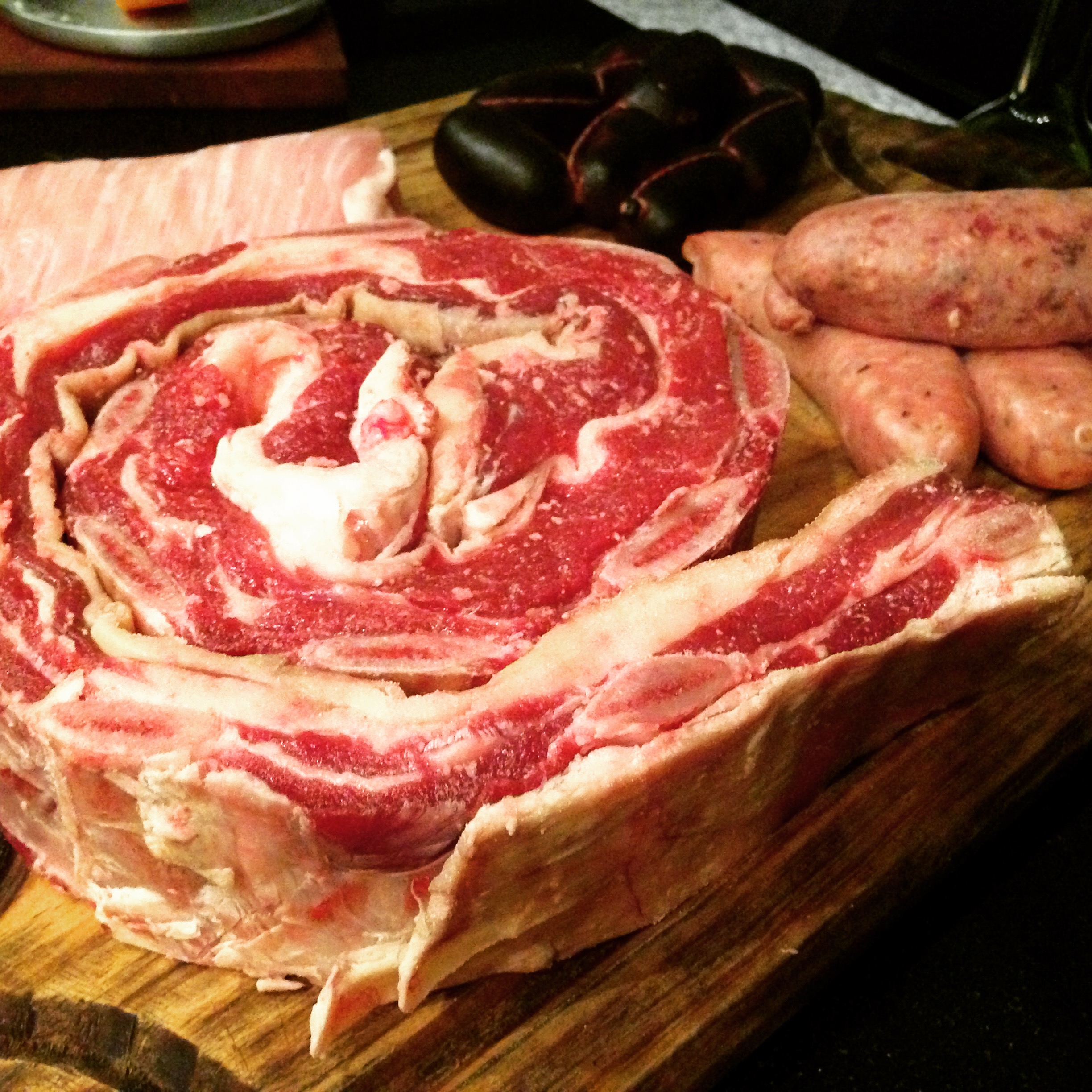
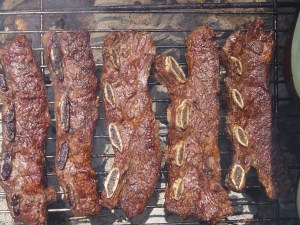 with this barbecued result. Last weekend I had suchlike Angus Ribs from the BBQ in an Atlantida restaurant. They were nice, good taste, BUT …. They don’t look as appetizing as an American Spare Rib cut in the north. Uruguay, also Argentina are a bit rough when it comes to their BBQ style. It’s missing finesse and decoration (eyes are eating with) and foremost good seasoning and taste. BBQ sauces or marinates or glazes are totally unknown here. Ketchup yes – ugggg !!
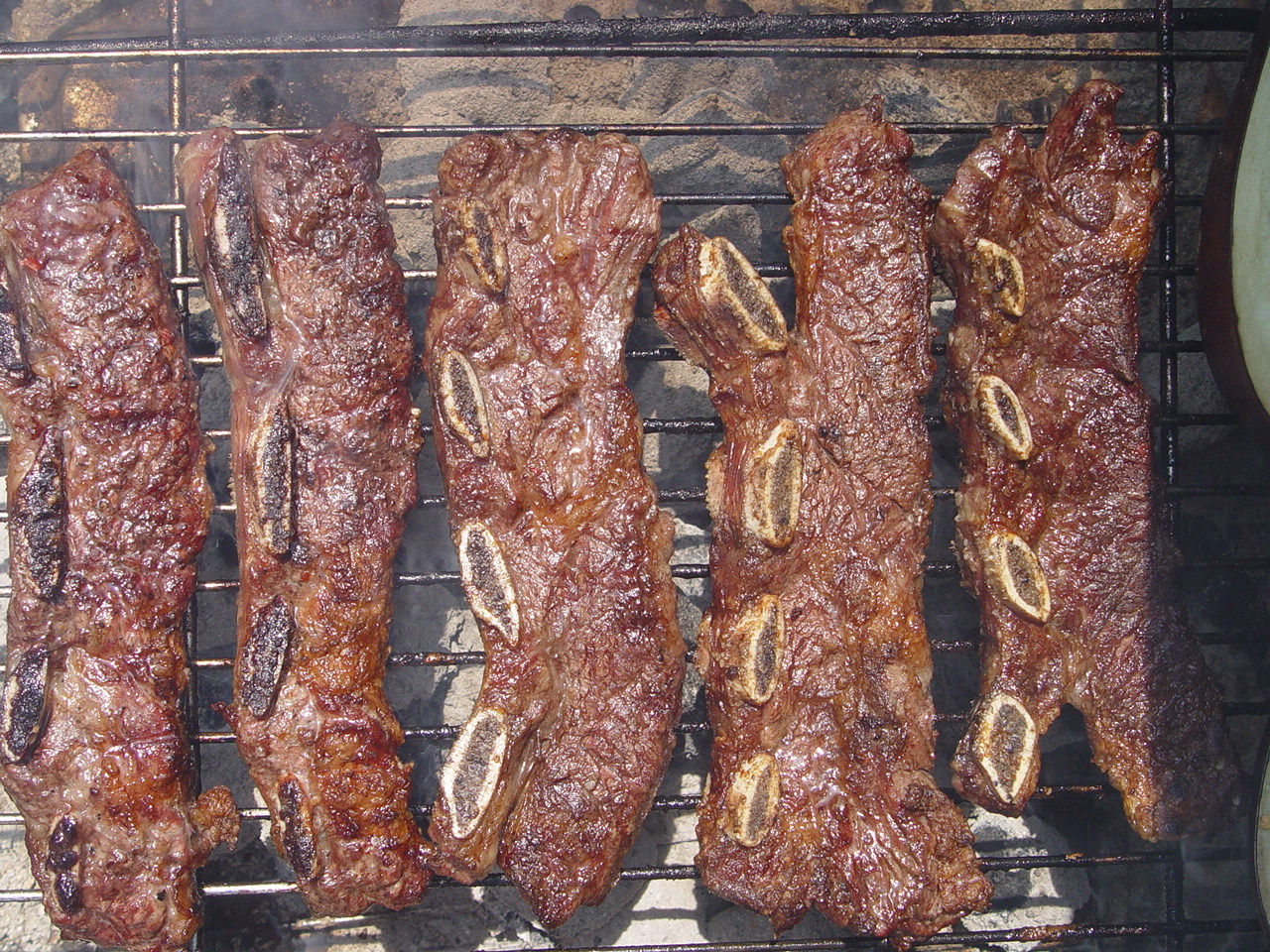
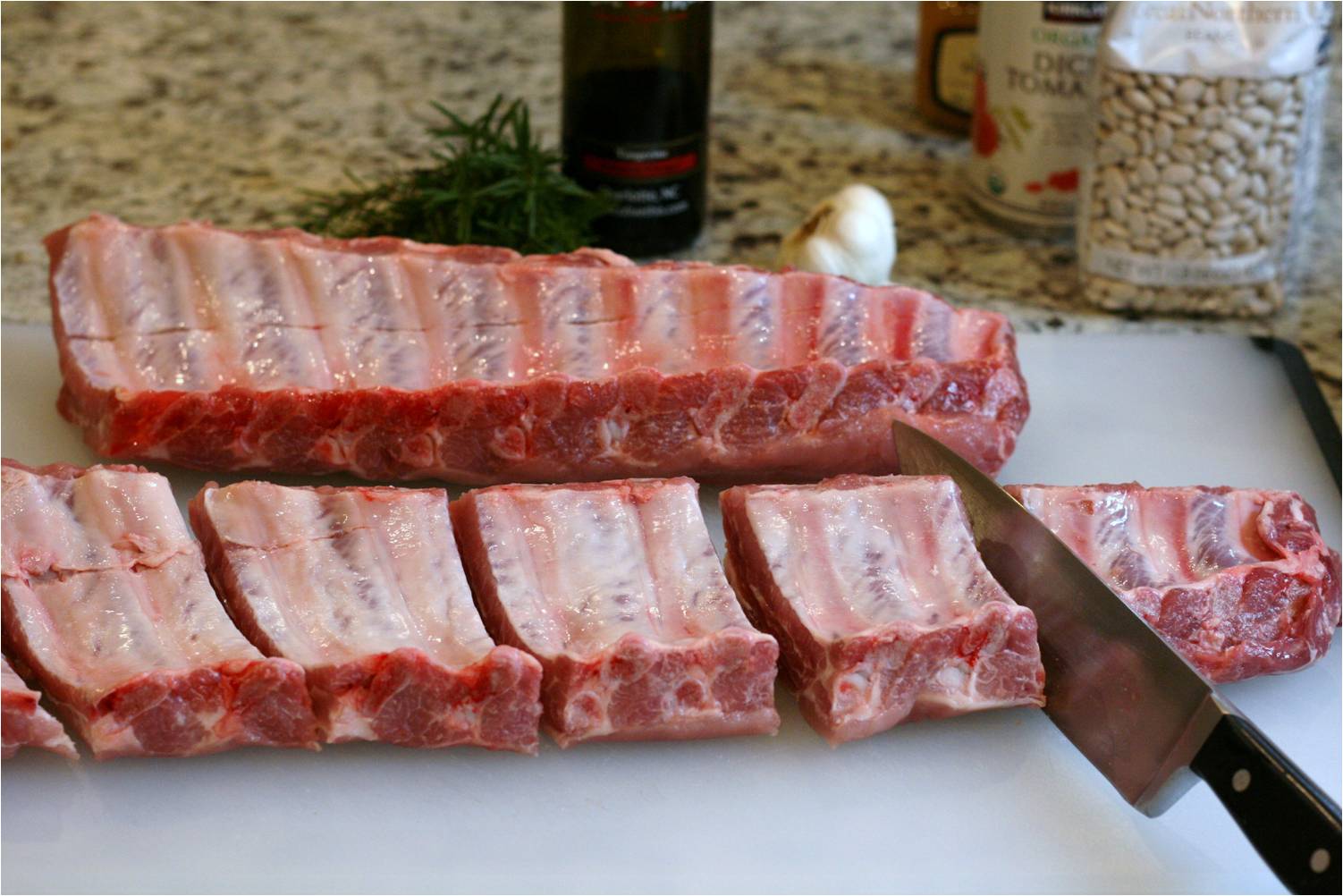
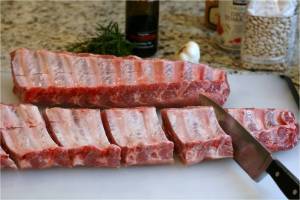 So I trained „my“ butcher here to do this cut for me,
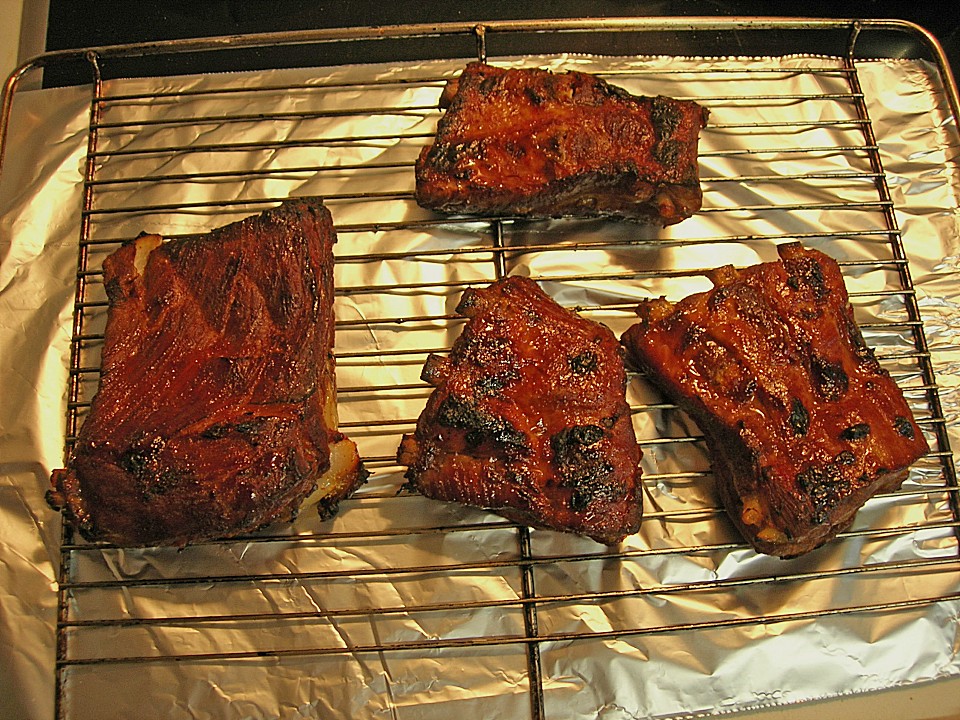
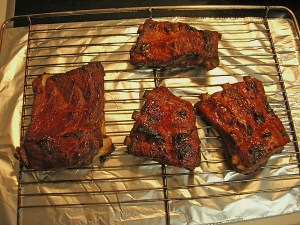 with this barbecued result. We love it better this way.
Korean Ribs.
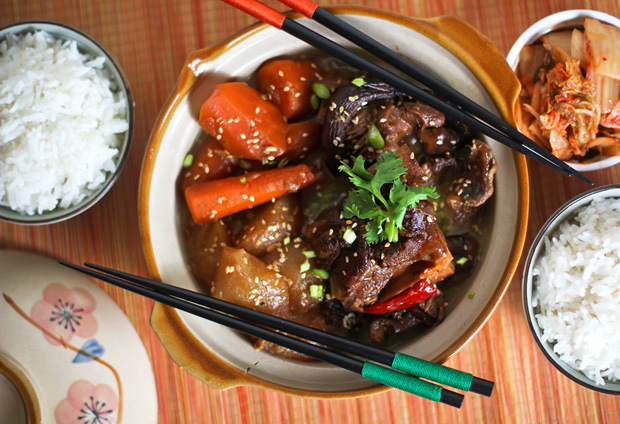
This recipe of braised short ribs, called in Korea „galbi jjim“. It is one of my favored rib recipes, because of the wonderful Asian taste (sweet and sauer, salty and spicy). It’s easy to make, no barbecue heating etc., just cooking time.
It’s a beautiful example of the economy of traditional Korean cooking, which relies on endless combinations of the same 5 to 10 pantry staples to create dozens of different dishes. Besides the short ribs and the veg, any Korean food-loving cook will already have most of these ingredients in the pantry: soy sauce, Mirin, garlic, brown sugar.
This isn’t your typical braise. You don’t brown the meat before it slow-cooks in liquid. The veggies are kind of cooked to death. But I wouldn’t change a thing. This recipe is meant to feed a crowd (6 to 8), but you can easily halve it.
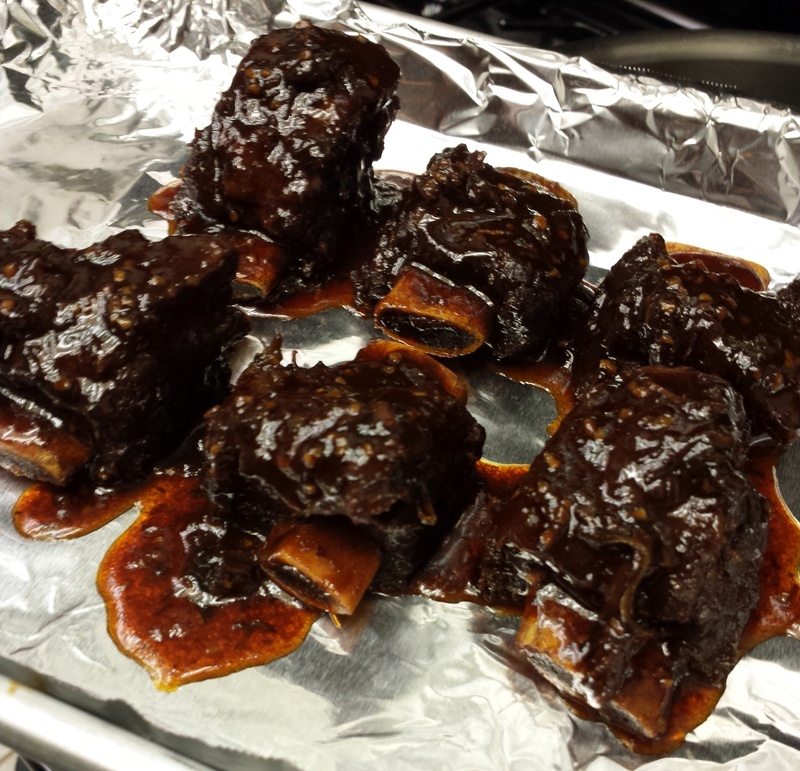
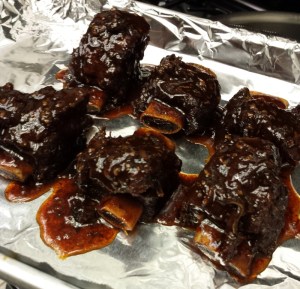 Dark braised Korean short ribs, Uruguayan cut. Delicious !
Ingredients.
8 pounds (2kg) trimmed short ribs
1 small sweet onion
1/2 peeled kiwi
1/2 peeled pear
1/3 cup Mirin
2 medium carrots
1 large daikon raddish
1 1/2 cups soy sauce ( I like the dark one)
2 tablespoons minced garlic
1/2 cup brown sugar
water
if you like it spicy, like me, add some chilli powder to your taste
How to do.
Start with 8 pounds of trimmed short ribs. Soak them (yes, soak them—it drains the ribs of excess blood) in a very large bowl of cold water for two hours, changing the water after the first hour.
Drain the ribs and put them in a large pot or Dutch oven, cover with water, and bring to a boil. Boil ribs for five minutes, skimming off any residue, then drain and rinse in cold water.
Wash the pot you just used to boil the ribs; you’ll braise the meat in it.
In a food processor, pulse the onion, kiwi, and the cored Asian pear until pureed.
Scrape the mixture into a bowl and stir in Mirin.
Place the clean short ribs in the pot you just washed and spoon the onion/kiwi/pear mixture over the meat.
Cook over low heat for 15 to 30 minutes.
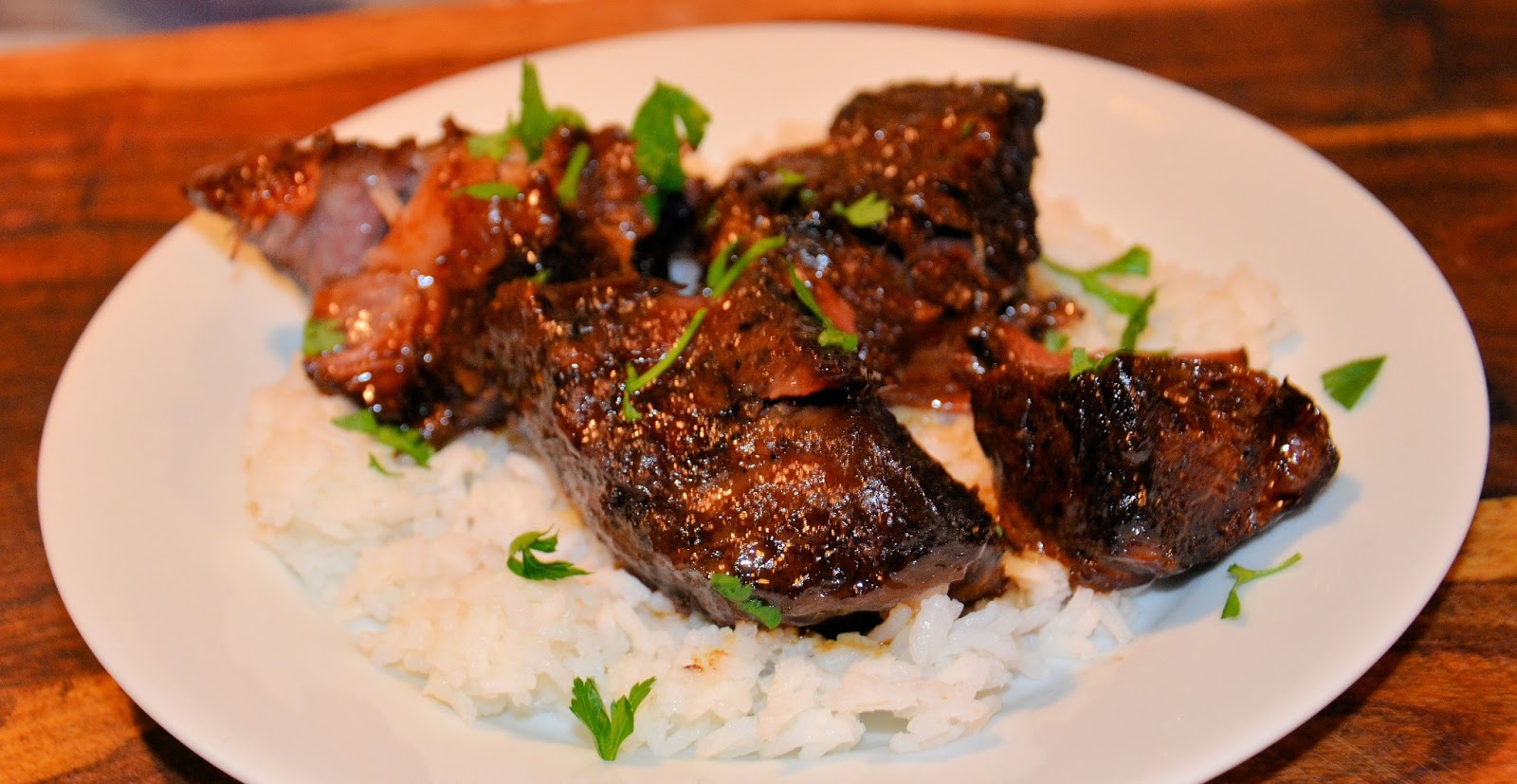
 You can choose your favorite side dish.
While the meat is cooking, roughly cut the carrots and the daikon radish into 2″ (5cm) chunks.
Set aside. In a medium bowl, combine soy sauce, minced garlic, and brown sugar. And here the chilli powder (or even Sambal Olec) if you like.
Add the soy sauce mixture and four cups of water to the pot, give everything a good stir, then cover and bring to a boil.
Turn the heat down to low and simmer for 30 to 45 minutes.
Like any good braise, this one only gets better and better with time.
Add the chopped carrots and daikon, stir and cover again, and cook for another 30 minutes until vegetables and meat are cooked through and you can easily pierce through them with a fork.
Serve with steamed rice and your favorite side vegetables. I favour a crunchy „daikon kimchi“. Means daikon radish added to the kimchi.
Why not cooking a whole Korean meal if you already go for Korean ribs.
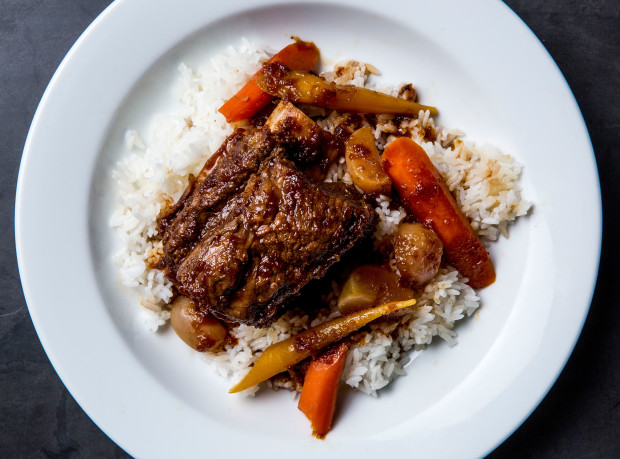
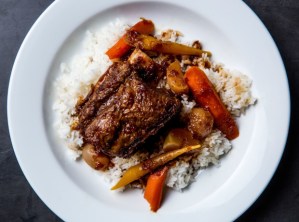 As described, Korean ribs with veggies on rice.
Kimchi.
Kimchi is often recommended as a valuable food source both at home and abroad. In fact, there has been a significant increase in Kimchi exports in recent years. Korean immigrants to China, Russia, Hawaii and Japan first introduced Kimchi abroad, and have continued to eat Kimchi as a side dish. It gradually gained popularity even among foreigners. Accordingly, Kimchi may be found wherever Koreans live.
Ingredients.
1 Carrot
4 cups of cold water
3 tablespoons of sea salt/kosher salt
1 tablespoon of fresh garlic, finely chopped
1 tablespoon of fresh ginger, finely chopped
1 tablespoon of fresh green onions ( scallions ), finely chopped
1 Napa Cabbage – approximately one pound
1 teaspoon of dried red chili pepper flakes
1 1/2 to 2 teaspoons of sugar
Anchovy sauce (optional), you also can use fish sauce, if you like it
Sesame oil, just a bit, its very strong tasting
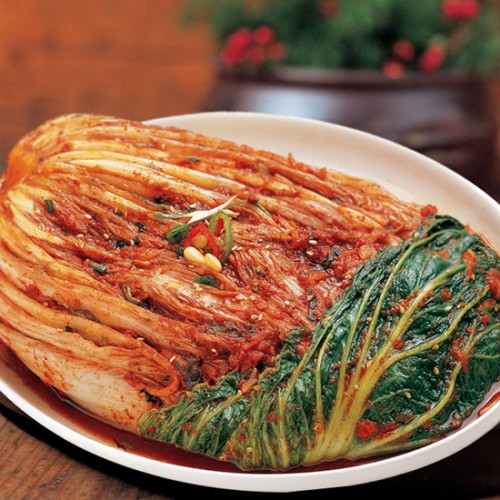
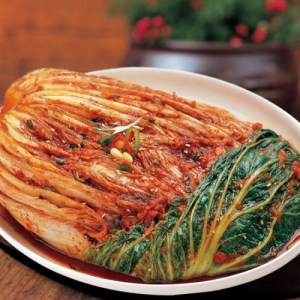 Beautiful kimchi, cabbage left whole.
How to do.
Separate and wash cabbage leaves.
Sprinkle 2 tablespoons of sea or kosher salt evenly on cabbage leaves.
Place salted cabbage leaves in a large bowl, add 4 cups of cold water, cover with plastic wrap, and place in refrigerator overnight.
Be sure that water covers all cabbage leaves – place a plate or other heavy object on top of leaves to ensure that they stay covered with water.
The next day, pour off water and thoroughly rinse cabbage leaves.
You can shake them gently in the sink to remove excess moisture.
Cut the carrot into thin strips, length is around 3cm and width is around 0.2 to 0.5 cm.
Mix all the ingredients – carrot, sea salt, garlic, ginger, green onions, dried red chili pepper flakes, sugar, anchovy sauce and sesame oil together.
If you like sesame, can add some sesame oil into the seasoning also.
Use your hands to rub seasoning evenly into all cabbage leaves.
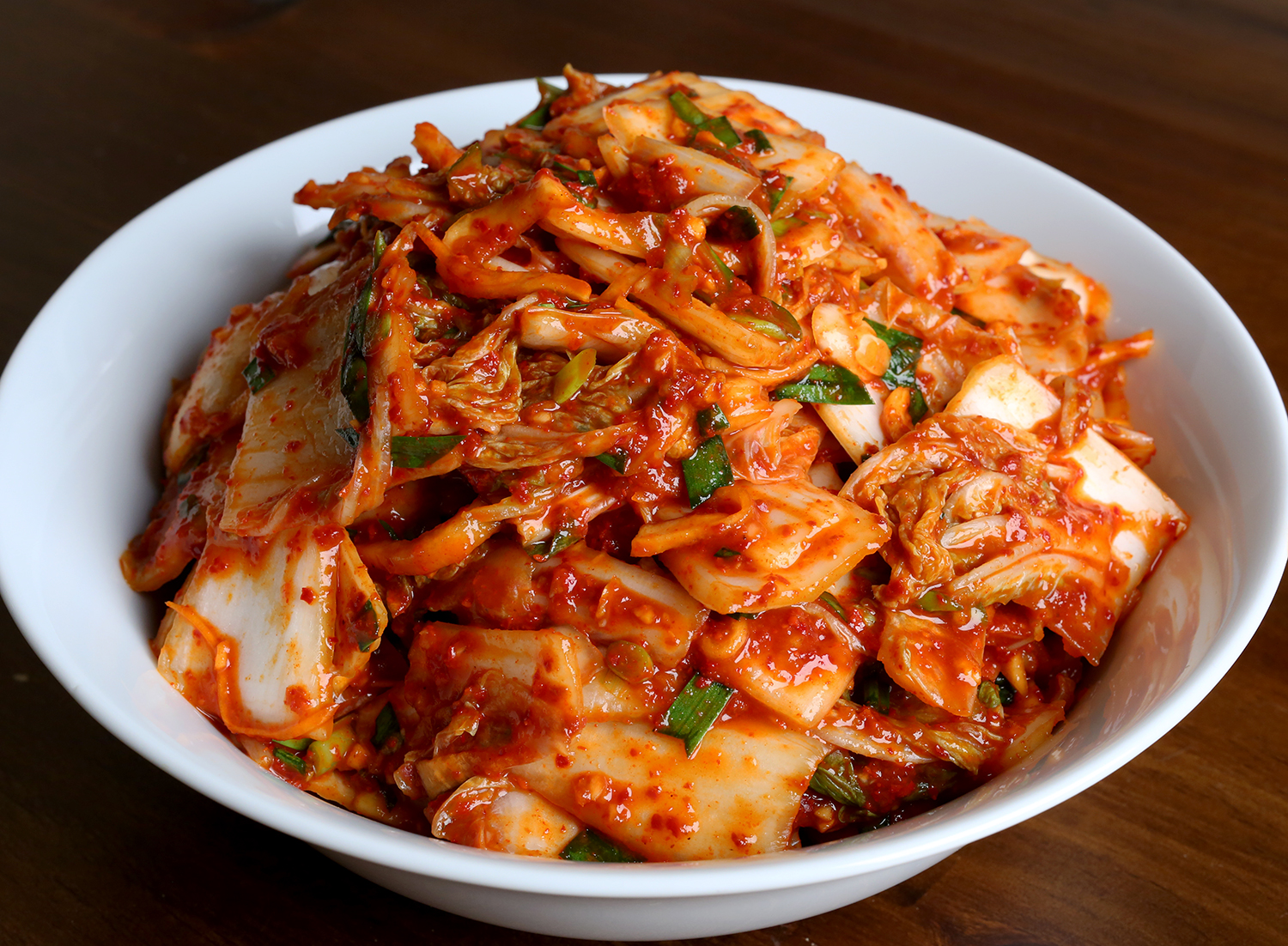
 Kimchi cut into side dish portions, with radish.
Be sure to use gloves to do this, otherwise, your hands will burn from chili flakes.
If you are pressed of time, mix seasoning ingredients with about a cup of warm water before adding them to cabbage to allow for easier distribution on cabbage leaves.
Transfer seasoned cabbage leaves into a large glass container. A bottle type with a wide opening is the best.
Be sure to use firm pressure with your hands to push down on cabbage leaves as they stack up inside the container.
Transfer any liquid that accumulated during the mixing process into the bottle as well – it will become Kimchi Brine.
Some liquid will also come out of the cabbage leaves as you press down on them as they are stacked in the container/bottle.
Leave about 2 inches (5cm) of room at top of the bottle before capping it tightly with a lid.
Allow bottle of Kimchi to sit at room temperature for 2 – 3 days.
At this stage I like to add a finely sliced daikon radish. This adds a good crunch to the recipe.
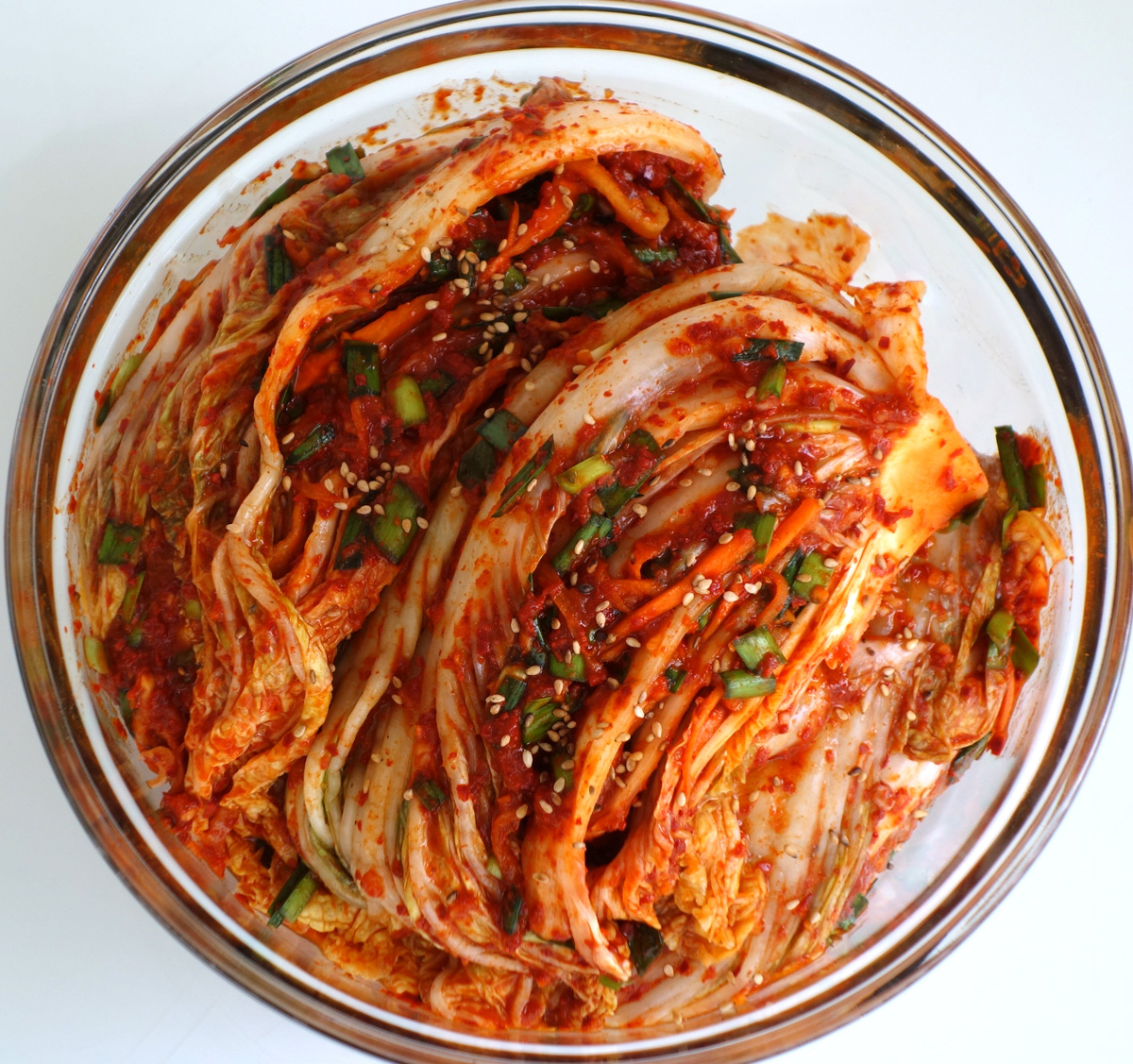
 Kimchi fresh out of the glass container.
Your Kimchi is now ready to eat! Use scissors or a knife and cutting board to cut cabbage leaves into 2 inch pieces before serving as a side dish to a bowl of rice, soup, and perhaps a piece of fish. Refrigerate remaining Kimchi and take out small portions right before meals.
The refrigerated Kimchi will continue to ferment slowly in the refrigerator over time, becoming more sour and flavorful with each passing day. So long as you use clean utensils to take out small portions, it will keep for up to a month in your refrigerator.
Tips.
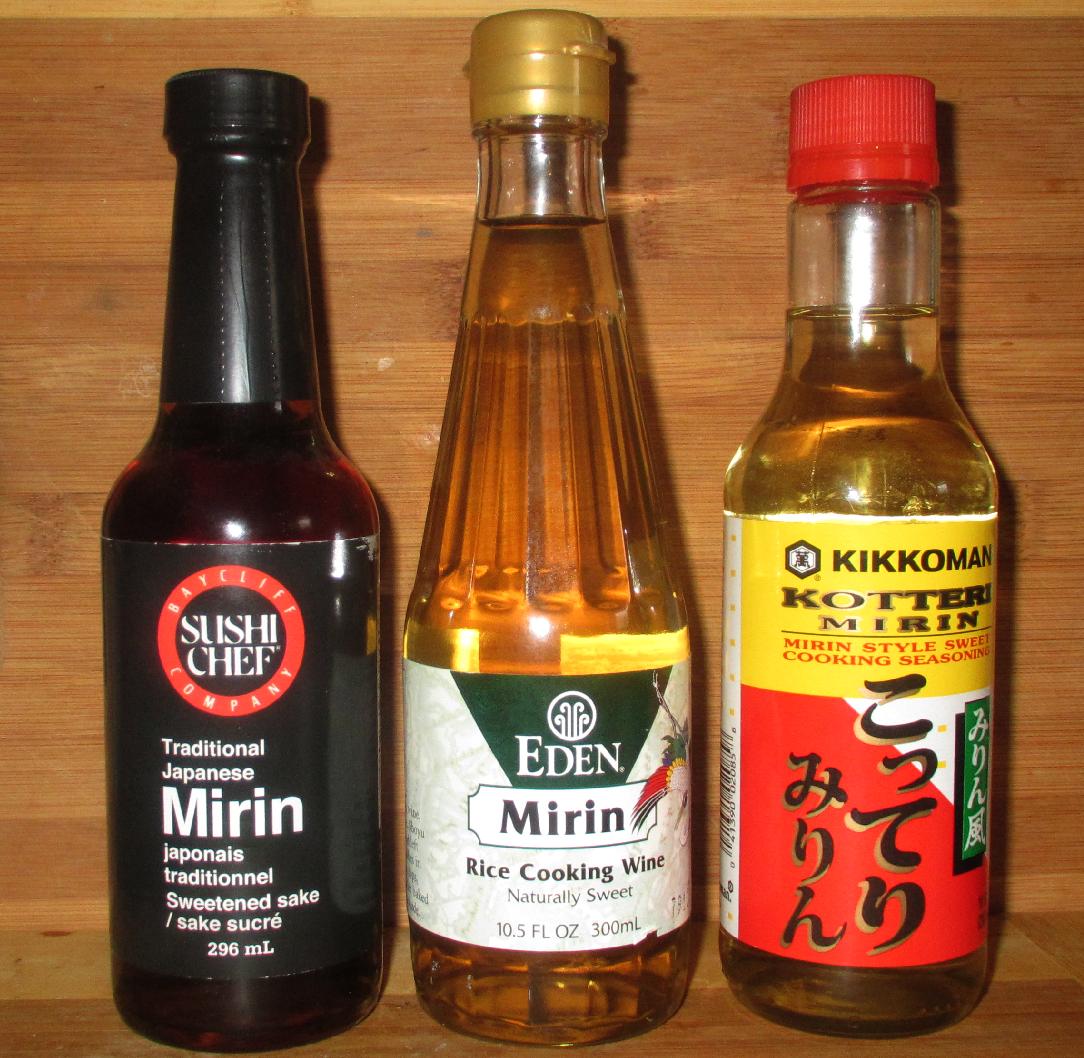
Mirin is an essential condiment used in Japanese cuisine. It is a type of rice wine similar to sake, but with a lower alcohol content and higher sugar content. The sugar content is a complex carbohydrate formed naturally via the fermentation process; it is not refined sugar. The alcohol content is further lowered when the liquid is heated.
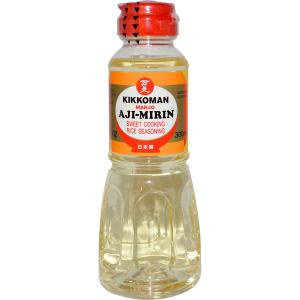
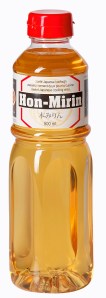 Hon-mirin is the „real stuff,“ fermented rice wine that is naturally sweet without the addition of sugar or corn syrup. Aji-mirin is rice wine with added sugar.
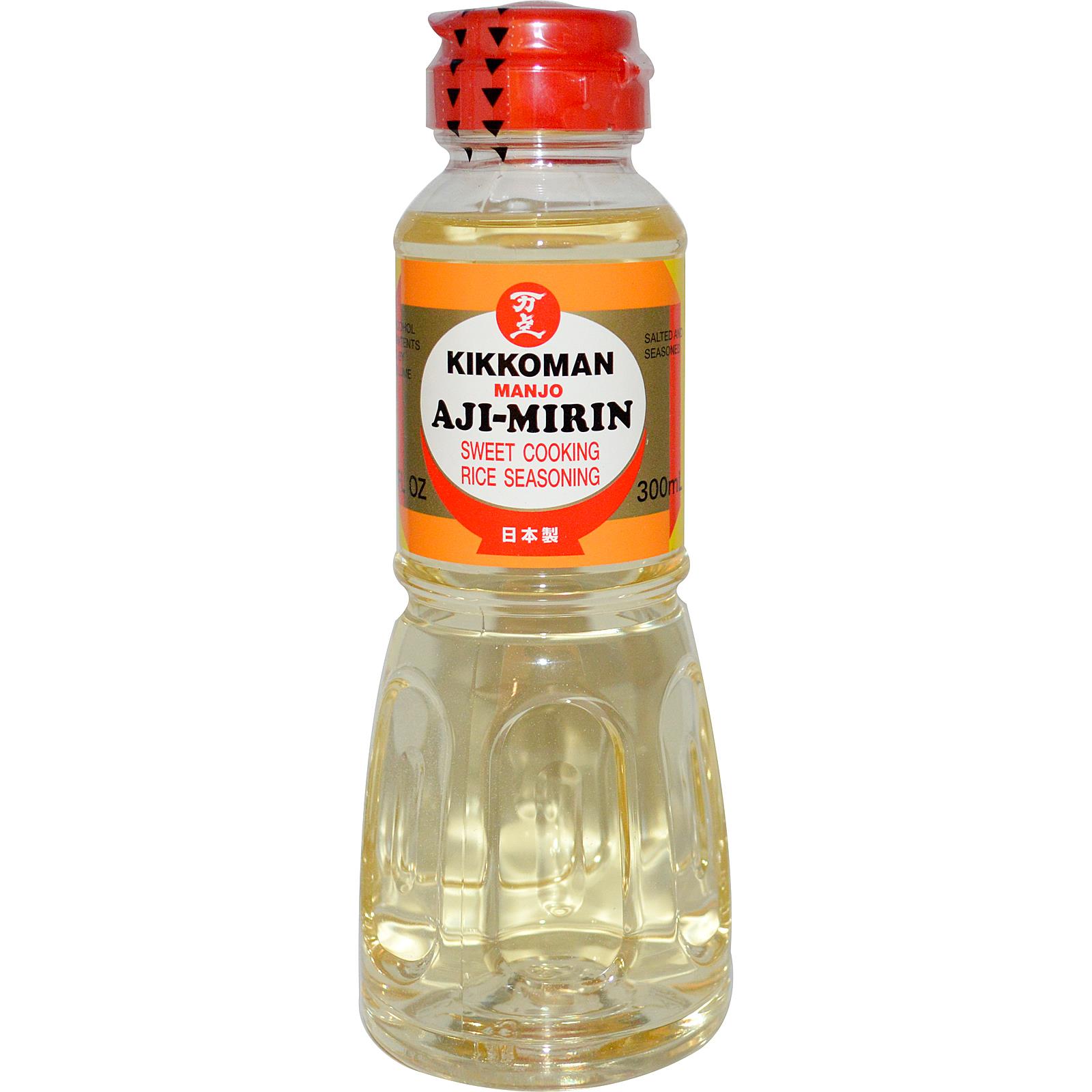
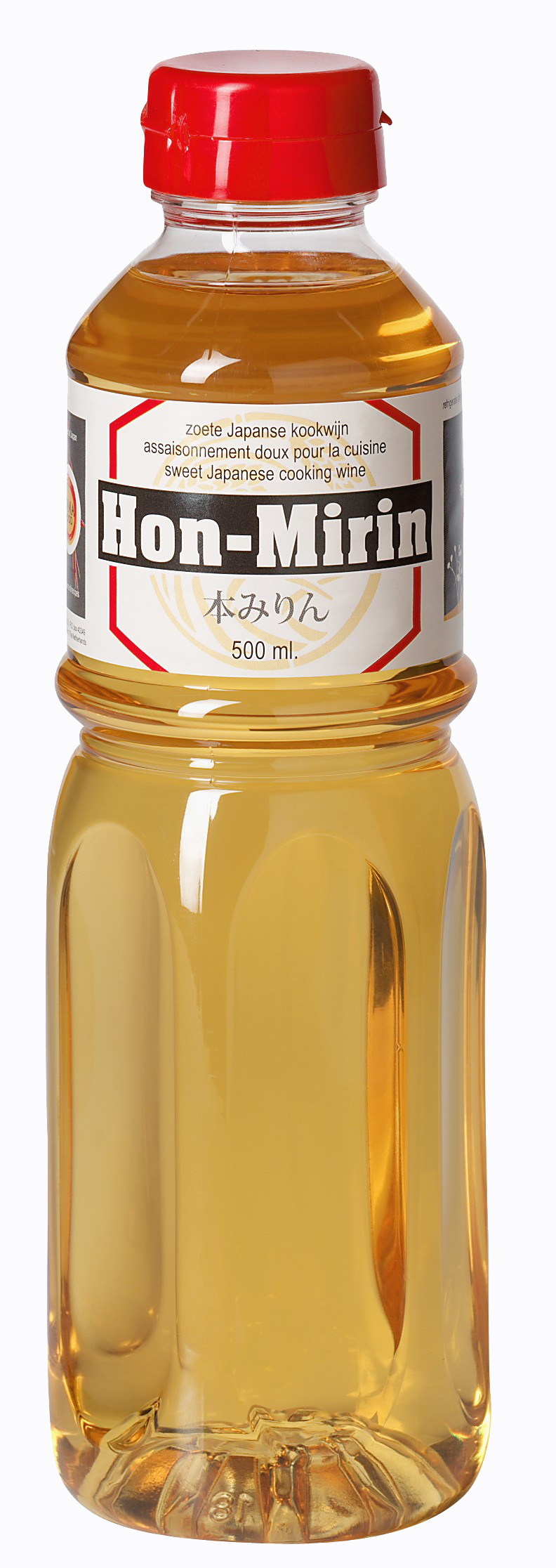
There are three general types of Mirin.
The first is Hon Mirin (literally: true Mirin), which contains approximately 14% alcohol and is produced by a forty- to sixty-day mashing (saccharification) process.
The second is Shio Mirin (literally: a sort of sustitute Mirin), which contains alcohol as well as 1.5% salt to avoid alcohol tax.
The third is Shin Mirin (literally: new Mirin), or Mirin-Fu Chomiryo (literally: Mirin-like seasoning), which contains less than 1% alcohol yet retains the same flavor.
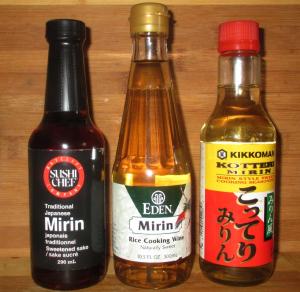 Cooking Wine, Cooking Sake, Cooking Seasoning.
Shio-Mirin.
When Sake is not available, like here in Uruguay, a substitute to Shio-Mirin can be made as shown here. This is not a very good substitute but o.k. and can be used when no Mirin or Sake is available. Remember, we talked about flexibility and creativity, why not DIY ?
Ingredients.
½ cup white wine
¼ cup rice vinegar
1 tablespoon Sherry (if available) or white Port or similar
¼ cup white sugar
2 tablespoons water
 Shio Mirin used as a drink, not every ones taste, but healthy.

How to do.
Add water to the rice vinegar in a saucepan and gently warm up the mixture, then add the sugar till it dissolved.
Ensure the mixture is not brought to a boil.
Add the white wine and Sherry and warm for two minutes, again ensuring the mixture does not boil.
Cool before using in your recipes.
Teriyaki.
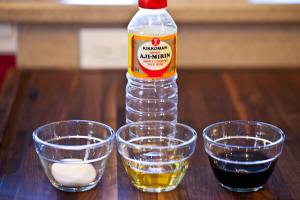 Equal amount of sugar, Mirin and soy sauce.
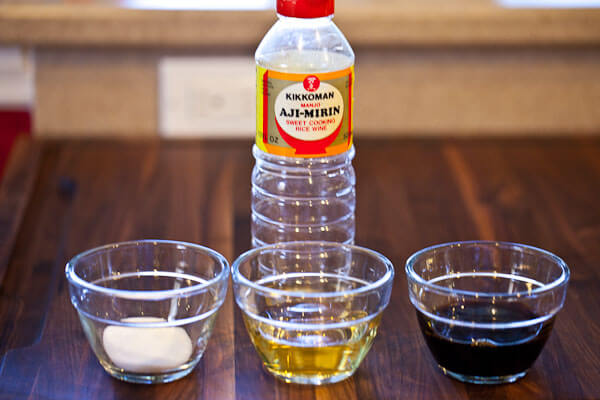
The secret is, teriyaki sauce is really only 3 ingredients. Sure, you can get all fancy and put more, like sesame seeds, a little grated ginger and garlic. But plain and simple, teriyaki sauce is equal parts sugar, sweet cooking wine (Mirin) and soy sauce. Though, if you’re like me, and prefer a less-sweet version, I use a lot less sugar.
To make a Teriyaki sauce, just bring all three ingredients to a simmer until all the sugar dissolves, about 1 minute. That’s it!
You are able now, to cook a whole Korean meal. Impress your guests, it’s so easy, try it.
Ps:
Cooking my best ribs here is great fun, but sometimes I still miss this in Uruguay:
 Click on pic to get hungry. Sweet honey roasted ribs.
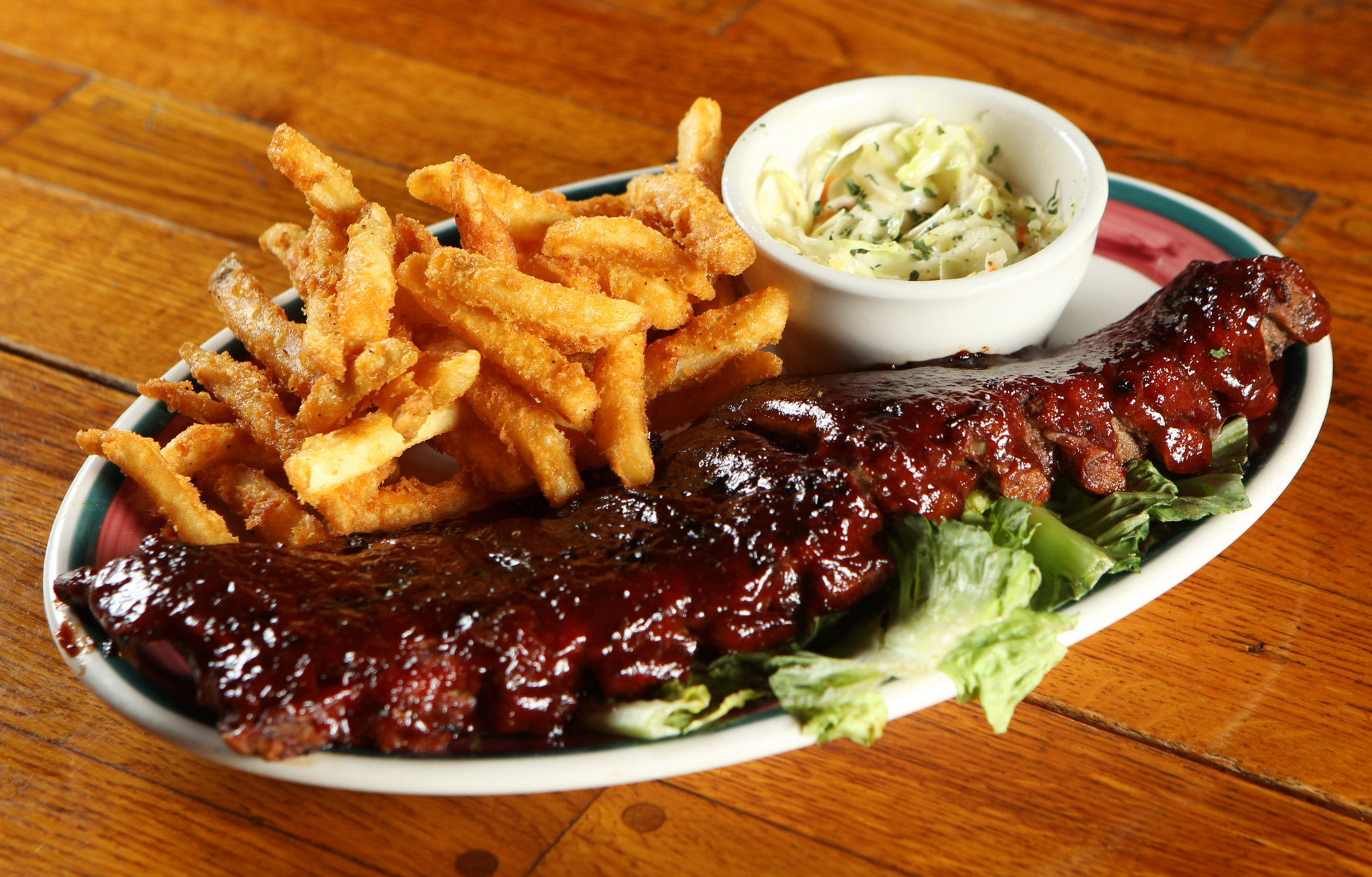
A couple years ago at „Bennucci’s, A Chicago Oven and Grill“ in Kalamazoo, a full rack of baby ribs with coleslaw and french fries US$ 12.99. No problem to finish this portion.


Oh man, oh man, we made last weekend the Korean Ribs !
Mike – what a feast, we were 8 people and had a fantastic party !
Everyone was so excited about this recipe, we left out the kimchi,
but I tried the homemade Shio-Mirin on ice – great great great !
Wish you could have joined us.
Ciao Luigi.
LikeLike
This will be my wish too Luigi.
Thanks very much for trying my recipes and your
wonderful comment.
What did you do instead kimchi, what side dish ??
Cheers Mike.
LikeLike