Did You Know That – 2 ?

Sorry my dear readers, I promised for this part 2 of the history facts 5 more unusual truths. This article about Women Samurai got longer then I thought and became herewith an own post. The other facts will be posted in a part 3. Hope you’ll enjoy it as I did.

Women Warriors.
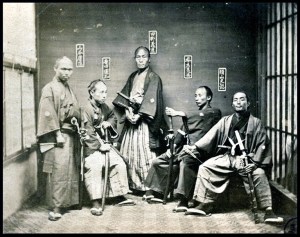
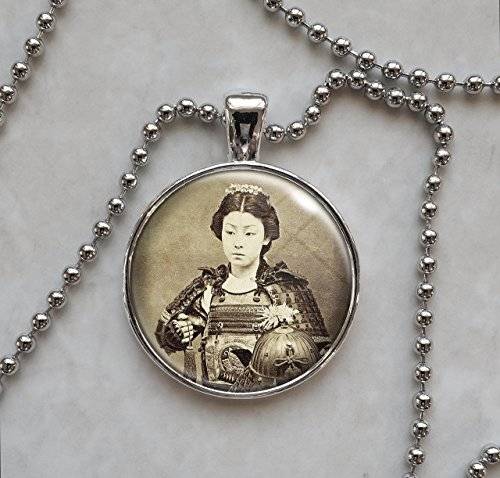
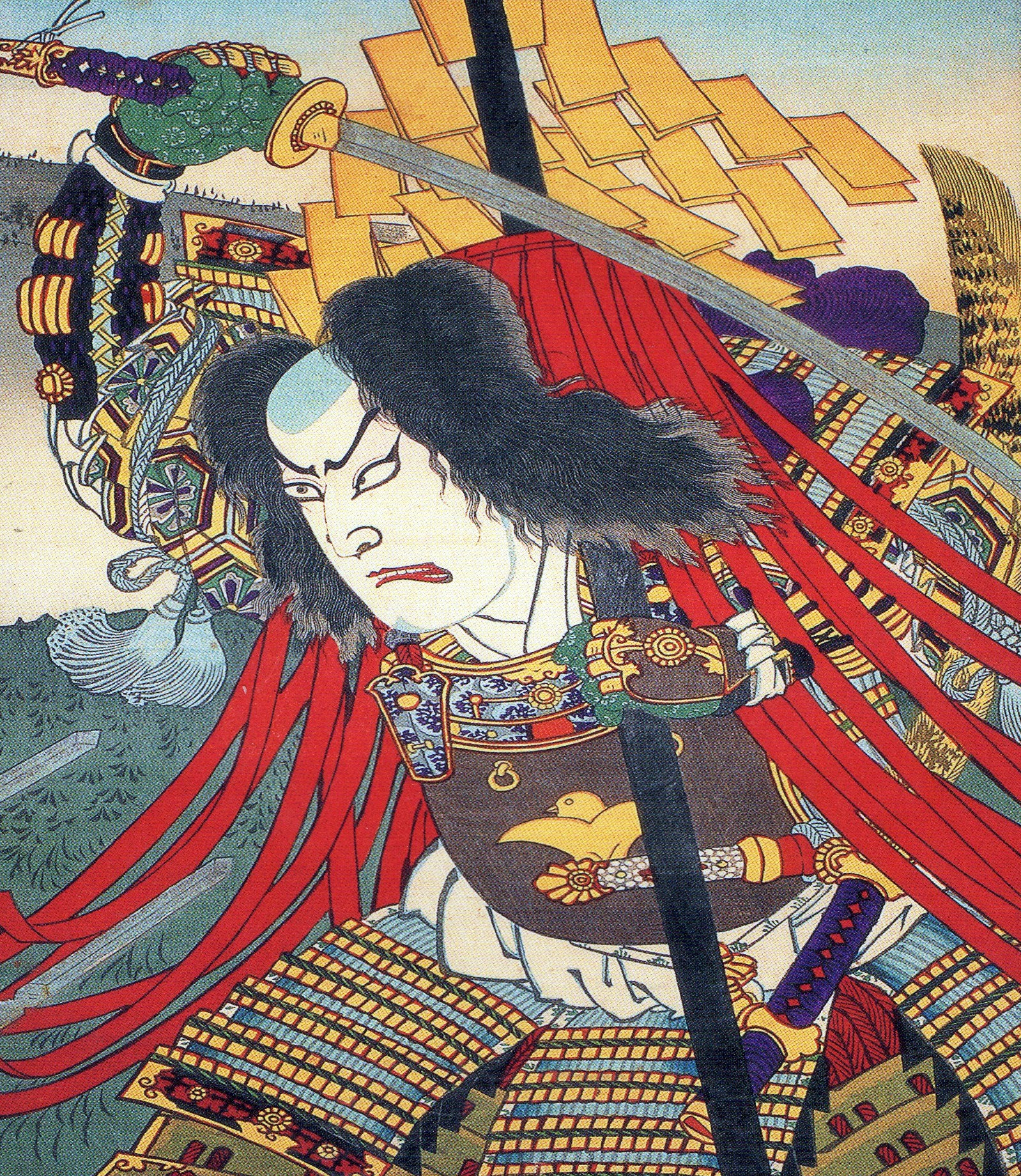
  Samurai between 1860 and 1880 are often shown as normal warriors, not as spectacular as seen in old drawings, like the one on top of this post.
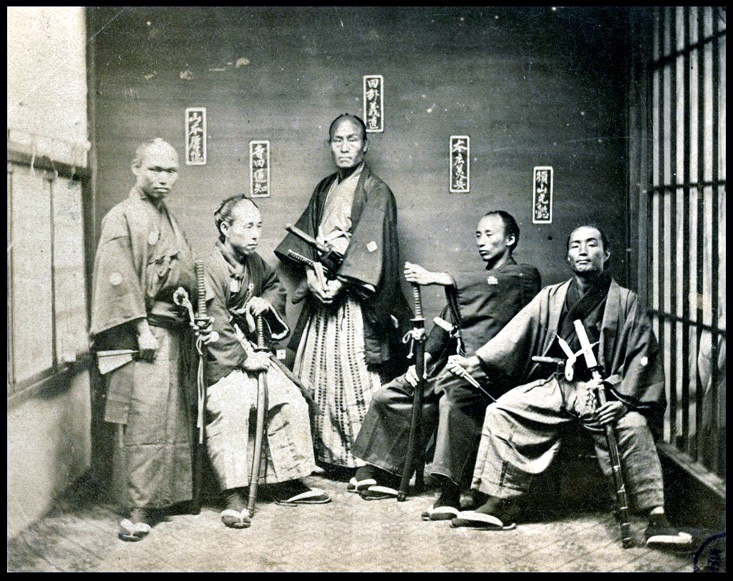
Many people think the samurai were either a rare elite force (much like Navy SEALS or the Russian Spetznaz today) or a small, tightly defined caste of noblemen. However, they were actually an entire social class. Originally, “Samurai” meant “those who serve in close attendance to the nobility“. In time, the term evolved and became associated with the Bushi class, middle- and upper-tier soldiers in particular.
  Samurai in battle – Kawanakajima battle 1857.
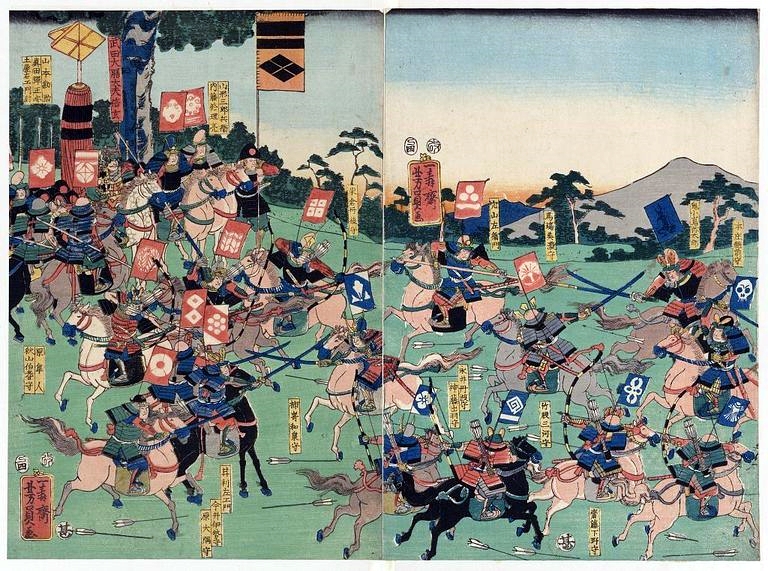
This means there were quite a lot more of these mighty warriors than we generally assume. In fact, at the peak of their power, around 10 percent of Japan’s population was Samurai. Because of their large numbers and long influence in Japan’s history, every single Japanese person living today is said to have at least some samurai blood in them.

Onna Bugeisha.
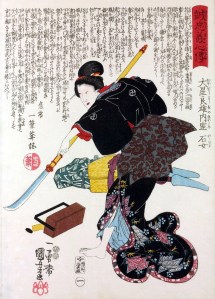
   Onna Bugeisha with her typical Naginata. Pic Wikipedia.
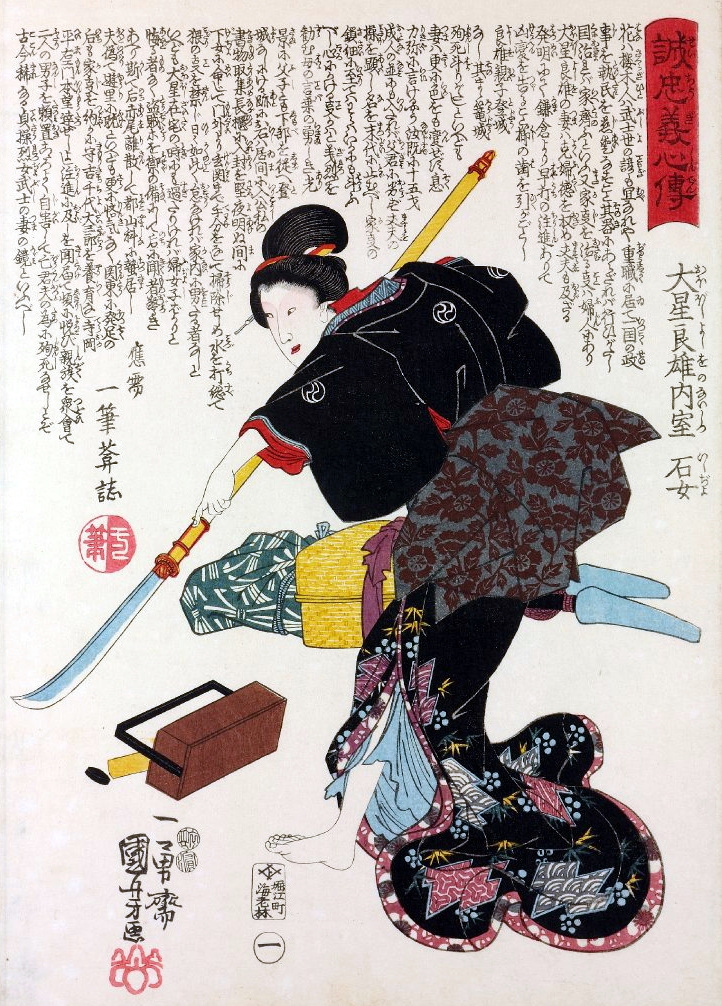
While „Samurai“ is a strictly masculine term, the Japanese Bushi class (the social class Samurai came from) did feature women who received similar training in martial arts and strategy. These women were called „Onna-Bugeisha“, and they were known to participate in combat along with their male counterparts. Their weapon of choice was usually the naginata, a spear with a curved, sword-like blade that was versatile, yet relatively light.
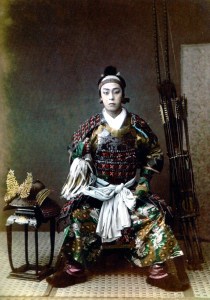
  Woman Samurai – Onna Bugeisha, around 1800.
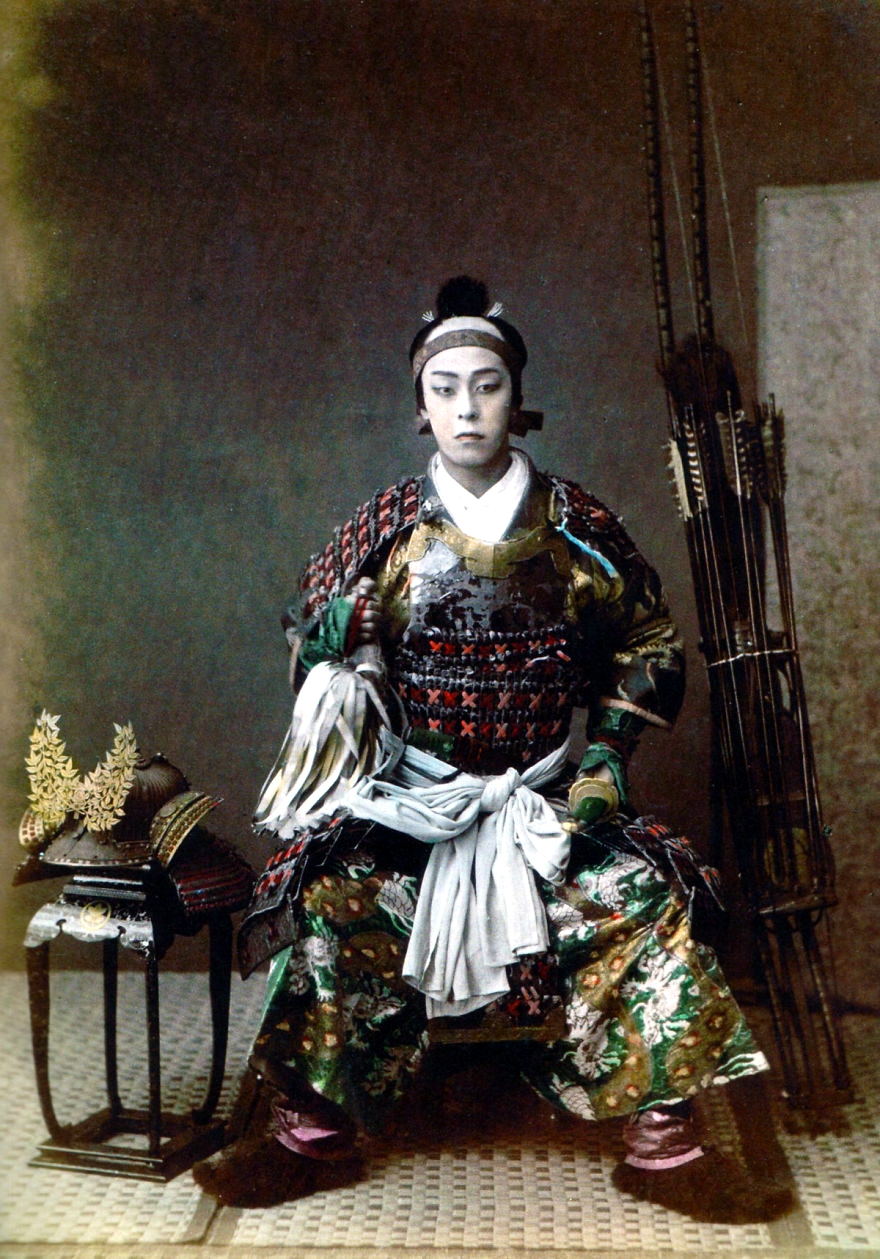
Onna-bugeisha (female martial artist) was a type of female warrior belonging to the Japanese nobility. Many women engaged in battle, commonly alongside Samurai men. They were members of the Bushi (Samurai) class in feudal Japan and were trained in the use of weapons to protect their household, family, and honor in times of war. Significant icons such as Tomoe Gozen, Nakano Takeko, and Yamakawa Futaba  are famous examples of Onna-bugeisha.

Yamakawa Futaba.
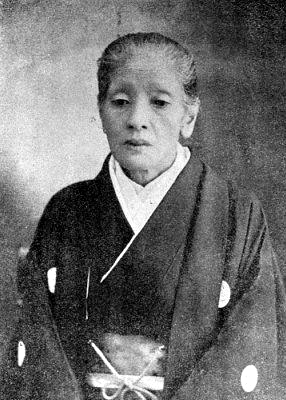
As the daughter and the wife of shogunate officials in Aizu, Yamakawa Futaba was trained to fight and consequently participated in the defense of Tsuruga Castle against the Emperor’s forces.

Tomoe Gozen.
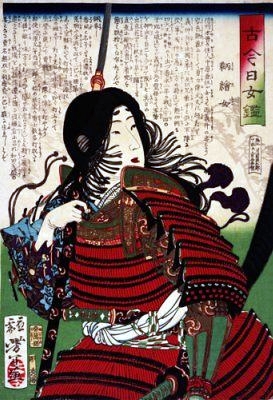
During the Genpei War from 1180 to 1185, a beautiful young woman named Tomoe Gozen fought alongside her daimyo and possible husband Minamoto no Yoshinaka against the Taira and later the forces of his cousin, Minamoto no Yoritomo.

Tomoe Gozen („Gozen“ is a title meaning „lady“) was famous as a swordswoman, a skilled rider, and a superb archer. She was Minamoto’s first captain and took at least one enemy head during the Battle of Awazu in 1184. She was for sure the most famous Samurai women warrior of all times.
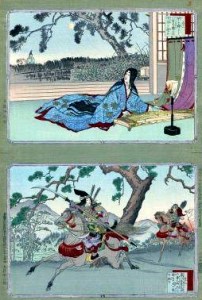
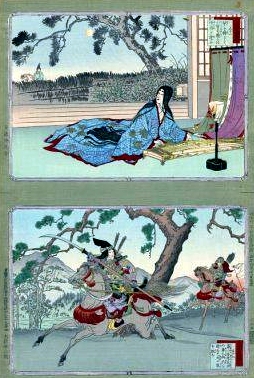
     This very intriguing print from 1888 shows Tomoe Gozen in the upper panel in a very traditional female role — seated on the floor, her long hair unbound, playing the Koto. In the lower panel, however, she has her hair up in a powerful knot and has traded her silk robe for armor and wields a Naginata rather than a Koto pick.  In both panels, enigmatic male riders appear in the background. It is not really clear whether they are her allies or enemies, anyway, she is looking over her shoulder at them.
After heavy fighting on land and at sea, the shogun abdicated and the shogunate military minister surrendered Edo (Tokyo) in May of 1868. Nevertheless, shogunate forces in the north of the country held out for many months more. One of the most important battles against the Meiji Restoration movement, which featured several female warriors, was the Battle of Aizu in October and November 1868.

Nakano Takedo.
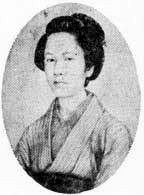
A third Aizu defender was Nakano Takeko, who lived a short life from 1847 to 1868, the daughter of another Aizu official. She was trained in the martial arts and worked as an instructor during her late teens. During the Battle of Aizu, Nakano Takeko led a corps of female samurai against the Emperor’s forces.
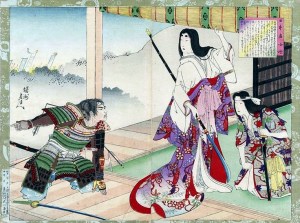
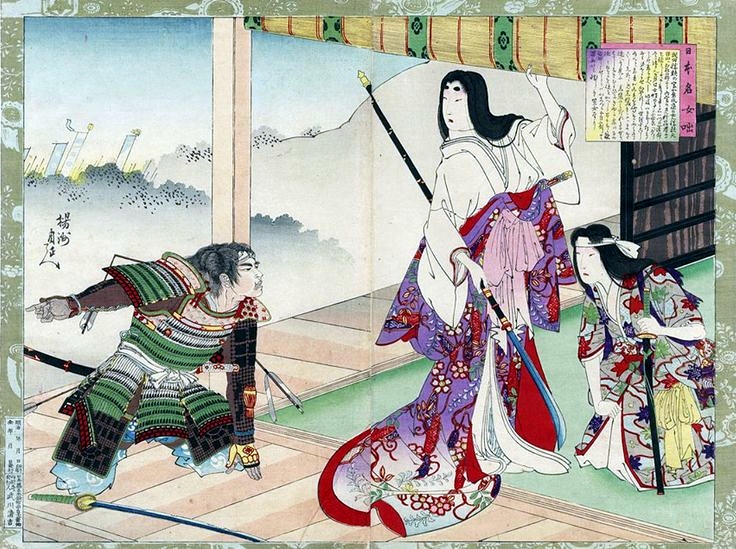
  Unusual and widely unknown scene. During a battle a Samurai is reporting to a Woman Warrior. Would you have known that ?
Jingu.

Long before the emergence of the renowned Samurai class, Japanese fighters were highly trained to wield a sword and spear. Women learned to use Naginata, Kaiken, and the art of Tantojutsu in battle. Such training ensured protection in communities that lacked male fighters.
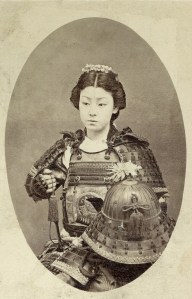
                                    Empress Jingu, after almost 2000 years, still honored and worshiped in Japan today.
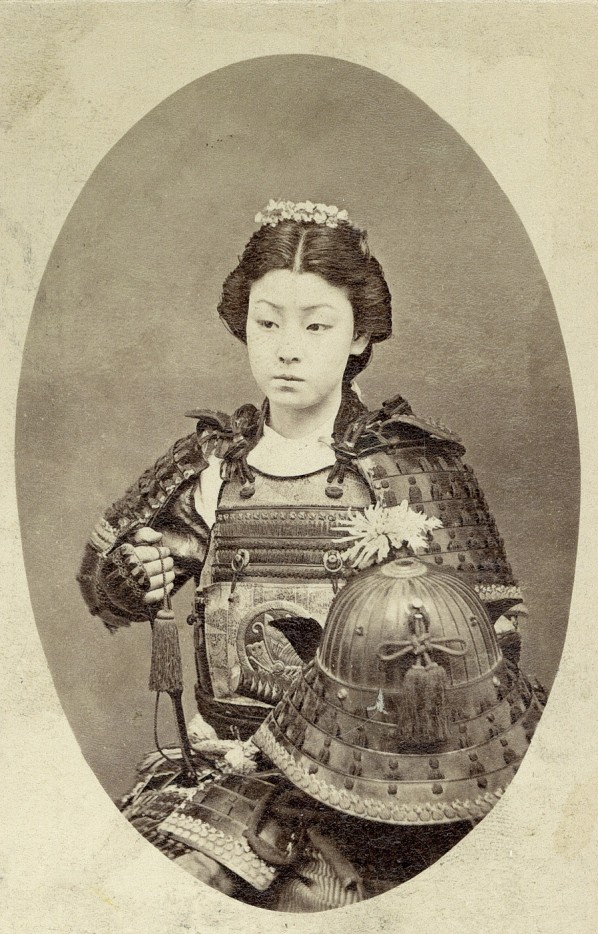
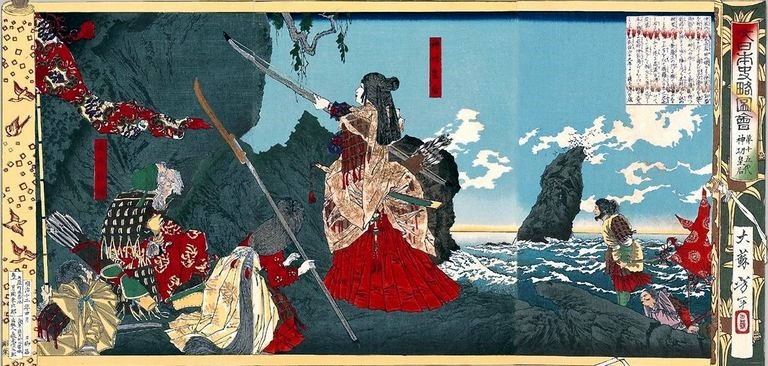
One such woman, later known as Empress Jingu (c. 169–269 AD), used her skills to inspire economic and social change. She was legendarily recognized as the Onna-bugeisha who led an invasion of Korea in 200 AD after her husband Emperor Chuai, the fourteenth emperor of Japan, was slain in battle.
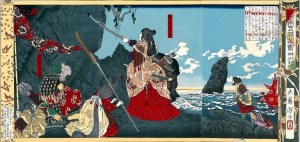
  Jingu leads the invasion of Korea.
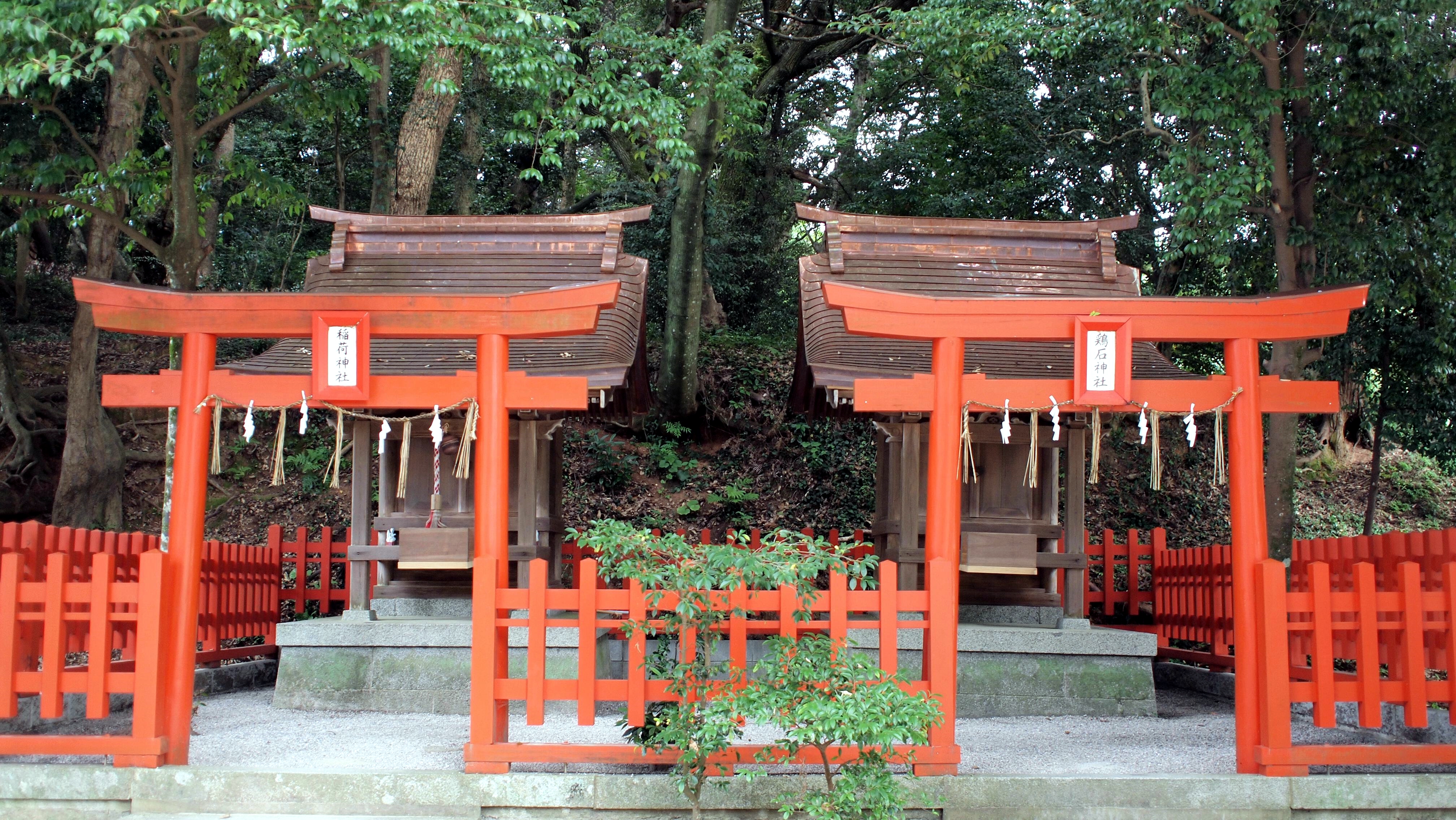
The Emperor Chuai went to the area to conquer Kumaso (a tribe living in the ancient Kyushu district), he passed away before achieving his ambition. Then the Empress Jingu built a mausoleum for him, which is the origin of this shrine. After that, the Empress Jingu Mausoleum was also built, the main shrine was worshiped the Empress Jingu to the Taisho era, the Emperor Chuai had been enshrined in the old palace. Now the Emperor    Chuai and Empress Jingu are enshrine in the main shrine together and the Emperor Oujin (the sun of the Emperoro Chuai and Empress Jingu) and Sumiyoshi no ookami are also enshrined.
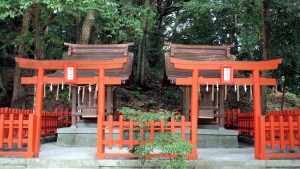
  Ancient shrine worshiping the Emperor Chuai and Empress Jingu.  About 30 minutes by train from Hakata, and 10 minutes from Kashii Jingu station.
According to the legend, she miraculously led a Japanese conquest of Korea without shedding a drop of blood. Despite controversies surrounding her existence and her accomplishments, she was an example of the Onna-bugeisha in its entirety.

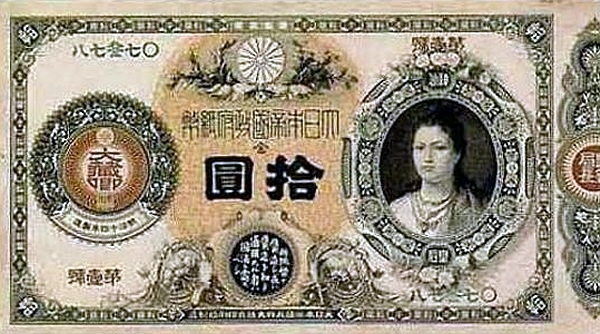
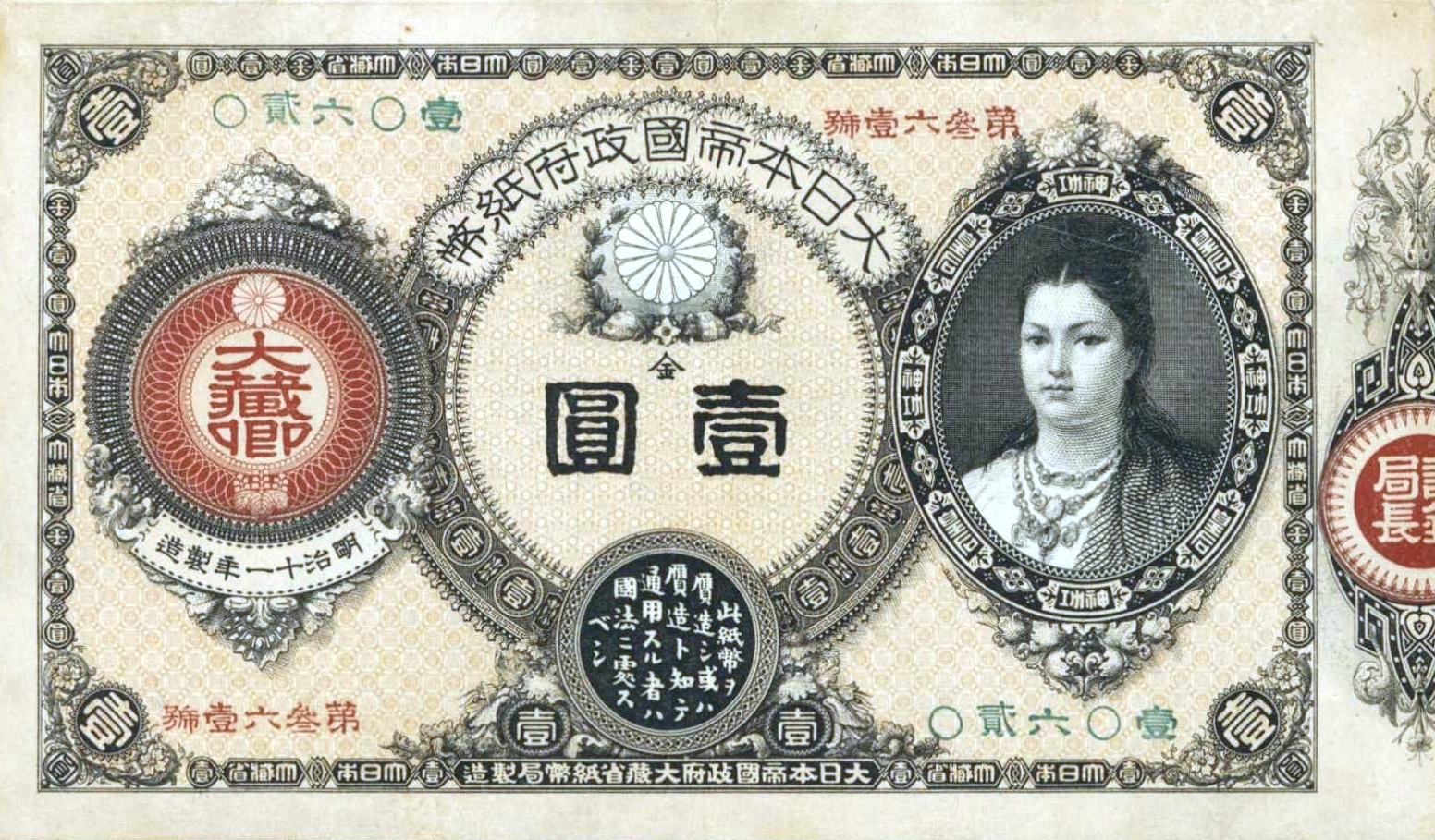
Years after her death, Jingu was able to transcend the socioeconomic structures that were instilled in Japan. In 1881, Empress Jingu became the first woman to be featured on a Japanese banknote.
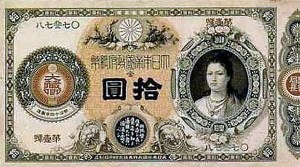
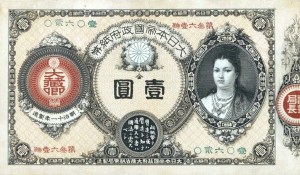
          Jingu, first woman ever on a Japanese banknote. Left a 10 yen note from 1878, right a 1 yen note from 1881.
Since historical texts offer relatively few accounts of these female warriors (the traditional role of a Japanese noblewoman was more of a homemaker), we used to assume they were just a tiny minority. However, recent research indicates that Japanese women participated in battles quite a lot more often than history books admit. When remains from the site of the Battle of Senbon Matsubaru in 1580 were DNA-tested, 35 out of 105 bodies were female. Research on other sites has yielded similar results. Did you know about that ?
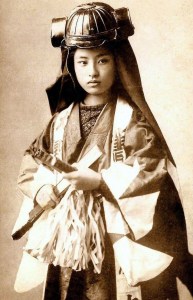
  A woman Samurai, beauty connected with tough fighting skills.
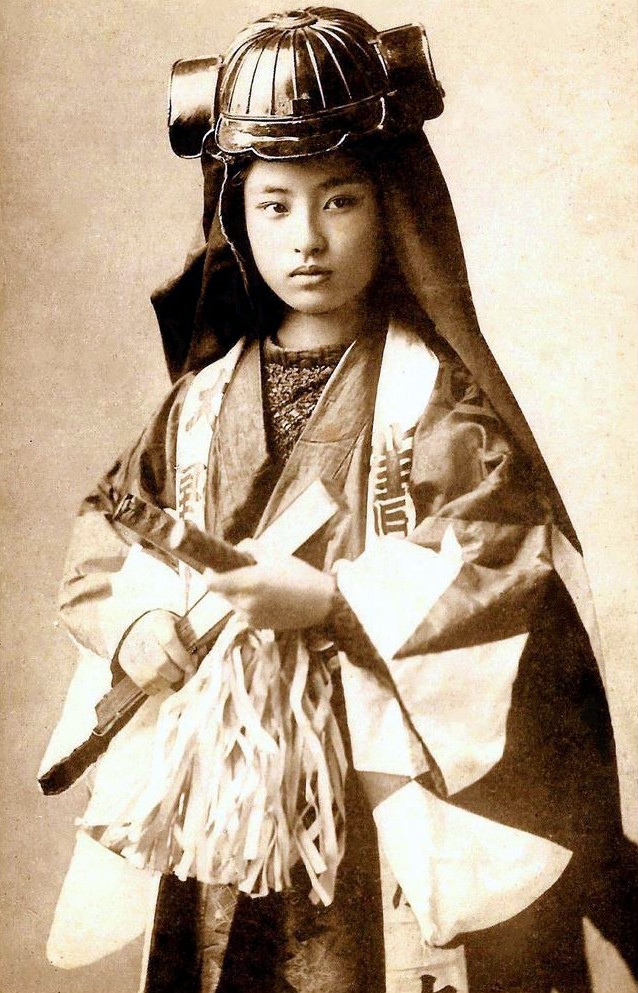
Samurai.

A history of the Samurai must begin with the most important aspect of a Samurai: Bushido. Knowing about Bushido is how one knows the Samurai warrior. „Bushi“ is translated as „Warrior“ and „do“ is translated as „the way.“ Thus Bushido means „the Samurai way of life.“ Bushido consisted of a rigid code of ethics that was to be followed devoutly with bravery, honor and loyalty as the most important aspects. The most revered Bushido tenet was „freedom from fear.“ A Samurai was to live every moment with no fear of death, thus giving them the freedom to follow the Bushido code without hesitation and without fail. This philosophy was to be held sacred, even if one had to sacrifice one’s life to pursue these ideals.
  Samurai or Bushido – the „Warrior way of life“.
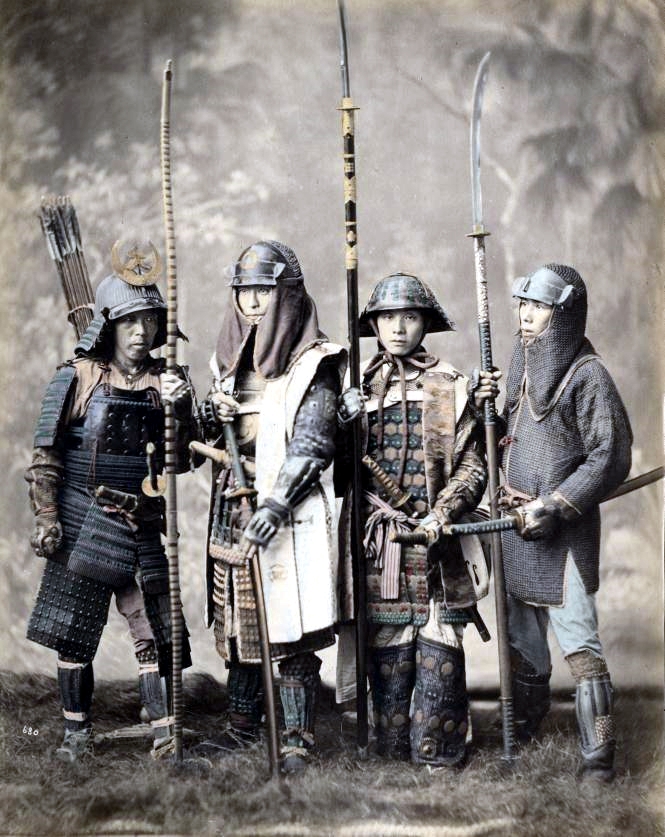
In 1185, Japan began to be governed by warriors or samurai. Until this time the government had been bureaucratic in theory, but was actually aristocratic (i.e., people held certain positions because they were born to families entitled to hold those jobs). Even after 1185, civil government at the Emperors court continued and the law and the state were not changed, but a new samurai class came to power and increasingly became the real rulers of the country. Some form of military leadership remained the form of government in Japan until 1868, when a centralized bureaucratic government came into being with the Meiji Restoration.
   Samurai in battle.
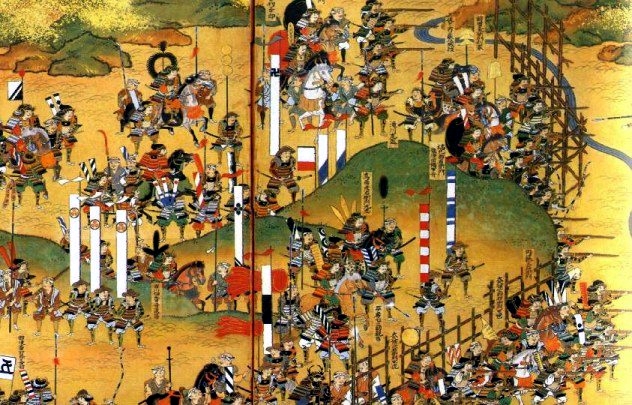
The Samurai culture rose from the ongoing wars over land among the Minamoto, Fujiwara and Taira clans. Though the Samurai originated from regional groups of ancient warriors, they quickly lost their provincial ways. They developed a unique, sophisticated culture that was renowned for stoicism, honor and military expertise during the Kamakura period (1192-1333).
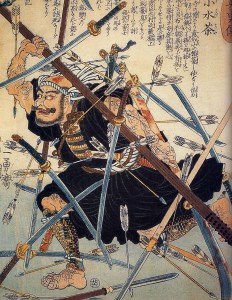
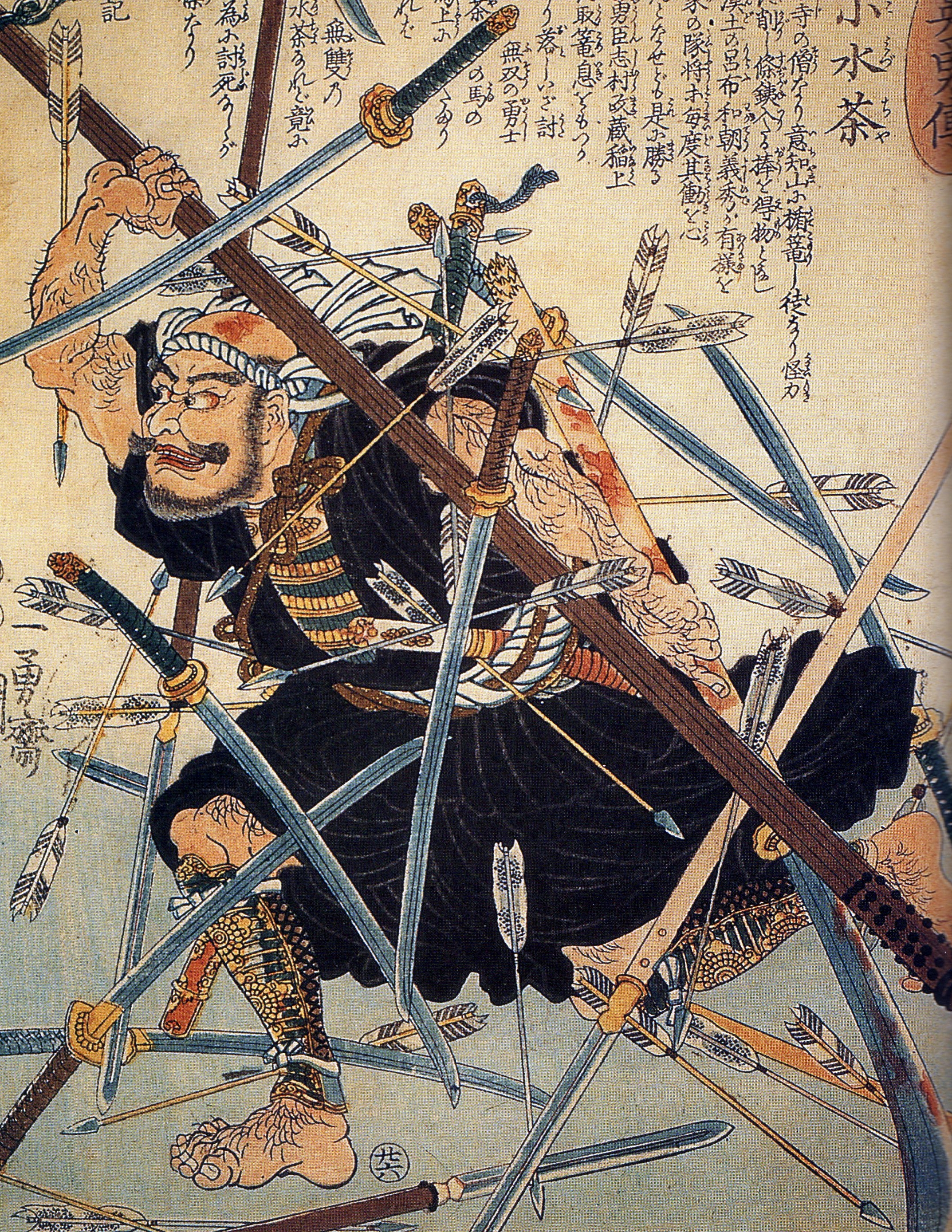
   Komizucha, a warrior monk from Negorodera, fought 1585.
During the Muromachi period (1338-1573), Samurai culture created the idea of artist-warrior. Samurai training began to include the ritualized tea ceremony and flower arranging to add refinement and balance to the warrior persona. The code of Bushido became formalized.  Give yourself a favor and click on pictures to get a better view !
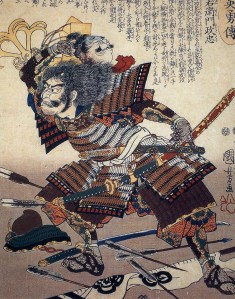
   Causing great problems if a dead Samurai having had his head removed and thrown away. Here samurai Endo Naotsugu during the battle of Anegawa 1570, throwing a head against his enemy.
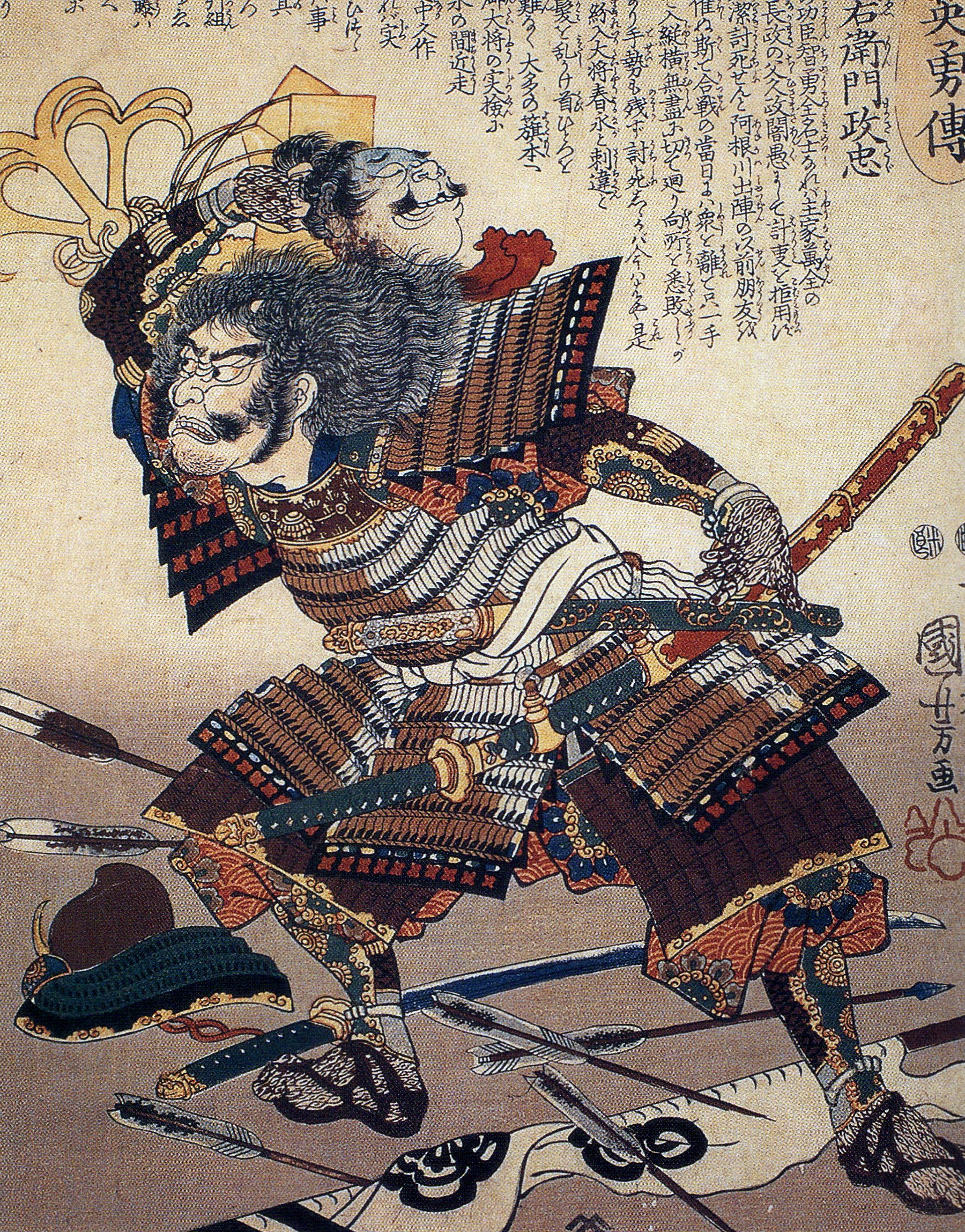
The Samurai were considered the aristocratic warrior class of Japan. The peak of the Samurai era was in 12th century Japan where they enjoyed the benefits of belonging to a unique, privileged class. The Samurai were able to wear their swords freely and had the right to kill any peasant who offended them.
    Combat between two Samurai. I like these Japanese drawings – always unbelievable detailed and extremely dramatic portrayed.  Around 1570-1580.
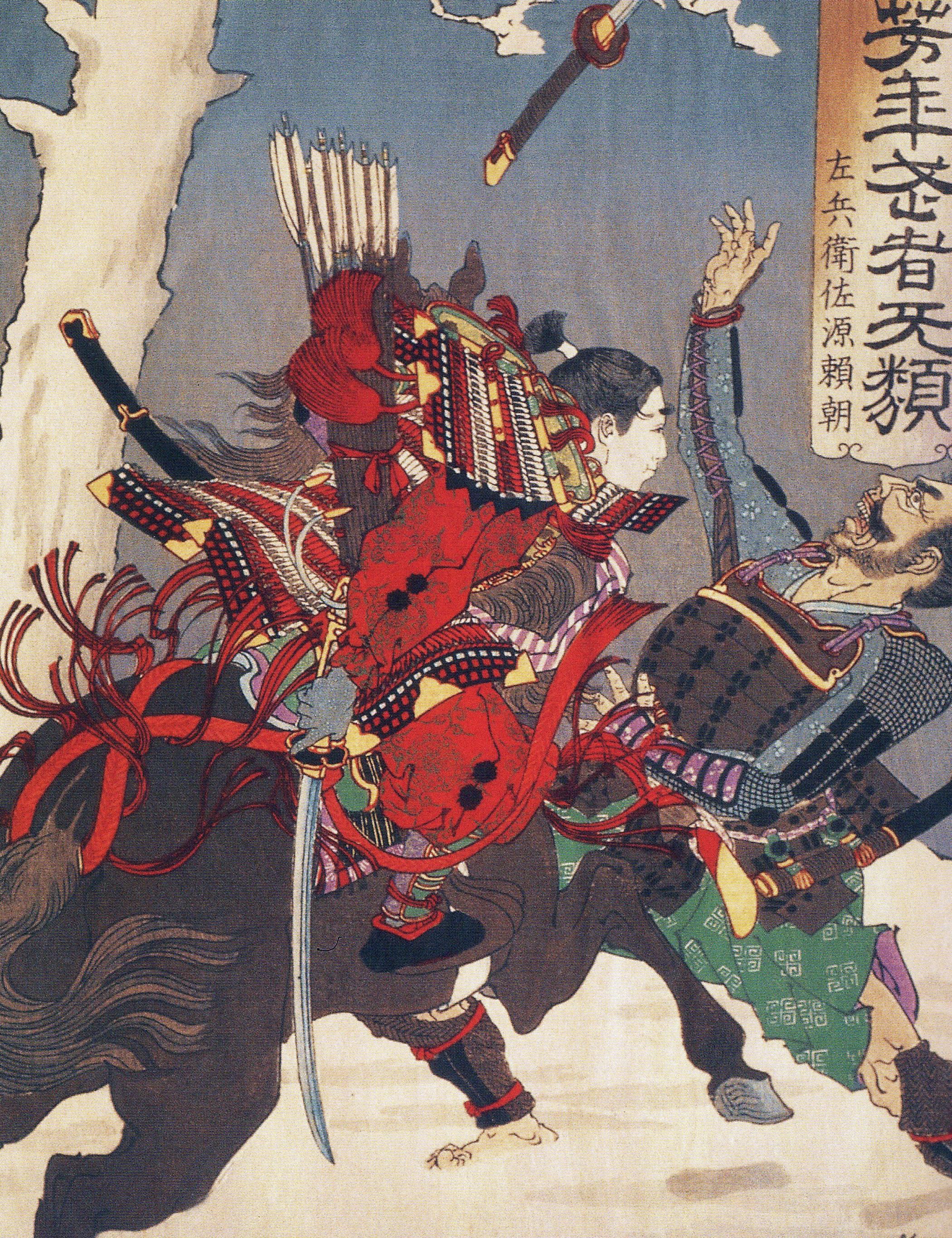
The downfall of the Samurai began during the Edo period (1603-1867). Two hundred and fifty years of peace had made the Samurai archaic: they were allowed to wear their swords, but had to accept non-warrior jobs to survive. The booming economy during this time of peace further excluded the ascetic principles of the Samurai, as most Japanese citizens were enjoying the new luxuries that accompany economic prosperity.
  A lively and compelling study of two Samurai discussing written war instructions. Again late 16th century.
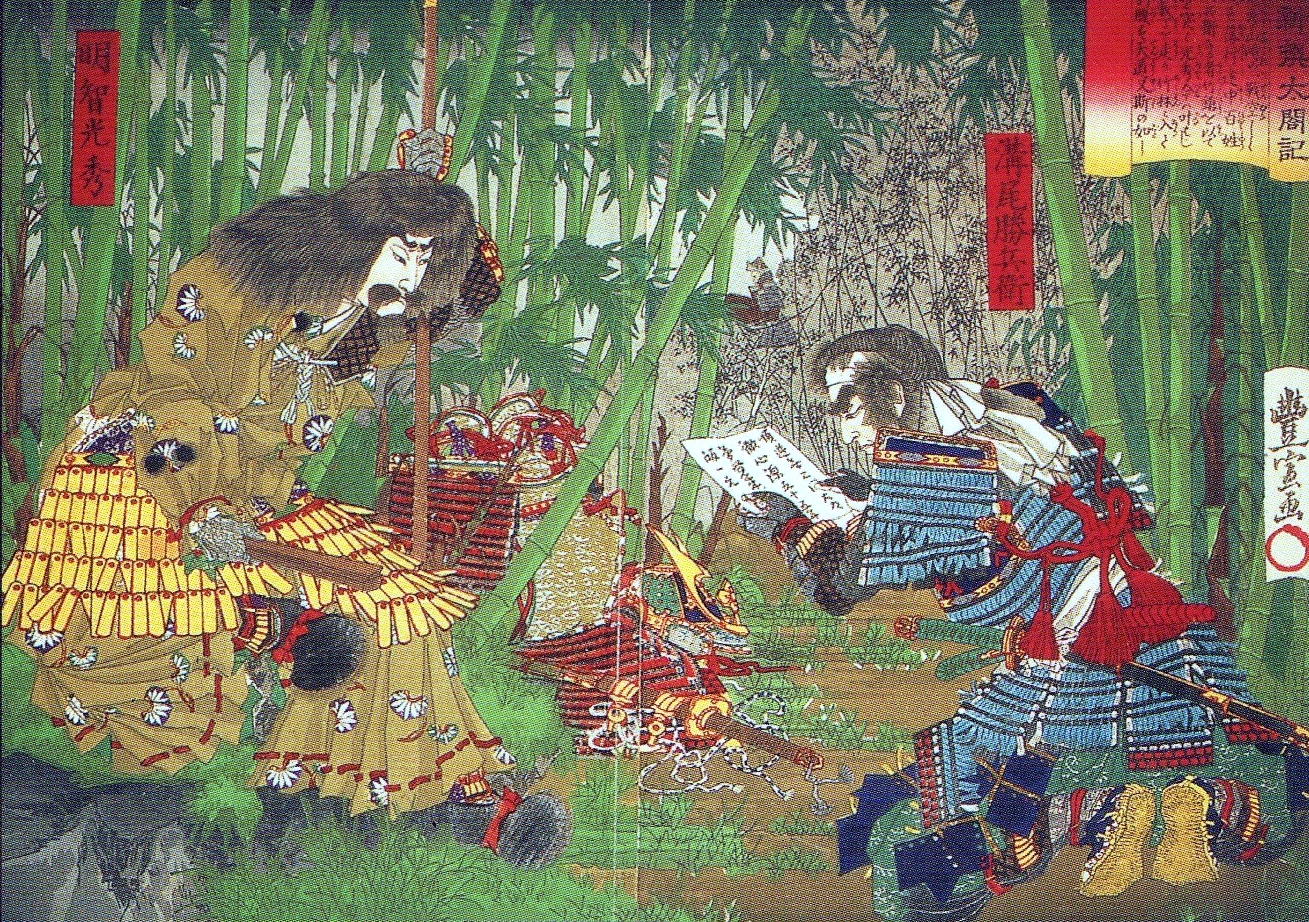
The gradual decline of the Samurai continued until the last Shogun resigned during the Meiji Restoration in 1868. Dissatisfied Samurai had led the revolt against the shogun, but the new government abolished feudalism and betrayed the Samurai by stripping them of all their privileges in 1871. Thus ended the era of the Samurai.

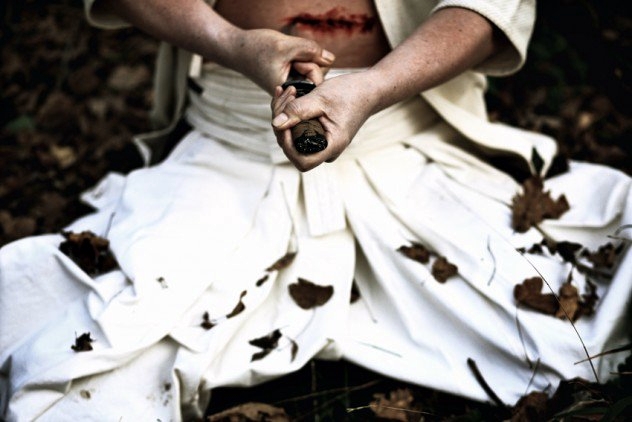
Seppuku.

One of the most terrifying things about the way of the samurai is Seppuku (also known as Hara-Kiri). It is the gruesome suicide a samurai must perform if he fails to follow Bushido or is likely to be captured by enemy. Seppuku can be either a voluntary act or a punishment. Either way, it is generally seen as an extremely honorable way to die.

  Hara-Kiri – no words needed.
The Last Samurai.

Readers who have seen the movie „The Last Samurai“ with Tom Cruise might know that under special circumstances, someone outside Japan could fight alongside the samurai, and even become one himself. This special honor (which included samurai weapons and a new, Japanese name) could only be bestowed by powerful leaders, such as Daimyos (territorial lords) or the shogun (warlord) himself.
  Western Samurai among others.
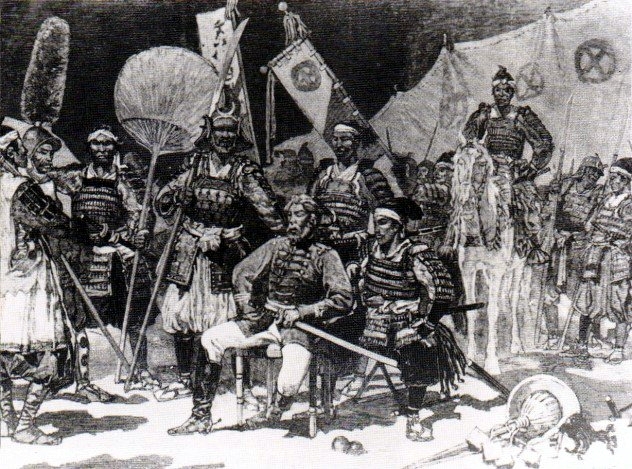
History knows four Western men who have been granted the dignity of the samurai: adventurer William Adams, his colleague Jan Joosten van Lodensteijn, Navy officer Eugene Collache, and arms dealer Edward Schnell. Out of the four, Adams was the first and the most influential: he served as a banner-man and advisor to the Shogun himself. Amusingly, neither of the people Tom Cruise’s Last Samurai character was based on (Frederick Townsend Ward and Jules Brunet) were ever made Samurai.
Stay tuned to part 3 of more unknown facts in our world history.
Veröffentlicht unter History, Hobbies, Information | Verschlagwortet mit | 4 Kommentare

Birthday Lunch

Today you will receive a short post only and a recipe post again because of the actuality. The next part of unusual history facts will come up next week. This week my lovely wife had her birthday party. For the small group of guests/ladies I played the cook. Some of the ladies asked for a recipe and here are the 2 important ones.

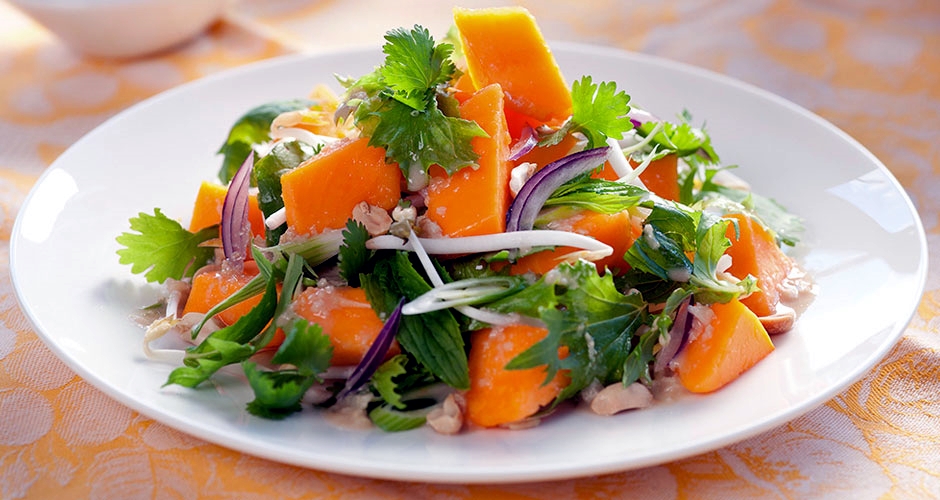
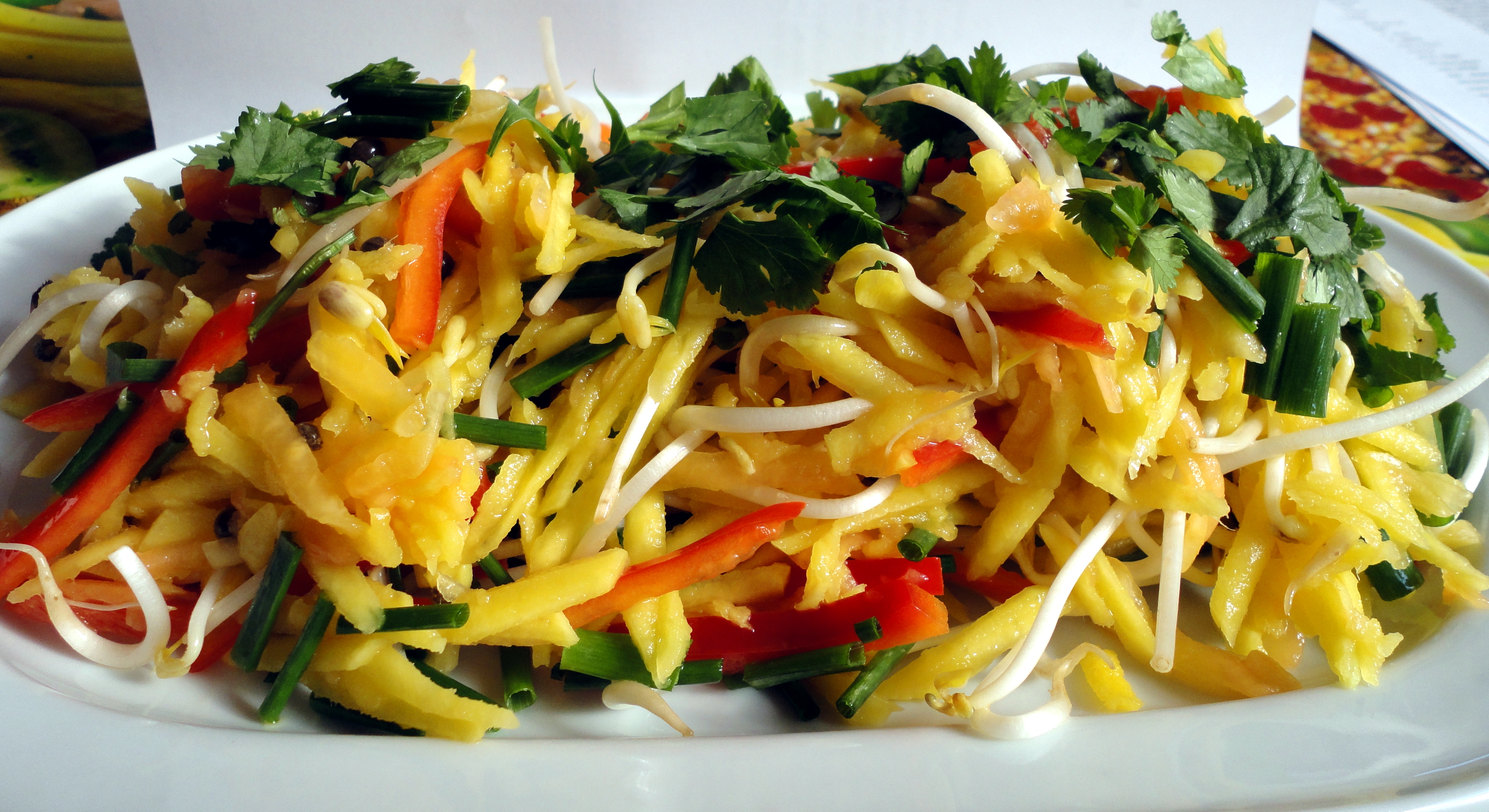
  1. Papaya Chilli Salad.

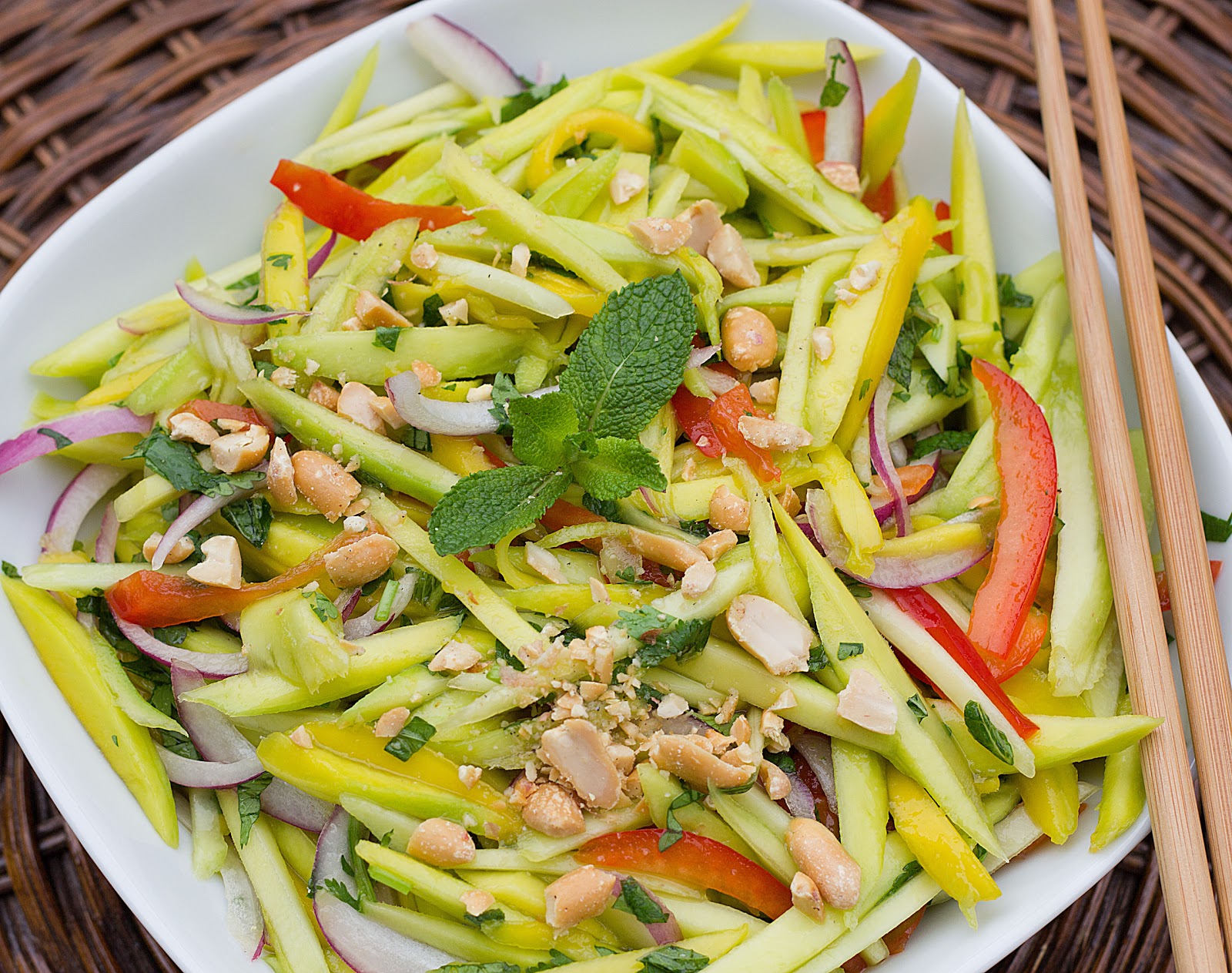
This fresh and spicy sweet salad is ideal as a starter and appetizer.  This is a Thai version and similar to the „Green Mango“ one I posted earlier. For 4 persons you’ll need :

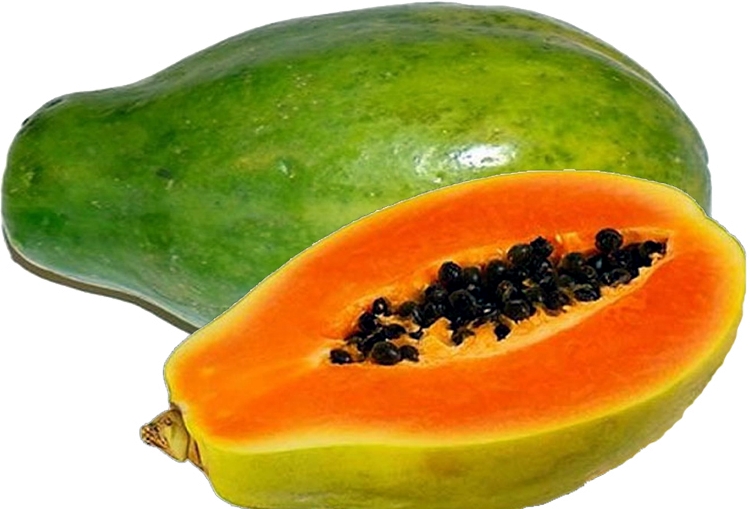
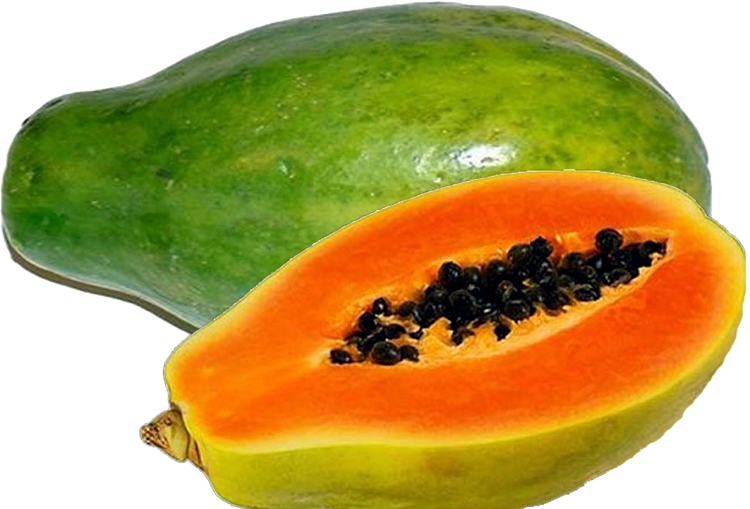
  Your big ripe papaya.

Ingredients.

Salad.
1 big ripe papaya, cleaned and diced in cubes
2 full cups of beansprouts
1 cup of coriander leaves (leaves only)
1 cup of chives (cebollinos)
1 medium size fresh chilli (green or red, but hot please)
few tablespoons of red paprika
few tablespoons of unsalted peanuts
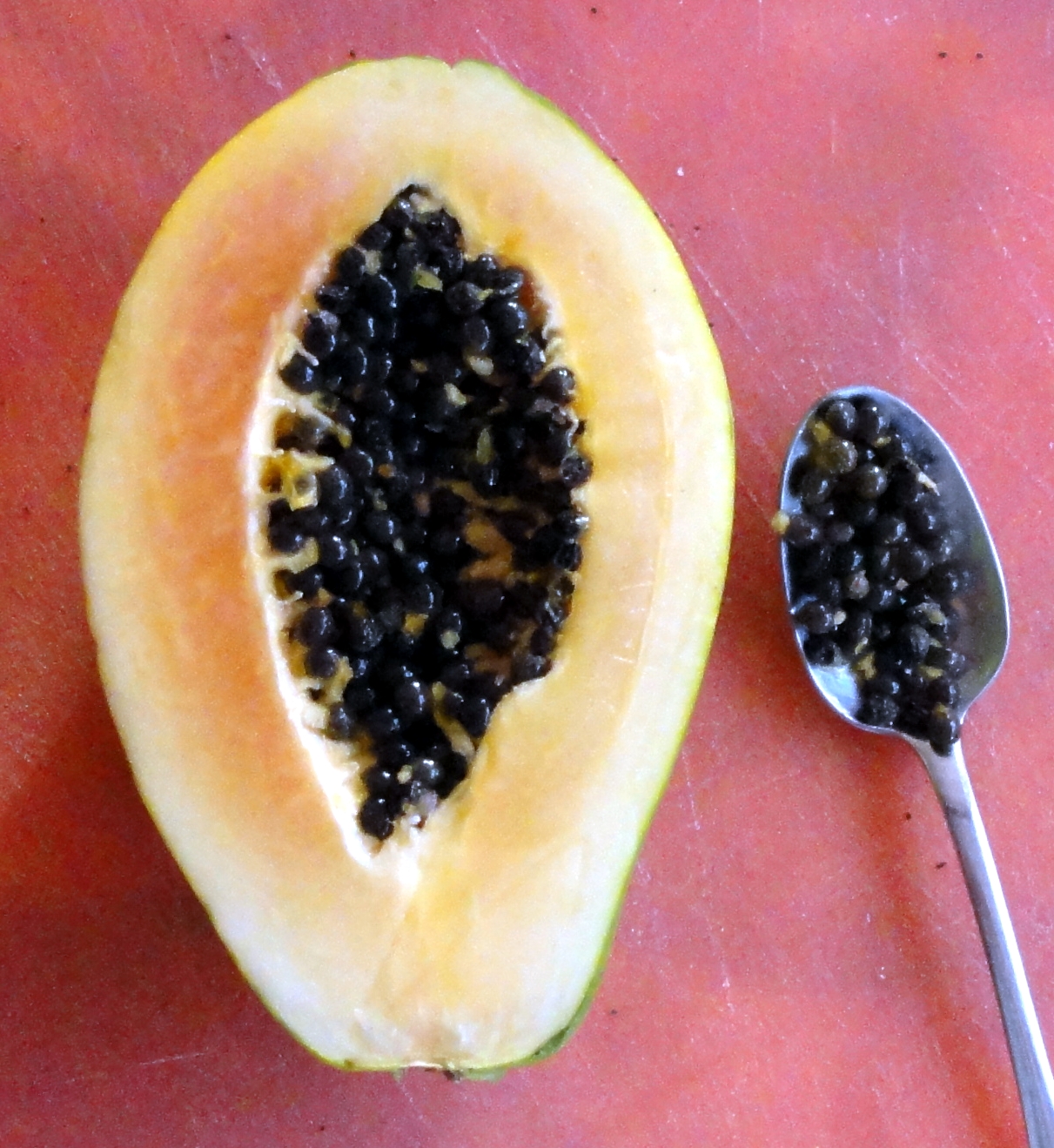
one tablespoon of papaya seeds, decoration and peppery taste

   Your dressing.

Dressing.
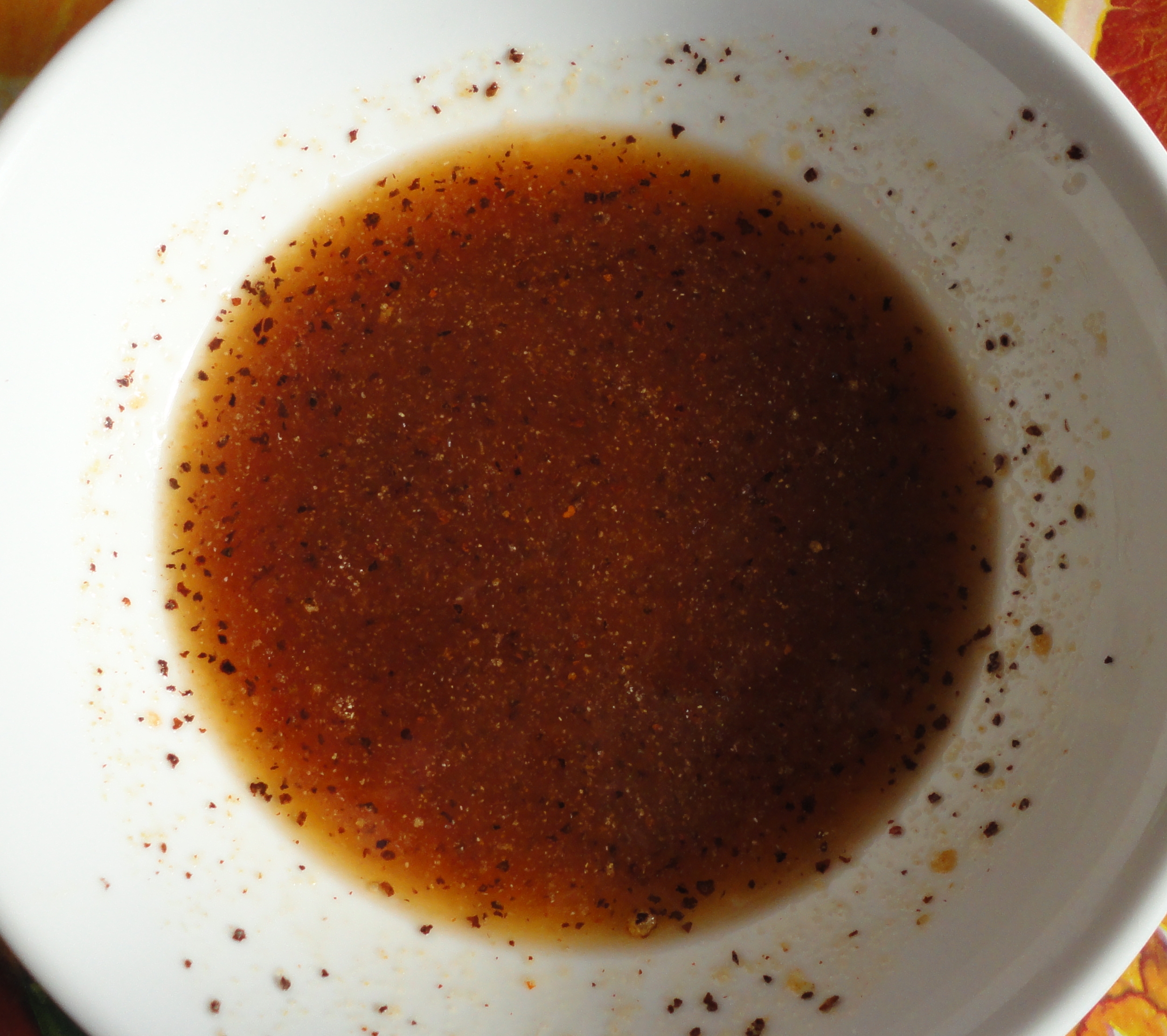
3 tablespoons dark soy sauce
1/4 cup fresh lime juice
2 tablespoons brown sugar
2 tablespoons sweet Thai Cilli Sauce (Mae Ploy)
coriander leaves to decorate

How to do.

Cut the papaya in cubes (about 3 x 3 cm). Cut the hot chilli into very small cubes.
Cut the chives in about 1cm long pieces and cut the coriander leaves coarsly.
The bean sprouts you will leave as they are. Mix all these ingredients together.
At last mix in carefully the peanuts, paprika and papaya seeds.
If one wants to have a bit more crunch, mix in a few slices of red onion.

Mix all the ingredients for the dressing in a small bowl and keep until serving.
The salad one can prepare a few hours before use and keep it in the fridge. Decorate
your salad on plates and finally poor over the dressing carefully with a spoon. Don’t
mix anymore and serve directly.

  Spicy, fresh, delicious. Click on pics to size up.

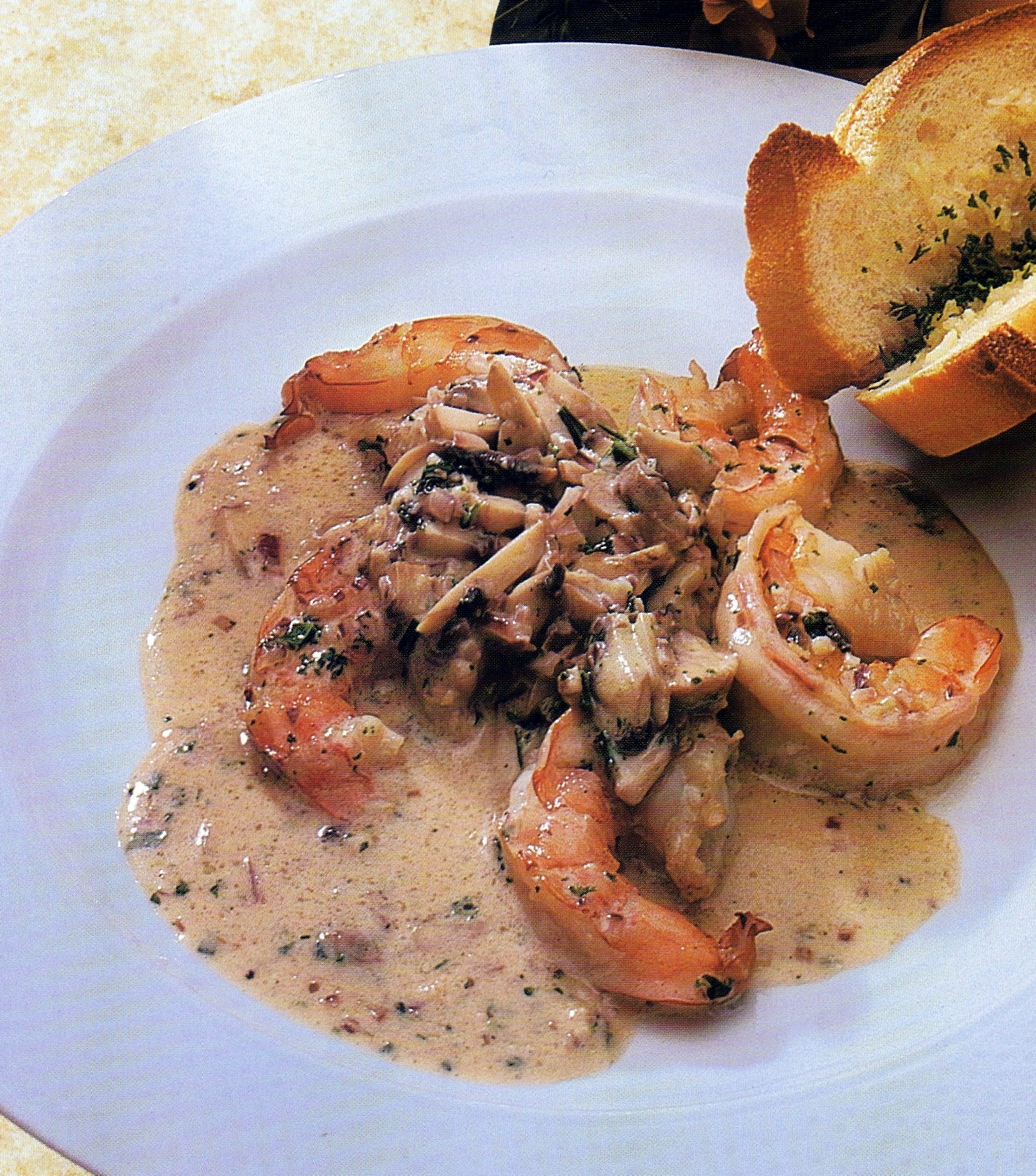
2. Scampi with Mushrooms in Creamy Wine Sauce.

A classic French recipe to die for. If you do it right its a gourmet delight . Follow my instructions precise and it also will overwhelm you too. You will need for 4 persons.

Ingredients.

1 kilogram of frozen scampi (large prawns),
best if you can get them about 7-8cm (3 – 3 1/2 inch) long
juice of 1 lemon
salt and WHITE pepper to season
2 large red onions, finely chopped
5-6 garlic cloves, finely chopped
450 gram nice fresh white champignons
1/2 cup dry white wine, same as you like to drink later
1/2 bunch of chives
1/2 bunch of parsley
250 ml/gram of creme fraiche or double cream

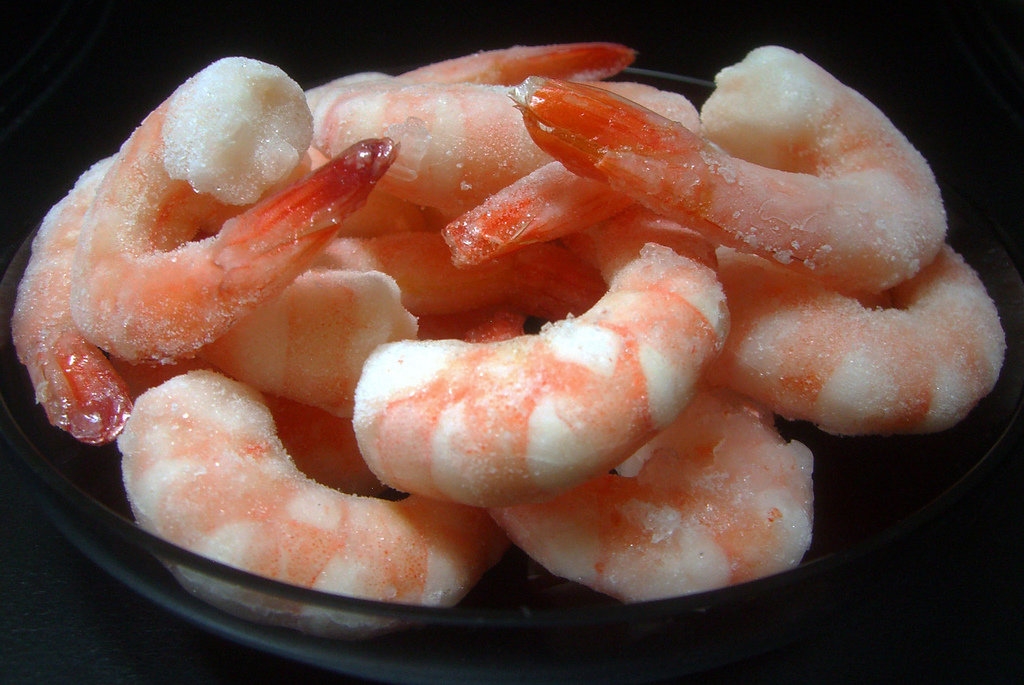
   Your frozen scampi.

How to do.

Wash the cleaned scampi, cut lengthwise the scampi and remove the intestine (if necessary).
Sprinkle the scampi with lemon juice and season with pepper and salt.
clean onions and garlic and chop finely.
Then fry them (if possible in a large pan, that they can lay next to eachother) in a bit oil till they start browning.
Now add the scampi tails and fry them till they get red and start rolling up.
Remove them immediately and set aside.

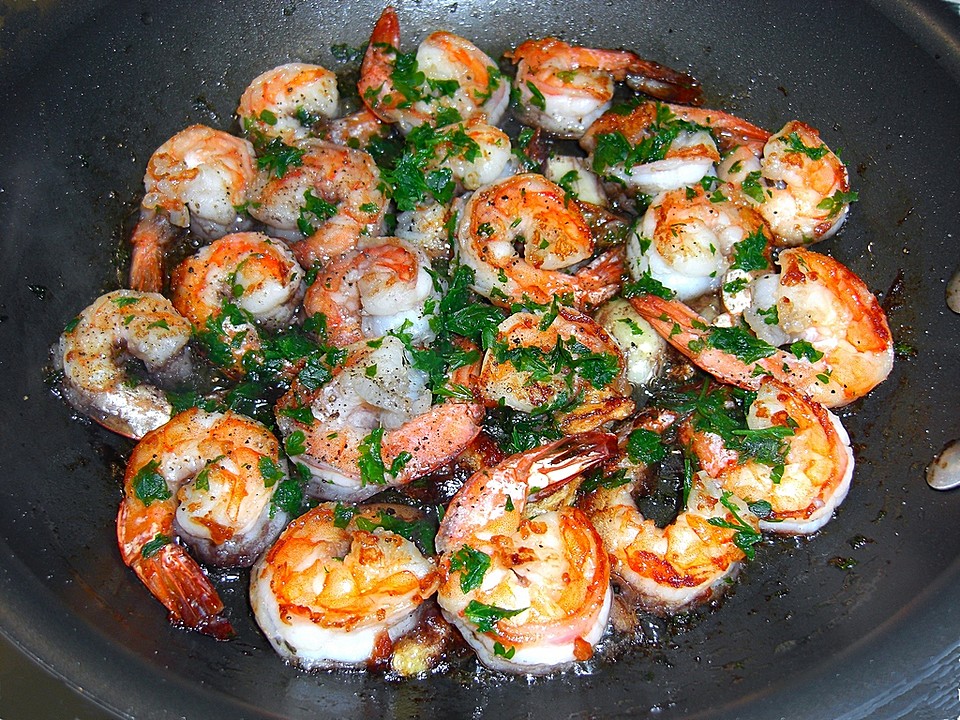
     Yes, set aside and don’t eat them direct out the pan. Being honest, just fried in garlic-chilli oil its irresistable to eat them direct, crusty baguette and a white wine, mouthwatering meal. I like them a bit browned (restaurant chefs would say „overcooked“ – but they undercook every seafood dish anyhow) as shown in this picture.

Clean the mushrooms (just dusting off with a paper towel) and cut in slices, the cut them again in smaller stripes.
Add the mushrooms to the onions and fry them shortly.
Now deglaze the pan with white wine, add the chopped herbs and the cream.
Just heat up on medium heat till it starts broiling.
Now add the scampi tails and let it start broiling again.
Take off the heat, taste – and if necessary season a bit with lemon juice, salt and pepper.
Serve right away.

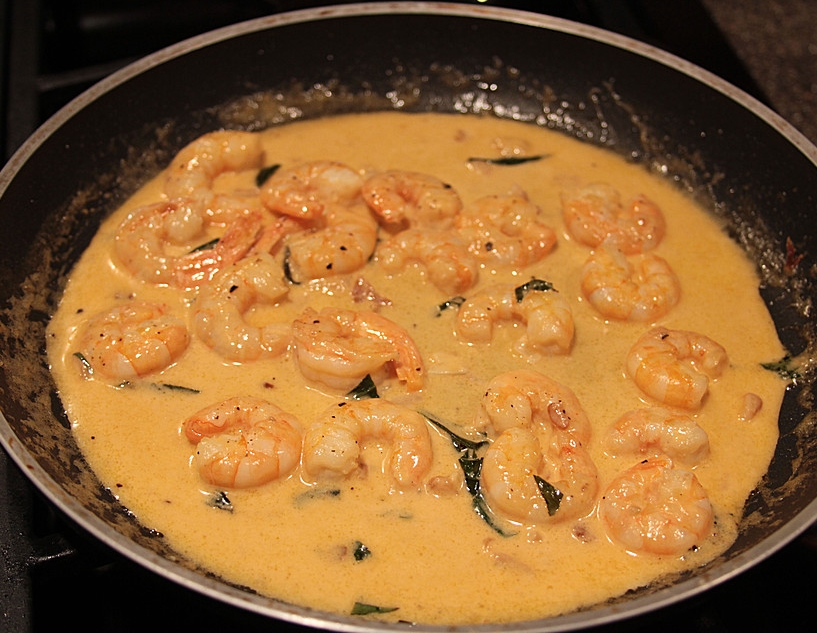
  This time we have them in a creamy wine sauce.

Tips.

You can wash the scampi, if they are small leave the intestine. In German we have a saying „A bit dirt cleans your tummy“.  Then add them to the pan half frozen. No problem.
Serve the scampi with a fresh, warm and crusty baguette, that everyone has the chance to dunk up that fine sauce.
Serve a nice cool white wine, like a Riesling or Chenin Blanc, same as you use in the sauce.

  Complete and ready to dig in, don’t stop eating.

You will enjoy this meal – trust me – and have it more often now.  Guten Appetit !

Veröffentlicht unter Recipes | Verschlagwortet mit | Hinterlasse einen Kommentar

Did You Know That – 1 ?

Surprising History Facts – Part 1.

Writing this blog for almost 3 years now, I always come, through my hobby „research of the history and/or background of my posts“, along some strange or unknown facts which history wrote. With this post I like to share with you a few history facts which most people don’t know or never heard about. Some might make you even speechless.

The Vikings.

As Vikings, the members of the warlike seafaring groups of persons from mostly northern European, and sometimes also Baltic, peoples of the northern and eastern seas during the Viking Age (about 800-1060) are described in the Middle Ages „Old Norse noun“ vikingr (masculinum) – which means „sea warriors, who are on a long journey away from home“. The femininum viking meant only the „long ship’s journey“.

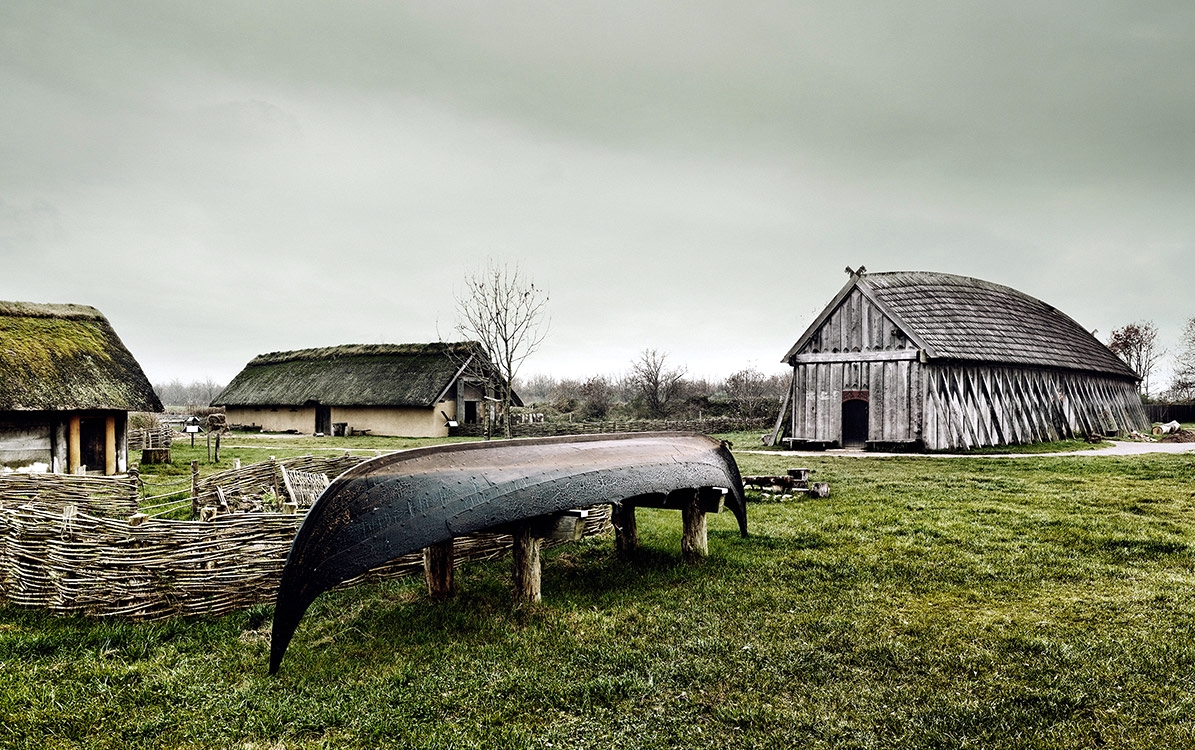
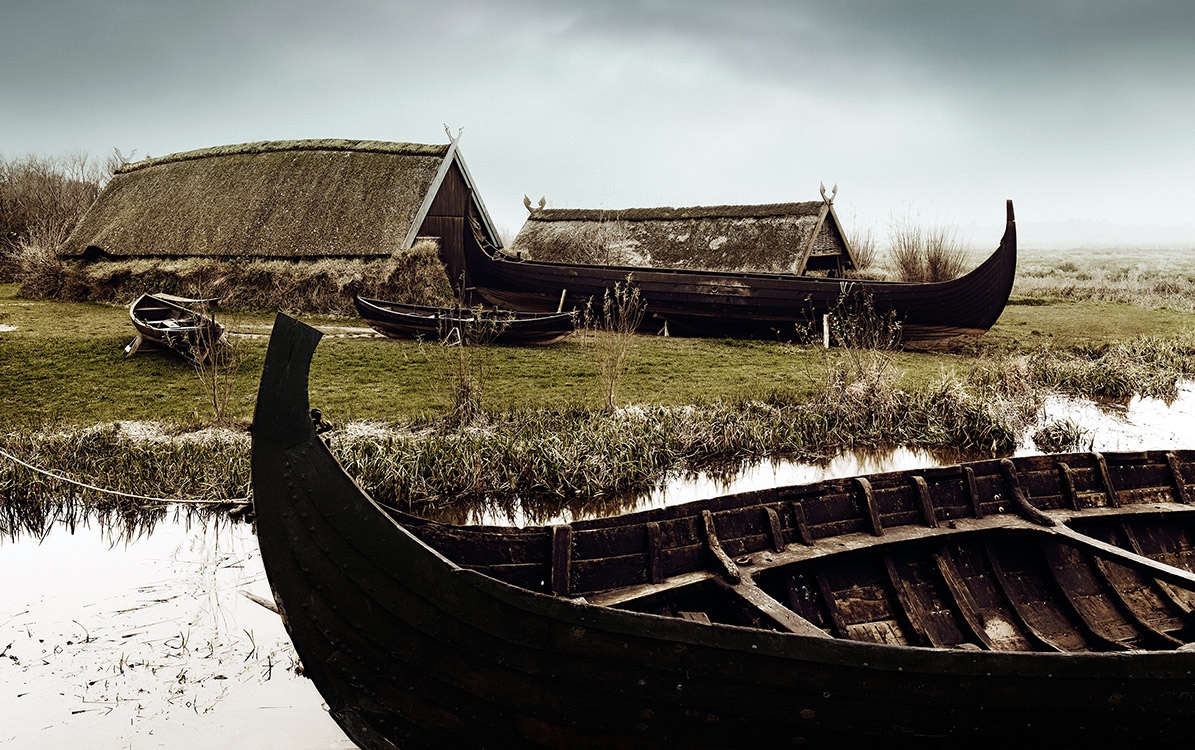
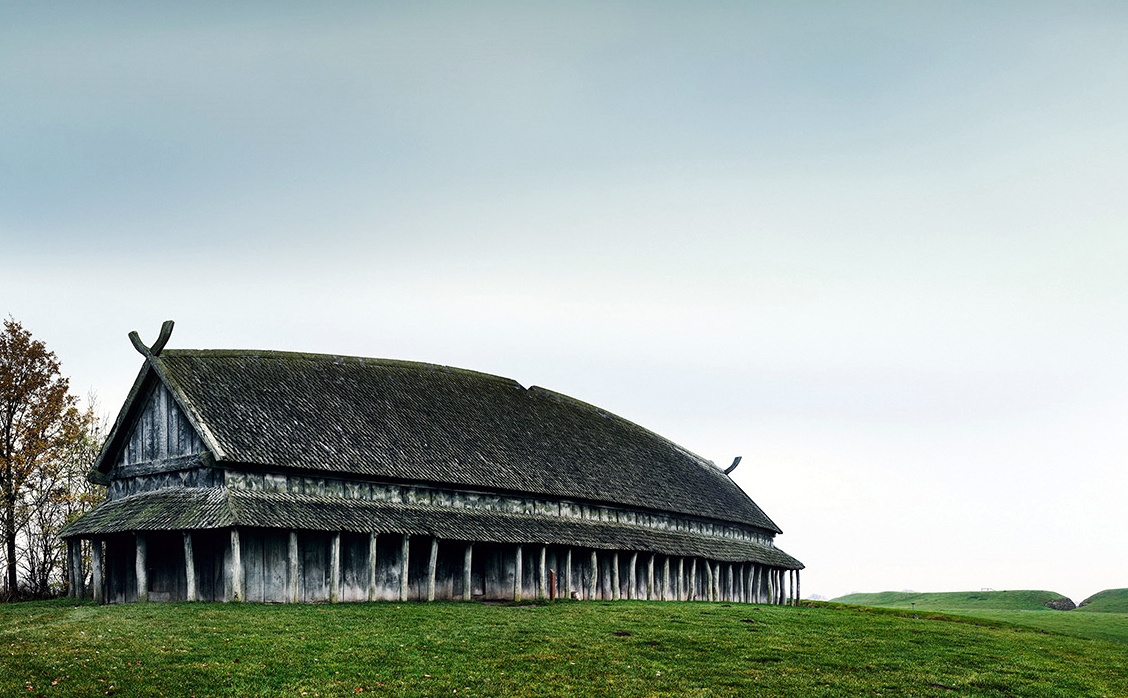
       Two pictures of open air museums. Left the oldest Scandinavian township in Ribe, Denmark. Right the Viking haven in Bork, Denmark.
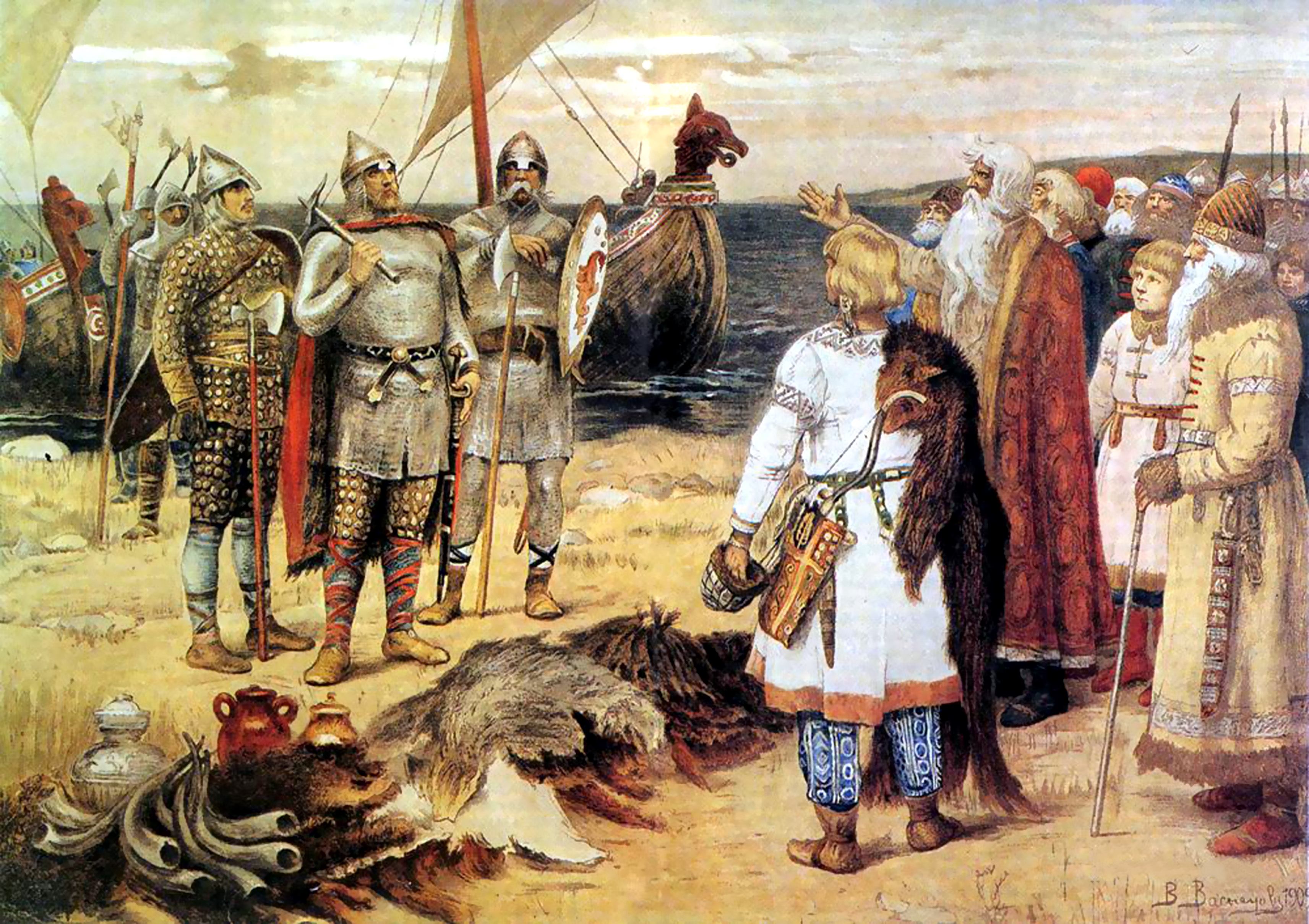
  The Varagians are welcomed by the Russians in Constantinople. Contemporary painting from 1900. Well dressed and clean Vikings with no horns on their helmets.

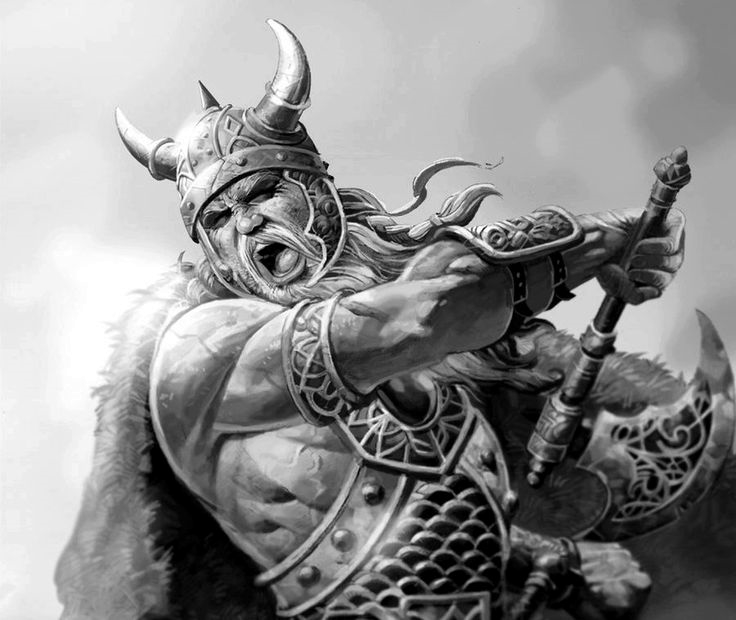
Even many of their descendants have wrong ideas about the Vikings. They had neither helmets with horns, nor were they stinking barbarians. Contemporaries complained that they comed daily, frequently changed clothes, and bathed every week. Such behavior was considered vain. They were restless seafarers, explorers and conquerors.No more and no less than other people of the world, too.

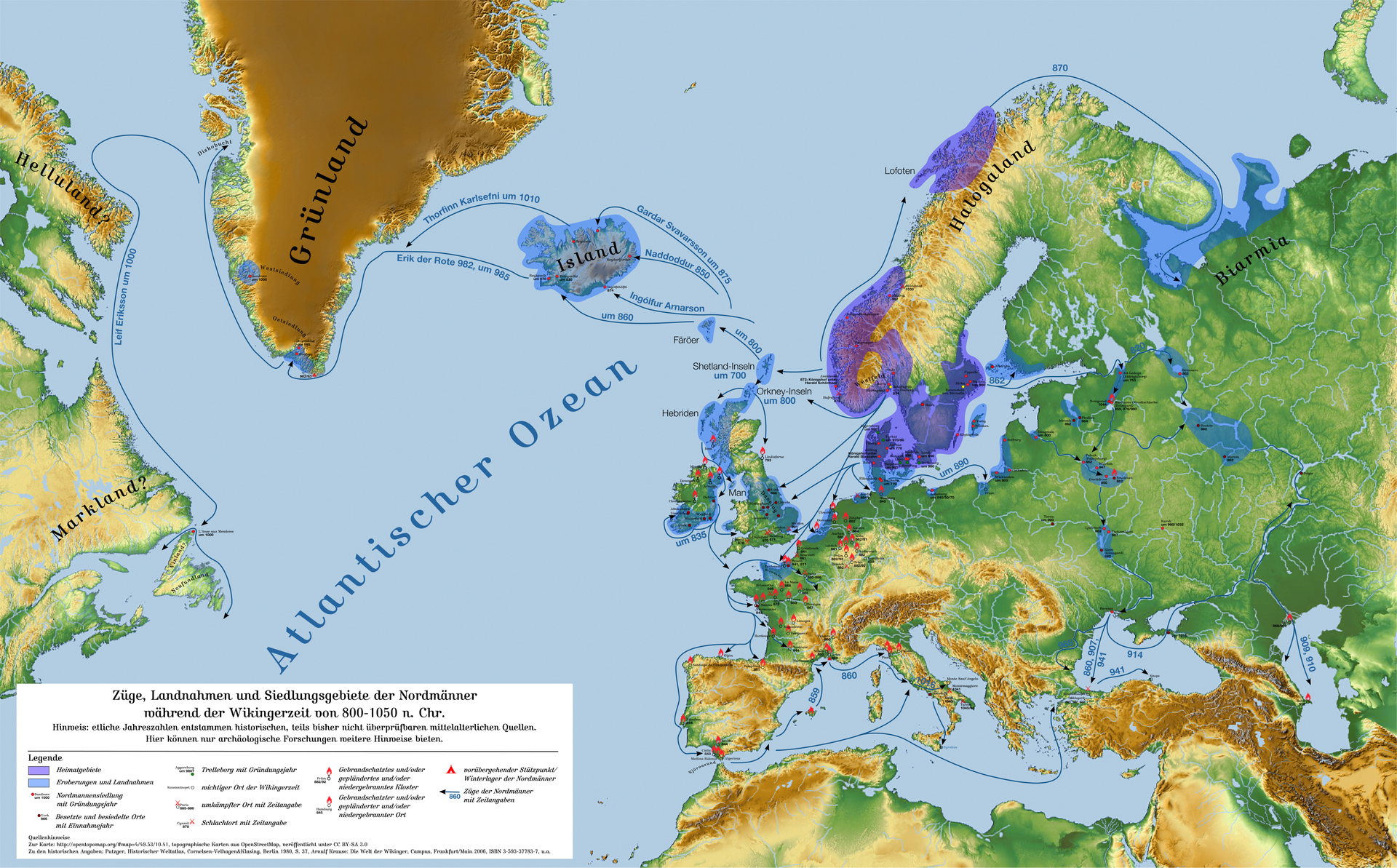
   Viking home settlements in dark blue. Light blue shows their conquests. Notice they are all along shores and waterways, reachable by boat.  They reached and settled the North American continent almost 400 years earlier then Columbus. Click on pics to see the details.

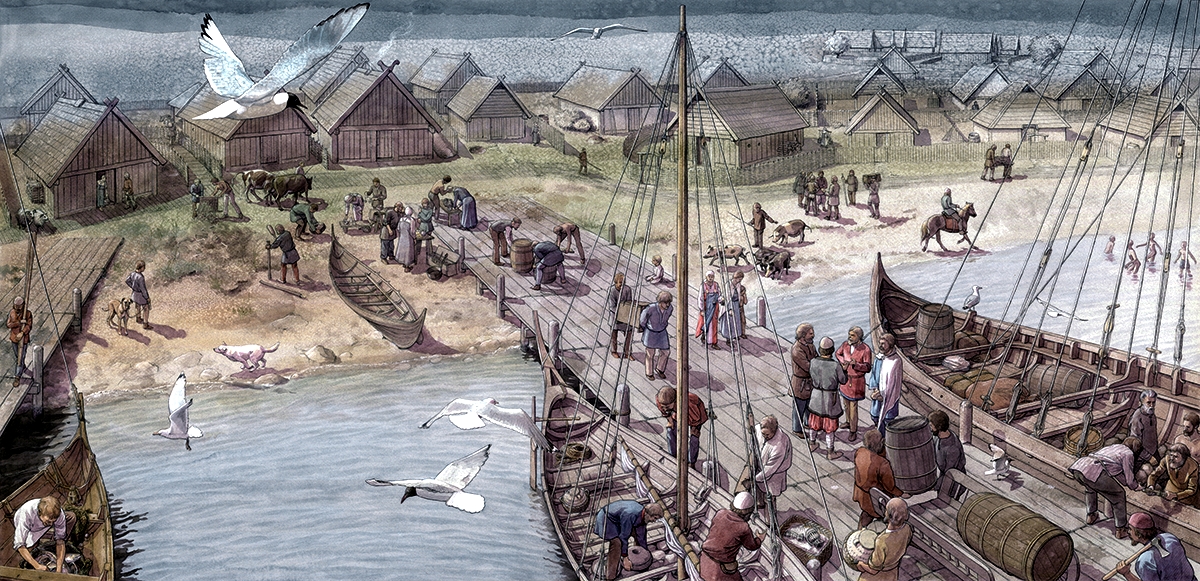
The first trading towns in Scandinavia were established at the same time as the first Viking raids took place on the British Isles and the continent: Birka in Sweden, Hedeby and Ribe in Denmark and Kaupang in Norway. “Kaupang”, which translates from “kaupangr” in Old Norse to “market” or “trading place” in English, was strategically placed in a narrow bay in Sikiringssal by the outlet of the Oslo Fjord, five kilometers northeast of Larvik in Vestfold.

  Normal looking people are the Vikings. Not these, often described as  dirty, stinking, wild, naughty etc. savages.  Click on pics.

Excavations confirm that the town was established in the years 780-800 AD, and for unknown reasons was abandoned about year 930. The town was part of an international trading network and it is found thousands of artifacts from all over the Viking world: Beads from the areas around the Caspian Sea or the Black Sea, Frankish beakers of glass and ceramic tubs from the Rhine area, Denmark and the Baltic Sea, Arabic (Cufic) silver coins, in addition to weapons and tools.

   The trading place (like Kaupang) was divided into many small plots with residential houses that were smaller than the Viking farms, but had the same structure: A long fireplace in the middle of the open room with benches along the long sides where residents did work, eat and sleep. A Viking „Long House“ (Trelleborg Sweden) where a whole clan lived under one roof.

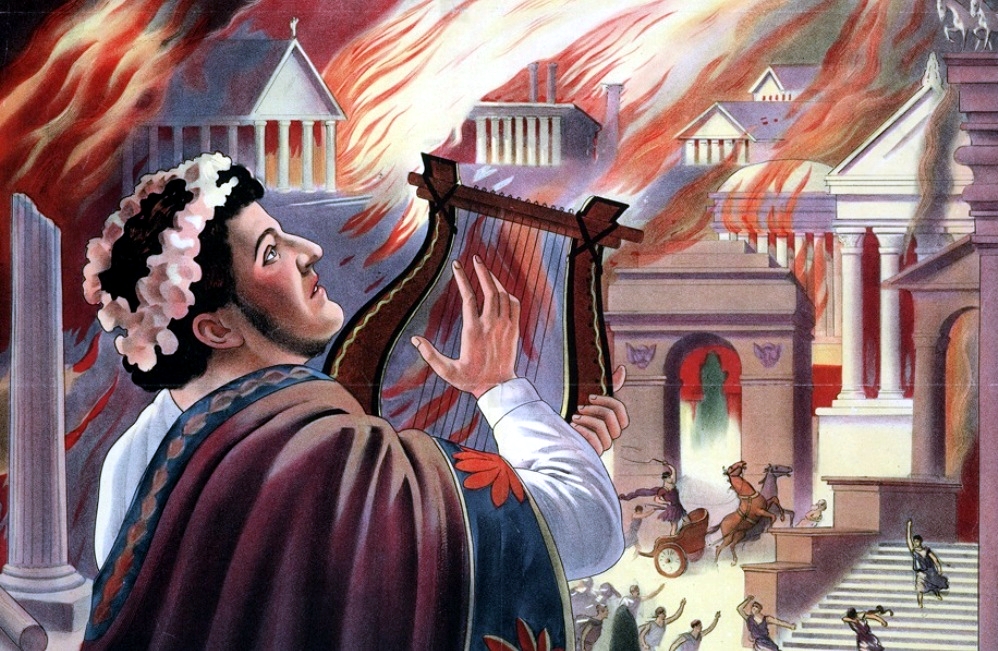
Nero, Roman Emperor.

Emperor Nero, 15 December 37 AD – 9 June 68 AD. The Great Fire of Rome erupted on the night of 18 July to 19 July 64 AD. Nero was the last emperor of the Julio-Claudian dynasty, he ruled Rome from 54 AD till his dead in 68 AD.

   Nero was supposed to have lit Rome and played on the lyre during the fire, is a widespread rumor. At the time of the fire the Emperor was not in the city.

During his lifetime, not even his bitterest enemies had come to the idea of ​​accusing him of the origin of the-most likely, accidentally broken-out fires of Rome in the year 64. That Nero was playing and singing on the roof of his palace, looking at the burning Rome, belongs to this later thoughtful legend.

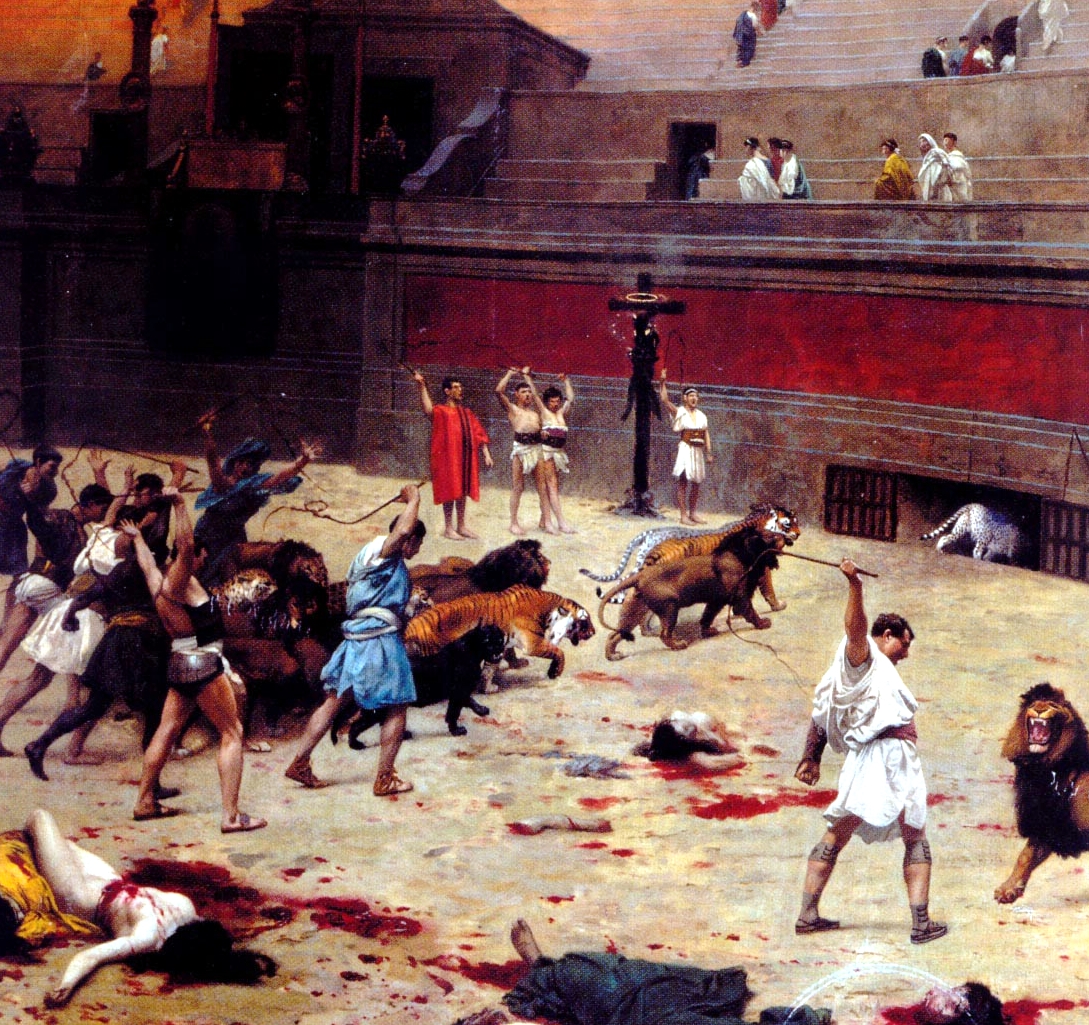
  Nero was for sure no saintly person, he burned Christians and organized his bloody games. But the story that he burned Rome is untrue.

In truth, the Emperor was at the outbreak of the fire in his birthplace, Antium. When he heard about the fire, he hurried to the capital and personally conducted fire and rescue operations. He opened the gardens of his palace for homeless citizens, secured food supplies, and took measures to protect them from epidemics.

Napoleon Bonaparte.

Napoleon Bonaparte (15 August 1769 – 5 May 1821) was a French military and political leader who rose to prominence during the French Revolution and led several successful campaigns during the French Revolutionary Wars. As Napoleon I, he was Emperor of the French from 1804 until 1814, and again briefly in 1815.

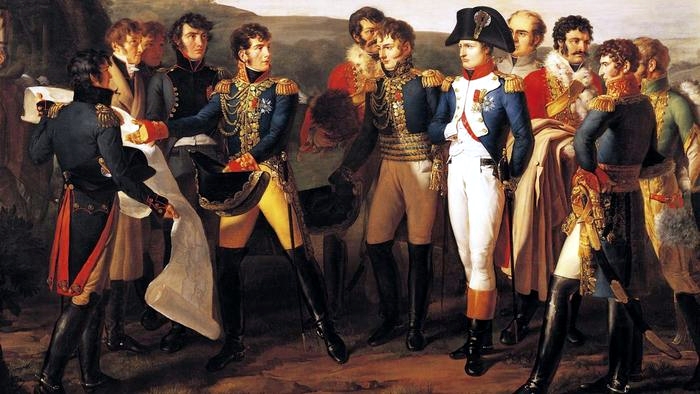
  Napoleon in his true size.

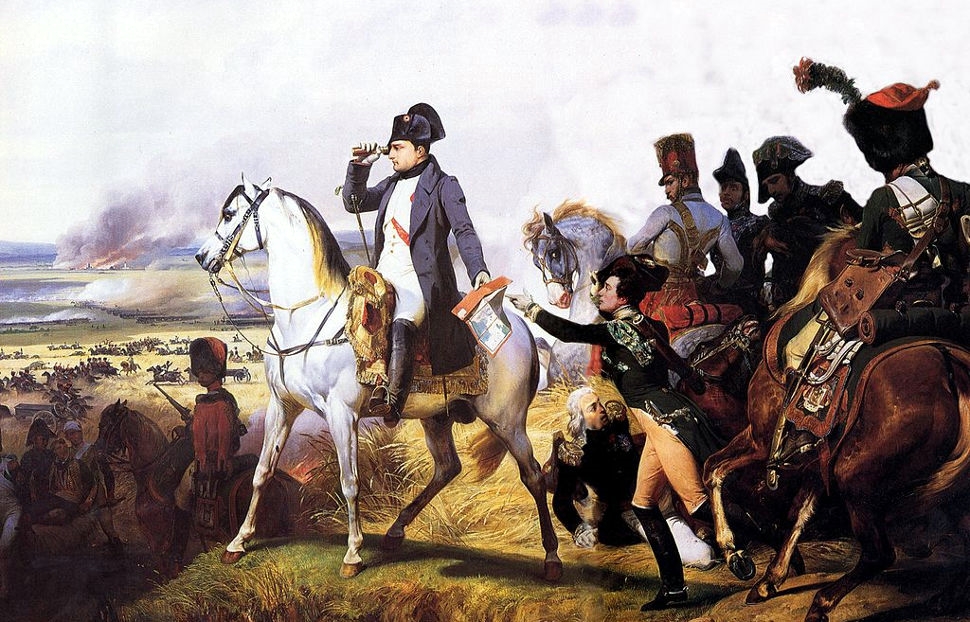
Whoever compensates for his small body size with dominant behavior has a so-called „Napoleon complex“. The rumor that the famous general was said to be very small is not true at all. With a body height of 1.68 meters he was even above average in his time.

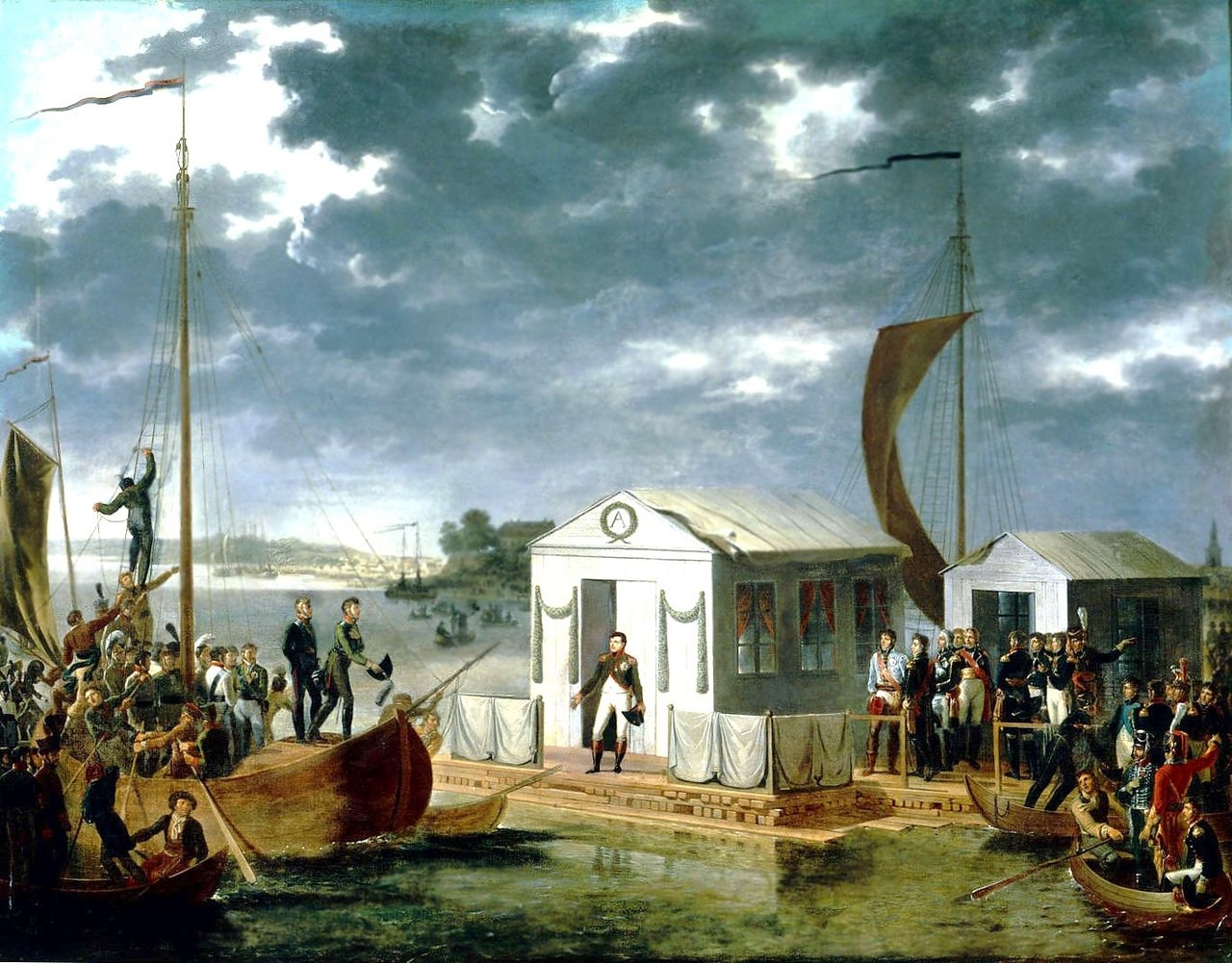
         When Napoleon got older, he gained weight as many others (see left), but that he was small and fat is untrue. See painting on the right: The Treaties of Tilsit 1807 – Napoleon meeting with Alexander I of Russia on a raft in the middle of the Neman River. He has the same average size as all other people surrounding him.

One of the most popular expressions in the English language “A Picture is Worth a Thousand Words” is often credited to Napoleon. However, it is important to note that those were not the exact words of the French general. Instead, he said “Un bon croquis vaut mieux qu’un long discours” which translates into “A good sketch is better than a long speech”. The meaning is practically the same.

  He also had some other popular expressions, like;

A true man hates no one !
The people to fear are not the ones who disagree with you. but those who disagree with you and are too cowardly to let you know !
In politics, stupidity is not a handicap !
Never interrupt your enemy when he is making a mistake !
A leader is a dealer in hope !

The Pyramids.

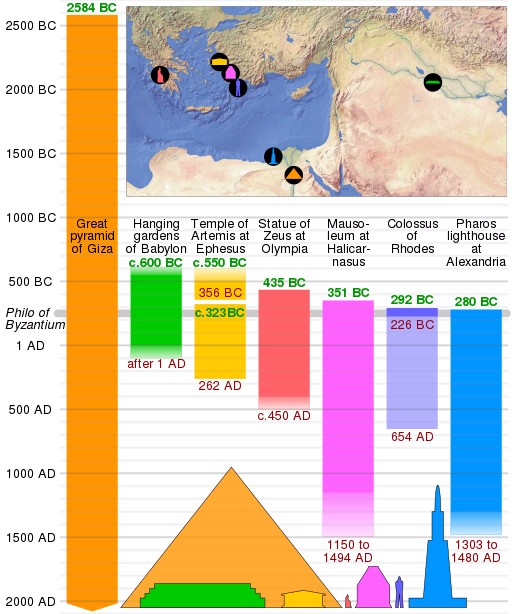
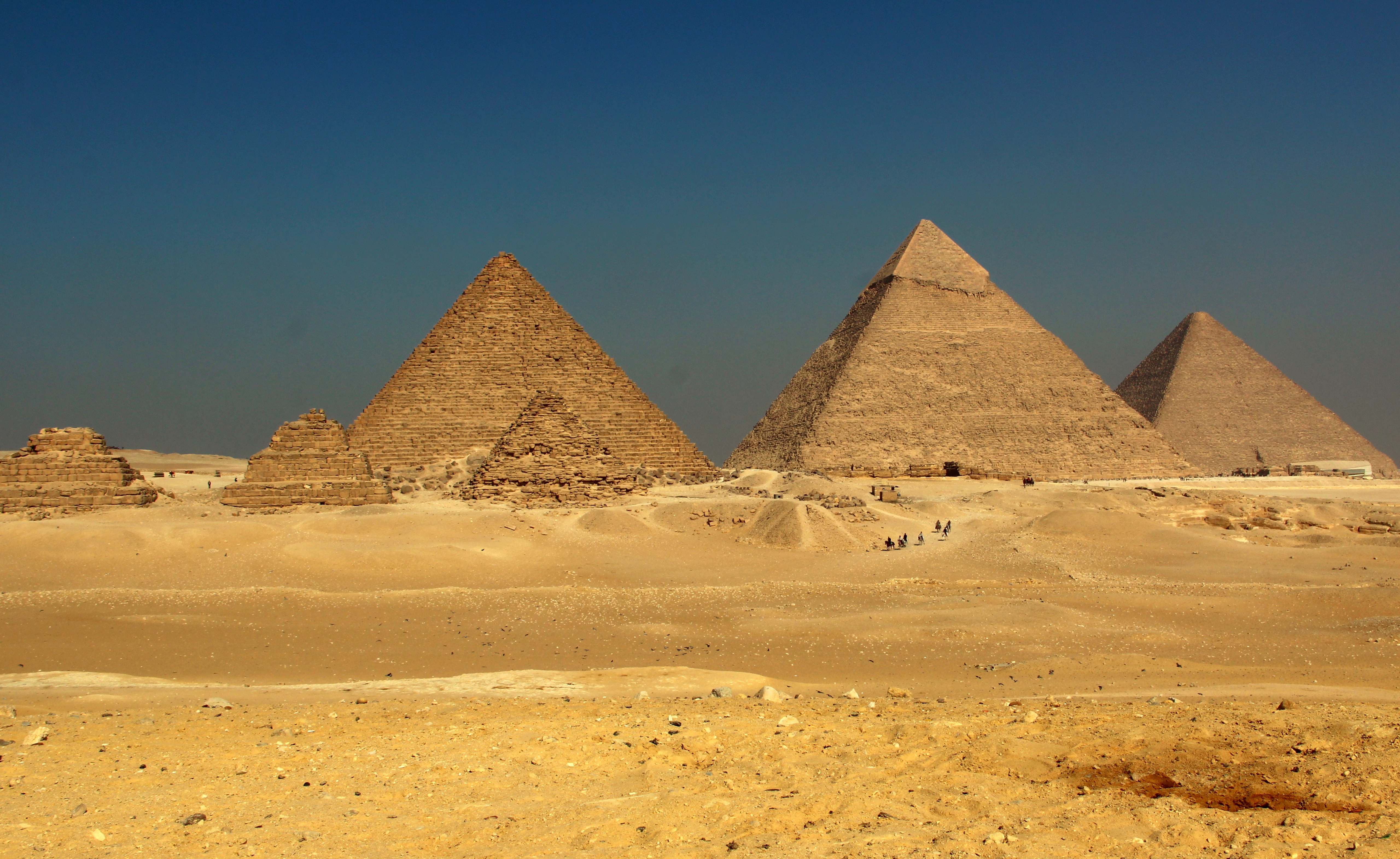
The last remaining of the Seven Wonders of the ancient world, the great pyramids of Giza are perhaps the most famous and discussed structures in history.

  Chart of the „Seven Ancient Wonders of the World“. Wikipedia.

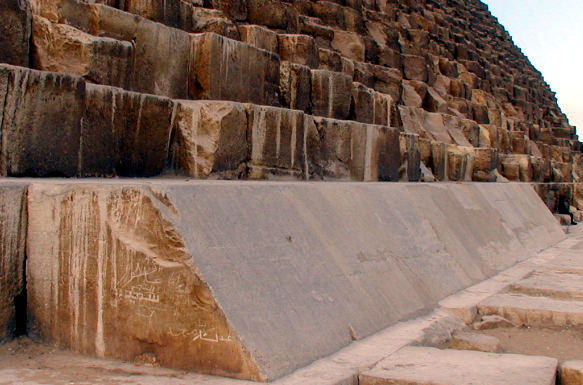
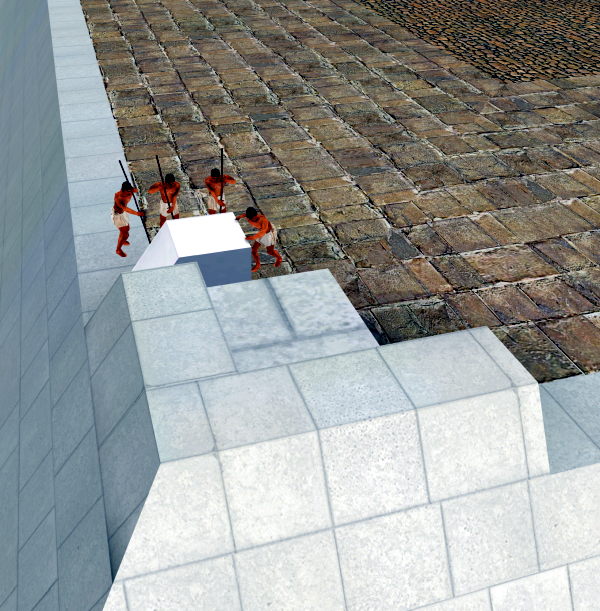
When the pyramids were originally finished, they were plated in and outer layer of white “casing stones”. These casing stones were cut with astounding precision to give a smooth slope to the pyramids, unlike how they appear today with the outer stones more or less forming very large “steps”.
The original casing stones were made of highly polished Tura limestone, meant to reflect the sun’s rays, and were accurate within 1/100th of an inch. All total, they were around five feet long, five feet high, and six feet deep and weighed around 15 metric tons each once the face angle was cut, being around 40 metric tons before that for the full block.

  Original look of the Pyramids. Artist rendering.

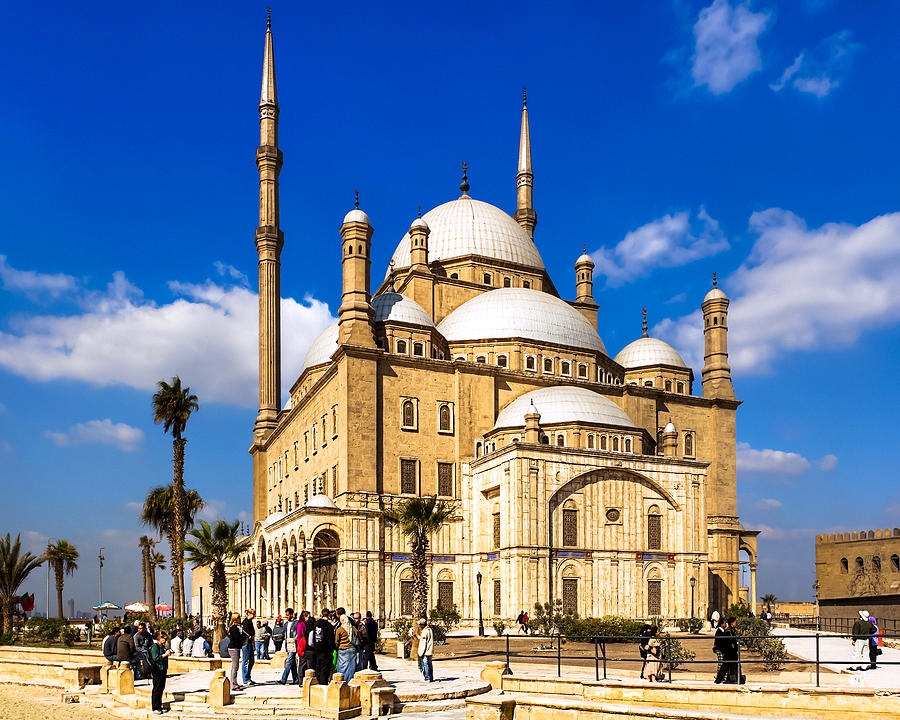
So, what happened to these casing stones? Many of them were cut loose and carried off to be used on various other structures, such as when Bahri Sultan An-Nasir Nasir-ad-Din al-Hasan used the polished stones from the Great Pyramid in building mosques in Cairo, some of which are still standing with these stones and still intact.

  The Mosque of Muhammad Ali, or the Saladin Citadel, in Cairo, made from Pyramids white Tora Limestone. Tora is the biggest and most well known limestone quarry in Egypt. Often confound with Alabaster, which of course is a limestone too.

Most of the rest of the stones were worn away, being loosened by earthquakes and eventually creating piles of rubble around the pyramids, which have relatively recently been cleared away. Although, a few of the stones are still there, such as around the base of the Great Pyramid.

         Still looking like new, the remaining limestone at the Cheops Pyramid (left). And the pic right shows how they covered the Pyramid with the shiny white stone about 4500 years ago. Click on pics.

The Great Pyramid of Giza (also known as the Pyramid of Khufu or the Pyramid of Cheops) is the oldest and largest of the three pyramids in the Giza pyramid complex bordering what is now El Giza, Egypt. It is the oldest of the Seven Wonders of the Ancient World, and the only one to remain largely intact.

The view today, same color as surrounding.

Based on a mark in an interior chamber naming the work gang and a reference to fourth dynasty Egyptian Pharaoh Khufu, Egyptologists believe that the pyramid was built as a tomb over a 10 to 20-year period concluding around 2560 BC. Initially at a height of 146.5 meters (481 feet). The Great Pyramid was the tallest man-made structure in the world for more than 3,800 years.

The Aztecs.

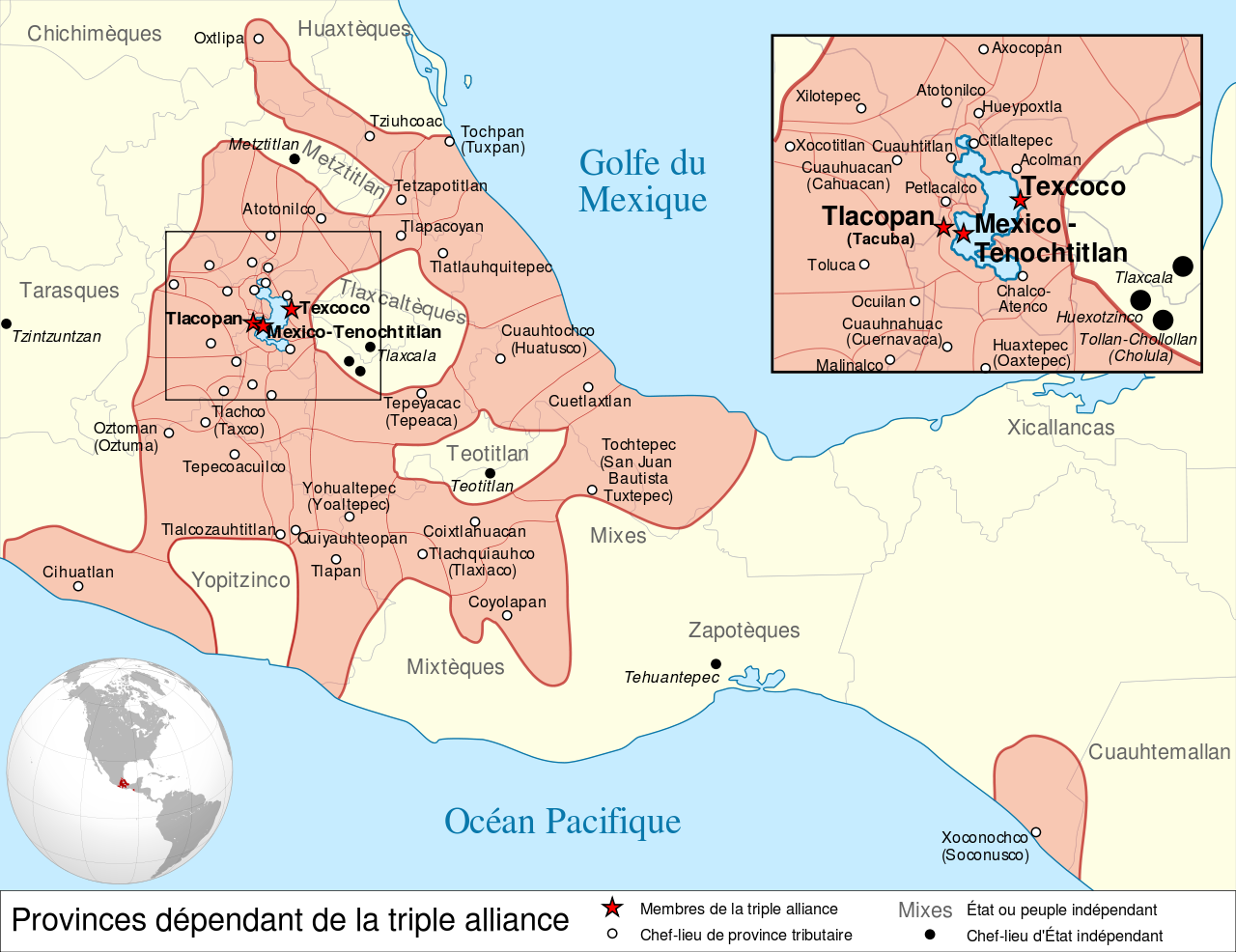
The Aztec culture is also known as Mexica culture, was a Mesoamerican culture that flourished in Central Mexico in the post-classic period from 1300-1521. During the time in which a triple alliance of the Mexica, Texcoca and Tepaneca tribes established the Aztec empire. The Aztec people were certain ethnic groups of central Mexico, particularly those groups who spoke the Nahuatl language and who dominated large parts of Mesoamerica from the 14th to 16th centuries.

  The Aztec triple merger and expansion.

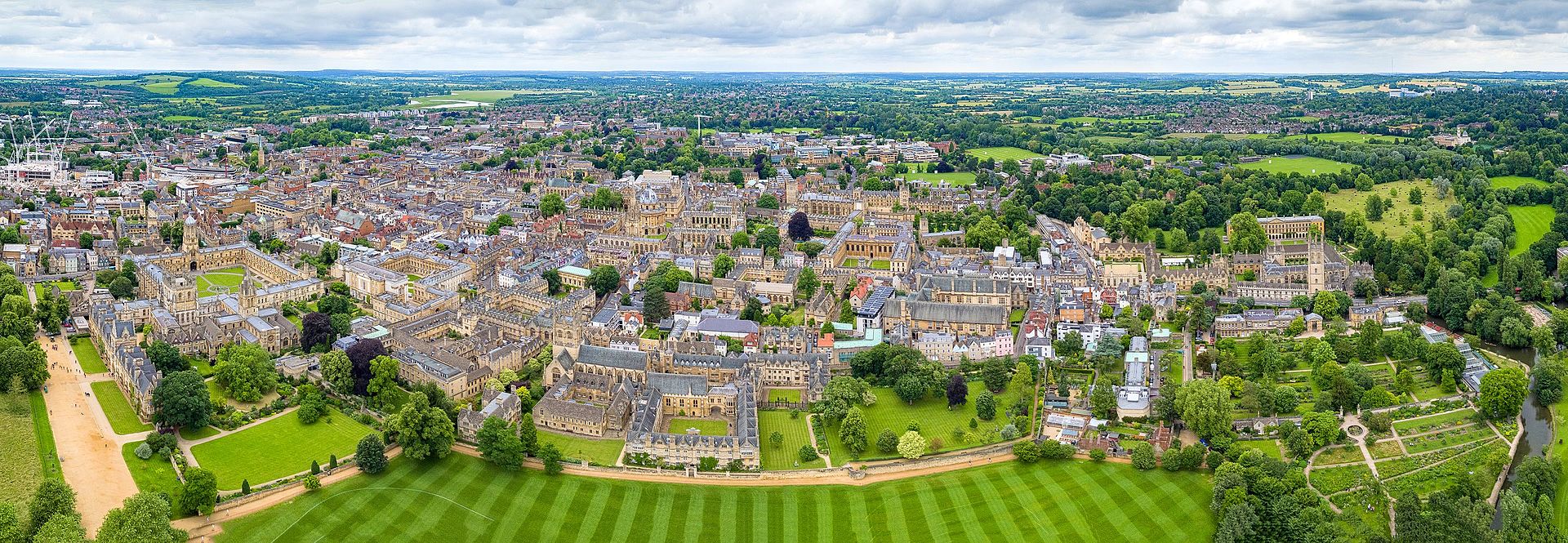
Amazingly young is the Aztec culture. Many consider them an ancient society. It existed between the 14th and 16th century. By way of comparison, the Oxford University existed before the first Aztecs. It has no known date of foundation, but there is evidence of teaching as far back as 1096, a few hundred years earlier.

  Another amazing fact. Did you know how big the University of Oxford is ? Click on this pic to enjoy the view.

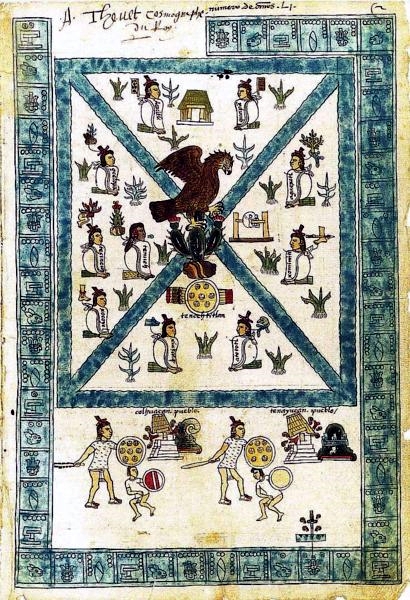
On their long hike south, the Aztecs came to a lake where an eagle fought with a snake. They took it as an important sign of their god Huitzilopochtli, who had once commanded them to seek a new home. So they began to build their new capital in the place and called it Tenochtitlan, today’s Mexico City.

  Frontpage of the Codex Mendoza from 1541. in the center part the „Codex Mendoza“, showing the fight between the eagle and the snake, founding myths of Tenochtitlan.

This is the founding myth of the Aztec empire, which originated in the middle of the 14th century in the basin of Mexico, and which was soon to become the greatest known empire of pre-Columbian Central America. An incredible achievement for the Aztecs because they had no weapons, no tools of metal, no use of animals or carriages, not even any kind of scripture.

Another page of the Codex Mendoza, showing the holding of prisoners. The Aztecs believed that only a new day will rise if they deliver a human sacrifice. That resulted in about 140 human sacrifices per day c. 50,000 per year. Aztecs were permanently attacking their neighbors to make prisoners.
  When the body was alive, the hearts were removed and sacrificed to the sun, to welcome the next day.

When the Spanish conquistadors conquered the empire from 1519 – with the smallpox and the rage of the Aztec-subjugated peoples – they discovered numerous books filled with drawings and pictograms. They considered them to be pagan „charms“ and destroyed them. Soon, however, clairvoyants realized that it might have been the historical tradition of the Aztecs.

    Don Jose Antonio de Mendoza.

One of them was Antonio de Mendoza (1495-1552). He was the first Viceroy of New Spain, serving from April 17, 1535 to November 25, 1550, and the third Viceroy of Peru, from September 23, 1551, until his death on July 21, 1552. The high-ranking diplomat had been appointed by Emperor Charles V as the first Viceroy of New Spain, in which Central America had been organized after the conquest by Hernan Cortez.

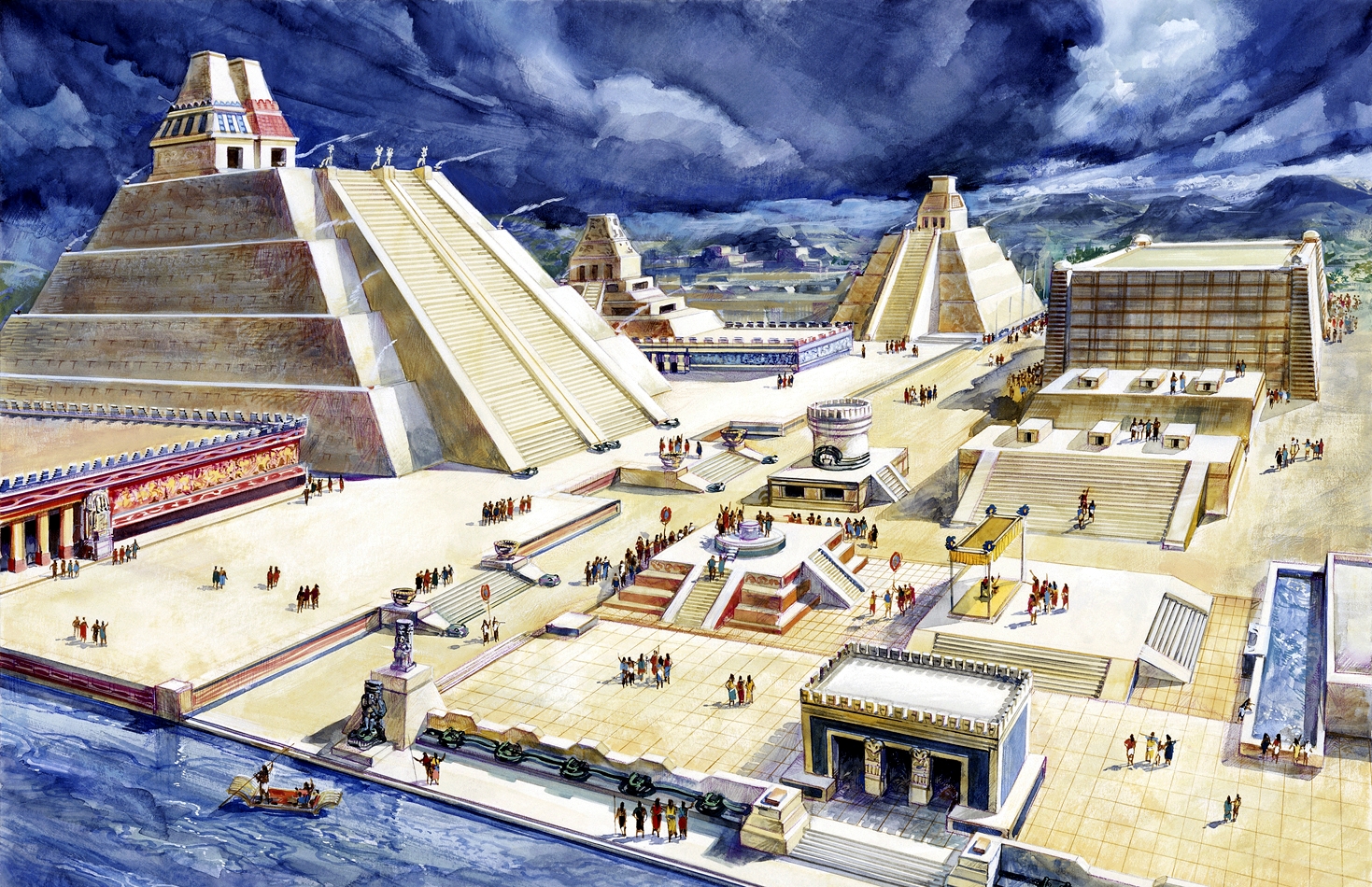
   The Aztecs metropolis Tenochtitlan. Click on pis to see everything more clear. By example the massive sacrificial pyramids.

Mendoza recognized how brutally the Spaniards were destroying Indian culture. Immediately, in 1541, he commissioned surviving Aztec specialists, together with Spanish missionaries and artists, to write the history of their people with their possibilities. The result was the „Codex-Mendoza“, named after him. The „Codex Mendoza“ is considered one of the most important sources of the history of the Aztec empire.

These are five, for many people most surprising facts. I hope you enjoyed the post.
Next week I will post another 5 history facts. Stay tuned.

Veröffentlicht unter History, Hobbies, Information | Verschlagwortet mit | 5 Kommentare

Goulash

Wintertime in southern hemisphere. The right time for some heavier comfort food. This will be roasts, pea-soup, goulash, mockturtle-soup and much more. Last weekend I made some goulash. This is a perfect dish to prepare , freeze and use later, like soups or sauce bolognese and others. Thats why I always make 5 to 6 liters of it. But before we get to the recipe we dig a bit into history, as always.

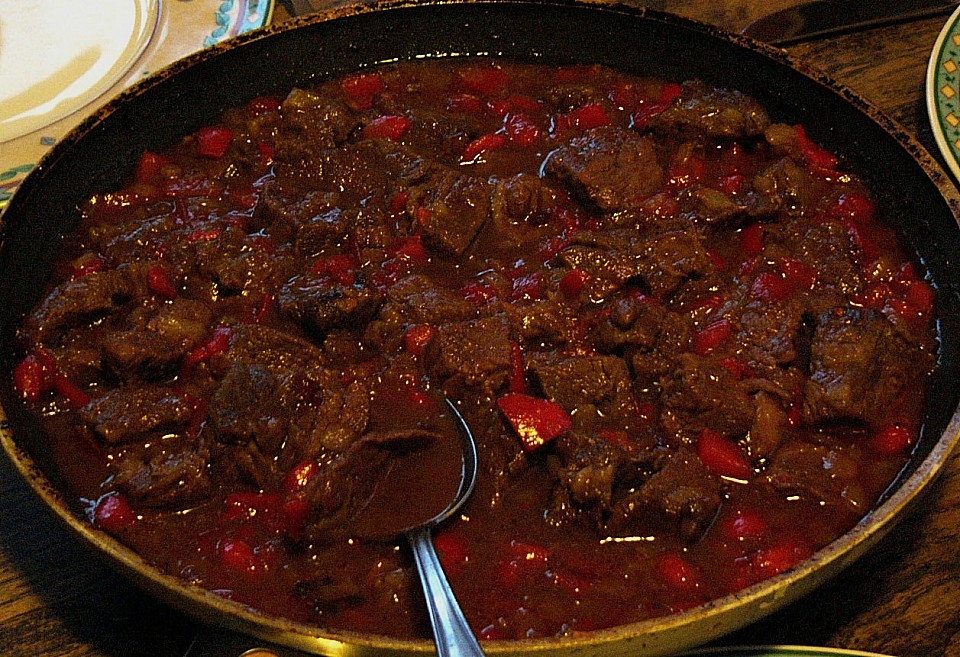
  A wild boar Goulash cooked with Paprika, mini onions and cranberries. That’s how I like my Goulash, thick and meaty. Its not original Hungarian but soooooo delicious.  If this is served with just bread, a heavy red wine or a cool beer, one can’t stop eating.
That’s life folks ! Click on pic to supersize and get appetite !

History.

Goulash in English, also called Goulasch, Gulas, Gulyas, Gollasch, Gulasz or Gujasch, is a great comfort food, not to mention the ideal beer grub.

It originated in the Middle Ages, around the 7th-8th century, in the Hungarian plains as shepherd food. Originally, it was a simple soup with roasted meat and onions but no paprikas. The origins of goulash have been traced to stews, eaten by Magyar shepherds.

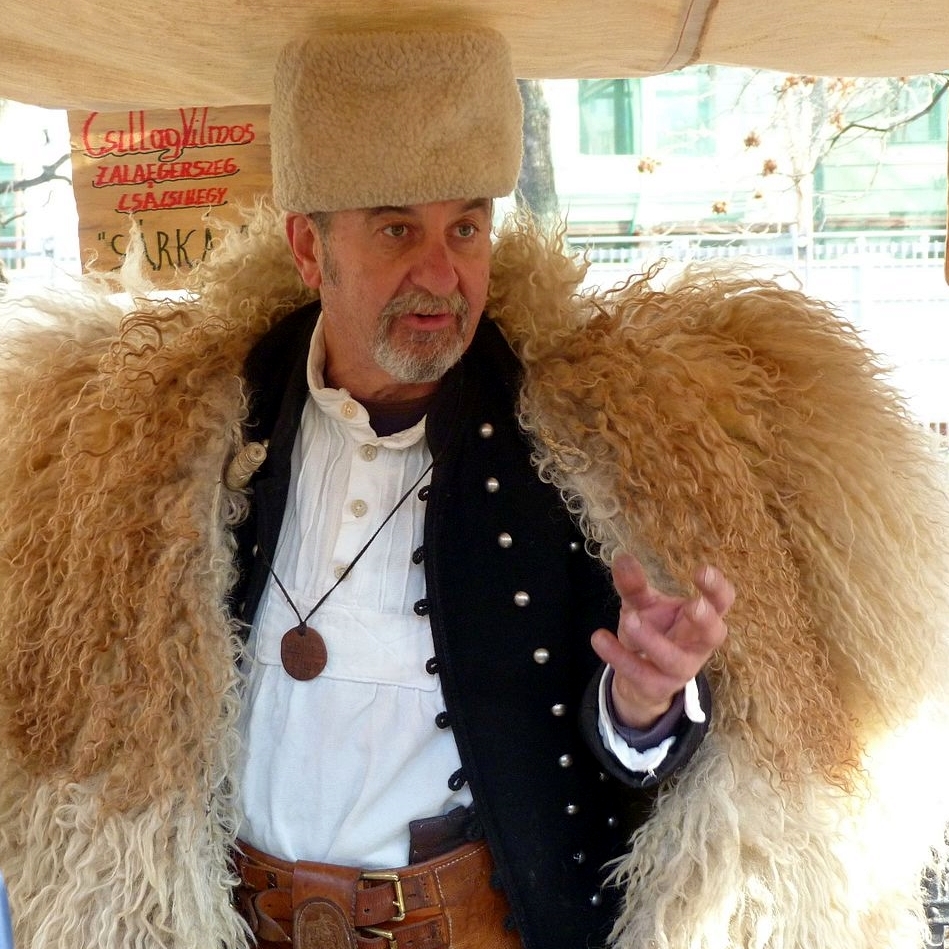
     In North America the Cowboy, in South America the Gaucho  and in the European Puzsta the Gulyas.  Proud, independent herdsmen who likes to keep their culture and tradition.

The Puszta (Grassland, Steppe, Pampas) was the home of massive herds of cattle. They were driven, in their tens of thousands, to Europe’s biggest cattle markets in Moravia, Vienna, Nuremberg and Venice. And the herdsmen made sure that there was always one “sickly” creature that had to be slaughtered along the way, the flesh of which provided them with a magnificent „gulyashus“ (Goulash meat).

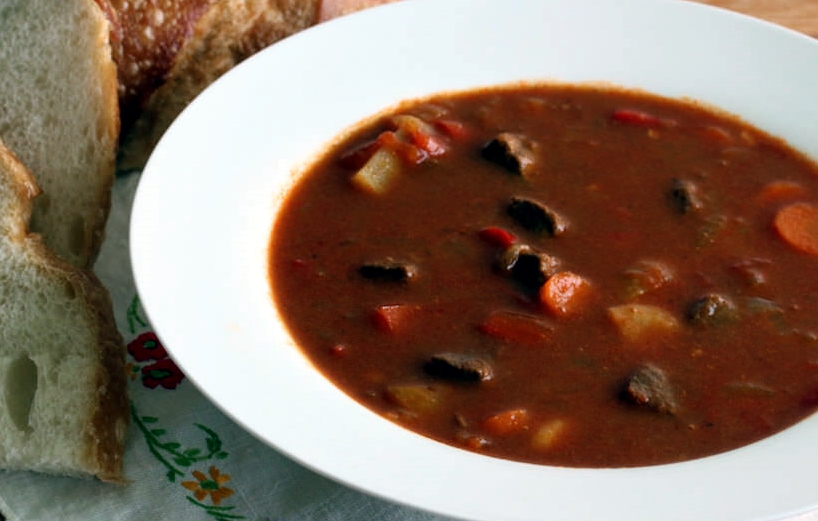
  Original Hungarian Goulash, thin and soup like.

Before setting out with their flocks, they prepared a portable stock of food by slowly cooking cut-up meats with onions and other flavorings until the liquids had been absorbed. The stew was then dried in the sun and packed into bags made of sheep’s stomachs. At mealtime, water was added to a portion of the meat to reconstitute it into a soup or stew.

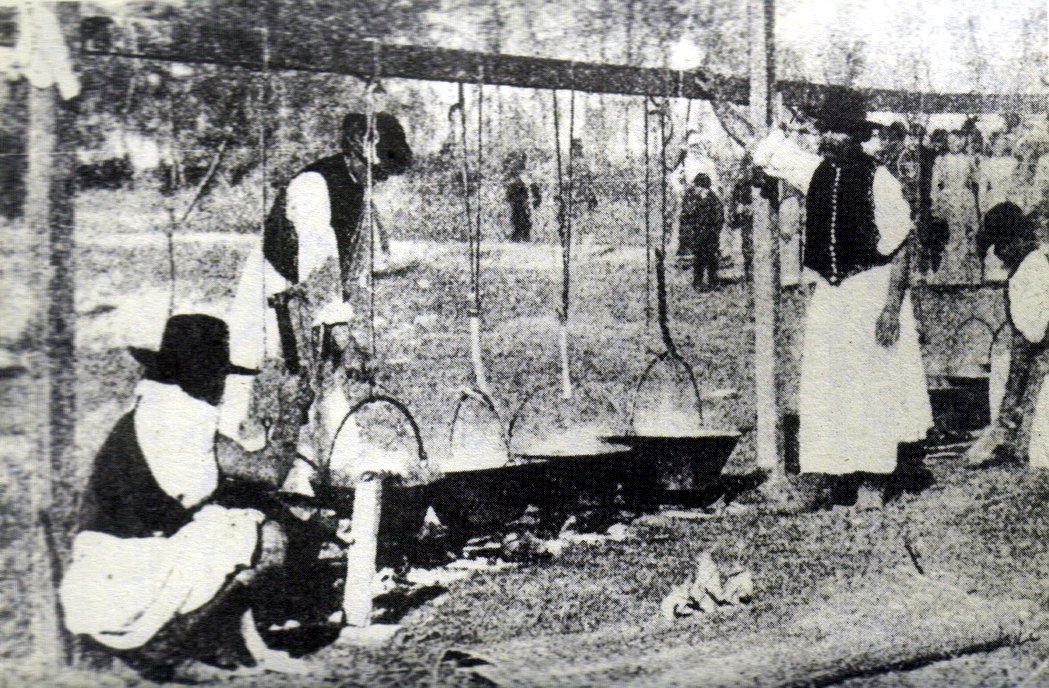
   Goulash (gulyas) refers both to the herdsmen, and to the soup. One could describe this picture as „Gulyas cooking Gulyas“ ! Click on pics to size up.

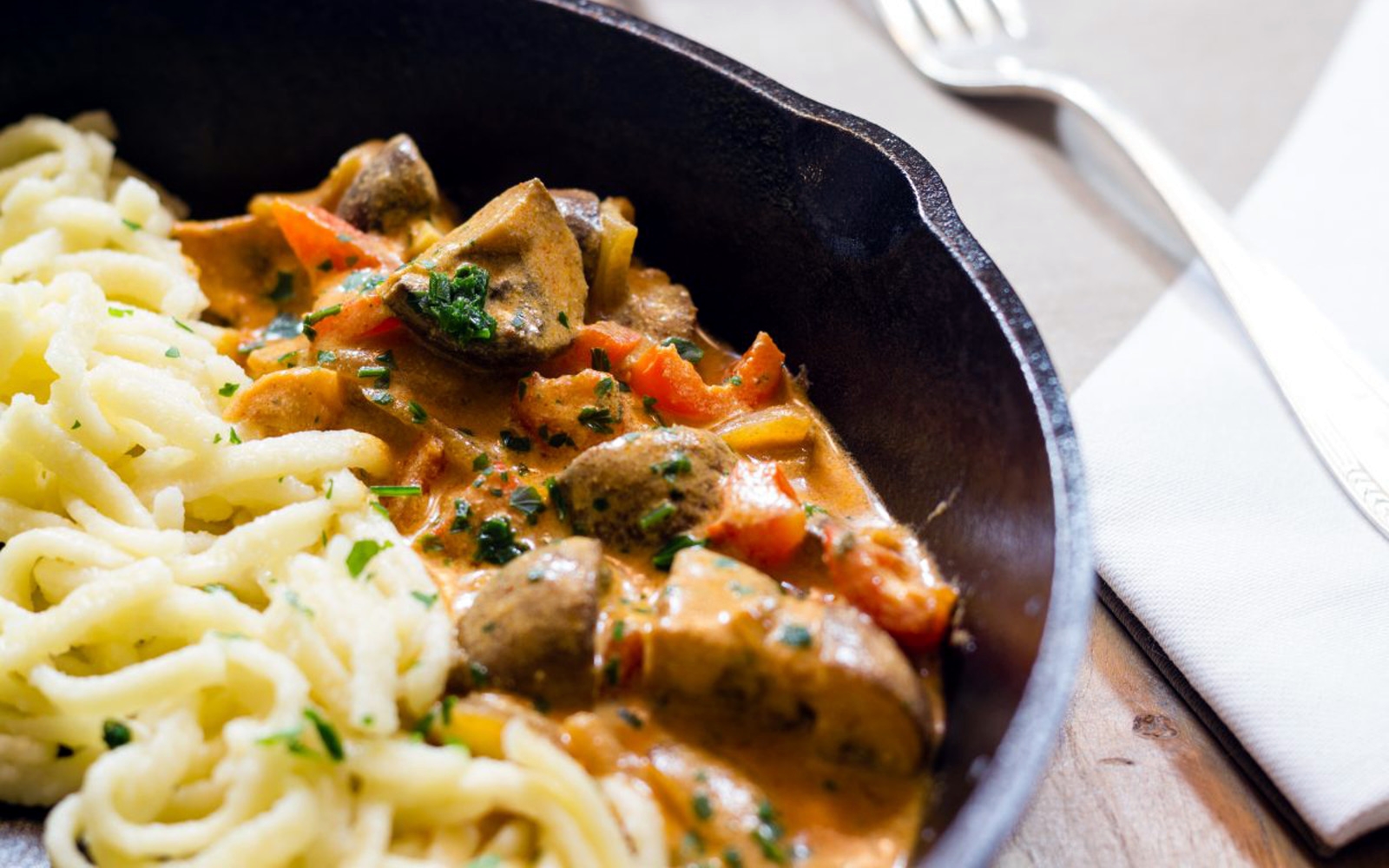
The „Hungarian Gulyas“ of today is a spicy soup, cooked and served in a kettle with various additions such as potatoes, beans or small dumplings. The Hungarian Goulash is thin, compared to its Austrian/Czech/German descendant, and tastes light as there is no roux (thickening) in the sauce.

  Bulgarian pork and tomato Goulash.

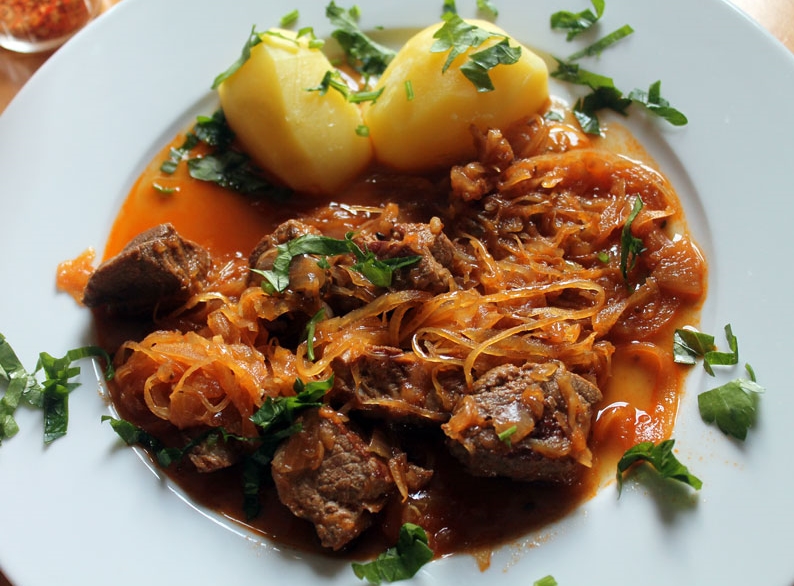
At the annual Goulash festival in Szolnok, one can taste numbers of excellent Goulashes, including Szekely Gulyas (pork Goulash with Sauerkraut), a bean Goulash (no potatoes, kidney beans instead), Likocsi Gulyas made of pork and thin vermicelli with a hint of lemon juice (almost like the Goulasch della Val Pusteria from north Italy), or Birkagulyas made of mutton and flavored with wine and much more. All of these Goulashes have one in common: they are soups.

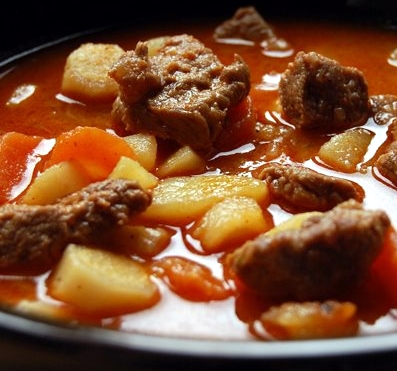
  Goulash with potatoes,  soup or not ?

However, what the majority of the Goulash-eating world understands under the term „Goulash“ is a thick savory sauce and stew made from beef or pork, served with crusty bread or dumplings. This is the Vienna-style Goulash, which originated in Vienna in the 19th century. This was the time of the Austro-Hungarian Empire and the 39th Hungarian Infantry Regiment was stationed in Vienna.

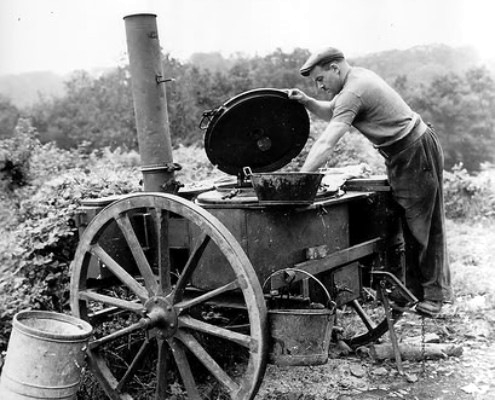
  The Goulash Cannon = Gulasch Kanone.

The Goulash Cannon.

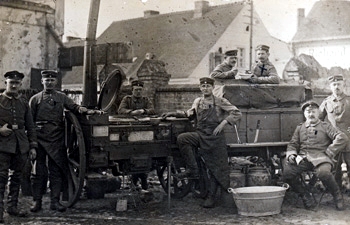
This military idea was  further developed by the German Karl Fissler with his „Gulasch Kanone“ (Goulash cannon). Read about in my post „Peasoup and More“ under category Recipes or History. The zenith of the Goulash Cannon was probably during WW I.

   WWI field kitchen, the „Gulasch Kanone“.

Viennese chefs adapted the Hungarian Gulyas soup recipe brought in by the troops and made into a thick sauce. This became known as the „Wiener Saftgulasch“ (Viennese Goulash). This is often incorrectly regarded as „the original“ goulash, although it is wrong because the original goulash is from Hungary.

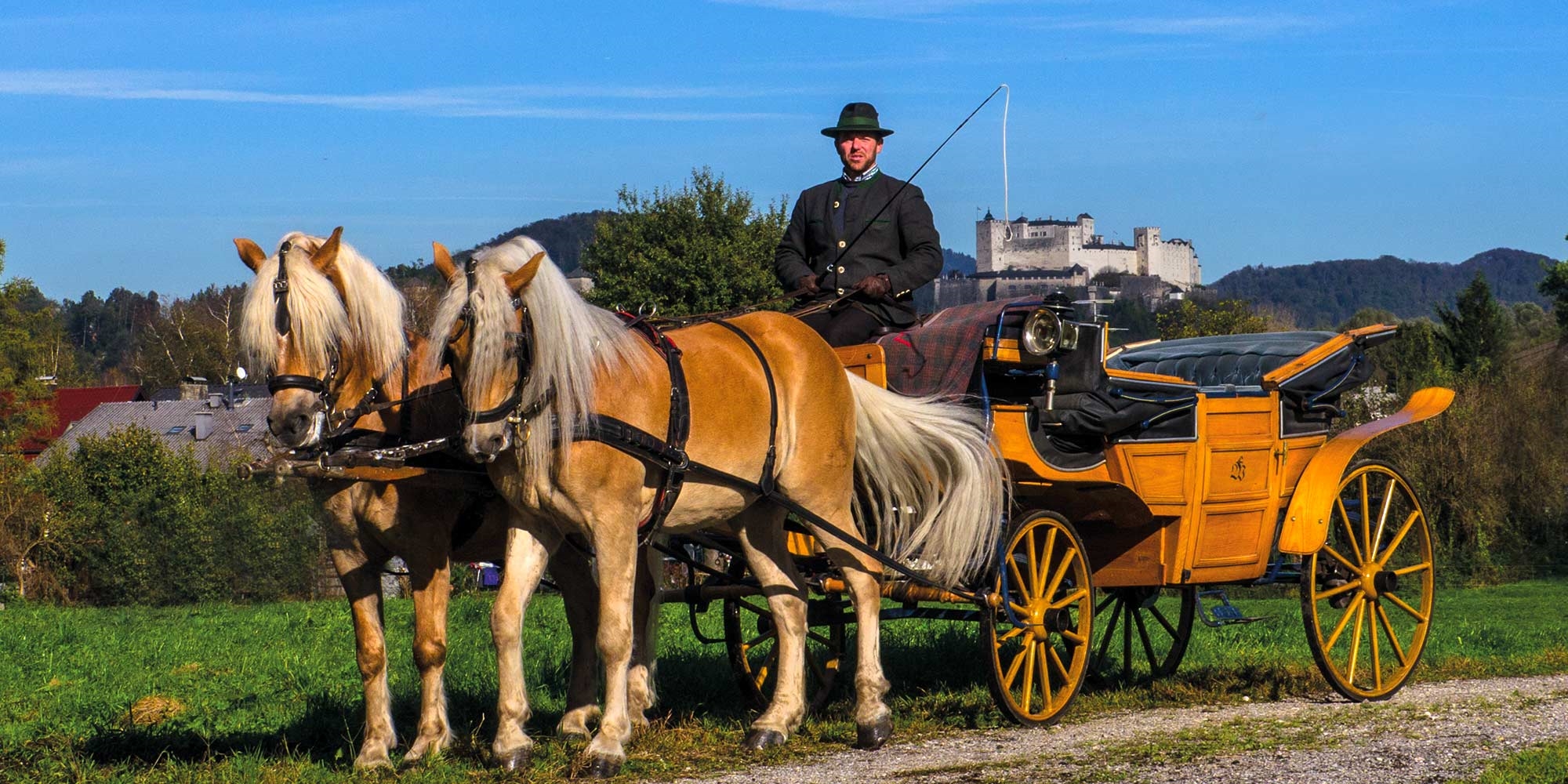
  Austrian Fiaker, the famous open carriage.

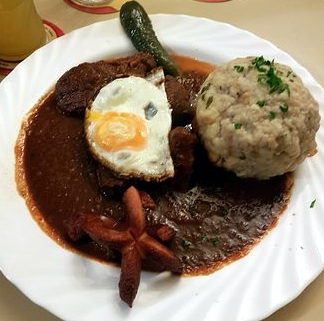
An interesting evolution of the Viennese Goulash is the Fiakergulasch (Coachmen’s Goulash), which a Viennese Goulash served with fried „Wiener Würstchen“ (Vienna sausage its like a hot dog sausage, a Frankfurter), a fried egg, a fan-cut pickle and possibly a round bread dumpling. The name is derived from the iconic Viennese open-top „Fiaker“ carriage.

  Fiaker Goulash served at restaurant Reinthaler, Vienna.

The Viennese goulash became such a success that the Hungarians re-imported it under the name „Pörkölt“. Goulash continued to spread beyond Vienna throughout the Austro-Hungarian empire and beyond. It was typical army food and transferring regimental troops spread the recipe along with them. It found its way to Slovakia, Czech Republic, Germany and Tyrol, but also east to Ukraine, Russia and Poland.

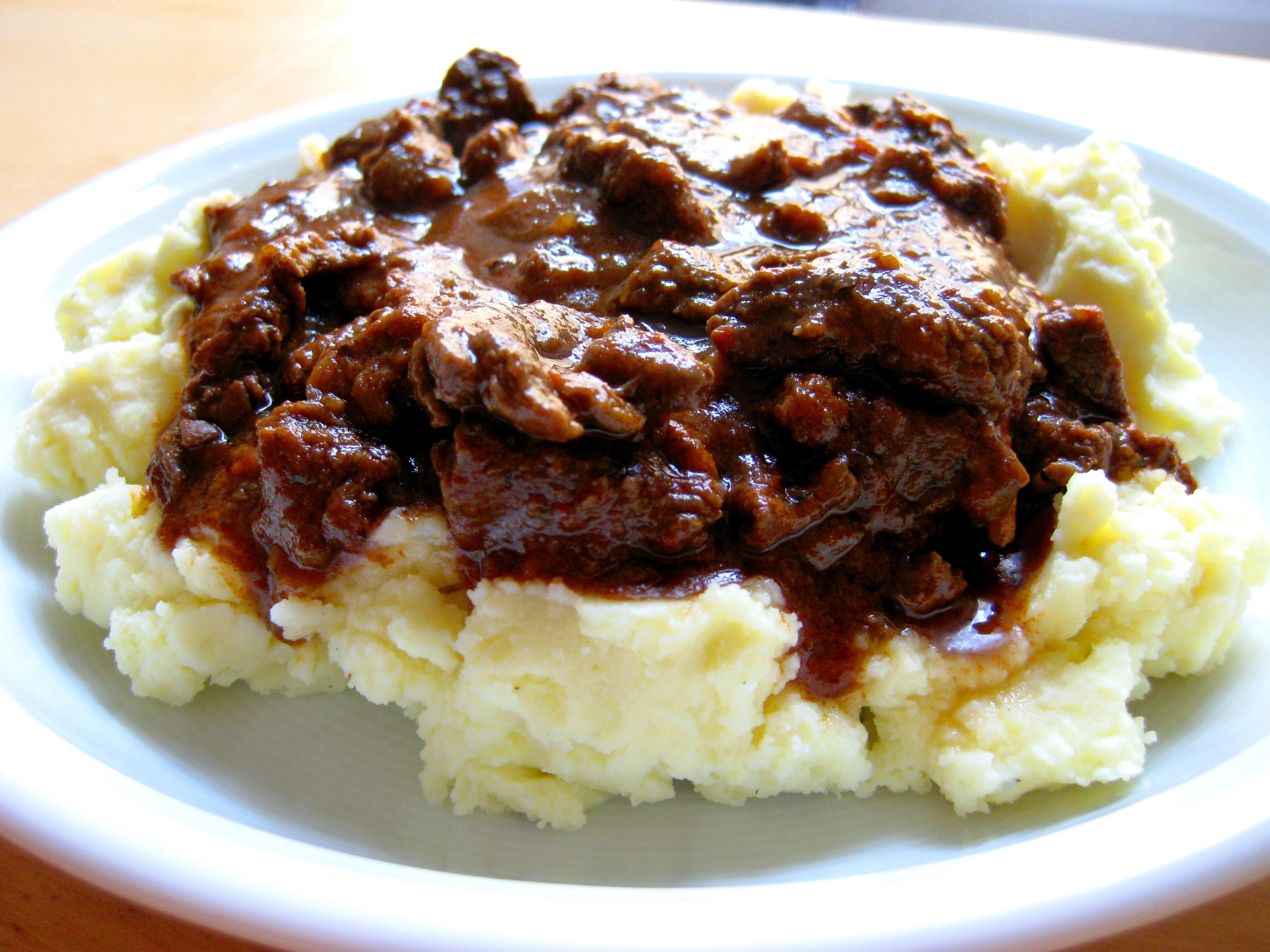
  Dark beef Goulash served on mash potatoes.

No Goulash in USA.

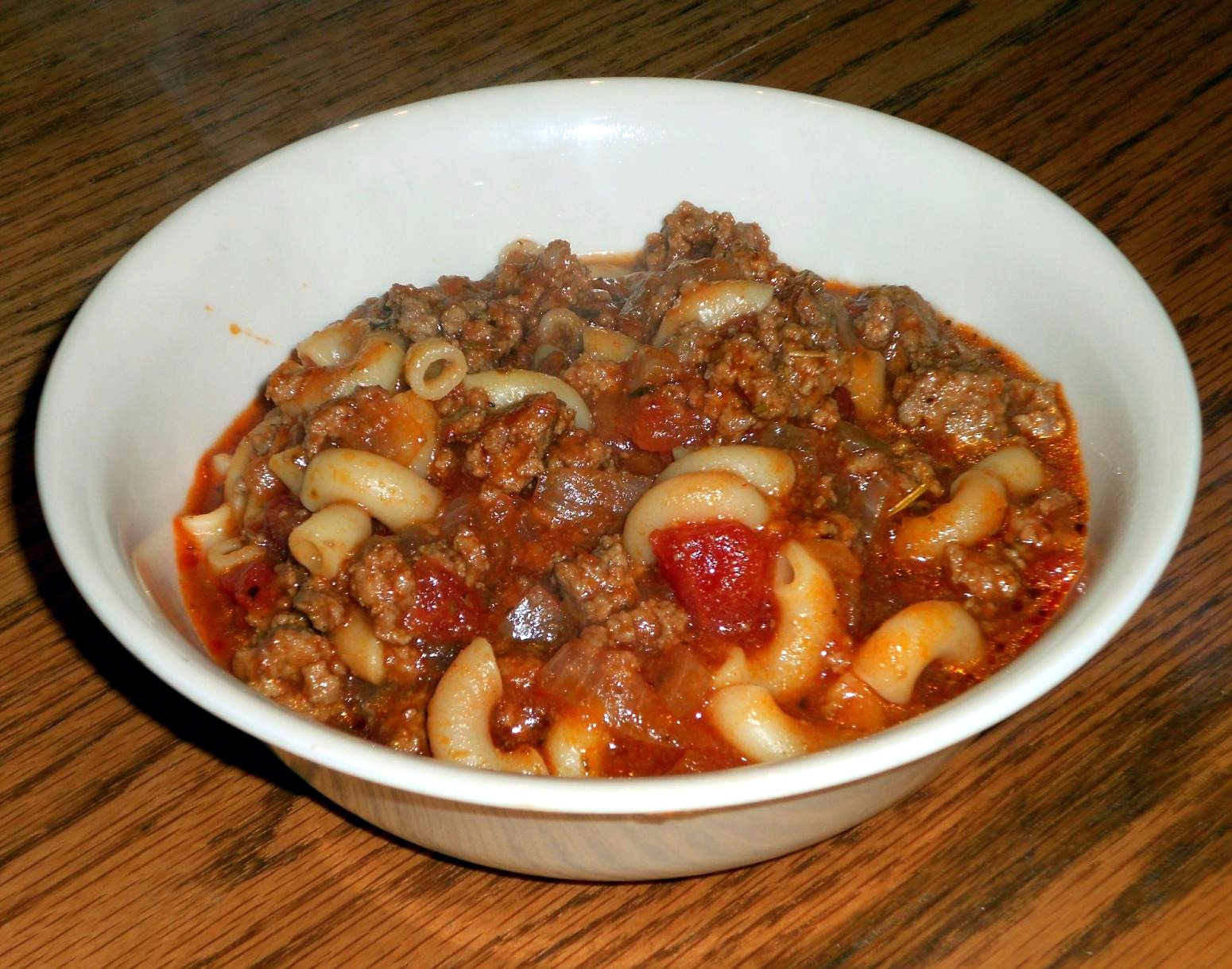
Goulash never made it into the United States. Although there is a dish of that name first mentioned in cookbooks in 1914, Goulash in America has evolved into something completely different. What is understood under „Goulash“ in America is a casserole made with ground beef and pasta. An „Italian ragu milanese“ meets „Texas chili con carne“ sort of a thing. The only connection with the Vienna Goulash or the Hungarian Goulash is the name, and the use of beef and paprika. Nothing else. I had it once, it tasted horrible !

  That’s what they call Goulash in the US. A mix of soup and stew, mostly a sort of casserole made from noodles, minced meat, few tomatoes, some bits of capsicum or onion and sprinkled with cheese. To me not very appetizing. Similar to their favorite „Mac and Cheese“.

Paprika.

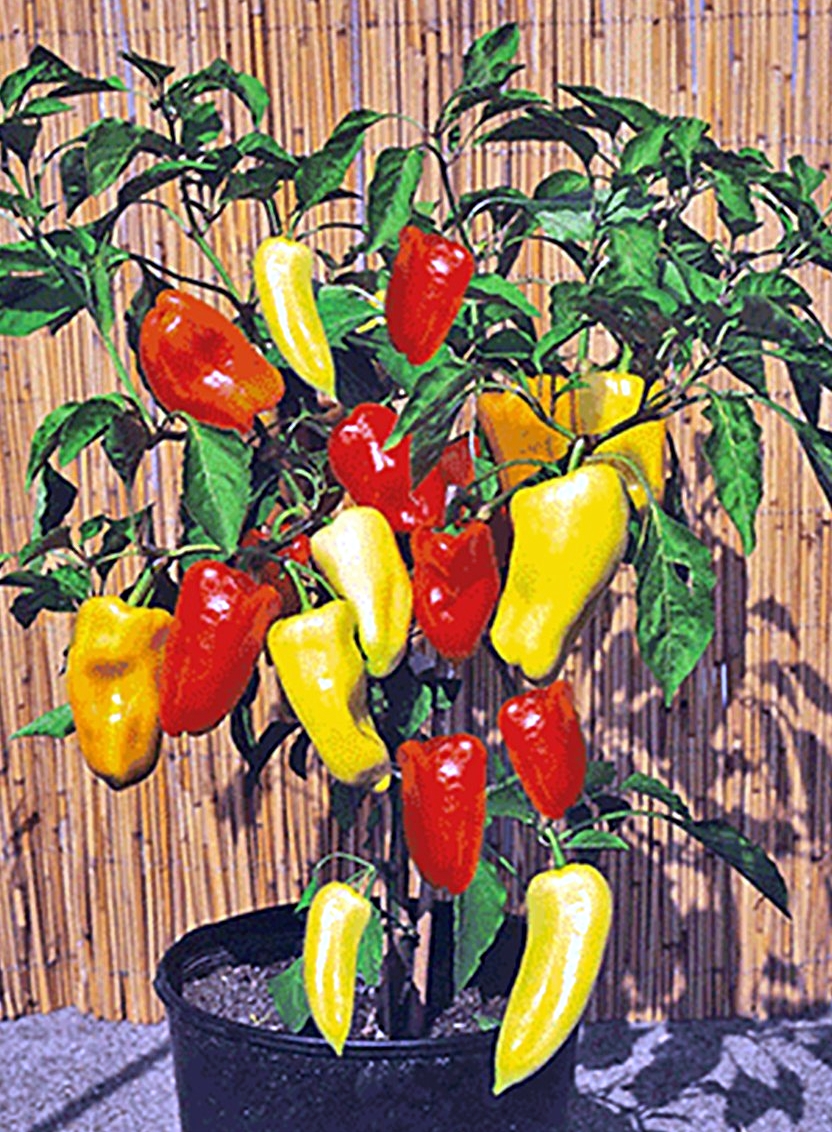
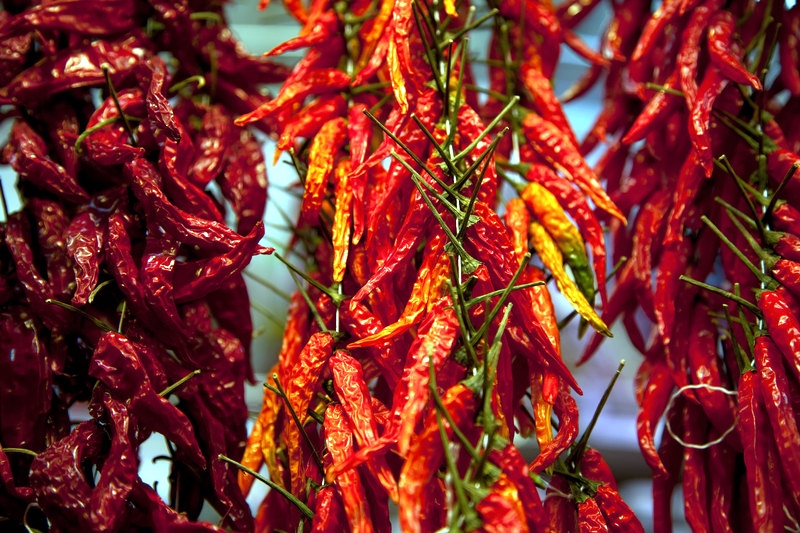
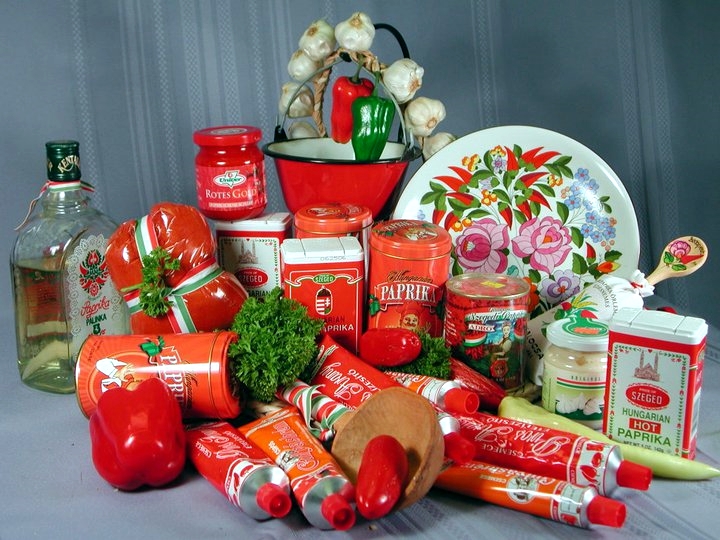
The most important ingredient of both the Hungarian and the Viennese Goulash is obviously Hungarian paprika. Hungarian paprika powder is bright red, and generally sweeter than paprika made from the same fruits grown in other soils and climates. Hungarian paprika is produced by drying and grinding the fully ripened pods of the Hungarian Wax Paprika.

  Different mature stages of Hungarian Paprika.

This is a cultivar of the species Capsicum annum, the same species most Mexican and American chilli’s belong to. The heat and flavor of Hungarian paprika can vary from mild to hot depending on variety and maturity of the pods if was ground from. The heat will intensify significantly if the fruit allowed to ripen fully.

  Open air drying of Hunarian Paprika.

The paprika that is indispensable for flavoring the modern Goulash was added to the formulation in the 18th century. The classic “kettle goulash” is prepared by frying cubes of beef or mutton with onions in lard. Garlic, caraway seeds, tomatoes, green capsicum, and potatoes complete the stew. Szekely gulyas, another Hungarian specialty, is a stew of pork and sauerkraut flavored with tomatoes, onions, caraway seeds, and sour cream.

   Big business: All around Hungarian Paprika.

Goulash Soup.

A final note has to be said about the Goulash soup (Gulasova polevka, Gulaschsuppe). This is a soup popular in Austria, Germany and the Czech Republic. However, even though this is also a soup, it tastes completely different from the other soup in this essay, the Hungarian Gulyasleves.

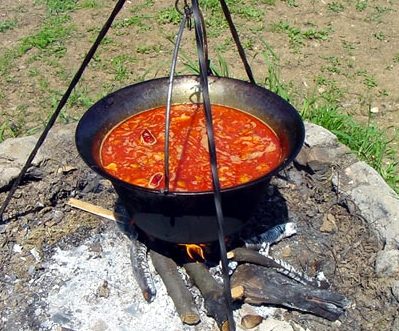
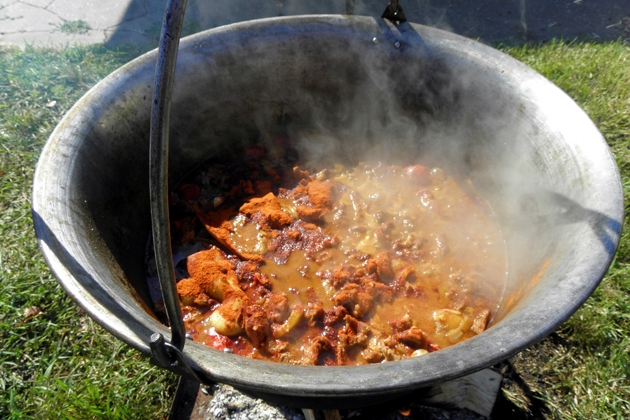
  Original Hungarian Goulash soup will be cooked in an original Cauldron, the open fire kettle. Very thick made with lots of meat , even chicken drumsticks.

For one, the Hungarian soup is not thickened by flour and tastes lighter. It also has ingredients not found in the Viennese Goulash or in the Goulash soup, such as beans, carrots, potatoes, pieces of meat or small pasta. Goulash soup is cooked like the Viennese Goulash, but boiled in a large amount of beef broth.

  This is the original consistancy and the taste – HOT !

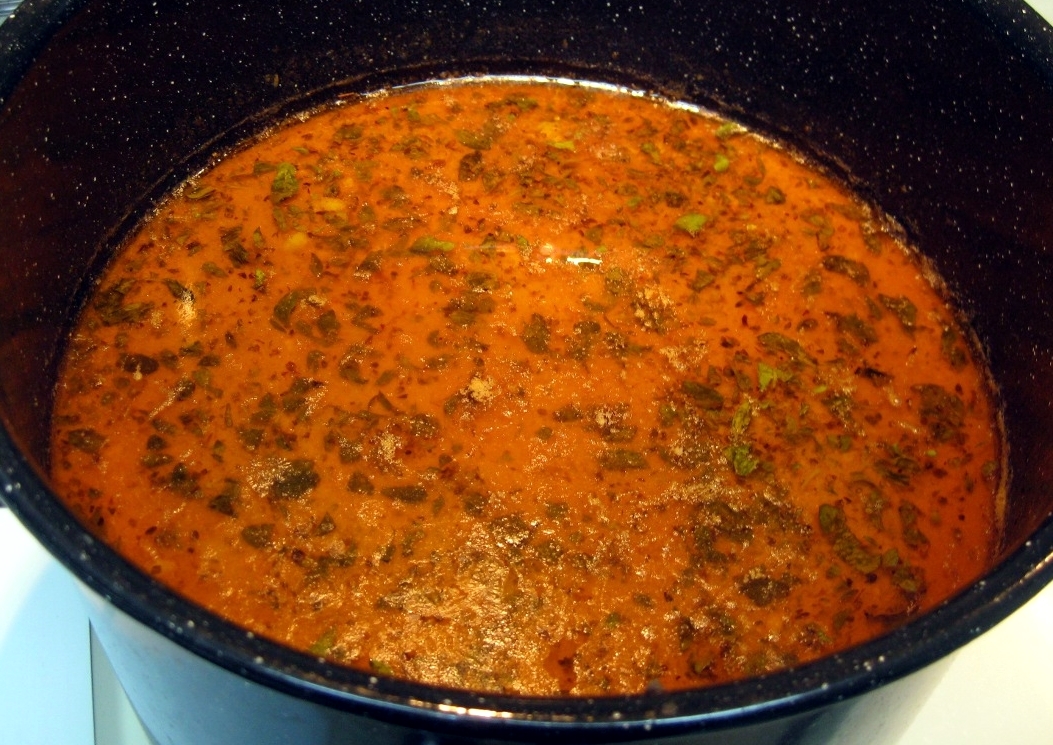
A goulash soup can be prepared in a number of different ways, and each one has its own ardent supporters. However, all agree that the cook should be generous with both meat and potatoes. Under no circumstances should flour be used to bind the soup. If the soup, which should actually be quite thick, is a little too thin, one or two tablespoons of tomato paste may be added – although with care, so the soup does not become too tart. Ground paprika, which is always used in generous quantities, will also help to improve the consistency. My Goulash soup is always the leftover „thin juice“ of my Goulash, you also can call it the sauce of the Goulash, sometimes refined with double cream.

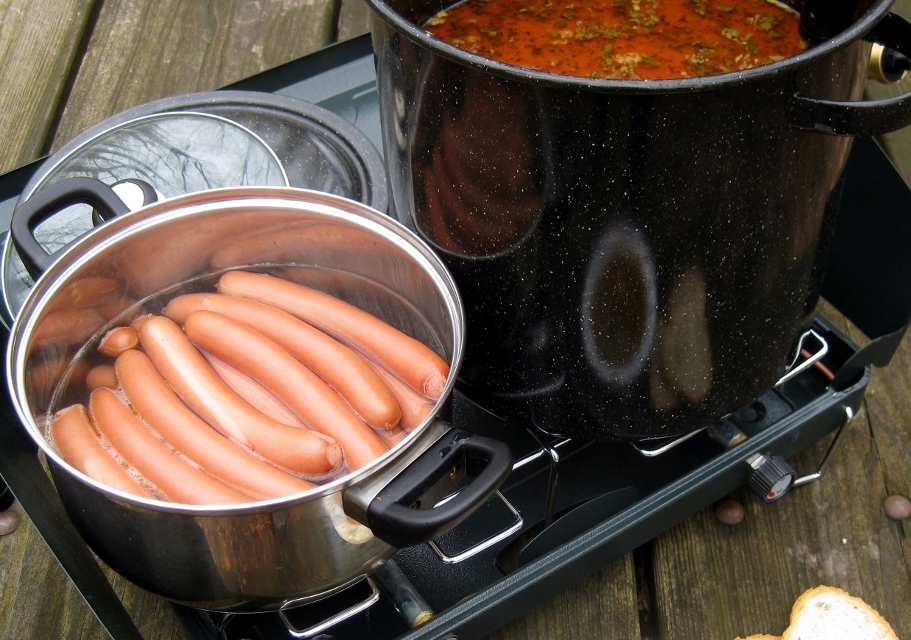
        Perfect party, hot Goulash soup and Frankforts with mustard and lots of baguette.  Never forget the beers are running down like hell with it. So, be prepared to have plenty.

Goulash Terminology.

Gulyas – a Hungarian cattle-herdsman.
Gulyasleves – Hungarian kettle goulash with soup-like consistency. It is made with chilli’s, braised meat, onions and paprika. Unlike the Viennese goulash, this dish is not thickened by flour and tastes quite light. Note that this is not what is known as „goulash“. outside of Hungary. When the rest of the world eats „goulash“, they eat Viennese goulash, which would be called „pörkölt“ in Hungary.

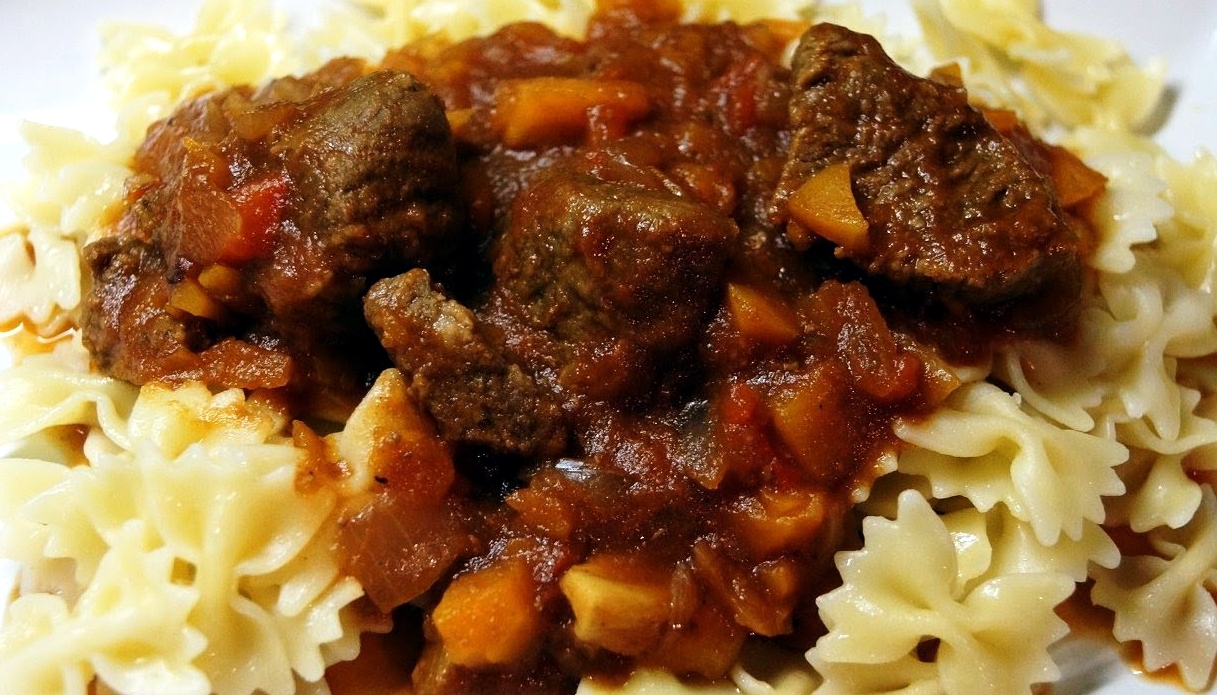
   Poerkoelt on butterfly noodle

Pörkölt – Same ingredients as in Gulyás, but boiled down to a thicker consistency. „Goulash“ to the rest of the world.
Paprikas – Pörkölt made with chicken and thickened with sour cream.

Wiener Saftgulasch (Viennese Goulash) – A savory stew consisting of even amounts of chopped onions and meat (usually beef) cut into bite-size pieces, slowly braised with sweet and hot paprika powder, salt, pepper, caraway, marjoram, garlic and tomato paste, thickened with flour. Viennese goulash has a typical deep, dark color.

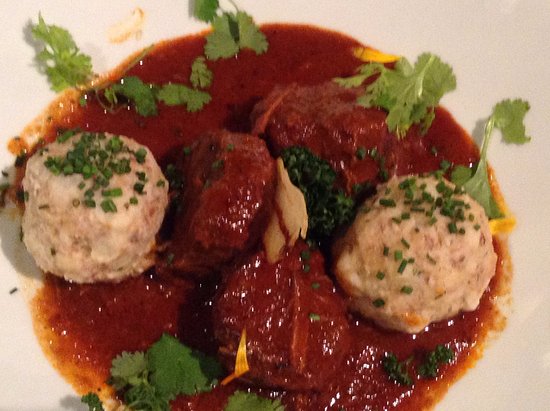
  Vienna Goulash with „Canederli“, Italian dumplings.

Here are some of its varieties:
Fiakergulasch – Viennese goulash garnished with fried Vienna sausage, fried egg and a pickle cut and spread into a fan, served with bread dumplings.
Zigeunergulasch – Viennese goulash using beef, pork or lamb, with diced tomatoes, potatoes and green paprikas.
Esterhazygulasch – Beef goulash with sour cream, capers and julienned carrots, turnips and celery root, served with boiled potatoes.
Karlsbad Gulasch – Beef goulash with sour cream served with gnocchi.
Kaisergulasch – Goulash of beef tenderloin or beef sirloin, served with noodles.
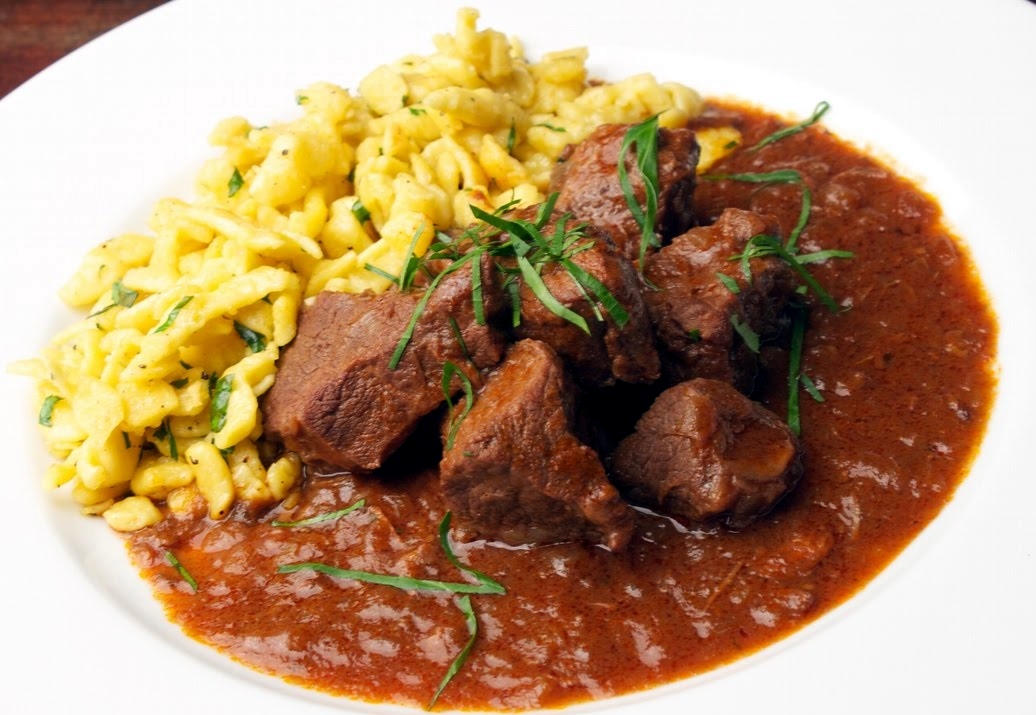
Andrassy Goulash – Beef goulash with halusky (spätzle) and bacon.

  Andrassy Goulash with halusky (spaetzle).

Trieste Goulash – Viennese beef goulash served with polenta instead of dumplings.
Gulasch della Val Pusteria – Beef or pork goulash from South Tyrol in Italy, made not with the typical goulash seasonings, but with uniquely Italian ingredients such as oregano, rosemary and citrus peel, served with crusty white bread.

Potato Goulash – Goulash of chopped sausage (Braunschweiger or Kielbasa) and onions fried in hot fat, with paprika, cumin, salt and pepper, deglazed with vinegar, and cooked with chopped potatoes.

  Mushroom Goulash, perfect solution for vegetarians.

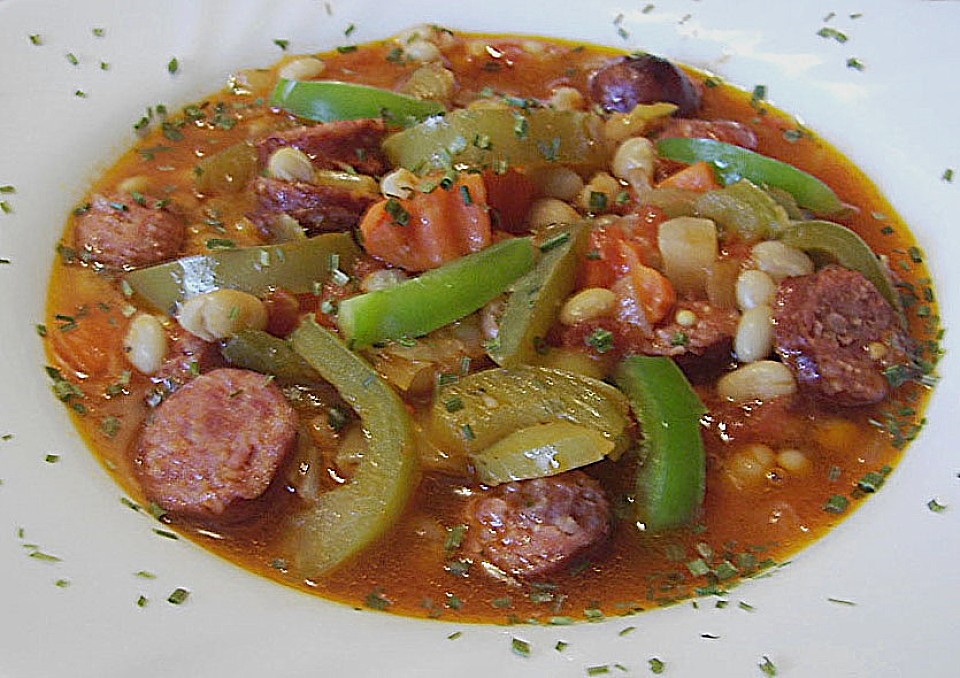
Mushroom Goulash – Low-budget Goulash made with forest mushrooms instead of meat. Bean Goulash – A stew called Bableves in Hungary, prepared similar to the Potato Goulash except mixed beans are used in place of potatoes. Sounds a bit similar to New Mexican chilli, except paprika is used instead of ground chilli.

   Szegediner – Goulash with Sauerkraut.

Szegediner Goulash – Pork stew with sauerkraut and sour cream.
Debrecin Goulash – Goulash made with Debrecin sausage instead of meat.
Sausage Gulasch (Wurstgulasch, Burt gulas) – Low-budget potato-and-sausage Goulash with tomato sauce.

  One of these „low budget“ Goulash‘, served in some restaurants. Can be delicious, its just different.

Goulash po komunisticeski (Communist Goulash) – Kazakh goulash that uses any kind of meat, because, as our friend Vladimir once said, „during Communism only Communists had meat“ 🙂
Hundgulas – We should tactfully omit the Hundgulas (dogsgoulash), a beggars‘ recipe for dog-meat Goulash and leftover vegetables from 19th-century Presporok (Bratislava).


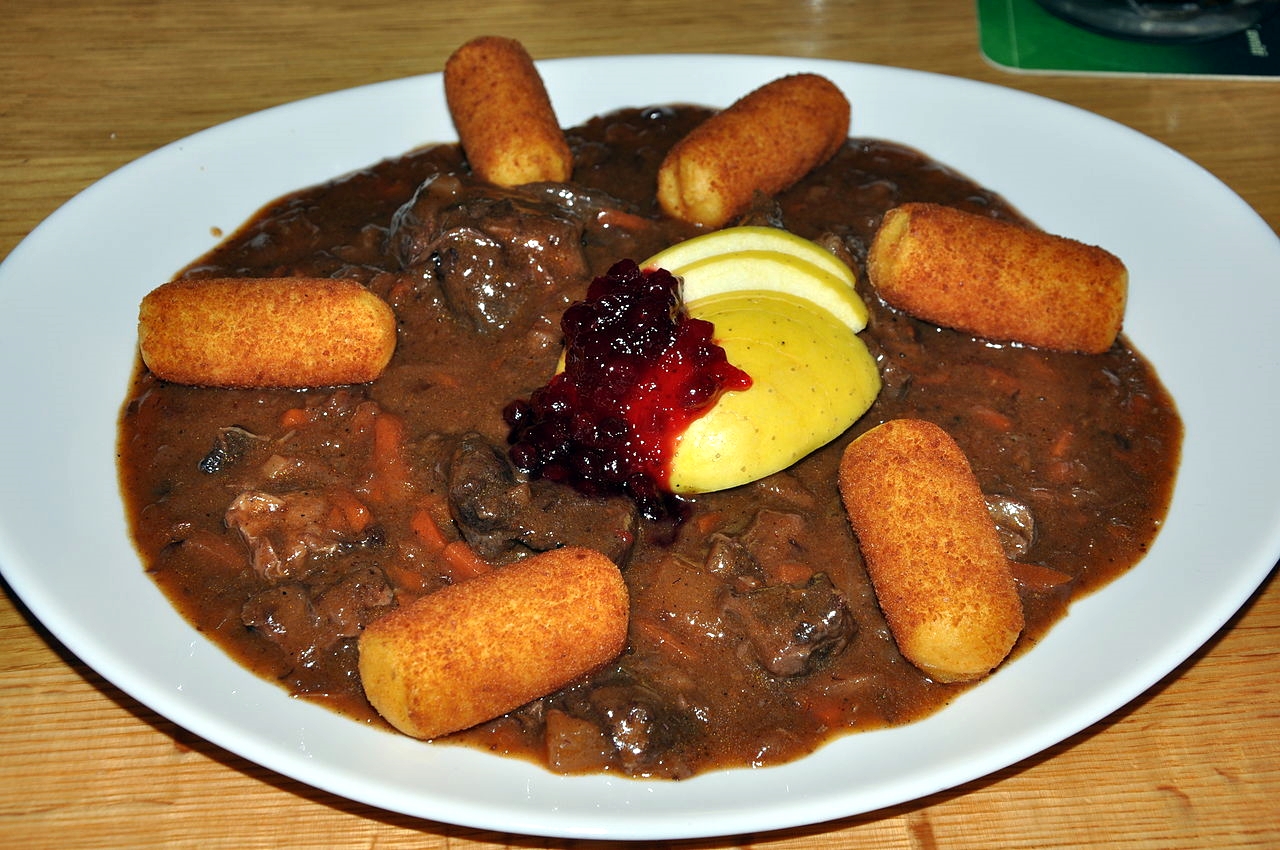
My absolute favorite –  mouthwatering wild deer Goulash served with croquettes, cranberries and pears. But deer is very hard to get in Uruguay instead of beef.

Mike’s Goulash.

During the years we tried dozens of Goulash recipes and finally we came up with this one. It is a thick, full of meat (predominately beef), medium spiced stew with permanently changing side dishes. One great difference to all the ideas and recipes you read before – I use very good meat and lots of red wine, mostly the same as I love to drink with the meal. As better your ingredients are as better your meal will taste. As said before, I always like to make a large amount and then freeze the portions. Heated up its even better.

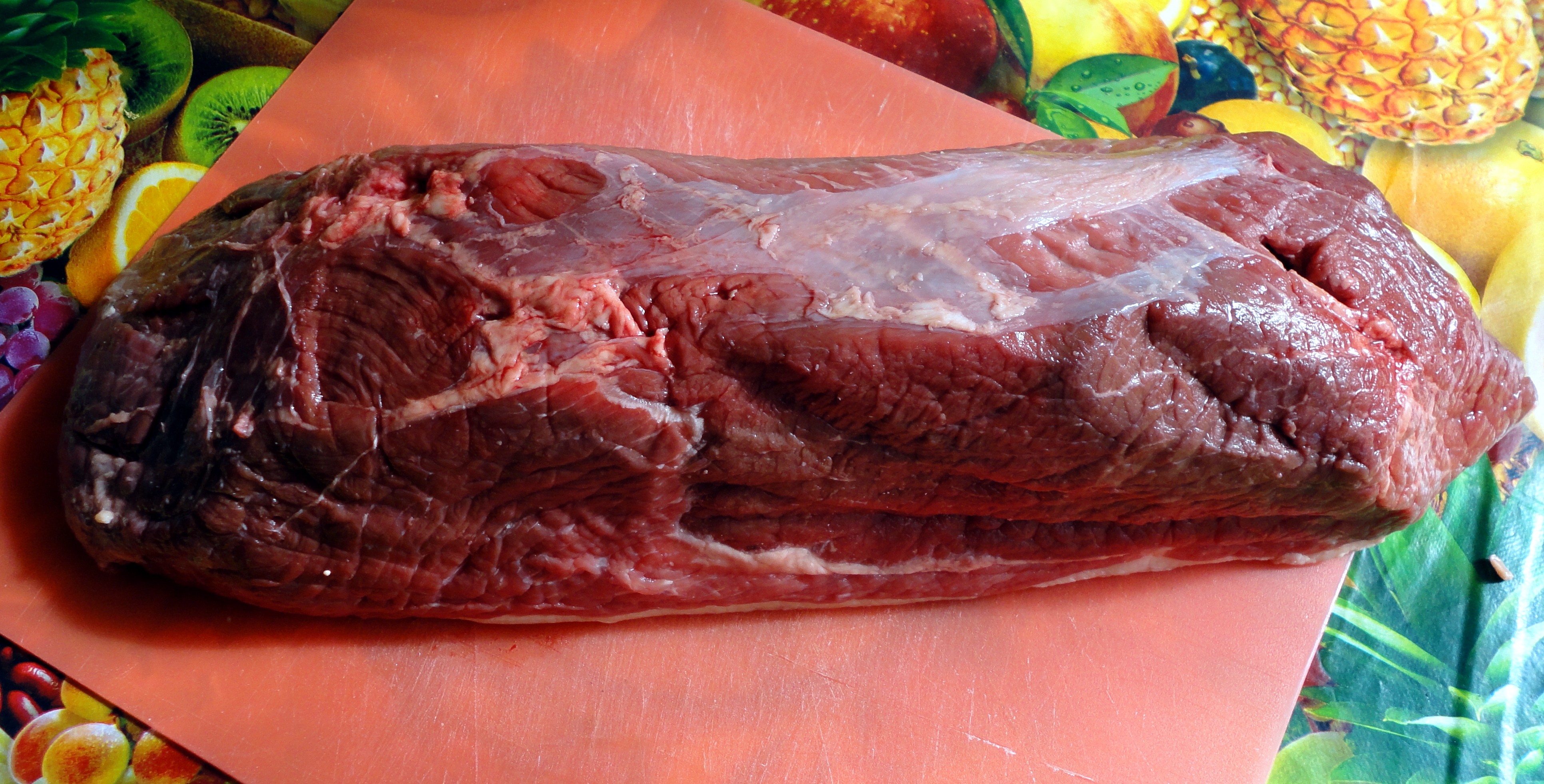
  Some very good piece of beef.

Ingredients.

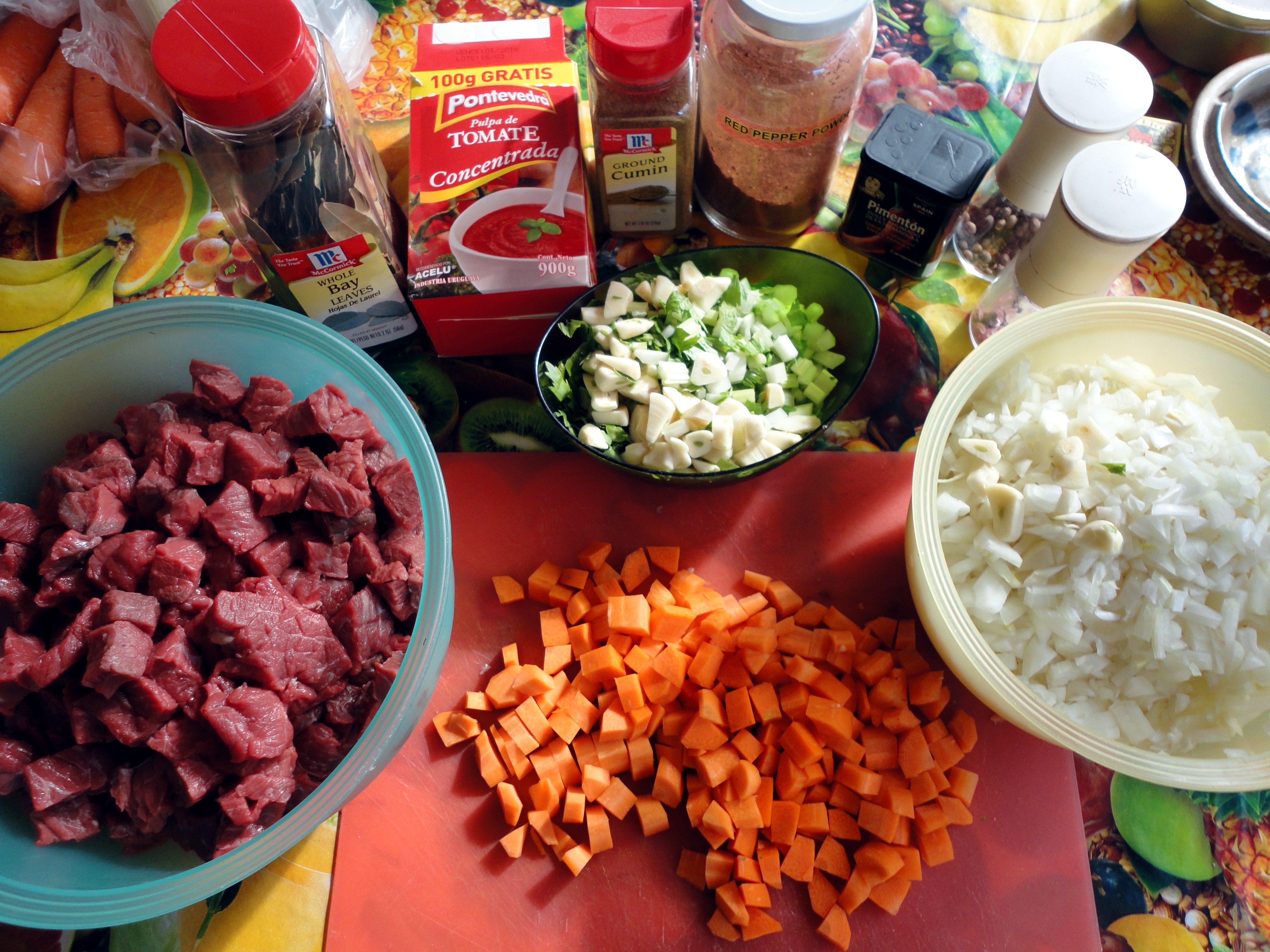
3 kg beef, top loin (in Uruguay „lomo superior“), nicely trimmed of all skin and fat
12 medium size yellow onions
2-3 medium size celery, stem and leaves, finely diced
2-3 medium size carrots, finely diced
1 whole bulb of garlic, coarse diced

  A lot to prepare, kilos of meat and veggies.

1 tablespoon (I like to use 2) ground hot chilli or szechuan pepper powder
80 gram of tomato extract/concentrate
6 bay leaves
2 tablespoons cumin
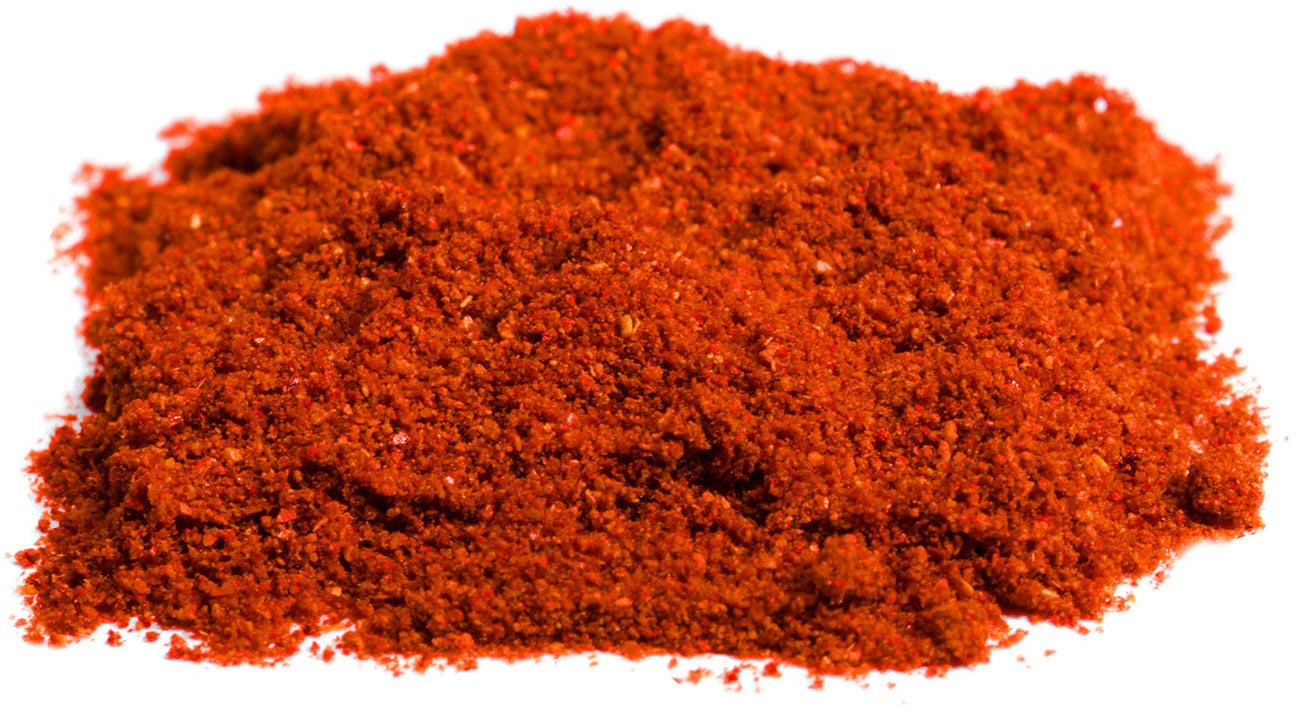
5 tablespoons of smoked ground paprika

   The paprika I use, smoked and sweet.

1/2 liter beef broth
1/2 liter tomato juice
1 1/2 liter strong red wine, Syrah or Tannat or similar
lard or high temperature cooking oil, to brown the meat
salt and pepper to season

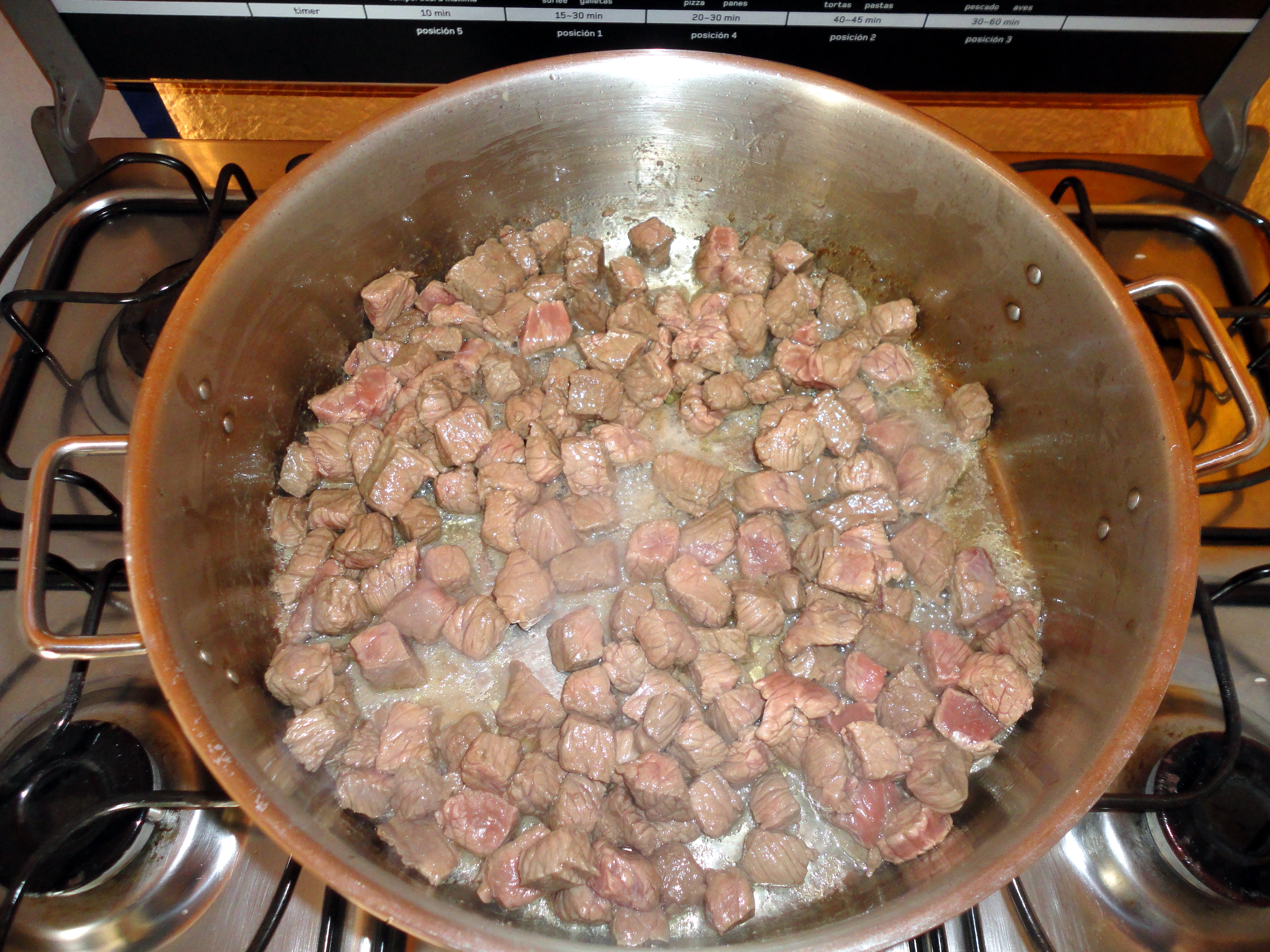
  Fry meat briefly, the other ingredient should have a chance to soak in to the beef or whatever the meat is you use.

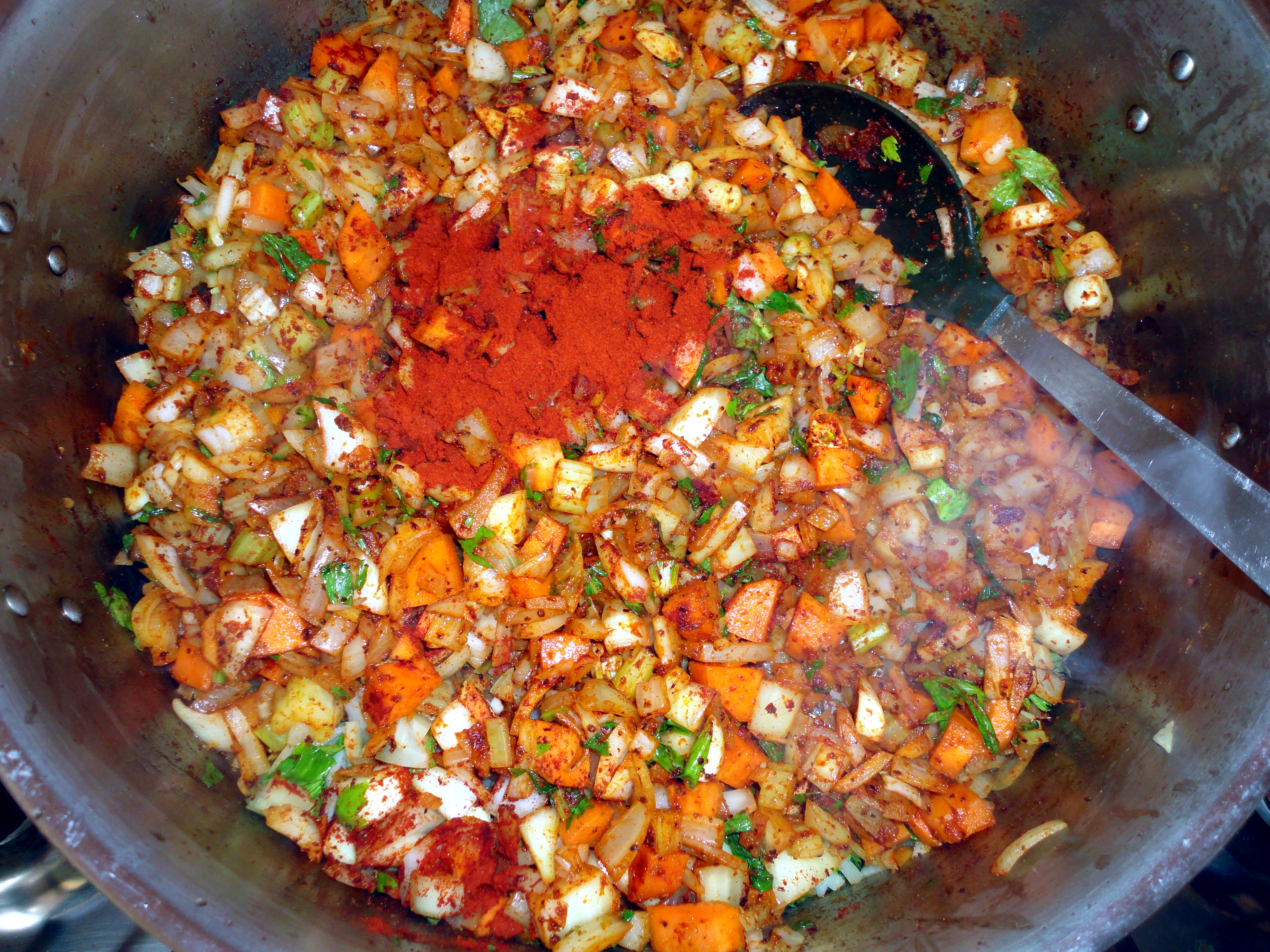
  Fry all veggies with paprika and chilli powder.

How to do.

Fry the meat briefly and set aside.
Then fry the vegetables, add the paprika and chilli powder and stir-fry till the onions are golden brown.
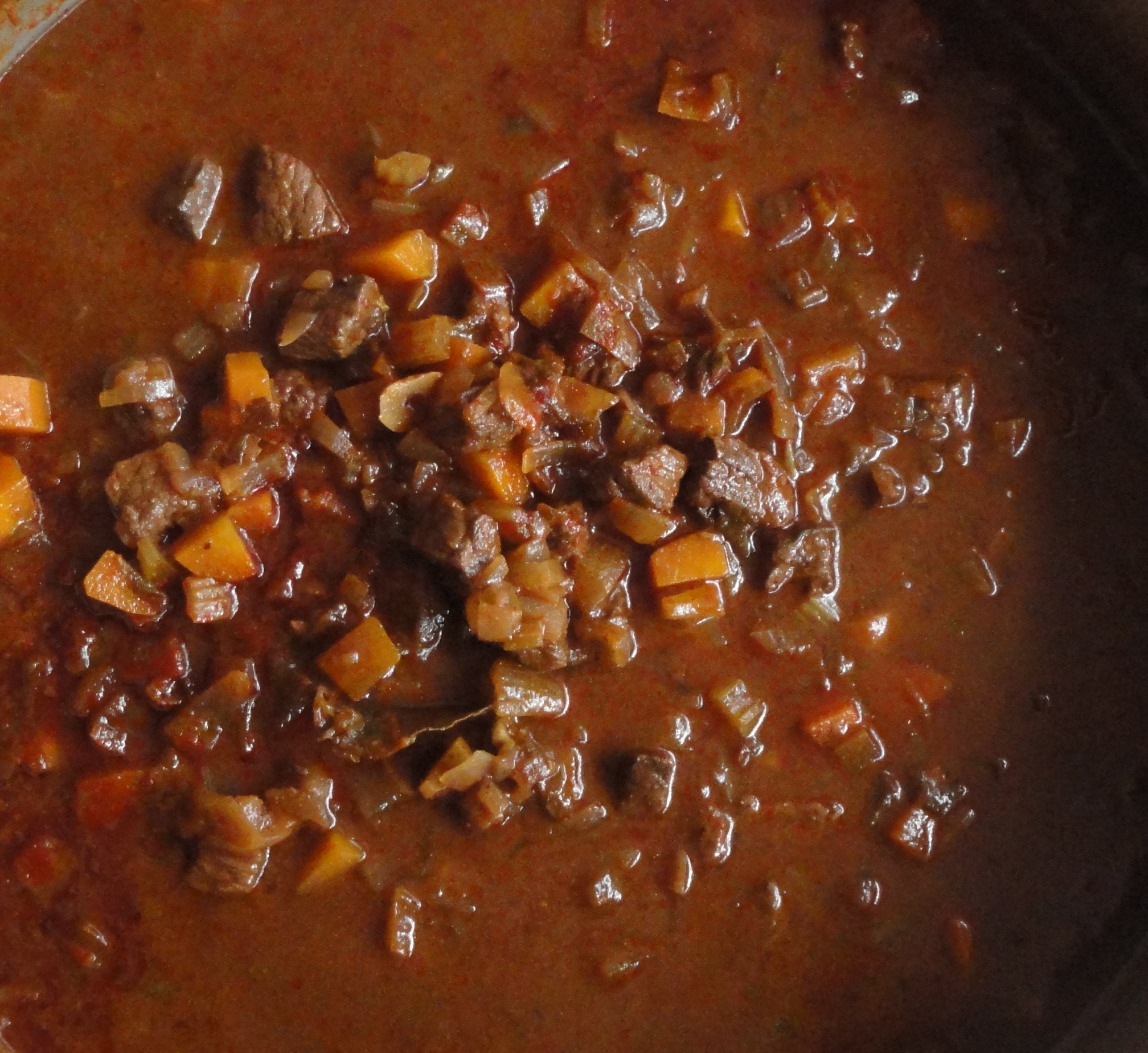
Clear everything with the broth and wine.
Bring it to a boil,
And now add the meat and the remaining ingredients.
Simmer on lowest heat about 2 to 2 1/2 hours until the meat is tender.
If necessary season with salt and pepper.

  Mike’s Goulash ready to serve. My cousin in Australia loved the leftovers next morning on toast. Not to bad, finger licking sauce – I tell you.

Tips.

Sometimes It turns out very spicy, because I always like to double the amount of chilli, then I serve a glob of creme fresh or here in UY „queso blanco“ with every serving. In case you have a source for deer or wild boar, you should try it. Here in Uruguay we also use lamb, which is very good and pretty cheap, just US$ 7,– a kilo instead US$ 9,– for beef.

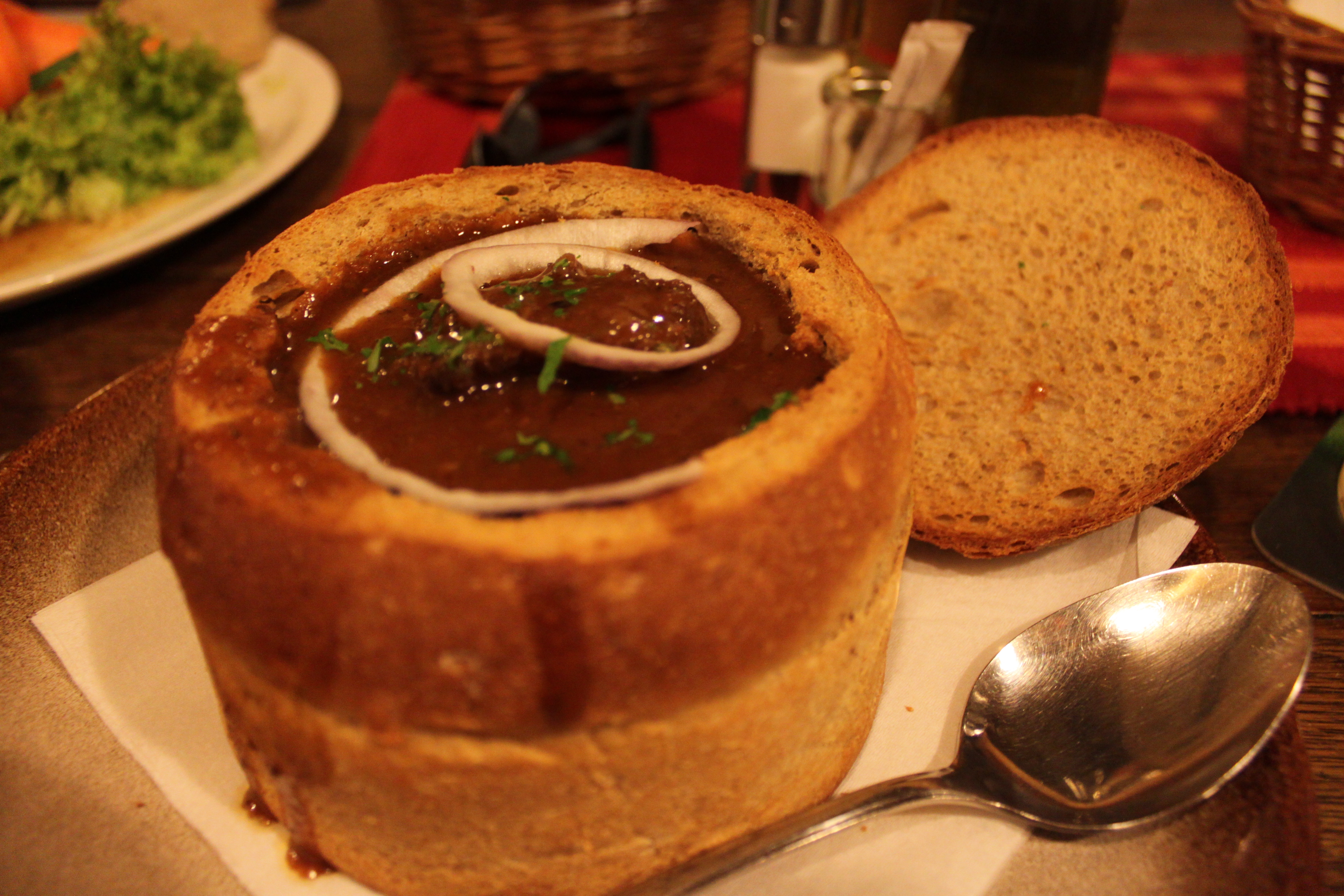
What a delicious feast, Goulash in a bread bowl.  Enjoy your next Goulash, as I do !

Veröffentlicht unter History, Lifestyle, Recipes | Verschlagwortet mit | Hinterlasse einen Kommentar

KFC

Recently I read about „Kentucky Fried Chicken = KFC“.  It said that Colonel Sanders‘ nephew casually revealed to a reporter a recipe that had been passed down in a family scrapbook for generations.
Could this be KFC’s closely guarded secret recipe of 11 herbs and spices? The nephew, Joe Ledington, said it is. He claims his job as a kid was to mix this same recipe in large batches.
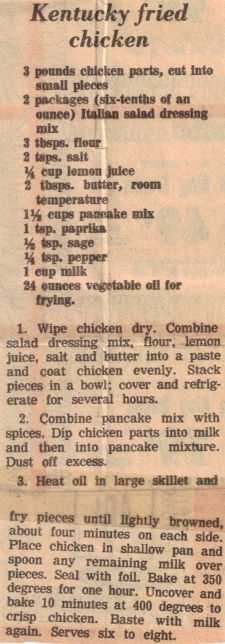
For many many years the food world tries to reveal the original recipe, if this it is, then here are the ingredients you’ll need:

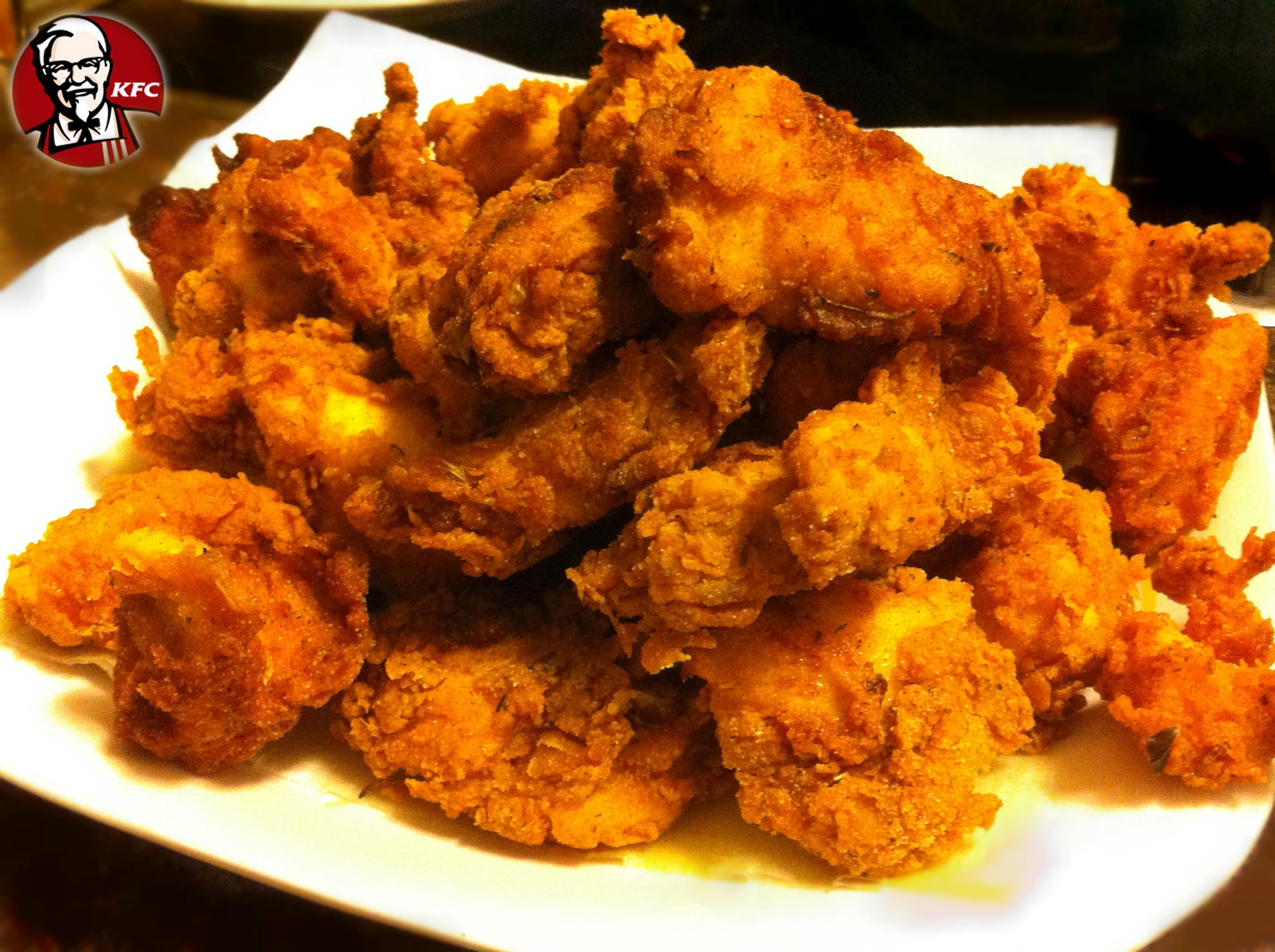
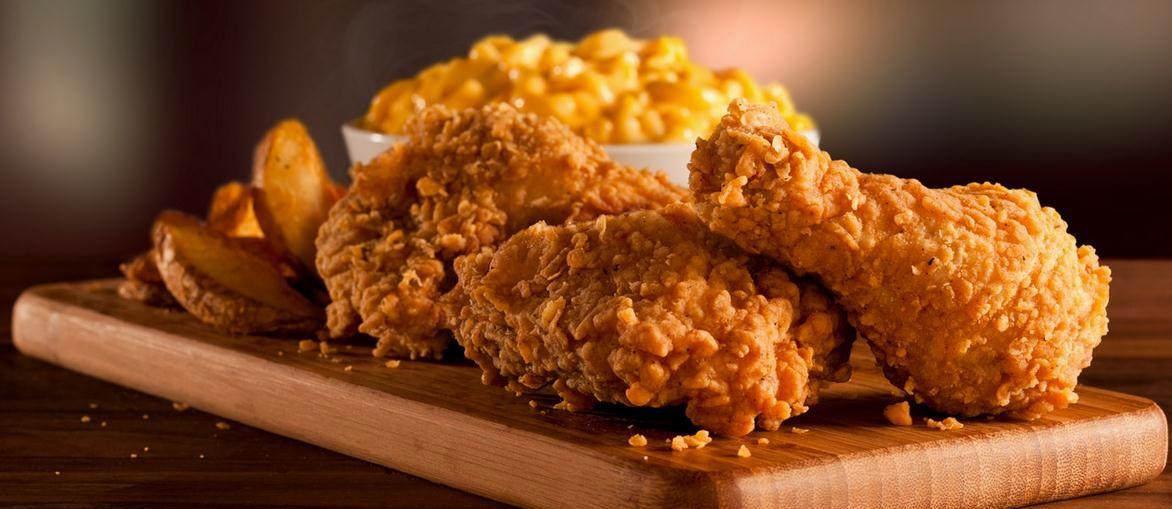
   The „extra crispy“ chicken serving.

Ingredients.

Chicken parts of your choice
Celery salt
Dried Mustard
White pepper
Garlic salt
Paprika
Ground ginger
Basil
Salt
Thyme
Oregano
Black pepper

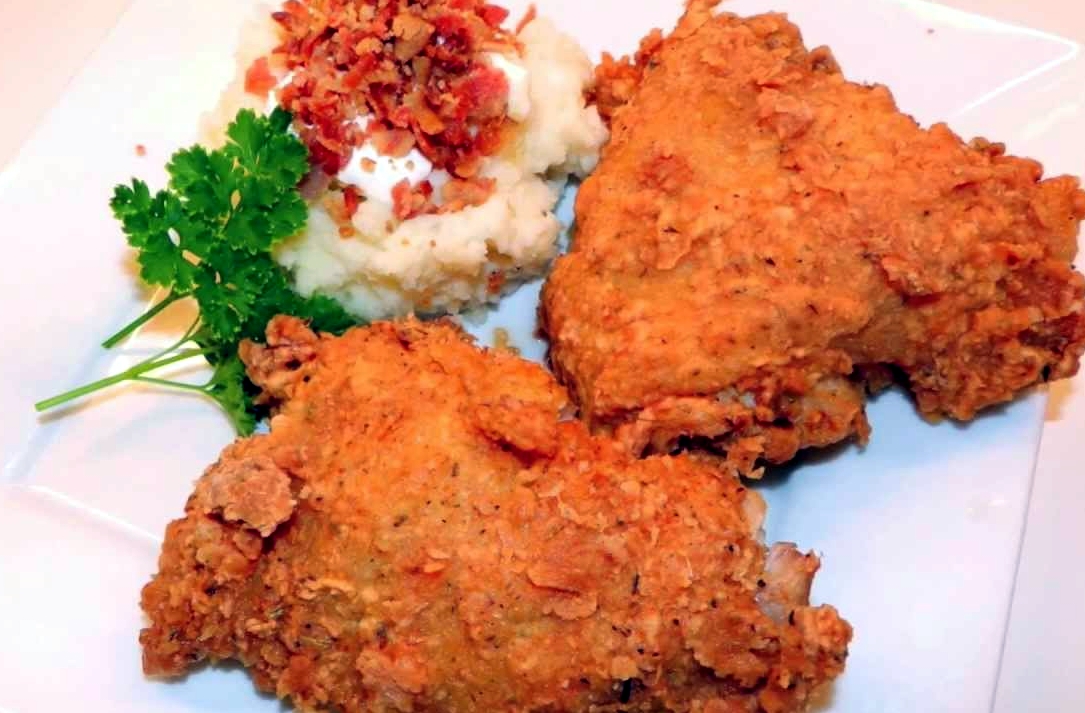
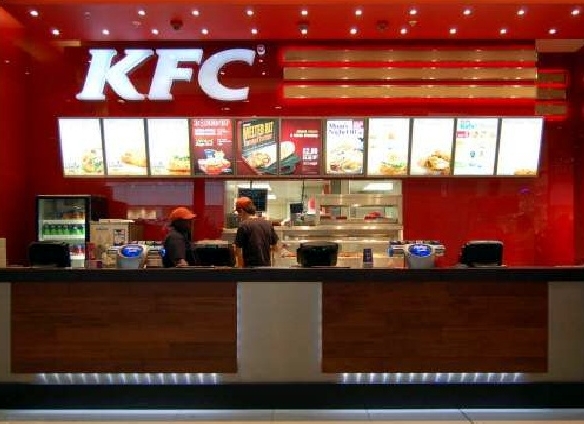
  Classic modern serving in a KFC restaurant.

How to do.

Prepare oil in a cast-iron pot to fry. In a bowl, mix 2 cups of flour, 1/3 tbsp of salt, 1 tbsp of black pepper, 1/2 tbsp of thyme, 1/2 tbsp of basil, 1/3 tbsp of oregano, 1 tbsp celery salt, 1 tbsp of dried mustard, 4 tbsp of paprika, 1 tbsp of garlic salt, 1 tbsp of ground ginger, and 1 tbsp of white pepper.
In a separate bowl, add milk and an egg and beat.
Mix your chicken into the bowl, and then coat the chicken in the flour and spice mix.
I tried it and did the above procedure twice, much more effective !
Finally, fry the chicken in the pot for 10 to 15 minutes.
Let it cool and then serve.
Now it’s up to you to try the above recipe and then decide if it is original or not.

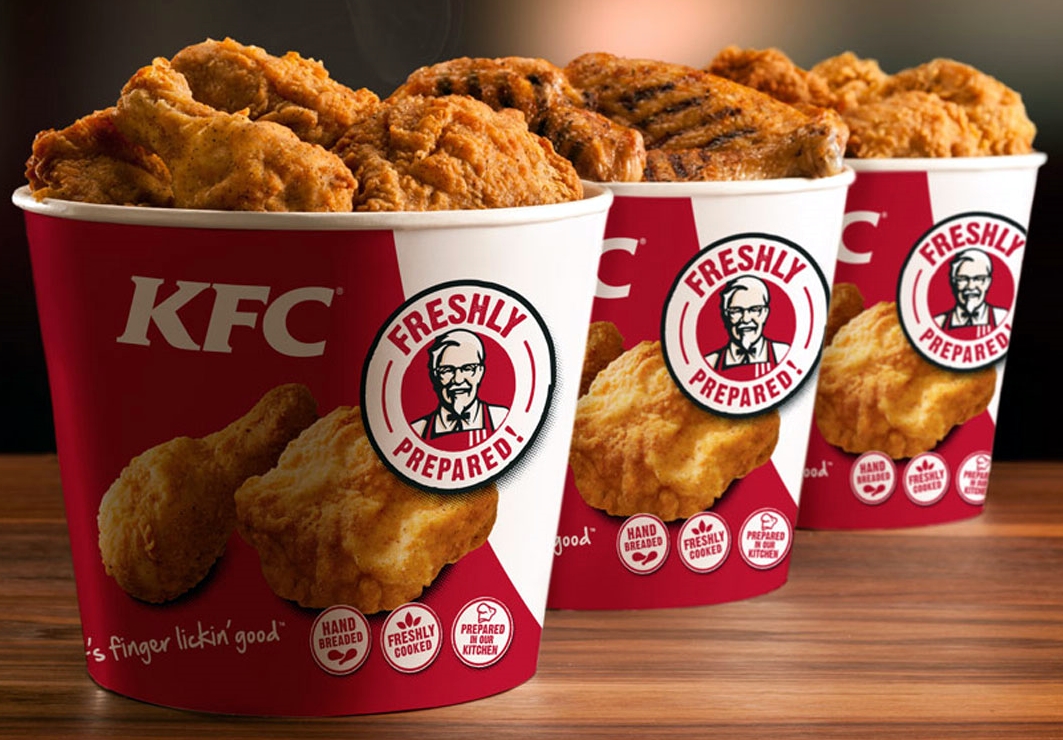
  A Kentucky Fried Chicken (KFC) bucket of mixed fried and grilled chicken is seen in this picture. Click on to supersize.

History.

Of course, I can’t help myself to dig in a bit into the past. If you like to read more, then masses of KFC-history sources are available.
In 1930, Harland Sanders, later called „Colonel“ Sanders, opened a Shell gas station in Corbin, USA. In 1931, he moved across the street to a Gulf station. He then entered into a long-term arrangement with the Pure Oil Company and opened a restaurant.

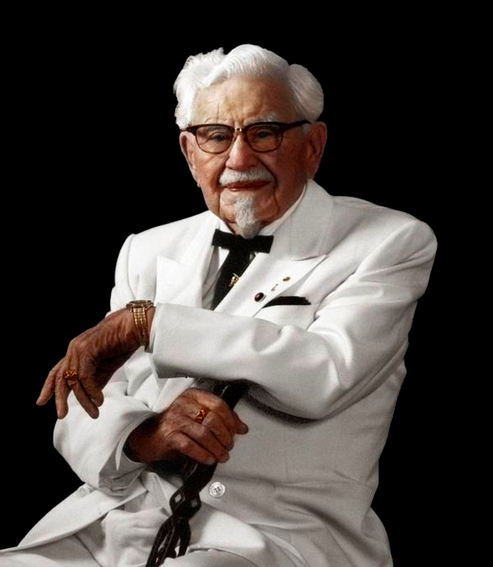
   Harland Sanders, later called Colonel Sanders.

By 1937, he was operating the full-scale motel and restaurant complex called Sanders Court & Café. During this time, he developed a secret recipe for fried chicken which would become world famous.

When I-75 bypassed Corbin, Sanders, at the age of 66, took his chicken recipe on the road. He convinced other restaurants to add his chicken to their menus in exchange for a few cents each time it was sold. This quickly turned into franchising and Kentucky Fried Chicken was born.

    That’s how modern KFC outlets look like.

Within seven years, he had 600 outlets. Today, there are more than 10,000 KFC outlets worldwide.
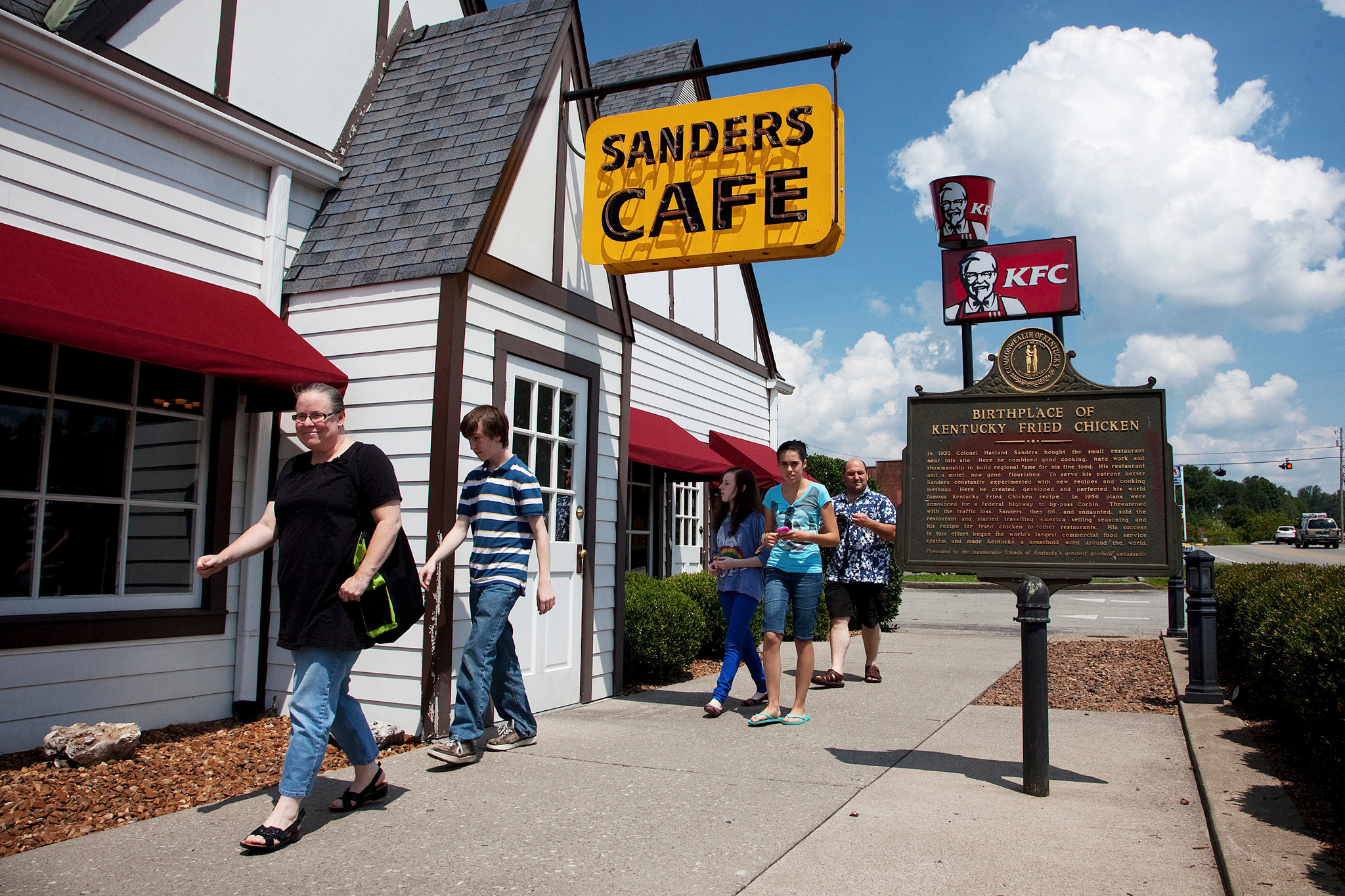
In 1969, the Sanders motel and gas station were demolished. However, in 1990, the Café was restored to its original appearance. It is now used as a KFC restaurant and serves as a museum. It has recreated the old kitchen, a motel room, Sanders‘ office, and displays of advertising and other historical items.

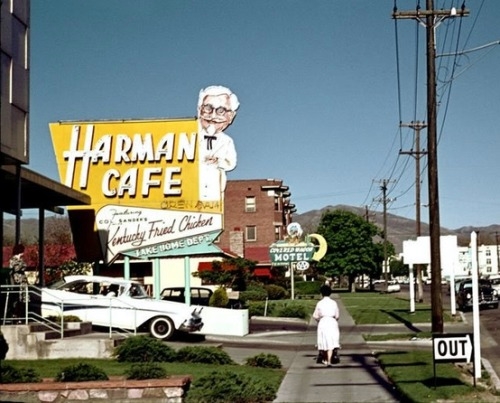
  The Harman Cafe.

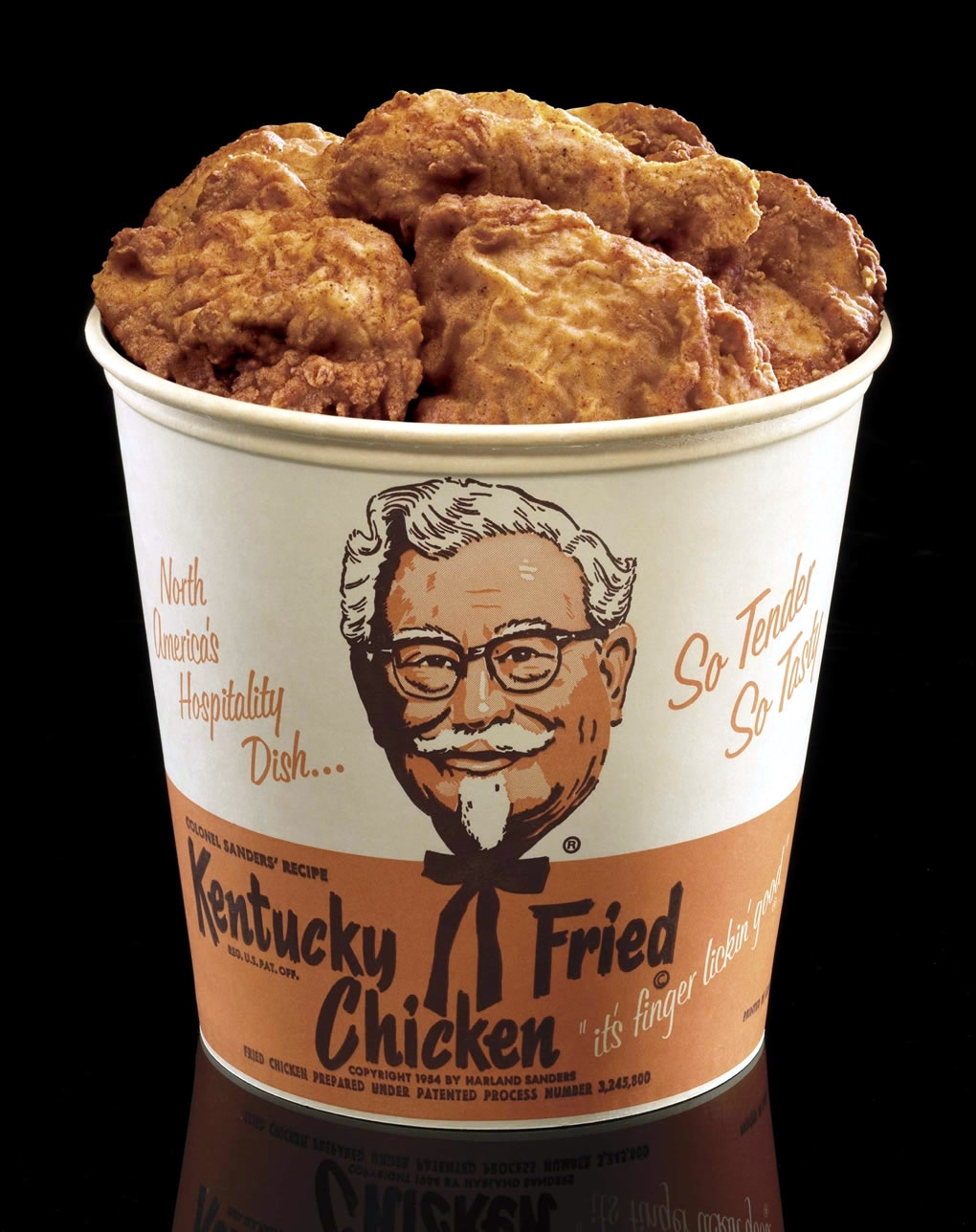
The Harman Cafe was established in 1952 when Pete Harman made a deal with Colonel Sanders to start a restaurant franchise based on Sanders‘ fried chicken recipe. The name „Kentucky Fried Chicken“ was painted on the window of Harman’s Cafe. They sold a boxed meal of 14 pieces of chicken, mashed potatoes, gravy, and rolls until Harman came up with the legendary cardboard bucket concept in 1957.

  The legendary cardboard bucket from 1957.

In 2004, a modern KFC building and sign replaced the originals. However, the modern sign and statues of Harman and Sanders pay tribute to this historic site. There are also lots of early KFC photos and artifacts inside the restaurant.

  The Birthplace of Kentucky Fried Chicken.

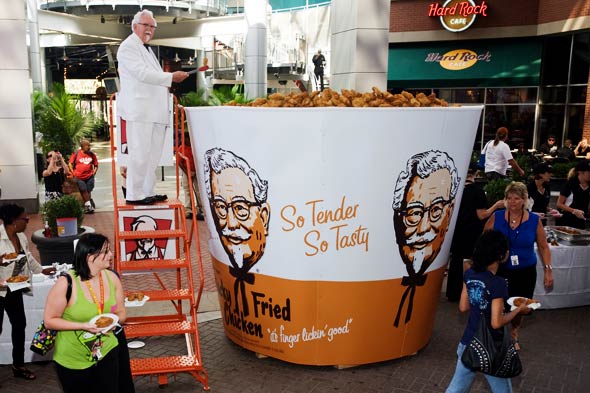
Kentucky Fried Chicken (KFC), a unit of Yum! Brands, Inc. (NYSE:YUM) served 2,493.35 lbs. of fried chicken to the citizens of Louisville – setting the new world record for the largest serving of fried chicken during the celebration of KFC’s 70th anniversary of its Original Recipe of 11 herbs and spices.

  Thursday, August 19, 2010, largest serving of fried chicken – world record set by KFC. Louisville, Ky., USA.

The above photo: The chicken was served alongside an enormous version of their retro-themed iconic bucket that was 8 feet (2,40m) tall and 9 feet (2,70) wide with an image of Colonel Sanders. It was dedicated to the celebration of KFC’s 70th anniversary of its Original Recipe of 11 herbs and spices (KFC photo).

Always there was someone who was trying to publish the „original KFC recipe“.

Visitors were treated to free chicken as „Colonel“ Bob Thompson — a Col. Sanders look-alike, spokesperson for Kentucky Fried Chicken and (according to his business card) „ambassador for the World Chicken Festival“ — looked on.

  This is a modern „species“ of a KFC serving. Hmmm !!??

What one always read in story’s about „KFC’s secret recipe“.

„To protect the recipe’s secret legacy, one company blends a formula for one part of the recipe, while another spice company blends the rest. A computer processing system blends these two mixtures together, ensuring neither company has access to the full recipe.

Today, the Original Recipe is locked in a safe in Louisville. Only a handful of people know the elements of the multi-million dollar recipe, and each is held to a strict confidentiality agreement.“ Is this true or did the nephew made it public, as shown above ??

Veröffentlicht unter History, Information, Lifestyle, Recipes | 2 Kommentare

Hair Trend 2017


A rainbow in your hair !

Do you like it ?

When I thought this week „I have to have a haircut again“, I looked in the mirror and thought about a different cut as normal. But what ? So, I surfed the internet for a modern trend and was surprised what I’ve seen. These internet impressions I like to share with you. Decision for myself – I am an old goat, I’ll leave it like it is. Ha !

The Girls, full in color :


The Boys, colorless but razor-sharp :

And – how is it in Uruguay ? I guess we won’t see a fashion as above for a long time here. Some Uruguayan men  (the youngsters only) are a bit on the modern side – shaved sides and some beards or/and „wool“ on the top. The lady’s, they all look the same, 90% in Uruguay have straight down hanging hair. The most boring and uninspired lady’s haircuts I have ever seen in any country around the world.

A wise man said once :  One can’t argue about taste !  And we shouldn’t, right ?

Veröffentlicht unter Lifestyle | 4 Kommentare

The Beast

One of the most sought after „shows“ on American city streets or on International Streets, is the passing of an American Presidential motorcade. Today, the simple act of the President going from place to place in a car has become a spectacle in itself, a type of parade if you like – some call it the Power Parade.

I am looking after this car parades for many years. Last time I have seen in person an US president driving along, was George H.W. Bush on Commonwealth Avenue in Canberra, Australia. Always I was interested what’s behind this special Presidents car. Now I took the chance and searched through the internet for information. It’s not easy, because they make a secret out of these cars. Anyway, I like to share with you what I found out.

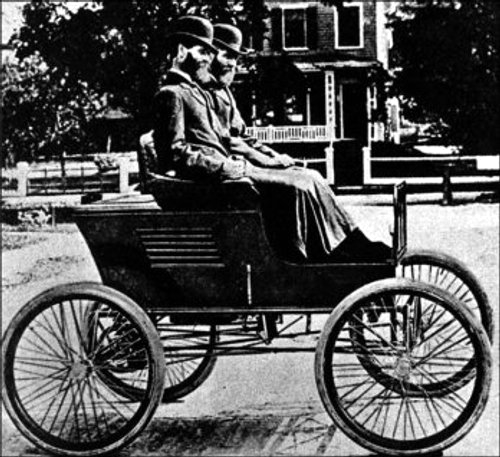
  First presidents car, around 1900, a Stanley Steamer. As one can see, the airflow-openings on the side, the gasburner is under the seat. Nice – sitting on a bomb.

A brief history.

The saga began with the 25th President of the United States, William McKinley. He was the first to ride in an automobile, namely a Stanley (a.k.a. Stanley Steamer), this being about the only contribution he brought to the creation of the Presidential limo myth.
The first government owned vehicle, a white Stanley, came under the term of Theodore D. Roosevelt.

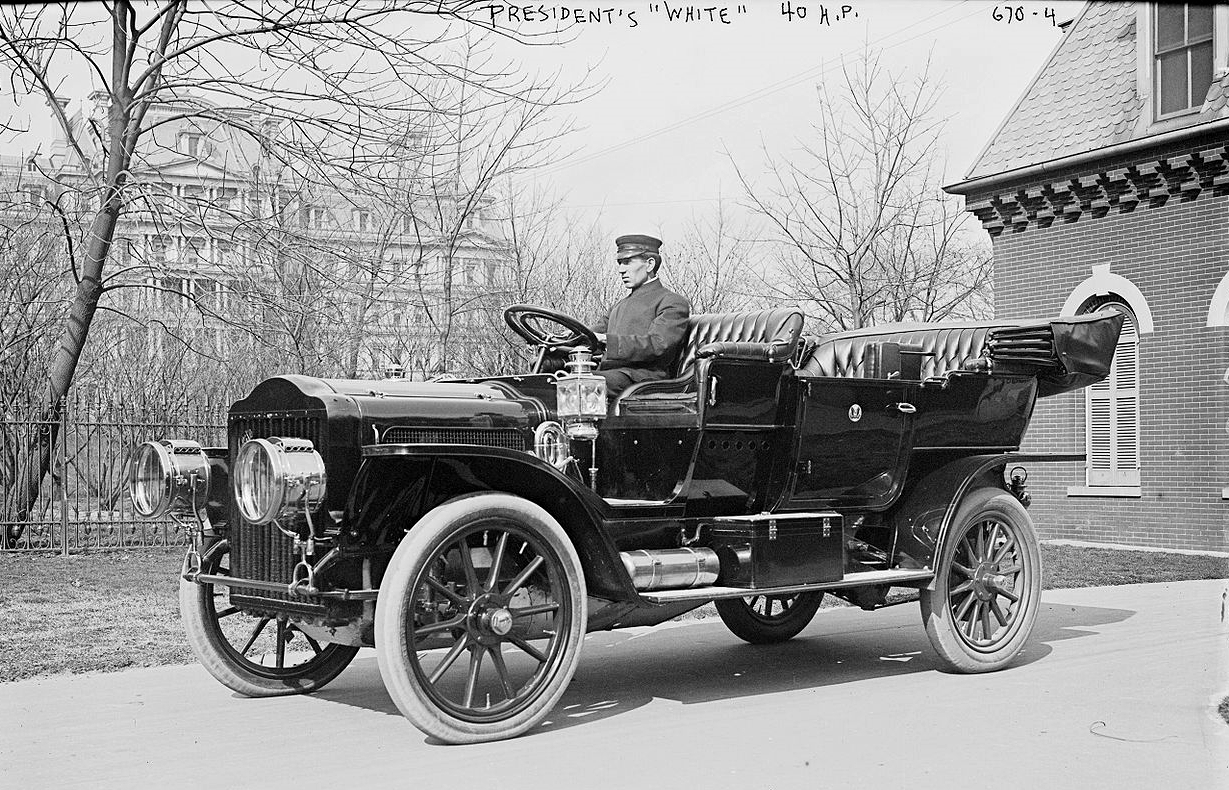
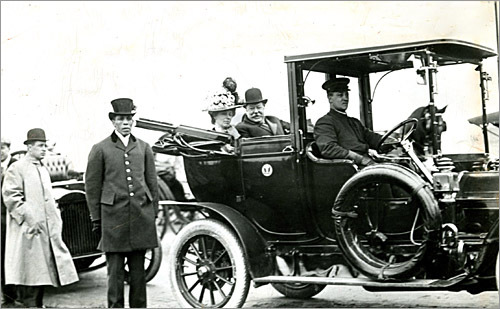
     President Taft’s White. He and his wife sitting in the rear of this car.

As the name suggests (the name of the car, not of the President), it was a steam powered vehicle, with steam being generated in a vertical fire-tube spoiler, mounted beneath the seat. The energy required to generate steam was by means of a gasoline burner. The boiler was held in place by piano wire and had safety valves in place to prevent failure. If the safety valves themselves failed, the boiler was designed in such a way that one of its joints would rupture. The resulting rupture would also put out the burner.

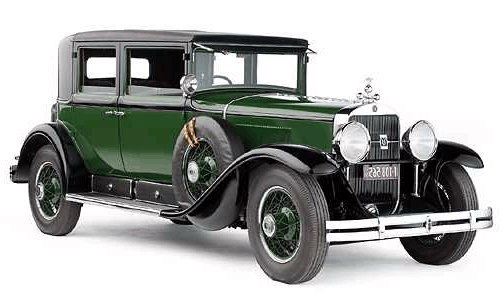
   The armored 1928 Cadillac seized from Al Capone

In 1909, what we now call the White House Transportation Agency (WHTA) was set up. It was then called the White House Garage and was not, at first, a militarized agency.
Roosevelt’s successor, William Taft became the first president to purchase a vehicle with the explicit goal of using it as an official car. He actually bought two 40 horsepower, 7-seater Stanley, Model M, Steamer vehicles, built by White Motor Company. Taft also added two Pierce-Arrow vehicles to the Presidential garage.

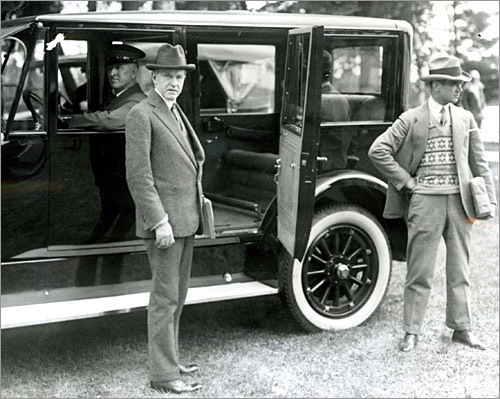
  Pres. Calvin Coolidge in front of a 1926 Pierce Arrow.

The first President-attack-deterrent limo came in December 1941. Following the „date which will live in infamy“, for the first time, an armored car was used to transport a US President. At that time, federal law prohibited the purchase by the US government of any vehicle which cost more than $750 and, as you might guess, an armored one would have cost more than that. Besides, events unfolded so fast that when news of the Pearl Harbor attack came, the White House had no armored vehicles in its garage.

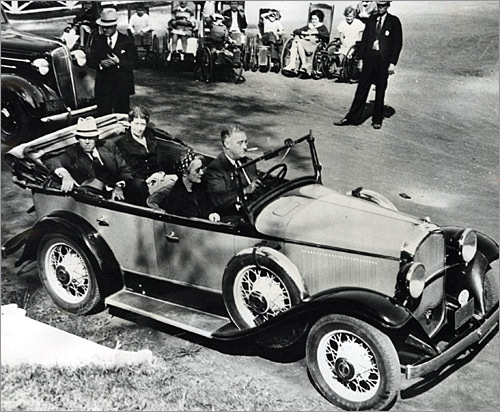
  President Franklin D. Roosevelt self driving, with his wife next to him. This car was converted to hand handling because of his polio desease.

The break came when someone remembered that following the incarceration of Al Capone in 1931, his armored 1928 Cadillac 341 A Town Sedan was seized by the U.S. Treasury Department. The green car with black fenders and 3,000 pounds of bullet proof armor was used to transport the President to Capitol to deliver his famous „infamy“ speech.

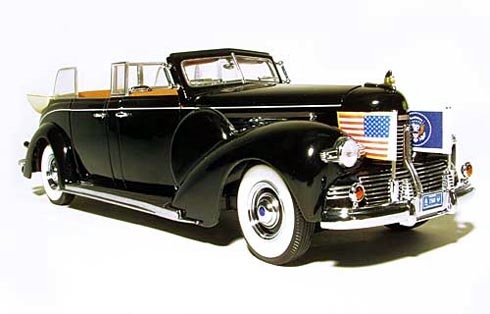
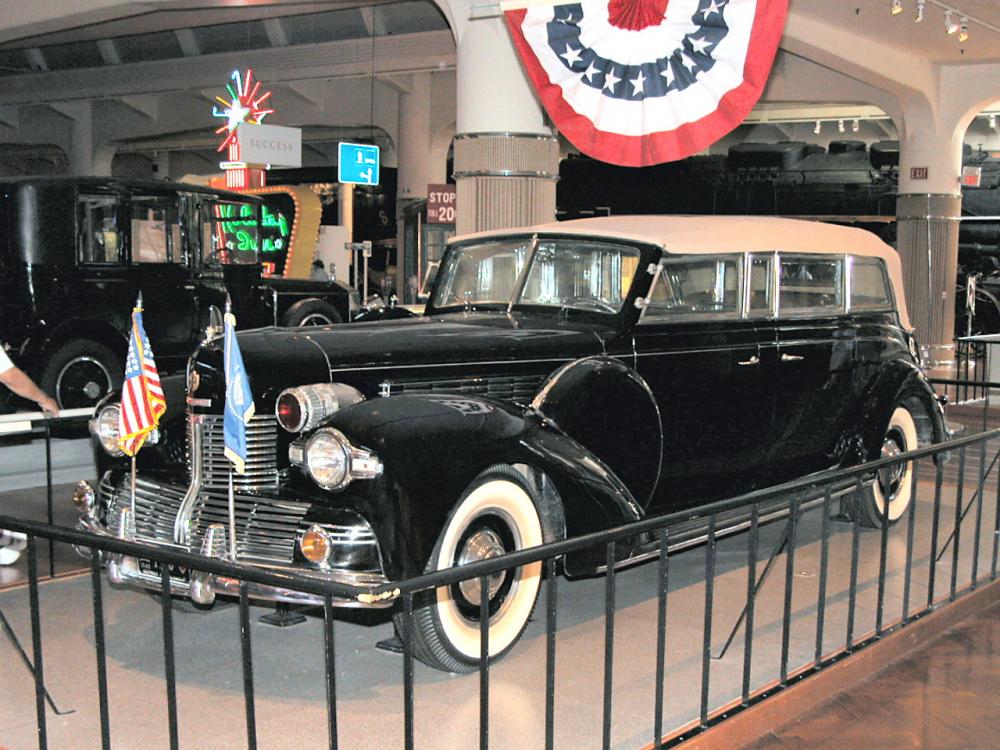
  What a beautiful car, 1939 Lincoln V12 convertible.

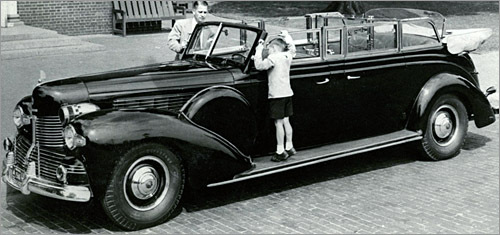
The car was kept in Roosevelt’s service until Ford Motor was able to armor and deliver the first ever purpose built Presidential vehicle, the 1939 Lincoln V12 convertible, called „Sunshine Special“. The Lincoln joined the two GM Queens in the garage and was used by both Roosevelt and Truman, for $500 a year, until the 1950s.

      The „Sunshine Special“ served well presidents  Roosevelt and Truman. The next one, Eisenhower, didn’t like it „open“. After this one followed the Lincoln Continental limo of President Kennedy. See further down.

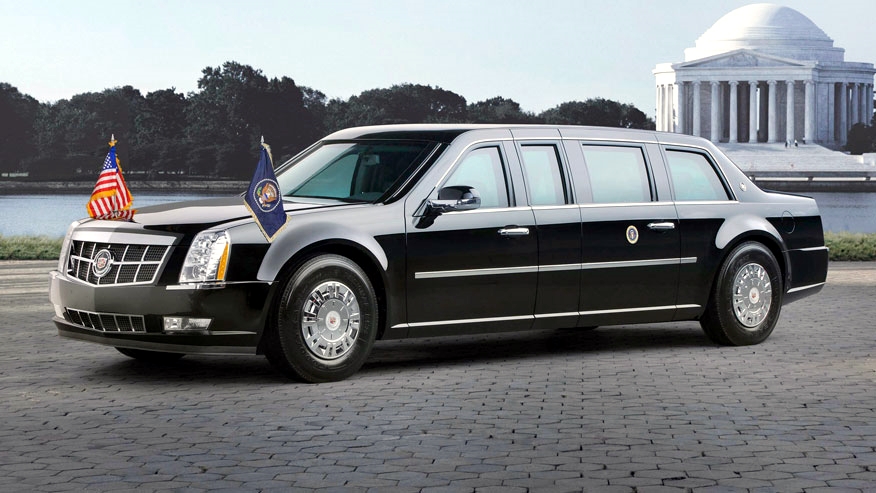
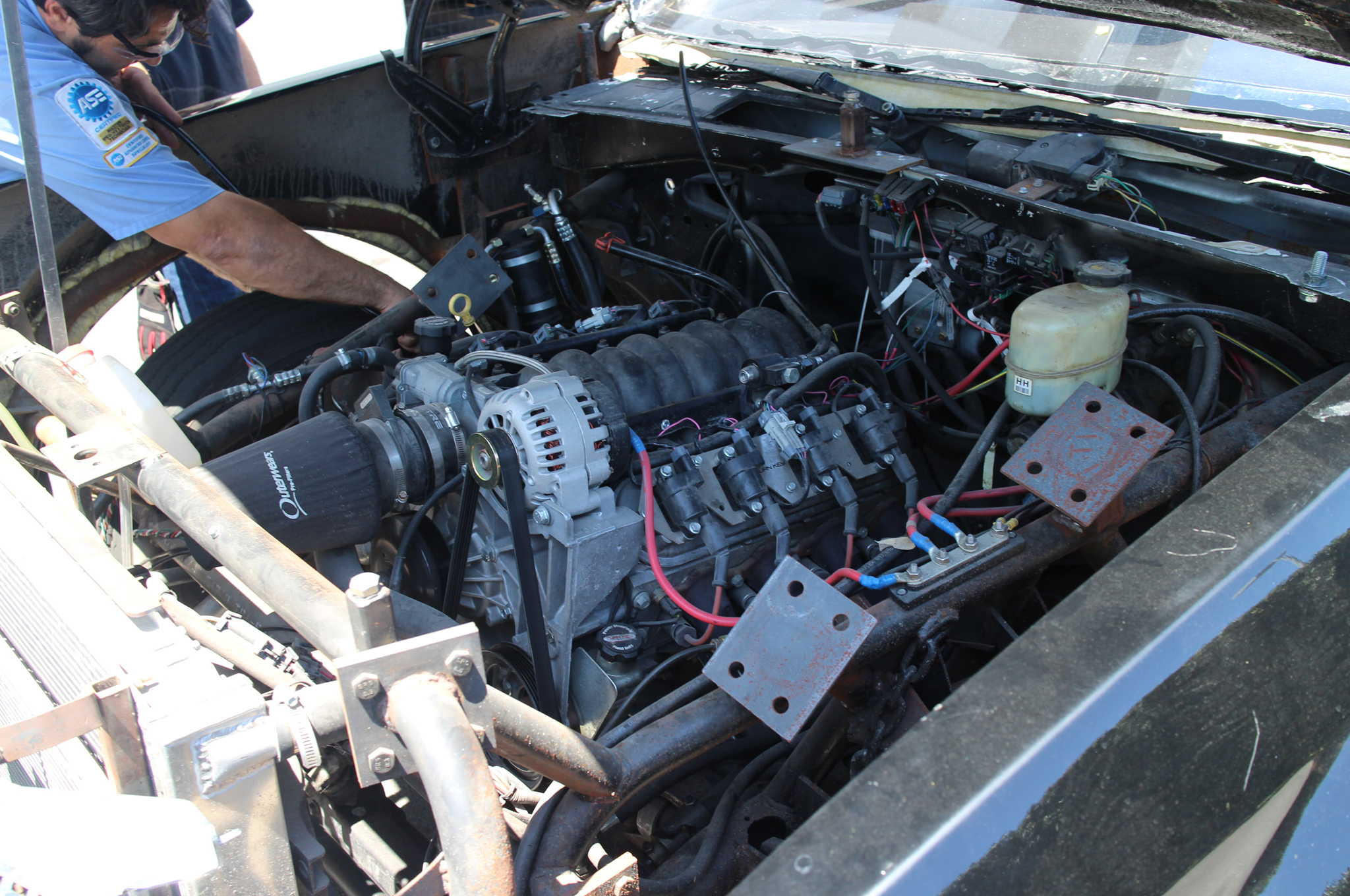
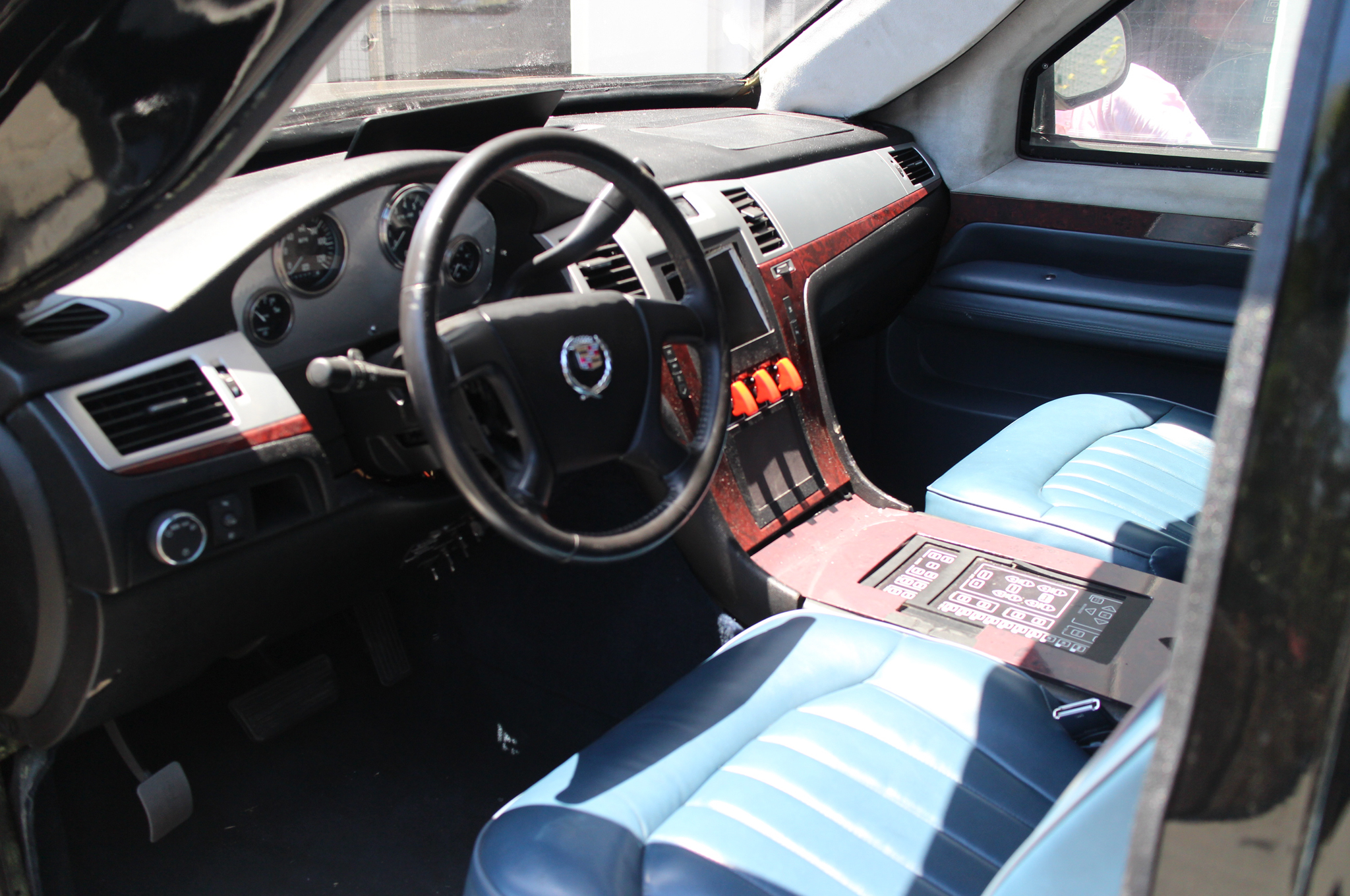
Today, the limo of choice for President Obama is the Cadillac Presidential Limousine, nicknamed „The Beast“. It’s unknown why and how this name appeared. GM says it is the first car not to have a specific model name. The car is a combination between a Cadillac and GMC truck.  As you may have guessed, many of the car’s features are secret.

President Obama’s dream of a new presidents car. The „Beast“ as an „Obama Edition“ as one can read on the radiator grill. I don’t know if this one is ordered or not. Successor Trump will decide now.

Some „Beast“ facts.

It’s called „The Beast,“ but it might surprise you to learn that President Barack Obama’s massive Cadillac isn’t really a Cadillac. And there’s not one, but a dozen, in the highly classified motor pool, each costing nearly US$1,5 million. The cars travel with their own mechanic, an armed federal agent who carries a vast arsenal of electronic diagnostic devices and tools – and they travel in their own jumbo jet.

  What an expenditure if a US president is travelling.

We’ve come a long way since JFK’s open-top Lincoln. Until only recently, the Secret Service bought the presidential limousines off the lot, then modified them with super-secret aftermarket products and systems. All that changed when George W. Bush became president. The reason? The stock presidential limos kept breaking down. All the extras the agency added to each vehicle created excess stress and weight beyond the real operational limits of the original cars. As a result, the transmissions often failed, “and the brakes would last about two trips,” said one veteran agent. “The cars were just too heavy, and they were a terror to drive, and even harder to stop.”

So the Secret Service decided to design and then build the car from the ground up. “The car may say Cadillac,” explained one agent, “but very little in that car is Cadillac.” Indeed, it is built by an R&D arm of General Motors in Detroit. But “even the Cadillac emblems on the hood and trunk are supersized. The car is really a truck that looks like a limo. And it drives like one, too.”

— The fuel tank is armor-plated and encased in special foam to protect it from rupture in case of collision-or small-arms fire. And, perhaps not surprisingly, there’s an onboard Halon fire-suppression system.
— What’s in the trunk? Extra weapons, a separate oxygen supply under the president’s seat and emergency medical equipment, including bottles of the president’s blood type in case the ambulance (one always travels in the motorcade) gets cut off.

— The Beast is heavy: The armor plating (on five newer models) is so thick and the doors so heavy that it’s nearly physically impossible for the president to open them from inside.
— The interior is cut off from the outside world and sealed (in case of chemical attack). There’s an encrypted satellite phone inside and a special interactive video system so the president can conduct secure video conferencing with officials in the Situation Room, embassies abroad or the Pentagon.

— The car features military-grade armor (steel, aluminum, titanium and ceramic), surrounded by removable fiberglass sheets on the doors and fenders.
— The Beast has special locking mechanisms, and communications and fire-suppression systems. It rides on special Kevlar-reinforced Goodyear run-flats.
— The Secret Service has been experimenting with special night-vision cameras and monitors (the camera is mounted inside the grill) to be used in a doomsday scenario if, say, the windshield was somehow compromised or views were obstructed.

Any Secret Service agent assigned to drive the president has to take an intense week long defensive-driving course on a special track at the Secret Service academy in Beltsville, Md. They practice evasive maneuvers, high-speed cornering and precision driving. „It actually handles quite well, considering how much it weighs,“ one agent said. For additional training, the agency uses Chargers, Camaros and Mustangs.


What doesn’t it have? Sorry, 007 fans, but there are no rocket launchers, grenades or built-in weapons of any kind. No escape pod or ejection seat. Oh, and here’s a myth-buster: The Beast is not diesel, but a gasoline V8. „Surprisingly,“ said one agent, „it has pretty good 0-60 speed pickup.“


Average miles to the gallon, 3.7, for an 8-liter engine.
Number of actual Beasts in service is 12.
Each Beast costs around 1,5 million US$.
How long the Beast is, 18 feet (c. 5,5 meters).
Thickness of the doors 8 inches (c. 20 cm) armor plating.
Thickness of the windows 5 inches ( c. 13 cm) bulletproof, of course.
Best guess on how much the Beast weighs, 15.000 pounds ( c. 7.500 kg or 7,5 metric tons).
The exact number is classified.

  Have a good look at all the pics before.

2017 – a new era.

The Beast gets an upgrade: Leaked pictures of top-secret testing reveal Donald Trump’s presidential armored car is almost ready.

  The first glimpse of the „New Beast“.

General Motors has been testing a new State Car, nicknamed The Beast, ready for when Trump takes office. It seams, Trump already got a „new one“ !!??
Appears to have the same headlight and grille design as new Cadillac models but with an elongated body.
It was pictured undergoing tests, but details of the new security measures are a closely guarded secret, as usually.
Previous model was described as a ‚Caddy on a tank frame‘ and included eight inches of armor, tear gas canisters, and even two pints of the President’s blood.
President Trump’s will likely include similar features plus the latest safety technologies.

  Could this be the new one ?

Additional information.

If one is interested. The movie „White House Down“ shows the Beast in action.

Sources I used for this article and some pictures: Mail Online, Daily Mail, Autoweek, Wikipedia, Autoevolution and some more, unknown sources.

  In a normal presidential motorcade one will see at least 2 Beast’s. First, that the president can hide and no one knows in which car he would be. Second to have a spare, if one has a breakdown.
  In president Trump’s motorcade on inauguration day, we even have seen 4 Beast’s. Spare, yes – but also security for the whole family who went with him on that day.

Finally.

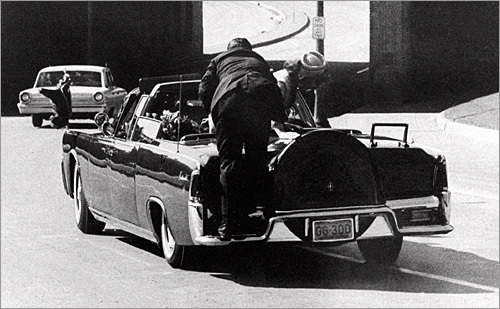
   22nd of November 1963 – John F. Kennedy lies dead in the back of the Lincoln as Jacqueline Kennedy leans over him. A Secret Service agent stands on the bumper.

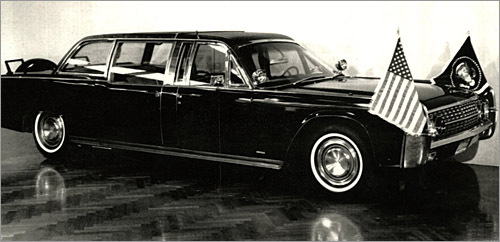
Perhaps the most infamous presidential limo is this 1961 Lincoln X-100 Continental, in which John Kennedy was shot and killed. After his assassination, the $200,000 Lincoln was promptly altered with a fixed roof reinforced with several layers of bullet-resistant poly-carbonate glass.

  Same car as above, but called now the Kennedy-2.

The original price of the car in 1961 was $7347.00. It cost $200,000 to have it especially equipped for the president. It was owned by the Ford Company and was leased to the president for $500.00 a year. After the assassination the car was impounded as evidence and later modified and back in use by 1964. Presidents Johnson, Nixon, Ford and Carter would on occasion use the car during their presidency. The car was retired in 1977.

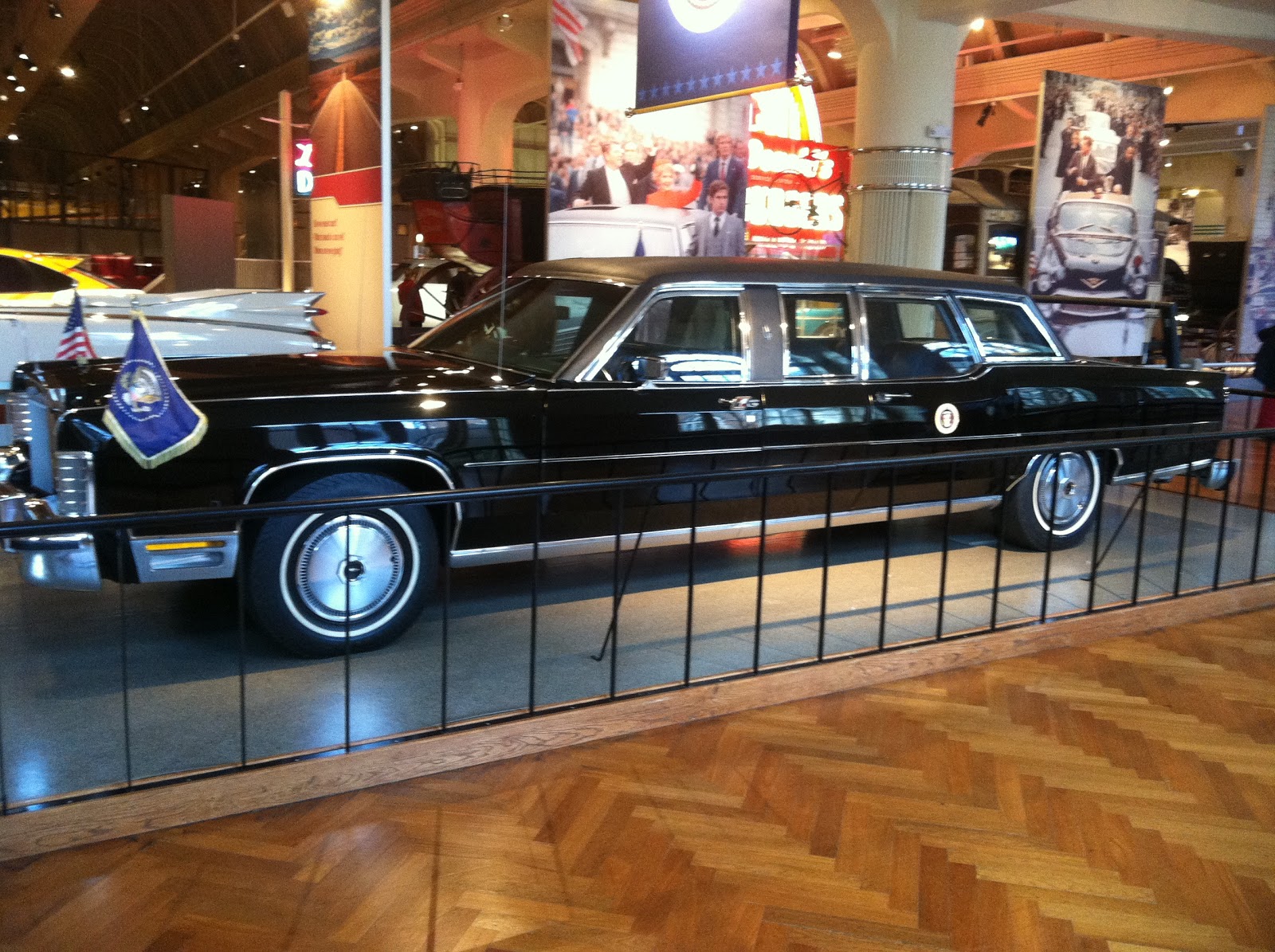
     The „Kennedy“ Lincoln Continental on display.

This is the last presidential limousine that will be preserved. All presidential cars are now destroyed by the Secret Service for security reasons. Hope you enjoyed this post.

Veröffentlicht unter History, Information | 4 Kommentare

Thai Green Mango Salad

Last week I posted the article about sisig. What a success this recipe was. Meantime I had to cook it again and it was delicious again. Sascia asked for the Thai salad recipe. No problem at all my dear – here it is.

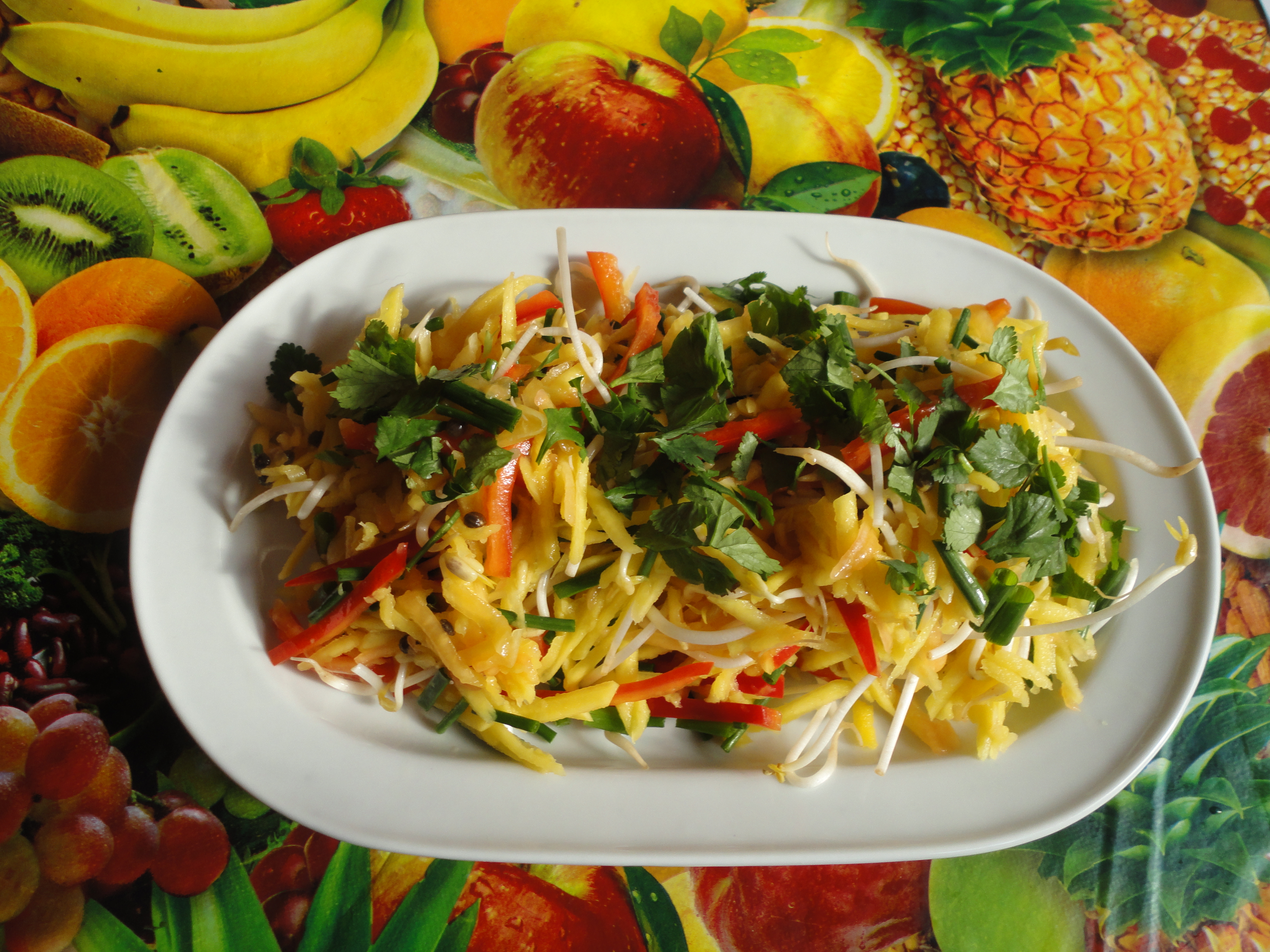
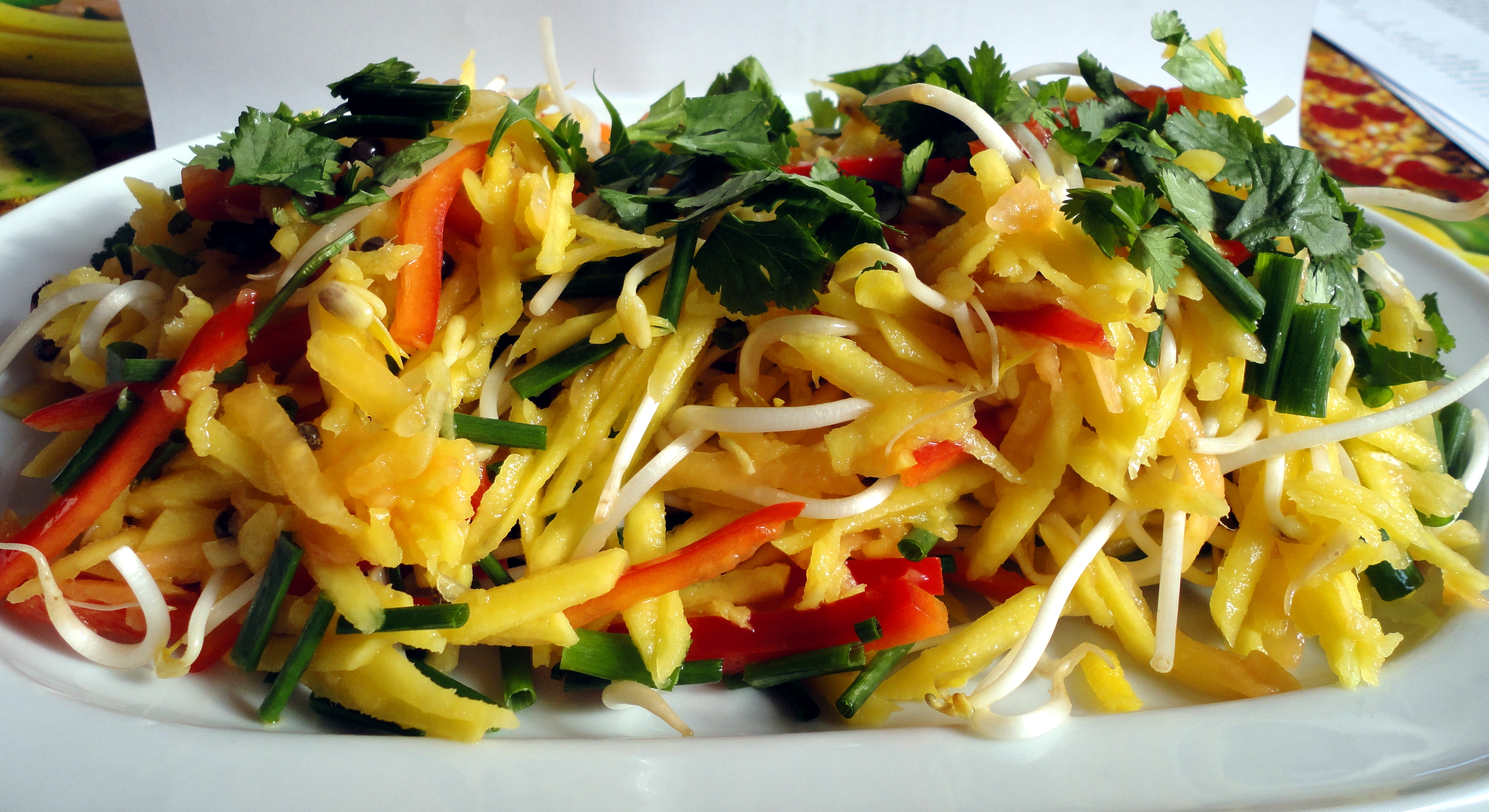
Thai Green Mango-Papaya Salad.

If you do it right, then this salad will blow you away with its taste bud-awakening flavors and mixture of textures. And as a bonus, it is very healthy, also very low in calories and fat. We also enjoyed it as a complete meal by adding fried shrimp, chicken, or Thai Fish Cakes. Any way you toss it, this fresh, tasty salad will win all your culinary friends minds!

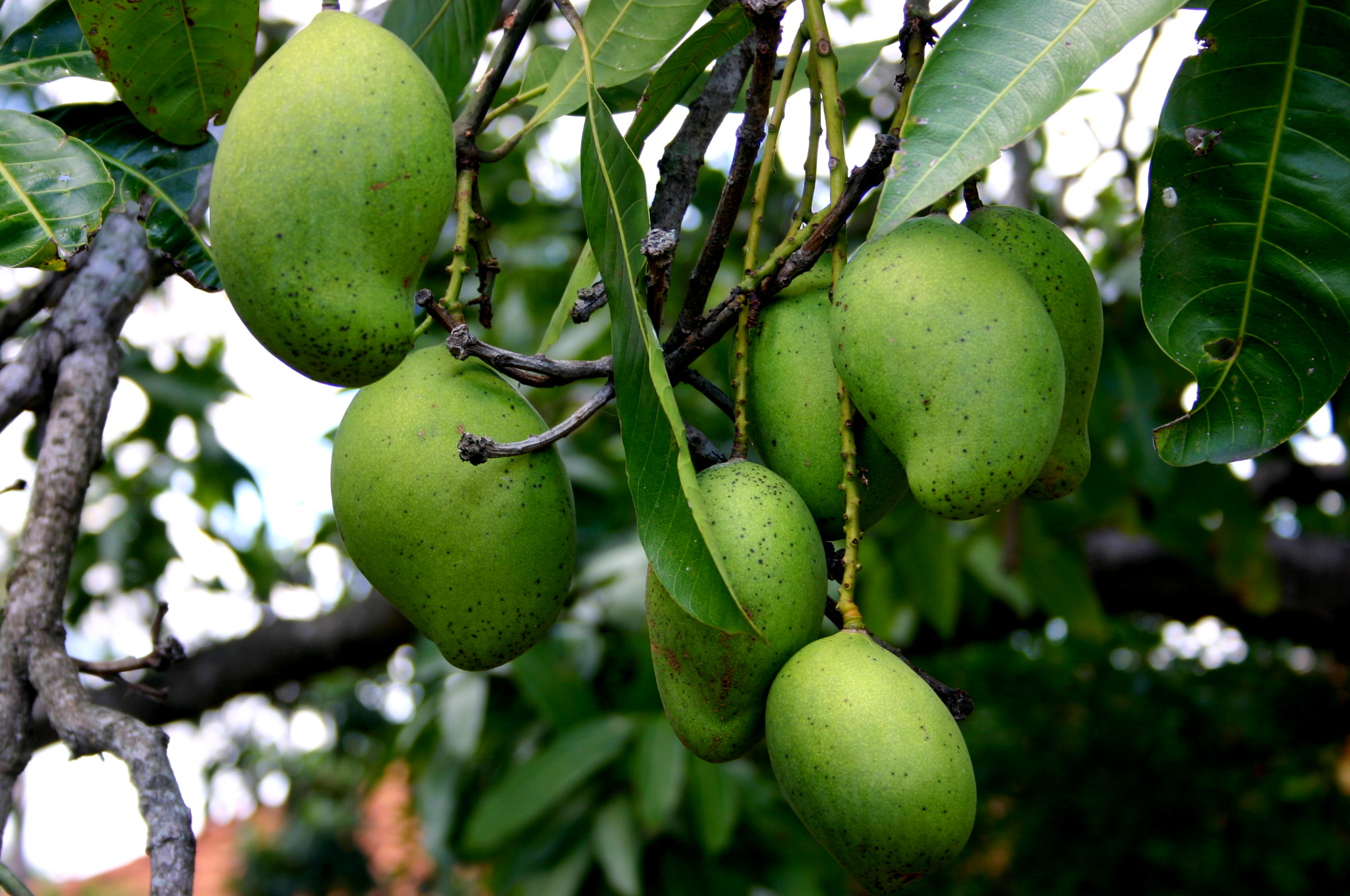
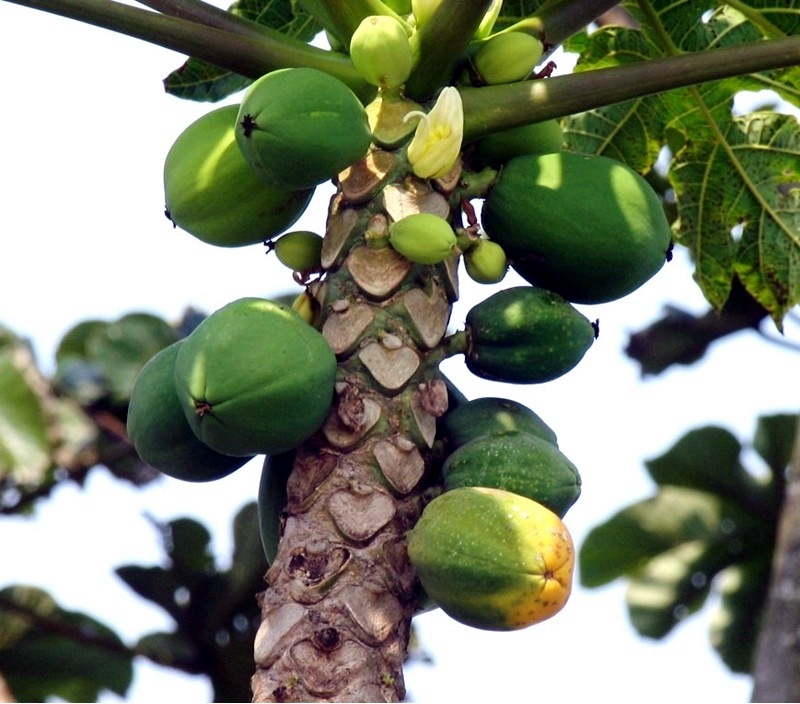
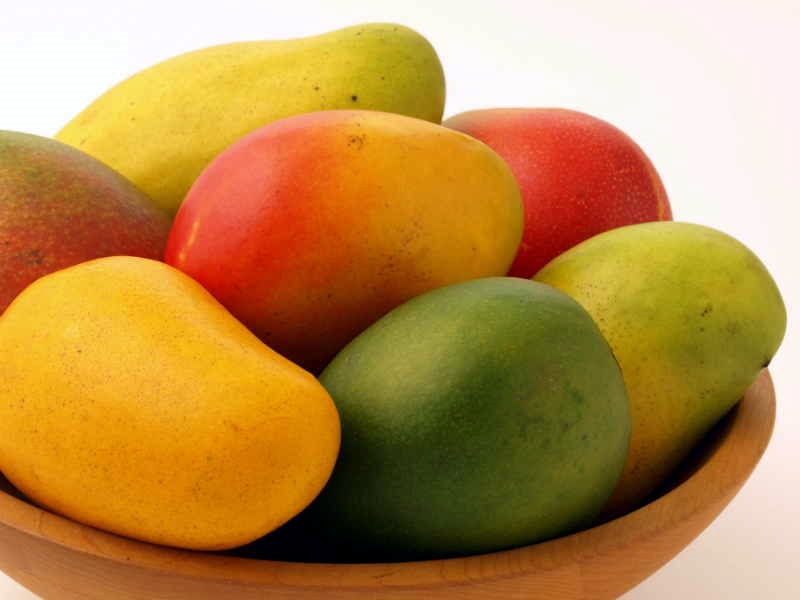
  Green mangos (left) and green papayas (right), the fruit for this salad. The papaya tree, we had two of them in Australia, produced more fruit then we barely could consume. Here in Uruguay, rare and expensive fruits.

Ingredients.

Dressing:

4 tablespoons dark soy sauce, one also can use fish sauce.
1/4 cup freshly squeezed lime juice.
2 tablespoons brown sugar, or more to taste.
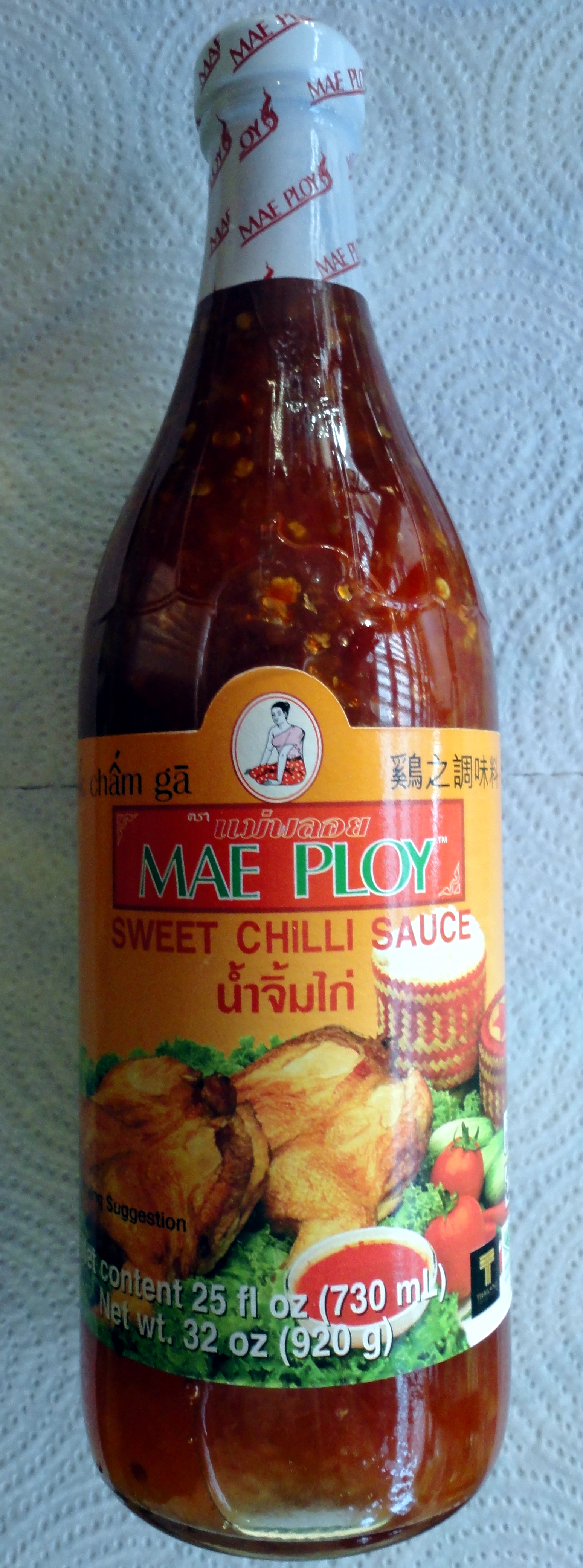
1 to 2 teaspoons Thai chili sauce, or substitute 1/3 to 1/2 teaspoons dried crushed chili (chilli flakes). I use Mae Ploy’s Thai Chilli sauce (its softer and sweeter in taste) and add a pinch of hot chilli powder or Szechuan pepper powder.

  My favorite Thai dressing sauce. Of course not available in Uruguay. But every time we fly out, or a good friend does, we bring a bottle or two. It lasts very long and it is even usable 2-3 years after expiring date. Excellent  with any kind of fish. I also use it in my homemade cream cheese – LOVELY.

With the dressing you have to decide, mix and taste, for the right balance between sour (lime juice), sweet (sugar), salty (soy sauce) and spicy hot (chilli sauce). Do not be afraid of a bit more heat (chilli), the fruits will calm it down.

    That’s the mango you want for this salad. The green, unripe one at the bottom of this bowl, not the ripe yellow or red ones.

Salad:

1/4 cup dry shredded unsweetened coconut (the kind you use for baking), optional.
2 firm green (unripe) mangoes , or one green mango and one green papaya, as I did here.
2 cups bean sprouts.
1/2 cup chopped fresh coriander (cilantro), this time leaves only.
3 to 4 spring onions, sliced, just the green part.
1 fresh-cut red chili, optional if one likes fresh heat, the I suggest to leave the powder.
A handful of peanuts or cashews, left whole or roughly chopped, best freshly toasted.

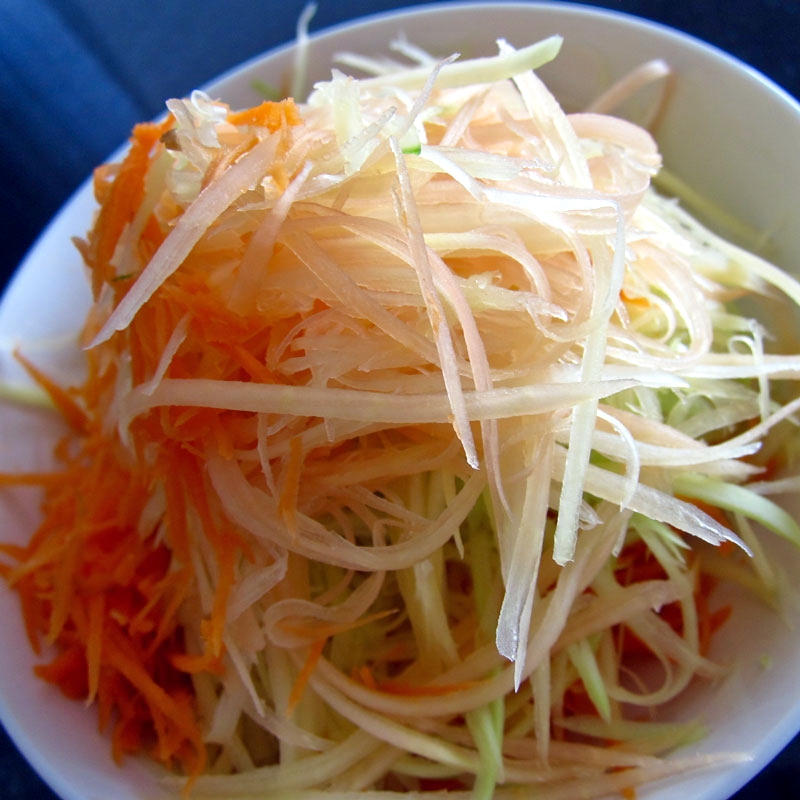
             That’s how green papaya looks inside (left). If it is colored like the one right, you can use it for a lovely fruit desert, but not for this salad.

How to Do.

Mix together all the salad dressing ingredients in a bowl or cup.
The dressing should be a mingling of sweet, sour, spicy and salty, but a bit more sweet than sour. Set aside.

Place coconut in a dry frying pan or wok. „Dry-fry“ the coconut, as if you were stir-frying it, 2 to 3 minutes over medium heat, or until it turns a light golden-brown and is fragrant. Transfer to a bowl to cool.

     Another time, same salad. But instead the coriander (we had a guest who can’t eat coriander), I used some mint leaves.

Using a sharp pairing knife, peel the skin from mangoes and/or papaya.
The flesh of the mango should be firm and light green or yellow.
Using a medium to large-size grater (the kind you would use for cabbage salad), grate the flesh of the mangoes into a mixing bowl.
Keep in mind there is a large flat stone at the mango’s center.

  All the shredded fruits together.

Add the bean sprouts, coriander, spring onions, the fresh-cut chili (if using), plus half the toasted coconut. Toss well to combine.

Add the dressing and toss again. Do a taste-test, add more soy sauce instead of salt if needed. Combine dressing with salad just before serving, otherwise all will get gooey !

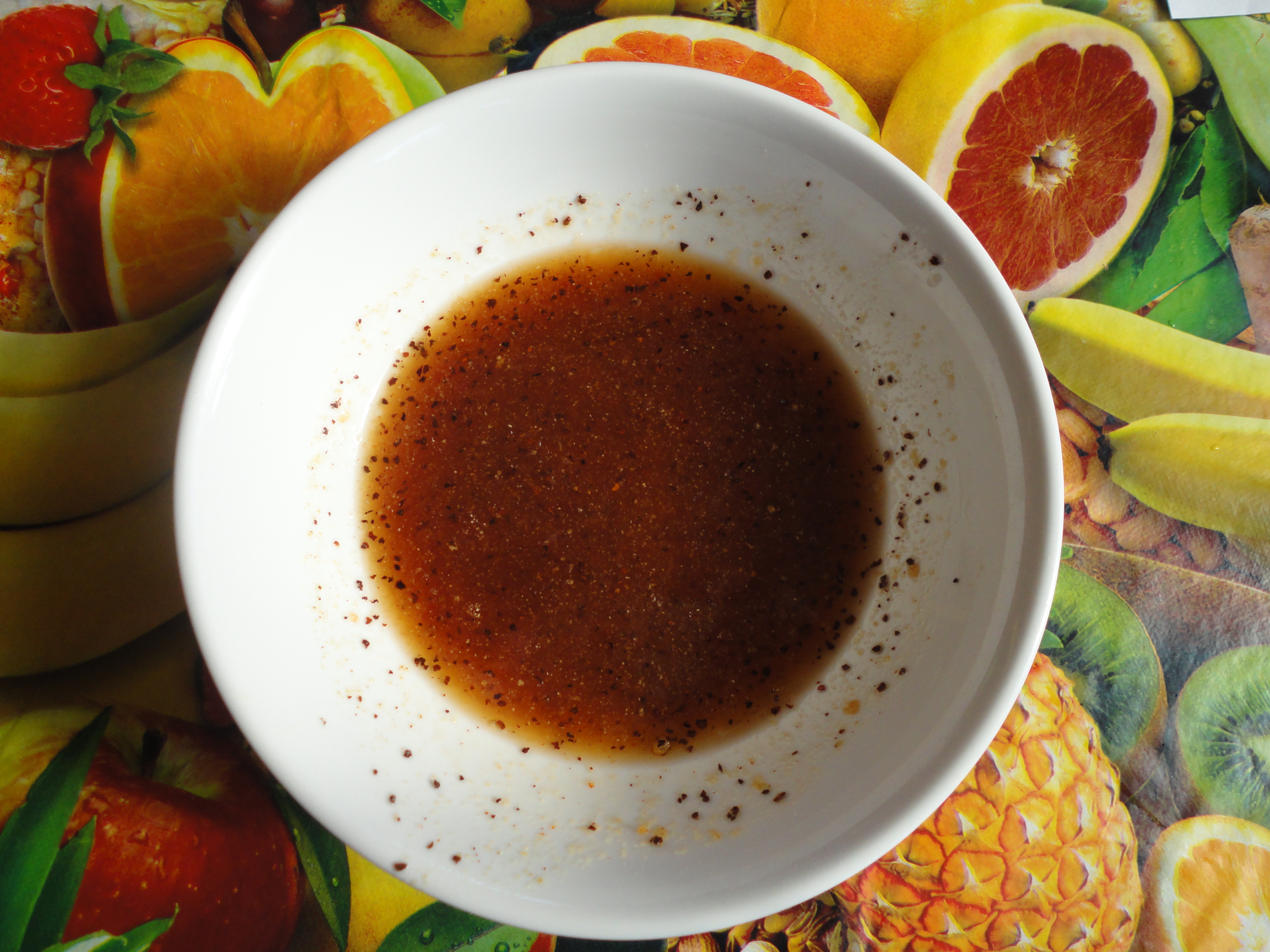
  The prepared salad dressing.

If you prefer it sweeter, add a little more sugar (honey works too).
If you prefer more spice, add more chili sauce.
If too salty or sweet, add more lime juice.
Place on a serving platter. Sprinkle the nuts, basil and remaining toasted coconut over the top. You can read here, its an easy salad recipe – but the balance of dressing is important !

Isn’t that a mouthwatering salad ??  As always, click on pics to supersize and enjoy the view.

Tips.

Prepare ahead.
To make this salad for a party, grate the mango ahead of time and place in a covered container in the refrigerator. Also, toast the coconut, prepare the dressing, and have the rest of the ingredients close at hand. Then when your guests arrive, simply put together, toss and serve!

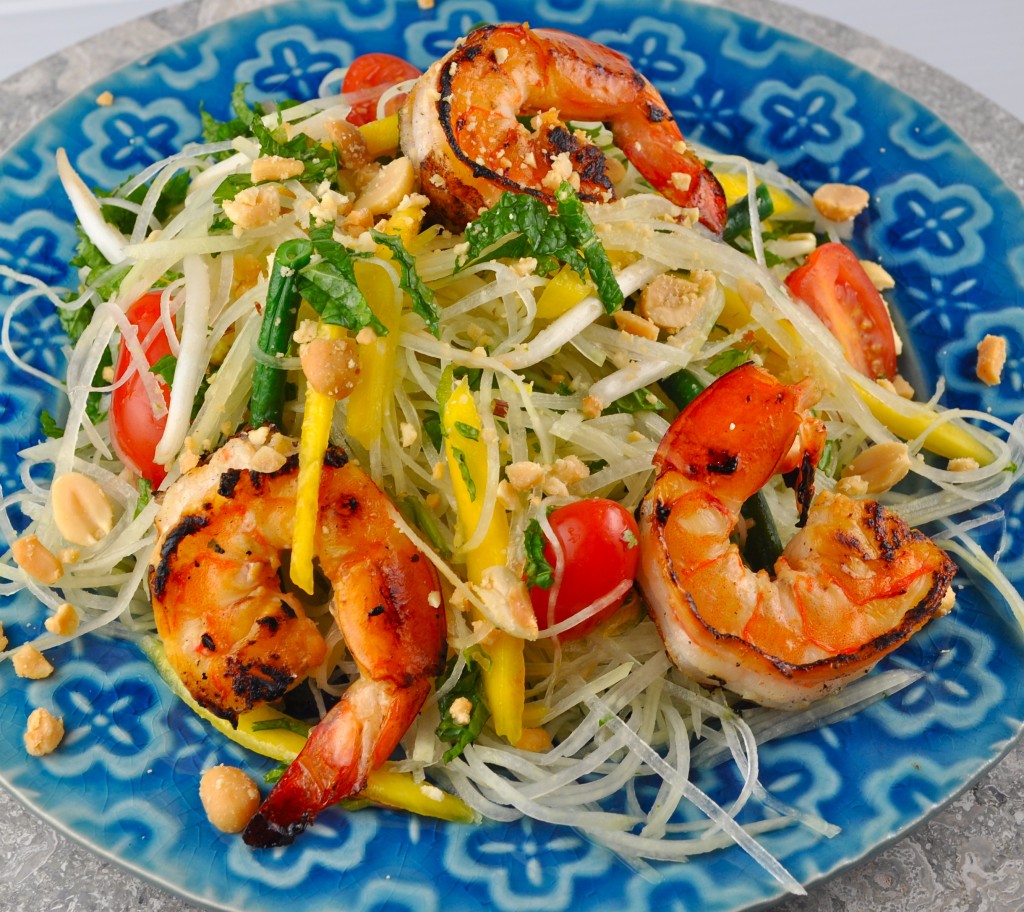
   A delicious Thai summer meal. The green mango salad combined with grilled shrimps. Also lobster, chicken, scampi etc. will do well. This meal really cries for a delicious cool dry white wine.

Peanuts.
I prefer to toast my own, it’s far easier than it sounds. Heat a large fry pan over high heat for 1 minute, then add whole raw, skinless peanuts. Turn down the heat to medium-low and keep constantly stirring and flipping the peanuts in pan, make sure you don’t scorch them, but it is fine for them to get browned little heat (toasted) spots.

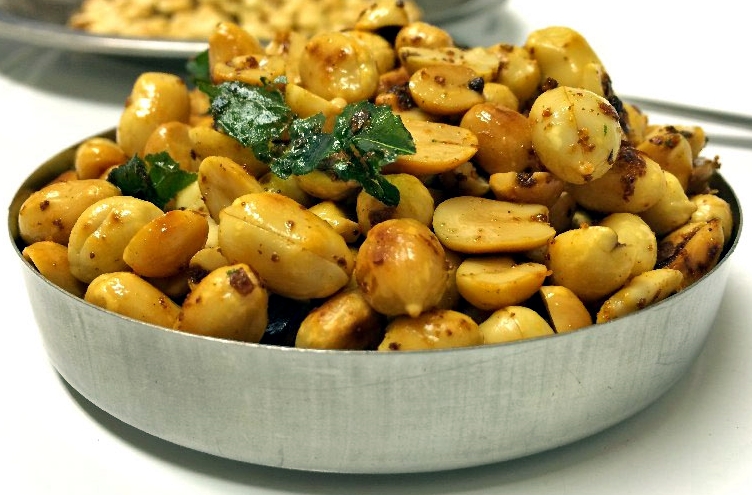
  A bowl of self roasted peanuts is the best you can offer your friends. The pic (by Ammu) shows spicy nuts roasted in garlic oil and cayenne pepper. They are also delicious if you roast them in above shown chilli sauce (then its sweet and spicy) or just in honey (sweet). Try it out it is really worthwhile.

If you smell acrid-smoke odor, then you are burning them, the aroma should smell almost like fresh peanut butter. Should take around 7 to 10 minutes to cook them. After 7 minutes take a few nuts and let them cool, taste them, if they are crunchy then done, if still a little soft and raw tasting after cooling then toast some more.

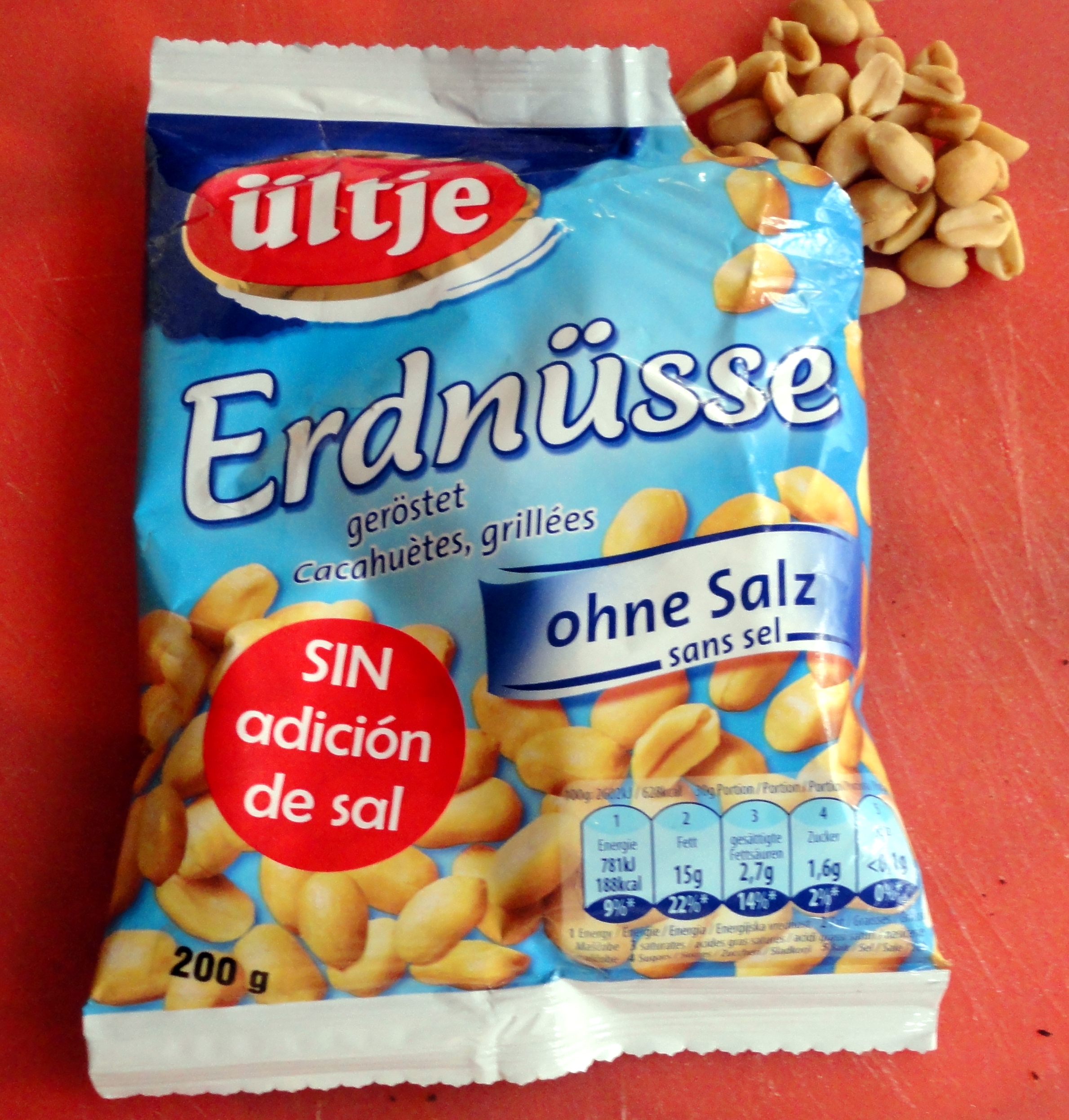
  I was lazy, peanuts I use here, not cheap but still good.

You can toast a pound in advance and store them in a zip lock bag or glass jar for a couple of months or so. Once you start toasting your own peanuts you’ll never buy jarred ones again, but if you don’t want to toast your own then you can use unsalted, dry roasted peanuts. I do this if I have not enough time to roast my own. But then – buy good ones.

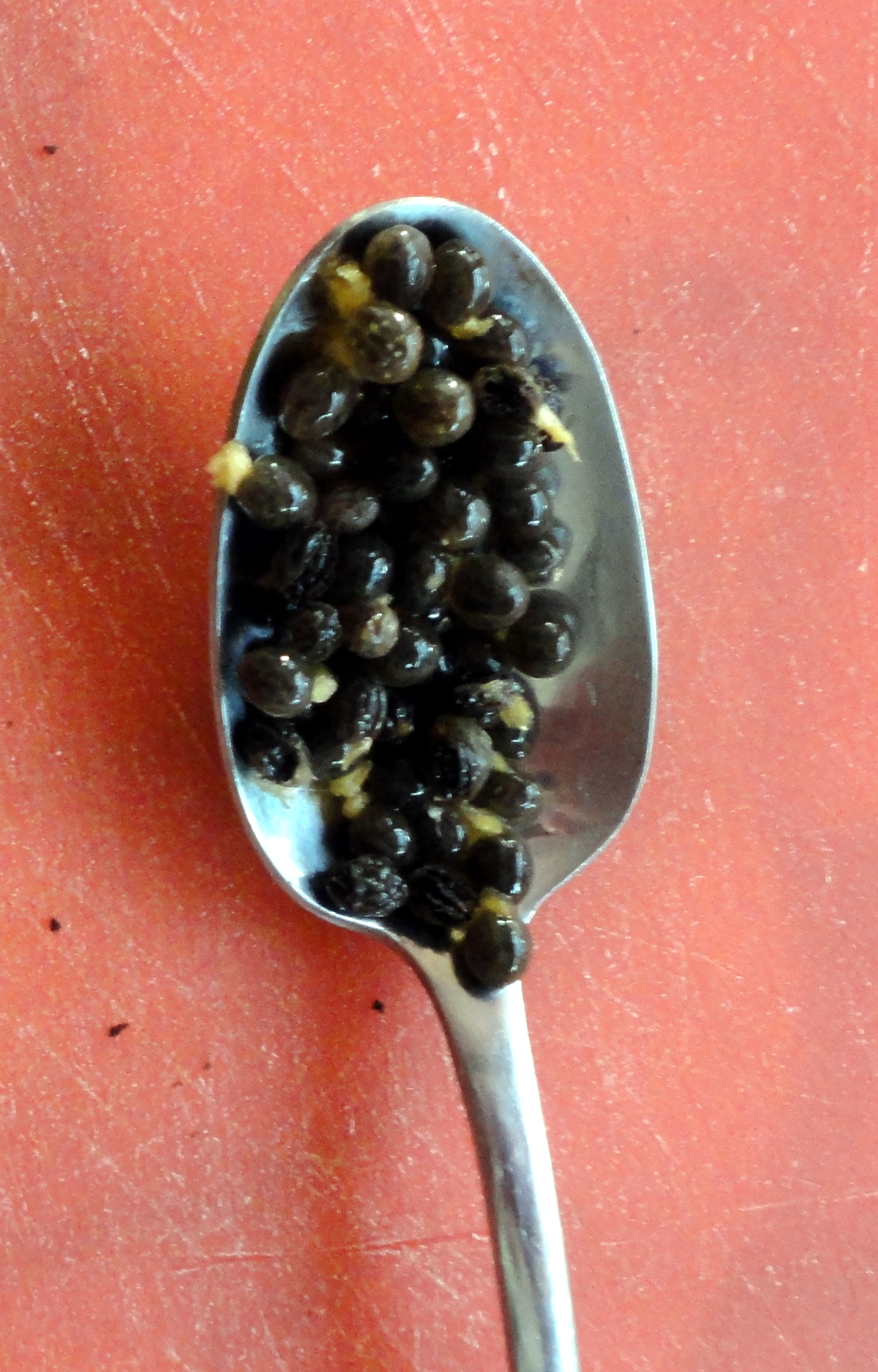
   Did you ever tried these papaya kernels ? Most people scoop them out and through them away – o.k. with me. But I always keep a few spoons and sprinkle them over salads, fruit salads and more. They are delicious if you get used to, having a slight peppery taste and much fresher then using the pepper mill.

Hope you like my tips and this refreshing salad as we do. Enjoy !

Veröffentlicht unter Recipes | Verschlagwortet mit | 2 Kommentare

Sisig

In an interview with CNN-Philippines a few weeks ago, Anthony Bourdain stated: „Sisig is perfectly positioned to win the hearts and minds of the world“.

He went on to say, “I think it’s the most likely to convince people abroad who have had no exposure to Philippine food to maybe look further and investigate further beyond sisig. I think that’s the one that’s gonna hook them.”
I can’t agree with him, especially not for the western world. Our culture doesn’t like so much cooking with lots of different ingredients and spices. Everything has to go easy and fast, best a bag into the micro and push a button ! But – time will show, who knows !!

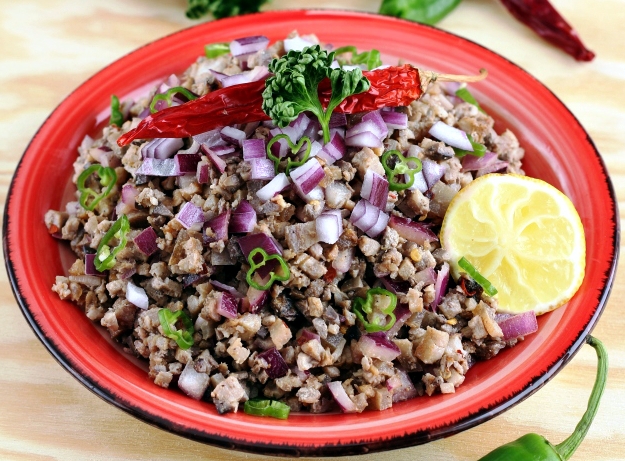
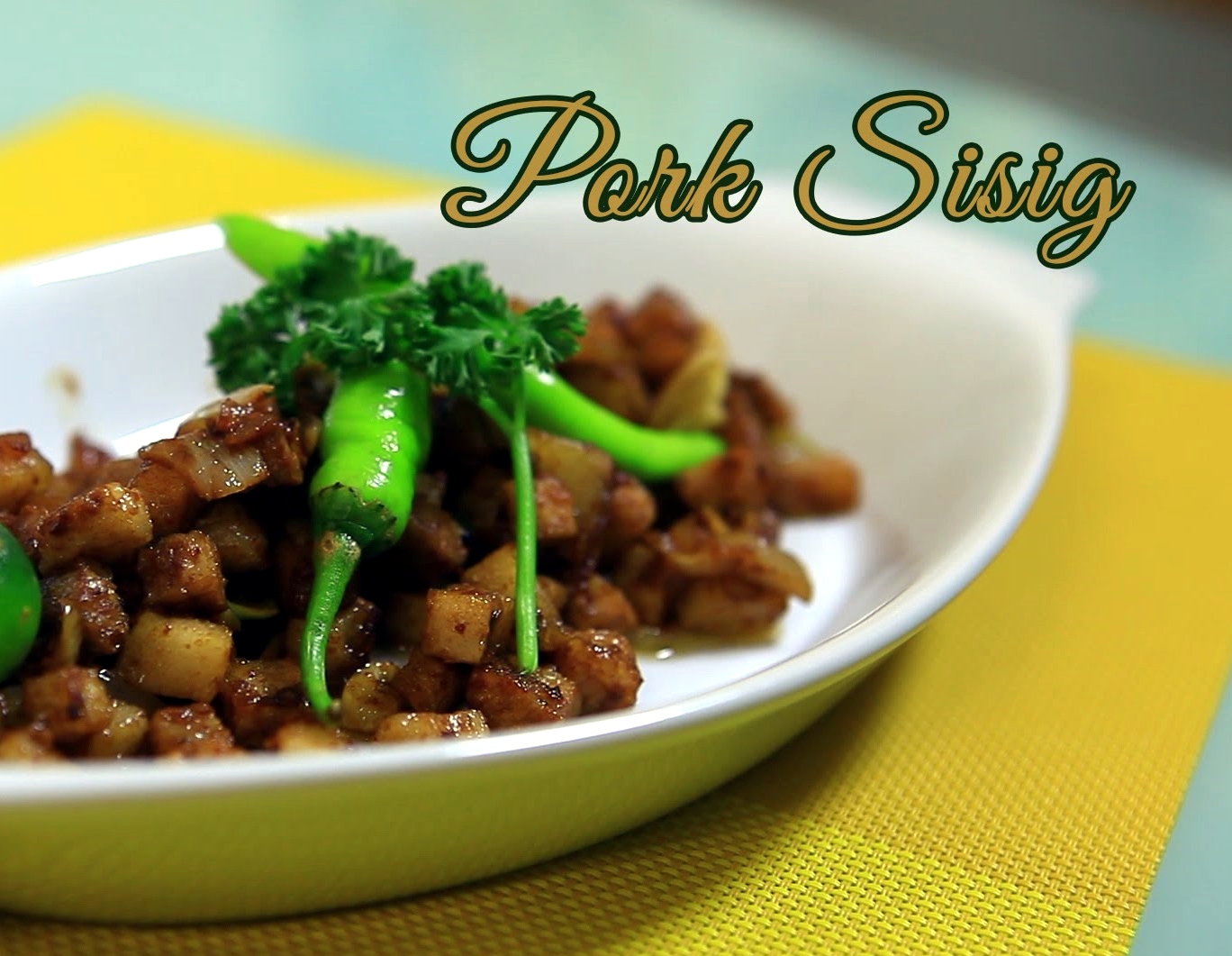
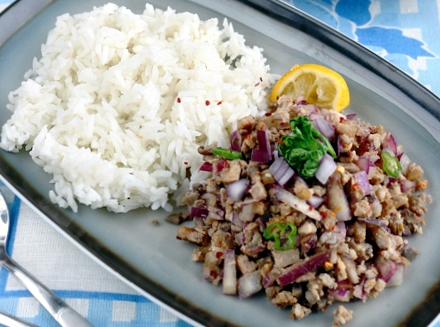
  The Classic – Pork Sisig from the Philippines.

Reading this interview brought back my memories about several trips to the Philippines and the great food I could experience there. One of the highlights always was sisig. After reading about Bourdains comment, I directly had the sisig taste on my palate and decided to invite some friends and cook sisig for us, what we did.  Find the recipe further down.

   May be my sisig wasn’t to bad after all. I am not a food photograph, that’s why some color is missing. But the taste, I’ll tell you – to die for !! The secret of cooking dishes as such is the typical „Eastern“ balance between „sour – sweet – salty – spicy“.

But, what the hell is sisig ?

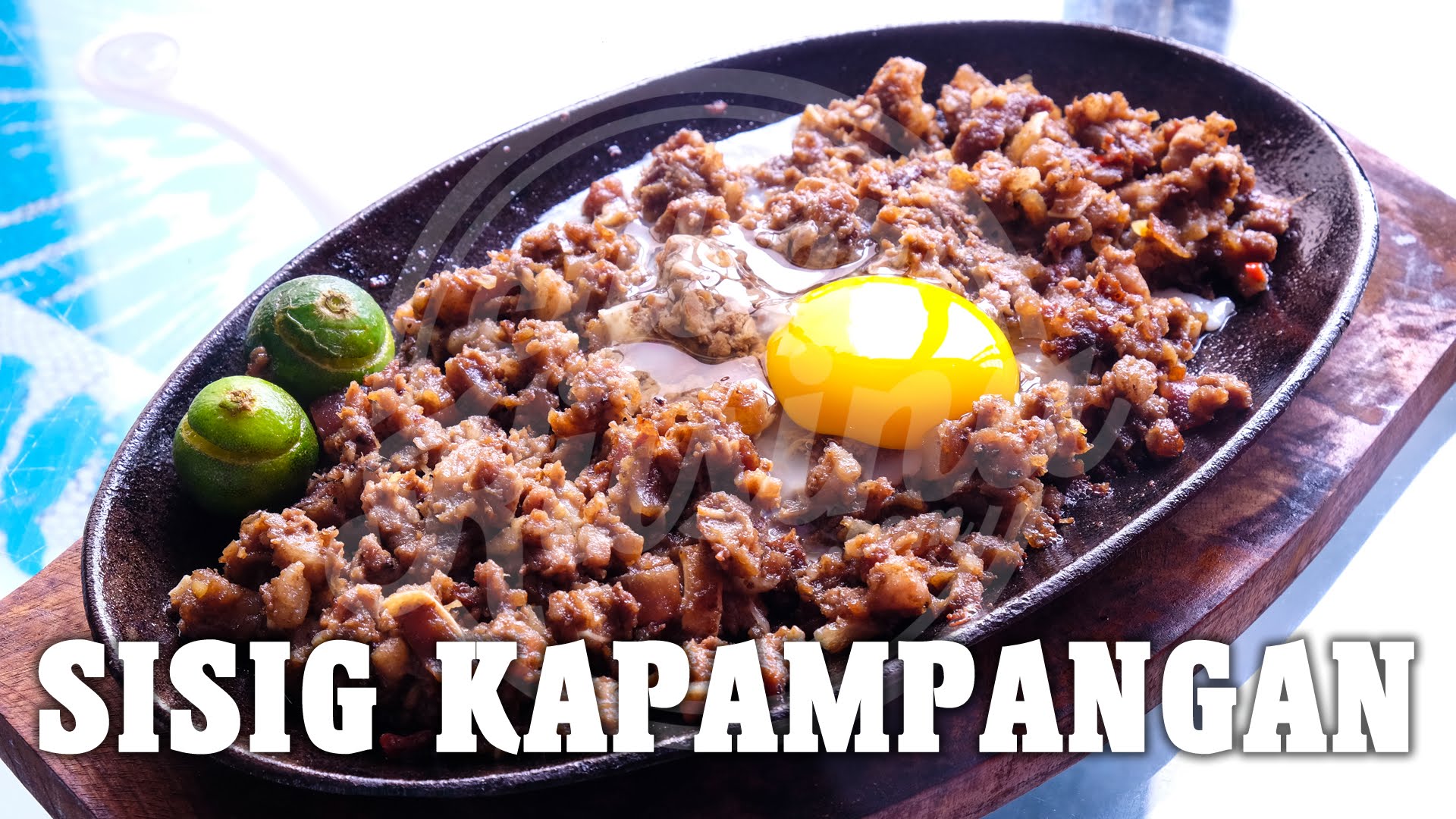
Sisig is a Filipino dish made from parts of pig’s head and liver, usually seasoned with calamansi and chilli’s.
Sisig was first mentioned in a Kapampangan dictionary in the 17th Century meaning „to snack on something sour“ and „salad“.  It usually refers to fruits, often unripe or half-ripe, sometimes dipped in salt and vinegar. It also refers to a method of preparing fish and meat, especially pork, which is marinated in a sour liquid such as lemon juice or vinegar, then seasoned with salt, pepper and other spices.

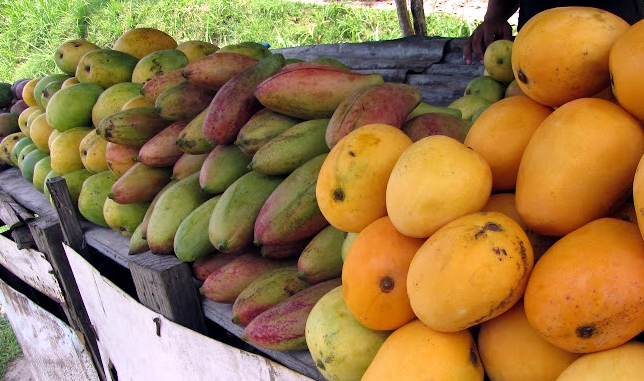
  Middle pile are the „green mangos“, while the right and the left pile of fruits are the mangos we mostly know. Click on pic to supersize and have a good look !

Just a jump of my mind.

Most Latin American ceviche recipes are based on such kind of marinade. We had in Panama a huge tree with green mango’s, very rare fruit (not an unripe normal mango fruit) and I didn’t know what to do with it. When the locals came asking if they may harvest the fruits, I learned how they use it. They slice/shred the fruit very thin and mix it with some salt, vinegar and red onion to a salad. What a delicious surprise, tasty, refreshing and a wonderful accomplishment to any kind of food.  After all it was a similar recipe as I knew from Thailand already. See picture down here.

   This Thai green mango salad I made beside our sisig last week. It was a delicious salad mainly made from unripe mangos and green Papaya, mixed with coriander, onion and more.

Origin

The origins of the word dates back to 1732, and was recorded by Augustinian friar Diego Bergano in his Vocabulary of the Kapampangan Language in Spanish and Dictionary of the Spanish Language in Kapampangan. Bergano defines sisig as a „salad, including green papaya, or green guava eaten with a dressing of salt, pepper, garlic and vinegar.“ There is no mention of how long this cooking style has existed prior to the coming of the Spaniards during the „Age of Conquest“. The introduction of meat into the dish does not have an exact date as well.

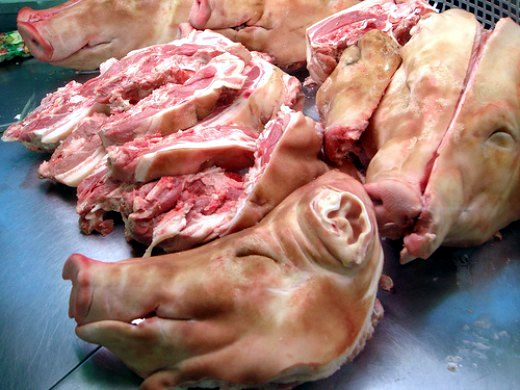
   Sisig’s pig head ingredients.

Locals believe that the addition of a pig’s head and innards in the dish came from „recycling“ the excess meat from the commissaries of Clark Air Base in Angeles City, Pampanga. Pig heads were purchased cheap since they were not used in preparing meals for the U.S. Air Force personnel stationed there during the American Occupation of Luzon and Visayas. Some modern explanation is to put sisig into a shortcut of „sizzling pig“, but this is untrue.

Sisig still has many variations with recipes varying from city to city, and sometimes, family to family, in the Kapampangan province.

   The „Queens“ restaurant in Pampanga.

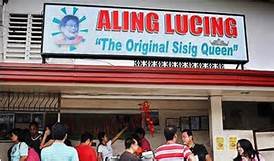
Sisig queen

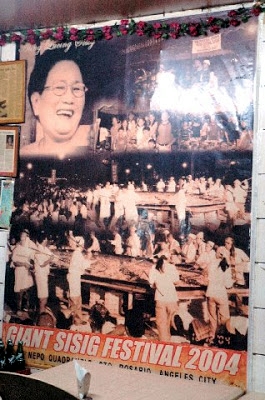
Lucia Cunanan of Angeles City, also known as „Aling Lucing,“ has been credited with reinventing sisig by using a sizzling plate to make the dish crispier. The Philippine Department of Tourism has acknowledged that her „Aling Lucing’s“ restaurant had established Angeles City as the „Sisig Capital of the Philippines“ in 1974.

     The Pampanga Sisig Queen.

Aling Lucing’s Sisig is the pride of Pampanga with its original location in the „riles“ or located near the railroad in Angeles City. Also, Aling Lucing is the Grand Slam Winner of the 3rd Sisig Festival in Angeles City held Dec. 2-3, 2005 besting 176 other contestants !

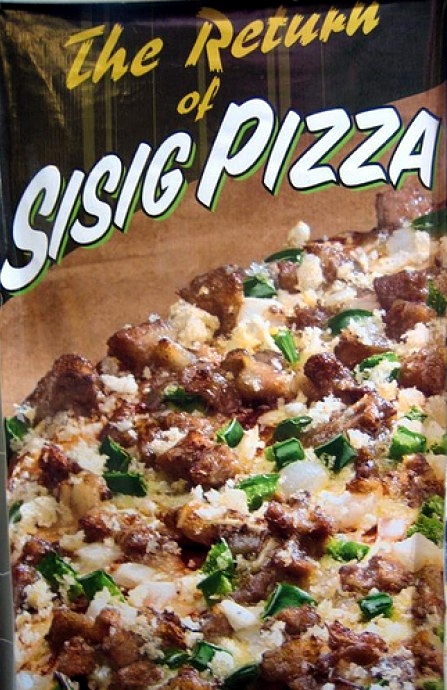
Cunanan’s trademark sisig was developed in mid-1974 when she served a concoction of boiled and chopped pig ears and cheeks seasoned with vinegar, calamansi juice, chopped onions and chicken liver and served in hot plates. Today, varieties include sisig ala pizzailo, pork combination, green mussels or tahong, mixed seafood, ostrich sisig, crocodile sisig, spicy python, frog sisig and tokwa’t baboy, among others.

   That’s how it looks like, often served with an egg on top . Sorry, can’t make out the pics watermark for photo-rights.  A few pics I used in this post are from Pinoy’s.

Preparation

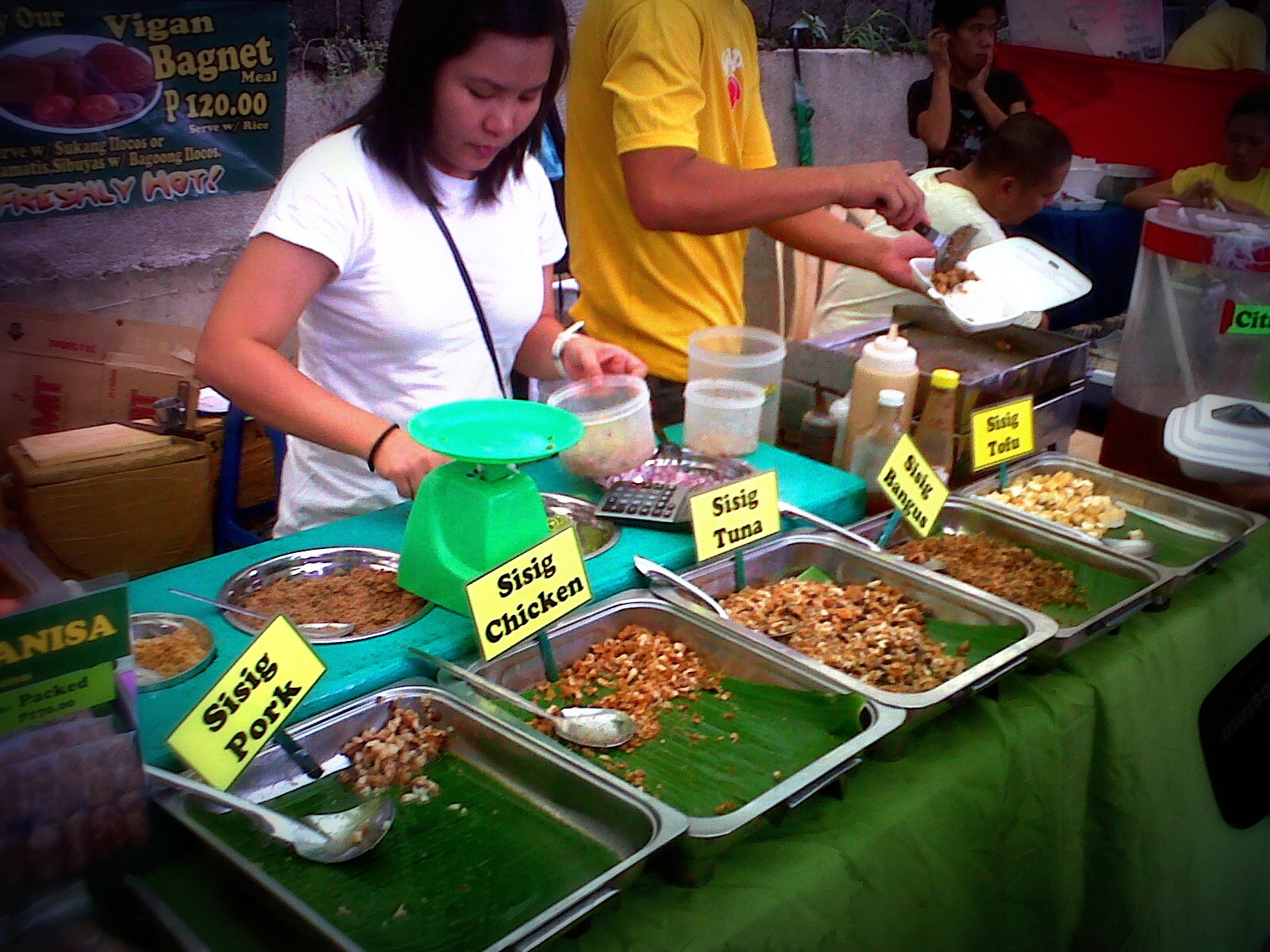
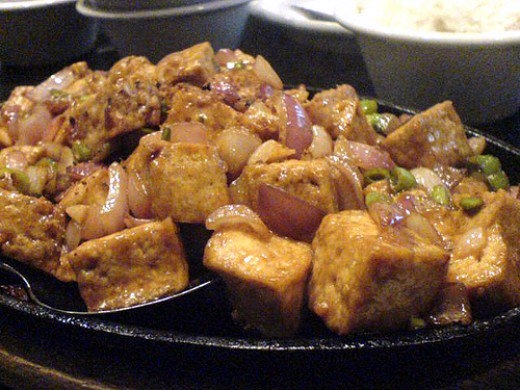
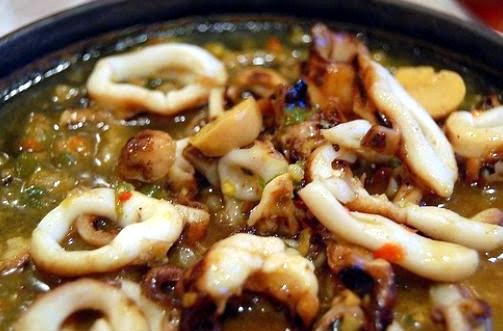
According to Cunanan’s recipe, preparing sisig comes in three phases: boiling, broiling and finally grilling. A pig’s head is first boiled to remove hairs and to tenderize it. Portions of it are then chopped and grilled or broiled. Finally, coarsely chopped onions are added and served on a sizzling plate. Variations of sisig may add any of the following: eggs, ox brains, chicharon (pork cracklings), pork or chicken liver, and even mayonnaise. Recently, local chefs have experimented with ingredients other than pork such as chicken, squid, tuna, and tofu.

  Different sisig supply’s during a festival. Panlasang.

Annual Sisig Festival

The annual „Sisig Festival“ (Sadsaran Qng Angeles) is held every year during the month of December in Angeles City, Pampanga, celebrating the Kapampangan dish. It started in 2003 and was made an annual festival by Mayor Carmelo Lazatin on December 2004 to promote the city’s culinary prowess. The festival also features a contest where chefs compete in making dishes, primarily sisig.

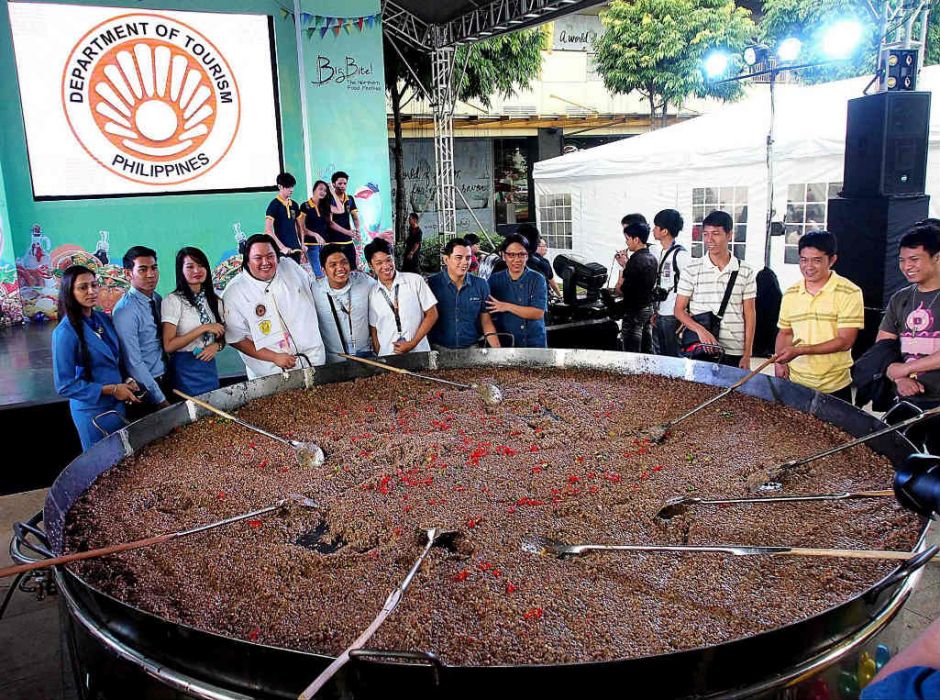
  Giant sisig at the sisig festival.

The newly-revived Sisig Fiesta was a one-day event that will line up a sisig sampler banquet, sisig, and BBQ stalls, cooking demonstrations with celebrity chefs, and showcase Angeleno culinary talent through competitions. The event will also be enjoyed by everyone through live bands, dancing, and night market.

    Sisig „my version“ ready to go.

My sisig recipe.

As you know now, sisig can be made with dozens of different ingredients. In our western culture, meals with ingredients like pigheads, snouts, pigface, ears and more isn’t very common. They are hard to get and even harder to serve to friends.

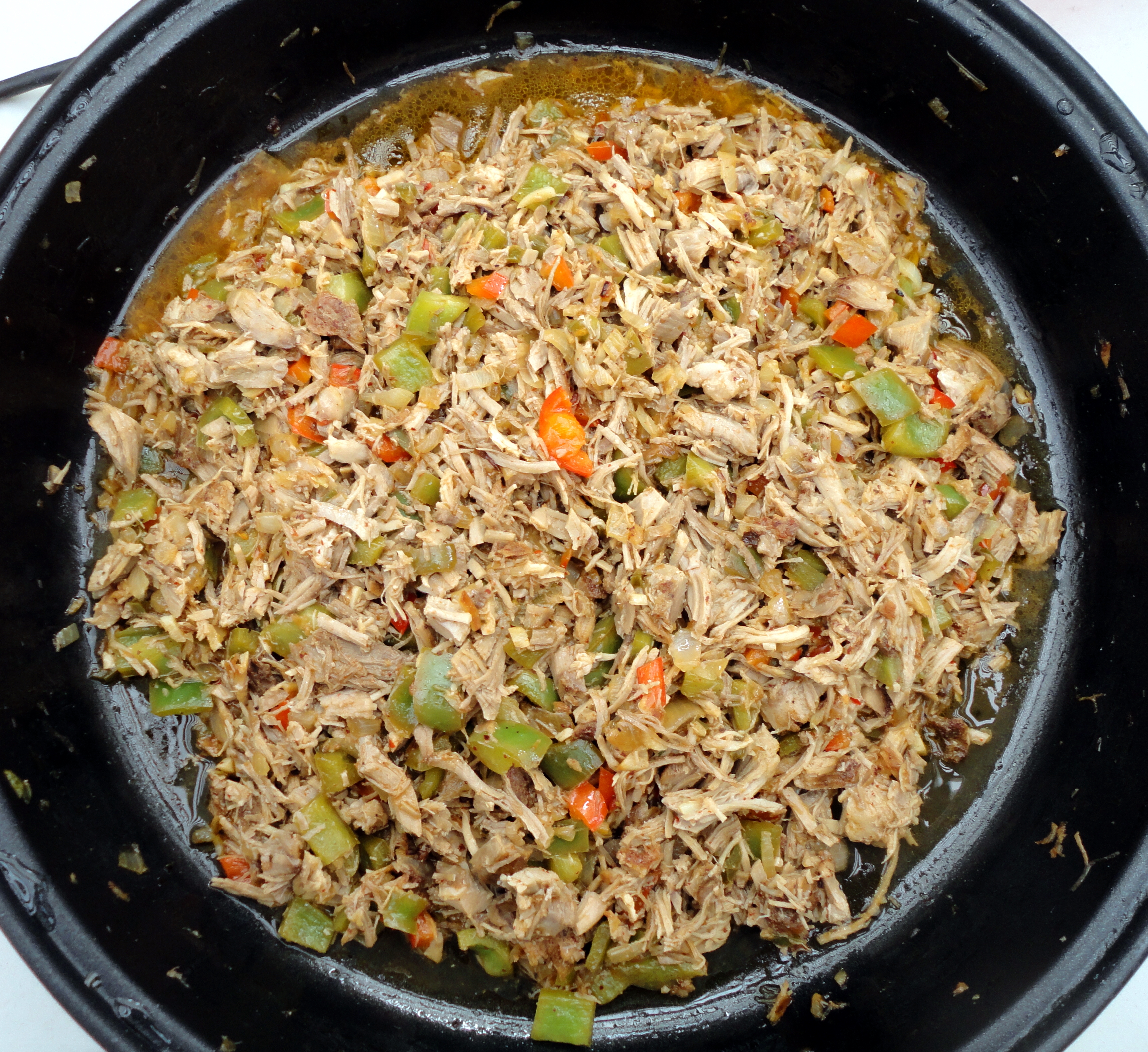
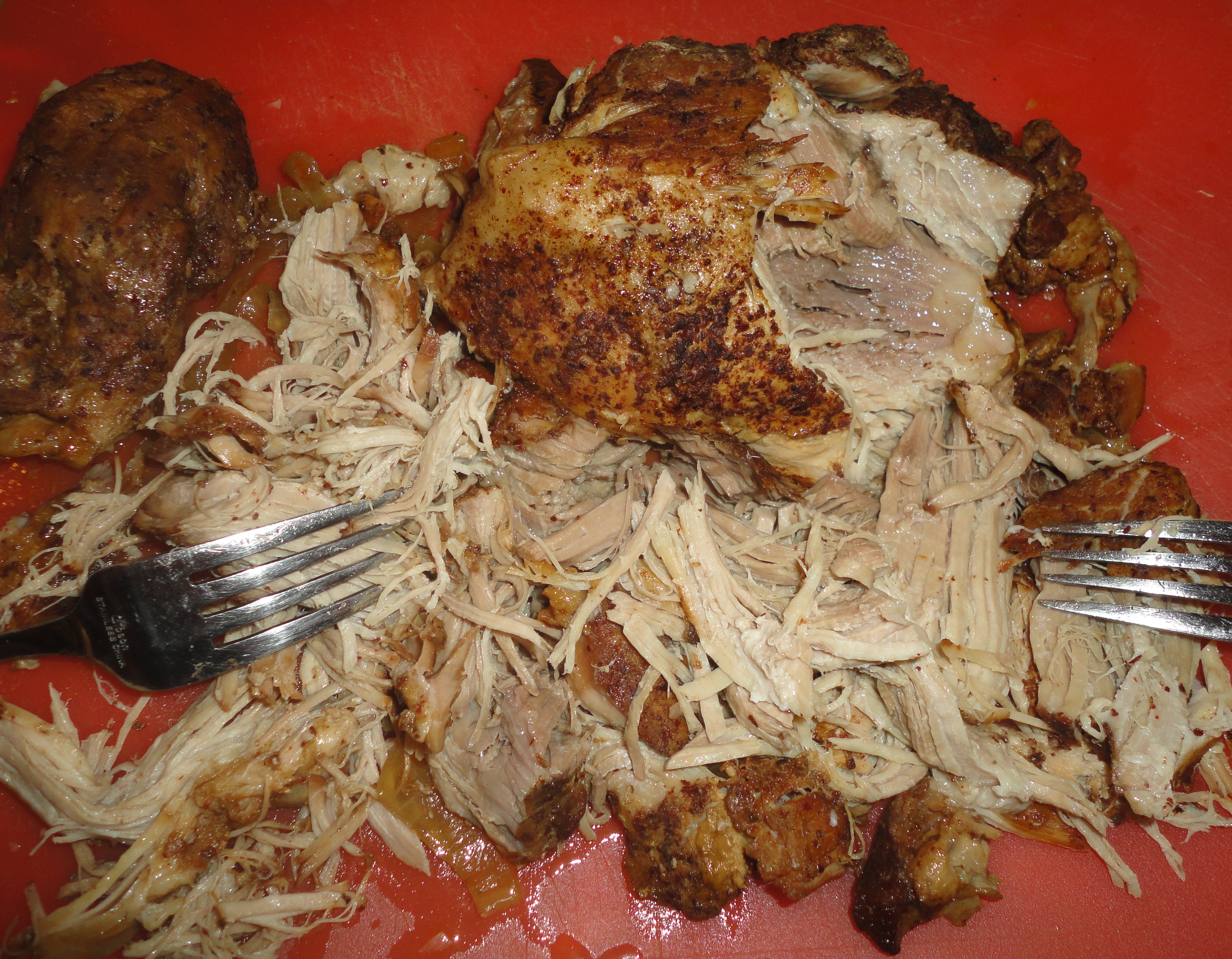
That’s why I decided to make some delicious „Pulled Pork“, out of the butt, and use it for my sisig meal. You should have seen the happy faces.

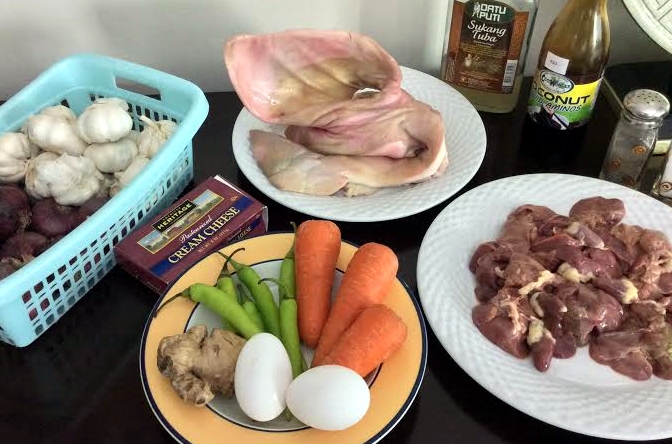
  Ingredients for an original sisig, made as mentioned before. Preparing the pork-meat. Pic by primeyoulife.

Ingredients:
Pork,
if you like to do it ORIGINAL.

750g (1 1/2 lb) pork cheek
500g (1 lb) pork ears
500g (1 lb) pork, chicken, or beef liver
1 cup pineapple juice
1 teaspoon black peppercorns
1 large yellow onion, sliced
1 head garlic
1/2 cup dark soy sauce
Salt to taste

  Easy with a few ingredients only.

Sisig,
like I did, with about 2000g (4lb) pulled pork shoulder.

2 tablespoons butter or cooking oil (peanut, coconut, vegetable)
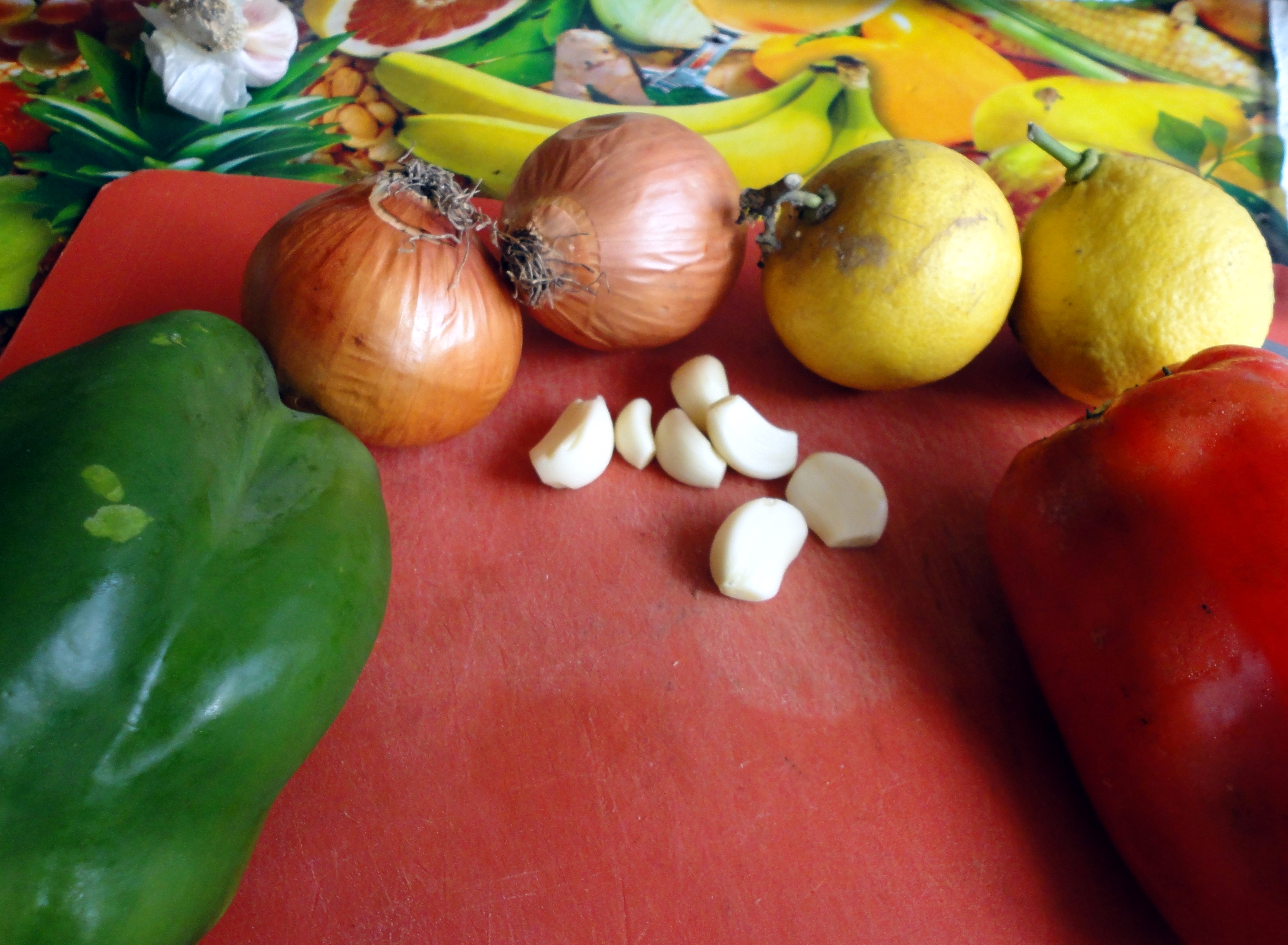
2 medium yellow onions, diced
1/2 green paprika, coarsely chopped
1/2 red paprika, coarsely chopped
1 tablespoon ginger, finely chopped
5 cloves garlic, finely chopped
4 small chilli, red and/or green, finely chopped (less for a less spicy sisig)
1/4 cup dark soy sauce
1/2 cup Paombong or coconut vinegar (any good white vinegar will do too)
1/4 cup calamansi juice (substitute can be lemon or lime juice if unavailable)
3 tablespoons mayonnaise
Salt and pepper to taste

Sorry folks, but I refuse to use the American names „chili pepper“ for chilli and „bell pepper“ for paprika. Why ? – I am, so as my blog is, international.

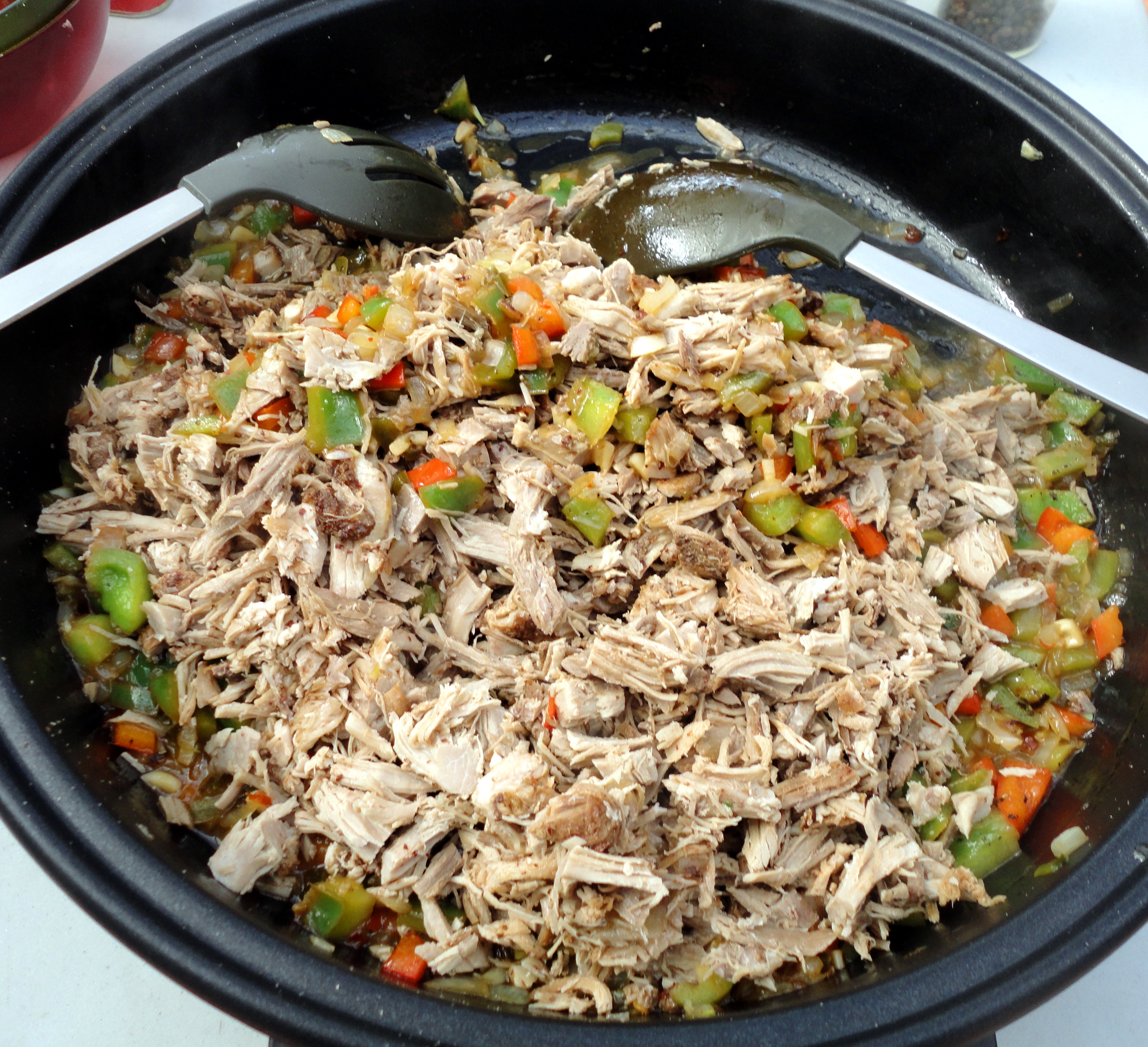
  Using my „Pulled Pork“ as the meat base.

How to do.

Chop the meat into small pieces, about 1 1/2 to 3 cm (1/2 to 1 inch)  in square. Reason is, that my sisig is pretty juicy.
For smaller, finer sisig you can use a food processor, pulsing the meat for 2-3 seconds at a time. But here you need to „fry“ it dry, otherwise you end up with some mash.

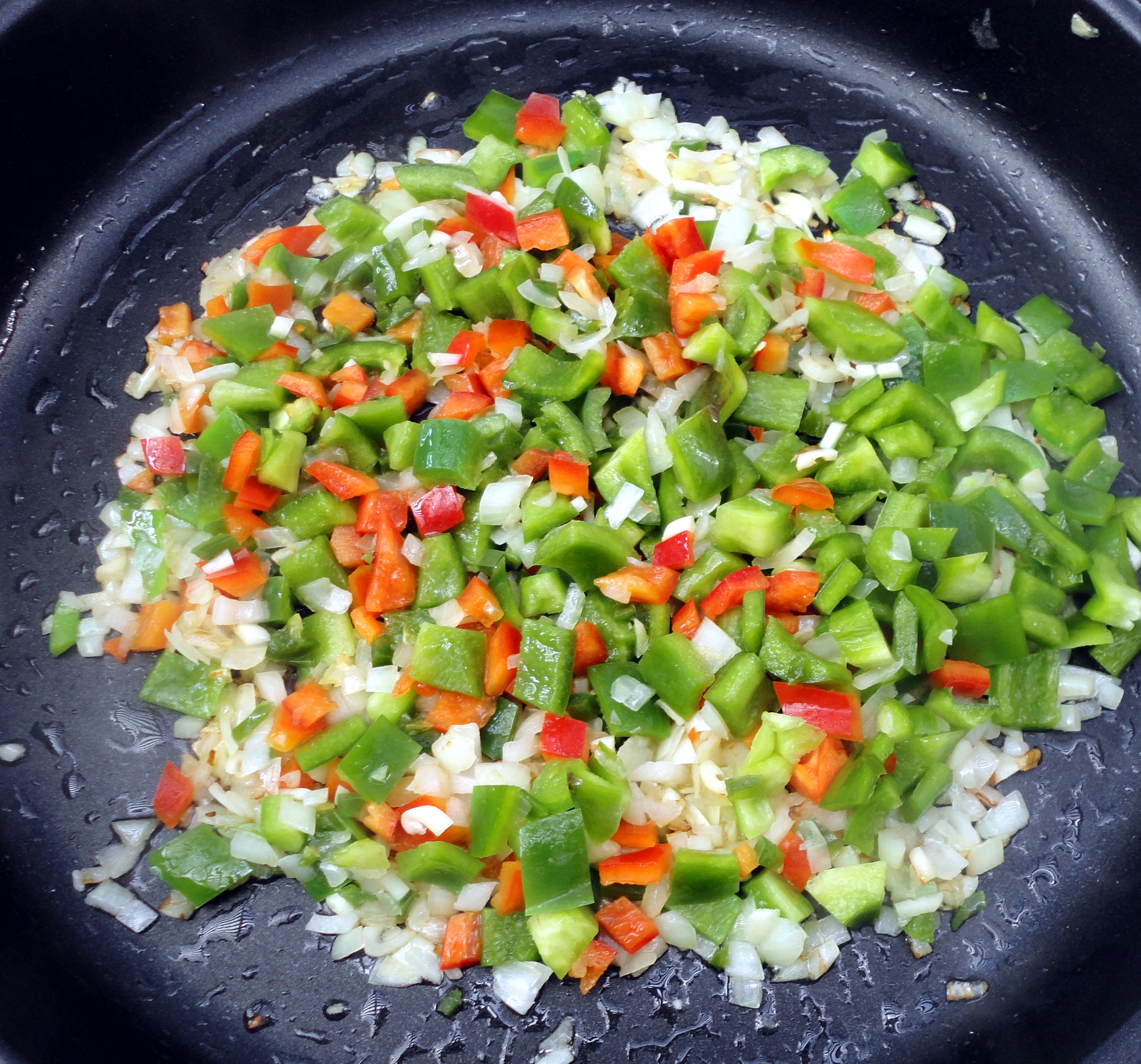
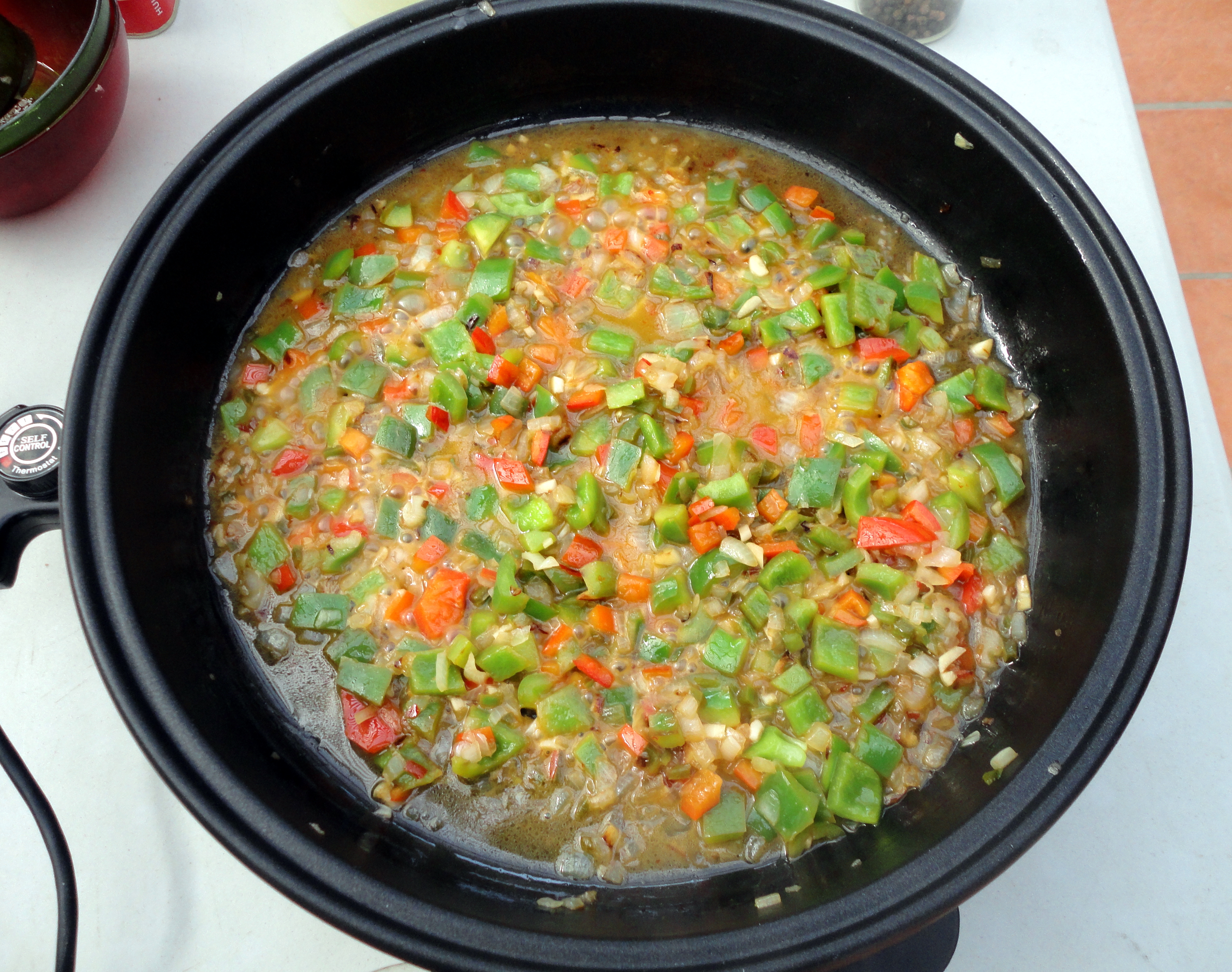
Melt the butter in a large skillet and add the chopped onions and garlic.
Cook these together for 2-3 minutes, stirring occasionally, till onions get soft.

  All dry ingredients ready to fry till „aldente“.

Add the chopped paprika, chilli and ginger.
Stir the mixture to coat everything in butter, then cook for another 1-2 minutes.

Then add the meat to the skillet and stir.
While the meat is already cooked, this marinates the meat in the sisig and brings the whole dish together.
Finally add the calamansi, vinegar, and soy sauce and stir them in to coat the rest of the ingredients.

  All wet ingredients added, to cook through.

Cook everything together for about 4 minutes.
Since the meat is already cooked, just to mix all the flavors together and reheat the pork.
If you like it juicy, as I did here, poor at the end a few tablespoons of your „pulled pork juice“ into the whole dish.
I always keep that juice anyhow to make my own BBQ sauce.

  My sisig wasn’t so bad – after all.

Sisig is often served with an egg on top, or alongside of rice. We had some rice too, but no raw red onion, garlic or fresh chilli. Western palates are not prepared for such „goodies“.
Enjoy your dish !

     Restaurant serve of sizzling sisig. With an egg or some rice, or both. Whatever one likes.

Tips.

Serve hot with rice, may be also a fresh asian salad, or just plain with an egg and baguette.

Try different cuts of meat. Pork belly, which is rich in fat, cooks particularly well on the grill and can make decadent sisig. But that has to stay „dry“.

Even those that don’t enjoy pork can still enjoy sisig. By example monk fish (also mackerel or our local corvina) sisig. Debone and fry a white, mild fish, then add it to the sisig mixture as it cooks.

        On the left some tofu sisig and on the right some seafood sisig. Both are worth to try, especially as a vegetarian.

Add mayonnaise with the wet ingredients for a richer, thicker sisig. In my recipe I left out the mayo. Many recipes in the Philippines use mayonnaise (mostly homemade) as a binding agent, holding the ingredients together in a light sauce.

The traditional binding agent of sisig is actually pork brains, but this variation is for more adventurous eaters.

  The „market“ is not sleeping. Premade sisig pizza toppings. Just warm it up. Great stuff for lazy cooks and microwave lovers. Nothing for me !

Spice up your sisig with a custom spice mixture. There are a lot of different spices to throw in the sisig along with your vegetables and pork. Try tossing these ingredients for the last 4-5 minutes of cooking:

1 cube vegetable, chicken, or beef bouillon.
1 tablespoon Chinese 5 spice seasoning.
1-2 crushed bay leaves.
1/2 cup chopped cilantro.
1 teaspoon orange or lemon zest.

  And here we have the Mexican variation, sisig nachos or sisig burritos. All is possible with sisig. May be Anthony Bourdain is right after all.

Thai style could be to use 1/2 a cup of sweet/sour Thai sauce, cilantro and peanuts.

Recipe for the oven:

Mix the pork with the garlic, ginger, soy sauce, onions, chili powder, and 2 tablespoons of vegetable oil.
Refrigerate this pork/mixture/marinade overnight.
Preheat an oven at 350 degrees and cook the pork for 3 hours in a roasting pan.
Cool the pork and chop it into small bits, then continue the recipe as if you had finished grilling it.  This recipe works fantastic as a topping on pizza’s. Be creative – TRY !!

  Pizza Hut picked up the idea time ago, not too stupid eeh ? Lechon is a well known pork dish in many country’s around the world, so as the Philippines. The add, as seen above, is from Manila, Philippines.
  And finally another Philippines dish, „Spicy Seafood Sisig Pizza with Thai Basil and Fried Garlic“. A specialty on Cebu, on of the most wonderful destinations of the „1000 islands“ (Philippines), served with a local beer.

Just by the way – Philippinos enjoy their sisig with a cold beer, mostly San Miguel (its origin is Belgium, but since 1880 on the islands), Red Horse or Katipunan.
Enjoy this wonderful meal as we did and Anthony Bourdain suggests.

Veröffentlicht unter Lifestyle, Recipes, Travel | Verschlagwortet mit , | 4 Kommentare

Herbs and Spices

We all use herbs and spices in remedies, cosmetics, in cooking and much much more. Many use something without knowledge or with ample and deep knowledge about. In this upcoming new series I like to introduce you to some herbs and spices we all use and don’t know so much about, may be. First a bit of an overview and history. Enjoy !
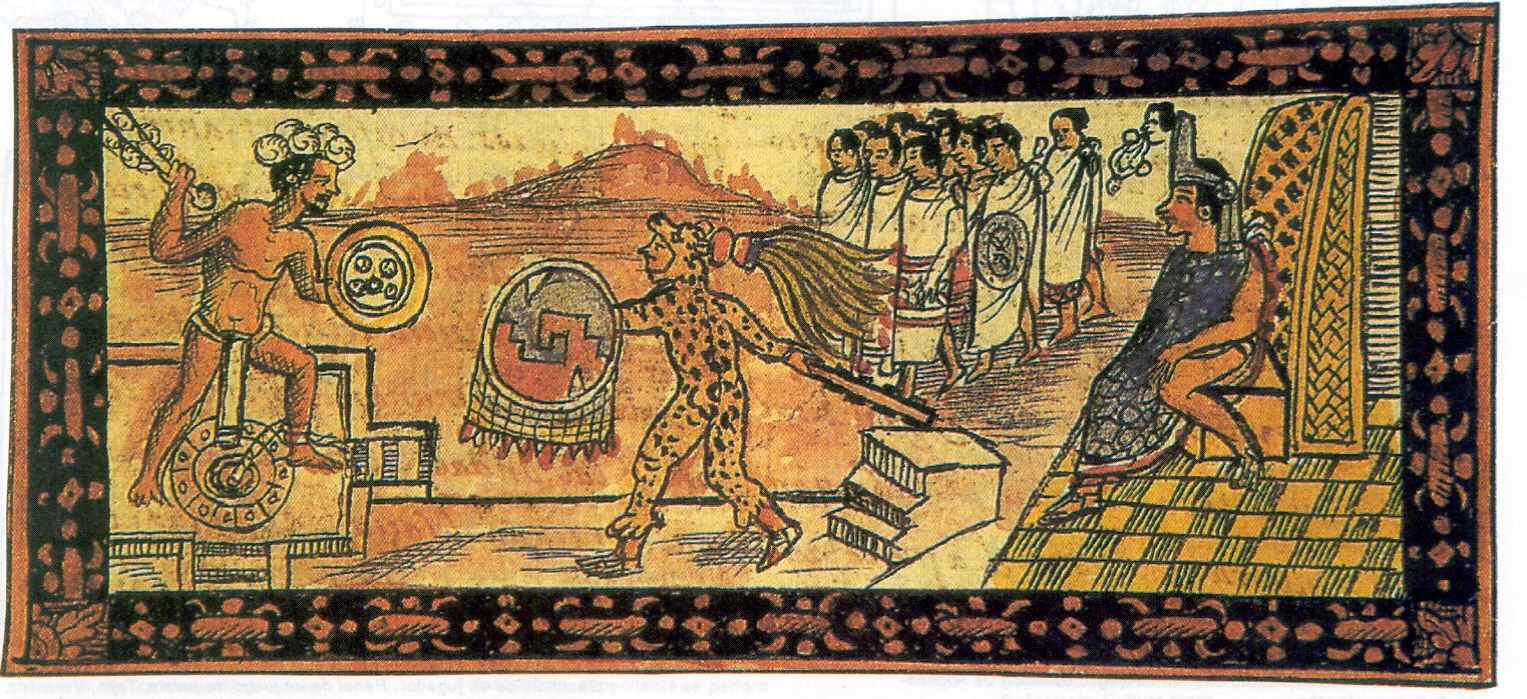
The use of plants as medicines predates written human history. Archaeological evidence indicates that humans were using medicinal plants during the Paleolithic, approximately 60.000 years ago. Furthermore, other non-human primates are also known to ingest medicinal plants to treat illness. Plant samples gathered from prehistoric burial sites have been thought to support the claim that Paleolithic peoples had knowledge of herbal medicine. For instance, a 60.000-year-old Neanderthal burial site.
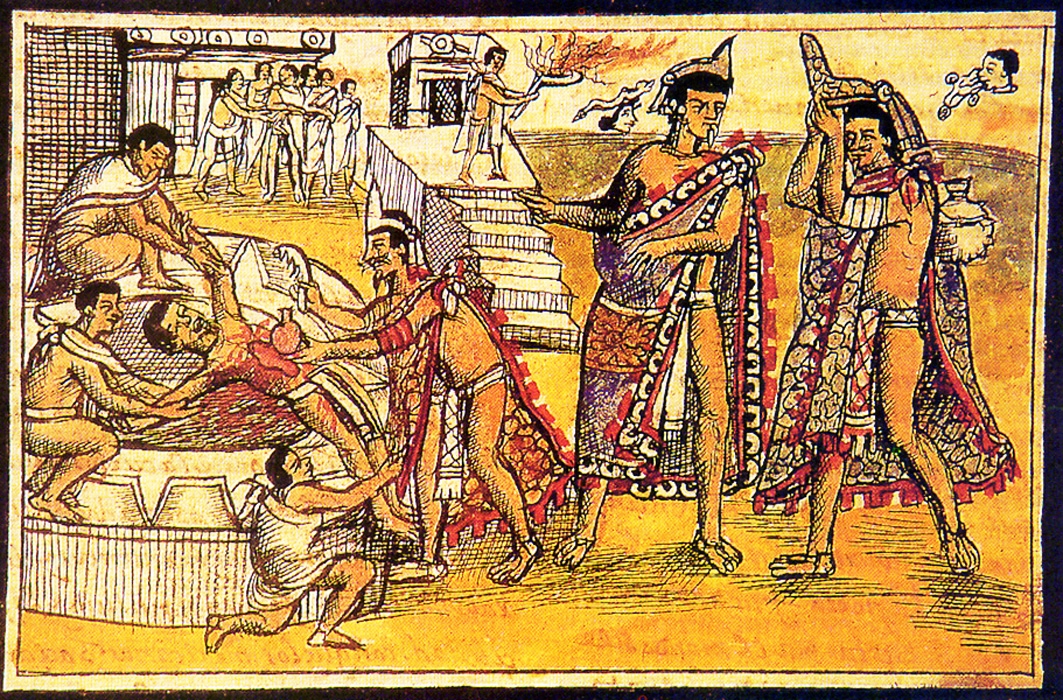
  First of Martin de la Cruz’s herbal prescriptions, Badianus Manuscript.

In Mesopotamia, the written study of herbs dates back over 5.000 years to the Sumerians, who created clay tablets with lists of hundreds of medicinal plants (such as myrrh and opium). Other sources show the use of herbs and spices 25.000-30.000 years B.C.

Herb and Spice Definitions.

Before learning about the history of herbs and spices, it is necessary to define these terms. Herbs are the fresh and dried leaves generally of temperate plants and are usually green in color. In Europe or North America, we live in a temperate climate characterized by summers and winters of similar length.

  Middle age teaching about herbs and spices.

Spices are the flowers, fruit, seeds, bark, and roots typically of tropical plants and range from brown to black to red in color. In general, spices have a more pungent flavor than herbs. It is possible for one plant to provide an herb and a spice. For example, for the plant Coriandrum sativum (coriander or cilantro), the leaves are used as the herb cilantro while the seed is used as the spice coriander. Learn about this extraordinary plant in the upcoming part 1of this series.

  Trade. The Unloading of Goods: Voyage to Calicut, 1504. Portuguese National Library, Lisbon. Please click on pics to supersize for a better view.

The Trade.

The Ebers Papyrus is an Egyptian scroll listing plants used as medicines, which dates back to about 1550 B.C. Some spices listed are anise, mustard, saffron, cinnamon, and cassia. Cinnamon and cassia are native to southeastern Asia and China, not Egypt. The scroll serves as evidence that the spice trade was in existence at least 3,500 years ago.

Starting around 950 B.C., Arab merchants caravanned by donkeys and camels through India, China, and southeastern Asia on the Incense Route to provide valuable spices to the Greeks. When Alexander the Great conquered Egypt in 80 B.C., he established Alexandria as a port used in the spice trade for centuries.

  The Spice World, as it was for many century’s.

Early Romans expanded the use of spices in foods, medicines, and indulgent items such as lotions and perfumes. During these times, large amounts of gold and silver were traded for spices. After the first century, Rome established a direct trade with India via the Red Sea, and effectively broke the Arab monopoly on the spice trade.

  Herb market in Amsterdam, Netherlands 1775.

Romans then introduced spices throughout Europe, where they became very popular. When the Goths, a tribe living on the Danube River in Europe, overtook Rome in 410, they demanded and received gold, silver, silks, other valuables, and 3,000 pounds of pepper as ransom to spare Roman lives.

  Part of Ribero’s map of the world. The Spice islands from 1529. Isn’t it interesting how they divided the world already into Spanish and Portuguese parts.  Java, Sumatra etc. were Portuguese. Gilolo, Moluccas etc. were Spanish and became later Netherlands. Click pic !

Trade between Europe and eastern Asia nearly disappeared for 400 years after the fall of Rome in 476, but was later revived in part due to the publishing of Marco Polo’s memoirs in the late 13th century. In his memoirs, Marco Polo described his travels to the Orient and the spices grown there. Europeans then began searching for water routes to the Orient – searching for India.

  Christopher Columbus first landing in „The West, The New World“, he believed India and called the natives „Indians“. But this first landing 1492-1493 was on the island „San Salvador“ on the Bahamas archipelago,the island later named Hispaniola, now split into Haiti and the Dominican Republic.

Beginning around the 14th century, ocean exploration advanced, and sea routes from Europe to eastern Asia were discovered. In 1492, Christopher Columbus discovered the New World (he thought it was India) while searching for a shorter water route to find black pepper and cinnamon.

   Herb market London, England 1779.

From 1519 to 1522, Spain discovered a water route to the Spice Islands (the Moluccas, near Indonesia) where cloves, nutmeg, mace, and pepper were produced. Those who controlled the spice trade got rich, as prices were very high. The early 1600’s verify, with establishing all of the „East India“ and „West India“ company’s around Europe, the demand of searching for new spice-trade-routes.

  Dutch East India Company, The Spice Fleet !

The start of V.O.C.

A group of Amsterdam merchants financed an expedition to the indies in 1595, the merchants brought back 245 bags of pepper and 45 tons of nutmegs, but started to compete among them by sending out several expeditions. In 1602, the „Vereenigde Oost-Indische Companie“ (United East India Company) was formed to put an end to the internal competition. Given sweeping powers including the right to carry on war in the Indies (financed by the Company) the VOC was the beginning og the Dutch colonial empire and also gave to the Dutch the monopoly of the spice trade.

  Harbor and city of Batavia, around 1770.

The Spice Islands

Soon the Dutch proved themselves superior to the Portuguese naval and military strength. Local rulers supported the Dutch to get ride of the Portuguese. Step by step the Dutch took over from Portuguese Ceylon, the Mollucas and Banda (called the Spice Islands) and they established their their main base at Batavia (Jakarta)on the island of Java. Today the Moluccas and Java are part Indonesia.
They tried to stop all other trade, preventing Chinese and other traders selling spices to Portuguese and English. To control the production the Dutch had nutmeg and clove trees uprooted and permitted plantings only on certain islands.


       Part of the Moluccas.  The name Mulukku was arabic and meant „the islands of the kings“.   Right: The Moluccas island of Buro, today called Buru. Click on pictures to size up.

By the early 1800s, spice plantations were established in other locations around the world ending the spice trade cartel forever. The United States entered the spice trade, as it now exists, in the late 1800s and is the largest spice importer and consumer in the world. From 1990 to 1994, an average of 530 million pounds valued at $372 million were imported into the United States.

 A Brief History of Herbs

The use of plants as herbs has been important to all cultures since long before history was recorded. Hundreds of tribal cultures have used wild and cultivated herbs for medicinal and food purposes for thousands of years. Herbs are mentioned in Genesis, the first chapter of the Bible, and throughout its text. As civilizations developed so did the knowledge for the use of herbs.

  Dioscorides‘ Materia Medica, from c. 1334, copy in Arabic, describes medicinal features of cumin and dill.

One of the oldest herbs in history is the popular Ginkgo biloba. Fossil records show that Ginkgo has been on earth at least since the Paleozoic period. Egyptians wrote one of the earliest known recorded medical documents around the 1500 BC called Papyrus Ebers. This 20-meter long scroll documents over 1000 plant-based remedies, recipes and drugs.

    The Ebers papyrus was found in Egypt in the 1870’s.

The Ebers Papyrus is a huge roll of more than 20 meters long and 30 cm wide. It is mainly an internal medicine reference, as well as charting diseases of the eye, skin, extremities, and some surgical related conditions. Anatomical and physiological terminology is also included. For treatment of those diseases, 877 recipes and 400 drugs are described.

  German Egyptologist George Ebers (1837-1898).

Some believe the papyrus to be a copy of the even more ancient books of Thoth (3000BC), reputed father of medicine, pharmacy and alchemy. It is now in the University of Leipzig library.

    Books of Thoth.

The first recorded herbal study, called the Shennong Bencaojing, was written around 2,000 BC by the Chinese Emperor Shen Nong (The Divine Farmer). He is known for a multitude of innovations such as seed preservation, dietary revolution (he advocated a vegetable-focused diet) and tasted hundreds of herbs. The document contains descriptions and information for 300 plants.

  The world famous Benedictine Monastery of Fecamp.

During the Middle Ages, monks grew medicinal herbs. The liquor Benedictine was made at the Benedictine Abbey of Fecamp in Normandy with 27 different plants and spices. Native Americans introduced the colonists to many plants and herbs such as Black Cohosh, which is still used today for relieving menstrual cramps and menopause symptoms.

        The ancient use of herbs. Florentine Codex Book XI .

In the early 1900s, innovations in chemical analysis allowed scientists to extract and modify active ingredients from plants. In America, clashes within the medical community and a growing infatuation with isolated chemicals led to the decline of herbal remedies. However, even today 40% of all pharmaceutical drugs are based on botanical’s.

Today, the World Health Organization estimates that 80% of people rely on herbal medicines for some part of their primary healthcare. In fact, 70% of German physicians prescribe plant-based medicines.

     Fascinating and interesting, the museum of medicinal herbs in Bangkok, Thailand.

A Brief History of Spices.

The fame of Indian spices is older than the recorded history. The story of Indian Spices is more than 7000 years old. Centuries before Greece and Rome had been discovered, sailing ships were carrying Indian spices, perfumes and textiles to Mesopotamia, Arabia and Egypt.
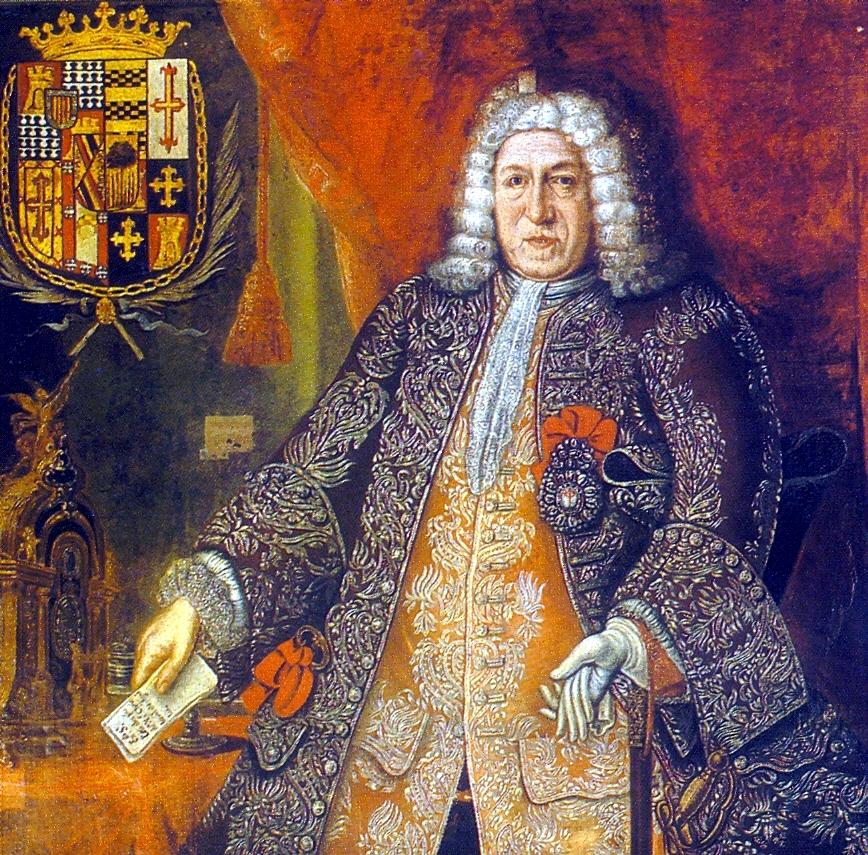
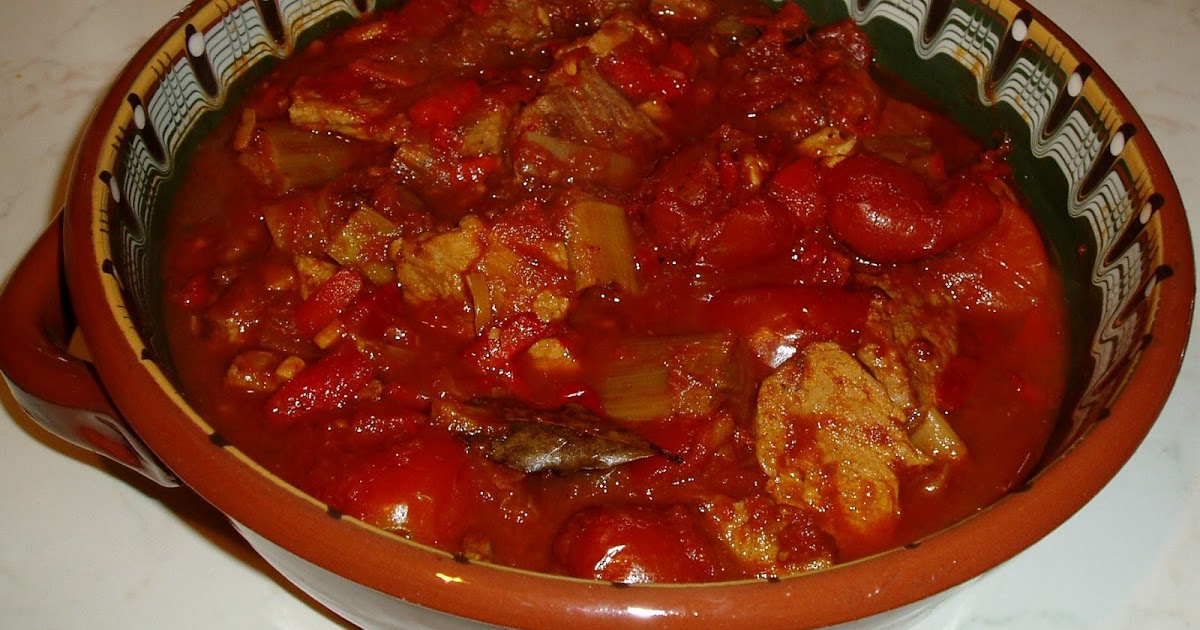
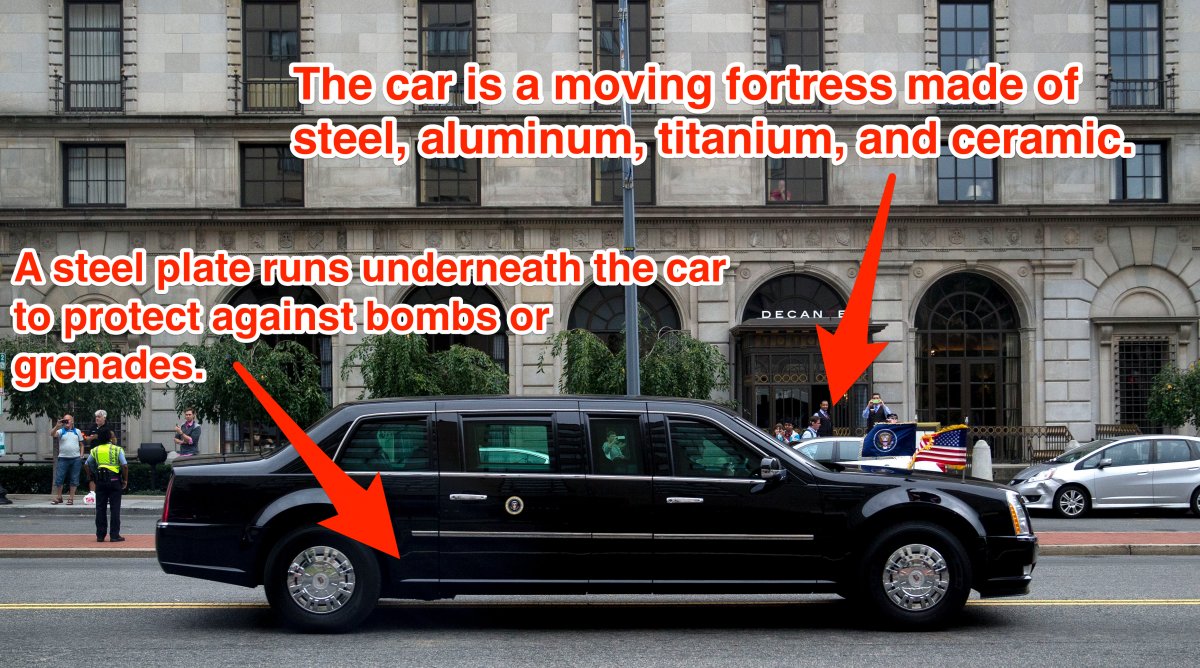
It was the lure of these that brought many seafarers to the shores of India. Long before Christian era, the Greek merchants thronged the markets of South India, buying many expensive items amongst which spices were one. Epicurean Rome was spending a fortune on Indian spices, silks, brocades, Dhaka Muslin and cloth of gold, etc .

       Beautiful old pages about the different variety’s of pepper – black pepper, Ethiopian pepper, Indian pepper (looks like chilli) and more.

It is believed that the Parthian wars were being fought by Rome largely to keep open the trade route to India. It is also said that Indian spices and her famed products were the main lure for crusades and expeditions to the East. Today when spices cost so little, it seems unbelievable that they were once a royal luxury and those men were willing to risk their lives in quest of them.

   Modern and beautiful piece of art – herbs and spices.

Though it was the Dark Ages, but there were rich people who had gold to exchange for pepper and cinnamon. The spices of the East were valuable in those times, during these Middle Ages. A pound of ginger was worth a sheep, a pound of mace worth three sheep’s or half a cow. Pepper, the most valuable spice of all, was counted out in individual peppercorns, and a sack of pepper was said to be worth a man`s life.


Historic spice and herb destinations around the world during the times of Vasco da Gama.

To dig deeper into this, even so interesting, subject would blow the possibilities of my blog. There are specialized ones in the internet and everyone can go deep into details, if like. I will start soon with the first herb in a separate post – the Cilantro or Coriander or…  Stay tuned and click on my blog from time to time.

Veröffentlicht unter History, Information, Lifestyle | Verschlagwortet mit | 2 Kommentare