BMA and BMB

Recently I had to go for a „Bone Marrow Aspiration (BMA) and Bone Marrow Biopsy (BMB)“ at hospital Espanola in Montevideo. Later everyone was asking „Why, Where, How, When and much more“. Most people don’t know about, as I also did not know anything about it before. So I had to dig deeper and get all necessary information.

Here is my story.

These are the answers as far as I can give them. My reason to go for this little surgery was an unusual high concentration of red blood cells, seen during a yearly blood test. This yearly blood test is required by the hospital insurance and is free of charge. After seeing the GP in one of our clinics, one has to meet a specialist in Montevideo who discuss with you allquestions and the procedure. Then you get a referral to the specialized Espanola Laboratory Clinic.

There you will have another blood test, your surgery and your results. The whole procedure is free with our insurance again, except a surcharge (still don’t understand why) for laboratory costs of circa 9.500,–pesos (approx. US$ 330,–). I was told the laboratory test is very extensive and therefore very expensive. Good was that they gave me appointments for blood testing and surgery in one go (same day, one hour difference), so I had to drive only once.

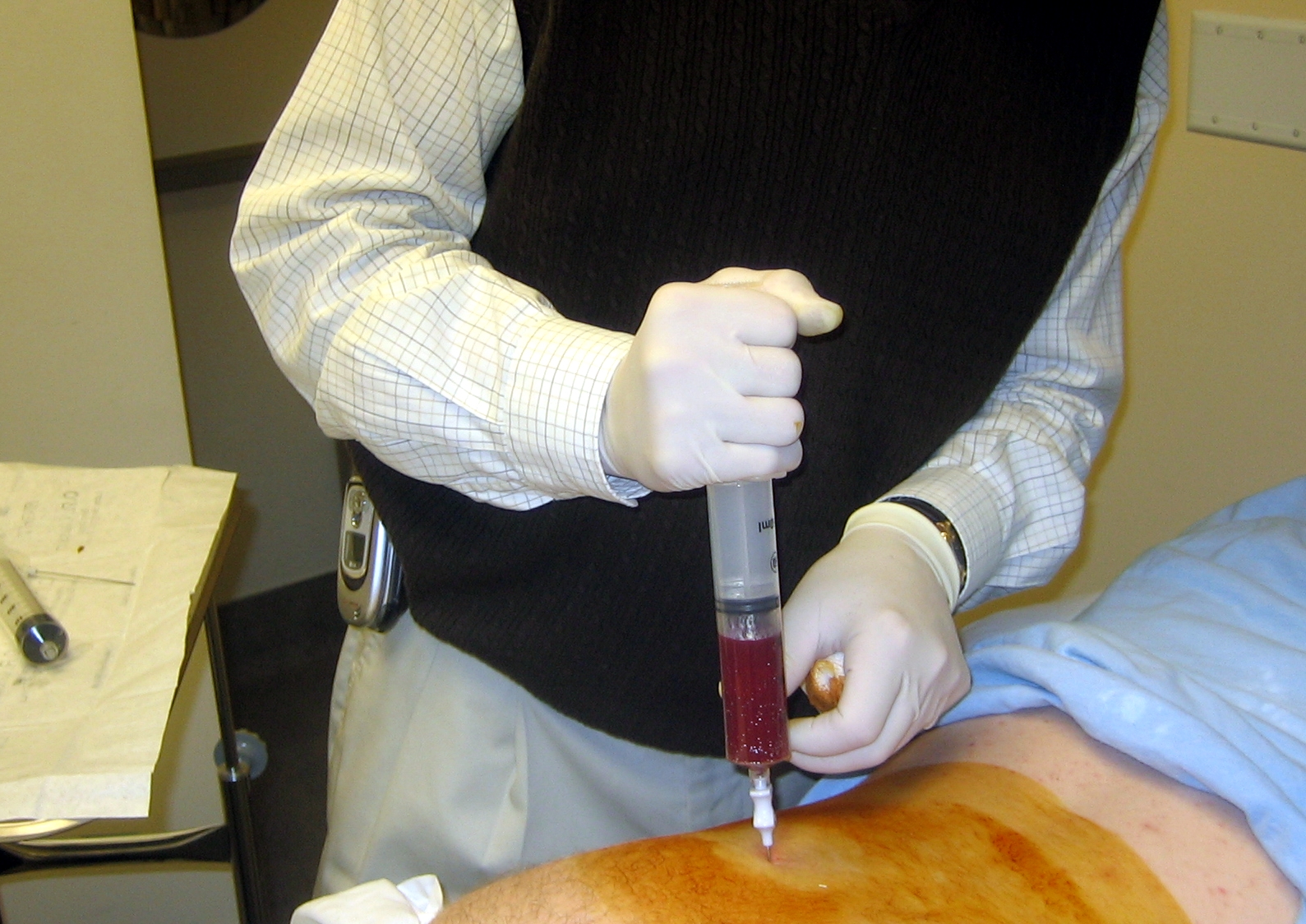
Unbelievable: I had not to wait, was directly – on time – led into a little surgery room and welcomed very warm by a very friendly „Doctora“ ! She first wanted to check out my level of fear against the operation.  After that she decides about a local or a full anesthesia. I had no problems at all and she did everything just by herself, very quick and professional. Except the little stitches from the narcotic needle I had no pain, felt nothing at all. Except later a bit pressure, when she drilled down in the hipbone.

Long story short. 2.00pm blood test, 5 minutes. 2.45pm (the doctora came 15 minutes early) the surgery, all in all 40 minutes. Driving home on my own, the hospital doesn’t like that very much, was no problem at all. 24 hours later I took off the bandage and had no problems since. Finally my results: Very good, they couldn’t find any kind of abnormality. And they didn’t say STOP with RED WINE, its producing to many red blood cells, ha ha. So – that’s it !
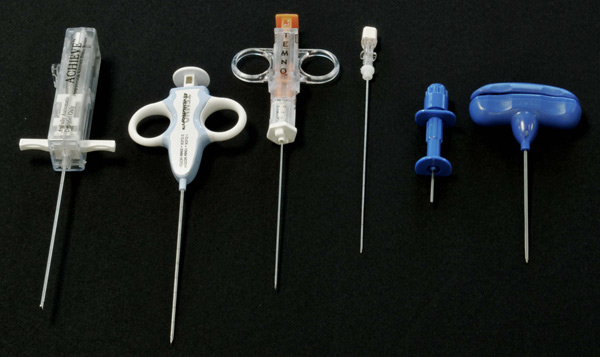
General information for you, if you are interested (used and shortened from Mayo Clinic informations).
Since I had no chance to get pics myself, I used the internet ones.

General.

Bone marrow is the flexible tissue in the interior of bones. In humans, red blood cells are produced by cores of bone marrow in the heads of long bones in a process known as hematopoiesis. On average, bone marrow constitutes 4% of the total body mass of humans; in an adult having 65 kilograms of mass (143 lbs), bone marrow typically accounts for approximately 2.6 kilograms (5.7 lb). The hematopoietic component of bone marrow produces approximately 500 billion blood cells per day, which use the bone marrow vasculature as a conduit to the body’s systemic circulation. Bone marrow is also a key component of the lymphatic system, producing the lymphocytes that support the body’s immune system.
Bone marrow transplants can be conducted to treat severe diseases of the bone marrow, including certain forms of cancer such as leukemia. Additionally, bone marrow stem cells have been successfully transformed into functional neural cells, and can also potentially be used to treat illnesses such as inflammatory bowel disease.

The bone marrow (Latin medulla ossium) is the most important blood-forming organ of man since the end of the fourth embryonic month (the beginning of the medullary phase). It fills the cavities of the bones (medullary cavity and cavities of the spongiosa). In bone marrow, almost all types of human blood are formed.
In the newborn, blood-forming bone marrow is found in the medullary canal of almost all bones, while in adults it is found only in the thoracic, ribs, cranial bones, clavicles, vertebral bodies, and pelvic bone. About half of this mass consists of red bone marrow, the rest mainly from fat marks. In the bone marrow is about 10% of all the blood of the body.
The spinal cord (lat. Medulla spinalis) is not a bone marrow but is a component of the central nervous system of sensitive nerve tissue.
Test Overview

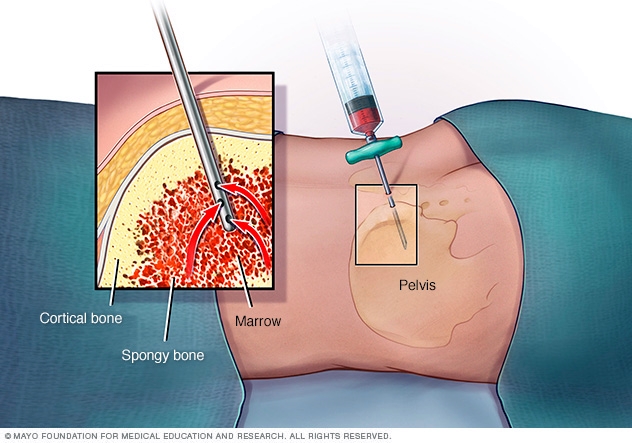
A bone marrow biopsy removes a small amount of bone and a small amount of fluid and cells from inside the bone (bone marrow). A bone marrow aspiration removes only the marrow. These tests are often done to find the reason for many blood disorders and may be used to find out if cancer or infection has spread to the bone marrow.

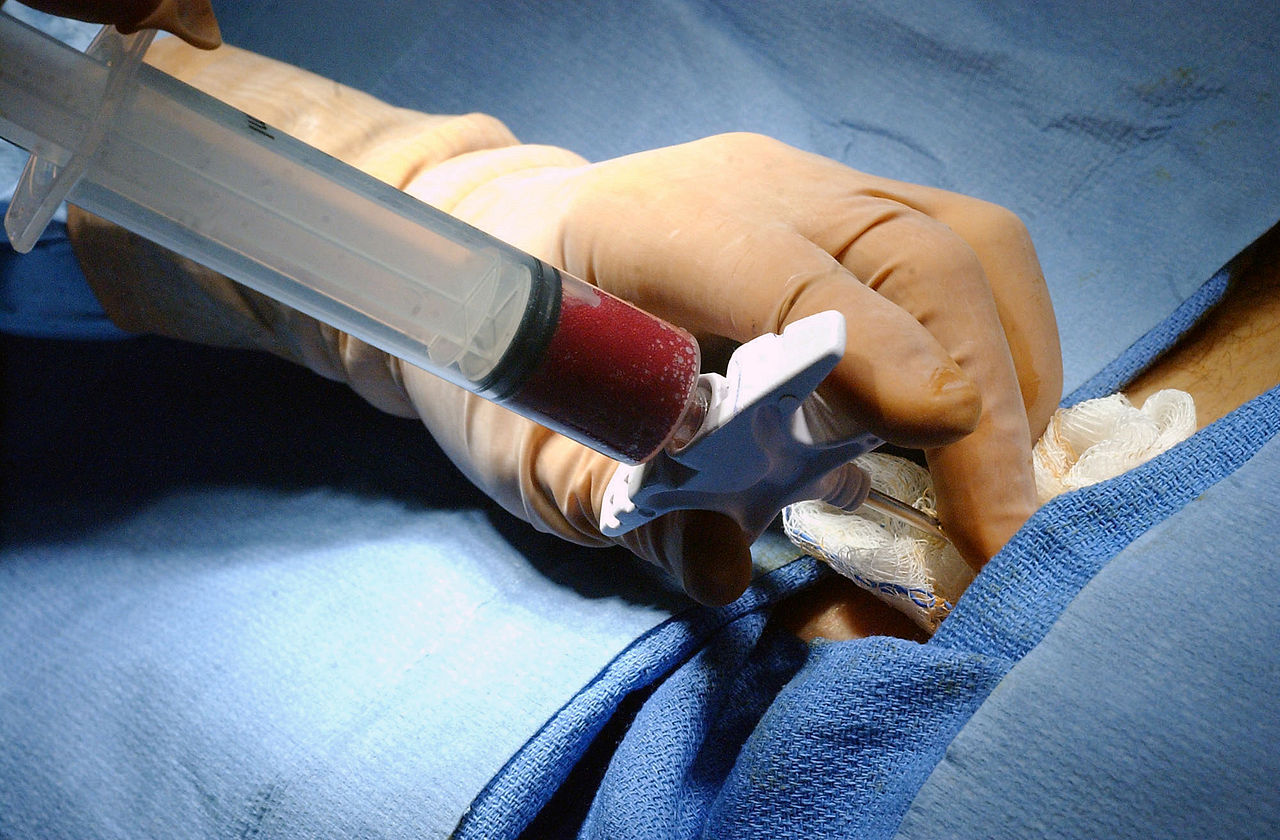
Bone marrow aspiration removes a small amount of bone marrow fluid and cells through a needle put into a bone. The bone marrow fluid and cells are checked for problems with any of the blood cells made in the bone marrow. Cells can be checked for chromosome problems. Cultures can also be done to look for infection.
A bone marrow biopsy removes bone with the marrow inside to look at under a microscope. The aspiration (taking fluid) is usually done first, and then the biopsy.

A bone marrow aspiration can also be done to collect bone marrow for medical procedures, such as stem cell transplant or chromosomal analysis. For a stem cell transplant, bone marrow aspiration will be done at several places on the body (generally from the back of the pelvic bone) to remove enough bone marrow cells for the transplant to work.
Why It Is Done

A bone marrow aspiration, biopsy, or both are done to:

Look for the cause of problems with red blood cells, white blood cells, or platelets in people who have conditions such as thrombocytopenia, anemia, or an abnormal white blood cell count.
Find blood disorders, such as leukemia, certain anemias, or problems that affect the bone marrow, such as multiple myeloma or polycythemia vera.
Check to see if a known cancer, such as Hodgkin’s lymphoma or non-Hodgkin’s lymphoma, has spread to the bone marrow. This is part of what is called staging. It is done to find out if the cancer has spread and how much it has spread. This helps plan cancer treatment.
Find infections or tumors that may start in or spread to the bone marrow. If you have an infection, a culture and sensitivity test of the bone marrow sample may be used to find out which antibiotics will work best to treat the infection.
Find the best treatment for a bone marrow problem. Once treatment has been started, a bone marrow aspiration and biopsy may be done to see if the leukemia cells are gone, which means the treatment is working.
Collect a sample of bone marrow for medical procedures, such as stem cell transplantation or chromosomal analysis.
How To Prepare

You will be asked to sign a consent form that says you understand the risks of the test and agree to have it done.
Talk to your doctor about any concerns you have about the need for the aspiration or biopsy, its risks, how it will be done, or what the results may mean.

Tell your doctor if you:
Are taking any medicines.
Are allergic to any medicine, including anesthetics.
Have any bleeding problems or take blood-thinners, such as aspirin, clopidogrel (Plavix), or warfarin (Coumadin).
Are or might be pregnant.

Arrange for someone to drive you home after the biopsy because you may be given a medicine (sedative) to help you relax. In Montevideo you have to sign your o.k. for it.

How It Is Done

A bone marrow aspiration and biopsy camera is usually done by a hematologist, medical oncologist, internist, or pathologist, or by a specially trained technologist. A laboratory technologist may also help get the sample. This biopsy may be done in your doctor’s office or in a hospital.
You may need to take off all or most of your clothes, depending on what part of the body the biopsy or aspiration is taken from. If needed, you will be given a gown to use during the biopsy. Here in Montevideo they asked to come in a track suit and I just had to lower the pants, because doctora used the hipbone.
During the test

Blood samples from a vein in your arm may be taken before the bone marrow biopsy. In rare cases, you may be given a blood product (clotting factor or platelets) into a vein (IV) in your arm to prevent bleeding after the biopsy.
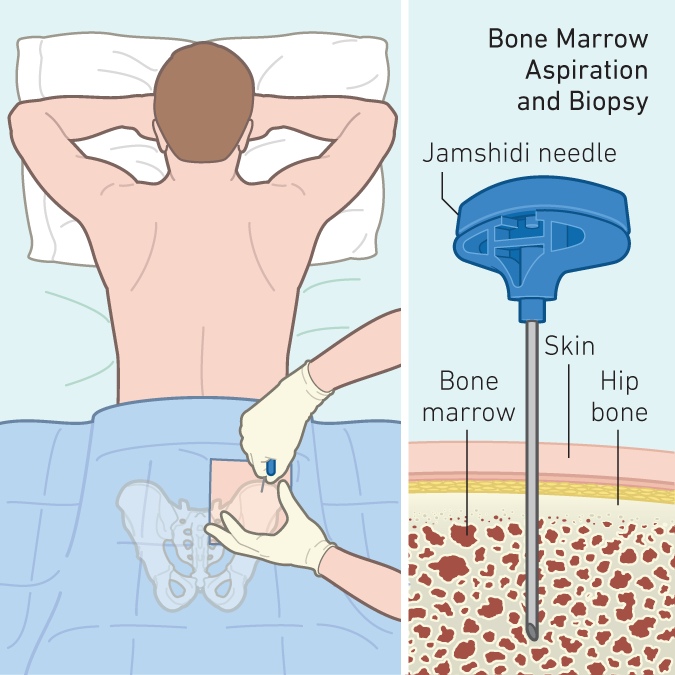
Adults usually have a sample of bone marrow fluid taken from the back of the pelvic bone. In rare cases a fluid sample is removed from the breastbone (sternum camera.gif) or from the front of the pelvic bone. Babies and young children may have the sample taken from the front of the lower leg bone, just below the knee. A bone marrow biopsy is only taken from the pelvic bone.
You may be given a sedative to help you relax. You will lie either on your side or face down on your belly for the biopsy. It is important that you lie still in that position during the biopsy. Was no problem at all.
The skin over the aspiration site will be cleaned with a special solution and a medicine (local anesthetic) will be used to numb the area. Then the aspiration needle will be put through your skin and into your bone to reach the bone marrow. You need to lie very still while the sample is taken. The needle is then taken out. More than one sample may be needed, possibly from more than one place on your body, such as from both sides of the pelvic bone.
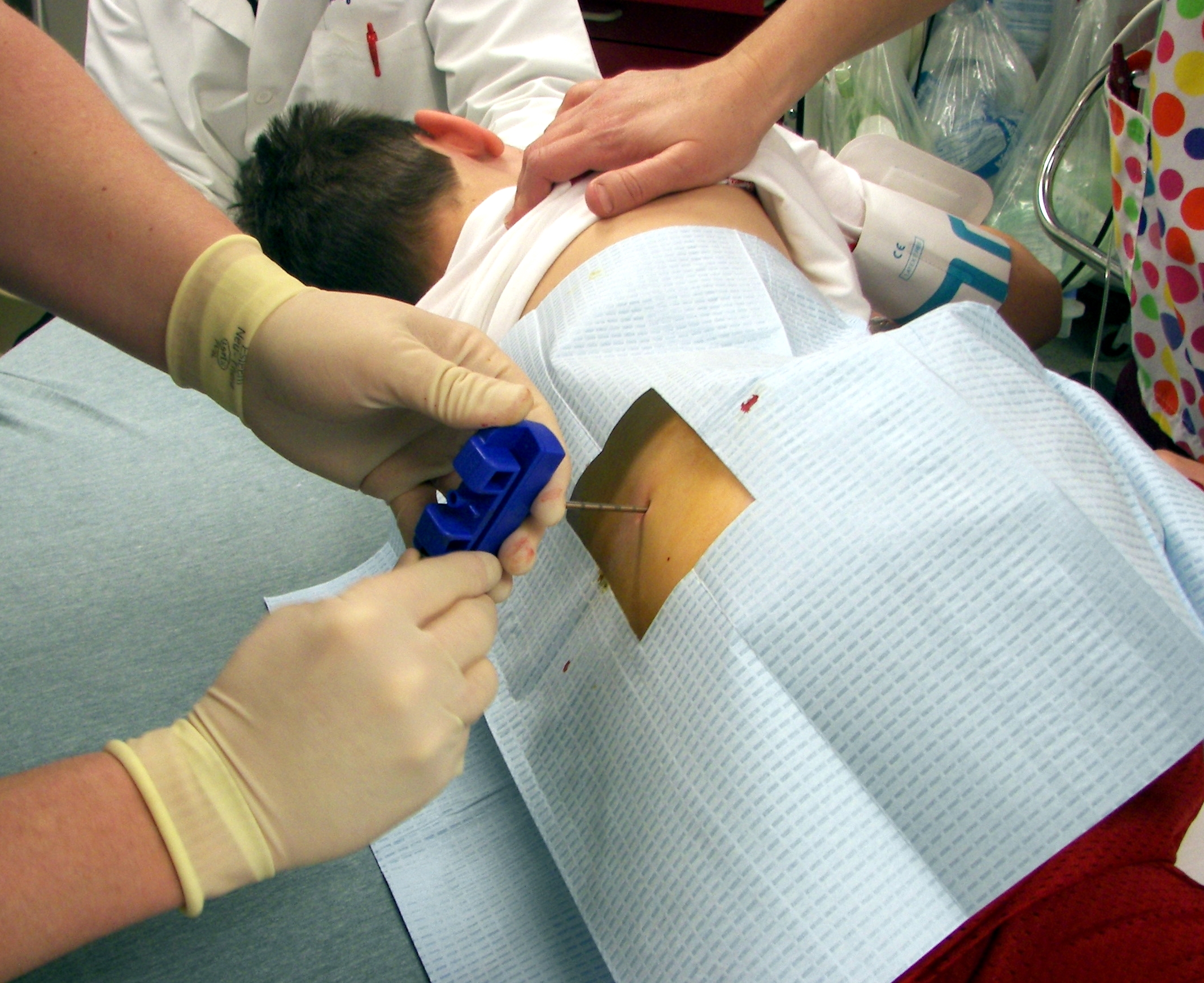
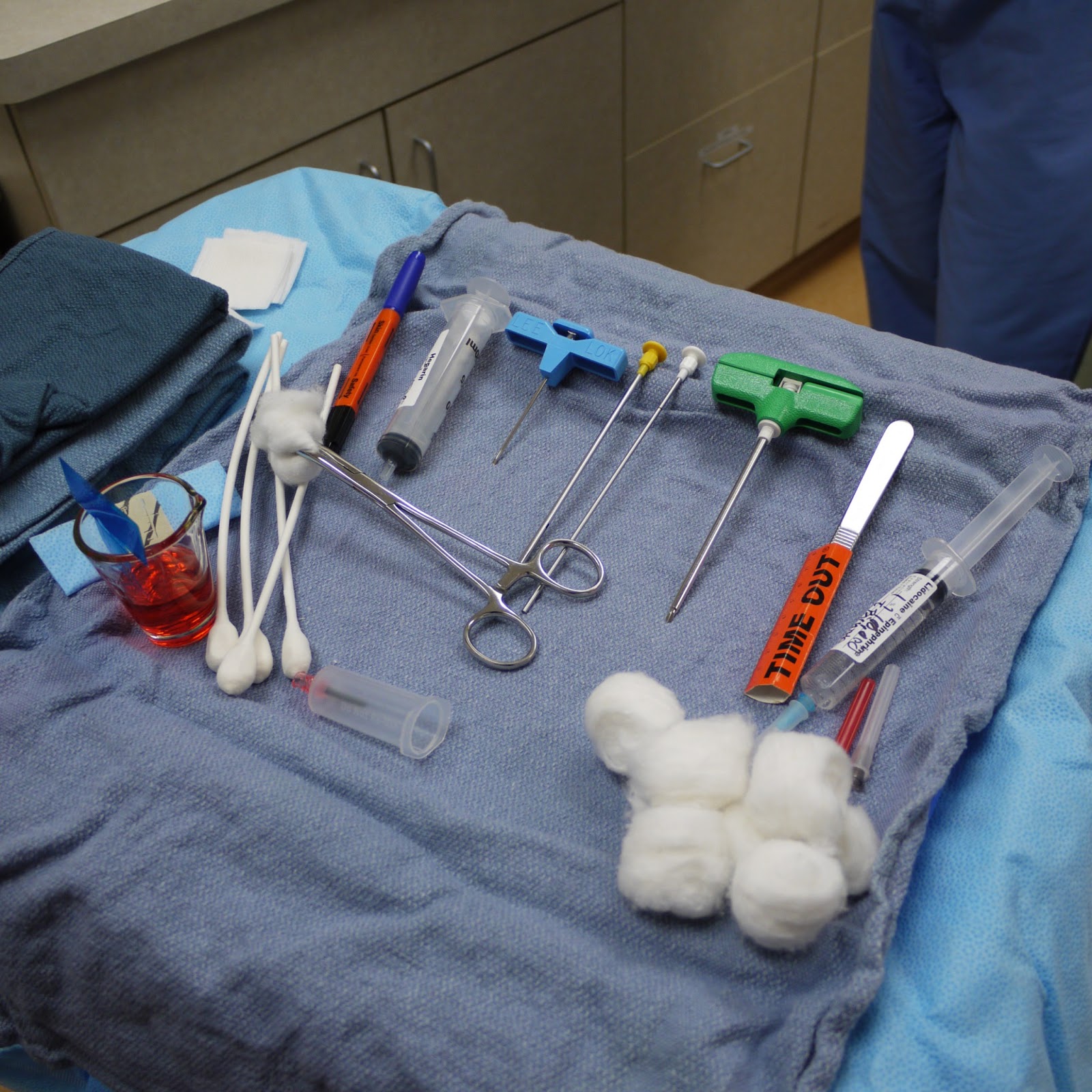
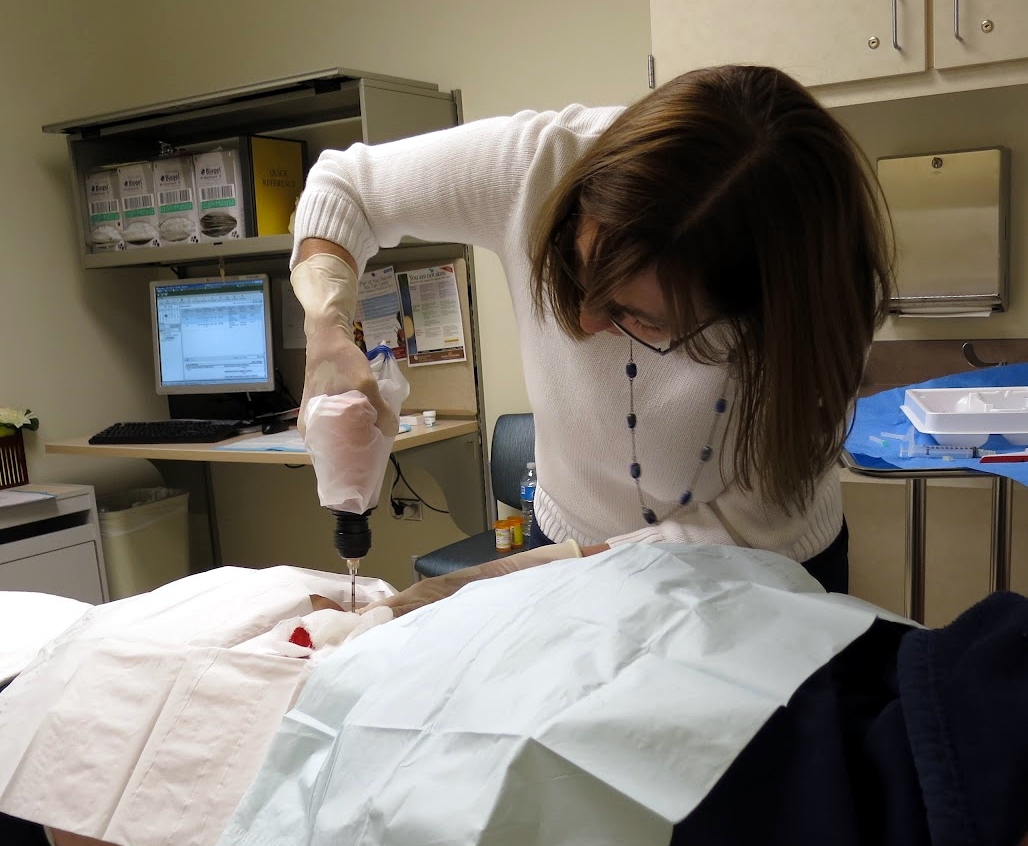
A bone marrow biopsy uses a special tool that twists into the bone. It is normal to feel pressure at the site and hear a crunching sound as the tool twists into the bone.
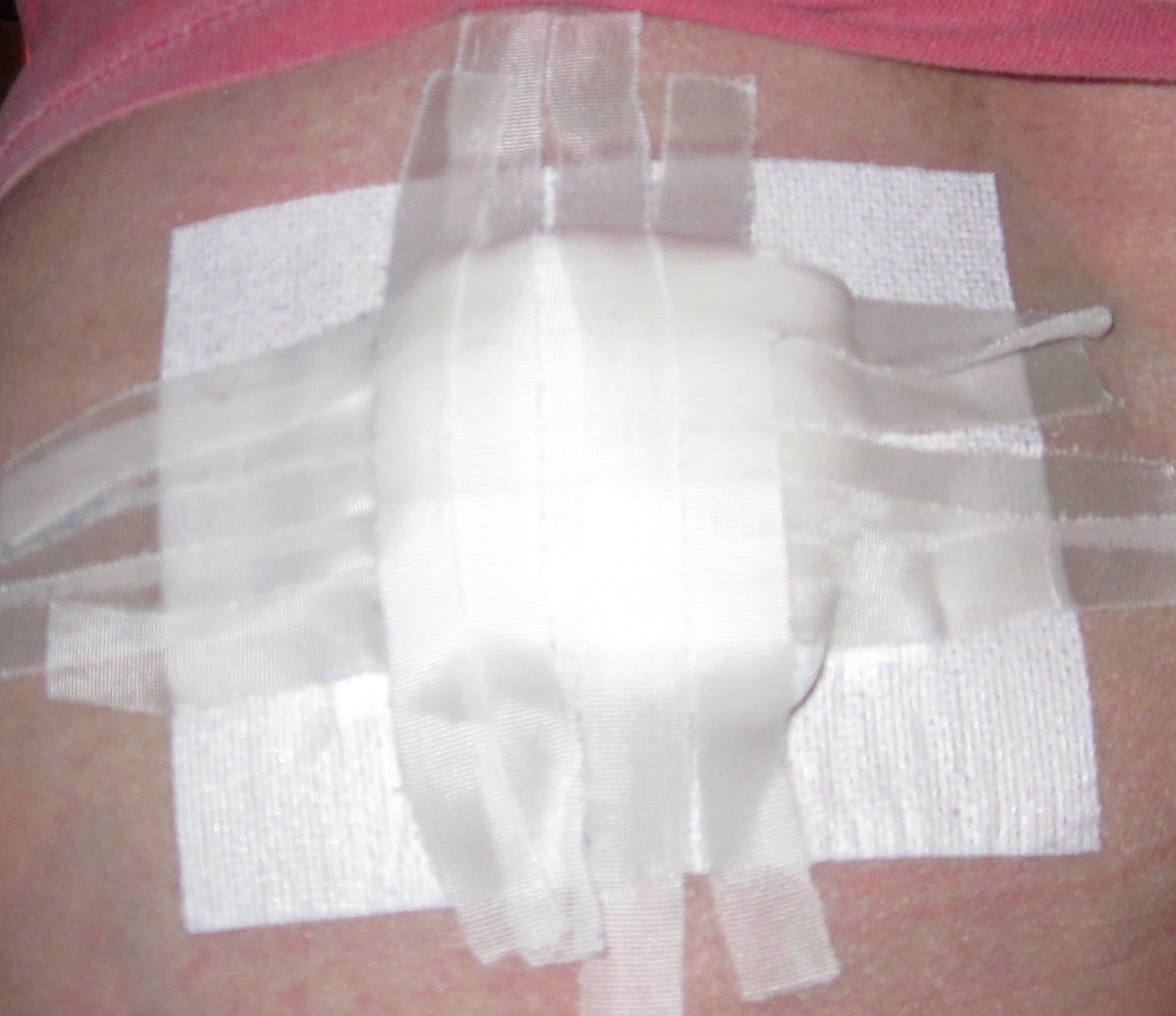
After the samples have been taken, pressure is put on the site to stop any bleeding. A bandage is put on the area.
How It Feels

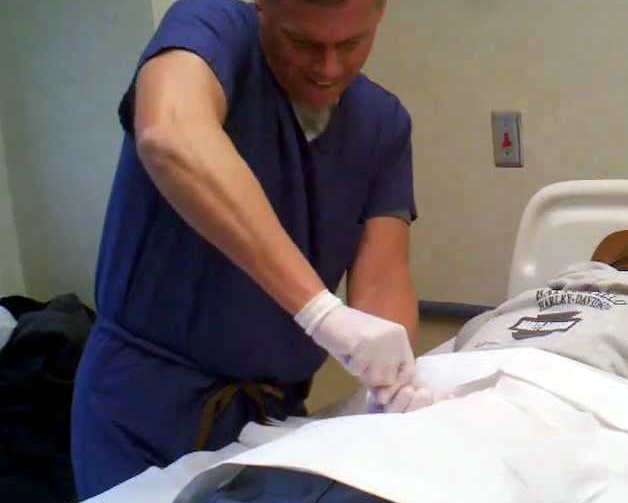
This procedure may be painful, but only for a few seconds. You may feel a sharp sting and burn when the anesthetic numbs your skin over the aspiration or biopsy site. You may hear a crunching sound and feel pressure and some pain when the needle enters the bone. During an aspiration, you may feel a quick, shooting pain down your leg as the sample is taken. It can be, but must not be. And if you are relaxed you will feel less anyhow.

Stem Cell Transplants for Blood Cancers

The biopsy site may feel stiff or sore for several days after the biopsy. You may have a bruise on the site.
Risks

Serious problems from a bone marrow aspiration or biopsy are not common. Problems may include:

Bleeding from the biopsy site. People with bleeding problems have a higher chance for this. If you have bleeding problems, pressure will be put on the biopsy site for at least 10 minutes after the biopsy. In rare cases, you may be given a blood product (clotting factor or platelets) in a vein in your arm before the biopsy to prevent bleeding after the biopsy.
Infection of skin or the bone (osteomyelitis) at the biopsy site.
Injury to your heart, a lung, or a major blood vessel if the sample is taken from the breastbone (sternum). This complication is very rare. Samples are not often taken from the breastbone, so most people do not have to worry about this risk.
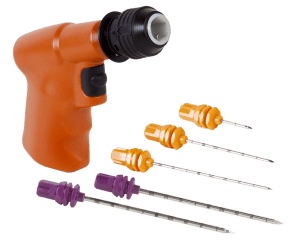
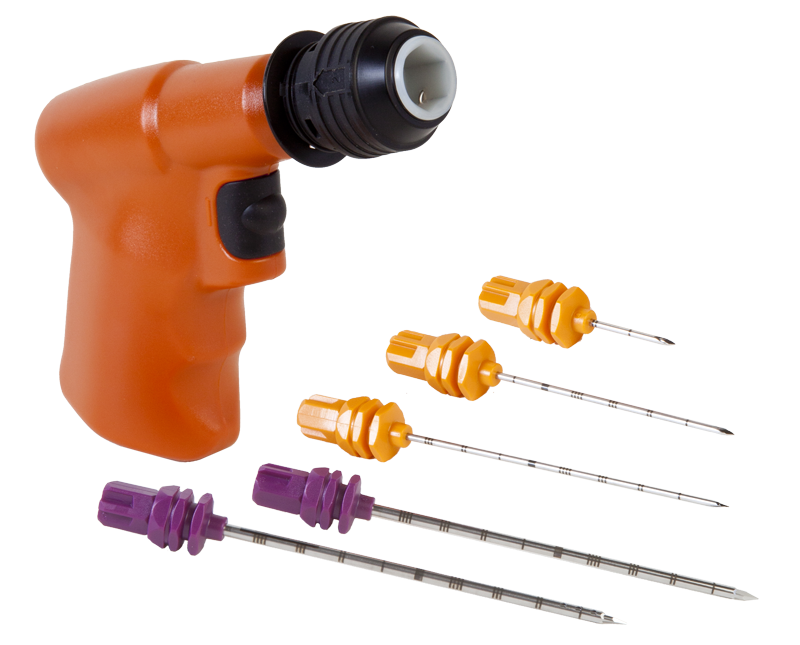
An easier way to drill through the bone is this set of an electric drill. Not so much pressure needed as you see in a pic above.
After the biopsy

You will lie down for 30 to 60 minutes after the biopsy so the site can be checked for bleeding. You will be released home with a pressure bandage, which feels uncomfortable. Best is to lay down on it. If you had a sedative, you will need someone to drive you home after the biopsy.
You may feel sore at the biopsy site for several days. Ice packs to the site, walking, and pain medicine, such as acetaminophen (Tylenol), can be used to help you feel better. Be safe with medicines. Read and follow all instructions on the label.
Call your doctor immediately if you have:

More tenderness, pain, redness, or swelling at the biopsy site.
A fever.
Bleeding or drainage, such as pus, from the biopsy site. If you are bleeding, put pressure on the site and call your doctor.
Results

A bone marrow aspiration and biopsy removes a small amount of bone and a small amount of fluid and cells from inside the bone (bone marrow). It is often done to find the reason for many blood disorders and may be used to find out if cancer or infection has spread to the bone marrow.

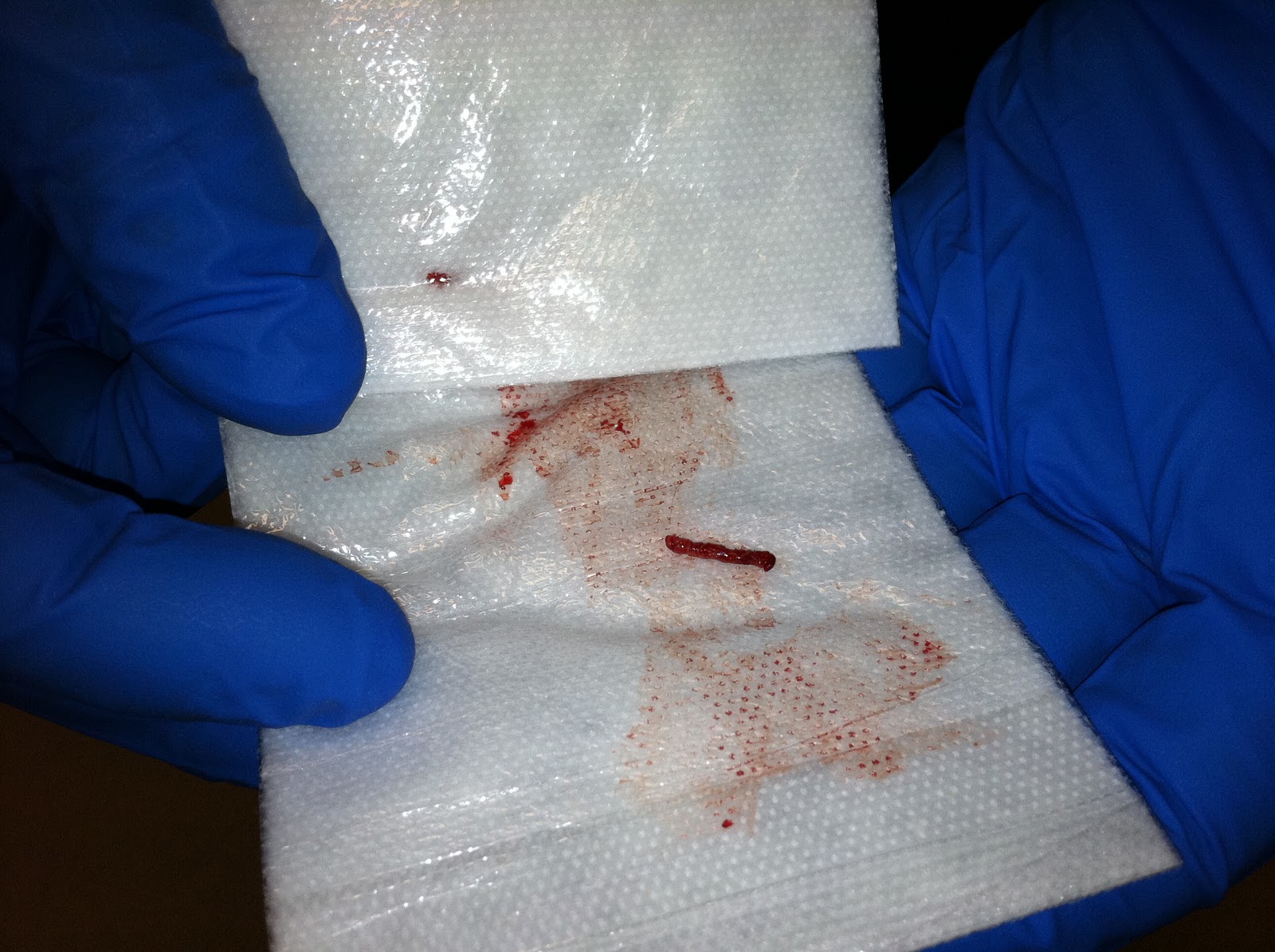
Biopsy results are usually ready in 1 to 7 days. But it may take several weeks to get the results if genetic tests are done on the sample. The bone is put into a solution that breaks down its calcium before it is stained. The bone marrow sample is often treated with special dyes (stains) to see any changes in the blood cells more clearly.
Normal results:

The marrow has normal amounts of fat, connective tissue, and iron. Normal numbers of both mature and immature (growing) bone marrow cells are present.
No signs of infection are seen.
No cancer cells, such as leukemia, lymphoma, or multiple myeloma, are seen.
No cancer cells have spread from other cancer sites, such as breast cancer.

Abnormal results:

The cells in the bone marrow do not look normal.
There are too many or too few bone marrow cells. The bone tissue does not look normal.
Too much iron or too little iron (iron deficiency anemia) is seen in the bone marrow.
Signs of infection are seen in the bone marrow.
Cancer cells, such as leukemia, lymphoma, or multiple myeloma, are seen.
The bone marrow has been replaced by scar tissue.
What Affects the Test

You may not be able to have the test if you:

Have bleeding problems or are taking blood thinners such as aspirin, clopidogrel (Plavix), or warfarin (Coumadin).
Can’t be still during the procedure.

Sometimes not enough bone marrow fluid is collected in a bone marrow aspiration. This is called a dry tap. If this happens, a biopsy to obtain bone marrow tissue is usually done.

What To Think About

If you have an infection, a culture and sensitivity test of the bone marrow sample can be done. If the infection is caused by a bacteria or fungus, the sensitivity test will show which antibiotics will work best to treat the infection.
Normal bone marrow in one site does not mean that all sites in the body are normal.

That’s all to say at the moment. All in all the whole procedure is easy, quick and nothing to worry about. Modern clinics are prepared for such an treatment.
Veröffentlicht unter Information, Lifestyle, Uruguay | Verschlagwortet mit | Hinterlasse einen Kommentar

Rice Creation

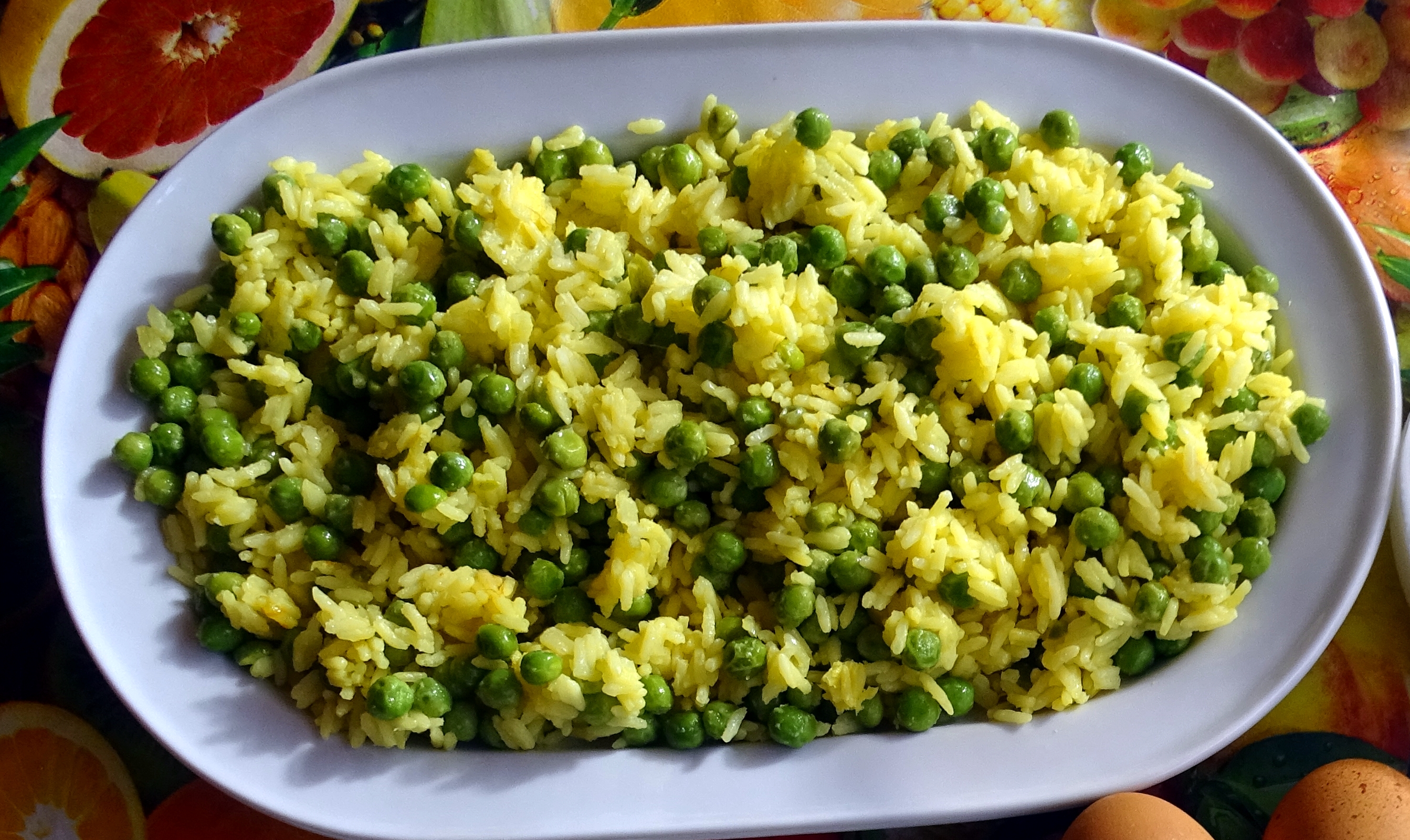
Last weekend we had a nice grilled salmon with horseradish-cream sauce and aside some delicious saffron-rice with peas. A good portion rice was leftover. What to do with it ? My normal decision is „fried rice“, not to bad, but this time I wanted something different.

The rice was already cooked and I only had to add „something“. So, I went creative and came up with the following recipe, once a nice vegetarian meal.

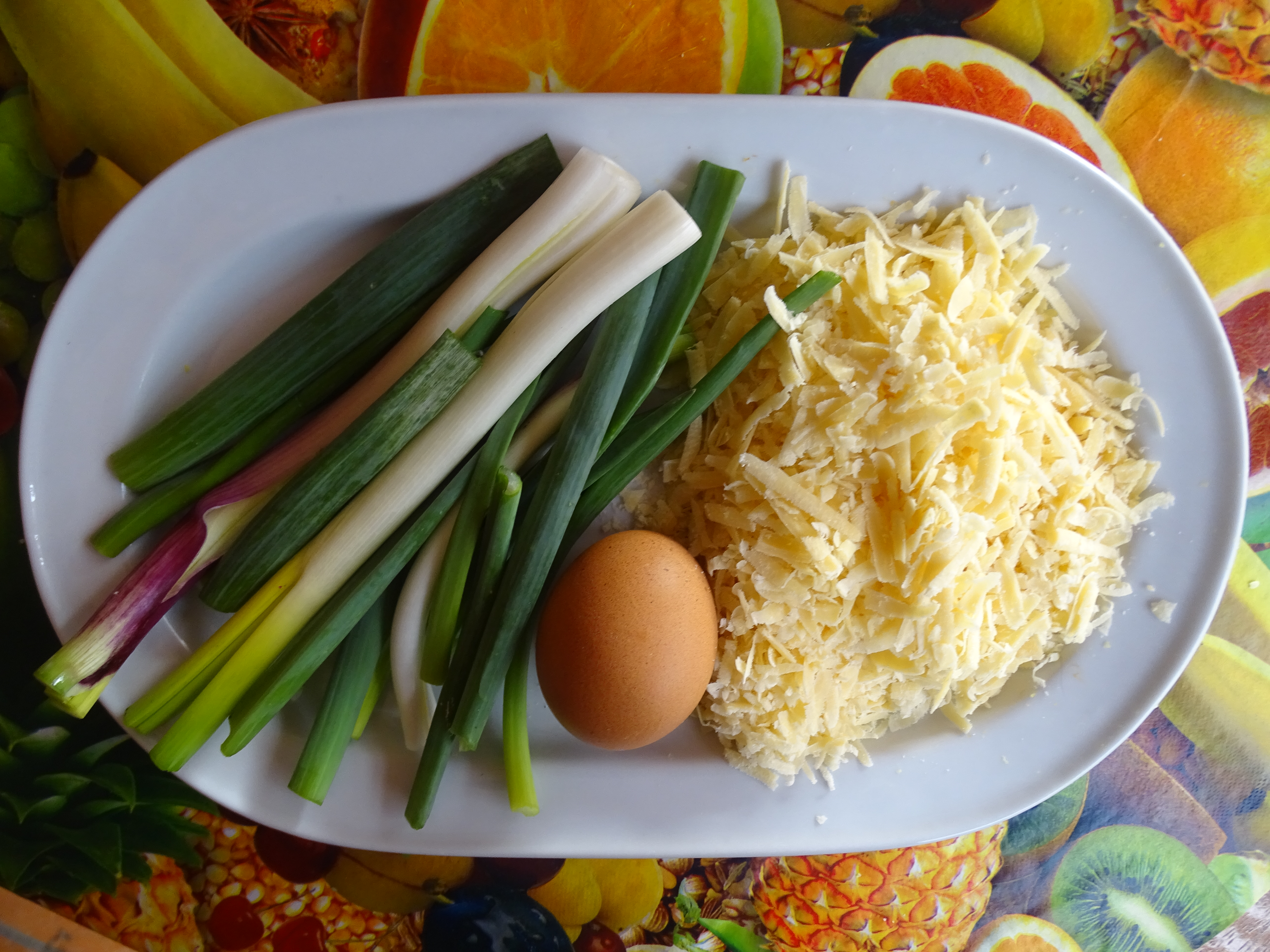
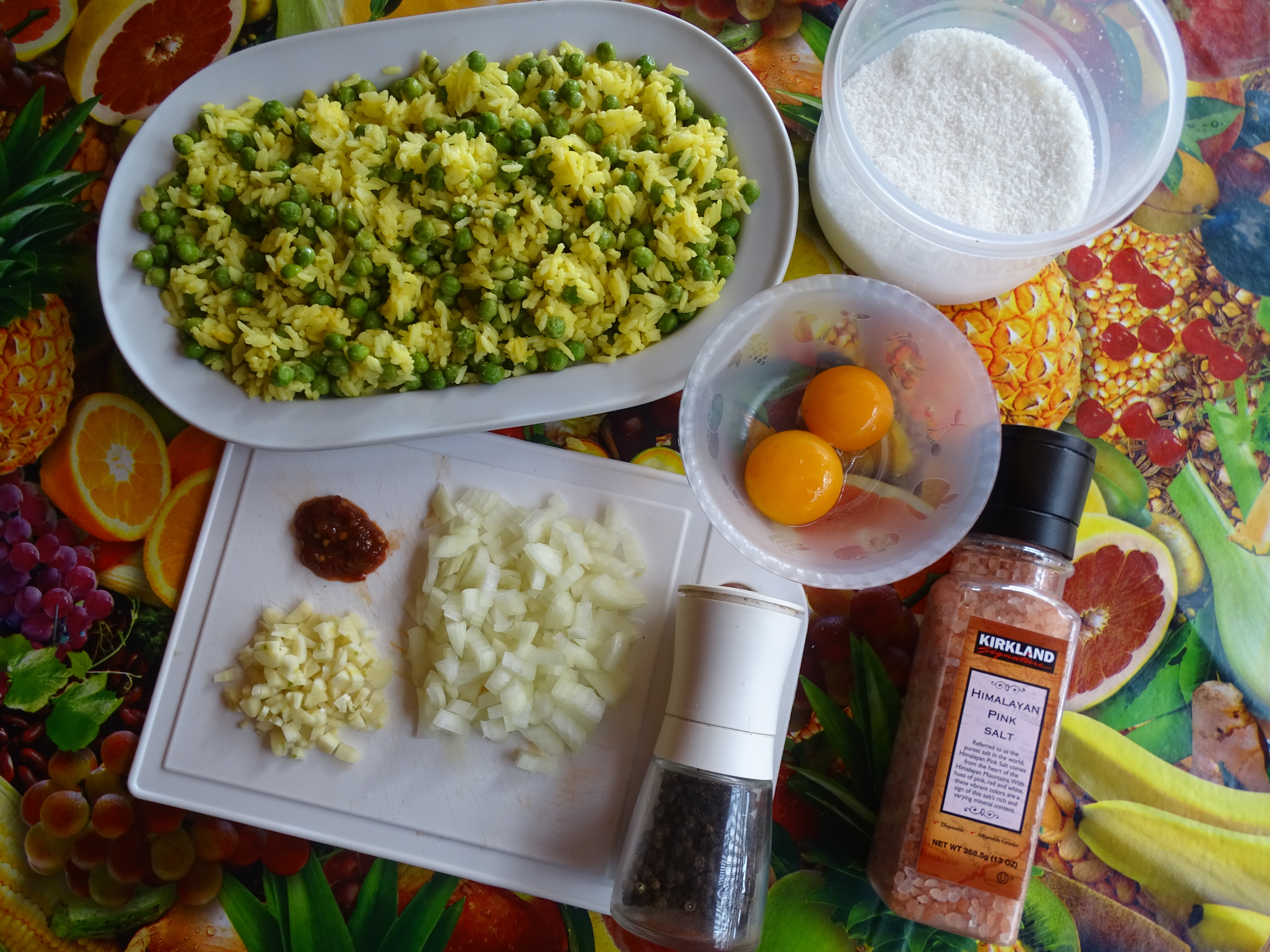
         All the ingredients, pretty easy – because they are anyway in the kitchen available.

Ingredients.

250g rice, best is to have a risotto rice
3 egg yolks
1/2 cup of shredded Parmigiano cheese, or other „spicy“ cheese
100g green vegetables, like peas, broccoli, beans etc.
3 cloves of garlic, minced
1 medium white onion, chopped
oil to poach and bake
1 teaspoon of hot chilli paste, like Sambal Oelek
Salt and pepper to season
grated coconut, as much as you like

  
Mixing cold and hot items together separately and combine later if cooled.

How to do.

Cook your rice as you usually do, let it cool to room temperature.
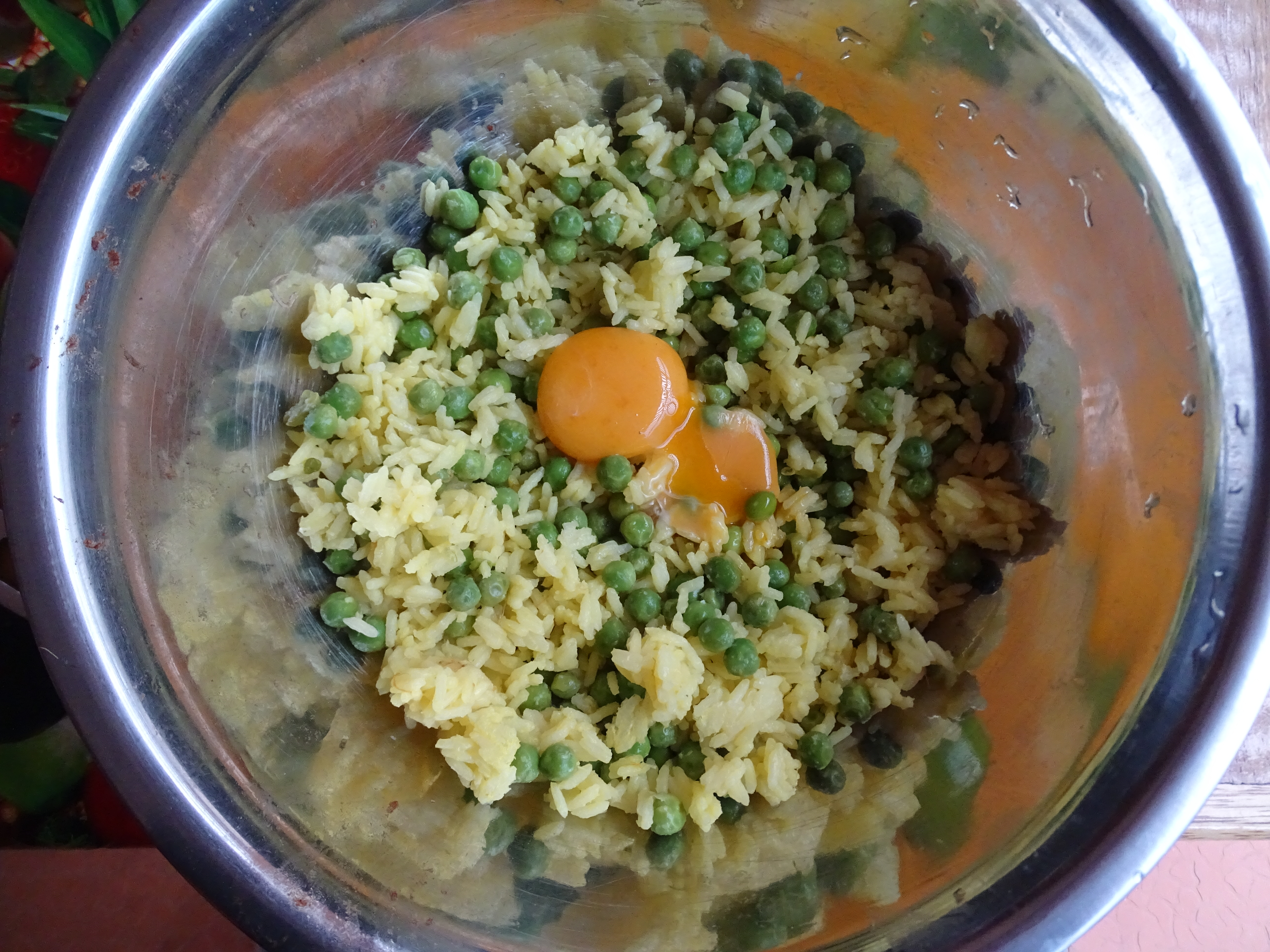
Then mix in 2 egg yolks and the Parmigiano (cheese).

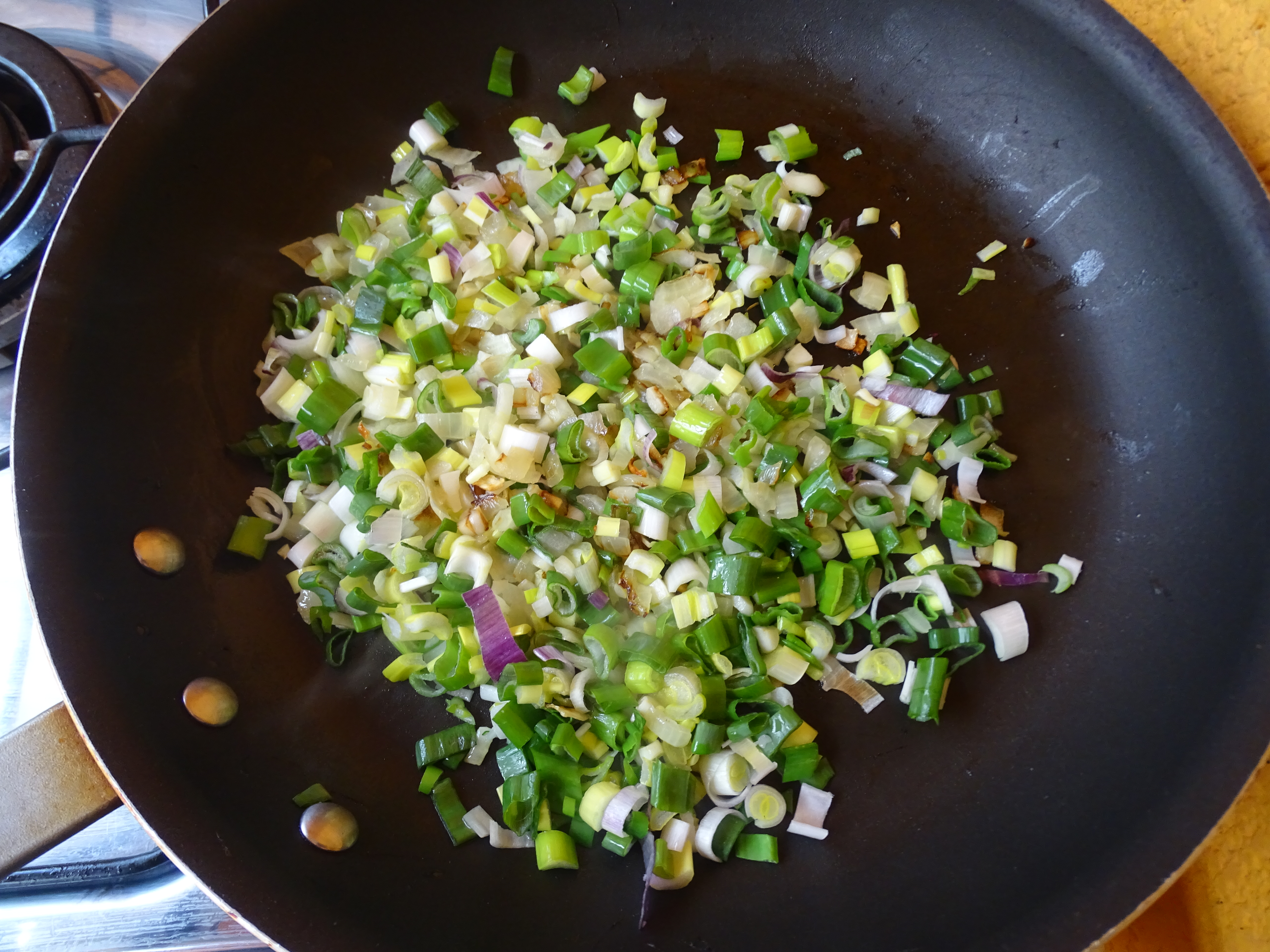
Poach the onions and garlic in oil till it turns golden.
Stir in the onion mixture the chilli paste.
Then stir in your vegetables and heat through.
Then the whole mixture should cool to room temperature.

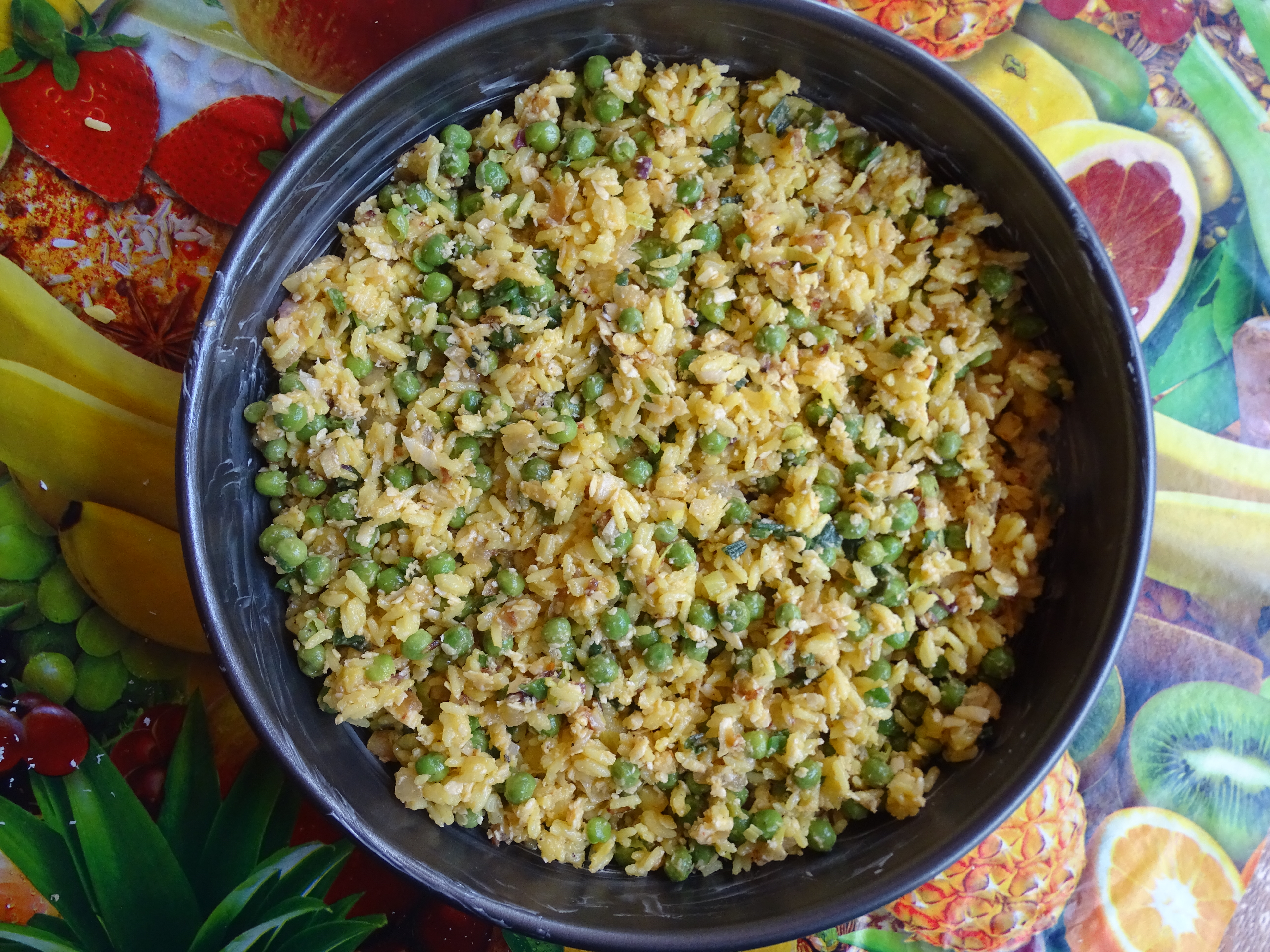
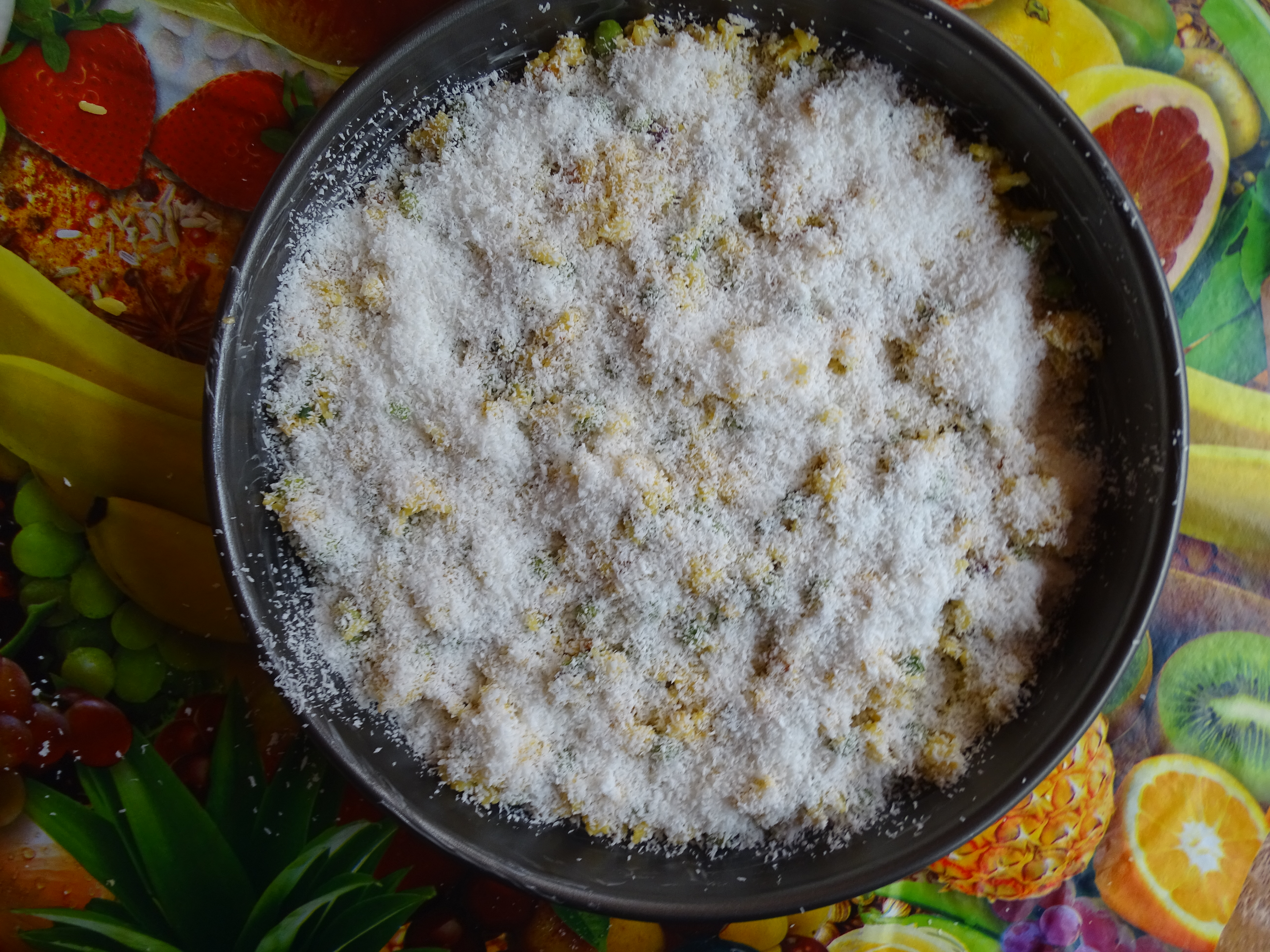
     Filled the buttered tin and sprinkled with grated coconut.  Pics will supersize if you click on.

Now you bring together the veggie-mixture and the rice, put the 3rd egg yolk in, season with salt and pepper to your liking and stir well.

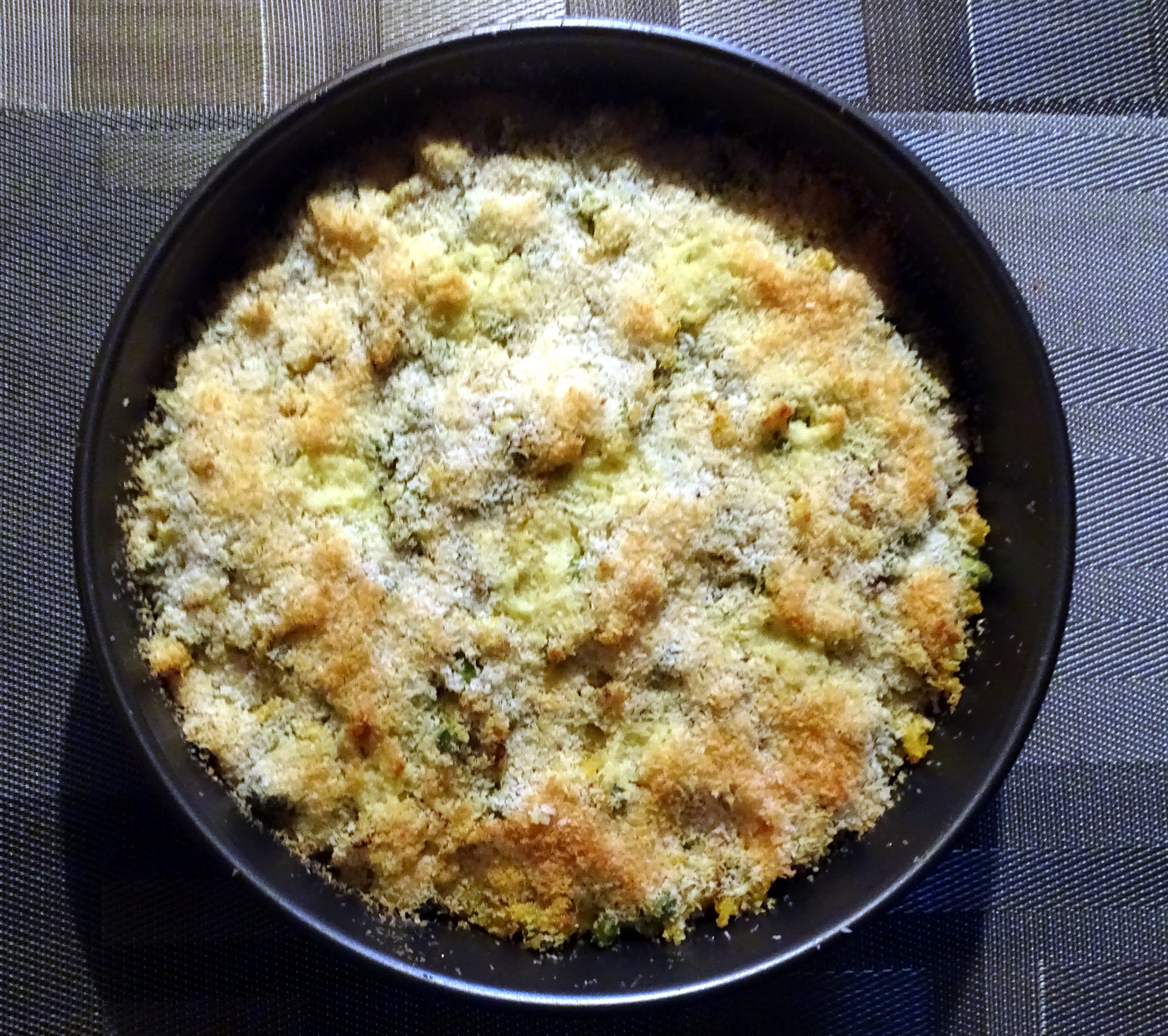
Now you have two ways to finish your dish. I used the easier one. I put the complete mixture in a buttered cake-tin, sprinkled generous with the grated coconut and baked it in an oven (preheated to 180 C, 350 F) for 20 minutes or till golden brown on top.

  Delicious golden brown rice creation.

The second method can be, that you form little patties (about 7cm – 3inch diameter and
1 1/2cm – 1inch thick). Coat them with the shredded coconut and bake them in a well oiled pan till they are golden brown.

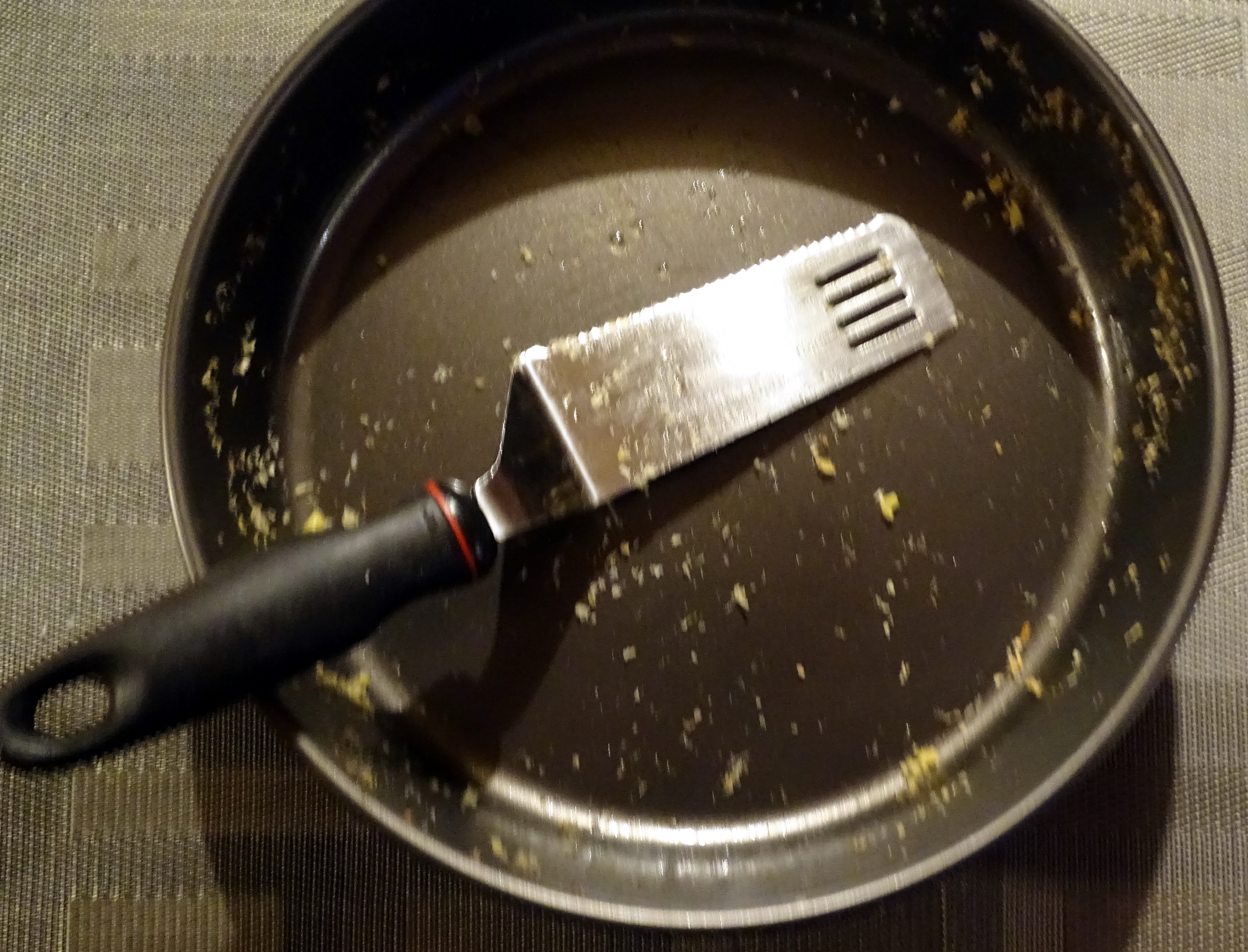
  Final result – no more words needed, right ?

Tips.

Serve this rice dish hot with some green or mixed salad. The heat of above recipe is moderate. If you like it more spicy (I do) just double the amount of chilli paste.
Up there you will see spring onions on the plate. I used them additional, because the rice and peas were ready and I wanted more greens inside.
Grab a glass of your favorite wine and ENJOY !!

Veröffentlicht unter Recipes | Verschlagwortet mit | 6 Kommentare

Roast Leg Of Lamb

Sheep have had a long history as part of the culinary delights of the world, whether you think of the ubiquitous roast mutton that permeates British culture, or the sheep that were in the manger with Joseph and Mary when the Christian Messiah was born, sheep have been with us a long time. The most popular of sheep based dishes, the roast leg of lamb, rich, savory, and all too often served with mint. It’s hard to go wrong with a good roast leg of lamb. Pic above from wallart.
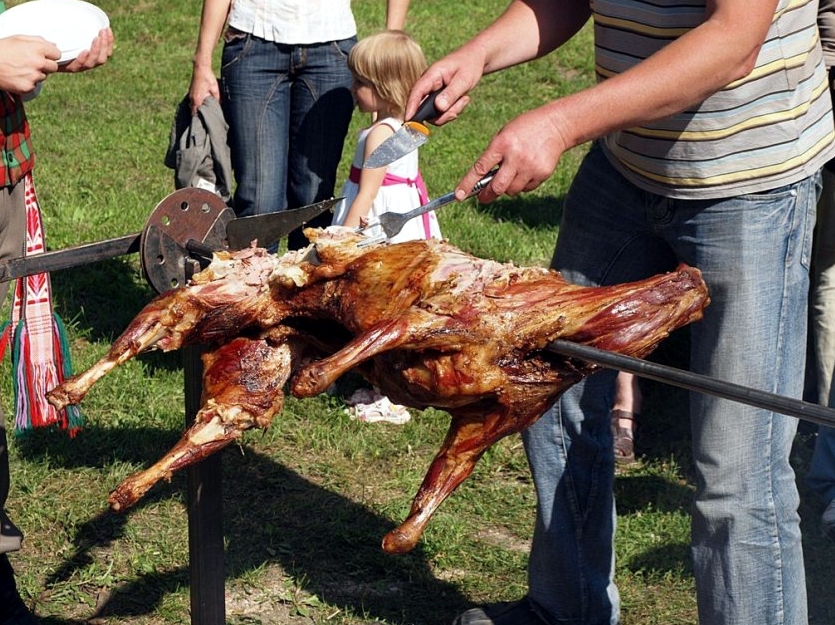
  For thousands of years people enjoy roasted lamb from the open fire spit.
History of roasted leg of lamb.

When we say sheep have been with us for a long time, we mean a really long time. The origin of the domesticated sheep goes back to 11,000 BC in Mesopotamia, and share the distinction of being one of the first animals domesticated by mankind. These sheep were known as mouflon, and weren’t quite the woolly sheep we know today. They were raised just for their meat, milk, and skin for parchment and vellum.

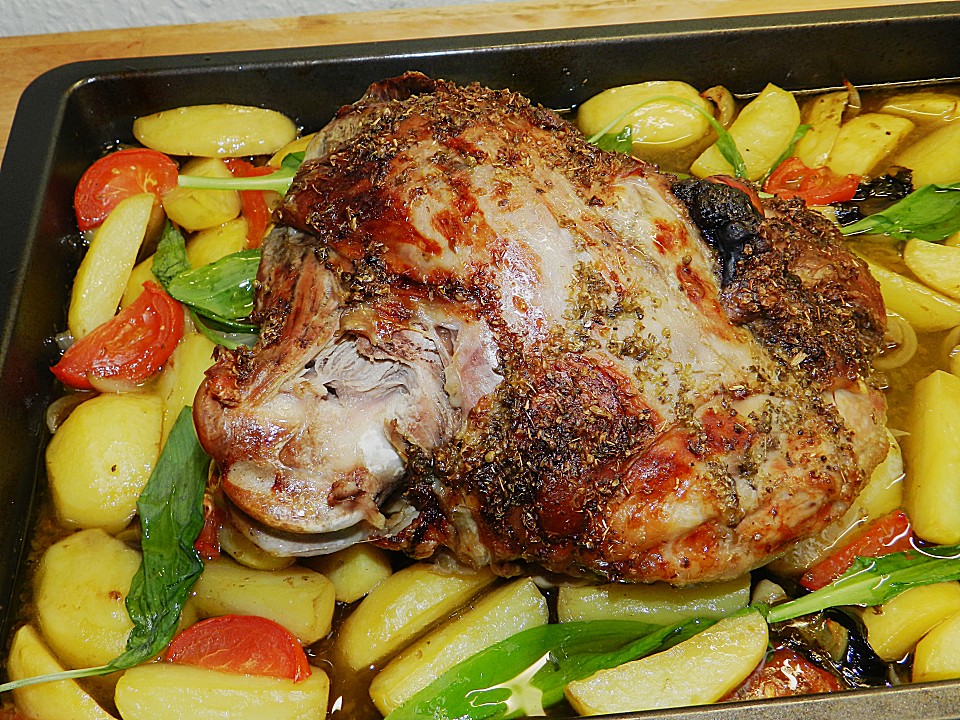
  This is how people like their lamb nowadays. The roasted leg on a bed of roasted vegetables.

In fact, the wool that we so often think of sheep for today wasn’t an important part of their use until 6000 BC in Iran.
What roast leg of lamb reminds us of, is that when we indulge in this wonderful dish, we’re sharing a meal that our ancestors have shared for thousands of years. Mutton and sheep’s milk have a staple protein since we first transitioned from hunting and gathering to an agricultural lifestyle.

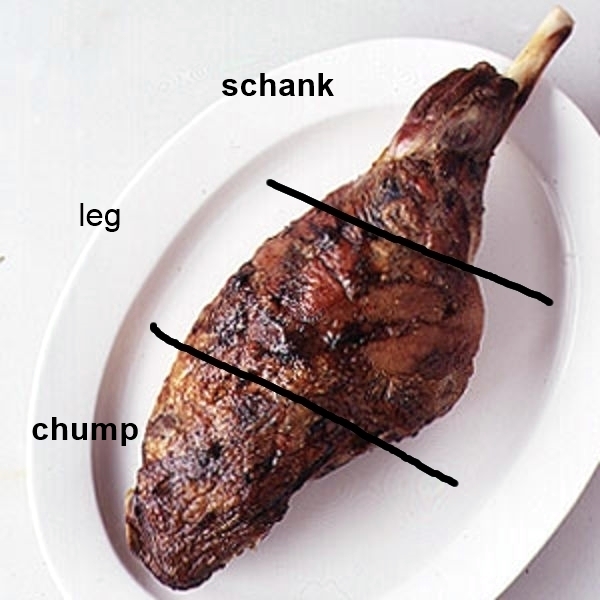
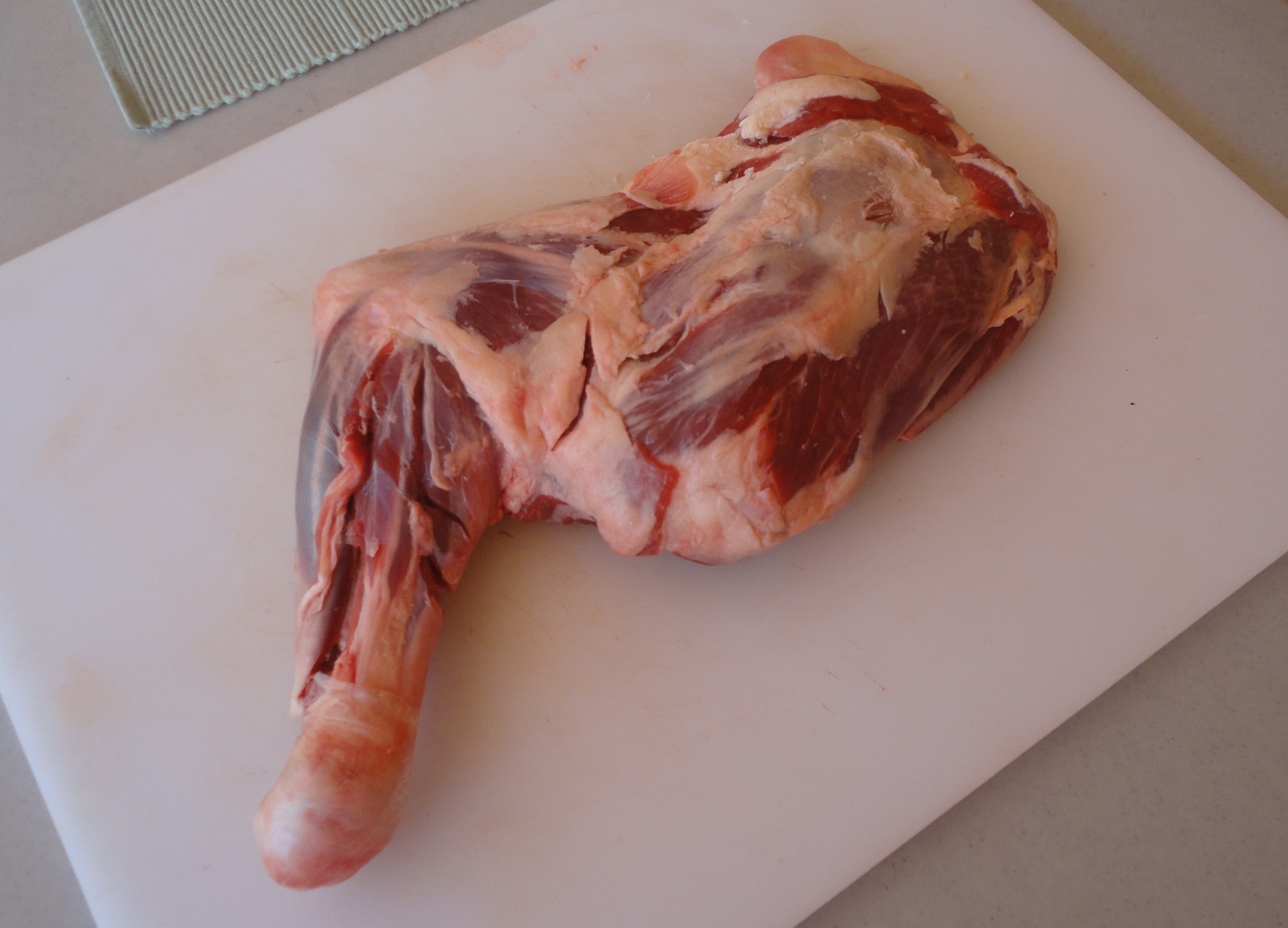
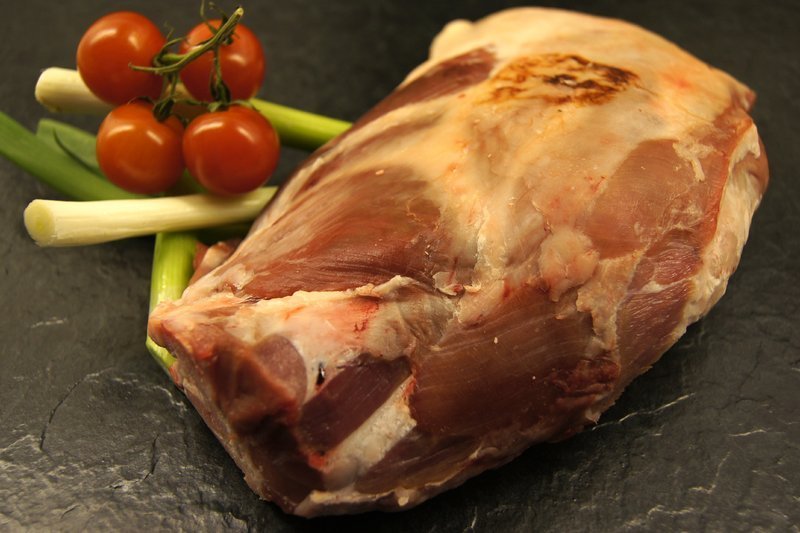
  Roughly described parts of the „whole leg of lamb“. The shank is often served separate in restaurants. The shank with the leg is mostly sold by butchers. The chump has the most meat and is mostly sold separate. In Uruguay I by the „whole leg of lamb“, ideal is a weight around 2-2 1/2 kilo’s. Legs around 4kg and more are not lamb’s anymore. Better to buy 2 smaller ones then 1 heavy old mutton.

Now mutton is a much-loved meat, an important staple in cultures all over the world, while their wool is vital to many an economy. So a roast leg of lamb honor this noble animal and its contribution to the human culture!

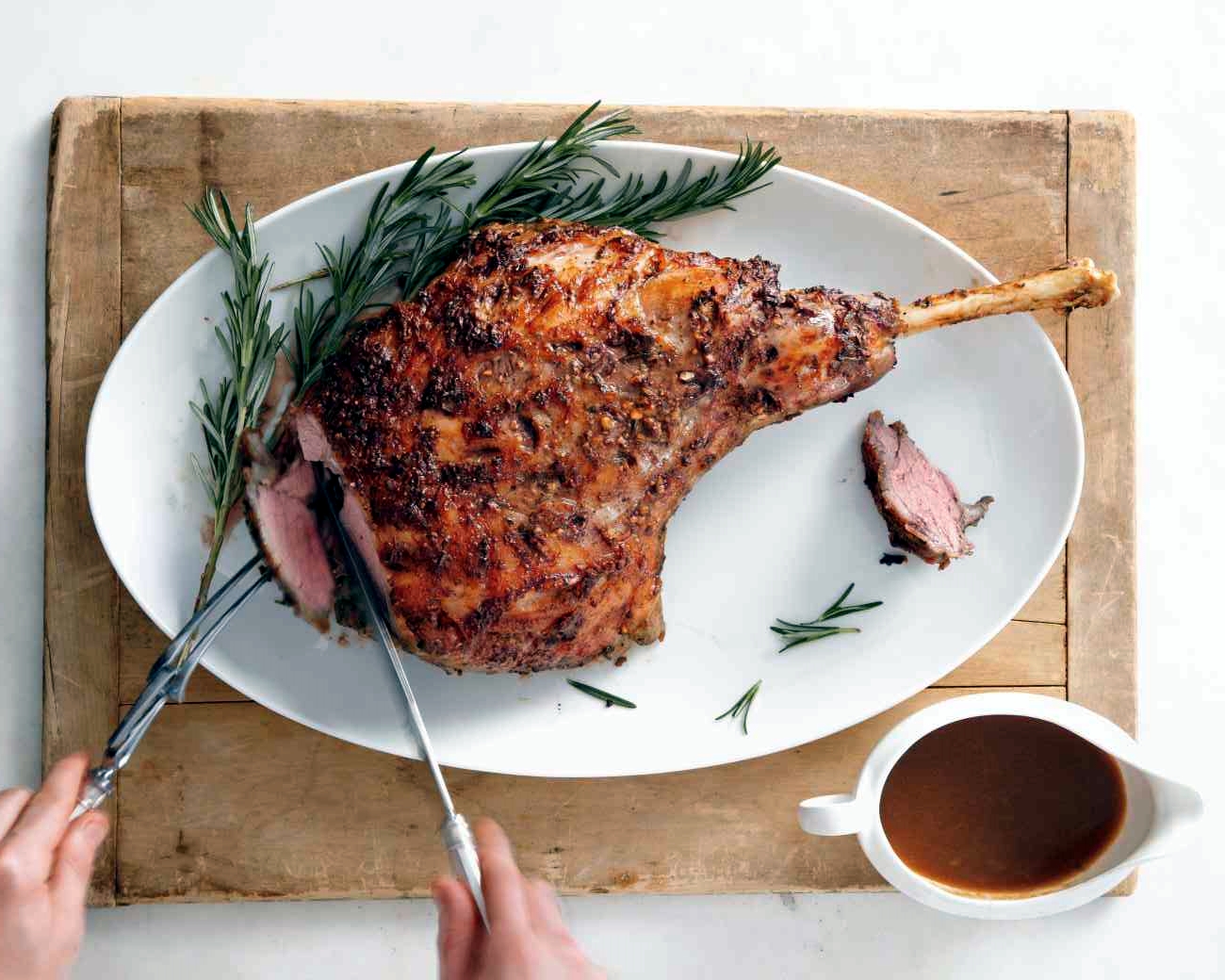
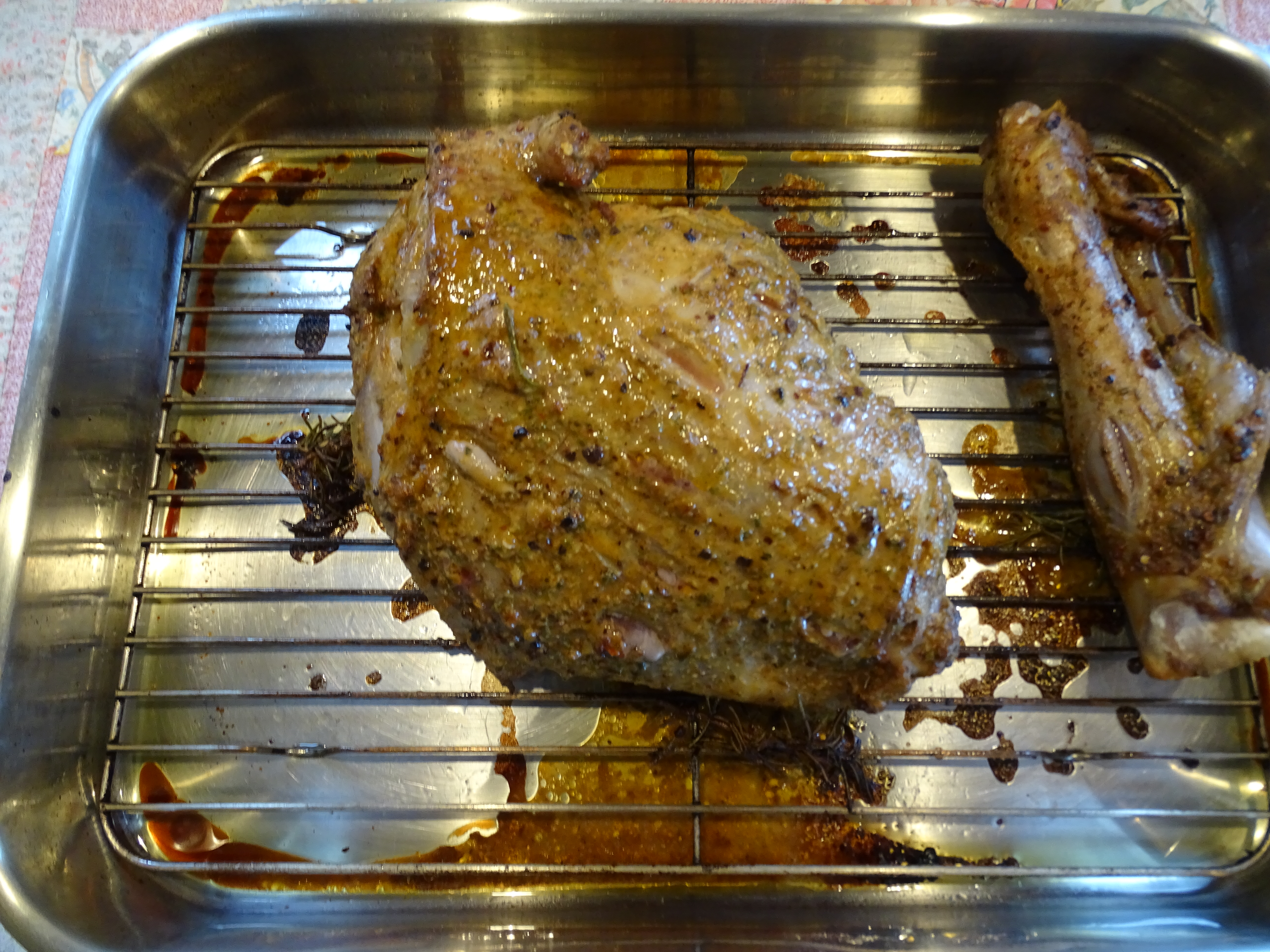
This is a delicious „whole leg of lamb“. Shank, leg and chump are roasted as one piece. Soft-pink and still juicy. Enjoy pic after clicking on to supersize.

Easy way to roast a leg of lamb.

How best to honor it than by indulging in a delicious dish of Roast Leg of Lamb. If you’ve never made a roast leg of lamb, it’s remarkably simple. Simply place it in a roasting pan and rub it down with olive oil, then give it a solid dusting of salt and pepper. Broil it in the oven for 5 minutes, about 220C (450F), flip it over and broil it again, and then apply a healthy measure of rosemary and garlic. Cover it with aluminum foil, and roast it for one hour at 180-190 C (350-375 F). Don’t forget to give it about 10 minutes to rest. Voila, you now have a magnificent roasted leg of lamb, and you and your family can rejoice!

Or, do it on your BBQ.

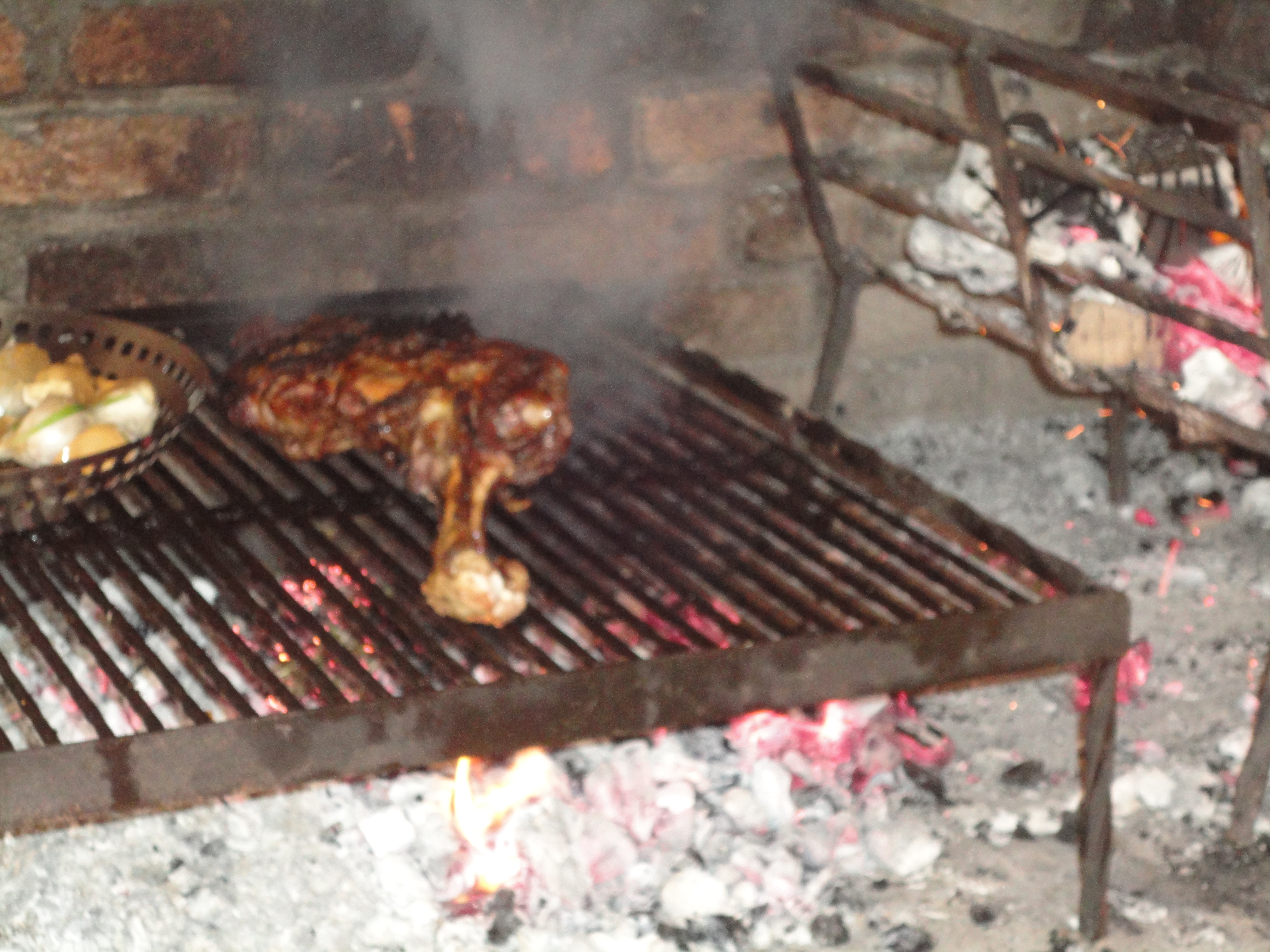
        This is/was my usual way to roast lamb. On an open BBQ fire, with or without garlic and rosemary. Here the leg and shank without the chump.

My Roast Leg of Lamb – slow cooked.

Since we lived so many years in Australia, my Mecca of lamb dishes, I learned several ways of celebrating lamb. All kinds of cooking method’s with all kinds of lamb cuts. The Aussie’s love their „Barbie“ and therefore most lamb will be cooked over open fire. Sadly most of the time open fires, even BBQ’s etc. are not aloud by law, because of the fire danger. Solution is to find ways roasting lamb „inside“. That’s my way:

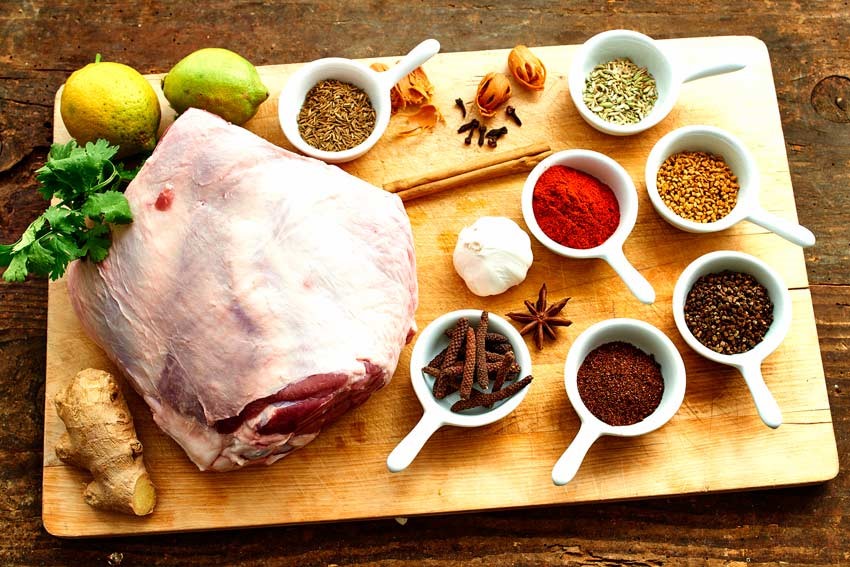
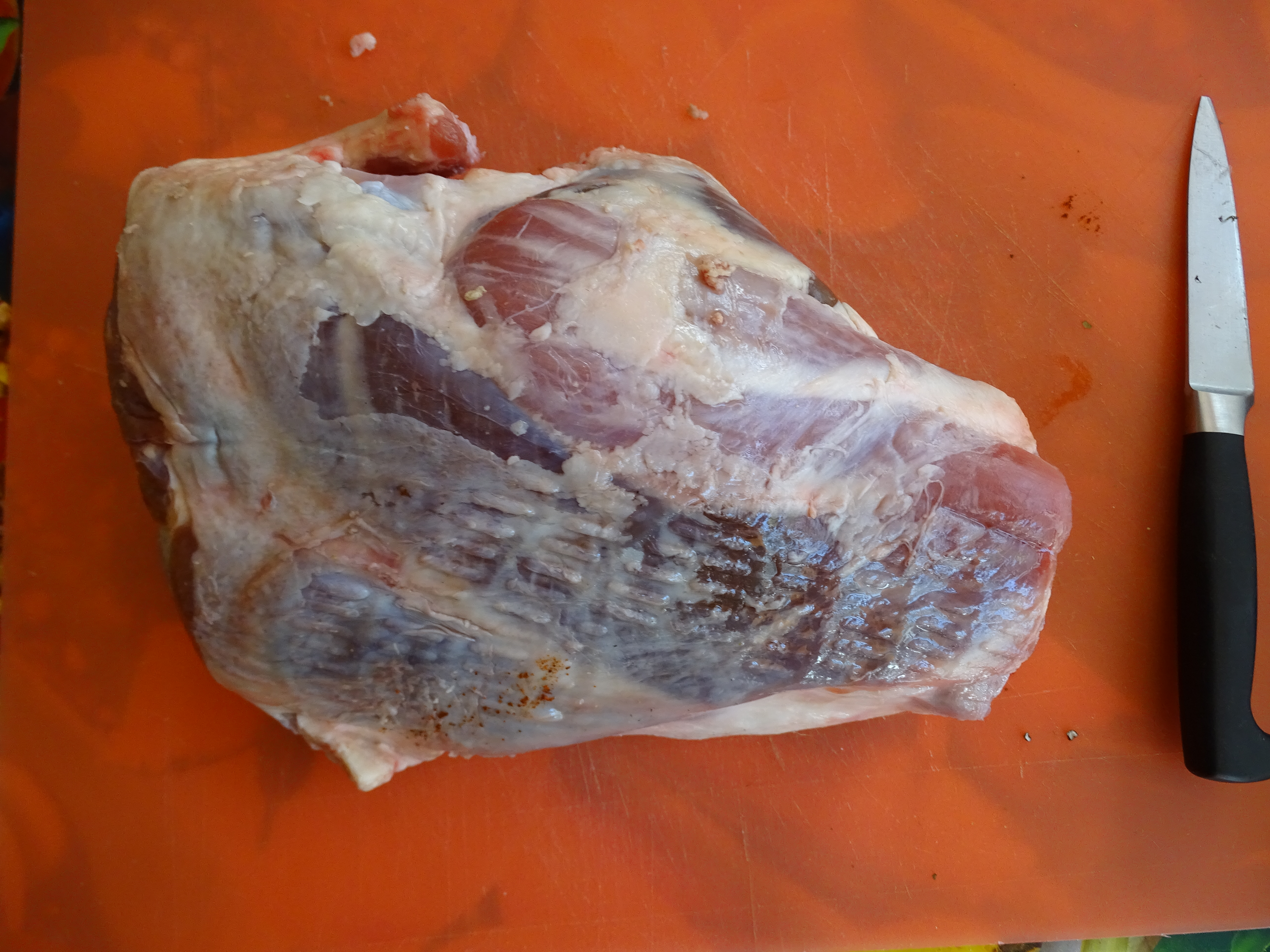
  Leg of lamb and the ingredients.

Ingredients.

1 leg of lamb approx. 2 kg (on the bone, with or without shank)
Spices for marinade:
2 teaspoons chilli powder (I have self made green/red mix, medium hot)
½ teaspoon cardamom seeds without shell
½ teaspoon clover seed
½ small cinnamon stick
1 star anise
1 tablespoon of cumin seeds

  Mixing ingredients together.

3 cloves
1 teaspoon fennel seeds
1/2 nutmeg, grated
1 tablespoon paprika powder sweet
1 tablespoon coarse river Salt or another Fleur de Sal ( I used Himalayan)
40 gram of fresh grated ginger
5 cloves of garlic, crushed
40 gram of fresh chopped coriander green
Juice of two lemons
110 ml peanut oil (I had no peanut oil available this time, so I used extra virgin olive oil and a few drops of sesame oil – careful sesame oil is very strong)

  I remove most of the fat, because the marinade has enough oil and juice. I’s different if you roast on the BBQ, there is the layer of fat desirable.

for later douse:
10ml olive oil
200 ml of water or 50:50 water:red wine

How to do.

First, heat the spices (not the powders, not fresh ingredients) for the marinade in a pan without oil for 2-3 minutes until they start smelling (wonderful).
Put it in a mortar and let it cool. Grind it to a fine consistence.
Then warm the nutmeg, paprika powder (do not let it get too hot, since paprika powder otherwise gets bitter) and combine with the salt.

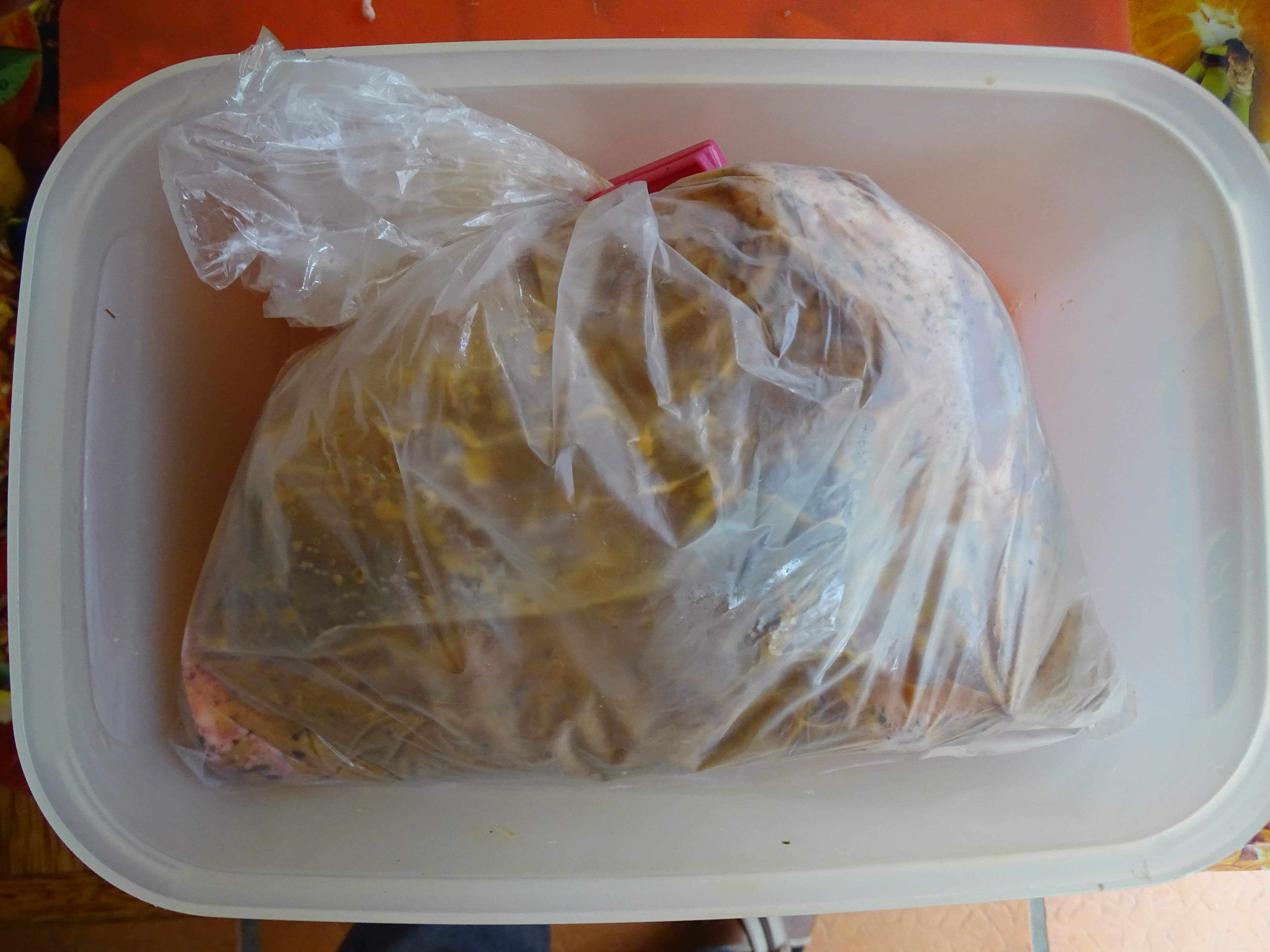
Inside a bag and in the fridge overnight.

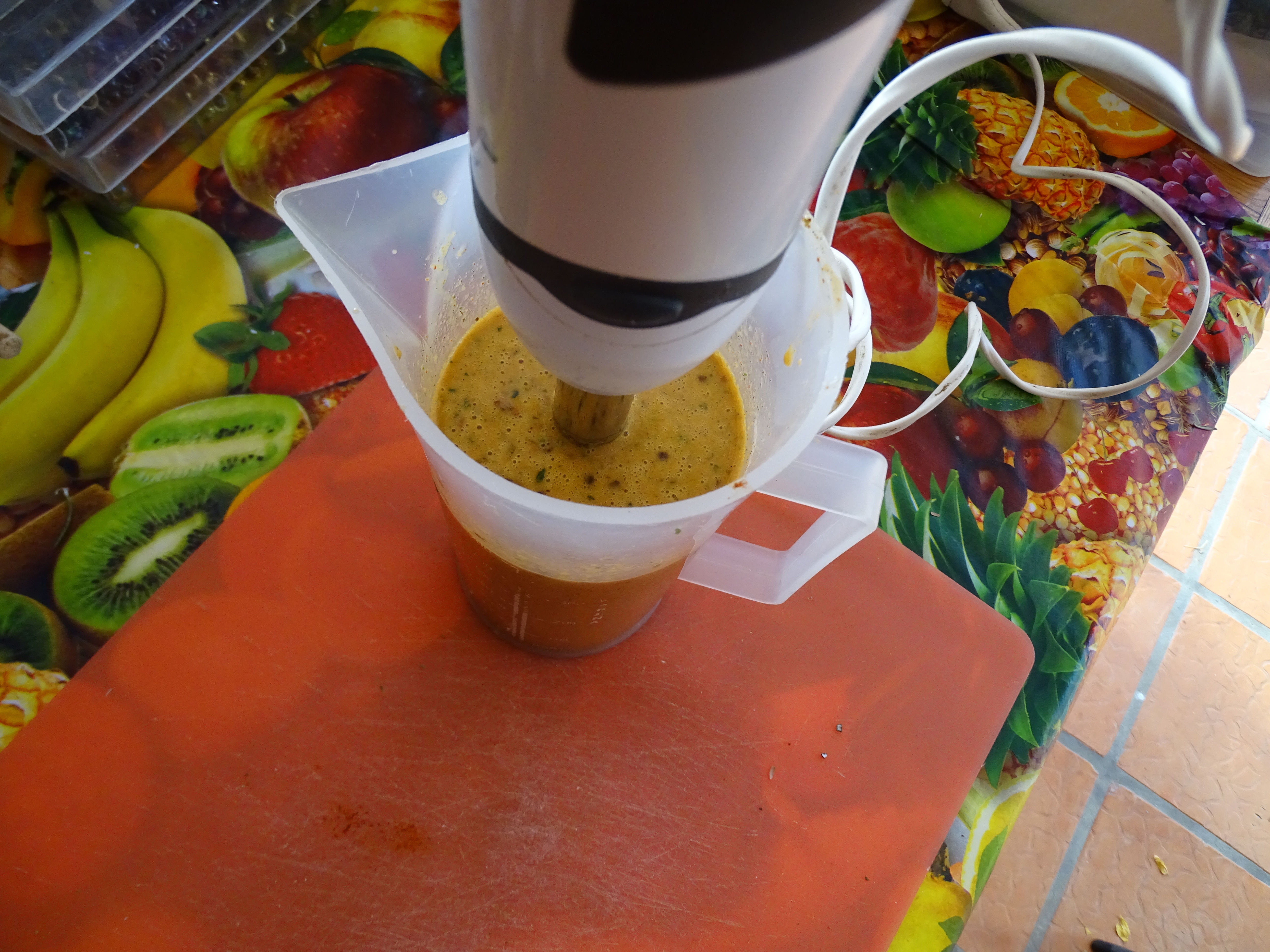
Combine with all other ingredients, except the meat and the water/wine, in a bowl.
Cut the meat several times (about 1.5 cm deep) and massage the marinade deep  into the flesh with your hands.
Then wrap it in foil or vacuum the meat (I pop  it in a double bag) and leave it in the refrigerator overnight.

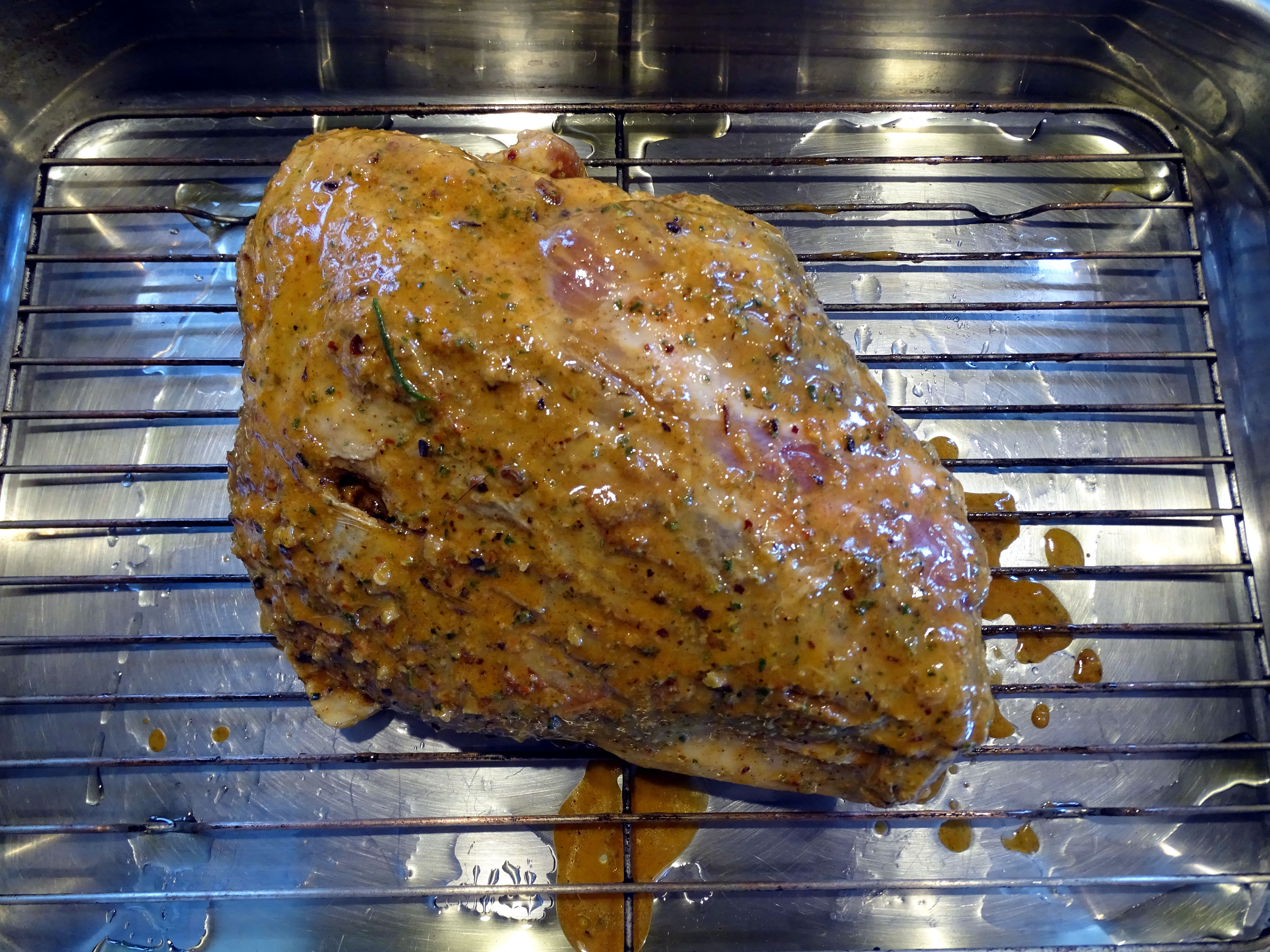
     After the first hour the shank was ready and now the pan will be filled up with some sprigs of rosemary and the water/wine mixture.

Preheat the oven to 160 C (325 F) and cook the meat in an oven for half an hour.
Then cover and bake for another 60 minutes.
Douse the water/wine mixture and cover again.
Roast for another two hours and pour over from time to time with wine/water gravy and ensure that the liquid level is always about one centimeter high. Then remove from the oven and let the meat rest at least 10 to 15 minutes, then cut and serve.

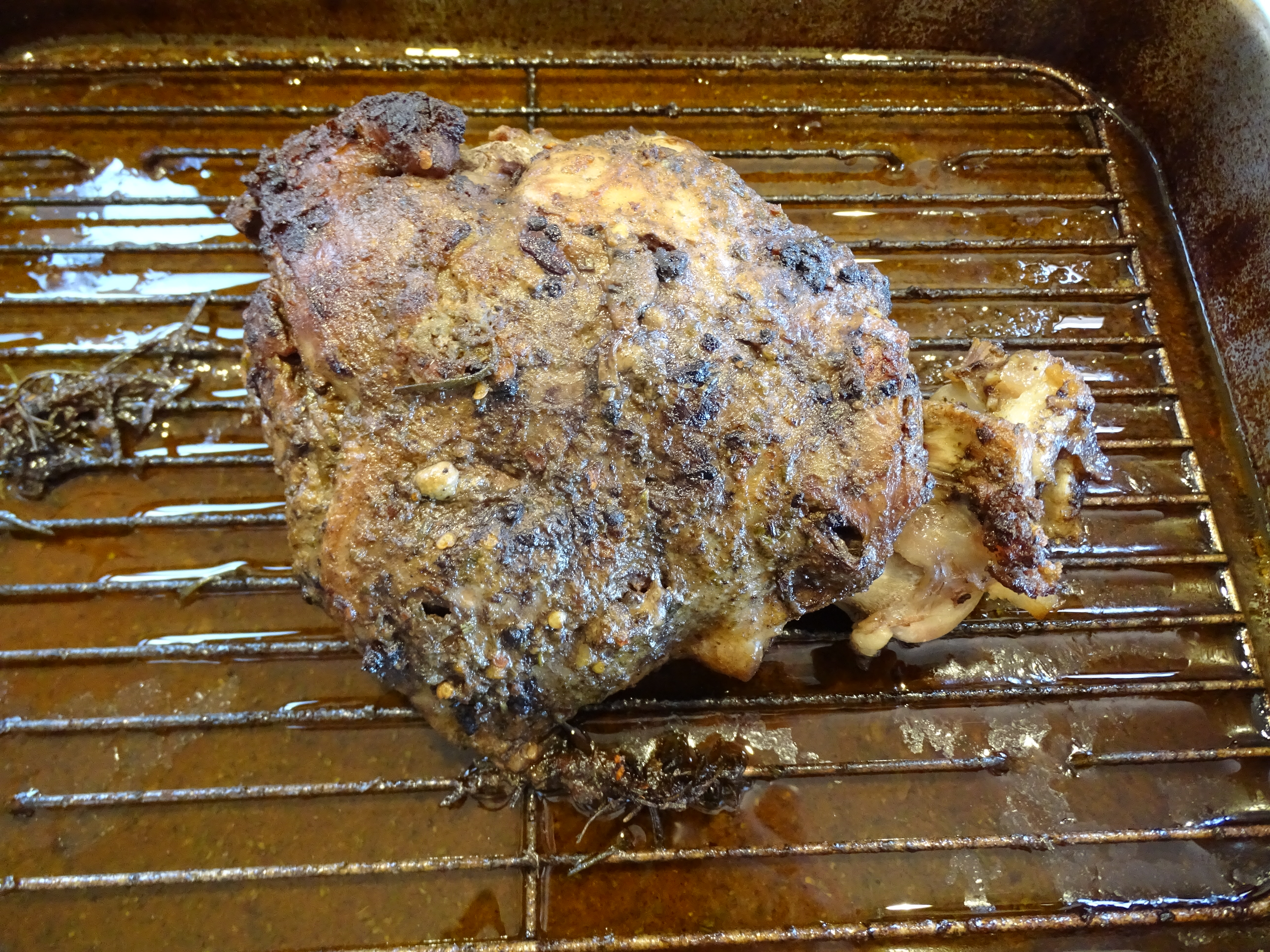
  Almost ready, now we let the lamb rest, that all the juices remain inside the flesh. It doesn’t look as brown as normal broiling, but here you can see how the marinade is roasted on top of the meat.

Tips.

One might think, that’s along cooking time for lamb – yes it is – but it is low temperature and a slow cooking method. Its worthwhile, you’ll see.
If you want to have the lamb very cross baked ( which is hard with the above marinade system) then leave the meat without a lid the last 15 minutes and with 200 C (400F).
But that is really not this recipe.

  Very brown, delicious, but inside much dryer.

The last hour, when I poor the juice over the meat (every 10 to 15 minutes), I control the softness of the meat very strong.
It should be fall of the bone and it should be very soft !
YES !!!
But don’t overcook it.

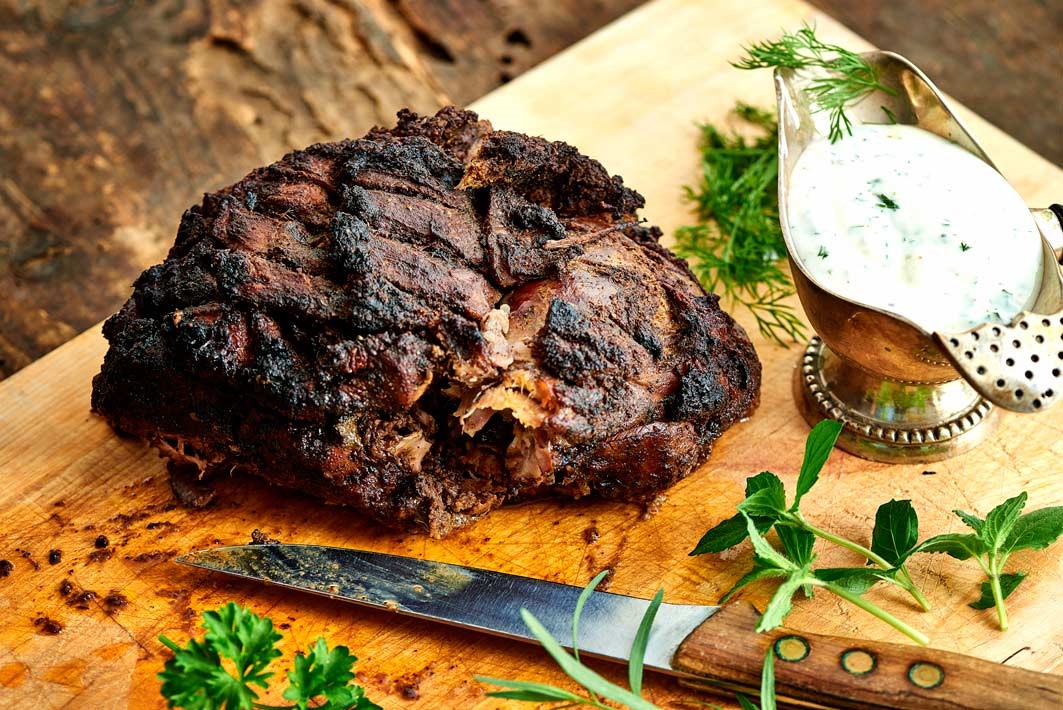
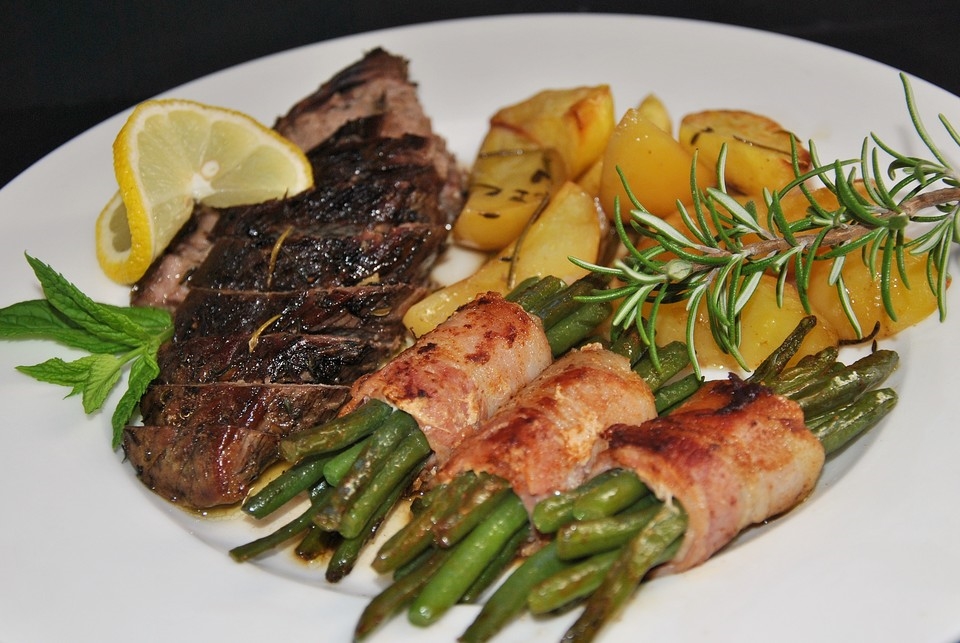
  Very nice decorated with mouthwatering side dishes. That’s how to serve it to your guests. From the leg shown before, served with a yogurt sauce. Both pics shawarma.

The mentioned times here are average.
Every piece of meat has a different amount of flesh and a different thickness of bones.
Best is, if you cut the thin part of the leg, or test the shank, as I did here, and if this is ready then you have another 60 minutes for the large piece. In case you’ll use a meat thermometer, it should reach 75 C (150 F) in the thickest part of the meat.

   This same recipe you can use with a lamb shoulder. It’s much less meat then a leg, but as delicious as a leg and enough for 2 people. Here in Uruguay even cheaper then a leg. Urugayan price, at the moment, for a kilo of lamb-leg is around 260,–pesos = US$ 9,– = 8,30 euro.  Not bad !

A fine complement to any lamb dish is a dip made of yogurt (3.5%), olive oil, lemon juice, coriander green, parsley, dill and tarragon.
Stir and season with salt and pepper.

Side dishes can be almost anything, try a variation of veggies as seen above.
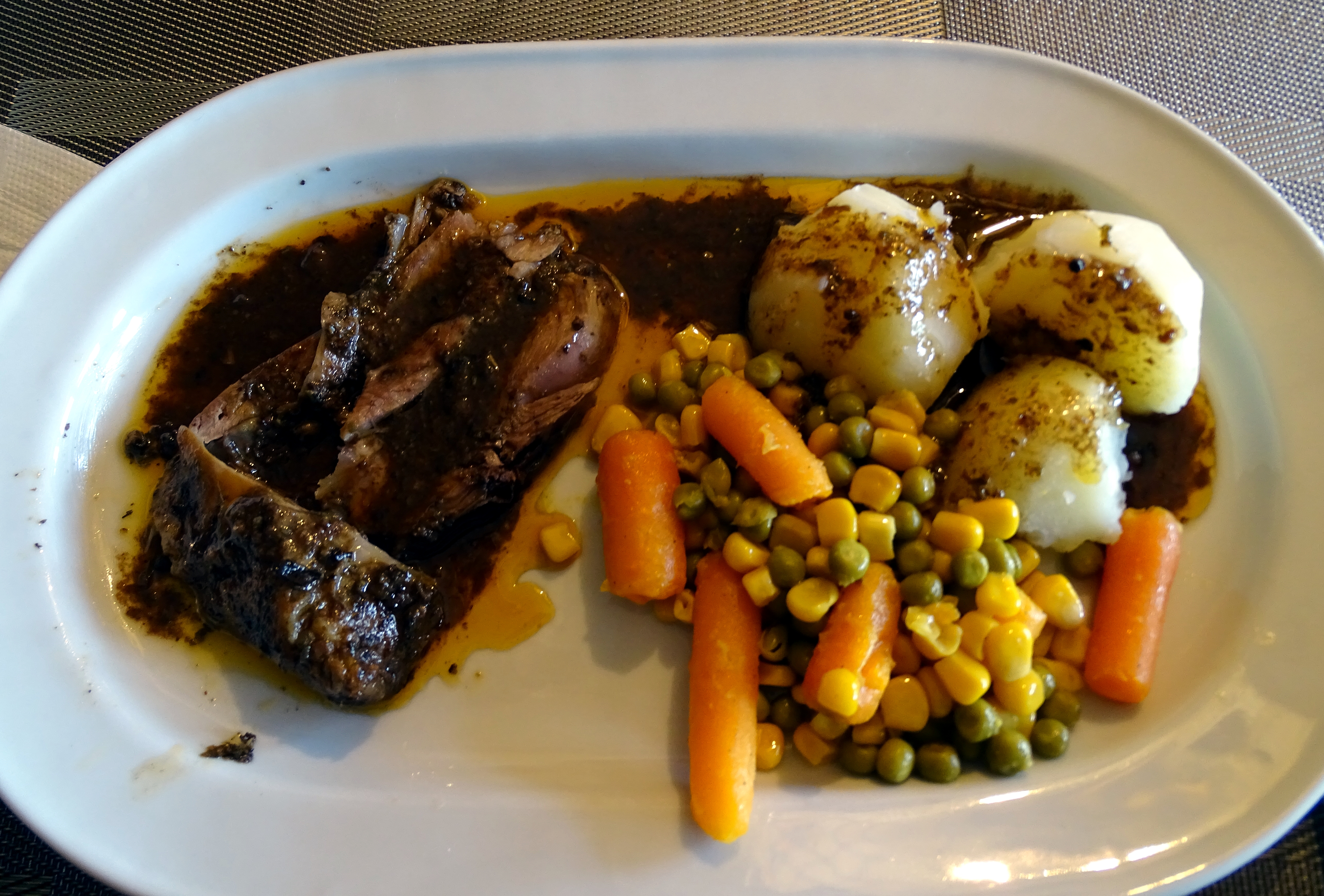
This time we used potatoes, carrot and pea veggie mix, and the sauce of all the juices and marinade.

  Beautiful juicy and flavorful meat falling off the bone.  The sauce is just the sauce out the pan sent trough a sieve.
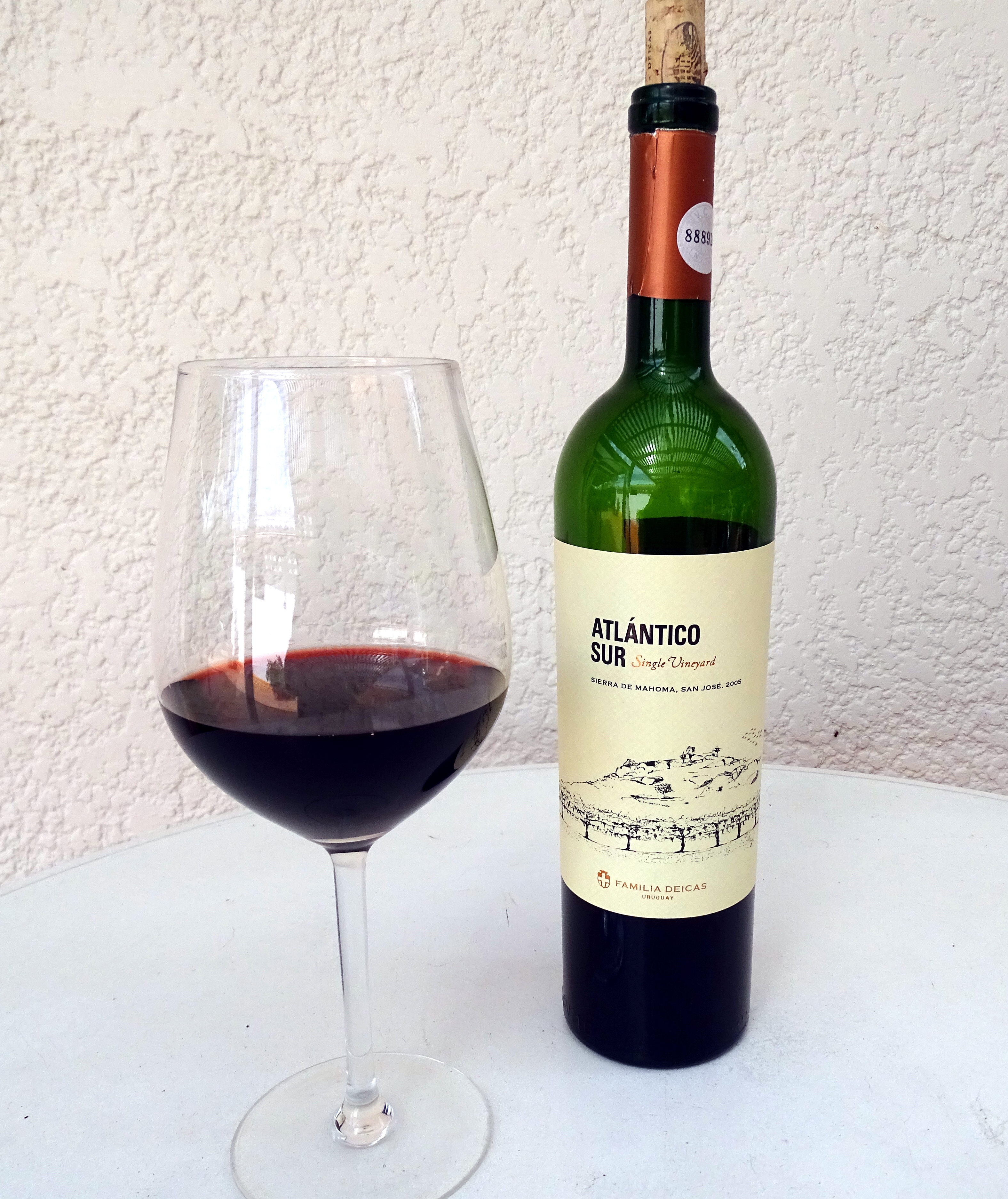
  Deicas Atlantico Sur 2005.

The wine we enjoyed this time was the „Atlantico Sur“ 2005, from the Deicas family. This excellent wine comes of a single vineyard at Sierra de Mahome, San Jose, Uruguay. The grape is a Cabernet Franc, full body and a great taste, soft with only 12,5 % alcohol. Just 1627 bottles were filled in 2005. Now try it yourself and enjoy – it’s soooo easy !


Veröffentlicht unter Recipes | Verschlagwortet mit | 2 Kommentare

The Pampas Flicker

Some days ago we were sitting down, enjoying a nice cup of coffee, as we sudden heard a loud knocking on a window in the rear of our house. What could that be? A careful investigation led to the following result.

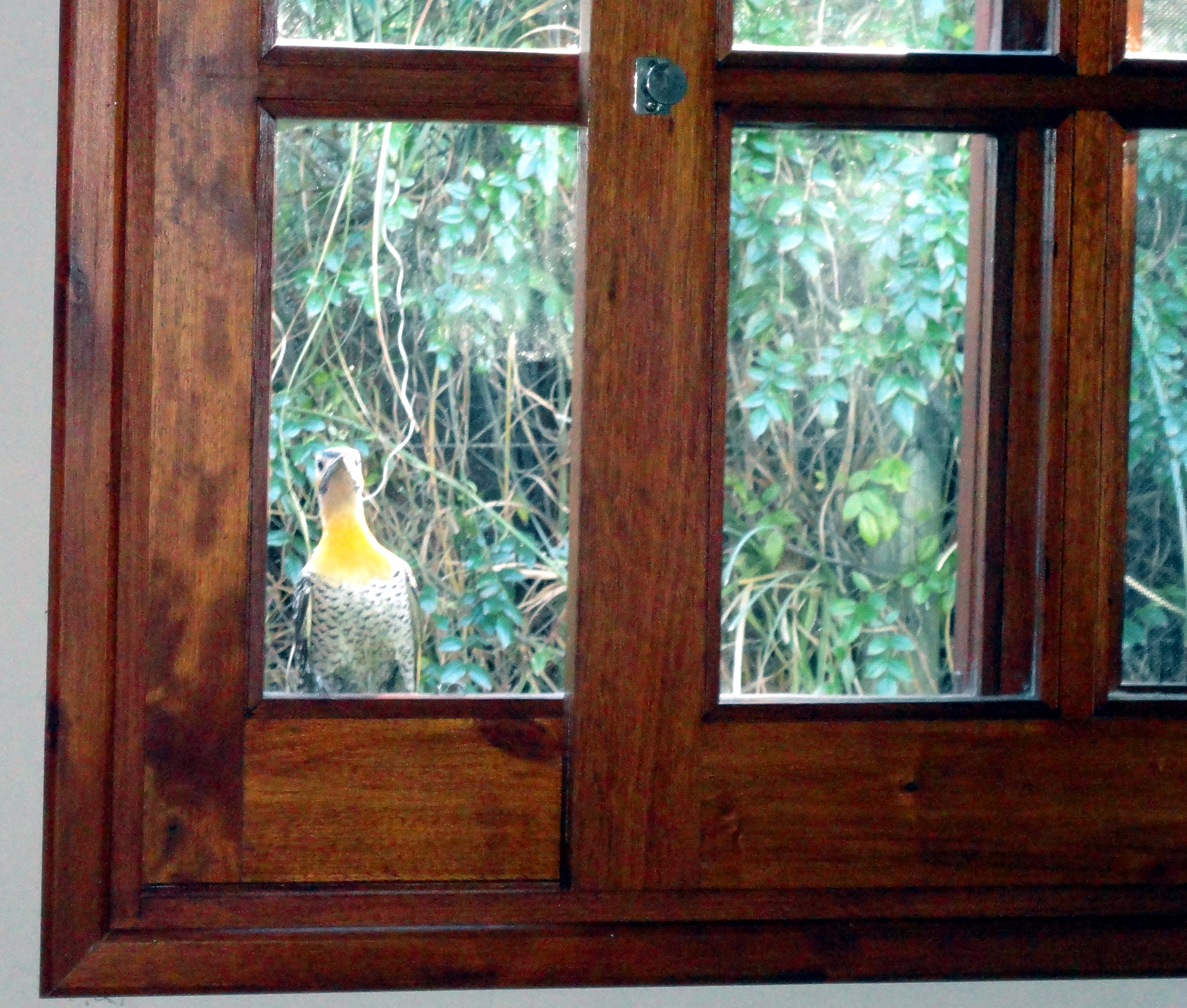
Hello – knocking on our window.

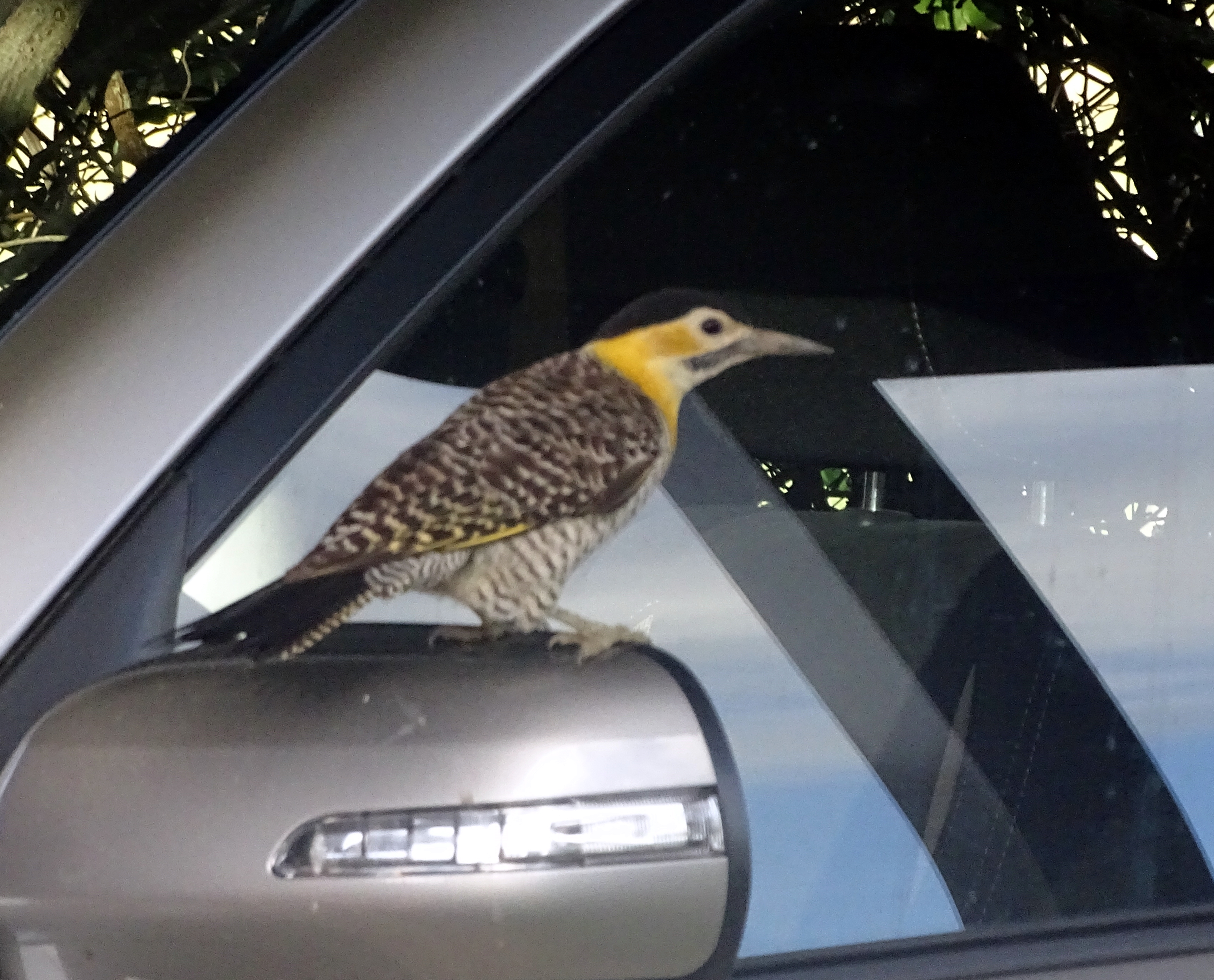
One of our (often seen) yellow-grey birds were picking on the bedroom window, like „LET ME IN FOLKS“. Grabbing the camera and luckily taking a few pics  was one unity. Sadly not the best quality, through the glass window and a moving bird.

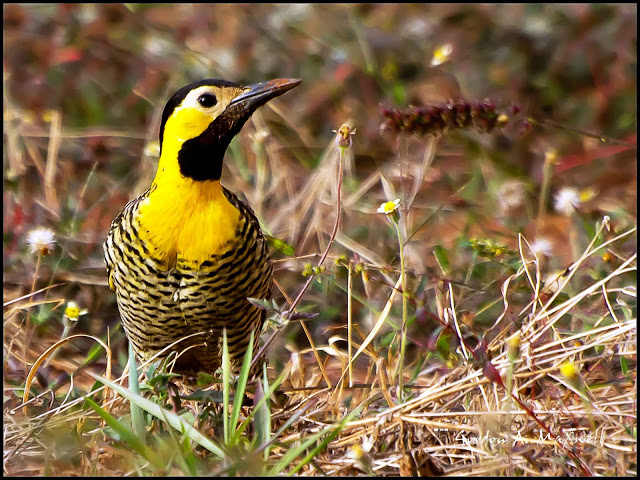
  That’s a Pampas Flicker, family Woodpecker.

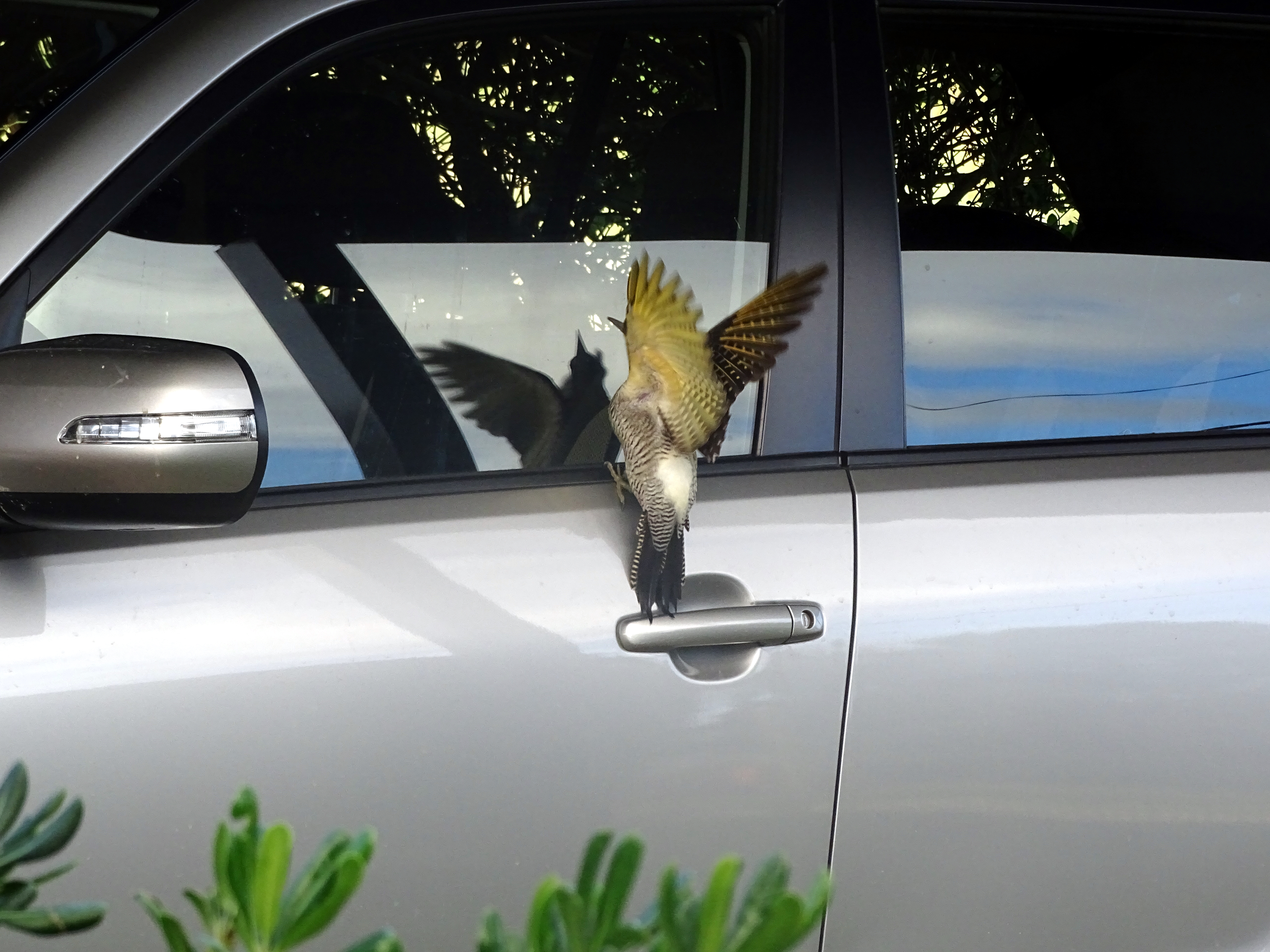
As it is known, birds like their refection and like to pick on it. Yesterday afternoon, during cooking outside, I heard a similar noise as days ago. Again I investigated carefully, wow – same bird (or a similar one) was knocking onto my car window.

Who is picking this time on my windows ?

Quickly I ran around the house, entered through the backdoor and grabbed the camera. Very quiet I opened a front window and started photographing. This time with better luck of quality. The bird didn’t even felt disturbed. He was so busy to „attract his female counterfeit“ that I had time to take pictures.

Hey, come on DEAR, give me a chance.

Of course I had to search closer about this bird species and like to share the results with this post. Hope you’ll enjoy them as much as I did.

Ahhh, you are taking pics, o.k. then I’ll go again.

The Pampas Flicker (Colaptes Campestroides) belongs to the Woodpecker family, formerly always confused with the Campo Flicker (Colaptes Campestris). These birds are found in south-eastern Brazil, central and southern Paraguay, Uruguay and north-eastern Argentina.

Happy now ? Then I am ready to go.

It is distinguished from Pampas Flicker by the whitish chin and throat which makes the malar stripe more pronounced. The Campo Flicker has a throughout black chin and throat.

The Pampas Flicker white chin and throat. Pic by manakincarmelo.
The Campo Flicker, black chin and throat. Pic by – see inside pic.

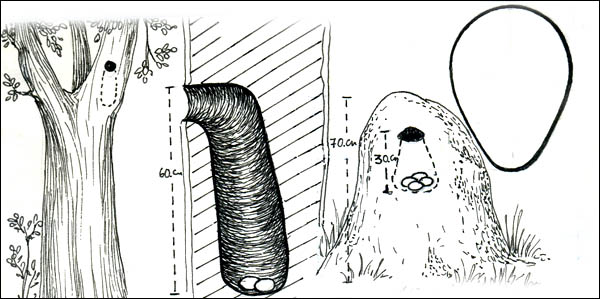
Though it frequently can be seen in trees or bushes, it is among the very few woodpeckers that spends a significant portion of its life on the ground. It breeds in holes in trees, termite mounds or earth banks. It is generally common, and therefore considered to be of least concern by the IUCN (International Union for Conservation of Nature).

     Nests of Pampas Flickers, very hard to find. Pic Argentinanativa.

The birds average size is about 30-33cm. Its life habitat are savannah’s, steppes, prairies, woods etc. Pampas Flickers eat ants, termites, beetles, grasshoppers, fruits and like it. They nest in ravines, anthills or tree holes, often in the great Ombu trees. Enjoyed ??

Veröffentlicht unter Information, Uruguay | Hinterlasse einen Kommentar

MAM Montevideo

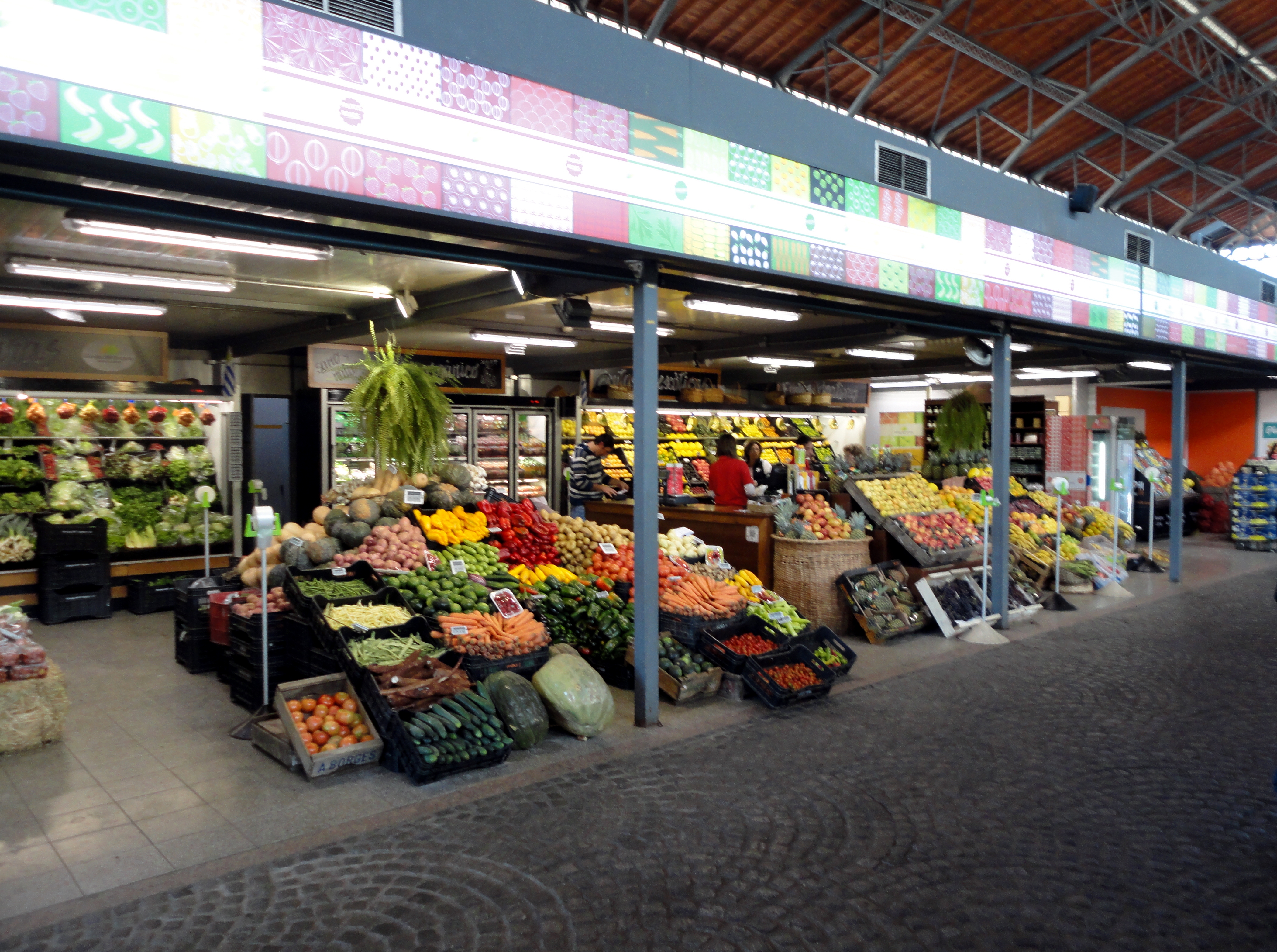
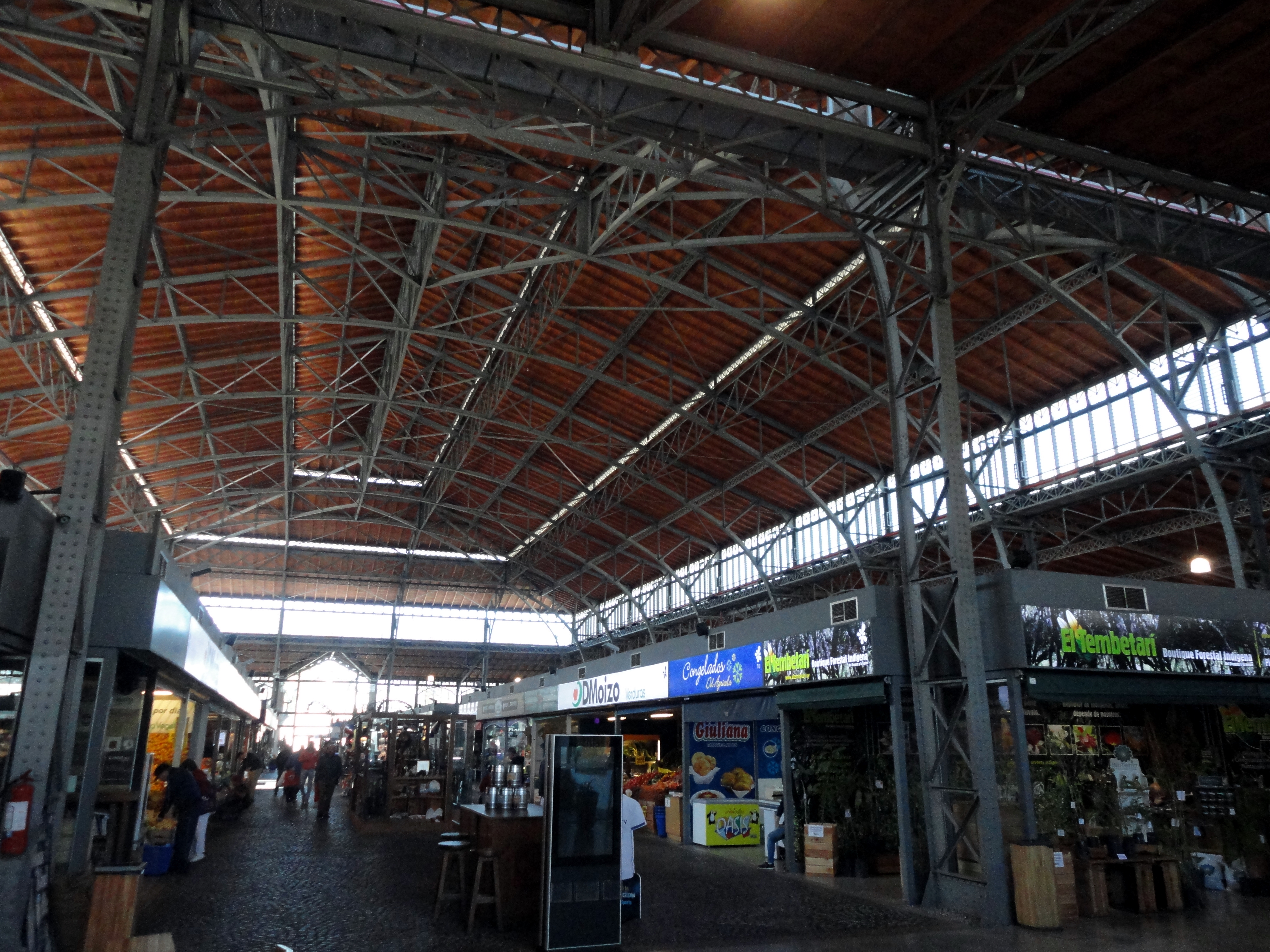
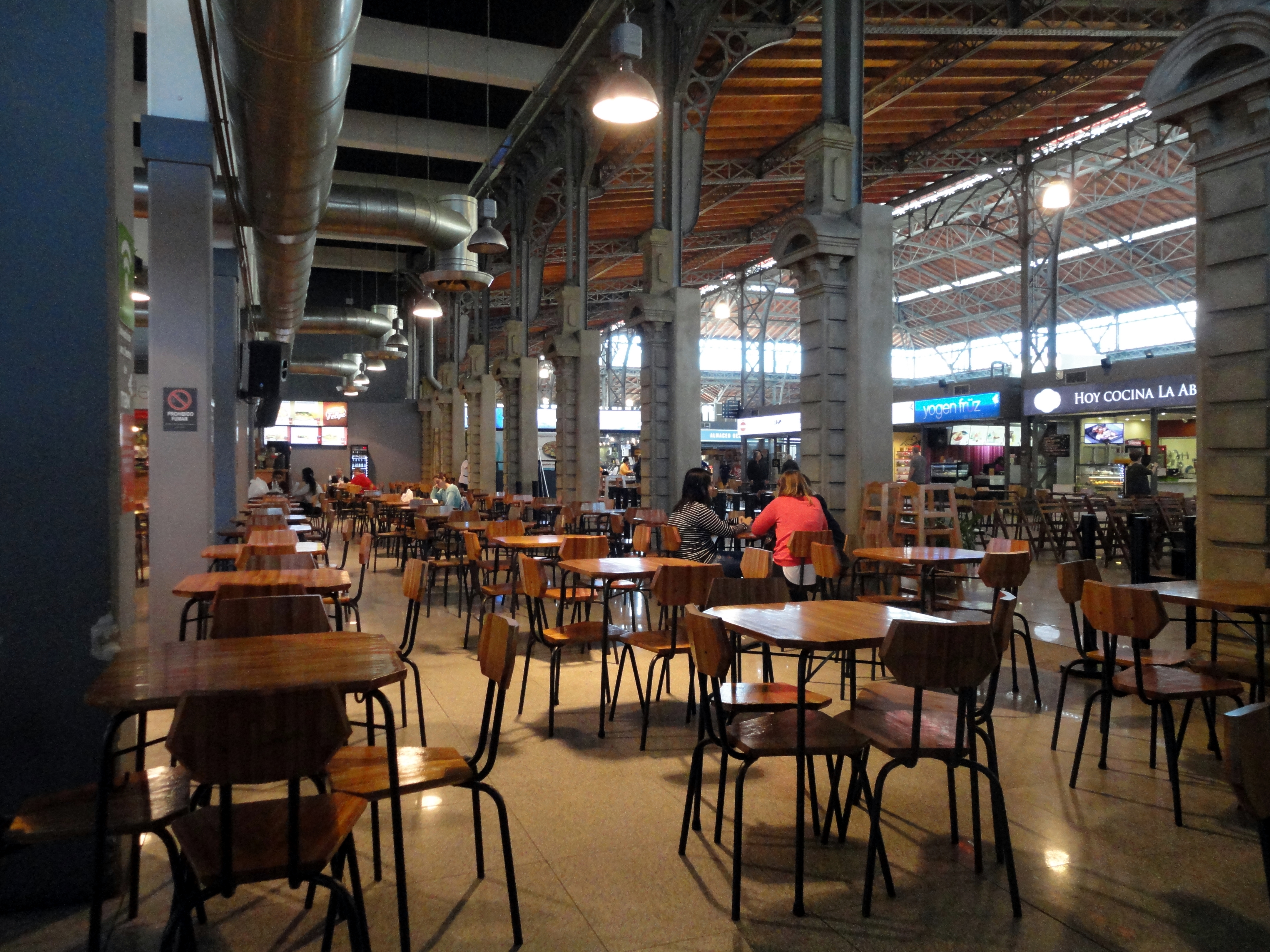
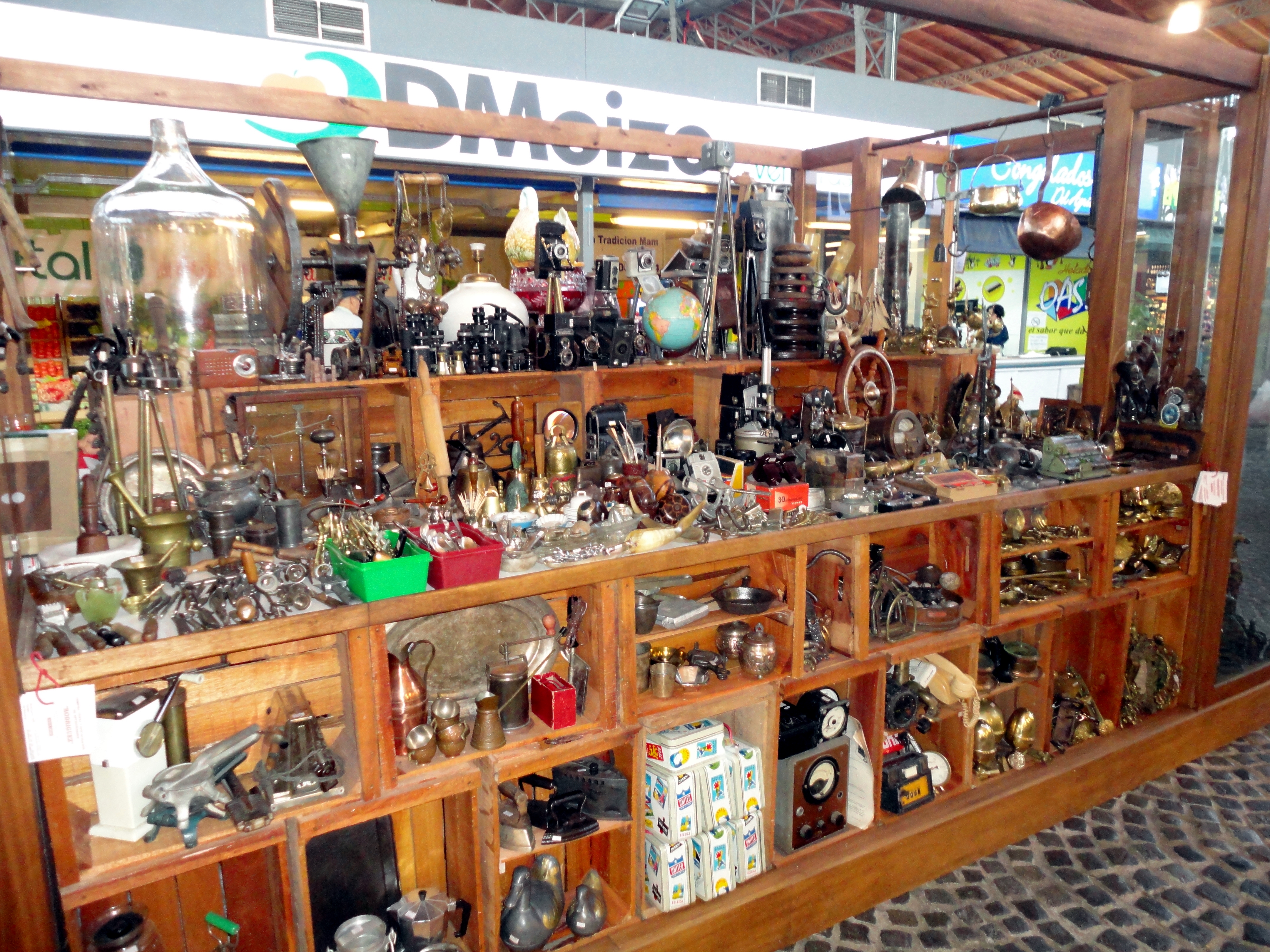
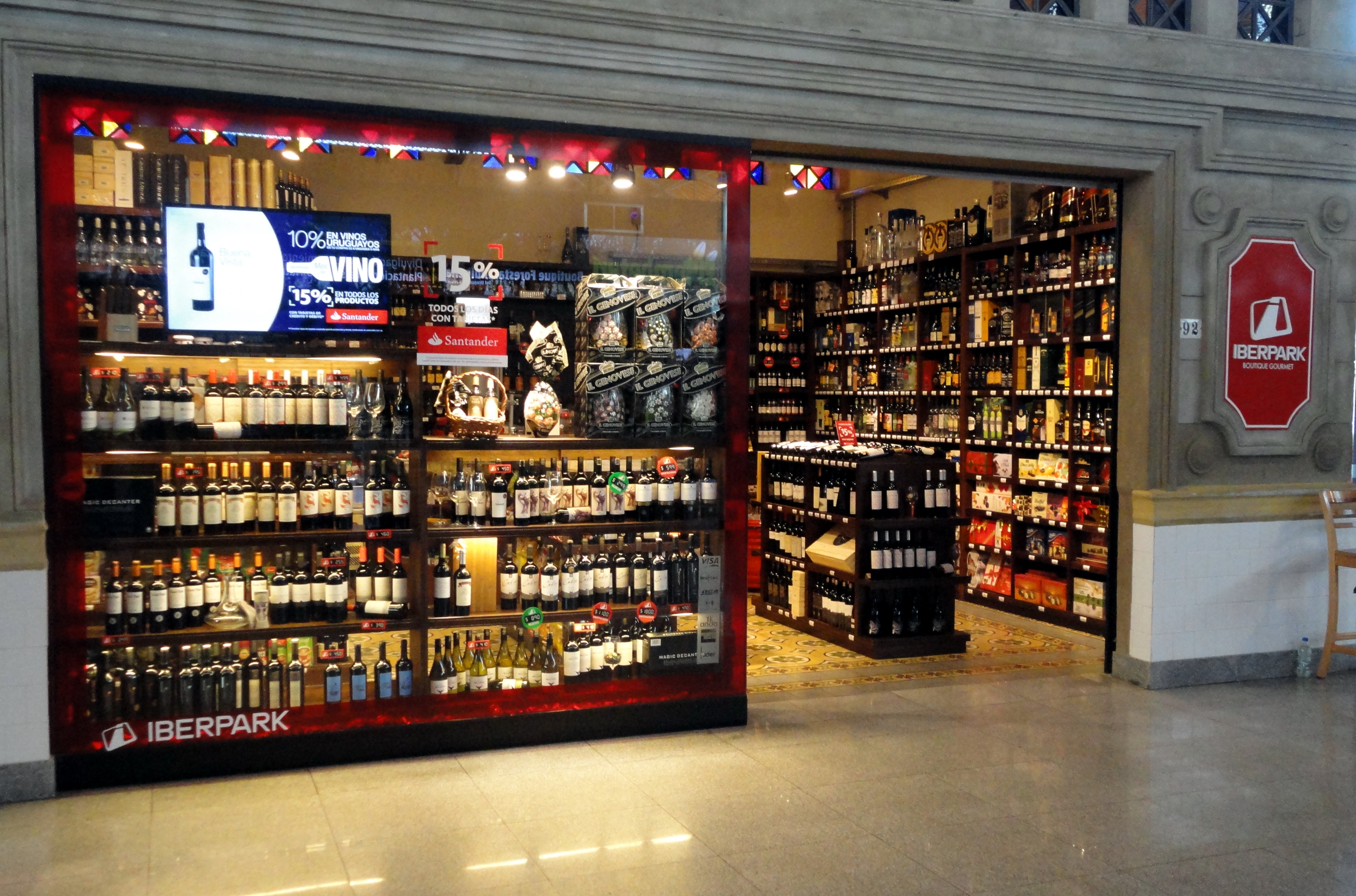
For several years we went for shopping and visited the „Montevideo Aricultural Market“ (MAM). A fantastic renovated old iron structure, now housing a market with around one hundred shops/stalls. One can find a bit of everything, many restaurants and worthwhile to walk around and spend some time.

Always I wanted to write a post about it, finally it takes shape. Have a glimpse of one of the oldest agricultural market in Montevideo, the „Mercado Agricola de Montevideo“ the „Montevideo Agricultural Market“, called MAM.

  Montevideo’s great Agricultural Market, where one is able to find in over 100 stalls things you won’t find somewhere else, at least its what people say.  However, worth to give it a try.  Most pics expand if you click on.

History.

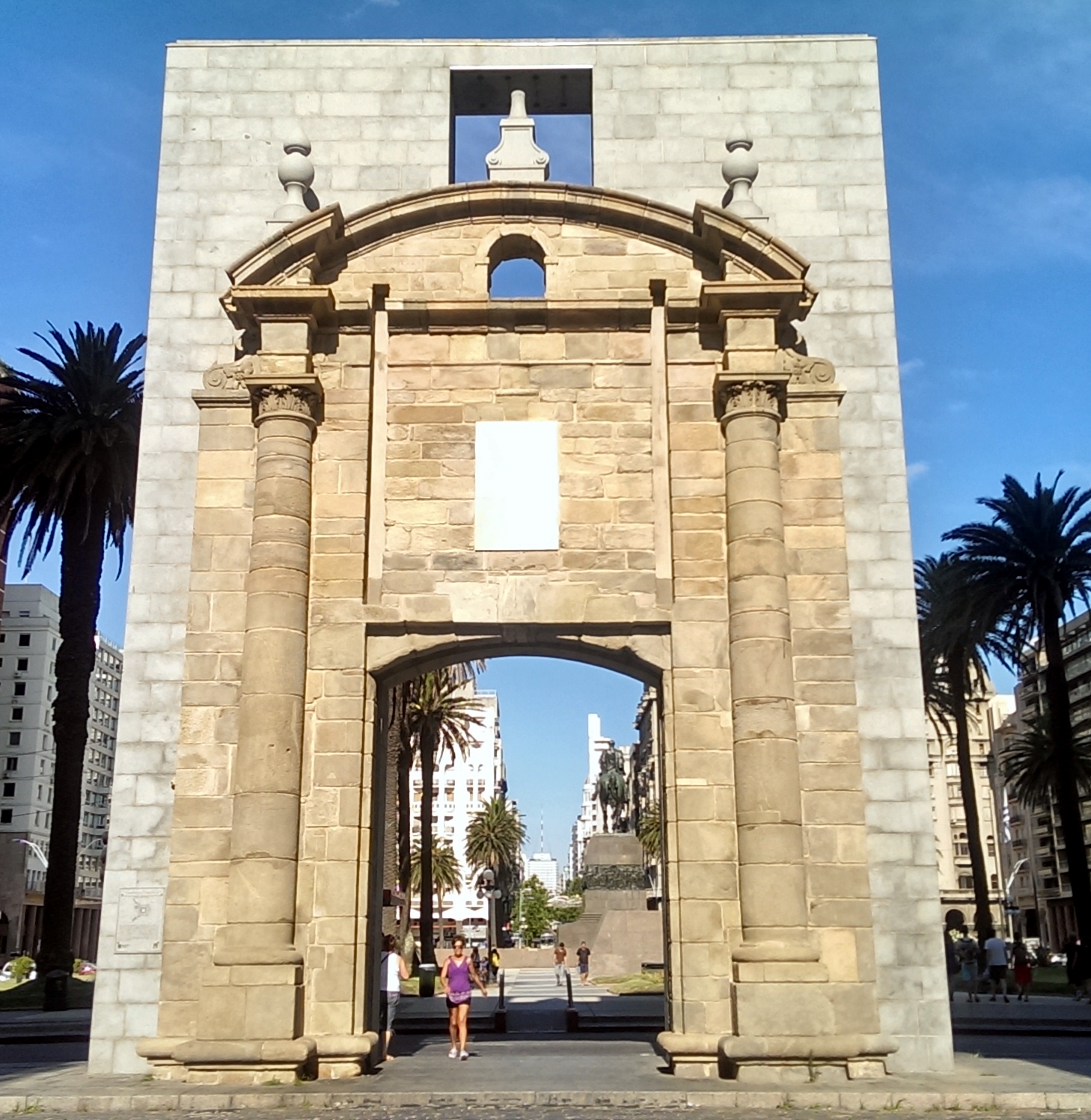
Montevideo was born and founded as a strong city, in order to stop the advance of the Portuguese, since that time it was a Spanish colony. The first settlers settled in what we know today as Ciudad Vieja (the old city). It was a fortified city and one of the vestiges that remains of it, is the Gate of the Citadel that dates from 1742. The squares known at that time were great open spaces where commercialized fruits and vegetables, and all kinds of products, meeting places and talks.

  Puerta de la Ciudadela (gateway to the citadel), from 1742, now to find at the Plaza Independencia, Montevideo.

The first fruits and vegetables that arrived in Montevideo were from the area of ​​the Prado neighborhood, today a residential suburb.  A memory of large farmhouses, which proved to be the meeting point of the upper class of Montevideo. In the course of 1829, the city expanded, the walls surrounding the city were demolished and the city began to spread beyond the public areas.

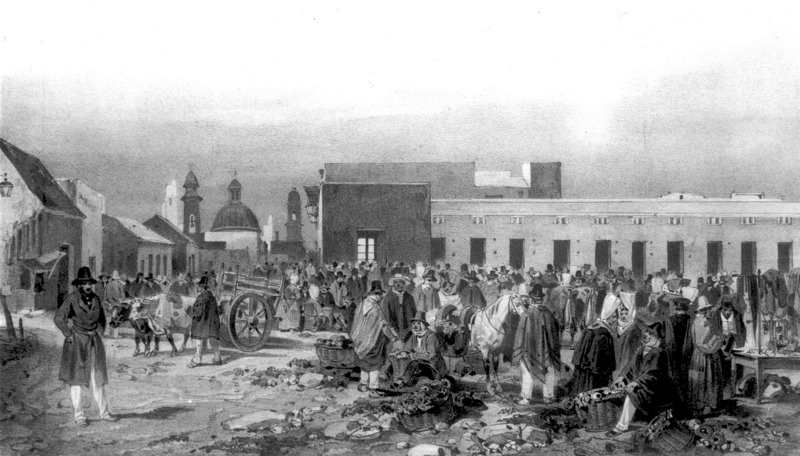
   Agriculture Market in Montevideo ca. 1836, „Calle de la Carrera“, today its Sarandi y Mercado Chico.

In 1866 the government obtains the donation of important estates near where the Legislative Palace is today. An important place was installed that denominated „Plaza de las Carretas“ (Place of the Carts). There was commercialized all class of fresh products coming from the zones bordering the rural and inland parts of the country.

The idea of ​​creating a market was taking shape, given the demands of hygiene and health that began to demand worldwide during this time.

Thus, in 1903, five citizens decided to donate parts of their land with different locations convinced of the need to have an „Agricultural Market“ adapted to the needs of the time and with the latest advances in the field.

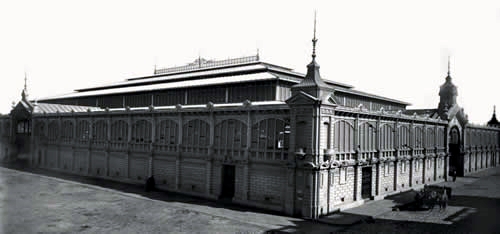
   Mercado Agriculture Montevideo around 1912. Pic MAM.

The Administrative Economic Board was in charge of deciding between the five proposals and so in 1905 the municipality published the basis for a call for tenders for the construction of a wholesale market on the property donated by Mr. Carlos Crocker, who was a landowner from the department of Soriano and a founding member of the Rural Association of Uruguay.

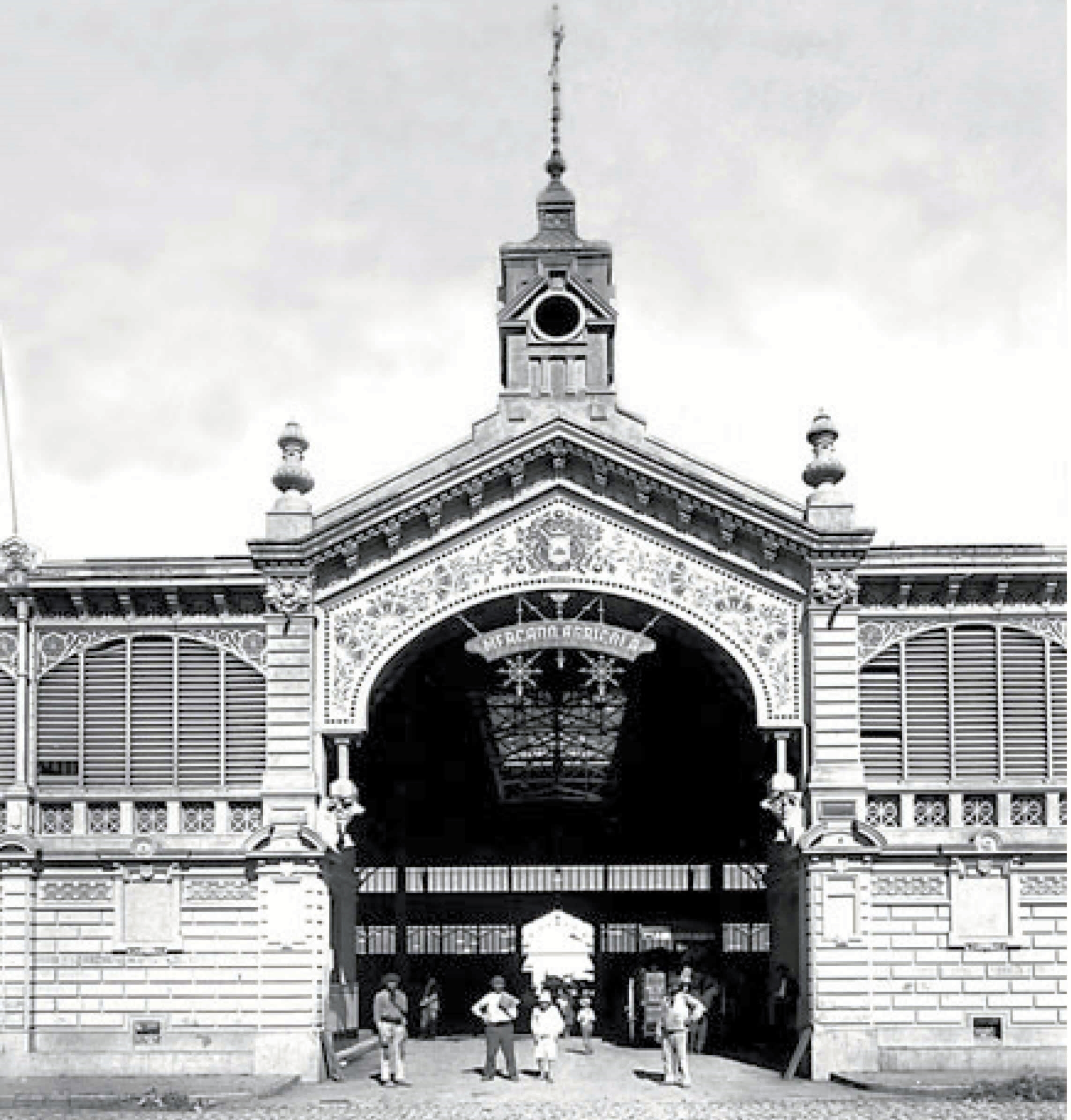
The project was selected by Architects Antonio Vazquez and Silvio Geranio. The foundation stone was laid in 1906 and its construction began, extending until 1912, with the definitive authorization of the building to operate in 1913, although the inscription on the access to the building at „Calle Joseph L. Terra“, figure 1910.

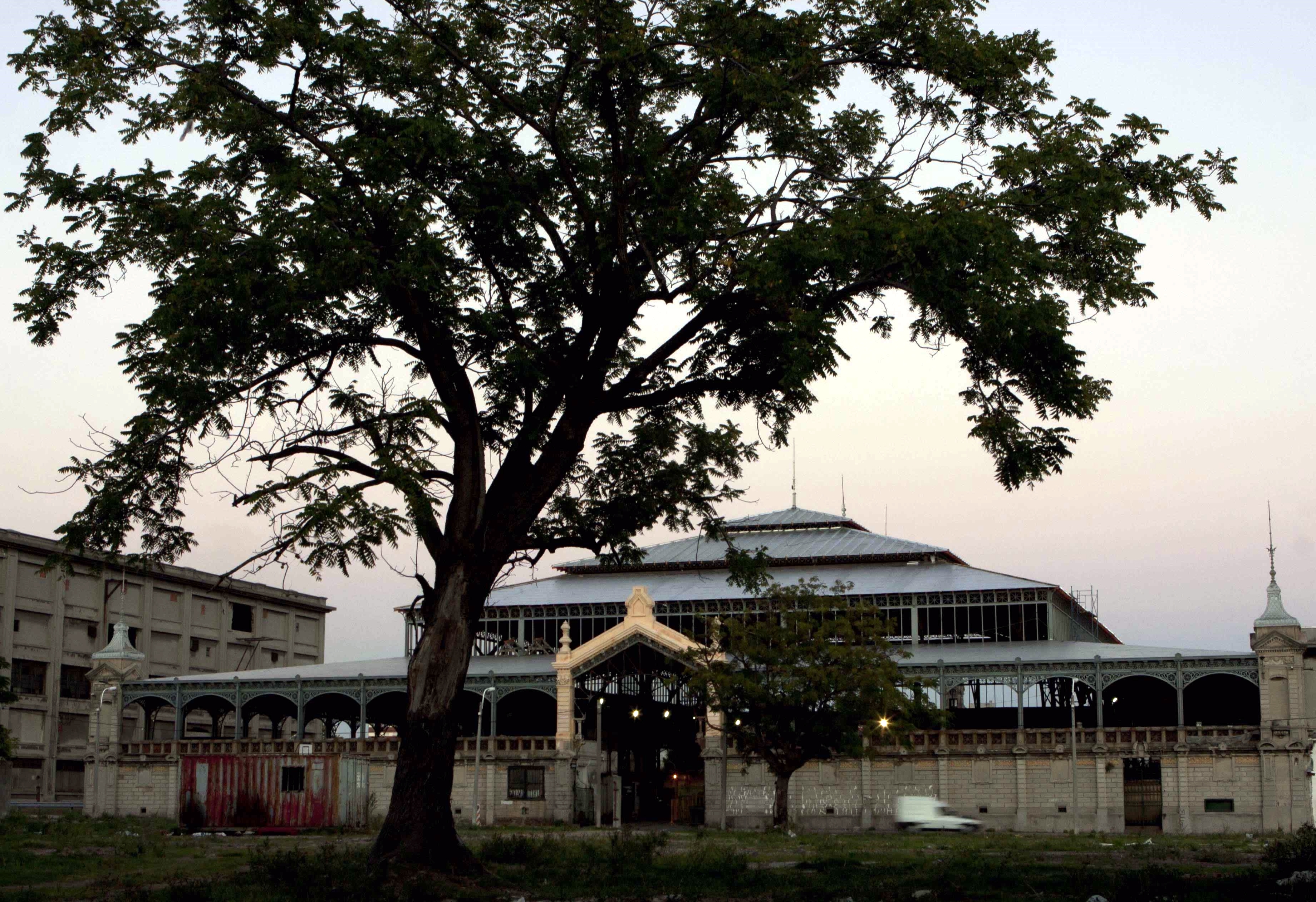
  Decayed Mercado building and others before renovation. The building left is now a modern appartment building still under construction. The big tree in foreground gave way to a street and parking area. Pic MAM.

In later years the market suffers two extensions, one in 1929, which incorporates refrigerated rooms and other services. A second extension was made in 1945.

The work has been considered in its origin as the most vast and architectonic market of Latin America of its kind. It is the last of the big iron-built markets in Montevideo, which also has the „Abundance Market“, located in the center of the city (just 1/2 a block from the Intendencia of Montevideo), and the „Port Market“ located in the Old City.

   In 1836, inside the walls of the Citadel, the first market of Montevideo settled. Shortly after ,in 1865,  the „Mercado de la Abundancia“ (Market of Abundance), the Central Market was installed and three years later the Mercado del Puerto, which occupies half a block of the Old City, Montevideo.
  „Mercado del Puerto“ (Port Market Hall). Build 1865 till 1868 by engineer Mesures. Its over 10 meters high and has a floor surface of 1687 square meters.

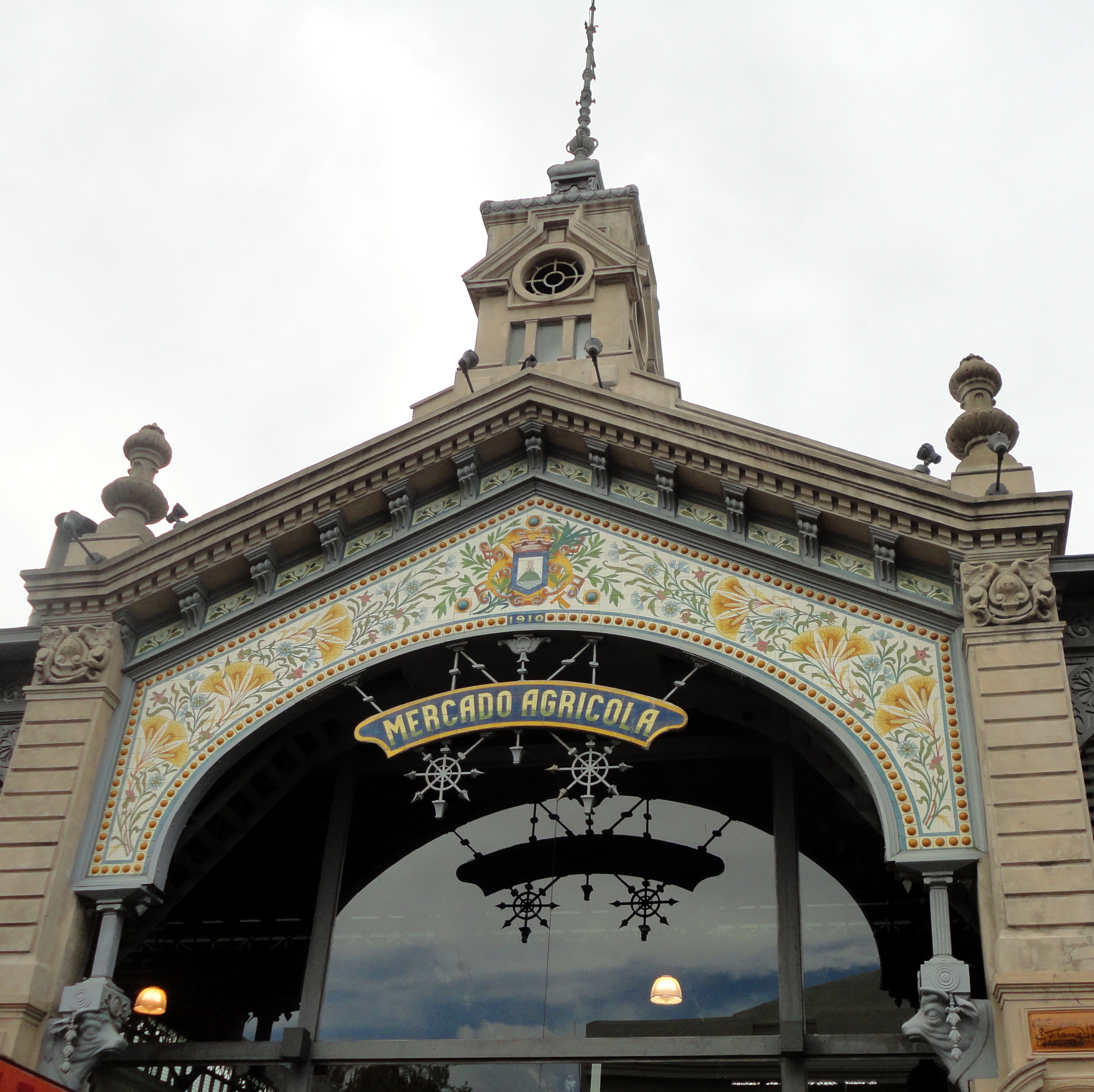
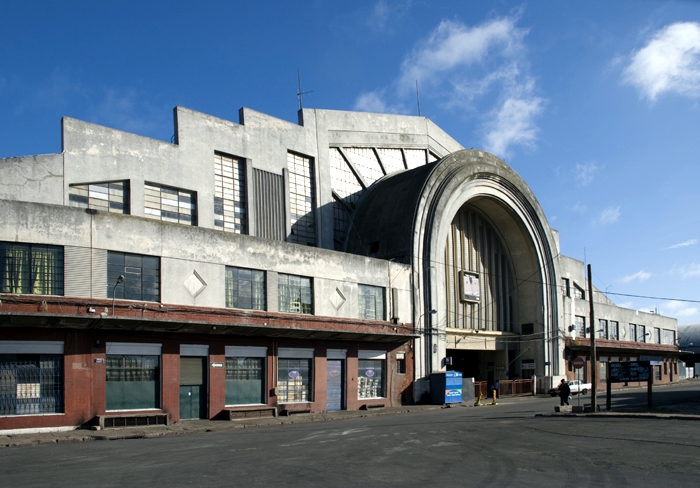
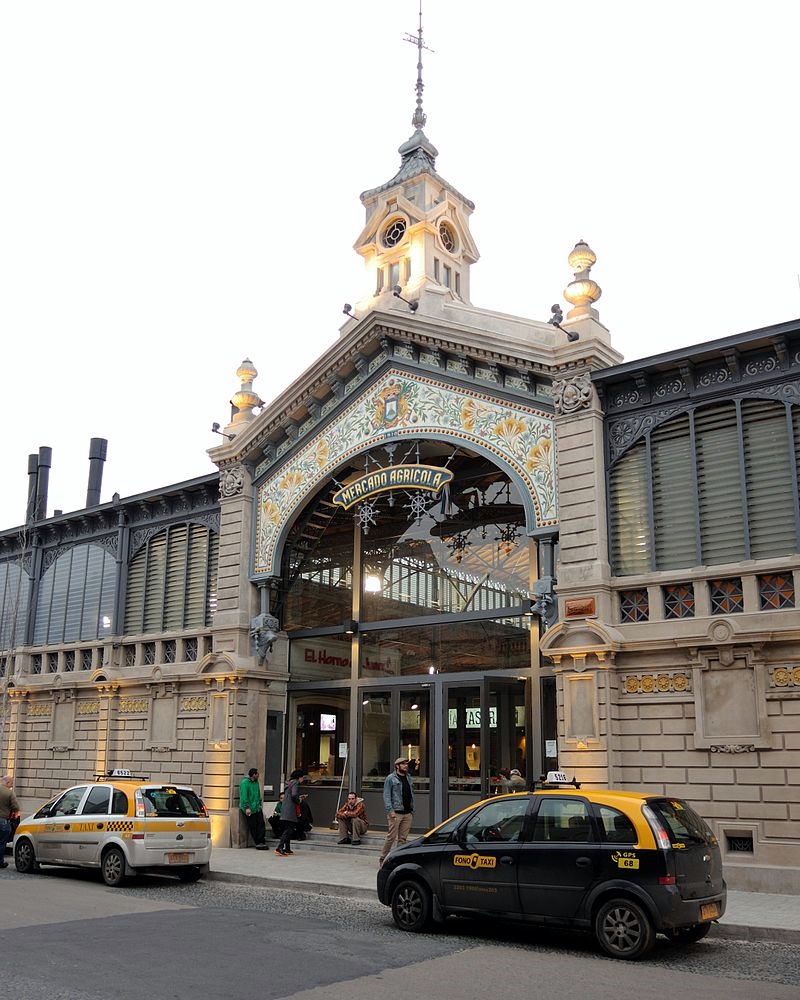
On the entrance of „Calle Jose L. Terra“, you can see the columns, basement and masonry with its ornamentation and modernist court moldings such as rosettes, curves, arabesques, cushions, this wall that overlooks Martin Street Garcia has been rebuilt as it was originally.

  Entrance from „Calle Jose L. Terra“. Details down here. his was and still is, the main entrance of the building. The only gate with the bell tower.

The great decorative load of the building is located at the entrance of „Calle Jose L. Terra“, a delicate work done in European poly-chrome pottery, unique in the Market. In the central part the shield of Montevideo, surrounded by floral motifs. Underneath the date of building 1910 and far down in the corners of my pic the two bullheads. You can also see in the center the tower-style bell tower finished in a needle, where it is also possible to appreciate a rose of the winds and a weather vane.

   The original building also has in its four corners false towers that also culminate in a needle. Pic MAM.

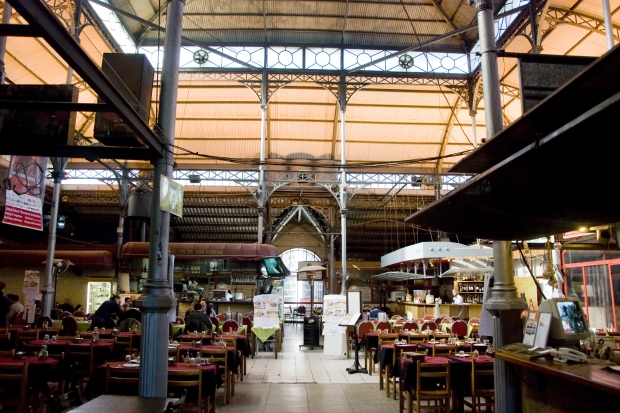
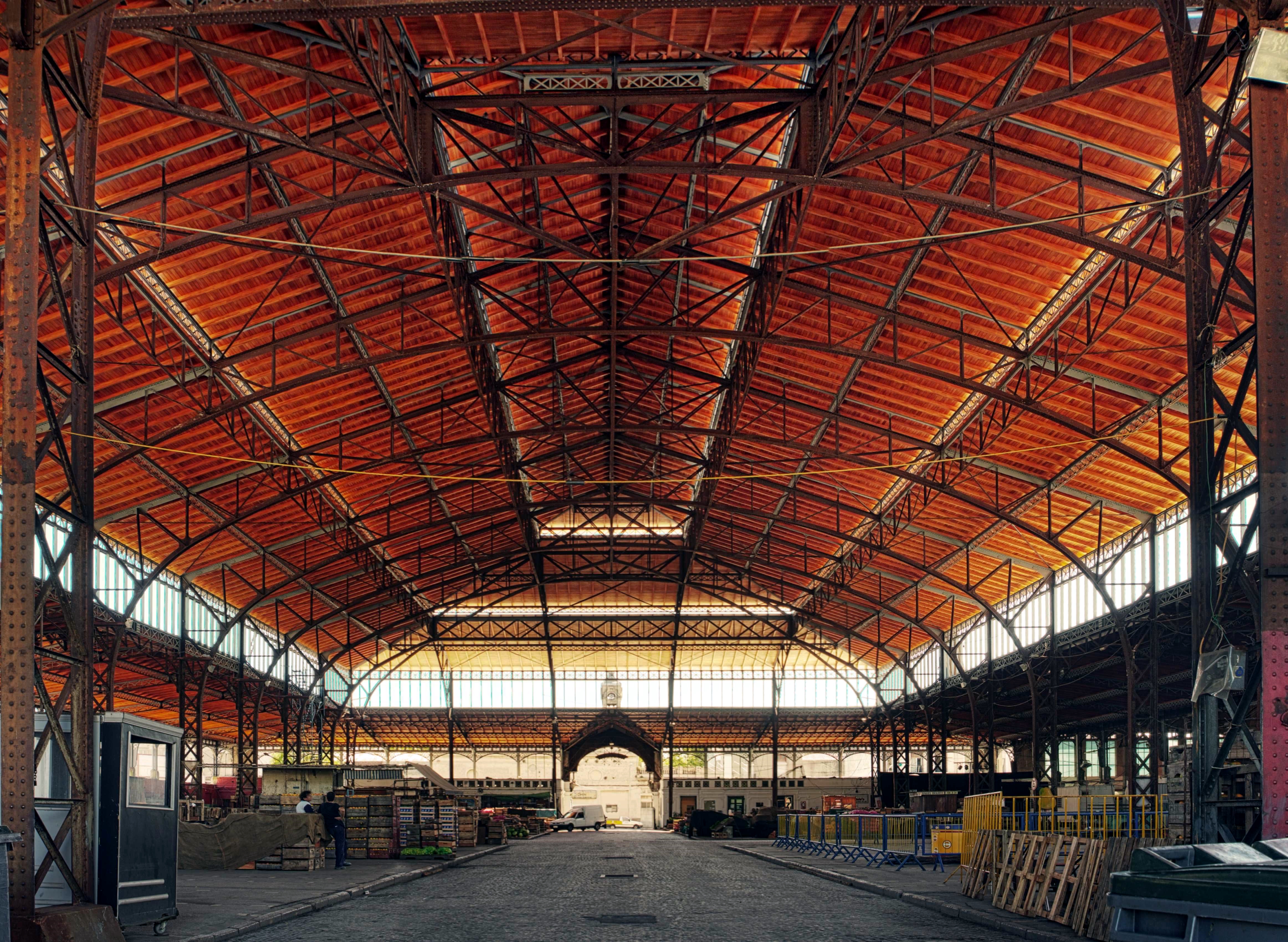
Inside the ceiling you can visualize that its architectural aspect is solved based on two concentric rectangles of coincident axes. The work draws both inside and outside of the structural formalization, which achieves a space of large proportions and great wealth, where light transparencies plays an important role.

The large iron structure has an floor area of ​​5,867 square meters. The entrances are adorned with heads of cattle. The large pillars support a roof made up of several other ceilings at the same time, separated into three rings, which breaks in perfect proportions, allowing the ventilation and illumination of the interior from the heights.

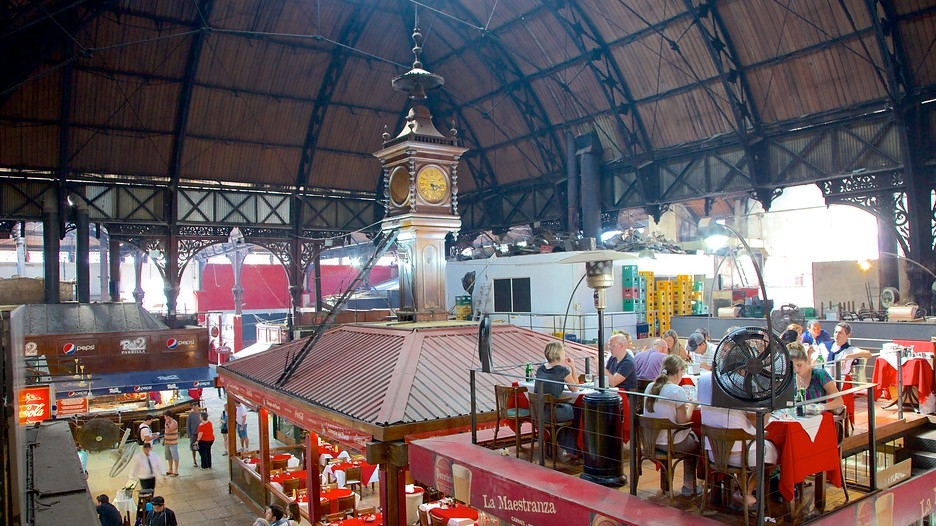
  The massive roof construction just after renovation. Amazing how the 4 roof’s navigating the hall’s natural light. Pic MAM.

The wall is finished in a balustrade with stained glass, and in the case of the mullions, one opted for whole glass screen-printed strips, this allows a better sealing of the enclosure, regulating the entrance of sunlight and avoiding the entrance of rainwater.

In 1999 the building was declared as a „National Historic Monument of Uruguay“.

The biggest market nowadays in Uruguay.

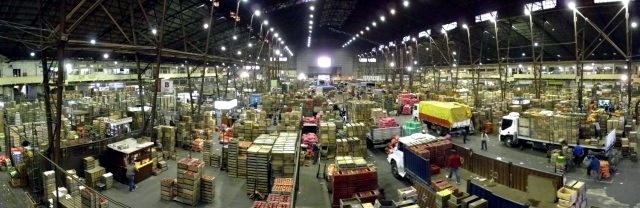
  Amazing room under one roof. Not an iron construction.

„Mercado Modelo del Uruguay“ ; its a central municipal fruit and vegetable wholesale market in and of Montevideo, Uruguay. The area around the installations, which occupy’s several blocks of the Mercado Modelo / Bolivar barrio, has also taken on the name of the market, hence the composite name of the entire barrio.

  The huge main hall of Mrcado Modelo.

The central building has an area of 19,000 square metres (200,000 sq ft), to which more buildings were added in 1996 of an area of 15,000 square metres (160,000 sq ft), while the overall area of the market is over 70,000 square metres (750,000 sq ft).

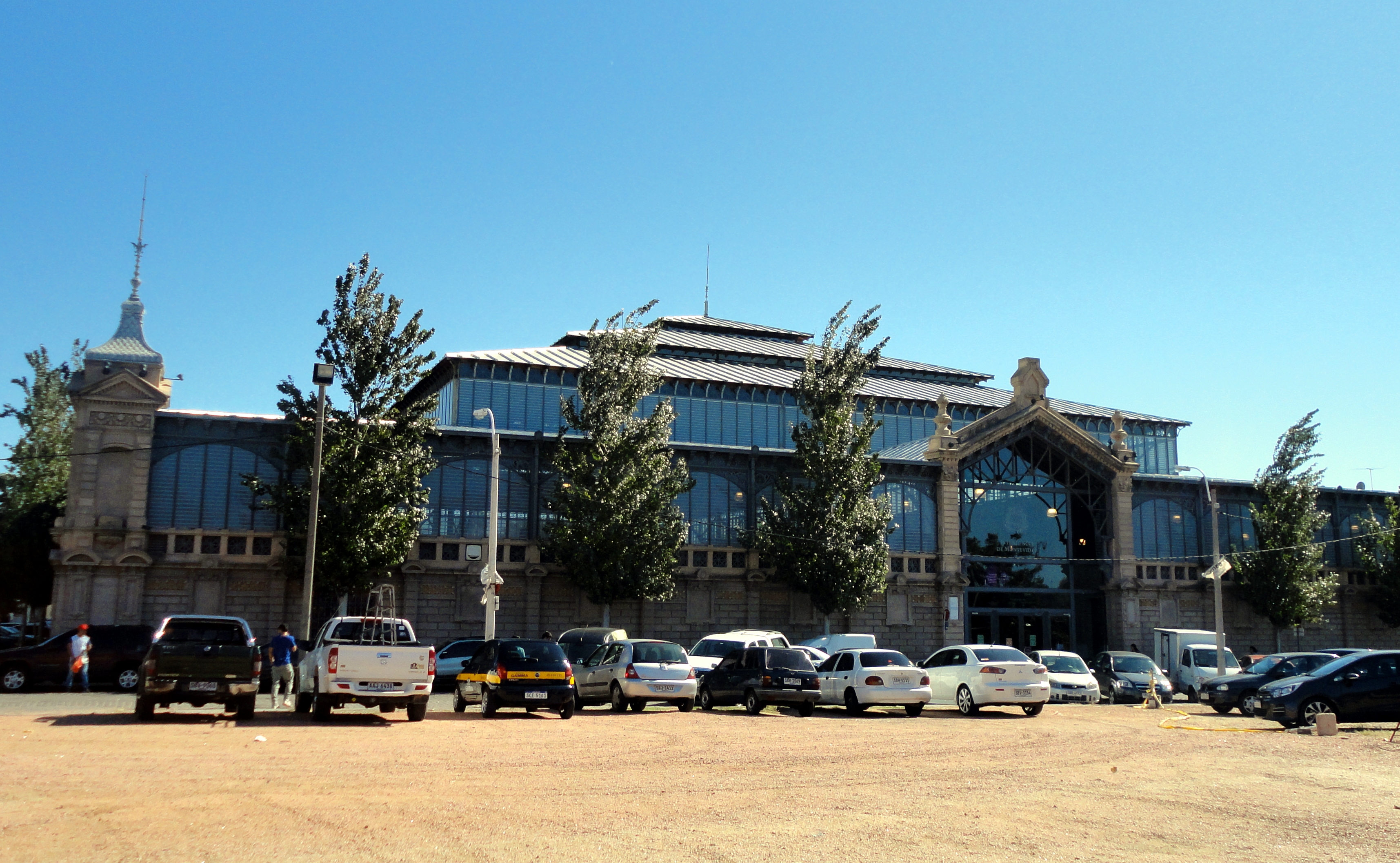
The current MAM from the parking area on south side. Notice the „4 roof’s“ from another perspective.

The current Agricultural Market (MAM) of Montevideo:

In 2006, the Departmental Government, took the firm decision to recover the Agricultural Market as the epicenter for the promotion and recovery of the „Goes“ neighborhood.

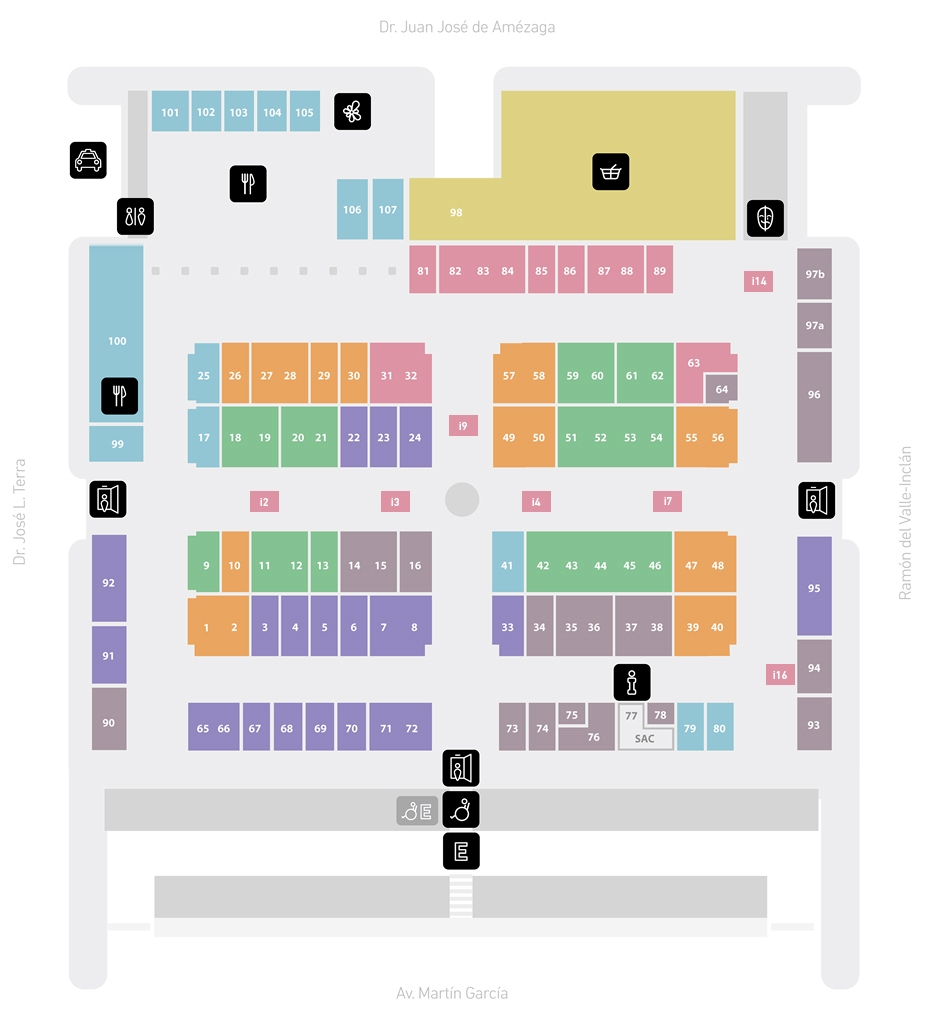
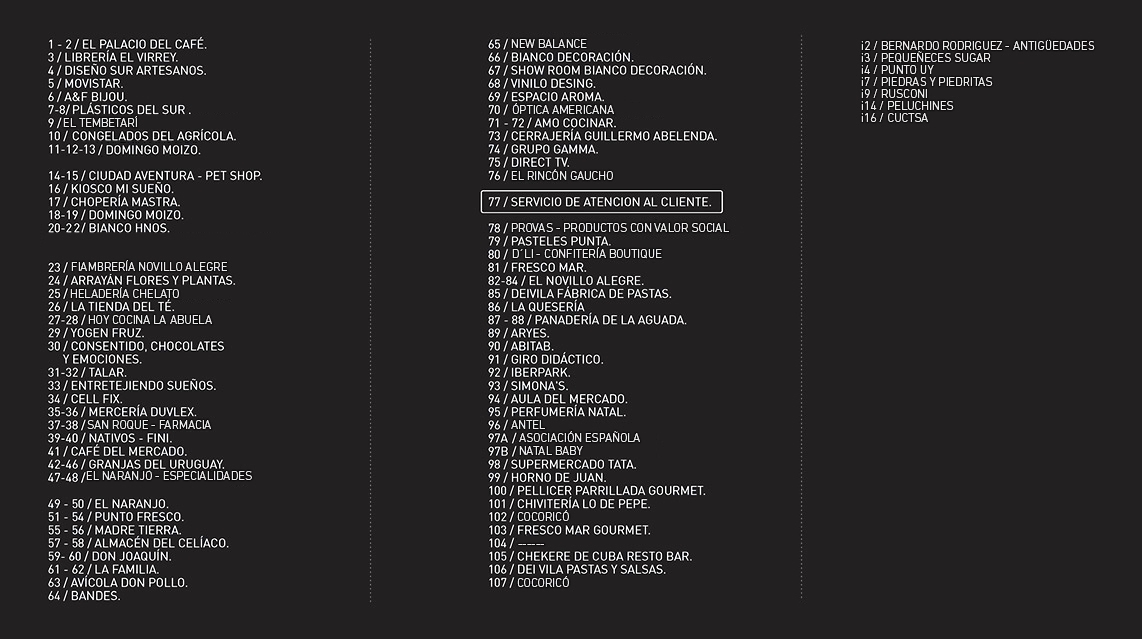
                 Floor plan and stalls list of today’s Mercado Agricola. Click on to size up.

The Intendencia of Montevideo and the Multilateral Investment Fund of the Inter-American Development Bank signed an agreement on November 8, 2008 to execute the non-reimbursable Technical Cooperation, „The Agricultural Market of Montevideo as a critical element For the socio-economic dynamization of the Barrio de Goes „.

      Have a good look on the amazing steel construction holding „the 4 roofs“. Most pics supersize if you click on.

In addition, there are other interventions in the area of ​​other programs such as the European Union Program, through the „Renova Goes Program“, framed in the „Viví Goes Plan“, which would carry out a plan of works for the restoration Of the whole area,

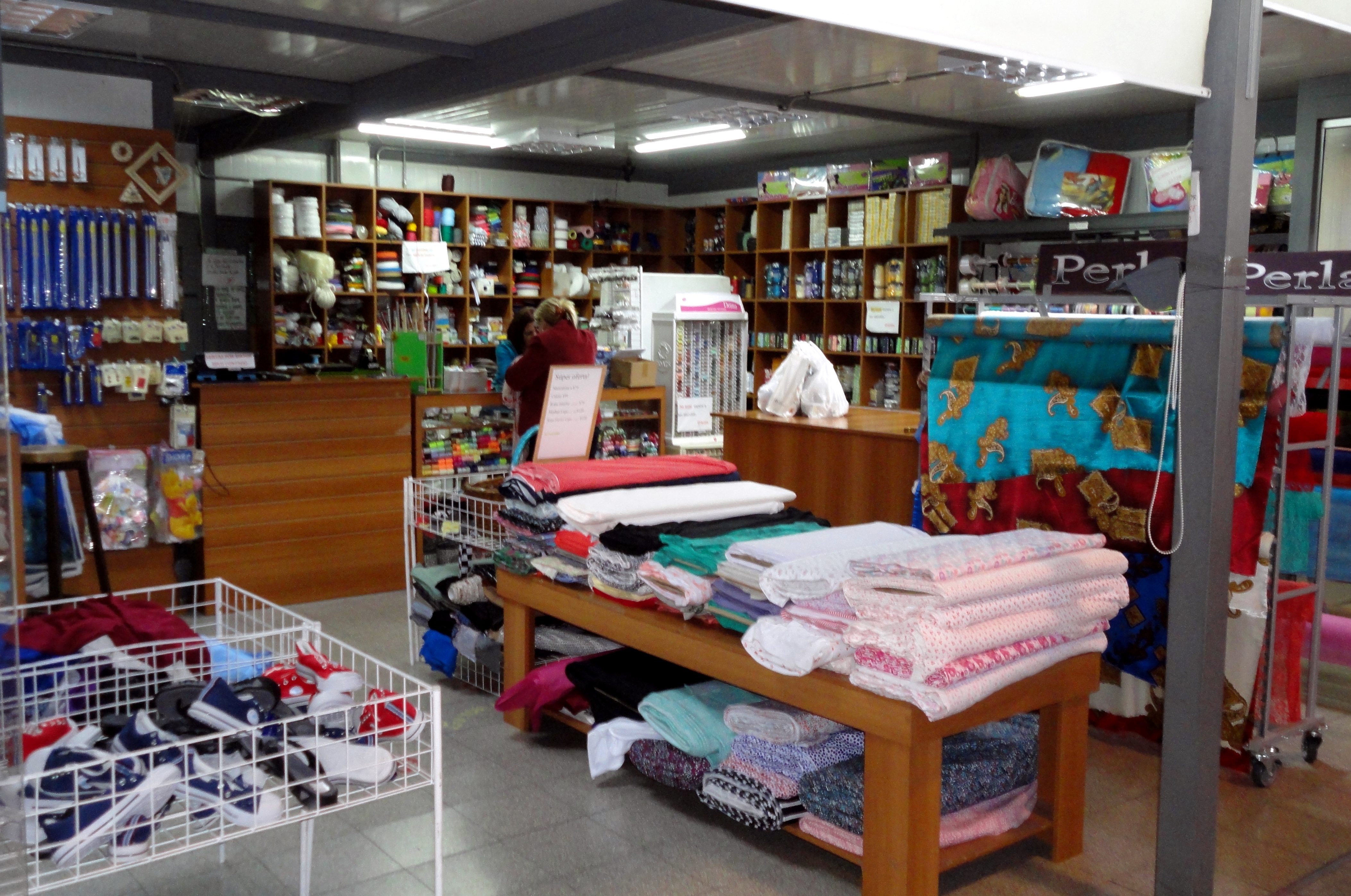
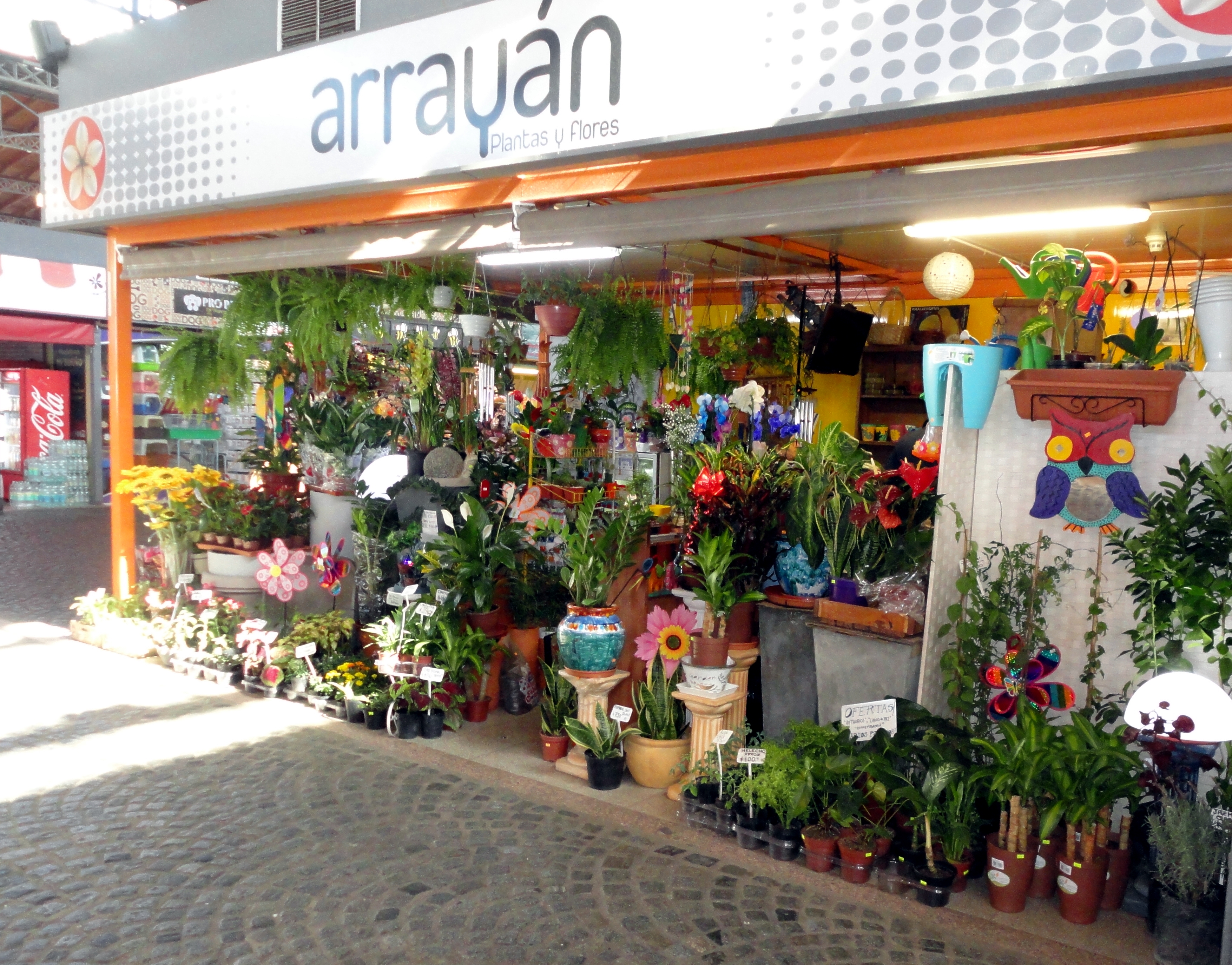
              Lots of different shops with everything your heart desires and all under one roof.

All in all one can see how the area around the MAM is developing into a modern and functional suburb. Just one more information, lots of international and national „outlet stores“ have already been settled.  Have a look into the internet, MAM runs an interesting own website where one can find special event information and much more.

What the MAM has to offer.

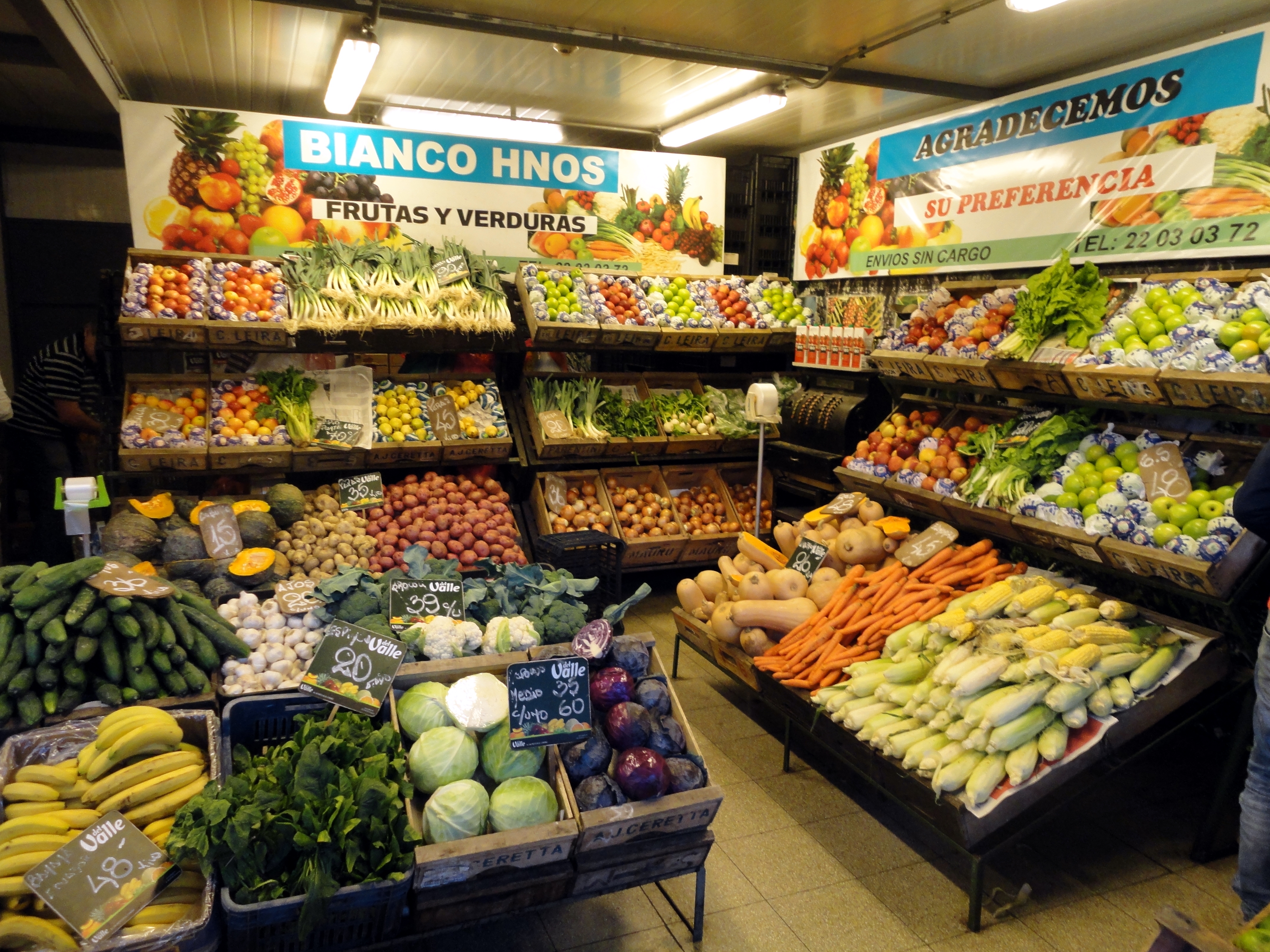
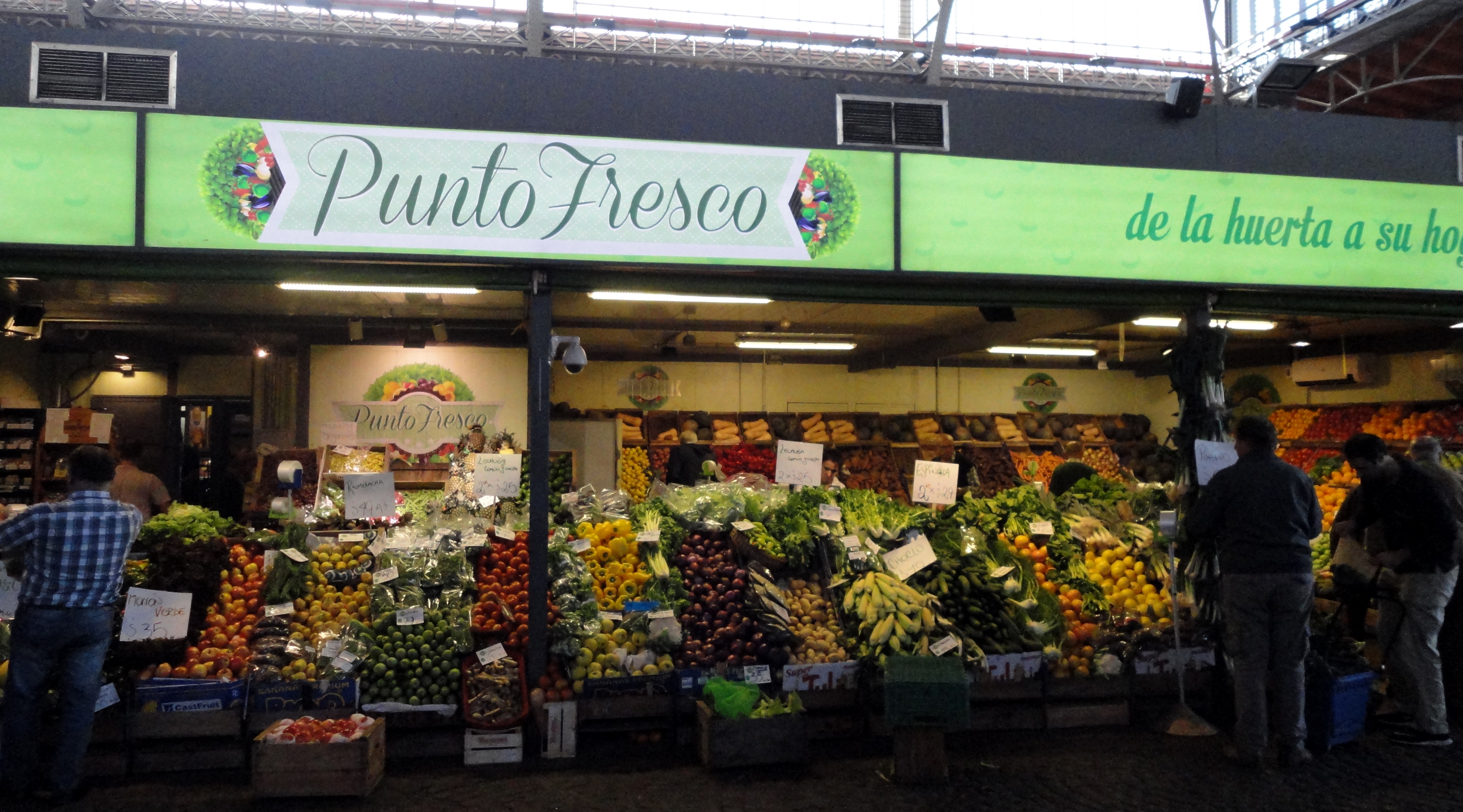
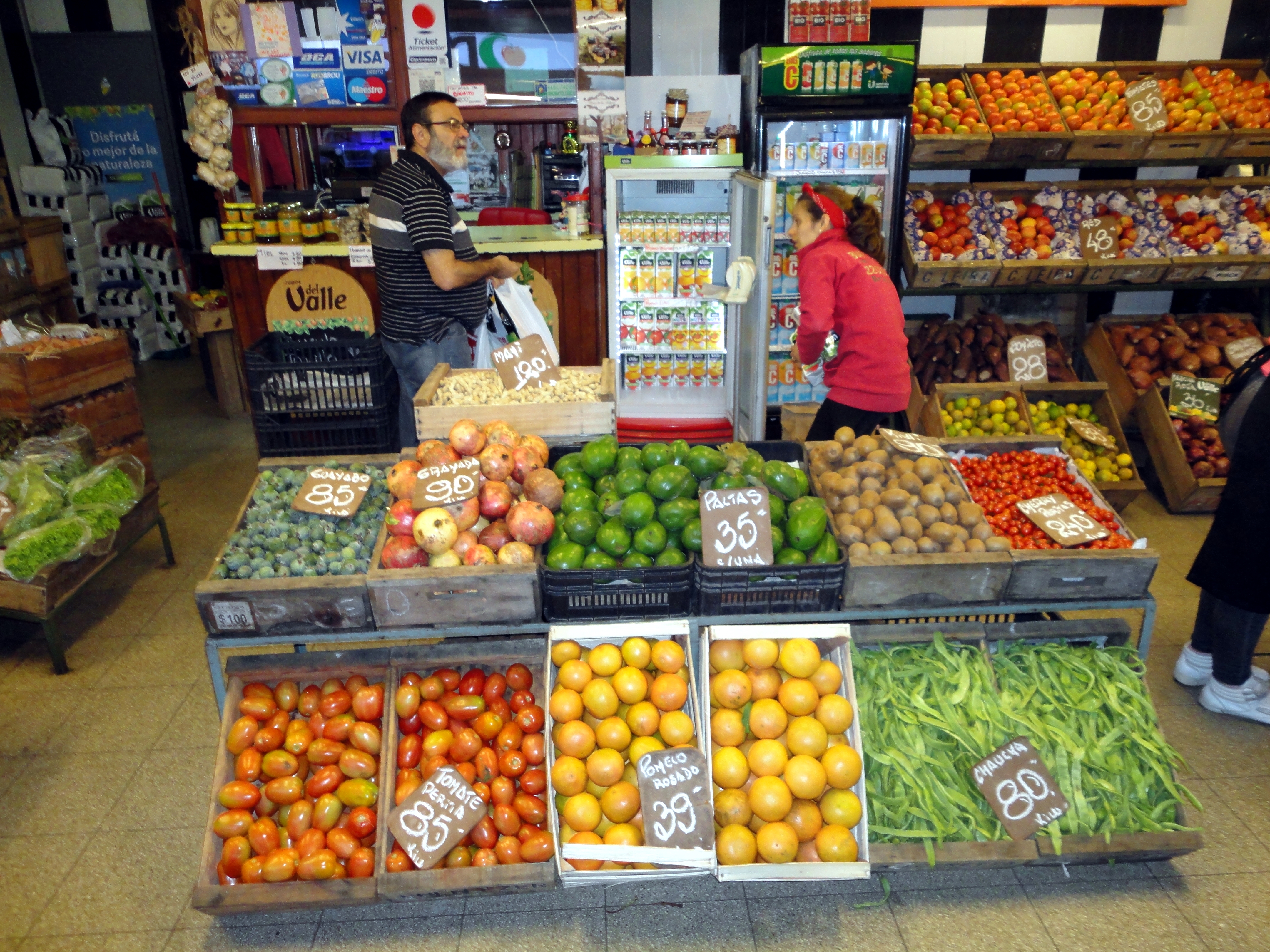
        All kinds of fruit and vegetables of course, even rare ones. Even fresh chilli’s I found, although Uruguayans don’t like it spicy.  One can help themselves always with dried or ground spices and herbs.
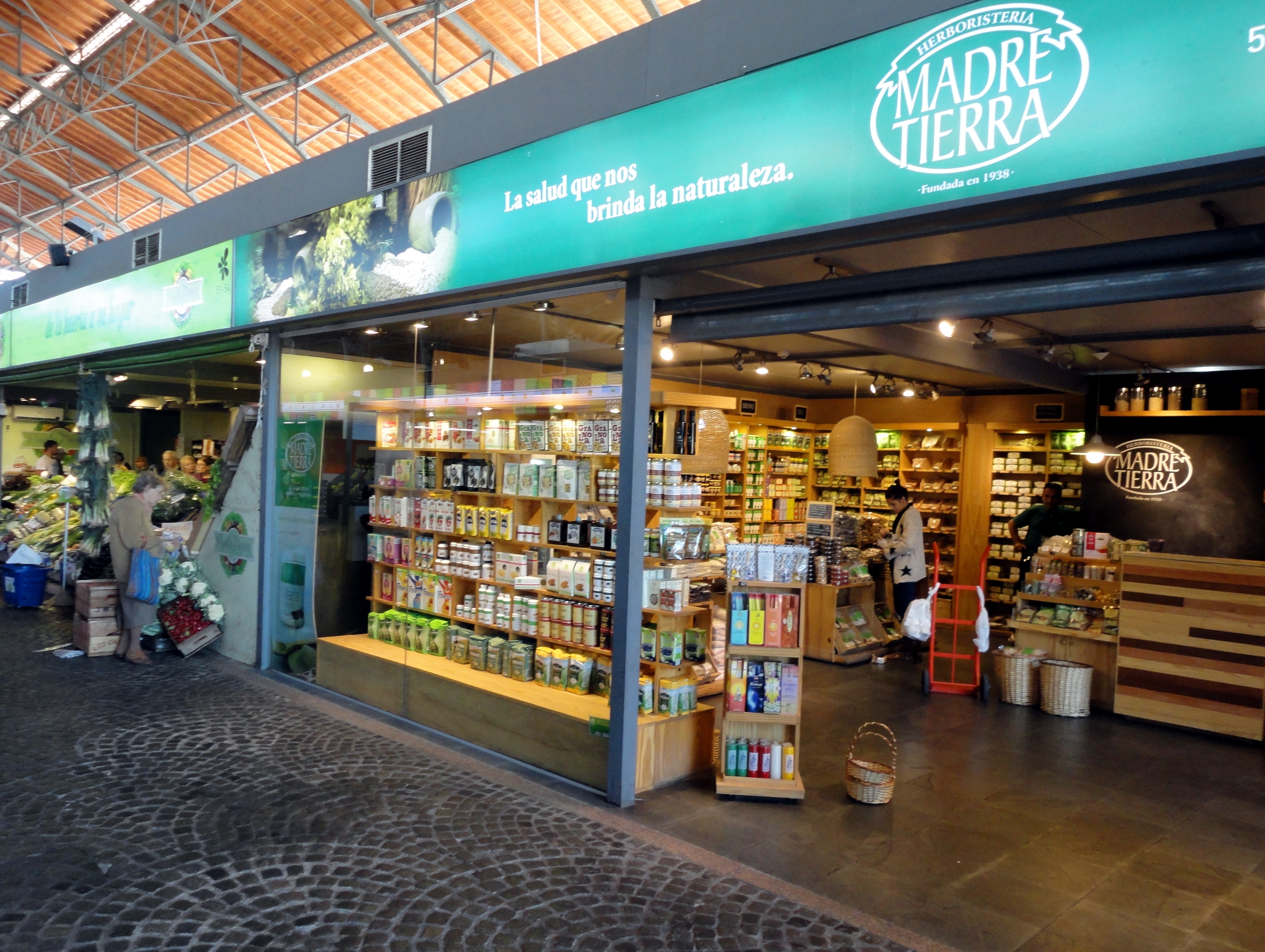
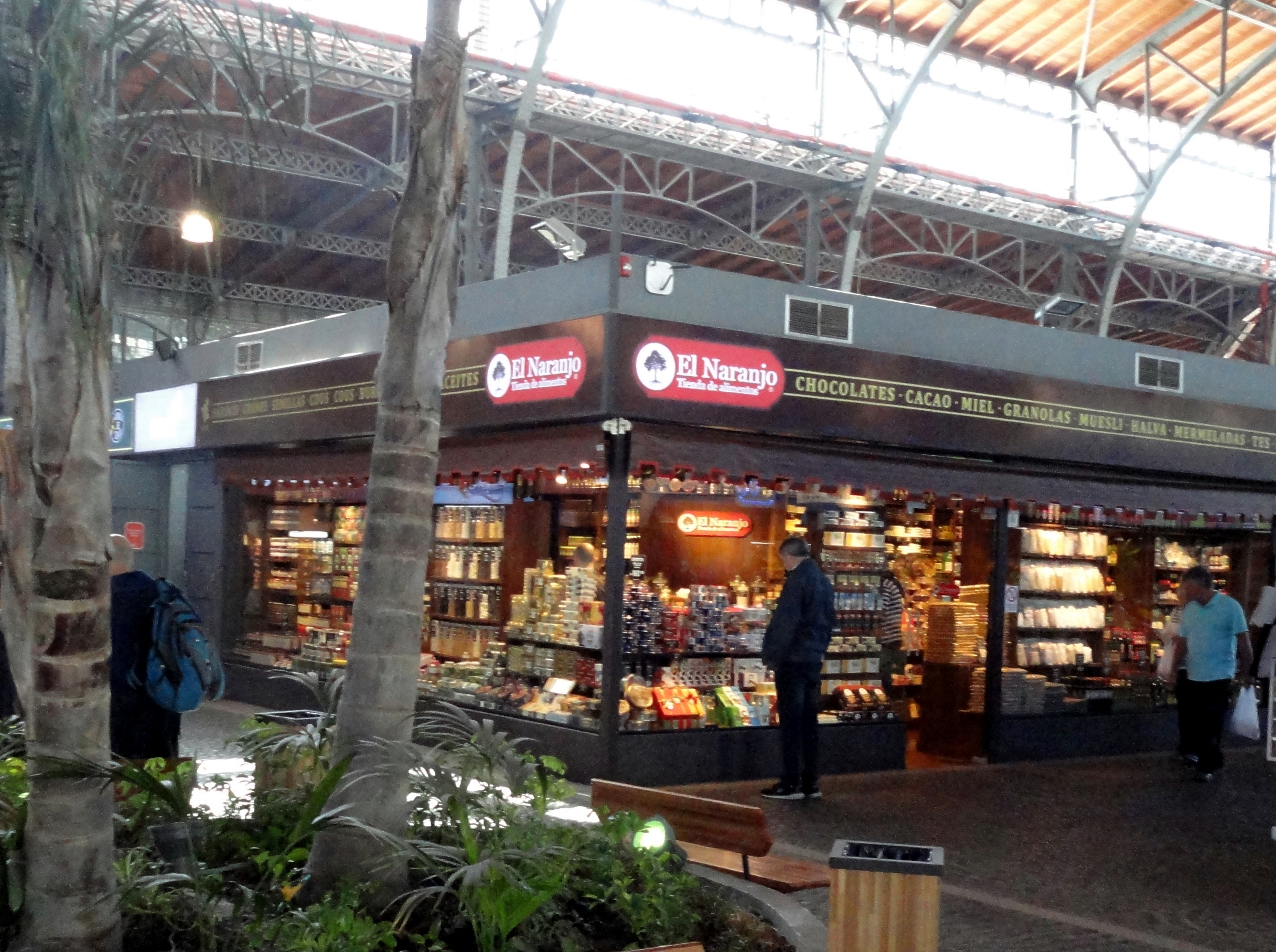
        Herbs and spices and hundreds of other goodies one will get at „Madre Tierra“ (Mother Earth) or „El Naranjo“ (The Orange Tree).
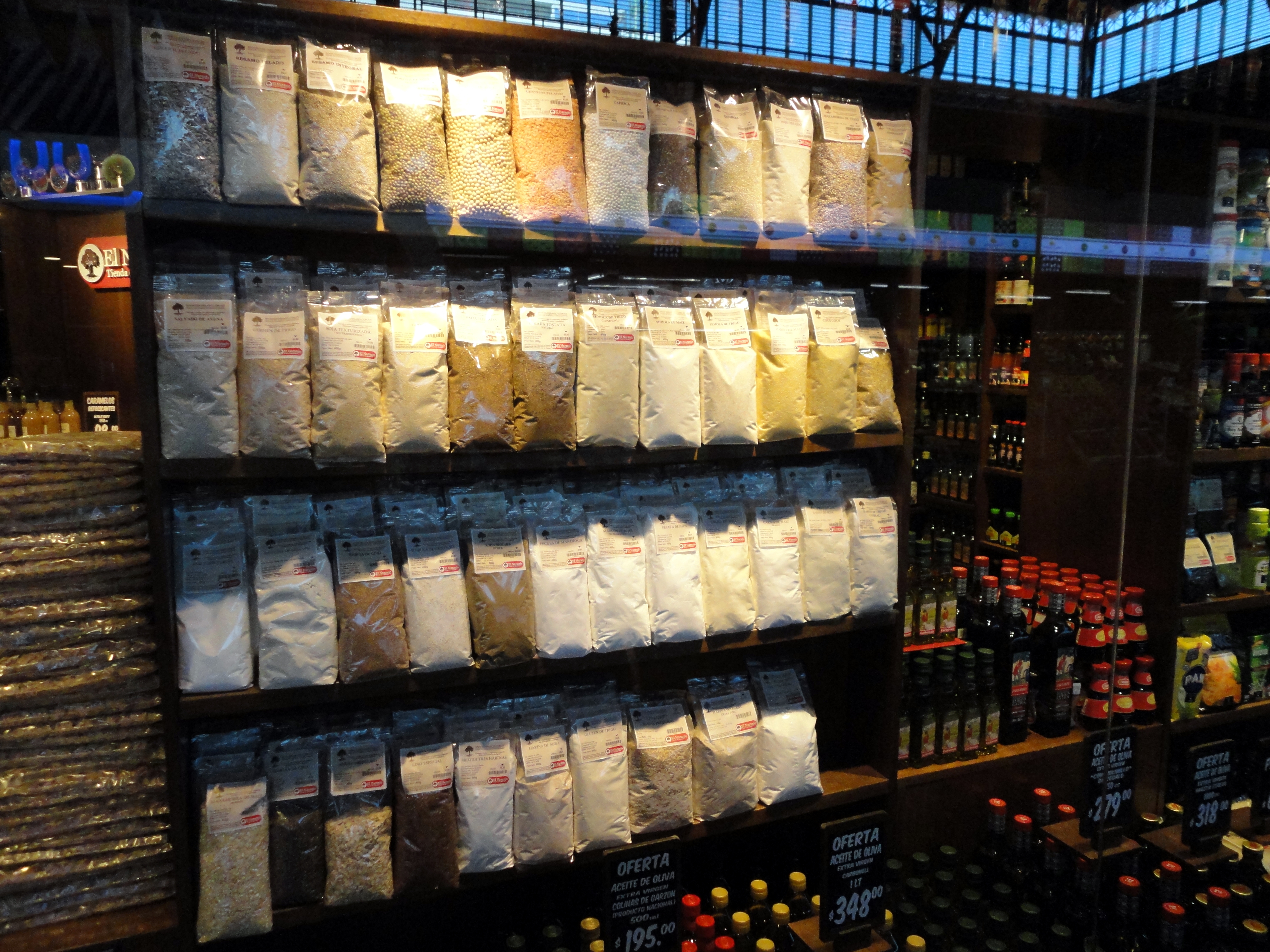
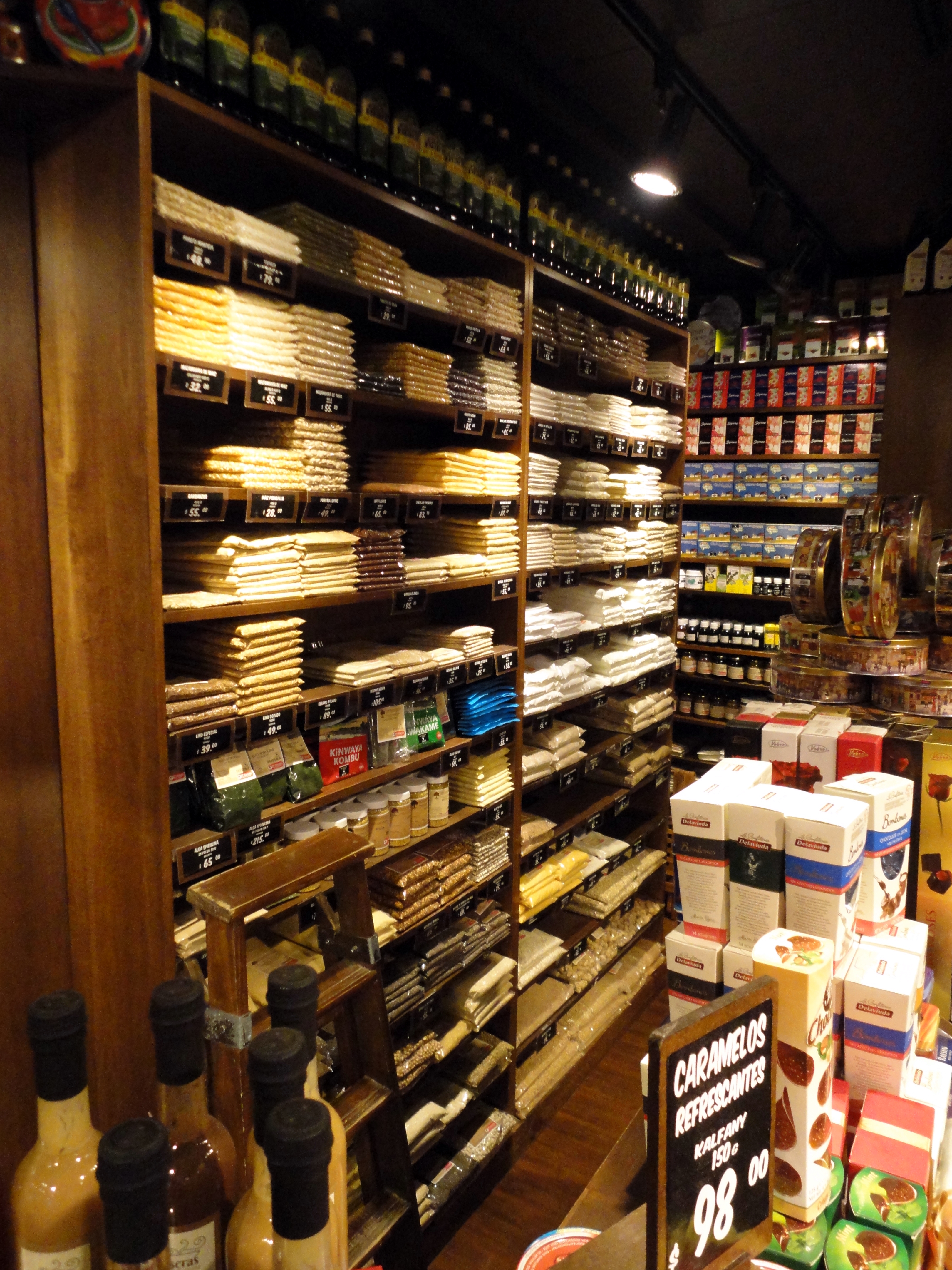
                               They have lots and lots of shelves with different ingredients or a whole shelf of different flour’s. We bought a lot during the time, because we bake our own bread every week.
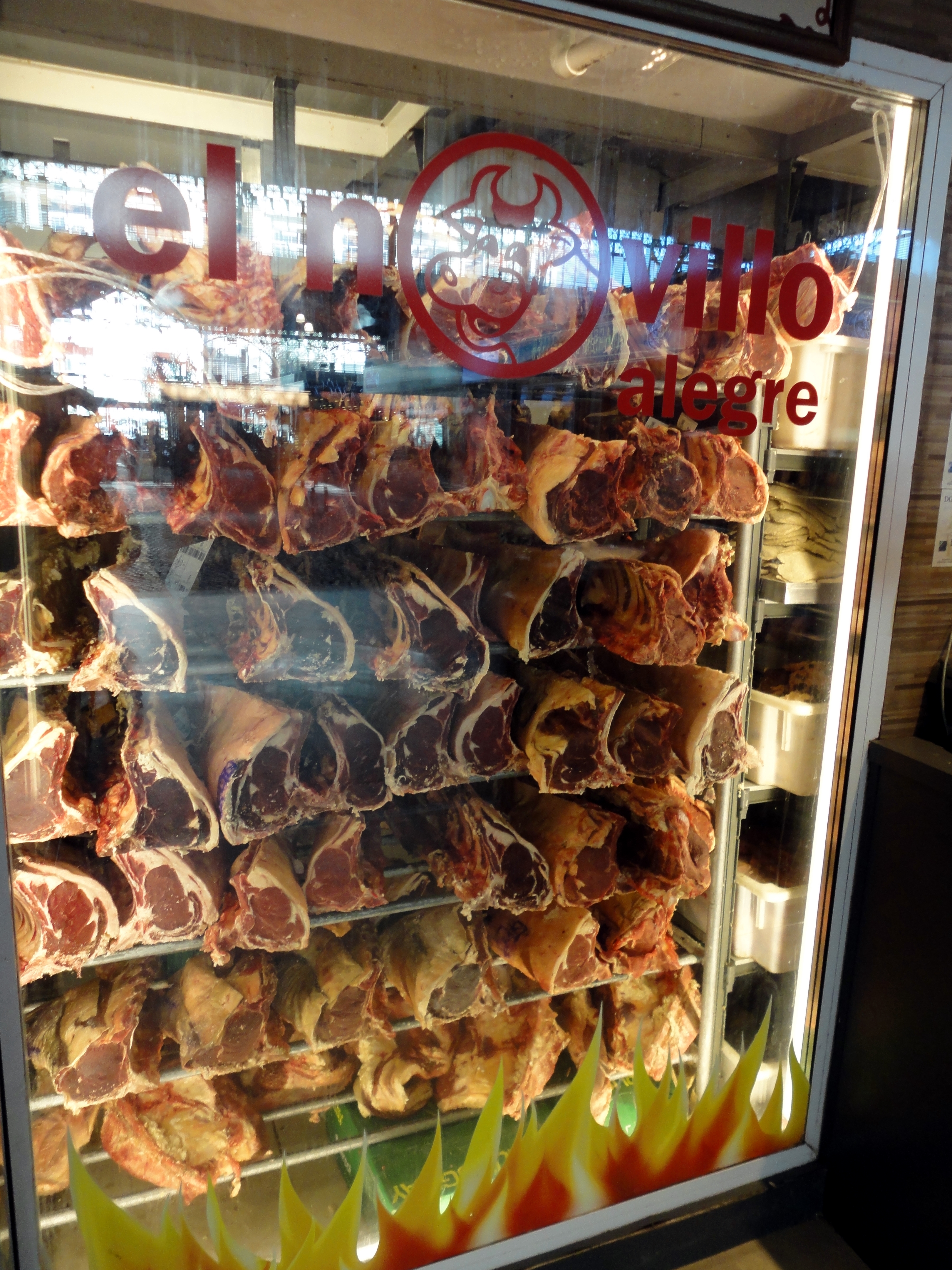
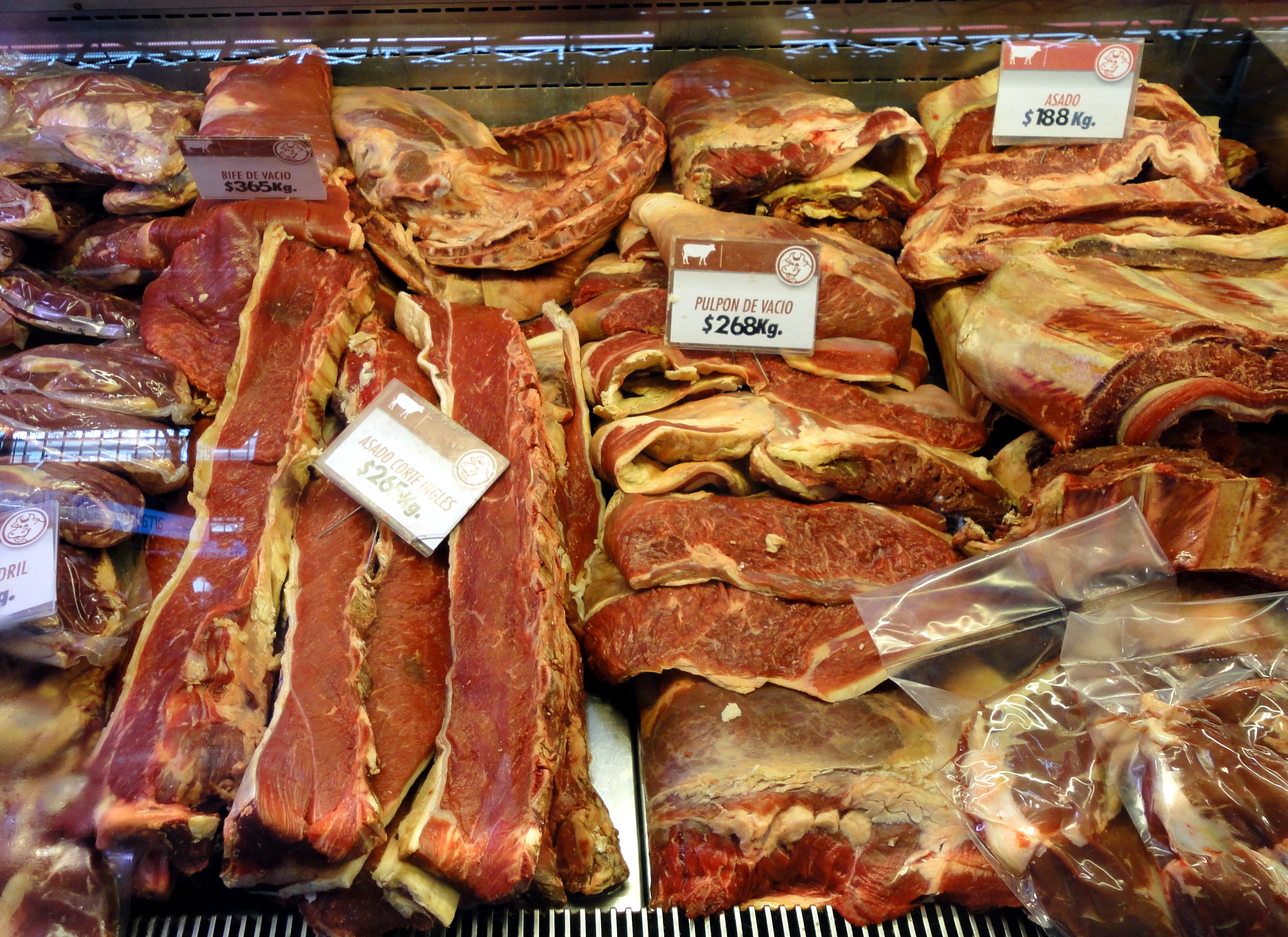
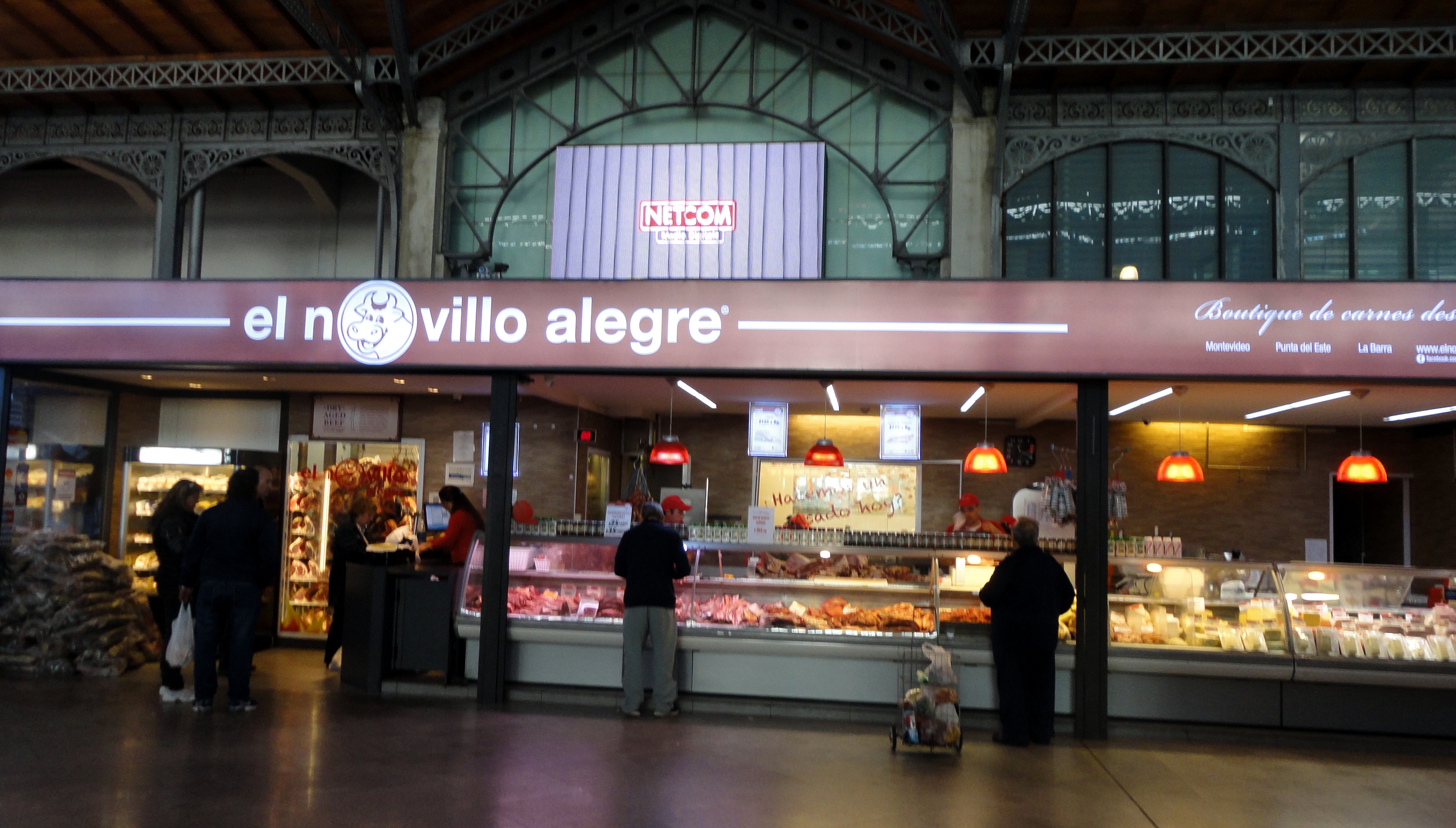
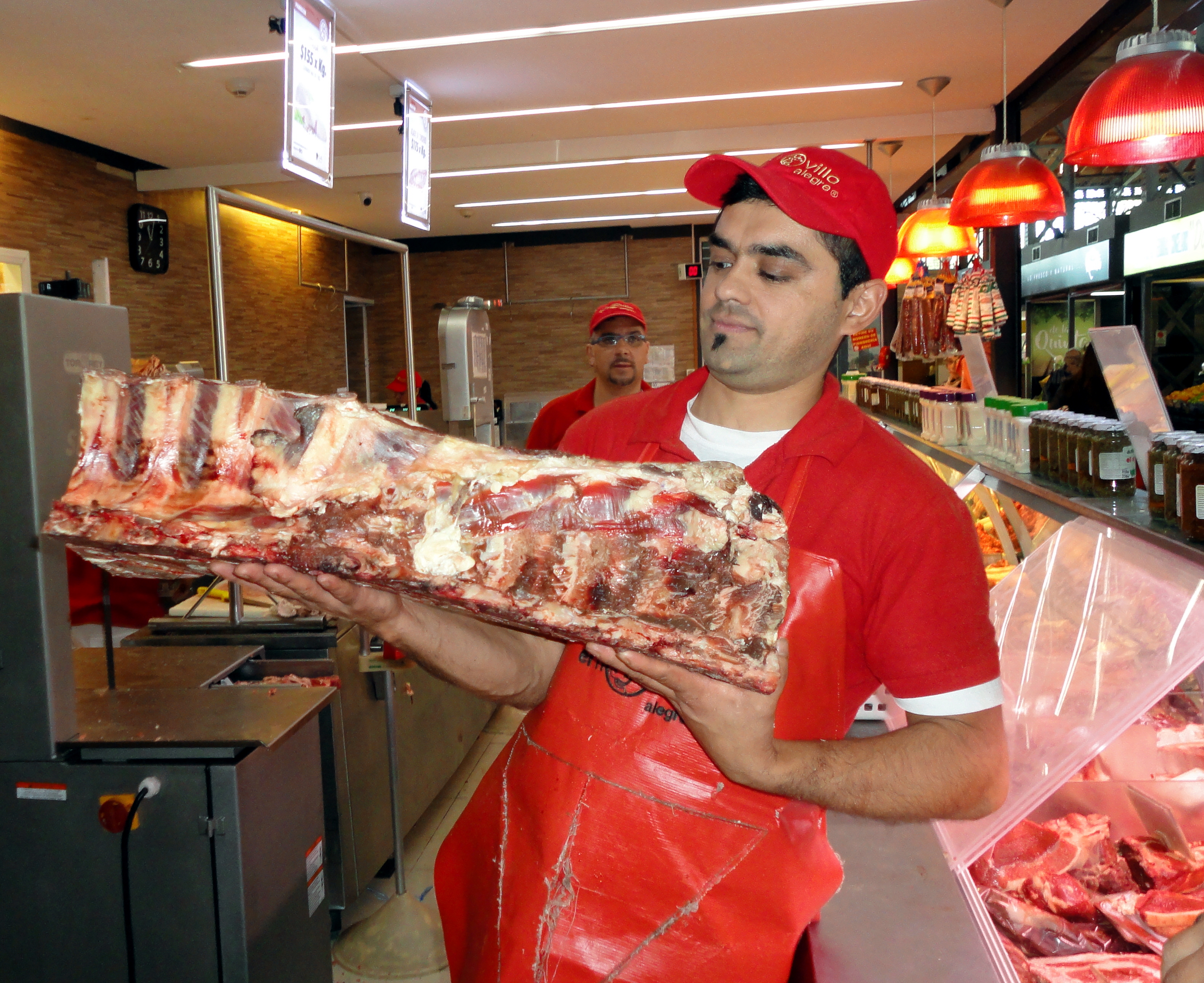
                                 My favorite shop is „El Novillo“ (the bull).  Click on pics to supersize and enjoy. The only butcher where I have seen „Asado English Cut“ (center of the picture) instead the bony and fatty „Uruguayan Cut“ (center right of the pic). The only place in Uruguay where private people can buy „DRY AGED BEEF“. Up here the piece I purchased – 30 day aged beef.   The quality and taste is just amazing. Never found better one in Australia or the US. In upcoming month I will post some articles about „pro’s and con’s about aged meat“ and „how to use it“.
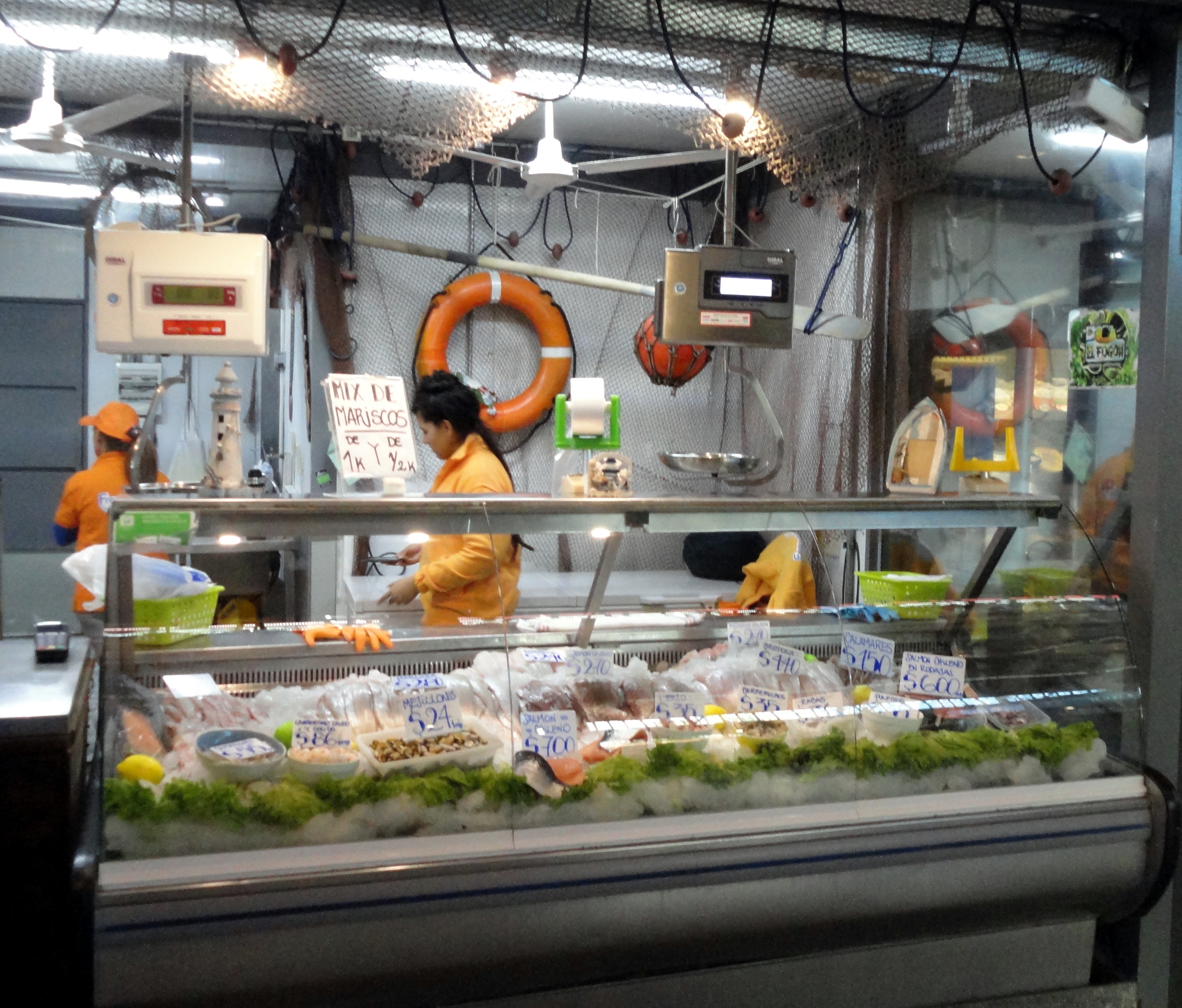
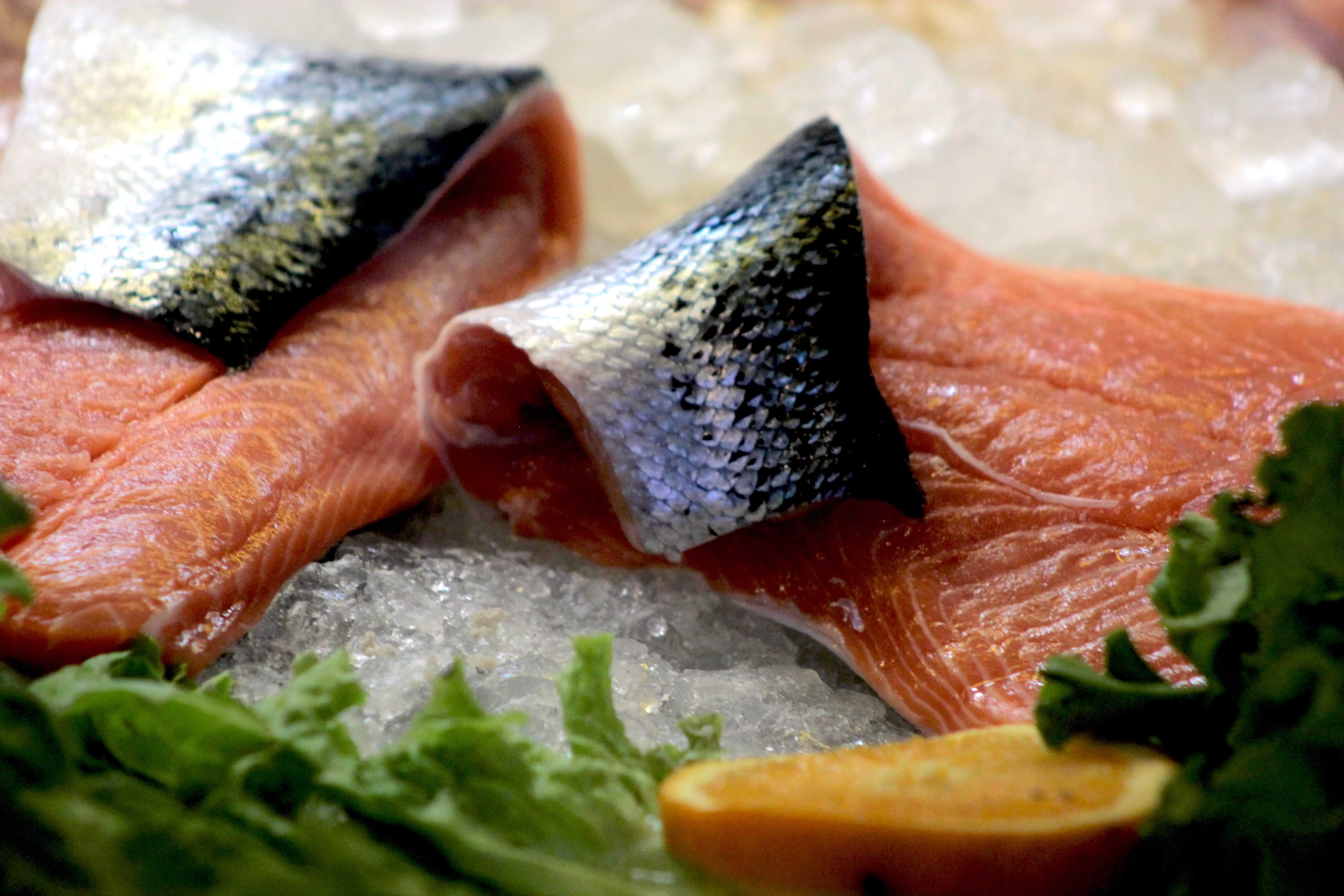
       We should not forget the fish counter where they offer all kinds of fresh „mariscos“ (seafood).
                
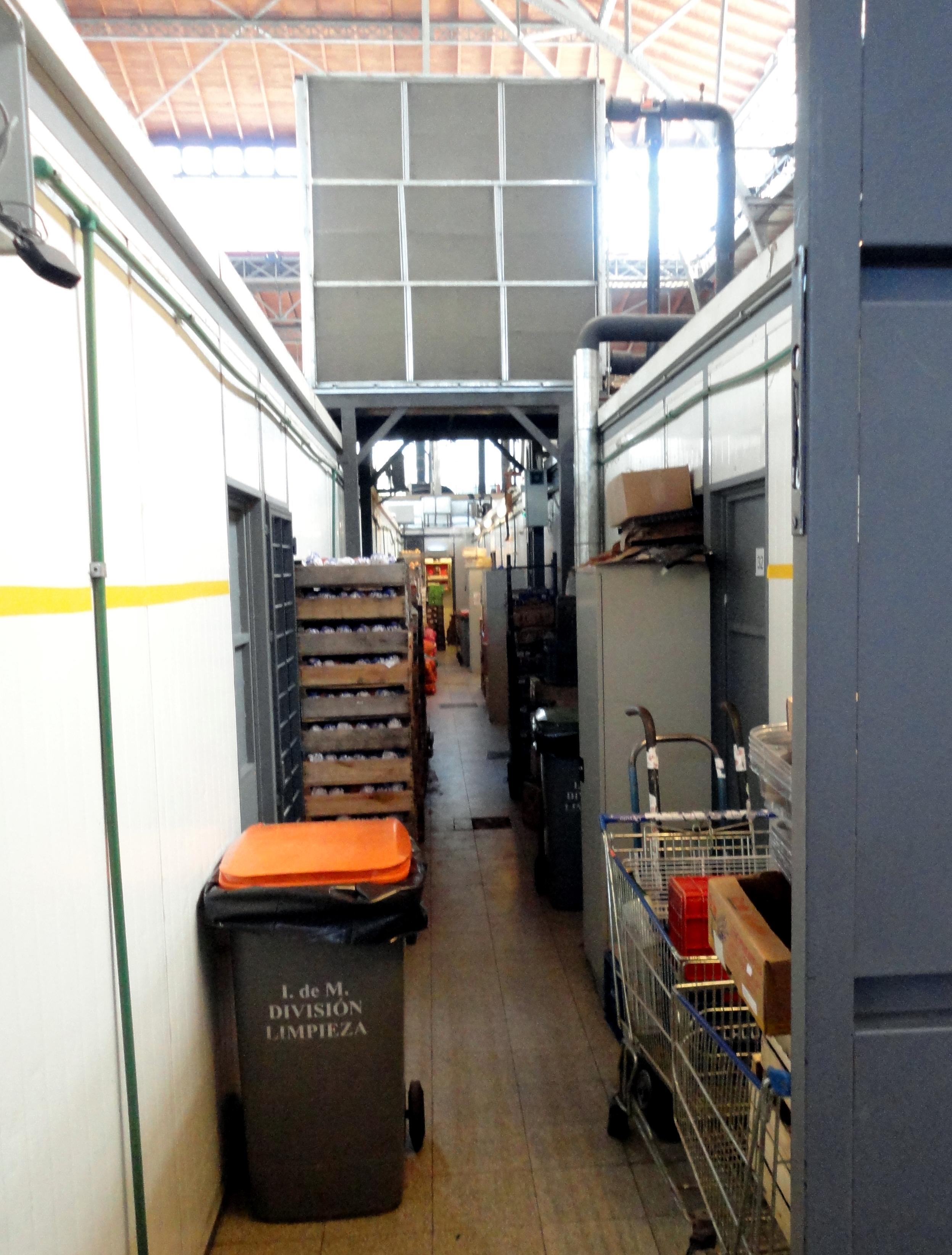
What I like at MAM particularly is, that the whole market is „CLEAN“ and „TIDY“ throughout, which is not very common in Uruguay. Even if you look „behind the doors“ as I did.  Compliments to the management !

Finally.

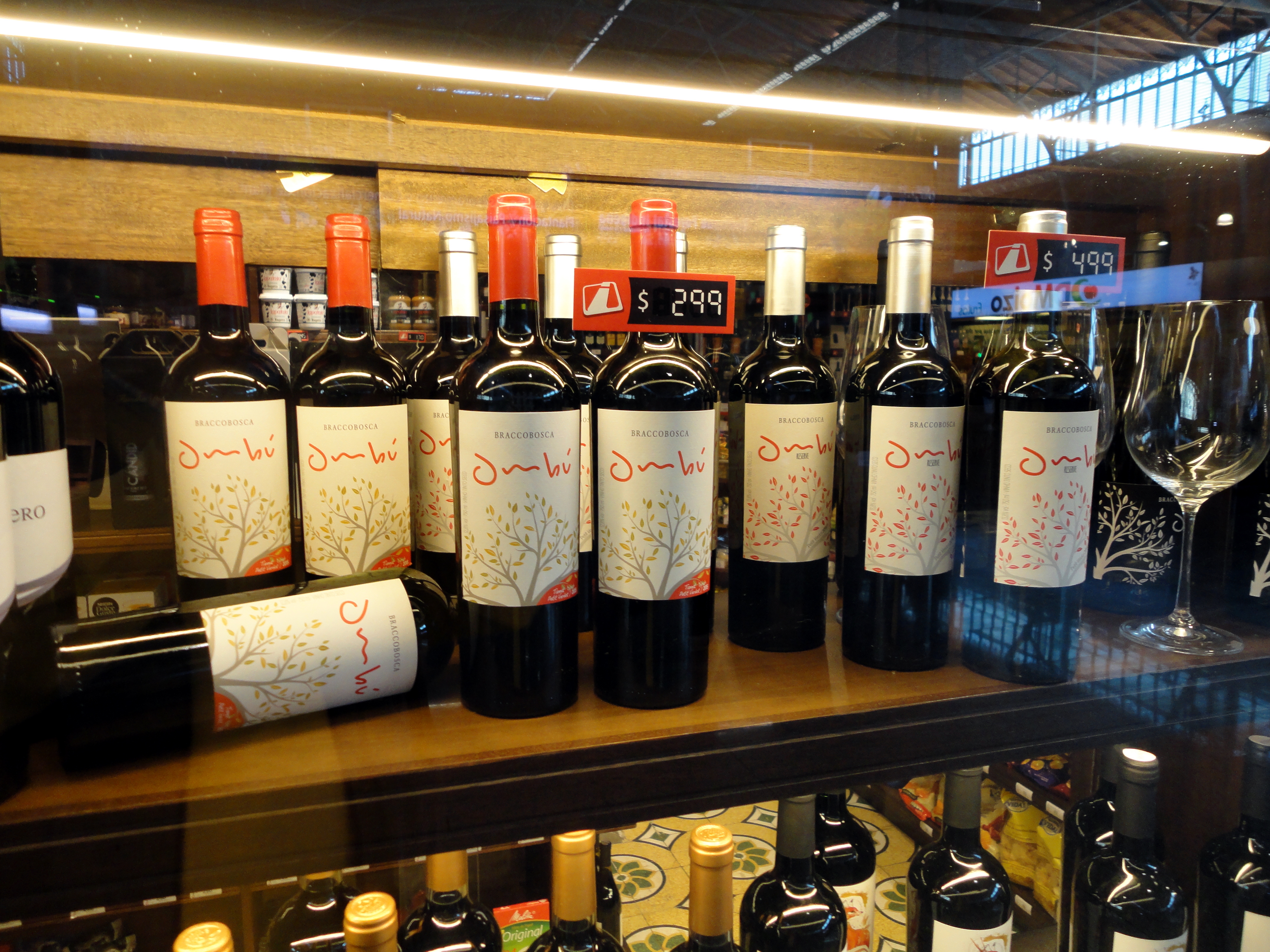
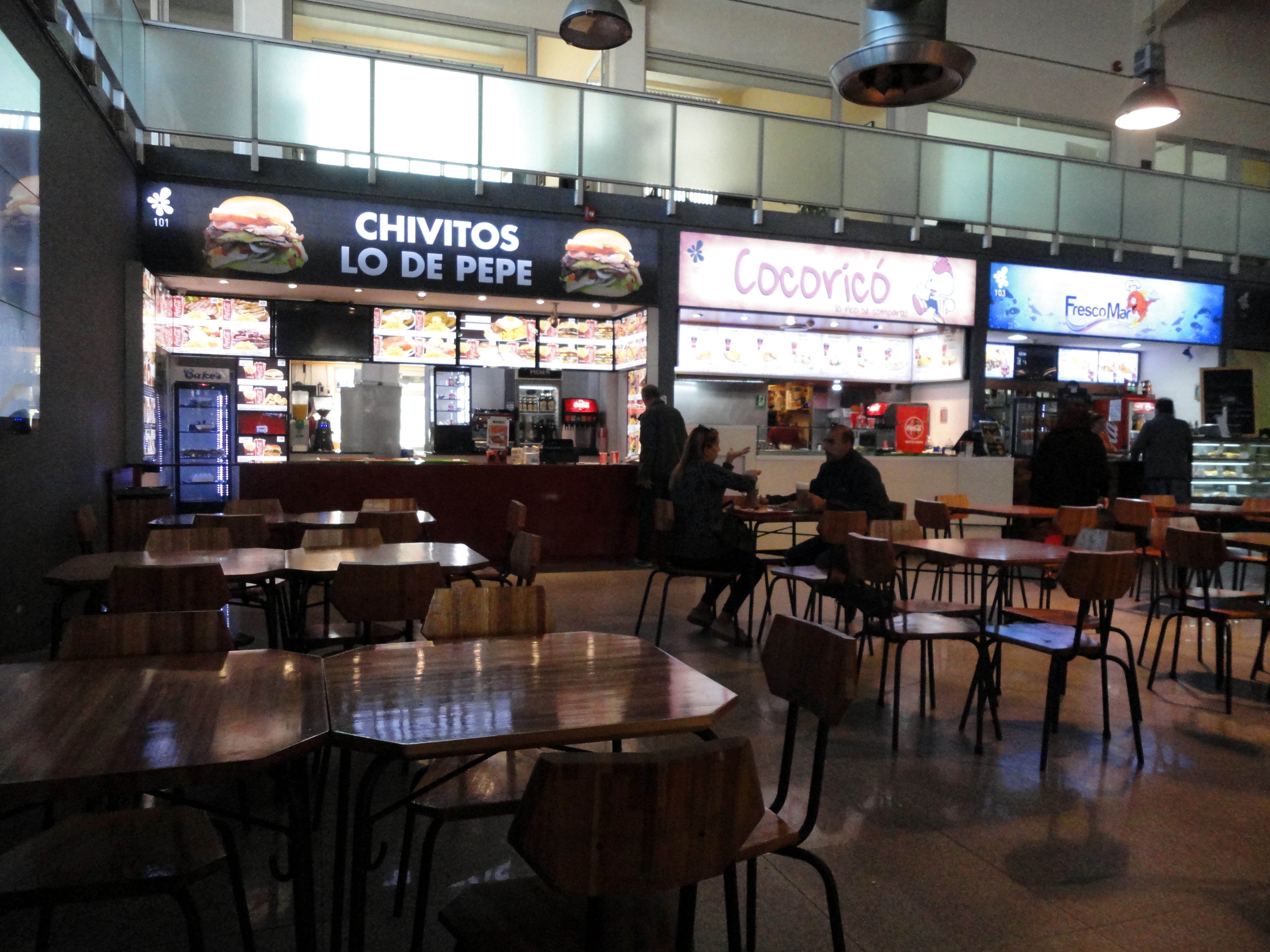
There is also a comprehensive selection of restaurants, cafe’s and food stalls available. Here some selected restaurant dishes (pics MAM).  Also my favorite OMBU wine.


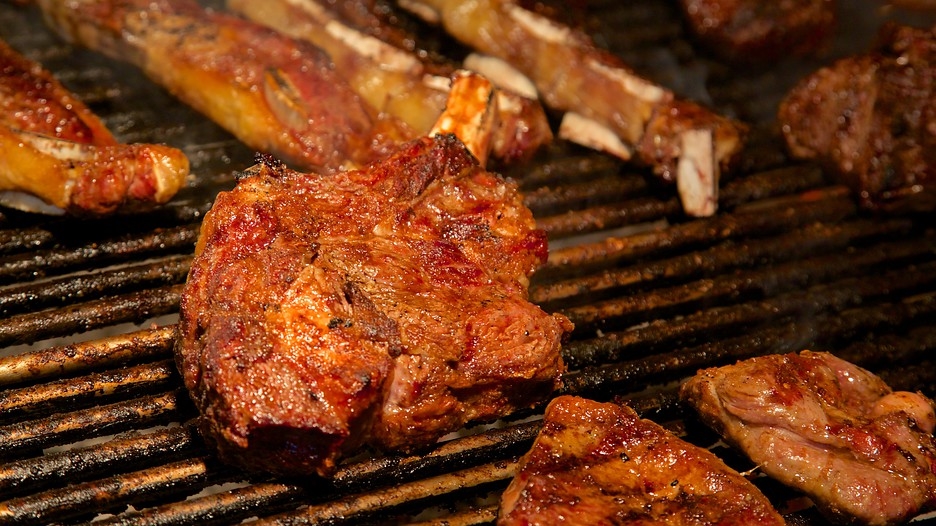
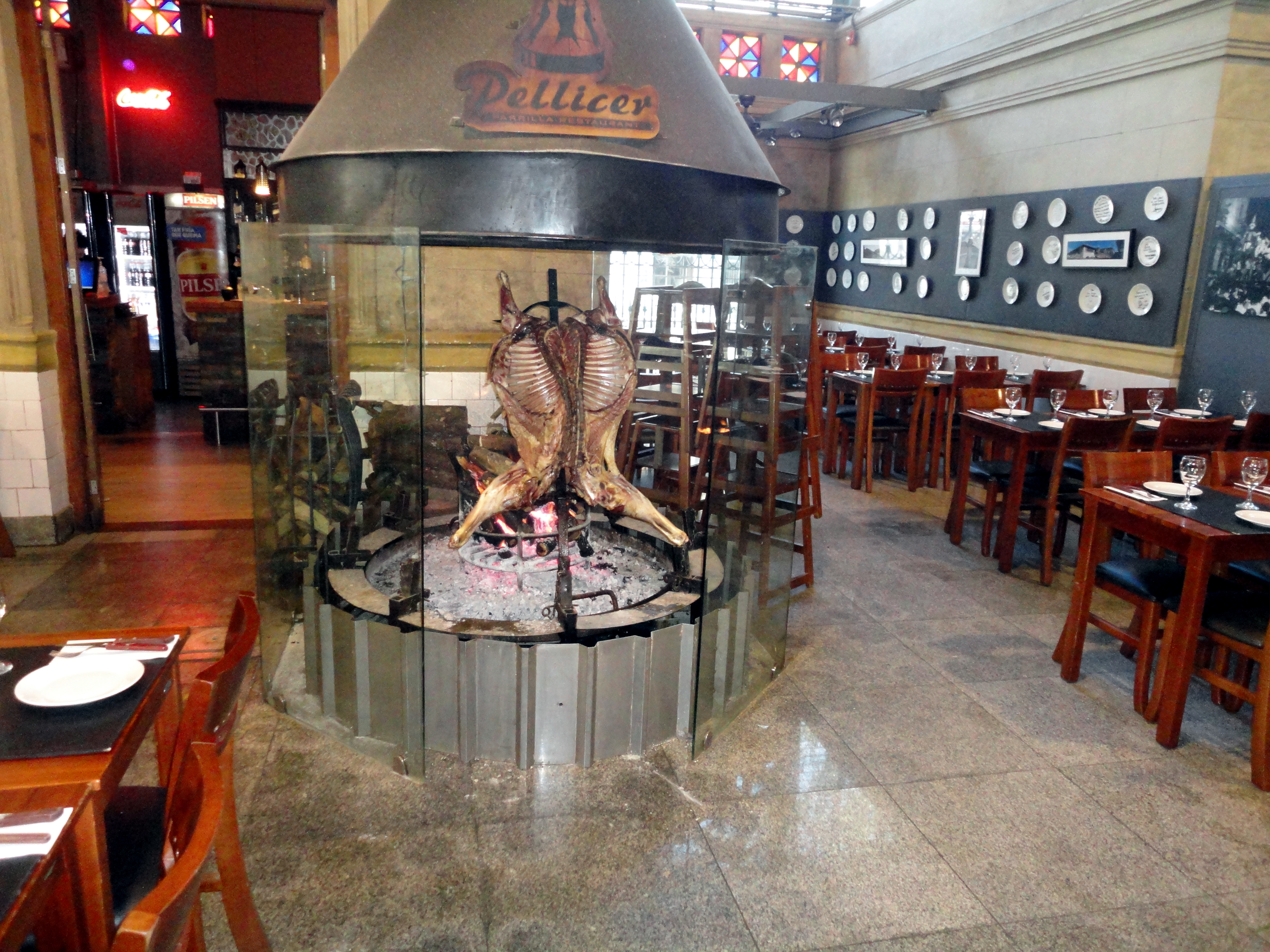
One can choose between all the usual  Uruguayan meals (chivito, milanesa, asado, chorizo, pizza and more). But also vegetarian or seafood dishes and a portion of grilled lamb from a wood fired rotating spit-roast.

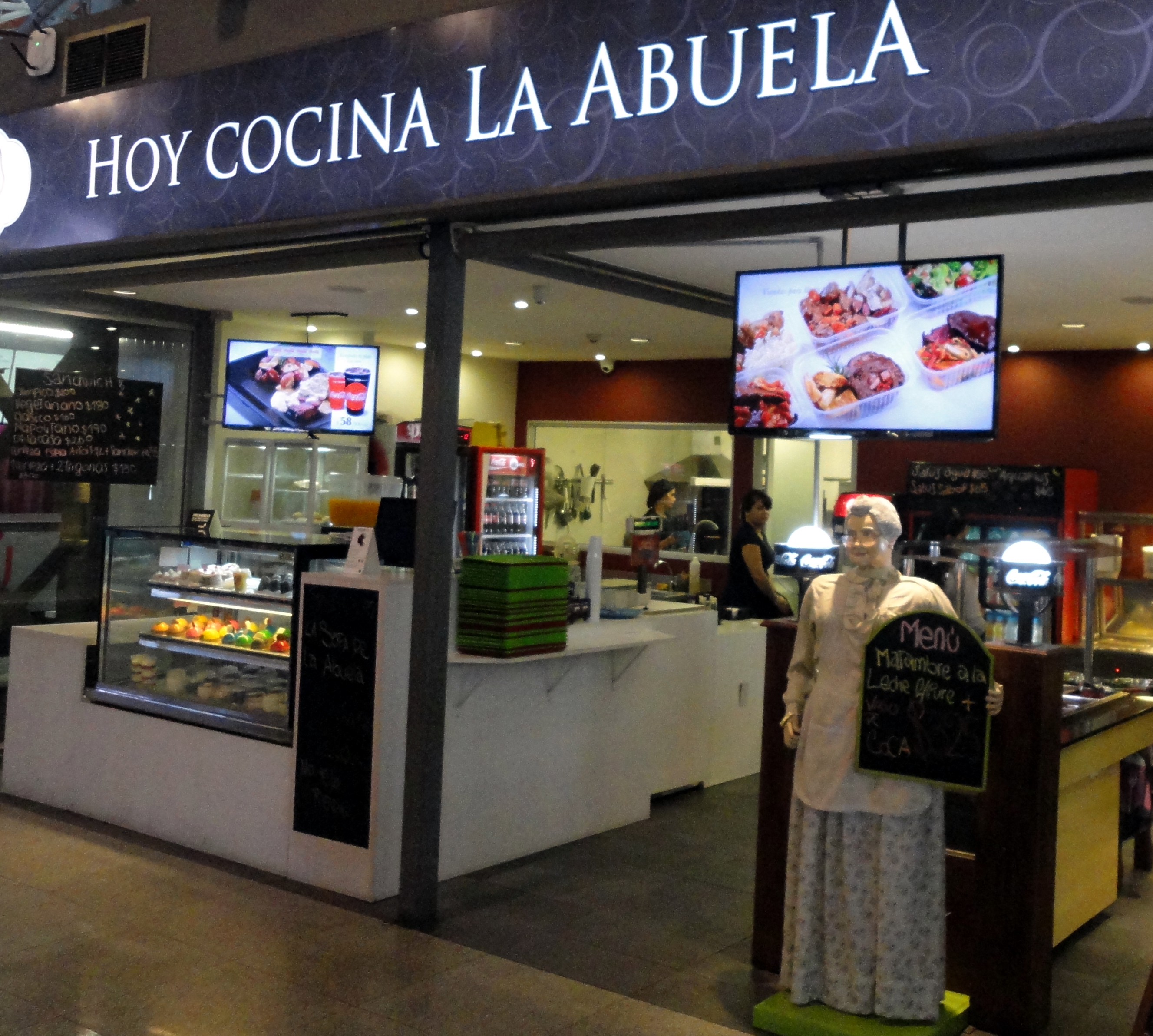
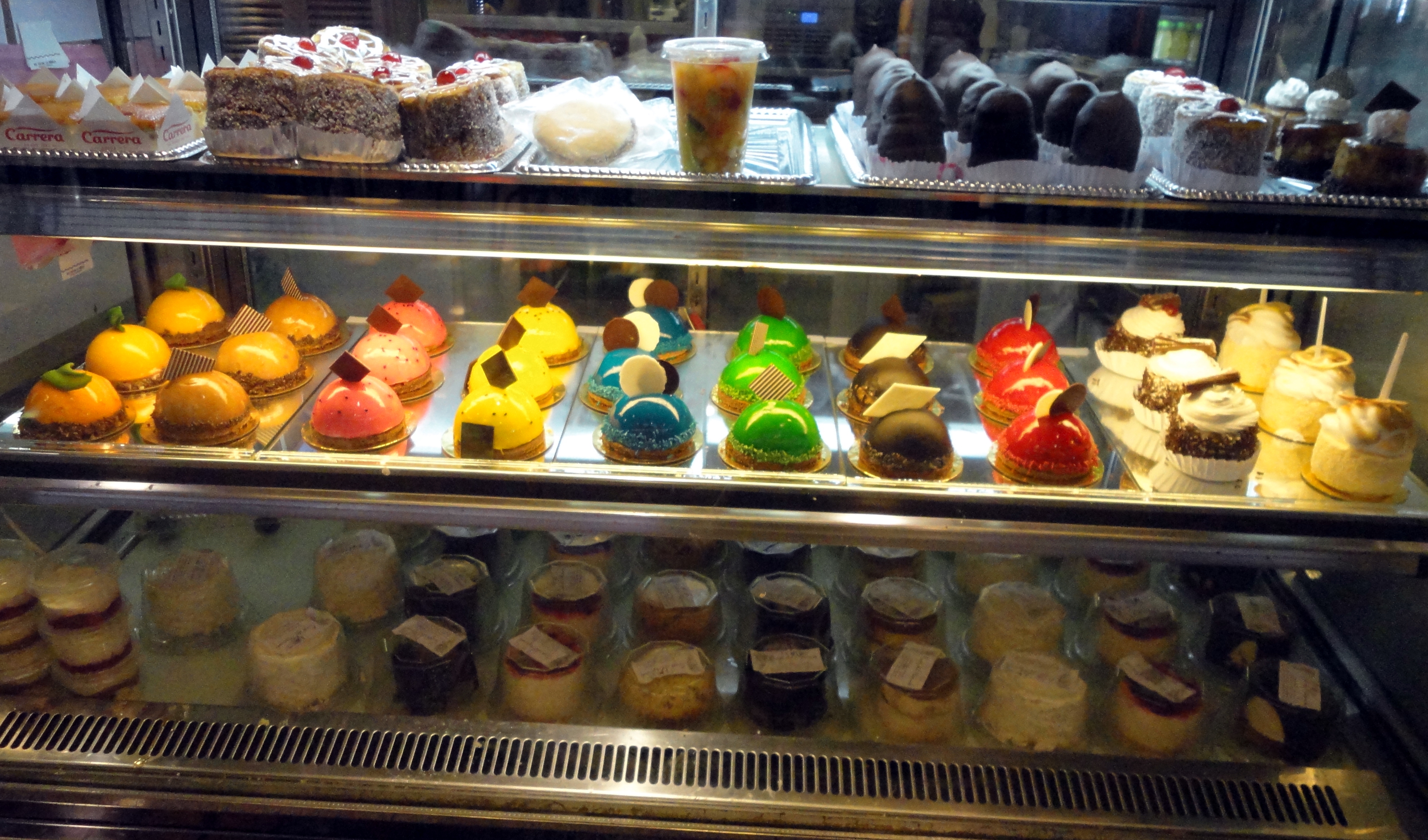
One of the little stalls I like very much is „Hoy Cocina La Abuela“ (granny cooks today). Several self-service-bars offer decent home-cooked meals, delicious ! And mouthwatering the variety of desserts.

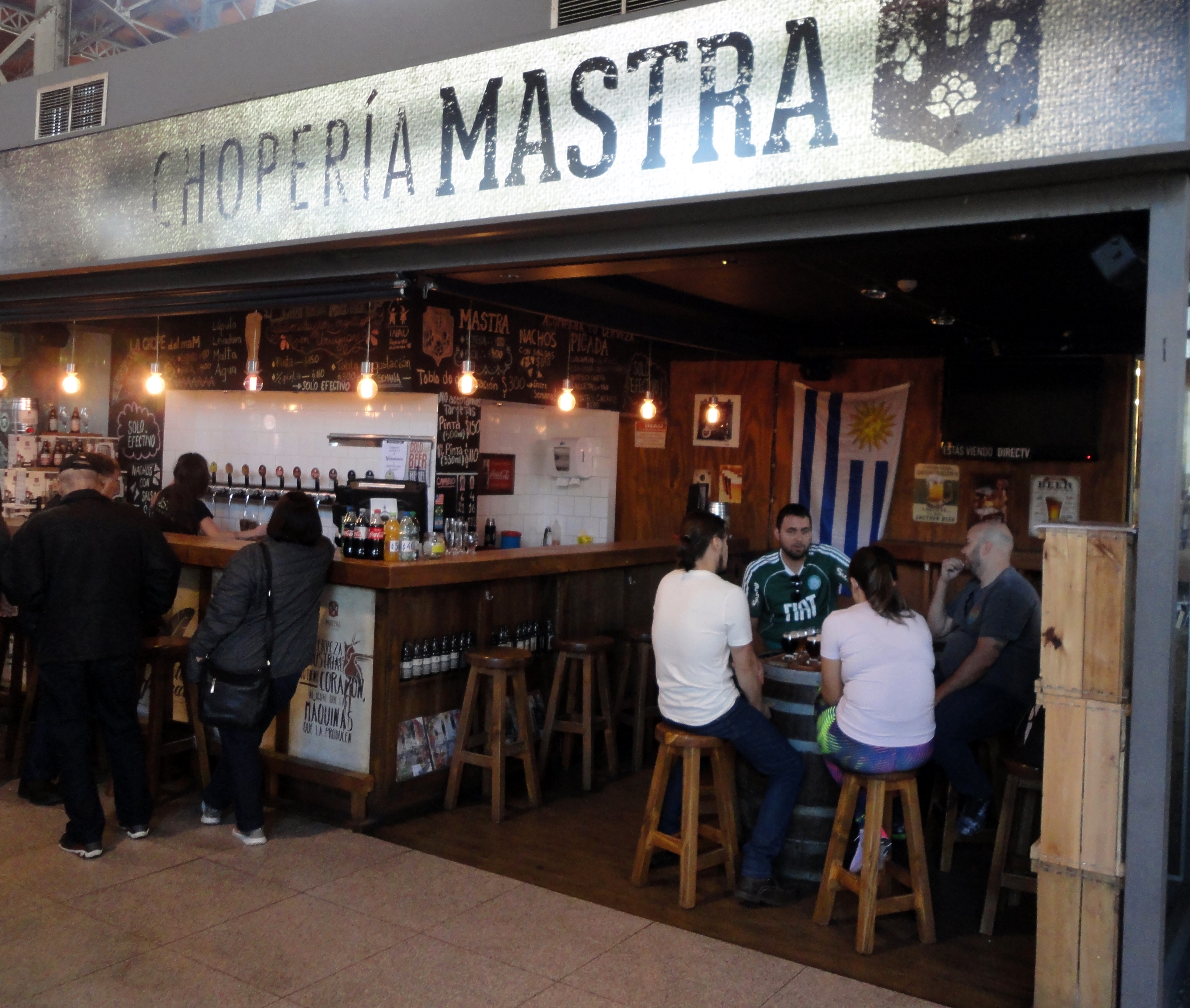
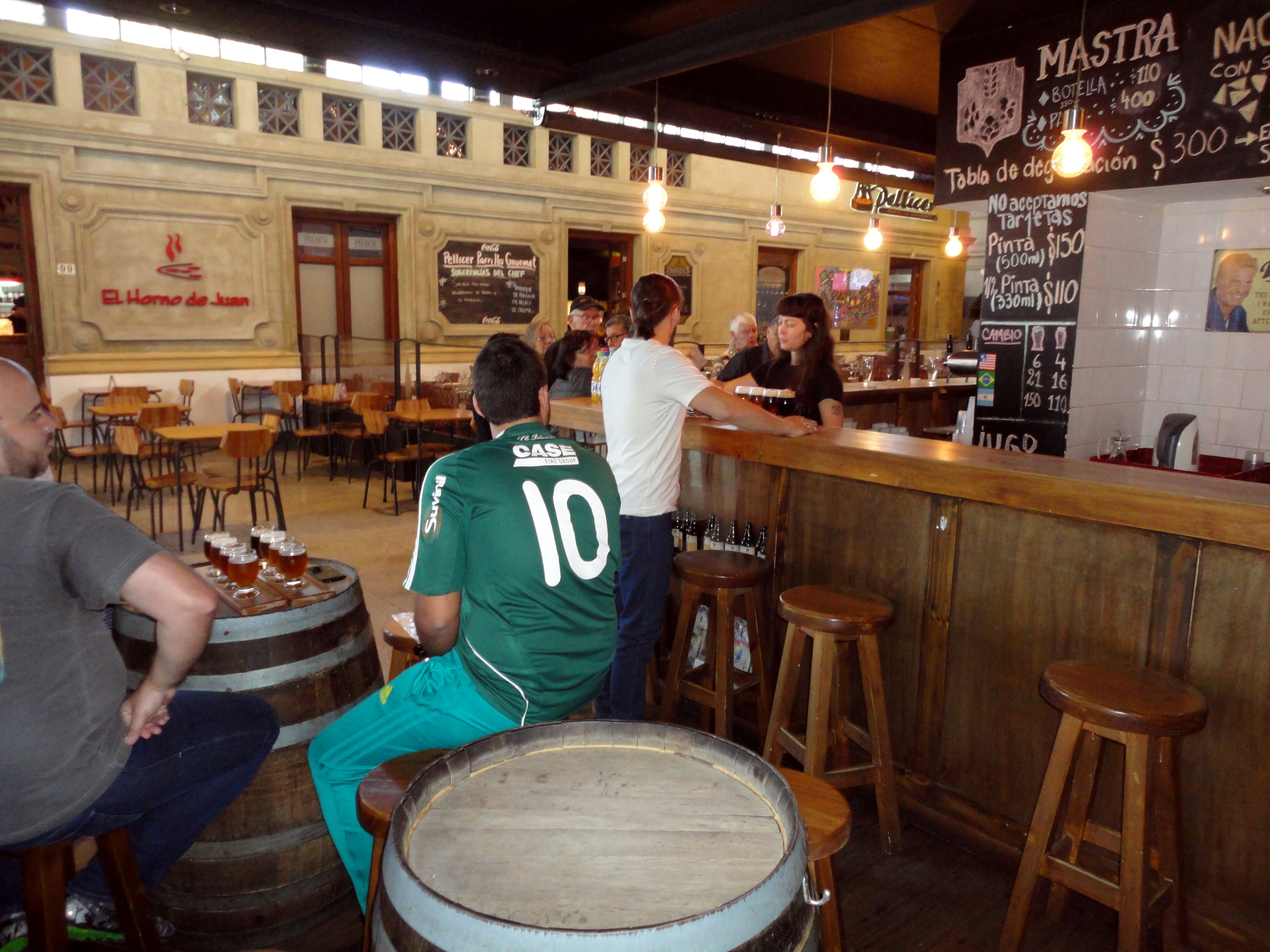
What is the whole food without a drink. Micro brewery MASTRA offers a variety of beers on tap.  Ten different ones on tap – WOW – worthwhile a beer tasting there ! Also snacks and a selection plate of their 4 typical beers. Try it ! Click on pics.

The MAM experience can comprise several hours or a whole day whatever one likes. I have always wondered how little this great market is known. Especially throughout the expatriate community, even if they live in UY many years. Hope you enjoyed this short trip through a Montevideo market. I think the best one. Have a look yourself, if you are here !

Veröffentlicht unter History, Information, Lifestyle, Uruguay | Verschlagwortet mit , | Hinterlasse einen Kommentar

Uruguay 1949

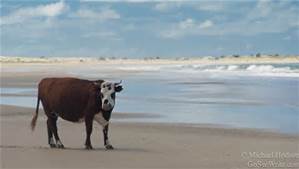
           A couple pics of today’s Uruguay, left „the rubbish collector“ and right „cow on the beach“. Don’t know who took the pics. Header image shows the La Barra Bridge.

Sorry to everyone. I have limited time at the moment to post new articles. Please be patient with me and have a look from time to time for the new posts. I will be on full power as soon as possible – promise.

This time lack I use to offer you a movie about Uruguay from 1949. Found it on YouTube. Interesting view on the country it was once.   JUST CLICK ON THE START BUTTON.

Some differences to today’s country impressions I directly discovered. Like „slim people“, „mostly well dressed“ and all is „so clean“ and „well maintained“ !!! But have a look yourself. Till, hopefully, soon my friends. Have a great weekend.

Veröffentlicht unter History, Uruguay | Hinterlasse einen Kommentar

Cordon Bleu – Update


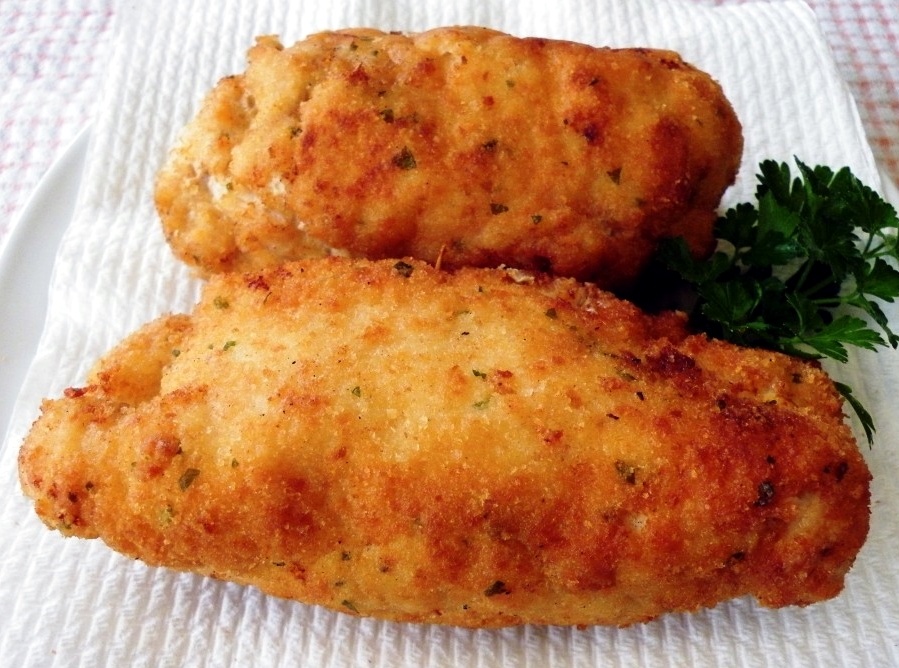
The Cordon Bleu update. Orca sent me the pic of an Aussie rolled Cordon Bleu.  Thanks for it my friend. Chicken breast rolled in with Swiss cheese in roasted bacon and a slice of beetroot inside. The Aussie’s love their beets, to find even in burgers or on hot dogs. Looks delicious, doesn’t it ?

And here my friends a recipe of a lovely chicken Cordon Bleu as requested by Pete.

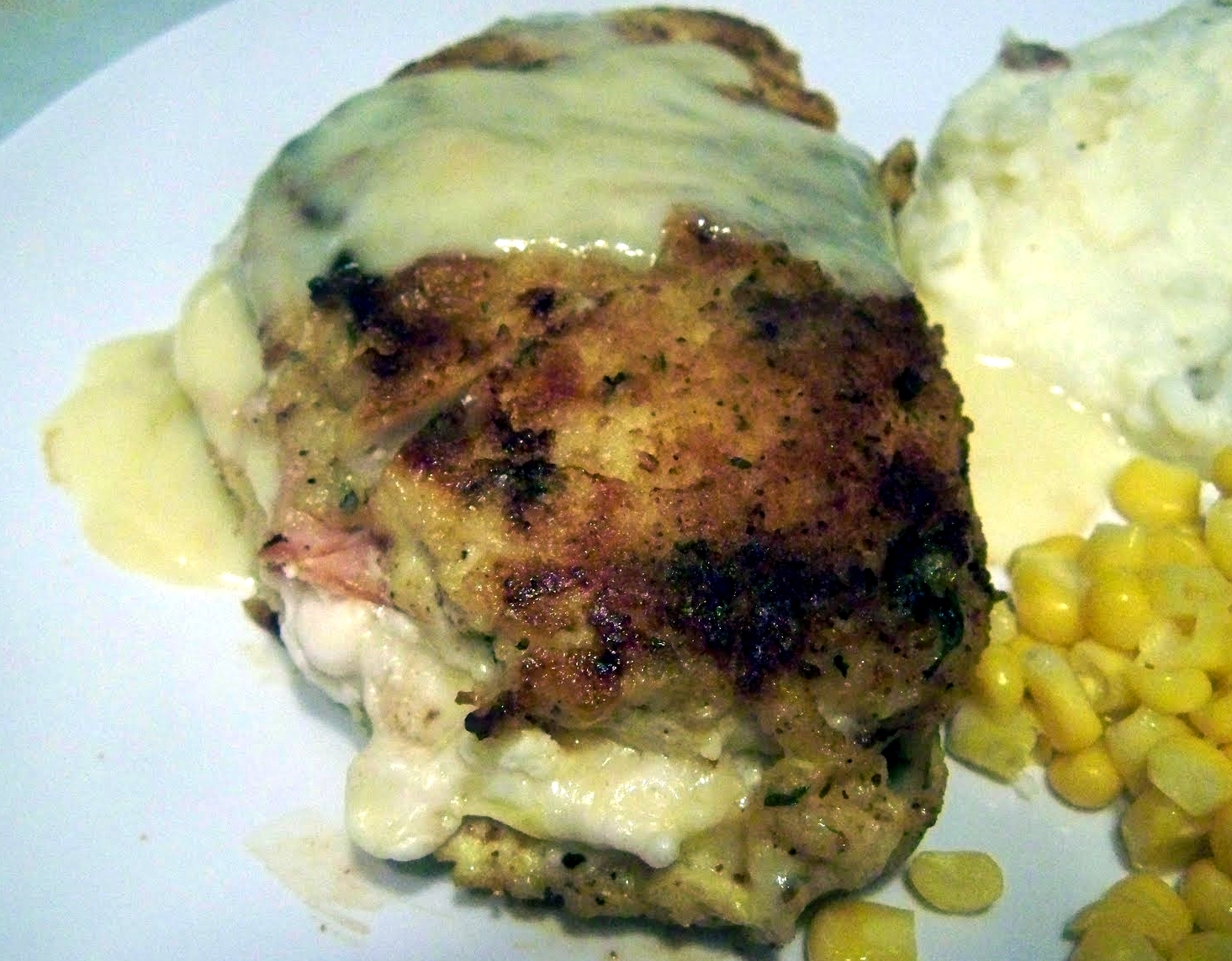
  Chicken Cordon Bleu on corn-mash,  bechamel sauce.

Ingredients.

4 boneless skinless chicken breasts pounded  6-10mm  (1/4-1/2 inch) thickness
4 slices ham (you can use precooked bacon also)
4 slices Swiss (Gruyere is fine) cheese (I also tried it with Gorgonzola or even Parmigiano)
2 eggs, whisked
3 tablespoons flour
1/2 cup Italian seasoned breadcrumbs (or regular breadcrumbs + 1½ teaspoons Italian seasoning) or homemade Panko
1/4 cup fine shredded Parmesan cheese

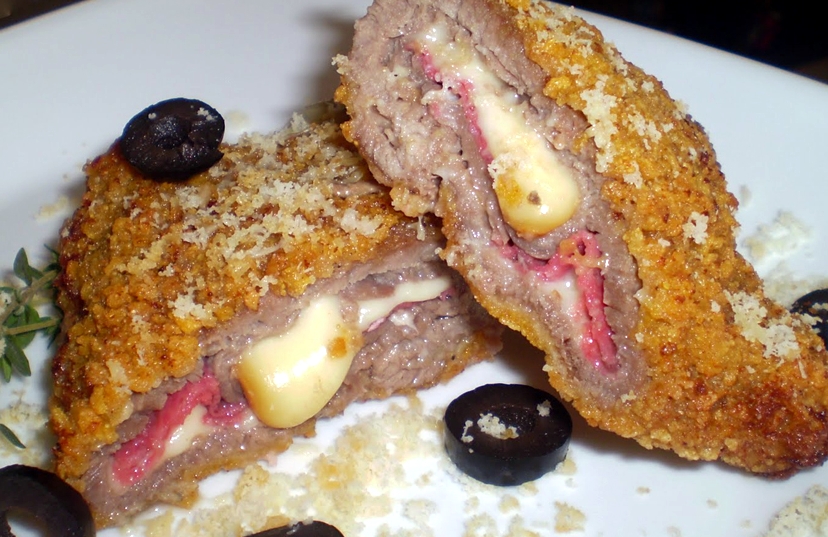
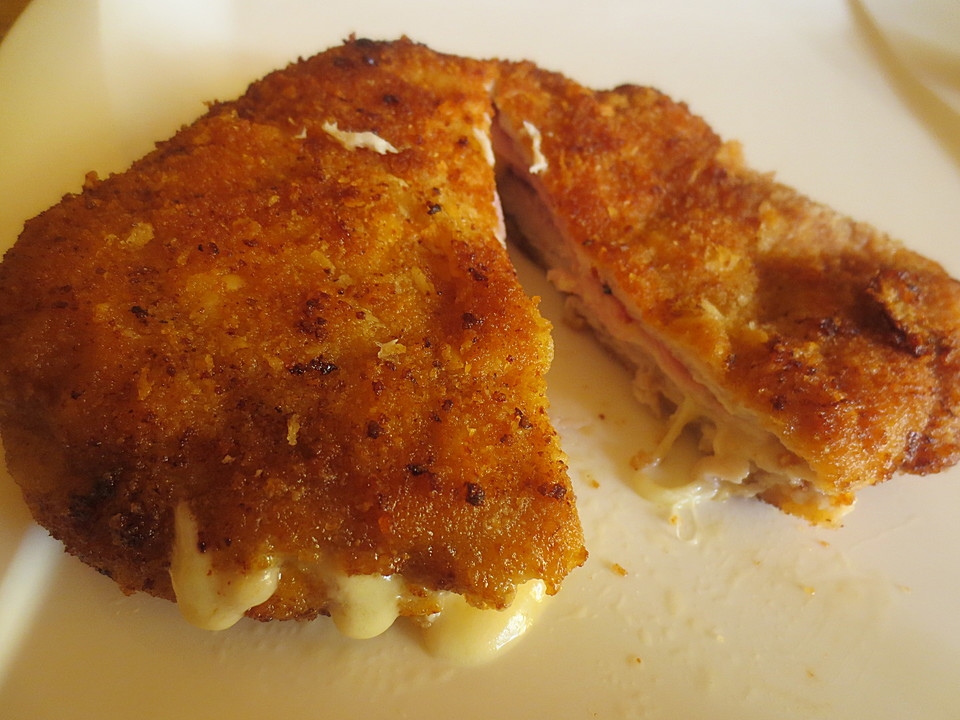
  In Uruguay its rolling a „Milanesa Rellena“.

Sauce.

3 tablespoons butter
1 cup cream
3 tablespoons flour
1 cup milk
2 tablespoons mayonnaise
3 tablespoons Dijon mustard
1 teaspoon garlic powder
1/3 cup fine shredded Parmesan cheese
salt and pepper to taste

  Uruguayan Milanesa Rellena = Cordon Bleu.

How to do.

Preheat oven to 200 degree C  (400 F) and lightly grease a casserole dish.
Stir together breadcrumbs and Parmesan in a medium bowl, and whisk eggs in another bowl, flour in a third bowl.

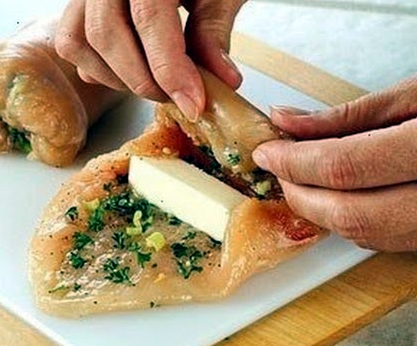
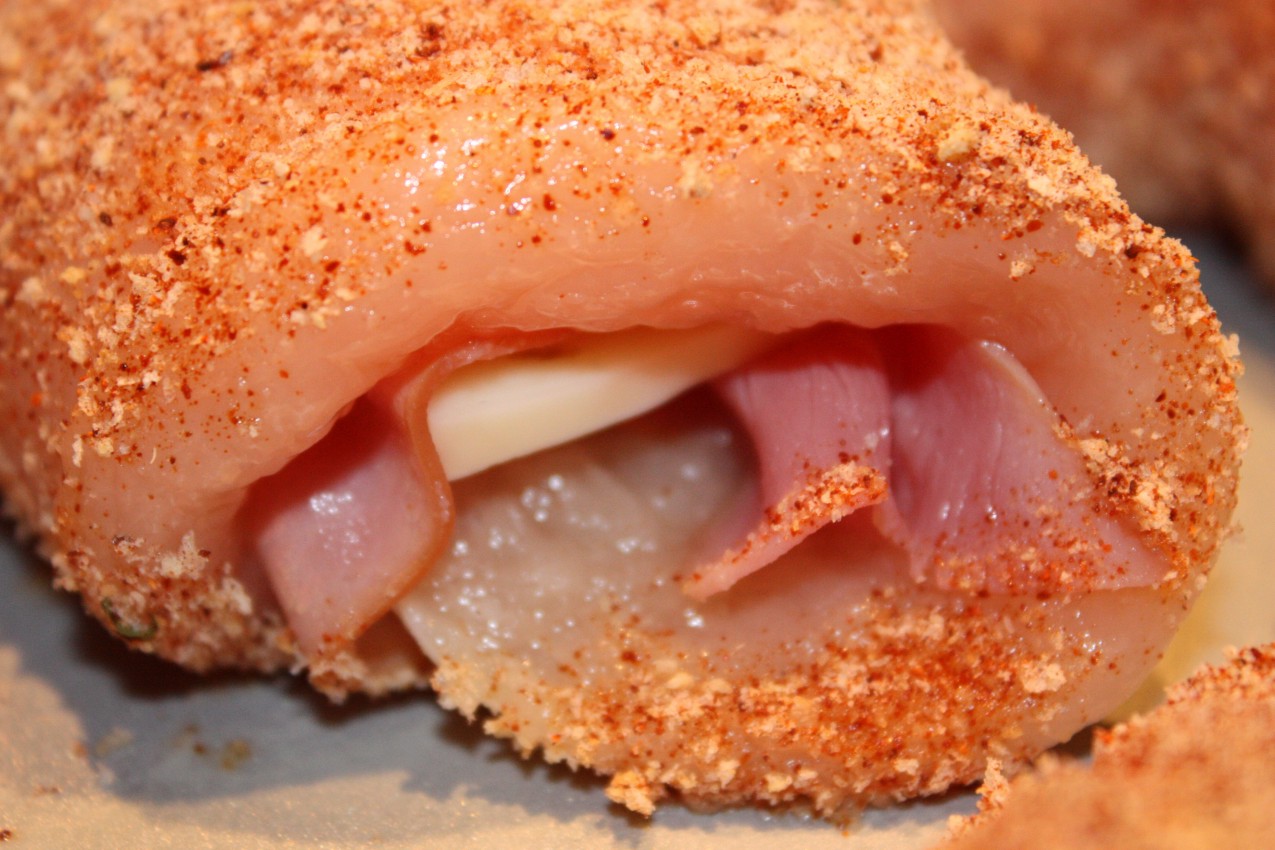
Lay pounded chicken breasts out on a flat clean surface. Top each chicken breast with a slices of ham/bacon and then a slice of Swiss cheese.
Roll into a nice parcel and secure parcel with tooth sticks, best that the sides are closed.

Roll chicken bundles in flour then dip into the egg mixture, coating all sides, then carefully roll in breadcrumbs to coat. Place in prepared casserole dish.

Cover dish with foil and bake for 25-35 minutes until chicken is cooked through. Uncover and cook another 5-10 minutes to brown the chicken coating.

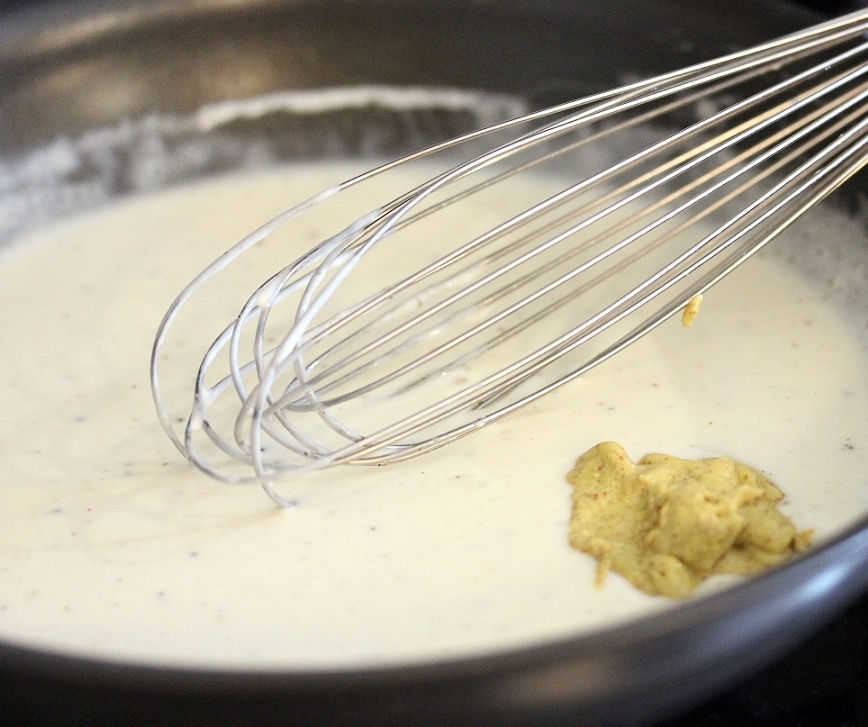
   Preparing the Dijon Mayonnaise.

While chicken is cooking, prepare the sauce.
In a medium sauce pan, melt butter over medium heat.
Stir in flour until mixture clumps together.
Gradually whisk in milk, working out the lumps as you stir.
Add Dijon mustard, garlic powder, mayonnaise, Parmesan cheese, and salt and pepper to taste. Cook through for a few minutes.

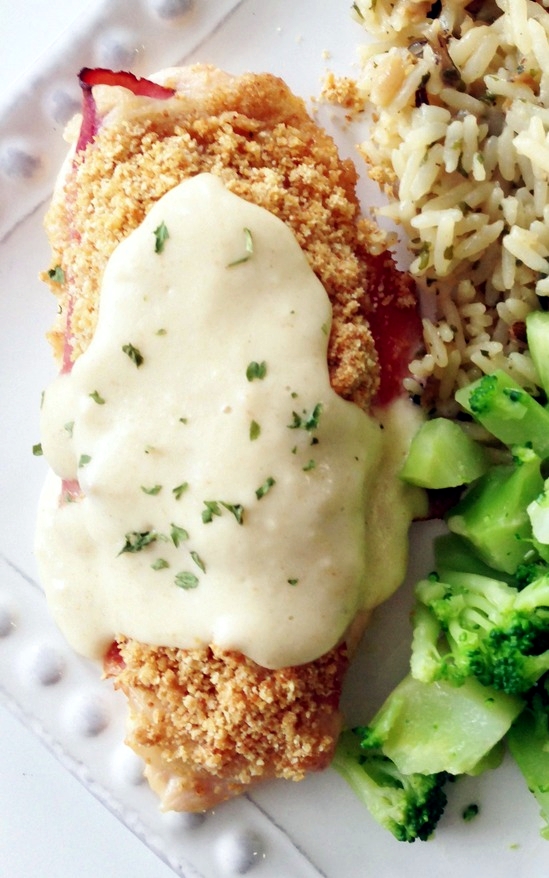
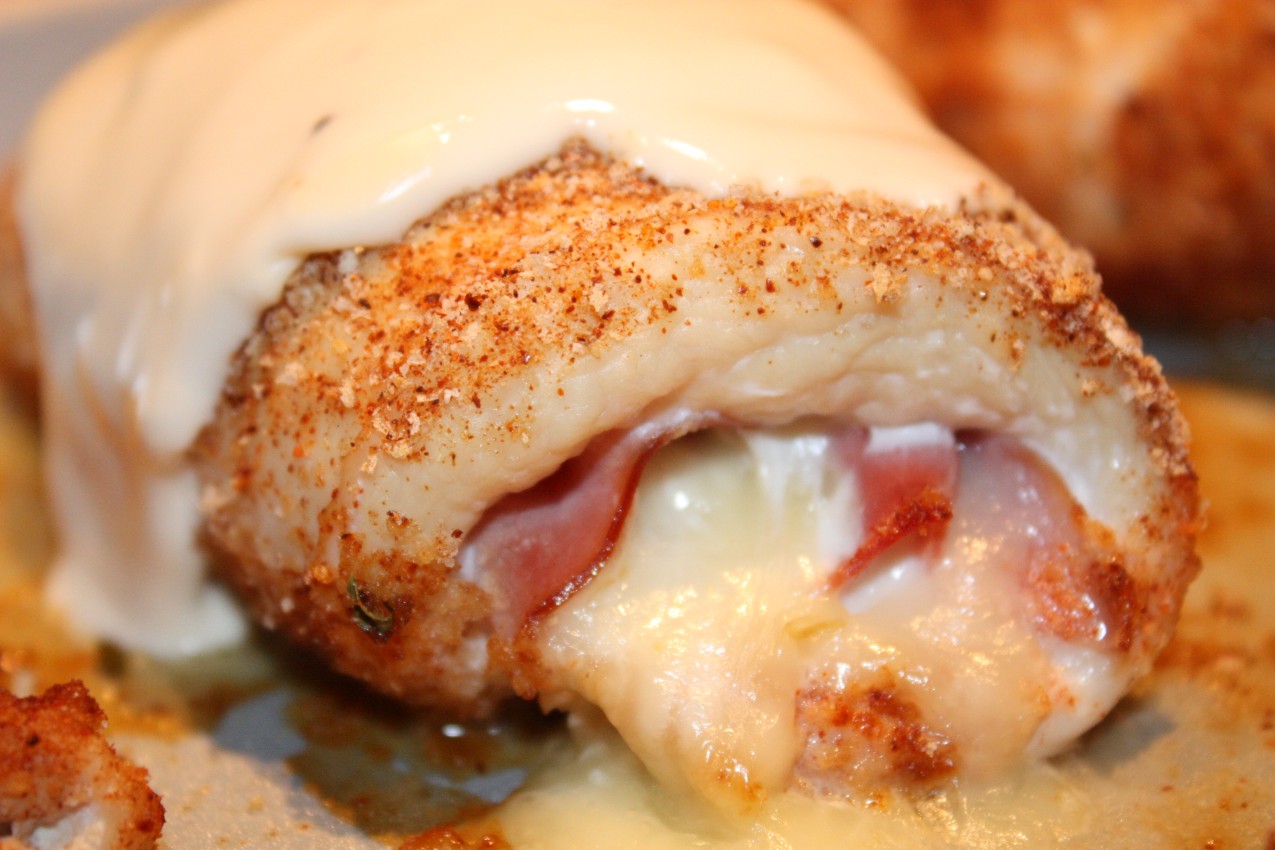
  Beautiful Chicken Cordon Bleu with Dijon-Mayonaise and Broccoli-rice aside. Notice that this sauce is much more rich and thicker then others shown before. Tip: Instead of mustard you can use chilli, in case you like it spicy ! Make sure you cook the spices through.

When chicken bundles are fully cooked, drizzle with the sauce and serve hot. Enjoy !!

Veröffentlicht unter Lifestyle, Recipes | Verschlagwortet mit | 2 Kommentare

Happy Easter – Cordon Bleu

Happy Easter to all of you.    Here is your Easter egg, an easy Easter menu.

Cordon Bleu is a dish that so many of us are familiar with in one incarnation or another,
but very few of us have any knowledge of the history of, or even what its name really means ! Enjoy the variations of some fantastic Cordon Bleu’s.

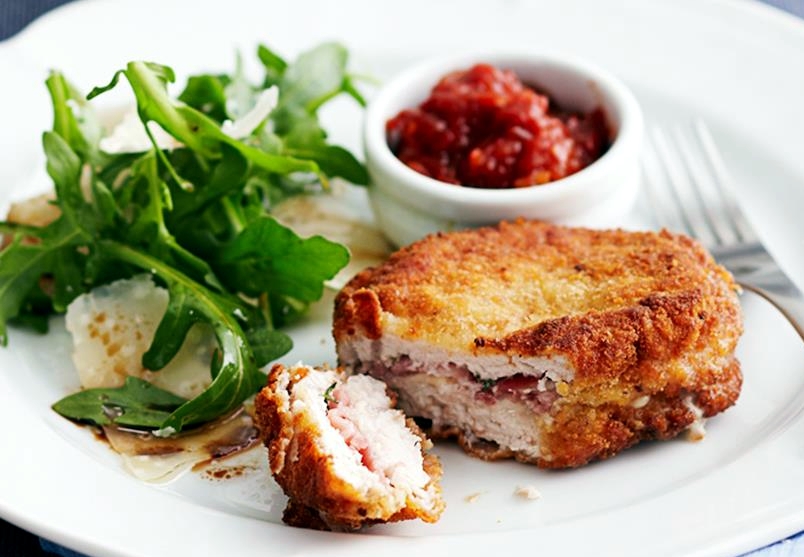
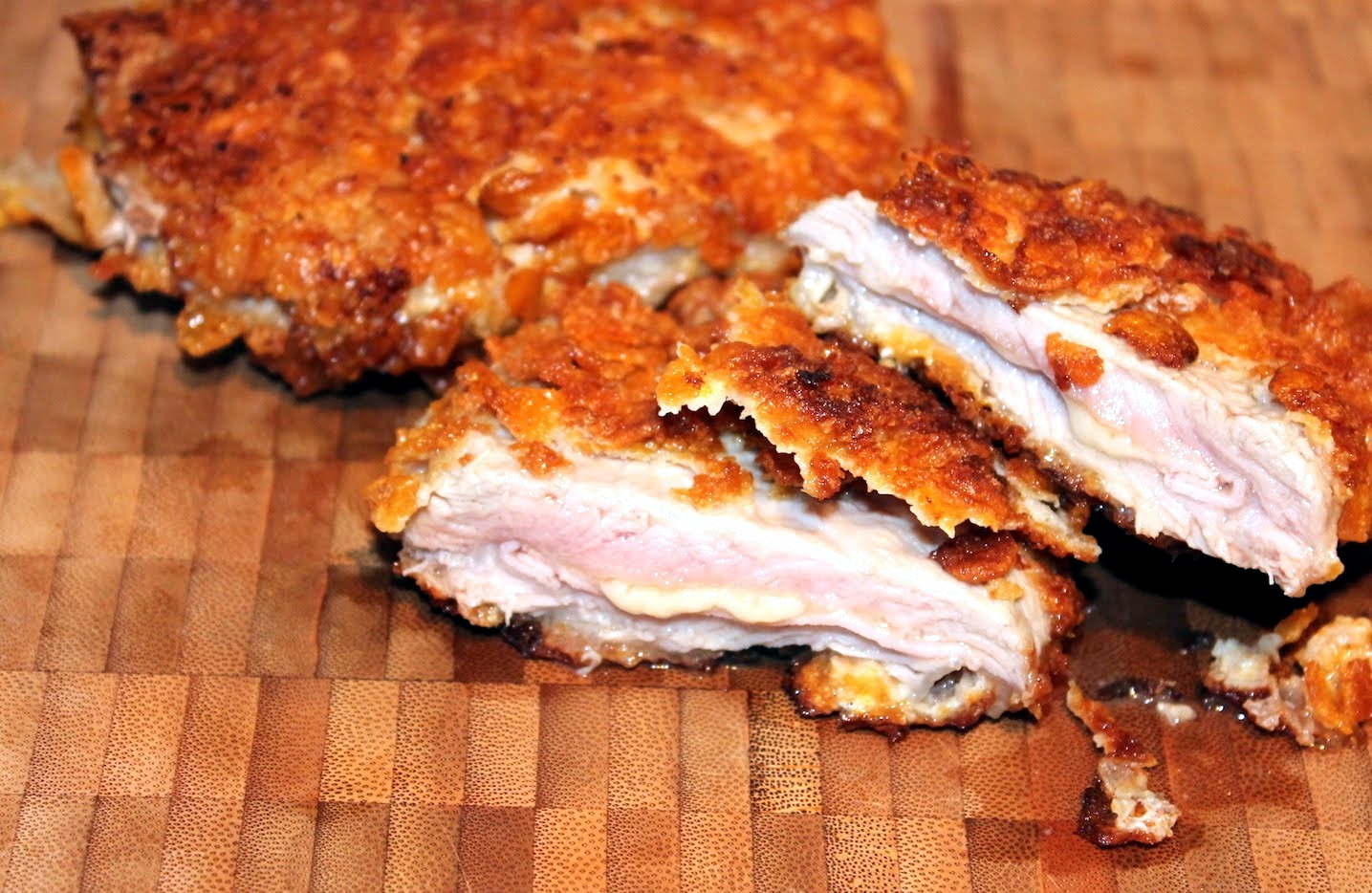
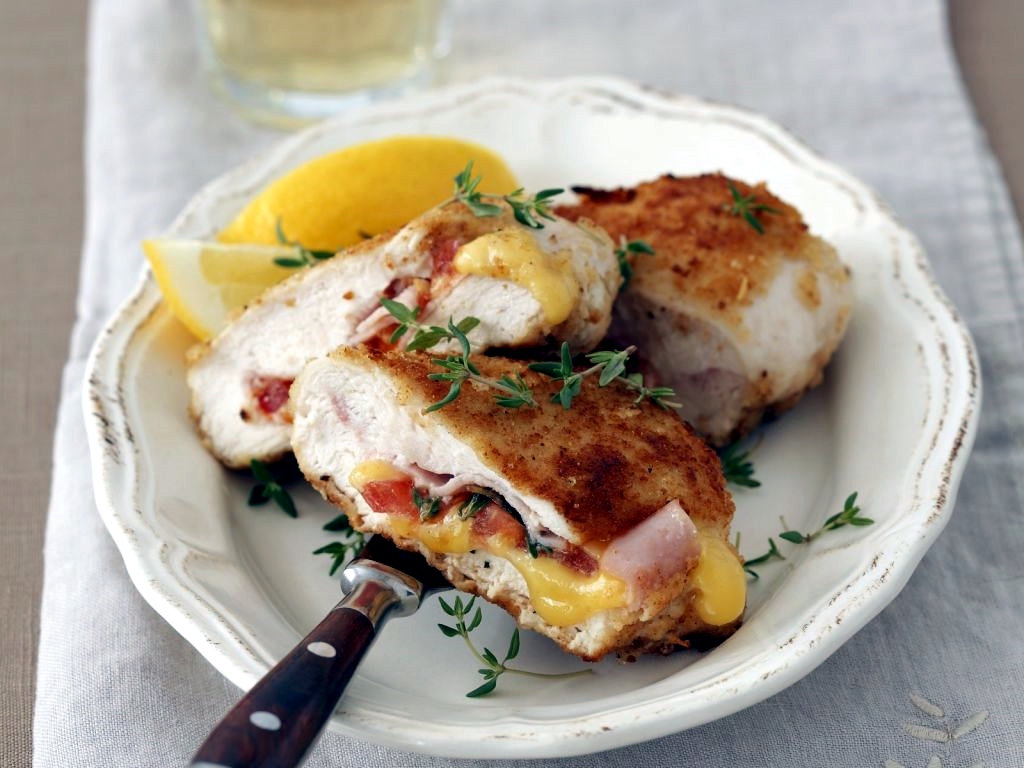
This delicious dish is most basically described as a piece of cheese wrapped in a piece of ham stuffed in a butterflied chicken breast, breaded, and fried. It’s a wonderful combination of flavors and preparation techniques, which has created an iconic dish that always calls back to the restaurants and cafes of Paris.

   Classic veal Cordon Bleu.

Cordon Bleu.

Veal Cordon Bleu is made of veal pounded thin and wrapped around a slice of ham and a slice of cheese, breaded, and then pan fried or deep fried or even baked.
Ham Cordon Bleu is ham stuffed with mushrooms and cheese.

One of the things you can do is investigate the many different takes on this recipe from across the world. The recipe is simple enough that it’s unsurprising that it has crossed
the world in one form or another, incorporating itself into just about every culture.

  Cordon Bleu with additional tomato filling.

You can even find instances of it in cultures where the pork aspect is forbidden, so they simply replace it with beef, and leave the rest of the dish intact.

One of the little known facts about Cordon Bleu is that it merely means that the French believed this dish to be of prize winning quality. “Blue ribbon” being the direct translation, and the implication being much the same as it is in any county fair. This is the impact it had on them, that there was no other name appropriate for this dish than “first place”.

Le Cordon Bleu.

The French term Cordon Bleu is translated as „blue ribbon“. According to „Larousse Gastronomique“, Cordon Bleu was originally a wide blue ribbon worn by members of the highest order of knighthood, „L’Ordre des chevaliers du Saint-Esprit“. This order was instituted by Henri III of France in 1578.

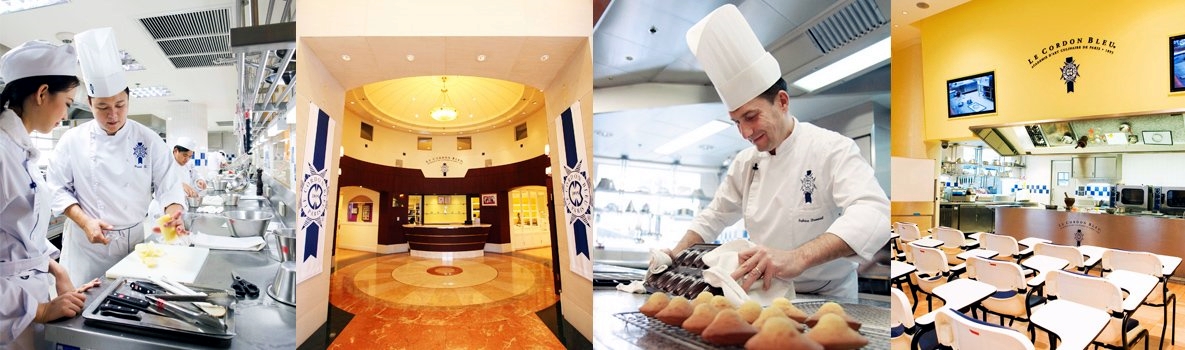
    Le Cordon Bleu cooking school, here Dusit.

By extension, the term has since been applied to food prepared to a very high standard and to outstanding cooks. The analogy no doubt arose from the similarity between the sash worn by the knights and the ribbons (generally blue) of a cook’s apron.

   Le Cordon Bleu cooking school, here London.

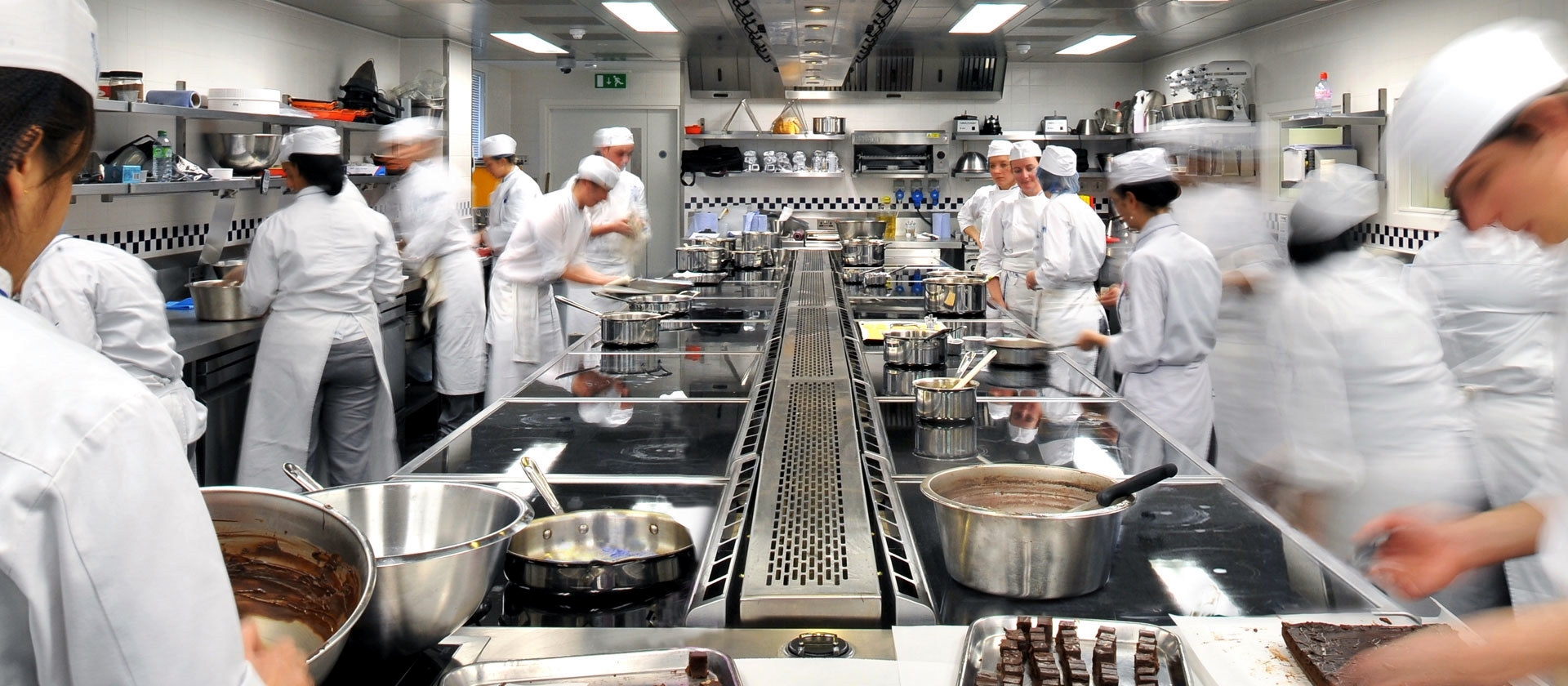
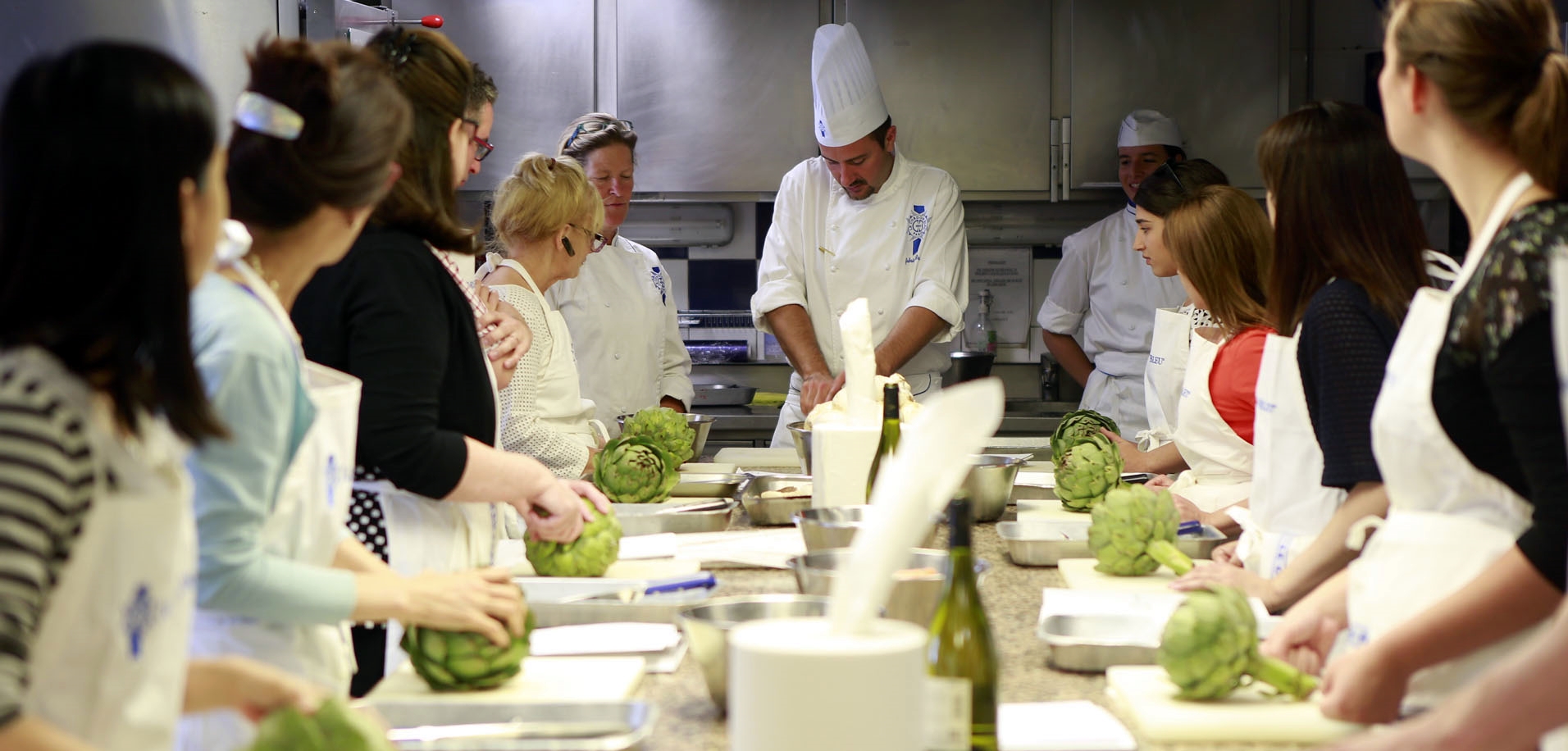
Le Cordon Bleu is also a culinary arts school established in Paris in 1895 by Marthe Diste who published the magazine „La Cuisiniere Cordon Bleu“. The school is considered to be the guardian of French culinary techniques and aims to pass on this knowledge to students through a number of culinary and hospitality qualifications.

   Le Cordon Bleu cooking school, here Paris.

With campuses all over the the world, including Paris, London, Tokyo and Sydney the school is one of the most recognised culinary educators in the business and places are in high demand. The schools alumni is made up of some of the biggest names in the food industry with Nathalie Dupree, Dione Lucas and Julia Child all gaining qualifications at the school.

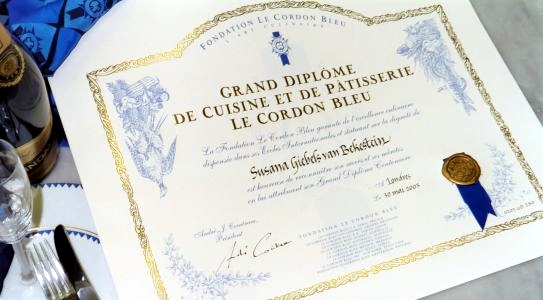
   After some hard time learning, the lucky ones get their Grand Diplome from Le Cordon Bleu.

International Varieties.

The origins of Cordon Bleu as a schnitzel filled with cheese are in Switzerland, probably about the 1940s, first mentioned in a cookbook from 1949. The earliest reference to „chicken Cordon Bleu“ in The New York Times is dated to 1967, while similar veal recipes are found from at least 1955.

  How mouthwatering is this ? The Swiss veal variation.

A similar variant comes from Hungary, where veal is used in place of the chicken, but the filling is the same. Rather than being folded as a pocket, instead it is rolled with cheese and ham inside of it. It’s popularly served with mashed potatoes, French fries, or rice.

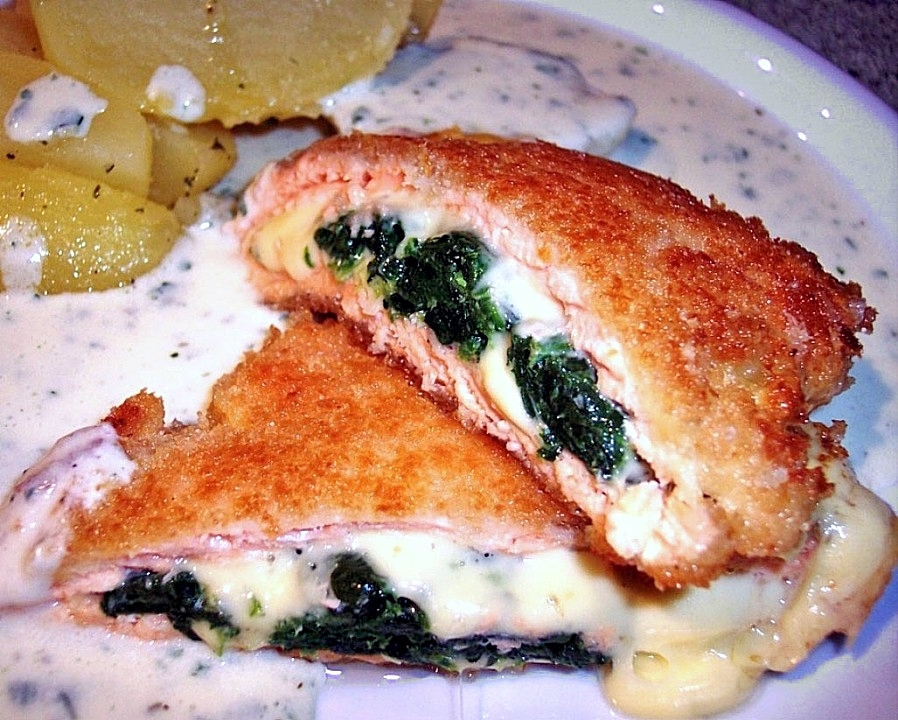
   Vegetarian Cordon Bleu, salmon filled with spinach.

On days where food is celebrated, like this Easter weekend, it’s always good to try to serve a little variety , just to spread the joy and flavor of the world’s cuisine. One wonderful way to do this is to create a batch of smaller versions of the food. Cordon bleu bites are often made by creating bite-size versions and rolling them into bread crumbs, which are deep fried while skewered with a tooth pick.

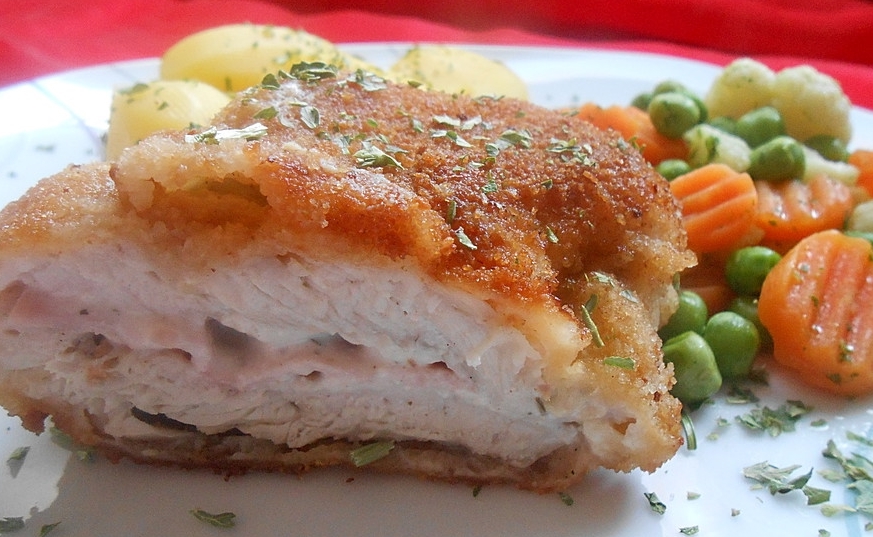
  Cordon Bleu from turkey filled with herb cream cheese.

With all the varieties of Cordon Bleu of the world to choose from, there’s no reason you can’t serve a selection of flavors from around the world.  Even better, you can show your friends or family how it doesn’t have to be a complicated dish to prepare, and can share your special recipes with them!

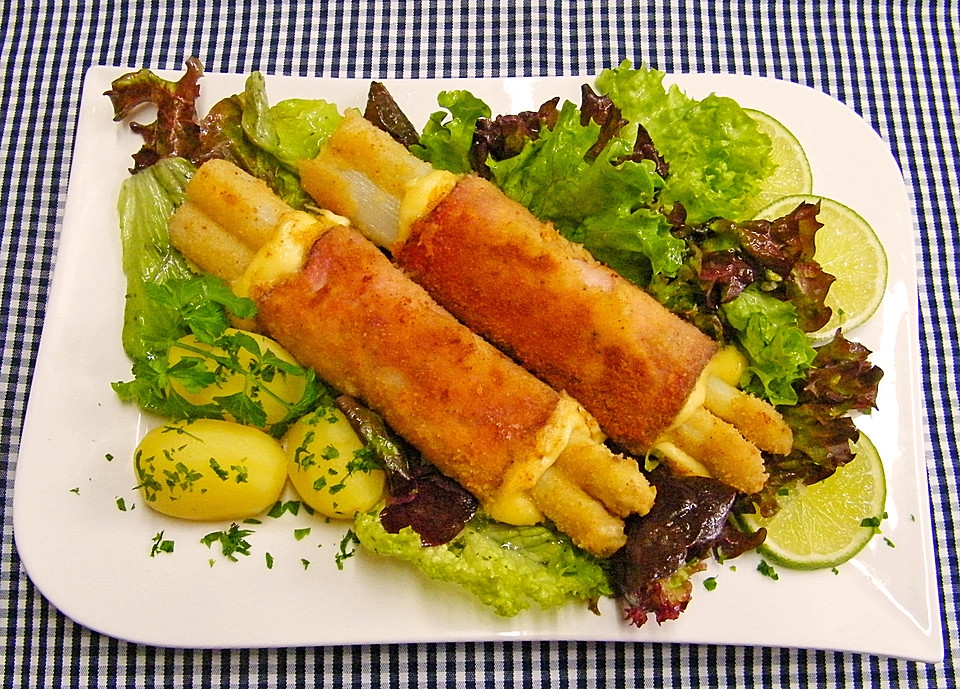
    Chicken Cordon Bleu with asparagus, pic Moziwis.

The recipe.

This easy recipe is one of the most common ones. Same way cooking if you use chicken instead of any other meat. Many many variations one can find through the internet.

Ingredients for 4 portions.

4 pieces Schnitzel (large, of pig, veal or turkey)
8 slices of ham  (small)
4 slices of cheese (Emmentaler or Gouda)
2 eggs (for breading)
Flour (for breading)
Breadcrumbs (for breading) I like to use Panko
Vegetable oil (for baking)
Lemon clefts (for garnishing)
salt
pepper

     This is Chicken Cordon Bleu, made the here described way. Topped with sauce Hollandaise.

How to do.

Put the schnitzel’s between thin plastic wrap and bash with a beater, to thin them equally, make sure that they do not tear.
Salt and pepper on both sides.
Place layers as follows;
One slice of meat, then one slice of ham, one slice of cheese, again one slice of ham
Fold together the edges of the schnitzel and fix with toothpicks. Now you’ll have a nice big parcel to fry.

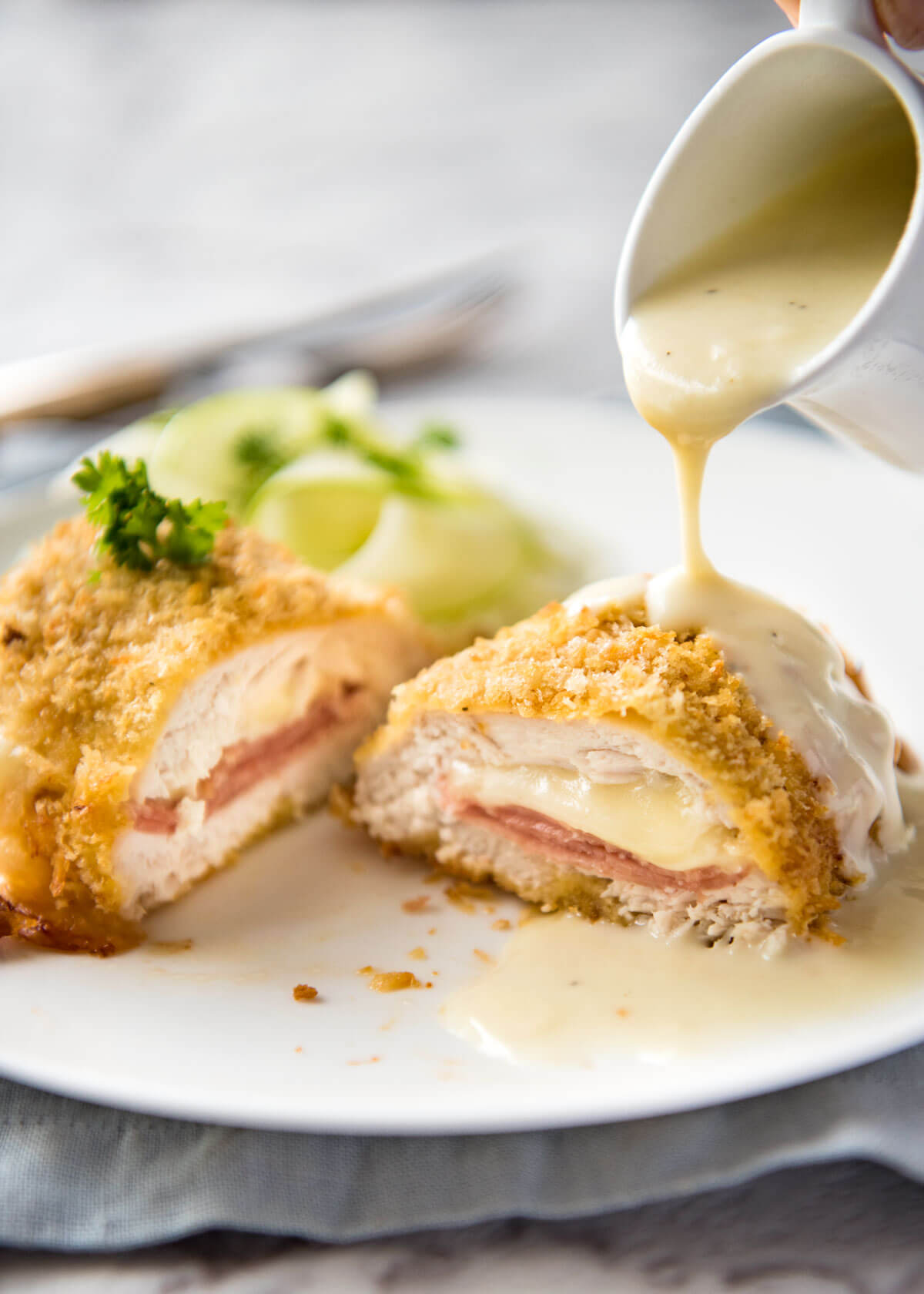
  Chicken Cordon Bleu with „spicy“ sauce Hollandaise. Recipetin.

Place beaten eggs in a soup plate.
First turn the parcels into flour, pull through the egg, and roll into crumbs (Panko).
Heat quiet an amount of oil in a large pan or deep fryer. Place Cordon Bleu’s, fry golden brown, and drain on kitchen crepe.

Cordon Bleu in Uruguay.

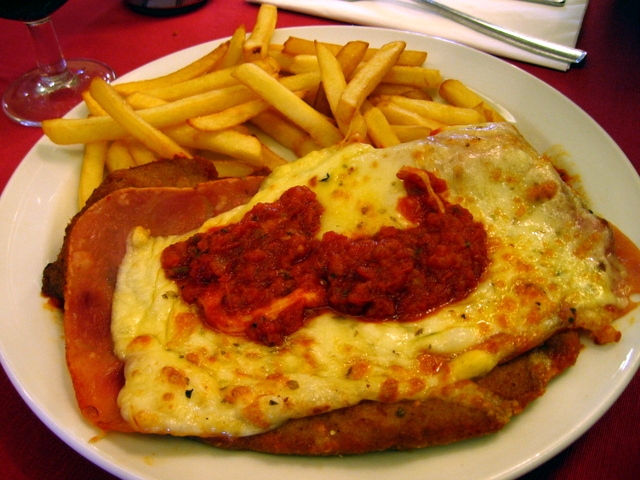
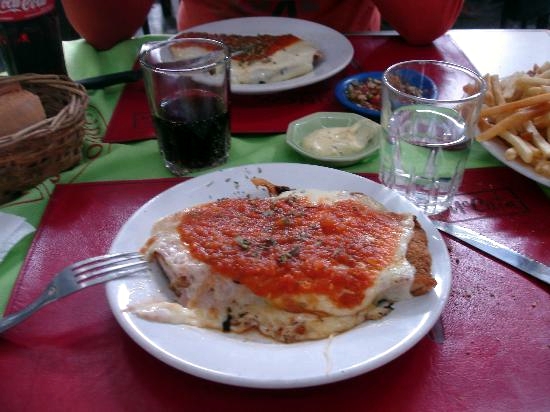
A sort of „open Cordon Bleu“, called Milanesa. There are some variety’s, but, as most food here, not very imaginatively. See yourself, important in Uruguay is just „THE LOT“ !

        The typical Uruguayan milanesa served with French Fries. Lots of cheese over the beef and ham topped with tomato sauce. The right picture is made in the restaurant Mercado de la Abundancia in Montevideo, fries as a side dish.  My opinion about the milanesas here: Dry meat, burned ham, gluey cheese witch sticks between your teeth, tomato mash and always dry oregano on top, that one has the feeling  chewing on sand.

Best ever Cordon Bleu.

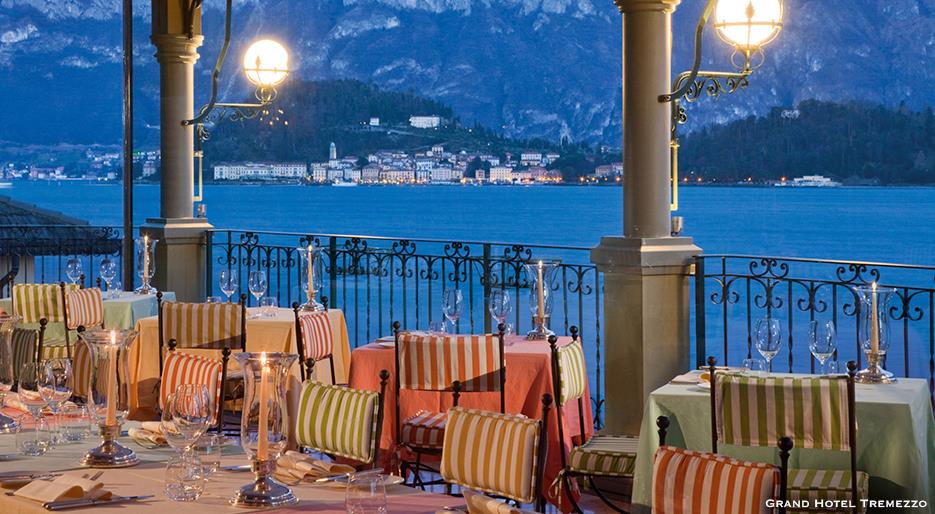
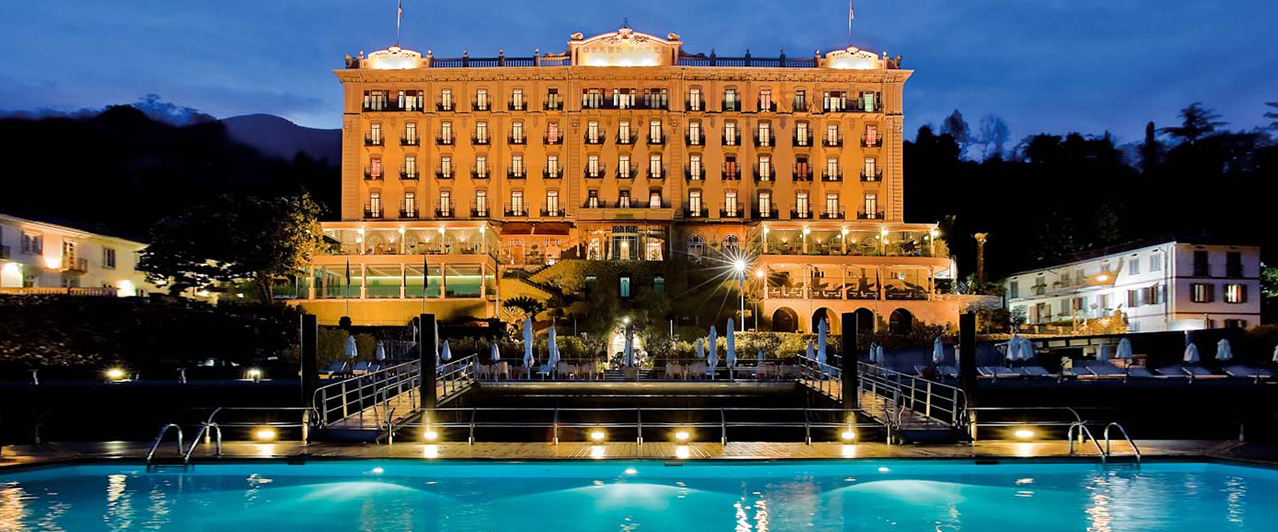
One of the best Cordon Bleu’s I ever had was in the Grand Hotel Tremezzo at Lake Como in Italy. I only remember it was a Swiss classic with veal, Gruyere and bacon, sadly I have no picture, but I still have the taste on my tongue. Therefore I post a pic from the hotel and restaurant. Pics down here courtesy of the Grand Hotel.
 

To keep such a positive memory is reasoned may be because of the company, the atmosphere of the surrounding or the lush climate at the lake front, to make it a 5 star meal. At least a glass of Martell Cordon Bleu, to wash down, made it a 5 star one.


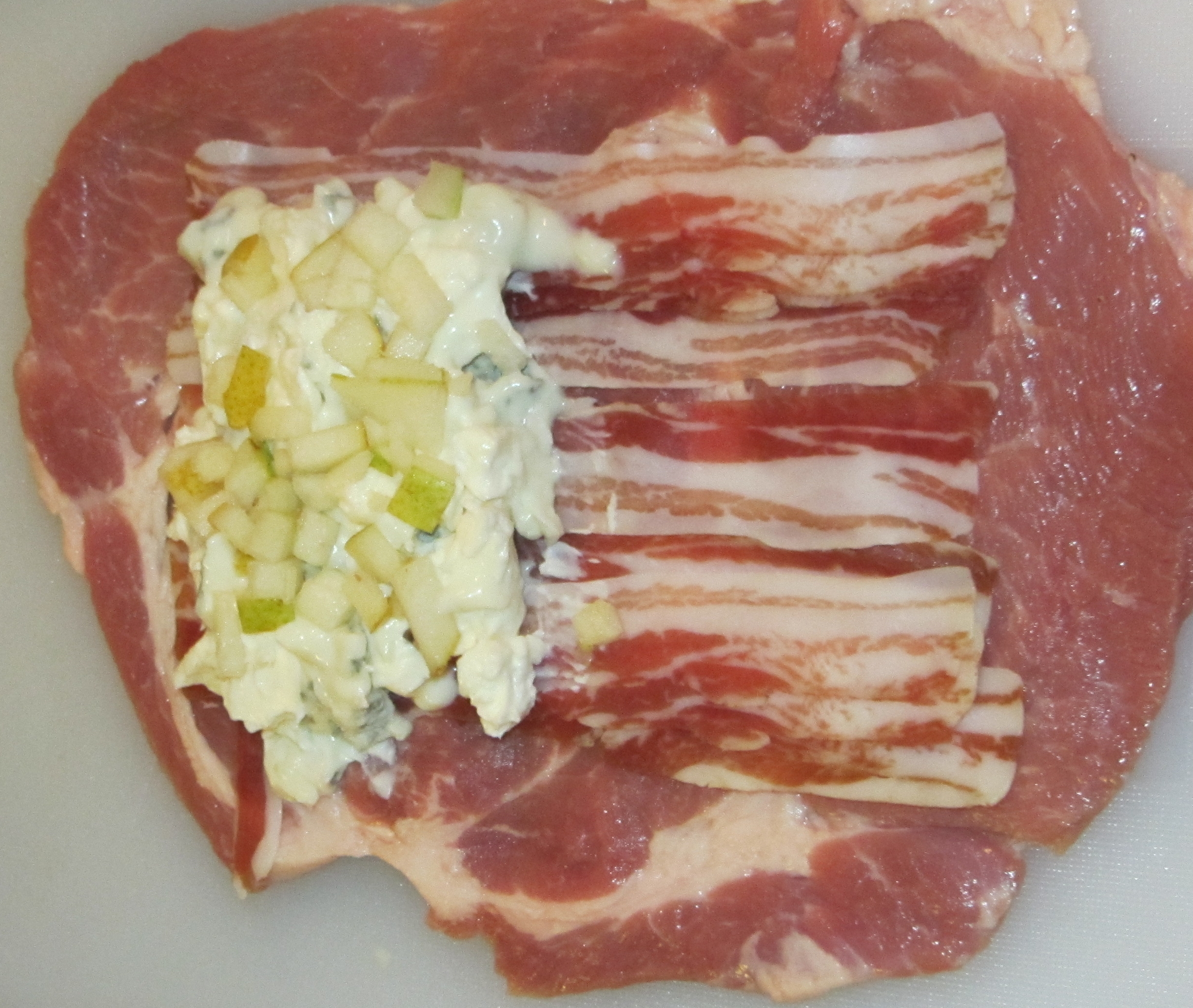
Left picture: The Extra Old Cognac „Centenary“ from Martell, superb, but rare to find. Right picture: Sent by my Swiss friend Mathis, veal schnitzel topped with bacon, Swiss Gorgonzola and pear cubes. A delicious variation which I will try soon.  Enjoy !


Veröffentlicht unter History, Lifestyle, Recipes, Travel | Verschlagwortet mit , | 10 Kommentare

Gyros and Tzatziki

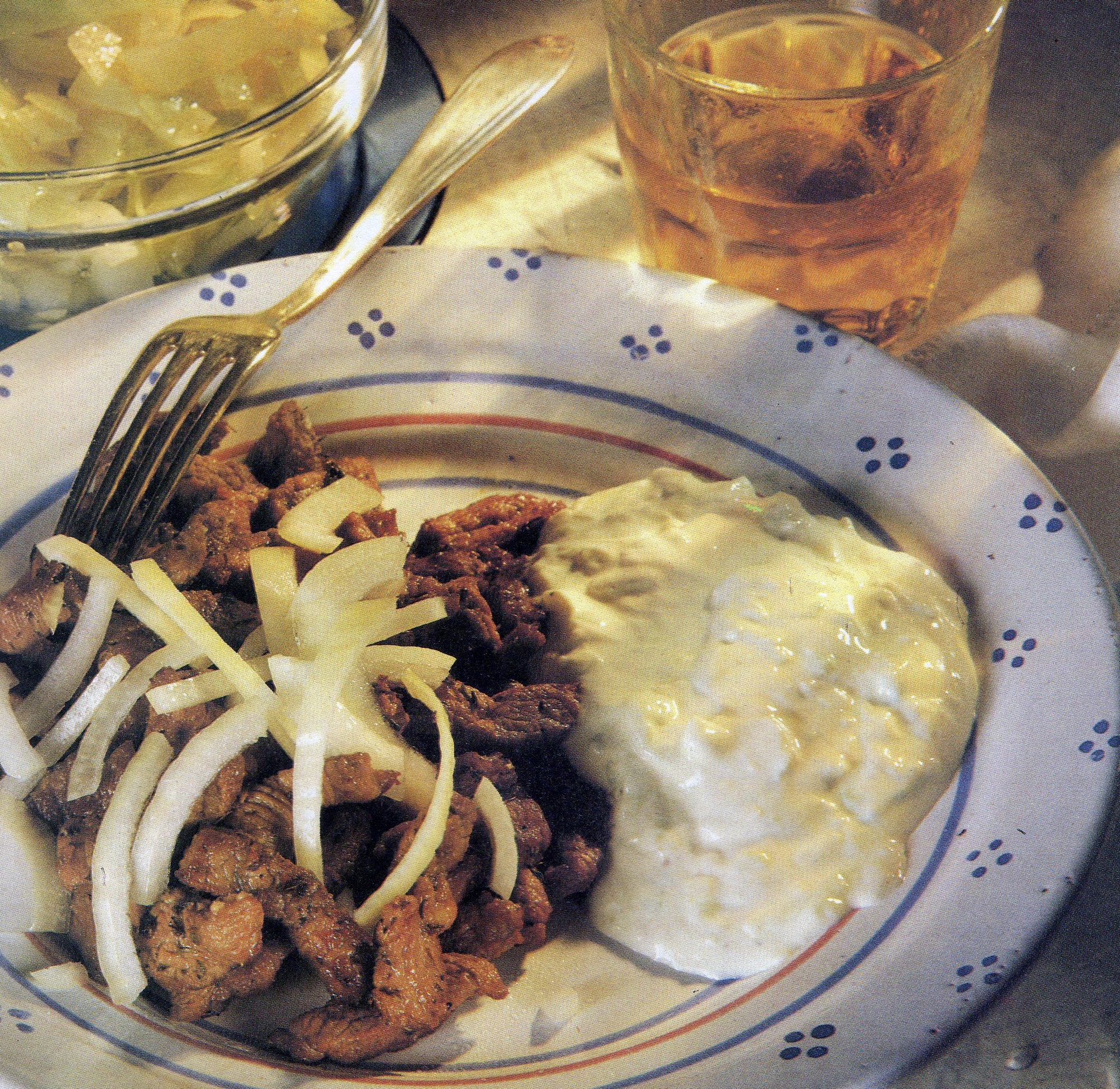
Always on Fridays, when we plan the shopping list, we have to decide what to eat over the weekend. One decision was made for a nice Gyros. So, I digged out my old recipes for lamb gyros.  I used about 30 years old printed photographs – therefore please excuse the quality of the pics. Since we always make 2 or 3 portions in one go, the following recipe is for 6. „tsp means tablespoons“.

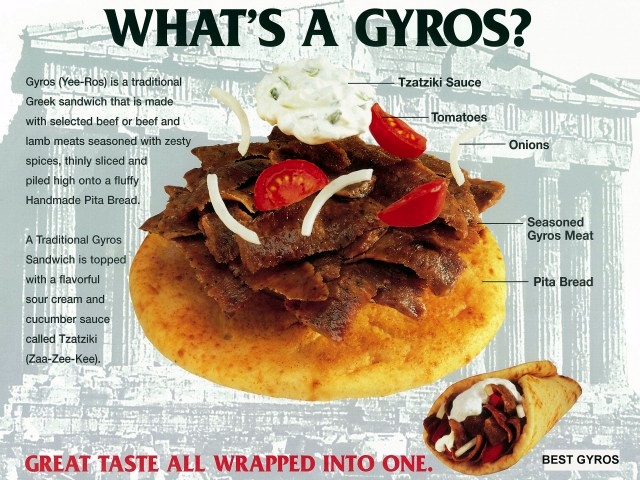
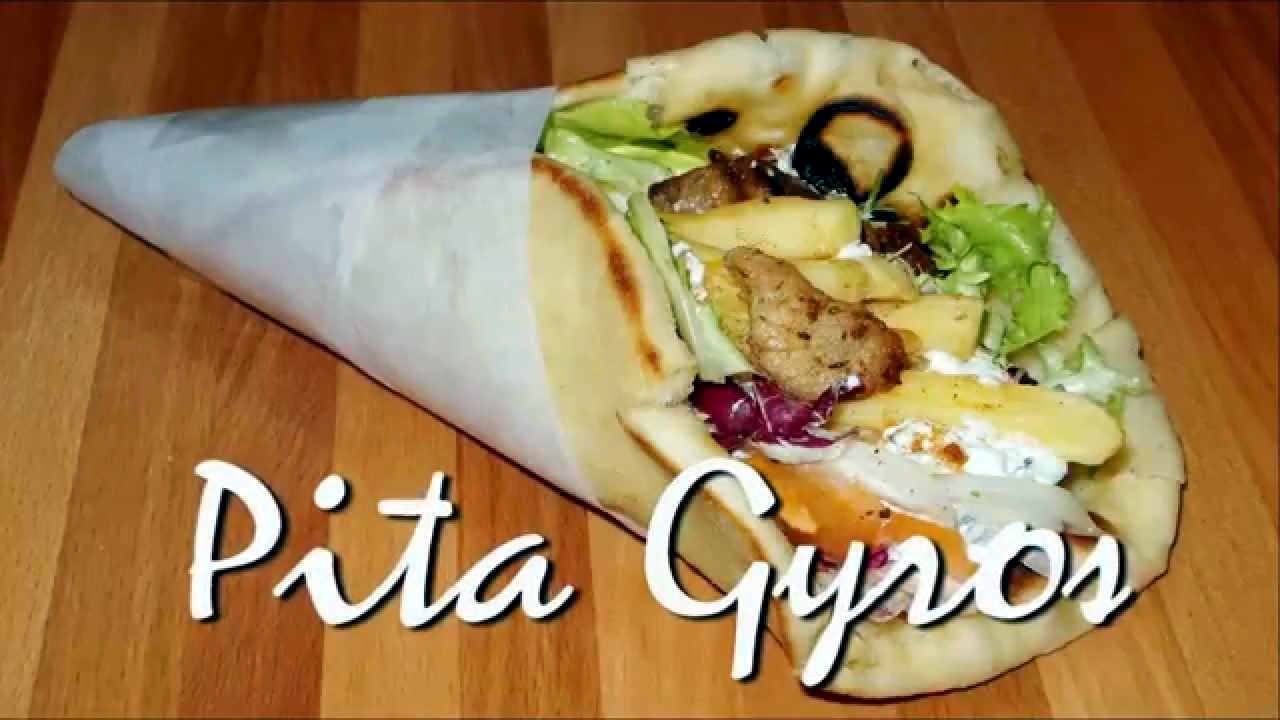
   That’s a Gyros. Click on pic. Pic imgagade.

Ingredients.

Pitas:
6 pita breads
6 leafs of Romaine lettuce
2 tomatoes, cubed
1 sweet onion, thinly sliced
cilantro leaves, chopped (optional)

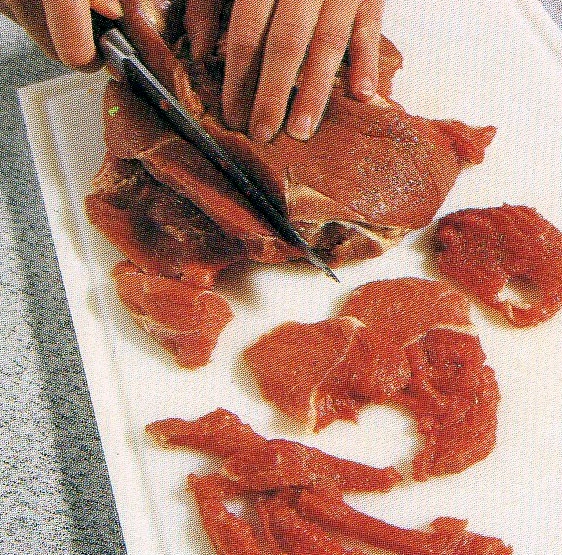
   Slicing the meat the right size.

Lamb:
3 cups grilled lamb strips (or beef strips or chicken breasts strips – the original Greek Gyros uses beef anyhow)
4 tsp garlic, minced
2 tsp oregano (dried)
2 tsp thyme (dried)
1/2 tsp ground cumin
1 tsp ground coriander
4 tsp butter for saute

  Prepare lamb for marinating. Keep it dry.

Tzatziki:
2 cups cucumber, finely chopped
1 cup Greek yogurt (in UY we use Queso Blanco Light – or the Yogur Natural)
1 cup sour cream (in UY we use Mascarpone, 1/2 cup)
4 tsp lemon juice
8 garlic cloves, minced
4 tsp fresh minced dill
1/2 teaspoon salt

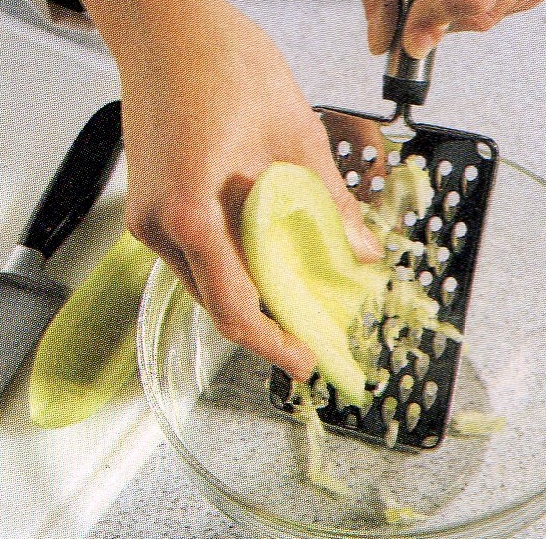
    Preparing Tzatziki with slicing the cucumber.

How to do.

Making the sauce:
Peel cucumbers and mince them. Mix all of the ingredients together and let it sit for at least 30 min to an hour before using.

Making the lamb:
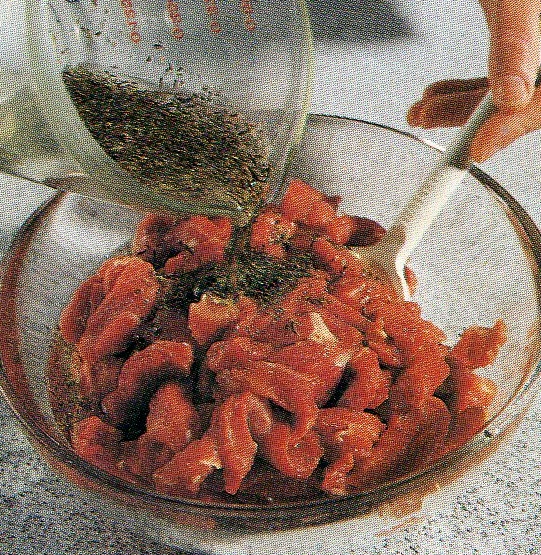
Slice the meat into 1cm by 1cm thin slices . Mix all other ingredients together (except butter) and stir around the meat. Then place the meat strips into a bag and leave it in the fridge for a few hours to marinate. I leave it even over night, shaking the bag around a few times. If you use chicken you don’t need to marinate, just go on as suggested.

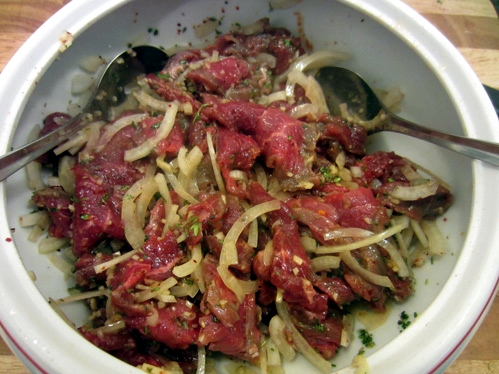
  In case you marinate „wet“ (means with onions, olive oil and drizzle of lemon juice) then you only can saute later on, but not brown the meat well. No problem, its delicious anyway, but it looks different, like meat in a sauce.

If necessary, drain the meat and set marinate sauce aside.
Melt butter in the skillet. Add lamb into very hot skillet. Brown nicely – in small batches – for a few minutes.
Then, just before meat is ready (soft, don’t overcook) ad all of the marinate and heat through. Now it’s ready to serve.
With chicken you will add now the garlic, oregano, cumin and coriander. Saute for 2 min.

Preparing the meal:
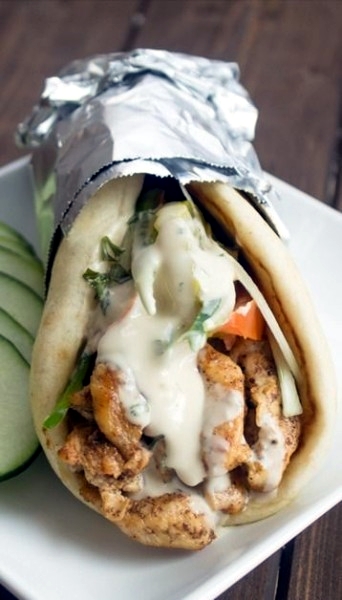
Warm up the pita breads. Slice onion and cube the tomatoes. Layer with the lettuce, lamb or chicken, tomato, onion and tzatziki sauce. Wrap it in foil or a paper towel. Eat hot !

   Ready to have a bite of chicken gyros ?

Tips.

Lamb in Uruguay is not to common, so you can decide for chicken or beef. Or even 50:50 lamb and pork. It will taste wonderful if you add a fresh made „Krautsalat“ (coleslaw) and a glass of chilled white wine (see pic far above).

If you don’t like fresh garlic taste, in tzatziki, use less garlic or none. Use fresh minced herbs instead – also a bit chilli. But it is not original anymore. If one does not like the fresh sliced onion as garnish, try to slice the onion very thin and leave it in water for 30 minutes. Or use the softer taste of red onion slices.

    Tzatziki served as a separate dish.

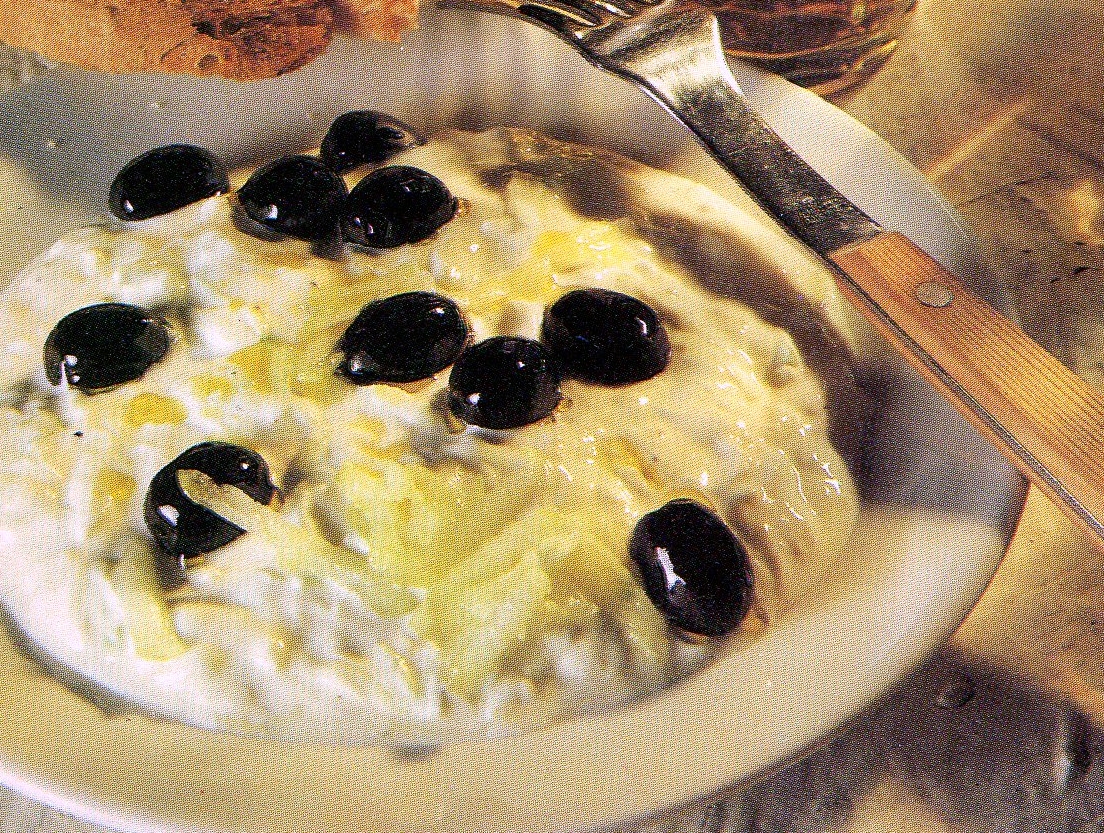
Another great idea is serving Tzatziki without meat. You only have to make a larger portion and add fresh onion slices, black olives and drizzle olive oil. To have it a bit more colored use slices of red onion or slices of green (spring) onion. Then enjoy with some fresh/warm  farmers bread, French baguette or pita.  Glass of nice wine is recommended.

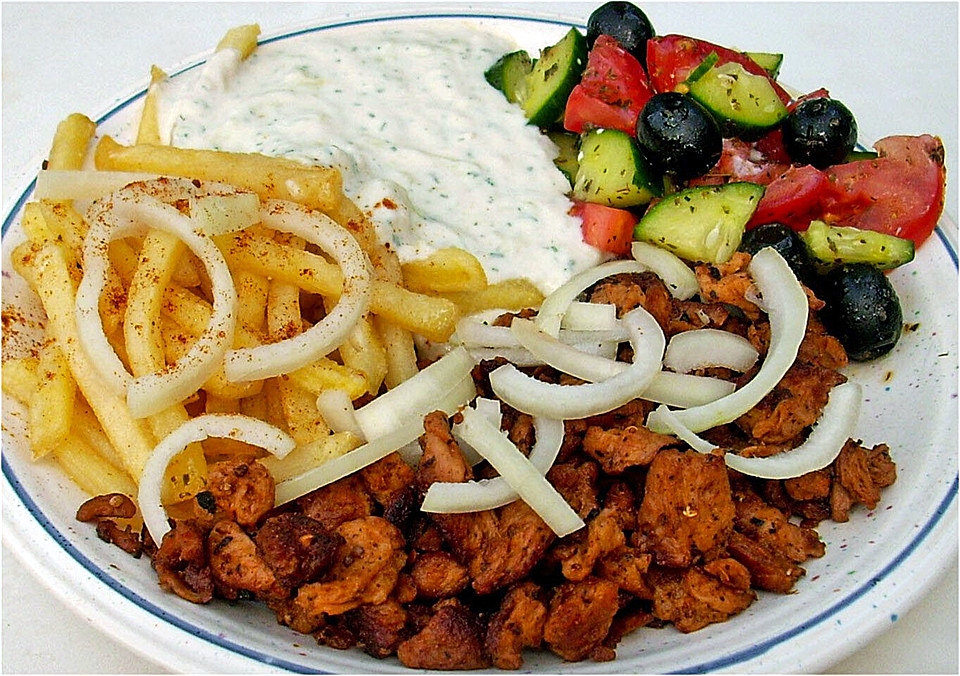
     Gyros serving in a restaurant (left) and from a food truck (right). Both with french fries.

Veröffentlicht unter Recipes | Verschlagwortet mit | 6 Kommentare

Frio Total

Normally i don’t post any advertising for anyone. But sometimes a restaurant, a service or another company stick out positive. The negatives I won’t mention anyway ! Here is one of the more positive examples.

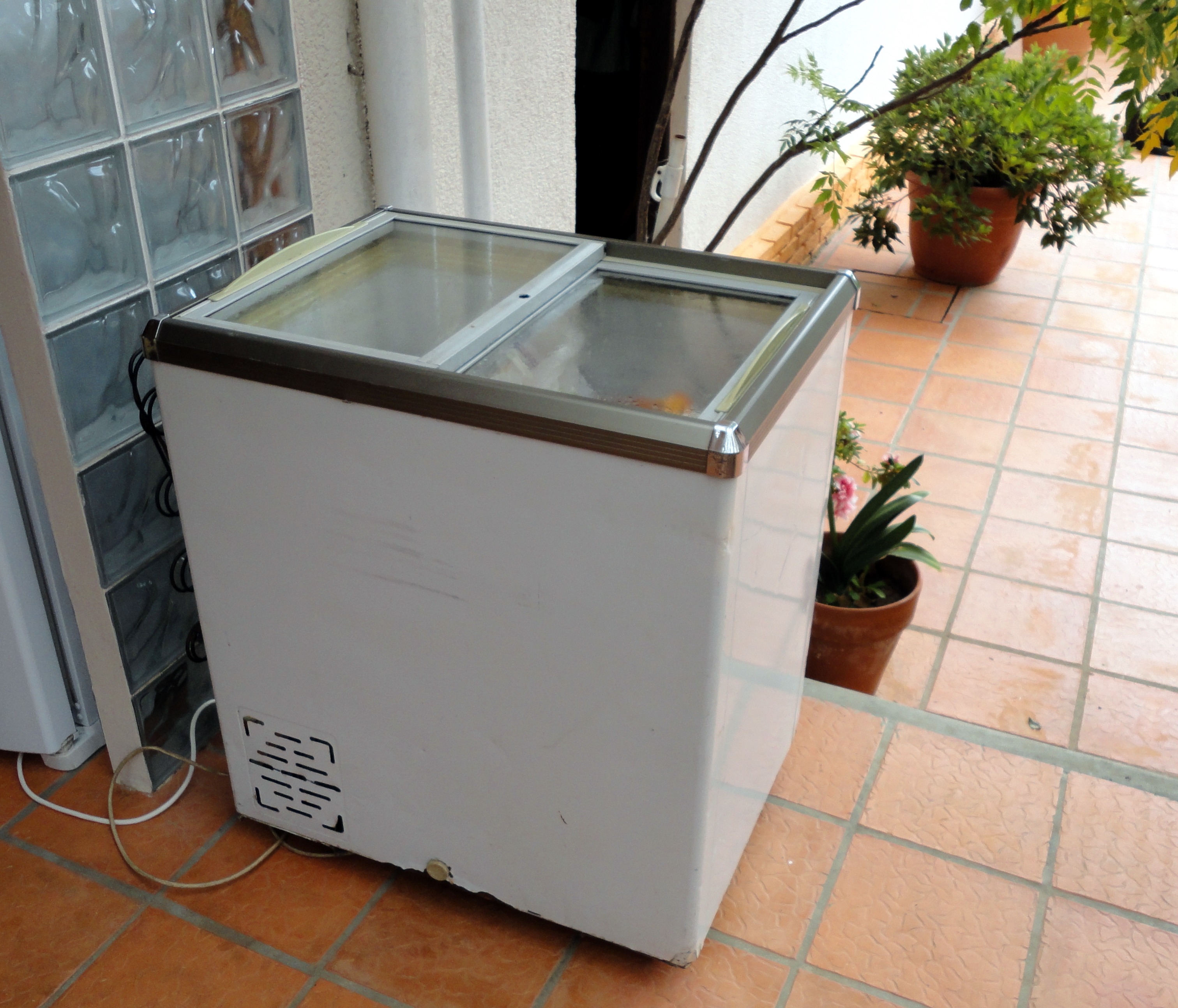
Last Monday afternoon our freezer box gave up. It started already thawing before we realized it. Of course full of goodies, prepared Bolognese, legs of lamb, couple ducks and many more fine food which we won’t like to loose. Just to expensive also.

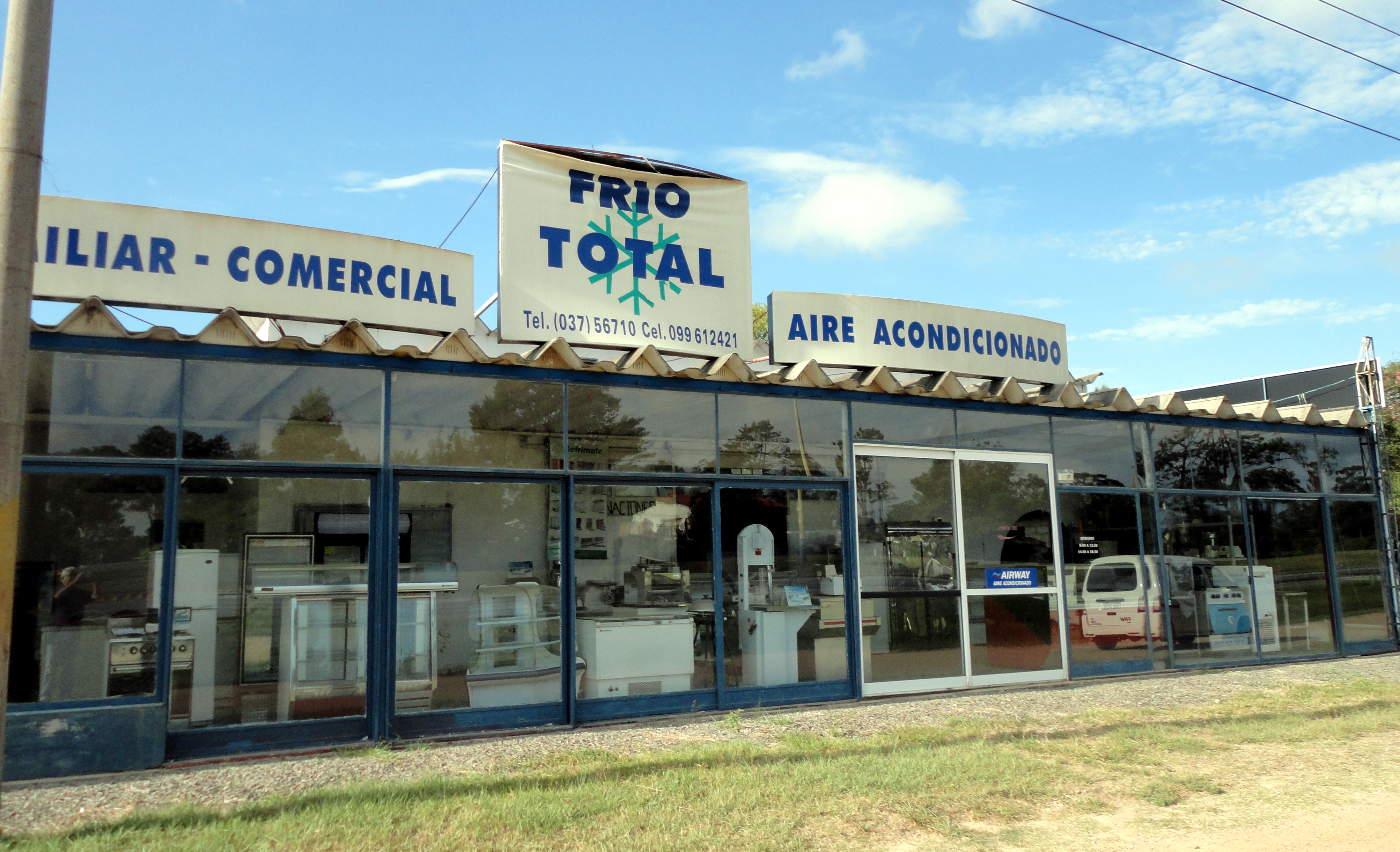
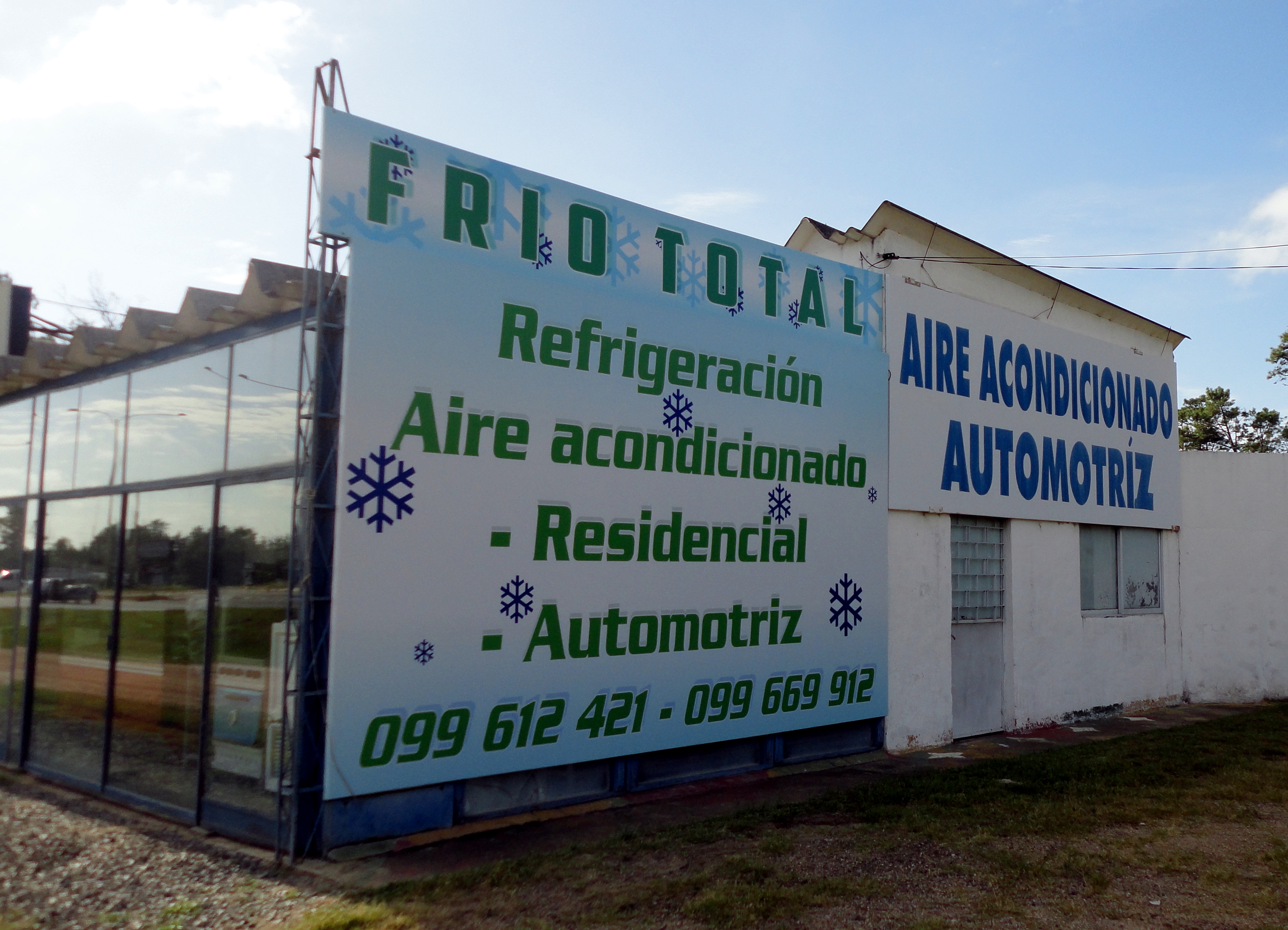
  Frio Total in Parque del Plata km .

Now one will have mainly 3 solutions.
1st: If you have enough money, through the broken one away and buy a new one.
2nd: One can start looking inside and trying to fix the problem on your own (and what are you doing with the frozen goods?).
3rd: Contacting a local specialist and let them earn some money to do the job.

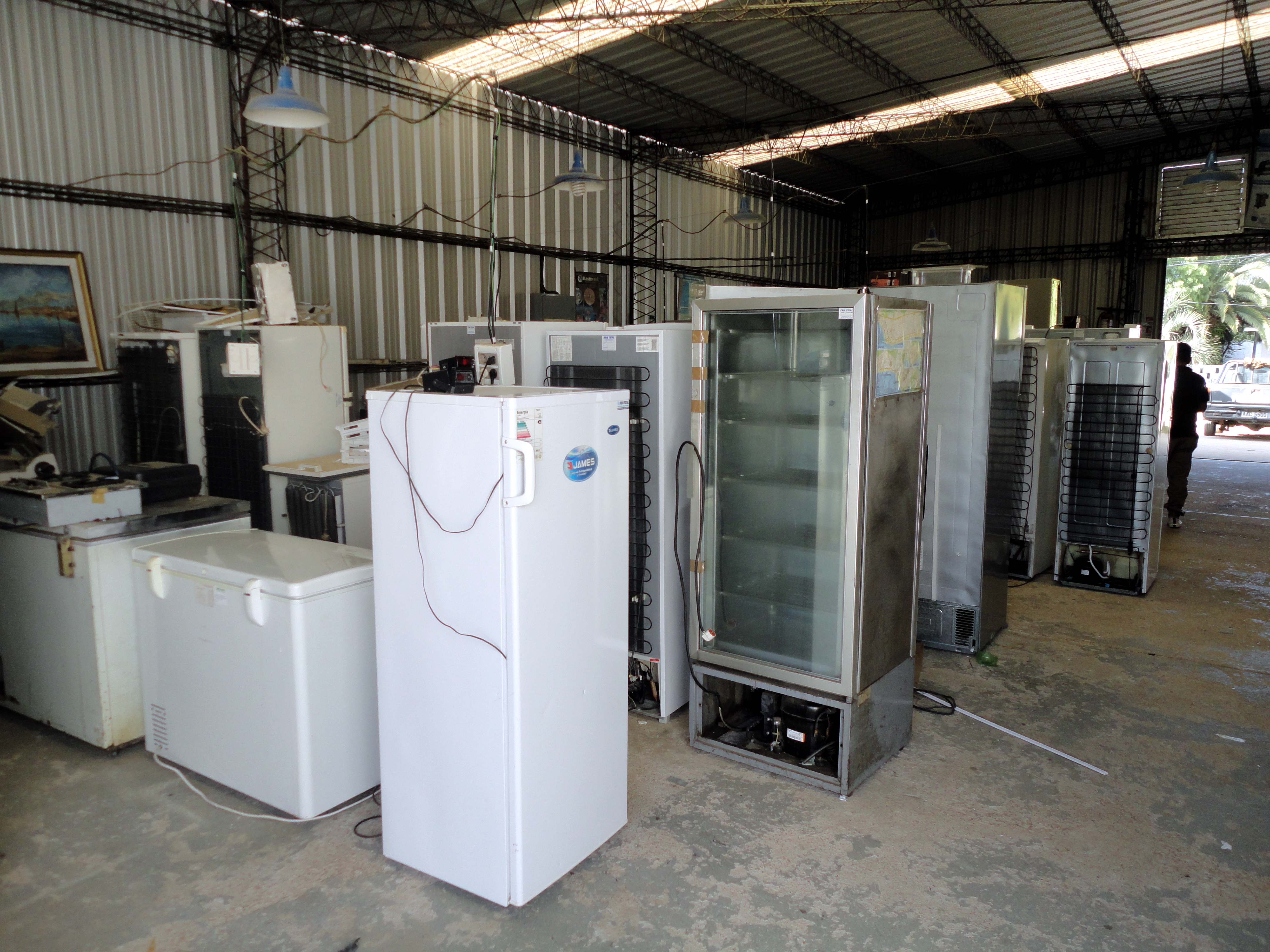
  My box on the test run, front row middle.

Frio Total.

Just a few kilometers from our home we have a company called „Frio Total“. They are located on Interbalenaria km49 (south side) in Parque del Plata. They are not offering „Frio“ service only, but also complete „Air Con“ service – if one needed.  I contacted them and explained our problem. Ha – no problem at all – for them.

   The temporary freezer box they brought.

A short 2 hours later a little truck turned up at our home. They brought a small freezer for all our goods and took our broken one with them. We were very happy not loosing our foods.

Wednesday morning they called and told me, freezer is ready and can be delivered. Little truck came again, they moved our freezer, helped changing all the frozen food again and went off with their exchange freezer.

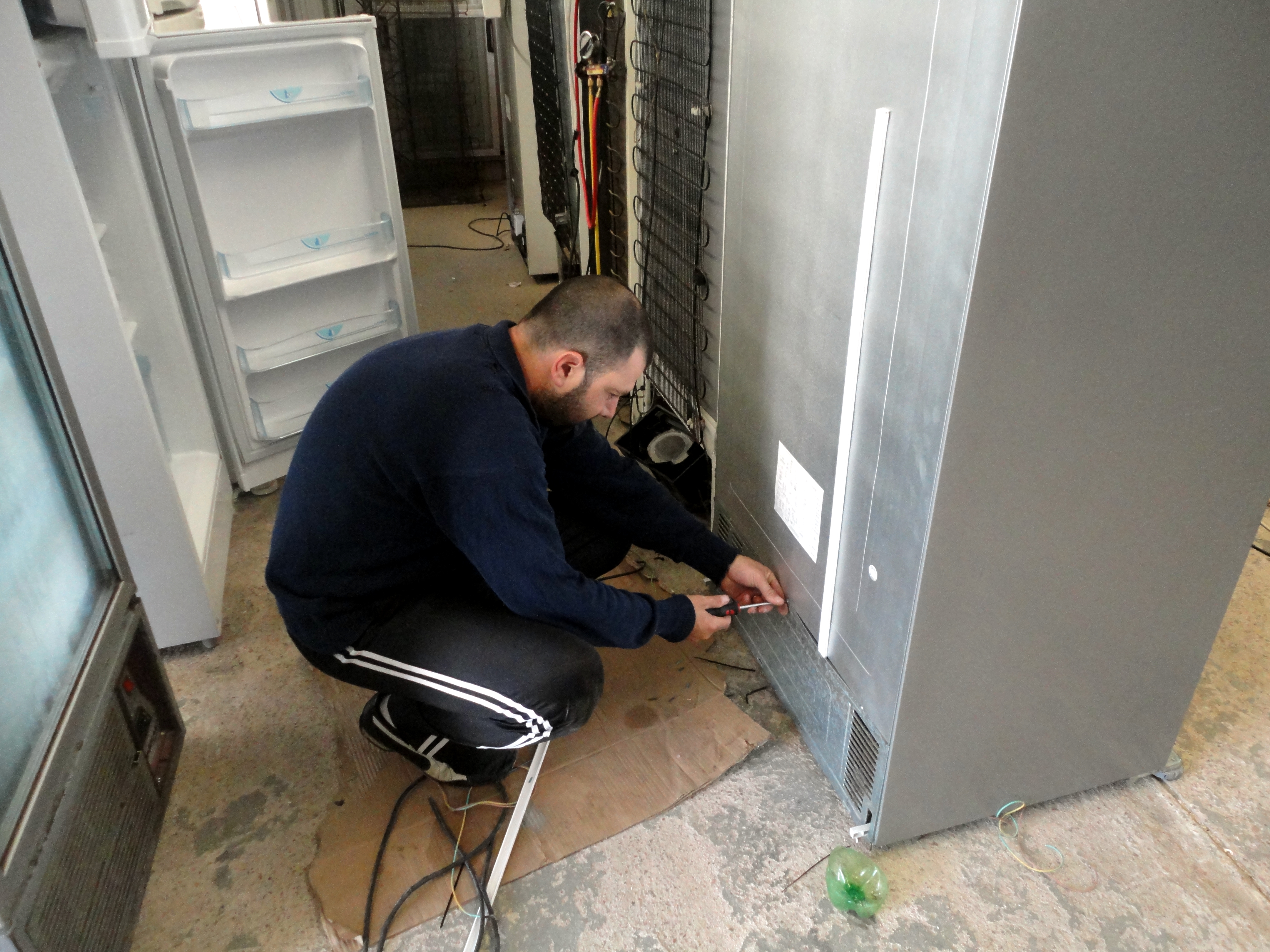
  English speaking specialist Marcelo.

Conclusion.

These people at Frio Total were extreme friendly and extreme helpful. One – Marcelo – speaks English well. The damage was broken filters, leakage of gas and ?? The total set back was U$ (peso) 4.000,–. For around US$140,– it was a cheap solution, at least more then 500 bucks cheaper then a new one.  And all done within 24 hours without any trouble for myself.  If you have a similar problem just try them !!

Veröffentlicht unter Atlantida, Information | Hinterlasse einen Kommentar