A Rabbit-Bear ??

cutie 2

Yesterday I found this article and photograph at Yahoo and National Geographic
as well as others. This is so interesting, to see one of the rarest animals in
the world, that I thought I like to share it with you and add some information.

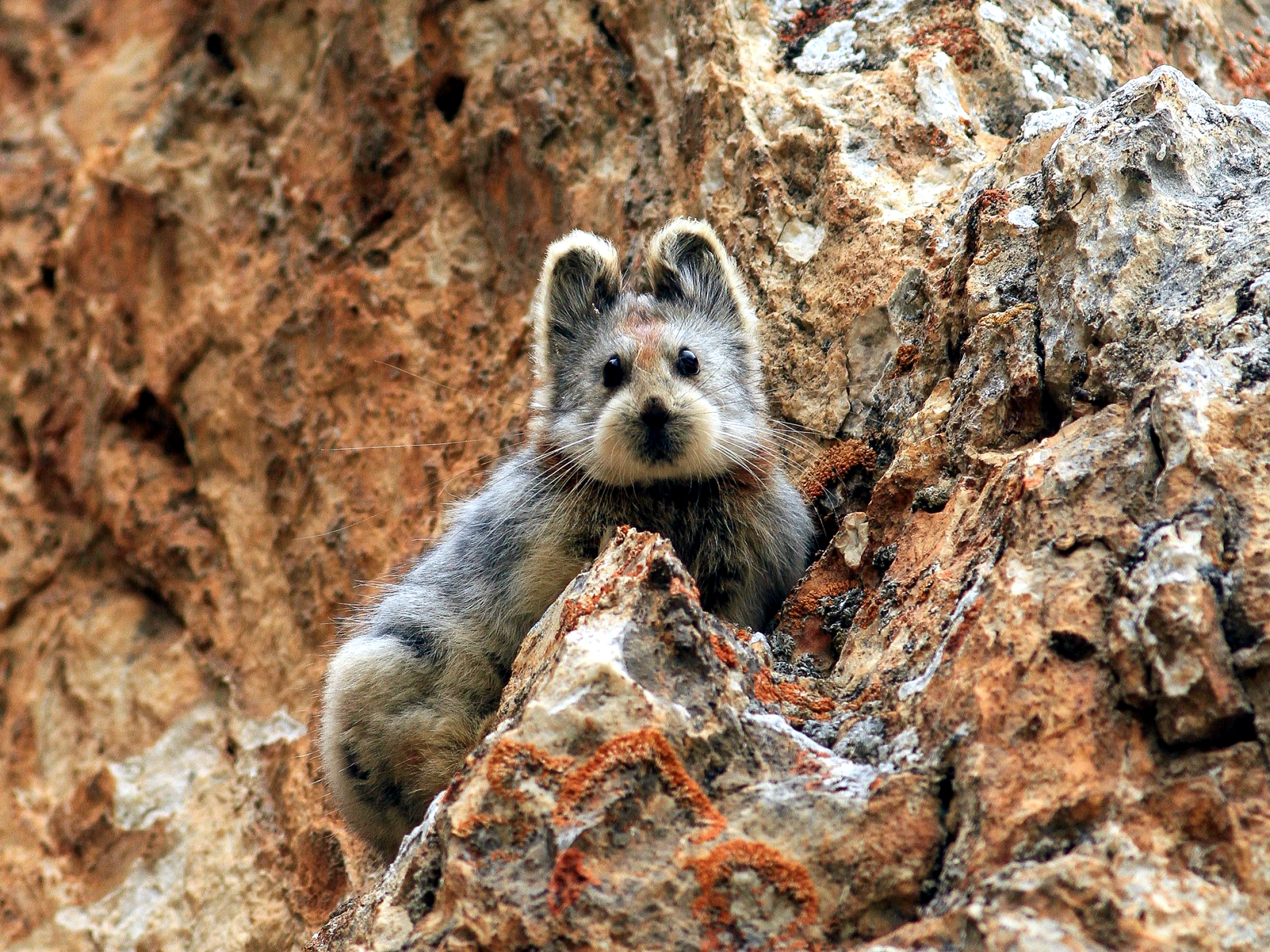
Very cool animal, looks like mix of a rabbit and a tiny bear.

Researchers just recently photographed this extremely cute, endangered mammal
for the first time in 20 years.

cutie 5  Tianshan Mountains, China.

This furry ball of cuteness is an endangered mammal closely related to rabbits
and hares. The species was first discovered in 1983 and individuals have rarely
been seen since.

For more than 20 years, the Ili pika (Ochotona iliensis), a type of tiny,
mountain-dwelling mammal with a teddy bear face, had eluded scientists in the
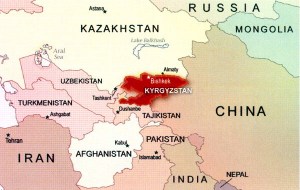
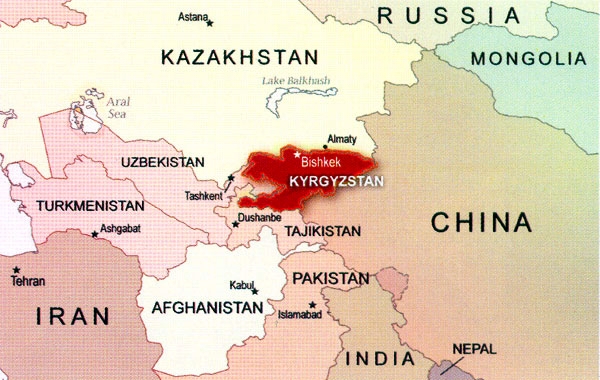
Tianshan Mountains, on the border between Kyrgyzstan and China.
There it makes the holes and cracks of the cliffs its home.

cutie 3  cutie 6
Tianshan Mountain Range, Northwestern China, on the border to Kyrgystan. Click on pics to supersize.

In the Tianshan Mountains.

Despite other family of pika living across the northern hemisphere, these mountains
are the only place this Ewok lookalike seems to feel at home.
Although scientists know where to find the Ili pika, it’s still extremely hard to
get on camera.

cutie 4  Tianshan Mountains.

For example, between 2002 and 2003 two researchers, Andrew Smith at
Arizona State University and Li Wei-Dong at the Xinjiang Academy of Environmental
Protection in Beijing, completed seven trips to twelve different sites to study
population status of the animal.

After 37 total days of attempted spottings, the two men came up completely empty
handed. Then, last summer, the man who originally discovered the species in ’83,
Weidong Li, had a chance encounter with the elusive creature. He and a group of
researchers were out in the Tianshan Mountains for, what else, pika spotting, when
around noon they saw one and snapped the iconic picture above/below.

cutie 2

Only 29 of these individual animals have been seen alive. A rare find, indeed!

Veröffentlicht unter Information, Travel | Verschlagwortet mit | Hinterlasse einen Kommentar

Easter Menu 1

easter 4

In 2 weeks we have Easter Weekend. Wouldn’t it be great to surprise
your family or friends with a different Easter menu ?

In Uruguay we have the „Semana Santa“, the Easter Week. Starts on
Monday the 30th of March and ends with Easter Sunday, the 5th of April.
One week holiday – time enough to cook yourself through all the menus.

The following days I will introduce you to 3 different menu’s, which
we often used and introduced to the cooking classes in our Panama time.
Each menu will contain a starter, a main and a dessert. They are easy
to make, very light and soooo delicious. Of course you can design your
own menus out of these 9 recipes coming up. All made for 4 persons.

The Starter:
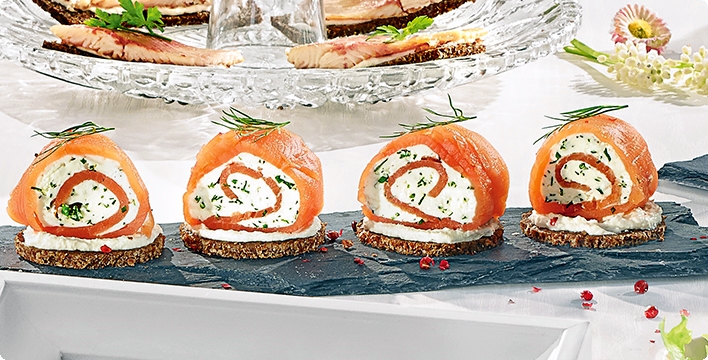
Salmon and Cream Cheese Rolls on Pumpernickel.

Gourmet 1

Ingredients.

100 g salmon into thin slices
50 g cream cheese
50 g curd cheese
2 tbsp mixed herbs such as Chives, dill etc.
1 tsp honey, liquid
salt
pepper
4 slices of pumpernickel
2 tablespoons horseradish cream
red pepper
dill

How to do.

Lay out cling film .
Salmon – slightly overlapping lay slices on an area of approximately 15 x 20 cm.
Mix together cream cheese, curd cheese, herbs and honey and season with salt and pepper.
Pass curd mixture on the salmon, leave a margin of about 1 cm.
Roll up firmly with plastic wrap, then wrap again in cling film.
Set for at least 1 hour in the refrigerator.
Cut out 8 slices pumpernickel with a ring cutter. You can buy them in a roll already.
Spread horseradish cream on pumpernickel .
Unwrap the salmon roulade from the foil, cut into 8 slices and set one on each bread slice.
Garnish it with dill and red pepper.

Tips.
A glass of dry champagne goes well with it and opens the feast of your easter menu.

The Main:
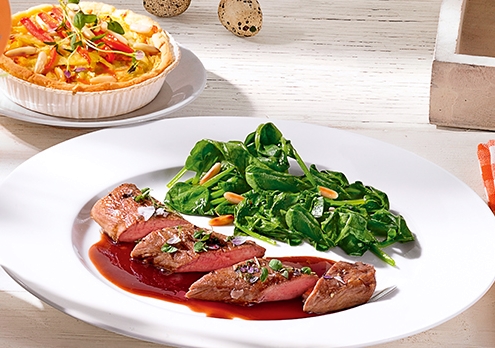
Lamb Fillets with Veggie Cup Cake.

Gourmet 6

Ingredients, Cupcakes.

120 g of wheat flour
80 g butter
1 egg yolk
50 g of potatoes
150 g carrots
1 small onion
1 tablespoon extra virgin olive oil
5 sprigs of thyme
2 eggs
100 g creme fraiche
salt
pepper
nutmeg
4 small carrots
2 tablespoons pine nuts

How to do, Cupcakes.

Combine flour, butter, egg yolk and a little salt;
Knead a pastry, refrigerate the dough for 30 minutes.
Peel Potatoes, carrots and onion.
Slice potatoes, grate carrots and chop the onions.
Cook all for 2 minutes in a tablespoon of olive oil and season with thyme, salt and pepper.
Mix eggs with fresh cream, salt, pepper and nutmeg.
Roll out the dough thinly, put in small tart tins, about 10 cm diameter.
Distribute the potato-carrot-onion mixture on top, pour the egg mixture over it.
Wash, peel and quarter the 4 carrots.
Decorate the tarts with quartered carrots, pine nuts and thyme.
Bake for 20 minutes at 200C or 400F in your oven.
You might have to cover, halfway through the baking time, with aluminum foil.

Ingredients, Lamb Fillets.

800 g lamb fillet
200 g of fresh spinach
2 cloves of garlic
2 tablespoons pine nuts
2 tablespoons balsamic vinegar de Modena
100 ml of good red wine, the one you drink with the meal
150 ml beef bouillon
3 sprigs of thyme
2 tablespoons gravy
2 tablespoons extra virgin olive oil
salt
pepper
nutmeg

How to do, Lamb Fillets.

Thaw lamb fillet if necessary, wash and peel spinach, peel garlic.
Toast pine nuts in a dry frying pan till they are golden brown.
Boil balsamic vinegar, red wine and beef broth with a sprig of thyme.
Reduce that mixture to half amount. Half way of reducing take out the thyme.
Stir in gravy and season with salt and pepper.
Rinse lamb fillets, pat dry, season with salt and pepper.
Heat the olive oil in a pan, then reduce temperature and fry lamb fillets, with garlic
and thyme, from all sides for about 2-3 minutes. Do not overcook, should be pink !
Take lamb fillets from pan and keep warm.
Add the spinach in the dripping fry for 2 minutes, fold in pine nuts and
season with salt, pepper and nutmeg.
Decorate spinach on the plate, slice lamb fillets and serve with sauce reduction.
Serve the potato and carrot cupcakes aside.

Tips.
Serve a nice glass of your favorite red wine with it. For vegetarians: Leave the meat
and serve the cupcakes (one or two) aside the spinach. You will love it.

The Dessert:
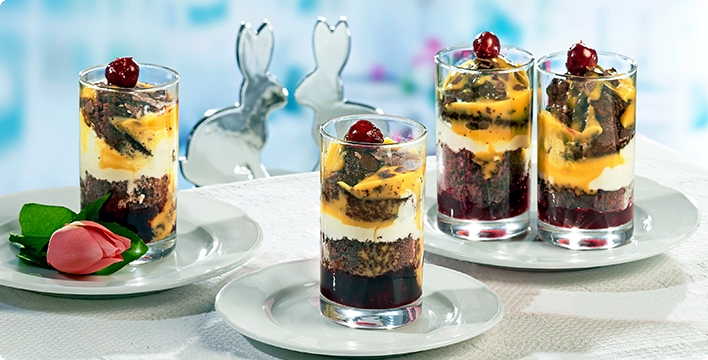
Eggnog Cherry Goblet.

gourmet 8

Ingredients.

200 ml whipping cream
2 EL Vanilla sugar
250 g sour cream
4 Chocolate Muffins
4 tbsp black cherry jam
3 tablespoons orange juice
150 ml eggnog, 20% Vol.
20 g milk chocolate
as desired sour cherries (from a jar) to decorate.

How to do.

Whip the cream until stiff, sprinkle in the vanilla.
Stir sour cream smooth then fold under the whipped cream.
Cut the muffins in half horizontally.
Stir cherry jam with some orange juice smooth and fill in tall glasses or goblets.
Best the diameter of the muffins. Otherwise cut the muffins to size.
Prepare the chocolate rasps.
Fill in half a muffin, then cream mixture, then remaining muffin and cream again.
Pour 2 tablespoons of eggnog over each glass and sprinkle with chocolate shavings.
As desired garnish with a cherry and serve well chilled.

Tips.

You can do the same with other fruit, like strawberry’s, or even make mixed goblets.
Enjoy !!!

Veröffentlicht unter Recipes | Verschlagwortet mit , | Hinterlasse einen Kommentar

70 cents US for one carrot !!!

DSC01539

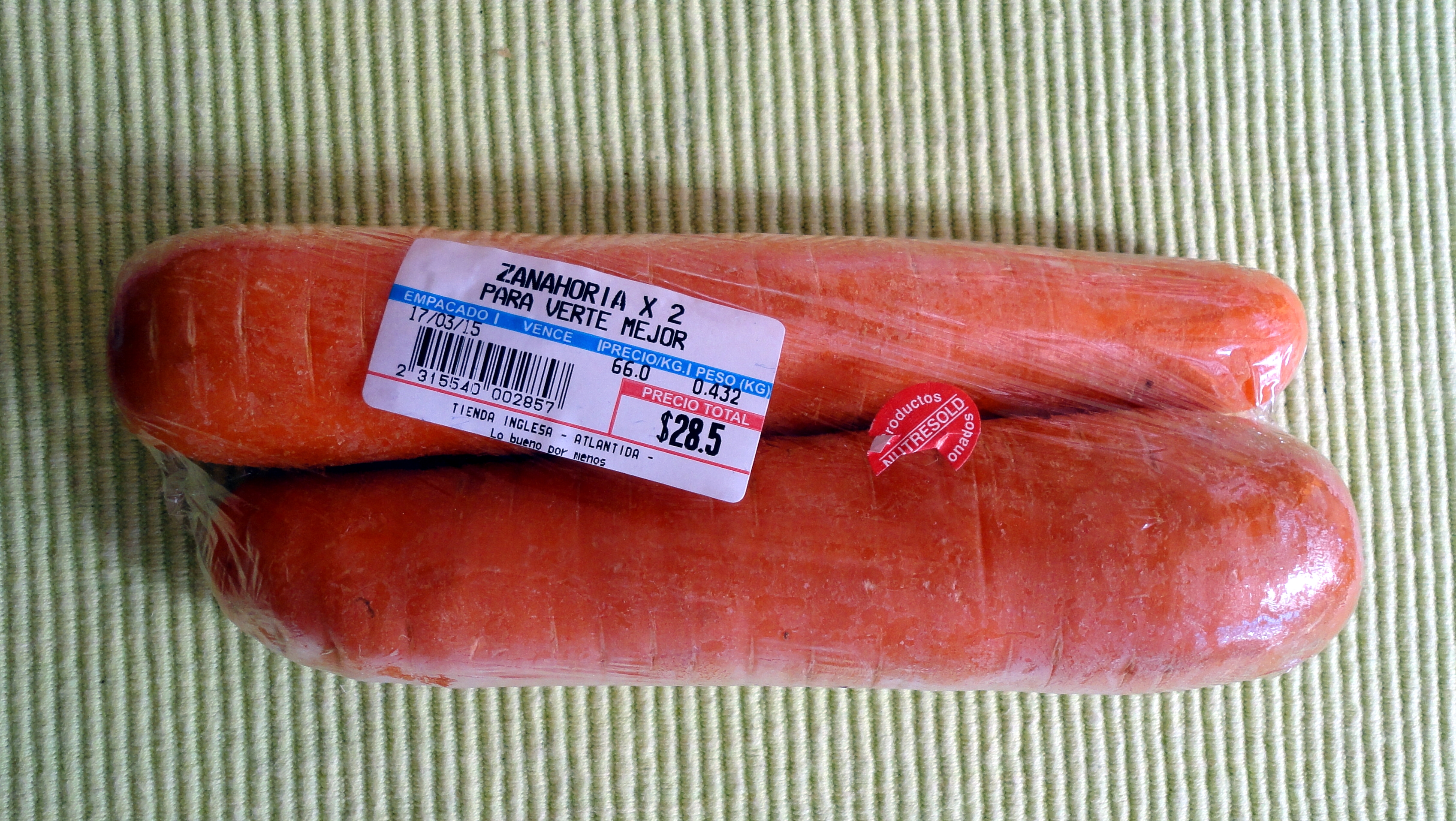
Today I was shopping for a few items at Tienda Inglesa. What a surprise, they offered single (2 in a pack) wrapped carrots. Why ? Because I am single at the moment, I was happy to buy just 2. A few other items and my shopping day was done. At the cashier, watching the price tipping, I realized first time what was going on.

DSC01539  My 2 carrots.

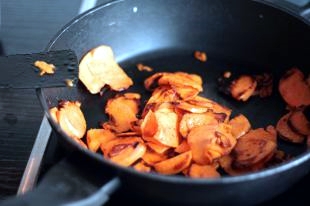
2 carrots for almost 30 pesos, o.k. they are big ones, but still, it is c. –,70 cents US !
YES SEVENTY CENTS – for one carrot. I thought, may be I’ll find some gold inside
the carrot, but nothing. Bad luck.

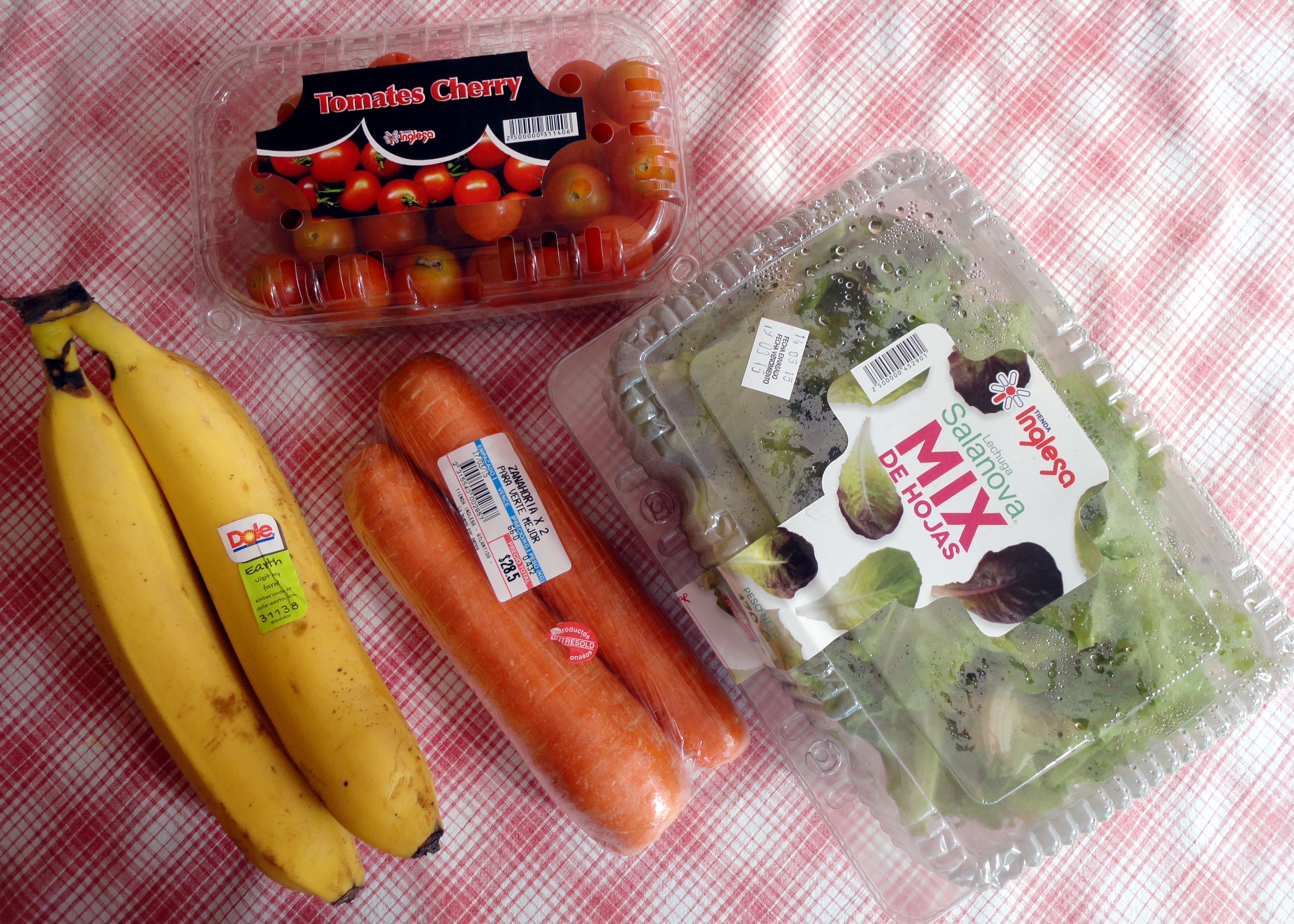
DSC01541  The 4 items for over 10,–$US.

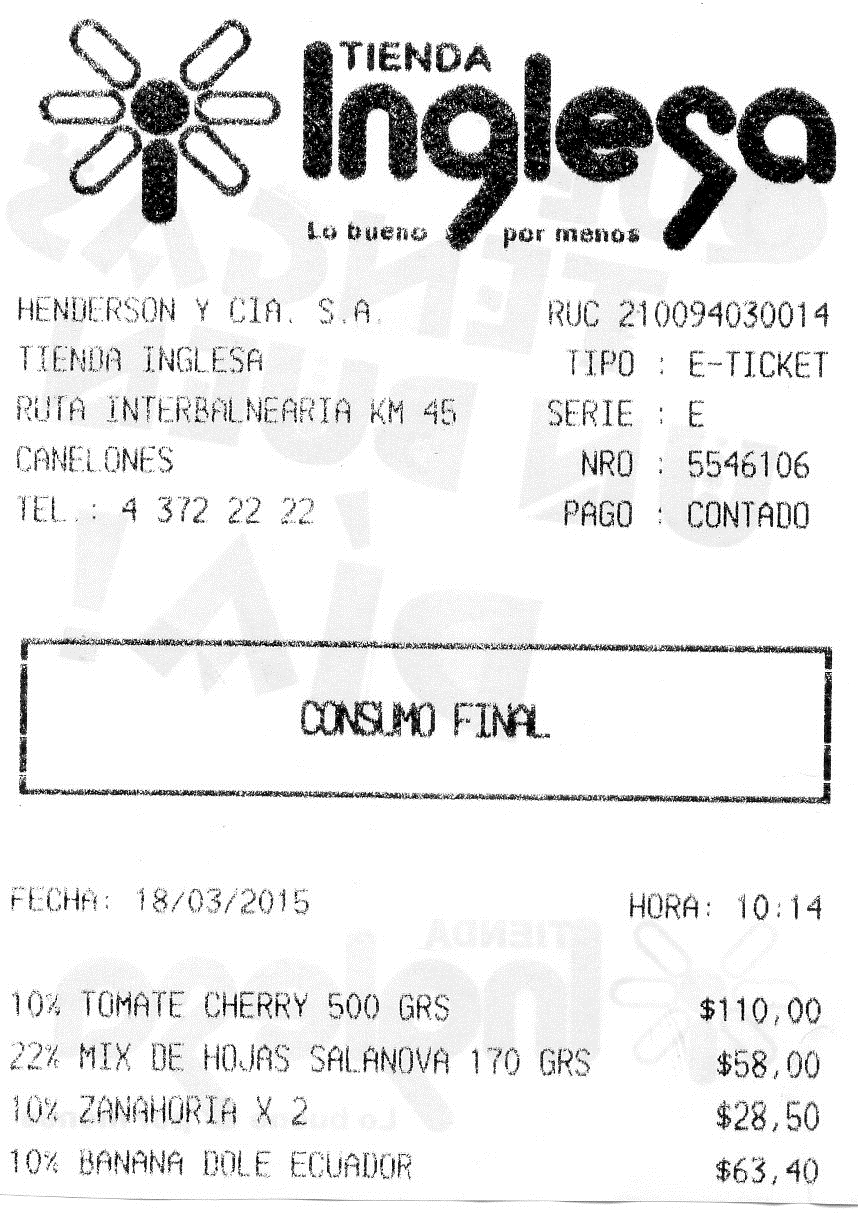
At home I checked my shopping again and what can I tell, 4 veggie items added up to 259,90 pesos. Makes for a few greens over 10,–$US ! Is that Uruguayan gourmet style ? Not quiet, because 3 items of the four are tax discounted to 10% !!

That means it is government-subsidized food, basic food. But still, a few green leaves, a few tomatoes, 2 carrots and 2 bananas TEN DOLLARS !! Of course the salad mix is an gourmet item, taxed with 22% instead the 10% for normal food.

img569 Todays receipt with items and the tax difference.

Just for your information, surviving food for the poor in Uruguay is not taxed at all. That is rice (depends on the producer), onions, potatoes etc. It came up in my mind to leave the country if this ridiculous price increase goes on. We know that prices almost doubled in the last 4 years, but slowly it goes over the top.

I won’t start a basic discussion over that theme. We all know that crude oil barrels are on the deepest level since years. Does anyone think the petrol price is a cent down on gas stations in Uruguay ?? No way – still as high as a year ago. Who is putting all that money in their pocket ?

DSC01541  And here it is again.

Back to my 4 shopping items from today. One banana I had already for lunch, what a feast. One carrot I cut in half for my 2 dogs, also for lunch. All 3 of us had then some water !! Salad etc. will be a side dish for tonight’s diner. Leaving Uruguay ? Why, over a carrot ?

We like it here – read my blog entries ! Then I had an idea, where to go, if prices are flying so high in Uruguay? So – I checked out a few prices in other countries. Not cheap stuff, no, TOP QUALITY GOURMET STYLE food. As we live on „high gourmet level“ here in Uruguay then I only may compare the best, right ??  One example down here.

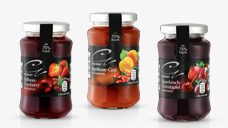
gourmet 9 250g -,99
This top quality marmalade is –,99 cents per 250gram jar, in Alemania ! In Uruguay we
have a similar size and quality for around 8,–dollars US. Who cares, we make our own
jam ! But how long, when will they start to sell strawberries in a „x 2 pack“ ??

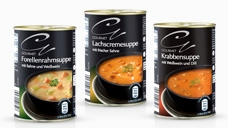
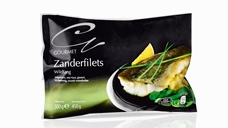
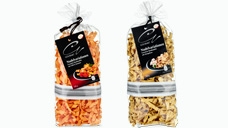
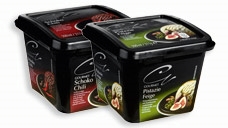
See the following pics and explanations and you can make up your mind yourself. For equal 10,–dollars US, you can buy, by example in Germany, a complete top class gourmet meal for at least 2 persons !!  Same situation you’ll find in North America !!

gourmet 10 390ml 1,49
Gourmet style and quality soup, different tastes, one can 390ml for US$1,49.
Gourmet 12 500g 4,99
Gourmet style and quality fish filets (pike-perch), 500g for US$4,99.
Gourmet 13 500g 1,39
Gourmet style and quality noodles, different types, 500g for US$1,39.
Gourmet 11 500g 2,29
And to round the gourmet feast for two :Ice cream, different tastes,
500g for US$2,29. 4 items, a whole meal, for 10,–US$ !!!

Conclusion : I stick to my philosophy : Uruguay – love it or leave it !!!

Veröffentlicht unter Atlantida, Information, Lifestyle, Uruguay | 6 Kommentare

Must See – Liebig’s Meat Extract 2

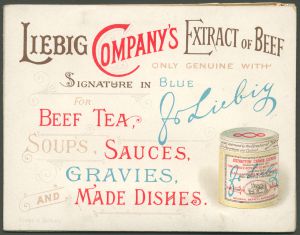
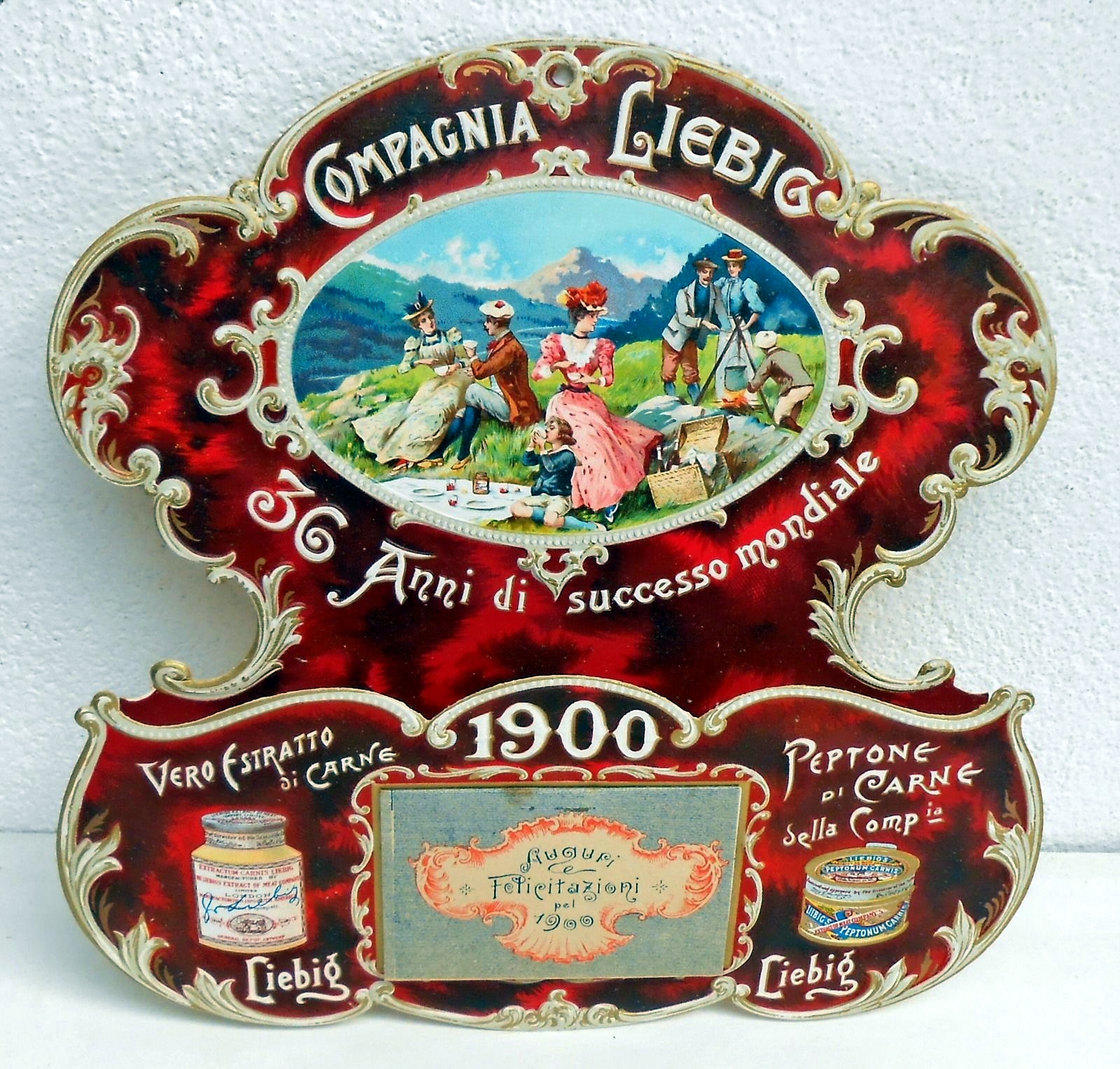
Liebig 122 Kalender 1884

Liebig and his part in Uruguay.

So much is written about Liebig, his life and companies, their history, success and blossom as well as their decline, that I don’t have to invent the wheel new. Therefore I take over most of an article in Wikipedia. But for you it might be new to know that we have such great history next to us in the country we live in. Especially why most of us know better or less the products or product names of this famous company.

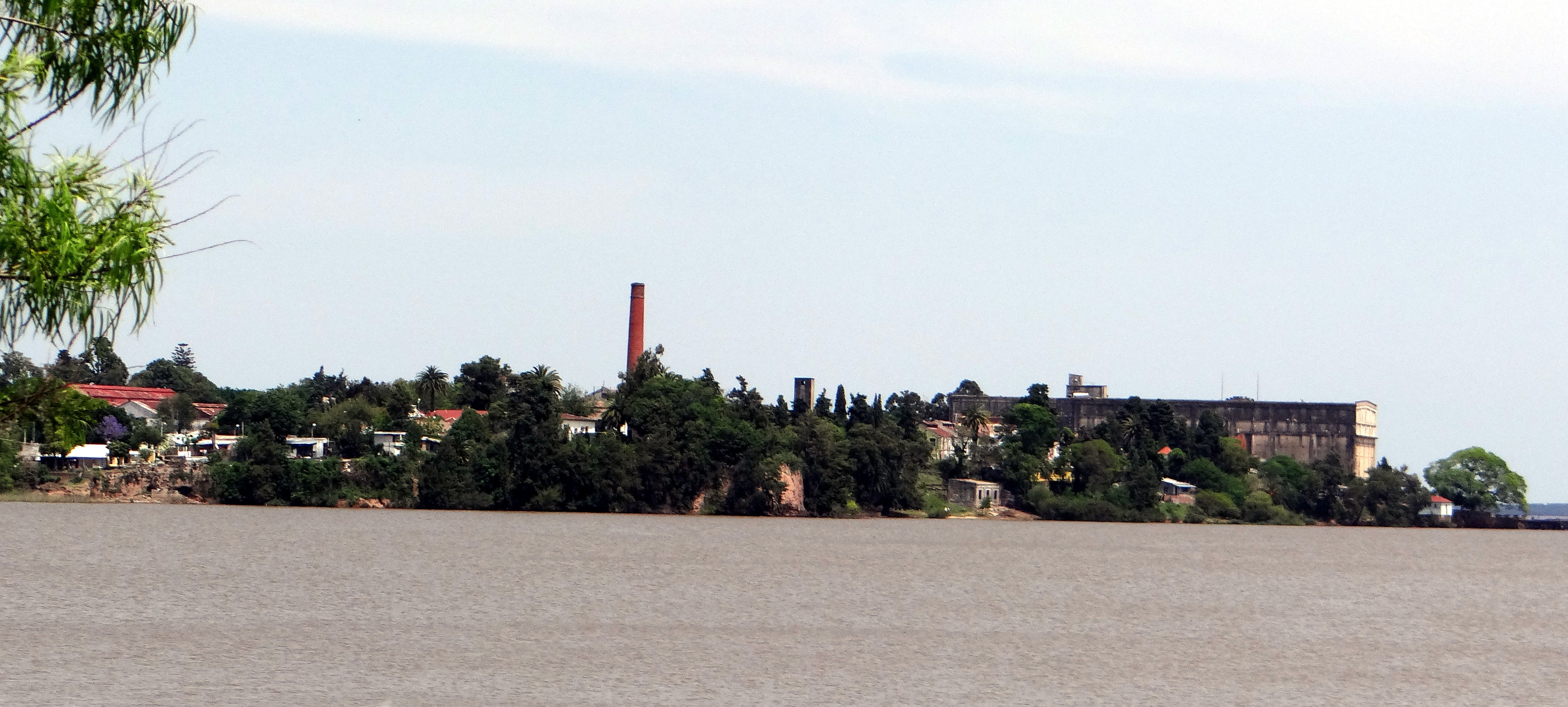
DSC00109a The museum site at Barrio Anglo.

Many Uruguayans don’t know either about this. When I was in Fray Bentos and asked at the city information for the directions to Liebig’s factory and Liebig’s monument, they looked at me, like I came from another planet. Never heard about !!! O.K., my fault once more again, I should have asked for the „Museo de la Revolucion Industrial“, or „Museo de Barrio Anglo“. Who would know?

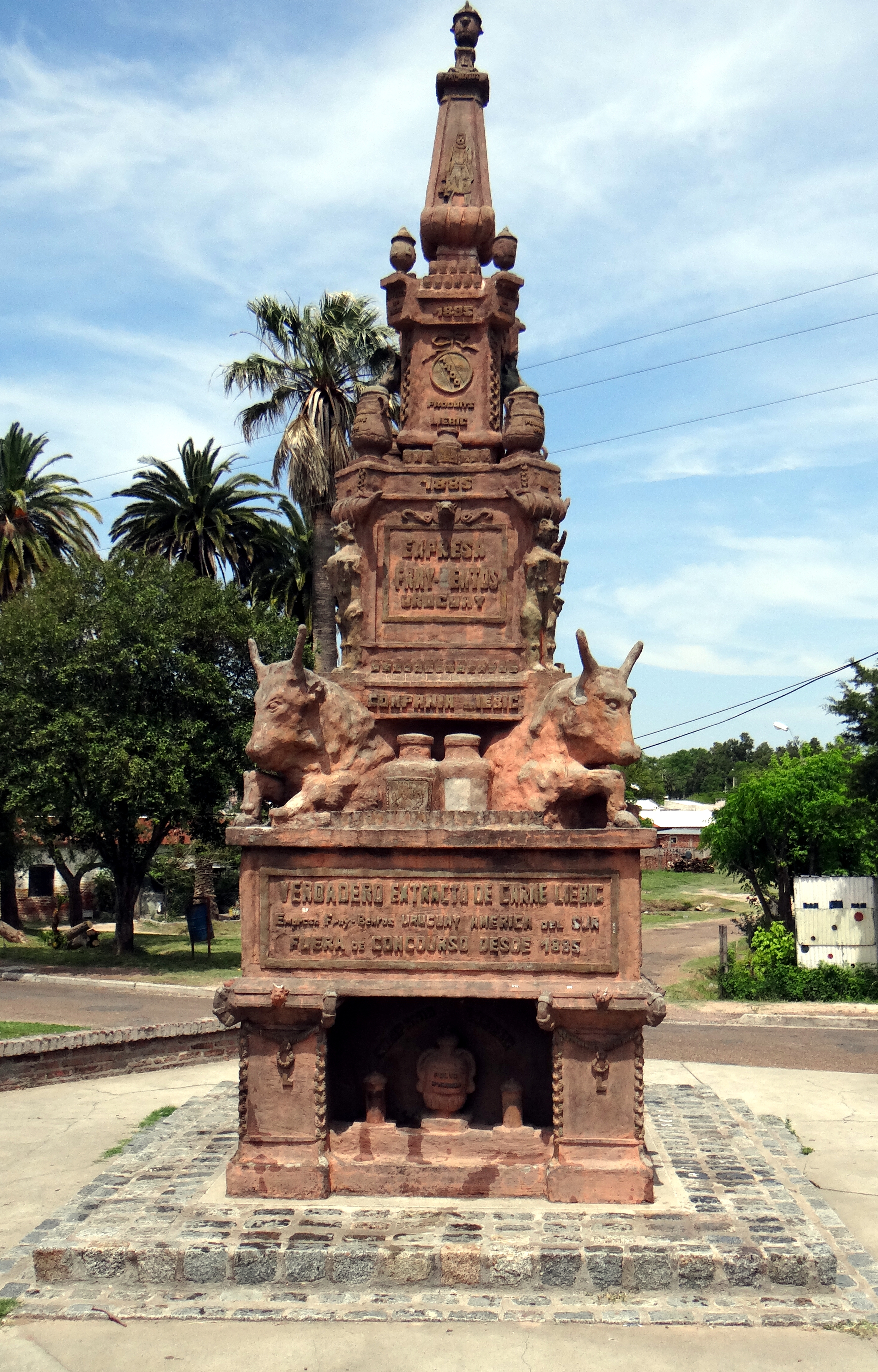
DSC00111a  The Liebig monument at the museum site.

Still – they wouldn’t have any clue about the „why’s, how’s, and who’s.
That’s why I introduce you to this famous part of Urugayan and world history with many many pics which you might have never seen before.

Liebig 126  Liebig 127

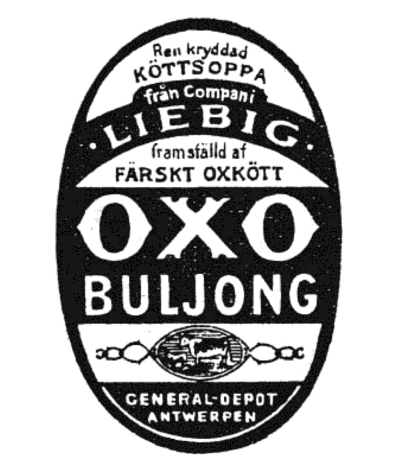
The Liebig’s Extract of Meat Company was the producer of LEMCO brand Liebig’s Extract of Meat and the originator of Oxo meat extracts and Oxo beef stock cubes. It was named after Baron Justus von Liebig, the 19th-century German organic chemist who developed and promoted a method for industrial production of beef extract.

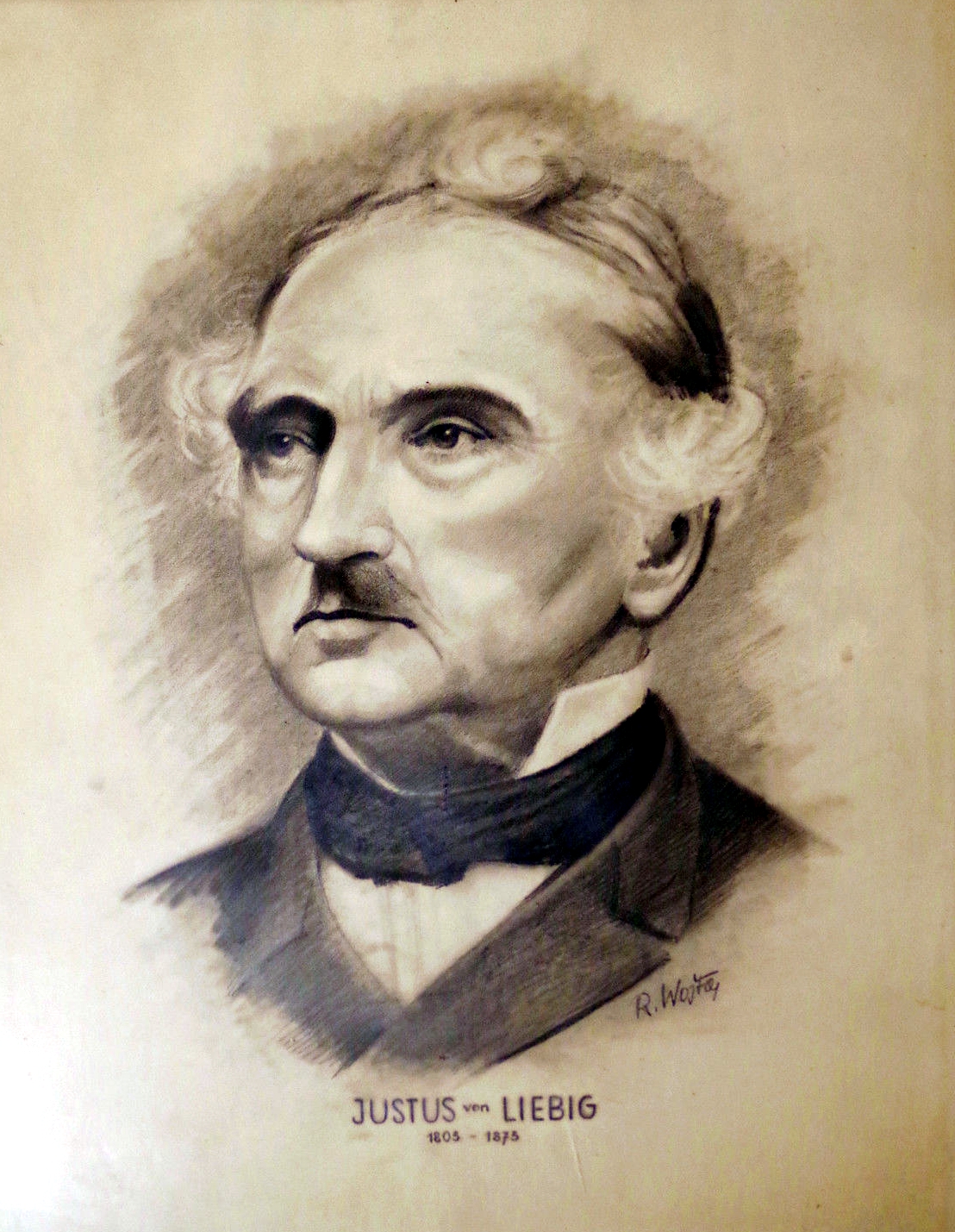
UY - Liebig 37    liebig 63a Rudolf Wojta-Zeichner
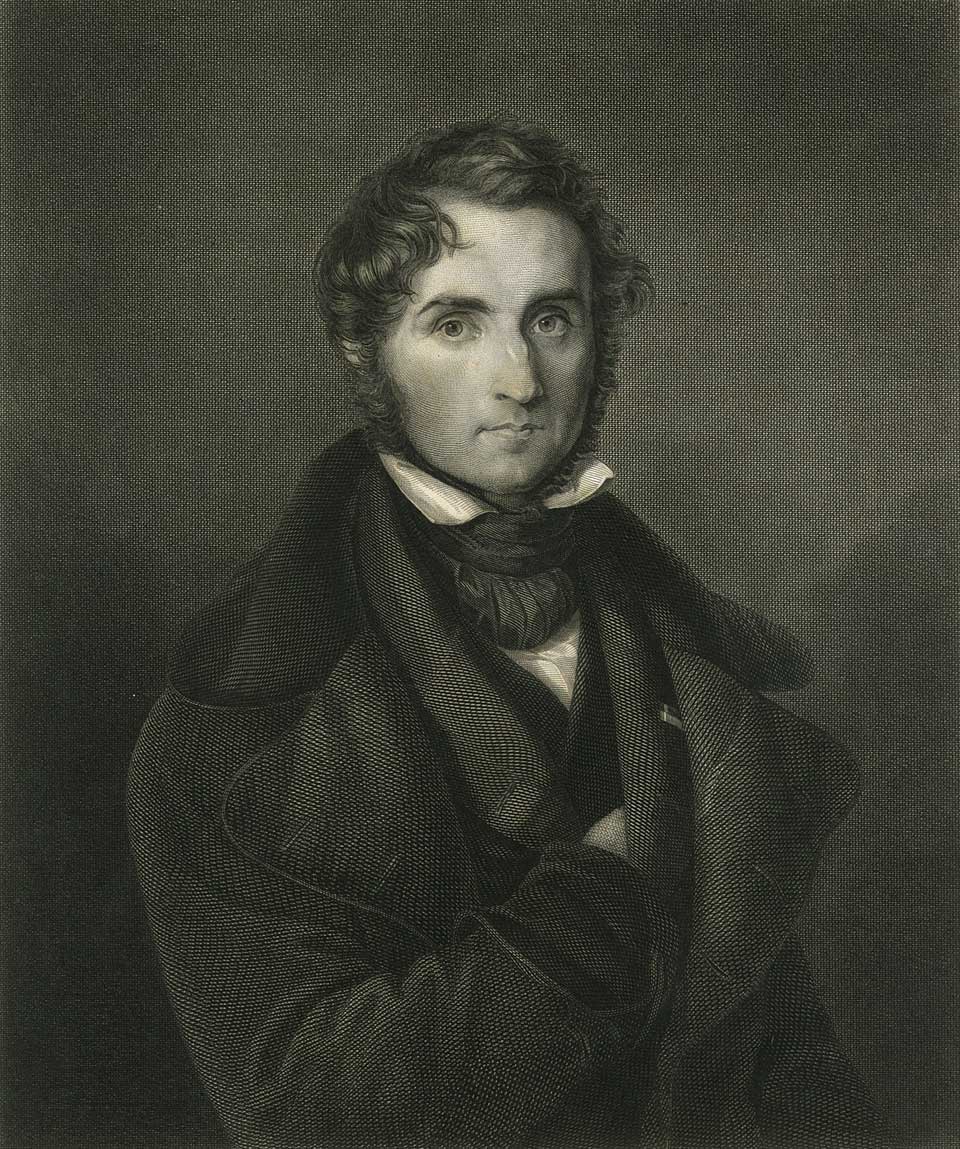
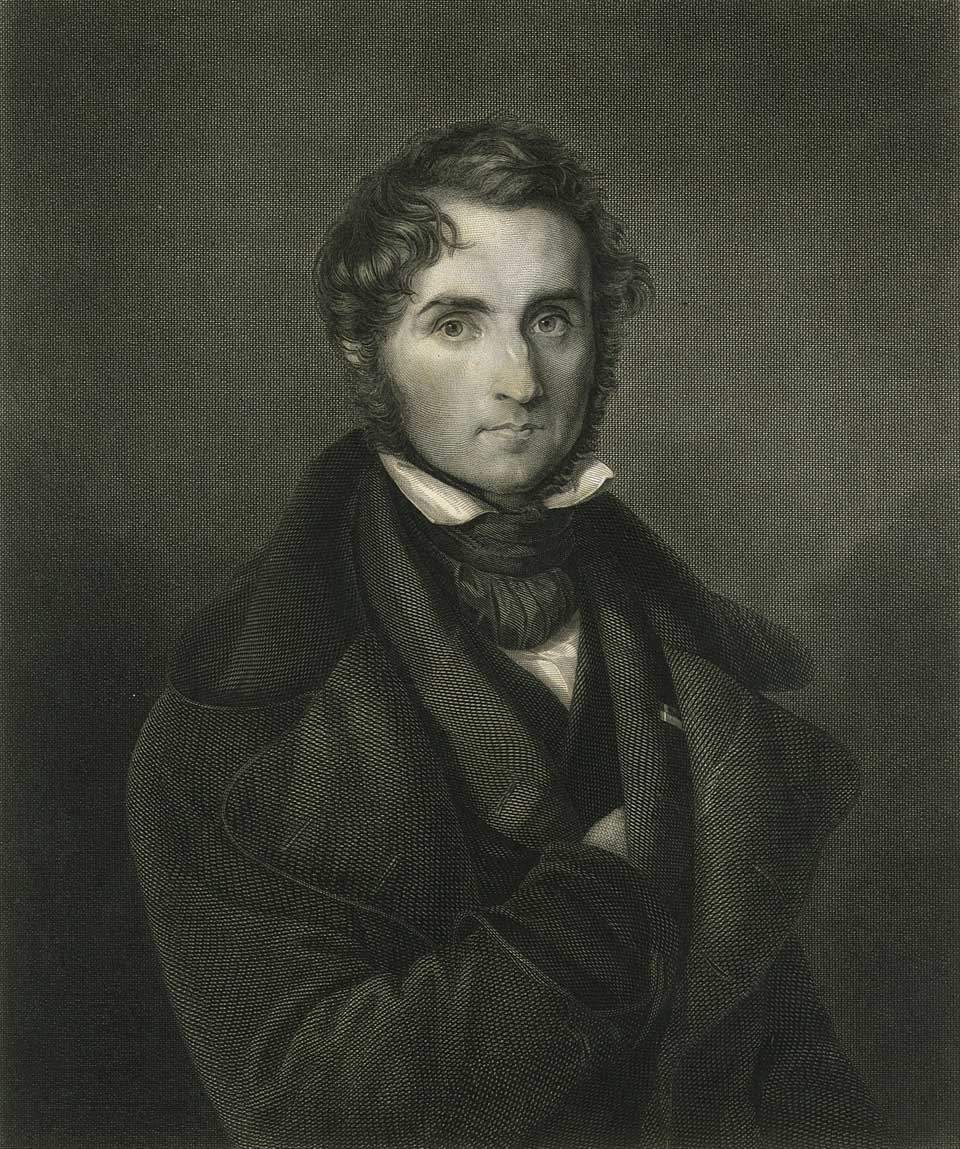
Two times Liebig, as university professor and later as businessman.

Early development.

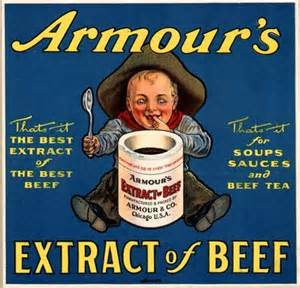
In 1847, Justus von Liebig developed a concentrated beef extract in hopes of providing a cheap and nutritious meat substitute, Extractum carnis Liebig, for those unable to afford the real thing. His method was to trim the fat from the meat, break the meat into small particles, boil it with water to form a liquid of 6-8% solids, and then stir it over low heat, until it was reduced to a paste of 80% solids. However, in Europe, meat was too expensive to economically supply the necessary raw materials to create the extract.

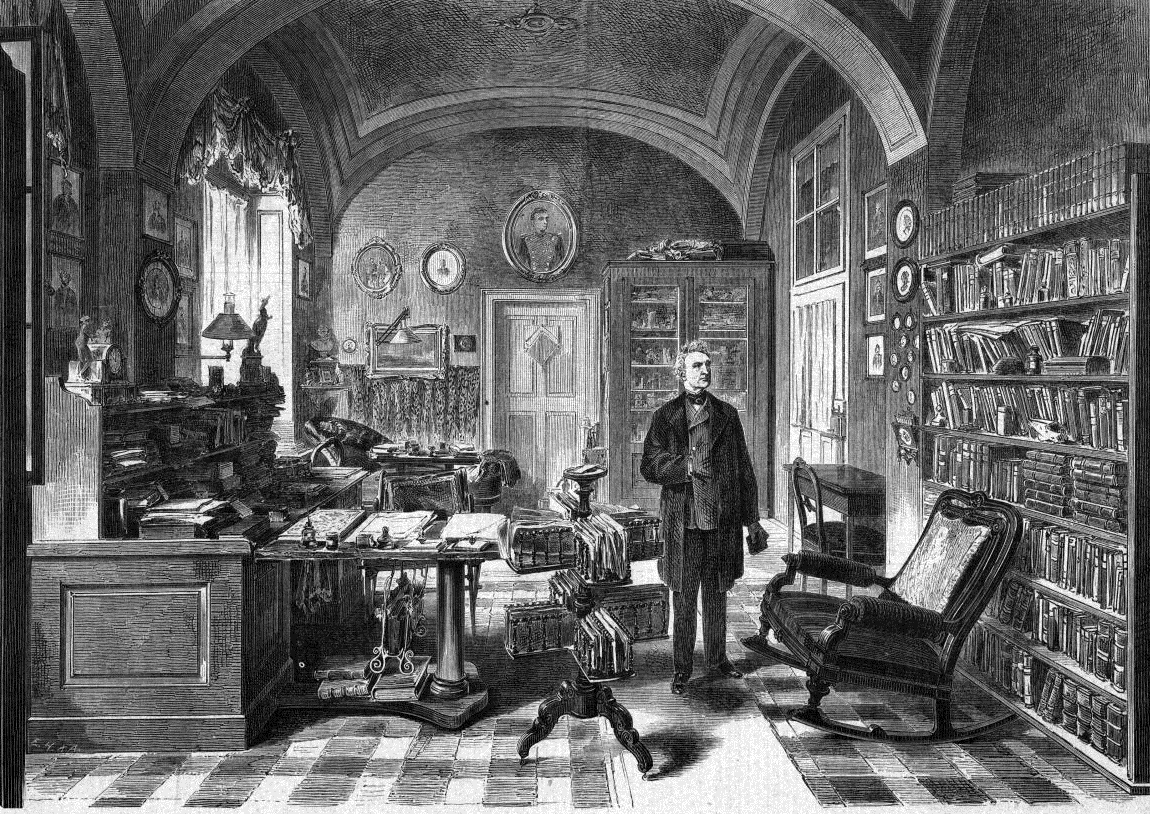
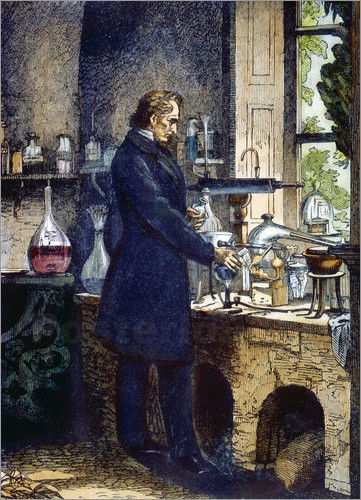
Liebig 64 Holz 1874a  Liebig in his office in Giessen.

Liebig made his process public, publishing the details in 1847. Liebig clearly stated of his process that „the benefit of it should … be placed at the command of as large a number of persons as possible by the extension of the manufacture, and consequently a reduction in the cost.“ A variety of companies produced small batches of meat extract based on Liebig’s ideas, often using his name on their products.

liebig 65                   UY - Liebig 29
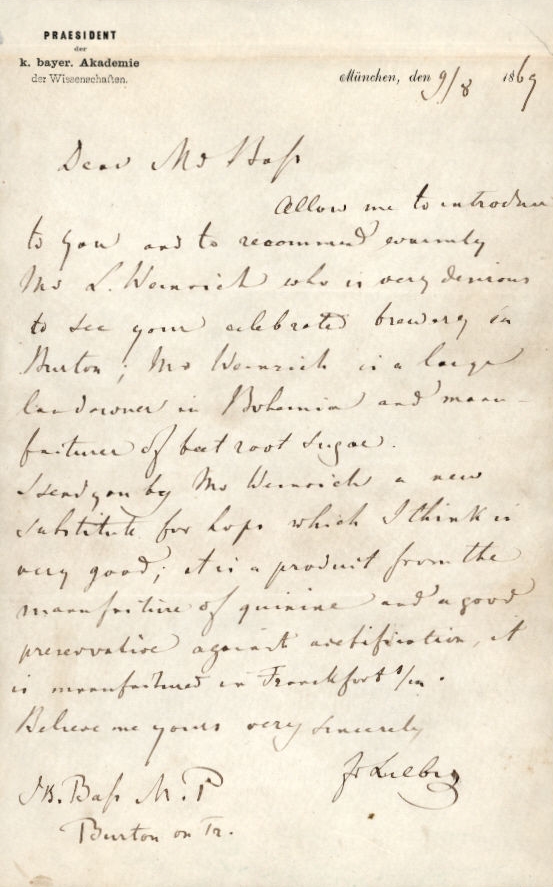
Liebig in his first private laboratory and a valuable (signed) letter from the „Academy of Science“.

In 1862, George Christian Giebert, a young  railway engineer visiting Europe, read Liebig’s Familiar Letters on Chemistry. Convinced that the process could be industrialized, he wrote to Liebig to suggest opening a manufacturing plant in South America. Using the flesh of cattle that, before the popularity of canning or freezing meat, would otherwise have been killed for their hides alone, he hoped to produce meat extract at one third of the European cost. He visited Max Joseph von Pettenkofer’s Royal Pharmacy in Munich, and Friedrich Mohr’s laboratory in Coblenz, where small amounts of extract being produced.

lIEBIG 79a  The very first slaughter house in Fray Bentos.

The Beginning in Fray Bentos, Uruguay.

With Liebig’s agreement, and the backing of a group of entrepreneurs and ranchers, Giebert established the Societe de Fray Bentos Giebert & Cie., and built a test extraction plant at Villa Independencia, Uruguay, later called Fray Bentos. By the end of 1864, 50,000 pounds of extract worth £12,000 had been exported and sold.

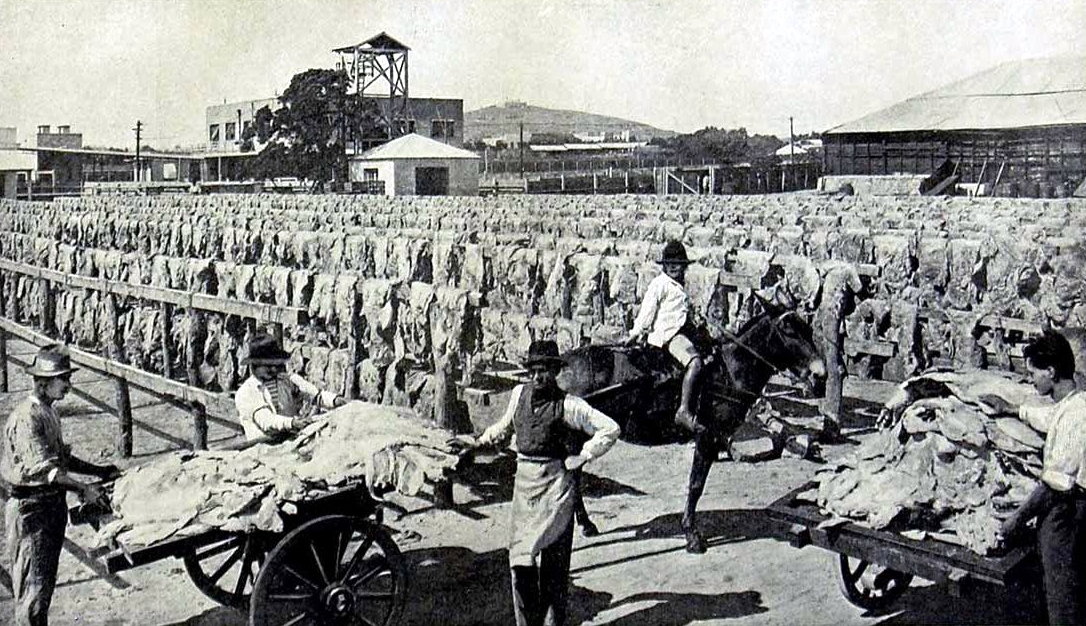
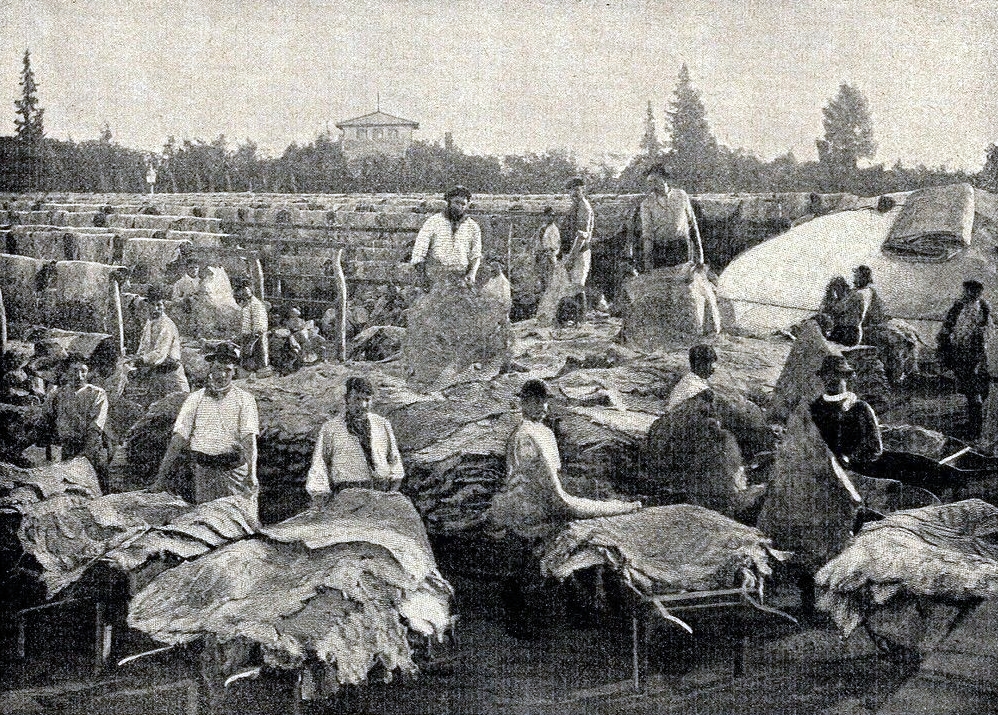
Liebig 100a Drying hides . The company improves.

In 1865, Giebert offered Liebig a directorship of the company, with an initial cash payment and an annual salary. The Liebig Extract of Meat Company was established on 4 December 1865 in London with a capital of £150,000. Liebig performed and supervised quality control testing on the product arriving to Europe, and promoted it as „the real“ Liebig extract of meat. By partnering with Liebig, Giebert was able to claim that he was the officially sanctioned producer of Liebig’s meat extract.

extract 3  liebig 39

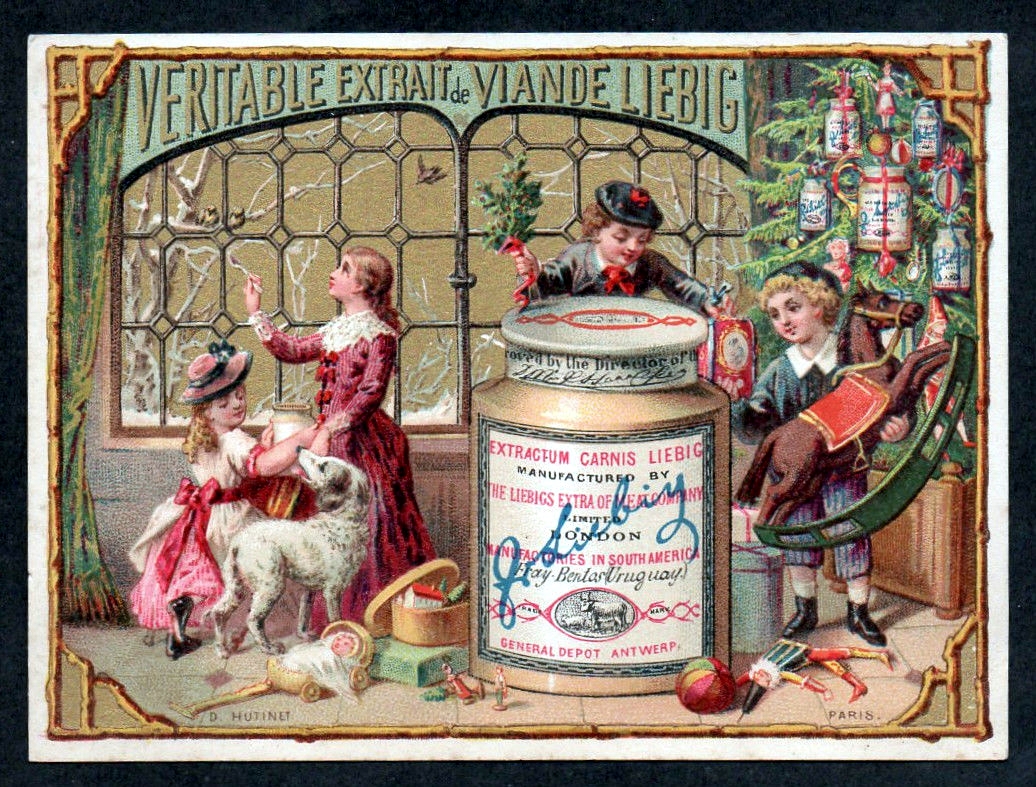
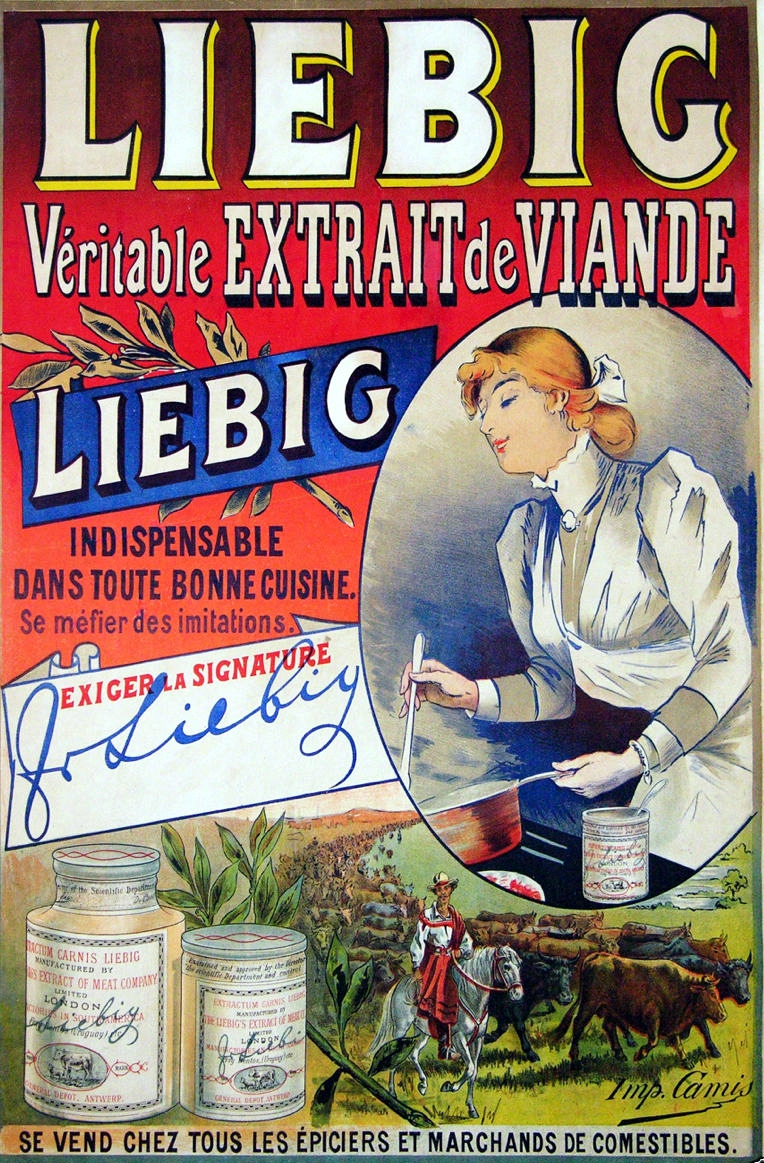
Other companies also used the name Liebig’s Extract of Meat to market meat extracts. In Britain, a competitor’s right to use Liebig’s name was successfully defended on the grounds that the name had fallen into general use and become a generic term before the creation of any particular company. The judge asserted that „Purchasers must use their eyes“, and considered the presentation of the products to be sufficiently different to enable the discriminating consumer to determine which of the products bore Liebig’s signature and was supported by Baron Liebig himself.

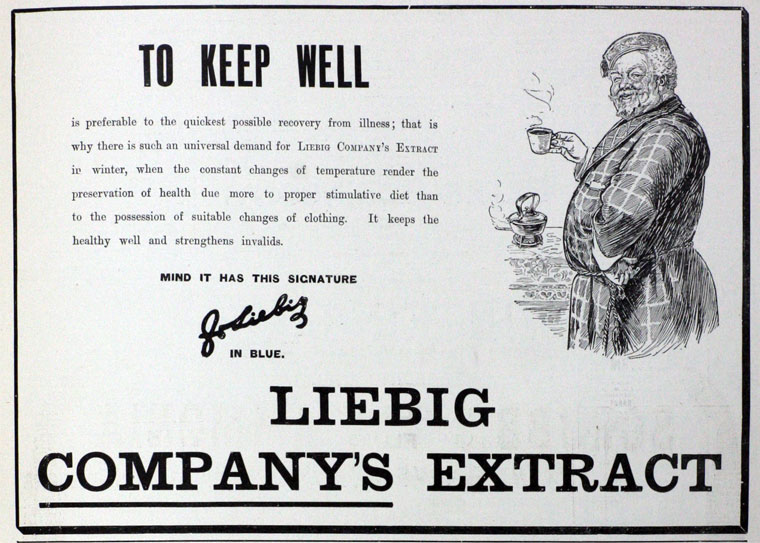
Liebig 121 plakat 1889a  Advertising with the warning of „Original -blue- Signature“.

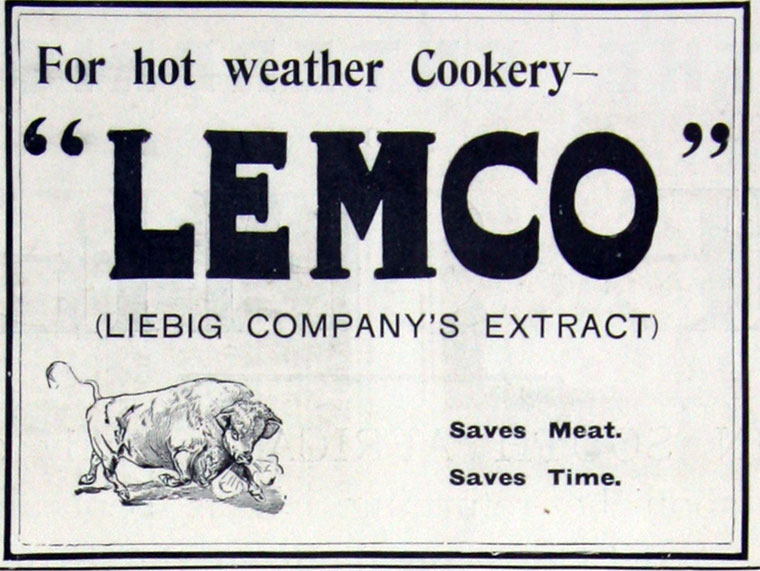
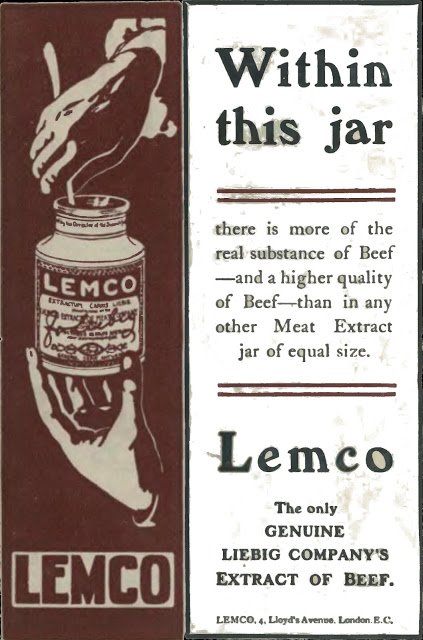
In response, the company adopted the name „LEMCO“ in Britain, displayed it prominently on their products „to correct the evil of substitution“, and encouraged shoppers to specifically request the new trademark „to protect you from inferior substitutes.“

Liebig 136  The very first LEMCO extract jar.

Liebig’s 1905 Trademark for OXO.

Liebig’s meat extract is a molasses-like black spread packaged in an opaque white glass bottle, which contains reduced meat stock and salt (4%). The ratio of meat to meat extract is generally reported to be about 30 to 1: it takes 30 kg of meat to make 1 kg of extract. The extract was originally promoted for its supposed curative powers and nutritional value as a cheap, nutritious alternative to real meat. As subsequent research brought its nutritional value into question, its convenience and flavourfulness were emphasized, and it was marketed as a comfort food.

Liebig 1     liebig 40

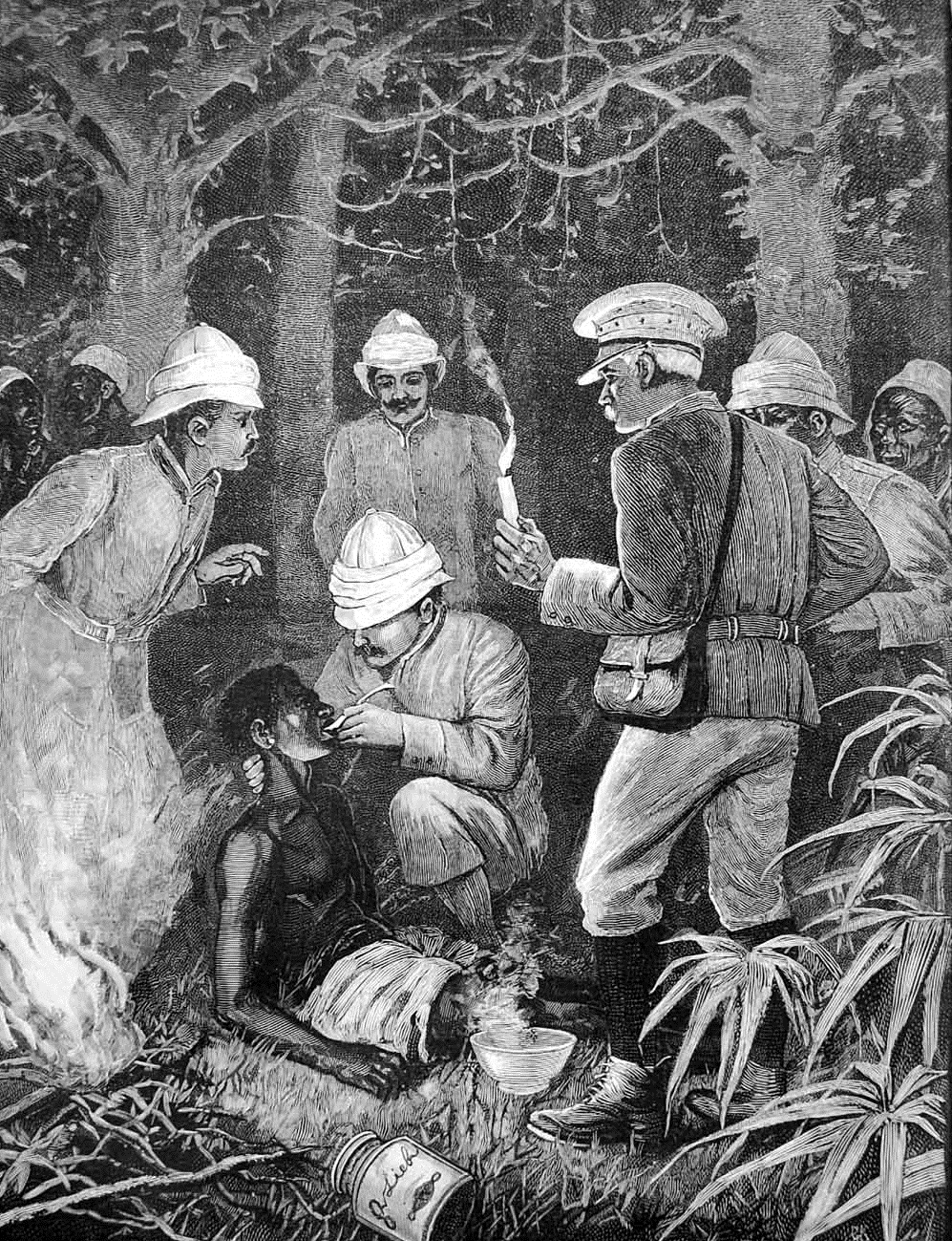
The product enjoyed immense popularity and became a staple in middle-class European households. By the late 1860s, St. Thomas Hospital in London reportedly used 12,000 pots per year of the easily digestible substance. By 1875, 500 tonnes of the extract were being produced at the Fray Bentos plant each year. It was recommended for soldiers during the American Civil War for its shelf stability, ease of transport, and ease of use. It was still used by the Allied forces in World War II. European adventurer Sir Henry Morton Stanley valued it on his trip to Africa. It is still sold by Liebig Benelux from Antwerpen.

UY - Liebig 33b  H.M. Stanley saved many lives with the extract in Africa.

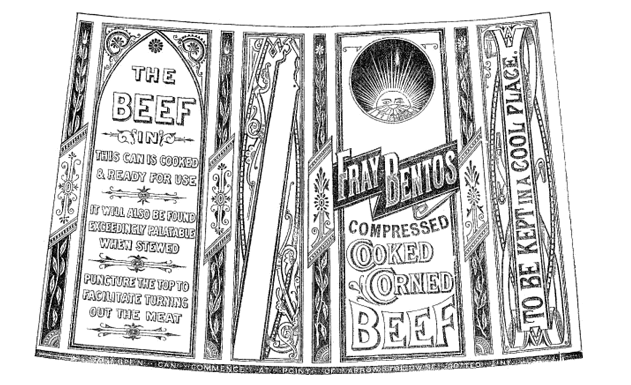
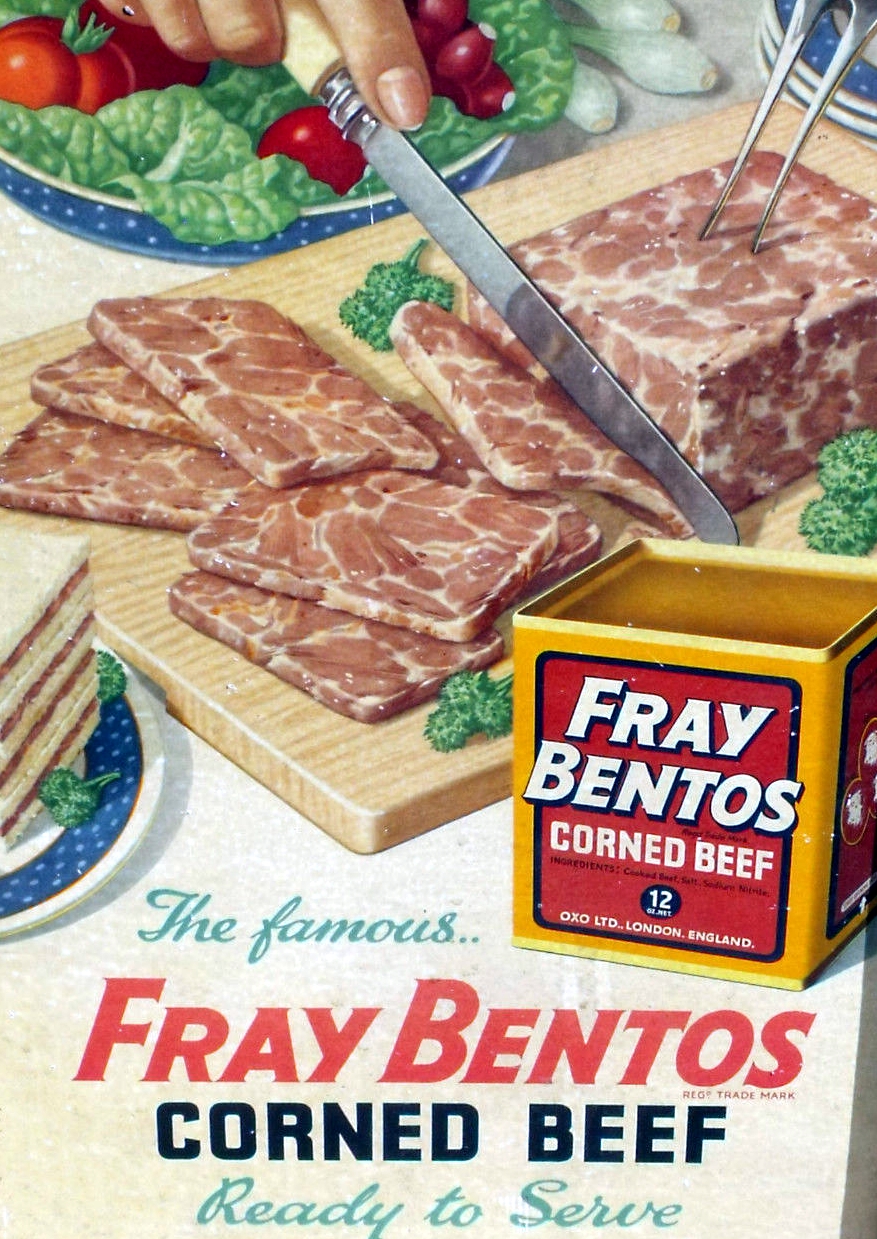
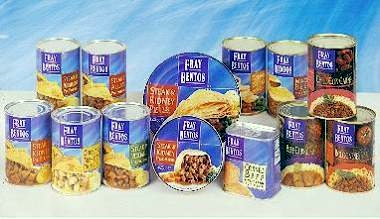
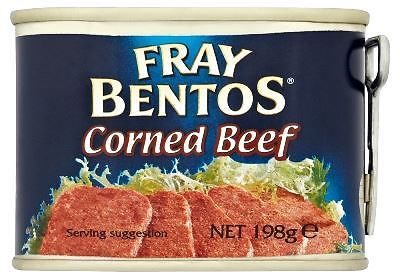
In 1873, Liebig began producing tinned corned beef, which it sold under the label Fray Bentos. Fray Bentos was trademarked by Liebig in 1881 to market „Fray Bentos Compressed Cooked Corned Beef“. With the introduction of freezer units, the company was eventually able to produce and export frozen and chilled raw meat as well. The amount of food processed and shipped around the world caused the town of Fray Bentos to be called „The Kitchen of the World“.

UY - Liebig 19a  The beginning of corned beef production in Fray Bentos.

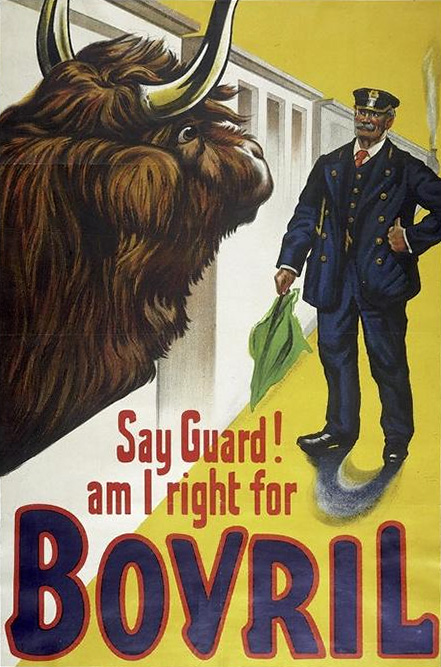
Birthplace of LEMCO, OXO, Walls, Campbells,
Fray Bentos, Bovril and many others.

extract 1            liebig 53 bovril

Liebig 138  UY - Liebig 34

Fray Bentos canned meats, now owned by Baxters, are still sold in Europe. The brand also offers meat pies, which have been manufactured since 1958. The British tonic wine Wincarnis originally contained Liebig’s meat extract and was initially called Liebig’s Extract of Meat and Malt Wine.

UY - Liebig 27
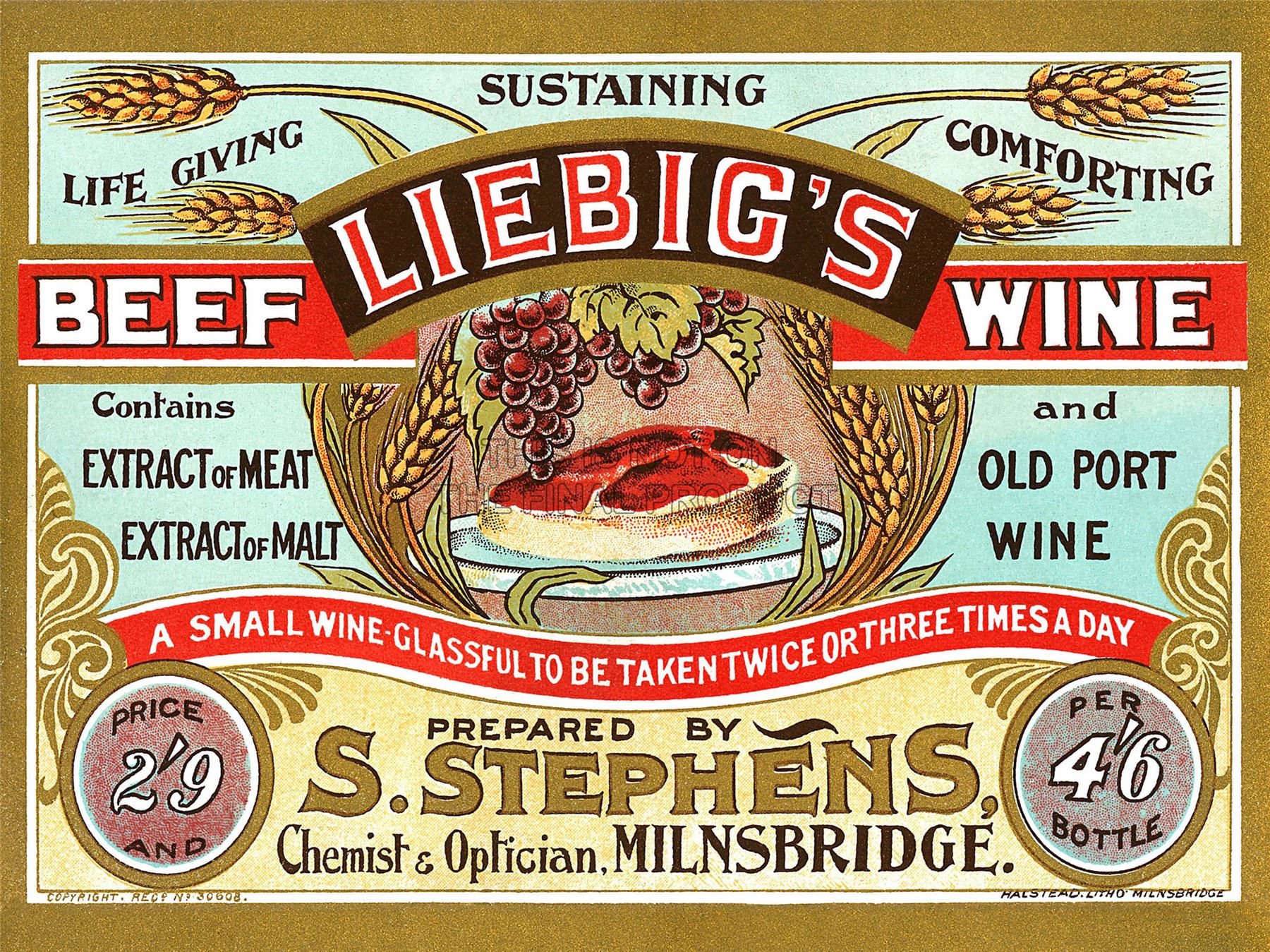
Wonderful designed, old box label of „BEEF WINE“. They tried everything to sell.
Notice the contents: Meat, Malt, Port wine. And notice the seller: Chemist and Optician.

Many companies and brands where created during one century, but all had to go back to the chemical base of Liebig. That’s why many used his name or his producing factory names and so on, just to have a more successful marketing.

Liebig 129 gross                     Liebig 130 klein
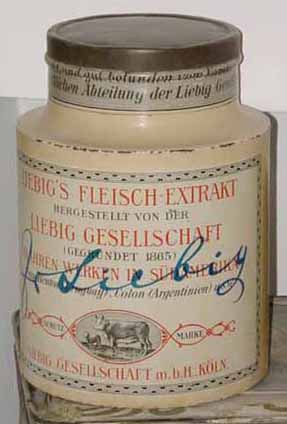
Two, extremely rare, old tin containers from around the 1870’s, in wonderful condition.
The left one was sold in an collectors auction for over 6000,–euros !

The company also worked with English chemist Henry Enfield Roscoe to develop a cheaper meat extract product which it commercialized some years after Liebig’s death. „Oxo“ was trademarked worldwide in 1899 and in the United Kingdom in 1900. Originally a liquid, Oxo was released as a bouillon cube in 1911.

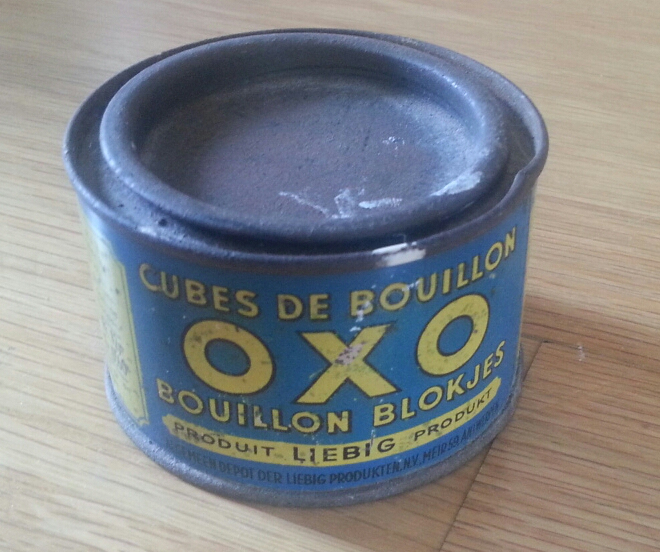
Liebig 135 One of the first OXO boullion containers.

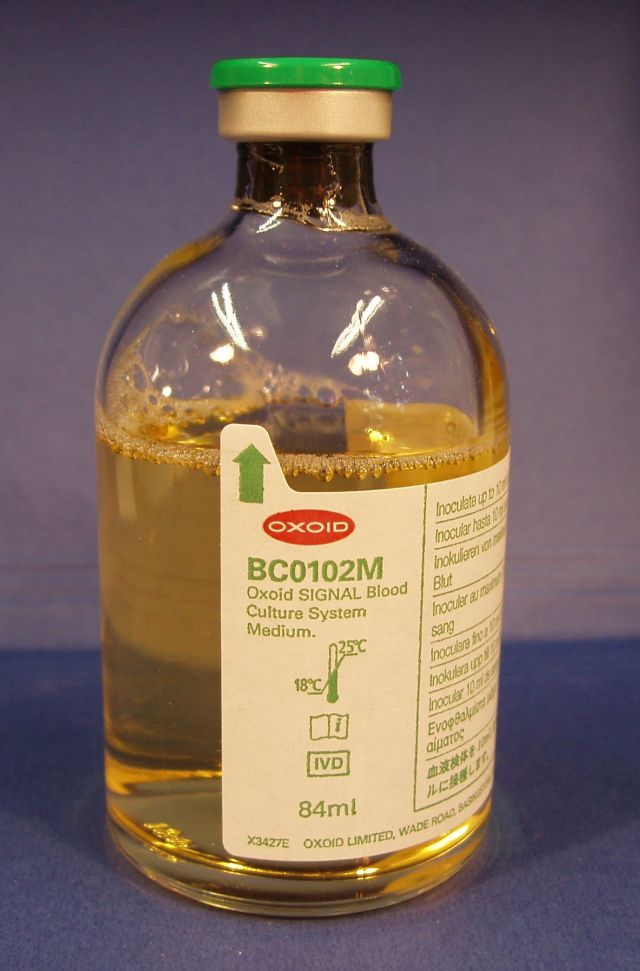
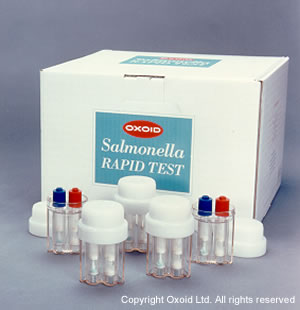
Liebig also produced a line of biological products under the Oxoid name (starting in 1924), in particular glandular extracts and later dehydrated culture media.

Liebig 143                    Liebig 144
Modern examples of OXOID products which one can find around the world everywhere.

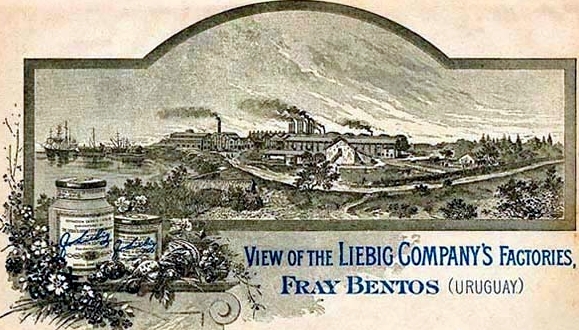
The works and yards at Fray Bentos ranked among the largest industrial complexes in South America and helped usher in the industrial revolution there. The city of Fray Bentos grew simultaneously with the factory. The plant played a major role in the development of Uruguay’s cattle sector, which is still one of the country’s main sources of export products. It attracted many European immigrants and, in its heyday, had 5,000 employees. It is said that an animal was processed every five minutes. Every part of the animal was used.

extract 4    liebig 162
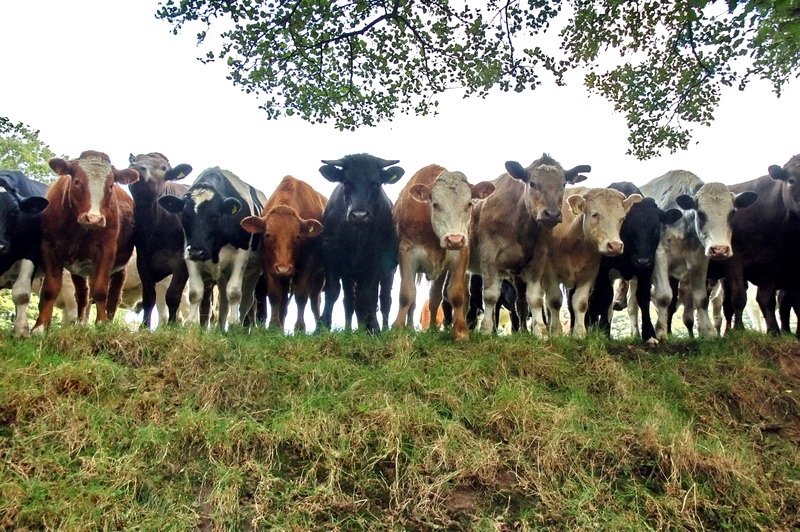
During 115 years Fray Bentos made „Happy Cows“ into „Happy Products“.
Now they just have their „Happy Pulp Mills“.

The Liebig Football Club of Fray Bentos, later renamed Club Atlético Anglo, was established in 1905. Click on pics, most of them will super size to a closer view.

Why it went down and ended in Uruguay.

In 1964, a typhoid outbreak in Aberdeen was traced to Fray Bentos corned beef.
The outbreak was eventually traced to contaminated tinned corned beef from South America made by Fray Bentos and sold in the city’s branch of the Scottish grocery chain William Low. Pollution from the waters of the Uruguay River appeared to be the source of the contamination, probably through water entering a defective tin through a small puncture. The infected meat then contaminated a meat slicing machine within the William Low shop, leading to the spread of the disease.

Liebig 145       Liebig 152
The butcher shop in Aberdeen where the outbreak started and finally the announcement – it’s over.

Meanwhile, Britain’s entry into the Common Market affected trade patterns. These factors combined had a serious negative impact on sales, and in 1971, the complex was given to the Uruguayan government. What happened then ?

Liebig 137   All given to an incompetent government.

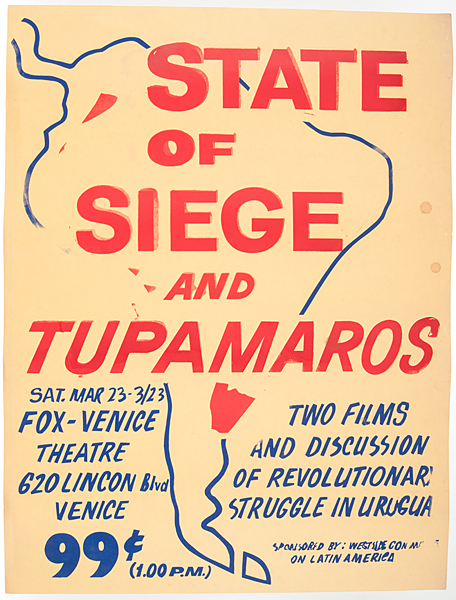
In the late 1950s, partly because of a world-wide decrease in demand for agricultural products, Uruguayans suffered from a steep drop in their standard of living, which led to student militancy and labor unrest. A terrorist movement known as the Tupamaros emerged, engaging in activities such as bank robbery, kidnapping and assassination, in addition to attempting an overthrow the government.

Uruguay 4     Uruguay 6
Movie announcement for „The Revolutionary Struggle in Uruguay“.
And a „SECRET“ telegram warning of „threat to kill Sendic“. Notice date, sender and receiver.
Raul Sendic was the founder of the leftist Tupamaro guerrilla movement in Uruguay.


Liebig 154
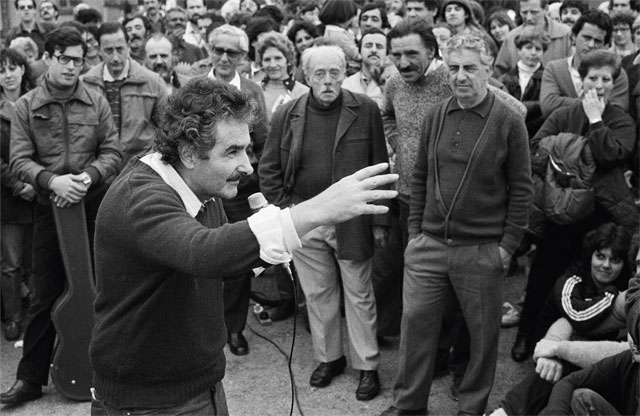
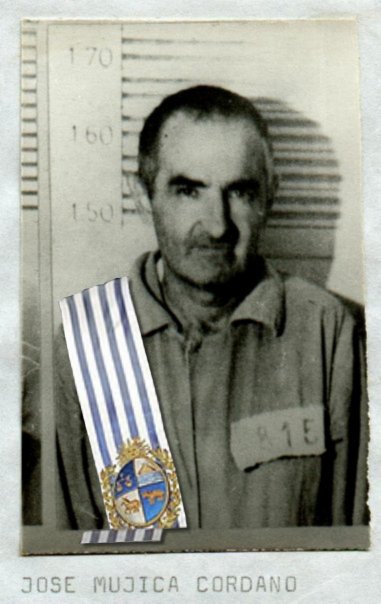
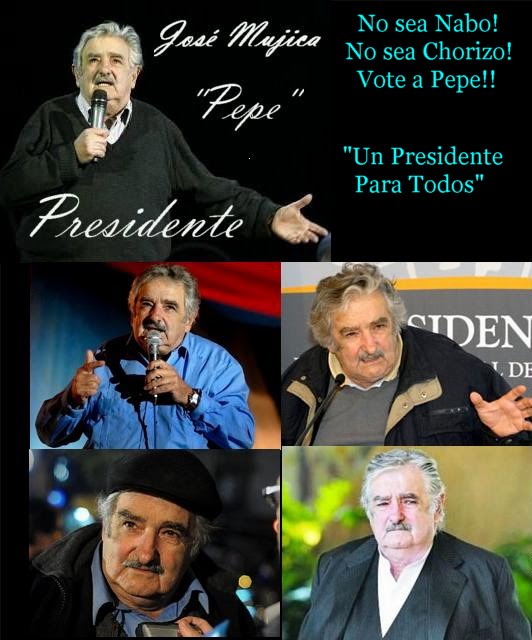
One of the most well known Tupamaros in his active time: Jose Mujica.
Uruguay 10
Jose Mujica jailed by the military dictatorship under Bordaberry.
Liebig 155
And finally „the poorest president in the world“, in Uruguay.

President Jorge Pacheco declared a state of emergency in 1968, followed by a further suspension of civil liberties in 1972. Remember, in 1971 the Liebig company complex was given to the Urugayan government !!

Liebig 156       Uruguay 9
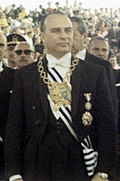
President Jorge Pacheco (left) and then Juan Maria Bordaberry head of the 1970s military regime.

In 1973, amid increasing economic and political turmoil, the armed forces, asked by the President, closed the Congress and established a civilian-military regime. Around 140 Uruguayans are known to have been arrested (many of them killed) during the 12-year civil-military rule of 1973.       And many good companies can call them „killed“ too.

Uruguay 7 march of silence MVD
Photographs show the people missing during Uruguay’s 1973-85 dictatorship.Thousands join the annual
„March of Silence“ in Uruguay’s capital, Montevideo, to appeal for justice for dictatorship-era victims.

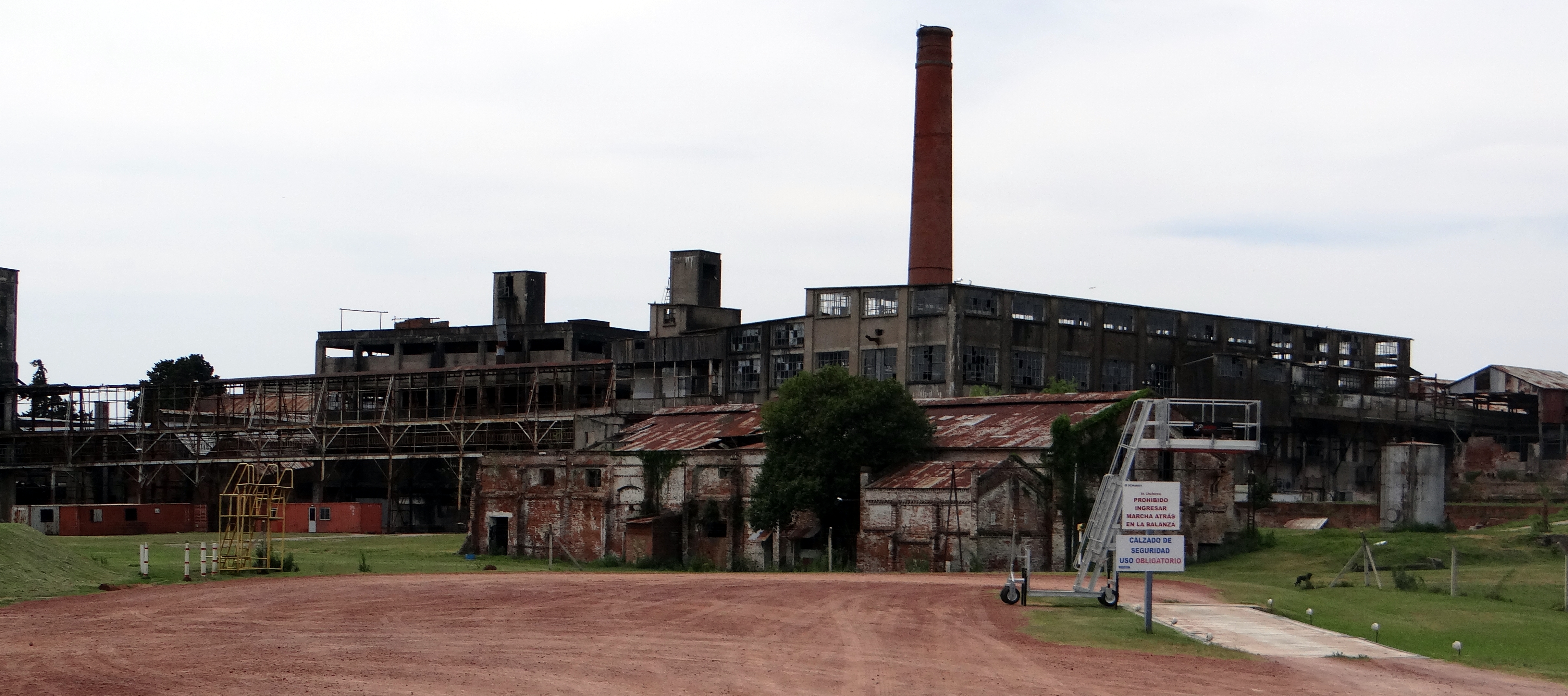
The Liebig Meat Extract plant never recovered and the production ceased completely in 1979, a major blow to the area’s residents. One can understand the reasons of this wild time in Uruguay and governments with other interests then just keeping a company alive, but still – it was the end of 115 years of successful entrepreneurship in Uruguay.

DSC00121a This is how a „killed industry“ looks like.

A new constitution, drafted by the military, was rejected in a November 1980 referendum. Following the referendum, the armed forces announced a plan for the return to civilian rule, and national elections were held in 1984. A new era began for Uruguay, but not for

 Liebig 93        Liebig 89

Fray Bentos. That great time of „Industrial Revolution“ is definitely over. But –
Liebig’s products and Fray Bentos products are still available around the world.
Notice above the expiry date of 2016 !!
And – one more information – COLLECTING all around the Liebig Extract Company is
a hobby for many thousand people. It’s can’s or advertizing, it’s history or the
magnificent sets of pictures, menu cards or cook books. I’ll show more in the next
part. So, stay tuned to part 3 of this post.

Veröffentlicht unter Collecting, History, Hobbies, Information, Must See, Uruguay | Verschlagwortet mit | Hinterlasse einen Kommentar

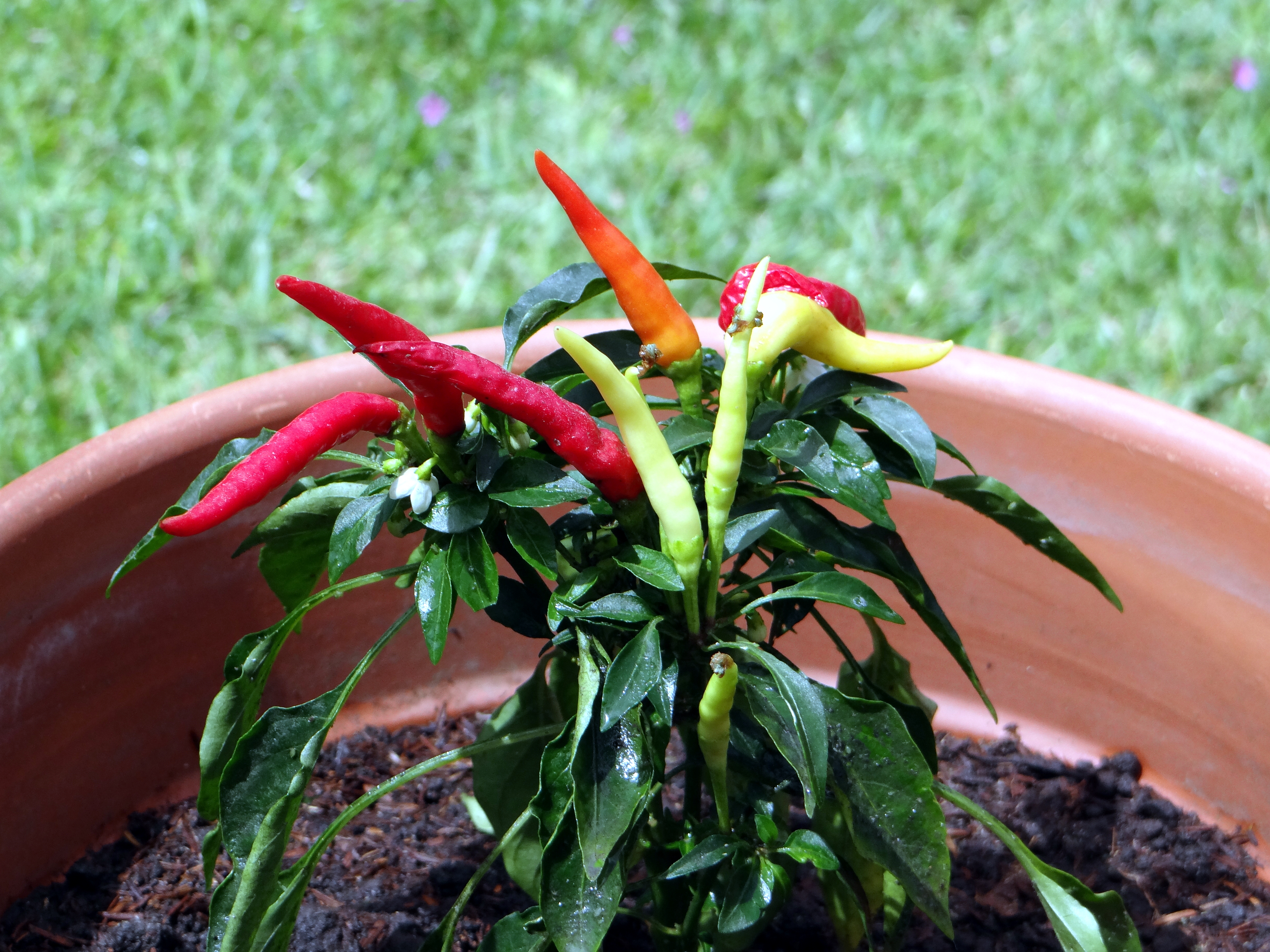
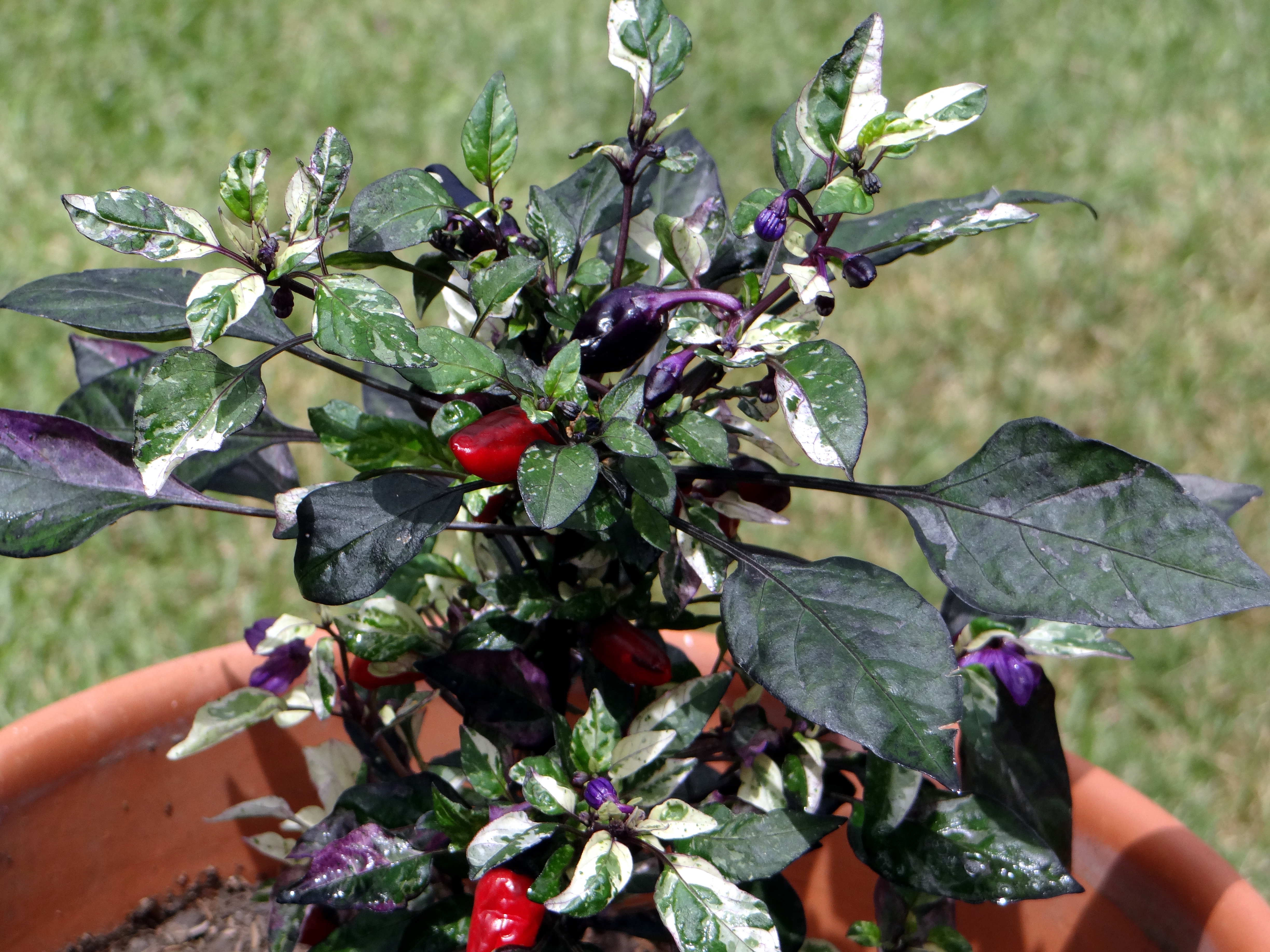
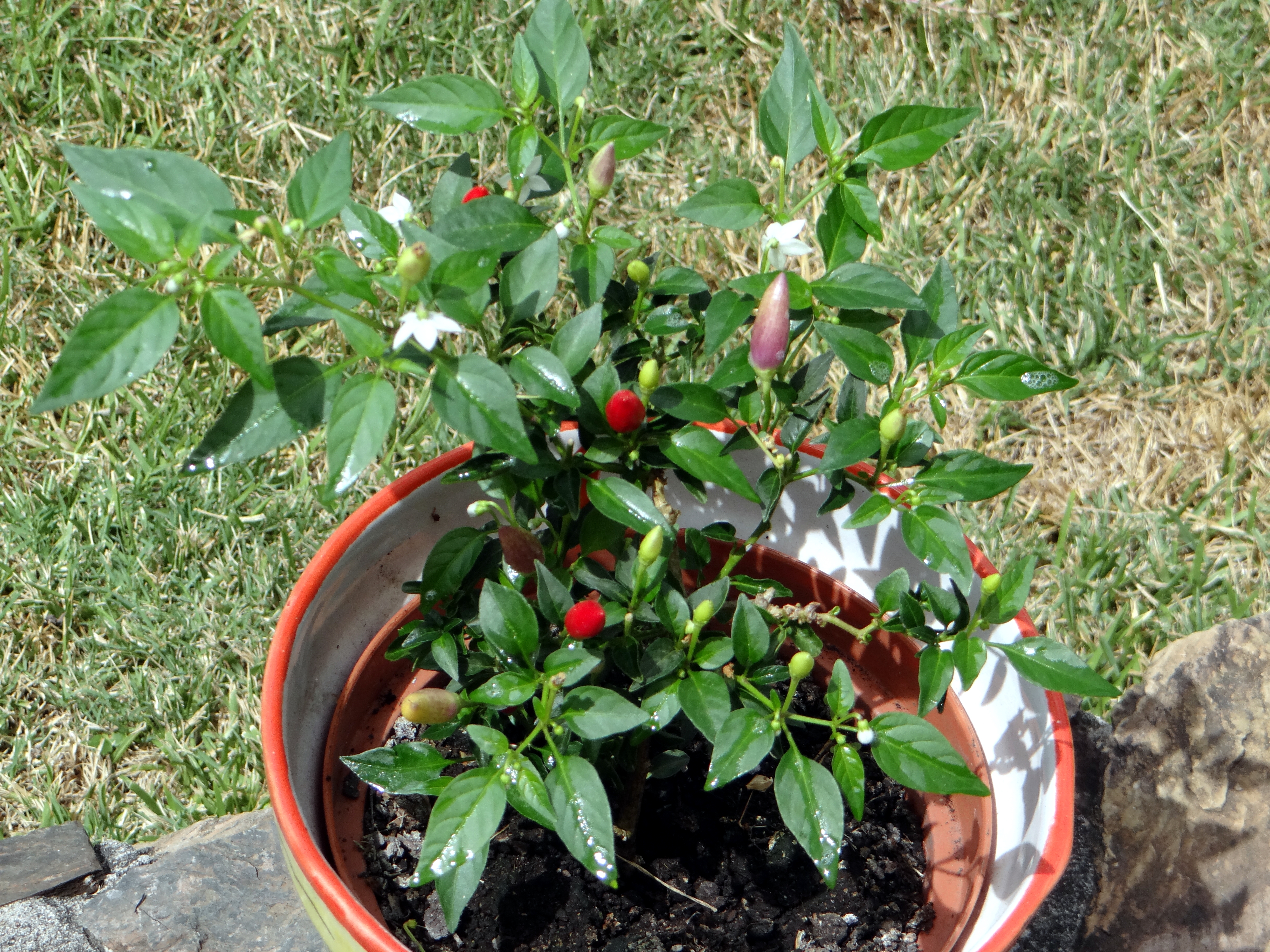
Chilli’s ???

DSC00439

Help needed !!!

How do I get my lovely chilli plants through the coming winter ???

I have no greenhouse, nor I want to build or buy one. Temperatures
can go down to zero degree Celsius and last year I lost them all.

Anyone got ideas ???

DSC00440  DSC00438


Veröffentlicht unter Information, Lifestyle | Verschlagwortet mit | 4 Kommentare

Must See – Liebig’s Meat Extract 1

UY - Liebig 28a

Since I came to Uruguay, I realized how close I am to parts of my family history. It’s also a big part of Uruguayan economical history. And it was more then 100 years the driving business in and around Fray Bentos in Rio Negro. What do I mean?

„The Liebig Extract of Meat Company“.

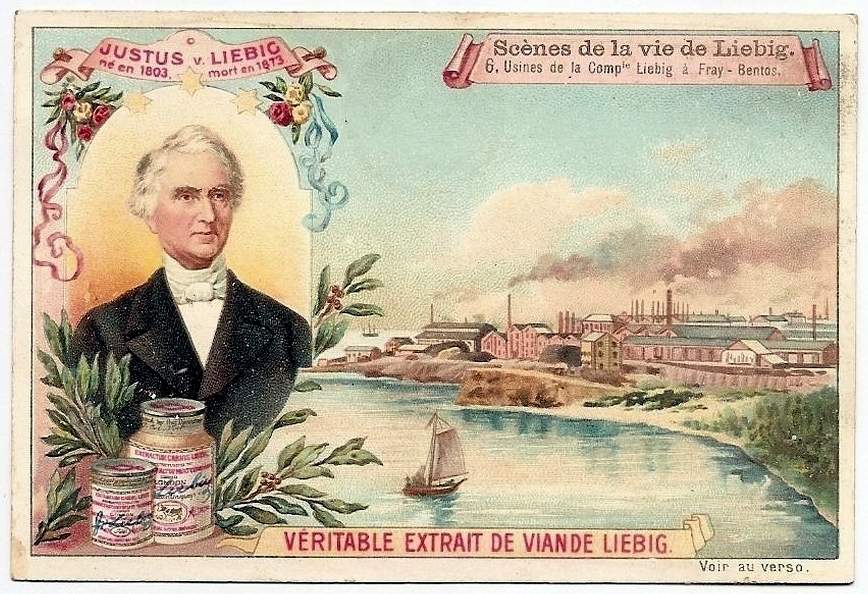
Justus Freiherr von Liebig (born 12 May 1803 in Darmstadt – died 18 April 1873 in Munich) was a German chemist who made major contributions to agricultural and biological chemistry, and was considered the founder of organic chemistry. As a professor at the University of Giessen, he devised the modern laboratory-oriented teaching method, and for such innovations, he is regarded one of the greatest chemistry teachers of all time.

UY - Liebig 37  Justus von Liebig, Professor with the age of 21 in Giessen.

He is considered the „father of the fertilizer industry“ for his discovery of nitrogen as an essential plant nutrient, and his formulation of the Law of the Minimum which described the effect of individual nutrients on crops. He also developed a manufacturing process for beef extracts, and founded a company, „Liebig Extract of Meat Company“ (LEMCO), that later trademarked the OXO brand beef bouillon cube.

UY - Liebig 16 One of the famous Liebig collectors cards.

We will come back to Justus von Liebig in a later part. On my trip to Fray Bentos in Uruguay, I had the chance to see the industrial site of the Liebig Company. Also is there a museum and the old villa, called Casa Grande. All is in bad and ruined state, but nothing is turned down yet, it is all part of the museum, „Museo de la Revolucion Industrial“. It is worth to see and if you like, dive into a whole industrial town of the 1860’s to 1960’s.

UY - Liebig 2a  The museum site in Fray Bentos.

For sure it was an Industrial Revolution what was established and build mid of the 19th century in Fray Bentos. Once the largest industrial complex in whole South America. There is so much to say, to inform and to write, that I will do it in several parts. Let’s start together through history with an eye witness travel report from 1890 as part 1. It was written in German language of the late 1900’s and so is my translation a bit of odd too.

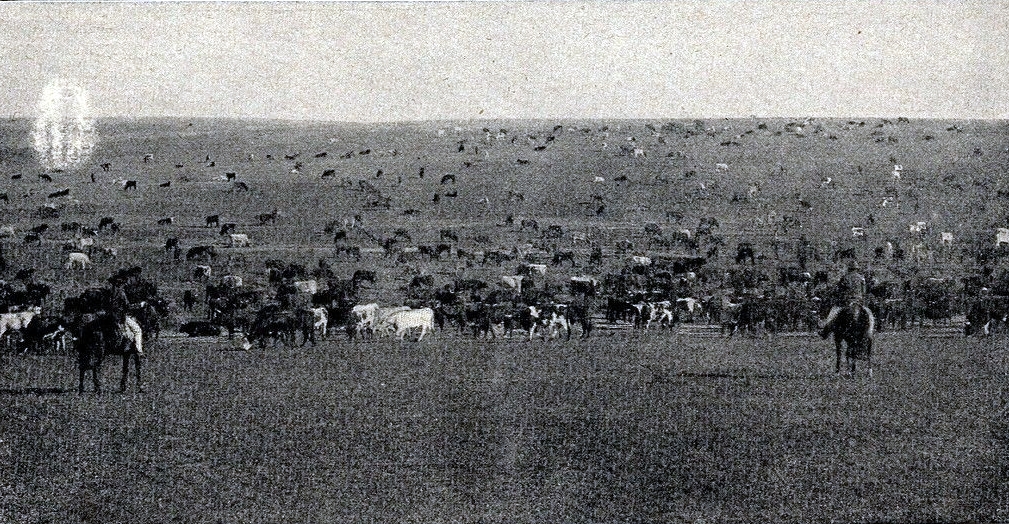
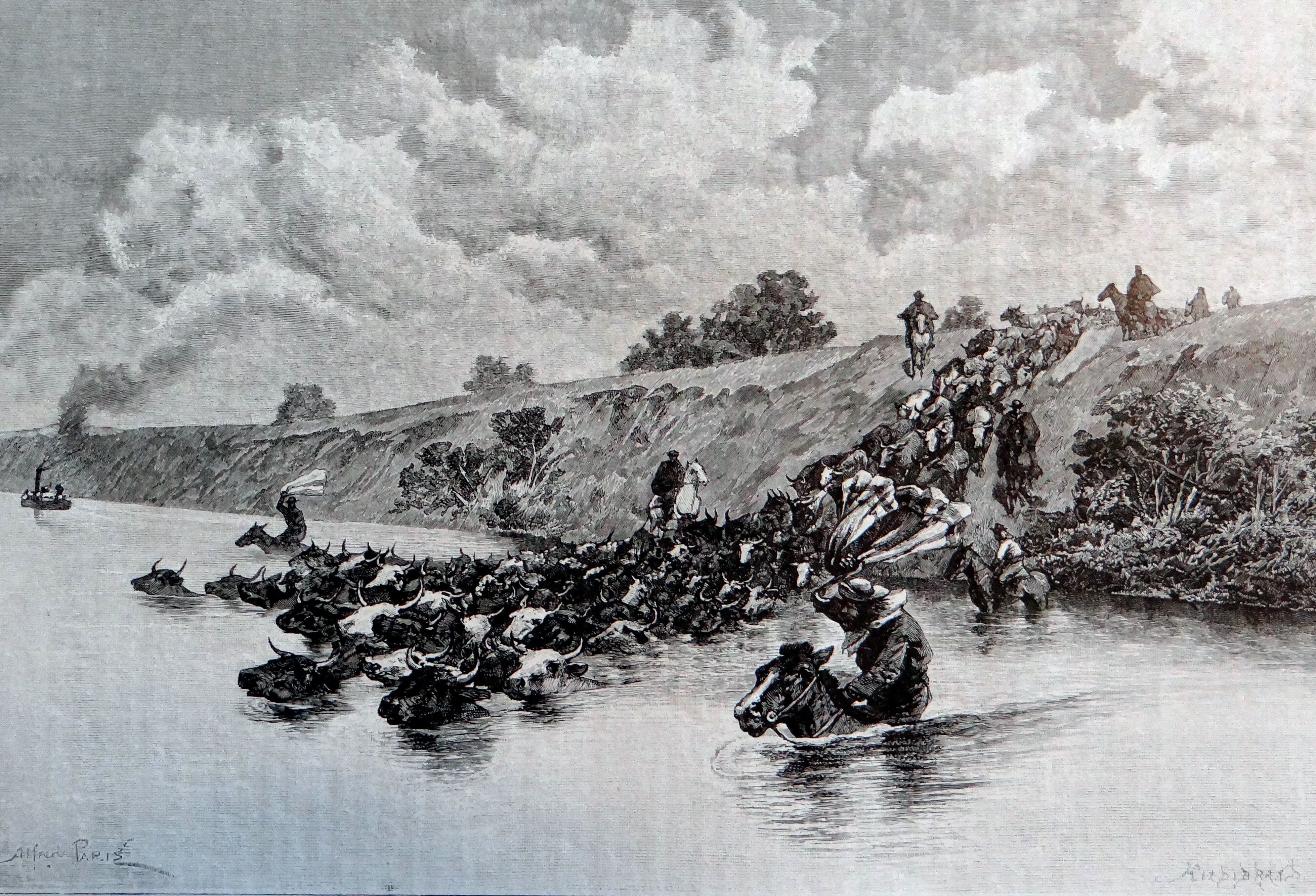
Liebig 67, 8 photos 1901a Liebig companies cattle herd around Fray Bentos, 1890’s.

On the pampas of South America.

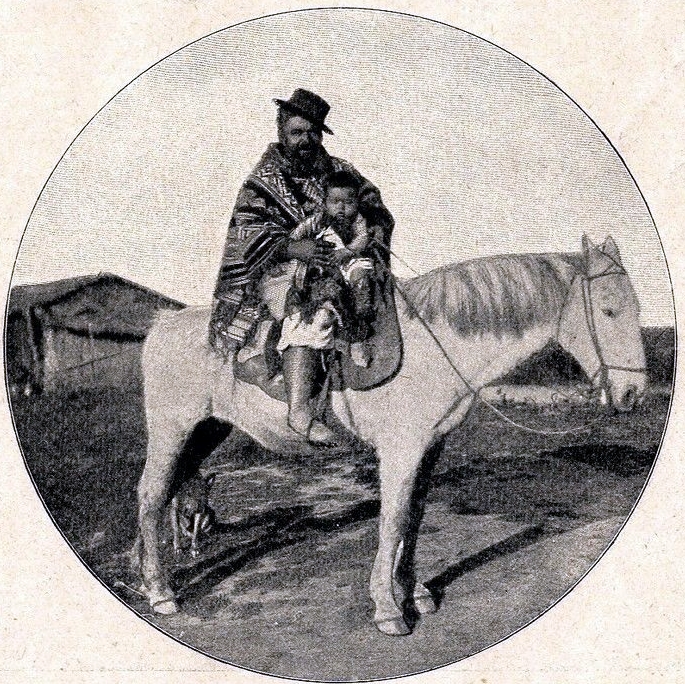
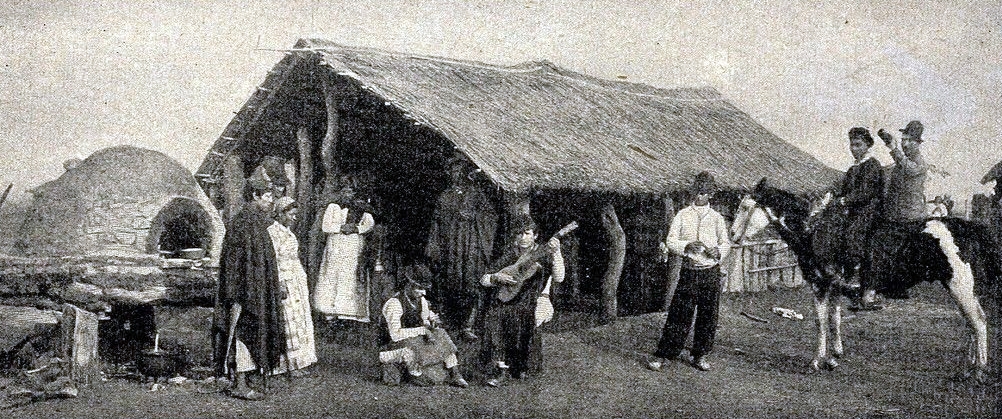
Stuck as the Goulash of the Hungarian Puszta, like the cowboy in the Wild West of the Great Plains, is the Gaucho of his pampas, the vast grassy plains of South America’s Laplata states, Argentina and Uruguay.

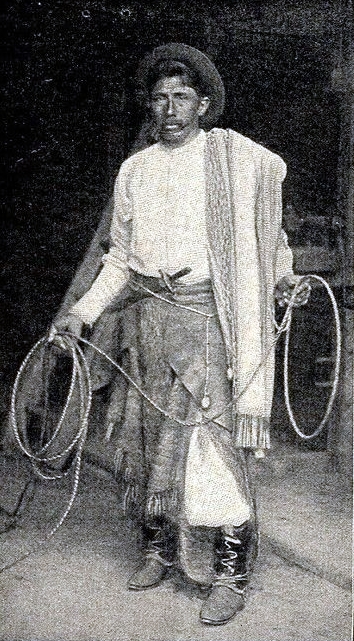
Liebig 67, 8 photos 1901b  Typical gaucho, early photograph around 1900’s.

The Gaucho considers himself a Spaniard. He owned diving the pride of a genuine hidalgo, but in truth he is a hybrid, in whose veins flows more Indian than Spanish blood. And as his maternal ancestors, he also loves the freedom above all else. Like the Bedouins of the African desert, he hunts for wild horses through the endless Llanos.

Liebig 68a     UY - Liebig 15
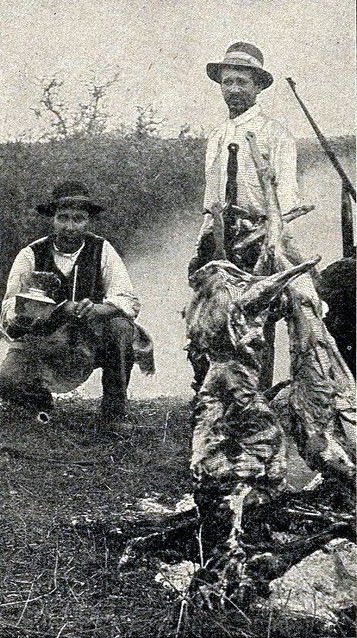
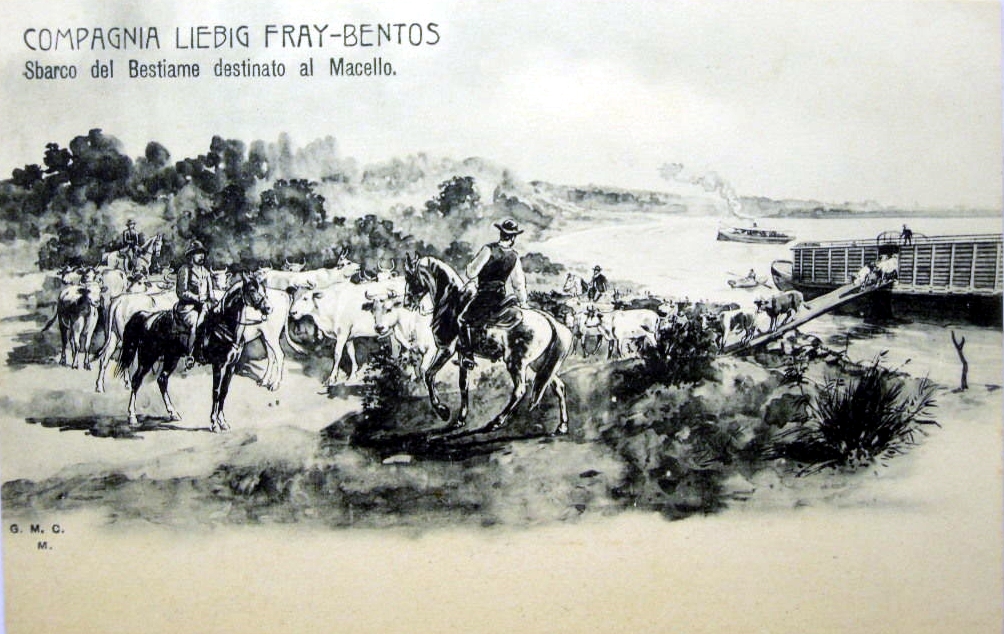
Gauchos at breakfast and unloading cattle from a river Uruguay bark sloop.

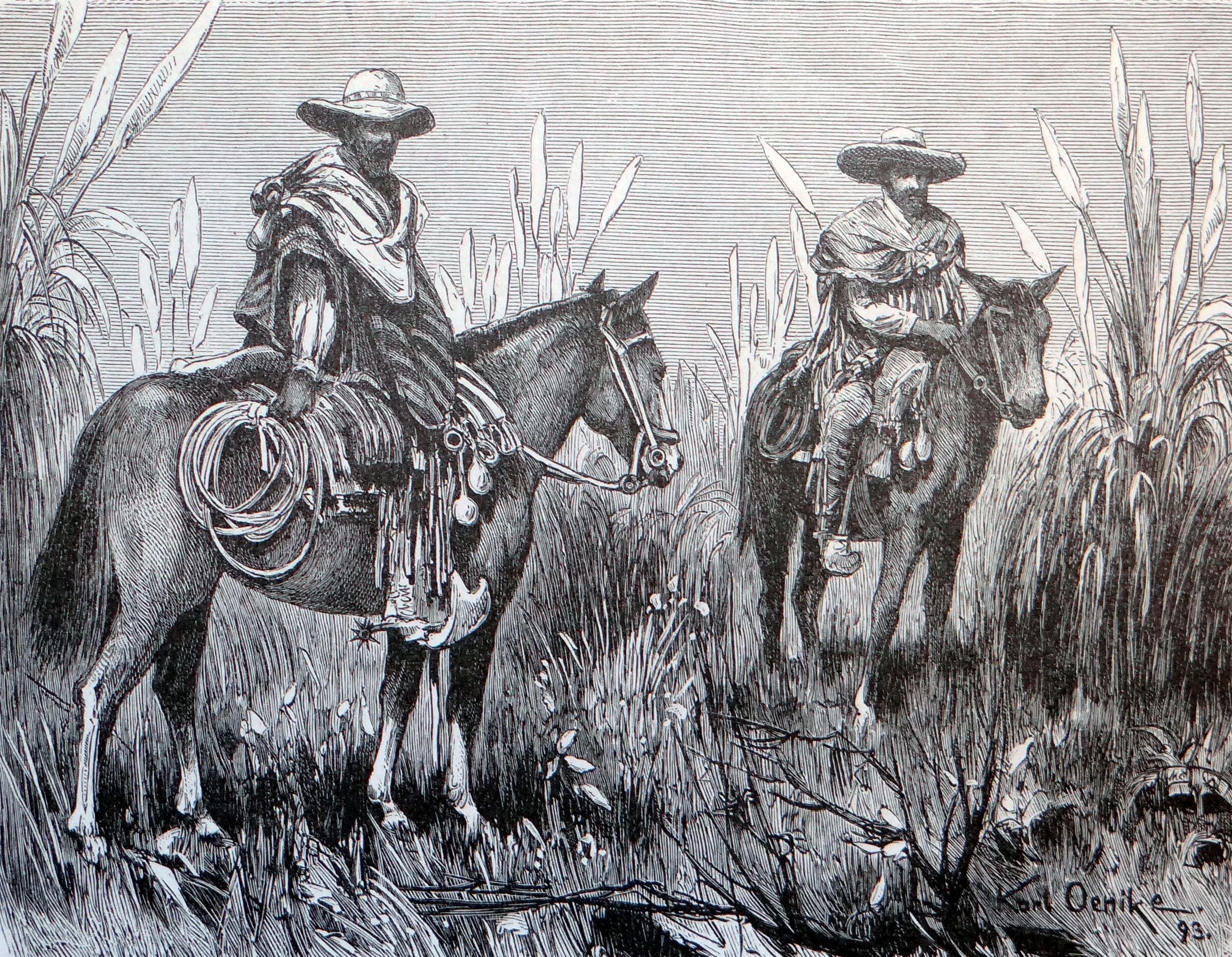
The picturesque costume of the Pampas outfit. A coarse shirt, wide Moleskin trousers, a light jacket and above all the colorful, woolen poncho. A large, square, striped, plaid and piece of stuff, with a hole in the middle through which the head is attached. Long bootleg lether boots, a wide-brimmed Panama or a slouch hat of black felt and a red patterned scarf complete the somewhat strange costume, to which only the wilderness is the appropriate dressing.

DSC00480 Gauchos, see all the described equipment they have.

The weapons or tools of the buffalo and horse fang equipped Gaucho is a braided rawhide lasso, the 35-centimeter-long knife that is worn in leather sheath on the belt, and the bolas, three iron balls at the ends of a long strap . The hunter swirls the Bola strings a few times in the air and then hurls it against the hind legs of the animal pursued, the entangled therein, and falls to the ground.

DSC00481  Cattle trail through river Uruguay.

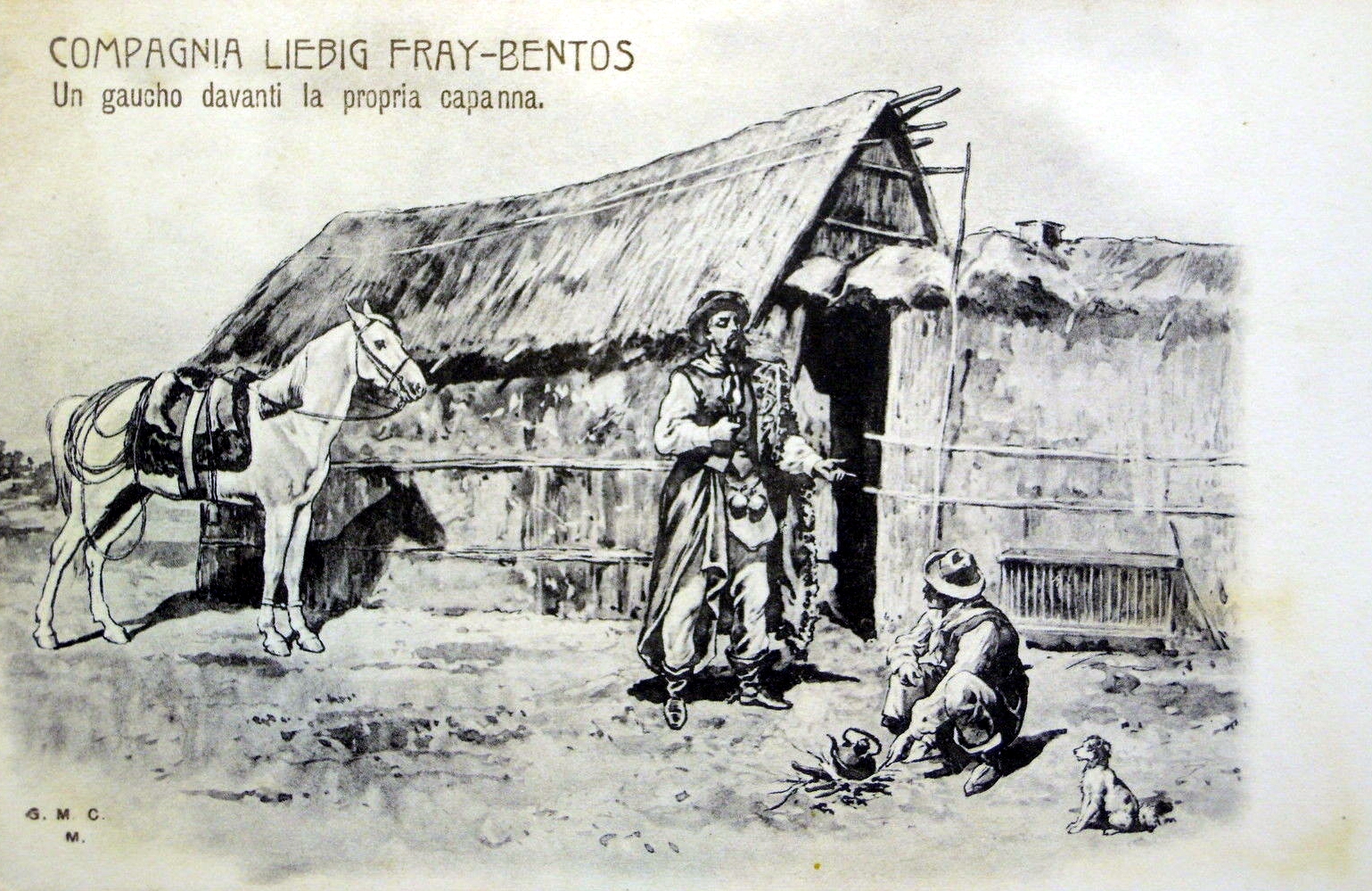
The life expectations of the Gauchos are extremely modest. They live in mud huts or in low dwellings that are cobbled together from raw tree trunks. With equanimity they bear the greatest hardships and complaints. They do not mind, after thousands of counting, confused masses just captured cattle and horse days and nights pass to travel 300 or more kilometers far.

 Liebig 69a     UY - Liebig 14
The gaucho life in Urugayan pampas, pretty poor, but they love their freedom.

Without a murmur, the hardy boys camp, if needed, for weeks in an open field and take the easiest food to be content, just walking tours may not require them to. The Pampas shirt makes rather a detour twenty miles on horseback than a half mile walk. In the saddle he shows boldness and turns like no other rider on this earth. But without his horse, he is almost as awkward as a child who has just learned to walk.

Liebig 73a
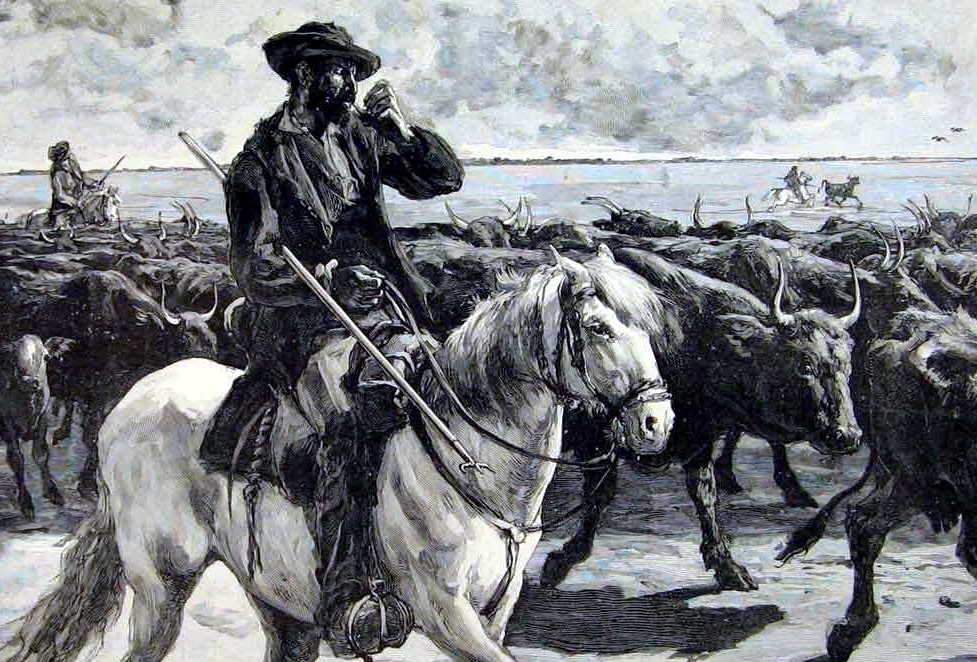
Smoking a pipe while horse back riding.

Equipped with the wonderful orientation skill and the keen senses of the Redskins, the Gauchos in the vast, monotonous plains themselves know perfectly navigate at night. The owners of large estancias, the gods, on which only cattle breeding, these sons of the wilderness are indispensable. They also usually are in the service of an estanciero. Few have their own little ganaderias (small farms with less then 10 cattle).

 Liebig 70a
This is how gauchos live, sometimes several families in one home.

Industrial meat extract production.

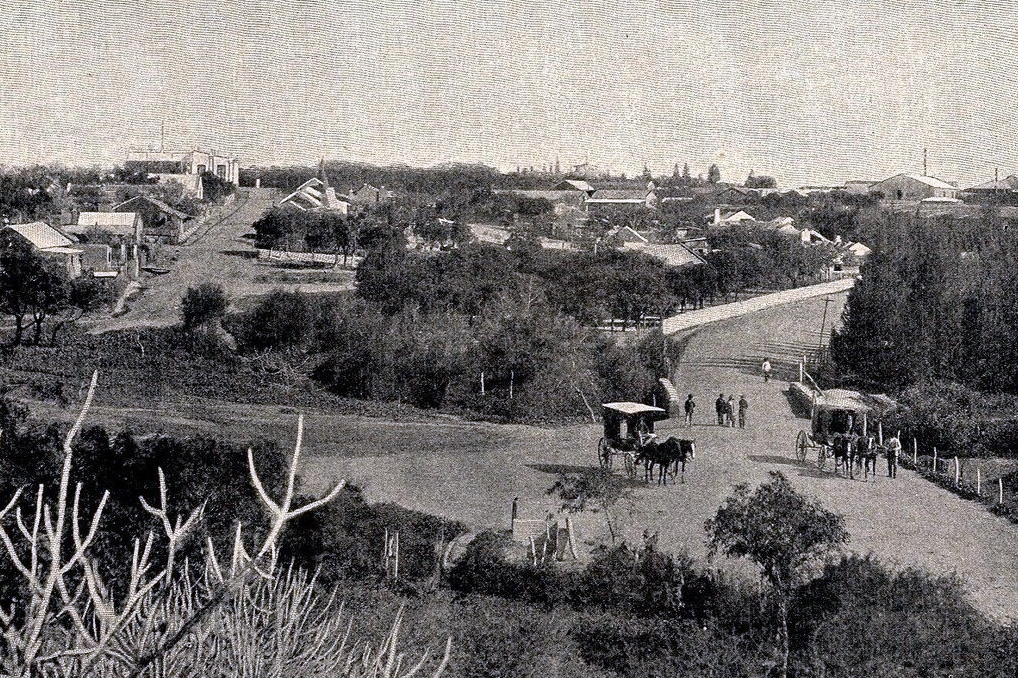
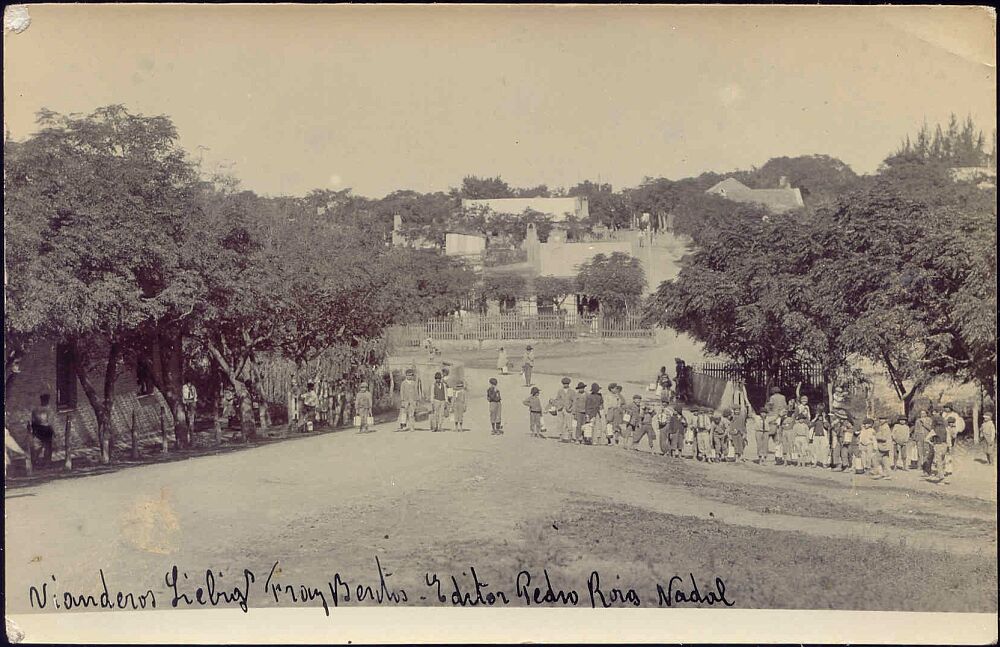
In the Department of Rio Negro, on the left (eastern) bank of the Uruguay, where the current reaches the width of 11 to 16 kilometers is called in a picturesque setting about 5000 inhabitants, little town of Fray Bentos, also Independencia. The small town is the second most important port of the Republic of Uruguay.

Liebig 68b  Fray Bentos around the 1890’s.

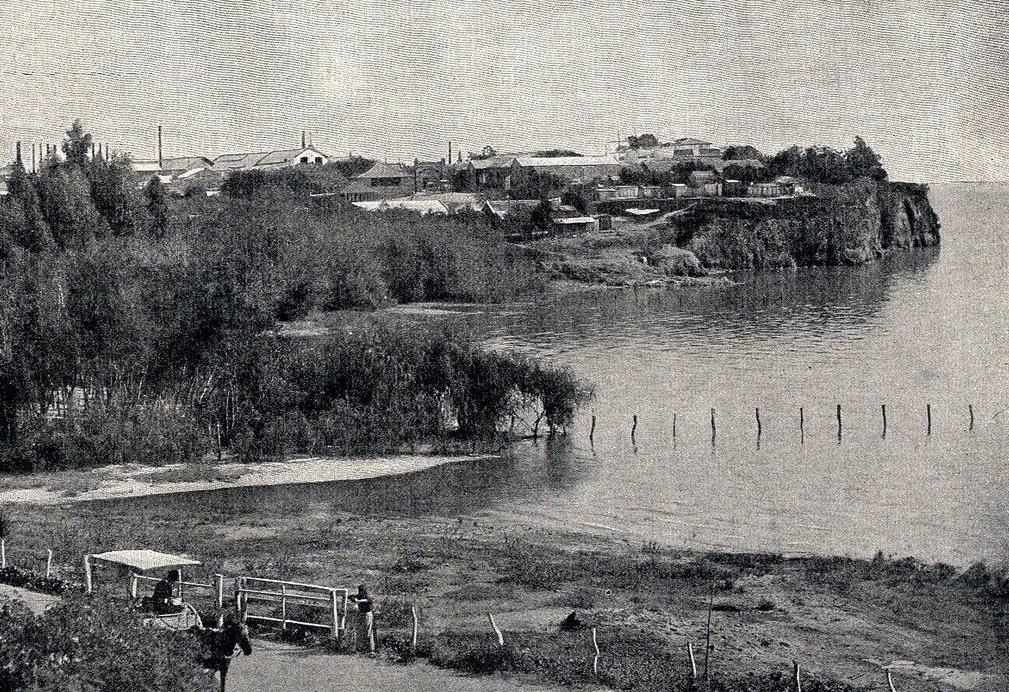
Obtained downright celebrity has Fray Bentos by 1863, founded by the Hamburg Institute engineer Giebert, in the following the recipe of the great chemist Justus von Liebig, who under the name of the scholar made ​​commercially known meat extract is factory like.

 Liebig 69b  Barrio Anglo in Fray Bentos, with the meat factory.

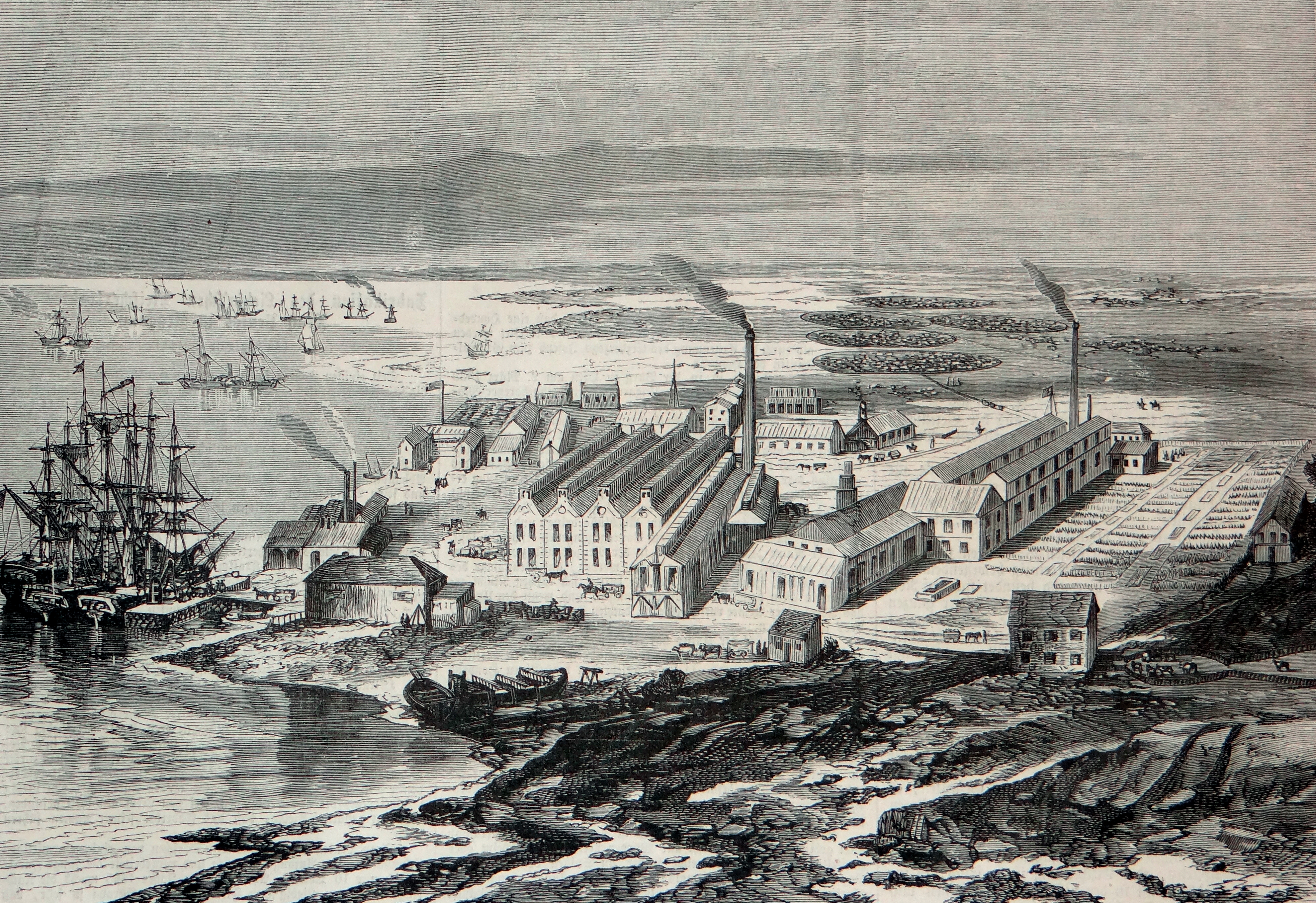
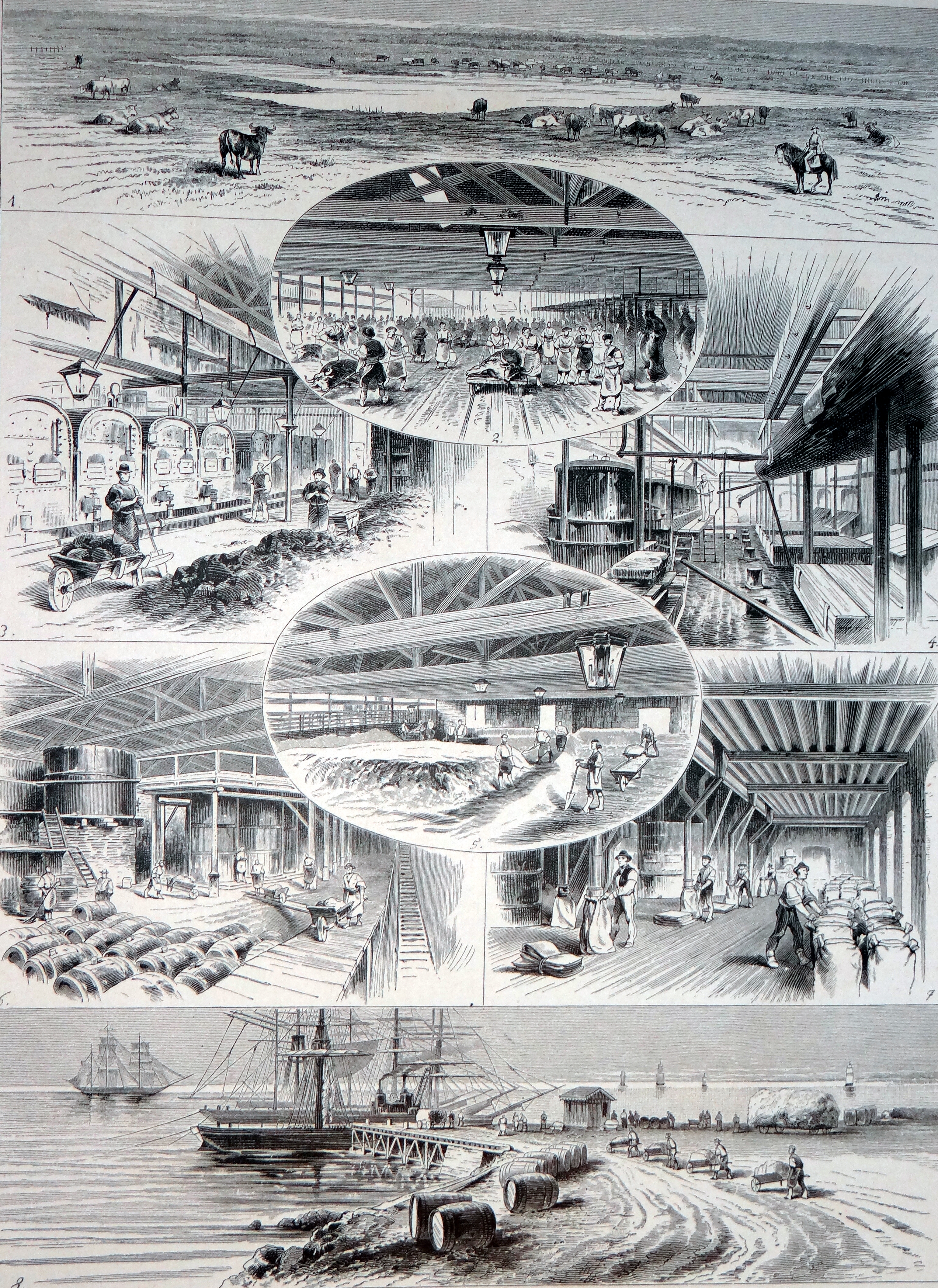
Besides the slaughterhouses and the vast spaces, full where you process the meat, include the establishment of an area of ​​approximately 2,630 hectares, huge halls for the skin department, a so-called Graseria with 14 wood pressure absorbers the manufacture of tallow (each set is calculated for 20,000 kilos ), a centrifuge house, bone and blood meal mills, a cooking oil factory, a intestine laundry, canneries for tongues, corned beef and similar preparations.

DSC00478 Wonderful wood engraving of the industrial area 1875.

Above all you find workshops for making and soldering the tins, an iron foundry, a forge and a carpentry shop. The settlement is in fact a small city for themselves. As you can see alongside the office buildings, the brightly painted small houses of married employees and the picturesquely situated club and home of the still unmarried managers, where a magnificent garden, reading room and several billiard rooms is at disposal.

 UY - Liebig 7   The Liebig factory Kindergarden in Fray Bentos.

Further to the extensive complex has its own school, a library, built on top of a hill a hospital, which conducts a permanent on site German doctor. Then the colony of gauchos which is needed in this giant corporation.

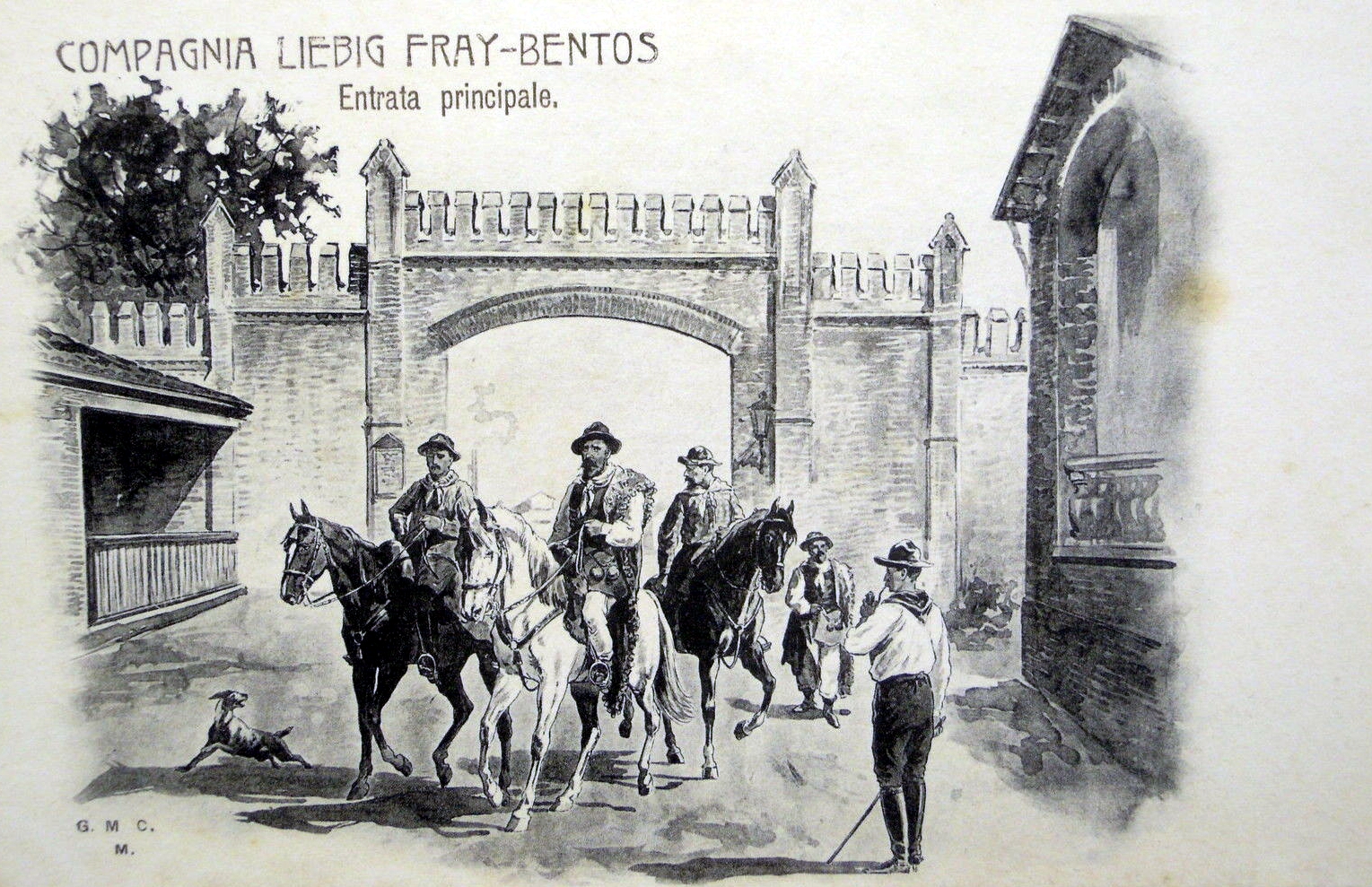
UY - Liebig 11  Entry gate into the factory area.

At the peak over 5000 employees were working in Fray Bentos. On the adjacent immense grazing areas of almost 200,000 hectares more often graze 100000 cattle, which are overseen by the gauchos and must be gradually slaughtered. Since 3000 animals every day migrate in some months in the slaughterhouse, the supply would soon be exhausted. If troperos (cattle buyers/agents) not constantly traveled around  in the Laplata states and bought up from cattle wealth of this land, the most beautiful cattle, the paddocks would be empty soon.

 UY - Liebig 10  Gate of no return.

The transportation of a numerous herd of cattle is by no means so easy. Tirelessly circling the Gauchos on their horses the flock, that some one hundred pieces won’t go lost. Once on their own grazing parts, the animals were giving time to recover from their long rallies, telling before it is fed into their determination.

DSC00479  Beef way from grassland into the barrel.

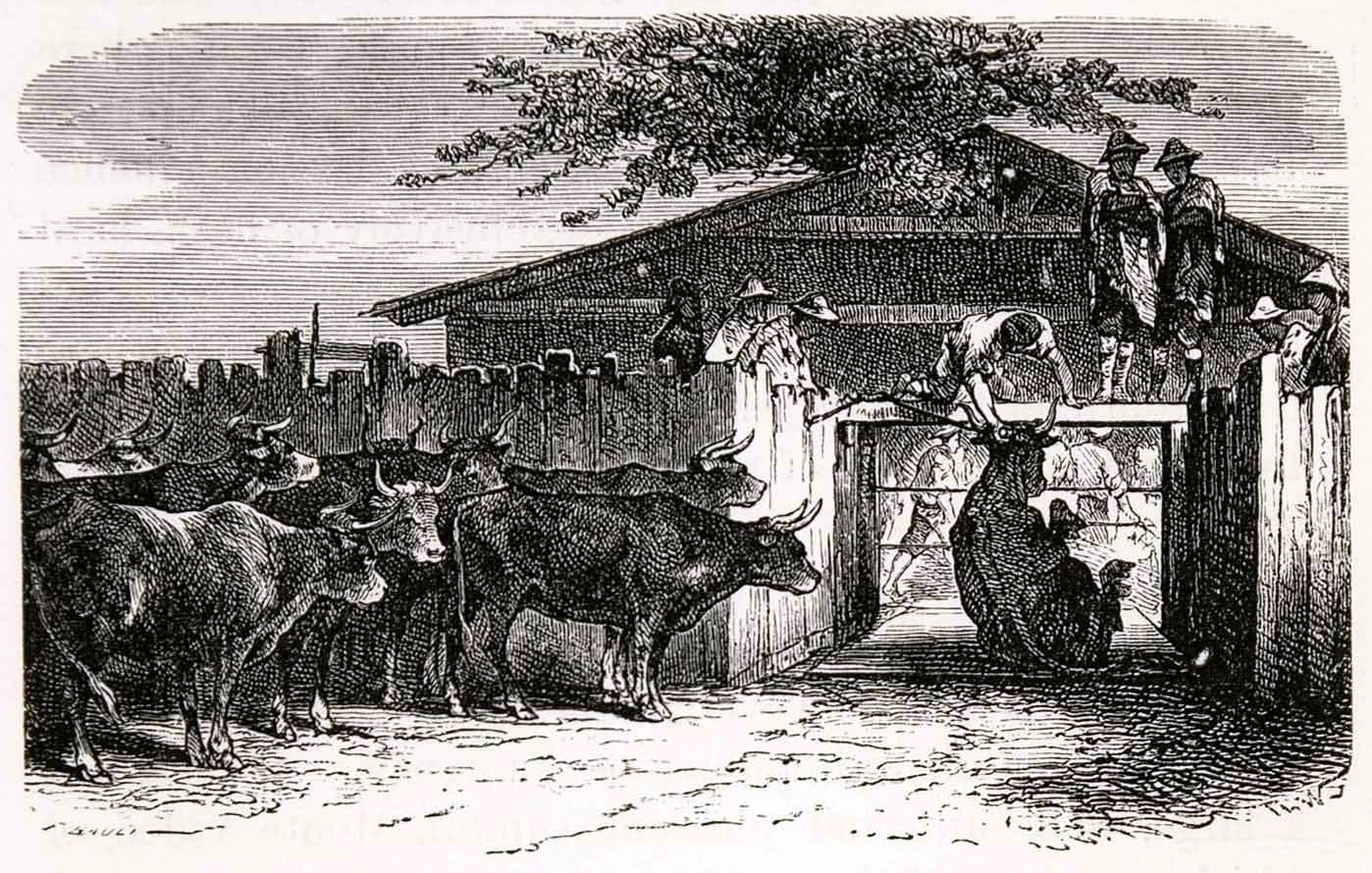
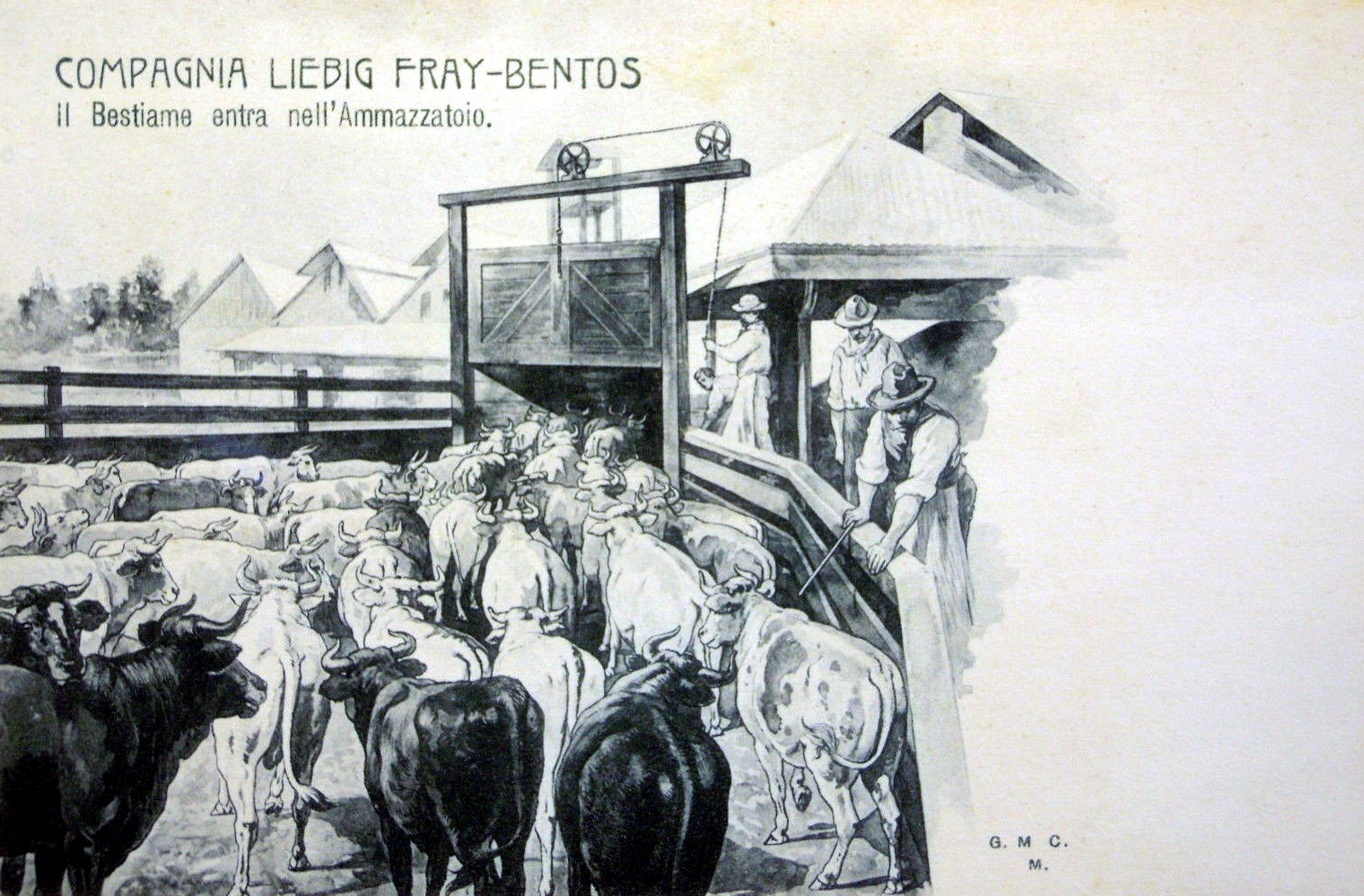
The selected oxen for slaughter are driven into large fences. If the animals are killed here, they are rolled (on trollies) to the slaughterhouse. With astonishing speed then goes on the skinning and cutting . In 15 minutes the meat depends in large refrigeration halls from where they within 12 – 24 hours pass into the extract kitchens.

Liebig 70b  Cleaning and drying the hides.

Before working on, the meat will be released from bones, tendons and fat and cut into the chipper. The ground beef comes with an equal weight of water in the 6,000 to 7,000-liter cooking pans. From there in the cast iron clearing pans. From there into the vast vacuum apparatus which are capable to concentrate daily 500000 liter extract liquid. At the end the final extract is then pressed into respective 50kilogramm metal boxes.

UY - Liebig 8a  UY - Liebig 4
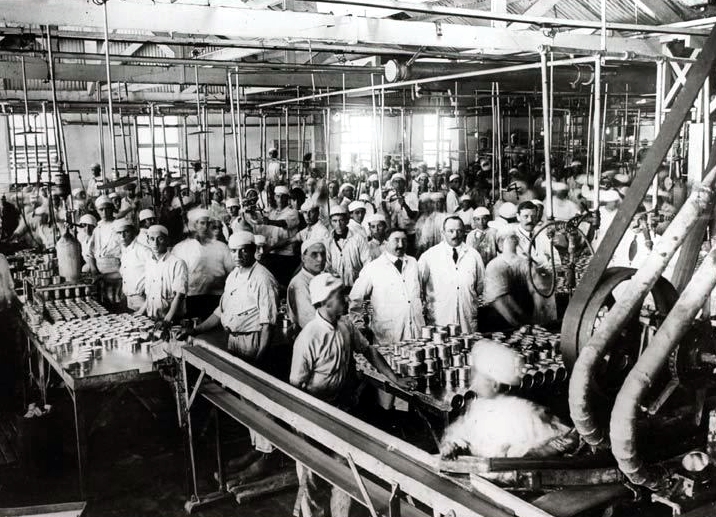
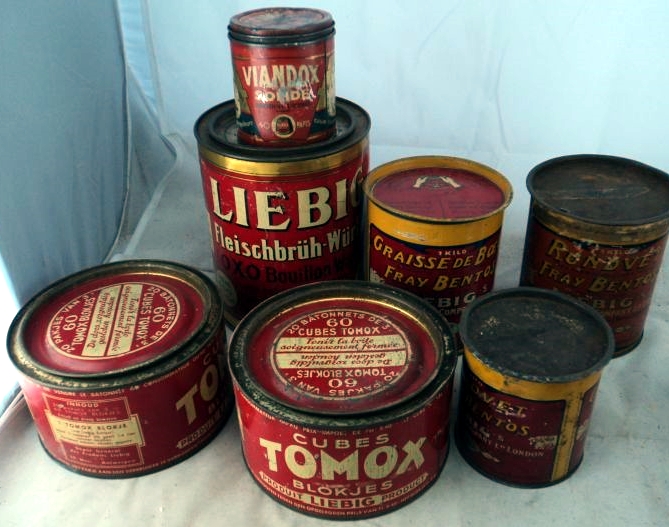
Canning section in Fray Bentos. See how many are working in one place. Collection of old extract cans.

These vacuum safe metal boxes don’t need any cooling anymore and can easy be shipped all around the world. Later on they also used wooden barrels, much cheaper and easier to make. At destination the extract will be sized down to small amounts in cans or into household boxes and cubes in cans.
And – one more information – COLLECTING all around the Liebig Extract Company is
a hobby for many thousand people. It’s can’s or advertizing, it’s history or the
magnificent sets of pictures, menu cards or cook books. I’ll show more in the next
part. So, stay tuned to part 2 of this post.

Veröffentlicht unter Collecting, History, Hobbies, Information, Must See, Uruguay | Verschlagwortet mit , | Hinterlasse einen Kommentar

Susana’s Shrine

Susana 5   What is this ???

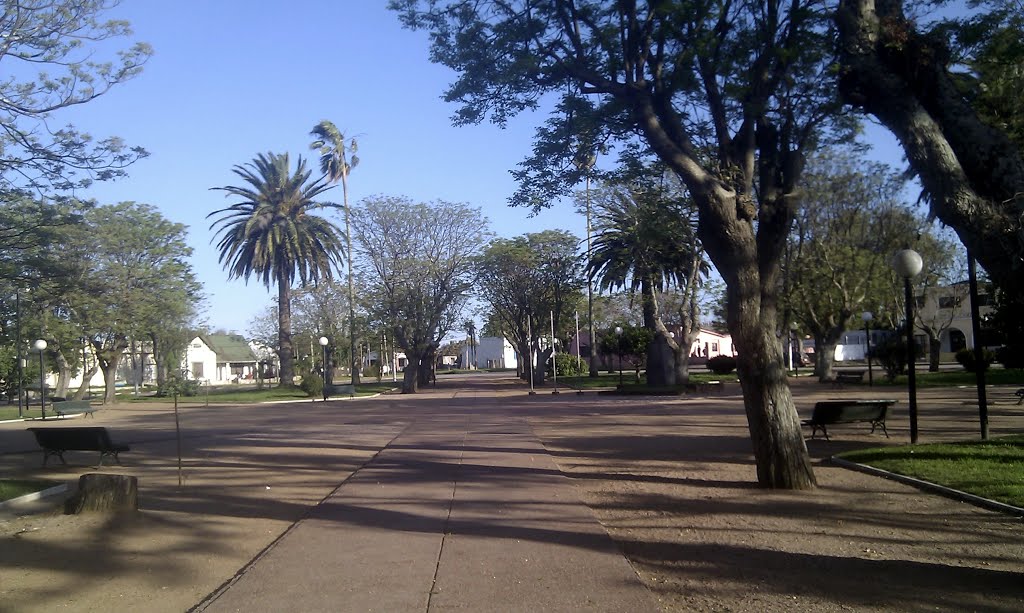
In our close neighborhood of Atlantida and Las Vegas, you will find the country
town of Soca. Nice, little, sleepy town, off the main roads. Not many tourists are around
and nothing to see!? If you look closer you find in Soca another one of Urugayan
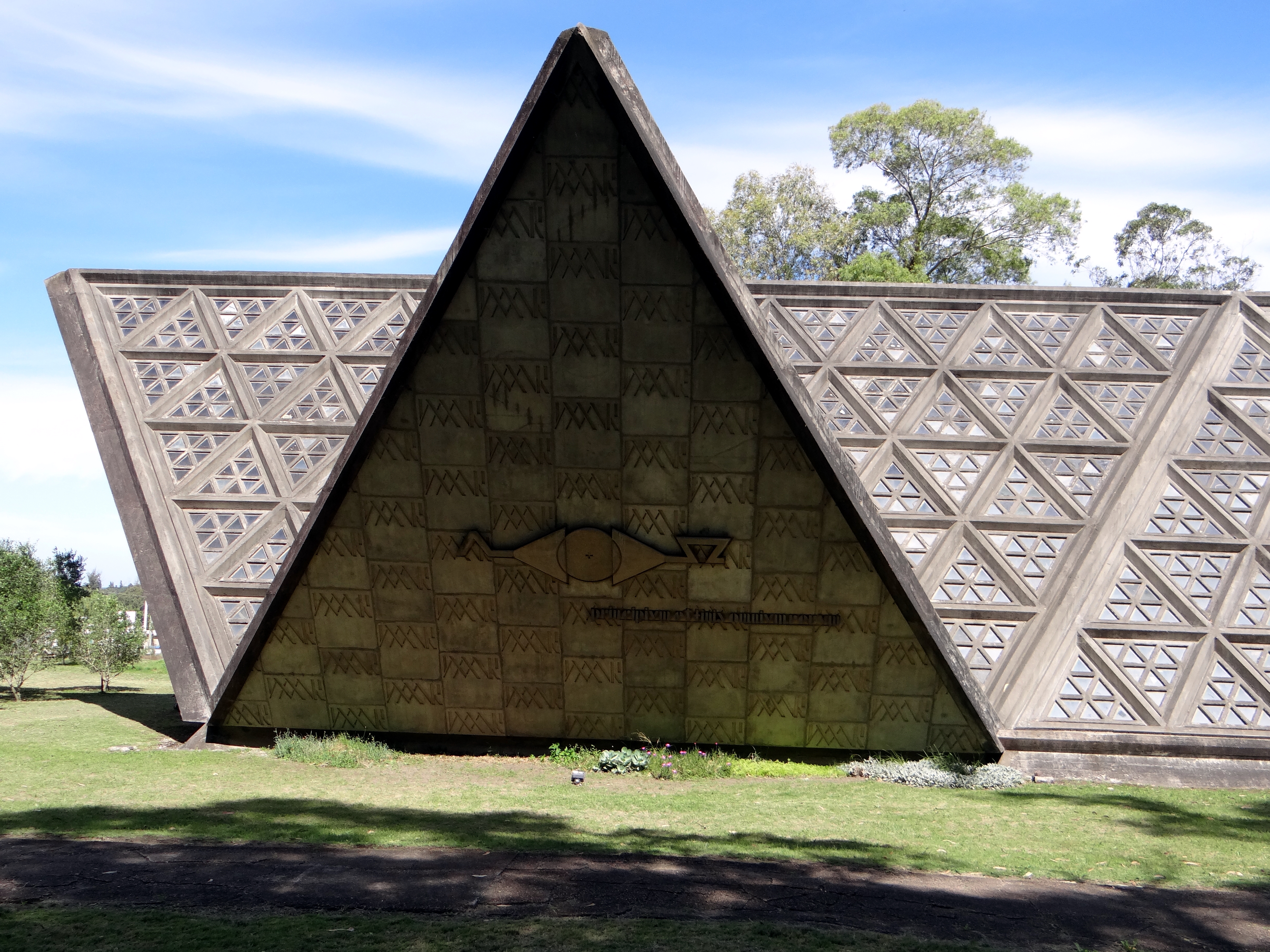
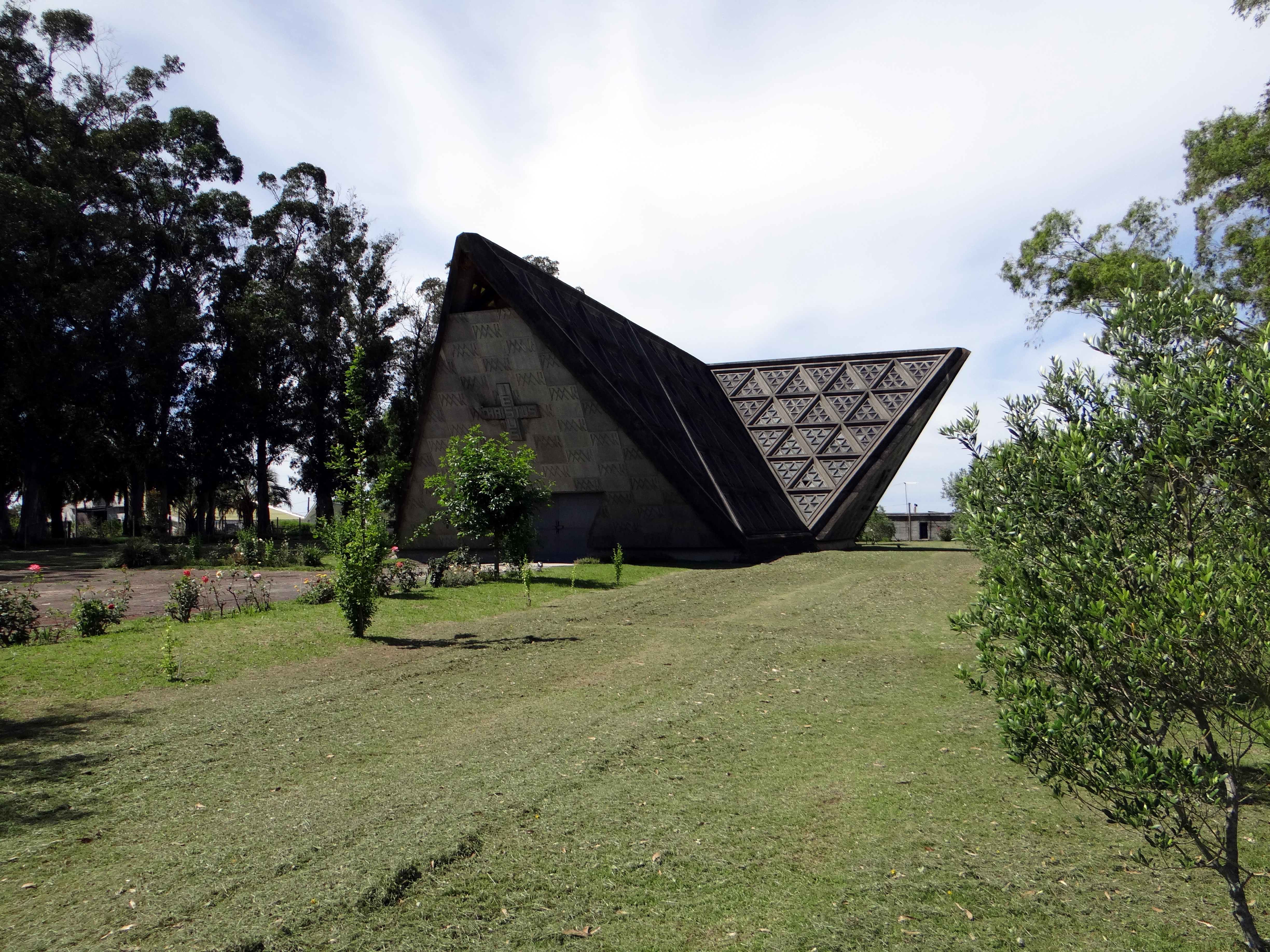
architectural jewels. The Church, or chapel of Susana Soca. But – is it really a church ??
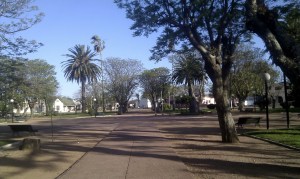
Susana 20  Plaza Publica in Soca.

Where and what is Soca ?

To Soca one can go on Route 35, which arises at the intersection with Interbalnearia up
to La Floresta, where the new bridge is, to the north. With entering the town you’ll find
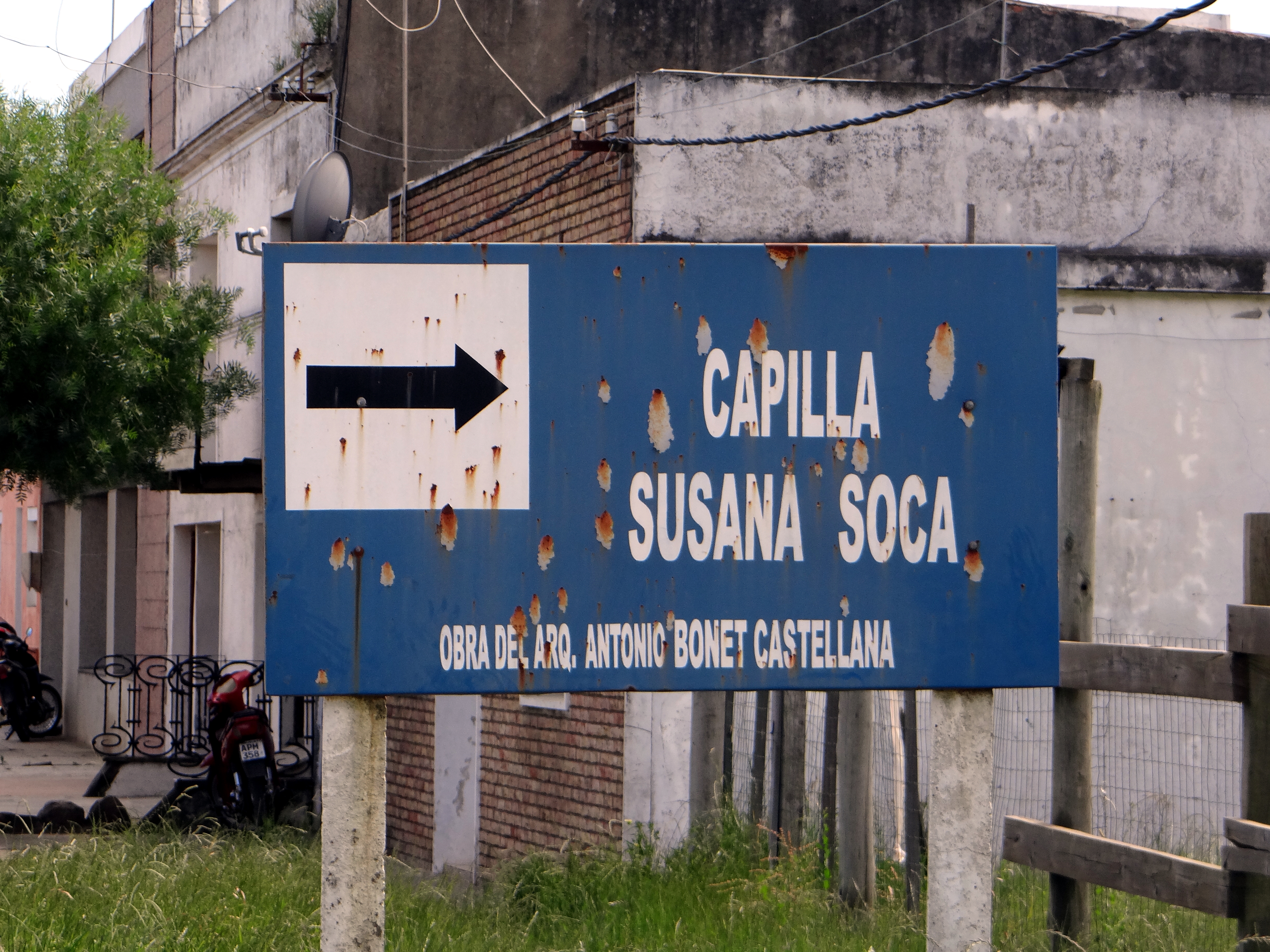
a sign „Capilla Susana Soca“. You can also use Route 8, entering Soca per km 50,5 or 59,3.
The chapel is in the eastern suburbs located next to the OSE tower. Easy to find.
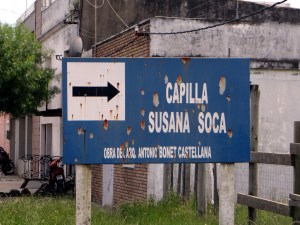
Susana 1  The chapel sign in Soca.

„Dr. Francisco Soca“ or just „Soca“, is a small city in the department of Canelones of
southern Uruguay. On 20 September 1877 the „Pueblo“ (village) named Mosquitos was
founded here. It was also known as „Santo Tomás de Aquino“. Renamed to „Soca“ on
18 April 1928 in honor of the famous „son of town“ Dr. Francisco Soca. On 23rd of
September 1971, its status was elevated to „Ciudad“ (city). 1908 Soca had the largest
population, about 4800. Today around 1790 only.

Susana 21  Dr. Francisco Soca.

Who was Francisco Soca ?

He is one of the most important figures in the national medicine scene of Uruguay,
doctor, teacher, researcher and much more. He was born in Santo Tomás de Aquino 1856,
a place in honor of the illustrious descendant canaries (now called Soca). In 1883
he graduated as a surgeon with the presentation of the thesis „Case History of ataxia“.
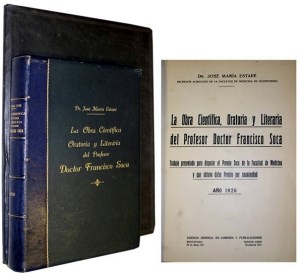
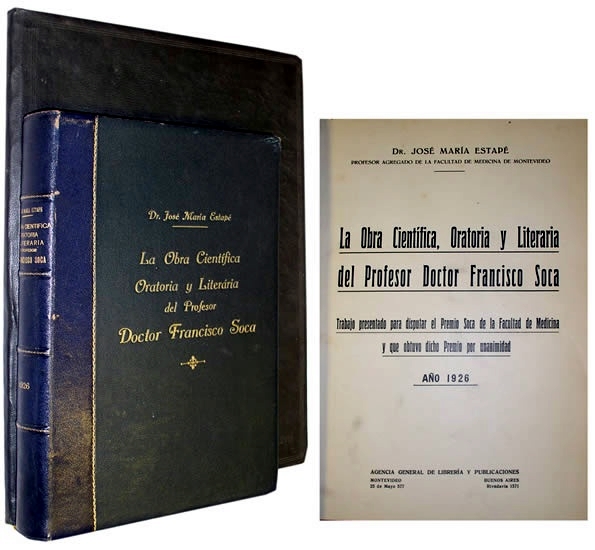
Susana 23  Some works of Professor Dr. Soca.

Then he got a grant from the Medical Faculty of Paris, where he restarted his medical
studies. In Paris he stayed 5 years to complete his studies before he returned to
Uruguay. He died in 1922. An Avenida in Montevideo, a hospital and furthermore is
named after Dr. Francisco Soca. Dr. Soca was married to Luisa Blanco Acevedo and they
had only one child, their daughter, Susana Soca.
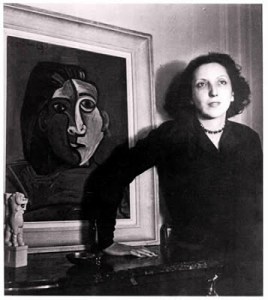
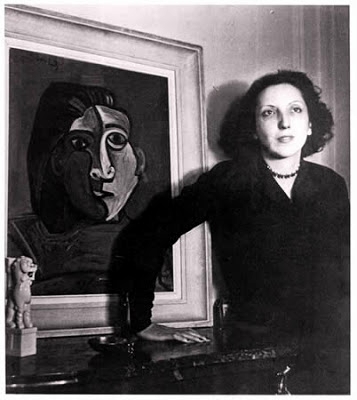
Susana 18 Susana Soca.

Who was Susana Soca ?

Born 1906 into a patrician family, the only daughter of the renowned Dr. Francisco Soca and Luisa Blanco Acevedo, a teenager used to find in her home  writers such as Maria Eugenia Vaz Ferreira, Carlos Sabat Ercasty, Jules Supervielle, Carlos Reyles, Orfila Bardesio, among others . She lived from childhood some great seasons in Paris, first with her family and then alone.
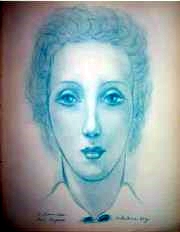
Susana 36   Susana Soca , La Dame à La Licorne.

Her relationship with her mother was stormy, for it is said that she was a very temperamental woman who wanted to have her daughter dedicated to serving, while the thoughts of Susana were in literary, philanthropic and political issues.

Glimpse into Susana’s life 1906-1959.

She was educated by tutors and spoke several languages: Spanish, French, English, German, Russian, Latin, Greek and Italian. As an adult she learned to read Russian. Boris Pasternak, with whom she corresponded, and hid the manuscripts of Doctor Zhivago for publication.

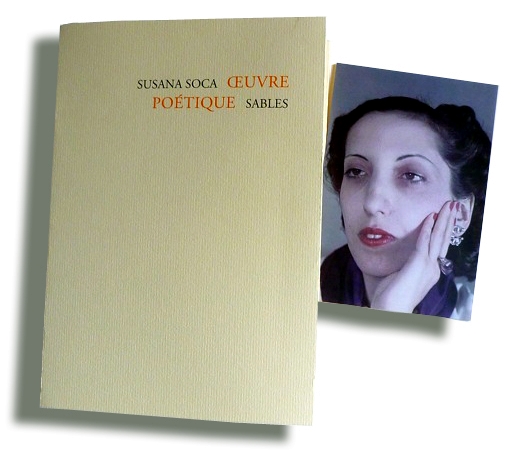
She lived in Paris from 1938-1948, even during World War II. In 1947 she brought forward her cultural project, „Cahiers de La Licorne“, drawing Unicorn (refers to the constellation of La Licorne). The cover of the magazine was made by Valentine Hugo as well as many of the illustrations thereof and a pair of portraits of Susanna and her mother. The first three numbers came out in France and the following are edited in Montevideo. Deliveries under the name of „The Licorne“. These deliveries were a literary compendium of recognized writers such as Jorge Luis Borges, Onetti and Pasternak, for example, and lesser-known authors .
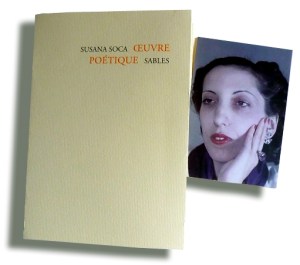
Susana 16 Paris 1939 Susana Soca 1939 in Paris.

In „La Licorne“ intellectual production of America and Europe was spreading.
Translations and articles she authored, texts Borges, Neruda, Onetti and Felisberto
Hernández well as German philosophers, poets and English and French Surrealists
were published.

With lingering love she gazed at the dispersed
Colors of dusk. It pleased her utterly
To lose herself in the complex melody
Or in the cunous life to be found in verse.
lt was not the primal red but rather grays
That spun the fine thread of her destiny,
For the nicest distinctions and all spent
In waverings, ambiguities, delays.
Lacking the nerve to tread this treacherous
Labyrinth, she looked in on, whom without,
The shapes, the turbulence, the striving rout,
(Like the other lady of the looking glass).
The gods that dwell too far away for prayer
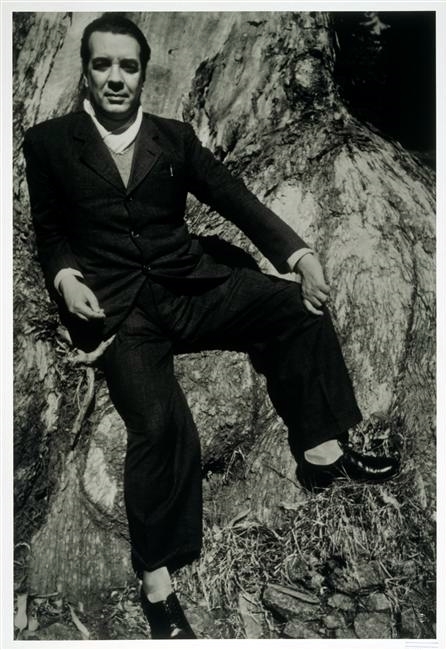
Abandoned her to the final tiger, Fire.                   Poem dedicated by Jorge Luis Borges to Susana Soca.
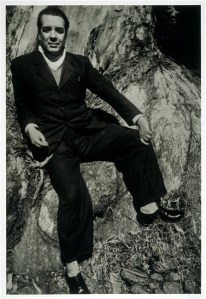
Susana 37                   Jorge Luis Borges (1899 – 1986).

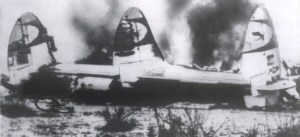
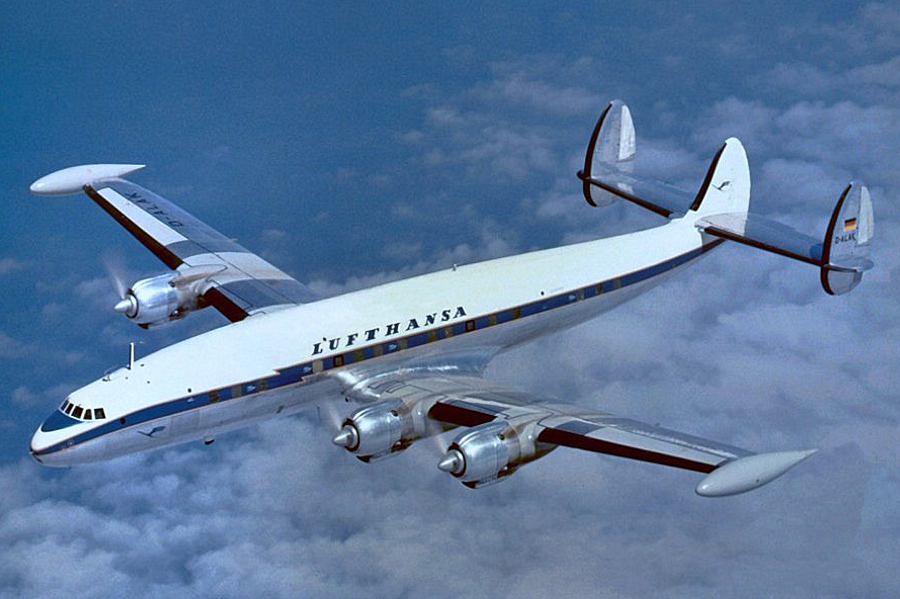
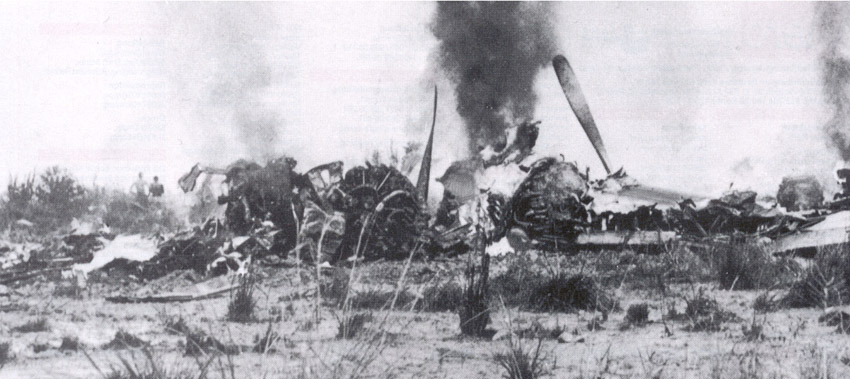
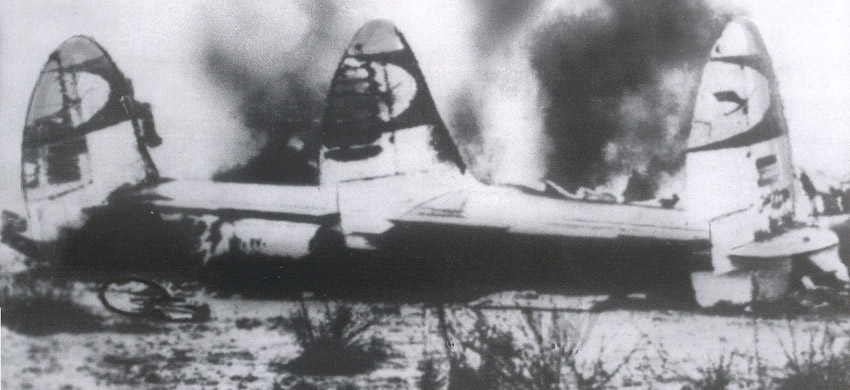
In 1959, meeting in Paris, her mother called and asked her to come back home. Susana had a Lufthansa airline ticket. Before leaving goodbye to all her friends and trusts all her manuscripts to her personal secretary Guido Castillo who told her to publish them in case anything happened. That Lufthansa flight from Hamburg, trying to land in Rio de Janeiro, the track was slippery, and the aircraft ran through until igniting and crashing into Guanabara Bay, killing 29 passengers and 7 of the crew.

Susana 38
This plane, a Lufthansa Lockheed L-1049G Super Constellation, crashed in Rio de Janeiro on 11. Jan. 1959.

Susana 39  Susana 40
The Super Constellation operated on flight LH502 from Hamburg, Germany to Buenos Aires, Argentina
with stops at Frankfurt, Paris, Lisbon, Dakar, Senegal and Rio de Janeiro, Brazil. Original pics of this crash !

Her cousin Juan Carlos Blanco was asked to go to Rio de Janeiro to recognize the body and is responsible for the repatriation of remains to Montevideo. The family was devastated by the death of Susana and her mother fell into a deep depression. Her assets, including countless Japanese prints, works of Gothic paintings by Modigliani, Picasso and others, were mismanaged by an intermediary and almost no trace of the whereabouts of any of them – all lost. Susana was never married and just 53 years old when she died.
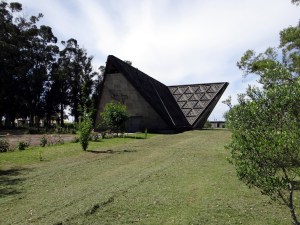
Susana 4  Church, Chapel, Mausoleum or Shrine ?

A Soca chapel in Soca ?

Antoni Bonet was an avant-garde Catalan architect who along with Susana conceived this
chapel. It was planned and built in honor of her father, Dr. Soca. This was also the
reason for the building site located in the city of Soca.

As Susana died before finishing the chapel, her mother wanted to go ahead with the
project and tried to bury her daughter there, having it as a mausoleum. The latter could
not be performed because it is not allowed by law to bury outside an official cemetery.
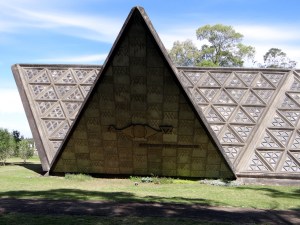
Susana 6  Mystic writing and symbols outside.

Who was Antoni Bonet ?

Antoni Bonet i Castallan was a Catalan architect, designer and urban planner. He was born
in Barcelona 1913 and died in Barcelona 1989.
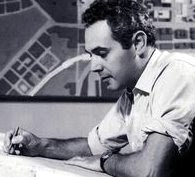
Susana 24  Antoni Bonet.

The Catalan architect and designer Antoni Bonet Castellano (different name writings
everywhere) might be forever identified as THE designer of the Butterfly Chair (officially,
the BKF Chair).
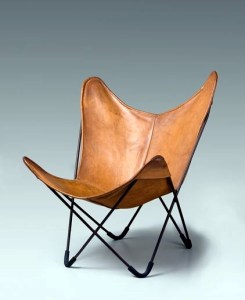
Susana 26  The Butterfly Chair.

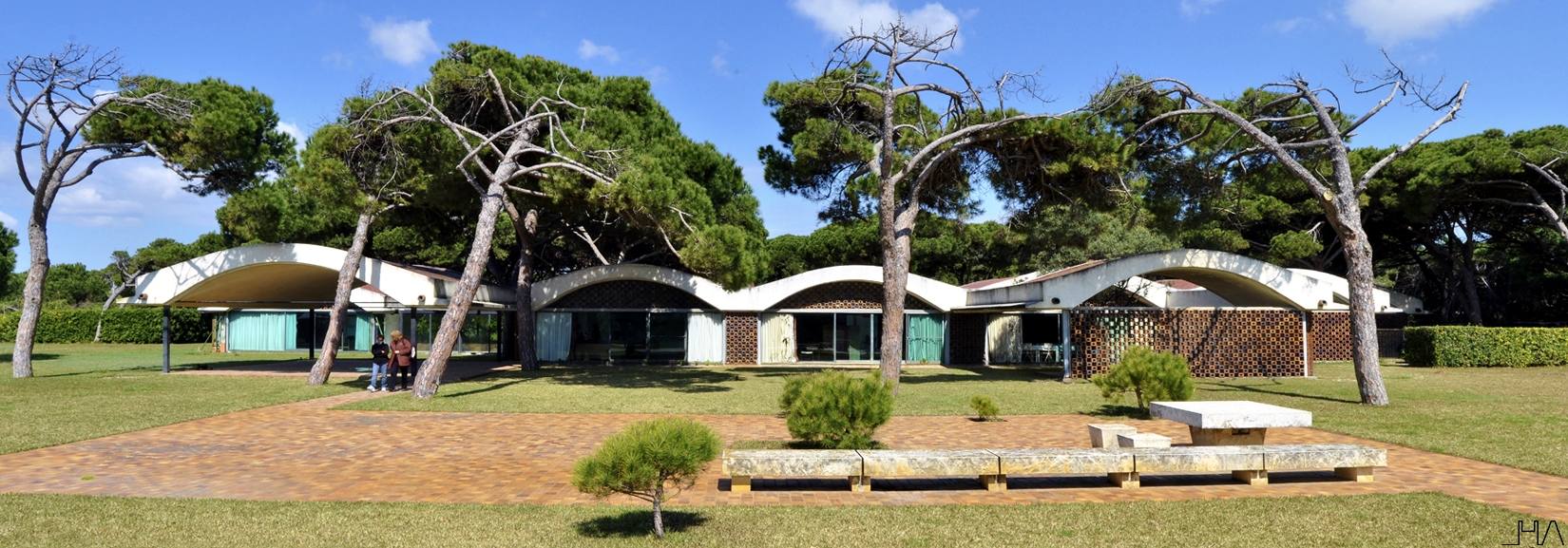
But Bonet had a grander, if lesser-recognized jewel in his crown, also, residing on the
outskirts of Barcelona. Casa Gomis, a sprawling Modernist summer time residence, was
made for Ricardo Gomis and his wife Inés Bertrand Mata, a couple so besotted with the
architect, then living in Argentina, that they sought his solutions across continents.
Bonet accepted the lengthy-distance commission, and over a 10-year period, 1953 to 1963,
Casa Gomis or better named casa „La Ricarda“ came into dazzling concentrate.
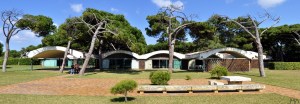
Susana 25 La Ricarda   La Ricarda.

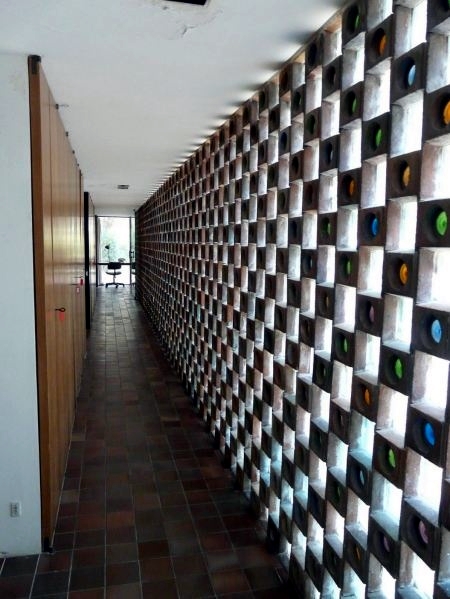
When Bonet met the poet and designer Susana Soca, he was inspired by their many talks
and discussions to build a chapel in honor of her father Dr. Soca. This was in the
early 1950’s, as said after Susana died, her mother finished the project in Susana’s
honor. The chapel was inaugurated in the late 1960’s and then abandoned for decades.
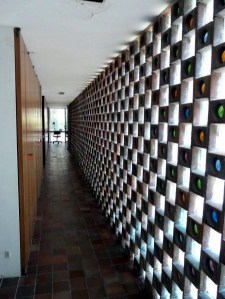
Susana 27 La Ricarda 50s Wall with colored glass lighting, Bonet’s idea.

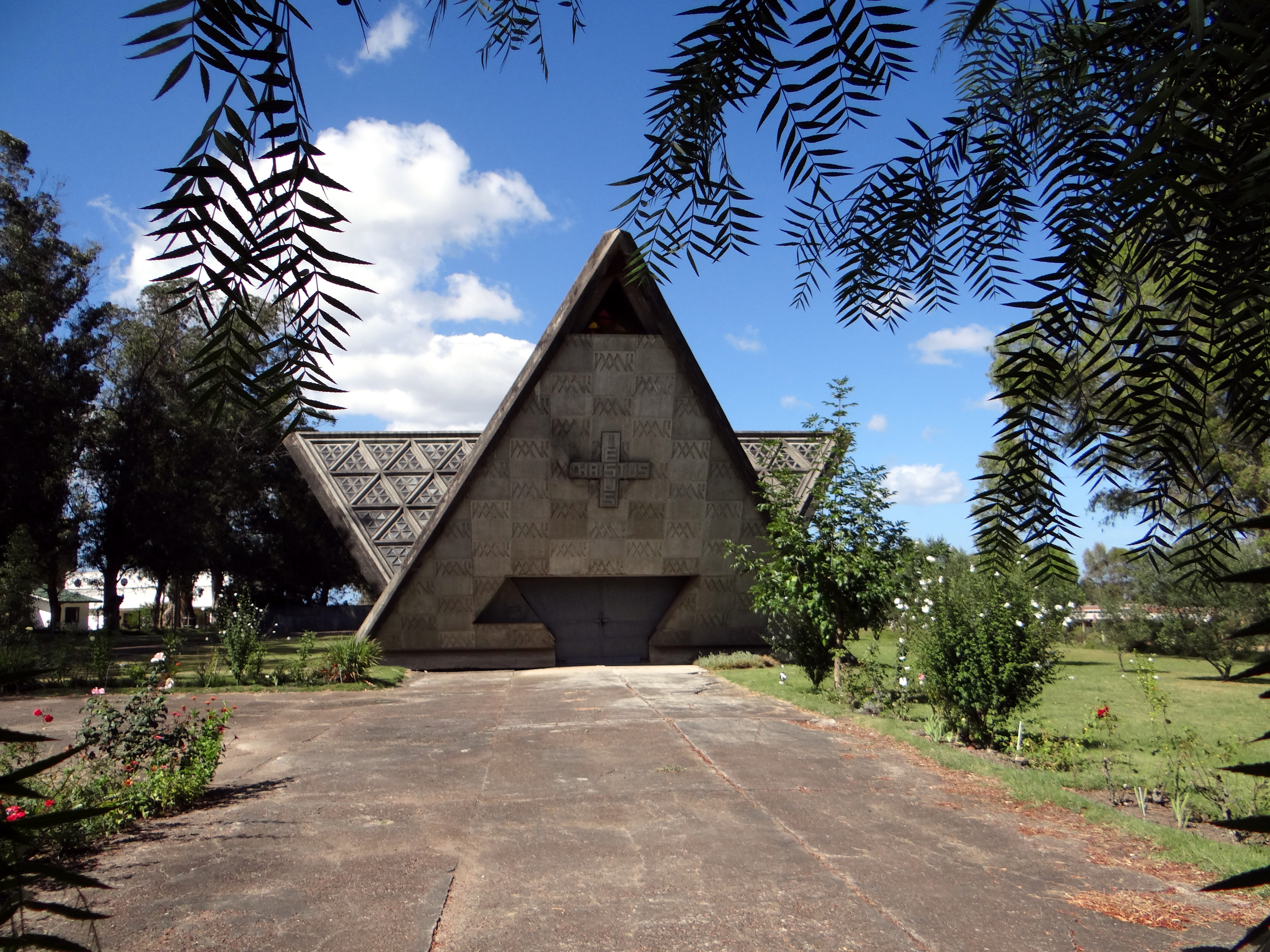
It was never a church, never used as a church, not even Antoni Bonet’s Mausoleum of
Susana Soca, because she couldn’t be buried there. Lost somewhere in the countryside,
without being consecrated either by the Catholic Church or as patrimony.
So – it is what it became – Susana Soca’s shrine !   But, let’s still call it a chapel !
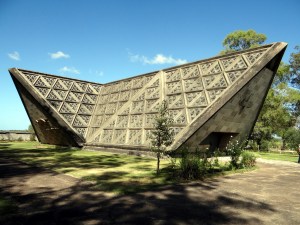
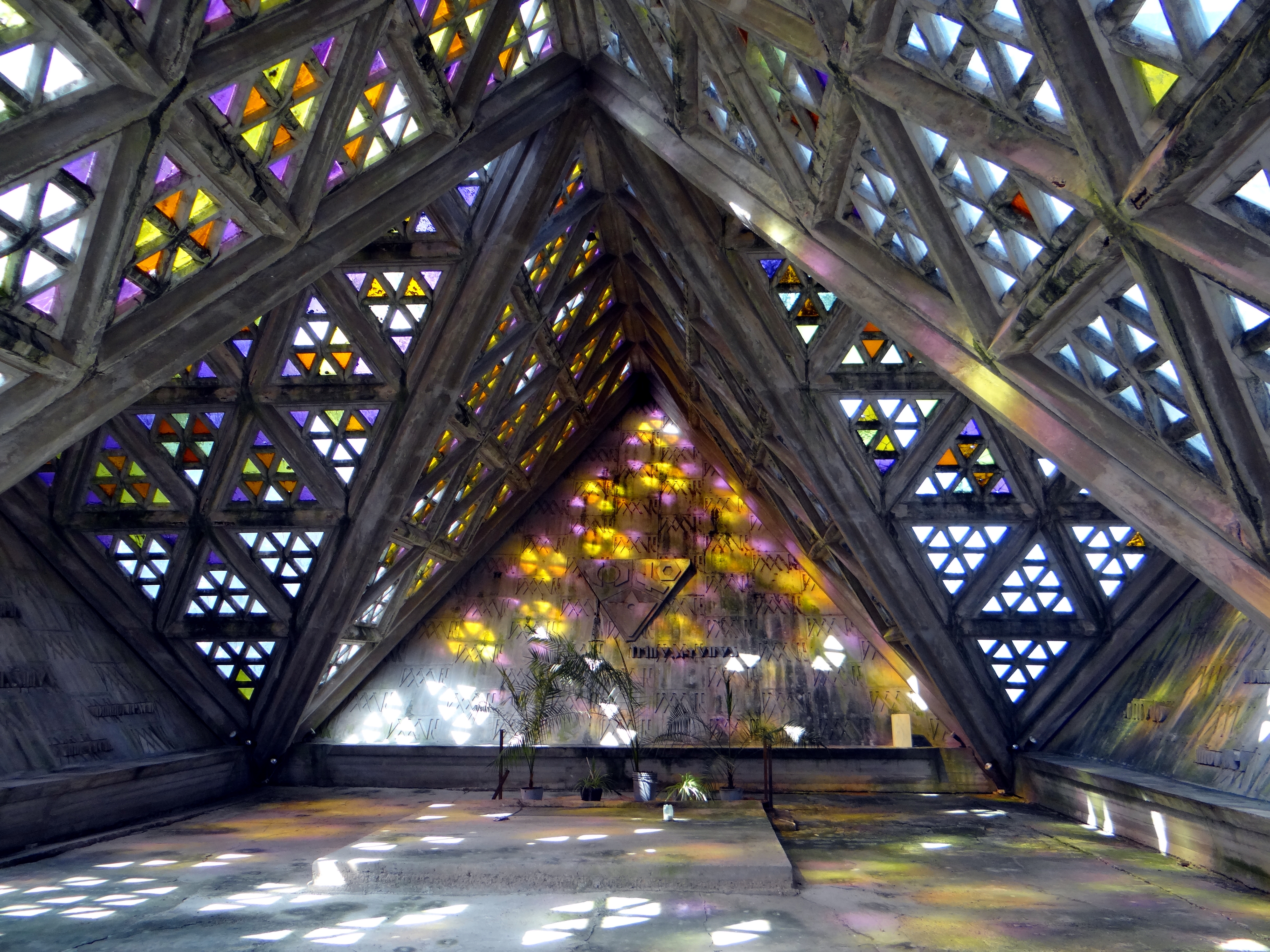
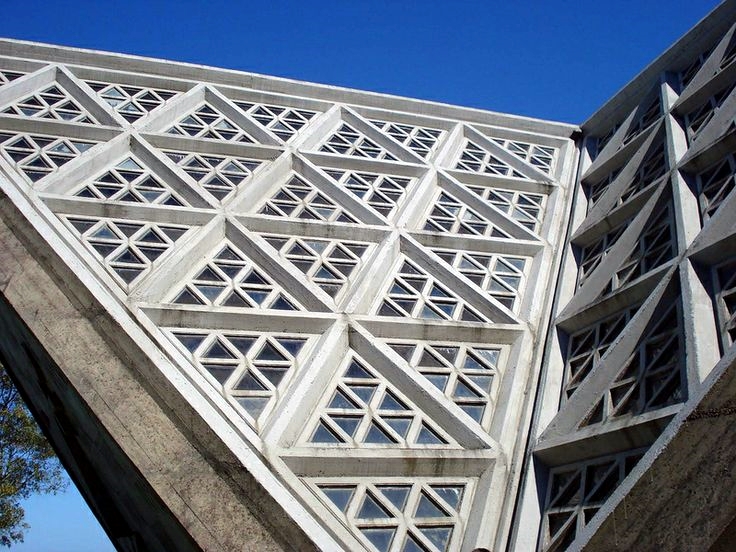
Susana 33   The glass roofing, outside.

A mystery glass chapel ?

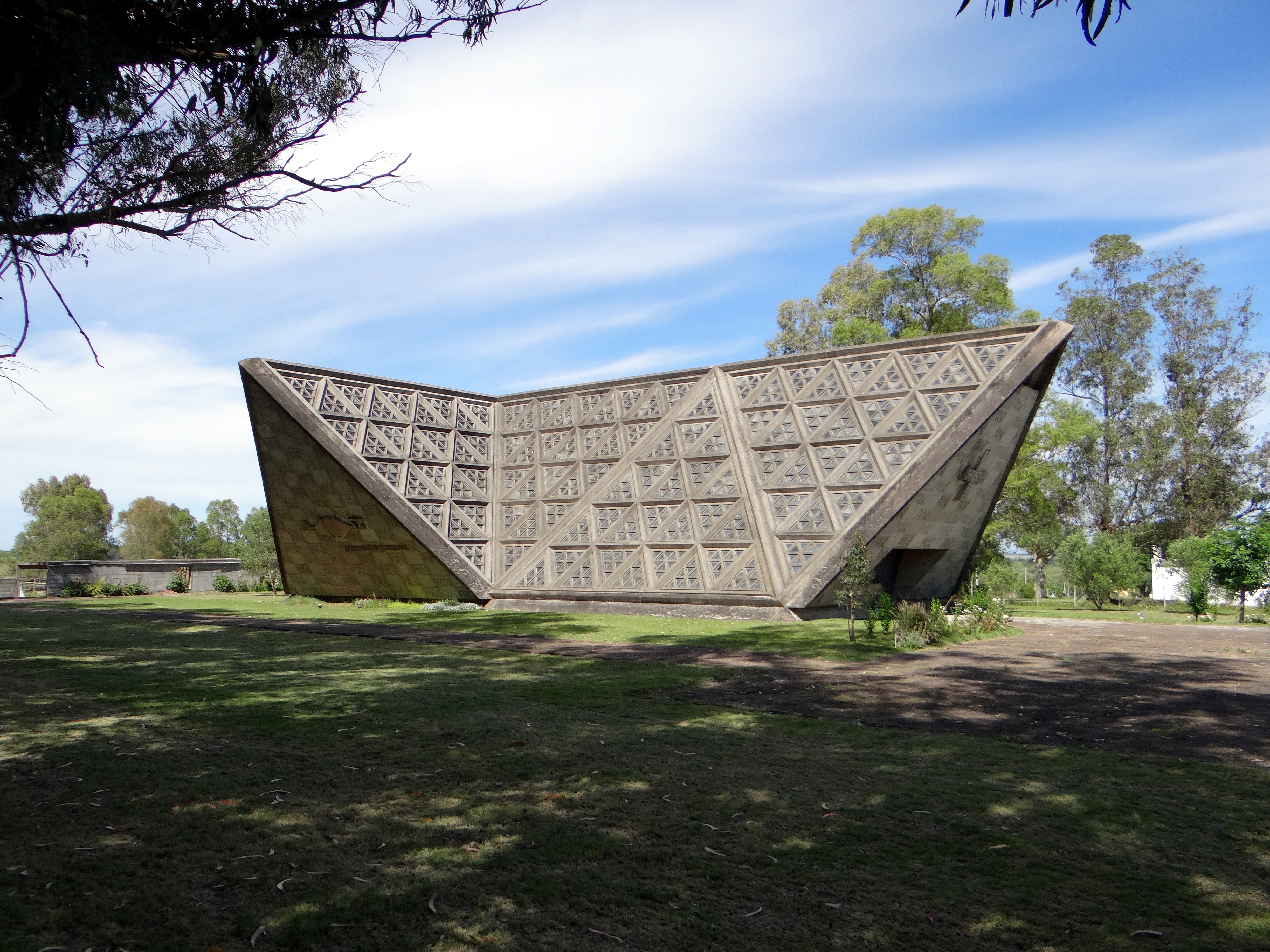
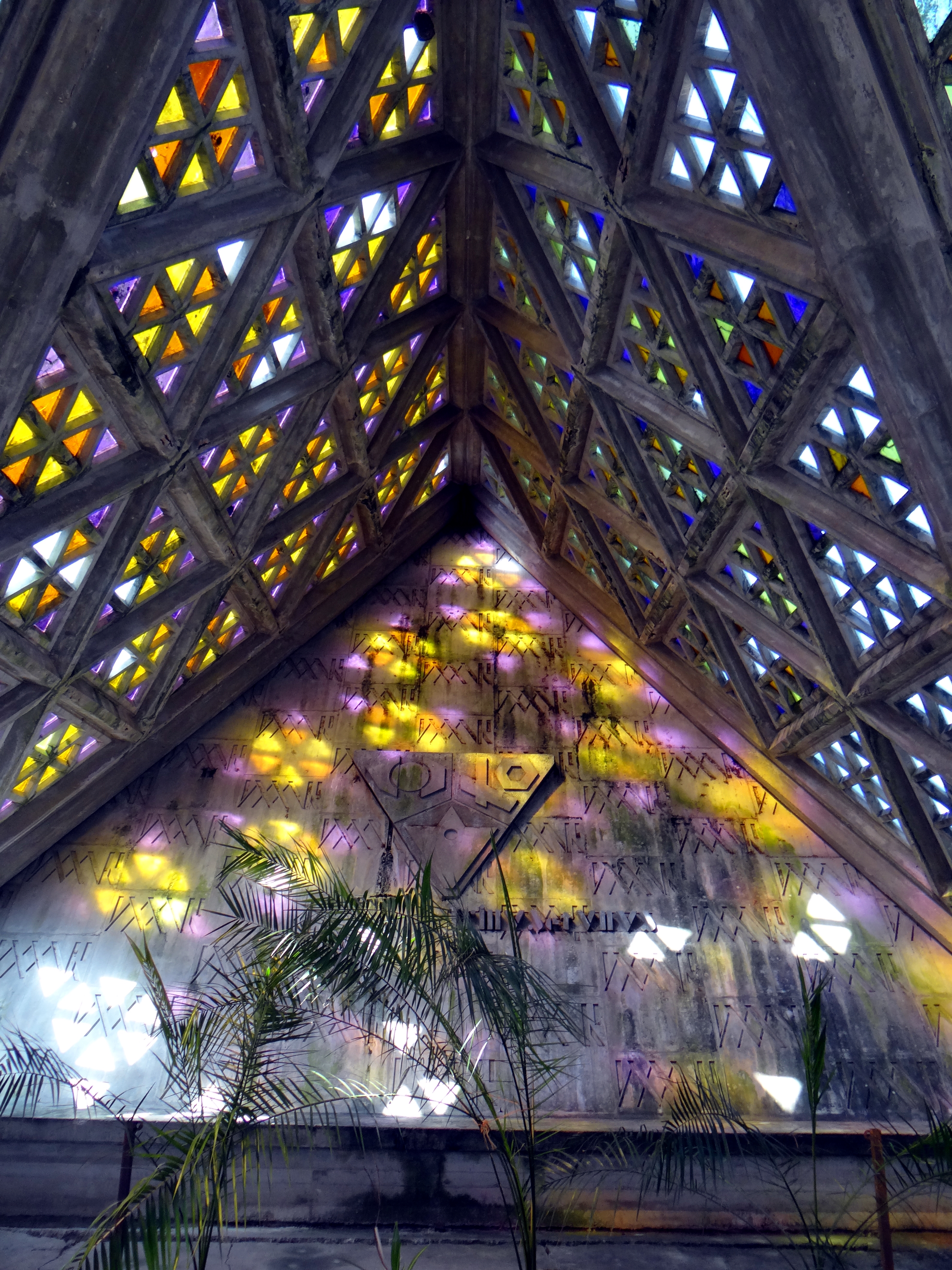
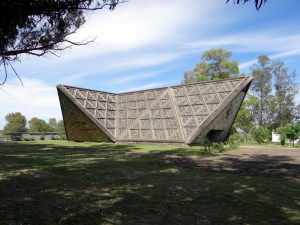
Known locally as the „Glass Chapel“, its also known for the uniqueness and for being
an example of modern architecture, designed in the fifties and built in the sixties.
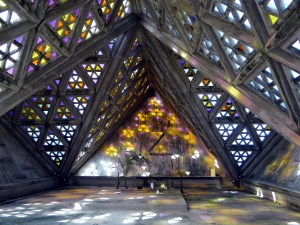
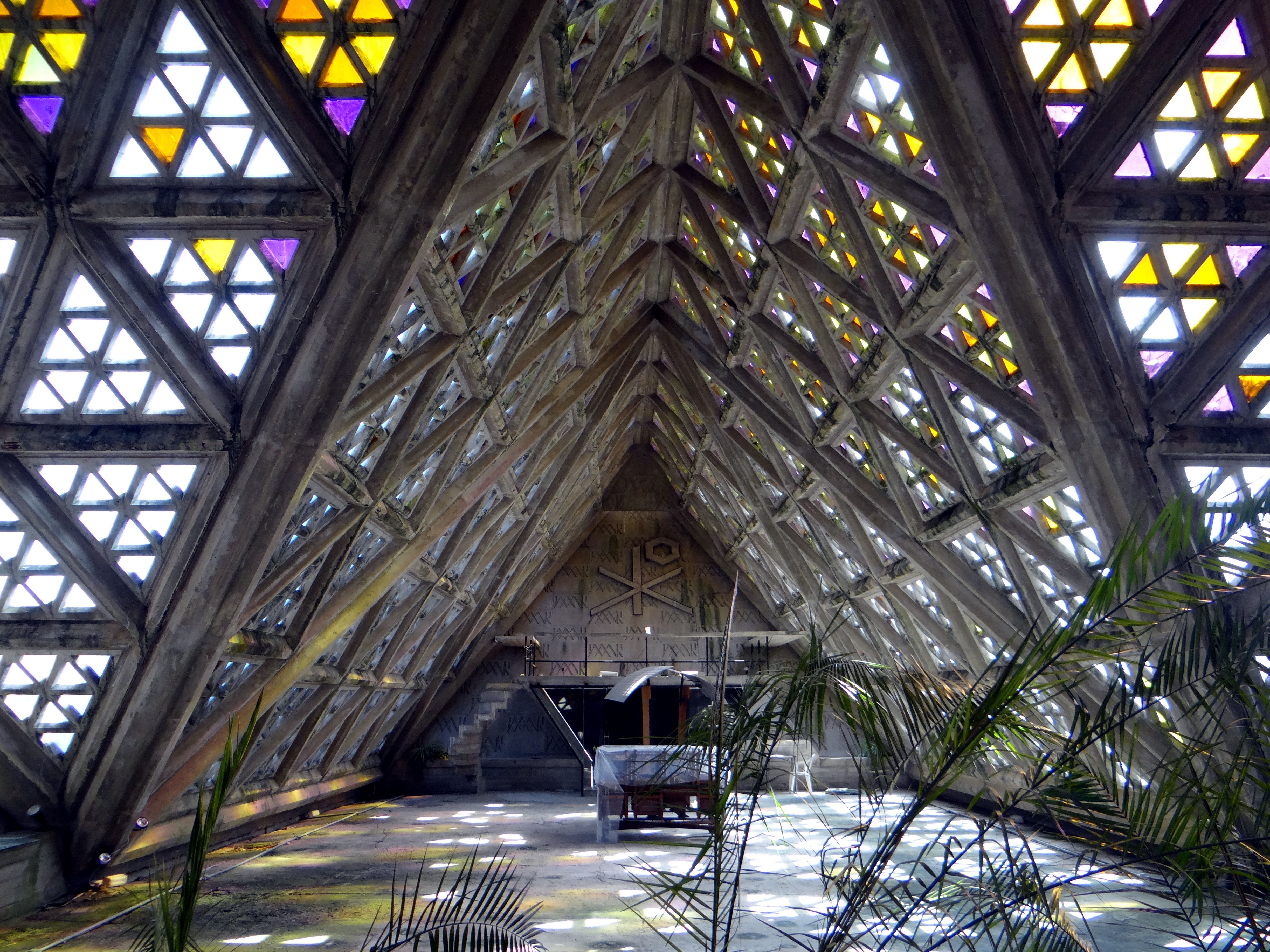
Susana 28 The glass roofing, inside.

Its location has significant potential to attract visitors to a sector of the department
little known and valued by tourists. This is understandable, because there is no
advertizing at all and the surrounding has not much to show.

Sadly, as many many other buildings in Uruguay, it is dirty, neglected and runned down.
Exept – the lot around is mowed and cleaned by a gardener.
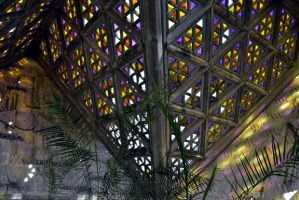
Susana 11  Fantastic illumination.

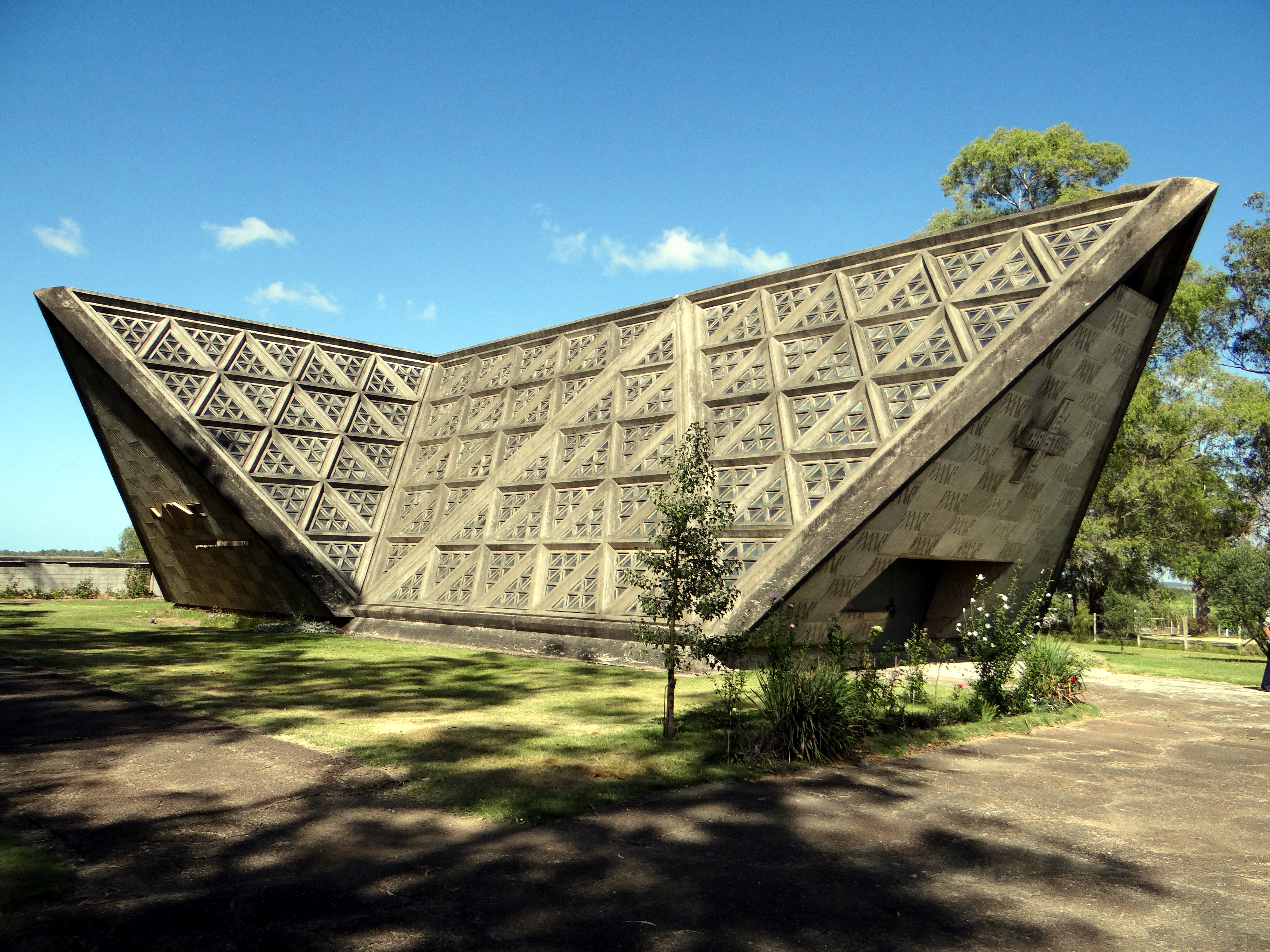
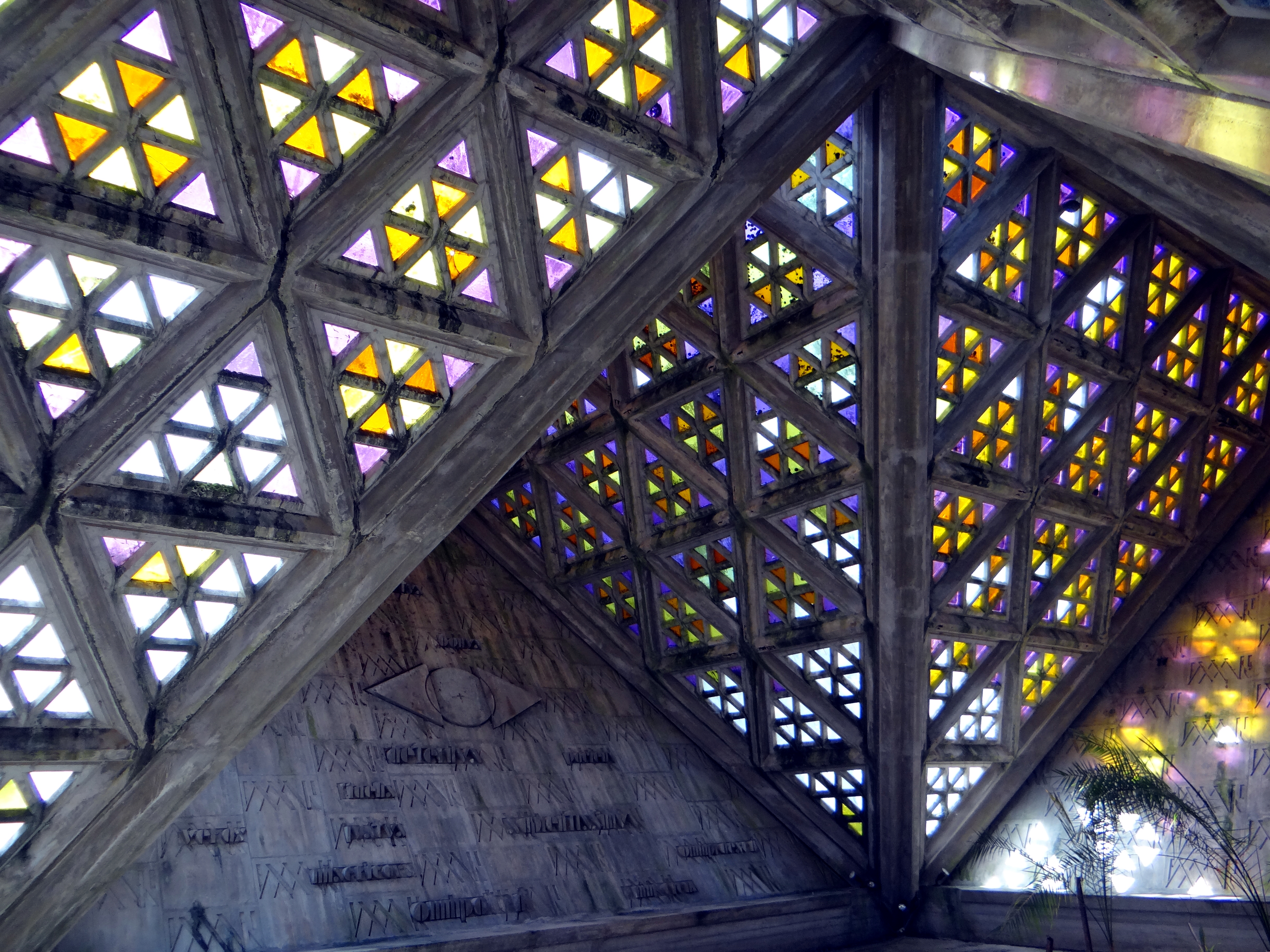
In the structure of reinforced concrete and glass, from the outside it is in the form
of a cross, triangle shape prevails. It is characterized by the subdivision of a triangular
module subdivided into 25 triangles, which in turn are divided into nine triangles,
which are housing stained glass.
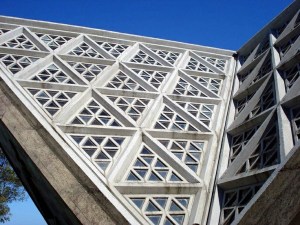
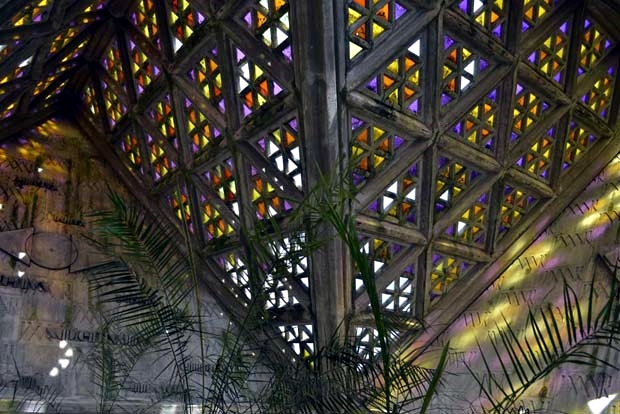
Susana 10  Almost 3000 glass triangles allover.

The sunlight makes its way through them, creating within a very particular atmosphere
full of warmth and mystery. Light plays a very special role in the chapel, as it filters
through the stained glass achieving very interesting effects by time of day. Violet,
green and amber colored glasses were chosen .

From this perspective the building appears as a rectangle formed by two squares, the
geometric center is defined by the axes of the main nave. The altar is located on the
vertical axis.
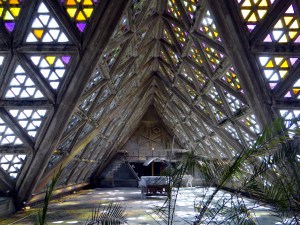
Susana 32  What a light atmosphere inside.

The idea of ​​crucifixion is embodied in the figure of the cross as the trinity makes the
equilateral triangle, which appears in different scales throughout the building. In
addition to glasses, the triangle appears on the front, on the top of income, in the
presbytery and both sides of the cruise. It might be interesting for one to translate
all the Latin writings (in concrete) and symbols of their meaning.

Susana 3a  Jesus Christ cross above the entry.

While the chapel itself is a symbol, the truth is that it is full of them, creating
an atmosphere of mystery that invites reflection. First, the presence of thousands of
triangles that shape construction, they are all a spiritual and a religious symbol.
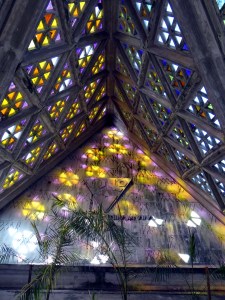
Susana 31  Mystic lighting during day and night.

The walls are home to many legends and messages, such as equilateral cross entry with
the name of Christ. This chapel is very special, and it’s one of those architectural
treasures to discover in Uruguay.
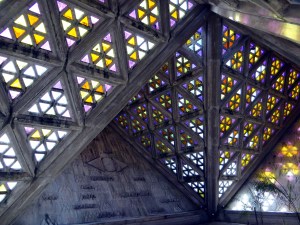
Susana 29  Mystic Latin writing at the walls.

A very complicated entry !!

The entire chapel is fenced because it is on private property. You can visit on
Heritage Days, a show or presentation. Because sometimes the chapel is rented out
for special occasions of any kind. But, no one really knows when and for what.


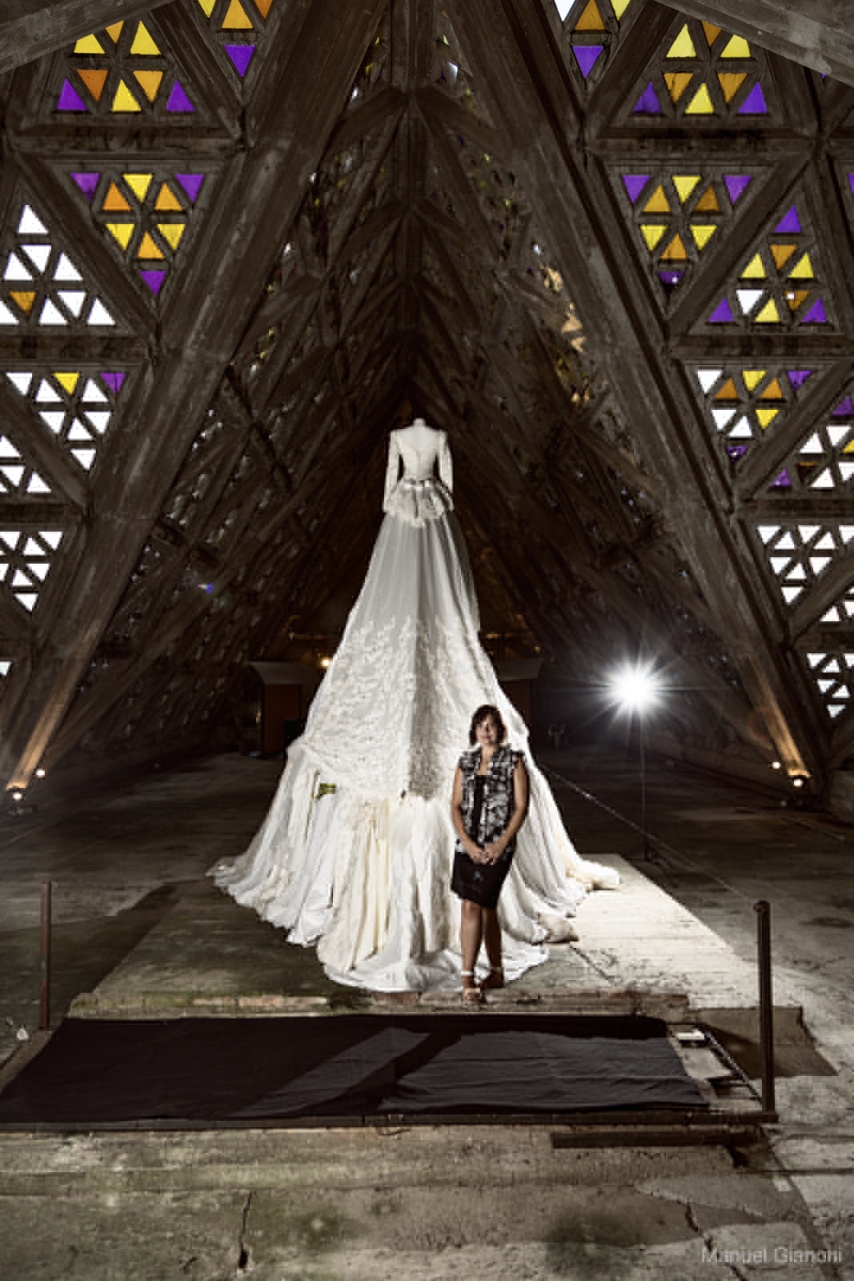
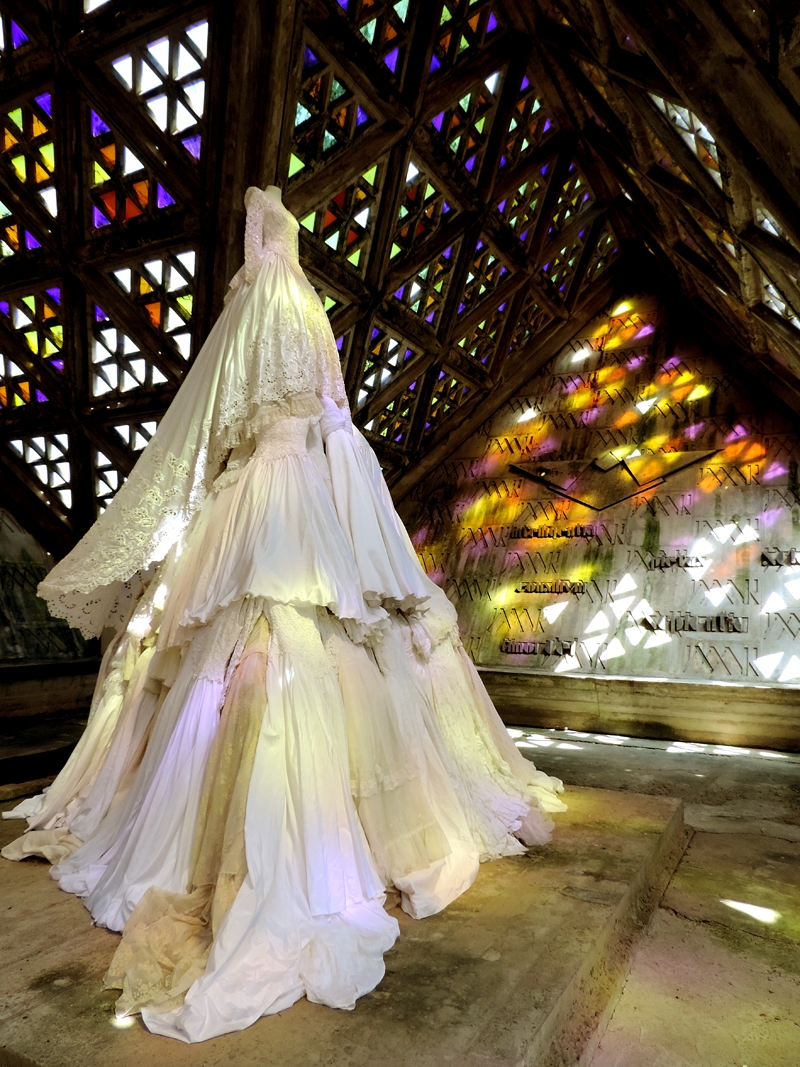
Susana 14       Susana 17  Artistic Dresses.

Last year during the International Women’s Day, 8/9th March 2014, the artist Alejandra
González Soca, held an exhibition of „phantasy“ wedding dresses.
What a great and mystic atmosphere to display such artistic dresses.
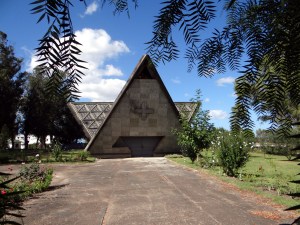
Susana 34  Capilla Susana Soca – Susana’s shrine.

Either way, it’s worth getting there, because with a little luck someone is home
and you may be asked to enter. I was lucky !! Success is by no means assured, but it
is worth making the attempt because the reward of knowing inside, well worth it.

I already prepare many more posts about the church situation and interesting
history backgrounds. So, stay tuned with these architectural „treats“ in Uruguay.

Veröffentlicht unter Atlantida, History, Information, Uruguay | Verschlagwortet mit , | 2 Kommentare

Pesto Turkey Rolls

wildreis pute 1

Another delicious Summer recipe, now for meat lovers, is:
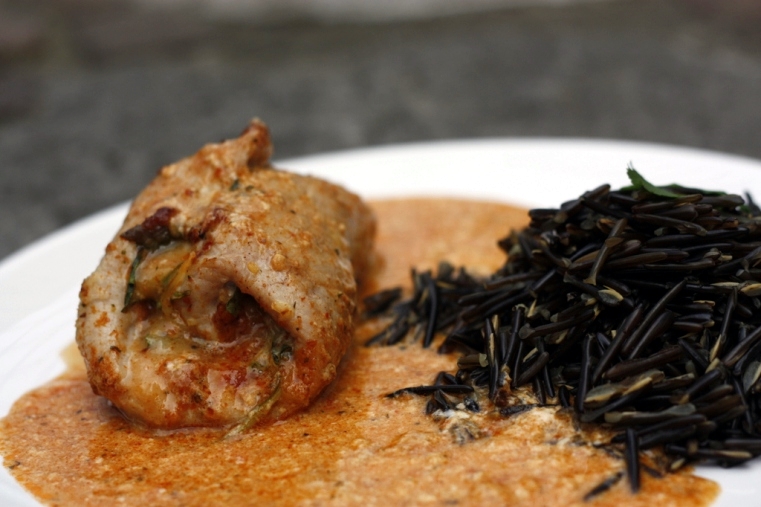
Pesto turkey rolls in a creamy pesto sauce to a nutty wild rice.

Ingredients.
200g wild rice
2 turkey steaks
4 tbsp red pesto
1 handful of rucula
60 g grated Emmental cheese, Parmesan will do to
100 ml vegetable stock
100 ml cream
50 ml white wine, same as you drink with your meal
pinch of salt
a little black pepper
a bit of soft butter

How to do.
step 1
Prepare wild rice as usual.
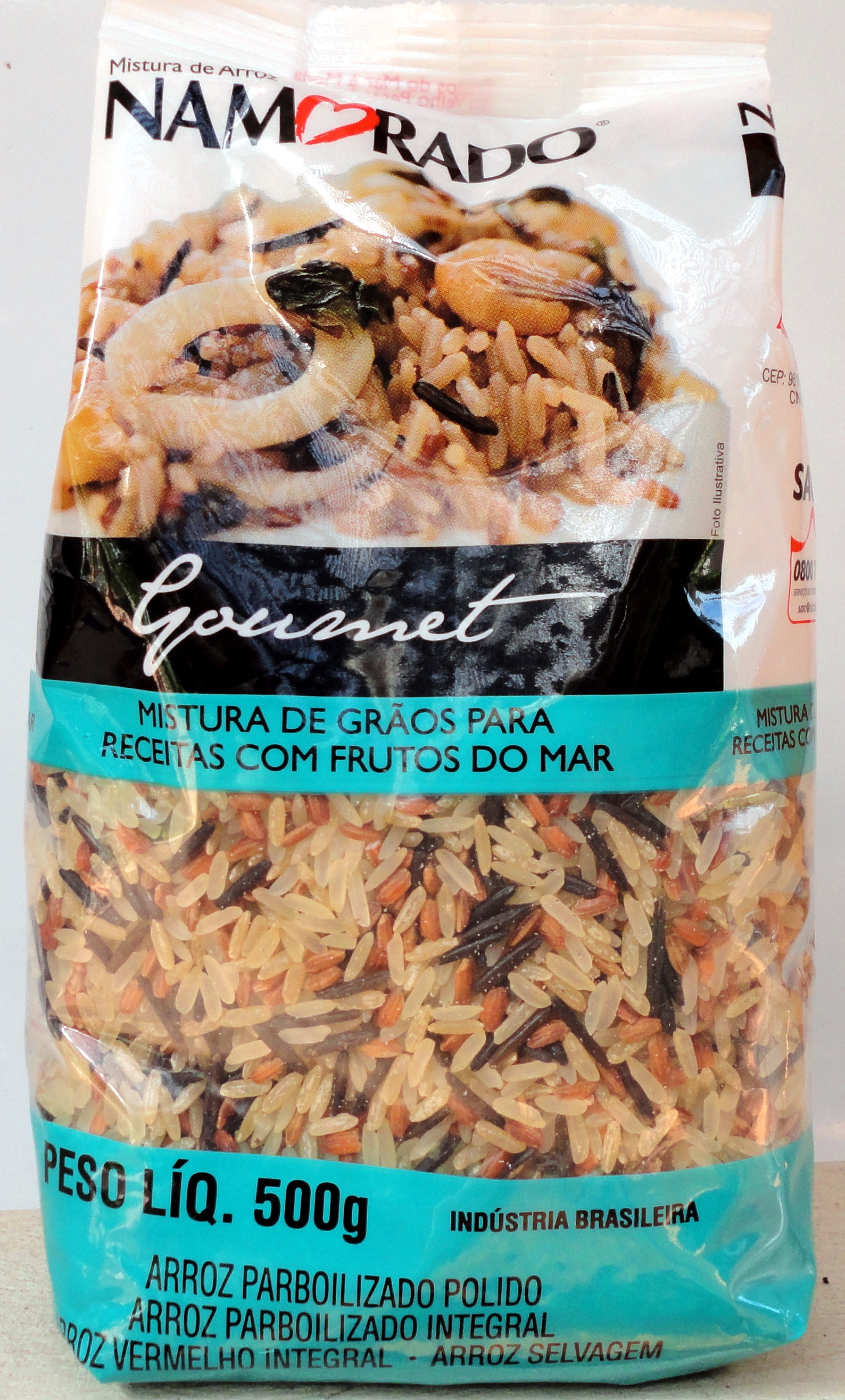
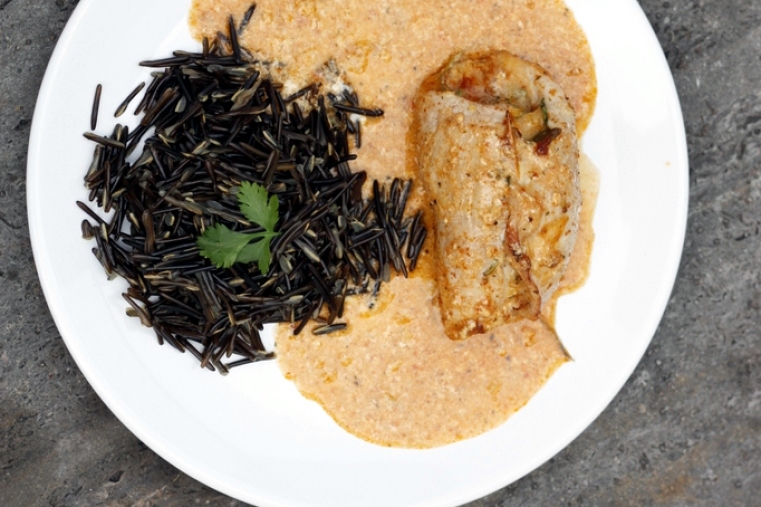
This shown kind of black wild rice is not available in Uruguay.
As mentioned in another post before, use the Brazilian rice
“Gourmet, Nam Rado”, instead.

DSC01470
step 2
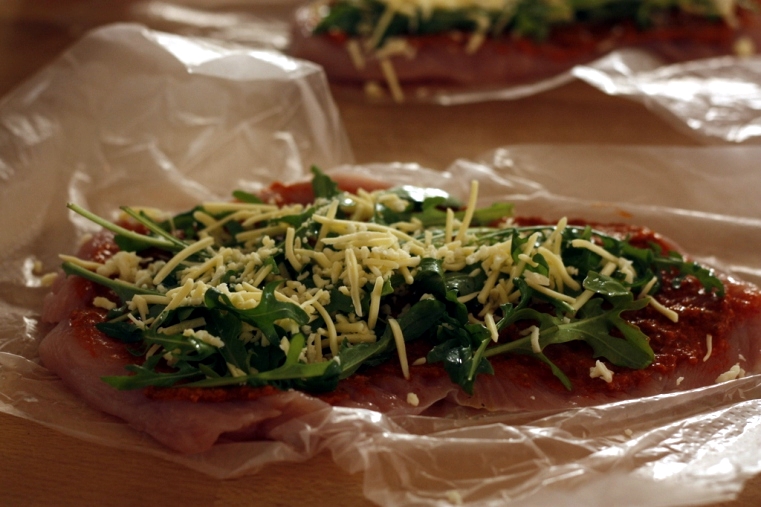
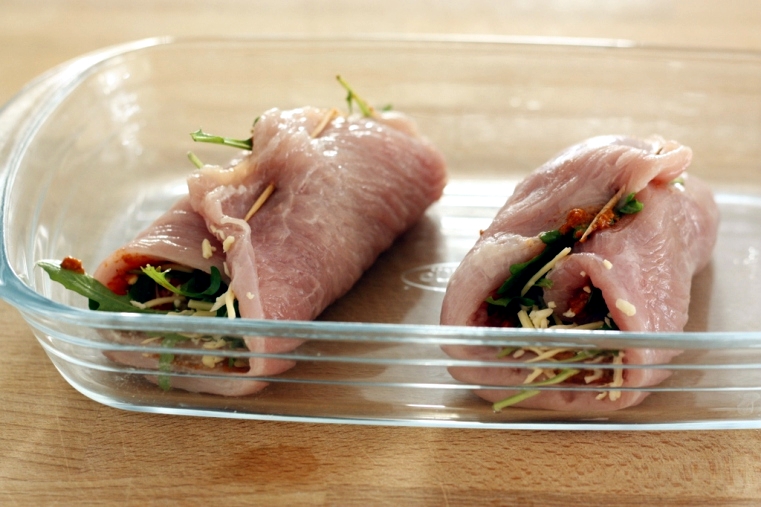
Flatten turkey and sprinkle each with 1 tablespoon pesto.
Top with rucula and cheese and roll up.

wildreis pute 2
step 3
Stuck with toothpicks, coat the meat with a bit of soft
butter and place in a baking dish.
Bake in the preheated oven at 200 gr C (400 gr F) for about 20 minutes.
wildreis pute 3
step 4
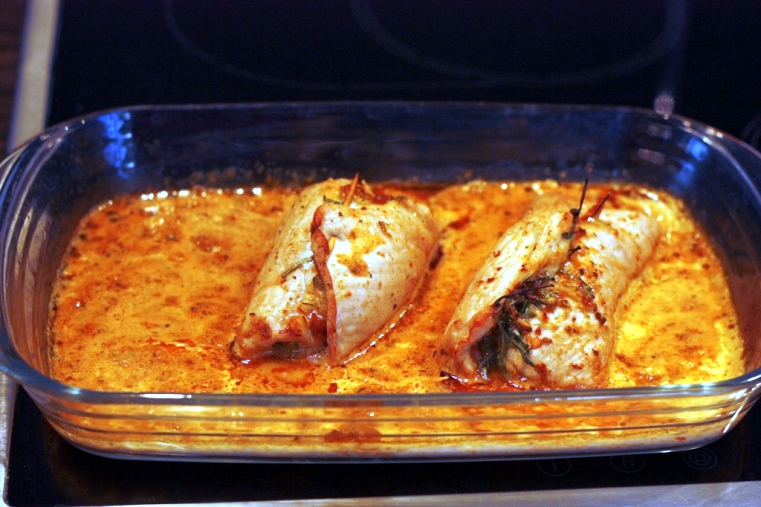
Mix the vegetable broth, white wine, the cream with 2 tablespoons
of pesto and season with salt and pepper.
Then poor over the turkey rolls and bake another 20 minutes in the oven.
At the moment it looks like a lot of sauce, but some will evaporate during
cooking. Also you want a lot sauce to keep the meat and rice moist.

wildreis pute 4
step 5
Drain the rice and serve with turkey and sauce on a plate.

wildreis pute 5

Tips.

This easy to cook and so delicious dish goes well with a light green
salad. A fruity chardonnay will round this meal up.
What I like too, this dish needs only a few ingredients, can be easy
made even for 10 people or more, with little time investment, and is a real
SHOW OFF meal. Everyone will like it. ENJOY !!

Veröffentlicht unter Recipes | Verschlagwortet mit | Hinterlasse einen Kommentar

Quinotto Del Valle Escondido

quinoa  risotto 1

Quinotto from the Hidden Valley.

Risotto – with quinoa (quinotto) instead of rice, the Peruvian version of risotto.
We made this dish first in Valle Escondido in Panama. Since then we love it.
Another wonderful light and healthy Summer recipe.

The difference with this risotto is that the quinoa, the wonder grain of the Andes,
is previously boiled and then stirred until creamy with the remaining ingredients.
Quinoa is still healthier than normal rice due to high protein content. It tastes
creamy and has only a slight spiciness, which brings the earthy nutty flavor of
quinoa and mushrooms to a good effect.

quinoa risotto 2
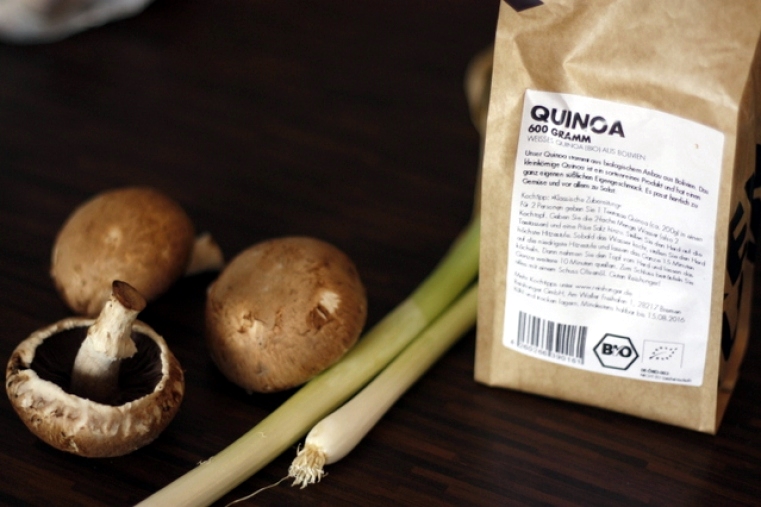
Made this dish in Germany with brown quinoa and brown button mushrooms.
Quinoa from a health food store.

Ingredients.

200g quinoa
500ml cold water
1 tablespoon very good olive oil
30g butter
1 onion, finely chopped
3 cloves garlic, finely chopped
125g mushrooms, thinly sliced
125ml white wine, same as you like to drink
125ml double cream
A little grated nutmeg
50g Parmesan, or bit more if you like
4 tablespoons finely chopped parsley
Salt to taste
Black pepper to taste

quinoa risotto 3
Don’t judge it by the brown color, judge by taste, it’s fantastic.

How to do.

Step 1
Cook the Quinoa as usual. Save a bit of the cooking water, if needed.
Don’t forget to wash and rinse well before cooking.
Step 2
Heat the oil and butter in a saucepan and melt over low heat.
Add onion, garlic and mushrooms and fry until the onion is translucent.
Add the wine and bring to a boil again.
Add cream and season with nutmeg and pepper.
Step 3
Bring it to a boil again and add the cooked quinoa.
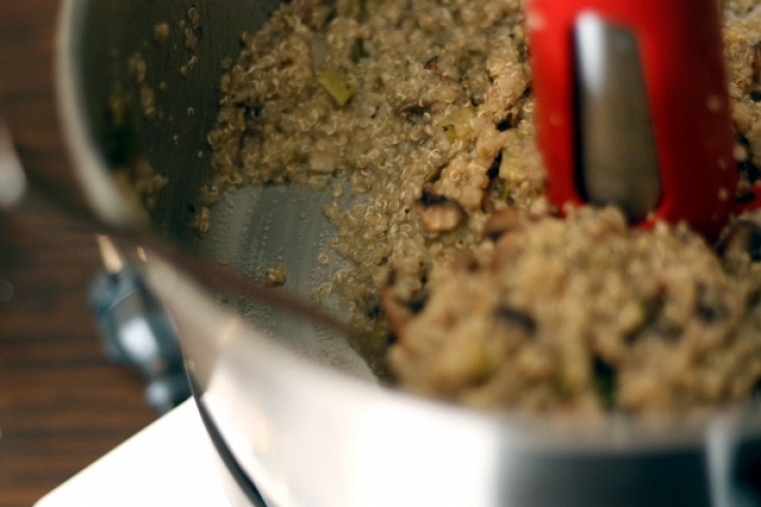
Reduce heat and continue cooking, stirring constantly the Quinotto until
a creamy texture is formed.
Add half of the Parmesan and half of the parsley and season to taste.
At this stage add a bit of the cooking water, if needed. Dish should be
lovely creamy, not dry.
Step 4
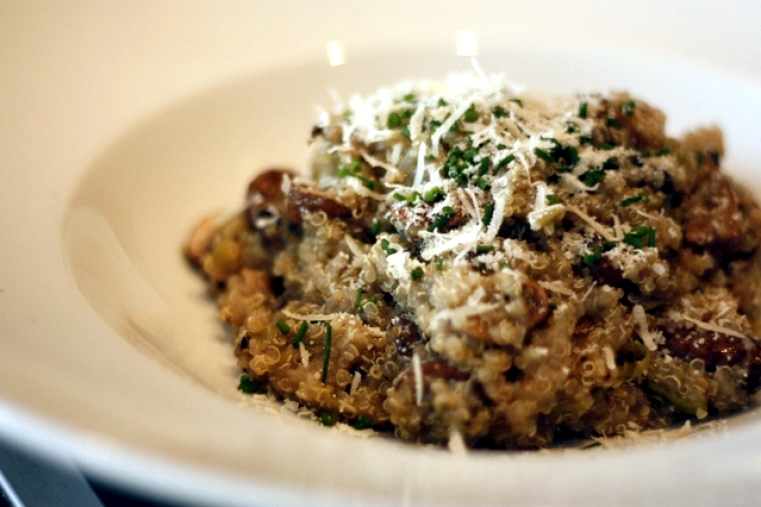
Serve with remaining Parmesan and parsley sprinkled over it.

quinoa risotto 4

Tips.

A delicious variation of this recepie is, to add same amount of shrimps as mushrooms
to the dish. Serve with a „spicy“ salad (rucola, watercress etc.) and a cool white wine.
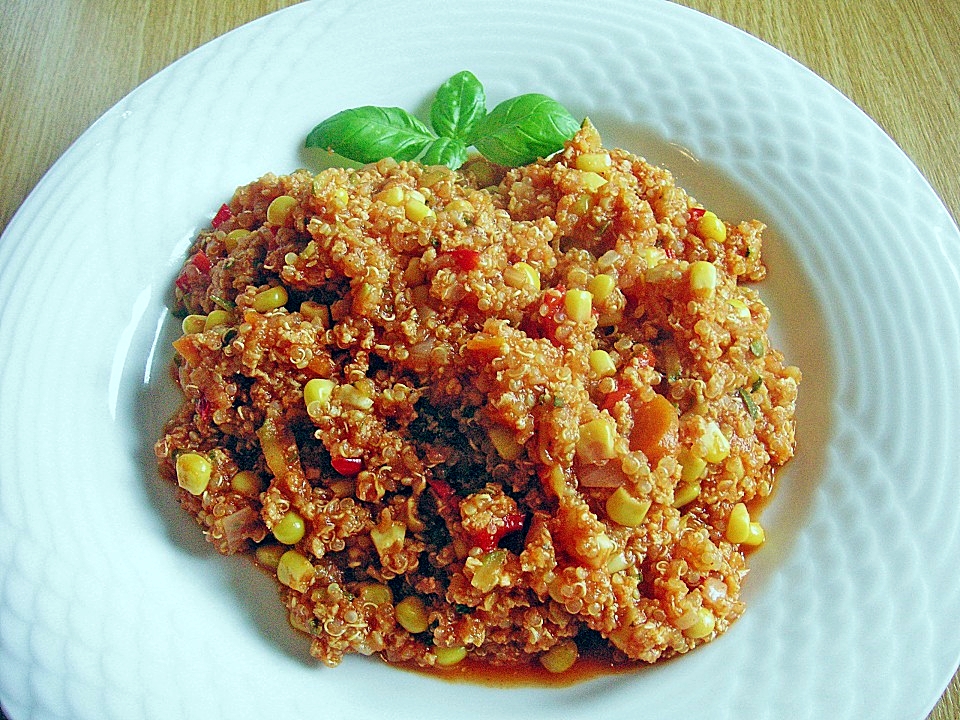
You also can try the variation, instead of mushrooms, with chopped zucchini, carrot, corn
and tomatoes, like shown in the picture on top of this post.
If you like it spicy add a bit chilli or curry and coriander. ENJOY !!

Veröffentlicht unter Recipes | Verschlagwortet mit | Hinterlasse einen Kommentar

Summer Veggie Burger

veggie burger 1

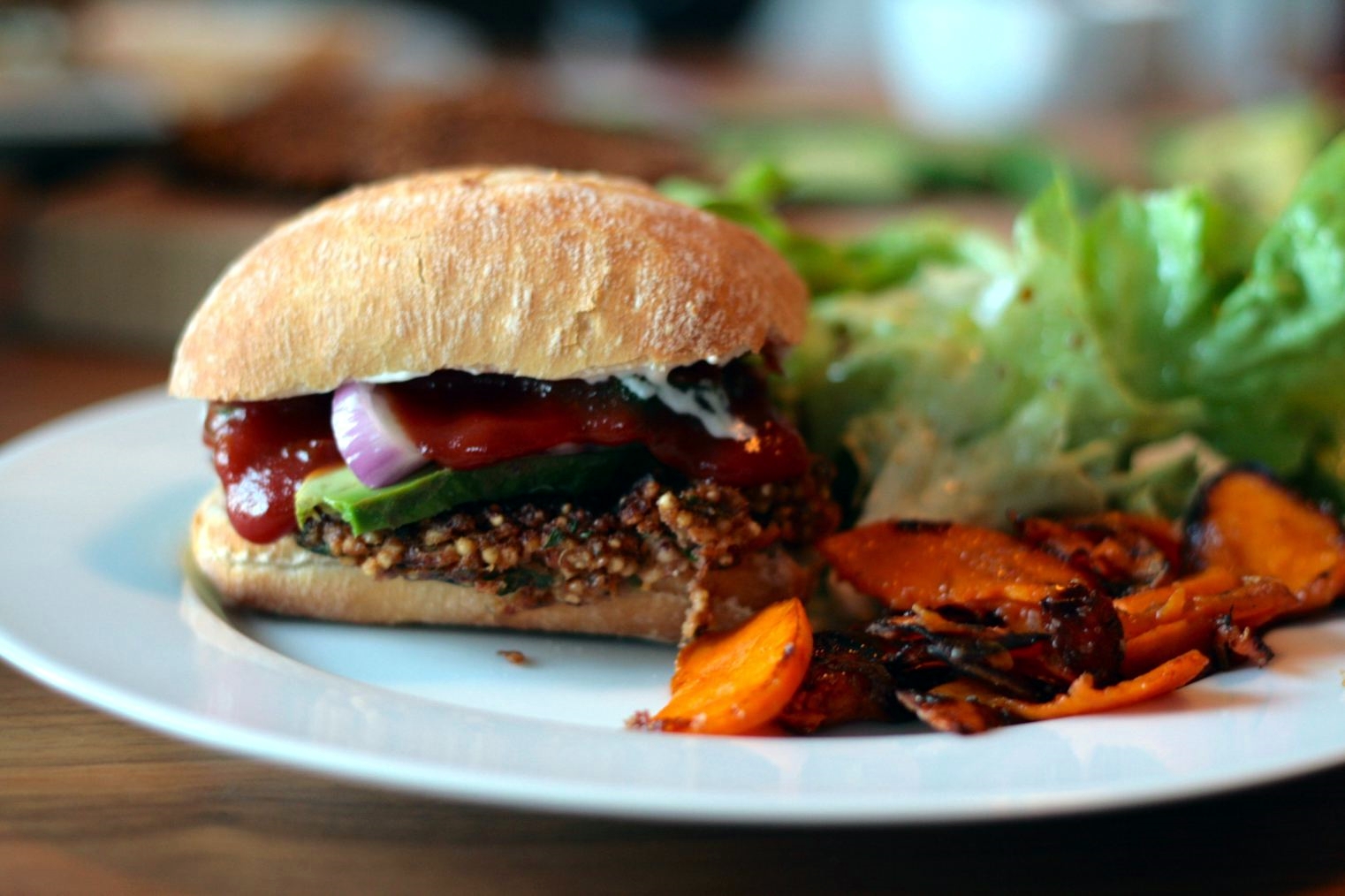
Summer Veggie Burger with sweet potato chips.

In the southern hemisphere the summer goes and in the northern hemisphere
the summer will arrive. Perfect time to give you some summery recipes.
Light, healthy and tasty. Don’t be shy to try them yourself.

I like unusual veggie burgers. In another blog I already posted a special veggie
burger created by Paul Mc Cartney’s wife Linda. Her veggie burgers are worldwide
famous. Paul Mc Cartney is a lover of vegetarian cusine and „candle light dinners“.

The following variant is a combination of many different veggie burger variations
which I tasted during the years. And so easy to make.

Ingredients.

veggie burger 2

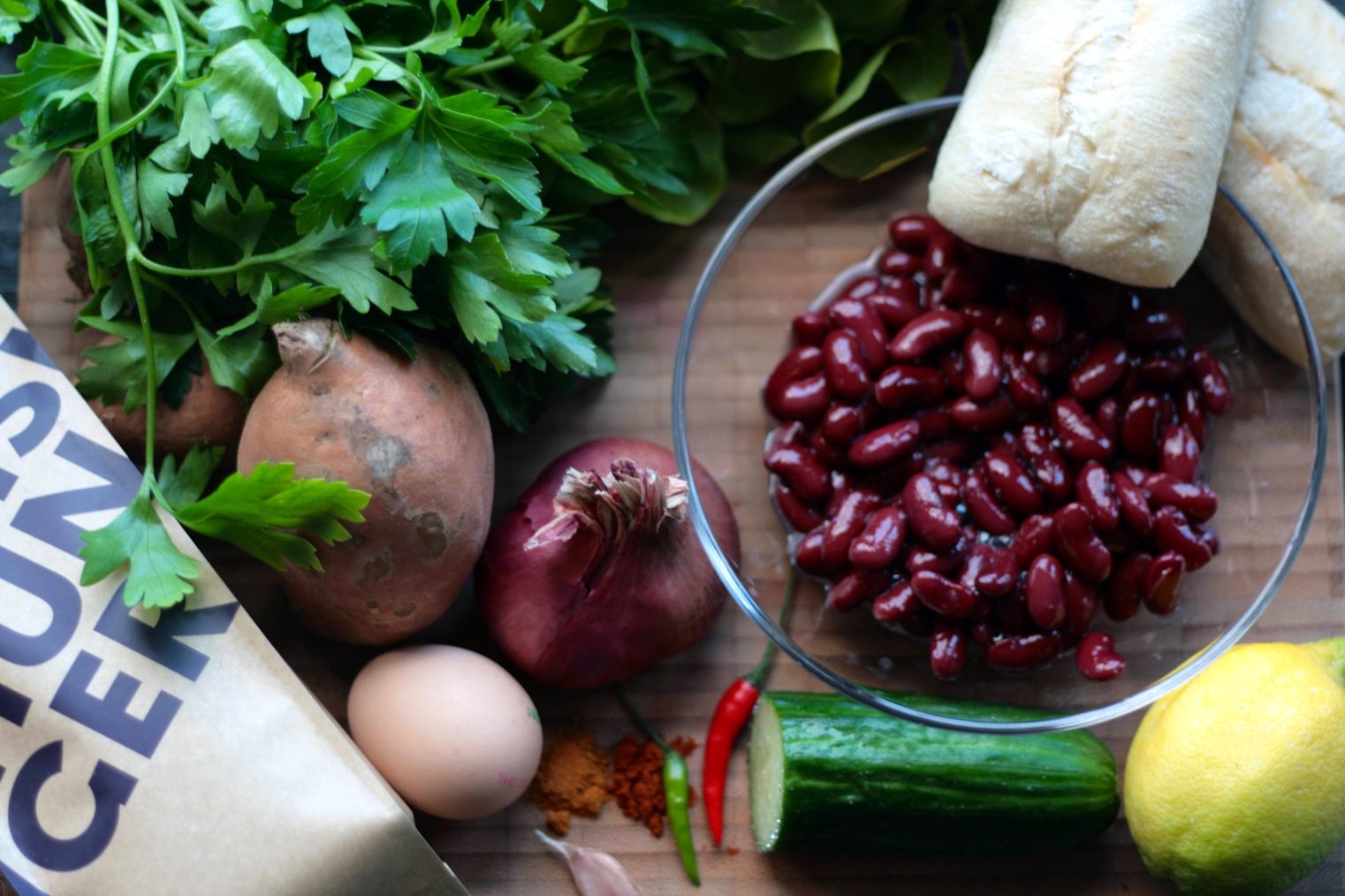
100g millet
2 sweet potatoes
1 red onion
1/2 Lebanese cucumber
1 egg
1 clove of garlic
2 medium size chillies
1/2 teaspoon cayenne pepper
1 teaspoon paprika
250g cooked red kidney beans
2 Baguette rolls
1 lemon
1/3 bunch of parsley

veggie burger 2b

How to do.

step 1
Prepare millet as usual.
step 2
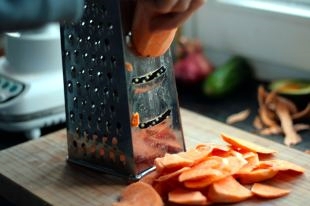
Sweet potatoes, peel and slice into chip size.
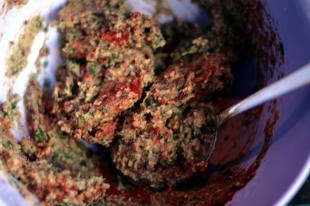
Kidney beans, chili, garlic, paprika, parsley
and Cayenne pepper, together in a mixer.
Then mix till you have a thick paste.
To smooth the paste use a bit lemon juice.

veggie burger 2a

step 3
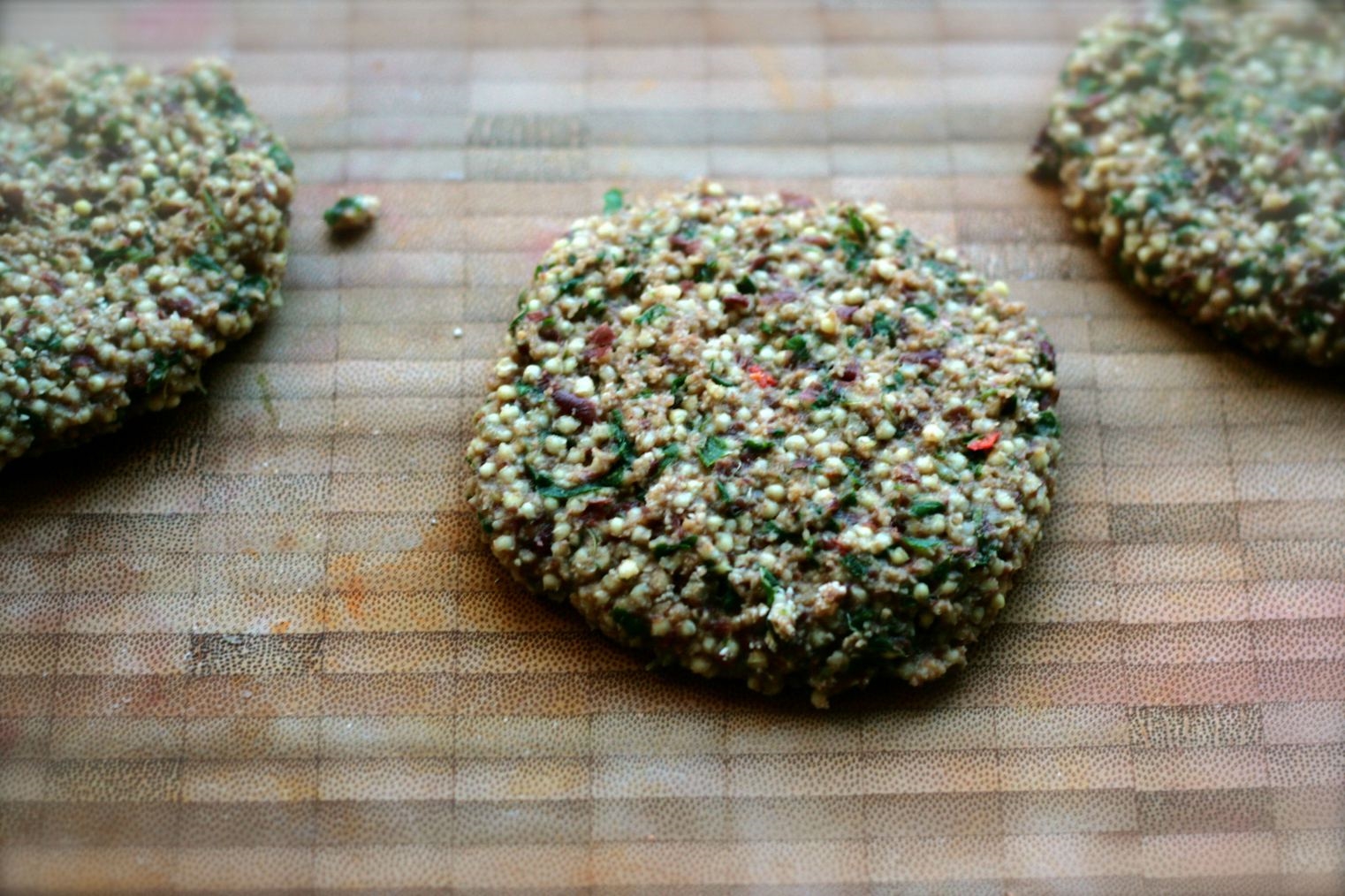
Stir in the egg and form burger patties.
Toss patties in the millet til they are fully covered.
Fry in a pan on medium heat in a little oil.
Fry sweet potatoes with oil in another pan to crispy chips.

veggie burger 3

step 4
Build up a burger with your baguette roll and
Refine burger with fresh cucumber and red onion.
Use sauce according to taste.

veggie burger 3a

Tips.

Serve hot with your sweet potato chips, sprinkled with lemon zest.
Tastes great with a fresh salad. A cool beer goes well wit it.

My favorite sauce variations, hot chilli BBQ sauce over the burger,
as shown above. Or, if you like it softer, use „Alabama white
BBQ dressing“ (see my post about) or Greek Tzaziki. ENJOY !!

Veröffentlicht unter Recipes | Verschlagwortet mit | Hinterlasse einen Kommentar