
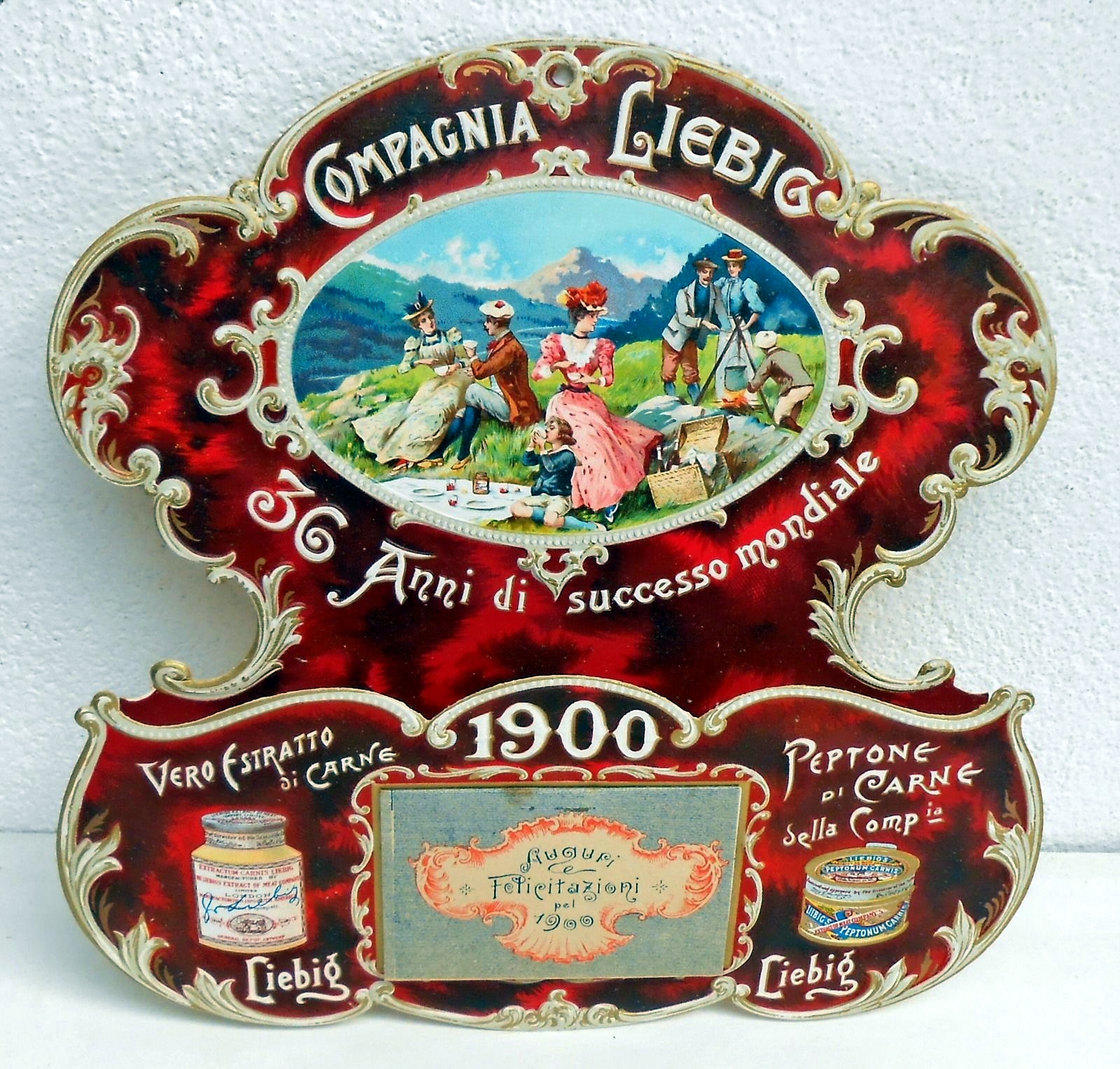
Since I came to Uruguay, I realized how close I am to parts of my family history. It’s also a big part of Uruguayan economical history. And it was more then 100 years the driving business in and around Fray Bentos in Rio Negro. What do I mean?
„The Liebig Extract of Meat Company“.
Justus Freiherr von Liebig (born 12 May 1803 in Darmstadt – died 18 April 1873 in Munich) was a German chemist who made major contributions to agricultural and biological chemistry, and was considered the founder of organic chemistry. As a professor at the University of Giessen, he devised the modern laboratory-oriented teaching method, and for such innovations, he is regarded one of the greatest chemistry teachers of all time.
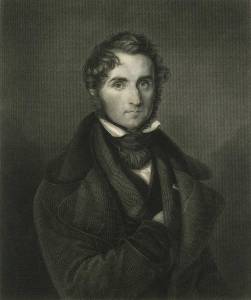 Justus von Liebig, Professor with the age of 21 in Giessen.
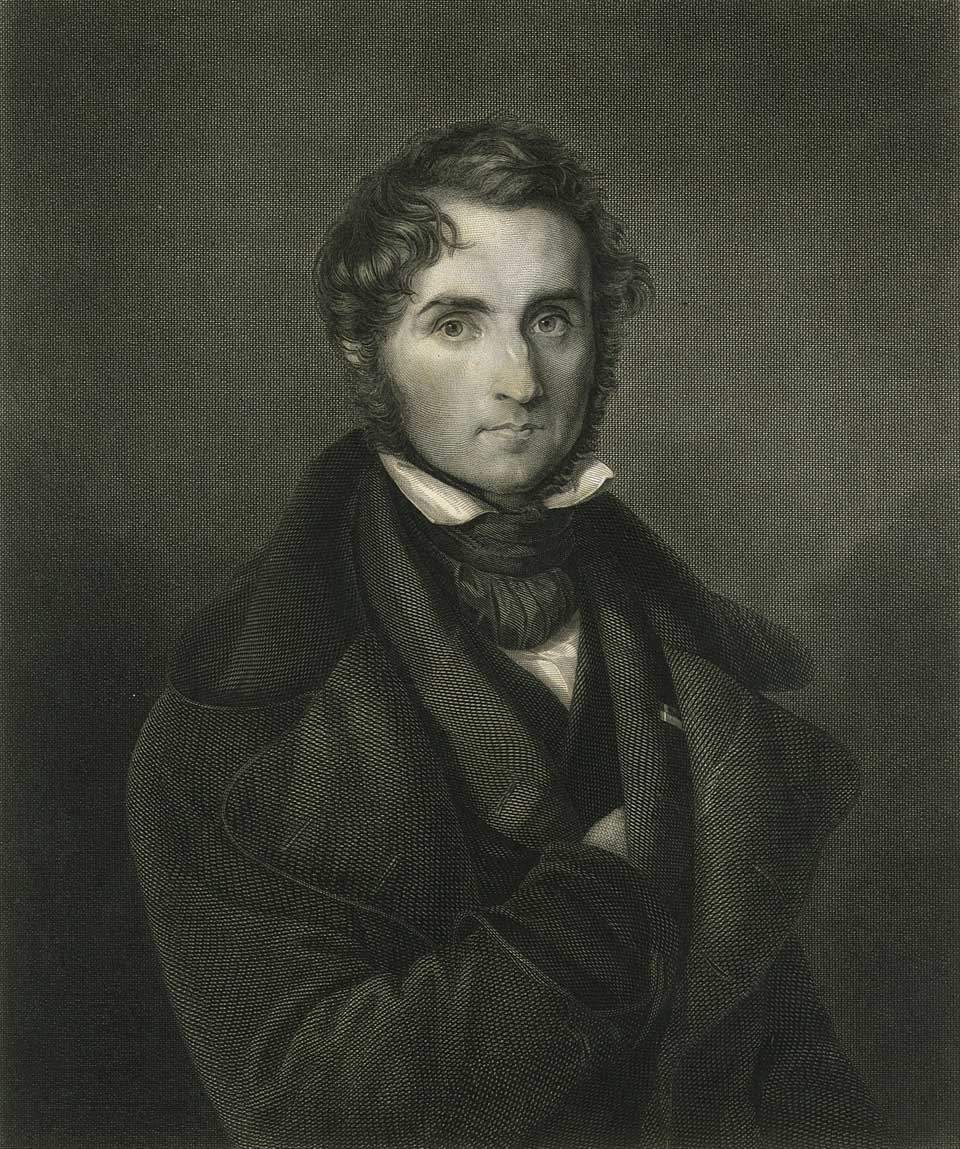
He is considered the „father of the fertilizer industry“ for his discovery of nitrogen as an essential plant nutrient, and his formulation of the Law of the Minimum which described the effect of individual nutrients on crops. He also developed a manufacturing process for beef extracts, and founded a company, „Liebig Extract of Meat Company“ (LEMCO), that later trademarked the OXO brand beef bouillon cube.
 One of the famous Liebig collectors cards.
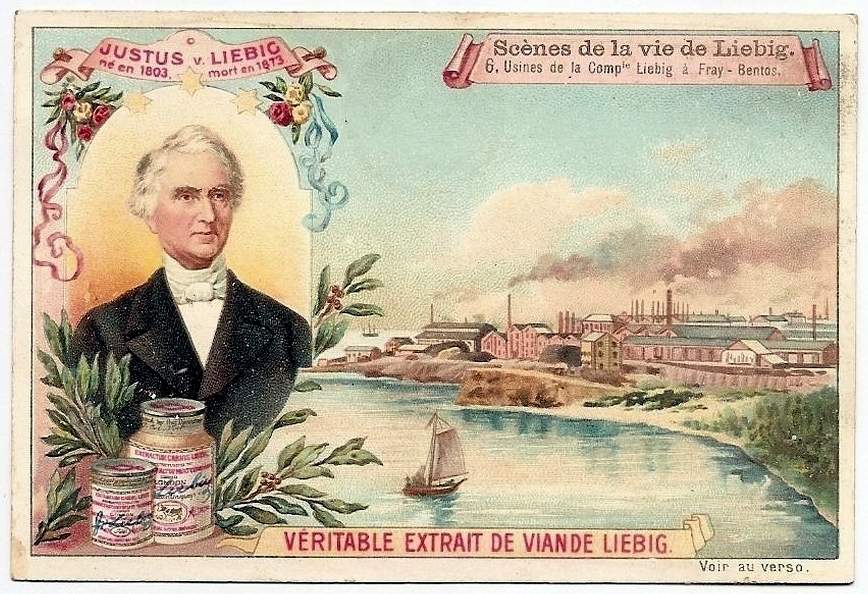
We will come back to Justus von Liebig in a later part. On my trip to Fray Bentos in Uruguay, I had the chance to see the industrial site of the Liebig Company. Also is there a museum and the old villa, called Casa Grande. All is in bad and ruined state, but nothing is turned down yet, it is all part of the museum, „Museo de la Revolucion Industrial“. It is worth to see and if you like, dive into a whole industrial town of the 1860’s to 1960’s.
 The museum site in Fray Bentos.
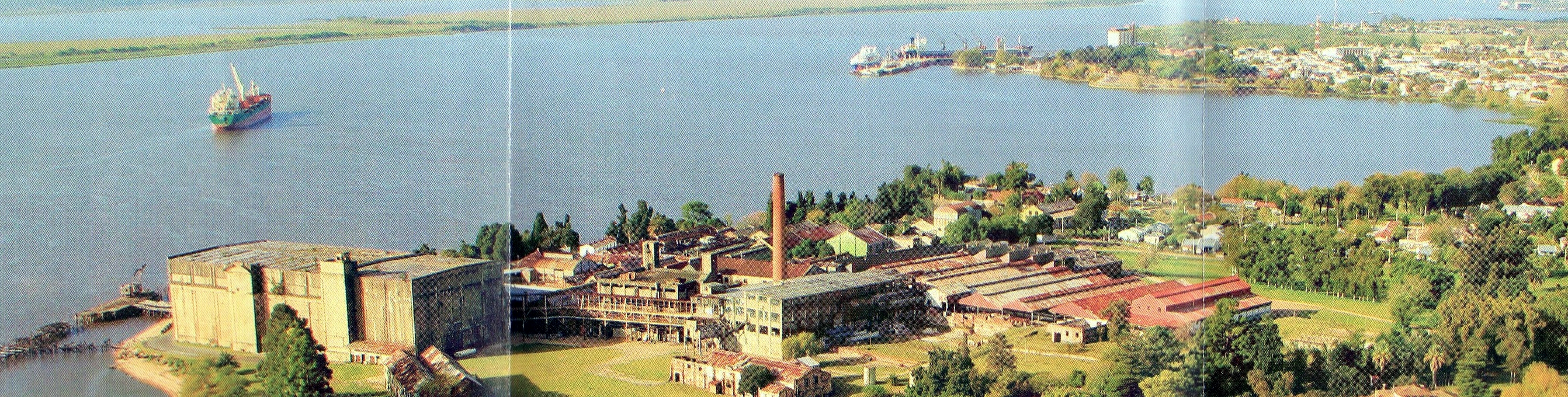
For sure it was an Industrial Revolution what was established and build mid of the 19th century in Fray Bentos. Once the largest industrial complex in whole South America. There is so much to say, to inform and to write, that I will do it in several parts. Let’s start together through history with an eye witness travel report from 1890 as part 1. It was written in German language of the late 1900’s and so is my translation a bit of odd too.
 Liebig companies cattle herd around Fray Bentos, 1890’s.
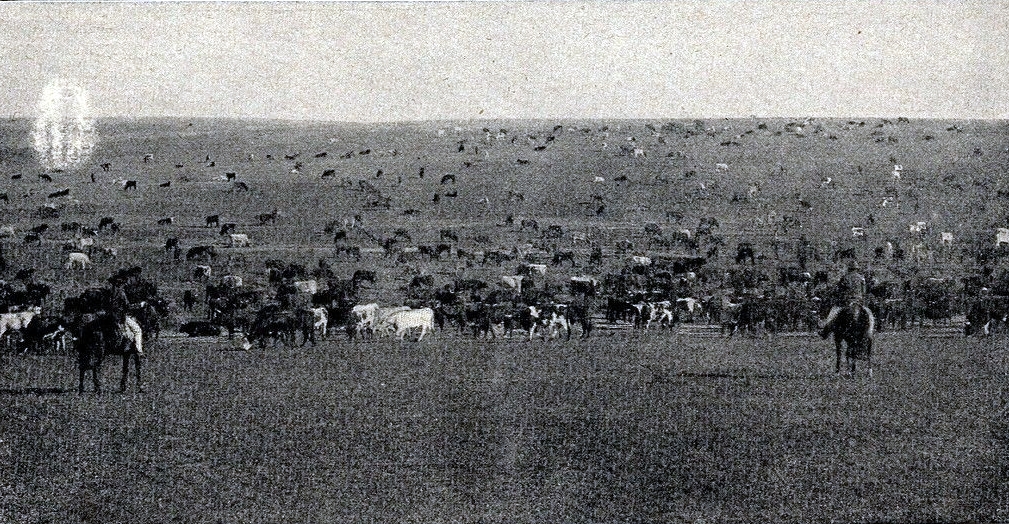
On the pampas of South America.
Stuck as the Goulash of the Hungarian Puszta, like the cowboy in the Wild West of the Great Plains, is the Gaucho of his pampas, the vast grassy plains of South America’s Laplata states, Argentina and Uruguay.
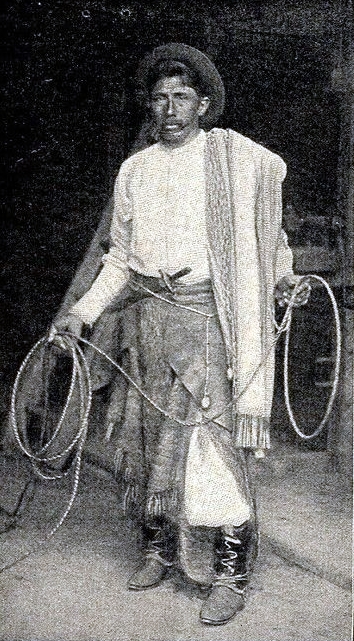
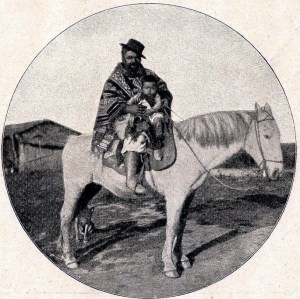 Typical gaucho, early photograph around 1900’s.
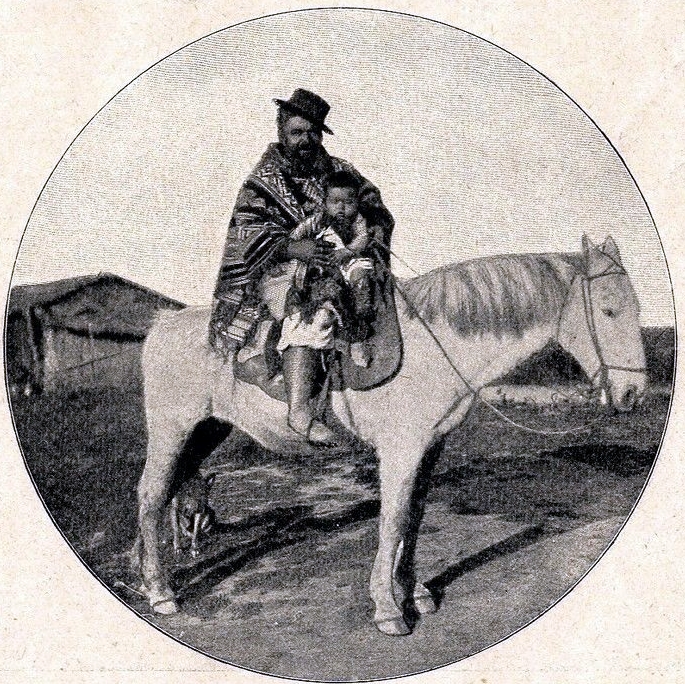
The Gaucho considers himself a Spaniard. He owned diving the pride of a genuine hidalgo, but in truth he is a hybrid, in whose veins flows more Indian than Spanish blood. And as his maternal ancestors, he also loves the freedom above all else. Like the Bedouins of the African desert, he hunts for wild horses through the endless Llanos.
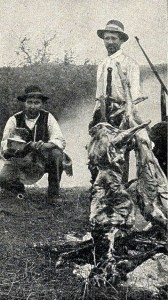
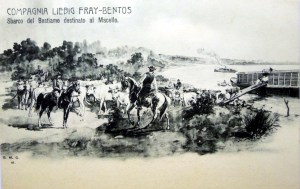
Gauchos at breakfast and unloading cattle from a river Uruguay bark sloop.
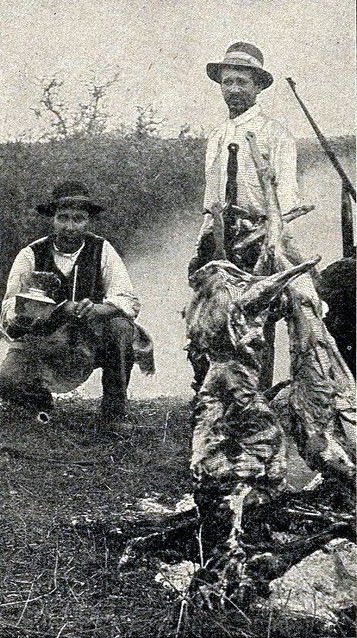
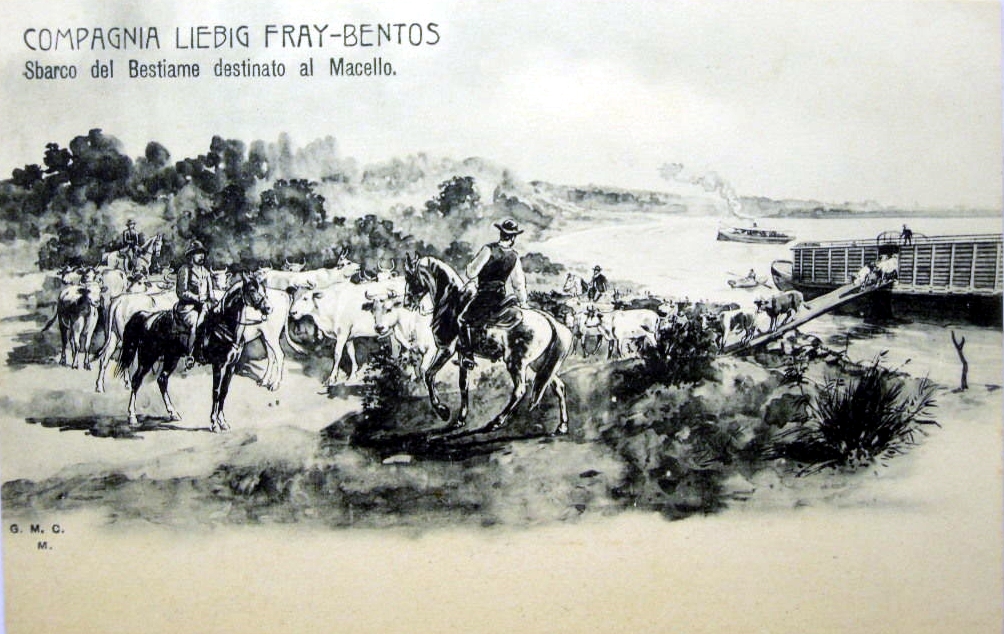
The picturesque costume of the Pampas outfit. A coarse shirt, wide Moleskin trousers, a light jacket and above all the colorful, woolen poncho. A large, square, striped, plaid and piece of stuff, with a hole in the middle through which the head is attached. Long bootleg lether boots, a wide-brimmed Panama or a slouch hat of black felt and a red patterned scarf complete the somewhat strange costume, to which only the wilderness is the appropriate dressing.
 Gauchos, see all the described equipment they have.
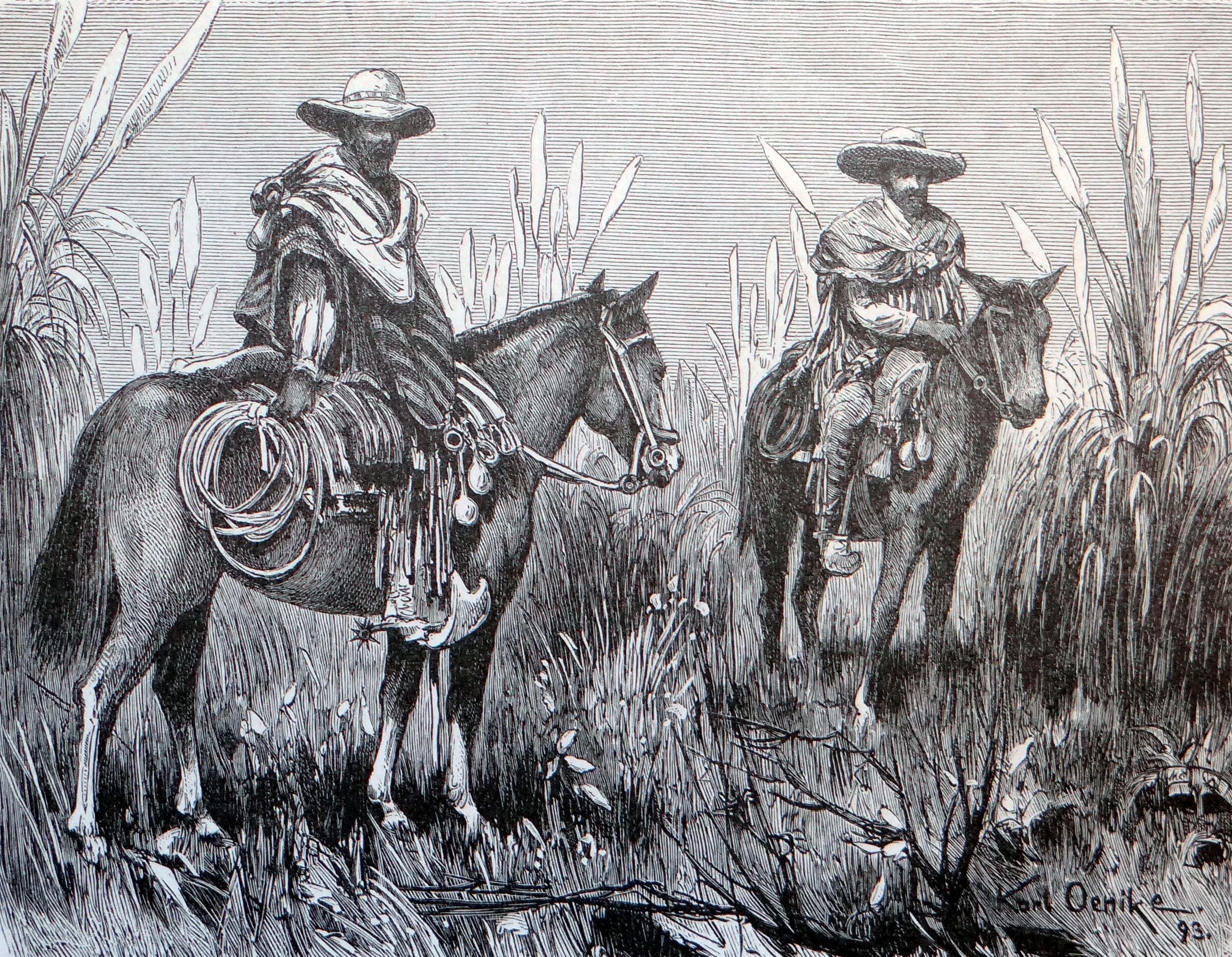
The weapons or tools of the buffalo and horse fang equipped Gaucho is a braided rawhide lasso, the 35-centimeter-long knife that is worn in leather sheath on the belt, and the bolas, three iron balls at the ends of a long strap . The hunter swirls the Bola strings a few times in the air and then hurls it against the hind legs of the animal pursued, the entangled therein, and falls to the ground.
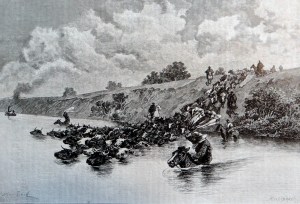 Cattle trail through river Uruguay.
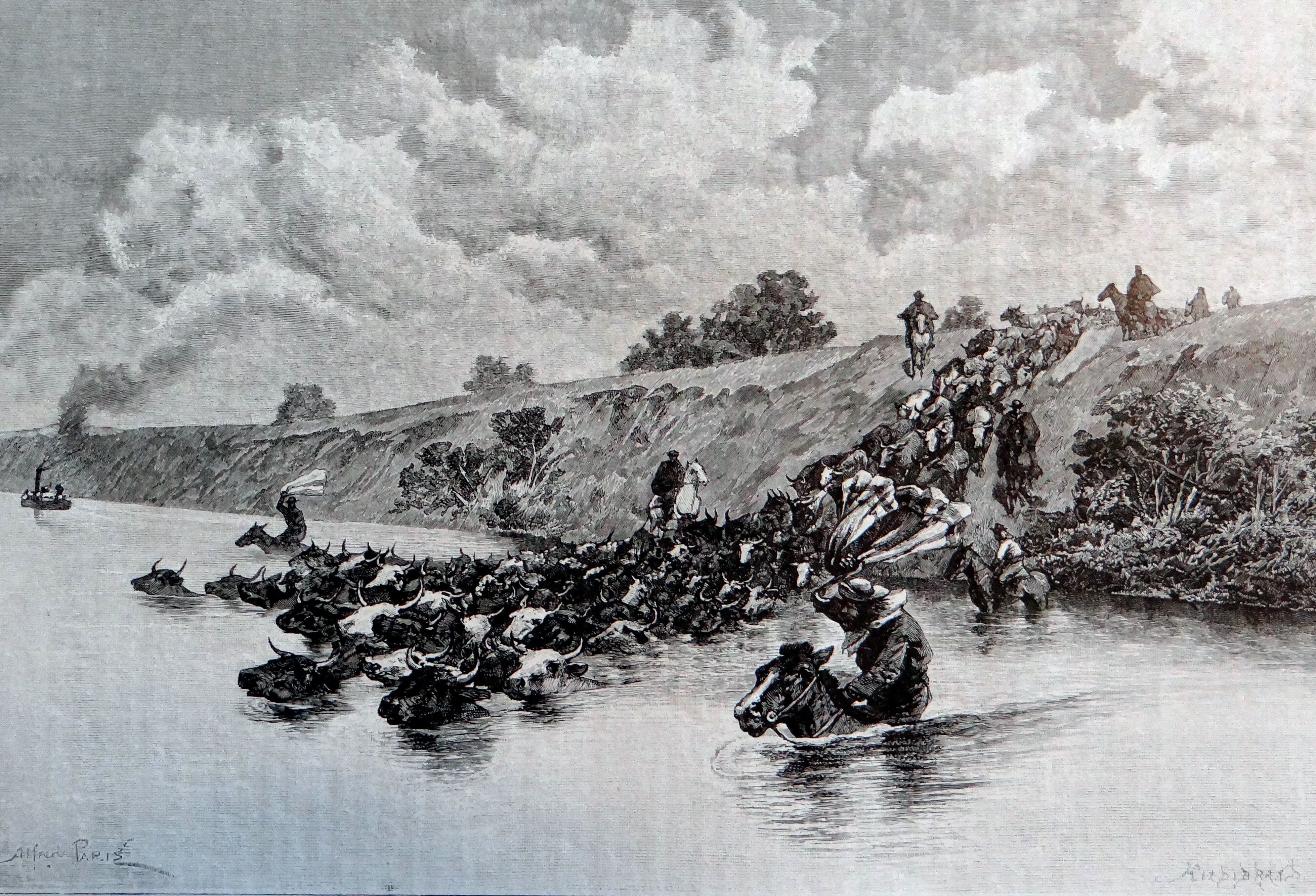
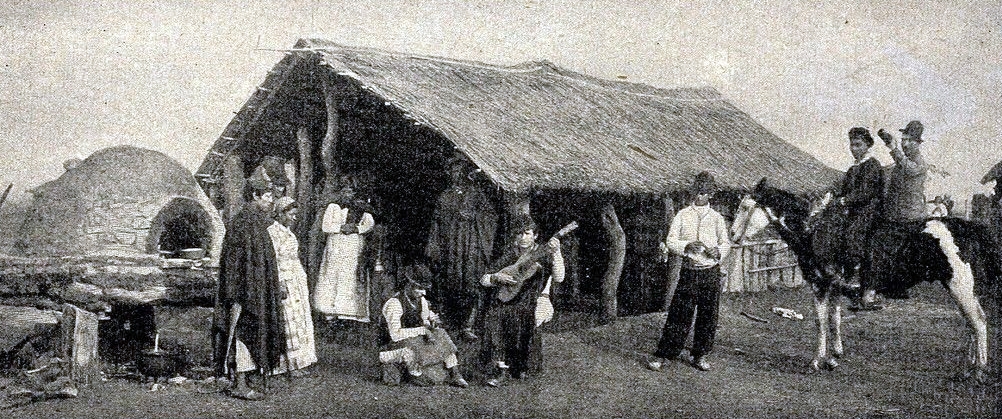
The life expectations of the Gauchos are extremely modest. They live in mud huts or in low dwellings that are cobbled together from raw tree trunks. With equanimity they bear the greatest hardships and complaints. They do not mind, after thousands of counting, confused masses just captured cattle and horse days and nights pass to travel 300 or more kilometers far.
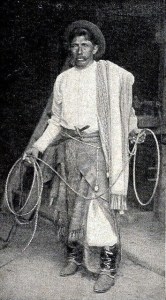
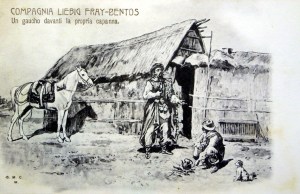
The gaucho life in Urugayan pampas, pretty poor, but they love their freedom.
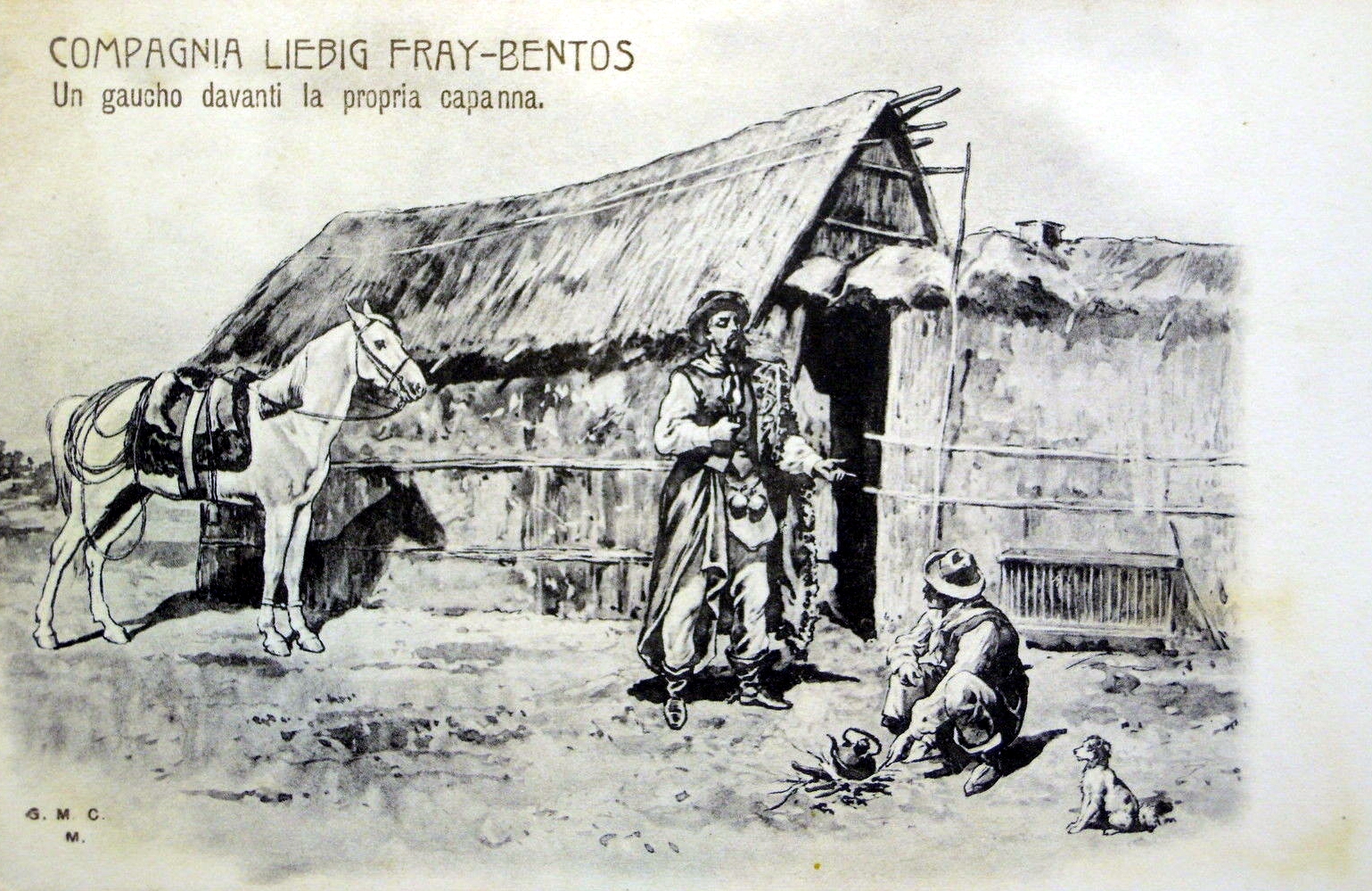
Without a murmur, the hardy boys camp, if needed, for weeks in an open field and take the easiest food to be content, just walking tours may not require them to. The Pampas shirt makes rather a detour twenty miles on horseback than a half mile walk. In the saddle he shows boldness and turns like no other rider on this earth. But without his horse, he is almost as awkward as a child who has just learned to walk.
Smoking a pipe while horse back riding.
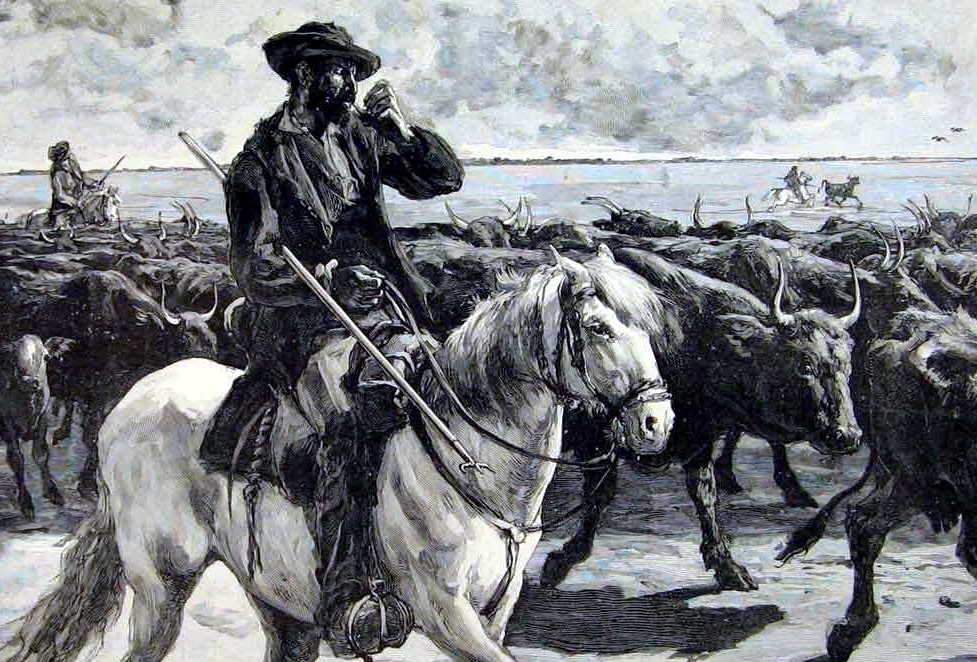
Equipped with the wonderful orientation skill and the keen senses of the Redskins, the Gauchos in the vast, monotonous plains themselves know perfectly navigate at night. The owners of large estancias, the gods, on which only cattle breeding, these sons of the wilderness are indispensable. They also usually are in the service of an estanciero. Few have their own little ganaderias (small farms with less then 10 cattle).
This is how gauchos live, sometimes several families in one home.
Industrial meat extract production.
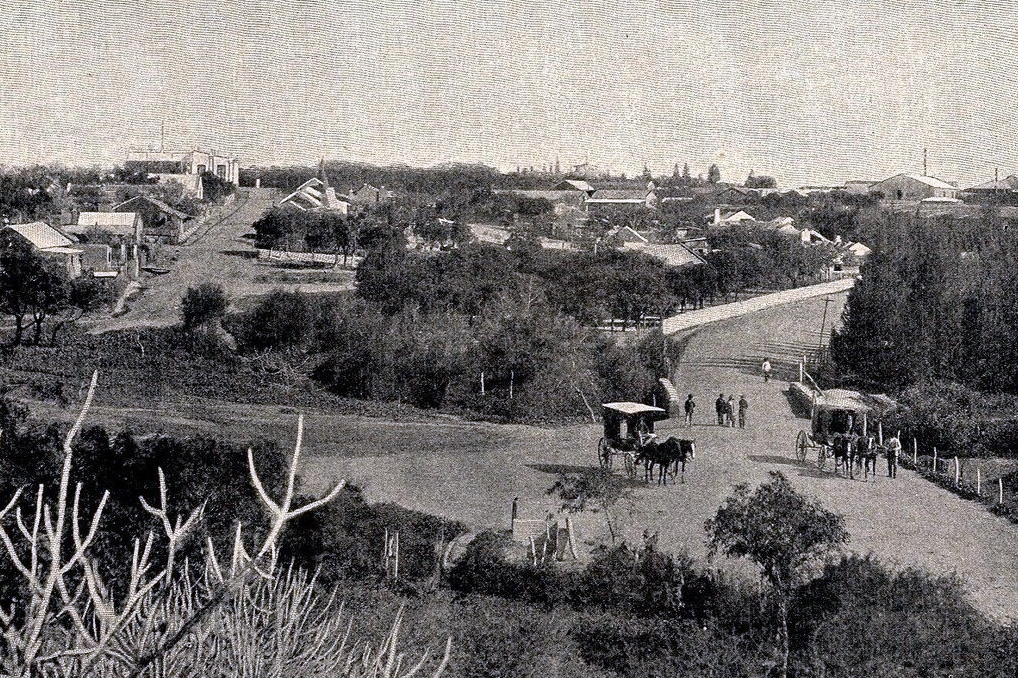
In the Department of Rio Negro, on the left (eastern) bank of the Uruguay, where the current reaches the width of 11 to 16 kilometers is called in a picturesque setting about 5000 inhabitants, little town of Fray Bentos, also Independencia. The small town is the second most important port of the Republic of Uruguay.
 Fray Bentos around the 1890’s.
Obtained downright celebrity has Fray Bentos by 1863, founded by the Hamburg Institute engineer Giebert, in the following the recipe of the great chemist Justus von Liebig, who under the name of the scholar made commercially known meat extract is factory like.
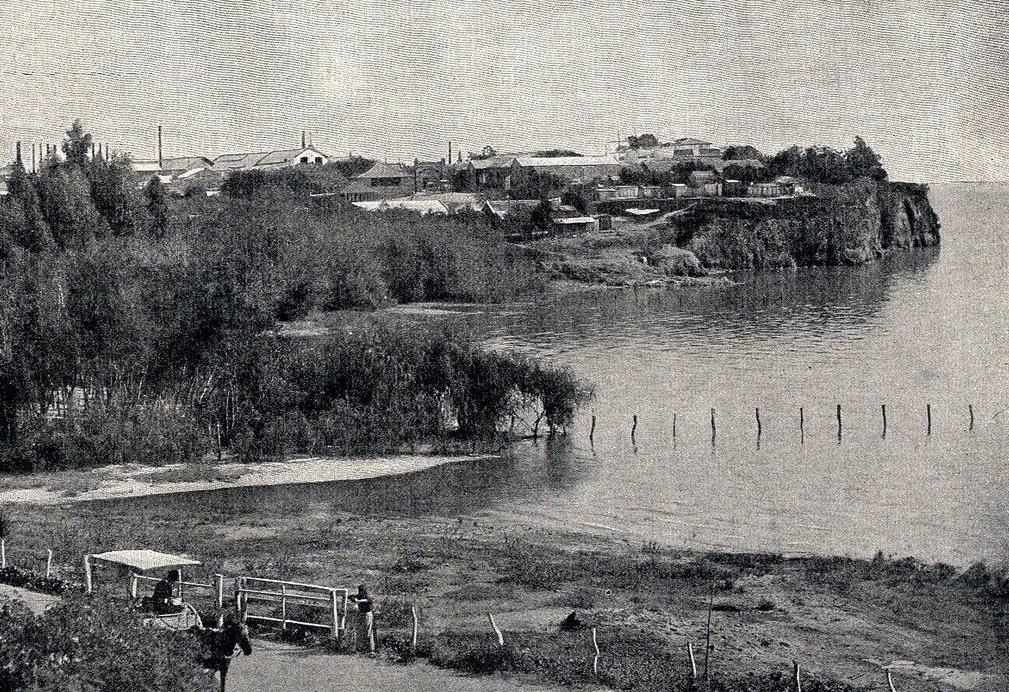
 Barrio Anglo in Fray Bentos, with the meat factory.
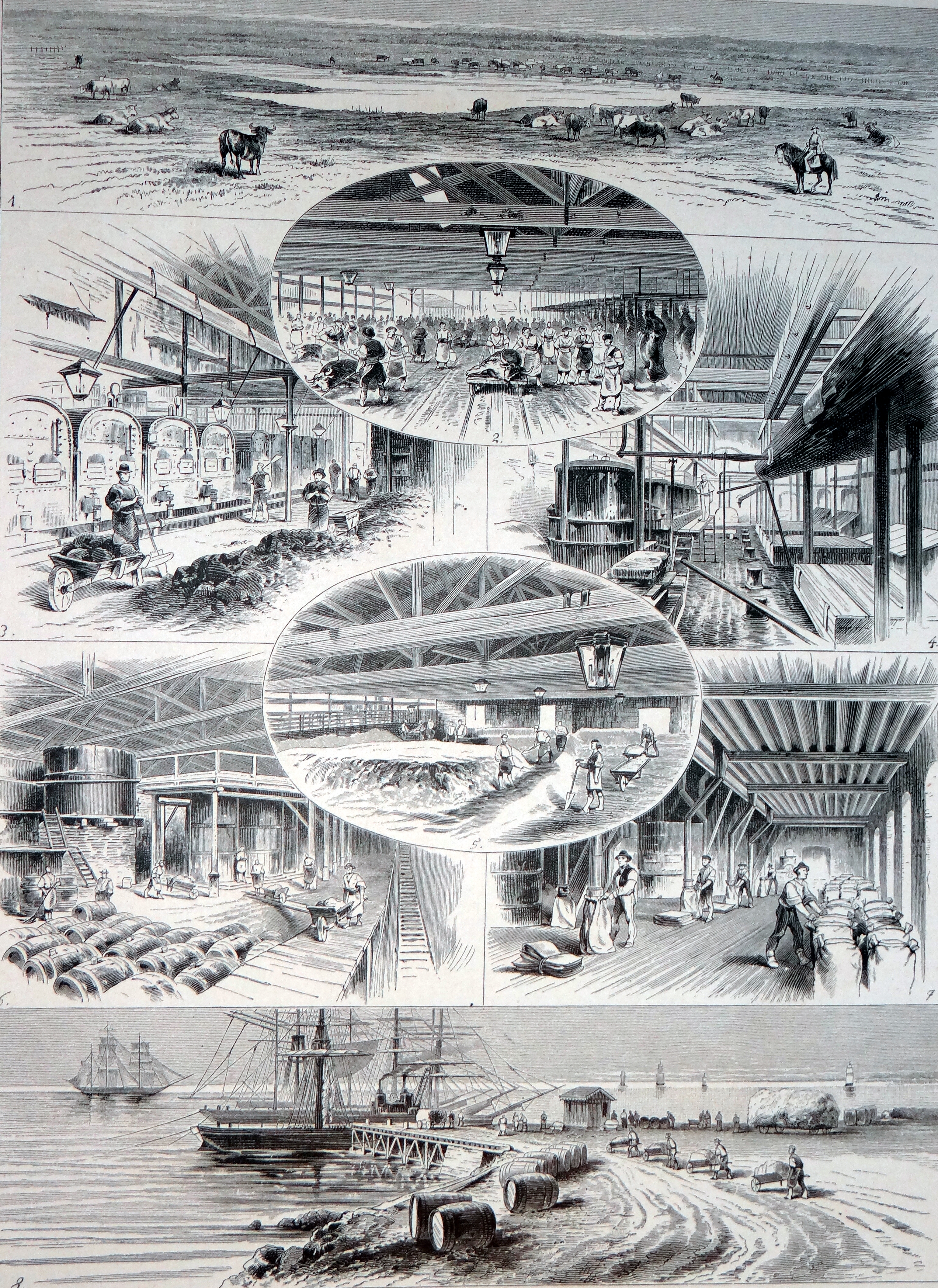
Besides the slaughterhouses and the vast spaces, full where you process the meat, include the establishment of an area of approximately 2,630 hectares, huge halls for the skin department, a so-called Graseria with 14 wood pressure absorbers the manufacture of tallow (each set is calculated for 20,000 kilos ), a centrifuge house, bone and blood meal mills, a cooking oil factory, a intestine laundry, canneries for tongues, corned beef and similar preparations.
 Wonderful wood engraving of the industrial area 1875.
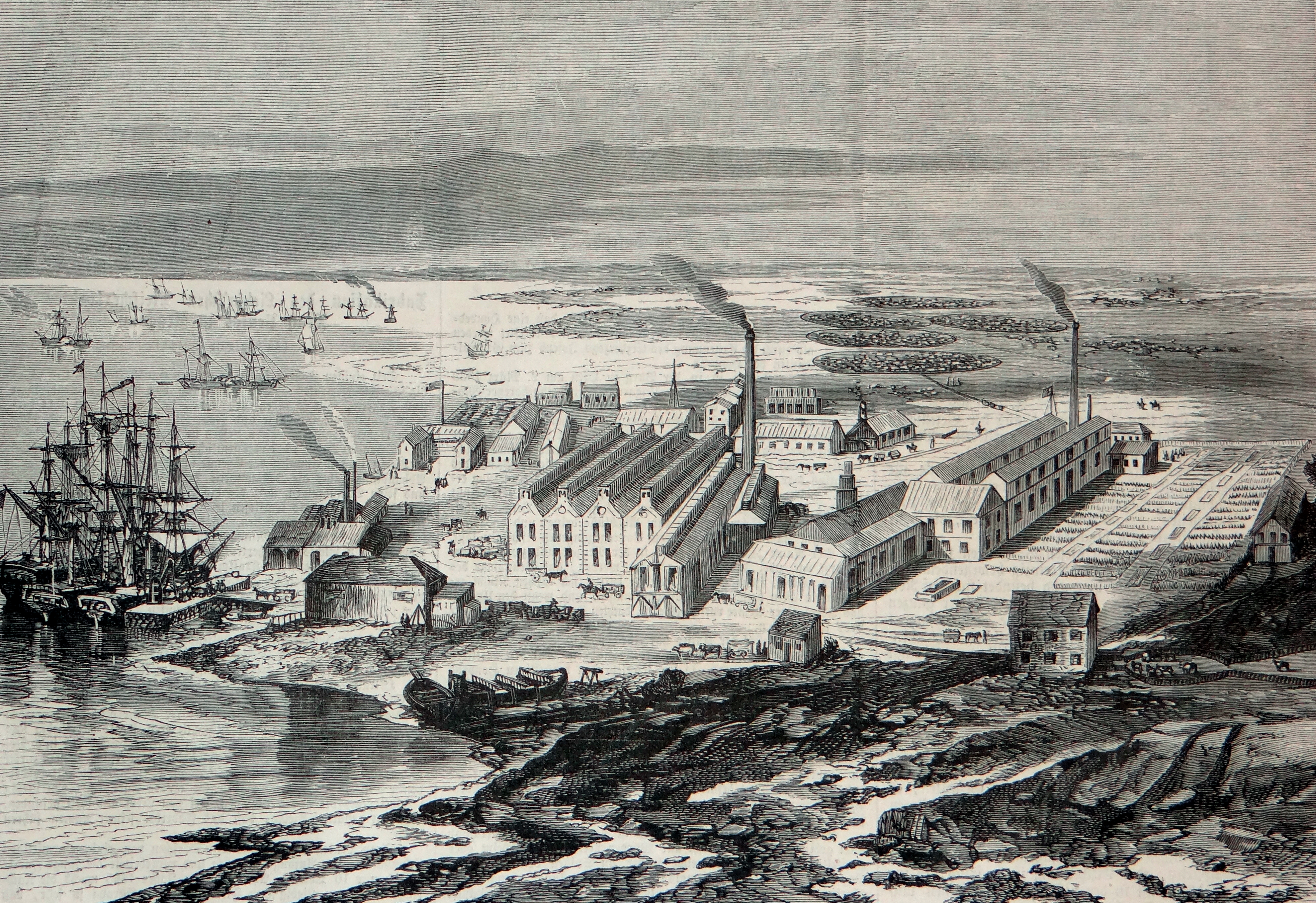
Above all you find workshops for making and soldering the tins, an iron foundry, a forge and a carpentry shop. The settlement is in fact a small city for themselves. As you can see alongside the office buildings, the brightly painted small houses of married employees and the picturesquely situated club and home of the still unmarried managers, where a magnificent garden, reading room and several billiard rooms is at disposal.
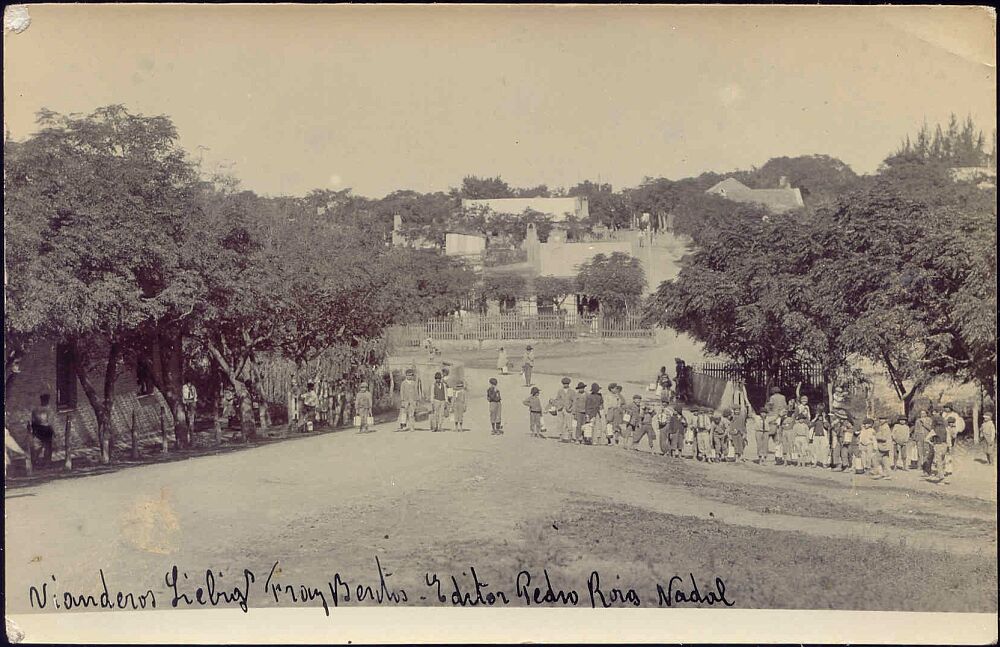
 The Liebig factory Kindergarden in Fray Bentos.
Further to the extensive complex has its own school, a library, built on top of a hill a hospital, which conducts a permanent on site German doctor. Then the colony of gauchos which is needed in this giant corporation.
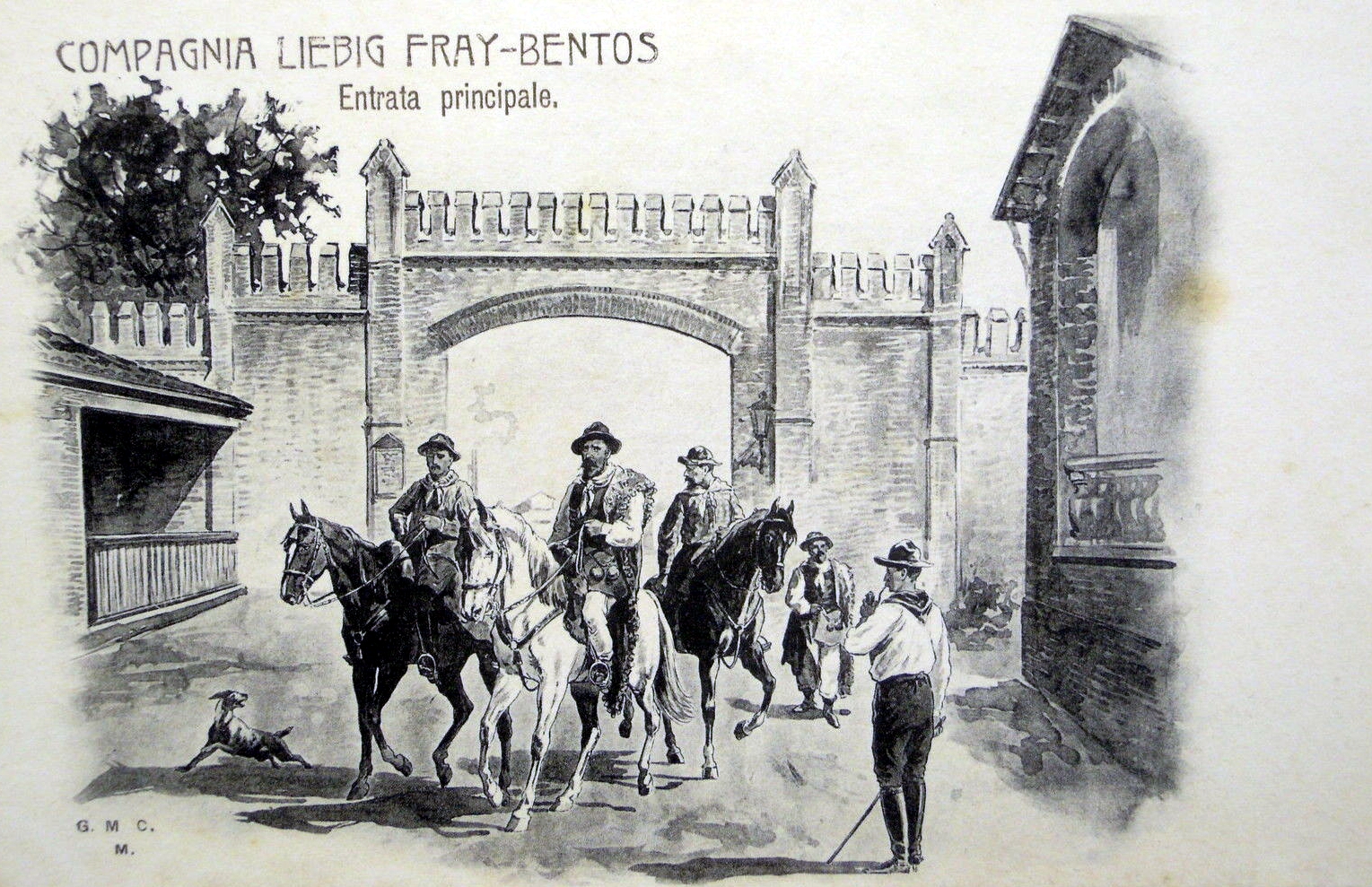
 Entry gate into the factory area.
At the peak over 5000 employees were working in Fray Bentos. On the adjacent immense grazing areas of almost 200,000 hectares more often graze 100000 cattle, which are overseen by the gauchos and must be gradually slaughtered. Since 3000 animals every day migrate in some months in the slaughterhouse, the supply would soon be exhausted. If troperos (cattle buyers/agents) not constantly traveled around in the Laplata states and bought up from cattle wealth of this land, the most beautiful cattle, the paddocks would be empty soon.
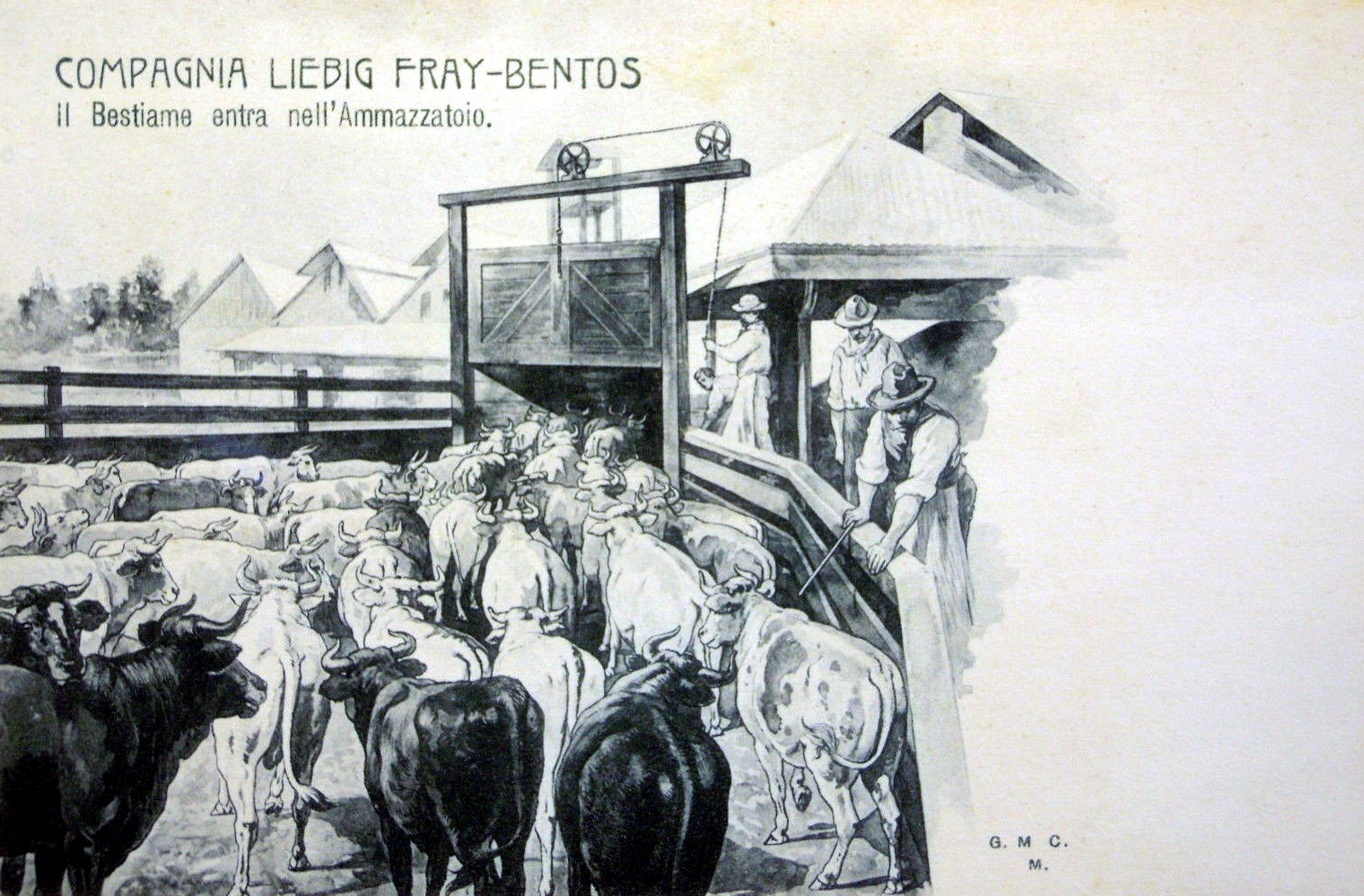
 Gate of no return.
The transportation of a numerous herd of cattle is by no means so easy. Tirelessly circling the Gauchos on their horses the flock, that some one hundred pieces won’t go lost. Once on their own grazing parts, the animals were giving time to recover from their long rallies, telling before it is fed into their determination.
 Beef way from grassland into the barrel.
The selected oxen for slaughter are driven into large fences. If the animals are killed here, they are rolled (on trollies) to the slaughterhouse. With astonishing speed then goes on the skinning and cutting . In 15 minutes the meat depends in large refrigeration halls from where they within 12 – 24 hours pass into the extract kitchens.
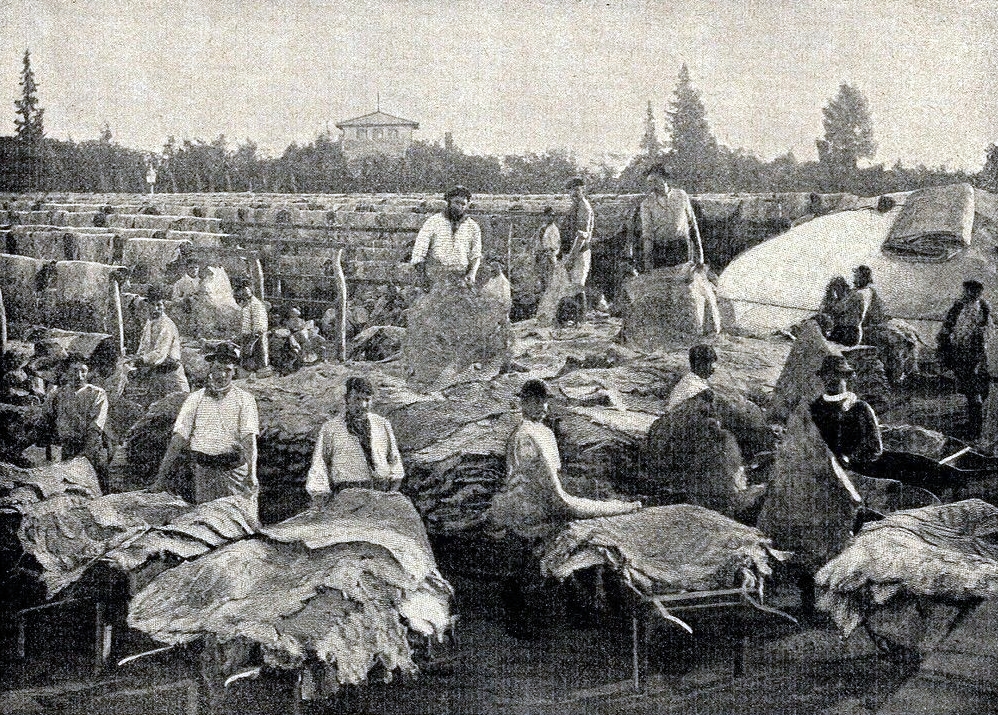
 Cleaning and drying the hides.
Before working on, the meat will be released from bones, tendons and fat and cut into the chipper. The ground beef comes with an equal weight of water in the 6,000 to 7,000-liter cooking pans. From there in the cast iron clearing pans. From there into the vast vacuum apparatus which are capable to concentrate daily 500000 liter extract liquid. At the end the final extract is then pressed into respective 50kilogramm metal boxes.
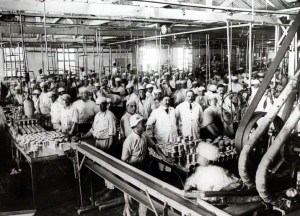
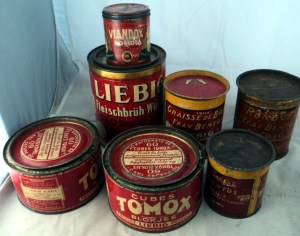
Canning section in Fray Bentos. See how many are working in one place. Collection of old extract cans.
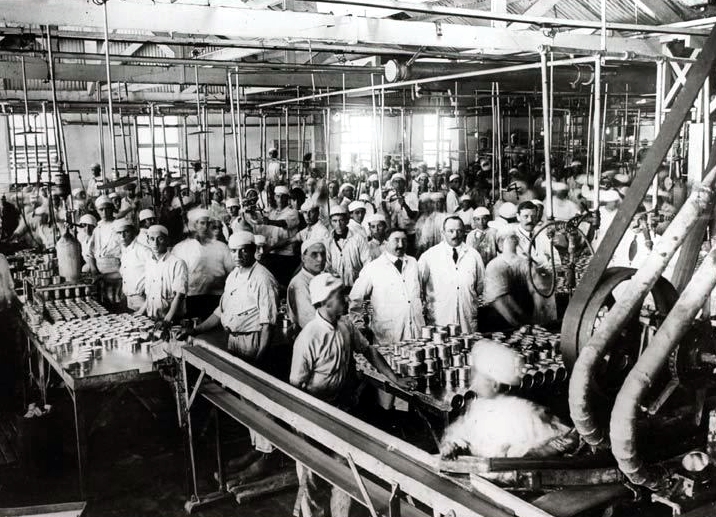
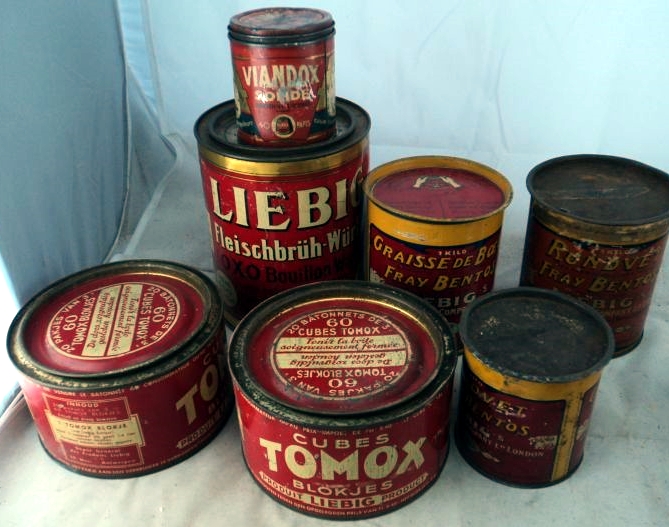
These vacuum safe metal boxes don’t need any cooling anymore and can easy be shipped all around the world. Later on they also used wooden barrels, much cheaper and easier to make. At destination the extract will be sized down to small amounts in cans or into household boxes and cubes in cans.
And – one more information – COLLECTING all around the Liebig Extract Company is
a hobby for many thousand people. It’s can’s or advertizing, it’s history or the
magnificent sets of pictures, menu cards or cook books. I’ll show more in the next
part. So, stay tuned to part 2 of this post.

