
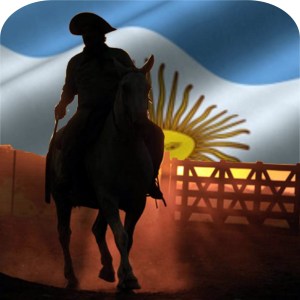
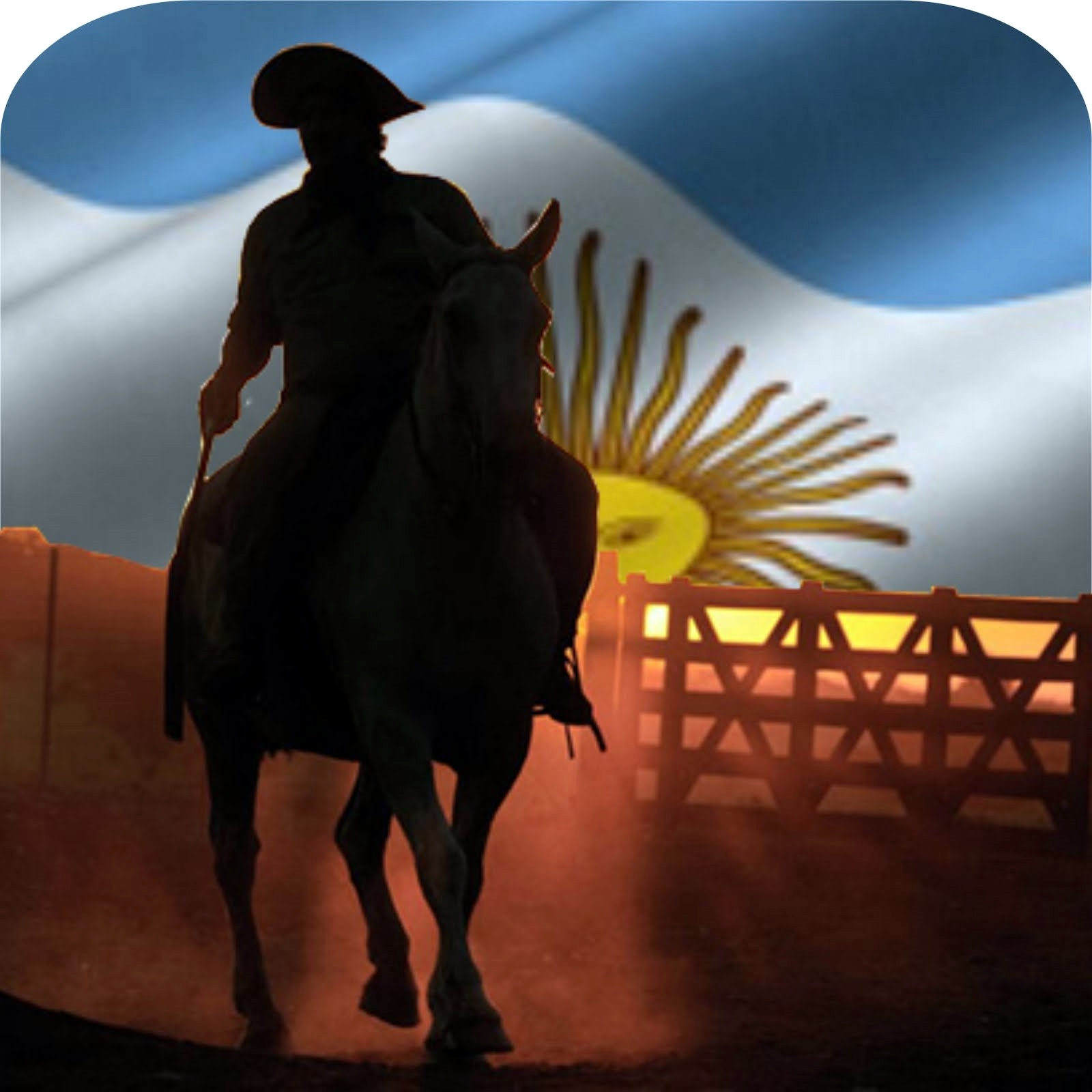
 National heroes in Argentina and Uruguay.
Last week I posted the article about the dog „El Gaucho“, now the article about „The Gaucho“ himself. Recently I took the chance to visit the Gaucho Museum in Montevideo. I like you, to participate in some views of this interesting species (the gaucho), mixing my impressions and illustrations into the whole story. Enjoy.
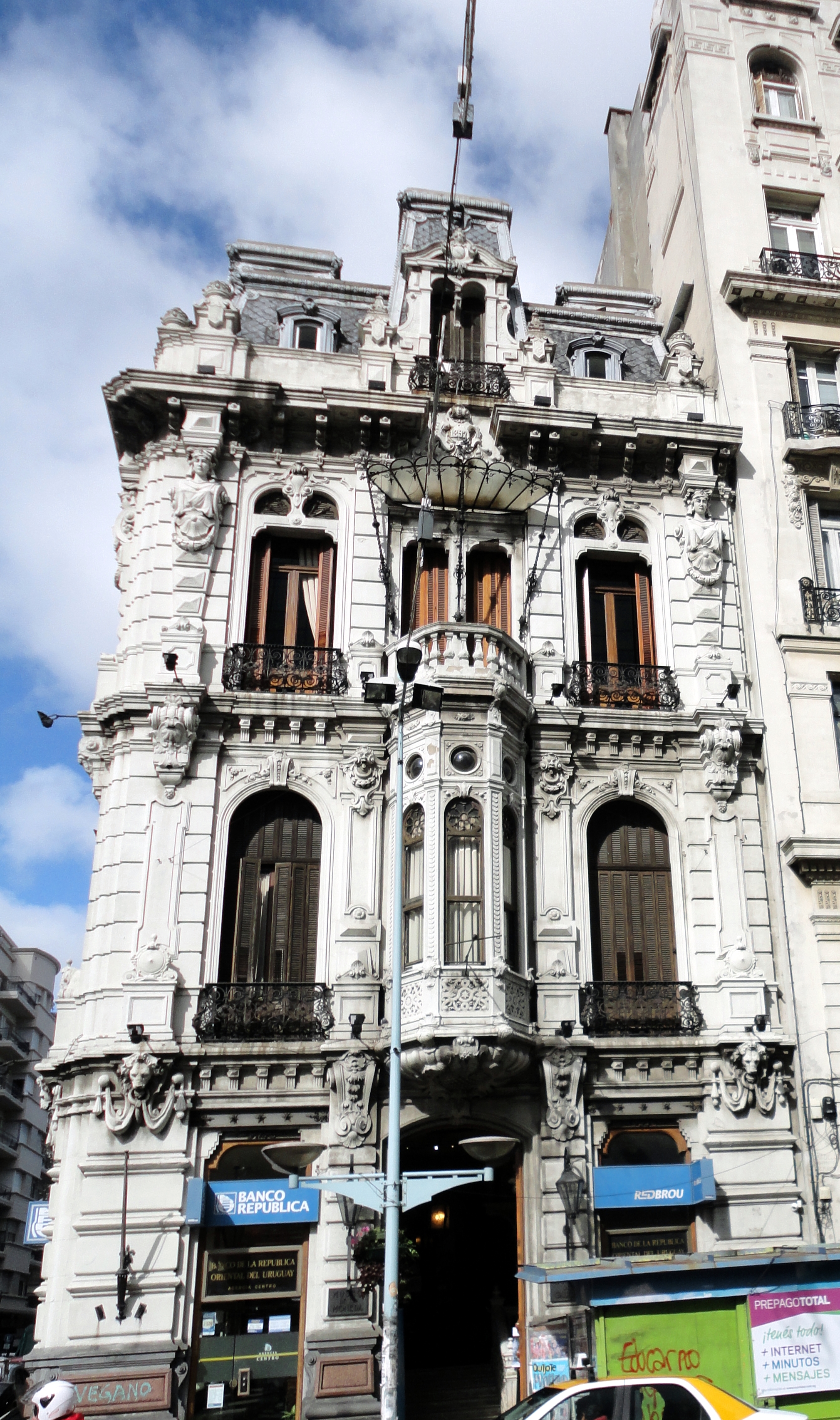
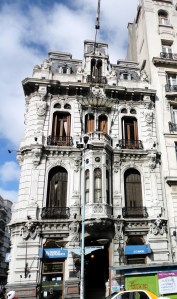 The Gaucho Museum, Ave. 18th de Julio, Montevideo.
Gaucho is a word with several meanings. In its historical sense a gaucho was „a mestizo who, in the 18th and 19th centuries, inhabited Argentina, Uruguay and Rio Grande do Sul in Brazil“. Today, in Argentina and Uruguay, a gaucho is simply „a country person, experienced in traditional cattle ranching work“.
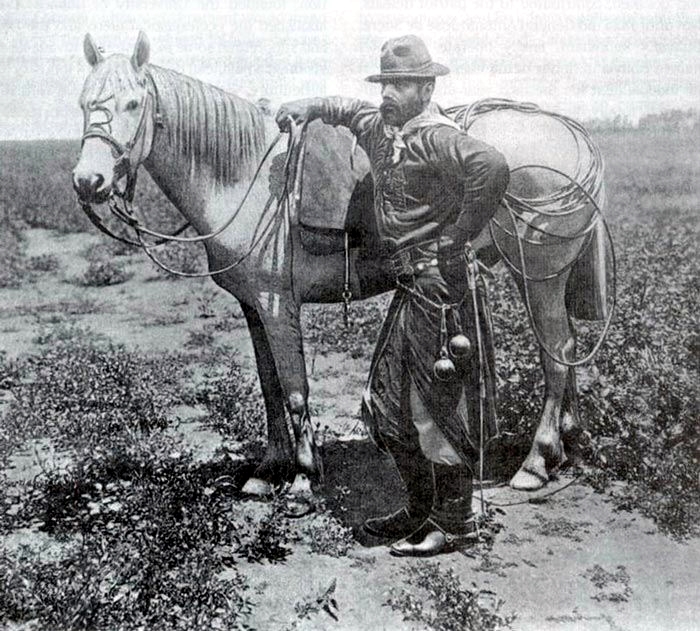
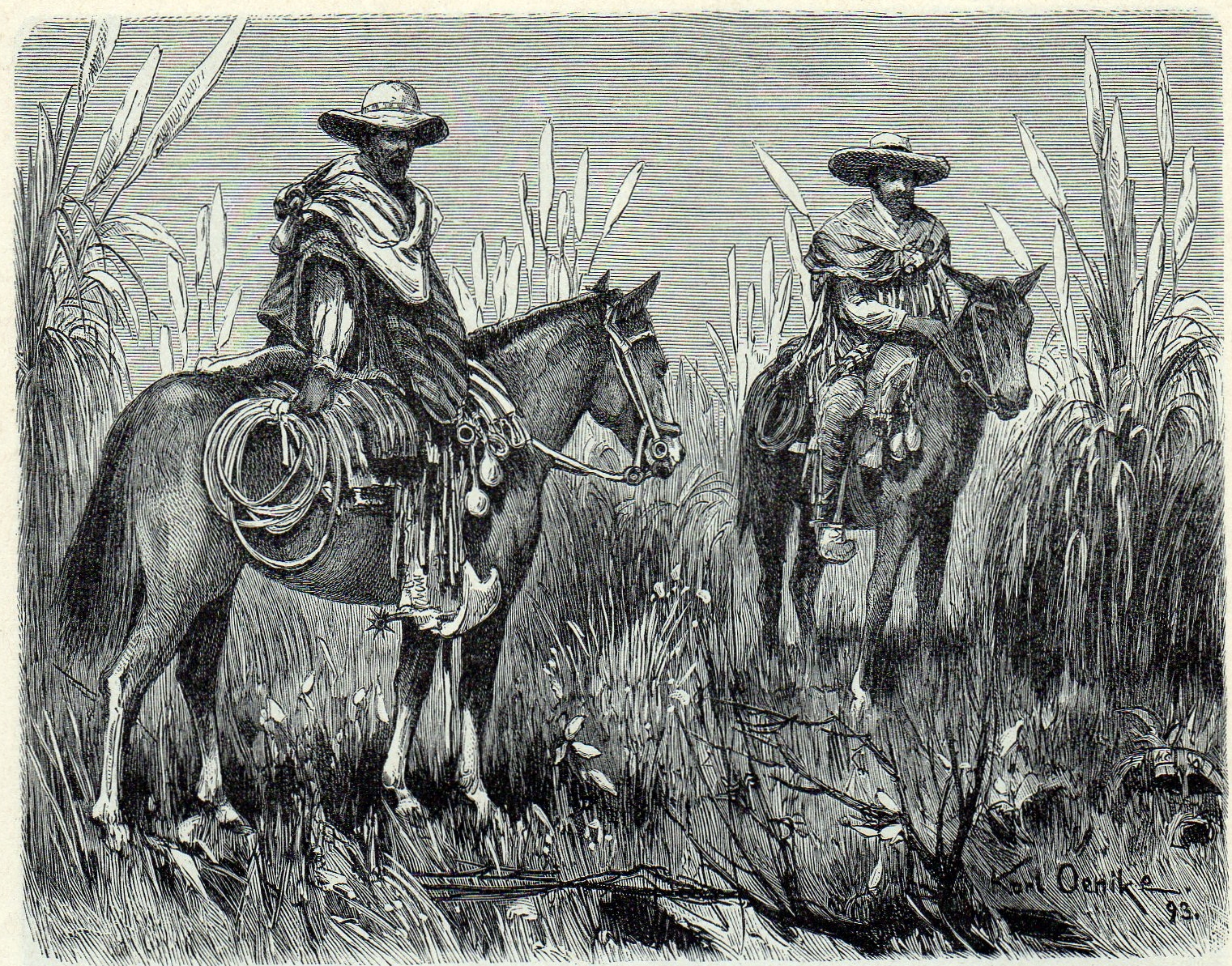
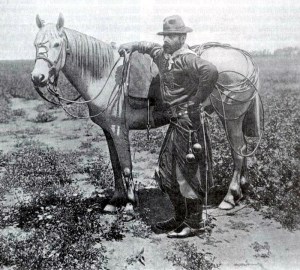 Typical Gaucho from the late 1800’s.
Brief history.
In Portuguese the word gaucho means „an inhabitant of the plains of Rio Grande do Sul or the pampas of Argentina descended from European man and Indian woman who devotes himself to lassoing and raising cattle and horses“.
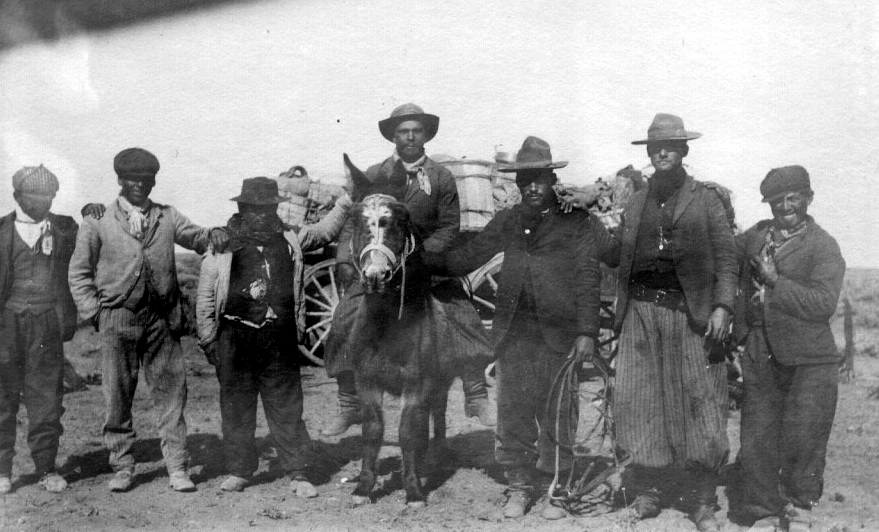
 Gauchos in the early 1900’s …….
Gaucho is an equivalent of the North American „cowboy“ (vaquero, in Spanish), the Chilean huaso, the Peruvian chalan, the Venezuelan or Colombian llanero, the Ecuadorian chagra and the Mexican charro, which are terms that often connote the 19th century more than the present day. Then, gauchos made up the majority of the rural population, herding cattle on the vast estancias, and practicing hunting as their main economic activities.
 ……. and now, picture taken in Patagonia, Argentina.
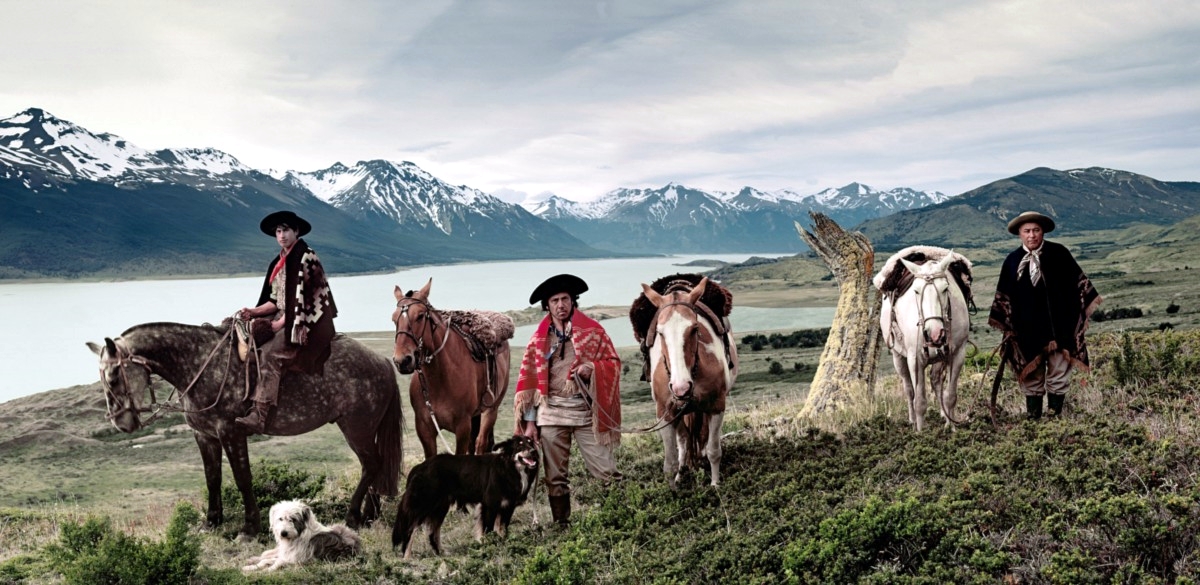
The gaucho is a national symbol in both Argentina and Uruguay. Gauchos became greatly admired and renowned in legends, folklore and in literature and became an important part of their regional cultural tradition. Beginning late in the 19th century, after the heyday of the gauchos, they were celebrated by South American writers.
 „Sunset in the Pampas“ or may be „burning pampa“, beautiful water color painting. Gaucho enjoying sunset under „his tree“ for the night.

The Gaucho Martin Fierro, by Jose Hernandez 1872.
„“His hope is his courage,
his defense is his caution,
his horse is his salvation,
and he spends the sleepless night
with no more protection then the sky
and no other friend then his blade““.
Martin Fierro is a 2,316 line epic poem by the Argentine writer Jose Hernandez. The poem was originally published in two parts, El Gaucho Martín Fierro (1872) and La Vuelta de Martín Fierro (1879).
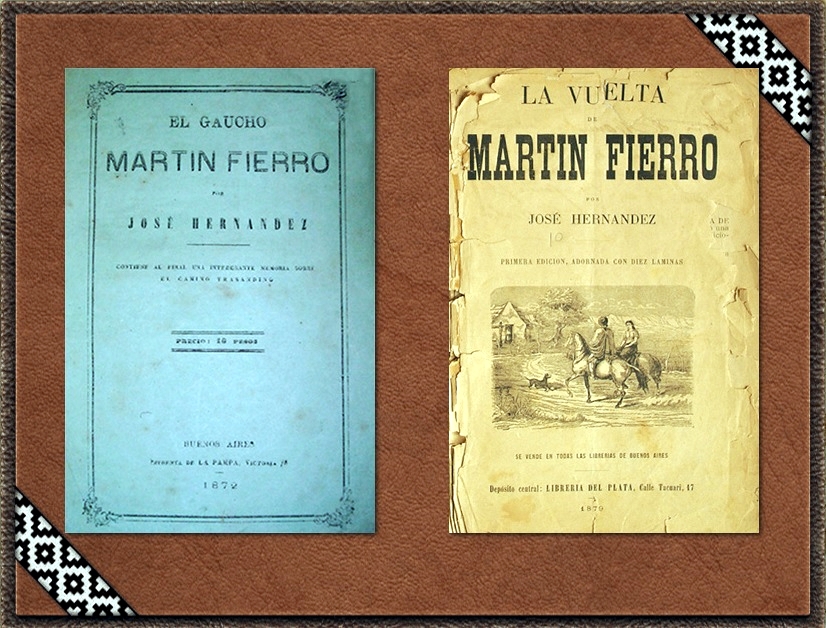
 First editions from 1872 and 1879. Extremely rare.
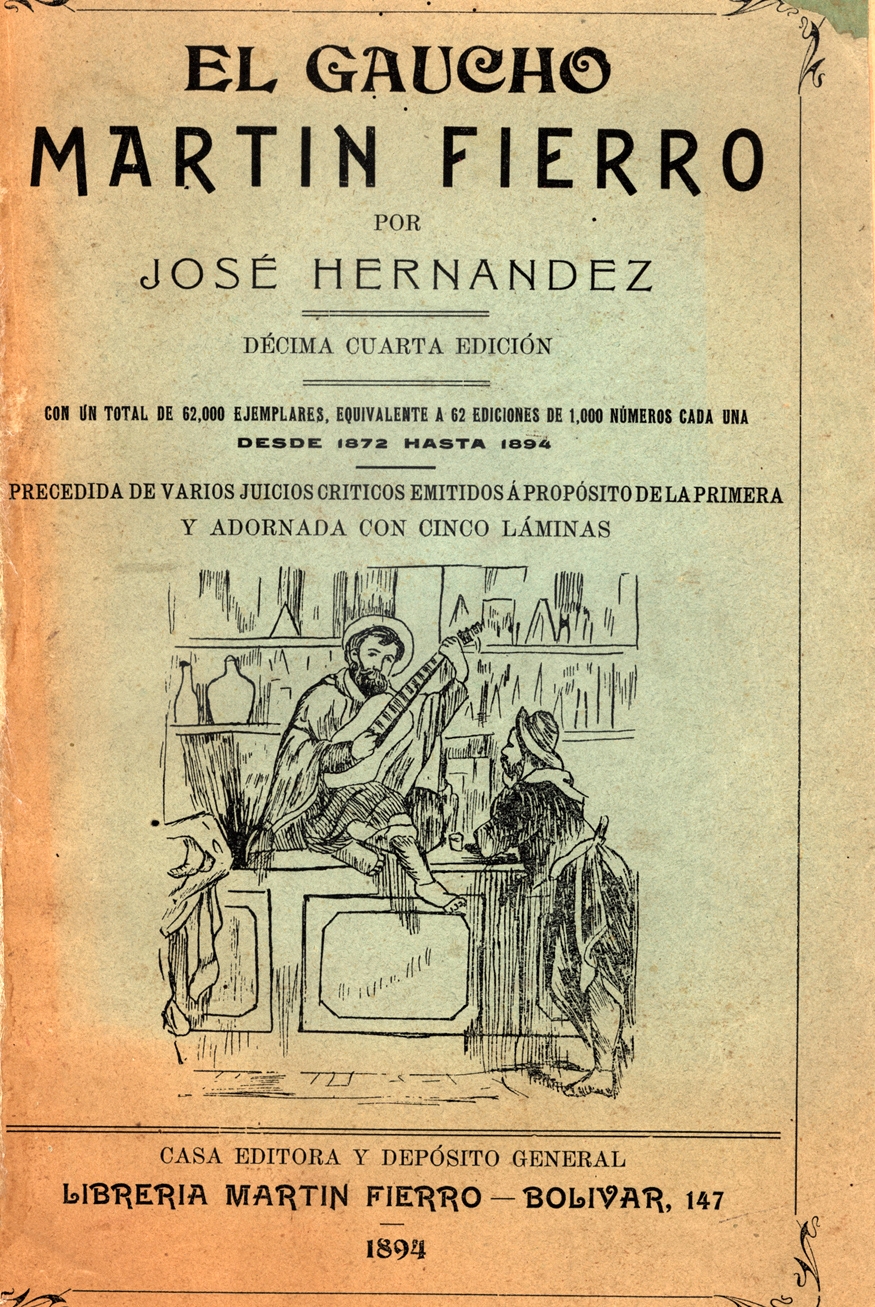
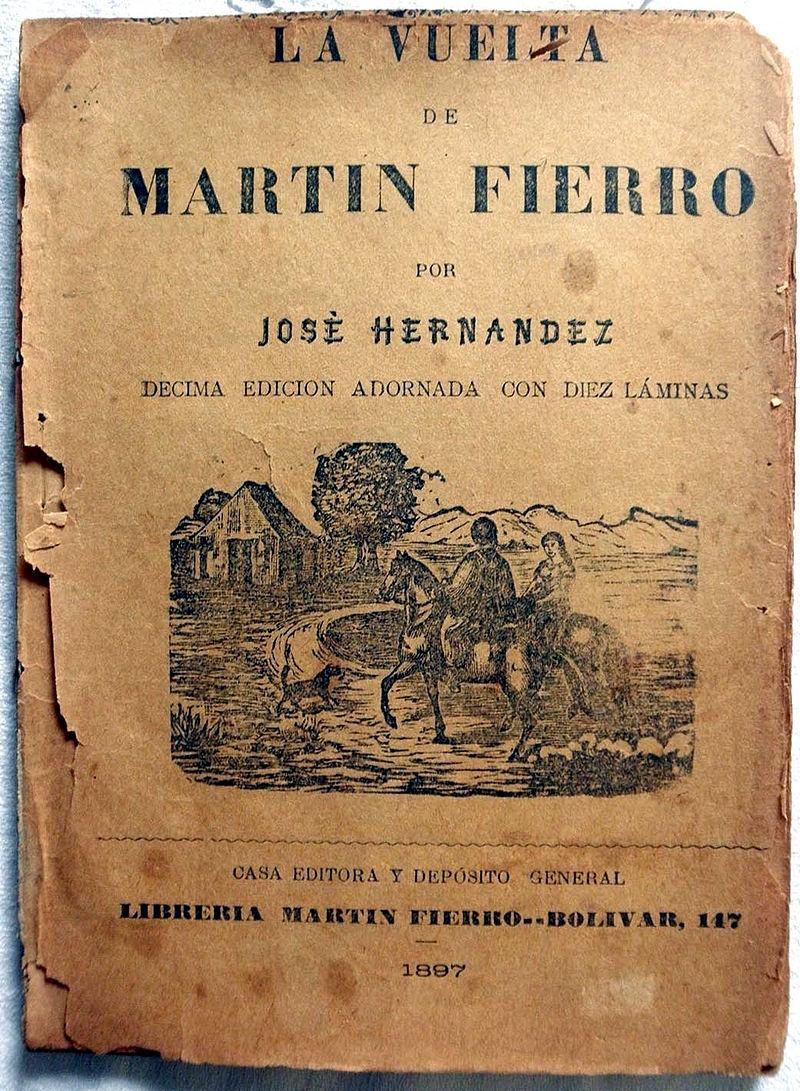
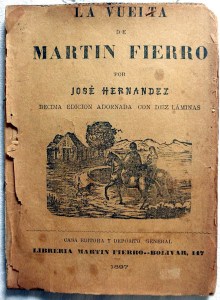 Two later editions of Hernandez‘ Fierro poetry, left from 1894 and right from 1897. Both are very rare collectors items.
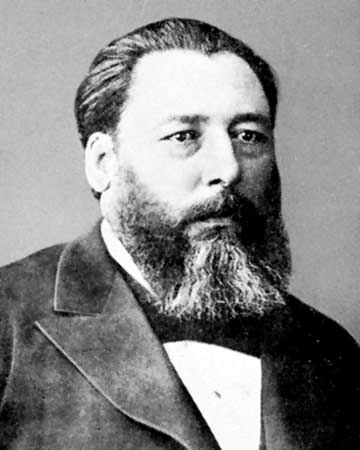
Jose Hernandez (November 10, 1834 – October 21, 1886) was an Argentine journalist, poet, and politician.
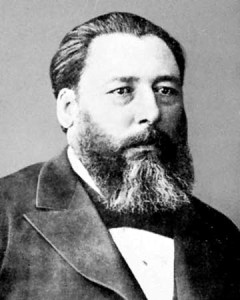 Jose Hernandez, Argentinian author.
The movie „Martin Fierro“ from 1968.
This story is taken from the 1872 poem. Martin (Alfredo Alcon) is a gaucho and a happily married family man who is drafted by the army. Sent to a remote outpost to fight Indians, he is relegated to working on the camp commandant’s farm. After his tour of duty, Martin is held at gunpoint and forced to continue working the farm. He finally escapes, but returns home to find his family gone and his home destroyed.
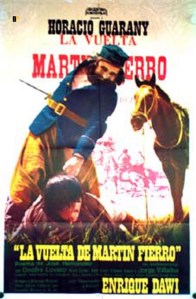 First Martin Fierro gaucho movie from 1952.
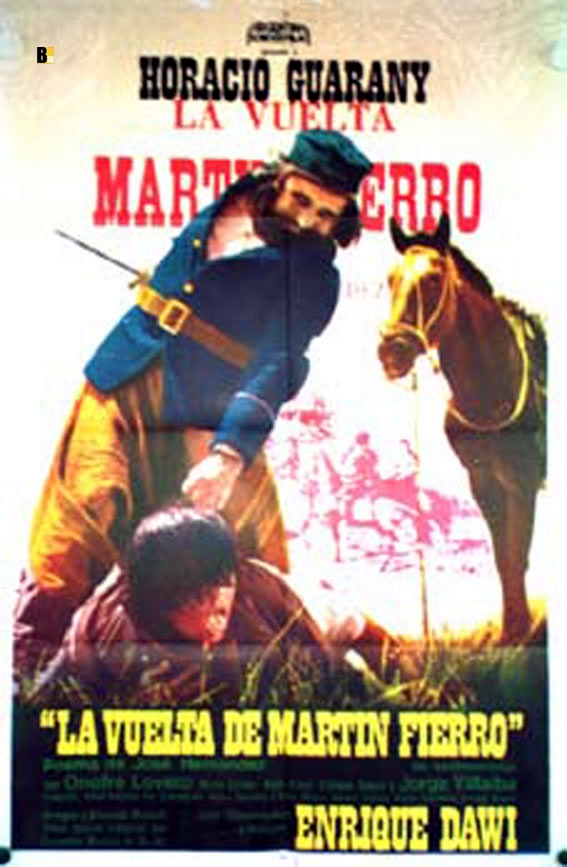
Drunk and dependent, he kills a black man in a fight and is forced to flee. When the deputy Craze (Altar Mural) sees how bravely Martin fights against the posse, he helps Martin kill off his adversaries. The two move out to an Indian camp where white men are accepted. They are content for many years until Martin leaves when his friend Craze dies. He returns to civilization and relocates his estranged sons before having a showdown with the brother of the man he killed.
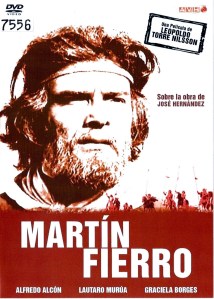 The, most well known, movie from 1968.
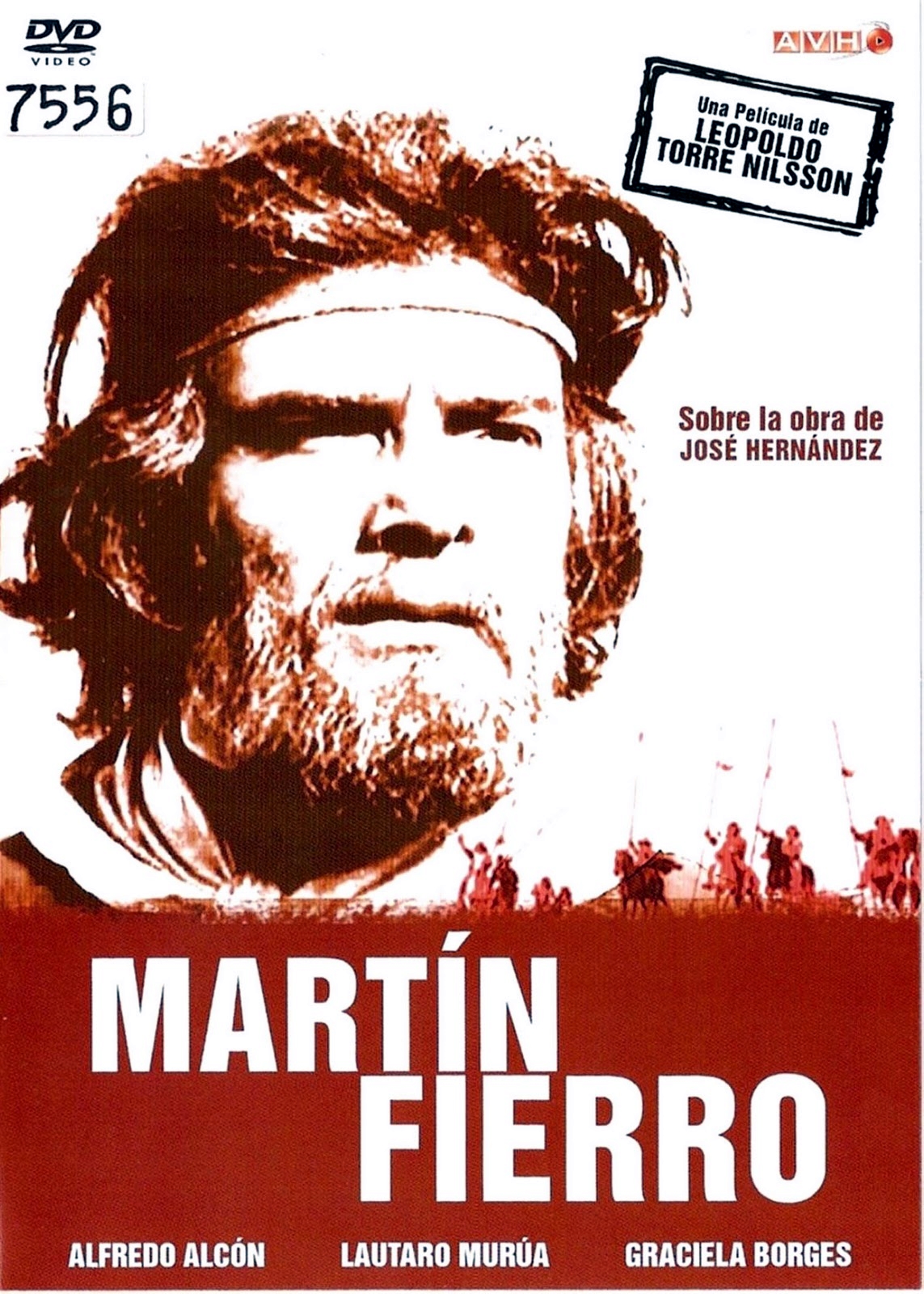
The movie was remade a few times during the last – almost 50 years. If you like to watch the original movie, its available in full length on
YouTube: https://www.youtube.com/watch?v=y-Olc5DfN_I
 Modern remake from the 1990’s.
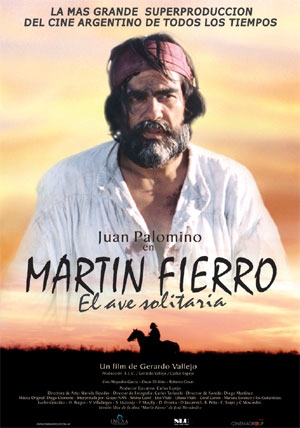
Gauchos were solitary men, independent nomads whose social status in Argentina evolved over three centuries from semi savage half-breeds to displaced outlaws to freedom fighters to common ranch hands to national symbols of honor, bravery and self-reliance.
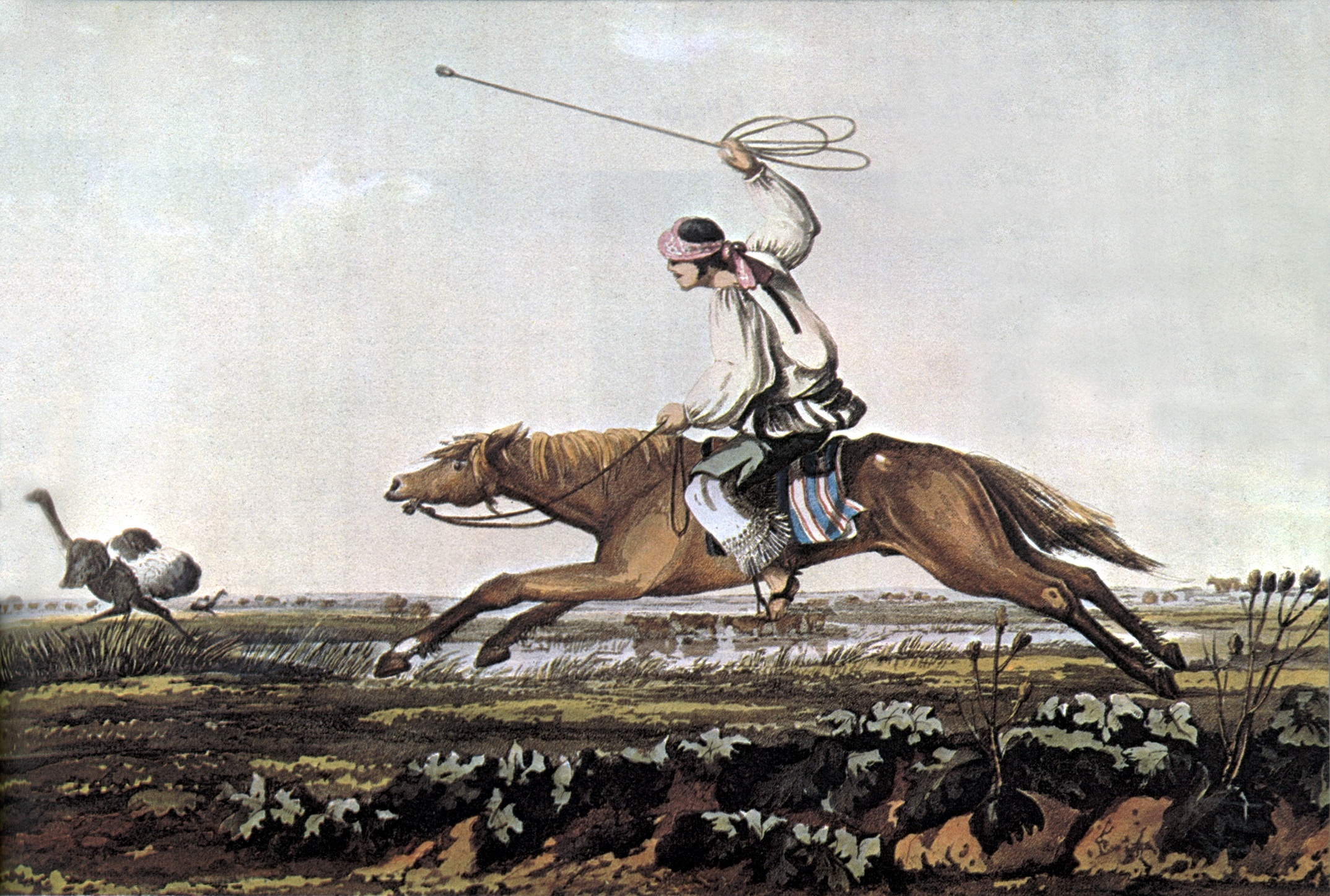
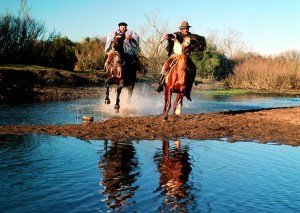 Gauchos in full speed.
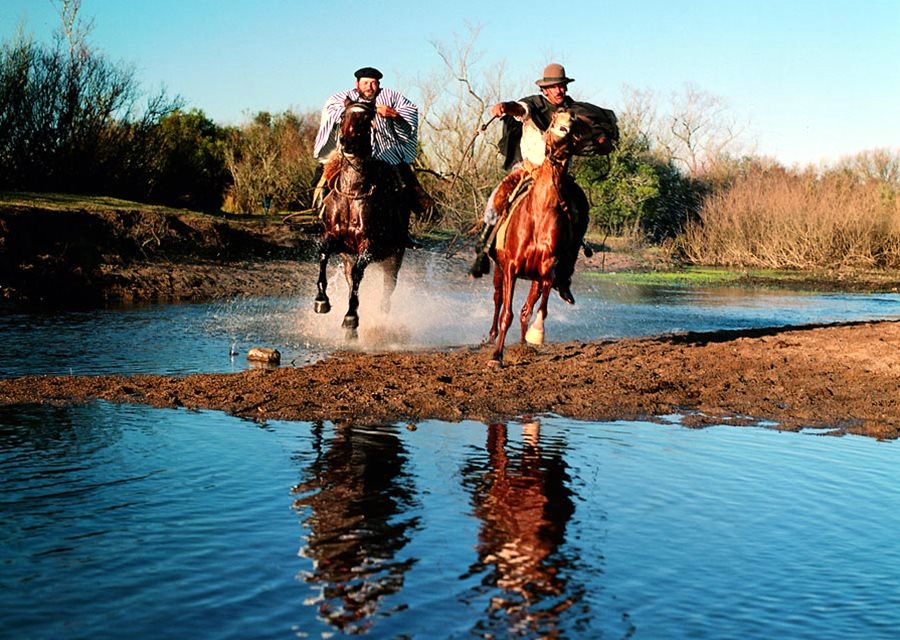
Uruguay and Argentina.
The first gauchos were sons of the pioneers, mostly Andalusian, who settled the coastal region of Argentina in the mid-16th century. Unlike the Pilgrims these settlers came to the New World without their women, and intermarriage or, at the least, intermingling with the natives was common. The resulting mestizos, mixed bloods, were the earliest gauchos, a name believed to be derived from the Indian word huacho, meaning orphan.
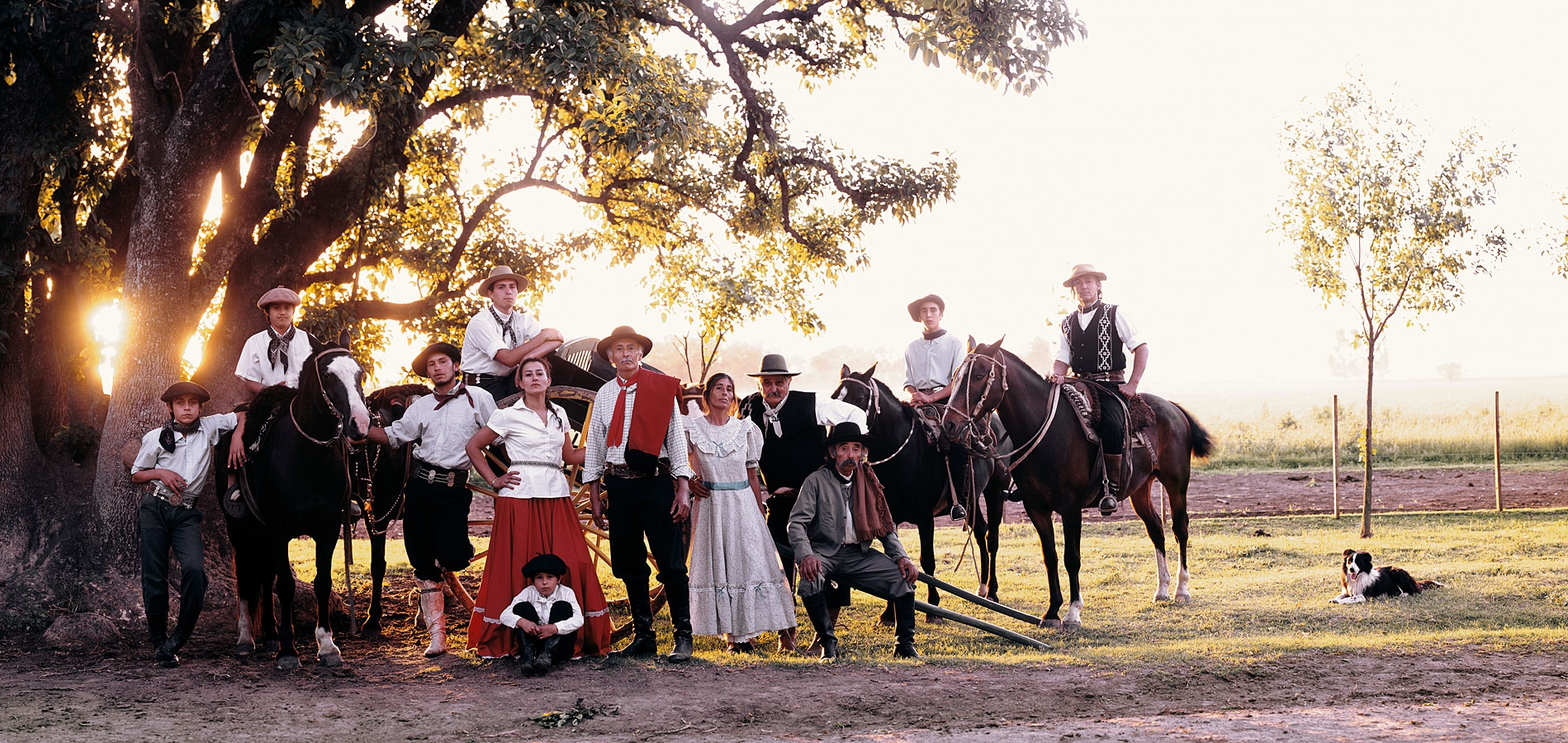
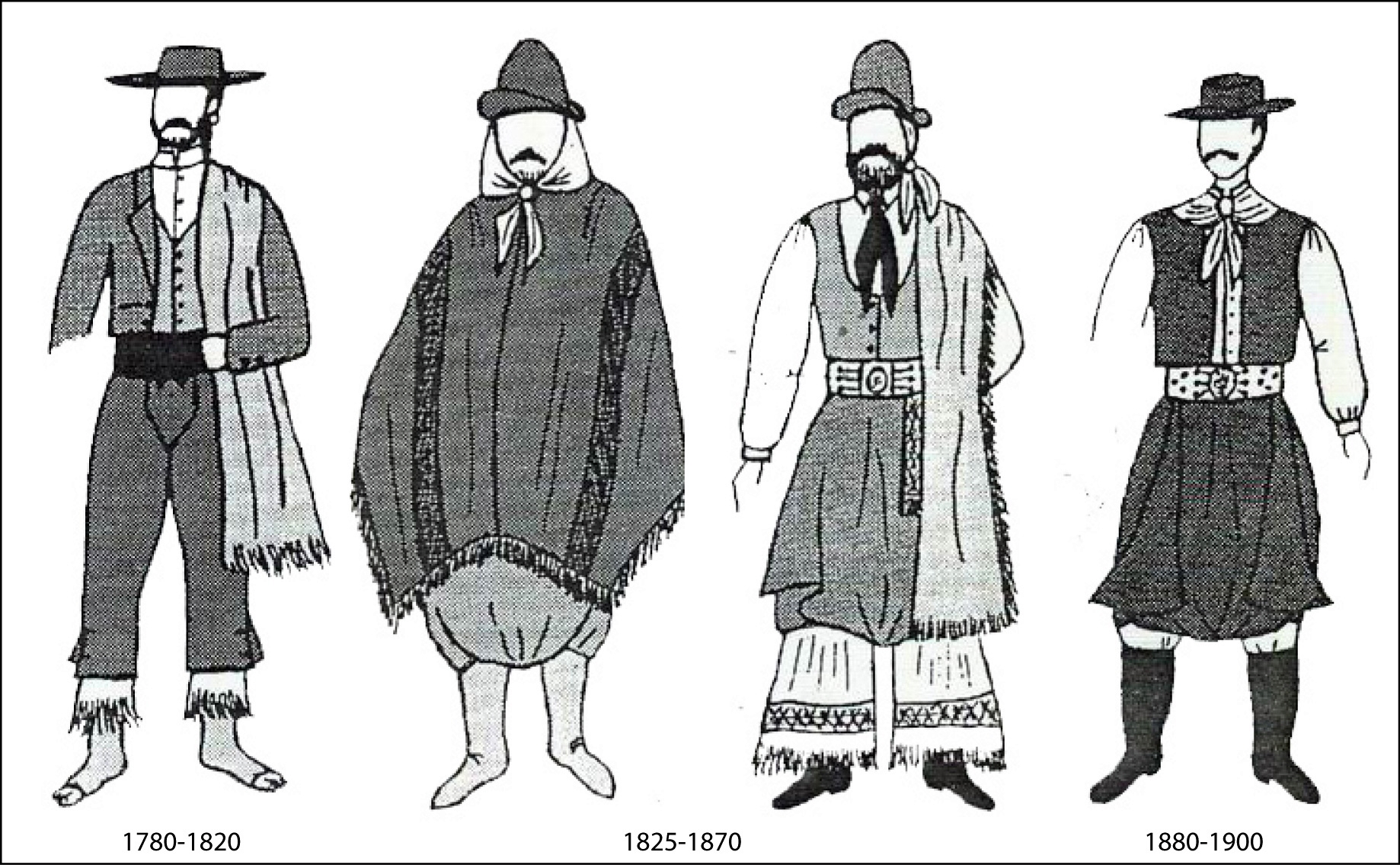
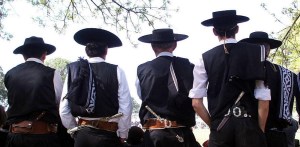
 Click on pictures to supersize. Then you’ll see the proudness of gauchos. Interesting in modern times the equal wearing of hats or Baskian Bonetas (berets). In the old times there were hats, in all kinds and shapes, only.
They were part of neither the white man’s world nor the Indians. „My joy is to live as free as the bird in the sky. I make no nest on this earth,“ Jose Hernandez wrote in his 1872 epic poem, The Gaucho Martin Fierro, the definitive work on the subject.
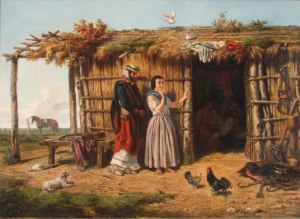 Gaucho, pampas home and their Indian women.
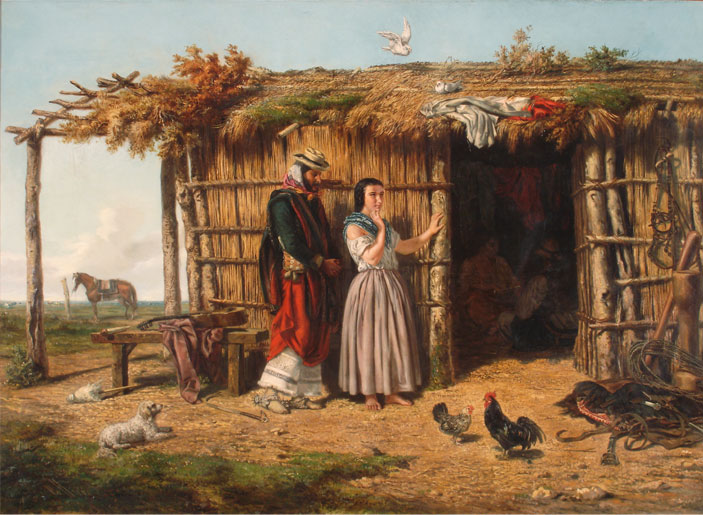
From their Indian forebears the gauchos were said to have inherited their love of freedom, disdain for civilization and disregard for law and order. From the Andalusian’s, who were part Arab, they inherited nomadic tendencies and unparalleled horsemanship. From the Spanish they inherited passion, superstition and a love of poetry and music. It was a rich and tempestuous stew.
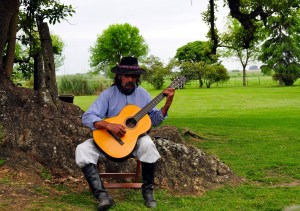
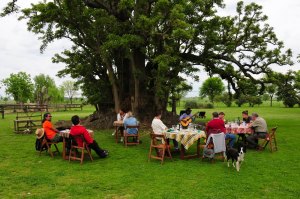 Gaucho BBQ lunch under the OMBU tree. Gauchos love the outdoors and music. Holiday on an estancia.
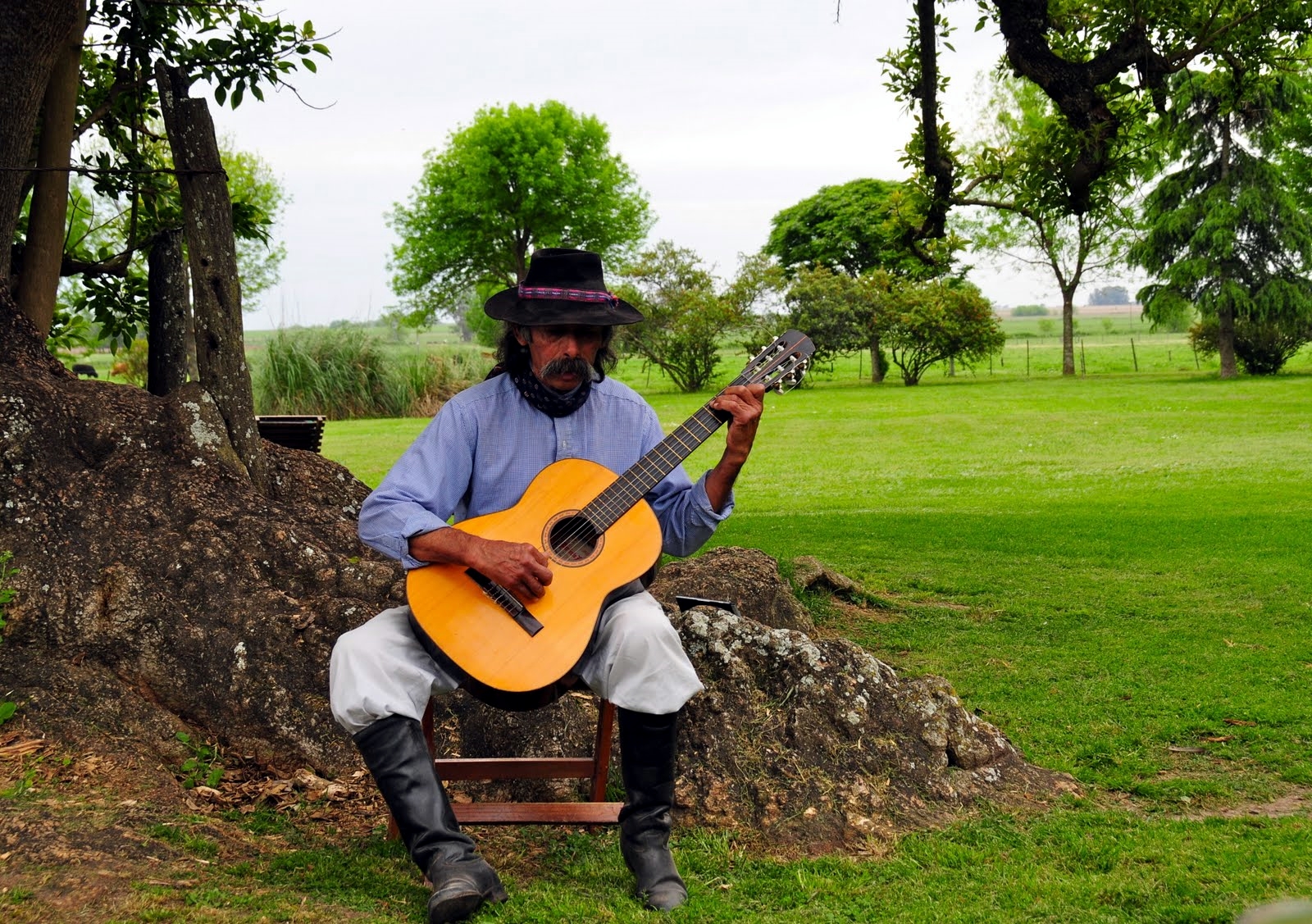
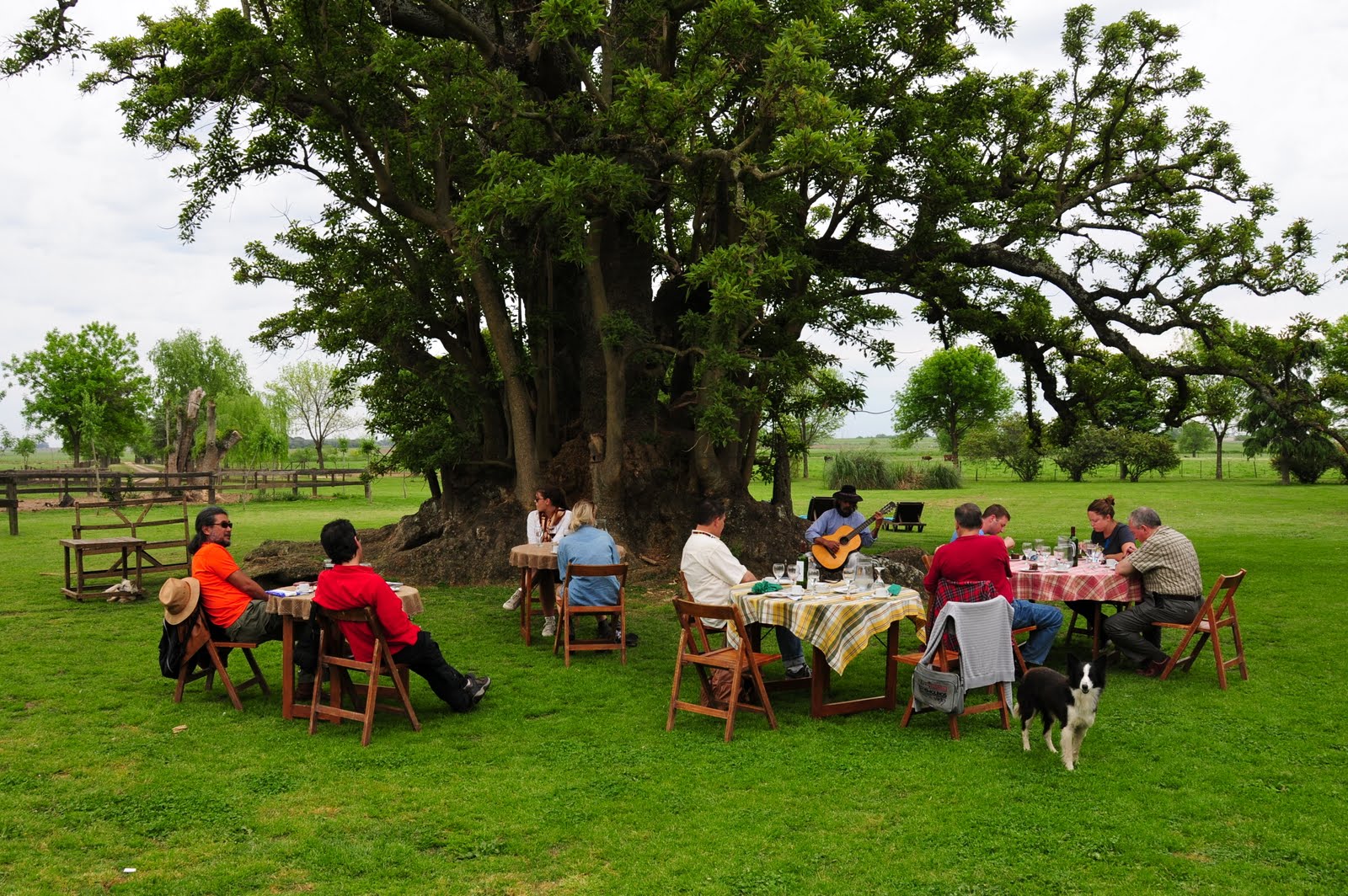
The pampas on which the early gauchos roamed were populated by vast herds of horses and cattle, wild descendants of livestock that had escaped from the earliest Spanish settlements. Since the pampas were largely free of predators, except Indians, these wild herds were as abundant as the vast buffalo herds of the North American frontier and afforded the gauchos their way of life.
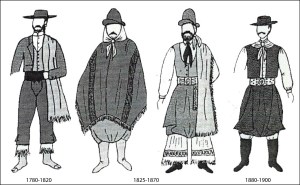
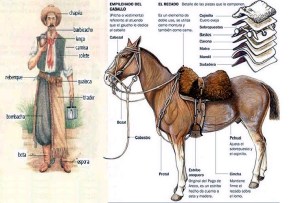 Some detailed information. Interesting that the gauchos use no saddles as cowboys in the north do.
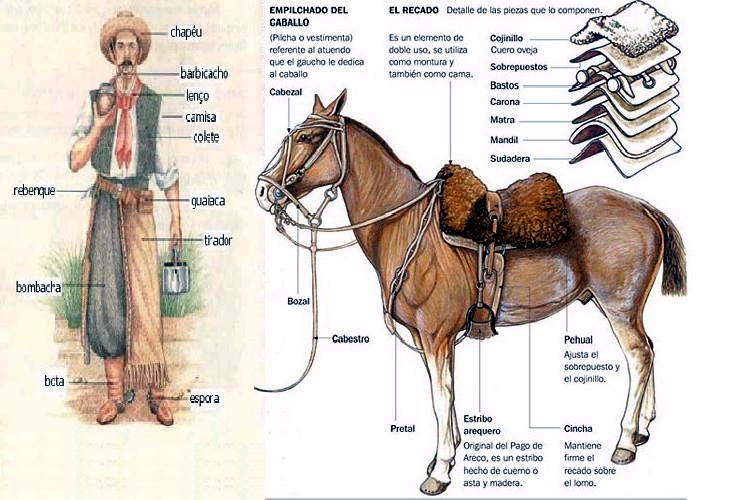
The horses were caught, broken and used to run down the cattle on the open range. Gauchos were foragers, not cattlemen. The cows were butchered for sustenance, not for sale. There was no refrigeration, of course, and salt for curing meat was expensive, so the only commercial value of a cow was in its hide and tallow. The gauchos would trade these for rum, tobacco and mate, the herbal tea to which they were addicted. Those pleasures, his horse and his freedom were all he asked for.
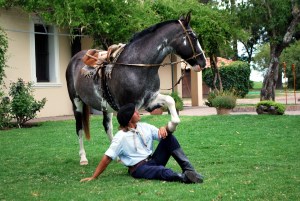
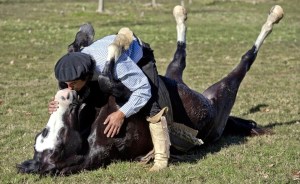 The Gaucho and his best friend, show off during an estancia fiesta.
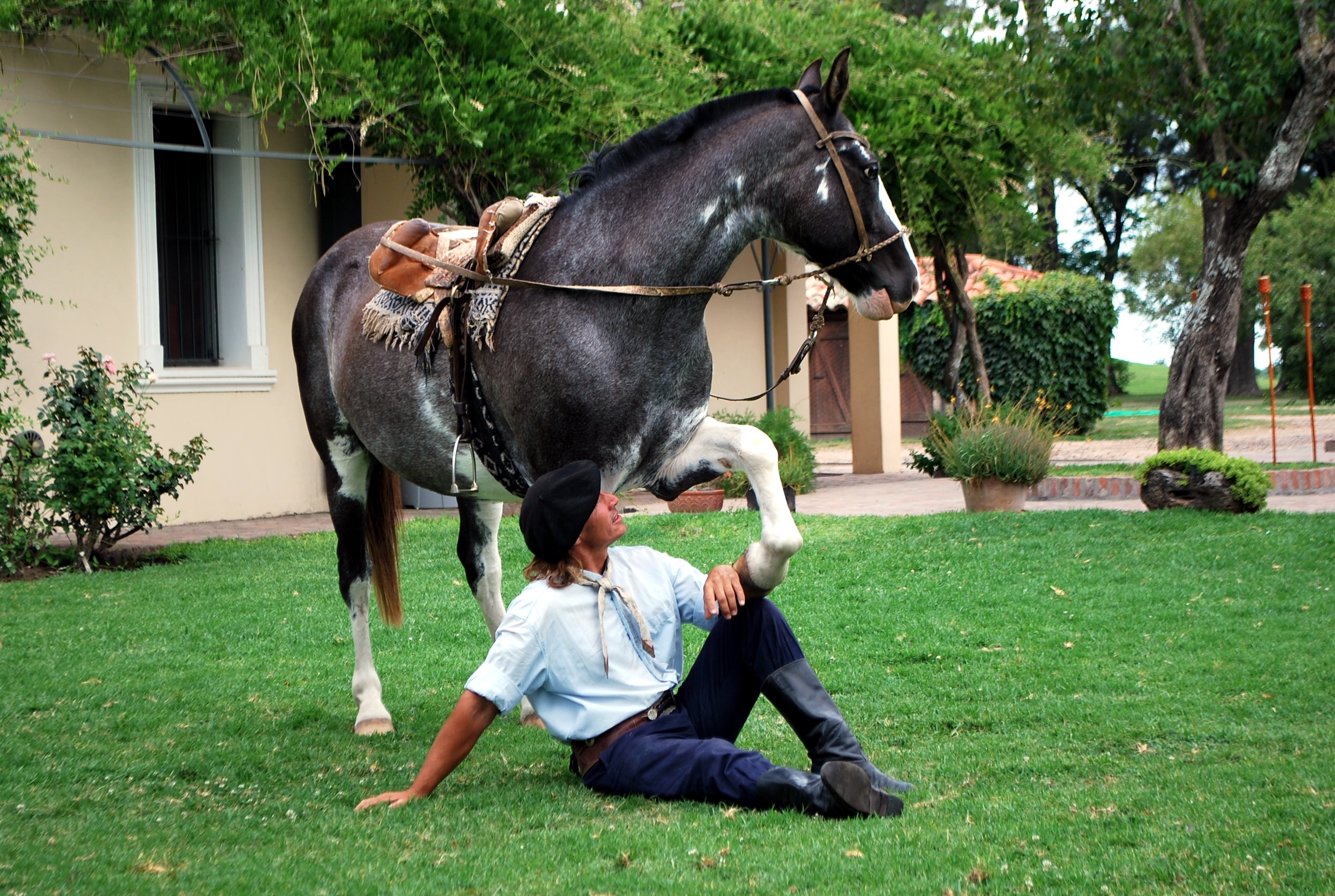
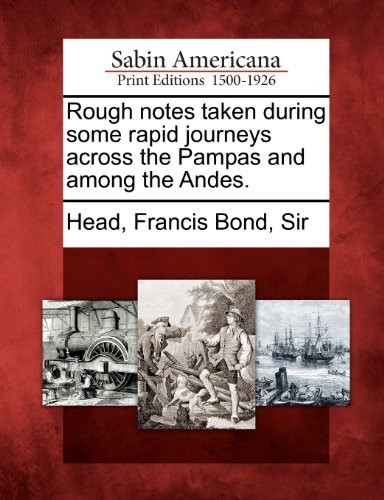
„The gaucho has no luxuries; but the great feature of his character is that he is a person without wants,“ English mining adventurer Francis Bond Head, author of the 1828 travel volume Rough Notes, wrote, „If he has got a good saddle and sharp spurs, he does not consider that money has much value. I made it a rule never to be an instant without my (fire)arms, and to cock both barrels of my gun whenever I met any gauchos. They were often perceived as being as wild as Indians, and just as interesting.“
 Captain Francis Bond Head (1793-1875). Rough notes taken during some rapid journeys across the Pampas and among the Andes, 1828.
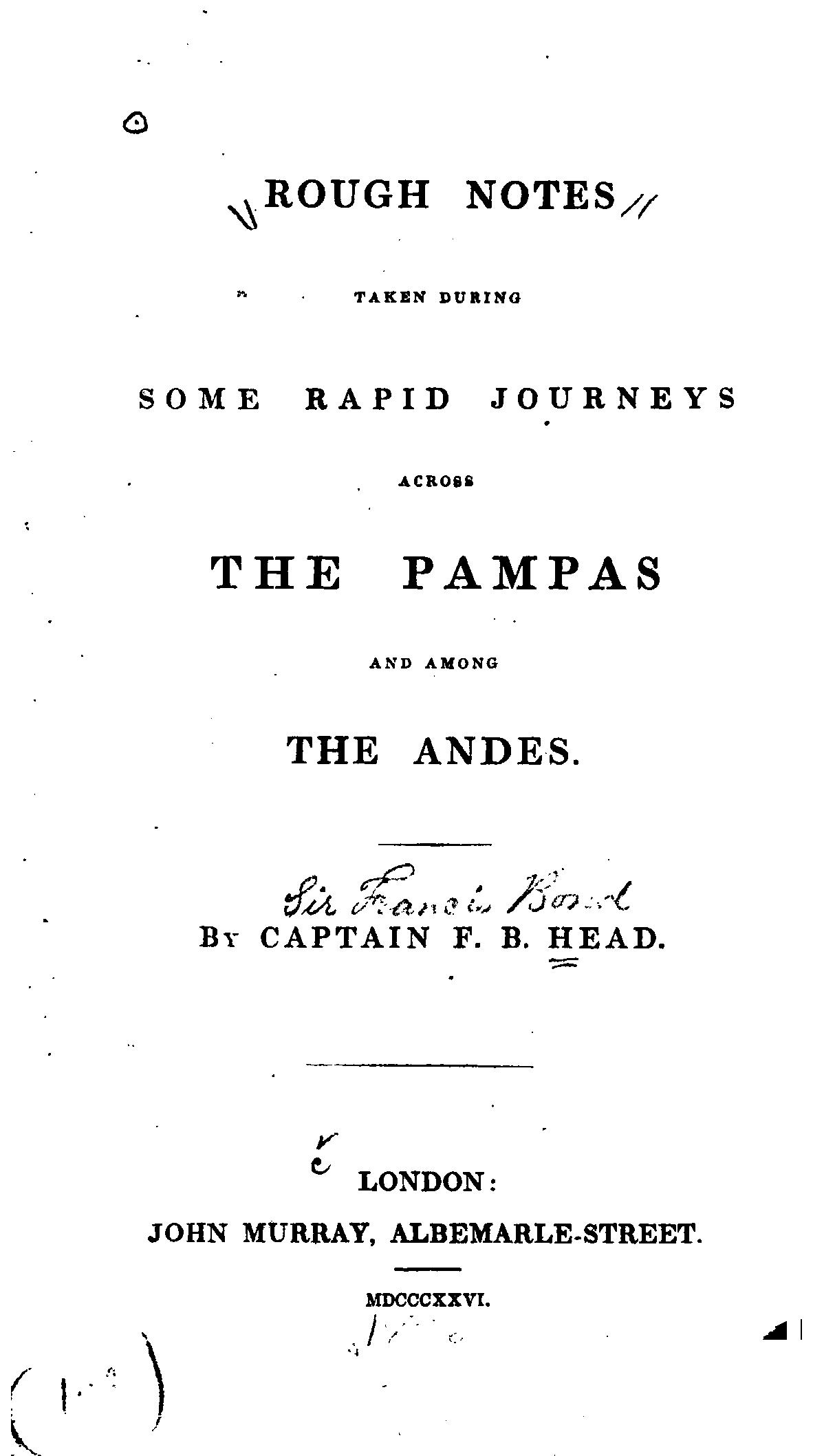
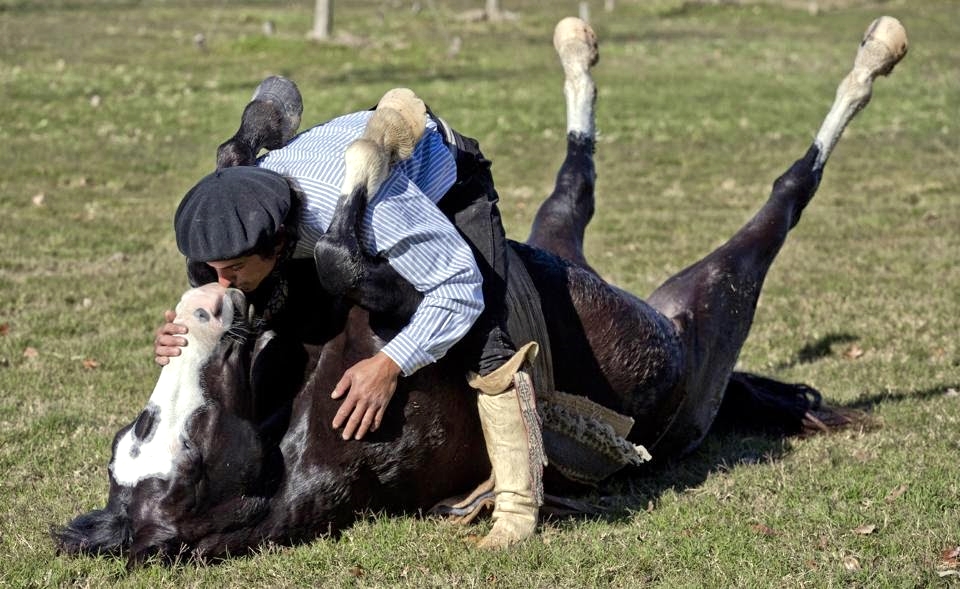
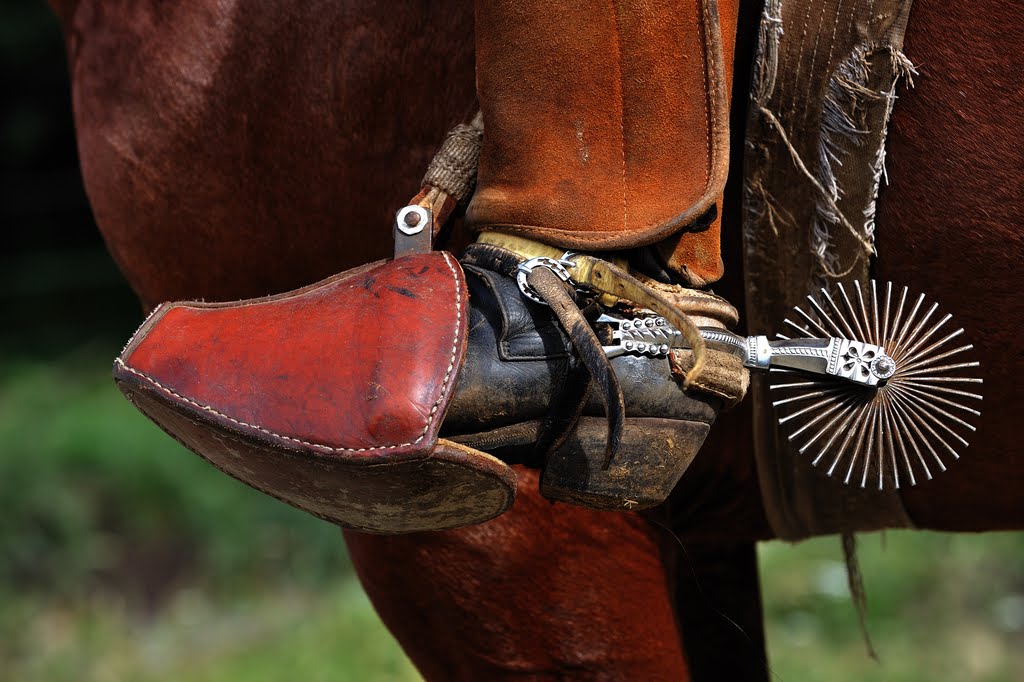
The gaucho was thought of as a sort of centaur. So seldom would he dismount that he stood severely bowlegged and had a crabbed gait. He even bathed while mounted. The tips of his boots were open so he could grip long pieces of knotted rawhide, which served as stirrups, between his toes.
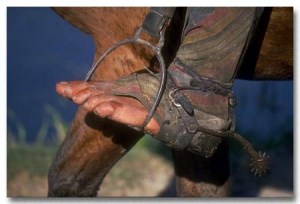
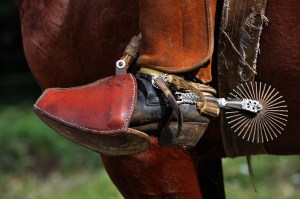 Left, very old style of gaucho „boots“, Estancia San Juan de Poriahu. Right, more modern, full boot wearing.
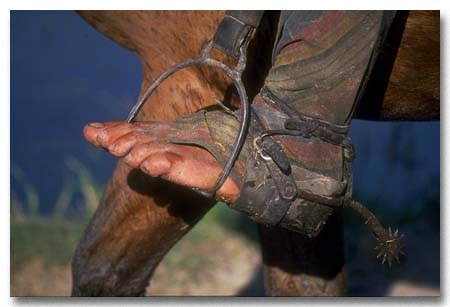
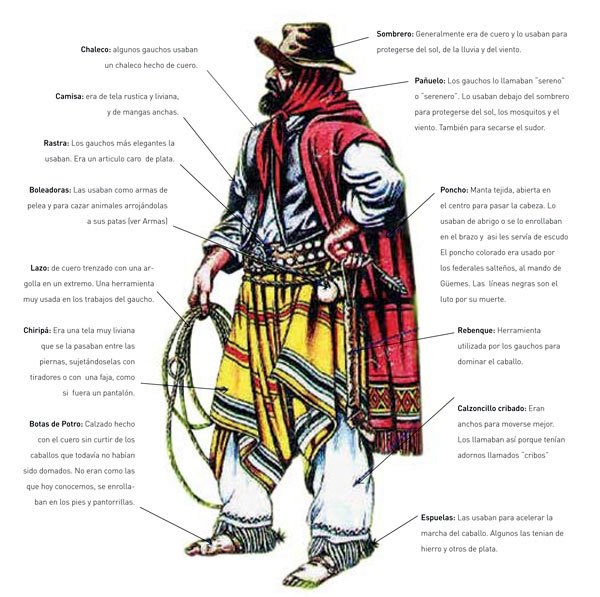
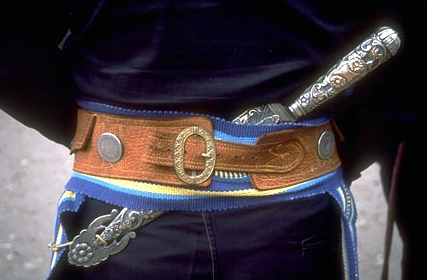
A gaucho carried all his worldly possessions with him as he rode. His saddle was sheepskin and cloth laid over a leather-covered frame, and it doubled as his bedroll. He had no pockets in his baggy pants, so he wore a thick leather belt that supported his back as he rode and was adorned with silver coins. His woolen poncho was used as a raincoat by day, a blanket by night, and, during knife fights, as a shield when wrapped around his forearm.
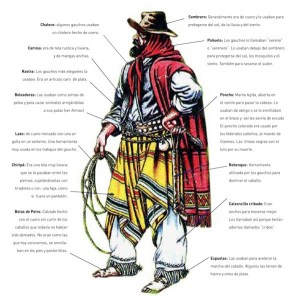
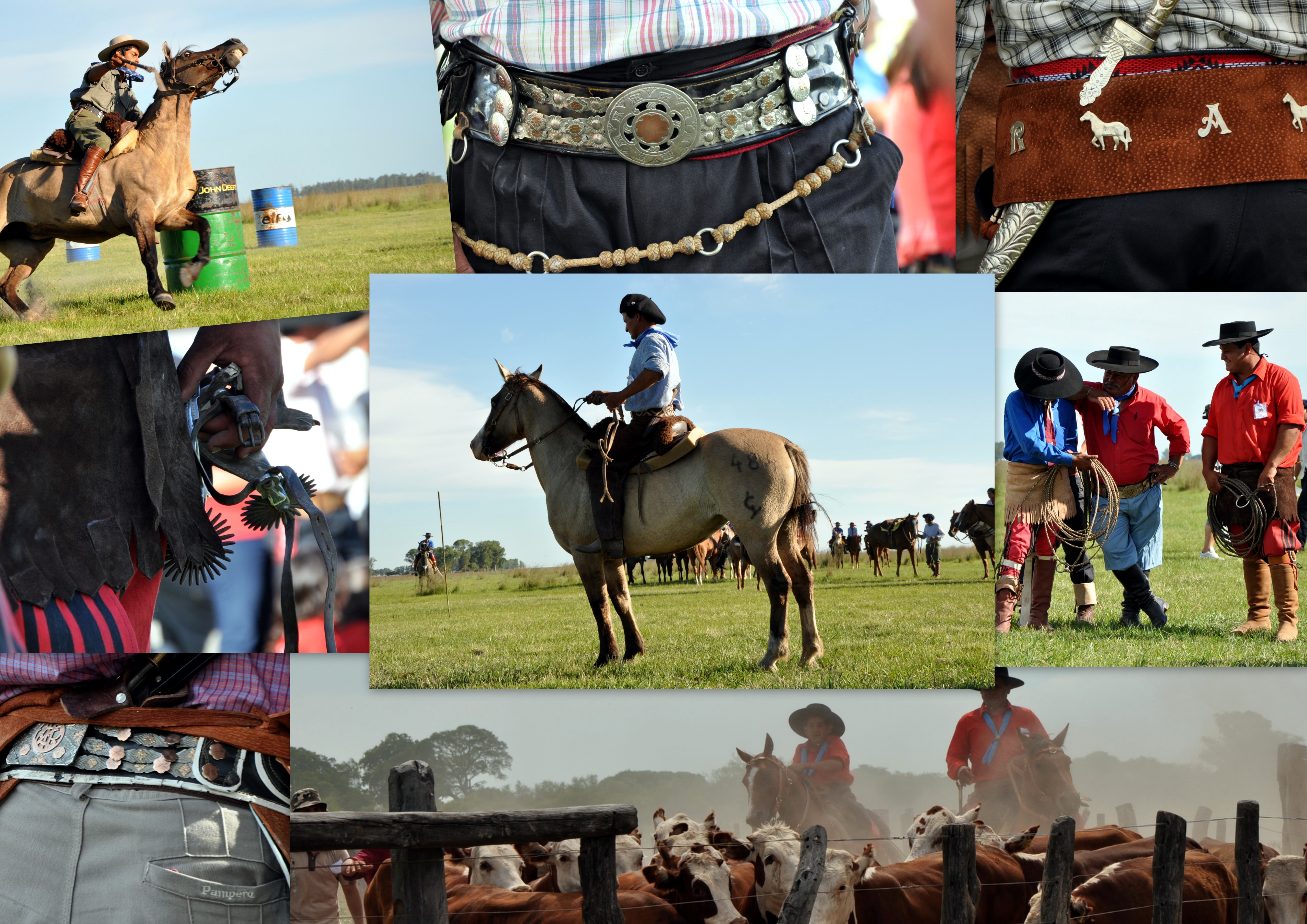
 Details and description of a typical gaucho outfit and the silver/gold belt (garment) of a wealthy gaucho.
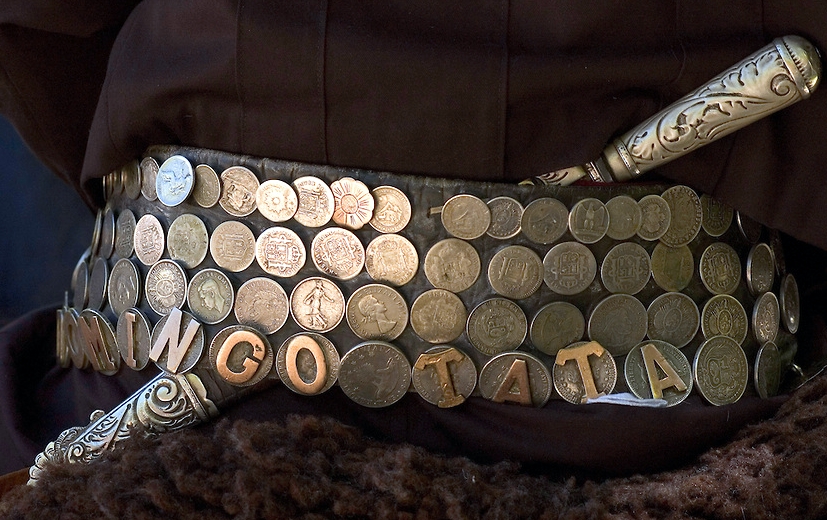
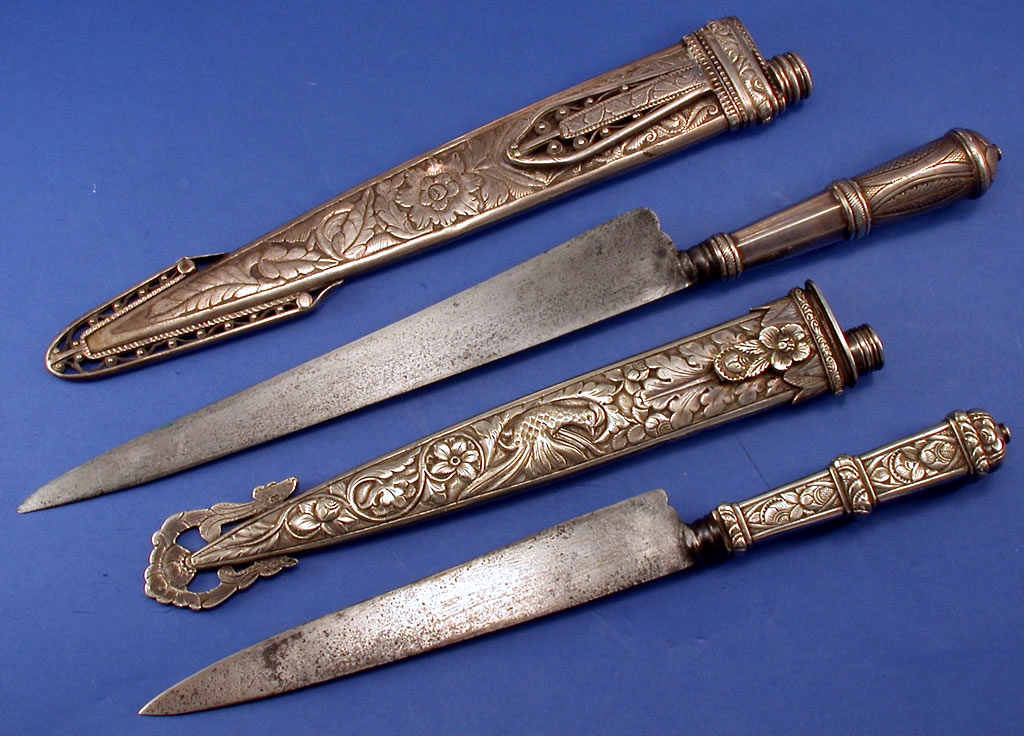
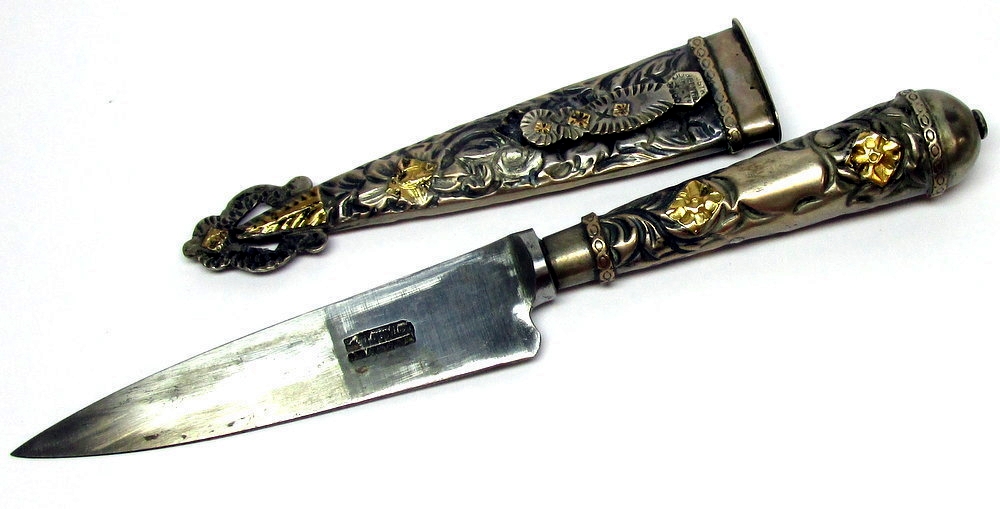
The gaucho’s most prized possession, though, was his knife, or facon. „The facon was the gaucho’s third arm,“ says Charles Balbe, who is called the English Gaucho by friends because his grandfather emigrated from Scotland. „He used it for finely chopping tobacco for his cigarettes, for eating, for cleaning his horse’s hooves and for ending a conversation.
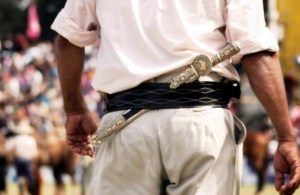
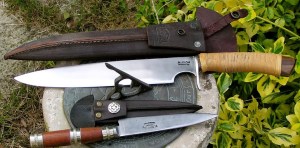
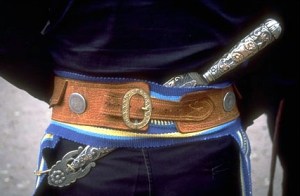
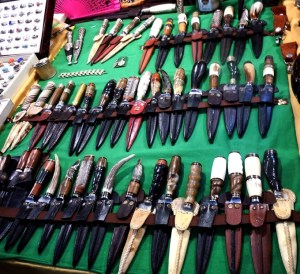 Gauchos and their facons, large and small ones and an selection for sale on a gaucho festival.
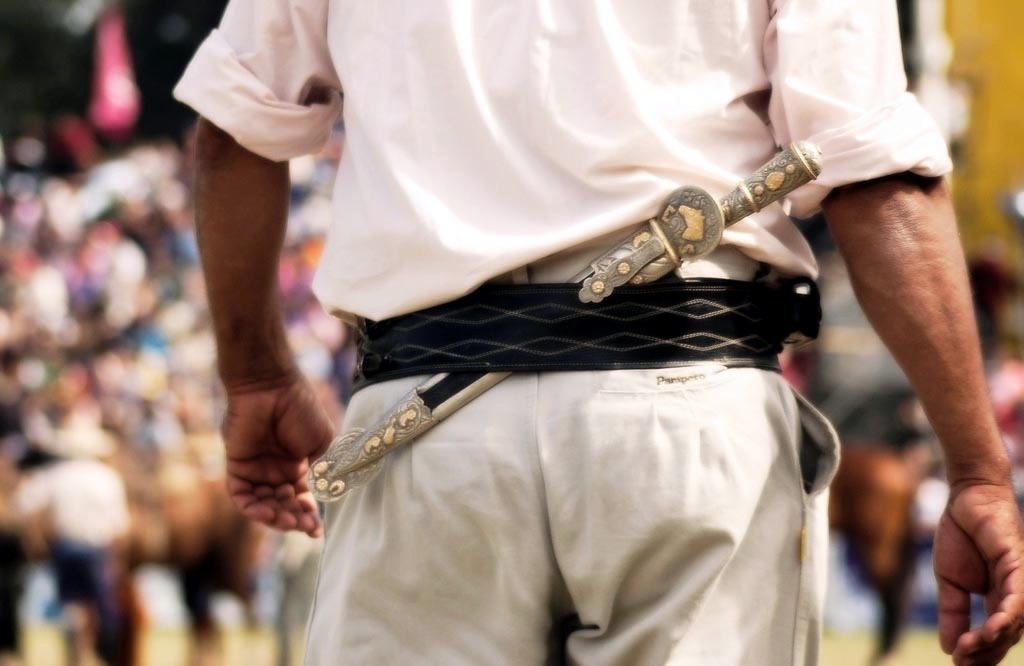
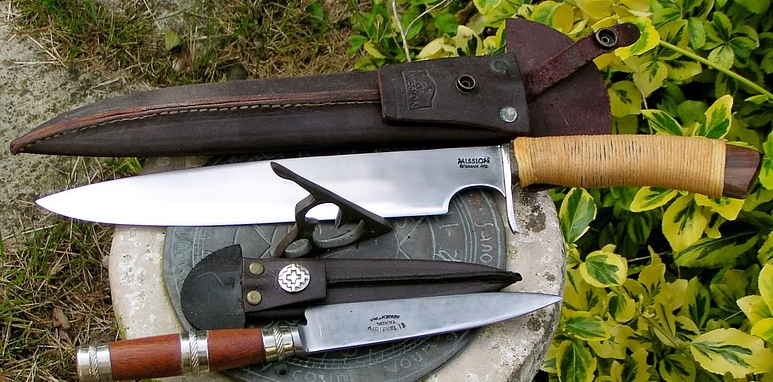
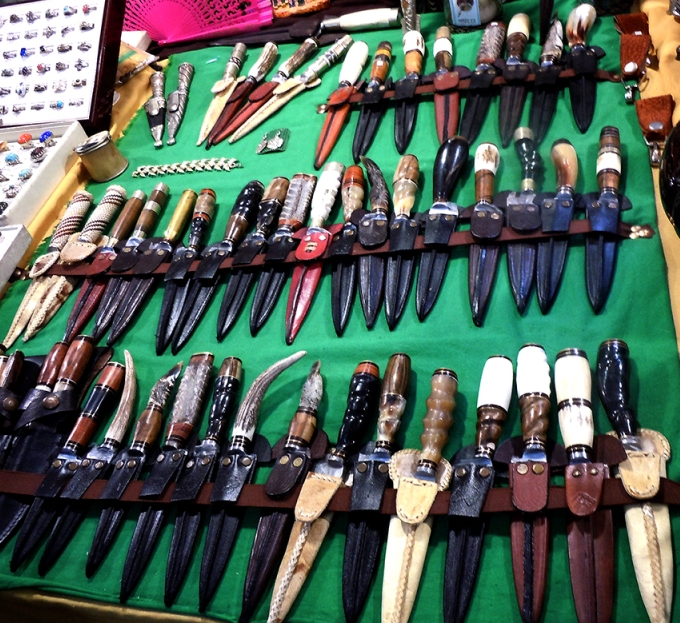
He didn’t approve of firearms. He only loved his knife, and in a duel he wouldn’t try to kill you. He’d try to cut you to leave a scar. That way every time you saw the scar, you’d remember how you’d been bested. You’d respect him.“
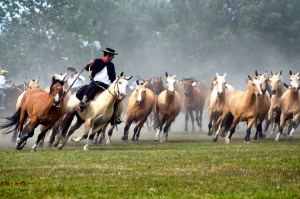
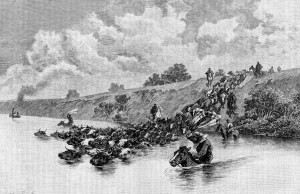
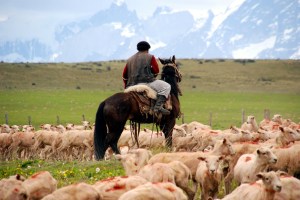
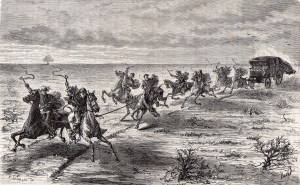 All of them are gauchos and they all have the same duty and philosophy, no matter if they drive horses, cattle, sheep, or mostly unknown, a stagecoach through the pampas.
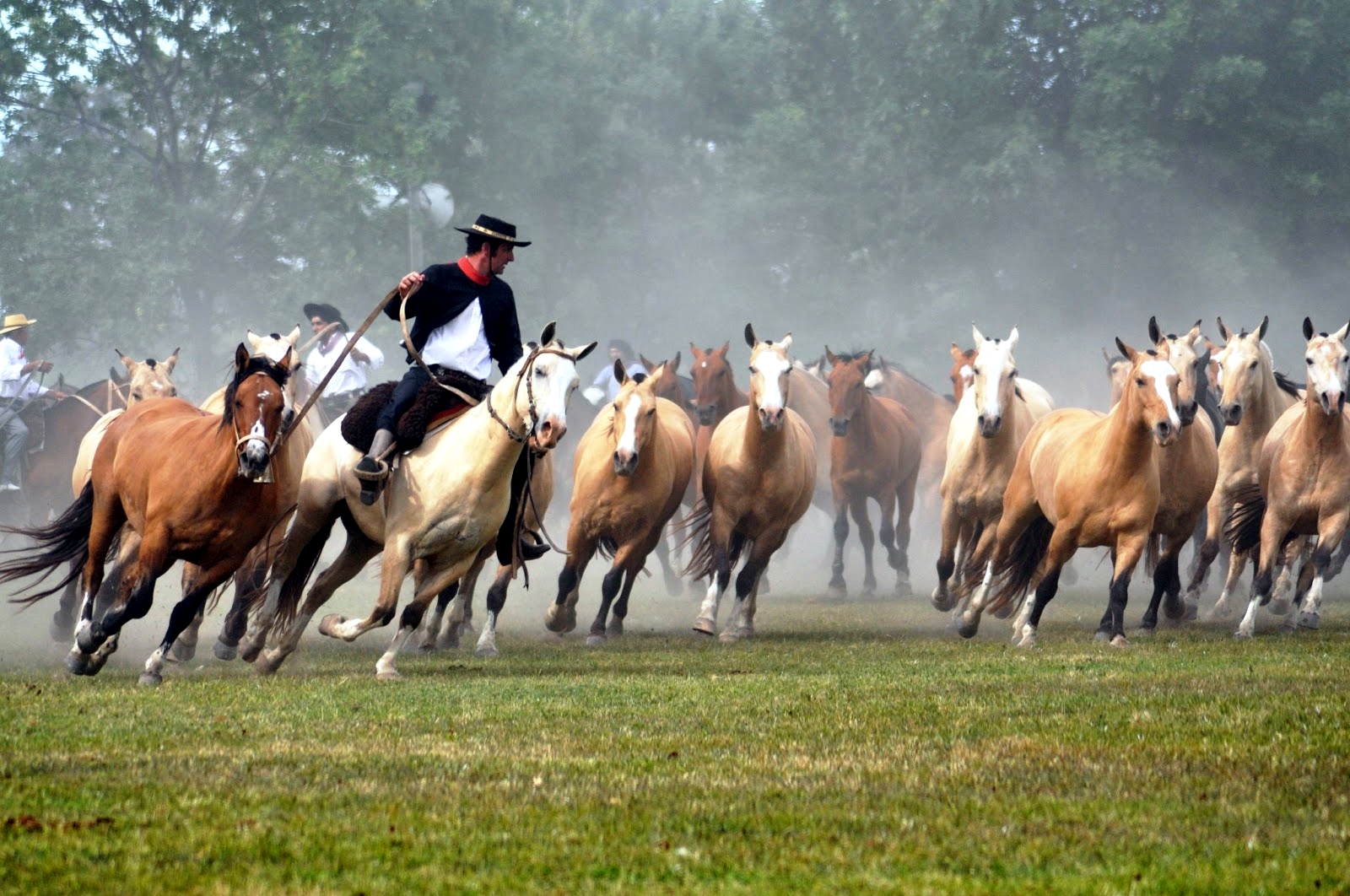
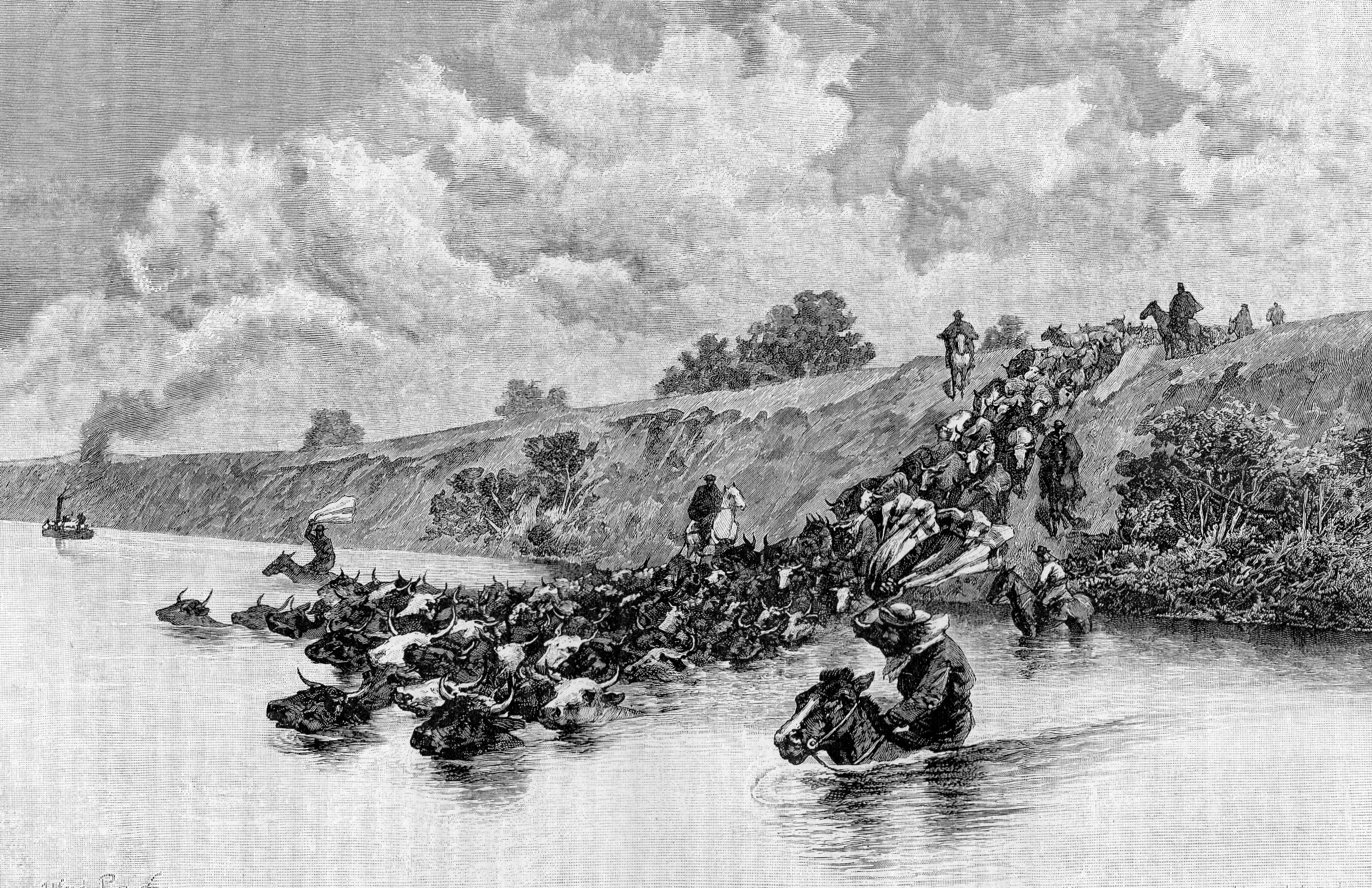
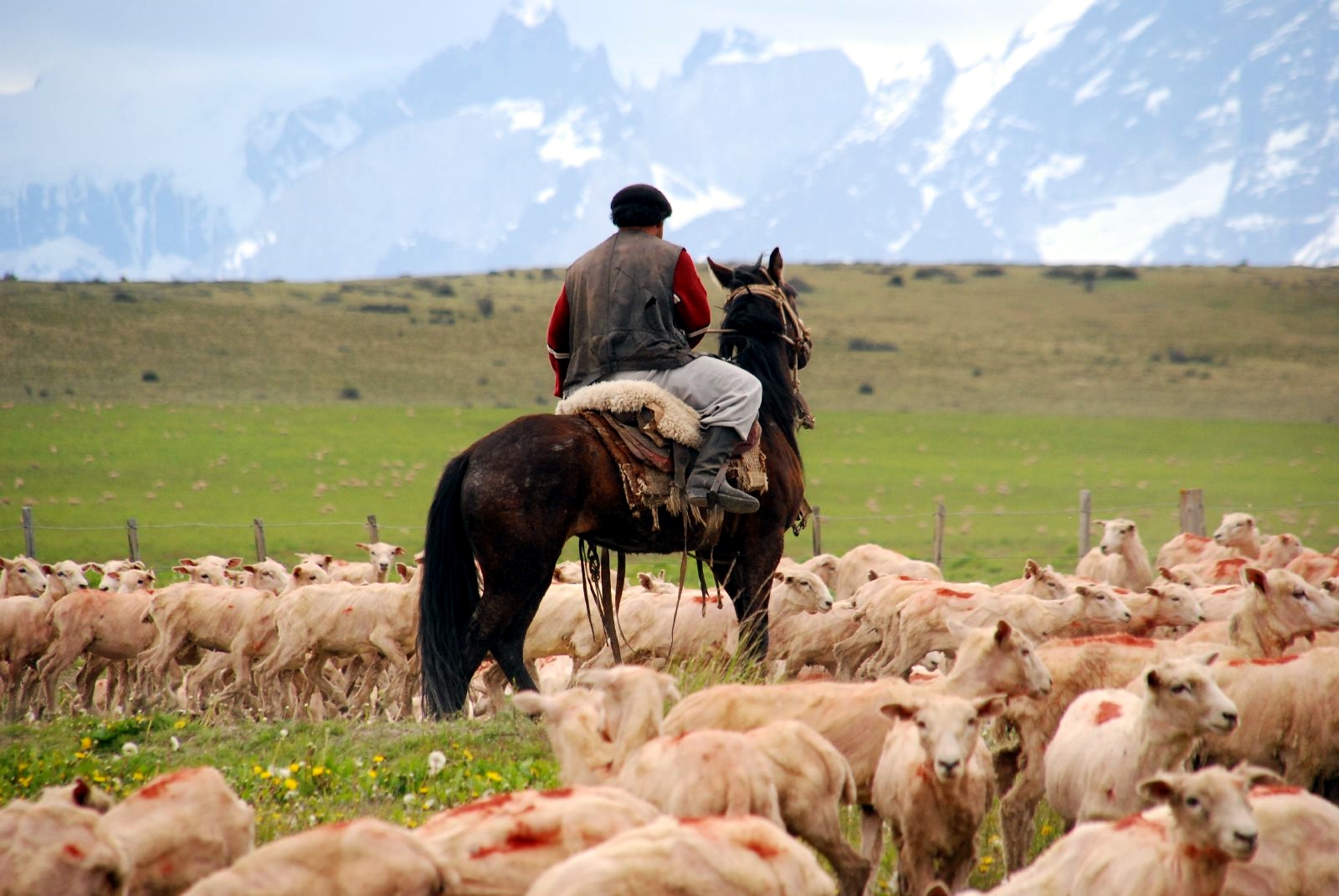
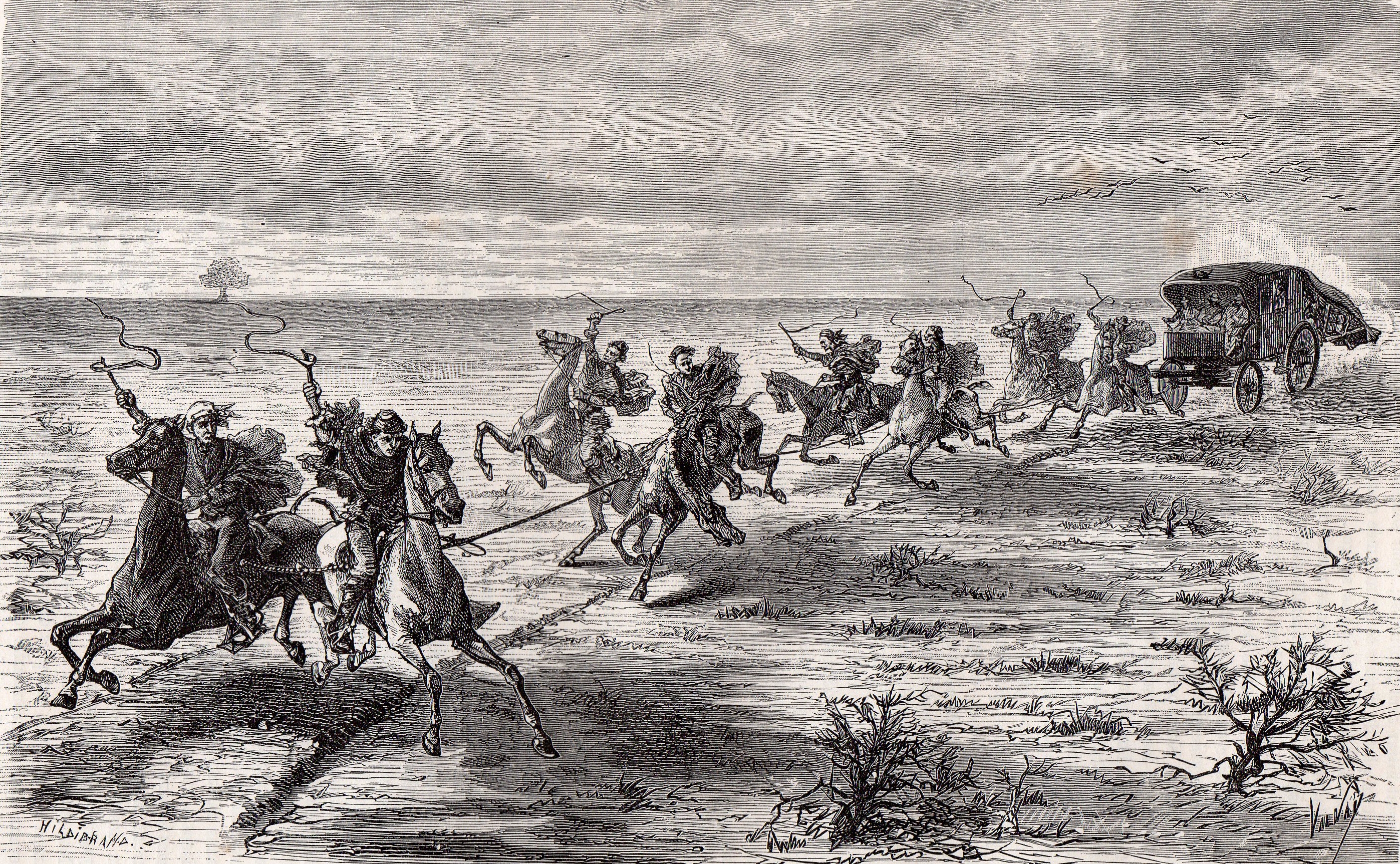
Knife fights between gauchos might break out at the slightest offense when liquor was flowing. „A dispute easily arises about a hand of cards or the heart of a woman, and a sharp word is too often answered by a sharp knife,“ wrote T.W. Hinchliff in 1863 in South American Sketches.
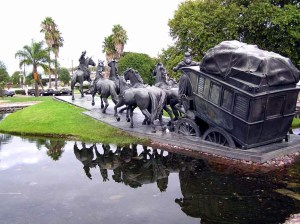
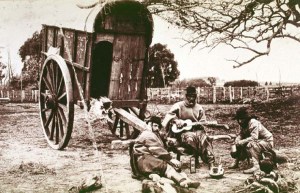 Another monument in Montevideo. Gaucho helps a wagon train to cross a river. Gaucho life on a hacienda.
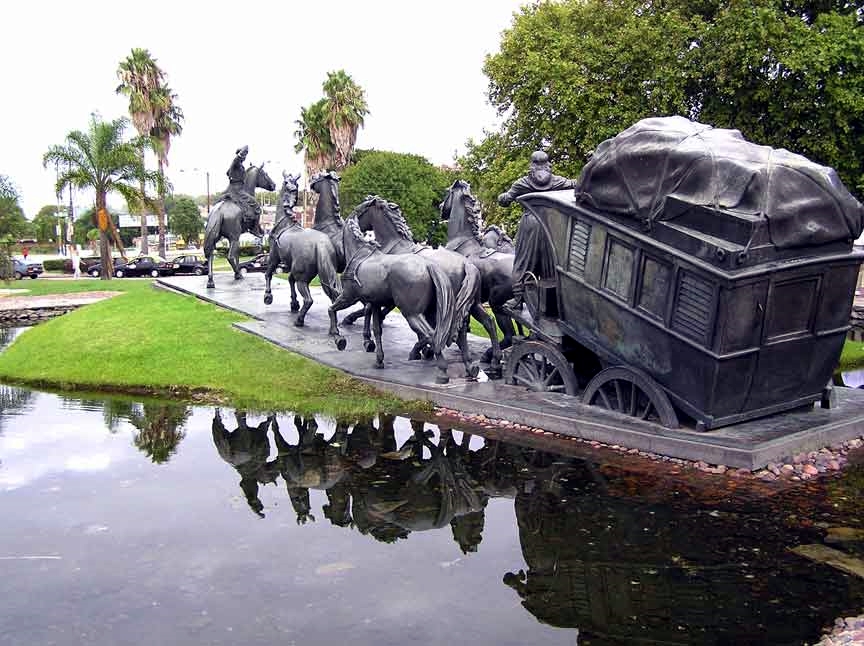
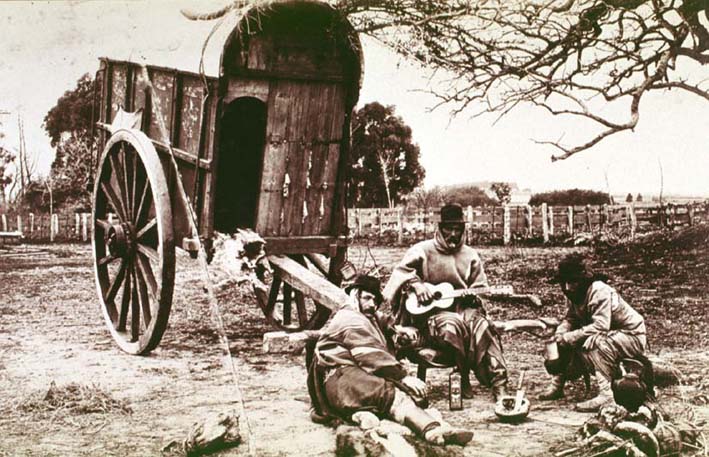
In his book Far Away and Long Ago (1918) Argentine naturalist William Henry Hudson wrote that gauchos „loved to kill a man, not with a bullet, but in a manner to make them know and feel that they were really and truly killing.“
„They liked to see blood,“ he says. „They wouldn’t hang a horse thief, as they did in the American West. They’d slit his throat without blinking an eye. They liked the color red.“
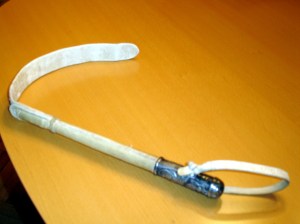
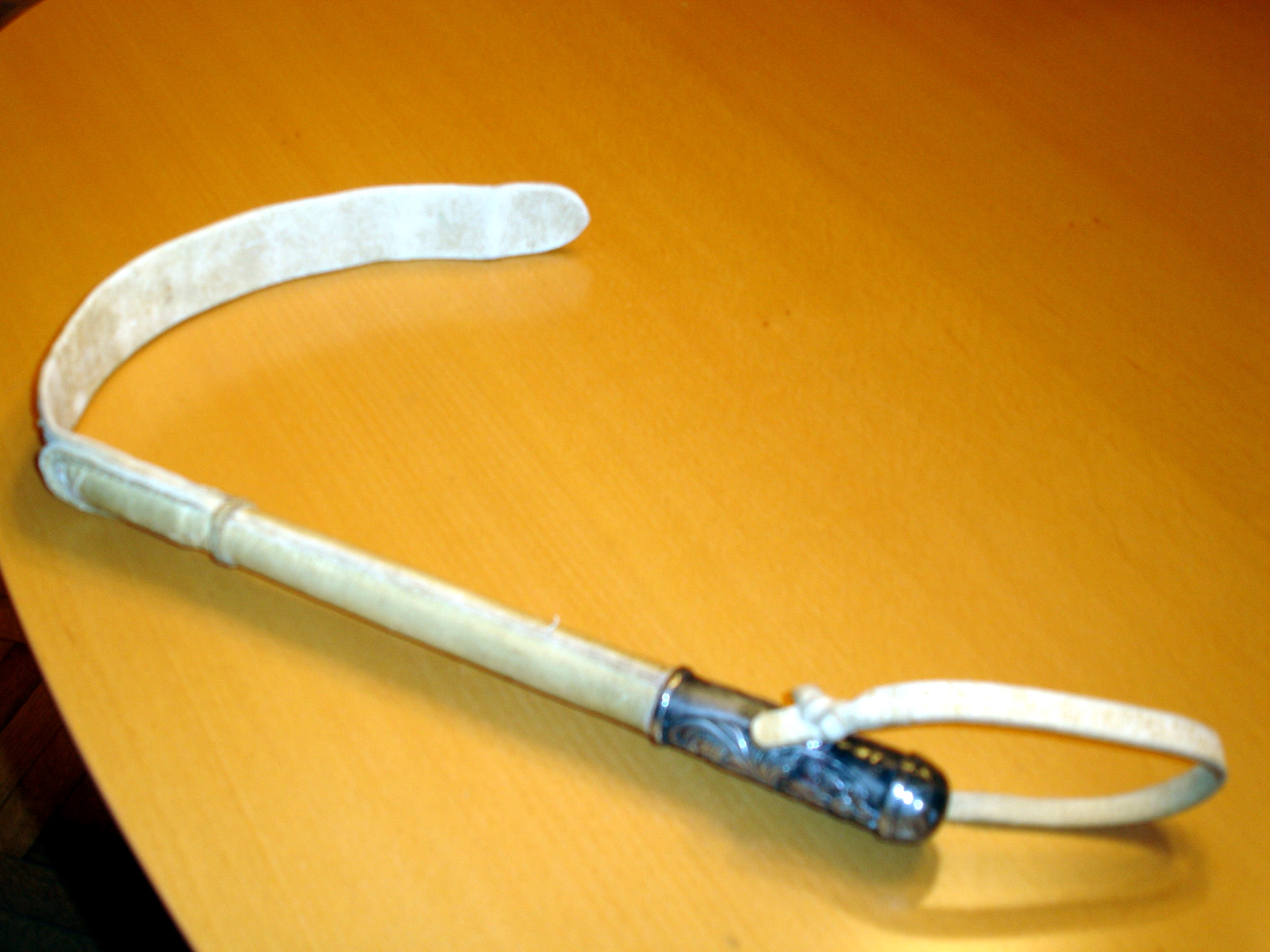
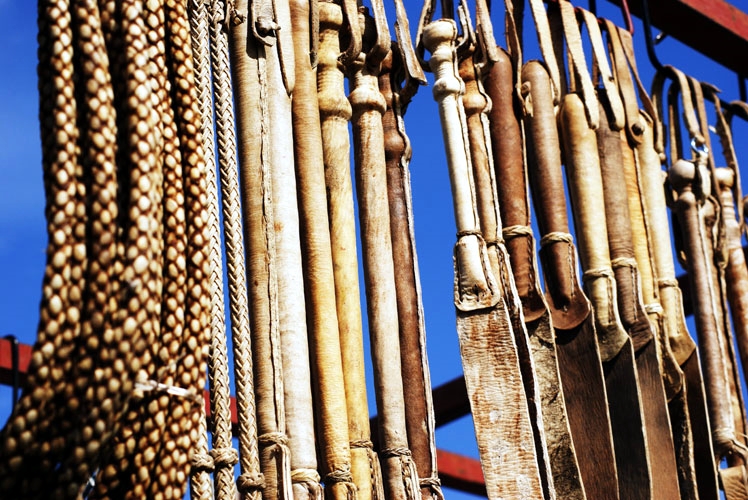
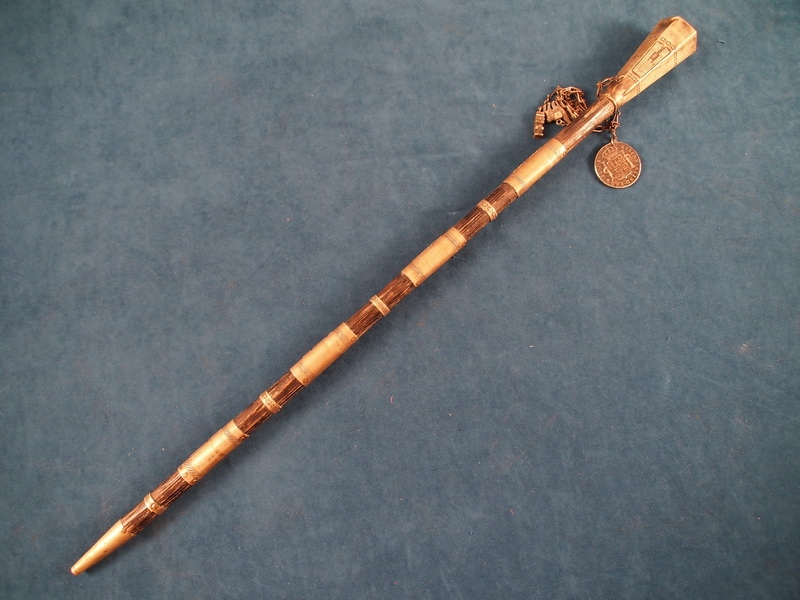
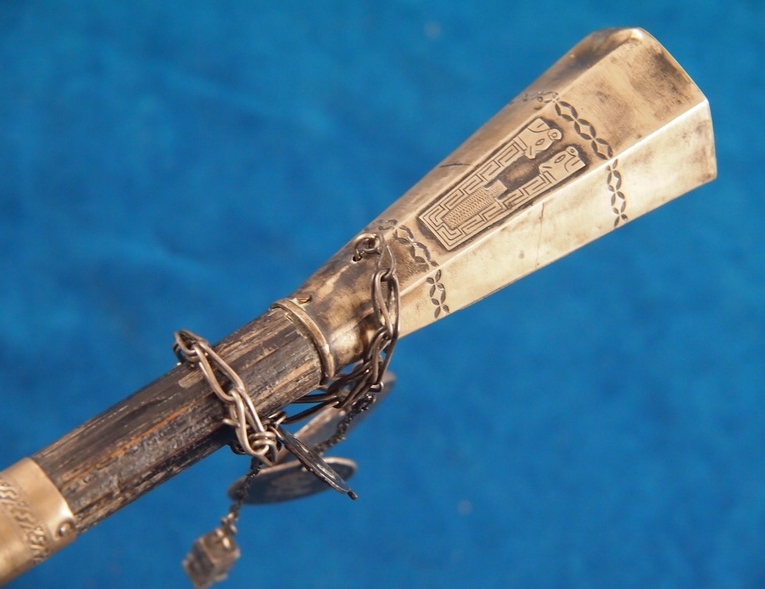
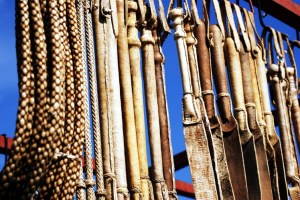 Nice old gaucho whip, called rebenque, with silver handle. And modern whips for sale during a rodeo.
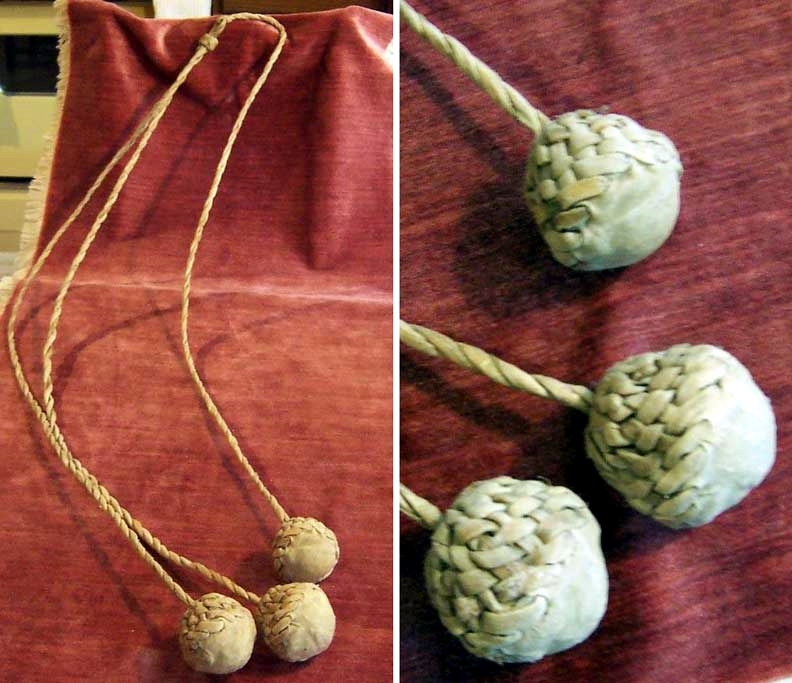
The bola was the gaucho’s other weapon of choice, though it was primarily employed to capture game. An Indian invention, the bola was fashioned of three billiard-ball-sized rocks or iron balls that were covered in leather and attached to long lengths of rawhide. Holding the middle ball, the gaucho would swing the bola over his head, lasso-style, and fling it at the legs of his prey.
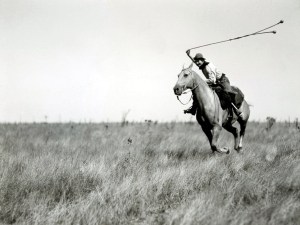
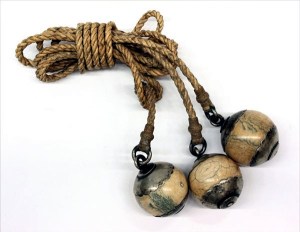 Swinging the bola in full gallop is gauchos art. An antique bola in a very fine, silver decorated condition.
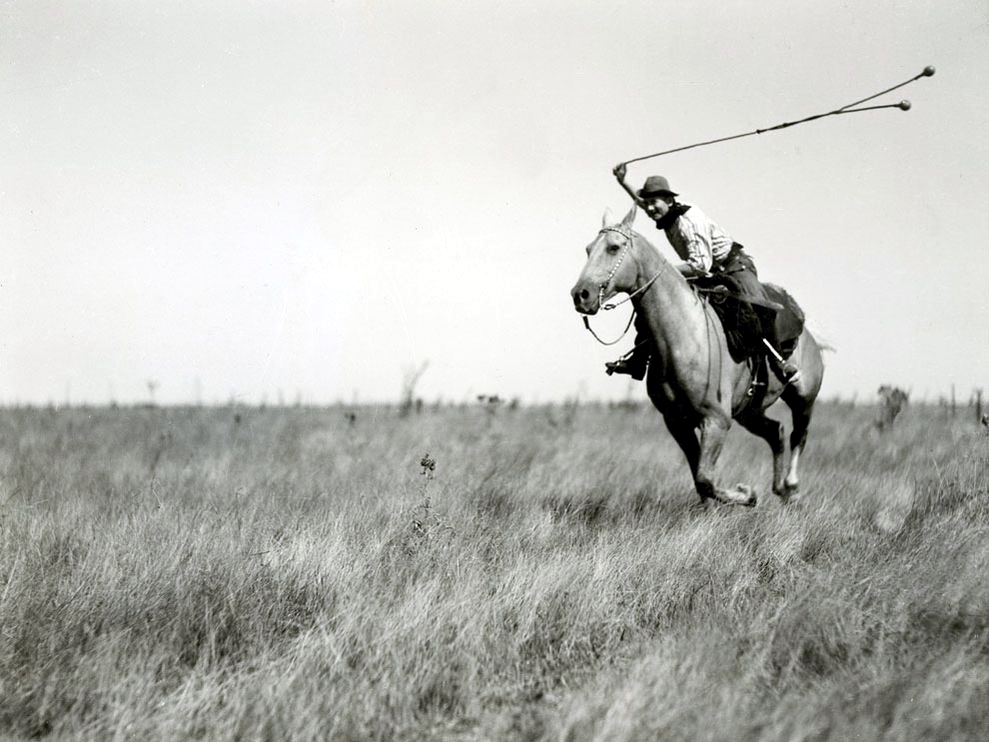
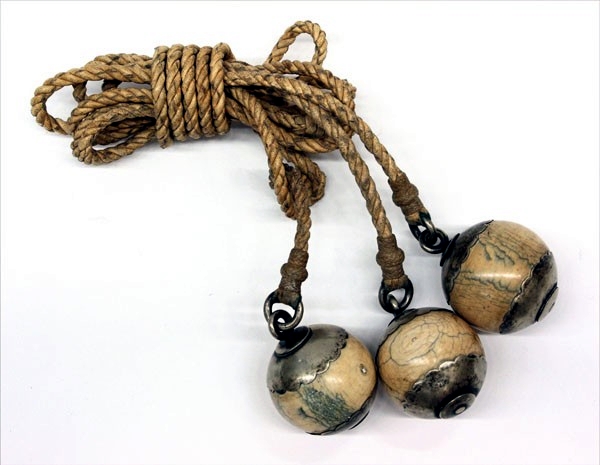
It would unwrap them as neat as you please. In this manner he could bring down rheas, small, ostrich like birds, cattle or horses. If the horse happened to have a man on its back, that man was in trouble, which is why gauchos used to train their mounts to run with their hind legs tied together. They also took pride in being able to land on their feet if their horses took a header. Indians galloped from pursuers with their lances pointing backward to deflect a bola’s flight.
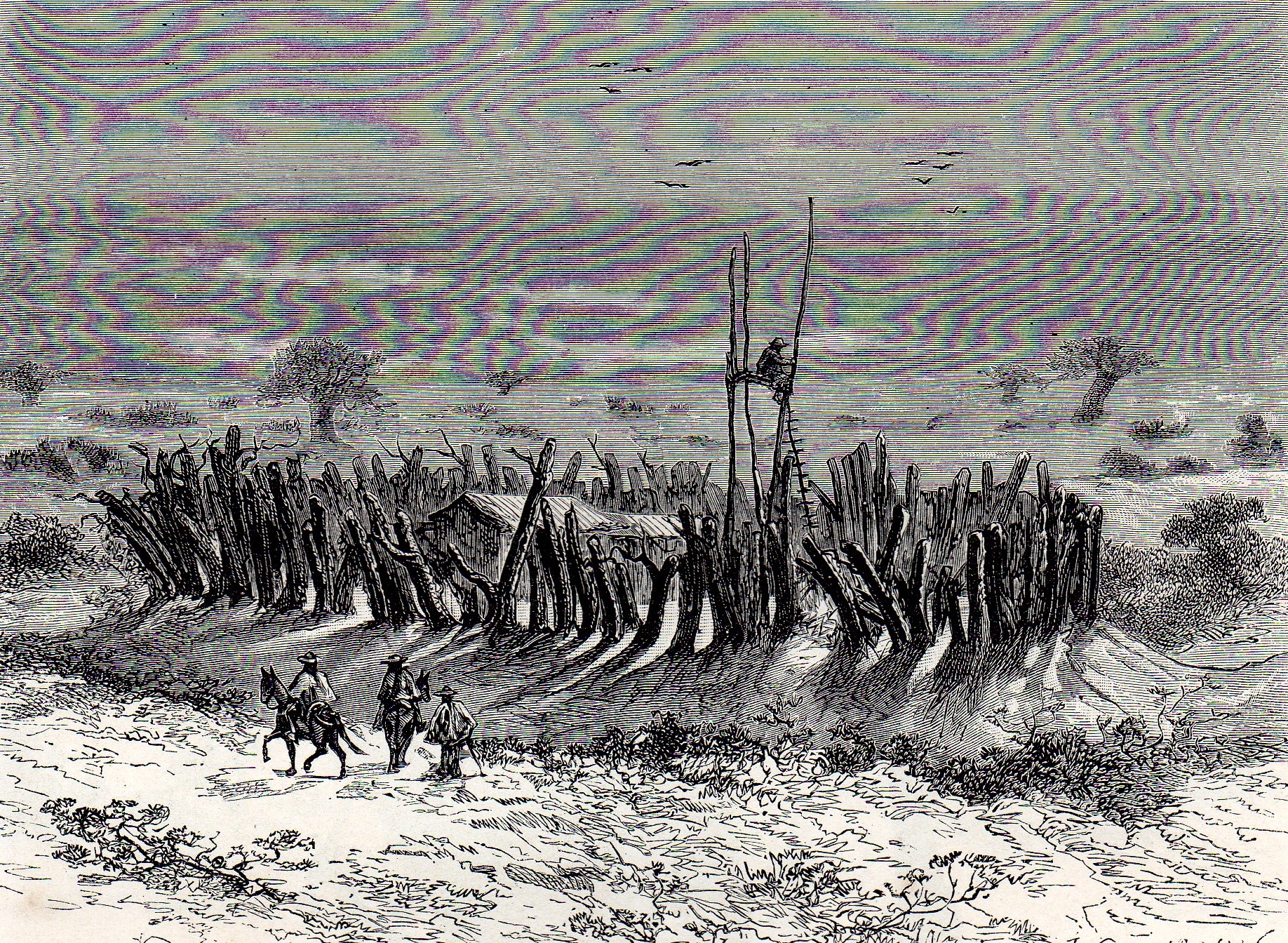
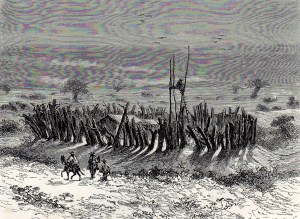 One of the very first Gaucho Fortresses against the Indians. This one „Fort Romero“, later expanded to a garrison of 3 to 5 soldiers with families. Places where gauchos found a safe rest overnight and guarded trading spots. Wood engraving from the early 1800’s.
The Gaucho Museum.
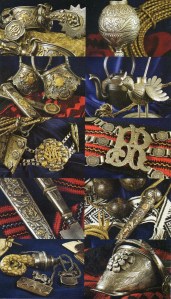
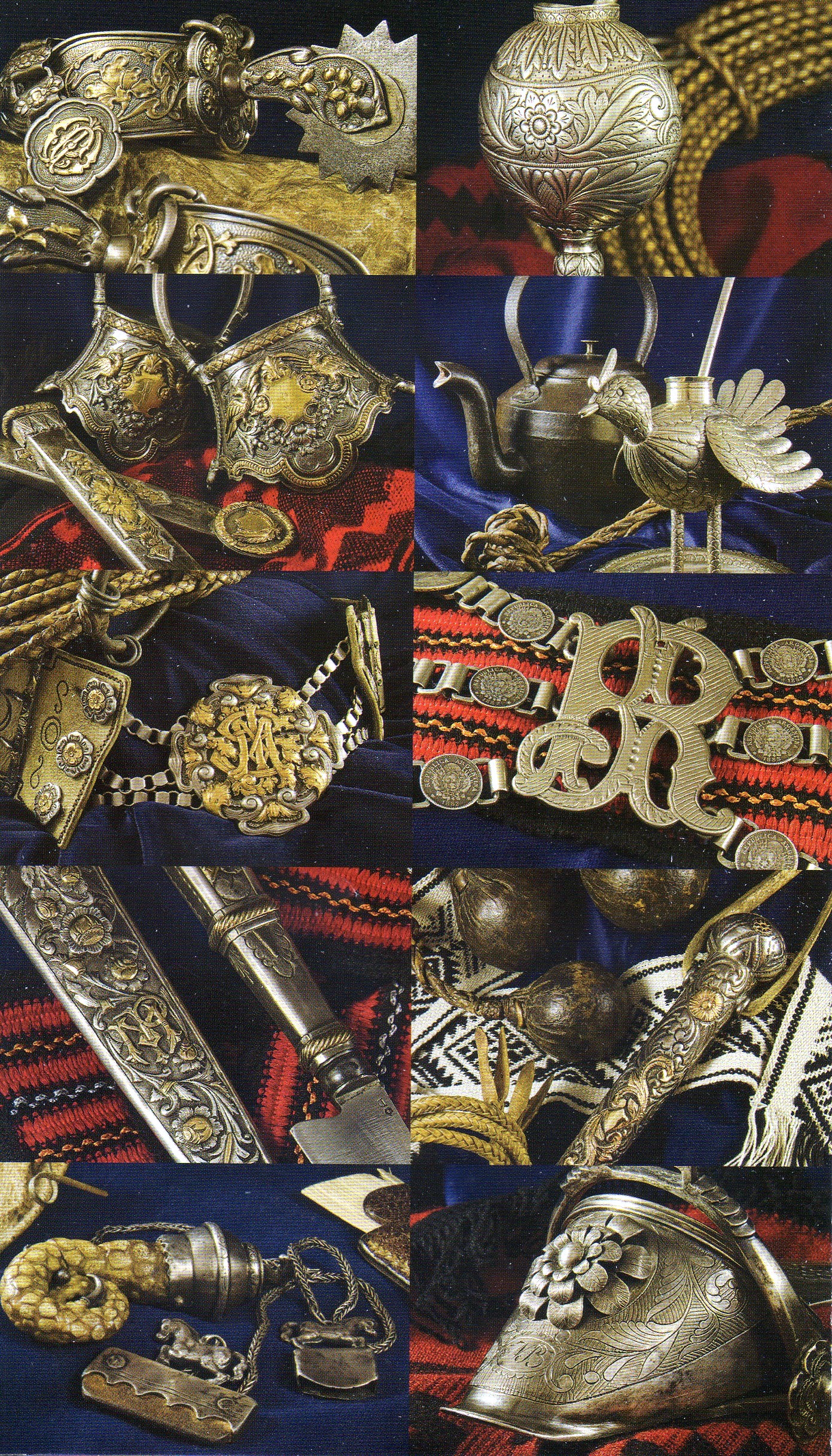
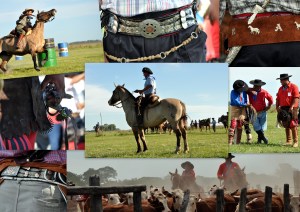 Display items of the museum and a gaucho rodeo, views assembled from different pictures.
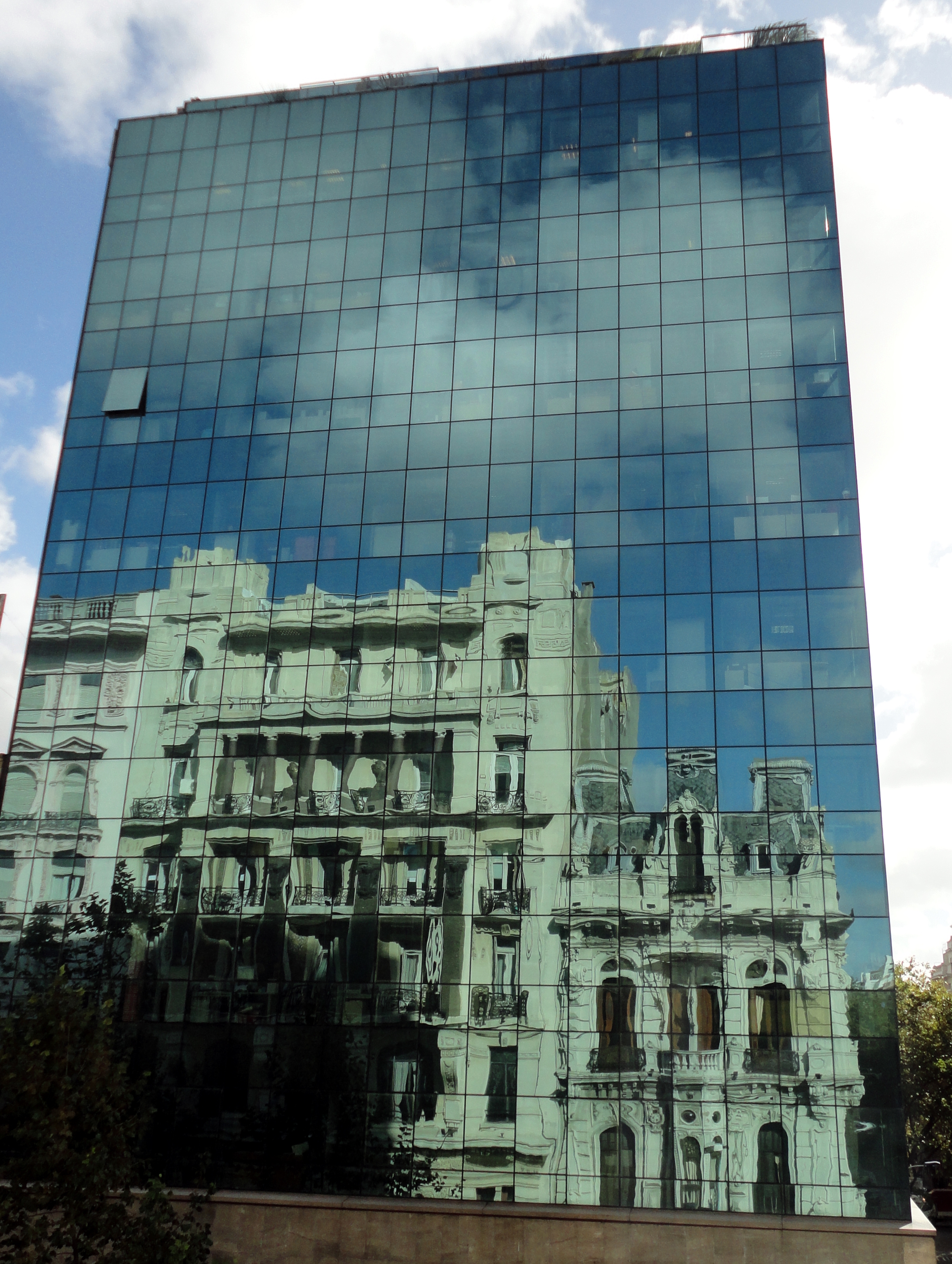
It is located on the second floor of the Heber Jackson Residence Palace in Montevideo. This building was constructed near 1896 by Alberto Heber Jacksons widow Margarita Uriarte. The building conceived the prevailing taste of the 19th century in Uruguay, with strong Italian influences. Today the building is owned by Banco Republica.
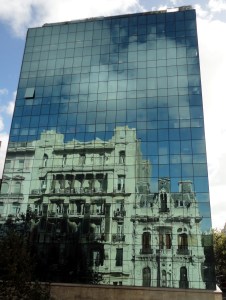
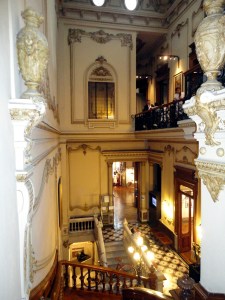 Pic on the left: The smaller building on the right is the Heber Jackson Residence, reflecting in a modern high riser across the road. Pic on the right : The beautiful restaurated, Italian style stair case inside the building.
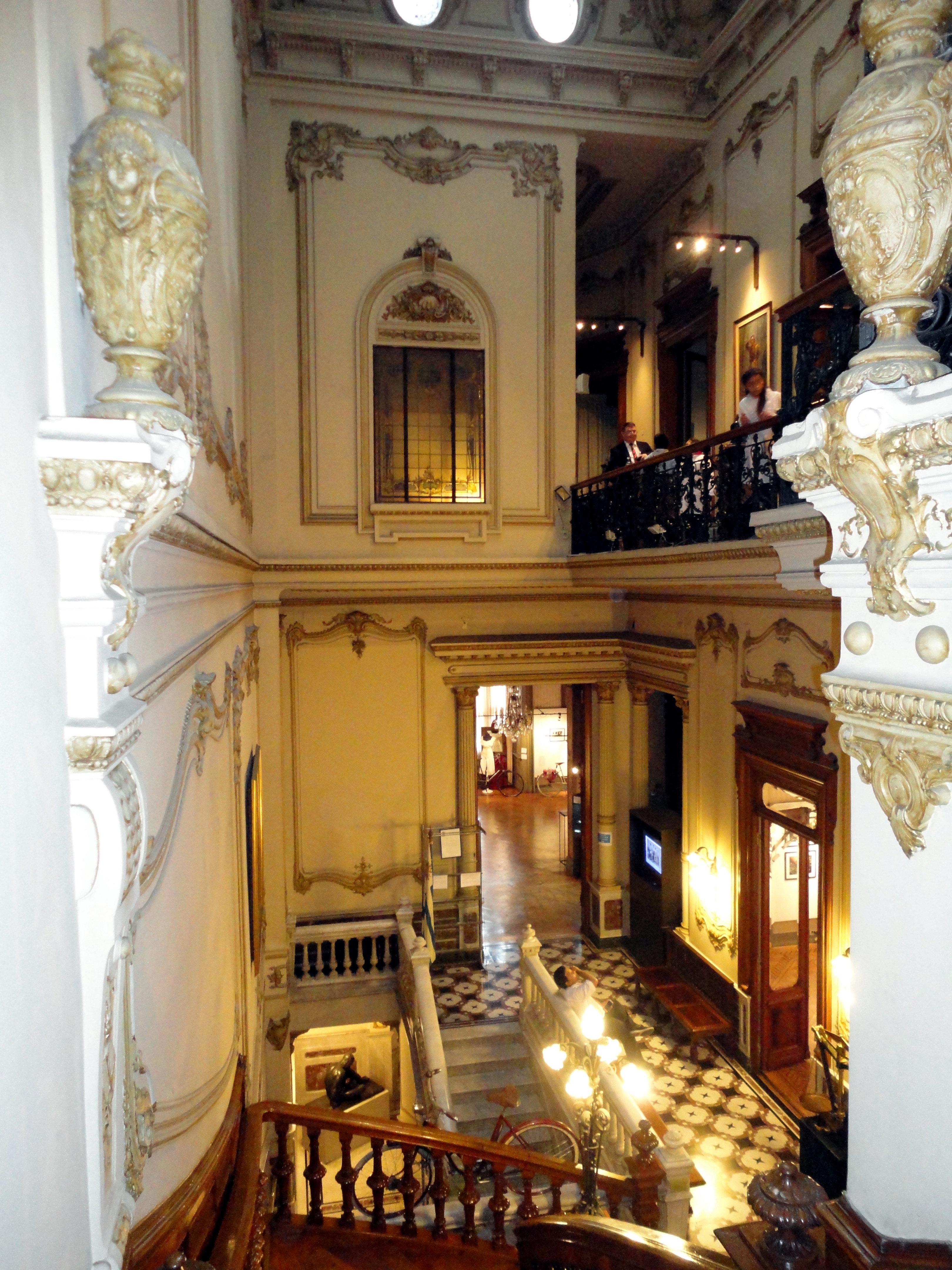
It is a place where history and arts of of a specific period of time of Uruguay and the Rio de la Plata region join together. The collections display representative pieces of the traditional popular arts in Uruguay, created under the influence of the native culture and that of the Spanish and Portuguese colonists.
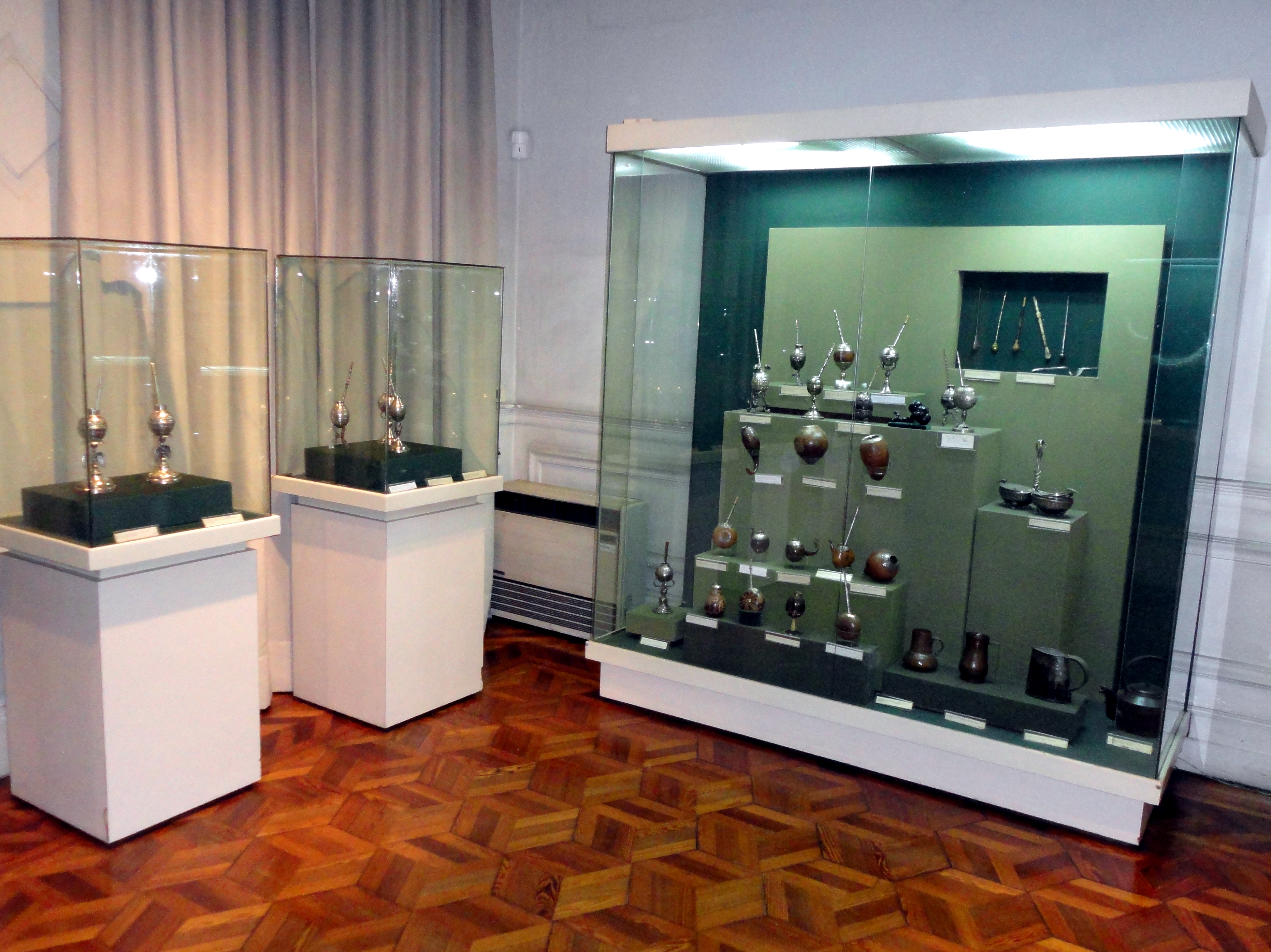
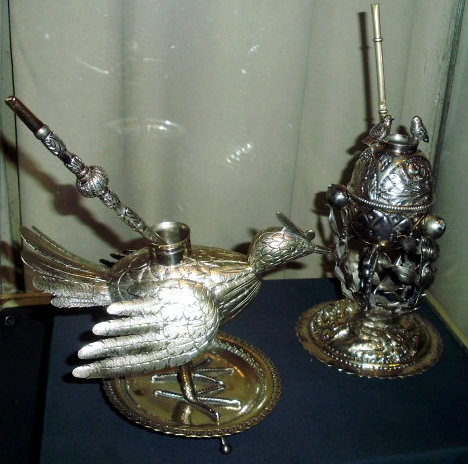
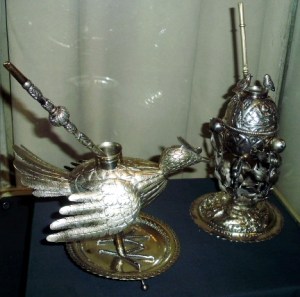 The Mate Room of the Gaucho Museum and a very exclusive mate set.
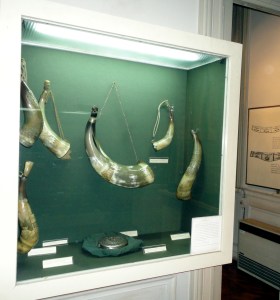
 Horn vases and rich gold and silver gaucho belts (called garments) in extraordinary quality.
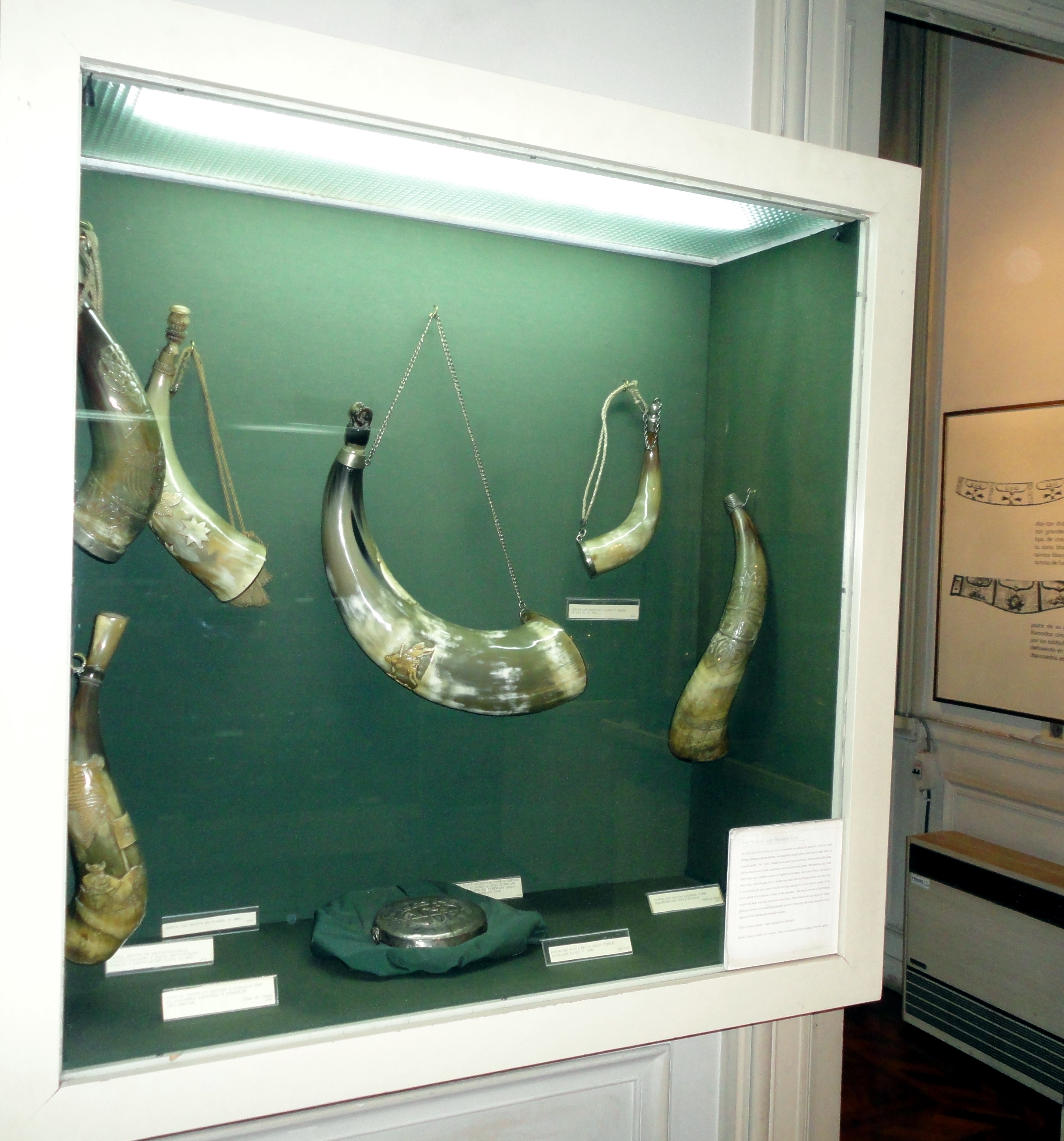
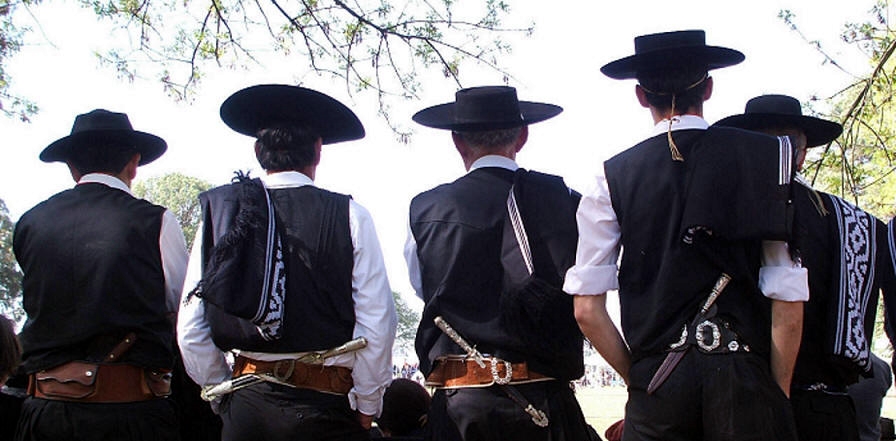
The museum displays the pieces in different theme rooms, like
Mate room ( mates, straws, horn vases),
Belts, waistbands, gaucho buttons and smoking gear room,
Knives room (different types of gaucho knives),
Spears, bolas, branding irons and fire weapons room,
Spurs and whips room, and finally the Horses room.
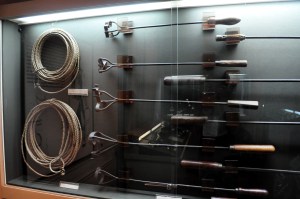
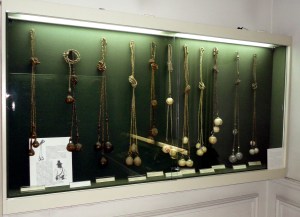 Branding irons and lassos, as well as a superb bola collection.
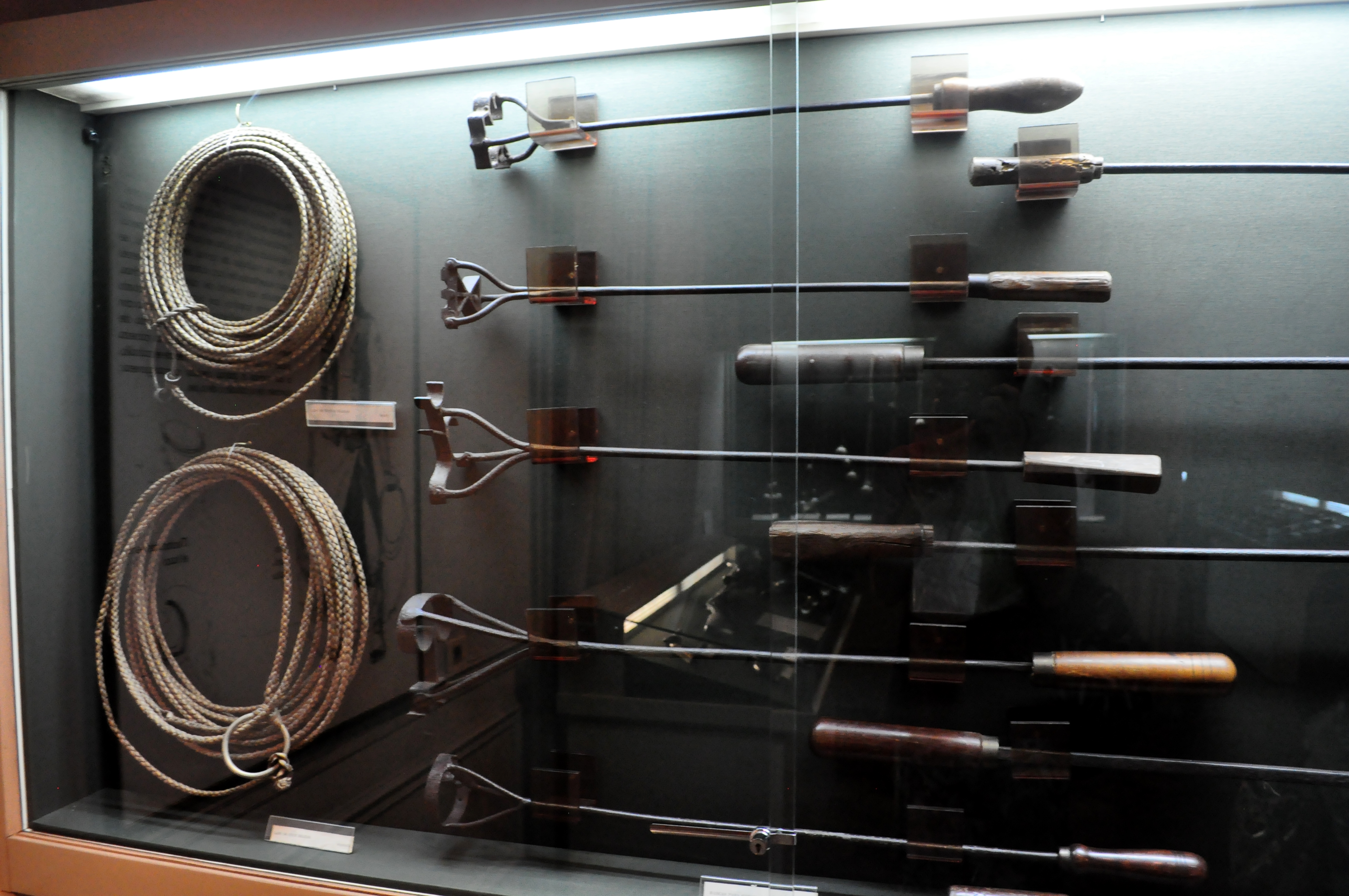
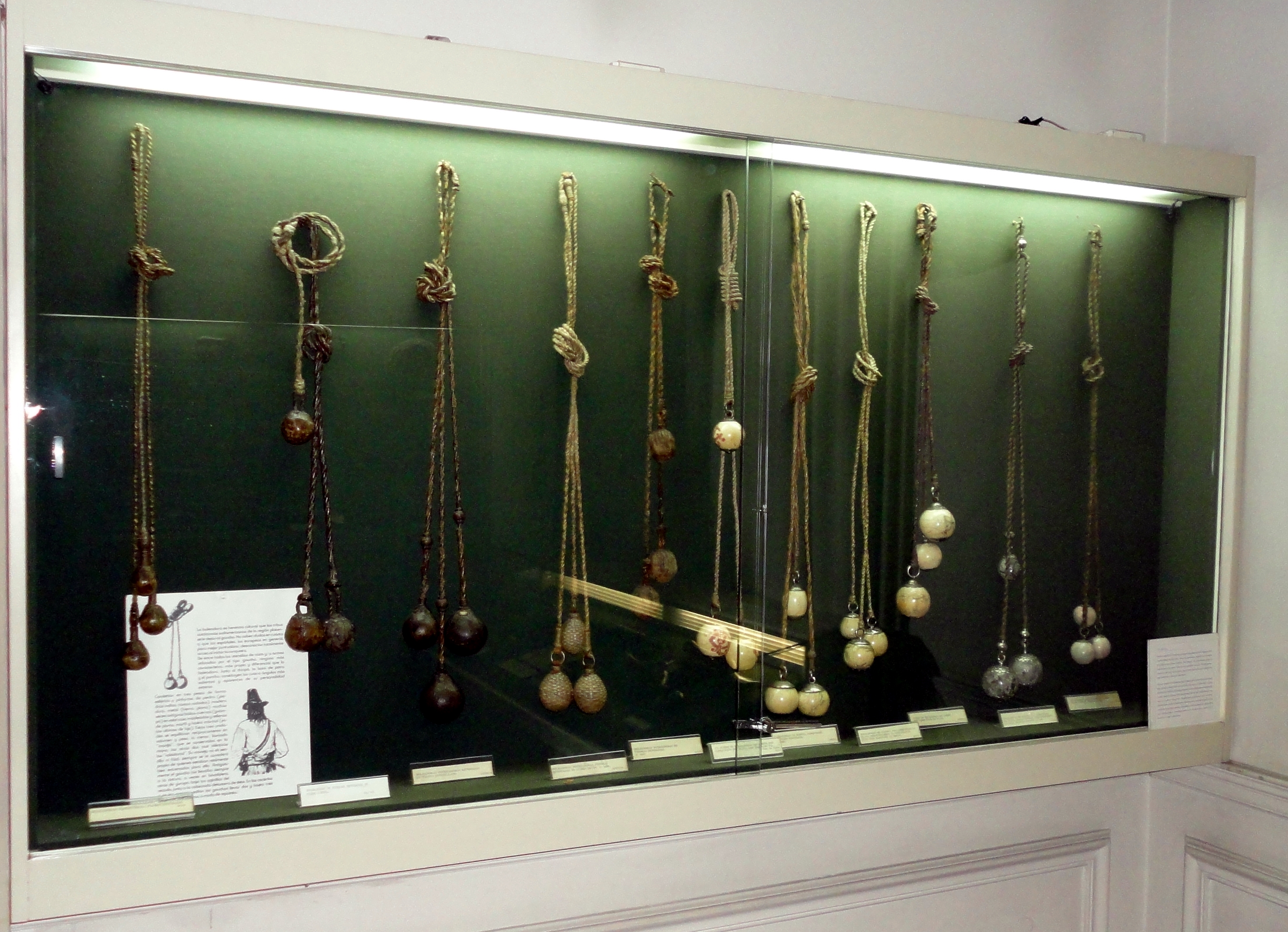
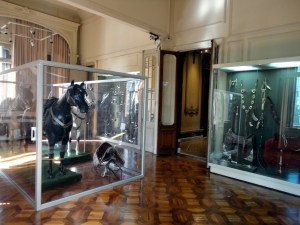
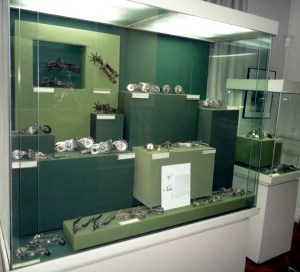 The Horse Room and a nice collection of spurs.
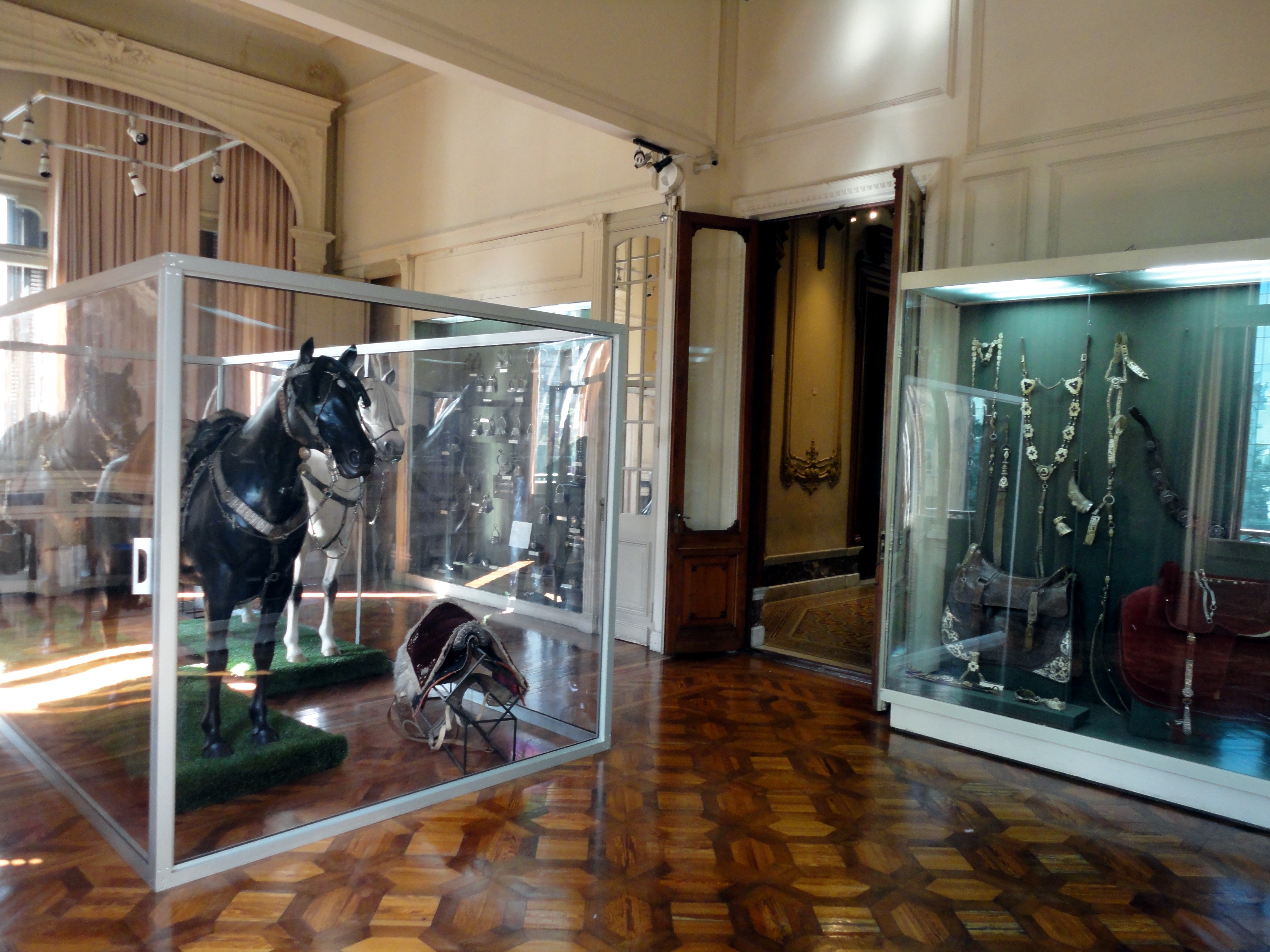
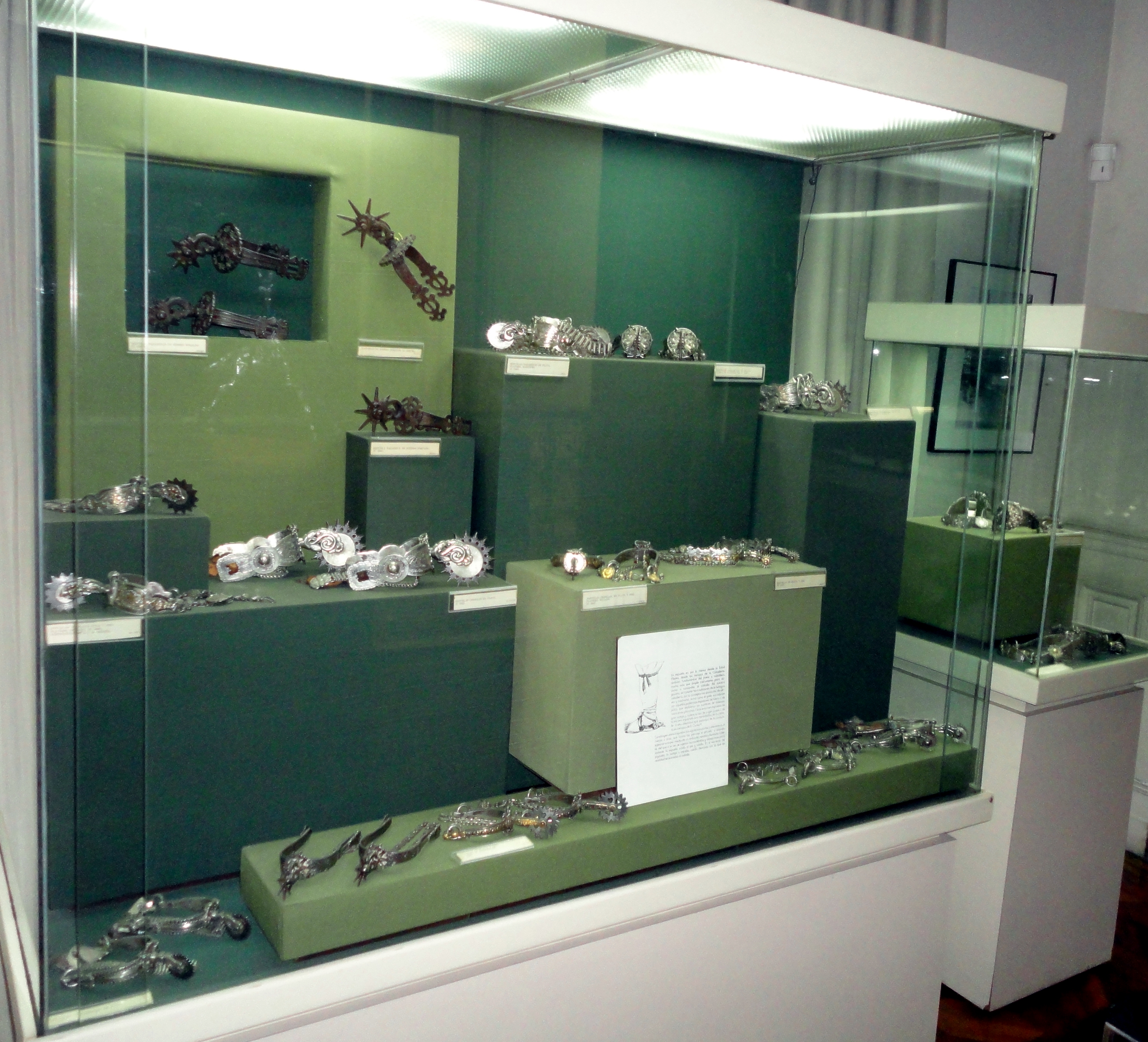
Many many of the items are the very high quality of the time, made from silver. Silver, obtained from the Potosi mines, was the material used for the manufacturing of extraordinary pieces, like horse harnesses, mates, straws, spurs, belts and of course the gaucho knives.
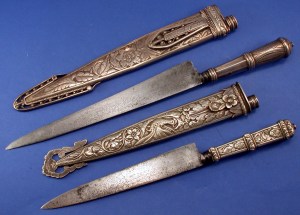
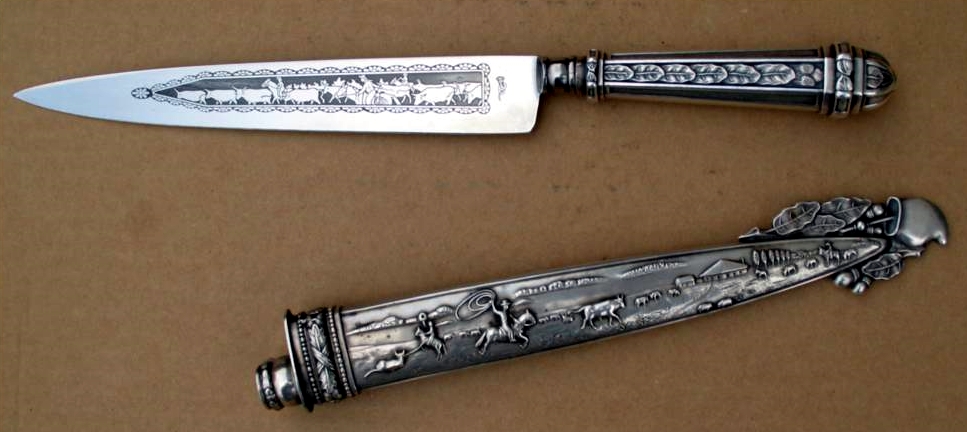
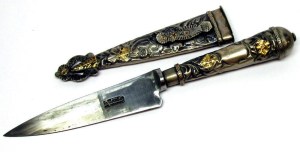 It is worth to see such a fine gaucho knife collection. Mostly, but hardly mentioned, the gauchos carried 2 different knifes. A sword like one, over 12 inch (30cm up to 60cm) long blade, used in fights and killings and a short one for daily use like food cutting etc. Today they only wear the medium size one (around 12 inch, 30cm) carried in the back belt.
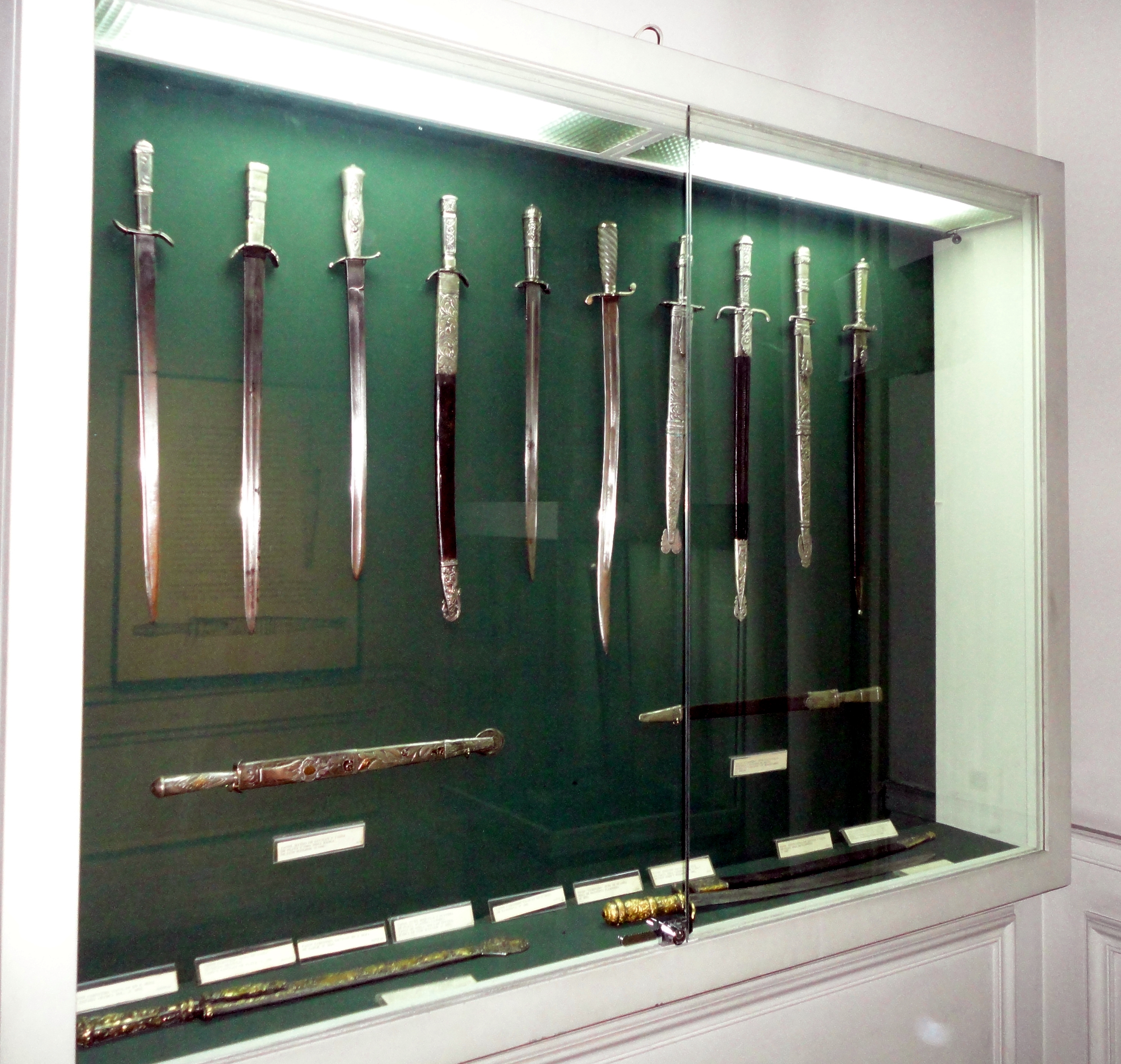
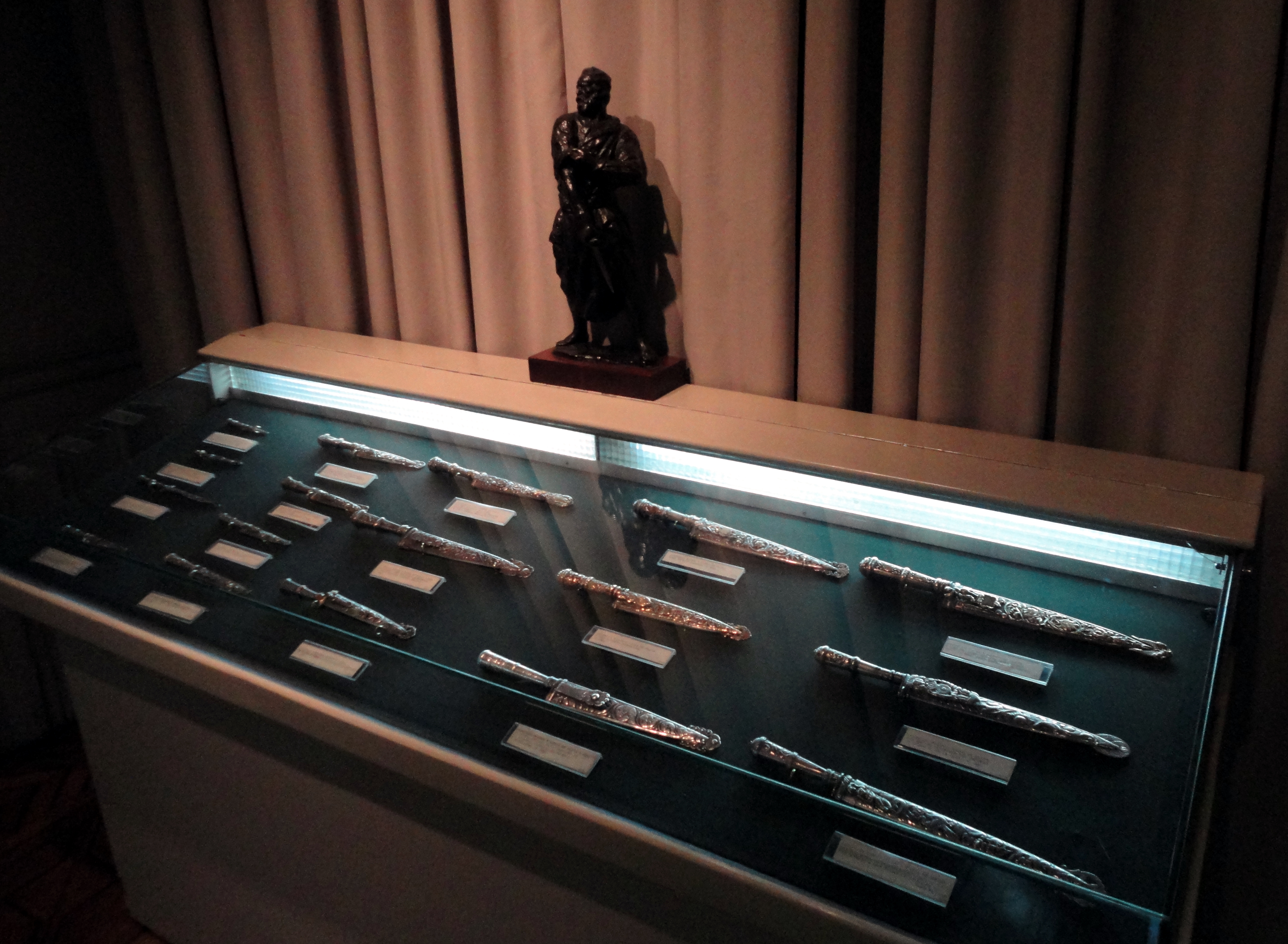
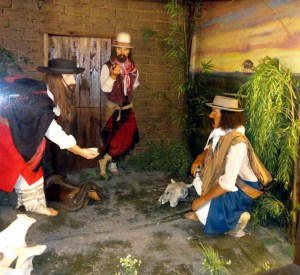
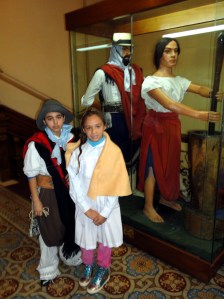 Dioramas showing the lifestyle of the gauchos. Good fun for the kids, they get education, may dress up like gauchos and can take pictures home. Those two were a bit shy, pictured by a „Gringo“.
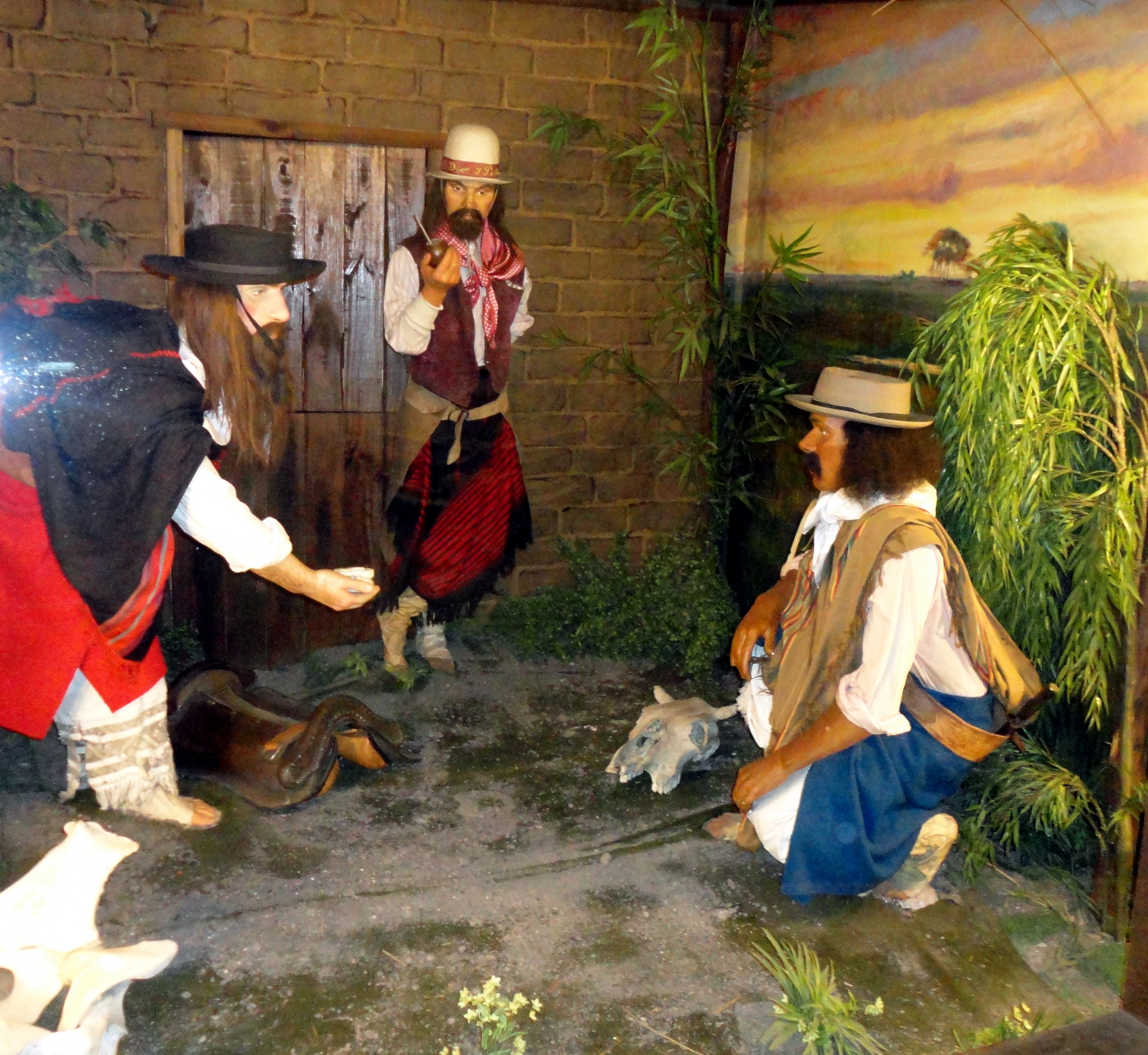
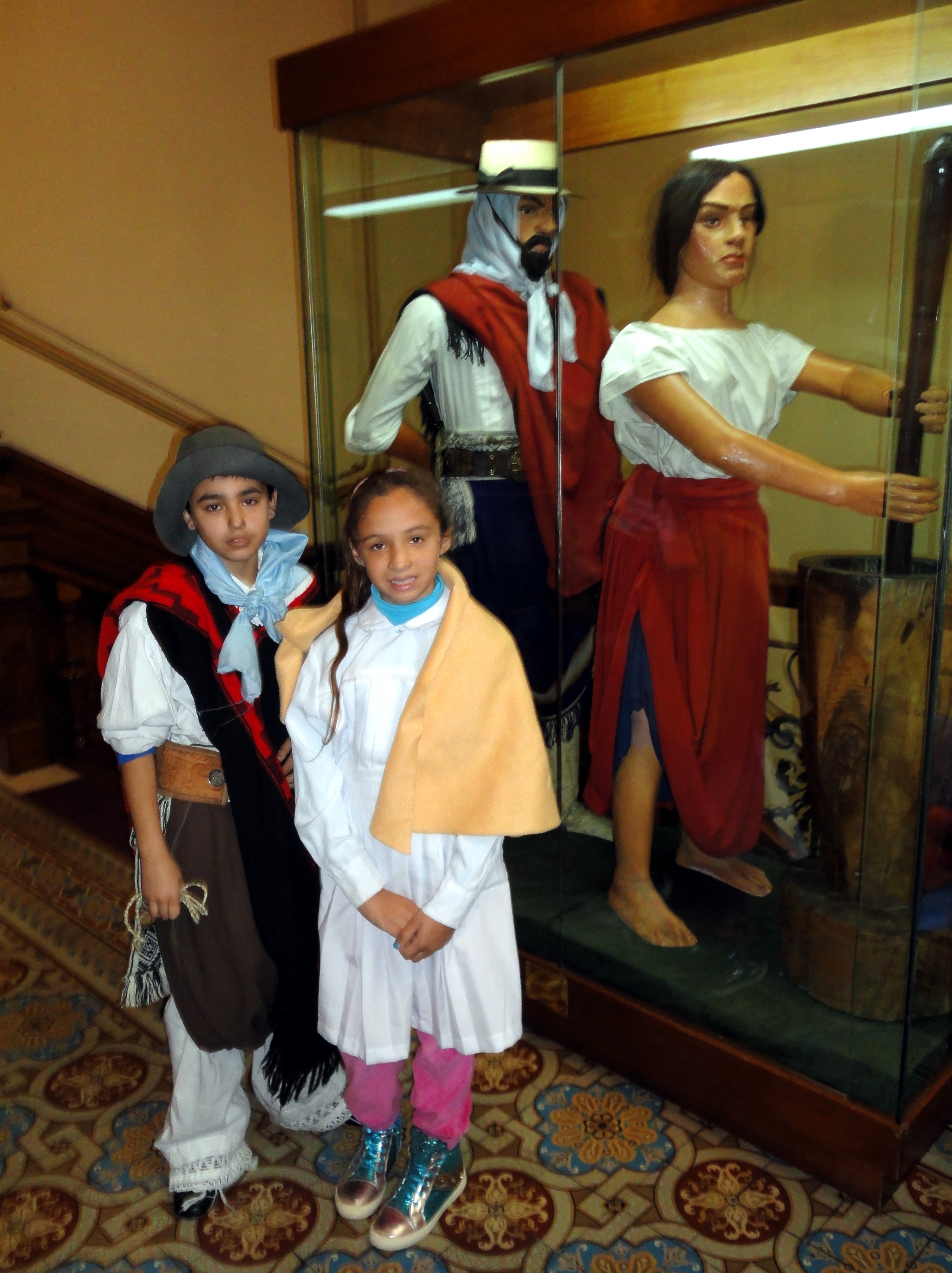
In several dioramas one can see the gauchos clothing, utensils, settings and gaucho lifestyle. The museum has always changing exhibitions in so named temporary exhibition rooms. When I was there they had an interesting exhibition of Uruguayan bikes throughout the last century. Also they offer workshops of different kinds and guided tours. During school hours you can face dozens of school kids lamenting through the rooms and following search-exercise maps. Not a problem, but very noisy.
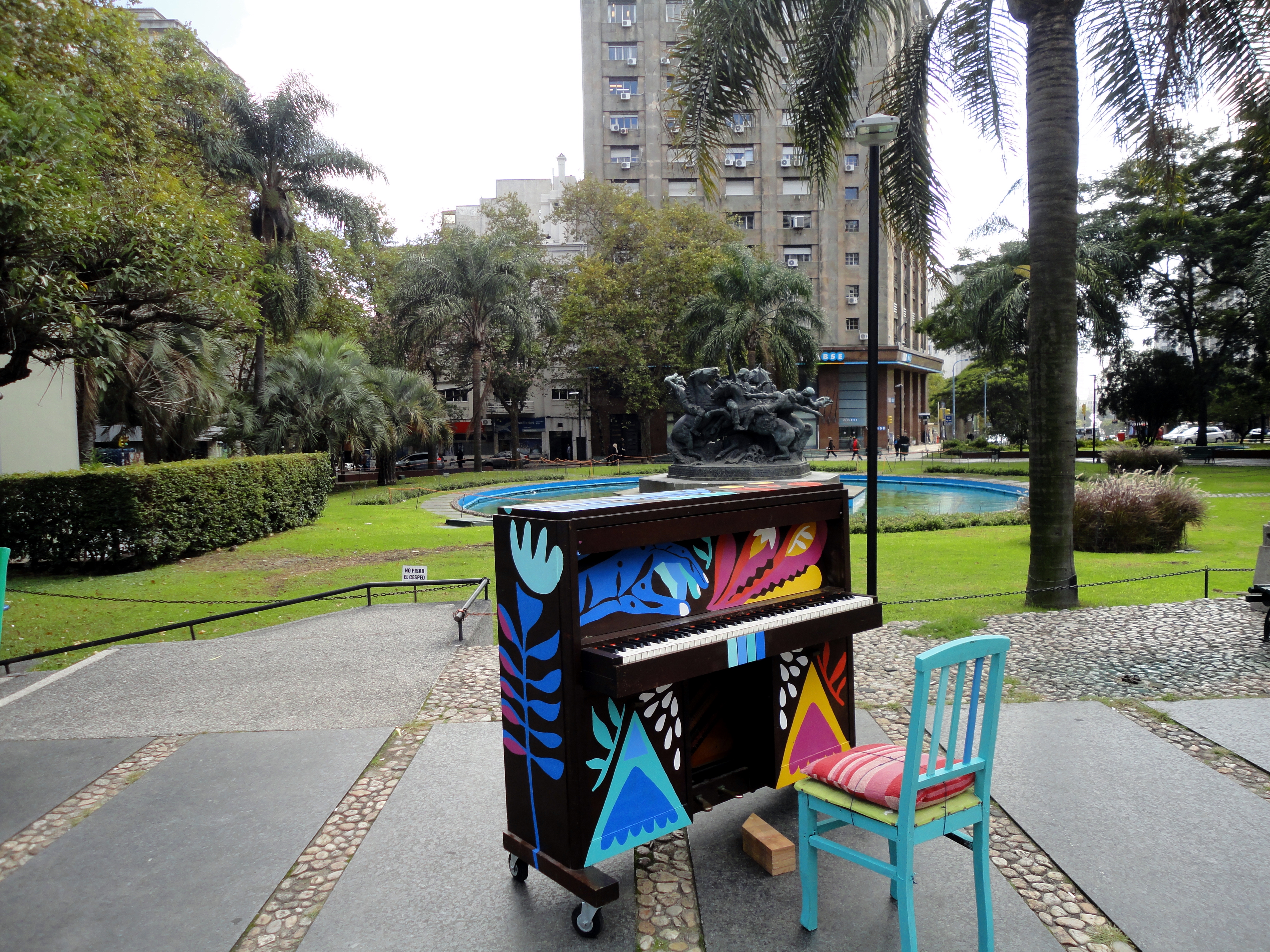
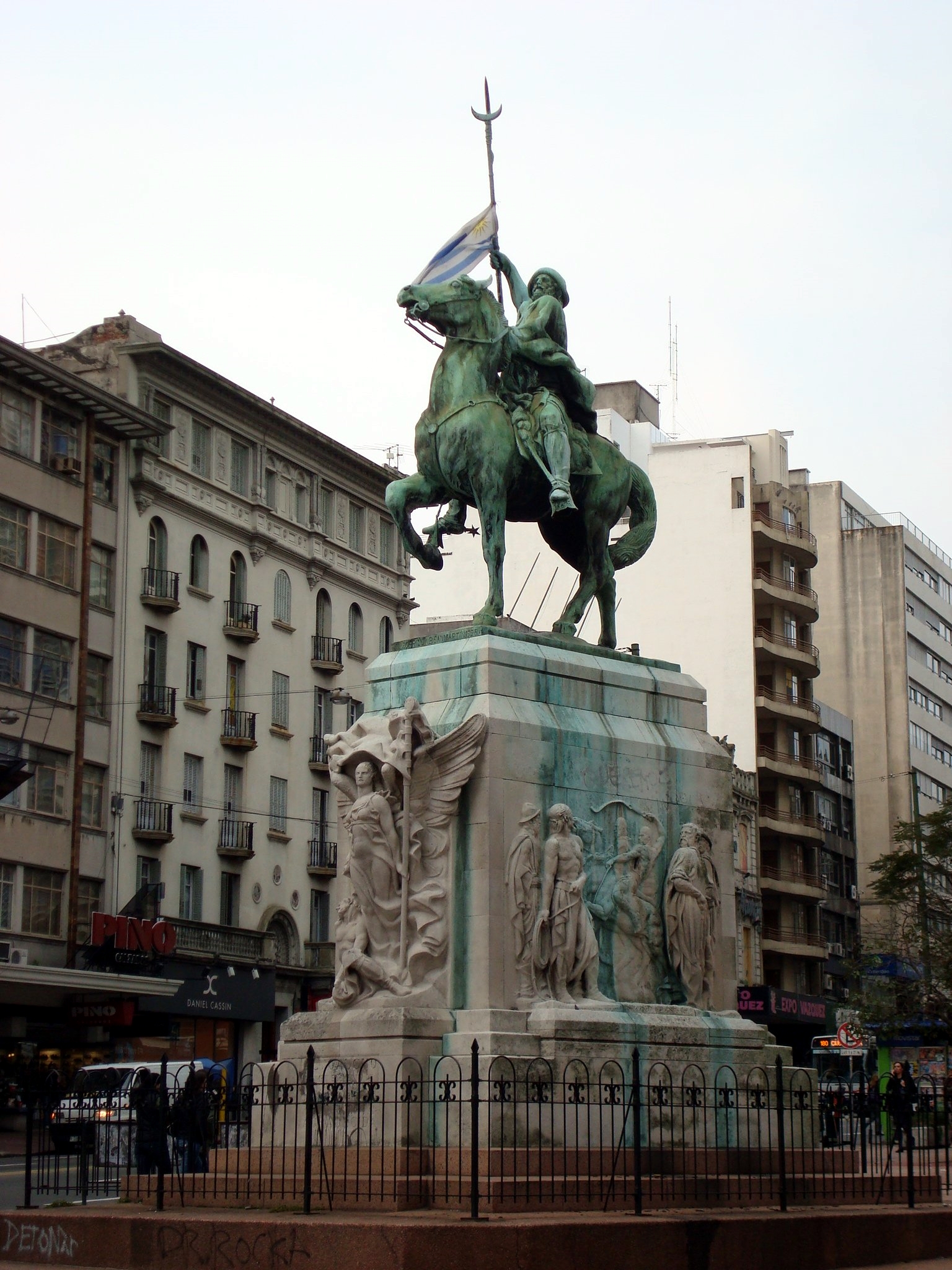 After visiting the museum you can relax on Plaza del Entrevero, play a bit piano there, have a snack or a coffee in one of the many restaurants around or walk 7 blocks east on Calle 18 Julio (along Plaza Cagancha and the Intendencia of Montevideo), to see the Gaucho Monument (Monumento al Gaucho).
Collecting Gaucho Memorabilia.
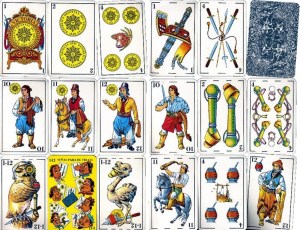
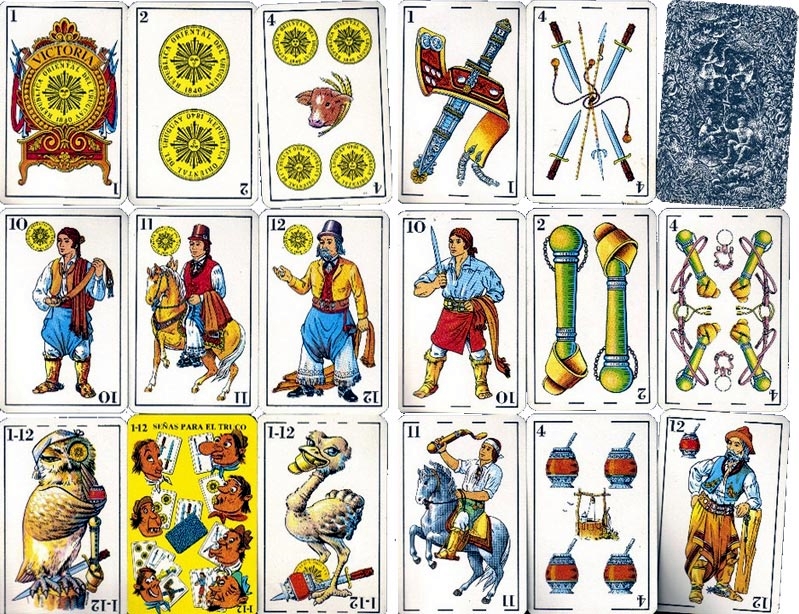
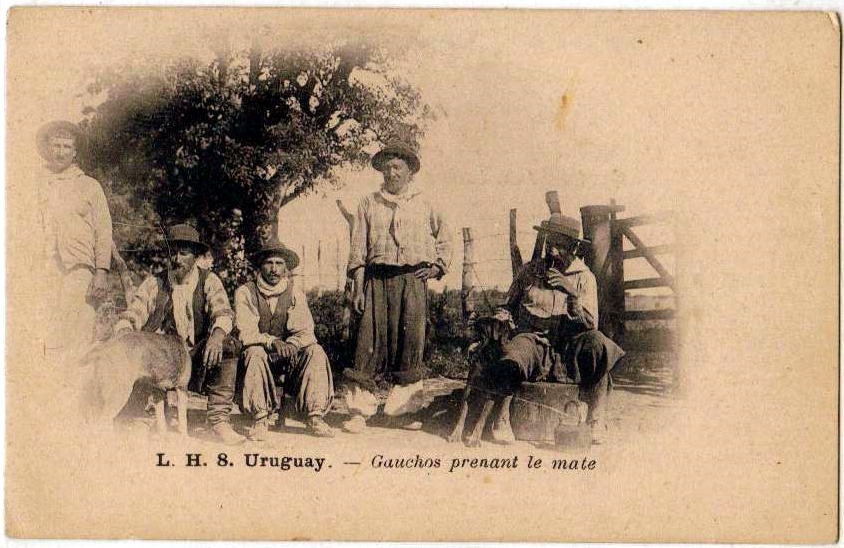
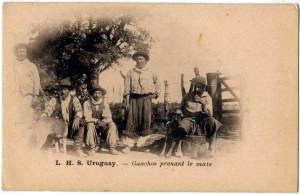 Very collectable – gaucho items, like bolas, knives, buttons and paper memorabilia. Here a very rare deck of playing cards with gaucho motives and a rare old postcard from 1898, showing gauchos with their devoted companions (their dogs) drinking mate.
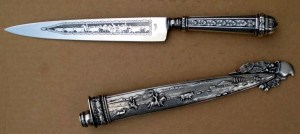
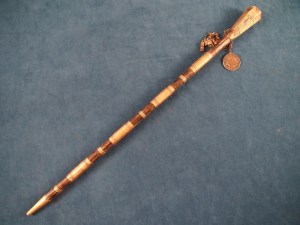
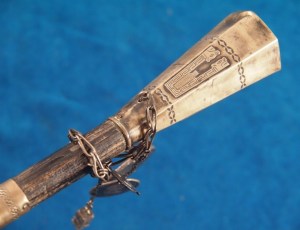
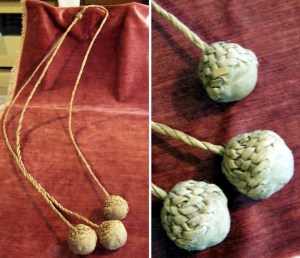
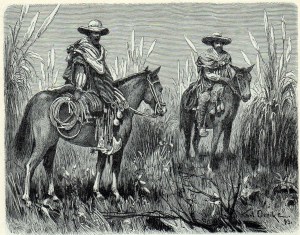
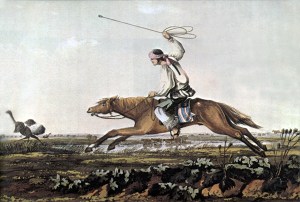 Very rare and highly collectable are of course antique gaucho knives, or a whip-baton with carved horn handle and inlays, or bolas (all seen on Montevideo flew markets) or old gaucho images, painted or engraved.
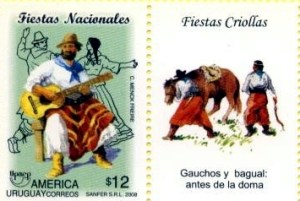
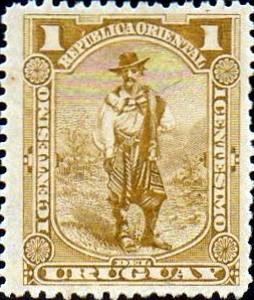
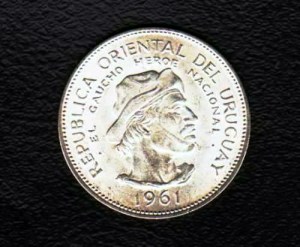
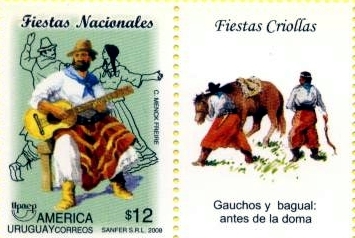
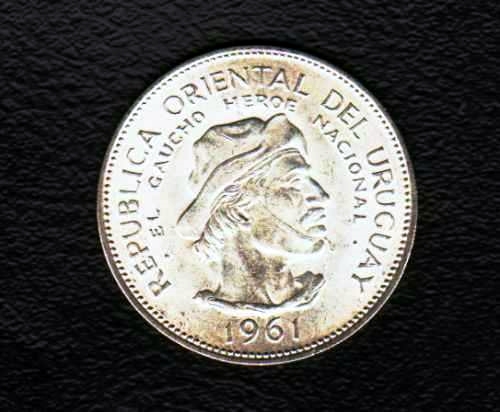
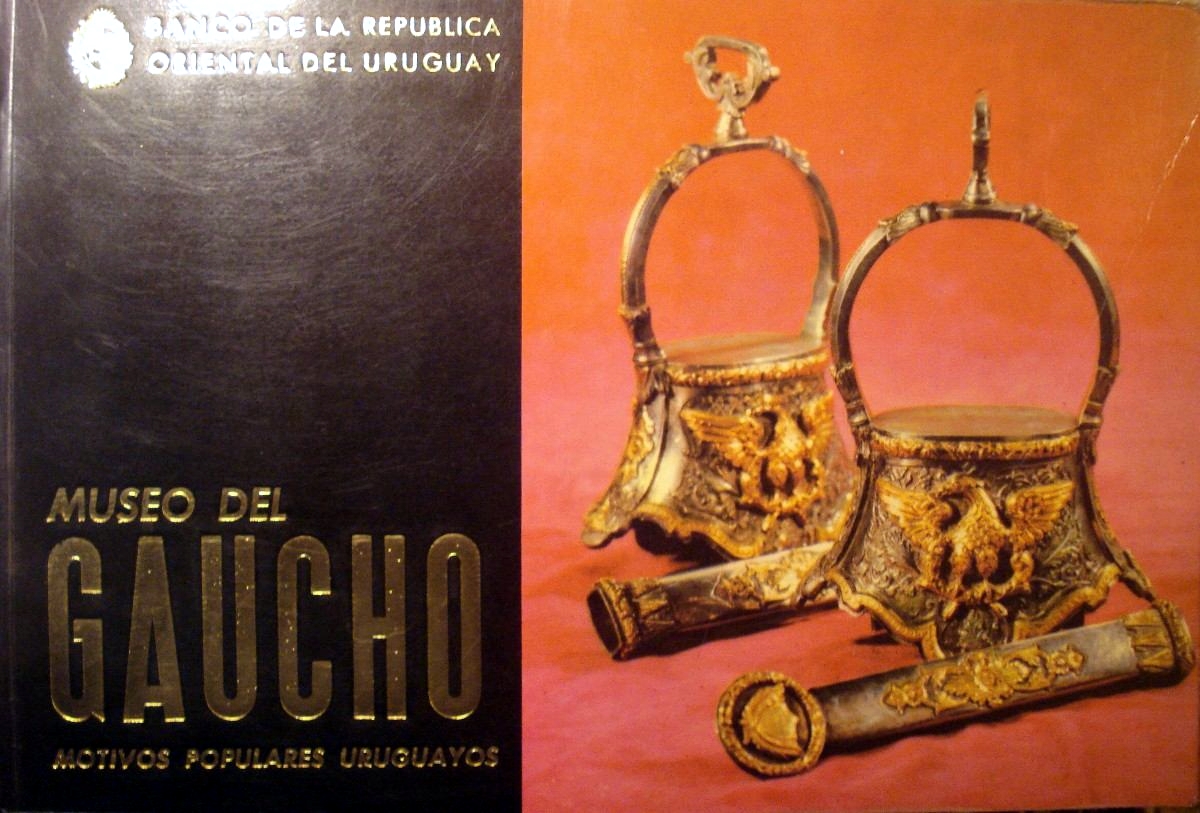
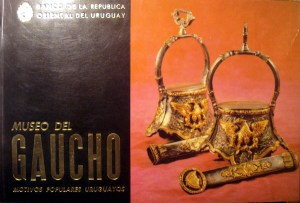 The gaucho is a national hero of Uruguay. They honor him on stamps, on coins (here the 10 peso one from 1961) or in many parts of literature. This one is an illustrated guide of the Gaucho Museum in Montevideo. An out of print edition of the Bank of the Republic of Uruguay (BROU). Lavishly illustrated in black and white, highly collectable first edition, 180 pages, assembled by Professor Fernando Assuncao. Assuncao put together the first original collections of the Gaucho Museum. Printing year, I guess, is in the late 1980’s.
Finally – the gaucho food.
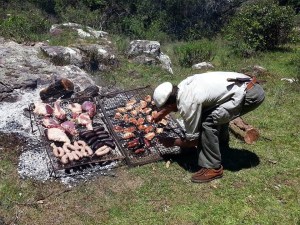 Open BBQ with some different meat, its asado.
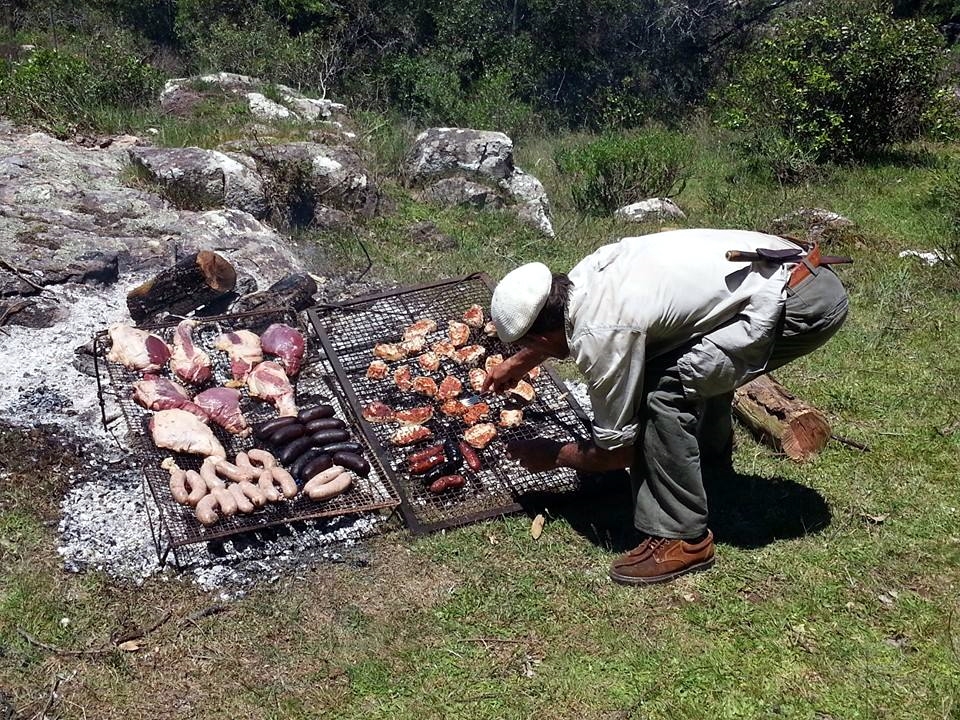
Fresh killed meat cooked over open fire is 90 and more % of gauchos meals. They can eat 3 times a day some meat. Combined with some tortillas or baked beans. Fresh veggies or some kind of healthy food (in our modern opinion) was unknown.
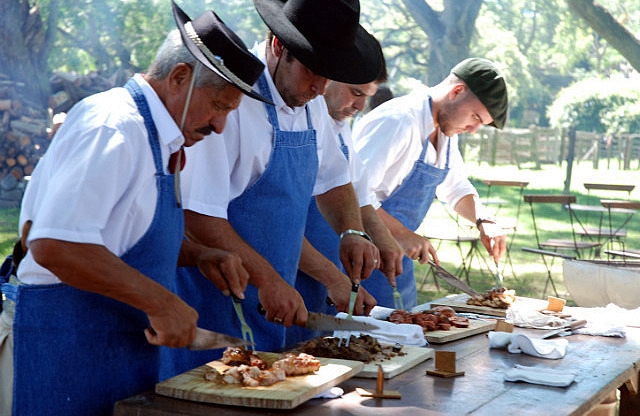
 Preparing food is a serious competition during a fiesta.
After 100dreds of years Uruguayans and Argentinians still love their meat from the fire. Called Asado from the Parrilla. You can learn here that no part of an animal is wasted. By statistics the Uruguayans eat 9 times per week some meat !!! But that’s a different story.
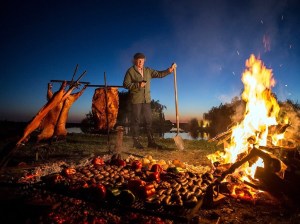 One of the most well known „Gaucho Cooks“.
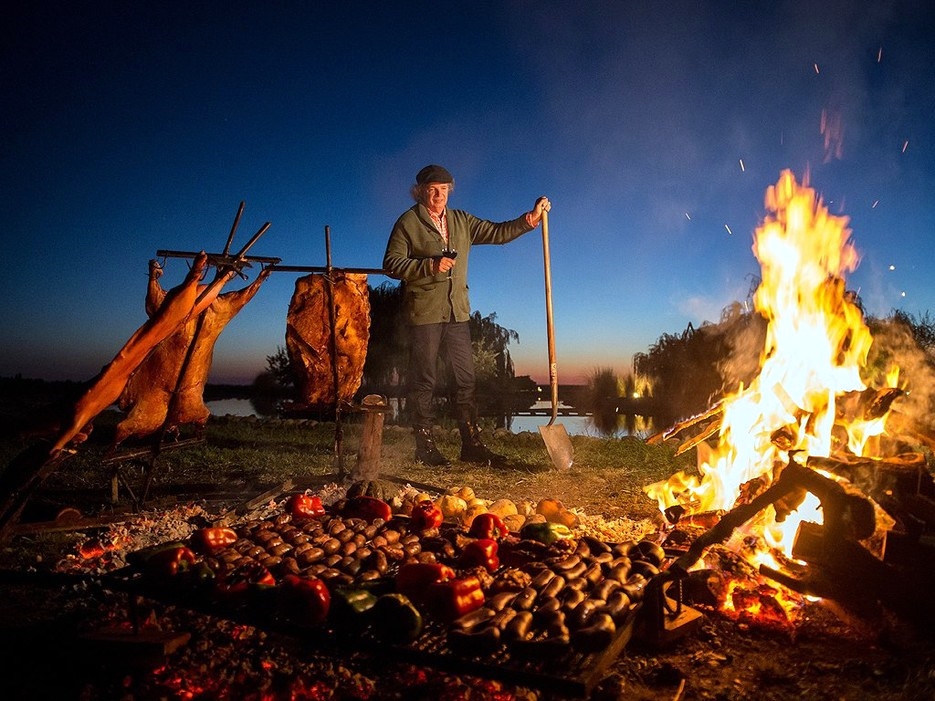
It is the Argentinian cook Francis Mallmann. He shows how to cook delicious meals alfresco on or with open fires. At twenty, Mallmann began managing a restaurant with a partner. He then traveled to Paris, where he spent over two years learning alongside Paul Bocuse and other reputable chefs.
 Sunny-boy Francis in Patagonia.
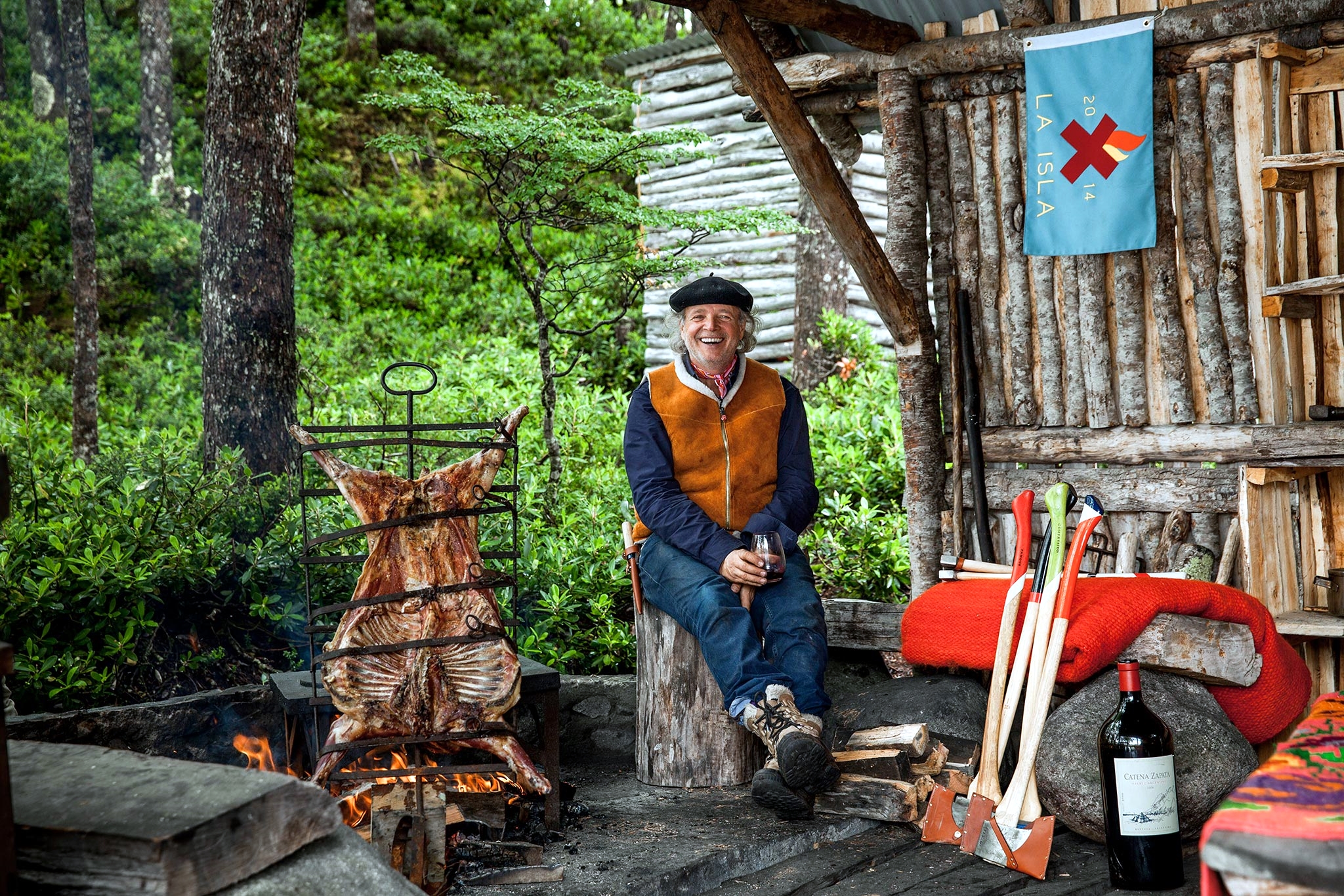
He opened several restaurants and then he began working in television in the early 1980’s. Between 1987 and 1996, the program was recorded in his restaurant and, in the summer months, in Punta del Este, Uruguay. He always tried to show off with the special outdoor cooking in Argentina and Uruguay. His books, you tube movies and much more are everywhere to find. Hope you enjoyed this glimpse of the Gaucho Life.


Hi mein Freund….deine Sammelleidenschaft ist bewundernswert. Dank für die vielen hochinterressanten Beiträge.
LikeLike
Hallo auch Dir mein Freund,
danke herzlich fuer Deine Anerkennung.
Jede Woche etwas Neues, habe noch hunderte
von Ideen im Kopf, also bleib treu mit dem Lesen.
Have a wonderful weekend, Mike.
LikeLike