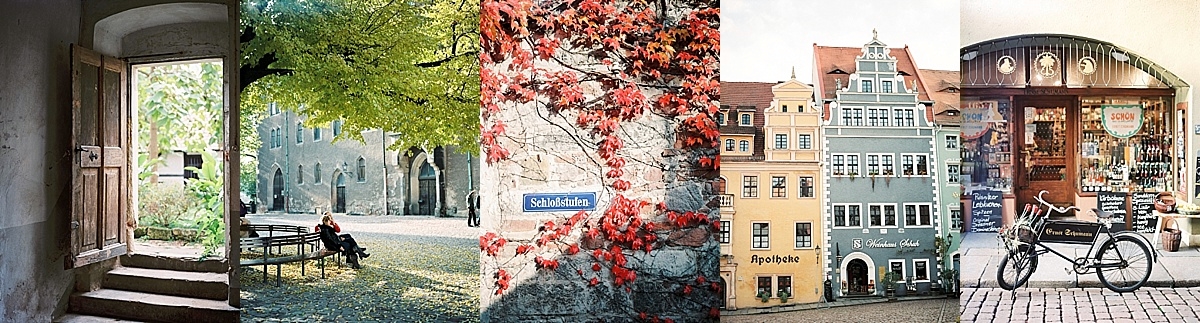
Update – World Poetry Day

Yesterday morning I read in our local newspaper „El Pais“, Montevideo, the following article:

mié mar 22 2017 04:02

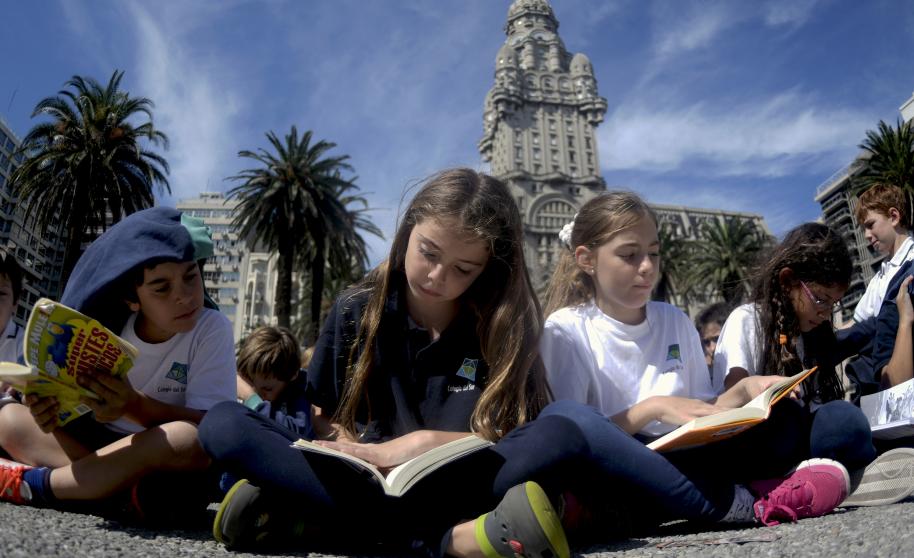
Uruguay se sumó ayer a la tercera edición de la jornada mundial “Al Aire Libro”, una instancia abierta de lectura en espacios públicos que tiene lugar en varias ciudades.
La iniciativa contó con la participación de la periodista Leonor Svarcas, la escritora Helen Velando y alumnos de los centros educativos de la zona, los liceos N° 5 y 22, y el liceo Impulso.
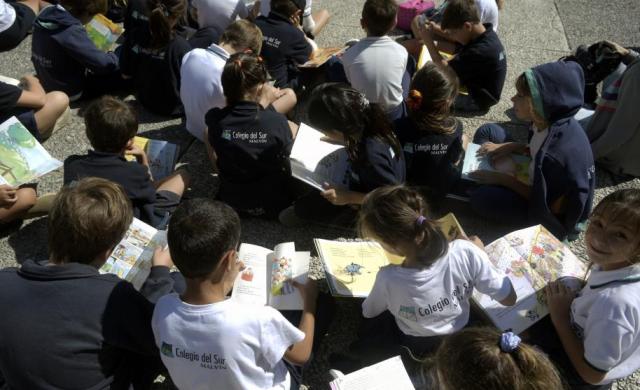
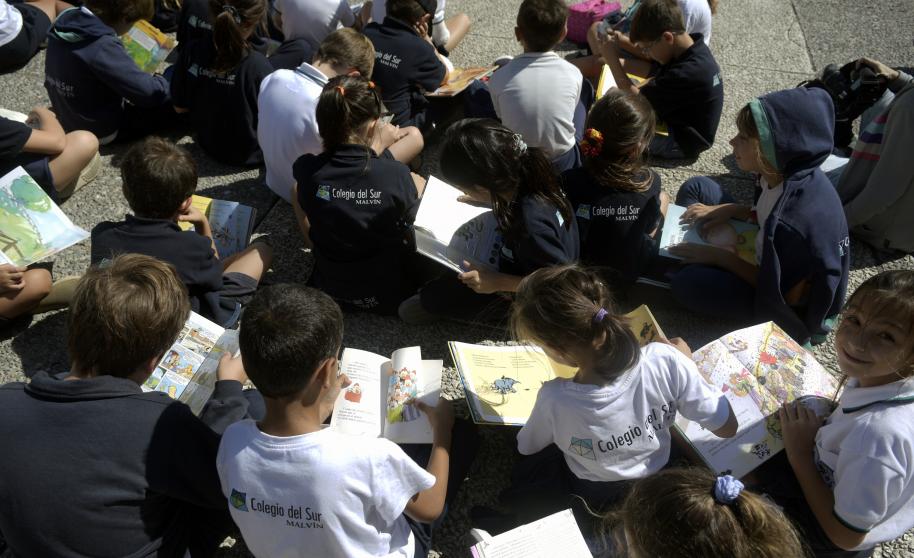
La idea de estas jornadas surgió en Colombia con el objetivo de transformar la percepción que tiene el ciudadano común sobre la lectura. Varios niños se acercaron a Plaza Independencia ayer de tarde para participar del evento.

  Would have Juana Ibarbourou have agreed with this ??

Translation:
Wed Mar 22 2017 04:02

Uruguay joined yesterday to the third edition of the world day „Al Aire Libro“, an open instance of reading in public spaces that takes place in several cities.
The initiative was attended by the journalist Leonor Svarcas, the writer Helen Velando and students of the schools in the area, high schools N ° 5 and 22, and the Lyceum Impulso.
The idea of these days arose in Colombia with the aim of transforming the perception that the common citizen has over reading. Several children approached Plaza Independencia yesterday afternoon to participate in the event.


Both pics are from El Pais : „Tercera edición de la jornada mundial „Al aire Libro“. Foto: Fernando Ponzetto“.  Both pictures show school kids, reading books, on Plaza Independencia, Montevideo.

My thoughts are written in the post before this one, about „World Poetry Day“. Just scroll further down. But here, Latin America claims their own idea of an „open reading day“, founded 3 years ago in Colombia !?!

It is so nice to grow together between different cultures and nations. Why then the need to cook their own soup, once again, in Latin America (Uruguay) ?
Can’t they just join the „World Poetry Day “ ?

Veröffentlicht unter Information, Lifestyle, Uruguay | 4 Kommentare

World Poetry Day

Today is World Poetry Day, every year on 21st of March. It is a celebration of poetry for everyone, everywhere: from assemblies, bus queues to hospitals and zoos. It’s a day when poetry takes to the streets. It’s a chance for you to use poetry to say things that can’t be said in prose. Or sit down and read or write some poetry today.

A bit of story, a bit of history (do you realize that „history“ the word „story“ includes?) and a bit of „poetry fun“ supporting this wonderful day. Subsequent some poems (I like) of poets (I like) and their poetry (I like) , a small selection only.
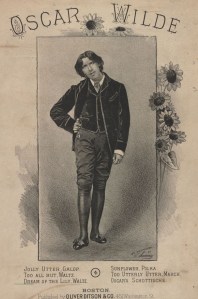
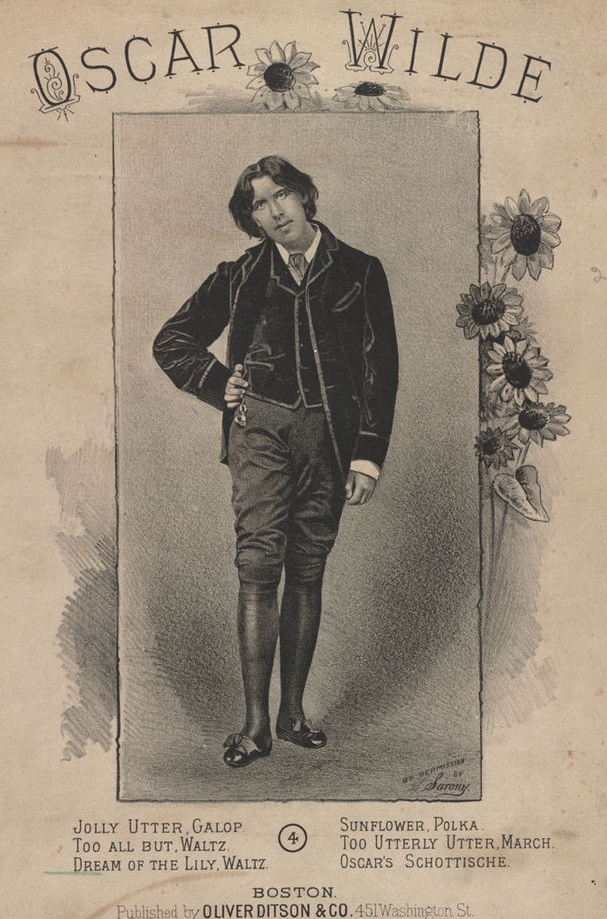
  Oscar Wilde (16 October 1854 – 30 November 1900) was an Irish playwrighter, novelist, and poet.  Music sheet cover from the 1880’s, public library Boston.

Sonnet To Liberty

These are the letters which Endymion wrote
To one he loved in secret, and apart.
And now the brawlers of the auction mart
Bargain and bid for each poor blotted note,
Ay! for each separate pulse of passion quote
The merchant’s price. I think they love not art
Who break the crystal of a poet’s heart
That small and sickly eyes may glare and gloat.

or these great Oscar Wild’s which I like :

„Be yourself, every one else is taken“ !
„I can resist everything, except temptation“ !
„True friends stab you in the front“ !

World Poetry Day is on 21 March, and was declared by UNESCO (the United Nations Educational, Scientific and Cultural Organization) in 1999. The purpose of the day is to promote the reading, writing, publishing and teaching of poetry throughout the world and, as the UNESCO session declaring the day says, to „give fresh recognition and impetus to national, regional and international poetry movements“.
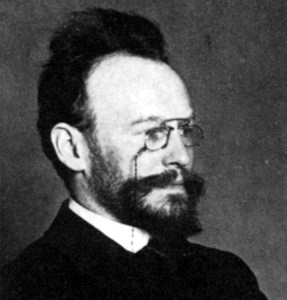
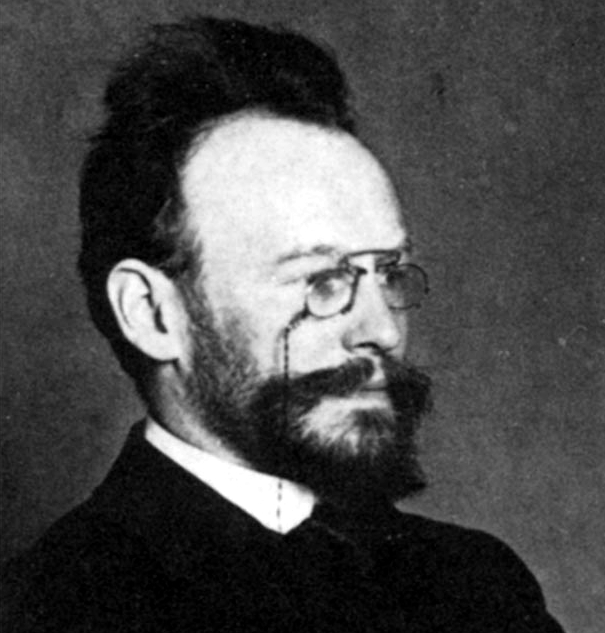
  Christian Morgenstern (6 May 1871 – 31 March 1914) was a famous German author and poet from Munich.  Below one of his classical and fantastic poems:

Igel und Agel

Ein Igel sass auf einem Stein
und blies auf einem Stachel sein
Schalmeiala, Schalmeialue !
Da kam sein Feinslieb Agel
und tat ihm schnigel-schnagel
zu seinen Melodein.
Schnigula Schnagula
Schnagulaleia lue !

Das Tier verblies sein Floetenhemd…
„Wie siehst Du aus so furchtbar fremd ?“
Schalmeiala, Schalmeialue .
Feins-Agel ging zum Nachbarn, ach !
Den Igel aber hat der Bach
zum Weiher fortgeschwemmt.
Wigula wagula
Waguleia wue
tue tue…

UNESCO

„By paying tribute to the men and women whose only instrument is free speech, who imagine and act, UNESCO recognizes in poetry its value as a symbol of the human spirit’s creativity. By giving form and words to that which has none – such as the unfathomable beauty that surrounds us, the immense suffering and misery of the world – poetry contributes to the expansion of our common humanity, helping to increase its strength, solidarity and self-awareness.“

Irina Bokova, Director-General of UNESCO

POETRY

Poetry reaffirms our common humanity by revealing to us that individuals, everywhere in the world, share the same questions and feelings. Poetry is the mainstay of oral tradition and, over centuries, can communicate the innermost values of diverse cultures.
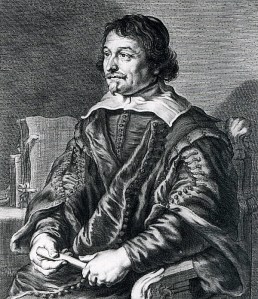
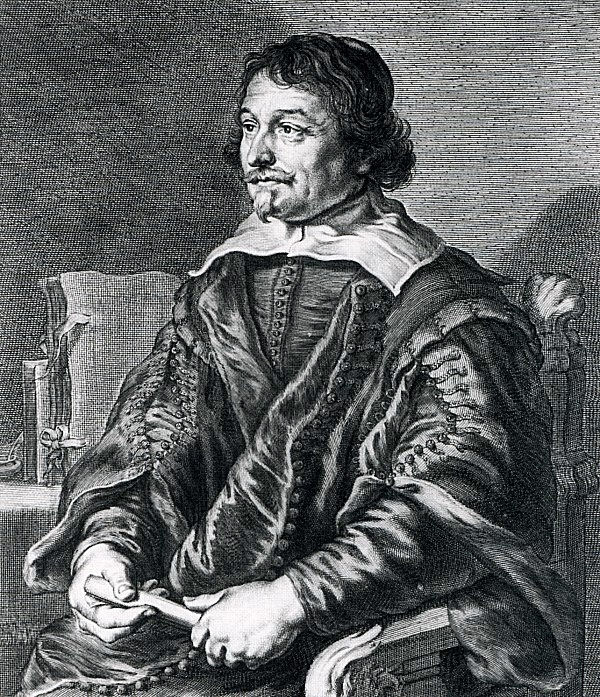
  Joost van den Vondel (17 November 1587 – 5 February 1679) was a Netherlands poet and writer. One of his poems, which I like very much because of „triple rhymes“:

Kinder-lyck

Constantijntje, ‘t zaligh kijntje,
Cherubijntje, van om hoogh,
D’ydelheden, hier beneden,
Vitlacht met een lodderoogh.
Moeder, zeit hy, waarom schreit ghy?
Waarom greit ghy, op mijn lijck?
Boven leef ick, boven zweef ick,
Engeltje van ‘t hemelrijck:
En ick blinck ‘er, en ik drincker,
‘t Geen de schincker alles goets
Schenckt de zielen, die daar krielen,
Dertel van veel overvloets.
Leer dan reizen met gepeizen
Naar pallaizen, uit het slick
Dezer werrelt, die zoo dwerrelt.
Eeuwigh gaat voor oogenblick.

In celebrating World Poetry Day, March 21, UNESCO recognizes the unique ability of poetry to capture the creative spirit of the human mind. A decision to proclaim 21 March as World Poetry Day was adopted during UNESCO’s 30th session held in Paris in 1999.

Another famous Christian Morgenstern Poem

„A rabbit in his meadow lair
Imagines none to see him there.
But aided by a looking lens
A man with eager diligence
Inspects the tiny long-eared gnome
From a convenient near-by dome.
Yet him surveys, or so we learn
A god from far off, mild and stern.“

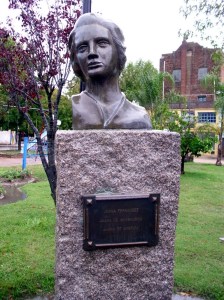
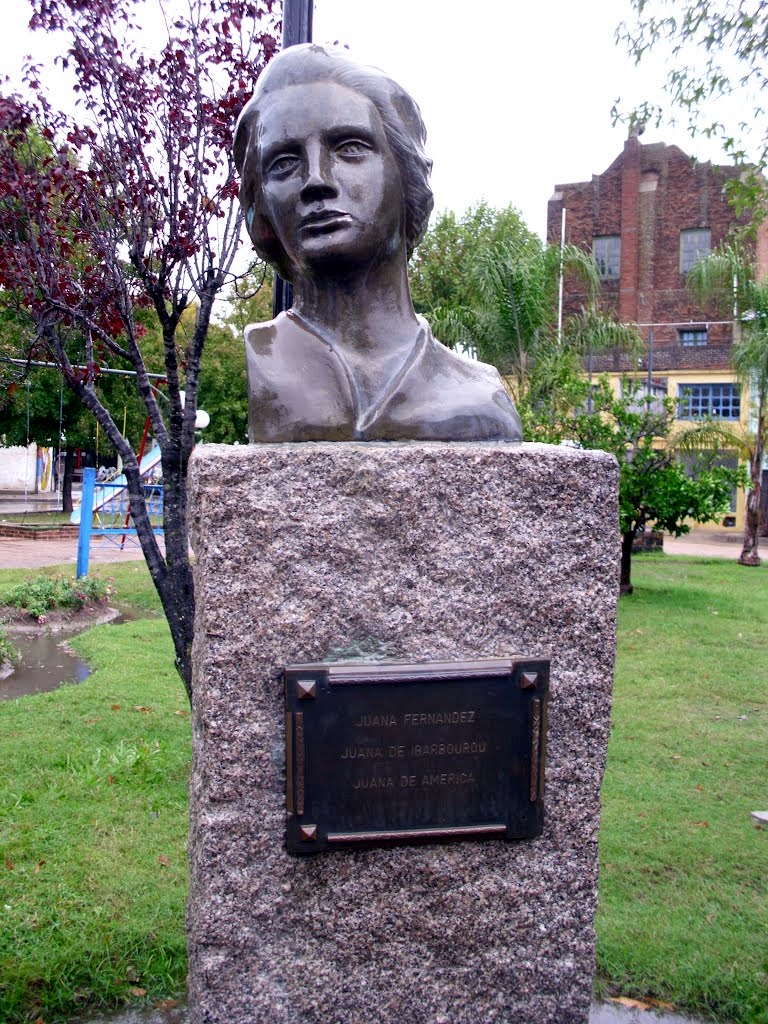
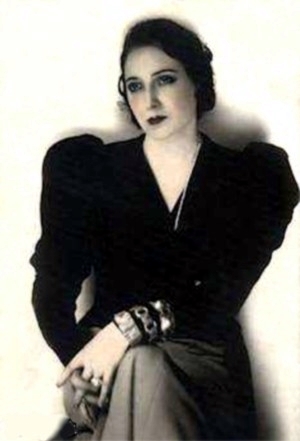
Juana de Ibarbourou

One of the main objectives of the Day is to support linguistic diversity through poetic expression and to offer endangered languages the opportunity to be heard within their communities. The Uruguayan community listened once to this lovely lady, which is shown on Uruguay’s 1000peso money note.
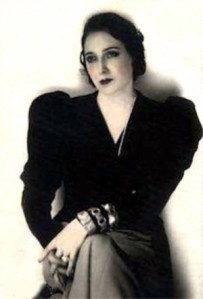
   Juana de Ibarbourou, original name Juanita Fernandez Morales, also known as Juana de America. Born the 8th of March 1895 in Melo, Uruguay. She was an Uruguayan poet, one of the most famous Latin American women poets. Juana died in the age of 87 on 15th of July 1979 in Montevideo, Uruguay.  See also my post „Who Are They – Part 3“ under category „Uruguay“ in this blog.  Here 2 of her poems:

La promesa

Todo el oro del mundo par…
diluido en la tarde lumino…
Apenas un crepusculo de ro…
la copa de los arboles ten…
Un imprevisto amor, mi man.

Elegia por una casa

Ay espada del agua ya per…
Ay rama de la mar que no …
Ay viento, todo el dia ca…
sin la salobre fuerza en e…
Ay viento de entre arbole.

The observance of World Poetry Day is also meant to encourage a return to the oral tradition of poetry recitals, to promote the teaching of poetry, to restore a dialogue between poetry and the other arts such as theater, dance, music and painting, and to support small publishers and create an attractive image of poetry in the media, so that the art of poetry will no longer be considered an outdated form of art, but one which enables society as a whole .
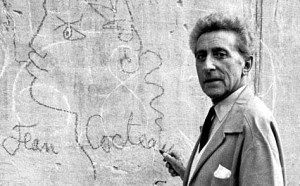

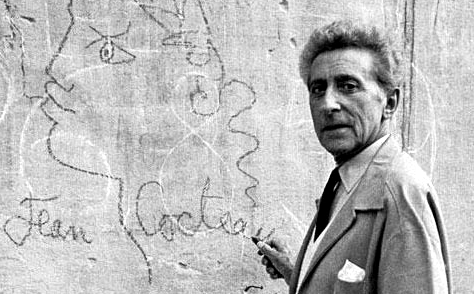
„The poet is a liar who always speaks the truth“.
Jean Cocteau,  French poet 1889 – 1963.

Many poets have attempted to define poetry; however, a brief overview of poetry history may help us to have a more rounded understanding.

HISTORY

A poet is a person who writes poetry. A poet may simply be a writer of poetry, or may perform their art to an audience. Poetry as an art form predates literacy. Some of the earliest poetry is believed to have been orally recited or sung.
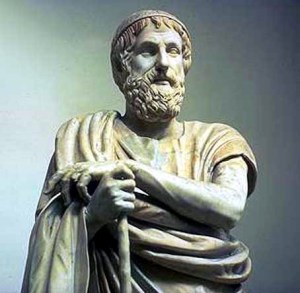
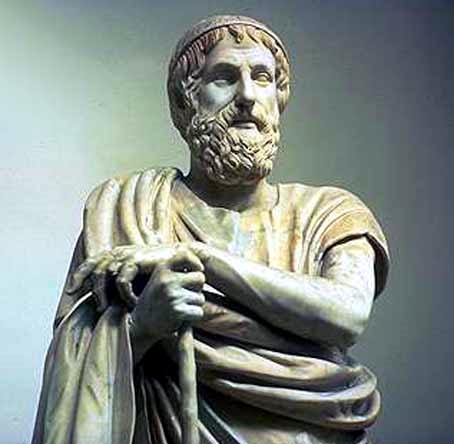
    Homer, one of the worlds most well known poets.

Poetry was employed as a way of remembering oral history, story (epic poetry), genealogy, and law. Poetry is often closely related to musical traditions, and much of it can be attributed to religious movements.

Thus many ancient works, from the Vedas (1700 – 1200 BC) to the Odyssey (800 – 675 BC), appear to have been composed in poetic form. Poetry appears among the earliest records of most literate cultures, with poetic fragments found on early monoliths, runestones and stelae.

    This story is based on one found on a papyrus scroll of hieroglyphs from the nineteenth century B.C., Egypt. It tells the tale of a voyage on the Red Sea to a mysterious and enchanted land of riches located south of Egypt. Tamara Bower is the author and illustrator of this lovely children’s book.

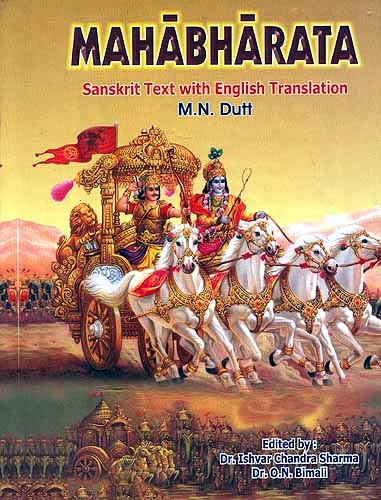
The oldest surviving poem is the Tale of the Shipwrecked Sailor. The oldest epic poetry, besides the Epic of Gilgamesh ( carved in stone, of the Gilgamesh epic in Akkadian, circa 2nd millennium BC) , are the Greek epics Iliad and Odyssey (about 8th century B.C.) and the Indian Sanskrit epics Ramayana and Mahabharata (9th to 8th century B.C.).

   Very colorful depiction (typical Indian) of King Gesar.

The longest epic poems ever written were the Mahabharata and the Tibetan Epic of King Gesar ( just its Tibetan versions has filled some 120 volumes, more than one million verses). Western calculations speak of more than 50 different books edited so far just in China, India and Tibet.
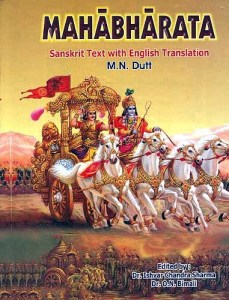
    With more than 90.000 verses and about 1.8 million words in total, it is roughly ten times the size of the Iliad and Odyssey combined.

As we already learned, in ancient times many people could not read or write, so they spread poems, story’s and more through saying and singing. Down here is one example how this happened. The Samzhub story is from the „People’s Daily“ 05th of May 2001.

Samzhub

Samzhub, 79, is a Tibetan known for singing the epic Gesar (old Tibetian writing is Gesser) cannot read. But this does not prevent him from talking and singing the „Gesser,“ an ancient Tibetan epic portraying the legendary hero Gesser.

Samzhub can sing nearly 20 million words of the epic, probably the longest epic in the world, which has been passed down orally through generations.

   King Gesar.

Samzhub is one of the few people in Tibet who can sing such a long part of the Gesser epic. Twenty years ago, the Tibet Autonomous Regional Academy of Social Sciences invited Samzhub to record and save the epic.

Samzhub was born into a farmer’s family in a small village in the northern part of Tibet. His grandfather, who used to run a small business, was also a popular epic singer in Tibet.

But Samzhub said that what really inspired him to talk and sing the epic was a dream he had at the age of 11. He said, in the dream, a god told him how to sing the epic „Gesser.“
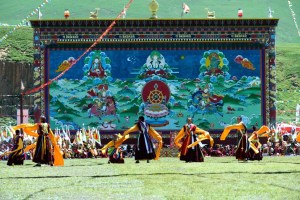

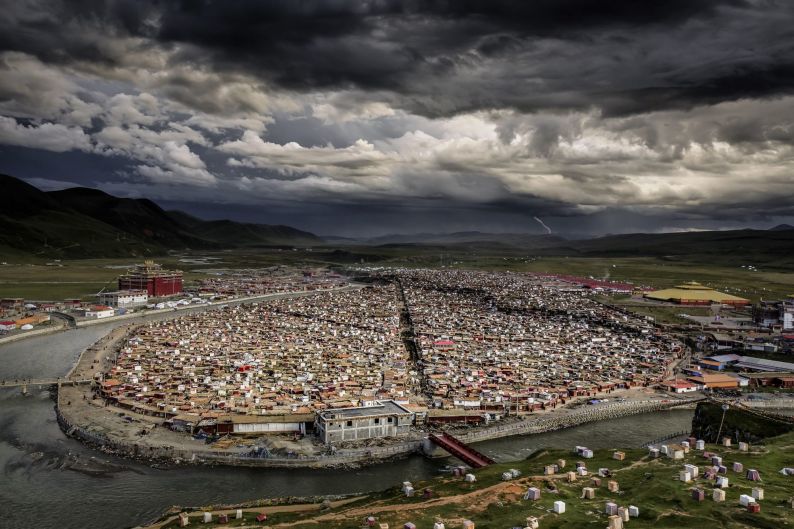
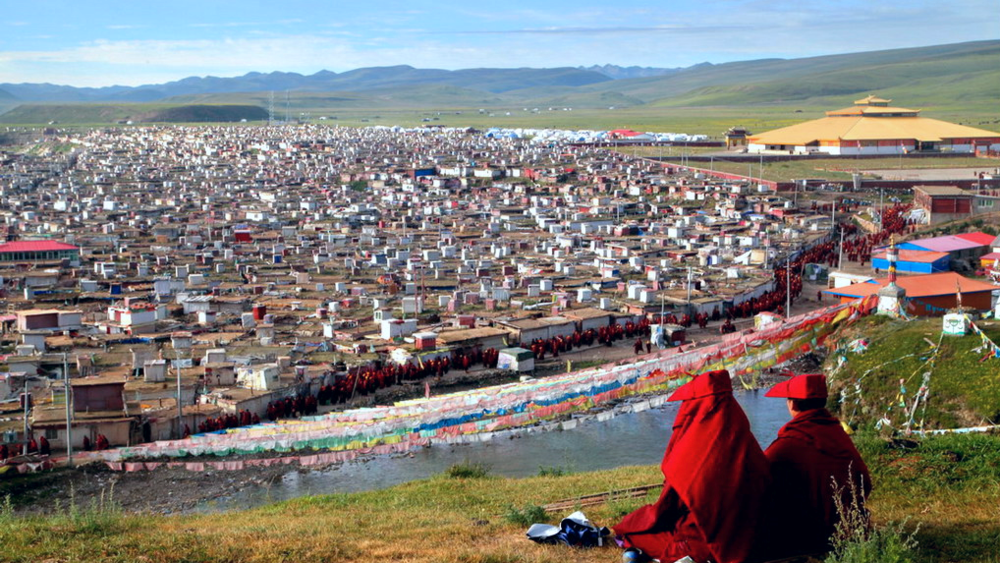
      King Gesar Festival, Yachen Gar.  Yearly dancing and singing the King Gesar story. Yachen Gar lies 400 km west of Chengdu, in the old Tibetan province of Kham.
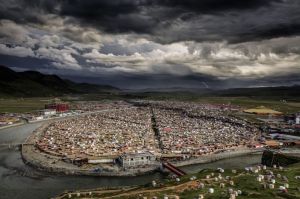
   
It is reported to have 10 000 monks and nuns, making it possibly the largest monastery in the world Due to Chinese restrictions on religious practice most of the monks and nuns are not officially recognized and live in fear of being thrown out.  The monastery part for nuns and monks is divided by a river. Monks are not allowed to enter the nuns quarters on the west side of the river. Road to Tibet.

Samzhub began singing the epic when he was 11 years old. He gained respect from his country fellows because Tibetans believe that a man who can sing the epic is a reincarnation of a high- ranking officer of Gesser.

In 2003 it was recorded that Samzhub, at the age of 82, finished over 65 parts (about 1/2 of the whole known epic) with far more then 20.000.000 (TWENTY MILLION) words.

Samzhub’s recording will be compiled into books and will be published.
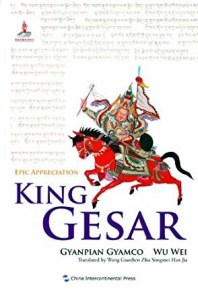
  Part of the King Gesar epic, book in English language.

Samzhub received an award from the government for his outstanding contribution to saving the epic. In 1996, Samzhub went to Beijing to attend the awarding ceremony. Samzhub sang the epic in Beijing, and caused a stir in the national capital.

Back to Poetry

Samuel Taylor Coleridge defined poetry as:
„the art of apprehending and interpreting ideas by the faculty of imagination; the art of idealizing in thought and in expression. For poetry is the blossom and the fragrance of all human knowledge, human thoughts, human passions, emotions, language.“
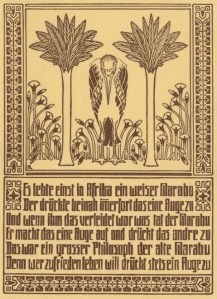
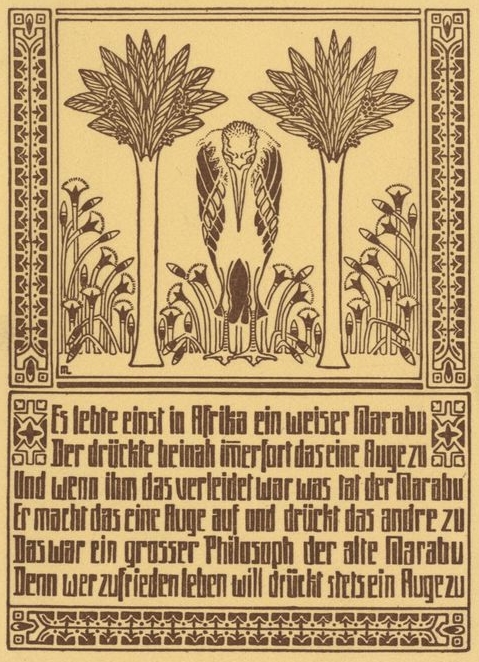
   The Marabu – a poetry card from around 1890.

To whom it may concern

Lots of poems are peoples sayings, proverbs through generations and cultures, like:

Schlimmer als Feinde sind leider
Verleumder und tückische Neider.
Die ins Gesicht dir lächeln
und hinter dem Rücken doch hecheln,
sie sind die ärgsten zu nennen,
sind sie doch nicht zu erkennen.                      Saying.

Worse than enemies are unfortunately
Slanderers and treacherous envious.
They smile in your face
And behind your back still panting.
They are the worst to name,
They are hard to be recognized.
                       Plain translation of the above.
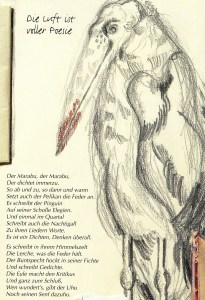
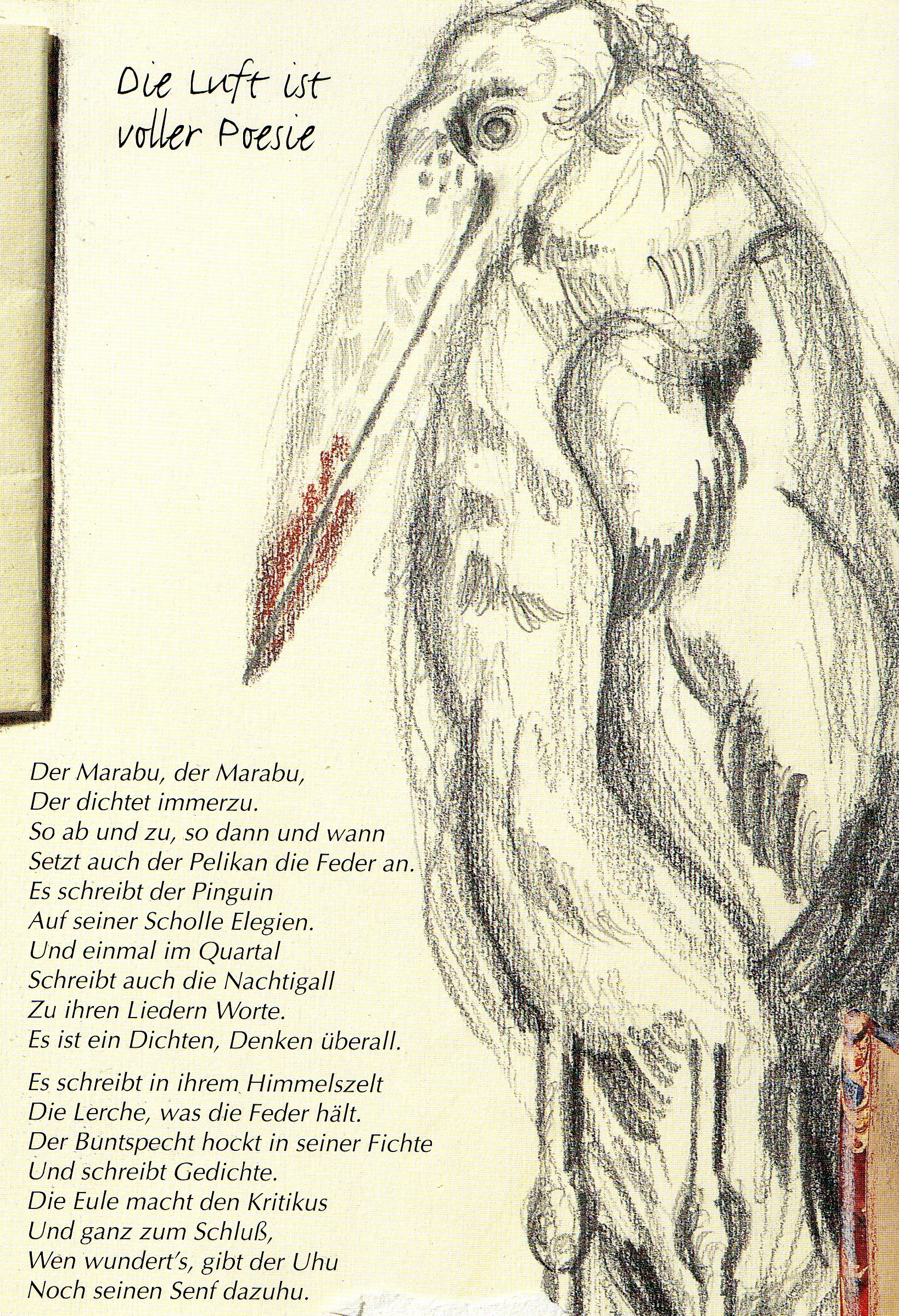
   Sagaciously Marabu with a Marabu poem.  Drawing E.M.A. ?

If one dives into poetry and history about it, one can spend a lifetime to read only through a part of it. And I thought I have written a lot already in my blog, with around 250.000 words in 2 1/2 years time. Anyway, THANKS for your interest and following my posts.

Veröffentlicht unter History, Information, Lifestyle, Uruguay | 9 Kommentare

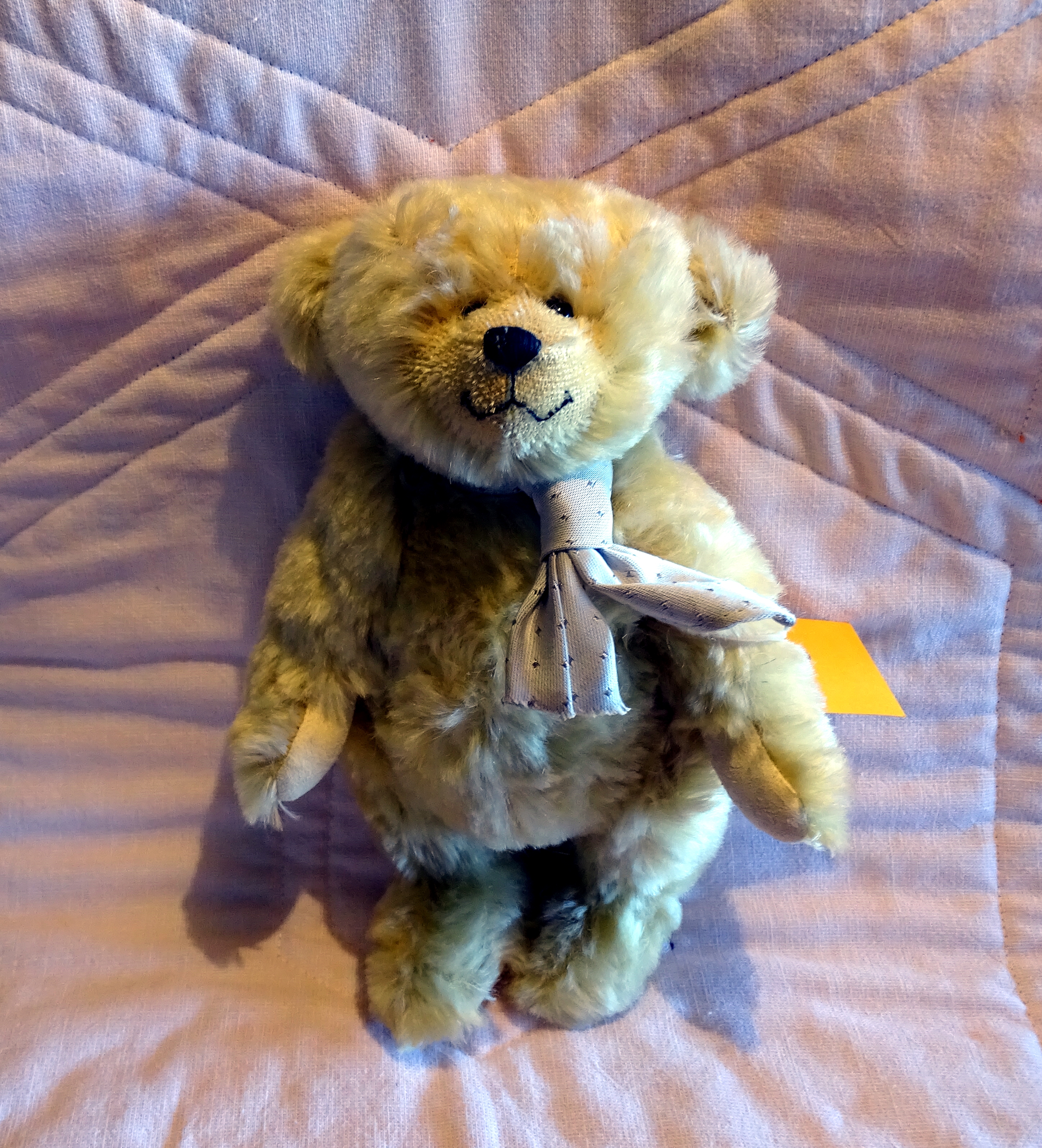
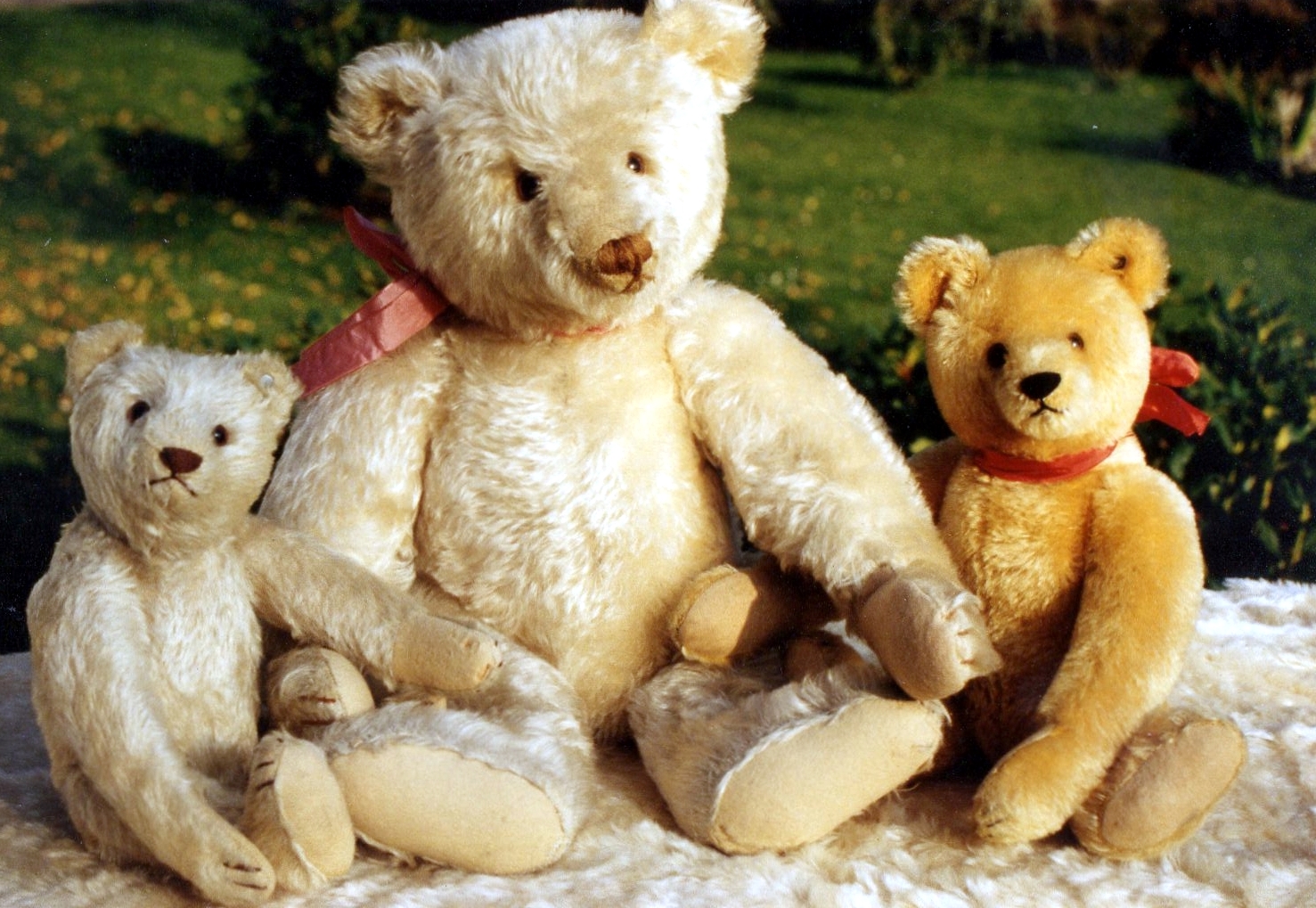
Teddy Bears For Sale 1-20

All shown prices are in US$. All conditions are excellent – near mint, except it is stated otherwise. Manufacturing years are the early 1990’s. In case you like to purchase more then one item ask for discount. I will also consider fair offers.

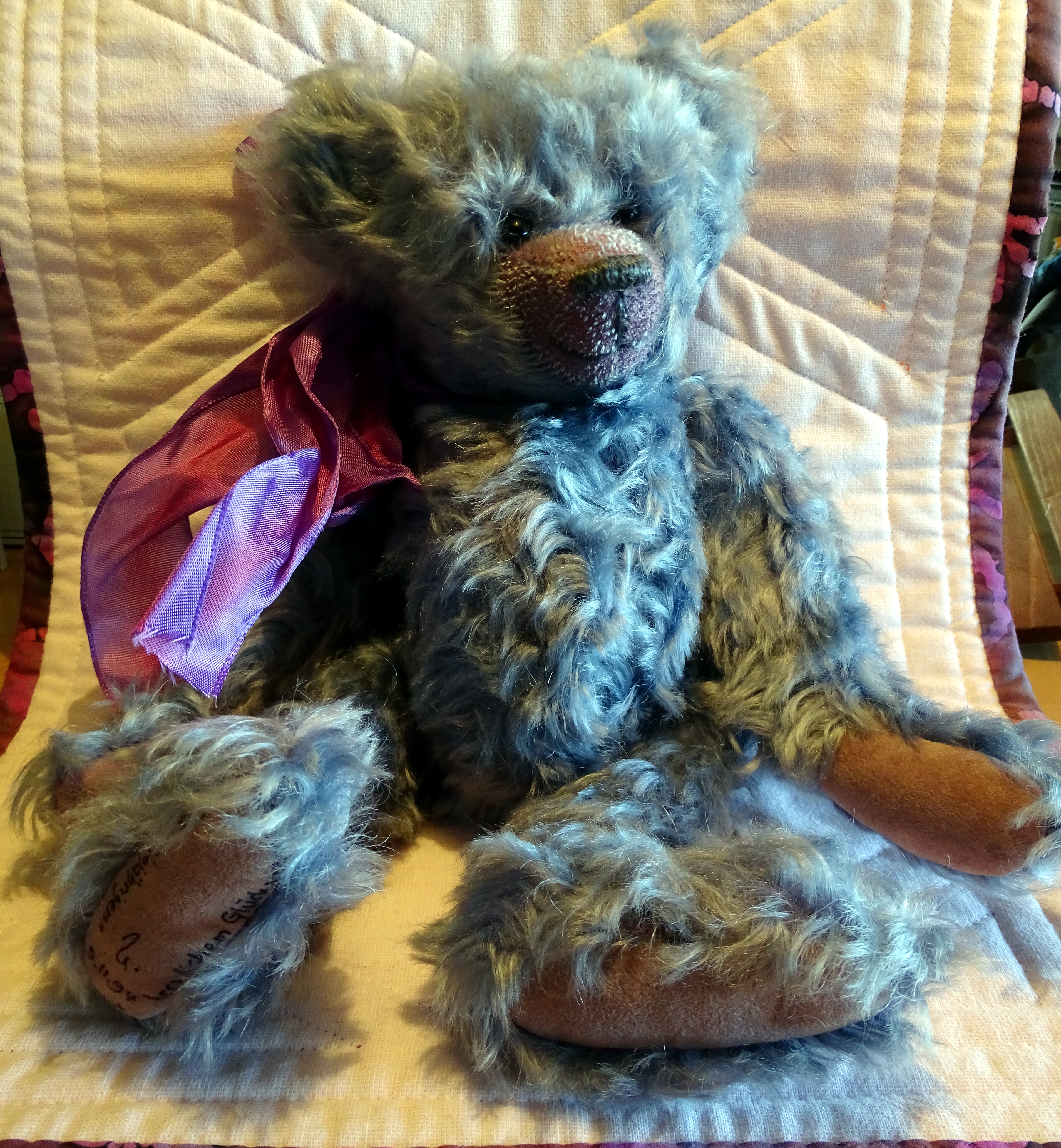
Number:                              1
Description:                        blue bear, fine long mohair, soft filling
Manufacturer:                    Ulrike Amadori, artist
Country:                              Germany
Limited edition:                 1-1
Condition:                           mint
Size in centimeters:           35
Value:                                   220,–
Sales price:                          80,–

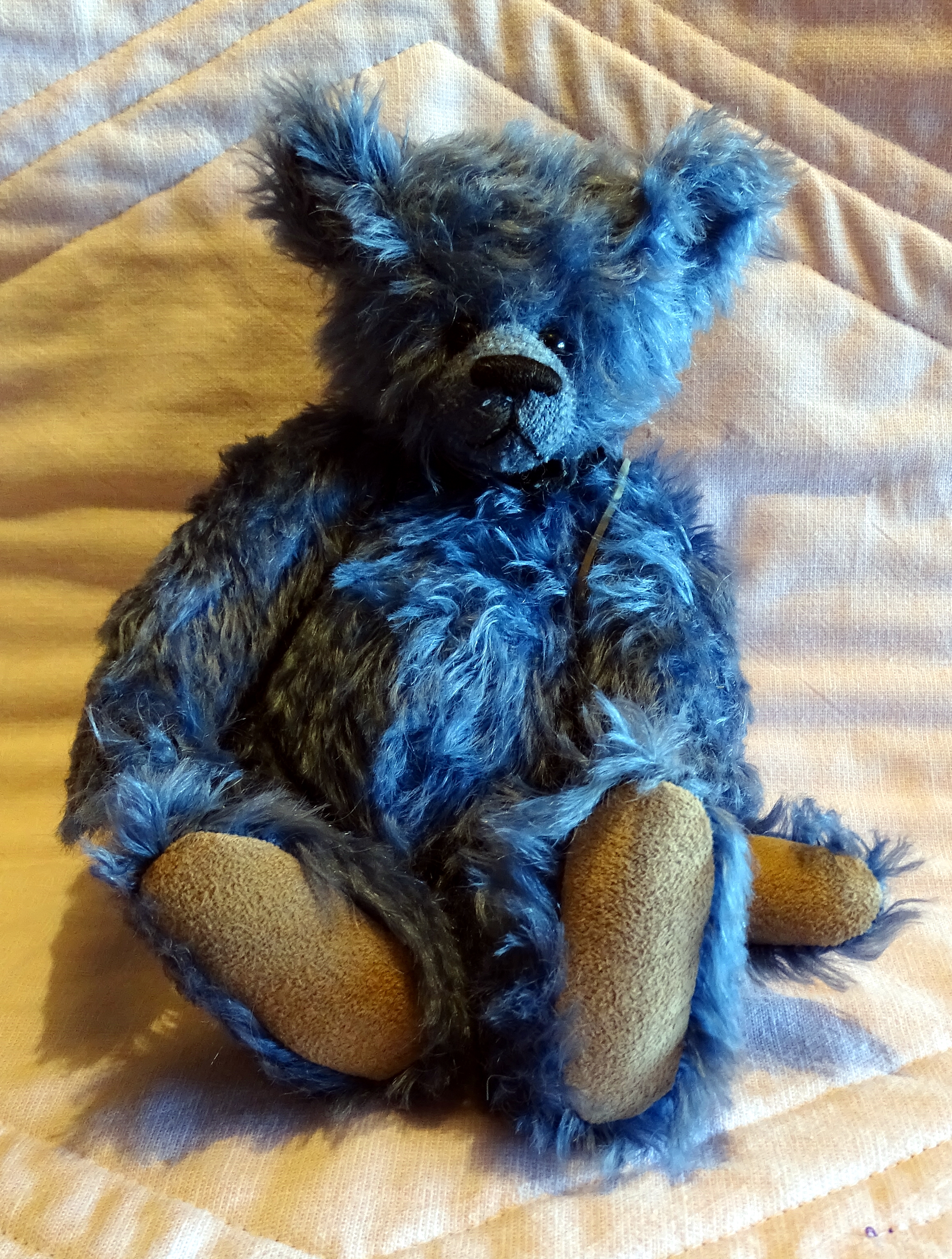
Number:                              2
Description:                        blue bear, fine mohair, soft filling
Manufacturer:                    Claudia Weinstein, artist
Country:                               Germany
Limited edition:                  3-10
Size in centimeters:            23
Value:                                    160,–
Sales price:                           50,–

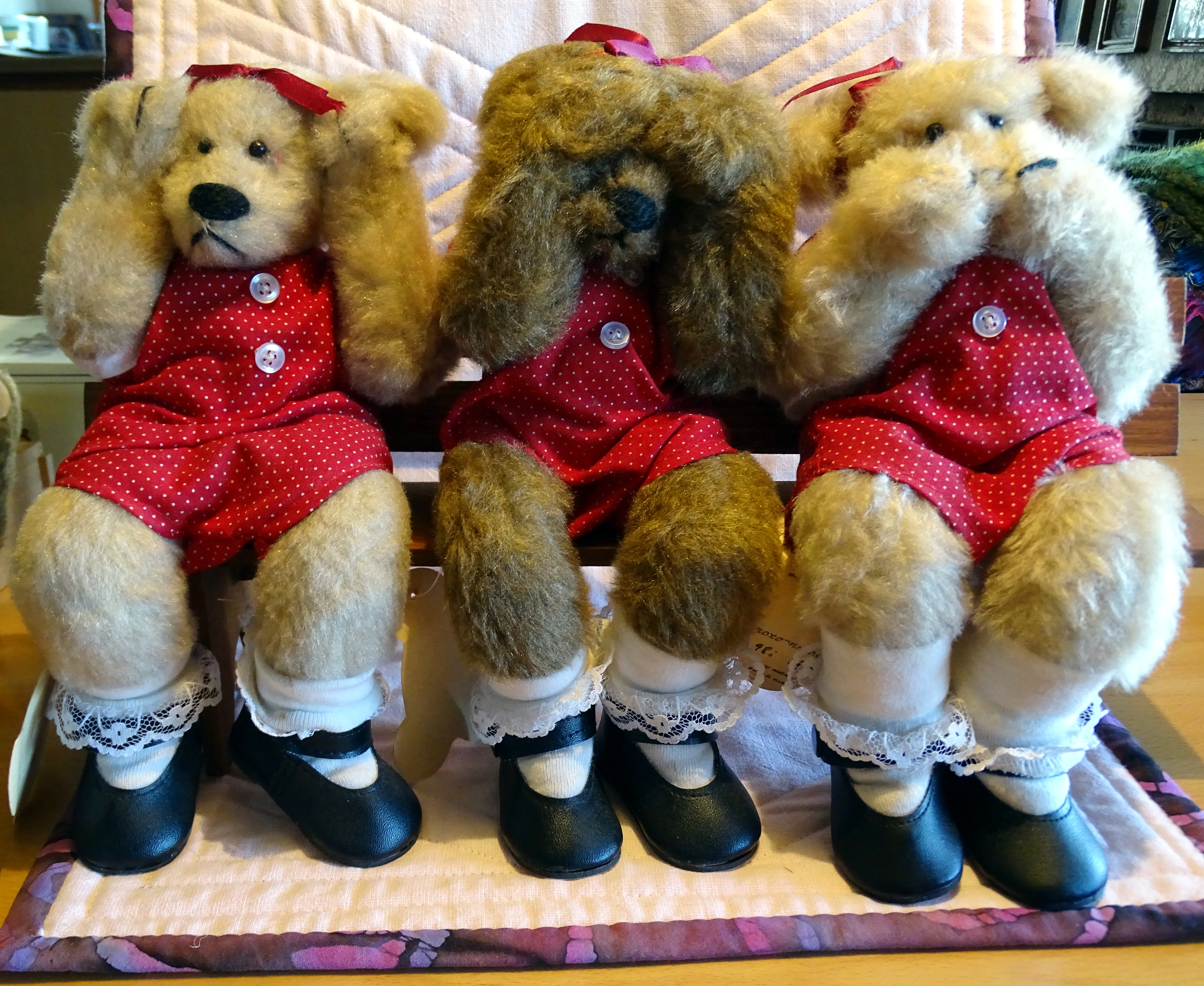
Number:                                 3
Description:                           Three bears on a bench
Maker:                                     bearly there inc.
Country:                                  USA
Limited edition:                     –
Size in centimeters:               24-38
Value:                                       450,–
Sales price:                              225,–

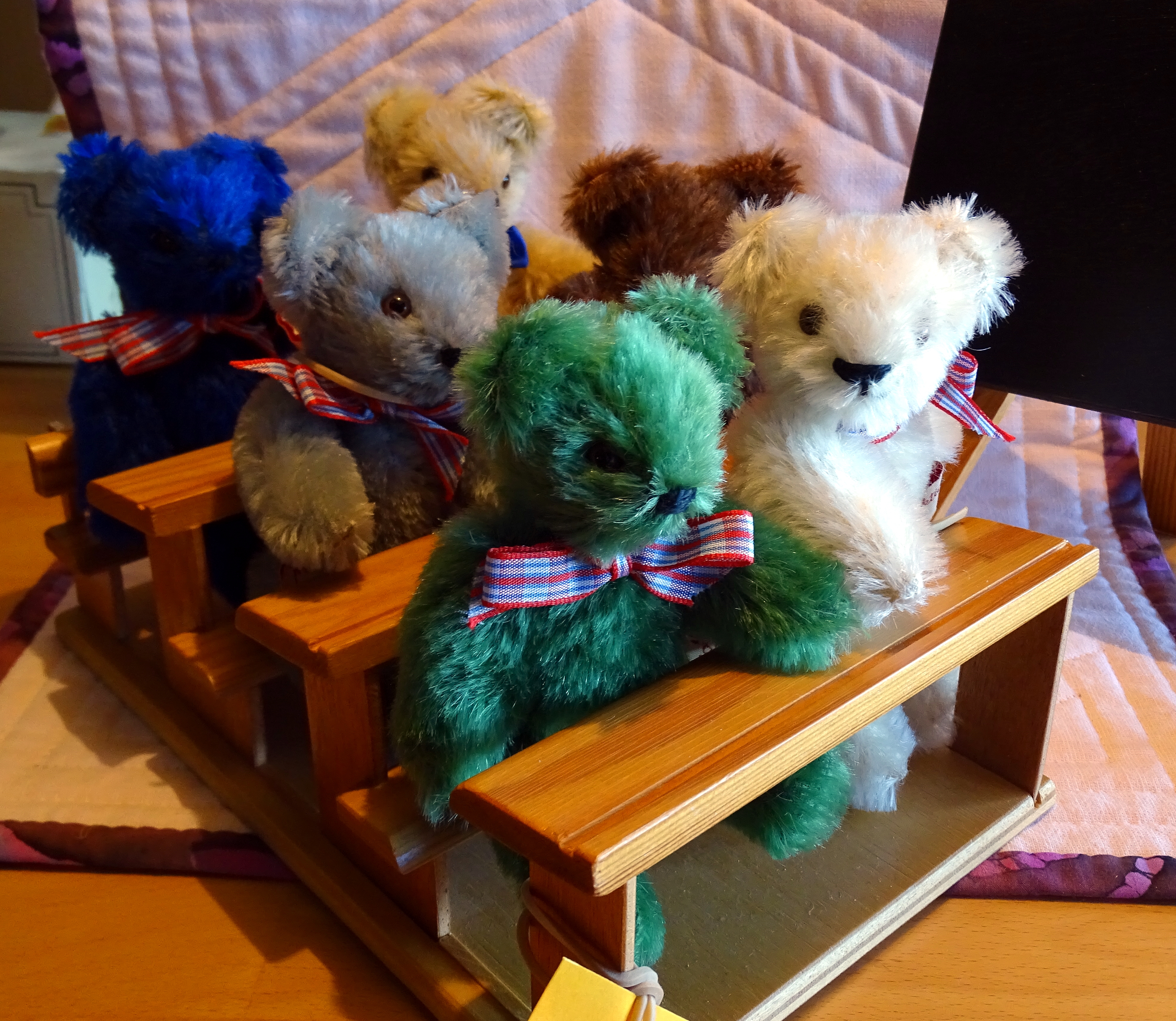
Number:                                    4
Description:                              Teddy Bear School, bears are of fine colored mohair
Maker:                                        Grisley
Country:                                     Germany
Limited edition:                        6 bears, different colors, on bench plus black board
Size in centimeters:                  the bears are excellent quality and 13 cm tall
Value:                                          280,–
Sales price:                                 160,–

Number:                                         5
Description:                                   white bear, finest mohair
Maker:                                            Heike Gumpp, artist
Country:                                         Germany
Limited edition:                            1/1
Size in centimeters:                      19
Value:                                              140,–
Sales price:                                     40,–

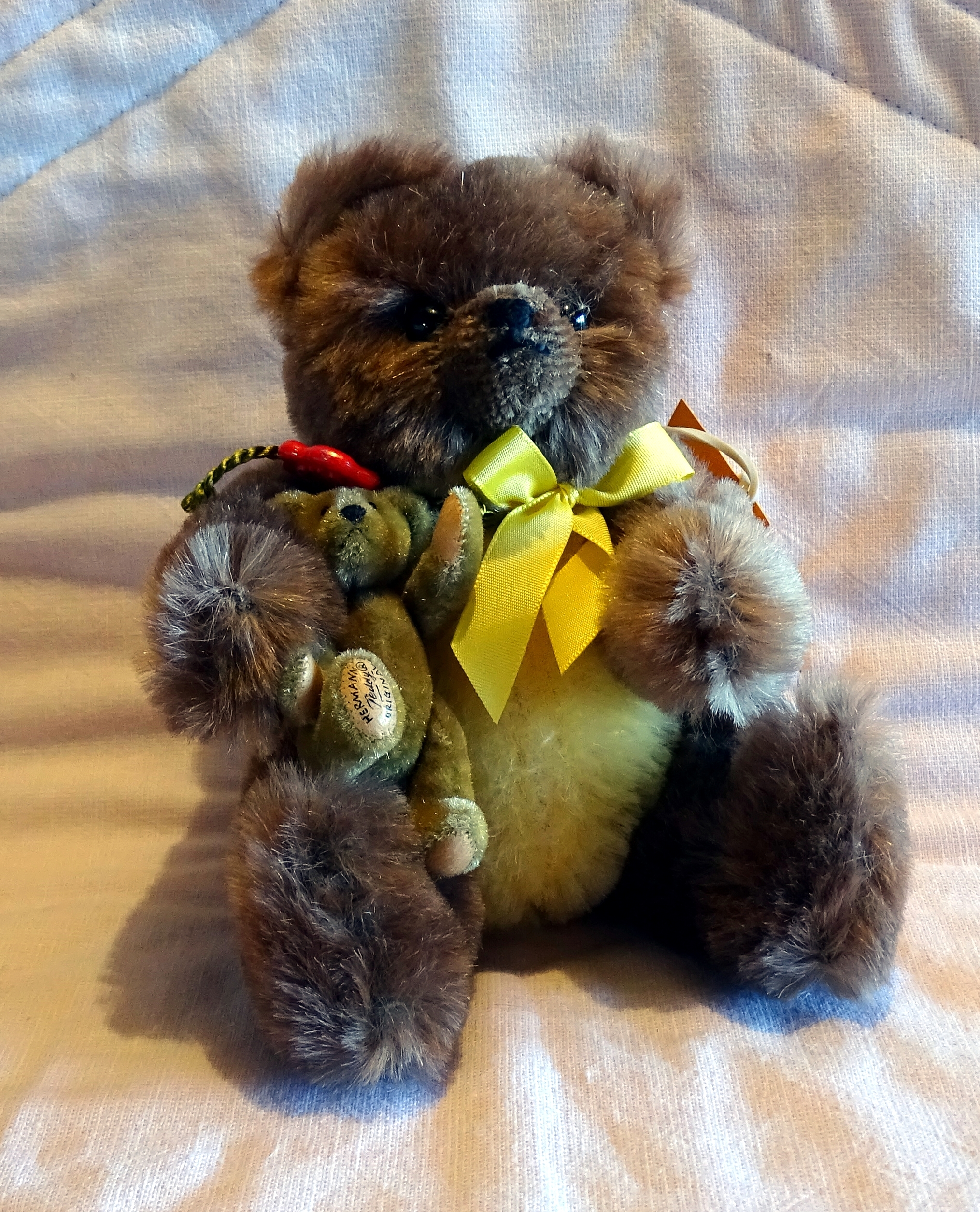
Number:                                          6
Description:                                    brown/yellow bear, with baby bear, finest mohair
Maker:                                             Hermann
Country:                                          Germany
Limited edition:                             108/300
Size in centimeters:                       16
Value:                                               220,–
Sales price:                                      70,–

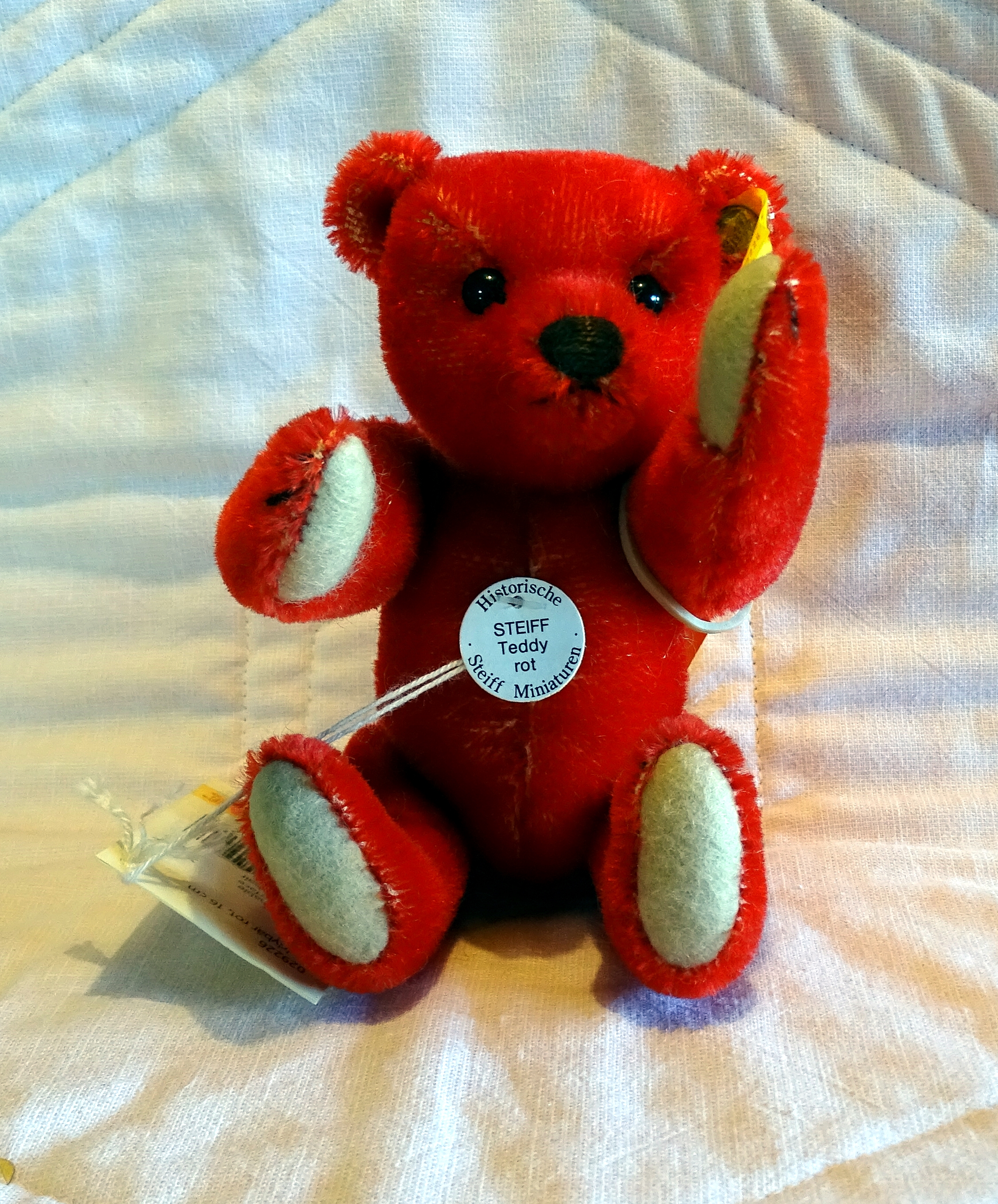
Number:                                           7
Description:                                     Teddy Red – 1908 replica, historic miniature
Maker:                                               Steiff, with all labels, fine mohair
Country:                                            Germany
Limited edition:                               –
Size in centimeters:                         16
Value:                                                 140,–
Sales price:                                        40,–

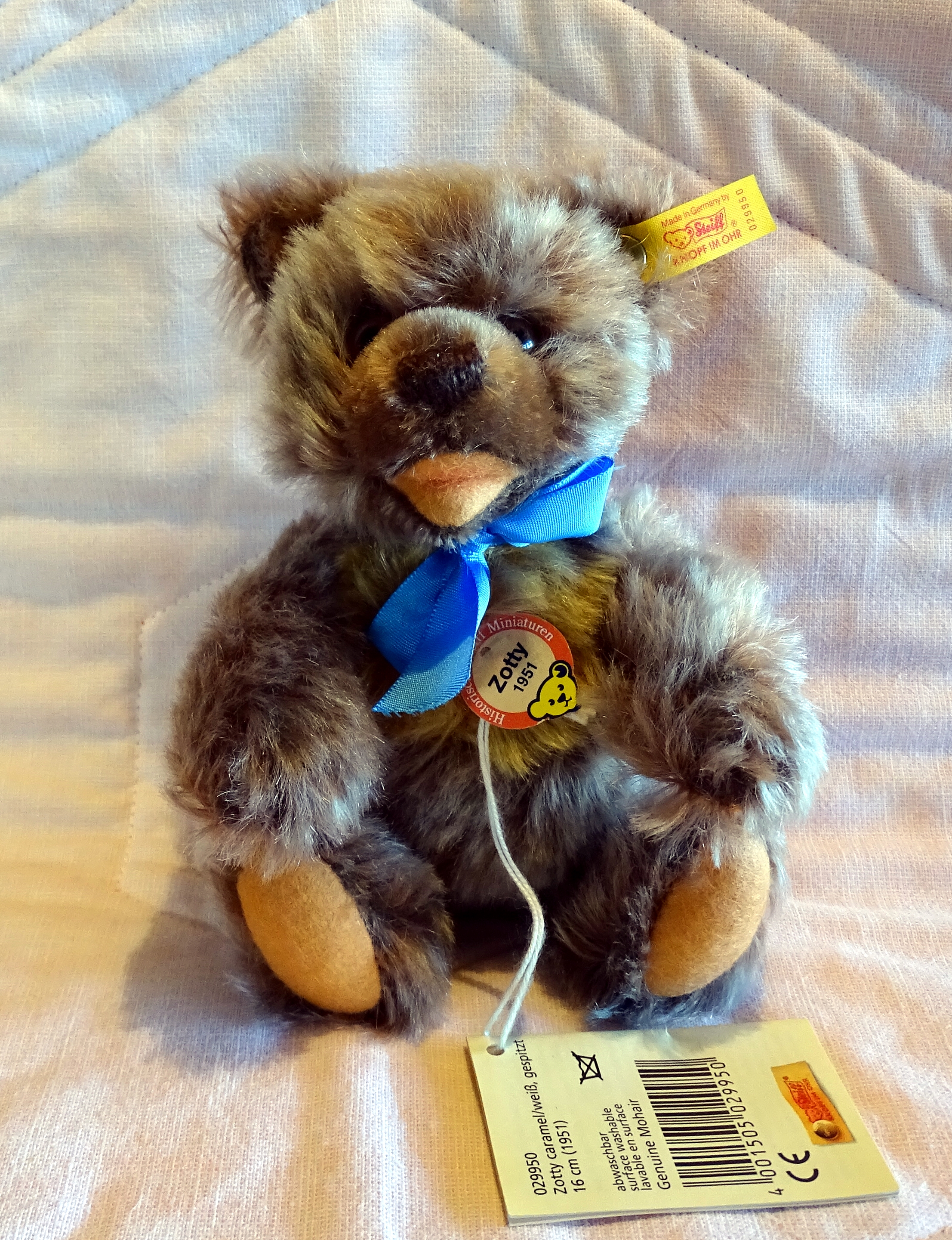
Number:                                             8
Description:                                       Teddy Zotty – 1951 replica, historic miniature
Maker:                                                 Steiff, with all labels, fine mohair
Country:                                              Germany
Limited edition:                                 –
Size in centimeters:                           16
Value:                                                  140,–
Sales price:                                         40,–

Number:                                               9
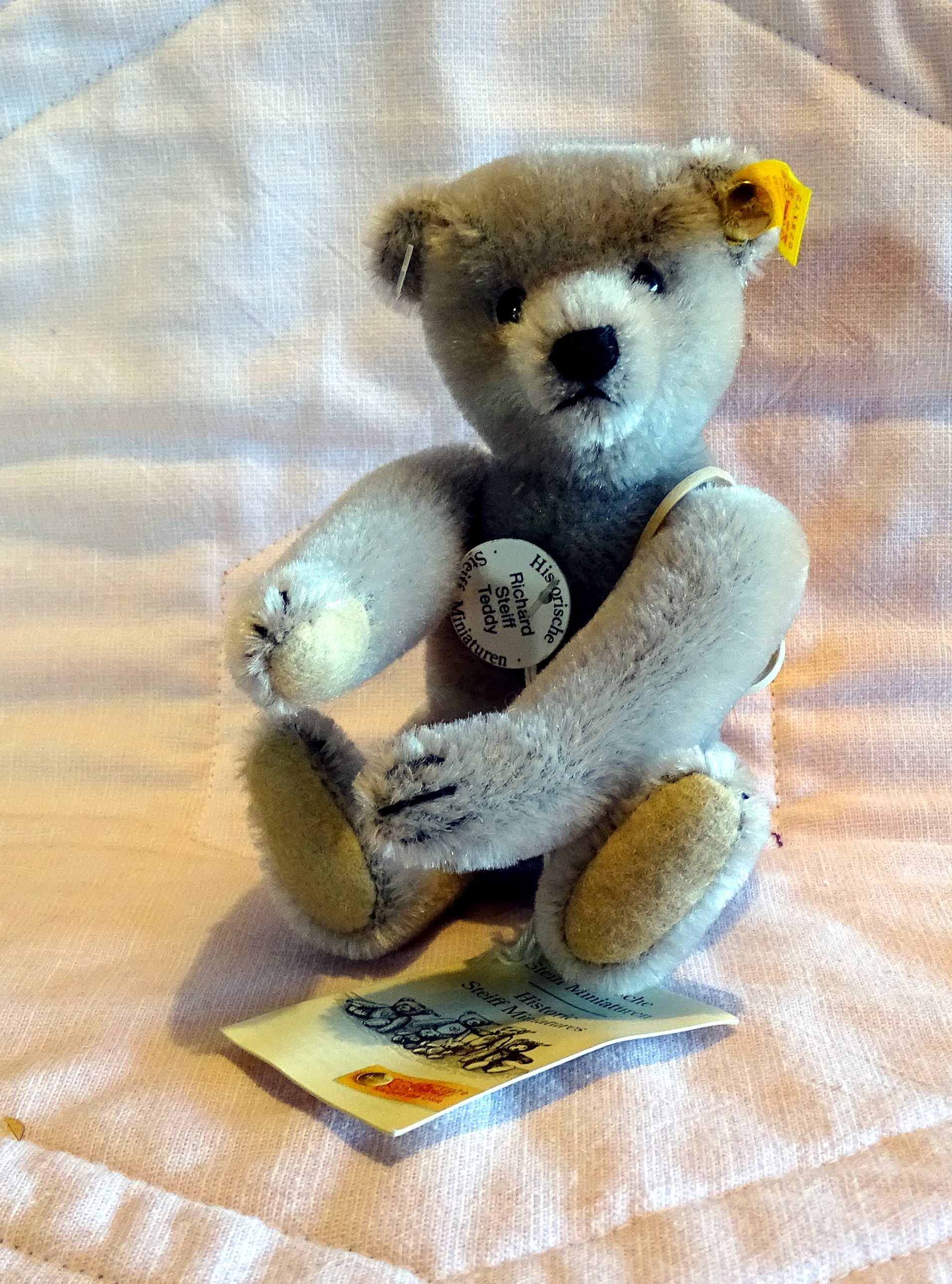
Description:                                         Teddy Richard Steiff – 1905 replica, historic miniature
Maker:                                                  Steiff, with all labels, fine mohair
Country:                                               Germany
Limited edition:                                 –
Size in centimeters:                           16
Value:                                                   140,–
Sales price:                                          40,–

Number:                                               10
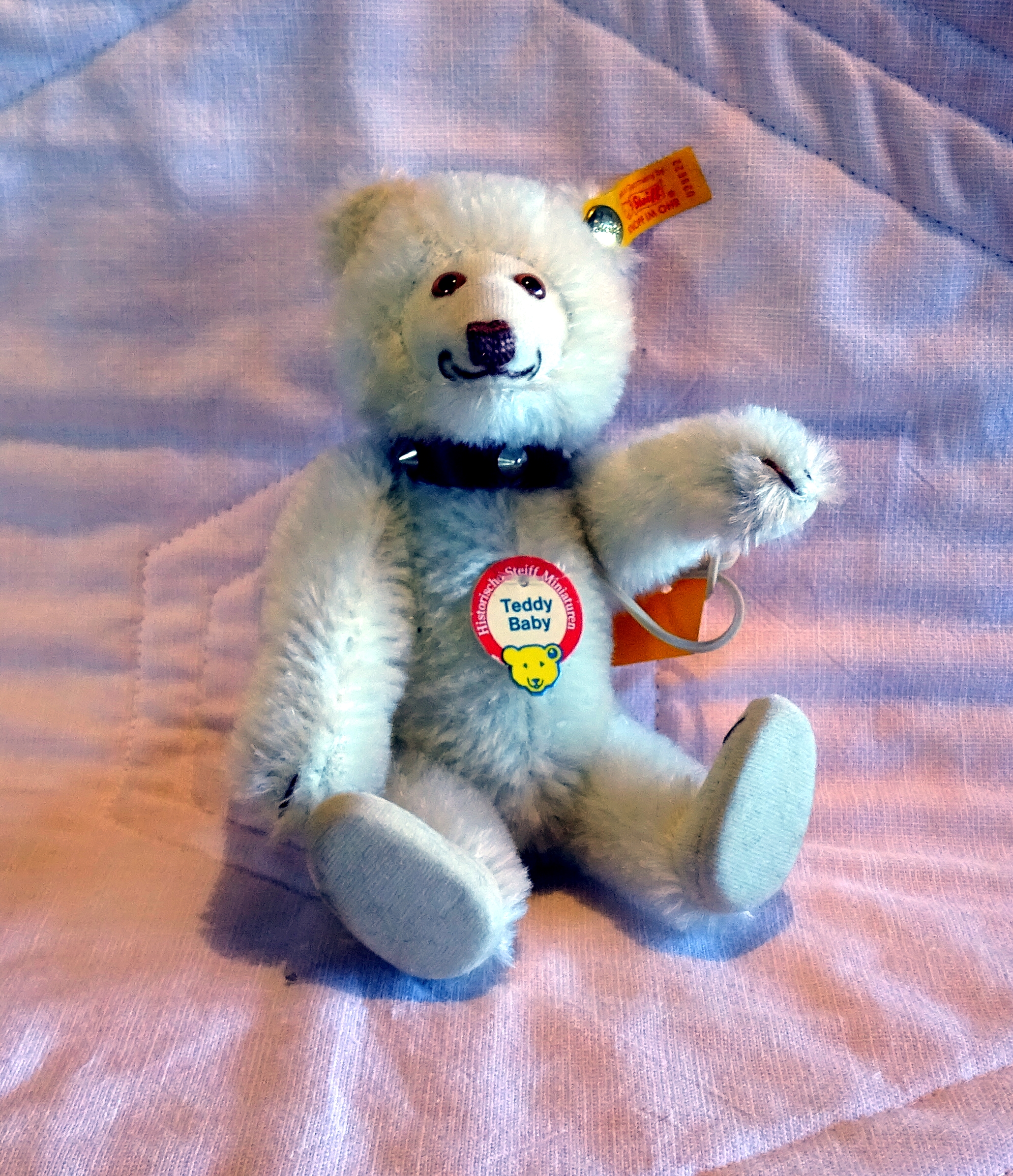
Description:                                         Teddy Baby – 1926 replica, historic miniature
Maker:                                                   Steiff, with all labels, fine mohair
Country:                                                Germany
Limited edition:                                  –
Size in centimeters:                           16
Value:                                                   140,–
Sales price:                                          40,–

Number:                                               11
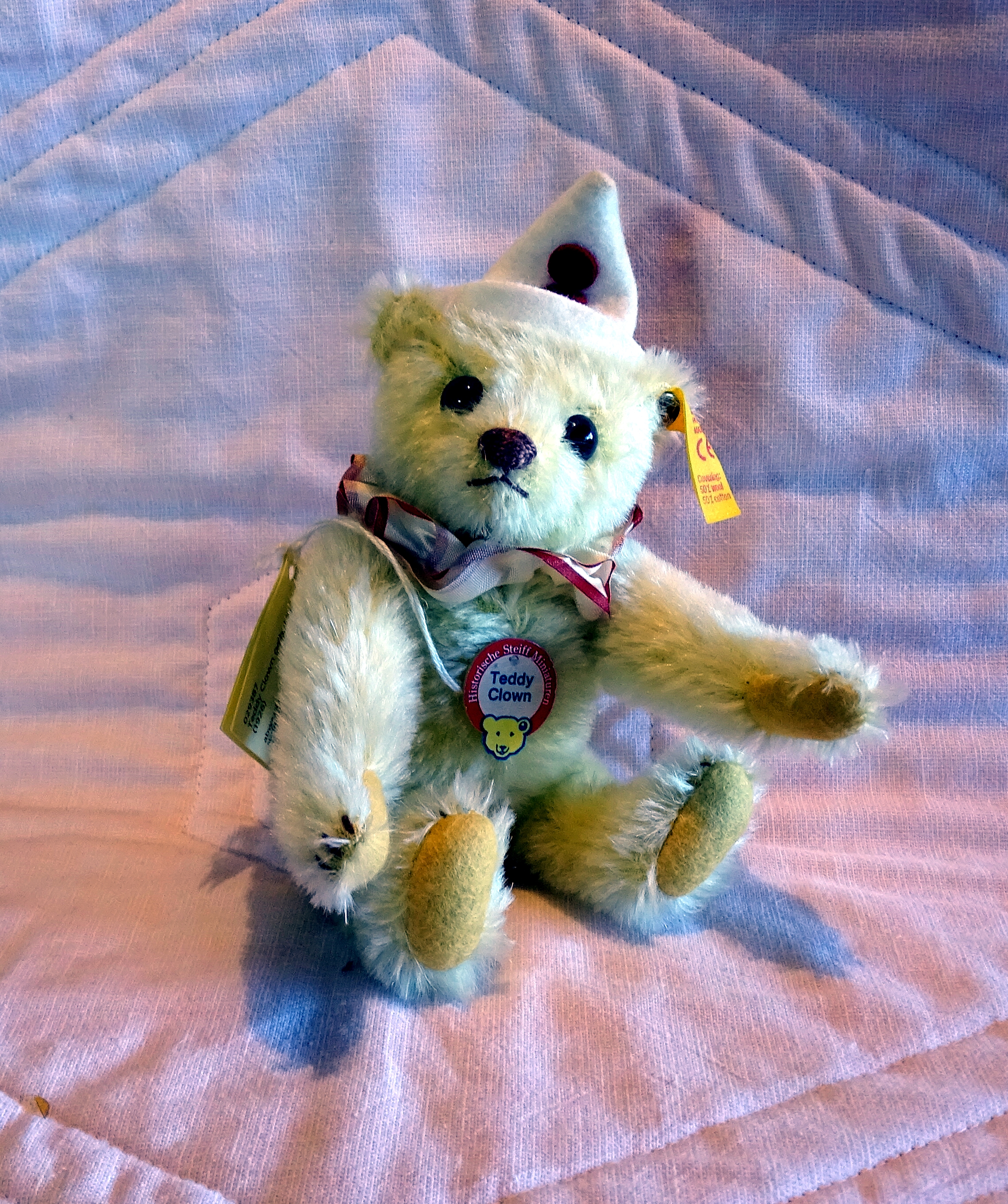
Description:                                         Teddy Clown – 1926 replica, historic miniature
Maker:                                                   Steiff, with all labels, fine mohair
Country:                                                Germany
Limited edition:                                  –
Size in centimeters:                            16
Value:                                                    140,–
Sales price:                                           40,–

Number:                                                12
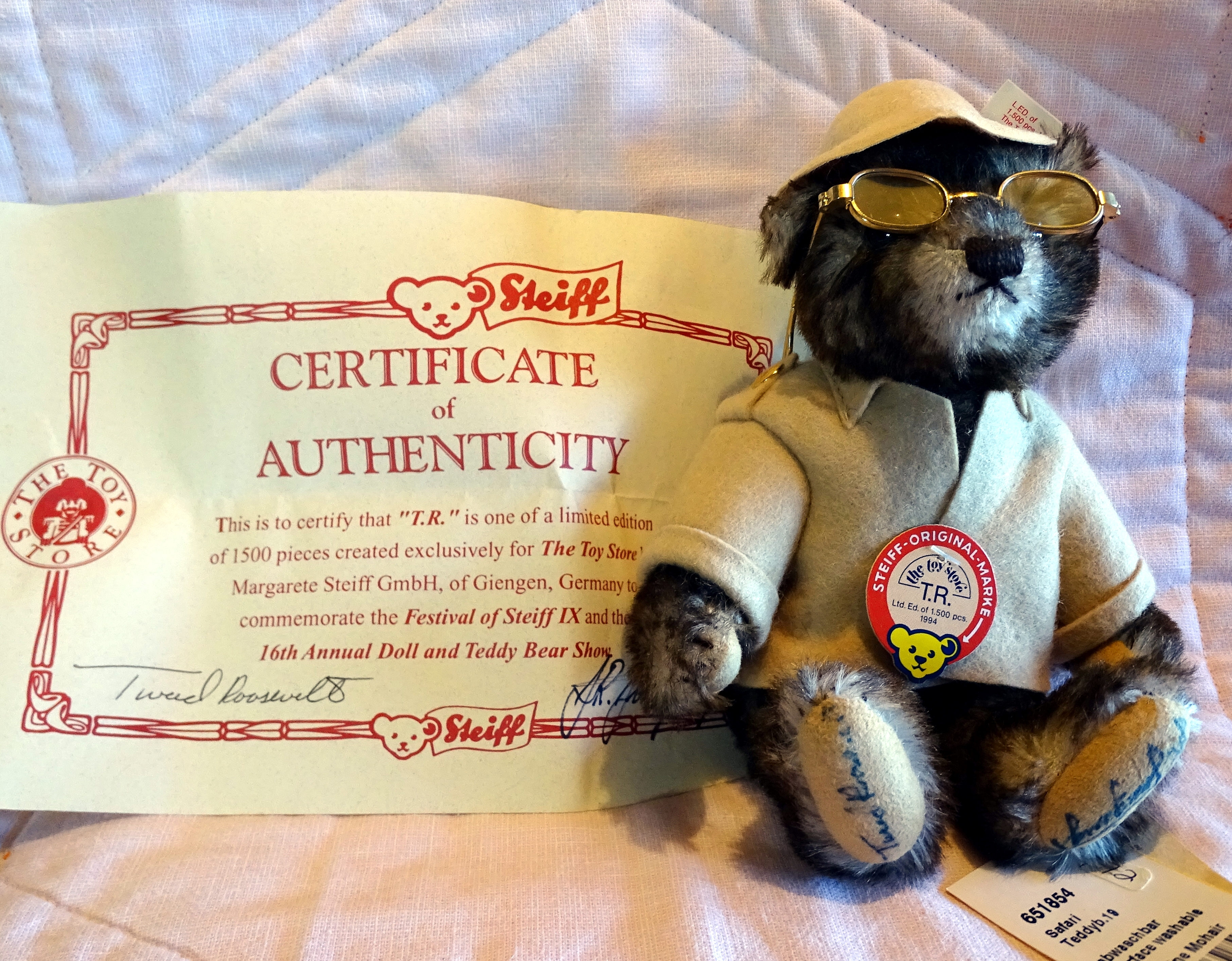
Description:                                          Teddy Roosevelt Safari – 1994 signed collectable bear,
.                                                                signature on left foot „J.R. Junginger“, The Steiff
.                                                                family ! Signature on right foot „Tweed Roosevelt“,
.                                                                great grandson of Teddy Roosevelt, extremely rare –
.                                                                because only a handfull of bears were signed like that.
Maker:                                                    Steiff, with all labels-certificate-outfit, fine mohair
Country:                                                 Germany
Limited edition:                                   172/1500, but signed – as this one – only 8 to 10 bears
Size in centimeters:                             19
Value:                                                     600,–  (sold for 600 10 years ago), no one available
Sales price:                                            200,–

Number:                                                 13
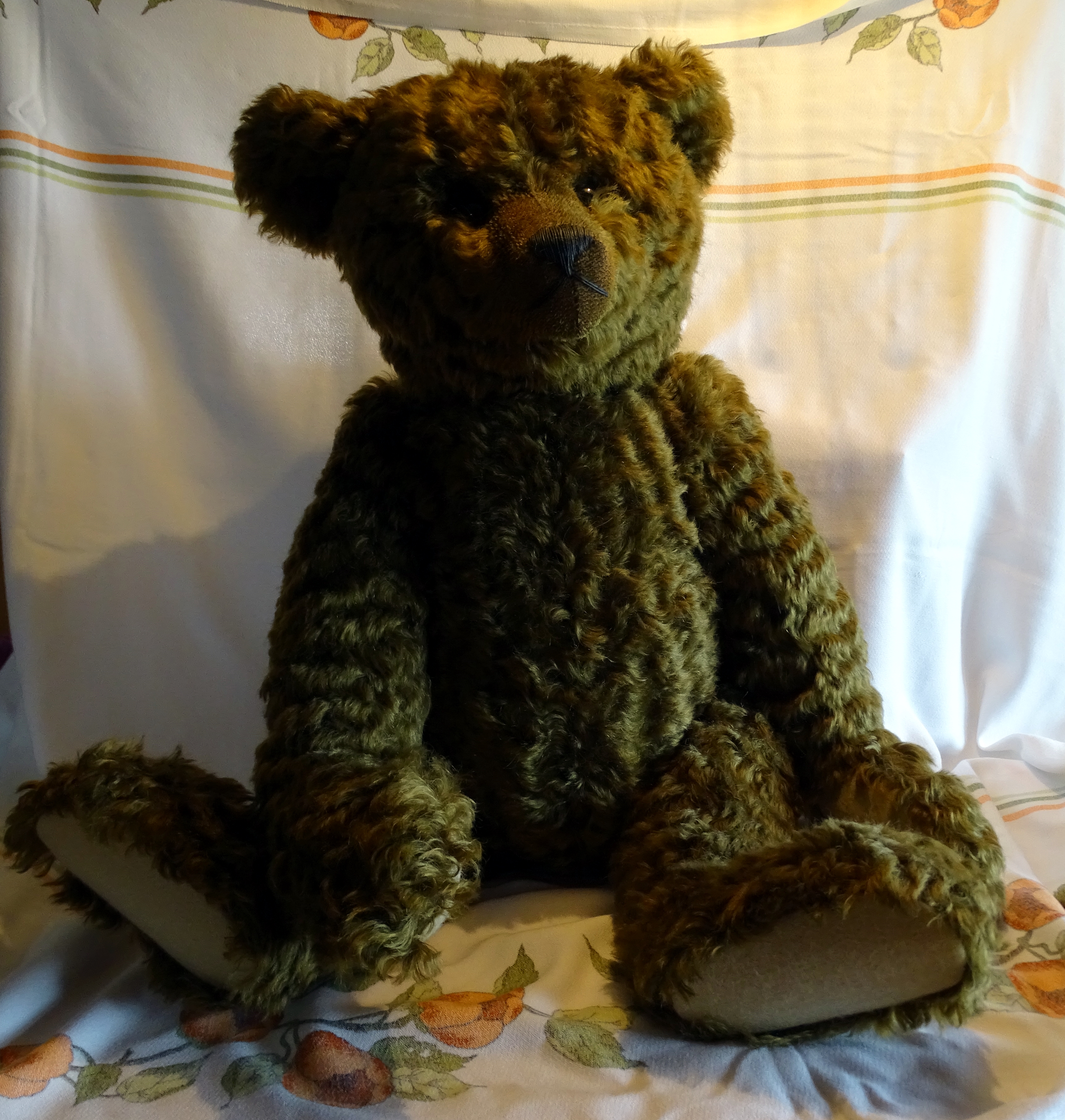
Description:                                           Dark Green Bear, 1908 replica, with growler, extreme
.                                                                 fine mohair and quality, very rare in this size, made
.                                                                 like an old Steiff bear from 1908
Maker:                                                     Atlantik Bears
Country:                                                  Scotland, UK
Limited edition:                                     –
Size in centimeters:                              70
Value:                                                      480,–
Sales price:                                             260,–

Number:                                                   14
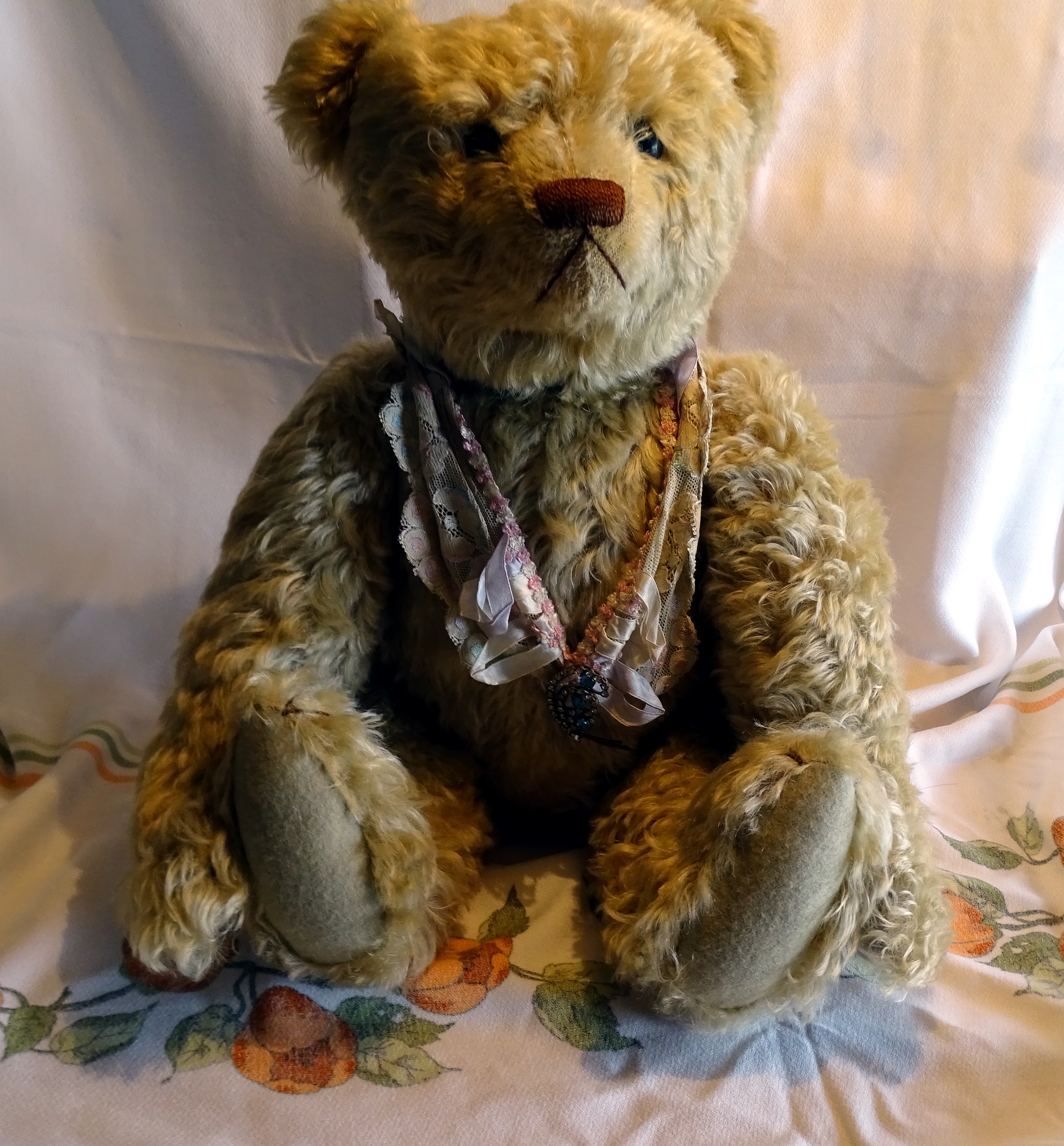
Description:                                             Creamy White Bear, 1908 style, antique collar,
Maker:                                                       Wickenden Bears, finest mohair, superb quality
Country:                                                    United Kingdom
Limited edition:                                       1/1
Size in centimeters:                                 50, very rare in this size
Value:                                                         420,–
Sales price:                                                190,–

Number:                                                       15
Description:                                                 Christmas Cheer Bear, extreme detailed quality
Maker:                                                           Loris Hancock, artist – with artist certificate
Country:                                                        Australia
Limited edition:                                           4/5, but every single one in different outfit
Size in centimeters:                                    14 the bottom bear
Value:                                                            300,–
Sales price:                                                   140,–

Number:                                                        16
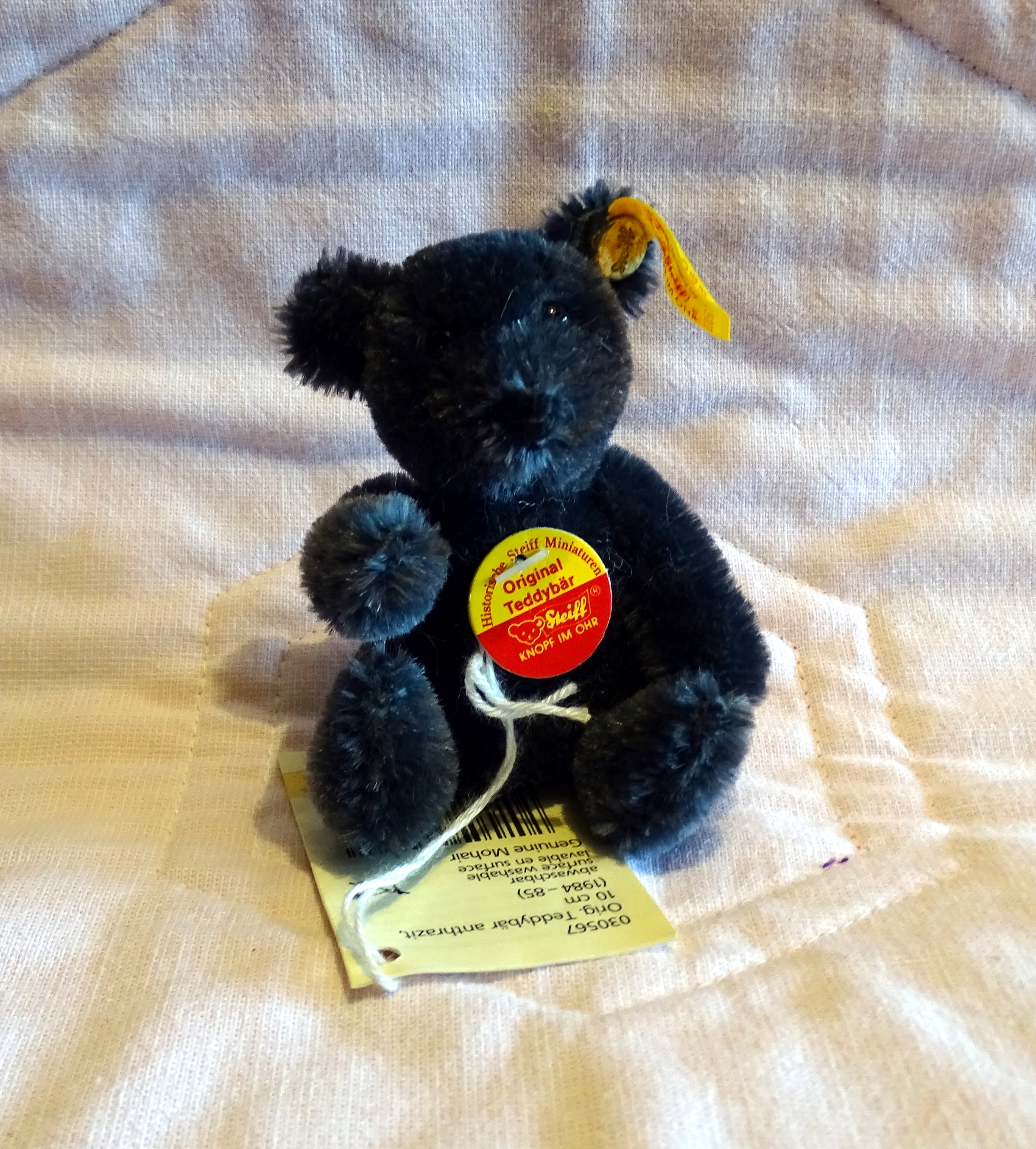
Description:                                                  Black Miniature Bear
Maker:                                                           Steiff,  with all labels
Country:                                                        Germany
Limited edition:                                           –
Size in centimeters:                                    10
Value:                                                            40,–
Sales price:                                                   15,–

Number:                                                       17
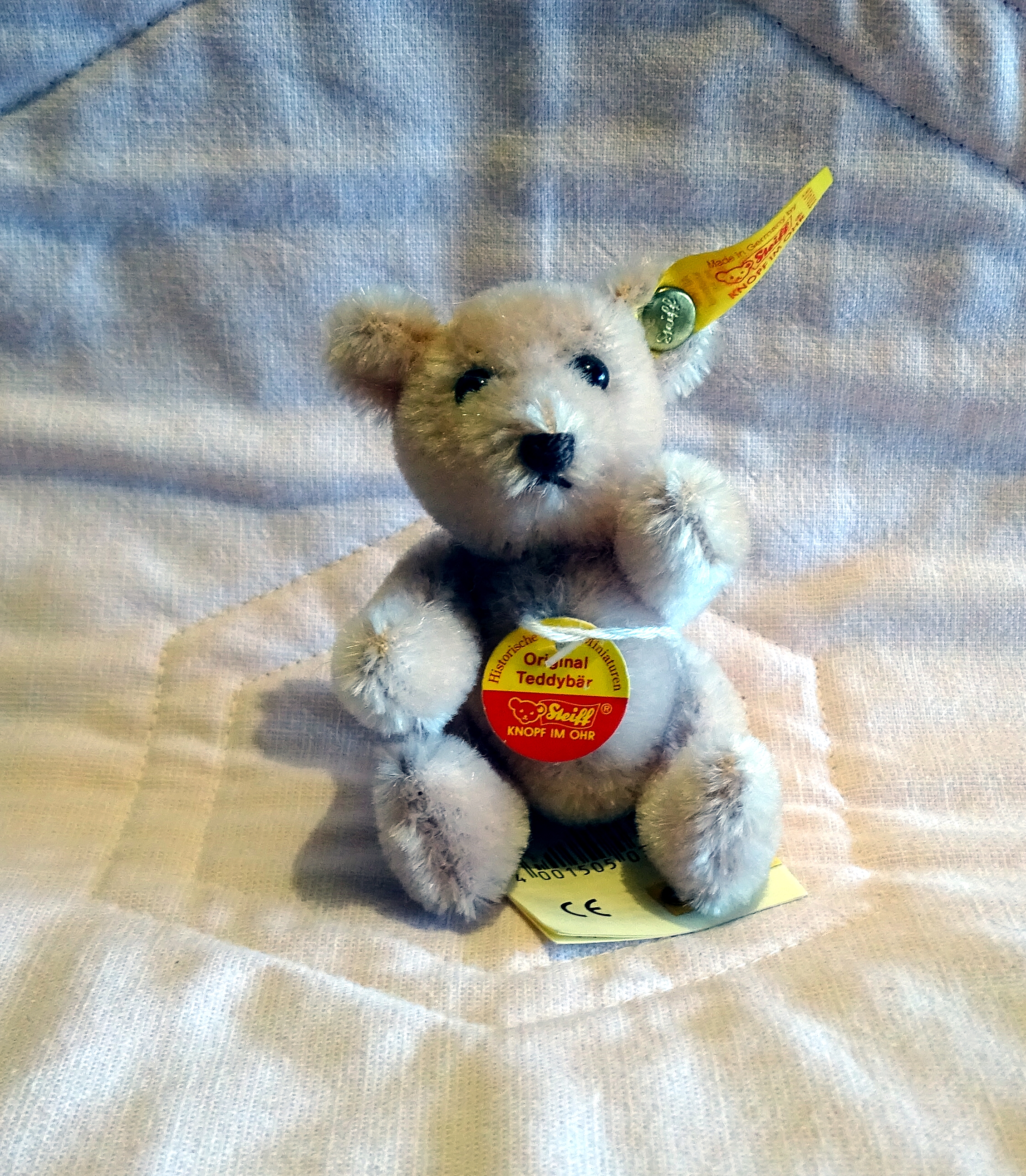
Description:                                                 Rose Miniature Bear
Maker:                                                          Steiff, with all labels
Country:                                                       Germany
Limited edition:                                          –
Size in centimeters:                                   10
Value:                                                           40,–
Sales price:                                                  15,–

Number:                                                       18
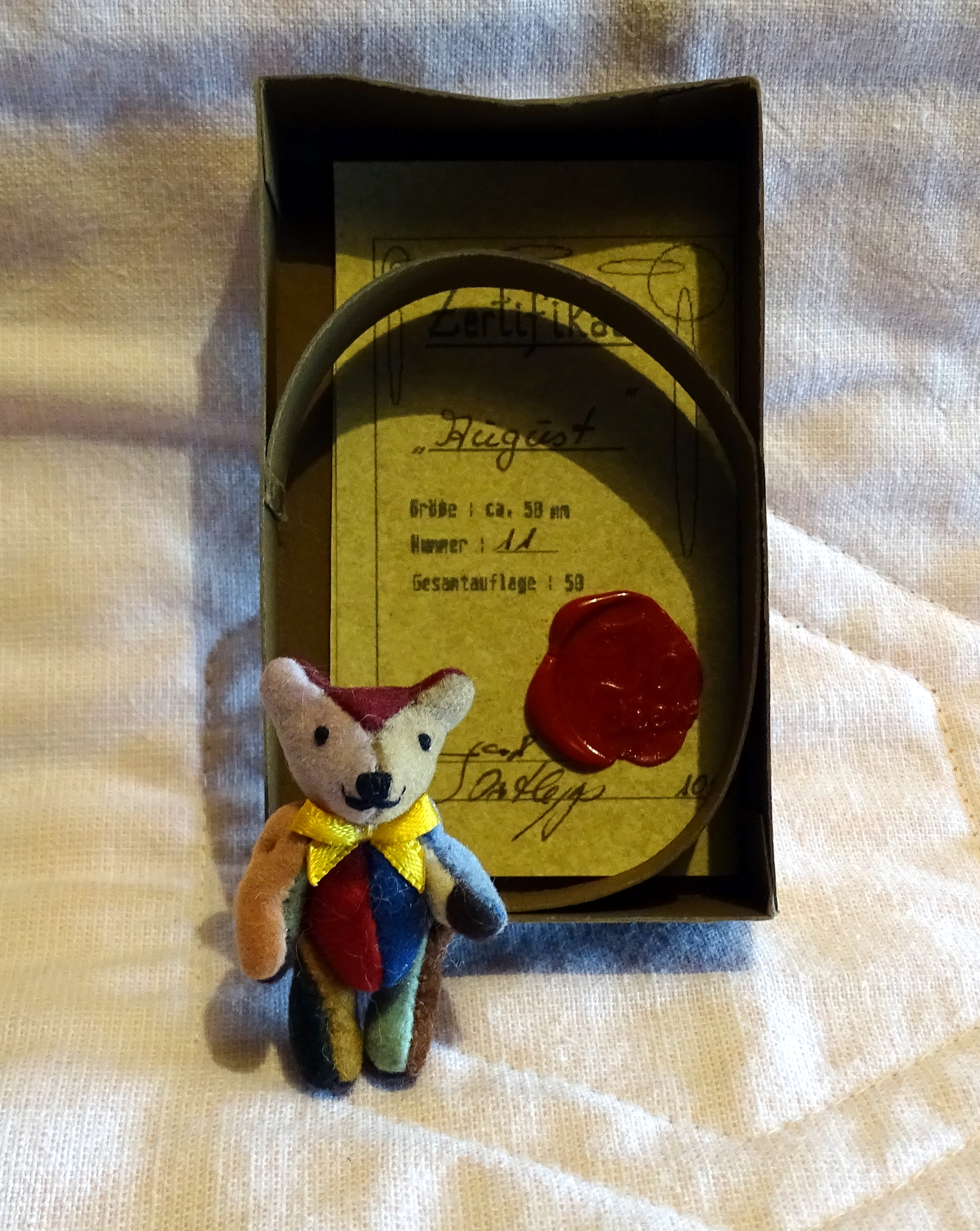
Description:                                                 August – smallest, fully jointed bear in the world
.                                                                       made from leather in 12 different colors, .                                                                       certificate
Maker:                                                           Ingrid Ortlepp, artist , with original box
Country:                                                        Germany
Limited edition:                                          11/50  –  still extremely rare  –  no one available
Size in centimeters:                                    5
Value:                                                            100,–
Sales price:                                                   25,–

Number:                                                        19
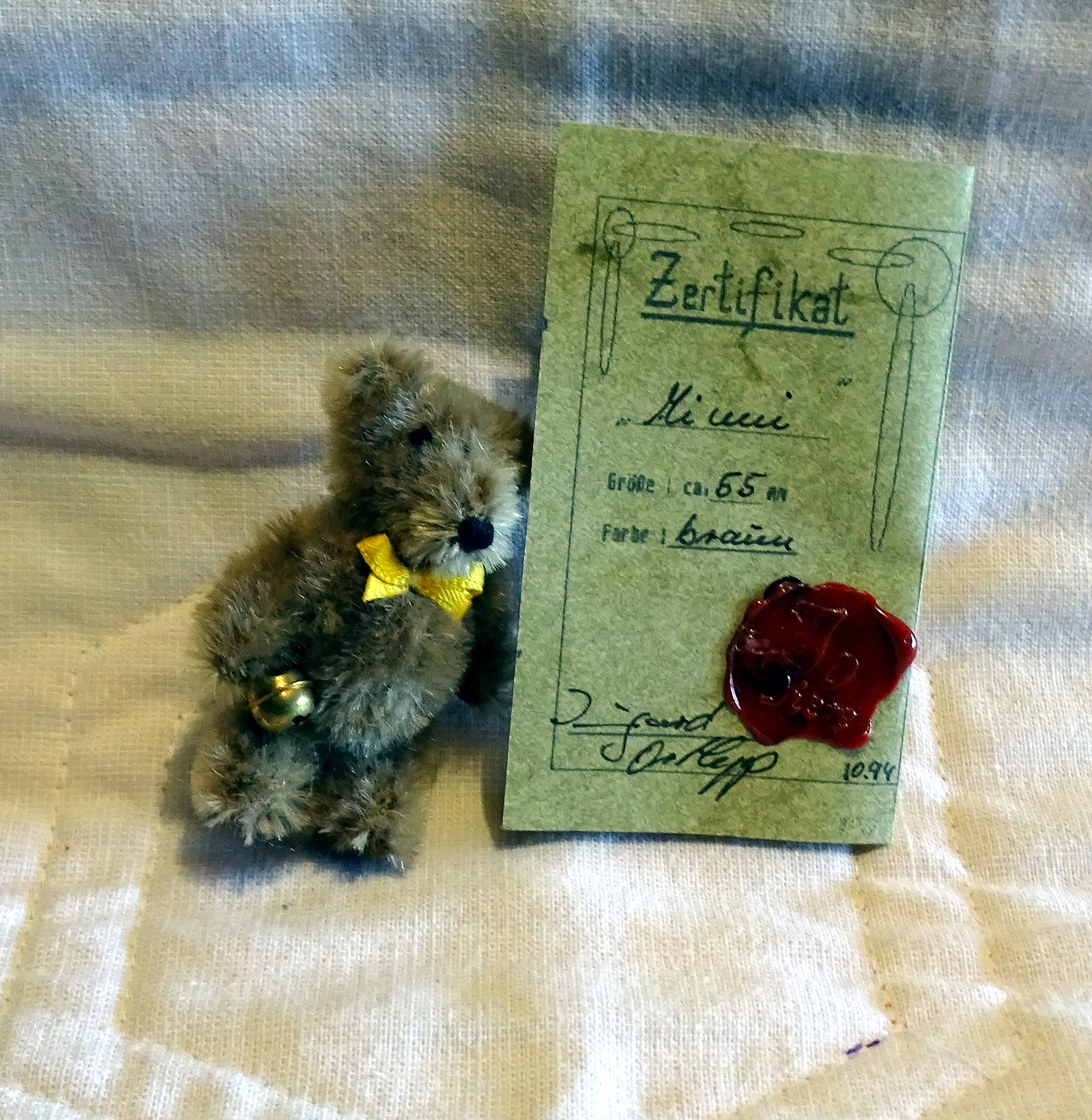
Description:                                                  Mimi – smallest, fully jointed bear in the world
.                                                                       made from brown mohair as a broche, certificate
Maker:                                                           Ingrid Ortlepp, artist,
Country:                                                        Germany
Limited edition:                                          –
Size in centimeters                                     5
Value:                                                           80,–
Sales price:                                                  20,–

Number:                                                      20
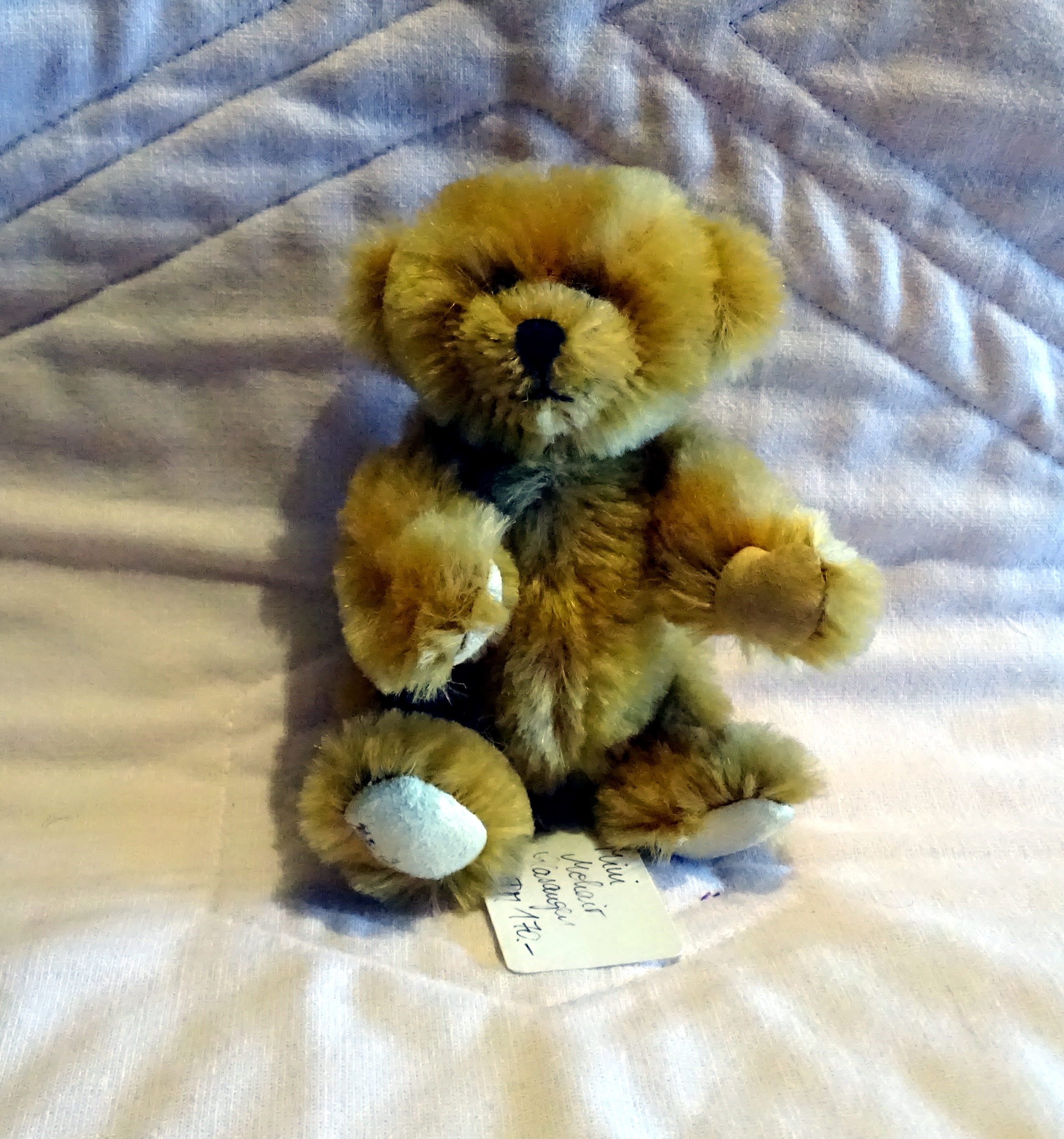
Description:                                                Golden Girl, finest mohair bear, signed by artist
Maker:                                                          Heike Gumpp, artist , with original price tag
Country:                                                       Germany
Limited edition:                                         1/1
Size in centimeters:                                   15
Value:                                                           170,–
Sales price:                                                  55,–

These are the first 20 collectable bears for sale. They all are strict collectables and NO TOYS FOR KIDS ! Feel free to ask questions, if you wish, they won’t be shown in comments. In case you require a delivery to your home country, I only will charge the costs for „registered mail“ (depends on size and weight, but Uruguay post is reliable and affordable). Stay tuned for many more bears and bear items to come in this category.

Veröffentlicht unter Collecting, For Sale | 2 Kommentare

Collecting Teddy Bears 2

The Teddy Bear.

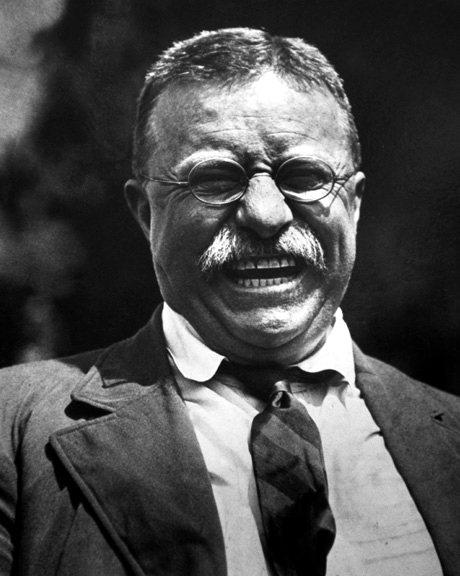
Originally, stuffed bears were referred to as simply browns or just bears. In November of 1902, the President of the United States, Theodore Roosevelt (who’s nickname was “Teddy” for good friends), an avid hunter, went on a bear-hunting trip while he was in Mississippi to give an opinion over a border dispute between Mississippi and Louisiana.

     Theodore (Teddy) Roosevelt, T.R. website.

The trip was covered with much interest by the nation (well, at least by the nation’s newspapers, as he had a large amount of reporters following him).

Theodore “Teddy” Roosevelt.

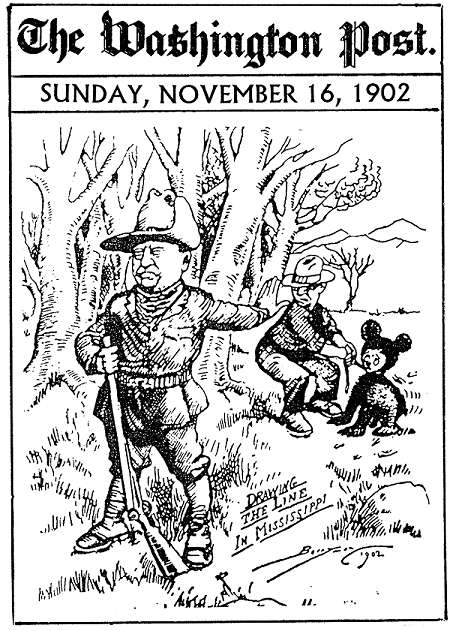
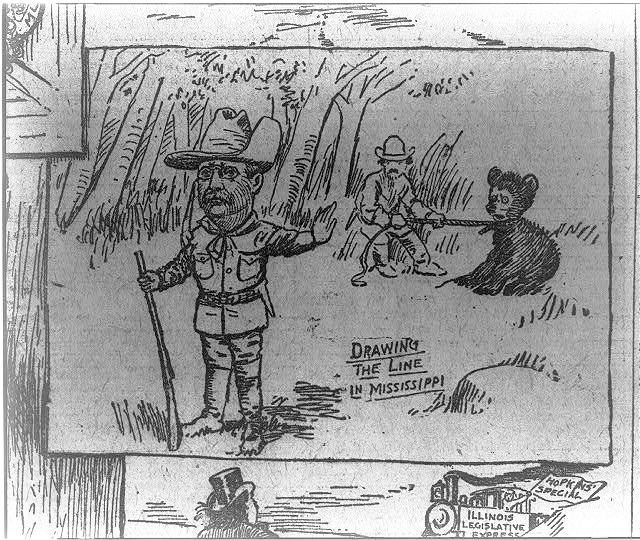
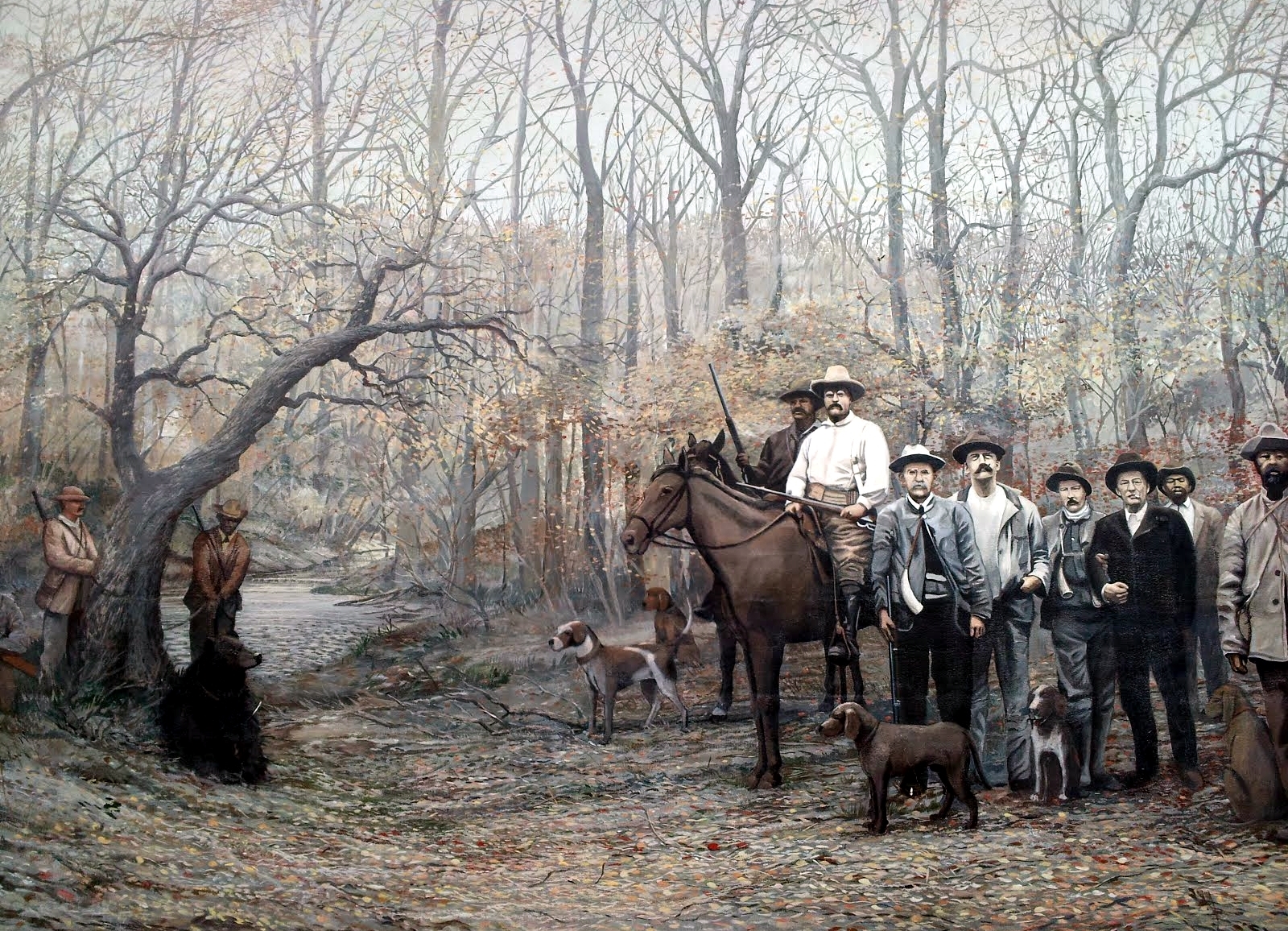
During the trip, guides were catching a bear and tied it to a tree then invited the president to shoot it ! Roosevelt, a candid outdoors man and hunter, declined, saying it would be unsportsmanlike to kill a defenseless animal that way, also he claimed the bear was still a cub and to little to shoot.

                                    First Berryman drawing showed a small bear. Later pics already a man sized bear. Library of congress.

This scene was immortalized the next day by illustrator Clifford Berryman in a Washington Post political cartoon, which was quickly re-printed across the country.

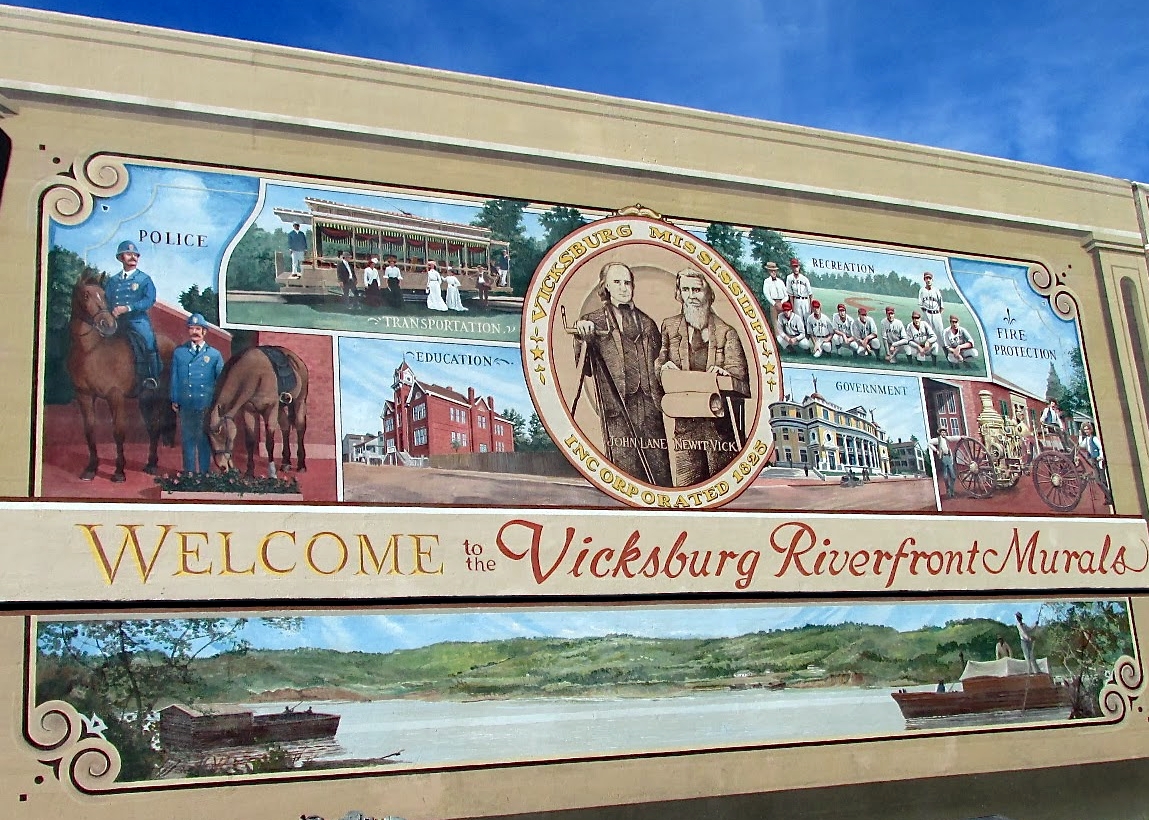
       The bear tied on a tree – ready for shooting (right pic).  Section of the riverfront mural in Vicksburg, Mississippi.  The Riverfront Murals program was undertaken by a team of artists, led by Robert Dafford, from Louisiana. The project took seven years and was completed in 2009. Worth to visit, in case you follow once the history path of Vicksburg.

The first Teddy Bear.

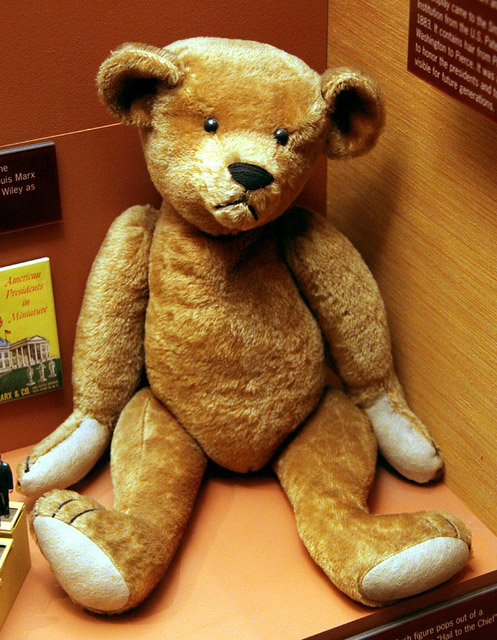
Morris Michtom, a Russian emigrant and owner of a candy store in Brooklyn, saw the drawing of Roosevelt and the bear cub and was inspired to create a new toy, because after hours of the candy store he made stuffed animal toys like little plush pony’s etc. He created a little stuffed bear cub, made by his wife Rose, and put it in his shop window with a sign that read “Teddy’s bear“. After sending another bear to Roosevelt he was receiving permission to use his nickname „Teddy“. The toys were an immediate success and Michtom founded the Ideal Novelty and Toy Co.

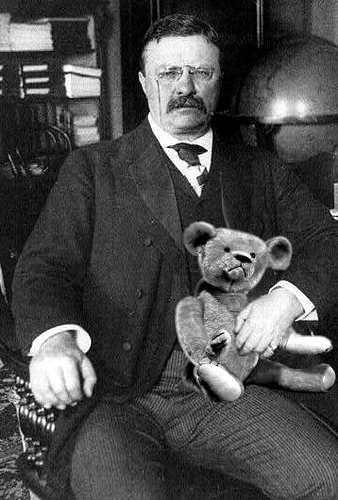
                                                               Left: First Michtom bear, now behind glass in the Smithonian Museum.  Right: Teddy Roosevelt with that same bear. The „tough outdoor man“ didn’t like being photographed, with a soft toy, very much. T.R. website.

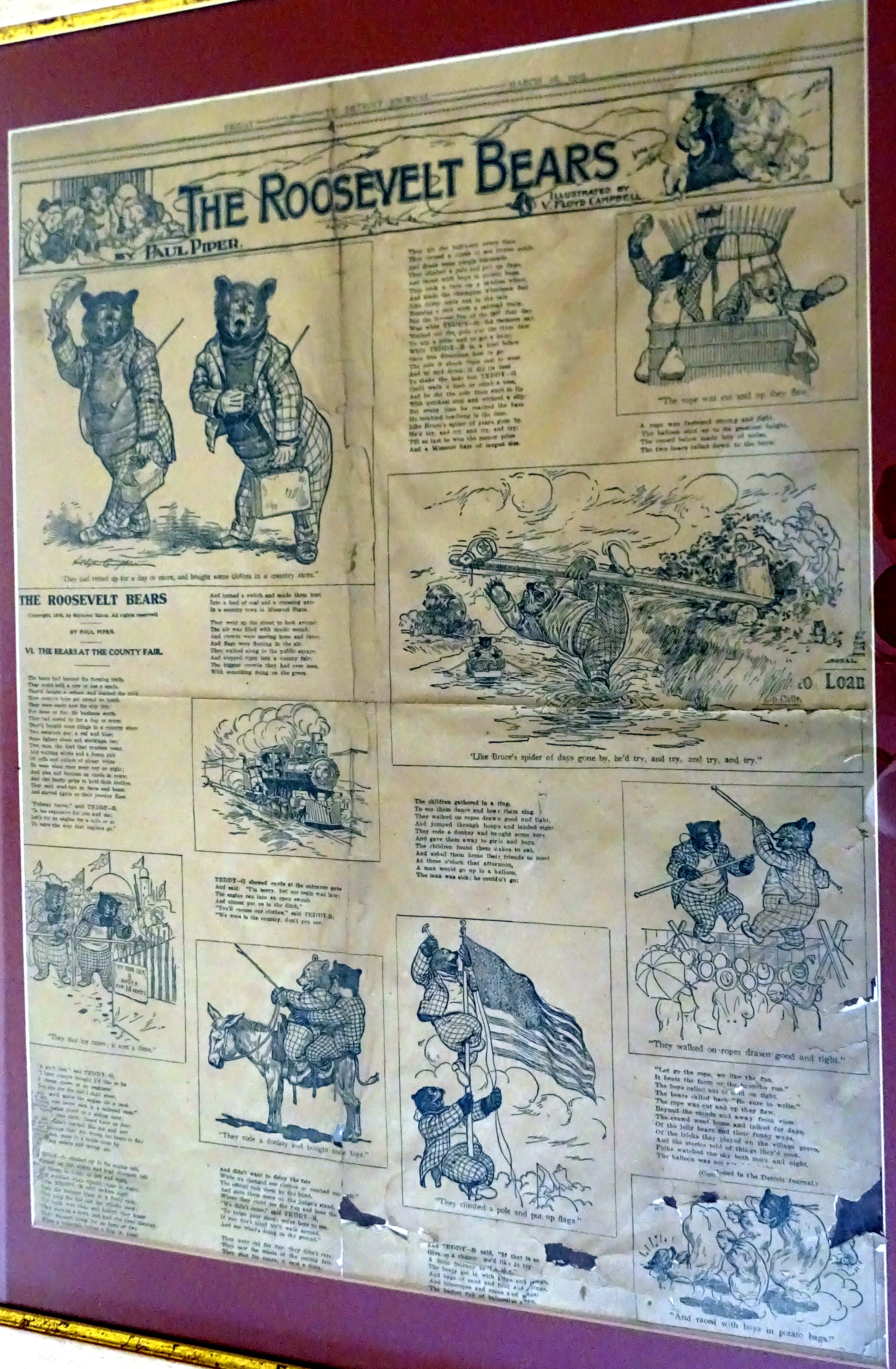
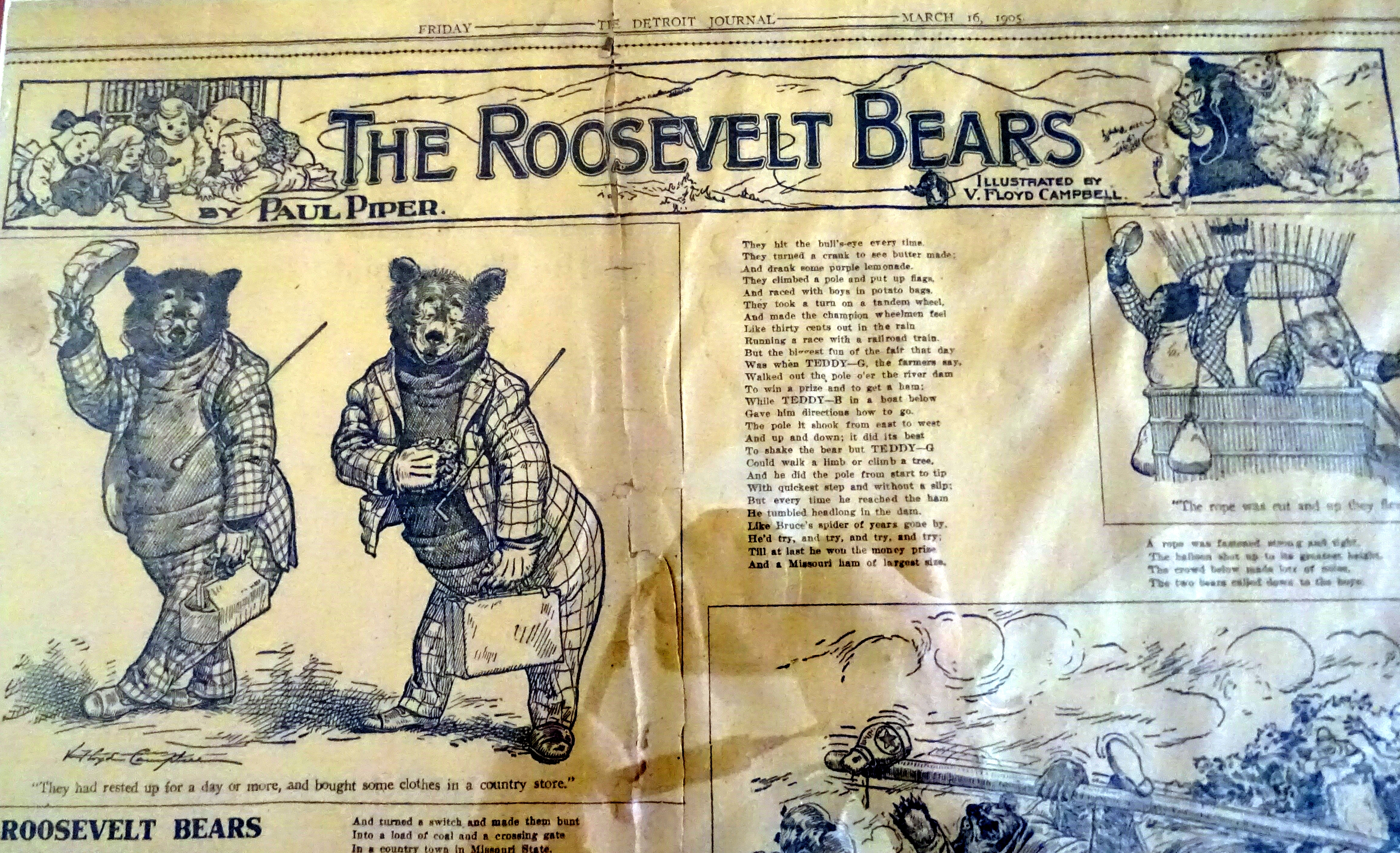
North American educator Seymour Eaton (a pen name for Paul Piper) created Teddy B and Teddy G (The Roosevelt Bears) in a newspaper series which grew into huge commercial success.

                                   Original news paper page from 16th of march 1905. The Paul Piper Bears released in the Detroit Journal.

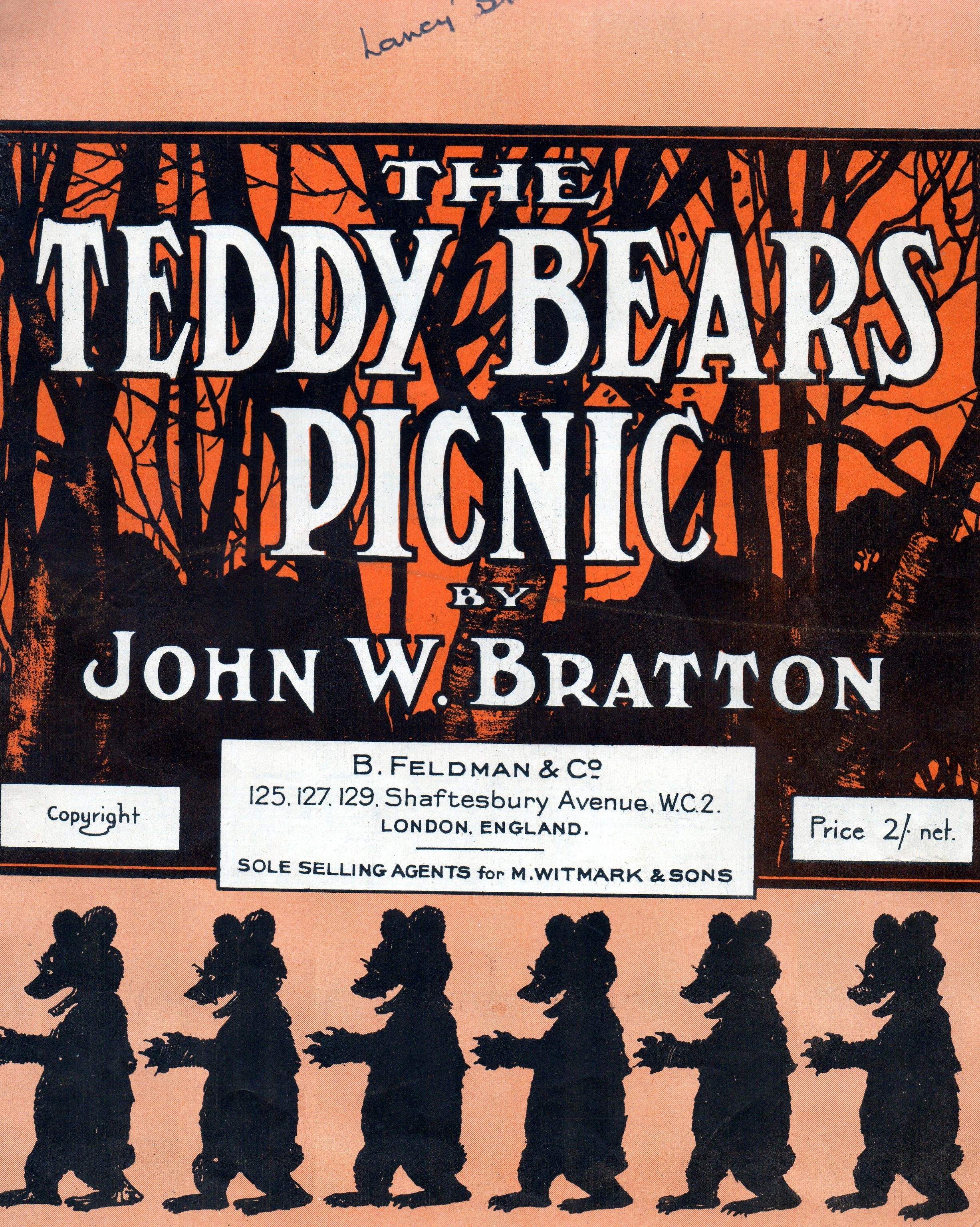
While composer John Walter Bratton wrote an instrumental “The Teddy Bears Picnic”, a “characteristic two-step”, in 1907.

  John Bratton’s original music sheet from 1907.

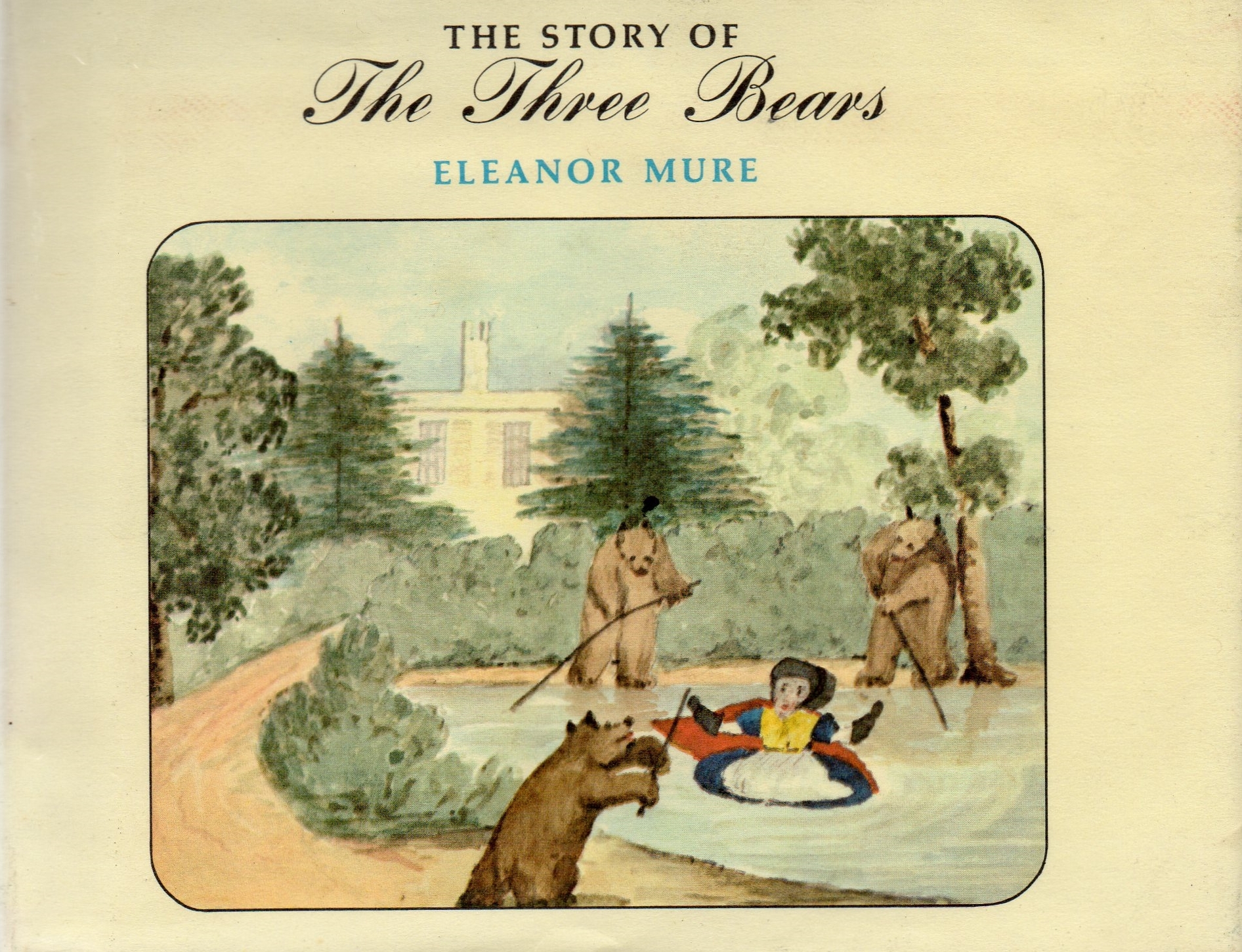
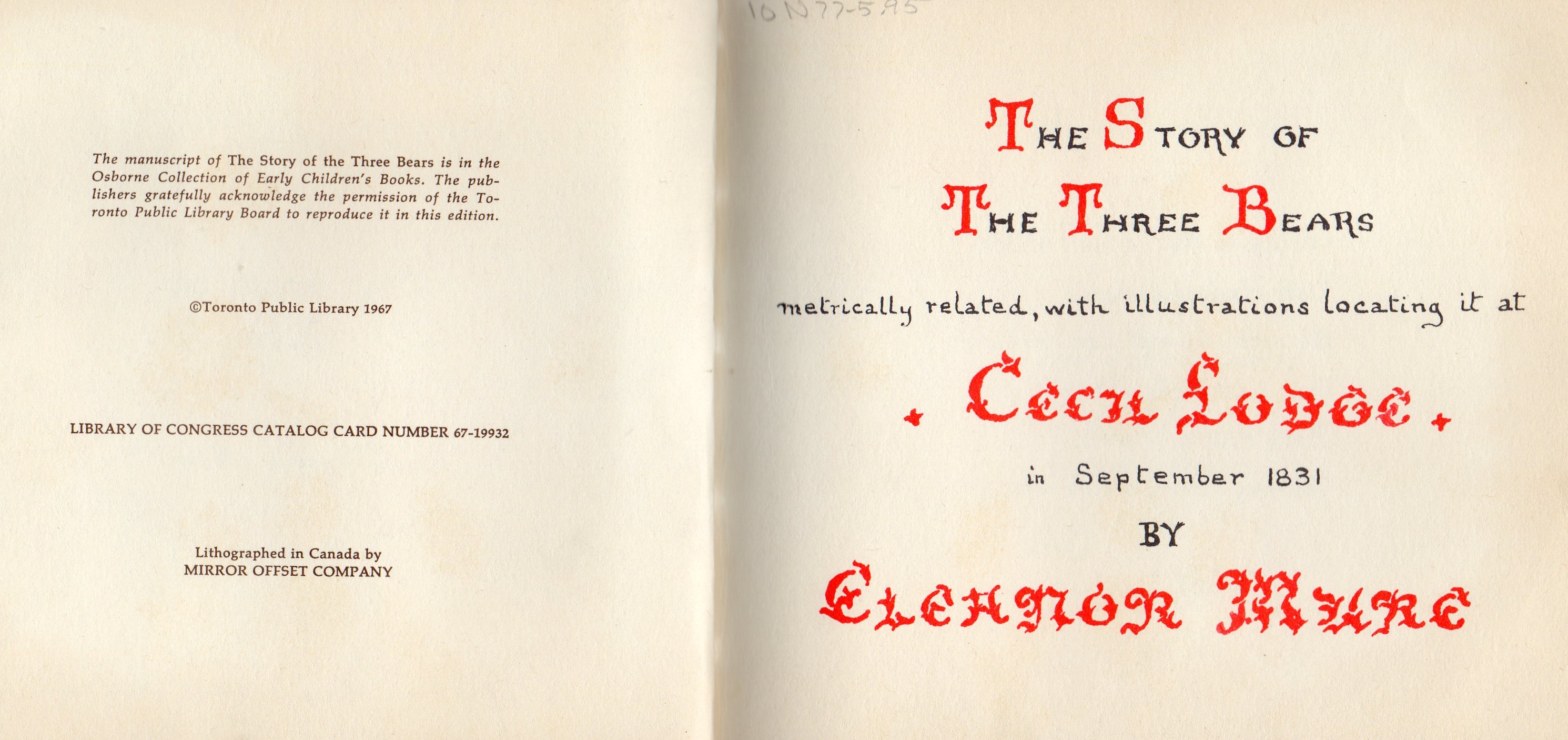
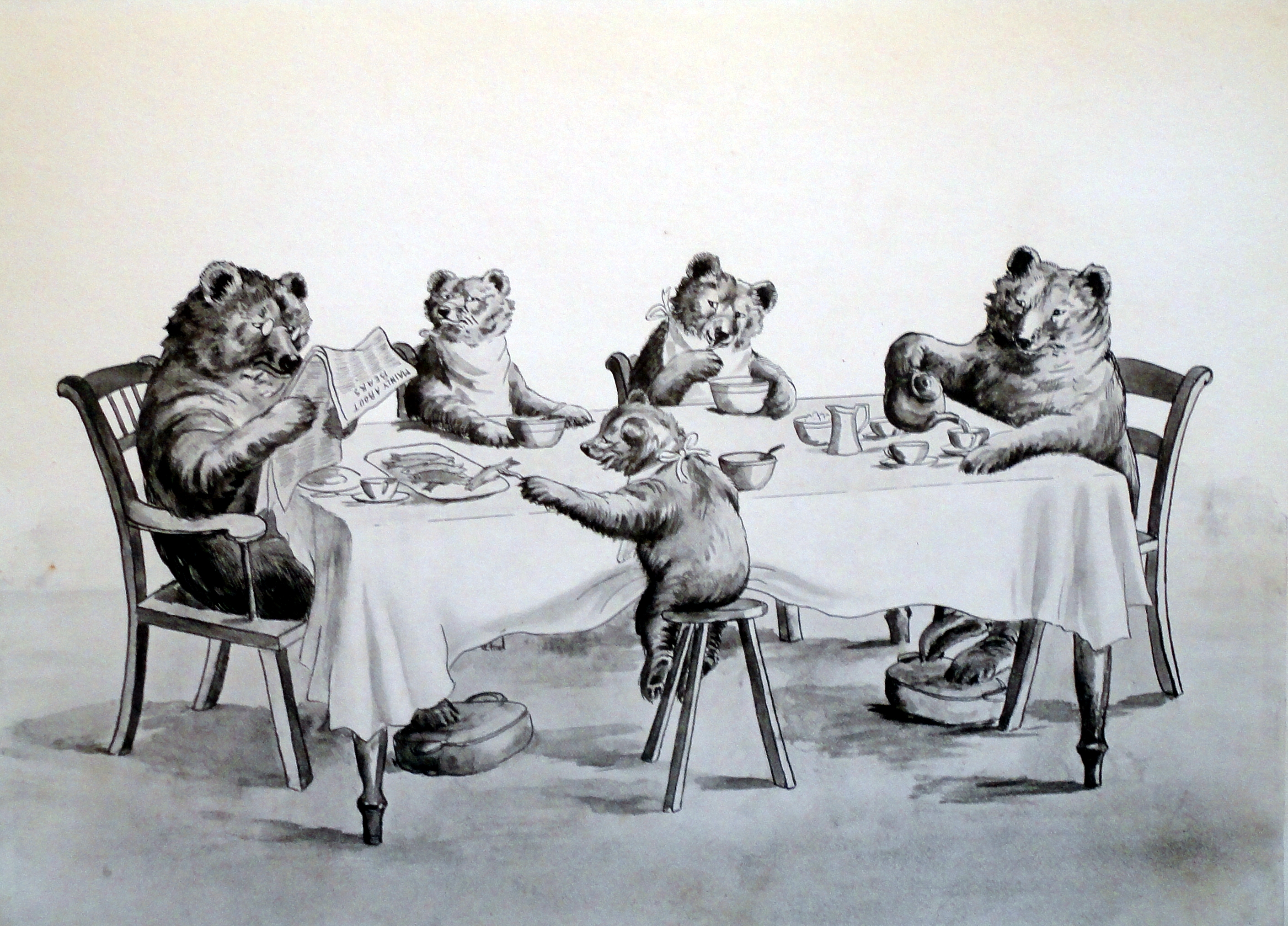
According to historians, the most enduring and oldest juvenile bear story is “The Three Bears”. It’s definite origin is unknown. However, the oldest manuscript is Eleanor Mure’s, from 1831, found in Toronto’s Public Library.

      The extreme rare reprint from 1967.

The Toronto Library offered a photographic reproduction of the original manuscript in 1967 as a limited edition. This reprint (50 years ago) is already an extremely rare and sought after collectors item.

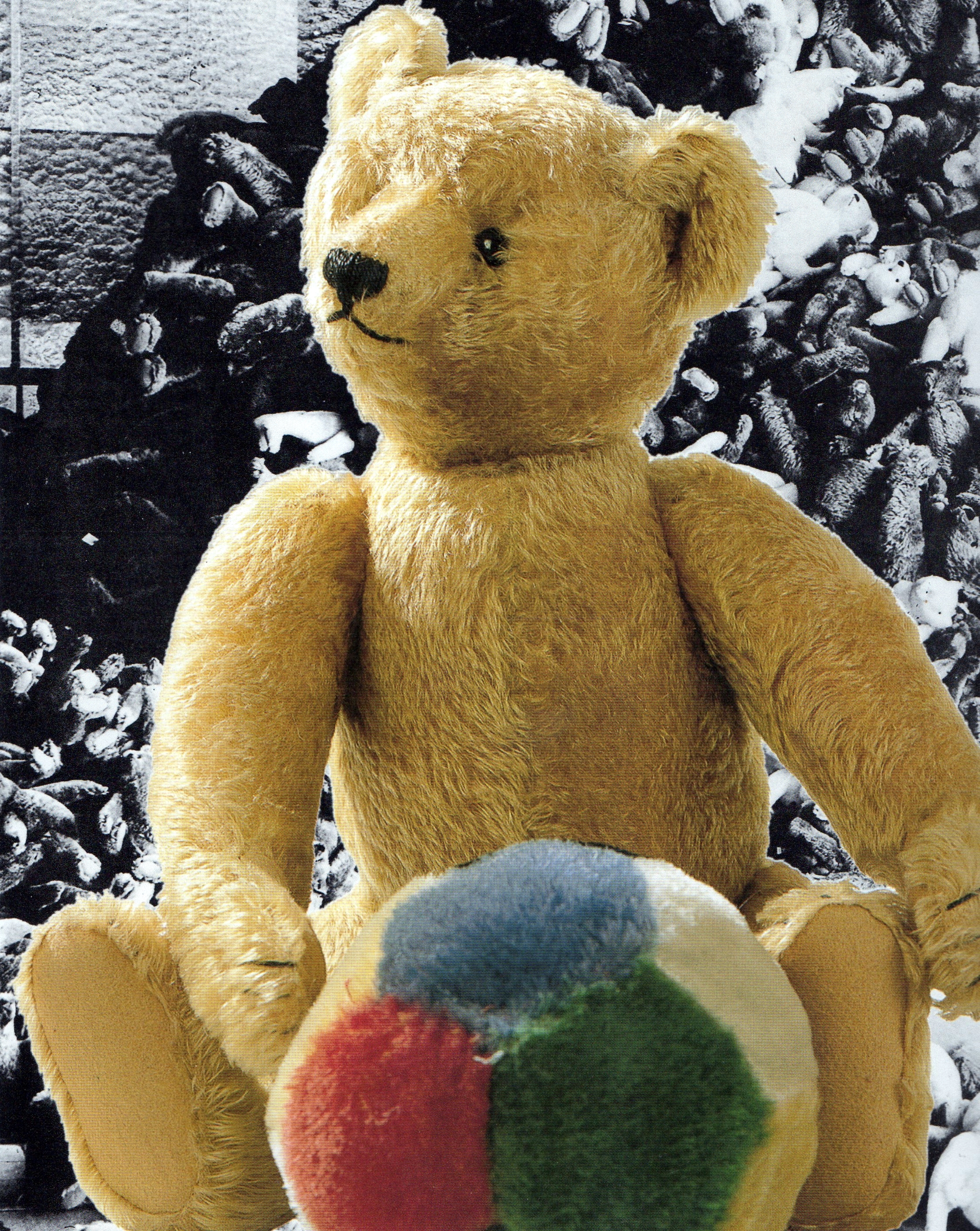
  Steiff bear with an extremely rare „Steiff Ball“. Collectors items.

Steiff.

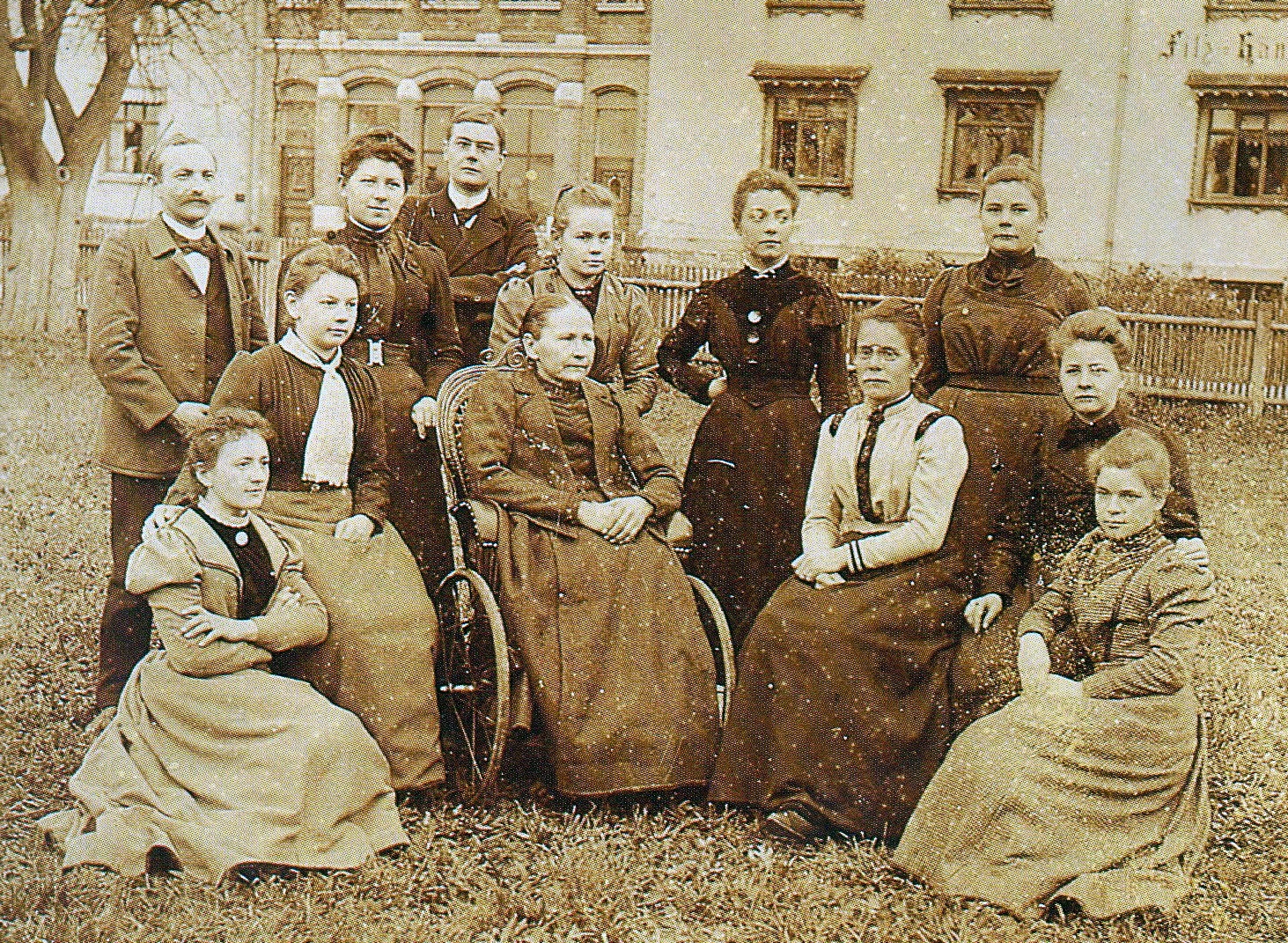
In 1902 the German toy company Steiff had developed a toy bear with jointed arms and legs and covered in a soft fiber called Plush. It was the brainchild of Richard Steiff, nephew of the company’s founder Margarete Steiff, a heavily handicapped but strong women.

     Margarethe Steiff surrounded by her first group of employes infront the newly build Soft Toy Fabric, around 1895. Steiff museum.

This bear was introduced to the German public at the Leipzig Toy Fair in spring 1903. But there was not much interest. Richard Steiff just putting all the bears back in the boxes, when Hermann Berg came around, a buyer for Borgfeldt in New York. Hermann Berg is captivated by this new soft toy and spontaneously he orders 3.000 bears – a massive order at that time.

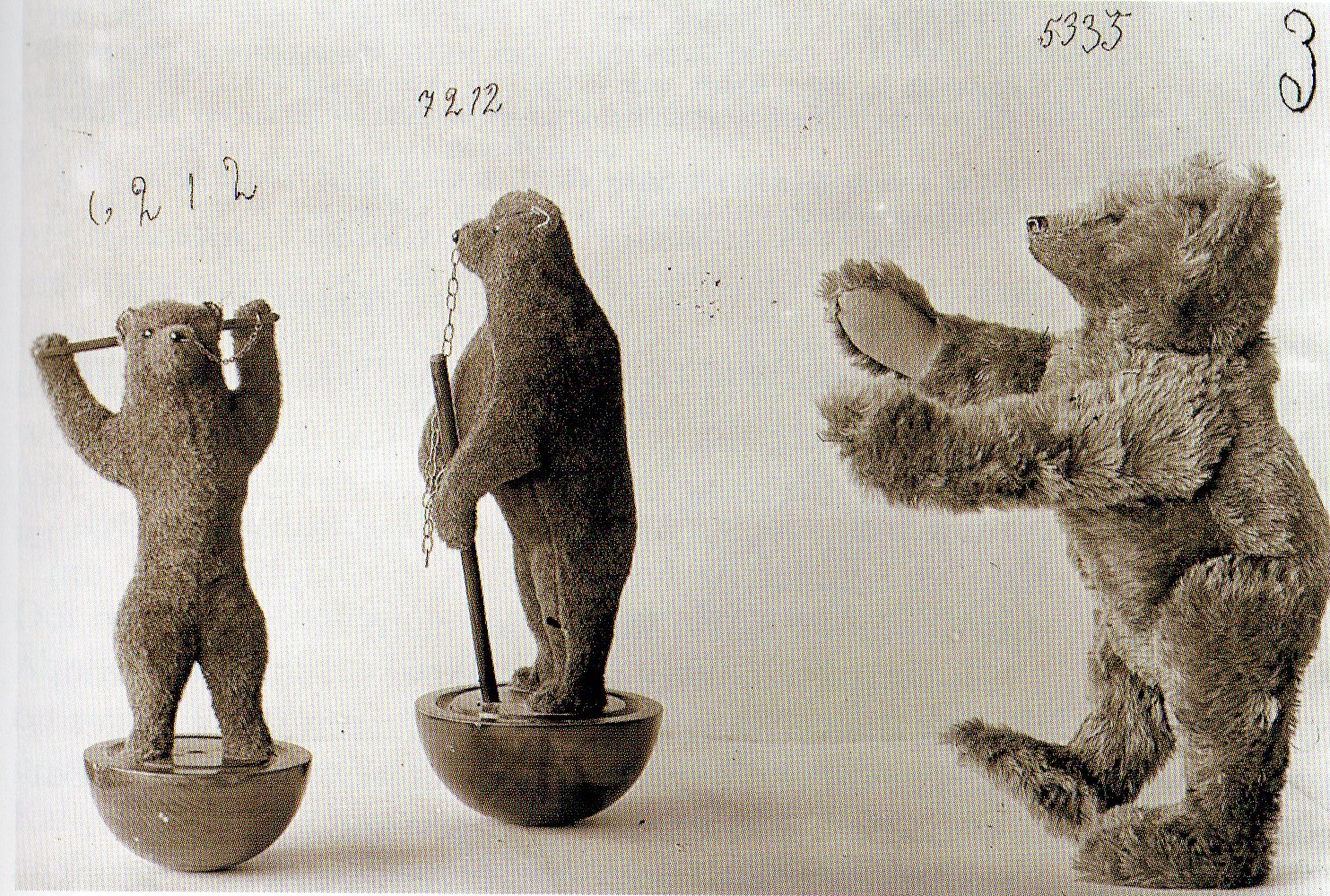
  Steiff bear production from c. 1897 – left. And the first „Leipzig Bear“ from 1903 – right.  Steiff museum.

The old discussion about the FIRST TOY BEAR in history is not easy to clear. For sure, Michtom and Steiff couldn’t have known eachother.  May be Steiff produced the first bear but  Michtom got the first time named a bear „TEDDY“. Who really cares, who was first !

  Before Teddy, they just were called bears or browns.

Popularity.

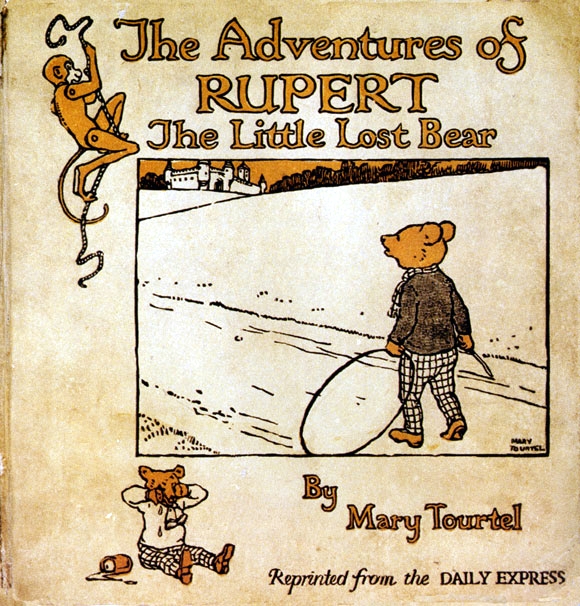
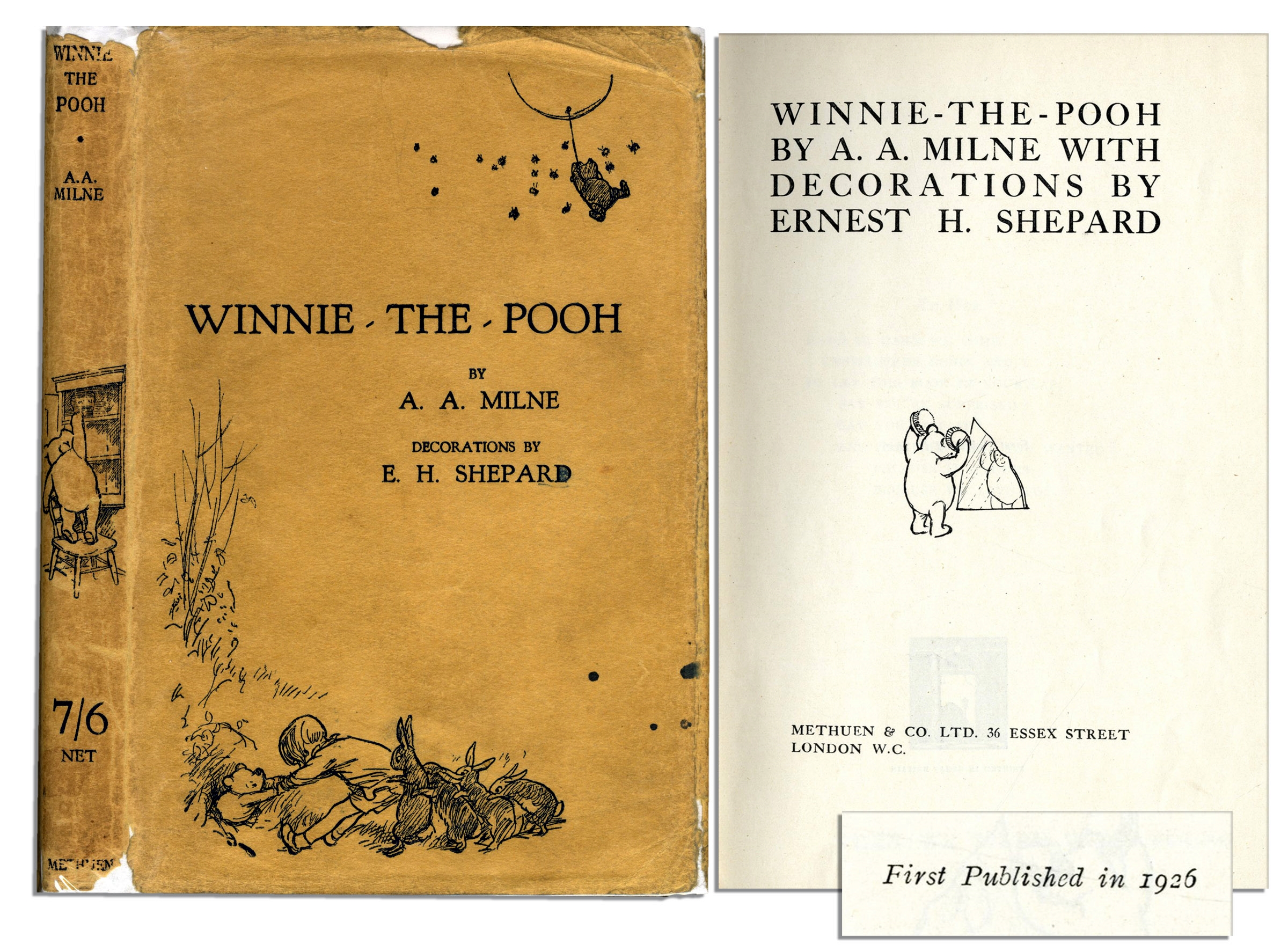
Between 1903 and 1908 the number of Teddy Bears produced shot up from 12,000 to 975,000 per year. Their further popularity was increased by the introduction of two popular bear characters: Rupert Bear in 1920 and Winnie the Pooh in 1926.


Some of the best known manufacturers during this period were Steiff (Germany), Hermann (Germany), Farnell (England), Merrythought (England). The Ideal company in New York went still very sleepy and slow.

  Wonderful little Steiff bear collection from the 1920’s.

Steiff resumed production in 1947, and by 1948 had a workforce of almost 1000 people. By 1953 this figure had doubled as the company released a series of new models to celebrate the 50th anniversary of the Teddy Bear.

During the 1960s the traditional manufacturers lost ground to companies in China and Indonesia, as cheaper mass-produced bears took over the market. But these mass produced toys could never take over the serious bear lover and bear collector, because of bad craftsmanship and cheap quality.

  Artist bears, „living“ in a private home.

Collecting.

Teddy Bear collectors are known as „arctophiles“.
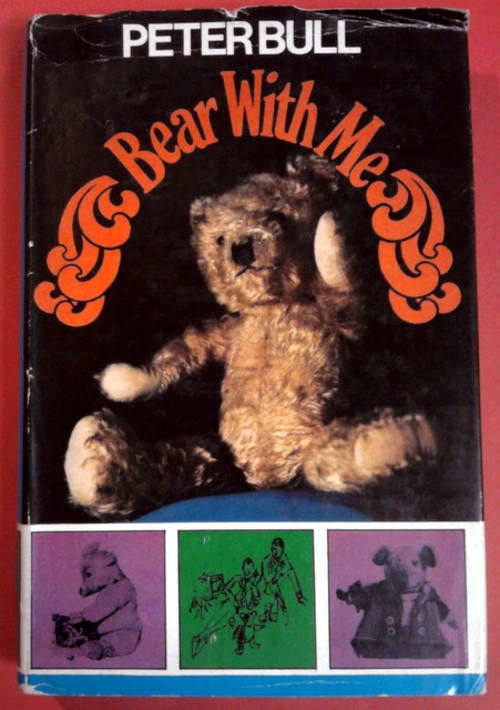
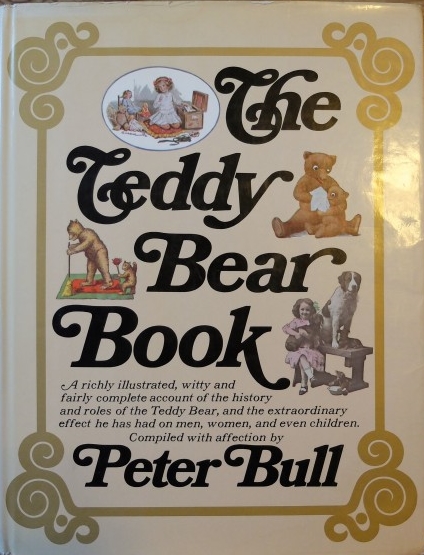
A revival in high quality collectible bears started in 1969 when the popular British character actor Peter Bull wrote a book entitled “Bear With Me” (later re-titled “The Teddy Bear Book”) about his collection and affection for the toy.

                 Peter Bull books.

The idea of collecting Teddy Bears was placed back into the public consciousness, and collectors began to hunt for older models made by the traditional manufacturers. As this practice developed, the cottage industry of “bear artists” producing individual, hand made bears began to grow and the market for collectible bears was born.

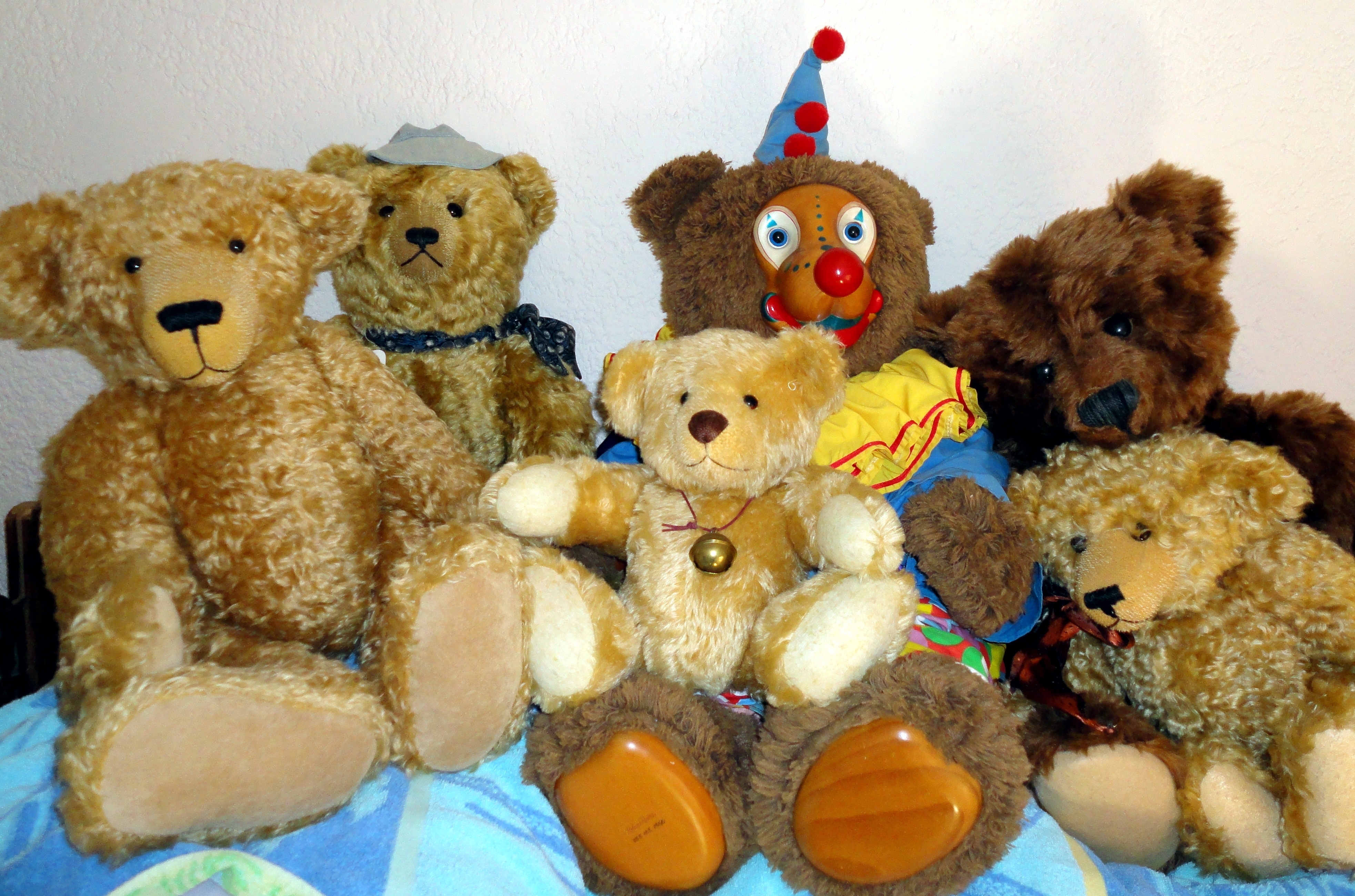
  A fine collection of artist bears. All for sale.

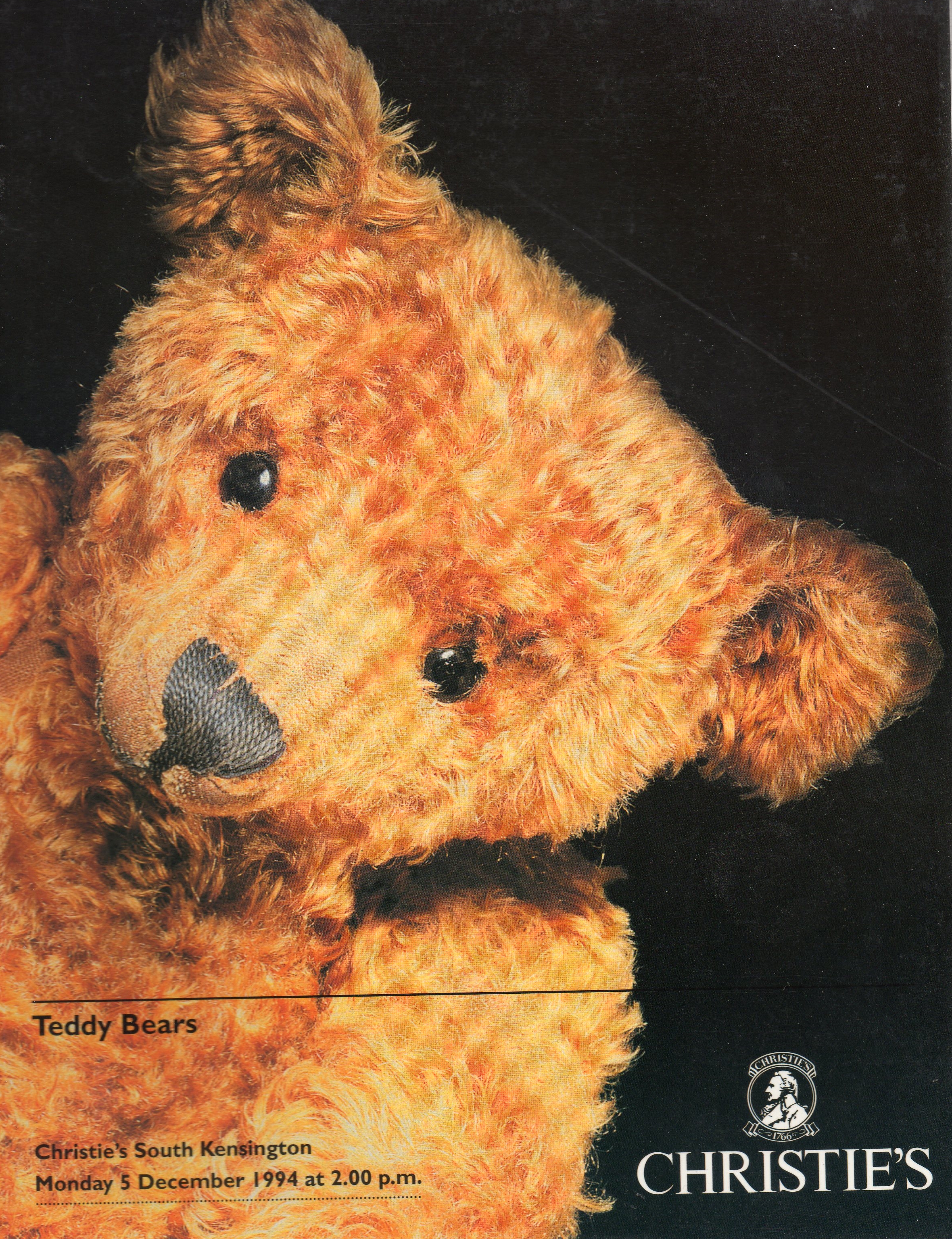
In 1985 the Teddy Bear Artists Guild was formed in America, and Christie’s held its first auction dedicated to the sale of antique bears.

   Catalog of a special Teddy Bear auction at Christies.

The market for collectible bears is currently booming worldwide, and especially “mini bears” are widely collected, used as individual and personal gifts, as love tokens and as unique gifts for special occasions like Valentines, Birthdays, Anniversaries, Christmas and many more. And the best is – good artist bears are very rare, collectible but still affordable.

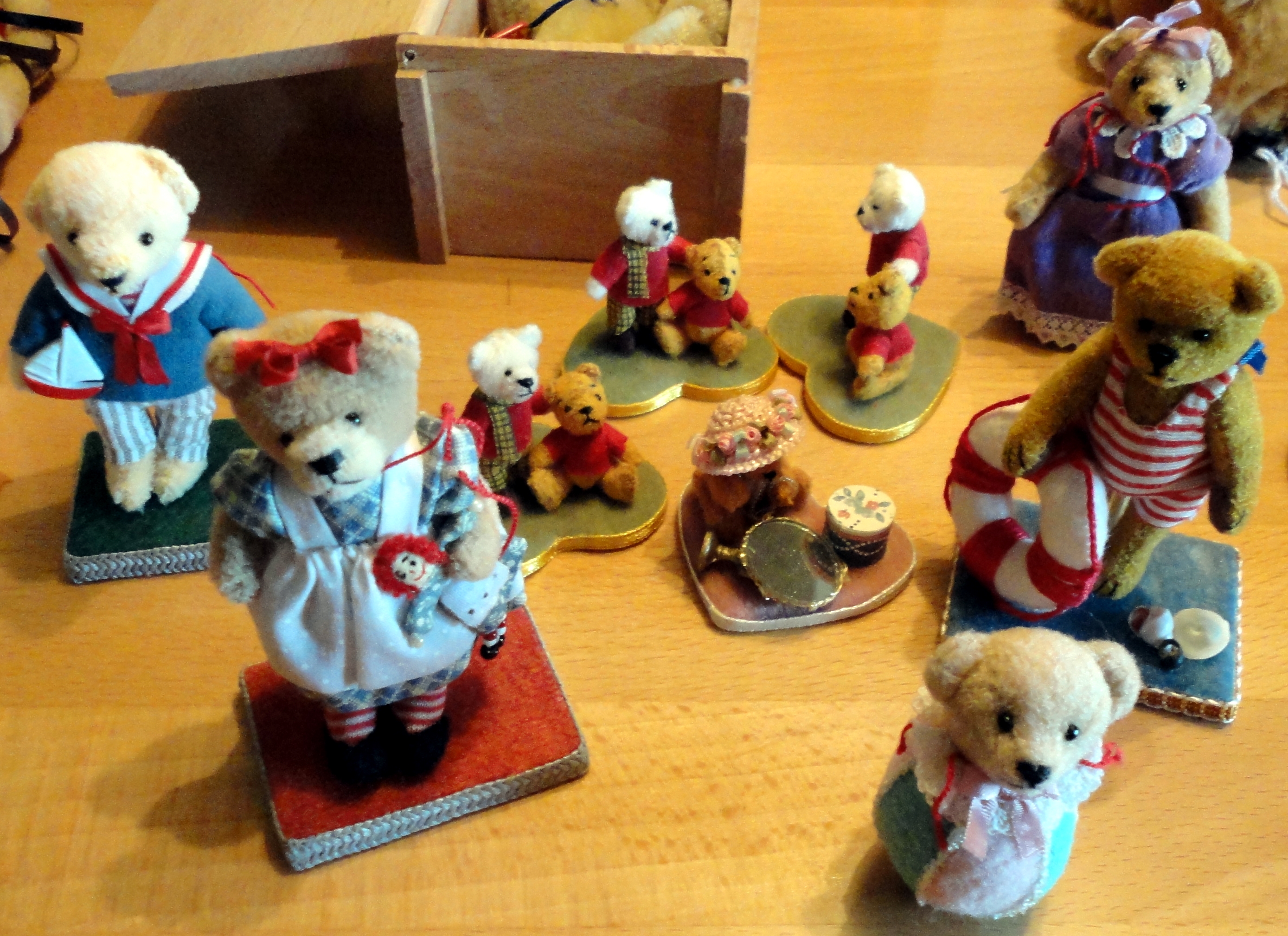
  Artist Mini Bears, superb craftsmanship. Mostly made as a „one of a kind“ or in a very small (1-5) limited edition. Very collectable and still affordable.

Teddy Bear Books.

Teddy Bears are not just children’s toys nor just highly valuable collectable items. They are much loved, very important characters which have inhabited the childhood of most children in the world and are now firmly entrenched in our folklore.

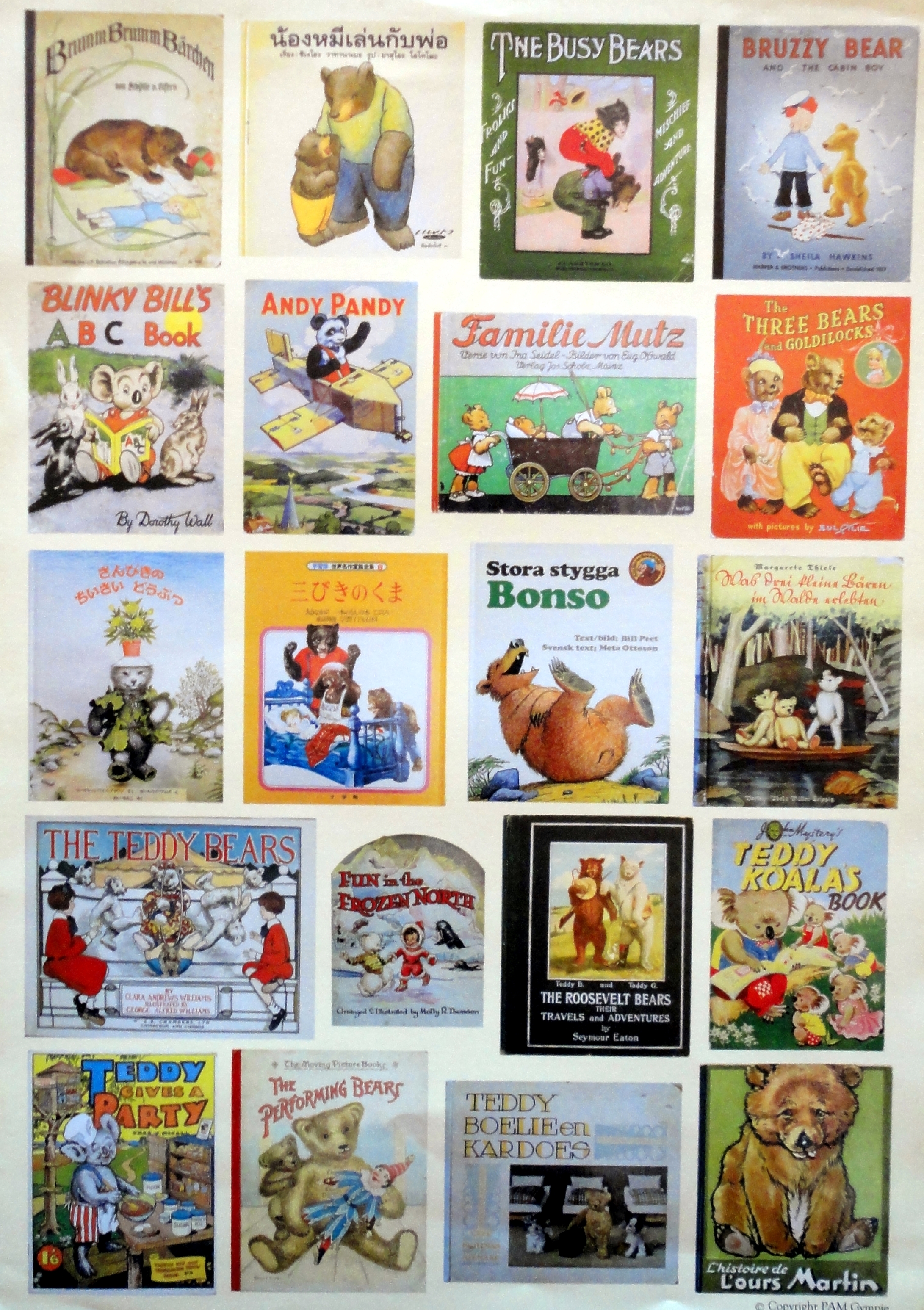
  A few Teddy Bear Books from around the world. Click on pic !

Teddy Bears are as simple as human emotions. Teddy Bear books with all their fantasies, tales and stories reflect this emotional significance. Read a Teddy Bear book or take a Teddy Bear into your arms, you will start smiling, it creates automatically a positive and relaxing mind.

  One of the rarest bear books existing.   Print date unknown, but printed before bears were called „Teddy Bears“, around 1900.

Since “Teddy’s” introduction in 1903 and “Teddy’s Books” in 1905, the world has embraced this cuddly, furry, lovable, durable and dependable friend and confidant. Today and in future, they are still and will be a predominant choice of friendly, loveable toys all over the world.

Teddy Bears on Paper.

Of course Teddy Bear books are very collectable. But also Teddy Bear Postcards, Teddy Bear Music Sheets, Teddy Bear Advertising and all kind of other ephemera. But this will be topic of another collecting post.

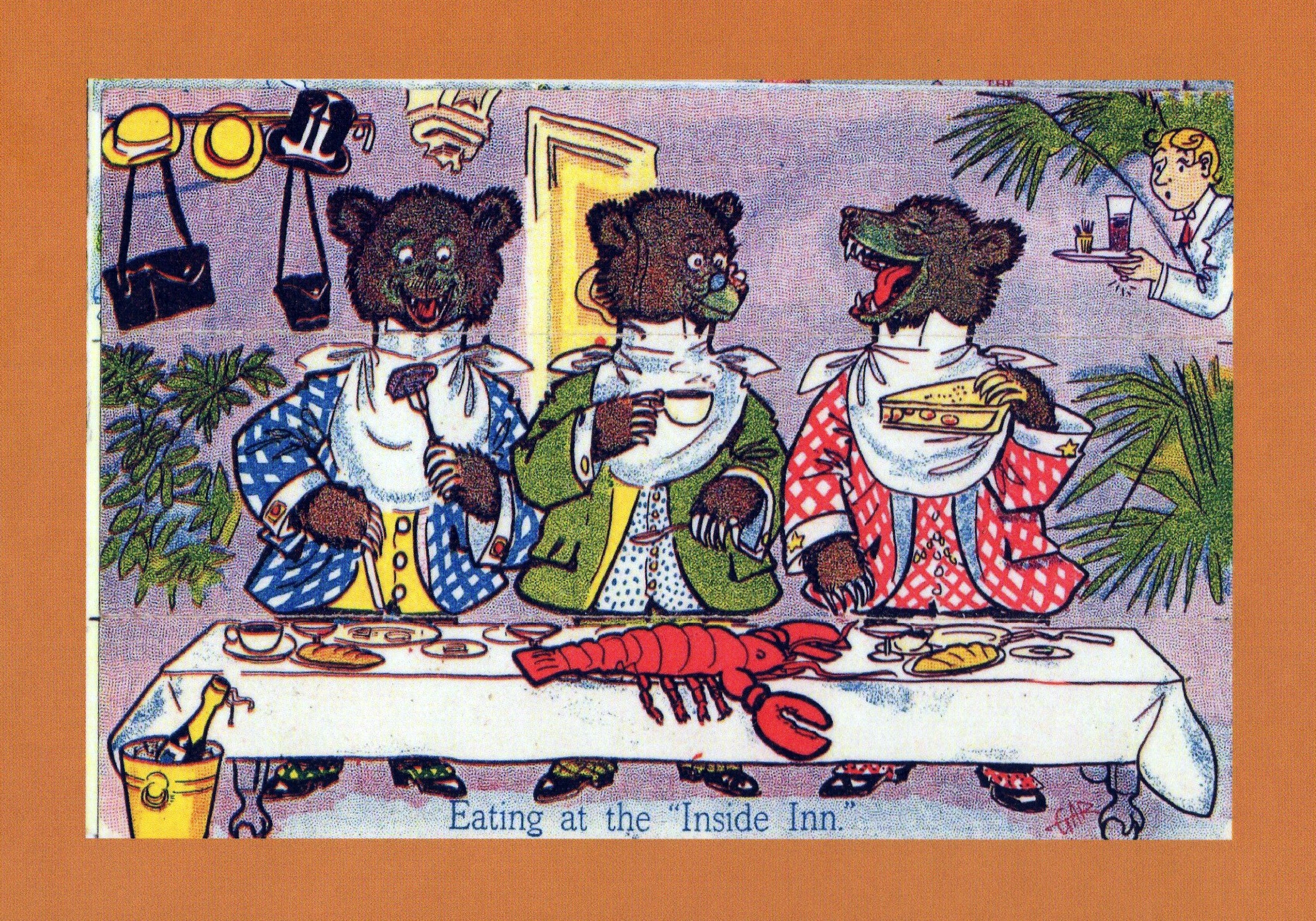
  Wonderful moving-postcard of bears.
  Music sheet, not that old, from 1984, but very collectable.
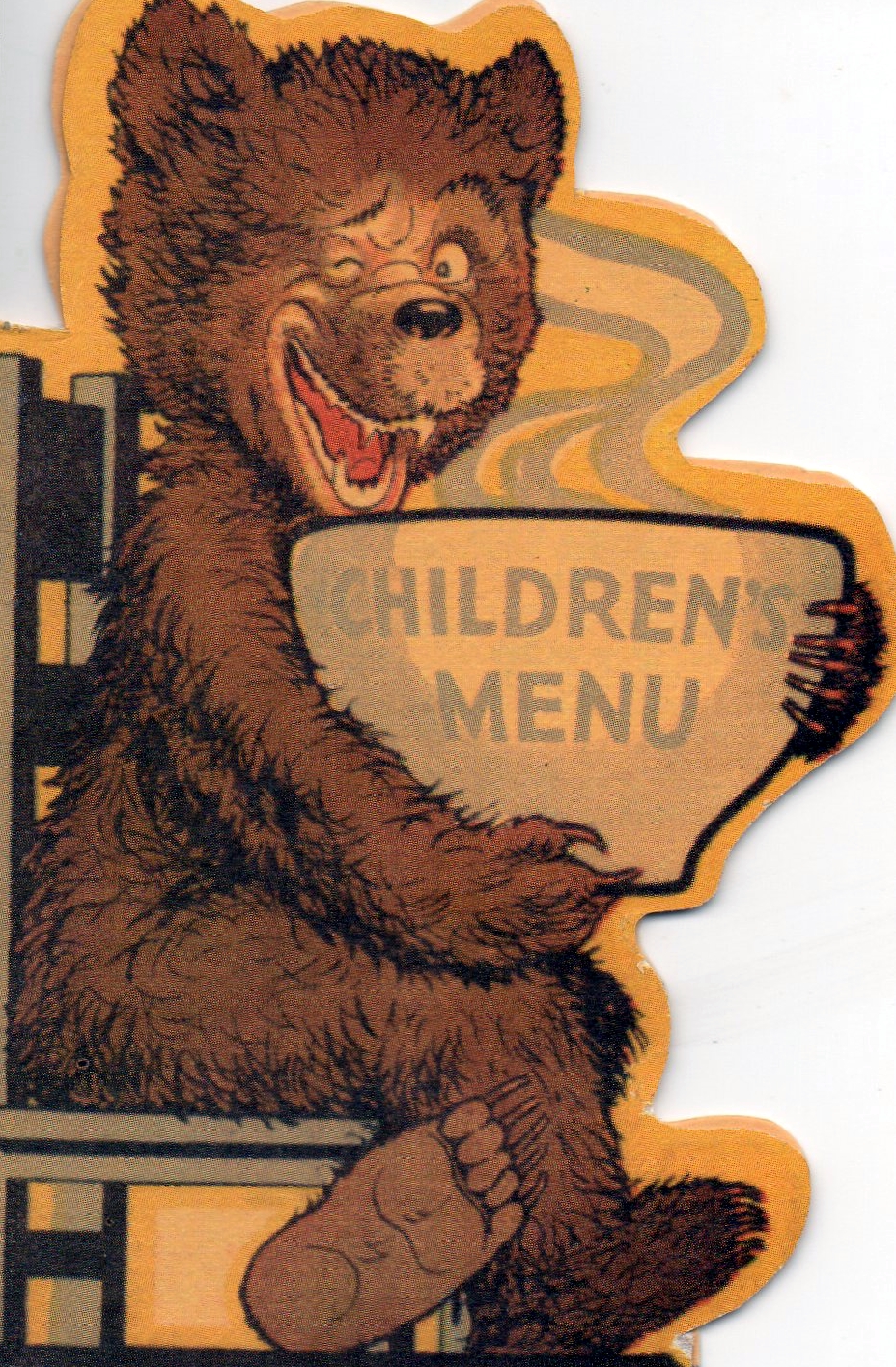
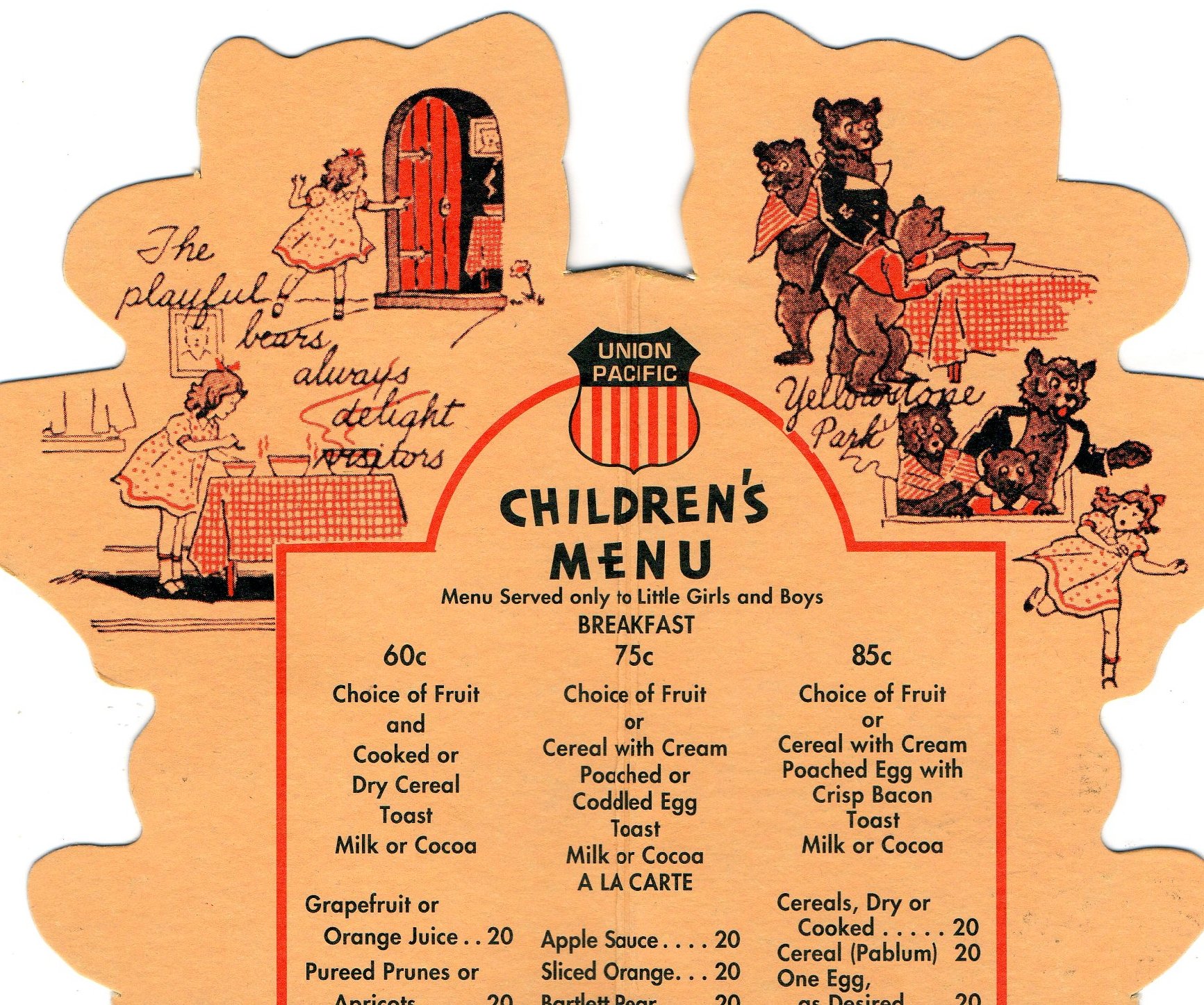
                               Childrens’s menu card , Union Pacific Rail Road to Yellowstone Park, about 1950’s, extremely rare.

If not stated otherwise, all pics or shown items are part of authors private collection. Most of those rare collectors items are up for sale in the next few month. You are welcome to ask questions, they won’t be made public if you wish. Stay tuned to further posts and have a look from time to time in category „For Sale“. Thanks for your interest.

Veröffentlicht unter Collecting, History | 2 Kommentare

Ombu and Street Art Uruguay

dsc02412

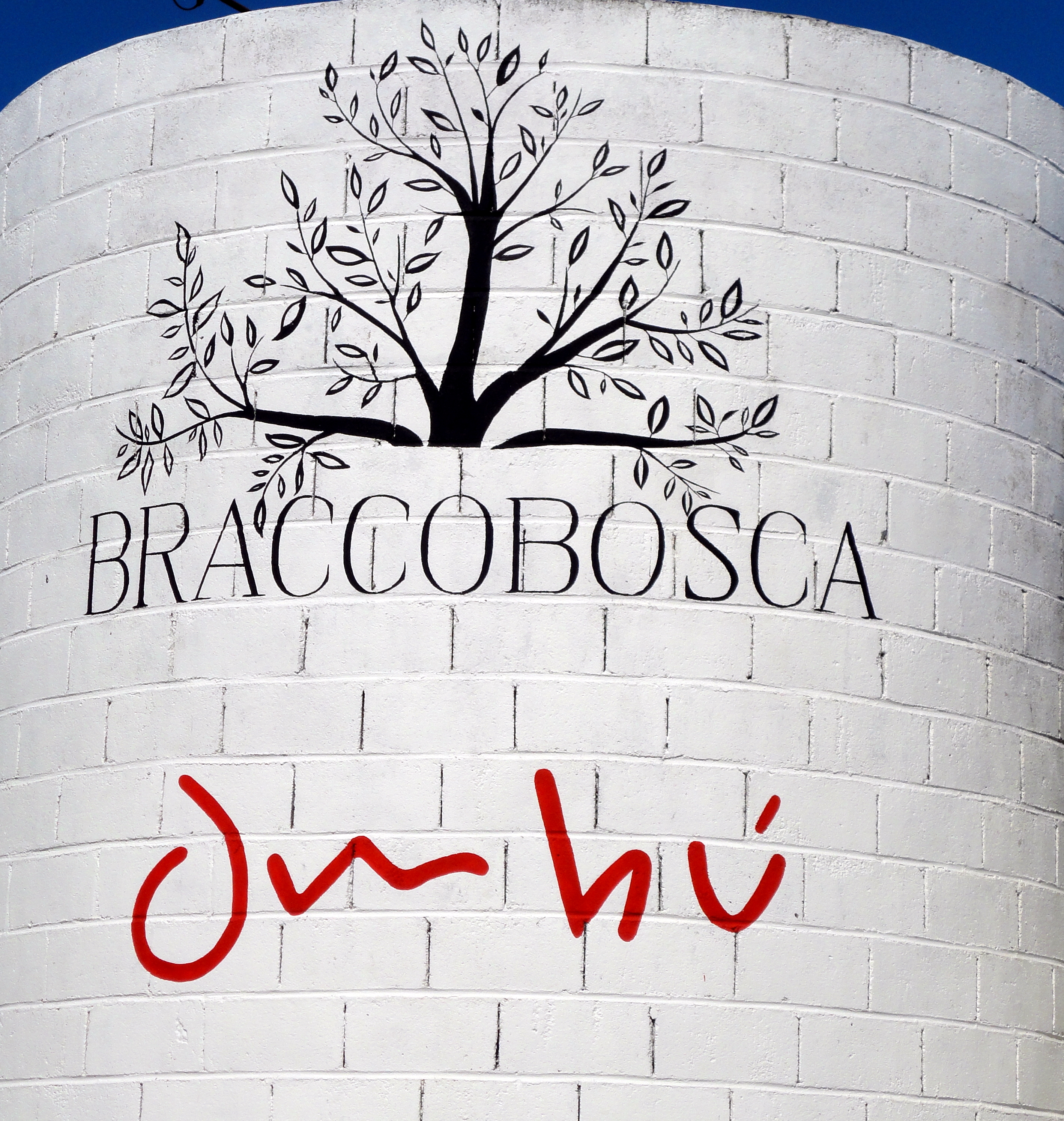
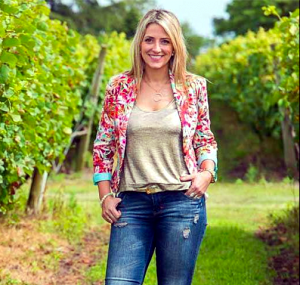
Visiting recently my „house winery“ Bracco-Bosca and chatting with the lovely owner, Fabiana Bracco, brought up the idea between us to write an update to two different articles I posted in the last year. The question is how do they fit together ?

1. Ombu, posted on March 30, 2016 – you’ll find it in category Atlantida.
2. Street Art Uruguay, posted on April 5, 2016 – you’ll find it in category Uruguay.

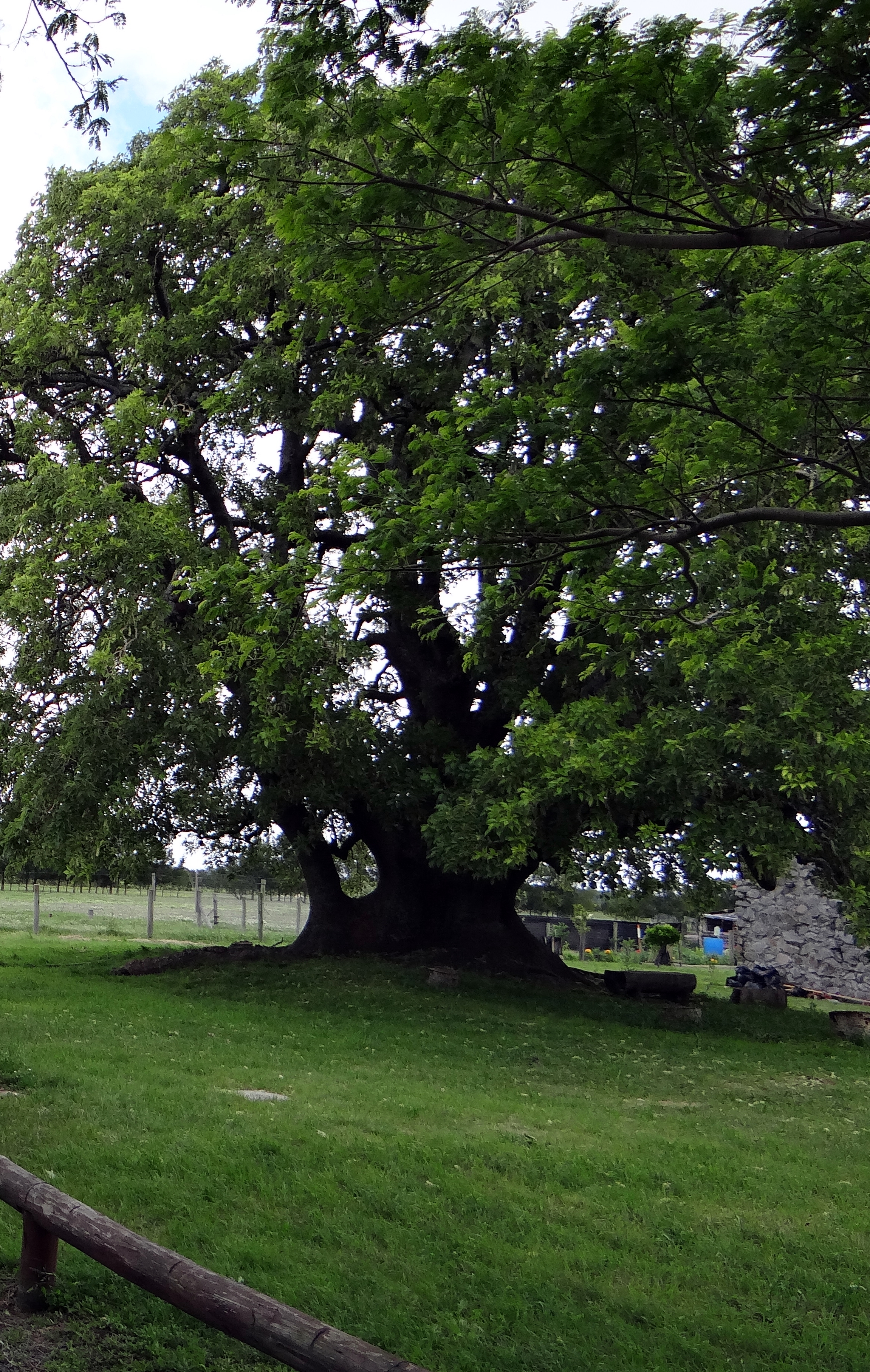
ombu-30-atlantida  Massive Ombu tree near Atlantida. Click to supersize.

The Ombu.

The Ombu is a native tree from Uruguay and Argentina. Its original name Umbu comes from Pampa language that means shadow, and it is well known for providing shelter from the sun and the rain to the men.
It generally grows isolated, but in Uruguay, near Rocha, one will find the biggest forest filled with Ombu, a unique one around the whole world due to its extension of 20 km.

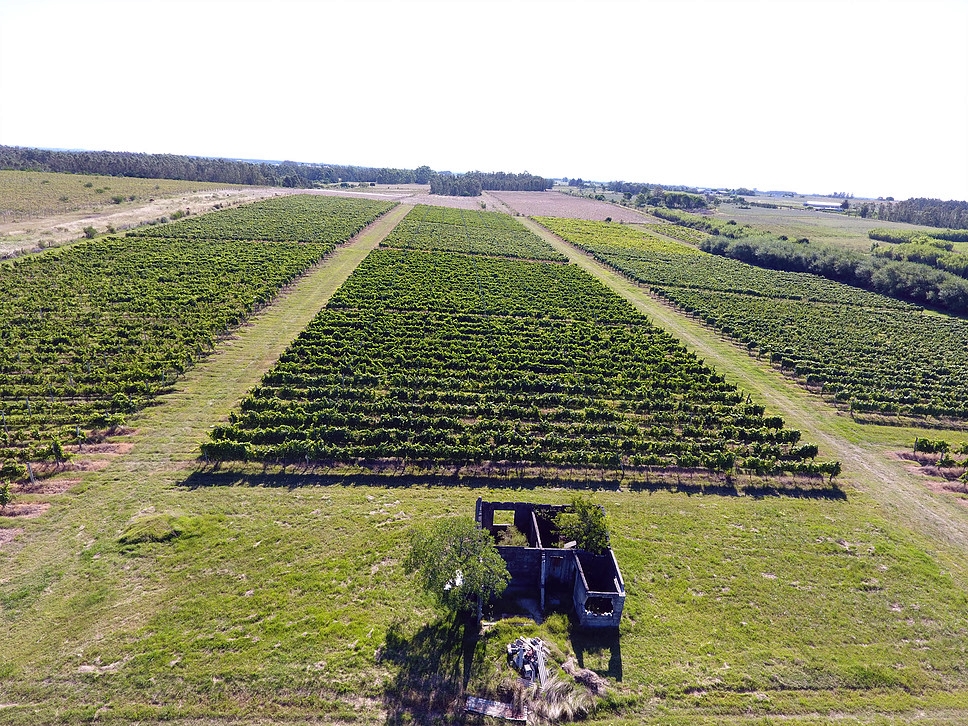
ombu-34  Bracco-Bosca Vinyards.

Bracco-Bosca.

Bracco-Bosca winery was founded in 2005 but its vineyards have been in the family for 5 generations. Originally from Piedmont, Italy, the family moved to Uruguay and established in Atlántida region to continue the wine tradition.
It was Darwin Bracco and Mirtha Bosca who decided to buy the land from the “Gallegos” (in Uruguay we call all the people from Spain “Gallegos”). This land was located in front of the main house where already vineyards existed, and was the base for construction of the much-desired winery.
In that exact place was an Ombú, standing alone and magnificent, just how they are. Family stories say that the “Gallegos” had a farm general store on the property and since they were afraid to put their savings in the bank they would hide it under the Ombu in a pot full of gold.
That’s why when someone would go shopping, the family would joke that they got the money from the Ombu.
This tree is very susceptible to lightning, so a couple years ago it was struck during a thunderstorm. So the family would joke that it served as a lightning rod due to all the metal hidden under the tree.
A couple of years later we have seen this tree coming back to life bringing us an important emotional and personal meaning.
Today more than ever we are convinced that the real treasure is our land and wines, which throughout a wise task of bottling nature, lets us share it with you.
With Love
Fabiana Bracco

ombu-31    Fabiana Bracco.

Street Art Uruguay at Bracco-Bosca.

The history of Bracco-Bosca, a small winery located north-west of Atlantida, Uruguay, had a turnaround since Fabiana Bracco took over. After the death of her father she decided to direct the business towards the elaboration of fine wine, with the intention of opening markets abroad, even overseas. I already tested their service and prices last Christmas in Germany. It was a great, trustworthy and successful transaction.

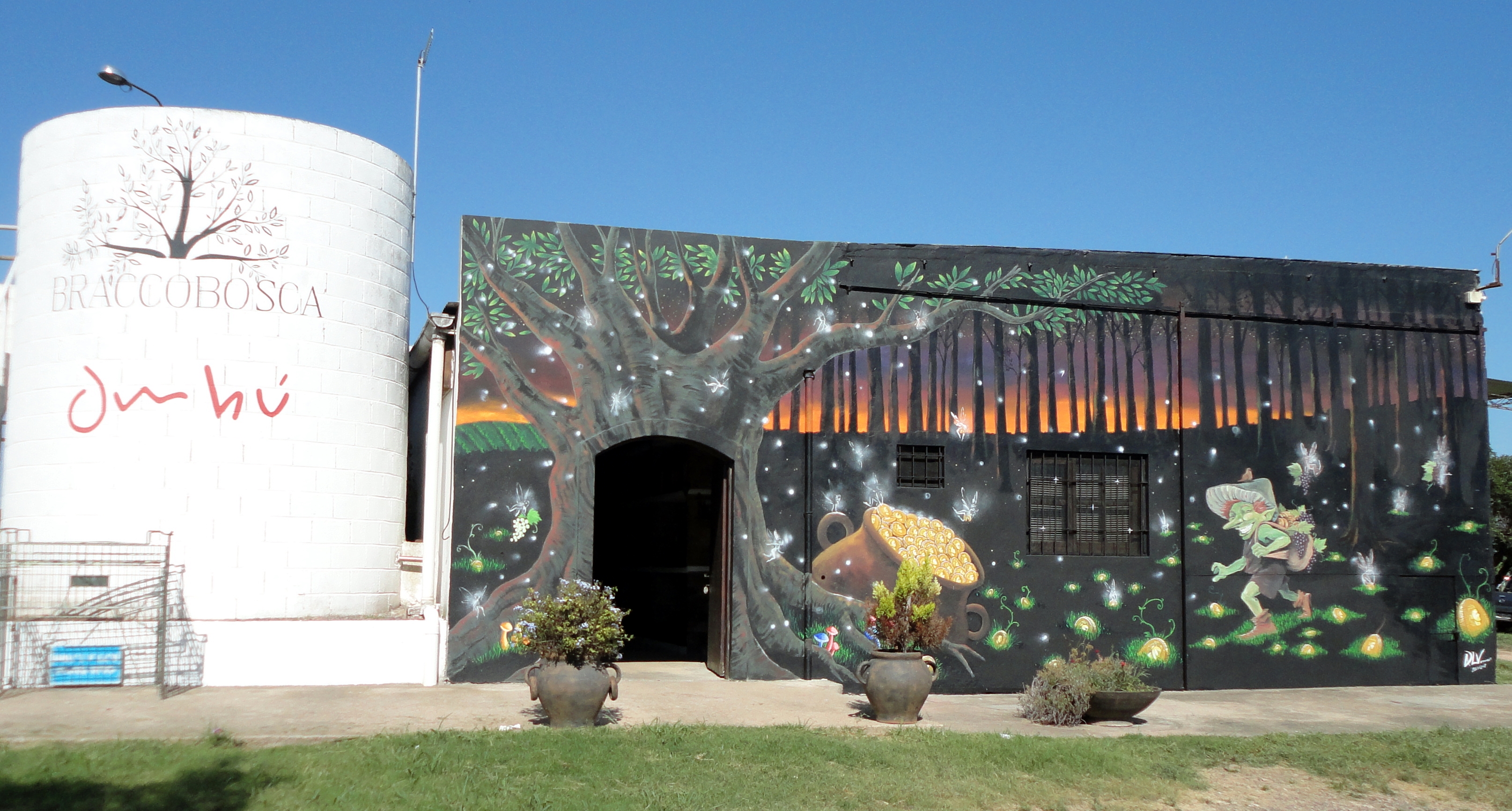
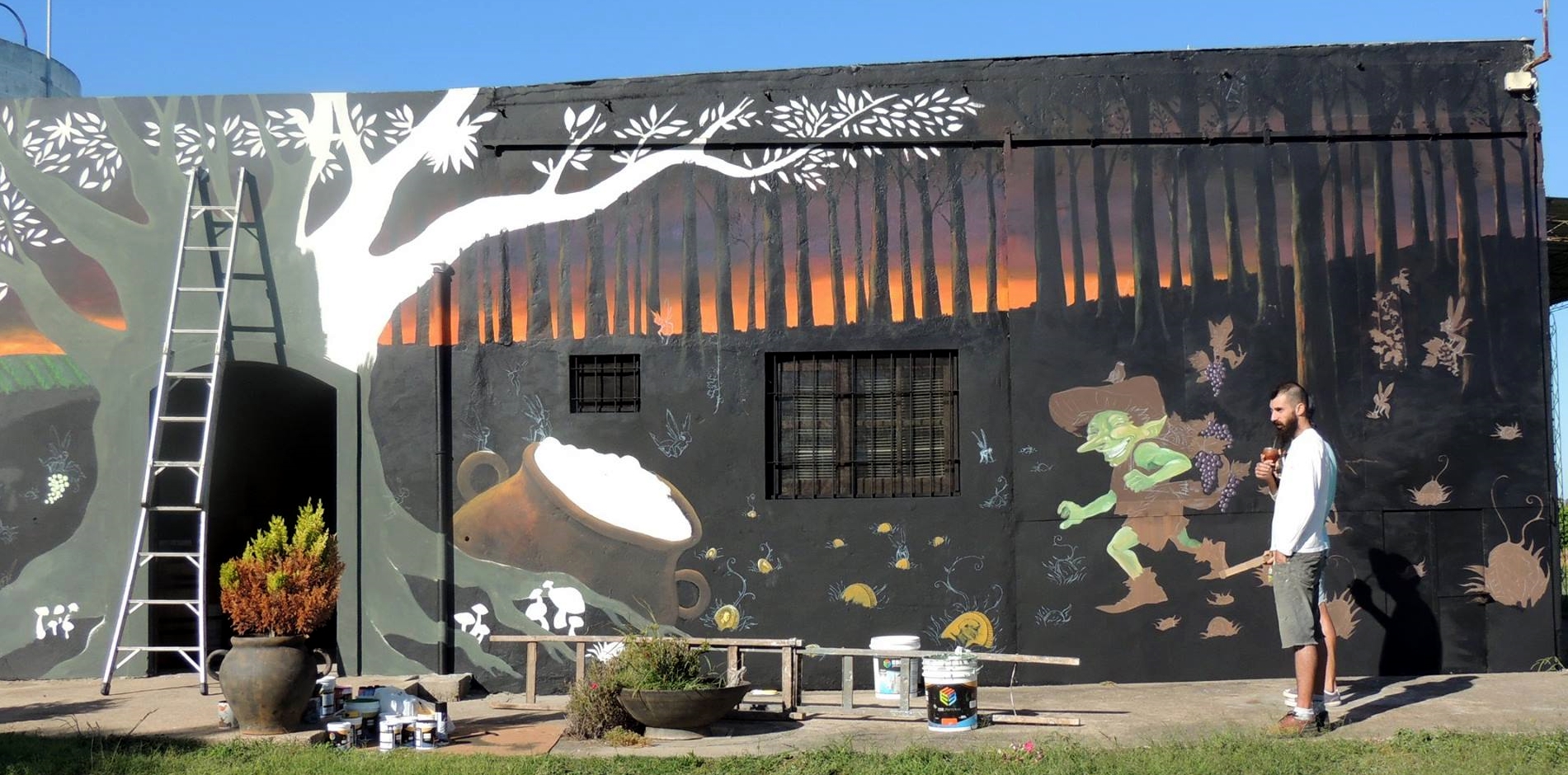
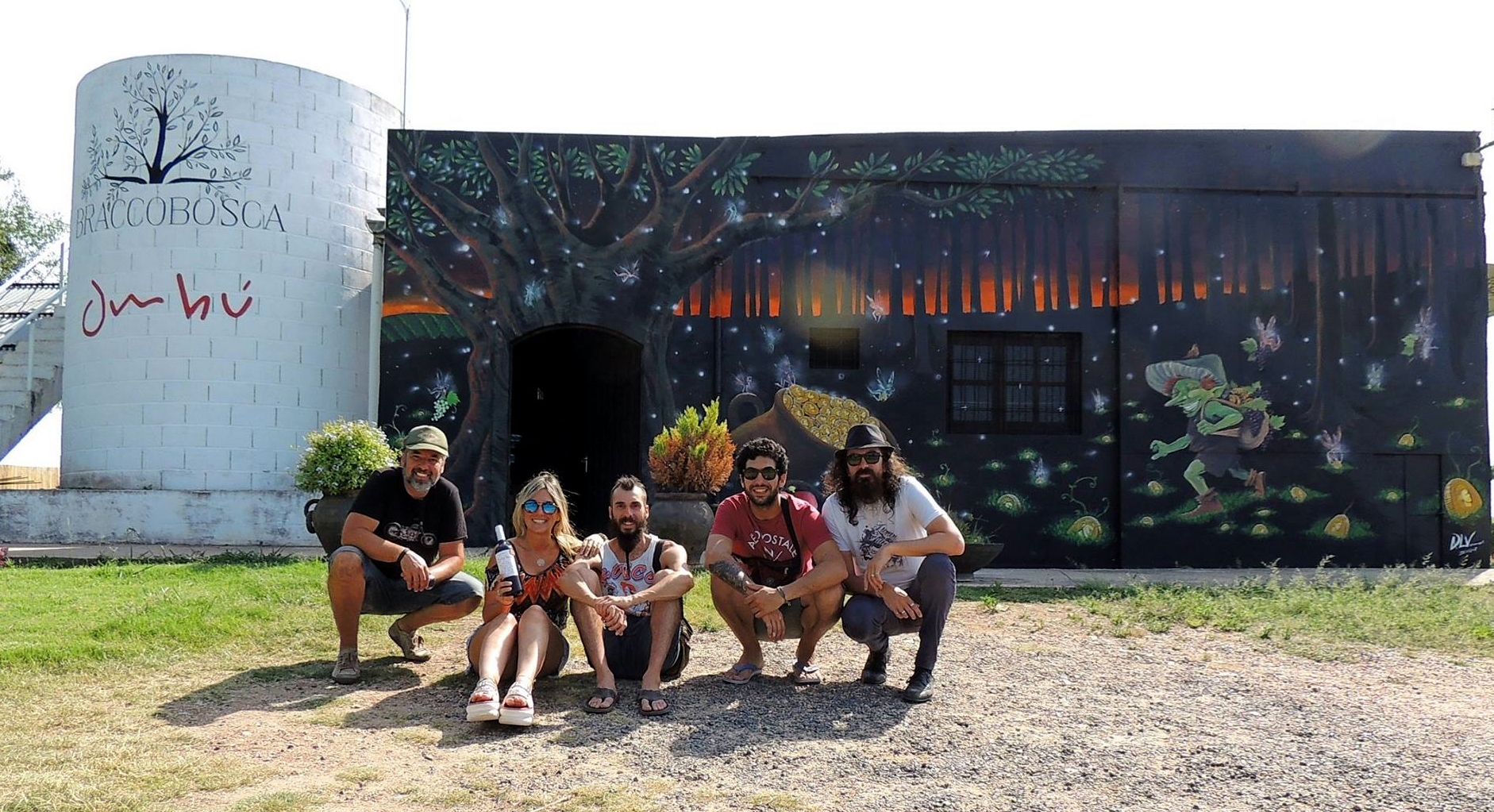
dsc02411a  What a great idea, to decorate the winery as a street art object, with DLV professionals. Well worth a visit and a wine tasting. Qualities and prices are excellent.

Today, shortly after beginning a new harvest of the new stage and with five countries to which they sell the wines, the winery faces new challenges related to the domestic market and wine tourism. A renovation and redecoration plan was born.

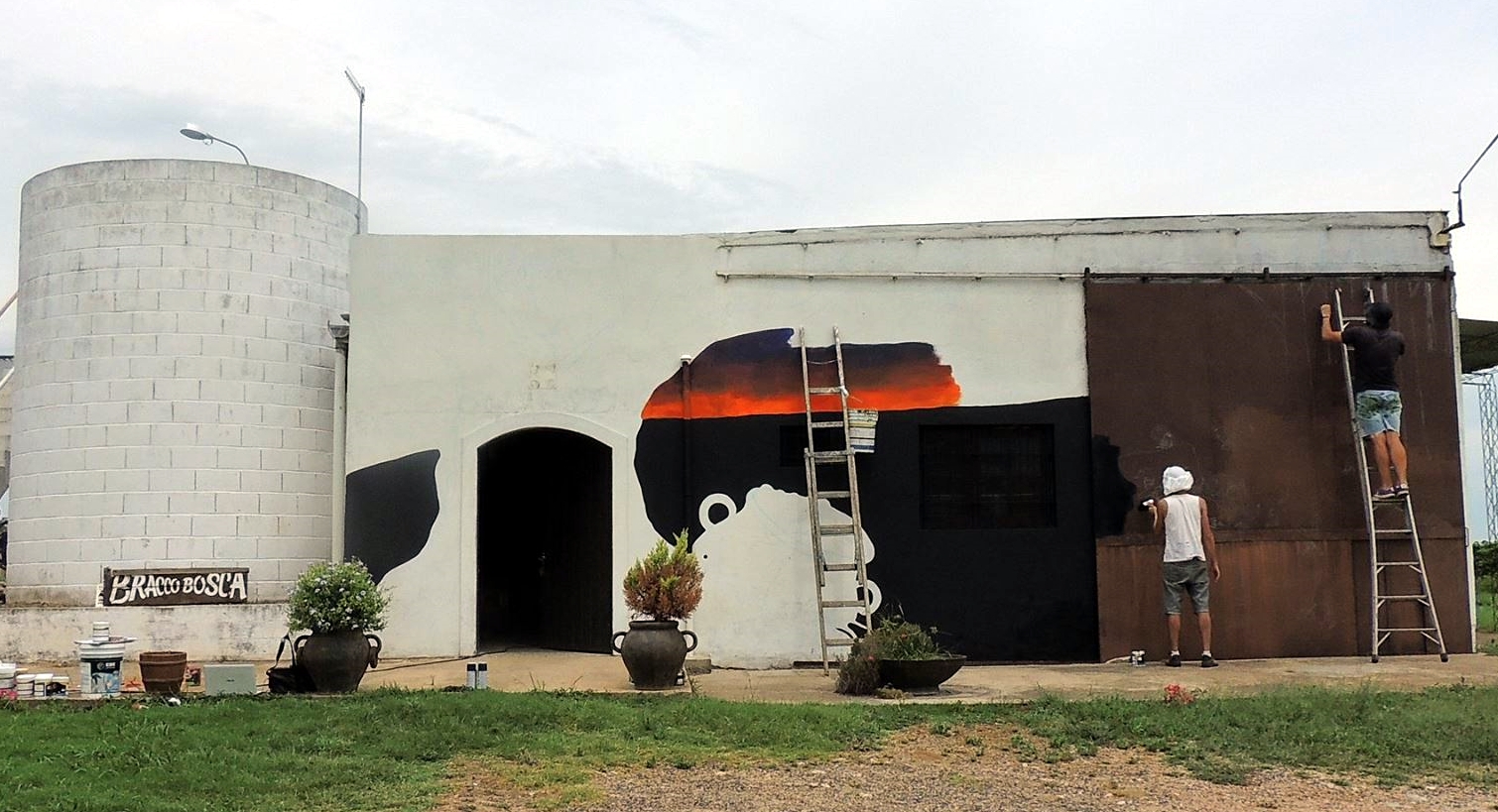
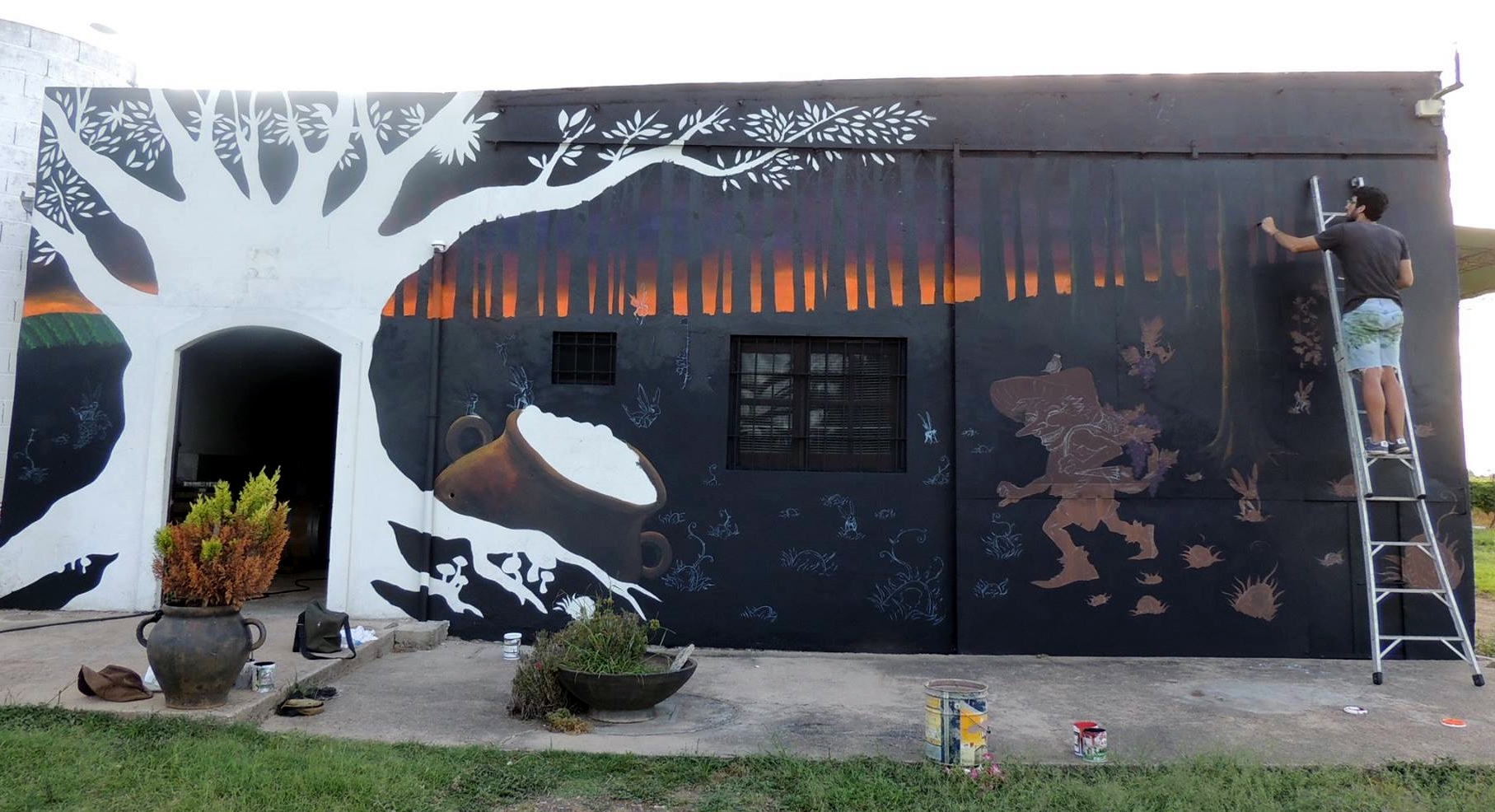
ombu-37a   ombu-37c

ombu-37e  ombu-37h That’s how the work of art took shape, courtesy DLV, Fabiana with the DLV team. Click on pics to size up.

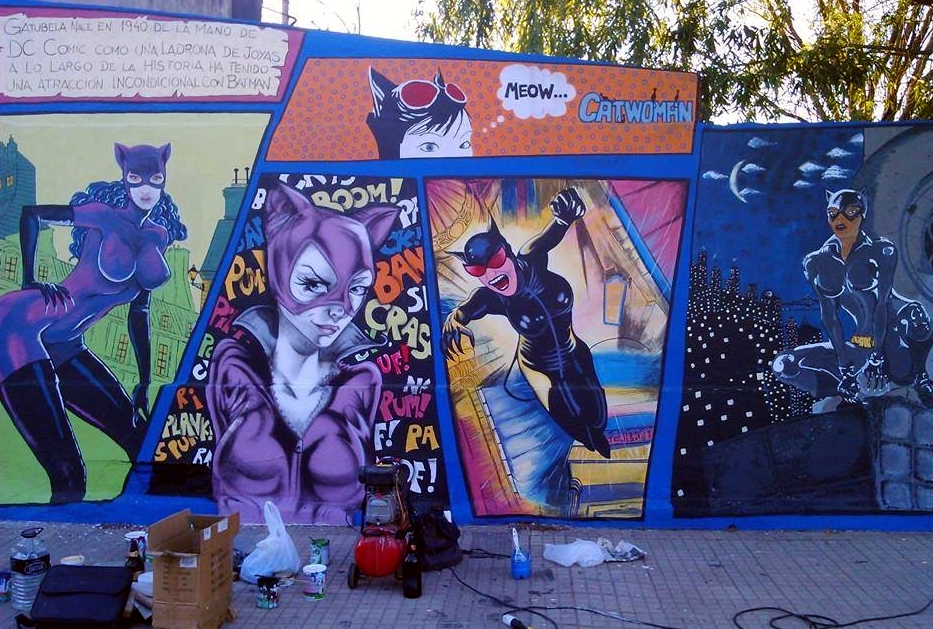
Luis Mendez, one of the members of Delavuelta Muros, commented the artwork once as followed: „We caught the legend of the Ombu“. When I saw the painting at the winery the first time, I recognized the signature „DLV“. At home I looked in my files and found the art of DLV in my first „Street Art Uruguay“ post. Wonderful examples of art I had seen in Carmelo, but at that time I didn’t know who they were.

img169                            ombu-38a-piedras-y-cagancha-carmelo                  Beautiful business card and another art object of DLV.  The DLV team: Juan Purtscher, Rodrigo Bacigalupe, Javier Gadea and Luis Mendez.

Fabiana believes that the work has a contribution that goes beyond the winery, because it beautifies the view of those who pass through the place even if they do not enter the farm. And she is right. The company invests in refurbishing the space of the winery, in its production plant, tasting room and vineyard, to start receiving tourists.

The New Ombu Wine.

During the last 2 years the winery established a fine collection of Ombu wines, like:

Ombu Tannat
Ombu Reserve Tannat
Ombu Reserve Syrah
Ombu Reserve Petit Verdot
Ombu Tannat Syrah Petit Verdot
Ombu Sauvignon Blanc

The newest baby is concurrently the crown of the range.

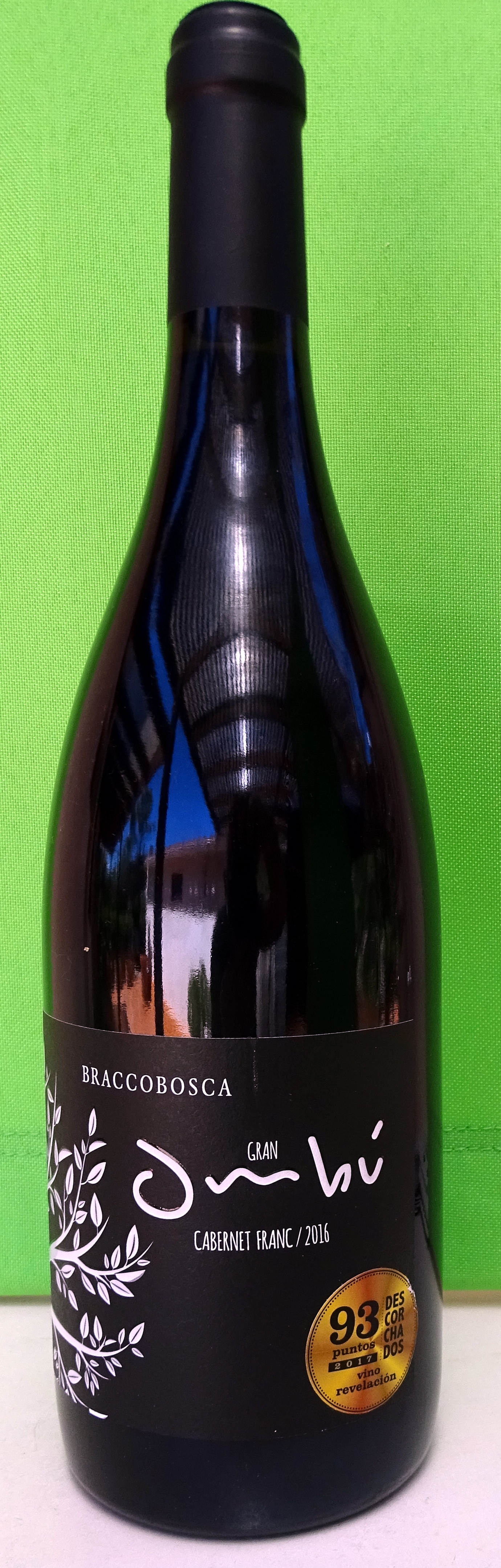
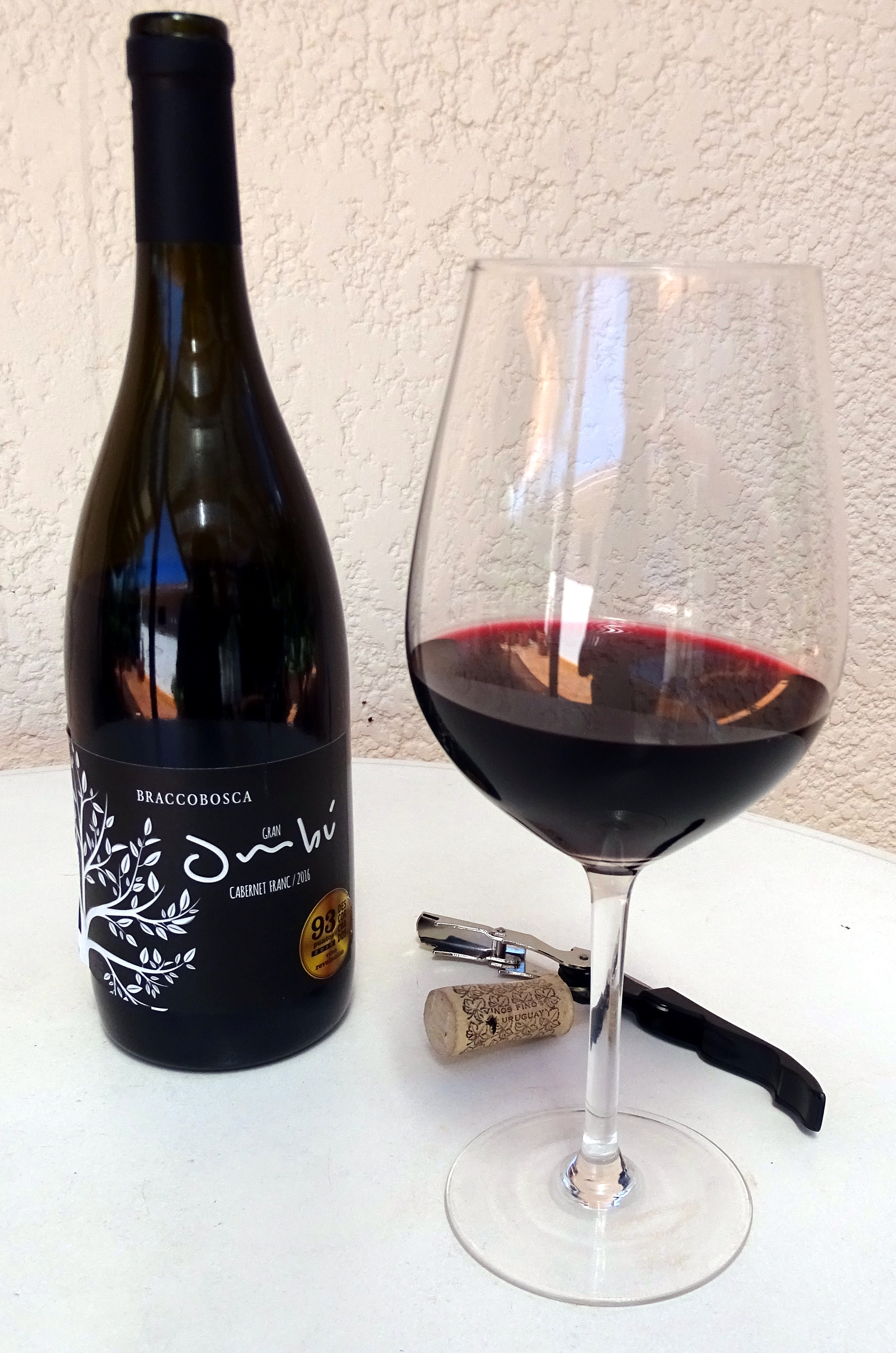
dsc00500 dsc00501  Recent Gold Medal with 93 points out of 95 . WOW !

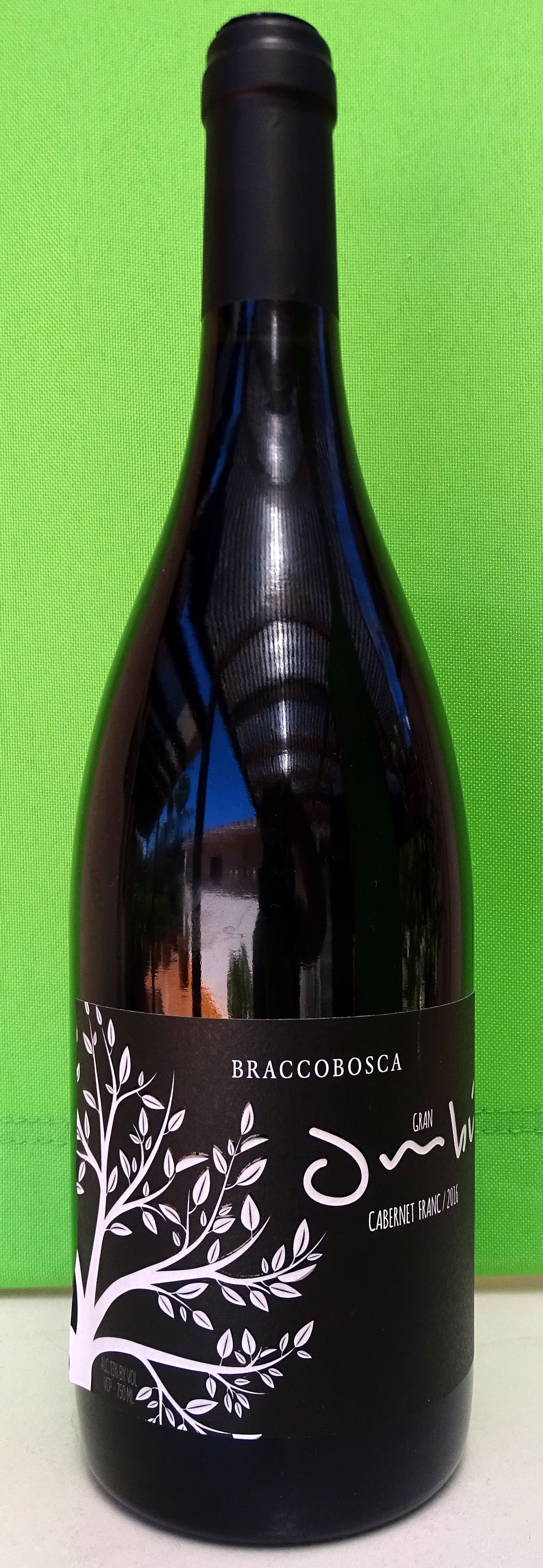
Gran Ombu Cabernet Franc.

I had the chance to taste this fine wine. First impression is when you put your nose into the glass, typical for Cabernet Franc, a soft earthy and black cherry aroma.

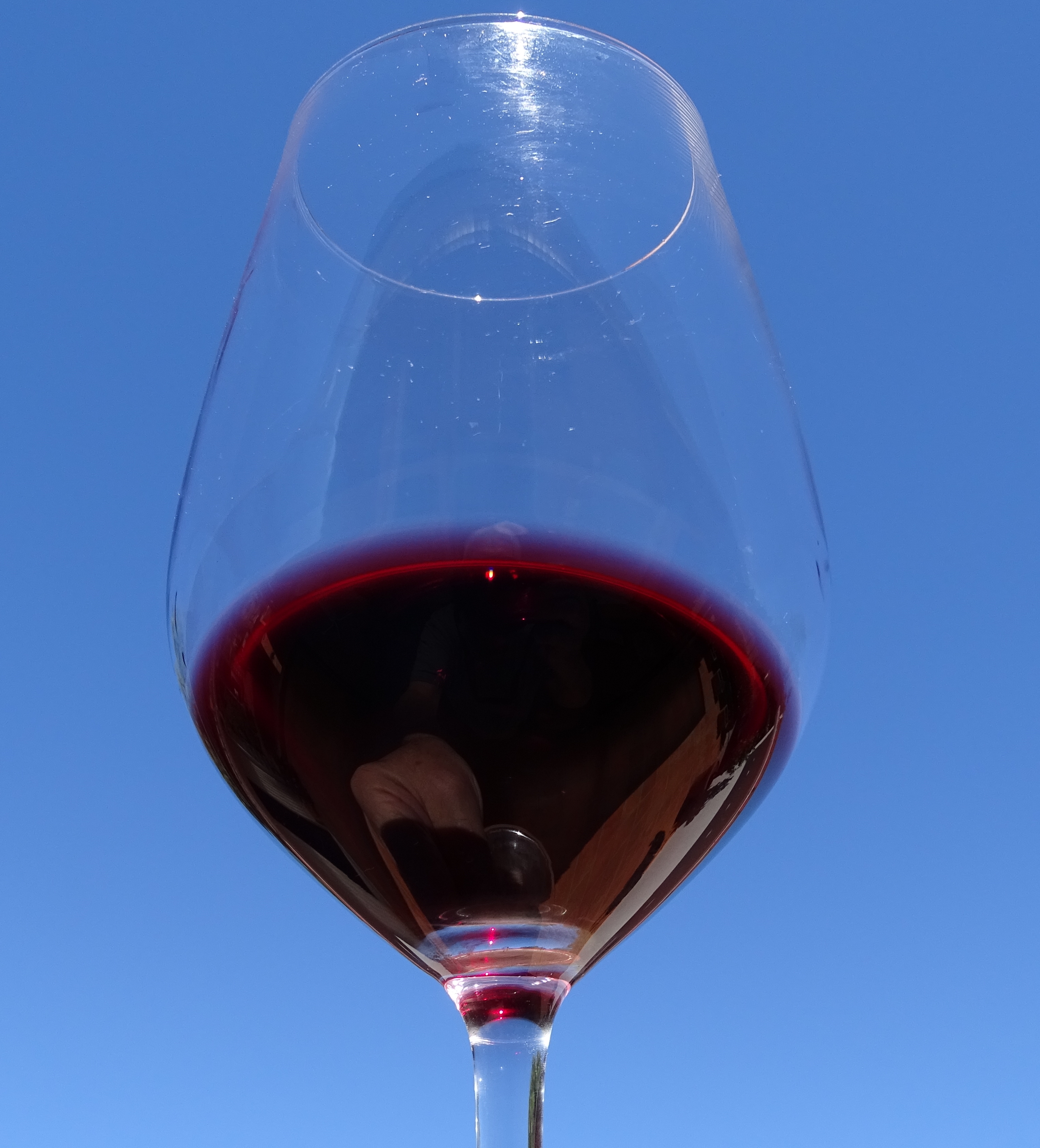
The color is deep ruby with a beautiful brilliance.

dsc00507a  Enjoy the color of the Gran Ombu Cabernet Franc.

On the palate a taste of dark, heavy fruit with a long and elegant finish. Every sip is nice on the tongue, not overwhelming never overpowering.

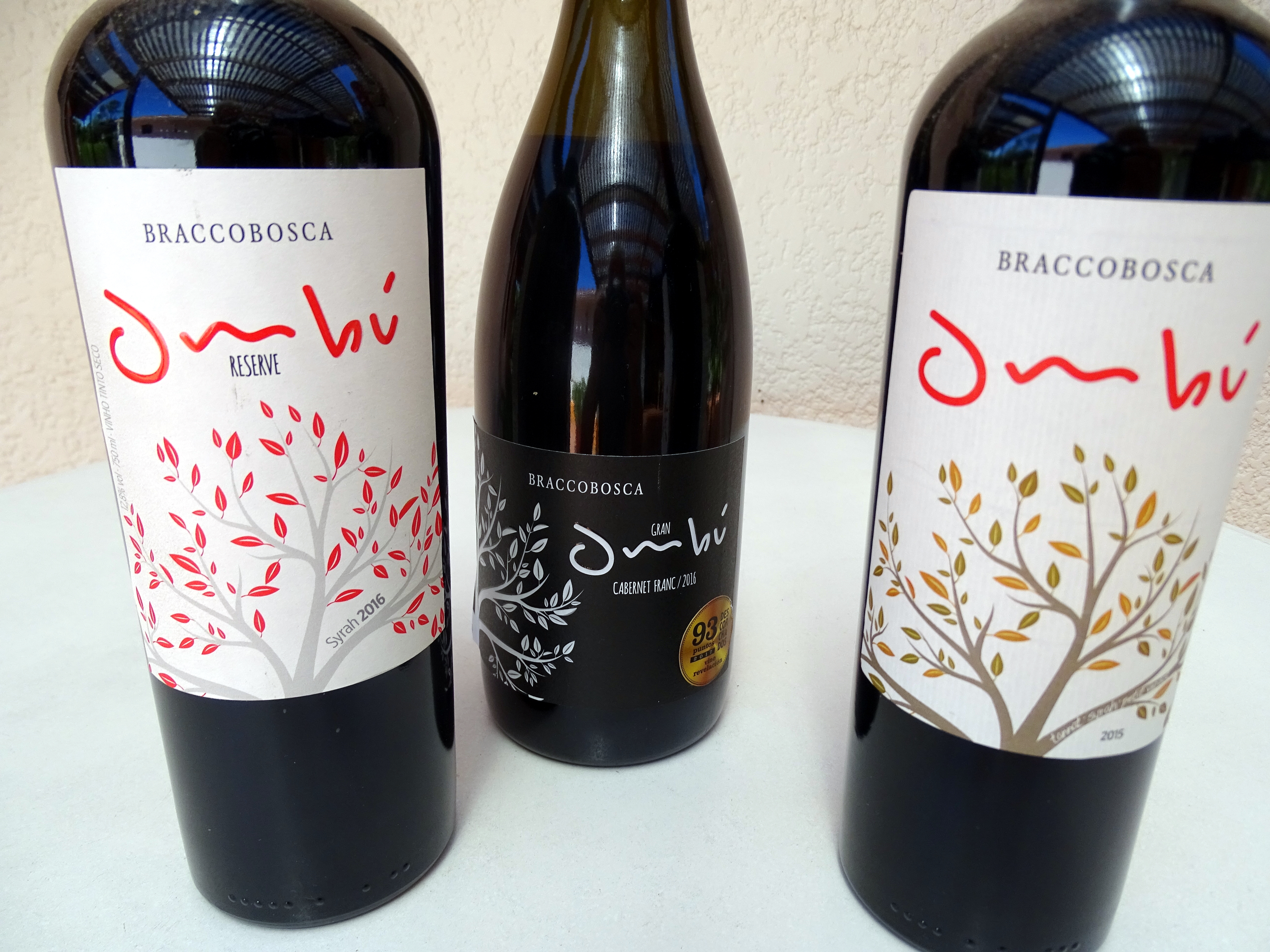
dsc00511  Three different „Ombu’s“ – all are superb !

I like the intense improvement of the alcohol content from 12,5 of the 2015 Tannat-Syrah over 12,8 of the 2016 Syrah Reserve to the final 13,0 of the 2016 Cabernet Franc.

dsc00502  Nevertheless the allover taste is soft and smooth, a delight and a truly great wine. Why not having a bottle or two at night ? Drink along and enjoy !


Veröffentlicht unter Atlantida, Uruguay | Verschlagwortet mit | 2 Kommentare

Beef Stroganov – 2

x-stroganov-6a-german

Beef Stroganoff.

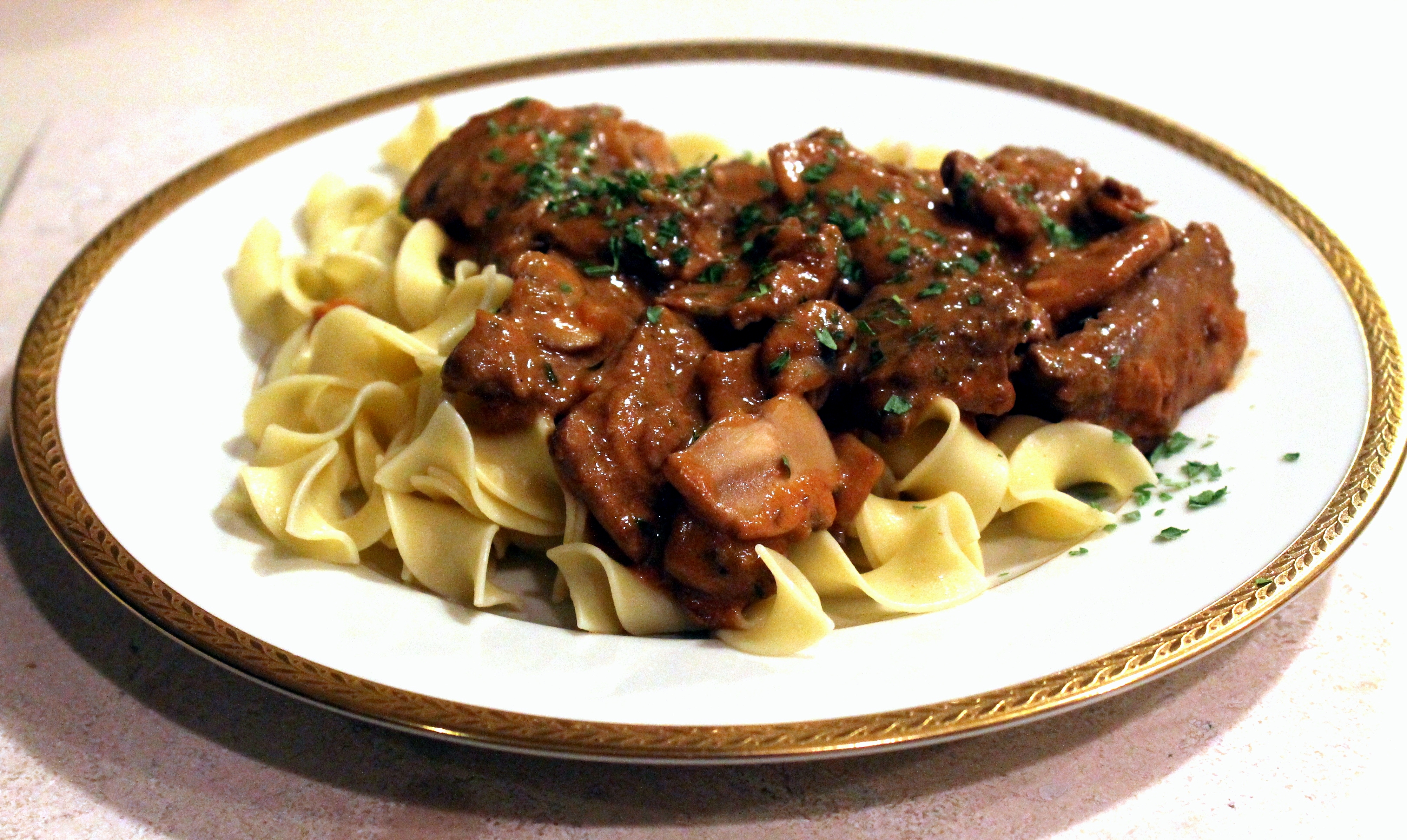
The first recipe for Beef Stroganoff appeared, in an English language cookbook, in 1932, but its popularity didn’t blossom until after World War II.

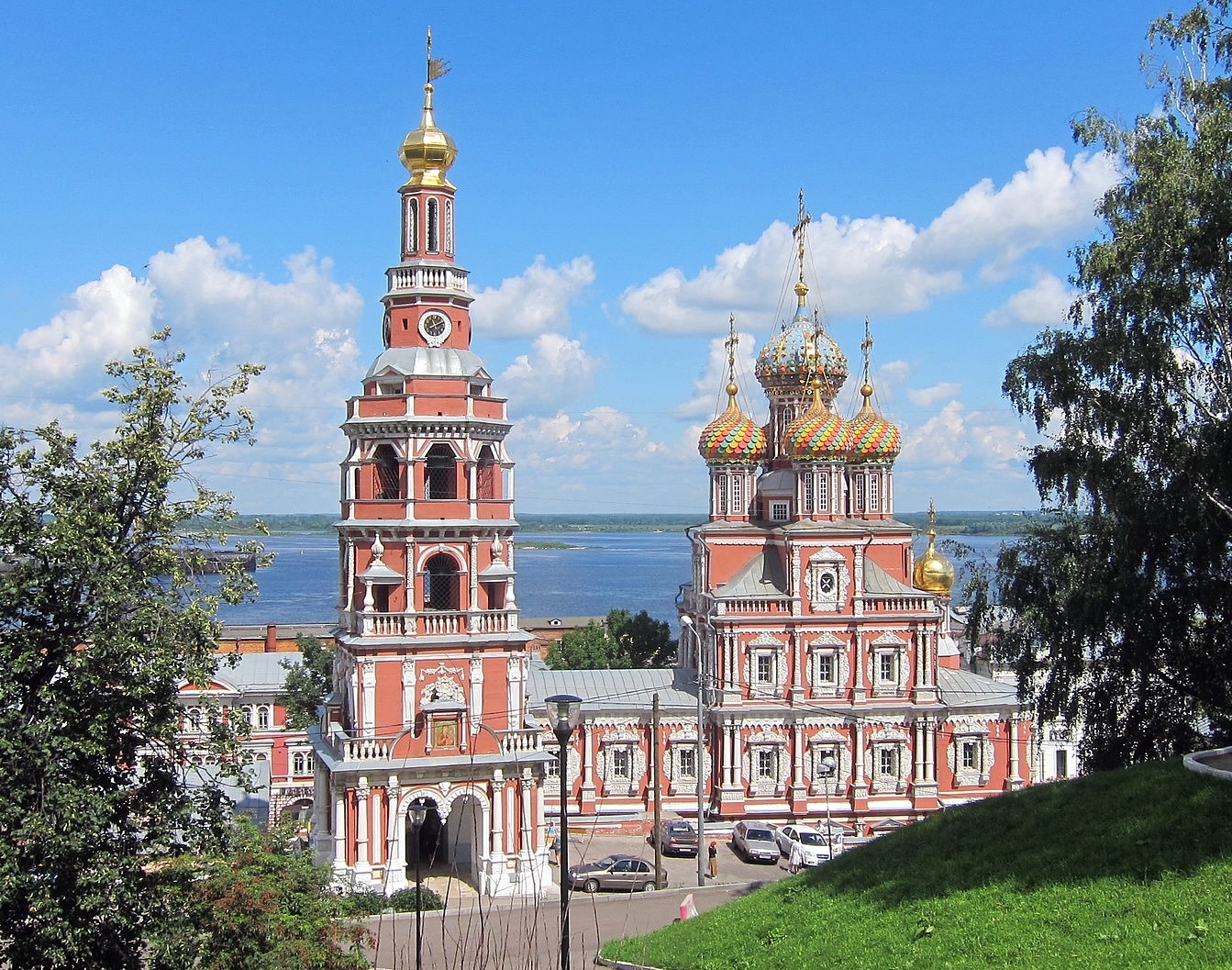
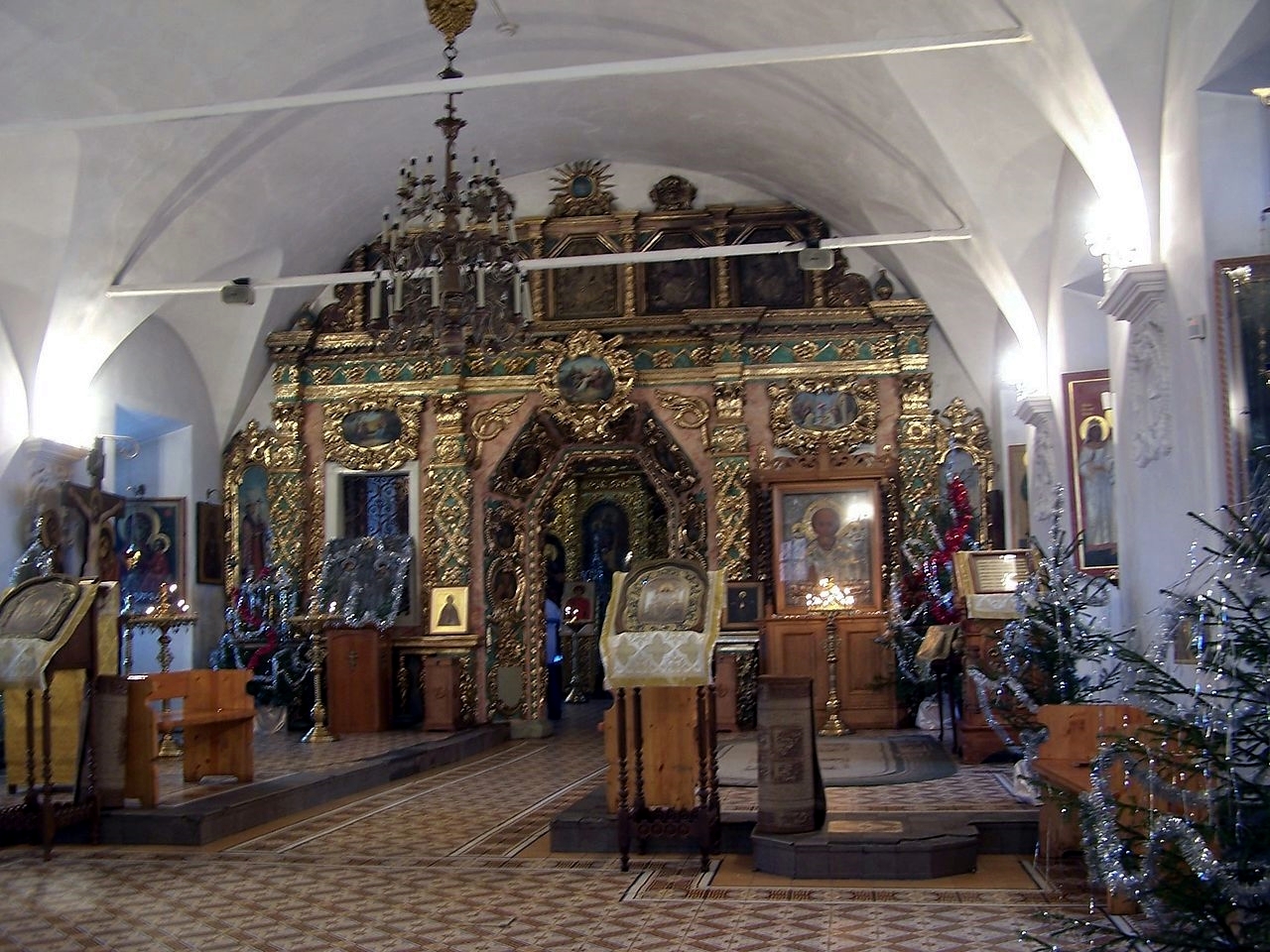
stroganov-church-3a   stroganov-church-2       The Baroque Church of the Synaxis of the Mother of God in Nizhny Novgorod underwritten by the Stroganovs in 1697. Wickimedia.

Construction of the Nativity (Stroganovskaya) Church, a fine sample of Russian baroque, was funded by the Stroganovs, a prominent Russian merchant family. It is one of the most beautiful religious buildings of the 18th century, particularly notable for the splendor of its white intaglio. The interior of the church is in a very good condition, so if you are interested in visiting an Orthodox church, this one is an excellent choice.

Traditional Beef Stroganoff.

After the subsequent fall of the Russian aristocracy, the dish traveled to China, where it was popular in restaurants and hotels prior to World War II. Immigrants and American military personnel stationed abroad brought the dish back to the United States, where its popularity grew and peaked during the 1950s, ironic considering this was also the height of the Cold War.

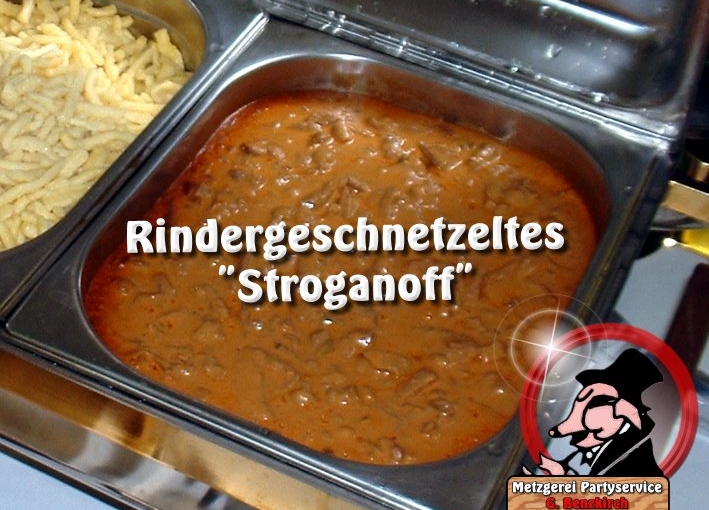
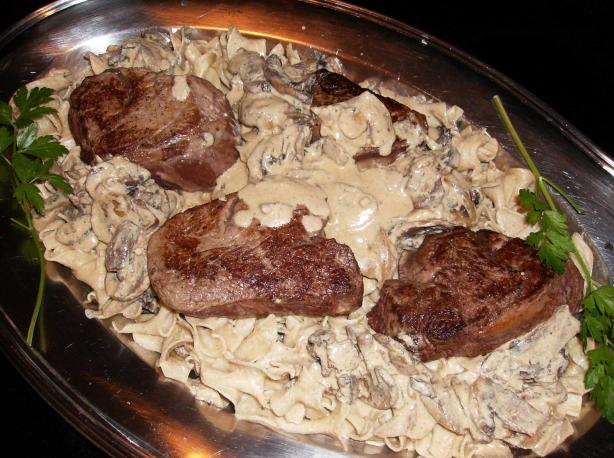
x-beef-stroganov-20j  Two years ago I had this fantastic Stroganov with Spaetzle in a  restaurant in Frankfort, Germany. Pic Benzkirch. You should have seen what that shop had to offer – just amazing !!

This is also when the once elegant dish became troubled. High costs of meat during the war sent cooks in search of cheaper, lesser quality cuts. American home cooks looking for shortcuts turned to the burgeoning processed food industry, leading to recipes for Beef Stroganov that included ingredients like cream of mushroom soup and ketchup. Anna Karenina would not have been happy.

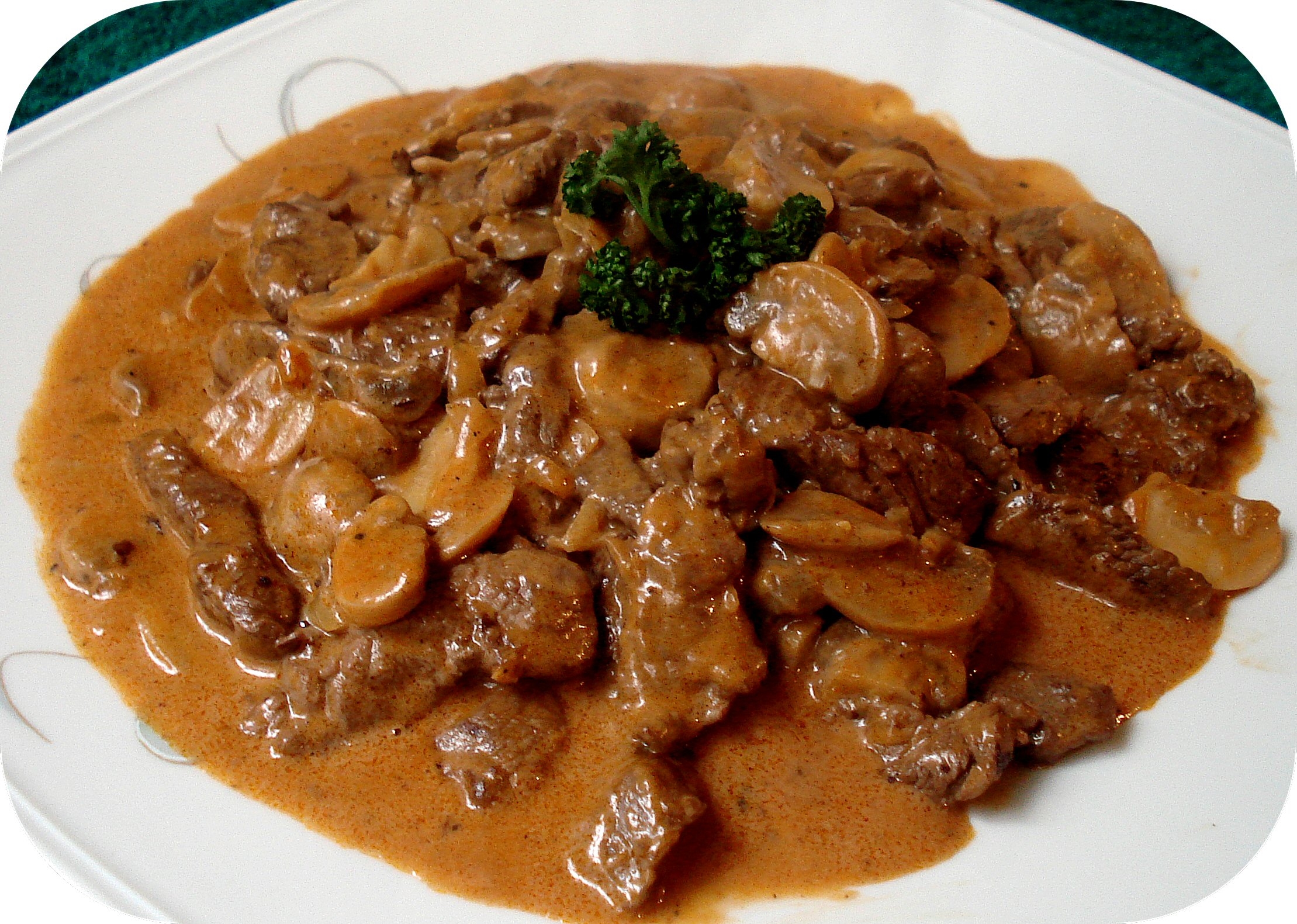
x-beef-stroganov-21     How mouthwatering is this one ?

In Mastering the Art of French Cooking,  Julia Child describes „Saute de Boeuf a la Parisienne“ as a French version of Beef Stroganov.  Although her book is notorious for its hours-long recipes, this one is surprisingly quick—she claims it can be done in 30 minutes. And it uses just 12 ingredients, including salt and pepper. I used the main down here.

For my dish, I wanted to combine Stroganov with some potatoes and we decided for Roesti instead noodles. I am grateful to sources like Stroganov.Net,  Jennifer Eremeeva and Wikipedia for the historical information presented here.

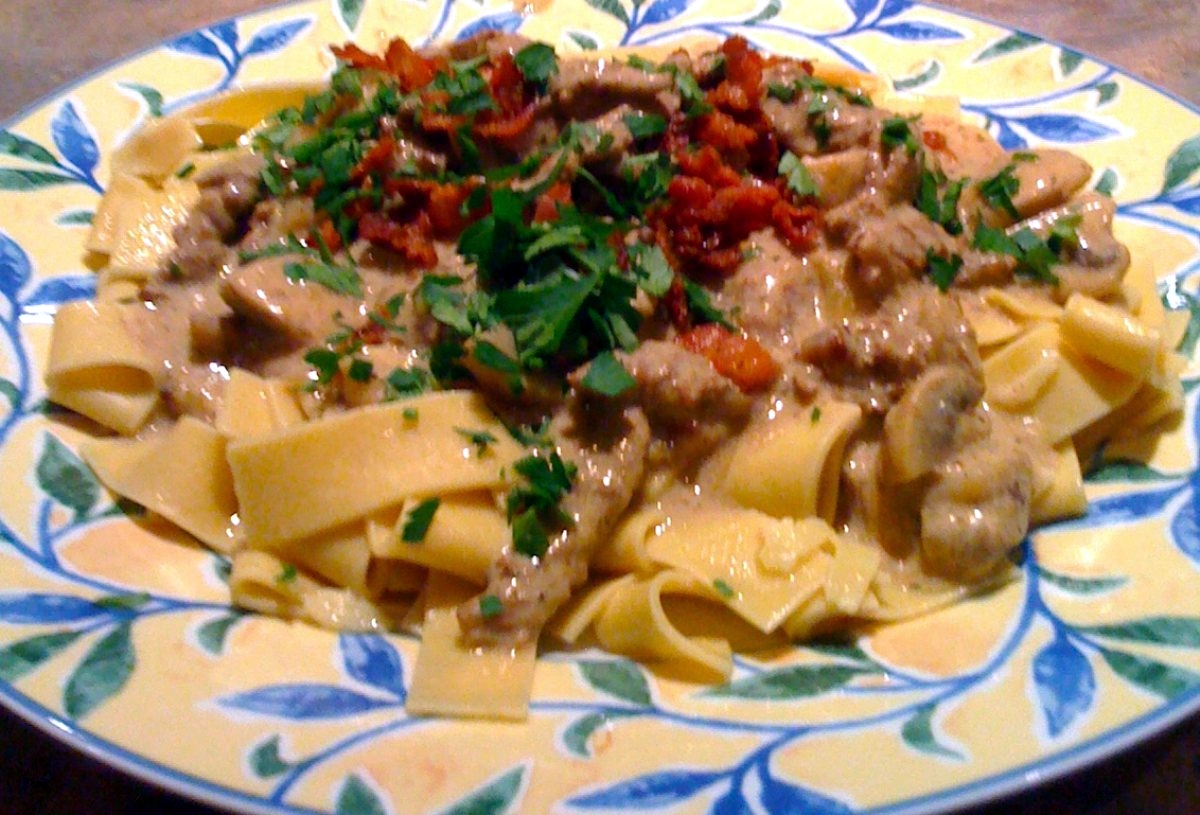
beef-stroganov-20b  Beef Stroganov on homemade Tagliatelle.

The recipes.

Ingredients.

2 tablespoons unsalted butter
1 kg (2 lb) filet steak (filet de lomo, as better the meat is the better this dish is), cut into strips 4cm (2 inches) long by 1cm (½ inch) wide.
500 g (16 oz) sliced button mushrooms
salt to season
3 small shallots, minced (about ¼ cup)
1/3 cup Madeira or other sweet/heavy red wine
3 cups beef broth
2 teaspoons arrowroot powder mixed with 2 teaspoons water, or other starch
freshly ground black pepper to season
½ cup sour cream or creme fresh
3 tablespoons chopped parsley for garnish

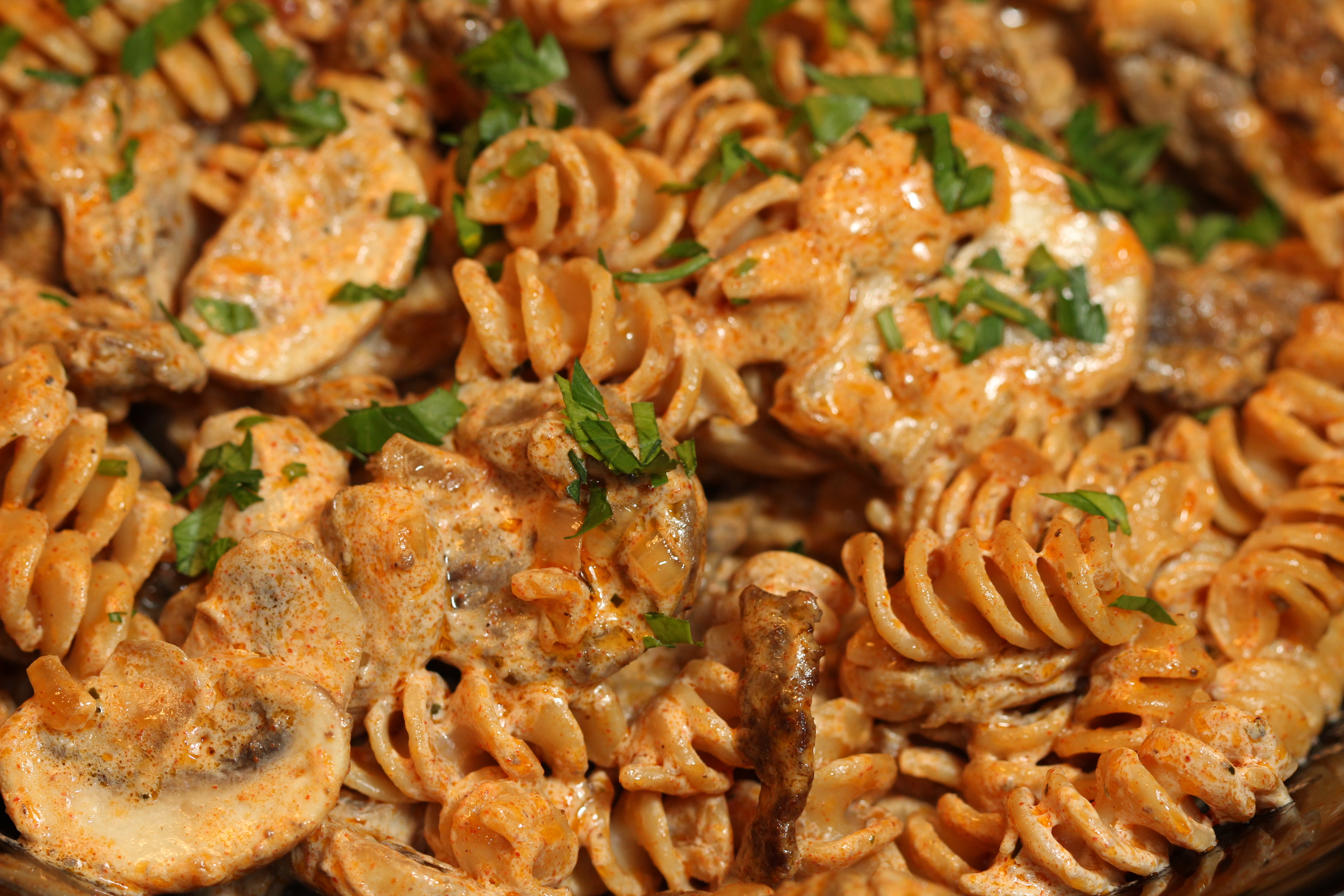
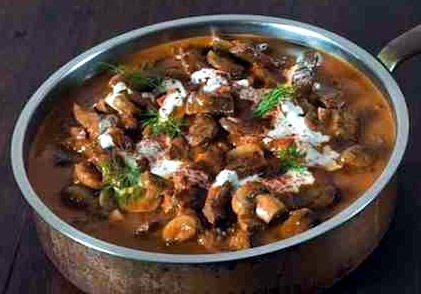
beef-stroganow-14  This is Chicken Stroganov mixed with Spirali pasta and sprinkled with lemon juice. I love it when the cream is slightly separating because of the juice on it.

How to do.

Heat 1 tbsp. butter in a large skillet over medium-high heat. Sear beef in batches 2-3 minutes per side, turning once, about 4-6 minutes total. Repeat until all the meat is browned. Don’t overcook the meat, it should be inside still medium-rare. Remove meat from pan and set aside.

Melt 1 tbsp. butter to skillet. When foaming subsides, add mushrooms, season with seasoned salt to taste, and saute for about 3 minutes. Add shallots and continue cooking until mushrooms and shallots are browned, about 6-7 minutes total. Remove from pan.

x-beef-stroganow-11  What an ordinary dish, but sooo delicious.

Deglaze pan with Madeira (or some other heavy sweet wine, could be even Sherry), stirring to remove any remaining browned bits. Add beef broth, increase heat and bring to a boil. Boil liquid until reduced by half Return beef and mushroom mixture to pan, reduce heat and simmer, covered, until the meat is cooked but still tender, about 12-15 minutes.

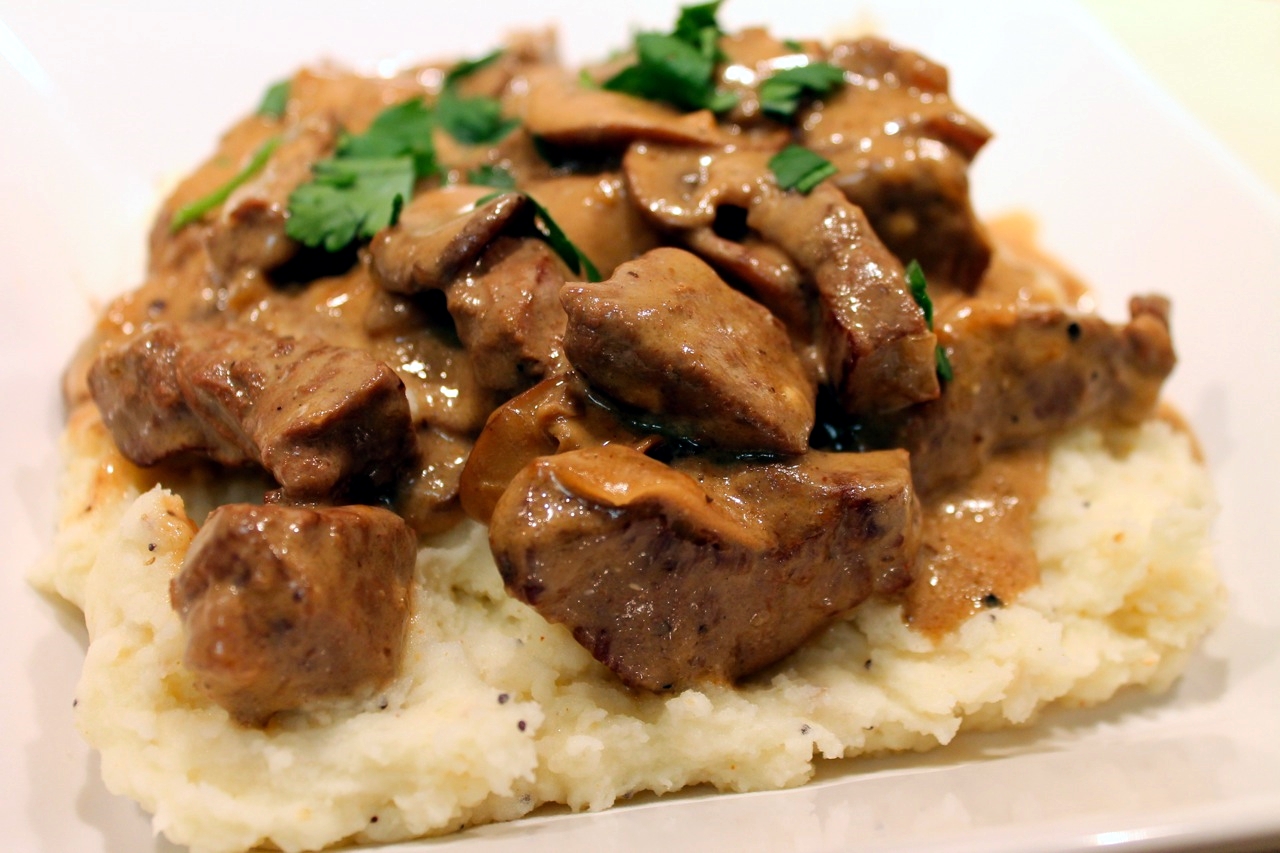
During the last couple minutes of cooking, add the arrowroot-water mixture and stir to thicken the sauce as it cooks. Turn heat to low. Season with fresh ground black pepper and, if desired, additional seasoned salt. Stir in the sour cream. When heated through, turn off the heat. Serve over noodles or mashed potatoes topped with parsley.

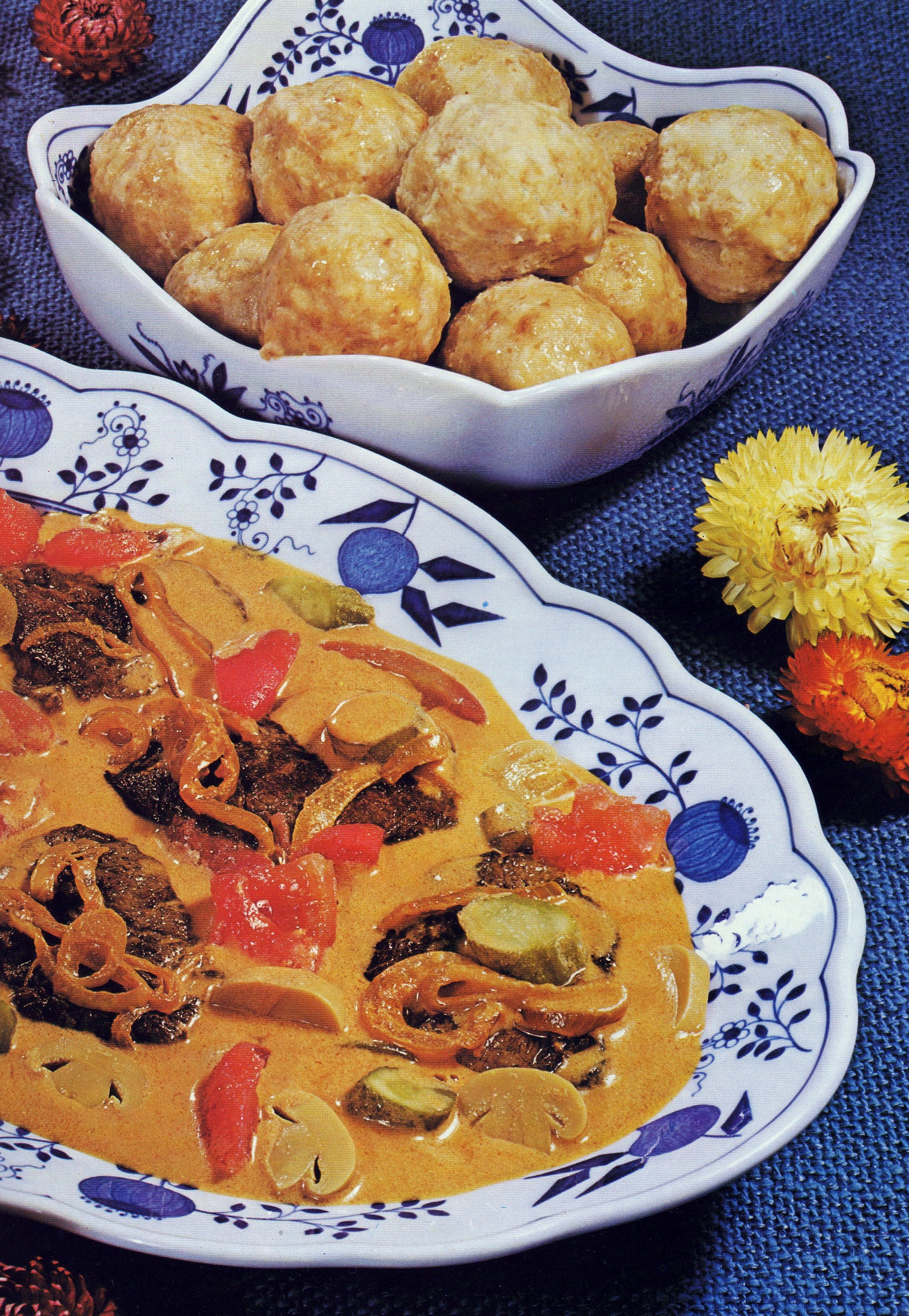
German variation, Filetspitzen Stroganov.

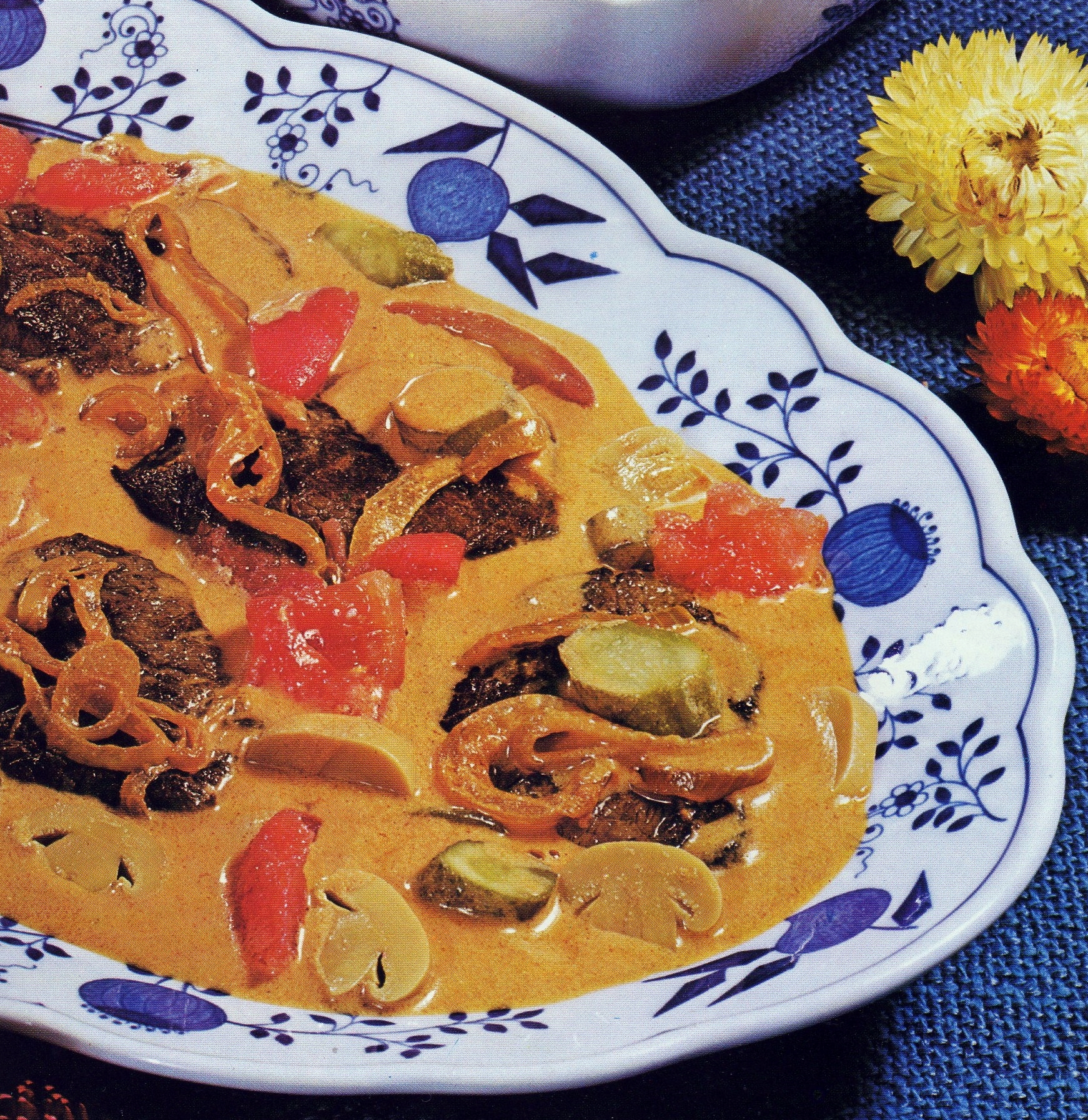
This recipe is the variation, which is usually served nowadays in Germany. The Russian origin contains neither gherkins, cream or mushrooms instead of sour cream and mustard.  Here it is cooked by J Achim. We guess that the dish in the west was extended, out of cost reasons, with gherkins and mushrooms, even beetroot.

boeuf-strog-1

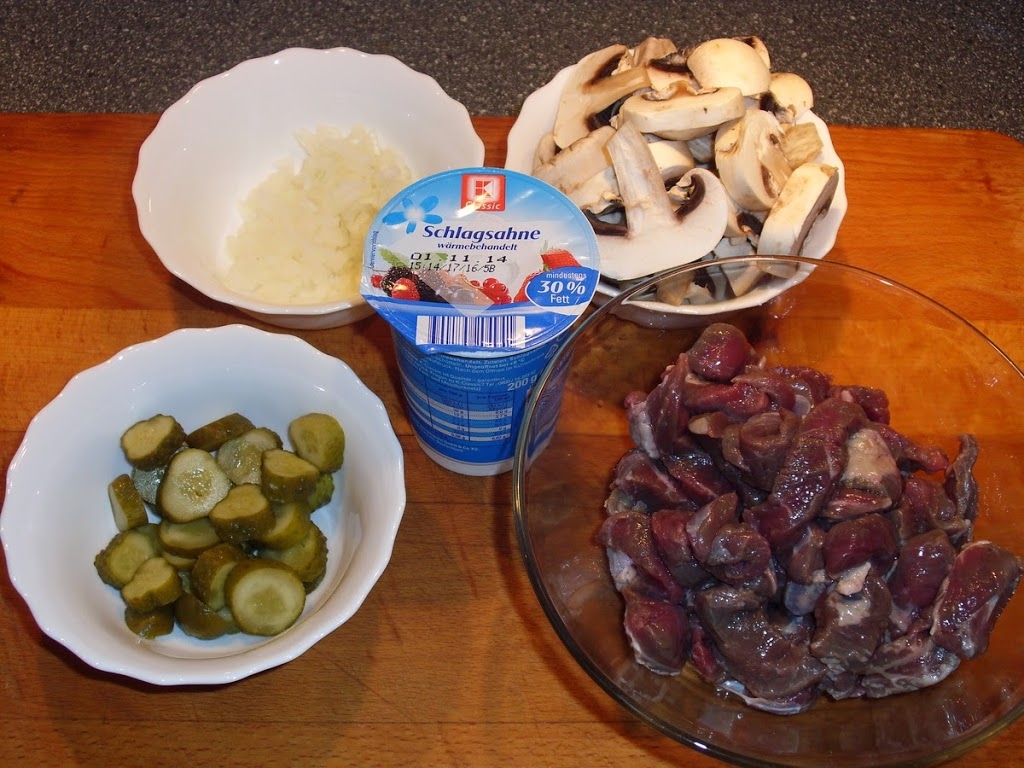
Ingredients.

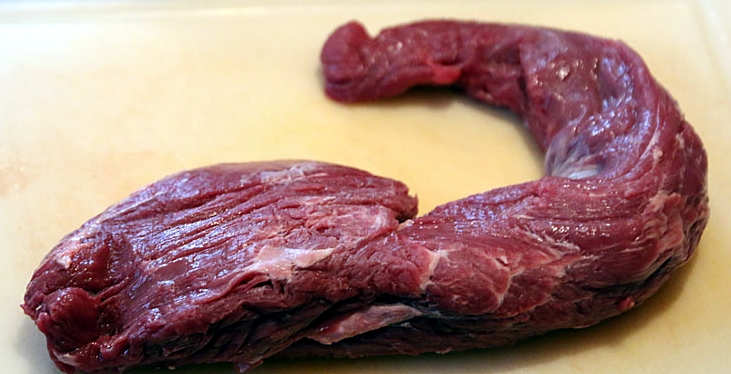
1,5  kg (3lb) beef rump (the good-value, usually beef tenderloin), in German the „Spitzen of the filet“ (excellent quality, but can’t be used as filet mignon)

boeuf-stroganoff_001  Filetspitzen, not to be used as tournedos, to small.

500 g (16 oz) mushrooms
5 medium sized gherkins (pickled) or 10 cornichons
3 white onions
3 teaspoons tomato paste
3 teaspoons flour
3 teaspoons sharp mustard
3 small beetroots
400 ml (13 oz) beef broth (strong cube will do)
300 ml (10 oz) double cream
salt
pepper
1/2 a lemon
4 tablespoons  oil

x-boeuf-strog-1b

How to do.

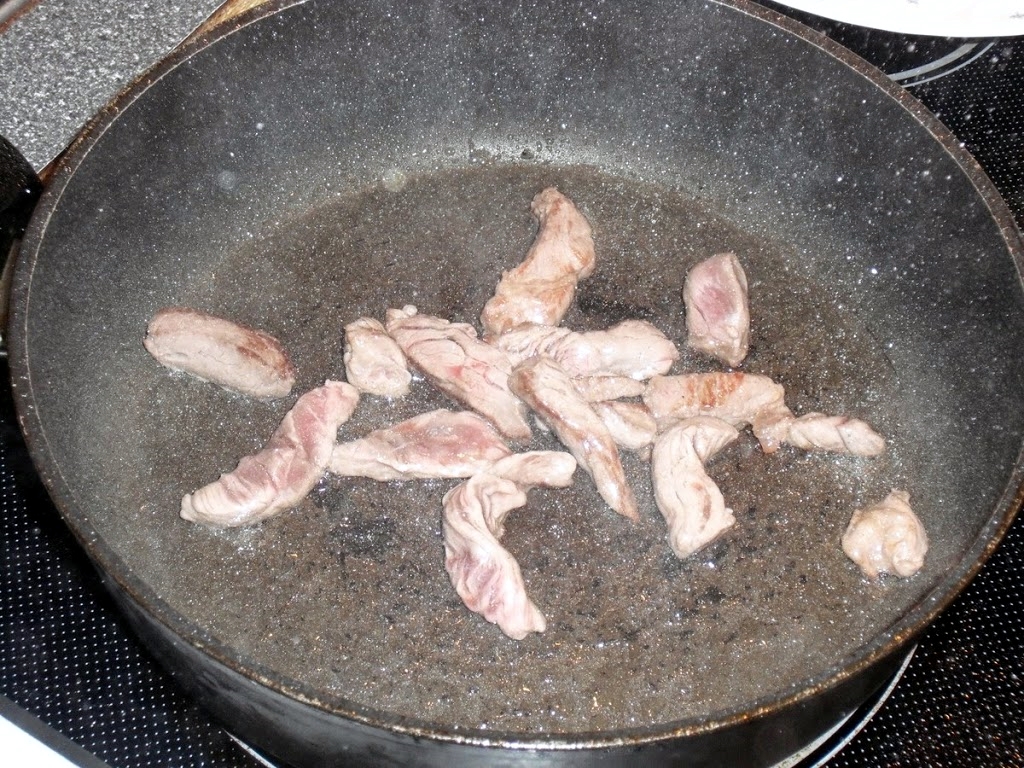
This recipe is for 4 persons and easy to make by anybody, just takes a bit time for cutting. Cut the meat into strips. Slice the mushrooms. Halve cucumbers lengthwise and cut leafy. Same with beetroot. Heat oil strongly. Brown meat on all sides vigorously, then remove and keep warm.

x-boeuf-strog-1a

Chop the onion finely and brown slightly. Mushrooms also saute briefly. Add flour, mustard and tomato paste and saute well admit. Pour broth, simmer for about 15 min. A slow reduction is the secret at this stage.

x-boeuf-strog-1d

Stir in cream, beetroot and cucumber and simmer for another 5 min. Season sauce with salt and pepper, add the meat and cook briefly. You don’t want to turn the meat into shoe-leather. Almost at the end squeeze in some lemon juice to give the dish freshness and decorate with some small slices of tomato or chopped parsley.

x-stroganov-6-german  The German variation served with Potato Balls.

Tips.

In the US Stroganov will be served on pasta, the types which like to soak good sauce. A few side dishes one can also use with Beef Stroganov :

mash potatoes
different pastas
rice
french fries
baked potatoe chips
roesti
spaetzle
polenta
knoedel

or
filet mignon with Stroganov sauce,
meatballs in Stroganov sauce,
Zuericher Geschnetzeltes mit Roesti.

x-stroganov-5-surena     beef-stroganov-20h

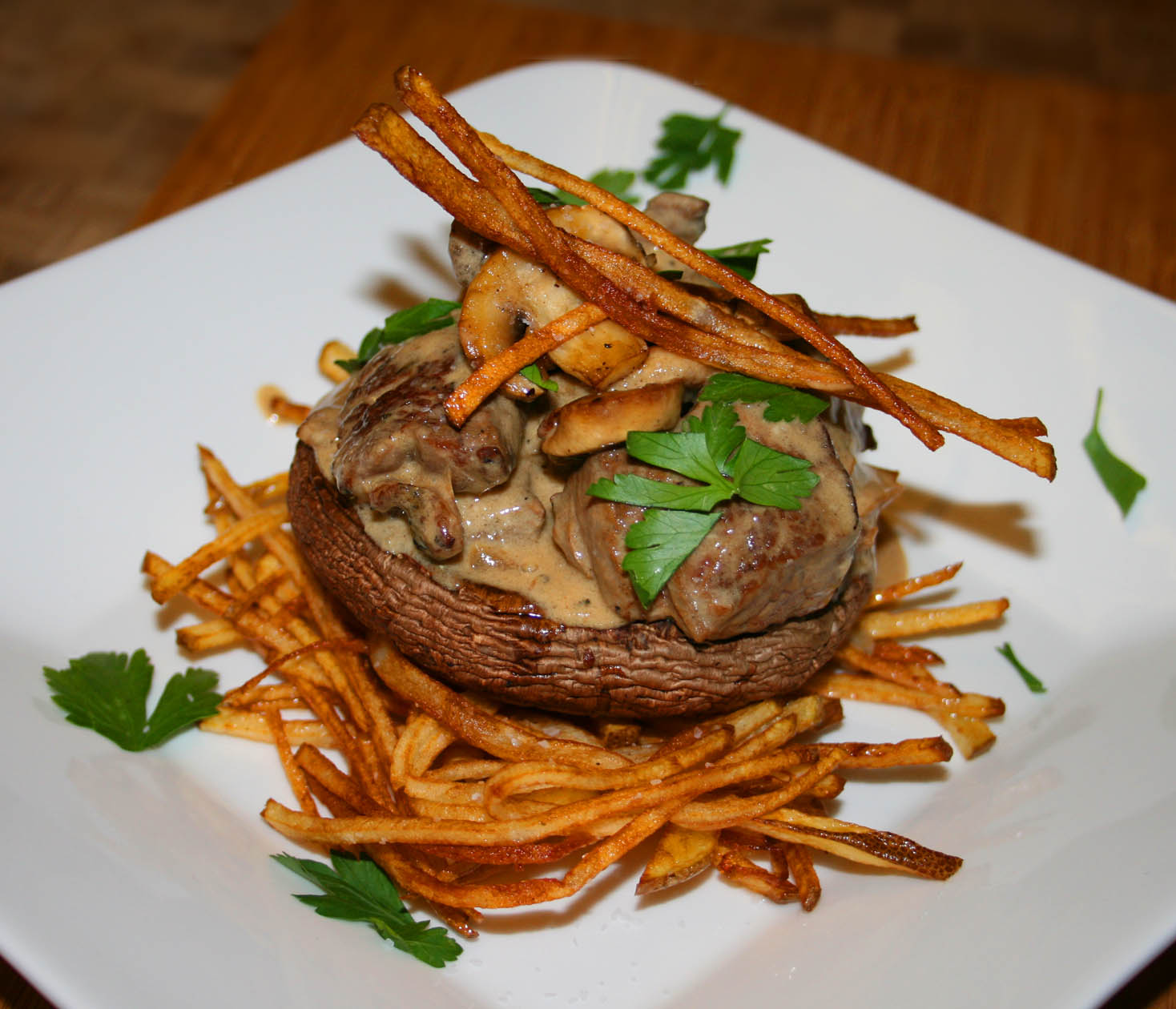
beef-stroganov-20d-in-portobello     beef-stroganov-20g-cafe-pushkin-moscow

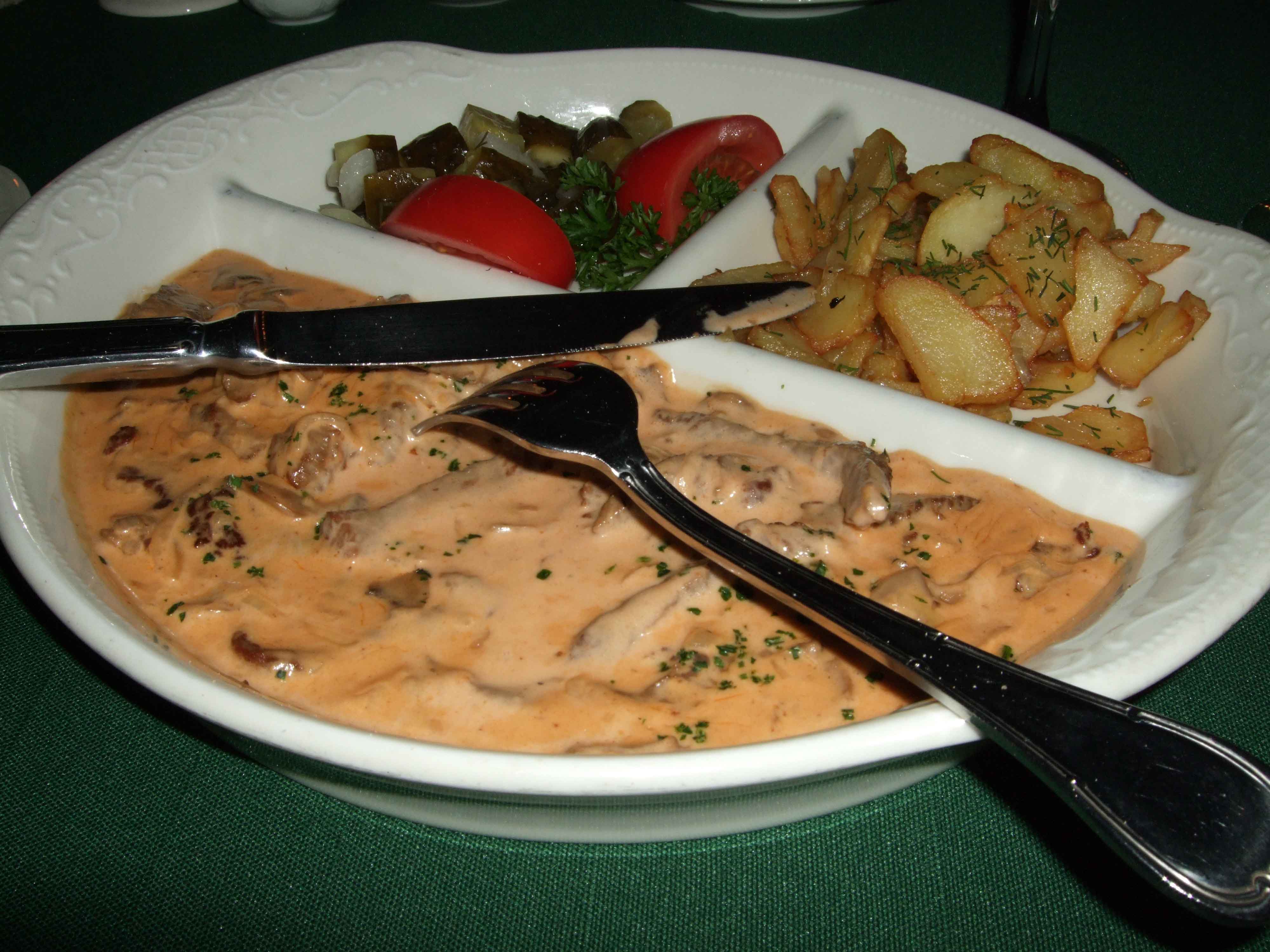
Different servings of Beef Stroganov seen in the internet. Above left on rice, above right as small filets on a very creamy sauce. Below left, very fancy in a portobello mushroom on a bed of straw potatoes. Below right with baked potatoes, out Cafe Pushkin in Moscow.

The recipe ideas are made all on the same base. Very easy and only a few ingredients. But so delicious that one want’s to have it every week.  And why not ? Instead beef you can use chicken, but decide for the thighs, breast is to tasteless.   Enjoy !!

Veröffentlicht unter History, Information, Lifestyle, Recipes | Verschlagwortet mit , | Hinterlasse einen Kommentar

Beef Stroganov – 1

x-beef-stroganov-23

Filetspitzen Stroganoff
Geschnetzeltes Stroganov
Filetto Stroganoff
Beef Stroganoff or beef Stroganov
Estrogonofe
Vlees a la Stroganoff
Saute de Boeuf a la Parisienne
Filete de ternera con salsa de champinones y nata

and many more terms of this one dish are circulating the world. By meaning they are all the same – a well known beef dish with mushrooms and some creamy sauce.

x-beef-stroganow-1  Beef Stroganov on mashed potatoes.

History.

If Beef Stroganov could be the subject of a biographical movie, it would spanning decades, continents and wars. It would have its moments of tragedy, a little infidelity  and possibly a downer ending. For sure it would be a grand epic.

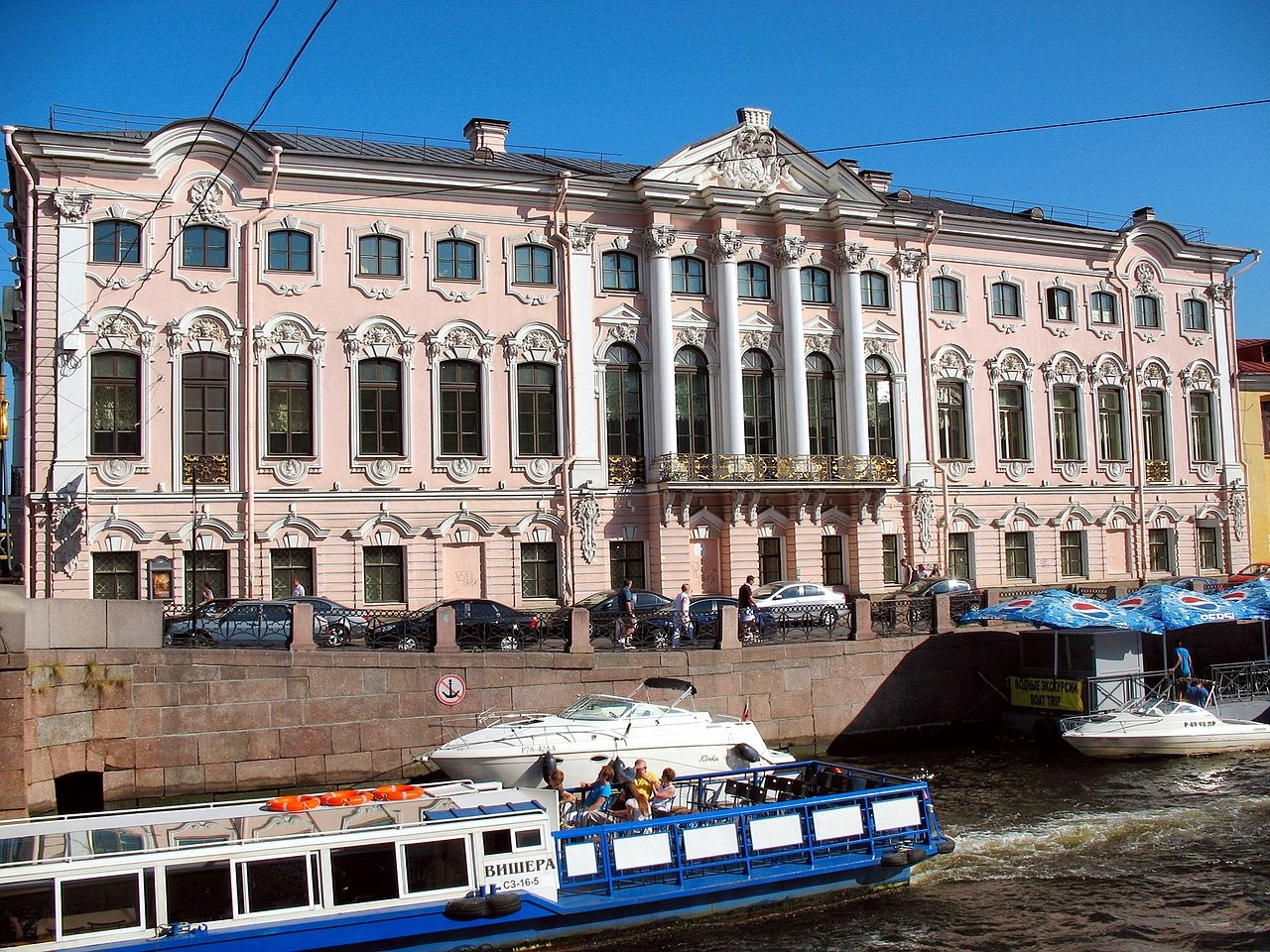
x-stroganov-2-palace-st-petersburg  The Stroganov Palace in St. Petersburg today.

It is not haute cuisine. Chunks of beef mixed with sour cream and served over noodles sounds rather ordinary. But when I looked into its background, I learned that it has a surprisingly rich history.

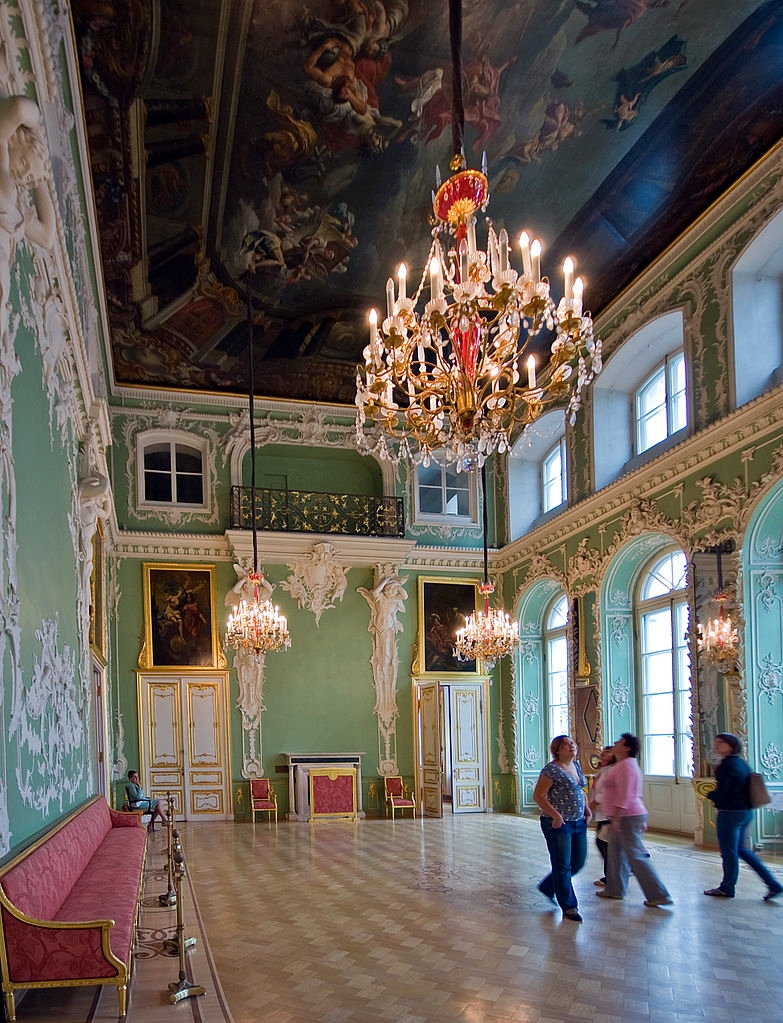
x-stroganov-2b   Inside the palace.

The Stroganovs or Strogonovs , referred to in French as Stroganoffs (these are the 2 official writings, with double „ff“ or with „v“ on the end), were a family of highly successful Russian merchants, industrialists, landowners, and statesmen. From the reign of „Ivan the Terrible“ in the 16th century they were the richest businessmen in the tsardom of Russia.

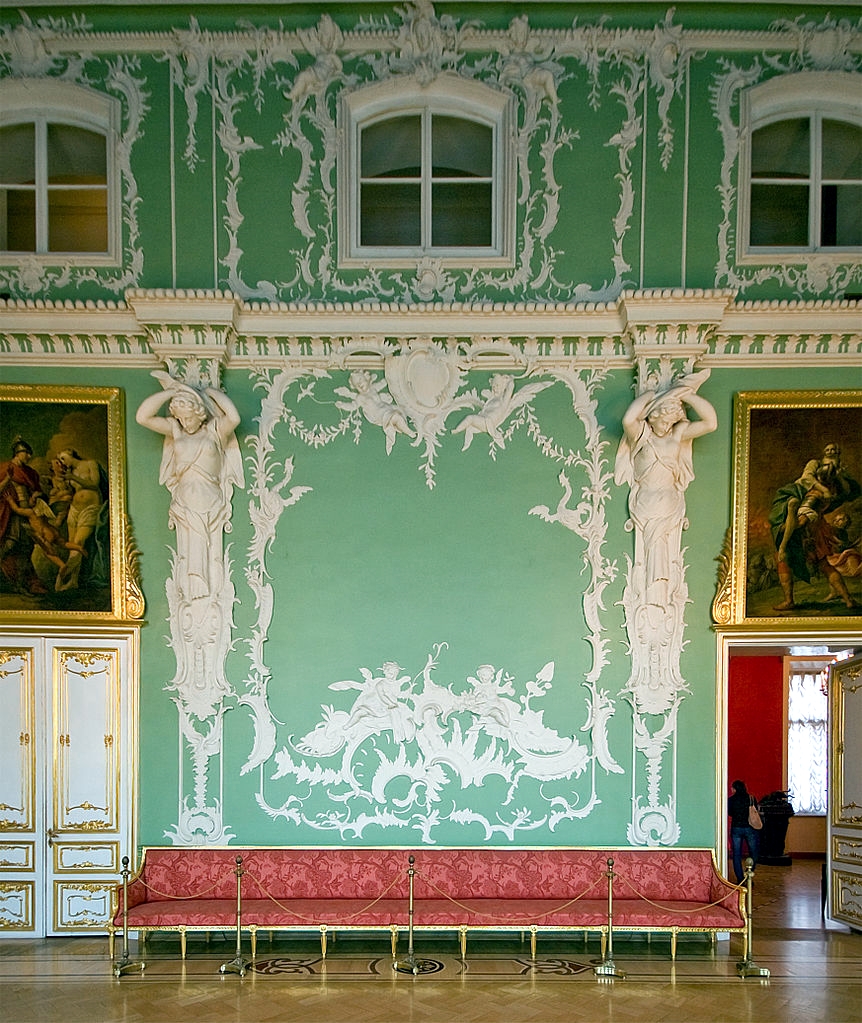
x-stroganov-2a   Inside the palace.

They financed the Russian conquest of Siberia and Prince Pozharsky’s reconquest of Moscow from the Poles. The Stroganov School of icon-painting takes its name from them. Peter the Great elevated the Stroganovs into the nobility as Barons of the Russian Empire. The last member of the family died in the Stroganov Palace in 1923.

stroganov-1   The last Count of Stroganov, contemporary painting.

The Stroganov’s.

The dish emerged in Russia during the 19th century and is likely named after the Russian statesman Count Pavel Alexandrovich Stroganov, as it was the fashion to name a dish after the household it was created for. Sources say the exact origins of the dish are unconfirmed.

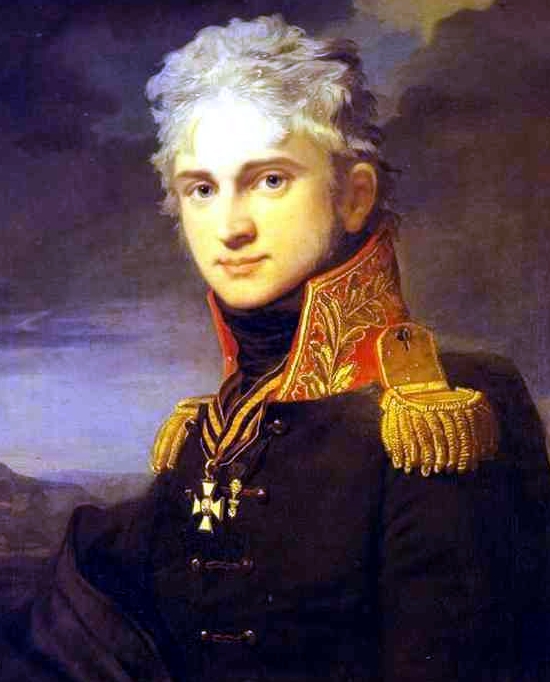
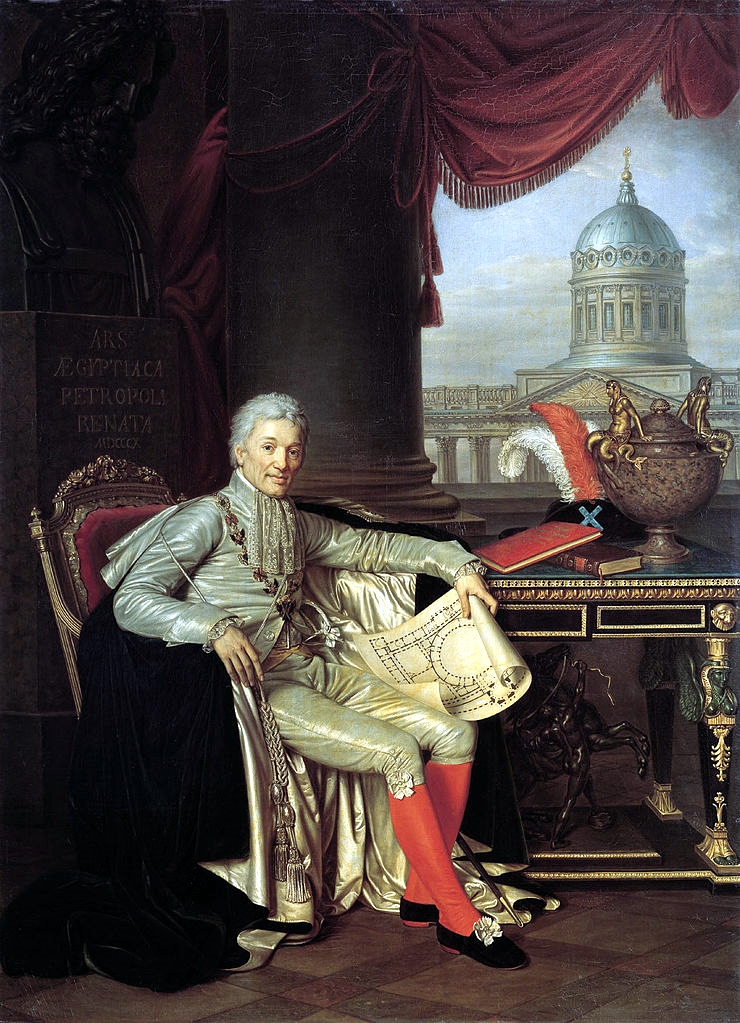
stroganov-2c-alexander-sergejevitch-stroganov-1733-1811   Pavel (also Paul) Aleksandrovich Stroganoff (1772-1817), Count, Senator, Secret Councilor, Lieutenant General, was the only son of Count Alexander Sergeevich Stroganoff (1733-1811), the President of the Academy of Arts.

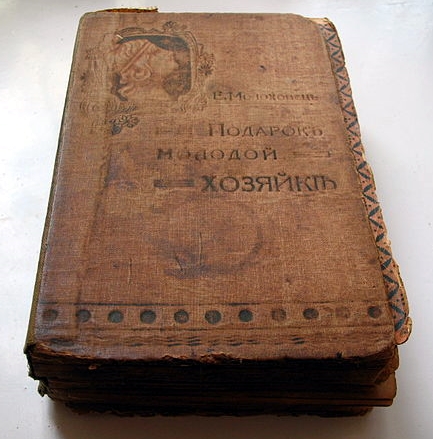
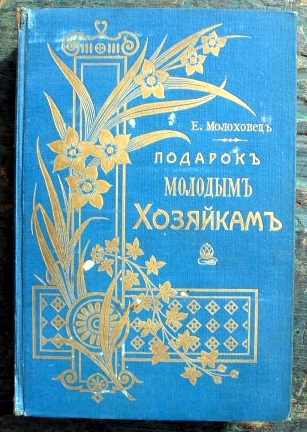
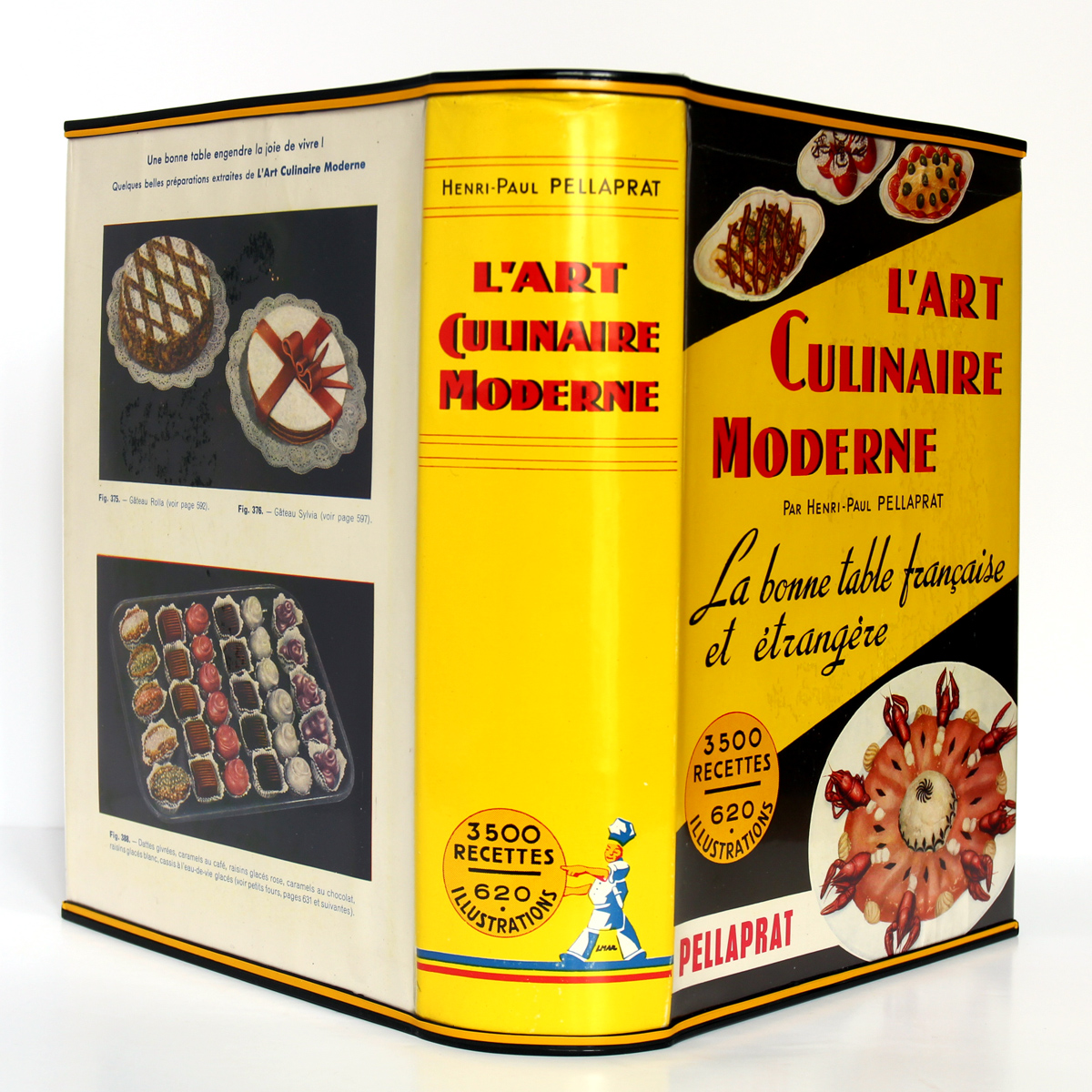
Some point to French chef Charles Briere, who was working in St. Petersburg and submitted it for publication in L’Art Culinaire in 1891. Other sources indicate the dish was in the Stroganov family for some time and appeared in the 1861 Russian cookbook  „A Gift to Young Housewives“ by Elena Ivanovna Molokhovets.

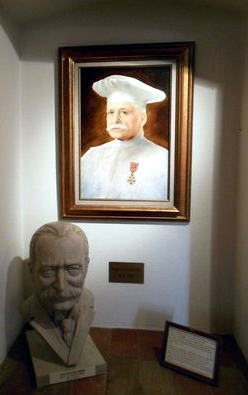
musee-de-l-art-culinaire  Auguste Escoffier introduced Russian beef (boef stroganov) to the „modern“ french kitchen.  Display at musee de’l art culinaire  in Villeneuve-Loubet, Cote d‘ Azur. Worth visiting, about 5km from Nice airport. This was the home of Auguste Escoffier, now a museum with several exhibits on this famous French cook, considered by many the father of modern culinary art.
molokhovets-1    molokhovets-2   The Russian cookbooks from Ivanovna Molokhovets. Left the edition from 1861 and right one from the early 1900’s.
art-cul-1     One of the newer editions of L‘ Art Culinaire. Inside still a good explanation of the recipe „Boef Stroganoff“.

Anna Karenina.

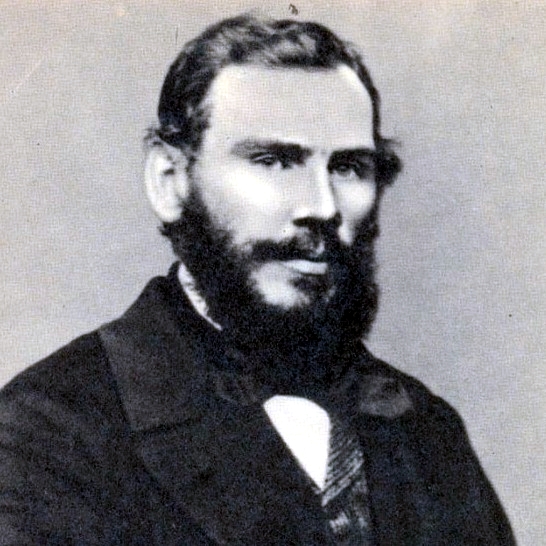
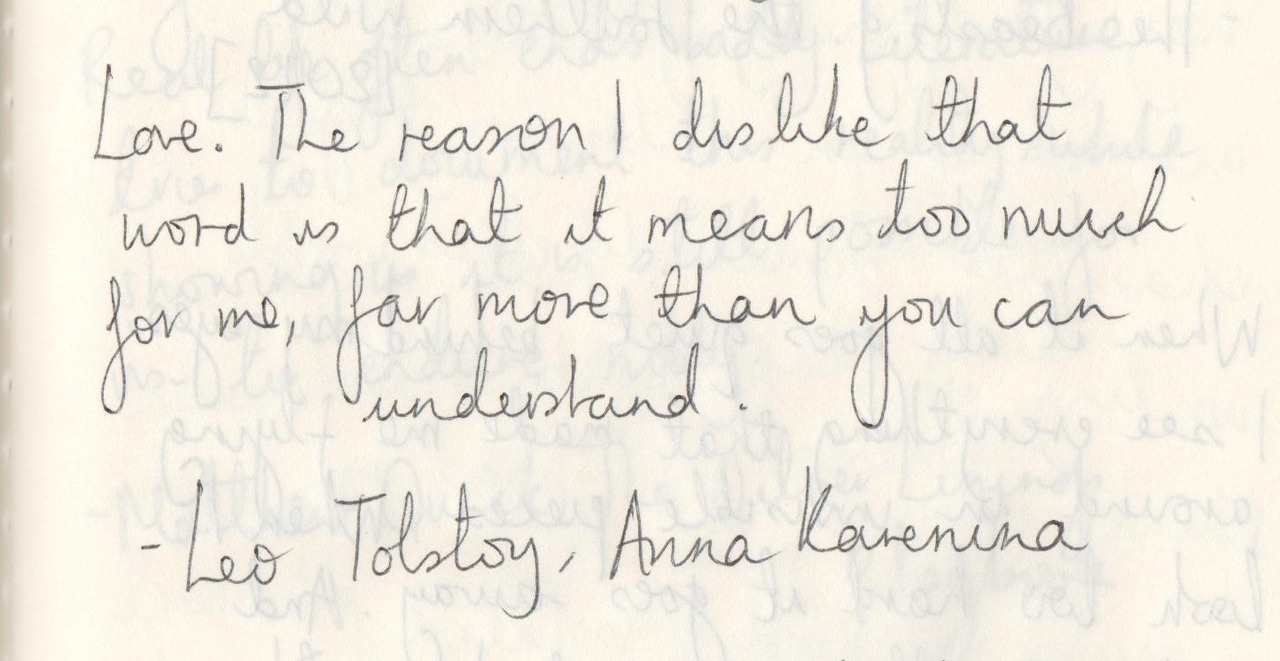
I would like to believe that this kind of dish Anna Karenina would have to eat at dinner, or at least her creator Leo Tolstoy when he wrote the novel.

x-tolstoy-1  Leo Tolstoy around 1877/1878.

He is best known for the novels War and Peace (1869) and Anna Karenina (1877)
Widely regarded as a pinnacle in realist fiction, Anna Karenina recounts St. Petersburg aristocrat Anna Karenina’s life story at the backdrop of the late-19th-century feudal Russian society. Having considered War and Peace not a novel, Tolstoy considered Anna Karenina his first true novel.

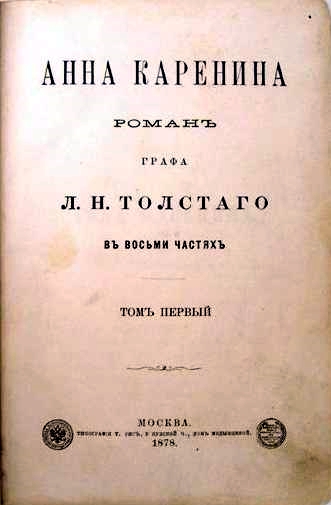
x-anna-karenina-1-1877-first-print-tolstoy     The first print of Anna Karenina.

Fyodor Dostoyevsky declared it „flawless as a work of art“. His opinion was shared by Vladimir Nabokov, who especially admired „the flawless magic of Tolstoy’s style“. And by William Faulkner, who described the novel as „the best ever written“. The novel remains popular, as demonstrated by a 2007 poll of 125 contemporary authors in time, which declared that Anna Karenina is the „greatest book ever written“ !

tolstoy-2  Handwritten letter Tolstoy’s, regarding Karenina.

The Russian Tea Room.

beef Stroganov quickly became a sensation, first in Russia and then in China. It was especially popular in Shanghai, known in the 1920s as the „Paris of the East“. Its arrival in the United States was slowed by the fact that the first wave of Russian immigrants, who’d just escaped the Tsar’s abuses, either had no knowledge of the dish or were not in the mood to popularize it. It was a second wave of immigrants, members of the deposed upper class, who grew nostalgic and began opening elegant restaurants for fellow expats. New York’s Russian Tea Room, founded by former members of Imperial Ballet, opened its doors in 1927.

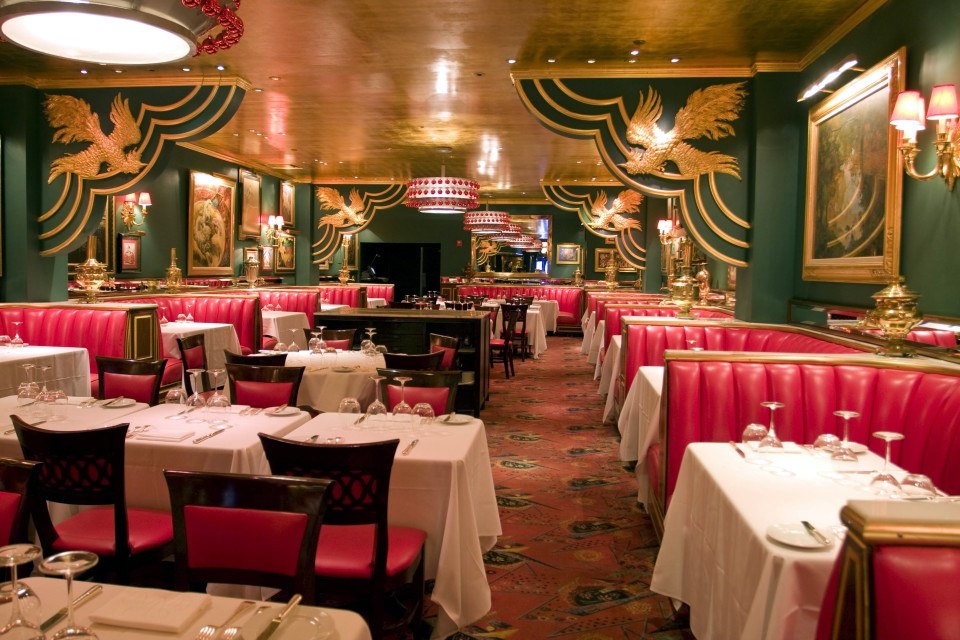
x-stroganov-3-russian_tea_room          The Russian Tea Rooms are still existing in New York. Old, pompous Russian ambience, they call it „history, elegance, culture“ – whatever.
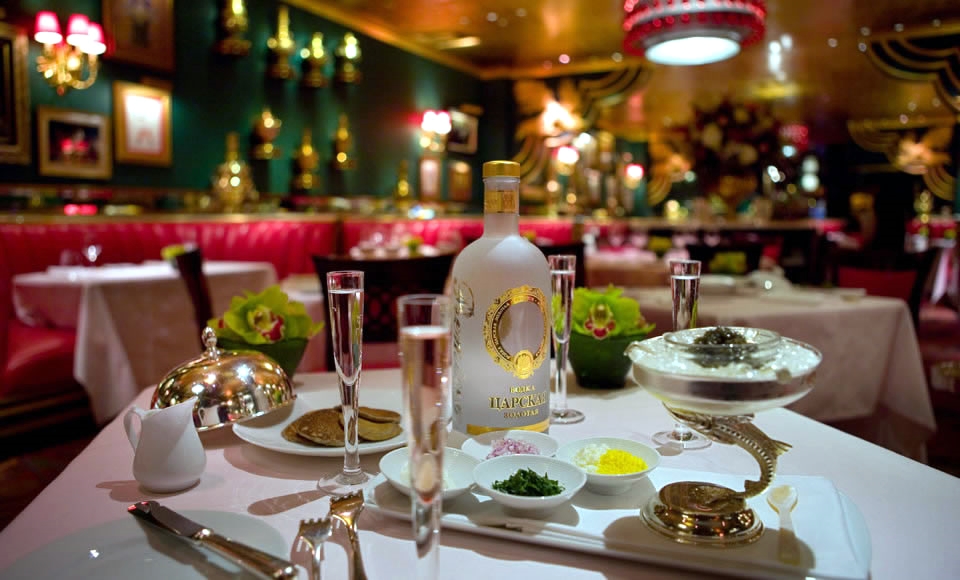
x-stroganov-3a  The starter seen here is called:
Caviar Tasting
Three buckwheat blinis with sour cream served with chopped boiled eggs, onion and parsley. Topped with trout, salmon and white fish roes. Us$ 40.00.
Each glass of „Jewel of Russia“ vodka is extra, around US$ 18.00-25.00 !!
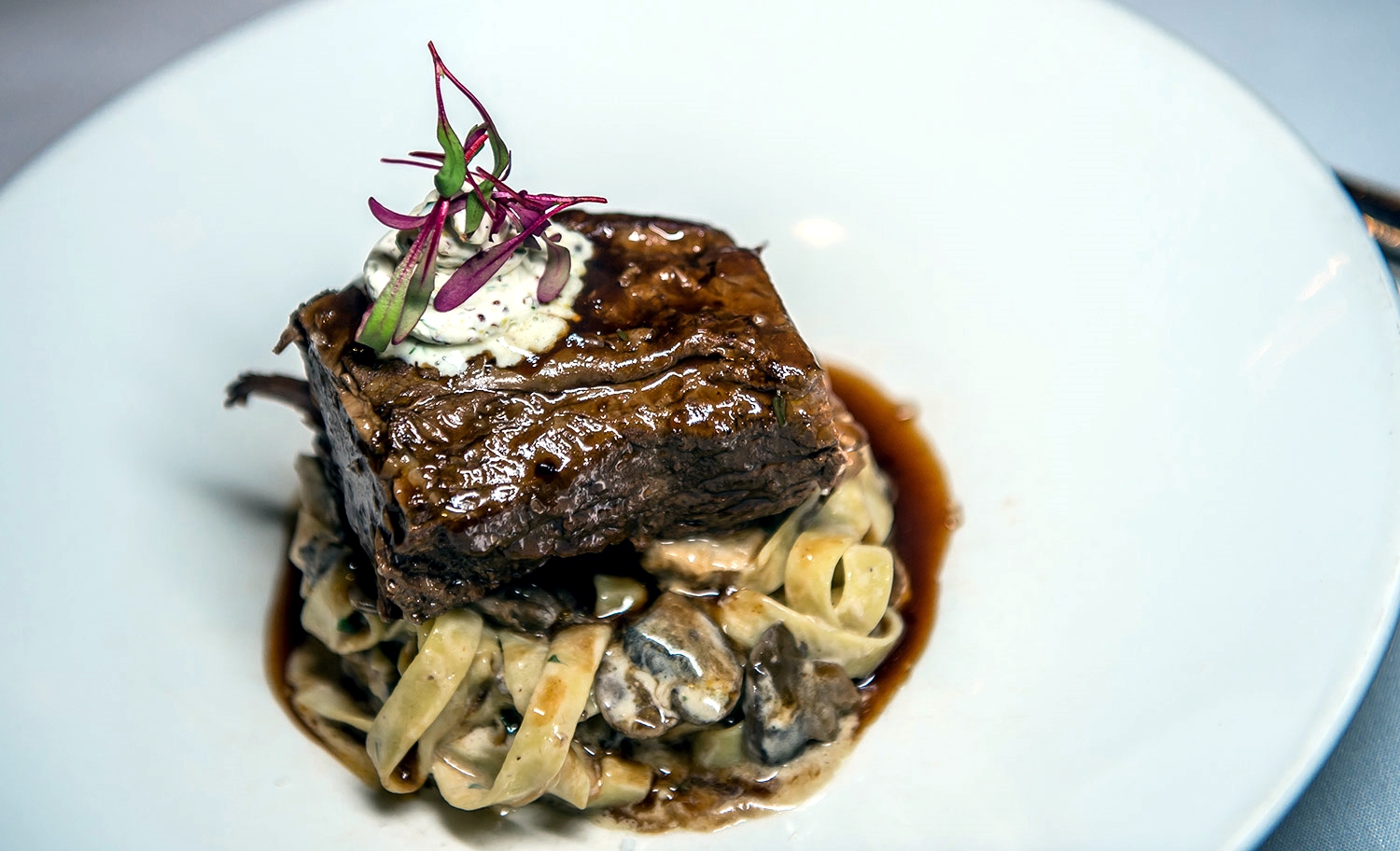
x-stroganov-3b   They also serve as an entree:
Boeuf à la Stroganoff
Red wine-braised beef short ribs with thick noodles tossed in creamy mushroom and black truffle cream sauce.
US$ 39.00.  The difference today is, that they serve „one piece“ of steak instead shredded in smaller cubes.
x-stroganov-3d     As a desert you can have:
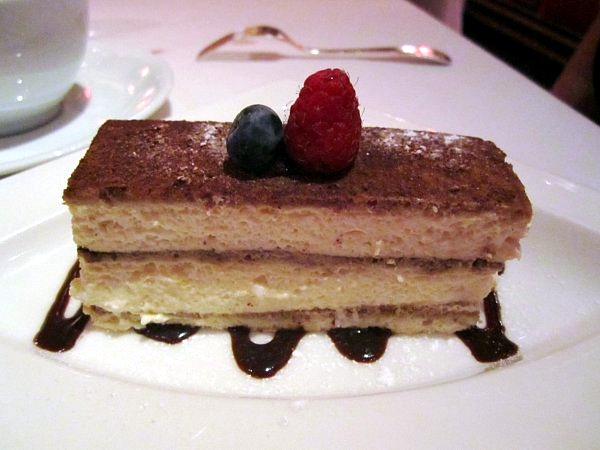
Tiramisu
Traditional tiramisu with chocolate sauce and chocolate pearls. US$ 18.00. Or try this one:
Czar’s Gold and Caviar Parfait
Nougat cream, toasted almonds, chocolate sauce and 24k edible gold.  US$ 28.00.  All prices above from the actual 2017 menu card , pics are courtesy of the Tea Rooms.

The prices seem high end. If you count together here for 4 people you will be set back around 500 to 600 bucks easy. One can have it much cheaper if you choose a complete menu. When I was there, many years ago, the prices were different and I had the feeling it was all still „close to Russia“ – now it seems pretty Americanized. I still think its worth to visit, it’s a part of New York’s history. If you are interested to visit this 90 year old cultural gem then here: The Russian Tea Room, 150 West 57th Street, New York, NY 10019.

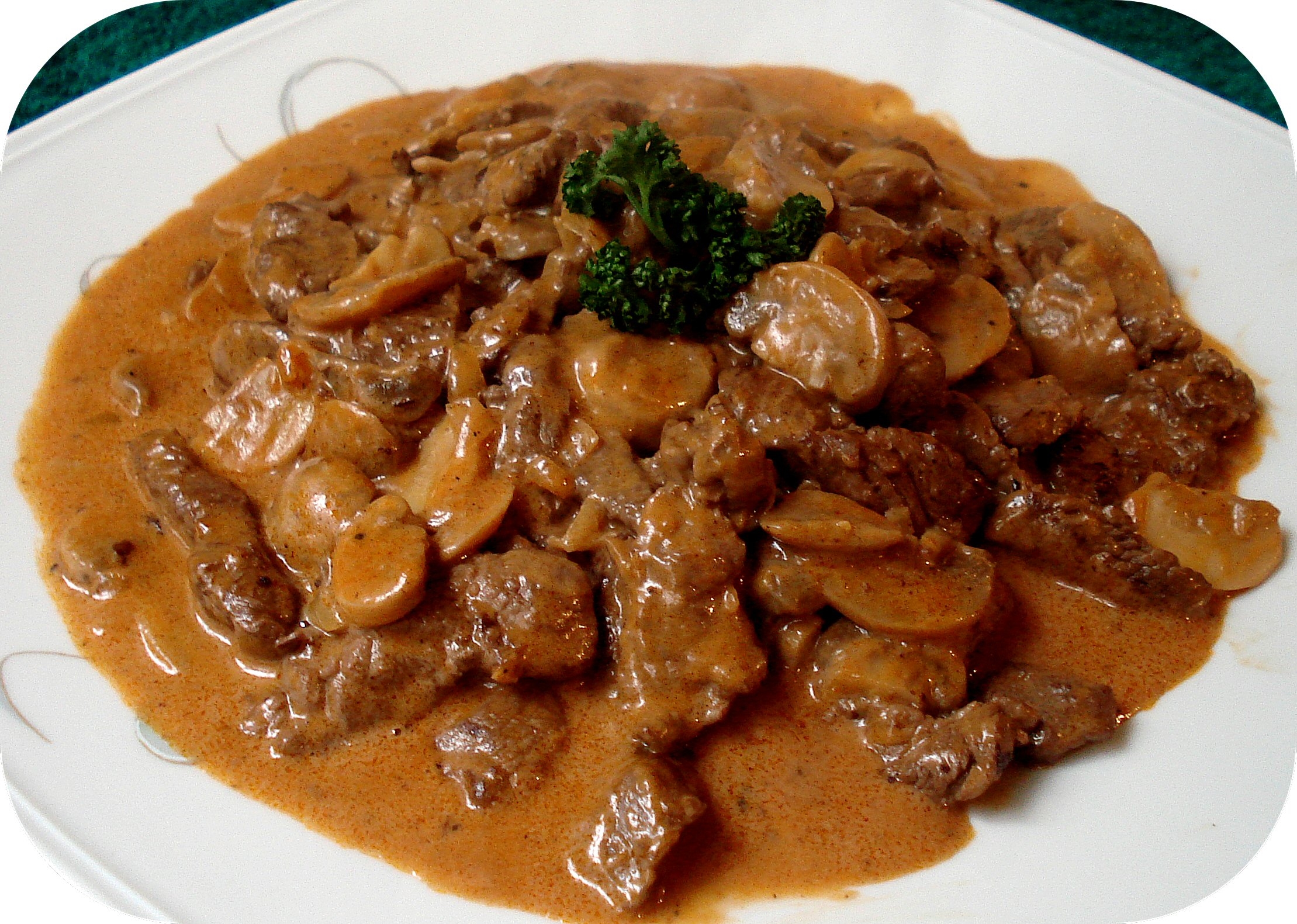
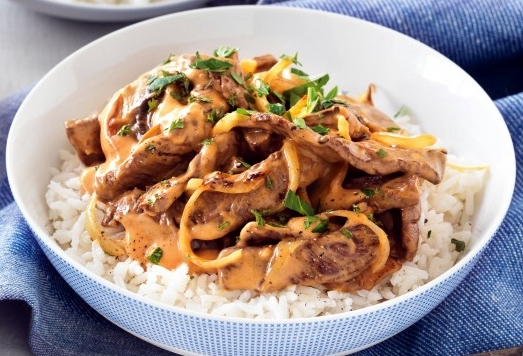
beef-stroganov-21      stroganov-4a

Now it’s the time to dive deeper into the Beef Stroganov recipe and follow the steps how to make this wonderful and easy to cook dish yourself. Therefore I will post a second part next week. Above 2 pics show homemade Stroganov and Stroganov on rice.

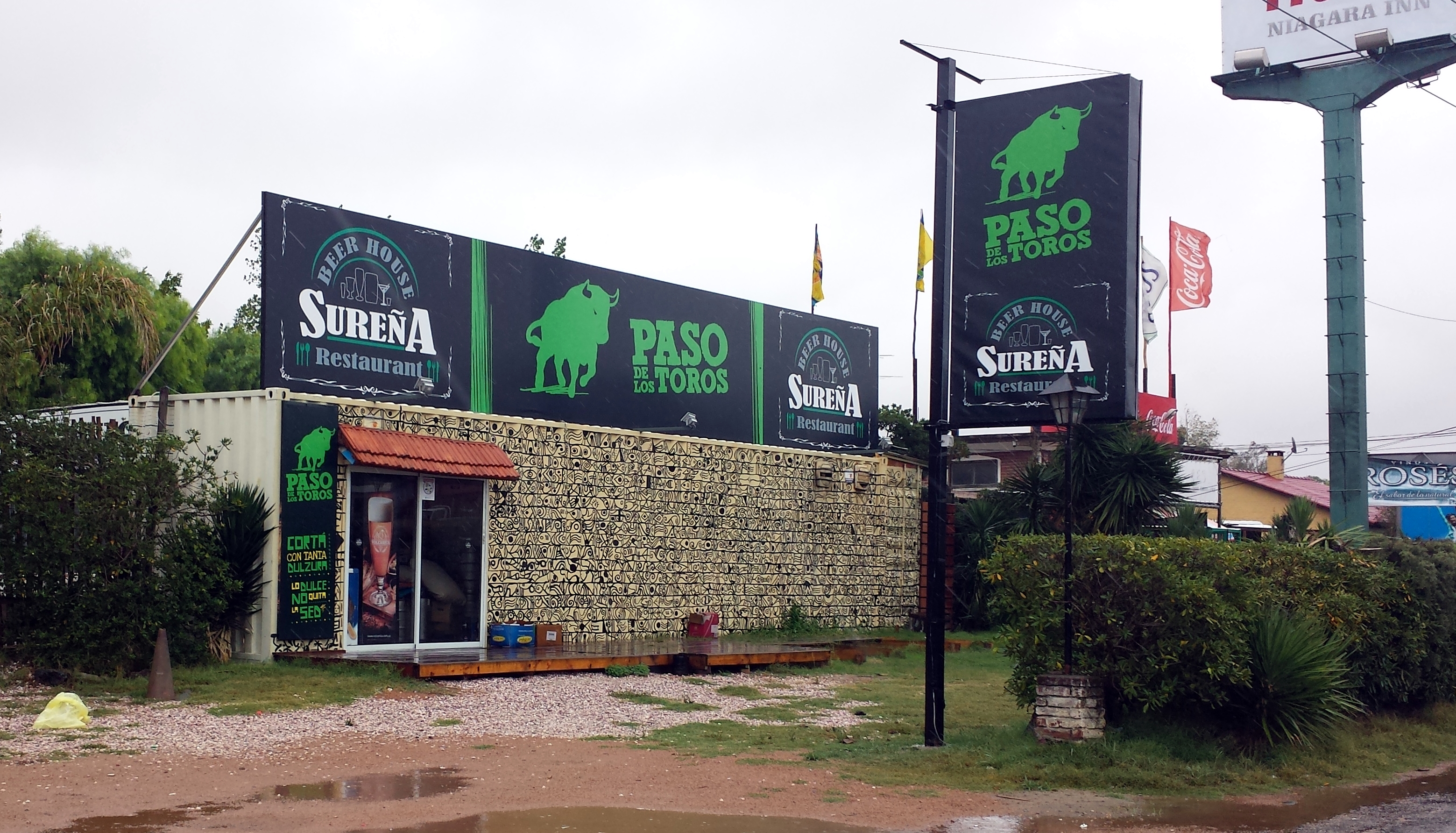
20160311_103029a    Surena, next to Hotel Niagara Inn.  Excellent food !!!
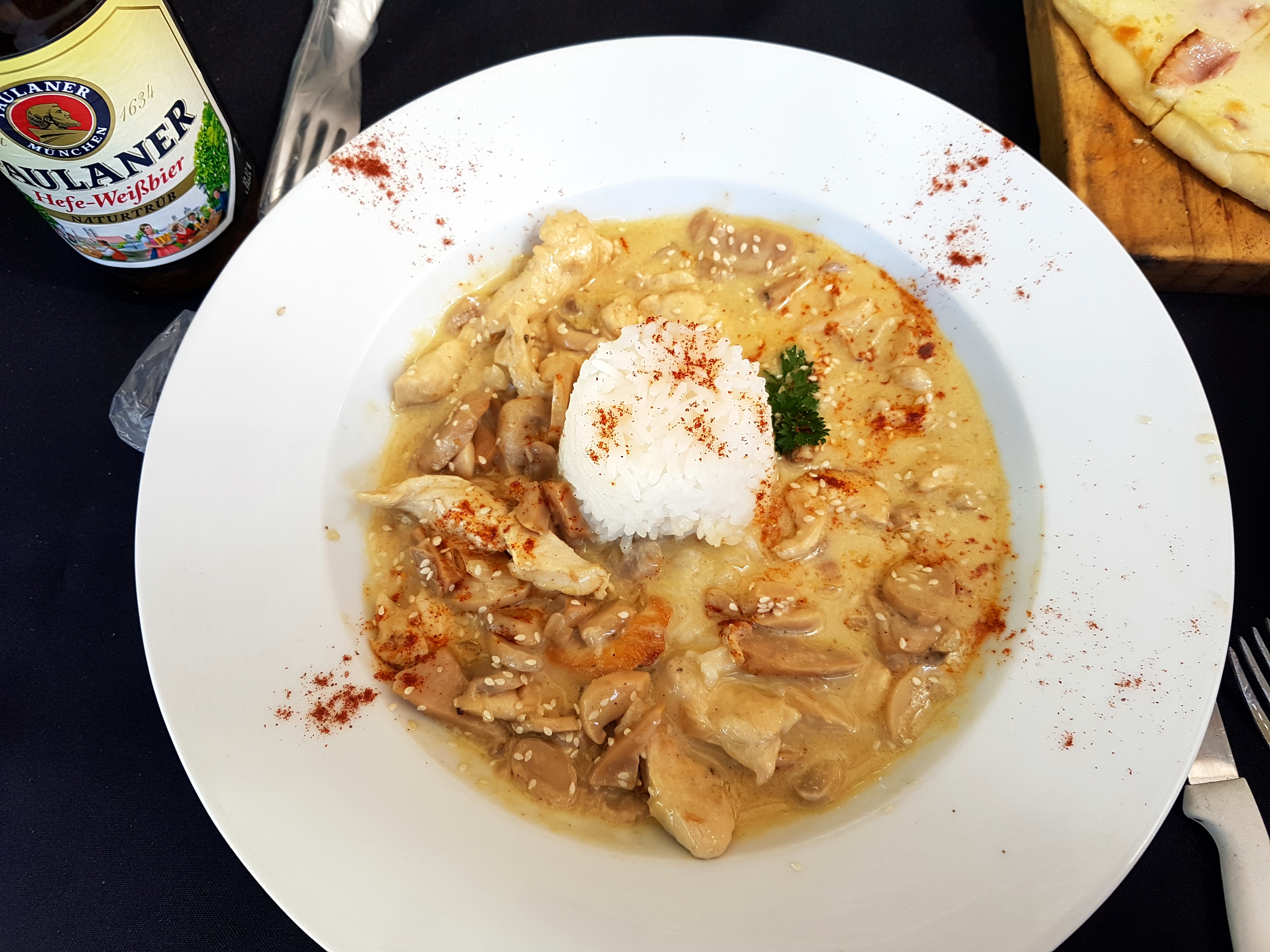
   Chicken Stroganov at Surena, very delicious.

I like to mention that we have here in Uruguay, Las Toscas in our „Beer House and Restaurant Surena“ an extreme talented chef. He offers Beef Stroganov and Chicken Stroganov. Both are worth to try – absolutely delicious.  Stay tuned and follow part 2 !


Veröffentlicht unter History, Information, Recipes | Verschlagwortet mit , | Hinterlasse einen Kommentar

La Fonda Montevideo

dsc02393

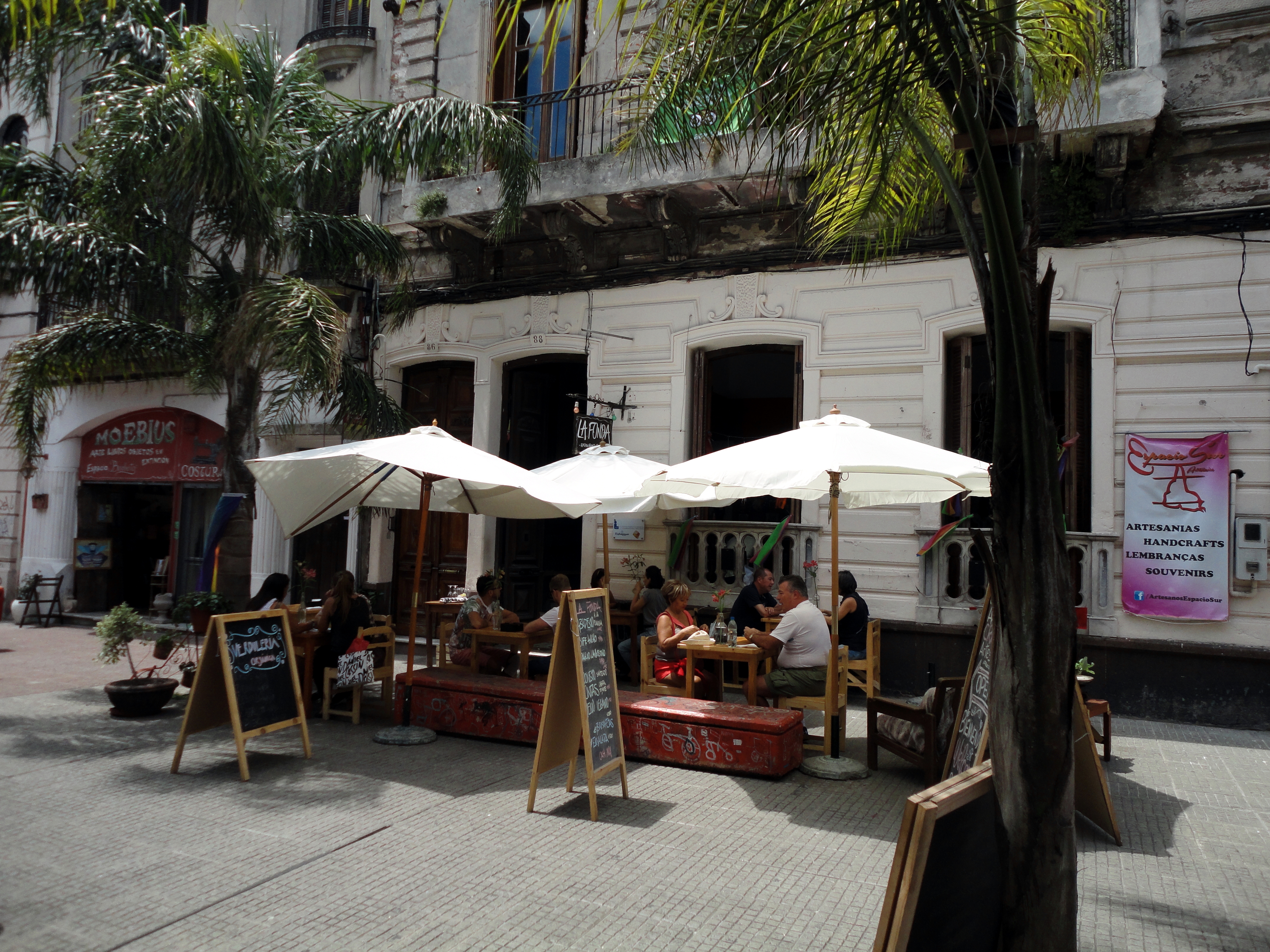
Almost 2 years ago I stopped posting restaurant reviews. There are already so many and often better then mine. This one here doesn’t need my opinion but I think it deserves it. Last week I visited the restaurant La Fonda in Montevideo for lunch. It was a nice warm day and I was pretty hungry and thirsty. Making a long story short – I was in the right place. The ambience rustic and inviting, lovely outside sitting under palm trees in shade.

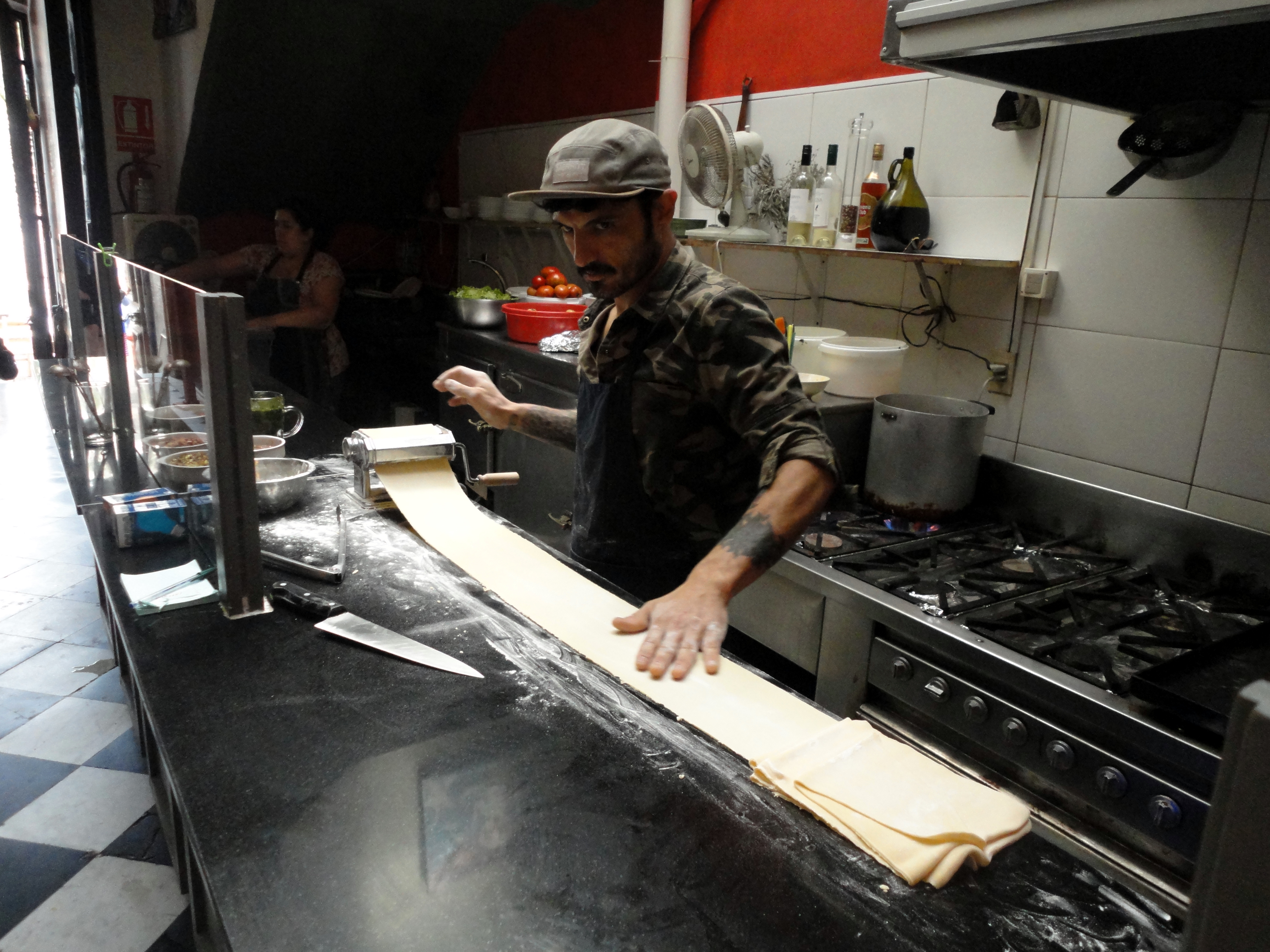
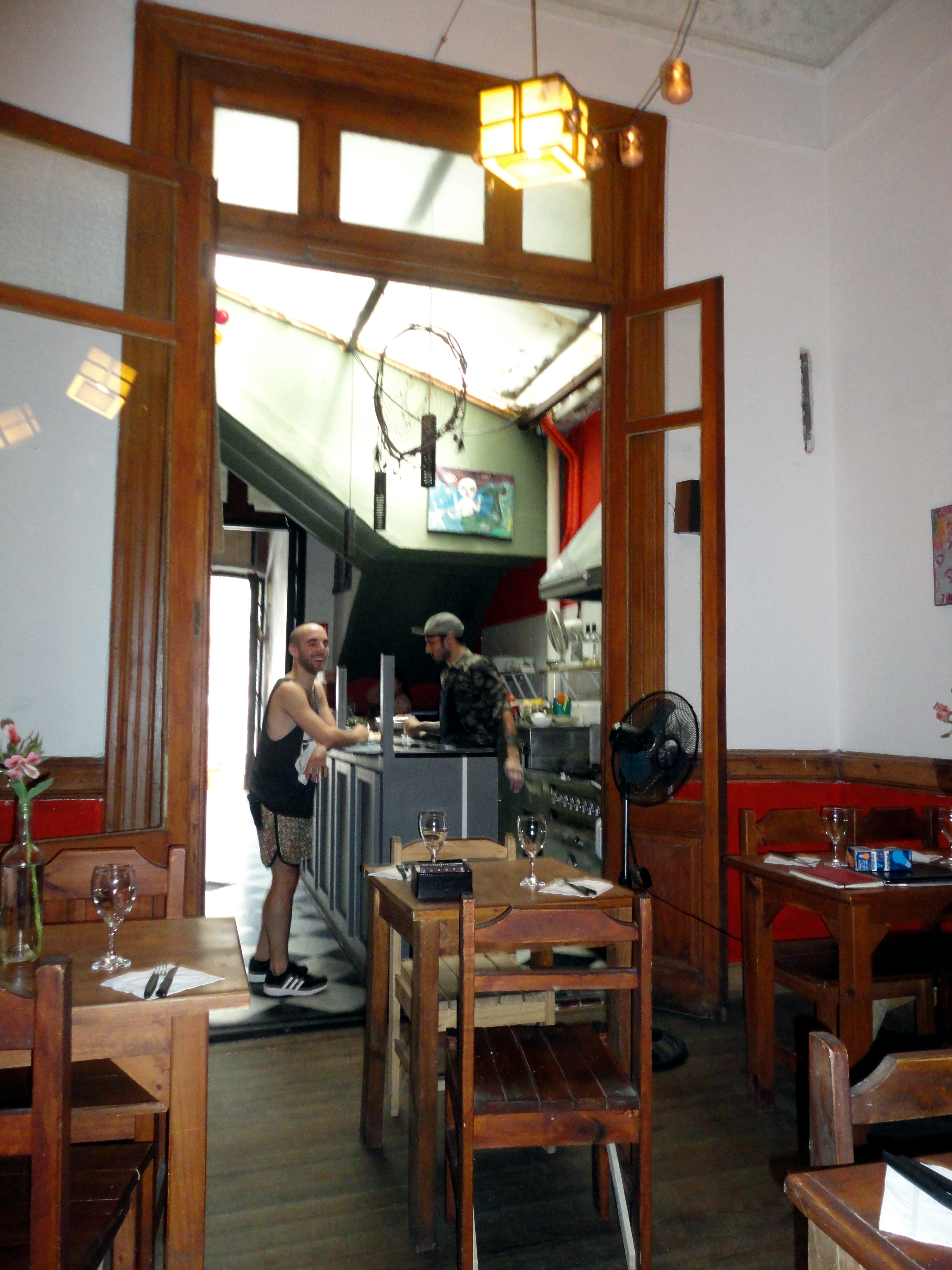
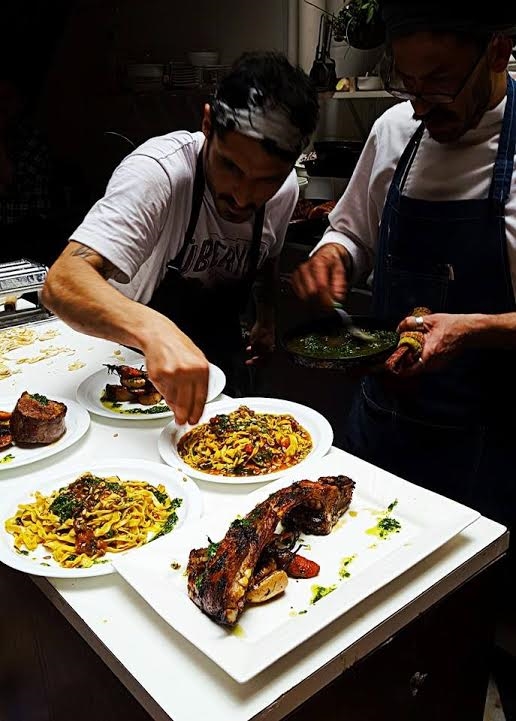
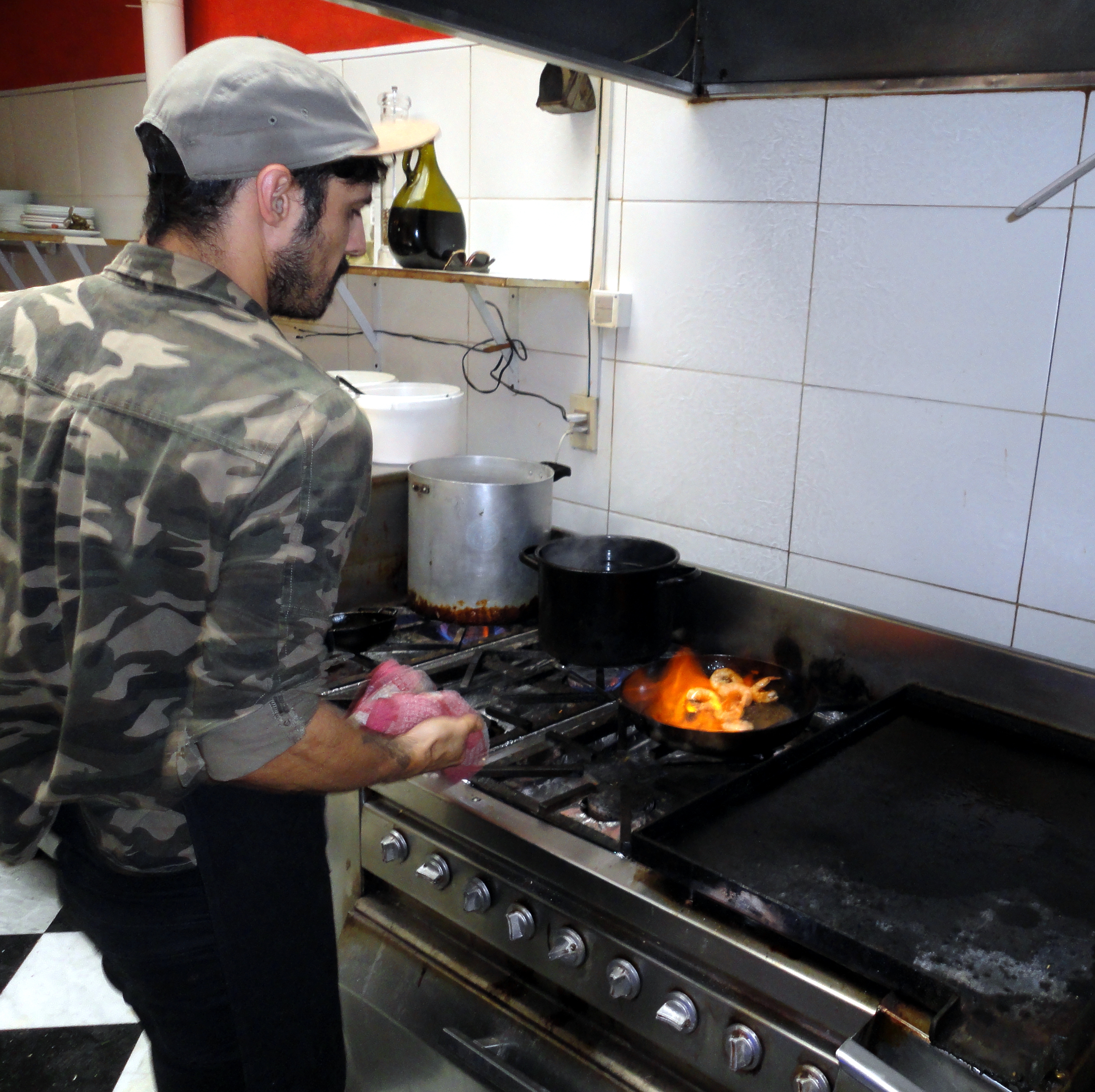
dsc02380                 dsc02382    Homemade pasta. Don’t worry, the chef is not as snappish as he looks on my pic, he is a very friendly character. Second picture shows him with the language multi-talent Joachim.

La Fonda on Peatonal Perez Castellano, this is the street leading from Sarandi direct down to the Mercado del Puerte, the famous „parrilla“ (BBQ) market in Montevideo. Easy to find. The waiter, Joachim, very friendly and helpful. He is Uruguayan, but speaks fluent German, English, Portuguese and of course Spanish.

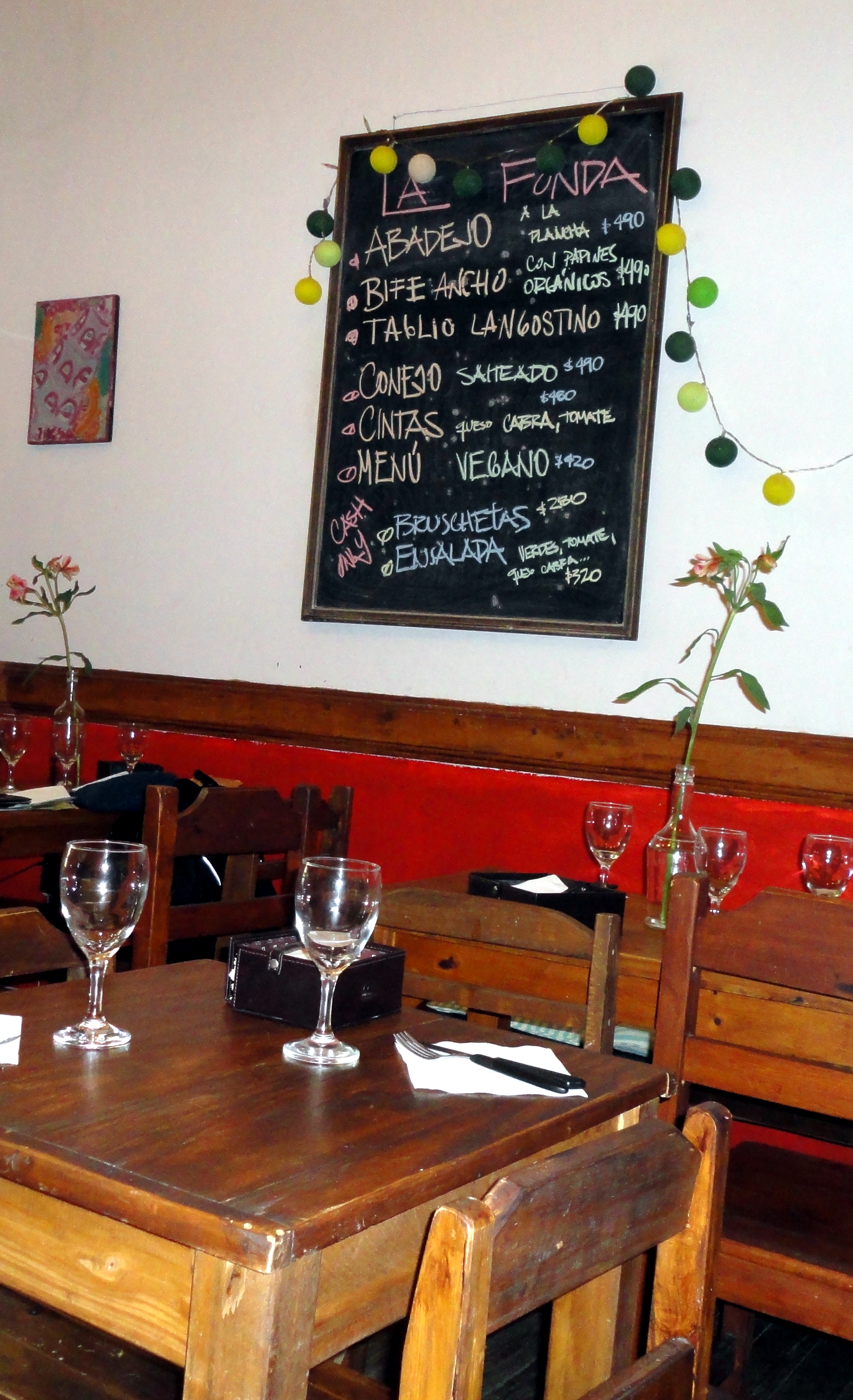
dsc02381a              la-fonda-2    The daily menu on the wall. I decided for langostinos on pasta. But the meat dishes, I saw,  are mouthwatering too.

At this location in the „old city“ (casco vieja) the prices are a bit higher then somewhere else. But I thought it was worth it. At home I found out that La Fonda is rated by „TripAdvisor“ as number 6 in quality of 791 restaurants in Montevideo. Not to bad, right?

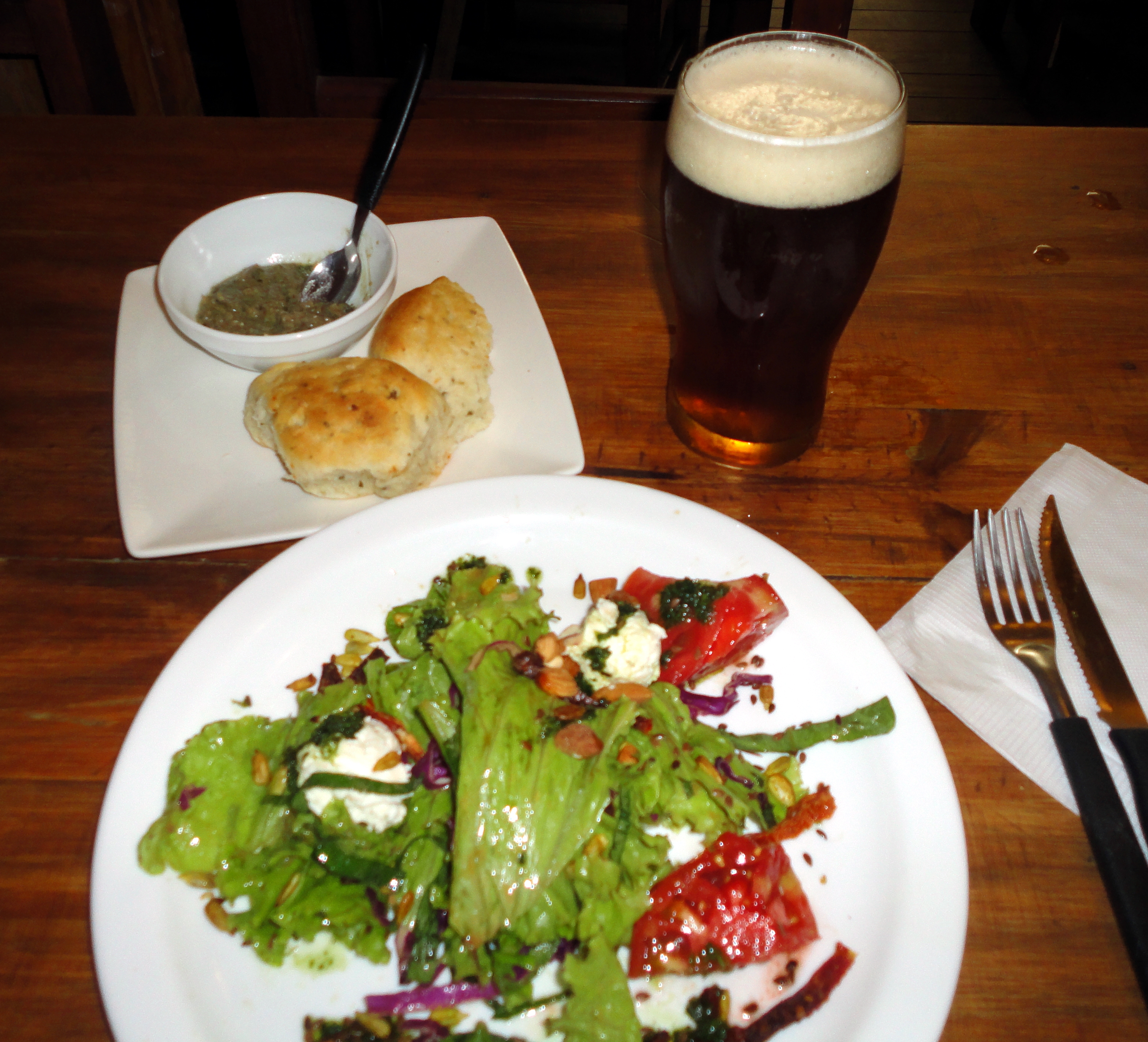
dsc02384  My starter that day, fresh mixed garden salad with mixed nuts, goat cheese and house made pesto.  Added some warm home made bread with olive tapenade and a fresh tapped beer.
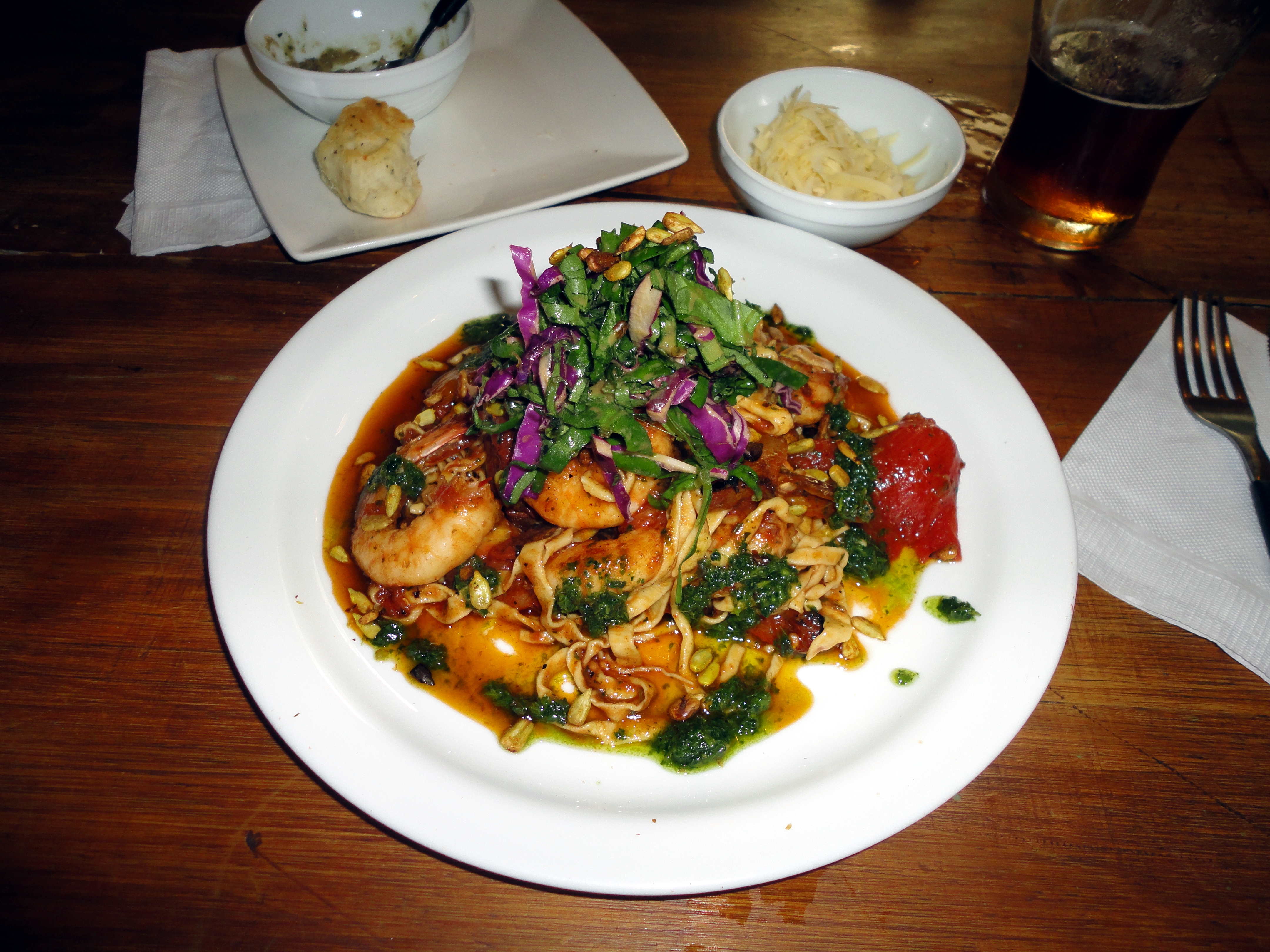
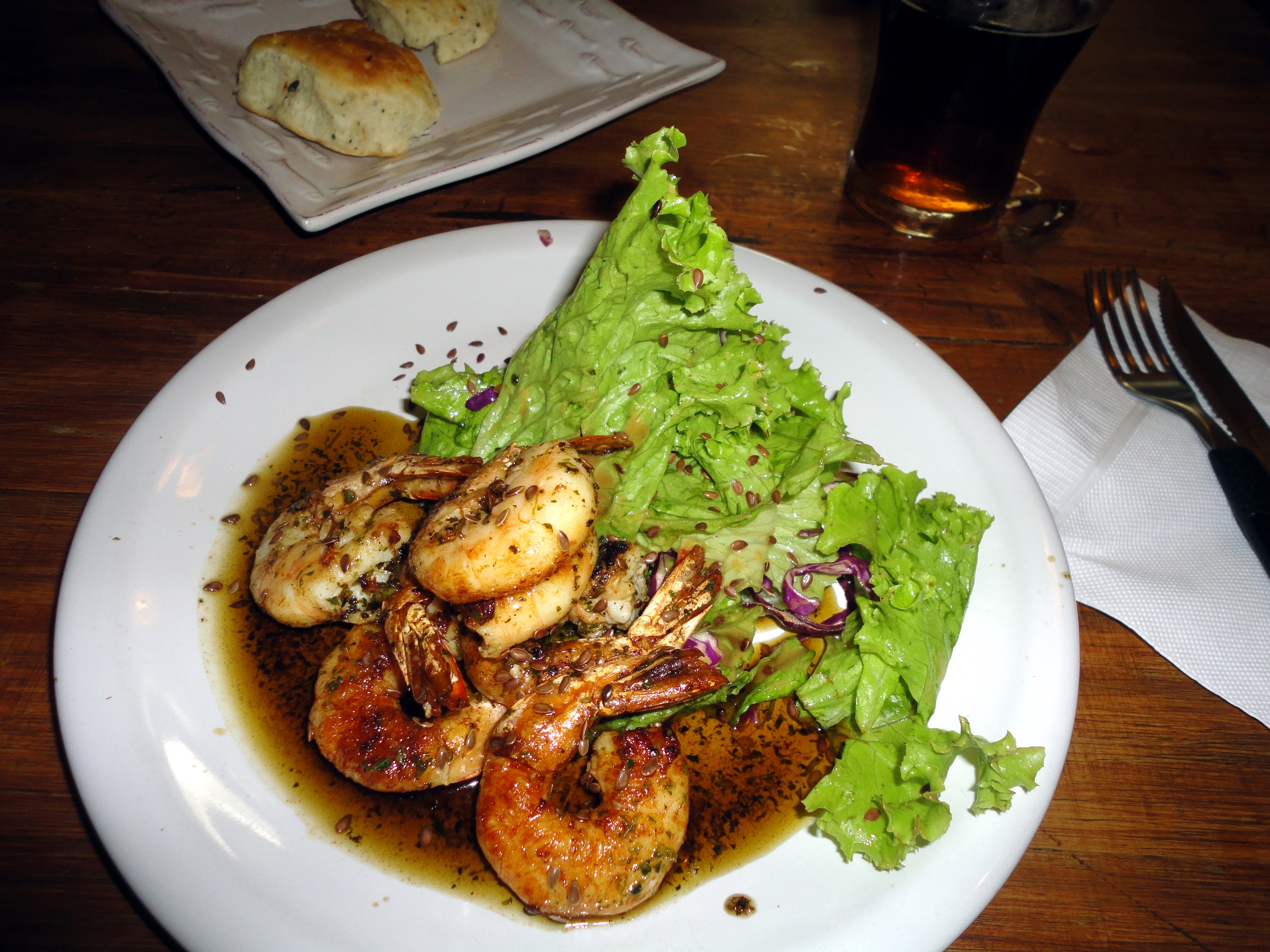
dsc02387  My main that day, homemade „taglio langostino“ with a phantastic sauce and mixed greens. Parmesan cheese came separate. Finger licking dish !
dsc02392      dsc02391   My desert that day, you may call me crazy, but I had no intention to go for a sweet desert or coffee as the usual. The langostinos were that good, that I ordered half a dozen in sauce to dip up with that fantastic bread. The sauce was made as a tequila flambe, as one can see.  All together not on the cheap side but definitely a gourmet lunch.

Not to mixed up with „La Fonda del Puertito“, a steakhouse in Dr. Luis de Herrera. The food in La Fonda is home made and very fresh. I watched them making the pasta the old fashioned way. It was so appetizing that I had to order it. Everything else one will find on the menu board which changes daily.

img164            img165

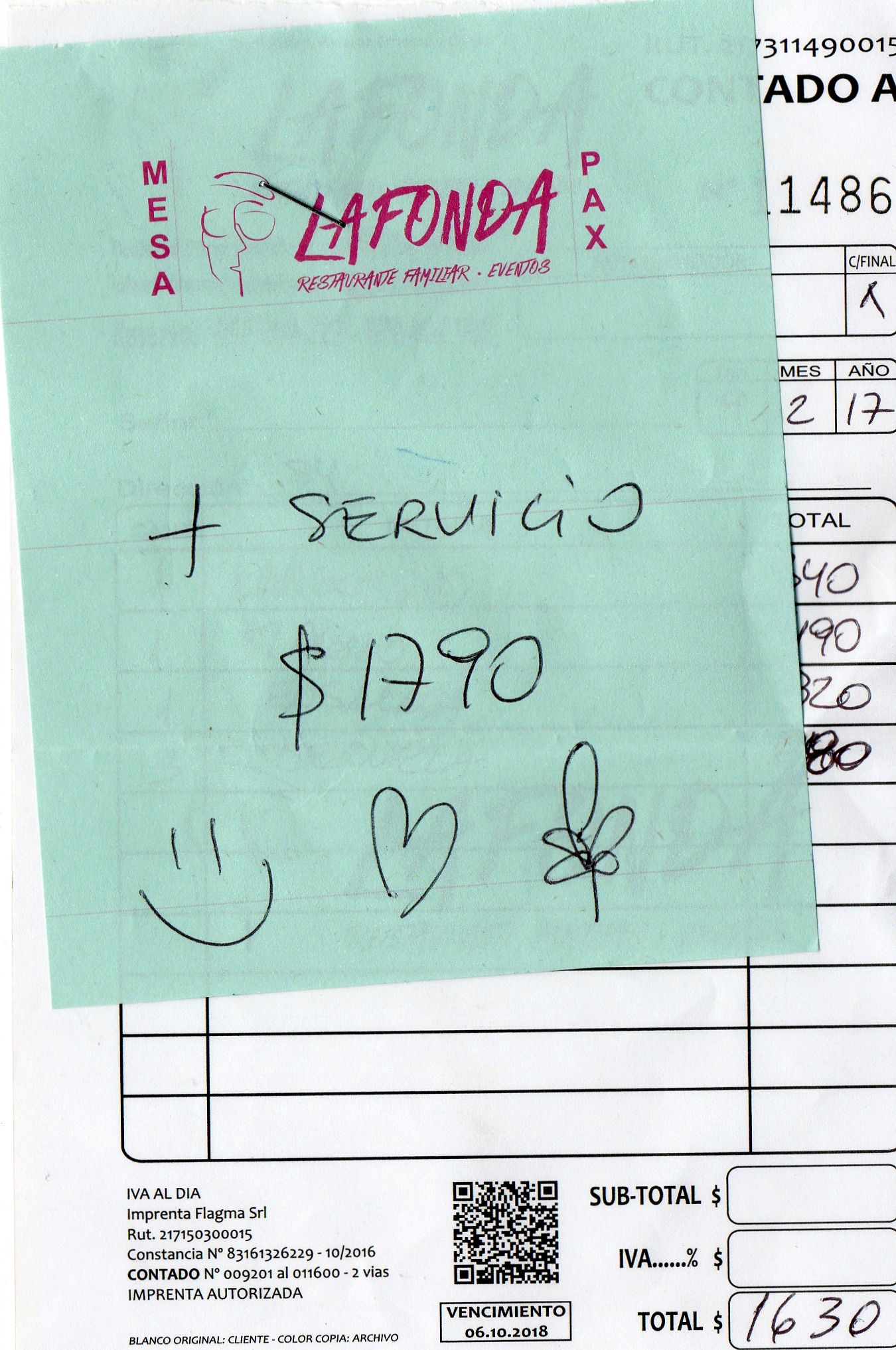
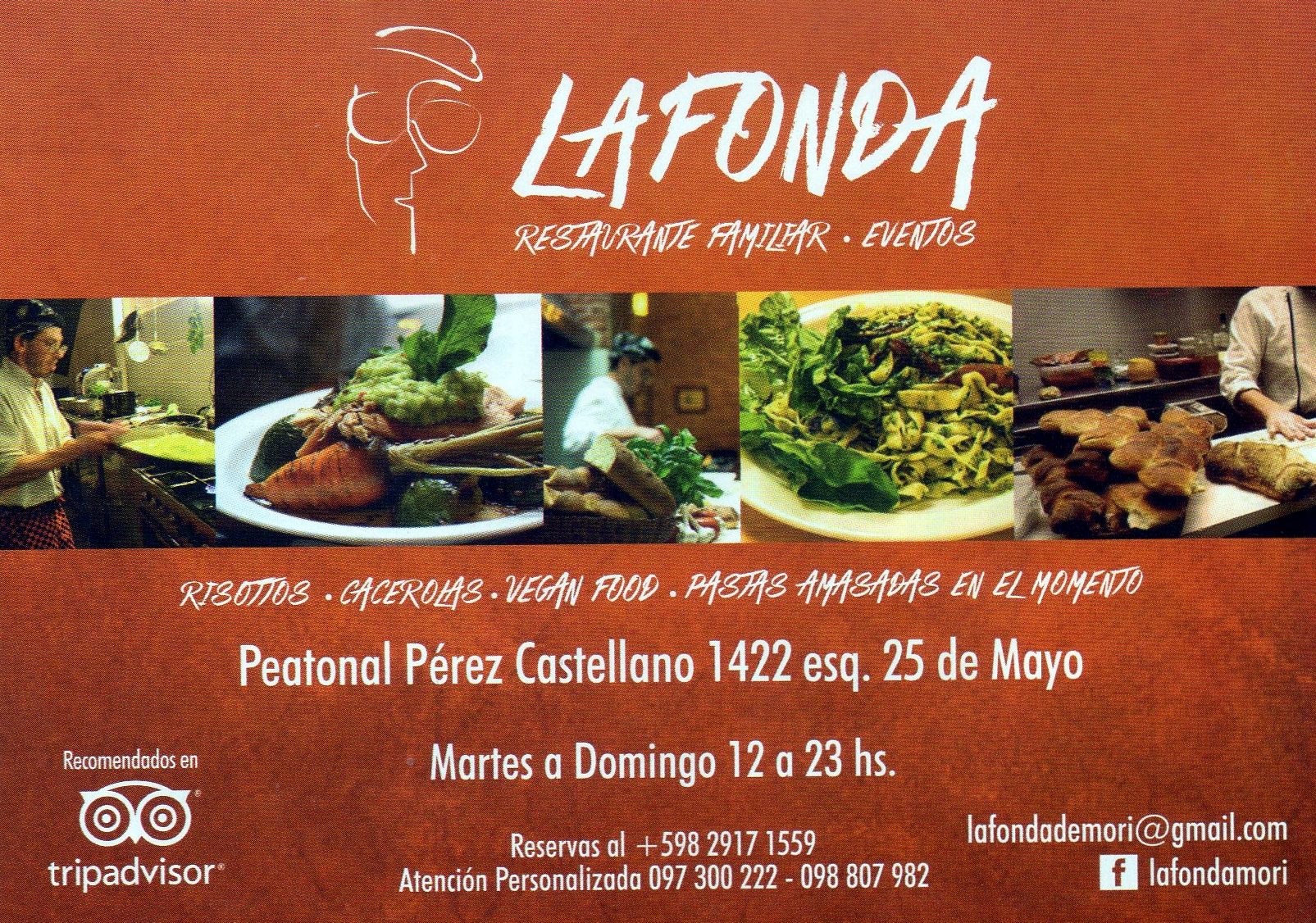
Finally, one of the best offers was freshly tapped beer. A delight on a warm summer day. They offer two different ones from Montevideo’s micro brewery DAVOC.  Delicious ! Only tear in my eye was the obvious note (attached directly to the bill) of 10% service tip. Positive, a small handout with all necessary details – notice both pics above. All together I can recommend to go there and check it out yourself. I will again, for sure.

Veröffentlicht unter Information, Lifestyle, Uruguay | Verschlagwortet mit | 2 Kommentare

Margarita is Out – Paloma is In

paloma-6a

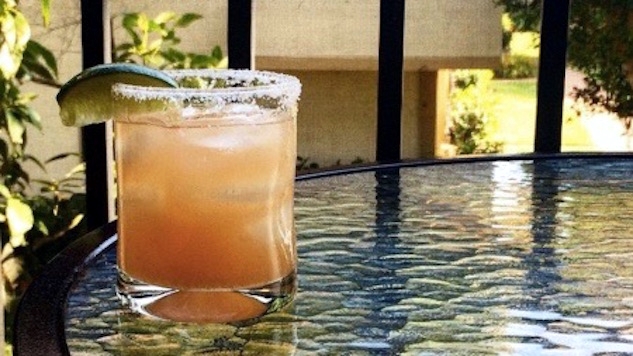
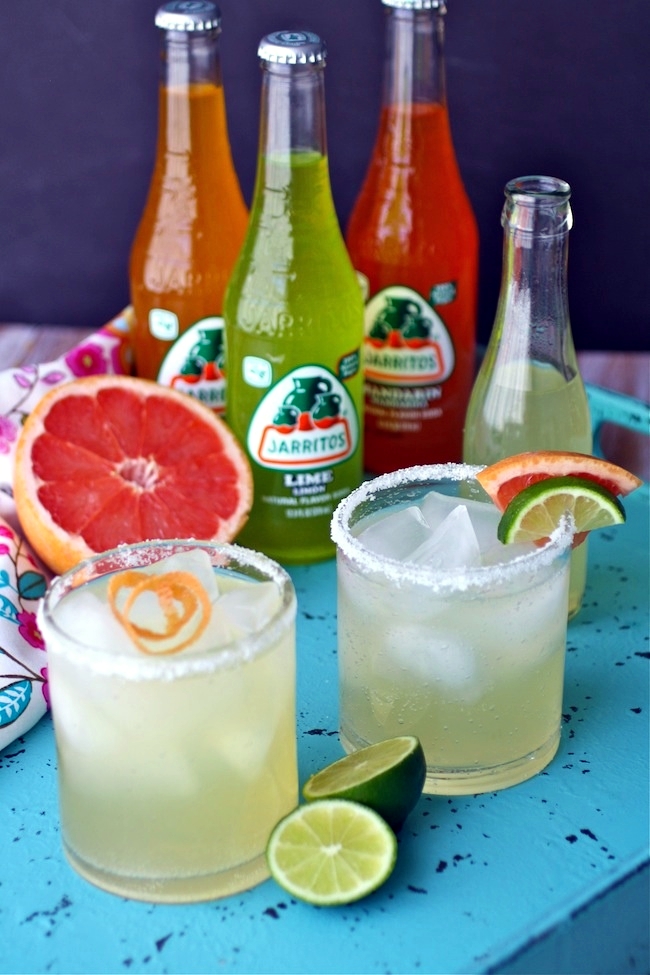
Margaritas may be popular in the US, but in Mexico the Paloma is king. I read that the tequila-based cocktail is the country’s best-selling and most popular. Very often ordered  in bars as a “refresco de toronja con tequila” or “squirt con tequila“.

paloma-1

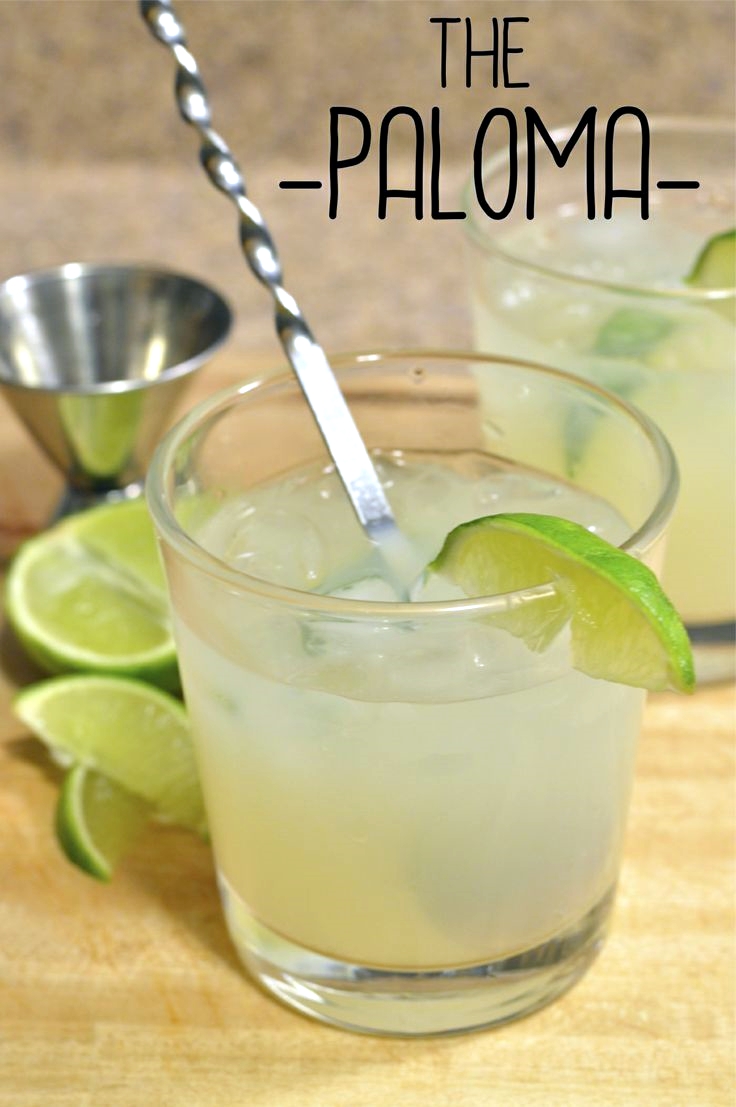
And „refreshing“ it is. The combination of tequila, fresh lime juice, grapefruit soda and salt is sweet and easy-to-drink in warm weather. It’s the kind of cocktail that could only be emerged in a climate like Mexico’s.
Not much is known about the origins of the Paloma, story tells that a barman, Don Javier  Corona is said to have created it sometime in the 1950s at his bar, La Capilla, in the small Mexican town of Tequila.

paloma-2

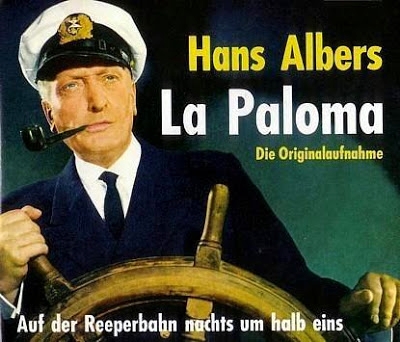
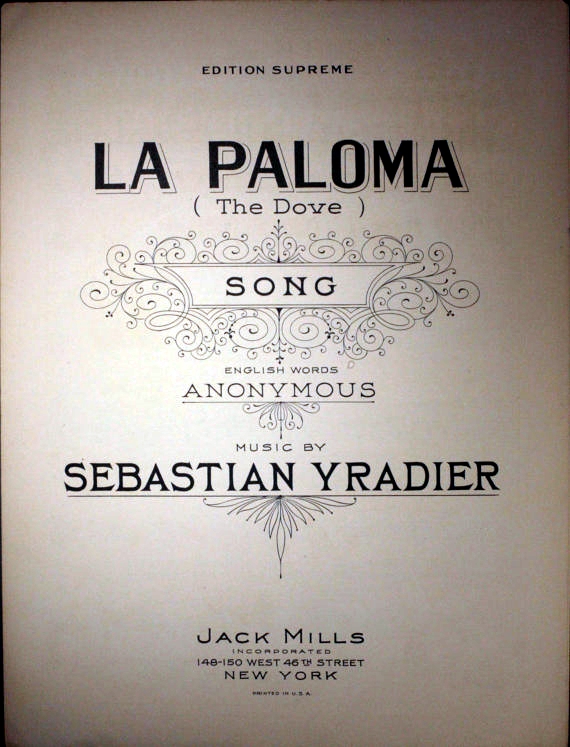
Paloma means “dove” in Spanish, and it’s suspected that Corona named the cocktail after the popular folk song “La Paloma” from the 1850s. The song was composed and written by the Spanish composer  Sebastian Yradier  in the 1850s. In 1859 it was registered at the copyright office in Madrid as a „Cancion Americana con acompanamiento de Piano“.

paloma-7         paloma-8

There is a standard Paloma recipe, but variations abound. Some people call for the addition of agave nectar, some others suggest fresh grapefruit juice and soda water. Again others even allow for subbing in lemon-lime soda and a splash of bottled grapefruit juice. But if you’re deviating that far from the original, then why not order something else.

paloma-3

Ingredients.

60ml , 2 oz tequila (blanco or reposado)
15ml , 1/2 oz lime juice,
380ml , 6 oz grapefruit soda (the traditional Mexican brands can be hard to find, but substitutes will do)
pinch of salt, rimming the glass with salt is a common variation.

How to do.

Combine tequila, lime juice and salt in a long-drink  glass with ice and top off with grapefruit soda. Garnish with a lime or grapefruit wedge.  Enjoy !!

Veröffentlicht unter Lifestyle, Recipes | Hinterlasse einen Kommentar

Must See – Meissen

meissen-3-steel-print-publ-1770

During my last Germany trip I could sadly spend a few days and nights only in this wonderful city, rich of history and full of sightseeing places.  Meissen is a „must see“ city and it was worth it. I like to share my impressions with you. Impressions and information’s I gathered during this trip.

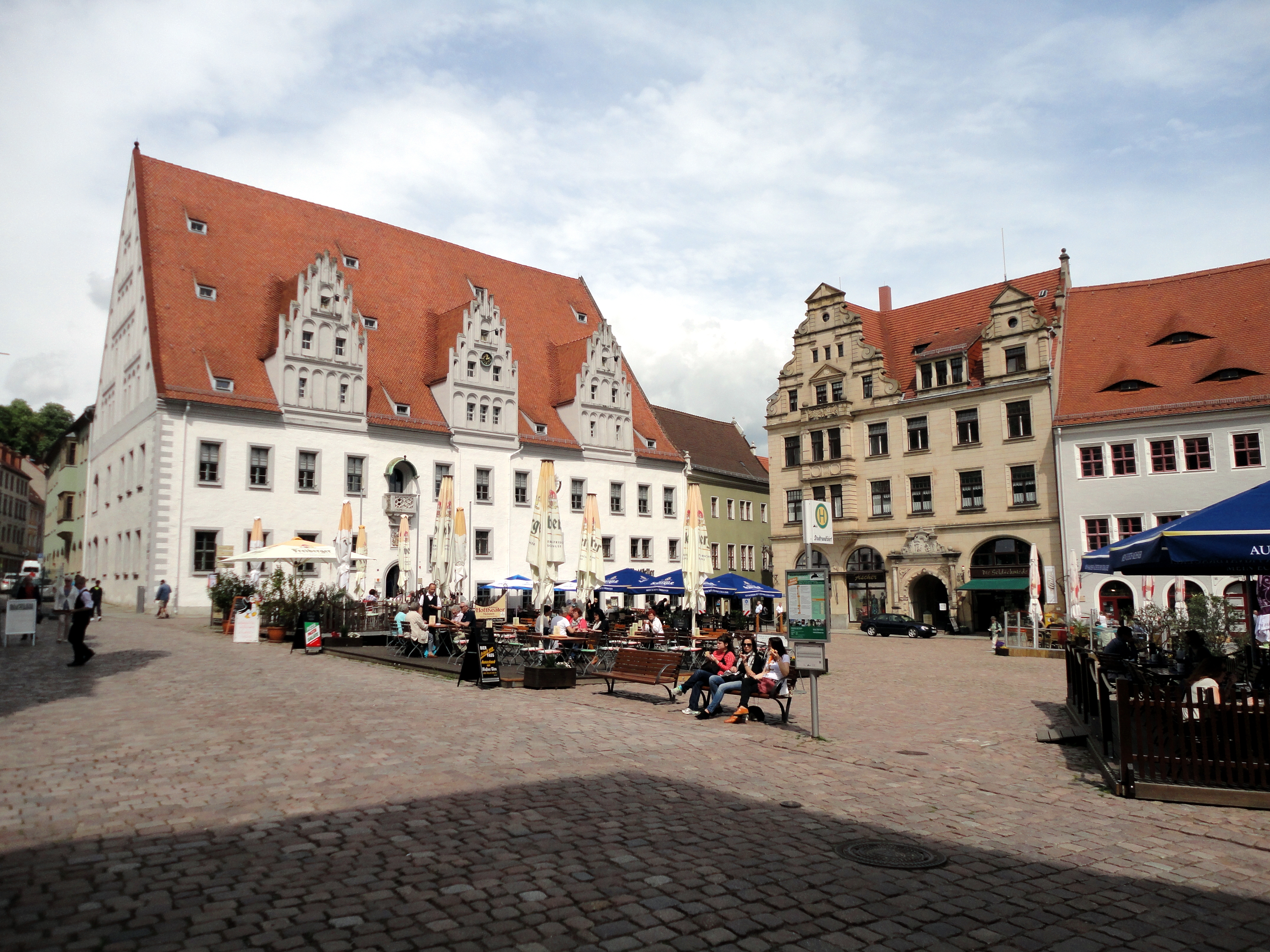
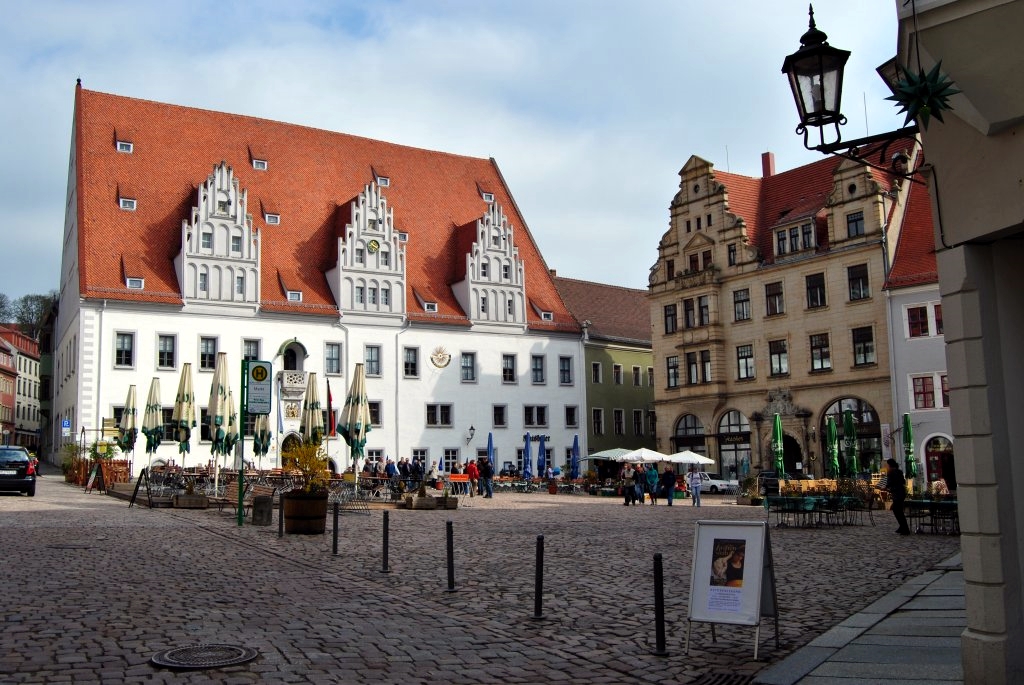
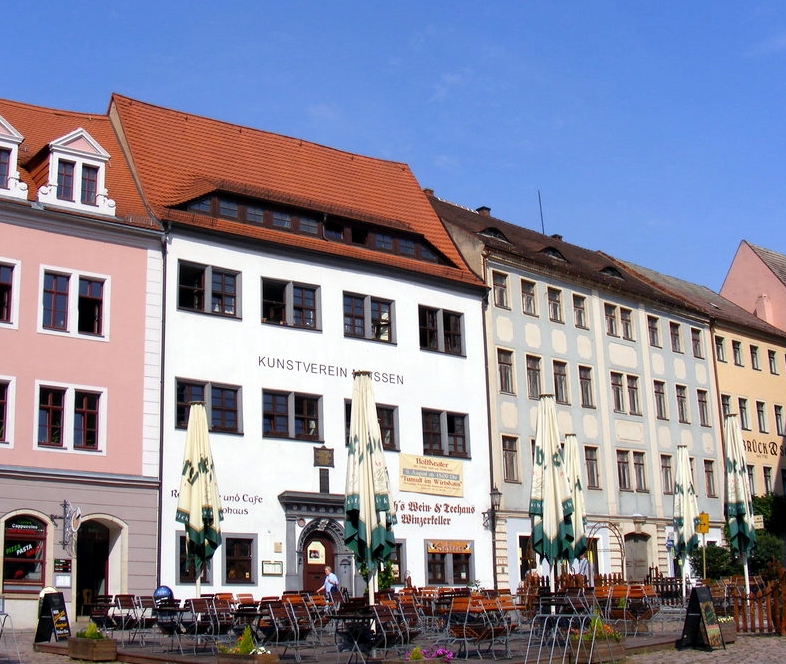
dsc01682   Meissen with the old „Rathaus“ (Townhall) left.


Meissen – a brief history.

With a history dating back more than a thousand years, Meissen has long been known as the „cradle“ of Saxony. That the town is worthy of such a name is clearly seen in its buildings – records of stone which bear witness to the different epochs of not only Saxon history but also the history of the Holy Roman Empire with Germany at its center.

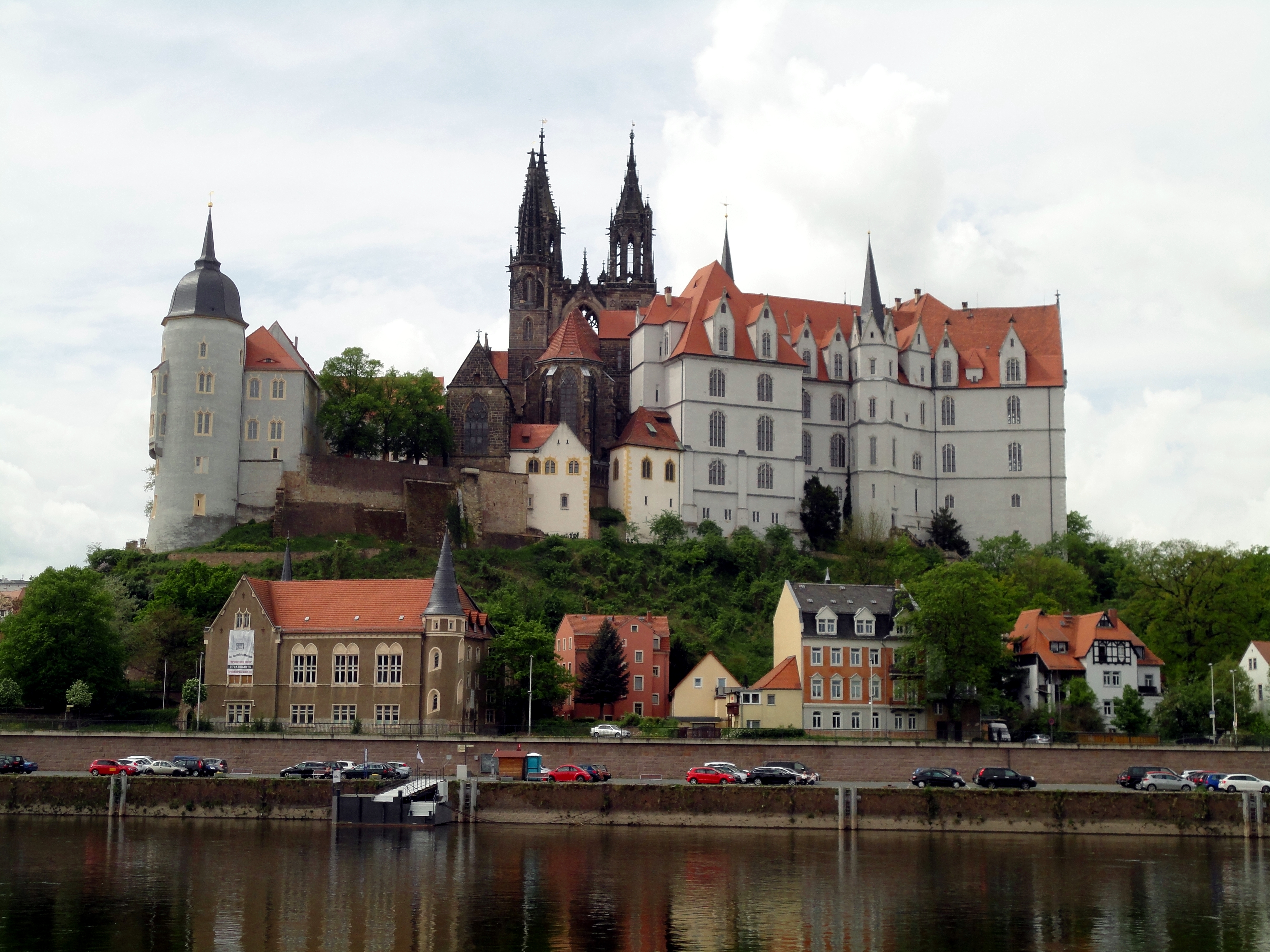
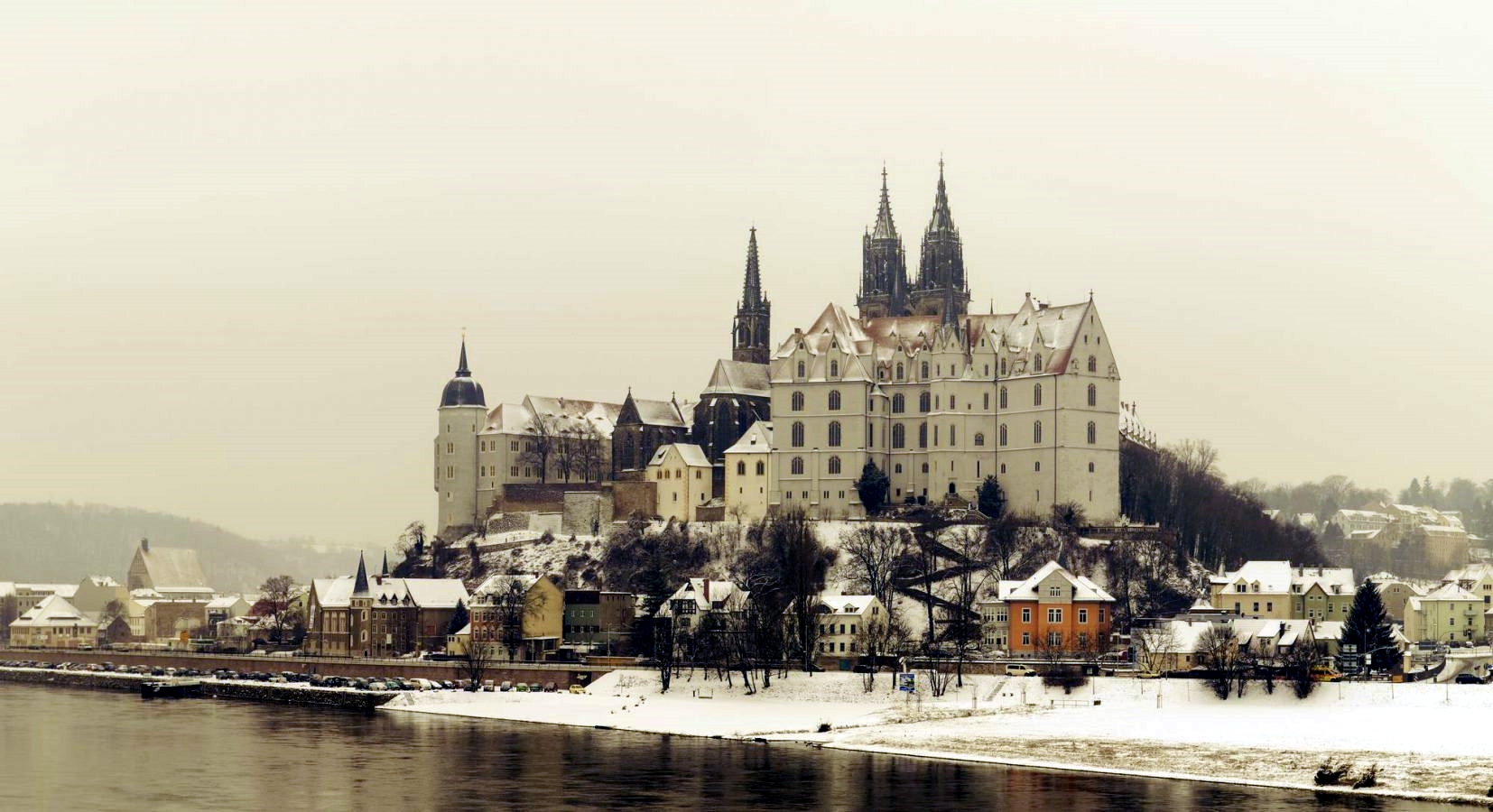
dsc01678  Castle and Cathedral above the city of Meissen.

This is manifest, for example, in the mighty ensemble of Albrechtsburg Castle and Meissen Cathedral on the hill above the town. With the romantic silhouette of the roofs of the Old Town below it, the hill offers a magnificent panorama and has become a favorite subject for photographers from the banks of the Elbe.

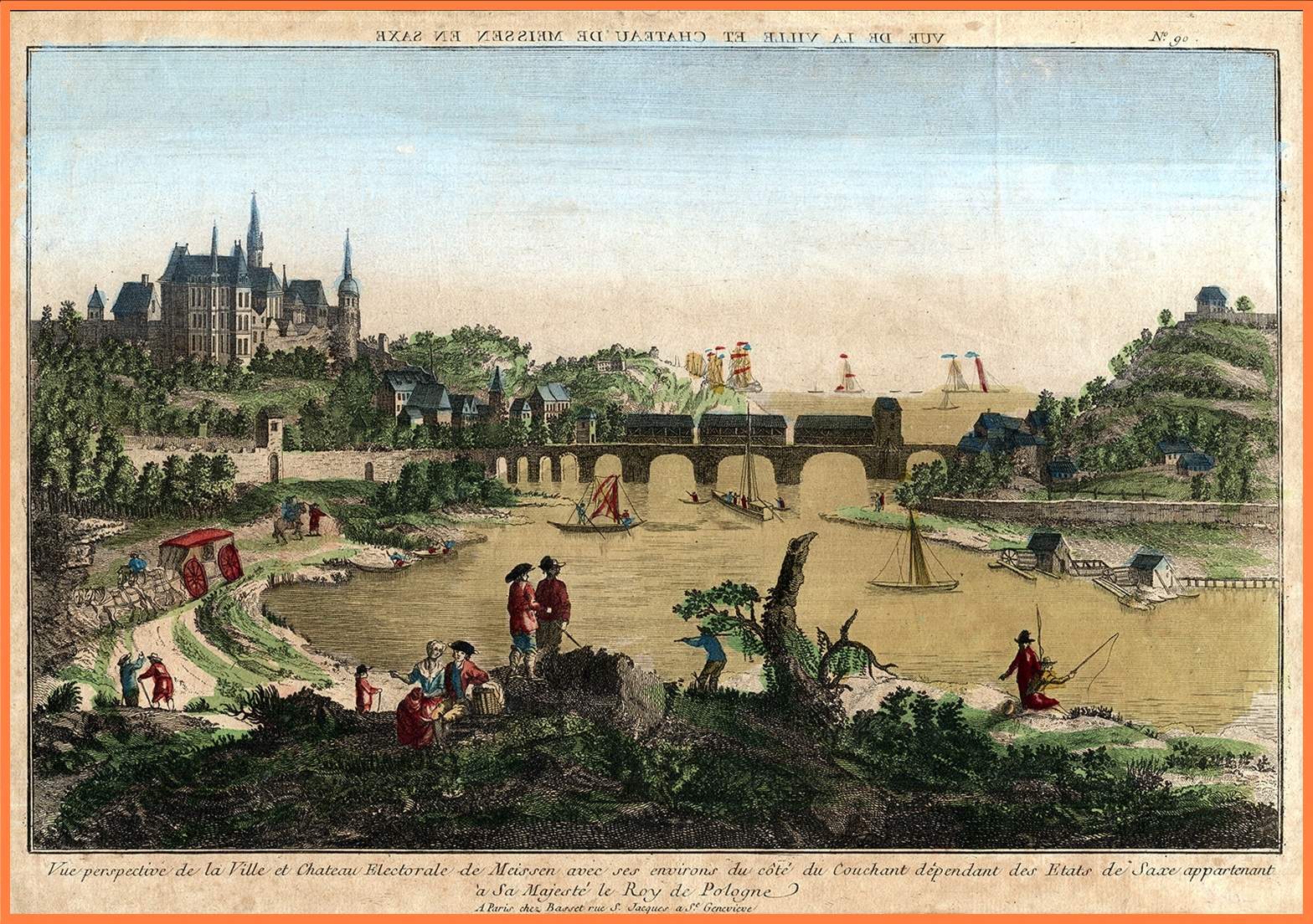
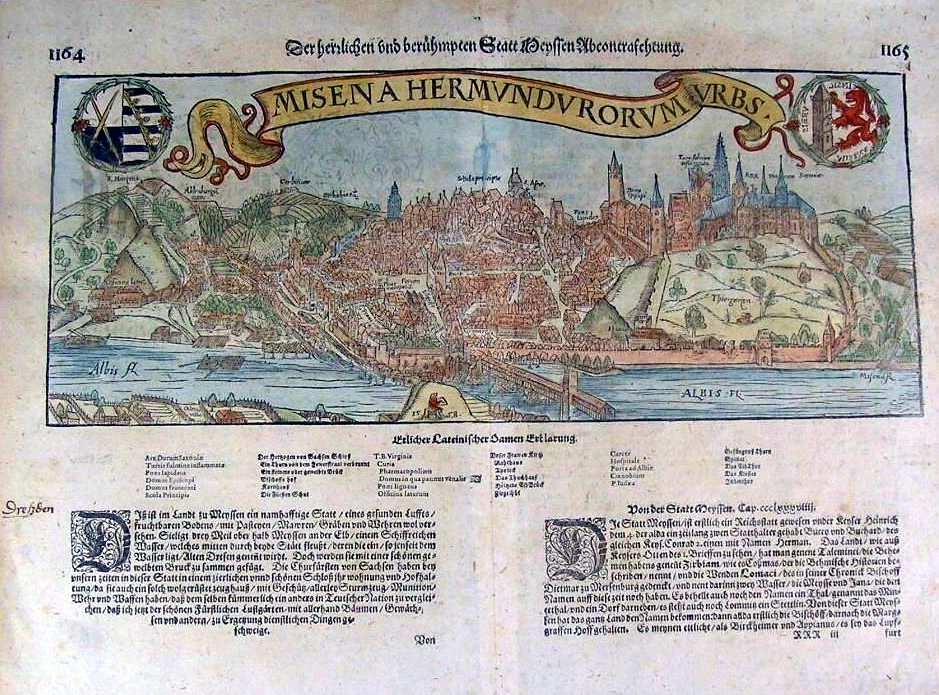
meissen-5a-wood-engraving-1628   Meissen, wood engraving from 1628.

Long ago, in the Middle Ages, the Wettin Princes became the margraves of Meissen, thus marking the beginning of Saxon history. Albrechtsburg Castle is regarded as being the first castle to be used a royal residence in the Germanspeaking world; built between 1472 and 1525, it is a fine example of late Gothic style.

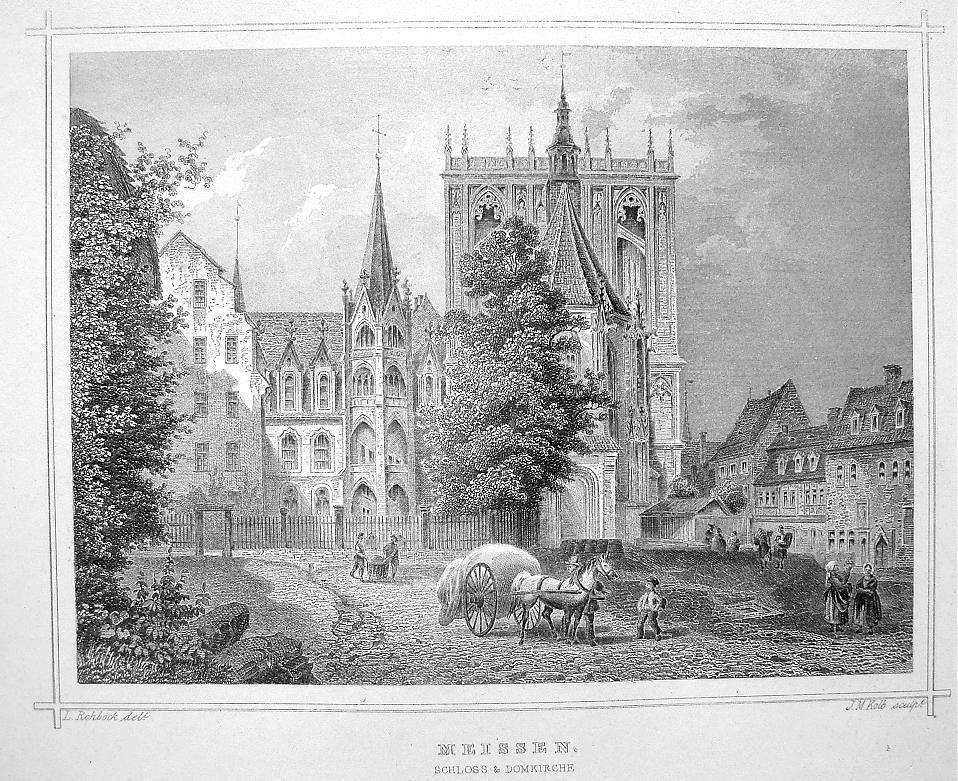
meissen-1-steel-engraving-rohbock-1860    Castle and Cathedral, steel engraving from 1860.

Today the castle, the former residence of the House of Wettin, is a museum which is just as popular with visitors as the cathedral, whose architecture is pure Gothic and whose Princes Chapel is one of the most famous burial places of the Wettin family.

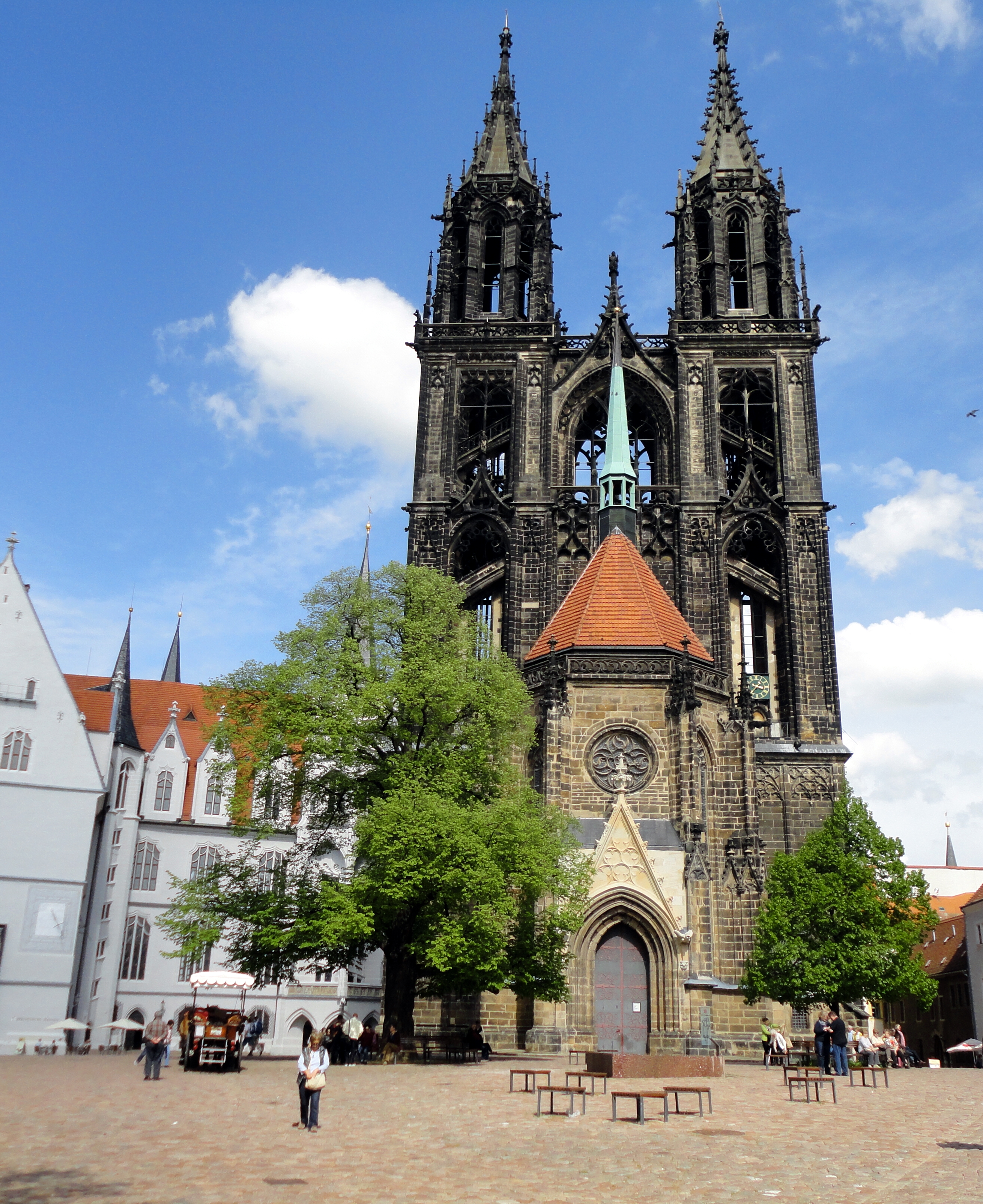
dsc01704a  Same view as above, but from 2015.

Equally imposing is the view from the 57-metre high tower of the Frauenkirche ( Church of Our Lady ), situated in the old market-place.
From here, the visitor will be tempted to take a leisurely stroll through the narrow medieval streets, with their quiet squares and steep flights of steps, past century -old patrician houses which today accommodate small shops, cafes and wine cellars.

meissen-10 meissen-10a
There is much to discover in Meissen. Behind every corner and in every alley a new photo motif. Remember to click on the pictures in my post. Most of them will expand for a better view.


Albrechtsburg and Cathedral.

The city’s history began, when king Heinrich I in 929 founded the fortress „Misnia“ on the castle hill high above the Elbe river, named after a nearby creek. From 968 on Meissen became the see of the newly created Bishopric of Meissen as well as the residence of the Margraves of Meissen, afterwards mainly from the House of Wettin.

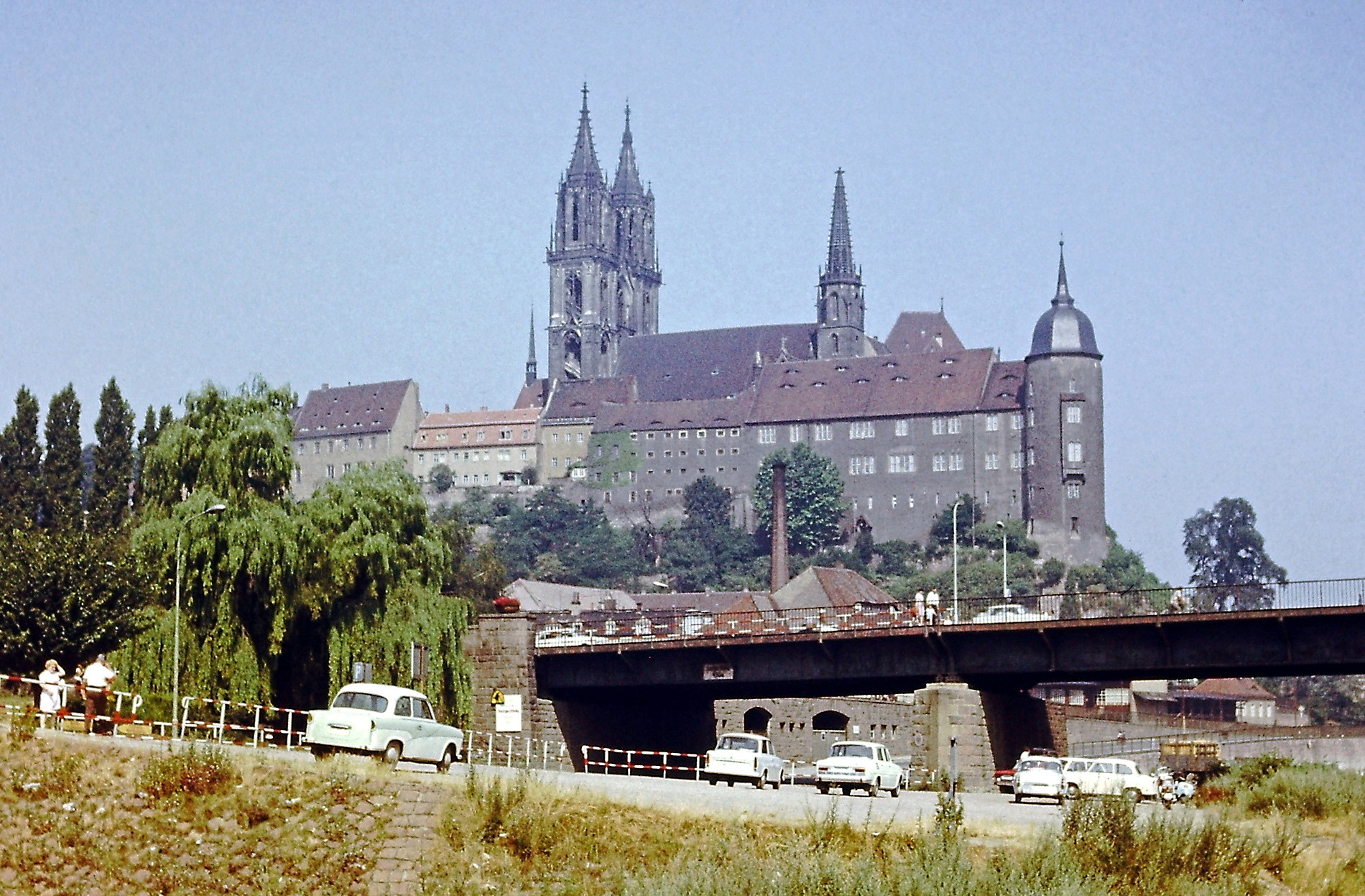
meissen-18  The castle hill during the GDR (German Democratic Republic) years. Favorite color: All shades of grey !  Notice the massive traffic and varieties of cars.

The former market settlement at the foot of the fortress soon developed into a town (town charter 1332), eventually becoming one of the most important cities in the country and the cradle of Saxony.

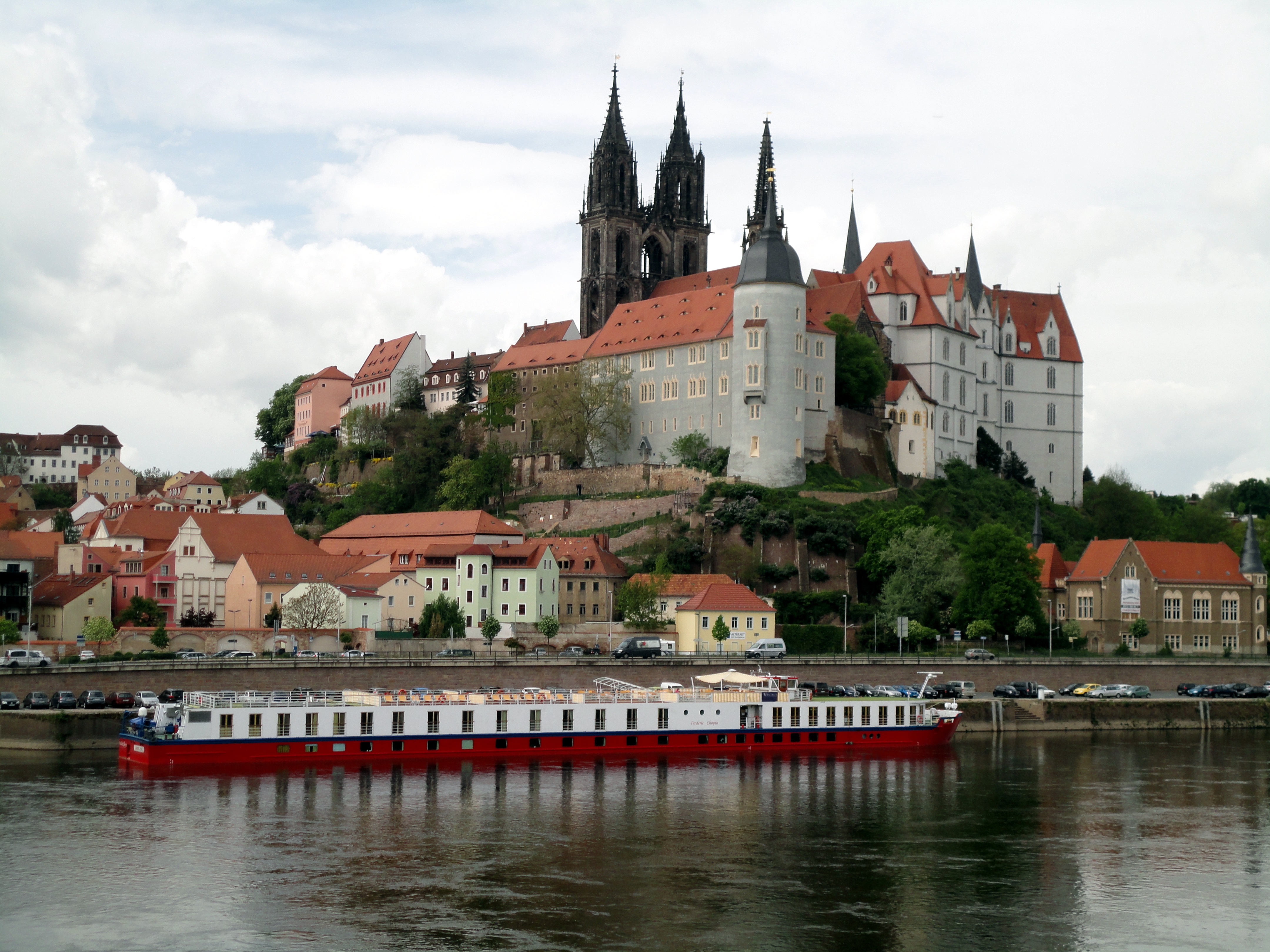
dsc01679  After renovation in united Germany.

The building of the present castle, Albrechtsburg, was begun in 1471 in Late Gothic
style and is considered to be the first construction of a castle in German history.

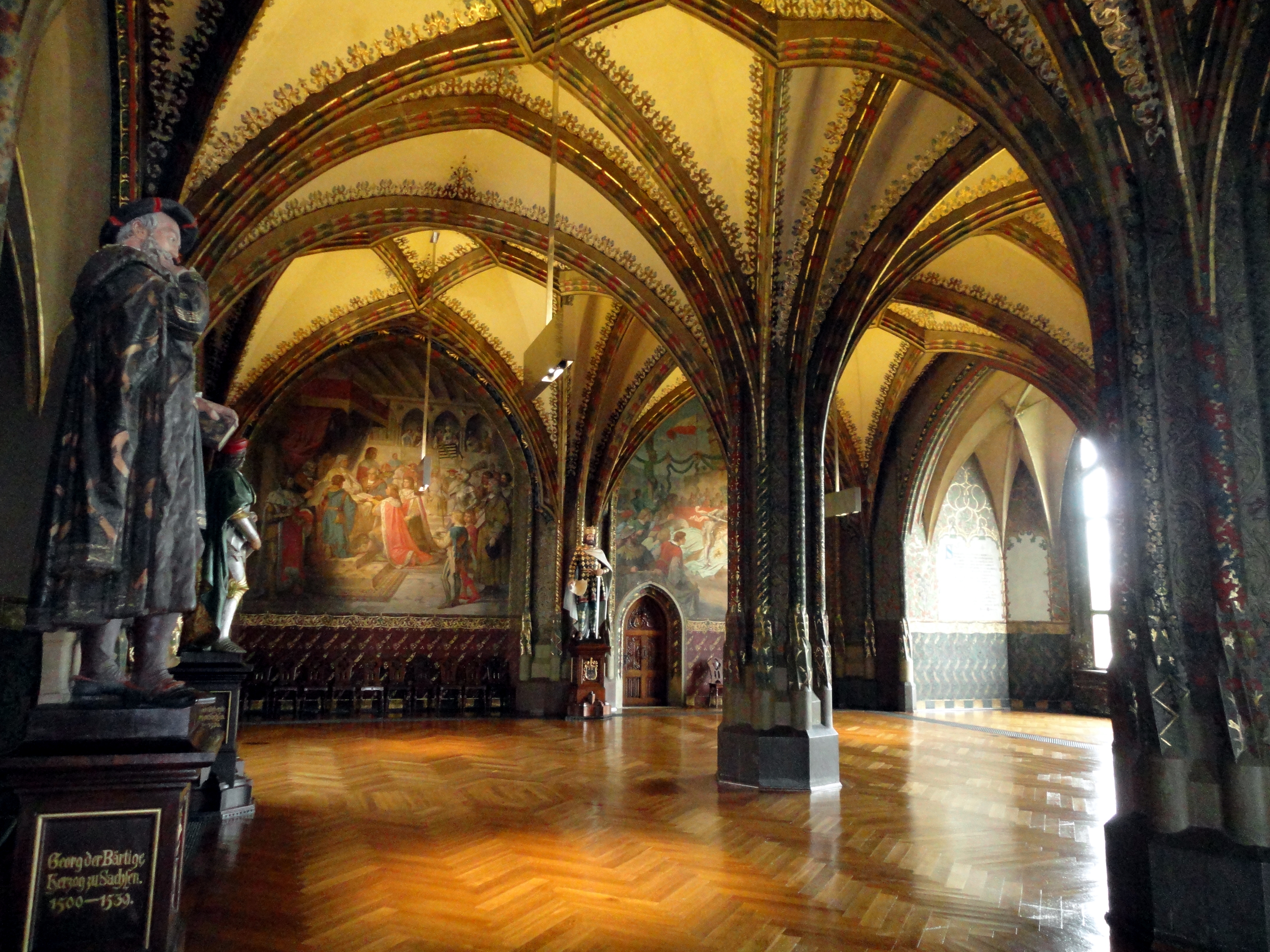
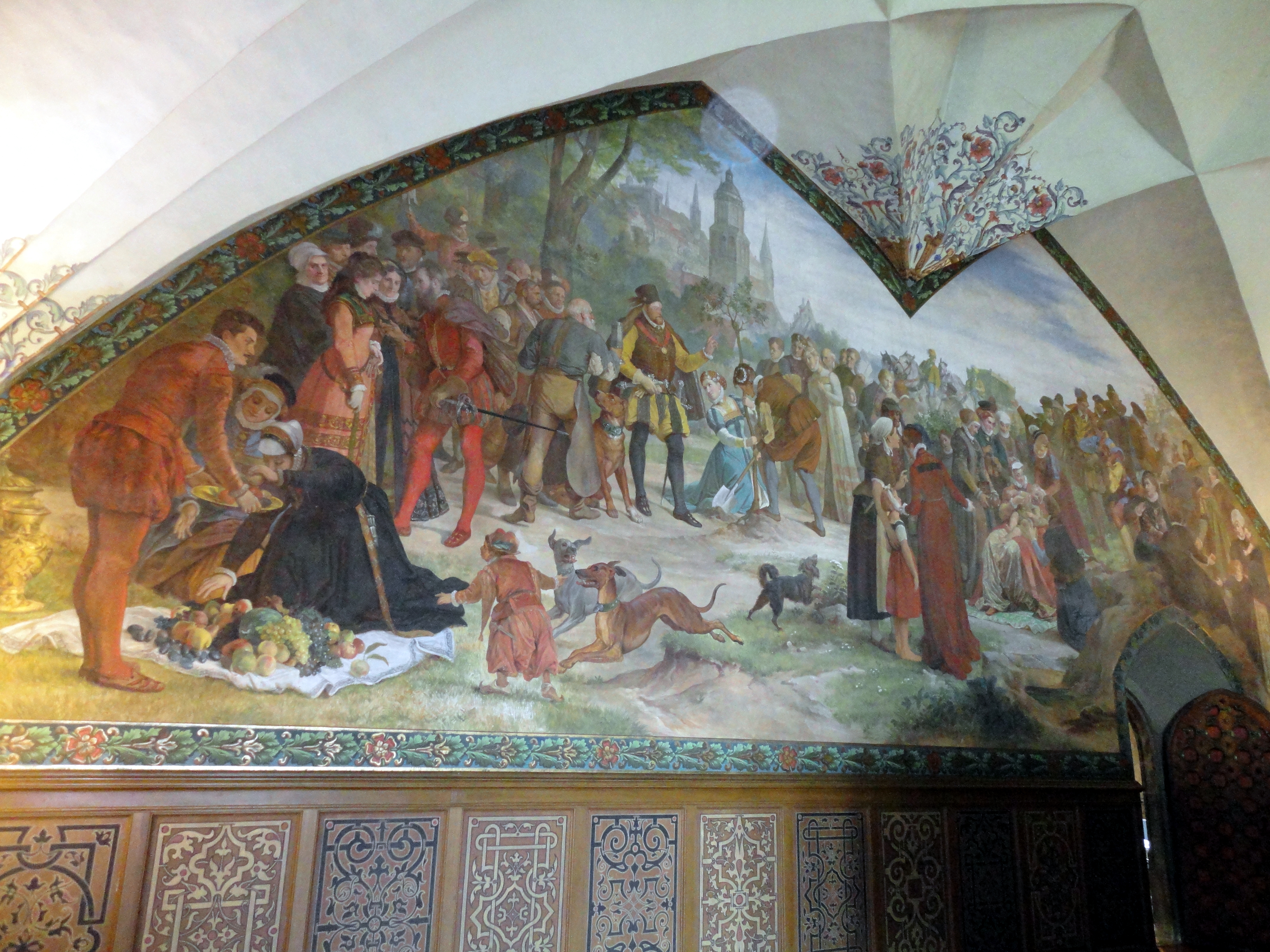
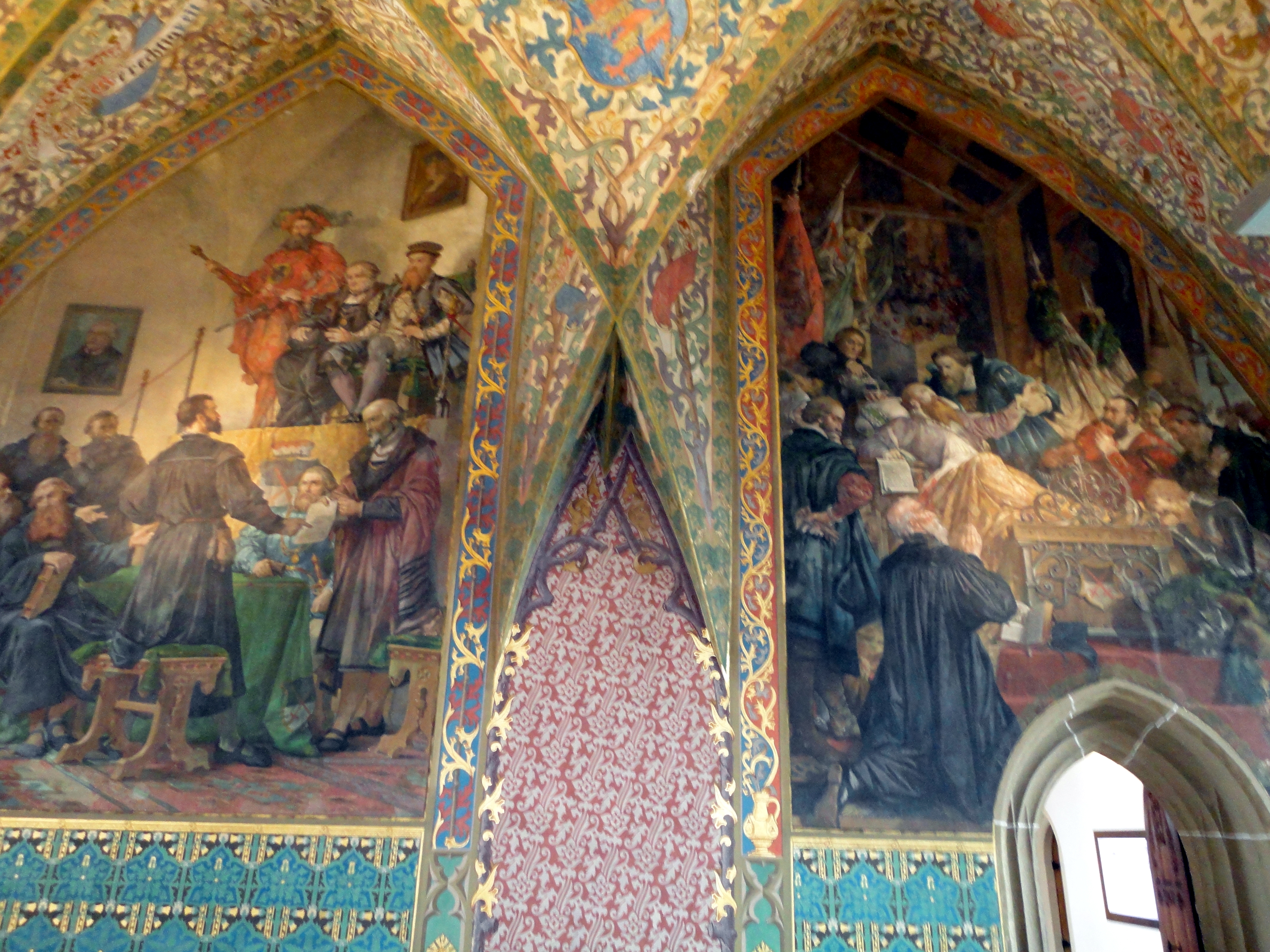
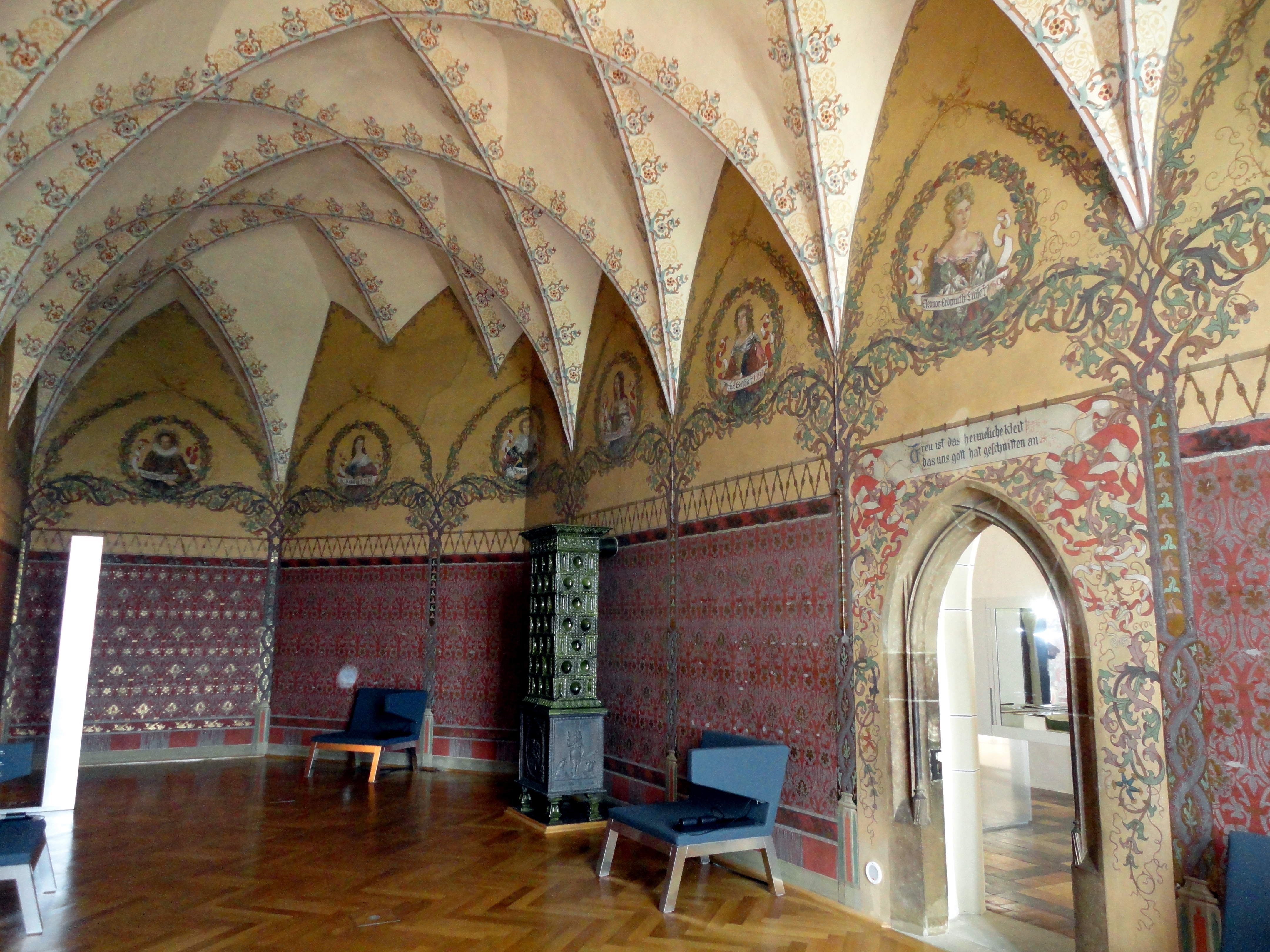
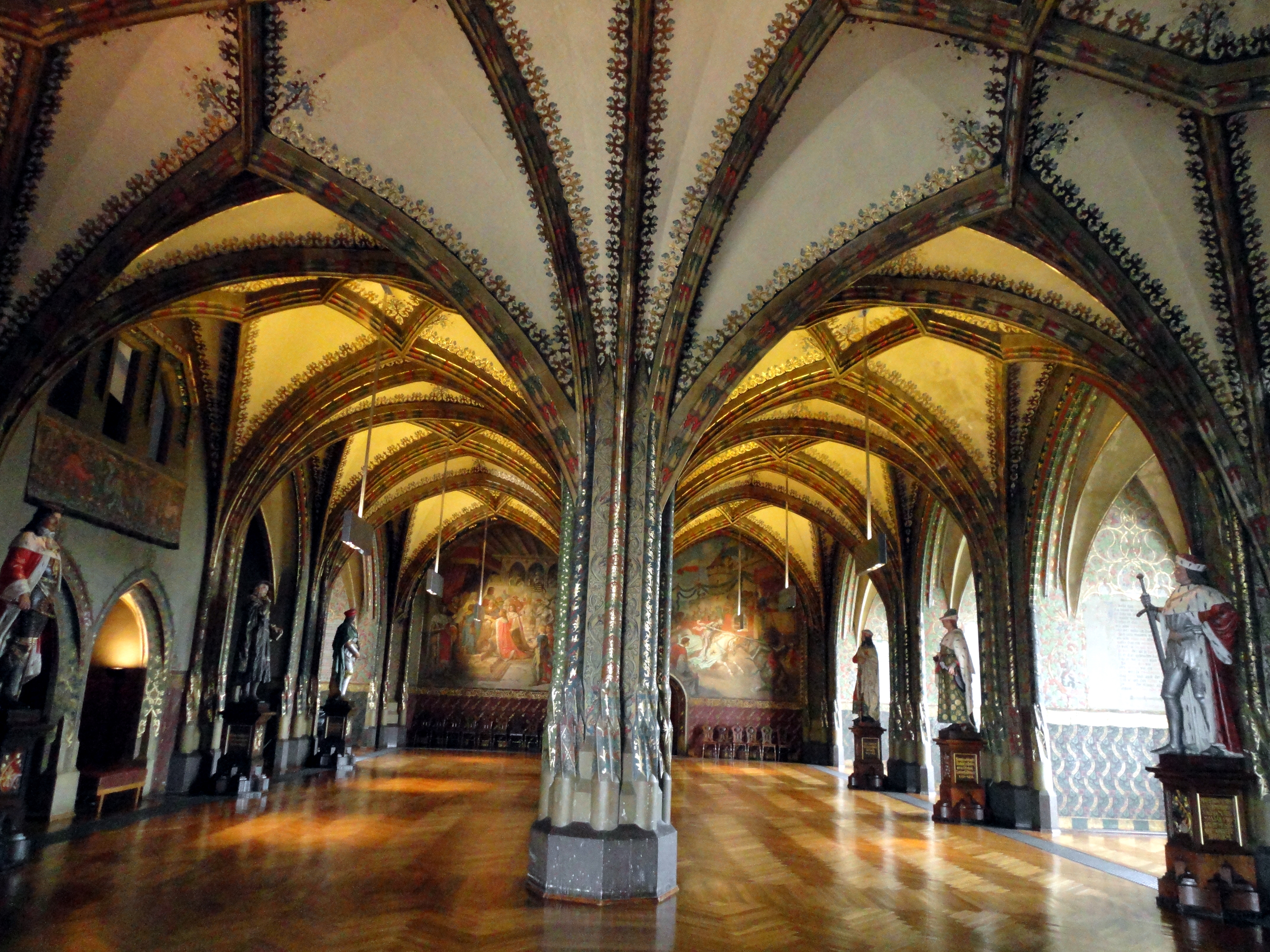
dsc01686    dsc01693  Some views from inside the Castle which is a museum now.

dsc01692   dsc01694

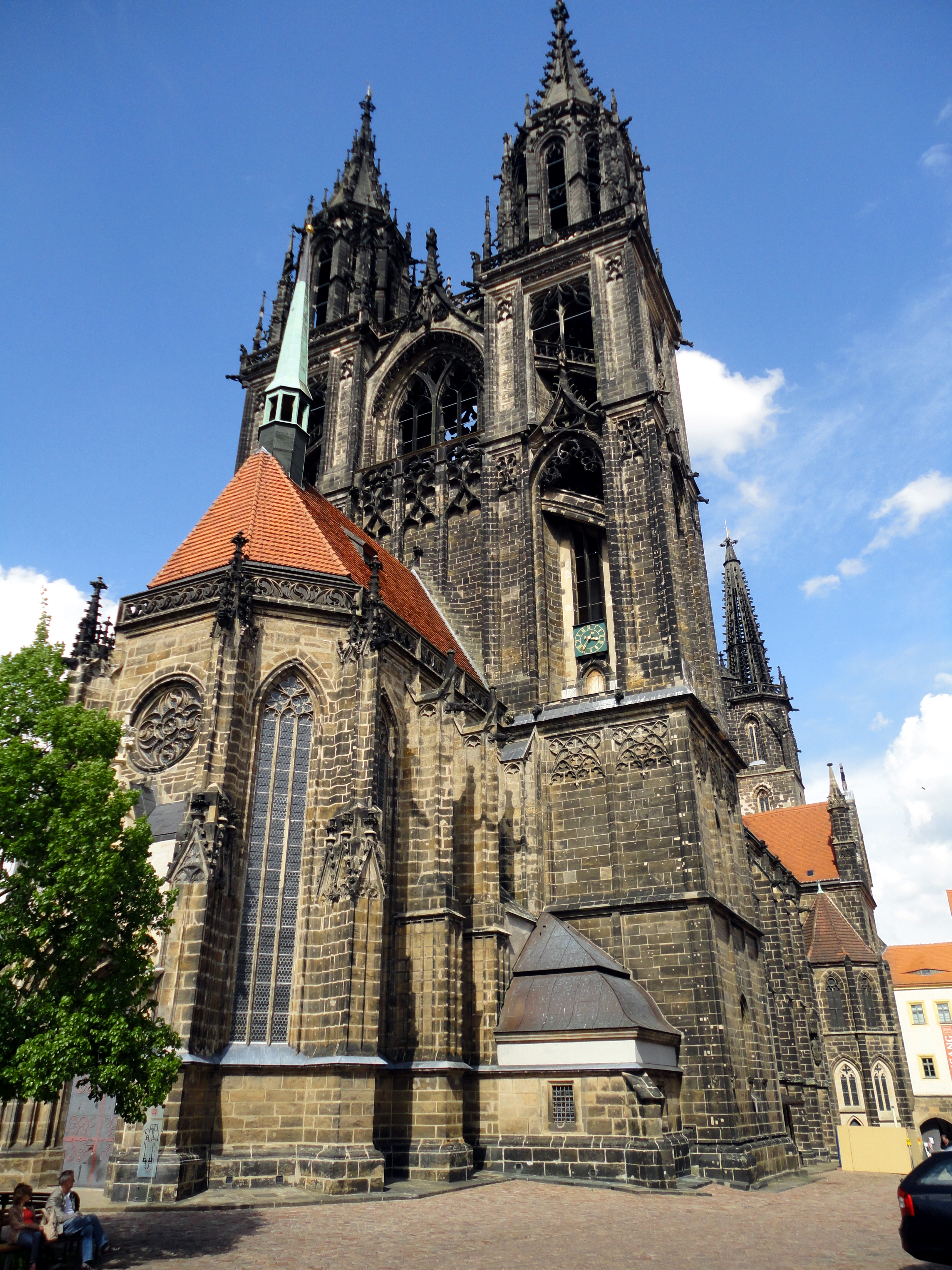
The construction of the adjacent Gothic cathedral was started in 1260. In 1425 the Prince’s Chapel was added as the burial place of the House of Wettin. The twin steeples were not attached until 1909. In 1581 the Meissen diocese was dissolved during the Protestant Reformation. Since 1979 the cathedral has belonged to the diocese Dresden-Meißen.

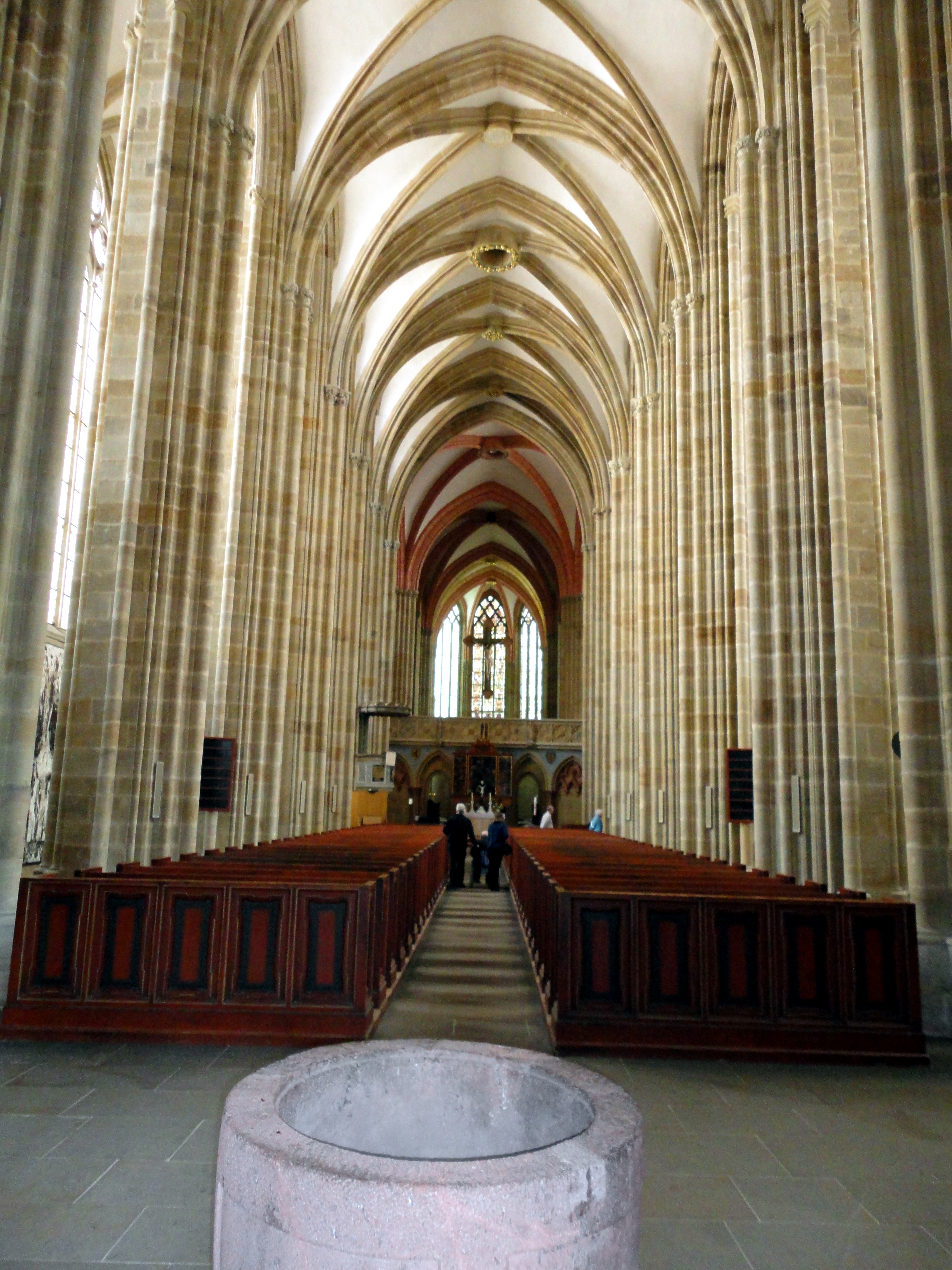
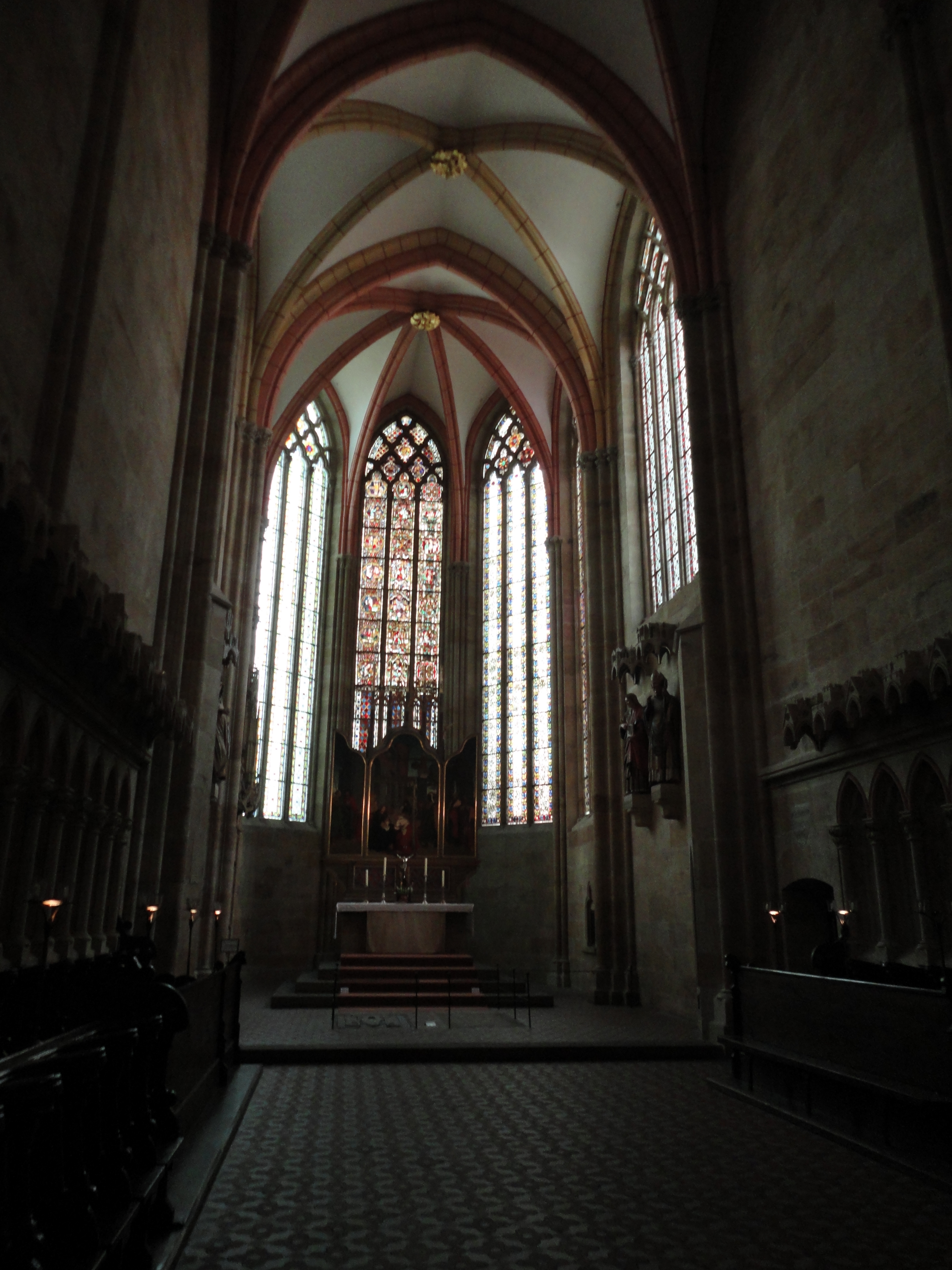
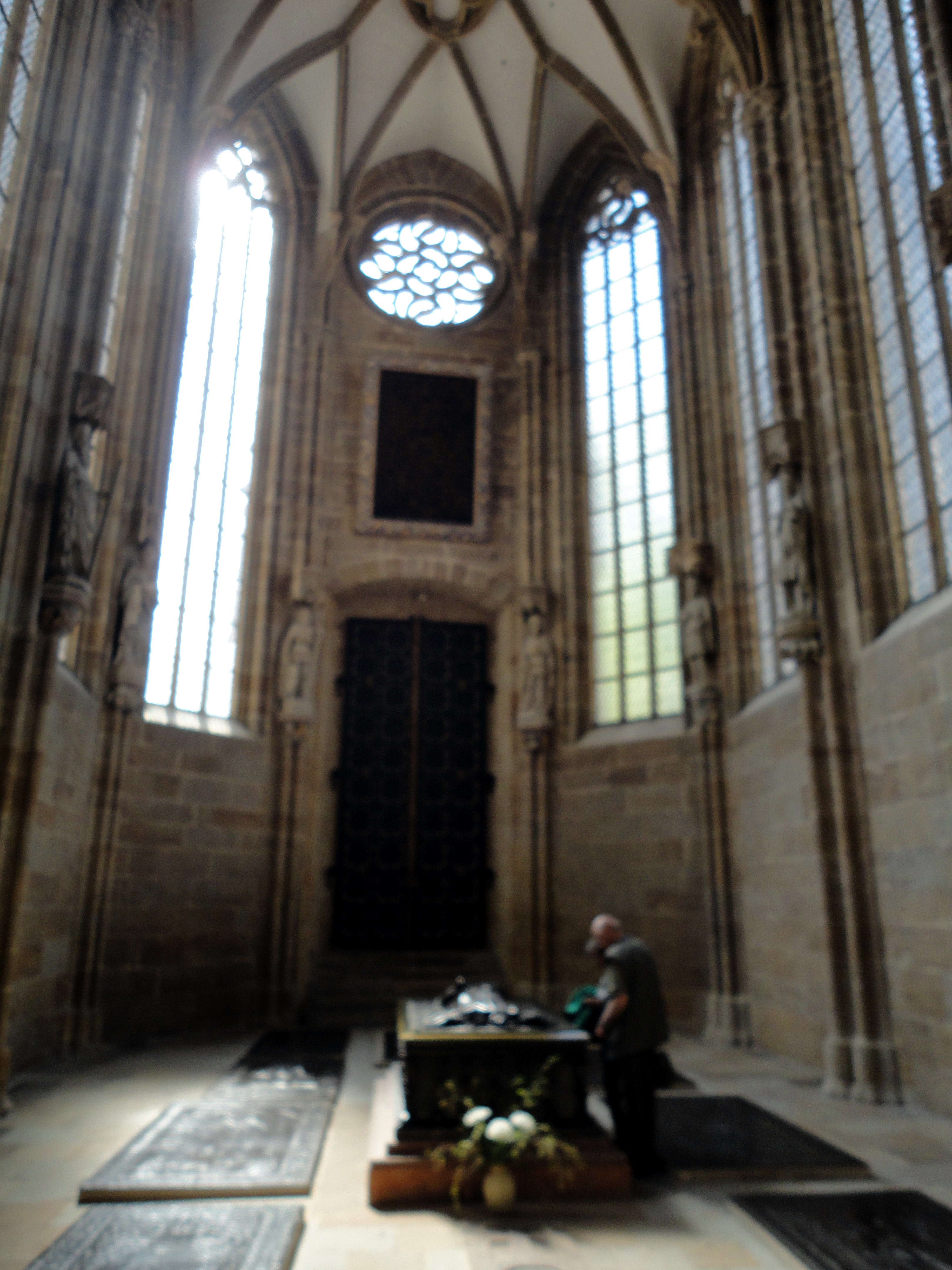
dsc01703       dsc01700    dsc01702       dsc01701  Inside the Gothic Cathedral, the nave, tuftstone and altar. Far right the Prince’s Chapel with bronze grave slabs.

Both, the Albrechtsburg as well as the cathedral, have been elaborately restored and amaze the visitor by their magnificence and grandeur.
The Albrechtsburg is now a museum, presenting itself in royal splendor and providing the perfect frame for the exhibited masterpieces of Meissen porcelain.

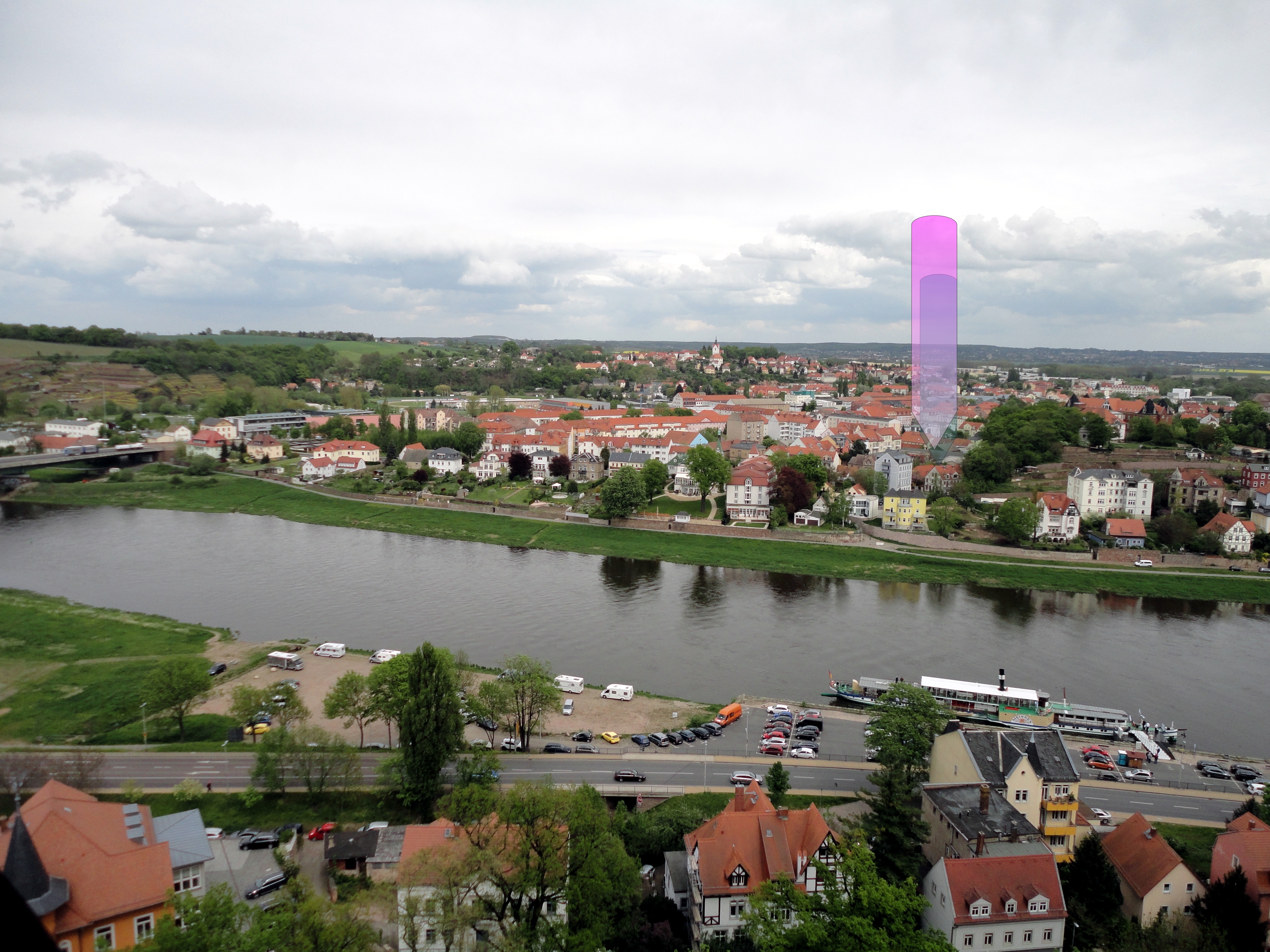
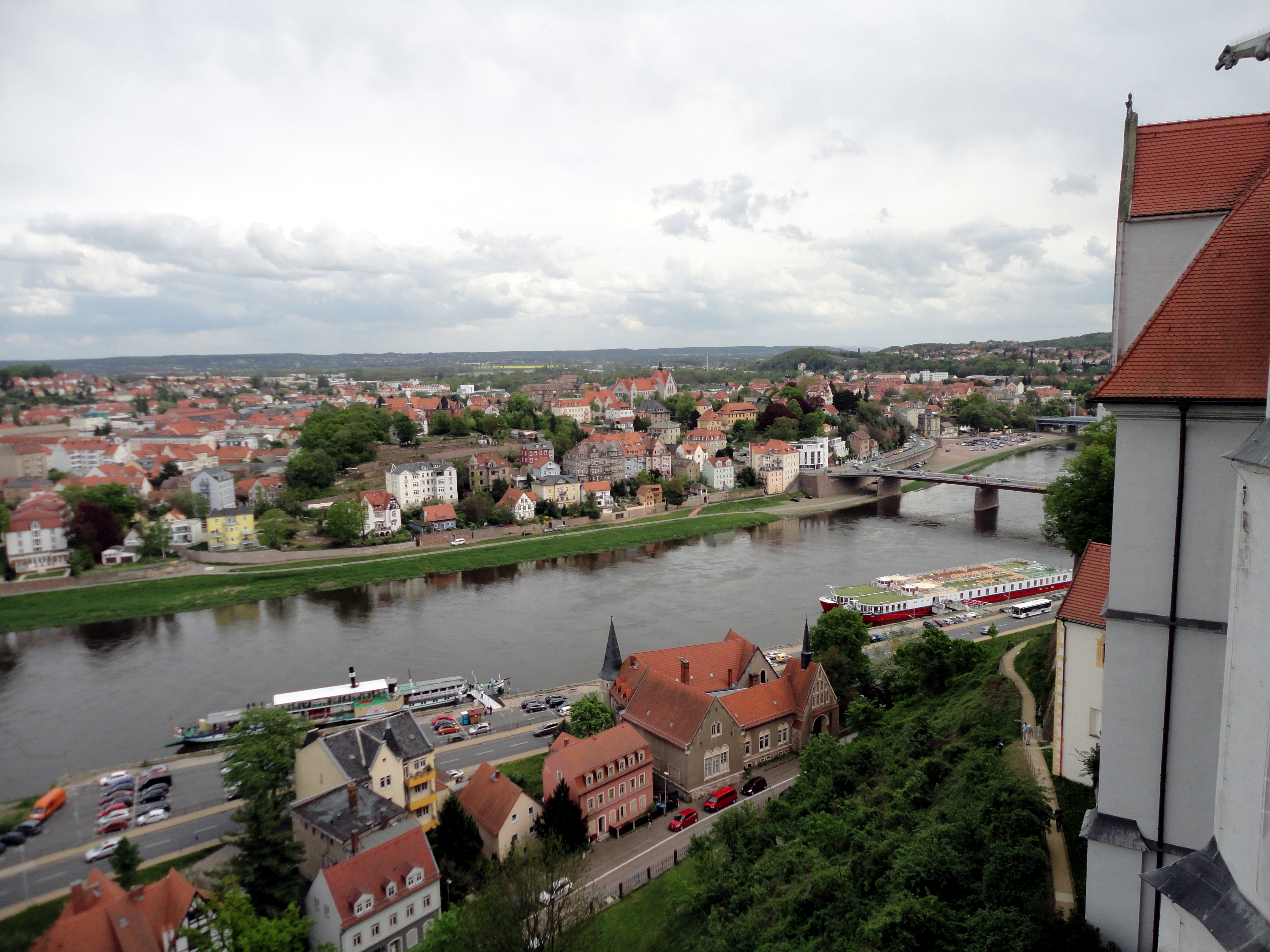
dsc01690   dsc01691  From the 5th floor one will have a great view over the river Elbe and parts of the city. The pink arrow shows the „Hotel Faehrhaus“ I was staying. Out of my room window magnificent views onto the castle hill. See down here.
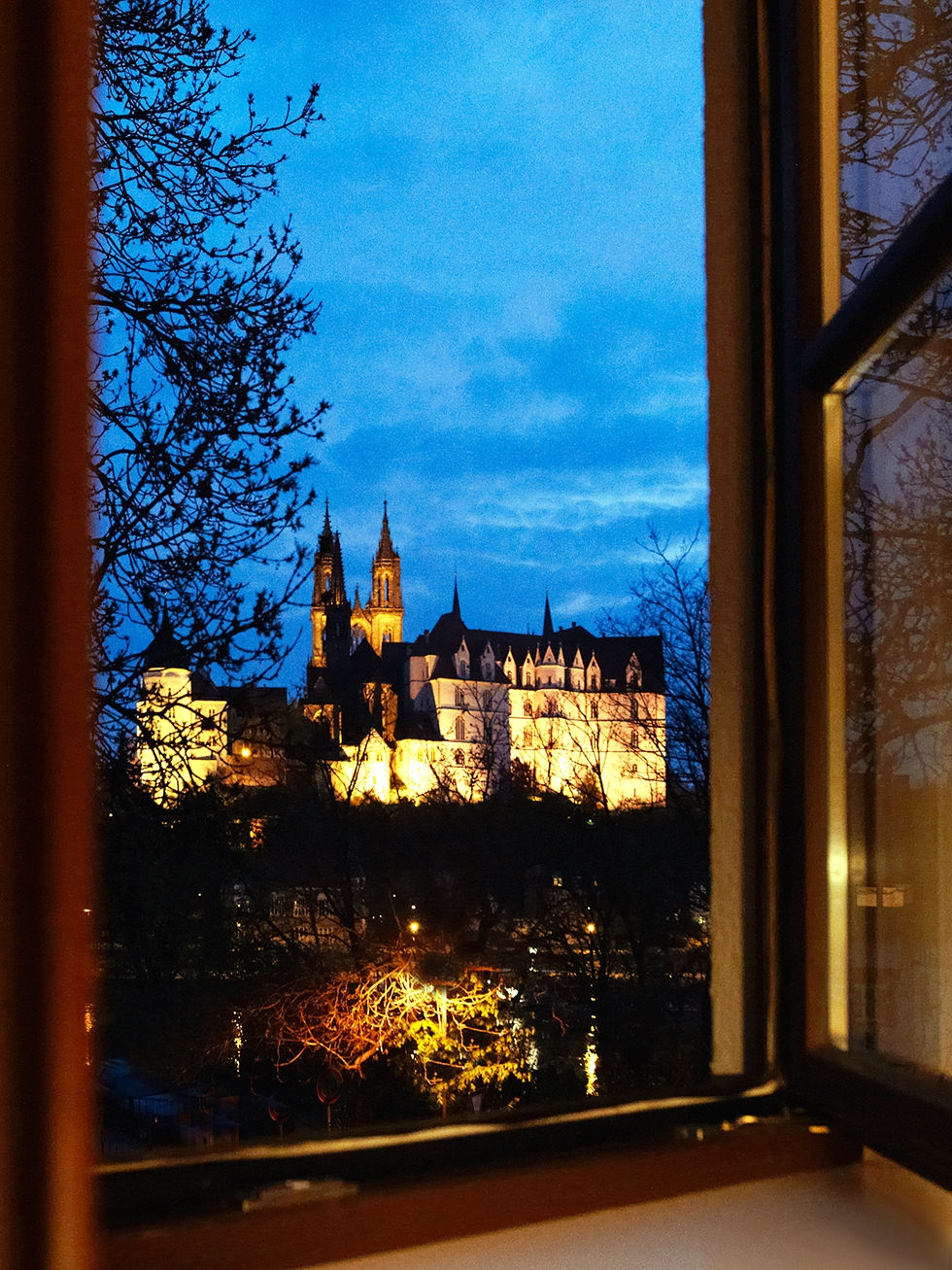
meissen-16e       meissen-16g   Beautiful  illumination during the night. View out of my hotel room window at the Faehrhaus. I stayed here in springtime when the Magnolia trees were in full blossom. See hotel description further down.
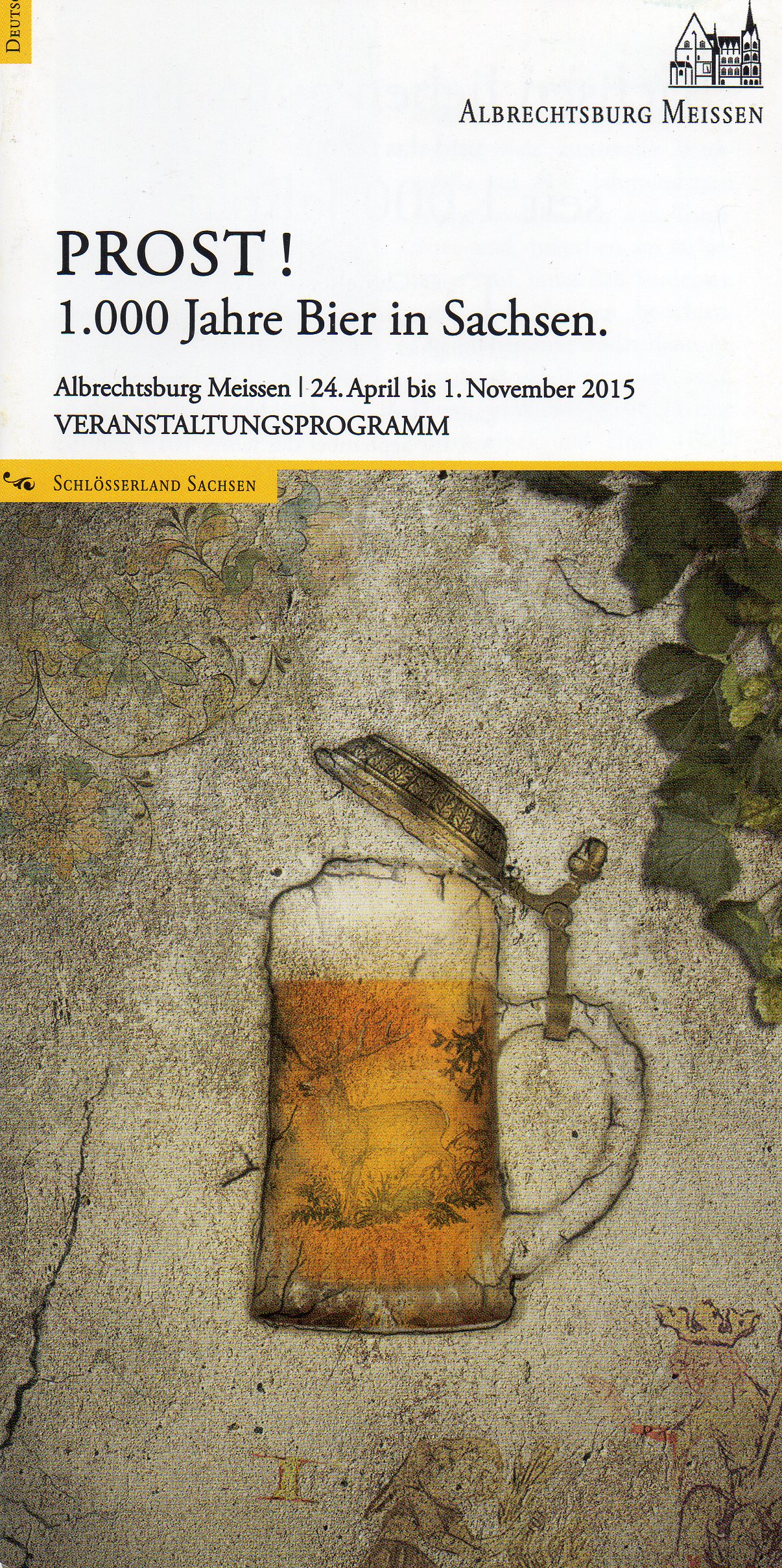
img161       When I was there it was an exhibition on in the Albrechtsburg about „1000 years of beer in Saxony“ – with free tastings – HA, lucky me !!

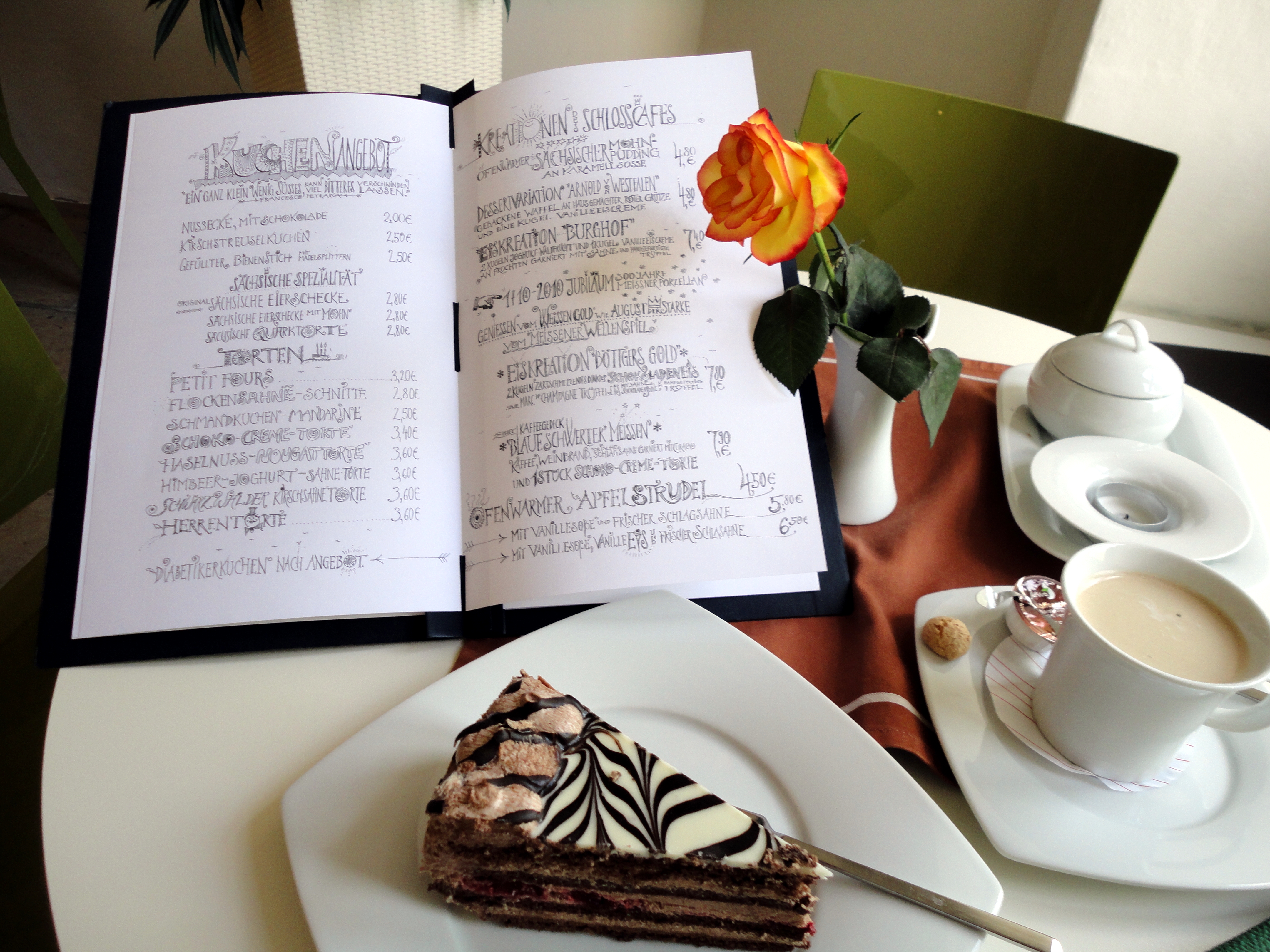
After climbing the castle hill and climbing all 5 floors of the castle and walking miles through all the beautiful exhibitions with beer tasting and more, I decided to have a coffee and cake at the castle cafe. Mouthwatering cakes shown in a handwritten menu. They have a similar menu for ice cream See the table decoration just for one person, the candle was lit from a friendly girl just after I took the pics. All together 6,40 euro.

dsc01688    dsc01698

Don’t worry, I won’t complain about lifestyle and sales manners etc. in Uruguay, just comparing, in Punta del Este we got a loveless thrown piece of cake on an ugly table for US$ 10,– plus US$ 4,50 for the coffee. BUT – we were sitting across the harbor, ja ja !!

dsc01680   This is how they advertised Meissner Porcelain in earlier centuries. Massive pieces of art and craftsmanship.


Meissen Porcelain.

In 2010 the Meissen porcelain factory celebrated its 300th anniversary of founding.
1710 King Augustus the Strong established the first European hard-paste porcelain factory at Castle Albrechtsburg. That was short after the mathematician and physicist Ehrenfried Walther Graf von Tschirnhaus and the alchemist Johann Friedrich Boettger in 1708 had succeeded in manufacturing the first white European porcelain . The invention of the „White Gold“ was of great significance, in particular with regard to the Chinese monopoly in this market.

meissen-13a   This is how they advertise Meissner Porcelain today. For sure also a nice piece of art and craftsmanship.

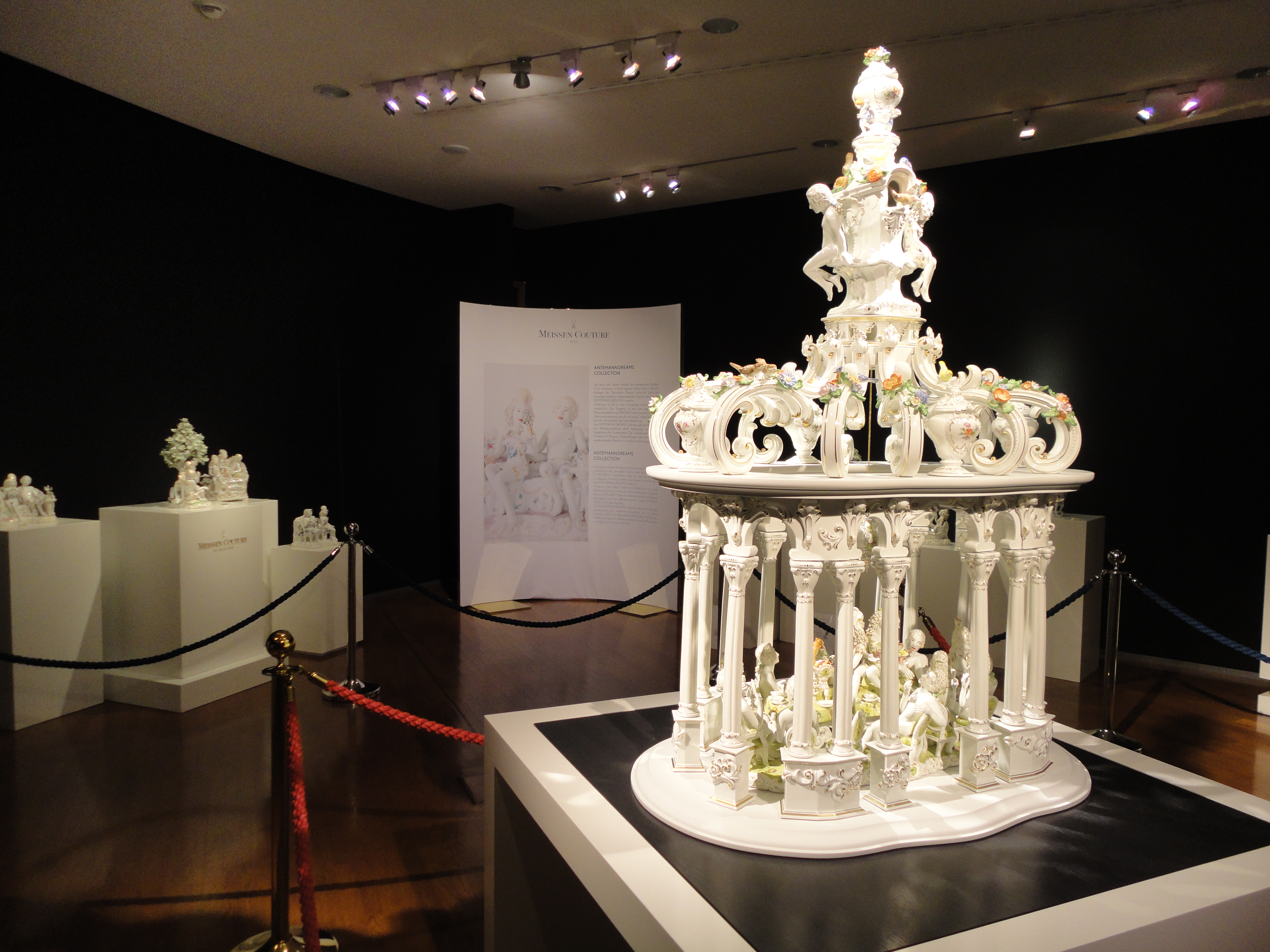
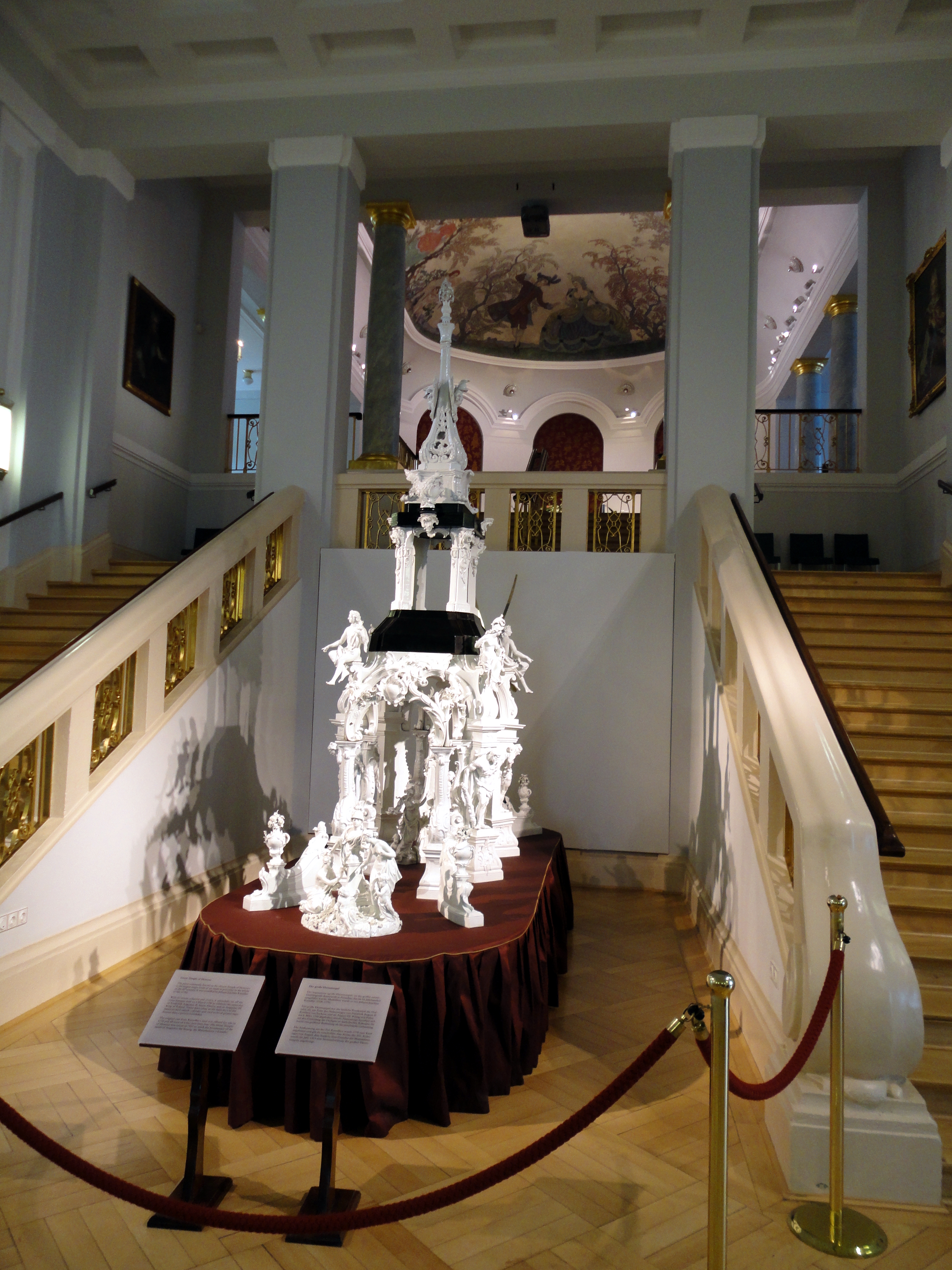
Meissen porcelain was produced at the Albrechtsburg until the manufacture in 1863 moved to its present location at the Talstrasse in the very heart of the city. The exhibition hall presents a superb reflection on three centuries of porcelain manufactured by hand, including the porcelain made for Catherine the Great of Russia, the famous 3,5 m high (11,5 ft) centerpiece for the dining table of King Augustus III, as well as contemporary porcelain art.

dsc01681    The 3,50 meter centerpiece for King Augustus III.

Most interesting are also the demonstration workshops, where one can watch, how Meissen porcelain is designed and manufactured by hand, still today. Its signature logo, the crossed swords, was introduced in 1720 to protect its production. It is one of the oldest trademarks in existence.

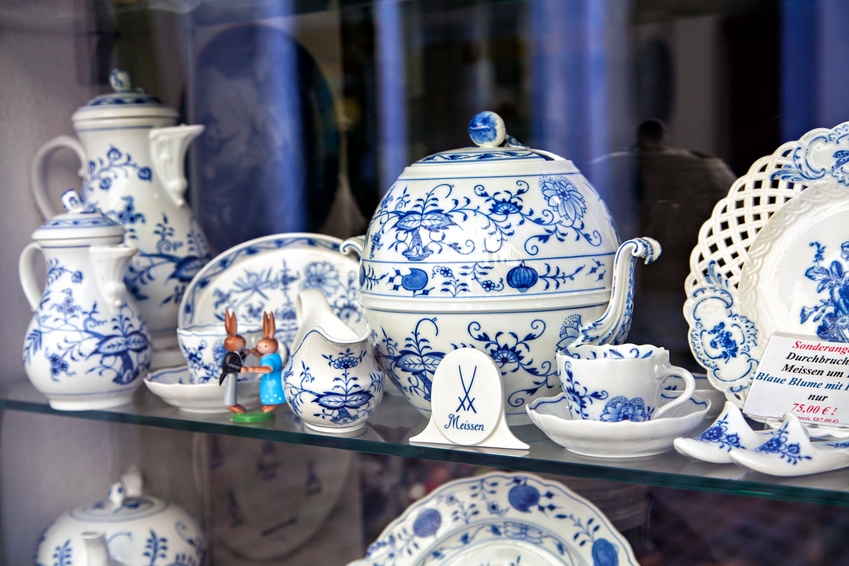
meissen-13-das-weisse-gold  The „White Gold“ of Meissen, to find allover the city.

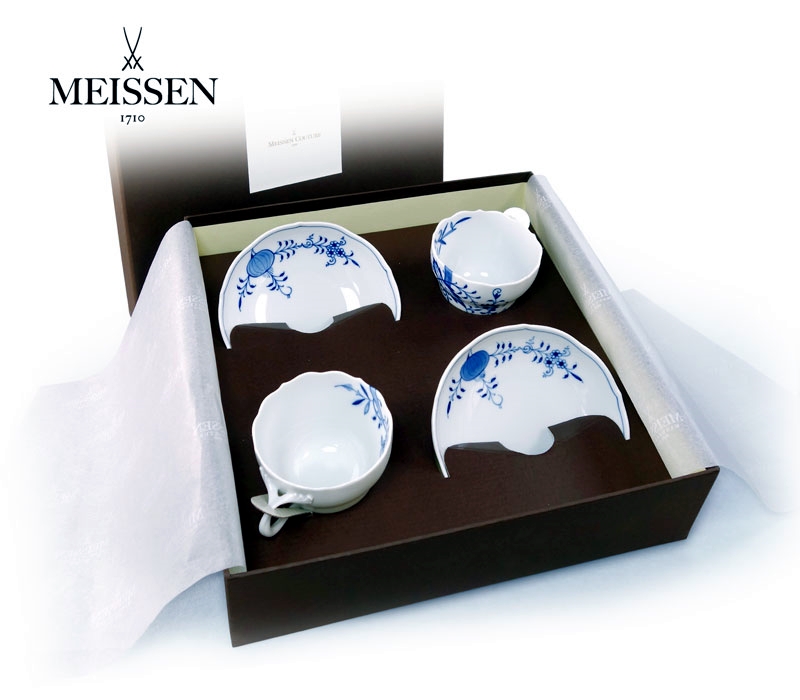
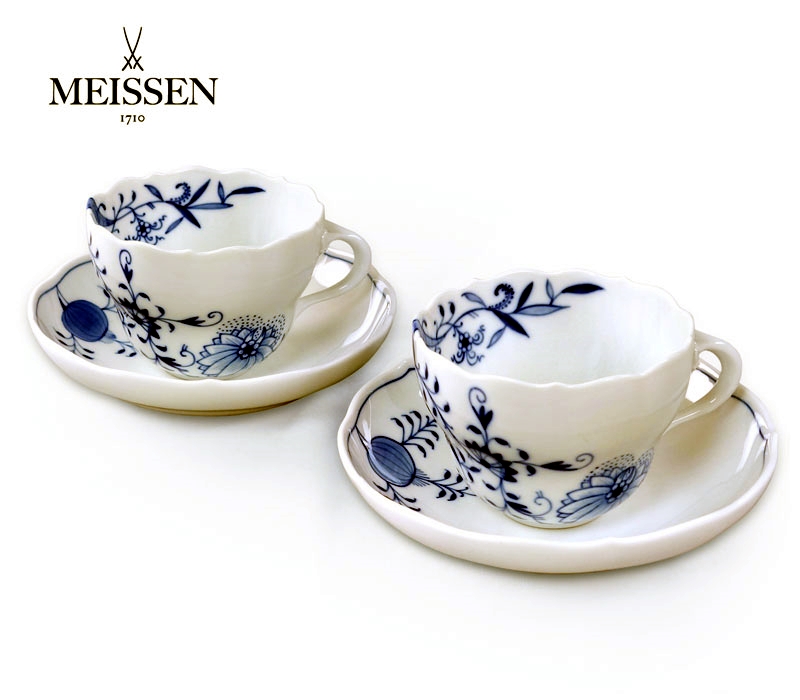
Filigree coffee-cups and saucers made of Original Meissen porcelain.
In the edge and in the surface wonderful waves are incorporated. You can see flourish on the cup handle. A fine gift for enthusiasts!  Just 299,– euro the set of 2 cups.

meissen-20a-kaffeetassen-set-zwiebelmuster meissen-20-kaffeetassen-set-zwiebelmuster

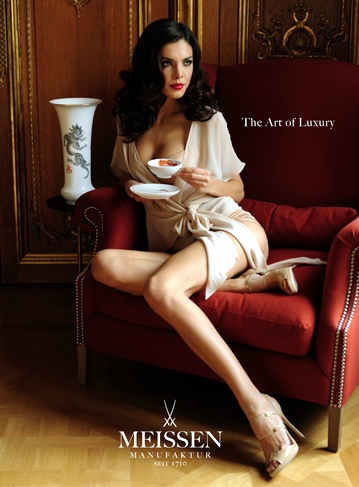
In the course of constitutional renewal of state property, the company called in 1918 „Staatliche Porzellan-Manufaktur Meissen“. In the GDR, the factory was a state-owned enterprise. Since 26 June 1991, trading as „Staatliche Porzellan-Manufaktur Meissen GmbH“, whose shareholder is the Free State of Saxony. The world’s leading porcelain manufacturer is one of the most internationally renowned German luxury brands. The symbol for the Manufacture, the crossed swords have become.

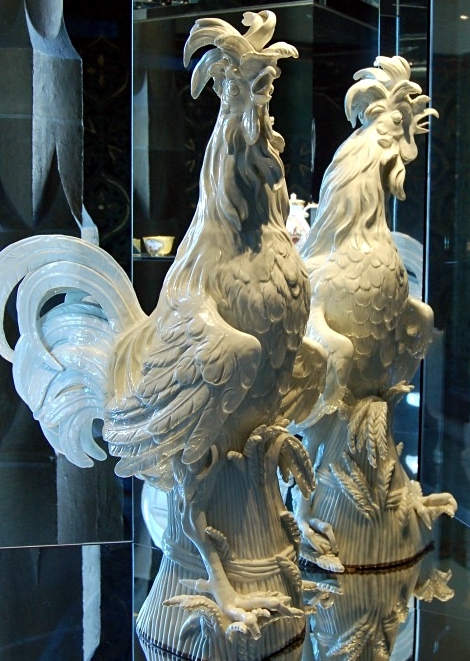
meissen-6a-1710-2010-exhib-cock   Over one meter high, a massive porcelain cock build for the 300 year anniversary of Meissner Porcelain (1710 – 2010). Now to see in the city museum.


Meissner Fummel.

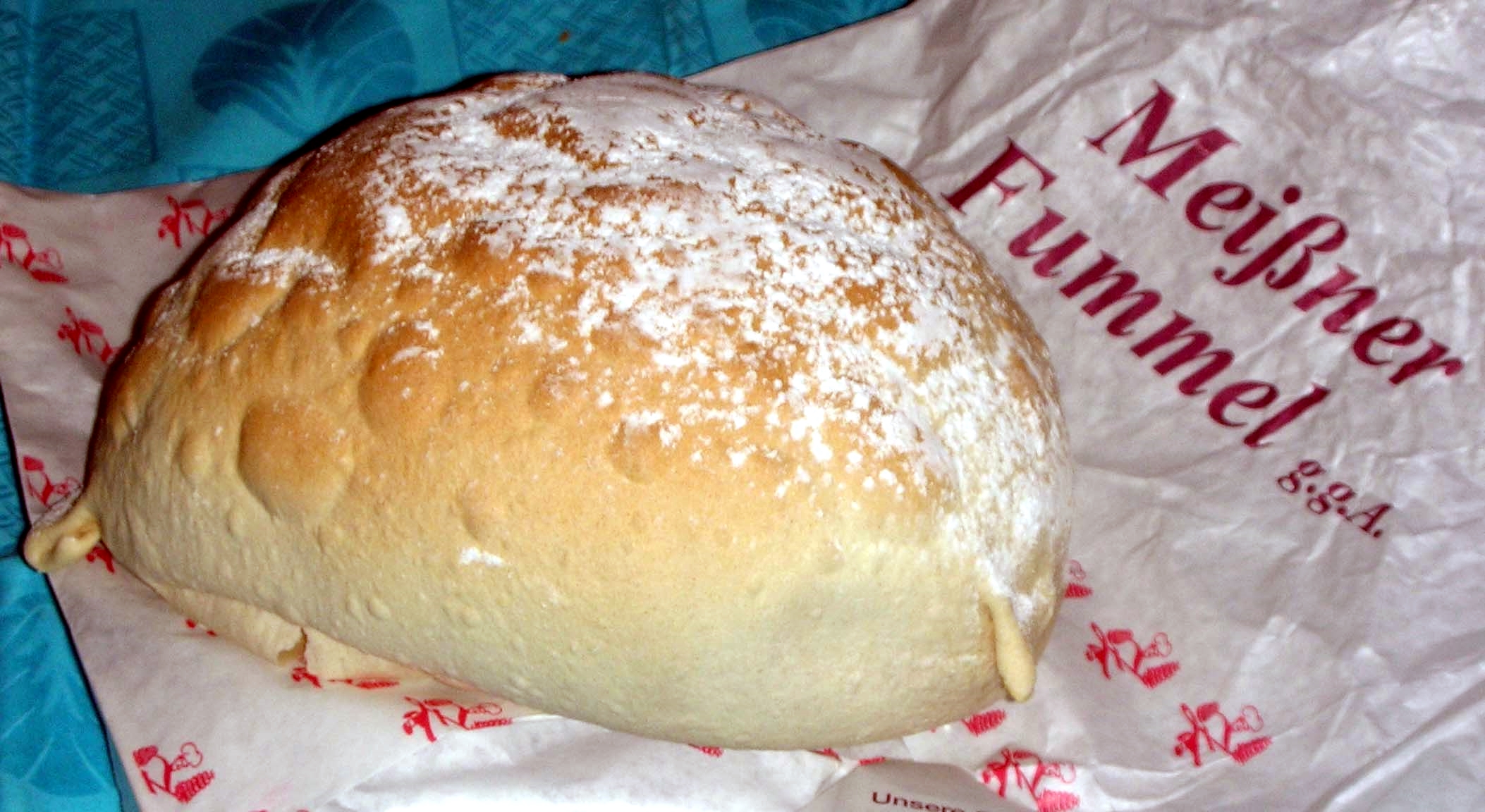
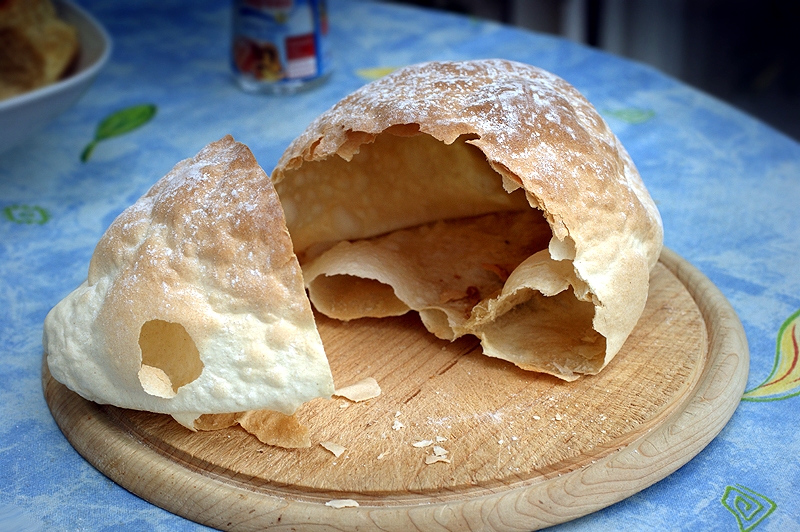
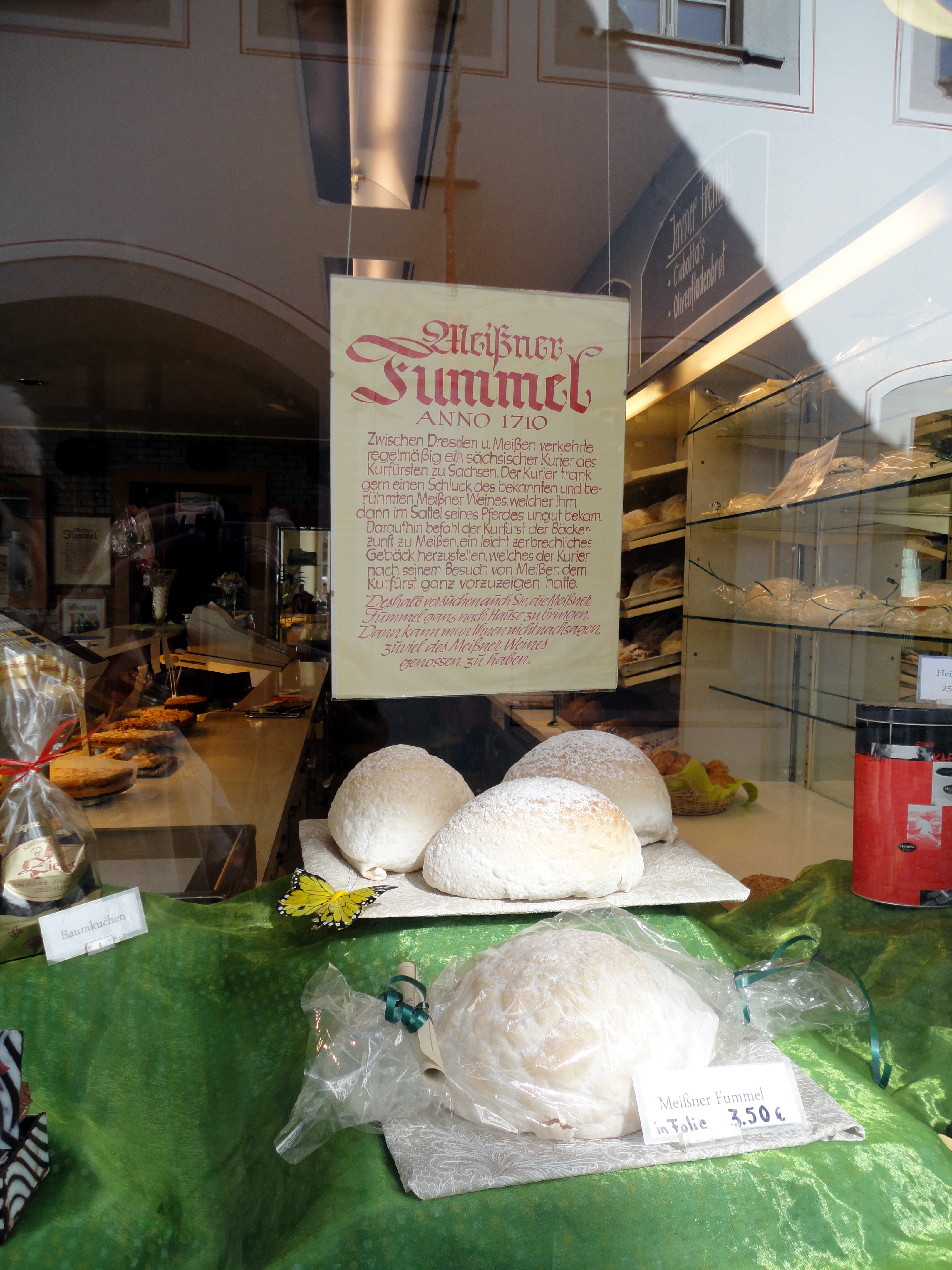
„Meissen fummel“ is an air-filled pastry made in the city of Meissen since the early 1700’s. Another product made in the same region is the Dresden fruit loaf (Dresdner Stollen). See my post „Christmas Stollen – DIY“ from November 2014.

meissner-fummel-2      meissner-fummel-3 Meissner Fummel, out- and inside.  Taste – like nothing, but a nice souvenir, if you get it home intact.

The „Meissen fummel“ has the shape of a small loaf with a very thin, easily breakable crust. It is made of 50 grams of fat, 50 grams of butter, flour and salt. To form each pastry, one piece of firm dough that weighs between 50 and 100 grams is rolled out. Half of it is moistened with water or egg and the other half is folded over. The edges are pressed firmly together and air is blown in with a straw. The pastry is baked at 240°C for three minutes.

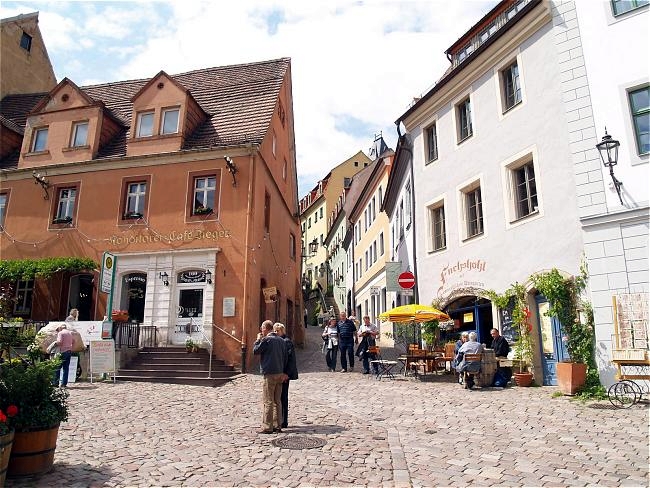
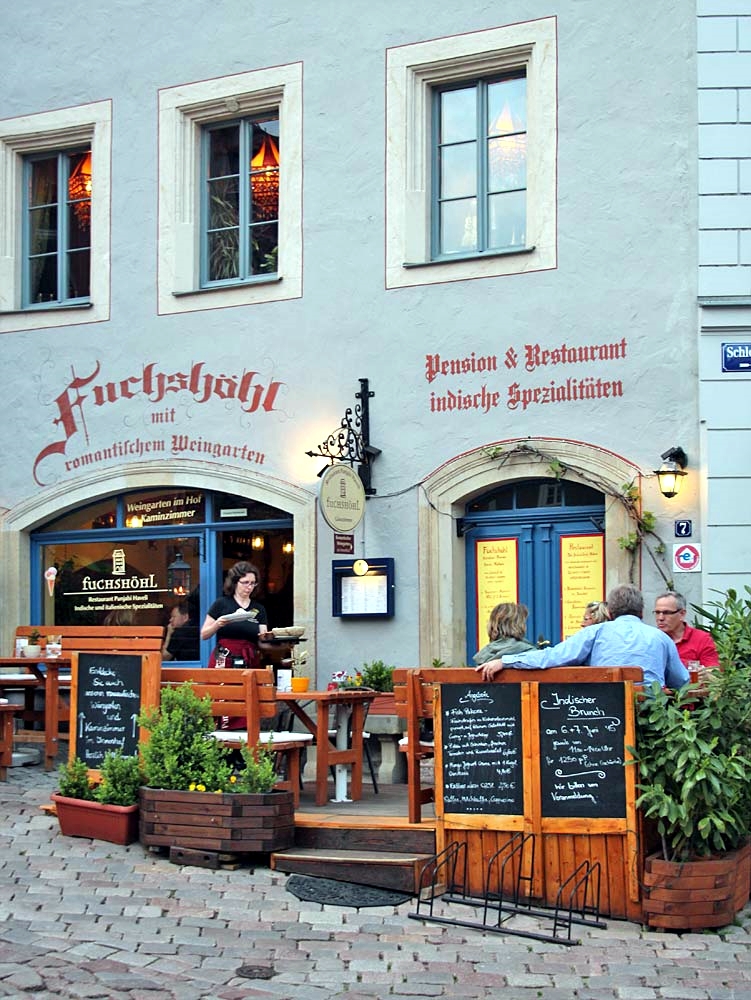
meissner-fummel-4   Famous Meissner bakery „Zieger“ , baking Fummel.  Just across the restaurant „Fuchshoel“ ( this pic taken before the owner changed to an Indian restaurant, see further down). One will come along here if you walk between central market place and Albrechts Castle.

Legend has it that the easily breakable pastry was invented in the early 1700s to prevent a royal messenger from enjoying too much of Meissen’s wine. After drinking, the messenger broke to often the delicate porcelain he had to deliver. The Elector of Saxony, August der Starke, ordered the city’s bakers‘ guild to make a fragile pastry, which the messenger also had to carry and had to present to the Elector intact every time after returning to Dresden.

meissner-fummel-1   Cafe and bakery Zieger , window display with Meissner Fummel.


City museum.

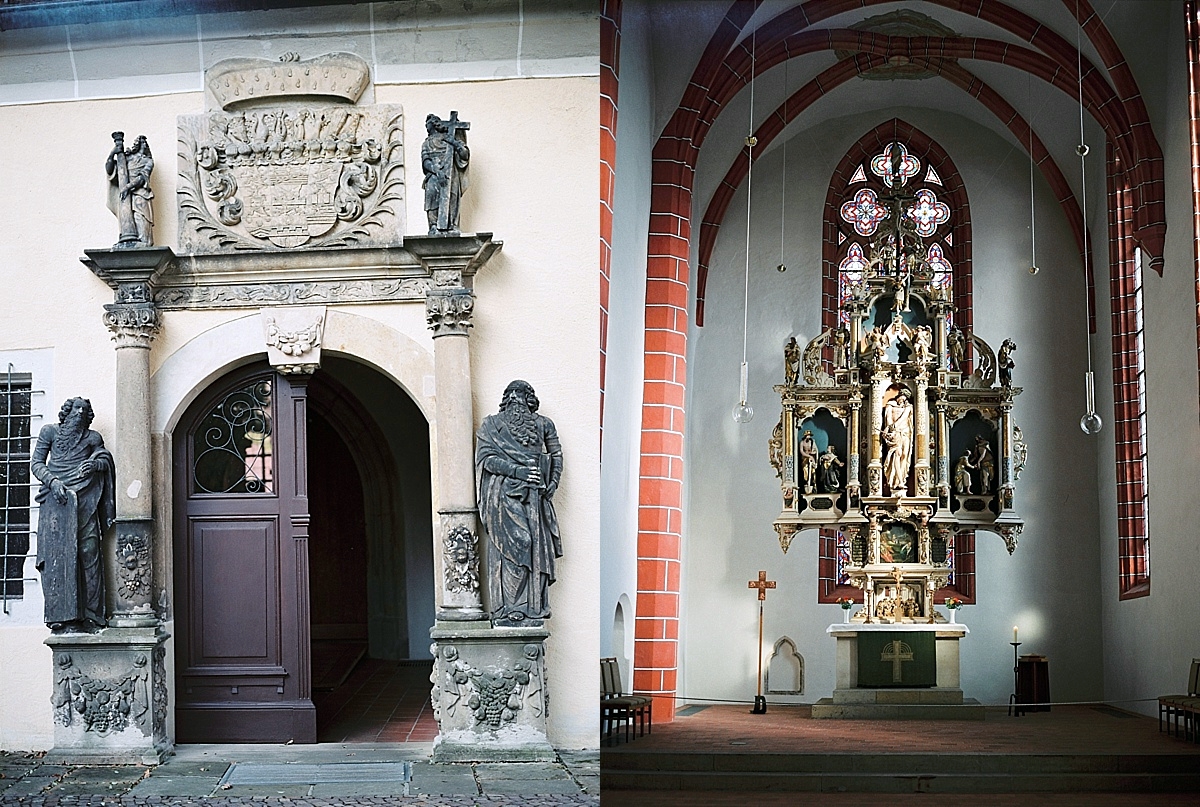
The city museum is not only located in the best part of the inner city, but you will also find it in a very special building: the former Franciscan monastery church at the Heinrichsplatz. Since the conversion into a museum exhibition hall, precious exhibits from the last 1,000 years of the city’s history have been presented, for example, the largest and oldest wine press of Saxony or the last existing Elbe River fishing boat.

meissen-11c  Entry and altar of the cathedral, now the museum.

Different special exhibitions have focused on interesting details of the Meissen history. For example, an additional exhibition shows the development of the city to a German stronghold of porcelain production. Another example is the construction of the Cathedral’s towers 100 years ago.

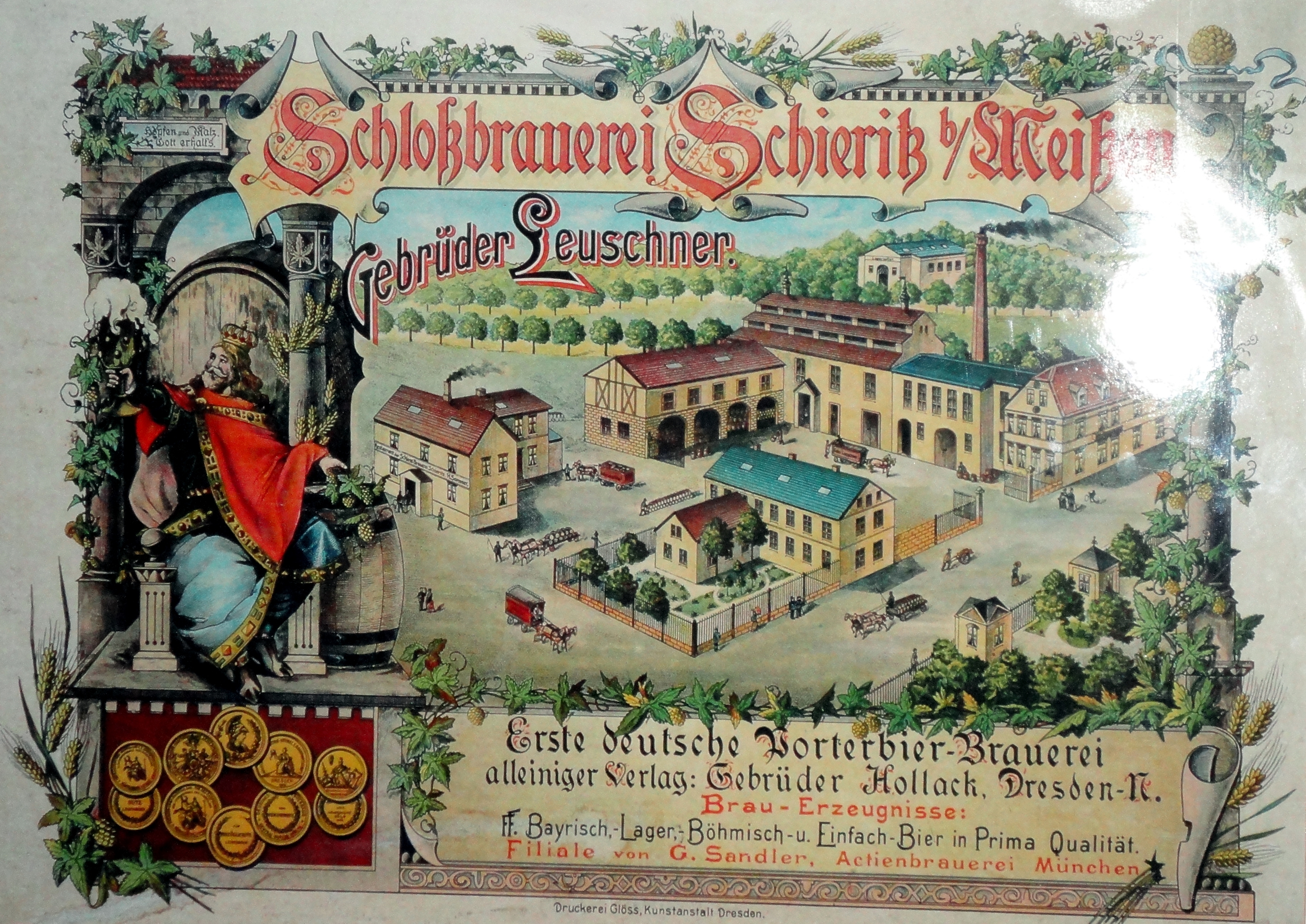
dsc01695       The first German Porter Beer Brewery, Schieritz-Meissen. Beautiful lithographic poster from around 1870.


Wine and Dine in Meissen.

There are many Hotels and Motels to stay over. I won’t go into details. The one I choose was the Hotel Faerhaus on the other side of the river Elbe, next to Ohm’s Parkhotel. But the Faehrhaus is a Garni only and has no restaurant, except Breakfast of course.

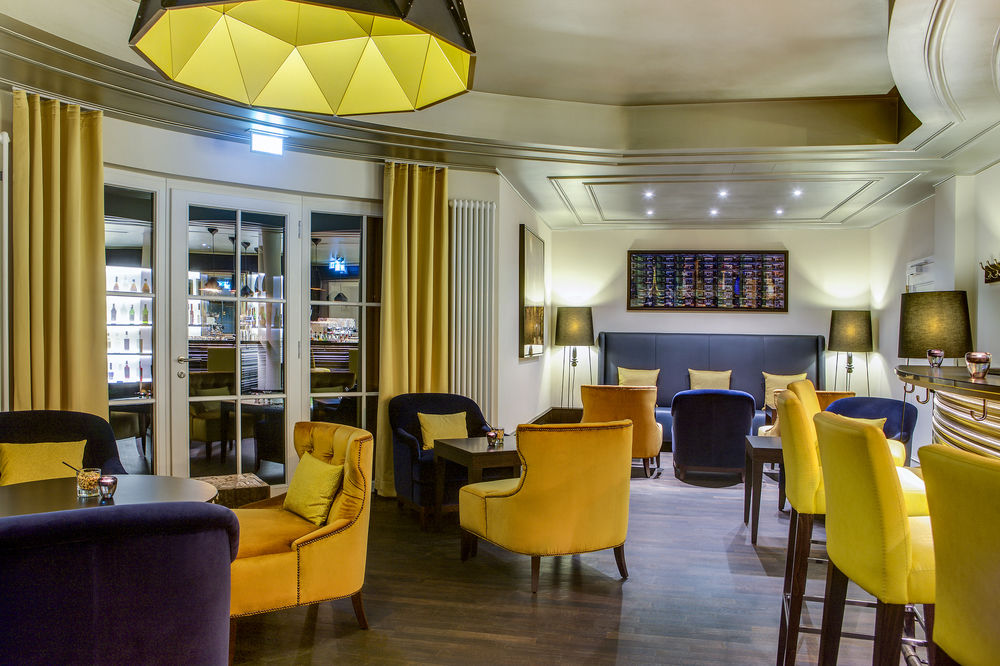
meissen-9a meissen-9-rest-ohms-parkhotel    Lobby bar and winter garden restaurant at Ohm’s Parkhotel. Very nice design and a magnificent view onto river and castle hill. But meals were average, better ones are available in various city restaurants. And not as expensive.


Hotel Faerhaus Meissen.

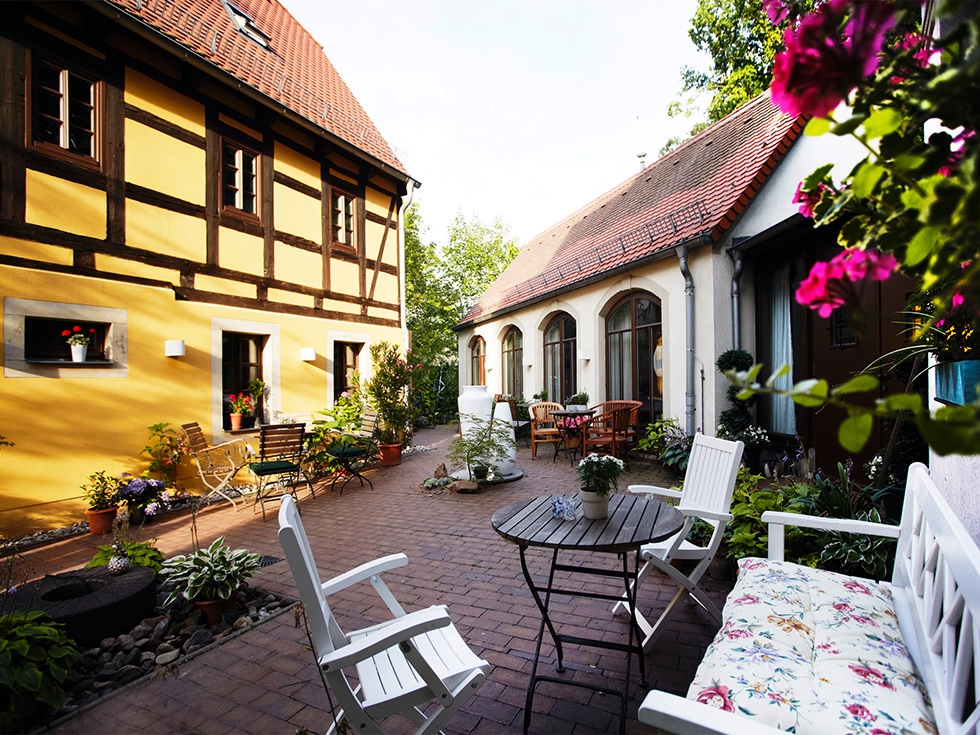
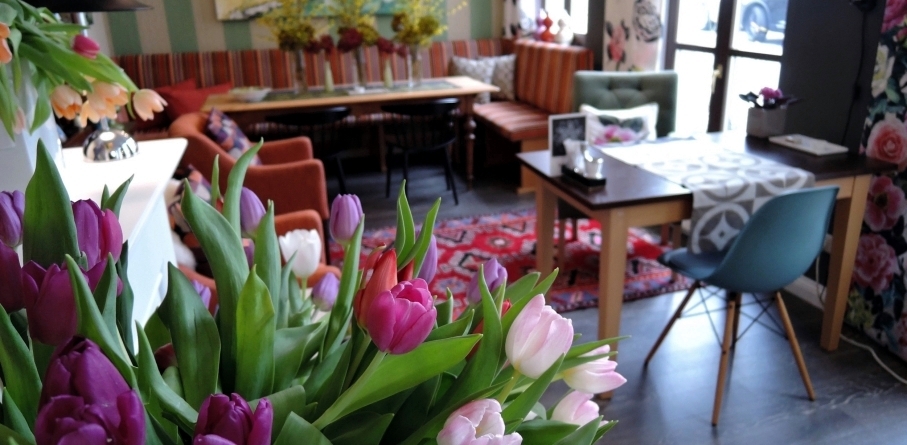
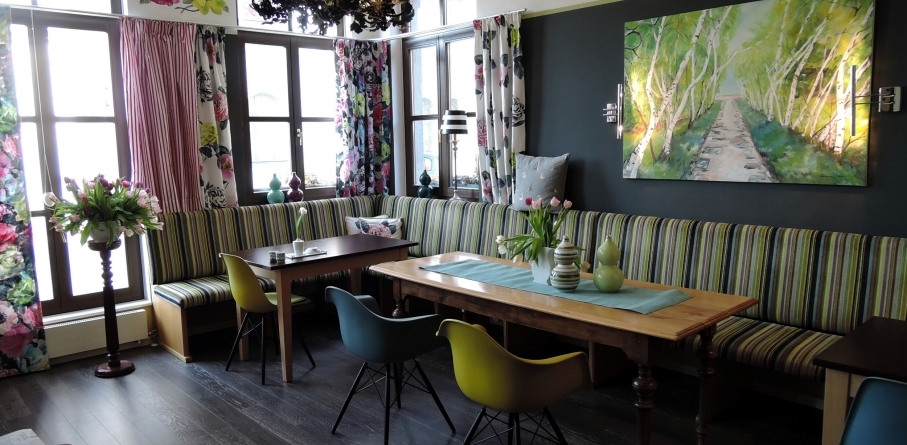
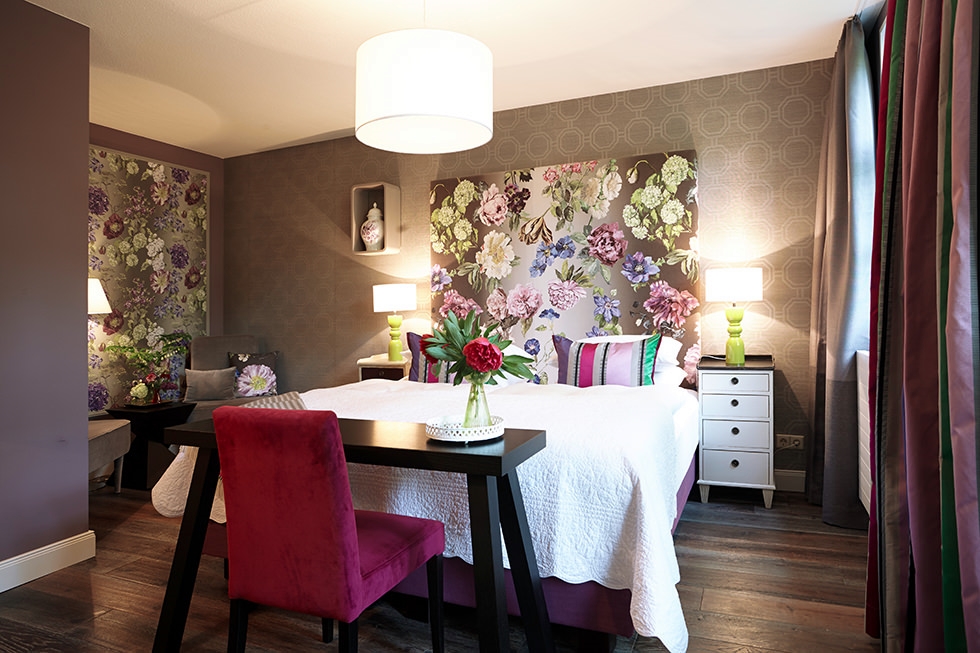
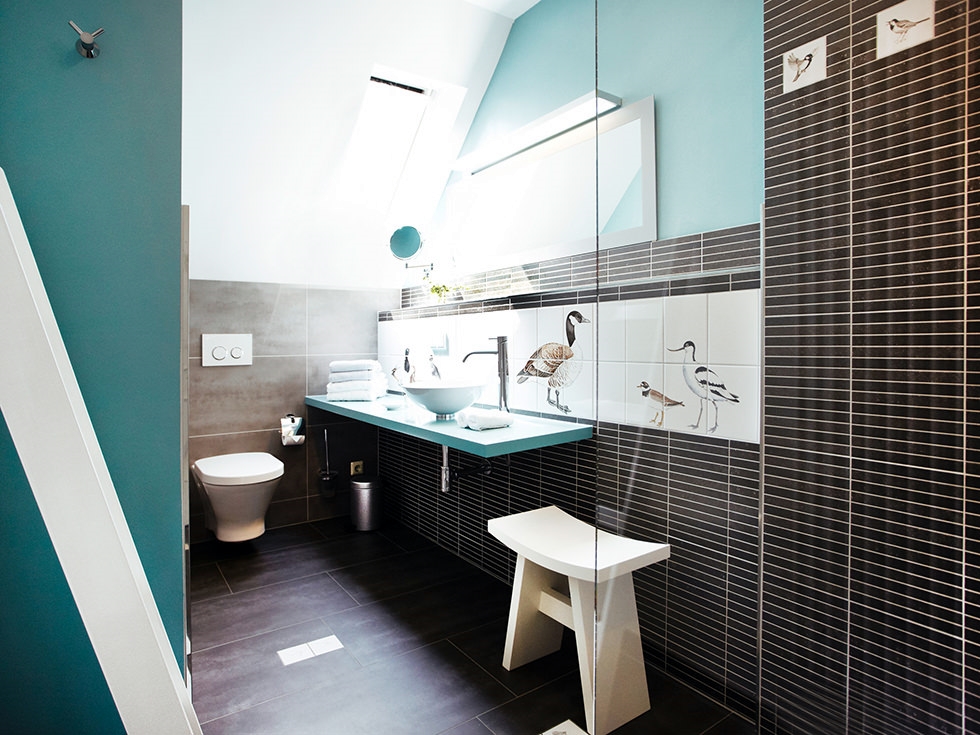
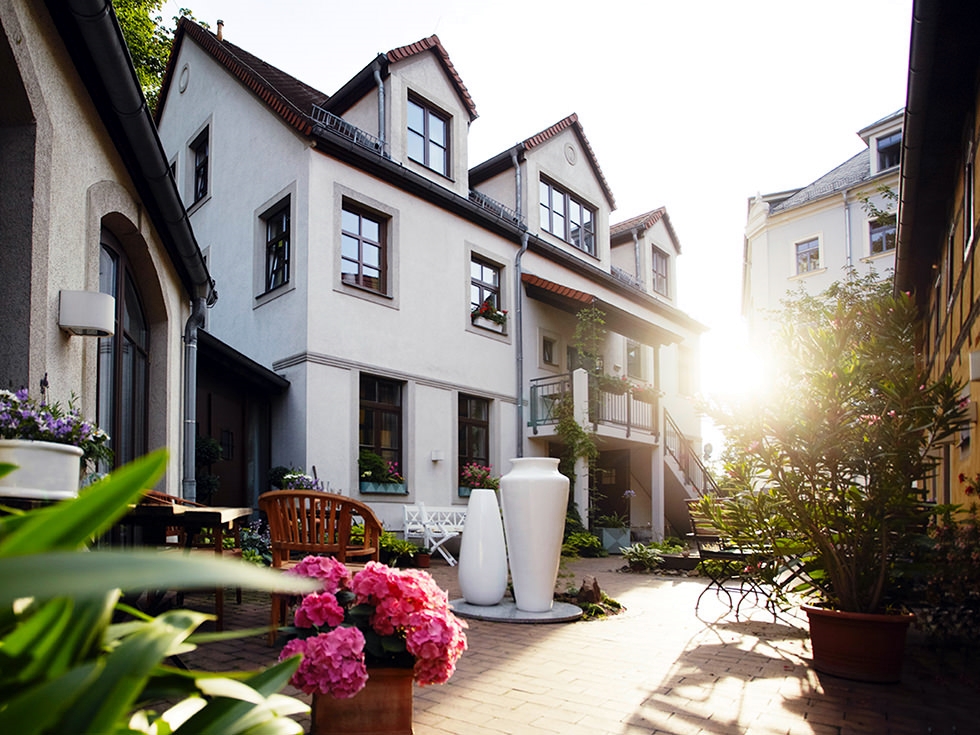
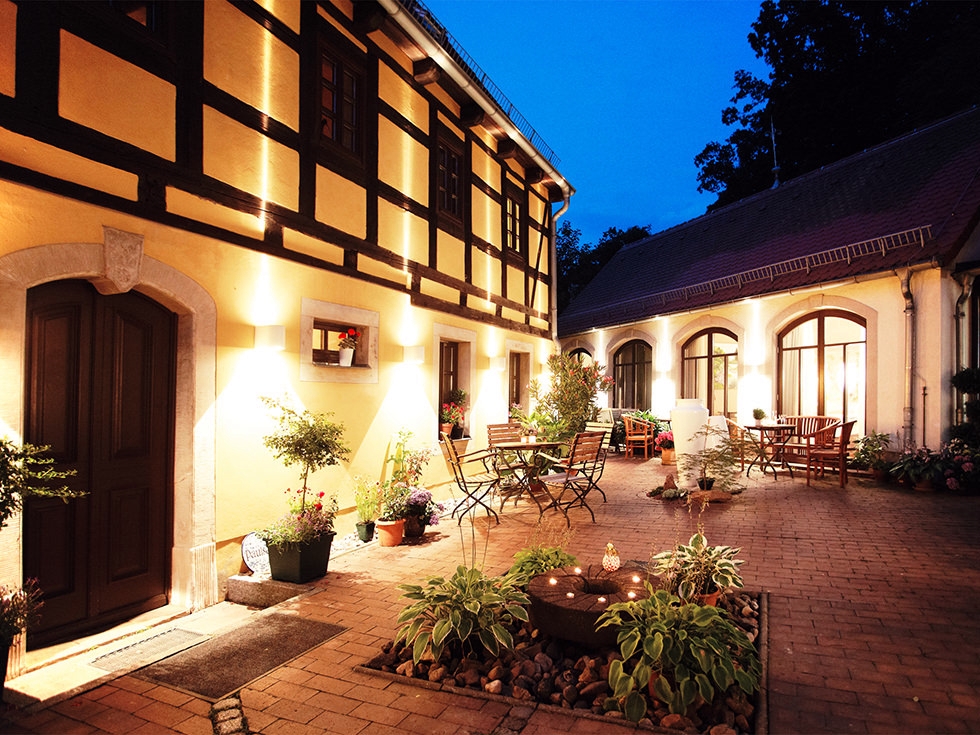
Here, on the shores of the river Elbe with a stunning view of the mighty Albrecht Castle and Meissen Cathedral, we have found the perfect place for our small, family-run guesthouse. Built in 1816, the historic building initially served as a ferryman’s house and played an important role in the town’s history. Today, the adjacent guesthouse combines old-world hospitality with colorful & eclectic interior design, fine artwork and excellent cuisine (breakfast and coffee table during the day).

meissen-16s-designhotel-zum-alten-faehrhaus-meisen-atelier    meissen-16j

The whole ambiente of this Hotel is typical German „Gemuetlichkeit“. Also modern design, all made bei hand and Christian himself. Fantastic ideas were implemented that every room (they are all different in decor and furnishing) has a special influence of the guest. I really really loved it and I couldn’t thank enough to „Chris and Chris“ for their warmhearted and very personal (family feeling) service.  Official names are: Christine and Fedder-Christian Paulsen.  I like to show you some pics of the Faehrhaus, they speak their own language.

meissen-16b    meissen-16cmeissen-16k    meissen-16imeissen-16r-peony    meissen-16-elbemeissen-16d    meissen-16a-faehrhaus


Some of the city restaurants.

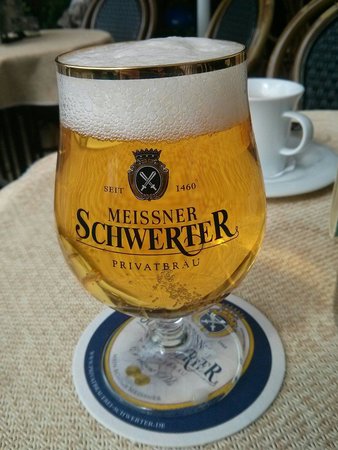
Most restaurants in Meissen are located on the historic main square with outdoor seating. At Meissner Schwerter we chose schnitzel and Bavarian sausages, which were typical German and excellent. But the most important thing in such a restaurant is your own beer from a small micro brewery, which has one of the best tastes.

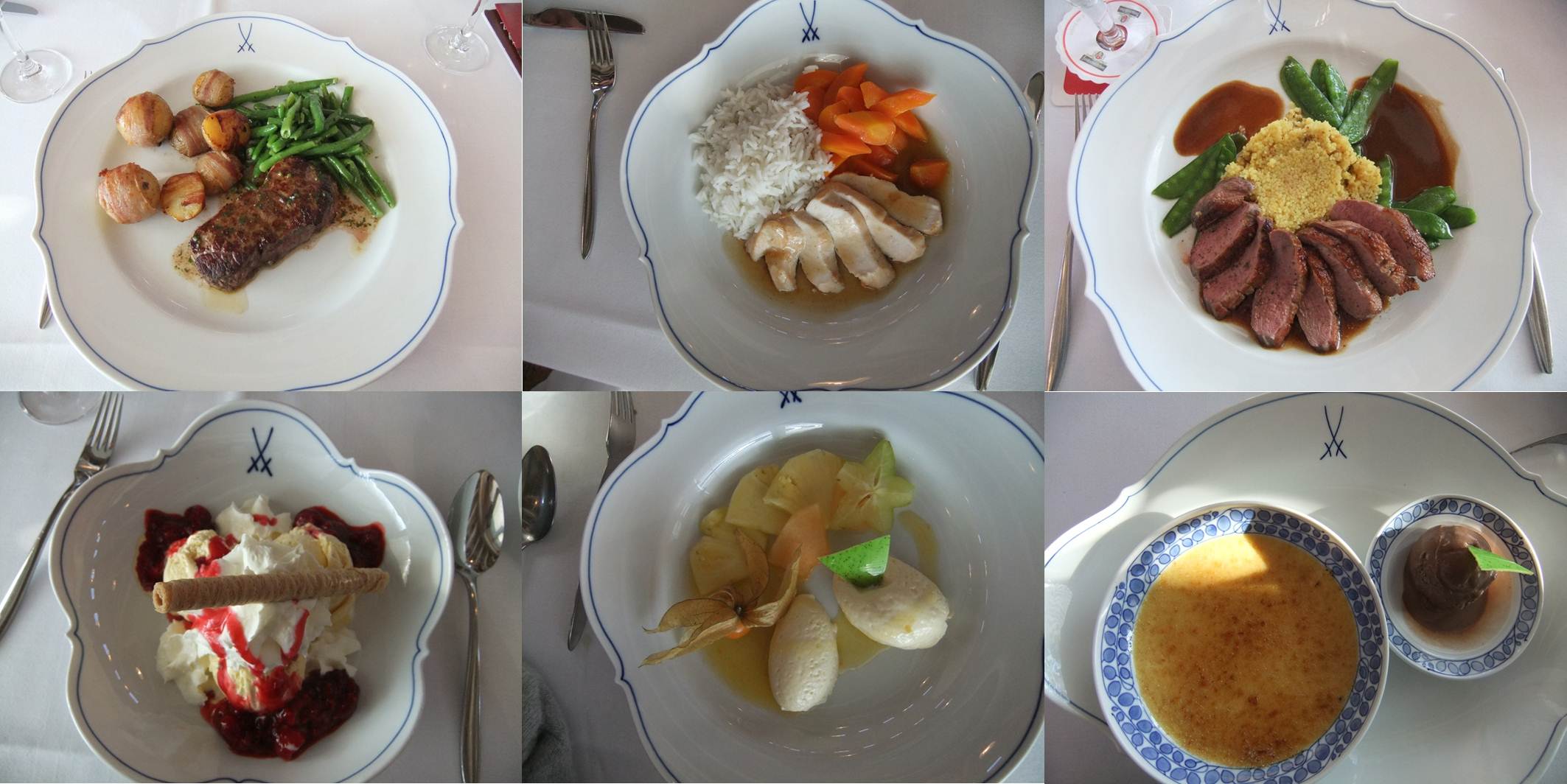
meissen-7-meissner-schwerter                meissen-14-kul-serv-on-meissner-porcellan                 Micro brew beer !Mouthwatering dishes served on Meissner Porcellain.  Seen at the „Kulinarium“.
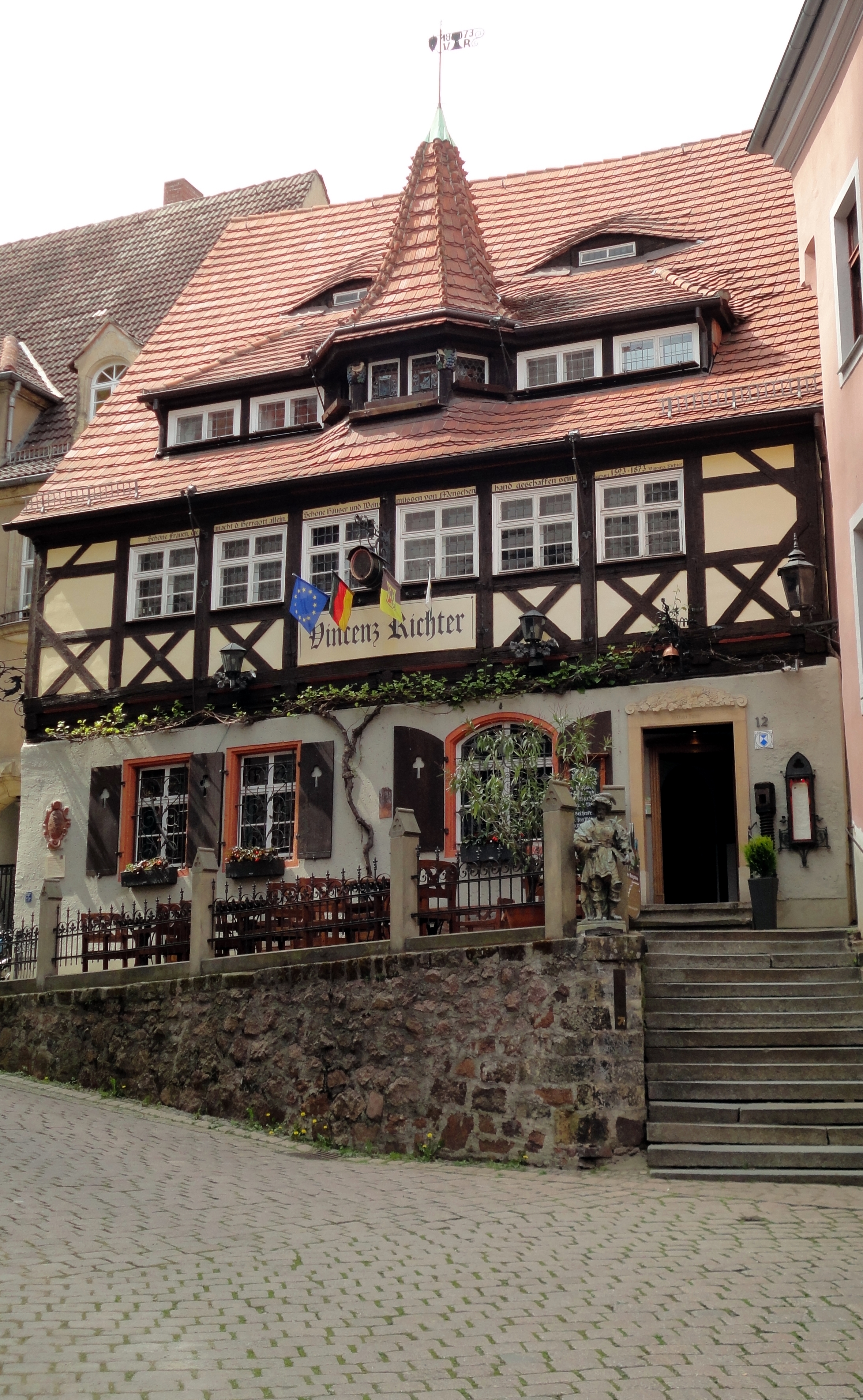
dsc01683a                      meissen-21a                      Left:  Restaurant Vincenz Richter, good food, good wines and exhibits an excellent collection of antique weapons. Museum like and worth to visit. Right: The Ratskeller ( town hall cellar) where especially in wintertime is „the place to be“.
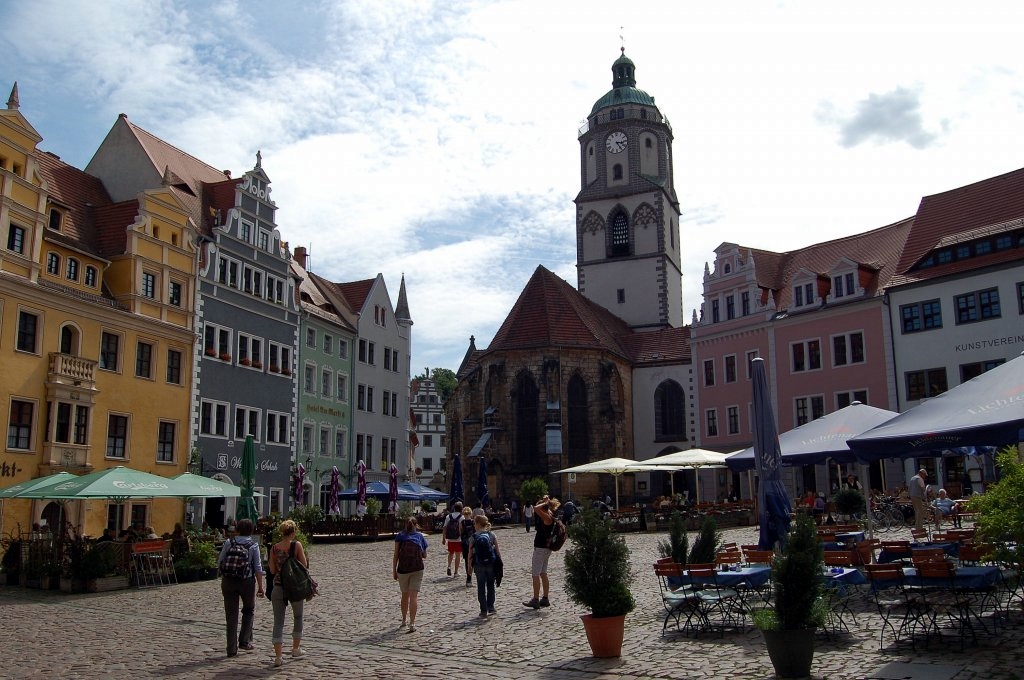
meissen-21c meissen-21b     Left: the „Frauenkirche“ (Cathedral of Our Good Lady). Now the City Museum. Right:  The so named „Winzerkeller“ (winemaker cellar) a Cafe, Wine and Tea House. Good  food and  wines from the region !


But – my favorite restaurant is/was :
The Fuchshoehl – The Foxden.

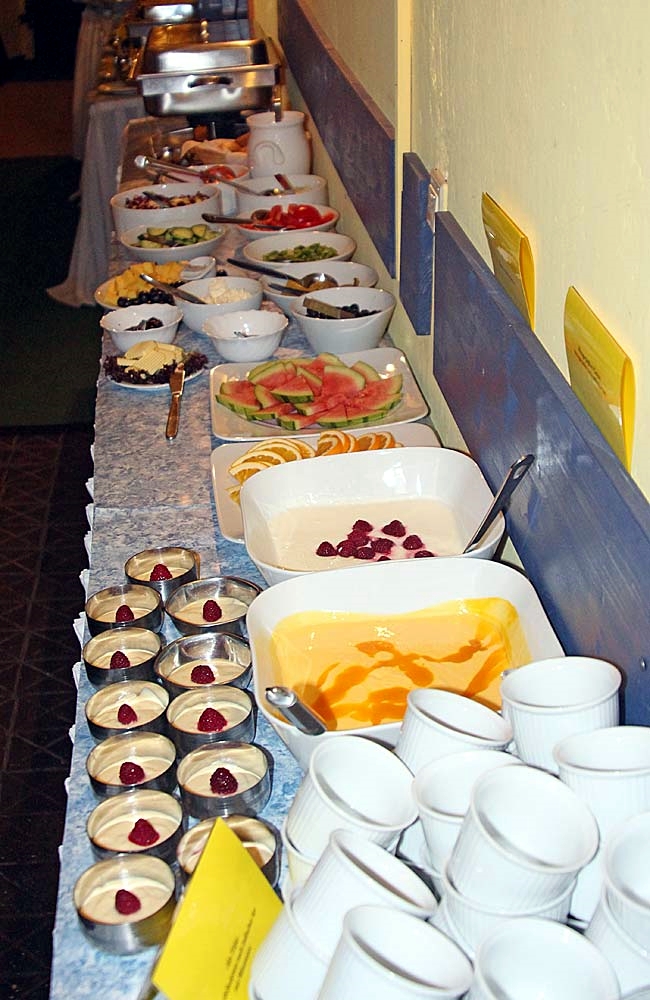
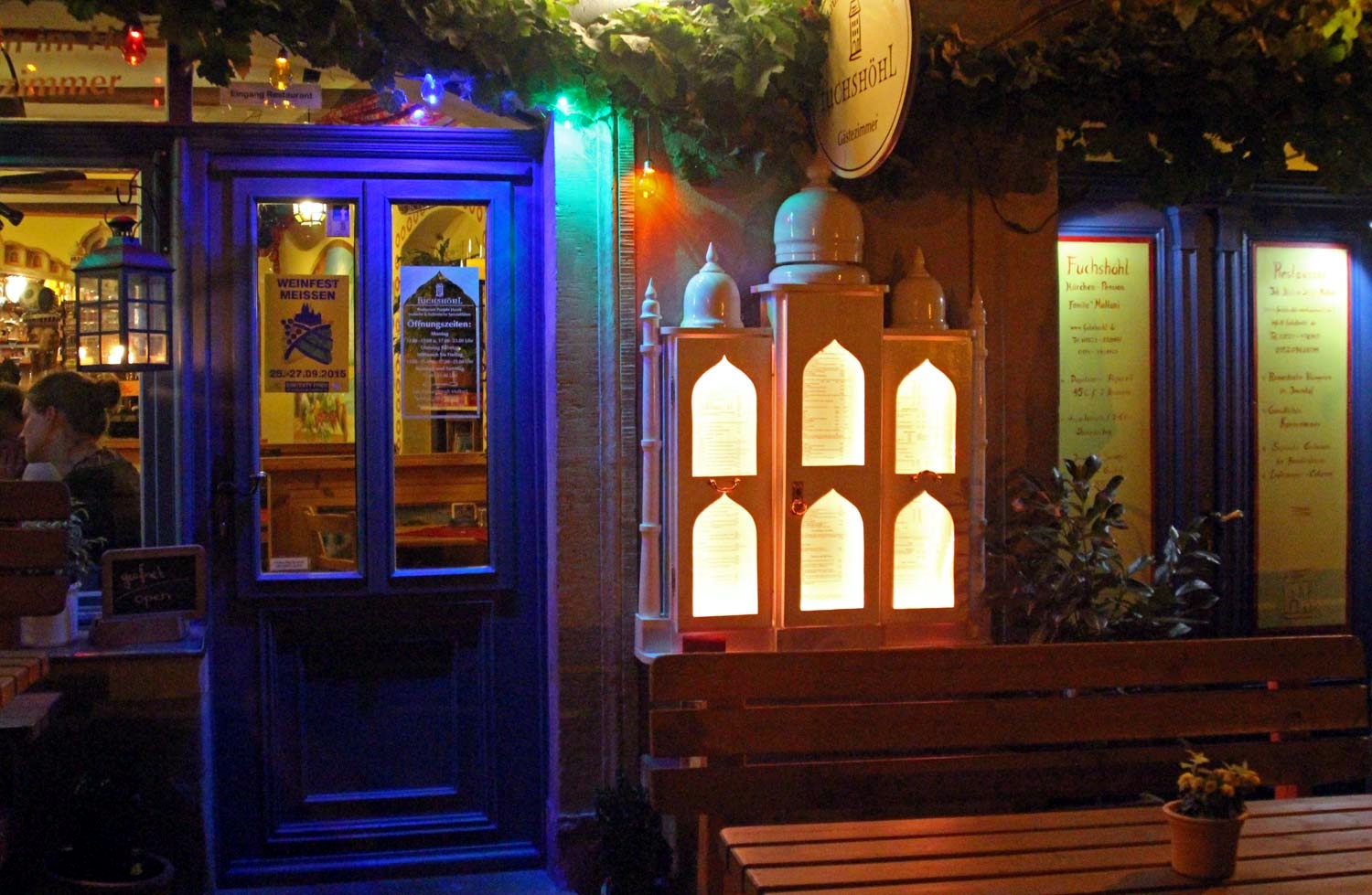
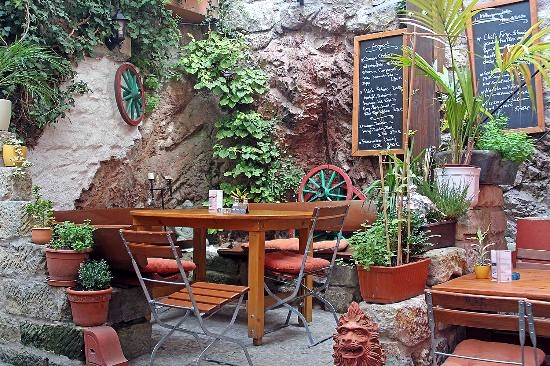
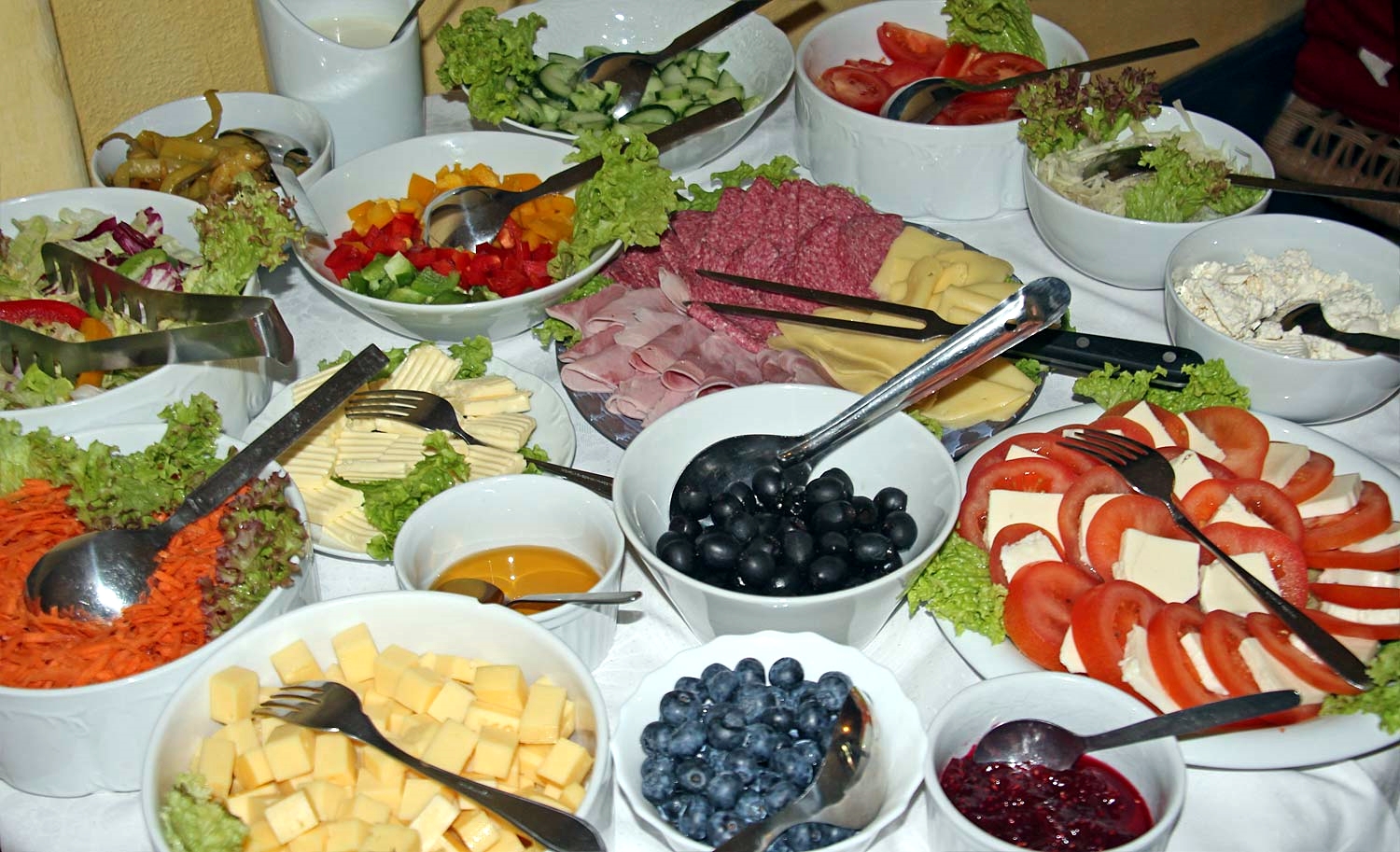
meissen-12a                          meissen-12c-mittagsbuffet-999pp                                          Very interesting combination. An Indian restaurant with German ambiente, wine garden and fusion ideas. Up here on the right the lunch buffet for 9,99 euros per person – and lots to eat.
meissen-12b  meissen-12d
No matter, day or night, you always feel homy, welcome.
meissen-12-fuchshoehl-salatbuffet         The salad buffet !! I had some Indian curry – original, authentic and just to die for. Other dishes I had the chance to taste were „Chicken Biriyani“, „Kheema“ and  „Kheer“.  They all were excellent and tasty. This restaurant was by far the cheapest with highest quality. Wish we had one here !


Easy Tours from the Faehrhaus.

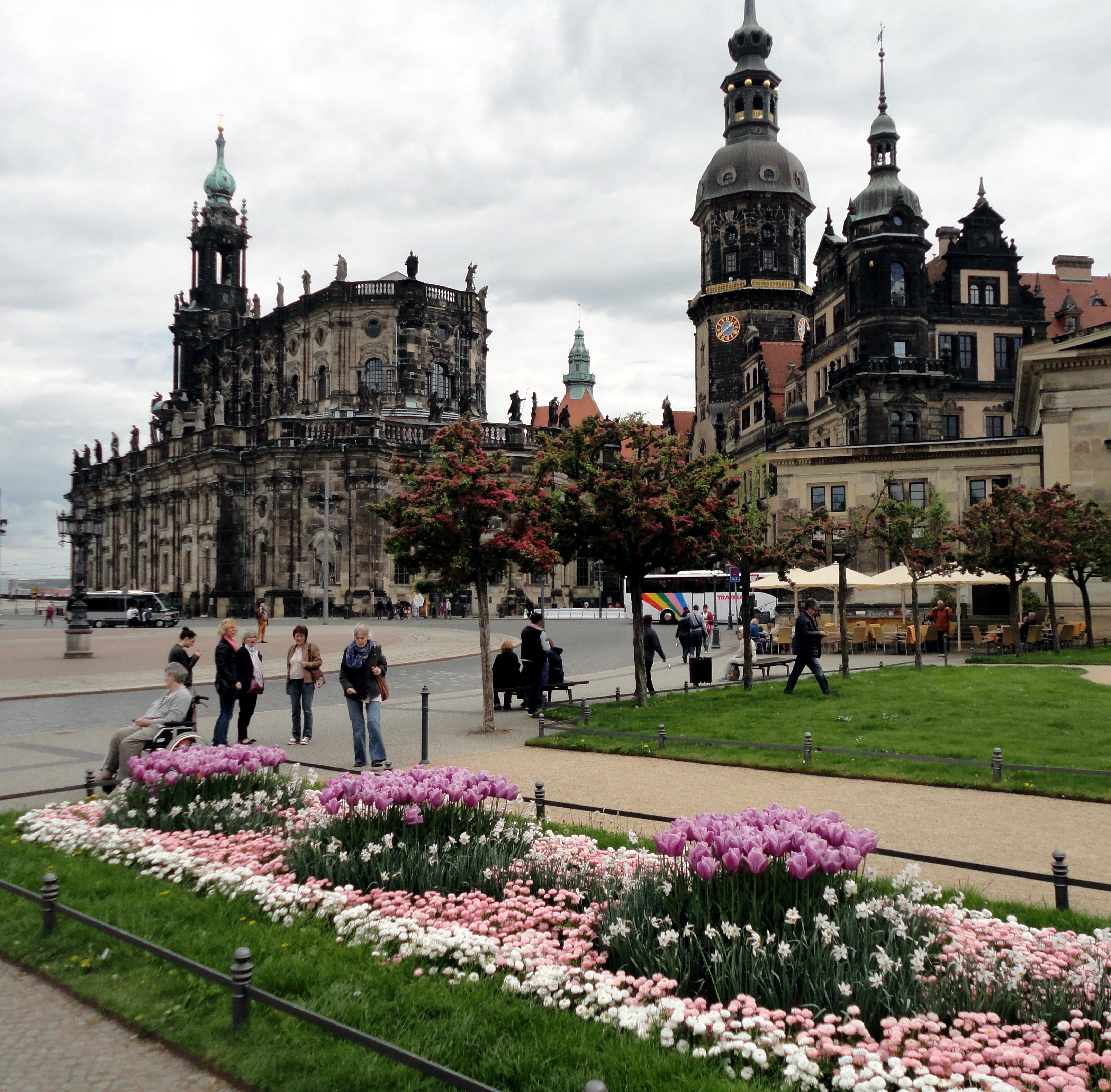
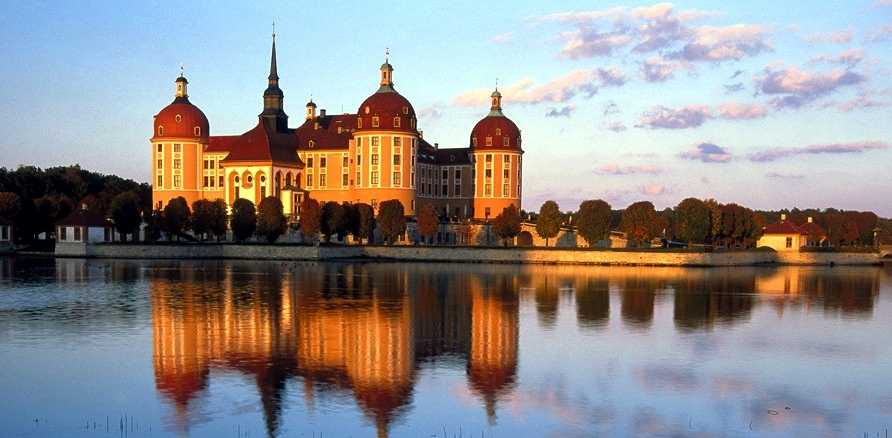
Meissen offers visitors much more than world-famous porcelain. The town is home to the Albrecht Castle (the oldest castle in Germany), the Meissen Cathedral, and hundreds of historical buildings, many well worth a visit. Meissen was luckily spared from allied bombings, like a few miles further – Dresden, with about a half million civilian death.

dsc01735a    City of Dresden, another MUST SEE destination.

Take a trip along the picturesque Saxon Wine Route which celebrates the region’s long tradition of viticulture. Experience the unique charm of the small villages along the way. Visit Radebeul, Wackerbarth Castle and nearby Moritzburg.

meissen-16n-moritzburg-castle-1day     Beautiful Moritzburg Castle.

Above all, make a daytrip (or several) to the beautiful city of Dresden with its unsurpassed treasures. You can reach Dresden within half an hour on trains that run every thirty minutes. The trip by car from Meissen is also just about 45 minutes and beautiful along the river Elbe on both sides. I took a daytrip, you can read about in my post „Must See – A Gem of Dresden“ ( October 2015). Just a little further away, explore the natural beauty of Saxon Switzerland, a great destination for hikers and mountain climbers.

meissen-16o-saxony-swiss-1day   The famous Saxony Swiss.

Or if you feel like a day of sweet idleness, consider a boat tour on the river Elbe to Dresden or Pillnitz Castle.  A wonderful experience and an area to visit again – for sure !


Finally.

When I visited Meissen, it was springtime, beautiful. Now I post this article in wintertime, at least winter in Meissen. A bit different but also worth a visit, right ?? Look down here.
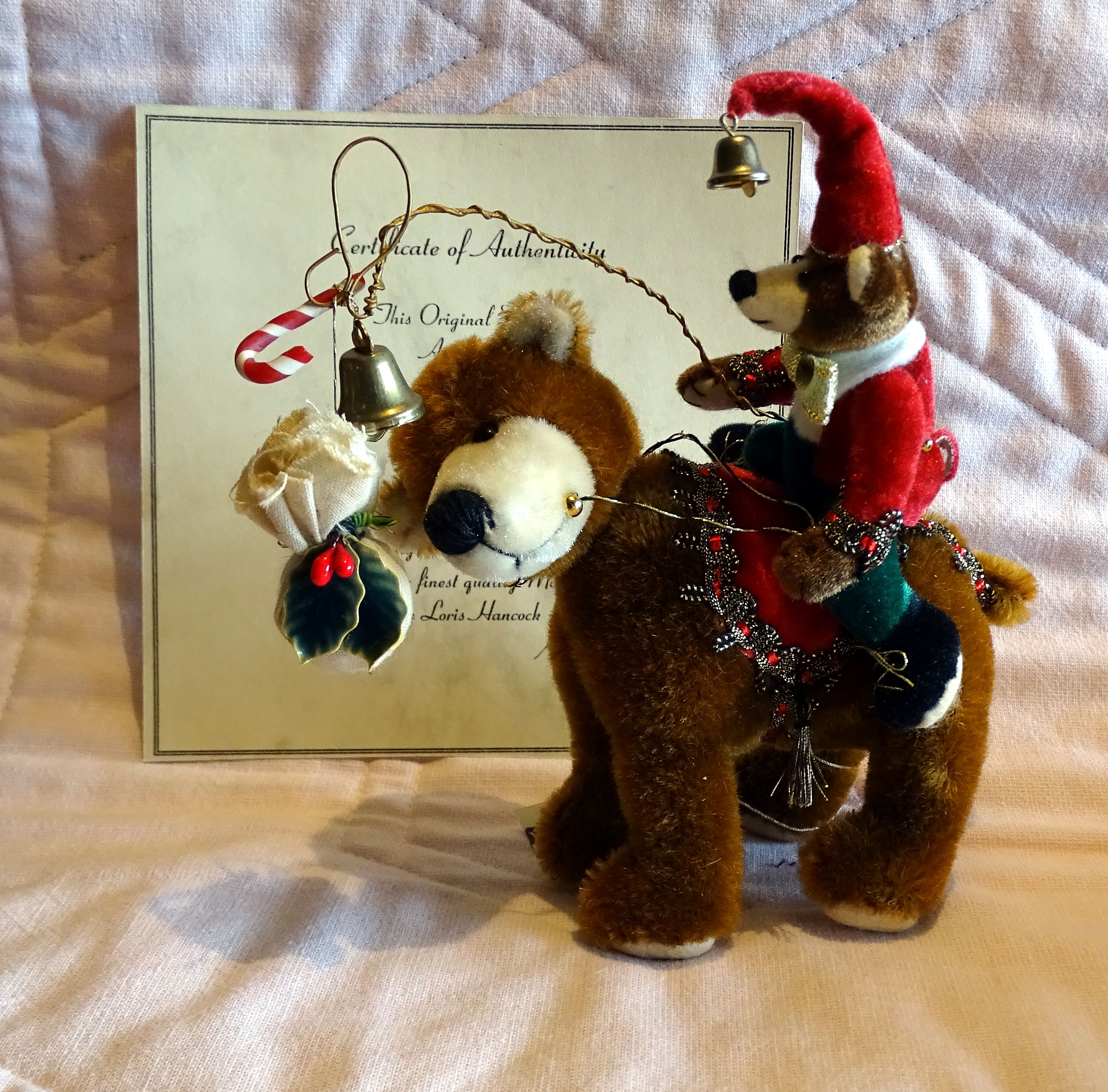
meissen-17     meissen-17a

Veröffentlicht unter History, Must See, Travel | Verschlagwortet mit | 6 Kommentare