
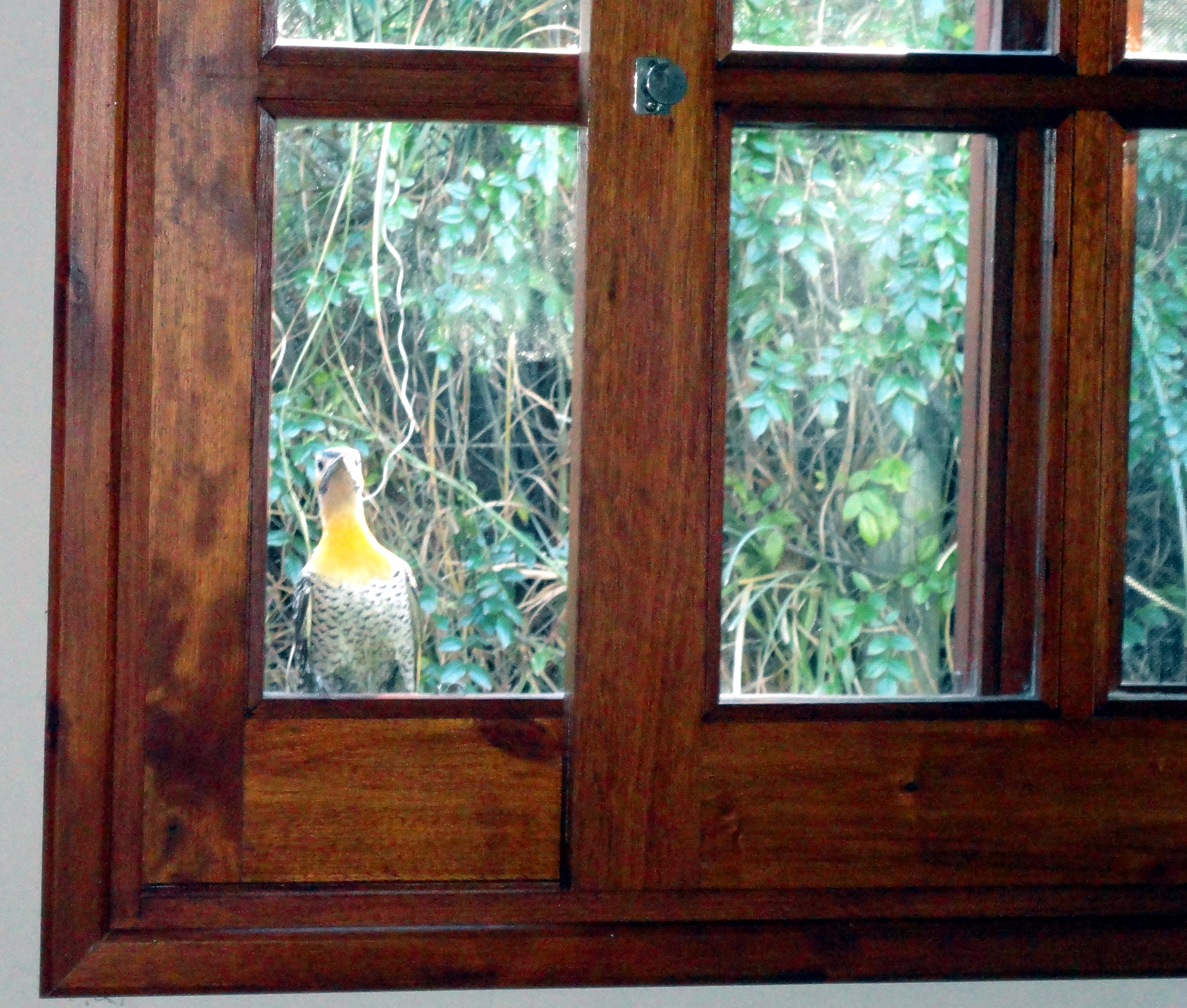
Some days ago we were sitting down, enjoying a nice cup of coffee, as we sudden heard a loud knocking on a window in the rear of our house. What could that be? A careful investigation led to the following result.
 Hello – knocking on our window.
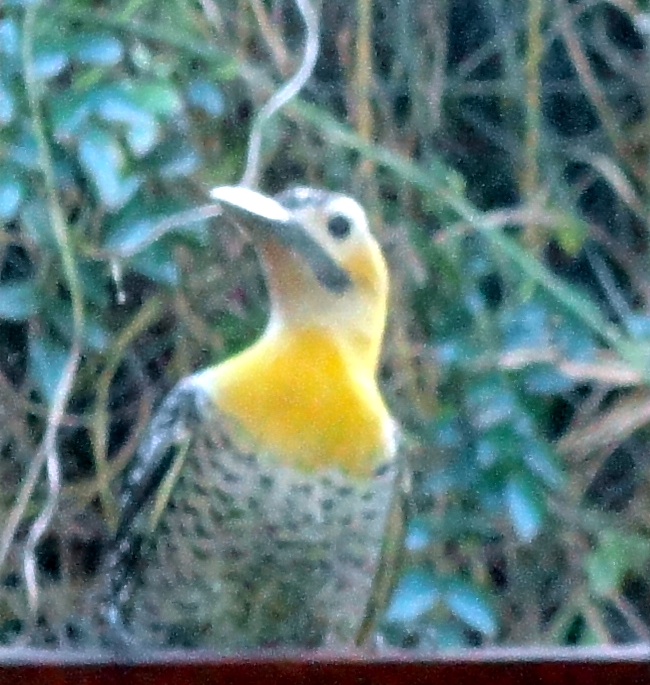
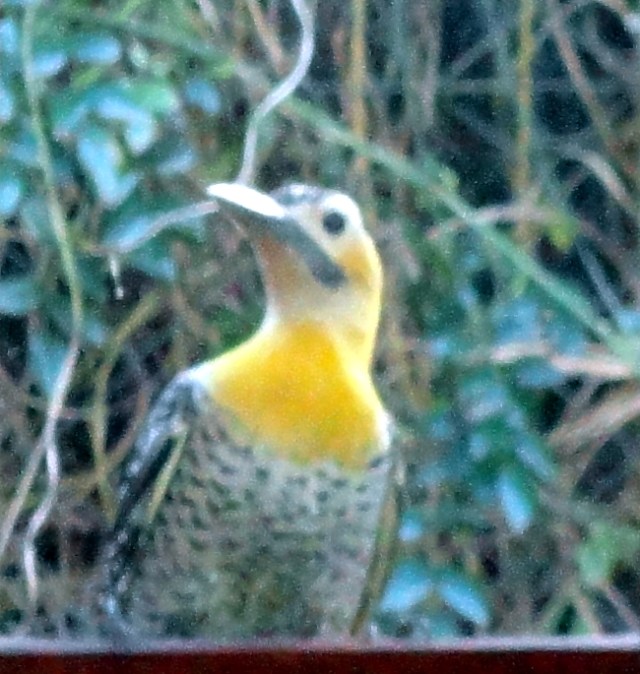
One of our (often seen) yellow-grey birds were picking on the bedroom window, like „LET ME IN FOLKS“. Grabbing the camera and luckily taking a few pics was one unity. Sadly not the best quality, through the glass window and a moving bird.
 That’s a Pampas Flicker, family Woodpecker.
As it is known, birds like their refection and like to pick on it. Yesterday afternoon, during cooking outside, I heard a similar noise as days ago. Again I investigated carefully, wow – same bird (or a similar one) was knocking onto my car window.
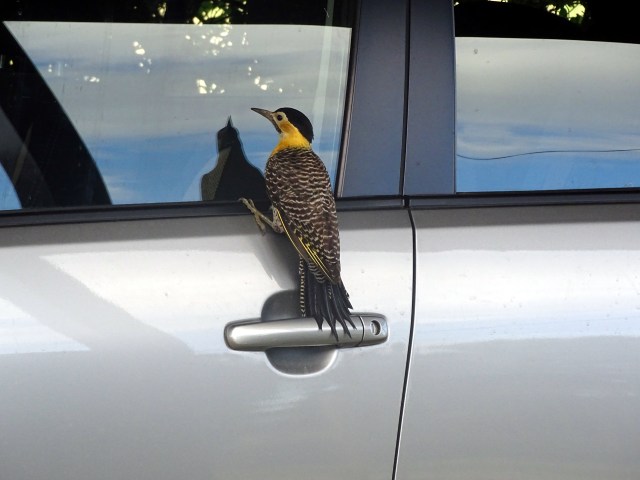 Who is picking this time on my windows ?
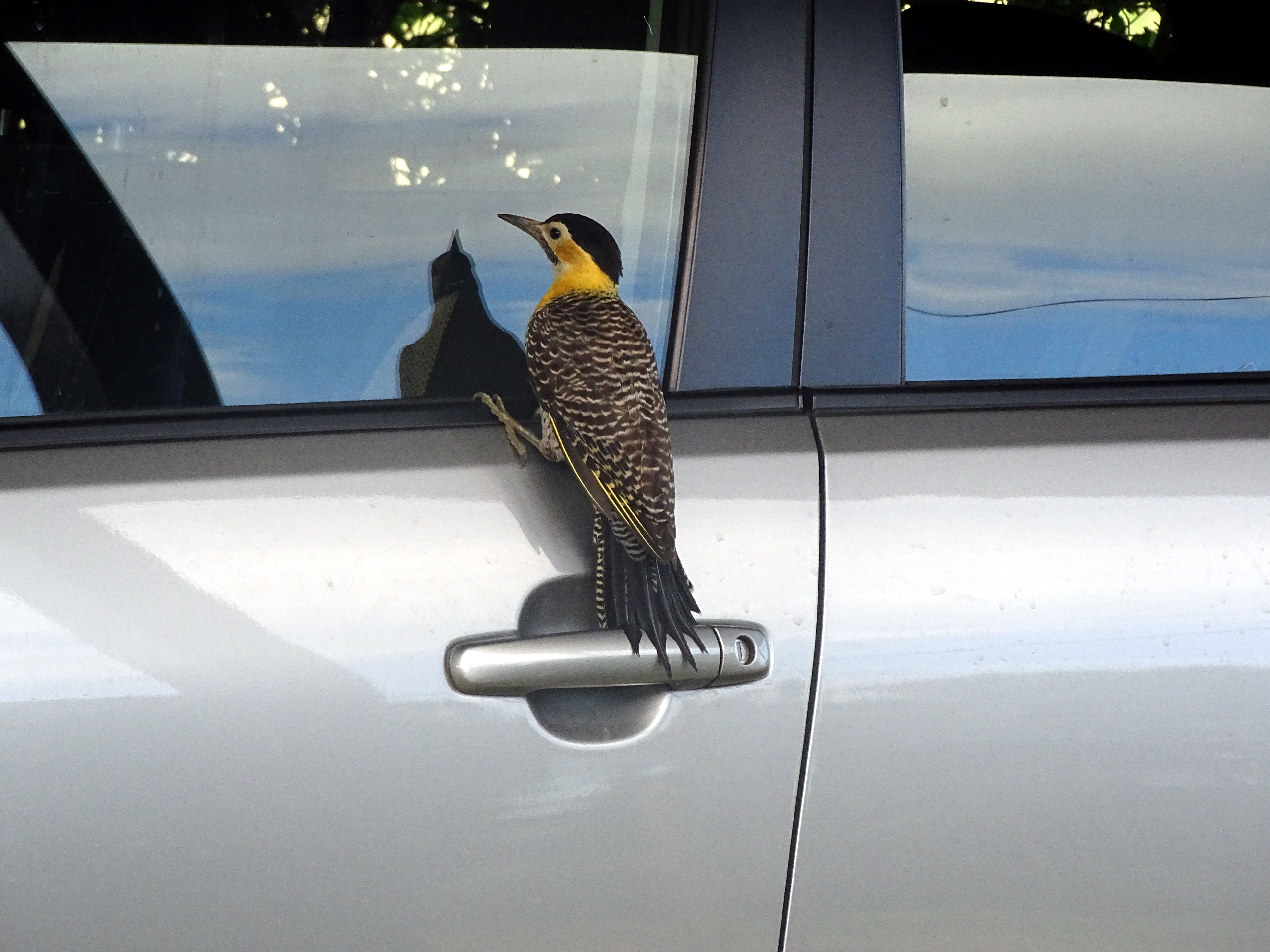
Quickly I ran around the house, entered through the backdoor and grabbed the camera. Very quiet I opened a front window and started photographing. This time with better luck of quality. The bird didn’t even felt disturbed. He was so busy to „attract his female counterfeit“ that I had time to take pictures.
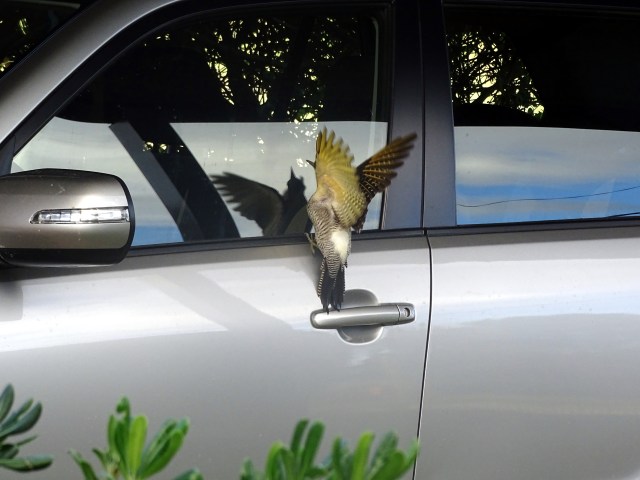 Hey, come on DEAR, give me a chance.
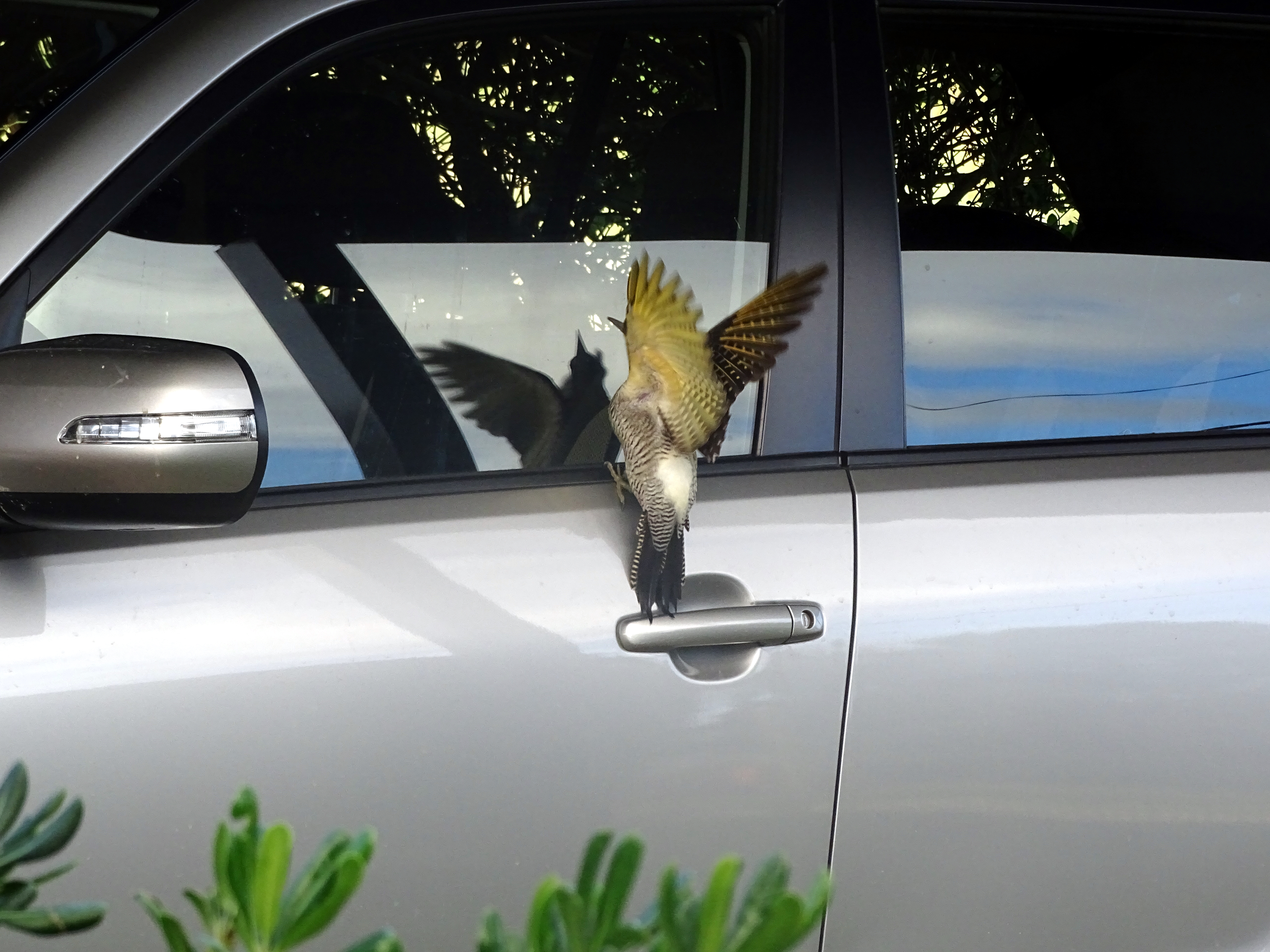
Of course I had to search closer about this bird species and like to share the results with this post. Hope you’ll enjoy them as much as I did.
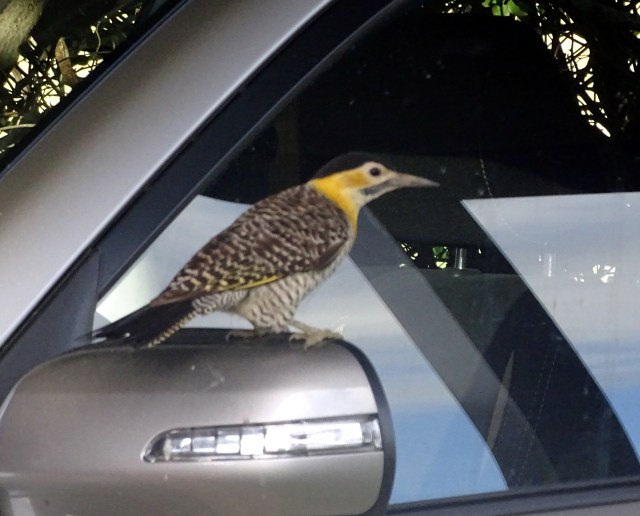 Ahhh, you are taking pics, o.k. then I’ll go again.
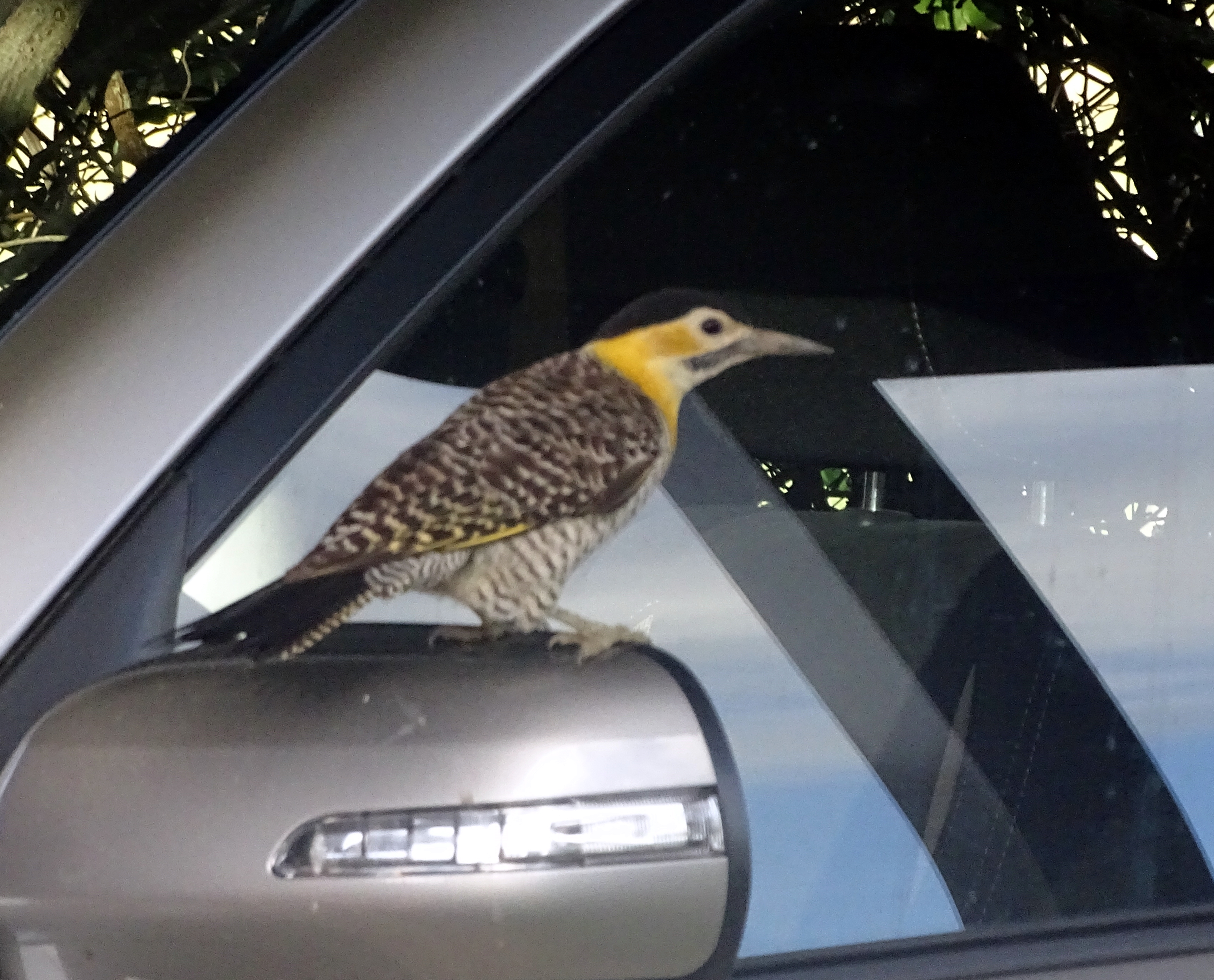
The Pampas Flicker (Colaptes Campestroides) belongs to the Woodpecker family, formerly always confused with the Campo Flicker (Colaptes Campestris). These birds are found in south-eastern Brazil, central and southern Paraguay, Uruguay and north-eastern Argentina.
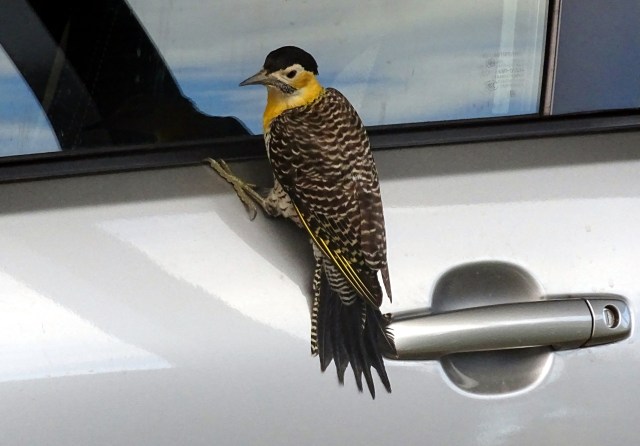 Happy now ? Then I am ready to go.
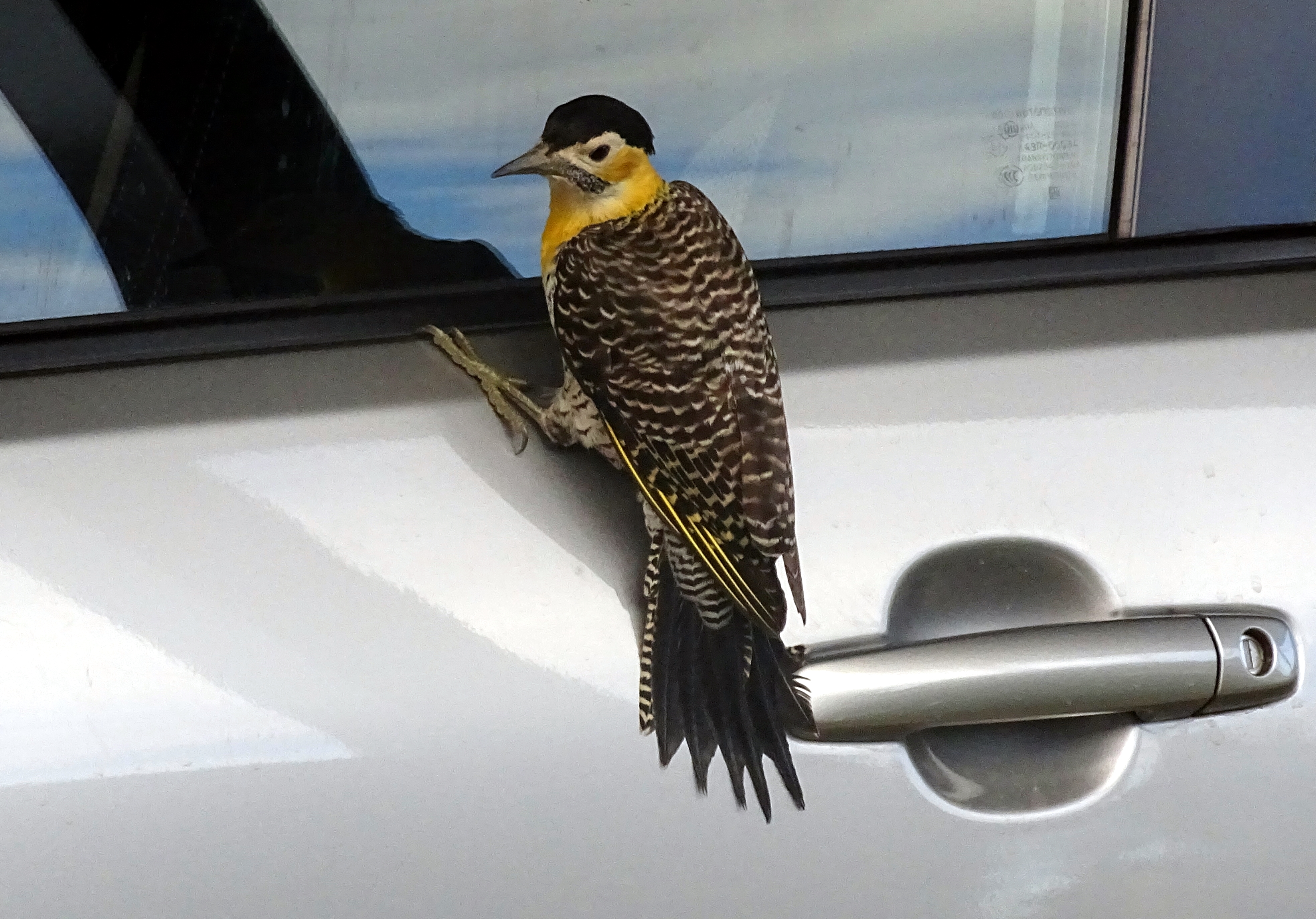
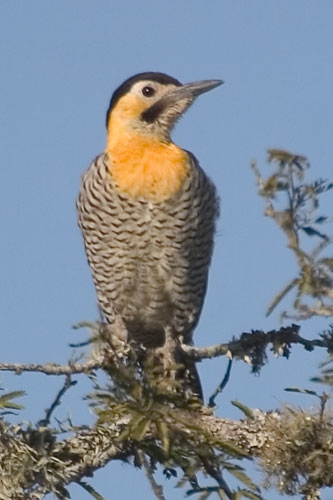
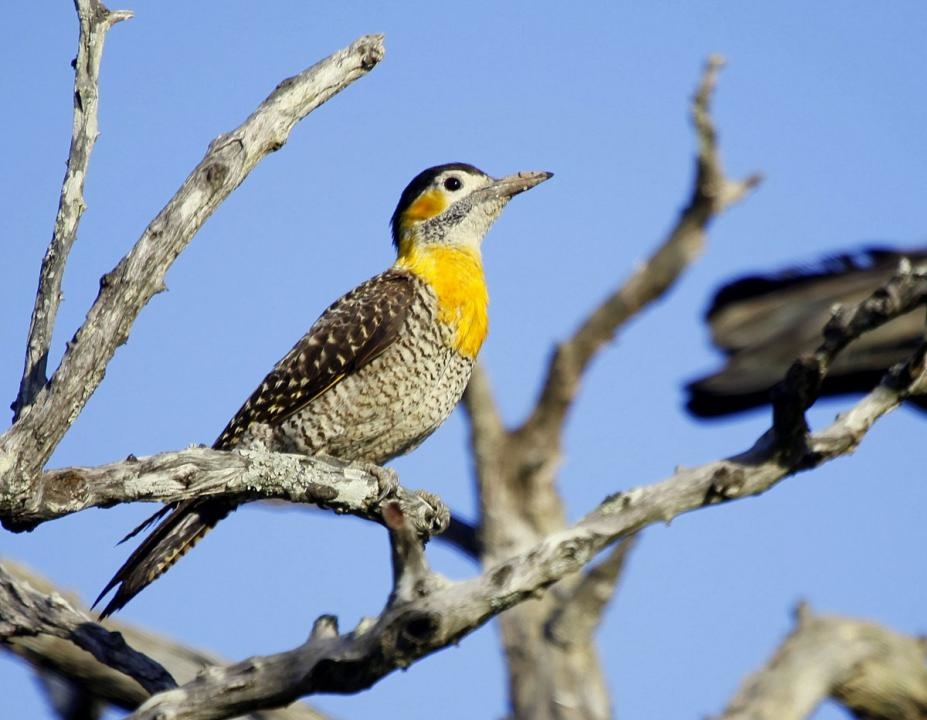
It is distinguished from Pampas Flicker by the whitish chin and throat which makes the malar stripe more pronounced. The Campo Flicker has a throughout black chin and throat.
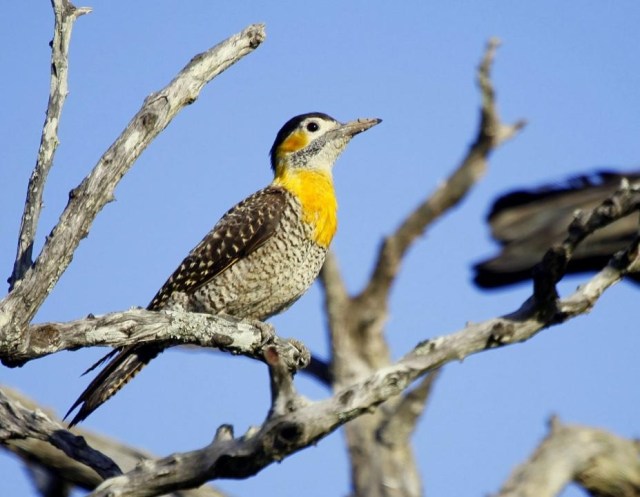 The Pampas Flicker white chin and throat. Pic by manakincarmelo.
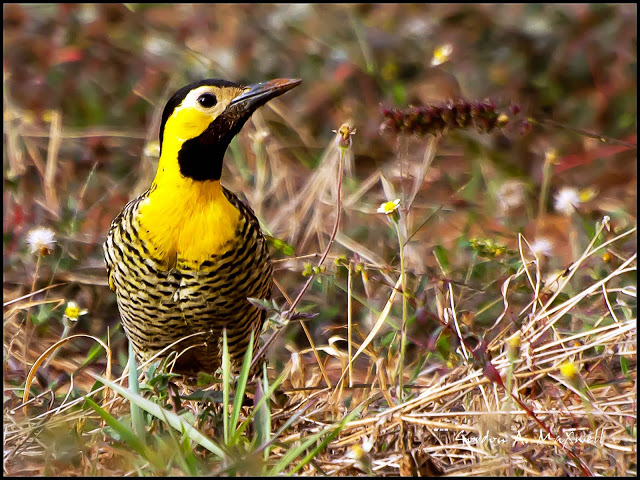 The Campo Flicker, black chin and throat. Pic by – see inside pic.
Though it frequently can be seen in trees or bushes, it is among the very few woodpeckers that spends a significant portion of its life on the ground. It breeds in holes in trees, termite mounds or earth banks. It is generally common, and therefore considered to be of least concern by the IUCN (International Union for Conservation of Nature).
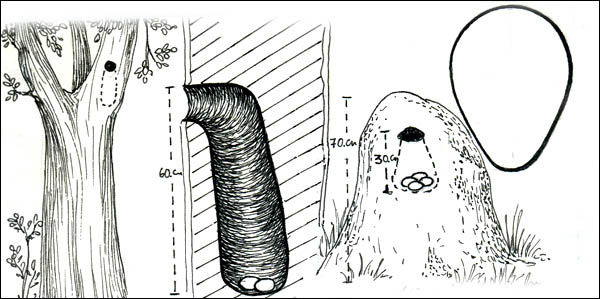 Nests of Pampas Flickers, very hard to find. Pic Argentinanativa.
The birds average size is about 30-33cm. Its life habitat are savannah’s, steppes, prairies, woods etc. Pampas Flickers eat ants, termites, beetles, grasshoppers, fruits and like it. They nest in ravines, anthills or tree holes, often in the great Ombu trees. Enjoyed ??

