
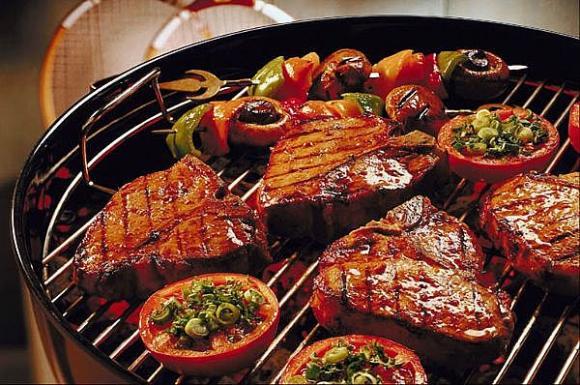
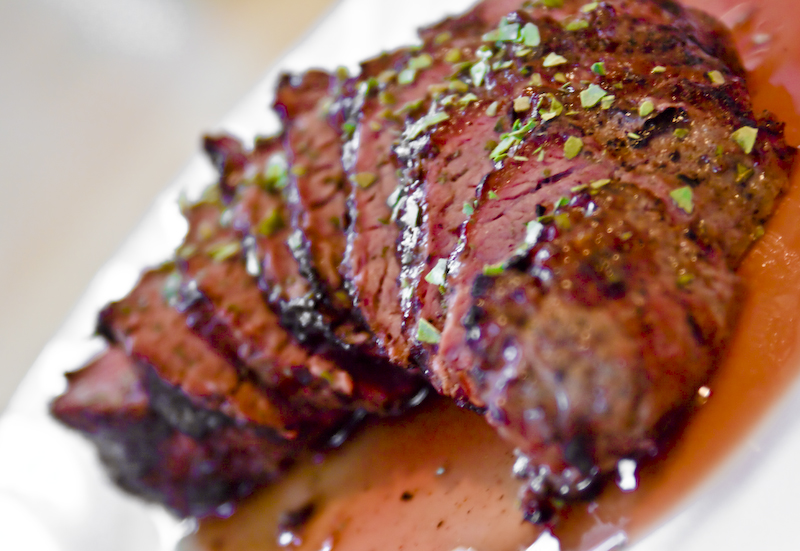
BBQ’s like this in Uruguay are only made for advertising, that’s not real UY life.
Since we live in Uruguay about 10 years now, we can tell about a massive changement in many parts of life, especially in food availability. Recently I found some information about Uruguay’s beef situation in latina press articles, which I like to share with you. As positive as the tourist interest in Uruguay is growing as negative is the internal life situation.
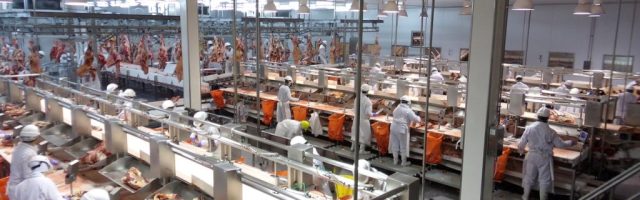
Just this company in Uruguay, the BPU, processes over 800 cows per day.
Uruguay is sometimes described as „one big farm“. It’s a country, albeit a small one, where cattle outnumber people by four to one and farming is the most important part of the economy. Like their fathers and grandfathers before them, Roque and Lindenberg are gauchos, or cowboys, effortlessly herding cattle on their modest ranch just north of Montevideo, Uruguay’s capital.
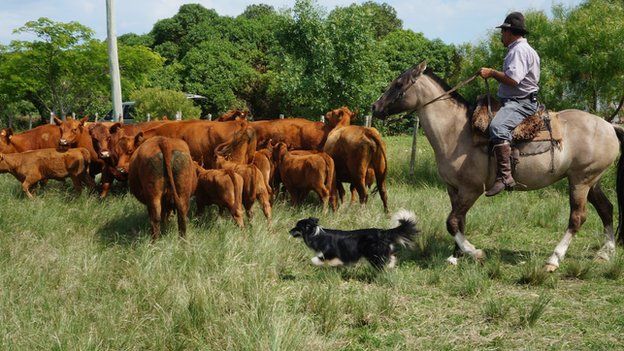
Gauchos are a key part of Uruguayan culture but have had to move with the times.
But this is today also a land of high-tech cowboys, where the laptop is as important to these farmers as their horses. Uruguay, a country with 3.4 million inhabitants and 12 million cattle, faces an unprecedented challenge for its beef industry. For the first time in its history, the small South American nation imports beef from its neighbors – mainly from Argentina, Paraguay and Brazil – for its own use. The reason: China’s growing appetite for high-quality gourmet meat.
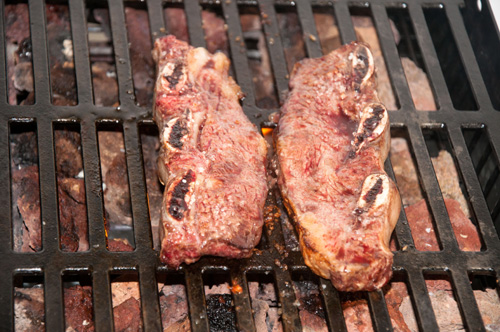 This was once the Asado de Tira, still having a full portion of the best meat on it. Nowadays hard to find in butcher-shops.
„Asado de Tira“ ( roasted strip or Bratenstreifen) is considered Uruguayan national dish, although not country specific, but spread throughout the Río de la Plata region. For us its a very strange cut and the best part of the beef is cutted off. The most popular pieces and the better quality is suddenly harder to find in many stores.
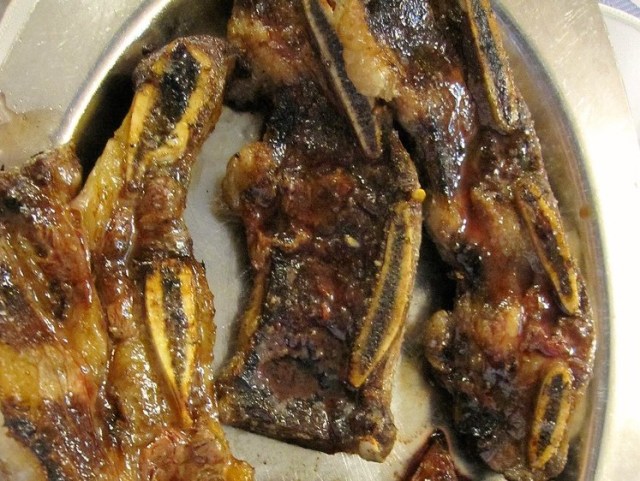 This is what they sell now as Asado de Tira, fatty, bony, gamy and mostly meatless strips. Cheap, cheap !
That’s because of exports to China. When Chinese ask for meat, only the best quality comes into question. The Uruguayans are meat lovers and world champions with a consumption of more than fifty kilos of beef per person per year. Or another statistic shows that Uruguayans have about 9 times per week beef on their menu !!
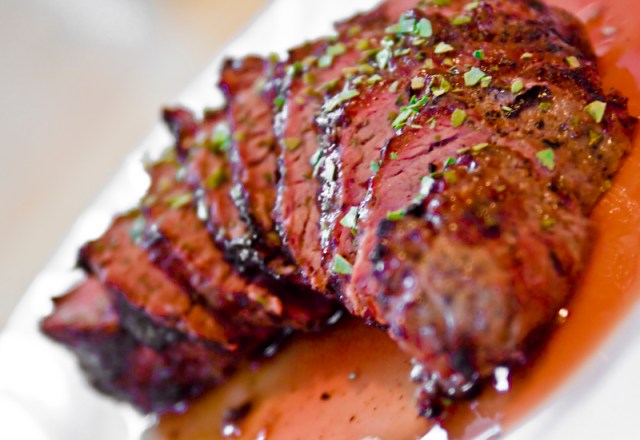 Very hard to find a beef quality like above on Uruguayan tables.
Healthy cows make Uruguayan beef so popular. The animals graze on huge natural areas, are hormone- and antibiotics-free by law. In addition, every single cow in the country is monitored from birth to slaughter. Using computer chips on the ears, Uruguayan cattle can be traced from birth to the plate. The system is mandatory and assigns each animal an identification code.
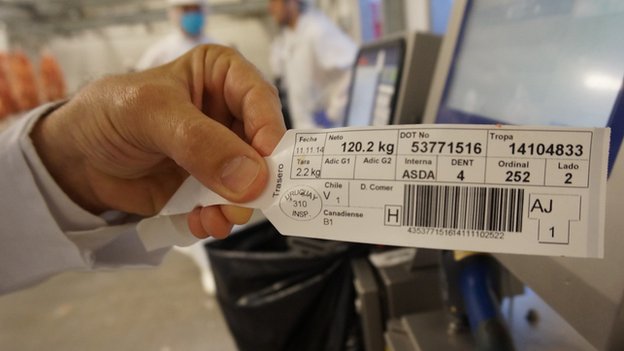
The system means beef products in some cases can be traced back to individual animals and farms.
„BPU Meat Uruguay“, the country’s largest meat factory, employs more than 700 workers and processes about 800 cows every day. The company benefits from growing Chinese demand. Uruguay exports just over 40,000 tonnes worth around US$ 200 million every year, with China being by far our most important market. According to the „Instituto Nacional de Carnes“, the volume of beef exports to China has risen by more than thirty percent over the past year and Beijing is prepared to pay a lot of money for Uruguayan meat. A similar positive increase of beef export is observed to Japan.
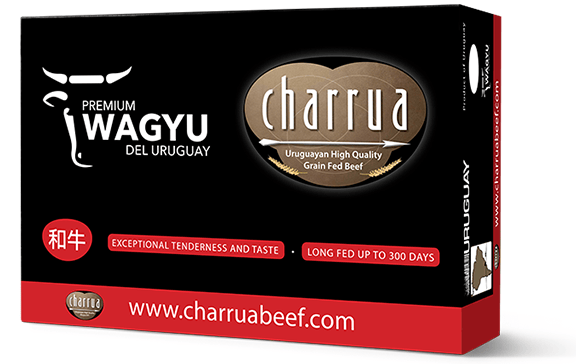 Never seen somewhere in Uruguay this kind of „export quality“ for sale. That’s what the company describes: „Charrua Wagyu meat is subdivided according to the AUSMEAT Marbling Scores. To guarantee exceptional quality only the score 4-5, 6-7 and 8-9 are delivered“.
Charrua also sells, amongst others, „Premium Hereford“ and „Premium Angus“. Never seen here – Specials for export !
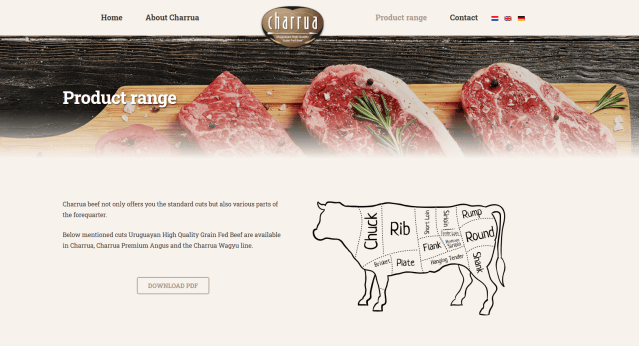 This is a screenshot of the charrua (by the way, a Netherlands located company) site. Shows the product range of charrua – ALL PERFECT AMERICAN CUTS, for the export. If we ask for it in Uruguay, no one knows about what a „flank steak“ is or buying „brisket“ !! Ja ja, that’s how Uruguayans and „dummies like us“ are open and fairly informed here.
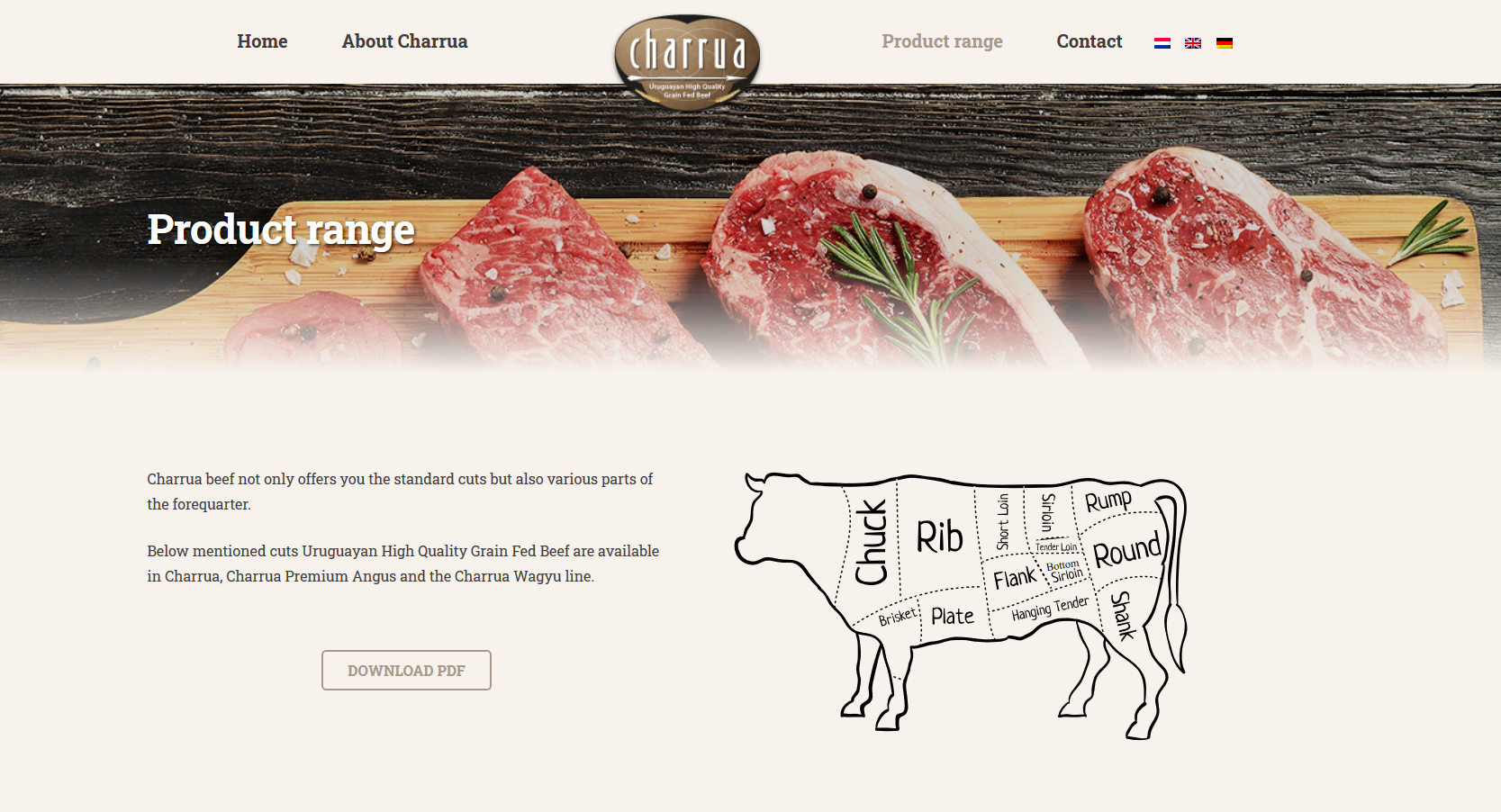
That’s why Uruguay has to shop with its neighbors. Beef imports increased to almost fifteen percent, and the trend is upwards. The „Uruguayans“ are aware of their country’s high standards and are reluctant to eat imported Asados. The whole story shows, Uruguay sells their best quality for high prices and imports cheaper quality for low! Moneymaking is more important then quality of life of their own population!
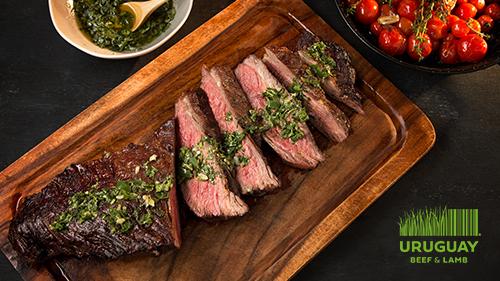
10 years ago in a restaurant in UY. Today one can only dream about. Except the Chinese or Japanese.
An evidence to this story is the just established new law about Uruguayan meat prices, where a government aid is given, to motivate customers if one buys the „not for export reserved“ meat qualities, say cheaper imported (from Argentina) qualities.
Conclusion:
Of course, the Chinese or the Japanese are to blame ! Anyway, if you know where and what and pay for it you still get the best beef in Uruguay !


Thanks for the article, we were blissfully unaware of the beef problem. We are in Punta del Este. Where can one get Uruguayan beef?
LikeLike
Dear Colette,
thanks very much for your comment.
As our good friend Jonathan already wrote in his last „MAGPIE“:
***You eat meat (which now mostly comes from Brazil – the Chinese get the rest)***
To answer your question. There are some good butchers still around, but I don’t know one in the Punta area, sorry.
I buy my meat in Atlantida at a local butchery and most of the better qualities at MAM. (see my post https://myuytips.com/2017/05/05/mam-montevideo/).
This butchery „El Novillo“ can fulfill all my personal wishes (ALMOST – Ha Ha ).
Good luck to you, Mike.
LikeLike