
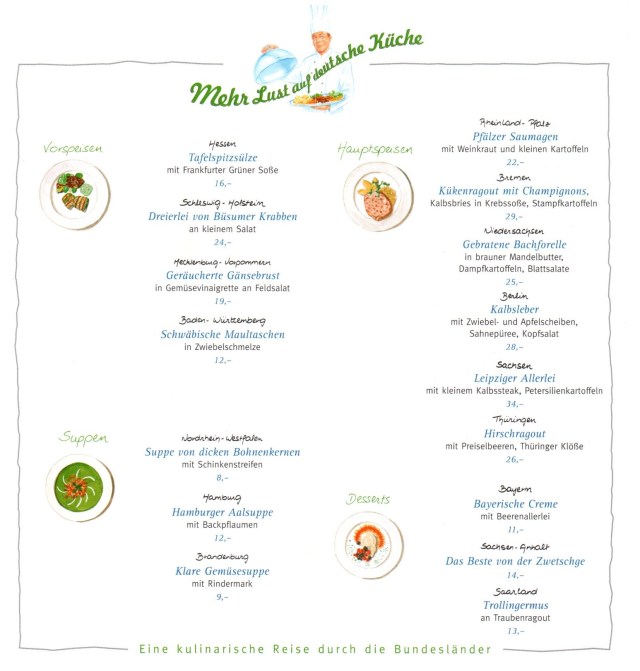
 Ultra rare German menu-card – 16 different, typical German, dishes from the 16 German Federal States.
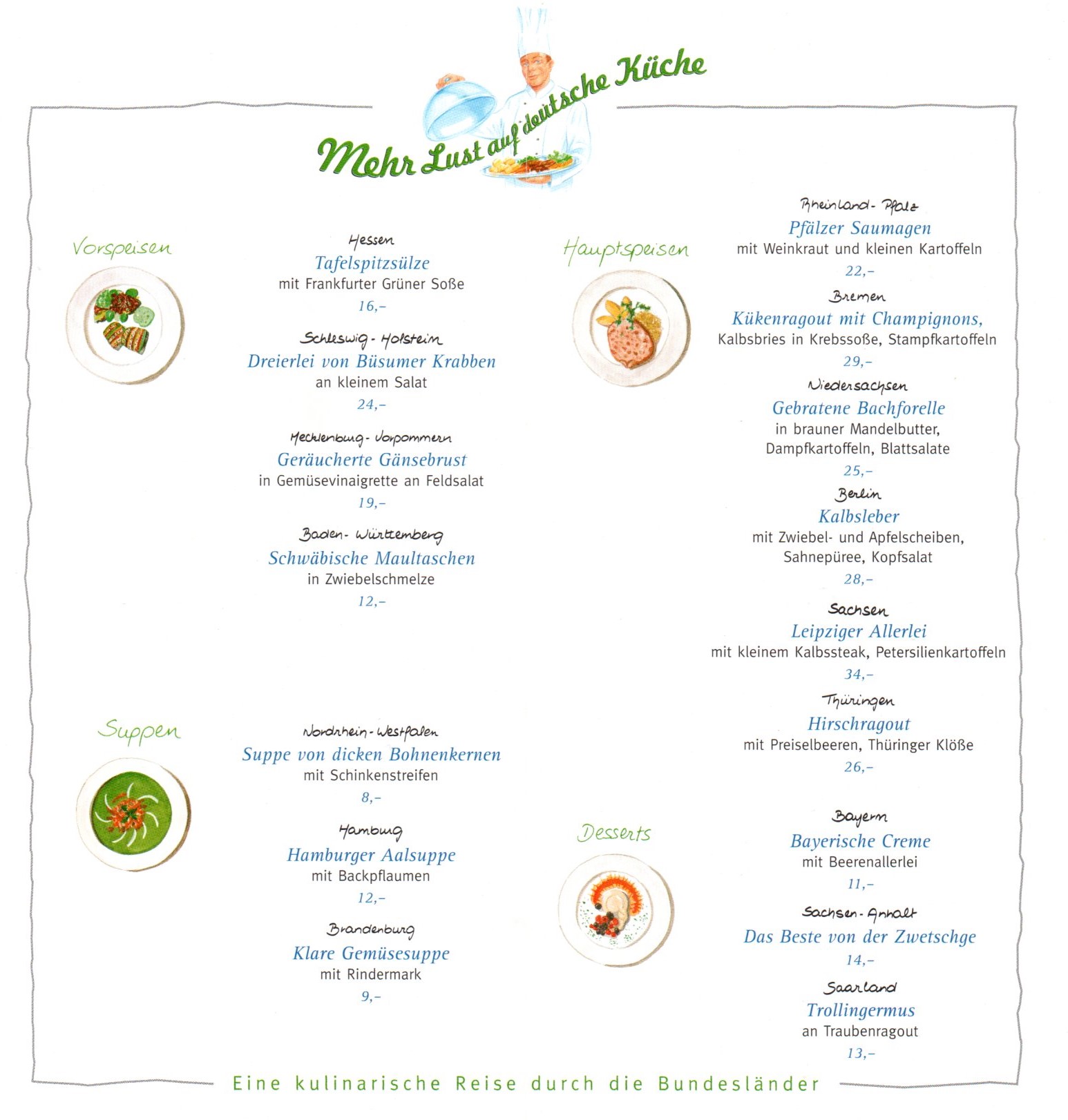
Here my dear friends the second part of famous German foods.
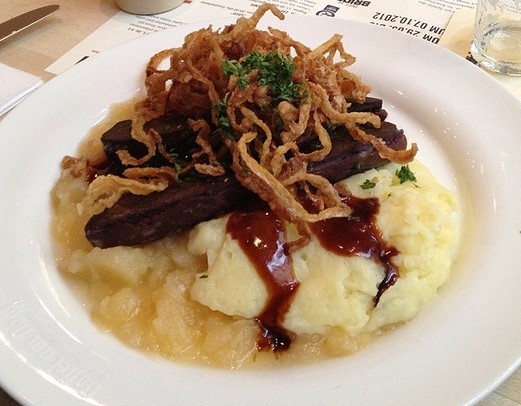
That’s how Himmel and Ääd is served at the Gaffel brewery restaurant near the Dome in Cologne.
11. Himmel un Ääd.
This is another messy and not necessarily optically appealing dish, but nevertheless definitely worth trying. „Himmel und Erde“, or Himmel un Ääd (regional dialect) in Cologne (both mean „Heaven/Sky and Earth“) is popular in the Rhineland, Westphalia and Lower Saxony. The dish consists of black pudding (fried blood sausage), fried onions and mashed potatoes with apple sauce.
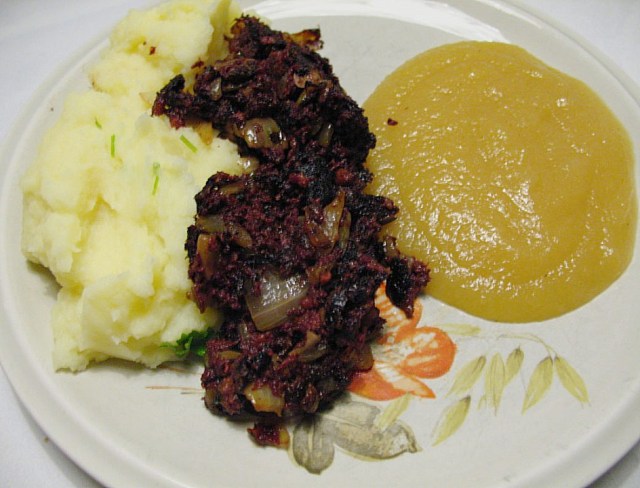
That’s how we make it at home, the fried blood sausage is mixed with the fresh fried onions.
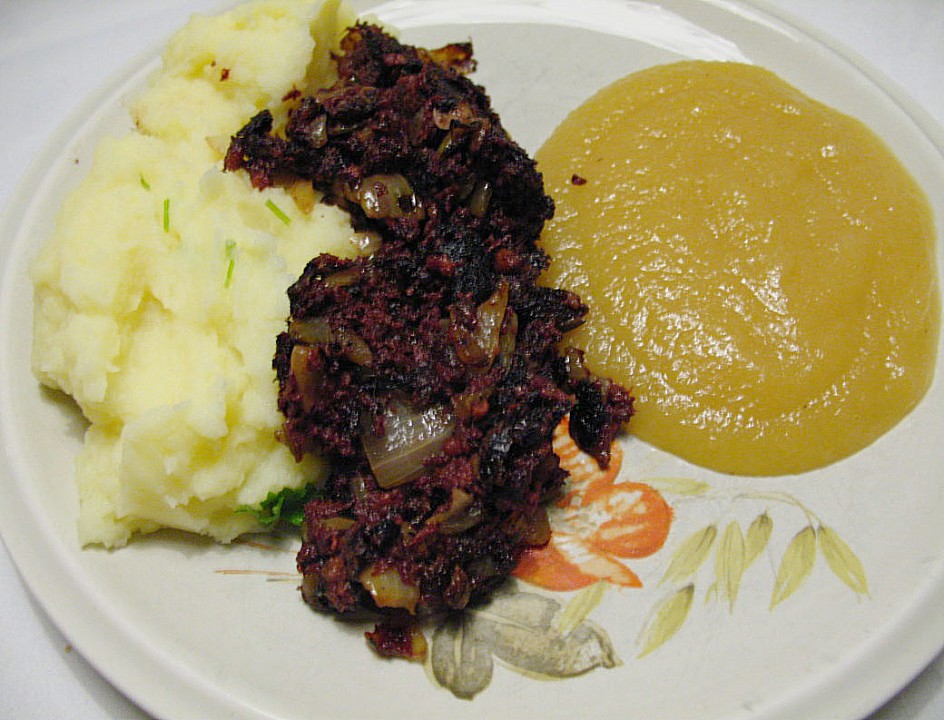
The name of the dish originates from the name of two of the main ingredients: the apples coming from the trees, i.e. from up in the sky, and the potatoes coming from the ground. (A dialect word in German for potato is Erdapfel (English: earth apple), or Äädappel in the Rhineland, so there are two kinds of „apples“ in the dish).
It has been around since the begin of the 18th century, and these days is a beloved staple of the many Kölsch breweries and beer halls in Cologne, where it goes perfectly well with a glass or three of the popular beer.
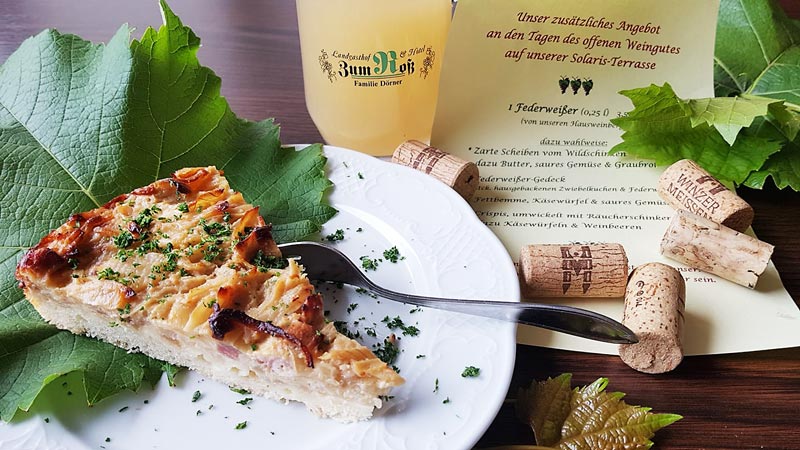
12. Zwiebelkuchen and Federweisser.
October is the month to taste the first wines of the year in Germany, and a well-known culinary treat in Southern Germany is Federweisser und Zwiebelkuchen (partially fermented young white wine, still milky in color – and onion tart).
Federweisser literally means „feather white“ and is made by adding yeast to grapes, allowing fermentation to proceed rapidly. Once the alcohol level reaches 4%, Federweisser can be sold.
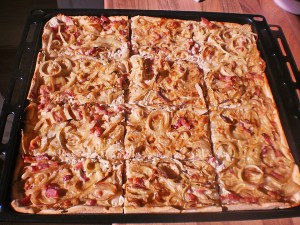
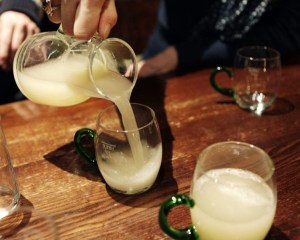 Zwiebelkuchen, made with bacon, steamed onions and cream sauce, is mostly a sheet cake. Federweisser is basically an alcoholic grape juice or very young wine. Click on pics to size up.
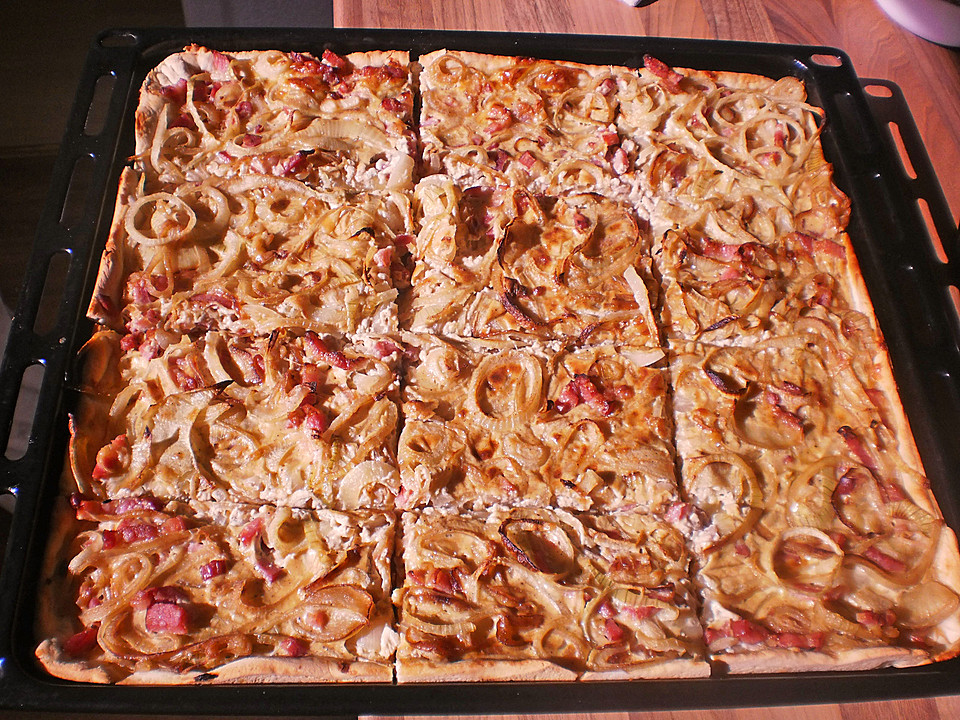
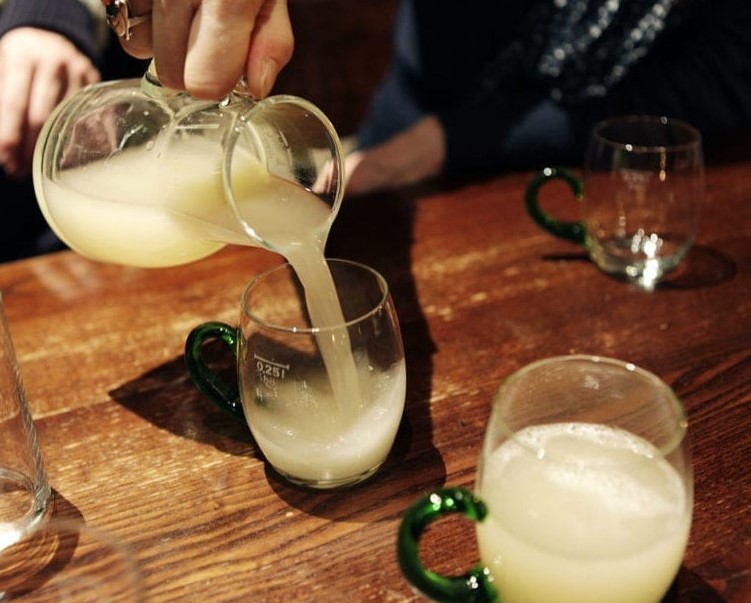
It is mostly enjoyed near where it is produced. Because of the fast fermentation, it needs to be consumed within a couple days of being bottled. In addition, the high levels of carbonation means that it cannot be bottled and transported in airtight containers.
In most towns and cities along the wine areas, people flock to marketplaces and wine gardens in early October to sip a glass of Federweisser and feast crispy, freshly made onion tarts called Zwiebelkuchen.
 This is a special for my German readers, not a comic only, but a true story when consuming Federweisser and Zwiebelkuchen. Click on pic for a good read.
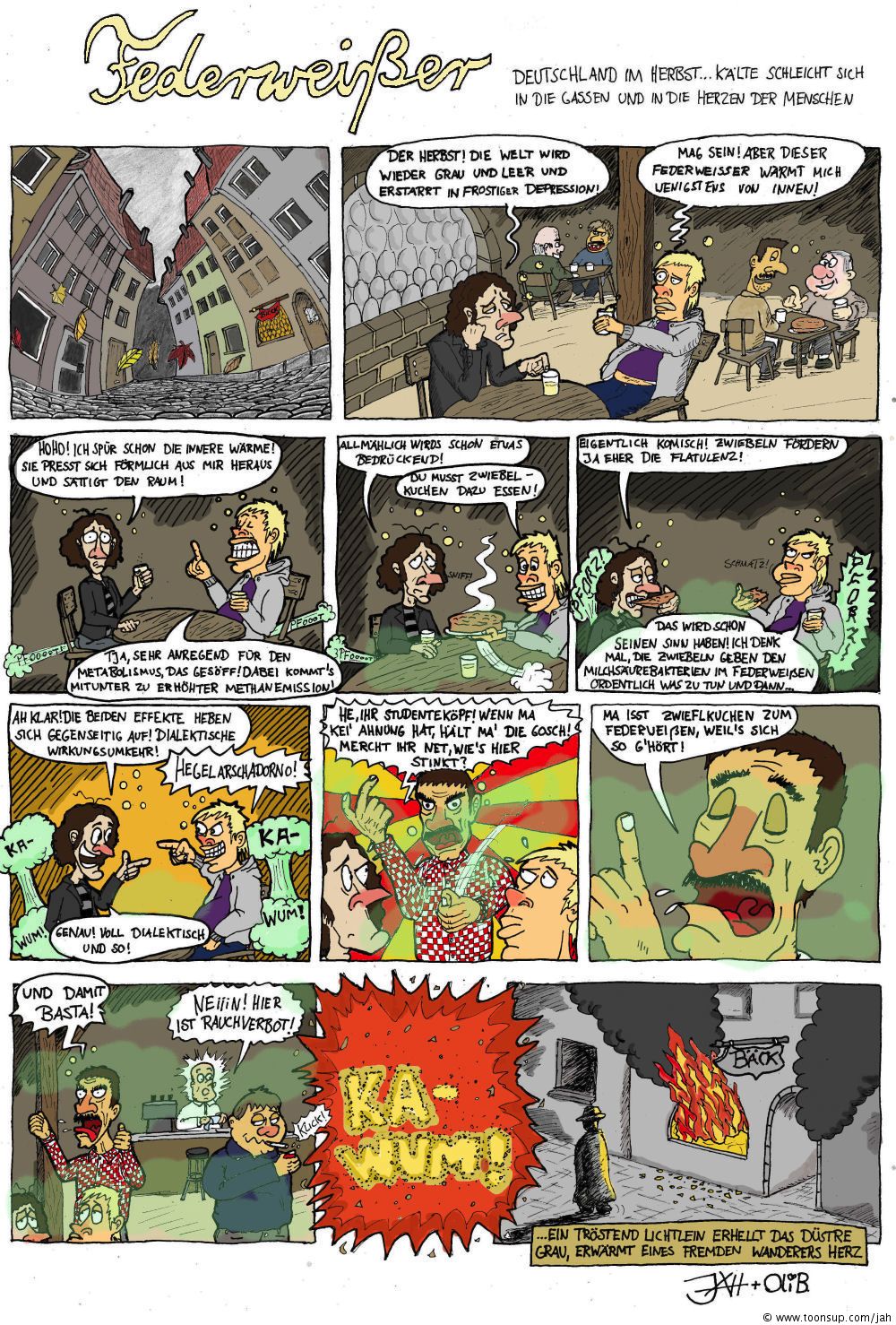
Because of its light and sweet taste, Federweisser pairs well with the savory, warm onion cake. Most winery’s open up for this treat during a few weeks in October.
13. Pfälzer Saumagen.
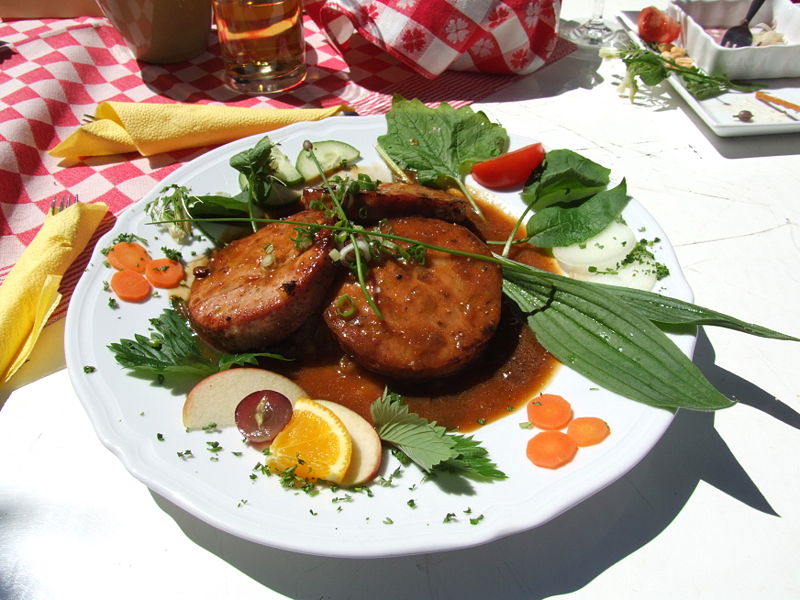
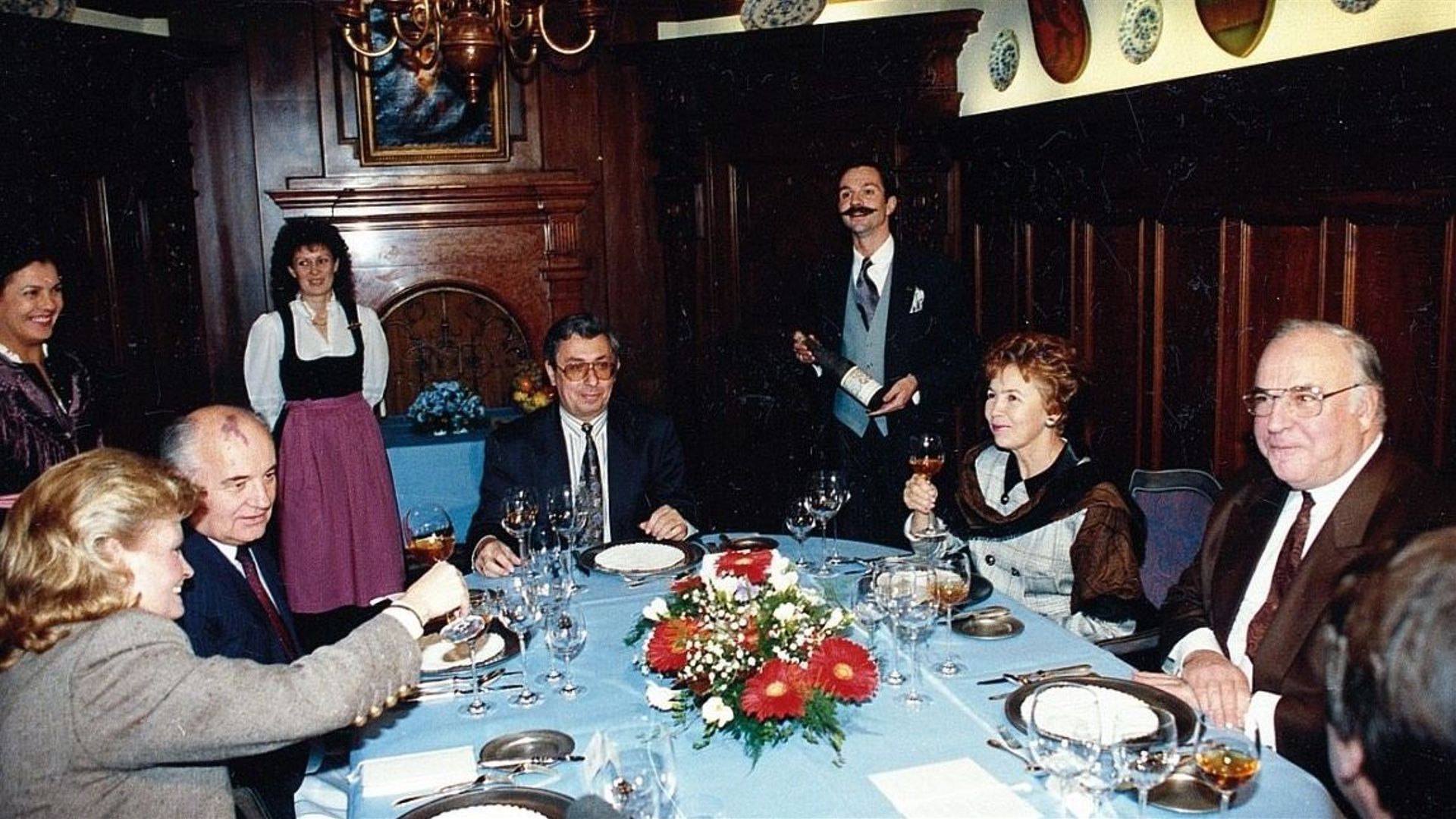
World politics in a pig’s stomach. Saumagen was made famous by German Chancellor Helmut Kohl, who like the dish, hailed from the Palatinate (Pfalz). Kohl loved Saumagen and served it to visiting dignitaries including Margaret Thatcher, Mikhail Gorbachev, Ronald Reagan, Bill Clinton and many others.
The literal translation of this dish is „sow’s stomach,“ but Saumagen is a lot less curious than its name implies.
 Original Pfälzer Saumagen, a la Helmut Kohl.
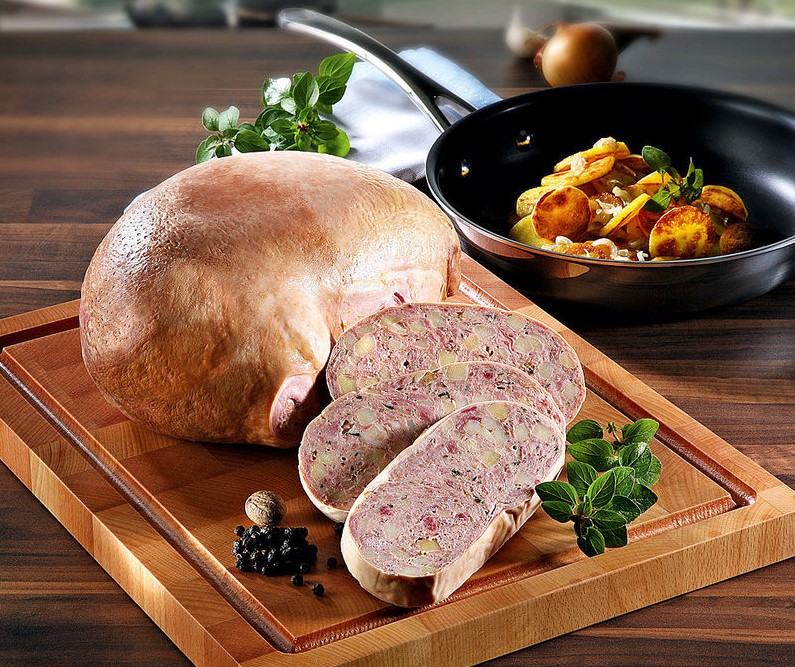
Somewhat resembling Scottish haggis, it is prepared by using the stomach of a pig (or an artificial one) as a casing for the stuffing made from pork, potatoes, carrots, onions, marjoram, nutmeg and white pepper.
It is then sliced and pan-fried or roasted in the oven, and, as Kohl knew, goes down perfectly well with sauerkraut, mashed potatoes and a dry white wine from the Palatinate.
 The Gorbachev’s and Kohl’s at Deidesheimer Hof for a Saumagen dinner. Above pic from the Spiegel. Down here some story for the German readers.
Bei dieser Anekdote kommen einem Zweifel ob der Echtheit, aber die Geschichte ist angeblich so passiert: Francois Mitterrand habe im Deidesheimer Hof lustlos in seinem Saumagen herumgestochert, was Hannelore Kohl auffiel. Sie flüsterte ihrem Mann zu, was sie gesehen hatte, worauf dieser sich zu dem Franzosen hinüber beugte und ihm etwas ins Ohr brummelte. Und Mitterrand habe gierig angefangen zu futtern und sogar Nachschlag verlangt. Wie er das geschafft habe, wollte Frau Kohl später wissen. Und ihr Mann offenbarte: „Ich habe ihm gesagt, wenn er nicht ordentlich aufisst, kriegt er das Saarland zurück.“
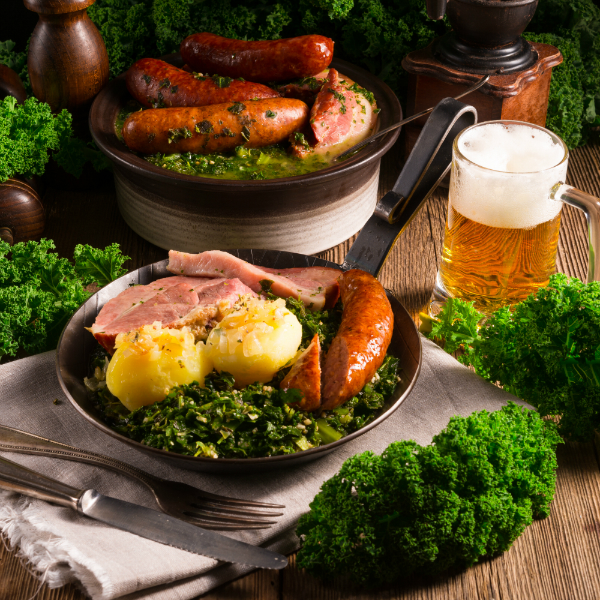
14. Grünkohl und Pinkel.
Grünkohl and Pinkel, or cooked kale and sausage, is a delicious winter comfort food eaten mainly in Northwest Germany, especially the region around Oldenburg, Bremen and Osnabrück as well as East Frisia and Friesland. A hardy winterfood.
The cooked kale is mixed with mustard and bacon, and the „Pinkel“ sausage (named after the pinky) is made of bacon, groats of oats or barley, beef suet, pig lard, onions, and salt and pepper and will be cooked in the Gruenkohl. The kale must have the first frost behind, before its been harvested.
Germans sometimes celebrate winter with a traditional so-called „Grünkohlfahrt,“ where family and friends go on a brisk hike accompanied by lots schnaps and finished off with a warm kale dinner in a country inn. There Gruenkohl is often served with additional different pork meats (Kasseler), potatoes and mustard.
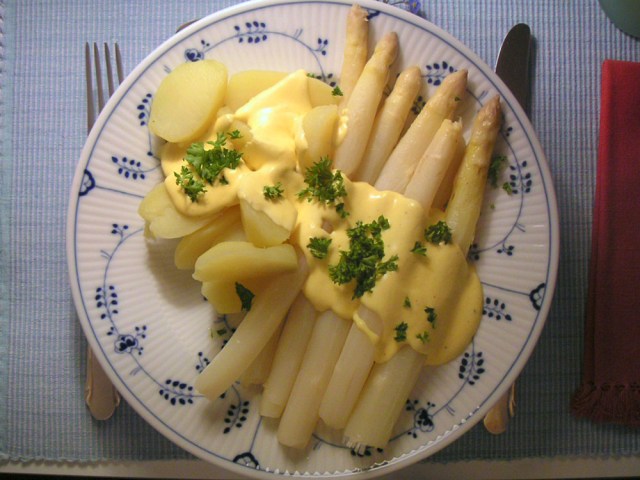 White asparagus, young new potatoes and sauce Hollandaise, what else one needs ?
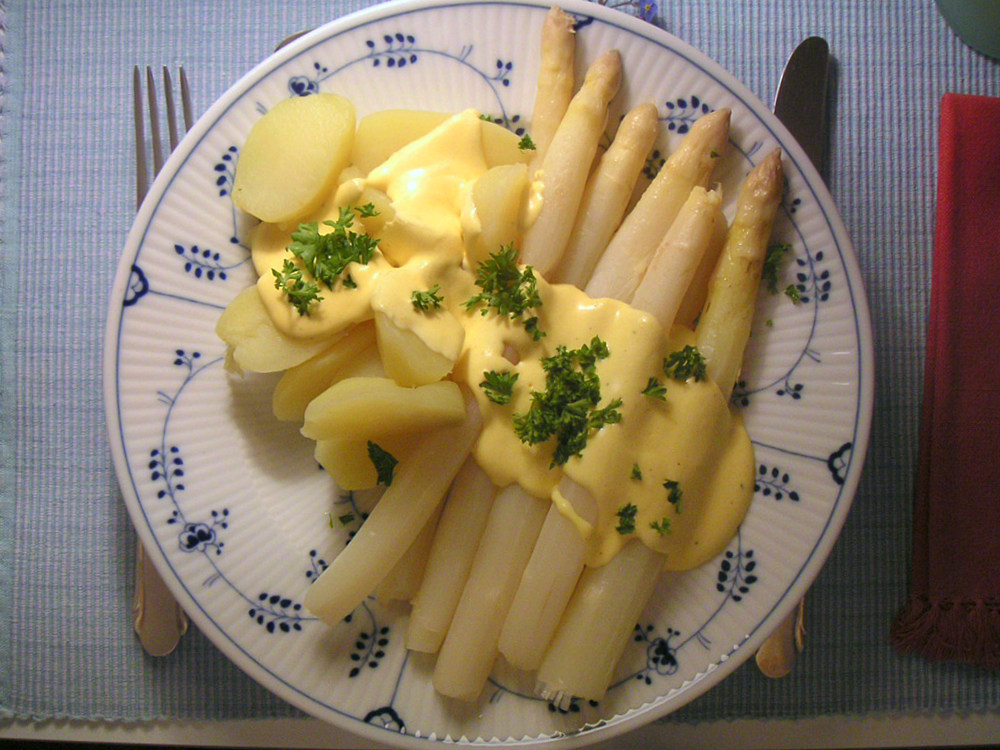
15. Spargel.
Germans are mad about white asparagus. As soon as harvest time arrives around mid-April, asparagus dishes appear on the menus of restaurants all over Germany, from Flensburg to Munich and Aachen to Görlitz.
This is Spargelzeit, the time of the asparagus, and it is celebrated with passion. During Spargelzeit, the average German eats asparagus at least once a day. This adds up to a national total of over 70,000 tons of asparagus consumed per year.
No one can truly say where this fixation with white asparagus comes from, but the first document that mentions the cultivation of this vegetable around the city of Stuttgart dates to the 1686. There are Spargel festivals, a Spargel route in Baden-Württemberg and countless stalls along the roads of Germany selling the „white gold.“
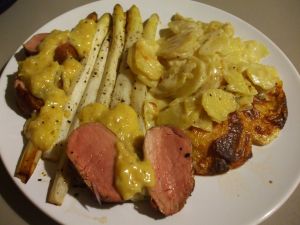
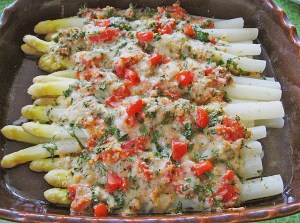
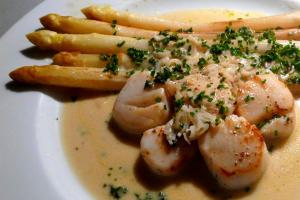 Some ideas how Germans like their white asparagus. From top left to bottom right, asparagus with ham and Bechamel sauce, with veal cutlets and fried potatoes, with a tomato and Parmesan crust and with scallops in a lemon butter sauce. Getting hungry ???
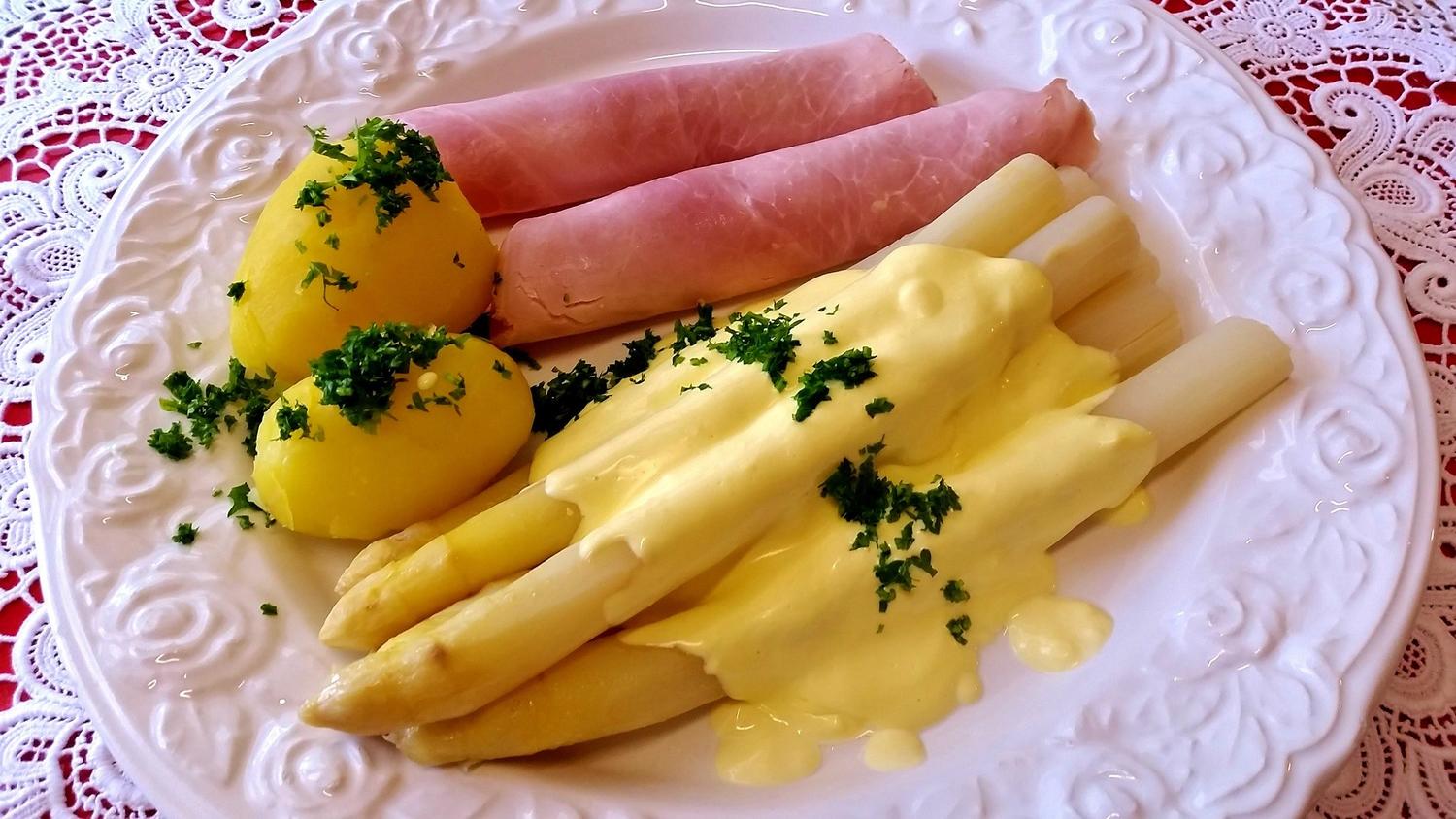
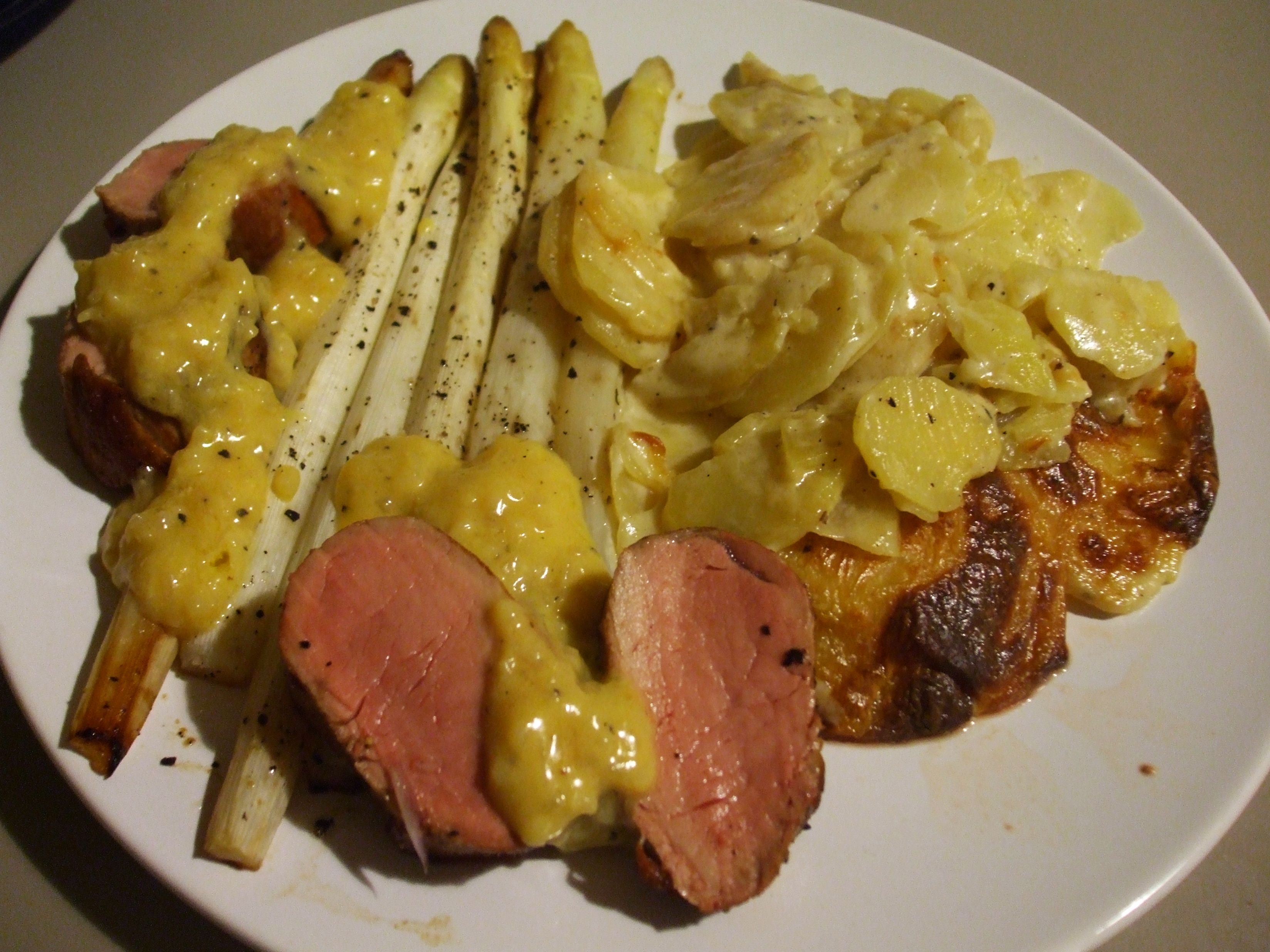
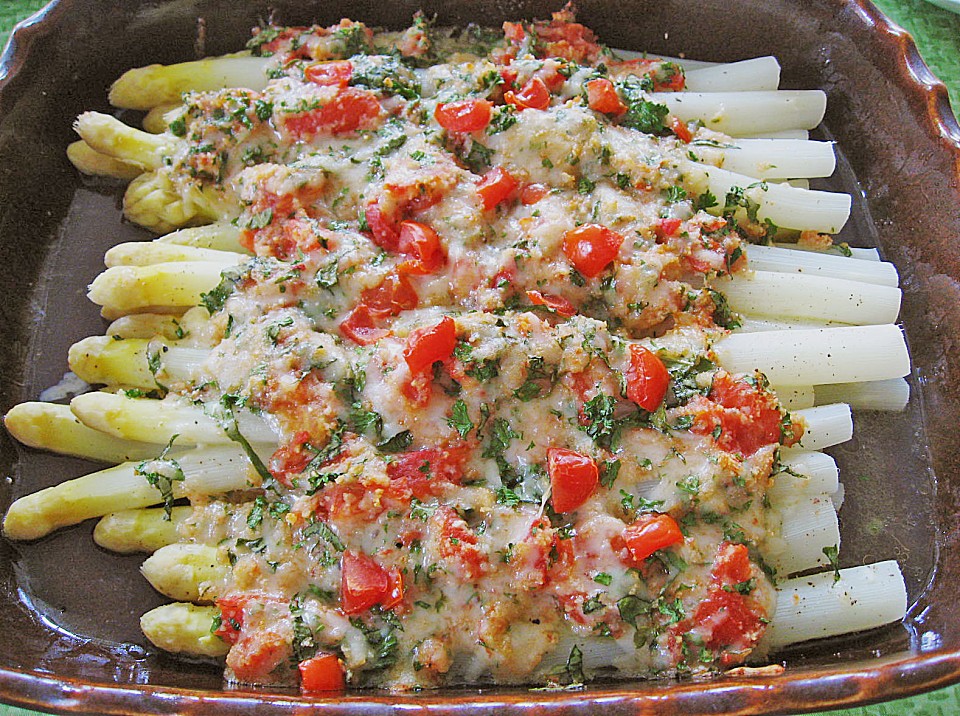
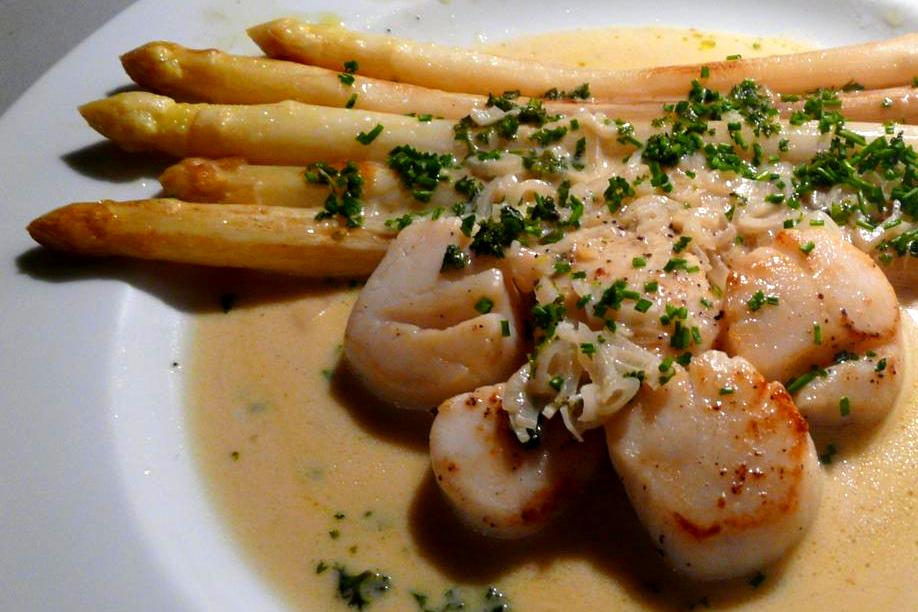
In restaurants, asparagus is boiled or steamed and served with Sauce Hollandaise, melted butter or olive oil. It comes wrapped in bacon or heaped upon schnitzel; as asparagus soup, fried asparagus, pancakes with herbs and asparagus, asparagus with scrambled eggs or asparagus with young potatoes. Or even sweet with strawberry’s and chocolate sauce. Spargel with salmon or …. the variations are endless, from simple to decadent.
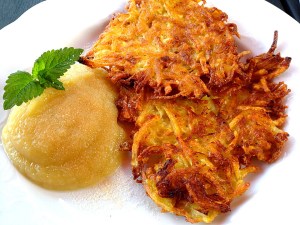
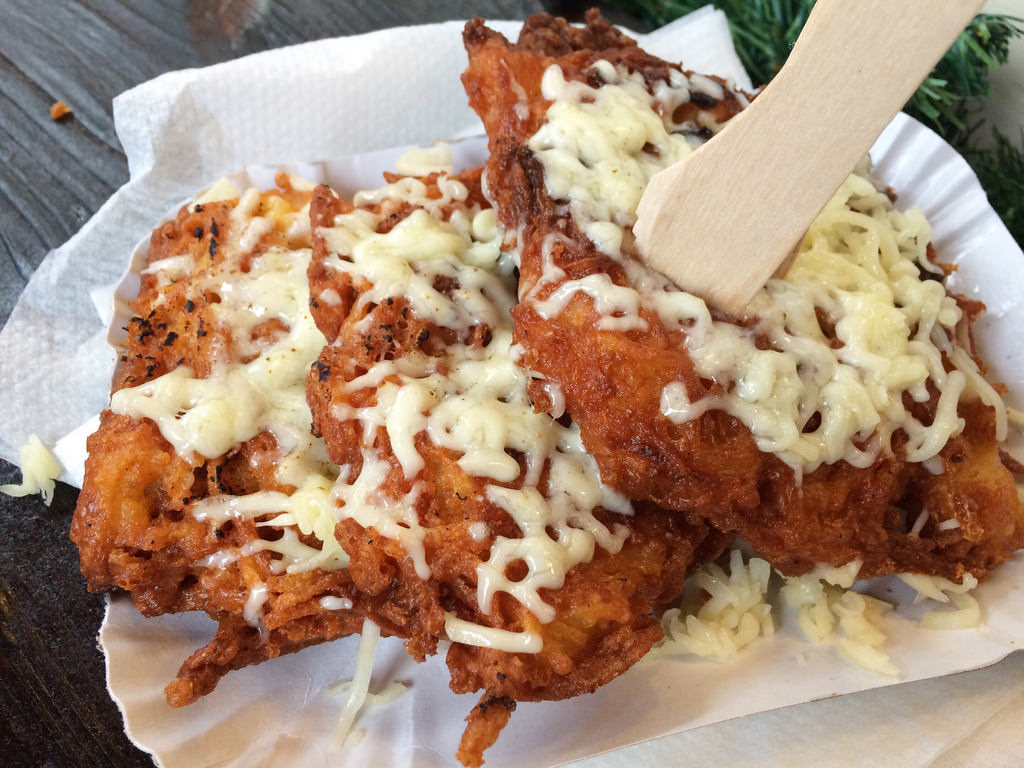
 German market-, street- and home-food, served wit applesauce or cheese or … or…
16. Reibekuchen.
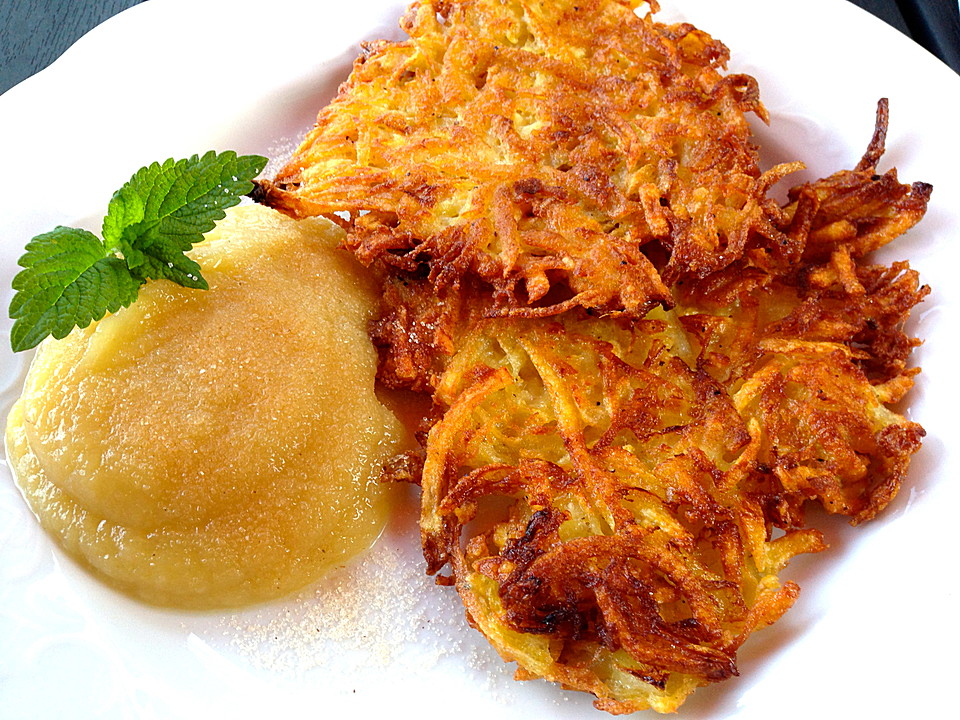
Fried potato pancakes are so popular in Germany that we have more than 40 names for them. They are known as Reibekuchen, Kartoffelpuffer, Reibeplätzchen, Reiberdatschi, Grumbeerpannekuche and on and on. In Southern Netherlands, the area of Limburg (close to the Rhineland), I met them under the name of Riefkeuk.
Another quintessential German comfort and street food, Reibekuchen are often served with apple sauce, on black pumpernickel rye bread or with treacle (a type of syrup).
They’re popular all year around and mostly served in portions of 3. In Cologne and the Rhineland they are beloved of revelers during the Karneval festivities in spring, and all German Christmas markets have Reibekuchen vendors where hundreds of liters of potato dough are being processed every day during the holiday season.
17. Rollmops.
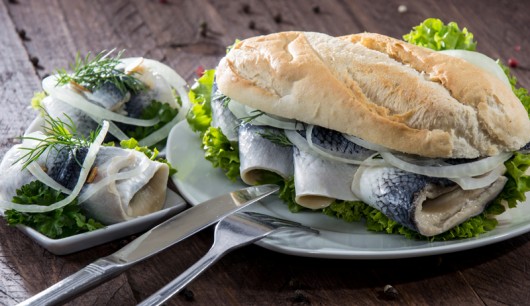
Rollmöpse (plural) are cooked or fried and then pickled herring fillets, rolled around a savory filling like a pickled gherkin or green olive with pimento, and have been served on the coasts since medieval times. Like Labskaus (see part 1) Rollmops is a popular part of a hangover breakfast.
The name „Rollmops“ is German in origin, derived from the words rollen (to roll) and Mops (German name of pug dogs). The form Rollmops is singular, and the plural is Rollmöpse. In Dutch, it’s spelled rolmops, plural rolmopsen. In English, the term „rollmops“ is often treated as the plural of the singular „rollmop“. The form „rollmop herrings“ is also attested.
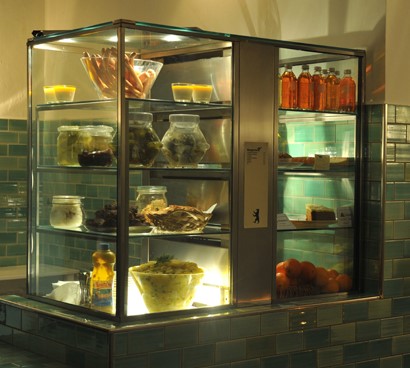 Hungerturm in Berlin, a relic from the Berlin pub time, slowly disappeared from the local pubs. Only the „Nussbaum“ in the Nikolaiviertel, Berlin still has (as I know) such a multi-storey glass cabinet in use.
In pubs in Old Berlin, it was common to have high-rising glass display cases known as Hungerturm (meaning „hunger tower“) on the bar to present ready-to-eat dishes. The Hungerturm serves in the morning sandwiches, also cakes, but in the evening this small showcase is stocked with the classics, that is lard bread, salted eggs, meatballs, Mettwurst, potato salad and of course Rollmops.
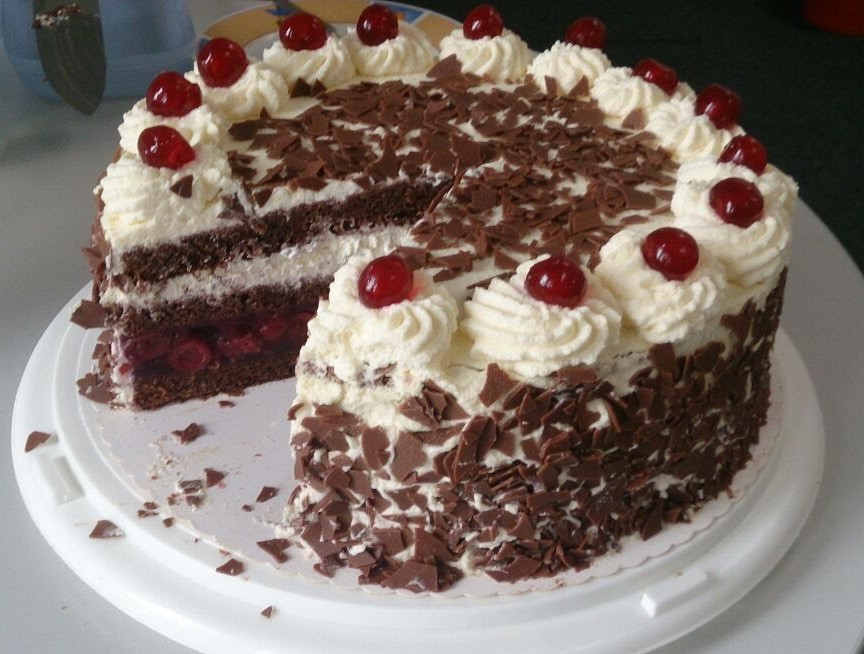
18. Schwarzwälder Kirschtorte.
Germany has a vast variety of cakes, but among the most popular is the Schwarzwälder Kirschtorte or Black Forest gateau.
The cake is not named after the Black Forest mountain range in Southwestern Germany, but the speciality liquor of that region, Schwarzwälder kirsch, distilled from tart cherries. Therefore it would be right to write the name „Schwarzwälder Kirsch Torte“.
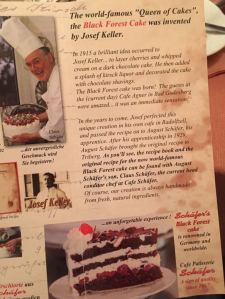
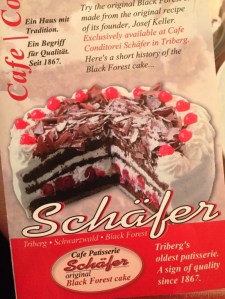 That is the secret ingredient after the tart has been named. Cafe Schäfer in Triberg, Germany claims to be the successor of the famous Josef Keller „Schwarzwälder Kirsch Torte“. Why not – its a big business.
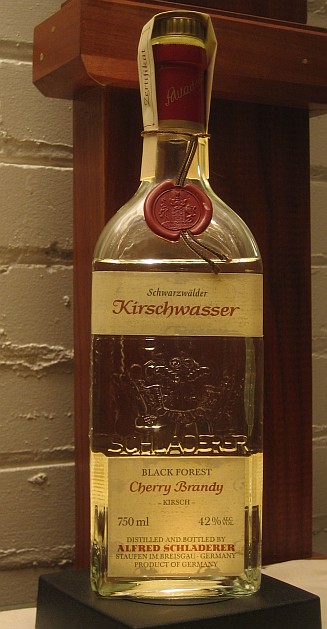
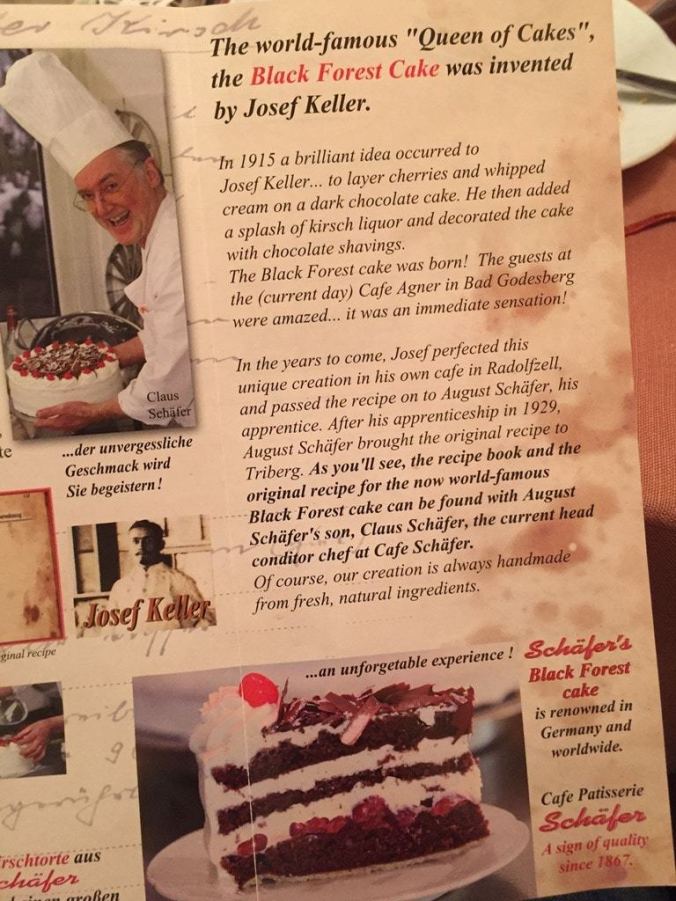
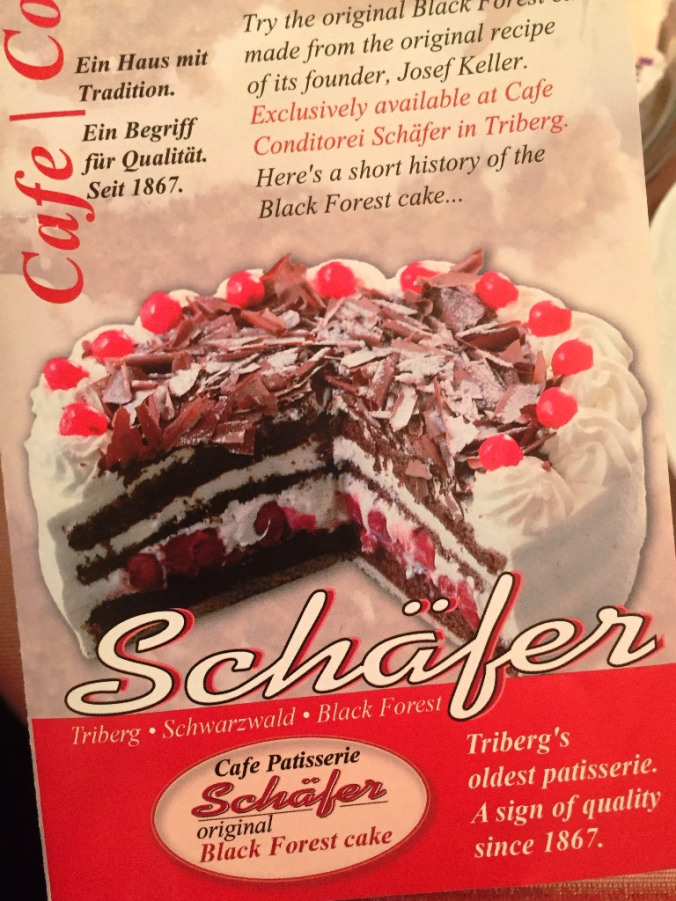
Allegedly created by Josef Keller in 1915 at Cafe Agner in Bonn in the Rhineland, it typically consists of several layers of chocolate sponge cake sandwiched with whipped cream and sour cherries, and then drizzled with Kirschwasser (a clear cherry brandy). It is decorated with additional whipped cream, maraschino cherries and chocolate shavings.
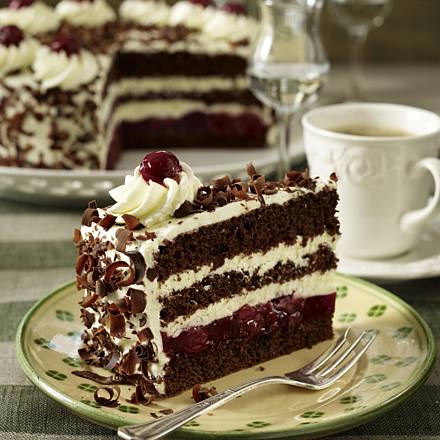 A big slice of cake, a great coffee and a glass of Schwarzwälder Kirschwasser – that’s life !
Its popularity in Germany grew quickly and steadily after World War II, and it’s during this period that the Kirschtorte starts appearing in other countries too.
Whatever the reason for its success, it is both perfect for „Kaffee und Kuchen“ in a German cafe on a Sunday afternoon as well as dessert.
19. Schäufele.
In the Southern Germany, the Baden region and between Lake Constance and Stuttgart a Christmas dinner on the 24th can consist of the meat dish called ”Schäufele” which is mainly served with Swabian potato salad. This meat dish has many names: Schäufele, Schäuferle, Schäuferla, Schäufala oder Schäufelchen. In Switzerland and Alsace it is called Schüfeli, Schiifele oder Schiifeli.
 The Baden version of Schäufele, smoked and boneless.
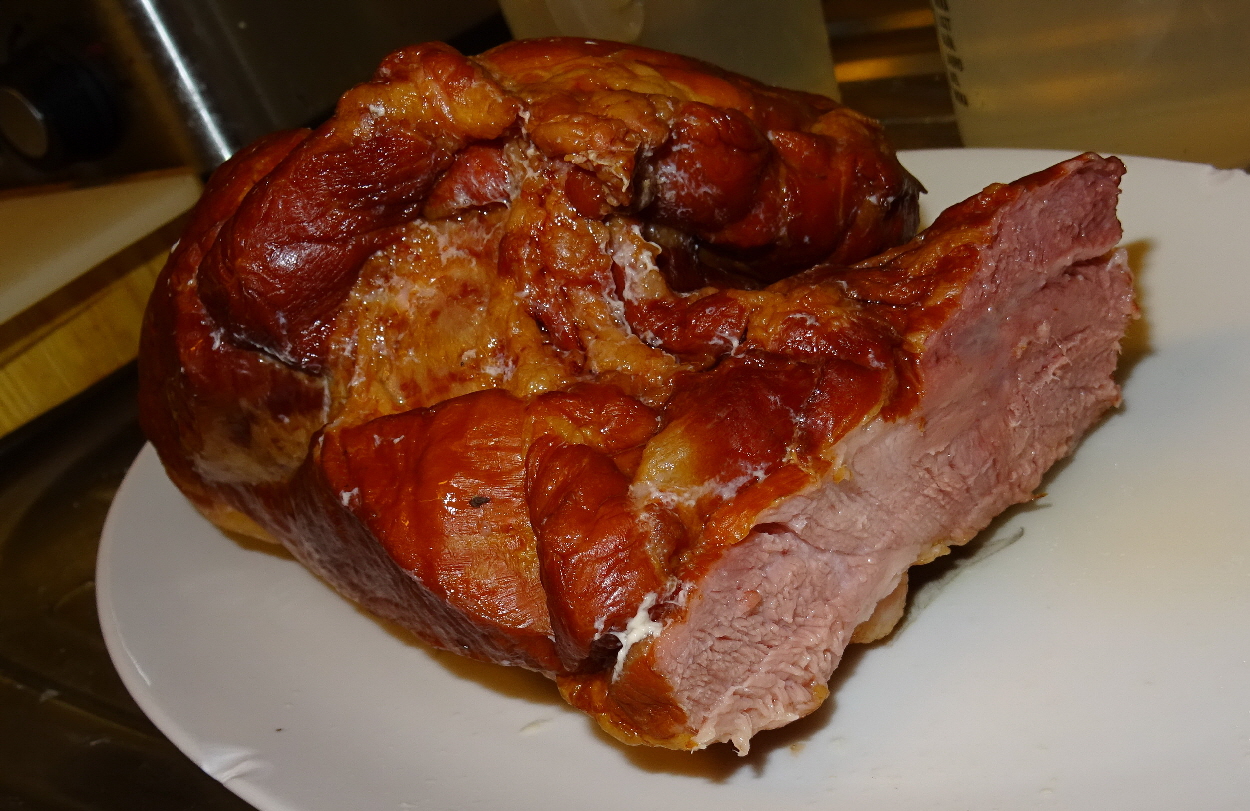
It is made from the pig’s shoulder meat, which gives the dish its name, „Schäufele“, or the pig’s scapula. In Southern German dialekt a small shovel (German: Schaufel) is called Schäufele and the pigs scapula looks like a small shovel. In Baden the meat is cured and smoked before it is simmered in a broth of water, white wine, vinegar, onion, bay laurel and clove for about two to two and a half hours.
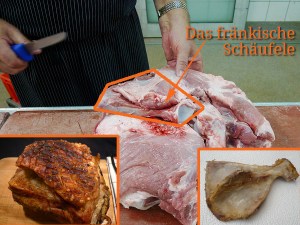
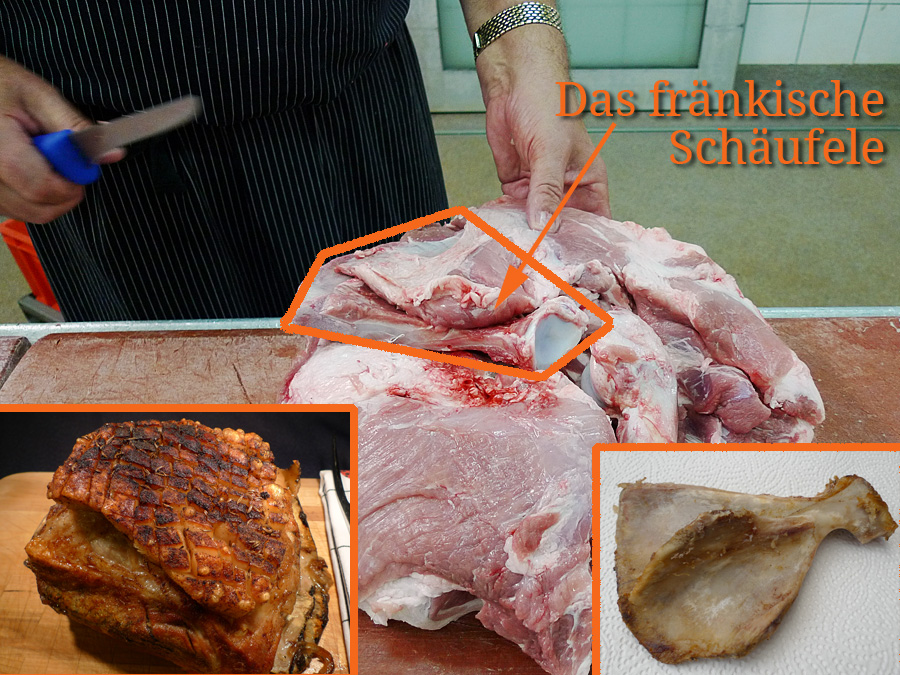
 Left: The Frankonia Schäufele cut (shoulder blade cut). Down right the scapula. Right the finished cut, lays down on the skin side. This, about 1.2 kg, piece will give 2 portions. Click on pics to supersize.
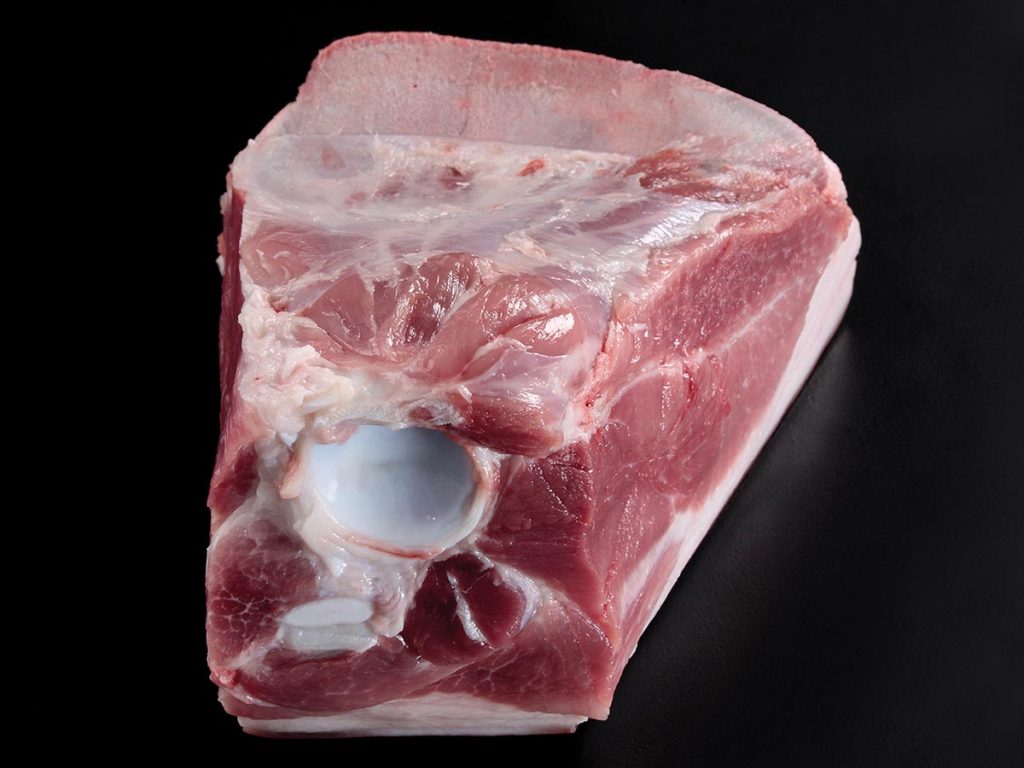
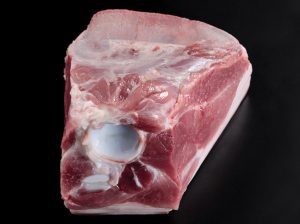
Schäufele is similar to the smoked pork chops “Kassler” from Hessen but cooking styles vary from region to region. In the region near the Black Forest you would first cook the meat in a wine-water mix, and you get the most delicious broth. When the meat is cooked you serve it sliced with potato salad, bread and mustard, the broth would be used for a typical Swabian “Noodle soup”.
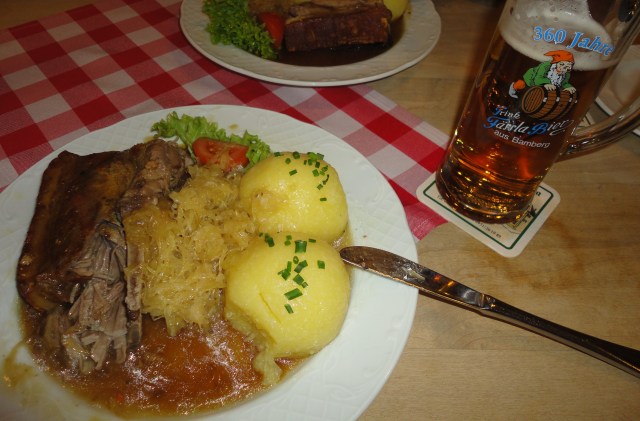 Schäufele portion with a fresh brewed beer at Restaurant Fässla, Bamberg. The Fässla beers are brewed direct next to the kitchen and behind the beer-garden. Worth a visit if you are once in Bamberg, Germany.
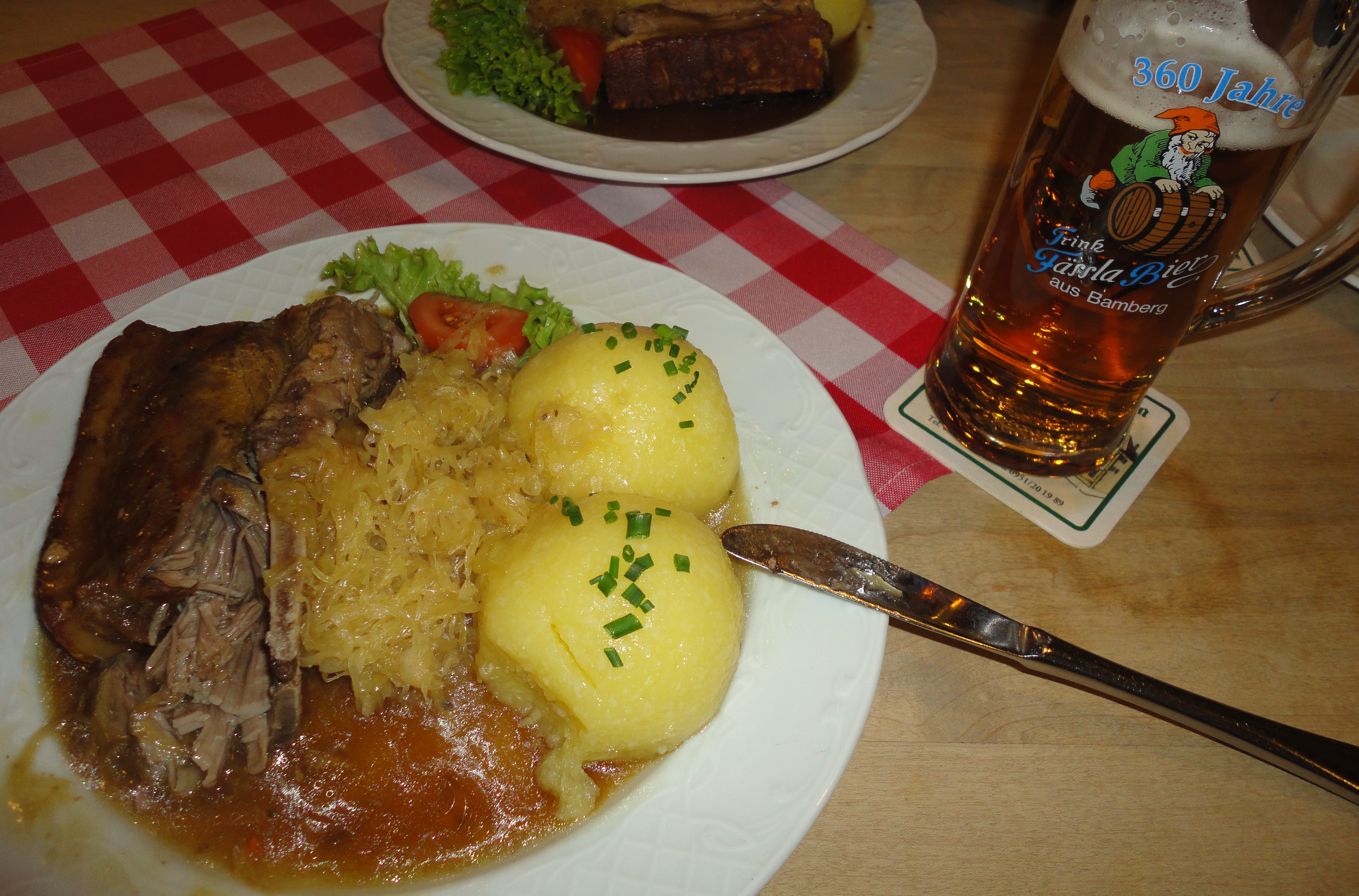
What I like best is the Frankonian variation. I personal favorite the crispy, grilled skin accompanying the juicy tender meat.
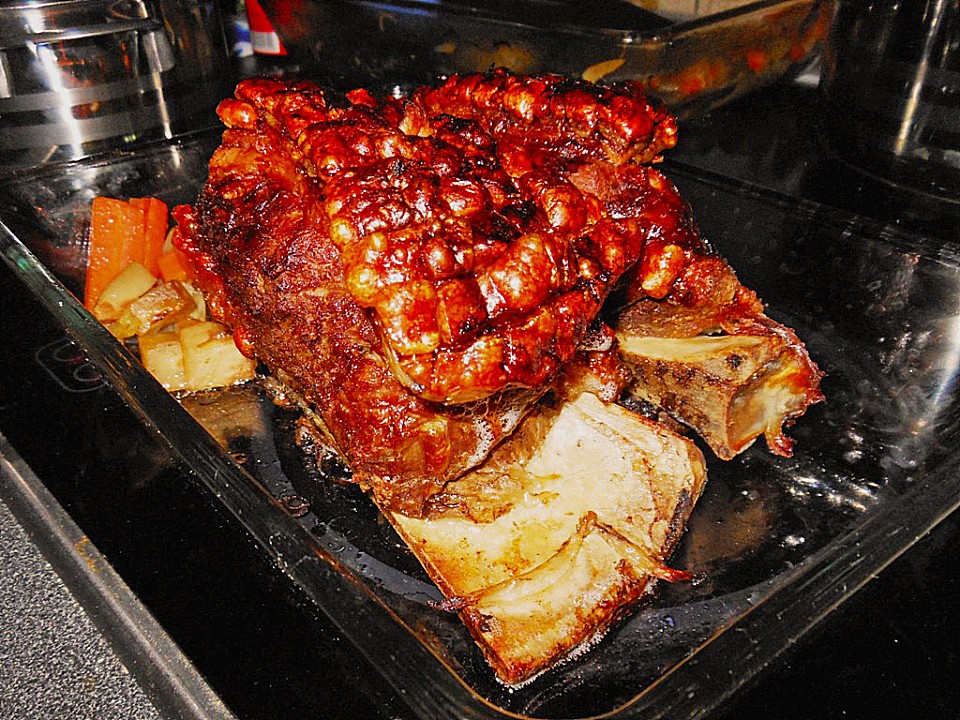
In Franconia the meat, the pork rind and the bone stay together. The rind is scratched in a criss-cross pattern, seasoned with salt, pepper and caraway and put in a casserole dish with diced root vegetables and onions where it is doused with beer and roasted in the oven for about two or three hours.
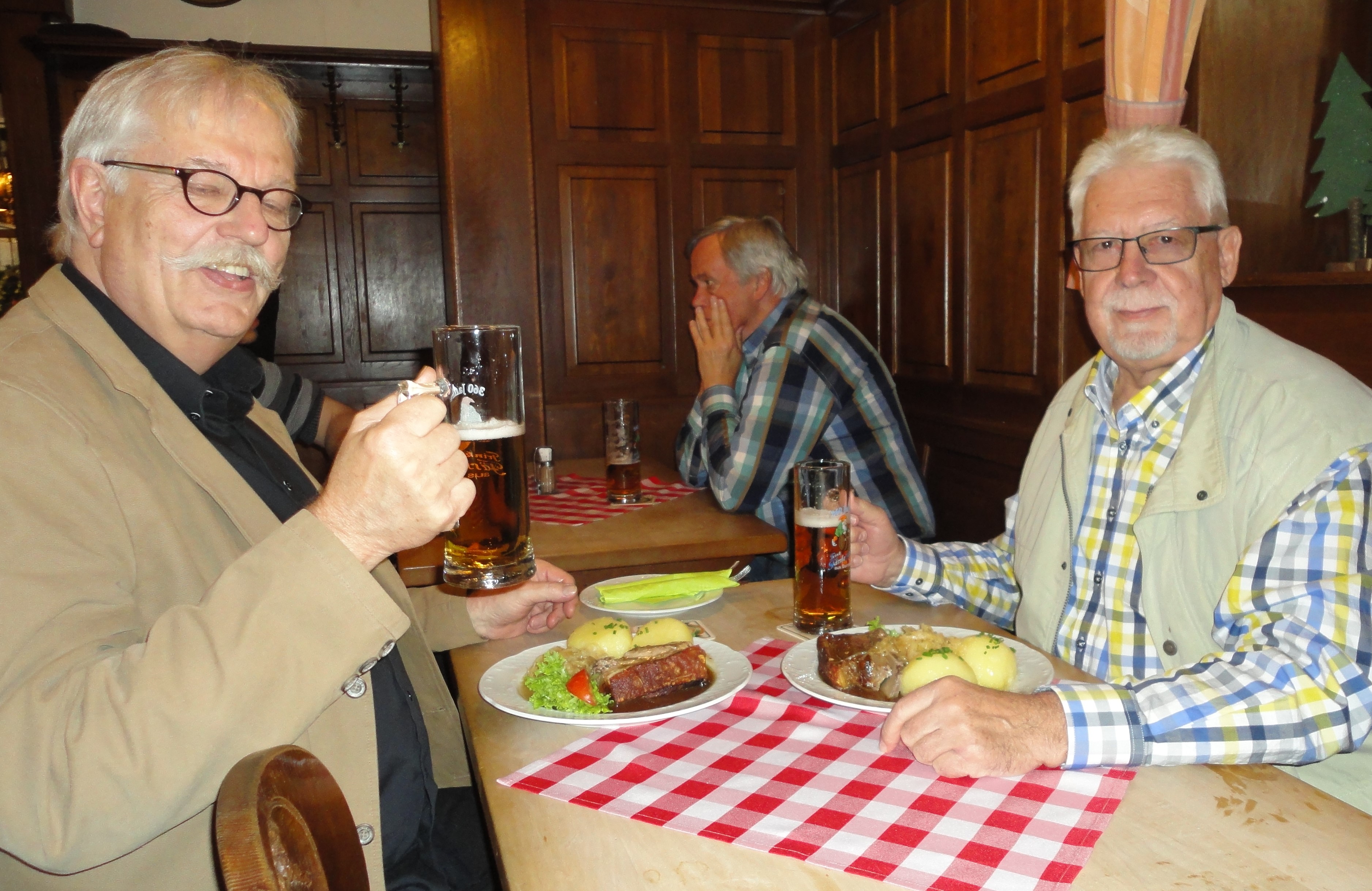
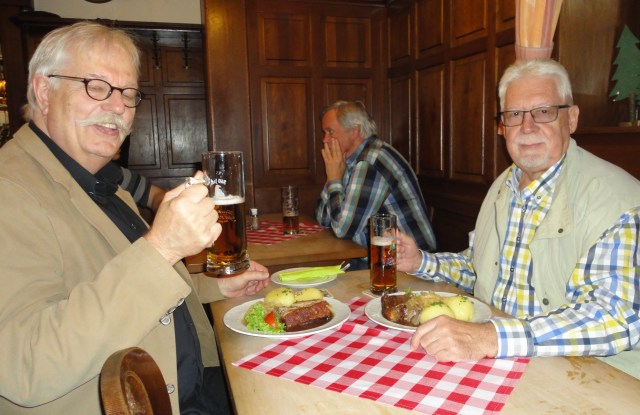 Delicious Schäufele, a big cool beer, or two, in company of good friends, what can be better ?
The roast is ready as soon as the meat is easy to separate from the bone and the pork rind is crispy and golden brown. It is then served with various side dishes including gravy, Kartoffelklöße (potato dumplings filled with bacon), mixed green salad and sauerkraut. It goes best with a cool beer fresh from the brewery.
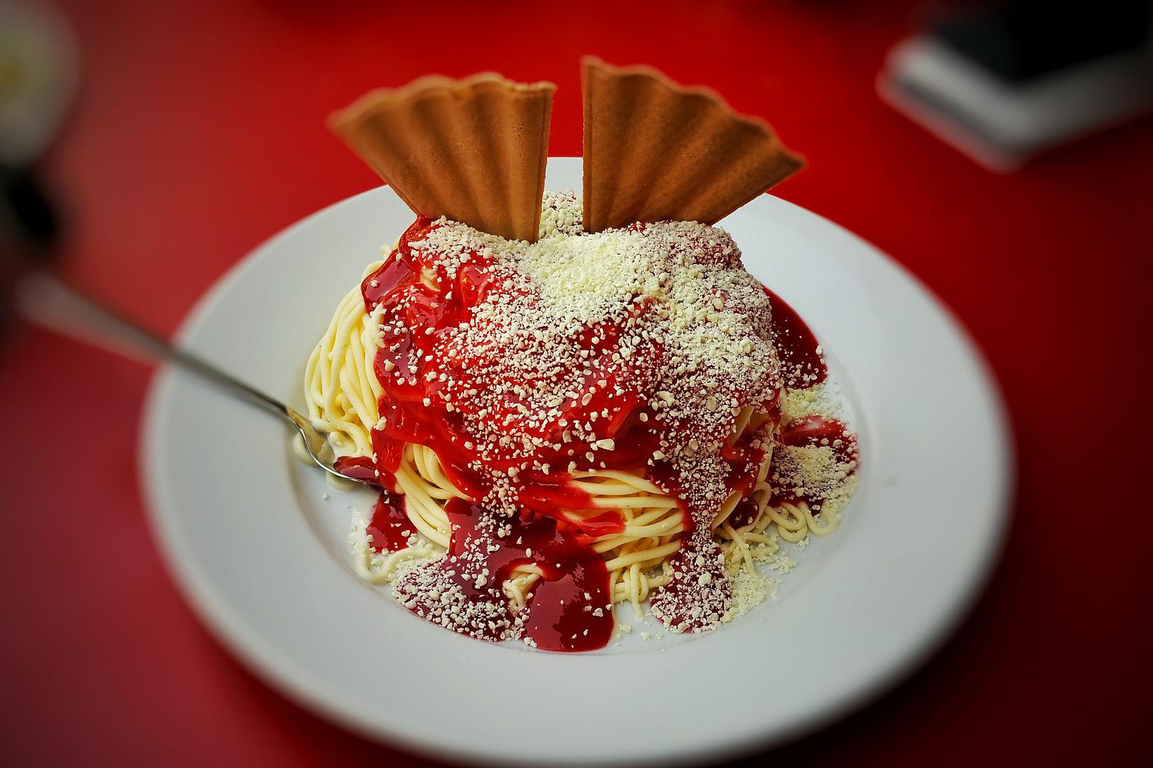
20. Spaghettieis.
This dessert is another immigrant legacy and is popular with German children.
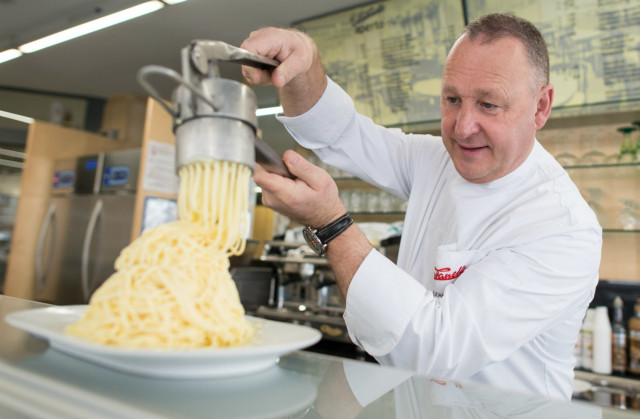
Spaghettieis is an ice cream dish made to look like a plate of spaghetti. Vanilla ice cream is pressed through a modified noodle press or potato ricer, giving it the appearance of spaghetti. It is then placed over whipped cream and topped with strawberry sauce representing the tomato sauce and white chocolate shavings for the Parmesan.
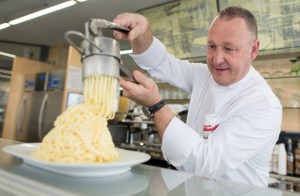
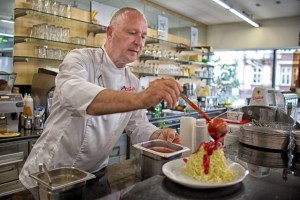 Dario Fontanella making his famous Spaghettieis.
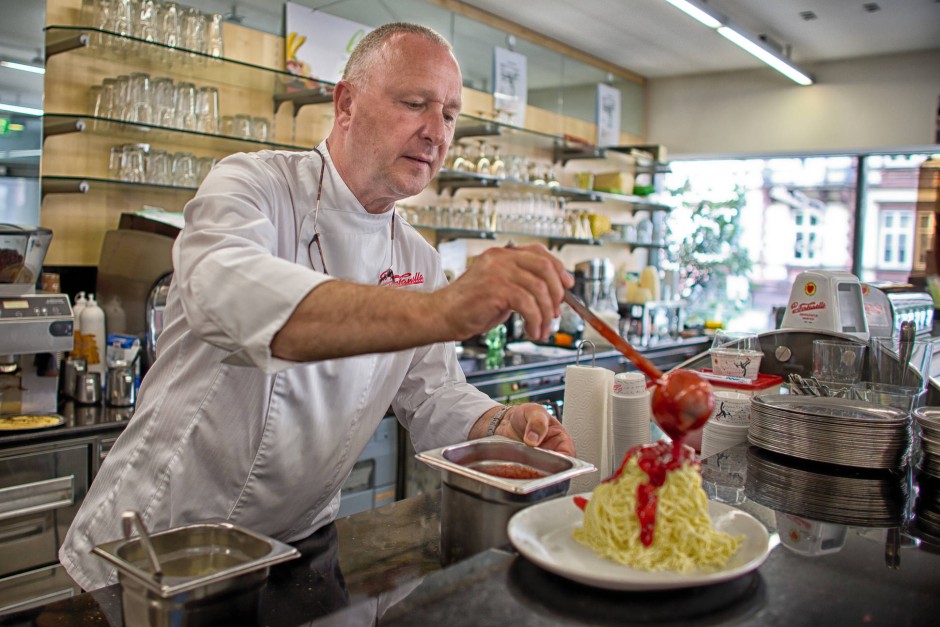
Besides the usual dish with strawberry sauce, there are also variations with dark chocolate ice cream and nuts available, resembling spaghetti carbonara instead of spaghetti bolognese.
Spaghetti ice cream was invented in 1969 by Dario Fontanella, son of an ice cream-making Italian immigrant in Mannheim, Germany. Thankfully for us and perhaps unfortunately for Dario, he didn’t patent his spaghetti ice cream and it is today available at almost every ice cream parlor anywhere in Germany.
Dario did, however, receive in 2014 the „Bloomaulorden“, a medal bestowed by the city of Mannheim, Germany for his culinary services.
Much more to come. May be, if you liked it, more about German food !

