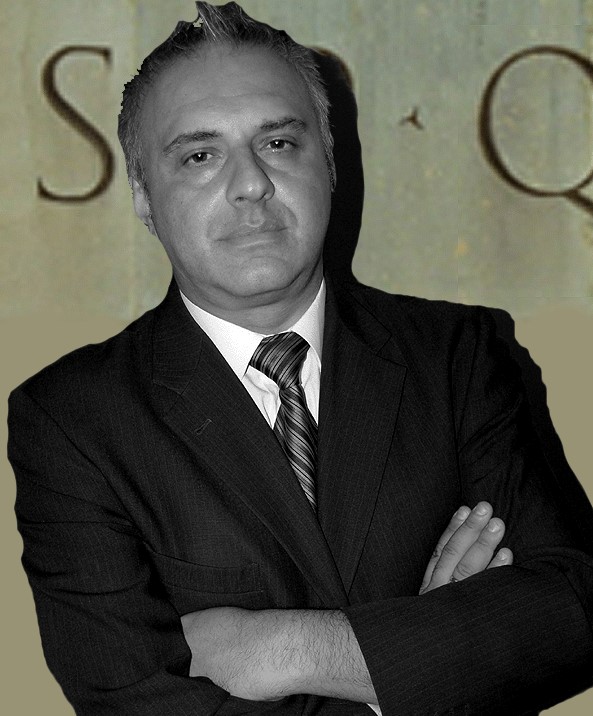
Yes, VIRGINIA, there is a Santa Claus

Is there a Santa Claus?
Here:  Probably the most magical answer ever.

The question of whether Santa Claus exists moves countless children’s hearts every year.
Little Virginia wanted to know exactly and sent her request to a newspaper in a letter to the editor. That was 123 years ago. The answer changed life’s and still touches today.

It sounds like a Christmas fairy tale, but it is a true story. The year is 1897, little Virginia O’Hanlon is eight years old and living in New York when – just like many children today – a question weighs heavily on her mind: „Is there a Santa Claus?“

  Virginia O’Hanlon (circa 1895).

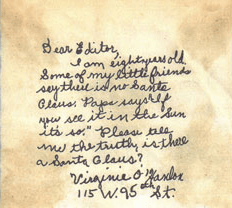
Her parents are apparently at a loss for an answer, because in September 1897, the „New York Sun“ receives this letter to the editor:

Dear Editor,
I am 8 years old.
Some of my little friends say there is no Santa Claus.
Papa says, ‘If you see it in THE SUN it’s so.’
Please tell me the truth, is there a Santa Claus?
Virginia O’Hanlon.

  The original letter.

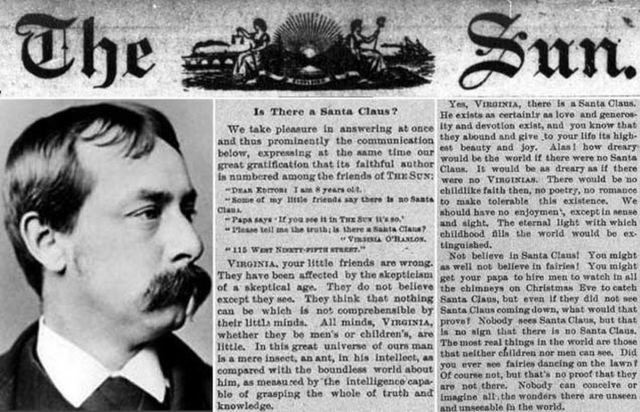
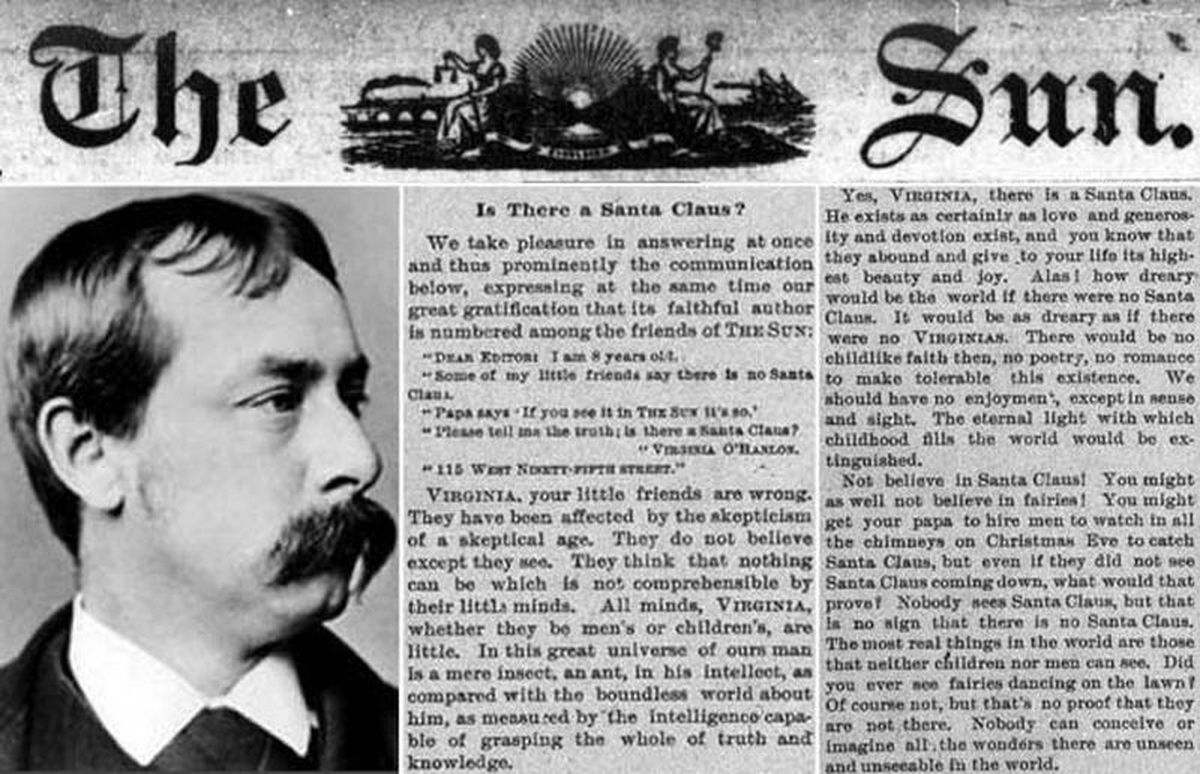
Virginia’s letter does not go unnoticed. Editor Francis P. Church pens a lengthy response that will make history for both him and Virginia. According to the „Newseum,“ a journalism museum in Washington, Church’s piece is the most reprinted editorial in English and has been translated into many other languages. Until the „Sun“ ceased publication in 1950, it appeared there year after year at Christmas – and since then in numerous other media around the world. And now, in 2020, allover again and again !!


Editorial appearing in the September 21, 1897, edition of The (New York) Sun.


Yes, Virginia: There is a Santa Claus.

„VIRGINIA, your little friends are wrong. They have been affected by the skepticism of a skeptical age. They do not believe except they see. They think that nothing can be which is not comprehensible by their little minds. All minds, Virginia, whether they be men’s or children’s, are little. In this great universe of ours man is a mere insect, an ant, in his intellect, as compared with the boundless world about him, as measured by the intelligence capable of grasping the whole of truth and knowledge.

Yes, VIRGINIA, there is a Santa Claus. He exists as certainly as love and generosity and devotion exist, and you know that they abound and give to your life its highest beauty and joy. Alas! how dreary would be the world if there were no Santa Claus. It would be as dreary as if there were no VIRGINIAS. There would be no childlike faith then, no poetry, no romance to make tolerable this existence. We should have no enjoyment, except in sense and sight. The eternal light with which childhood fills the world would be extinguished.

Not believe in Santa Claus! You might as well not believe in fairies! You might get your papa to hire men to watch in all the chimneys on Christmas Eve to catch Santa Claus, but even if they did not see Santa Claus coming down, what would that prove? Nobody sees Santa Claus, but that is no sign that there is no Santa Claus. The most real things in the world are those that neither children nor men can see. Did you ever see fairies dancing on the lawn? Of course not, but that’s no proof that they are not there. Nobody can conceive or imagine all the wonders there are unseen and unseeable in the world.

You may tear apart the baby’s rattle and see what makes the noise inside, but there is a veil covering the unseen world which not the strongest man, nor even the united strength of all the strongest men that ever lived, could tear apart. Only faith, fancy, poetry, love, romance, can push aside that curtain and view and picture the supernal beauty and glory beyond. Is it all real? Ah, VIRGINIA, in all this world there is nothing else real and abiding.


No Santa Claus! Thank God! he lives, and he lives forever. A thousand years from now, Virginia, nay, ten times ten thousand years from now, he will continue to make glad the heart of childhood.“


Francis Pharcellus Church, an editorial writer for the New York Sun, wrote an iconic response to a letter about Santa in 1897. (Daily News Photo Illustration).

That letter changed Virginia’s life.

Virginia O’Hanlon herself later said that Francis P. Church’s response had a „very strong“ and positive influence on the rest of her life. She had considered it her responsibility to let all the wonderful things Church described be part of her life: Faith, love, poetry, romance.

Eight years before her death, she mused in a radio interview about Church’s words, „The older I get, the more I realize what a perfect philosophy of life there is in it.“

Veröffentlicht unter History, Lifestyle | Verschlagwortet mit , | Hinterlasse einen Kommentar

The Worst Christmas Ever ?

I can’t believe the above when I see it.

During the last weeks I read headlines like:

„Family clan does not abide by Corona rules. There are now 30 corona cases in an extended family, yet they still refuse to abide by the rules. They do not care about others.“

„7000 crazy Jews trample and yodel in New York, close to close without protection; on the occasion of a wedding !“


7000 celebrating during a secret synagogue wedding in New York.

„Swinger party with over 30 participants dissolved by the police !“

„YouTuber, Covid denying, died at the age of 29 years of Covid !“

„Horror finding for Covid patients: Her lungs were like a concrete block.“


Dr. Klepetko, Austria and the transplanted „concrete“ corona lung.

„Fit and healthy – Corona infected – now terminally ill !“

„200 celebrating Glühwein (mulled wine) fans, no distance or protective masks !“

„Man hospitalized with COVID-19 shares regret after wife’s death: I wish I would’ve taken it more seriously.“


     1.82 meters tall and slim. He was athletic and all-around fit. But then he became infected with the coronavirus and from one moment to the next was closer to death than to life.

„Mask refuser threatens police with a knife.“

„Single-Day U.S. COVID-19 Deaths Top 3,000, More Than D-Day Or 9/11.“

There are the mask refusers, the corona deniers, the conspiracy theorists,
the radical opponents against everything, the egoists and freedom fanatics, and many many more.
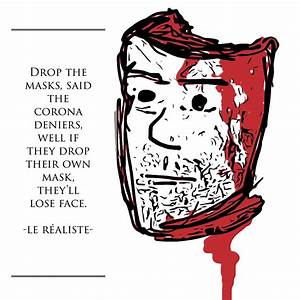
      Demasked mask refuser !

Thank God all these together are only minorities. But minorities sound
their shit always louder into the area than the majority, who like to
remain quiet and calm.

The majority is now once for masks carry, for inoculations and for strict regulations
to contain this pandemic.

I have nothing against the love of freedom, I love my freedom too, but remember:
The freedom of the individual always ends where the freedom of another begins.


One of the typical refusers and deniers, nothing but a brainless idiot.

You cannot discuss with fanatics, they believe only themselves, other opinions or facts do not count. However, they do want to assert themselves, no matter how wrong they are and how right others are, they want to be accepted.
To all of these, I can only shout, „If you want to be accepted, you in person or your opinion, learn first of all to accept others and different opinions“!

With what right, I ask myself, do some people refuse to protect against the corona pandemic and allow themselves the impudence to infect me. Although I wear a mask as respect for these others !
It is the arrogance, the selfishness, the disrespect that drives such people. But the same types are the very first to seek government protection and medical help.
Scream and demand when they themselves become ill.

I do not wish anybody anything bad, but maybe it would be good for Corona deniers and deniers of our community protection mechanisms if we would request their names and addresses, and if they need a clinic for Corona treatment, we put them on a waiting list or even be leaned against in favor of those who have protected themselves and others.
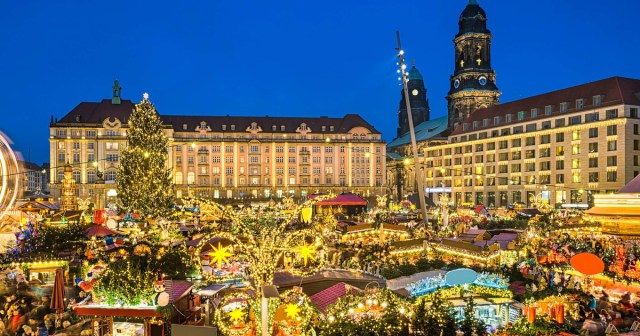

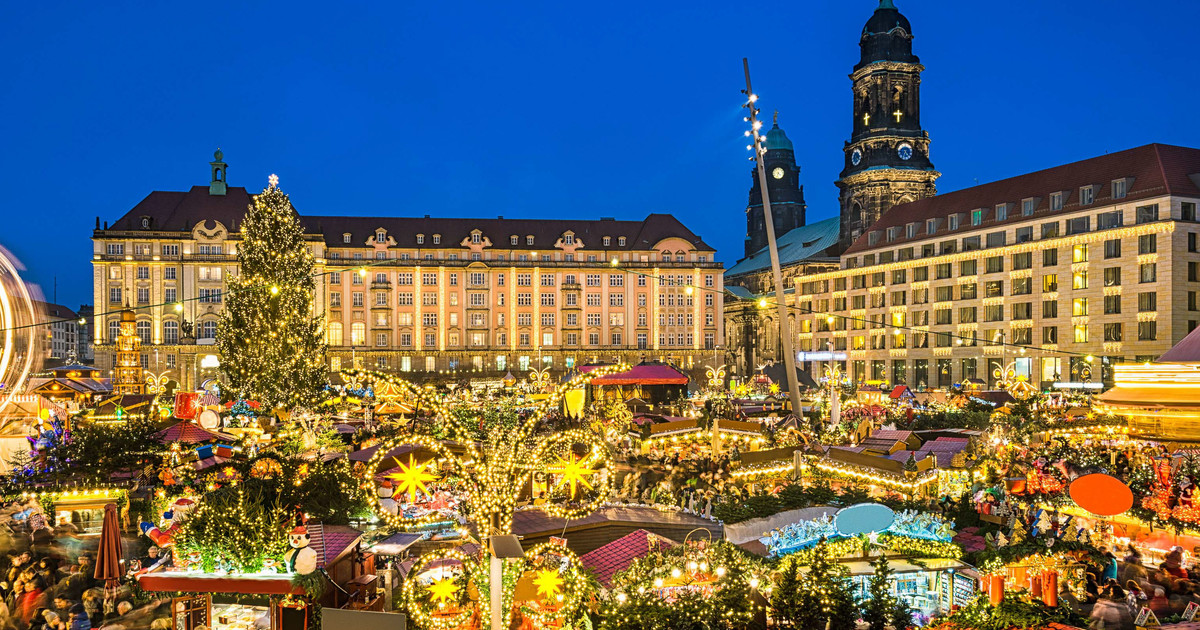
One of the usual Christmas markets, here in Dresden, Germany full of light and life. That’s wonderful !

I do not want to go into all this and all these „poor lunatics“ any further now, it is of no use. As already recognized above, „a concrete lung can no longer breathe – or better – a concrete brain can no longer think“.

The worst Christmas ever.

The last common opinion, which is now rampant everywhere, I would like to use as a reason for the following article. It is the „oh so bad“ opinion that one cannot celebrate Christmas and New Year’s Eve, as usual. Everything is forbidden, one is dictated and robbed of personal freedom. And so on and on.

This Christmas market in Koblenz, Germany shows how really good life is, being together with friends, celebrating good food, drinks, and conversation. Not this year – one year without – what’s the problem? A wise investment for the health of all of us. Who is robbing any freedom when we are asked to stay „ONCE“ at home?

What are they missing?
All may be nevertheless further in a warm, cozy home, surrounded by the dear family,
enough to eat and drink, children can play, talk to their friends on the phone or chat via cell phone (which they always do anyway, but now not sitting next to each other). They all still have everything, what is really missing?  Not other than torn from their usual habits.
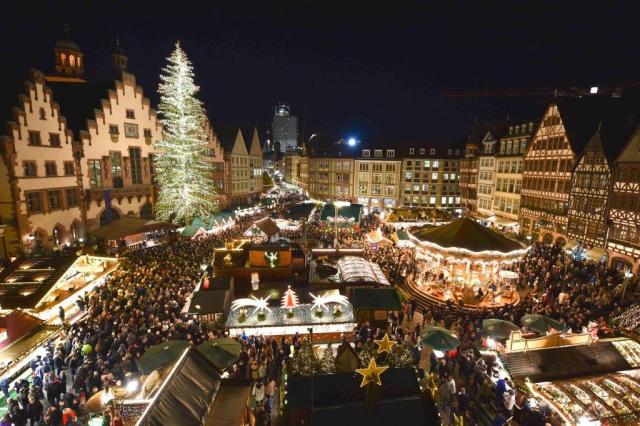

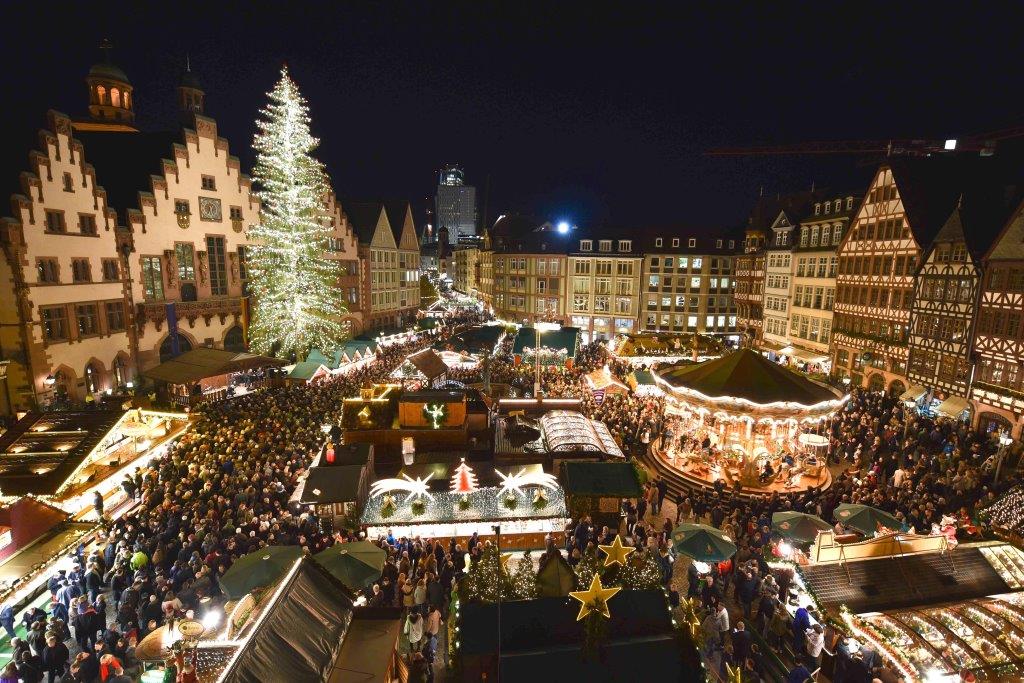
This is the Christmas market in Frankfurt, Germany. Visited by around 3 Million people each year. This year we invest in the health of all and our healthy future and stay at home – SO WHAT, MY DEAR EGOISTS ?

I have just finished a book about my first 10 years of life from 1945 to 1955.
There are also some experiences and lessons learned, such as insights from Christmas celebrations in these post-war years. Some of it I would like to give the many annoyed, for comparison who believe that the coming Christmas is the worst thing that has ever happened to them.
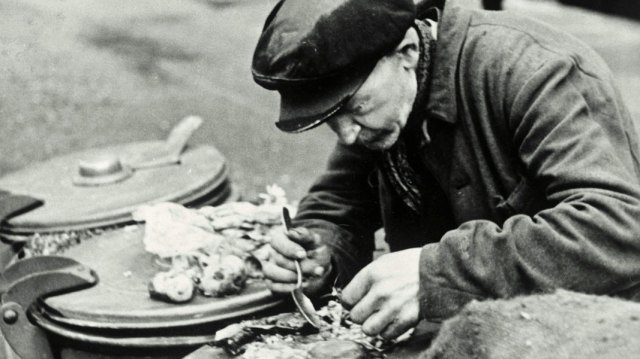
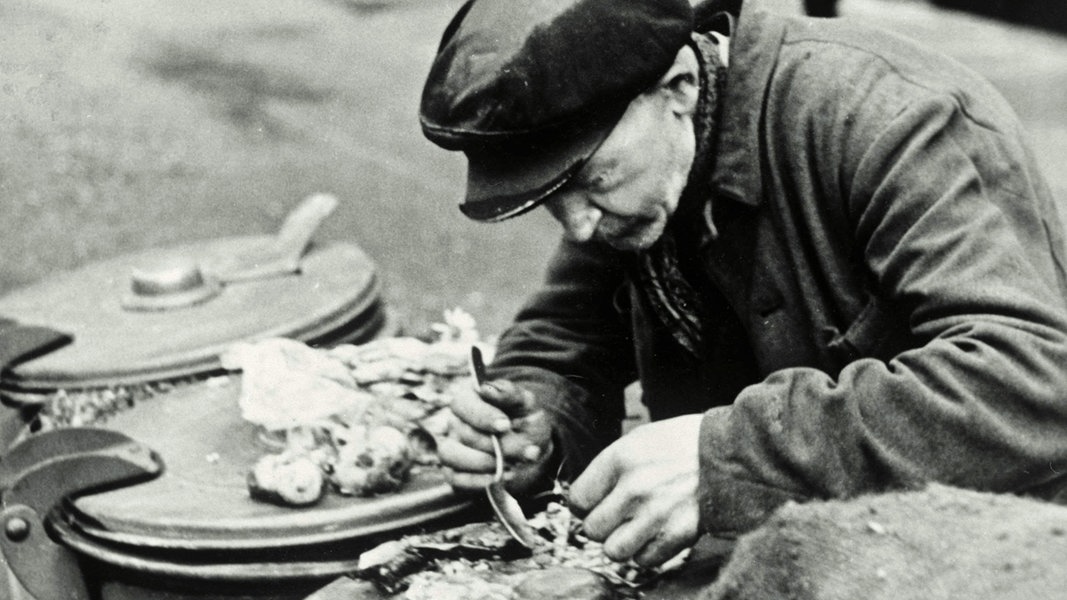
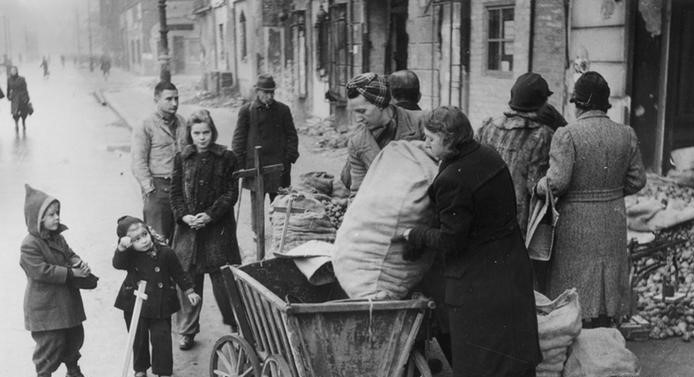
This was Christmas 1945, scratching leftover food out of rubbish bins. There were deprivation and renunciation. Not today in 2020 when people have no „Bratwurst und Glühwein“. It was even worse in the hunger winter of 1946-47.

Today’s youth/generation hardly knows what they are talking about, because they all have no idea what deprivation, renunciation, withdrawal, or renunciation even means.

They all grew up in a consumer society that always had everything, always got everything they wanted, always got and became what they wanted, and never had to give up anything.

Well, I don’t want to say that every single person is like that, surely there are enough exceptions, but the big mass is about what I describe here.
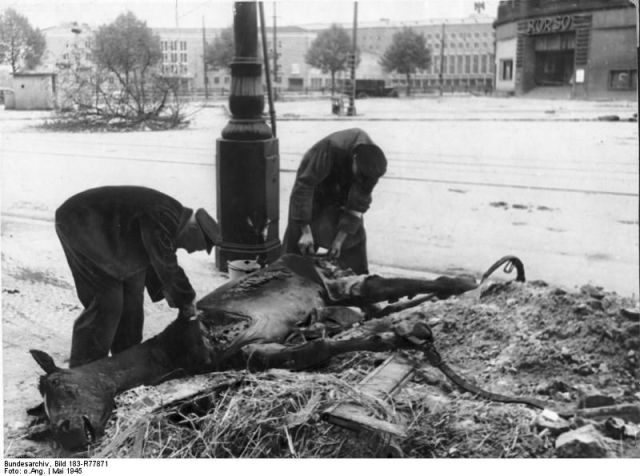
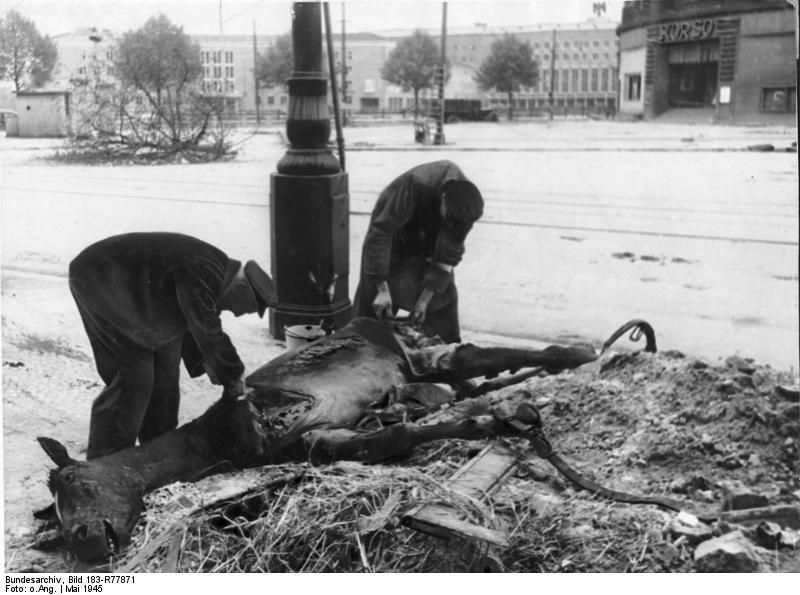
Hunger during Christmas 1945. Do you still believe the worst Christmas ever is 2020?

Without hope and tinsel.

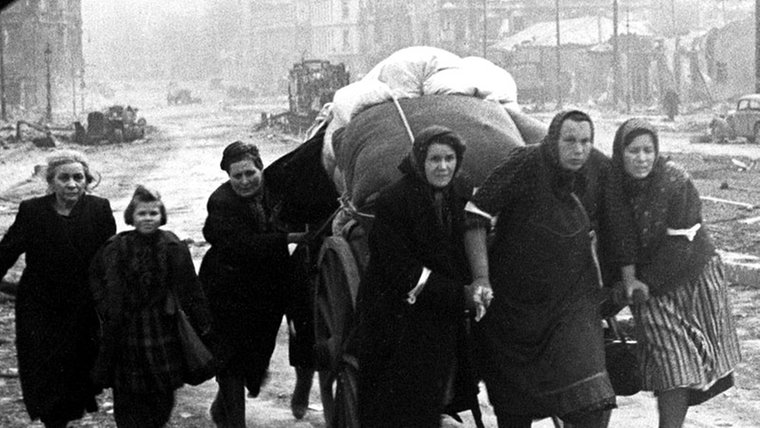
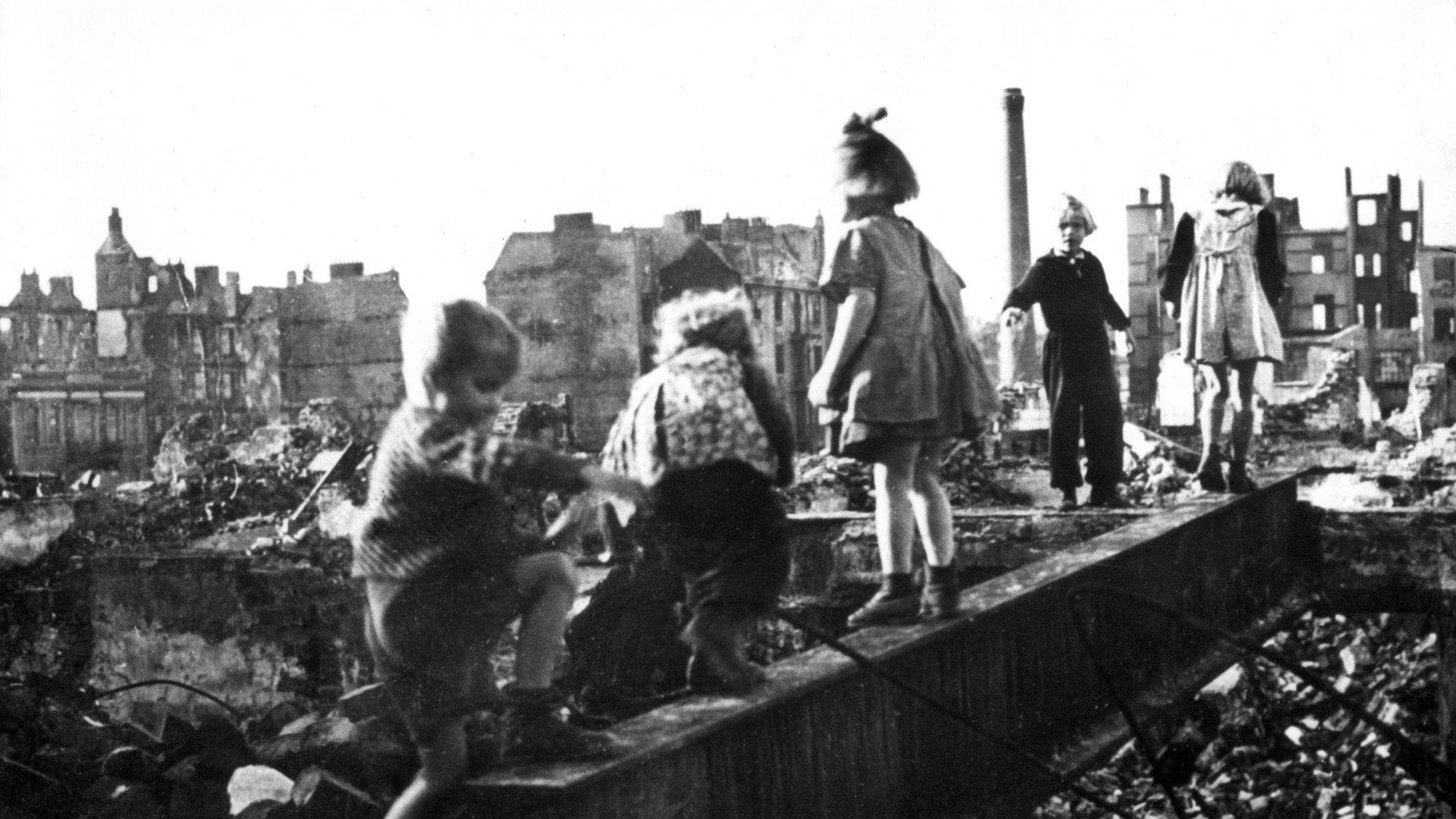
December 24, 1945 is a cold, wet, gray Monday. German cities are still in ruins, thousands and thousands of refugees from the eastern territories are crowding into the emergency shelters. There is a lack of everything: food, heating material – and euphoria for the future.

We old people (now in our mid-70s) are of course partly to blame for this youth misery. It is our own fault how we brought up our children.
We had privations and wanted our children to be better off, so we raised them in abundance.


         At the end of the Second World War, about twelve million people have to flee or are displaced from the former German eastern territories. Most of them are women and children. Hundreds of thousands already die on the run: they freeze to death, starve to death or are killed in revenge actions by the Red Army. Tens of thousands of children are also on the move – alone. They have lost everything: Their parents, their home, their apartment. The children are traumatized, starved, often seriously ill.

We had to eat our plates empty, sometimes or better often enough, they were empty and we were still hungry. Our children were allowed to choose what they ate and liked and if they didn’t like something they just left it.
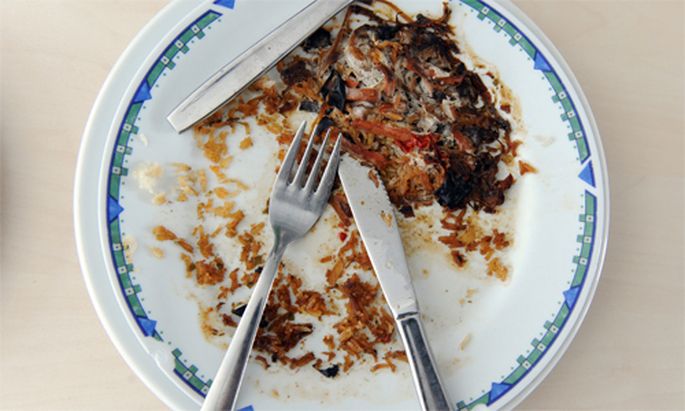
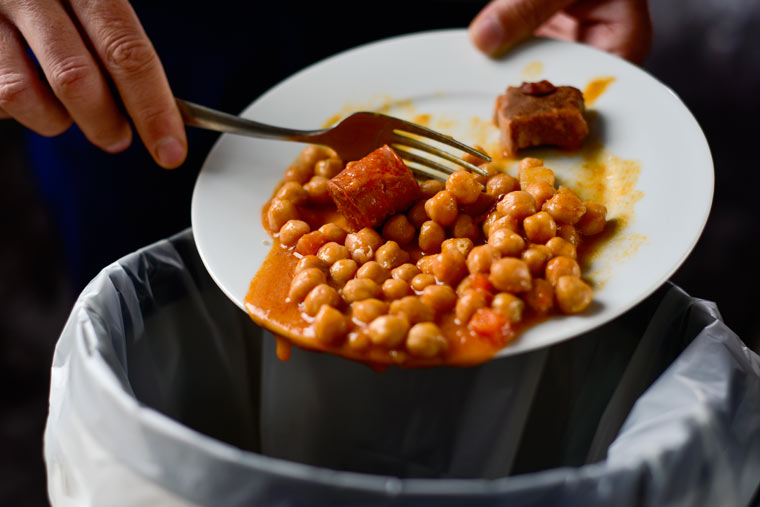
Leftovers or even half portions on the plates, that were not eaten and simply went back or destroyed into the bin. See down here, click on the pics.
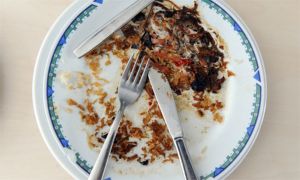

  

This spoiled youth (today in the 50s of age) has already educated another generation, or better said, left them the choice of how to educate themselves. They did it in good faith that it was right and good for the children. Children stomped together or give them one behind the ears was and is frowned upon. Anti-authoritarian education is announced.


     Whole trains full of people drove to the countryside before Christmas to somehow barter, hoard or at least grab a little food. A sack full of potatoes or coal was more valuable than gold.

Many girls and women have recognized their strengths and have grown in themselves. The majority of men have become wimps, without hardly any backbone, no ability to create or move something.

No more respect, no more tolerance, no more order or straightforwardness. For example, military, beards, long hairs, tattoos all over, and much more. Respect for others no longer exists. Have any of them ever learned how to make a fire without matches, how to sew on a button, or how to properly iron a pair of pants/shirt? Of course not, it is no longer wanted with the softies. They can stay at home with their mum until the age of mid or end thirty’s.
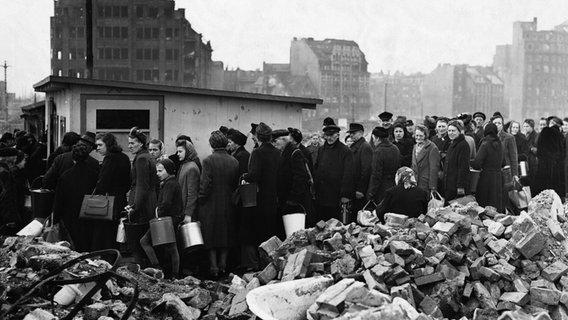

Queuing for hours for a little potato soup so that you had something in your stomach on Christmas eve.

Better you turn the cap that you wear with the cap shield backward and demonstrate that you look just like a bum, like all the other bums. We talk about decency or behavior, but that is „out“, „in“ is sitting with the bloody cap on in a restaurant on the dinner table. Times have changed, I notice and accept that, but really for the better? Now, in 2020, we face the worst Christmas ever, right?
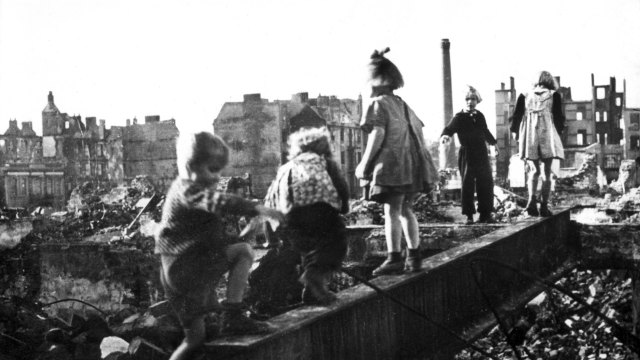
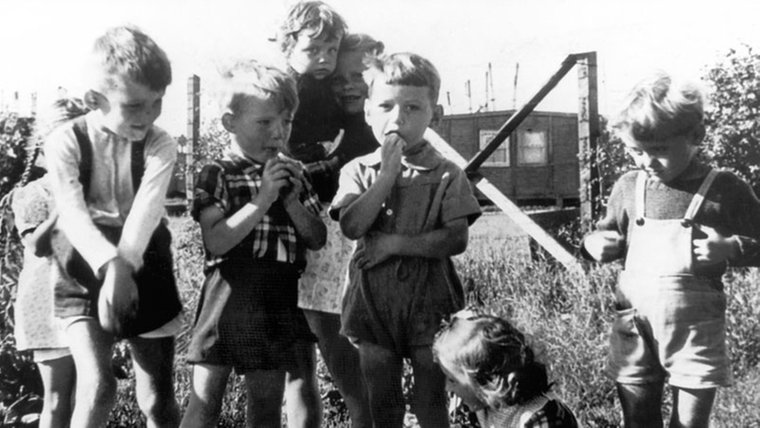
No toys at all, the playground was the debris field, no problem at all, the main thing was to live and no more bombs fell. Today the people talk about the worst Christmas ever !!!

The only thing that counts are kicks, adrenaline, to be the center of attention and preferably lead a life that is not as boring as that of their parents. Just finished school and already they have a plane ticket around the world and are strolling through the country for one or more years. In Australia it is the fashion to honor the kids when they finished high school – nothing to say any against that – but giving them a credit card with 5000 dollar credit on to celebrate at the Gold Coast ….. I question that. One has to see or experience what is going on there, just to believe it!  „Getting off the grid before you even get on it“ is a modern goal in life.

Now we all face a little hole in the grid, the Covid-19 pandemic, and already we have
„THE WORST CHRISTMAS EVER“ !
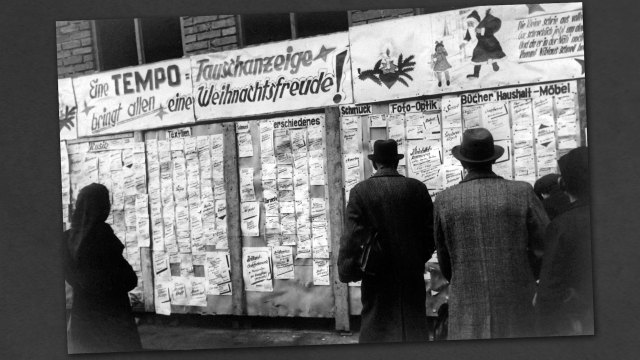
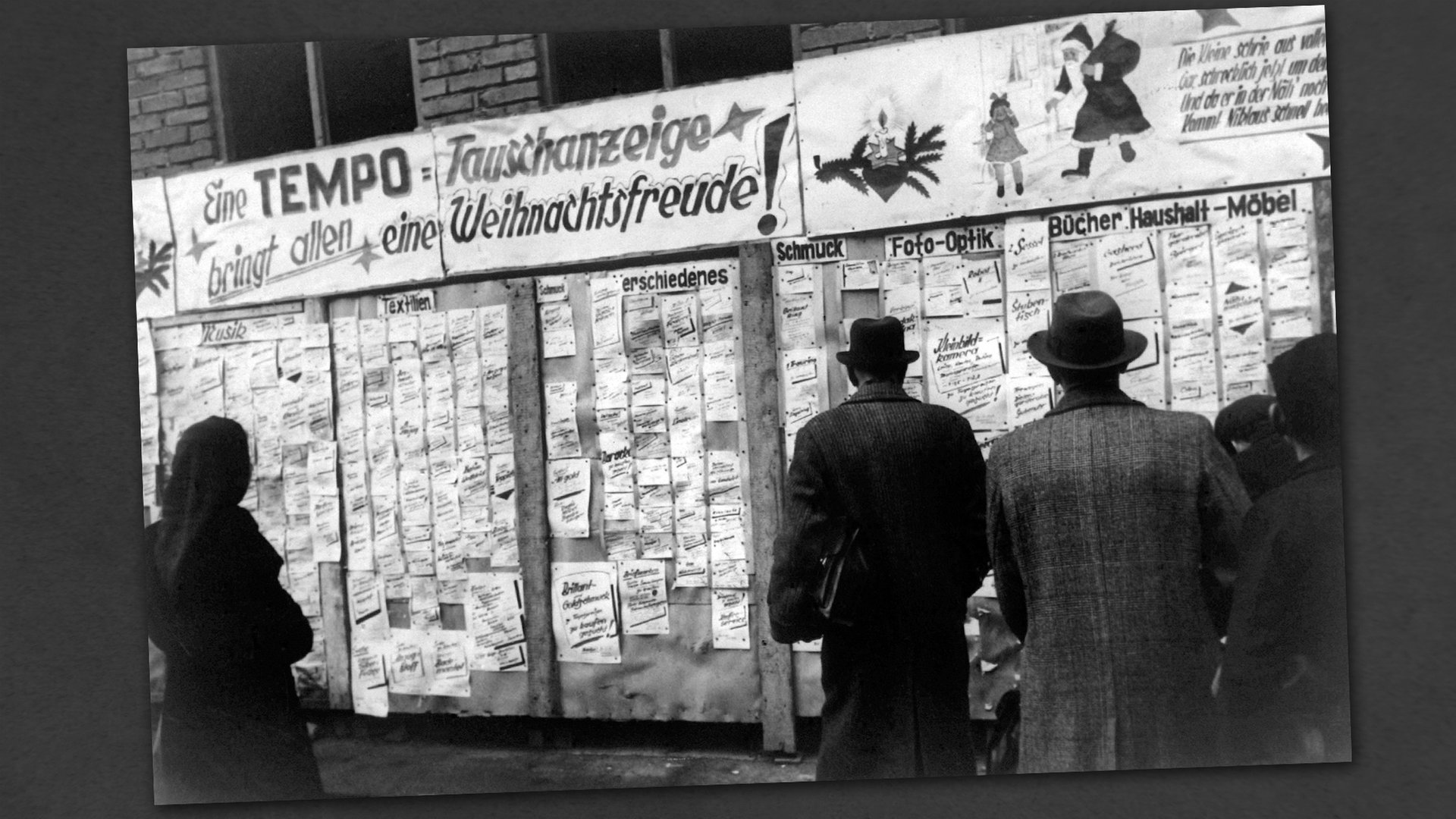
A TEMPO exchange display brings Christmas joy to all! I don’t know if this really was a joy.

Everyone is externally determined by media and modern communication technology. Without permanent input from outside, one’s own life is no longer conceivable. One person dyes his hair green, posts it on Instagram, Twitter, or Facebook, and so on.
New idea, they like it, and everyone imitates it because it’s supposedly cool. A footballer gets a tattoo and we have a tattoo wave. Is this the freedom that our modern deniers and  conspiracy theorists find so hard to do without ???
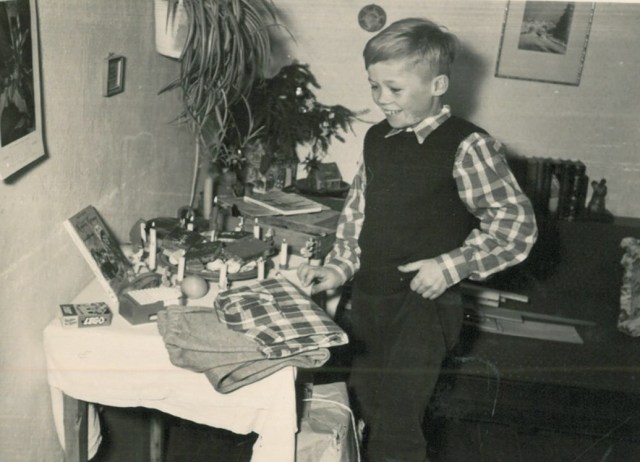
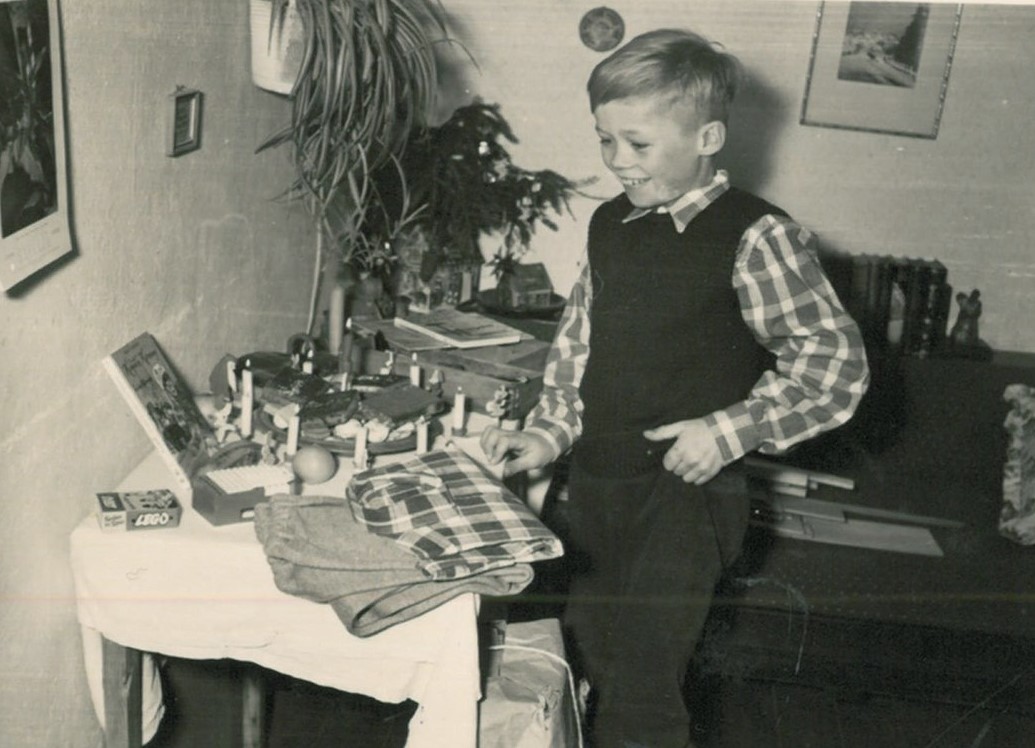
At least, some kids had joy. Christmas after the war, a bit of pine-green, a few candles, and a new shirt again. No matter that it was the same as the boy already wore. He was happy!

Now we have Corona or Covid-19, a virus pandemic that costs life and limb. To contain it, cuts are necessary. But this does not count on the deniers and demonizers, which do not want to live without their party’s, not once in their life without skiing or once without the mulled-wine-excesses in the Christmas markets to get along. One hears all over the country: „This will be the worst Christmas we ever had“ !!!
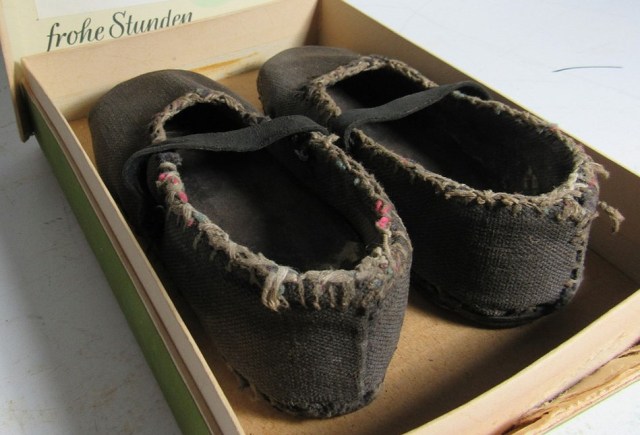

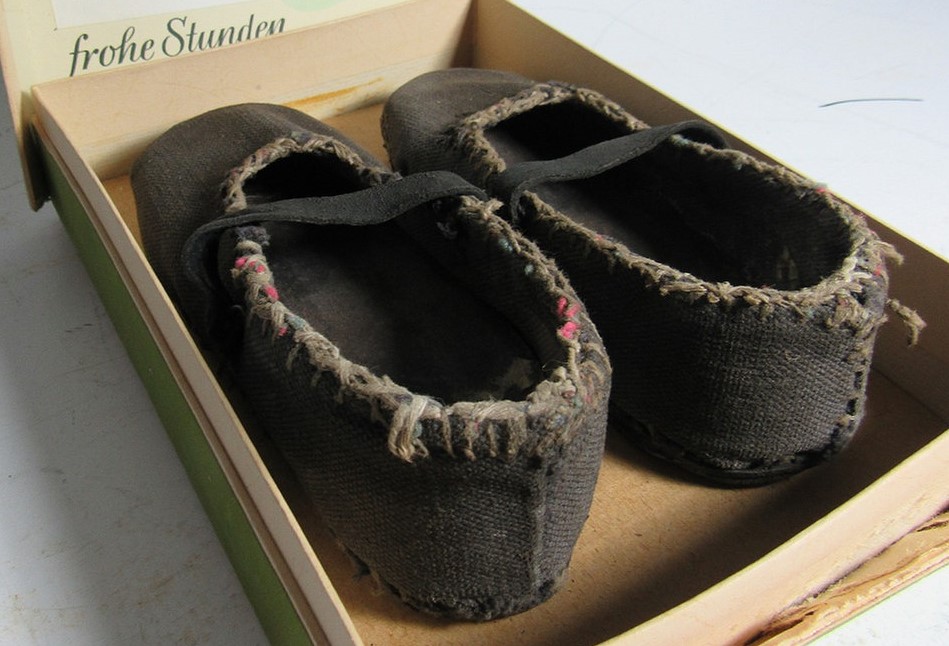
What a great Christmas gift, self-made house shoes, in the „killer winter“ 1946-47.

I was born in February 1945 and as a 10-month young baby, I did not consciously experience Christmas in 1945 or 1946. But my parents and grandparents have sufficiently and often told about it. Here below I would like to inform all those who believe this year to experience their „worst Christmas“ a little.
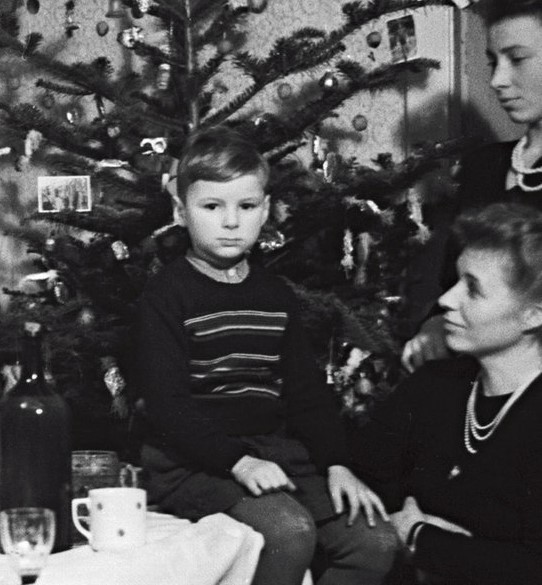

We always had a Christmas tree. But the bare thing didn’t look really festive in 1945. There were no tree decorations. When it came to decorating the tree in the post-war period, the Germans‘ creativity was in demand. People made straw stars, painted pine cones, and cast small candles from kerosene, wax residue, and beef tallow. Yes, we did have a Christmas tree, but there was no real joy in it because father had not returned from the war, as you can see from the picture hanging in the Christmas tree.
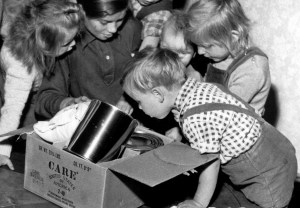
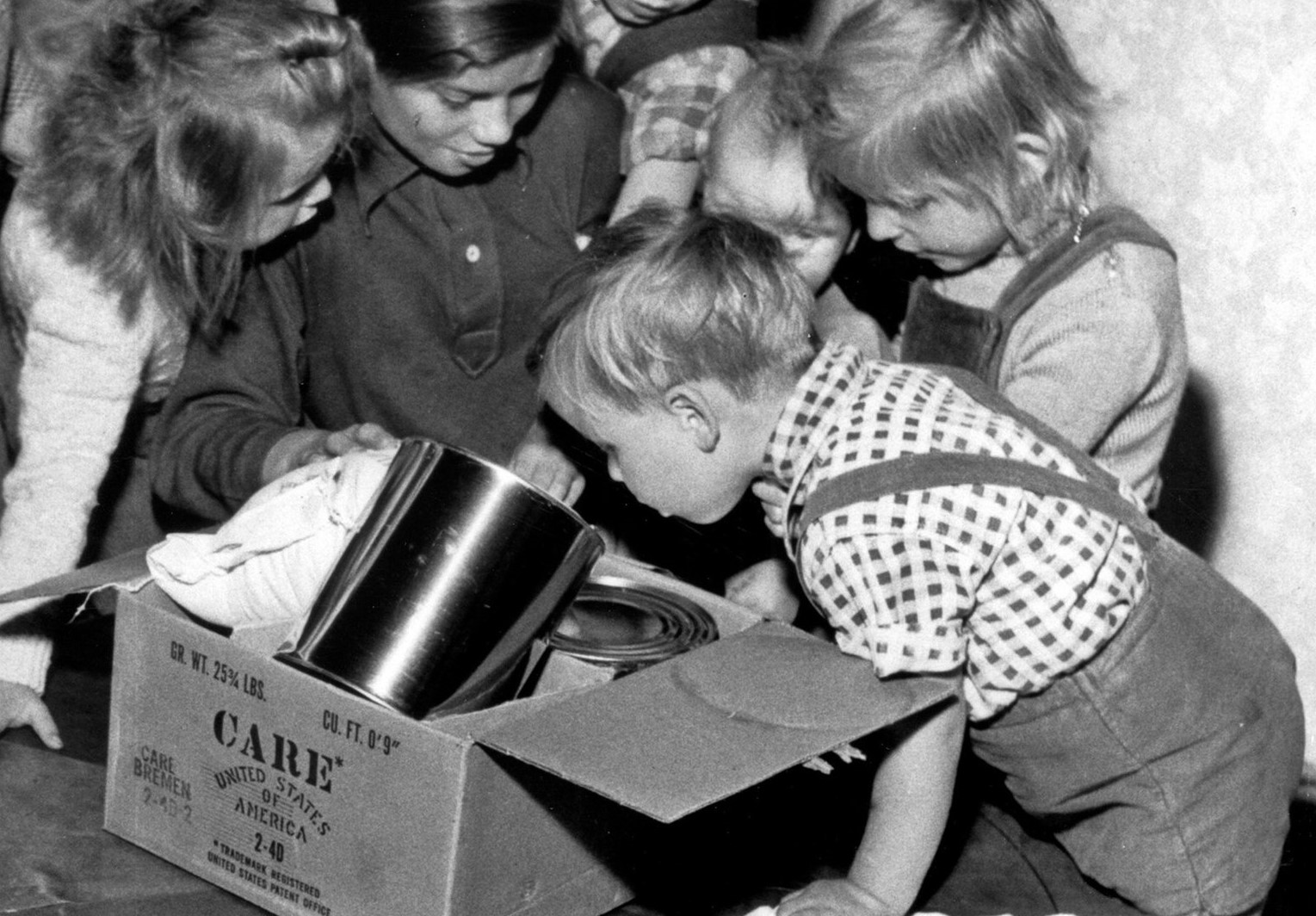
  The curiosity of all of us was huge, what was in these great packages that were sent to us by the hundreds? Big Christmas surprise for „big and small“.

Pieces of information from different experiences, narrations, and publications. I have already some experience with it, in that, I spoke once about it with younger ones. Reactions like „far far away 1945“ or „what concerns us the last war“ or „whether that is at all true“ or „that sounds so exaggeratedly that one cannot believe it“ etc. etc. Well, my dear readers, form your own opinion. What are you really missing this year?


Christmas lights during Corona 2020 Christmas. The worst Christmas ever!
Actually, everyone is still doing far too well, no one knows any more or has never faced it – a real deprivation, a REAL WORST TIME EVER !!!

Whatever – my dear readers and friends around the world. This might not be the best Christmas card I’ve sent out. But it is my small participation to inform or even wake up.
We wish you a HAPPY SEASON and a HEALTHY and  WEALTHY FUTURE.

Veröffentlicht unter History, Information, Lifestyle | Verschlagwortet mit , , , , | Hinterlasse einen Kommentar

Thai Coconut Salmon

Salmon again? Yes!

Everyone who knows me and follows my cooking ideas knows that I am a Thai cooking fan. I had the opportunity to follow several cooking classes and many stays and Chef discussions during the years in the Oriental Hotel in Bangkok. Many many years of stopovers in Thailand taught me a good knowledge of Thai culture and food.

Several times I was asked by friends for my „Thai salmon in coconut sauce“ recipe. It was so often a dinner party hit and a delicious showstopper when we had guests. Here in Uruguay we have summertime now and change dishes slowly to the climate requirements. This rich and exotic, fresh salmon recipe is easy to cook, easy to change to your personal taste, and always mouthwatering delicious. Here it is, made for 4 persons.

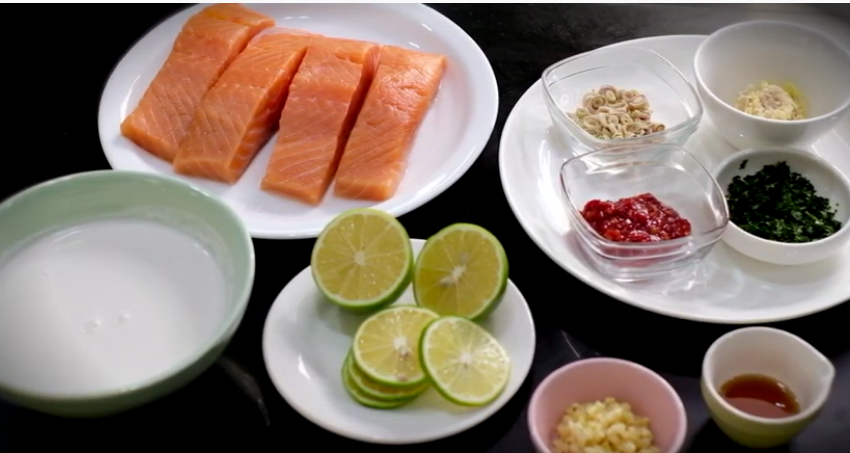
Ingredients.

1/4 cup olive oil
4 pieces of salmon filets, about 250 gram each
1 tablespoon of chopped garlic
1 tablespoon of grated ginger
1 tablespoon of lemongrass, just the white part, cut in fine rings
2 tablespoons of chilli-garlic paste
2 cups of fresh coconut milk
1/2 a cup of freshly grated coconut flakes
2 teaspoons of Thai fish sauce
1 tablespoon of fresh-pressed lime juice
4-6 slices of lime
2 tablespoons of fresh chopped cilantro leaves
salt and pepper to taste

How to do.


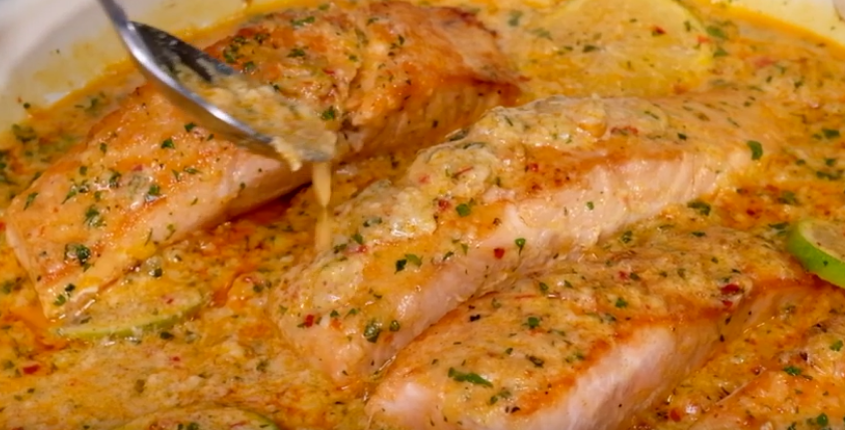
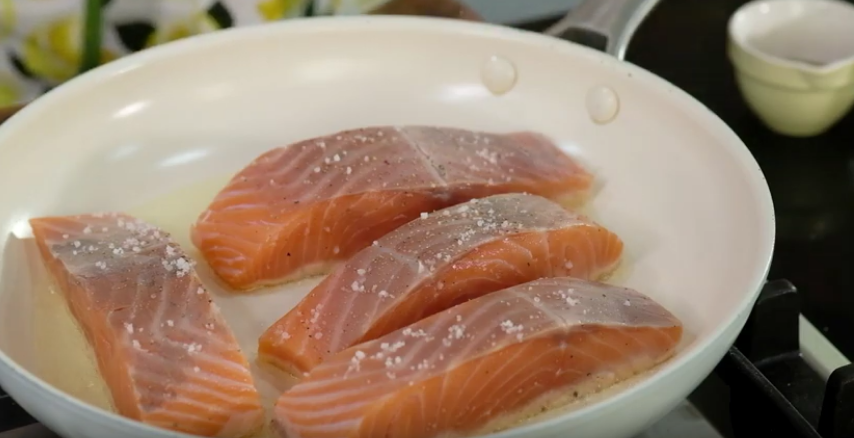
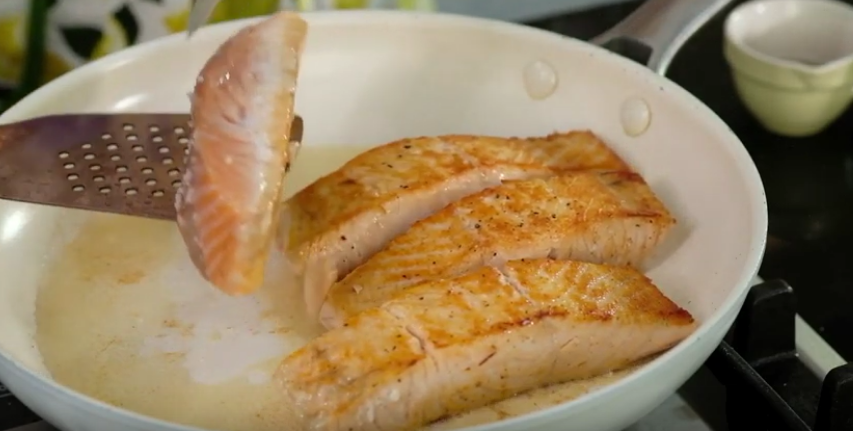
In this recipe, the salmon is fried without skin, as you can see in the left picture. Heat up the olive oil in a medium heated pan. Season the fillets on both sides with salt and pepper, then fry, with the skin side up, on each (2-3 minutes) side till its nicely browned and the fillets are just cooked through. How to do it – you can look in an earlier post, like to see down here. Just click on the link.

  My little trick is to seal the sides of the filet also. Takes off the “not well looking” white foam and keeps the moisture inside. Note the right fillet of the four, this is already turned and well cooked.

Salmon – My Answer


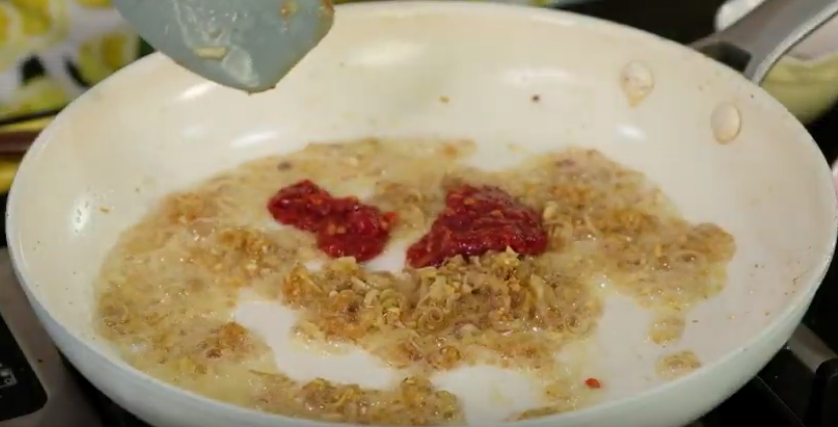
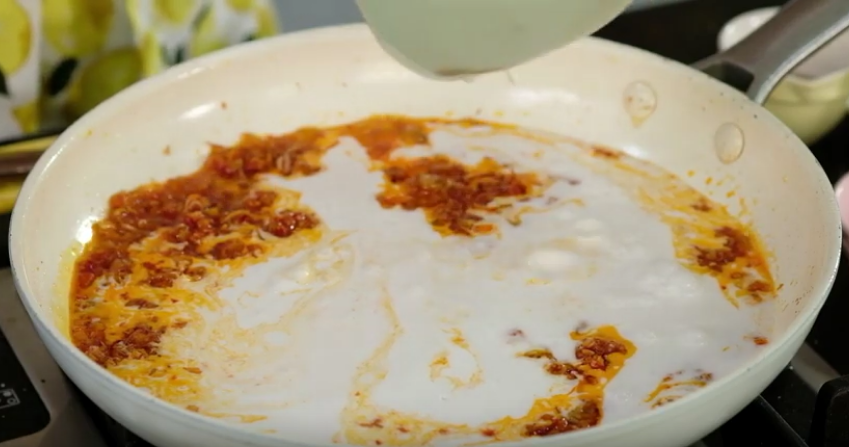
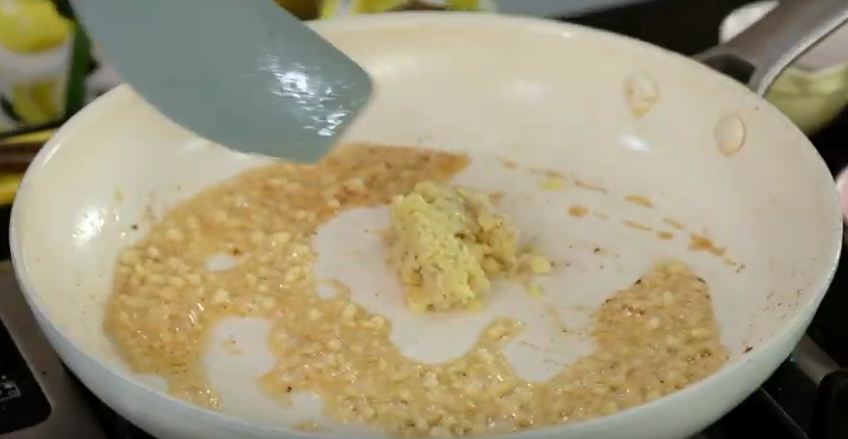
Take the salmon fillets out of the pan and set aside. Discard about 80-90% of the remaining oil and use then the pan to prepare the sauce. First we fry, over low heat, the garlic and the ginger for about 1 minute. Then add the lemongrass and fry another 4-5 minutes. Finally add the chilli-garlic paste and mix all well together, about 30 seconds.


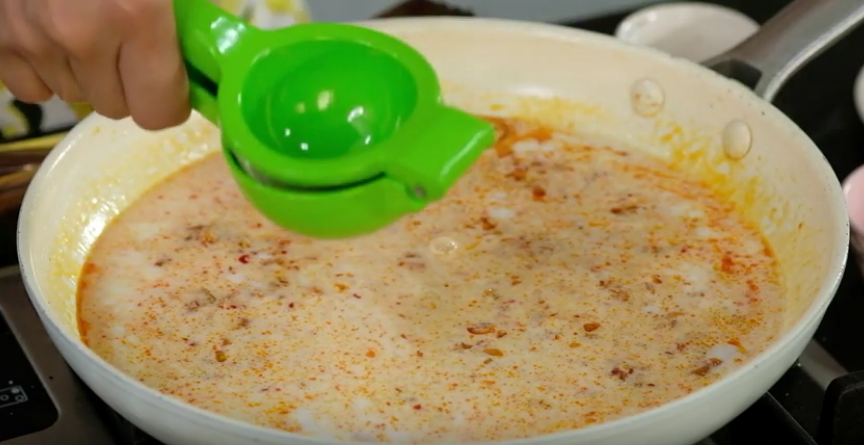
Now mix in the coconut milk, Thai fish sauce, and the fresh lime juice. Give it a good stir and have a taste. It should taste Umami, that means a well-balanced taste of sweet, sour, spicy, and salty.  This balance is very important for the success of this dish.


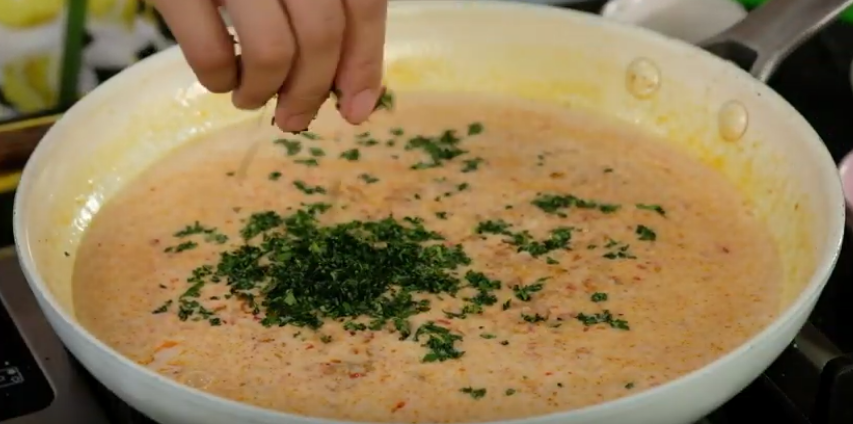
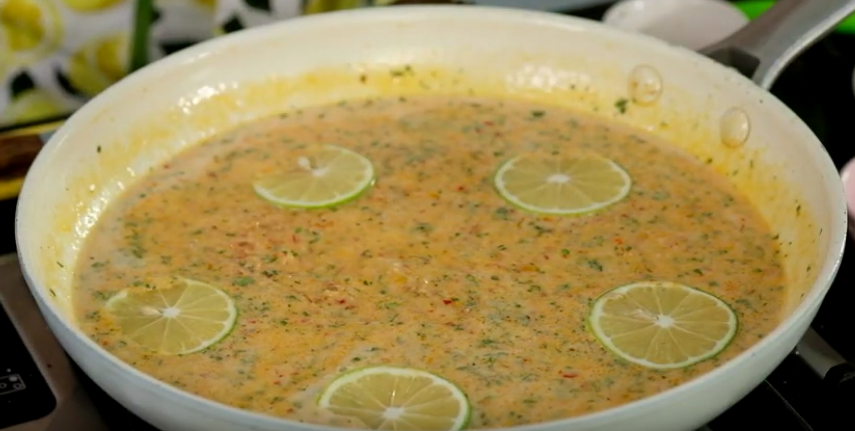
Finally, add the chopped cilantro ( I always use the double amount as stated in this recipe) and the lime slices. Stir well and let it simmer for another 5 minutes. The sauce will then just start to thicken. That’s the moment to put back in the salmon fillets.

After carefully placing the salmon back into the pan, spoon the sauce over the fish fillets and let all simmer for another 3 to 4 minutes. That will help to warm up the fish and cook it finally through. And the sauce should thicken a bit more, we don’t like it watery. If you like, as I do often, you can now sprinkle some coconut flakes and some more cilantro leaves over the dish.

Try this recipe, it is easy to cook and sooo delicious, trust me.

Tips.

To your memory: Sweet = coconut milk. Sour = lime juice. Spicy = chilli-garlic paste. Salty = fish sauce. The balance of these 4 spices creates the Umami taste experience. In case you used too much of one spice, naturalize first with coconut milk, then build up the taste again.

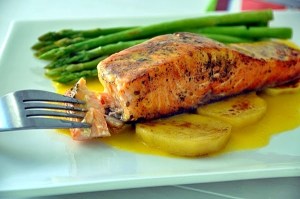
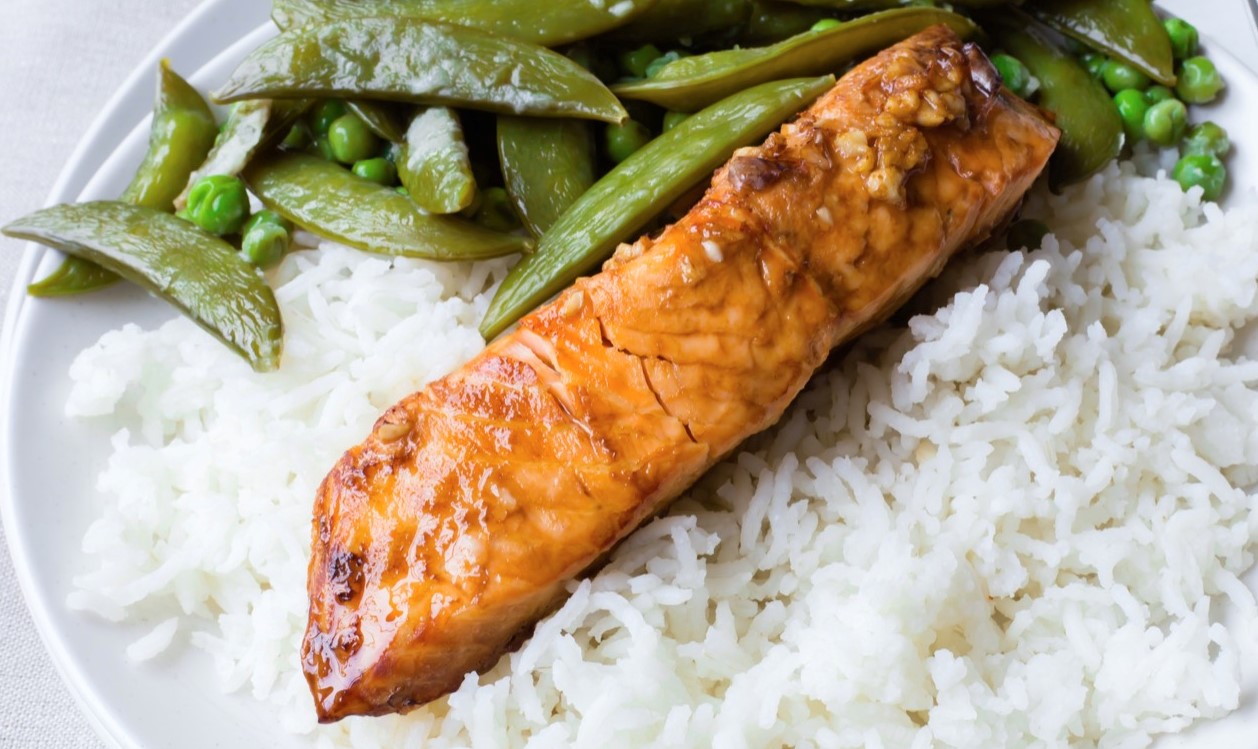
            A nice side dish is baked potato cookies with green grilled asparagus – or lovely white rice with peas.

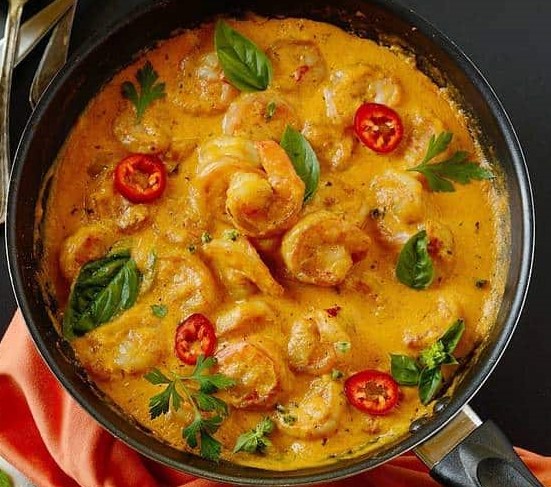
Leftover sauce can be refrigerated for some days and used on any kind of other seafood or vegetarian dish. Instead of salmon (as above) this recipe is delicious with prawns or shrimps also, it’s really Thai. Instead of slices of lime use basil leaves and slices of chilli !!

Veröffentlicht unter Recipes | Verschlagwortet mit | 10 Kommentare

How Ancient Romans Would Feast

Eating, an act of civilization and celebration of life.

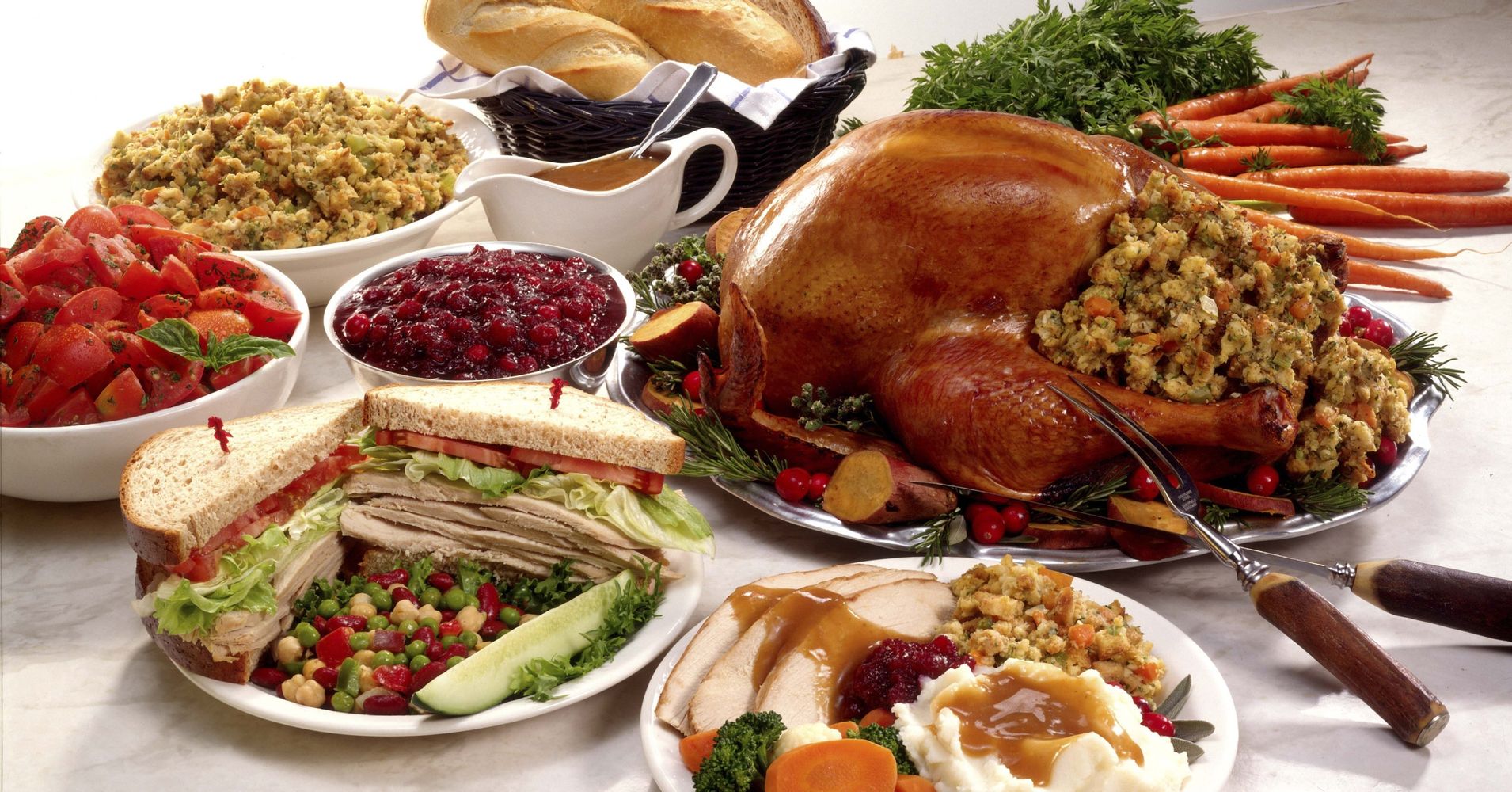
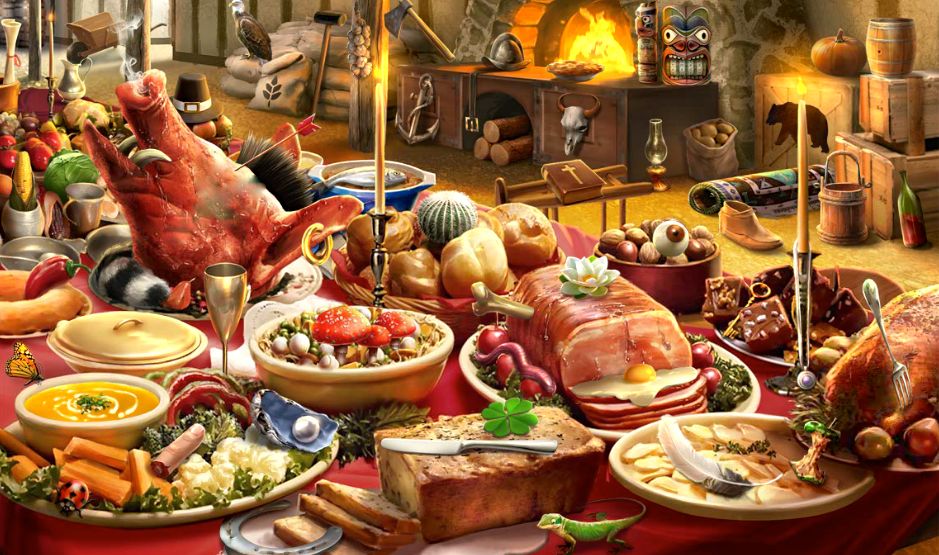
Today is Thanksgiving Day again, at least in the US, the most glorious festive feast, with an oversize turkey, different stuffings, holiday ham, the requisite fixings and at least half a dozen pies and cakes. That may all sound grand –  that is, until you consider the extravagant displays of the ancient Roman banquet.

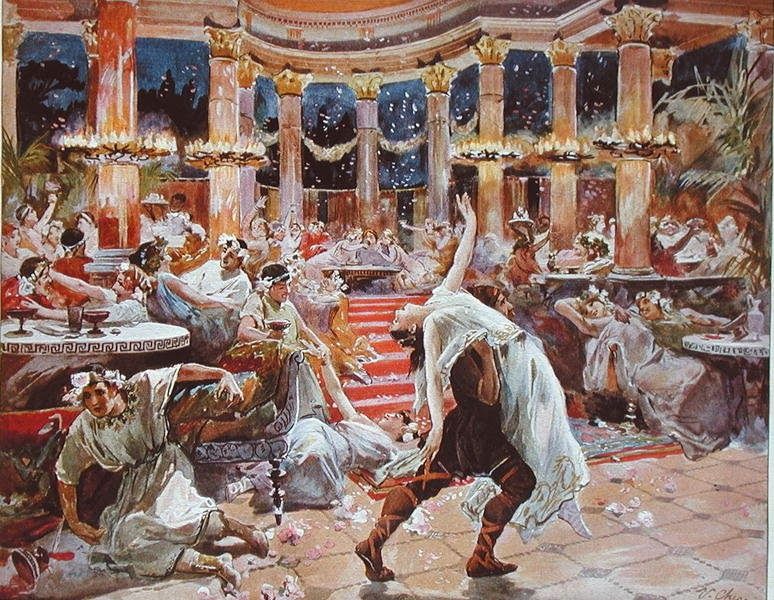
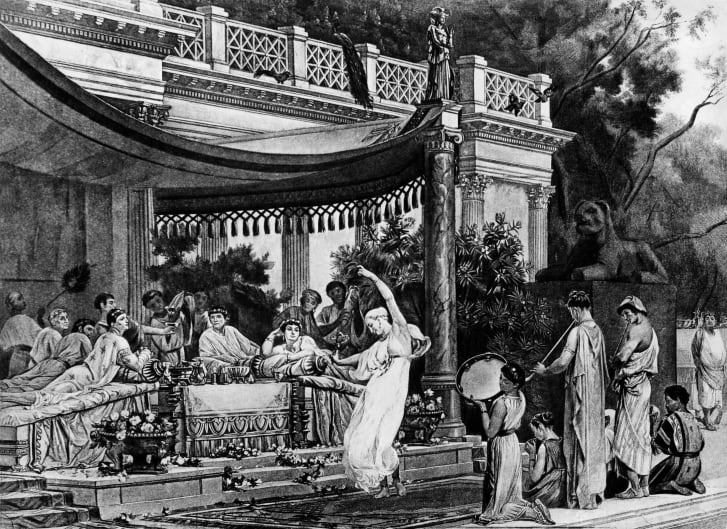
Members of the Roman upper classes regularly indulged in lavish, hours-long feasts that served to broadcast their wealth and status in ways that eclipse our notions of a resplendent meal. „Eating was the supreme act of civilization and celebration of life,“ said Alberto Jori, professor of ancient philosophy at the University of Ferrara in Italy.


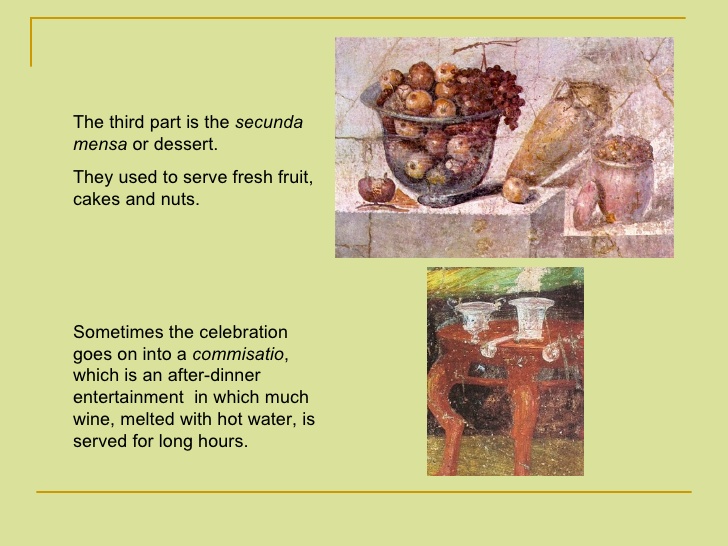
Ancient Romans enjoyed sweet and salty concoctions. Lasagna, a rustic short pasta usually served with chickpeas, was also used to make a honey cake with fresh ricotta cheese. The Romans used garum, a pungent, salty fermented fish sauce for umami flavor in all dishes, even as a dessert topping. (For context, garum has a similar flavor profile and composition to current-day Asian fish sauces such as Vietnam’s nuoc mam and Thailand’s nam pla). The prized condiment was made by leaving fish meat, blood, and guts to ferment inside containers under the Mediterranean sun.  See also my post about this kind of Umami, the Roman Garum:  https://myuytips.com/2018/05/04/must-see-amalfi-4-cetara/


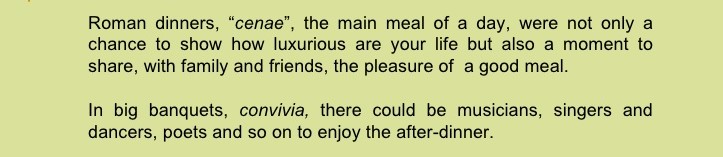
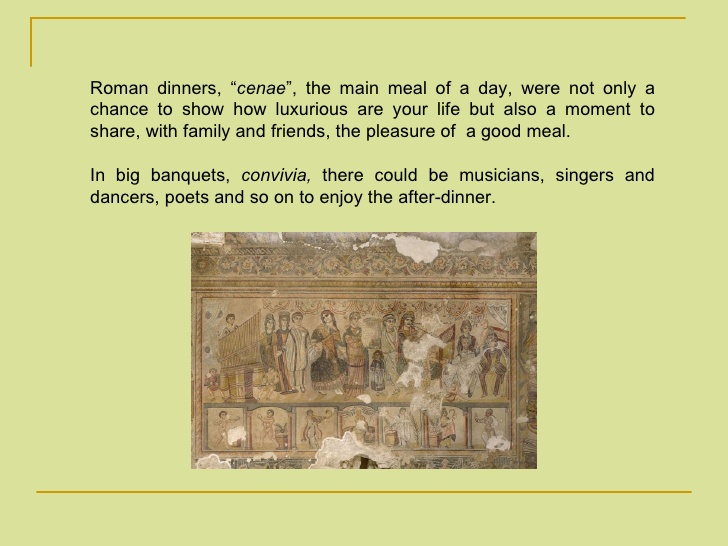
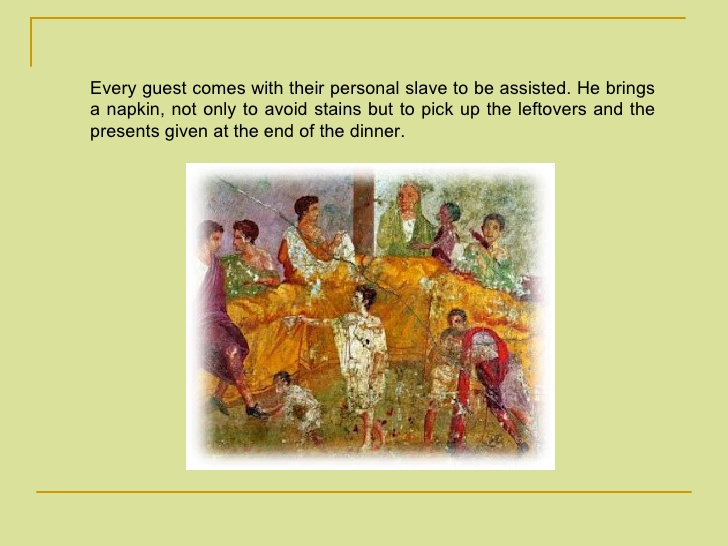
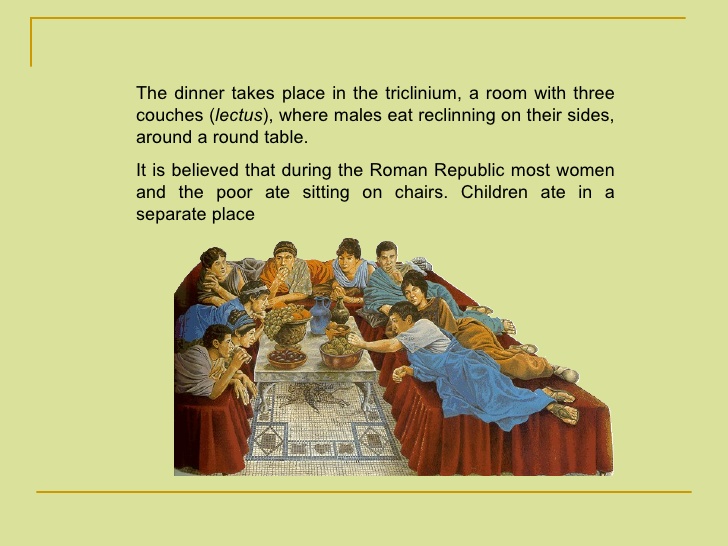
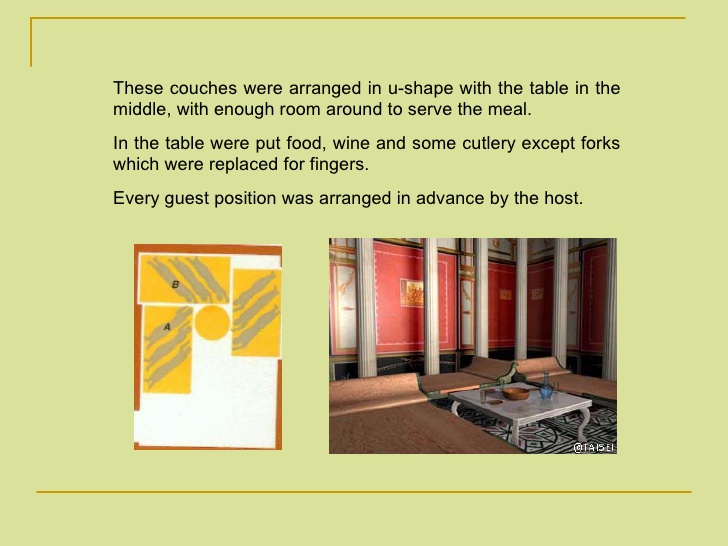
Click on the above pictures to supersize for better reading. The 6 pages from the booklet „Roman dinners“.

Intentionally vomiting between courses.

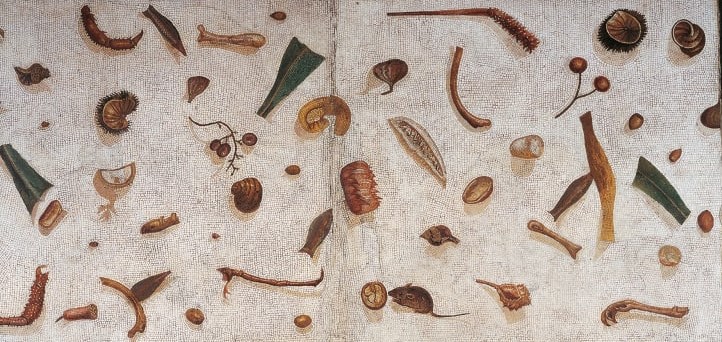
Game meat such as venison, wild boar, rabbit, and pheasant along with seafood like raw oysters, shellfish, and lobster were just some pricey foods that made regular appearances at the Roman banquet. And all the leftovers on the ground, see below.

What’s more, hosts played a game of one-upmanship by serving over-the-top, exotic dishes like parrot tongue stew and stuffed dormouse. „Dormouse was a delicacy that farmers fattened up for months inside pots and then sold at markets,“ Jori said, „while huge quantities of parrots were killed to have enough tongues to make fricassee.“

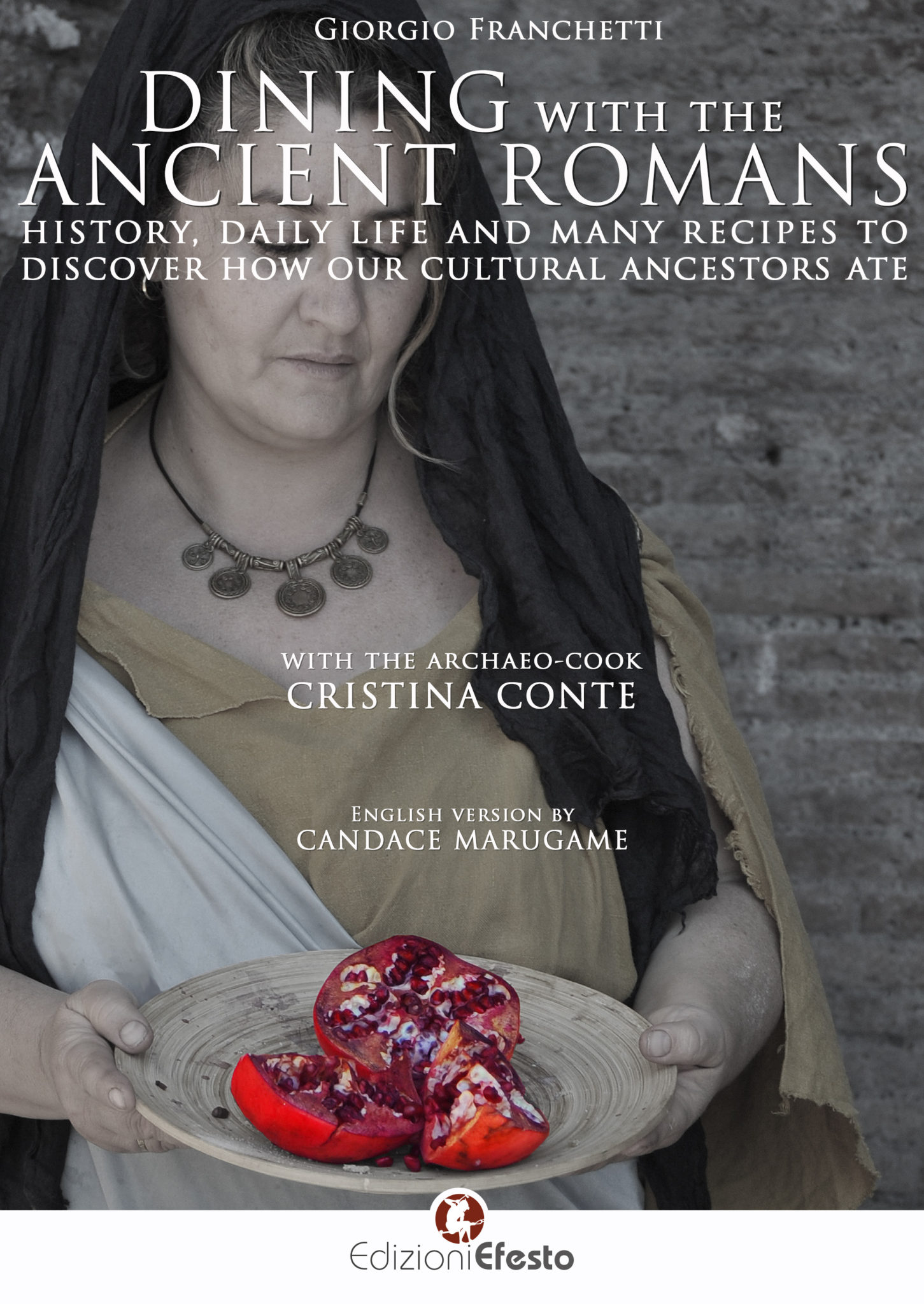
Giorgio Franchetti, a food historian and scholar of ancient Roman history, recovered lost recipes from these repasts, which he shares in „Dining With the Ancient Romans,“ written with „archaeo-cook“ Cristina Conte. Together, the duo organizes dining experiences at archaeological sites in Italy that give guests a taste of what eating like a Roman noble was all about. These cultural tours also delve into the eyebrow-raising rituals that accompanied these meals.

A fantastic book to read, and fantastic also, to follow some of their recipes. Franchetti defines the reconstruction work carried out for the writing of the book (it took him 7 years) as „an archaeological excavation“. In fact he contains a lot of information that lends itself to be read even by people not specialized in the field, thanks to a work that has brought to light the figure of gladiators, „hated, praised, criticized, loved“.

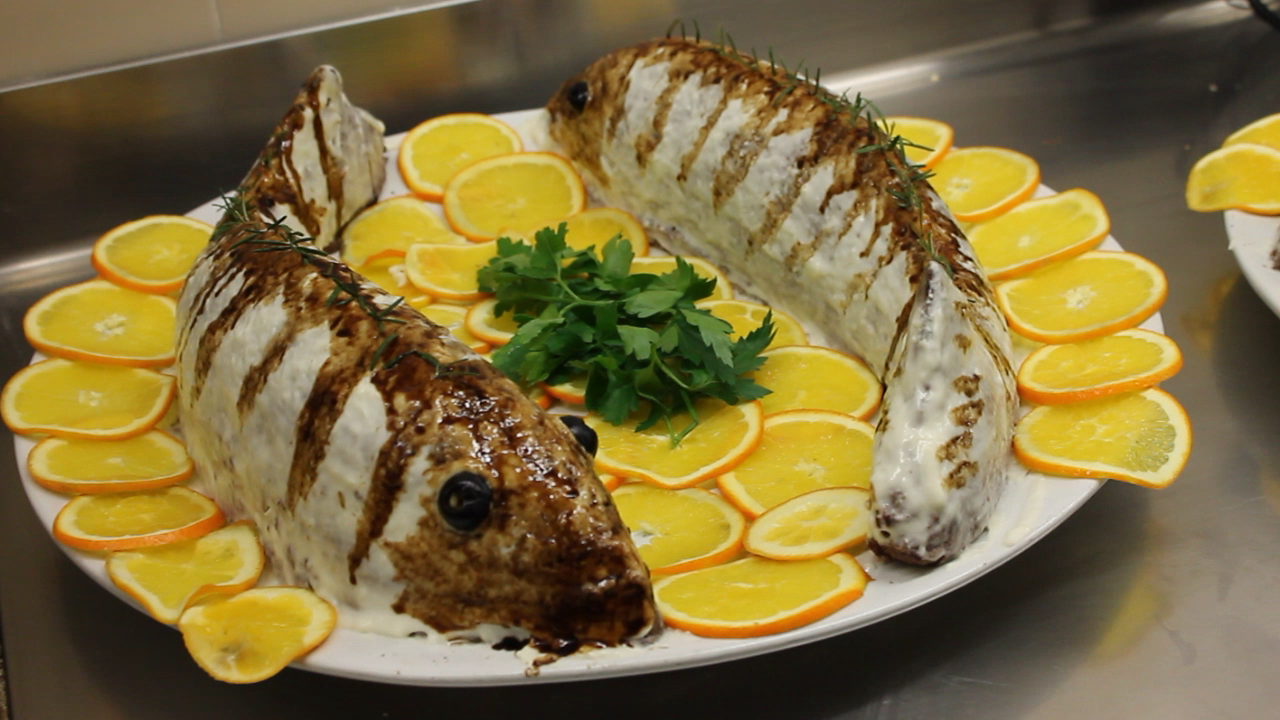
Among the unusual recipes prepared by Conte is salsum sine salso, invented by the famed Roman gourmand Marcus Gavius Apicius. It was an „eating joke“ made to amaze and fool guests. The fish would be presented with head and tail, but the inside was stuffed with cow liver. Clever sleight of hand, combined with shock factor, counted for a lot in these competitive displays.

Conte’s modern version, fish design, but it’s a chicken pate terrine.

Human body functions.

Gorging for hours on end also called for what we would consider untoward social behavior in order to accommodate such gluttonous indulgences. „They had bizarre culinary habits that don’t sit well with modern etiquette, such as eating while lying down and vomiting between courses,“ Franchetti said.

These practices helped keep the good times rolling. „Given banquets were a status symbol and lasted for hours deep into the night, vomiting was a common practice needed to make room in the stomach for more food. The ancient Romans were hedonists, pursuing life’s pleasures,“ said Jori, who is also an author of several books on Rome’s culinary culture. It was, in fact, customary to leave the table to vomit in a room close to the dining hall. By using a feather, revelers would tickle the back of their throats to stimulate the urge to regurgitate, Jori said.

Roman common toilet, but already separated by sexes.

In keeping with their high social status, defined by not having to engage in manual labor, guests would simply return to the banquet hall while slaves cleaned up their mess. Gaius Petronius Arbiter’s literary masterpiece „The Satyricon“ captures this typical social dynamic of Roman society in mid first century AD with the character of wealthy Trimalchio, who tells a slave to bring him a „piss pot“ so he can urinate. In other words, when nature called, revelers didn’t necessarily go to the bathroom; often the WC came to them, powered again by slave labor.

It was also considered normal to break wind while eating, because it was believed that trapping gas inside the bowels could cause death, Jori said. Emperor Claudius, who reigned from 41 AD to 54 AD, is said to have even issued an edict to encourage flatulence at the table, based on writings in the „Life of Claudius“ by Roman historian Suetonius.

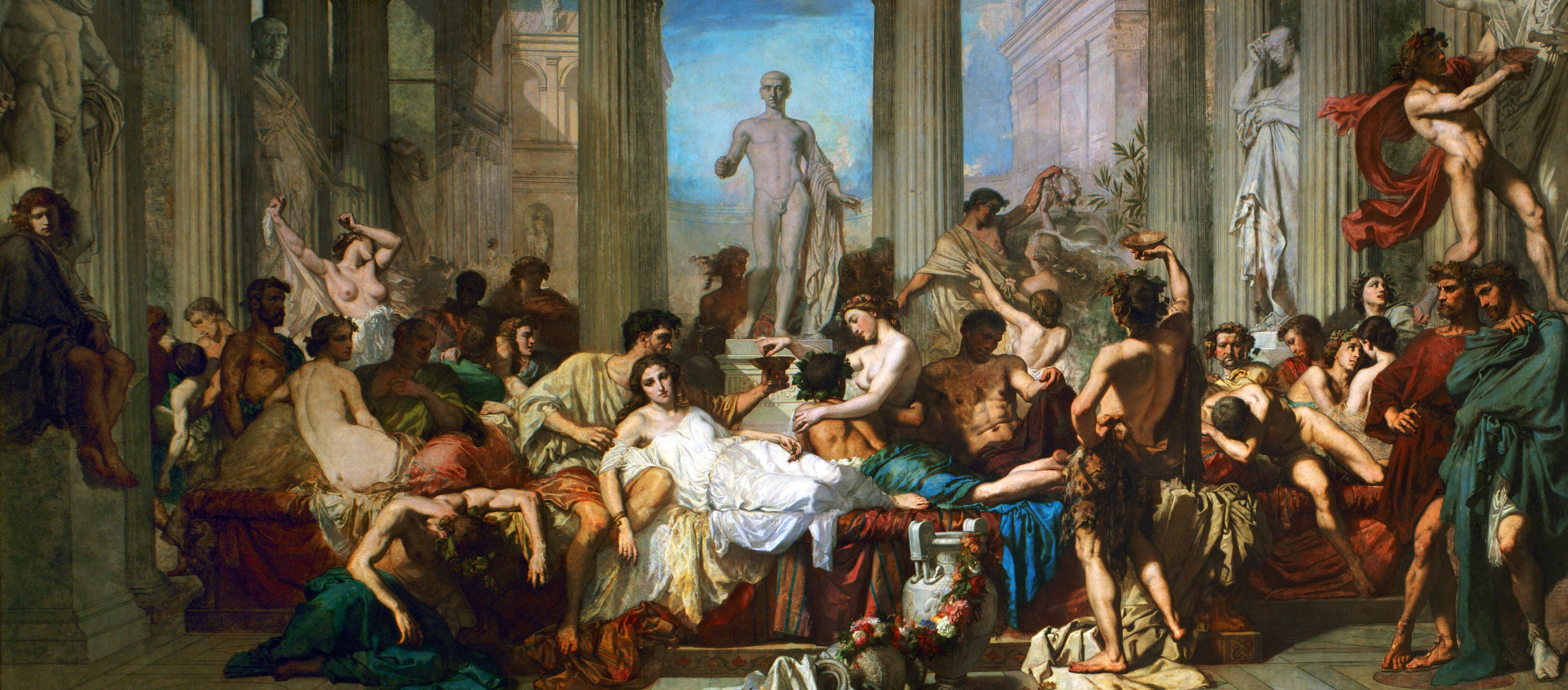
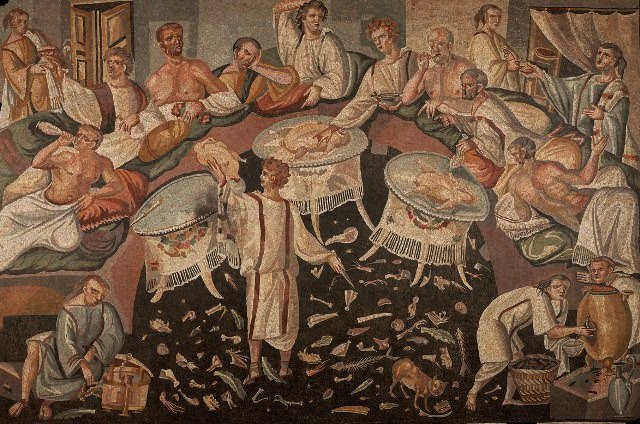
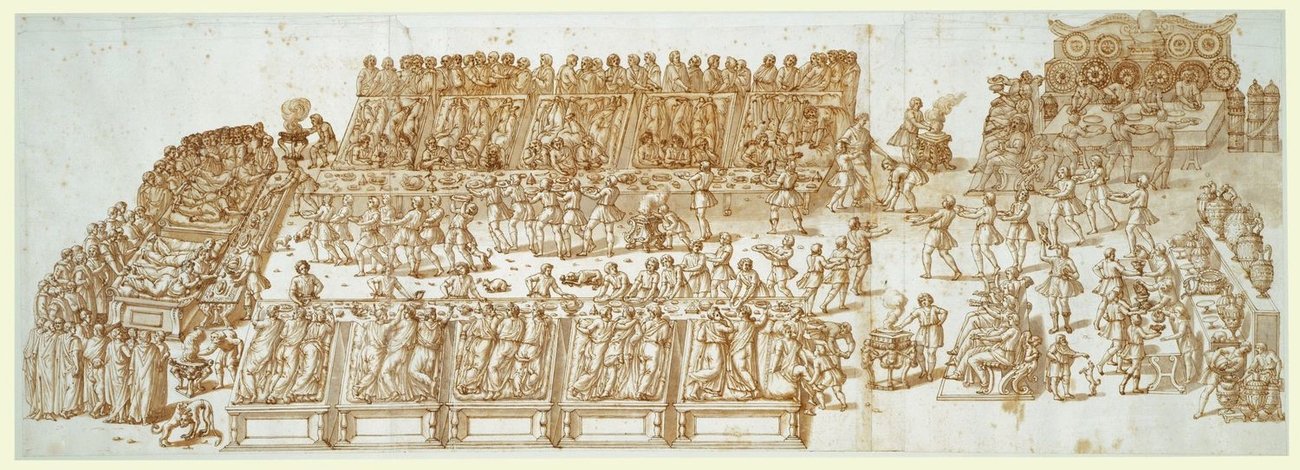
  Roman feast, large scale representation. Click on pic to size up.

Comforts and privilege of wealthy citizens.

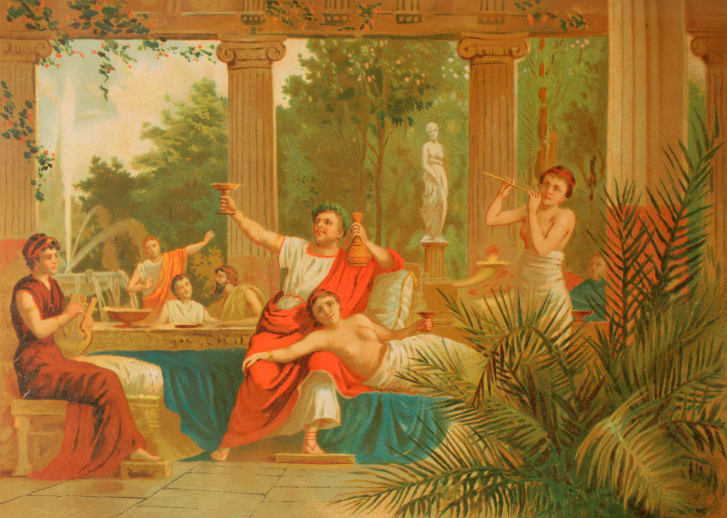
Bloating was reduced by eating lying down on a comfortable, cushioned „chaiselongue“. The horizontal position was believed to aid digestion, and it was the utmost expression of an elite standing.

„The Romans actually ate lying on their bellies so the body weight was evenly spread out and helped them relax. The left hand held up their head while the right one picked up the morsels placed on the table, bringing them to the mouth. So they ate with their hands and the food had to be already cut by slaves,“ Jori said.

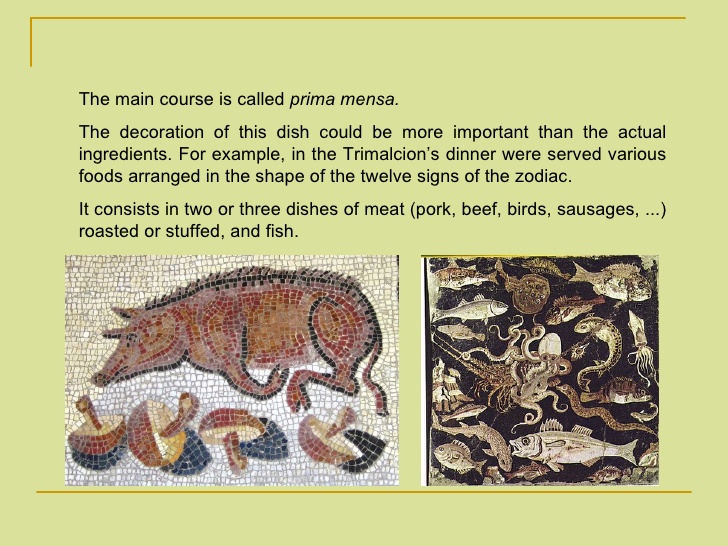
Food leftovers and meat and fish bones were thrown on the floor by guests. To get a sense of the scene, consider one mosaic found in a Roman villa in Aquileia, which depicts fish and food leftovers scattered on the floor. The Romans liked to decorate banquet hall floors with such images in order to camouflage real food strewn on the floor. This trompe-l’oeil tactic, or the „unswept floor“ effect, was a clever mosaic technique.

Lying down also allowed feast goers to occasionally doze off and enjoy a quick nap between courses, giving their stomach a break.
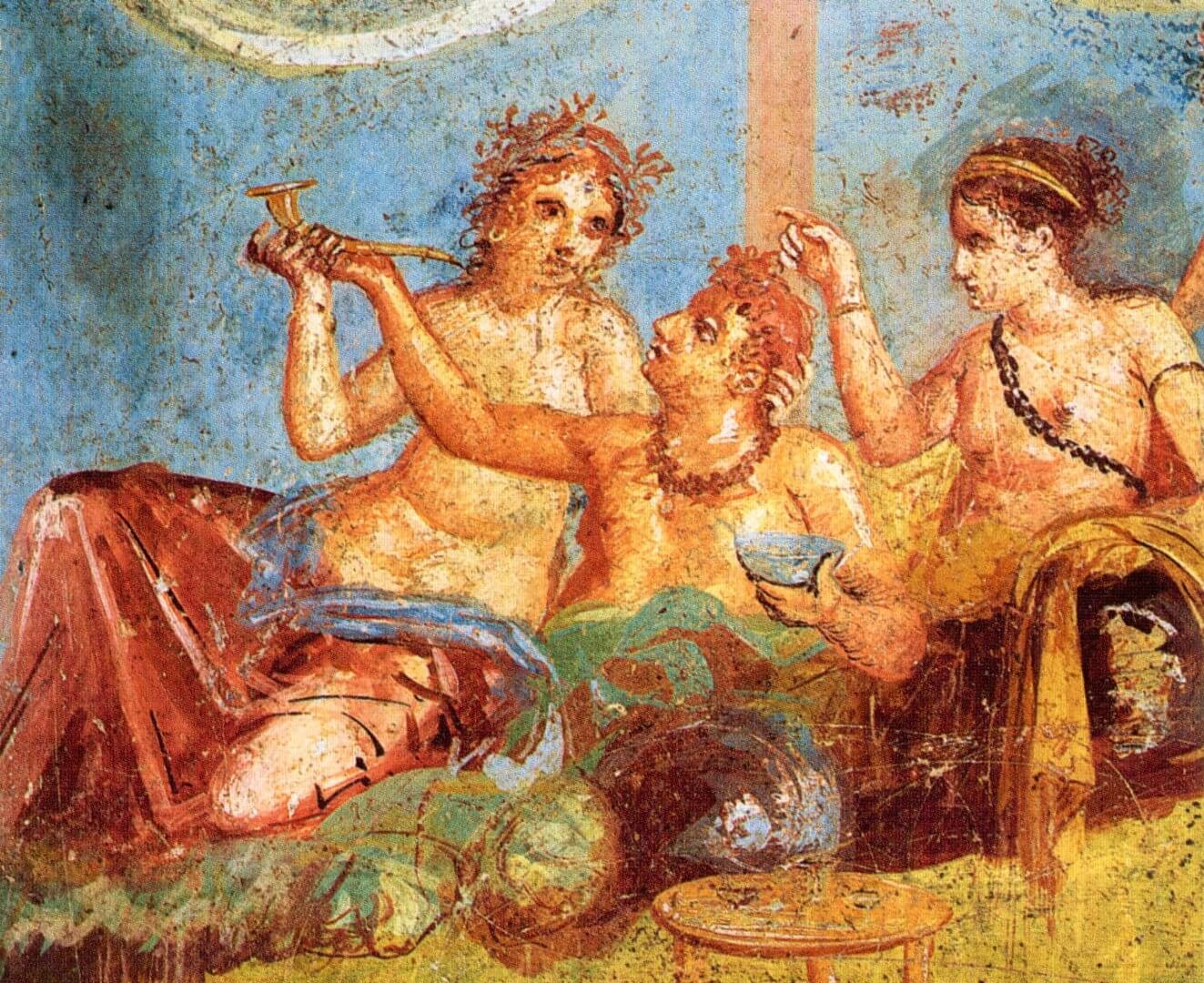
The act of reclining while dining, however, was a privilege reserved for men only. A woman either ate at another table or knelt or sat down beside her husband while he enjoyed his meal.

An ancient Roman fresco of a banquet scene at Casa dei Casti Amanti in Pompeii (notice the picture above), for example, depicts a man reclining while two women kneel on either side of him. One of the women tends to the man by helping him hold a horn-shaped drinking vessel called a rhyton.

  Alberto Jori.

„Men’s horizontal eating position was a symbol of dominance over women. Roman women established the right to eat with their husbands at a much later stage in the history of ancient Rome; it was their first social conquest and victory against sexual discrimination,“ Jori explained.

Roman women got their rights to lay down during dinner.

Superstitions at the table.

The Romans were also very superstitious. Anything that fell from the table belonged to the after world and was not to be retrieved for fear that the dead would come seek vengeance, while spilling salt was a bad omen, Franchetti said. Bread had to be solely touched with the hands and eggshells and mollusks had to be cracked. Were a rooster to sing at an unusual hour, servants were sent to fetch one, kill it and serve it pronto.

  Giorgio Franchetti.

Feasting was a way to keep death at bay, according to Franchetti. Banquets ended with a binge-drinking ritual during which diners discussed death to remind themselves to fully live and enjoy life, in short, carpe diem.

The creepy modern version of a roman salt and pepper holder.

In keeping with this world view, table objects, such as salt and pepper holders, were shaped as skulls. According to Jori, it was customary to invite beloved dead ones to the meal and serve them platefuls of food. Sculptures representing the dead sat at the table with the living.

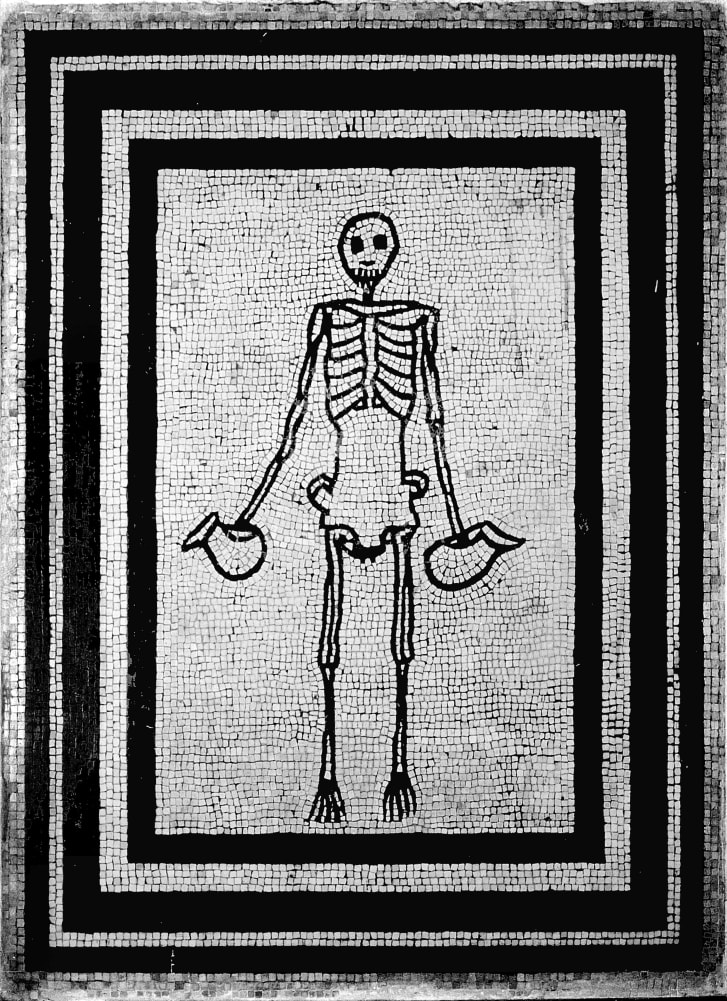
     A mosaic of a skeleton from the House of Vestals in Pompeii holding jugs of wine.  Click on pic to supersize.

Wine wasn’t always drunk straight but spiked with other ingredients. Water was used to dilute the alcohol potency and allow revelers to drink more, while seawater was added so that the salt preserved wine barrels coming from faraway corners of the empire.
„Even tar was a common substance mixed with the wine, which over time blended with the alcohol. The Romans could hardly taste the nasty flavor,“ Jori said.

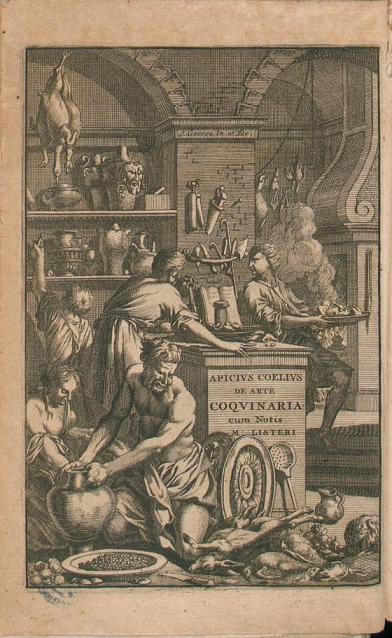
  MARCO GAVIUS APICIUS, edition 1709. See also my earlier post about Apicius:  https://myuytips.com/2020/05/15/cookbooks-part-1/

Perhaps in the ultimate symbol of excess, the epicure Apicius allegedly committed suicide because he had gone broke after throwing too many lavish banquets. He left behind, however, a gastronomic legacy, including his famous Apicius pie made with a mix of fish and meat such as bird interiors and pig’s breasts. A dish that might struggle to entice at modern feasting tables today. Enjoy your feast’s during these hard Corona times !

Veröffentlicht unter History, Lifestyle | Verschlagwortet mit , | 1 Kommentar

Edward Norton Diagnosis

‘Call his bluff’: Edward Norton lays out poker-style Trump analysis never expected.

In my blog, I normally don’t take any political, sexual, or religious themes, comments, or discussion sides. This is a unique exception. The reason is, that the minority of fanatic Trump followers cry everyone down. No discussion will be possible and won against fanatics like this.

The overwhelming majority behaves decent and keeps quiet. So I think it is time to give a bit of weight to Trump’s opposition side. Personally, I do not care about what one thinks about Trump. Everyone has their own opinion, mine is that „he is the biggest asshole (not my words – see above – I just agree)  I ever saw in the political world“ !!

A few days ago I stumbled over Edward Norton’s article in HuffPost. I think it’s so true, and so fine diagnosed that I copy it for you to read – if you like. Everything else = SATIRE!

         His last international disaster, THANK GOD ! As usual, Trump participated for 2 hours, scrawled around, telling bullshit, praising only himself and insulting the world leaders, then he went off to play golf (there he can cheat all he wants). Many people will be glad not to have to put up with that smug orange face anymore.

  Final result of 2020 !

HuffPost:
Edward Norton Compares ‚Whiny‘ Trump’s Actions To A Failed Poker Hand!
Curtis M. Wong·Senior Culture Reporter, HuffPost
Fri, November 20, 2020,

Edward Norton offered a scathing rebuke of President Donald Trump this week, using poker terminology to describe the commander in chiefs‘ continued efforts to subvert 2020 election results.

The “Fight Club” actor on Friday said in a Twitter thread that he learned a lot about politics from his father, who was a federal prosecutor. He added that he “sat a fair amount of poker [with] serious players” and was able to discern Trump’s motivations, which point to a “desperate endgame.”

Edward Norton

Edward Norton
I’m no political pundit but I grew up w a dad who was a federal prosecutor & he taught me a lot & I’ve also sat a fair amount of poker w serious players & l’ll say this: I do not think Trump is trying to ‘make his base happy’ or ‘laying the groundwork for his own network’.

Or that ‘chaos is what he loves’. The core of it is that he knows he’s in deep, multi-dimensional legal jeopardy & this defines his every action. We’re seeing 1) a tactical delay of the transition to buy time for coverup & evidence suppression 2) above all, a desperate endgame…


That’s what he is thinking about ?  What a „turkey“ !!!

Edward Norton
…which is to create enough chaos & anxiety about peaceful transfer of power, & fear of irreparable damage to the system, that he can cut a Nixon-style deal in exchange for finally conceding. But he doesn’t have the cards. His bluff after ‘the flop’ has been called in court…
His ‘turn card’ bluff will be an escalation & his ‘River card’ bluff could be really ugly. But they have to be called. We cannot let this mobster bully the USA into a deal to save his ass by threatening our democracy. THAT is his play. But he’s got junk in his hand. So call him.

Edward Norton Goes on Epic Twitter Rant About Donald Trump: ‚We Cannot Let This Mobster Bully the USA‘.

Yes, Edward, you are so RIGHT with your diagnosis:

Norton described the president as “a whiny, sulky, petulant, Grinchy, vindictive little 10-ply-super-soft bitch” who was “throwing a wicked pout fest“ without giving any thought to those affected by the COVID-19 pandemic.

Still, the actor didn’t think Trump is planning a 2024 bid for the presidency, as has been widely reported. Instead, he believed the president was focused on using “chaos [and] threat” to guarantee “a safe exit,” adding: “Call. His. Bluff.” He concluded the thread with a rallying cry to Americans.

I have no understanding why people stopped him doing that.

Edward Norton
But his contemptible, treasonous, seditious assault on the stability of our political compact isn’t about 2024, personal enrichment, or anything else other than trying to use chaos & threat to the foundation of the system as leverage to trade for a safe exit. Call. His. Bluff.
Faith in the strength of our sacred institutions & founding principles is severely stretched…but they will hold. They will. He’s leaving, gracelessly & in infamy. But if we trade for it, give him some brokered settlement, we’ll be vulnerable to his return. We can’t flinch.

The thread had garnered more than 540,000 combined likes from Twitter users as of Friday. Though President-elect Joe Biden secured his win four days after election night on Nov. 7, Trump has refused to concede or otherwise publicly acknowledge his loss.

Hello Trumpy, looking forward to a great poker game with your buddy’s ?? Missing Bolsonaro & Orban ??

Meanwhile, his campaign has alleged ― without evidence ― that Biden’s victory was the result of voter fraud and has pressed for ballot recounts that have not changed the election’s outcome. And – till now – he lost all lawsuits he tried against voter fraud.

Norton last year cited Trump’s 2016 election victory as the partial inspiration for his performance in the film “Motherless Brooklyn,” which he also wrote and directed based on Jonathan Lethem’s novel.

“You have probably the deepest cynicism that had ever emerged in American society, and that film was responsive to that,” he told Vanity Fair. “What we’re going through now is provoking a lot of looking at what sits under the surface of American life. It’s especially resonant when you’re going through moments that are giving people deep dismay.”

The final question is not how and when this narcissistic menace will leave. IT WILL HAPPEN ! The final question is how much more damage he will bequeath !

Veröffentlicht unter Information | Hinterlasse einen Kommentar

Buried Salmon

Graved laks.

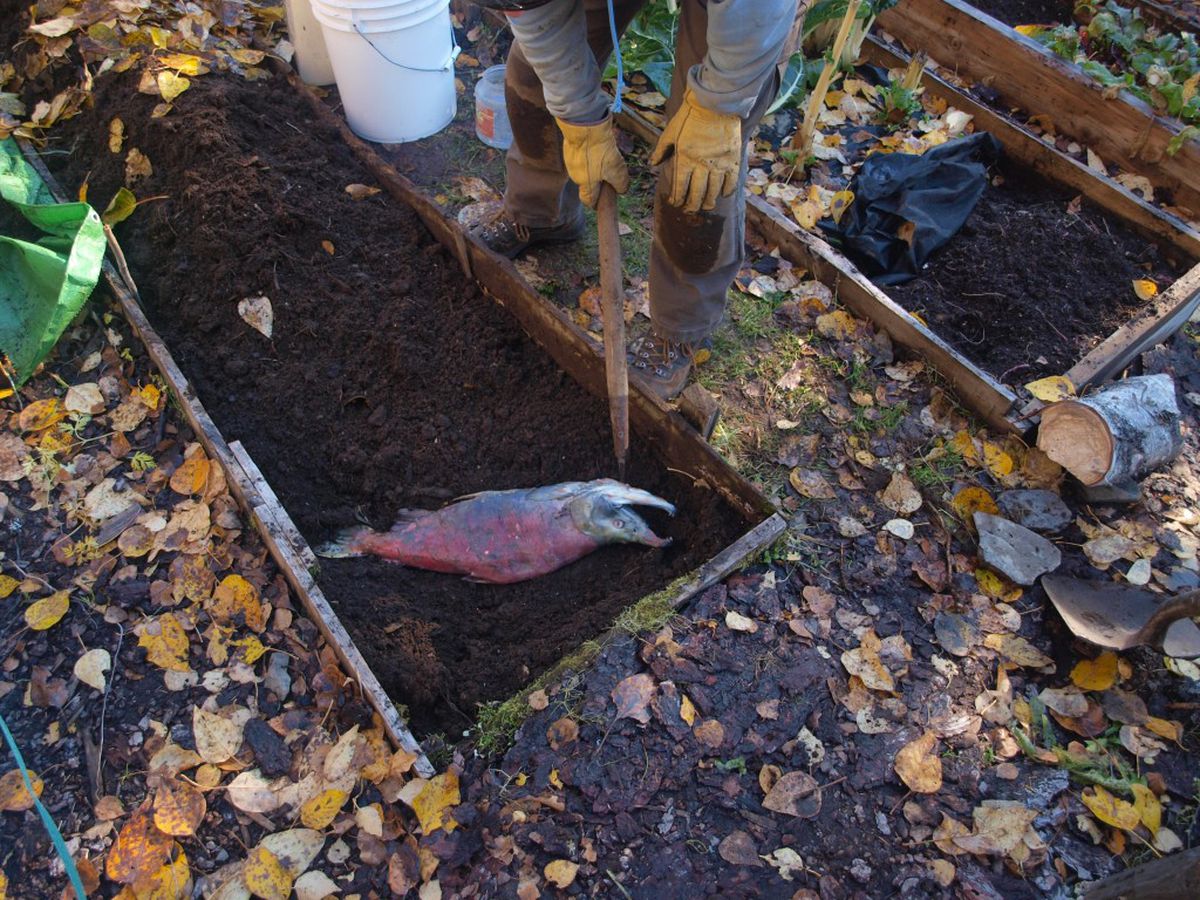
It is the term used from Swedish gravad lax, Danish gravad laks, Norwegian gravlaks, Finnish graavilohi) or gravlax. It literally means originally „buried salmon“ (salmon out of a grave) or secondarily in today’s cooking language „marinated salmon“. The method of lightly salting freshly caught salmon and burying it in the ground for a few weeks or months for fermentation to preserve it was developed by the Scandinavians centuries ago. Anyway, I am playing a bit with all the different possible names we can use for the same delicious seafood dish.

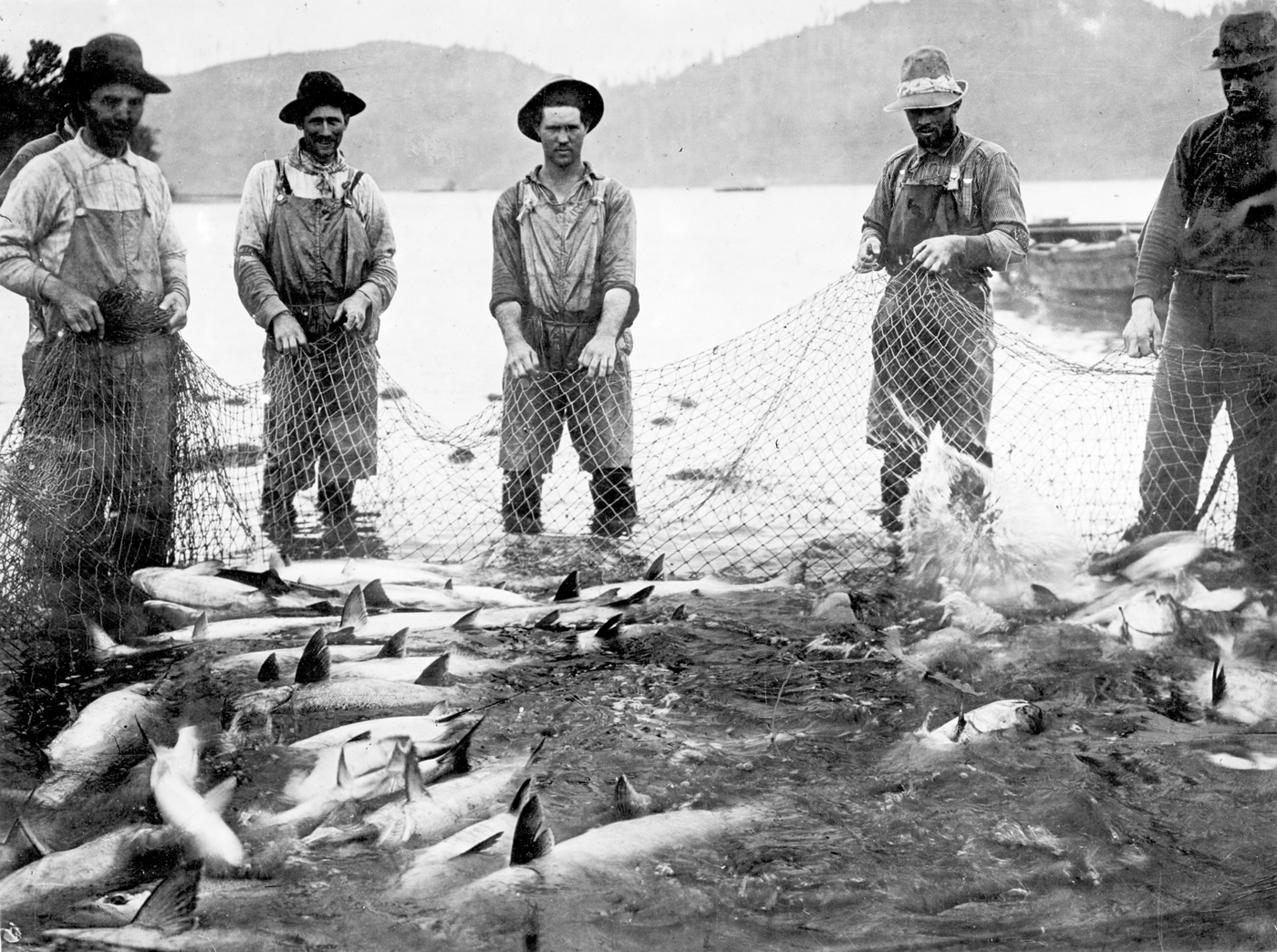
Old style salmon netting at Columbia River. Scandinavians brought salmon pickling over to America.

Gravlax is one of the few world-famous Scandinavian dishes out there, and while many know that it is basically prepared with salmon and herbs, few know its ancient, Arctic history. The origin of gravlax can be traced all the way back to 14th-century North-Sweden. In the Middle-Ages, salt was expensive and most foods had to be preserved using alternative methods.

The Scandinavian brand used in Oregon, USA.

In North-Sweden, peasants and fishermen developed a unique technique called gravad lax (“buried salmon” hence the name gravlax): The filleted salmon was placed in a hole in the earth, covered with birch bark and laid in a bath of water, the fish’s own blood, and various spices and herbs. The result was a rather strong-smelling product that would be closer to today’s infamous surströmming (fermented herring) than the gravlax that is eaten nowadays.

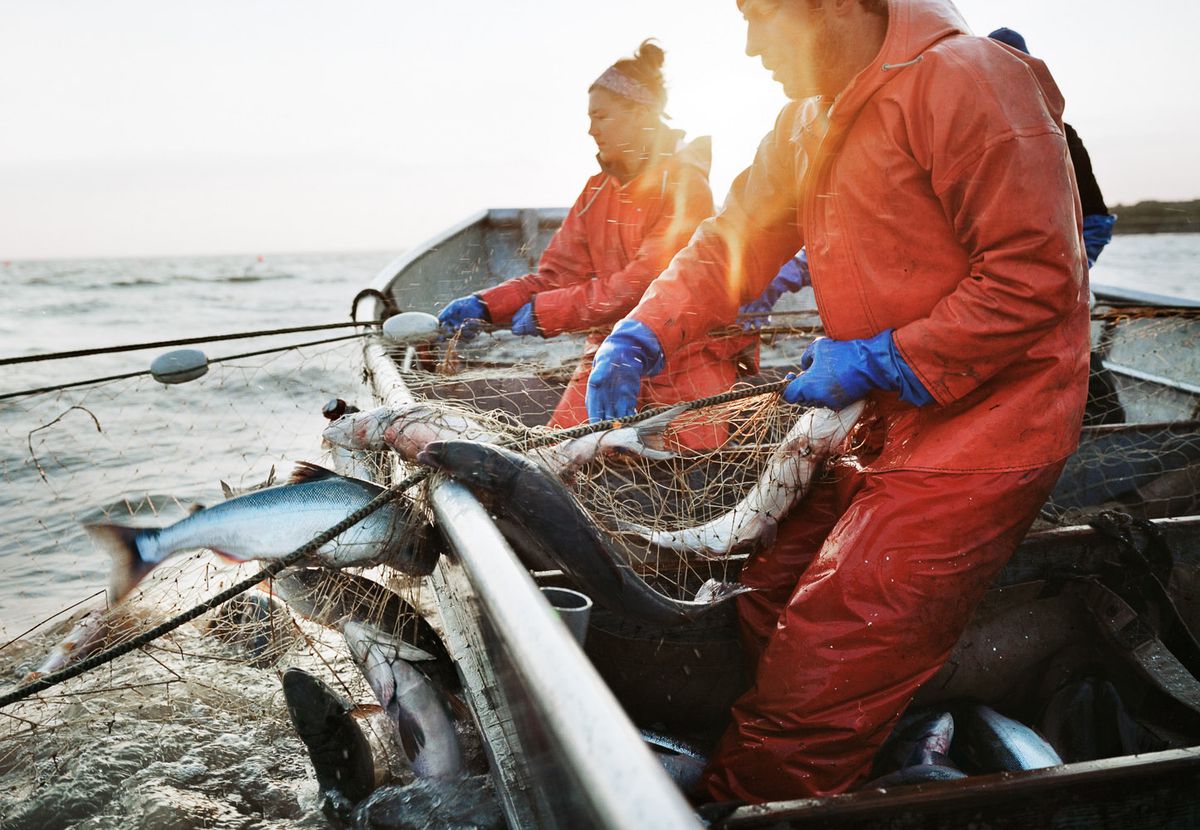
New style salmon netting. No difference.

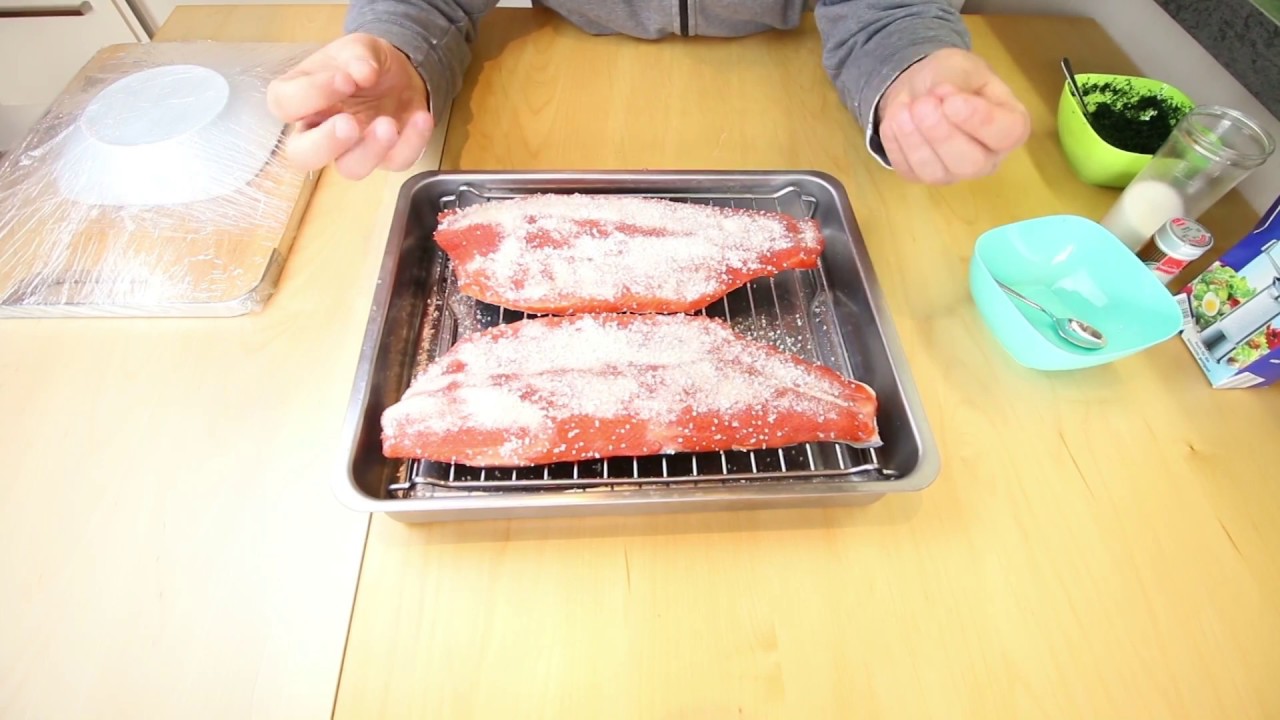
After gutting, the fish were rubbed with pickling agents (dry salt-sugar mixture with dill and possibly other spices and herbs) and then buried in the beach or earth holes for at least three days (dialectal Swedish gravad) and weighted down with stones. The physical pressure and osmotic pressure of the mordanting process causes water to be drawn out of the salmon flesh. At the same time, the fish ferments a little bit. Through drying and benign fermentation, other micro-organisms that cause rotting no longer find good living conditions, so that longer shelf life is achieved. In the past, the fish was also left in the pit for months in order to preserve it for the winter months. Due to the long fermentation time, a strong smell develops. Similar methods of preparation with different types of fish are common in many polar regions. However, gravad salmon is neither as dry nor as durable as air-dried stockfish.

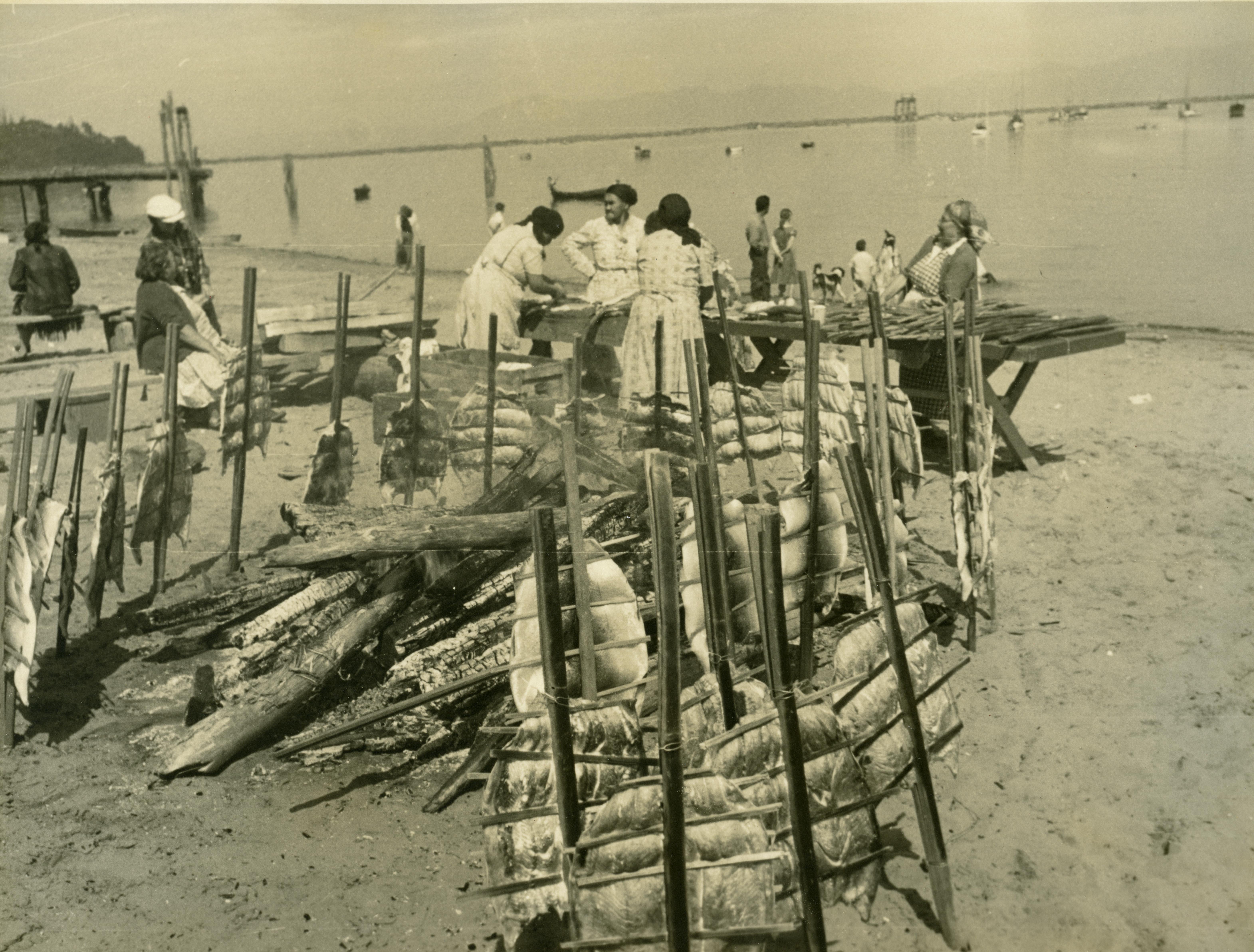
Old style, beachfront or riverfront, salmon smoking.

Over time, gravlax-making techniques evolved, and the introduction of salt and dill, among other things, lead to the development of a much gentler dish. In Arctic Norway, North-Sweden’s nearest neighbor, it soon became customary to make use of a curing blend made of salt, pepper, honey, local spirits, and, of course, dill to soften and ripen the fish in a uniquely delectable way.


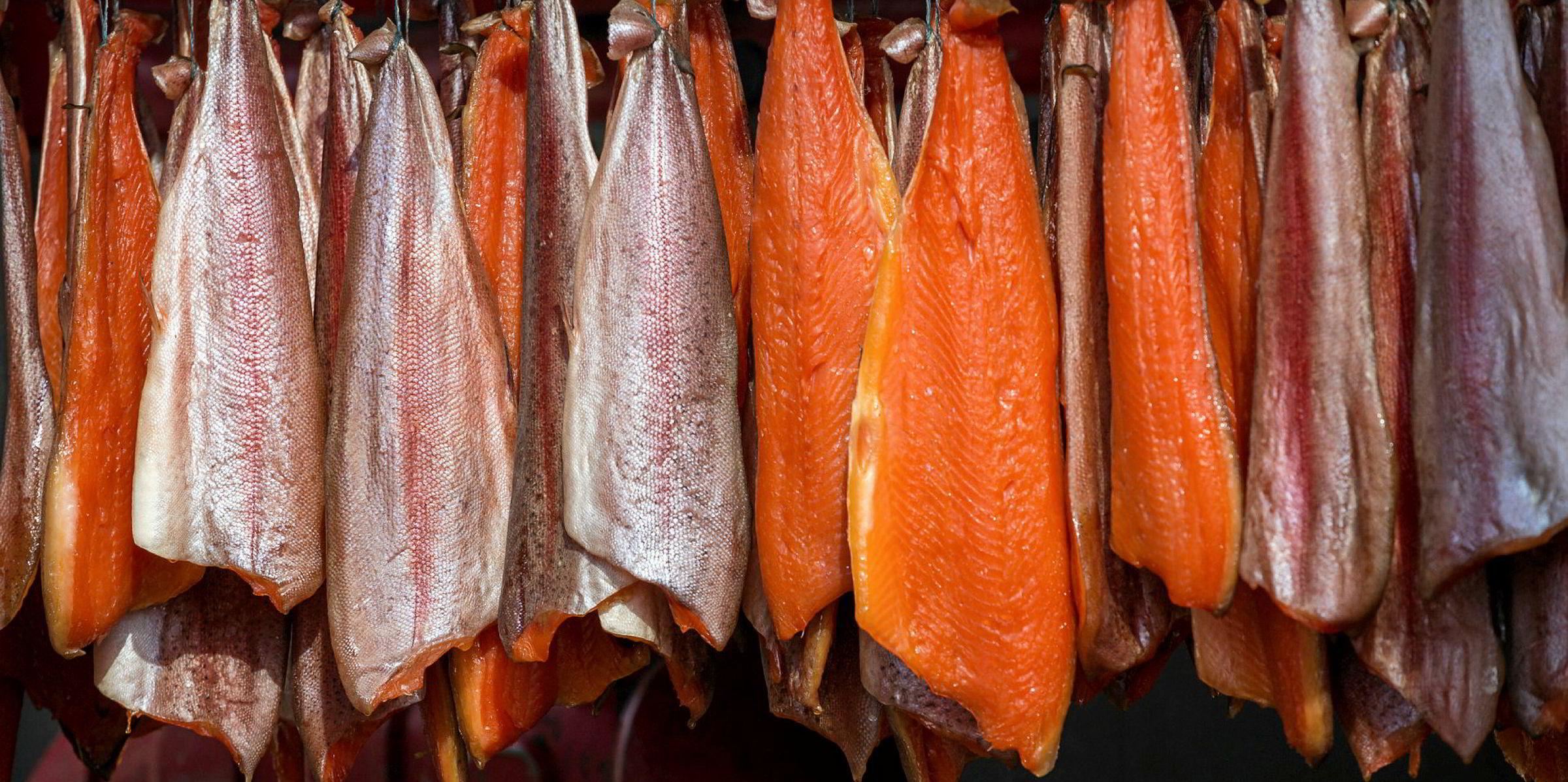
Salmon sides hanged for air drying. Of course that’s possible only in cool northern countries.

Easy marinated recipe.

Today, the fish is no longer buried but matured for a few days in a cool place. For this purpose, two salmon fillets are rubbed with the pickling mixture on the inside, placed on top of each other, and weighted down with a weight. The production of gravlaks is one of the household tasks usually performed by men. Fermentation does not take place because of the cold, and the fish does not become as dry in the modern method as in traditional production. Genuine gravlaks salmon is not smoked, the shelf life is achieved by pickling alone.

Formerly the salmon was buried for pickling and preserving, as we know, today used as fertilizer only.

After about 72 hours of curing, the gravlax is generally ready to be served. However, in many North-Norwegian households, no gravlax dish would be served without a proper mustard sauce crafted from traditional mustard powder, oil, flour and extra dill. This somewhat more modern local variation on traditional gravlax was particularly popular among coastal communities such as Karlsoy, where it has been enjoyed by generations of Hegelunds for close to four centuries.


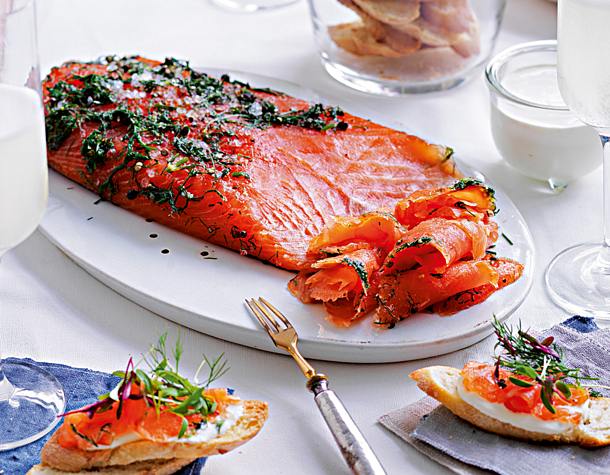
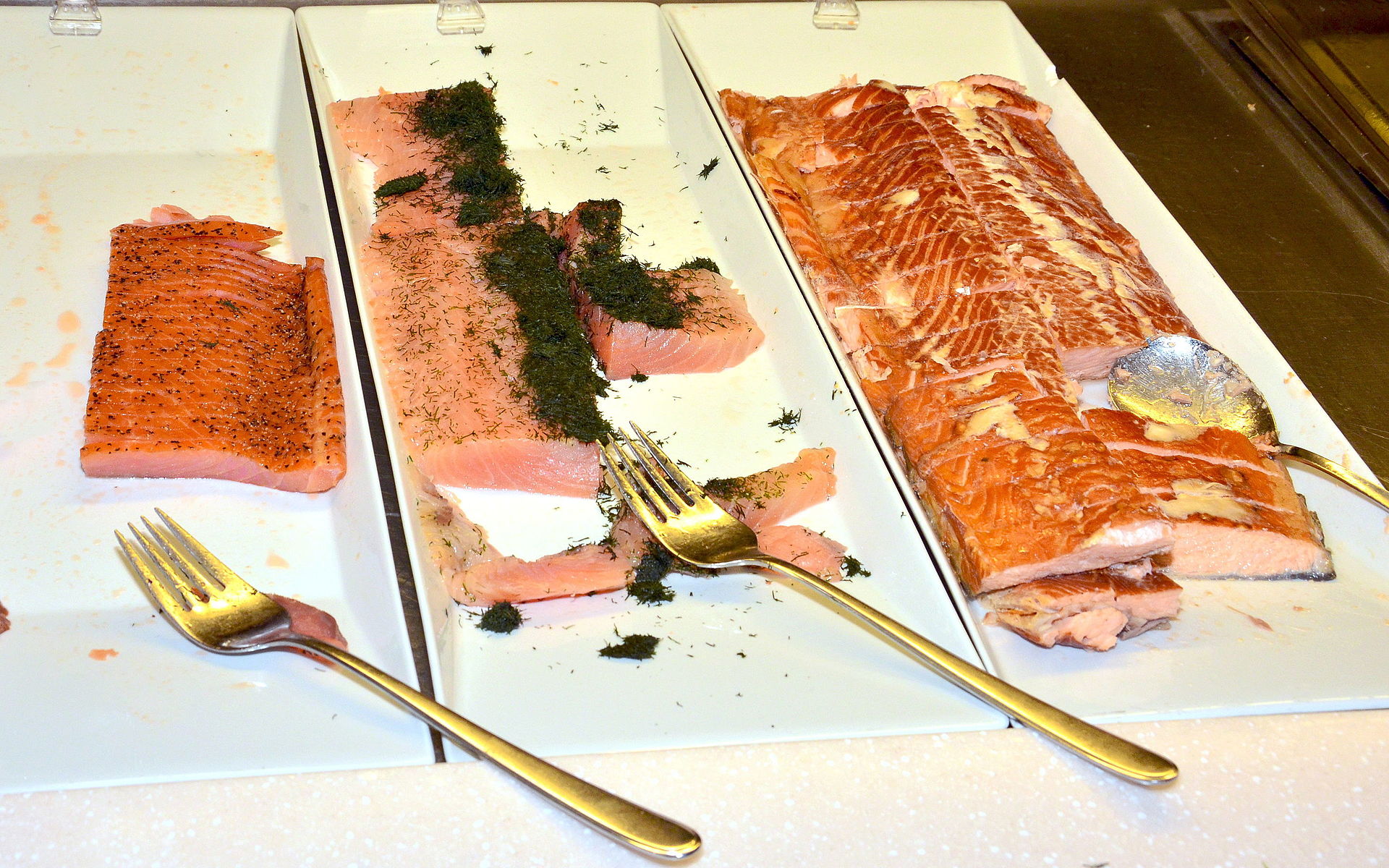
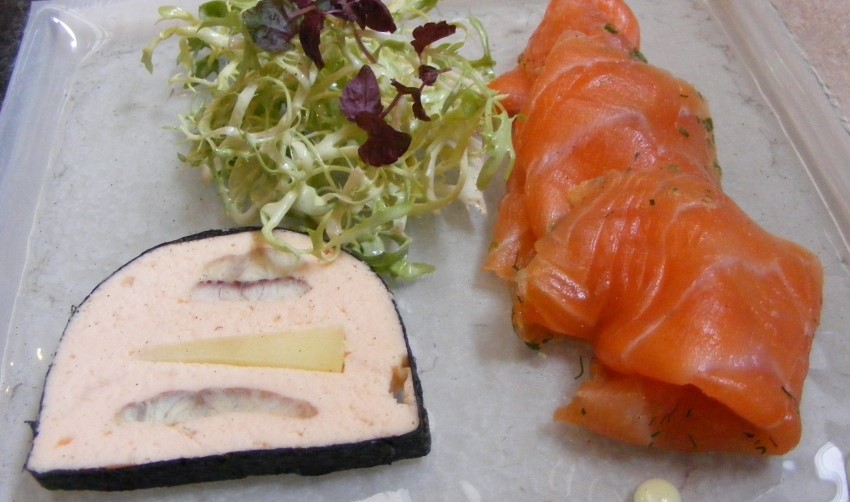
This shows how it’s served in better seafood shops. Salmon dishes from left to right: Cold smoked salmon with pepper, cured salmon (gravlax) with dill, and hot smoked salmon.

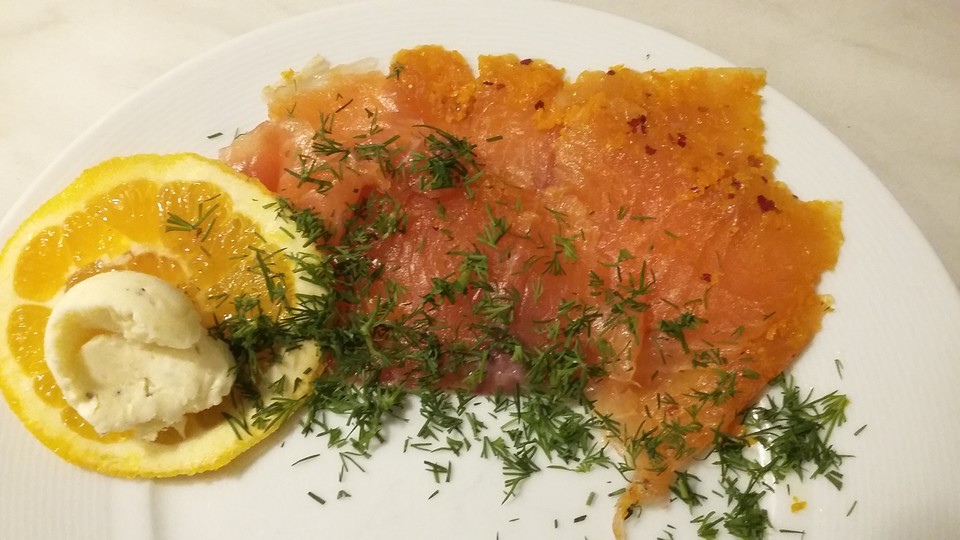
Before use, the resulting brine is poured off and the meat is brushed clean. The fish is then cut into very thin slices and served as an appetizer. Graved salmon today is usually served with a cold mustard sauce made with lots of dill (Danish Raevesovs, Swedish Hovmästarsas, also known in German as Graved Salmon Sauce) or potato salad.

Ingredients.

1 salmon fillet(s), with skin, approx. 1 kg
90 g salt
90 g sugar
1 tablespoon juniper berries
1 tablespoon peppercorns
1 tablespoon coriander, or a handful fresh, chopped coriander
1 lemon, grated or zest
1 teaspoon chilli or Szechuan powder
1 big bunch of dill, finely chopped


How to do.

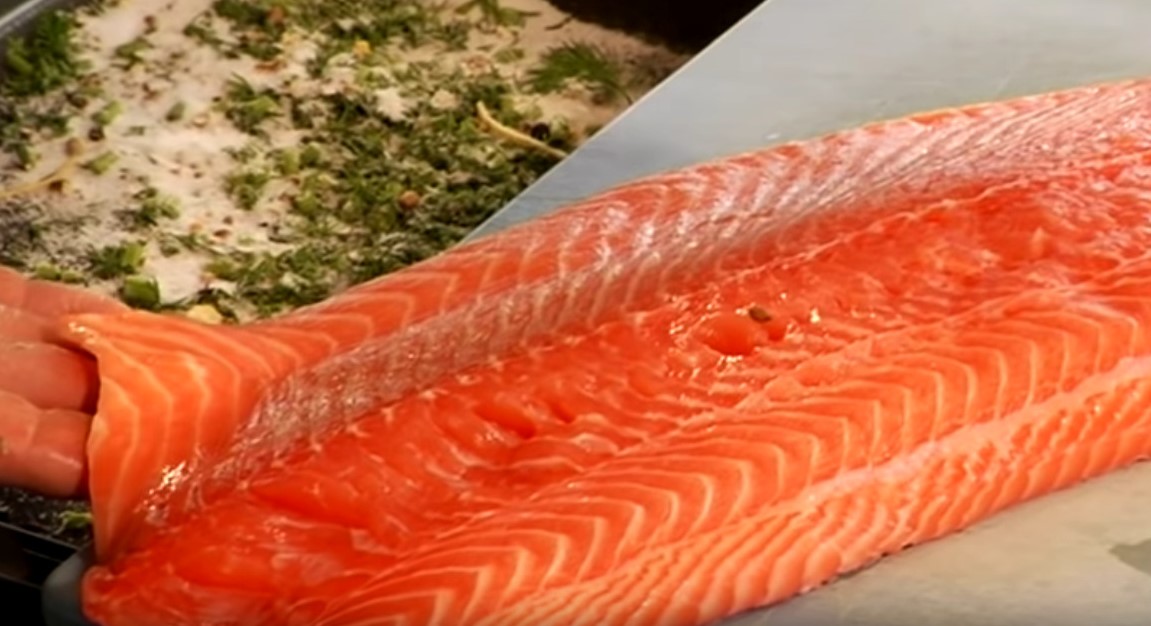
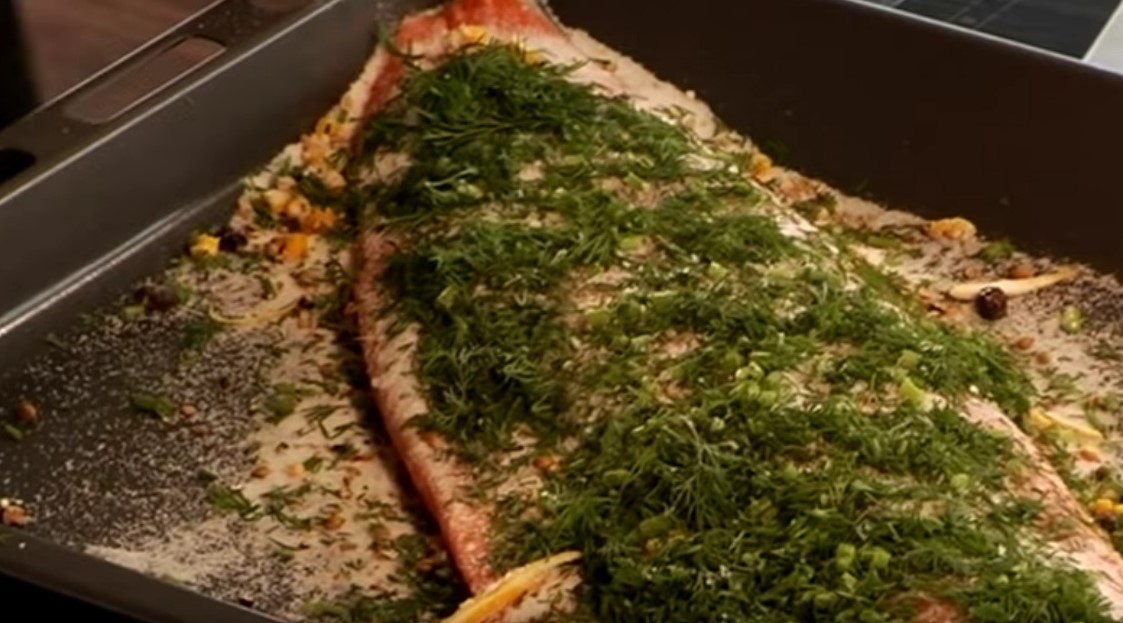
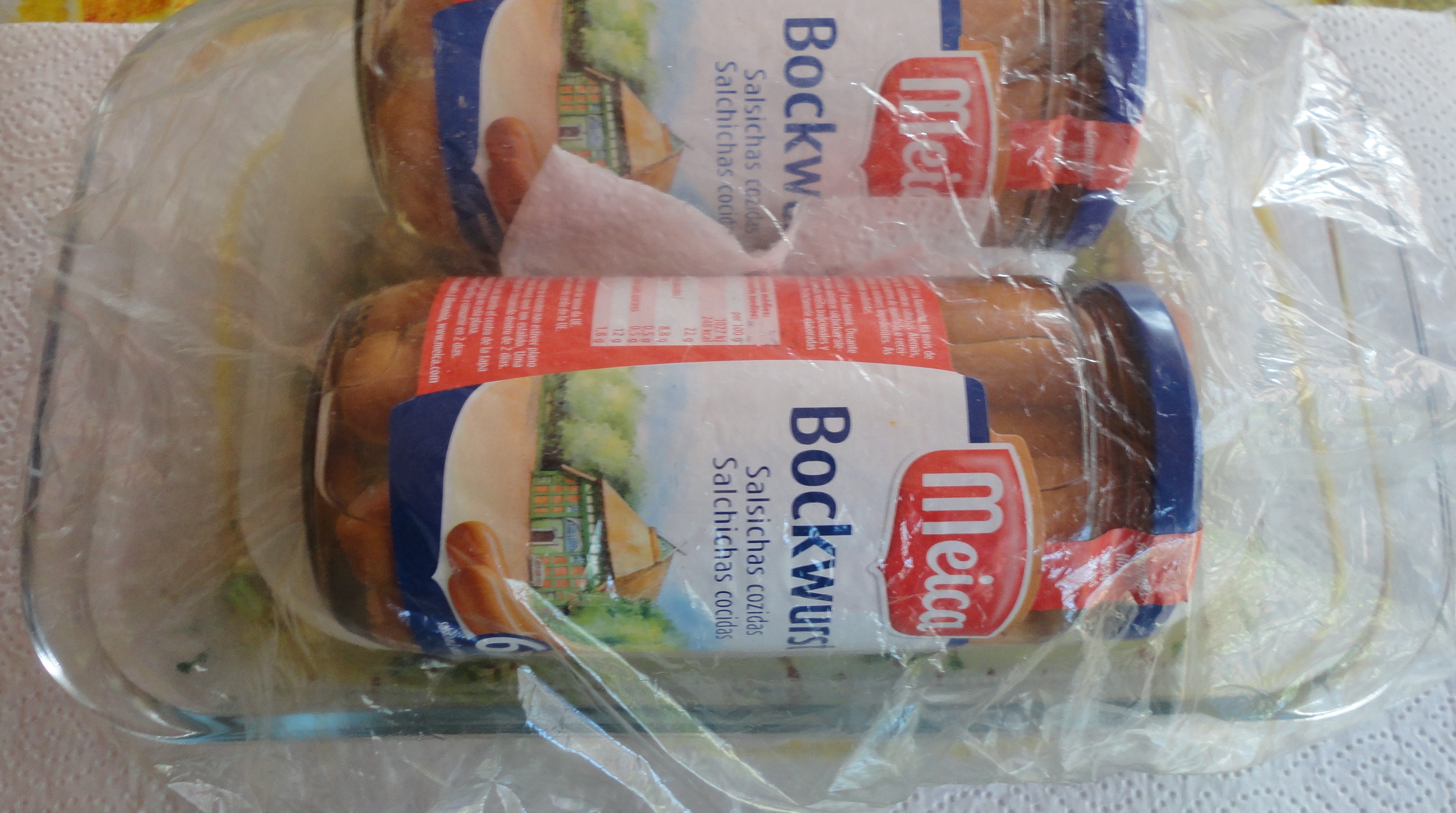
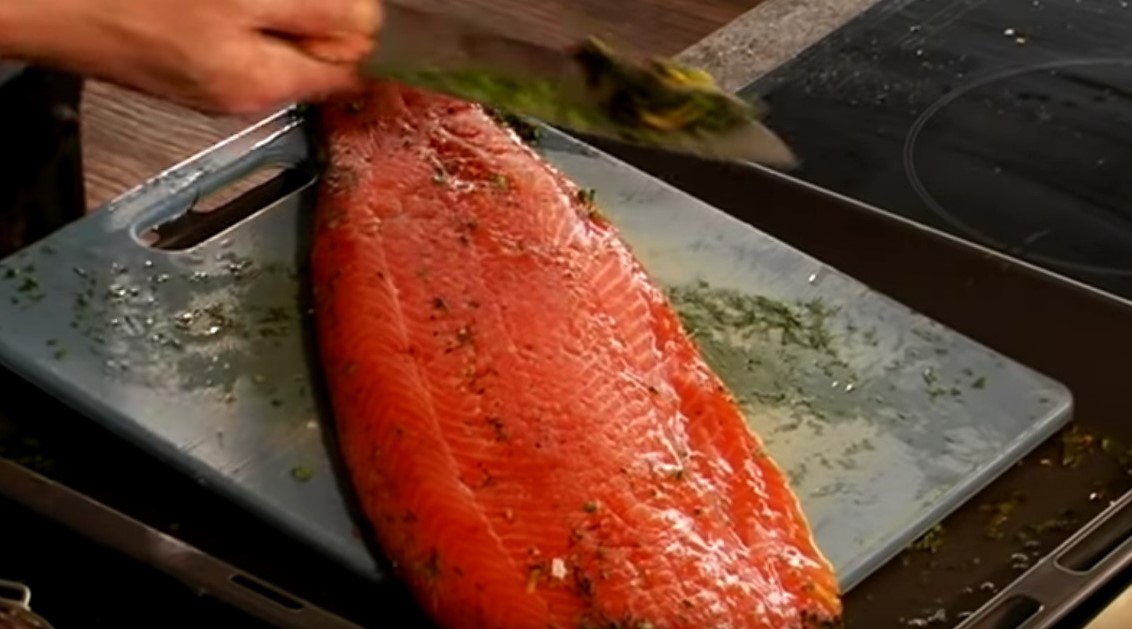
Mortar spices and mix with lemon zest and dill in a bowl. Spread half of the seasoning mixture on a baking tray, place the salmon fillet on top, and pour the remaining seasoning over the salmon. Cover the fish with a board and additionally weigh it down with a pot.
After 24 hours, turn the salmon over, cover again, and weigh it down. After another 24 hours, i.e. 48 hours in total, the salmon is pickled.


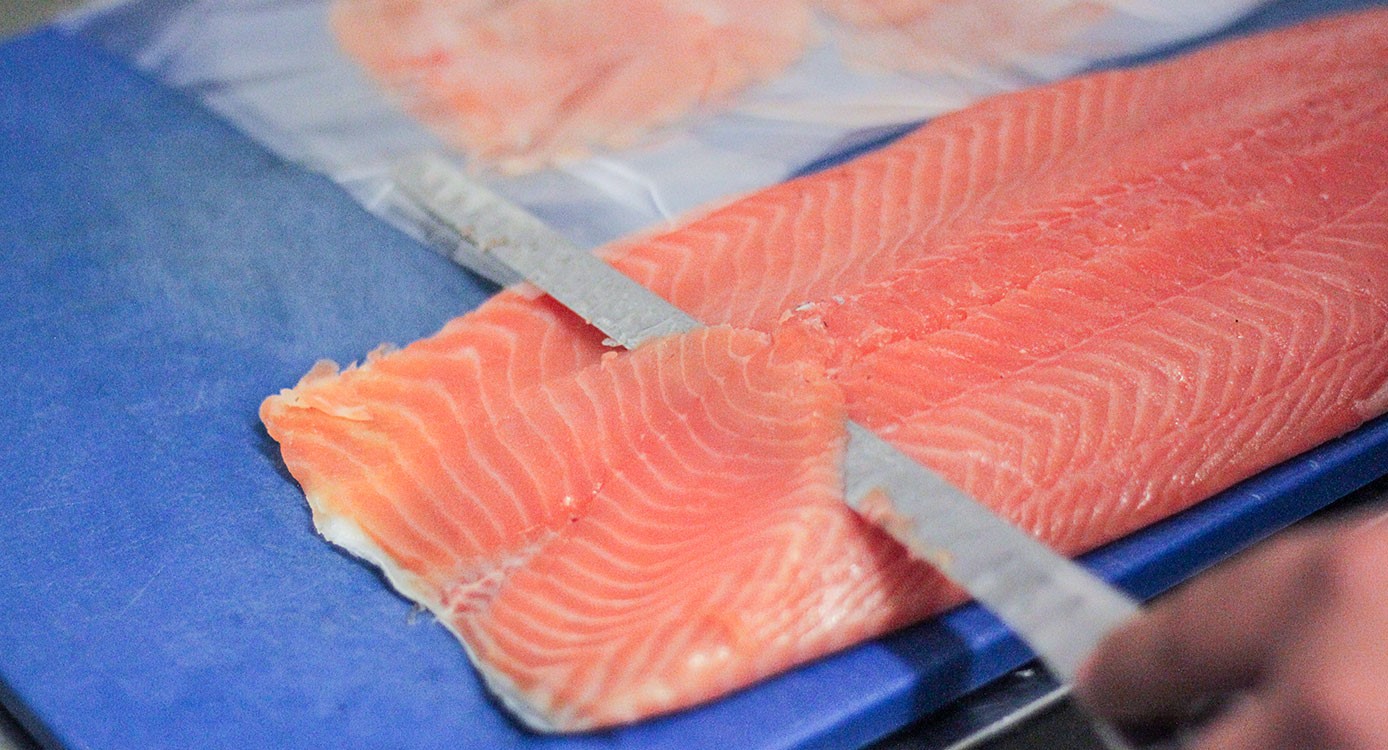
Before you cut the salmon into fine slices, strip the spices and dill a little and pat dry. It is best to cut the salmon open at the table, otherwise, the fine slices will dry out too quickly.

A showstopper for gourmets, graved laks with a slice of eel pate.

Tips.

Essential for pickling salmon is sugar and salt, often used 2parts of salt and one part of sugar. I prefer the 50:50 mixture, it’s not as salty as North Europeans like. Everything else is a dressing option and can vary as you like. The above is one (mostly used) suggestion.

If you do not like this dressing, I have some other ideas. The sugar-salt mixture as a basis remains, spices or herbs can be replaced by the following variations:

– Honey and freshly chopped red chilli, or
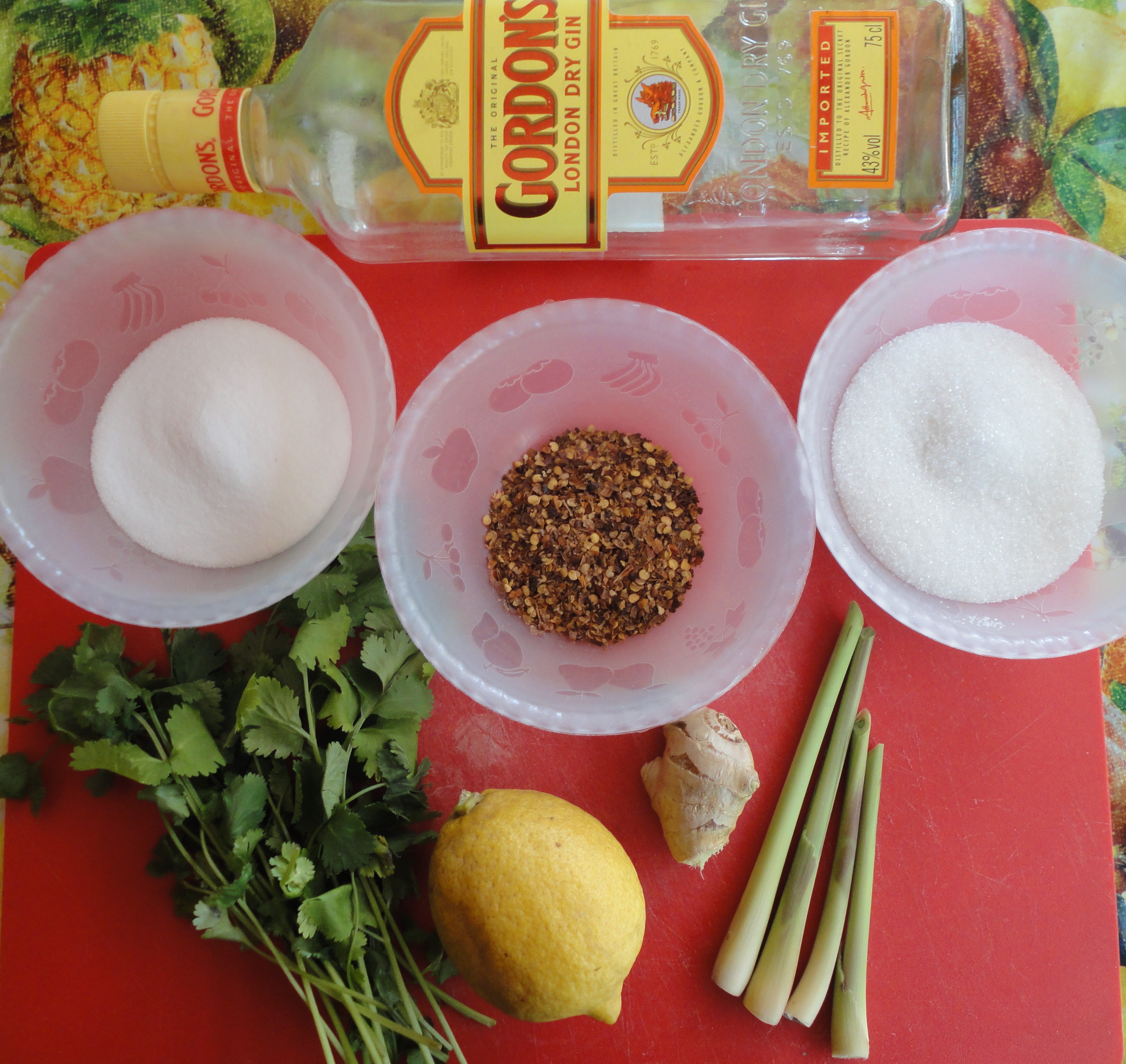
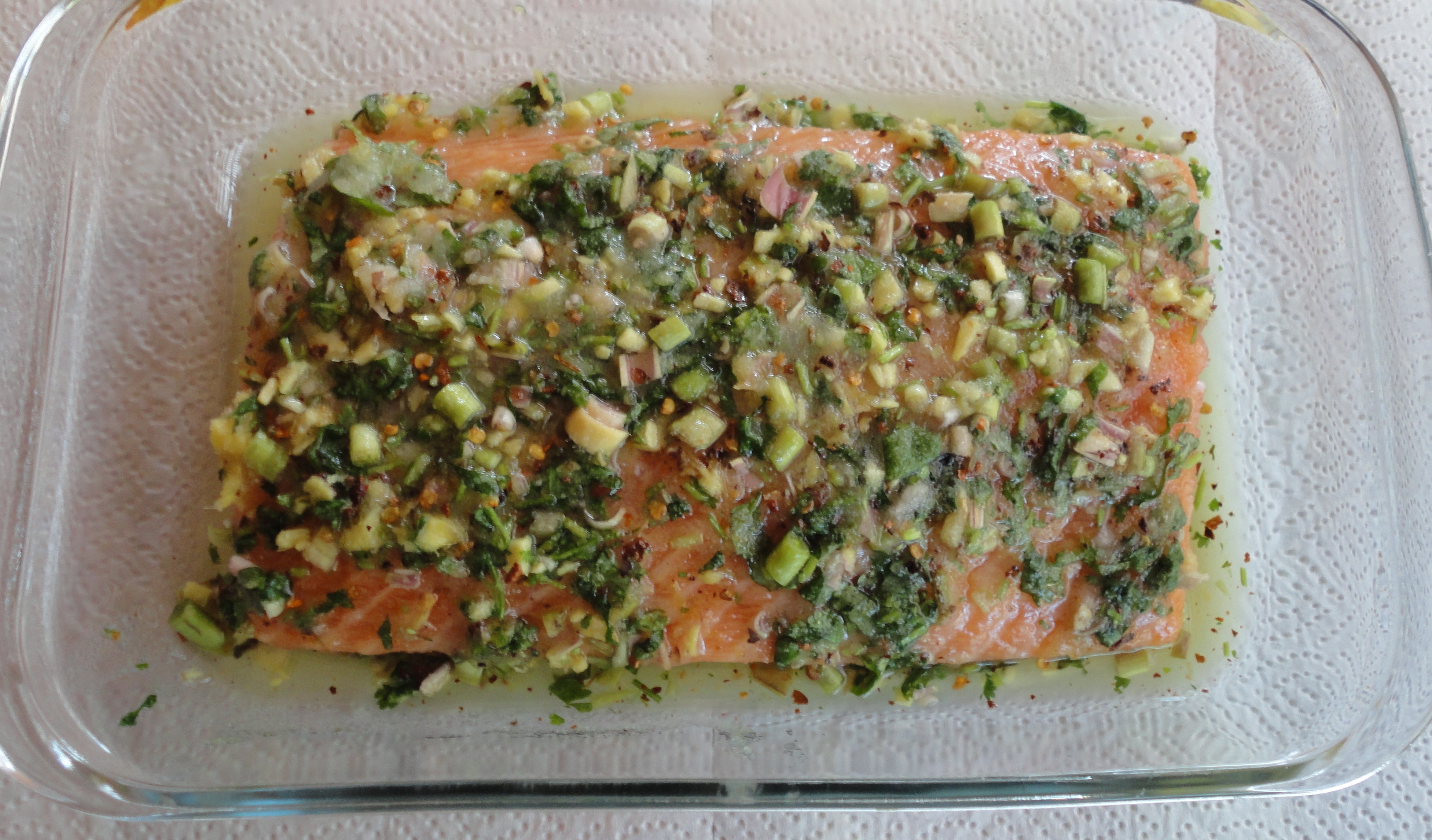
– any kind of dressing combined with cognac (dark color) or gin (light color), which I did last time as one can see:


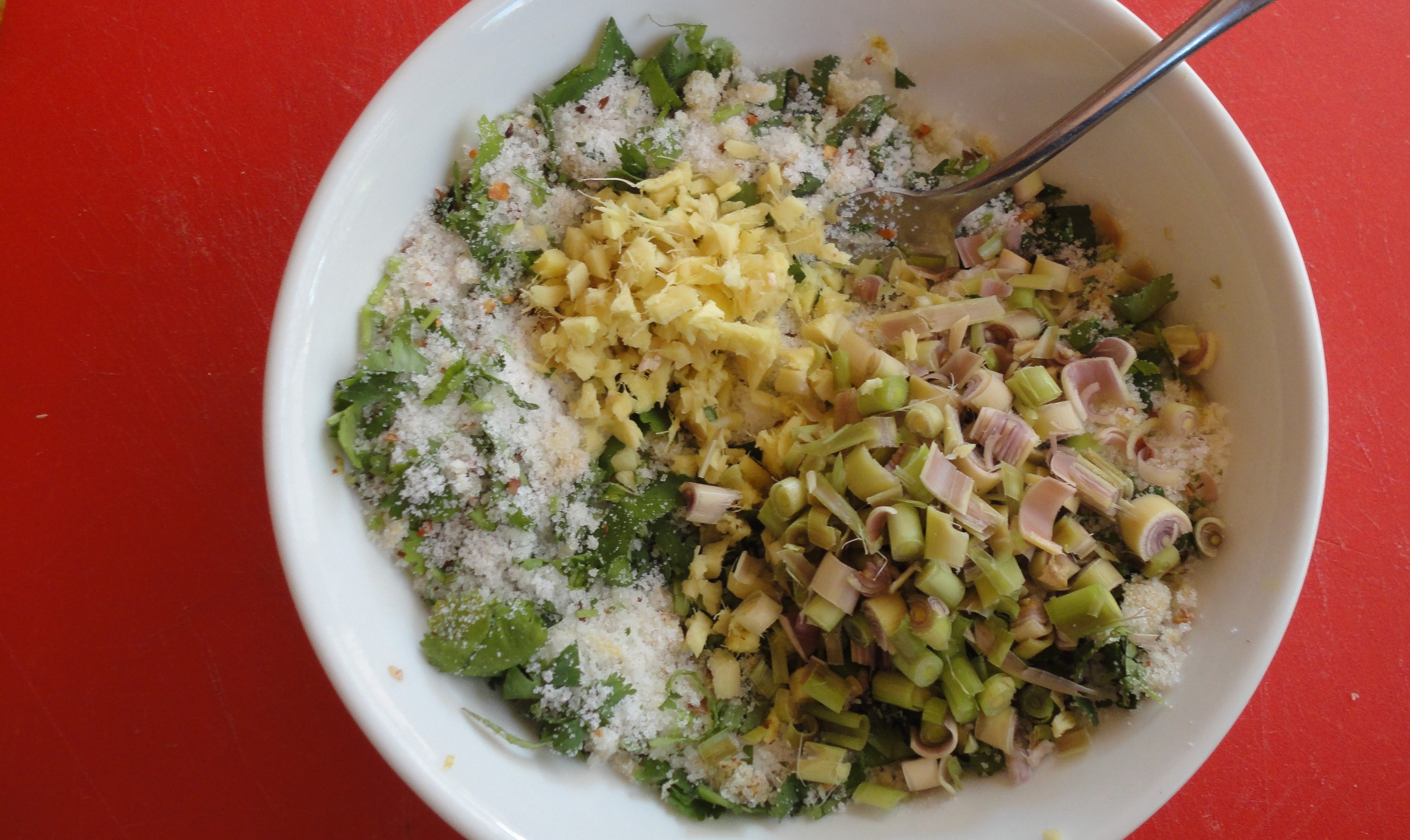
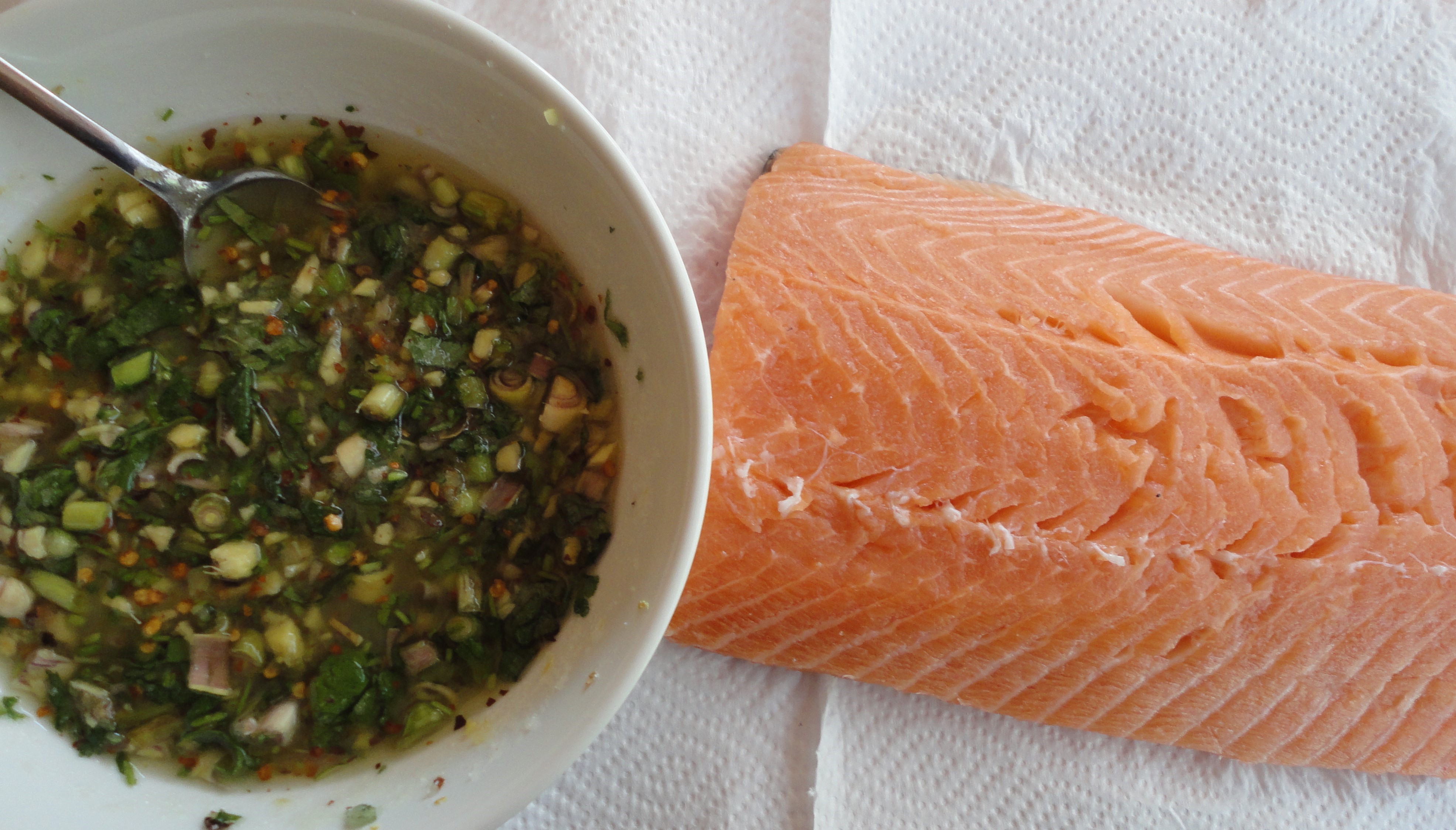
         All ingredients (which are salt, sugar, lemon zest, ginger, lemongrass, coriander, chilli flakes and gin) mixed together, then the paste covers the fish, and finally, it’s weighted to be placed in the refrigerator for at least 48 hours. It is so typical Asian, absolutely delicious.

– Basil with orange peel and olive oil, or
– Christmas variation, salmon with gingerbread spice, or

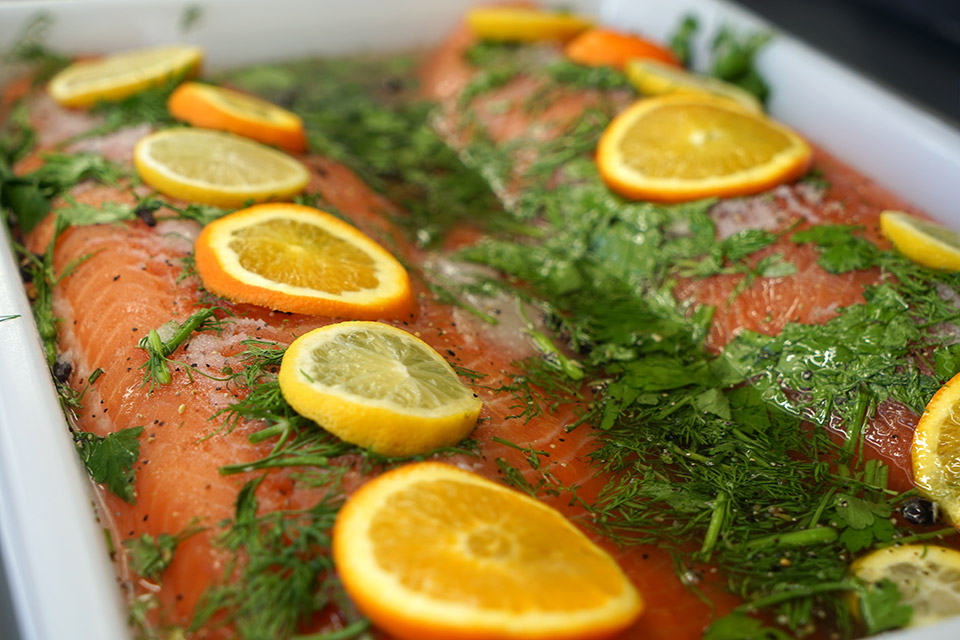
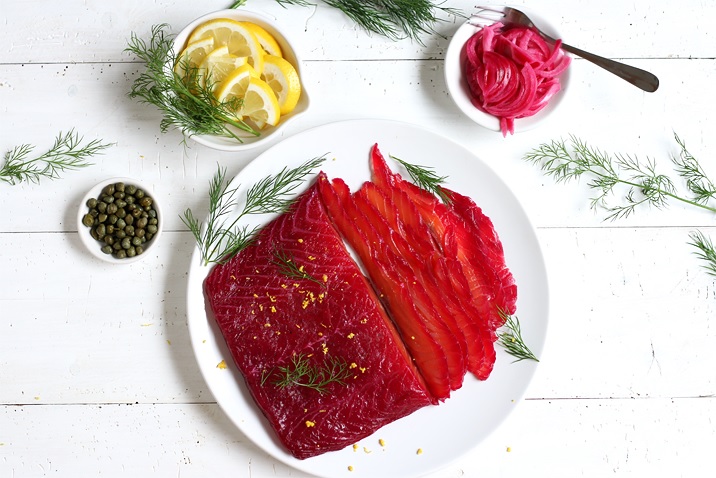
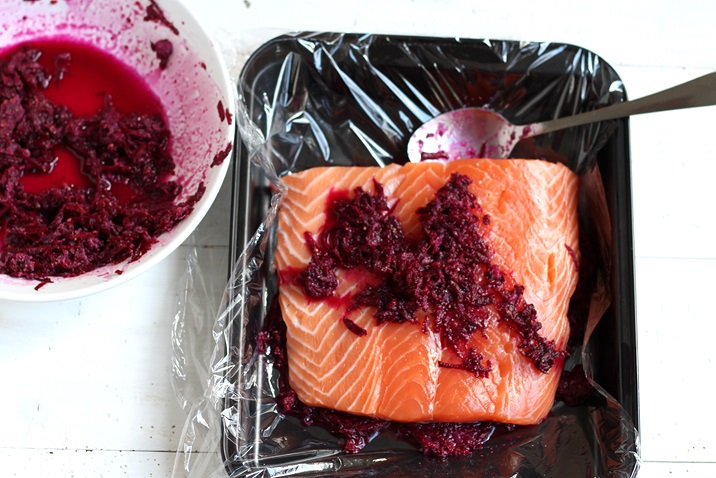
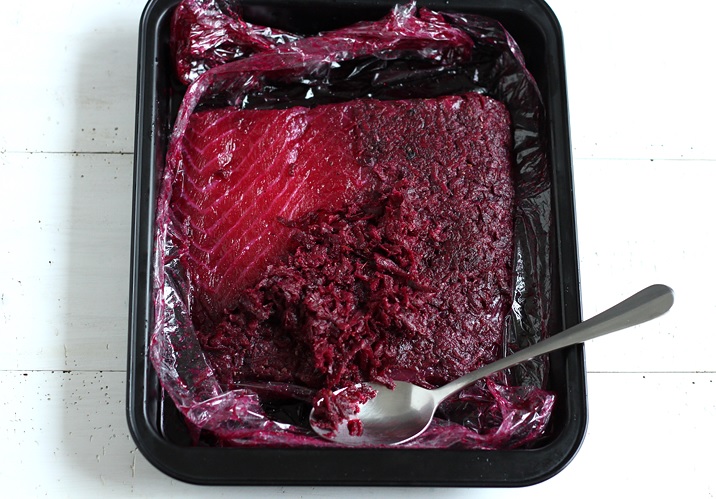
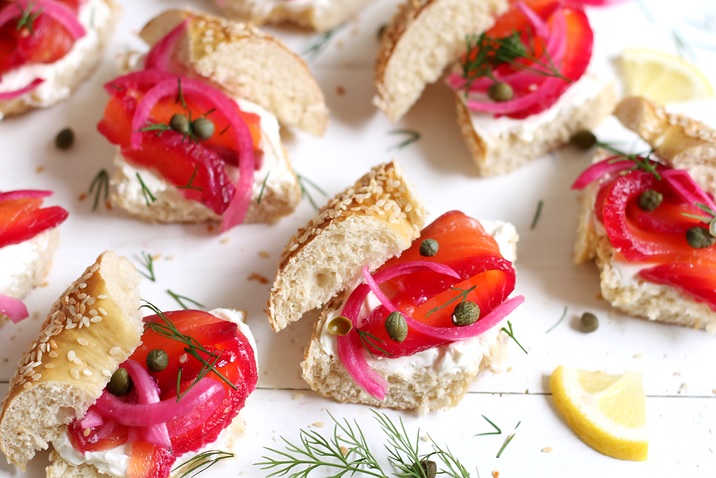
– beetroot, lemon zest, and juniper berries. This variation I like too, because it is a nice showpiece during a party or a dinner buffet. See here:


Isn’t that delicious ?

If you have questions, just ask. Graved Laks can be stored refrigerated for several days and is ideal to freeze for many months.  Hope, you enjoyed the post and will enjoy the taste !!

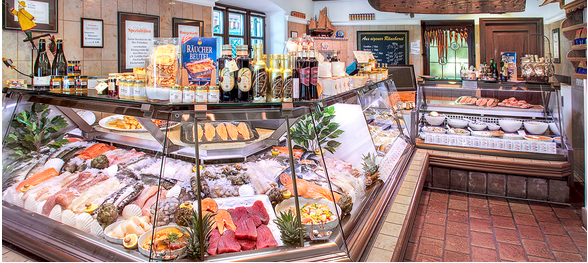
And finally – if you have the chance to a fish store like below, you will forget eating meat !!

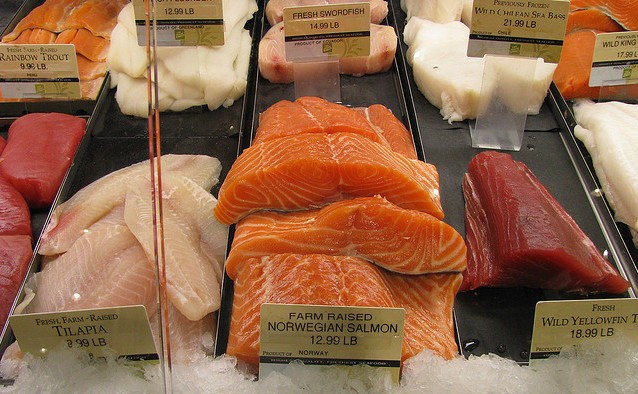
The store, above, is in Starnberg, near Munich in Germany, connected to a fine-dining seafood restaurant. The Norwegian salmon down here is sold in Oregon.

Veröffentlicht unter History, Lifestyle, Recipes | Verschlagwortet mit , , | 1 Kommentar

Uruguay Ahead


El primer „Memorial Mundial a la Pandemia“ podría construirse en Uruguay.

Many people here in Uruguay ask themselves right now: „Has Uruguay not other, more important, problems to solve than building a new monument?“

        The pandemic itself is the actual problem and not the erection of another monument.

As I, living here in the country for over 10 years now, can see, Uruguayans like monuments. Monuments and presumed artistic erections are everywhere in Uruguay. One will see them in small towns, across the country, and everywhere throughout the city of Montevideo. It’s a matter of mentality and to me no wonder, the whole world is fighting hard against the pandemic, but in Uruguay, they discuss a new memorial monument.

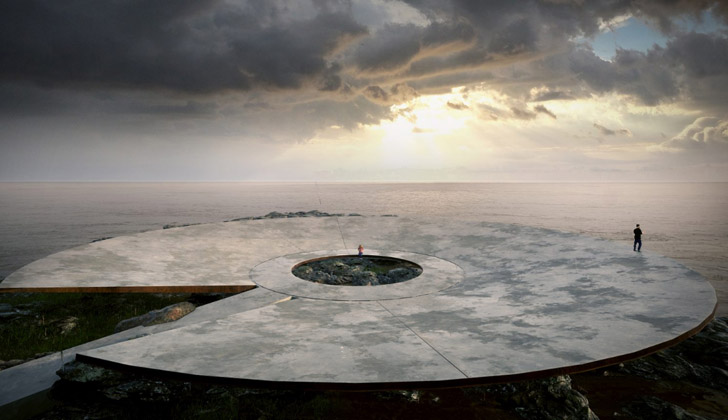
Artist rendering of the planned Pandemia Memorial Monument.

Do we really need another monument ?

On the other hand, why not ??? Why not coming up with an idea, before someone else or somewhere else a similar idea is born. I think it’s o.k. to discuss, not saying I like it or I don’t and not saying anything about the costs, and and and.

Following the story and some artistic pictures about the actual (01.Nov.2020) discussion. Some text and pics from the local press releases:

A World Memorial to the Corona Pandemic.

On October 21, the Heritage Commission approved the installation of the World Memorial to the Pandemic in the Rambla. The work, proposed by the architects‘ office Gomez Platero, would cost approximately 1.300.000 US-dollars and, once the final approval is obtained, it could be executed from beginning to end in six months.

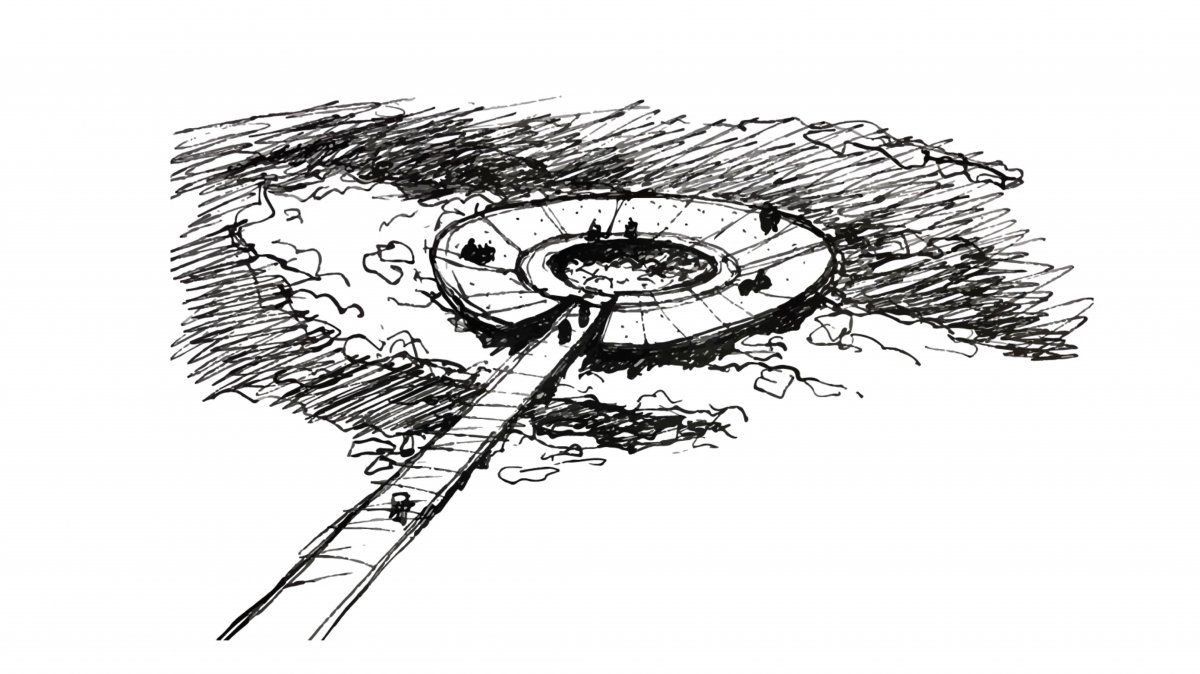
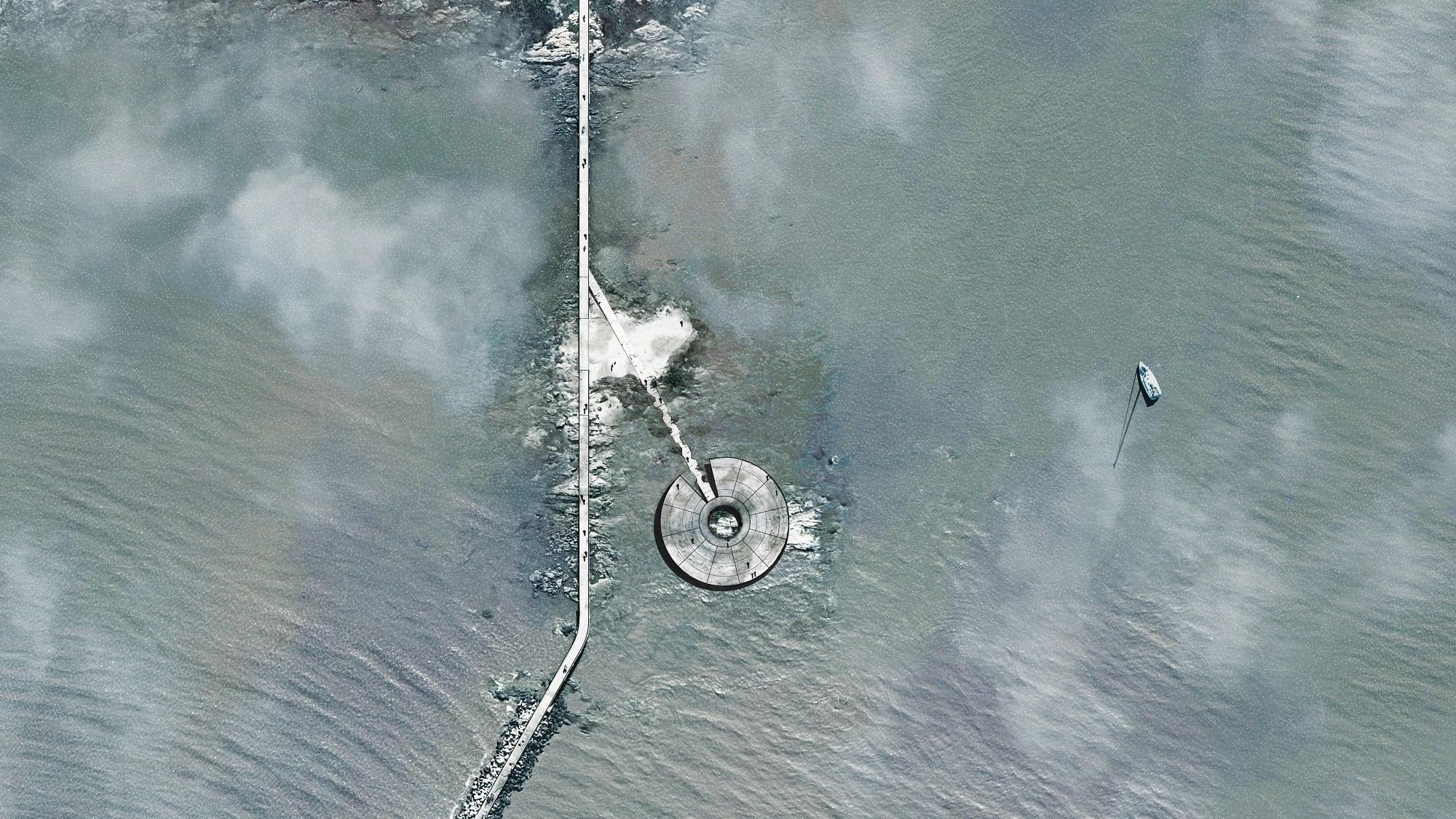
      First, an artist rendering showing the idea and then a construction drawing. Click on pictures to size them up.

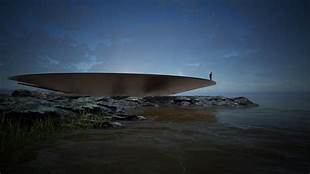
The project would be located on the Rambla of the Puerto del Buceo on the water and rocks at the height of the Oribe Customs. A footbridge that would leave the existing dock in that place would lead to a great horizontal concave disc made of concrete, whose empty center would let the rocks and the waves be seen, that is, „nature“.

But what effects could a work of this magnitude have on the ecosystem of the place? The biologist Luis Orlando, member of the Laboratory of Marine Sciences of the Faculty of Sciences of the University of the Republic (Udelar), who weeks ago gave his vision on how negative this memorial could be in dialogue with the podcast Mezcla de la diario, considered that the work „follows the logic of zoos“.

Cosse asked if the construction of the World Pandemic Memorial is timely and urgent.

  Carolina Cosse.

The new elected mayor of Montevideo, Carolina Cosse, asked if the construction of the World Memorial to the Pandemic in the Rambla del Buceo is opportune and urgent, as proposed by the architecture and urbanism study Gómez Platero and approved by the Heritage Commission. „In the face of something so important and in moments of crisis, the population must participate and define if it is the moment to carry it out“.

In August, the architecture and urbanism study Gómez Platero, presented to the President of the Republic, Luis Lacalle Pou, the proposal to build a World Memorial to the COVID-19 Pandemic.

The circular geometry of the proposal „summarizes the concept of unity and community“. It takes the form of a concave sheet with which the architecture offers a precise point of reference that reveals the constant variation of the natural landscape, a scale to measure the strength of the sea, a place of refuge and exposure to the wind, indicates the Gómez Platero studio in its web page.


„The form is only interrupted by the crack at the entrance of the place, the breach or rupture that reminds us of a singular fact, a global phenomenon“, it is expressed.

The public space is a place of reflection. „Although its construction starts from the experience of this pandemic, its purpose is to build a collective consciousness that reminds us that humanity is not the center of the ecosystem in which it lives, but that we will always be subordinated to nature itself“.

On Wednesday, October 21, the Heritage Commission approved by the majority, five votes in favor, two against, and two abstentions, the installation of the World Monument to the Pandemic in the Rambla of Montevideo.

Do we, Uruguayans, want to do it?

This Friday, October 30th, the mayor, Carolina Cosse, was asked by the press about the initiative and responded: „Do we, Uruguayans, want to do it? If we want to do it, then it requires a significant participation in what message we give“, she added. „We must also ask ourselves if it is appropriate. It is a deeper issue than whether I like it or not“.

We will wait and see how the discussion evaluates and what and when final decisions and actions will happen. Whatever it will be another attraction in Uruguay and surely gain more tourists to this „World Memorial to the Pandemic“ ! Another Bus-Selfie-Stop ! Not too bad for a country which lives mostly on the tourist-dollar !

Veröffentlicht unter Information, Lifestyle, Travel, Uruguay | Verschlagwortet mit , , | Hinterlasse einen Kommentar

Bertha and Karl Benz

This is so cool !

Meantime you all know that I like history and love to write about historic backgrounds to deliver as much information as possible to my articles. This time I only use some YouTube movies to bring you closer to an event I discovered. Yes, this car is legal to drive on streets.

The World’s Oldest Street-Legal Car.

Enjoy the following movie about this car and if you like to be inspired to see the following two movies about the inventor and his wife also. It is so interesting. Further, if you like, you can go on by yourself and discover the story and history behind one of the most well-known car manufacturers in the world – MERCEDES-BENZ ! An amazing story.


Veröffentlicht unter History, Information | Verschlagwortet mit , , | Hinterlasse einen Kommentar

6 Years And Still Going Strong

Birthday of a new BLOG.

On that day, the 24th of October 2014 I started this blog. Not knowing where it would lead me and what would happen during the years. Now – 6 years later – we can look back to many interesting post’s (articles) with lot’s of beautiful pictures published.

Myuy 6 year anniversary, 24th of October 2020.

In the last 6 years, I published 450 articles with more than 520.000 words and over 7000 pictures. Just the words would fill 5 thick novel books of more than 100.000 words per book. The average of a modern novel with about 400 pages is estimated between 90.000 and 100.000 words. That means I wrote every year a novel – ha ha – would like to get paid for it. And – all that in English –  which is not my home language and therefore sometimes very improvable of course. But it is the international communication language, I learned so much and I posted so many facts and story’s I never knew before.

Just during the first month, November 2014 I posted 28 articles, like the one above about the Quilting Hobby. Alright, some were prepared and I had an unbelievable strong motivation to write. Nowadays I am down to about 3 to 4 articles a month. For some readers that is already much to read and follow, but I like to go into the deep, discover backgrounds, and search deeply into history. This is „WHAT I LIKE“, it is MY HOBBY. Still hoping that I can interest you and give some knowledge you haven’t seen or heard about before. A few 1000 comments motivate me to go on like this – PROMISE – I will !

What else happened in 2014 – however, it was a very eventful year ?

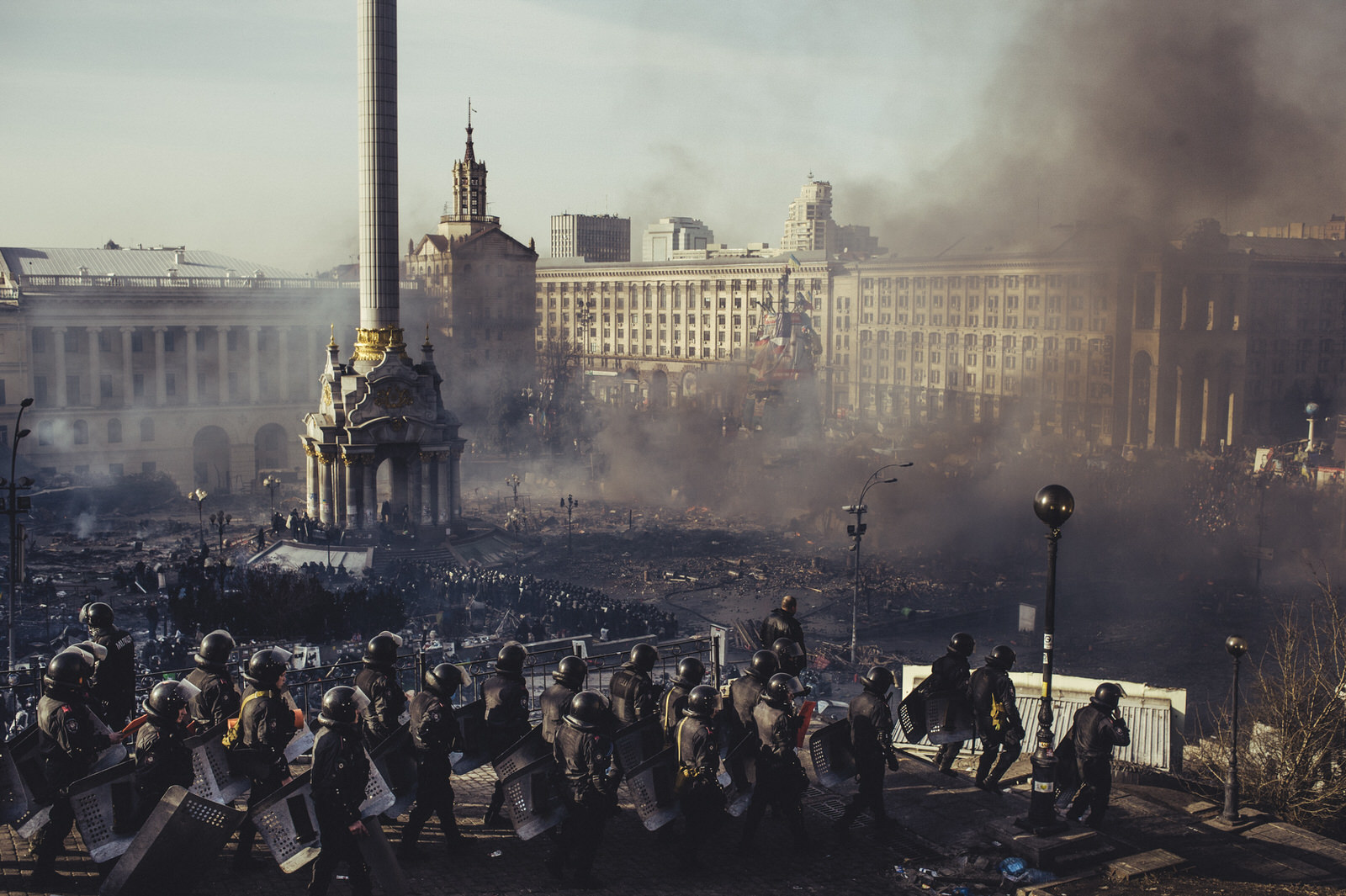
February 18 – Ukrainian Revolution of 2014
begins as protesters, riot police and unknown shooters take part in violent events in the capital, Kiev, culminating after five days in the ouster of President Viktor Yanukovych.


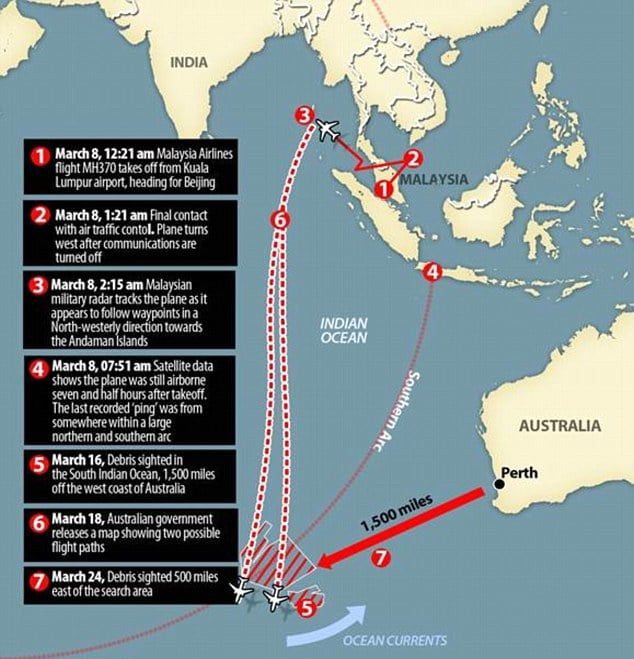
March 8 – Malaysia Airlines Flight MH370
with 239 people loses contact and disappears, prompting the most expensive search effort in history and one of the most enduring aviation mysteries.

March 21 – Russia formally annexes Crimea amid international condemnation.


July 17 – Malaysia Airlines Flight 17
is shot down over Eastern Ukraine by a Buk surface-to-air missile launched from pro-Russian separatist-controlled territory, killing all 283 passengers and 15 crew on board.

Eddie RedmayneEddie Redmayne
Oscar for Best Actor


Julianne MooreJulianne Moore

Oscar for Best Actress

Sebastian Vettel
World Sportsman of the Year

The Aral Sea in 1989 (left) and in 2014 (right)

One of the worst environmental disasters on Earth – and one of the least known – the drying of the Aral Sea has economically devastated the once-prosperous fishing region around it in Uzbekistan and Kazakhstan. The area where its eastern basin dried up is now called the Aralkum Desert.

Several initiatives have been underway for a number of years to refill the sea, but in August 2014 satellite photos confirmed that its eastern basin had for the first time completely dried up.

October 24 – I started this blog. Now 6 years later, I think about a different title, maybe a more modern appearance, but on the other hand, I like my dearly beloved habit. Down here my very first picture I used in this blog – still actual, right ?

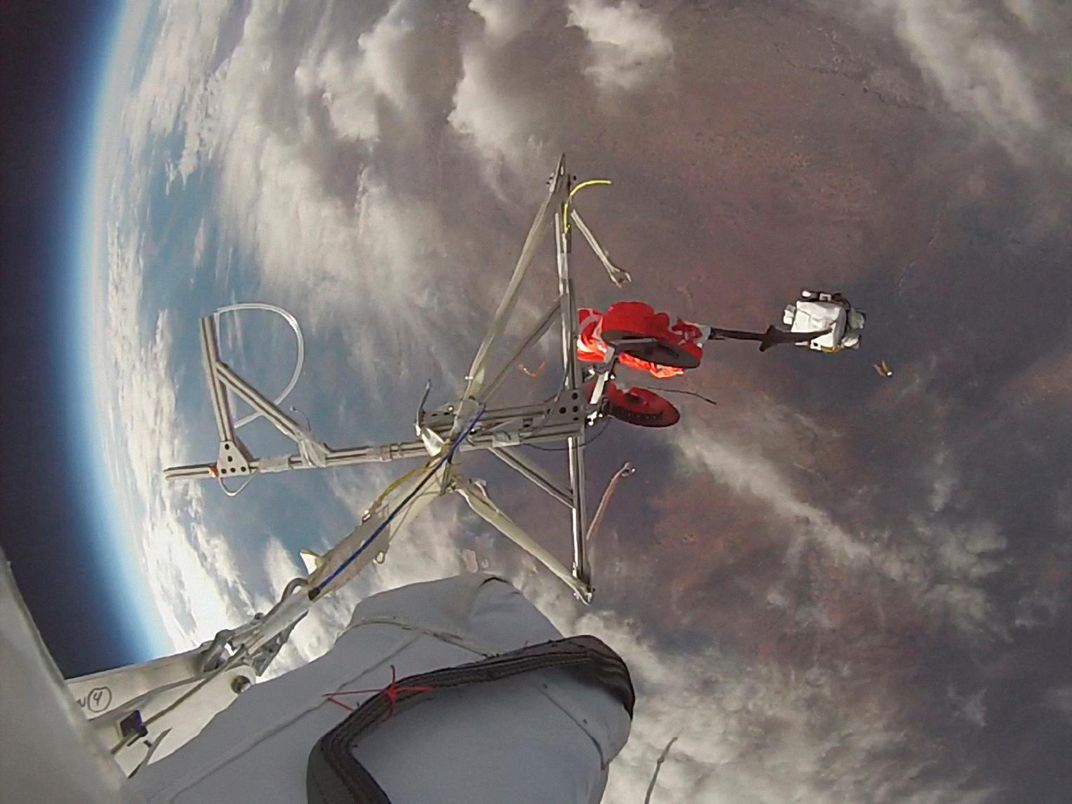
October 24 – Alan Eustace, an American computer scientist, sets a world record highest and longest free fall jump from 135,908 feet (41.425 km) over Roswell, New Mexico, United States, breaking the sound barrier without any machine assistance during a record space dive out of a massive helium-filled balloon. His descent to Earth lasts 4 minutes 27 seconds and stretches nearly 26 miles (42 km) with peak speeds exceeding 822 miles per hour (1,323 km/h), setting new world records. Here his jump out of the balloon.

Events that moved the world.

AND THIS HAPPENED DURING THE FOLLOWING YEARS:
It happened so much every year, I know, that’s why I picked out one of the most historic events in the world.

2015:

September 9 – Queen Elizabeth II becomes Great Britain’s longest-reigning monarch at 63 years and seven months, beating the previous record set by her great-great-grandmother, Queen Victoria.

2016:

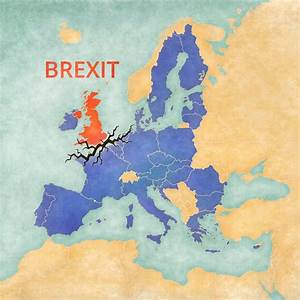
June 23 – Brexit referendum: United Kingdom votes to leave the European Union.

2017:


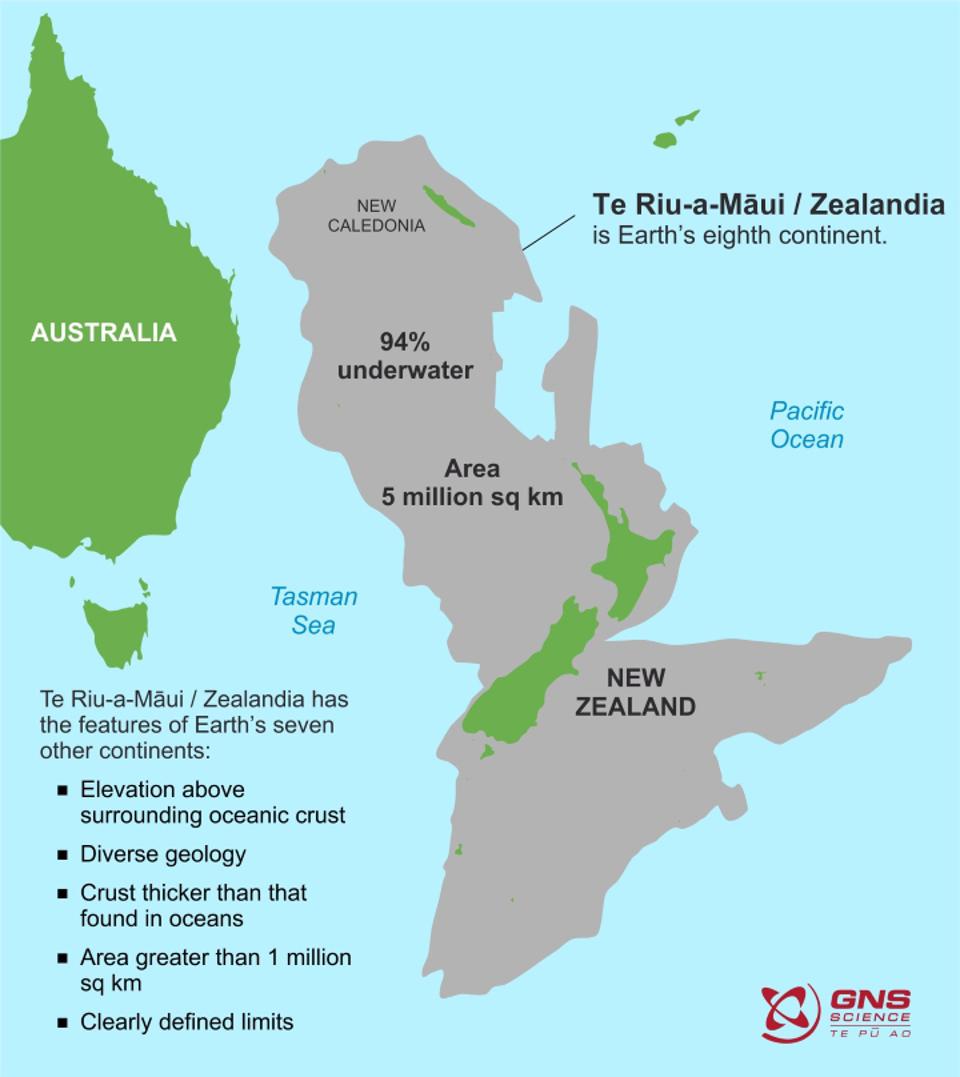
February 17 – Discovery of a new mostly underwater continent Zealandia in the South Pacific announced in research journal „GSA Today“.

2018:

March 11 – China’s National People’s Congress approves removal of term limits for a leader, will allow Xi Jinping presidency for life.

2019:

March 13 – US grounds all Boeing 737 Max aircraft after bans by others countries following the plane type’s second crash in Ethiopia.

2020:

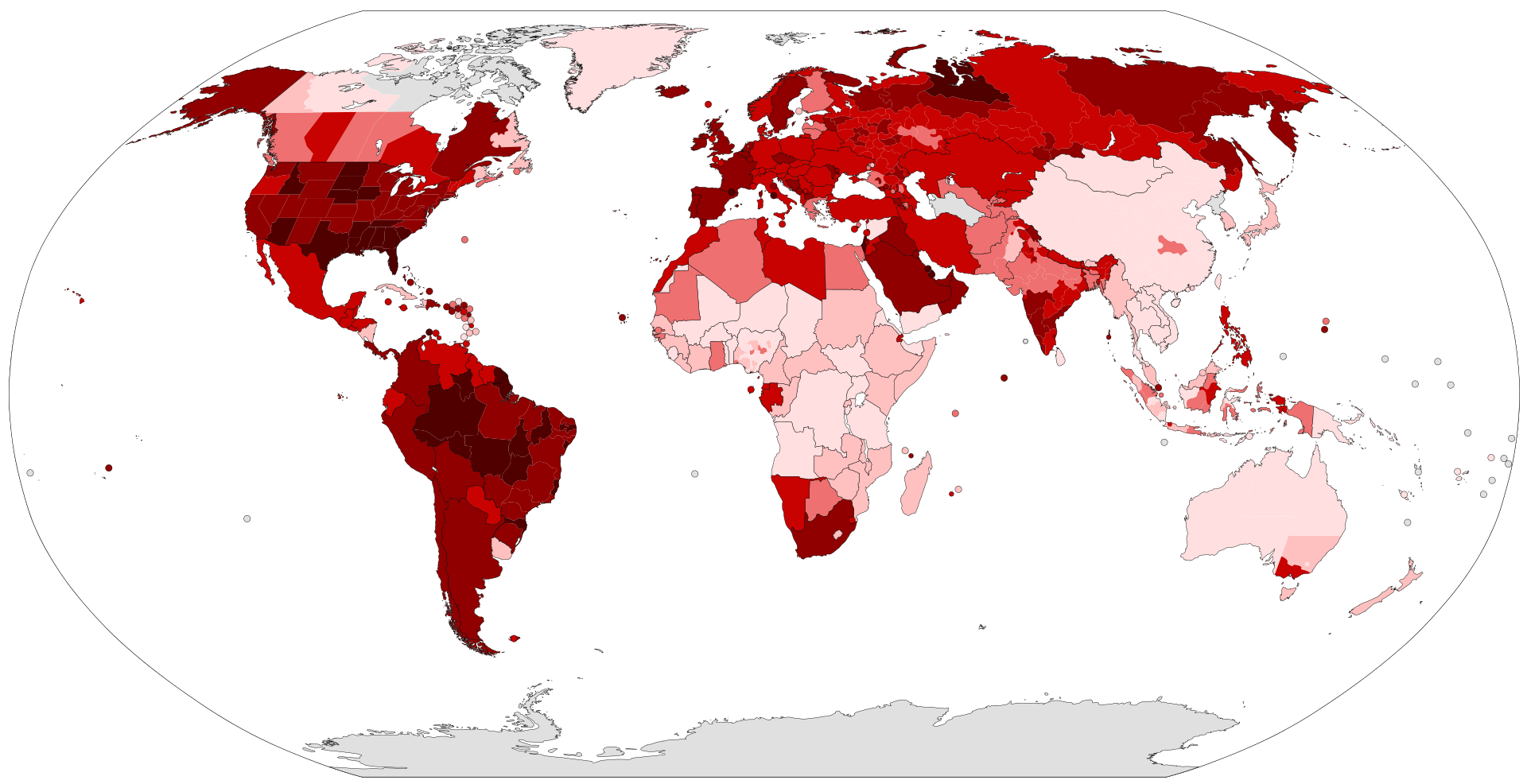
The COVID-19 pandemic, also known as the coronavirus pandemic, is an ongoing pandemic of coronavirus disease 2019 (COVID-19) caused by the transmission of severe acute respiratory syndrome coronavirus 2 (SARS-CoV-2), which was first identified in December 2019 in Wuhan, China. The then-outbreak was declared a Public Health Emergency of International Concern (PHEIC) in January 2020, and a pandemic in March 2020. As of 21 October 2020, more than 40.8 million cases have been confirmed, with more than 1.12 million deaths attributed to COVID-19.

I hope you all stay loyal to me and are curious what this blog will bring you.

Veröffentlicht unter History, Information | Verschlagwortet mit | 1 Kommentar

Oysters – Bermagui

Living in Australia for almost 12 years meant for us high’s and low’s. Many years on I will remember the high’s only. One example is the memory of unforgettable hours with my friend Steve (we called him Blockhead what he sometimes really was). We were living on the Far South Coast of NSW in Bermagui. He was the owner of our local garden center and had a wonderful home on Cuttagee Lake. So as in many of the coastal rocky lakes, one could find lots of oysters in them.

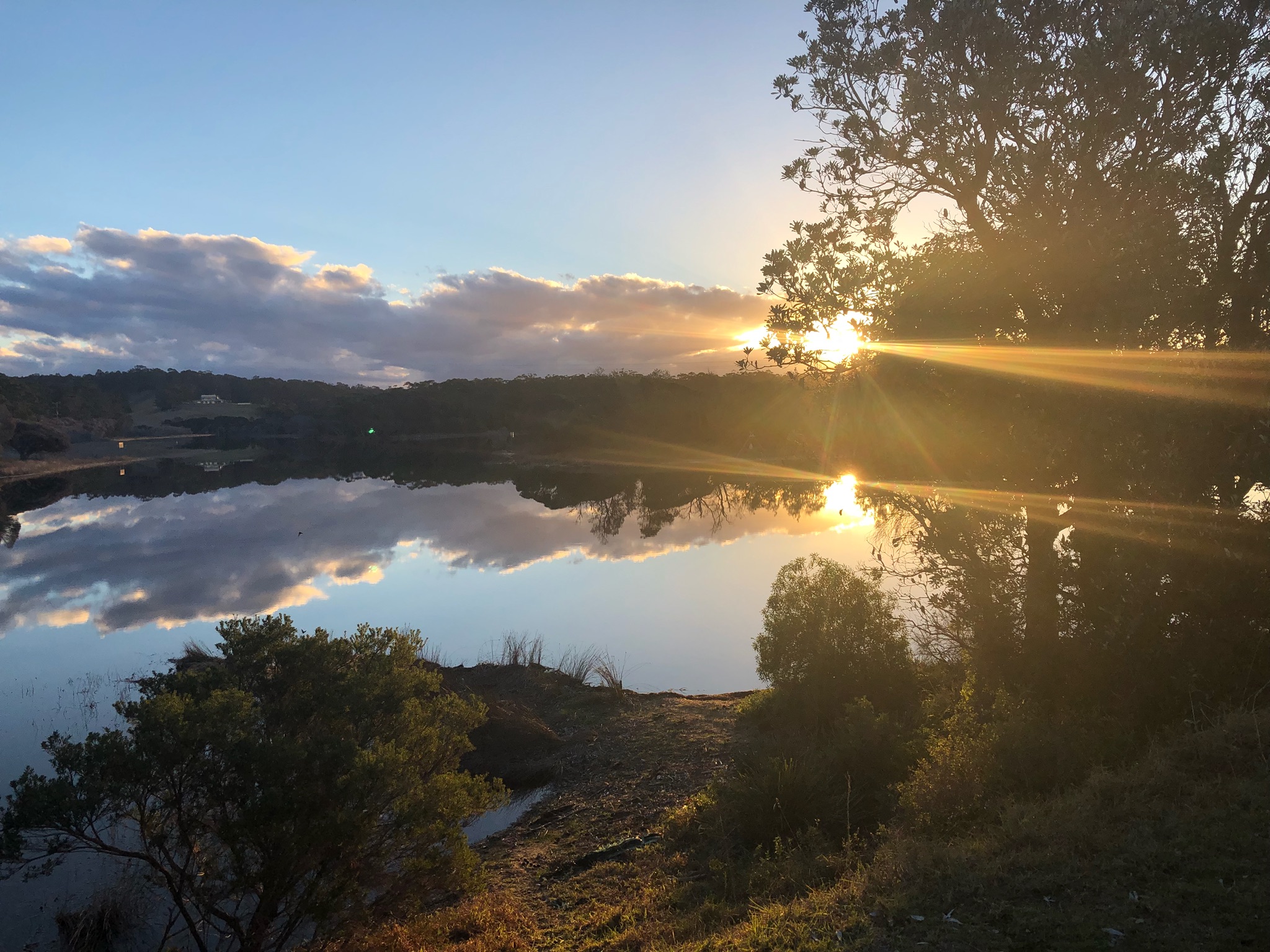
Sunset at Cuttagee Lake, viewed from Steve’s.

Very often Steve and I and sometimes other friends were sitting in his lakeside yard, with a few bottles of cool „XXXX“ or Chardonnay’s, cooling off ourselves in the lake, slurping lots of beautiful sweet lake-rock-oysters, and enjoying life. These oysters were not very big, but so sweet and tasty that I still have it in my mind.

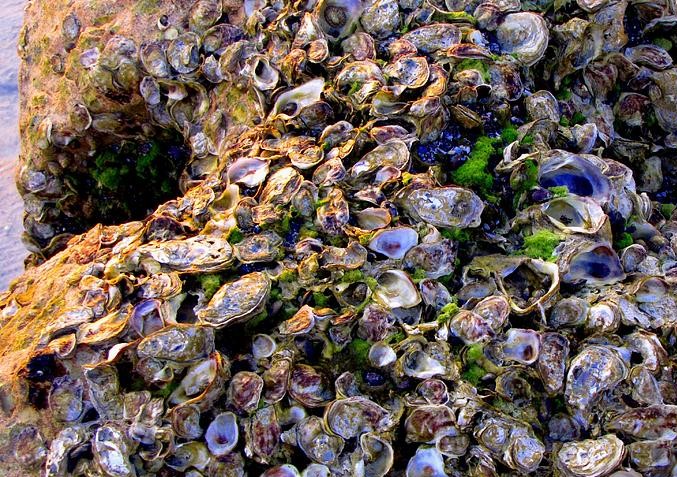
  An oyster rock at our coast. Many are harvested already. Because of the tide they are out of the water and an easy meal for the seagulls.

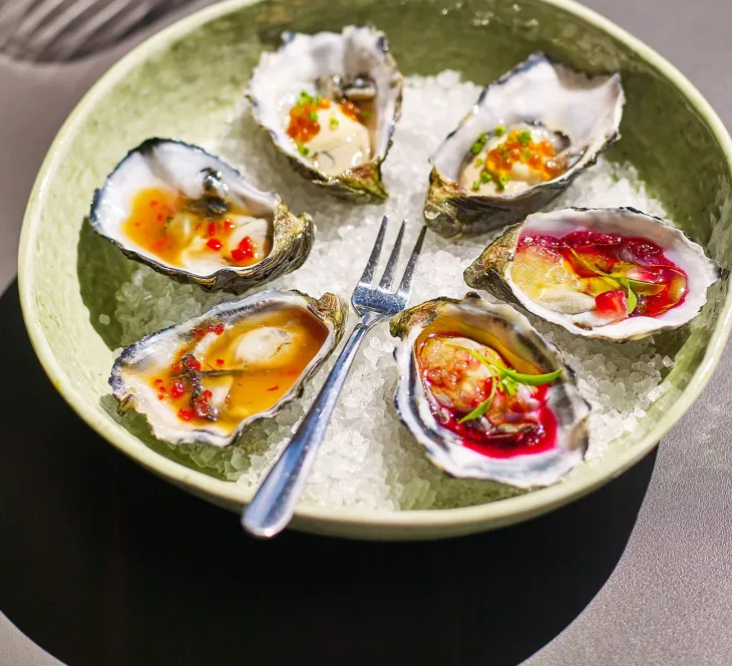
Oysters in Bermagui were a delicacy anyhow, we had them almost in every restaurant as a side dish, starter, or main course. Never I’ll forget the „a dozen rock oysters 6 ways“ in The Terrace Restaurant at Bermagui Country Club. They were cooked in 6 different styles, absolutely delicious – I always had 2 dozen !! And – on special offer – the second dozen was available for „half price“.

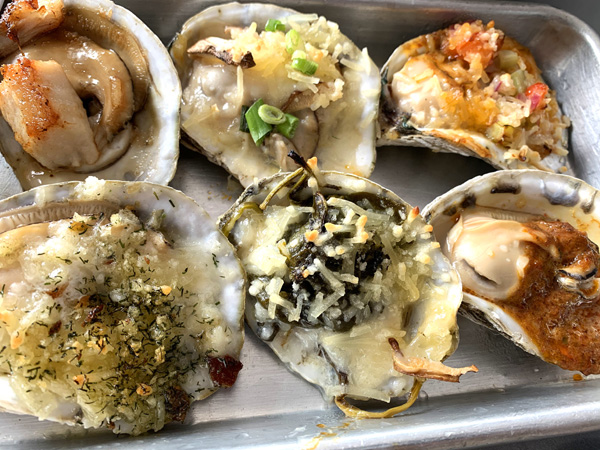
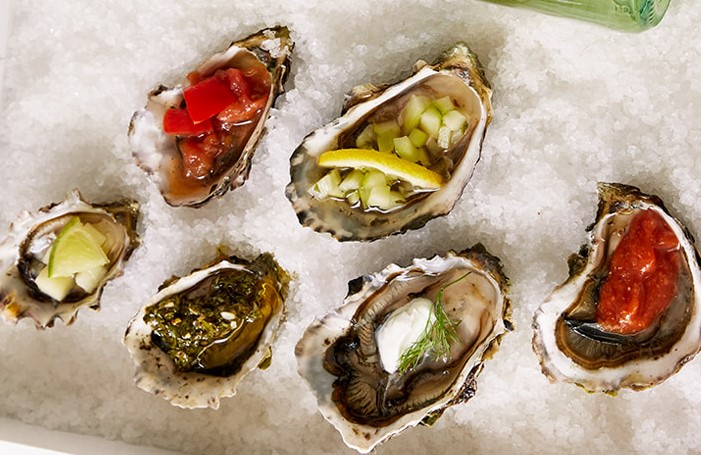
Above one of the Bermagui recipes,  „oysters 6-ways“. Mouthwatering delicious.

When I wallow in these memories I immediately get an appetite again, but in Uruguay, you can forget such treats. It’s a far lower level of the lifestyle here. But it gave me the idea to write about Australian oysters and let you participate. Australian oysters are famous, that’s why I introduce you to the 3 most important oyster farms in this country. Of course, the No. 1 to me is the local oyster from the Bermagui area.


St. Helens Pacific Oysters.

St. Helens sits on the shores of Georges Bay just south of the Bay of Fires Conservation Area in Tasmania. This great estuarine lake is open to the sea and fed by the waters of the George River, Launceston Creek, Colchis Creek and smaller creeks and has been home to Pacific oyster farming since the 1960s.

     That’s Tassie life, fresh Pacific Oysters.


Coffin Bay Pacific Oysters.

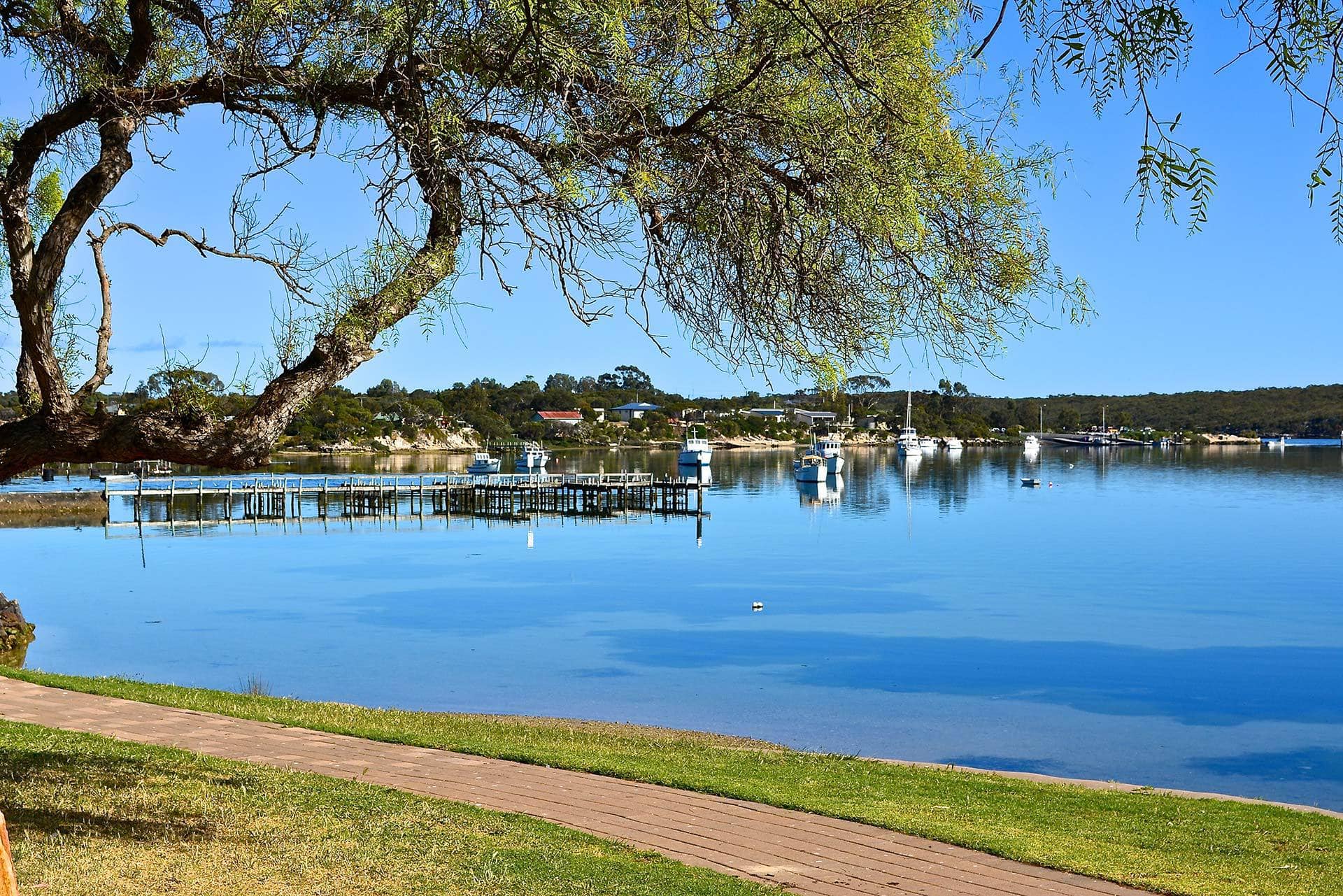
Back in the 1840s South Australia had its own native oyster industry with fleets of ships dredging the water around the colony from the Gulf St Vincent around the Eyre Peninsula to Coffin Bay. One of the most remote areas in Australia, see distances here. Coffin Bay is a 700 km drive from Adelaide via Port Augusta. Just around the corner.

   Coffin Bay King Oysters. Not my favorite, too big.


Wapengo Lake Rock Oysters.

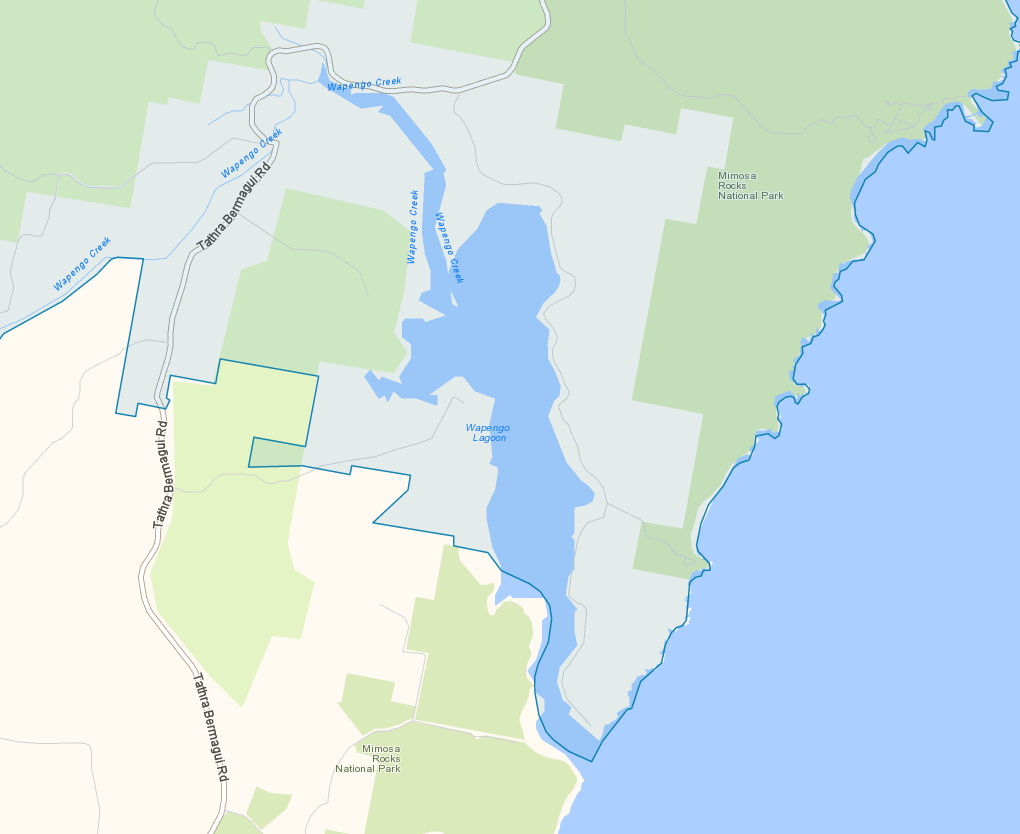
This is the neighborhood where we lived and got our oysters whenever we wanted some. I still remember when Shane Buckley came up with the idea to buy the oyster farm and was searching for investment money. But we already were on our way out of Australia to Panama. What a great business Shane built up and it is still running well. His oysters conquered the market. Congratulation Shane – well done !

10 years of hard work, and he earns success now – DESERVEDLY !!

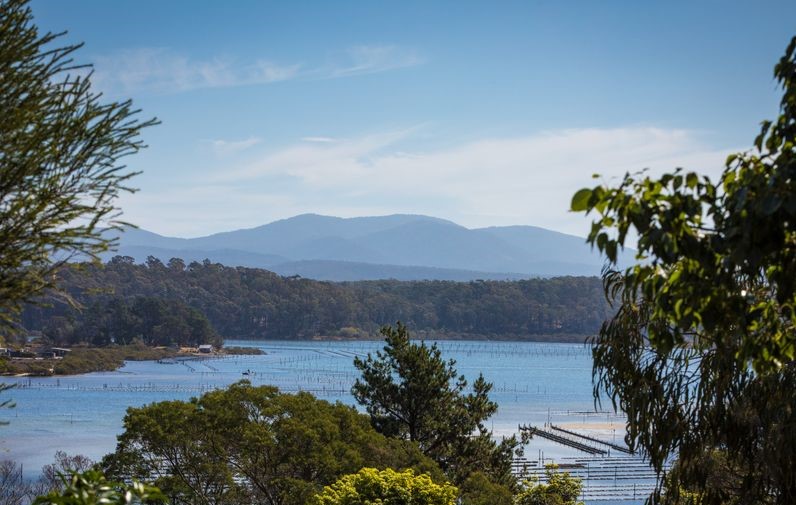
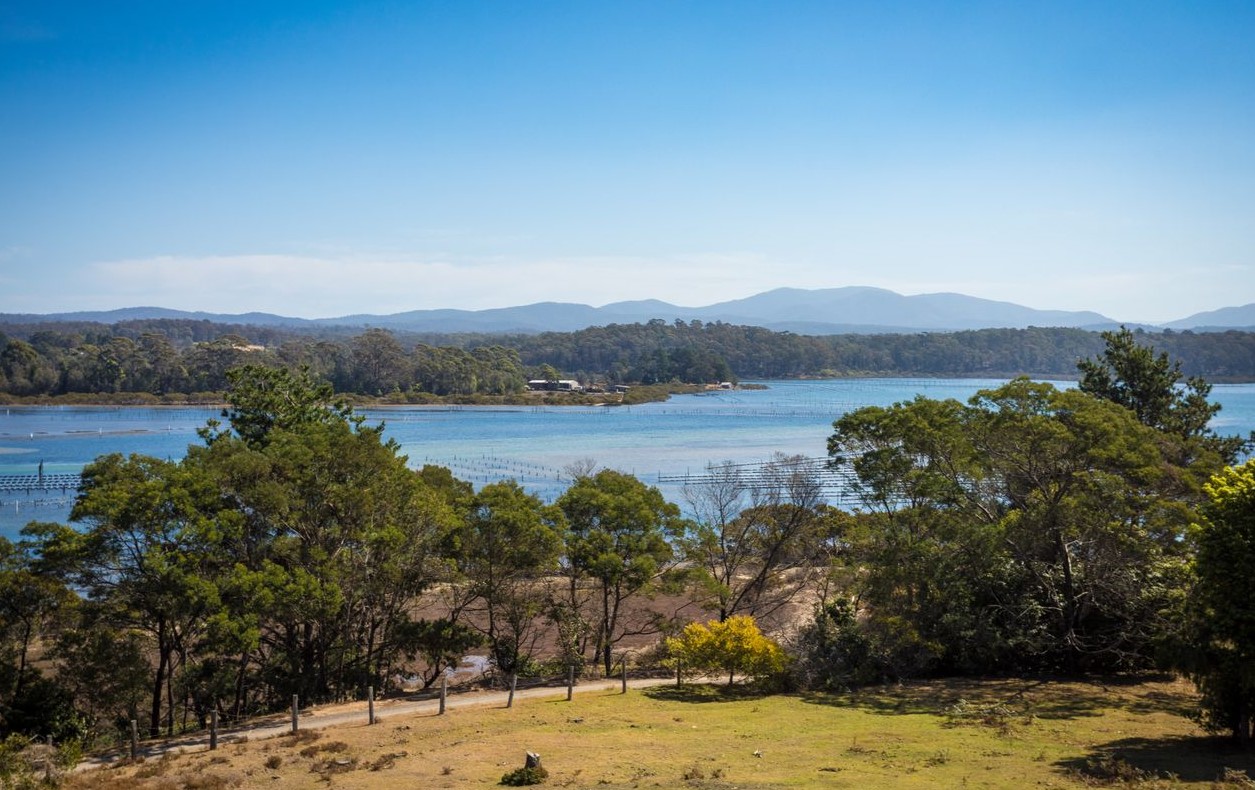
On a crystal clear lagoon, surrounded by the forest between Tathra and Bermagui on the New South Wales South Coast a growth rows and rows of oysters. These are Australian native Sydney rock oysters and are indigenous to the coastal waters from Brisbane to the Victorian border.

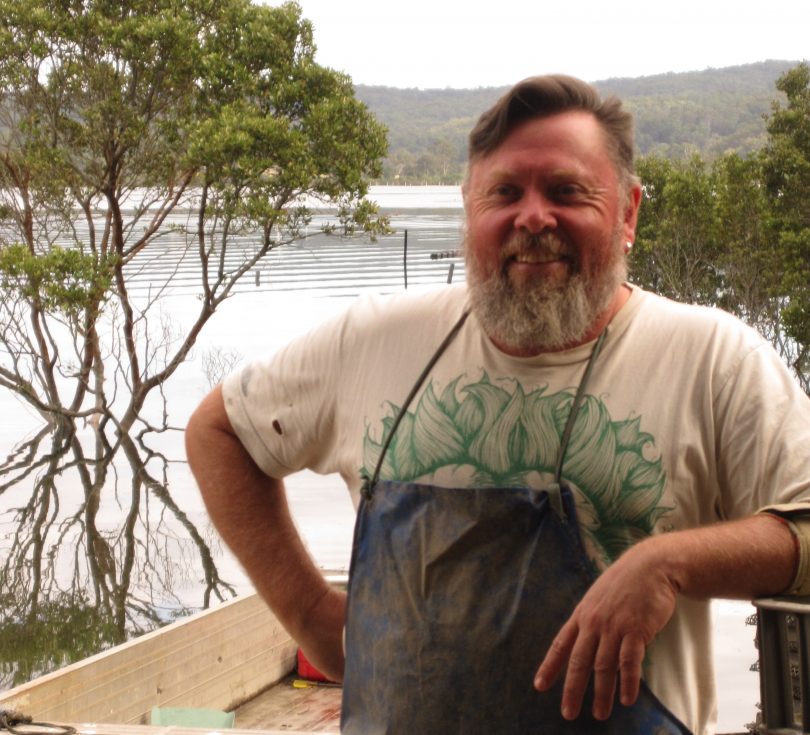
      Shane, when we met, about in 2006 (left) and a few years on (right). Still a heartwarming guy.

At Wapengo Lake grower Shane Buckley has worked hard with the locals to protect the quality of the water. The local council has sealed the road, the foresters upstream have changed the way to make forest tracks to stop runoff. These and other measures have allowed Buckley’s oysters to be certified organic. Here the explanation in his own words.
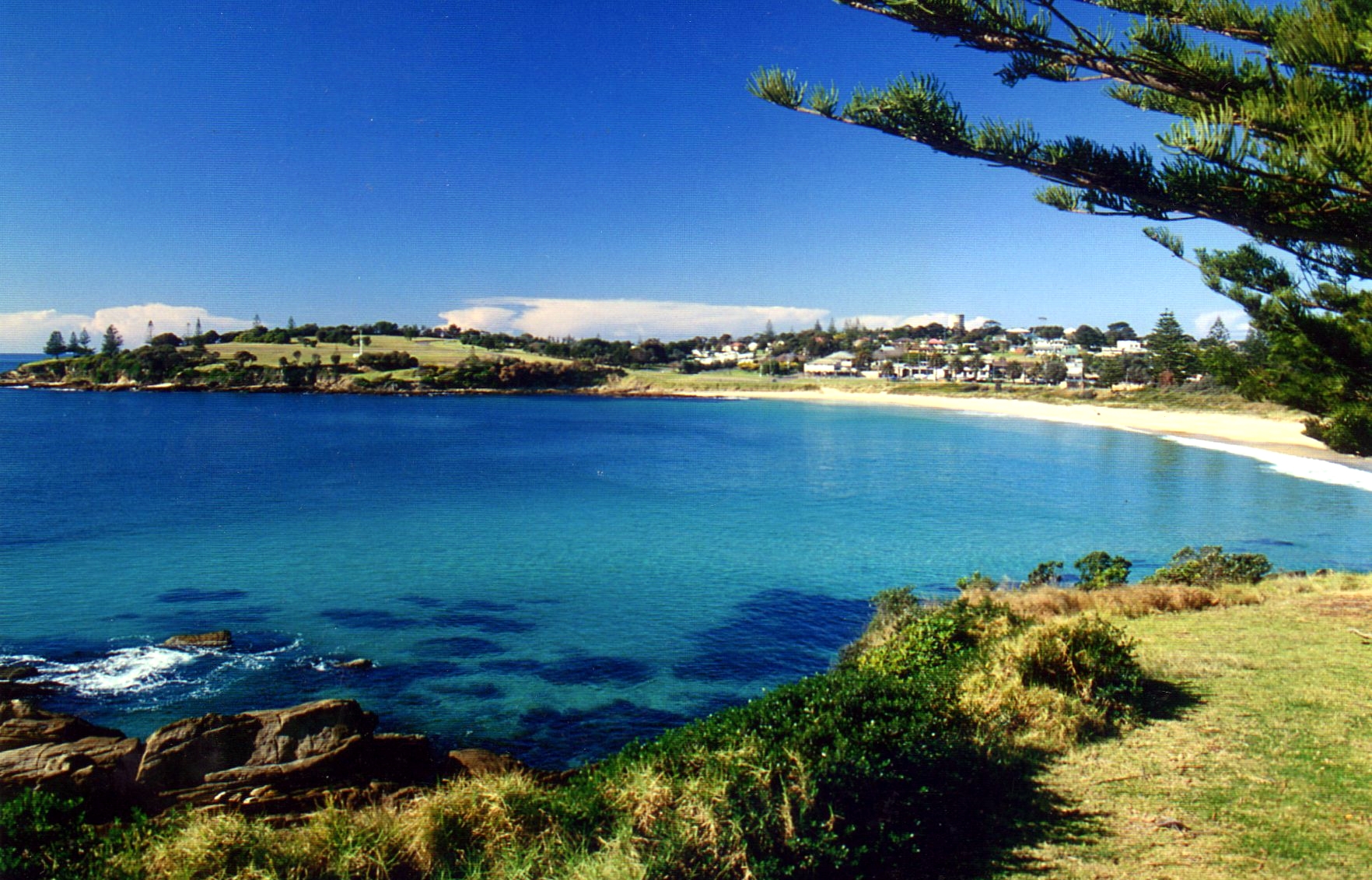
Beautiful Bermagui, this is Shelly Beach taken from Bermagui Point.

What makes an Oyster farm Organic?

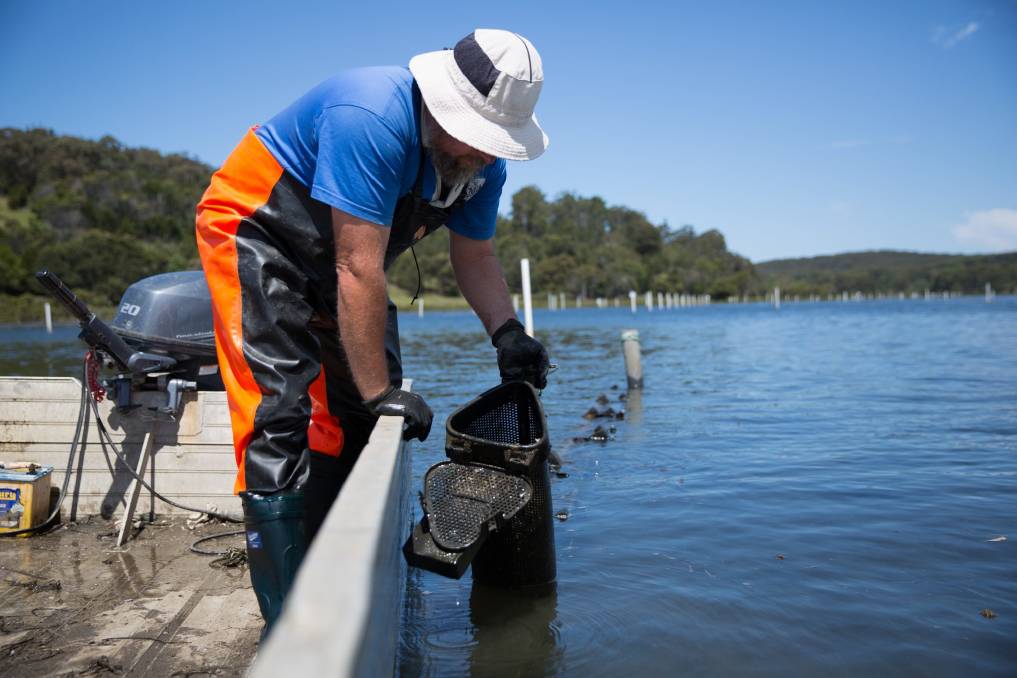
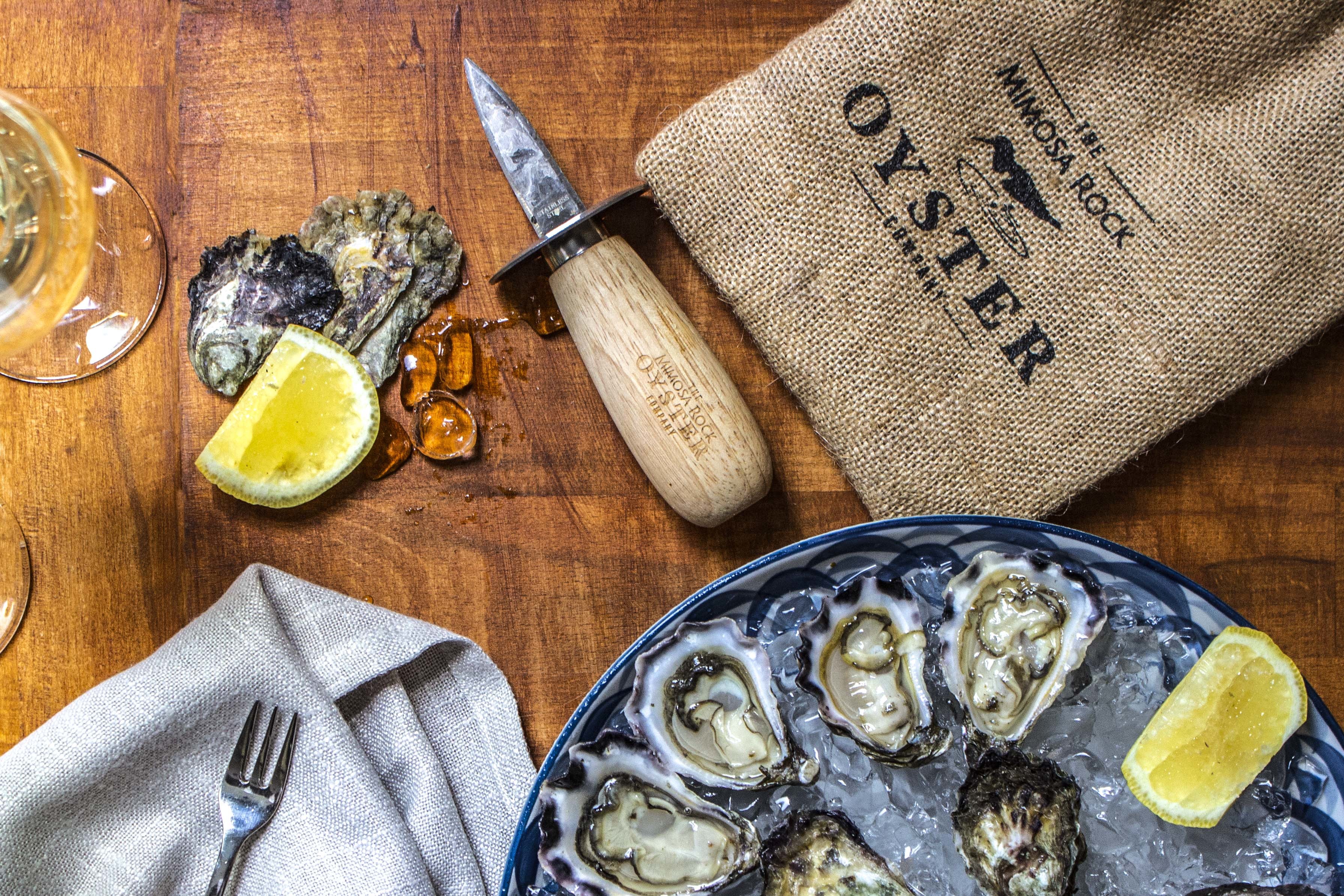
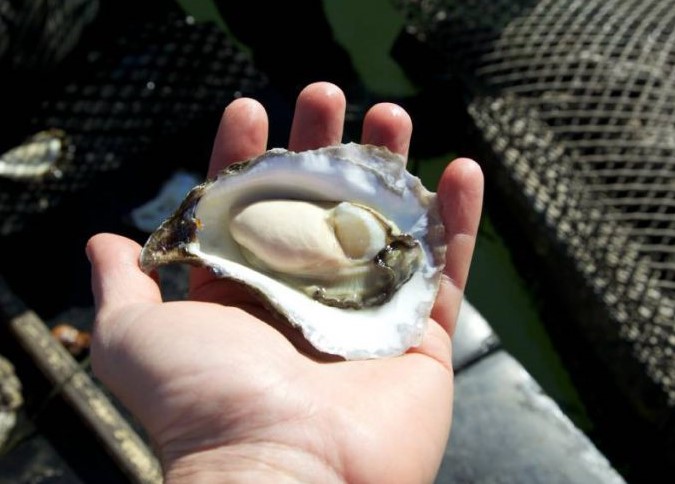
Aren’t oysters organic anyway? Good Question. It’s about two things – 1. Water quality and 2. The environment. The oysters are grown in floating baskets that expose the oysters to air as tides change developing the meaty adductor muscle. Wapengo Rock Oysters are slow grown, well-formed, easy to open, creamy with a clean briny finish, and exceptionally good with crisp lager, a dry Chablis, or a glass of cool champagne.

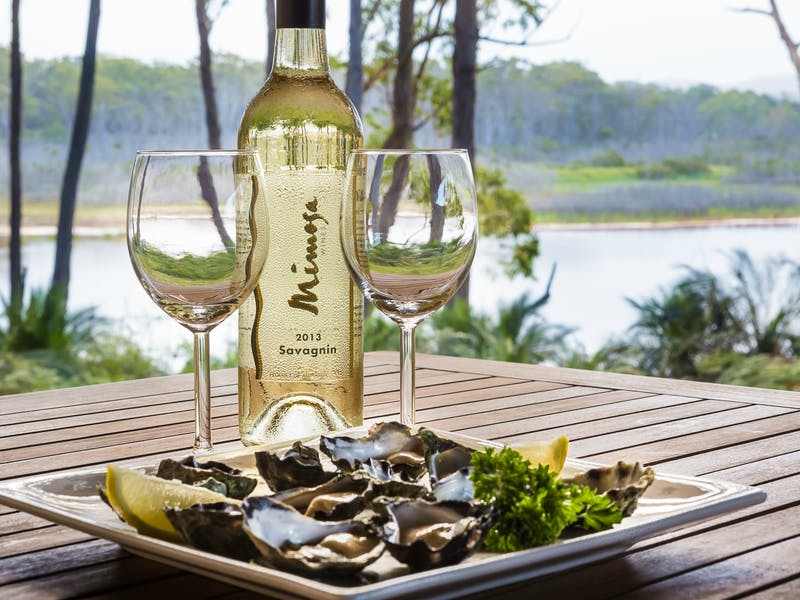
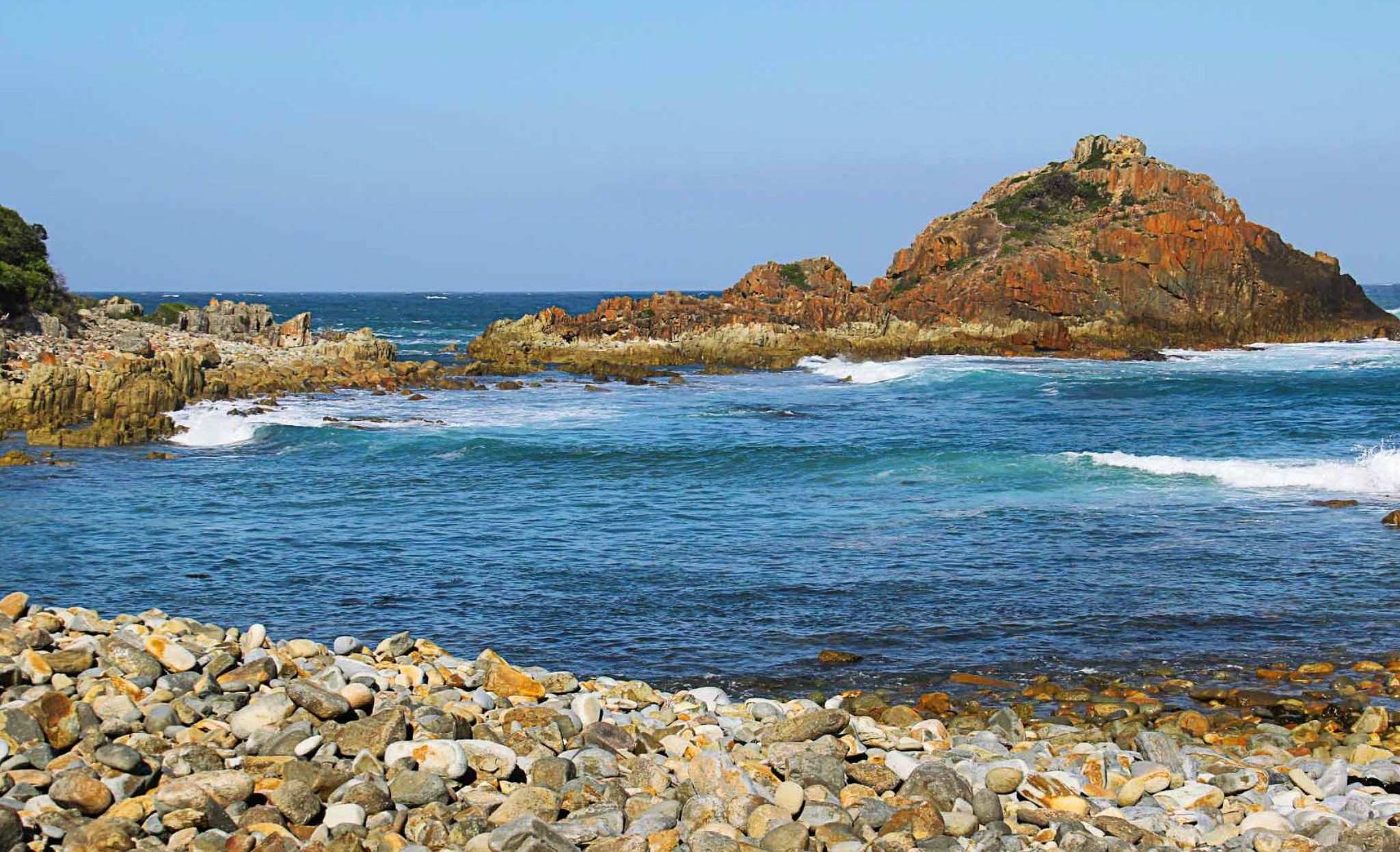
Not to forget the locally grown wine in this area at Mimosa Rock National Park.

1. Water Quality.

On the NSW Far South Coast, it is widely recognized that Wapengo Lake has pristine water quality and that oysters harvested from here are the best you can get. Wapengo Lake is surrounded by forests and small farms and is fed by water that flows from National Parks and State Forests.

The first thing we’ve set out to do is improve the water quality on our leases even further by completely removing all polluting products and infrastructure. That means no more treated pine or tar coated sticks on our farm. These materials have traditionally been used in the oyster industry for decades because of their low cost and durability. Replacing infrastructure has been hard work, but we now use only recycled or recyclable materials. As an example, we have posts that are the only ones available on the market composed of 100% recycled plastic and manufactured in Australia.

         Wapengo Lake, left picture and Mimosa Rock, right picture.

In our efforts to continually improve water quality we have dramatically reduced the amount of fixed (non-moving) infrastructure. Our old post and rail racks were treated pine, but they have been replaced with plastic posts or flumed (plastic sleeved) untreated natural timber.
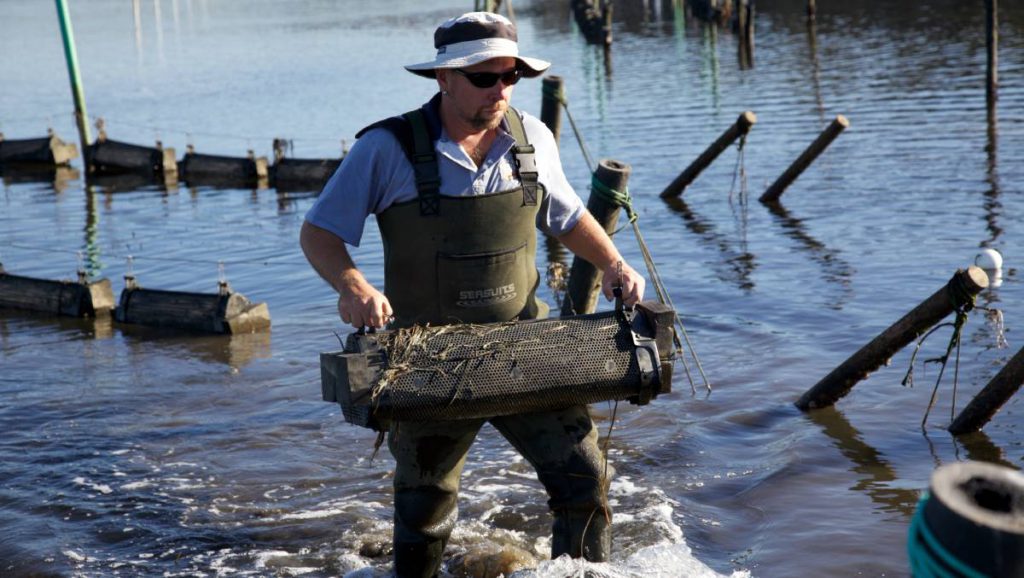
Our new infrastructure is what we call „dynamic long lines“ with floating baskets. An example of our cultivation practices being more sustainable than before is the requirement of only 8 posts per row in our long line systems. Housing the equivalent volume of oysters in the old system required 180 – 200 treated pine posts and around 300 m of treated pine rail. That shows how positive water quality can be improved.

           Click on small pictures to size up for a better view.

2. Habitat.

We have reduced the incidence of post and rail to 5% of what it was before we began the organic conversion. This is important because the old infrastructure shaded the lake-bed and therefore destroyed the seagrasses by depriving them of sunlight. The new system moves – the long lines with attached floating baskets actively move across the top of the water and „sway“ in the currents, letting more light in and allowing the seagrass beds to regrow. We are promoting the restoration of the ecosystem and habitat which existed before oyster cultivation began in Wapengo Lake over 130 years ago.


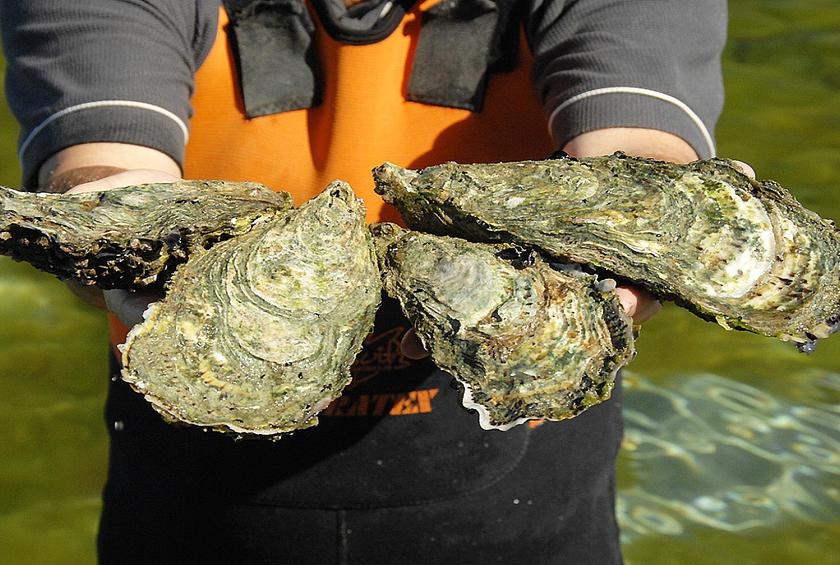
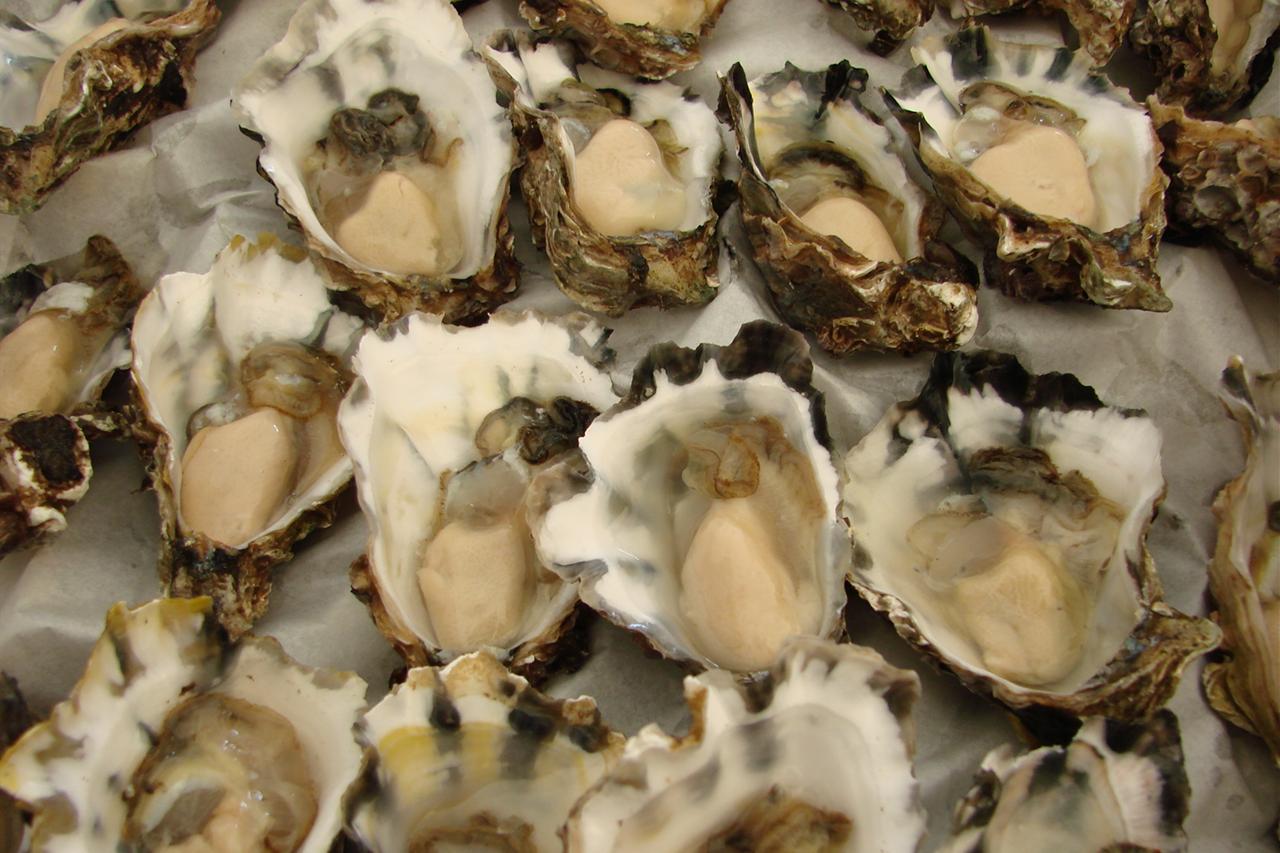
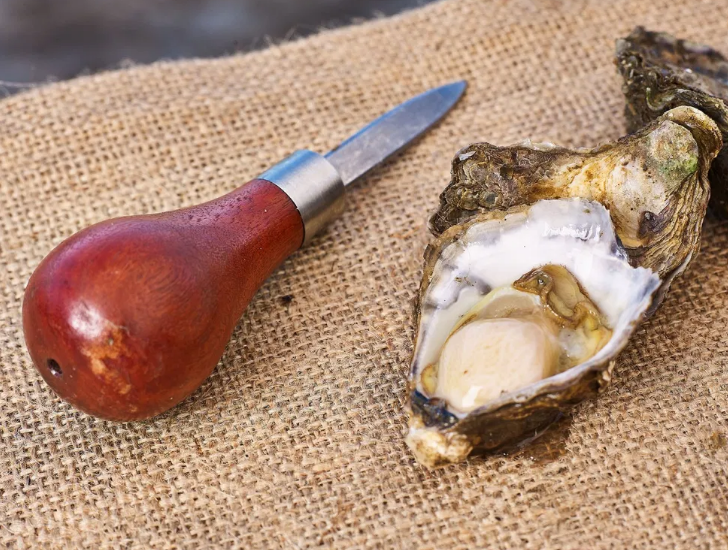
The above ones one can call „OYSTERS“. Notice the meaty, beautiful grown, soft, and sweet-tasting muscle. Not as you see very often, the mushy and ugly looking flesh.

Stress-Free Oysters.

There is also no longer any stressing of the oysters. Old stick cultured oysters had to be knocked forcibly from the sticks and then „culled“ using a steel file to knock them apart. This action caused the oyster „culling shock“ that would actually kill a percentage of oysters. Our oysters are now caught wild as a single seed, requiring no harsh treatment throughout their life. We believe our husbandry practices are indicative of their quality.


Organic certification is normally a three-year process. All of these factors and more led Australian Certified Organic (ACO) to grant us Organic Certification to a perfect oyster.
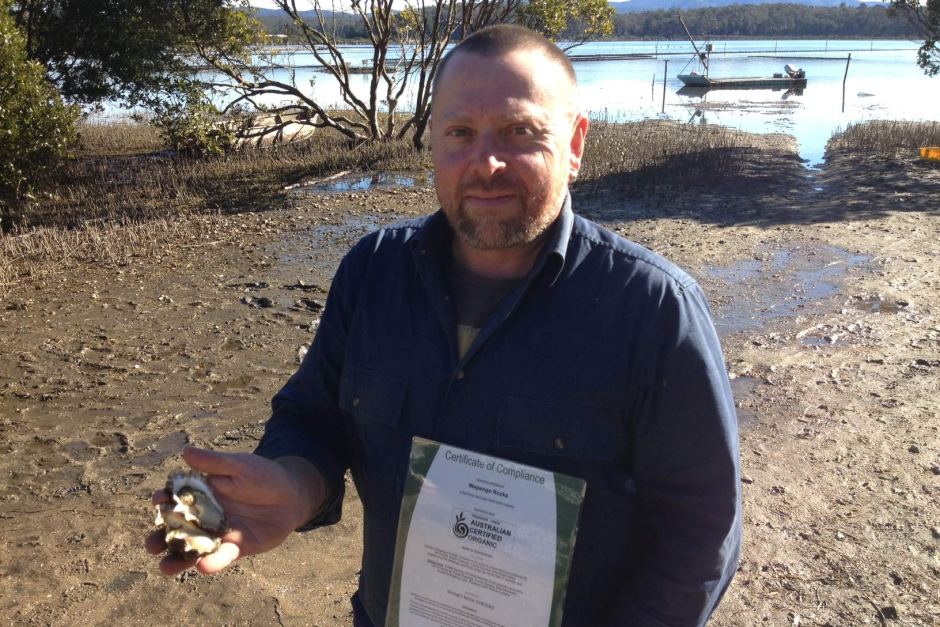
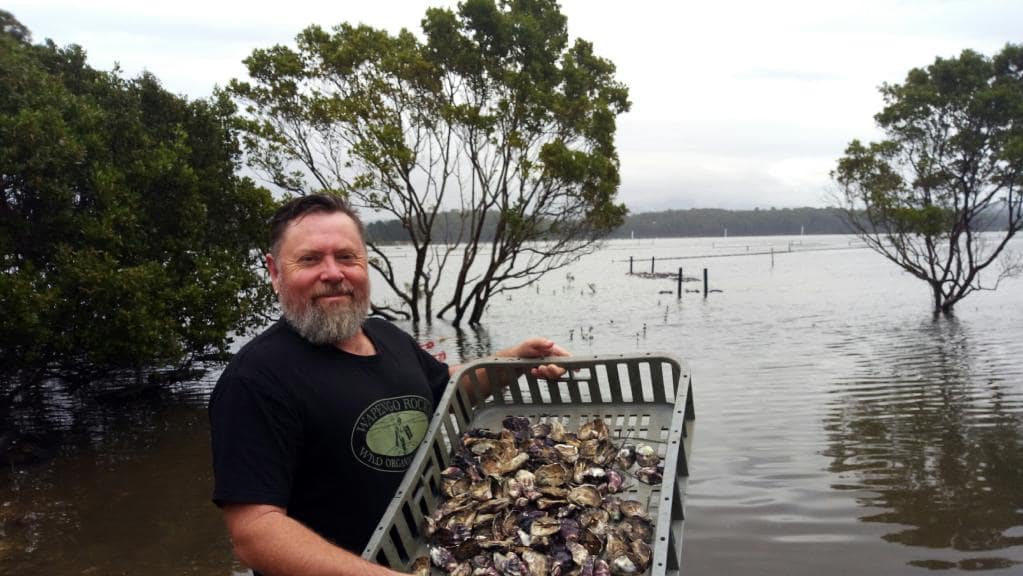
Shane Buckley, the proud owner of „Wapengo Rocks – Wild Organic Oysters“. Thanks for this great picture Shane. I wish I could visit you and the farm. Maybe Corona will once disappear, and we can travel again. Meantime we enjoy your oysters ! Sadly we can’t get some here.
And finally, above another idea to have „oysters 6-ways“.

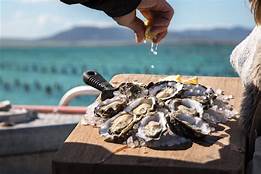
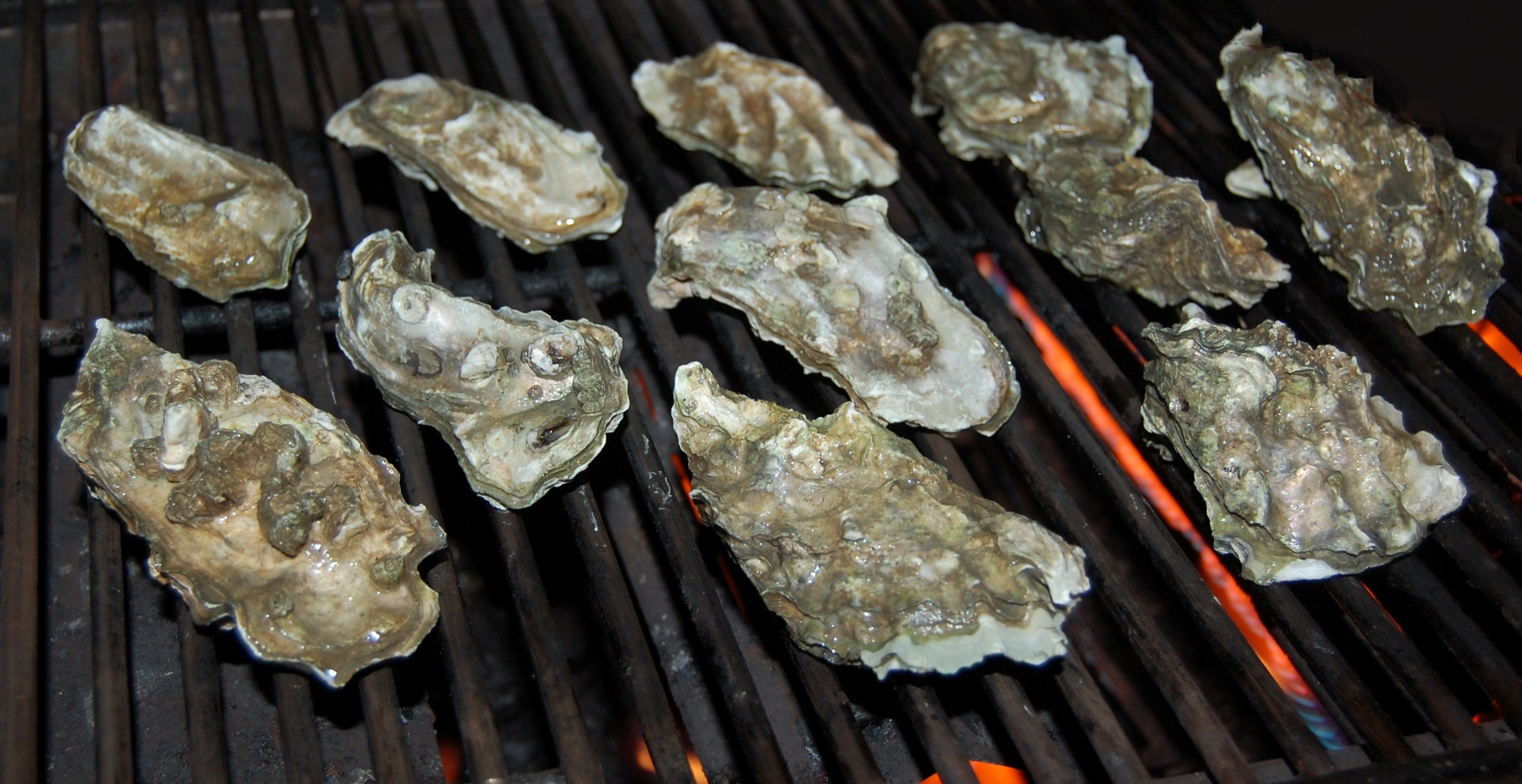
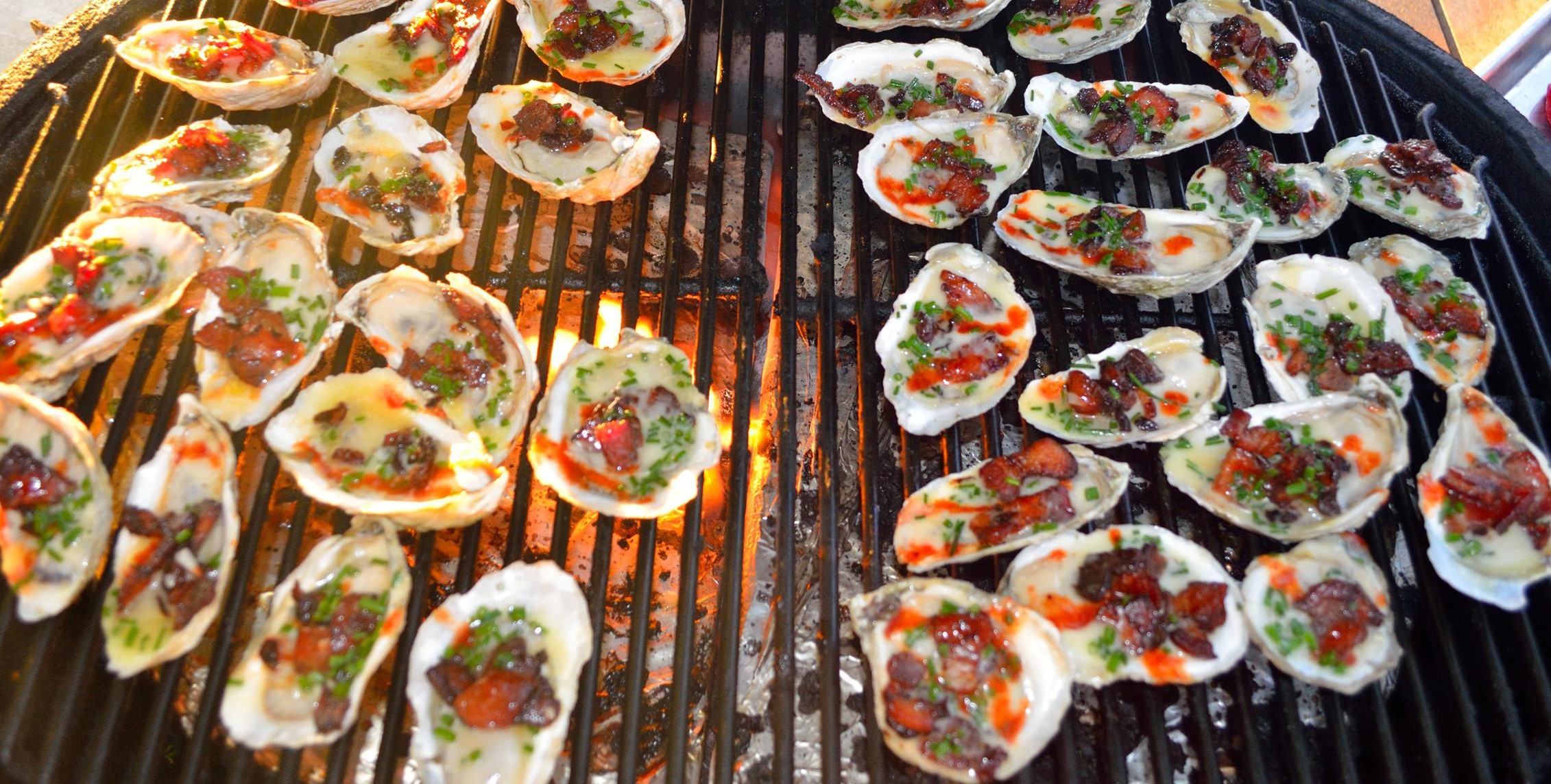
At home, we always liked to have oysters from the BARBIE, as you can see in both pictures above. Just plain, like mussels, when they open, they are ready, or a bit more fancy and prepared with, bacon, chilli, springonion, and so on. Anyway, dear readers, I know that oysters are not everyone’s „LIKE“, but if you do, enjoy them whenever, wherever you can, they are soooo healthy and delicious – BUT FRESH OF COURSE !

UPDATE :

You  M U S T   S E E  the comments,  just click on comments down here:


Veröffentlicht unter Lifestyle, Travel | Verschlagwortet mit , | 2 Kommentare