Bratkartoffeln

With this article I like to introduce you to one of the most well known dishes ever, BRATKARTOFFELN.

They are also known under German Fried Potatoes or  German Roasted Potatoes  or German Cottage Potatoes. Also known as Home Fries, House Fries, American Fries, Fried Potatoes or Bistro Potatoes and many more designations around the world.

It’s  a type of basic potato dish made by pan- or skillet-frying chunked, sliced, wedged or diced potatoes. Sometimes unpeeled and may have been par-cooked by boiling, baking, steaming, or microwaving.
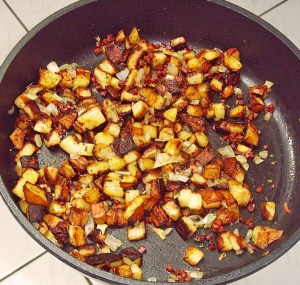
  This is how my wife likes her baked potatoes. Small cubes fried in the fat of the bacon and mixed in fine sliced onion. Finally sprinkled with some rosmary. This goes with everything.
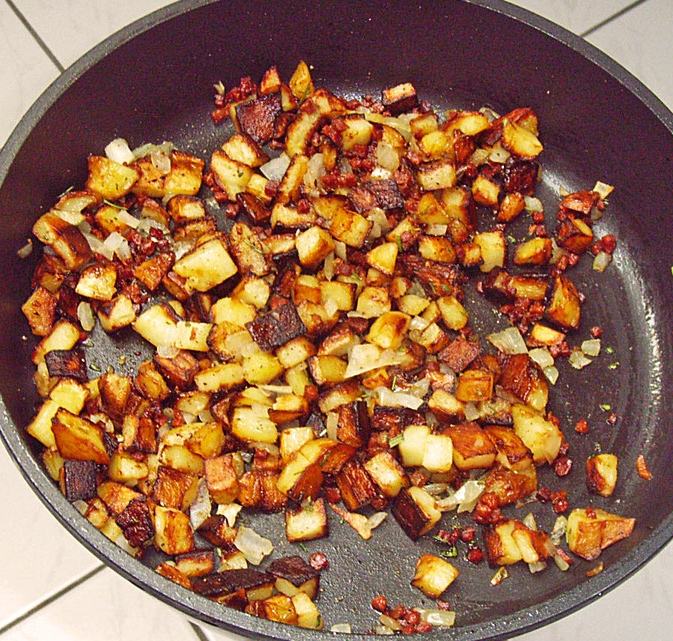
Similar preparations, by example,  are known as Hash Browns, Roesti or French Fries, Potatoes O’Brien, Waffle Fries or Potatoes Lyonaise.  If we go on, it will lead to all the different potato dishes and that list will be endless.  The list can start with Aligot from France and Batates in Egypt  ending with Xogoi Momo from Tibet and  Zippuli in Italy.

I will try to focus on the „German Bratkartoffeln“ with their most favorite dishes. May be you’ll get appetite to make them yourself and/or have some ideas for your next meal. But first, I can’t help myself  – as always in my posts, a bit of history.
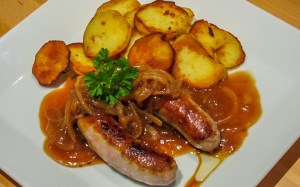
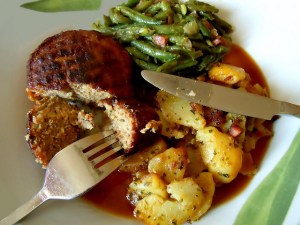
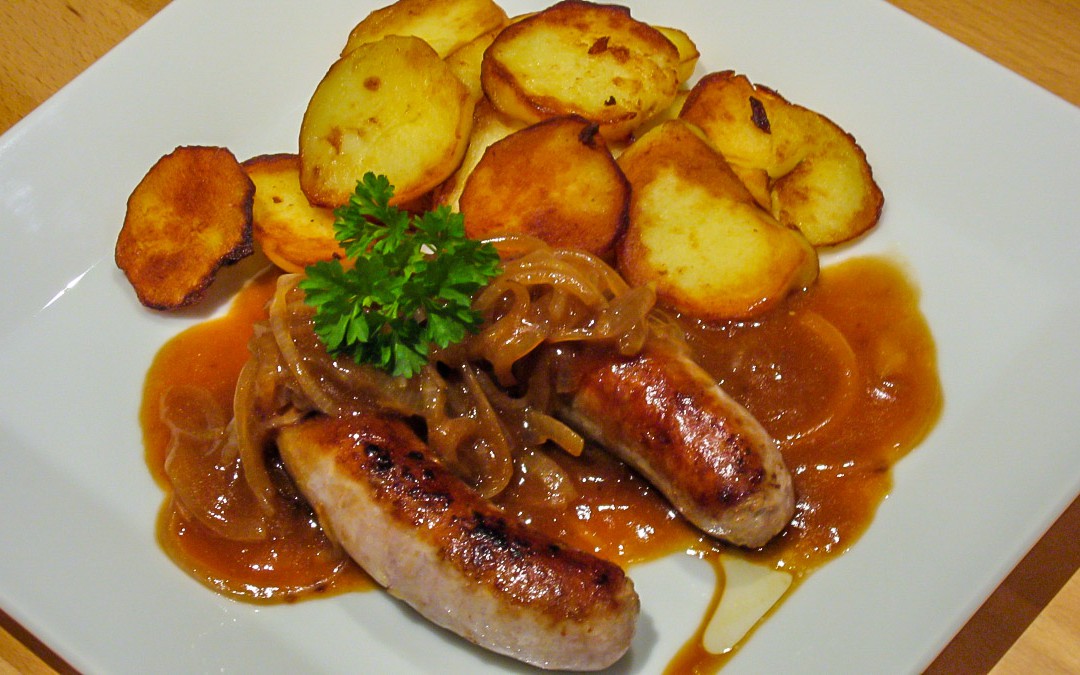
  Typical German, Bratkartoffeln with Bratwurst.
History of the „Bratkartoffeln“.

The „Fried Potatoes“ did not owe their name, as one might suppose, to their preparation (braten = frying or roasting), but to an enterprising young German lady, staying in Vienna for some time, named Henriette Josepha Braths. Braths = can also been read in Germany as Roast/Fried. Braths-potatoes are then Brat-potatoes, means Bratkartoffeln.
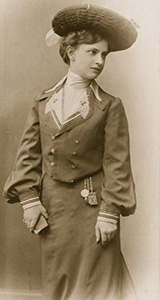
  Henriette Josepha Braths, pic around 1900.
Many cooks have been commemorated in the history of cooking. The Roman cook Lucullus must serve for everything that is delicious, so „epicurean“. But there were also people associated with the culinary art, who could not even cook and who considered it under their dignity, even once only take a panhandle in their hand. Among these persons are Chateubriand (statesman), Stroganoff (Russian Grand Duke), but also the Austrian Emperor Franz-Josef, to whom the „Kaiserschmarrn“ was dedicated, as well as Prince Pueckler, the food ice cream named after him.
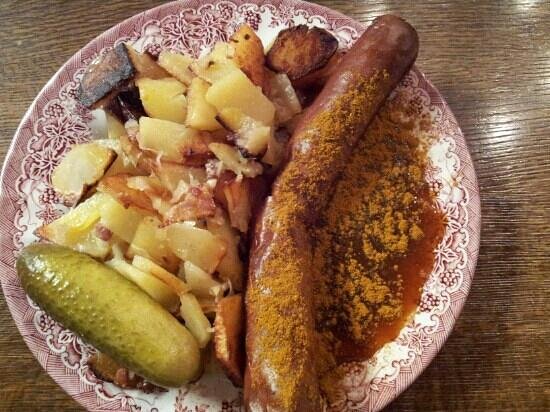
  Very German, Bratkartoffeln and Currywurst.
The inventor of the original fried potatoes, grown up in Germany, originated Henriette Josepha Braths, who had received her name only by the confusion of a lousy registry office writer (who changed her name in her birth registry, she was actually named Raths), has not been appreciated to this day, neither in her native town of Malmedy, nor in Vettweiß (near Düren in the Rhineland), where she spent her youth and invented the potato court, nor in Vienna, where she spent several years with the mysterious Count Lajos.

  Henriette Josepha Braths, 1910 after she won the food competition.
The life of Henriette Josepha Braths ran smoothly until May 23, 1907, as did thousands of other maids and kitchen moms who at that time had to earn their living in „high estates.“ Then, by chance, she met the Austro-Hungarian count, which made her life an exciting one at the time. Our picture shows Henriette, who was called in her Rhenish village only „Jettche“, in 1910 in Vienna. She was then 26 years old, had her luscious curves reduced by a potato diet and was now matured to a very presentable lady.
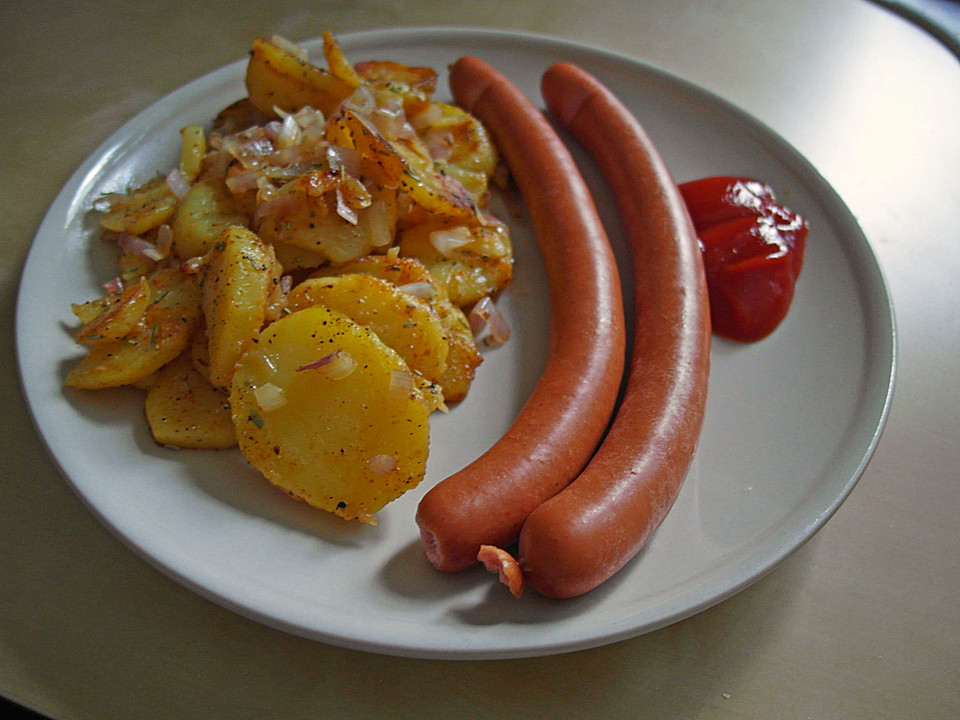
    Here with „Wienerle“ (Frankfurts) and ketchup.
Count Lajos mother had expressly requested „Jetti“ to participate in a recipe competition in Vienna. Henriette sent in 1907 the recipe of the so-called „roast potatoes“ named at that time – and a Viennese newspaper editor, of the „Wiener Tageszeitung“, requested the idea that Henriette should name her „roasted potatoes“ officially „Brathskartoffeln“. From then on, the fried potatoes went around the world, so to speak.

If you want to fry the original „Braths fried potatoes“, here is the original recipe from the „Journal of educated estates“ pictured. The recipe „The Preparation of Roast Potatoes“ appeared in the issue of October 28, 1907.
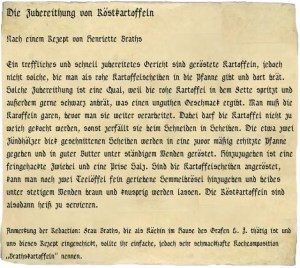
  Henriette Josepha Braths original recipe, with comment.
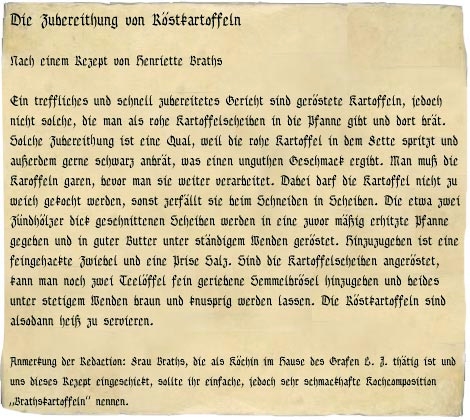
  That’s how the original „Braths“ look like, skin on or off, but for sure very rustic.
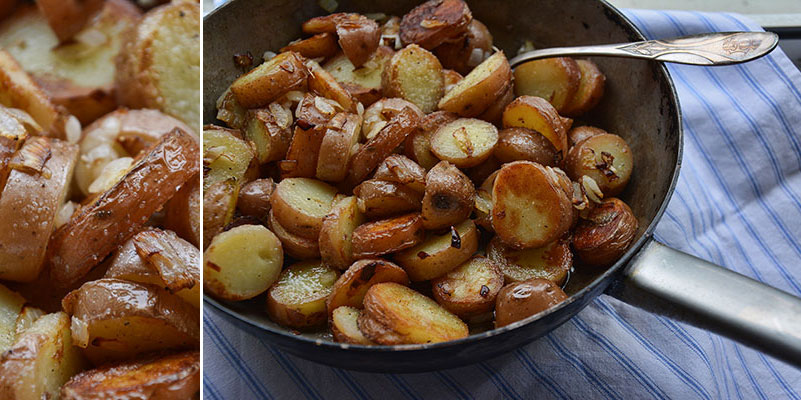
In the US, home fries (often sliced potatoes) and rösti-like hash browns are often part of a full breakfast. Fried potatoes are known in England. There are thousands of different recipes around the world.
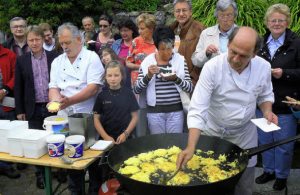
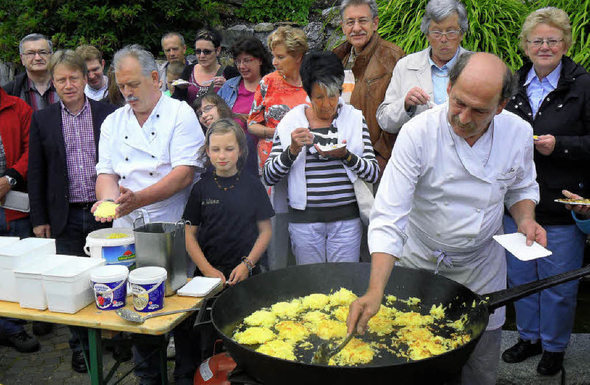
    In Baden, South-West Germany, they are traditionally known, with bacon, as „Brägele“.  Lokal cook will call out to you: „Do hesch de Brägel“. In a giant pan the guests were served the tasty potato dish for the opening of the Brägelweeks between Feldberg and Belchen, Black Forest. Photo from an old friend: Bernhard Wehrle owner of Hotel Sonne, Todtnau. 
In Alsace, a similar dish is called Roigabrageldi. The name comes from the Alemannic and means something like „raw fried“. There are different types of preparation, both in the pan and in the pot. For example, potatoes, bacon and onions are alternately stacked. Traditionally, you can eat Roigabrageldi with green salad and smoked pork shoulder, also well known in the area as „Schaeufele“. See down here..
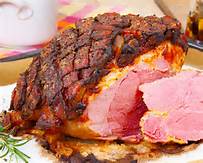
     Smoked and roasted pork shoulder.  Delicieux as the French say.
When I look back then I remember the early 50’s, as kid after the war, as some kind of poor. Not much to eat and taking everything chance we could get. A potato fire made from dried potato leaves, with general celebration after potato harvest, always was a kids highlight after harvest season.

       Potato harvest in the 1950’s.

            The potato perennials burn very hot and quick and we always had the smoke in our eyes, despite of the seat we choose. We also never could wait long enough, till potatoes were baked well, we started eating them half raw. This experience is burned into memory.


Bratkartoffeln, some „best“ recipes.

As mentioned before, one will find as many recipes as you ask for. I picked some out which we like and like to make. Generally we use precooked and peeled potatoes. Because I am sometimes a lazy guy with cooking, there is one exception.

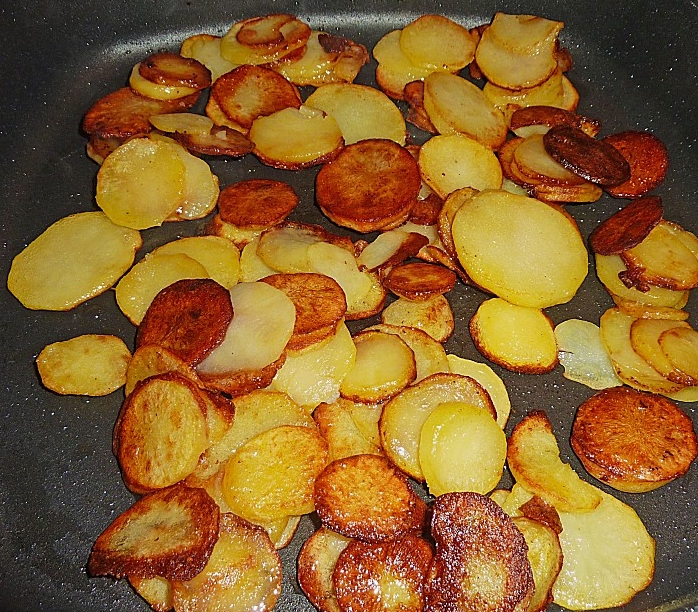
Peel raw potatoes and cut into thick slices, about 5mm. Through the slices into water, that the potato starch can get out. That makes them nice and crispy and avoids sogginess.
Then put fresh water in a pan and spread the potato slices on it. They shouldn’t overlap.
Let them simmer at the highest level until the water is no longer visible.

Now add lard and/or oil to the potatoes and fry over medium heat. Be patient and just turn once or twice. Try a slice and when it is almost cooked, put the heat up and fry until the potatoes get a nice color. Then salt and serve immediately. Very plain recipe.
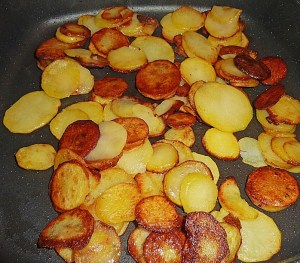
  Turn them one by one and fry till nicely browned.

Another recipe is this one. Prepare the potatoes as mentioned before. Then put oil in a pan and heat at the highest level, drain the potatoes through a sieve and put in the hot pan, immediately cap the pan with a lid.

After about five minutes, turn the potatoes over for the first time and then turn them occasionally, if necessary reduce the heat, but after each turn put the lid back on the pan so that the potatoes can be steam cooked. Roast like this for about 35 minutes.

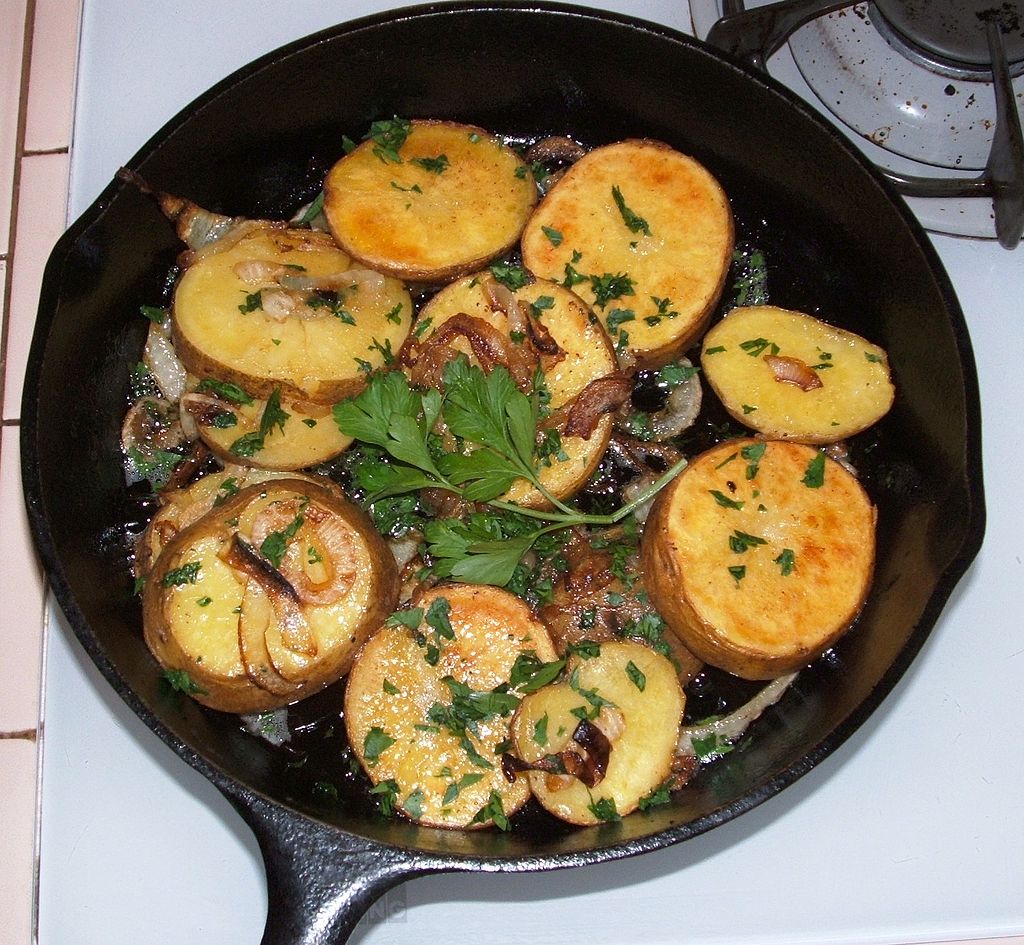
10 minutes before the end of the cooking time, add a diced onion to the potatoes without mixing them with the potatoes. Stew the onions for about 5 minutes in the closed pan and then mix with the potatoes. Fry for the last five minutes in an open pan. Salt and serve.
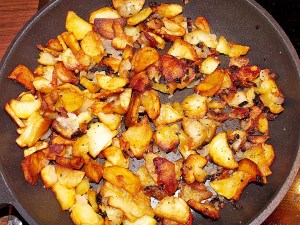
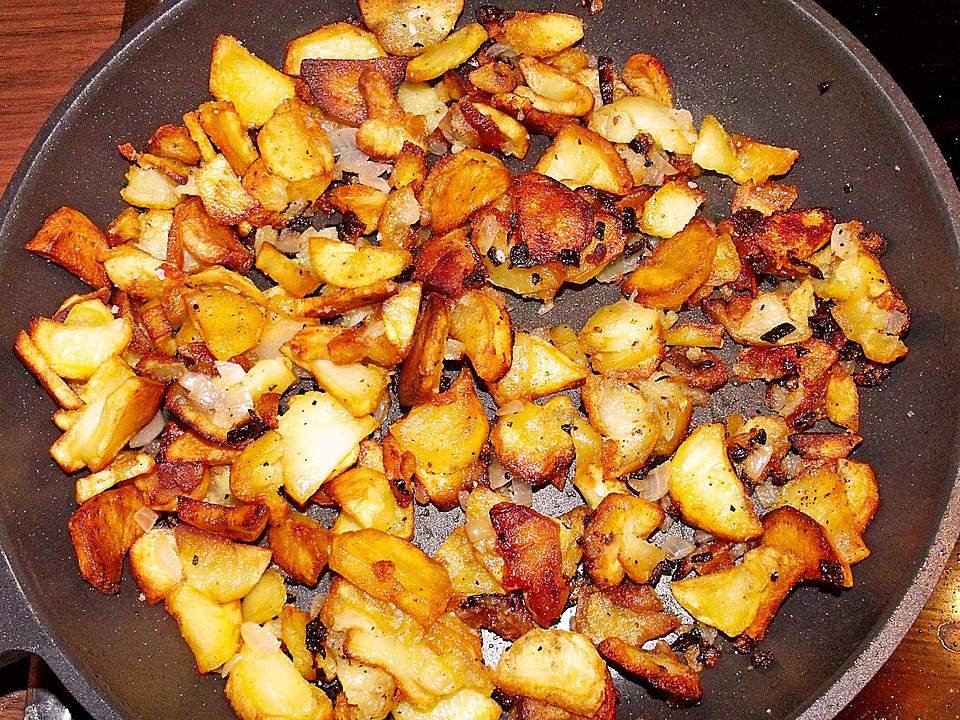
   Delicious baked potatoes with onions.
And here another easy recipe, already made as a full meal.

Ingredients.

750 g of potatoes
1 medium yellow onion, diced
230 g of pointed cabbage or spring onions or chicory etc.
190 g mushrooms, sliced
1 clove of garlic, finely diced
1 tablespoon of peanut oil and olive oil each
pepper, nutmeg, paprika, herbal salt, chilli powder, cumin powder

How to do.

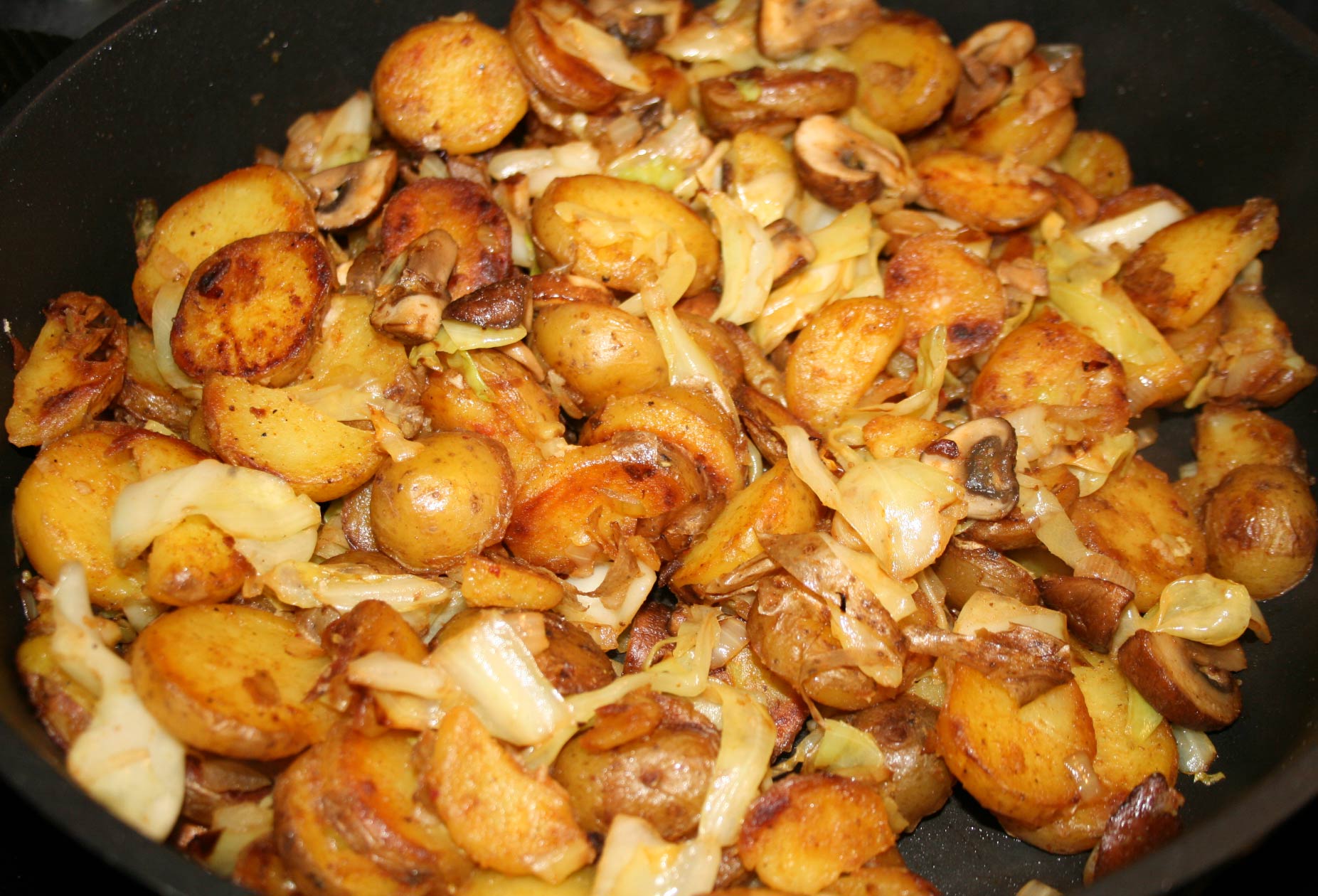
Wash and cook the potatoes – I cooked them till they just start to soften. Slice the potatoes and saute in a tablespoon of peanut oil until they get color, then season with all other ingredients (except olive oil) and stir in the onion, garlic, cabbage and mushrooms. Stir regularly till everything is cooked and browned well.

Finally, drizzle the olive oil over everything and serve immediately.
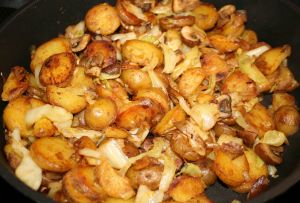
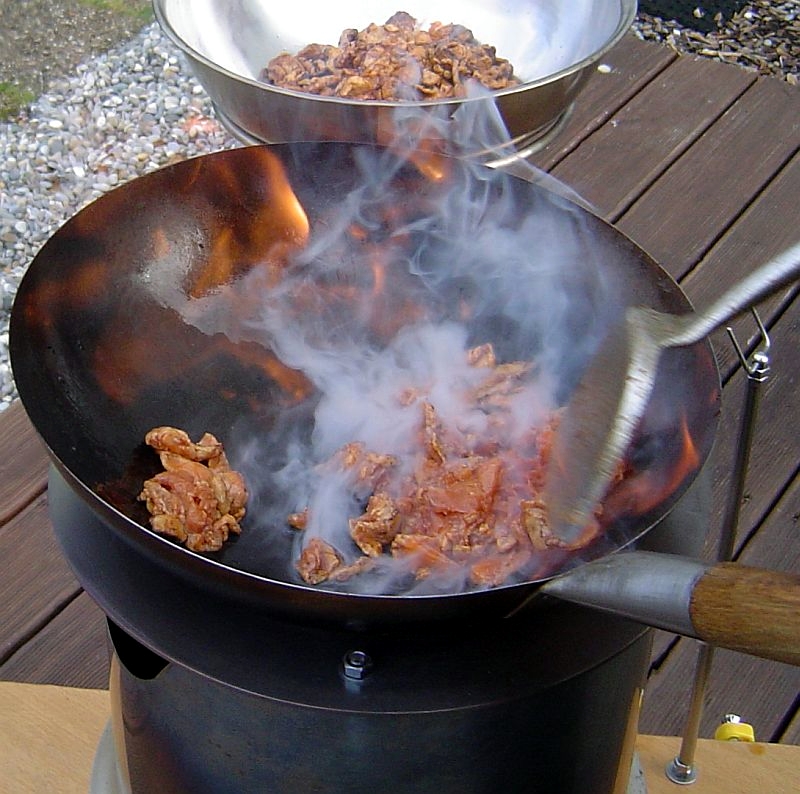
  Whole meal, onion, cabbage, mushrooms. Ideal to enjoy it directly out of the pan. We did this often during camping, having a cast iron pan on an open log fire.
Tips.
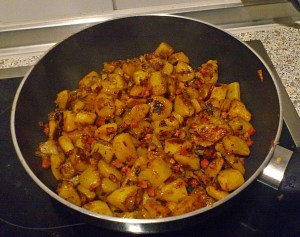
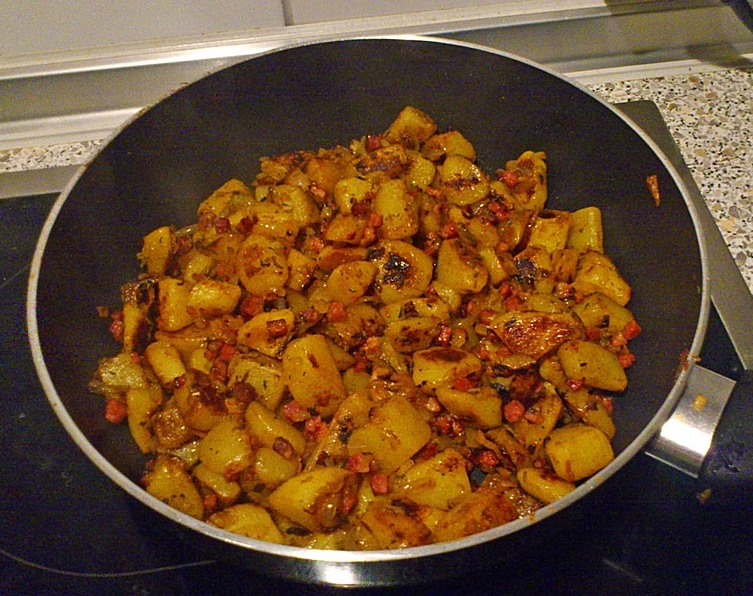
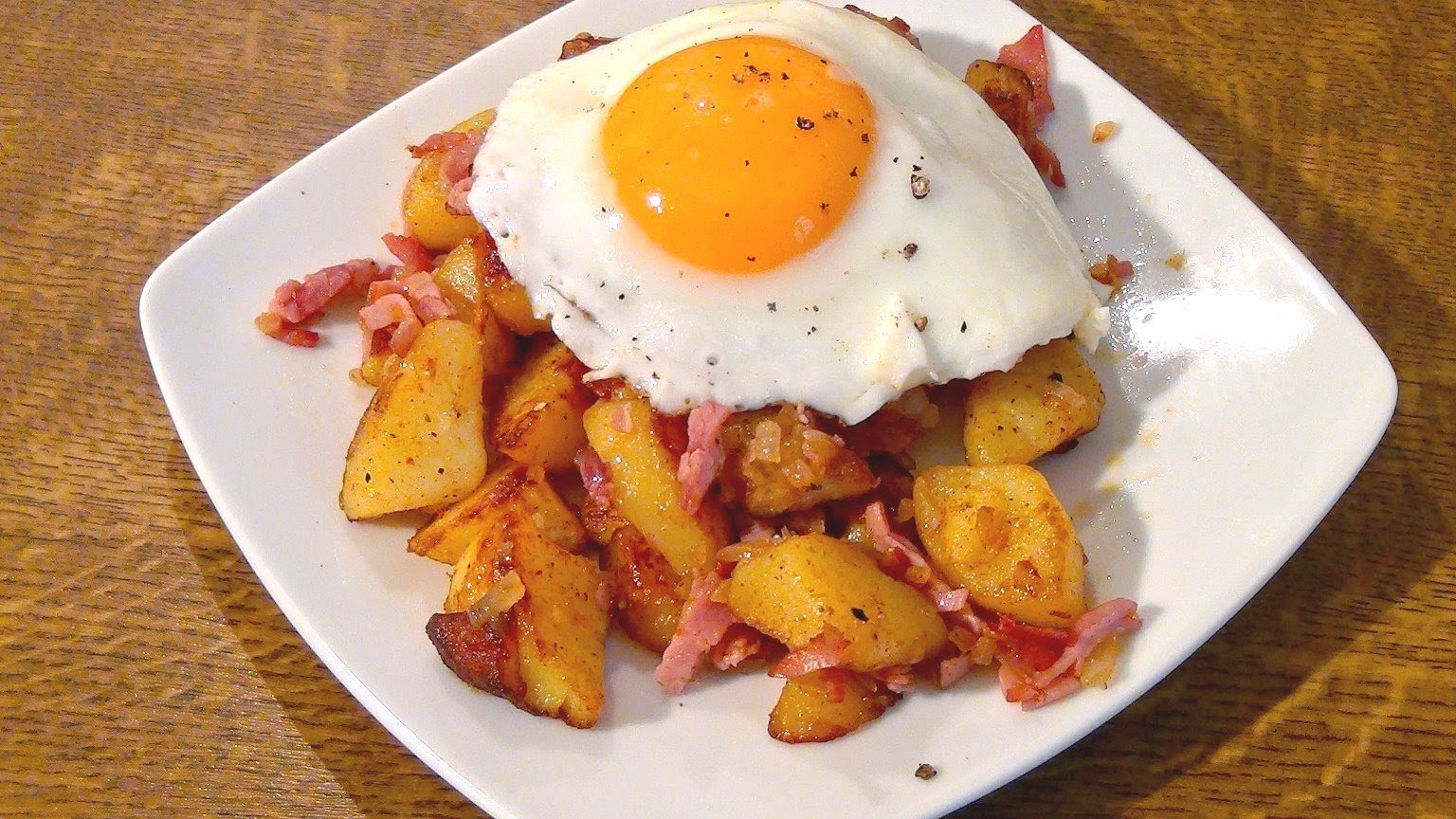
      These are our breakfast potatoes, the ones people always ask for the recipe. Intentionally a bit mushy, achieving it by using a good lot of butter. The onions and bacon are fried separately to perfection and mixed in later. A fried egg on top and you have a delicious breakfast. With this method one can prepare a lot of portions, even for a bigger „family“ .
Some serving ideas or what Germans like to eat with Bratkartoffeln.
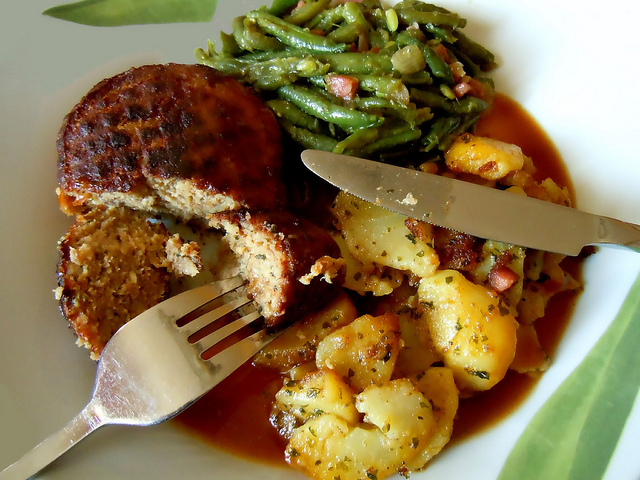
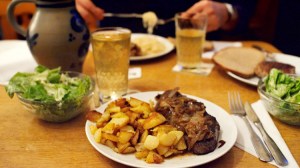
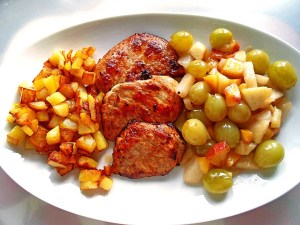
  Bratkartoffeln with Schnitzel and an applesauce (left) or with a minced meat steak (right).
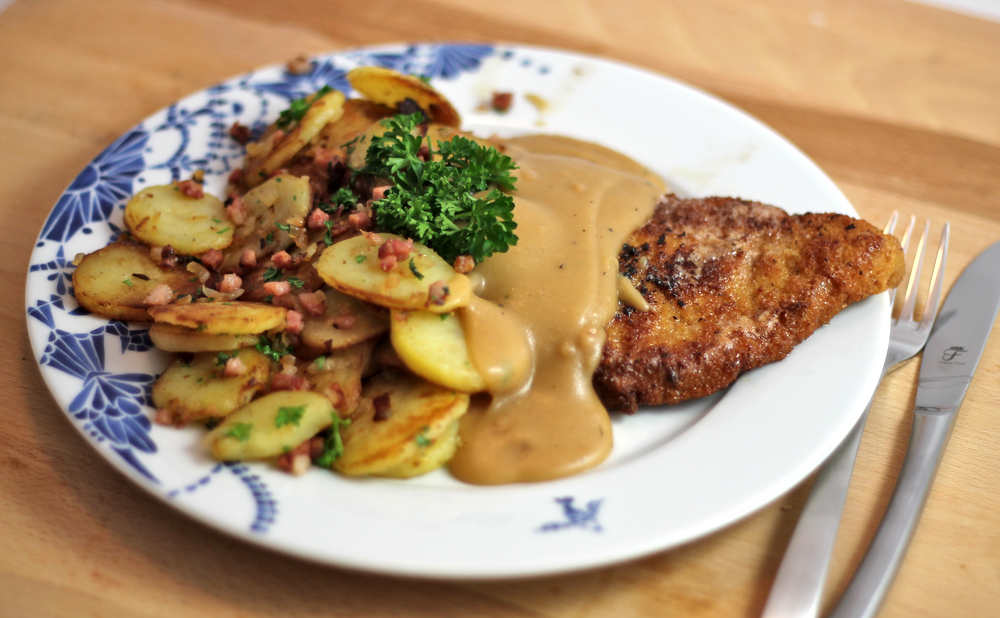
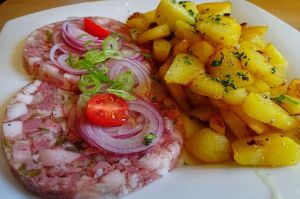
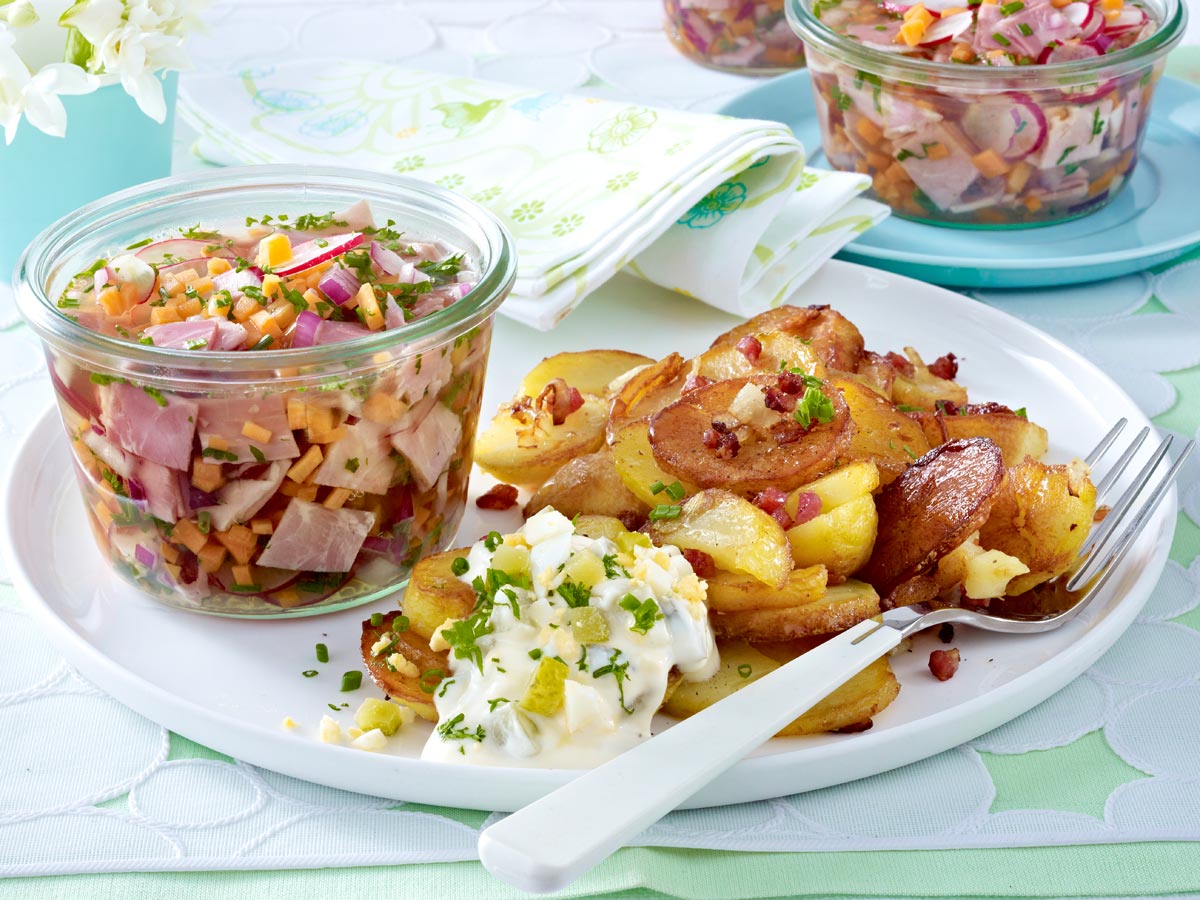
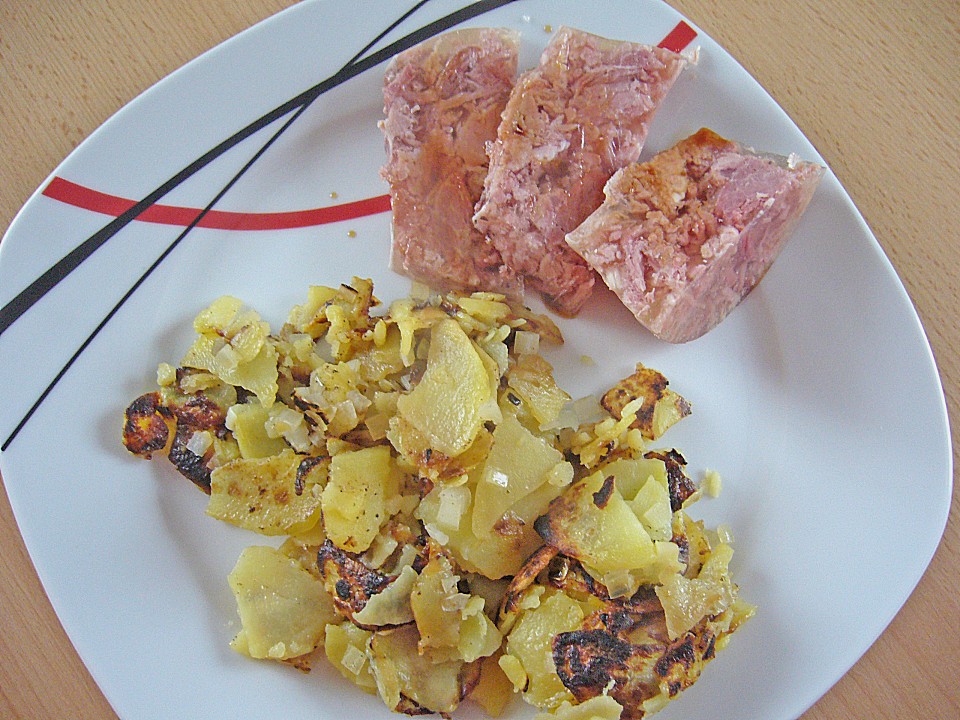
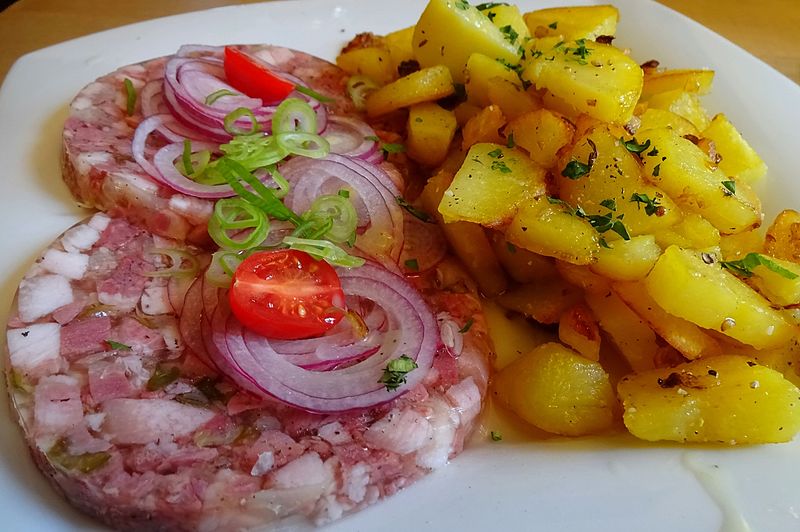
      One of the German favorites with Bratkartoffeln is „Suelze“ or „Suelzfleisch“. Its some different variety of meat (mostly pork) in aspic. Very often served with sauce remoulade, some onion dressing or salads.
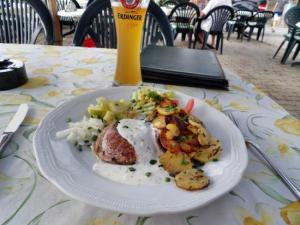
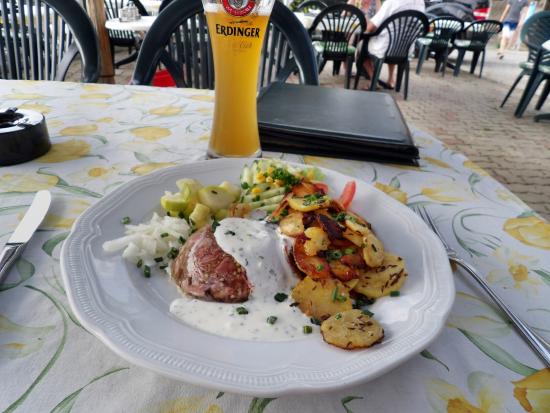
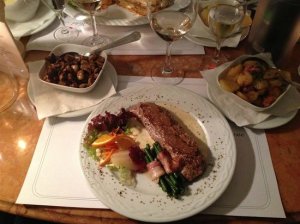
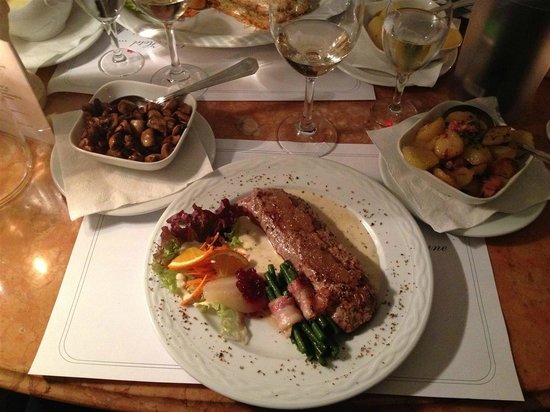
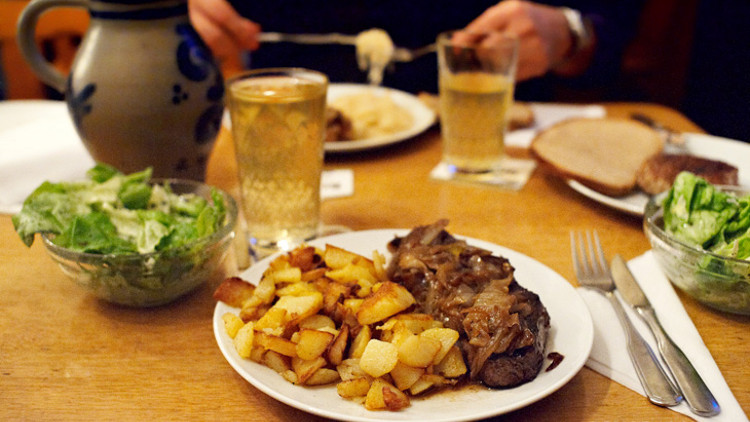
  Bratkartoffeln used as side dish to a „Jaegerschnitzel“ (hunters schnitzel) or to a fine filet steak with mushrooms and cream-sauce. Left pic shows a typical fresh summer drink, white wine and sparkling lemonade.
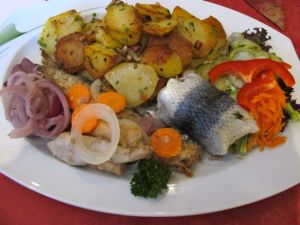
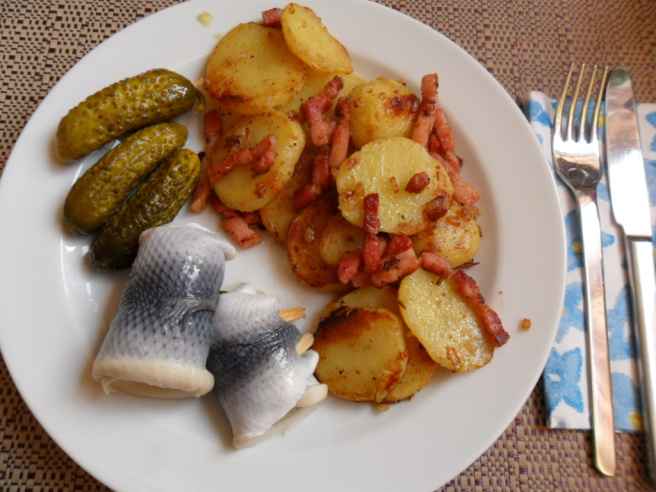
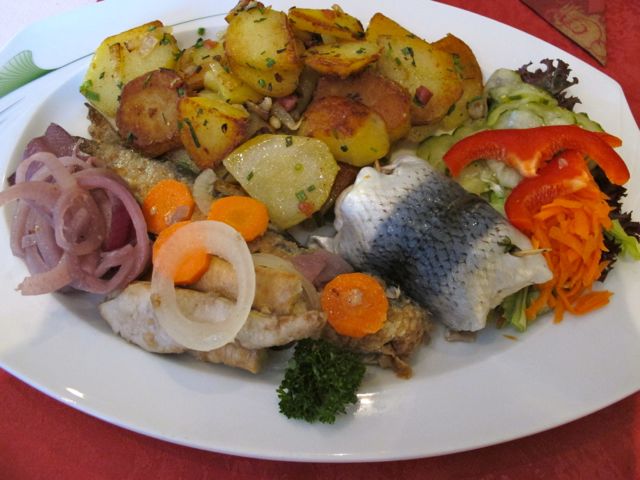
  Another typical German dish with Bratkartoffeln is „Rollmops“ (rolled marinated herring). That sour tasting fish, served cold, is a refreshing summer meal and compliments well the salty bacon with potatoes.
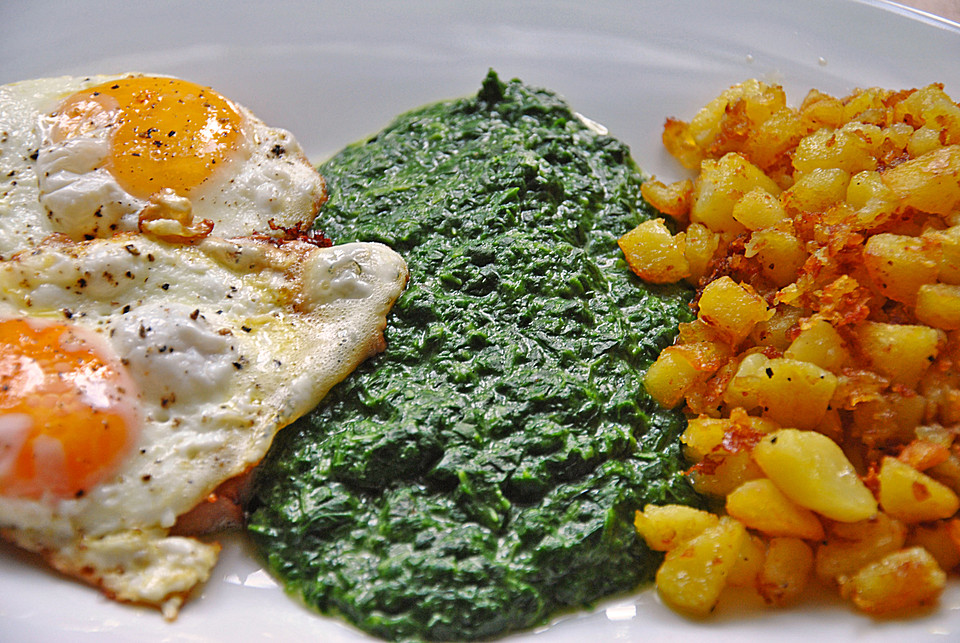
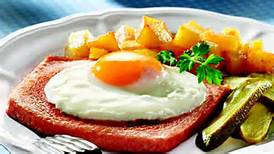
               Very Bavarian, „Leberkaes“ (baked slice of meat made from liver mince) with an egg. And on the right, the vegetarian variety, eggs-spinach-bratkartoffeln. As kids, we hated that spinach meal !
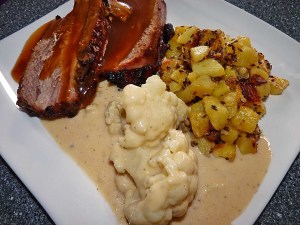
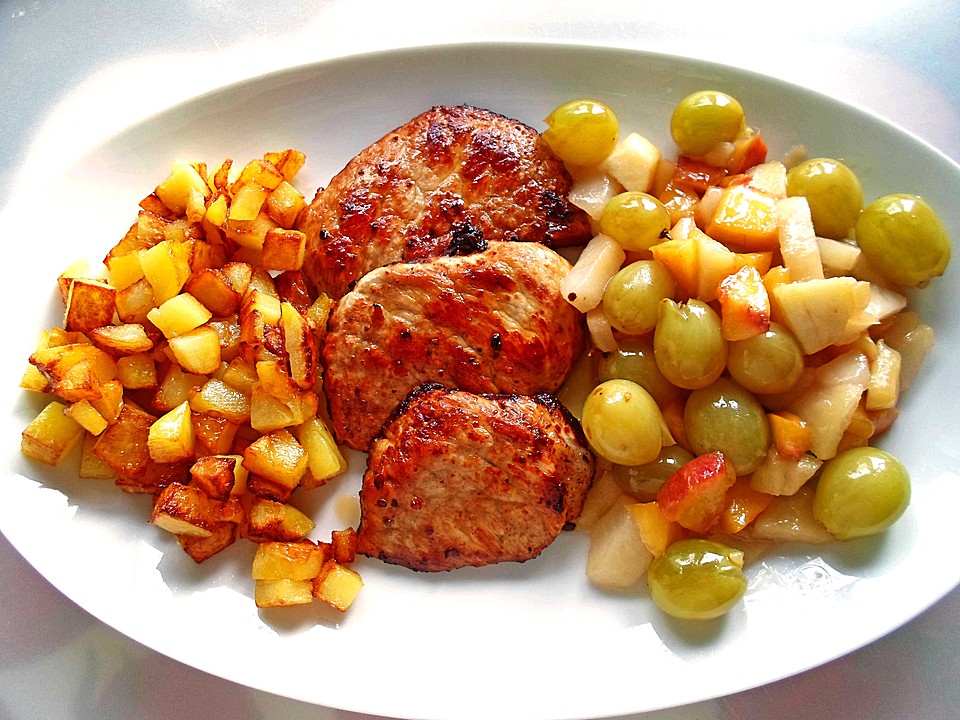
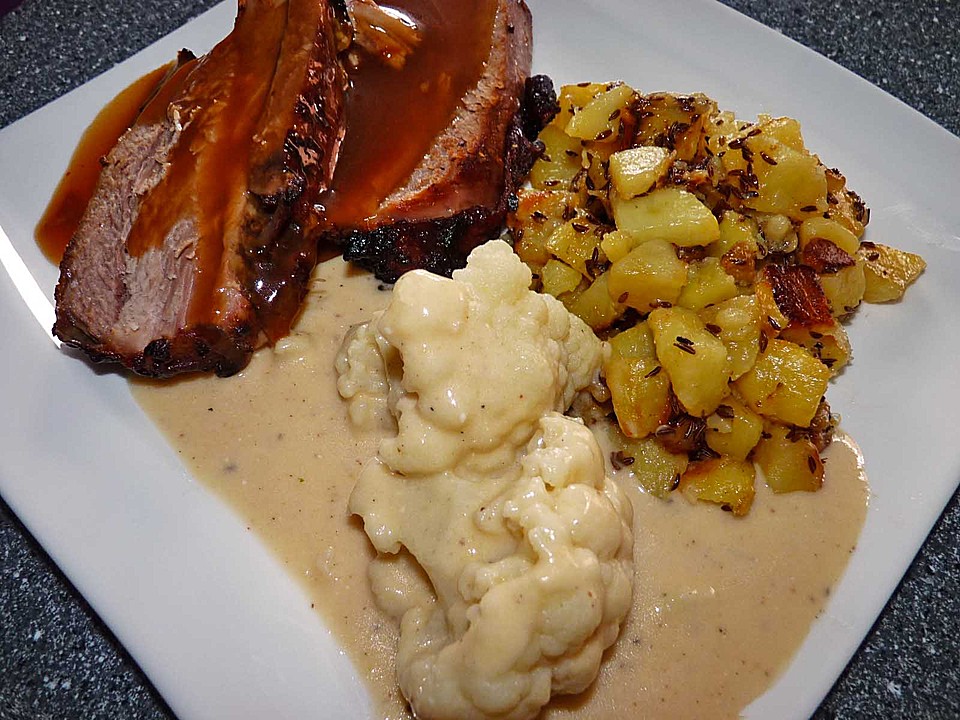
      Left, an oriental idea, Bratkartoffeln with pork loin filets and a warm mixed fruit salad, served spicy. Right a heavy winter meal, Bratkartoffeln aside with beef roast and cauliflower in a curry-cream-sauce.
Finally – these are also „Brathskartoffeln“.
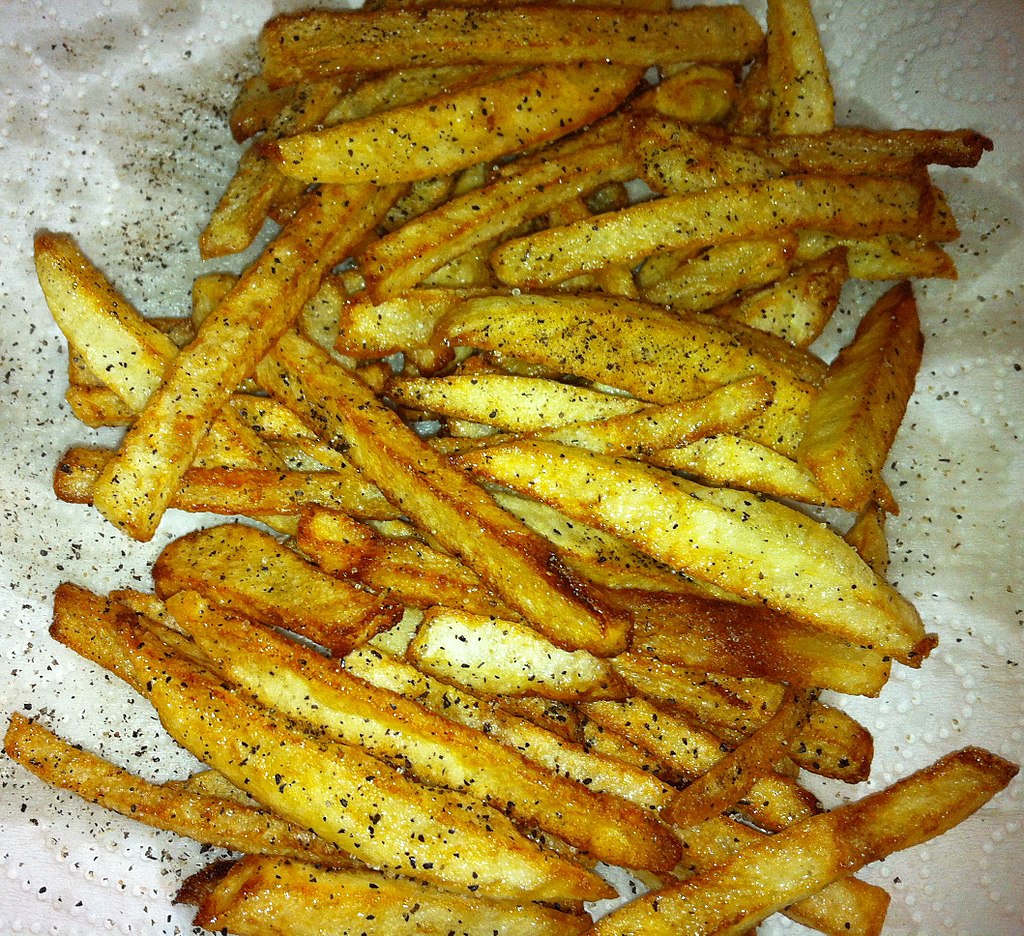
   The typical home fries and a pan full of French „potatoes lyonaise“. If you get hungry now and like to cook some of the dishes by yourself, then the article was done right.
I hope you enjoyed my little excursion into the „Braths“-potato world !


Veröffentlicht unter History, Lifestyle, Recipes | Verschlagwortet mit , | 4 Kommentare

Albert Einstein and Smartphone

Albert Einstein (14 March 1879 – 18 April 1955) was a German-born theoretical physicist. Einstein developed the theory of relativity, one of the two pillars of modern physics (alongside quantum mechanics). His work is also known for its influence on the philosophy of science.

Albert Einstein is best known by the general public for his mass to energy equivalence  formula E = mc2 (which has been dubbed „the world’s most famous equation“). He received the 1921 Nobel Prize in Physics „for his services to theoretical physics, and especially for his discovery of the law of the photoelectric effect“, a pivotal step in the evolution of quantum theory.

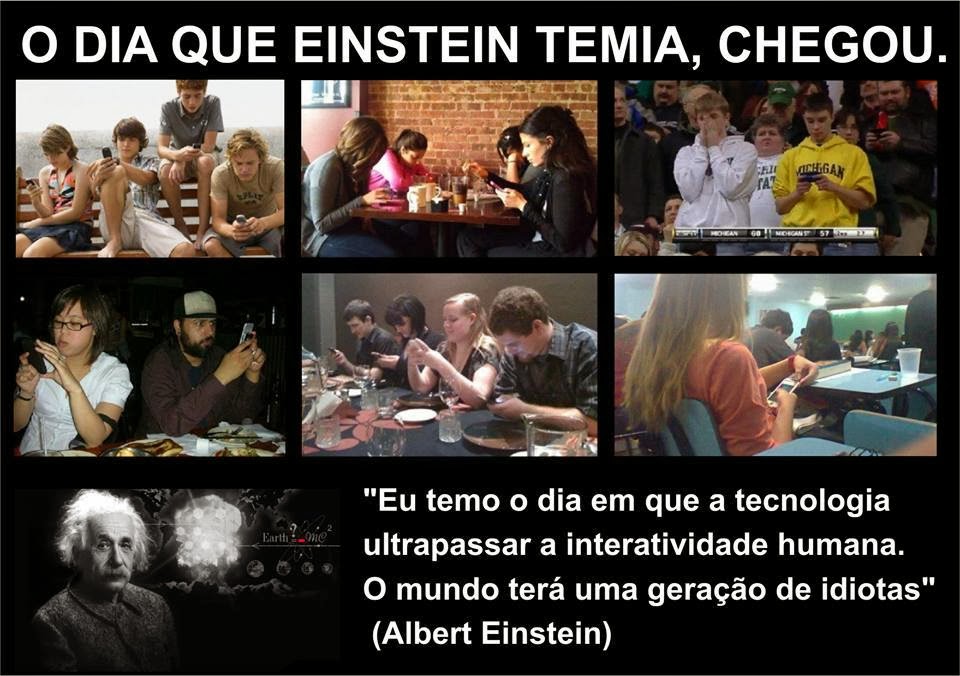
Albert Einstein said once, „I fear the day that technology will take on our humanity –  the world will be populated by a generation of idiots“.


Was Einstein right ?

If one looks on the pics, following down here, then we will have generations without personal communication – it seems like a world full of idiots. Look at the pictures without any comment.

Worst Disease and no cure in sight.

The Darwin Awards are a tongue-in-cheek honor, originating in Usenet newsgroup discussions around 1985. They recognize individuals who have supposedly contributed to human evolution by selecting themselves out of the gene pool via death or sterilization by their own actions. I guess, they are all „“smart““ phone users !


Darwin Award winners eliminate themselves in an extraordinarily idiotic manner, thereby improving our species‘ chances of long-term survival. Again, see the pics without further comments and may be make up your own mind.

This one up here is wild, right ? A driver on his smart phone runs over 3 kids. Taken from the „Shanghai Daily“ newspaper.

„I fear the day that technology will take on our humanity –  the world will be populated by a generation of idiots“.

Was Einstein right ?


Veröffentlicht unter Information, Lifestyle | 6 Kommentare

Did You Know That – 6

Did you know that Stonehenge is about 1500 years older then the Colosseum ?

The unique structure was built of large rocks (megaliths) about 3.000 to 2.500 years BC. The exact use by the people of the Bronze Age is unclear, as well as whether the rocks were brought to Wales (by glaciers, for example) or whether they were shipped. There are dozens of theory’s how and what for and by whom it was build.

  Sunrise at Stonehenge in Wiltshire, England.

What is certain, however, is that on the morning of Mittsommertag  (midsummerday or summer solstice, between 19th and 25th of June each year) the sun rises above the individual outer rock and radiates into the interior of the plant. Perhaps Stonehenge, besides the cultural / religious component, also had an astronomical significance. It also could be a burial place. Stonehenge is still an unsolved mystery.

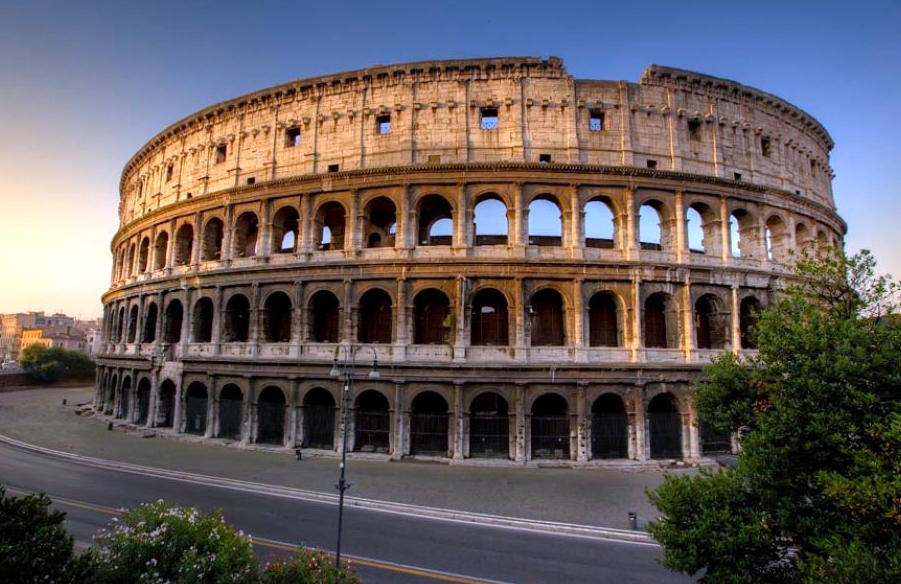
  The Colosseum in Rome, Italy.

The Colosseum in the center of Rome was built about 1.500 years later as a Circus ( to display all kind of games). It took about 50.000 people and thus resembles modern stages.

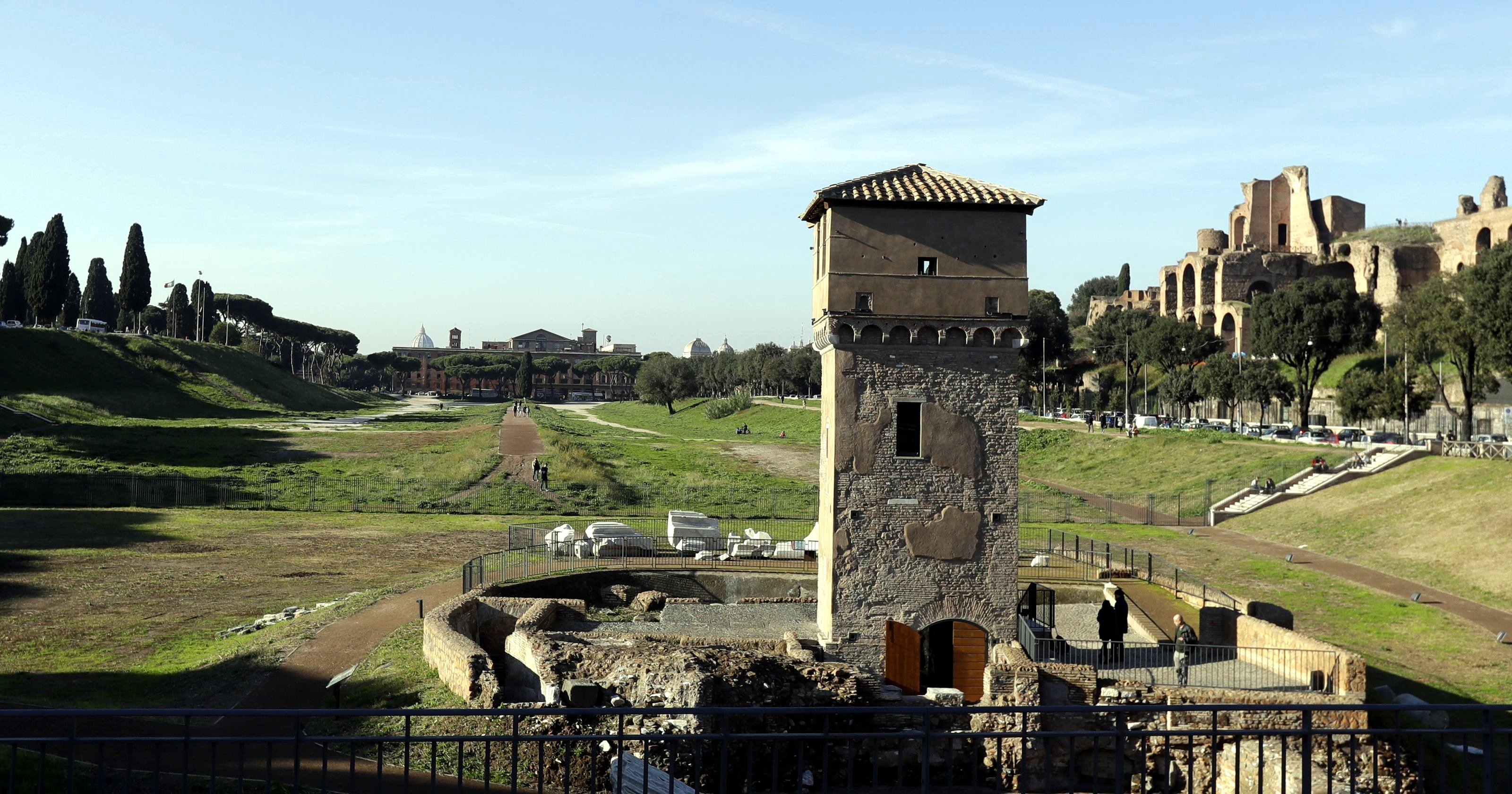
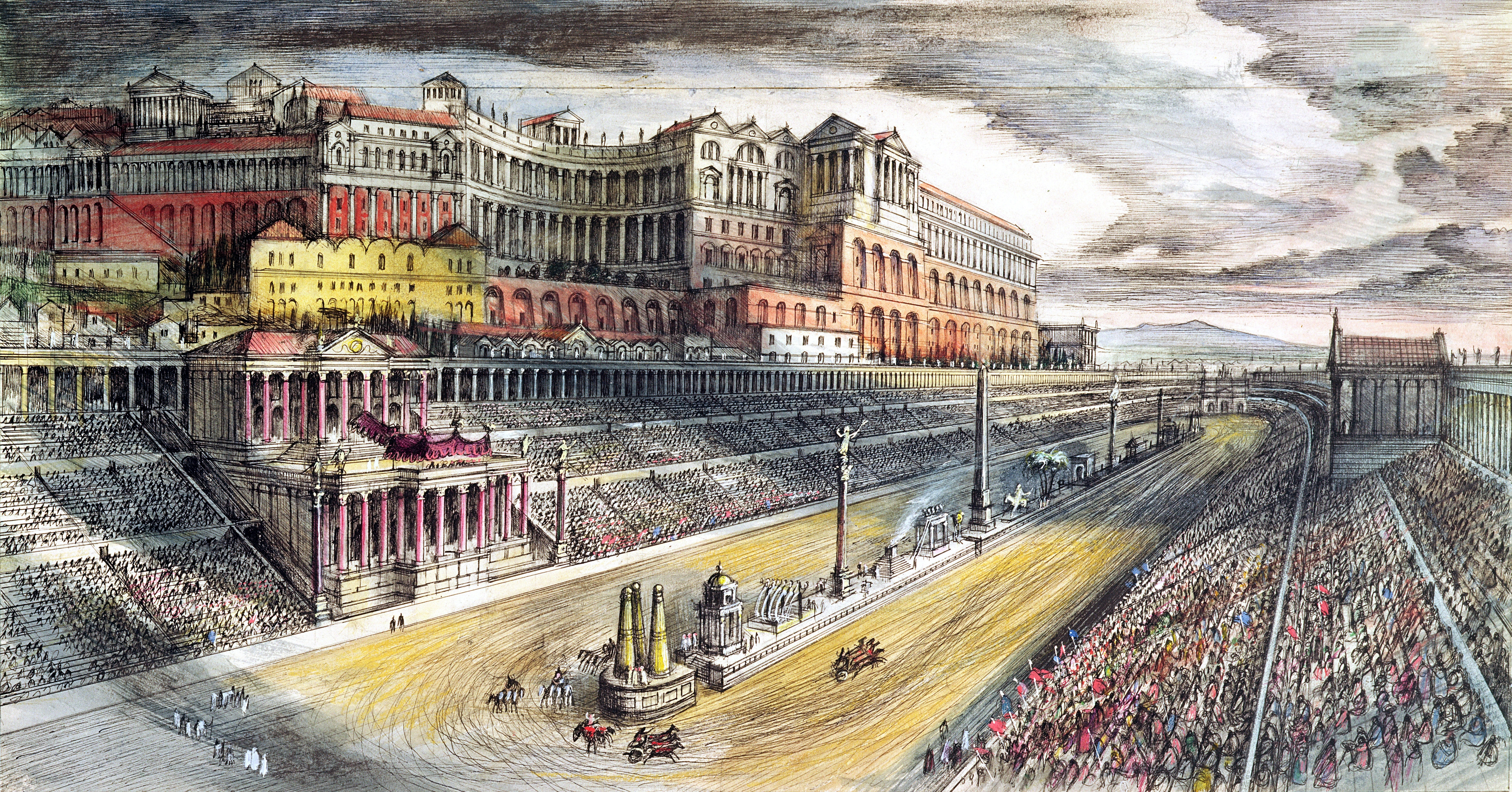
   Circus Maximus in Rome. Left: As tourists can visit it today. Right: As it would have looked like in Roman Ages, rendering by Alan Sorell.  It’s worth to click on pics to receive a better view.

The largest circus in Rome, however, was Circus Maximus, which was mainly used for car racing. It accommodated 300.000 visitors. Today, the only big meadow is a part of the Forum Romanum (Roman Forum). The grandstands were used as building materials for St. Peter’s Cathedral, Vatican.

Did you know that one can have the Bible in Klingon language ?

The Klingon Language Institute is currently working on a translation of the Old and New Testaments, which is quite advanced.

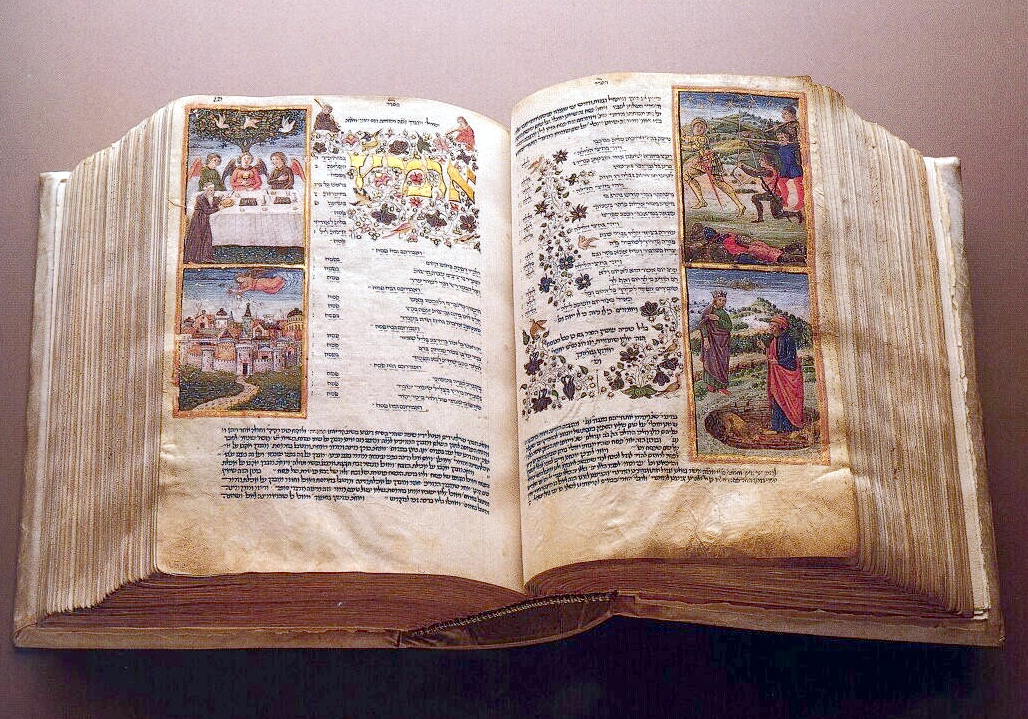
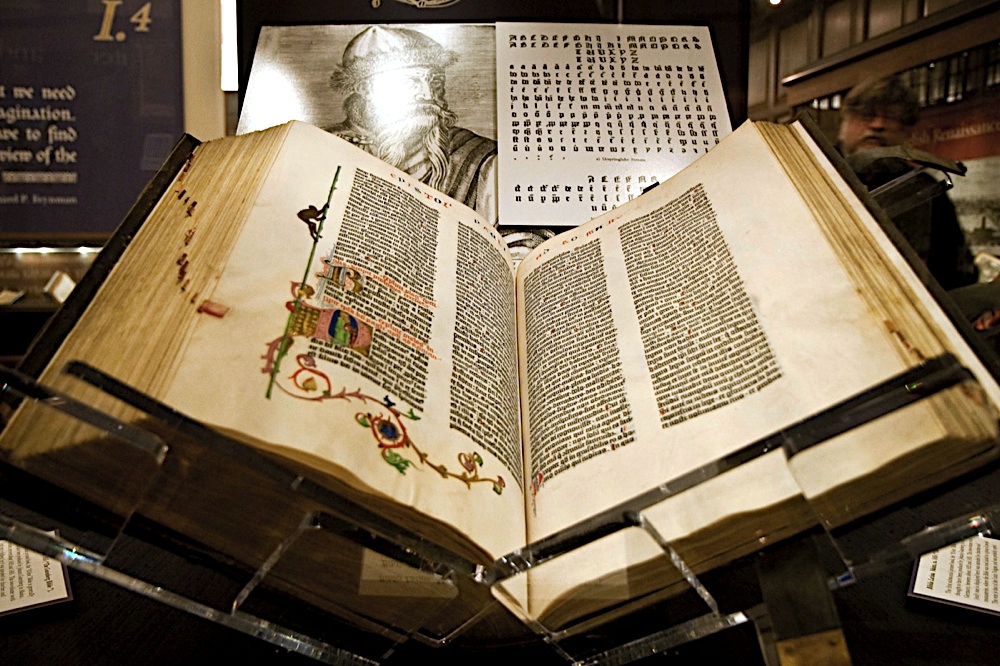
       Beautiful old Hebrew Bible, left. And right, the ultra rare Gutenberg Bible from 1554.

Klingon is officially recognized as an ISO-normalized language under the name „tlh“. As a character set it uses Latin characters since Paramount holds the copyright to the symbols used in „Star Trek“.

      Left, the Klingon alphabet and right an excerpt from the upcoming Klingon Bible. Click on pics to supersize.

The Bible is, by the way, not only the most widely printed book in the world, but also the most widely translated. The whole is translated into 450 languages, parts of it in 2480.

  Not bad, but who is going to have one and read it ?

The Klingon language is a constructed language spoken by the fictional Klingons in the Star Trek universe.
Described in the 1985 book The Klingon Dictionary by Marc Okrand and deliberately designed to sound „alien“, it has a number of typologically uncommon features. The language’s basic sound, along with a few words, was first devised by actor James Doohan („Scotty“) and producer Jon Povill for „Star Trek, The Motion Picture“.

  Are these teens really as dumb as they show ?

Did you know that 15% of British teenagers believe that they do not get pregnant when they have their eyes closed during sex.

  Open your eyes kids, now its to late.

At the same time, the UK is the country with the most unintended pregnancies among teenagers. Is there a connection?

                 Closing your eyes won’t provide safe sex. And holding your hands „down there“ won’t help either.

To think of, gives one this disrespectful deal with one’s own body, but also with regard to sex diseases. Currently, 2 people are infected daily with the HIV virus in Austria, the majority of new infected persons with heterosexual contacts. Did you know that ?

Did you know that giraffes sleep only a few minutes per day?

   Sleeping giraffe.

This is what almost all large herbivores do, so they can not be surprised by enemies. Also, they are busy ruminating all the time. And you thought your day would never end?

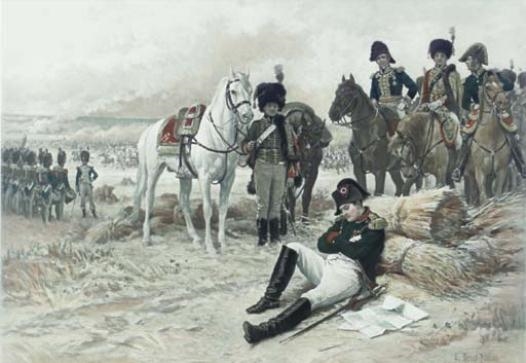
        Extremely rare drawing of Napoleon Bonaparte „SLEEPING“.    And a dolphin baby.

Napoleon, by the way, never slept more than four hours a day. Dolphins only sleep with one half of the brain and one eye, so they can watch for predators and other threats.

Did you know that the Eiffel tower is 15cm higher in summer than in winter ?

The Eiffel tower is a landmark, constructed from 1887–89, as the entrance to the 1889 World’s Fair in Paris, France. It is a popular postcard motif, a street artist’s suggestion and a place to make a request for marriage, so as much much more.

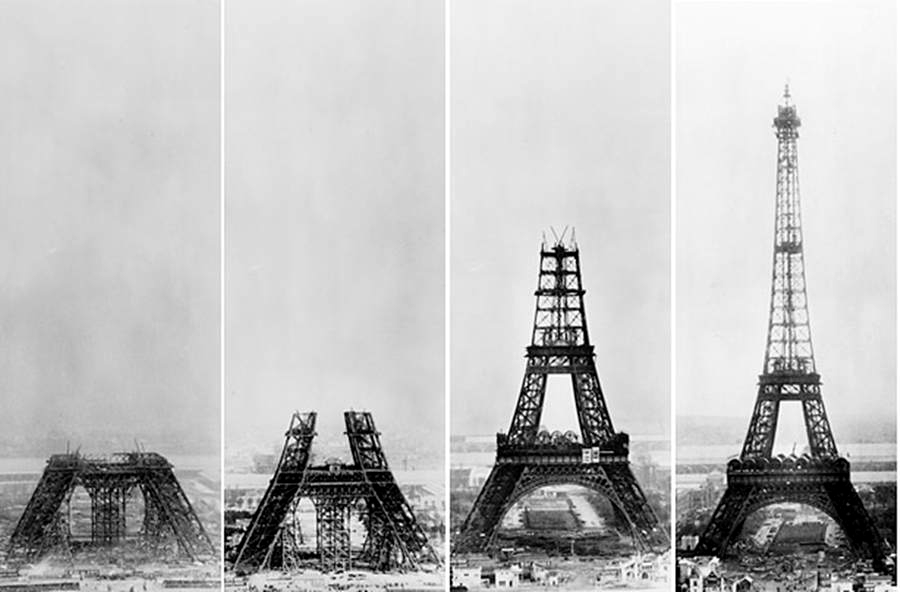
  Photo collection of building the Eiffel tower, Paris.

This was not always the case. Already the planning was accompanied by protests by artists, intellectuals and architects. Shortly after the opening, however, the Parisian population turned a corner and was almost unanimously proud of the then-tallest building in the world. So proud that the originally only temporarily imagined construction should remain permanent. Nowadays visited by millions.

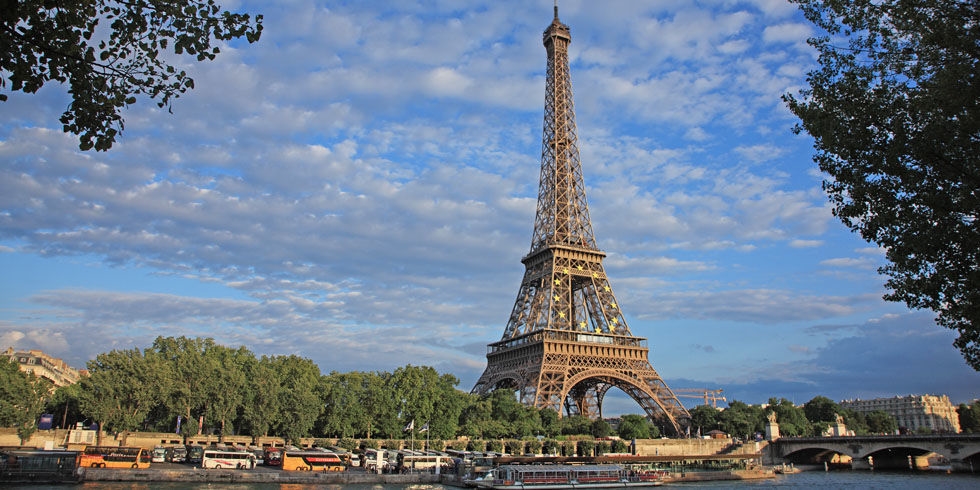
  Eiffel tower, pic taken from the other side of river Seine.

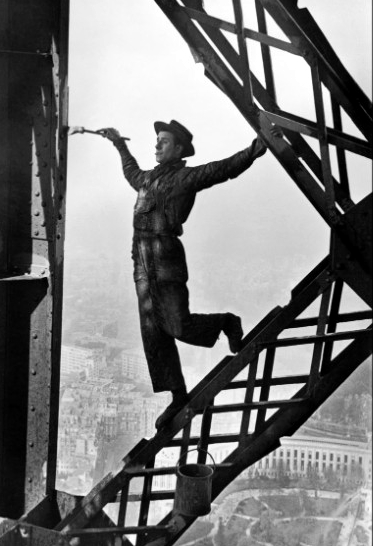
This, however, posed challenges for the steel construction: parts had to be renewed regularly, and the entire tower had to be repainted every 7 years, each time weighing 15 tonnes. In case the tower was painted exact every seven years, then he would be in the 128 years of existence some 270 tonnes heavier now then his opening year. (18 times painting x 15 tonnes each = 270 tonnes in total). Can you imagine ?

               Painting the Eiffel tower, then and now. Each time about 15 tonnes of paint.  I don’t know how many tonnes are washed off during the painting intervals. Definitely the tower gets heavier and heavier every time.

The difference in height results from the principle of thermal expansion: substances expand when heated by the stronger movement of the contained atoms. With gases, this expansion is quite strong, the gas pressure increases. However, this effect – but much weaker – can also be observed in solids. In constructions such as the Eiffel Tower, which consist entirely of the same metal, the expansion usually results in no problem.

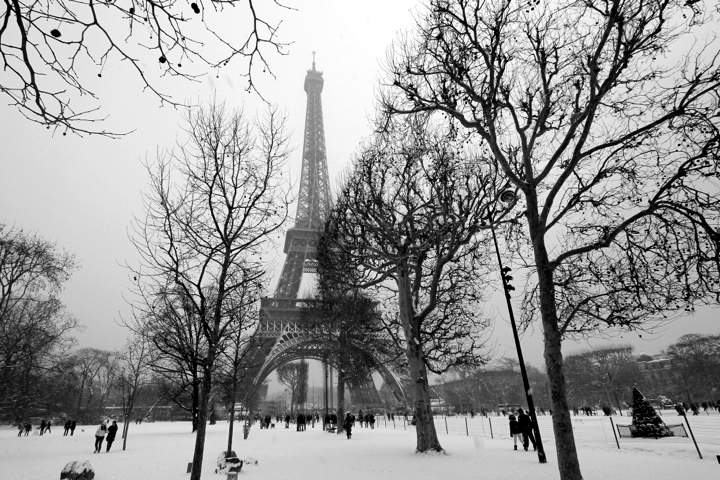
  The tower now 15 cm shorter than in summer.

A material mix with substances of varying thickness or buildings that have no room for expansion, such as pull rails, is more dangerous. You will get expansion joints for safety. When the wheels travel over them, the typical monotonous traction ratios turn up.

       The typical „old“ rail connection.  Same symptoms one has on bridges, see the right picture.

The „khat khat khat“ sound is due to the gaps between the two rails which are joined by the fish plates. Whenever there are gaps between the rails, the bogies passing over it makes that kind of sound.

  Much more modern and silent CWR connection.

The tapered joint allows the wheels to roll smoothly over from one section to another. This style of construction greatly reduces the noise levels in normal running. It’s called
„Continuous Welded Rail“ (CWR).
I hope that you enjoyed this part 6 of the „did you know“ series.  Stay tuned !

Veröffentlicht unter History, Information, Lifestyle | Verschlagwortet mit | Hinterlasse einen Kommentar

Pirates are still „Ruling“ the USA

Why pirates are to blame for the complicated and antiquated system of measurement in the USA.

One centimeter is one-hundredth of a meter, one kilogram a thousand times a gram. But this plausible metric measurement system is not granted to everyone. In the US, people are beating around with the complicated and antiquated imperial system. And guilty of it are English pirates.

  Caribbean (English) pirates (privateers) . Click on pic !

Even if you do not travel to the USA, the world has become so small that everyone has come into contact with the comparatively complicated and antiquated Anglo-American system of measurement.

   Yeah, not easy to cook. At least we don’t have to explain anymore the eggs, big or small – brown or white, right ?

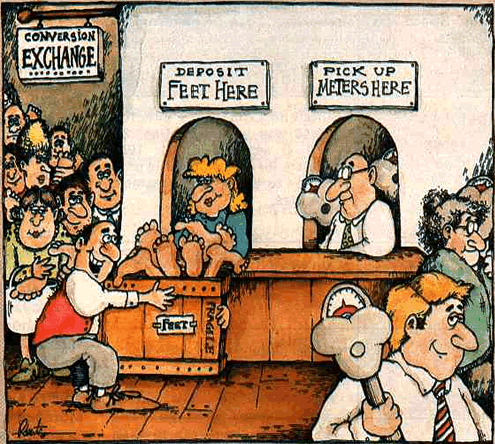
Whether with product descriptions on the internet or in English cooking recipes: Who has not ever wondered how many liters are two pint or how many centimeters a 4-inch display measures? And why does a yard not have 10 or 100 inches, but 36?

   It’s challenging if you come first time to the US, renting a motor-home and then having this board in front of a bridge. 11 minus 8 is 3, means 3 meters high, right ?

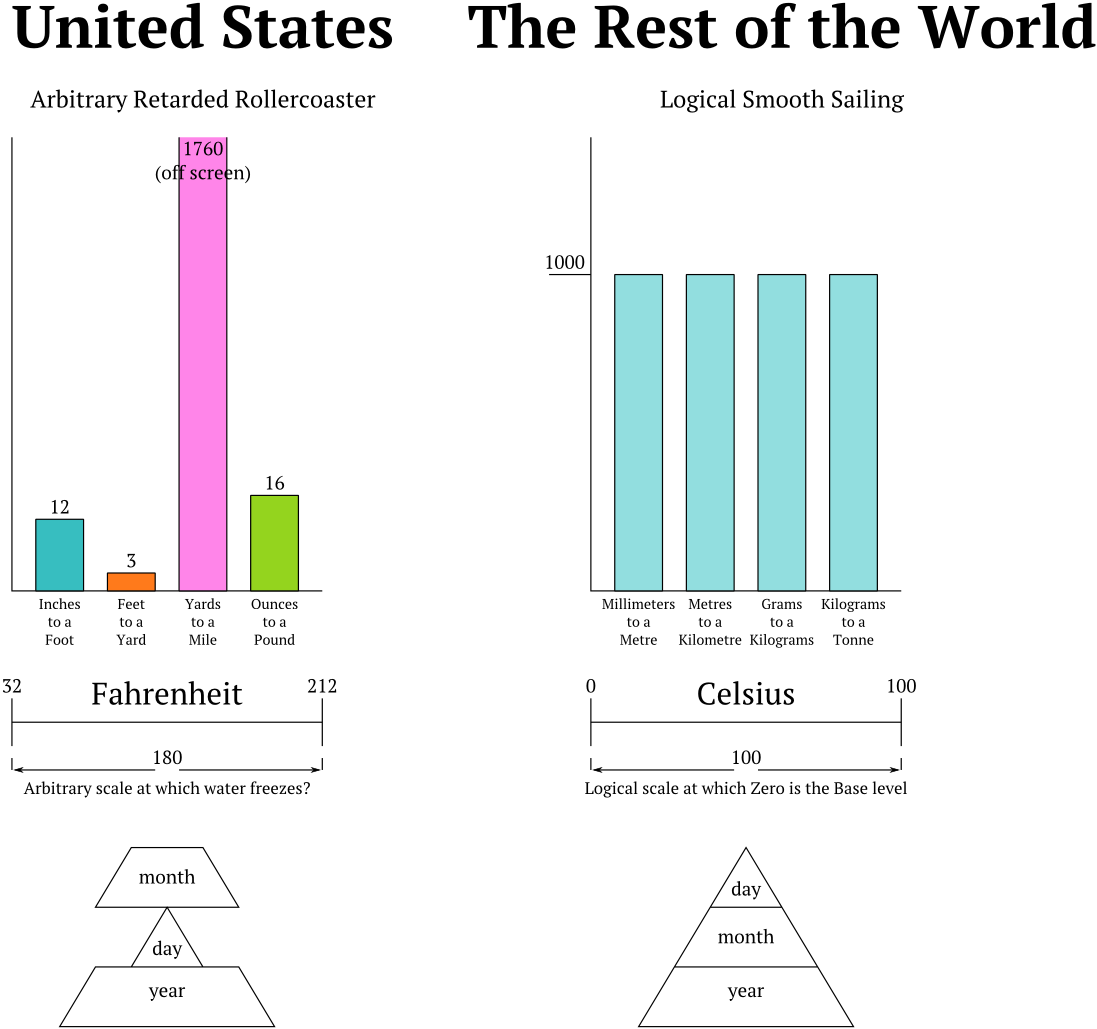
The US arbitrary retarded „roller-coaster“.

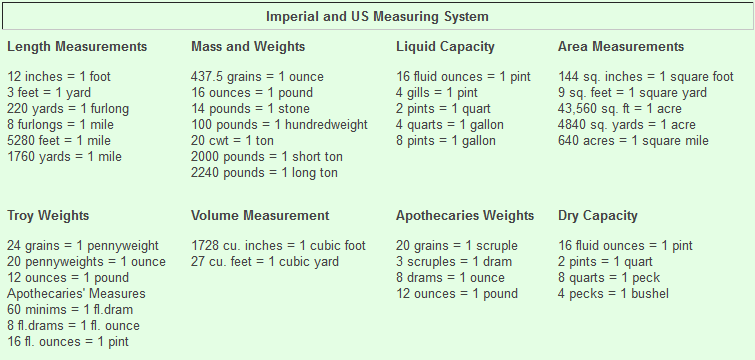
The Anglo-American system of measure, also called imperial system, unlike our metric has no relation to the decimal system. The measurements do not build on each other tenfold.

  The most „unlogic“ measurement system.

As a German growing up with the metric system for pretty much all measurements it is incomprehensible why its still used. During my first journeys to the USA and Australia I made contact to the imperial system and pretty soon I tried to avoid it wherever I could. Why? Because it makes no logical sense.

No wonder that there are so many jokes about the „Imperial – Standard – Customary“ system around the world.

What is the Imperial System ?

The Imperial system as we know it today was inaugurated in 1824 by the British. It was subsequently adopted by as an international standard in measurement. The origins of this system come from just after the turn of the first millennium, but has been since heavily revised.

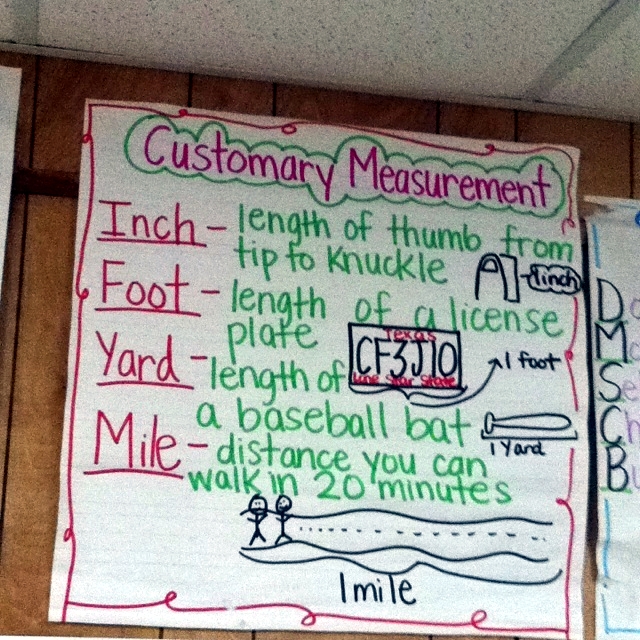
          It is still the way how they teach it in American schools. Click on pics and try to understand it yourself.
NO JOKE !

When I was talking to some Americans who referenced the „standard“ measurement, or the „standard“ system, I was confused as to what they were referring to. I came to find out that it was what I knew as the imperial System. I was somewhat amused at the name as it showed in my eyes an aversion to the United Kingdom origins and also because the „standard“ measurement was somewhat ironic in its title as „the standard“ is only found in the United States of America.

   That’s how they call the imperial system in the USA.

Same with the, also frequently used term „customary“ system. It suggests that this system is used everywhere from everyone. When our daughter went to an American university she found out that most children in high school age don’t even know that there is  another system (the metric system) in existence around the world.

           
If it weren’t so sad one could laugh about it !  Click on pics in this article to enjoy the pictures.

Currently there are virtually no countries that use the imperial system of measurement, but rather they have adopted the Metric system so reasons which will become indubitably clear as we continue. The imperial system was discarded starting in the middle of the 20th century, and is now obsolete.

America # 1 in the world ?

  On first sight it looks funny, but it isn’t, because Americans are educated like this and they deeply believe in it ! Hi there, you are not #1, you are far behind the rest of the world.
  The only 3 country’s which are officially  still use the imperial measuring system. Just related with some banana republics. You are alone against the world.
    Same here, its no fun at all.
Nicaragua meantime signed the climate agreement.
A Syrian official says the war-ravaged country plans to sign the Paris climate accord. Until now, it had been the only United Nations member state not to have done so. The move was announced Tuesday (7th of November) at the global climate meeting in Bonn, Germany. It means the United States would be the sole U.N. member country outside the deal if President Donald Trump makes good on his threat to pull out.
I know that most Americans stand behind the climate contract, its just your president. But on the other hand, you elected him and therefore you all are responsible for him. My dear American friends, you are not #1, you are far behind, outdated and  you are alone !
Positive is that many Americans are against Trumps „lonely decision“. See the massive presence of Americans (like Jerry Brown, Al Gore or Arnold Schwarzenegger) as climate protection advocates, attending the climate summit 2017 in Bonn.
  This is how it works – just „approximating“, just „abouting“. Measurement always goes „to the nearest 1/8th of an inch ! How precise !

One inch (from Latin „unica“, a twelfths) is, for example, one-twelfth of a foot length, which in turn is defined as the unit of measured foot. A yard is what was once considered the standard length of a step. In Europe too, people were fooling around with this tiresome imperial system.

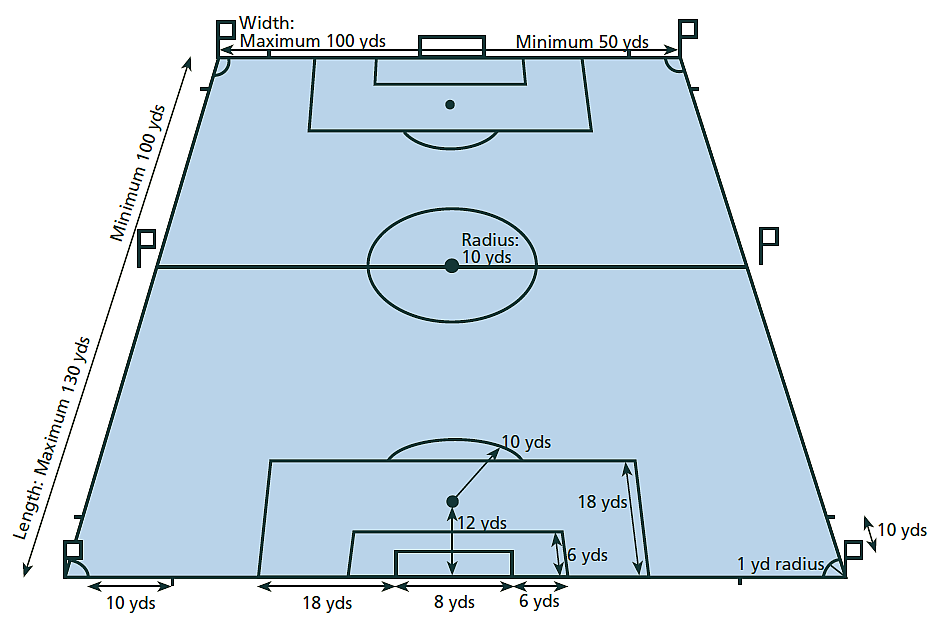
  As soon as something is a bit bigger then „about 100 yards“, they measure it in „footballfields“. One can hear or see that all the time on TV, by example : „this is about 6 blocks away“, or „that is larger then 3 footballfields“ ! Are you still in the 1700’s ?

No wonder, then, that in the eighteenth century the idea of ​​a group of French philosophers to introduce a unified, simple and precise system of measurement met with open ears. The metric system they proposed was able to avoid the inaccuracies and problems that traders had in one unit bought, but sell their goods in another unit. Scientific measurements could be specified and the international exchange of knowledge could be simplified.

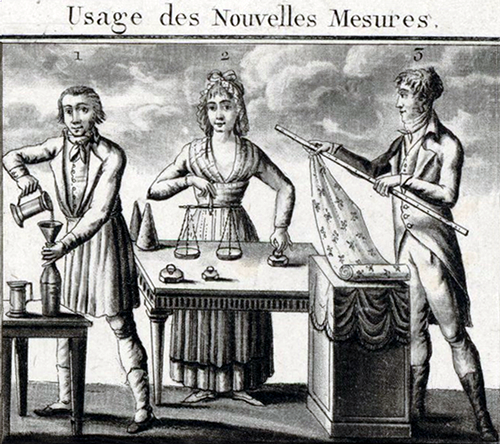
                                 Near the end of the 1700s, King Louis XVI of France ordered a new system of measurement in an effort to crack down on rampant cheating taking place under the existing systems. Left pic: The king’s commission recommended what would become the decimal metric system, and for mass measurements proposed a new unit called a grave which was defined as the mass of a liter of water at the ice point. Right pic: Redefining the Kilogram, woodcut from 1800, left the liter, middle the kilogram, right the meter.

Pirates prevent distribution of the metric system.

But why did not the system became established throughout the world? The answer: Pirates foiled his introduction to the United States of America.

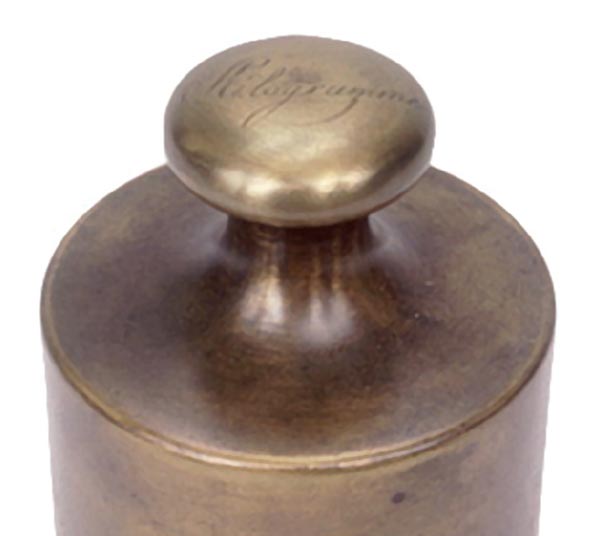
In 1793, the scholar and aristocrat Joseph Dombey was sent from the Old World to speak on the other side of the Atlantic with US Secretary of State Thomas Jefferson. In the luggage he had a pole that measured exactly one meter and a copper cylinder, which weighed exactly one kilogram.

  The one kilogram copper weight.

In the years after the American Revolution, American money was a total mess.
The currencies were all divisible in different ways. The British pound was divided into 20 shillings, and each shilling was divided into 12 pence. The Spanish dollar was divisible into eight reales, one for every finger (thumbs didn’t count).

  Thomas Jefferson would have changed – for sure – the measurement system into the metric system, like he did with the monetary system.

In April of 1784, Jefferson wrote „Notes on the Establishment of a Money Unit, and of a Coinage“ for the United States. It’s essentially this 11-page ramble about currency, rates of exchange, weights of gold and silver coins. It made the US dollar what it is today, an international „metric money system“ with 100 cents to a dollar.

Very very sad that there was no chance to change the measurement system too. Try to understand the above.

Jefferson had previously been a diplomat in Europe and was open to the ideas of the enlightenment and the metric system. So there was reasonable hope that he would convince Congress to adopt the new system. What happened ?

Who was Joseph Dombey ?

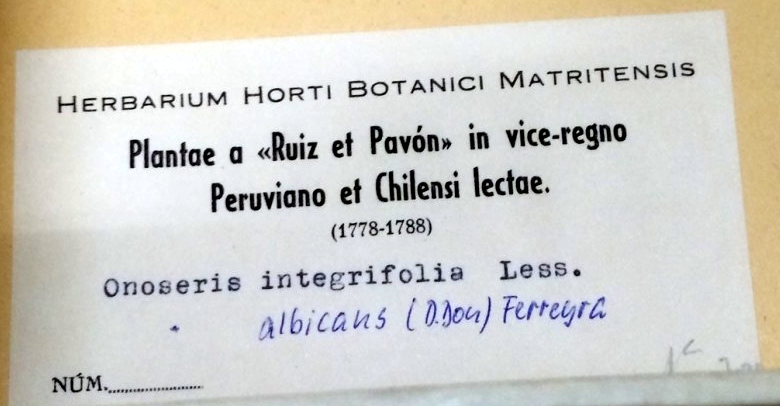
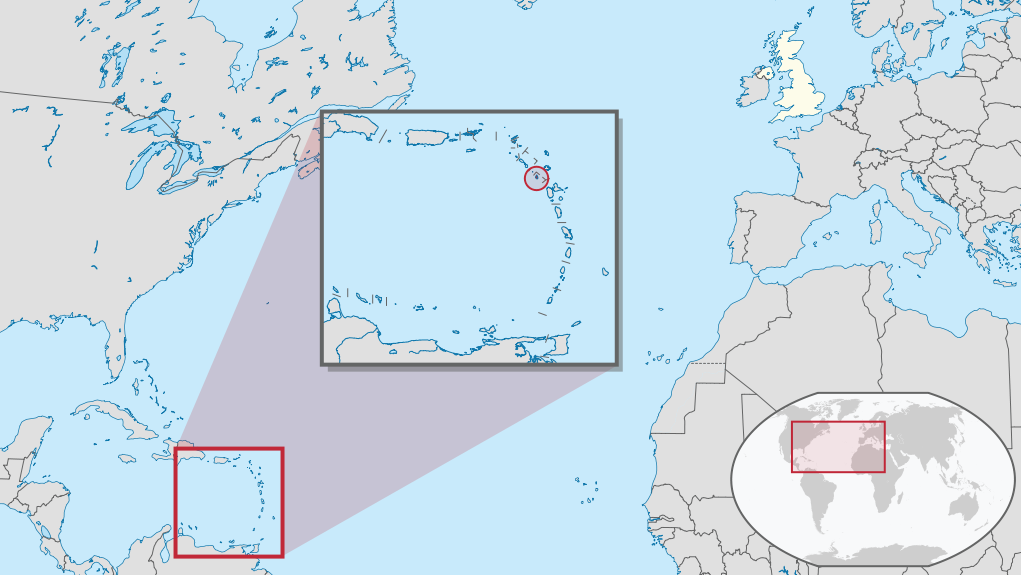
Joseph Dombey was born in Macon, France on 20th of February 1742 and died as a    prisoner on the English island of Montserrat, West Indies, in May 1794. He was a well known French botanist.

  Joseph Dombey.

Dombey ran away from home and acquired a thorough knowledge of botany in Montpellier, where in 1768 he graduated in medicine. In 1772 he went to Paris, where he became assistant to the botanist Bernard de Jussieu, and in 1776 was appointed by Turgot as the head botanist of the Jardin des Plantes.

  The „Dombeya“ flower.

A year later he was sent on an expedition to visit South America and collect useful plants as such could be cultivated in France. He arrived in Callao in January 1778, and soon gathered a large herbarium of the Peruvian flora, also accumulating much valuable information concerning the cinchona tree. In 1780 he sent a portion of his collection home, but the vessel containing them was captured by the British, and the specimens sent to the British Museum, where they are still retained, not withstanding the subsequent claims by the French government.

  Dombeya Spectabilis.

Dombey sought at once to replace this loss, and soon had in readiness a second shipment, but the authorities of Callao confiscated over 300 original designs of rare plants on the pretext that works of native artists were not permitted to be exported to foreign countries. These designs were given to the Spanish botanists Pavon and Ruiz, who used them in their publication of „La Flora Peruana“. Not one word was granted for or/and about Dombey.

   One of the „stolen“ collections.

In 1782 he visited Chile and collected the plants indigenous to that country. During his stay in Concepcion the cholera broke out, and at once Dombey offered his services and was appointed physician-in-chief of the city, which office he resigned in 1783 when the epidemic had passed. He was then invited to examine the quicksilver mines of Chile; the mines in Coquimbo he put in working order, and discovered the mines in Jarilla, and although he spent considerable money in this work, refused all compensation from the officials in Chile, saying that he accepted payment only from the king of France. Finally he sailed for Cadiz, where he arrived in February 1785. Here he suffered the loss of half of his collections, which were seized by the Spanish government and himself imprisoned until he agreed not to publish his researches prior to Pavon and Ruiz. What an extortion.

  Dombeya Natalensis.

Dombey succeeded in escaping to France by way of Le Havre, and secured, on Buffon’s recommendation, an indemnity of 10,000 francs and an annual pension of 1,200 francs. His remaining botanical collections were transferred to the French botanist L’Heritier who had to flee to London with them when Spain demanded these also.

Back to the Pirates.

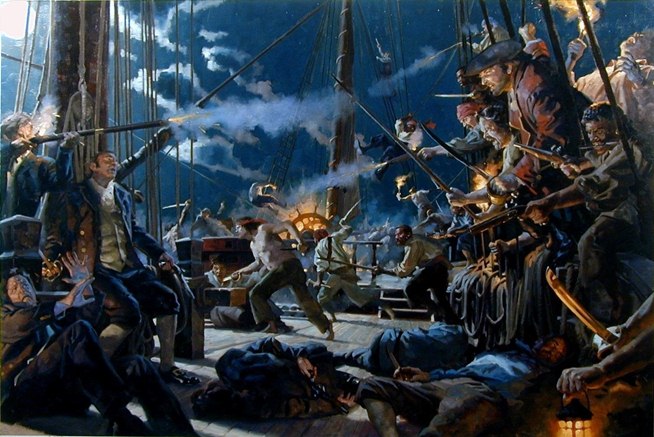
In 1793 Dombey was sent on this mission to the United States, but Dombey was off course on his passage through a storm. His ship was driven into the Caribbean and fell there in the clutches of British pirates. These captured Dombey and destroyed his equipment. The luckless botanist died a short time later in prison on the English island Montserrat.

  Was Dombey boarded like this ?
  Whatever, he was brought to the English island Montserrat in the Caribbean, where Dombey died in prison.

France sent a second envoy on the way. He reached the USA in good health. But in the meantime, Jefferson was no longer foreign minister. The future US president had just at the time a meaning crisis. After exhausting disputes, he had withdrawn from politics.

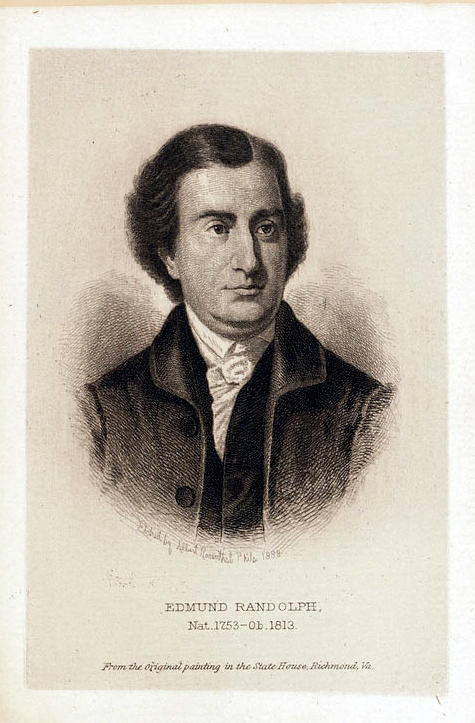
   Thanks to Edmund Randolph, to „old fashioned“ to change, the United States of America still fool around with the tiresome imperial system.

His successor Edmund Randolph had little left for the idea of turning existing standards in the US upside down. And while many countries in the rest of the world have introduced the metric system, Americans are still dealing with the confusing imperial system.

For how long ?  Is alteration on its way, finally ?

Veröffentlicht unter History, Information | Verschlagwortet mit | 6 Kommentare

My Whisky Ribs

Here in Uruguay it is begin of our BBQ and outdoor cooking season. For many years we make this dish and always everyone is excited with it. The secret crown of it is the BBQ sauce, which I always make as a lot, to have some for a next BBQ (asado) or as a gift for friends. They love it. I know, it is quiet some work to do, but it’s worth it

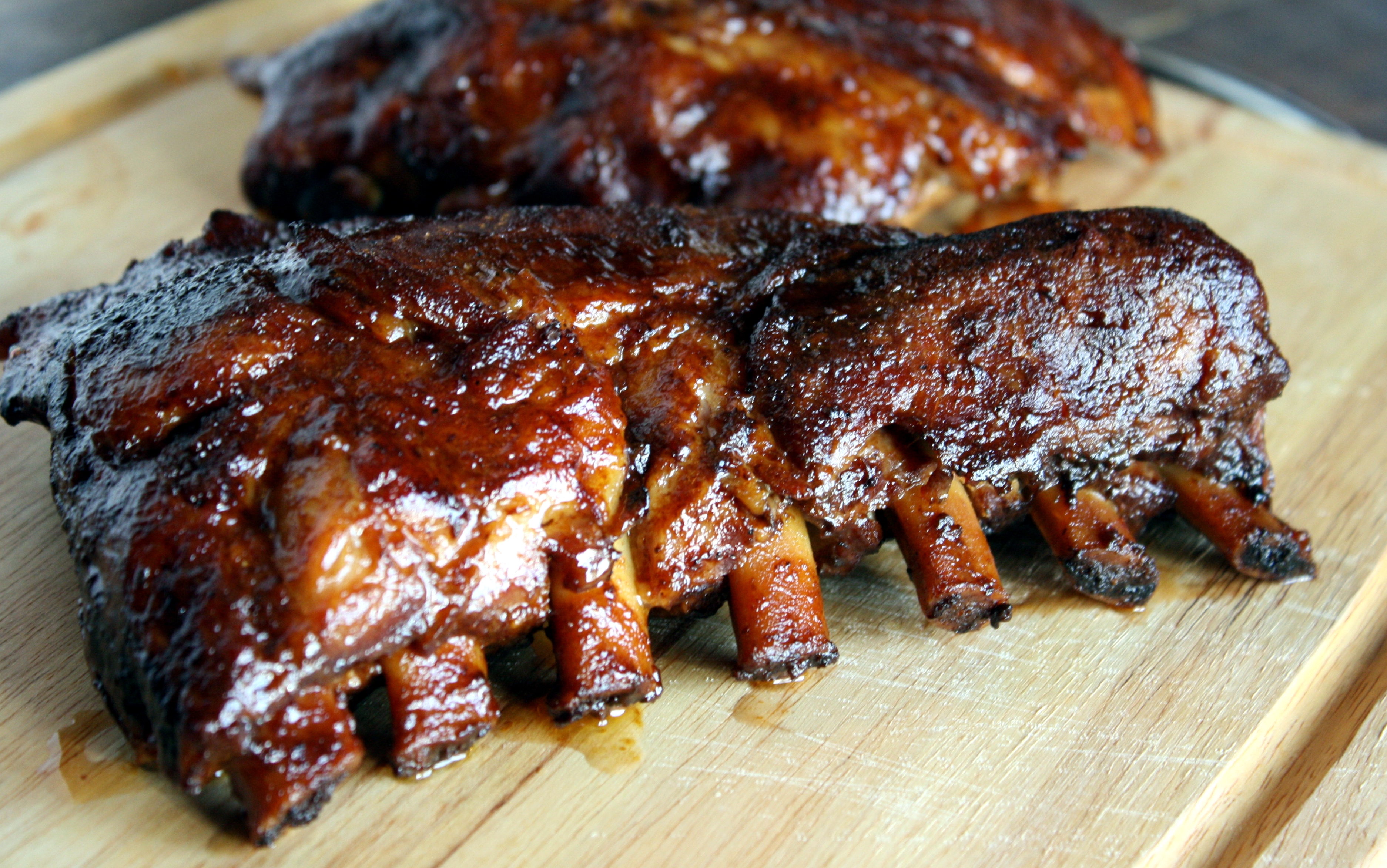
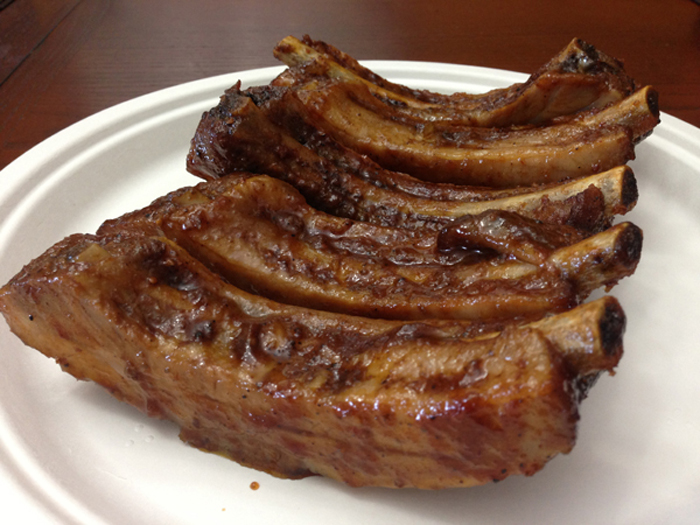
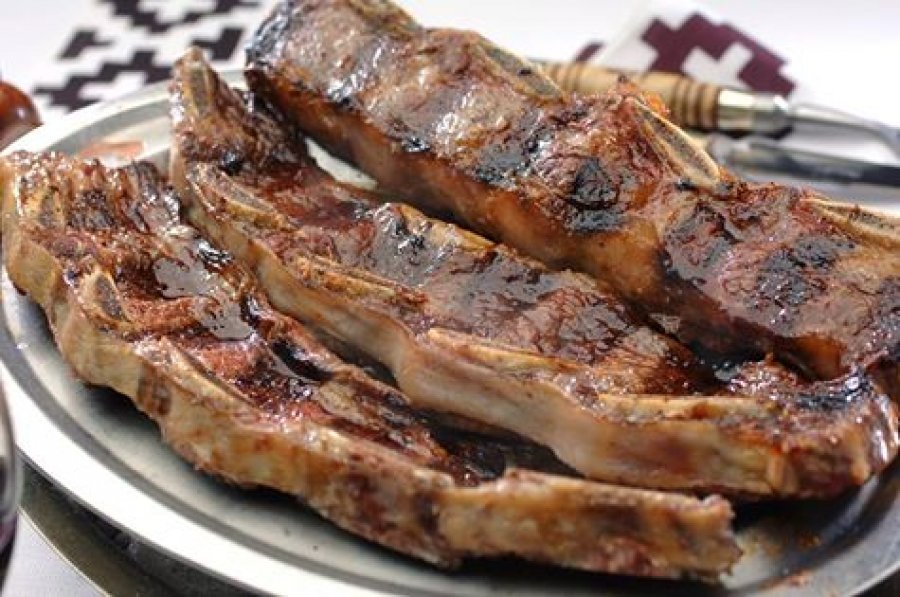
      Ribs Uruguayan style. Left, some butchers offer American cut, right the Urugayan asado cut.  Boring, tasteless and fatty! Very often stringy and chewy – like chomping on a piece of sandal. Sorry! Why do they do it like that? I found out, they are to lazy to invest time and work into a sauce or not paying good money for other nice ingredients especially top quality meat. Just the cut on the fire and then served with a bit of white bread. Oh yeah – and sometimes sprinkled with dry Oregano – UGGGGG.

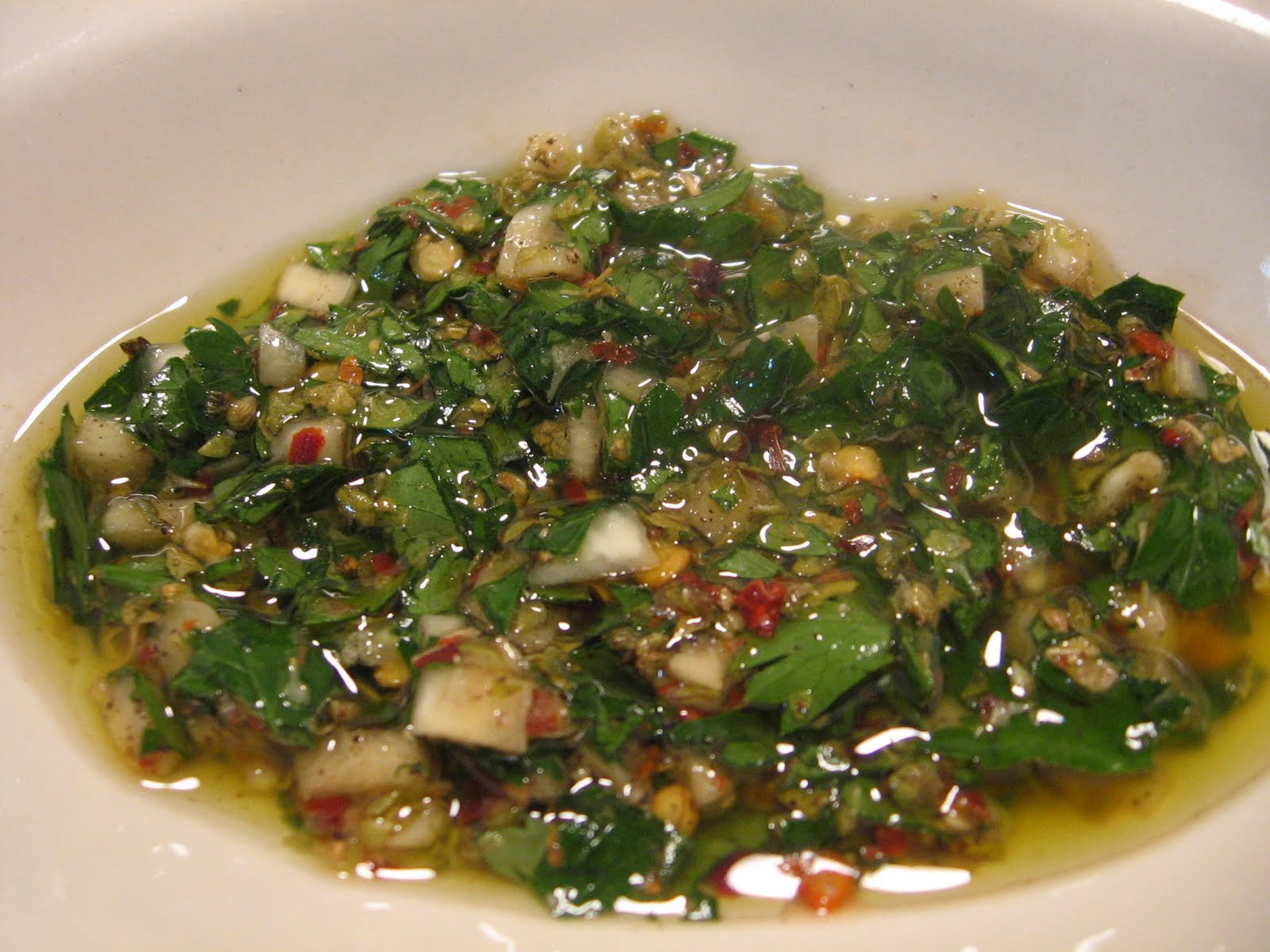
Sorry to complain about Uruguayan cooking or BBQing, but I like better 1 or 2 times a very nice portion of meat instead 9 times per week rubbish ! 9 times per week a meat meal is official Uruguayan statistic !!! The positive – I have been in the last 8 years to a lot of Urugayan Asados – some are really good and worth to remember. But never ever I had one who made own sauces except Argentine chimichurri.

  Chimichurri, sometimes nicely made and tasty.

Using the slow cooker allows you to get baby back pork ribs incredibly tender, but you’ll need to cook them in a sauce with tons of flavor so they’re not boring. For these easy, tasty ribs, you make a bacon-whisky barbecue sauce for marinating and simmering the ribs. After 4 or 5 hours, when the ribs are tender, you brush them with more sauce and give them a quick turn in the broiler or on your BBQ.

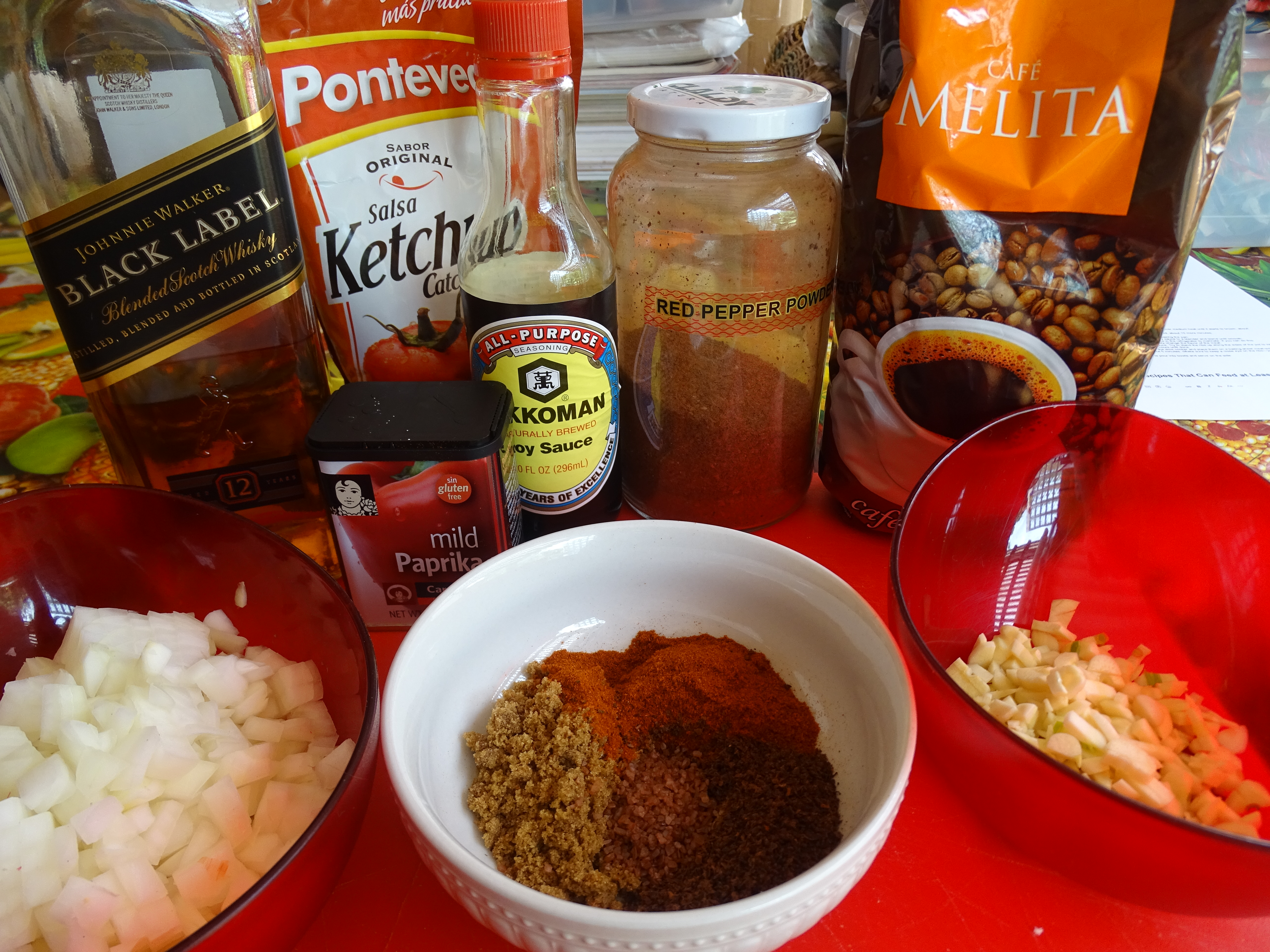
   The ingredients.

Ingredients.
The dry-ingredients mixture:

2 tablespoons dark brown sugar
2 tablespoons smoked paprika, I use the mild/sweet one
3 tablespoons chilli powder
2 tablespoons ground yellow mustard seed
2 tablespoons dried sage
2 tablespoons cummin
1 teaspoon cayenne powder, if its very hot be careful
2 teaspoon kosher salt

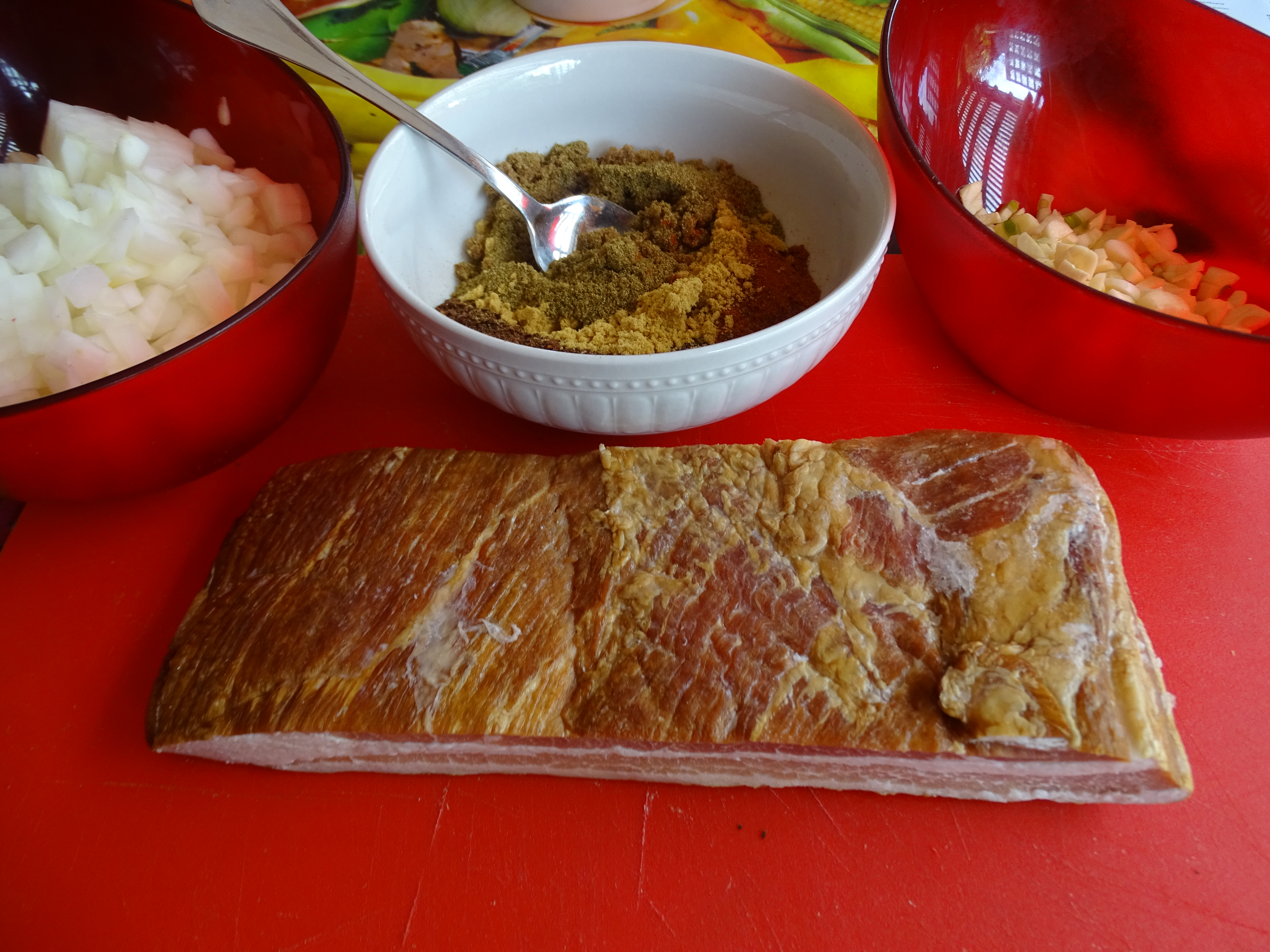
   Good smoked ham is important. It will give your BBQ sauce a nice smokey flavour.

The barbecue sauce:

450 gram (15 ounces) thick-cut well smoked bacon, chopped
2 large yellow onions, chopped
8-10 cloves garlic, chopped

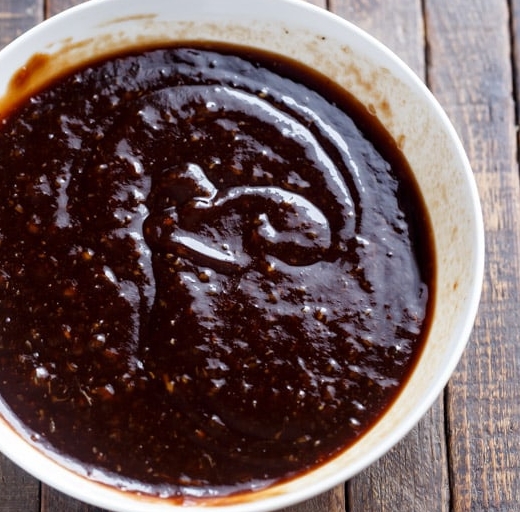
  Delicious dark, spicy, whisky, bacon BBQ sauce.

2-3 large shot whiskey, a good scotch or bourbon (you’ll taste it)
3 cups extra-strong brewed coffee, black
3 cups ketchup
4 tablespoon soy sauce

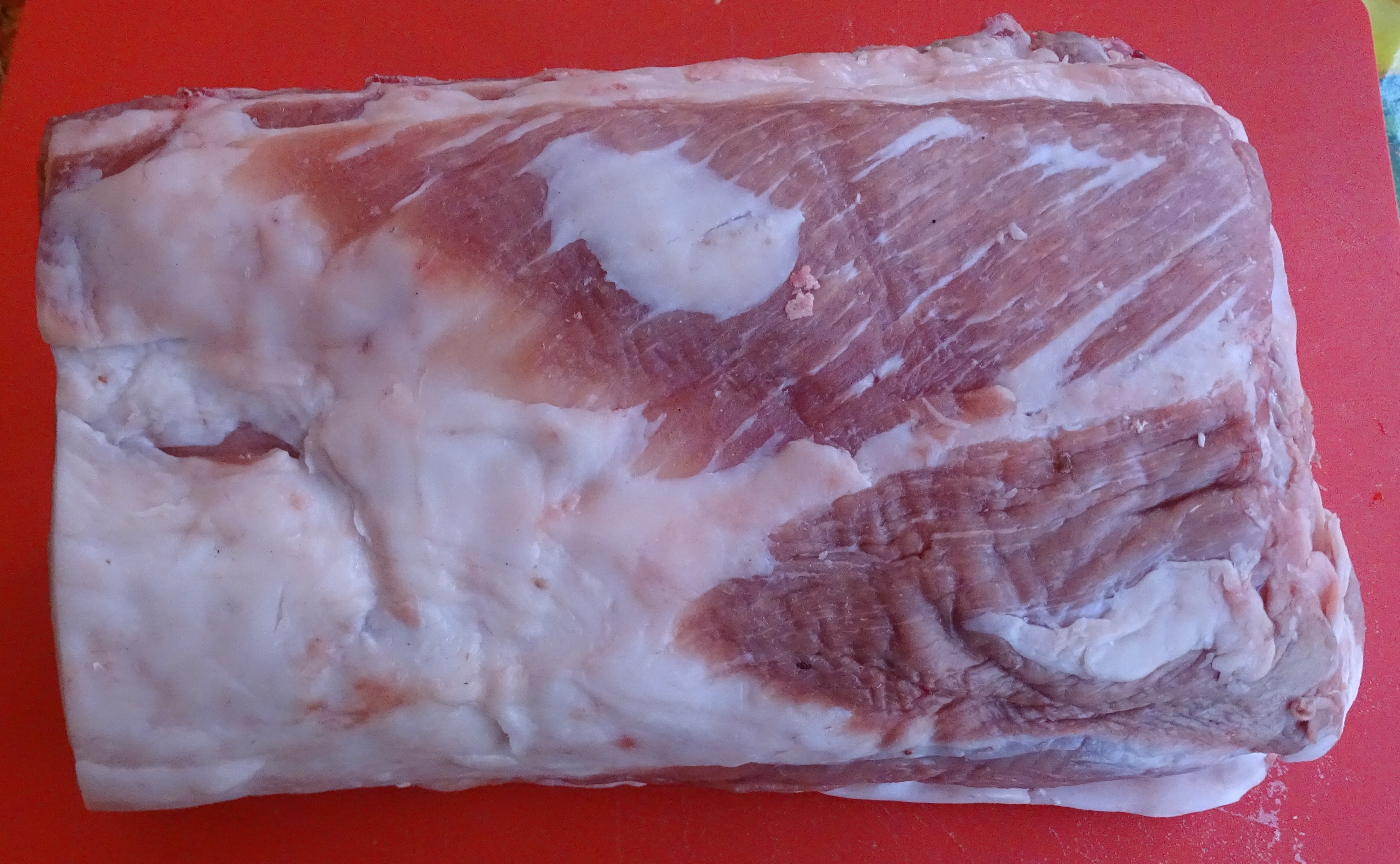
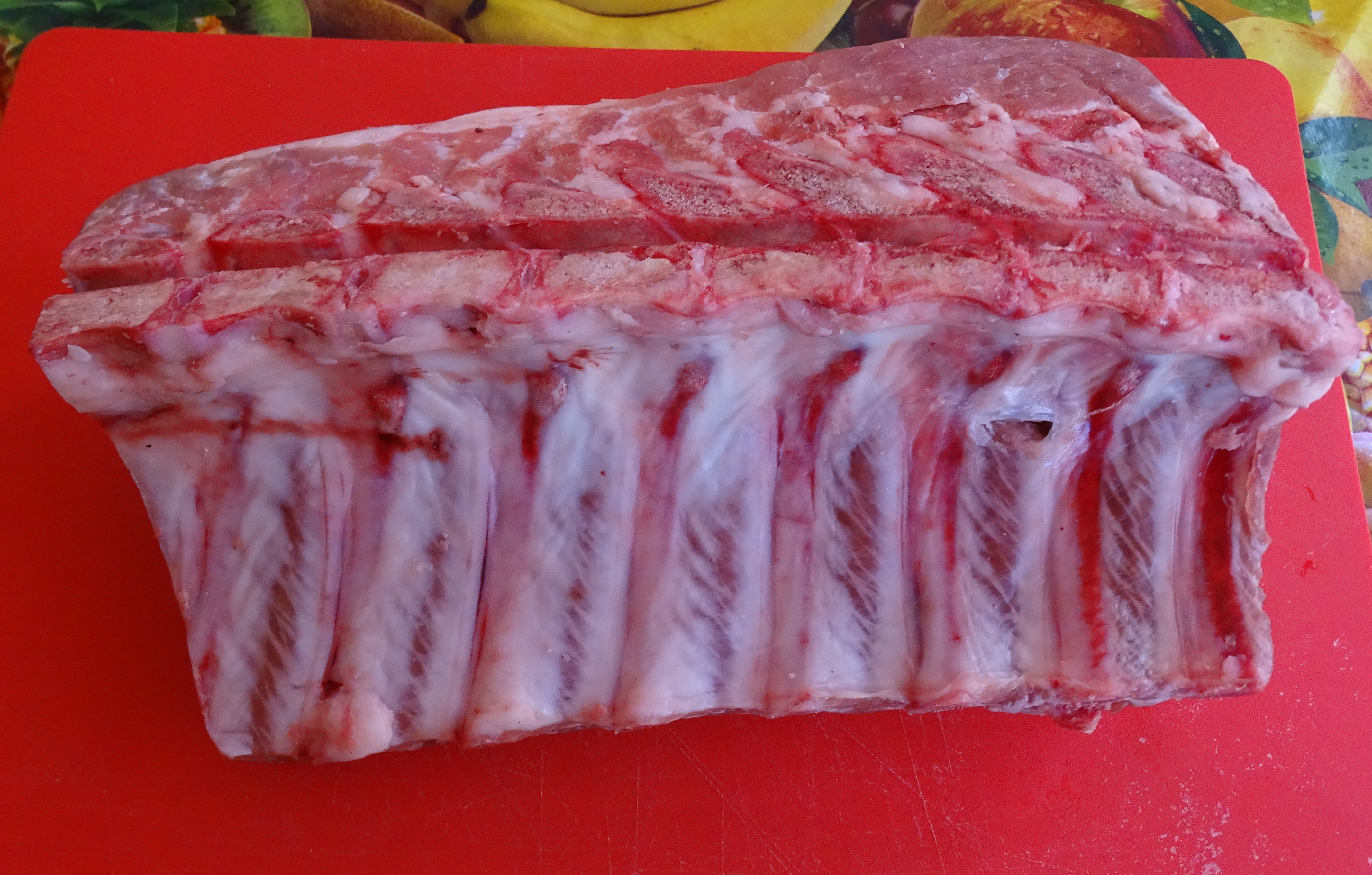
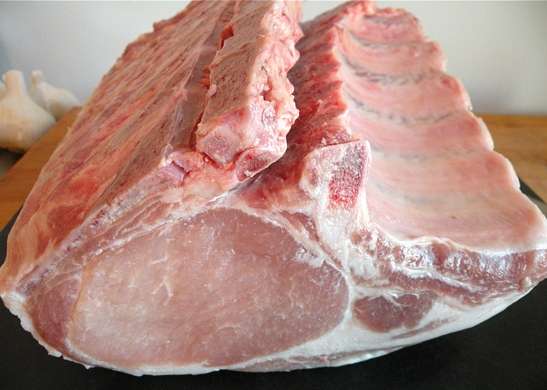
      Your full pork loin rack in Uruguay. Cut out the loin yourself and use the „triangle“ rack for your rib dish.

The ribs:

2 racks of baby back ribs, for 2 persons.
In Uruguay butchers don’t know and don’t like to sell baby back ribs.
That means you have to improvise : I buy the whole loin rack and use
the rib-bone cuts of the loin rack, keeping the loin steak for another purpose.

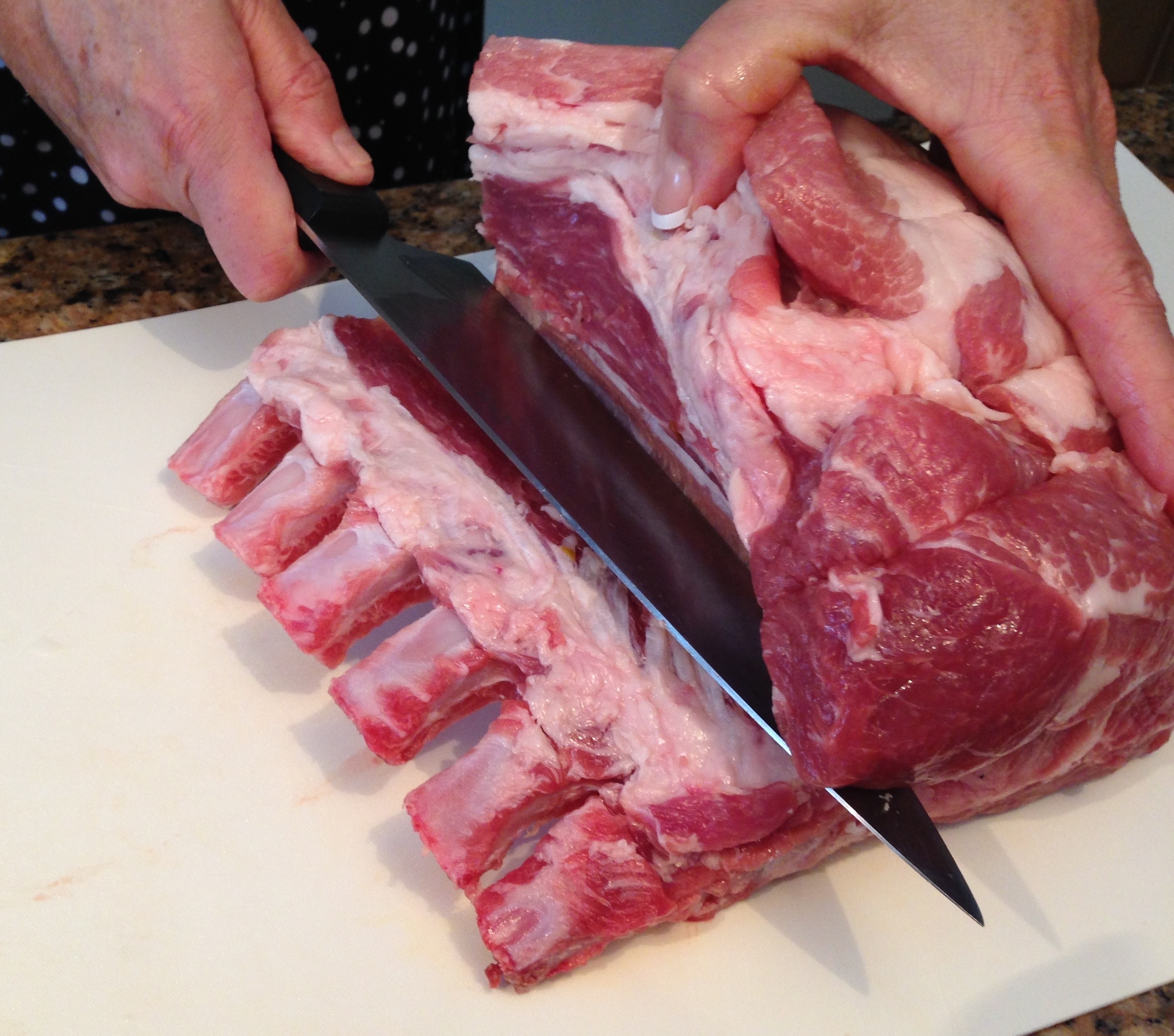
   If you like the ribs flat, let your butcher saw the rib cage (as it is shown here) and you’ll get it easy separated. But just saw up the bone, not the loin.

How to do.

1. Mix the dry ingredients together and set aside.
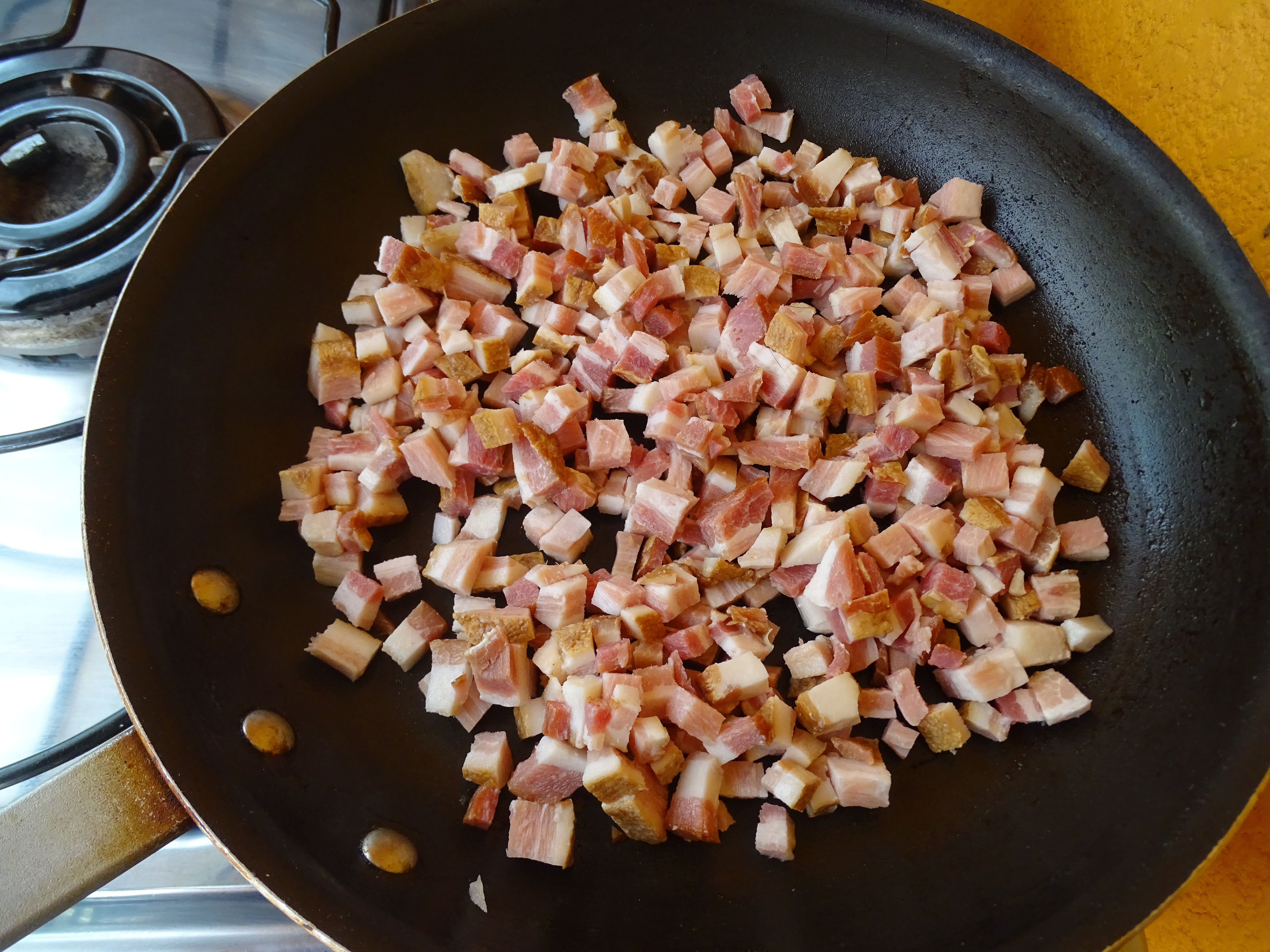
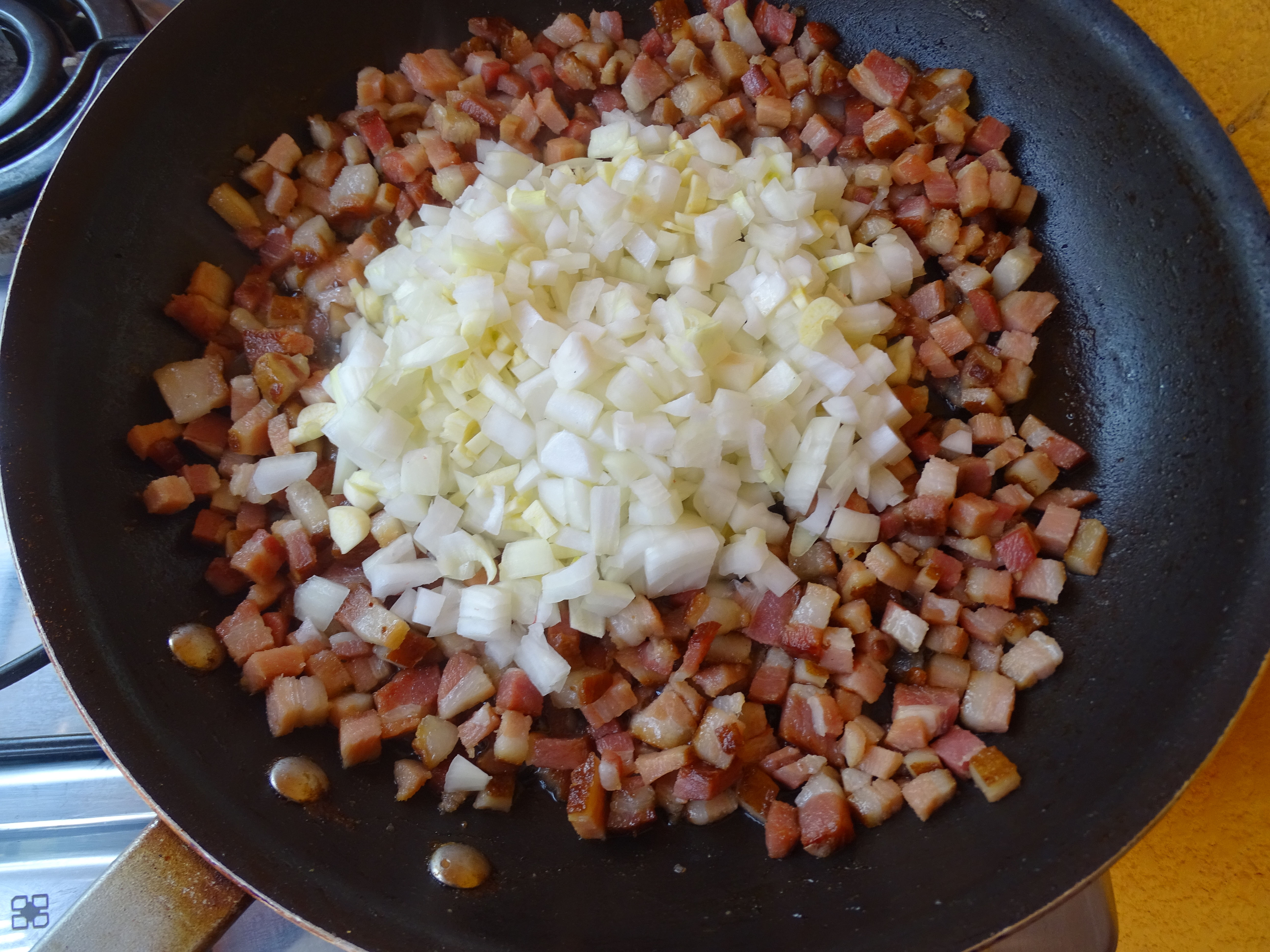
2. First cook the bacon in a large pan or skillet over medium heat until it starts to brown, about 10 minutes.
3. Add the onion and garlic and cook until the onions have softened, about 10 more minutes.

   Cooking the bacon in a large pan/skillet.

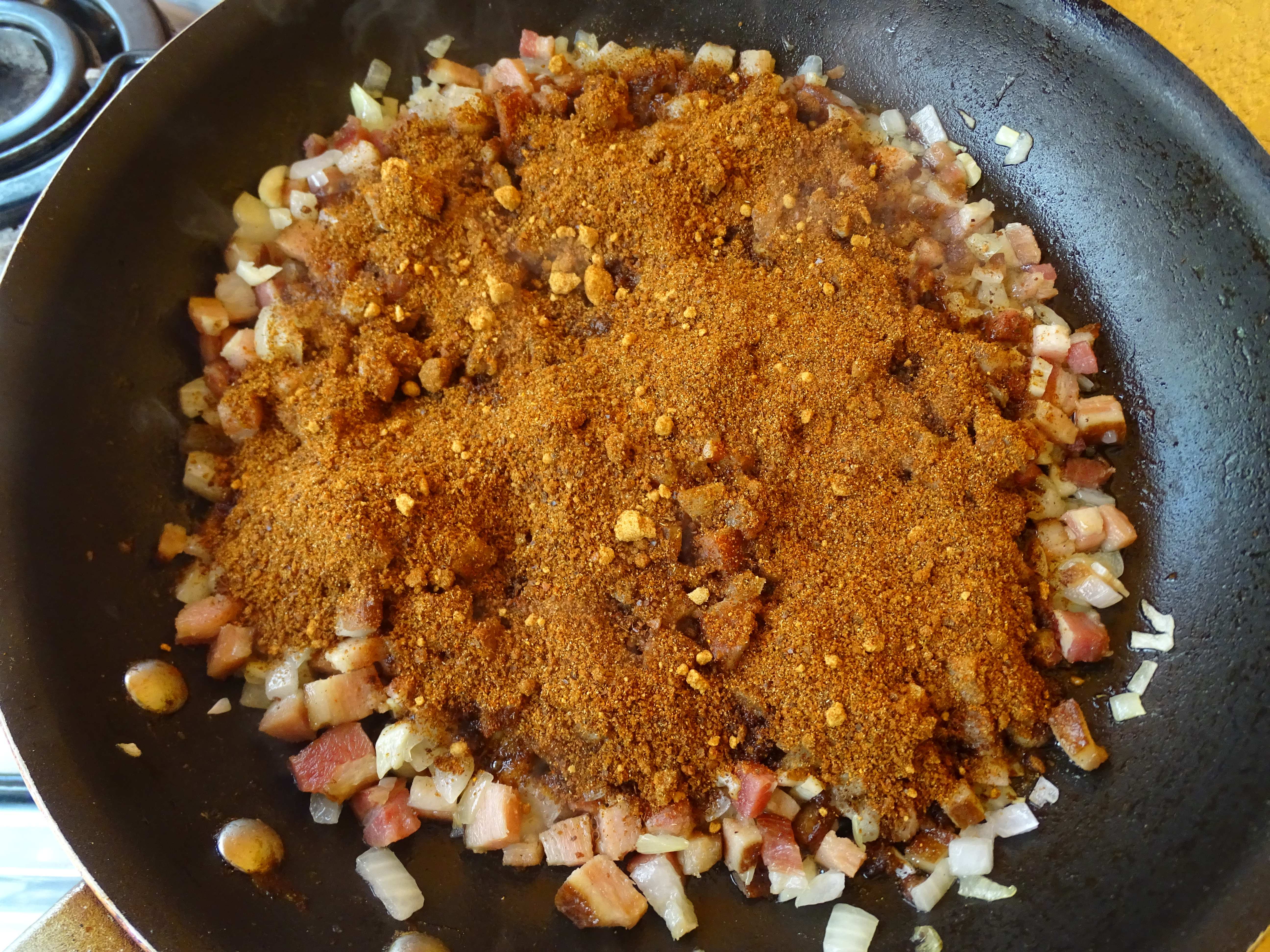
4. Add the dry-ingredients mixture and stir to evenly combine
5. Add the whisky and stir all of the ingredients together, deglazing the pan.
6. Add the bacon-vegetable mixture, coffee, ketchup, and soy sauce to a blender and blend until smooth. Decide which consistency you like with adding a bit more liquid. I always cook a big pot of sauce and take the time for tasting at the end, means here and there adding a bit of several ingredients. My sauces are never strict to a recipe.

     Adding the onions and garlic and then mixing in the dry ingredients.

7. Place the sauce and ribs in an airtight container ( I like to use a double plastic bag) and place in the refrigerator to marinate. If you can do this overnight that’s best, but even a few hours will noticeably change the flavor of the meat.

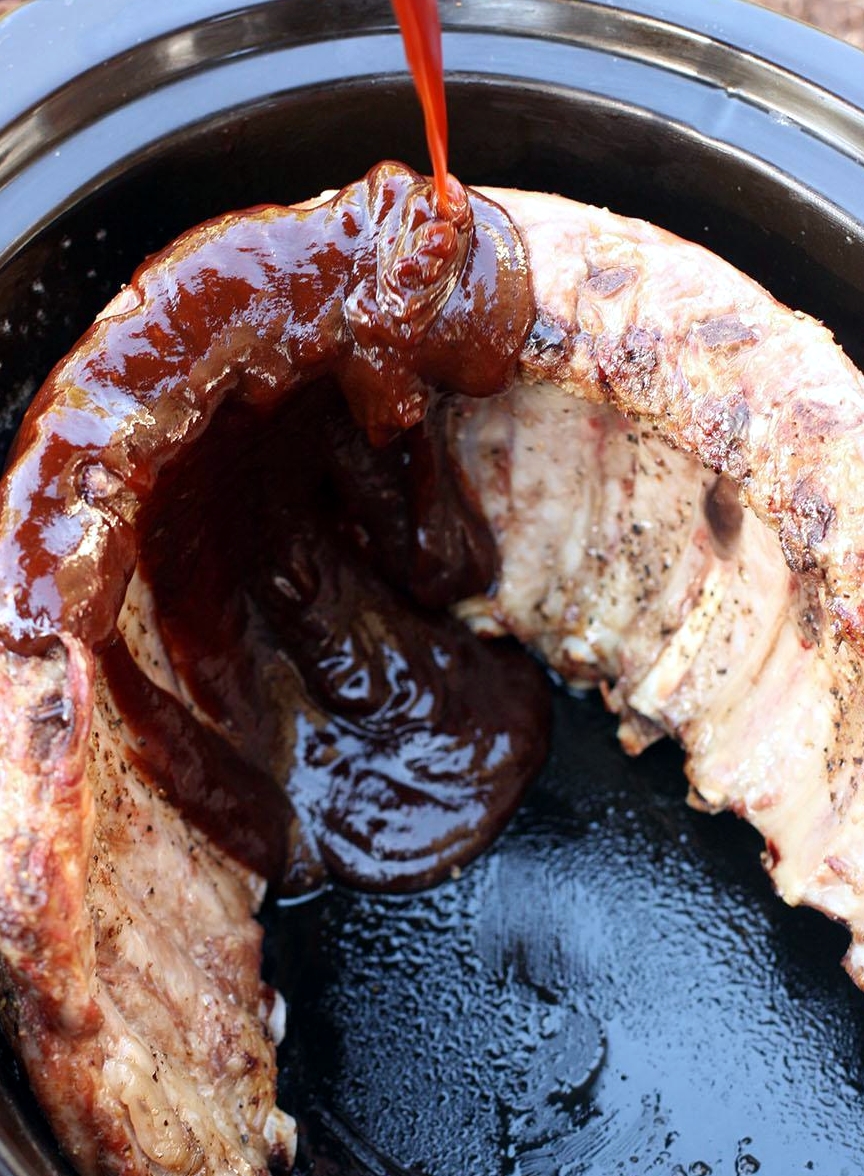
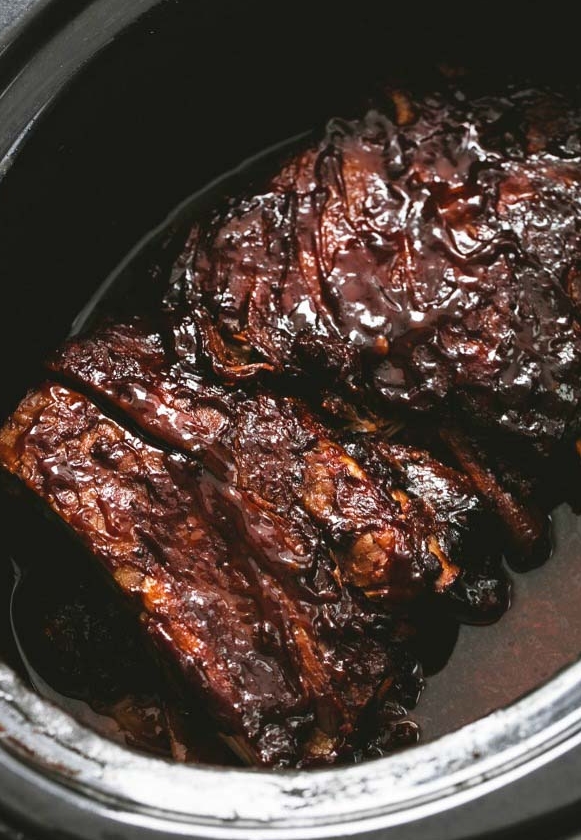
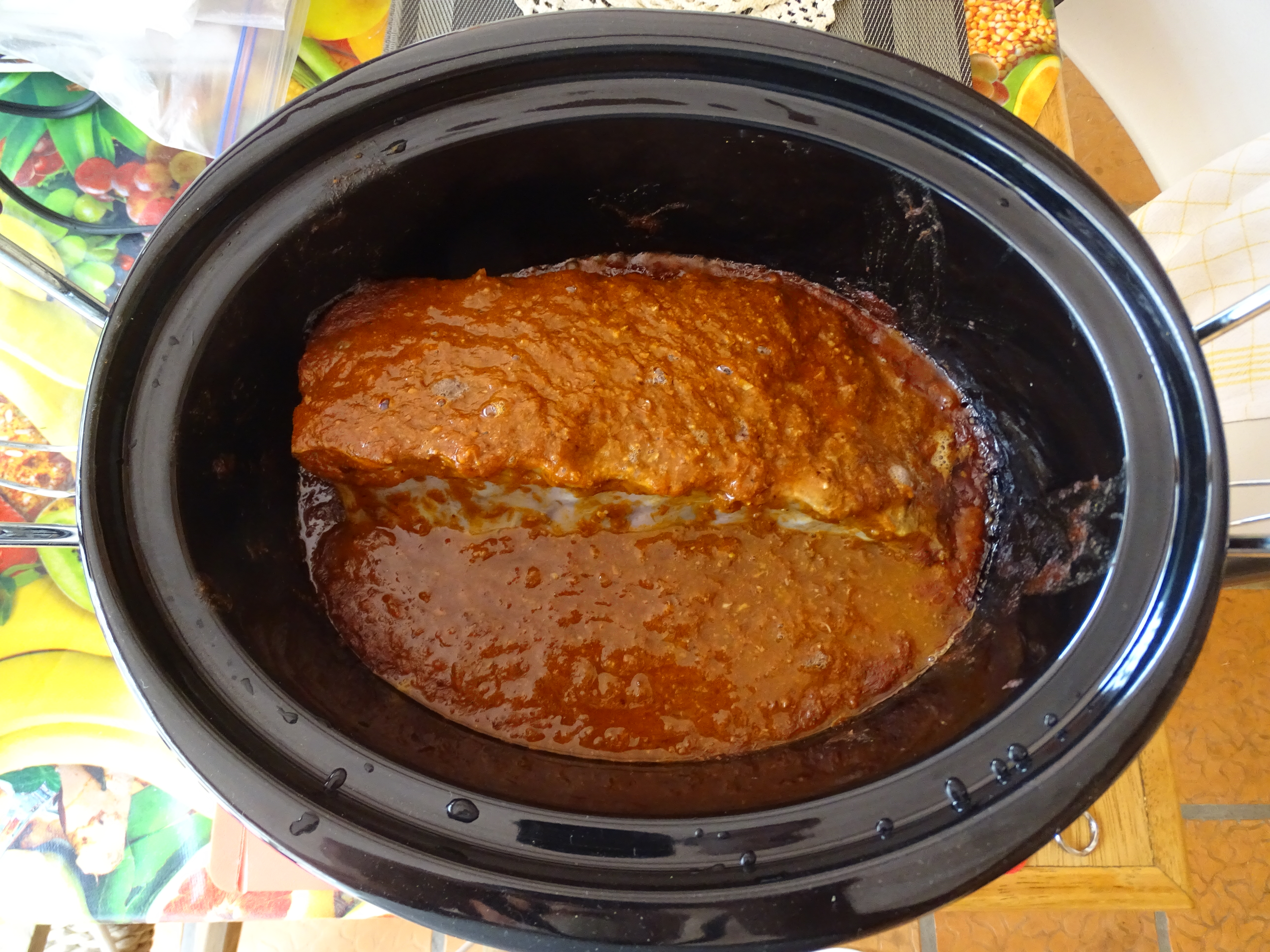
                                Cook your racks, standing up, for 4-5 hours on high. Years ago I liked to precook the ribs and adding BBQ sauce much later. Now I prefer to cook ribs in the marinade. The marinade turns after 4-5 hours slow cooking into my BBQ sauce. Left is a purchased Kraft BBQ sauce, right my own one before slow cooking.

8. Turn the slow cooker on high and add the ribs and sauce. Try to stand the ribs up along the sides of the pot to keep the meat from sitting in the simmer. That’s why I left the „triangle of bones“ together. Only the „feet“ are in the liquid. Cook for 4 to 5 hours until done. The bones should separate easily.

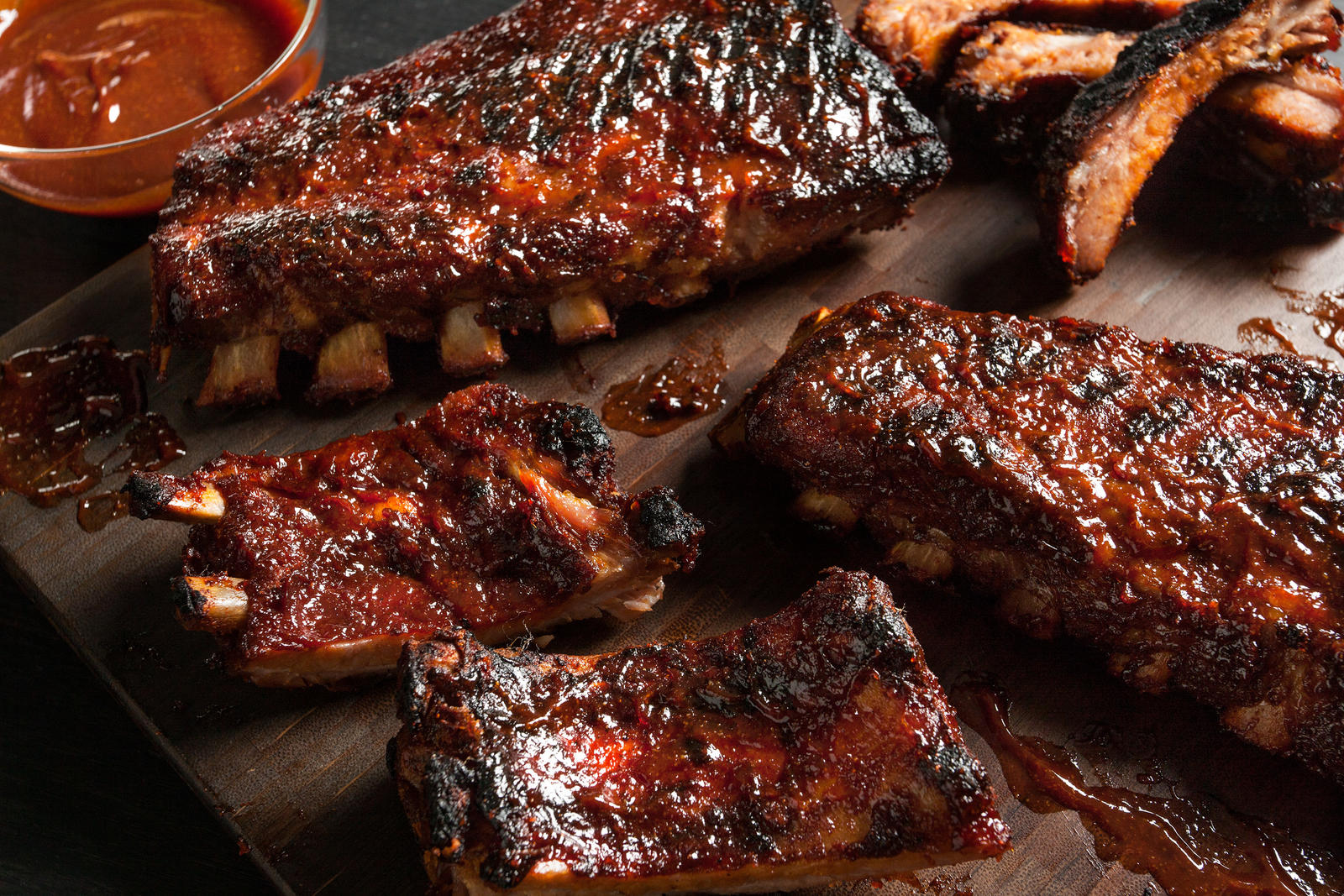
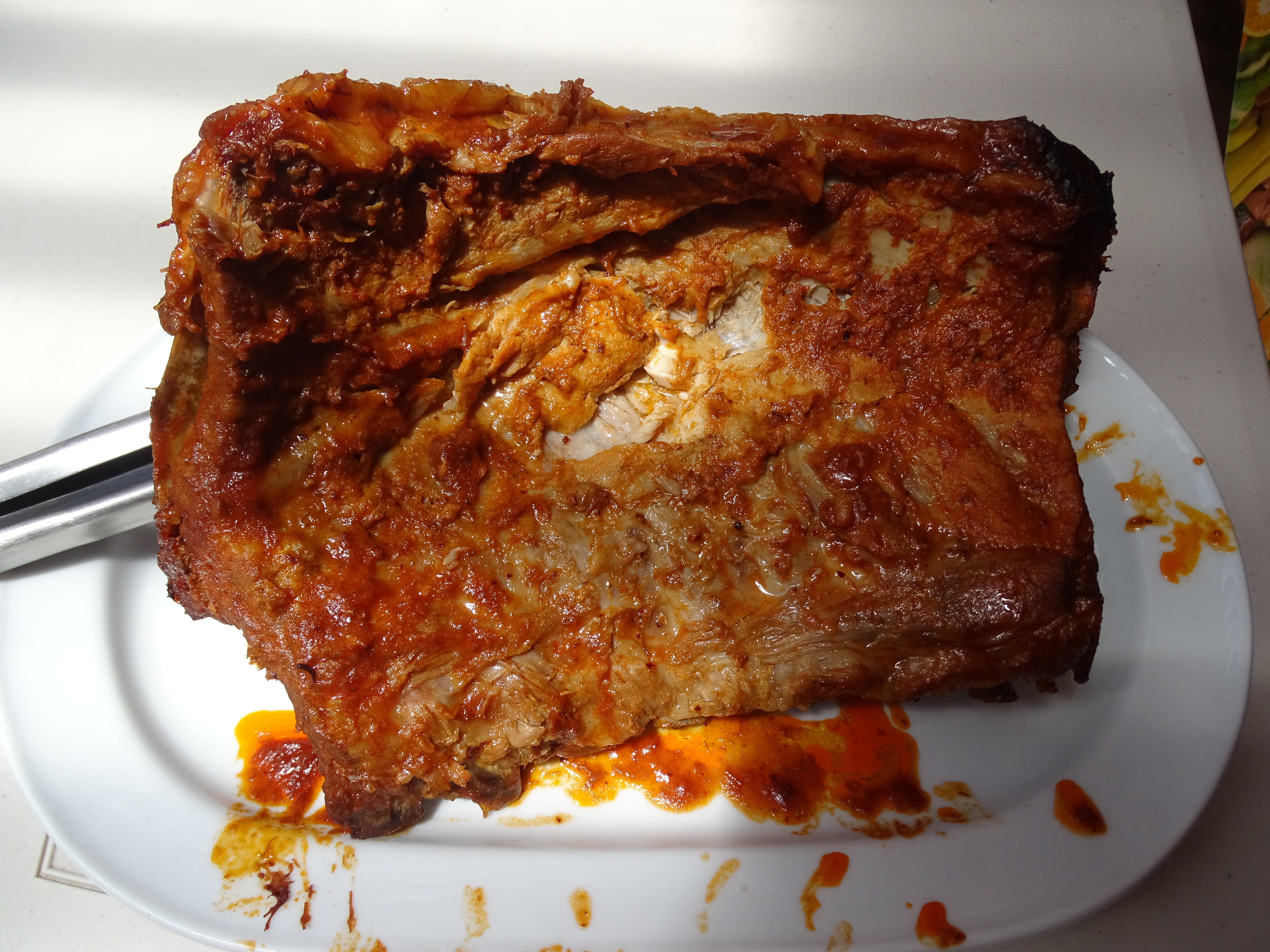
      This is how your „triangle“ rack looks like after slow cooking. Now you can enjoy it already or take the racks apart (they will easily separate) and broil them.

9. Turn on the broiler. Remove the cooked ribs from the slow cooker and place them on a baking sheet meat-side up. You also can do this on your BBQ.
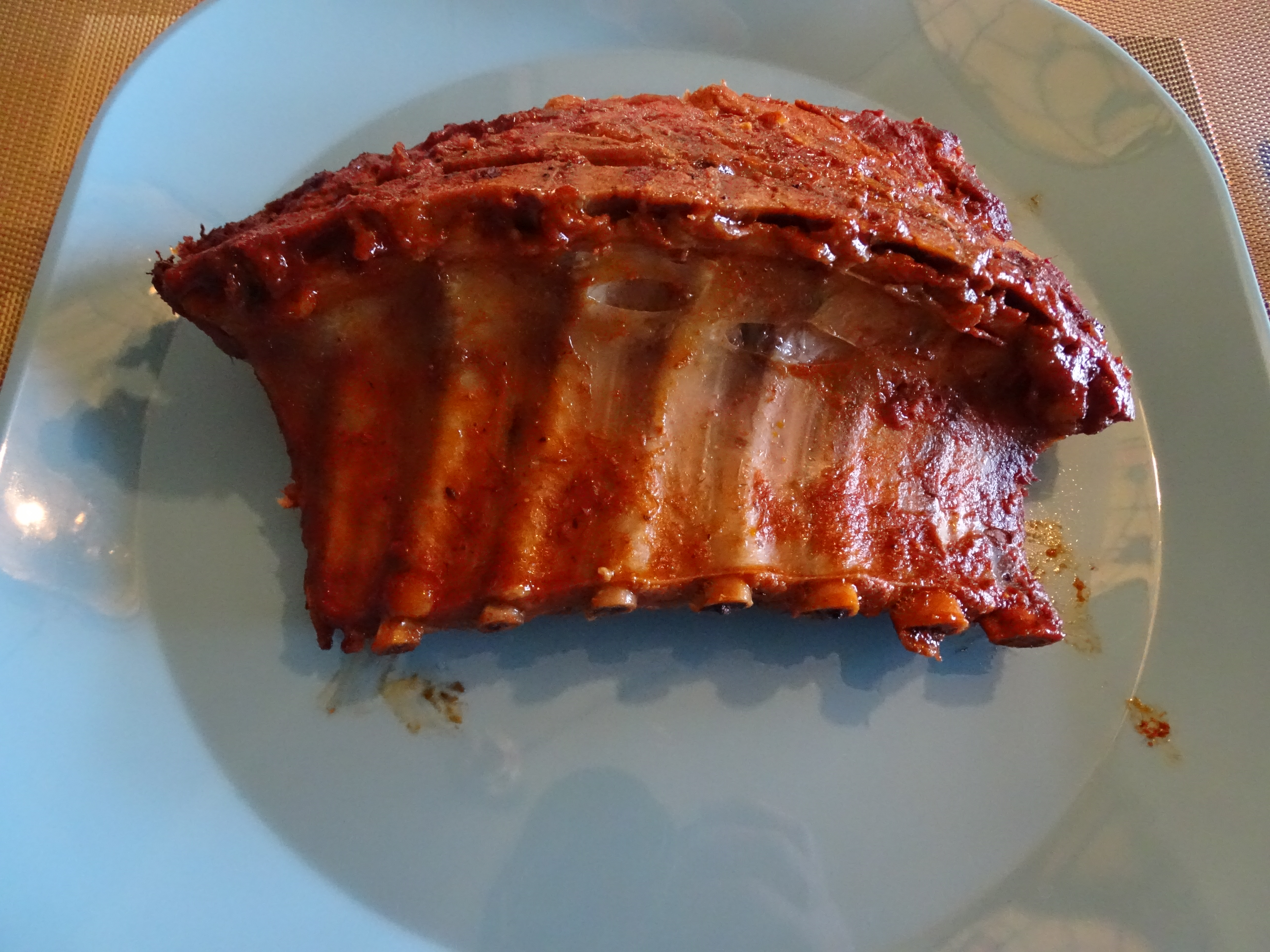
10.Apply a thick coat of the sauce and broil for about 5 minutes. (Make sure to keep a close eye on the ribs—you don’t want them to burn in the broiler.)

  This is how they should look like after broiling or after being on the BBQ. Bones and sauce can be burned a bit (good smoky flavor) but not the meat itself, please ! I wish I could buy this kind of „spare rib“ cut here in uruguay. Meantime I have a butcher who really likes to help and tries to deliver my cut after the pics I always show to him. But you need to buy „A LOT“ (about 8-10kg) to get a special delivery. And finally I always bring him after BBQ a nice taste of my results.

Tips.

There should be at least 2 cups of sauce remaining to pour into bowls and serve on the side. Delicious is this meal with french fries and baked beans or coleslaw. Have a cool beer with it. We also had delicious green mashed potatoes and a fresh green salad with it.

   These are the ribs after 6 1/2 hours slow cooked on high in crock pot. I used just marinade to cover, the bones are standing in the juice. Juice is just covering the crock pot bottom.


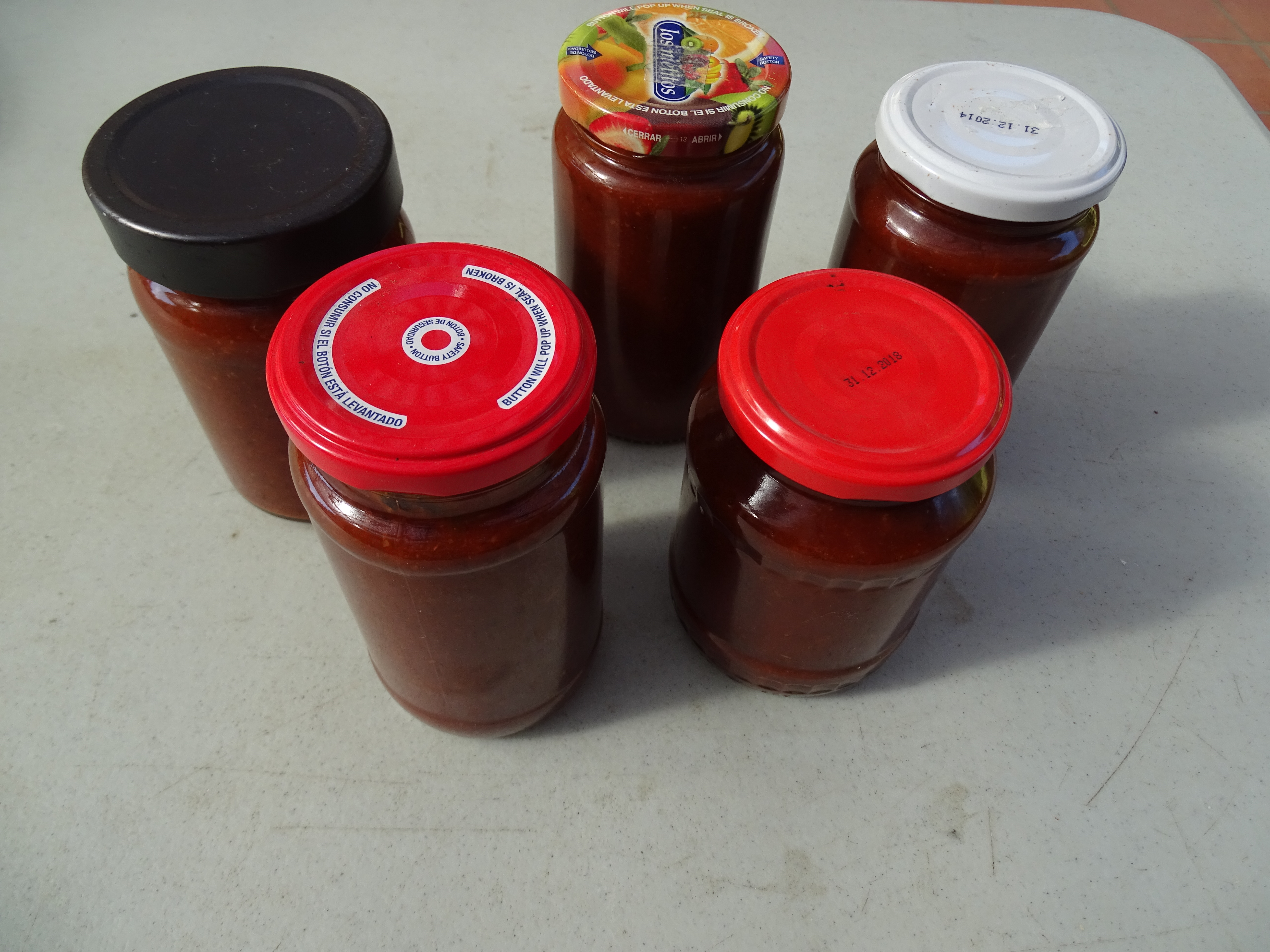
   This time 5 jars of BBQ sauce to fill. Imagine 5 hours slow cooked, spicy, whisky, bacon flavored !!  Want some ?  Often I vary my sauces a bit, this time I added the juice of the slow cooked ribs and some baked onion slices. Made it more rustic.    I already look forward to my next BBQ meal.

My BBQ sauce tastes spicy, medium hot and a bit tomato like, bacon smoked, sweet sour. If one prefers less heat, use half of the chilli or cayenne powder. If one likes it a bit sweeter, use half of the soy sauce and therefore 3-4 tablespoons of honey. Another way is, before broiling smear the ribs thick with honey – result „honey glazed ribs“. But sweet.

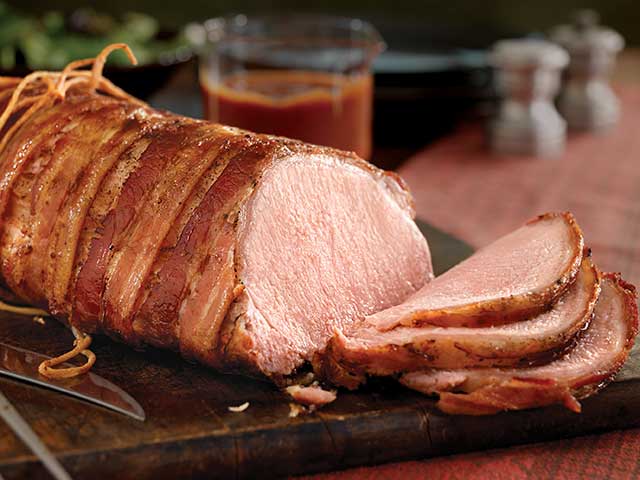
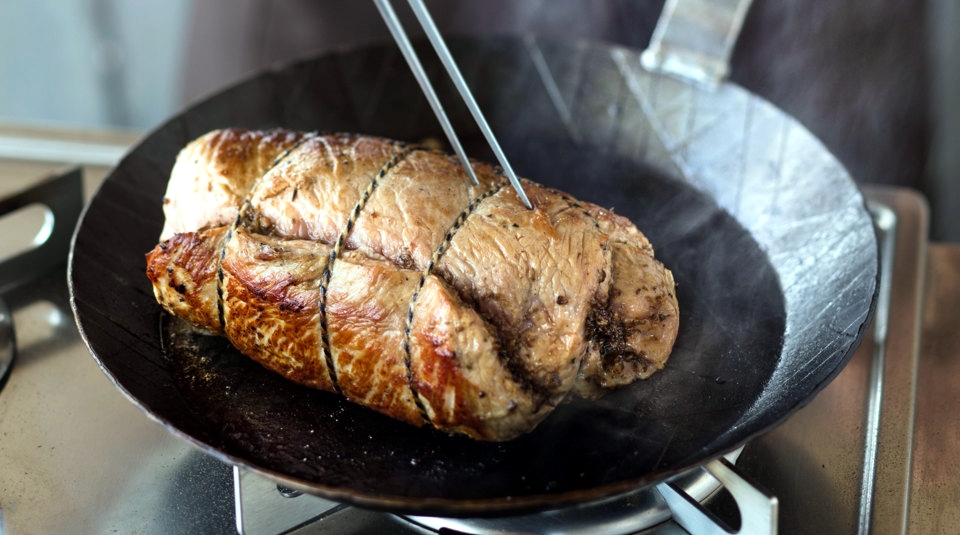
   What to do with the leftover loin? Here an idea, bacon wrapped roast, with homemade applesauce. I tell you, its just …. !  Enjoy !

Veröffentlicht unter Recipes | Verschlagwortet mit | 10 Kommentare

Today – 500 Years Ago

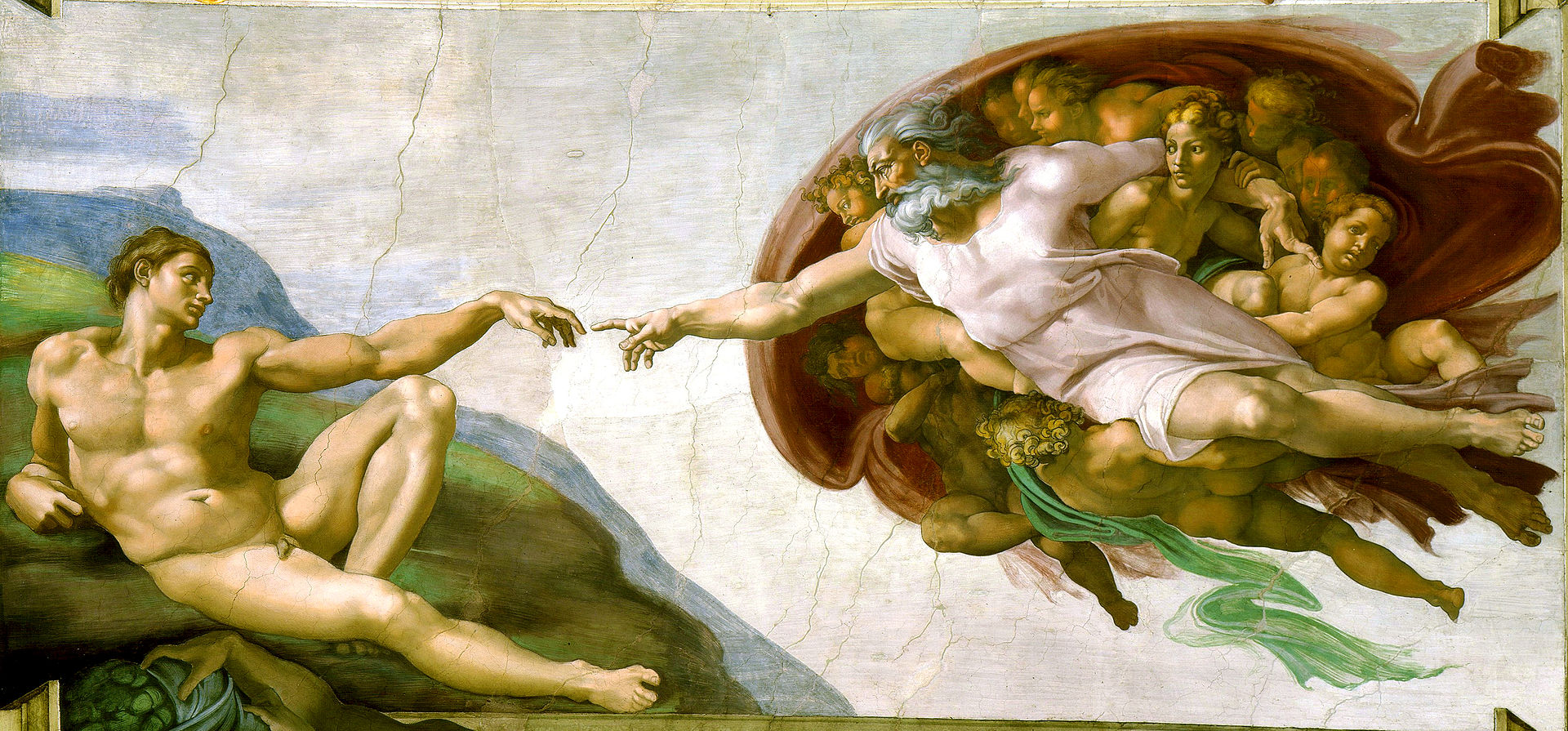
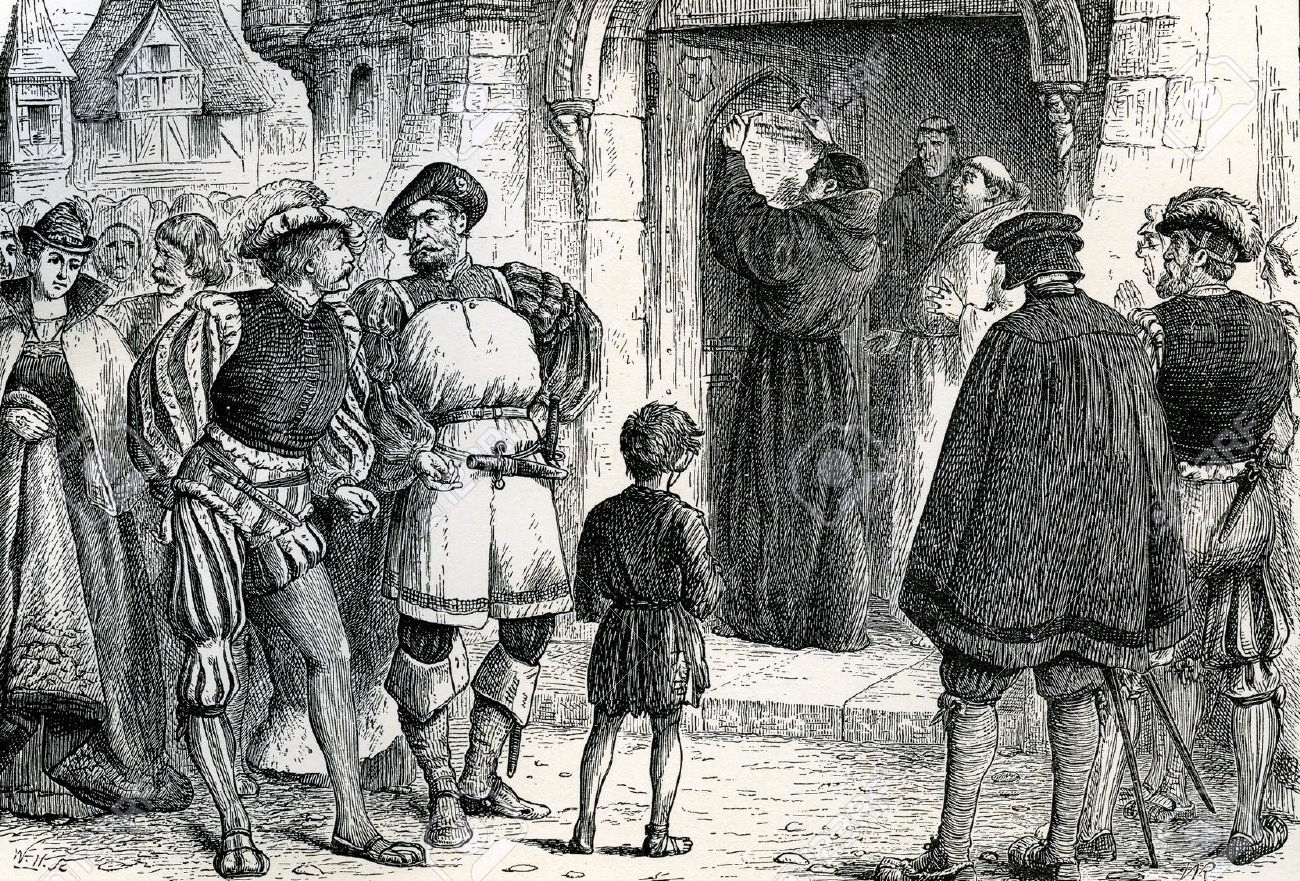
On this day today, the 31st of October 2017,  500 years ago and 505 years ago, two important events took place which still keep us occupied today. It’s the famous ceiling painting of artist Michelangelo in the Sistine Chapel in Rome, which Michelangelo finished on the 31st of October 1512 and the sparking of the Reformation through the monk Martin Luther in Wittenberg, where he nailed his 95 theses against the church door on the 31st of October 1517.

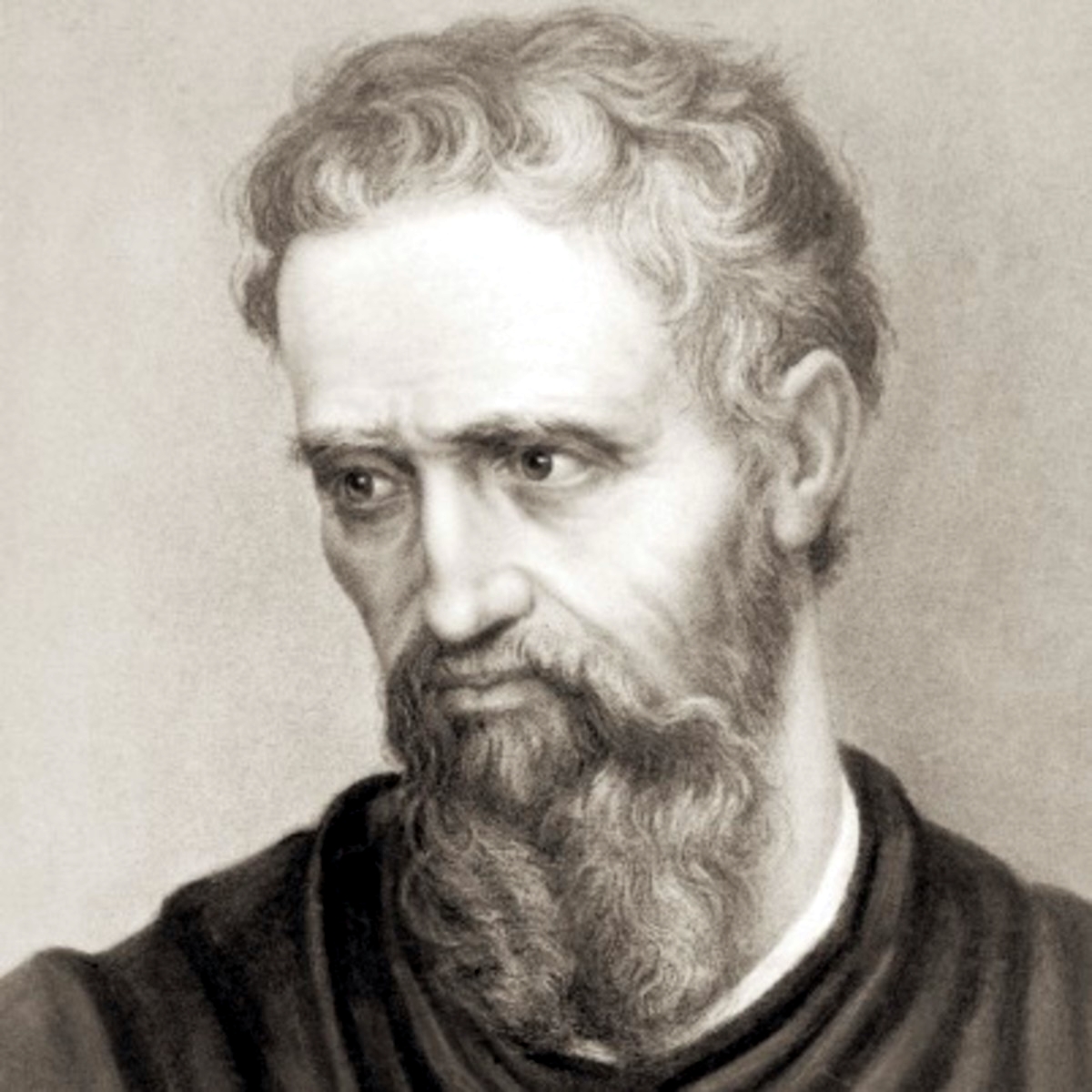
      Michelangelo di Lodovico Buonarroti Simoni ,
6. March 1475 – 18. February 1564, was an Italian sculptor, painter, architect, and poet of the High Renaissance born in Florence.
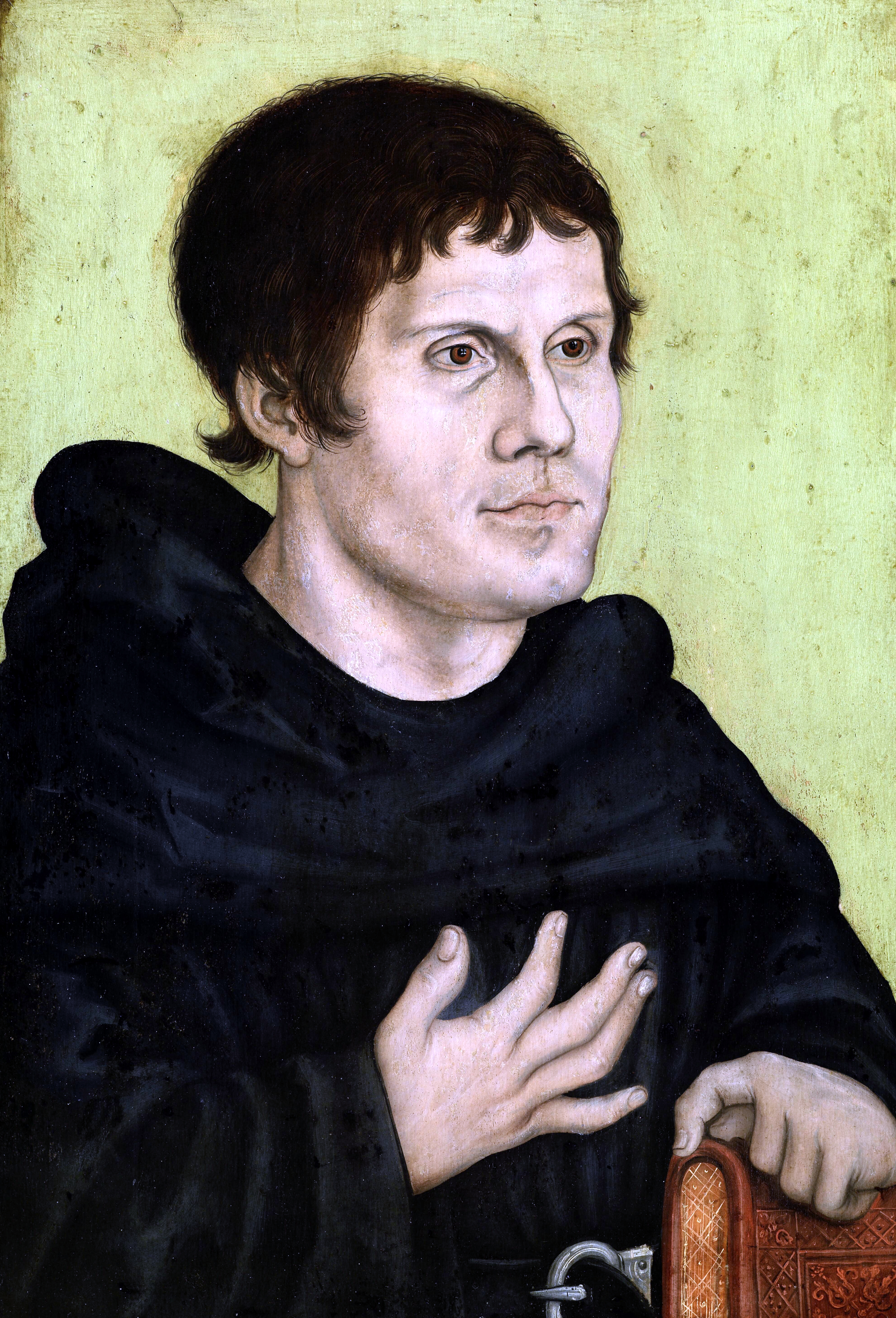
      Martin Luther, here shown as a young Augustine monk, 10. November 1483 – 18. February 1546, was a German professor of theology, composer, priest, monk, and a seminal figure in the Protestant Reformation. born in Eisleben,

What do they have to do with each other ? Some time ago I’ve read an article in the „Frankfurter Allgemeine“, which was mind blowing to me, because of combining these two events. I like to introduce you to a shortened and translated version and, as I usually do, improved with some enlightening pictures.

If Luther had only understood him !

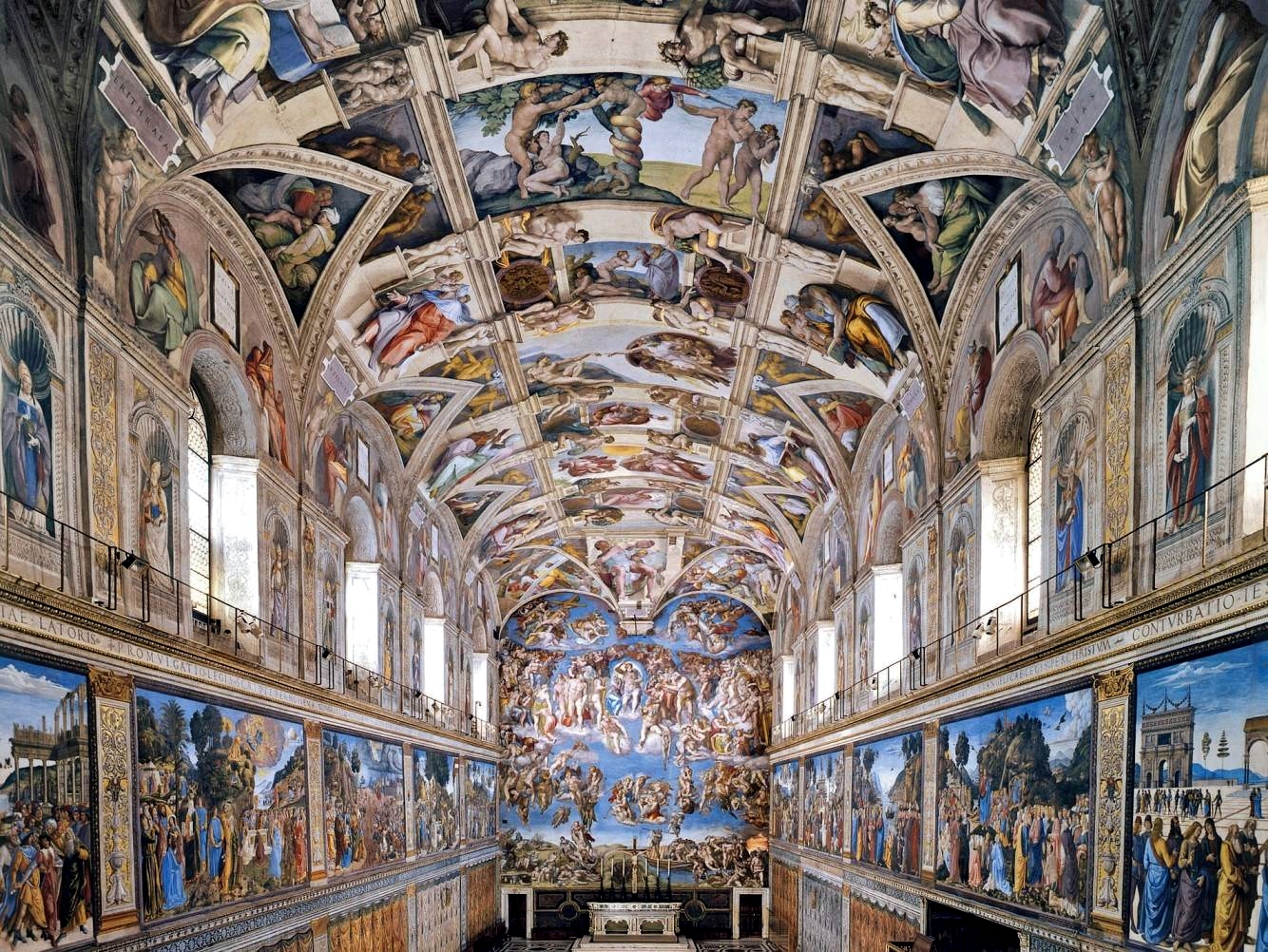
Michelangelo’s ceiling paintings of the Sistine Chapel are five hundred and five years old. When it arose, Martin Luther was in Rome. He could have seen it – and misunderstood.

  Famous ceiling in the Sistine Chapel, Vatican Rome.

The year 1510 in Rome was tense. Eighteen years before, Christopher Columbus had discovered a new world, laying the foundation of the Spanish world. Seven years later Christianity was to break, through the rigidity of a German begging-monk. In 1510, an Italian, il Terribile (the terrible), as the Romans murmured, sat on the papal throne. Cardinal became the young Giuliano della Rovere (Julius II) through the pope, his uncle Sixtus IV. With political skill, intrigues, and scattered rumors, he had contributed to ruin the reputation of his archenemy, the Spaniard papal Alexander VI. Borgia.

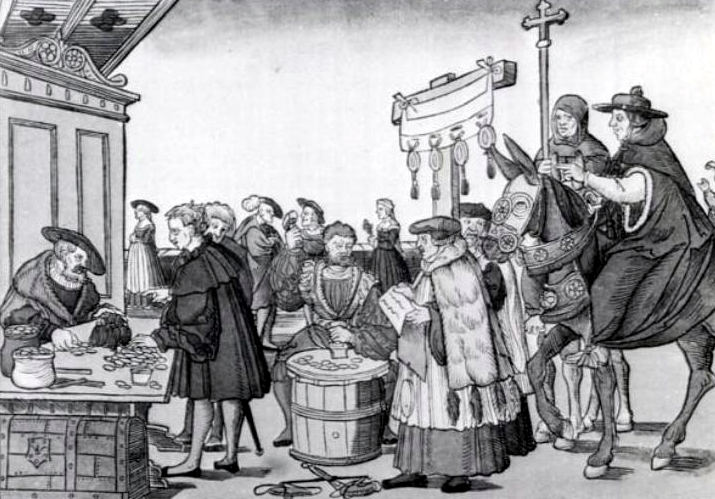
  Selling indulgences in Rome. Luther despised this kind of insidious money making of the Roman church…..
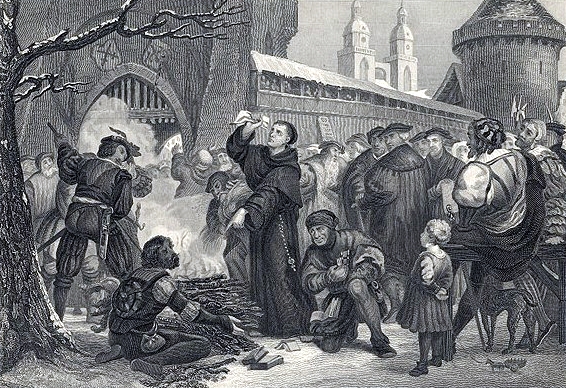
  ……This ended in the burning of indulgences and bulle’s at the Luther oak in Wittenberg, and was one of the first sparks of reformation.

Devoted craft or great art ?

Thus Julius II would have disappeared into the footnotes of history as a devious intriguer, mediocre politician and unsuccessful church reformer, wasn’t there his striving for success. While Pope Alexander VI. did not care for his grave, and buried his bones with those of his uncle, Pope Calixt III, for nearly three hundred years, forgotten and rotting away in a sacristy, the Rovere Pope, after his election, strove for a pious shrine. The Renaissance man Julius II knew that non-religious craftsmanship could lend eternal fame, but only great art.

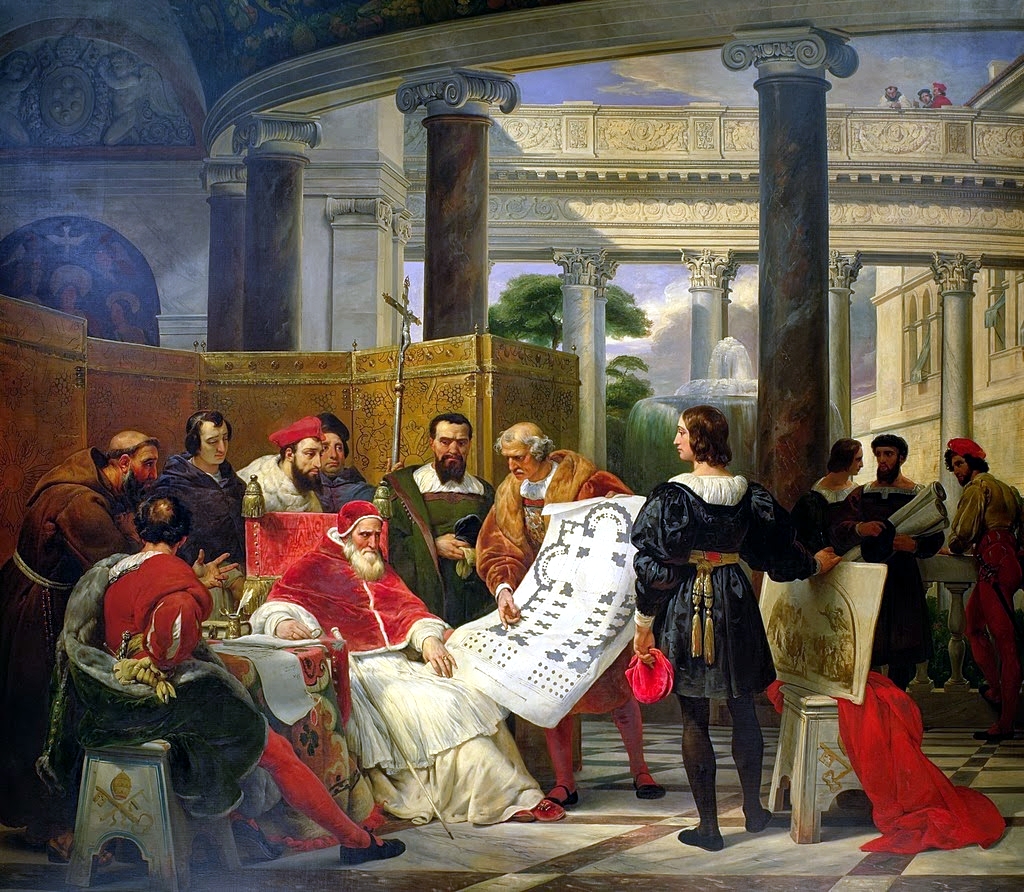
  Julius II ordering Bramante, Michelangelo and Raphael to build the Vatican and St.Peter’s.

Great art did not come from Rome at the time, but existed in Florence, in Umbria, in Milan. For example, he commissioned Donato Bramante from Milan to plan for him the world’s largest god-house. The Pantheon was to be raised onto the gigantic Basilica of Constantine, so the Pope, and for the finances people had to suffer with buying indulgences. That became disastrous, as it later turned out (see pics further up). He entrusted the young, already famous Michelangelo Buonarotti from Florence with the design of his grave, which was to fill the apse of the new St. Peter with 48 titanic figures.


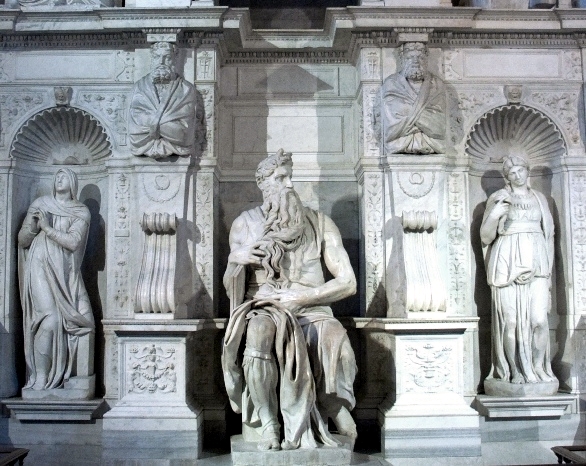
Some earlier titanic figures of this fantastic artist – Michelangelo’s Rachel and Leah.

Provocation of a pious.

It soon became apparent that the ambition of the pope did not fail the volcanic temperament of the young artist. Michelangelo had chosen the huge marble blocks in Carrara, and they were already stacked in front of St.Peter when the pope suddenly rejected the plan and instead ordered the artist to paint the ceiling of the chapel built by his uncle Sixtus IV. Michelangelo did not want to hear of any new plans and left Rome.

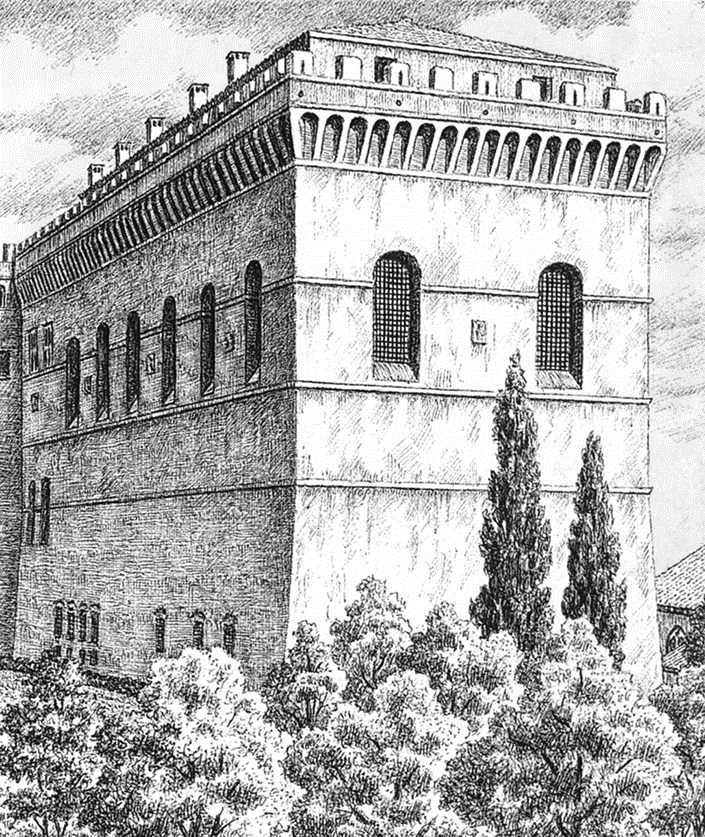
  Pontifex Sixtus IV,  uncle of Julius II. The Sistine Chapel stands on the foundation of an older chapel called the Capella Magna. In 1477, Pope Sixtus IV instigated a rebuilding of the chapel, which was then named for him.

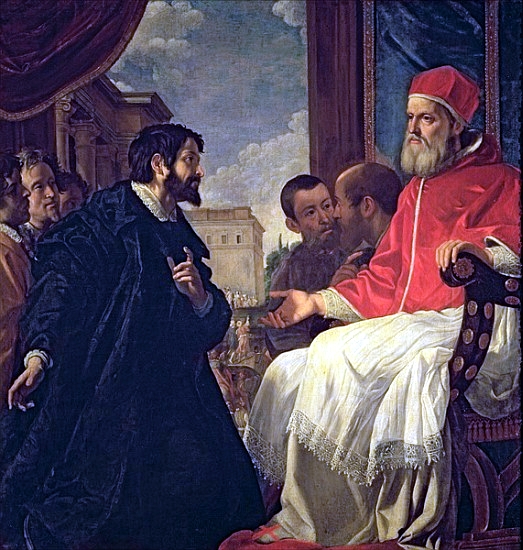
The Pope put all the levers in motion to bring him back to Rome from Florence. Nothing helped. They finally met in Bologna. What has happened so far has never been the same in the annals of the Vatican Protocol. The thirty year old artist stood up to face the old pope. A bishop tried to mediate. But the pope shouted at the good man and threw him out. Julius II remained indifferent.

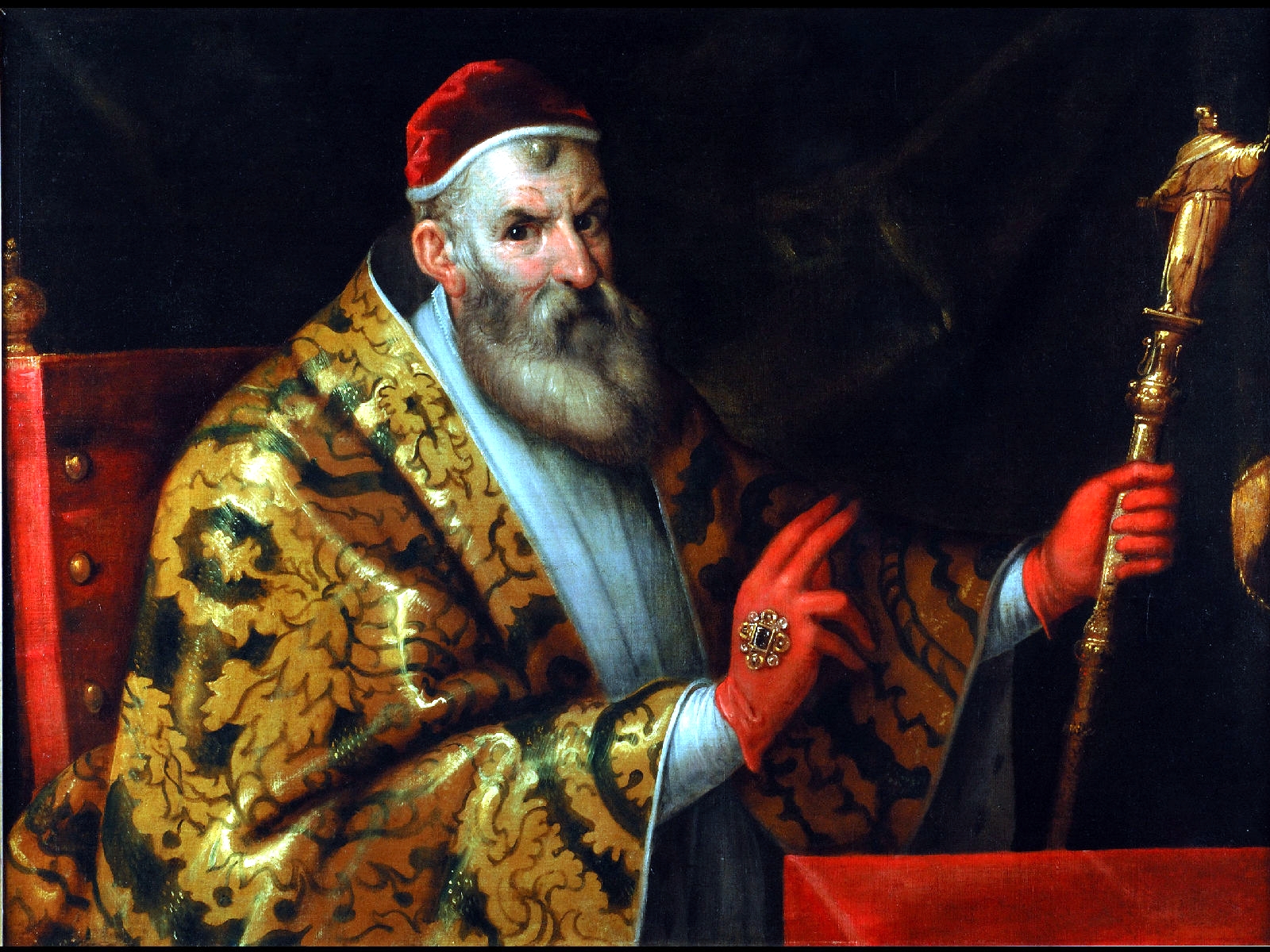
  Pontifex Julius II in discussion with Michelangelo.

After all, Michelangelo was able to freely determine the program of the Sistine ceiling. Originally he had to paint the apostles, the origins of the church, guardians of the apostolic succession. But what he, the deeply pious, instead created, was a complete provocation. He did not praise the church, as his client had wished, but urged them to admonish the power-conscious pope, the impious cardinals, all those who celebrated day by day in this chapel fair, that Christ was the center of past, present and future .
The analysis and depiction of the Sistine chapel paintings is a different story to be told.

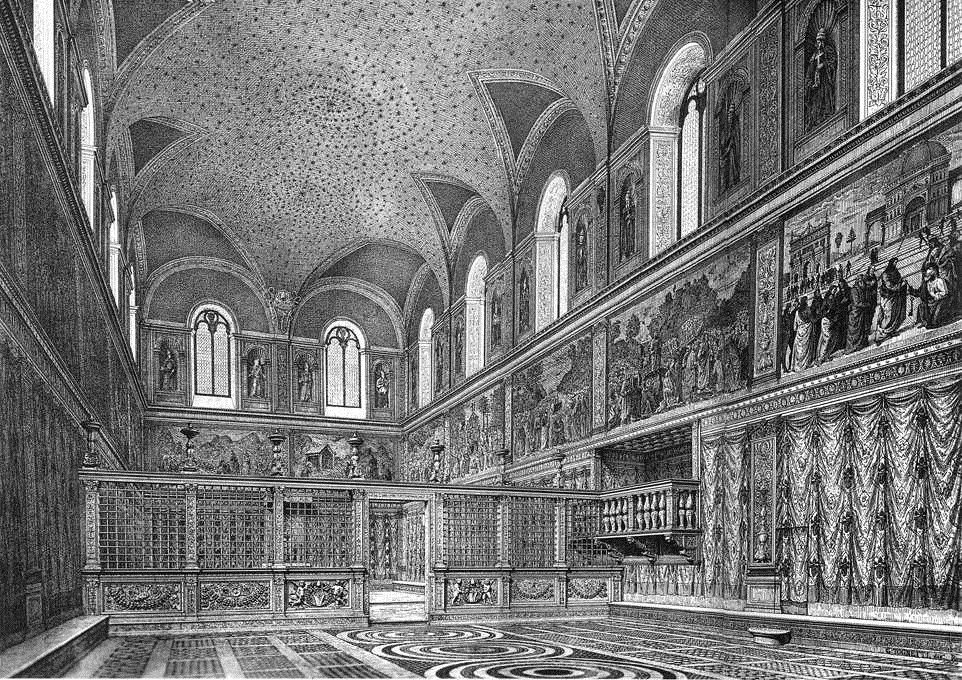
  The Sistine Chapel as it may have appeared in the 15th century, just after completion. A 19th-century drawing.

 The divine life of the ceiling.

Michelangelo did not paint the story of „the creation“, as the guides would suggest, but the beginning of the Johannes-evangelism: „In the beginning was the word. And the Word was with God. And God was the Word … And through the word all things have become“. Through the Logos, Christ, everything has become. The Jewish prophets and the pagan Sibyls, whose pictures Michelangelo affords, are the imminent figures in which all the hunches and longings of mankind are condensed.

  A reconstruction of the appearance of the chapel in the 1480’s, prior to the painting of the ceiling. The ceiling showed a blue night sky with golden stars.

Their thinking does not go into void, for between them creation is played, and in the midst of it the creation of man. While the active finger of God gives life to the first man (Adam), his other hand rests on a small child, in whom some want to recognize the boy from the „Madonna of Brugge“. Through him, Christ, everything has become, and the Church does not appear at all on this ceiling. It can only laboriously protect the side walls, with their sacred popes, over which the divine life of the ceiling, mocking every wall, takes place.

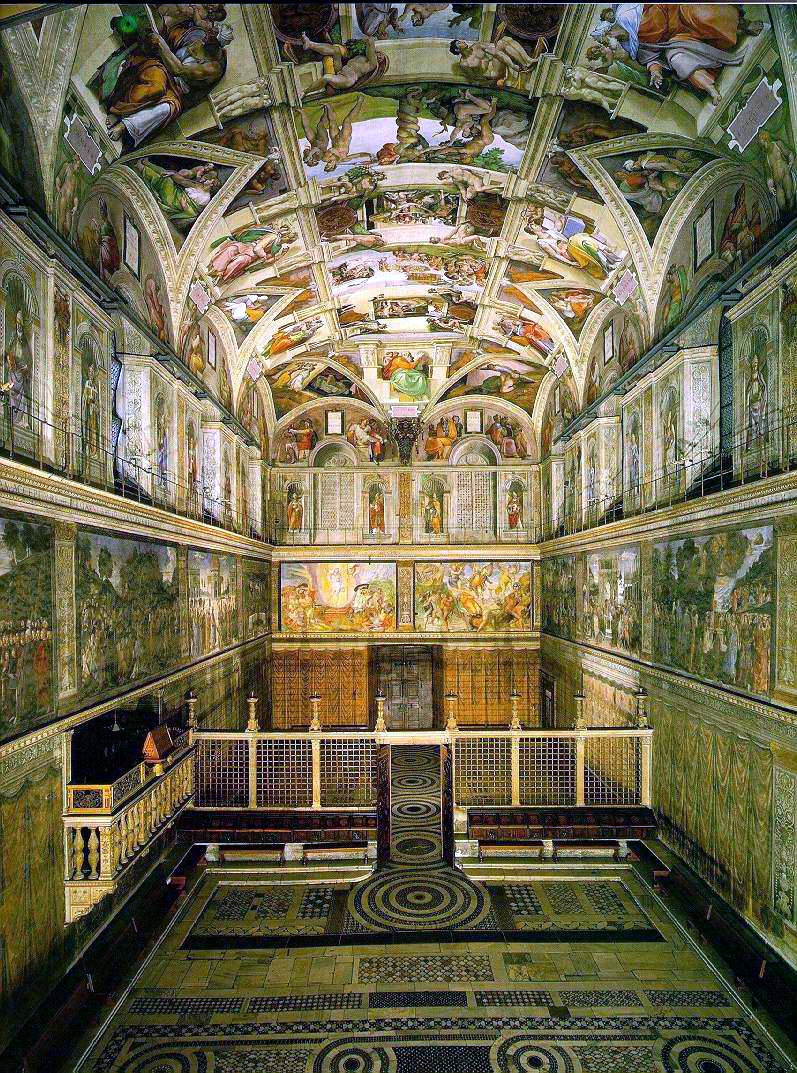
  The chapel decoration as it appears from the altar side.

The Sistine ceiling is perhaps the most unheard-of lay preaching of all times, a loud call in the center of Christianity, to return essentially to a dramatic historical moment during which the Great Western rift might perhaps have been prevented.

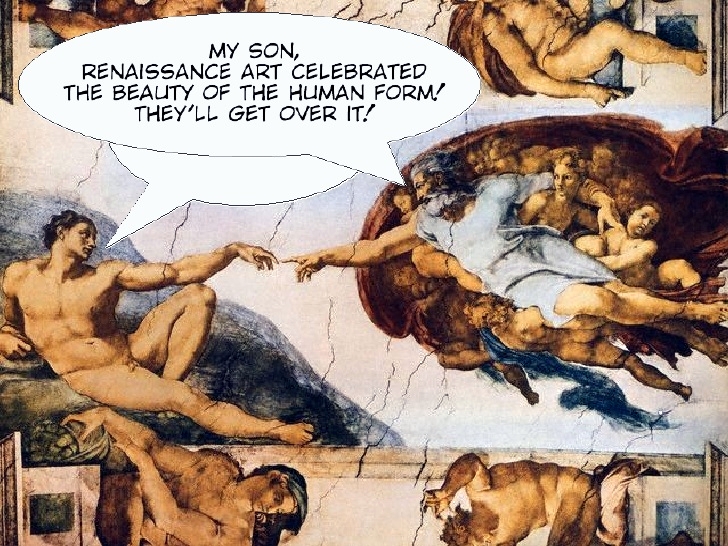
  The center painting of the ceiling. Michelangelo’s creation of the first man, Adam.  Click on pictures to supersize for a better viewing.

Immoral bath of the naked.

In 1510, when the pondering artist painted his opinion to the pope, at the top of the ceiling with mighty brushstrokes, a door might have opened at the bottom. We know that at that time, and to this day, the Augustinian monasteries oversee the Sistine Chapel. And we know that just this year a young, pious and high-spirited Augustine hermit from Erfurt had arrived on foot in Rome and lived in the monastery of the Augustine hermitage near Santa Maria del Popolo. Martin Luther was his name, and it was not to be avoided that he also came into the chapel entrusted to his order.

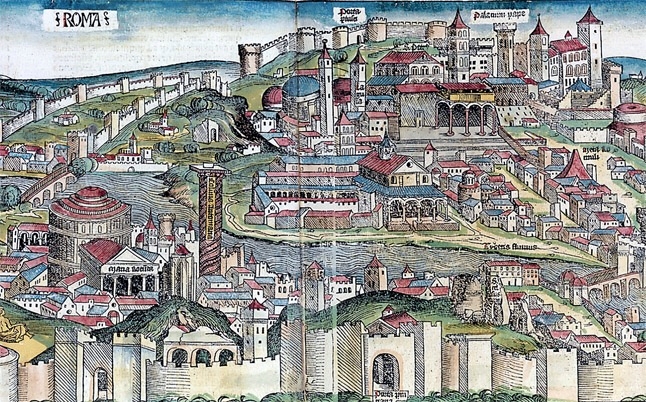
       Rome as Luther saw it in 1511. The old St. Peter’s Church (before the Vatican and St. Peter’s as we know it) is in the back in the middle . Click on pic to supersize.

Martin Luther made his first trip to Rome as an Augustinian monk in 1511. He had started in Wittenberg in December 1510 and crossed the Alps in the winter at 2300 meters via the Septimer Pass. Two months of long and hard pilgrimage lay behind him when he saw the Eternal City from a distance in January 1511. He threw himself on the wet Italian soil praying: Hail, Sancta Roma! Yes, made truly holy by those holy martyrs, dripping with their blood.   Later in his life he recalled: At Rome, as I was such a great saint, I ran through all the churches and holy corners believing everything although it was all lies and it stank.

  Martin Luther launches the reformation.

What must have been a world-historical moment when the two men met. Michelangelo, who during his lifetime, with great idealism, worked for a reform of the Church, and in the Sistine read the Levites with the power of the art of the Church – and Luther, who a few years later, with the power of the word, hurled his theses like hammer-hits on the church door in Wittenberg. What if they had recognized each other as brethren in spirit? What if Michelangelo could have made it clear that all the sensuous pleasures of the Renaissance were not merely the sinful solitude of the „Babylonian whore,“ not merely a distraction and apostasy to paganism?

  Pope Adrian VI, 2. March 1459 ‒ 14. September 1523. In 1516, Adrian became bishop of Tortosa, Spain, and was soon appointed Grand Inquisitor of the kingdoms of Aragon and Castile. He was appointed cardinal by Pope Leo X in 1517 and elected pope in 1522 as a compromise candidate after Leo’s death. Adrian came to the papacy in the midst of one of its greatest crises, threatened not only by Lutheranism to the north but also by the advance of the Ottoman Turks to the east. He refused to compromise with Lutheranism theologically, demanding Luther’s condemnation as a heretic.

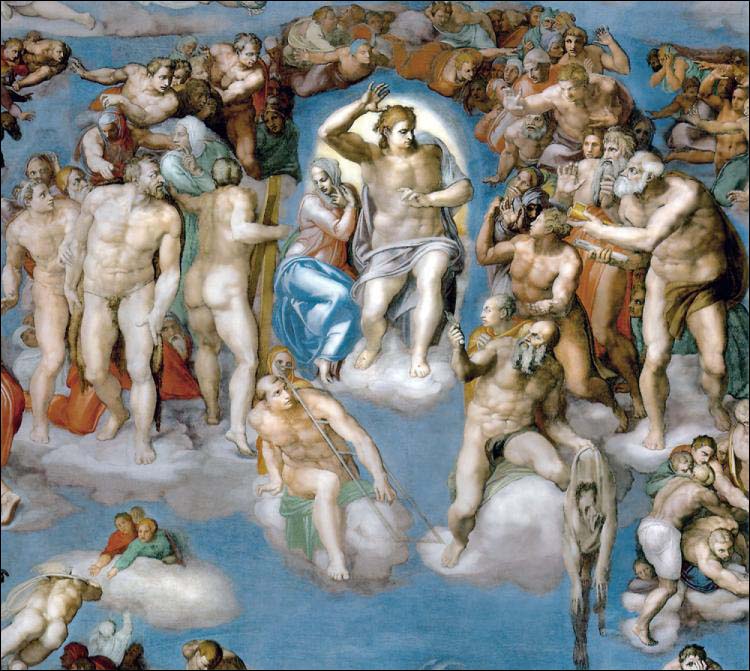
Even another German, dutch born, pope Adrian VI, could only see an immoral „bath of the naked“ ten years later on the Sistine ceiling. What would have happened if Michelangelo had been able to make it clear to the twenty-six-year-old fiery monk that in Italy at the latest, since Francis of Assisi, the present, the creation and its beauty had been seen as a good gift of God and praised in art ?

  The „immoral bath of the naked“, no – it was nothing more then seen as a good gift of god and praised in art. Michelangelos „last judgement“,  behind the altar.

Martin Luther and Michelangelo.

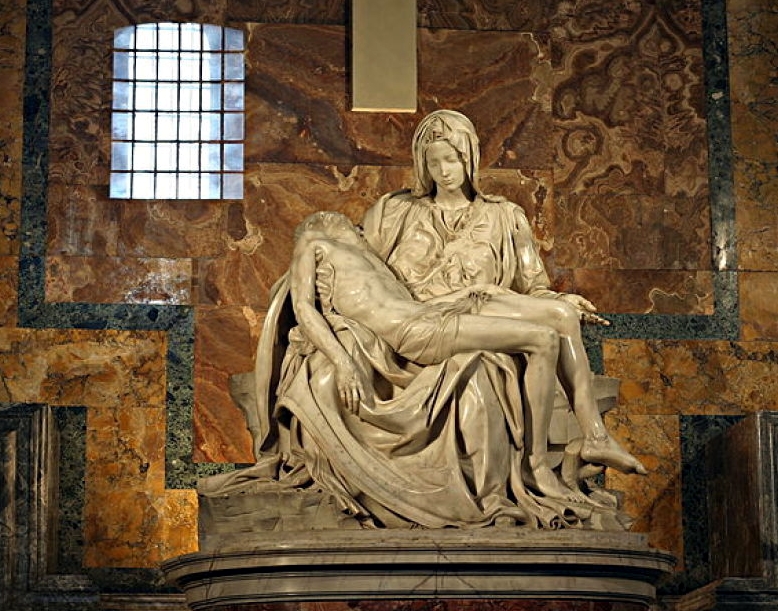
As Johann Sebastian Bach was later revered as the „fifth evangelist“, many Italian Renaissance artists painted and built the gospel with the power of their genius. The pious Michelangelo was one of the most profound. He had already built a bridge with his art into the center of Germany: his first Pieta, which today stands in St. Peter’s, shows only the mother and the dead son in the German way, but the left arm of Mary invites you to a graceful and at the same time touching viewer to the attendance and thereby expands the German devotional image to the usual group picture in Italy.

    This „First Pieta“ is considered by many to be Michelangelo’s greatest work, besting even David and the ceiling of the Sistine Chapel. He carved it from a single slab of marble and finished it in 1499. It is the only piece Michelangelo ever signed.

If they had talked to each other, the Italian artist and the German monk, they would have been able to learn, then the young Luther might have learned from his mentally related contemporary, who also suffered from his church and drastically turned the tensions between claim and reality into light as one can withstand contrasts and exceeds with the power of great art.

  The revolutionary reformation.

But this conversation did not take place: when the small door in the Sistine Chapel quietly closed again, a world-historical opportunity had been missed out, the most cultural misunderstanding took its course. A revolution or better a reformation began already on the eve of All Saints, on the 31st of October 1512, the Sistine ceiling was solemnly revealed, and Luther had long ago returned to Germany. But it took exactly five more years, on 31 October 1517, when Martin Luther finally sparked the Reformation with his 95 theses on the church door in Wittenberg.      Today – 500/505 Years Ago !

Veröffentlicht unter History | Verschlagwortet mit , , | Hinterlasse einen Kommentar

Did You Know That – 5

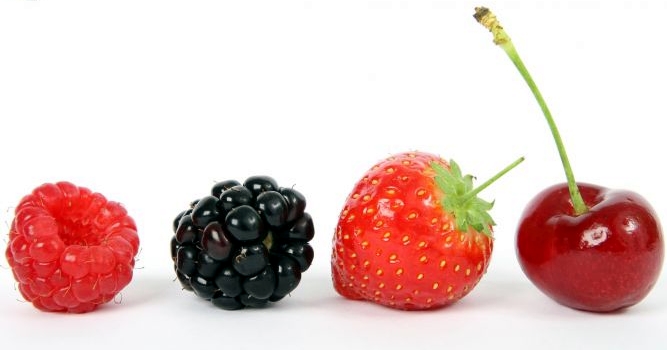
Did you know that a banana is a berry, but a strawberry or a blackberry NOT ?

A berry is produced from a single fruit node. In the case of a strawberry, the individual fruits are distributed on a mock crop; in raspberries or blackberries, the individual globules each form independent fruits which are only loosely connected.

    Melon, Banana etc. are true berry’s.

The question remains, therefore, why the botany did not orient itself to existing names, so that now almost everything we know as berry is in reality no. Well, the blueberry for example is actually one. Botanically all others are named fruit.

Types of fleshy fruits , botanically named:

True berry:
Blackcurrant, Blueberry, Chili pepper, Cranberry, Eggplant,
Gooseberry, Grape, Guava, Kiwi, Lucuma, Pomegranate,
Redcurrant, Tomato, Banana.

  They are all fruits and NOT berry’s.

Pepo:
A modified berry with a hard outer rind, typical of cucurbits such as cucumbers and melons.
Cucumber, Gourd, Melon, Pumpkin.

Hesperidium:
A hesperidium (plural hesperidia) is a modified berry with a tough, leathery rind.
Grapefruit, Lemon, Lime, Orange.

   Yes, that’s fruit and they are not berry’s !

Fruits:

Aggregate fruit.
Blackberry, Boysenberry, Raspberry.

Multiple fruit.
Fig, Hedge apple, Mulberry, Pineapple.

Accessory fruit.
Apple, Pineapple, Rose hip, Stone fruit, Strawberry.

Isn’t that interesting, how many berry-named fruits are not true berry’s ?

  Pure apple juice.

Did you know that a glass of apple-juice has more alcohol content then a shot of liqueur ?

Apple juice has 0.1% to 0.5% by volume of alcohol, depending on the type (concentrate, natural cloud, etc.), which corresponds approximately to the amount of alcohol of a 4cl-stamperl liqueur (such as Baileys) in a glass (250 ml).

    A shot of Jan Torf liqueur.

The fact that apple juice is still considered to be „alcohol-free“ is governed by the law on food: everything under 0.5% corresponds to this declaration, including alcohol-free beer. Apple juice, of course, is much healthier and corresponds to the electrolyte content of the blood in a dilution of 1 : 3 with water. Since it is absorbed quickly by the body, it is the ideal thirst extinguisher.

  Sea lions must learn to swim…….

Did you know that sea lions, except humans and monkeys, are the only mammals who must learn to swim ?

A little more than a week or two after their birth on land, the barns are trained to dive and dive in shallow bays, and are always pressed under water by the mother.
The young animals in the immediate vicinity all have the same father. The bull holds a harem and does not deal with intruders (or outliers) squeamishly.

   …….like humans and like monkeys.

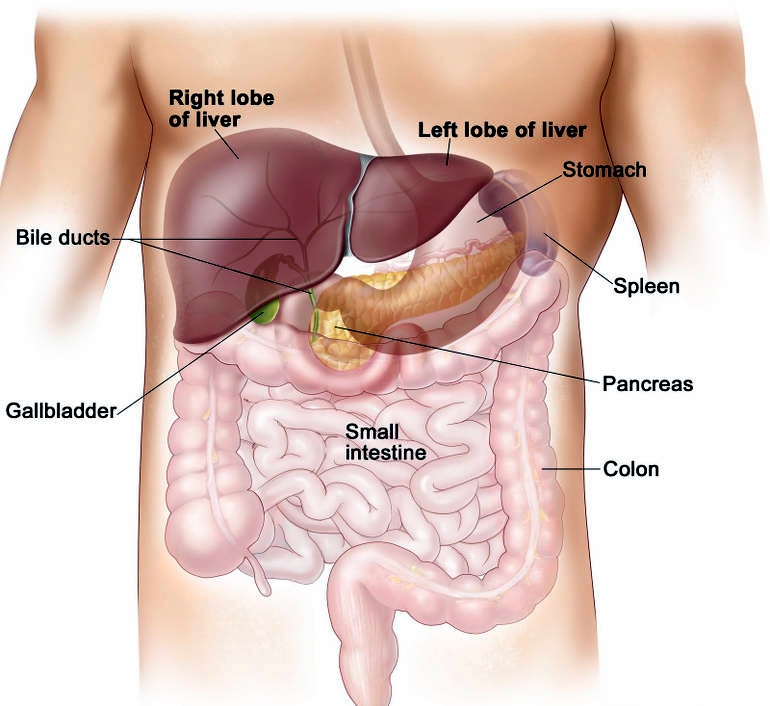
Did you know that our liver can regenerate completely, as long as at least 25% is undamaged ?

It is the only internal organ that can do that. This fact is used in transplants, for example: only a part of the donor liver is used, from which a complete organ is again developed. The biggest enemies of the liver are, by the way, fat and alcohol!

  Our liver can regenerate, if ……. !

Do you know that „sharp frying“ of meat does not close the pores ?

When frying, two things happen: 1.  Amino acids react with sugar and form an aromatic crust (the Maillard reaction). 2.  Through the heat, the proteins denature the surface and contract, but this is not sufficient to stop the meat juice.

  Many people think the very hot „sharp frying“ seals the meat and will keep the juices inside – NOT TRUE !

This can be seen in the fact that it fizzles and splashes when frying meat, which suggests steam. If the meat is then on the plate, it lies within a short time in a varnish – the liquid barrier does not seem to function so well.

   This sharp frying is just good for a pleasant look of the meat and a nice, aromatic crust and taste.

So how do you keep meat juicy? The secret is the duration of the frying: the shorter the juice is scant, fry slow and longer, let the meat rest and you will get it juicy. In addition, it should not be exaggerated with the heat. In addition to the tasty aromas of the Maillard function, carcinogenic acrylamide is also produced.

Hope you enjoyed this post again and some of the facts most people don’t know. From time to time I will go on and post some more of unusual facts. Stay tuned !
Veröffentlicht unter History, Hobbies, Information, Lifestyle | Verschlagwortet mit | Hinterlasse einen Kommentar

3 Years MyUy

When I started this blog 3 years ago, in my wildest dreams I couldn’t imagine how successful this blog would be and how many ideas and facts I can bring to screen. If you have some ideas or tips how to increase the quality of this blog – PLEASE tell me.

Some statistics over the 3 years.

Almost 300 posts were published.
I’ve written over 300.000 words,
or almost 4 books with an average of 300 pages.
Over 600 comments came in.
I published over 4000 pictures within the posts.
Readers are from over 40 different country’s.

Thank you ALL very much for your loyalty ! I will try to keep the interest level for you as high as now and hope you will stay also with me in the future !
Veröffentlicht unter Information, Uncategorized | 1 Kommentar

Meet the Lipstick King

Lippenstift-Museum (Lipstick Museum) Rene Koch, Berlin Germany.

Rene send me this information. I like to pass it on with some additional information about his museum. Parts of this post contents are courtesy of Lippenstift Museum Rene Koch. Thanks very much Rene, wish I could come, but Uruguay is a bit far – next time better.
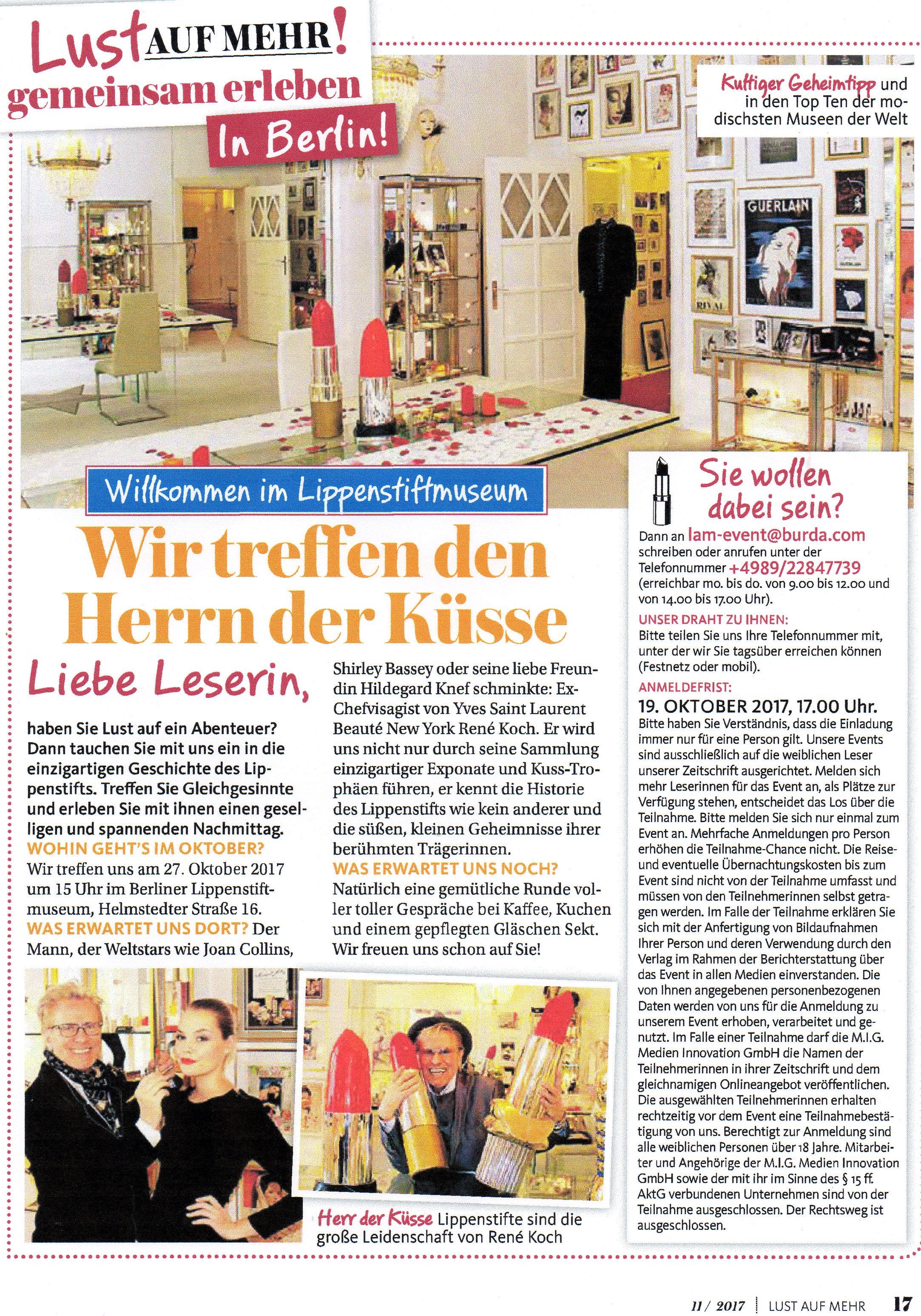
The invitation is for a special event on 27th of October in Berlin. The motto „Lust for an Adventure“ in combination with the Burda publishing house says it all.

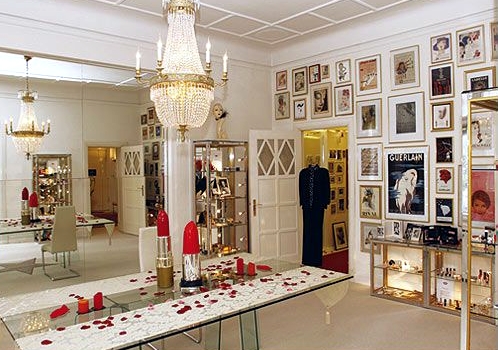
  What a magnificent museum.

What can you expect ?

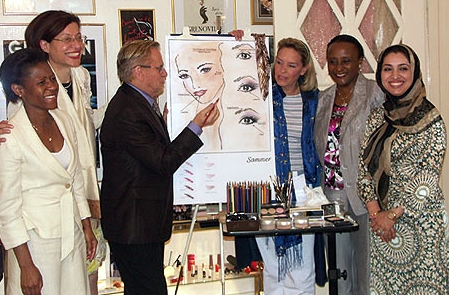
Meet the man, who put on make up to world stars like Joan Collins, Shirley Bassey or his dear girlfriend Hildegard Knef and many others. The Ex-Chefvisagist of Yves Saint Laurent Beaute New York, Rene Koch. He will lead you not only through his collections, unique exhibits and kiss trophies, he also knows the history of the lipstick like no other and sweet little secrets of her famous bearers.

Of course a cozy round, full of great conversations with coffee, cakes and a well-kept glass of sparkling wine.

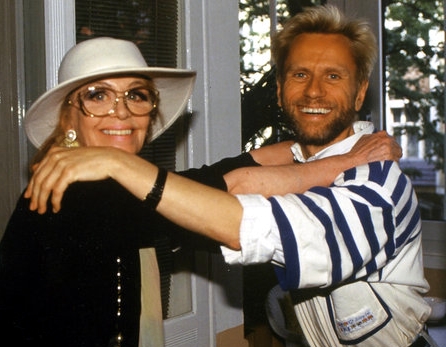
  Hildegard Knef with Rene Koch.

One of the most unusual exhibitions in Berlin.

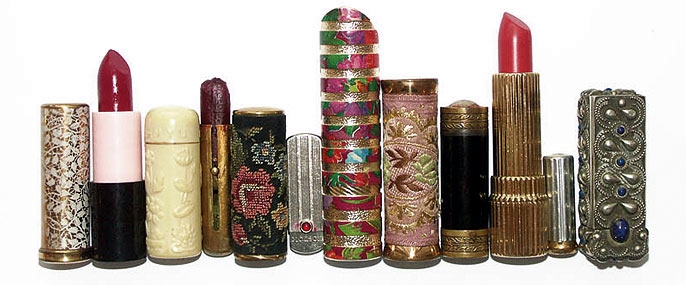
The make-up artist Rene Koch personally brings you the history of lipstick. The Lipstick Museum is housed on the chic premises of a private flat. The collection is extensive and shows rarities from the Baroque period up until today, it includes precious stone-studded lipsticks, historical make-up cases and former everyday products such as the DDR (former East Germany) people’s lipstick. Insider knowledge, anecdotes and make-up tips are also on offer.

From the Baroque over the roaring ’20s to the present: „Red lips are for kissing“.

  The master himself.

Rene Koch’s lipstick museum shows that red lips are not only to be kissed, they also want to last. His private collection has been open to the public since 2009, and there are more than 250 exhibits here. They include lipsticks and advertising from more than 200 years, luxurious make-up cases and even some dresses worn by Marlene Dietrich.

      
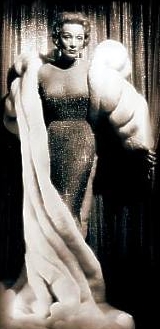
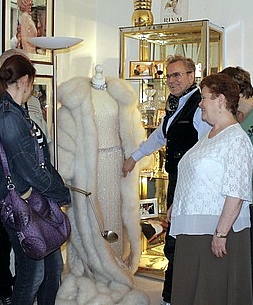
Marlene Dietrich’s wonderful robe – now at exhibition in Rene Kochs museum.

On the walls are images of historical film-makers from the silent film and early sound film era with famous divas. Classic songs play in the background, providing the right atmosphere. Particular rarities are the lipsticks of the Baroque era and lip colors from Japan or Africa. In its present form, the lipstick has only existed since the 19th century.

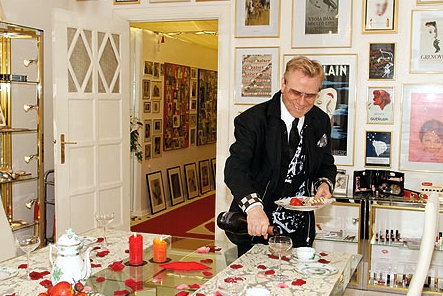
  Rene is preparing a visitors event, always in style !

The museum curator likes to tell about the development of the product – and the associated change in how women presented themselves. Another highlight is the more than 150 kiss prints of great divas of film and television history. Among those represented are Hildegard Knef, Mireille Mathieu, Bonnie Tyler and others. From other personalities like Evita Peron or Paloma Picasso, one can see whole lipstick collections and make-up utensils. If you would like to learn more, join Rene Koch’s make-up workshops.

  International workshop participants.

This is what awaits you at the Lipstick Museum.

* Japanese make-up pouch from the 18th century with lip brushes, silver case, and woodblock printing.
* Silver container with rouge and snuff bottle (around 1800).
* Historical lipstick mould from the early 30s.
* Popular everyday products such as the DDR people’s lipstick.
* Over 150 lip prints of celebrities.

     Shirley Bassey – what a powerful singer.
Rene could always made a beautiful face looking even better.

Location.

The „Lippenstift-Museum Rene Koch“ is located in the private rooms of Rene Koch. It is located between the two underground stations Berliner Straße and Bayerischer Platz. These can be reached using lines U4, U7 or U9. Alternatively, the bus to use is 104. It is only about a five minute walk from both metro stations to the museum. For a visit to the lipstick museum please make an appointment in advance and you will be received by Rene Koch himself. Group tours for up to 15 people are also possible. One can also enjoy beauty workshops and lectures.

  Such a fantastic collection.

Opening times.

Reach Rene Koch and his team by e-mail or telephone from Wednesday to Friday. Visits are by appointment only:  rene.koch@lippenstiftmuseum.de

  Soooooo much to see, wish I was there !

Address.

Lippenstift-Museum Rene Koch
Helmstedter Straße 16
10717 Berlin, Germany

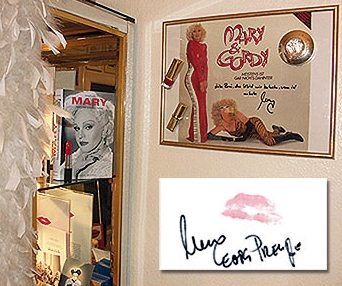
  History to touch, Mary & Gordy display.

There is an old German saying „Berlin ist eine Reise wert„. That’s true, Berlin is always worth a visit, especially if you have the chance to see the Lippenstift Museum Rene Koch.

Veröffentlicht unter Collecting, History, Hobbies, Information, Lifestyle, Travel | Verschlagwortet mit , | 4 Kommentare

Did You Know That – 4

Did you know that hummingbirds cant run ?

While their wings are incredibly mobile and the bird can even fly backwards. The legs are so stunted that a few leaps are only going out with some difficulty.
The rest of the hummingbird’s life seems incredibly accelerated. His heart beats up to 1000 times a minute, at the same time he breathes 250 times.

  Stunted legs, which can’t walk nor run.

In relation to its body size, it is one of the fastest creatures on earth. It moves in the second 400 times as far as it is large. A person would have to run 2500 km / h fast. In order to cover its incredible energy needs, the hummingbird must constantly eat – otherwise he would starve within a few hours.

Do you know which the largest „living thing“ on earth is ?

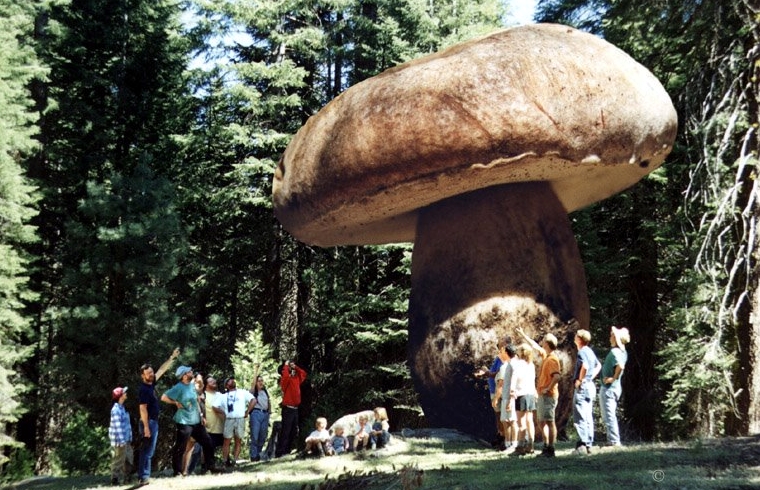
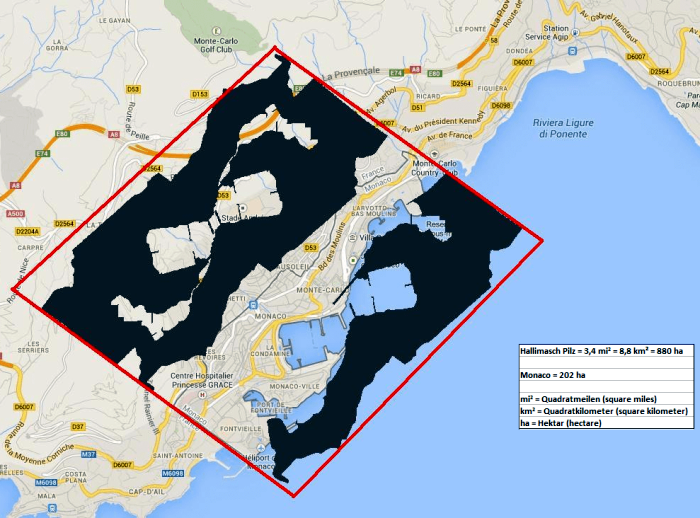
What we commonly call a mushroom is only the fruit body of a so-called mycelium growing in the ground. The mycelium of a Hallimasch mushroom in Oregon in the USA has a size of nearly 900 hectares, which corresponds to over 1000 football fields. The fungus is several thousand years old and weighs over 600 tons. Therefore it is the largest living creature on earth.

  Part of the Hallimasch in Oregon, USA.

Hallimasch or armillaria are masses of growing fungi, which are raw poisonous, boiled but liked to be eaten. If you do not find any during the day, you should perhaps try it once in the night. The mycelium and the full-grown wood glow in the dark clearly visible.

  Entry to the Armillaria National Park in Oregon.

Ensuing the data of the Oregon armillaria mushroom.
Area: 880 ha = 8.8 km2 (4 times the size of Monaco (c. 202 ha))
Estimated weight: 600 tons
Age: 2400 years
Average height: 1 m
Diameter: 5 km

  The Oregon armillaria from the air.

To get a picture of the true size of the mushroom, one compared the size of the Oregon fungus with the city of Monaco.

  Four times the size of Monaco.

The largest mushroom in Europe and thus the largest living environment in Europe lives in Switzerland. The living specimen of the dark Hallimasch mushroom is more than 1000 years old and extends about 500m wide and 800m long. This corresponds approximately to an area of ​​35 hectares.

Did you know that all the ants in the world have the same weight as all humans together ?

As everyone can imagine, the number of ants is unequally higher. About one million ants are equal to a human. An average ants weigh not even a tenth of a gram. They have enormous powers. Some species can bear a hundredfold of their own weight. Their states are comparable to those of humans, both in the number of individuals and in their extension.

         Bull ants in Australia, some kind of big, aggressive and dangerous buggers. Click on pics and see their fangs.

Colonies with a diameter of thousands of kilometers have already been found. In addition to humans, ants are the only living creatures that carry livestock and agriculture. Their social structure, however, is drastically different from ours. Workers, soldiers, and the queen are always female, males are only needed to fertilize the queen. Some species live asexually, they clone themselves, there are no males.

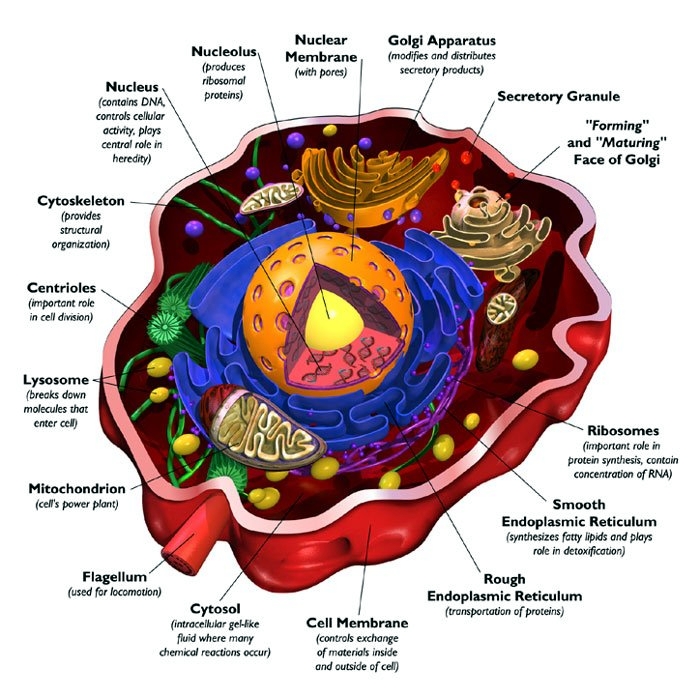
Did you know that a full grown human body consists of 100 trillion cells ?

For those who can not imagine anything under this figure: they are a hundred thousand billions. Hi Germans: Don’t get confused – in American English „eine Milliarde is the same as one billion“ .

  One human cell !! Click on pic to supersize.

If all these cells were to be threaded on a bead chain, it would be 4 million kilometers long. For this you have to hurry, because if you only need one second for each threading the chain would be finished only after three million years. The human body forms in each hour about 1 million new cells.

  Be honest ! Did you know that ???

Horrible but true: the body also houses 100 trillion bacteria. However, most of them are necessary for our survival. For example our intestinal bacteria.

Did you know that the first Swiss wrist watch was a lady’s watch ?

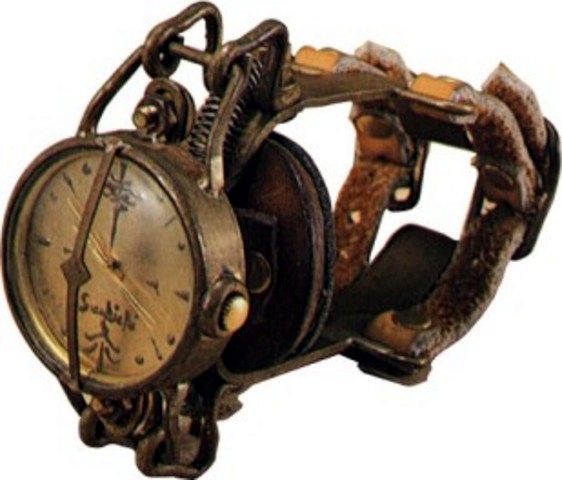
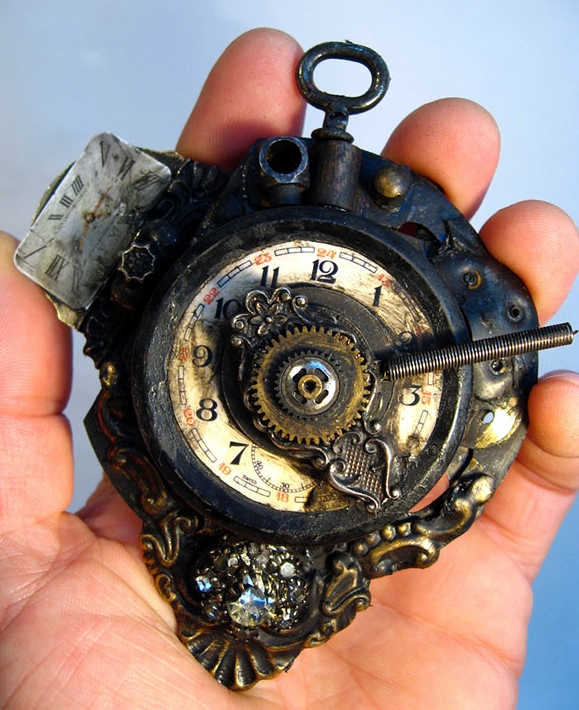
The first portable watches were built around 1500 and were designed exclusively for men. At the beginning of the twentieth century clock movements could be reduced to fit the wrist. This was widely regarded as „womanish,“ men continued to carry the pocket watch on the chain. Crazy, how old wrist watches could have looked like, right ?

Time machine 3026 Steam Punk Assemblage by Urbandon. Could look like the oldest known (survived) wrist watch in the world. Made around 1700 !!  Just an experimental model. Usable wristwatches came up much later.
   Verne Voyage Watch Dual Time Zone Japan Steam Punk Tokyo.

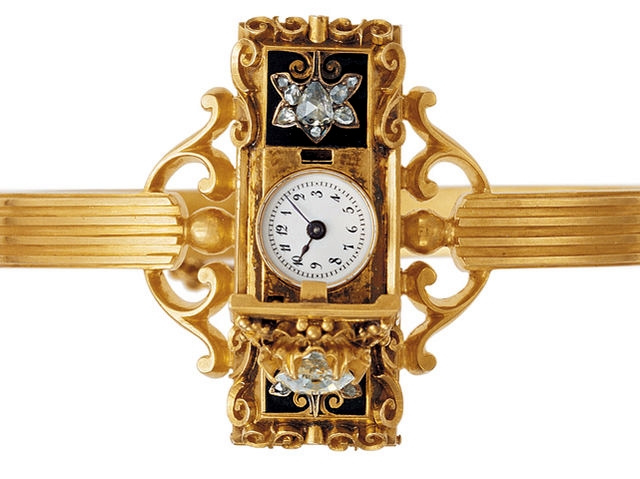
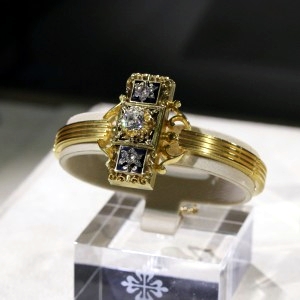
The first „modern“ wristwatch was made for a woman, Countess Koscowicz of Hungary, by Swiss watch manufacturer Patek Philippe, in 1868. Although it was the first timekeeping device to be designed specifically for use on the wrist, it was intended primarily as a piece of decorative jewellery.


The Patek Philippe No. 27’368 is it. A six line, gilt, cylinder escapement encased in a rectangular gold bracelet with a hinged, hunter-style cover – although it’s not clear who originally commissioned it from Antoine Norbert de Patek and Jean Adrien Philippe.

Veröffentlicht unter History, Hobbies, Information, Lifestyle | Verschlagwortet mit | 6 Kommentare