
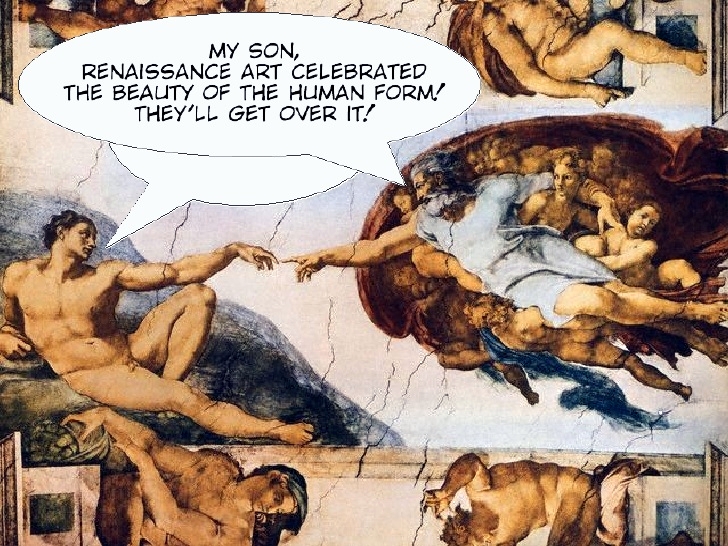
On this day today, the 31st of October 2017, 500 years ago and 505 years ago, two important events took place which still keep us occupied today. It’s the famous ceiling painting of artist Michelangelo in the Sistine Chapel in Rome, which Michelangelo finished on the 31st of October 1512 and the sparking of the Reformation through the monk Martin Luther in Wittenberg, where he nailed his 95 theses against the church door on the 31st of October 1517.
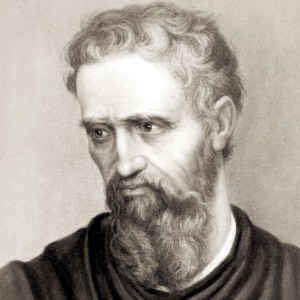 Michelangelo di Lodovico Buonarroti Simoni ,
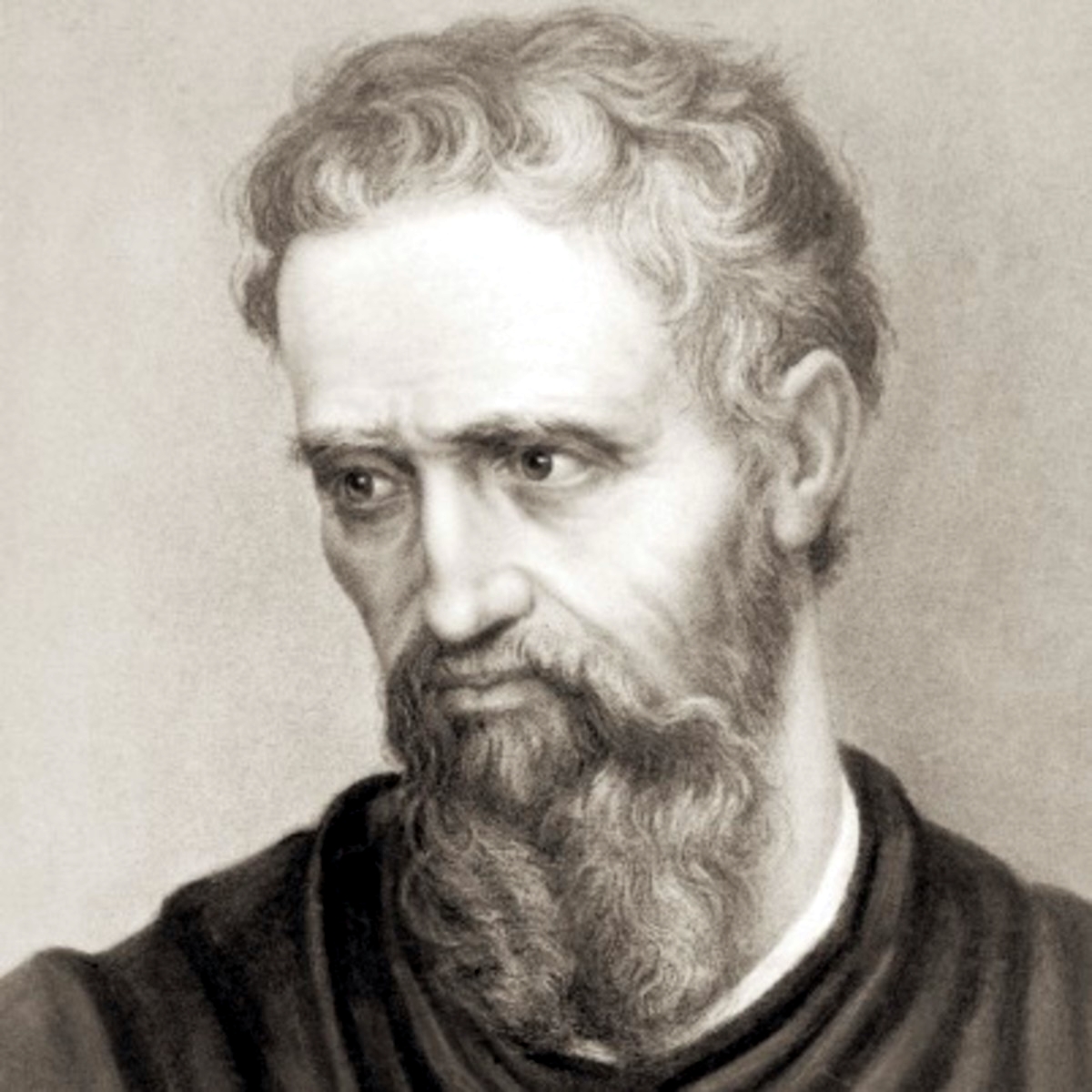
6. March 1475 – 18. February 1564, was an Italian sculptor, painter, architect, and poet of the High Renaissance born in Florence.
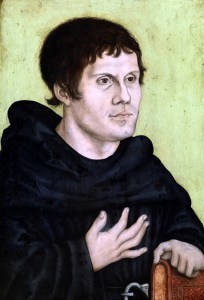 Martin Luther, here shown as a young Augustine monk, 10. November 1483 – 18. February 1546, was a German professor of theology, composer, priest, monk, and a seminal figure in the Protestant Reformation. born in Eisleben,
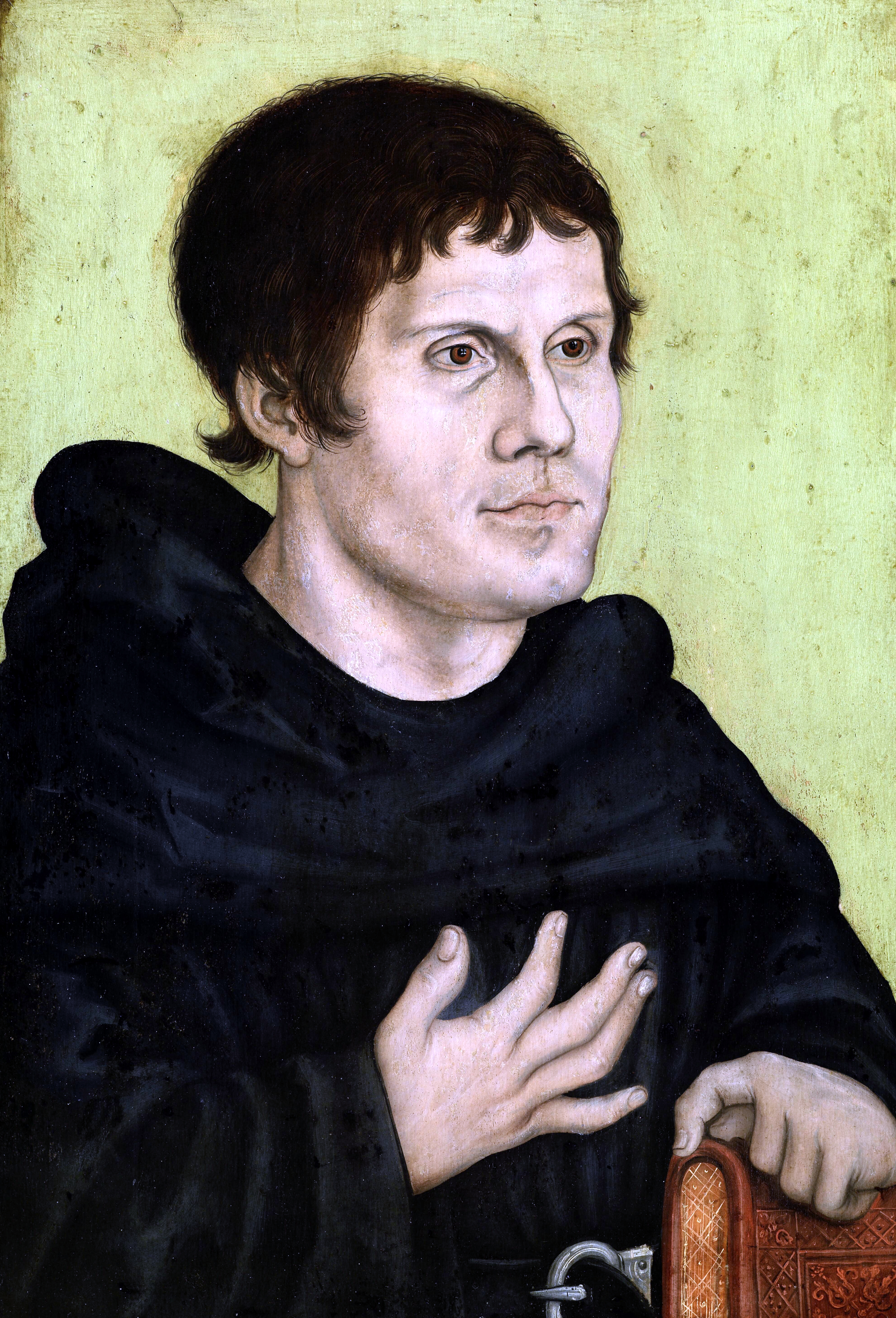
What do they have to do with each other ? Some time ago I’ve read an article in the „Frankfurter Allgemeine“, which was mind blowing to me, because of combining these two events. I like to introduce you to a shortened and translated version and, as I usually do, improved with some enlightening pictures.
If Luther had only understood him !
Michelangelo’s ceiling paintings of the Sistine Chapel are five hundred and five years old. When it arose, Martin Luther was in Rome. He could have seen it – and misunderstood.
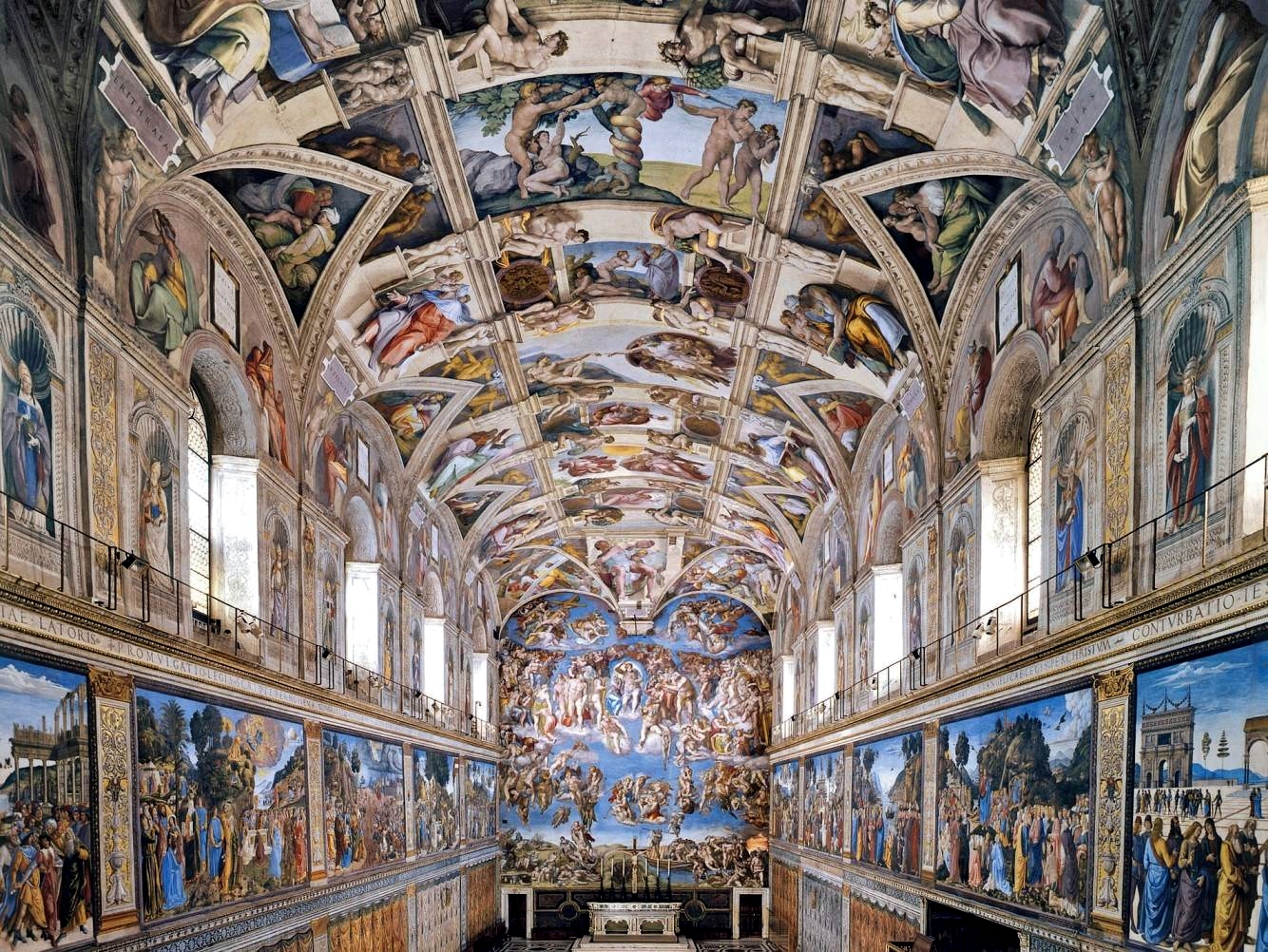
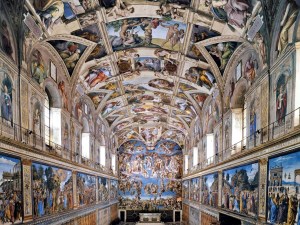 Famous ceiling in the Sistine Chapel, Vatican Rome.
The year 1510 in Rome was tense. Eighteen years before, Christopher Columbus had discovered a new world, laying the foundation of the Spanish world. Seven years later Christianity was to break, through the rigidity of a German begging-monk. In 1510, an Italian, il Terribile (the terrible), as the Romans murmured, sat on the papal throne. Cardinal became the young Giuliano della Rovere (Julius II) through the pope, his uncle Sixtus IV. With political skill, intrigues, and scattered rumors, he had contributed to ruin the reputation of his archenemy, the Spaniard papal Alexander VI. Borgia.
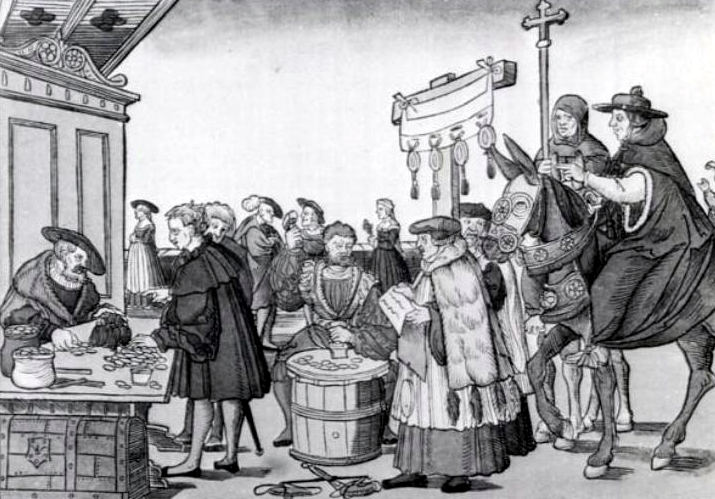
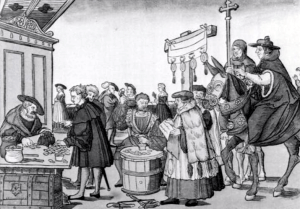 Selling indulgences in Rome. Luther despised this kind of insidious money making of the Roman church…..
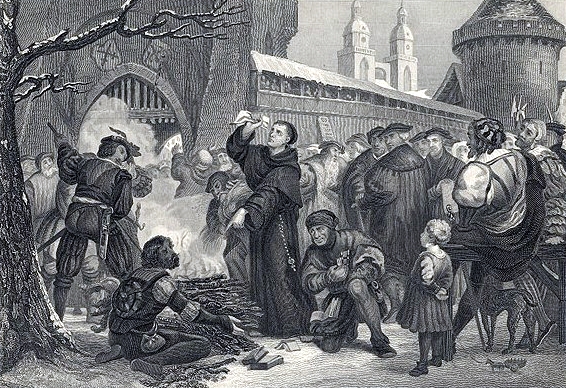
 ……This ended in the burning of indulgences and bulle’s at the Luther oak in Wittenberg, and was one of the first sparks of reformation.
Devoted craft or great art ?
Thus Julius II would have disappeared into the footnotes of history as a devious intriguer, mediocre politician and unsuccessful church reformer, wasn’t there his striving for success. While Pope Alexander VI. did not care for his grave, and buried his bones with those of his uncle, Pope Calixt III, for nearly three hundred years, forgotten and rotting away in a sacristy, the Rovere Pope, after his election, strove for a pious shrine. The Renaissance man Julius II knew that non-religious craftsmanship could lend eternal fame, but only great art.
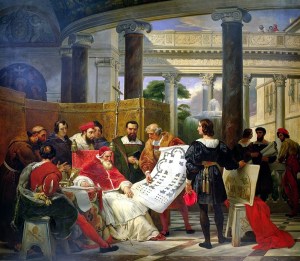 Julius II ordering Bramante, Michelangelo and Raphael to build the Vatican and St.Peter’s.
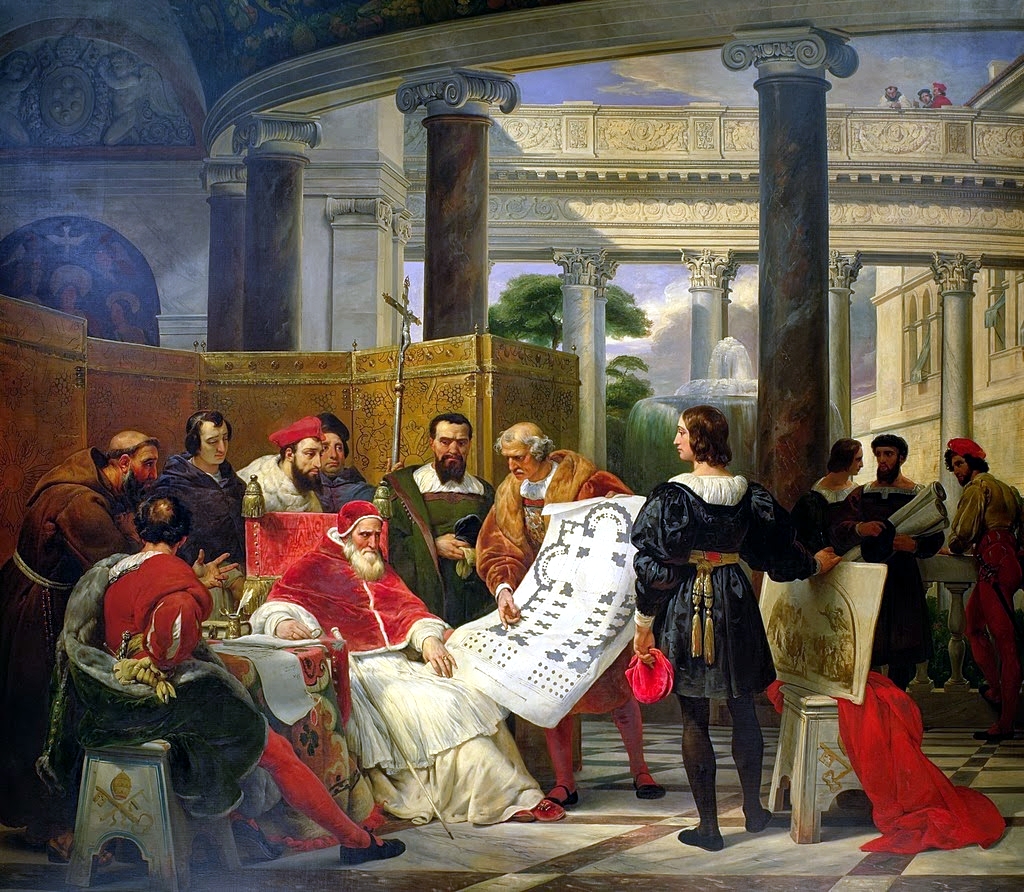
Great art did not come from Rome at the time, but existed in Florence, in Umbria, in Milan. For example, he commissioned Donato Bramante from Milan to plan for him the world’s largest god-house. The Pantheon was to be raised onto the gigantic Basilica of Constantine, so the Pope, and for the finances people had to suffer with buying indulgences. That became disastrous, as it later turned out (see pics further up). He entrusted the young, already famous Michelangelo Buonarotti from Florence with the design of his grave, which was to fill the apse of the new St. Peter with 48 titanic figures.
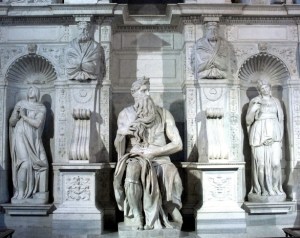
Some earlier titanic figures of this fantastic artist – Michelangelo’s Rachel and Leah.
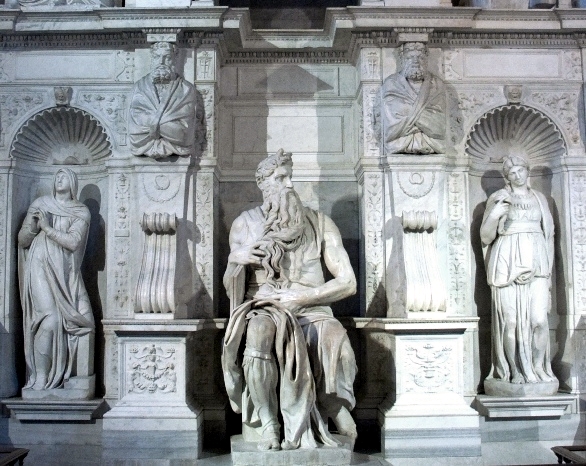
Provocation of a pious.
It soon became apparent that the ambition of the pope did not fail the volcanic temperament of the young artist. Michelangelo had chosen the huge marble blocks in Carrara, and they were already stacked in front of St.Peter when the pope suddenly rejected the plan and instead ordered the artist to paint the ceiling of the chapel built by his uncle Sixtus IV. Michelangelo did not want to hear of any new plans and left Rome.
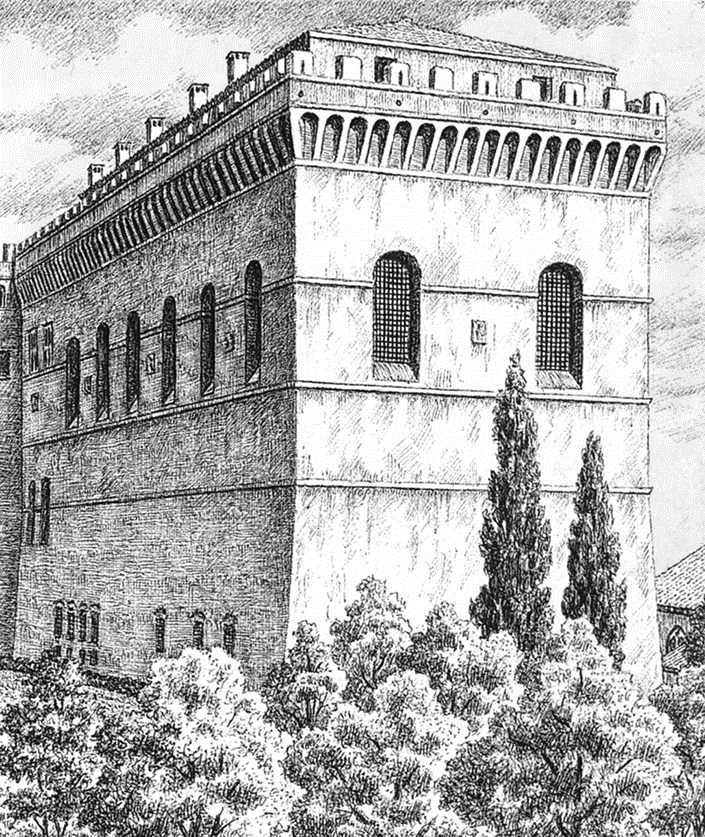
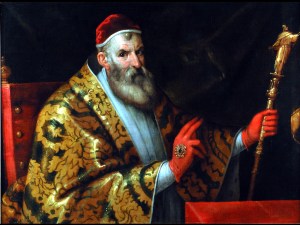 Pontifex Sixtus IV, uncle of Julius II. The Sistine Chapel stands on the foundation of an older chapel called the Capella Magna. In 1477, Pope Sixtus IV instigated a rebuilding of the chapel, which was then named for him.
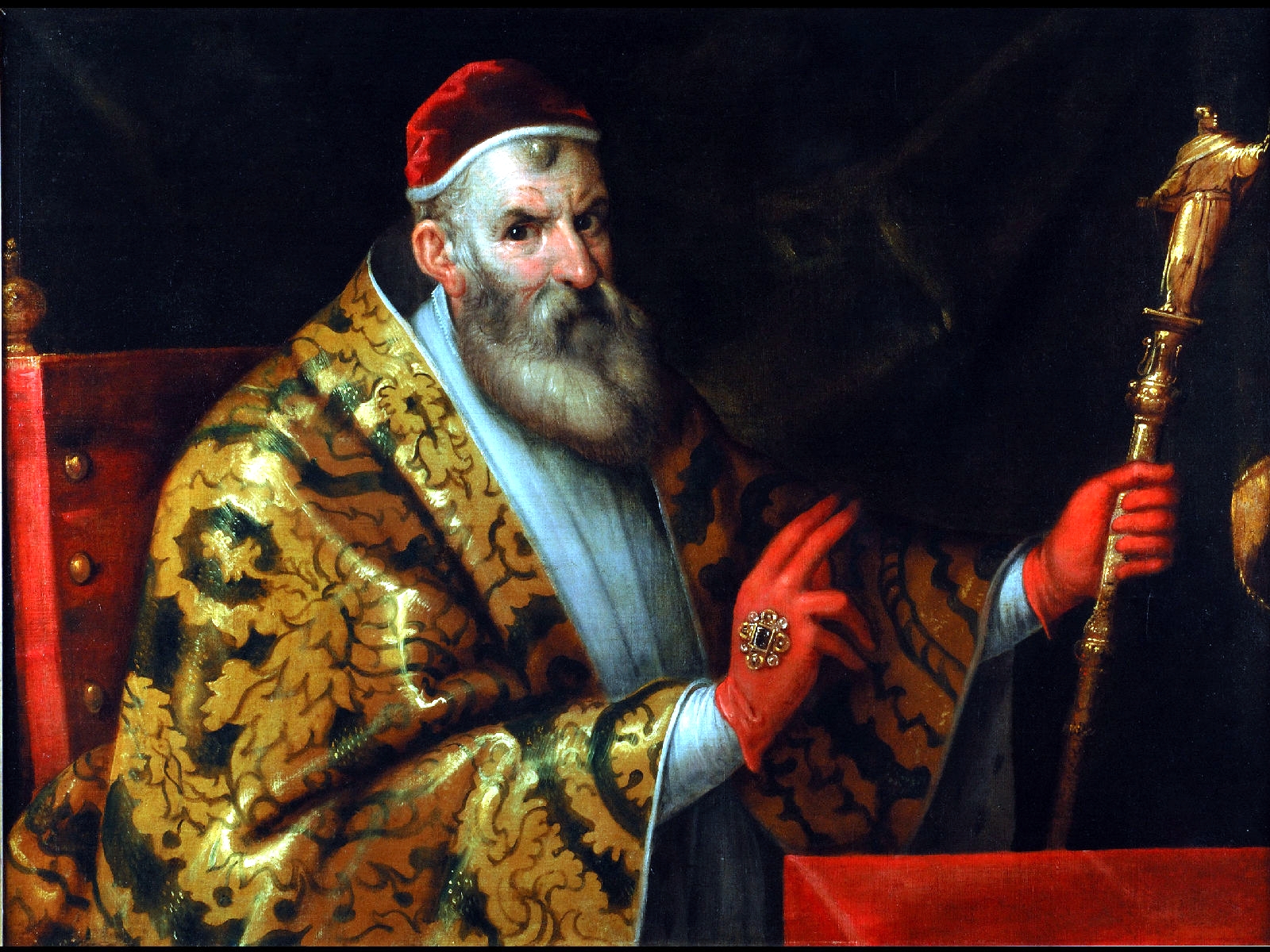
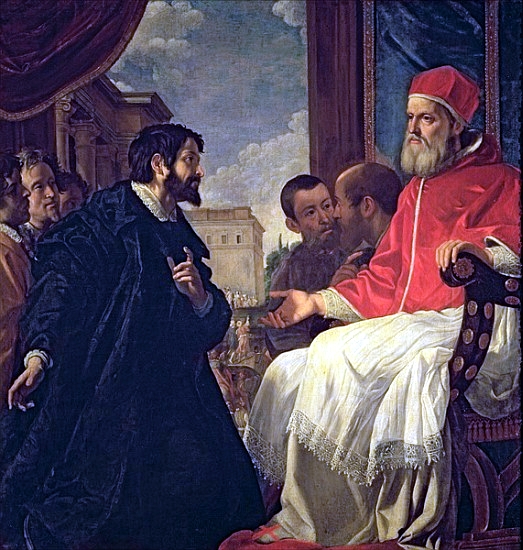
The Pope put all the levers in motion to bring him back to Rome from Florence. Nothing helped. They finally met in Bologna. What has happened so far has never been the same in the annals of the Vatican Protocol. The thirty year old artist stood up to face the old pope. A bishop tried to mediate. But the pope shouted at the good man and threw him out. Julius II remained indifferent.
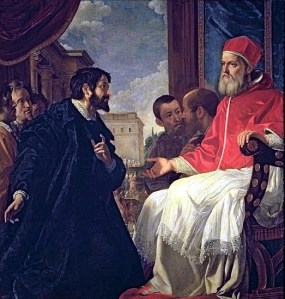 Pontifex Julius II in discussion with Michelangelo.
After all, Michelangelo was able to freely determine the program of the Sistine ceiling. Originally he had to paint the apostles, the origins of the church, guardians of the apostolic succession. But what he, the deeply pious, instead created, was a complete provocation. He did not praise the church, as his client had wished, but urged them to admonish the power-conscious pope, the impious cardinals, all those who celebrated day by day in this chapel fair, that Christ was the center of past, present and future .
The analysis and depiction of the Sistine chapel paintings is a different story to be told.
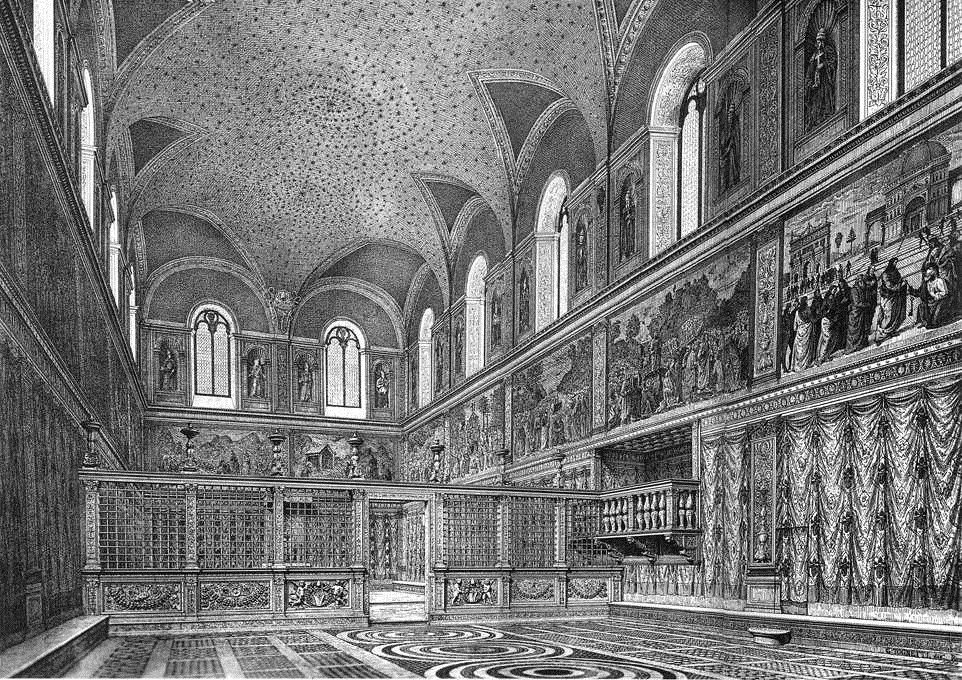
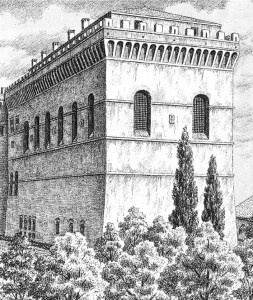 The Sistine Chapel as it may have appeared in the 15th century, just after completion. A 19th-century drawing.
The divine life of the ceiling.
Michelangelo did not paint the story of „the creation“, as the guides would suggest, but the beginning of the Johannes-evangelism: „In the beginning was the word. And the Word was with God. And God was the Word … And through the word all things have become“. Through the Logos, Christ, everything has become. The Jewish prophets and the pagan Sibyls, whose pictures Michelangelo affords, are the imminent figures in which all the hunches and longings of mankind are condensed.
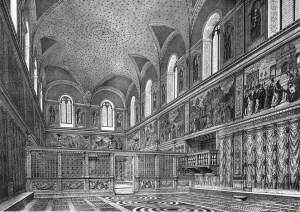 A reconstruction of the appearance of the chapel in the 1480’s, prior to the painting of the ceiling. The ceiling showed a blue night sky with golden stars.
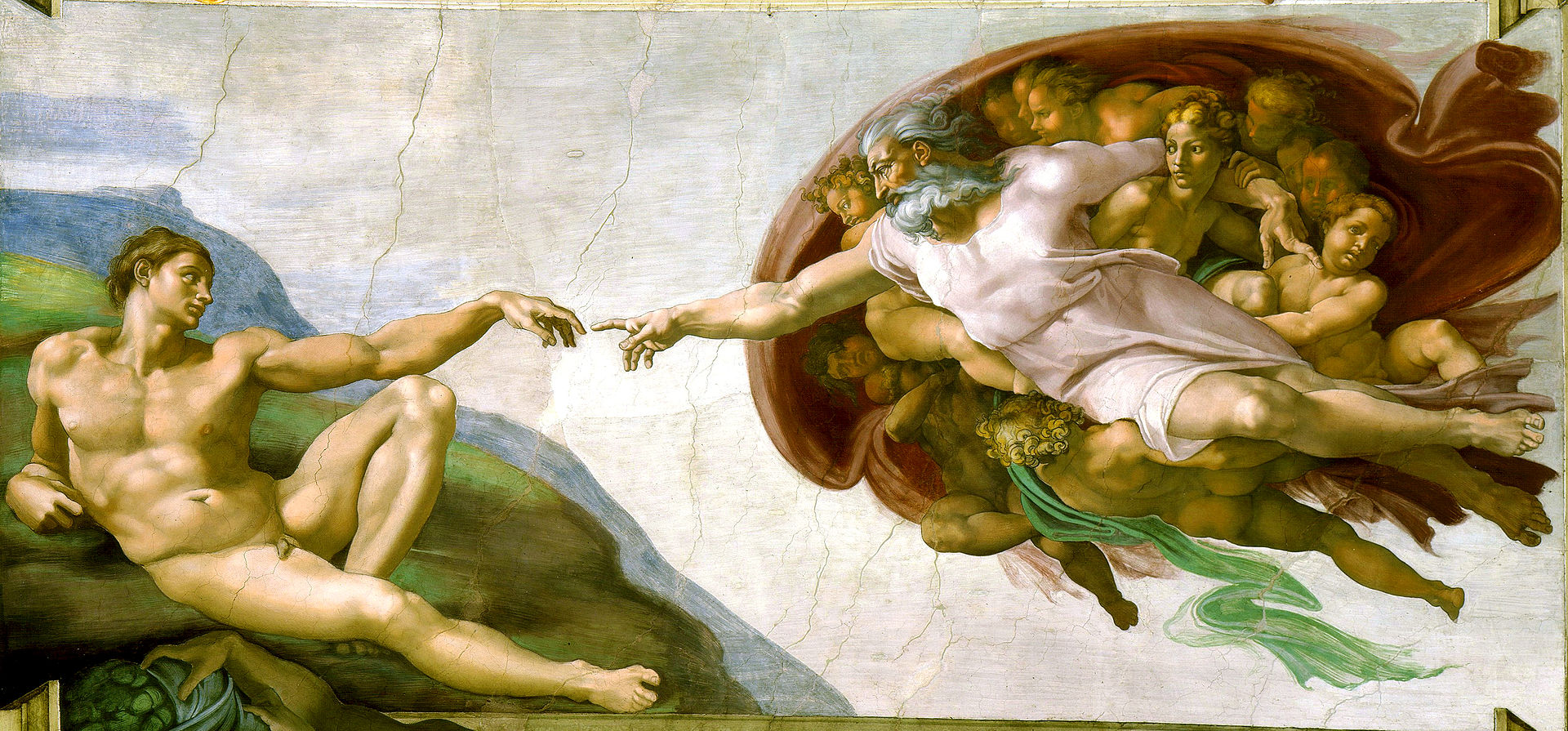
Their thinking does not go into void, for between them creation is played, and in the midst of it the creation of man. While the active finger of God gives life to the first man (Adam), his other hand rests on a small child, in whom some want to recognize the boy from the „Madonna of Brugge“. Through him, Christ, everything has become, and the Church does not appear at all on this ceiling. It can only laboriously protect the side walls, with their sacred popes, over which the divine life of the ceiling, mocking every wall, takes place.
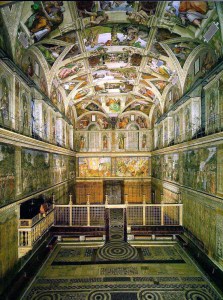 The chapel decoration as it appears from the altar side.
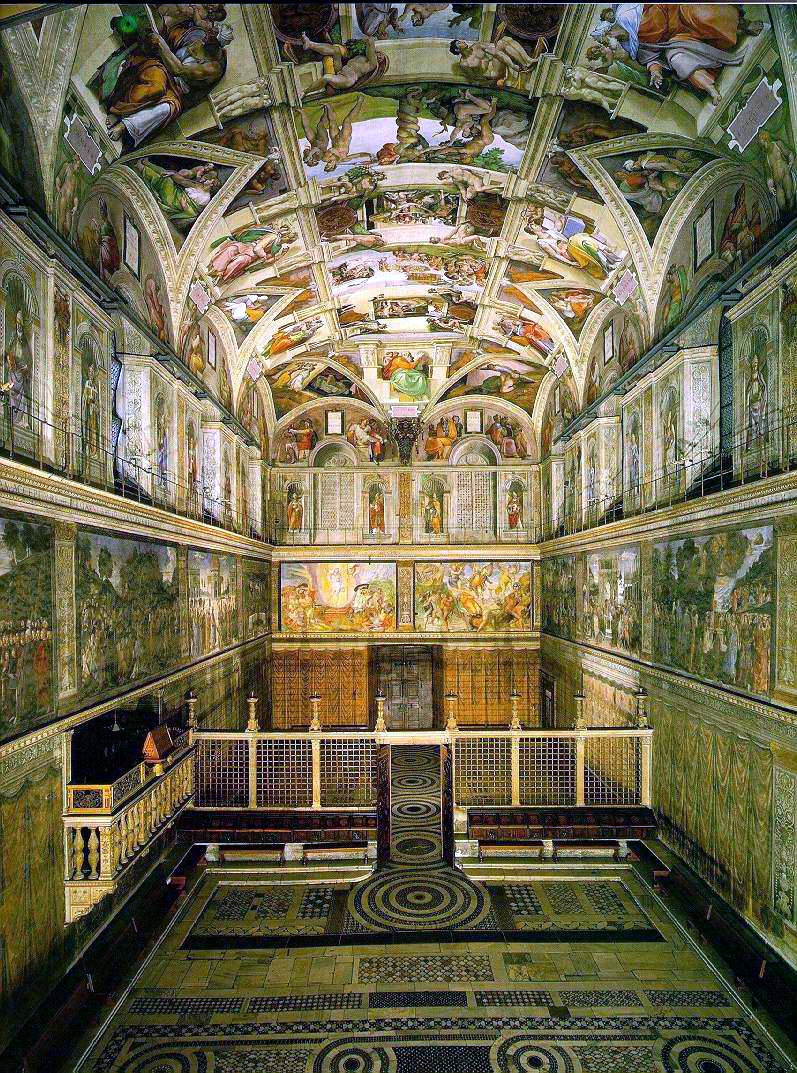
The Sistine ceiling is perhaps the most unheard-of lay preaching of all times, a loud call in the center of Christianity, to return essentially to a dramatic historical moment during which the Great Western rift might perhaps have been prevented.
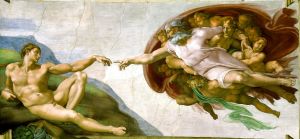 The center painting of the ceiling. Michelangelo’s creation of the first man, Adam. Click on pictures to supersize for a better viewing.
Immoral bath of the naked.
In 1510, when the pondering artist painted his opinion to the pope, at the top of the ceiling with mighty brushstrokes, a door might have opened at the bottom. We know that at that time, and to this day, the Augustinian monasteries oversee the Sistine Chapel. And we know that just this year a young, pious and high-spirited Augustine hermit from Erfurt had arrived on foot in Rome and lived in the monastery of the Augustine hermitage near Santa Maria del Popolo. Martin Luther was his name, and it was not to be avoided that he also came into the chapel entrusted to his order.
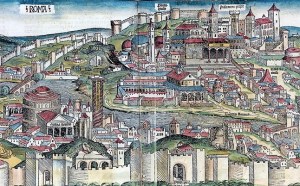 Rome as Luther saw it in 1511. The old St. Peter’s Church (before the Vatican and St. Peter’s as we know it) is in the back in the middle . Click on pic to supersize.
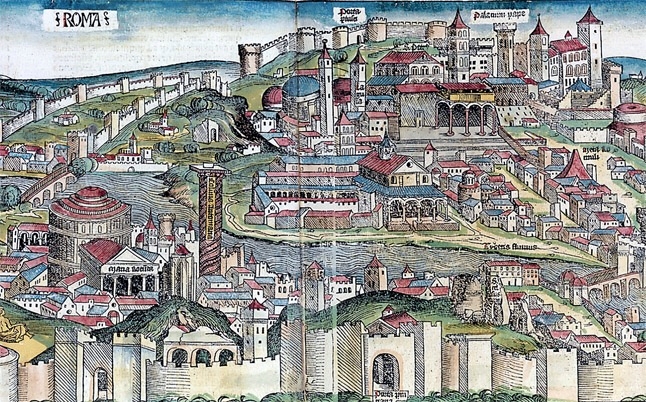
Martin Luther made his first trip to Rome as an Augustinian monk in 1511. He had started in Wittenberg in December 1510 and crossed the Alps in the winter at 2300 meters via the Septimer Pass. Two months of long and hard pilgrimage lay behind him when he saw the Eternal City from a distance in January 1511. He threw himself on the wet Italian soil praying: Hail, Sancta Roma! Yes, made truly holy by those holy martyrs, dripping with their blood. Later in his life he recalled: At Rome, as I was such a great saint, I ran through all the churches and holy corners believing everything although it was all lies and it stank.
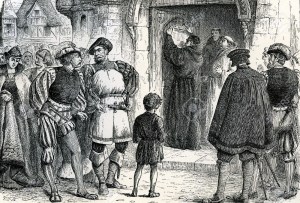 Martin Luther launches the reformation.
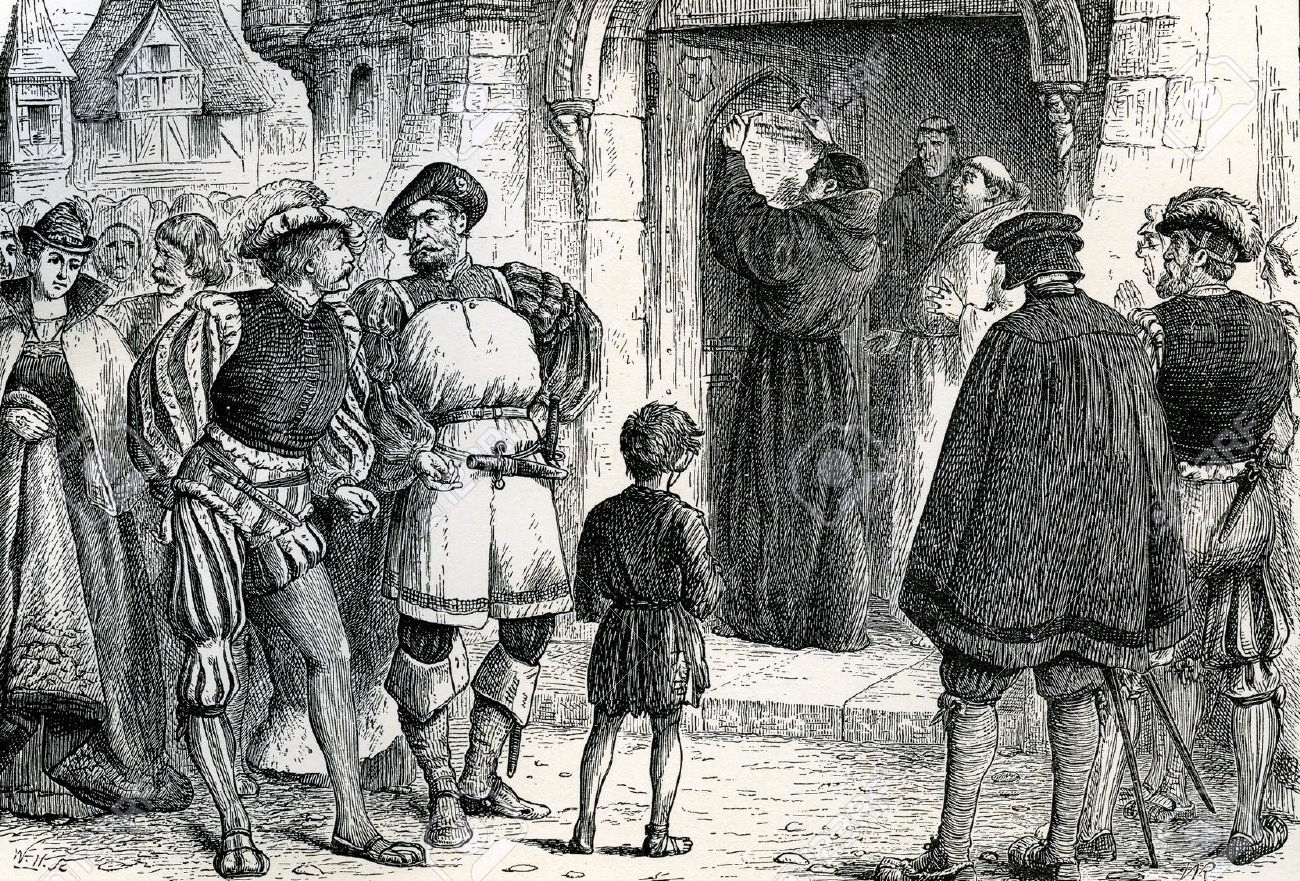
What must have been a world-historical moment when the two men met. Michelangelo, who during his lifetime, with great idealism, worked for a reform of the Church, and in the Sistine read the Levites with the power of the art of the Church – and Luther, who a few years later, with the power of the word, hurled his theses like hammer-hits on the church door in Wittenberg. What if they had recognized each other as brethren in spirit? What if Michelangelo could have made it clear that all the sensuous pleasures of the Renaissance were not merely the sinful solitude of the „Babylonian whore,“ not merely a distraction and apostasy to paganism?
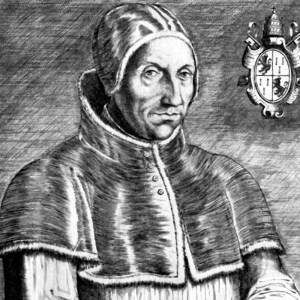 Pope Adrian VI, 2. March 1459 ‒ 14. September 1523. In 1516, Adrian became bishop of Tortosa, Spain, and was soon appointed Grand Inquisitor of the kingdoms of Aragon and Castile. He was appointed cardinal by Pope Leo X in 1517 and elected pope in 1522 as a compromise candidate after Leo’s death. Adrian came to the papacy in the midst of one of its greatest crises, threatened not only by Lutheranism to the north but also by the advance of the Ottoman Turks to the east. He refused to compromise with Lutheranism theologically, demanding Luther’s condemnation as a heretic.
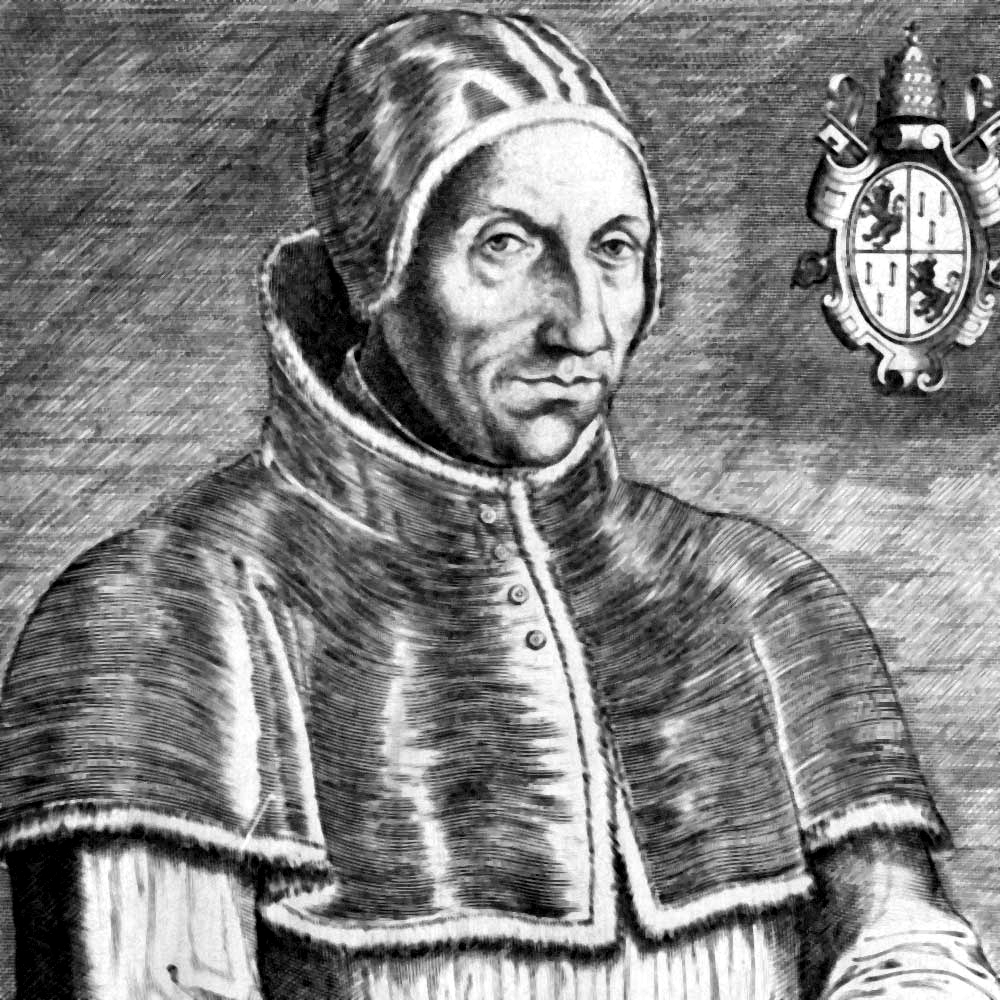
Even another German, dutch born, pope Adrian VI, could only see an immoral „bath of the naked“ ten years later on the Sistine ceiling. What would have happened if Michelangelo had been able to make it clear to the twenty-six-year-old fiery monk that in Italy at the latest, since Francis of Assisi, the present, the creation and its beauty had been seen as a good gift of God and praised in art ?
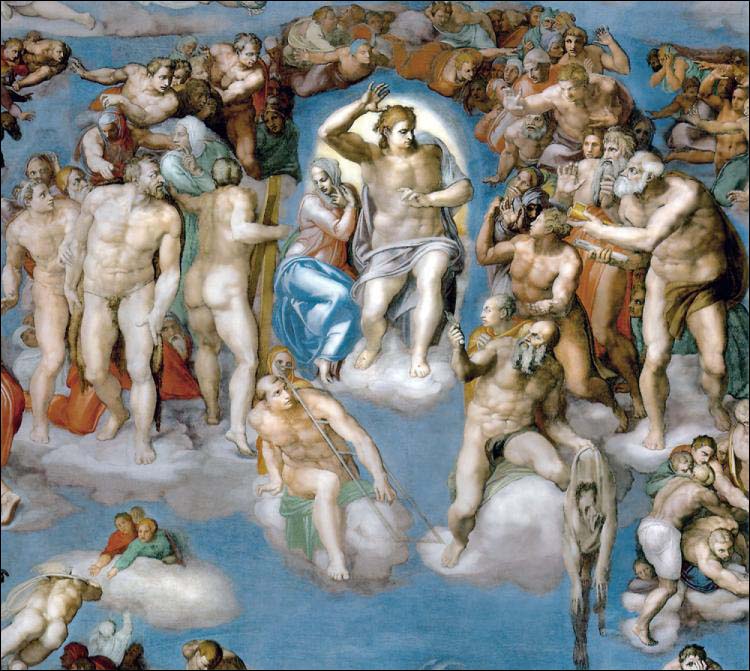
 The „immoral bath of the naked“, no – it was nothing more then seen as a good gift of god and praised in art. Michelangelos „last judgement“, behind the altar.
Martin Luther and Michelangelo.
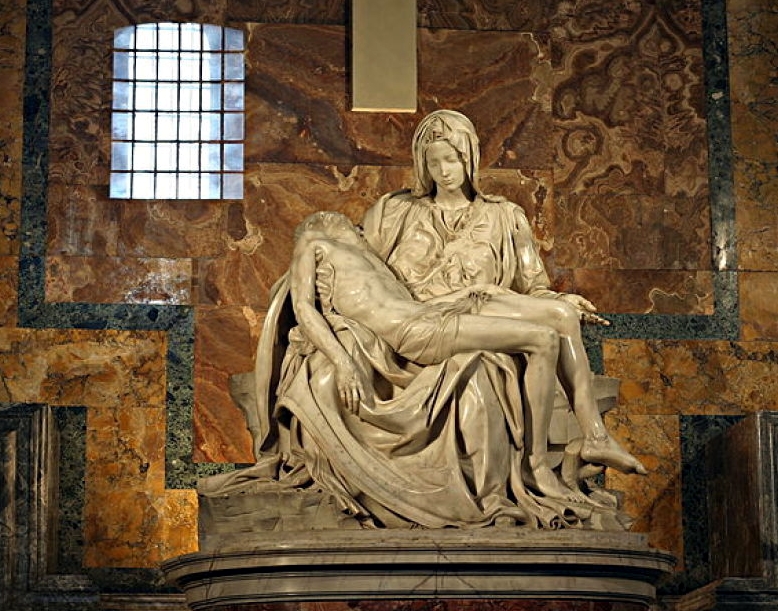
As Johann Sebastian Bach was later revered as the „fifth evangelist“, many Italian Renaissance artists painted and built the gospel with the power of their genius. The pious Michelangelo was one of the most profound. He had already built a bridge with his art into the center of Germany: his first Pieta, which today stands in St. Peter’s, shows only the mother and the dead son in the German way, but the left arm of Mary invites you to a graceful and at the same time touching viewer to the attendance and thereby expands the German devotional image to the usual group picture in Italy.
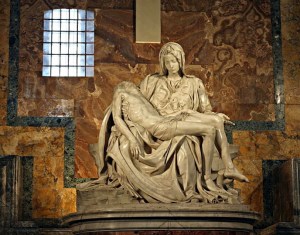 This „First Pieta“ is considered by many to be Michelangelo’s greatest work, besting even David and the ceiling of the Sistine Chapel. He carved it from a single slab of marble and finished it in 1499. It is the only piece Michelangelo ever signed.
If they had talked to each other, the Italian artist and the German monk, they would have been able to learn, then the young Luther might have learned from his mentally related contemporary, who also suffered from his church and drastically turned the tensions between claim and reality into light as one can withstand contrasts and exceeds with the power of great art.
 The revolutionary reformation.
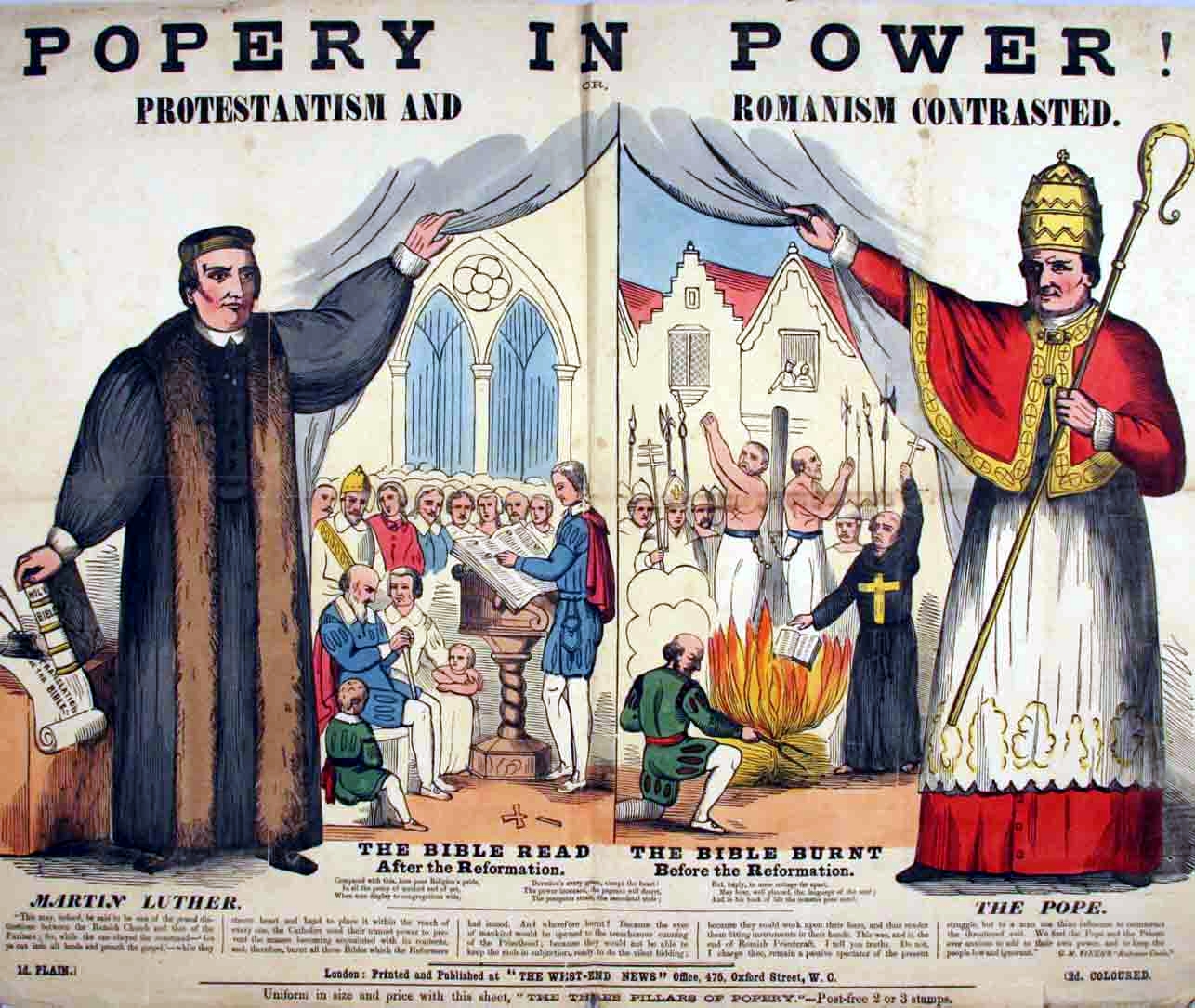
But this conversation did not take place: when the small door in the Sistine Chapel quietly closed again, a world-historical opportunity had been missed out, the most cultural misunderstanding took its course. A revolution or better a reformation began already on the eve of All Saints, on the 31st of October 1512, the Sistine ceiling was solemnly revealed, and Luther had long ago returned to Germany. But it took exactly five more years, on 31 October 1517, when Martin Luther finally sparked the Reformation with his 95 theses on the church door in Wittenberg. Today – 500/505 Years Ago !

