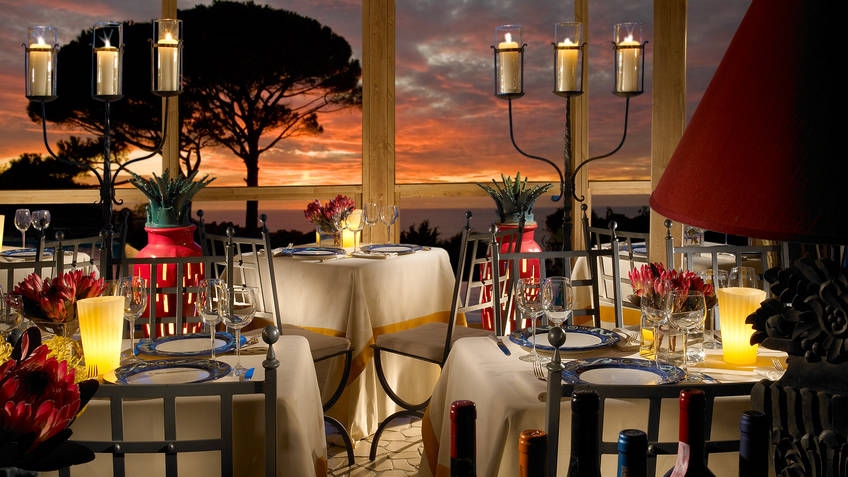
Must See – Amalfi 4, Cetara

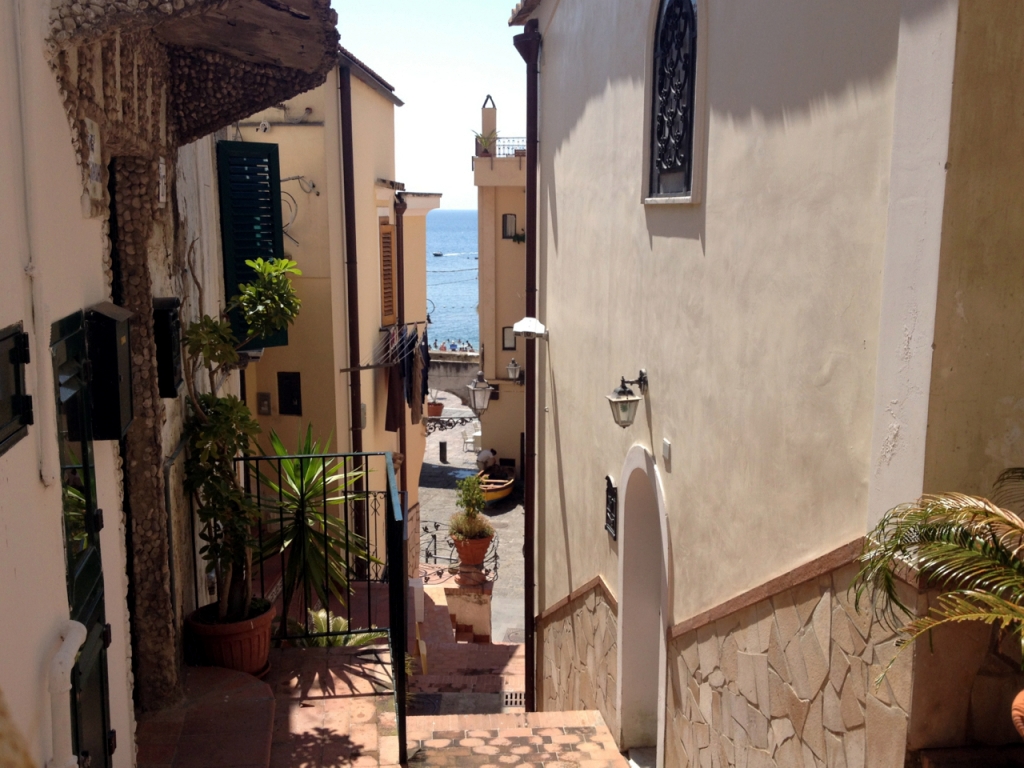
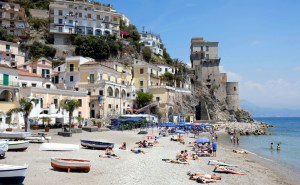
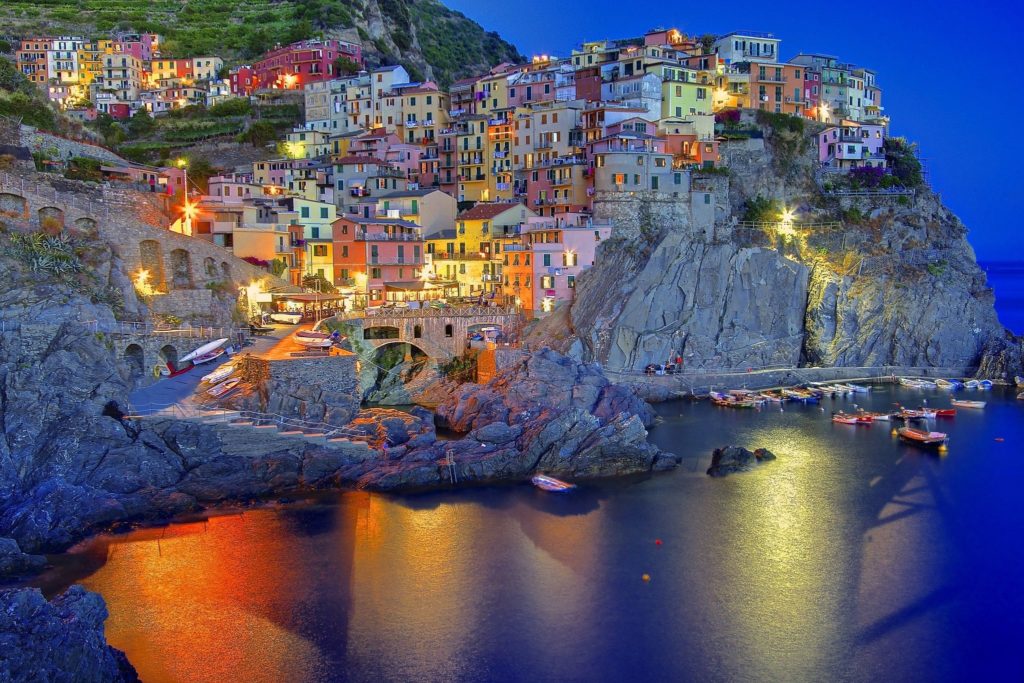
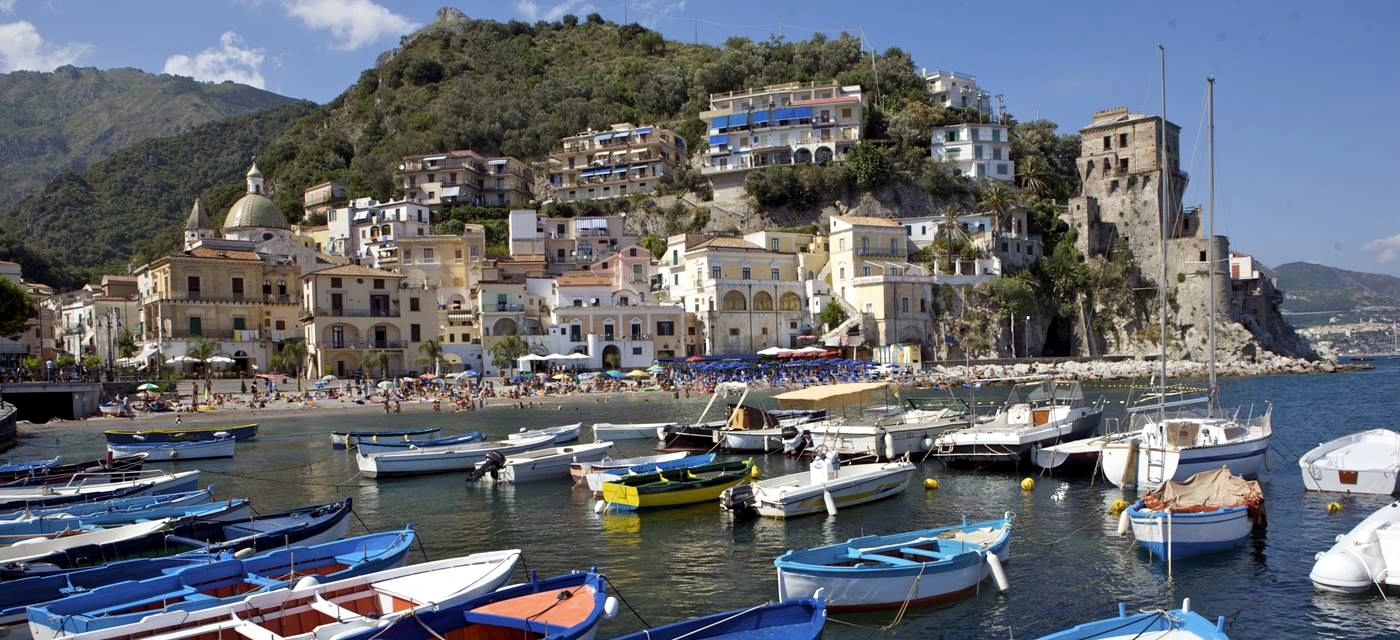
Helmut’s question was about a Spaghetti dish with a „fishy sauce“ which he liked so much. It’s a specialty from Cetara at the Amalfi coast. Here are a few impressions of this town and the famous „Italian sauce“.
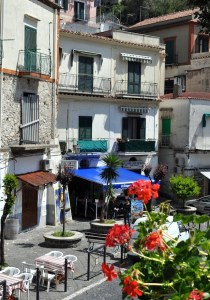
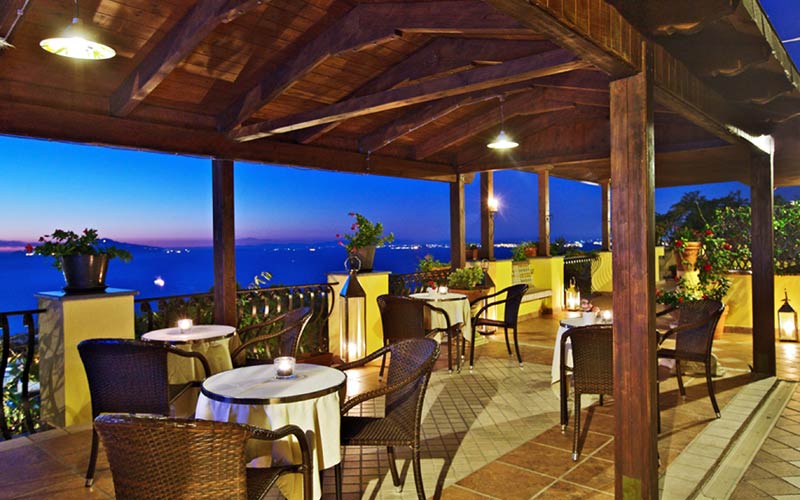
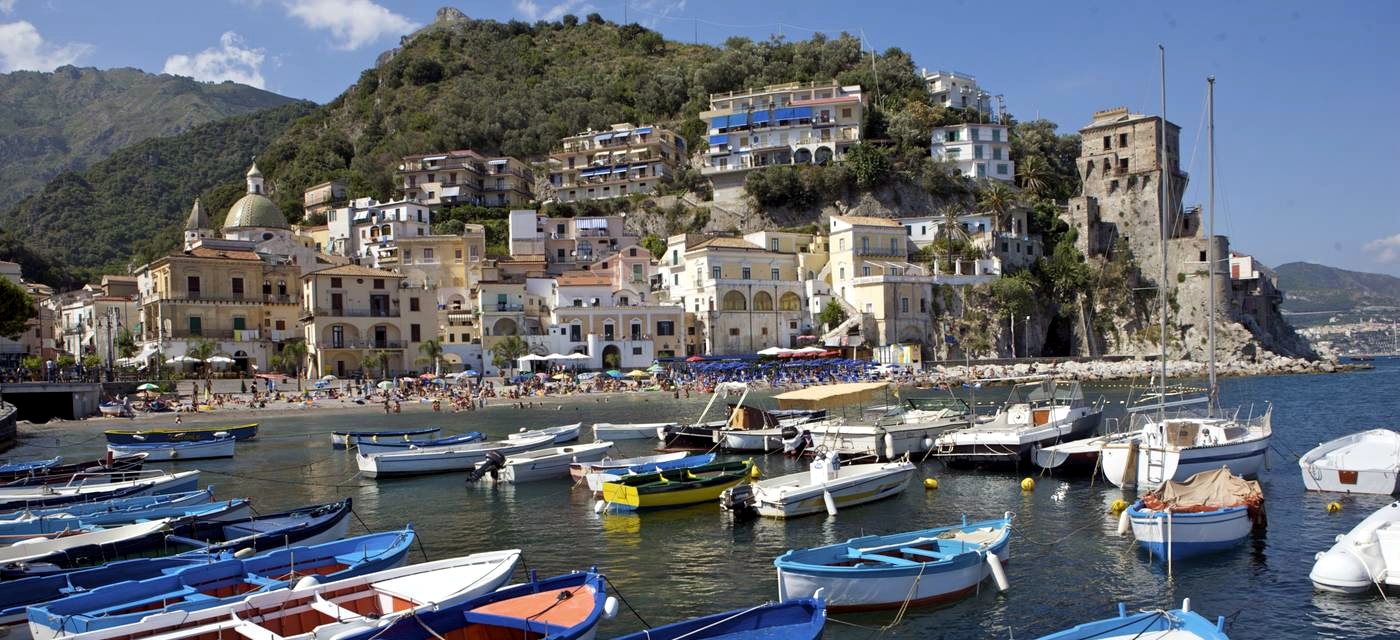
  Cetara, a picturesque fishing village and a gastronomic hot spot.
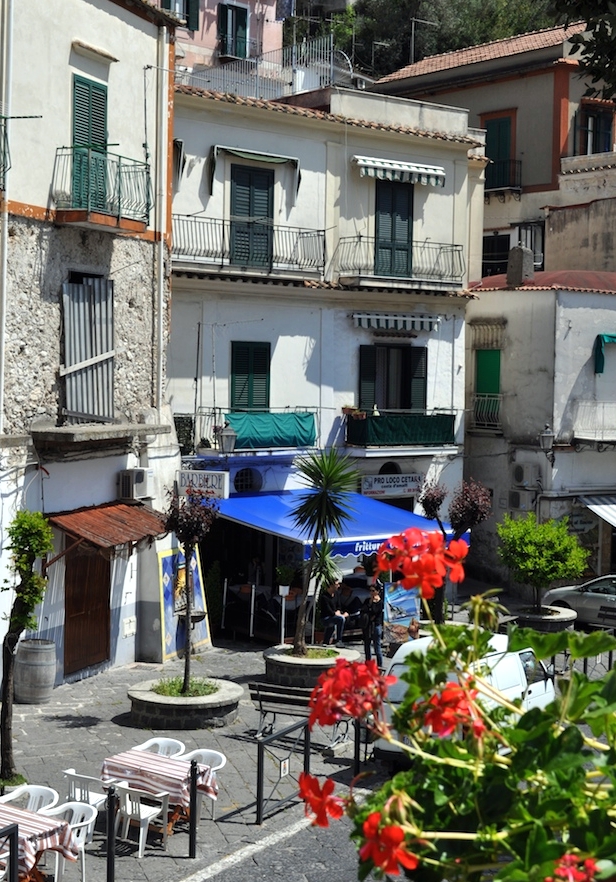
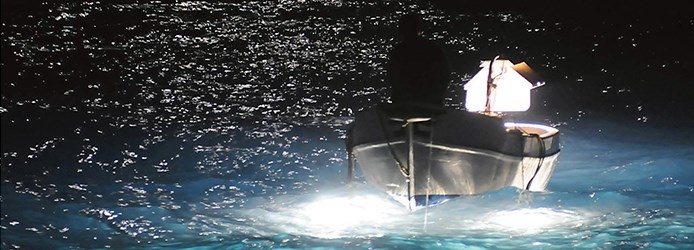
It has been an important fishing centre since medieval times and today its deep-sea-tuna fleet is considered one of the Mediterranean’s most important. At night, fishers set out in small boats armed with powerful lamps to fish for anchovies.
  Garum jugs in a Pompeii museum.
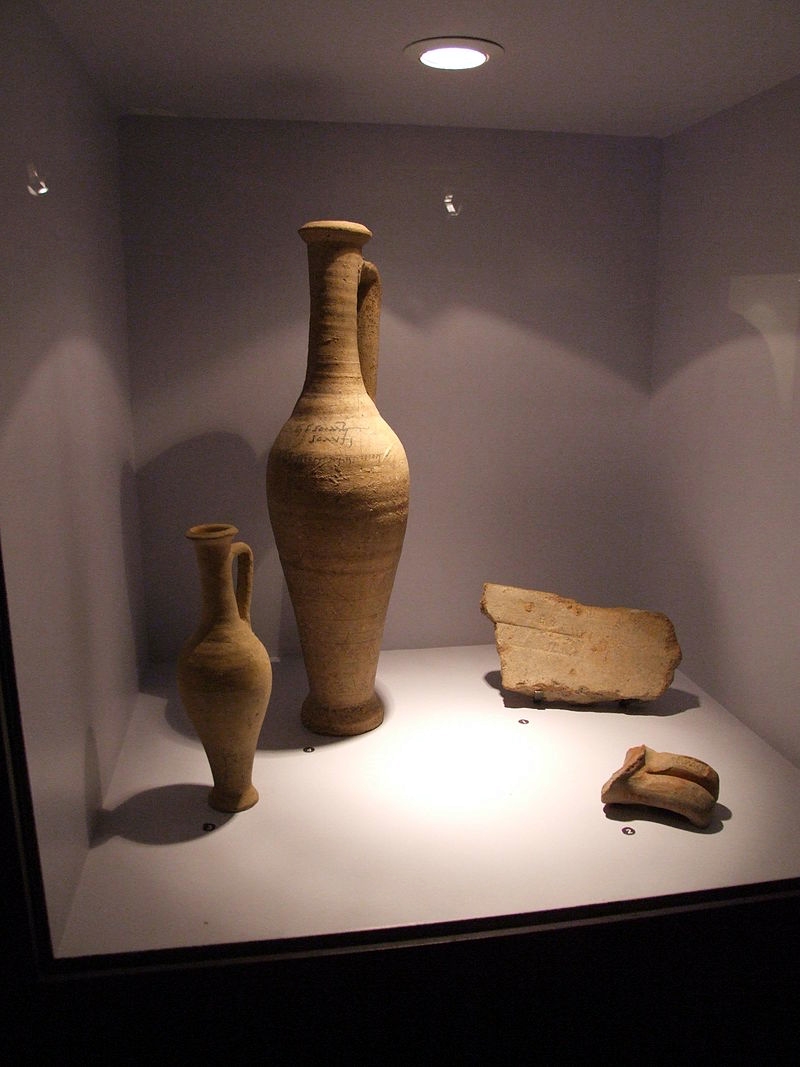
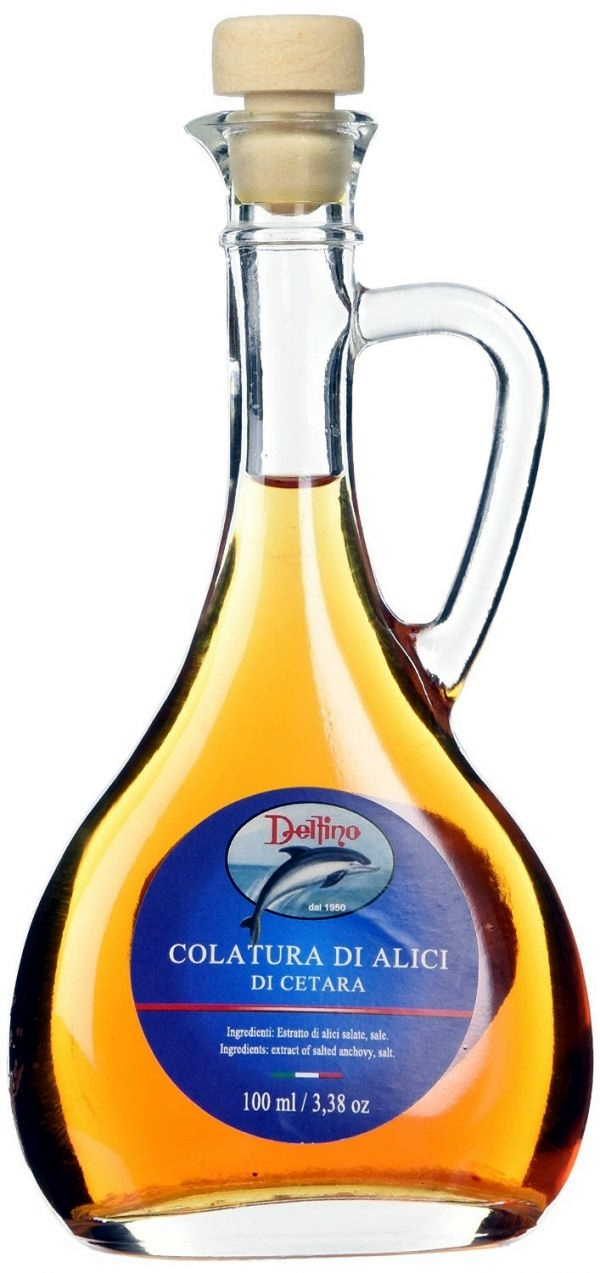
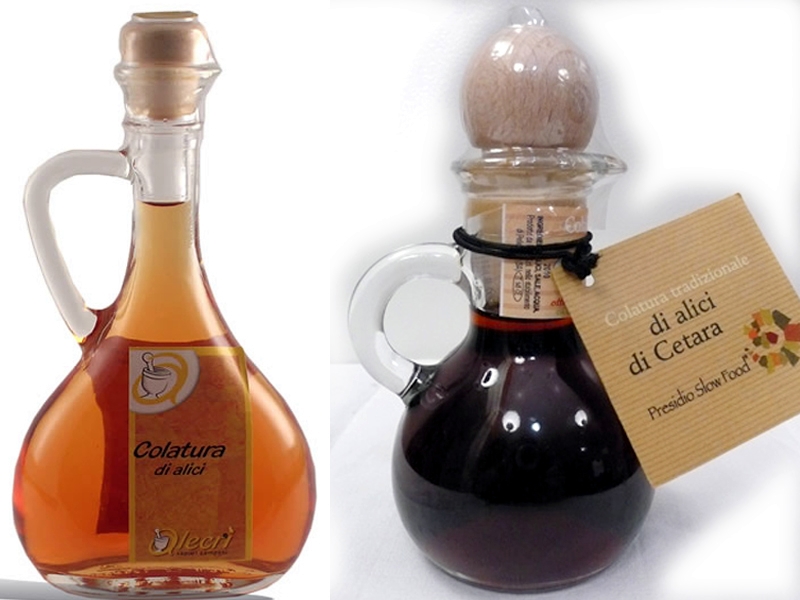
Recently, locals have resurrected the production of what is known as „Colatura di Alici“, a strong „anchovy essence“ believed to be the descendant of Garum, the Roman fish seasoning, also called „Colatura – Italy’s Umami in a bottle“.
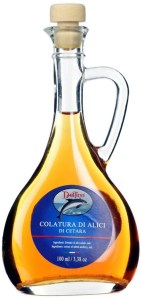
  One example of „Italy’s Umami in a bottle“. There are dozens different ones. At Amazon they are offered (like the here shown one) between US$25,– and US$80,– for a 100ml bottle.  Liquid Gold ??
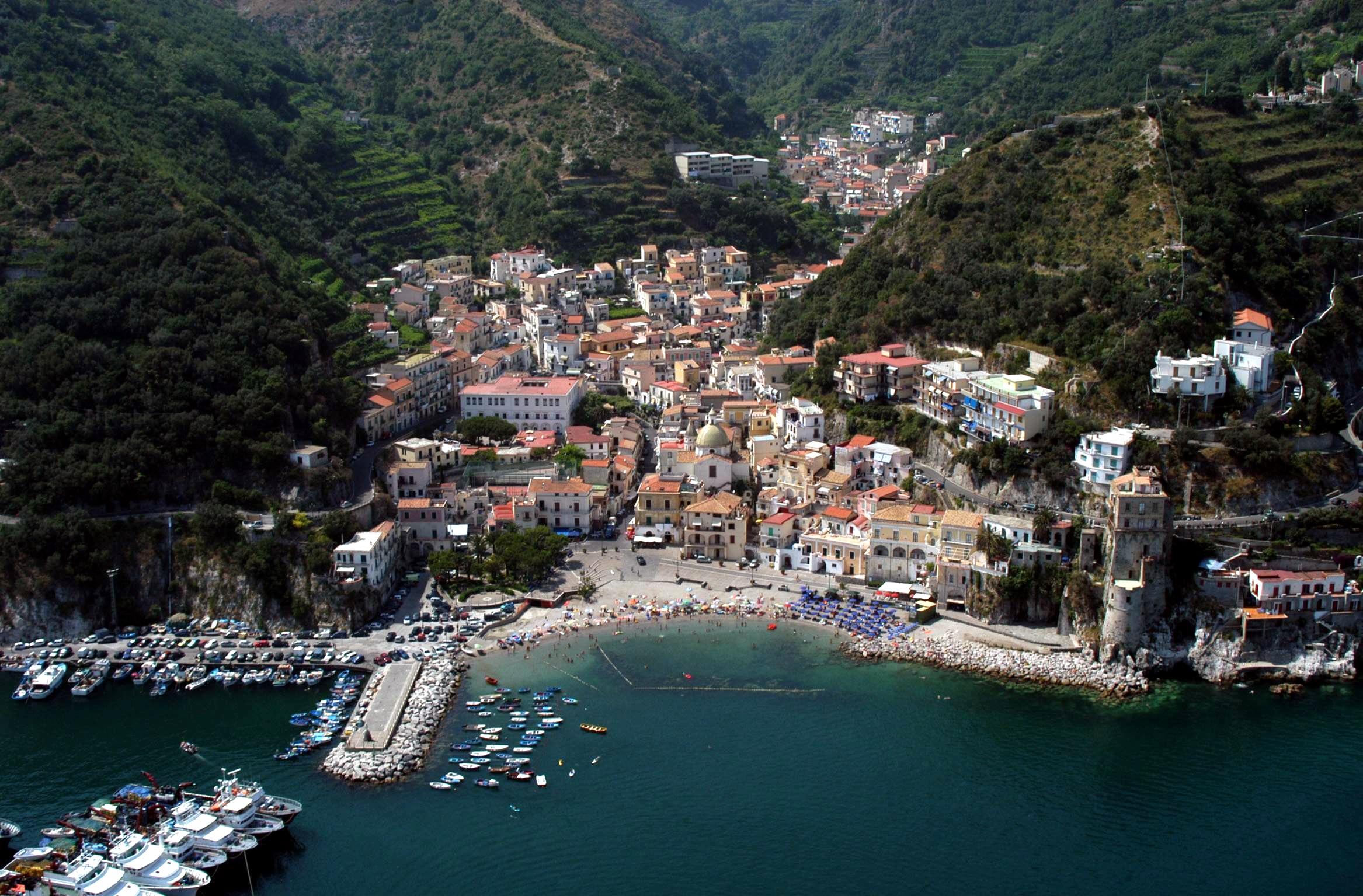
Around in Cetara.

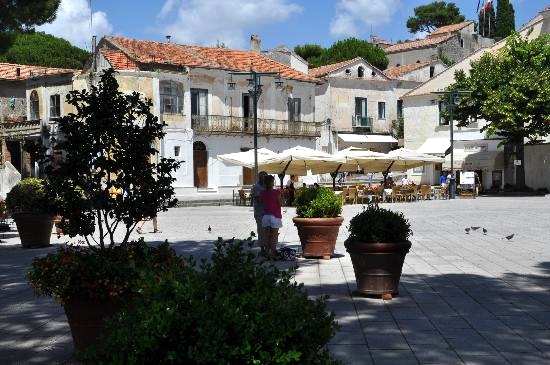
The entire town of Cetara is very easy to walk – maybe 10 minutes max. We left our motor home outside Salerno and rented a scooter. Highly recommend using a scooter to visit the rest of the Amalfi Coast. The roads are narrow and with a car, many times you get stuck behind buses that get stopped many times with alternating traffic. Many places there is no parking for cars (but parking for scooters) or it’s a 10,– euro parking fee, which you can avoid with a scooter.
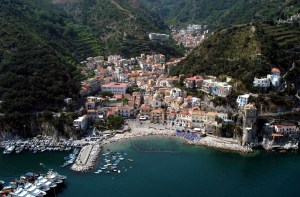
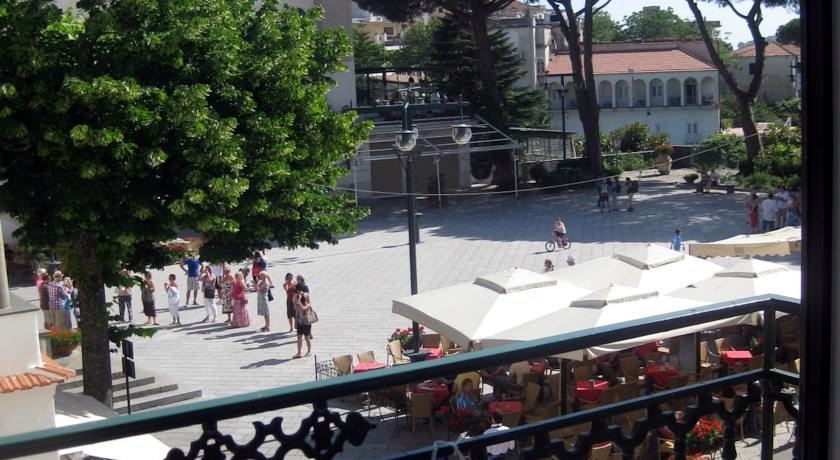
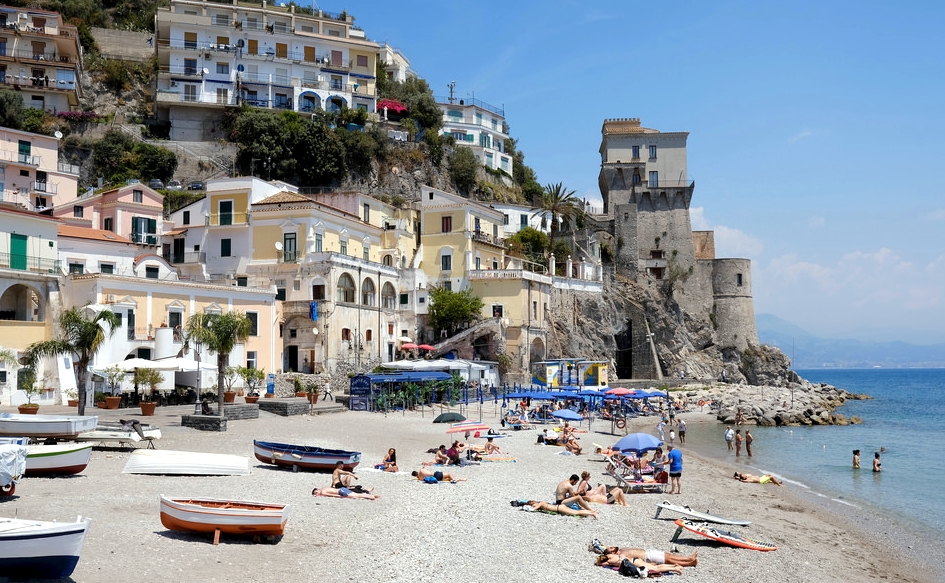
  Cetara is relatively „flat“ against most other townships at the Amalfi coast. Within 10 minutes one can walk from one end to the other. Click on pic for a better view.
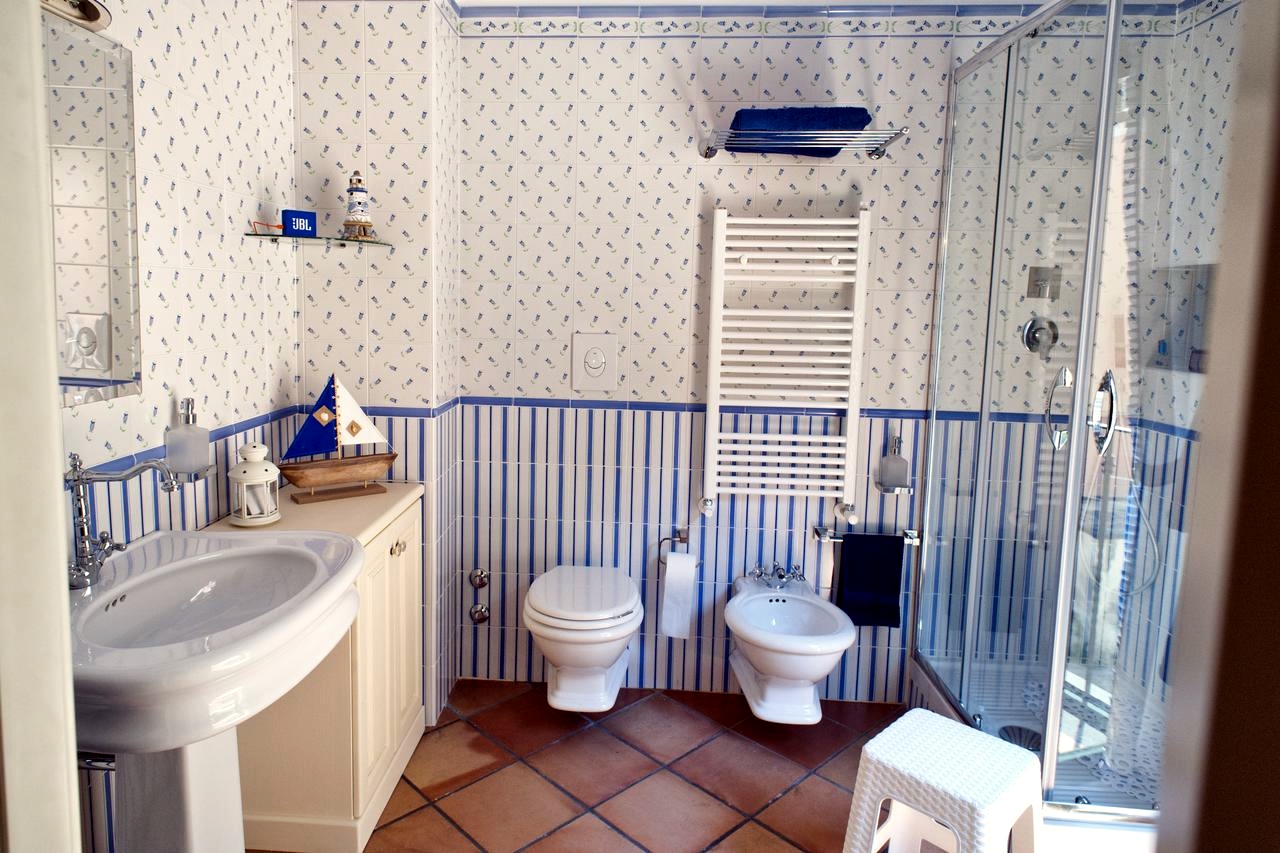
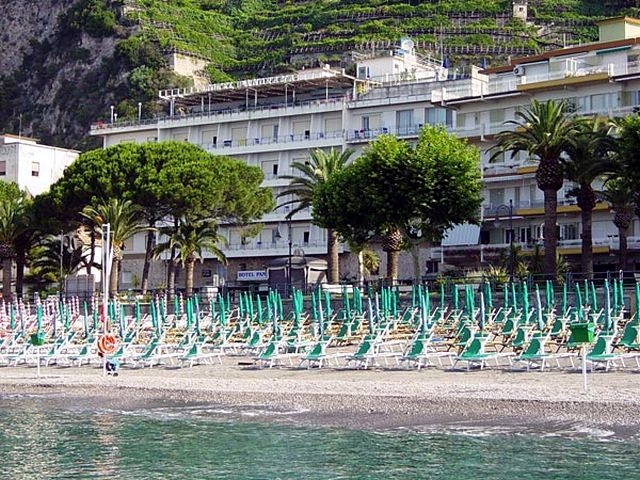
Hotel in Cetara.

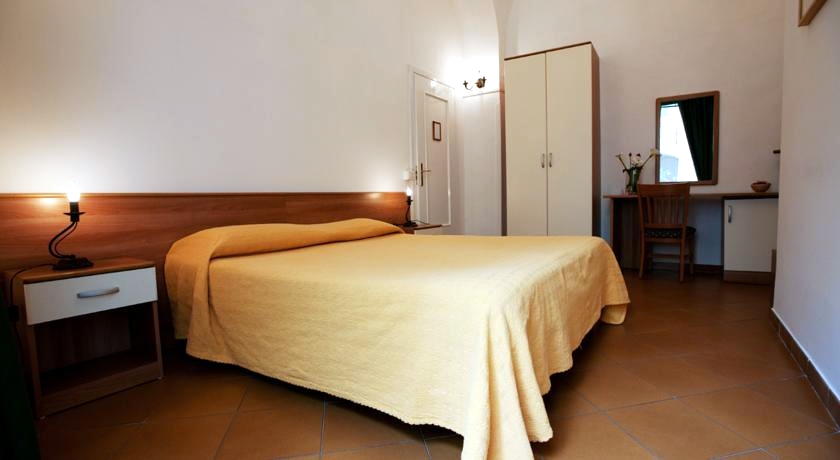
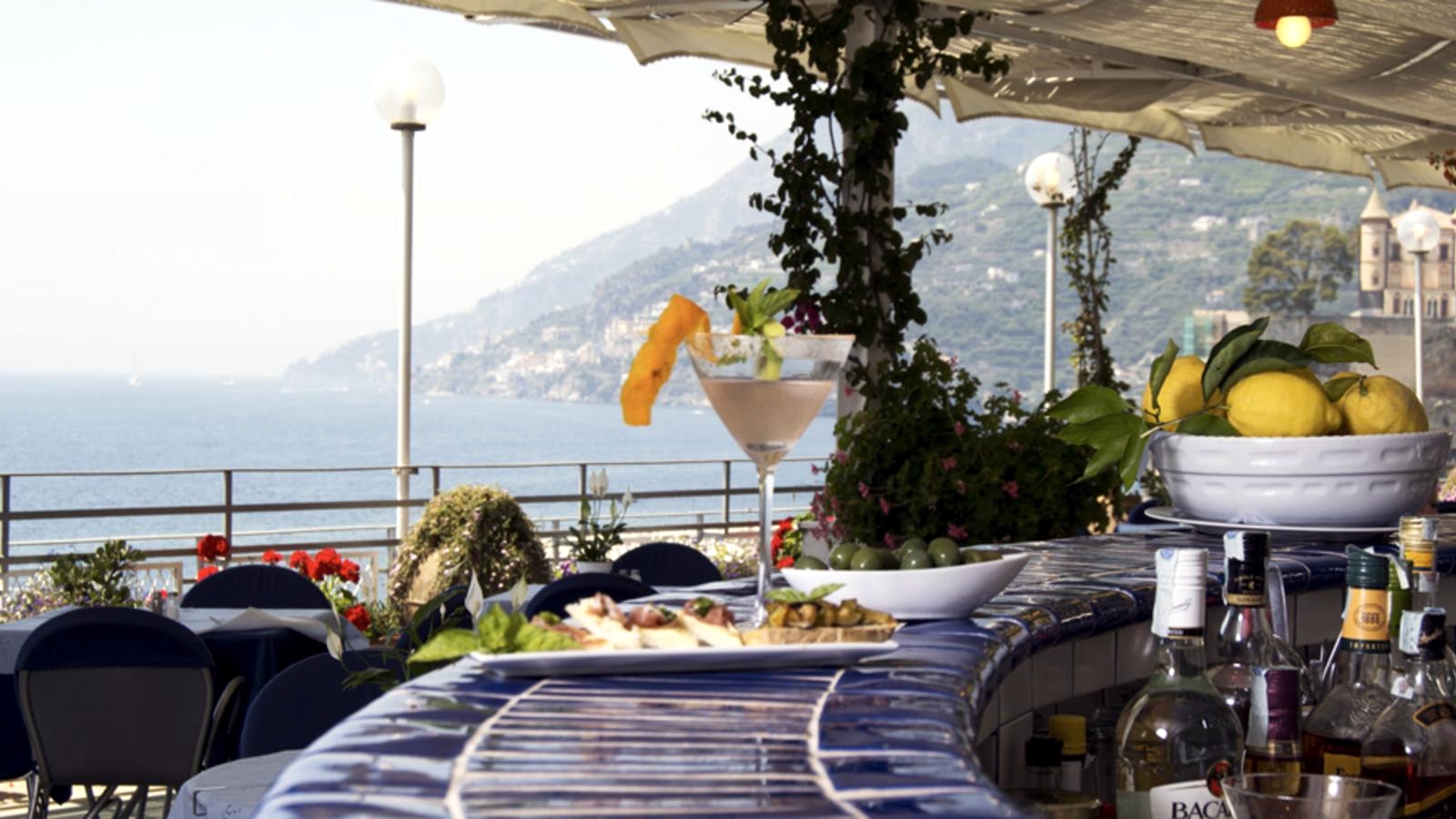
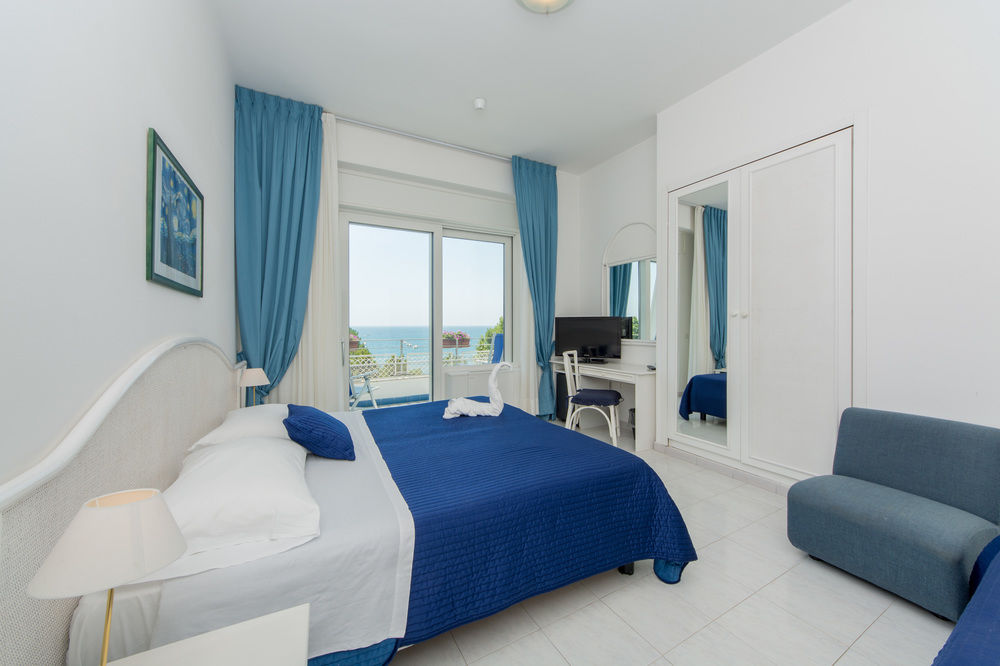
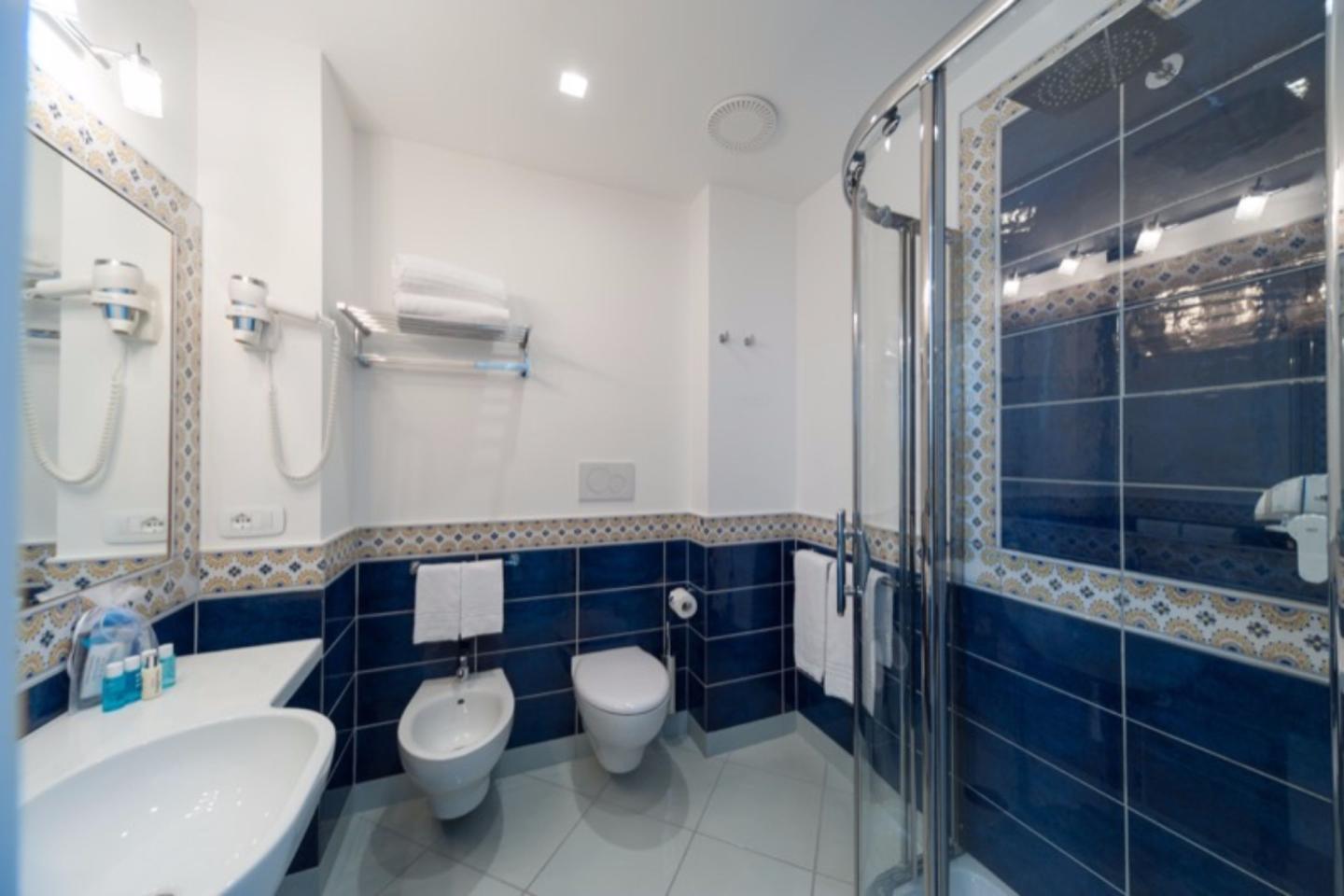
This property is 2 minutes walk from the beach. Albergo Diffuso offers accommodation in various locations in Cetara’s historic centre, a most unusual hotel style, but very effective. Rooms come with free WiFi, a flat-screen TV and private bathroom. Some units are complete with a balcony/terrace or a kitchenette.
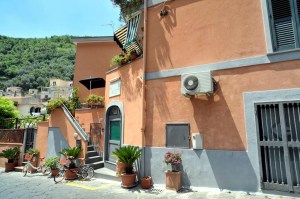
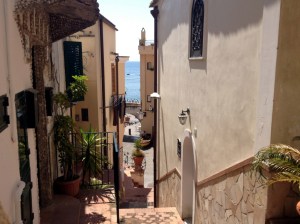
      Albergo Diffusi in Cetara, just a few steps down to the beach.
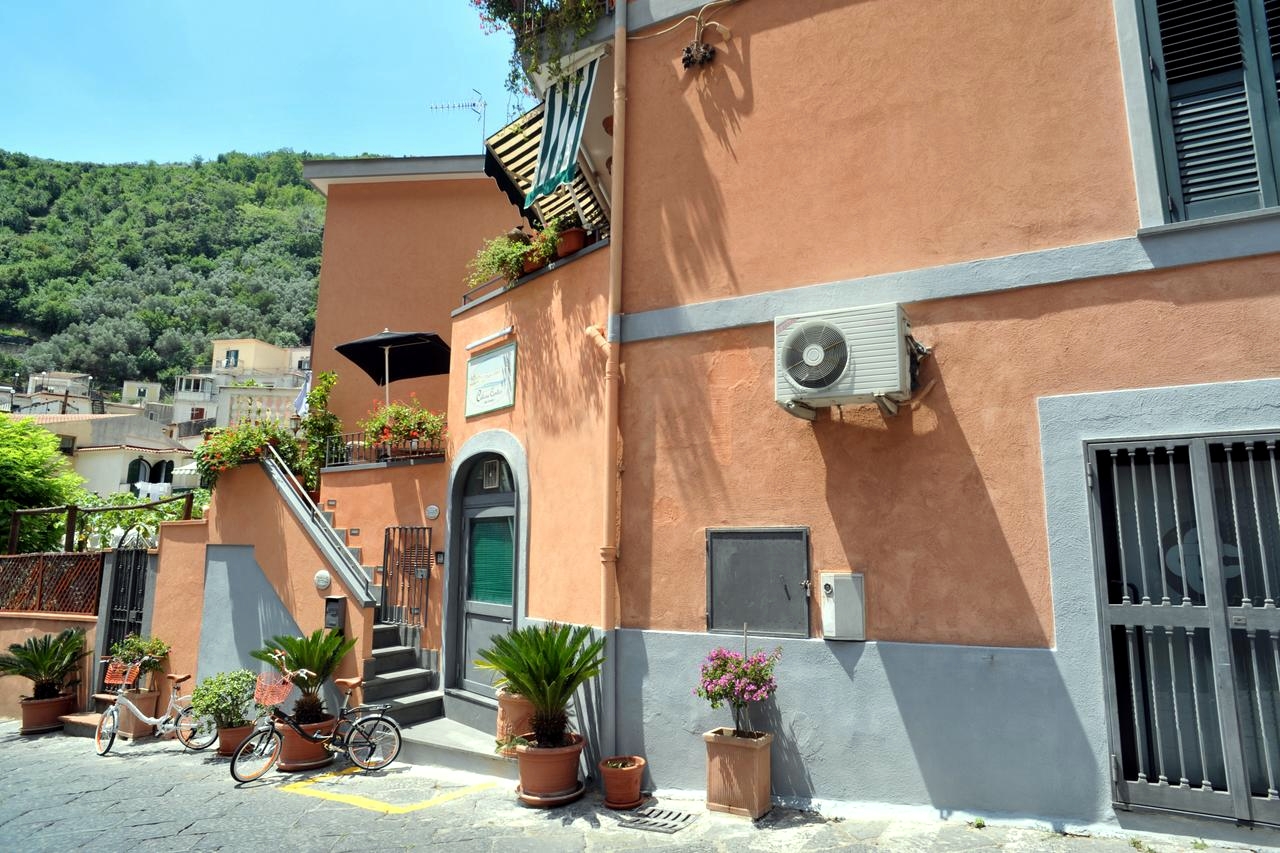
Nice place for everybody who doesn’t want to stay in a touristy place like Amalfi. But anyway with a short ride you are in all the interesting places.   The room is nice with everything you need. There are some really good tiny restaurants, like „Pane e Coccos“ which calls them self specialized for tuna.
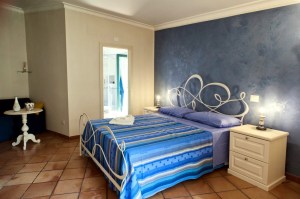
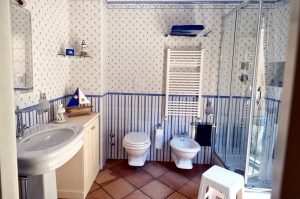
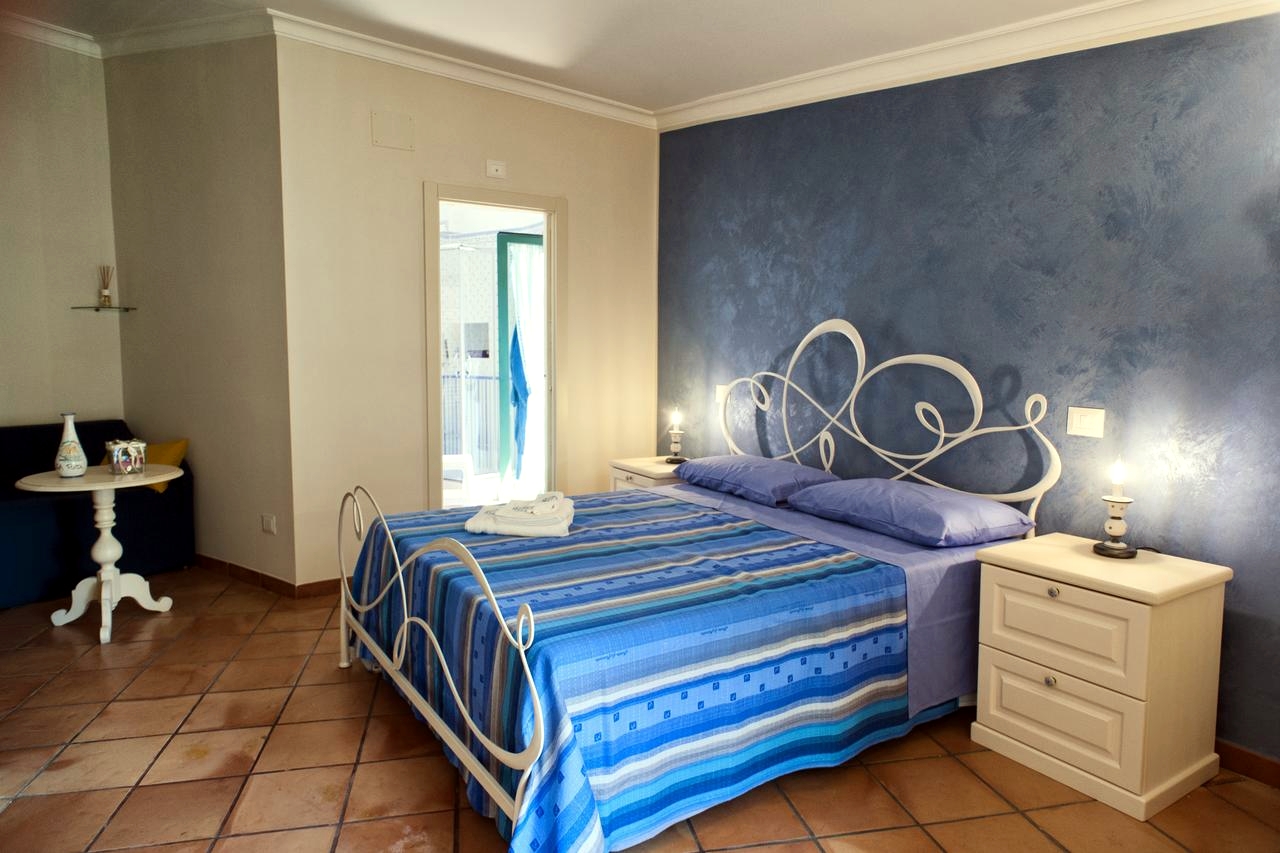
    Expedient and very clean rooms and a nice bathroom joining.
To See in Cetara.
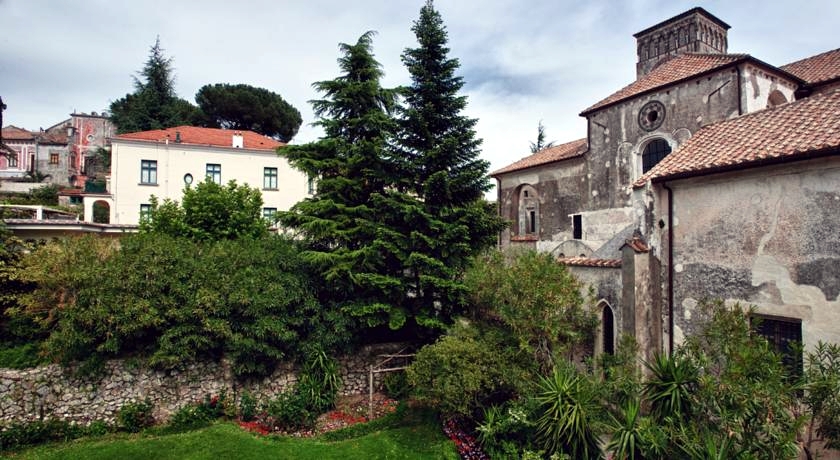
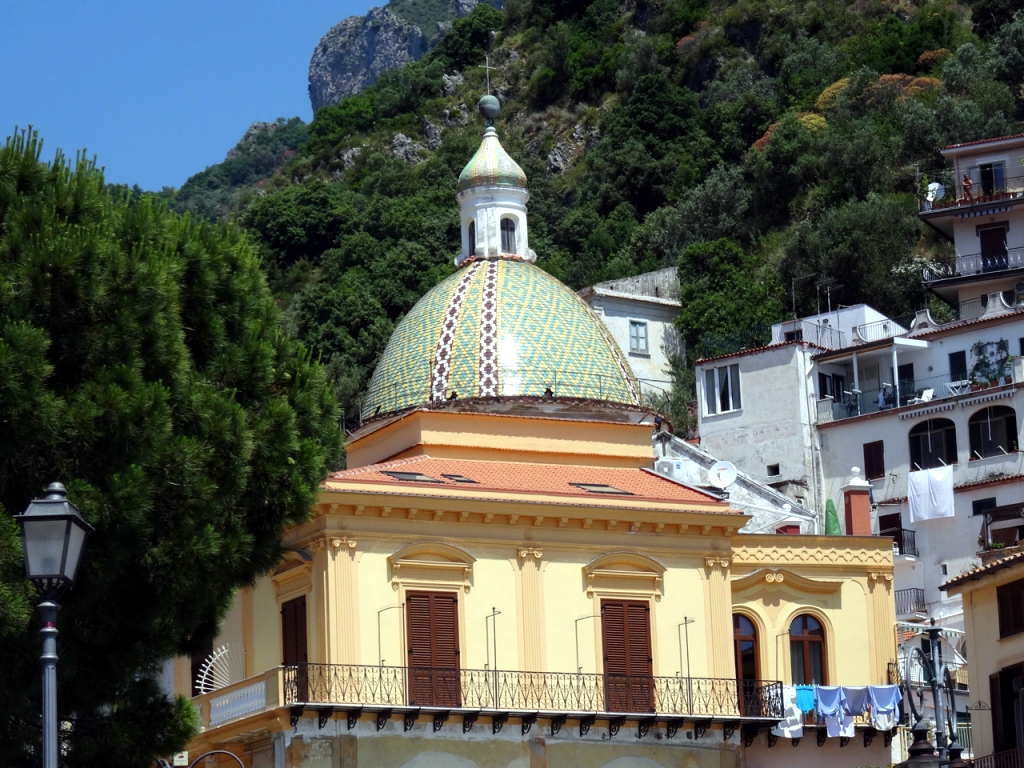
  Chiesa San Pietro Apostolo.
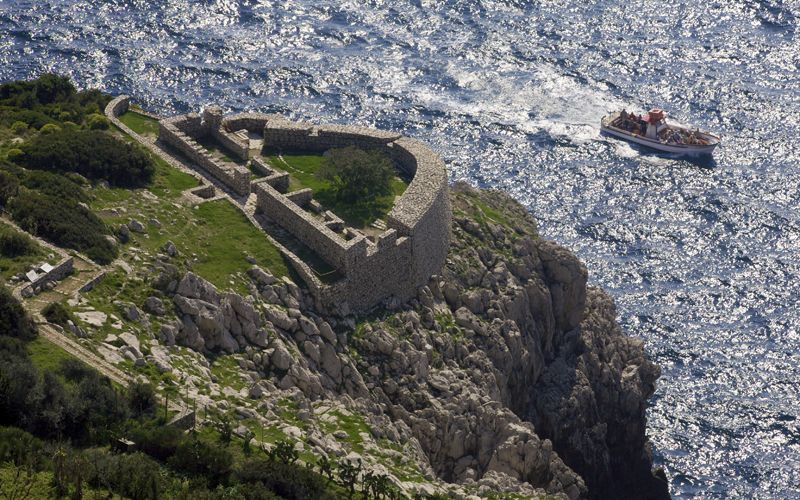
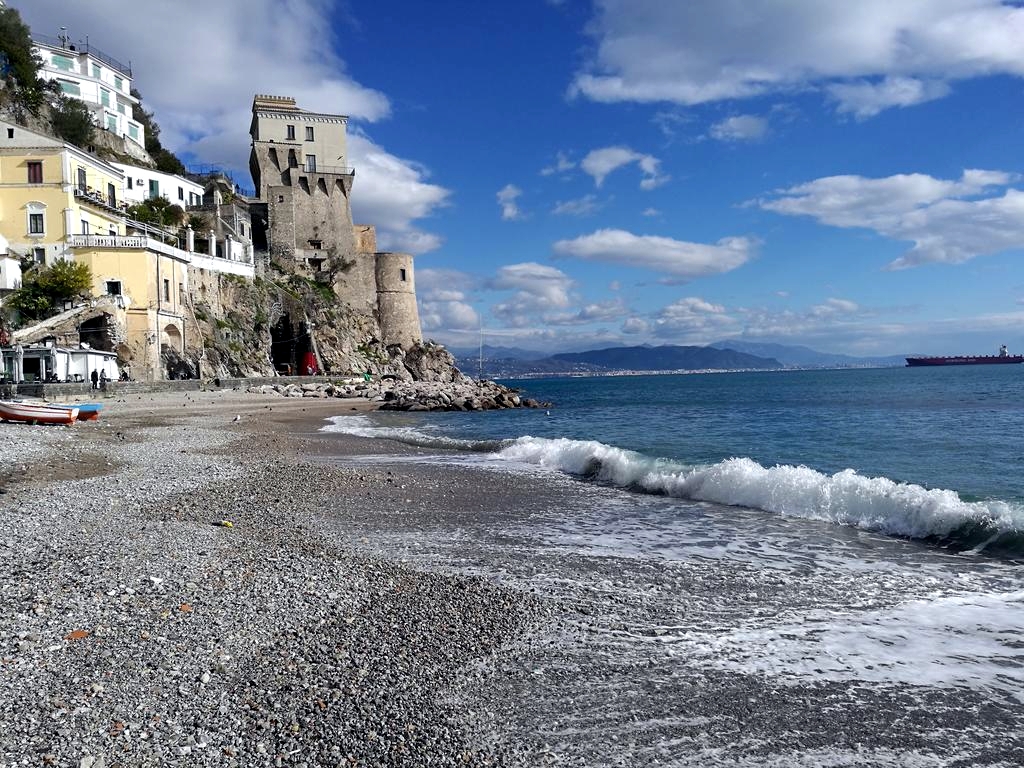
  Torre di Cetara.
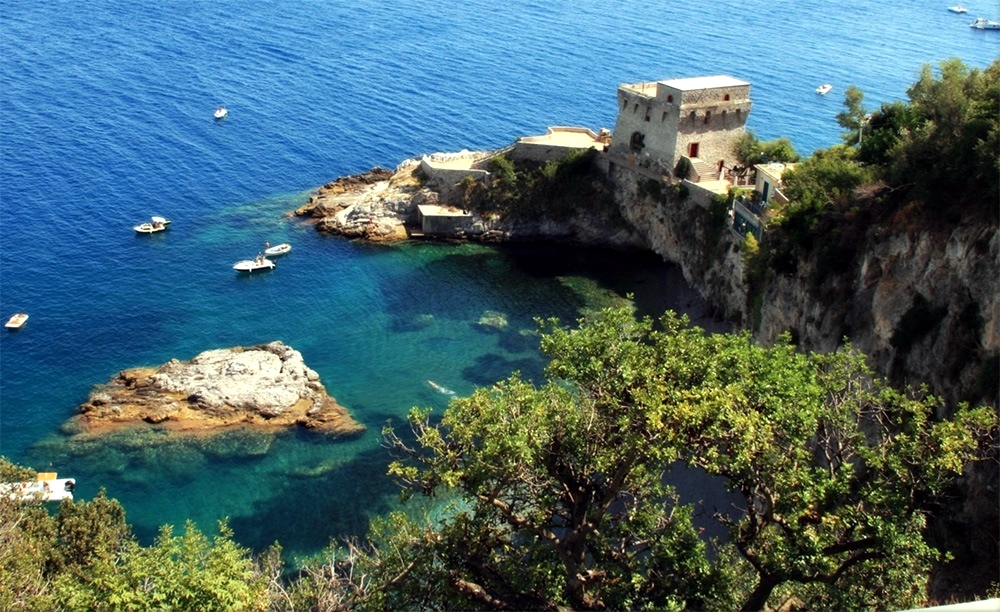
     Spiaggia Lannio.
In wintertime empty and a wonderful view into the bay of Salerno. Summertime a few tourists.
Seafood in Cetara.

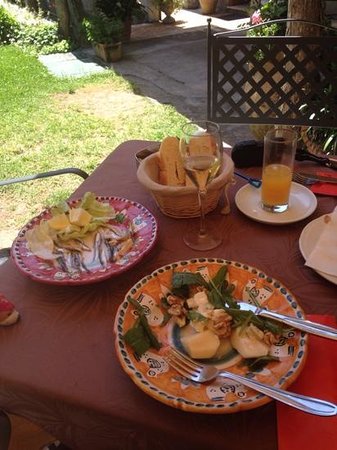
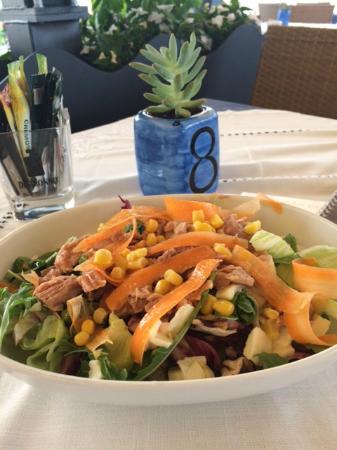
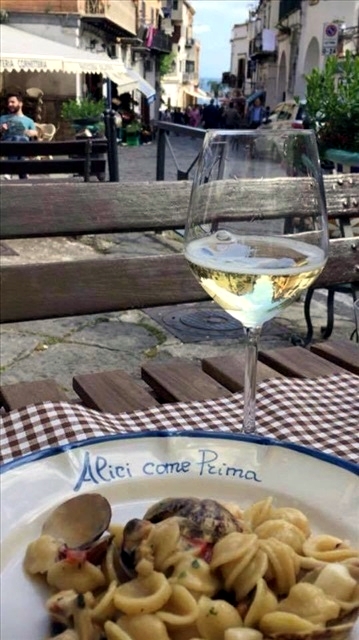
Cetara is one of the top places to get tuna and anchovies in the world. Which means lots of very fresh seafood at the restaurants. I can highly recommend „Alici Come Prima“. It’s little, all the seating is outside, and it’s open for both lunch and dinner. The plates are simple but fantastic quality and freshness.
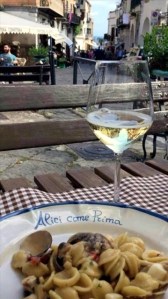
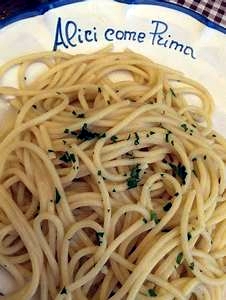
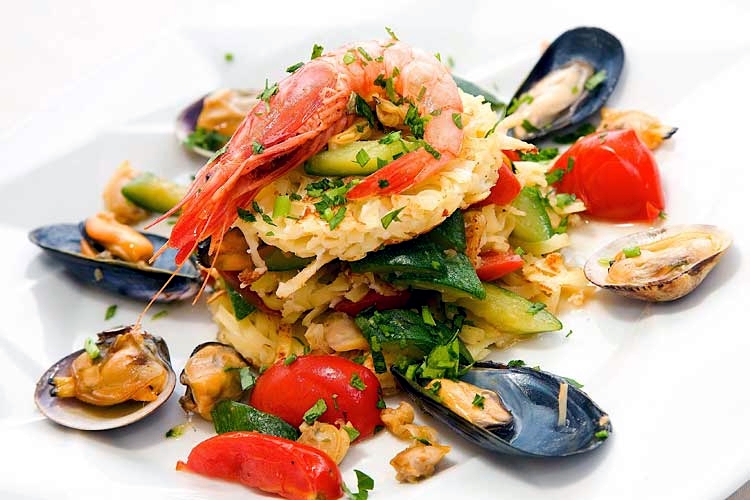
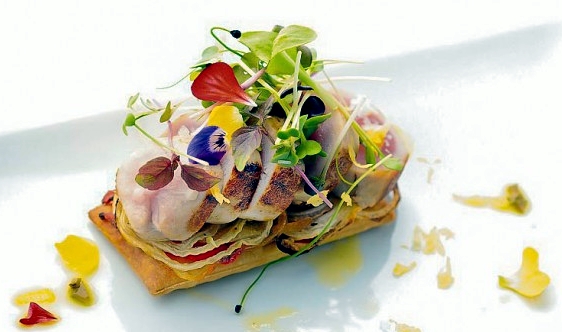
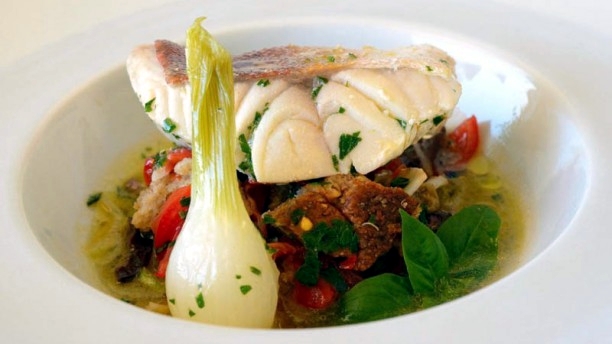
       Some pasta dishes.
The Colatura di Alici is the quintessence of flavor, or better, of the Umami, as we define today. Either you love it or hate it, but to be able to appreciate it you need to know how to use it. It should be used strictly raw, so never heat it in the pan and don’t use salt.
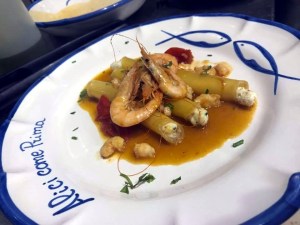
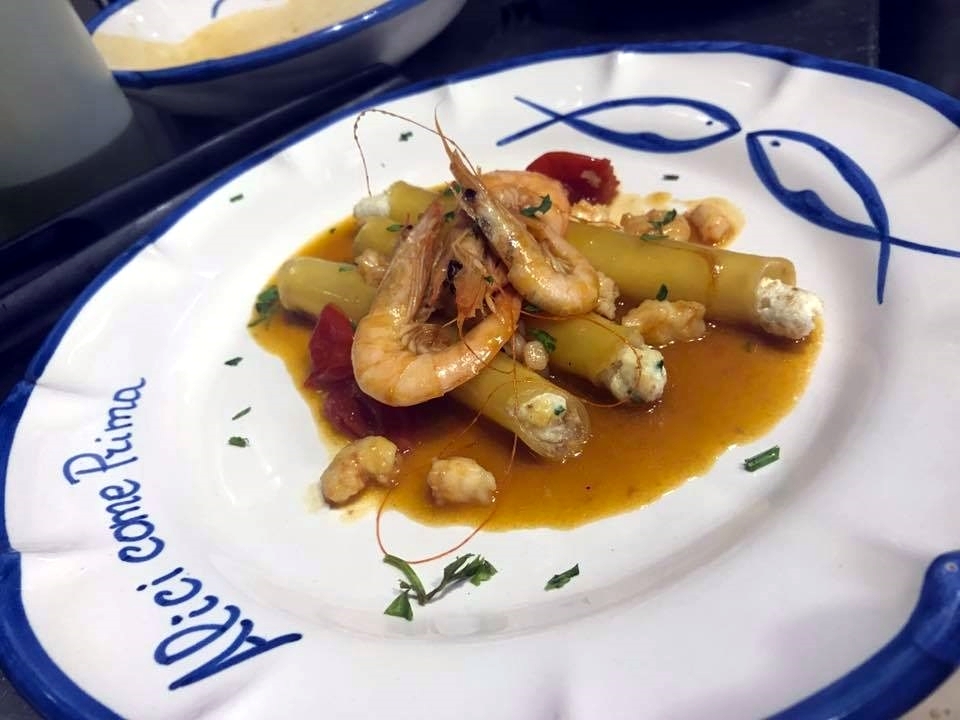
  Scampi on ricotta filled cannelloni.
One of its ancestors is represented by the Roman garum, a creamy fish sauce obtained from the maceration of small fish and large fish, cut into pieces. It seems instead that Cistercian monks in the Middle Ages invented a product more similar to the current one.

Today, the Colatura di Alici is presented as an amber-colored liquid with a very intense odor, but if used sparingly and with wisdom, it will give a dish a unique marine flavor.
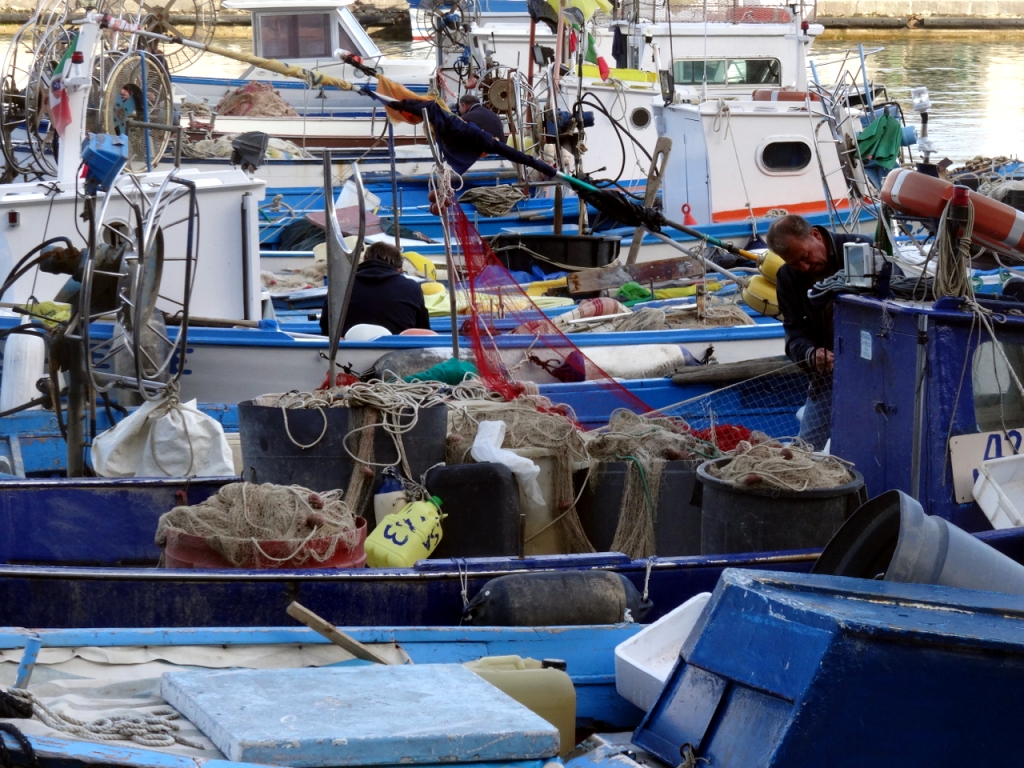
  Fishing boats in Cetara. Notice, in the left part of the picture, the strong lamps in frames. These are used at night to catch anchovies.
Making Colatura.

We entered Neptune, one of the many small similar companies in Cetara, where we learned about the method they use to make Colatura. The anchovies used are fished in the Gulf of Salerno in spring when they have a low fat content and suitable for salting.
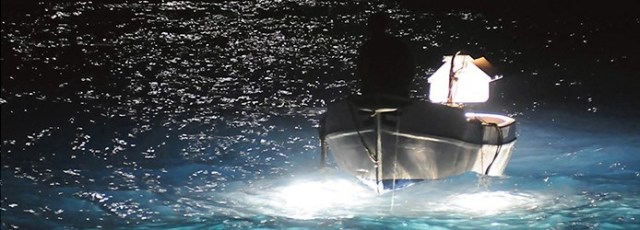
From 29 June, the feast day of St. Peter, to mid July, small crews take to the sea at night on boats which dot the sea with their lights: this is known as “lampara” fishing. Attracted by the plankton which becomes phosphorescent, the anchovies are trapped in the nets.
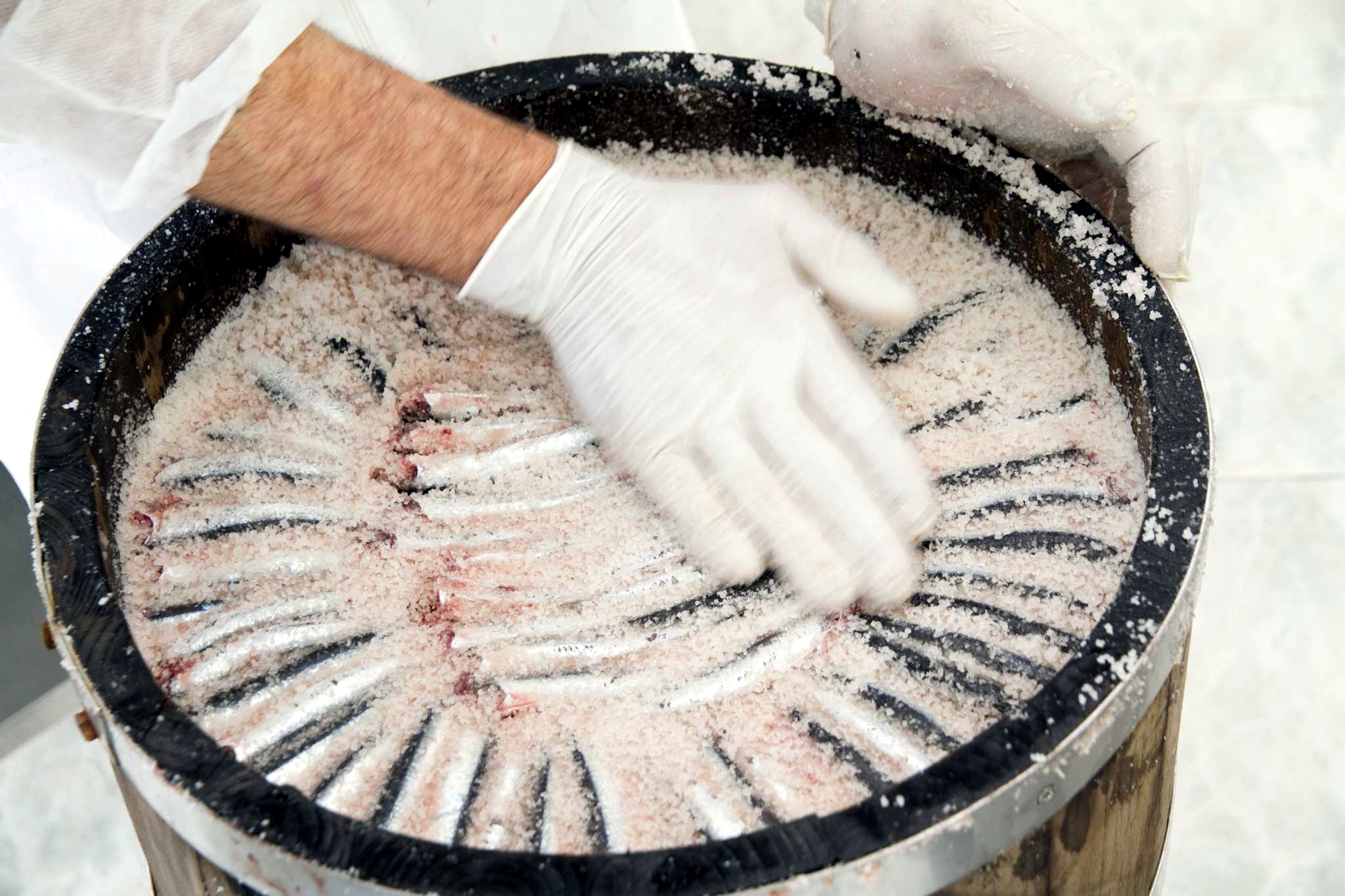
The anchovies, fresh and not too big, are beheaded and eviscerated and placed with the head-tail technique in the terzigno, a chestnut container 1/3 of a large cask, and covered with fine salt.
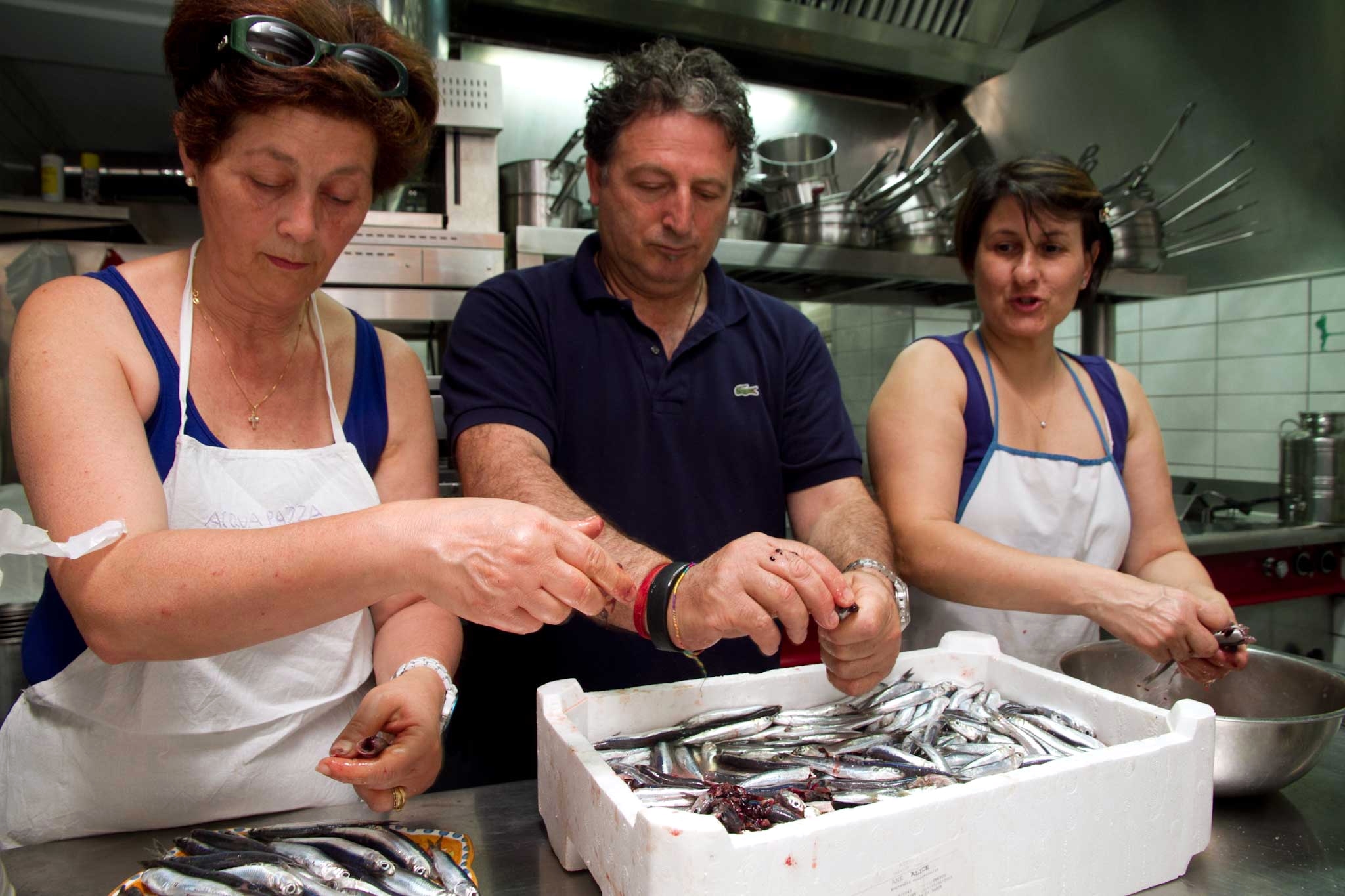
  Cleaning anchovies, not a nice job to dream about.
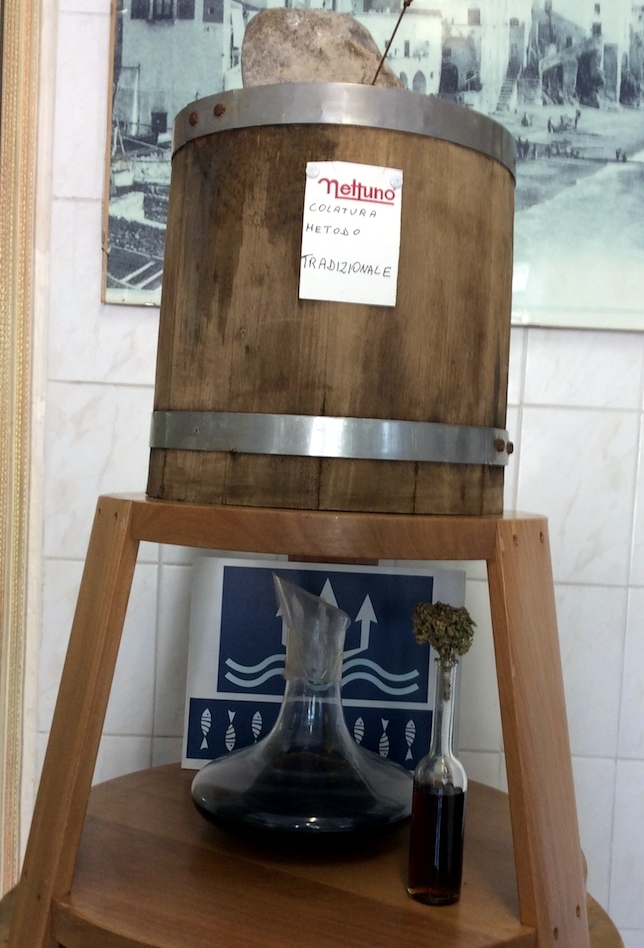
Once the layers of salt and anchovies are finished, the tortie is closed with a lid (called the tompagno) above which a stone is placed.
The natural maturation of the anchovies combined with the pressure exerted by the stone will bring out a liquid on the surface.
  Salting the anchovies in a chestnut barrel.
A small hole is made at the base of the terzigno, in such a way that the liquid that was on the surface dripped drop-wise, being filtered by the layer of anchovies. Once the tapping is finished, it is immediately bottled and the Colatura is ready to be used.
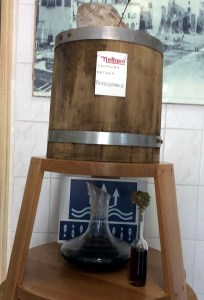
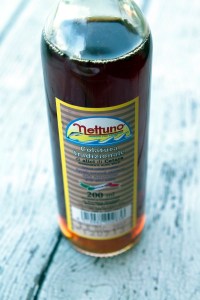
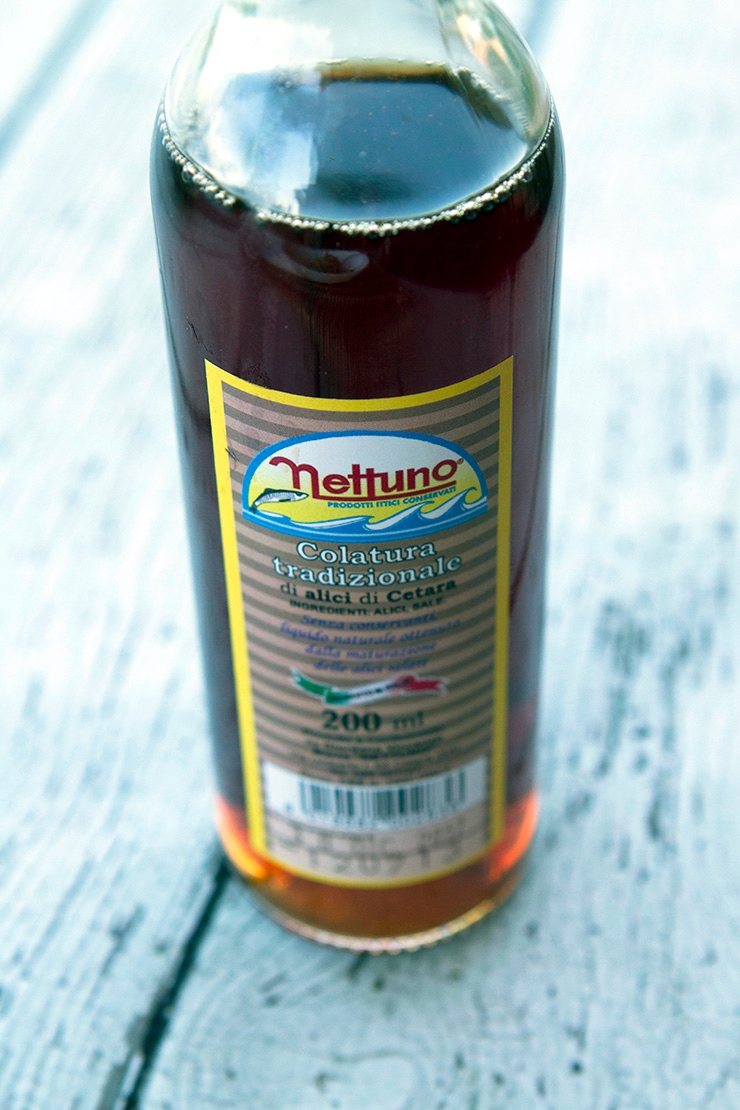
         After 18 to 24 months in their barrels, they proceed with tapping. Right, a bottle of Nettuno’s Colatura tradizionale, 200 ml for about 48,–euros.
The most traditional recipe.

Usually consumed for Christmas Eve dinner, is as simple as it is good:

Prepare in a salad bowl the raw dressing with two tablespoons of oil and half a tablespoon of anchovy sauce (Colatura) per person, raw garlic, a pinch of chilli and parsley. Cook the spaghetti in NOT salted water, drain it and pour it directly into the salad bowl, stir and serve. For lovers of flavor, the amount of leaking can be increased.
  Spaghetti with Colatura di Alici, chilli, parsley and garlic.
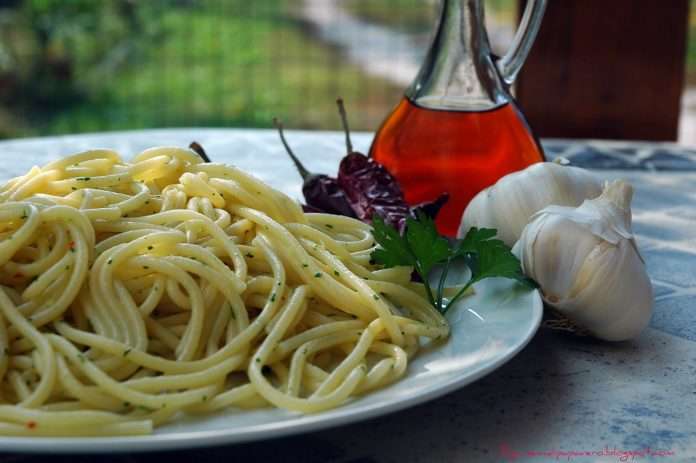
This is truly the gold of Cetara, a concentrate of what this land has to offer, through its sea and the knowledge of its people. Another pride for the Amalfi Coast, a land full of other gastronomic treasures .
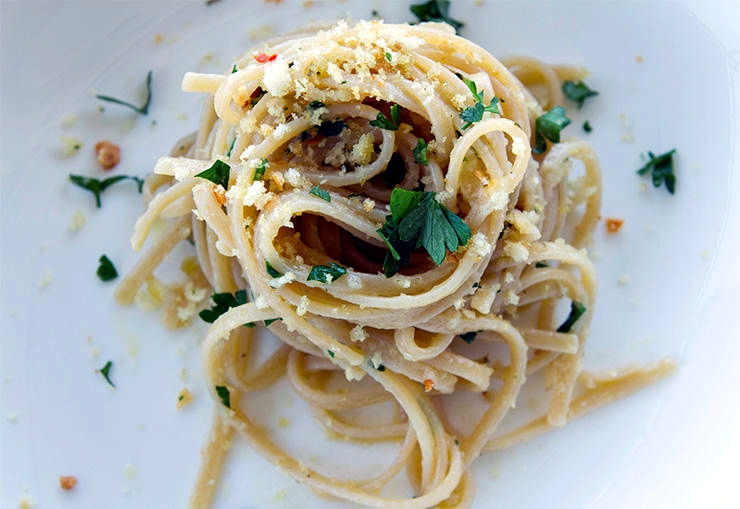
  The best Spaghetti Helmut ever had, right ?
Something special:  Steak Tartar con Colatura di Alici di Cetara.

Recipe for 4 portions: 480 g of beef fillet (best beef quality only – please), ½ onion, 15 capers, 2 tablespoons of Colatura di Alici sauce, 4 egg yolks, 1 medium sized pickled cucumber (not salty), lemon juice, Tabasco (instead Tabasco one also can use Sambal Olek) and pepper. Click on pics to supersize.
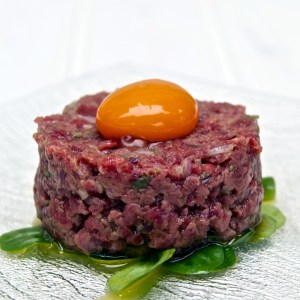
  Something real special, not for everyone.
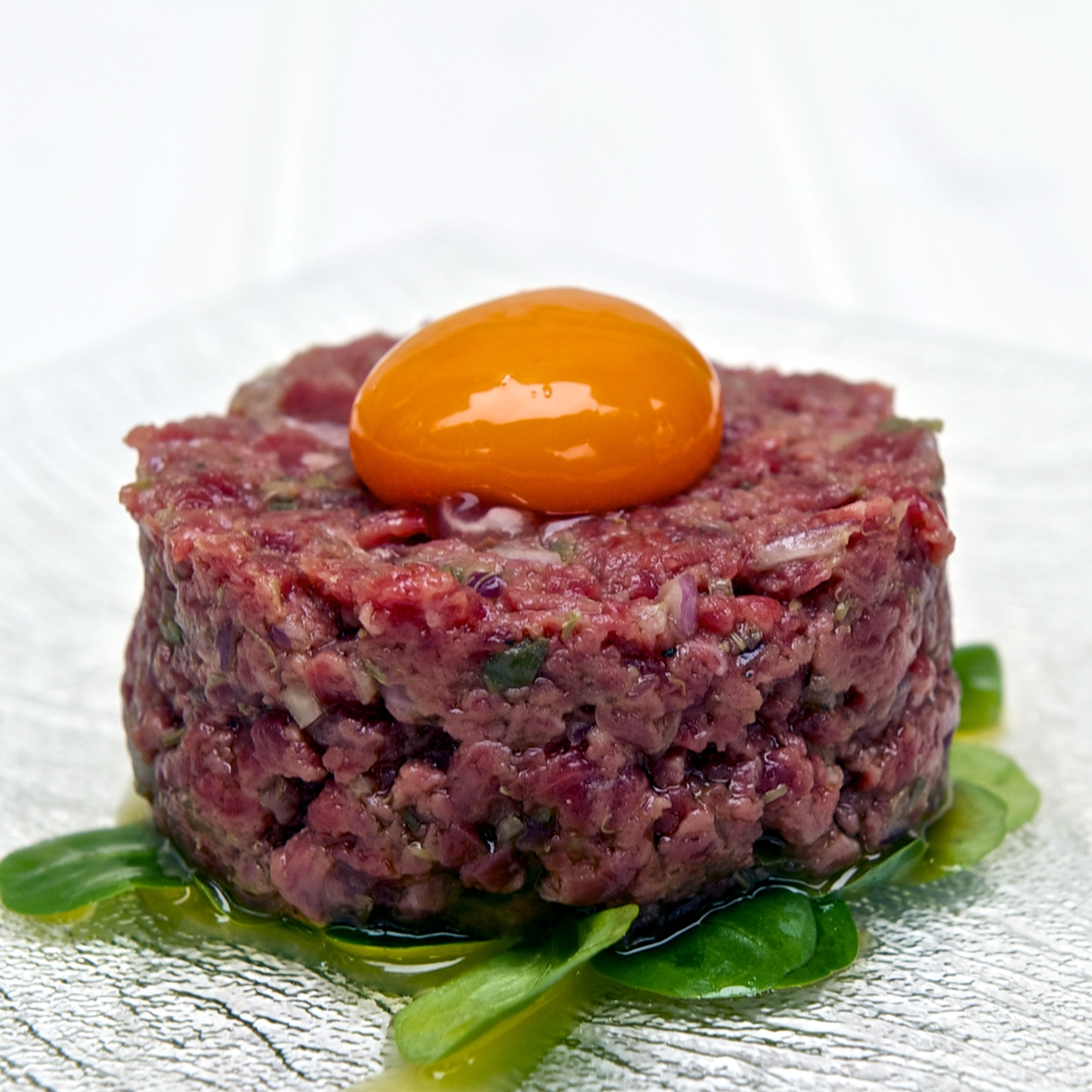
Chop the meat, the onion, cucumber and the desalted capers (just drain them and rinse a few times in water), add them in a bowl and season with oil, lemon juice, Tabasco, pepper and Cetara anchovies sauce.
Serve the tartar on a plate, giving them the cylindrical shape with a pastry rings. Place the egg yolk on each one. The yolk will hold perfectly on top, if you press with your thumb a little hollow into the meat.
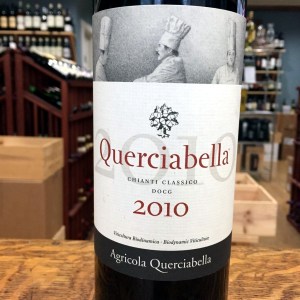
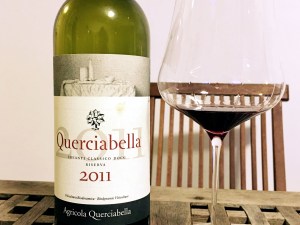
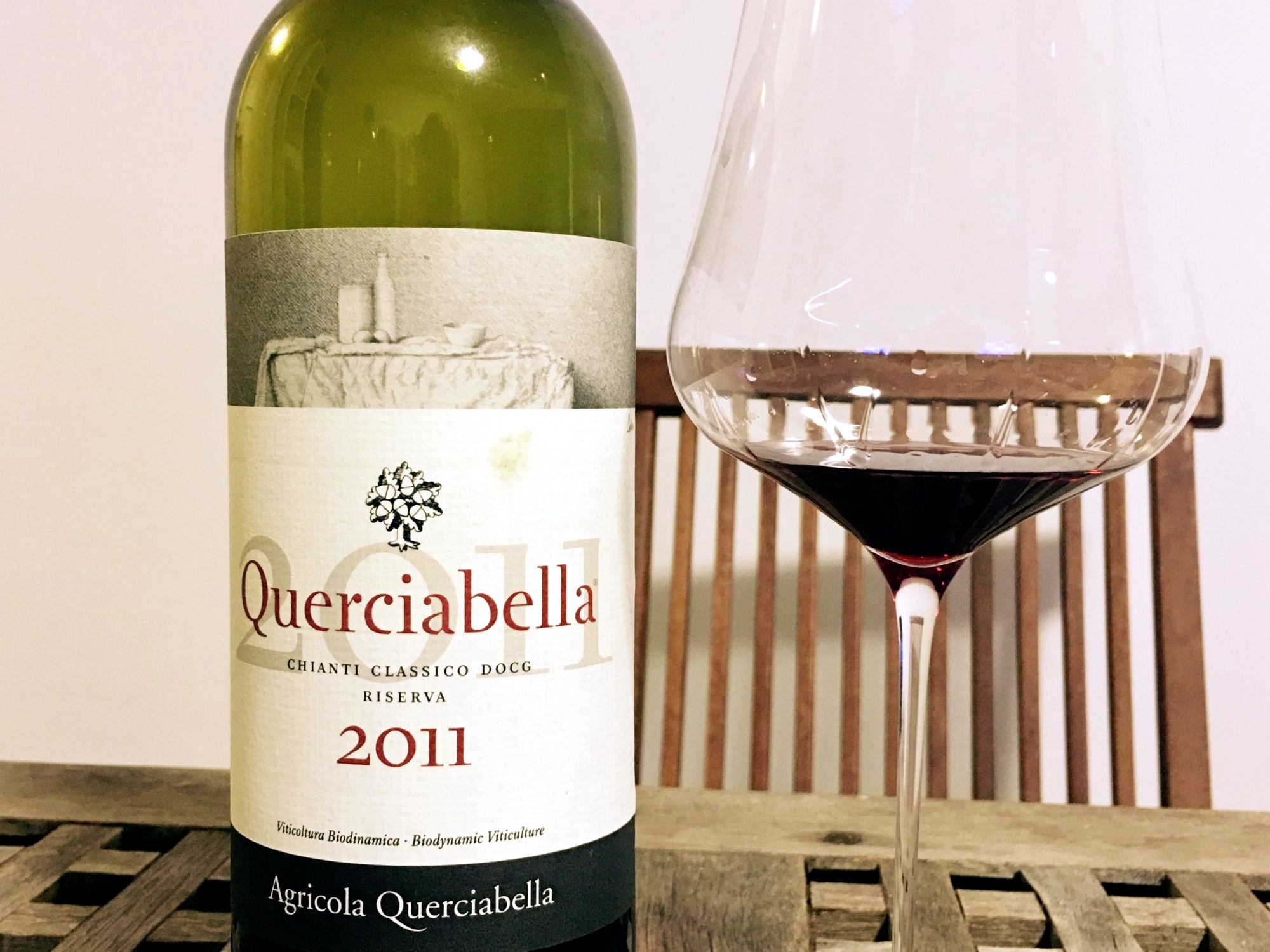
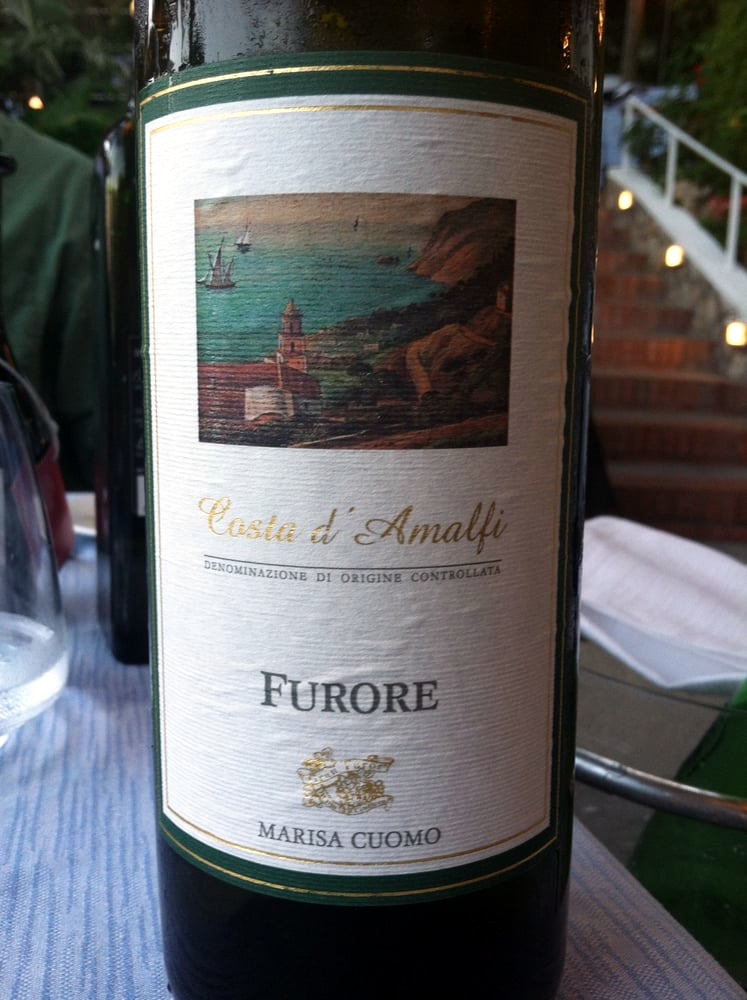
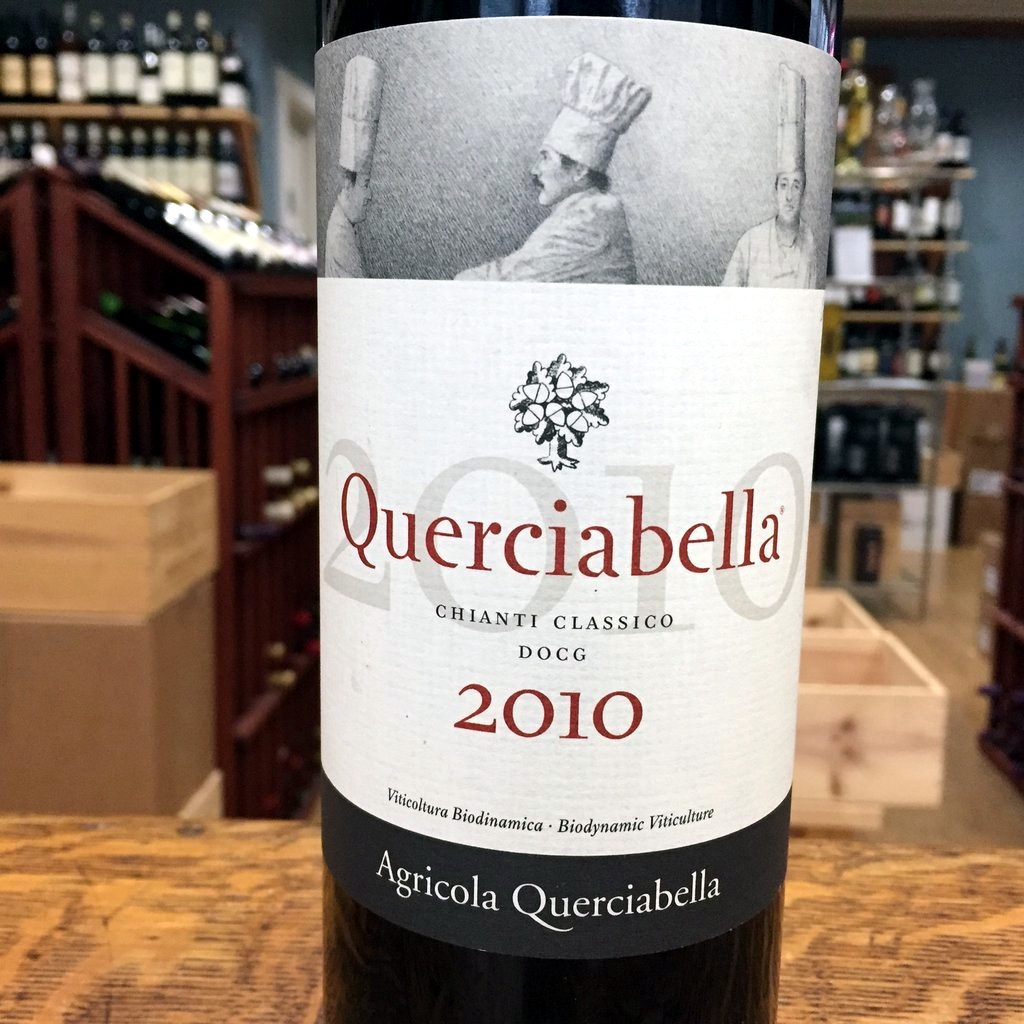
        Wonderful strong fine Italian quality wine. Right, sadly my last drop of this excellent wine.
Tips.

If you can get your hands on a bottle (or more) Chianti Classico Querciabella of Tuscany, it will be the best compliment to this steak tartar recipe. It is an excellent wine. Intense dark ruby color, clean and refined aromas, soft and full-bodied as the memory that leaves in the mouth and in the heart of every good drinker.
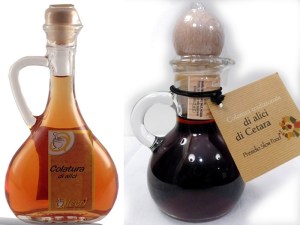
  Colatura di Alici – Italy’s Umami in a bottle.
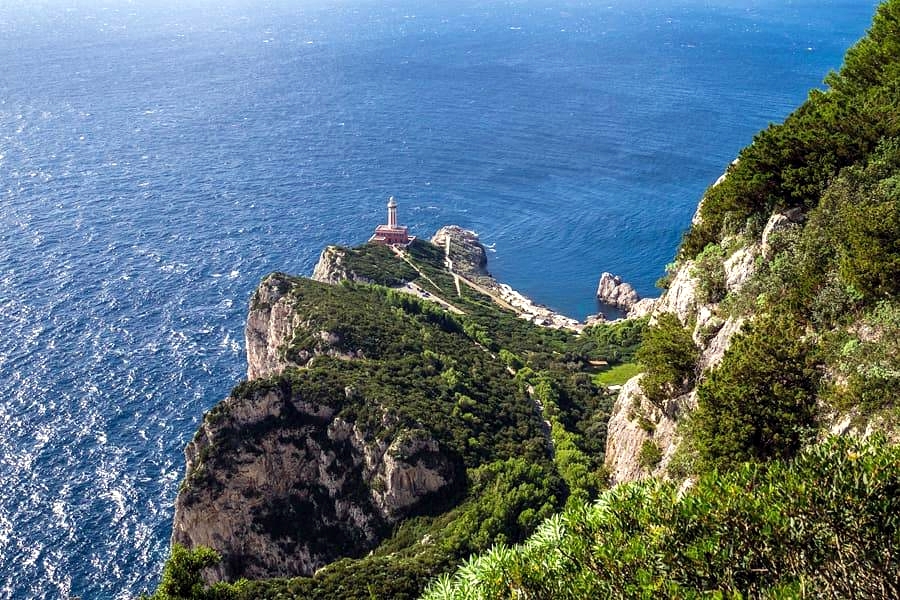
My final comment about this article is about anchovies taste and smell. I don’t like anchovies very much. But recipes with colatura and fresh made in a surrounding like Cetara makes everything different. I will not talk you into, like it or not !! But if you have the chance to taste it – do it.     Its an experience one won’t forget !
Veröffentlicht unter Information, Lifestyle, Must See, Recipes, Travel | Verschlagwortet mit | 6 Kommentare

Must See – Amalfi 3, Anacapri

Hello dear readers. My good friend Mathis asked in a comment about a nice restaurant in Anacapri. I answered him directly, but decided that such an information might be of interest for all of you. That’s why I filled in a few more information’s and post it for all of you. Additional pictures are also desirable and can’t shown in „comments“. Here they are as an attachment to the article before.

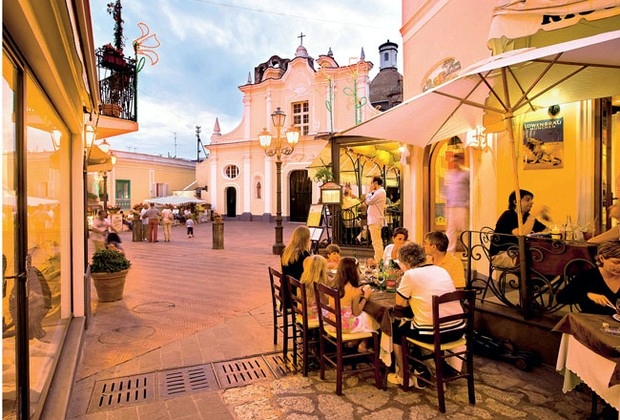
  Ristorante near Chiesa Santa Sofia.

Staying over night in Anacapri and being out for a decent meal is easy. But the selection of hotels and restaurants is as extensive as the personal tastes. As I was asked I just will post here my personal experience.

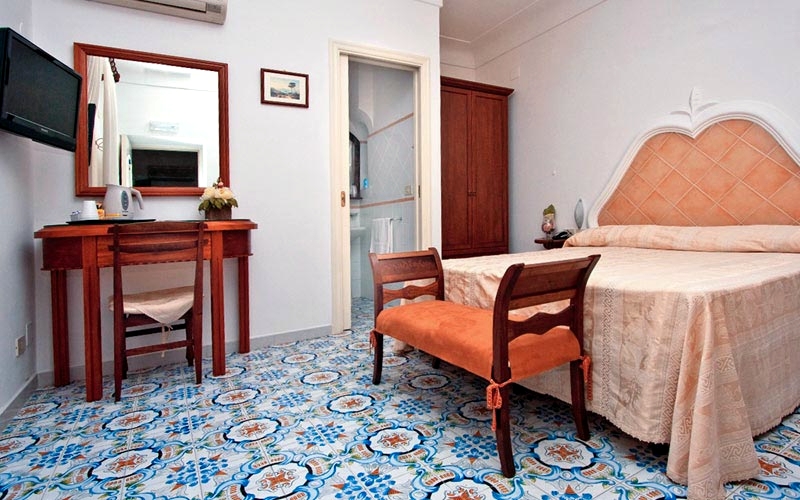
  Cozy and homey atmosphere in Mediterraneo.

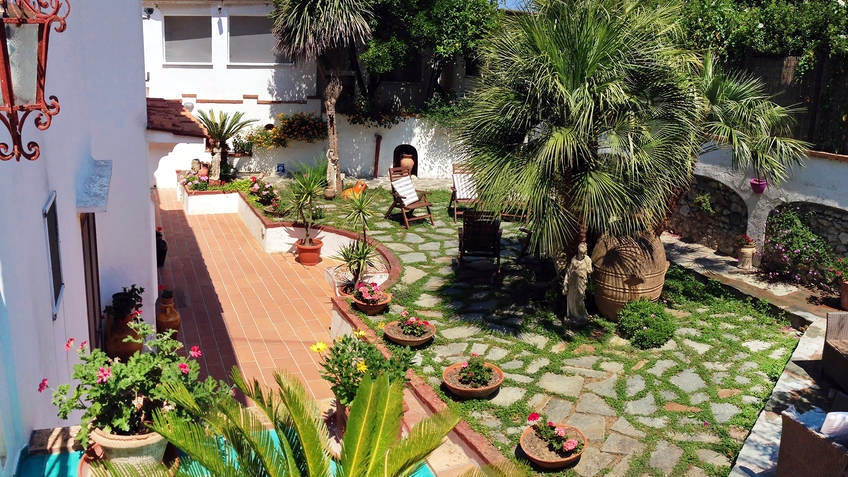
Hotel Mediterraneo.

There are places where, as soon as you walk through the door, you feel immediately at home. The Schettino family’s B&B Mediterraneo, in Anacapri, is one of those. Here holidaymakers are treated, not as customers, but as welcome guests

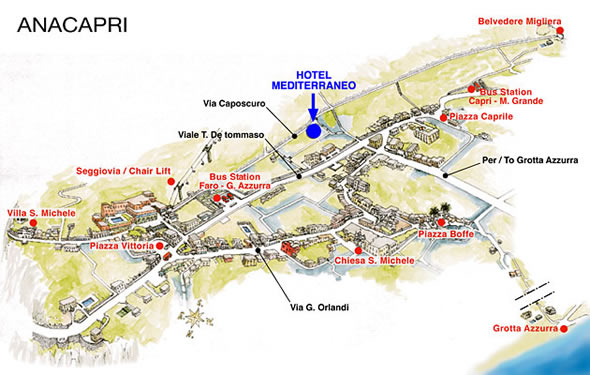
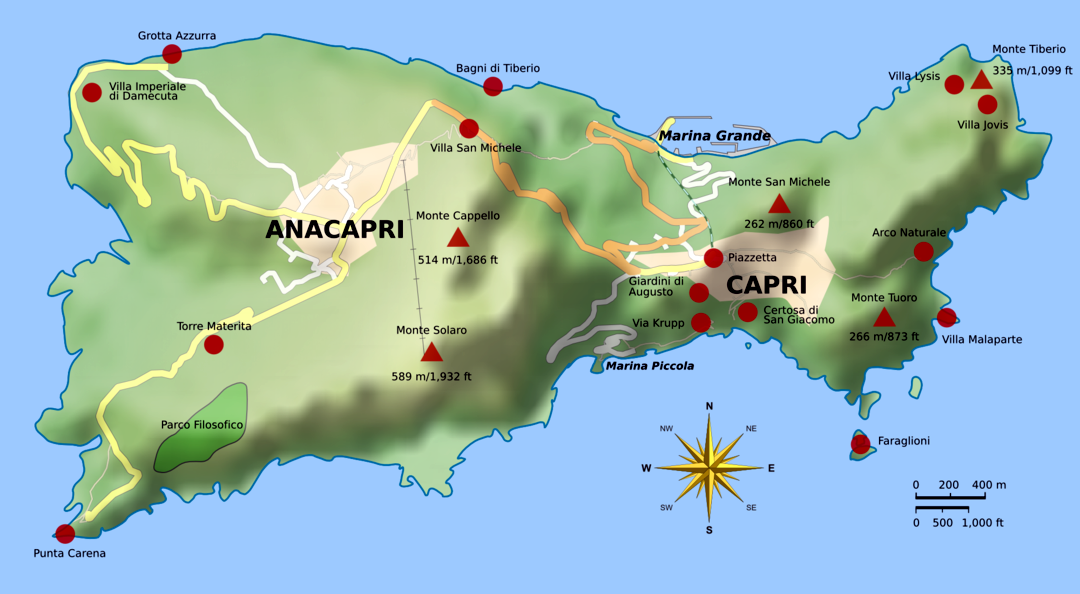
  Click on to supersize map.

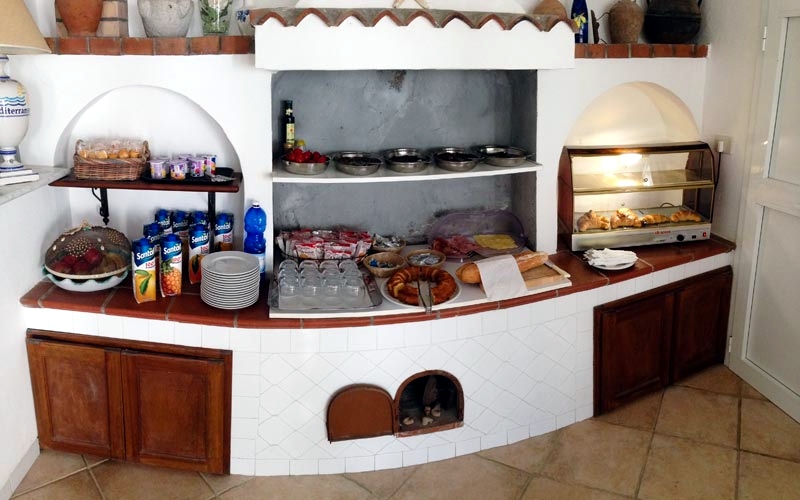
Hotel Mediterraneo is located in a quiet, traffic free zone of Anacapri. The meticulously kept garden surrounding the guest house, is the perfect place in which to stop for a chat with the friendly owners, partake of a leisurely aperitif, or relax over a good book, and it is here, on warm summer mornings, that B&B Mediterraneo’s generous breakfast of fragrant pastries, fresh fruit, cereals and yogurt, is served.

  Part of the stylish breakfast buffet.

Within easy walking distance of the B&B there is the town’s main bus terminal, from where buses to the Grotta Azzurra, the Faro of Punta Carena, the center of Capri and the Piazzetta, the beaches of Marina Piccola, and the port of Marina Grande depart.

  Hotels are in the dozens in and around Anacapri, from Camping to 5star luxery. I picked deliberately the one with the most value for the money. A bed&breakfast family location. Our double with bath was 105,–euros a night (depends on season, rooms are between 80,– and 140,– euros).

Piazza Vittoria and the chairlift to the summit of Monte Solaro are only a few hundred meters away from the guest house. Right next to the B&B, a panoramic pathway leads through the woods and vineyards to the Migliera viewing point (see 1st pic), from where a magnificent view of the Faraglioni and the lighthouse of Punta Carena can be seen.

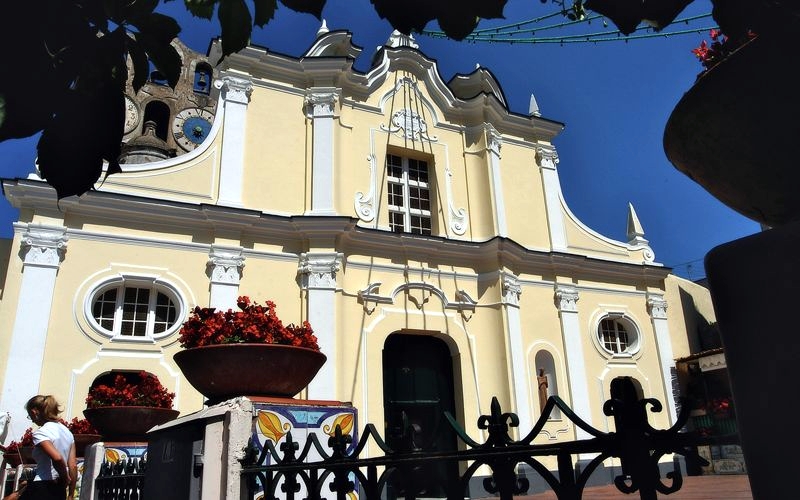
  Santa Sofia in the center of Anacapri.

Restaurants with a WOW factor.

To answer my friends question, I picked out 3 restaurants. The reason is that they cover almost every taste and wish one can have. All 3 are in my opinion excellent and serve great food. The pizzeria is on low level prices and La Terrazza is the most expensive one.

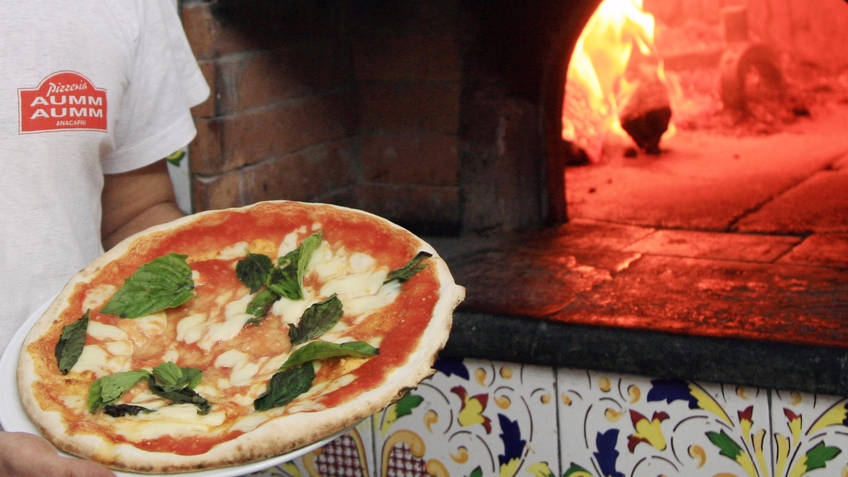
  The pizza oven of Aumm Aumm.

Pizzeria Aumm Aumm.

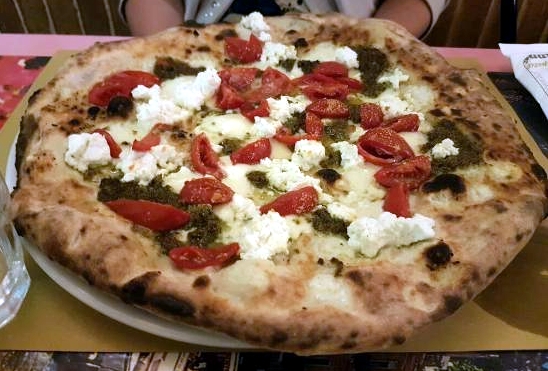
During a stay in Italy, wherever it will be, one will once have pizza. I picked this one because tey are specialized on pizza. Over 30 different types of pizza to choose from.

  Pizza Caprese from Aumm Aumm.

The great food served here is not the only reason why Aumm Aumm is Anacapri’s favorite pizzeria, it’s also one of the very few restaurants on the island of Capri to stay open all year, and until late – even in the winter !
  It’s worth to lunch or dine at Aumm Aumm.

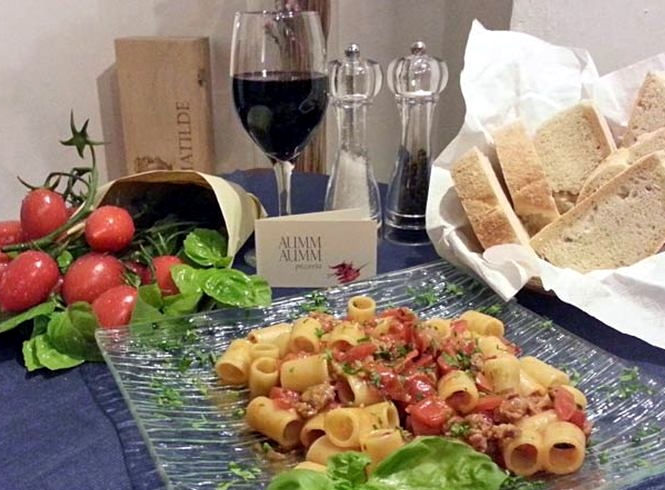
As well as pizza, cooked in the traditional wood burning oven, Aumm Aumm serves a selection of delicious pasta dishes, hamburgers salads and desserts too.

Il Geranio.

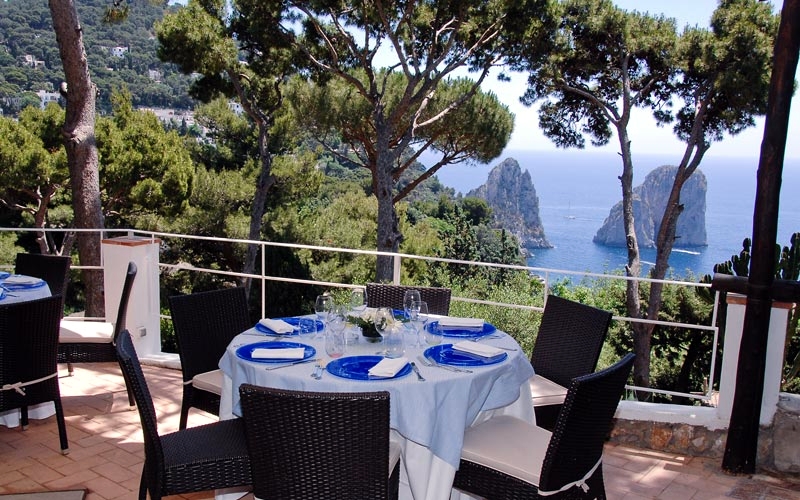
On the tree-lined avenue leading to the Gardens of Augustus and the spectacular Via Krupp, Capri’s Restaurant Il Geranio boasts an unbeatable location …and food to match ! Its not Anacapri, but worth to take a 5km taxi trip to the restaurant.
  An unbeatable location…

There are many restaurants on the island of Capri but few as romantic as the Geranio where, on summer evenings, guests dine by candlelight on the panoramic terrace overlooking the Faraglioni.

                             …and the food and wine to match. Their seafood selection is unbeatable in the area.

Geranio’s seasonal menus feature excellent Neapolitan and Mediterranean cuisine, made using the area’s abundant fish, seafood and sun-ripened fruit and vegetables.
The restaurant’s cellars are stocked with an excellent selection of the region’s wines.

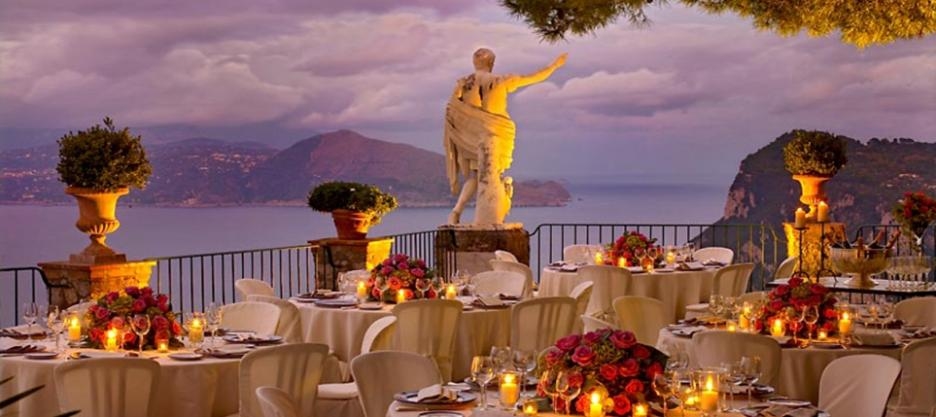
  Ceasar Augusto is greeting towards the bay of Naples.

La Terrazza di Lucullo

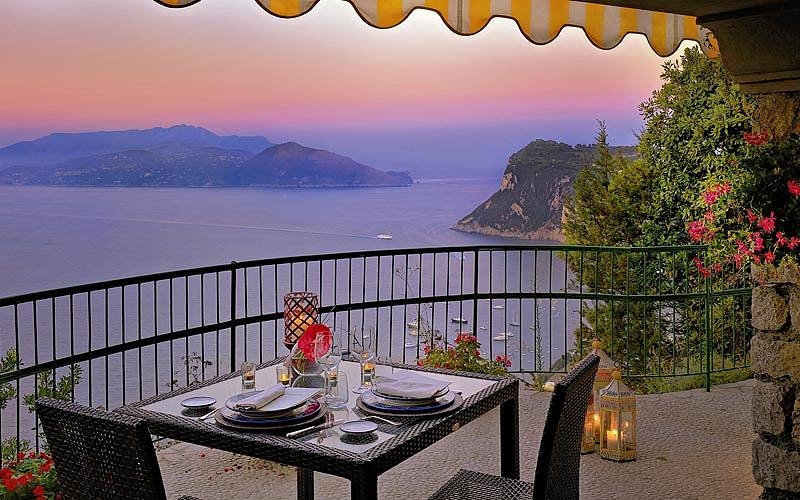
The restaurant La Terrazza di Lucullo is situated within the Hotel Caesar Augustus, a luxurious 5 star establishment in Anacapri, the highest part of the island. Perched on the cliff edge, some 300 meters above the sea, the hotel, like the restaurant dining room and terrace, enjoy the most magnificent views over Capri and the Bay of Naples.

         By yourself on the room terrace or inside the restaurant, the romantic sunset is everywhere.

From La Terrazza di Lucullo a short taxi or bus ride is all it takes to reach the Piazzetta di Capri. The historic center of Anacapri lies within easy walking distance. And also a short walk from B&B Mediterraneo.

          Meat or seafood, pasta or desert, every plate will tell a story.

Whether they dine at the beautifully laid tables in the restaurant’s elegant dining room or outside, or at the flower-decked terrace, guests can expect to find themselves surrounded by the most breathtaking scenery ever.

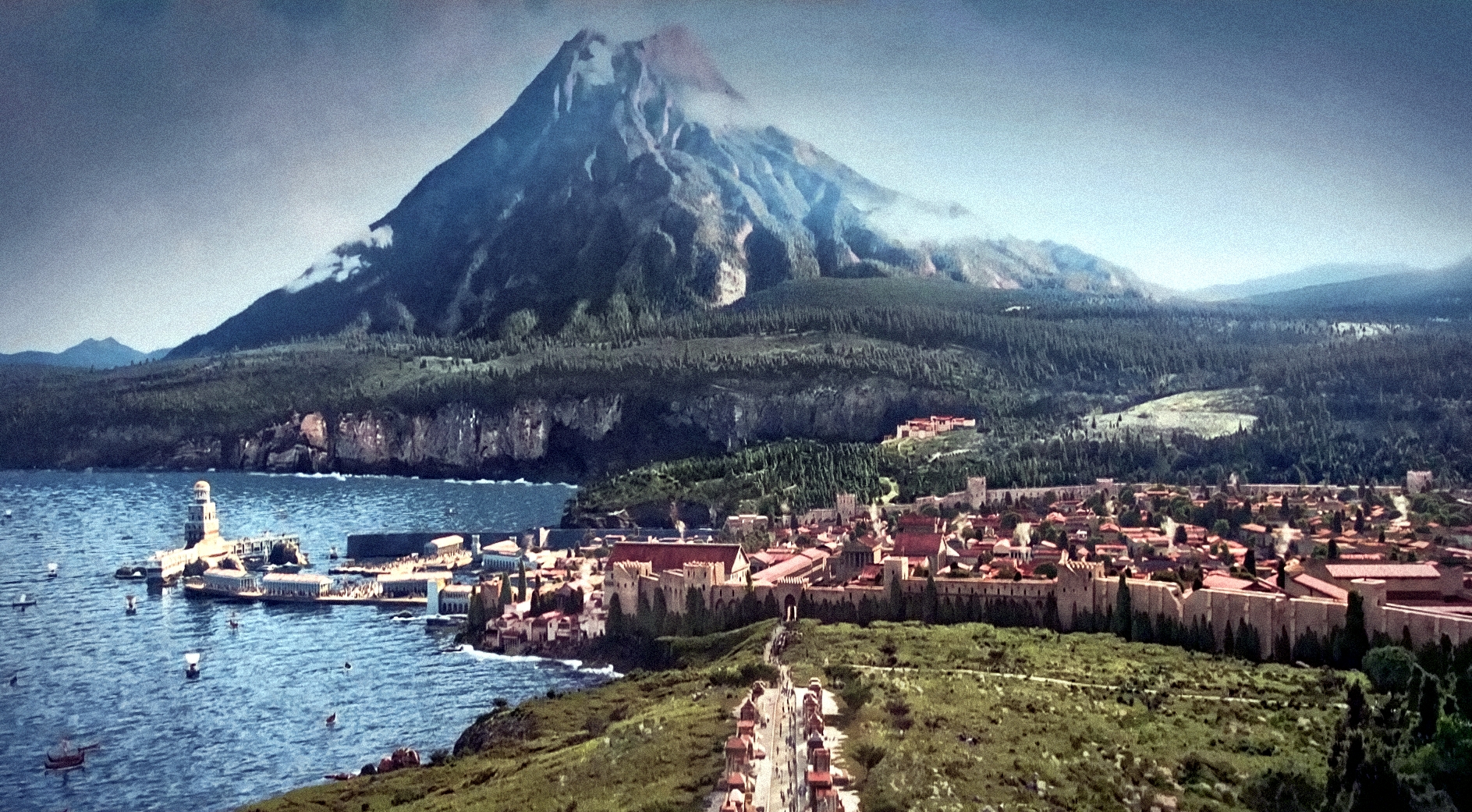
  Pompeii at the gulf of Naples, infront the volcano Vesuvio. Pic of the 2014 movie Pompeii.

Having been several times at the Amalfi coast, Capri, Ischia, Pompeii to Paestum and around, I only can say that’s one of the most beautiful places on earth.   A Must See !!

Veröffentlicht unter Information, Lifestyle, Must See, Travel | Verschlagwortet mit | 4 Kommentare

Must See – Amalfi 2

Things To Do in Amalfi Coast.

The Amalfi Coast can be seen and experienced a number of ways. Adventure travelers wanting to work up a sweat can traverse the many scenic hiking trails that snake through the region. Those strictly seeking relaxation can find solace at one of the coast’s 100 beaches, including the ultra-secluded Furore Fiordo. If you have sufficient sea legs, seeing Amalfi by boat is said to be an unforgettable experience, as is bearing witness to the littoral views from the sky-high Villa Cimbrone.

  Just breathtaking – Villa Cimbrone, above Ravello.

Positano.

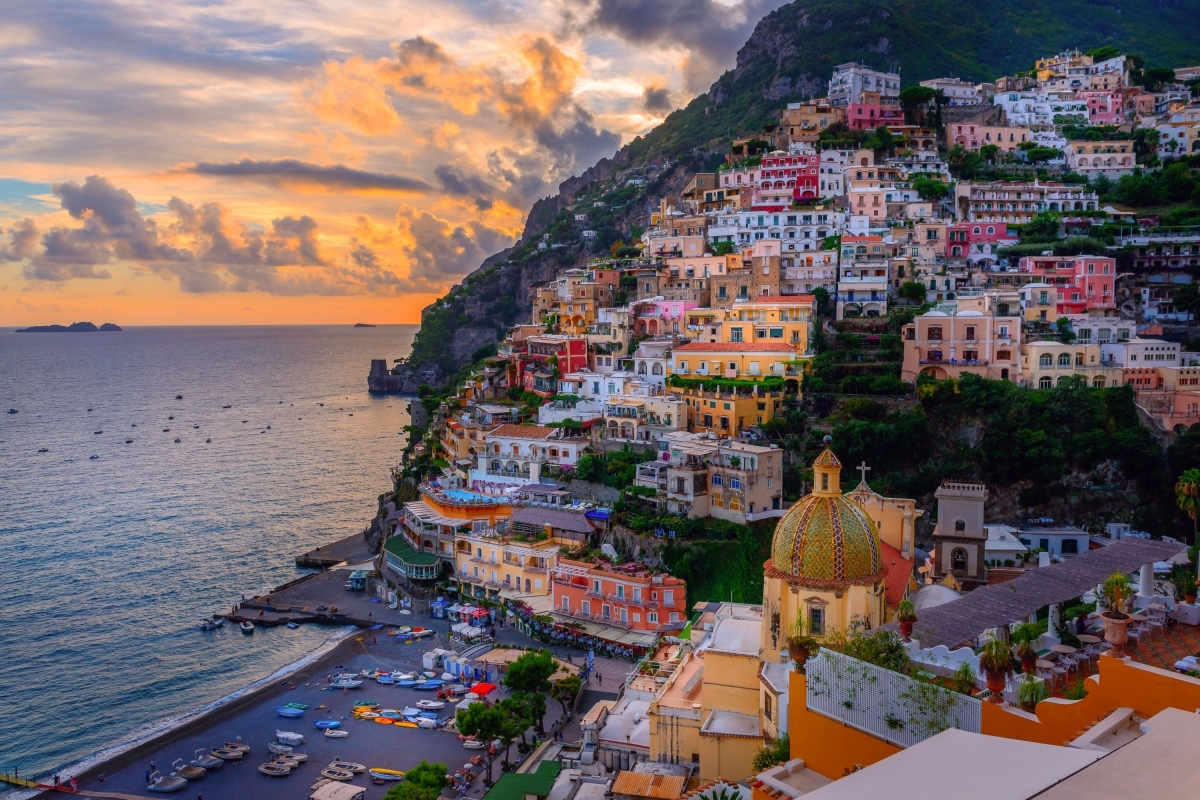
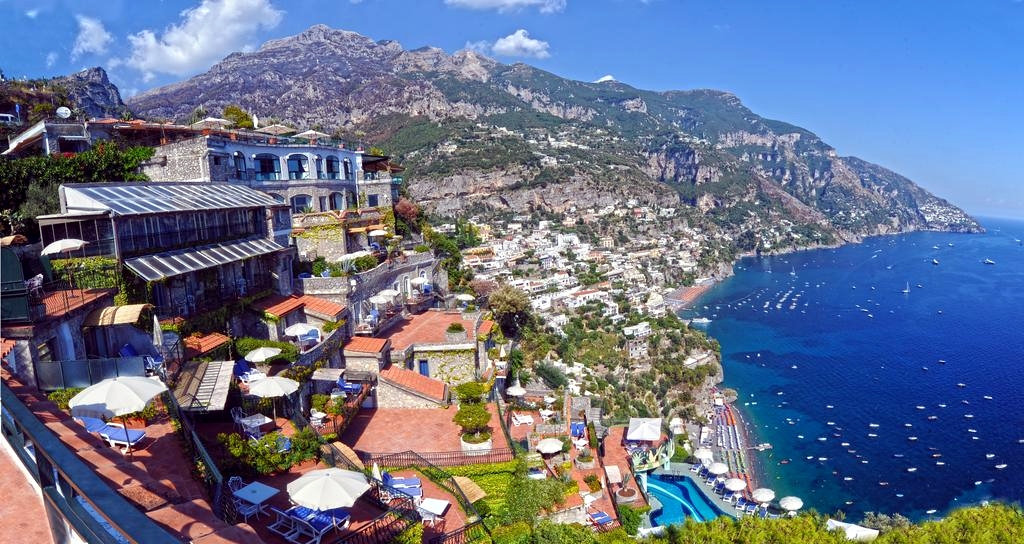
If you only have time to visit one town in the Amalfi Coast, it should be Positano. Positano is everything you’d dream the Amalfi Coast to be; lush cascading cliffs stacked with colorful Mediterranean architecture, luxury yachts and speed boats docked on turquoise waters, and narrow streets and ornate stairways lined with boutiques and trattorias. And of all the towns on the coast, Positano caters to visitors the most, offering up the most hotels of any destination in the region. What’s more, Sita buses and ferries stop directly in Positano and many Amalfi Coast boat tours depart from here.

  Sunset behind Positano, amazing colorful.

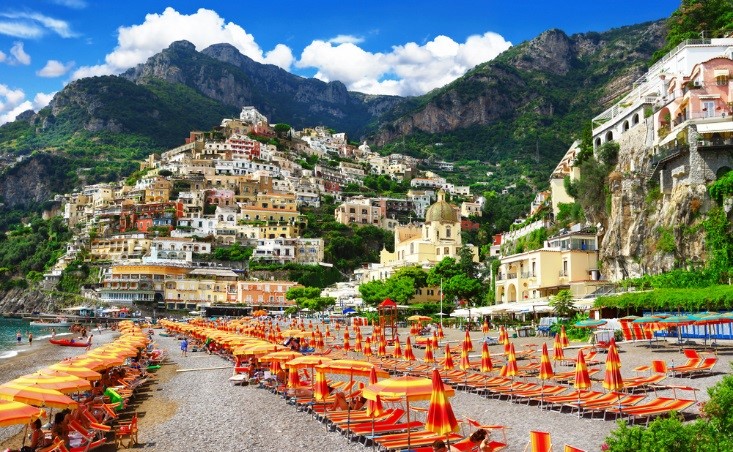
Positano also boasts some of the Amalfi Coast’s most beloved beaches. Marina Grande Beach is the most famous and most central, sitting at the base of the colorful seaside town. There’s also the Fornillo Beach, another traveler favorite, located less than a half-mile east of Marina Grande Beach. Fornillo Beach can be accessed directly from Marina Grande via the cliffside Sentiero degli Innamorati pathway, an attraction in its own right. For a truly secluded shoreline, check out Arienzo Beach, which is situated between two cliffs and is accessible via a 300-step stairway.

  Marina Grande Beach in Positano.

In addition to beaches and vistas, Positano is also a shopper’s paradise. Here, travelers can find one-of-a-kind pieces including antiques big and small.  But above all, travelers find simply walking around and admiring the city’s stunning scenery to be the best activity Positano has to offer. You can reach Positano by car via the Amalfi Highway or by the Sita bus. For more information about Positano, visit the Positano Tourism Board’s website.

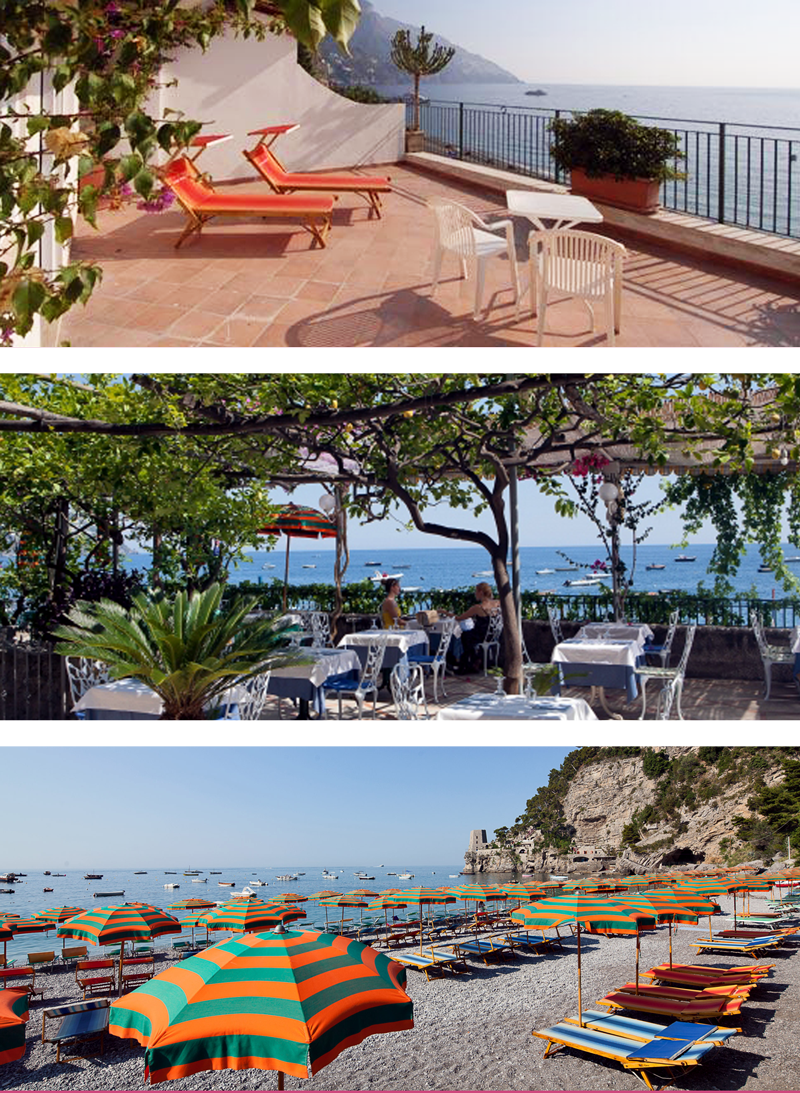
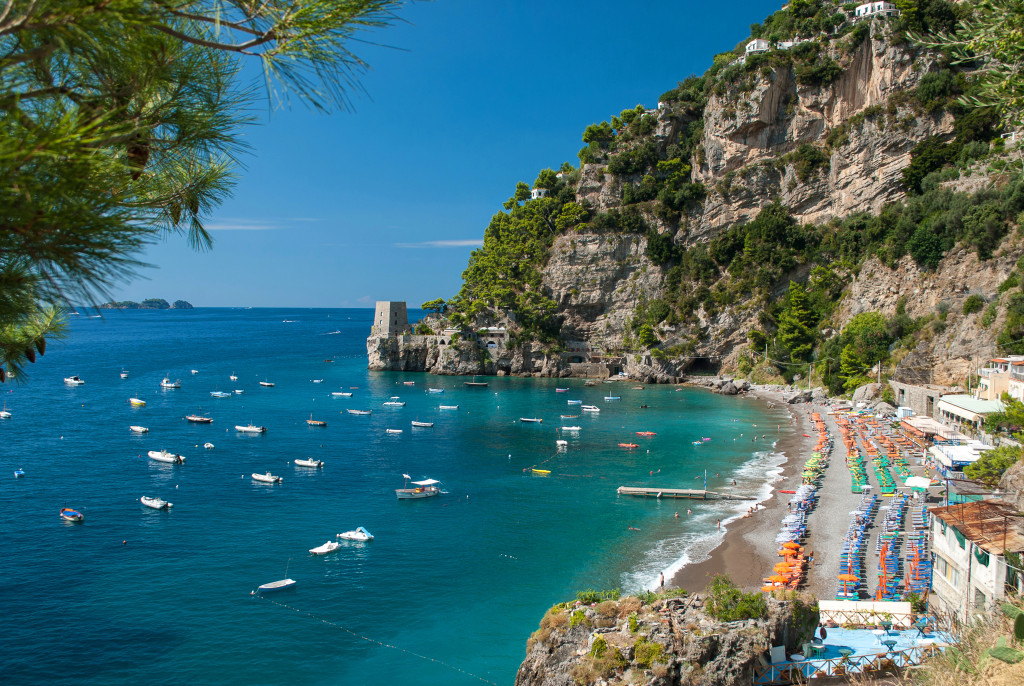
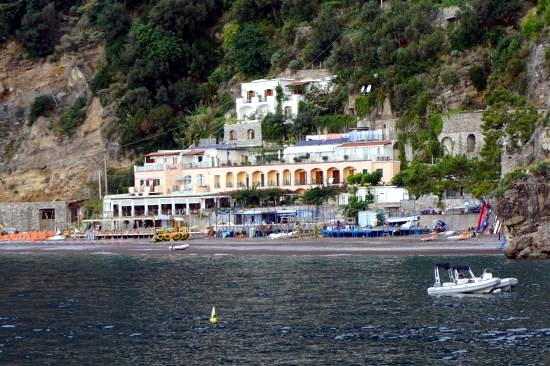
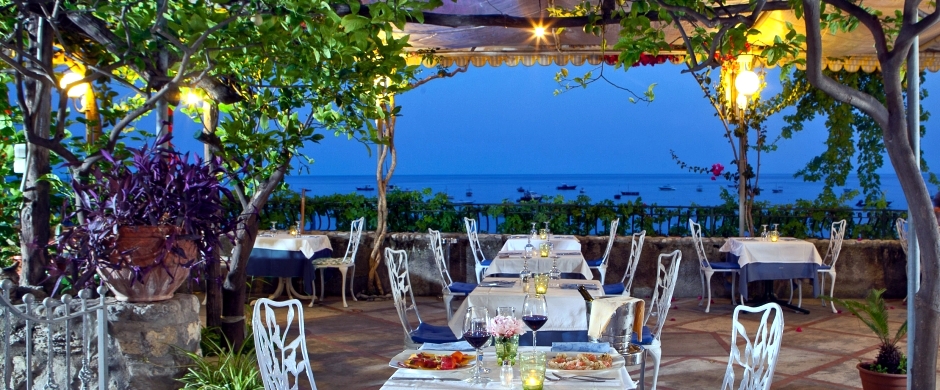
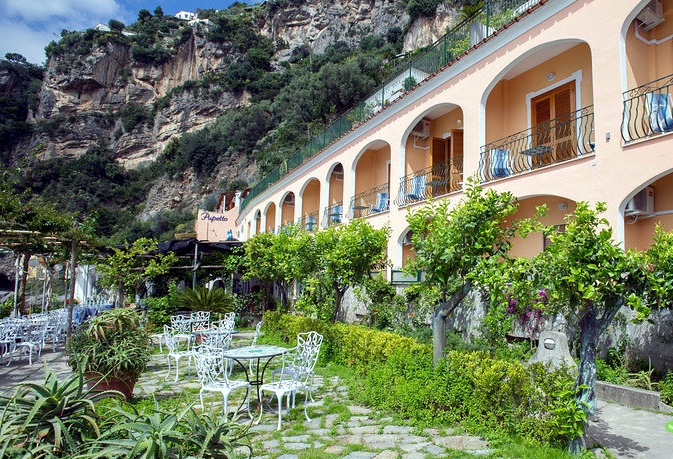
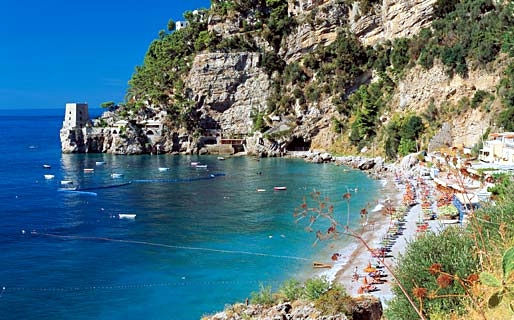
  Hotel Pupetto and Pupetto beach. Click on pic.

Hiking.

Though the Amalfi Coast is the kind of place where you should kick back, relax and soak up the stunning scenery, you’d be missing out on all it has to offer if you didn’t make room for a little adventure in your itinerary. In between the coast’s various towns are a plethora of beautiful pathways and trails begging for further exploration.

   Hiking at Amalfi coast is not for „acrophobia“ people.

Beaches.

A trip to any coastal destination wouldn’t be complete without a trip to the beach. In the case of the Amalfi Coast, your vacation wouldn’t be complete without visiting multiple beaches. One of the things that makes this region so unique is the sheer amount of beaches found here (100, to be exact). Due to the topography of the Amalfi Coast, long, sandy beaches are nonexistent. Instead, travelers will be greeted with beaches consisting of pebbles or just a rocky platform over the water.

   Just amazing, Fornillo Beach.
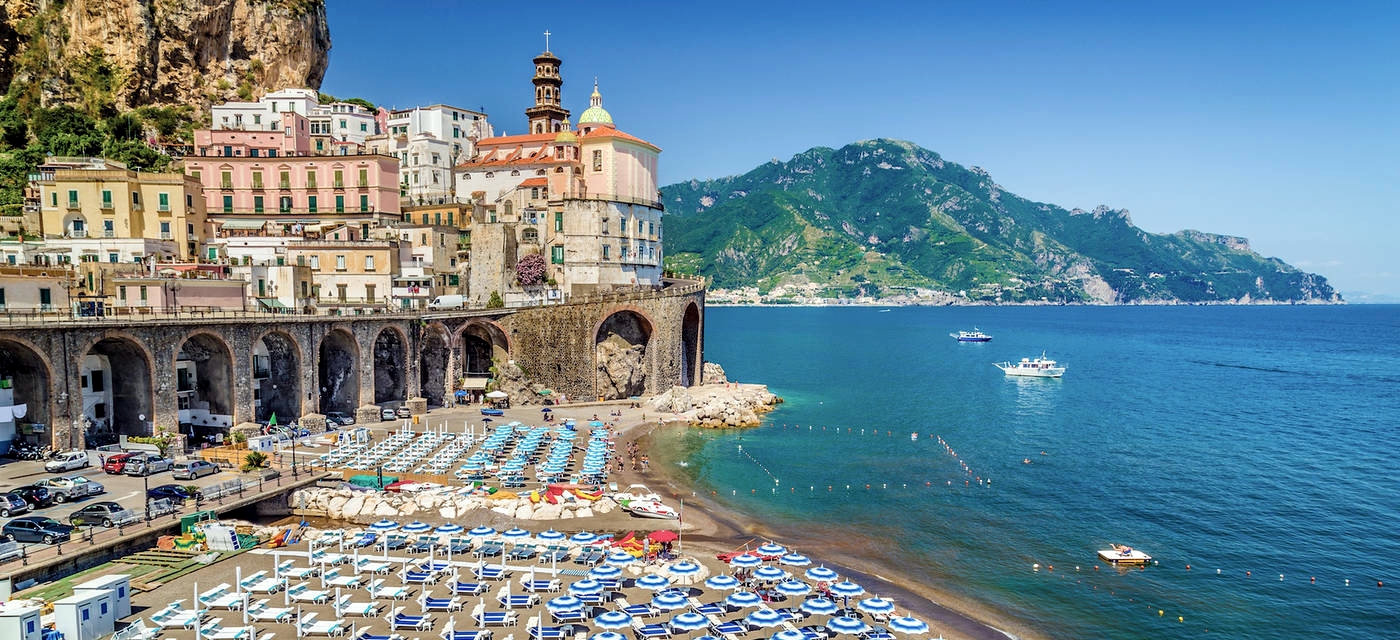
  Another amazing beach, Atrani.

Praiano, which is located between Amalfi and Positano, is another hot spot. Praiano is home to the Furore Fiordo, as well as Marina di Praia. Here, travelers are treated to a number of coastal pathways perfect for hiking, as well as a bevy of dining options. In the town of Amalfi, you can find one of the coast’s largest and most popular beaches, the Marina Grande (different from Positano’s Marina Grande).

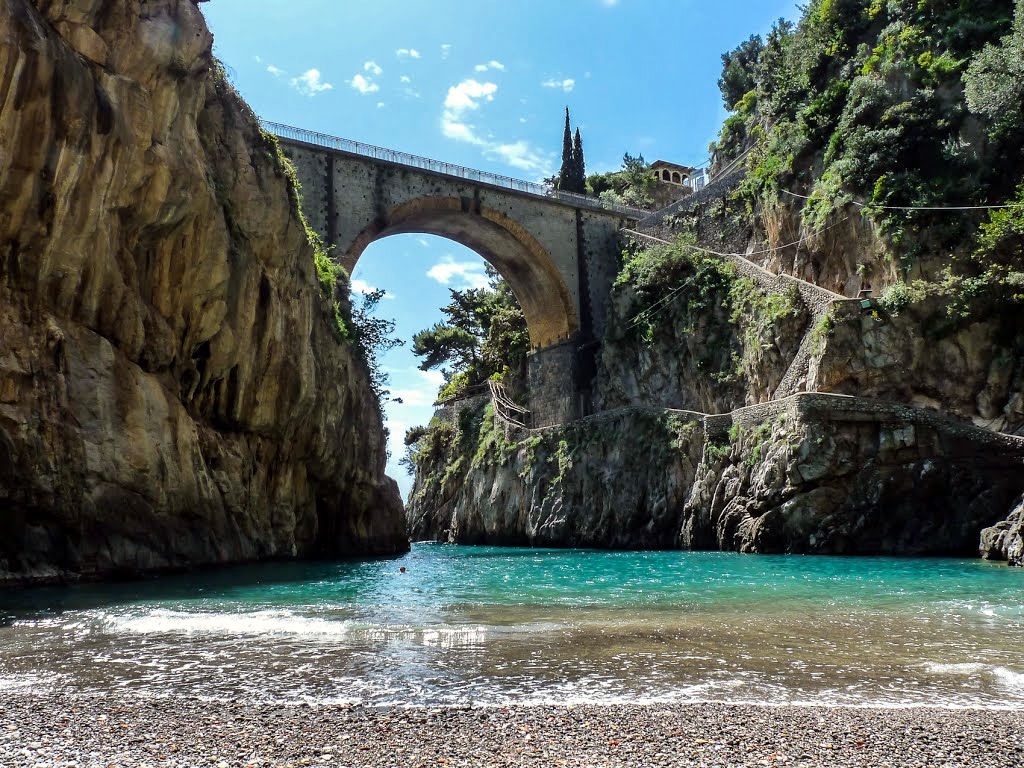
   Pebble beach at Furore Fiordo. The Furore Fiordo is located about 4 miles southwest of Amalfi. The best way to get there is by car and the only place to park is along the highway.

Villa Cimbrone.

If you’re looking to take in spectacular views without breaking too much of a sweat, head to Villa Cimbrone. Situated in the mountaintop town of Ravello, Villa Cimbrone is a luxury hotel lauded by both experts and recent visitors for its gorgeous on-site gardens.

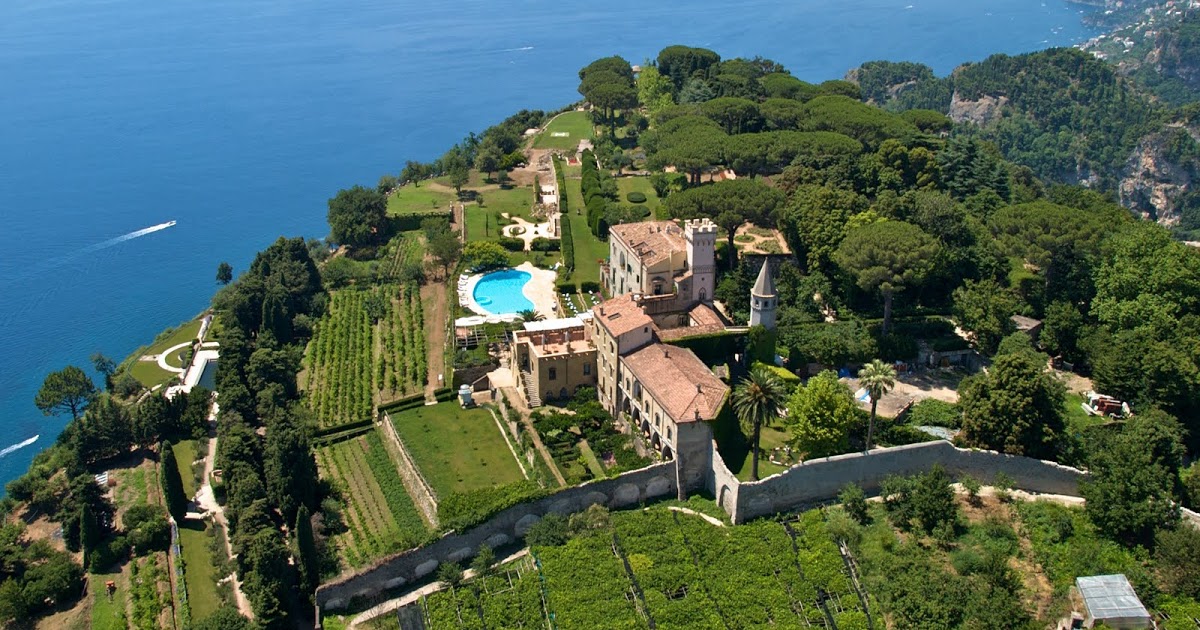
  Aerial view of Hotel Villa Cimbrone.

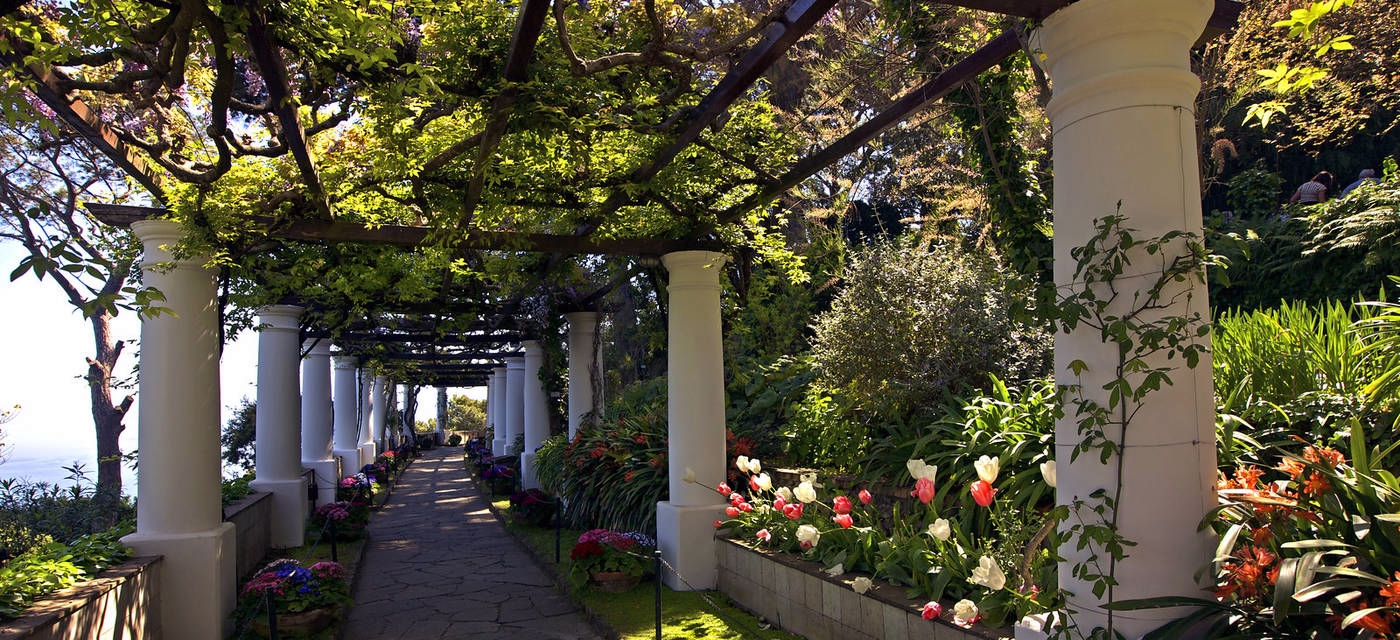
The property’s gardens are considered one of the most important examples of English landscape and botany culture in the south of Europe, housing a handful of rare botanic species. And with the exception of a few trees, all of the plants that live within the garden’s grounds are estimated to be about 100 years old.

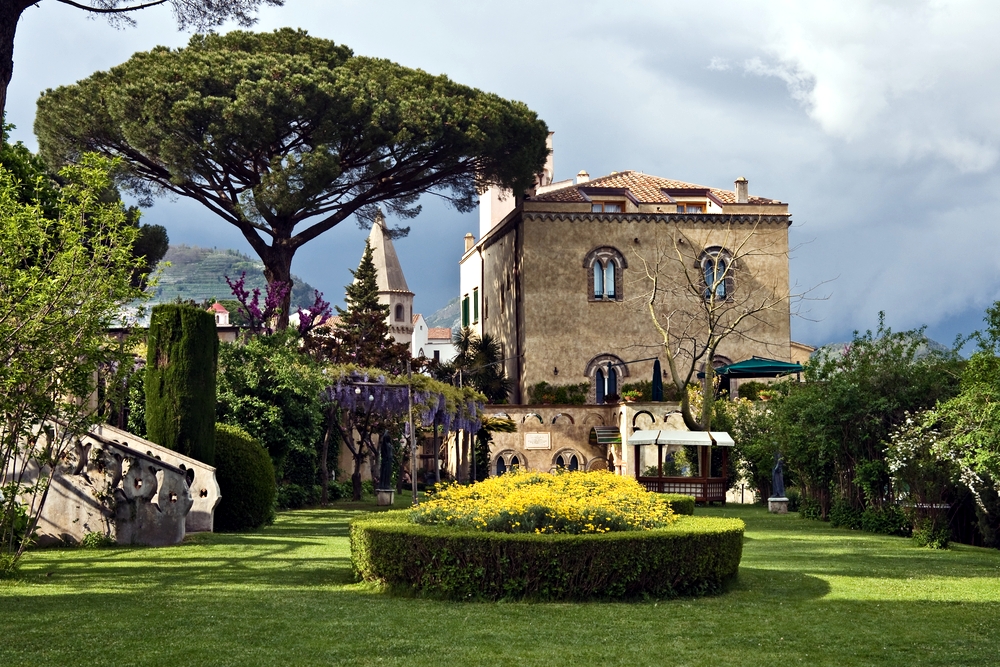
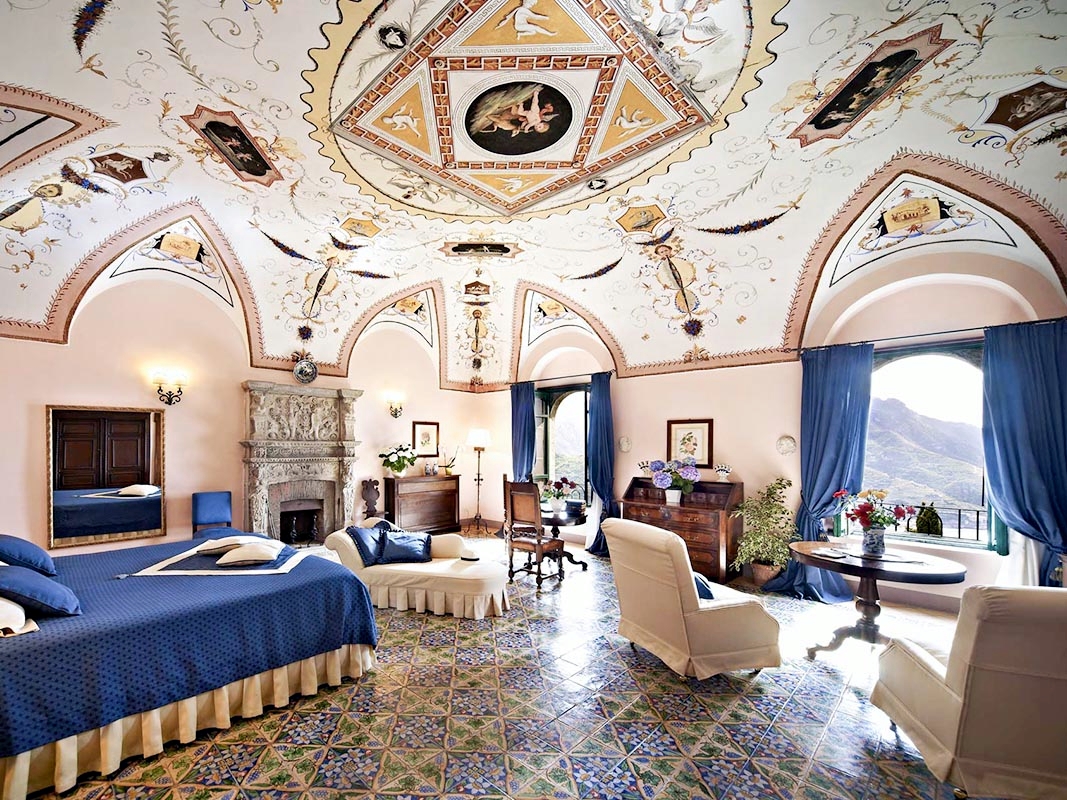
     Villa Cimbrone gardens and one of their hotel rooms. No further comment needed, right ?

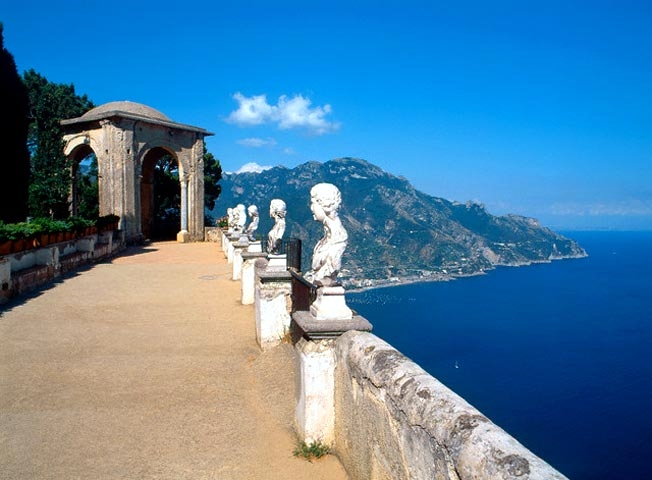
As such, you can expect vegetation of all kinds along your walk, including roses, hydrangeas and chestnut trees, to name a few. Along with beautiful botany, travelers are also greeted with equally stunning architecture. Though, the star attraction within the gardens has to be the Terrace of Infinity. This terrace, lined with busts, features unobstructed panoramas of the ocean, along with picture-perfect views of Amalfi’s cascading cliffs from both directions.

  The Terrace of Infinity at Villa Cimbrone.

Recent visitors found the views from the Villa Cimbrone’s gardens to be simply jaw-dropping, calling it the attraction’s best asset.

Boattours – Ferry’s.

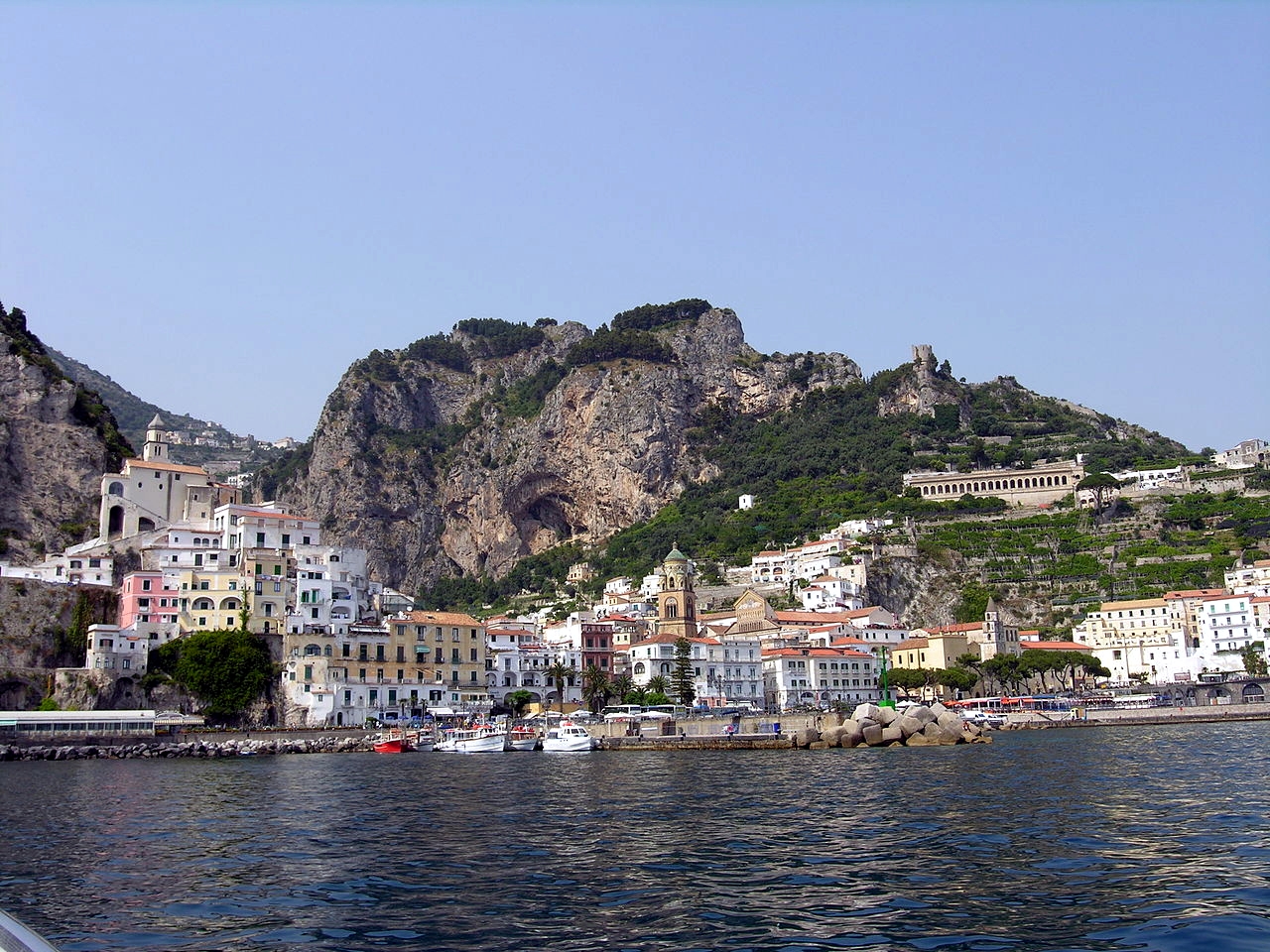
To explore Amalfi by land is only half of the experience. The best views are seen from the ocean, where unobstructed vistas of the coast’s world-renowned cliffs, as well as the gorgeous vegetation and colorful architecture, can be admired.

  Amalfi like this, only from a boat.

The most cost-effective way to experience Amalfi by sea is by taking a ferry. Ferries run from April to October annually, with one of the most trafficked routes, Sorrento to Positano to Amalfi. Sorrento to Positano takes about 40 minutes, while Amalfi to Positano takes about 20 minutes. There is also a ferry service that goes directly to Capri and takes close to an hour to reach.

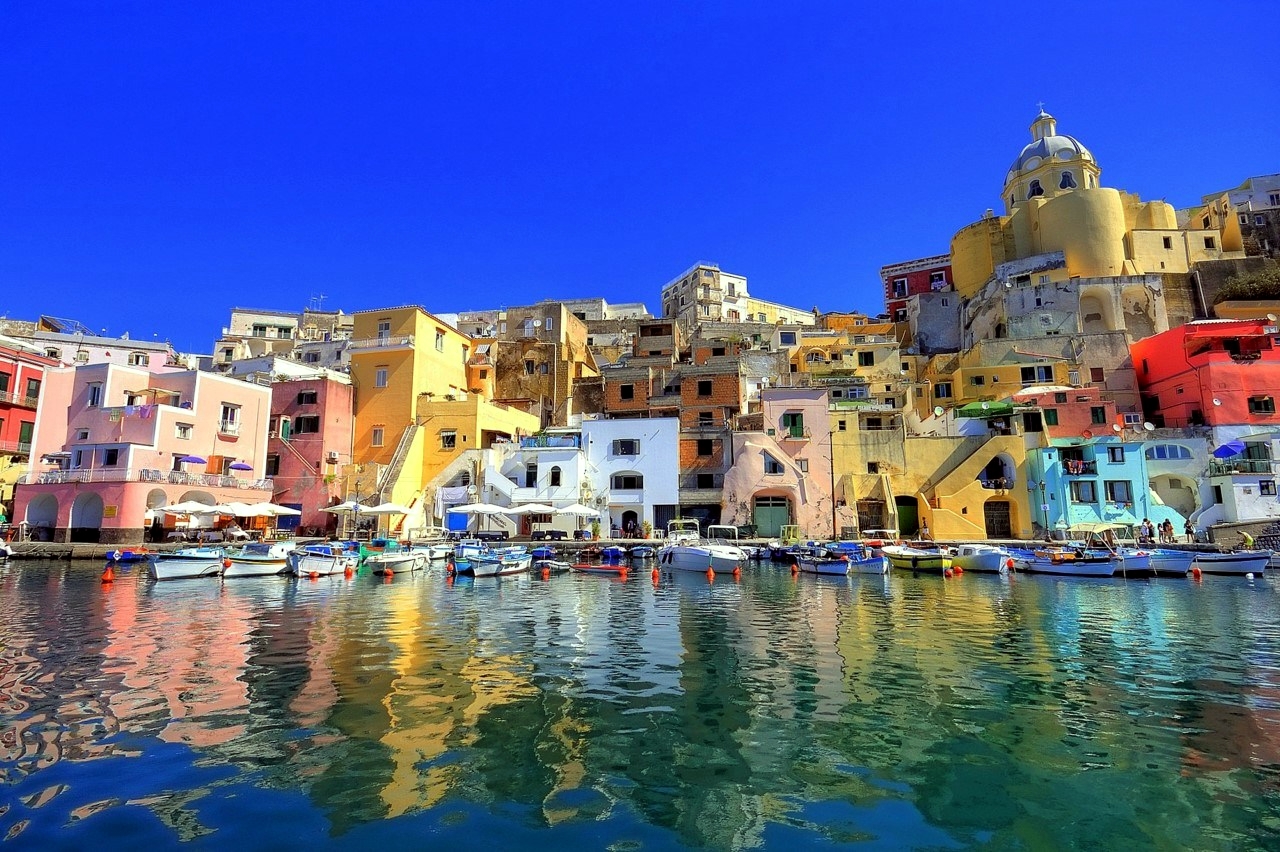
  Amazing colors at the coast, not photoshoped.

Among the more affordable companies is Positano Boats. For 50 euros (About $60), the Amalfi Coast tour takes visitors to popular spots on the coast, including the Furore Fiordo, Emerald Grotto and the waterfalls of Marmorata. Though some of these excursions can be pricey, many travelers agreed that this is the best way to see the coast.

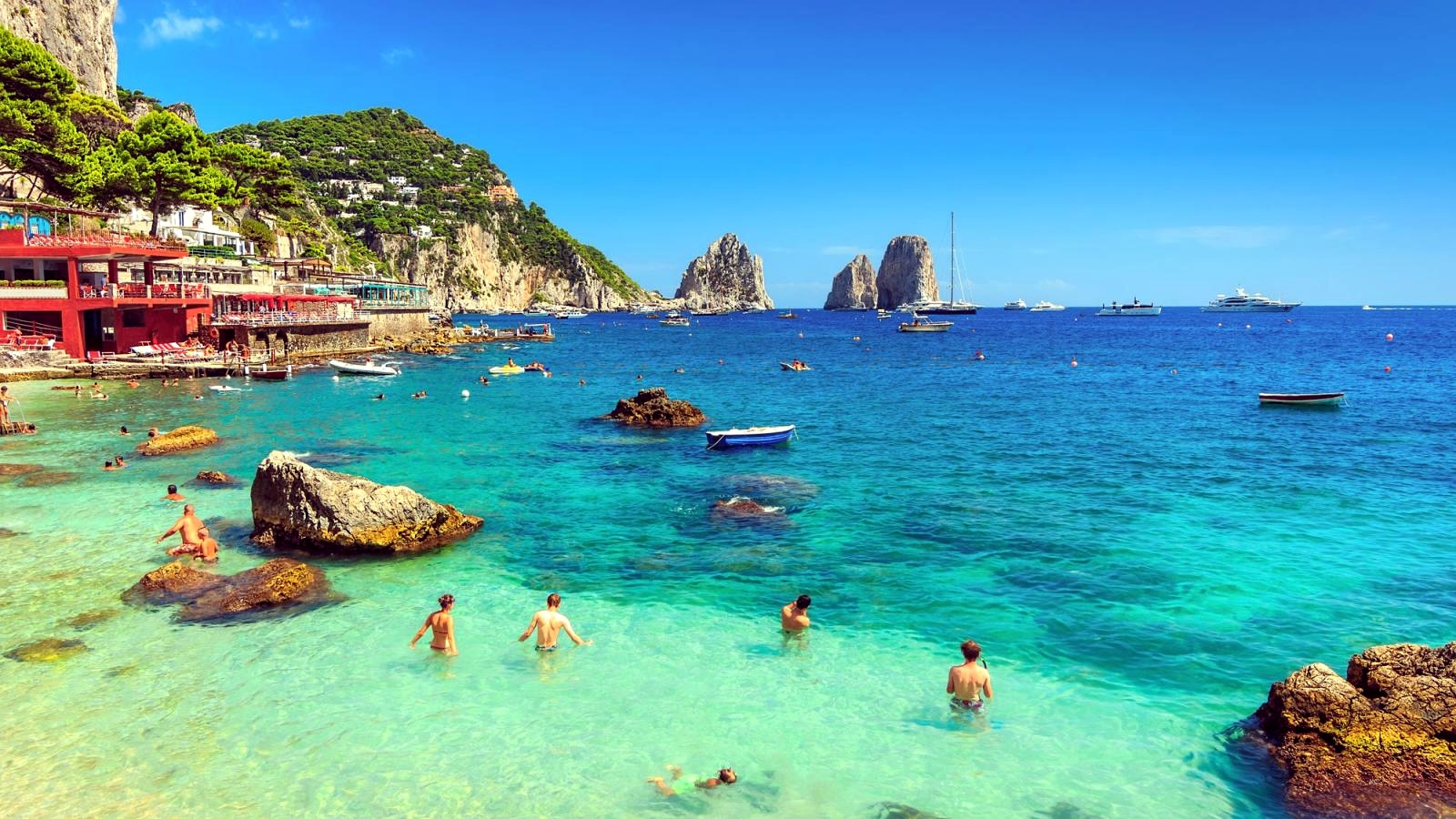
  Capri, view towards the rocks of Faraglioni.

Capri.

The Island of Capri is one of the most picturesque and visited locations in Campania. Its unique beauties were celebrated in ancient times and later published for the world in Homer’s works: Odysseus (known in Latin as Ulysses) sailing past the island, narrowly escaped the fate of those who hear the voices of the Sirens.

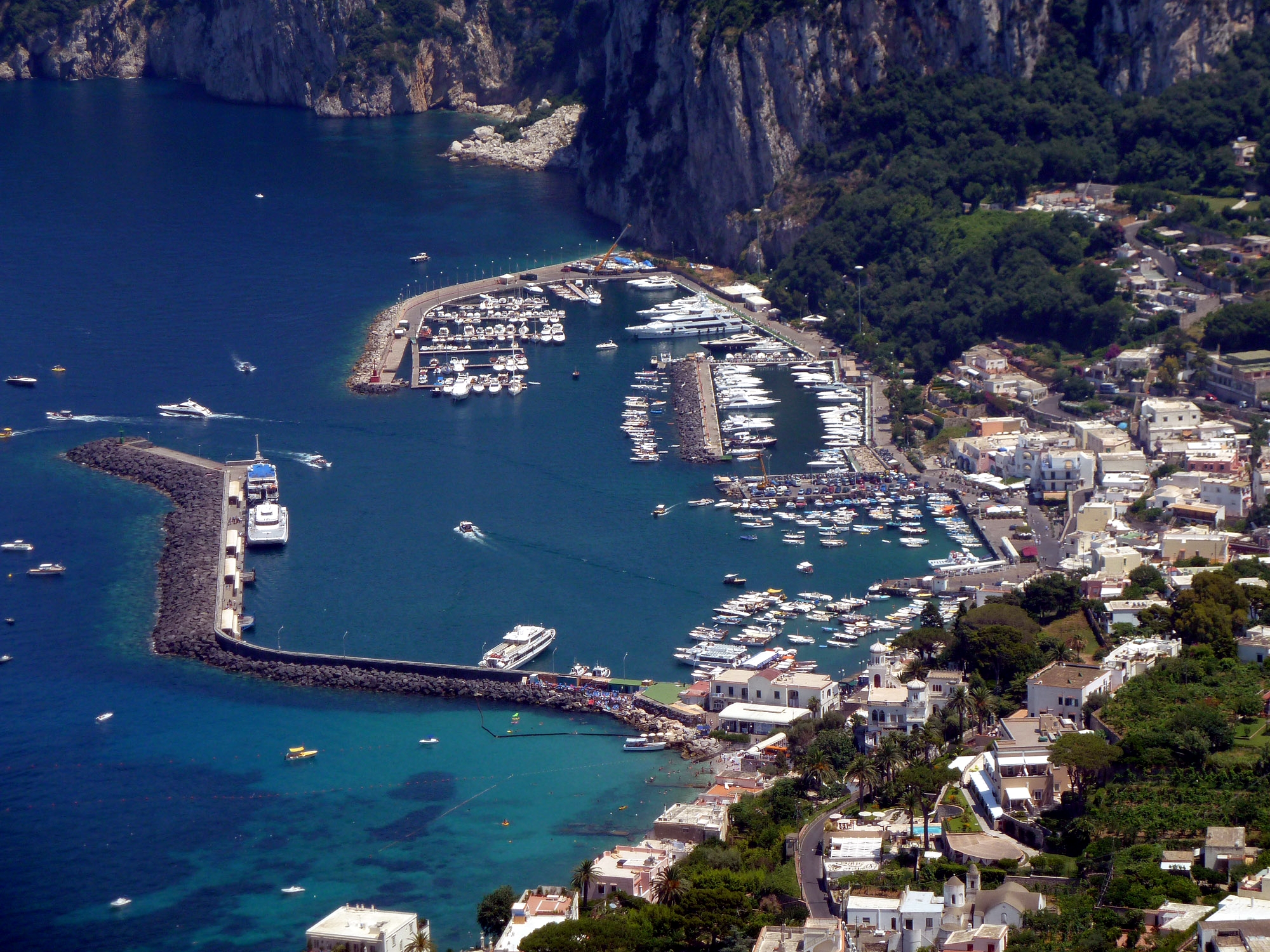
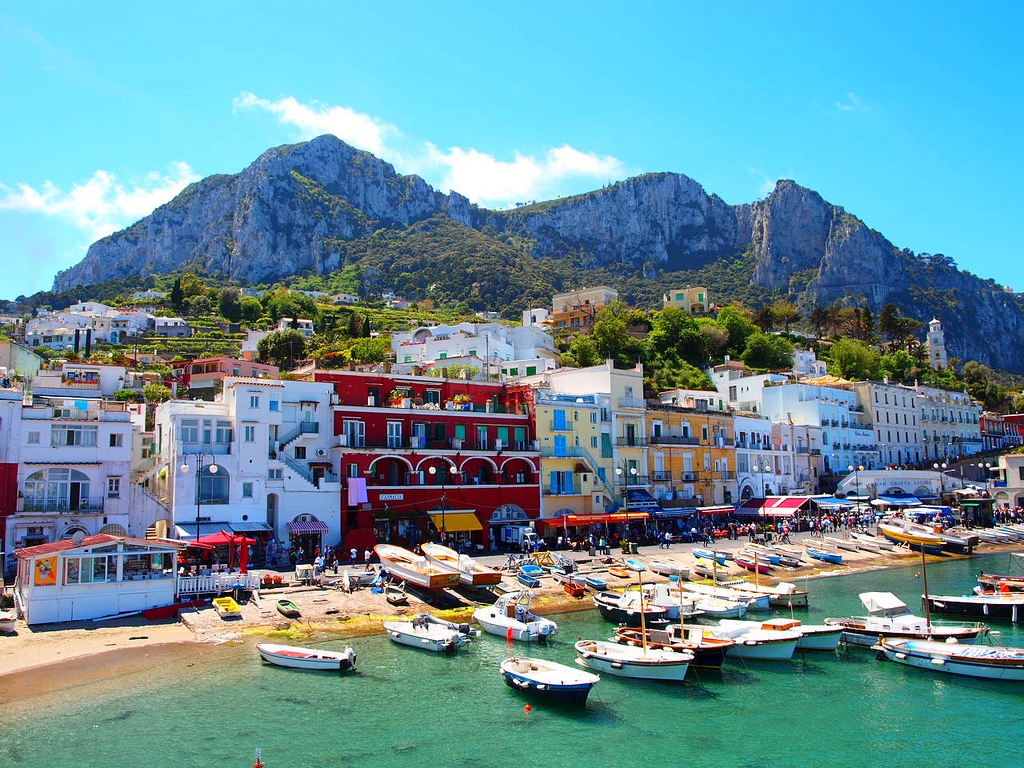
  Marina Grande on Capri. Most tourists land here.

Thus the island has a mythical charm, as well as its natural treasures, through the writings and legends of Ancient Greece. Its breathtaking landscapes and beauty stretch from the rocky caves around the island to the edge of the horizon, and has been an inspiration to poets, lovers and travelers throughout the centuries.

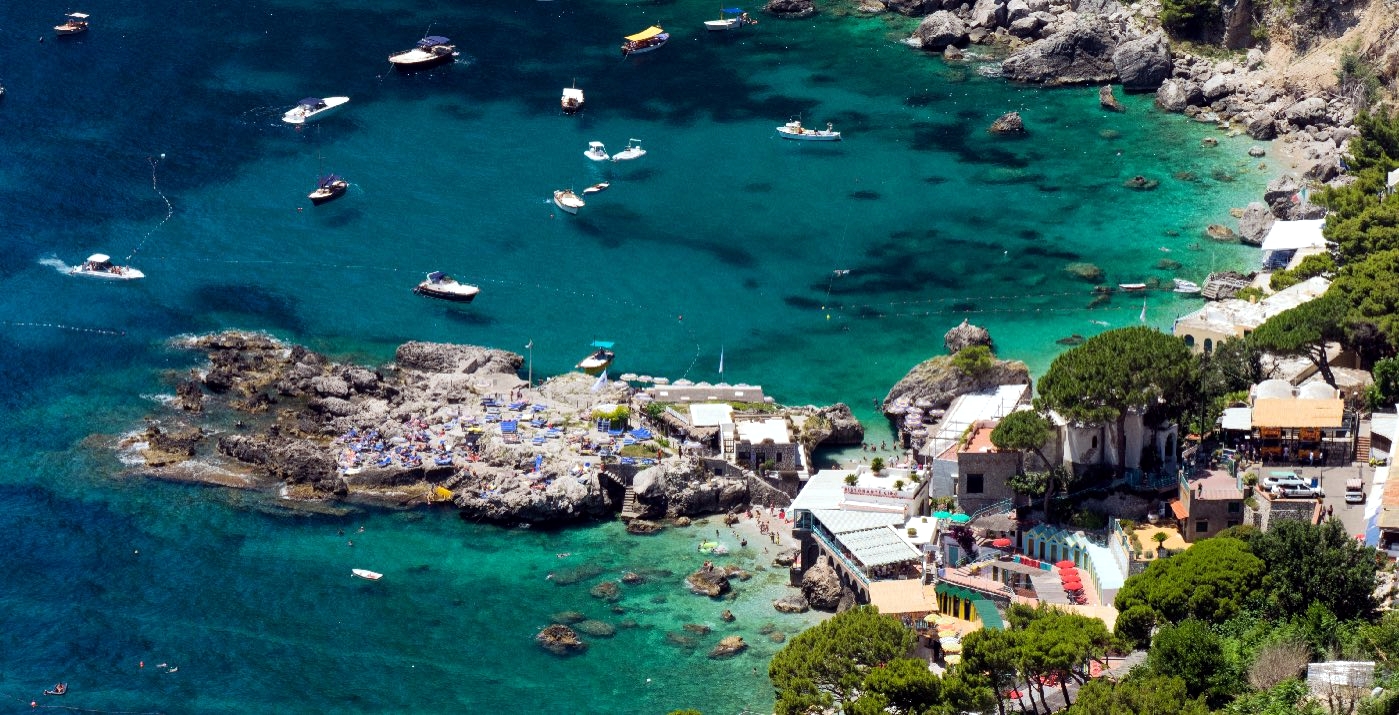
  Marina Piccola, one of the most pictured on Capri.

Capri of course doesn’t belong to the Amalfi coast. It is like the Amalfi stretch a part of the Campania province. But – because most tourists who visit Amalfi coast will visit Capri or the other way round. If one is in the area one „has to visit“ both.

  Main attractions on the island of Capri.

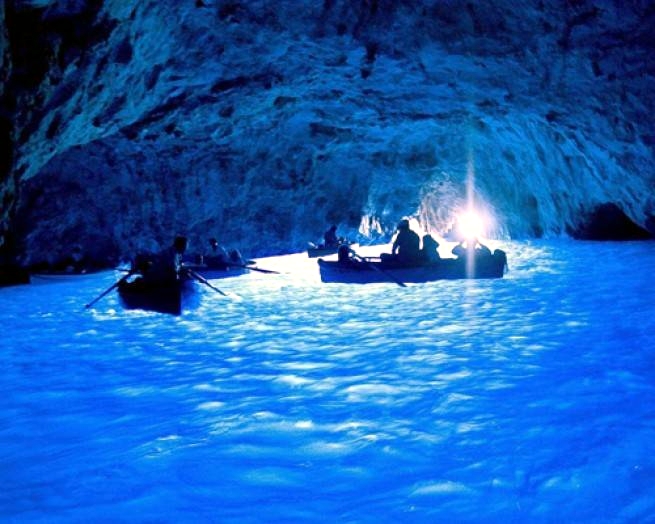
The sea emerging below is very deep, and harsh jagged caves have formed there. The most famous of these is the Grotta Azzurra or the „Blue Grotto“, now known to have been a Roman bathing place. This lagoon is haunted by a dazzling shifting turquoise blue. Small openings in the back of the cave admit daylight which, reflecting on the limestone floor and walls, creates a fantastical and magical atmosphere.

  The blue cave has attracted visitors and inspired awe from all who have seen its ancient limestone walls and learned of the history of this oceanic cave. Its almost impossible to be on your own there. A traffic jam of boats are always waiting outside to get their permission to drive in for a few minutes.

Some of the main features of the island include the following: the Marina Piccola (the little harbour), the Belvedere of Tragara (a high panoramic promenade lined with villas), the limestone crags called sea stacks that project above the sea (the Faraglioni), the town of Anacapri, the Blue Grotto (Grotta Azzurra), and the ruins of the Imperial Roman villas. Drinking water does not exist on the island and is still imported on tankers from the mainland.

  Villa San Michele, just outside of Anacapri.

Campania food.

Typical Campania food includes:

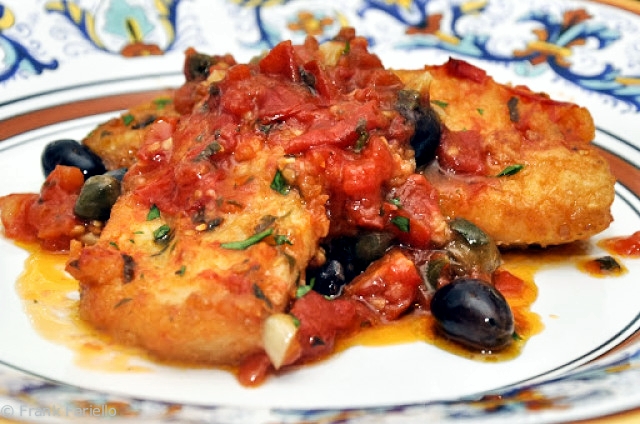
Baccala alla Napoletana: salt cod with tomato, olives, raisins, pine nuts, capers, garlic.

  Baccala alla Napoletana.

Cianfotta: paprika, eggplants, zucchini, onions, basil stewed in olive oil and served cold.
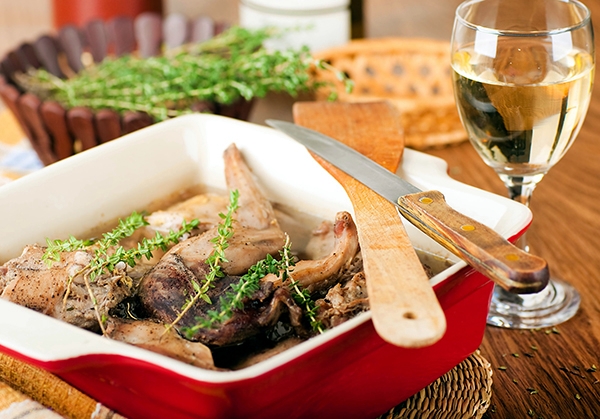
Coniglio alla Ischitana: rabbit braised with tomatoes, rosemary, basil and white wine.

  Rabbit casserole hunters style from Ischia.

Coviglie al Caffe: coffee mousse topped with toasted beans and whipped cream.
Coviglie al Cioccolato: is the chocolate version served with a candied cherry.
Empepata di Cozze: mussels cooked in their juice with lemon, parsley and black pepper.
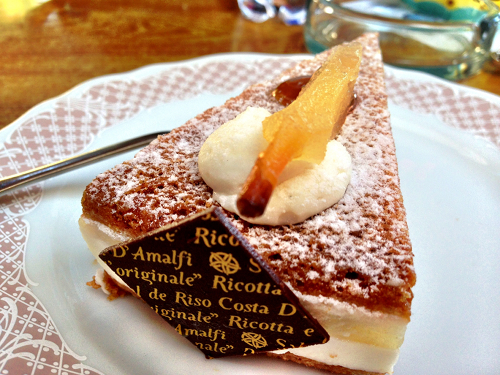
Ricotta di Amalfi: Cheesecake with caramelized honey, cream and a mango-slice.

   Original Ricotta di Amalfi.

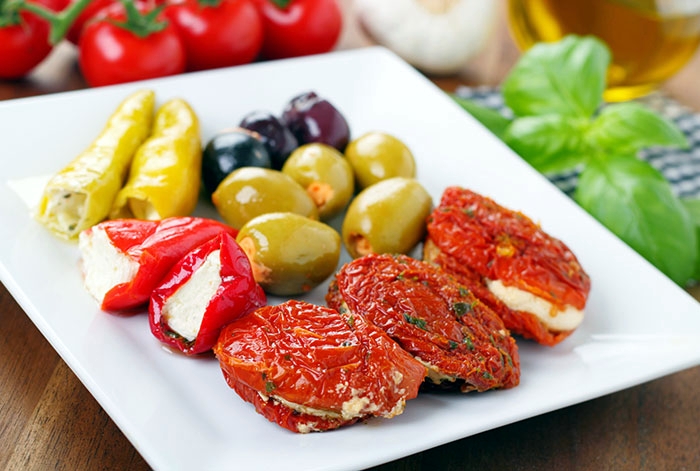
Peperoni Imbottiti: red and yellow paprikas stuffed with anchovies, black olives, capers, garlic, breadcrumbs.

  Stuffed Paprikas with stuffed Tomatoes and olives.

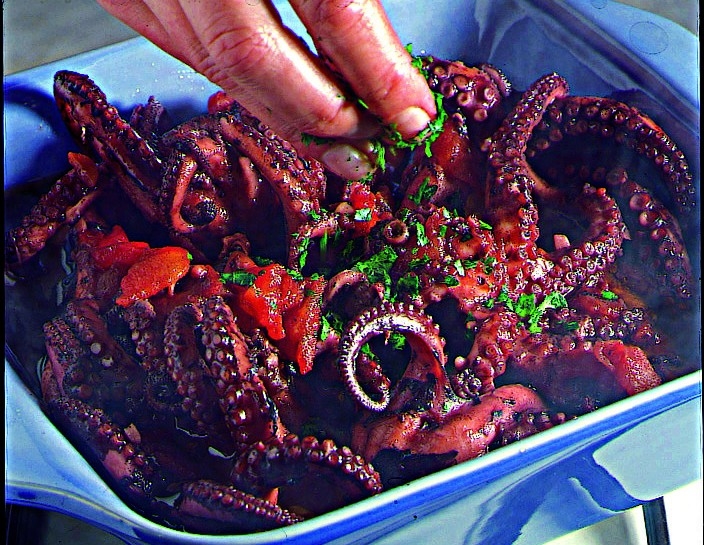
Polpi Affogati: baby octopus “drowned” in boiling salt water, then sauteed with olive oil, tomatoes and hot chilli’s.

  Polpo Affogati.

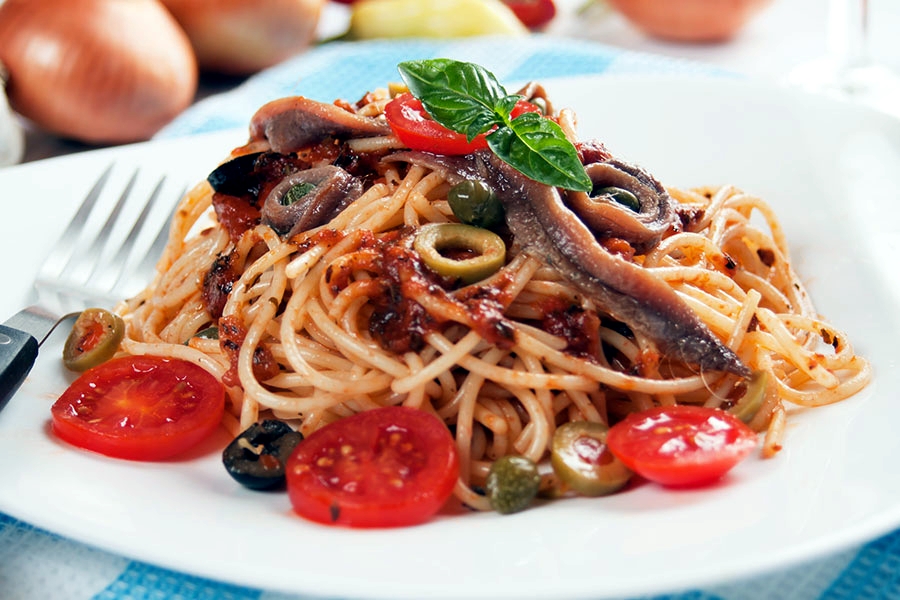
Spaghetti alla Puttanesca: “strumpet style” with tomato sauce, black olives, capers, anchovies, garlic, chilli’s–specialty of Ischia.

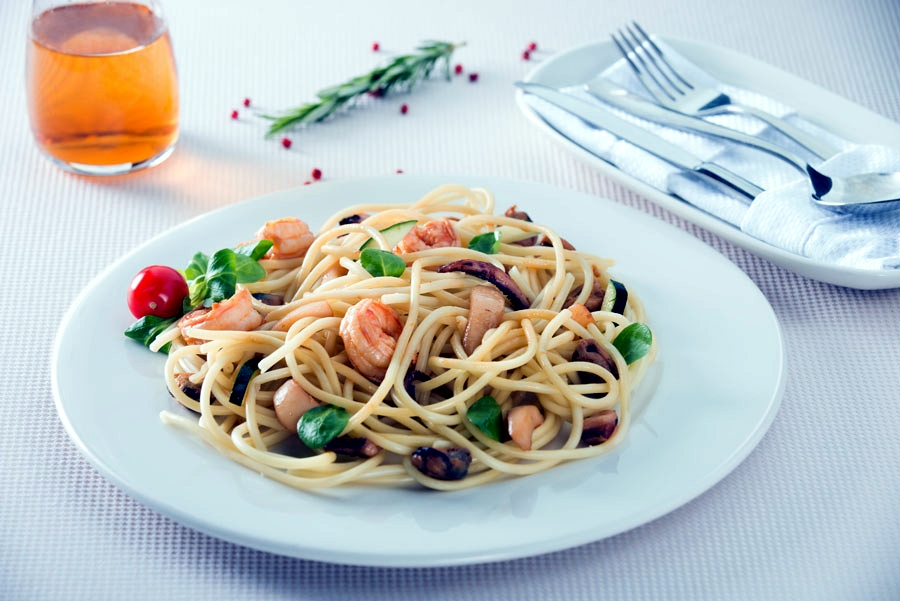
       Spaghetti alla Puttanesca, left and Spaghetti alla Rosinella, right.

Spaghetti alla Rosinella: spaghetti with prawns, squid and mussels.
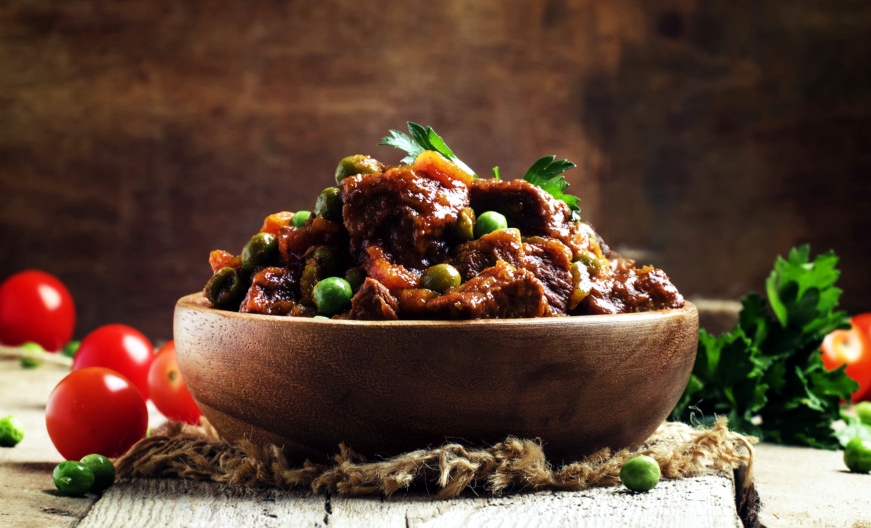
Spezzatino con i Piselli: beef stew with peas and rosemary.

  The famous beef stew with peas.

Taralli: ring-shaped biscuits baked with almonds and lard, or sometimes fennel seeds; the sweet types with vanilla, cinnamon and liqueur are called tarallucci dolci.
Zeppole di San Giuseppe: puffy pastry fritters sometimes with a creamy filling.
Ziti Ripieni: large pasta tubes stuffed with chopped pork and salame, onion, raw eggs and caciocavallo cheese.
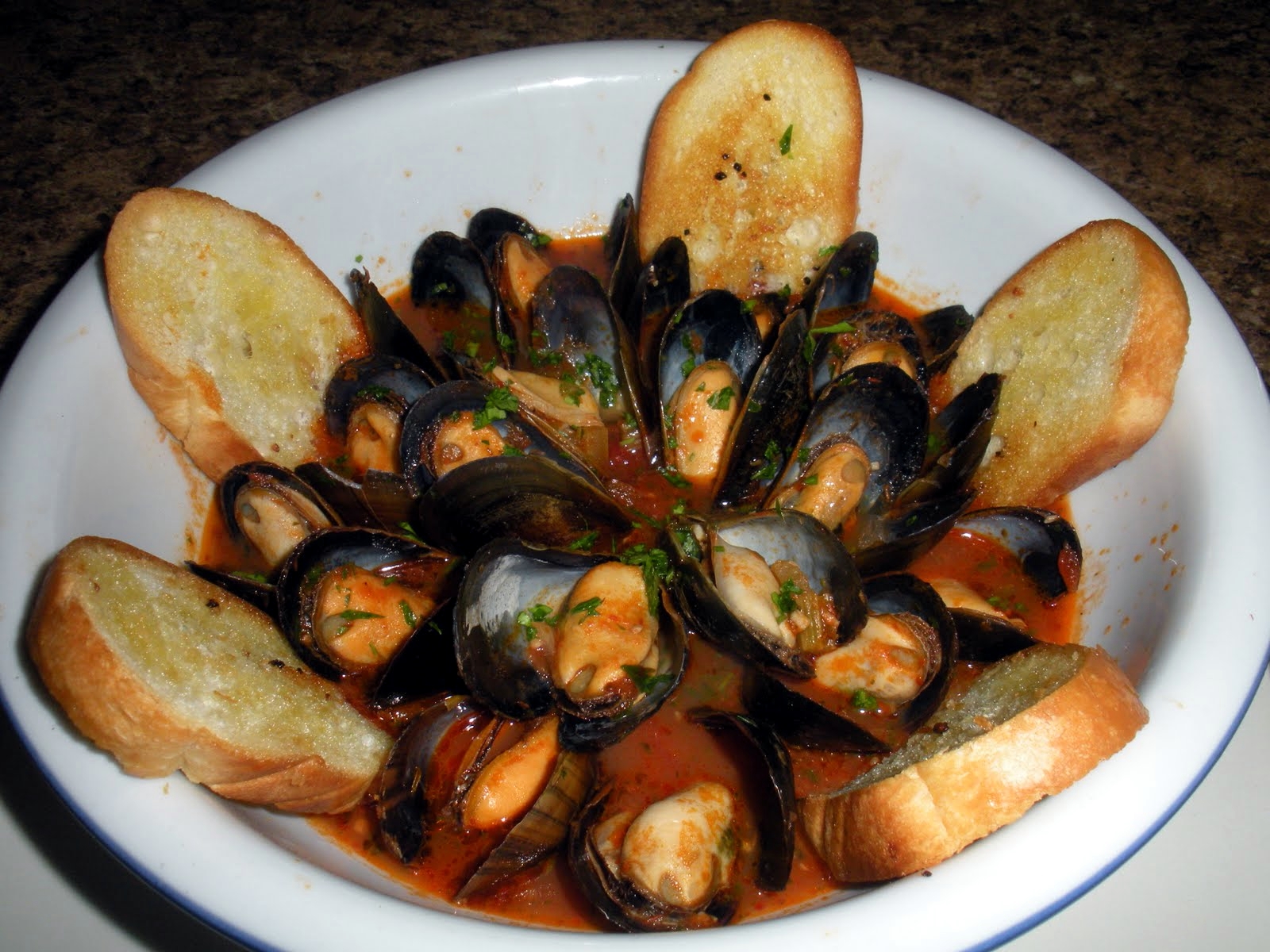
Zuppa di Cozze: mussels in a soup of tomatoes, white wine, parsley and hot chilli’s.

  Zuppa di Cozze.

The local cuisine is famous for its distinctive ingredients: tomatoes and all the fresh vegetables, famous mozzarella made from Campanian buffalo milk – and the fresh fish.

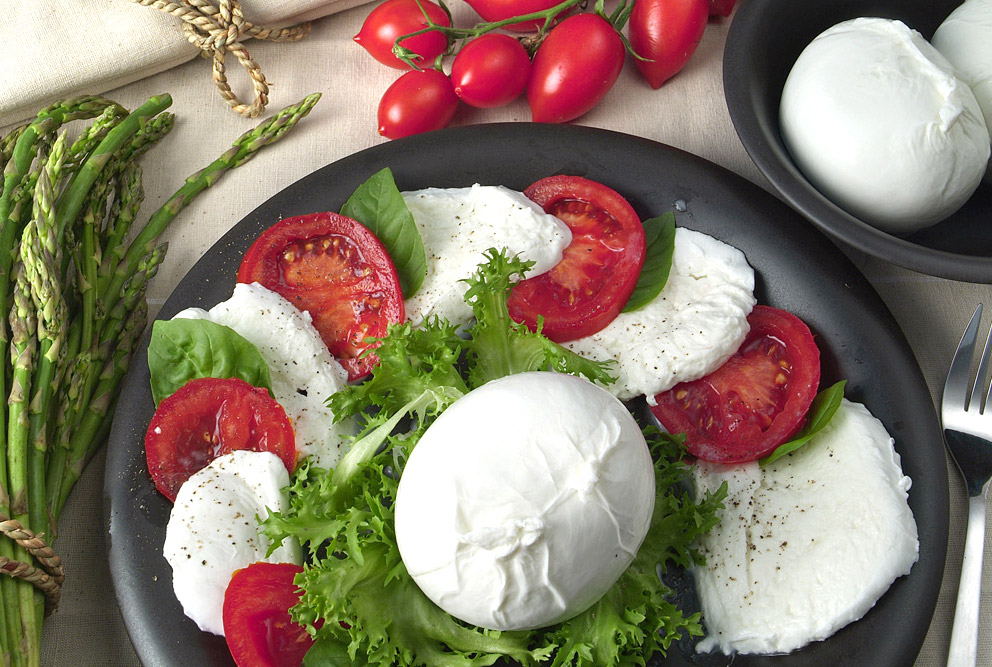
  „The Italian Flag“ – green, white, red – the famous buffalo mozzarella, tomatoes and basil. To find everywhere, on pizza’s, salads or as a whole meal.

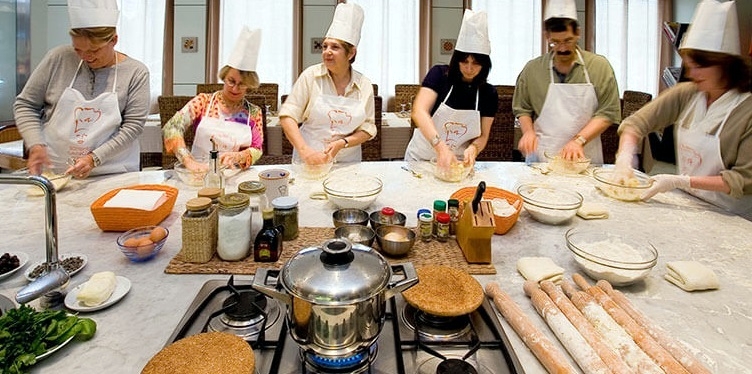
In Positano, as well as in Ravello and in Naples, it is possible to combine your stay with cooking classes that will allow you to discover the secrets of the local recipes.

  A cooking class always starts with homemade pasta.

Cooking school in Positano.

Positano is considered to be one of the most romantic resorts in the world and boasts breathtaking views, gourmet restaurants and the best shops. One will prepare the tasty local recipes together with the chef of one of the best restaurants in Positano, you will learn how to prepare: swordfish rolls, courgette flowers stuffed with ricotta cheese, aubergine parmesan, fresh local fish “all’acqua pazza” and of course, Pizza.

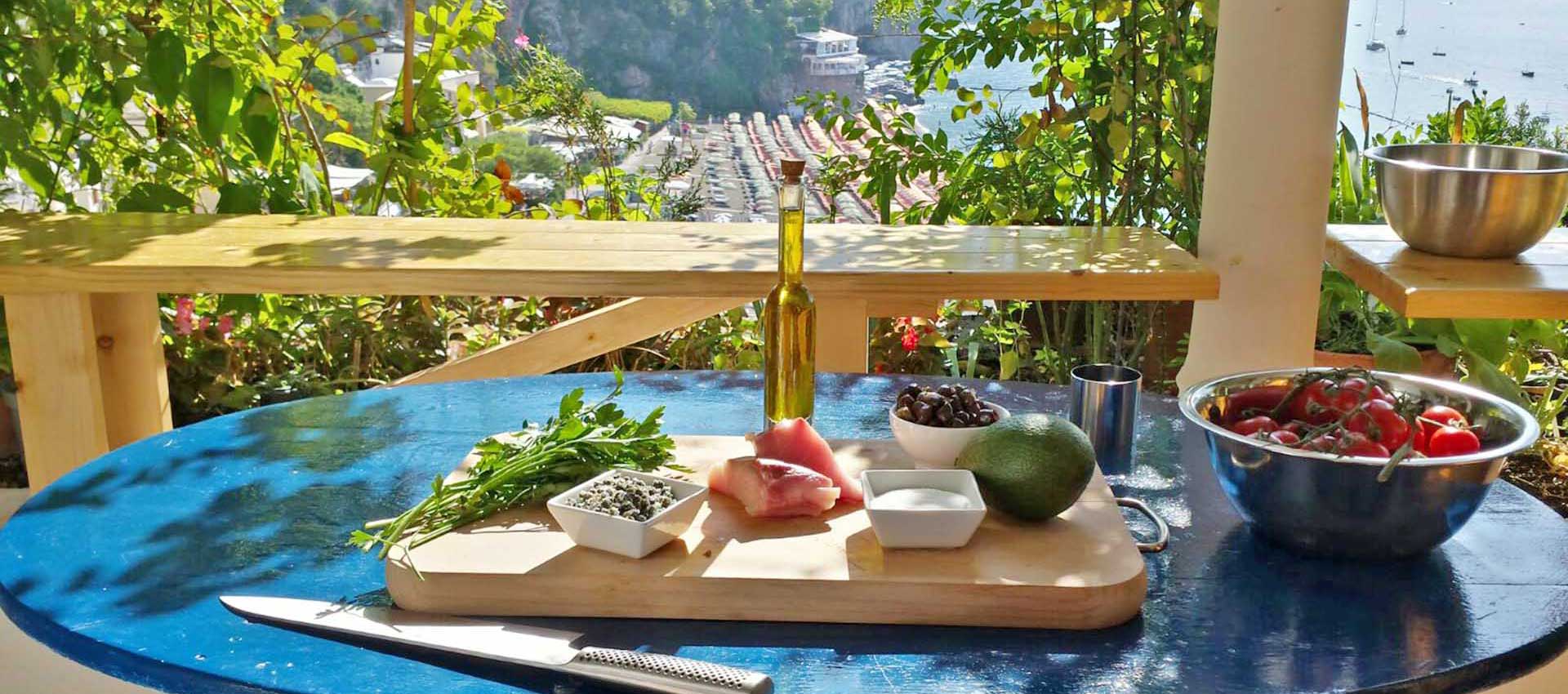
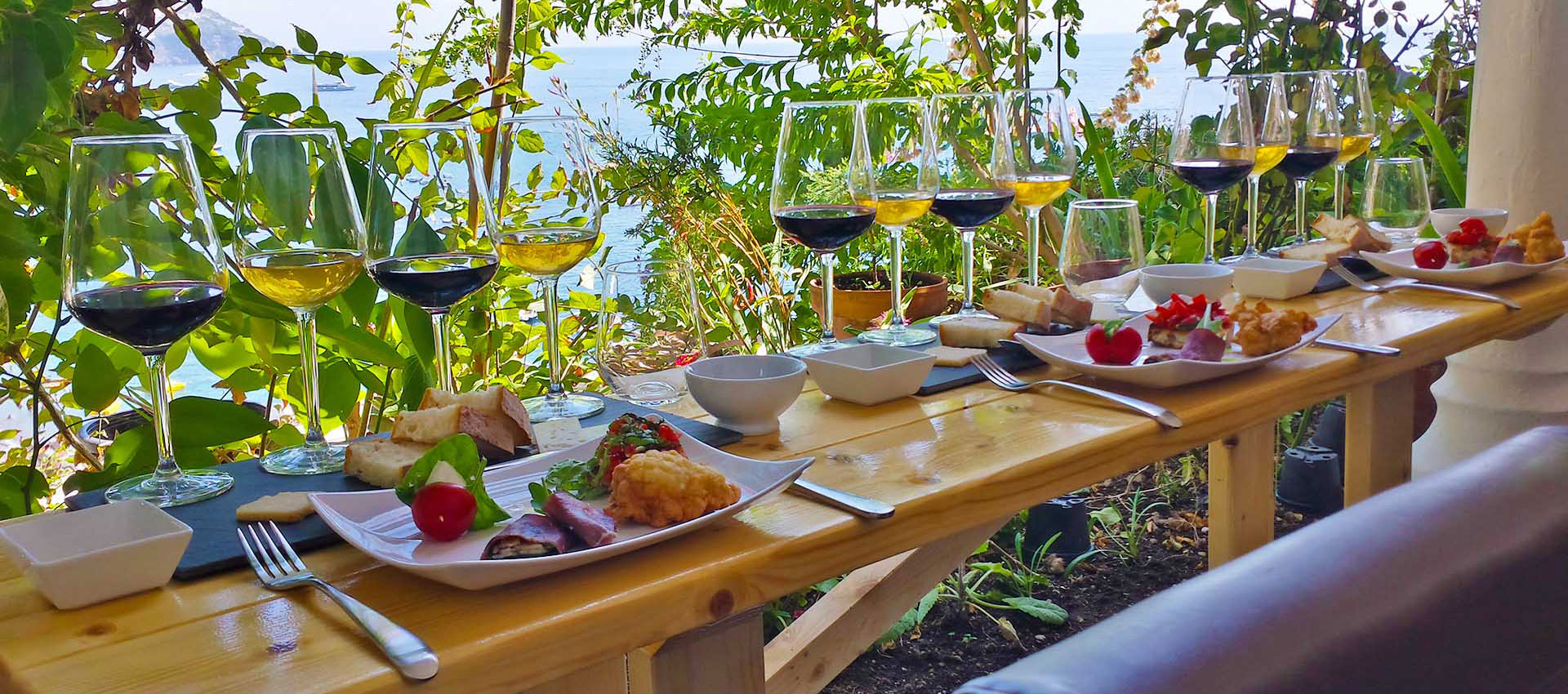
      Good cooking classes in Positano will go with the right ingredients, the fantastic location and an assortment of delicious local wines.  That’s heaven.  Click on pics to supersize.

During a vacation in Positano one can visit Amalfi, Capri and Ravello, excellent wine farms, cheese farms, lemon grove in the countryside near Sorrento and one can learn the art of making the best, authentic Limoncello.  See down here „the world of Limoncello“ !
   

My personal tip.

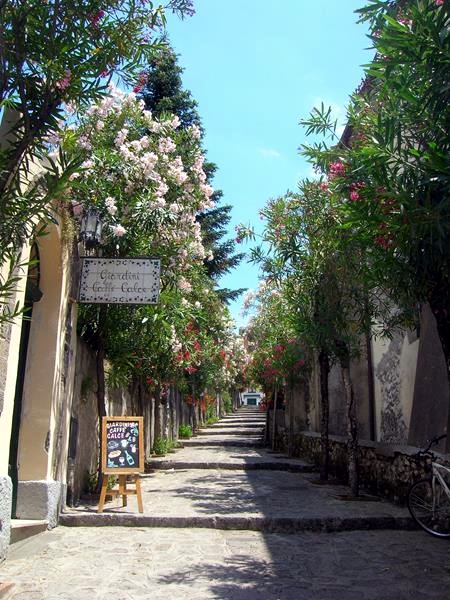
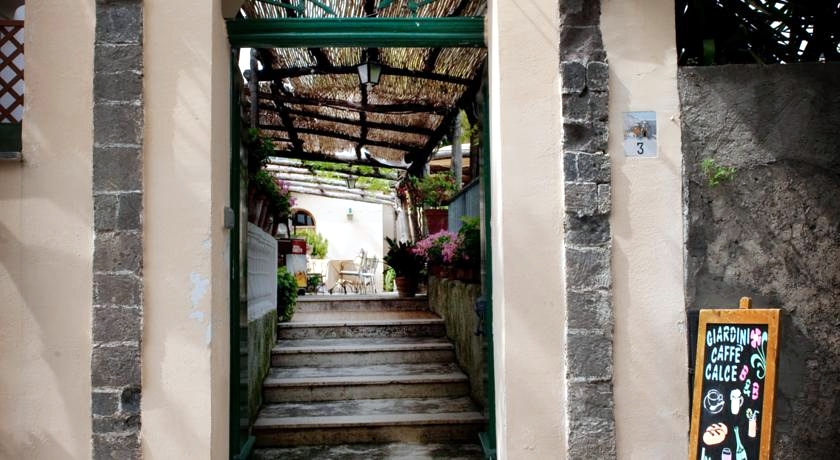
When we strolled through Ravello’s alley’s, during lunch time and hungry again, we came along this little sign and entry. Inquisitive as we are, we walked in – and wow – what a hidden gem behind.


Giardini Caffe Calce is located in a historic building dating back to 13th century, just a few steps away from the main square in Ravello’s centre.


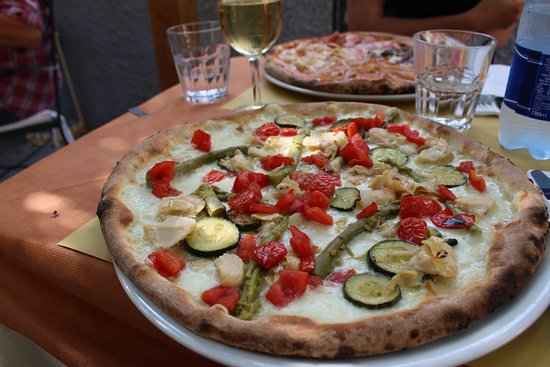
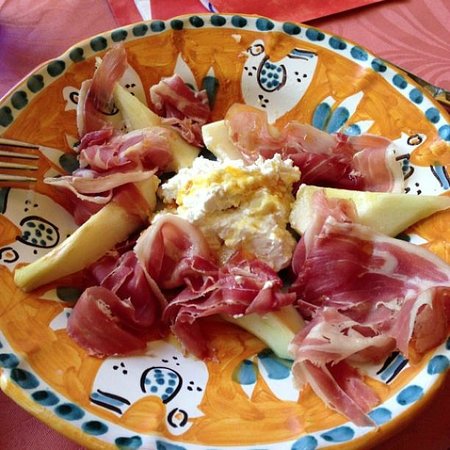
Our first lunch, my wife had a „Vegetarian Pizza“ and I got away with „Caffe Calce Prosciutto and Ricotta“. Add some „pane fresco“ and a local  „cool Campania white“ and you are in heaven.  After that lunch and a look around this hotel and restaurant, we booked in for two nights in one of their 4 rooms.


Not fancy or 5 stars, but very clean and all one needs, with a fantastic view from our own balcony onto Piazza Duomo. The rooms feature air-conditioning, TV, Wi-Fi internet access, private bathroom with hairdryer and toiletries. In summertime the buffet style breakfast is served in the garden.


The allover quality is excellent, very friendly staff, delicious fresh made food throughout the whole day. My absolute favorite to discover the town of Ravello.


The owners also run the Caffe Calce, a popular spot on a corner of Piazza Duomo, a favorite of locals and visitors alike. They serve coffee, ice cream, pastries, sandwiches, salads and some entrees. And at night we had „Empepata di Cozze“. What a life !


Veröffentlicht unter Information, Lifestyle, Must See, Travel | Verschlagwortet mit | 5 Kommentare

Dear North Korea

A few weeks ago I have seen the above Getty image and a following letter (can’t remember where it was from and who the author is) from „one GREAT leader“ to another „GREAT leader“. I thought you deserve to read this. Have fun !


FROM THE WHITE HOUSE
Washington, D.C.

To the Honorable Kim Jong Un

Dear Dear Leader:

I hope you’ll treat this letter as personal and confidential, from one large-handed leader to another. I got the idea to write it from my generals, who were telling me all about this big showdown over Cuban missiles back in the 1960s, which apparently really happened.

I figured, hey, if John Kennedy can negotiate over missiles directly with a dictator — and he was a very low-quality person, let me tell you — then so can Trump.

You can’t leave diplomacy to a loser like Tillerson, believe me. But I’m trying not to think about him right now.

It’s very important that you and I talk, very important. Because like I said during one of those debates we had during the campaign, which were a total waste of time, although people said I won them all and frankly that I was the greatest debater ever, and that’s a direct quote from somebody somewhere, but anyway, what I said during a debate was, “I think, for me, nuclear is just the power, the devastation is very important to me.”

I can’t say it any clearer than that.

First off, let me just point out that our great peoples have a long history together, and all of Korea is frankly very special to us — very, very special. I mean, you gave us the TV show “M*A*S*H,” which had a tremendous run.

Also, without the Korean people, we wouldn’t have all those unbelievable grocery stores in Manhattan. Seriously, I have so much love for the people, so much love. I told my guys at ICE, leave the Koreans alone, because a lot of actual Americans depend on them for kimchi. Great respect, believe me.

You and I have plenty in common, we really do. I know they said that calling you “Little Rocket Man” was a terrible insult, but you can’t believe anything you read in the failing New York Times or lying CNN or the rest of the fake news media. These are the same people who said that I could never win the primaries, and that Hillary was going to be the president, and that Puerto Rico was part of the United States.

The truth is that “Rocket Man” is a very popular song here in America — very much loved, believe me. It’s about a guy who goes into space and finds out that Mars isn’t a very good place to raise a kid, because it’s cold as hell, and there’s no one there to raise them if you did. Which frankly makes no sense, even in English, but it was the ’70s.

The point is, we’re a lot alike. For one thing, we both value family, am I right? I saw you just promoted your sister to a powerful job in the Politburo — very touching, very beautiful. I’m getting ready to turn the White House over to Ivanka in 2020, even though my poll numbers are just unbelievable, better than any president in history, let me tell you.

I’d point out that Ivanka is smarter than Pence, but frankly I think Donald Jr. is smarter than Pence, and I’m pretty sure he still eats crayons when he’s nervous, so that’s not saying very much.

And while we’re on the subject of family, let me say I admired the way you took out your brother, having strangers run up and poison him in the airport, which was genius. I made a comment about it, and ever since then, every time I go to hug Jared, he jumps back and shields his face. Hysterical.

Let’s see, what else. Both of us have great hair, right? I see that everyone in your country wants to do their hair just like you, which I applaud. I mean, I look at a guy like Tillerson, who’s 65 years old and still parts his hair in the middle, and I think it’s just sad, frankly. But I’m not bothered by him, I’m really not.

We’re both deeply committed to the mining industry. I’m getting rid of these Obama rules, which are very, very harmful to our economy, and you’re giving people jobs for the rest of their lives in labor camps, which is basically the same thing.

We both know how to handle critics. Although I have to rely on tweets for that, because I don’t have the same kind of latitude you enjoy over there, which is something we need to change, let me tell you.

I can’t tell you how many mornings I wake up and think: Wouldn’t it be nice to throw Bob Corker into a pit of starving dogs, or pin him to an antiaircraft battery?

And don’t even get me started on Tillerson. Everyone told me, “Get Tillerson, you’ve got to get Tillerson for State.” And then he calls me a moron. You know who’s a moron? A guy who gives up 25 million bucks a year so he can come running whenever I ring a bell, that’s who.

Let’s just say that if I were to send Tillerson on a diplomatic mission to Pyongyang, and he were to, say, disappear into one of your work camps, I could see how we might end up in a very long standoff before negotiating his freedom. It could take years, a deal like that. But that’s a hypothetical.

Anyway, we’ve got a great thing going here. This business with me tweeting about blowing up your country, and you coming back with “final doom” and all of that. The ratings are off the charts, right? It’s a hell of a show, it really is.

We’ve got the whole world waiting to hear every twist and turn. It’s playing on all the networks at once, which is really something, let me tell you.

But you do know it’s a show, right? Because words are one thing. Words have no consequences, near as I can tell. You can say anything, incite any kind of rage or reaction, and your people just love you more for it. This is what I’ve learned in politics, believe me.

Nuclear war, though — my generals tell me that would be very, very horrible. Millions and millions of people would disappear, and not like on “The Apprentice.” Our ratings would tank. The show would be terrible.

I’m sure we’re on the same page here, but it can’t hurt to double check. So good luck with the public executions, and please pass along my fire and fury to the entire family!

Sincerely,

Donald J. Trump

P.S. If you really need to sink Guam, as kind of a season finale, I get it. Just maybe give me a heads-up, so I can see about Tillerson’s travel schedule. But I’m not thinking about him right now. I’m really not.

And finally dear Kim – a few nice pics of us for your private album :

Veröffentlicht unter Information | Verschlagwortet mit | Hinterlasse einen Kommentar

Must See – Amalfi 1

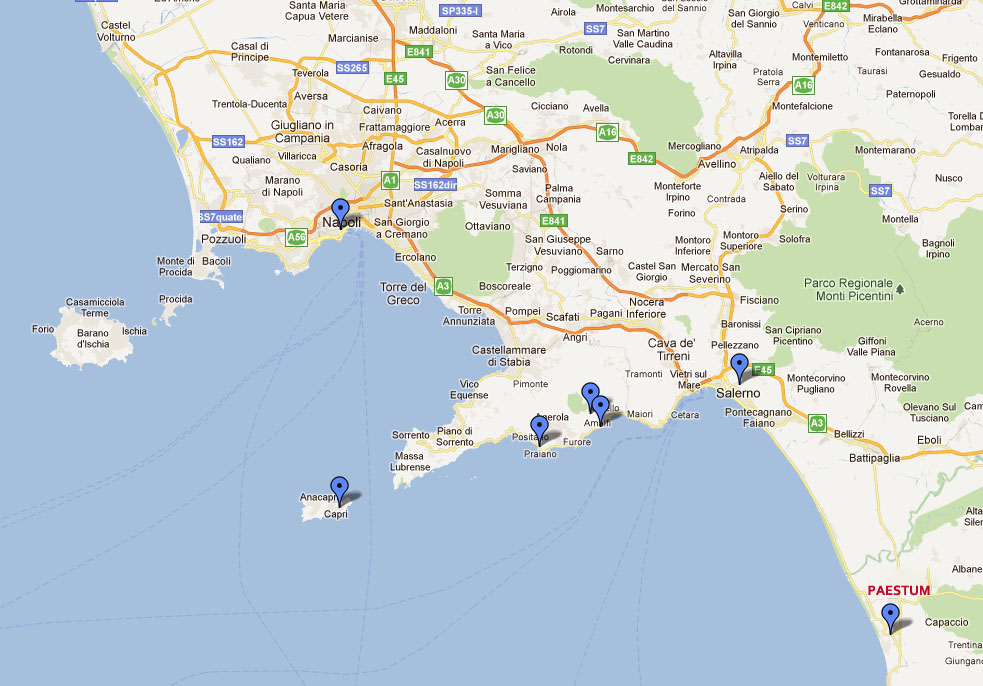
The Amalfi Coast (Italian: Costiera Amalfitana) is a stretch of coastline on the southern coast of the Salerno Gulf on the Tyrrhenian Sea, located in the Province of Salerno of southern Italy. The Amalfi Coast is a popular tourist destination for the region and Italy as a whole, attracting tens of thousands of tourists annually.

In 1997, the Amalfi Coast was listed as a UNESCO World Heritage Site. The reason was that this quintessentially Mediterranean landscape blends centuries of artistic and architectural accomplishments with one of nature’s perfect panoramas.

  If one visits the Amalfi coast then it will include the island of Capri – and of course the famous blue cave . No one really visits one without the other.

History.

The breathtaking terrain includes dramatic coastline topography scattered with terraced vineyards, orchards, and pastures—often with enchanting views of the vibrant waters below. Kind climate, abundant resources, and natural beauty have drawn people to this coast for many centuries, and the Greeks, Romans, Normans, Saracens, Arab-Sicilians, and many others have left their mark.

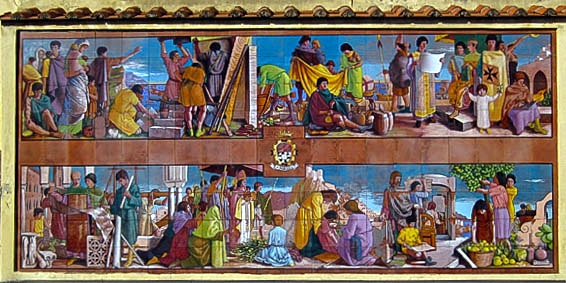
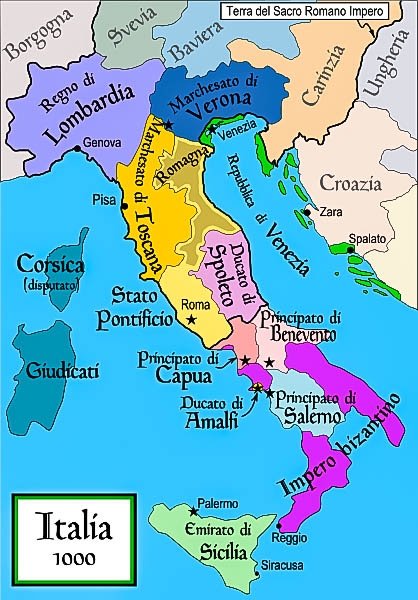
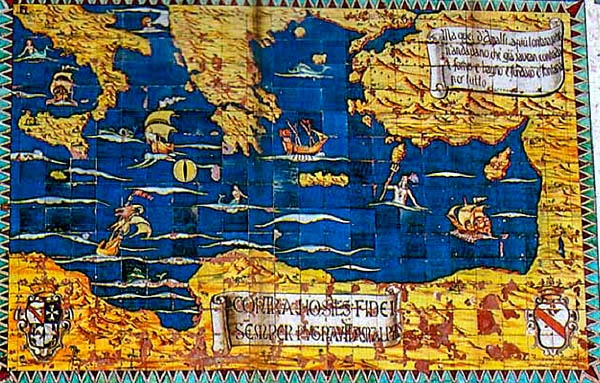
                   This ceramic mural depicting scenes from Amalfi history is located near the tourist office.   Amalfi’s first golden age was as an independent maritime city-state from AD 830 to 1135, during which it rivaled Venice, Genoa, and Pisa as a Mediterranean trading power. By the 10th century, it was the seat of a Dukedom and minted its own coinage.

Amalfi communities often cluster along cliffs, their terraces blending into the rock to add their own picturesque charm to the natural beauty of the coast. Upon closer inspection, towns like Amalfi and Ravello are home to many examples of artistic and architectural excellence—not a surprise, since this stretch of the Sorrento Peninsula has long attracted famous artists of all stripes.

  Click on pics to supersize. At its height, Amalfi had a population of 70,000, lorded it over the Thyrrhenian Sea, and was a European center for paper-making. Then the troubles began. The Normans gave the town a whooping in 1131, and soon after Pisa swept in to trounce its rival. Twice. In 1135, Pisa sacked its defeated rival city-state, and it was all over.

The town of Amalfi itself thrives as a picturesque tourist center but in the 11th and 12th centuries the city centered the Amalfi Maritime Republic and was a naval power to be reckoned with throughout the Mediterranean. Amalfi’s ports also saw extensive trade with North Africa, and the city retains cloisters of Arab-Sicilian architecture throughout, as well as the Arsenale—a partially preserved medieval shipyard from a glorious era.

  Amalfi as an independent city-state ended then, in 1135, but the real final blow came in 1343. A one-two combination of tidal waves and earthquakes slumped much of the proud, defeated Amalfi into the sea, erasing most of the city from existence and nearly obliterating the population. Ever since, Amalfi has struggled to maintain a population of around 6,000.

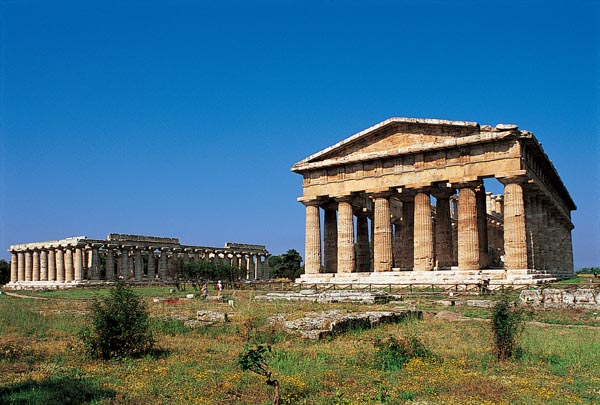
In Paestum, columned temples to Poseidon, Hera, and Athena stand in what was, from the seventh century B.C., the Greek city of Poseidonia. These breathtaking structures are among the best preserved of their kind to be found anywhere in the world.

   The Greek temples in Paestum.

Until the 1800s the coast’s steep terrain meant that overland access to the region was possible only by mule. While many oases of quiet can still be found here, particularly away from tourist centers, the Amalfi Coast has changed irreversibly since then. But echoes of far more distant eras remain, including ancient cathedrals, gardens, and Roman villas like Anacapri’s Villa di Damecuta, possibly built by Tiberius.

  Ruins of Villa di Damecuta.

One of the most enjoyable things to do on the Amalfi Coast is to simply find a spot where you can soak it all in. Among the top locations is Monte Solaro, a B&B in Anacapri with stunning views of the twin bays Salerno and Naples.

  Fantastic views from B&B Villa Solaro. In the distance the bay of Naples and very far Mount Vesuvius.

How and when to visit ?

Trains connect Naples with Sorrento and Salerno. Boats also run to many Amalfi Coast towns during the warmer months. Consider visiting in the spring (May) or fall (September-October), when the crowds drawn to this world-renowned beauty spot are at their lowest.

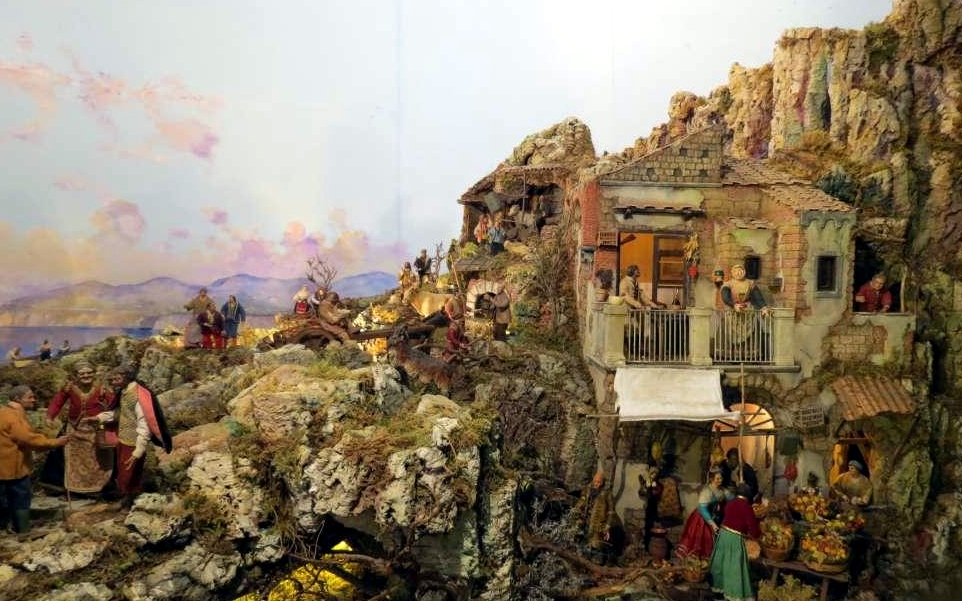
  Ancient life at the „steep coast“ of Amalfi. Part of a diorama seen at the Amalfi museum. For a more detailed view click on the picture.

What to Visit ?

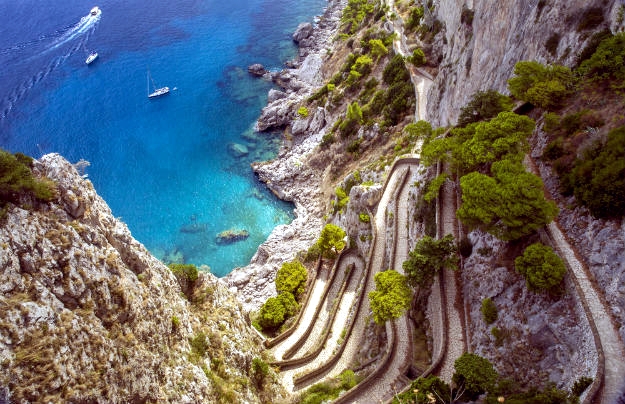
There are many ways to experience the coast but none quite like an end-to-end drive of its precipitous, winding, coastal highway. The Lonely Planet or National Geographic Road Trip: Amalfi Coast, Italy offers one outstanding itinerary. For those who’d rather leave the driving to others, bus services run up and down the coast.

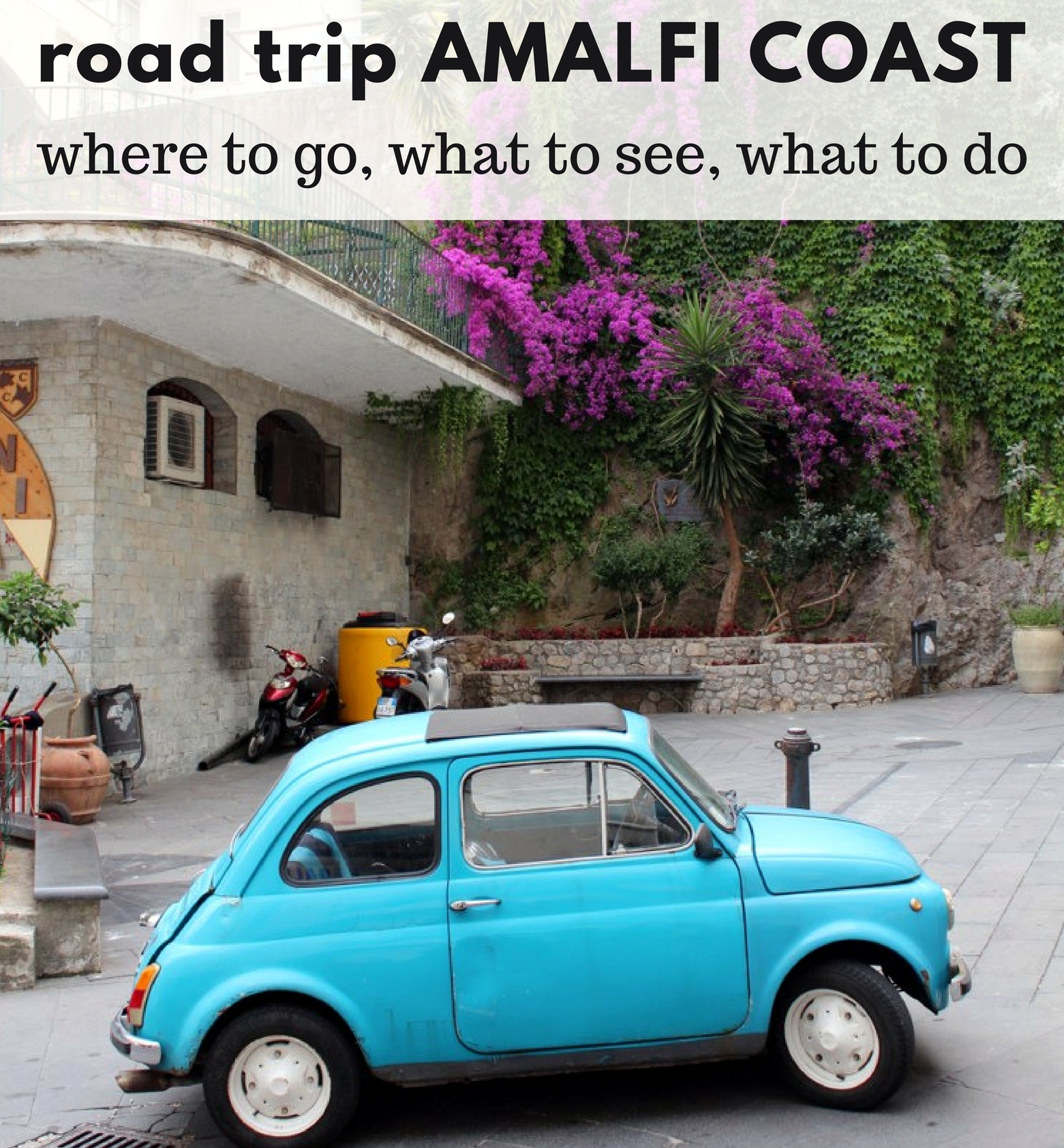
              This road-trip is one of the great sightseeing adventures, nothing for weak nerves. Great fun is to rent a Fiat 500 with open roof and drive nostalgic. This car gives you the feeling of „climbing mountains“.

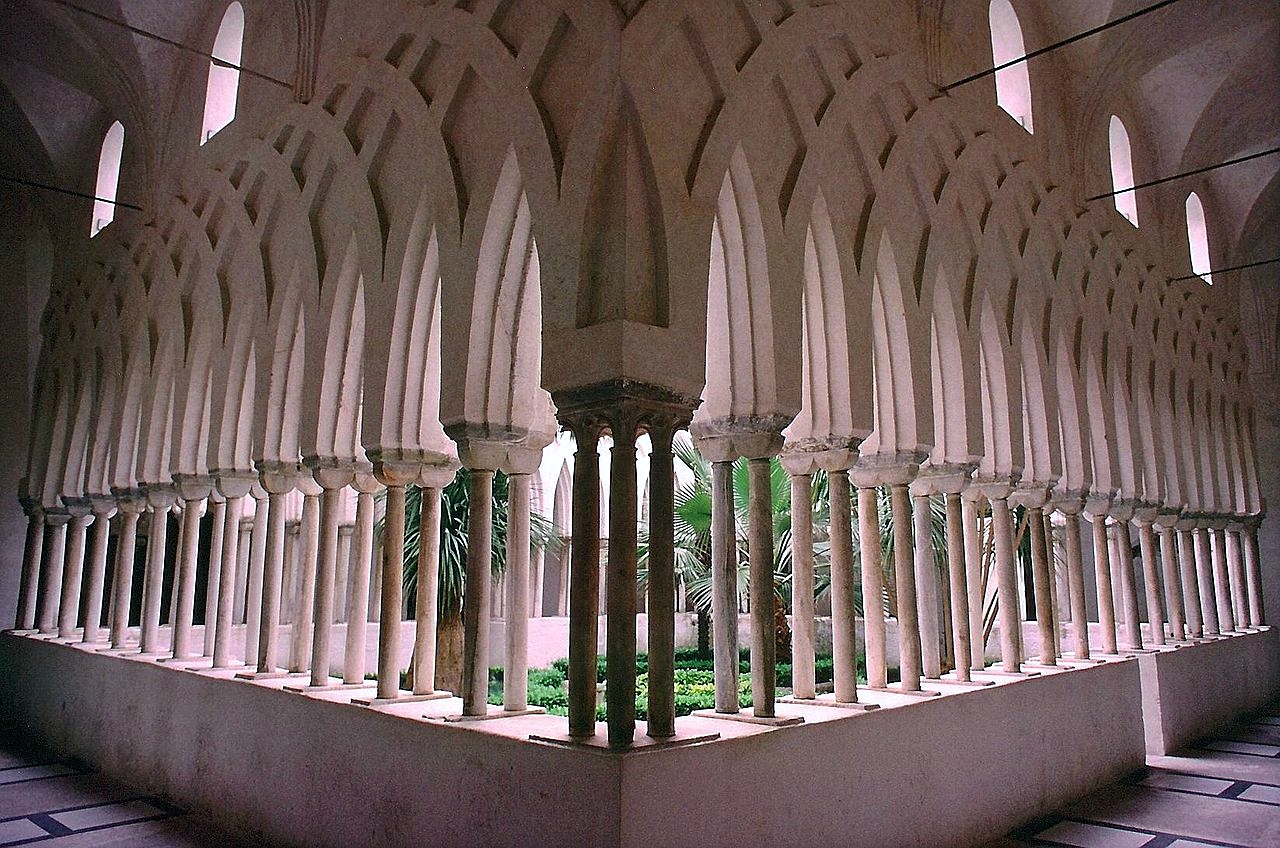
Chiostro del Paradiso.

The Chiostro del Paradiso („Cloister of Paradise“) was built by Filippo Augustariccio between 1266 and 1268 and was used as a burial ground for noble families of Amalfi. The white columns and pointed arches reflect the clear influence that the Arab world had on Amalfi, similar to those found in the courts of the palaces of the Middle East. It is a true open-air museum, with Roman and medieval pillars, sarcophagi depicting the wedding of Peleus and Thetis, the other the rape of Proserpina, a fourteenth-century sarcophagus and fragments of the façade of the Duomo. For sure worth while to visit.

  The white arches of Chiostro del Paradiso.

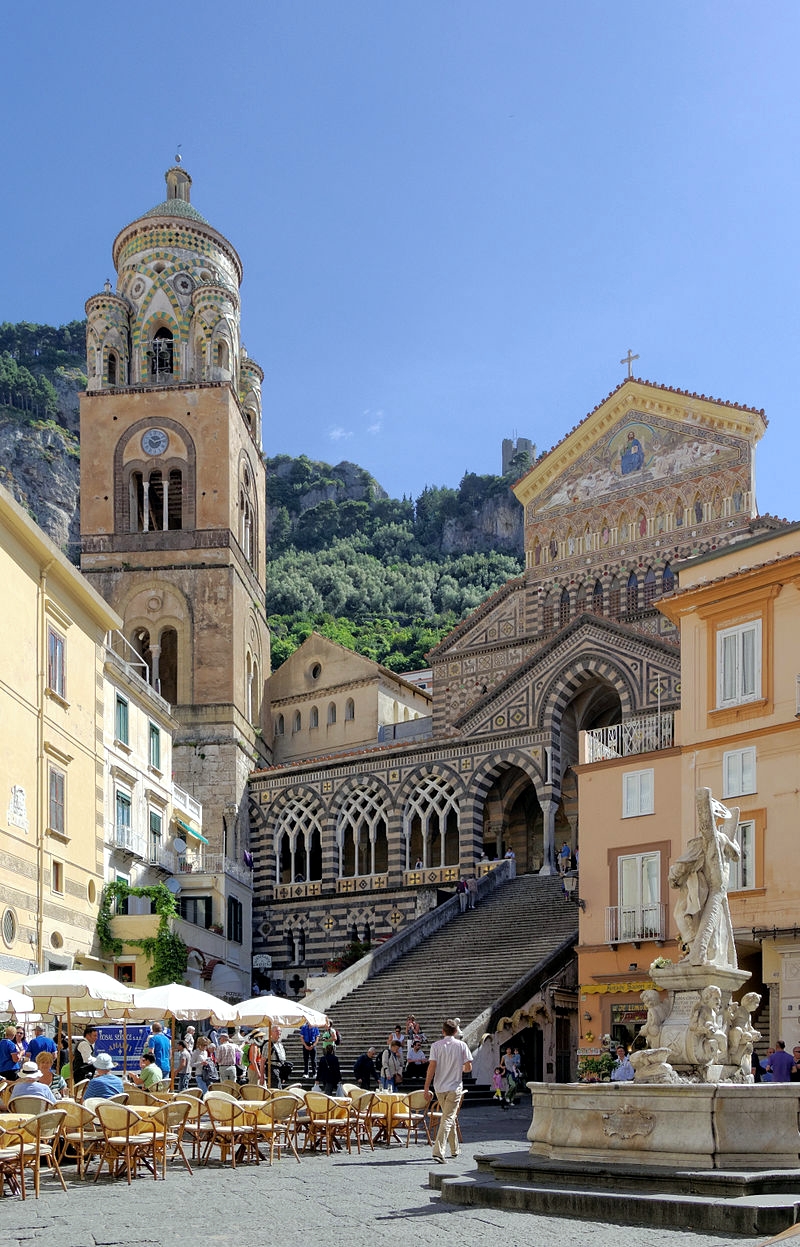
Amalfi Cathedral.

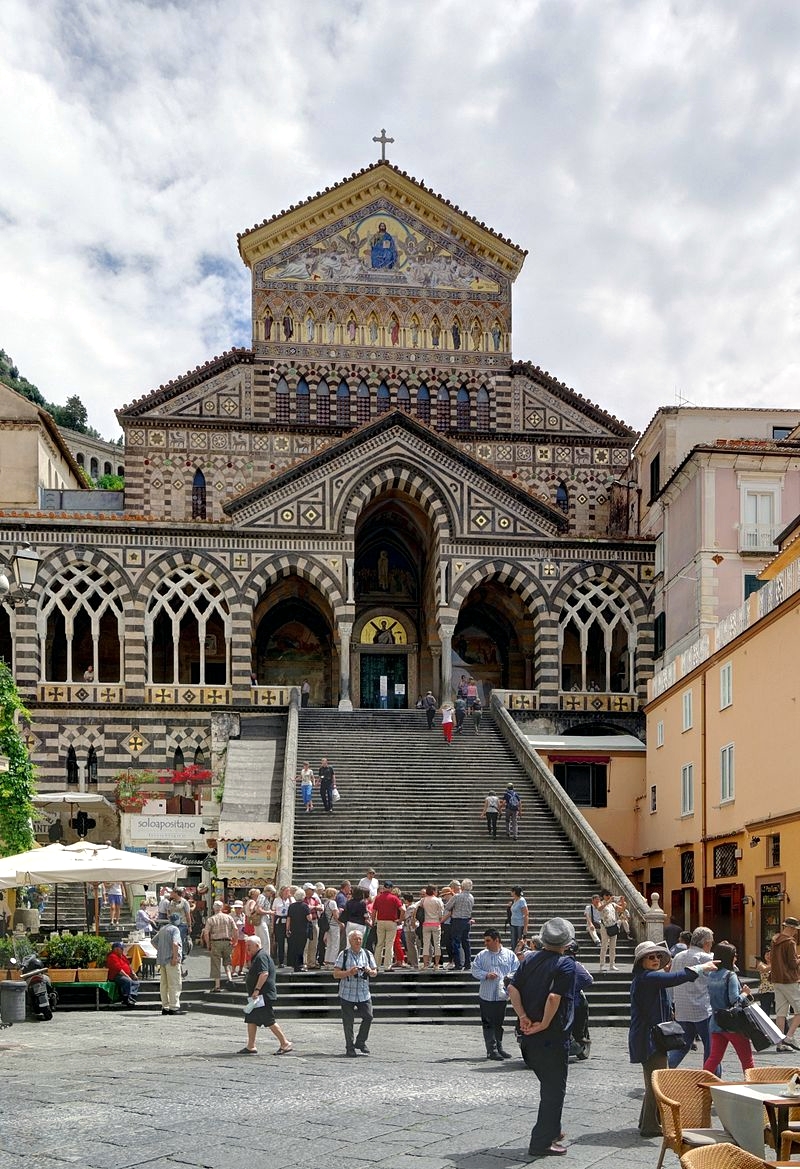
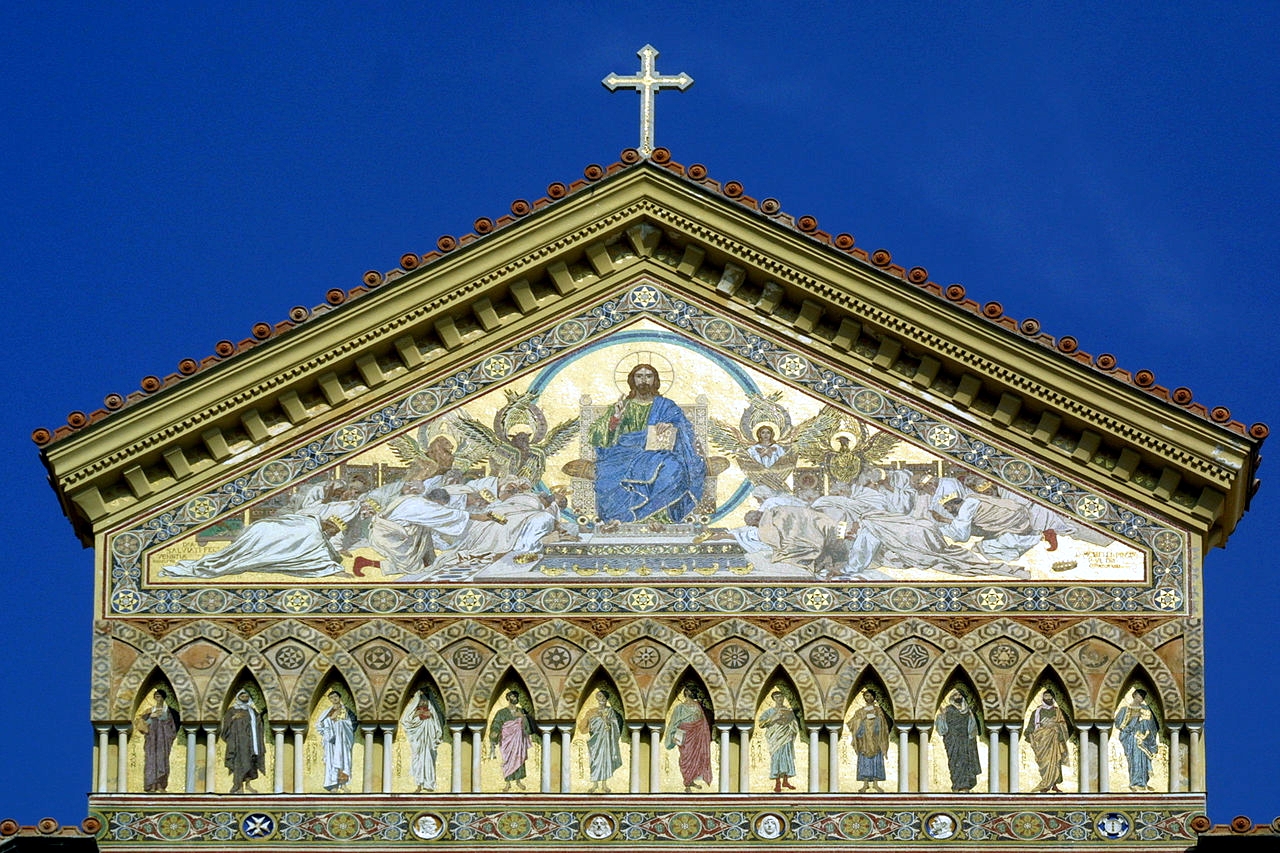
At the top of a staircase, Saint Andrew’s Cathedral (Duomo) overlooks the Piazza Duomo, the heart of Amalfi. The cathedral dates back to the 11th century; its interior is adorned in the late Baroque style with a nave and two aisles divided by 20 columns. The facade of the cathedral is Byzantine in style and is adorned with various paintings of saints, including a large fresco of Saint Andrew.

   Duomo di Amalfi, with Piazza Duomo.

The gold caisson ceiling has four large paintings by Andrea dell’Asta. They depict the flagellation of Saint Andrew, the miracle of Manna, the crucifixion of Saint Andrew and the Saint on the cross. From the left hand nave there is a flight of stairs which leads to the crypt. These stairs were built in 1203 for Cardinal Pietro Capuano, who, on 18 May 1208, brought Saint Andrew’s remains to the cathedral from Constantinople.

  Saint Andrew’s Cathedral with the over 800 year old staircase.

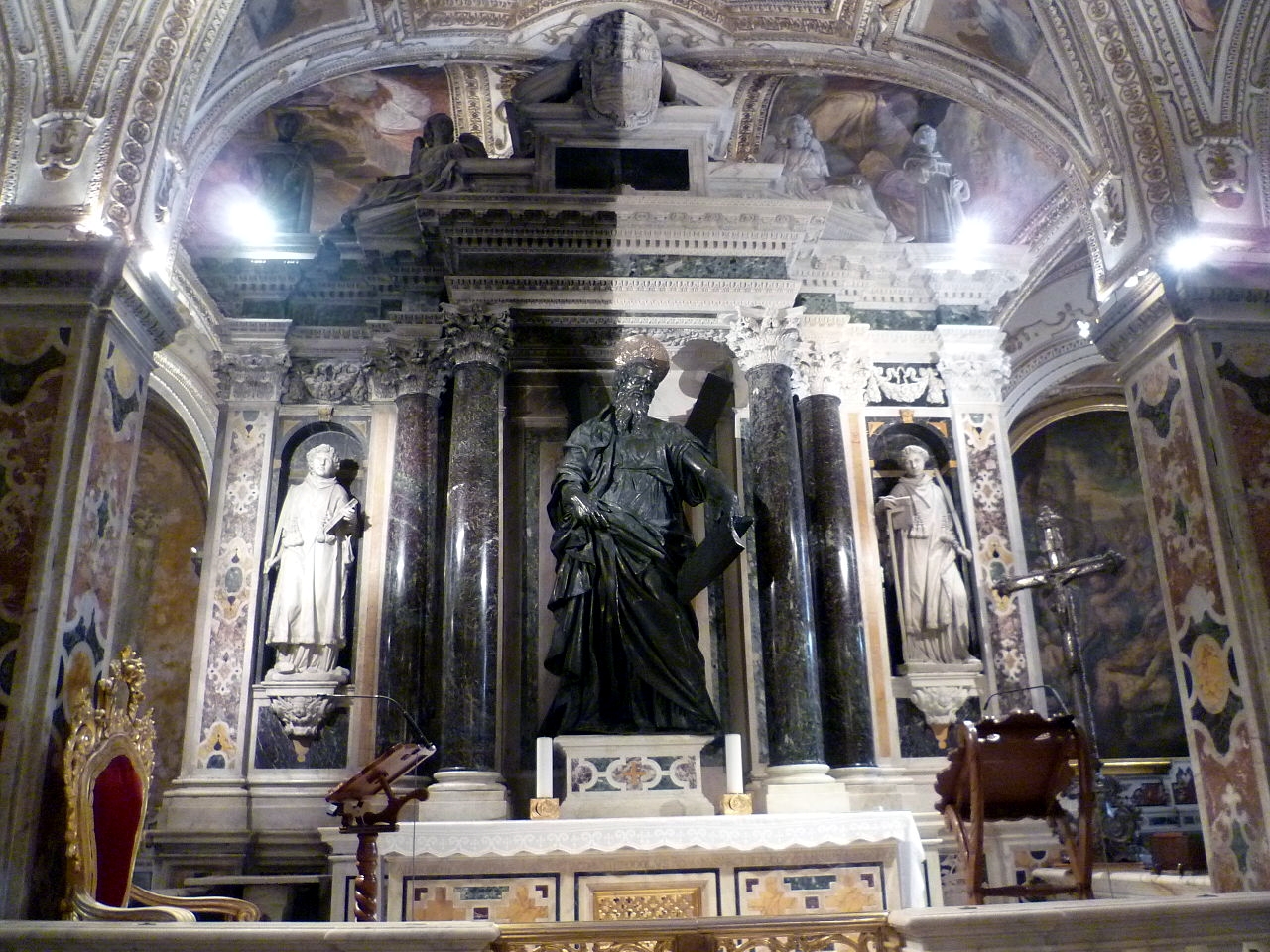
The bronze statue of Saint Andrew in the cathedral was sculpted by Michelangelo Naccherino, a pupil of Michelangelo. Also present are Pietro Bernini marble sculptures of St. Stephen and St. Lawrence.

   Shrine of Saint Andrew’s with its bronze statue.

In 1206, Saint Andrew’s relics were brought to Amalfi from Constantinople by the Pietro Capuano following the Sack of Constantinople (an event of the 4th Crusade) after the completion of the town’s cathedral. The cathedral contains a tomb in its crypt that it maintains still holds a portion of the relics of the apostle. A golden reliquary which originally housed his skull and another one used for processions through Amalfi on holy days can also be seen.

  Cathedral mosaic with the 12 apostles below.

Italy’s Dream Drive.

It’s hard to keep your eyes on the road while zipping along the dazzling landscape of the vertiginous Amalfi Drive, an improbable 30-mile stretch of hairpin curves south of Naples. After visiting the Amalfi coast, a giddy Andre Gide wrote in The Immoralist that “nothing more beautiful can be seen on this earth.”

   General knowledge literature – worth to read.

Vertical cliffs plunge into an impos­sibly blue Mediterranean, as a coastline of seaside towns unfolds among terraced olive and lemon groves, oaks, and umbrella pines. No longer as remote as when arrival was pos­sible only by sea or pack animal, the cliff-hanging town of Positano is still the ulti­mate refuge.

   Capri –  a secret gem on the Amalfi Coast  – best known for its beautiful wine and colorful architecture. The red building is the well recommended Ravello Art Hotel Marmorata,

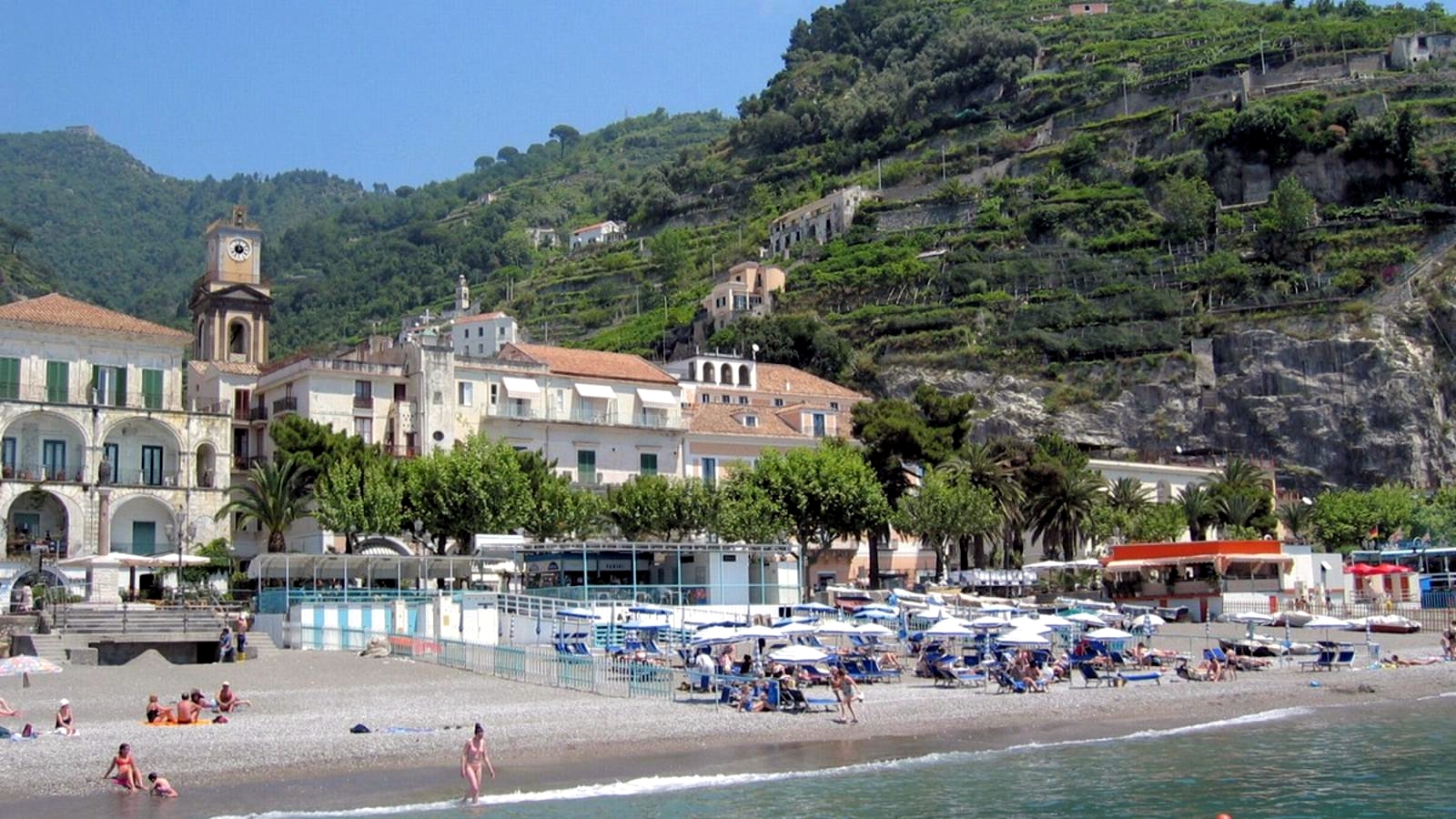
Mercifully closed to traffic, the town’s jumble of converted whitewashed and pastel fishermen’s homes spills down a maze of narrow alleyways to the pebbly umbrella- lined beach, the only flat strip in town.

   Minori, a charming, old town with a sandy beach and more affordable than neighboring areas Amalfi. Click on pics to supersize.

This is the region that gives the world fresh mozzarella di bufala; imagine how heavenly it tastes when it is grilled on a fragrant lemon leaf and served under the warm Neapolitan sun. Things only get better with the exquisite simplicity of spaghetti made with a sauce of plump baby clams and mussels.

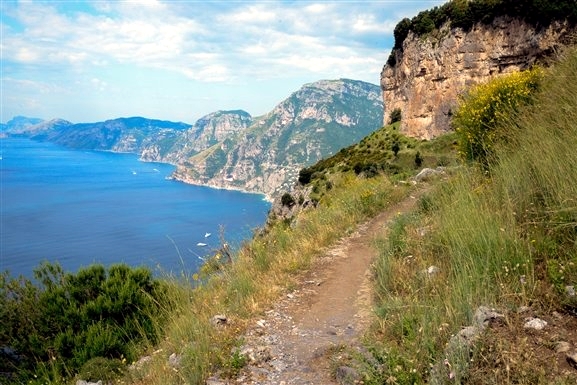
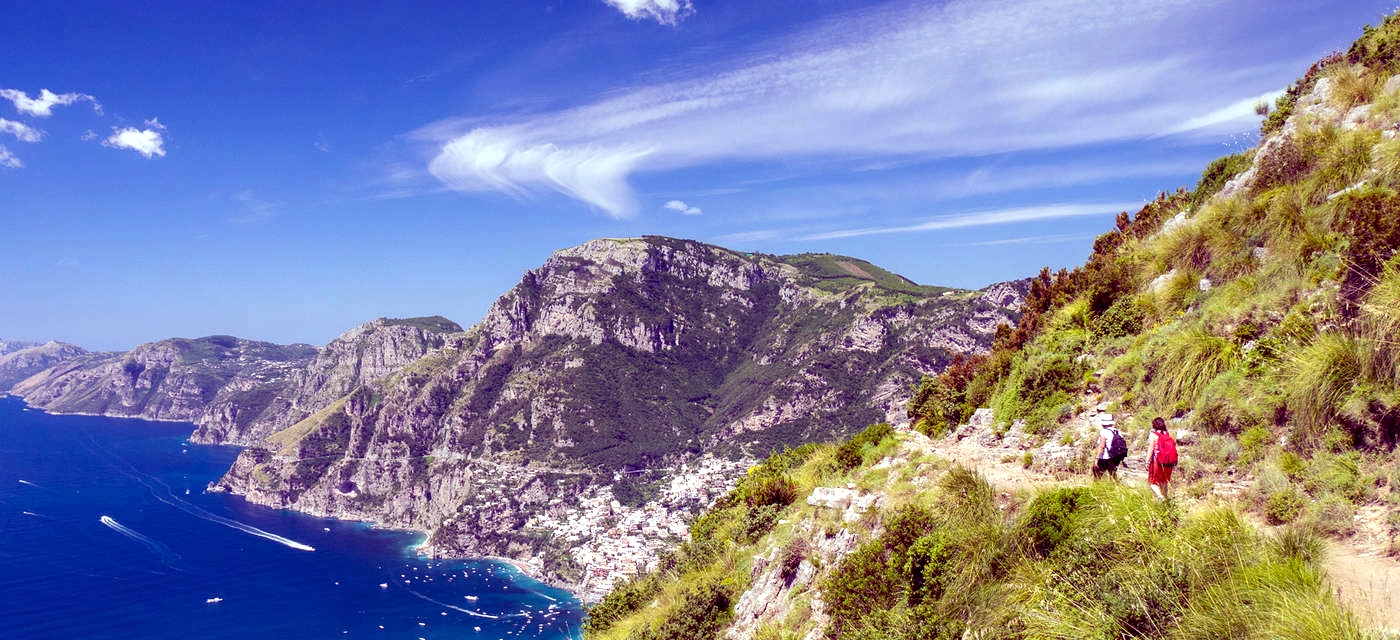
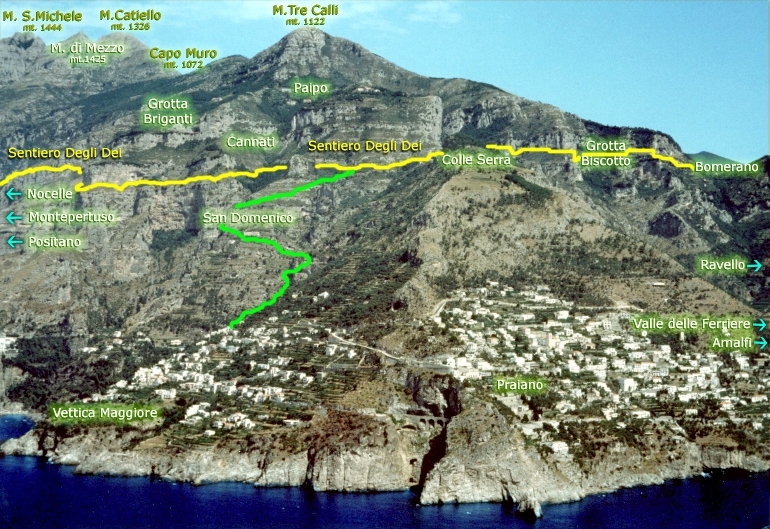
  Praiano – a quiet village and the starting point for the 11km Sentiero degli Dei (Path of the Gods) walk to the Lattari mountains. One needs a good breath ! And – the pics are not photo-shopped, colors are real !

Pull up a beach bed and umbrella, and order an ice-cold limoncello liqueur squeezed from the area’s uniquely sweet lemons, the size of grapefruits. It’s enough to make you ignore the next boat back into town. The Amalfi Coast is known for its production of limocello liqueur and the area is known for its lemons, grown from February to October, as well as its great cuisine and wines.

  Sant’Agata sui Due Golfi – great for walking and home to an organic olive farm, a favorite with visitors. Many well priced apartments are for rent here.

The Amalfi Coast is often known as a place for the rich and famous, but this is not to put you off because it is also widely accessible for everyday families on a budget, depending on where you visit. Fortunately, a network of roads connects the various villages along the coast. The best time of year to visit is late September or early October which is not too hot and sticky, but still very warm and enjoyable.

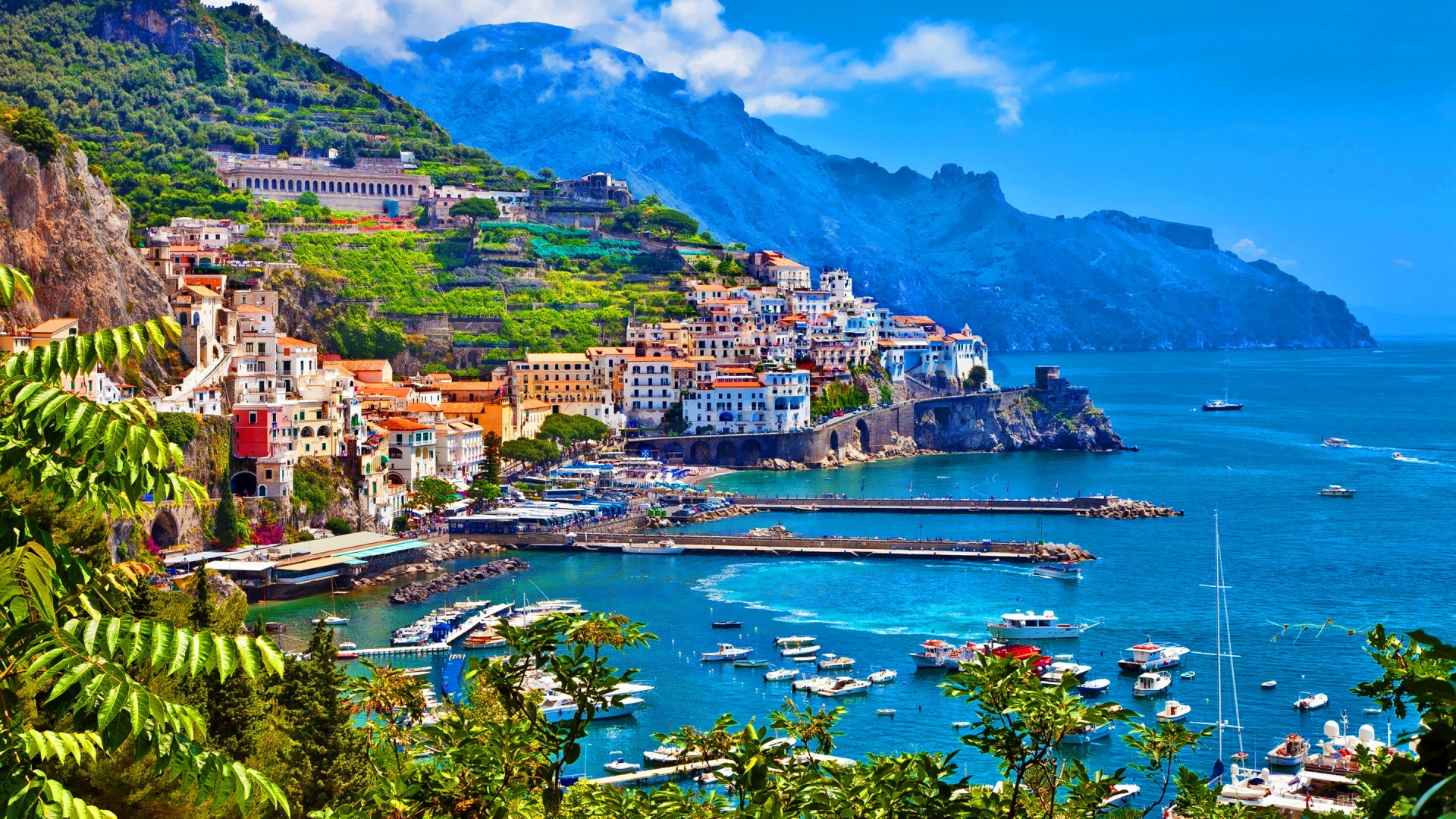
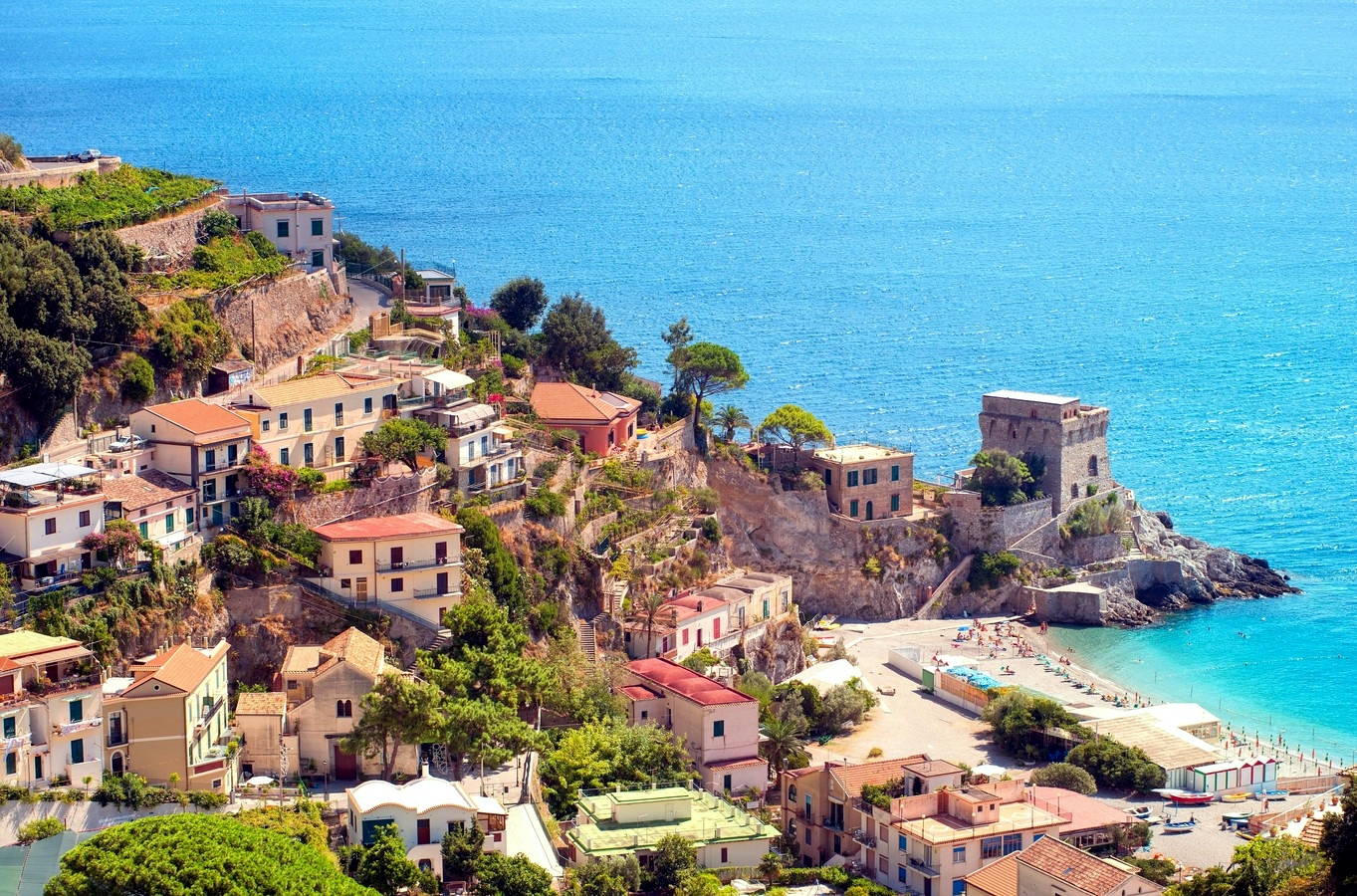
   Cetara, an authentic village, almost untouched by tourism. Cetara is a pretty fishing village with wonderful restaurants.

Where to stay ?

Amalfi Coast hotels with private beaches.

When you’re picking a hotel along the Amalfi Coast, two common must-haves include cliff-side accommodations with sea views and easy access to the beach.
Both are fortunately relatively easy to come by. But travelers should note that many hotels are set on public beaches that are often overcrowded, particularly in high season.
A private stretch of sand is far more ideal, but often very costly. Staying at a luxury property isn’t required. I picked out some accommodations in every price region. Read on for the best Amalfi Coast stays with private beaches across the board, no matter what your budget is. I won’t deliver prices, because they vary to often.

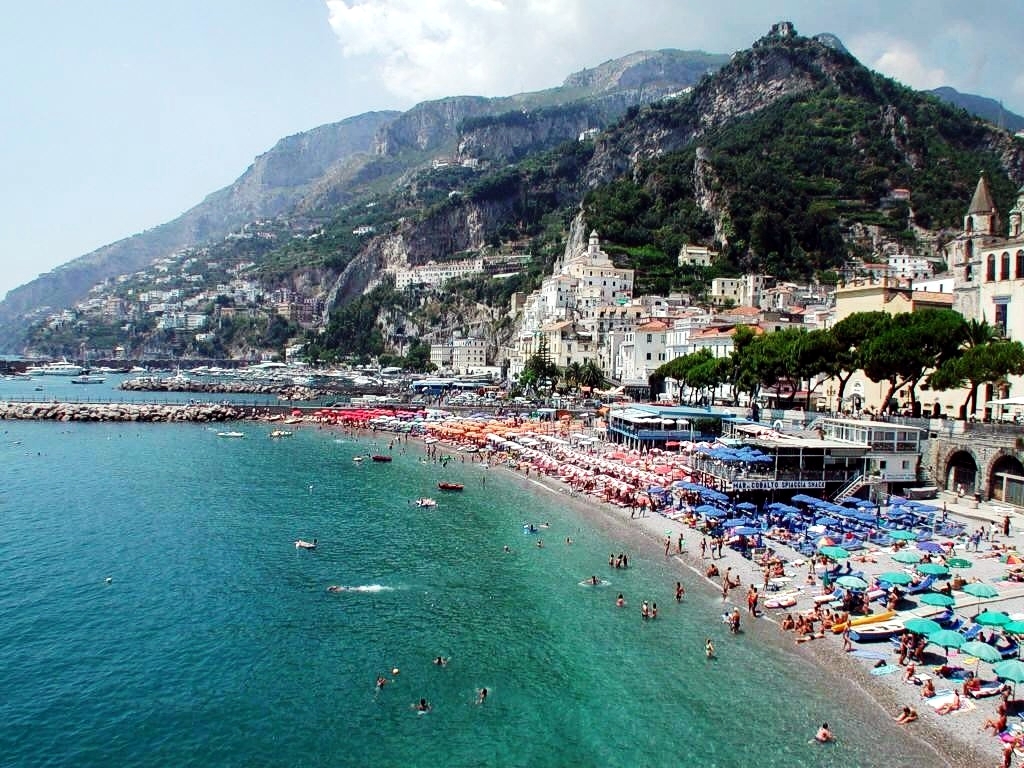
  Beautiful Amalfi, but do you really want to stay at a beach like this ? The Amalfi coast is visited by millions during high season (June – September).

Le Agavi Hotel.

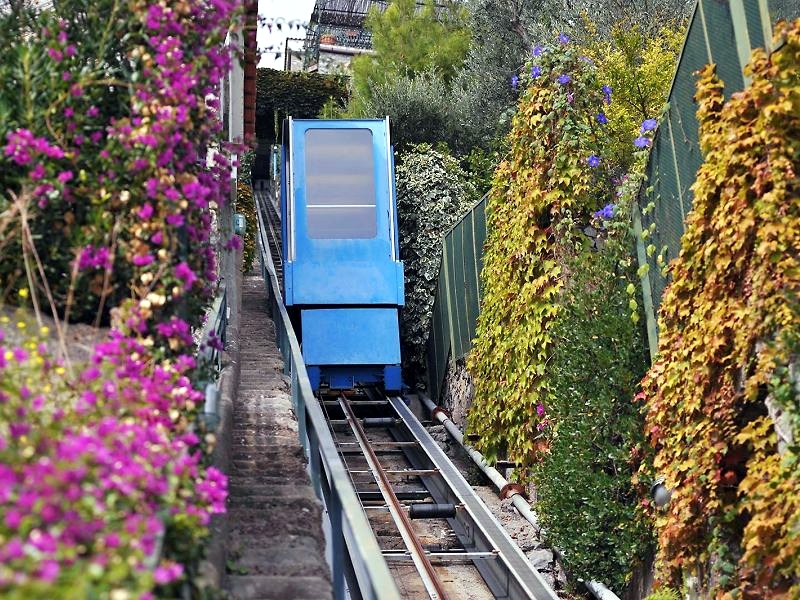
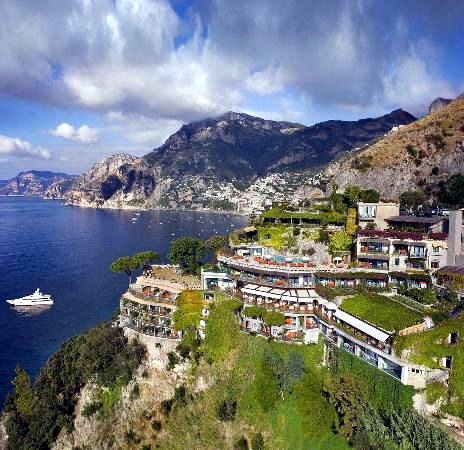
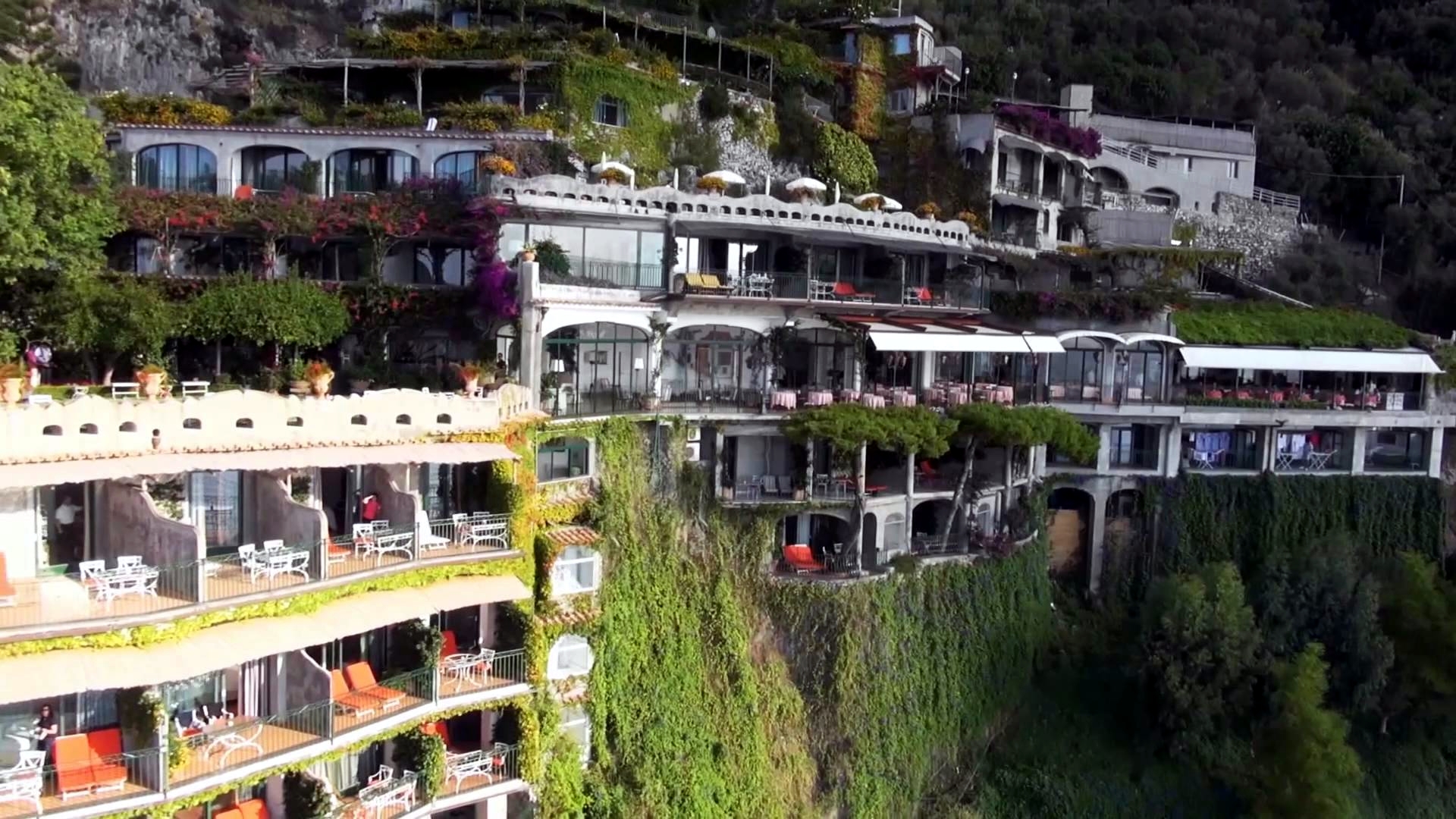
Guests hop aboard a funicular to get from this sprawling cliff-side property to its private pebble beach. The four-pearl hotel, located just outside of Positano, offers dizzying sea views from its five levels, including all 55 of its guest rooms, many of which have balconies. There’s a cascade of landscaped terraces with cafe tables, including one just above the water with a free-form pool and sundeck. The hotel has a restaurant set on the beach and a bar that will deliver drinks right to your lounge chair.

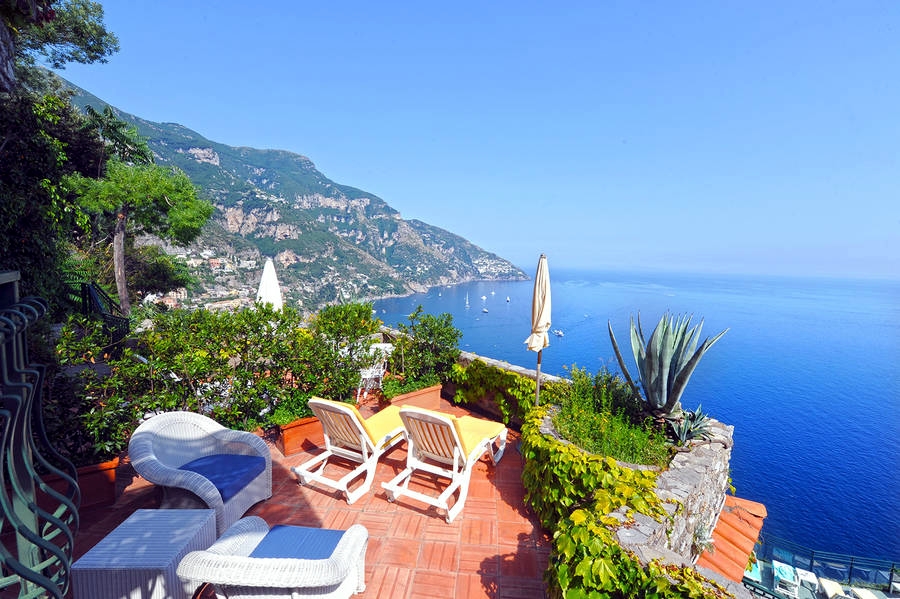
              The location, the layout, the amenities and services are truly 5star quality. But 3star prices (off season) and that’s why this hotel was my favorite choice. See the 4th pic – it was our room terrace – a dream to dream of.
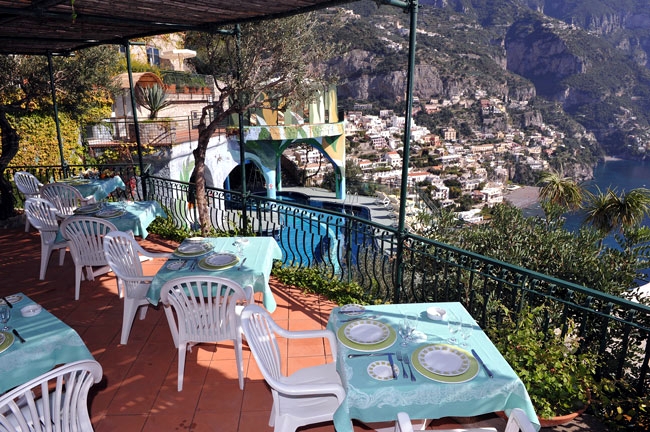
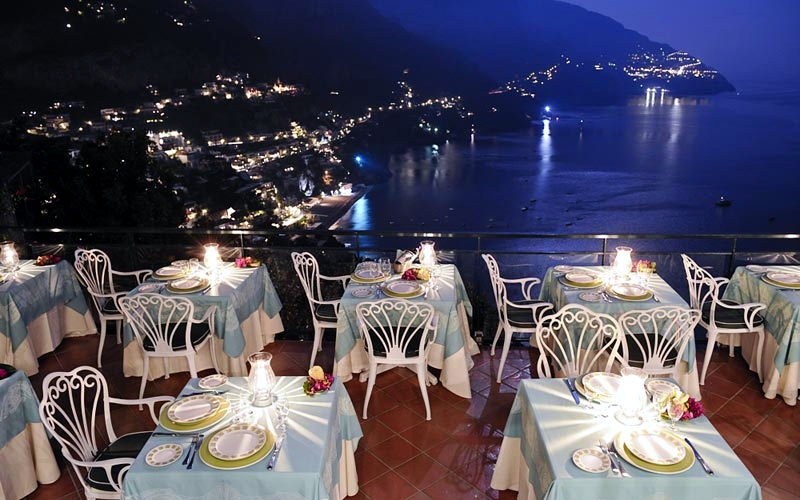
         We stayed 4 nights at the Agavi and it was to short. Above one of the terraces we choose for breakfast or lunch and the other one for dinner. With only 55 rooms and dozens of terrace possibilities one always find a romantic place to sit down. They also serve a romantic dinner for 2 on your own private balcony/terrace.

Hotel Panorama.

If you’re looking for an affordable stay, and a private, sandy beach tops your must-have list, this hotel in Maiori fits the bill. The property is a bit of a throwback to 1950s. It was formerly a lemon distillery used for making limoncello. Depending on personal taste, decor is either fun and retro or dated. Either way, the wide sandy beach is a solid perk. Umbrellas and loungers are available to rent, and there are beautiful mountain views in the distance. The hotel also has a small but pleasant pool and a restaurant and bar that overlooks the sea.

          The Panorama is a 3 1/2star hotel, but clean and comfortable, good in budget and perfect for people who have problems with the „steep“ ones along the coast.

Hotel Pupetto.

This quiet, romantic hotel is another smart choice for a lodging with private beach access that won’t break the bank. The hotel is built into a hillside, and Positano’s village is only a 15-minute walk away along a picturesque path. Cheery orange and blue loungers line its pebble beach (available to rent for a nominal fee), where light fare and drinks are on offer from charming Bar Bagni Pupetto, with a thatched roof and colorful fairy lights. There’s also a restaurant on site with sea views that serves pizza and local specialties, which gets high marks from guests.

            The Pupetto, very quiet because of the lonely location. Very secluded, very romantic, a private beach in a lonely bay and still only a few minutes from Positano. Perfect for a low budget.

Excelsior Grand Hotel.

The private beach at this three-pearl hilltop hotel is its top feature, with loungers and blue-and-yellow umbrellas lined up on a good-size stretch of sand. There’s a lively, though not chaotic vibe, even with the property being popular with families. All of the property’s guest rooms have balconies with fantastic sea views, plus there are two on-site restaurants and a cool bar inside a cave.

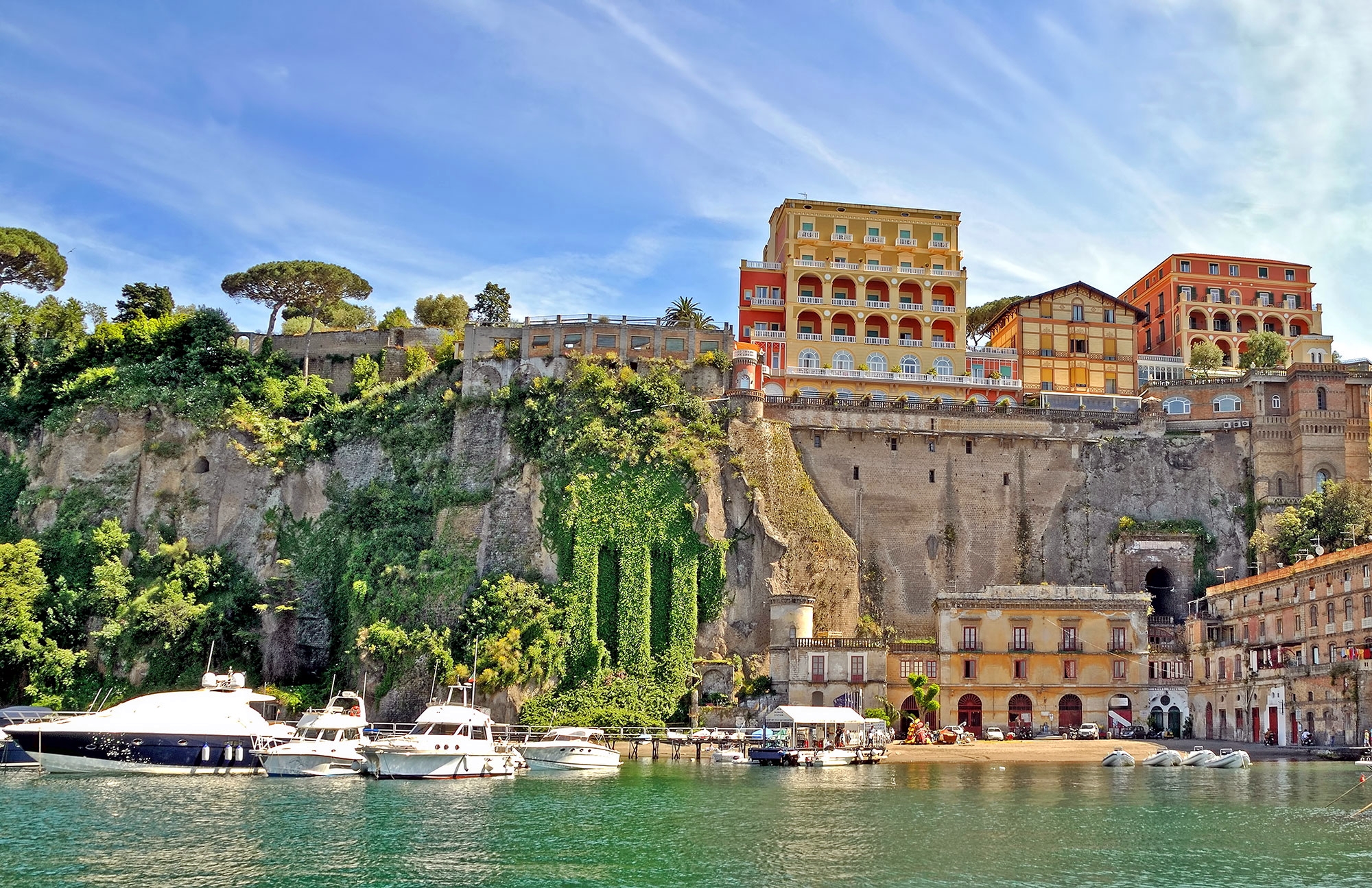
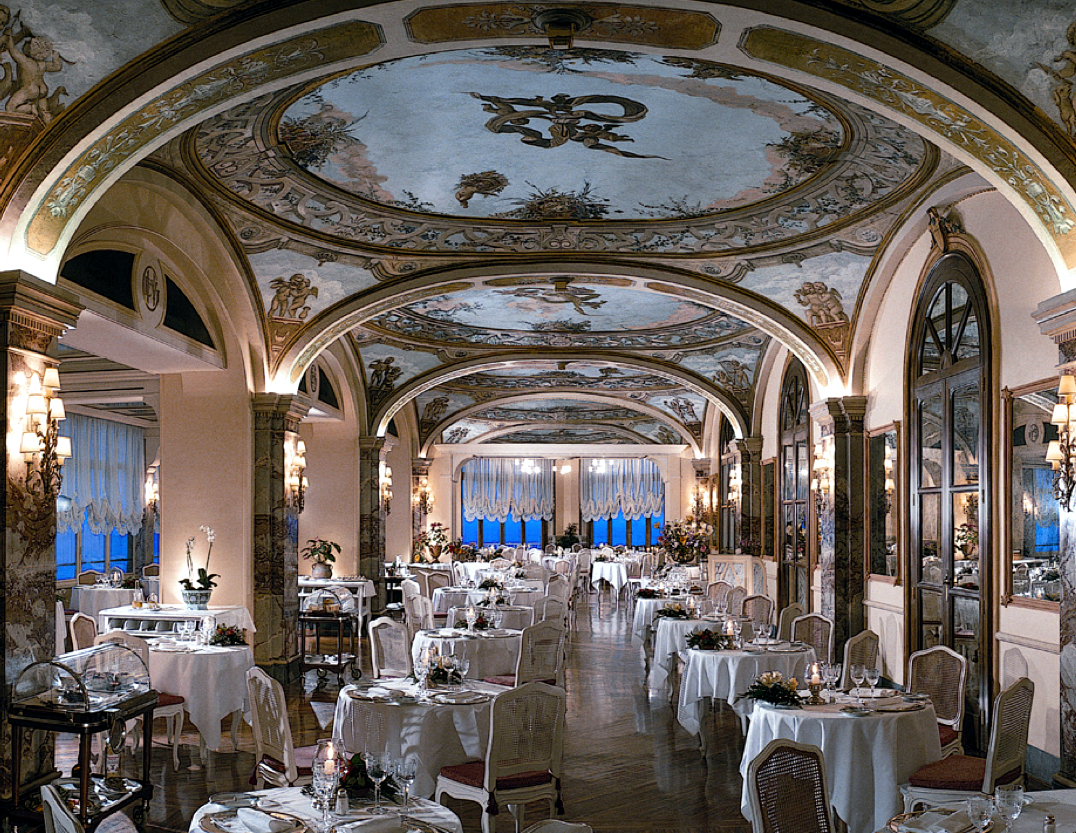
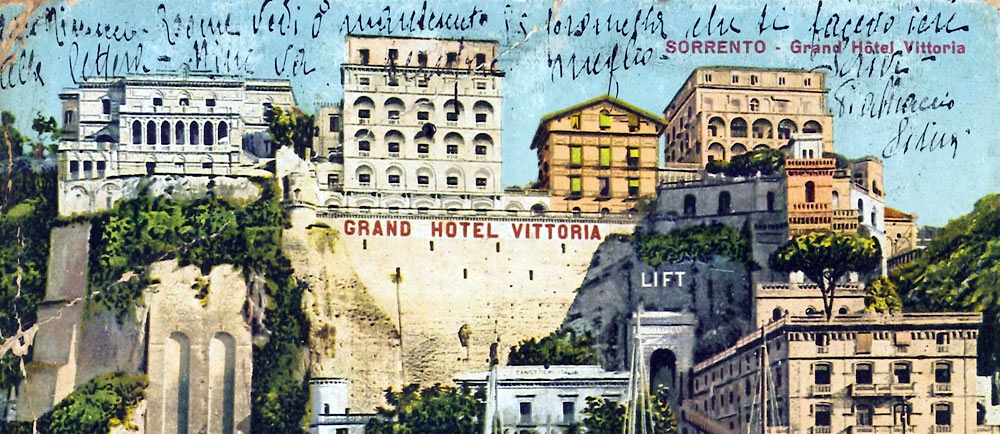
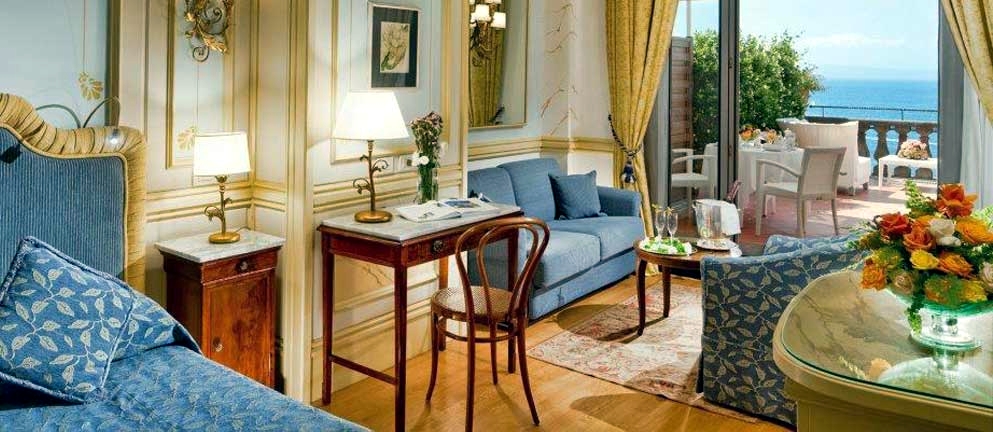
          This iconic Amalfi Coast hotel was founded by the Fiorentino family in 1834 in Sorrento. And the family’s fifth generation is running the hotel today keeping alive a long tradition in the name of the Italian hospitality excellence. The Excelsior Grand is a „grand“ in all respects. As the old postcard from the 1890’s shows barely changed during the years. A perfect location for one who want’s to dine with a tie and evening robe or strawberry’s from Australia in wintertime, they’ll provide it, but you have to pay.

Il San Pietro di Positano.

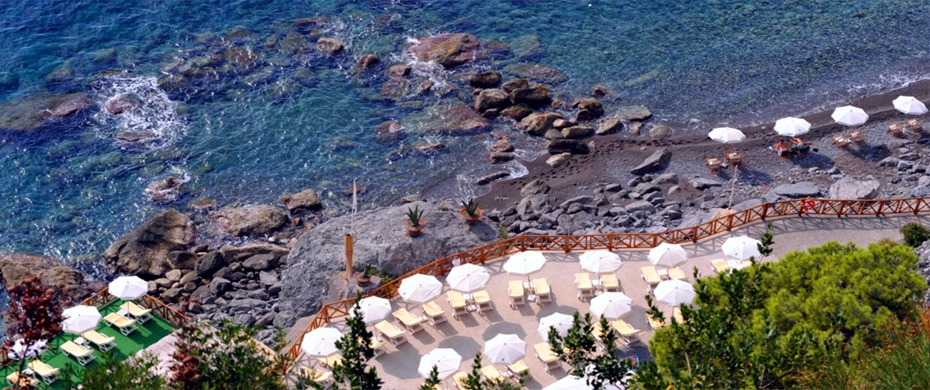
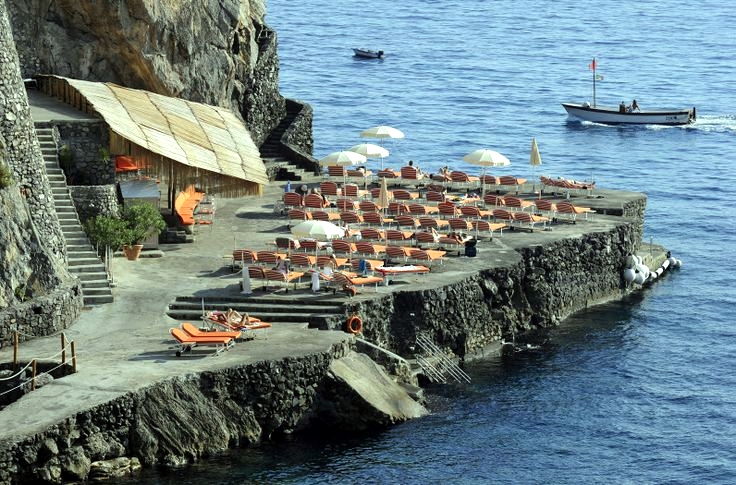
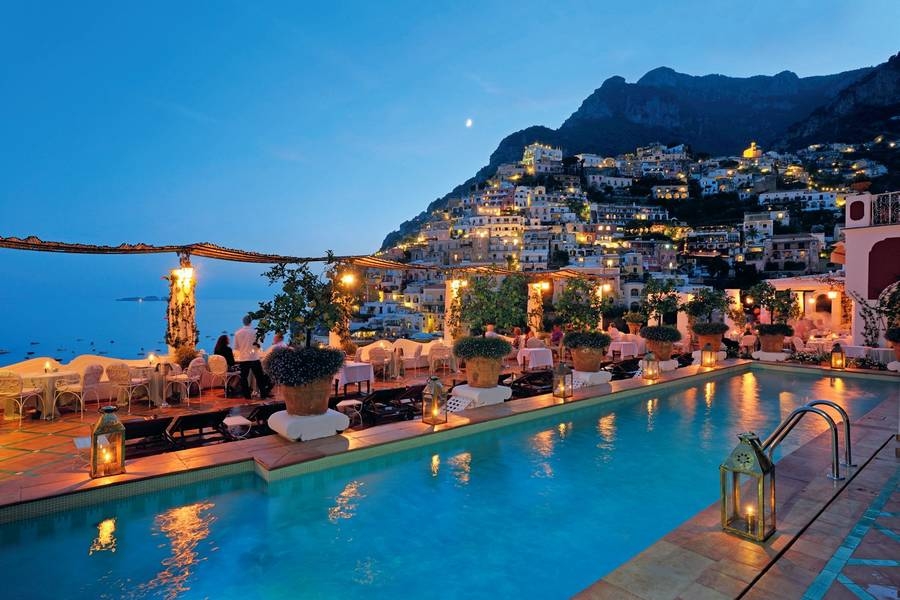
This Relais & Chateaux hotel has an elevator to whisk you from the cliffs down to sea level, with a rock tunnel at its base leading to a cave that opens to the property’s secluded private beach. There’s only a small patch of rocky sand, with surfboards and kayaks lining the shore, but sunbathers can ease into one of the orange loungers set on a sleek outcrop. A casual eatery and bar with a thatched roof is off to one side and offers food and drink service. The setting feels exclusive, but not overly luxe, and it’s ideal for those seeking an intimate hideaway. Other highlights include a spa, Michelin-starred restaurant, and a yacht for half- or full-day rental.

           This hotel offers everything for everyone in every style. If you don’t mind to live like an eagle in your room you will enjoy this place. Countless terraces, corners and places to hide out. The „beach“ is quiet rocky, but still for sun bathing and a quick dive. Restauration is truly Michelin worthy.

If you enjoyed this article about a Must See destination and an UNESCO World Heritage Site, follow part 2 coming up soon. Many more information’s and of course examples of the culinary part of the Campania region. Stay tuned !

Veröffentlicht unter Information, Lifestyle, Must See, Travel | Verschlagwortet mit | 1 Kommentar

Happy Easter 2018


Veröffentlicht unter Lifestyle | Hinterlasse einen Kommentar

Liver – Soooo Delicious

Some time ago we came back from monthly shopping at MAM (see separate post under „Uruguay“ in this blog).  Again legs and shoulder from fresh lamb – US$7,–per kilo – wow this is so unbeatable. Then I saw fresh beef liver (higado de ganado) in the showcase. I couldn’t resist and bought a kilo. At home I made myself directly a portion with onions. The rest went into the freezer.

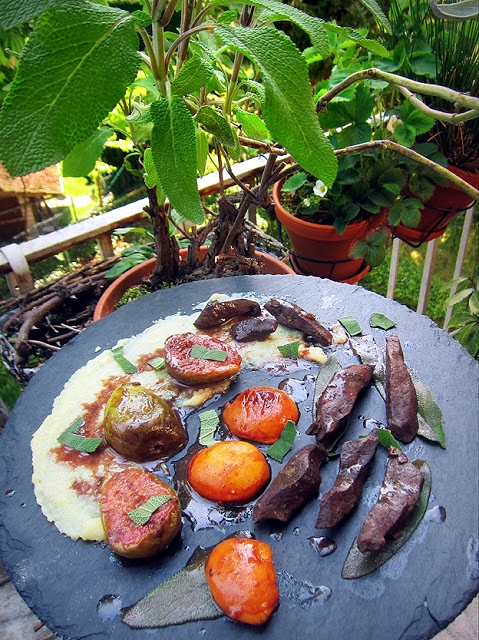
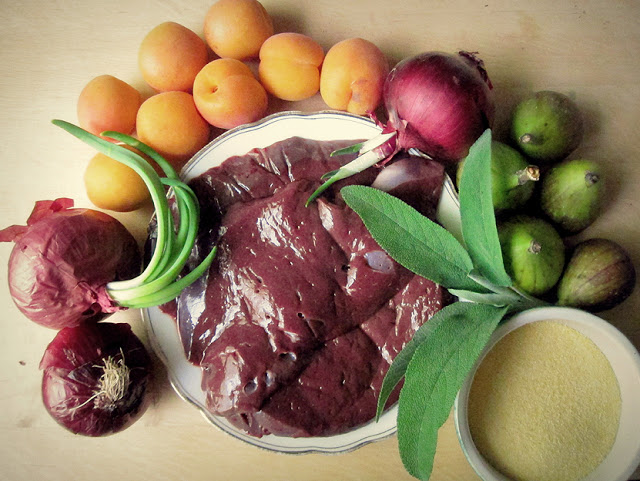
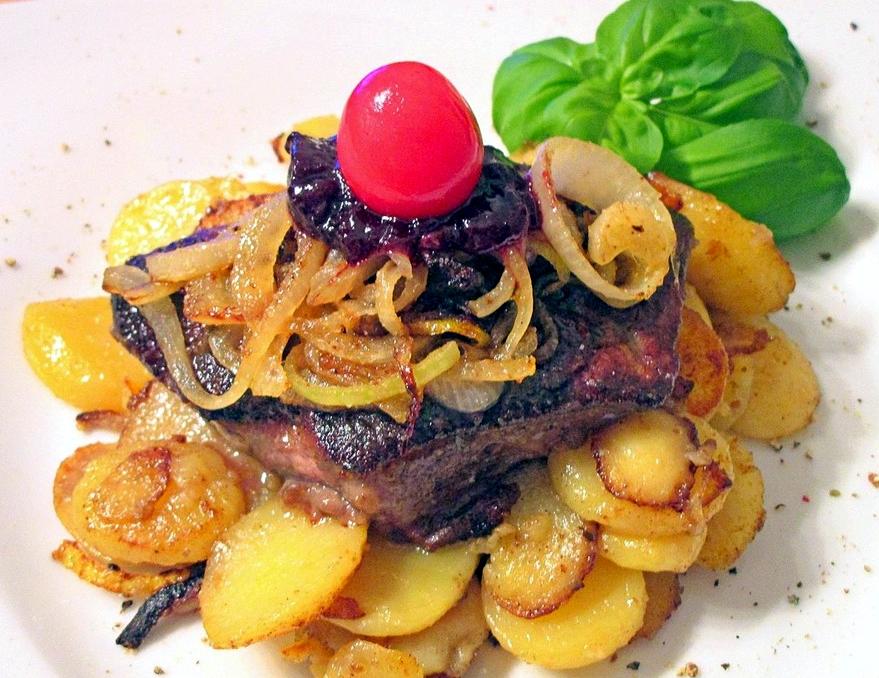
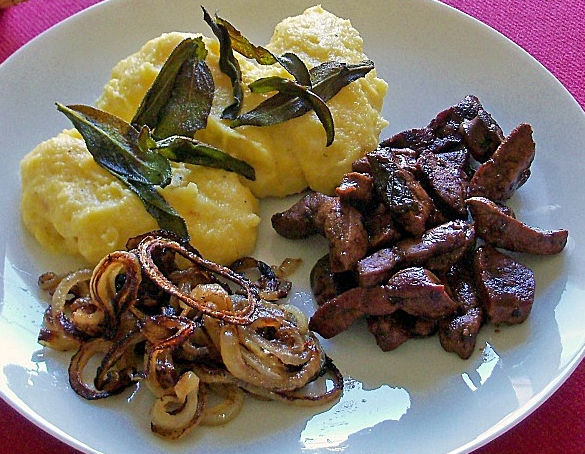
  European ingredients, Spanish apricots, Turkish figs, Dutch onions, Italian polenta and fresh sage and liver from Germany. These pics are from a foodie-friend,  Peter in Bochum, Germany.

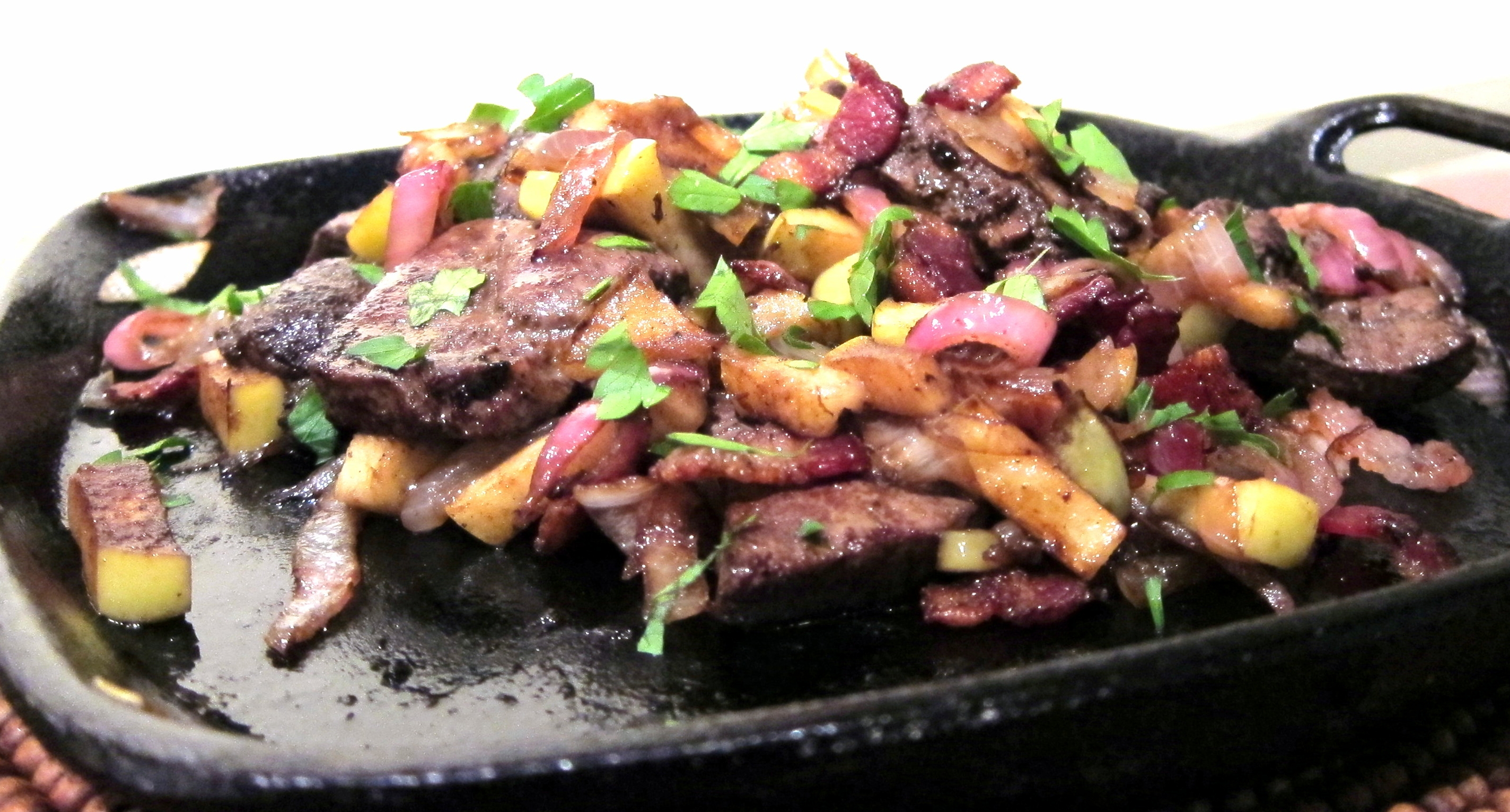
Yesterday I decided to test how liver is out of the freezer (after 3 weeks). I’ll take the answer up front – it was like fresh and absolutely delicious.  This time I made it a bit more fancy with Apples and Calvados. Also a chance to prepare an article for this blog.

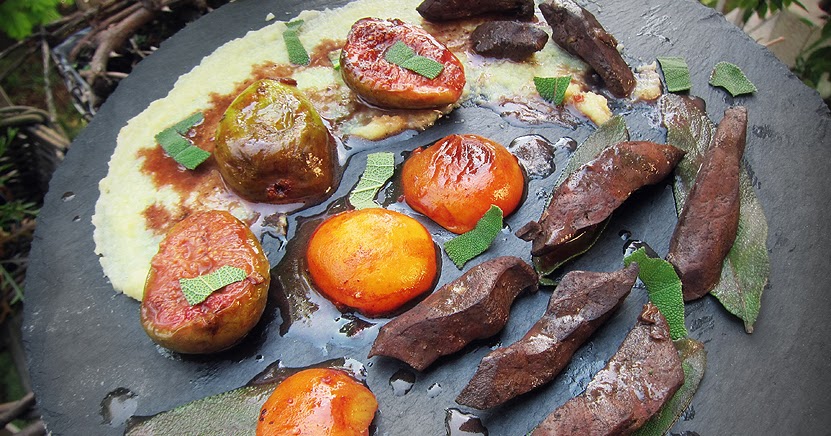
  How mouthwatering is this prepared by Peter ?

Many people don’t like any offal, I understand that. Here at home I am the only one who is doing it from time to time, just for myself, Anna doesn’t like it either.

Is liver healthy to eat ?

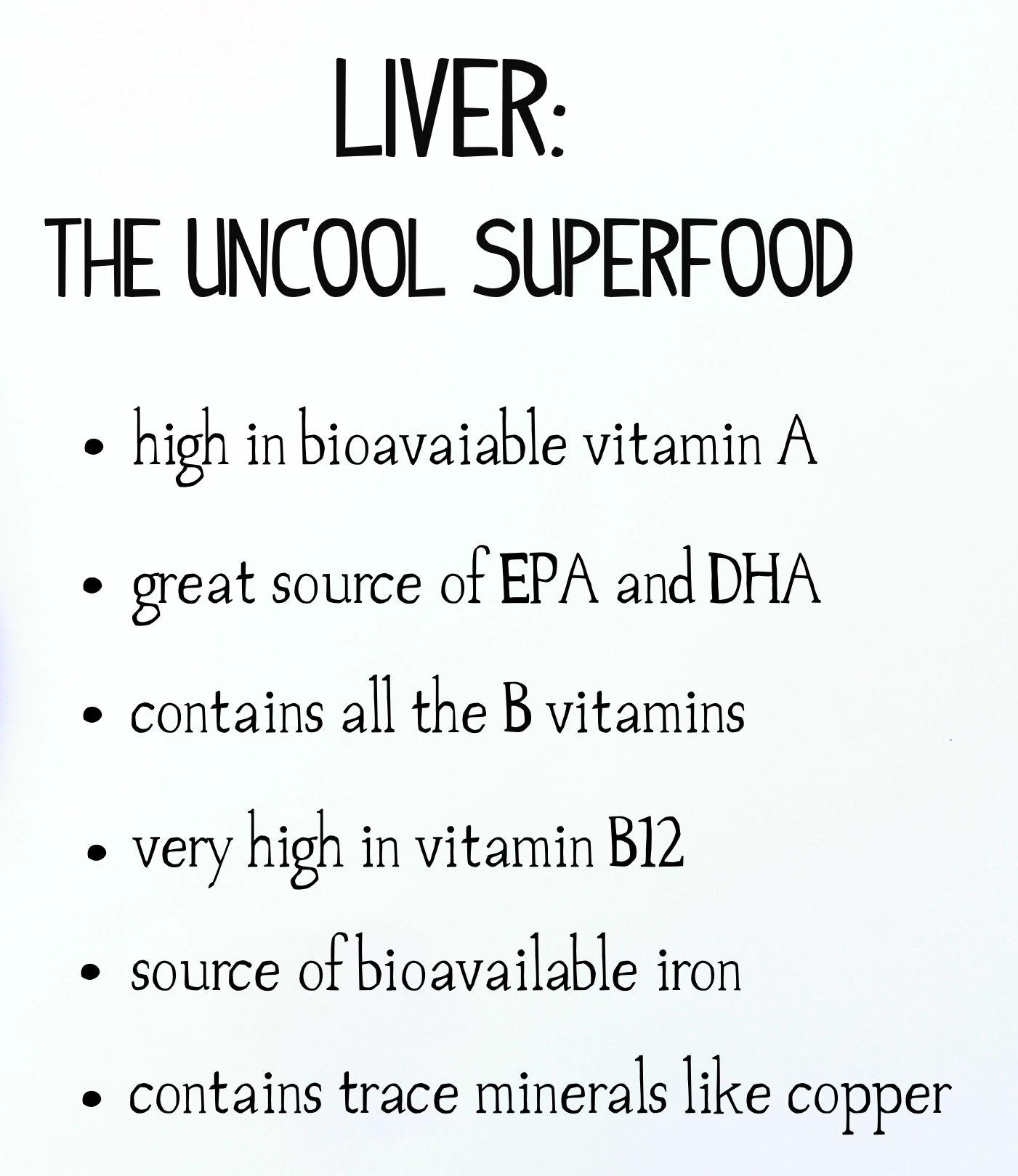
Liver contains many vitamins and minerals. Especially the content of fat-soluble and B-vitamins is very high in the liver. Of the minerals contained in particular iron is mentioned. Iron is responsible for the transport of oxygen into the blood. Vitamin A is of great importance for the growth, immune system, vision and renewal of skin and mucous membranes. Also is a liver full of iron and potassium.


In the past, cleansing organs such as liver and kidney were actually stressed. The animals were slaughtered when they were already old. Meanwhile, pigs are barely older than six months, cattle also only two years old. In addition, liver contains a lot of cholesterol. People who need to be aware of cholesterol intake due to lipid metabolism disorders should not eat liver too often.

   And another reason to eat liver: It’s delicious.

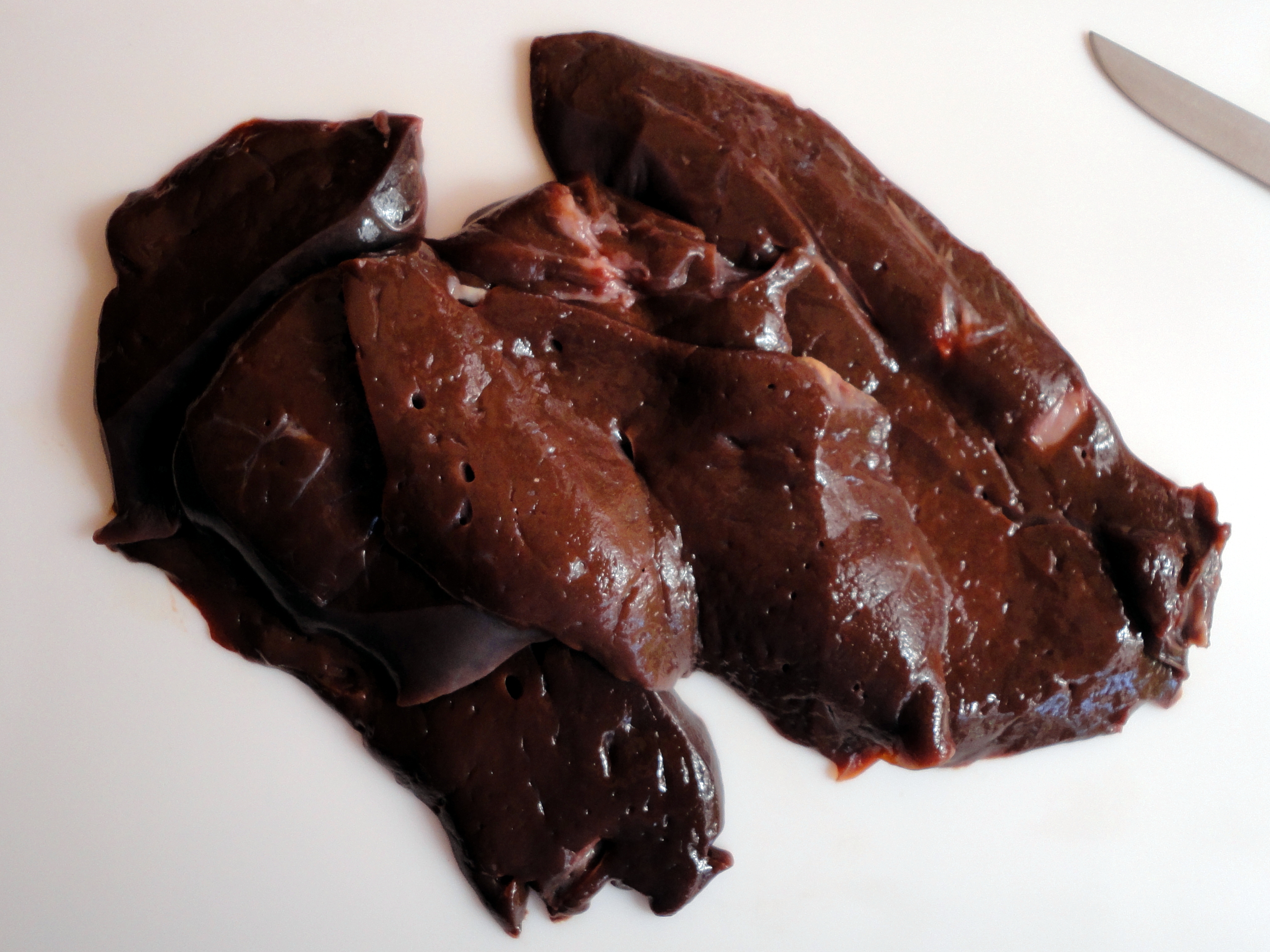
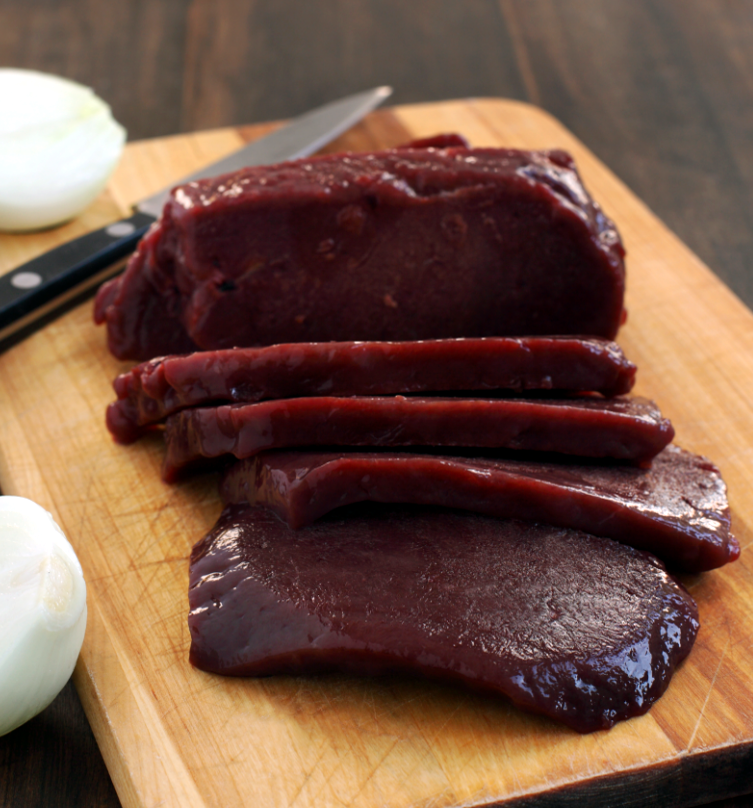
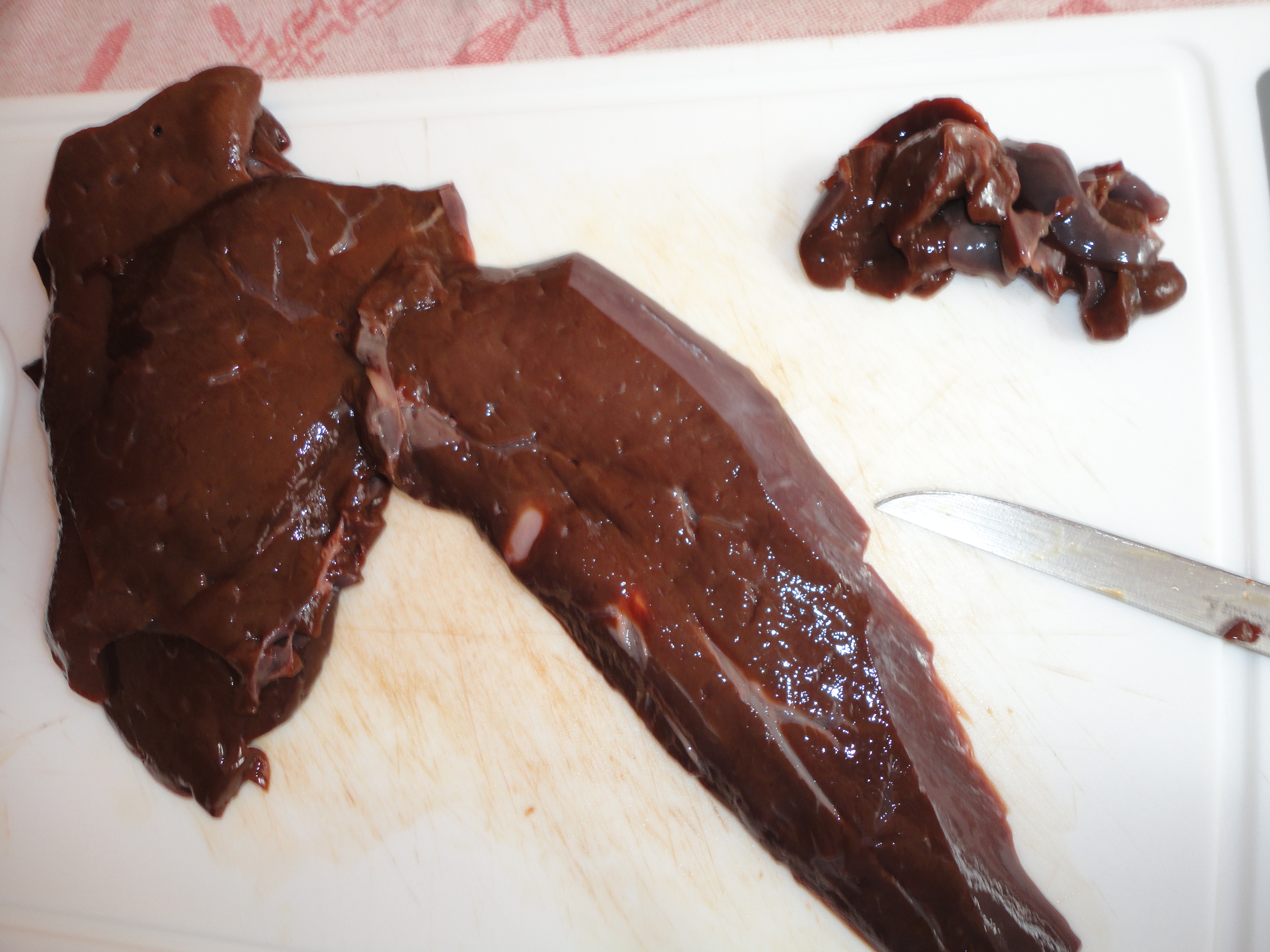
If you buy liver, it should have no smell of any kind, it always looks a bit wet, but no blood is running out, as you have it with fresh beef. Liver is used of pork, chicken, beef or veal. Veal would be the best, because of a young animal, but veal is not available in Uruguay, don’t know why.  Anyhow the beef-liver I buy here is excellent.

  This is how your fresh bought liver should look like.

Conclusion.

As always, „if it looks good eat it“, it’s healthy and soooo delicious.
But as with everything else, considering health reasons – do it in moderation.

So, my friends, here are 3 recipes for you

1. The quickest one.

  Very quick and easy to make, fresh fried liver with onions and fried sage on mash potatoe aside. A very delicious meal.

Ingredients.

600 g fresh liver
400 g red onions
30 g butter and a bit olive oil
salt and pepper

How to do.

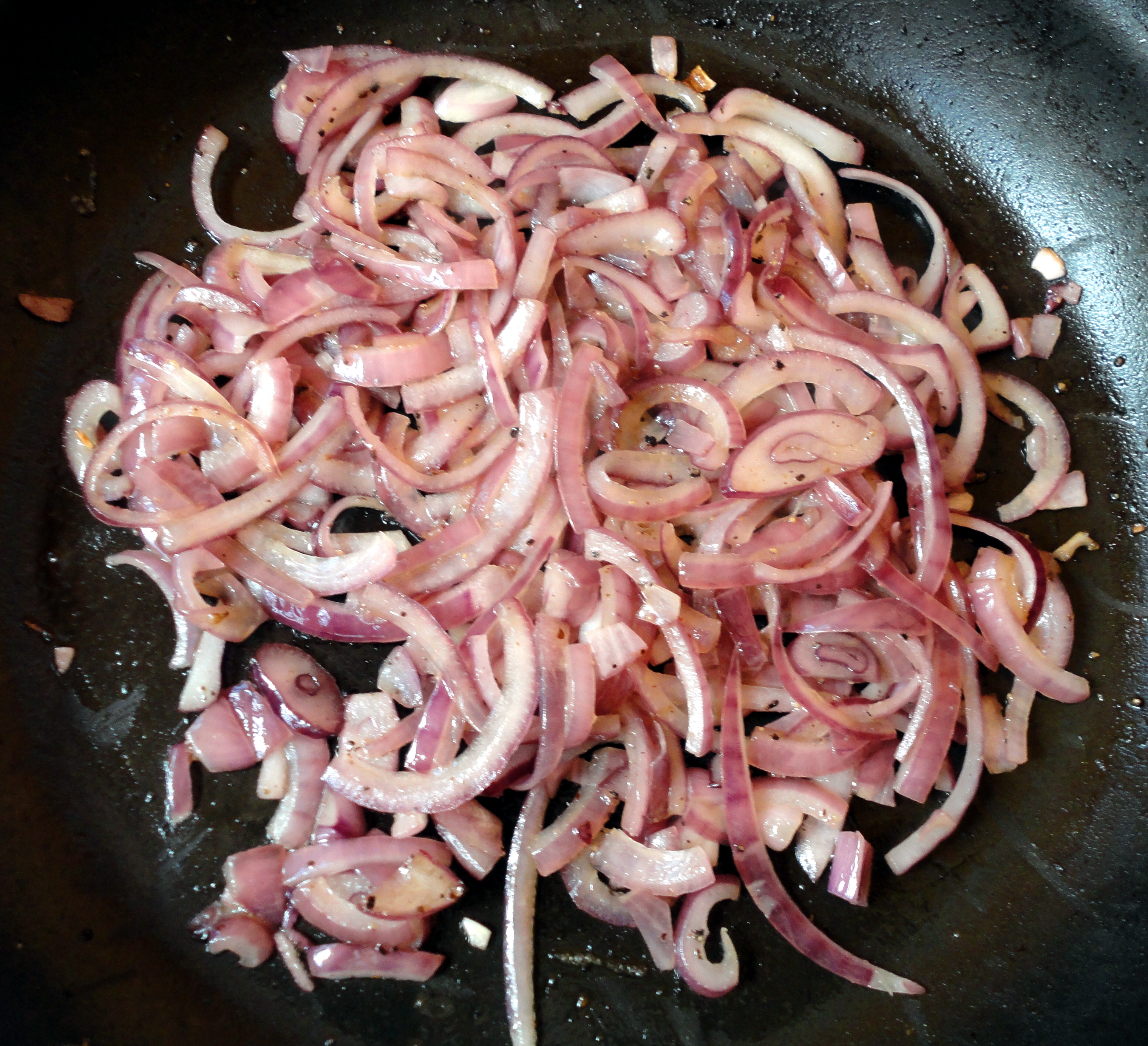
Peel onion and cut into thin stripes.
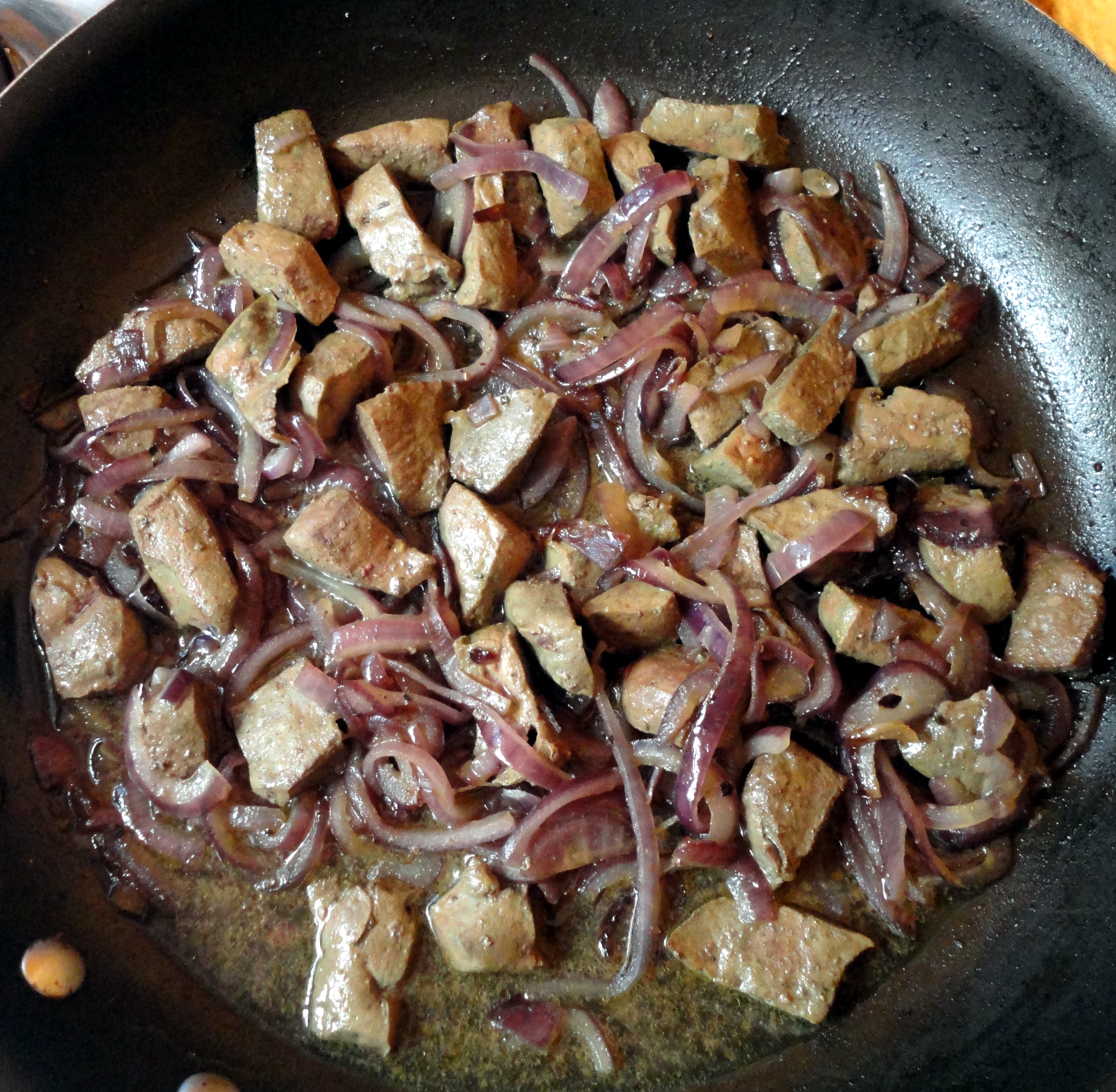
Fry it in a large pan till they are soft and start coloring.
Set aside.

  Fry onions first, they take longer.

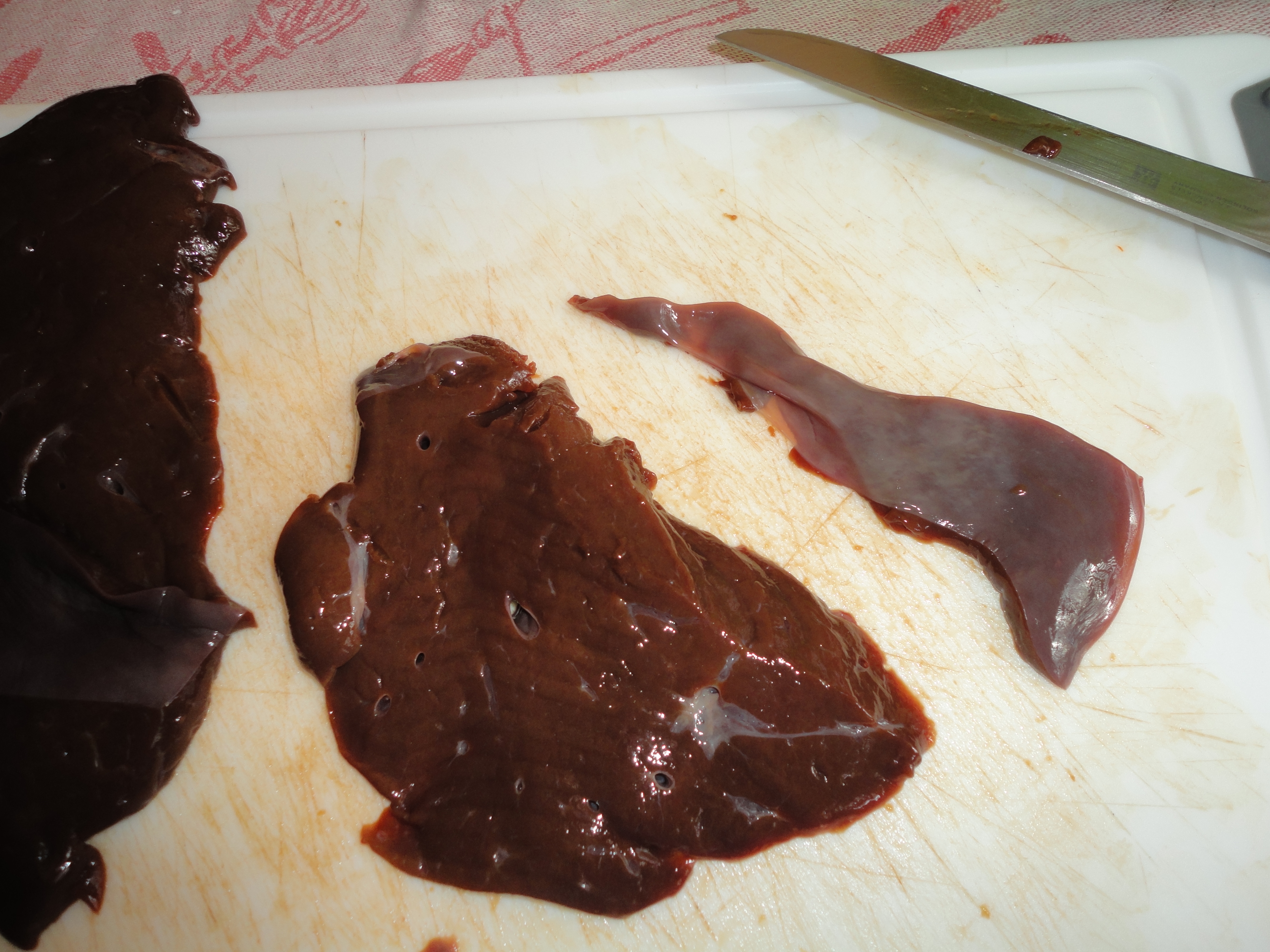
Clean the liver – cut off tendons, silky skin and muscle parts – wash and dry.
Slice liver into small cubes or thin stripes.

    Clean liver well, take off all silver-skin. If I clean it, I mostly loose a third of the whole meat, which I buy already additional, because I like it very clean. My doggies love the leftovers. Because of my cleaning I always end up with sliced mouth size pieces.  Click on pics to supersize.

Cook liver on high heat till its colored (light browned), about one minute or two.
Mix in liver w ith onions, heat through and season with salt and pepper. Ready to serve.

  Mix liver and onions. This time I liked it „wet“, so I left the onion juice for my baguette. If you don’t like so much juice just poor all through a sieve.

Tips.

Take a good glass of your favorite wine and a baguette and enjoy. The liver stays pretty dry, but the onions have enough juice to enjoy the meal.
My liver is mostly  just browned, but if you like it outside cross and inside soft, just fry a bit longer on high heat, but be careful – liver can be overcooked, and therefore chewy inside, very quick.

2. The luxurious one.

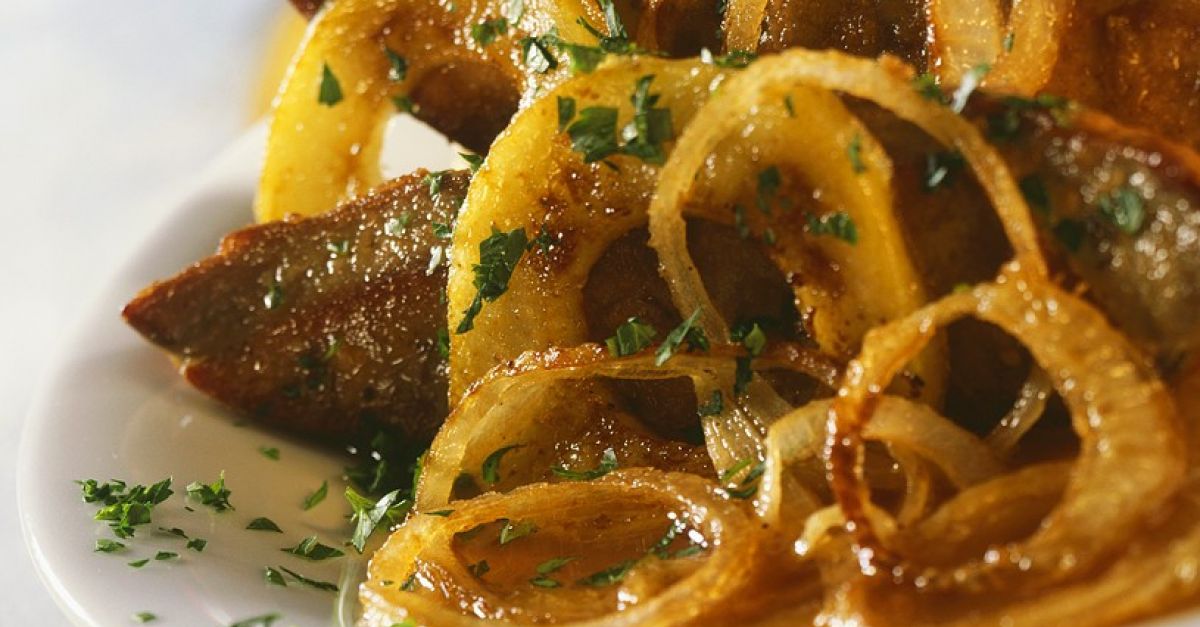
  Liver „Berlin style“ on mashed potatoes.

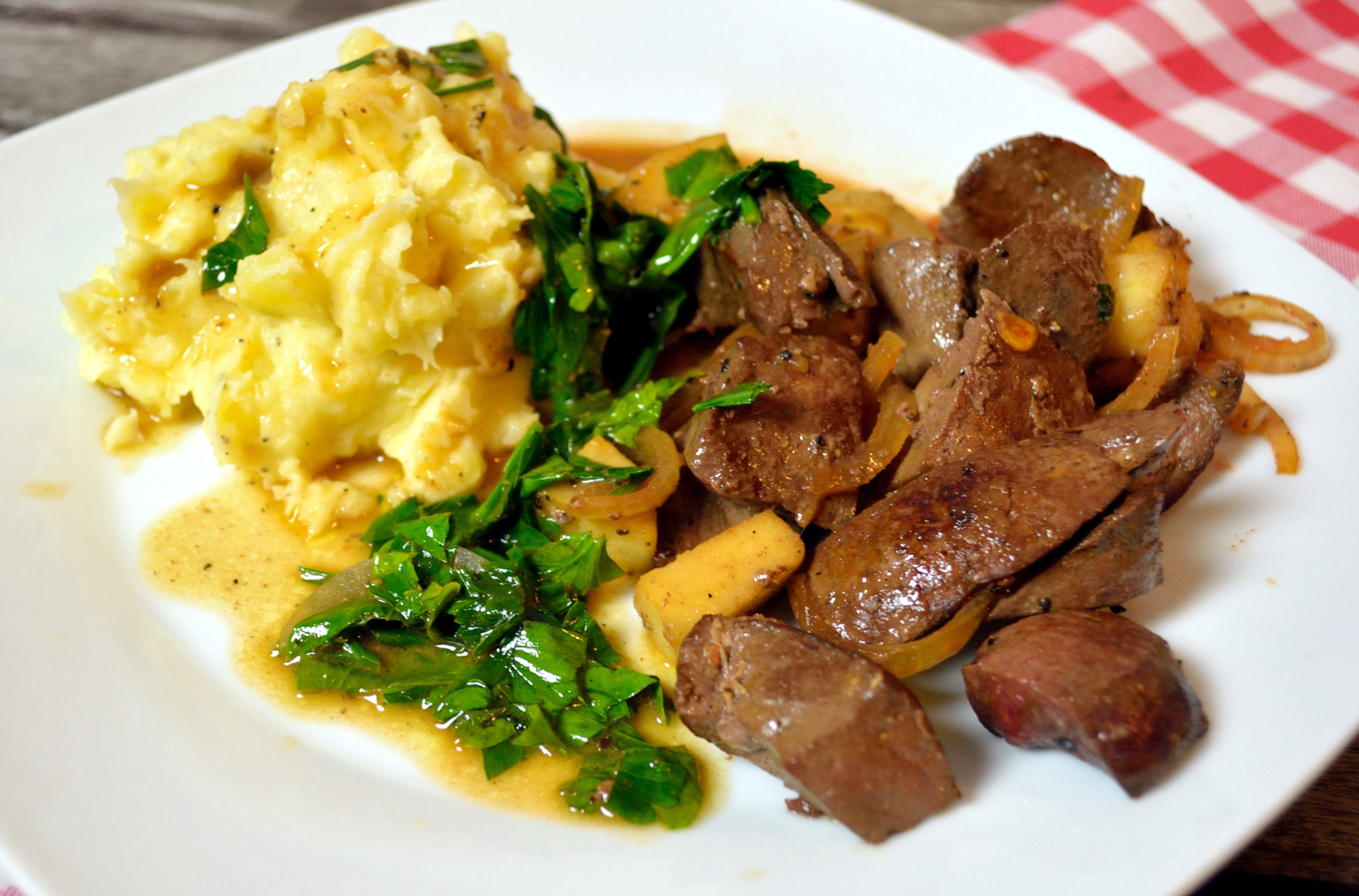
Liver with apple and onion in Calvados sauce.

If one speaks of liver „Berliner Art“, then it means a variant with apple and onion. Personally, I find it very tasty – assuming, of course, that the liver in the middle is still a bit pink and not fried dead. My favorite is clearly calf’s liver with apple and onion. Whether one refines the whole thing rather classically with a little bit of Calvados. Calvados is an apple brandy and goes best with this dish.

Ingredients.

700g calf’s liver (of course liver as you can get)
2 sour apples
2 medium size onions
some oil
Pepper and salt

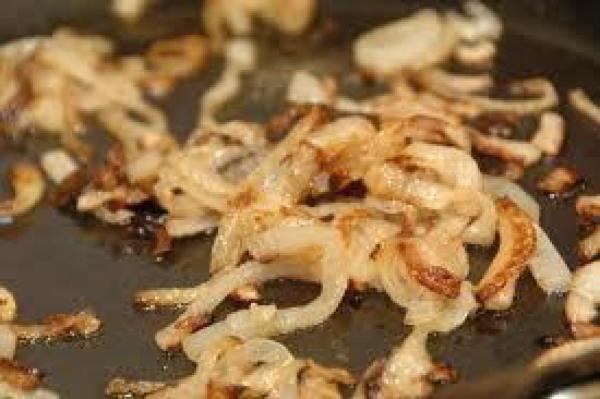
  Saute your onions.

For the sauce:

180 ml of Calvados (or dry sherry or brandy)
some fresh parsley or chives
2 tbsp butter
Pepper and salt

For the mashed potatoes:

400g potatoes
100g whipped cream
about 300 ml of milk
1 pinch of nutmeg

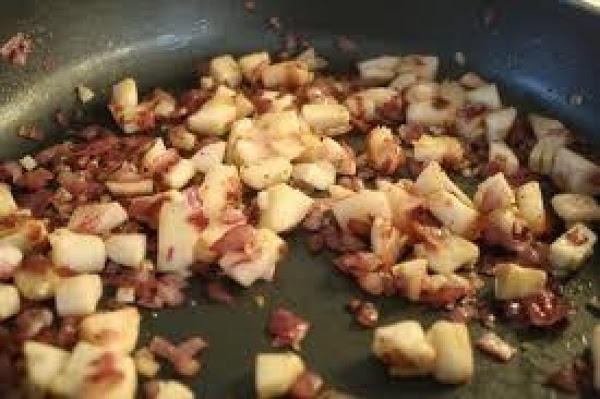
  Fry onion and apple mix, then add liver.

How to do.

Peel and dice the potatoes. Put the potatoes in a pot of cold salted water, bring to the boil and simmer for about 12-15 minutes until soft.

During this time prepare the liver as shown before. Cut the liver into bite-sized pieces, peel the onion and cut into fine (half) rings and peel, quarter, core and dice the apple.

When the potatoes are almost done heat some oil in the pan and fry the liver all around. Remove the liver from the pan and set aside. Add the onions to the pan and fry briefly, reduce the heat, add the apple pieces and saute the onions until they are glassy.

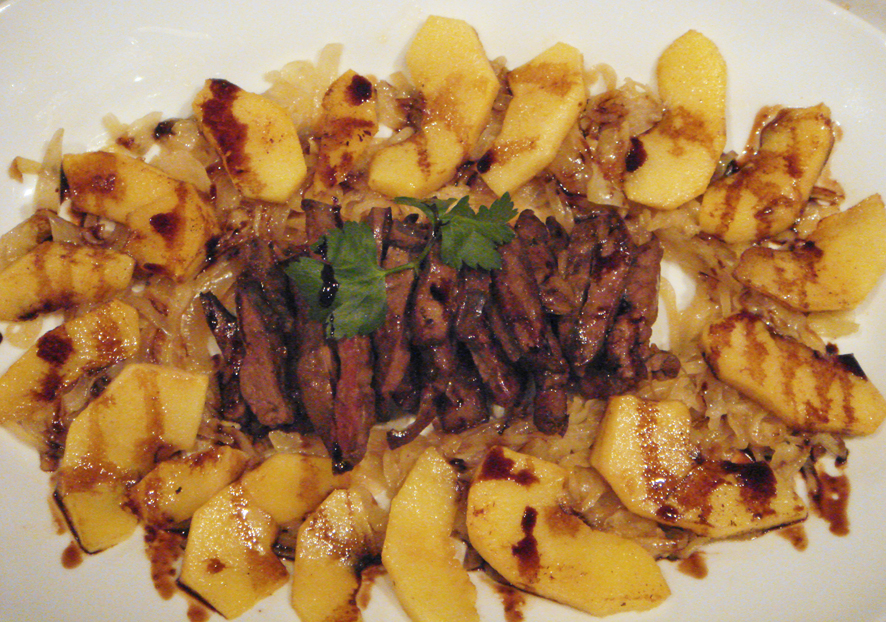
  Liver with onions and apple in Calvados.

Drain the potatoes, put them back in the pot and stomp with the potato masher as finely as possible. With a whisk first the whipped cream and then the milk under mashed potatoes, then stir until the puree has the desired consistency. Season with pepper, salt and nutmeg.

Return the liver back to the pan to apple and onion. Extinguish with Calvados – if you want to flambe, turn off the cooker hood NOW. With a stick lighter (sure is safe) immediately ignite and burn briefly. Simmer for 2-3 minutes on a low to medium level, then the liver should be tender pink inside. Add and stir in a small piece of cold butter to the sauce and remove the pan from the heat.

  This is how it can look like at serving.

Finely chop the parsley or chives and add to the sauce. Season with salt and pepper to taste.
Arrange the liver with apple and onion together with the mashed potatoes and add some of the sauce.

  This mouthwatering variation, with liver, apple, onion and bacon is from my French friend Mathis. It’s worth to try.

Tips.

A nice variation is to add finely chopped and fried bacon.
If you like give the liver a Spanish touch with a sip of sherry is of course up to you – either way, if you dare to fluff your liver it will turn out to be a very special highlight. I prefer to serve the liver with a creamy mashed potatoes – an absolute Berlin classic!

3. The fancy one.

  This is a great party hit, served with

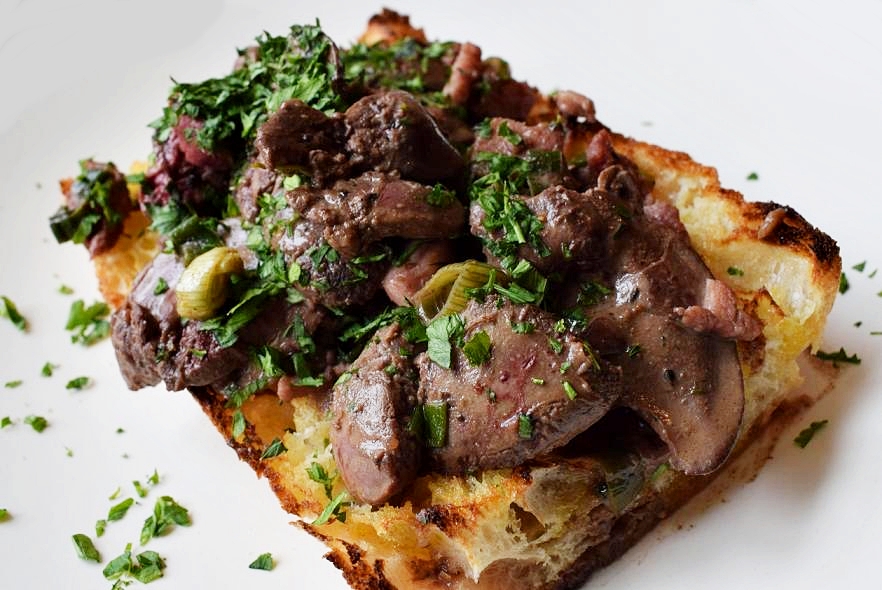
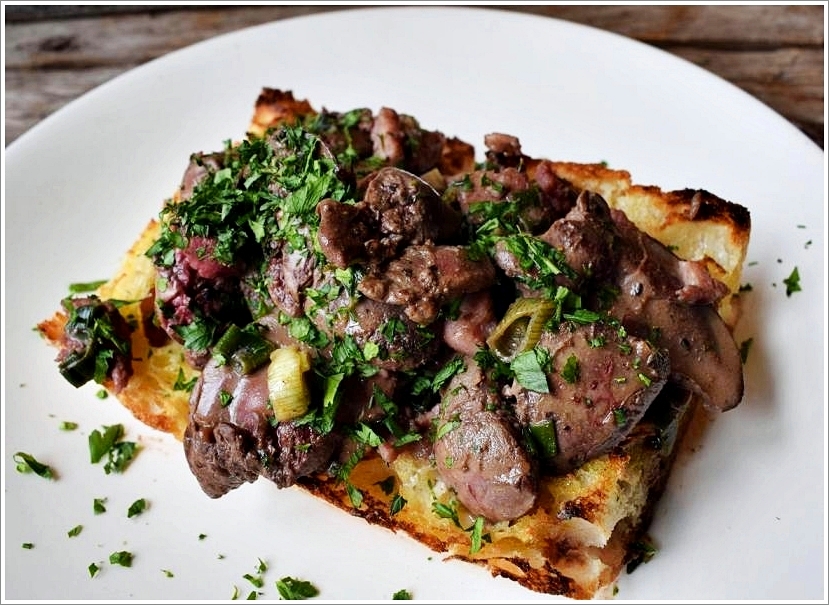
Chicken liver with fig-chutney on Ciabatta.

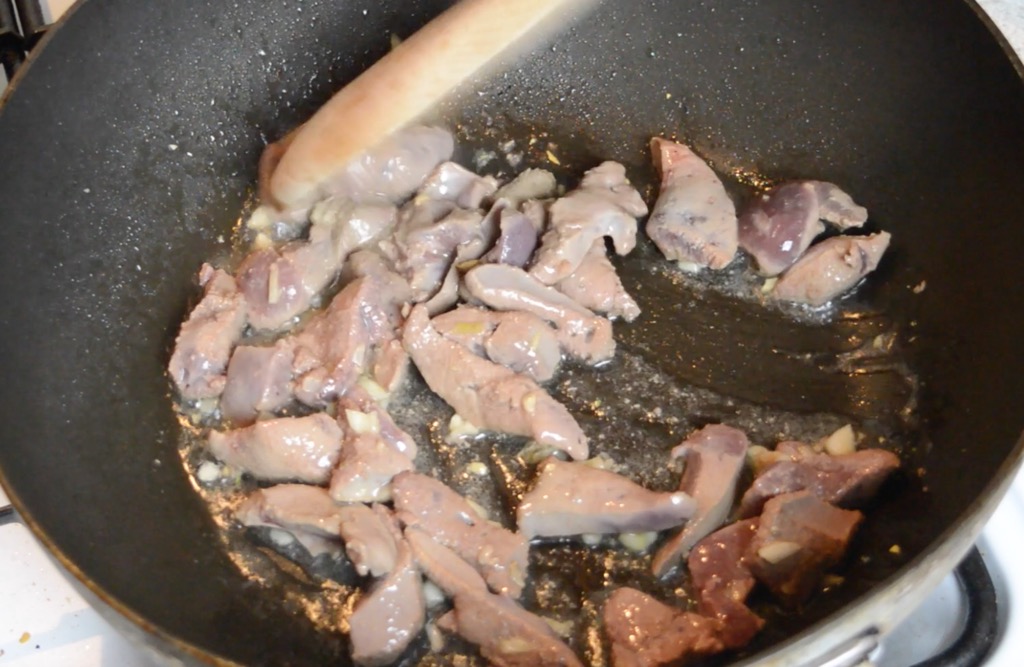
Even if you usually do not like any offal, I would still recommend trying this recipe. Chicken liver has a beautiful soft, melting texture and the taste is so mild, especially when you balance it with a sweet, spicy cream sauce. The liver should be seared very hot, so that the outside nicely caramelized, but inside still nice soft and pink remains. For that, I like to use a wok, as it is ideal for food that needs to be cooked quickly at high heat.

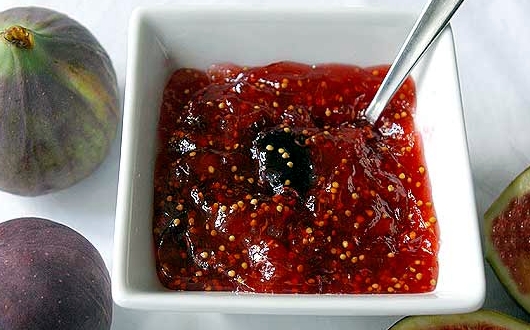
  Figs out of our garden. Homemade fig chutney.

Ingredients.

800 g Fresh Organic Chicken Liver
400 g Smoked bacon, in cubes
100 ml Marsala wine (or any other sweet wine)
4-6 tsp of fig chutney
2 tsp balsamic vinegar
6 tbsp double cream
6 spring onions
8 sprigs of thyme
a small handful of parsley
Salt and  pepper to season
butter and oil to fry

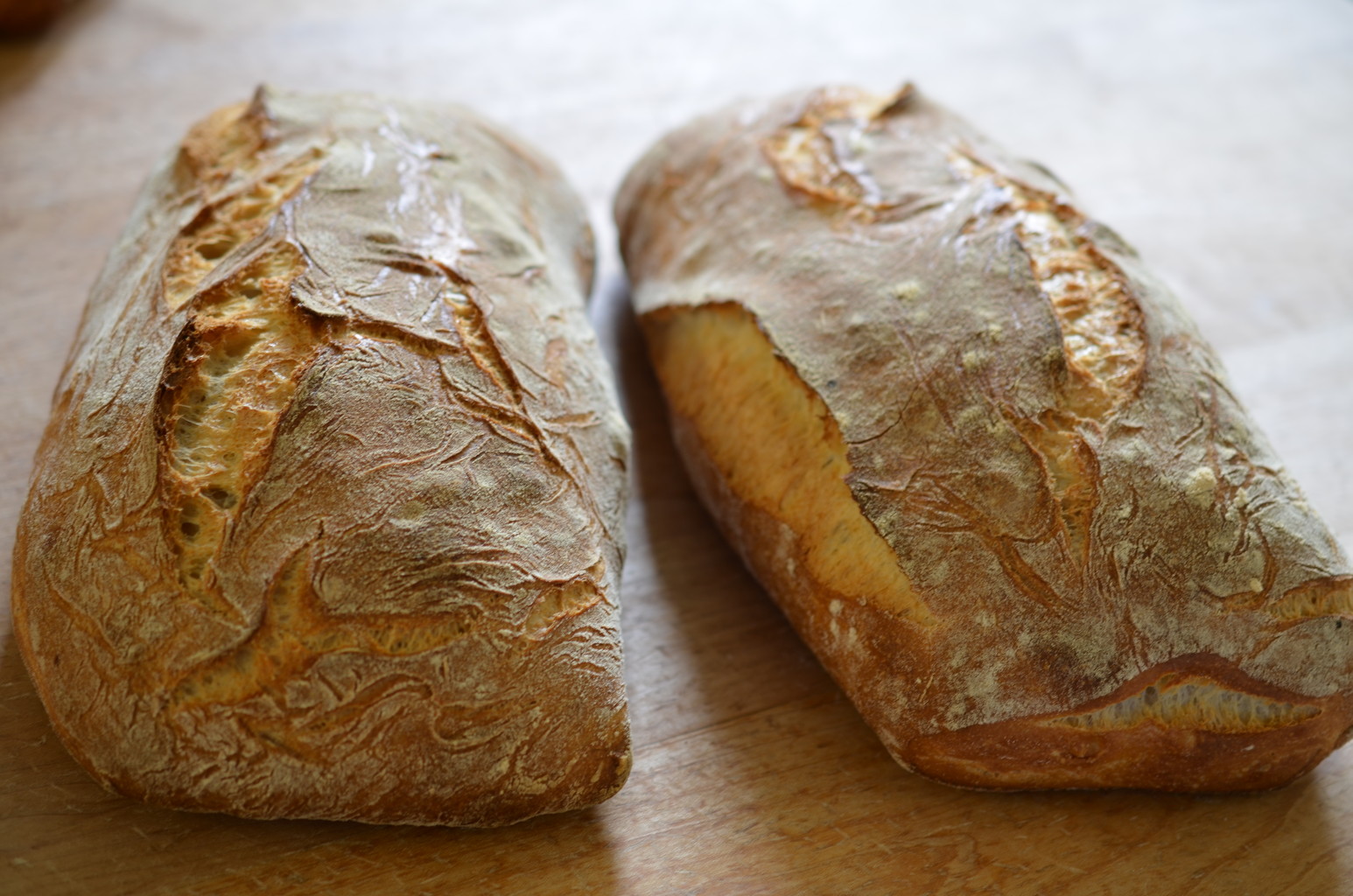
  The Ciabatta bread we buy in Uruguay at the German bakery in Carrasco. Ciabatta is a somewhat irregular, slightly “dusty” loaf, so named, apparently because of its resemblance to a slipper or shoe. Ciabatta means slipper in Italian. Inside very airy and perfect to soak up a sauce.

How to do.

Clean chicken liver under running water and dab it dry. Then, if necessary remove veins and tendons. Season with pepper and set aside. Cut the spring onions into fine rings. Finely chop the parsley and pluck the thyme leaves from the twigs.

  In a wok, heat the butter vigorously with a little olive oil. Roast the livers in portions in total for just 1½ minutes. Remove and set aside.

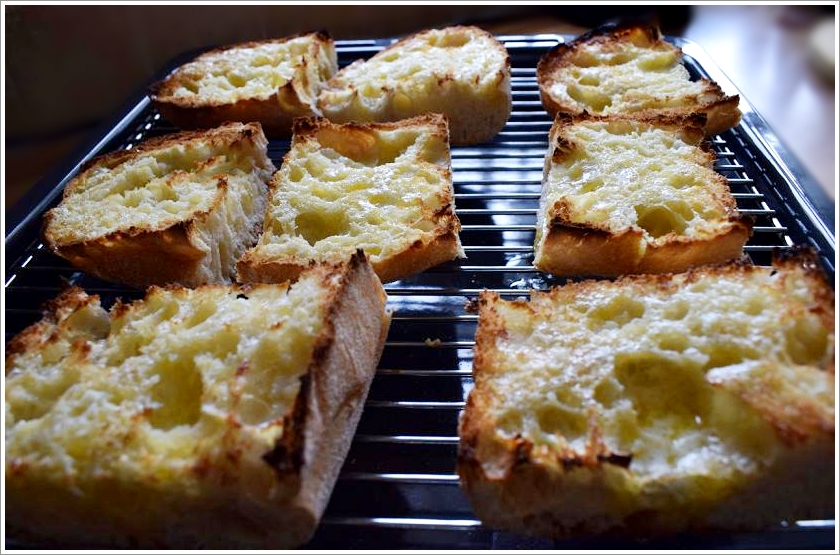
Cut the Ciabatta  in half length by then width wise, so that it is in four pieces. All helped put on a baking tray and rub with the garlic cloves, drizzle a little olive oil and sprinkle with sea salt. In preheated oven to about 190 degrees about 10 minutes. roast crispy.

  Crispy Ciabatta roast in the oven. Sometimes, we do the same on the grill, bit of rosemary on the fire underneath gives an extra special taste to the bread.

In the gravy, fry the bacon a bit, add scallions and thyme, and simmer for 2-3 minutes. Add the wine, then the fig chutney and the balsamic vinegar. Now add the double cream and cook the parsley, all on a large fire for 2 minutes. At the end, add the livers and let it simmer briefly in the hot sauce.

  Place chicken liver on top of the Ciabatta bread and serve. Lots of people which „did not like/eat liver“ enjoyed this one very much. Best is not telling them before they haven’t taste it.

Tips.

This recipe is a great Party starter. An often tested and successful „Tapas“ idea. Its unusual, very tasty and even loved by „normally – non meat eaters“.

Finally.

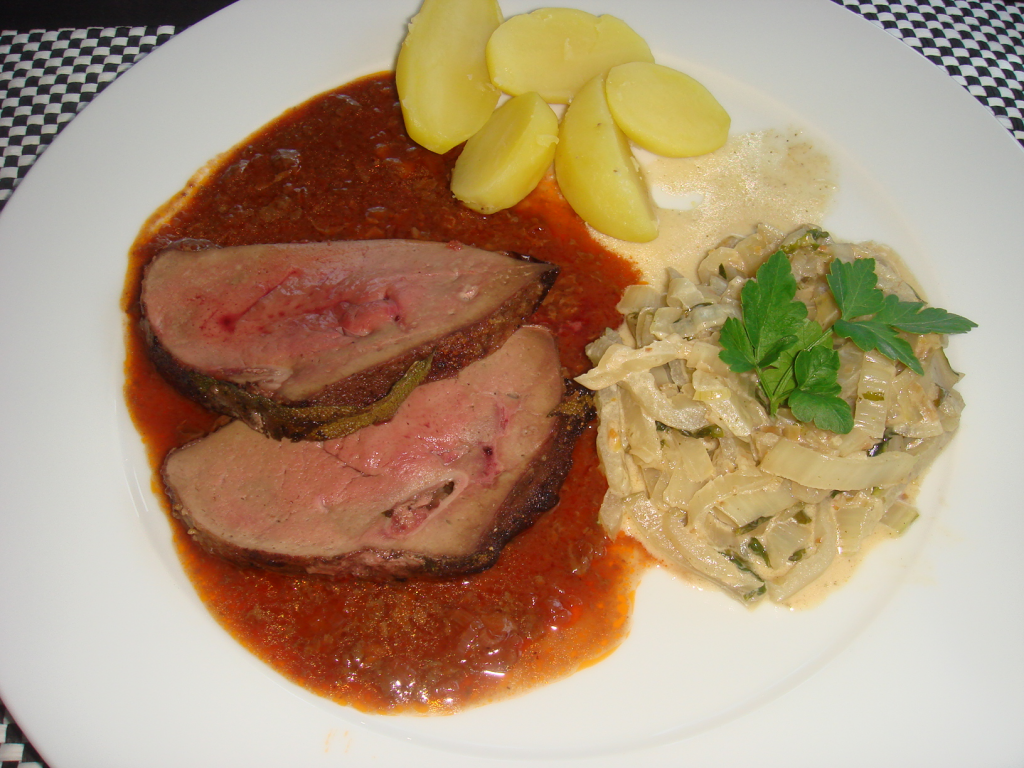
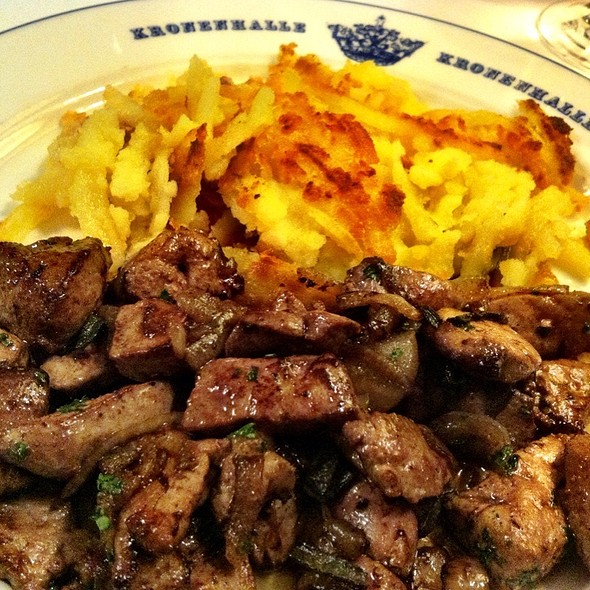
  A restaurant serving I DON’T LIKE AT ALL ! The potatoes are o.k, but that’s it. The meat is undercooked (rose is o.k. but no bloody streams). It was not cleaned, one can see the blood venes, the muscle tubes, the tendons etc. I do not know what kind of skin parts are hanging around there. The onions are floppy and look shabby. All in a tomato sauce – how ugly and unappetizing it all looks !!

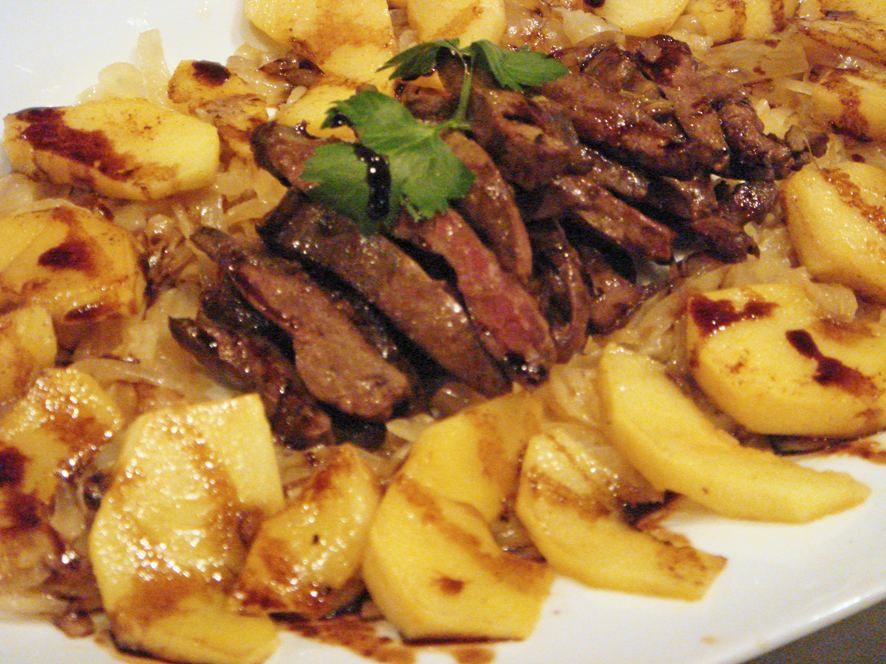
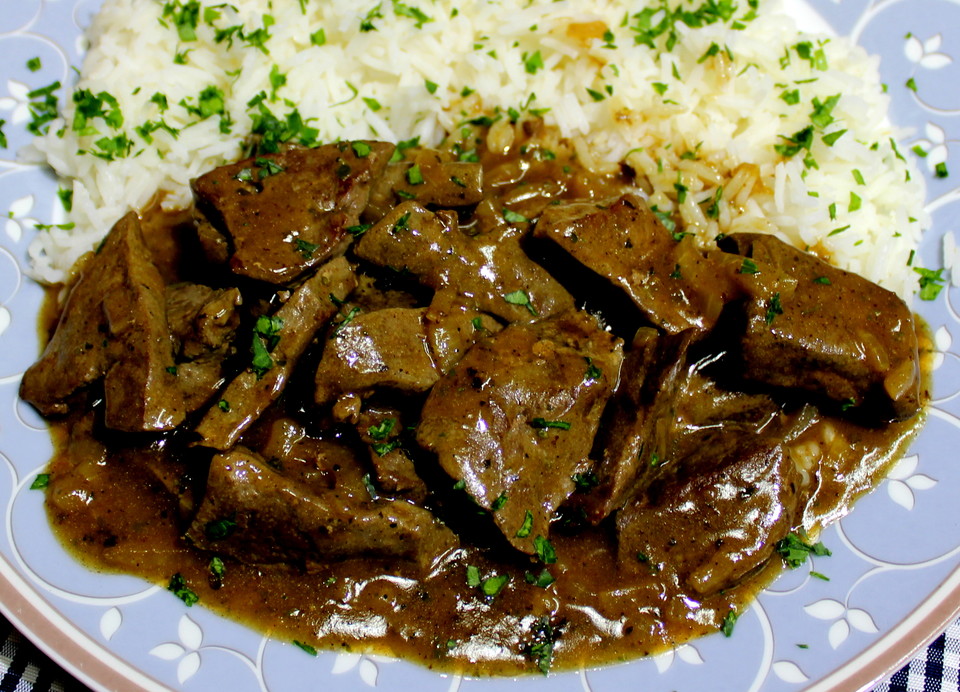
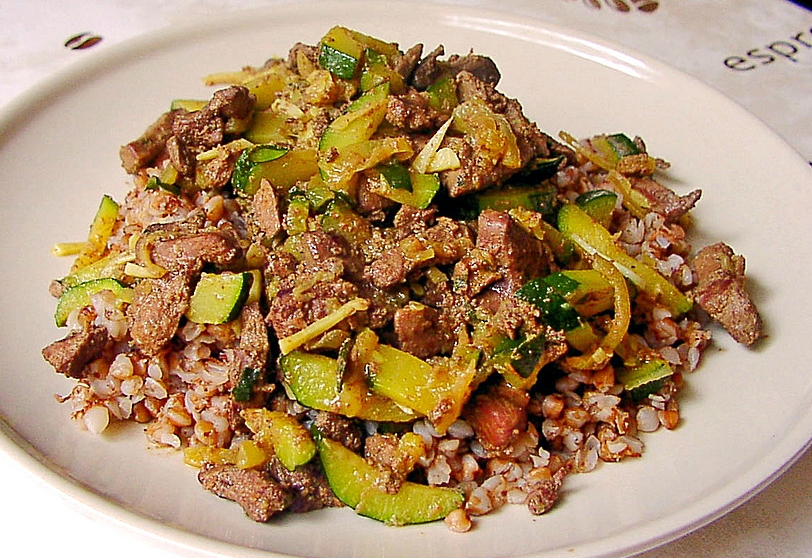
Some delicious servings.
As one can see, all livers are cleaned
and sliced, how it should be.
Enjoy !

Veröffentlicht unter Recipes | Verschlagwortet mit | Hinterlasse einen Kommentar

Collecting – Historic Letter / Sold

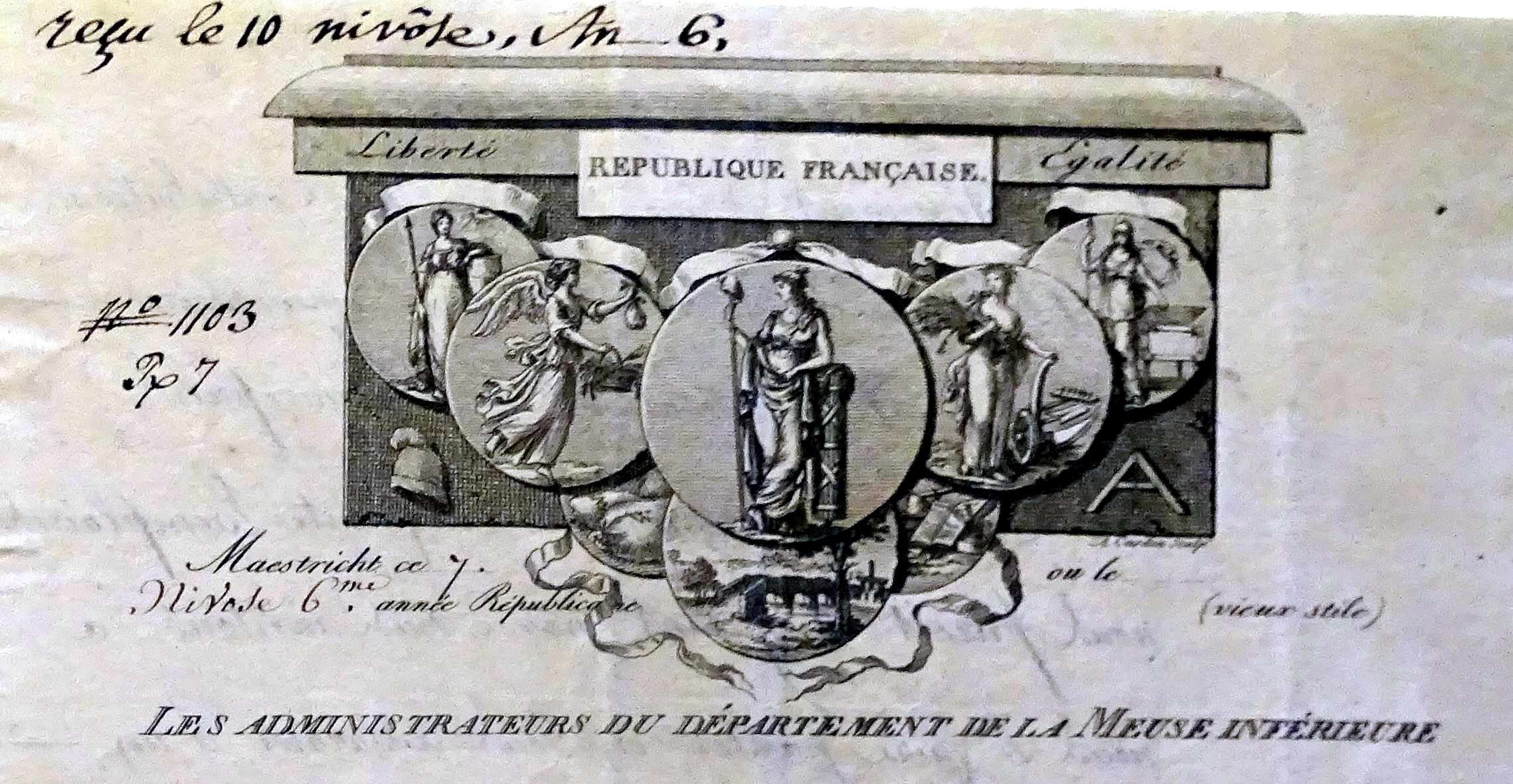
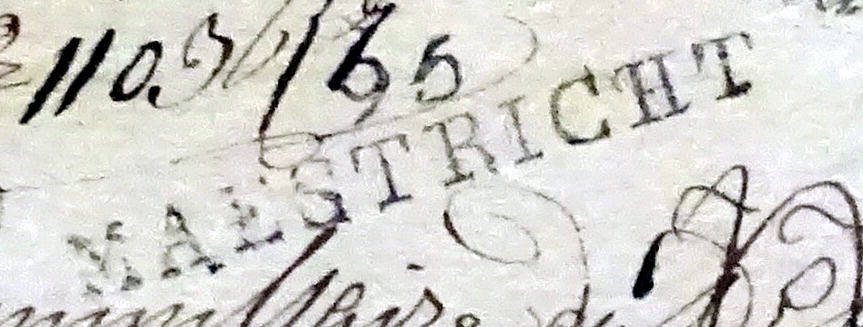
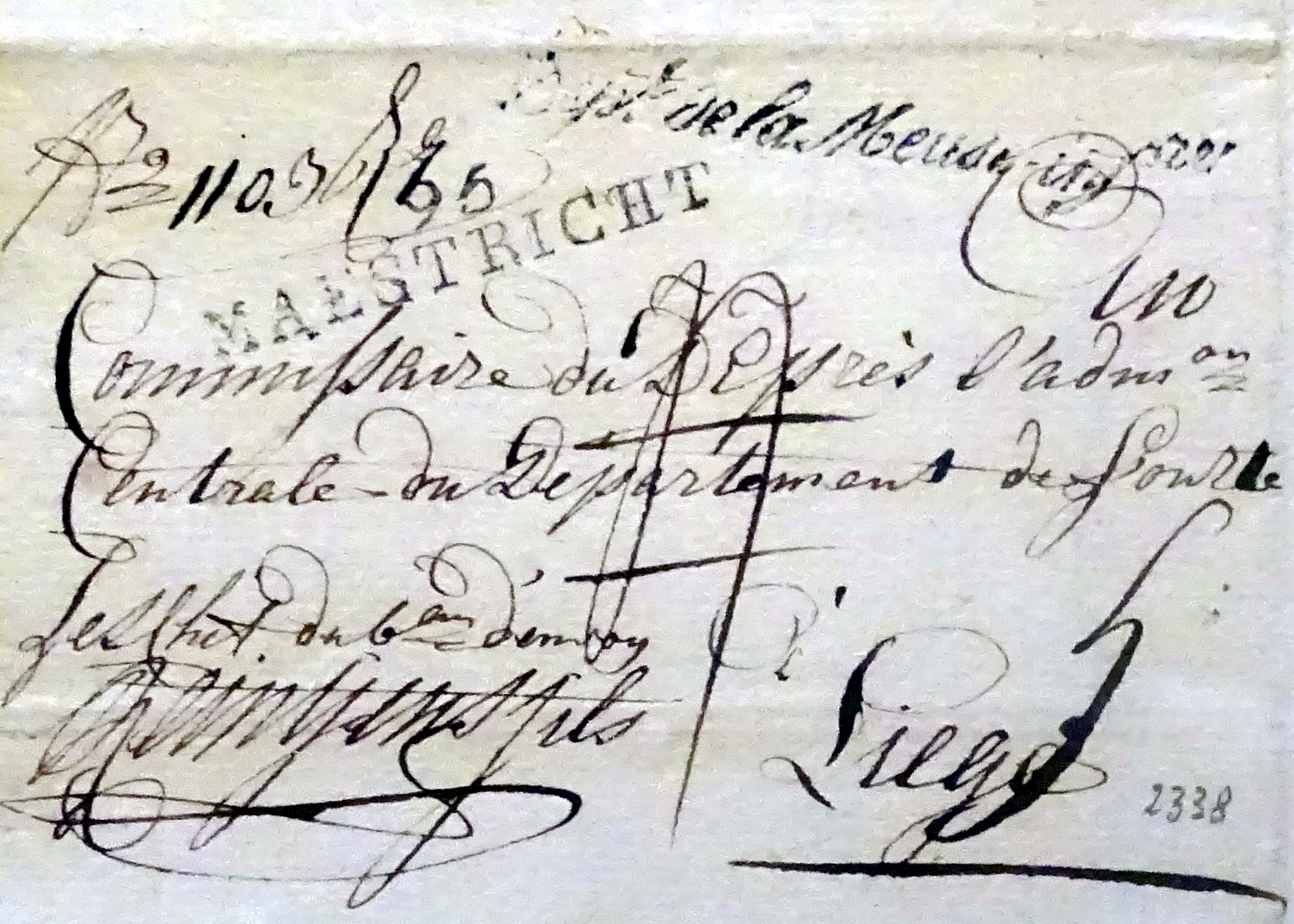
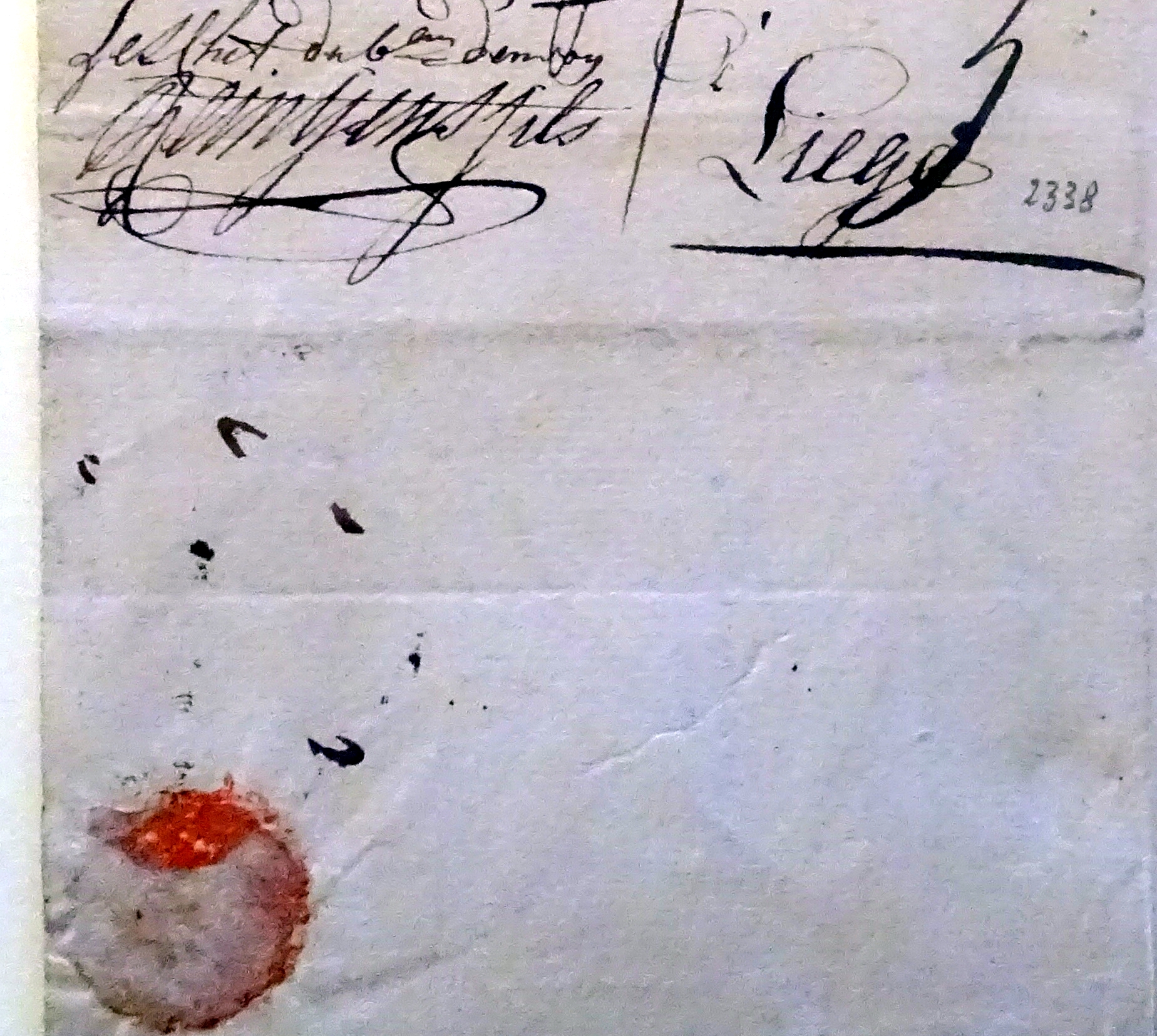
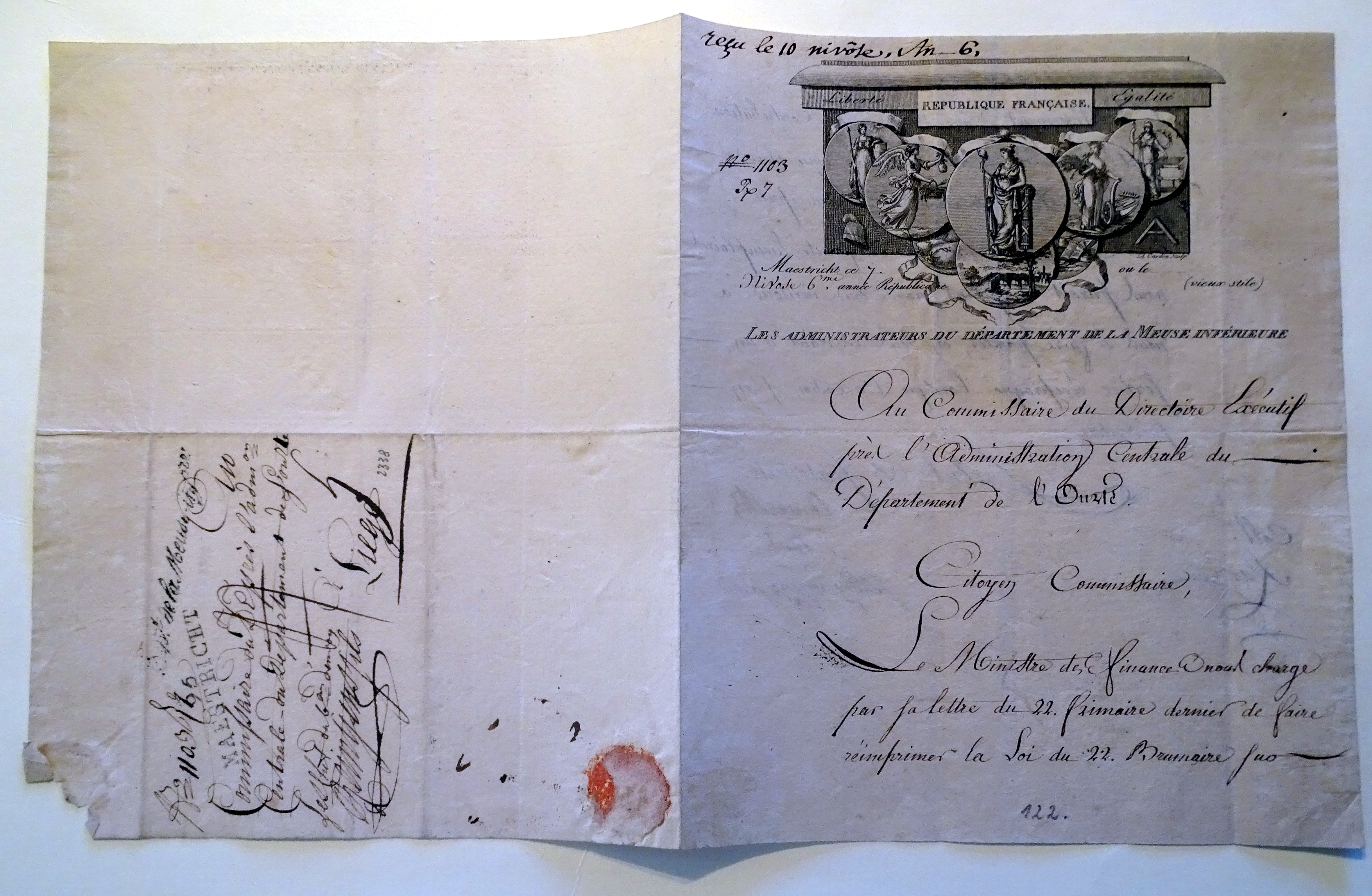
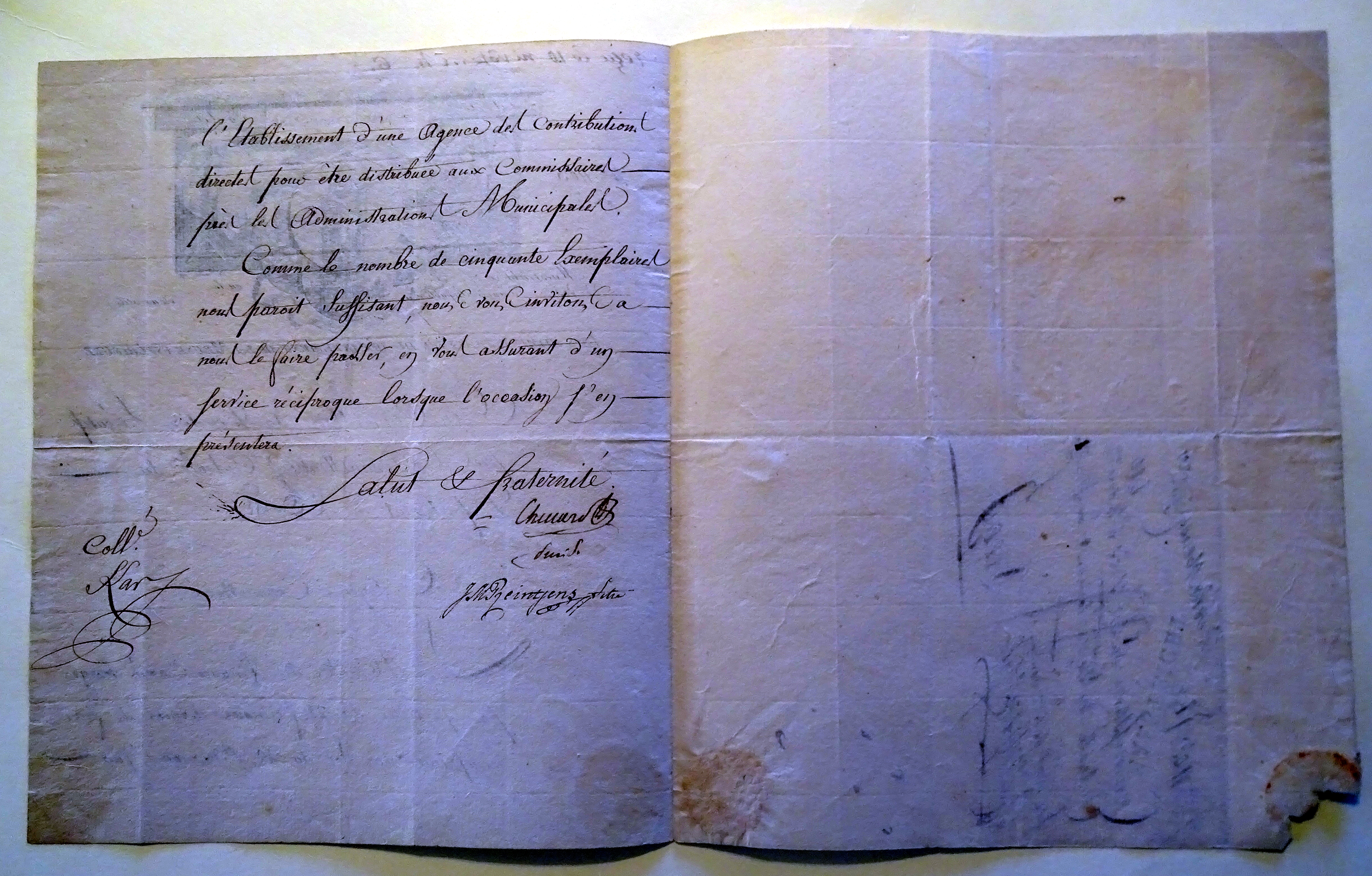
Today I like to introduce you to an extremely rare „philately paper“. Its an official letter from the French Department of Meuse-Interieure (Lower Maas). Not only that this letter is rare, its also a very decorative administration letter head of the then known French government. The rarest part of this letter is one of the very first postal rubber stamps officially used “ MAESTRICHT „. One of the first stamping ever used in the world !

  The ultra-rare stamp MAESTRICHT from 1797.

A Bit History Around.

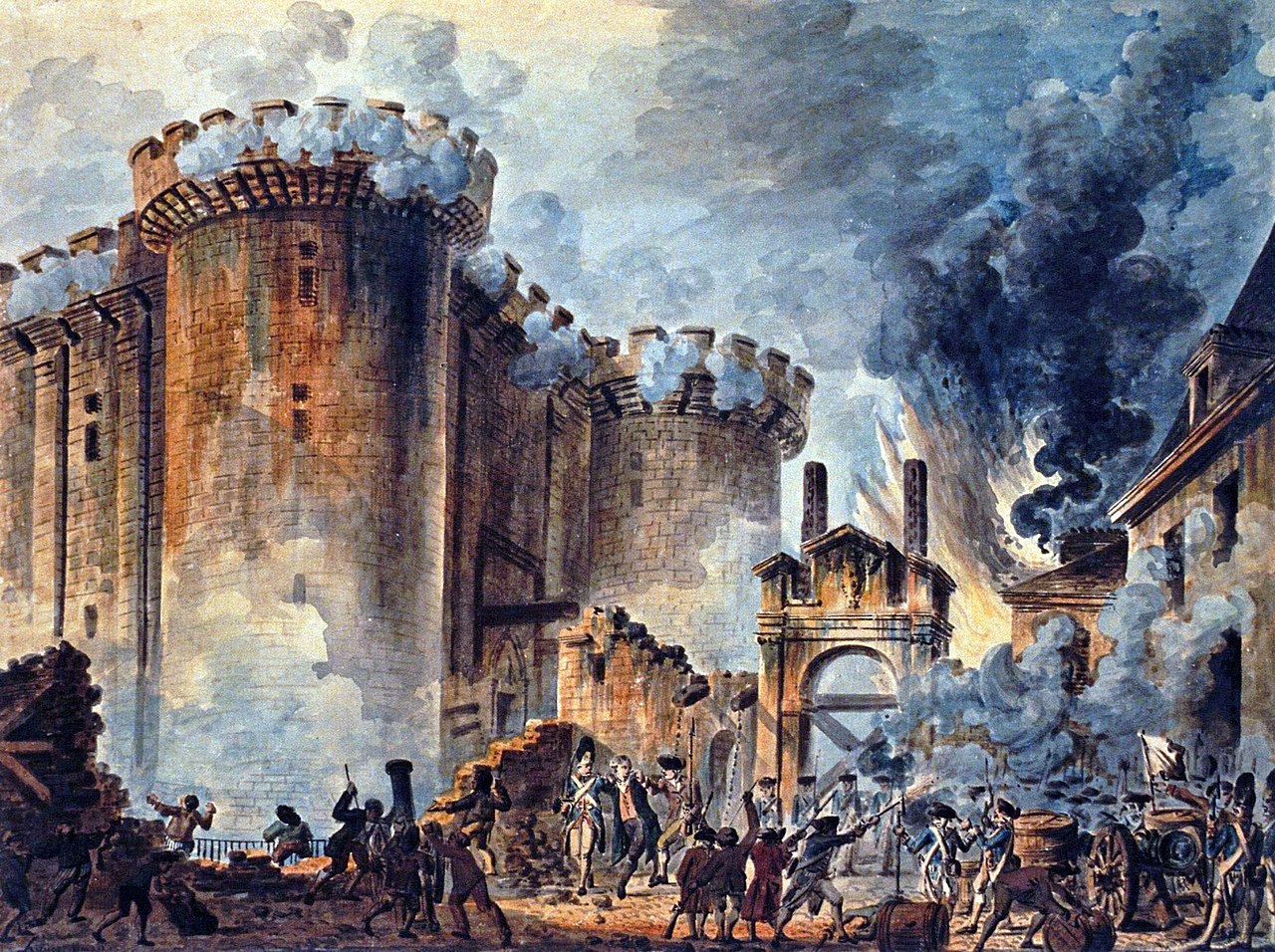
When this letter was written and sent, it was the time of the French Revolution (1789 – 1799), the time of many battles, occupation of Western Europe, up to 40.000 executions under the guillotine and the abolition of the French monarchy – till Emperor Napoleon !

  Storm on the Bastille in 1789.

After the Brabant Revolution, the republic of the United Belgian States was created in 1790 from the area previously belonging to the Austrian Netherlands. The prince bishopric of Liege was occupied in 1791.

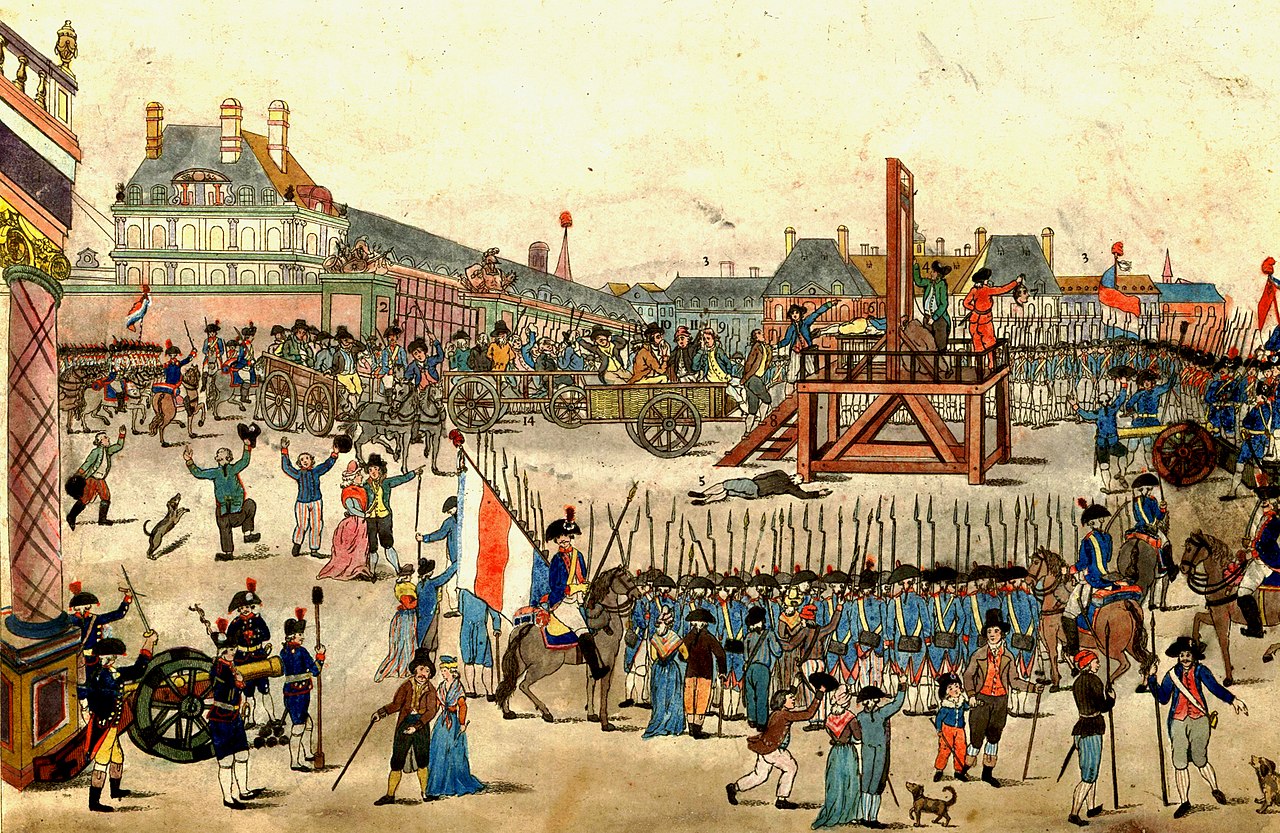
  Execution trough guillotine of King Louis XVI, 21 January 1793 on Place de la Revolution, Paris (left). Also guillotined was his wife Queen Marie Antoinette on 16 October 1793, also on Place de la Revolution (right).

The French took the city for the last time in 1794, when the condominium was dissolved and Maastricht was annexed to the First French Empire (1794–1814). For twenty years Maastricht was the capital of the „French Departement de la Meuse-Interieure“.

  First time singing the „Marseillaise“ by composer Rouget de Lisle in 1792.

The entire region was formally connected to France on 1 October 1795. Maastricht and Venlo were ceded from the, by the now formed „Seven United Dutch Provinces Batavian Republic“, of France.

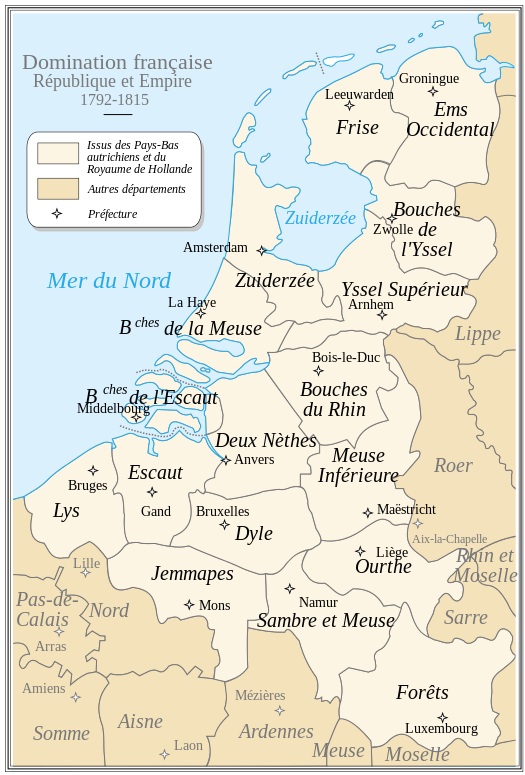
  The occupied Netherlands Arrondissements . The here shown letter went between the administrations of MAESTRICHT and LIEGE. This map shows one city which is unknown under this name today. It’s Bois-le-Duc and means s’Hertogenbosch or The Duke’s Forest or Der Wald des Herzogs.

As early as 1795, the administration and the judicial system were adapted to the new French system, resulting in the territory of the formerly Austrian Netherlands and other territories lying in the region a total of nine departments, which were administratively divided into arrondissements, cantons and municipalities. The cantons were also Peace jurisdiction districts .


After defeating Napoleon in the Battle of Leipzig (1813) and the Congress of Vienna (1815), the Department of Limburg became part of the „United Kingdom of the Netherlands“, a small part (Niederkrüchten) came to Prussia.

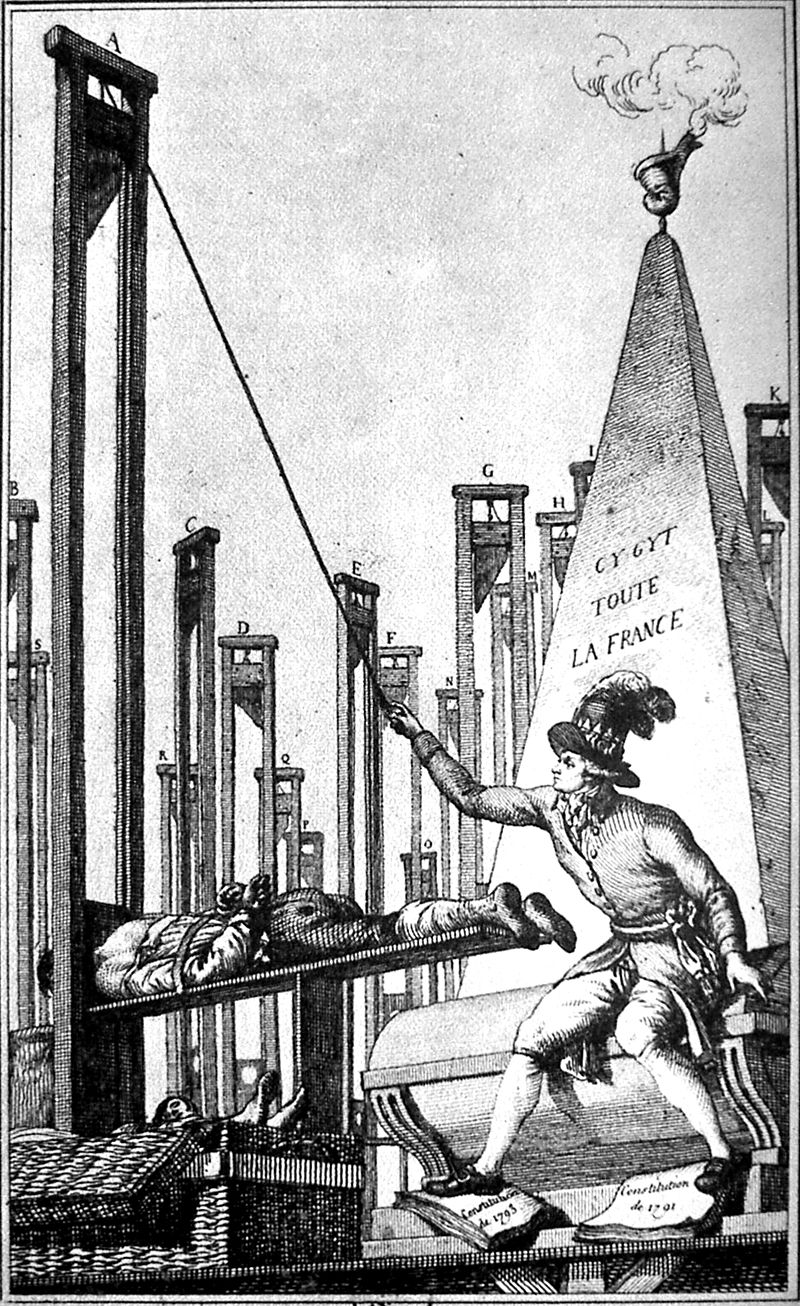
                And one more execution through the guillotine in 1794, the most influential figure of the Revolution, Robbespierre (left). Cartoon showing Robespierre guillotining the executioner after having guillotined everyone else (right).

The French Revolution of 1789 saw the overthrow of the King Louis XVI, and a Republic put in its place based on the ideals of „liberte, egalite, fraternite“ (French for liberty, equality and brotherhood). This ground-breaking event shocked nations across the world.

        How nationalistic the new revolutionary administration was can be seen in the letter-front, where by hand was written Liberte and Egalite and on the letter-rear a greeting with Fraternite.

The National Convention, chosen in the first elections under male universal suffrage, on 20 September 1792 succeeded the Legislative Assembly and on 21 September abolished the monarchy by proclaiming the French First Republic. Ex-king Louis XVI was convicted of treason and guillotined in January 1793.

  English cartoon attacking the excesses of the Revolution as symbolized by the guillotine. Between 20.000 and 40.000 people were executed during the Reign of Terror.

France had declared war on England and the Dutch Republic in November 1792 and did the same on Spain in March 1793. In the spring of 1793, Austria, Great Britain and the Dutch Republic invaded France, without any luck.

    1794, during the battle of Fleurus, France defeated the army’s of Great Britain, Austria and the Dutch Republic.

The counter-revolution, begun in March 1793 in the Vendee, by July had spread to Brittany, Normandy, Bordeaux, Marseilles, Toulon, Lyon. The Paris Convention government, managed in 1793 with brutal measures, to subdue most internal uprisings, at the cost of tens of thousands of lives – the story of Robbespierre and his „reign of terror“.

A new Calender.

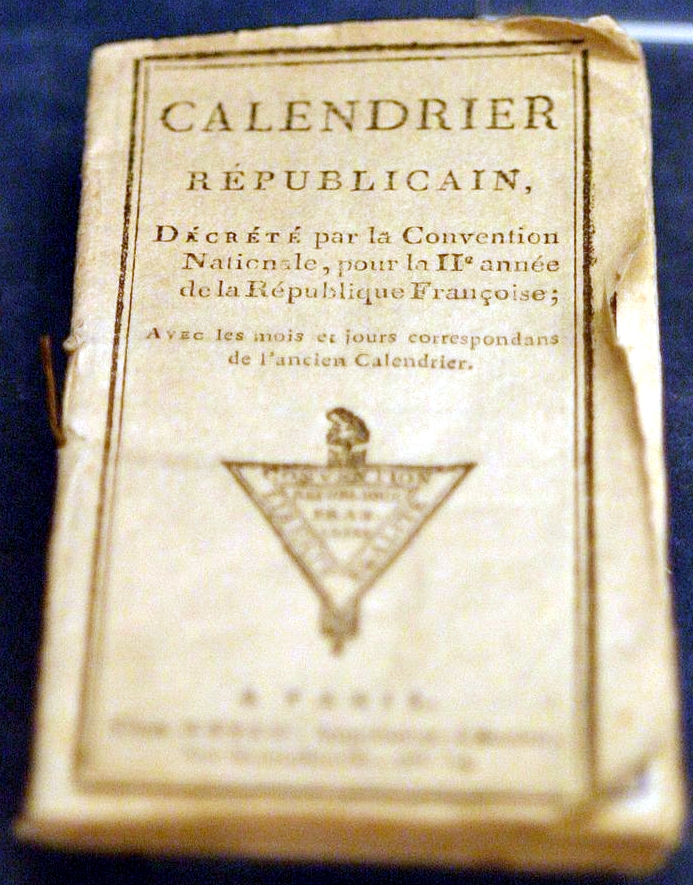
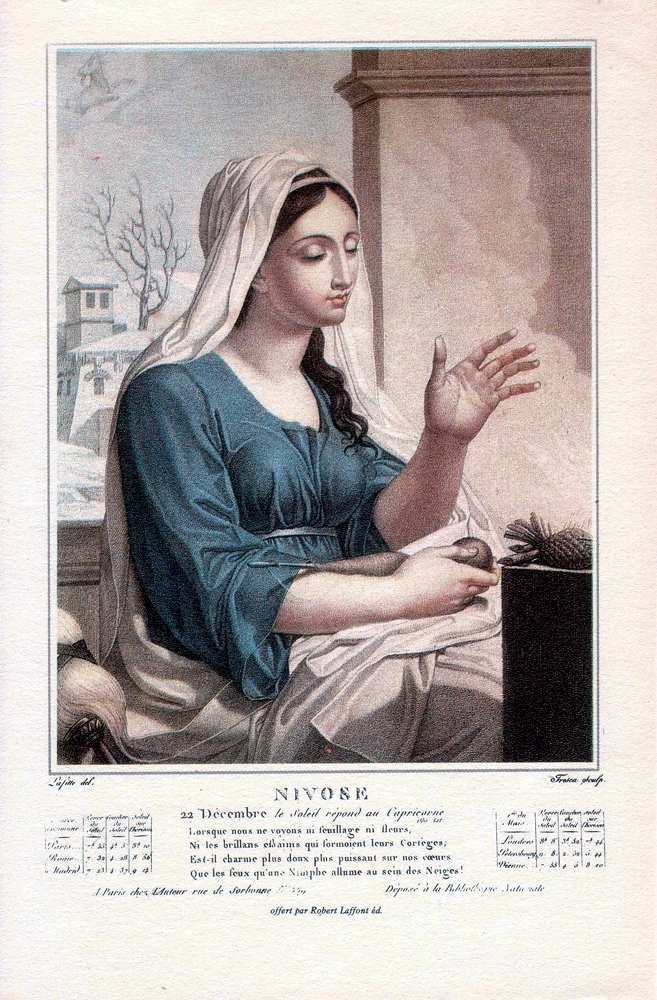
    The French Republic Calendar or better the French Revolutionary Calendar (Calendrier Revolutionnaire Français). Shown in the Historical Museum of Lausanne, Switzerland.

The days of the French Revolution and Republic saw many efforts to sweep away various trappings of the „ancien regime“ (the old feudal monarchy). Some of these were more successful than others. The new Republican government sought to institute, among other reforms, a new social and legal system, a new system of weights and measures (which became the metric system), and a new calendar.

The Letter Date:
„Maestricht ce 7. Nivose 6. annee Republicane“ .

  The „front page dating“ of our letter.

What does it mean ?

The French Republican Calendar (French: calendrier republicain français), also commonly called the French Revolutionary Calendar (calendrier revolutionnaire français), was a calendar created and implemented during the French Revolution, and used by the French government for about 12 years from late 1793 to 1805.

   The conversion is pretty complicated and if you are interested in details, please read Wikipedia about it. It all starts with the month. In our letter the month is „Nivose“. Nivose is translated as the month of December.

The revolutionary system was designed in part to remove all religious and royalist influences from the calendar, and was part of a larger attempt at decimalization in France (which also included decimal time of day, decimalization of currency, and metrication). It was used in government records in France and other areas under French rule, including Belgium, Luxembourg, and parts of the Netherlands, Germany, Switzerland, and Italy.

Conversion.

Nivose
(21 December – 19 January)
1 21 Dec Tourbe (Peat)
2 22 Dec Houille (Coal)
3 23 Dec Bitume (Bitumen)
4 24 Dec Soufre (Sulphur)
5 25 Dec Chien (Dog)
6 26 Dec Lave (Lava)
7 27 Dec Terre vegetale (Topsoil)
and so on.
The month Nivose covers the dates from 21st of December until 19th of January. The written 7th day is then the 27th of December, also called „Terre Vegetale“ or „topsoil day“.
Annee –  Gregorian
I (1)………. 1792
II (2)…….. 1793
III (3)……. 1794
IV (4)……. 1795
V (5)………1796
VI (6)……. 1797
and so on.
Finally the year. Written „6th year of republic“ means the year 1797.

Therefore the French Republican date „7. Nivose 6. Annee Republicane“  means in our Gregorian calendar  „27th of December 1797“.

The French Republic ended with the coronation of Napoleon I as Empereur des Français (Emperor of the French). The calendar was abolished by an act dated 22 Fructidor an XIII (9 September 1805) and signed by Napoleon. France went back to the Gregorian Calendar (which we still use today), introduced by  Pope Gregory XIII, in October 1582.

The Postal Rubber Stamp.

This is the most valuable part for collectors. I was interested in the whole letter, details, history and more. Most people see it as an philatelic item and here-fore the stamp is the collectable value.

  There are only a few similar stamping’s like this one known. This MAESTRICHT stamping is the only one I have ever seen and for sure the oldest Netherlands postal stamping known.

The above letter was sent between Maastricht and Liege, as one can see above. Reading:

Sender:   Dept. de la Meuse Inter.
Postoffice stamp:   MAESTRICHT
Sent through:   Centrale du Department de Ourthe
Receiver:   Dept. Signature and Liege

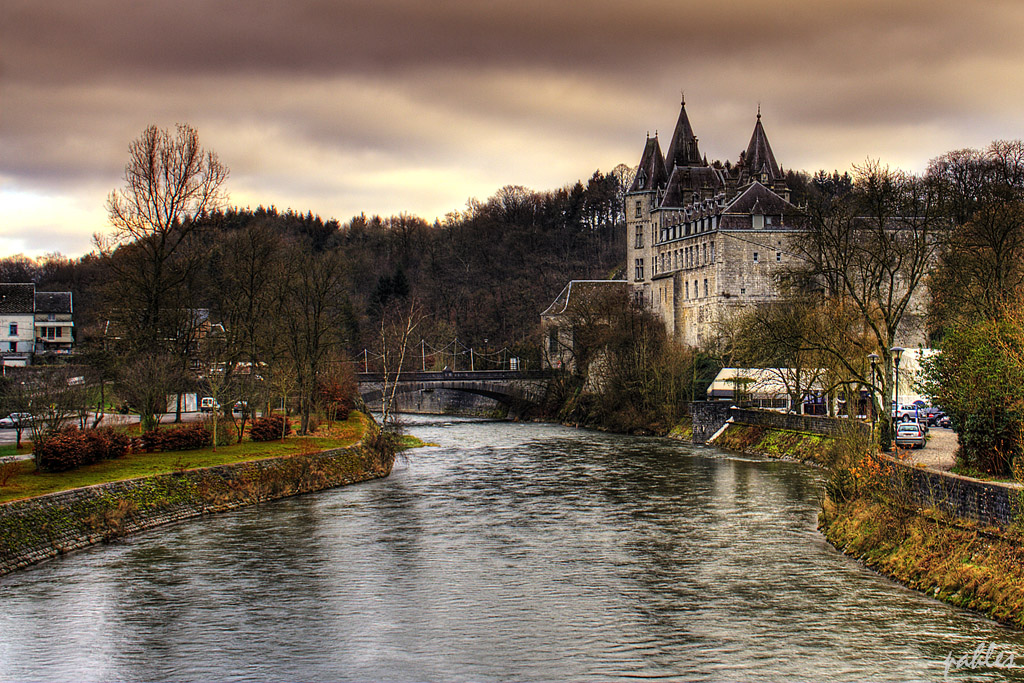
Ourthe (also spelled Ourte at the time) was a department of the First French Empire in present-day Germany and Belgium. It was named after the river Ourthe (Oute). The Ourthe (Wallon-French = Oute) is a 165-kilometre (103 mi) long river in the Ardennes in Wallonia (Belgium). It is a right tributary to the river Meuse. The capital city of Ourthe at the time was Liege. See the map further up.

  The town of Durbuy at the river Ourthe in Belgium Ardennes. Today one of the most popular holiday destinations in the Ardennes.

In 1799 (2 years after the here shown letter), mail was declared to be national in the Netherlands. In practice, postal traffic was concentrated in Holland, as the connections with the rest of the Netherlands and the country were still quite limited. In the countryside, mail was therefore – despite the nationalization – mainly delivered through private endeavors.

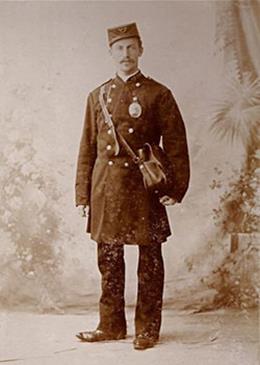
  „Postbode te voet“, walking postman. Photo from 1878. I was unable to find a Dutch post delivery man from the 18th century.

The postman walked from city to city, carrying the mail under his arm. He delivered the mail to those who had ordered it, who then delivered it to the addressees. This was the main method of transporting mail in the 18th century. Postmen would walk around eight hours a day.

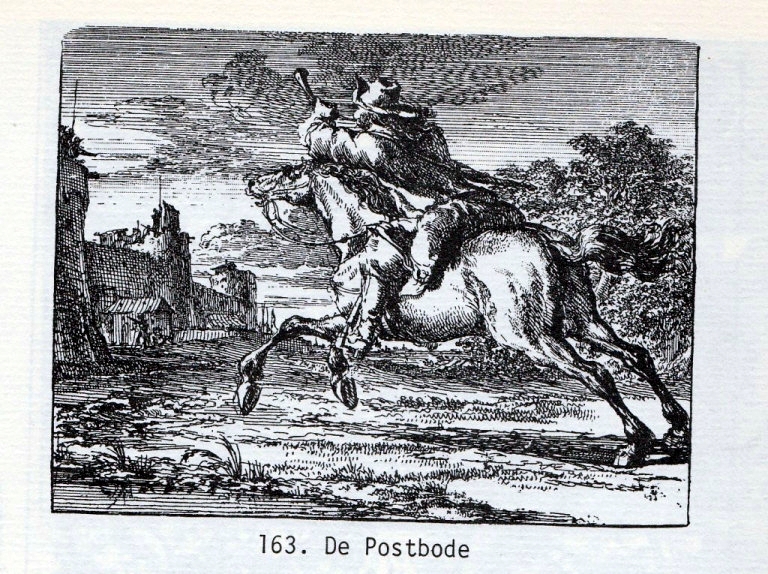
  The French introduced the postilion in the 18th century. Transporting mail went a lot faster on horseback. Dutch woodcut from a postillion.

The First Form of Stamping: Wax Seals.

The oldest use of a tool resembling a stamp is an application that commonly didn’t use ink: the seal. Today, seals – usually in wax – are mostly used for decorative purposes, but for millennia they were critical for verifying the authenticity of products, correspondence, and official documents.

  Our letter here used a wax seal too. I guess for a tight closing of the mail. Of course it was broken during opening and therefore the seal is lost.

Pre – Adhesive Stamps.

Mauritius’ first post office was opened on 21 December 1772 when the island was under French rule. Mail was delivered internally and by ship to and from France and India. Great Britain took over the island on 3 December 1810, and continued the overseas mail service.  A few pre-stamp markings, applied by rubber stamp, exist from the 1790s during the French administration, and more are known from the subsequent British period.

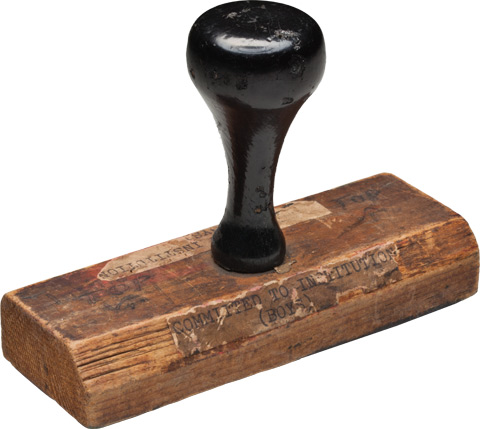
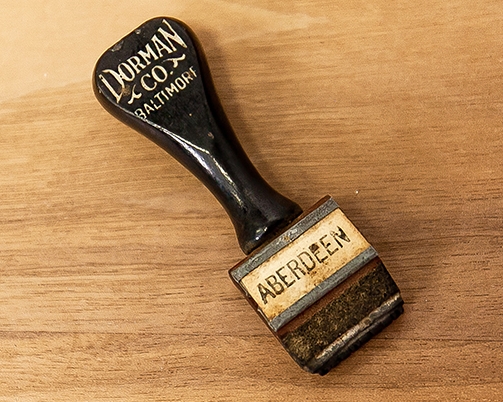
        Typical rubber-ink stamps of the time.

History of Stamping.

It shows that almost 50 years later the first adhesive „printed stamps“ were used. Before the postal reforms of 1840 sending a letter was expensive. The charge was for each sheet of paper that a letter comprised, and for the distance covered. The receiver had to pay and not the sender!

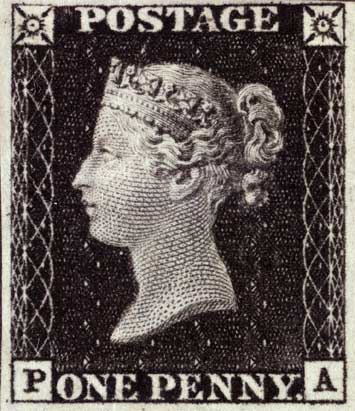
  This stamp, known as the Penny Black from 1840, was the world’s first postage stamp. Shown is Queen Victoria of Great Britain.

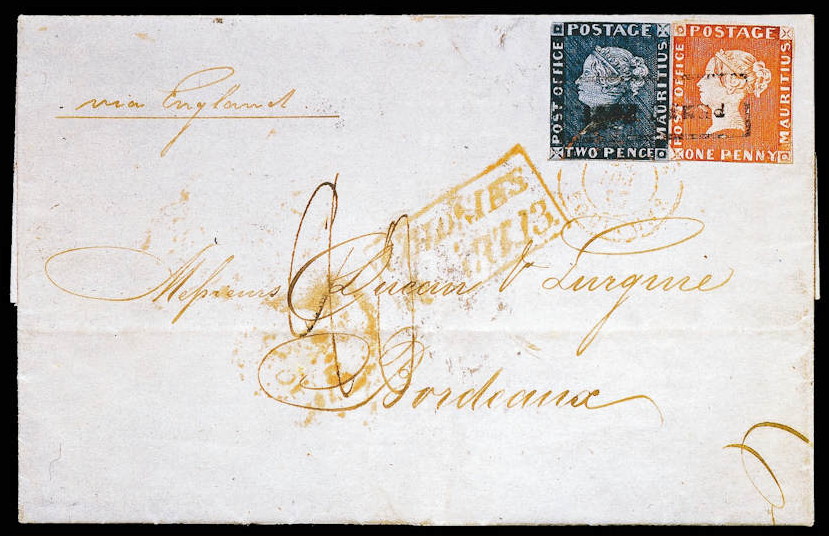
In 1847, Mauritius followed Great Britain in issuing stamps carrying the image of the current regent of Great Britain, Queen Victoria, which practice would be followed throughout the British Empire. Most of the early issues of Mauritius were locally designed and produced and have a distinct “primitive” character.

  The so named „Bordeaux Cover“ with a red and a blue Mauritius stamp from 1847 (the first issue). This cover was sold 1993 in an Zurich auction for FOUR MILLION US DOLLARS.

Why was Mauritius so early an important mail destination? Easy to answer – it was one of  the most important stop-overs between the „old western world“ (Europe) and the „new eastern world“ (India). Our above postal letter stamp from 1797, precise 47 or 50 years before the oldest known paper stamps, is not valued at four million, but at least a very valuable collectors item with a great history behind.

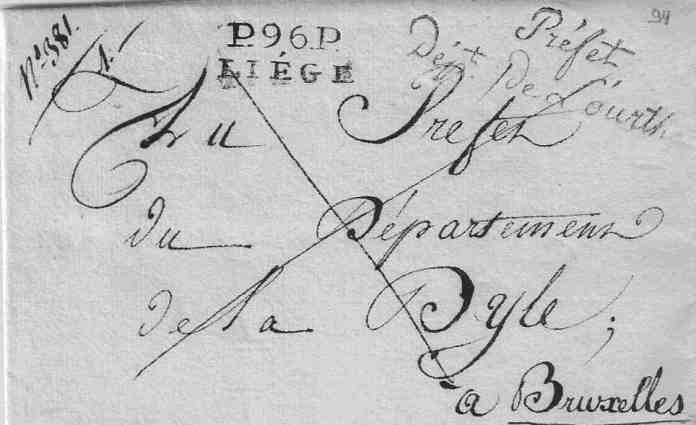
  With the end of the First French Empire, more rubber stamps were used by official post offices. This letter dates „Departmente de la Ourte, stamped in Liege, 18 Julliet 1804“ .  Not as decorative and much younger as the MAESTRICHT letter, many years ago sold in an auction for about 800,– Euro.

Valuable collectors item.

The content of the letter is not particularly interesting. Also, a translation into our today’s language is very difficult. I leave the interpretation of the „head vignette“, a wonderful copper engraving, or a precise translation to a new proud collector-owner !
Nevertheless, here the content in some keywords:

To the commissar of the executive direction of the department Ourthe.
Establishment of an contribution agency.
Direct to be distributed to the Commissioners near the municipal administration.
The number of fifty copies seems sufficient.
We invite you to test and we send it to you.
Make sure your reciprocal service, when the opportunity arises, will be present.
Salvation and Fraternity,

with signatures of the sender.

   
The above letter, from 1797. will be for sale soon at eBay.   Have a look !

Veröffentlicht unter Collecting, For Sale, History, Hobbies | Hinterlasse einen Kommentar

Trump University


Recently I came across the above picture, showing this plump, grinning, arrogant and overbearing face. Also shown in some kind of an university cape. I read the article and another one and decided to copy and post them for you without further comment. Just added a few pictures to enrich the written information.

   The articles are about Trump University.

Three Sample Questions from the Trump University Final Exam.

By John Flowers
THE NEW YORKER
March 22, 2016

Below you will find three examples of questions from previous final exams at Trump University. Use these sample questions and the answer key provided to prepare for next week’s big test.

1. Two plus two equals what ?

(a) Maybe four.
(b) Could be four. Could be. Lotta people saying it’s five.
(c) I’m not saying it’s five; I’m saying it could be—could be five. You see these establishment hacks, losers, like Mitt Romney? Real crank. They hate me. They take answers like “could be” and say, “Oh, he says two plus two equals five.” I never said that. I never—I said “could be.” Could be six. We don’t know.
(d) All of the above.
(e) None of the above.
(f) D and E.

2. Describe a major theme of  “The Old Man and the Sea” !

(a) Well, the theme is big. That I can assure you. Definitely no problem in the theme department. Quite big. Quite.
(b) I know what you want me to say here. You want me to say “yuge.” Well, I’m not. I’m not gonna say that.
(c) Should I say it? . . . No. I’m not gonna say it. But it is.
(d) Now—and I don’t even wanna bring it up—but you got a lot of people. I’m not going to mention names. O.K., Marco. You got Little Marco, who has a tiny theme. No, it’s true. Very small. Probably why he’s outta the race. Seriously, find me one person who says there was a big theme behind that campaign. But anyway, here’s Little Marco, saying I’m the one with the small theme. Can you believe that? Says I’m like Santiago in “The Old Man and the Sea.” Says I sometimes lose my harpoon—you know, prematurely—when I try to reel in the big fish. Totally not true.
(e) In fact, reminds me of the time I tried to get a date with Brooke Shields. Remember Brooke Shields? Gorgeous. Not like my wife. Gorgeous, though. I asked her out. She said no. Career went downhill after that. Left me like Santiago at the end of the book, hauling this gigantic mast home with nothing to show for my troubles.
(f) Seriously, “The Old Man and the Sea”? Please. Santiago’s not a winner. Here’s what you need to read: “The Art of the Deal.” Best book since the Bible. Probably better. People say that. I don’t. People do. Bible was, like, God with sixty ghostwriters. “The Art of the Deal” was just me, dictating to Tony Schwartz. Great guy. Takes dictation better than Moses.

3. H2O is the chemical symbol for what compound ?

(a) What the hell’s “huh-twenty”?
(b) No, that’s what it says, “huh-twenty.” Or maybe the “H” is silent. I dunno.
(c) I didn’t say “huh-twenty.” You said “huh-twenty.” You asked me what “huh-twenty” was. You see, this is what the media does. They claim, “You said ‘huh-twenty!’ ” And I’m like, “I said? No you said ‘huh-twenty.’ I just repeated what you said.”
(d) That’s all they do, ask these totally bogus questions, when what they should be asking about is Hillary’s e-mails. That’s what this question should be about. Because what she did—wow. I mean, that’s why she’s hugging Obama every chance she gets.
(e) You know who else hugs Obama? Chris Christie.
(f) But we love Chris, don’t we? We love Chris.

Answer key:

To 1. I like A. I like B, too. D doesn’t do much for me, but E and F are real winners.

To 2. I’m gonna have to look into A and B. C is very compelling. Very. I hear good things about D through F. But I don’t wanna say anything yet.

To 3. I don’t know why people are saying there were three questions. There weren’t. I mean, do you have video? Show me the video where there were three questions. You can’t, because there is no video. People come here. They try to make trouble, saying we started a question three. We did not. And lemme tell ya, we’re gonna fight back. I’m not saying we’ll sue, but we could. Throw a few punches, ya know. Because this test prep is a great test prep. You thought so, too: you signed the agreement saying that you thought this was the greatest test prep of all time and that you wanted to be sued if video surfaced of you saying otherwise.

Congratulations, this was actually the final. You’ve passed.
Now give me $35,000.


Donald Trump’s online ‚University‘ has a D-minus rating from the Better Business Bureau. There is no lower rating possible ?!

Douglas Feiden
DAILY NEWS
Thursday, 19th of May 2011

The state attorney general is investigating Donald Trump’s online business school where he charges would-be moguls up to $35,000 to „learn from the master.“ The for-profit Trump University is being probed for possibly deceptive business practices, sources familiar with Eric Schneiderman’s investigation said Thursday.

Problems with Trump’s business education firms first surfaced last year when the Daily News revealed that more than 150 students in 22 states said they’d been cheated out of tens of thousands of dollars for useless courses.

Schneiderman subpoenaed the school – which is non-accredited and changed its legal name to the Trump Entrepreneur Initiative after News inquiries – as part of a broad-based probe of New York’s for-profit college industry.

An attorney general spokesman declined comment. A Trump executive confirmed the probe, saying, „We look forward to cooperating with the inquiry and providing the information requested.“

He claimed 95% of its students evaluated the Trump courses as „excellent.“ But the Better Business Bureau disagreed, slapping Trump University with a D-minus rating.

The News documented dozens of complaints about the billionaire developer’s school from retirees, veterans, laid-off workers and seniors living on fixed incomes. They charged they were pressured to max out credit cards or draw down 401(k)s to enroll in courses they found useless – then were refused refunds.

If it wasn’t sooo sad  –  one could laugh about it !!!


Settlement.

A federal judge recently gave final approval to a $25 million agreement to settle fraud claims arising from Donald J. Trump’s for-profit education venture, Trump University, rejecting a last-minute objection to the deal.

The judge, Gonzalo P. Curiel, in San Diego, issued his order after considering a challenge from Sherri Simpson, a former Trump University student from Fort Lauderdale, Fla., whose lawyers say she should have had a chance to opt out of the class-action settlement and individually sue President Trump, perhaps forcing a trial.

The civil settlement was not enough for Ms. Simpson, who wanted to see Mr. Trump tried on criminal racketeering charges. She also wanted an apology.

But Judge Curiel, in his ruling, sided with the class-action plaintiffs’ lawyers, who had urged him to approve the agreement, saying it was the best possible outcome for roughly 3,730 students. They could recoup more than 90 cents on the dollar of what they spent at Trump University.

After his election in November, Mr. Trump reversed course and agreed to pay $25 million to resolve the litigation. He did not admit fault, and he maintained in posts on Twitter after the settlement announcement that he “did not have the time to go through a long but winning trial on Trump U.”   He always has the last word – true or not !!!

Veröffentlicht unter Information, Lifestyle | Verschlagwortet mit | 5 Kommentare

Thai Chicken Curry

Again and again friends asked me for my chicken curry recipe. Once more last weekend. There is no big secret, just a bit of a challenge to get here in Uruguay all ingredients together and a bit of experience to mix the right consistency. Anyway here it is.

The Story Around.

With this post I like to introduce you to several recipes, different tips and how to make an original stylish Thai Chicken Curry. Therefore it is wise to read my earlier articles under the category „Recipes“ or the tag „Curry“ about Curry’s.

  One of the many floating markets in Bangkok.

My love for Thai food started more then 40 years ago when I was frequently flying between Europe and Australia and had many stopovers in Bangkok. I had the chance to follow some „Thai Cooking Schools“ offered by the Oriental Hotel in Bangkok. There were lessons teaching what and how to buy ingredients at the floating markets or visiting the Oriental owned vegetable and herbs nursery’s up in lush green mountains of Chiang Mai.

   Norbert Kostner, center, many years head-chef of the Oriental Hotel Bangkok and founder of the Oriental Thai Cooking School. He and especially the General Manager of the Oriental, Kurt Wachtveitel, both Germans, were responsible for the immense success of that hotel. The Oriental was choosen for many years in a row as the „No. 1 – The Best Hotel in the World“.

Besides I had the chance to travel and cook with Norbert Kostner, executive head chef of the Oriental in Bangkok. Above all that I followed street vendor and boat vendor cooking methods during the years.

  Fantastic Thai hospitality. Fresh prepared Thai snacks at the garden terrace of the Oriental Hotel, free to use for hotel guests. My experience in the 1990’s.

Thai Red Curry Chicken.

As you read in my earlier posts you know that we have mainly the following different curry’s – green curry,red curry, yellow curry, white curry and a few curry’s named by their origin – like „Masman Curry“ (also called Massaman Curry, contents are with cloves, cinnamon and star anise, mostly used with beef). In this article we talk about Thailand only, not about so many delicious curry dishes from other parts of the world, like India.

  Typical „Indian Style Curry“, just red curry paste (but an Indian masala mixture), vegetarian type with chick peas and onion, a naan aside.

Thai Red Curry Chicken is a colorful dish that combines fresh ingredients and aromatic herbs over a classic mix of spices and mellowed with rich coconut milk. Be sure to serve with a traditional accompaniment, a refreshing salad (see my post „Thai Green Mango Salad“), or „Thai Cucumber Salad“. Made in less then 30 minutes, Thai Red Curry Chicken is perfect for a weeknight dinner.

The Curry Paste Challenge.

As I said before, a Thai curry chicken can be made within 30 minutes. But only if you have some curry paste, ready to use. In Uruguay you have to search for the paste ingredients and mostly you have to improvise. Then, if you found once your ingredient at one place, there is no guaranty that they have it next time if you look for.

  Delicious red chicken curry with cucumber salad.

So many friends fly in and out the country, why not to ask them for a favor and get some ready paste from abroad ? My favorite is the Original Thai Curry Paste from Mae Ploy. When we moved from Panama to here, I brought a few containers with me. One we forgot in a cupboard and found it years later. Meantime 5 years over the expiring date and still good. I like this brand.

  Mae Ploy curry paste in a Panamanian shop.

All recipes can vary a bit depends on ingredients one can get the hand on. I buy most of my cooking ingredients at MAM market in Montevideo. See my post about MAM under category „Uruguay“ in this blog.

      MAM  in Montevideo. Many „green grocers“ have all you need, especially „hot chilli’s“ in all colors. I choose red ones, but all the yellow ones you see in the crate will turn red. Mostly I buy a bag of chilli’s and keep them in my freezer for many weeks. At El Granero you’ll find all other ingredients and spices you are looking for. El Granero has 2 shops at MAM with a different assortment of products.  Now – how do we cook curry ?

Ingredients.

Curry Paste.
1 medium red onion
4 cloves garlic
4 tablespoons fresh chopped coriander roots
3 tablespoons fresh chopped lemon grass
4 teaspoons fresh chopped red chilli

   These are the red chilli’s I buy at MAM. Not a bad size and piping hot. If they are frozen, like I use them here, they loose a bit of their heat. Anyway 1 or 2 will be sufficient for your paste.

1 1/2 teaspoons galangal powder
1 1/2 teaspoons grated lime zest
1/2 teaspoon shrimp paste (if you have)
2 kaffir lime leaves (dried are possible too)

    Thats how kaffir lime looks like, the leaves are the best, from our garden in Australia. Of course one can buy preserved ones in good asian shops. Not in Uruguay, here they don’t like to cook with herbs and spices.

4 teaspoons smoked hot paprika powder
1/2 teaspoon turmeric
1/2 teaspoon cumin seeds
4 teaspoons nut-oil (no sesame oil)

How to do the paste.
Blend or process all ingredients together until
you have a smooth, but oily/firm paste

  This is how your curry paste should look like. Firm, but smooth and a bit oily. Click on pick to have a closer look – as you can click on all pics for better view.

Red Chicken Curry.
2 tablespoons olive oil
5 medium size green onions chopped
500 gram (1 lb) chicken breasts boneless and skinless
and cut into bite size pieces
1 can (425ml) coconut milk or more (depends how much sauce
you like, if curry is to thick add more coconut milk)

  For an 8 person curry, which is in total about 10 liters of finished curry, I used 10 cans of coconut milk.

2 to 4 tablespoons Thai red curry paste (depends how spicy
you like your curry meal)
160 gram (5 oz) snow peas roughly chopped (or use 1/2 bag
frozen peas or use same amount of fresh green asparagus etc.)
160 gram (5 oz) chopped pineapple pieces (from can is fine)
4 kaffir lime leaves or 2 tablespoons lime juice
big hand full of unsalted natural white peanuts

  These are the peanuts to use for Thai cooking. They are „sin sal“ and somehow tasteless. Thai’s use peanuts in many dishes. Its a matter of crunch and not taste.

2 teaspoons brown sugar
2 bruised stems of lemongrass, just the white bottom
salt and pepper to taste
1 tablespoon fresh cilantro chopped (if you like cilantro
use more, also have some for garnish later on)

How to do.

Heat the olive oil in a large wok or skillet until hot.
Add the green onions and stir-fry until soft. Switch heat down.
Add the peanuts and the curry paste and stir-fry until well mixed.


Remove the mixture and set aside. Heat up pan again.
Add chicken pieces to the oily pan and cook until chicken is no longer pink, about 3 to 4 minutes.
Stir in curry and onion mixture and combine well. Chicken will soak in the curry flavor. Just a minute not longer.
Now add coconut milk, sugar, kaffir leaves and lemongrass stems.

  Ready to serve Chicken curry.

Bring to the boil and switch heat down, let simmer for a few minutes that just the chicken is cooked through.
Stir in pineapple and peas or asparagus and let it heat through well.
Remove the kaffir lime leaves and lemon grass from the pot.
Remove from heat and garnish with fresh cilantro.
Serve immediately over rice.

  Mouthwatering red chicken curry over rice.

Tips.

Your homemade curry-paste is suitable to freeze long time or kept a week in your fridge.
That means you can make the paste days ahead and being quick when you cook.
Some people like chicken breast sliced into thin slices or thin strips. If you want to do this, slice chicken breasts while partially frozen to get satisfying thin slices.

  Lovely thin sliced chicken breast curry.

When I cook chicken curry for people who know me and my cooking, I often do it a bit more rustic. That means I like to use chicken thigh’s instead breast, thigh’s are much more tasty and it is a yummy fun soaking off all the curry-meat-sauce from the bones.

  If you like to use chicken thigh’s, then cook them for about 30 minutes in a veggie stock. After they are ready peal off the skin (doesn’t taste good after cooking) and go on with your curry. Save the wonderful chicken broth for a later use.
     Doesn’t look as elegant as the other curry’s, but its damned delicious.    In Europe or anywhere else use 2 thigh’s per person.    Here in Uruguay 1 thigh per person will do,  because we have elephant-size chicken here.

To bruise the lemongrass, use a meat mallet to lightly crush it. This will ensure you get the most flavor into your curry.
You can leave the kaffir lime leaves and lemon grass stalks in the dish, and just push them to the side of your plate when eating, since they are too tough to eat.
Store remaining kaffir lime leaves in the refrigerator for at least 2 weeks. You can also freeze them in a sealed ziploc bag or airtight container.

If you leave your finished curry over night, then this is what you are looking for, the chilli oil has separated beautifully from the sauce.

  And finally you should offer these supplements to your curry dish. A nice cool/refreshing salad (Thai Papaya Mango Salad or similar, see, by example,  my post „Thai Green Mango Salad“) which goes so well with curry. I always offer the seeds from inside a papaya also, they taste delicious peppery on the salad. Then some additional peanuts and finally some plain yogurt for guests who think your curry tastes to spicy/hot.    Enjoy your curry !

Veröffentlicht unter Lifestyle, Recipes, Travel | Verschlagwortet mit , | Hinterlasse einen Kommentar