
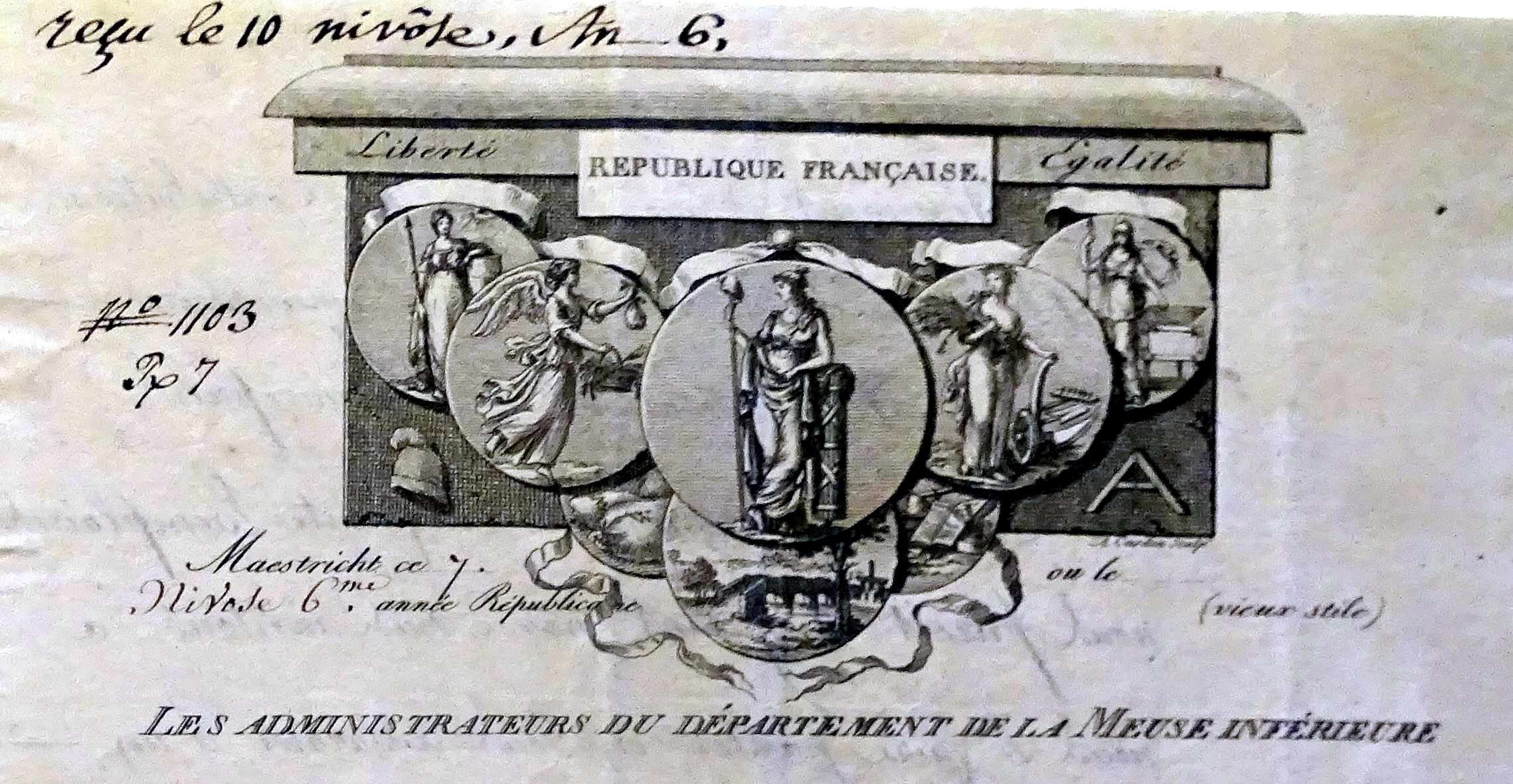
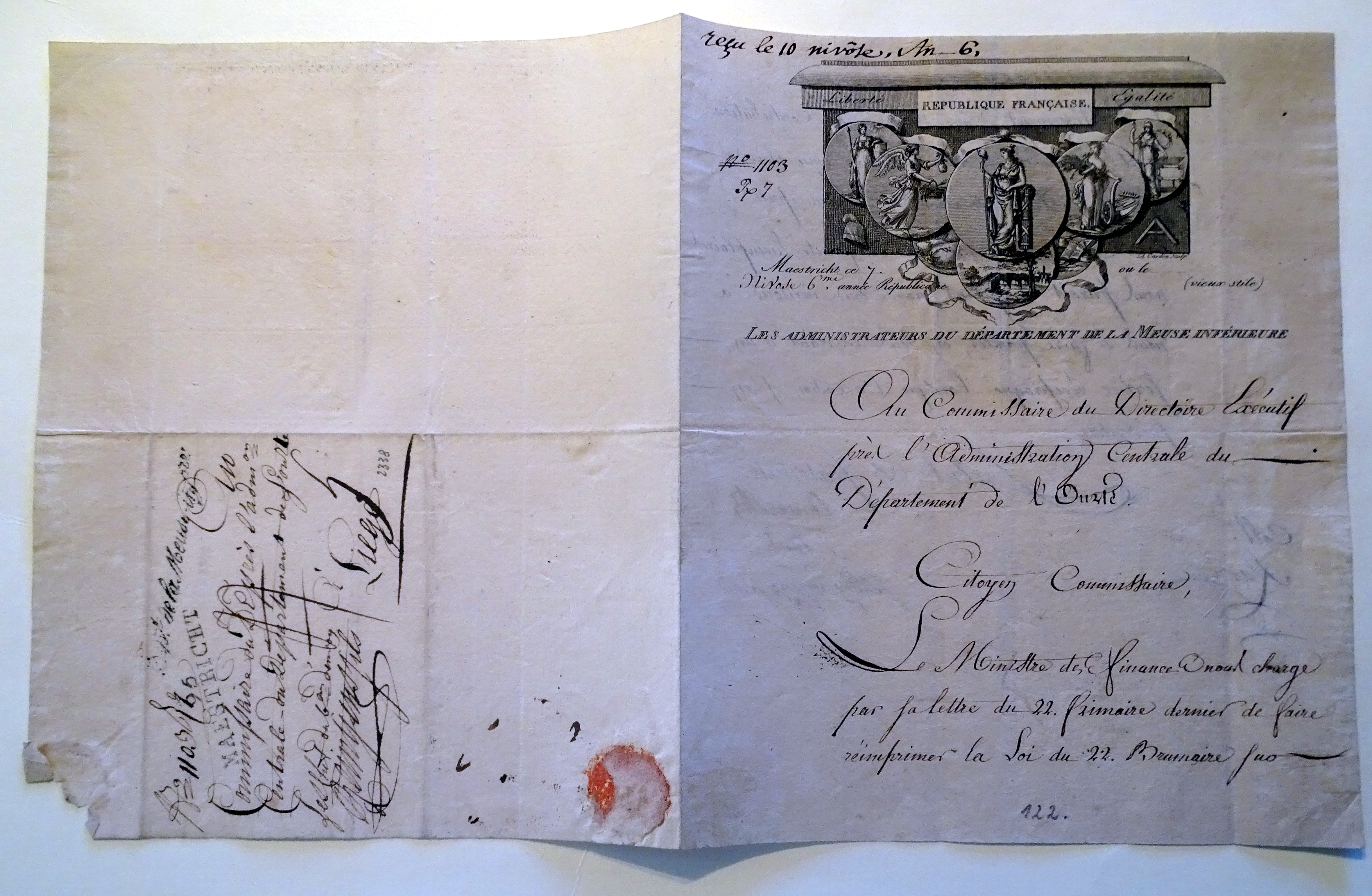
Today I like to introduce you to an extremely rare „philately paper“. Its an official letter from the French Department of Meuse-Interieure (Lower Maas). Not only that this letter is rare, its also a very decorative administration letter head of the then known French government. The rarest part of this letter is one of the very first postal rubber stamps officially used “ MAESTRICHT „. One of the first stamping ever used in the world !
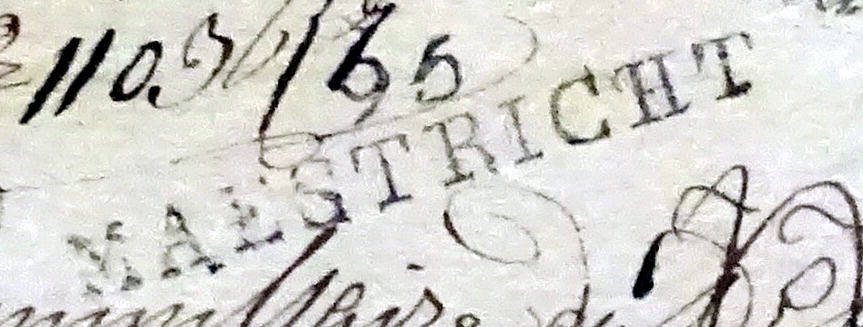
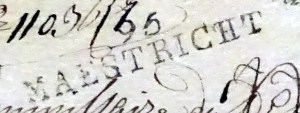 The ultra-rare stamp MAESTRICHT from 1797.
A Bit History Around.
When this letter was written and sent, it was the time of the French Revolution (1789 – 1799), the time of many battles, occupation of Western Europe, up to 40.000 executions under the guillotine and the abolition of the French monarchy – till Emperor Napoleon !
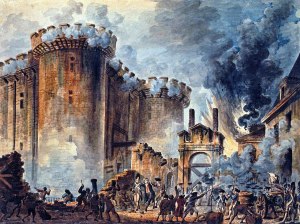 Storm on the Bastille in 1789.
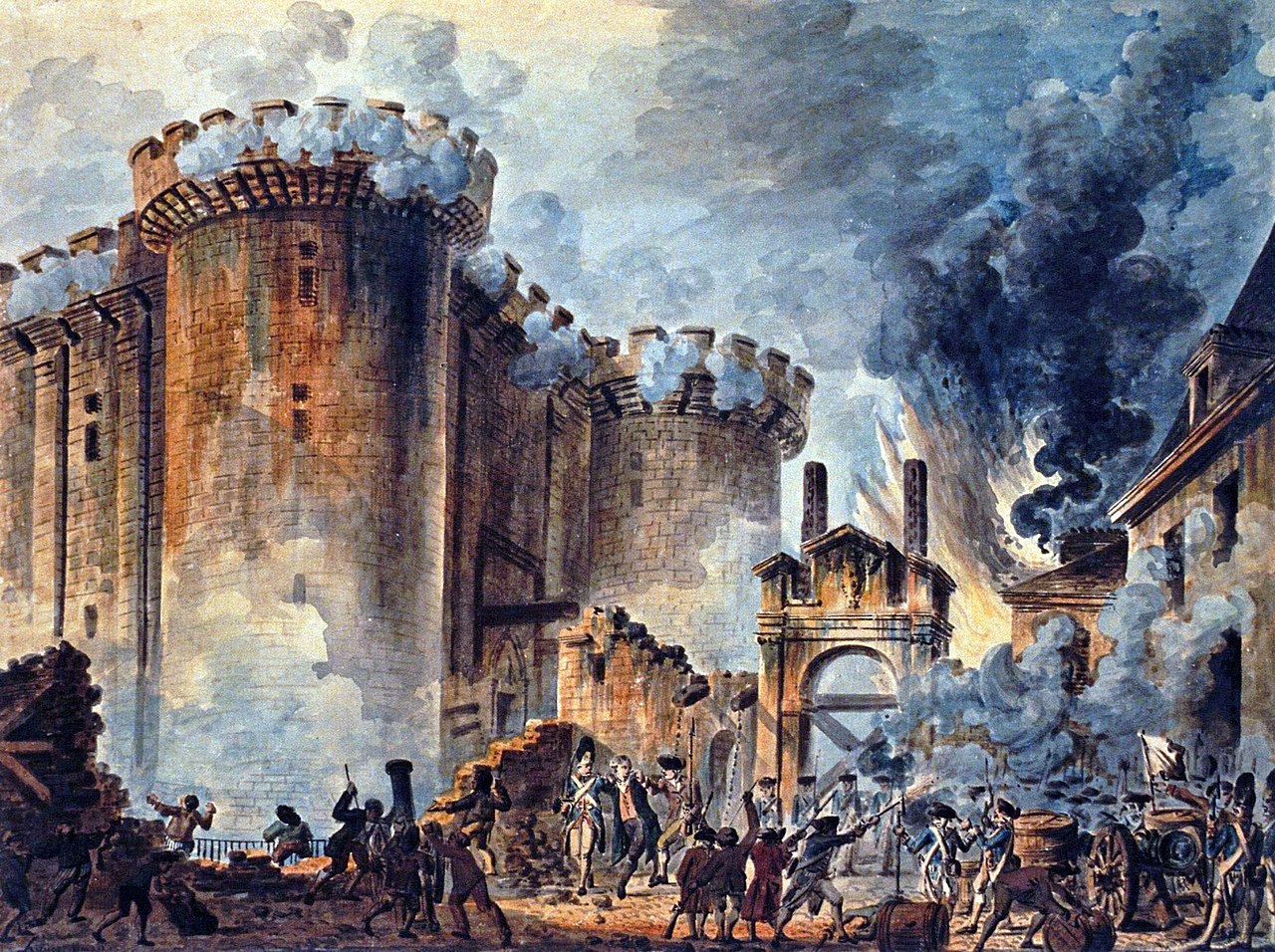
After the Brabant Revolution, the republic of the United Belgian States was created in 1790 from the area previously belonging to the Austrian Netherlands. The prince bishopric of Liege was occupied in 1791.
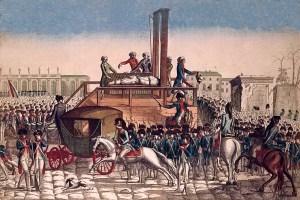
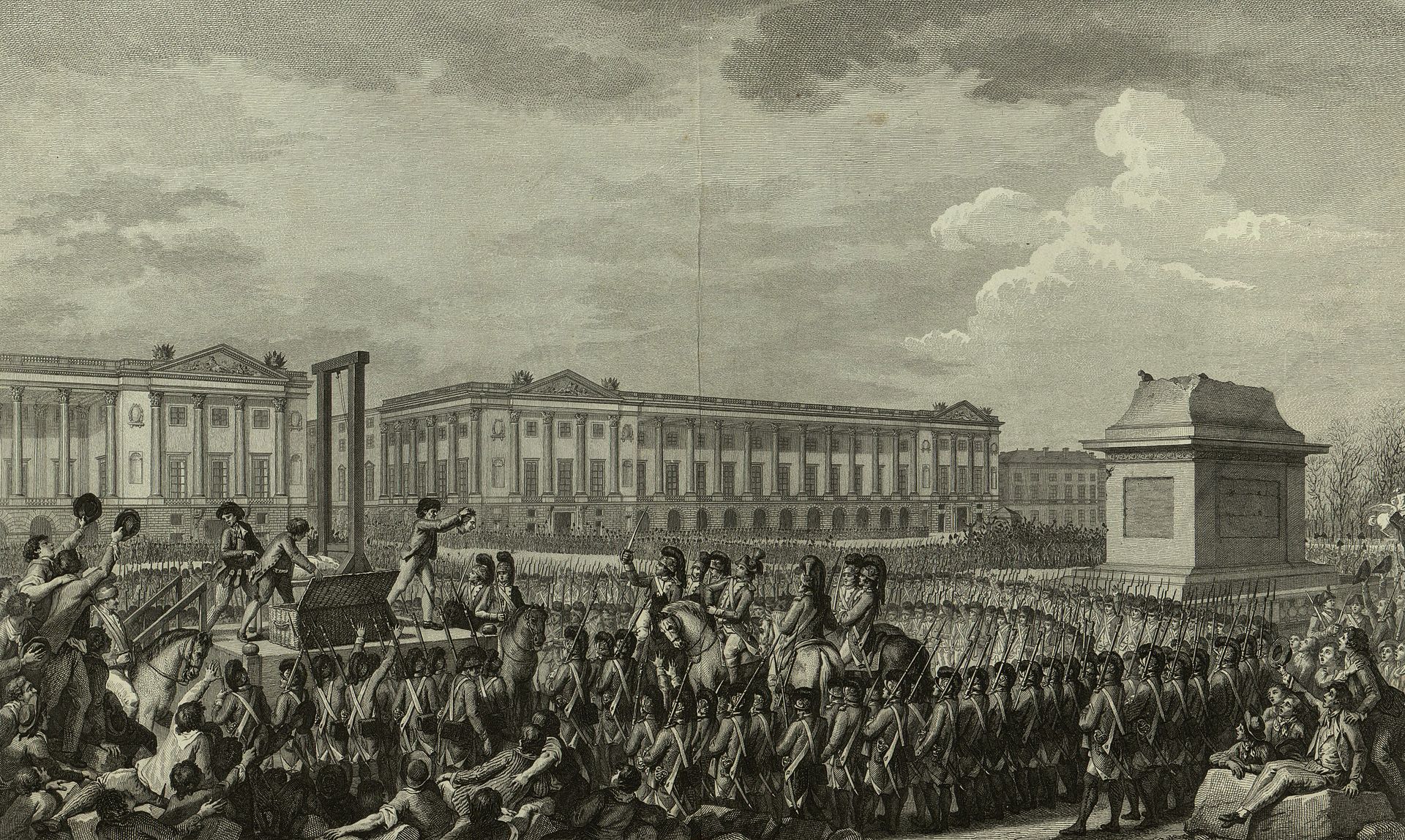
 Execution trough guillotine of King Louis XVI, 21 January 1793 on Place de la Revolution, Paris (left). Also guillotined was his wife Queen Marie Antoinette on 16 October 1793, also on Place de la Revolution (right).
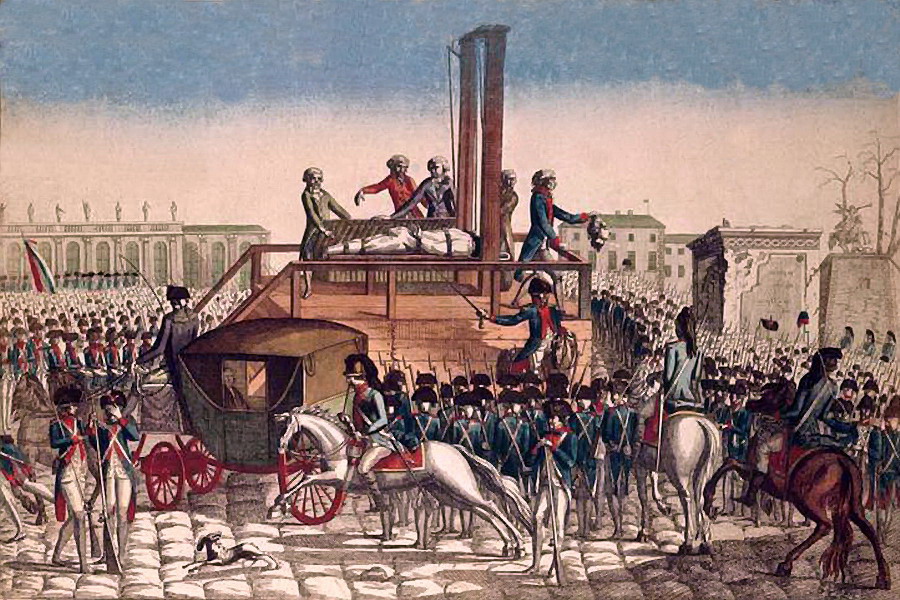
The French took the city for the last time in 1794, when the condominium was dissolved and Maastricht was annexed to the First French Empire (1794–1814). For twenty years Maastricht was the capital of the „French Departement de la Meuse-Interieure“.
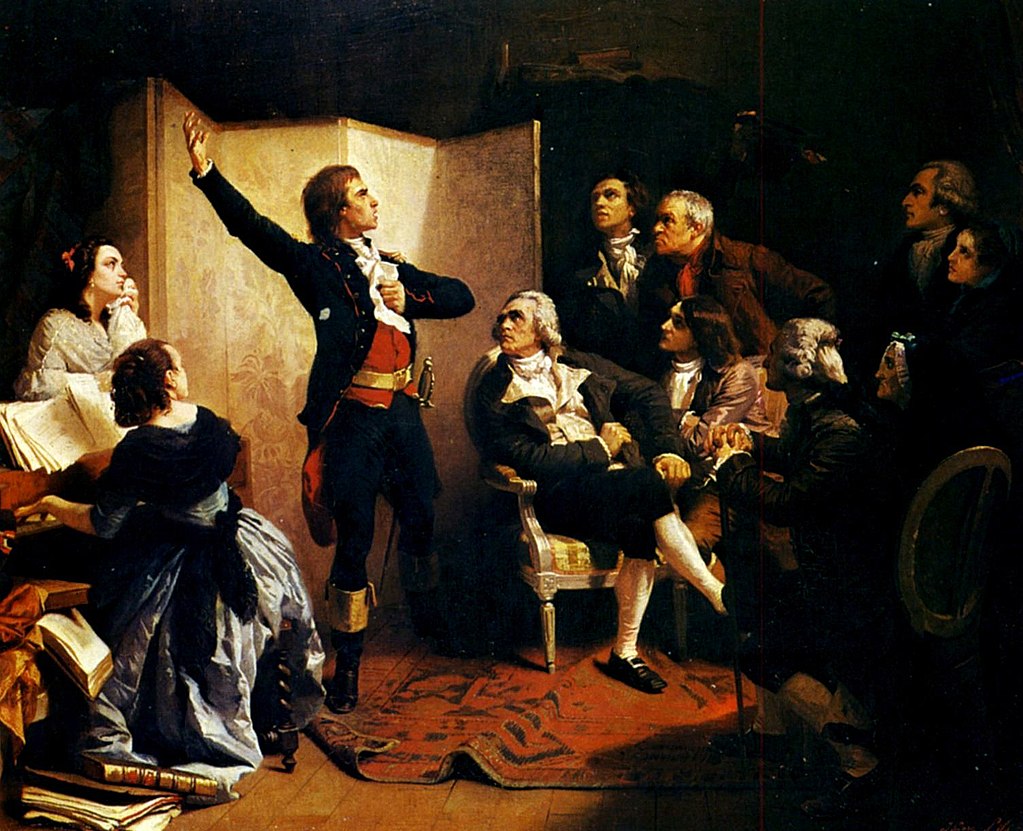
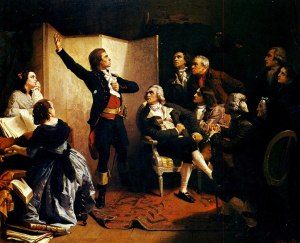 First time singing the „Marseillaise“ by composer Rouget de Lisle in 1792.
The entire region was formally connected to France on 1 October 1795. Maastricht and Venlo were ceded from the, by the now formed „Seven United Dutch Provinces Batavian Republic“, of France.
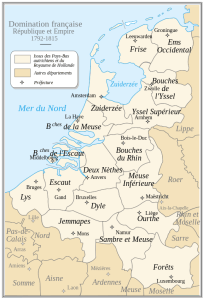 The occupied Netherlands Arrondissements . The here shown letter went between the administrations of MAESTRICHT and LIEGE. This map shows one city which is unknown under this name today. It’s Bois-le-Duc and means s’Hertogenbosch or The Duke’s Forest or Der Wald des Herzogs.
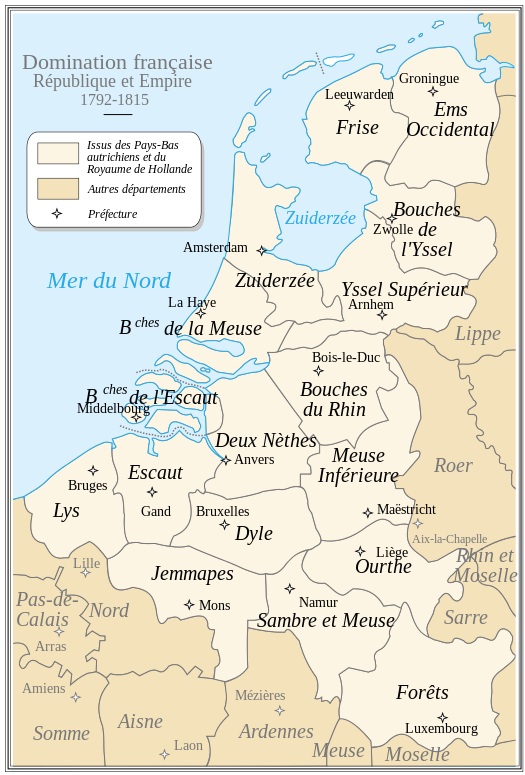
As early as 1795, the administration and the judicial system were adapted to the new French system, resulting in the territory of the formerly Austrian Netherlands and other territories lying in the region a total of nine departments, which were administratively divided into arrondissements, cantons and municipalities. The cantons were also Peace jurisdiction districts .
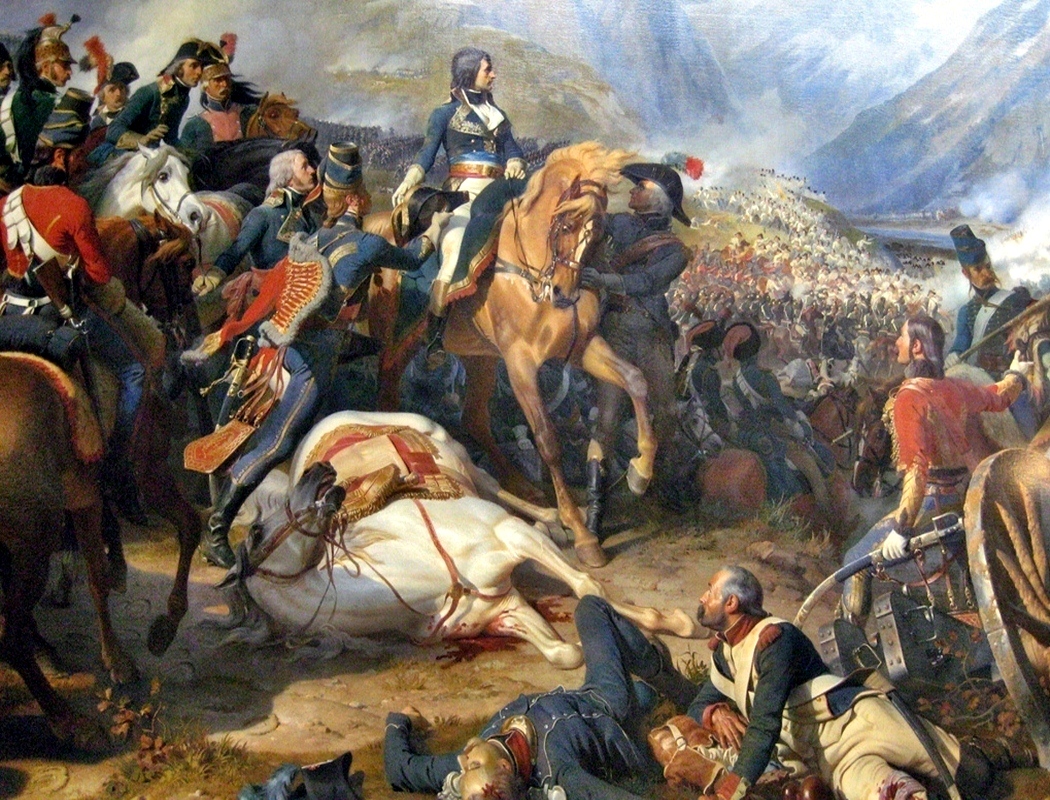
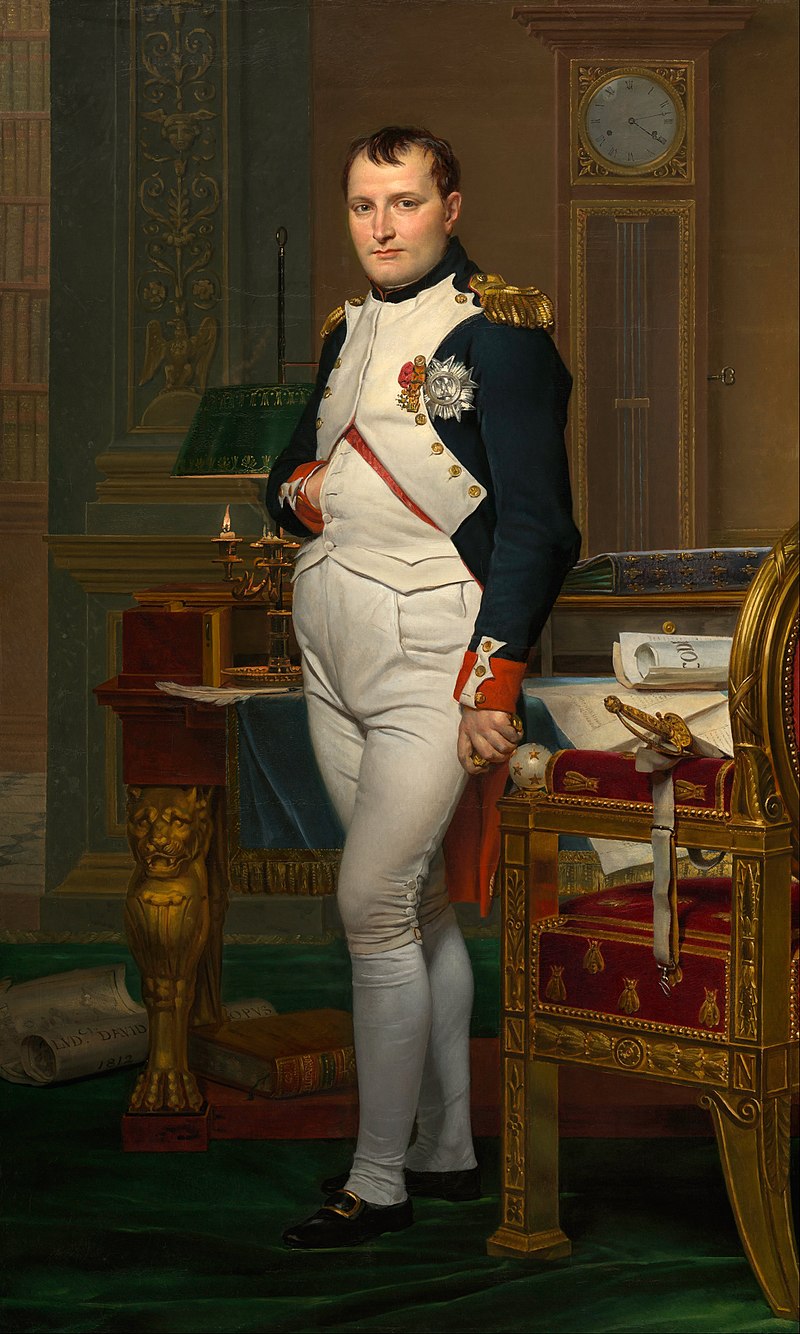
After defeating Napoleon in the Battle of Leipzig (1813) and the Congress of Vienna (1815), the Department of Limburg became part of the „United Kingdom of the Netherlands“, a small part (Niederkrüchten) came to Prussia.
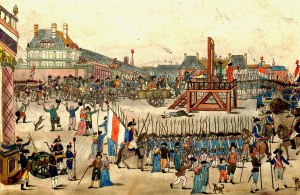
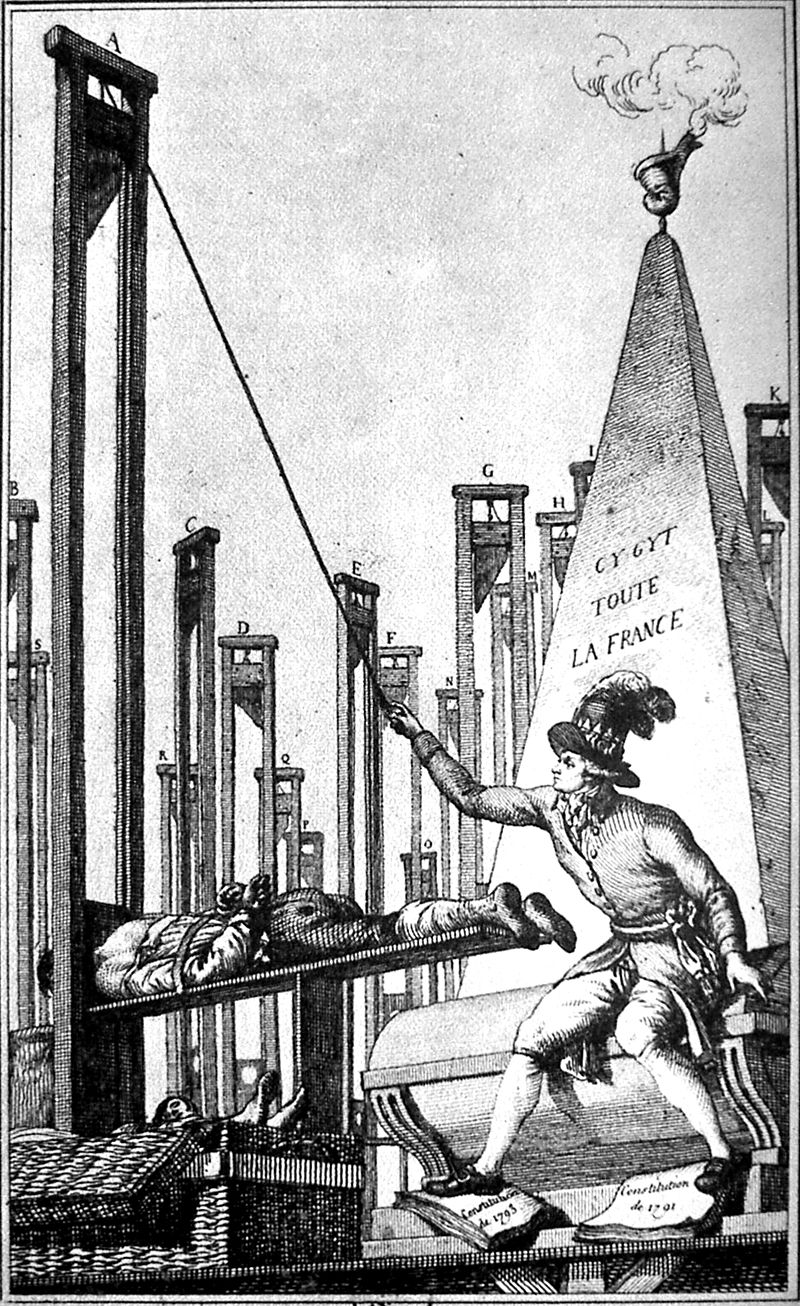
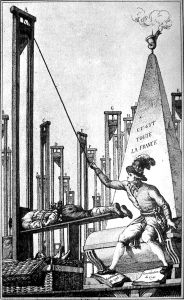 And one more execution through the guillotine in 1794, the most influential figure of the Revolution, Robbespierre (left). Cartoon showing Robespierre guillotining the executioner after having guillotined everyone else (right).
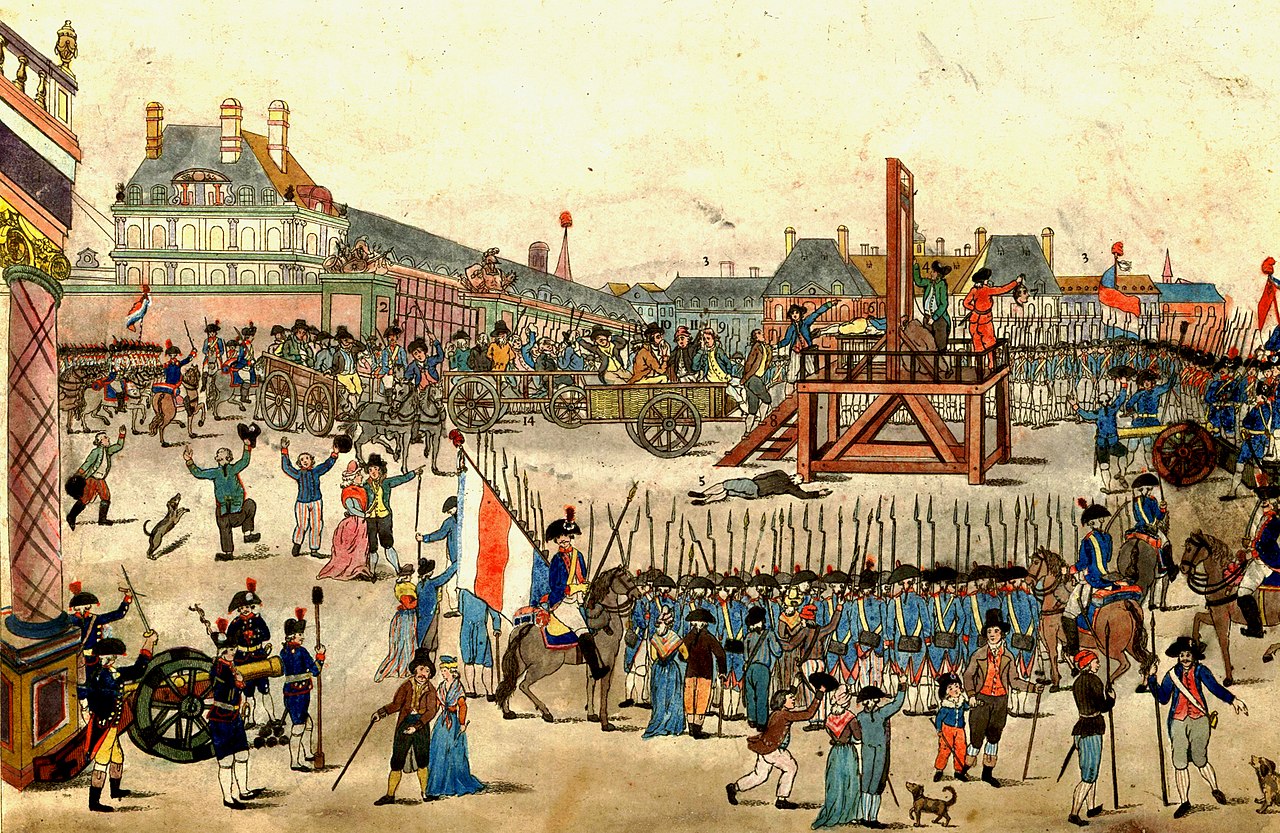
The French Revolution of 1789 saw the overthrow of the King Louis XVI, and a Republic put in its place based on the ideals of „liberte, egalite, fraternite“ (French for liberty, equality and brotherhood). This ground-breaking event shocked nations across the world.

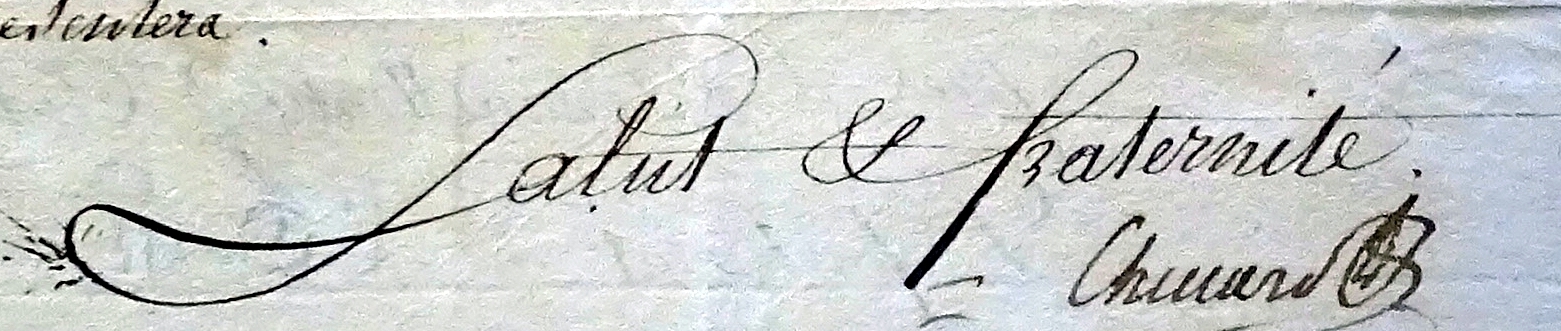
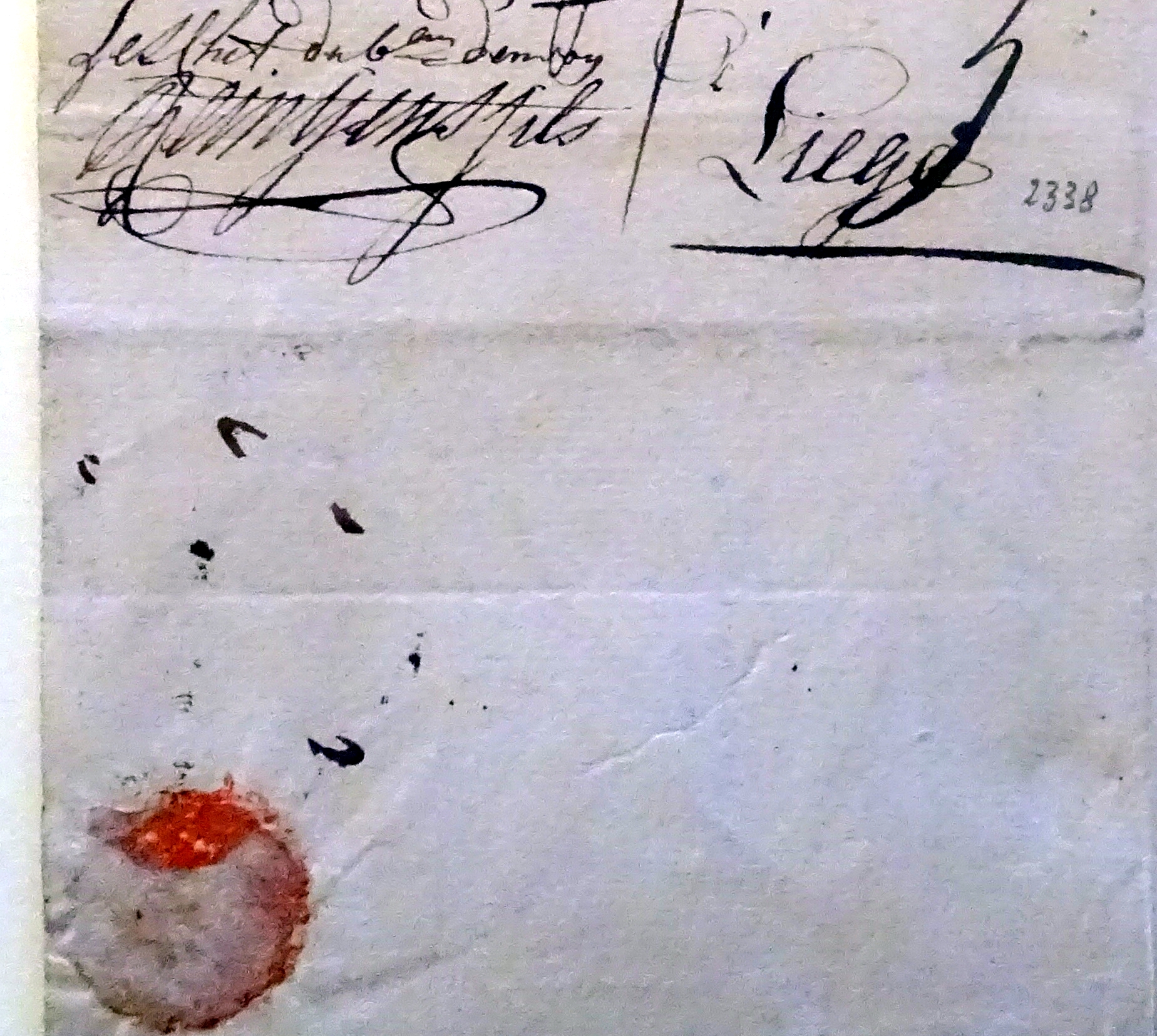
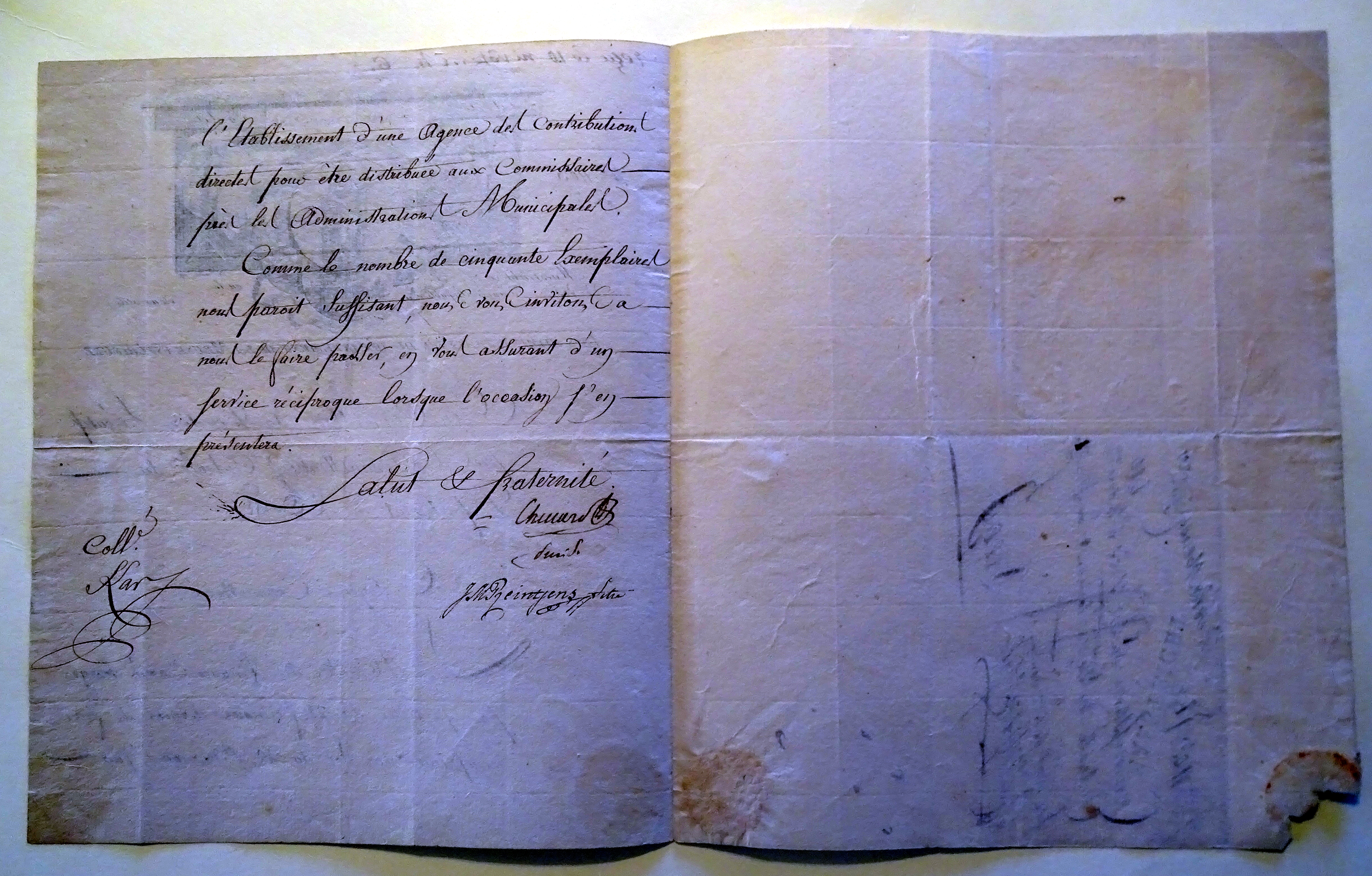
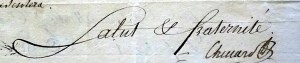 How nationalistic the new revolutionary administration was can be seen in the letter-front, where by hand was written Liberte and Egalite and on the letter-rear a greeting with Fraternite.

The National Convention, chosen in the first elections under male universal suffrage, on 20 September 1792 succeeded the Legislative Assembly and on 21 September abolished the monarchy by proclaiming the French First Republic. Ex-king Louis XVI was convicted of treason and guillotined in January 1793.
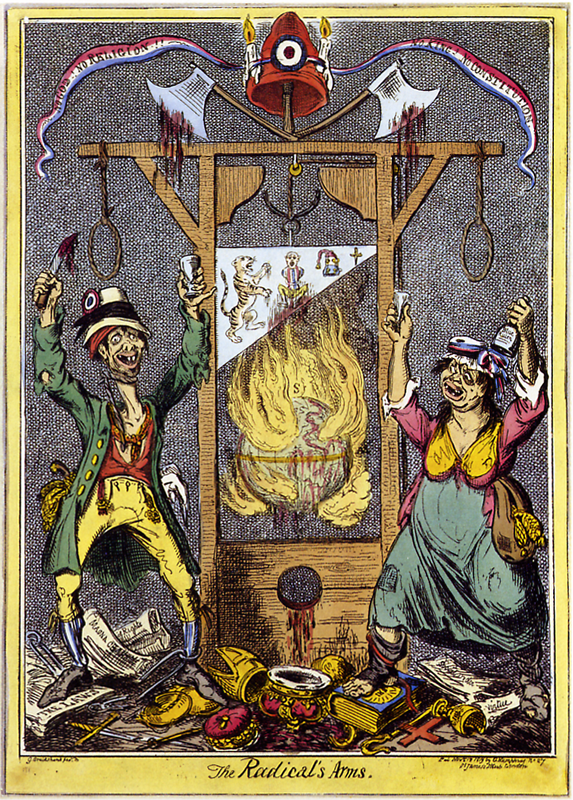
 English cartoon attacking the excesses of the Revolution as symbolized by the guillotine. Between 20.000 and 40.000 people were executed during the Reign of Terror.
France had declared war on England and the Dutch Republic in November 1792 and did the same on Spain in March 1793. In the spring of 1793, Austria, Great Britain and the Dutch Republic invaded France, without any luck.
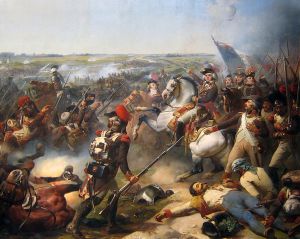 1794, during the battle of Fleurus, France defeated the army’s of Great Britain, Austria and the Dutch Republic.
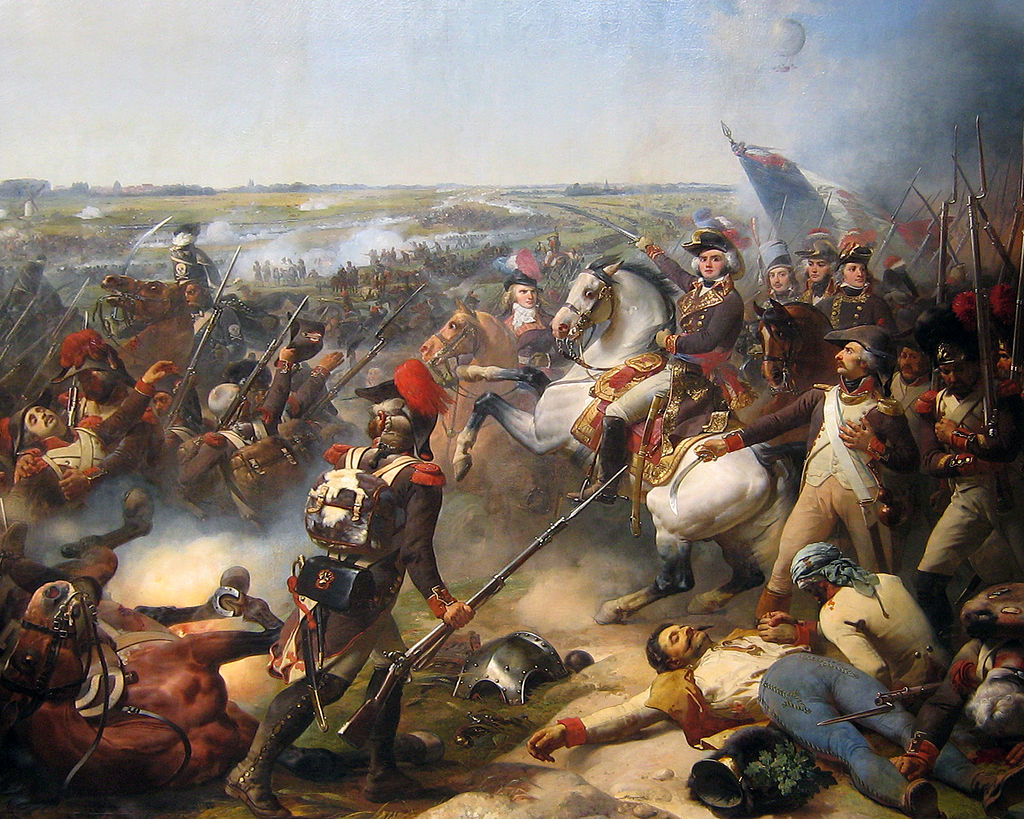
The counter-revolution, begun in March 1793 in the Vendee, by July had spread to Brittany, Normandy, Bordeaux, Marseilles, Toulon, Lyon. The Paris Convention government, managed in 1793 with brutal measures, to subdue most internal uprisings, at the cost of tens of thousands of lives – the story of Robbespierre and his „reign of terror“.
A new Calender.
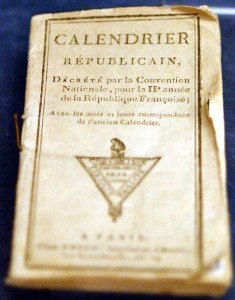 The French Republic Calendar or better the French Revolutionary Calendar (Calendrier Revolutionnaire Français). Shown in the Historical Museum of Lausanne, Switzerland.
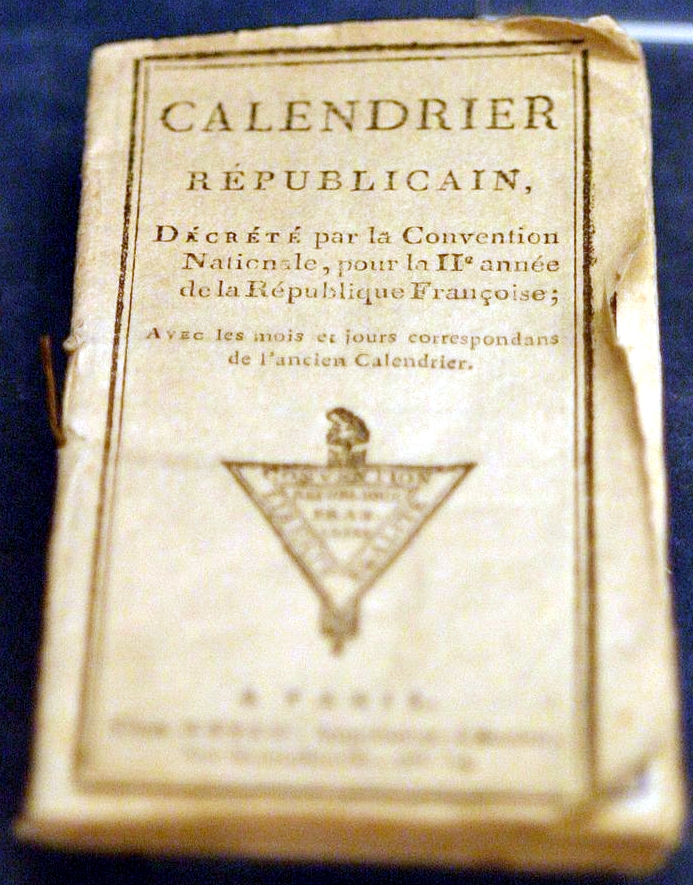
The days of the French Revolution and Republic saw many efforts to sweep away various trappings of the „ancien regime“ (the old feudal monarchy). Some of these were more successful than others. The new Republican government sought to institute, among other reforms, a new social and legal system, a new system of weights and measures (which became the metric system), and a new calendar.
The Letter Date:
„Maestricht ce 7. Nivose 6. annee Republicane“ .
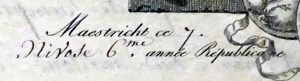 The „front page dating“ of our letter.
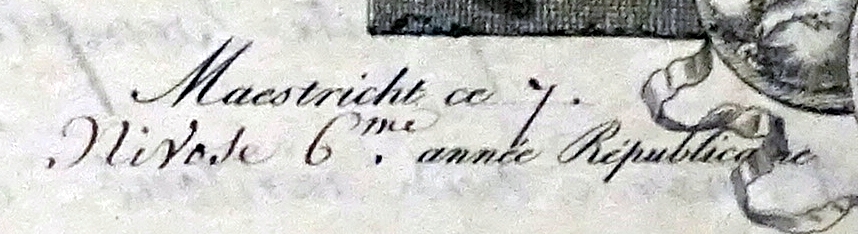
What does it mean ?
The French Republican Calendar (French: calendrier republicain français), also commonly called the French Revolutionary Calendar (calendrier revolutionnaire français), was a calendar created and implemented during the French Revolution, and used by the French government for about 12 years from late 1793 to 1805.
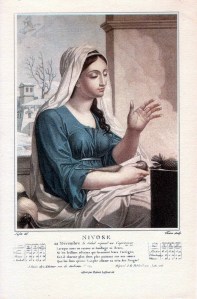 The conversion is pretty complicated and if you are interested in details, please read Wikipedia about it. It all starts with the month. In our letter the month is „Nivose“. Nivose is translated as the month of December.
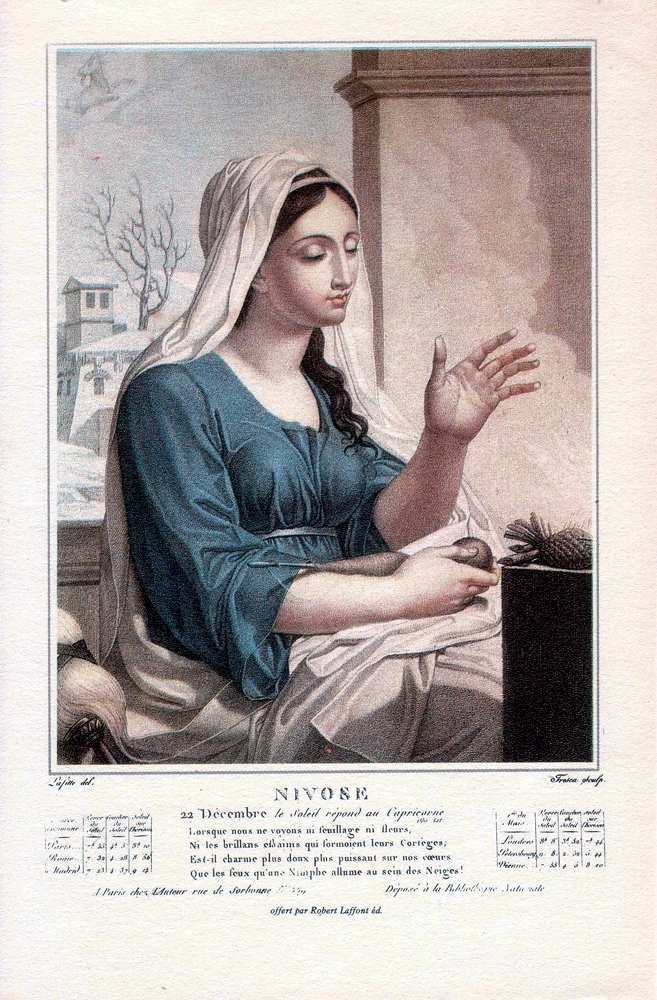
The revolutionary system was designed in part to remove all religious and royalist influences from the calendar, and was part of a larger attempt at decimalization in France (which also included decimal time of day, decimalization of currency, and metrication). It was used in government records in France and other areas under French rule, including Belgium, Luxembourg, and parts of the Netherlands, Germany, Switzerland, and Italy.
Conversion.
Nivose
(21 December – 19 January)
1 21 Dec Tourbe (Peat)
2 22 Dec Houille (Coal)
3 23 Dec Bitume (Bitumen)
4 24 Dec Soufre (Sulphur)
5 25 Dec Chien (Dog)
6 26 Dec Lave (Lava)
7 27 Dec Terre vegetale (Topsoil)
and so on.
The month Nivose covers the dates from 21st of December until 19th of January. The written 7th day is then the 27th of December, also called „Terre Vegetale“ or „topsoil day“.
Annee – Gregorian
I (1)………. 1792
II (2)…….. 1793
III (3)……. 1794
IV (4)……. 1795
V (5)………1796
VI (6)……. 1797
and so on.
Finally the year. Written „6th year of republic“ means the year 1797.
Therefore the French Republican date „7. Nivose 6. Annee Republicane“ means in our Gregorian calendar „27th of December 1797“.
The French Republic ended with the coronation of Napoleon I as Empereur des Français (Emperor of the French). The calendar was abolished by an act dated 22 Fructidor an XIII (9 September 1805) and signed by Napoleon. France went back to the Gregorian Calendar (which we still use today), introduced by Pope Gregory XIII, in October 1582.
The Postal Rubber Stamp.
This is the most valuable part for collectors. I was interested in the whole letter, details, history and more. Most people see it as an philatelic item and here-fore the stamp is the collectable value.
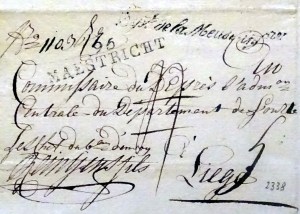 There are only a few similar stamping’s like this one known. This MAESTRICHT stamping is the only one I have ever seen and for sure the oldest Netherlands postal stamping known.
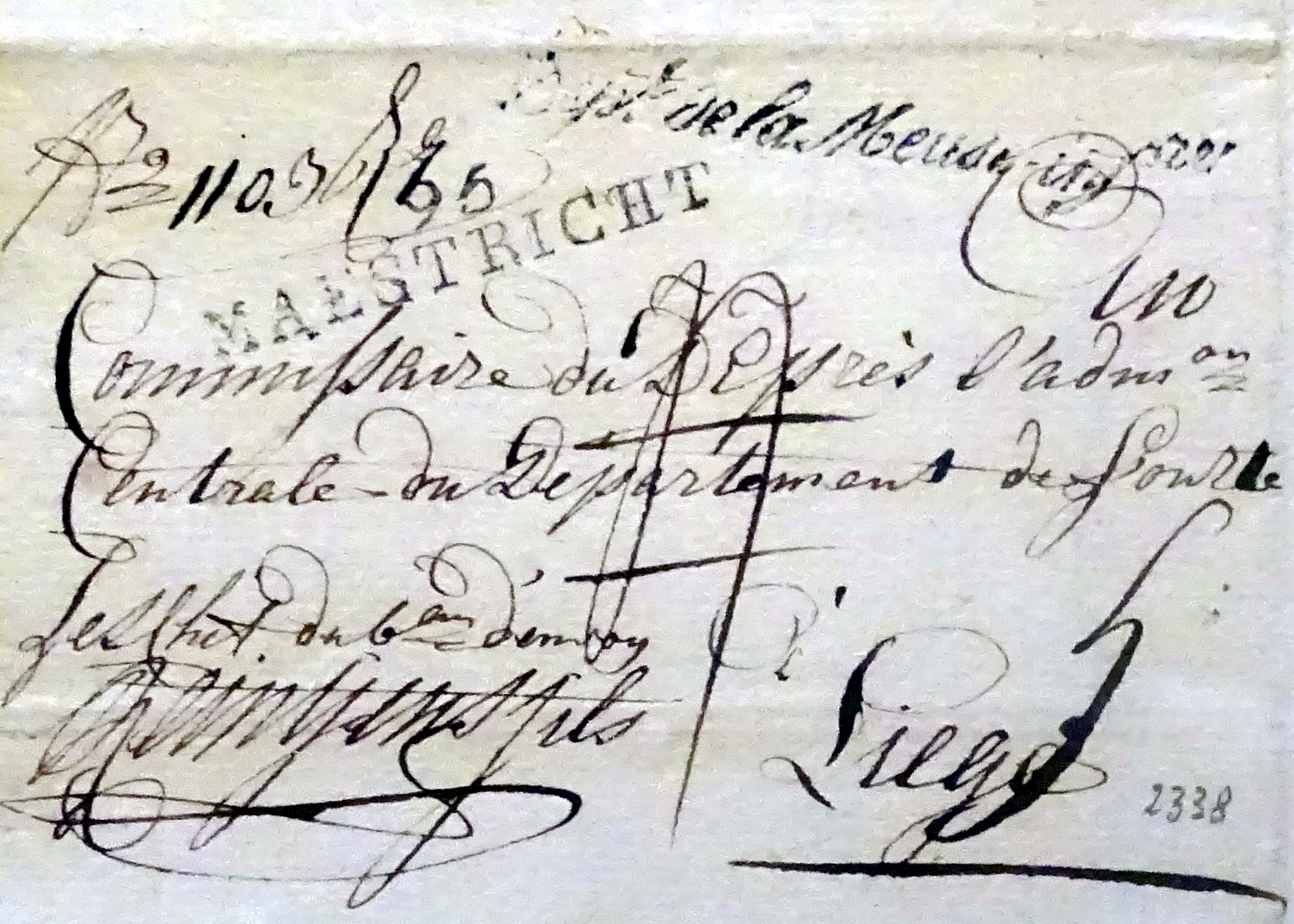
The above letter was sent between Maastricht and Liege, as one can see above. Reading:
Sender: Dept. de la Meuse Inter.
Postoffice stamp: MAESTRICHT
Sent through: Centrale du Department de Ourthe
Receiver: Dept. Signature and Liege
Ourthe (also spelled Ourte at the time) was a department of the First French Empire in present-day Germany and Belgium. It was named after the river Ourthe (Oute). The Ourthe (Wallon-French = Oute) is a 165-kilometre (103 mi) long river in the Ardennes in Wallonia (Belgium). It is a right tributary to the river Meuse. The capital city of Ourthe at the time was Liege. See the map further up.
 The town of Durbuy at the river Ourthe in Belgium Ardennes. Today one of the most popular holiday destinations in the Ardennes.

In 1799 (2 years after the here shown letter), mail was declared to be national in the Netherlands. In practice, postal traffic was concentrated in Holland, as the connections with the rest of the Netherlands and the country were still quite limited. In the countryside, mail was therefore – despite the nationalization – mainly delivered through private endeavors.
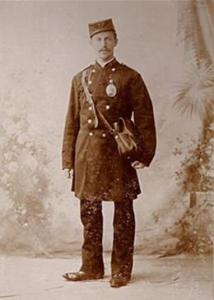 „Postbode te voet“, walking postman. Photo from 1878. I was unable to find a Dutch post delivery man from the 18th century.
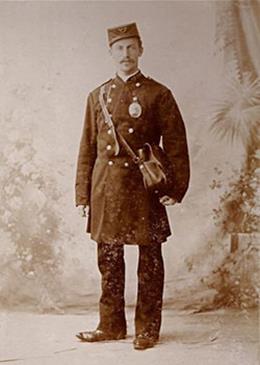
The postman walked from city to city, carrying the mail under his arm. He delivered the mail to those who had ordered it, who then delivered it to the addressees. This was the main method of transporting mail in the 18th century. Postmen would walk around eight hours a day.
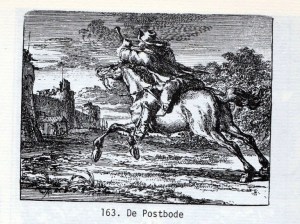 The French introduced the postilion in the 18th century. Transporting mail went a lot faster on horseback. Dutch woodcut from a postillion.
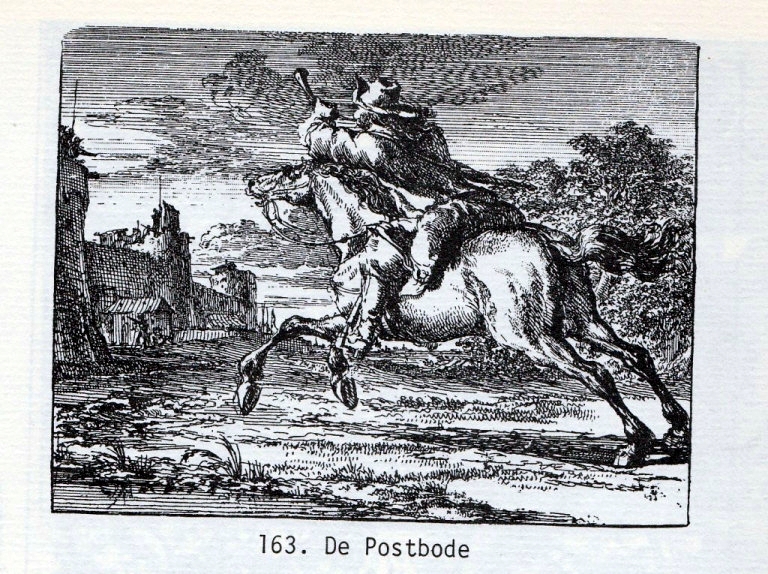
The First Form of Stamping: Wax Seals.
The oldest use of a tool resembling a stamp is an application that commonly didn’t use ink: the seal. Today, seals – usually in wax – are mostly used for decorative purposes, but for millennia they were critical for verifying the authenticity of products, correspondence, and official documents.
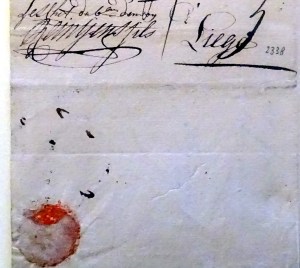 Our letter here used a wax seal too. I guess for a tight closing of the mail. Of course it was broken during opening and therefore the seal is lost.
Pre – Adhesive Stamps.
Mauritius’ first post office was opened on 21 December 1772 when the island was under French rule. Mail was delivered internally and by ship to and from France and India. Great Britain took over the island on 3 December 1810, and continued the overseas mail service. A few pre-stamp markings, applied by rubber stamp, exist from the 1790s during the French administration, and more are known from the subsequent British period.
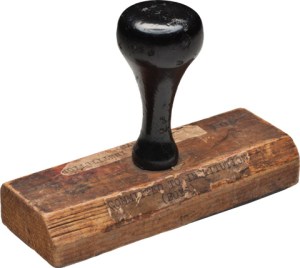
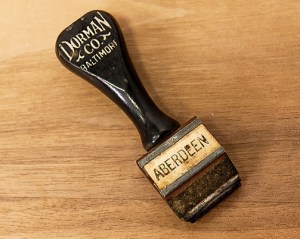 Typical rubber-ink stamps of the time.
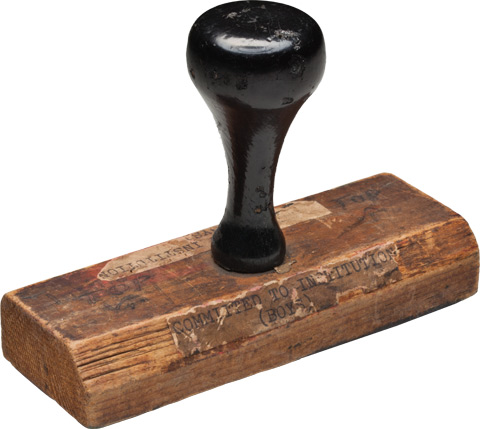
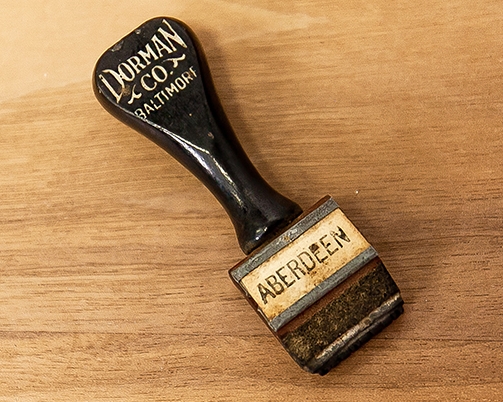
History of Stamping.
It shows that almost 50 years later the first adhesive „printed stamps“ were used. Before the postal reforms of 1840 sending a letter was expensive. The charge was for each sheet of paper that a letter comprised, and for the distance covered. The receiver had to pay and not the sender!
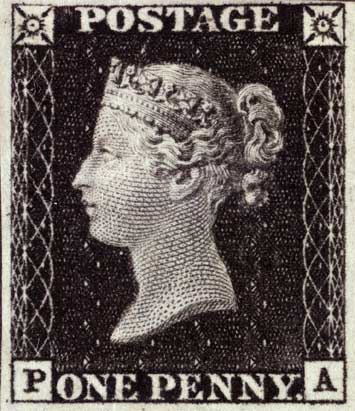
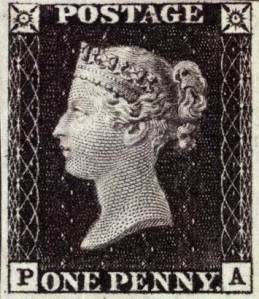 This stamp, known as the Penny Black from 1840, was the world’s first postage stamp. Shown is Queen Victoria of Great Britain.
In 1847, Mauritius followed Great Britain in issuing stamps carrying the image of the current regent of Great Britain, Queen Victoria, which practice would be followed throughout the British Empire. Most of the early issues of Mauritius were locally designed and produced and have a distinct “primitive” character.
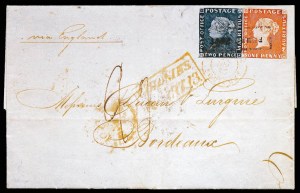 The so named „Bordeaux Cover“ with a red and a blue Mauritius stamp from 1847 (the first issue). This cover was sold 1993 in an Zurich auction for FOUR MILLION US DOLLARS.
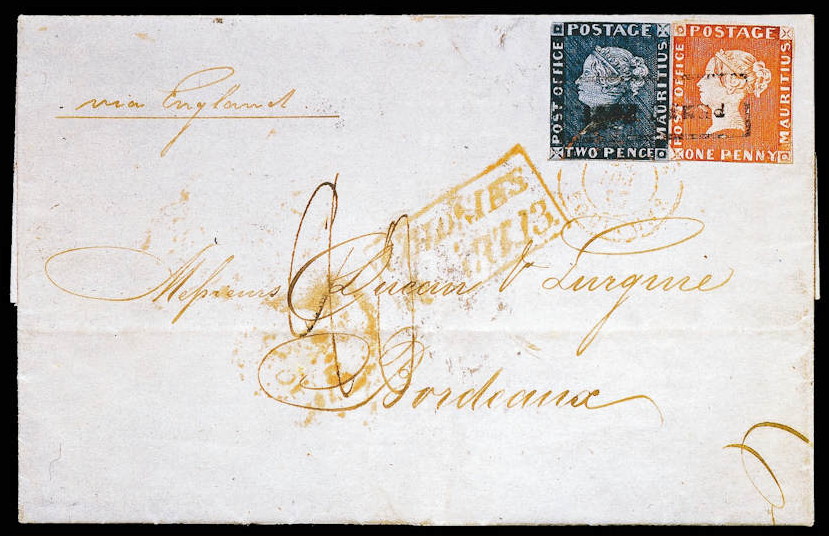
Why was Mauritius so early an important mail destination? Easy to answer – it was one of the most important stop-overs between the „old western world“ (Europe) and the „new eastern world“ (India). Our above postal letter stamp from 1797, precise 47 or 50 years before the oldest known paper stamps, is not valued at four million, but at least a very valuable collectors item with a great history behind.
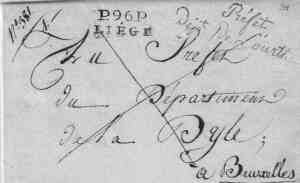 With the end of the First French Empire, more rubber stamps were used by official post offices. This letter dates „Departmente de la Ourte, stamped in Liege, 18 Julliet 1804“ . Not as decorative and much younger as the MAESTRICHT letter, many years ago sold in an auction for about 800,– Euro.
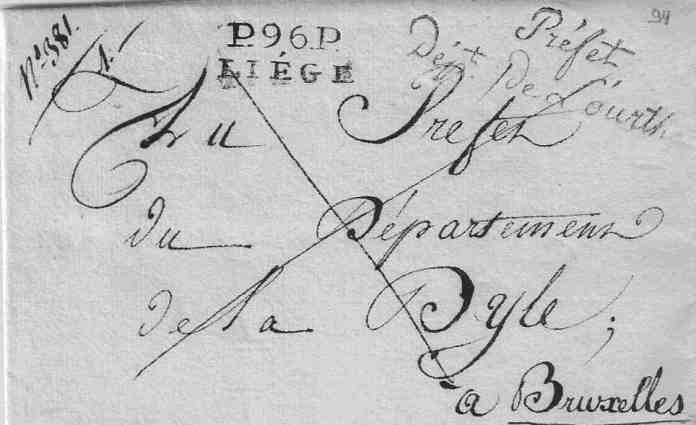
Valuable collectors item.
The content of the letter is not particularly interesting. Also, a translation into our today’s language is very difficult. I leave the interpretation of the „head vignette“, a wonderful copper engraving, or a precise translation to a new proud collector-owner !
Nevertheless, here the content in some keywords:
To the commissar of the executive direction of the department Ourthe.
Establishment of an contribution agency.
Direct to be distributed to the Commissioners near the municipal administration.
The number of fifty copies seems sufficient.
We invite you to test and we send it to you.
Make sure your reciprocal service, when the opportunity arises, will be present.
Salvation and Fraternity,
with signatures of the sender.
The above letter, from 1797. will be for sale soon at eBay. Have a look !

