
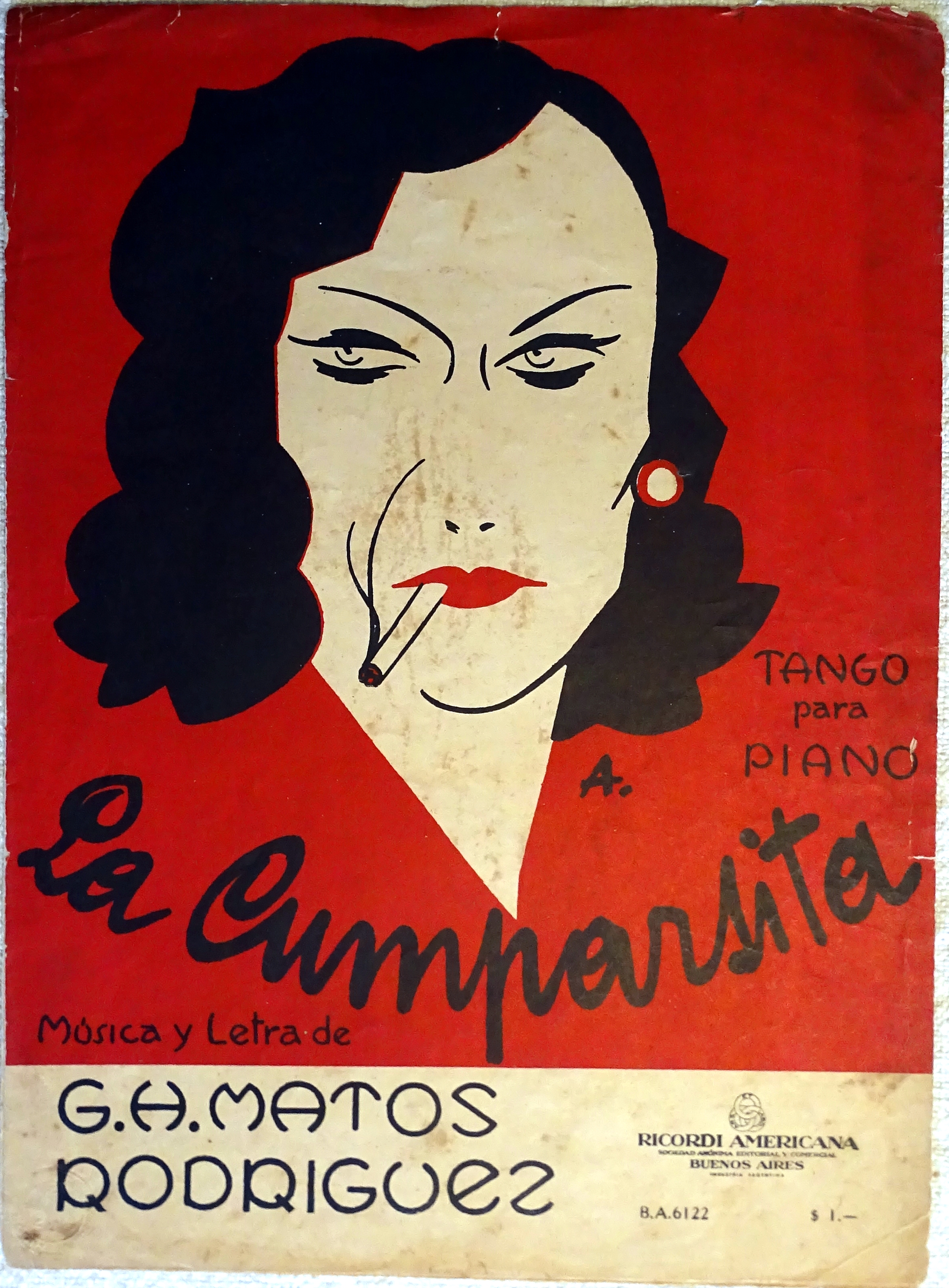
Much is written about Tango and La Cumparsita. I don’t want to invent the wheel new ! But the story is so interesting and a great part of Urugayan history, that I like to present it to you. Besides that I have so many music sheets and other pictures in my collection that it
is worth to post it here. Some of them, no one of my readers have ever seen before.
La Cumparsita – History.
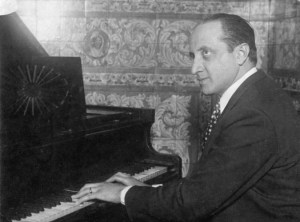 Gerardo Hernan Matos Rodriguez (1897 – 1948)
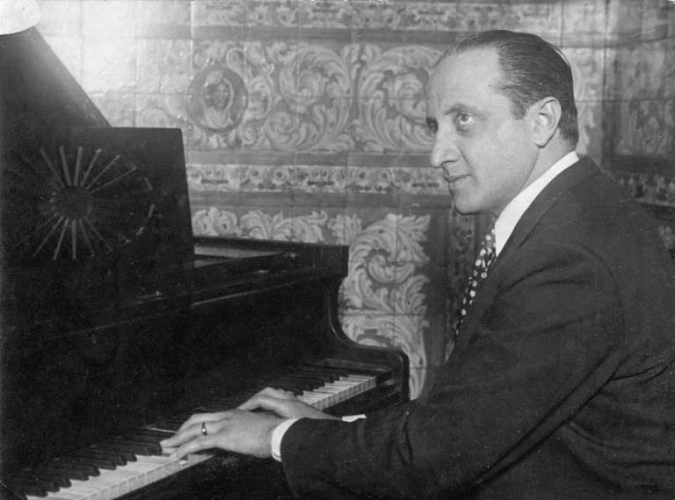
„La cumparsita“ is a tango written in 1916 by the Uruguayan musician Gerardo Hernan Matos Rodriguez, with lyrics by Pascual Contursi and Enrique Pedro Maroni. It is among the most famous and recognizable tangos of all time. Roberto Firpo, director and pianist of the orchestra that premiered the song, added parts of his tangos „La Gaucha Manuela“ and „Curda Completa“ to Matos carnival march „La Cumparsita“, resulting in „La cumparsita“ as it is currently known.
 Roberto Firpo (1884 – 1969)
The title translates as „the little parade“, and the first version was a tune with no lyrics. Later, Pascual Contursi wrote words to make the most popular version of the song. The lyrics begin: „The little parade of endless miseries…“
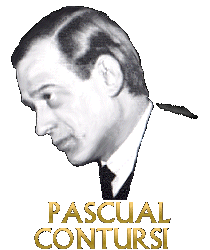 (1888 – 1932)
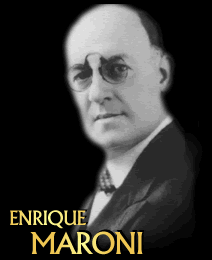 (1887 – 1957)
The song was originally a Argentinan carnival march, whose melody was composed in early 1916 by an architecture student in Montevideo, an 18-year-old man named Gerardo Hernan Matos Rodriguez, the son of Montevideo’s Moulin Rouge nightclub proprietor Emilio Matos. Matos nickname was Becho.
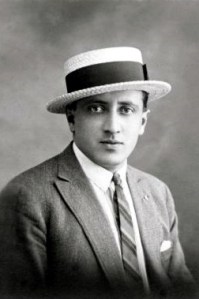 Matos Rodriguez nicknamed „Becho“.
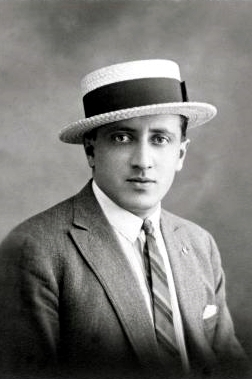
On 8 February 1916, Matos Rodriguez and his friend Manuel Barca had shown orchestra leader Roberto Firpo the music in the cafe called La Giralda. Firpo looked at the music and quickly determined that he could make it into a tango. As presented to him it had two sections; Firpo added a third part taken from his own little-known tangos „La gaucha Manuela“ and „Curda completa“, and also used a portion of the song „Miserere“ by Giuseppe Verdi from the opera Il trovatore.
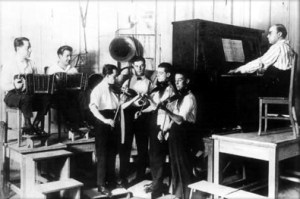
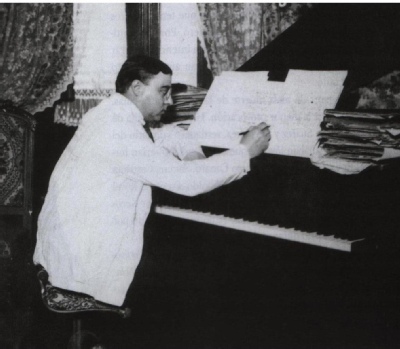
Firpo, playing the piano, with his band. Interesting, how they put a stage together.
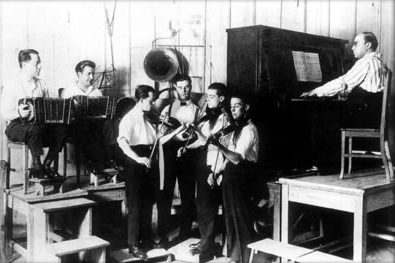
Years later, Firpo (May 10, 1884 – June 14, 1969) reported the historic moment as follows:
„““ In 1916 I was playing in the cafe La Giralda in Montevideo, when one day a man was accompanied by about fifteen boys, all students, to say he brought a carnival march song and they wanted me to review it because they thought it could be a tango. They wanted me to revise and tweak the score that night because it was needed by a boy named Matos Rodríguez. In the 2/4 [march time signature] score there appeared a little [useful melody] in the first half and in the second half there was nothing. I got a piano and I remembered my two tangos composed in 1906 that had not had any success: „La gaucha Manuela“ and „Curda completa“. And I put in a little of each. At night I played the song with „Bachicha“ Deambroggio and „Tito“ Roccatagliatta. It was an apotheosis. Matos Rodríguez walked around like a champion… But the tango was forgotten, its later success began when the words of Enrique Maroni and Pascual Contursi were associated with it. „““
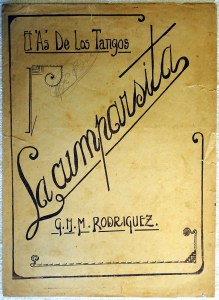
The oldest known music sheet of La Cumparsita, 1917, drawn and designed with elements
of „art nouveau“ and „art deco“.
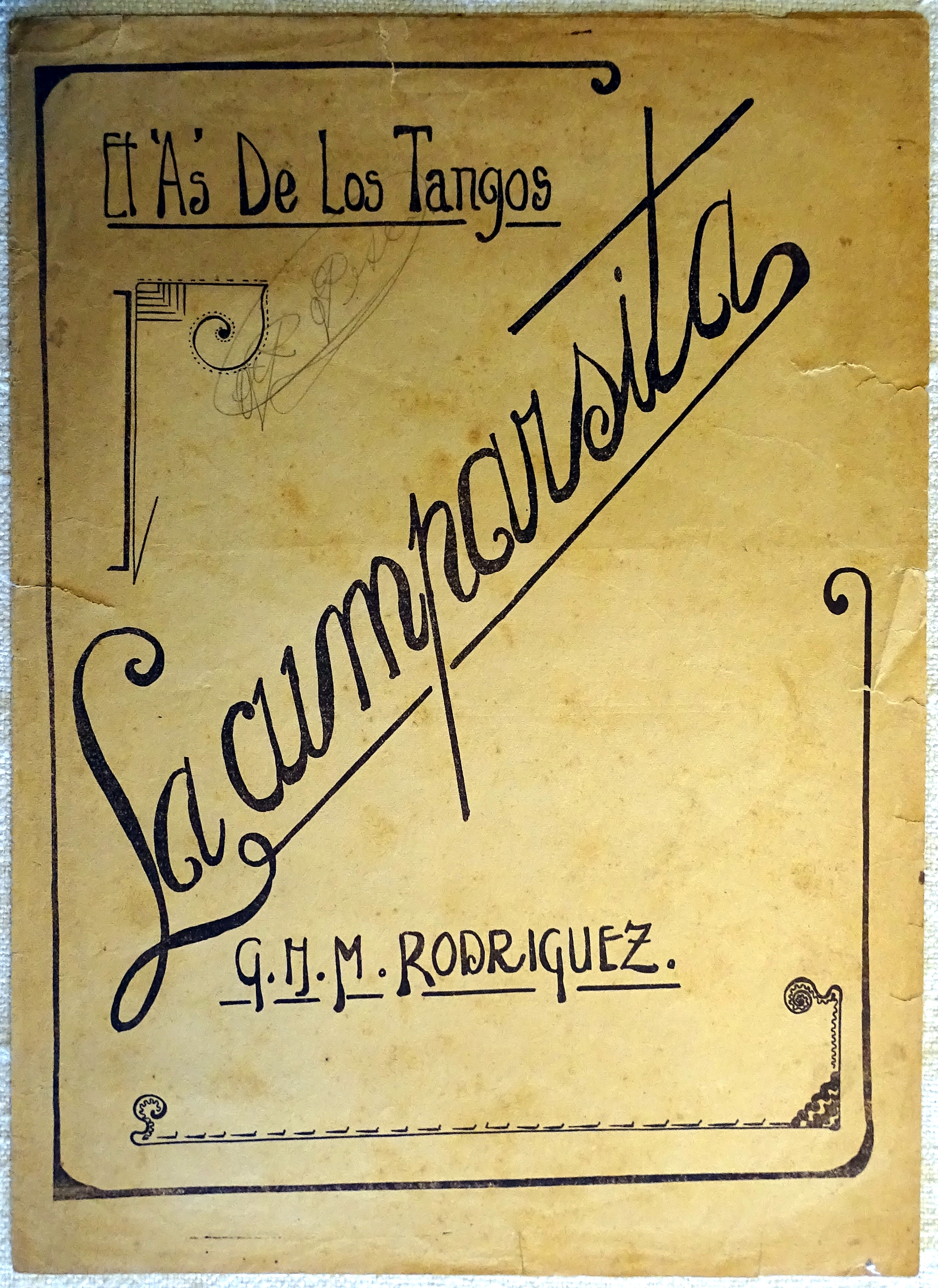
Original score (partitura) from 1917 and another sheet with musical attachments.
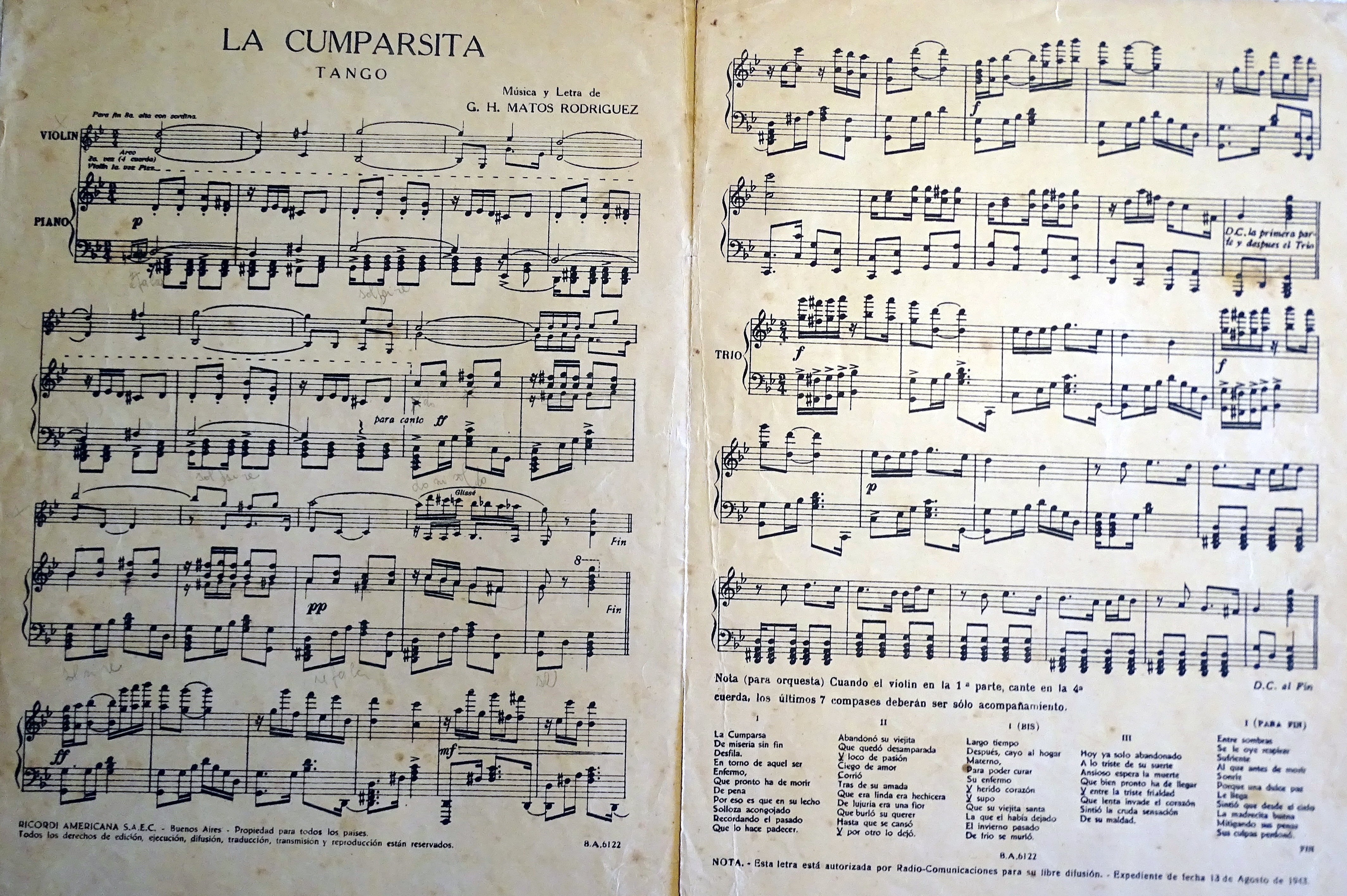
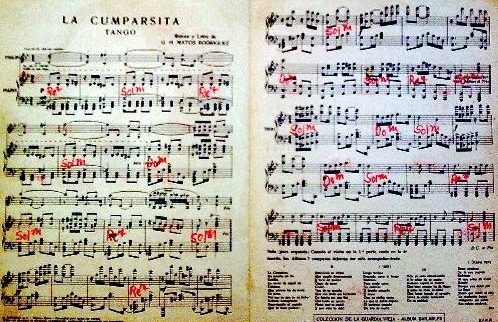
A „Star“ was born.
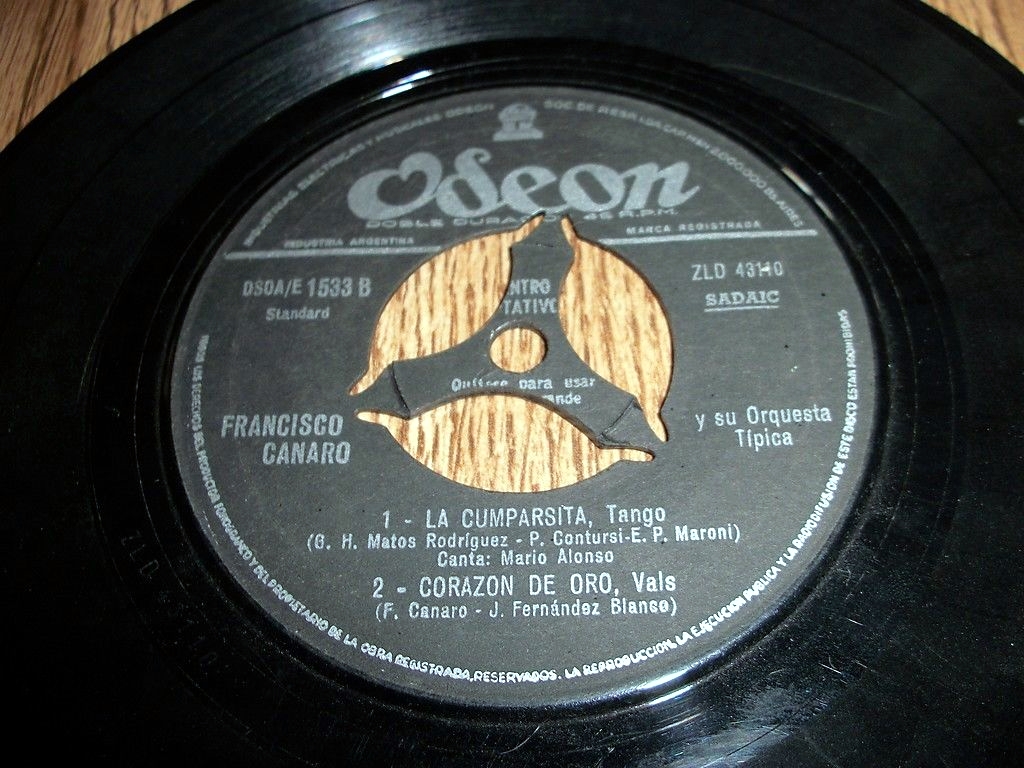
Firpo recorded the song in November 1916 for Odeon Records. He used the recording studio of Max Glücksmann in Buenos Aires, and employed two violinists, one bandoneon player, Juan Bautista „Bachicha“ Deambrogio, and one flute player to join him as bandleader on the piano. The song was pressed as the B-side of a 78 rpm release, and had only a modest success, fading in familiarity after several years.
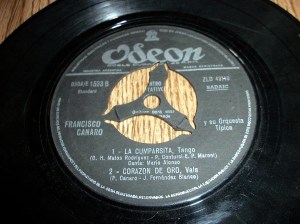
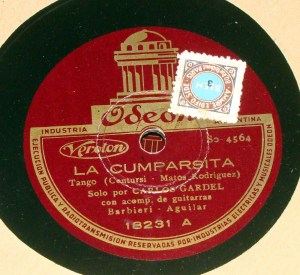
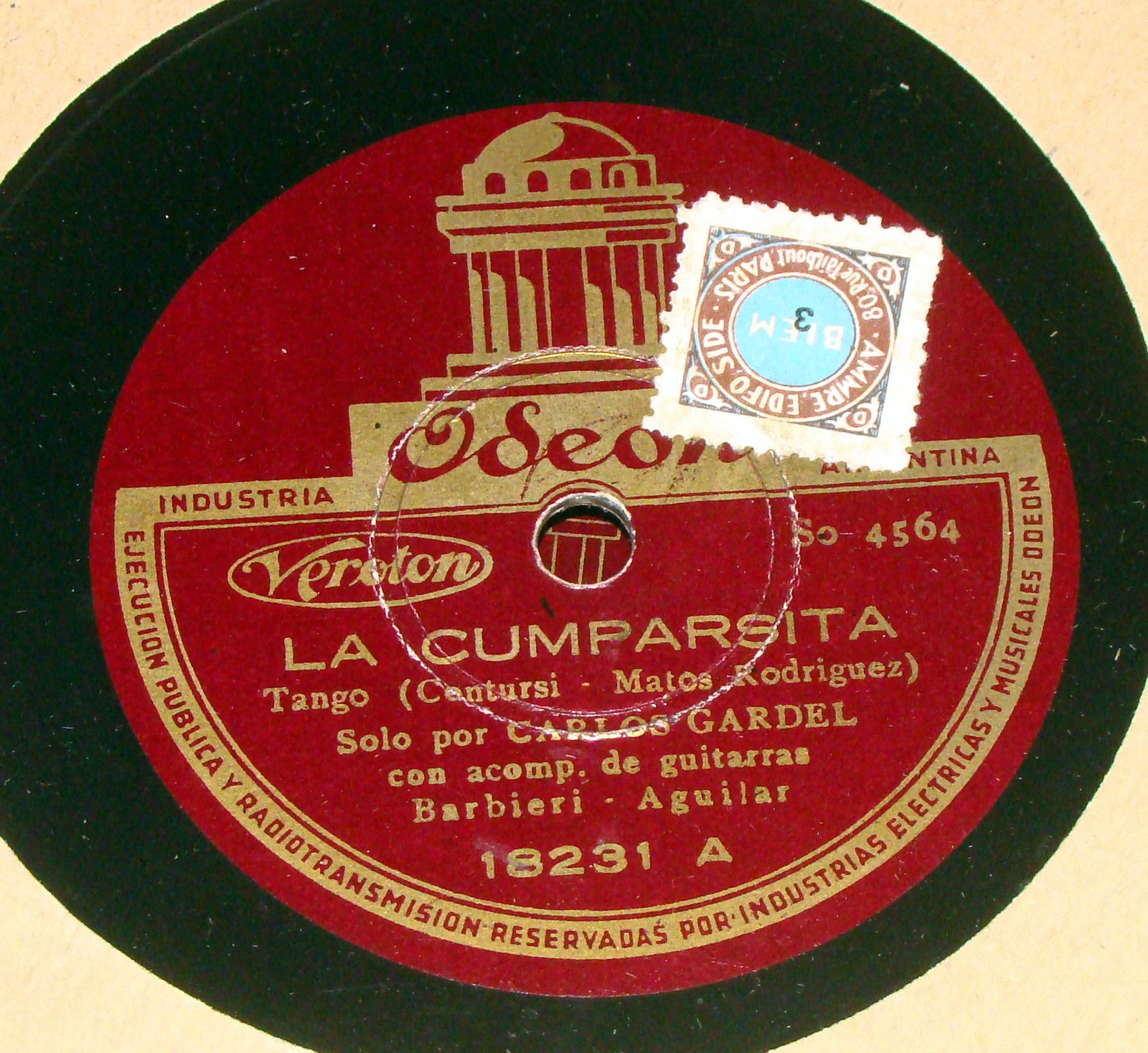
Left: The Odeon release from 1916, on B-side, song by Francisco Canaro, with modest success.
Right: The Odeon release a few years later, on A-side with artist Carlos Gardel, became a famous Tango hit.
Firpo only knew that the name of the young composer was Gerardo. It was only later that the full identity of the author was known. He was young, educated, well mannered and sensible. He was also a bit naive. He sold for 20 pesos (about US$ 10,– in this time) his rights of authorship to the Breyer publishing house. After some moderate success the composition was forgotten.
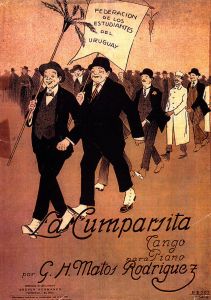
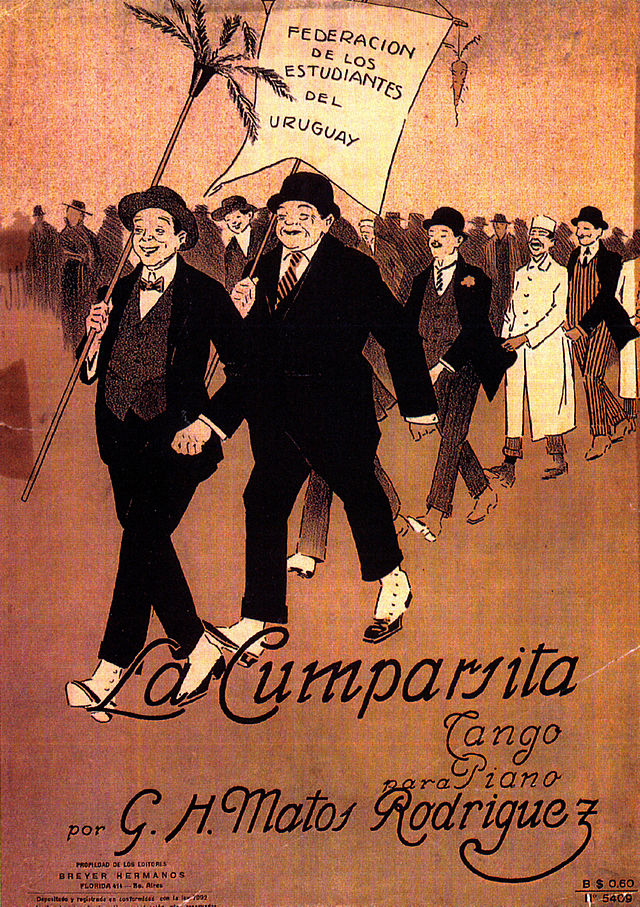
This, most famous, poster was printed by „Breyer Hermanos“.
Later, unchanged, used as a title page of music sheets.
Lyrics to the song were written by the Argentine Pascual Contursi in 1924, and soon became a hit. This version of the song is considered the most widely known tango song in the world, closely followed by „El Choclo“. Contursi recorded the song under the title „Si Supieras“ („If you knew“).
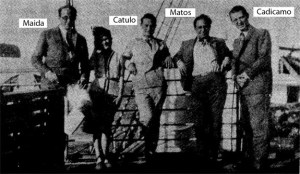
Matos Rodriguez, with fellow travelers, on his journey from Montevideo to Europe.
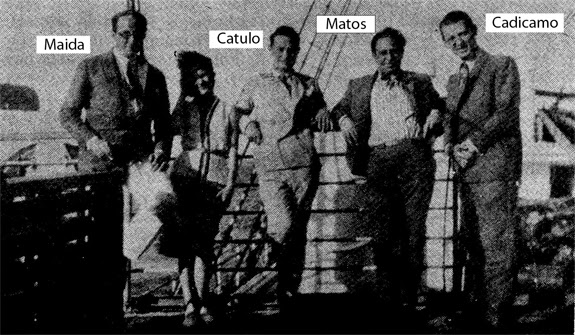
Living in Paris at that time, Matos Rodríguez discovered, that the song was a big hit, when he talked with Uruguayan violinist and tango orchestra leader Francisco Canaro, who was playing the tune at Paris engagements as „Si Supieras“. Canaro told Matos Rodríguez the song was „all the rage by all the orchestras“. Matos Rodríguez spent the next two decades in various court battles over royalties, and finally succeeded in ensuring, that „La Cumparsita“ was re-established as the title of the song. However, Contursi’s lyrics became intimately associated with the song. See the new lyrics further down.
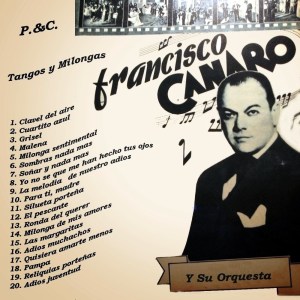
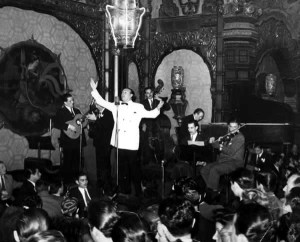
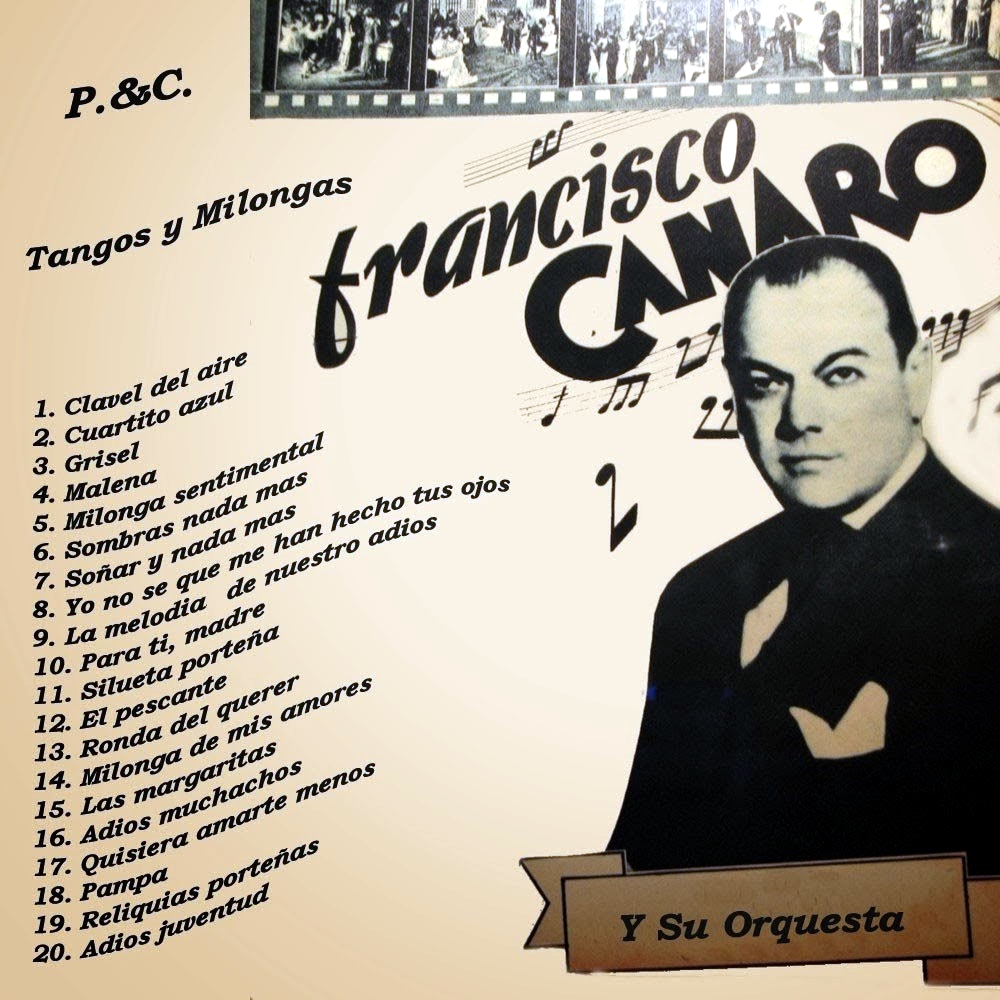
The great Urugayan band leader Francisco Canaro on top of his career, 1920’s-1930’s.
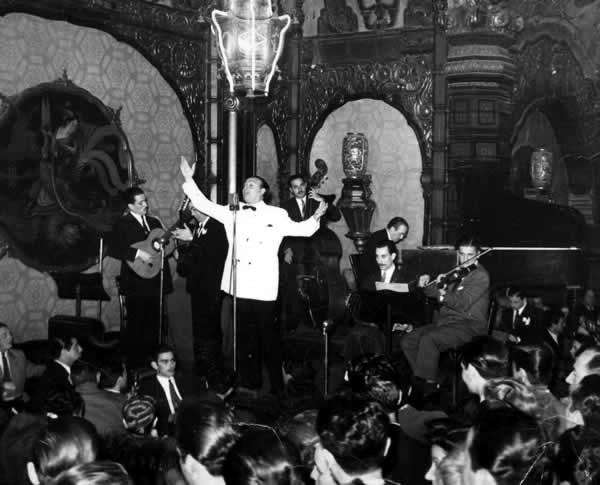
Matos travelled widely throughout Europe and stayed in Paris for a time, as well as working as Uruguayan consul to Germany. In 1931, he collaborated on the film score for Luces de Buenos Aires, shot in Joinville-le-Pont, France, and starring renowned tango vocalist Carlos Gardel.
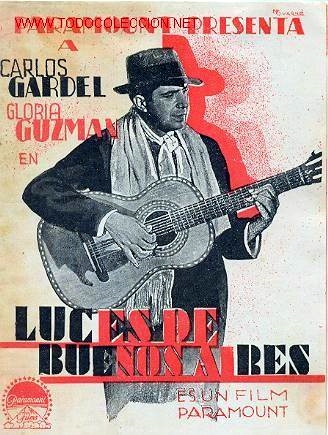
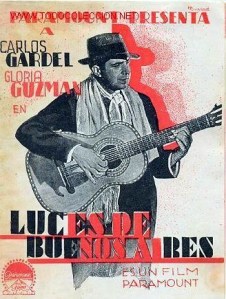 The movie poster from 1931 with Carlos Gardel.
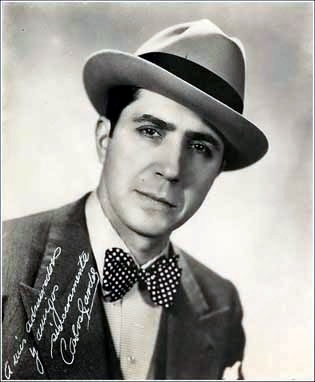
Carlos Gardel was born at just the right time, on the 11th of December 1890. The recording and motion picture industries were just starting to make their impact on the world. Gardel had movie star good looks and a sonorous baritone voice. His death occured at the peak of his career and popularity, at the age of 44 in a tragic accident, the 24th of June 1935.
The world in general mourned; in Argentina and Uruguay he attained a cult status that exists to this day.
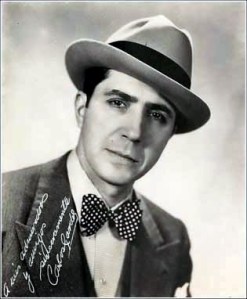 Very rare: Signed postcard and without his famous smile.
Canaro formulated a binding agreement in 1948, one which would end all the lawsuits from and with Matos Rodriguez about La Cumparsita rights. He determined that 20 percent of all royalties would go to the estates of the lyricist Contursi and his business partner Enrique P. Maroni. The other 80 percent of recording royalties would go to the estate of Matos Rodríguez. Canaro established, that future sheet music printings would show Contursi’s lyrics in addition to less well-known ones written by Matos Rodríguez, and no other lyrics.
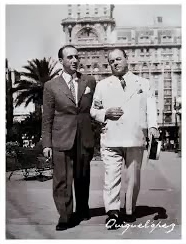
Francisco Canaro, right, walking on Plaza Independencia Montevideo.
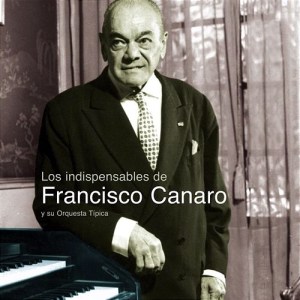
Francisco Canaro, called mentor of Matos Rodriguez, early 1950’s.
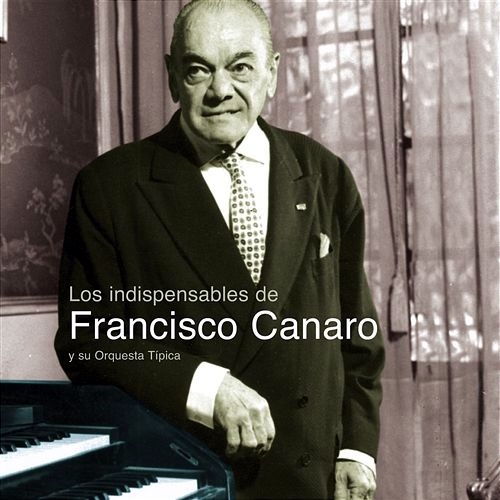
Born as Francisco Canarozzo November 26, 1888 in Uruguay.
Died December 14, 1964 (aged 76) in Argentina.
Francisco Canaro, alias Pirincho, is one of the most popular tango artists:
His recordings, tangos and milongas, are noted as singly beautiful and melodic.
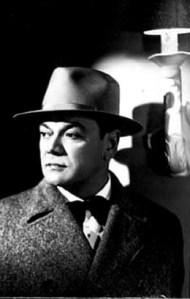 Francisco Canaro.
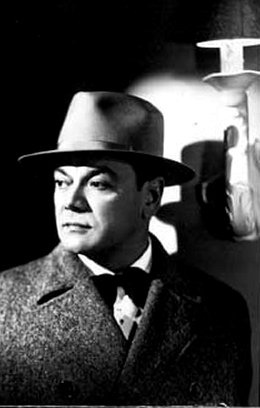
His beginnings are muddled with those of tango history. So much so that a radio program of mid 50s had coined a phrase to refer to any extremely old event: «when Canaro already had his orchestra». His fortune gave birth to a common saying: «He’s got more money than Canaro», in allusion to somebody’s opulence. It is said that once when Canaro and Gardel met at the races, the latter asked him 500 pesos (an amount then enormous) to bet on a horse, but asking the former to forget about this debt: «I’m poor, and you’ve got all the money here.» Because compared with Canaro, even Gardel was poor.
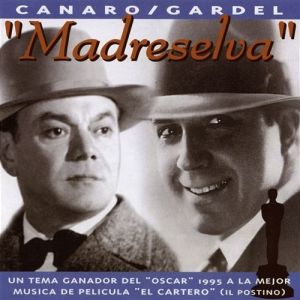 Canaro and Gardel, posthumous Oscar winners.
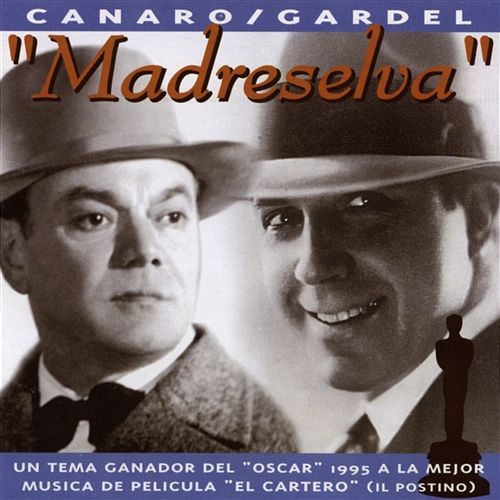
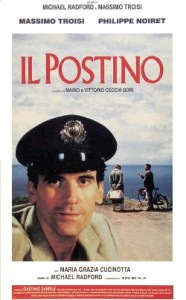
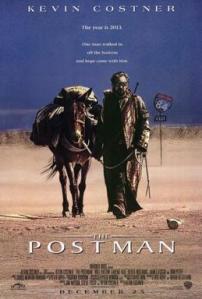
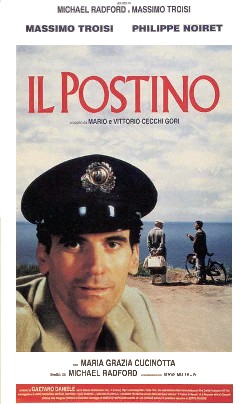
This is the original movie poster „Il Postino“, „The Postman“, released 1994. It won
the 1995 Oscar with the original music from Canaro and Gardel.
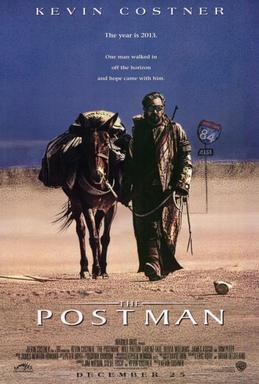
However, since the release of Kevin Costner’s post-apocalyptic film of the same name,
the film has gone by the title Il Postino: The Postman.
The film’s score, composed by Luis Enríquez Bacalov, won the Academy Award (Oscar)
for Best Music (Original Dramatic Score).
Please read „Tango Uruguay 5“ in a few days. Stay tuned !!!


….huch, das bin ja ich. Mal für einen Tag die Haare schwarz getragen. Hihi
LikeLike
Absolut richtig – und es kommt noch besser im Teil 5.
Danke Dir fuer Deinen comment !!
LikeLike