
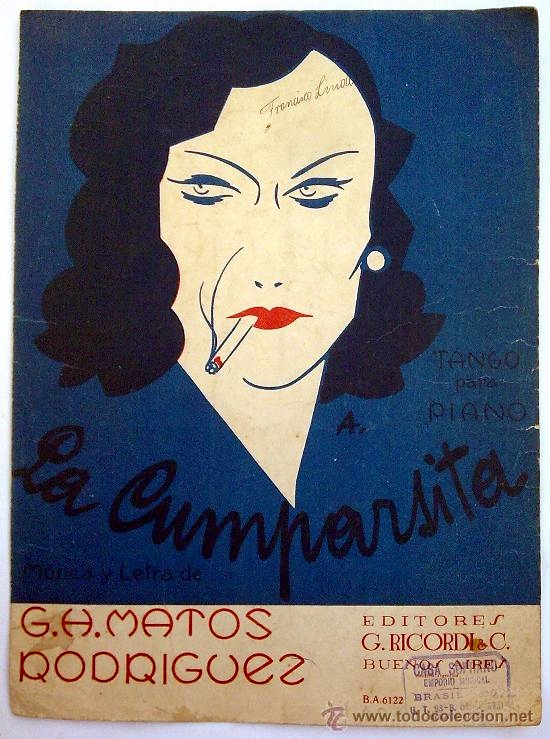
My La Cumparsita – Montevideo excursion.
We already know that La Cumparsita was composed in 1916 by the Uruguayan musician Gerardo Matos Rodriguez. Roberto Firpo, director and pianist of the orchestra that premiered the song, added parts of his tangos „La Gaucha Manuela“ and „Curda Completa“ to Matos‘ carnival march (La Cumparsita), resulting in „La Cumparsita“ as it is currently known. That premiere took place on April 19, 1917 in La Giralda, a famous cafe next to Plaza Intependencia in Montevideo.
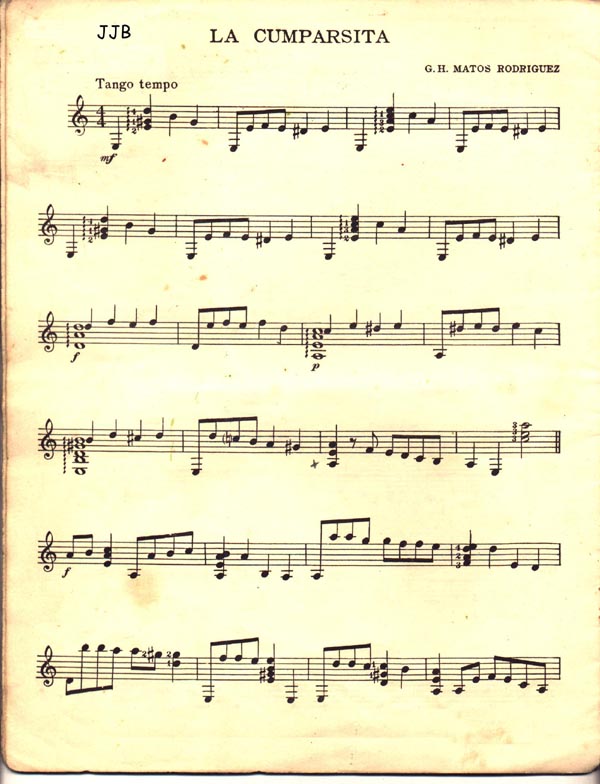
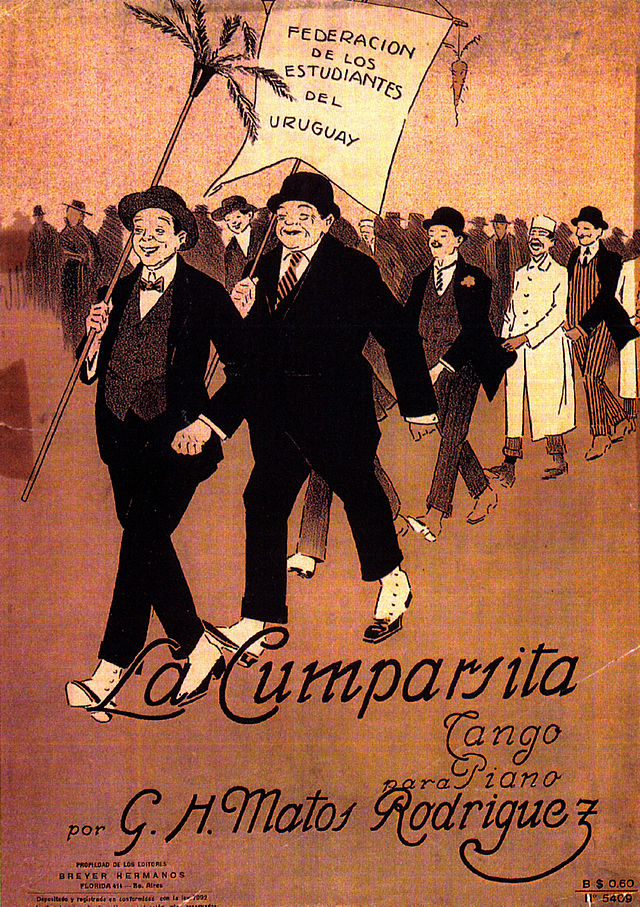
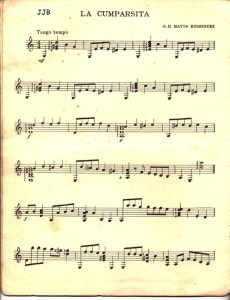 One of the first music sheet prints from Matos Rodriguez.
The „Grand Café and Confectionery La Giralda“ opened in the late nineteenth century. It was located on the Avenue July 18 between the Andes street and Independence Square, occupying the site where now stands the Palacio Salvo. La Giralda was one of the top cafes and meeting points in Montevideo that time. Everyone who wanted to see and be seen had to visit La Giralda.
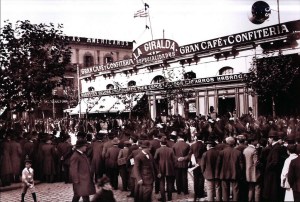 La Giralda Gran Cafe y Confiteria, 1905.
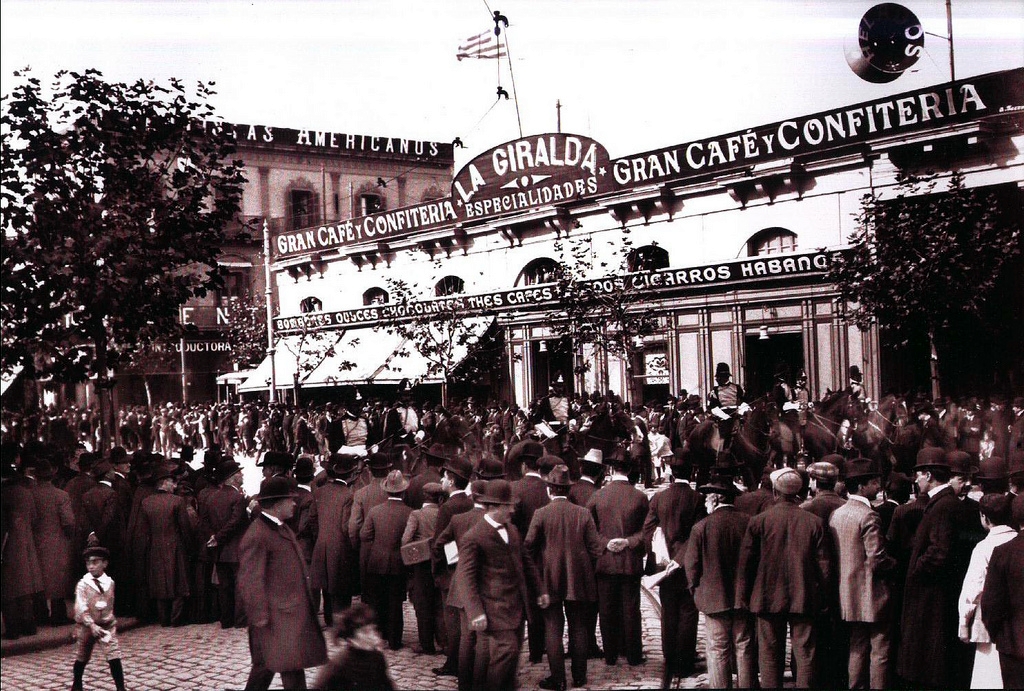
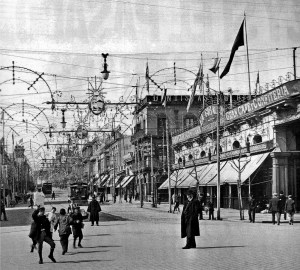 La Giralda, view from Plaza Independencia, 1906.
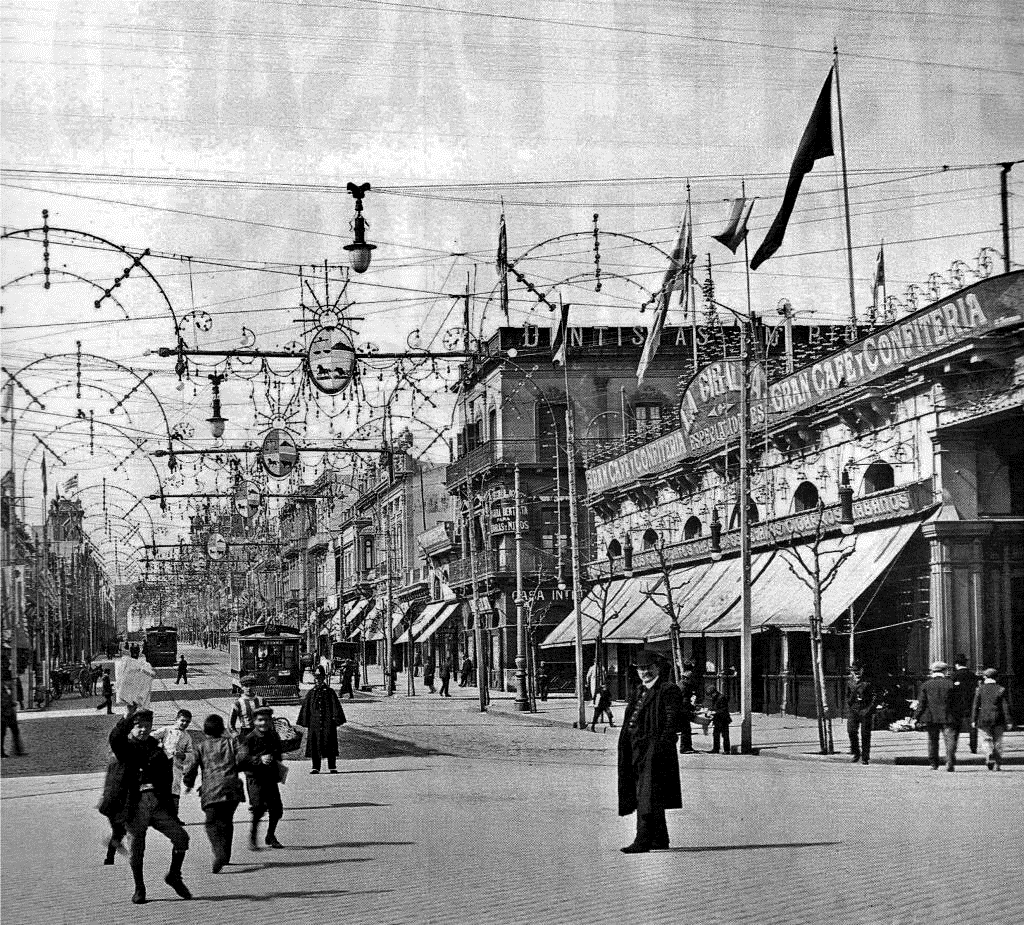
View down Avenida 18 de Julio. I would like to see that at night. Notice hundreds of light cables and bulbs across the Avenida.
I tried to find out what the name „La Giralda“ means, but it was almost impossible. Giralda, also known as giraldilla or veleta, translated means weather cock or weather vane. Veleta as a „wind direction indicator“. The guess I have, that „towers“ or „high buildings“ or „great businesses“ are called „La Giralda“, as meaning „above everything“ !!??
But why is a cafe or restaurant named like this ? May be the „restaurant above others“ or „number one cafe“ – who knows ! If anyone of you find an explanation, I would be happy to know about. Anyway, let’s go on.
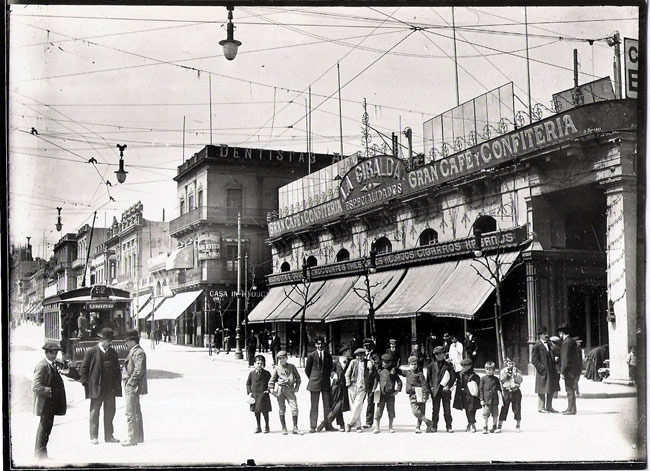
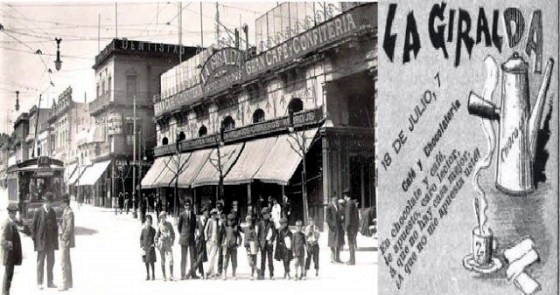
La Giralda photographed in 1916. The same photo was used for an advertizing card.
La Giralda Montevideo Mystery.
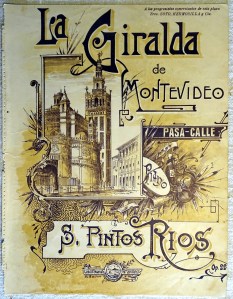 Extreme rare sheet music – completely unknown !
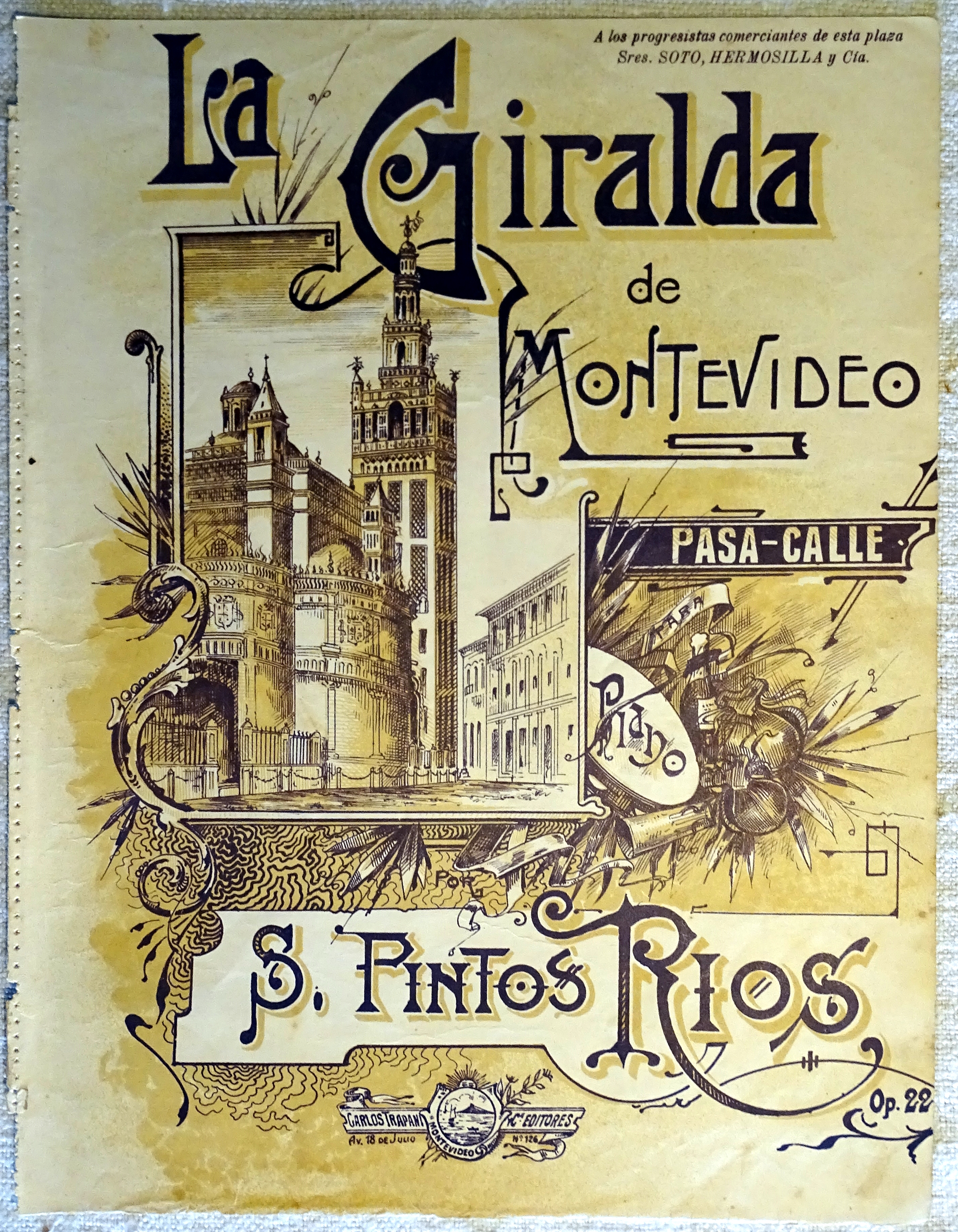
In my collection of over 500 Uruguayan music sheets I have this one, „La Giralda de Montevideo“. It is, til now, the only known copy. In magnificent quality and printed around 1910-1920 with a great vignette and elements of art nouveau and art deco. Very strange, that the vignette shows the „Giralda“ – the bell tower – of the famous cathedral in Seville, Spain. La Giralda Montevideo Mystery.
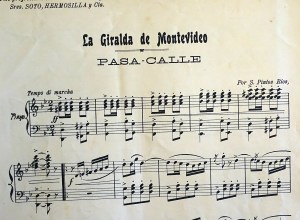 Inner page of the La Giralda music sheet.
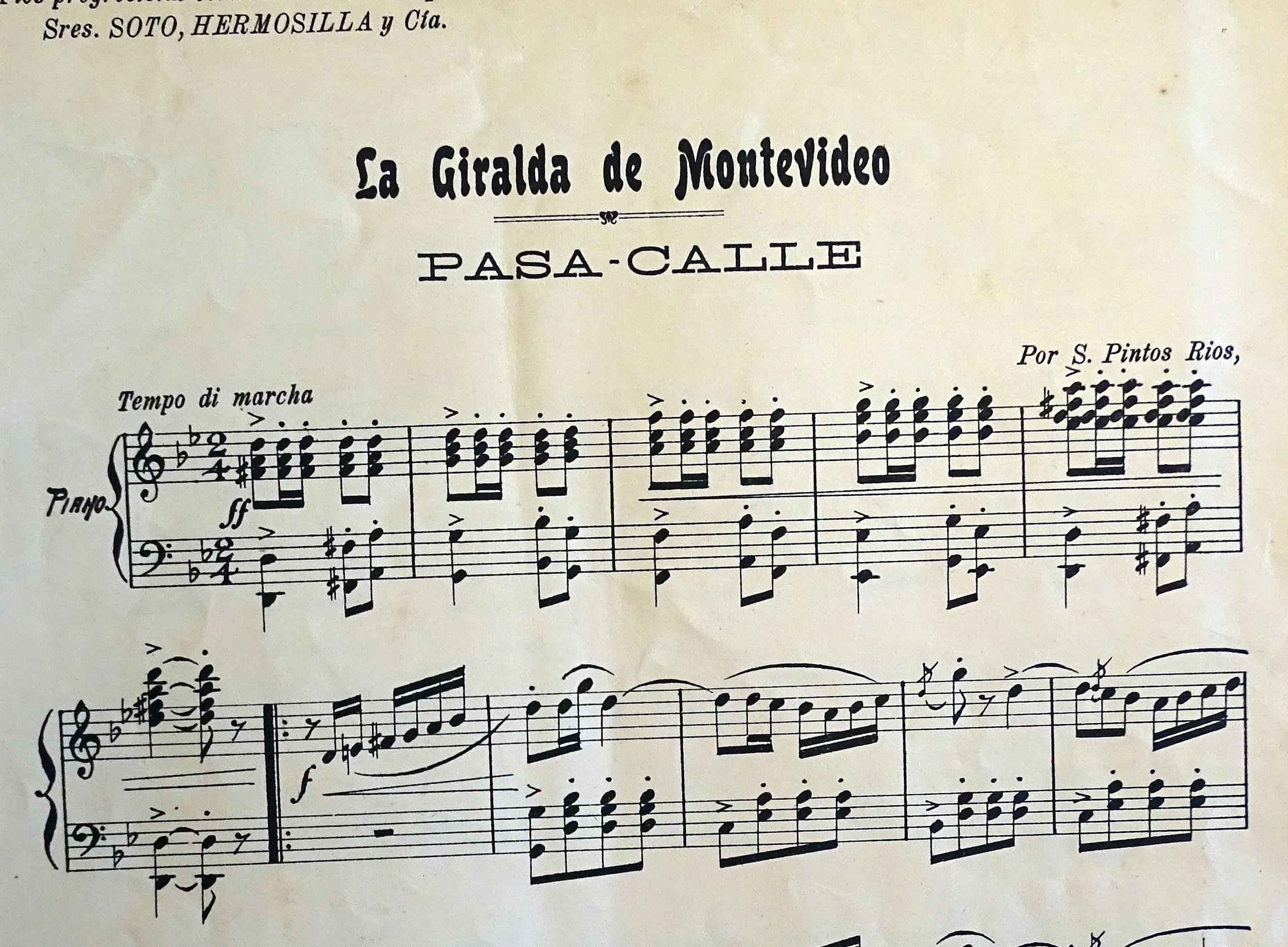
The name „S.Pintos Rios“ brought up no explanation for whom it could be. The single names Pintos or Rios are well known in Montevideo.
The contents are showing music notes only, a march for piano. No lyrics are known to this sheet music. And what does Pasa-Calle mean ?? The meaning, not the translation !
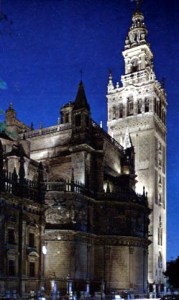 This photo shows the same view/angle as it is on the music sheet.
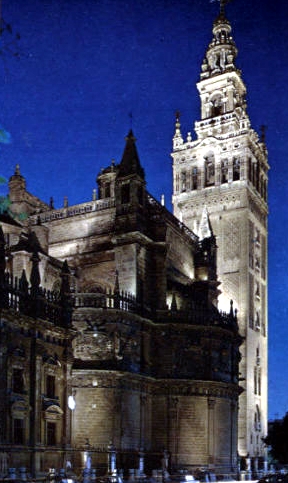
The title can be connected to the cafe La Giralda as honor to „the cafe above all others“, or it can be that it honors „Montevideo – the great – above all others“ .
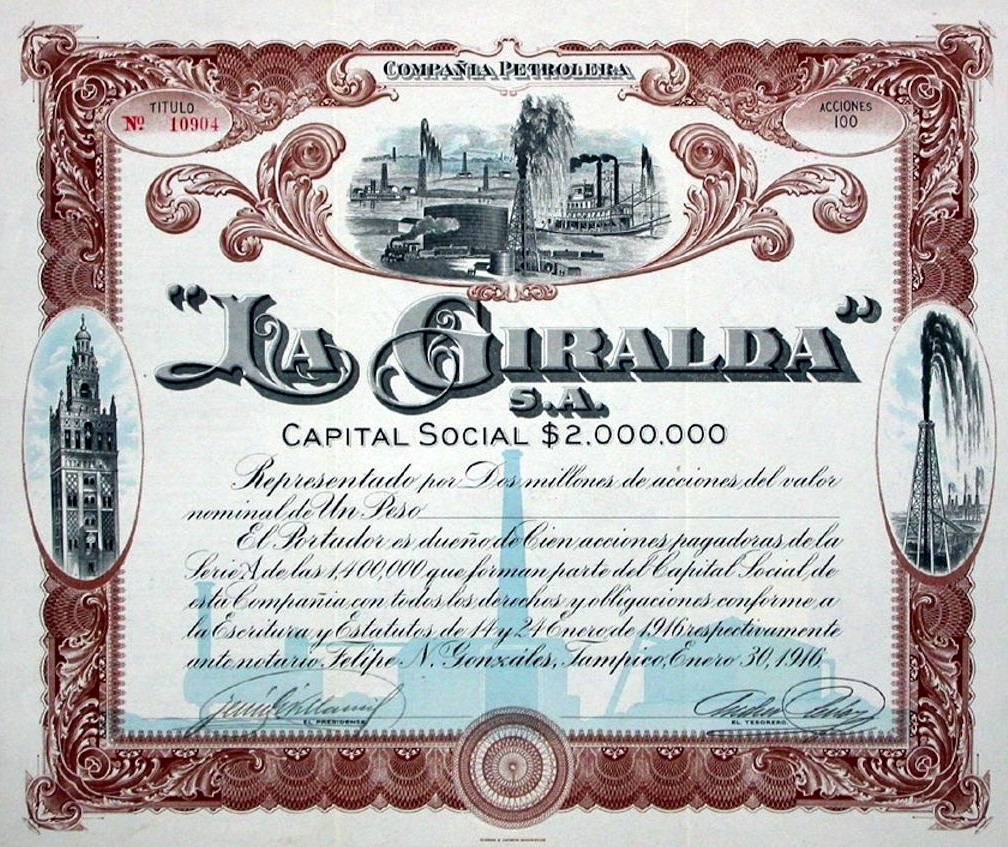
The share certificate from 1916 (see further down) also uses the Seville bell tower as „above others“. What has a Seville, Spain bell tower (Giralda) to do with an oil exploring company in Tampico, Mexico (not Tampico, Illinois) ?? Obviously one of the oil centers of the time ( Mexican Petroleum Corporation or Standard Oil Company). But, 1916 investing in shares, during the high of the Mexican Revolution (1910 – 1920) ?? Fashion of the time, or a „great investment – better then others“ ?? Another La Giralda Mystery ?!
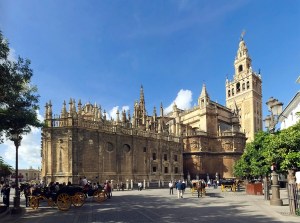 The Cathedral of Seville with it’s Giralda.
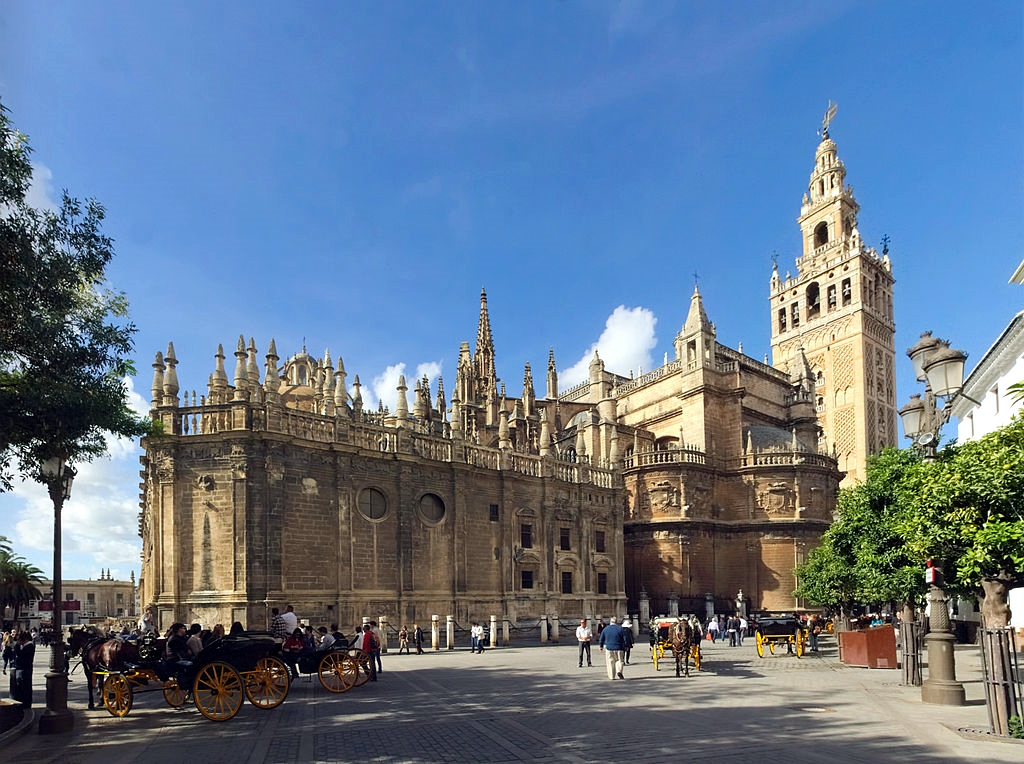
The Giralda is the bell tower of the Cathedral of Seville. Its height is 105 m. Construction began in 1184 under the direction of architect Ben Ahmad Baso. The works were completed on March 10 of 1198, with the placement of four gilt bronze balls in the top section of the tower. After a strong earthquake in 1365, the spheres were missing. In the 16th century the belfry was added by the architect Hernán Ruiz the Younger; the statue on its top, called „El Giraldillo“, was installed in 1568 to represent the triumph of the Christian faith. Since 1987 it is an UNESCO world heritage site.
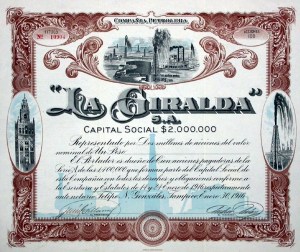
Backing up my theory about „something TOP“, share certificate, 1916, with a Giralda/Seville vignette. Why ??
The sheet music La Giralda was printed and distributed by Carlos Trapani, Montevideo. Carlos Trápani was editor and the owner of the leading music store in Montevideo and a center of guitaristic activity. The small vignette on the sheet music shows Montevideo harbor and the cerro de Montevideo. Sadly I can’t ask him about this sheet anymore.
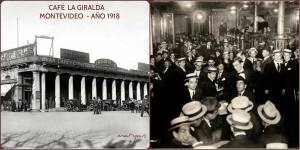 A La Giralda view from outside and inside 1918.
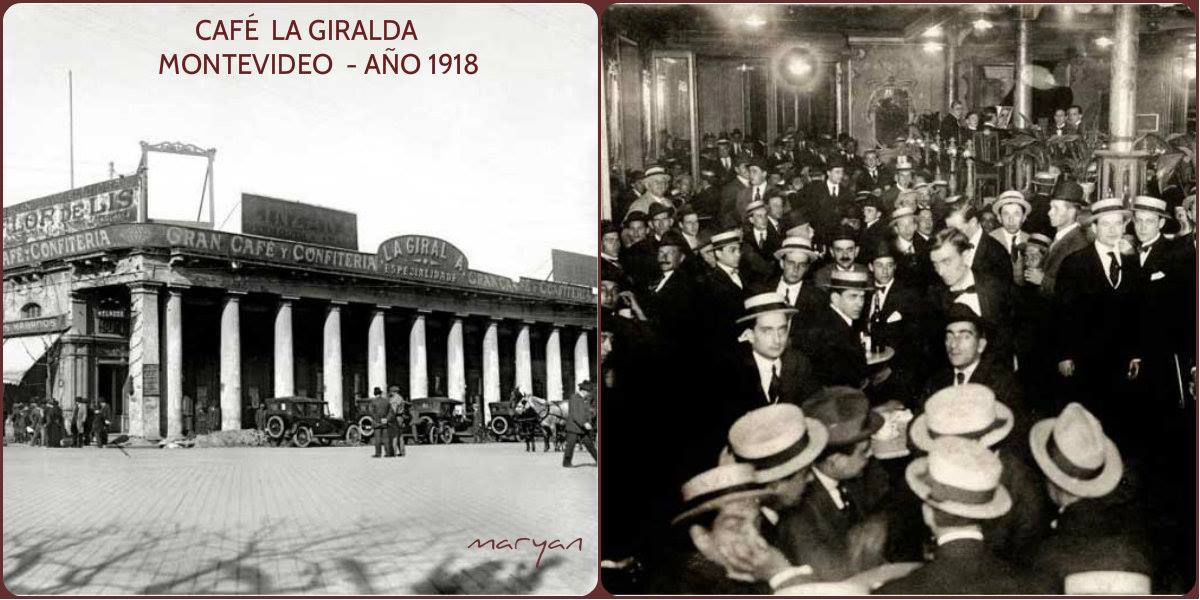
La Giralda was for almost 40 years the „center point“ of Montevideo’s life, before the site was sold and the building demolished in 1922, in favor of the well known Palacio Salvo.
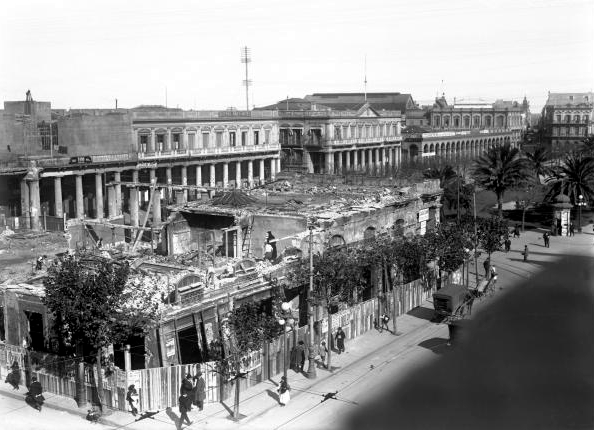
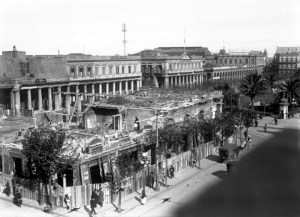 La Giralda demolished by the Salvo brothers.
Palacio Salvo.
This Palace and the story around deserves a post of itself. Still, I want to give a short information to complete the „La Cumparsita“ story. The „Salvo Palace“ is a mix of art deco and Gothic elements.
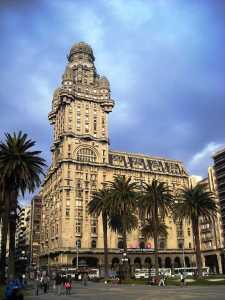
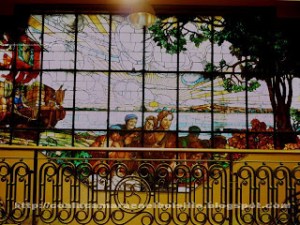
Palacio Salvo as it looks today. And one of the magnificent „glass art work“ windows on level 10.
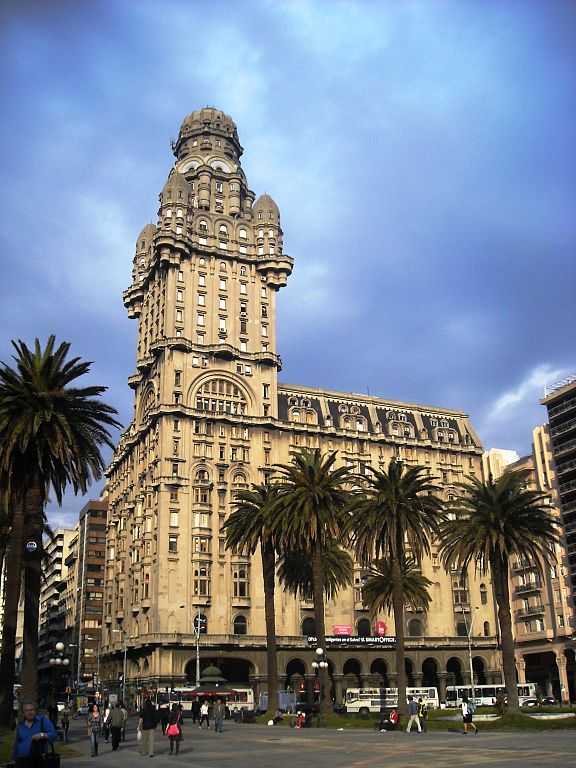
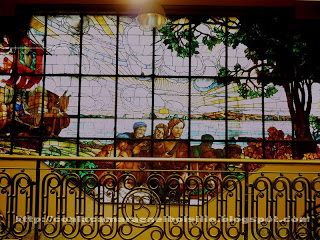
The Giralda site was bought by the Salvo brothers for 650,000 Uruguayan pesos. They demolished the old cafe building and on this site they established the Palacio Salvo. Work started in 1923 and it was inaugurated in 1928, Palacio Salvo appeared in the city landscape as a strange creature, one that has both delighted and disgusted architecture buffs for decades.
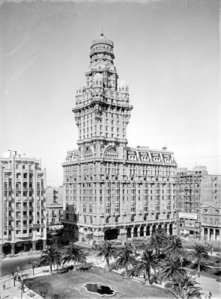 Palacio Salvo already without the antennas.
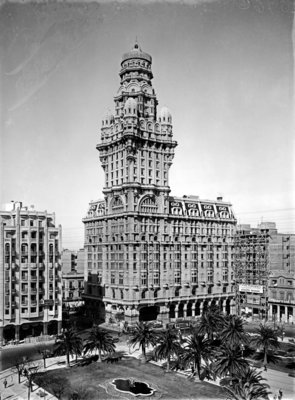
Its makers were Italian immigrants born in the region of Liguria. At Uruguayan shores in the 1860s, they went from street vendors to have their own shop and eventually became important entrepreneurs in the textile branch.
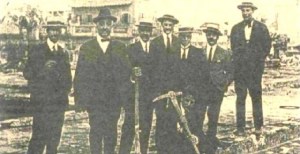 Second from left Lorenco Salvio, ground breaking 1923.
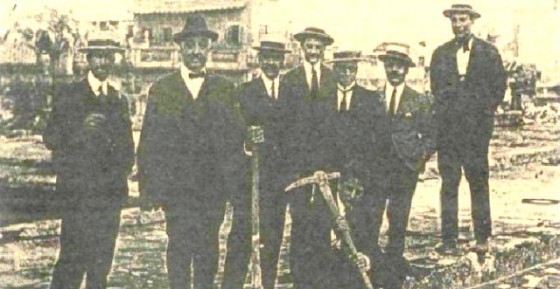
From these conditions, the brothers Angel, Lorenzo and José Salvo were raised in 1919, lifting the first skyscraper in Uruguay, a large hotel opposite the Plaza Independencia, in a sense as a „thank you to the city“ from where they had received, when they were very poor.
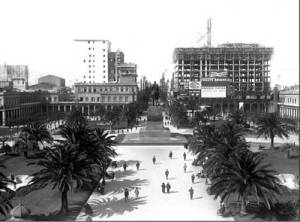 Palacio Salvo building site at Plaza Independencia.
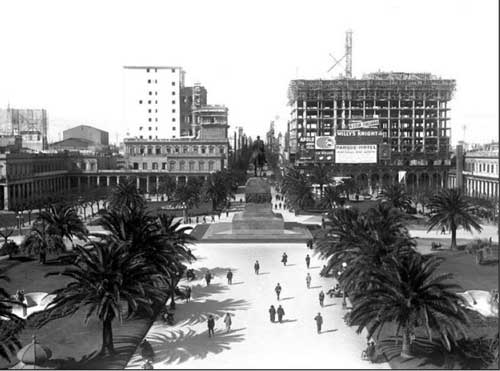
In an area of almost 1,800 square meters, it has two basements, ground floor, ten stories that make up the base, with more than forty apartments per floor, and fifteen floors in the tower displays.
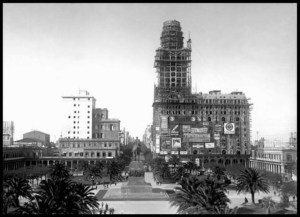 Palacio Salvo is taking shape.
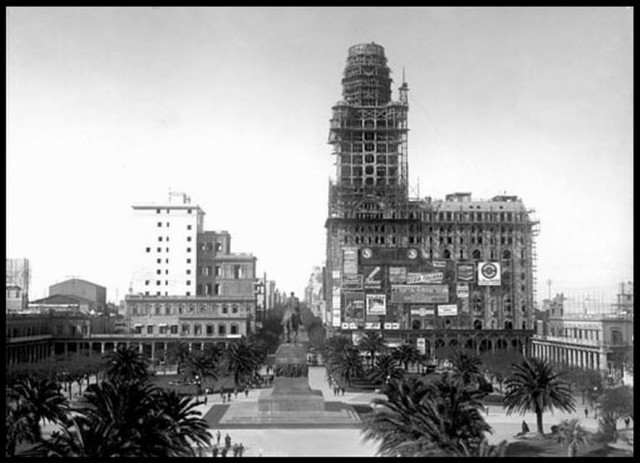
The palace was originally topped with a lighthouse and a parabolic mirror of 920mm, reaching approximately 100km out, but the light was later removed in favor of an antenna that gave the 27-floor building its eventual height of 100 meters. With this addition it was once to be the tallest building in South America. The antenna has later been removed, demoting it to simply a fantastic display of architecture.
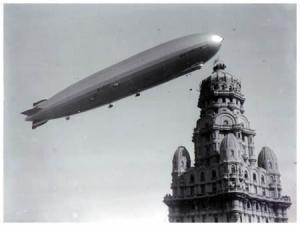 Zeppelin over MVD, lighthouse on Palacio Salvo, 1934.
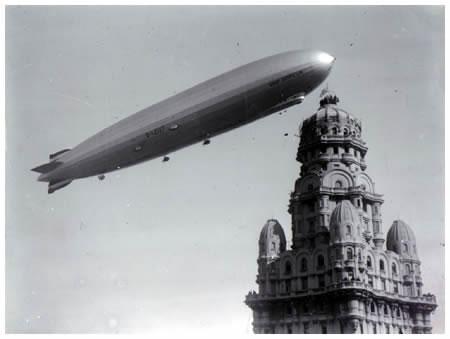
Palacio Salvo silhouette, view from the most diverse places, definitely was built skyline al. Before being opened, poets Alfredo Mario Ferreiro and Juvenal Ortiz Saralegui published verses in his honor, the company Philips used his image in advertising posters, showing the tower lit especially for hosting the Olympic champions of Amsterdam. Their particular figure, full of curved surfaces, balconies and byways, gradually became the subject of countless photographs and looks. Film and material expression of various arts became. It is also stage and engine of stories and legends, many of them collected and documented in the book Historias del Palacio Salvo.
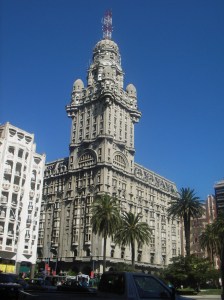 Palacio Salvo with the large antennas on top.
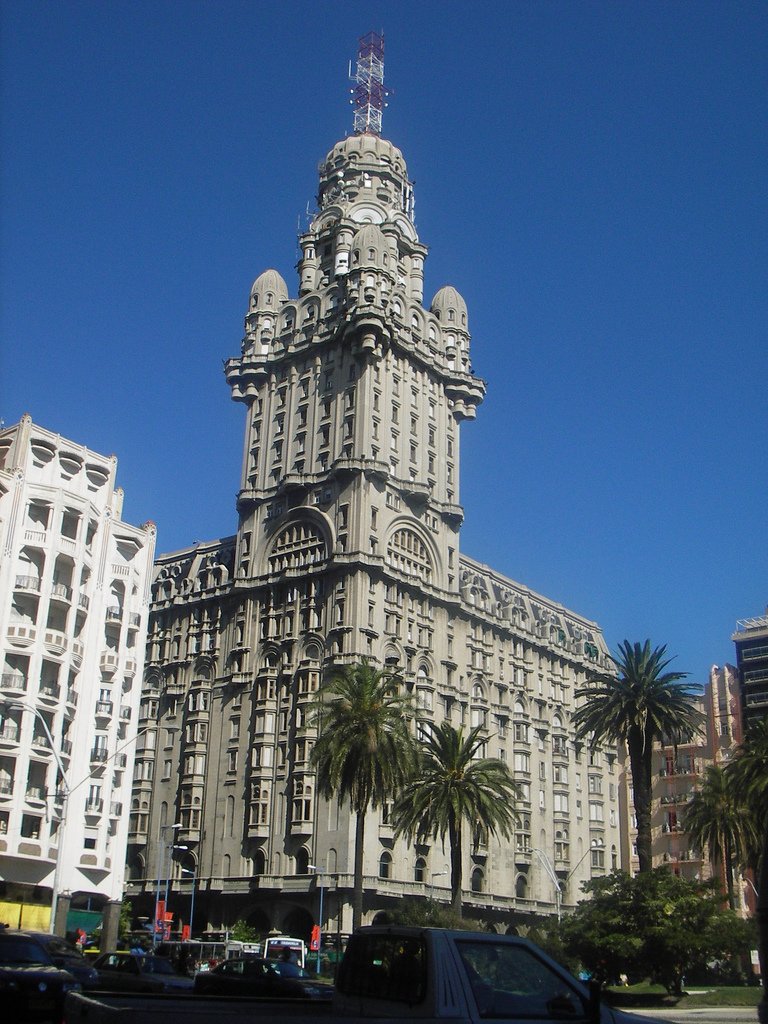
Let us close the journey around Montevideo, La Giralda and Palacio Salvo with the wonderful tango „La Cumparsita – also called „el Himno del Rio de la Plata“.
The hymn of the Rio de la Plata (the Silver River, see my post about silver river).
La Cumparsita.
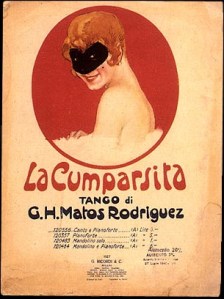 Very early music sheet, music and text by Matos Rodriguez.
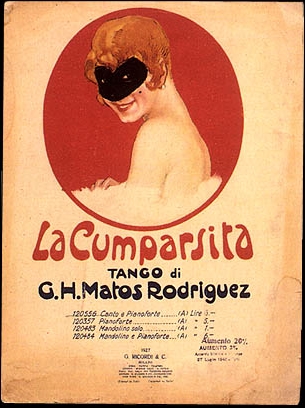
First, a couple of definitions about the title.
Cumparsa: Lunfardo (see Lunfardo university part 1) word that denotes a group
of people that attends the carnival festivals dressed in a similar fashion,
usually, but not exclusively, wearing masks.
The term seems to be a corruption of the Italian word „comparsa“.
La Cumparsita = The little cumparsa.
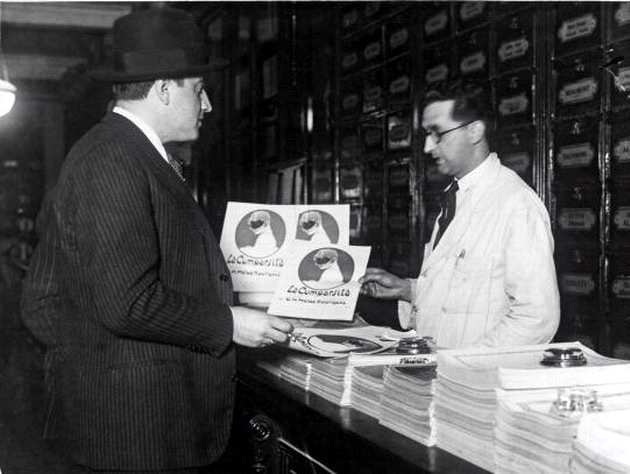
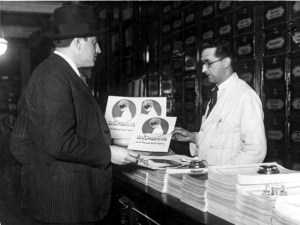 Matos with his sheet music at Carlos Trapanis shop.
Translation of the Lyrics.
The Matos text in Spanish:
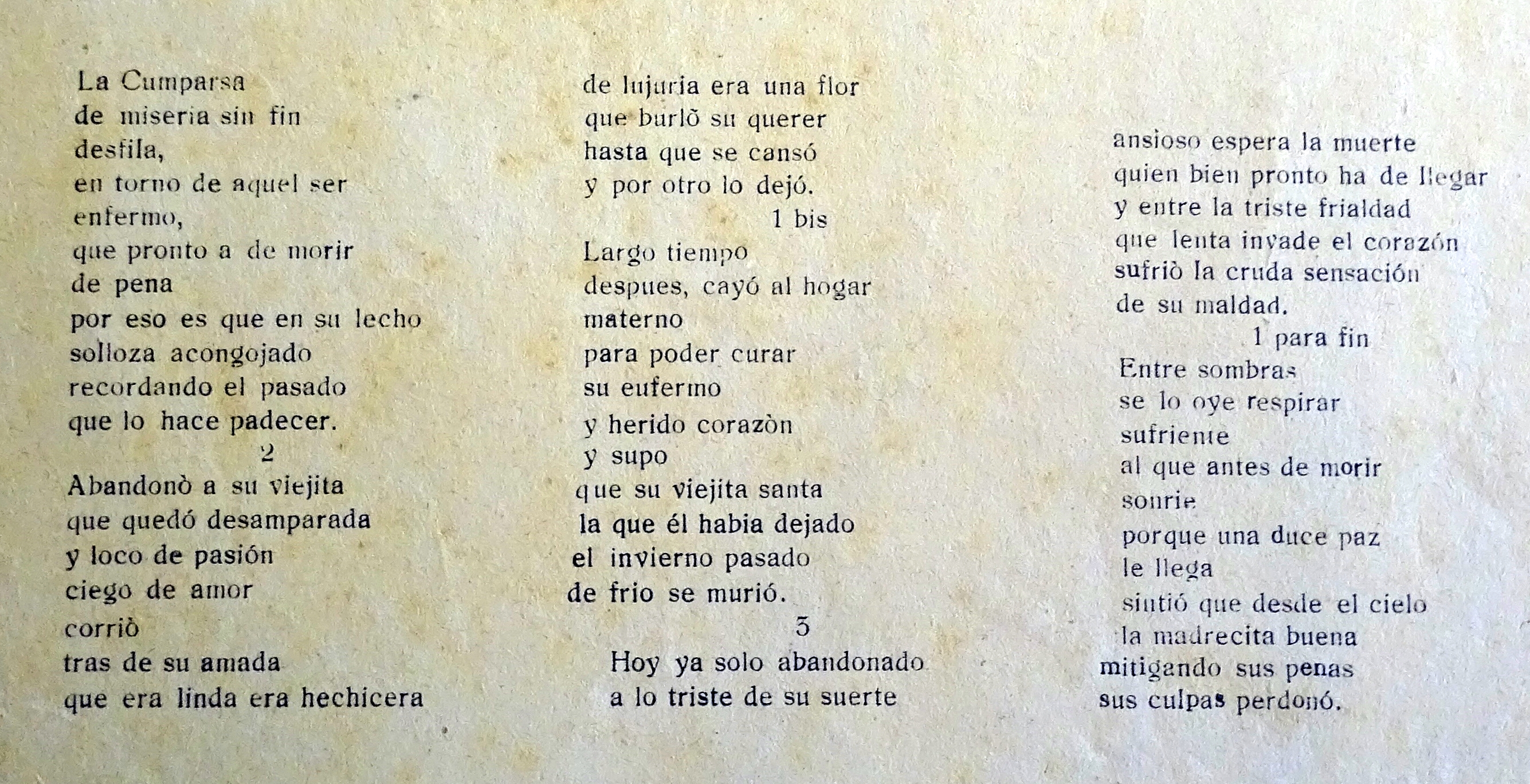
miserias sin fin desfila en torno de aquel ser enfermo que pronto a de morir de pena.
Por eso es que en su lecho solloza acongojado recordando el pasado que lo hace padecer.
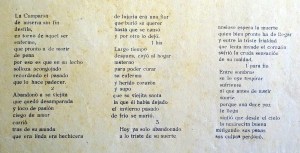 First – original lyric, 1917, click on to supersize.
The Matos text in English:
The masked parade of endless miseries promenades around that sick being that soon will die of sorrow.
That’s why in its bed cries mournfully remembering the past that makes it suffer.
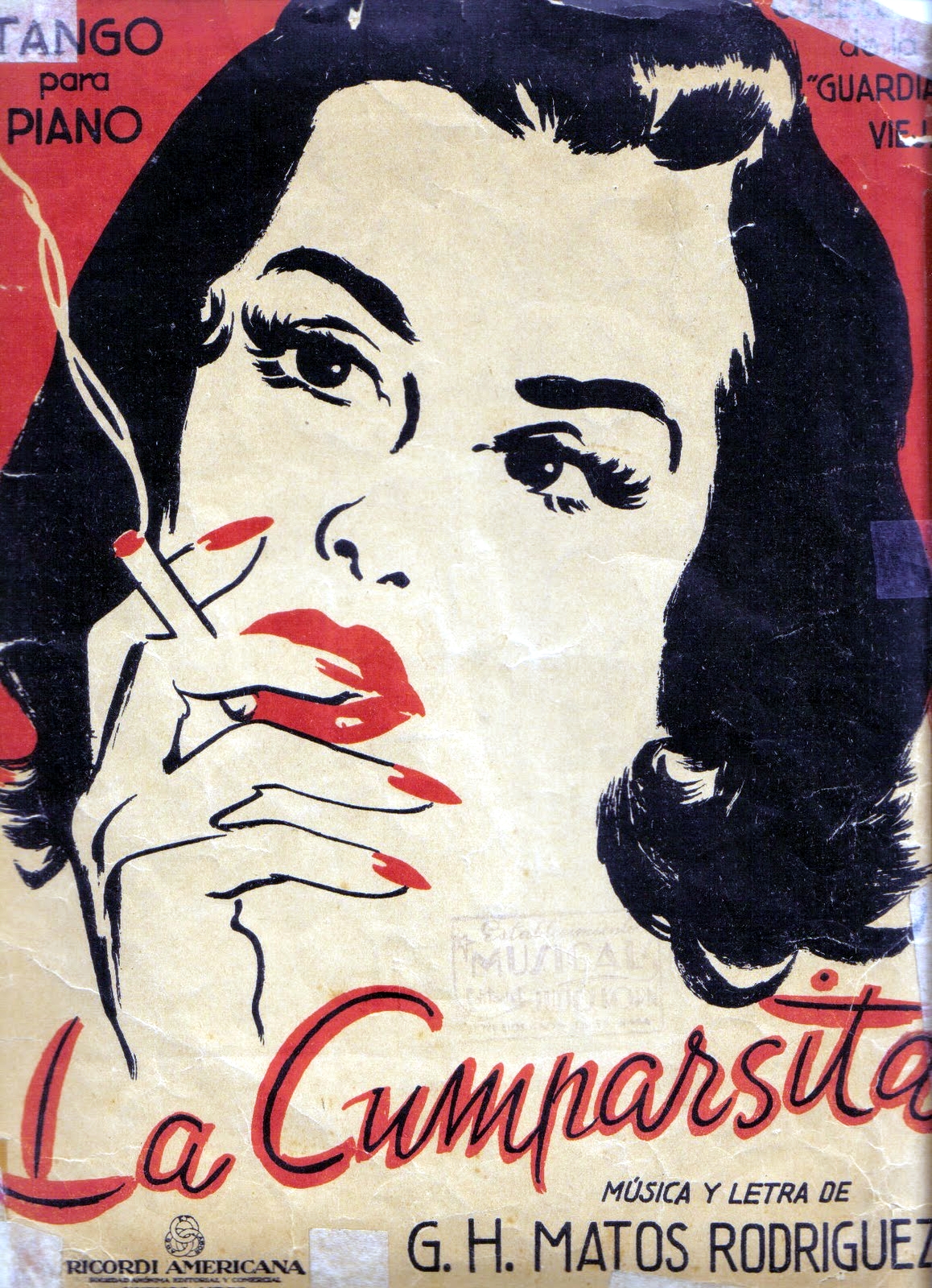
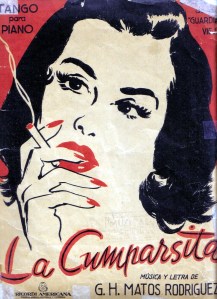 Another, later edition of Matos music and lyric’s.
LA CUMPARSITA lyrics by
Enrique Maroni and Pascual Contursi.
Spanish version:
Si supieras,
que aun dentro de mi alma,
conservo aquel cariño
que tuve para ti…
Quien sabe si supieras
que nunca te he olvidado,
volviendo a tu pasado
te acordaras de mi…
Los amigos ya no vienen
ni siquiera a visitarme,
nadie quiere consolarme
en mi afliccion…
Desde el dia que te fuiste
siento angustias en mi pecho,
deci, percanta, que has hecho
de mi pobre corazon?
Sin embargo,
yo siempre te recuerdo
con el cariño santo
que tuve para ti.
Y estas en todas partes
pedazo de mi vida,
y aquellos ojos que fueron mi alegria
los busco por todas partes
y no los puedo hallar.
Al cotorro abandonado
ya ni el sol de la mañana
asoma por la ventana
como cuando estabas vos,
y aquel perrito compañero
que por tu ausencia no comia,
al verme solo el otro dia
tambien me dejo.
Some different editions of La Cumparsita for sheet music collectors.
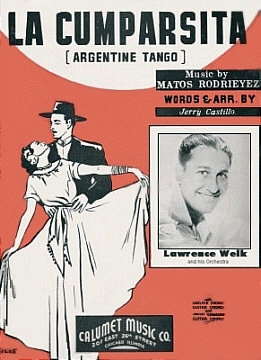
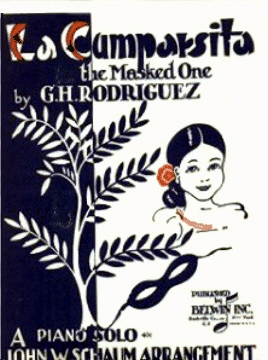
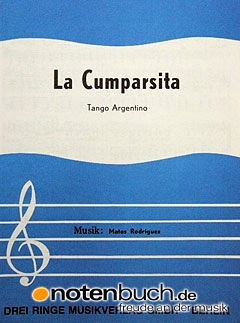
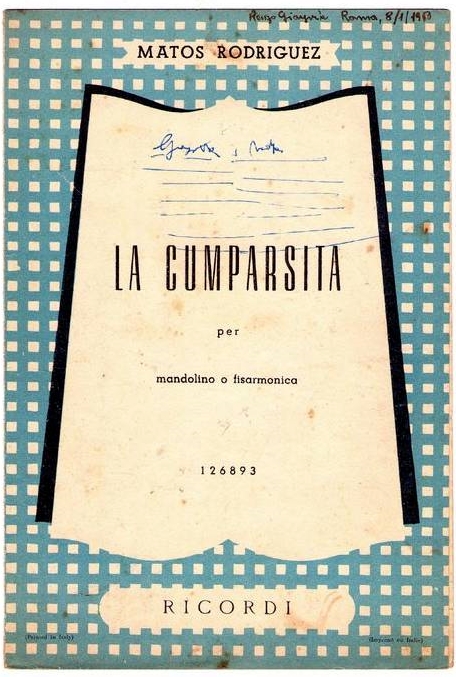
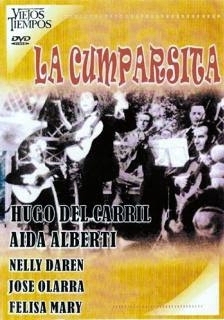
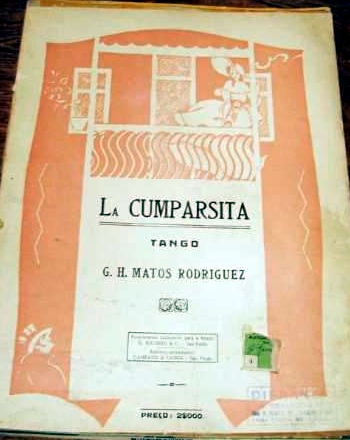
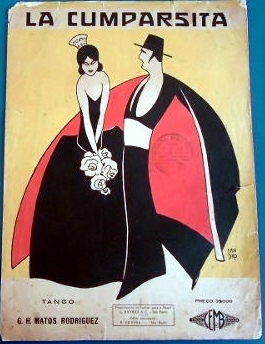
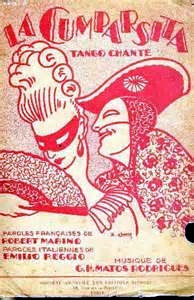
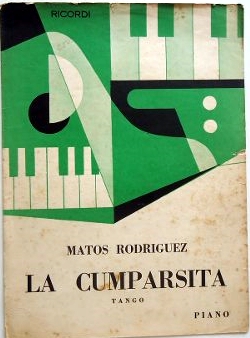
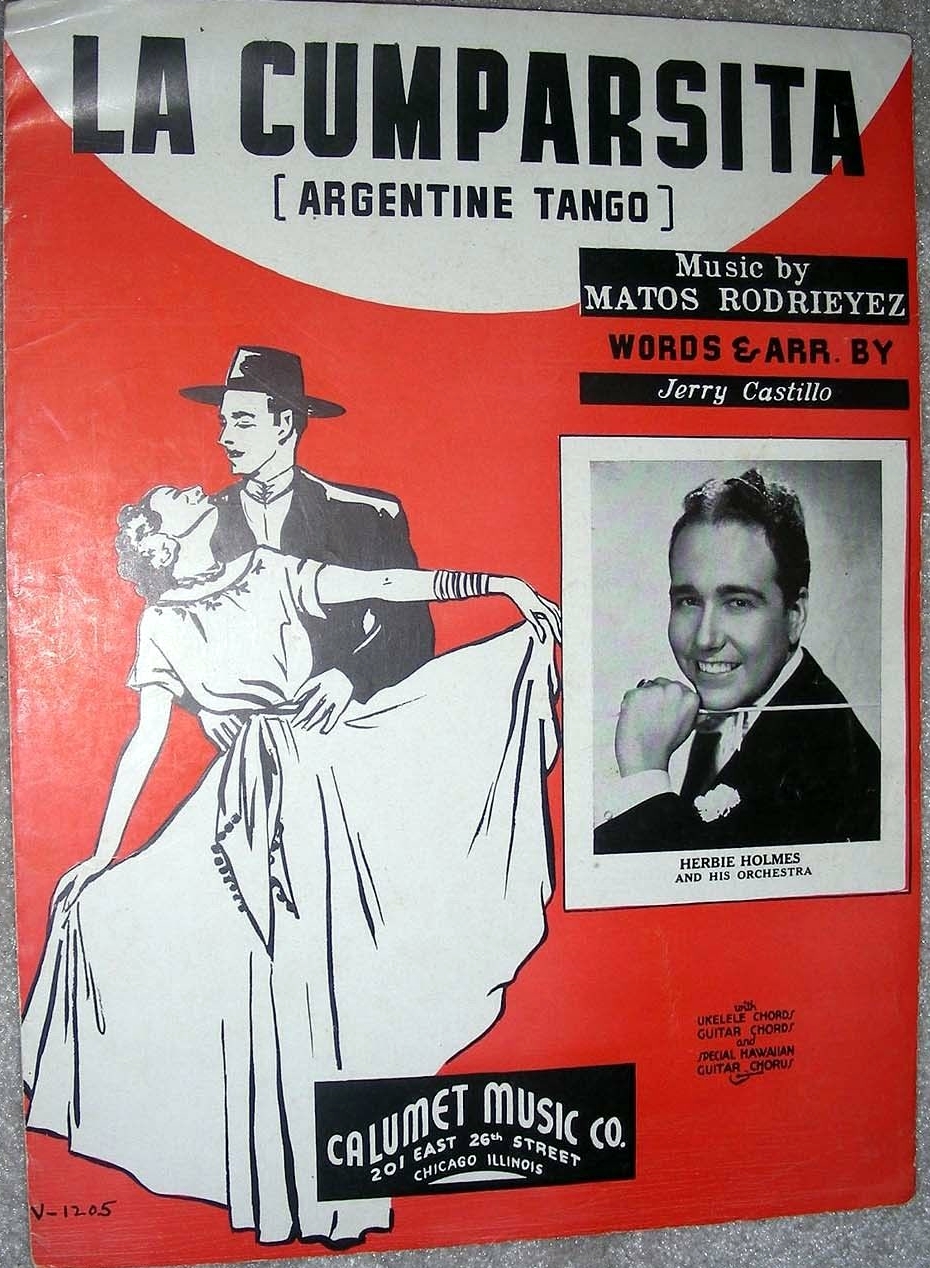
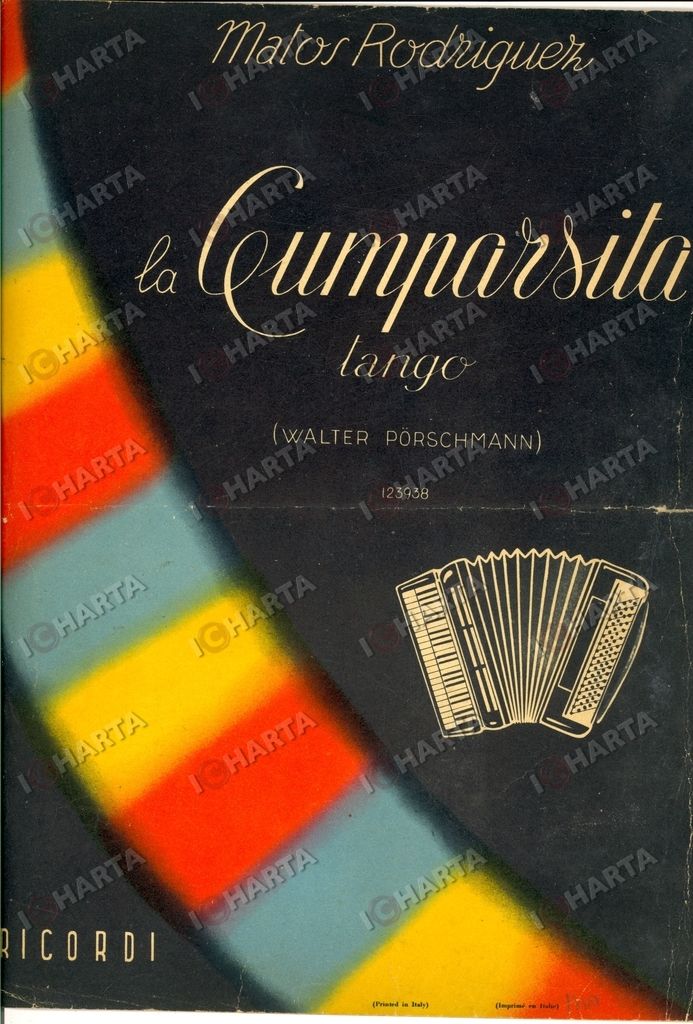
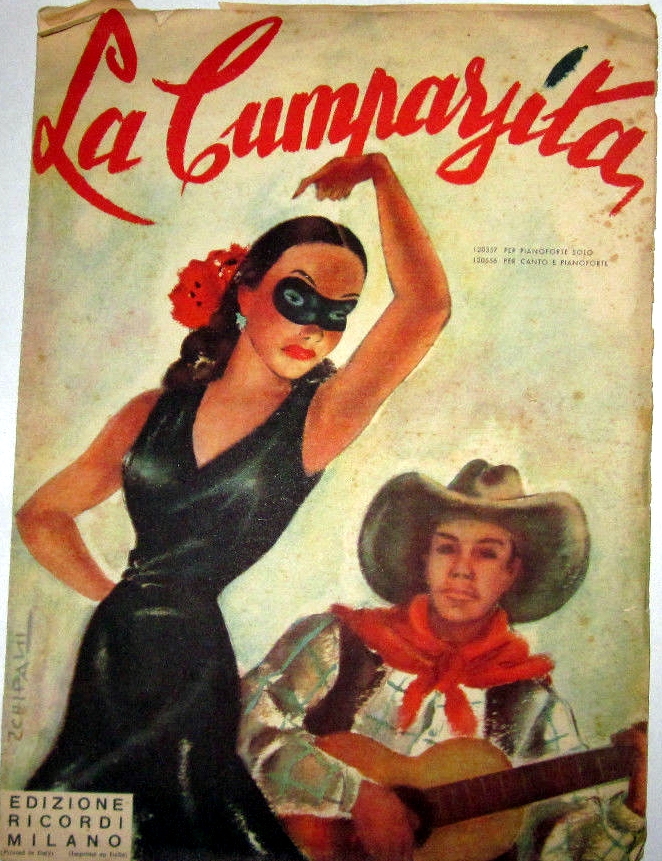
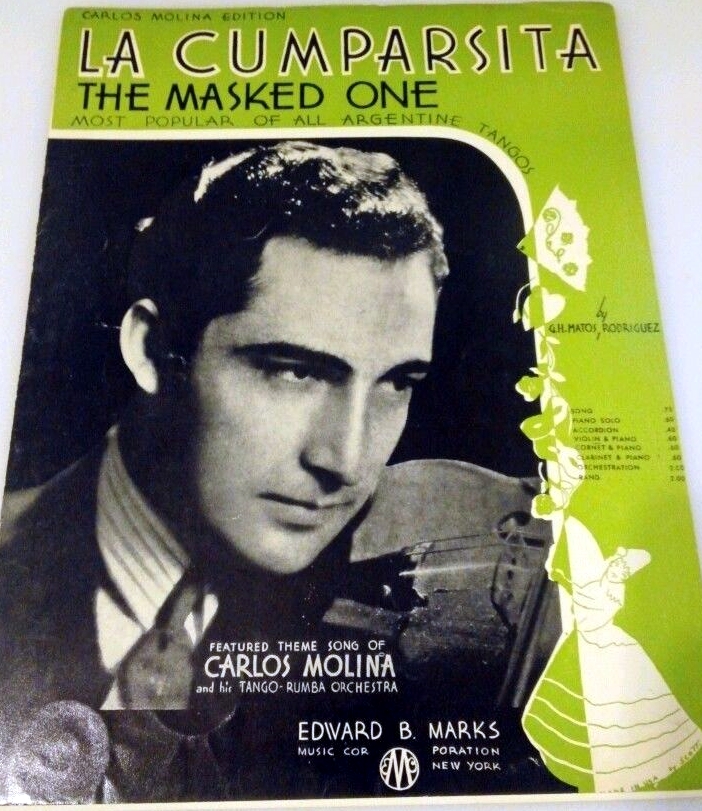
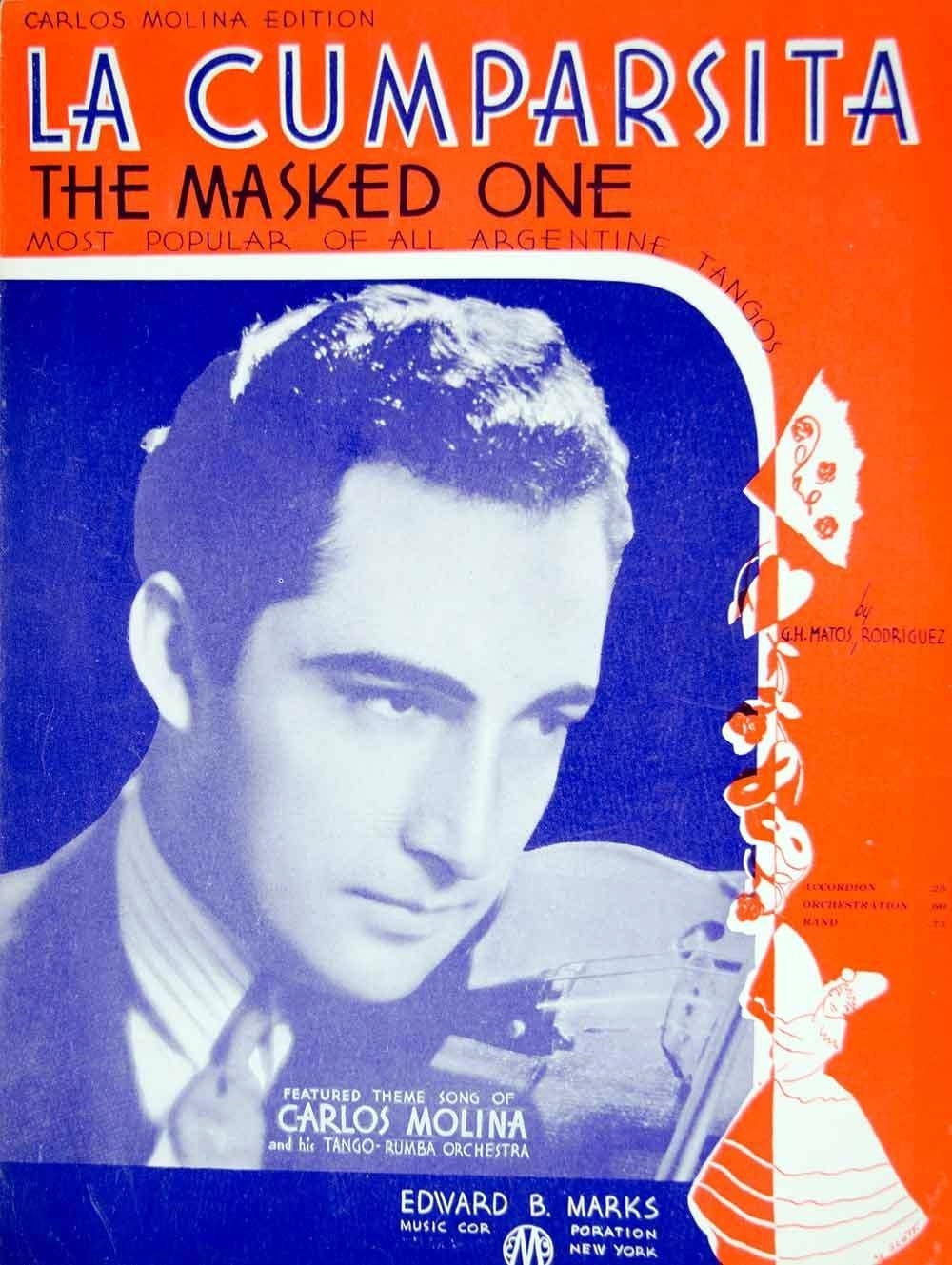
Many of the printed music sheets forced strong discussions and objections, because they were under titled as „Argentine Tango“, sometimes even without naming Matos Rodriguez. After the final settlement with Matos, as described earlier, it stopped and the „Argentine phishing“ disappeared.
English version:
If you knew,
that still within my soul,
I keep the love
I had for you…
Who knows, if you knew
that I never forgot you,
returning to your past,
you would remember me…
The friends do not come
not even to visit me,
nobody wants to console me.
in my affliction…
Since the day you left
I feel anguish in my chest,
tell me, woman, what have you done
with my poor heart?
Nevertheless,
I always remember you
with the holy love
that I had for you.
And you are everywhere,
piece of my life,
those eyes that were my happiness
I search for them everywhere
and I can’t find them.
To the abandoned bedroom
now not even the morning sun
shows thru the window
the way as when you were there,
and that little dog [our] partner
that because of your absence would not eat
on seeing me alone the other day also left me.
Posters (movies and advertizing) of La Cumparsita for collectors.
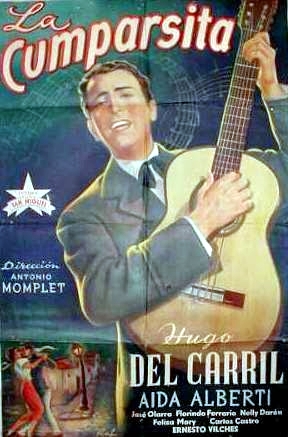
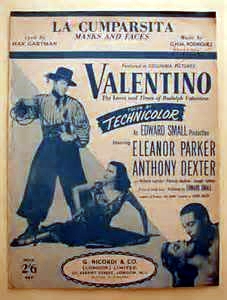
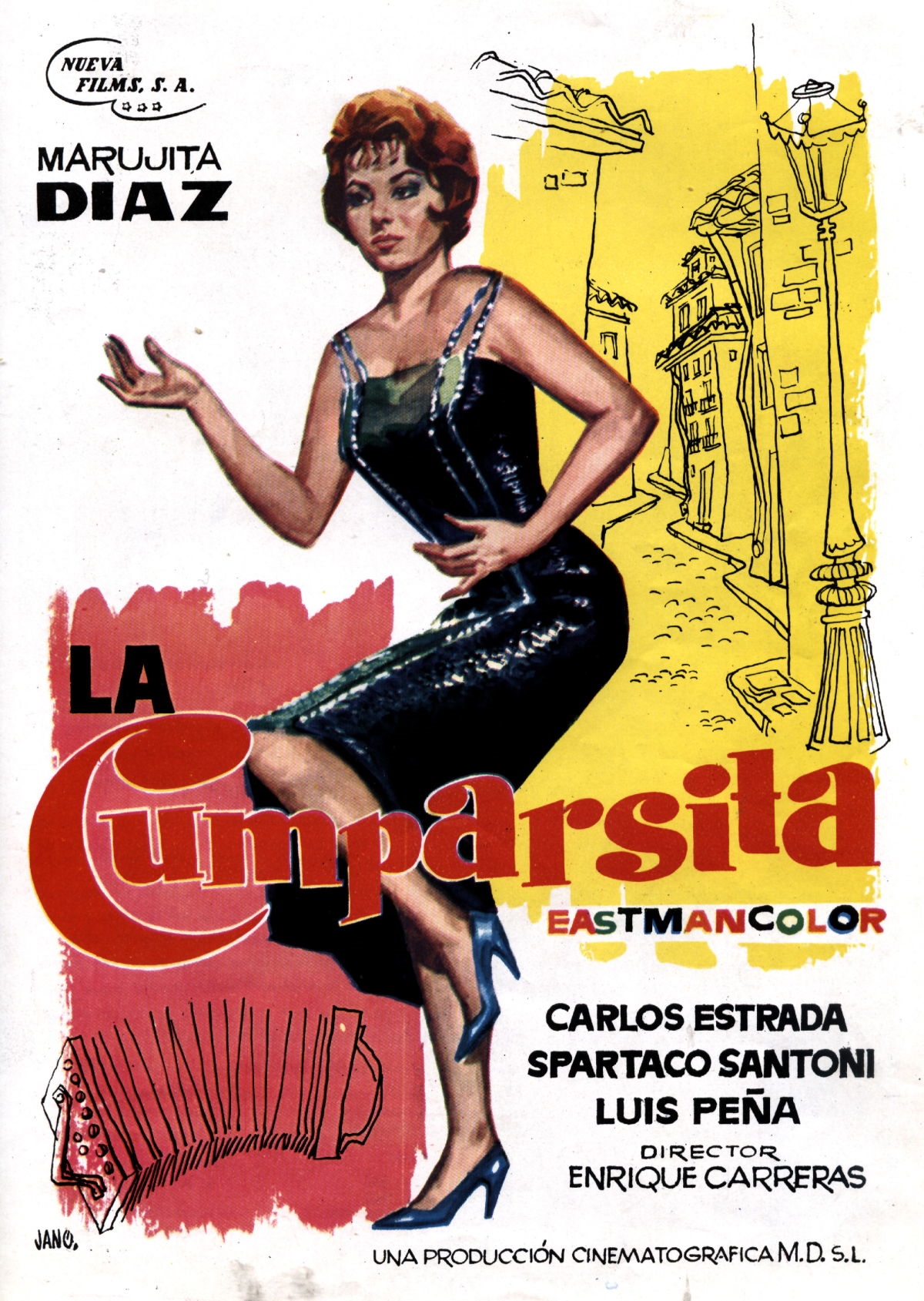
Finally a very rare Japanese record cover of La Cumparsita from the 1950’s.
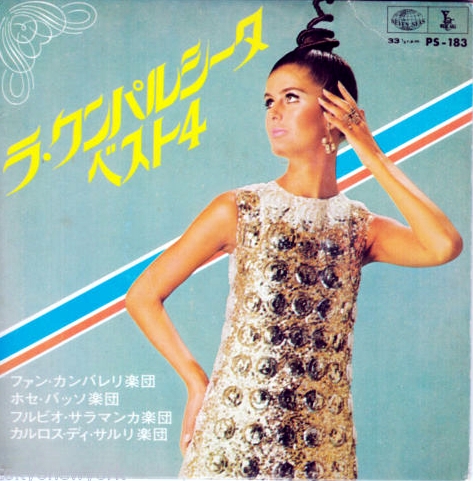
Four times La Cuparsita sung by four different artists, as it says on the cover:
JUAN CAMBARERI: LA CUMPARSITA
JOSE BASSO: LA CUMPARSITA
FULVIO SALAMANCA: LA CUMPARSITA
CARLOS DI SARLI: LA CUMPARSITA
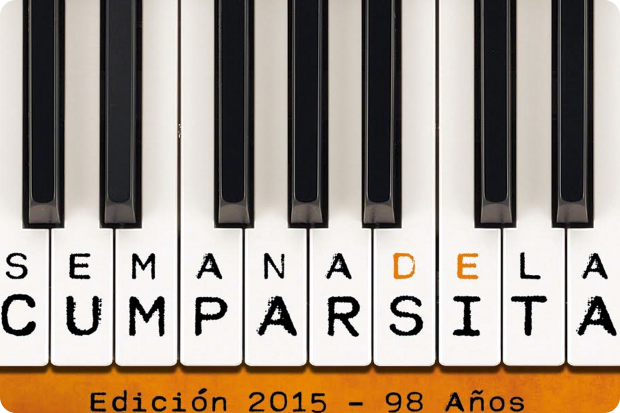
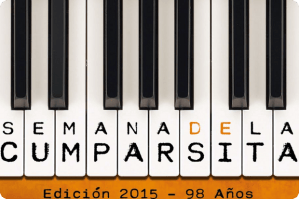 Every year the week around the 19th of April.
I hope you enjoyed this excursion into Urugayan Tango history. Stay tuned for more posts.

