GERMAN BRATWURST EATING

Hello and welcome to a “ GERMAN BRATWURST EATING “ :

cooking image 19

This post is not about the sausage itself, there you have hundreds of different
Brands, makings, sizes and tastes.
This is about the different styles how Germans like to enjoy their Bratwurst.
Mainly they all enjoy it with a nice cool beer, not ice cold, but cool.

cooking image 17

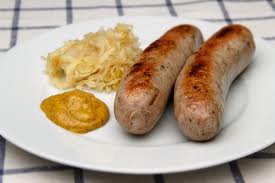
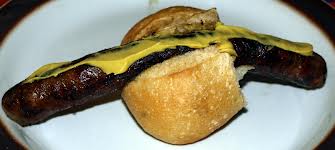
One of the most common ways is, to eat the Bratwurst pan fried or grilled with Sauerkraut,
Touch of mustard and a bread roll. Very special is the “Nuremberger” Bratwurst.
She is only about 1,5cm thick and 10cm long.
They are always served in 6, 9, or 12 portions on Kraut.

cooking image 20

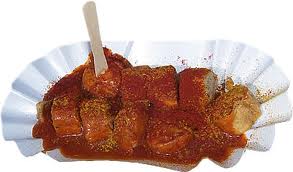
At least as often you get everywhere the so named “Currywurst”. This is a
Bratwurst of any kind, again pan fried or grilled. This one mostly comes cut
Into slices. Then topped with a big spoon or two of a special Curry Sauce.
This sauce is mostly homemade and a BIG FAMILY SECRET.
All this will be sprinkled with Curry powder. You eat it with a bread roll
and not a bit of sauce must be left over.
Look for homemade Curry sauce under page „For Sale“.

cooking image 22

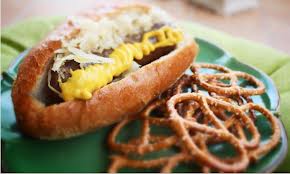
Another, very common, way to eat and enjoy Bratwurst is with fresh or fried onion.
Always white onion, finely chopped or as onion rings deep fried. This type of Bratwurst
Will be eaten with bread and sharp Mustard. A modern variety is, with moderate Mustard,
But then mixed with the same amount of Ketchup. A tribute to the North Americans.

cooking image 23

Above all that you have so many varieties of Bratwurst Eating, as you have different
People. If you go for the “SPECIAL HOME MADE” Brats, then Germans leave
everything off, except a bit of Mustard and Bread.
You also will find that many Germans like their Bratwurst very well done,
sometimes really black, burned.
That often burns off the casing and you will get the full meat taste.

A very special variety in Bavaria is the so named “Weisswurst”,  very white meat .
Prepared like the normal Bratwurst, or just cooked in hot water and eaten with sweet
Mustard. The so named “Frankfurters” are totally different sausages. They are cooked
in hot water and they have nothing to do with “BRATWURST” !

And now :     Guten Appetit und Prost   !

Veröffentlicht unter Lifestyle, Recipes | Verschlagwortet mit | 2 Kommentare

Translation – Meat

Wouldn’t it be great to buy at the „carniceria“ the meat/cut you really want ?

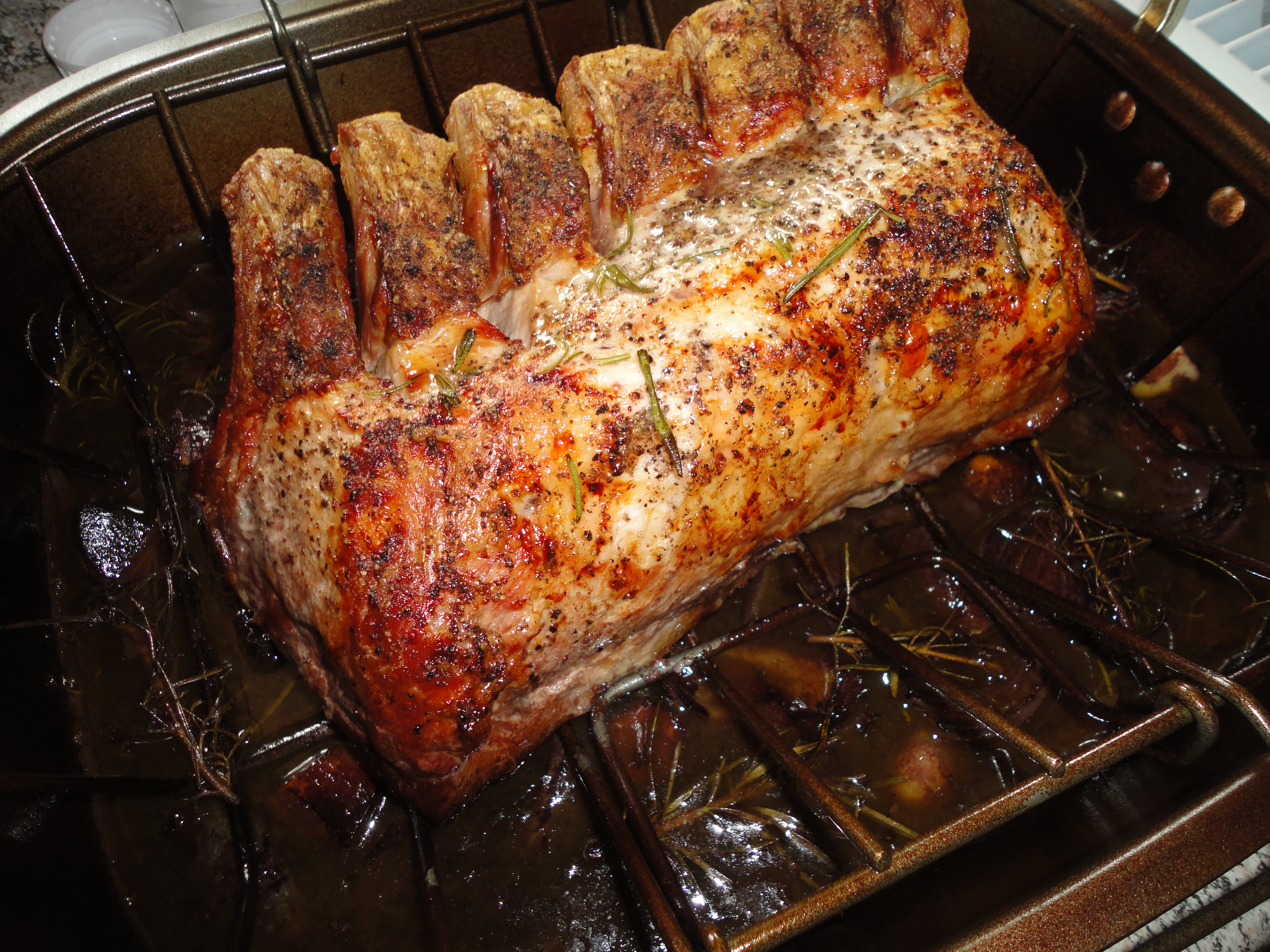
DSC00168 Mmmm … a 7 Rib Roast .

MEAT CUTS NOTES
SPANISH = ENGLISH  …..   The English version is mostly the Northamerican definition.

Asado 10 Costillas === Plate 10 Ribs Beef Ribs
Asado con Vacio === Plate Flank-In 13 Ribs Beef Ribs with Flank
Bife Ancho con Hueso 4 Costillas === Fore Ribs Pribe Rib Standing Rib Roast Rib Eye
Bife Angosto y Ancho con Lomo === Short Loin, 8 Ribs Fore Ribs Striploin, Tenderloin / Prime Rib
8 Costillas === 8 Ribs, Fore Ribs Standing Rib Roast
Garrón / Brazuelo con Hueso === Shank Bone In Cross-cut Shanks, Ossobuco

Aguja === Chuck Eye Steak, Chuck Shoulder
Aguja con Cogote === Chuck and Neck
Bife Ancho con Tapa 7 Costillas === Spencer Roll 7 Ribs (au)/ Boneless Rib Roast Rib Eye
Bife Ancho sin Tapa 4-7 Costillas === Cube Roll (au)/ Rib Eye Roll Rib Eye Roast
Brazuelo === Shin
Centro de Paleta === Heart of Shoulder Clod Clod Heart / Shoulder Center
Chingolo === Chuck Tender
Cojote === Neck
Falda Navel === Brisket from the 7-10 ribs.
Marucha sin Hueso === Oyster Blade (au)/ Flat Iron Steak
Marucha con Hueso === 7 Bone Roast
Matambre Rose === Muscle name: Cutaneous Trunci
Paleta Shoulder === Blade
Paleta con Marucha === Shoulder Clod
Pecho 10 Costillas === Whole Brisket 10 Ribs
Pecho 10 Costillas sin Tapa === Brisket 10 Ribs, whole, cap off Excess fat removed.
Pecho 6 Costillas === Brisket 6 Ribs, whole
Pecho 6 Costillas sin Tapa === Brisket 6 Ribs, whole, cap off Excess fat removed.
Tapa de Aguja (Asado de Carnicero) === Chuck Cover (ca) / Bottom Blade Scapular region.
Tapa de Bife === Ancho Rib Eye Cap

Bananita === Shank Posterior part of shank.
Bife Angosto con Cordón === Striploin, fat cap on Strip steaks, club steak,
Delmonico === steak Part of Rib and Short Loin
Bife Angosto sin Cordón === Striploin, fat cap off Short Loin and part of Rib loin
Bife de Bola de Lomo === Knuckle Tri-tip steak that forms bottom part of knuckle
Bife de Vacio === Flank Steak
Bola de Lomo === Whole Knuckle
Bola de Lomo sin Tapa === Knuckle, trimmed, whole, cap off
Carnaza de Cola o Cuadrada === Outside Round
Colita de Cuadril === Tri-Tip
Cuadril === Rump
Cuadril sin Tapa === Rump, cap off
Entraña Fina === Thin Skirt
Garrón === Whole Shank
Lomo === Tenderloin Filet, Chateaubriand
Medallón de Bola de Lomo === Knuckle Eye Medallions Central part of the whole knuckle
Medialuna de Vacio o Arañita === Flap Meat
Nalga de Adentro === Top Round (Inside), untrimmed Top Round (inside) / Topside Inside
Nalga de Adentro sin Tapa === Bottom Round, cap off
Nalga de Afuera === Bottom Round
Peceto === Eye of Round Eyeround
Tapa de Bola de Lomo === Knuckle Cap Small tri-tip shape steak from the top of the knuckle
Tapa de Cuadril === Rump Cap / Rump Cover
Picanha === This is the steak that is skewered in an „U“ shape at Brazilian steakhouses.
Tapa de Nalga === Top Round Cap
Tortuguita === Heel of Round Heel Muscle
Vacio === Flank

Bonete – Redecilla === Honeycomb – Reticulum
Chinchulines === Thin Bowels
Corazón === Heart
Cuajo === Rennet
Entraña Gruesa === Thick Skirt / Hanger Steak
Higado === Liver
Librillo === Bible
Mojellas === Sweetbreads Thymus gland
Mondongo === Tripe
Nuez de Quijada === Jowl Nuts
Rabo === Tail
Riñón === Kidney
Sesos === Brains
Tendons === Tendones
Tongue === Lengua

Some cuts are offered either trimmed or untrimmed of any outer fat,
silver skin, membranes, and tissue. The trimmed versions may have „al rojo“
appended to the name, meaning that the cut is all red in color.

From time to time you will add your own terms, favorites and translations.
Spanish = English = German :

Pollo === chicken === Huhn
Pato === duck === Ente
Ganso === goose === Gans
Pavo === turkey === Truthahn-Pute
Conejo === rabbit === Kaninchen-Hase
Cabra === goat === Ziege
Cordero === lamb === Lamm-Schaf
Cerdo === pork === Schwein
Ternera === veal === Kalb
Juego === game === Wild
Ciervos === deer === Hirsch-Reh
Codorniz === quail === Wachtel
Faisan === pheasant === Fasan

Picada de lomo/cerdo === ground beef/cerdo === Hackfleisch Rind/Schwein
Chorizo ahumada === smoked sausage === Mettwurst
Costilla typo Kassler === smoked pork chop cutlets === Kassler Koteletts
Jamon de filet ahumado === smoked pork loin === Lachsschinken
Jamon cocido === ham === Kochschinken
Panceta === smoked bacon === durchwachsener Speck
Butifarra ahumada typo Holstein === smoked sausage spread === Holsteiner Mettwurst
Butifarra ahumada typo Milan === as above but Milano type === Mailaender Mettwurst
Queso de higado === pork Bologna loaf === Leberkaese
Frankfurter === hot dog === Wiener/Frankfurter
Salchicha pimenta ahumada === smoked pepper sausage === Pfefferbeisser
Butifarra cruda de cebolla === Pork and onion spread === Zwiebelmettwurst
Pate de higado fino === liverwurst fine === Leberwurst fein
Pate de higado grueso === liverwurst coarse === Leberwurst grob
Grasa con chicharrones === crackling pork spread === Griebenschmalz

Veröffentlicht unter Information | Hinterlasse einen Kommentar

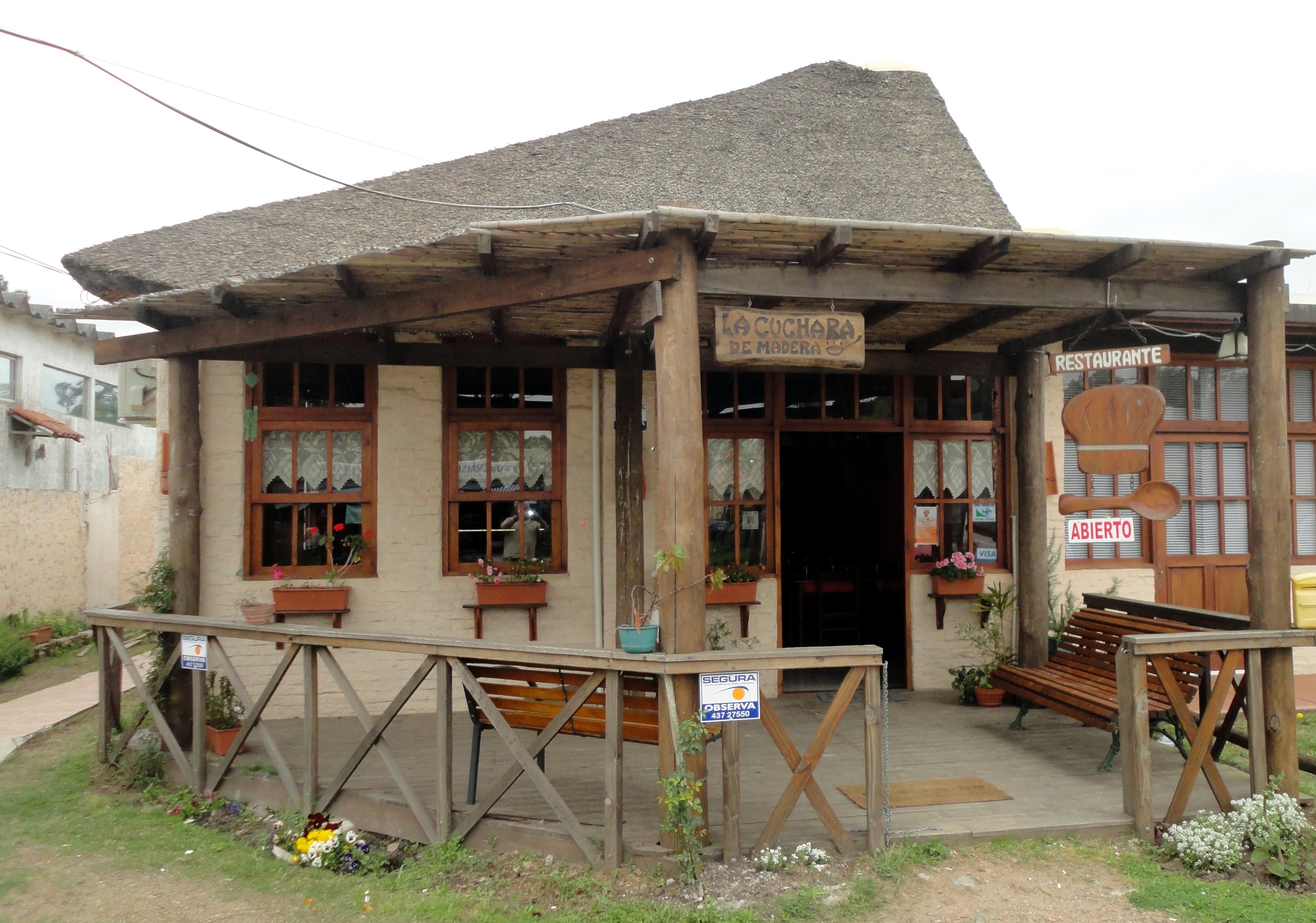
La Cuchara de Madera, The Wooden Spoon !

La Cuchara de Madera, The Wooden Spoon !

Let me introduce you to a wonderful little restaurant in Parque del Plata.
opened over 3 years ago and unknown in the expat group. Easy to find,
just go on Interbalnearia to the Parque del Plata ANCAP station near the
traffic lights, not the other Ancap in P.d.Pl.. Turn south, towards the beach,
and you’ll see it after about 150 meters on your left.

The owner is an excellent chef with a lot of European experience. That’s why
we find a different ambience and service and menu than usual in Uruguay.
There are not many dishes, but always different and everything is FRESH MADE.

Opening times are from Thursday to Saturday 12.00noon to 04.00pm and from
08.00pm to 00.00 midnight. Sundays opens from 12.00 noon to 05.00pm. This is
the latest information, different then you might hear or read !

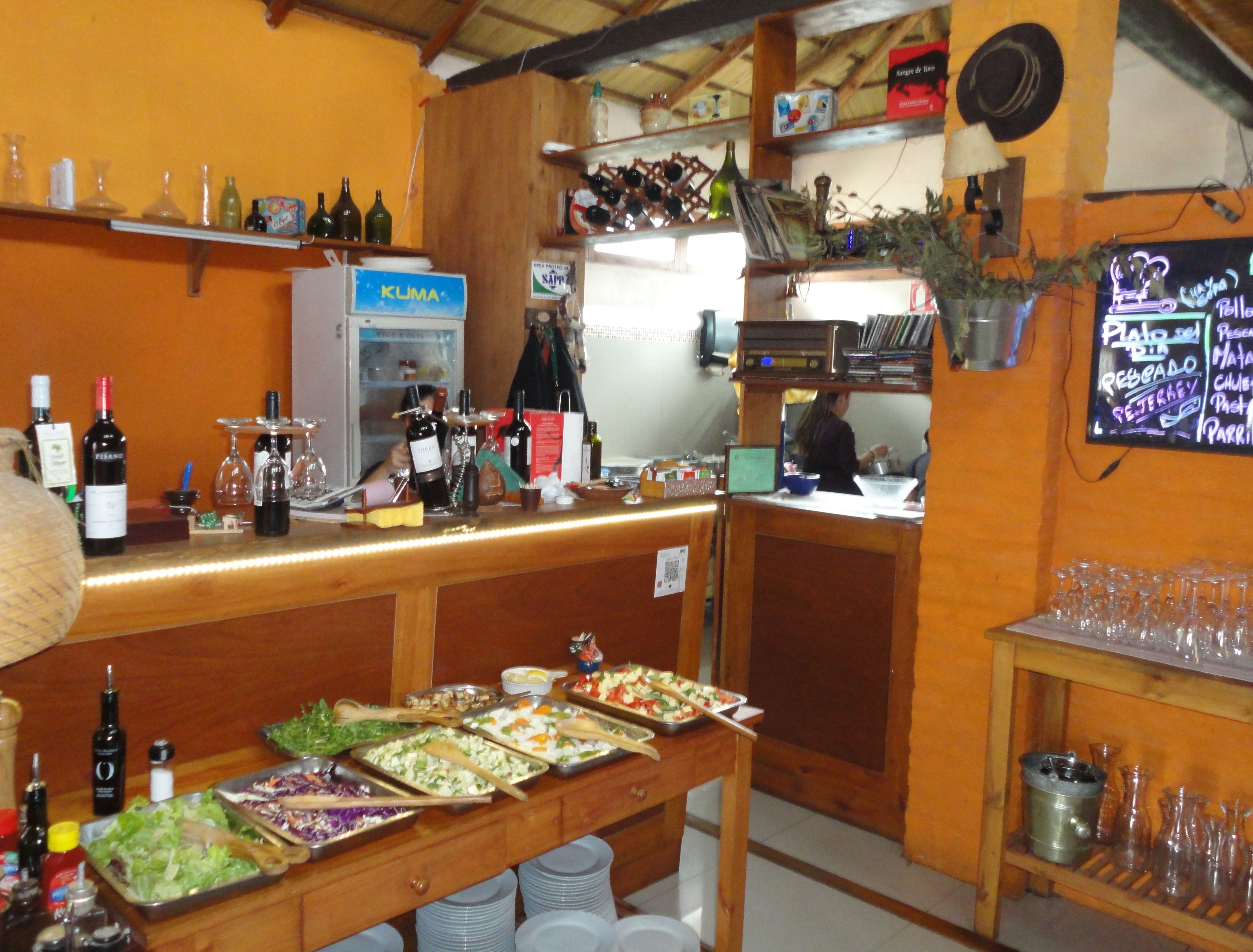
On my pic down here you can see a TV with the actual menu. There is no written
menu available. Also they offer different dishes from the Parilla. A nice
backyard is inviting for groups or Alfresco Dining. The prices are very decent
comparing to food quality and service. For reservations call 43754504. Enjoy !!!

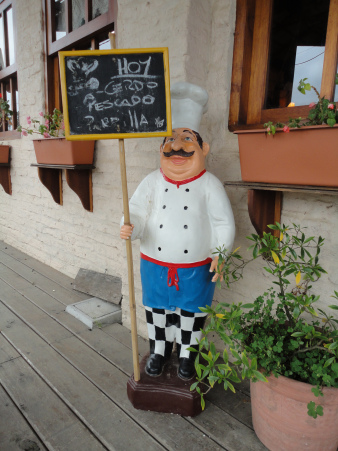
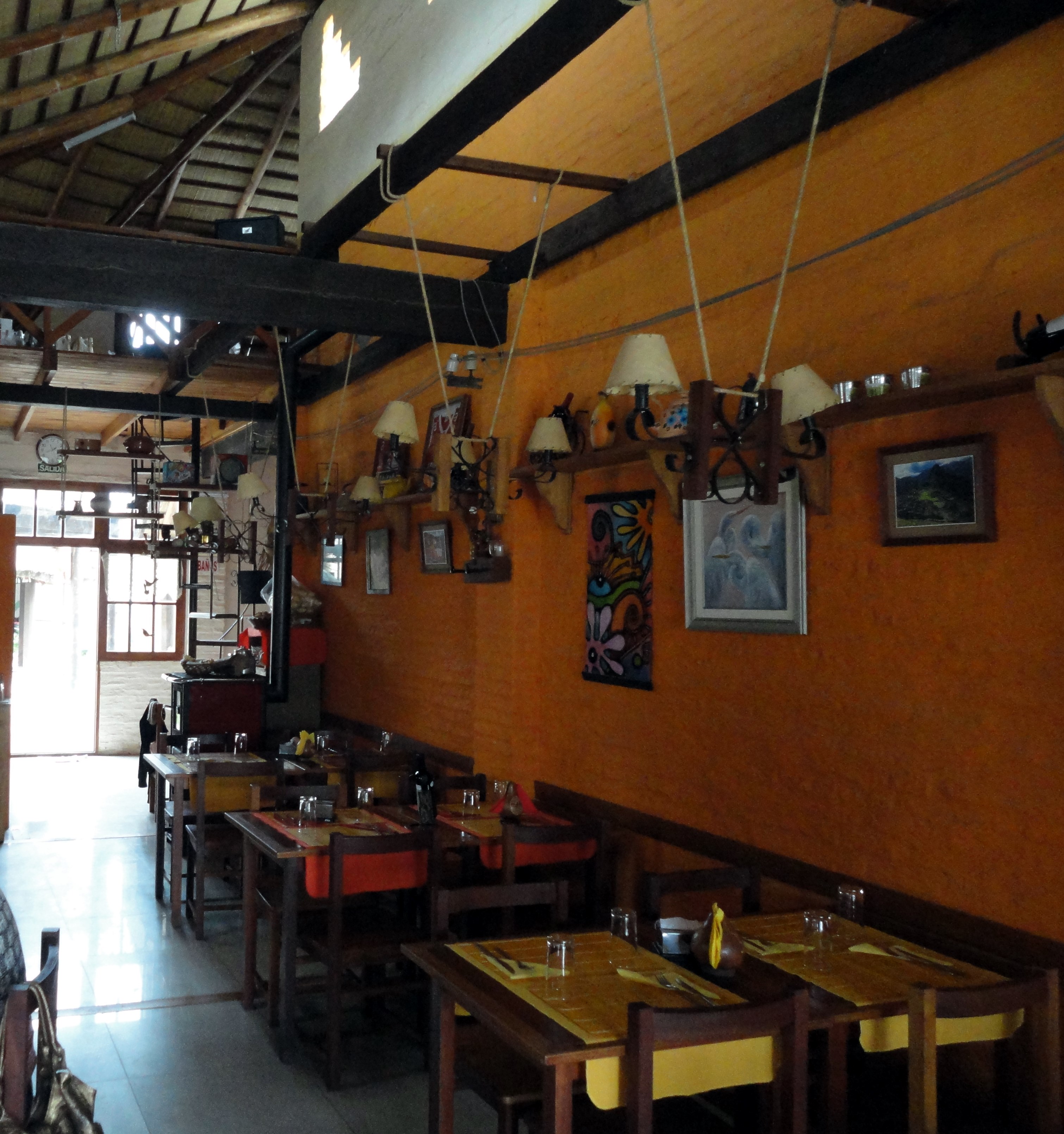
The restaurant !                                                                        A friendly welcome by a smiling cook !

DSC01384_2                        dsc01391

Warm and relaxing atmosphere !                           A view towards the kitchen and the salad bar !

DSC01385_2        DSC01386_2

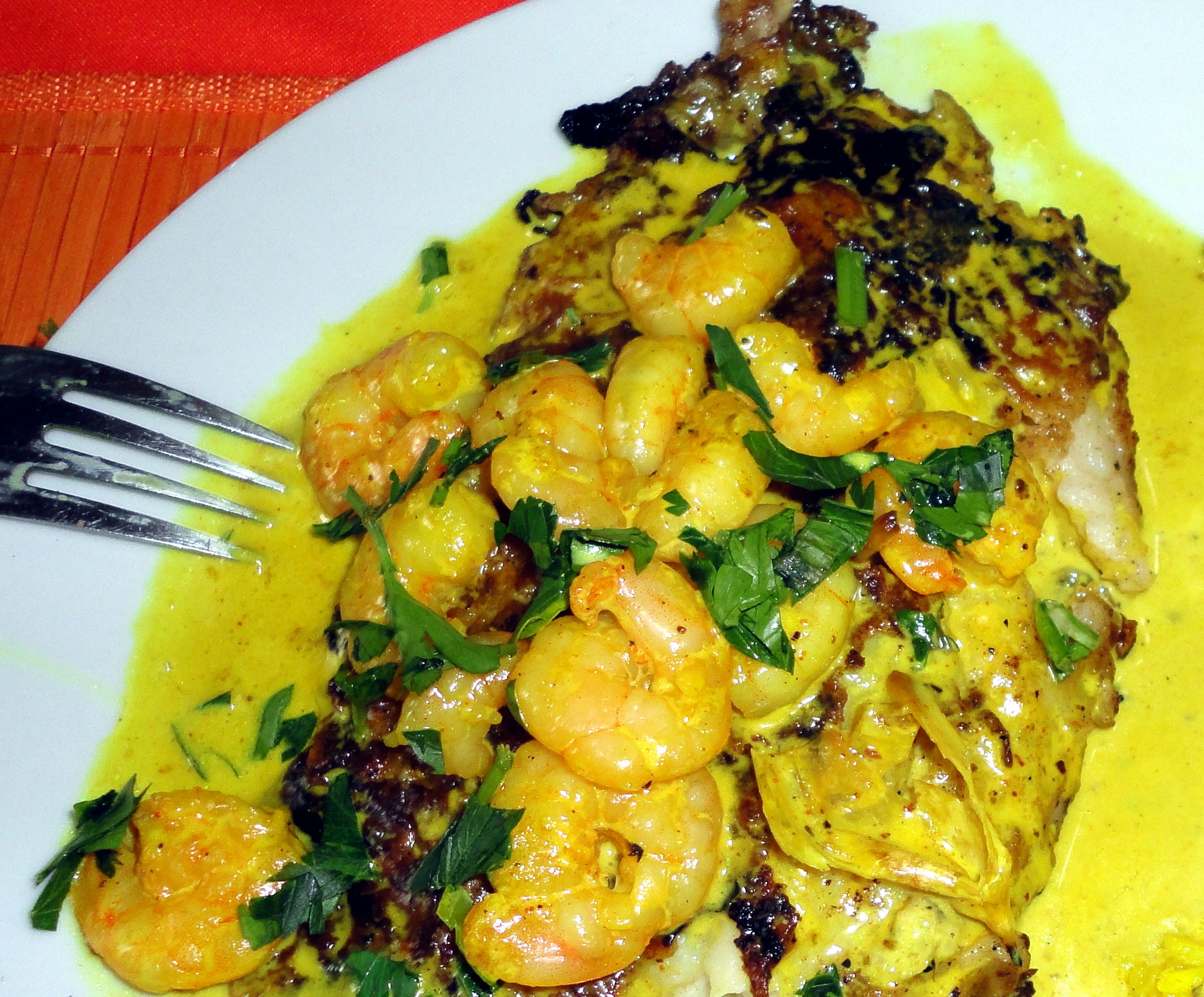
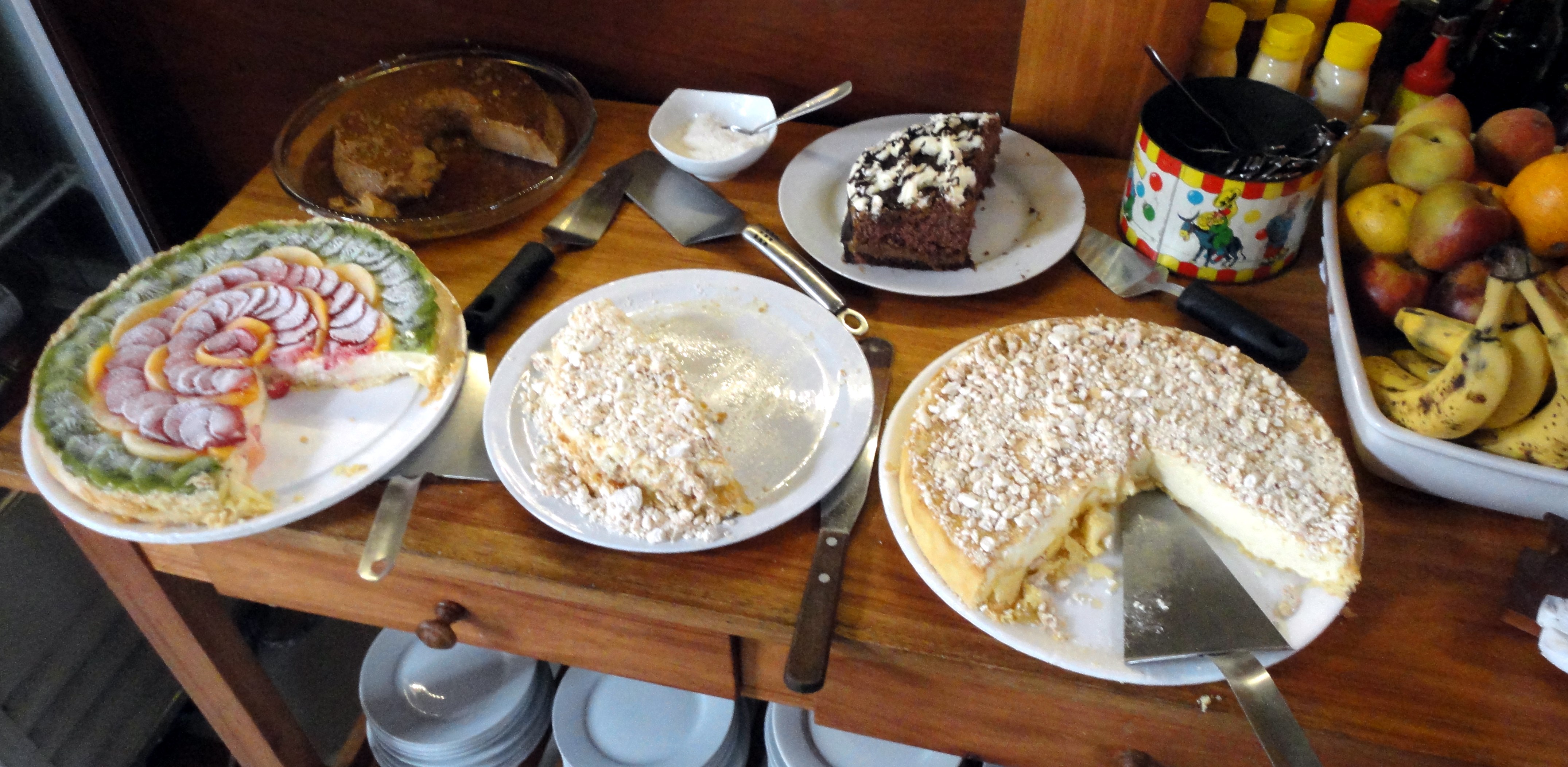
Grilled fish, Shrimp sauce, fresh herbs. WOW !    Deserts, delicious homemade cakes and fruit !

DSC01389_2   DSC01387_2

Veröffentlicht unter Atlantida, Information, Lifestyle | Verschlagwortet mit | Hinterlasse einen Kommentar

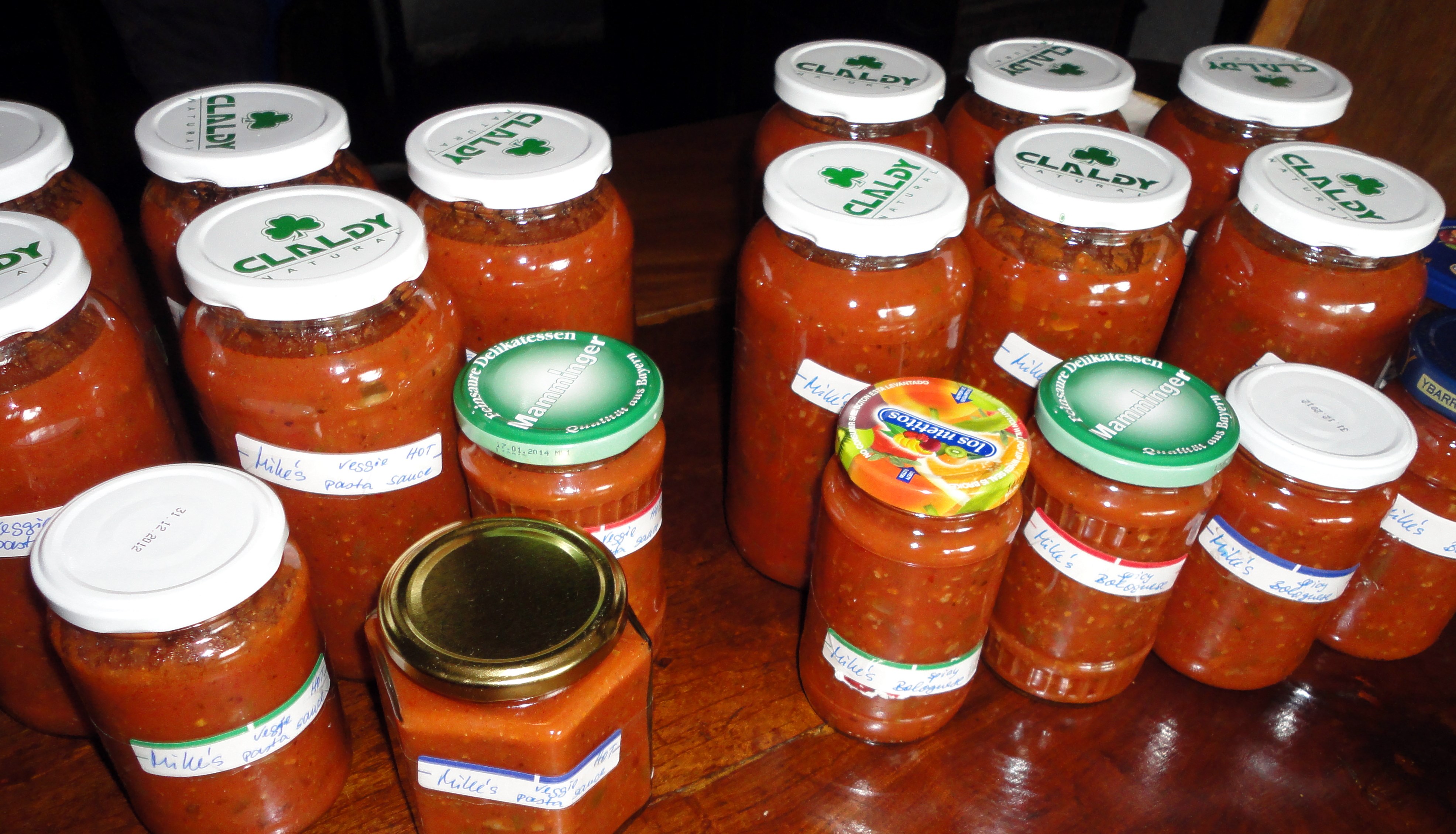
Homemade CURRY SAUCE

Homemade CURRY SAUCE ,     Big: Peso 300,–  /  Small: Peso 160,–


!!!!!!!!!!!!!!!!!!!!!!!!!!!!!!SORRY – not available anymore !!!!!!!!!!!!!!!!!!!!!!!!!!!!!!!!!!!!!


cooking image 20 DSC00100_2

This is a delicious homemade Curry sauce after an old family recipe. The
big  jars content c. 650ml and the small ones c. 320ml. Unopened you
can store them at least 6 month, opened you store it in a fridge for over 3 month.
Useable on all kinds of meat, Sausages, especially Bratwurst. Taste is spicy !!

Veröffentlicht unter For Sale, Information, Lifestyle | Verschlagwortet mit | Hinterlasse einen Kommentar

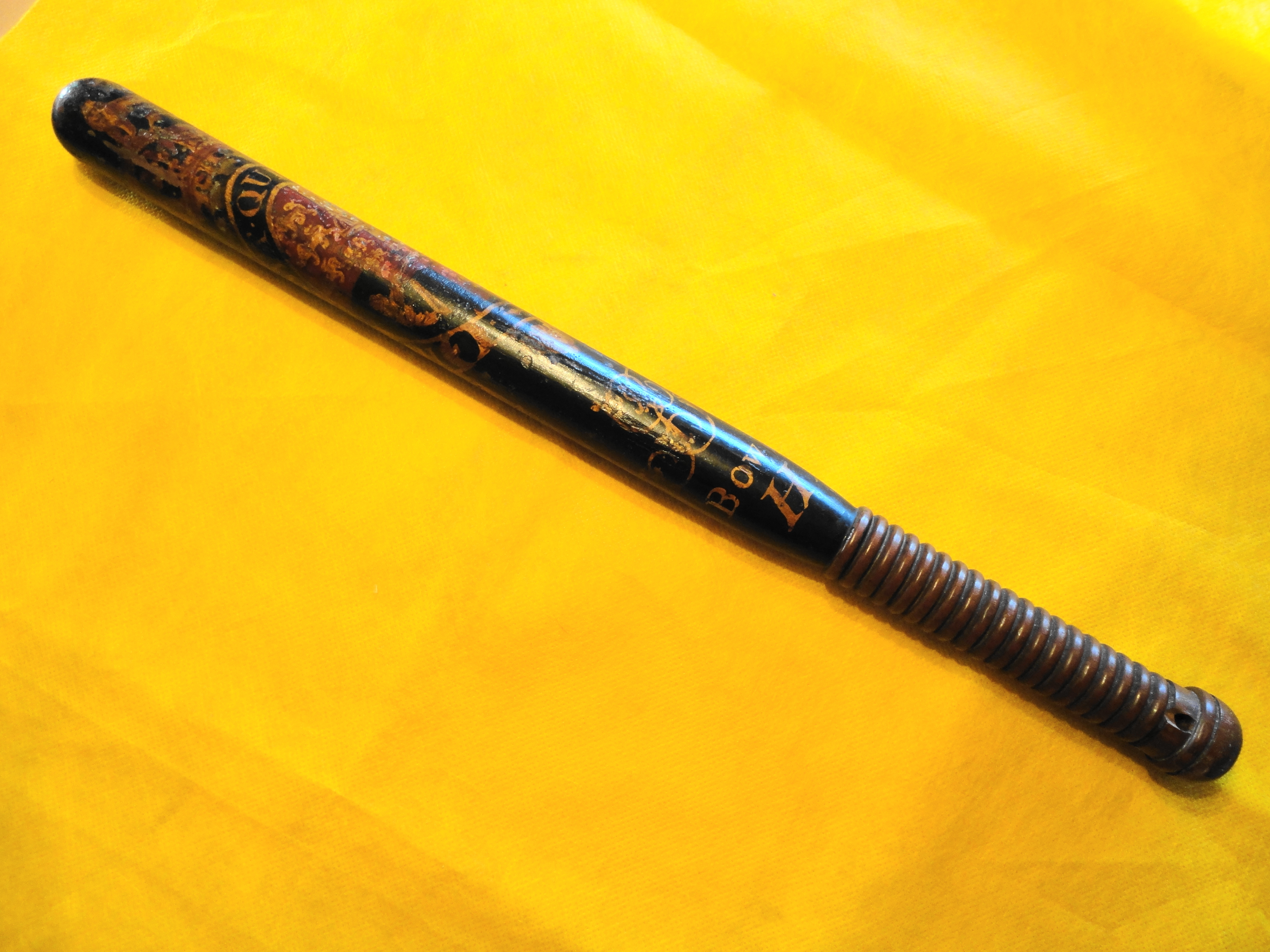
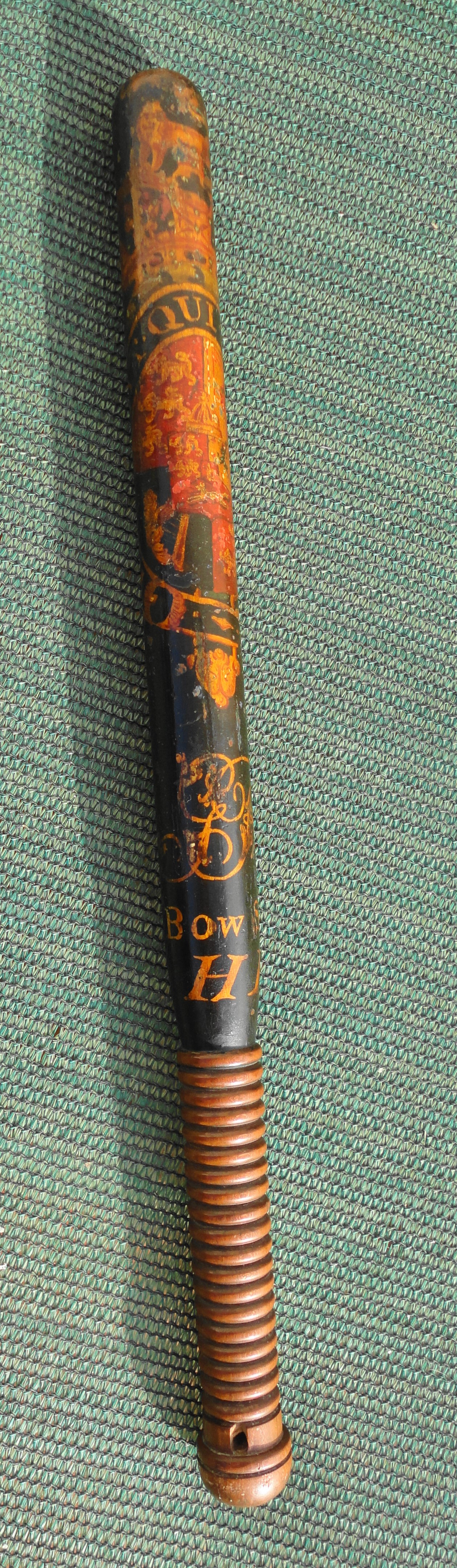
Police baton , London c. 1790. US$ 600,–/or offer

DSC01366              DSC01337

These batons are very rare. If one is for sale somewhere, they are priced
between US$500,– and US$1.500,–, depending on age and condition.
See article under page „Collecting“.
You can write questions or offers under comments – will not be published.

Veröffentlicht unter For Sale | Hinterlasse einen Kommentar

Collecting Curiosities 1 – Police Batons

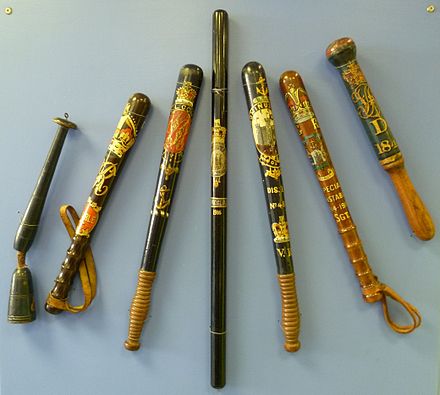
Magnificent collection of „police truncheons“, called batons. This collection can be seen in the „Edinburgh Police Museum“ , Scotland. Beautifully decorated and individually designed,
most from the early 19th century.

bow street 5 Baton collection.

In 1749, after a sharp crime rise in London, the judge Henry Fielding founded the first
professional police force. In his house in Bow Street, London, where the magistrate
court was housed, the „Bow Street Runners“ were at home. It was only a private and
privately funded police force.

They could be hired by any person who wanted „police force“ work, to solve problems or
detect crimes. The payment was negotiable and made like today’s private detectives.
Anyone can imagine, that people with much money had their legal work done quick, as the
poorest had no help at all.

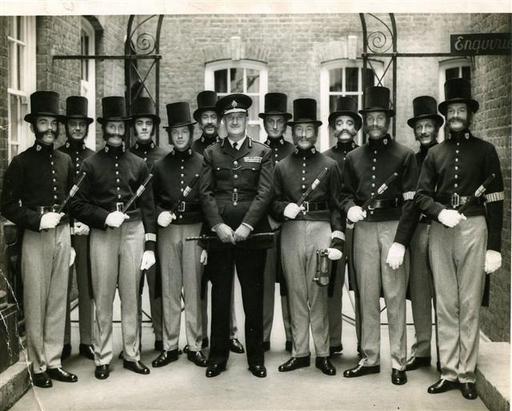
bow street 2 Bow Street Runners and a Modern Police Man.

Bow street runners were recruited mostly from former constables, because they had already
some respect in the criminal world as „thief takers“, had contacts to the underworld and
last but not least, they could earn more money. During the years they got more and more
respected. Especially the , mostly well trained and from higher education, detectives.

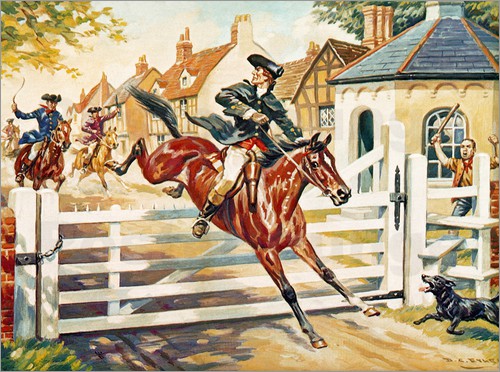
After a short time also was established the „Bow Street Horse Patrol“,
and the very successful „Bow Street Detectives“. They acted quickly throughout the United
Kingdom. All were with their own personal and custom made truncheons, so called „batons“,
equipped. In 1839 the „Metropolitan Police“, London, was founded and the end came for the
famous and successful Bow Street Runners.

bow street 1 Bow Street Horse Patrol.

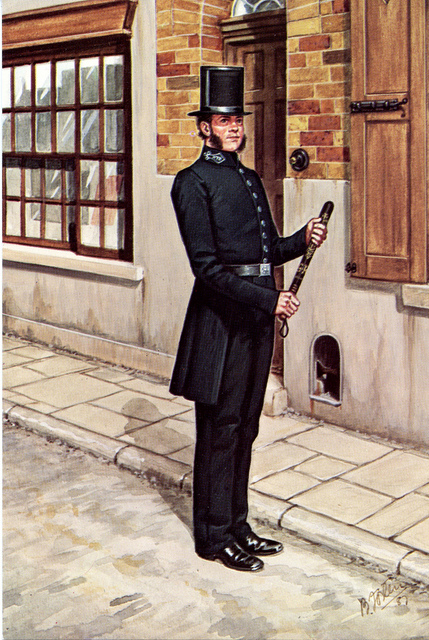
This is a Bow Street Runner with his „baton“. Henry Fielding’s building, in Bow Street
London, still exists today as a police station.  During the 19th century the Bow Street
Magistrate Offices housed also the Police station, the horse police station and the
regional courts.

bow street 3 Bow Street Runner.       bow street 1 Bow Street baton.

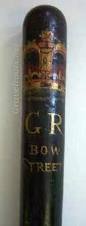
This gorgeous baton is very rare , because of it’s age from c. 1790 . It might belonged to an
officer or detective, because of the very decorative presentation.

DSC01366
Antique baton from about 1790.   Authors collection.

Painted in gold and red, the coat of arms of Great Britain. In the Belt of the Garter
„Honi Soit Qui Mal Y Pense“, what means (Middle French) :
„Shame On Him, Who Thinks Evil Of It“.
The coat of arms is then topped with crown and lion..

Veröffentlicht unter Collecting, History, Hobbies | Verschlagwortet mit | Hinterlasse einen Kommentar

Atlantida, a brief history

Historical documents show that the development of present-day area of the city
starts about 1748. Later on there was the Jesuit Estancia called Santo Ignacio.
Atlantida 4_2

Santa Rosa Bay Beach .

The current Atlantida Station is geographically in the area. It was originally
called Las Toscas. The name comes from the colonial era and was a place
located at Solís Chico Creek, near the old railroad bridge in Parque del Plata.

So, Atlantida Station was known in the late nineteenth century and early twentieth
century as a train stop Las Toscas. The first train came in on May 21, 1895.

These early works around Las Toscas station attracted to the area more than
one hundred families, many of which would stay permanently.

These families begin to build their houses in the vicinity of the railway station.
The birth of the spa gives birth to the working people at the same time.

The emergence of the balneario or “spa town” created a need for a place for local
working people. Since the railroad ran several km inland, land values there were
lower than nearer the beaches which attracted vacationers.

In 1908, a company was established to promote forestry in the surrounding areas,
with Juan P. Fabini a major shareholder. They planted hundreds of
thousands of pine trees, mainly because of the sandy shores. This is one of the reasons
why the Canelones department coast has pine trees all over. Today there are only three
townships with „mixed tree vegetation“. They are, from west to east, Marindia,
Atlantida and La Floresta. The next one like that to the east is Solis.

To all this land developement, Mario Ferreira had bought in 1909 adjoining land,
all the way up to the creek Solís Chico and even further.

For years Atlantida (still named Las Toscas) was a desolate place, but at the end
of 1911 land speculation started with the construction of the first beach-town villas.

This construction created a great demand for workers, who started settling around the
station.They settled without an urban plan. The township began to grow rapidly.

In April 1913 Louis de Mula brought up a plan, at the request of Mario Gomez Ferreira,
intended to bring the existing buildings up to code, promote orderly development of
real estate and property sales. This is the date when they drew the first map of the
village based on accurate surveys.

This plan was recorded on January 5, 1914 and officially that would be the birth of
Atlantida resort. Shortly thereafter, they began with the subdivision and sale of lots.

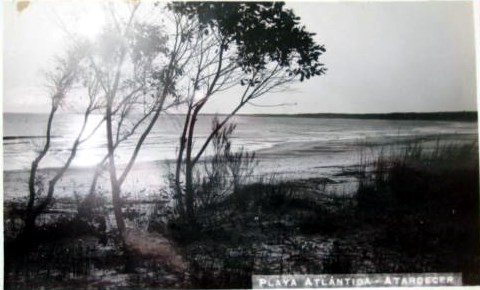
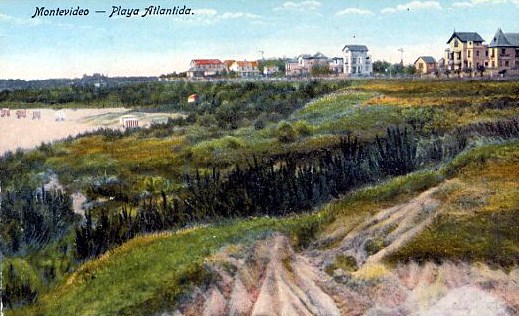
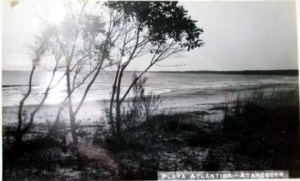
See a pic from the period taken from the spot where we find the Yacht Club today.
In those old days it was called „Montevideo – Playa Atlantida“ ! Playa Atlantida was
the holiday and beachtown of Montevideo. Between Carrasco and Atlantida was nothing.
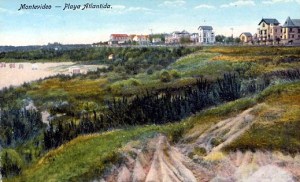
Atlantida 1_2

Playa Atlantida .

In 1913 the development and promotion resulted in the first hotel in Atlantida,
the „Atlantida Hotel“, to accommodate the growing number of seasonal passengers and
visitors.

The Atlantida hotel had two floors, the building was on the beach-front facing the
bay of Santa Rosa .An advertisement in „The Reason“ Montevideo five years later,
proclaiming the excellencies of Atlantida Hotel:

„It is located at the Rambla del Balneario Atlantida along the beach to a height of
twenty meters. It has central lighting, running water, electric bells,
telephones and Uruguayan cooperative, telegraphs, running water in all parts.
All rooms are with sea view. There are golf courses, tennis, basket-ball, volley-ball,
a booth, shooting, riding, hammocks, slides and much more“.

The first hotels in Atlantida opened during these years: the Atlantida Hotel in 1913,
the Mercedes Hotel, 11th Street 1923, The Rex Hotel, Brava Beach 1938, the Planeta
Palace Hotel 1939, changed name into the Golf Palace Hotel 1941. They all received
national and international first-class tourism.

1918 Atlantida got central electric lighting ! A new power plant was build in 1932.
In 1923 Atlantida established the first school in the neighborhood of Atlantida Station.

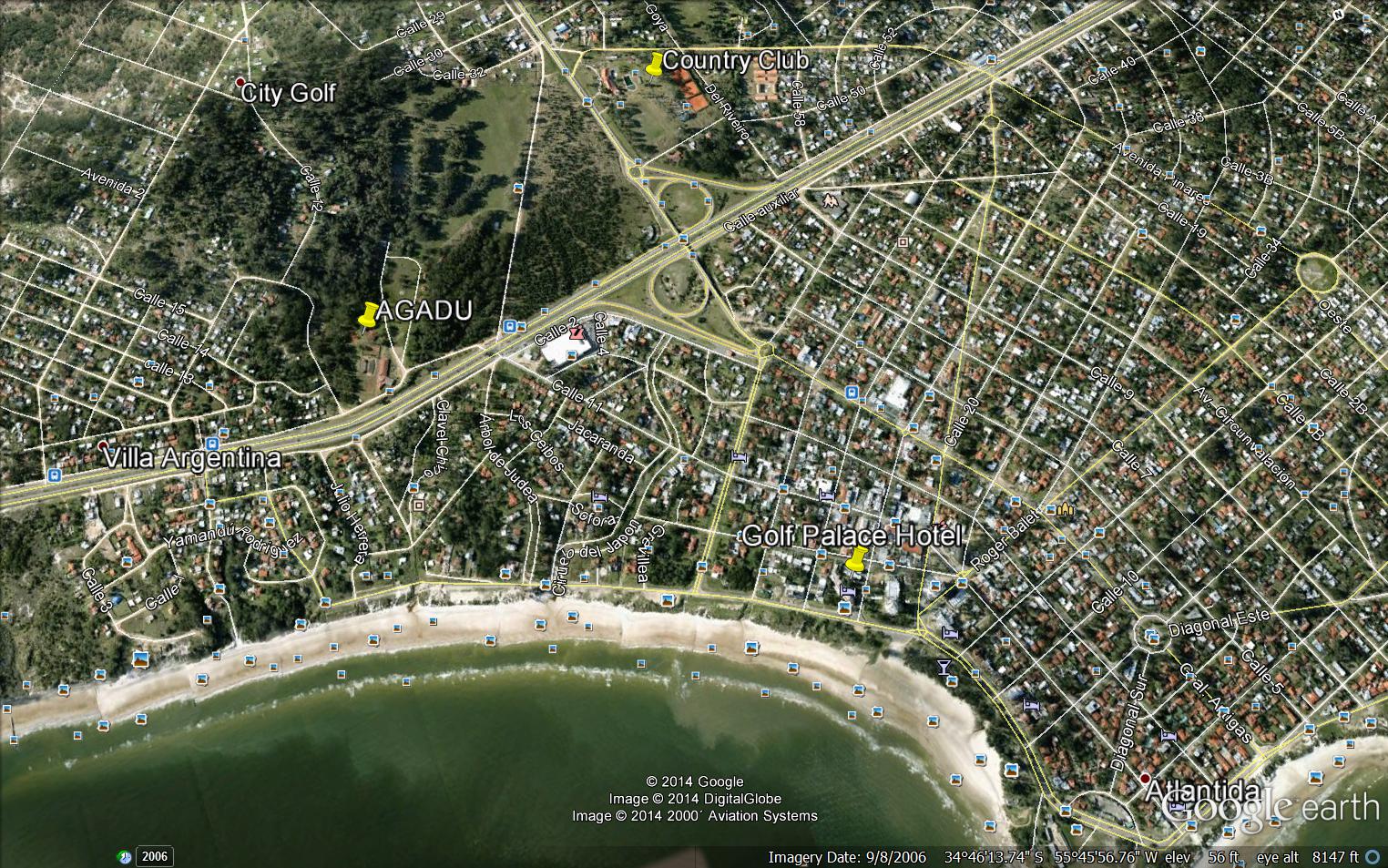
In 1920 an 18 hole golf course was opened. Considered at the time it was the largest in
whole South America. This was in the part of todays „holiday park of AGADU“, Golf City.
Most people never heard about AGADU – La Asociación General de Autores Del Uruguay.
AGADU was founded on 26th of September 1929.
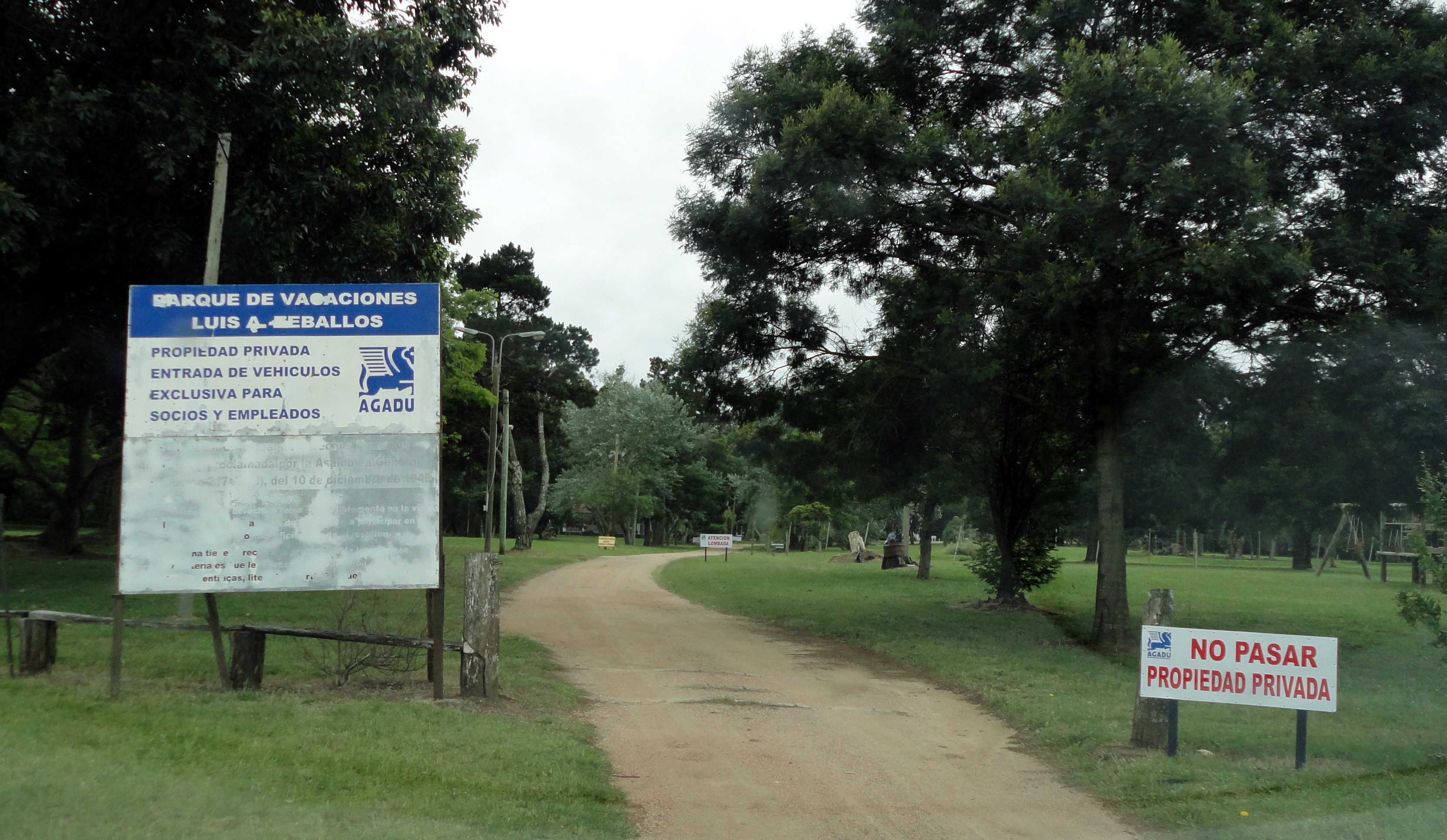
You’ll find the holiday park, called El Parque de Vacaciones „Luis Alberto Zeballos”,
in Atlantida on Interbalenaria km 45,5 !  A big AGADU sign, almost across Tienda Inglesia.
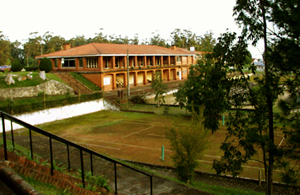
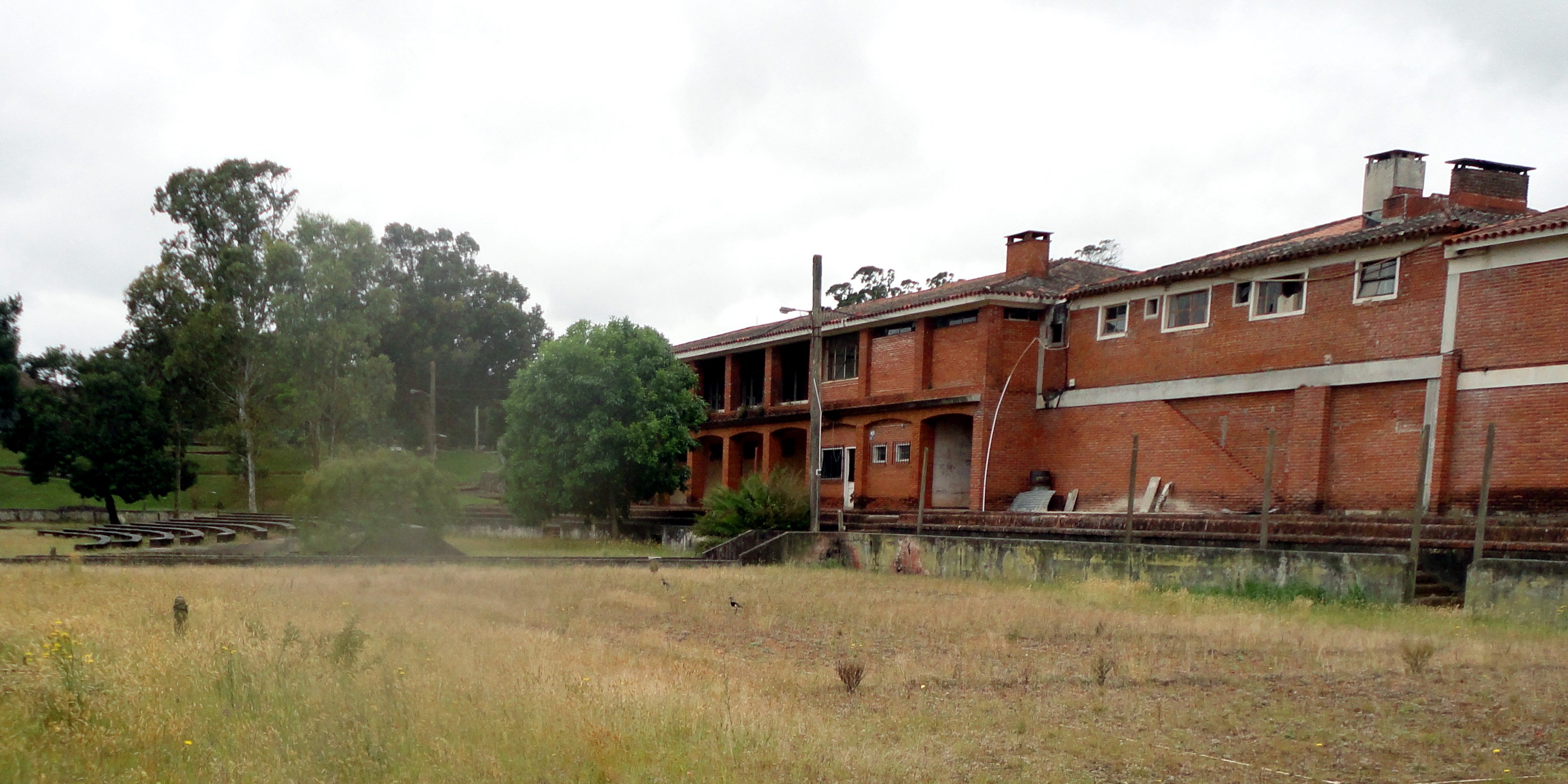
Atlantida 8  DSC01398_2
The AGADU Holiday Park past and present. Sad, as everywhere, so much is rotting away.

The Holiday Park has several buildings and 11 Bungalows. The bungalows and streets
inside the park were named after designated Uruguayan national authors which are
deceased :
“A Don José” de Ruben Lena, “La Puñalada” de Pintín Castellanos, “Miriñaque” de
Alberto Mastra, “Cuando éramos amantes” de Antonio Italiano, “Amarillo color cielo”
de Eduardo Sarlós, “Juventud” de Carlos Molina, “Grillo nochero” de Osiris Rodríguez
Castillos, “Mi Montevideo” de Romeo Gavioli, “Catalina” de Walter Alfaro, “Mangrullo”
de Santiago Chalar, “Che Falluto” de Jaurès Lamarque Pons y “No te quiero más”
de Juan Bauer y Juan Estapé.

Also you still find in North Atlantida the township of „Golf City“.
The prime time for the rich and famous in Atlantida ended already in the 50s and 60s.
So ended the golf course era in the favor of real estate developments and a big part
to the AGADU Park.
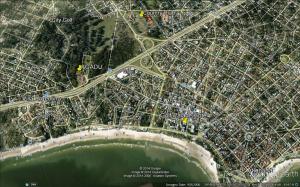
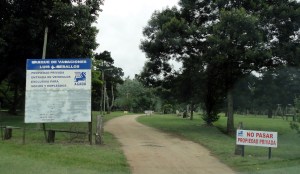
Golf Atlantida  DSC01395_2
Location and entry of the AGADU Park.

The Atlantida Country Club inaugurated 31st of January 1951 and was the centre point of
party life and luxury life in this time. The parties held, achieved great social prestige.
Great and well known bands, like the Lecuana Cuban Boys, Cab Calloway and Henry Burrow,
so as known singers, like Roberto Carlos, Julio Iglesias and Luis Aguilar made the Club
famous. From 1951 to 1956 „Miss Uruguay“ was choosen there.

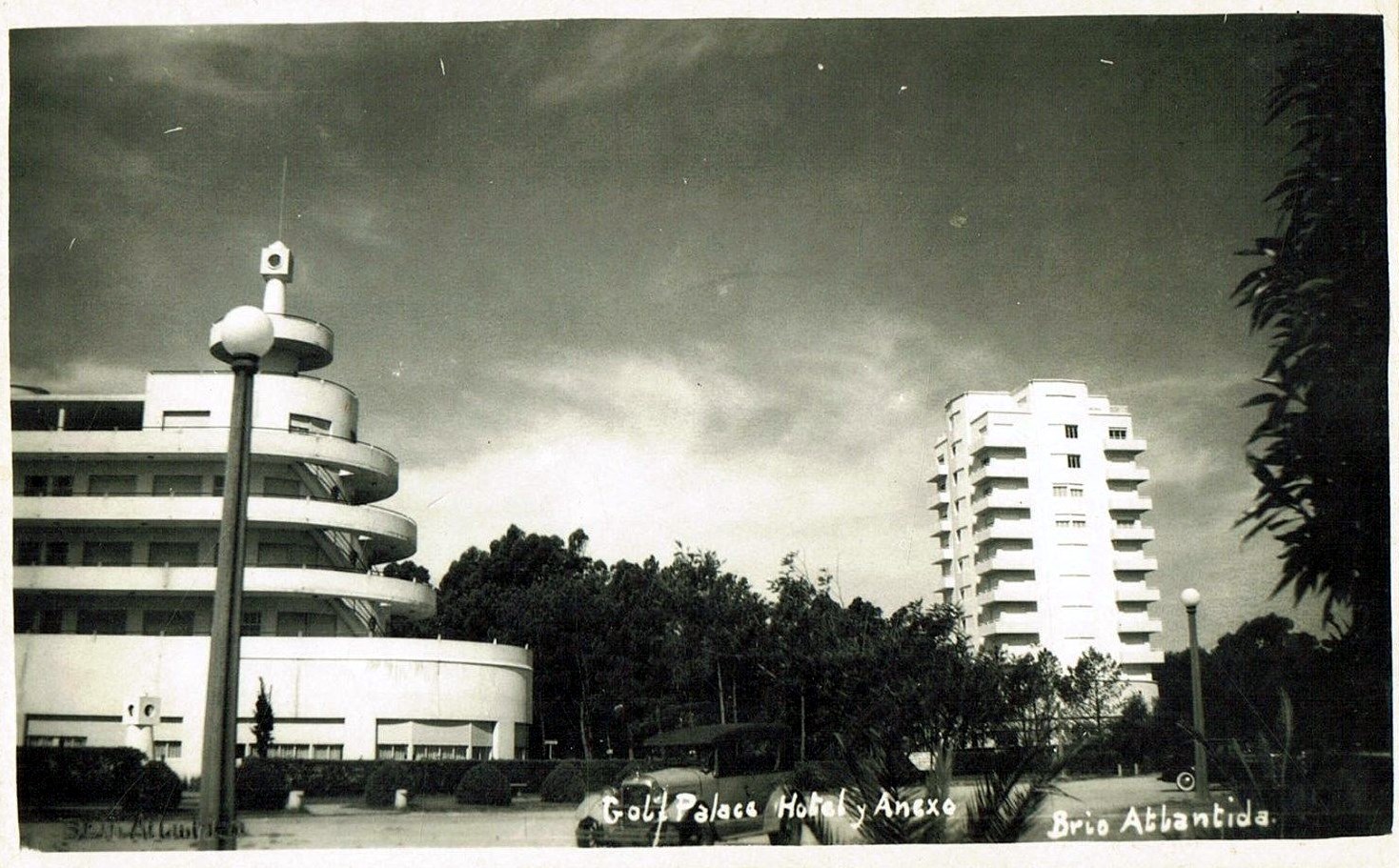
In 1960 the building „Vistamar“ was finished. The first eleven story building in Atlantida.
During the 60’s some owners began, to rent out their houses and mansions during the summer
month of January and February, later extending the season from December until March.
A new idea for quick moneymaking and then living the rest of the year on this income.
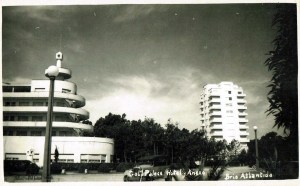
Atlantida 5_2

Golf Palace Hotel and Vistamar Tower.

One famous tourist attraction of Atlantida is „The Eagle“, build between 1945 and 1948 by
Natalio Michelizzi. A man of many original ideas ! Later more about this attraction !

The same Michelizzi and Perez Butler build and owned the first luxury hotel in Atlantida,
the „Metro Hotel Atlantida Palace“. It was build in 1939, in a record time of only 6 months.
This hotel was the first in the country to provide central heating and hot water throughout
the whole building.

The „Metro Hotel Atlantida Palace“ was the first luxury spa hotel outside of Montevideo.
The Metro Palace Hotel also opened its Casino in the same year 1939.

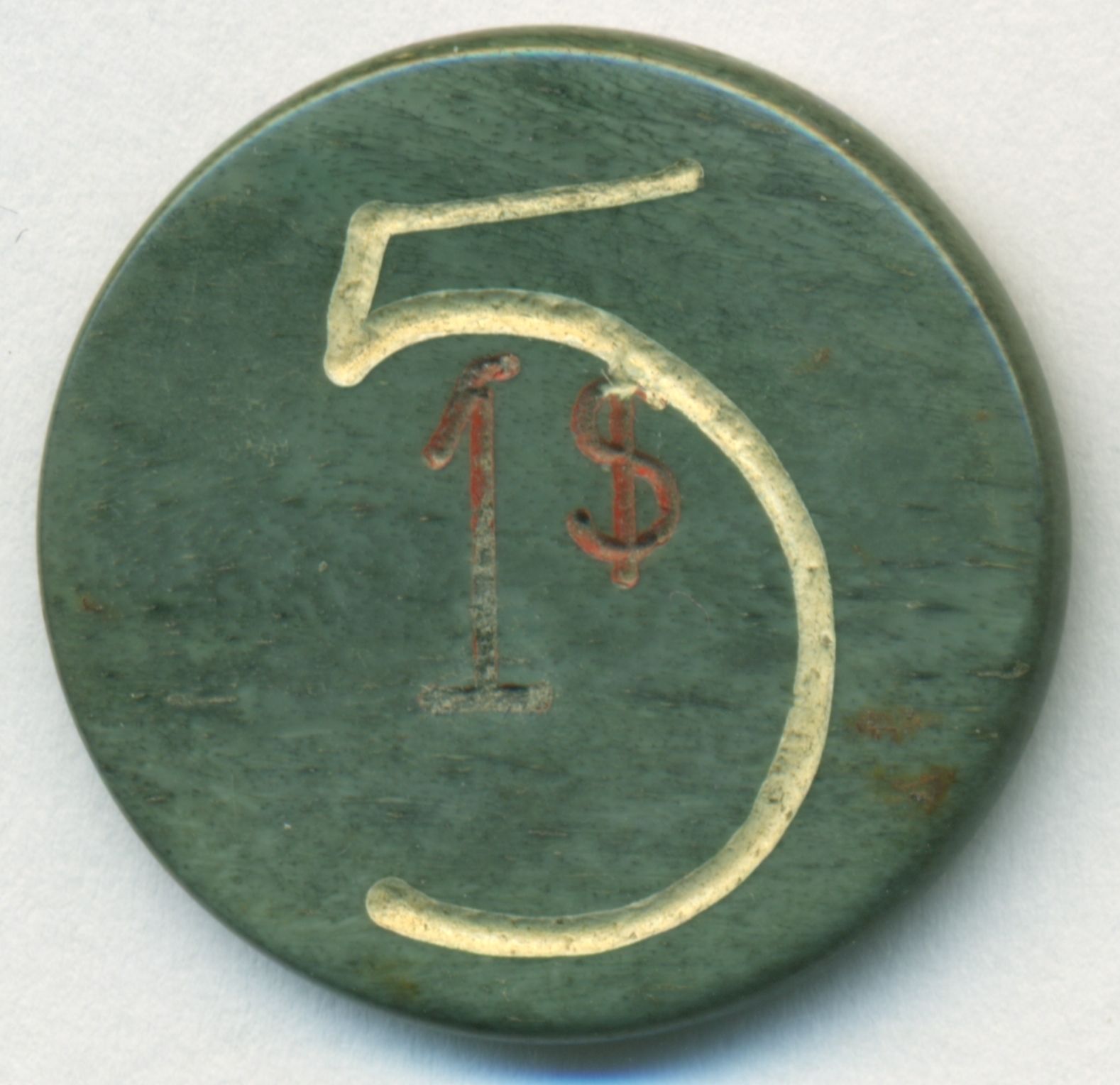
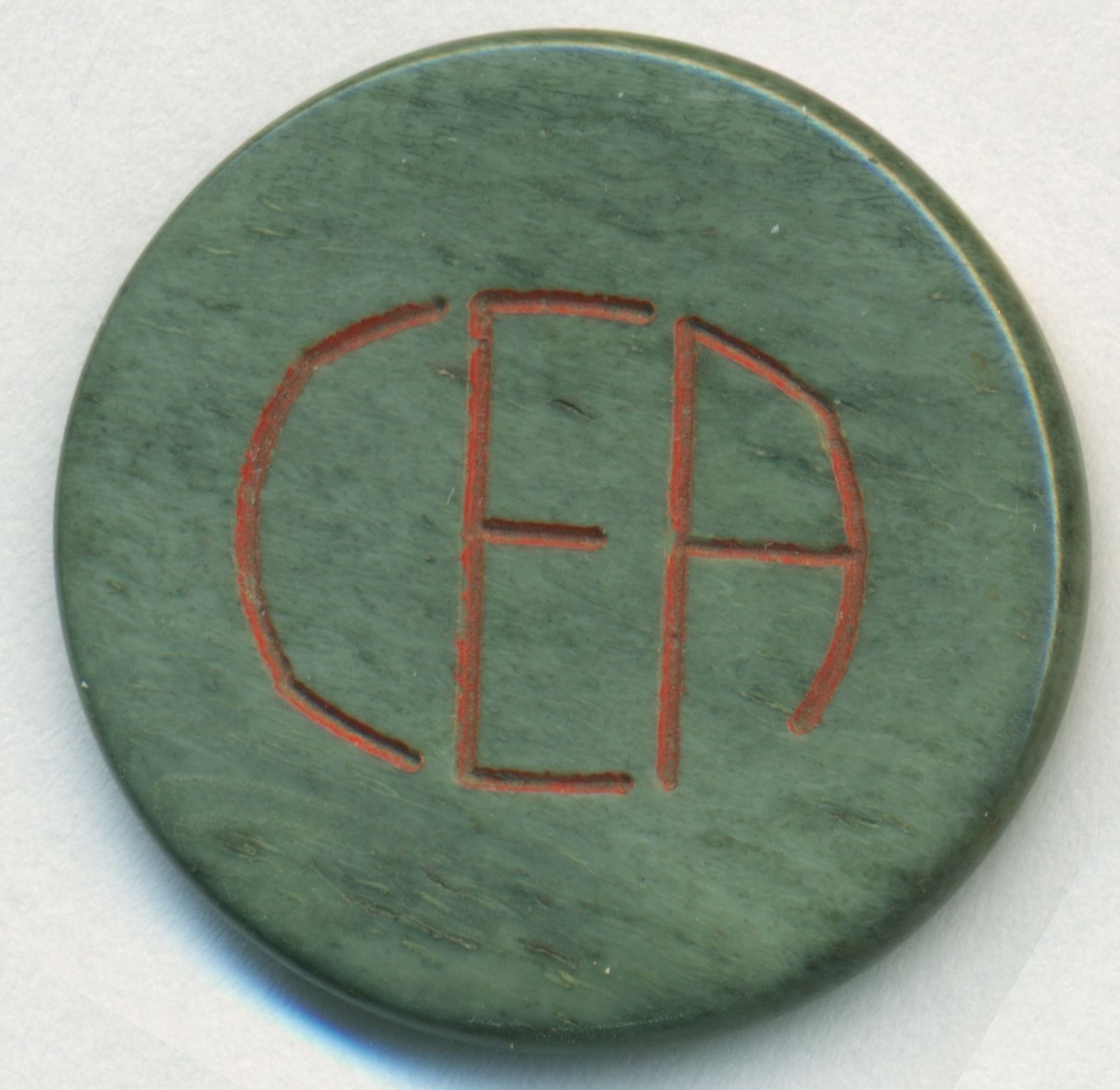
Extreme rare Casino Chip from the early years of Casino Atlantida
„CEA === Casino Estado Atlantida“ !
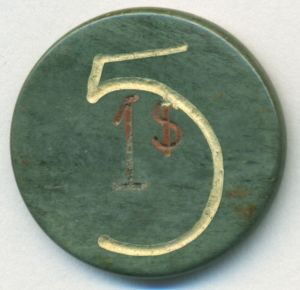
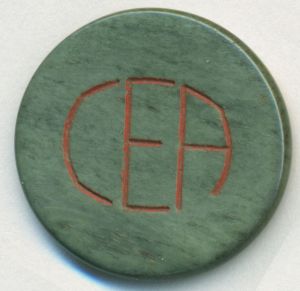
UY - Casino chip Atlantida 2 del Estado Canelones   UY - Casino chip Atlantida del Estado Canelones

The „Metro Palace Hotel“ was later new named into „Hotel Planeta Palace“.
The hotel was build in a shape of a ship. From the waterside of the Rio de la Plata it
was looking like a big docked ship in Atlantida. Also because of an artificial lake
around the hotel.
A similar hotel (idea and shape) we still find at the beachside in la Floresta.

After the owner died in 1953, the Planeta palace had an often changing history .
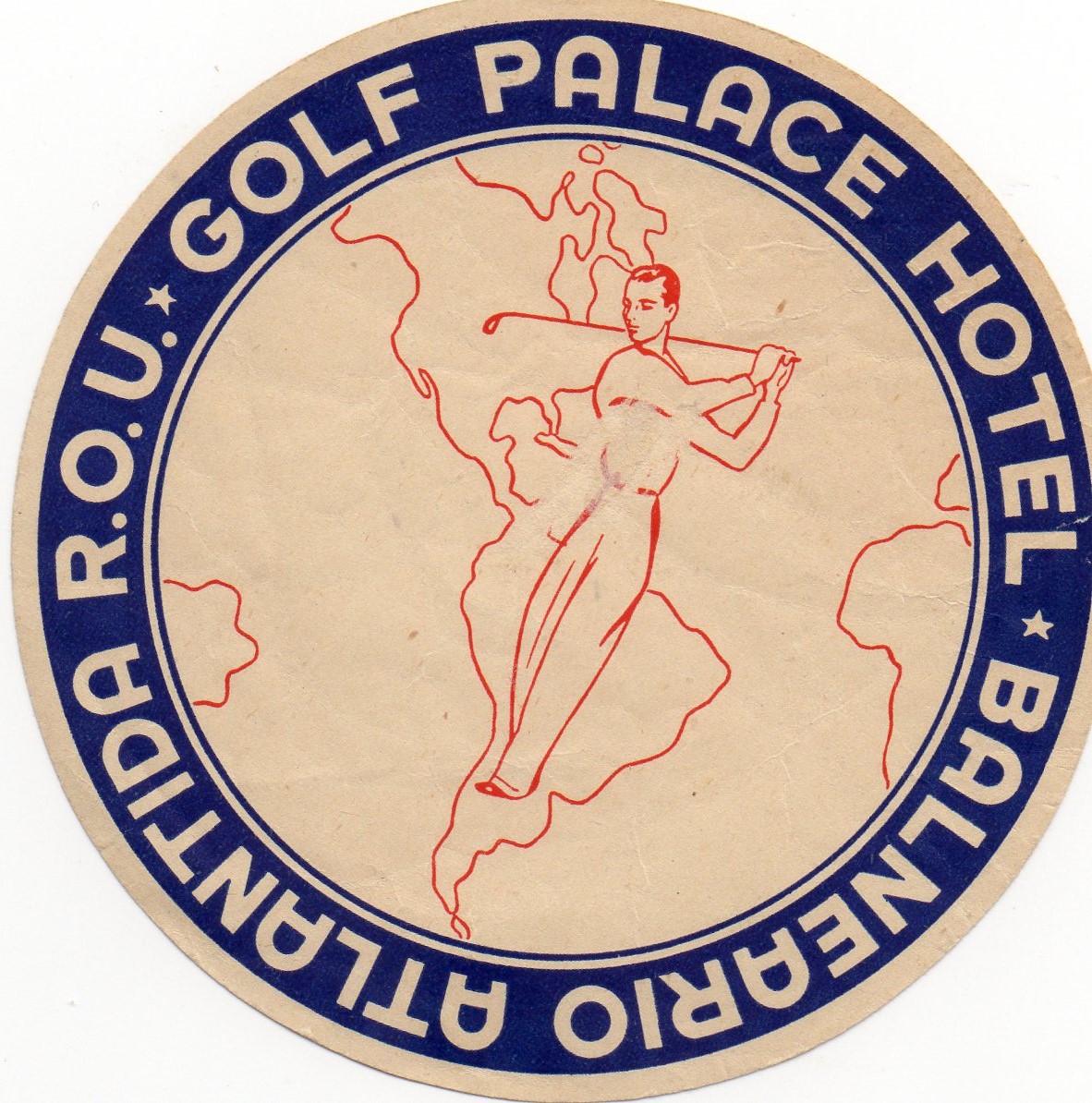
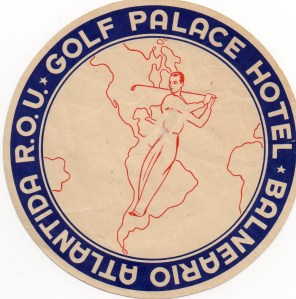
The former „Hotel Planeta Palace“, also for many years called the „Golf Palace Hotel“.

Extreme rare Suitcase label from the „Golf Palace Hotel Atlantida“ !
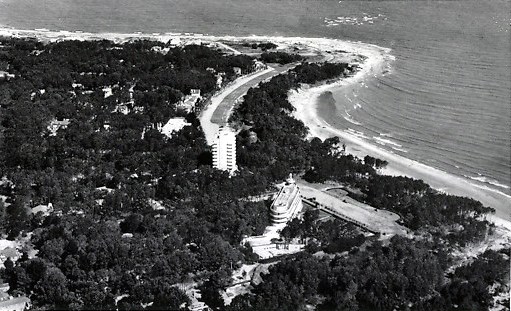
Atlantida 7

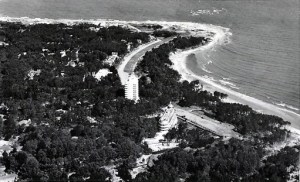
An aerial photo with mansions and the Hotel Planeta Palace. Notice the direct beach front.
There was no Rambla (beachfront road) around the city as it is now. All streets were
leading towards the Beach. Many of these fine mansions, which were build from the 1920s
til the 1960s, can still be seen today, on the Rambla , Playa Mansa, West Atlantida.
Atlantida 3_2

Atlantida from the air about 1960

Recorded as the „birth date“ of Atlantida resort is the 5th of January 1914.
On 7th of September 1915 Atlantida acquired its current name, changed from Las Toscas.

In 1967, by Law Nr.13.609 Atlantida got their classification „Ciudad“
(city status). Today – Atlantida still is the center and the „pearl“ of Uruguay’s
Gold Coast. Lovely place to live !!!

Veröffentlicht unter Atlantida, History | Verschlagwortet mit | Hinterlasse einen Kommentar

Starting a new blog ? … yes – no, yes – no, finally YES .

It will be a challenge, I know, to introduce readers to so many different themes
and ideas. But, we’ll see how it goes and how reactions are.

Just click on the categories to your right, and you will find my posts.
Don’t be angry if I won’t react on every comment. I rather take my time to place
new posts.
Besides I will try to publish as many pics as I can to make it more interesting for you.

DSC00480
O.K. let’s start and „play ball“ .

Veröffentlicht unter Uncategorized | Hinterlasse einen Kommentar