
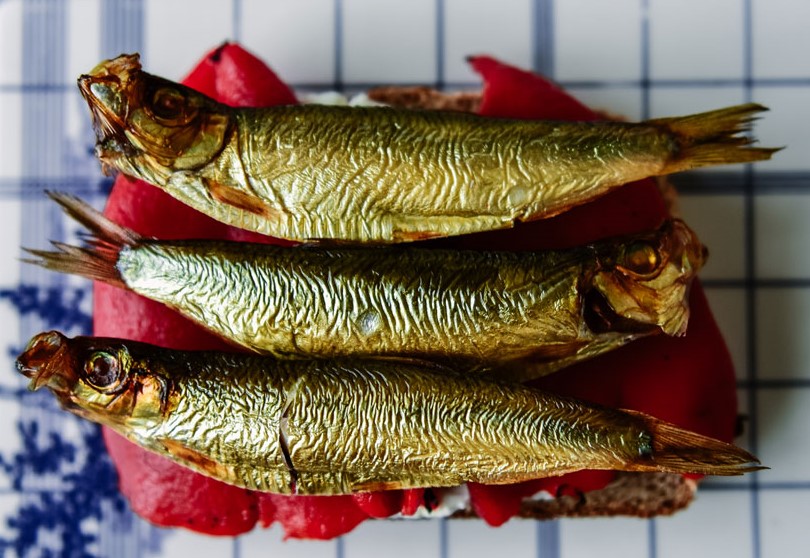
Germany has so many culinary specialties, delicatessen, and food icons, from North to South and East to West, that just Wikipedia lists „thousands“ of them. It is unbelievable if one likes to dive into details. From time to time I pick one out to introduce it to you. Today I like to picture to you a Far North German Food Icon, the famous Kieler Sprotten.
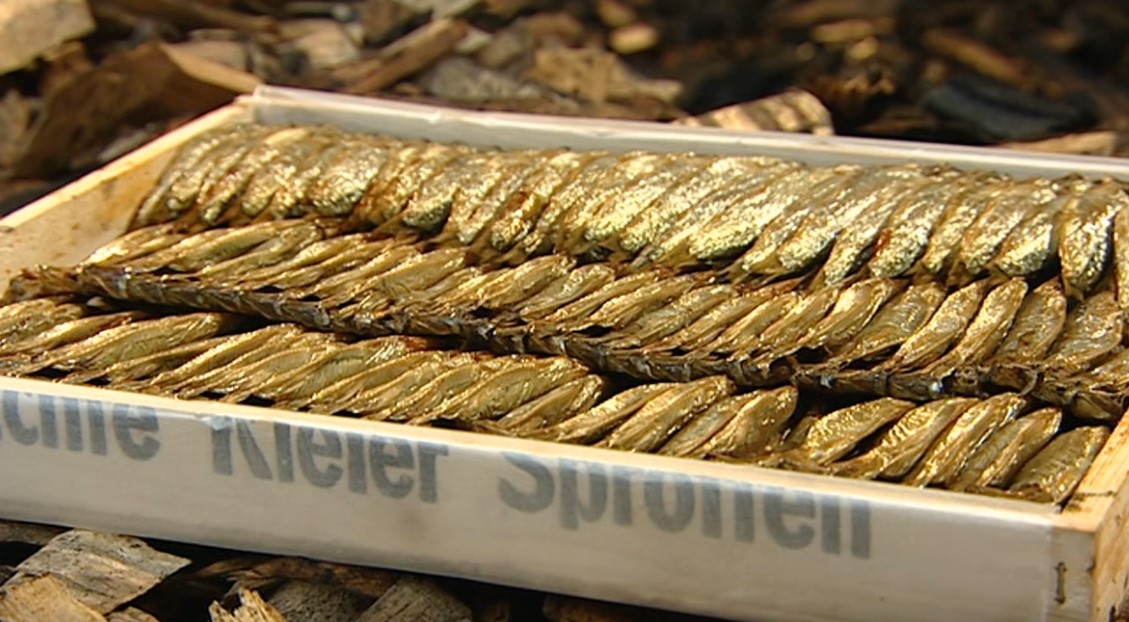
What are Kieler Sprotten ?
The sprat is a herring like sea fish, which rarely grows to more than 20 cm. Smaller specimens of about 10 cm length (equivalent to about 25 g) are preferred for the production of Kiel sprat. Today, the sprat is caught in economically irrelevant quantities in the Baltic Sea around Kiel; more than 100 years ago this was obviously different: „Also on our coasts, especially those of the Baltic Sea, many sprats are caught every year, on average about sixteen million sprats near Eckernförde alone, mostly smoked and then sent all over the world under the name Kiel sprats“, Alfred Brehm wrote in 1884 in Brehms Thierleben.
 Brehm 1884

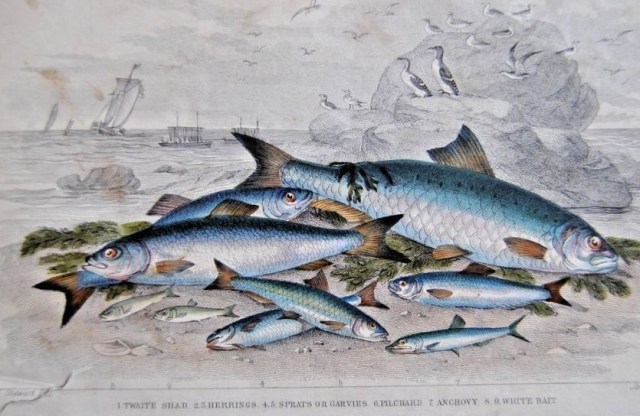 Beautiful old colored steel engraving of the herring family. Foreground in the middle 2 sprats.
Where does the name come from?
An interesting question is why the Kiel sprat is called keels. A story often told in Eckernförde about this is that the sprats were produced in Eckernförde and the crates were given a large shipping stamp in the nearest Kiel main station on their way to the next station, which then gave the impression that they were produced in Kiel.
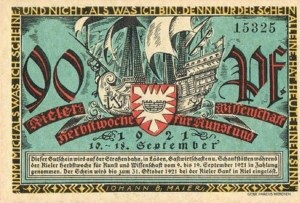
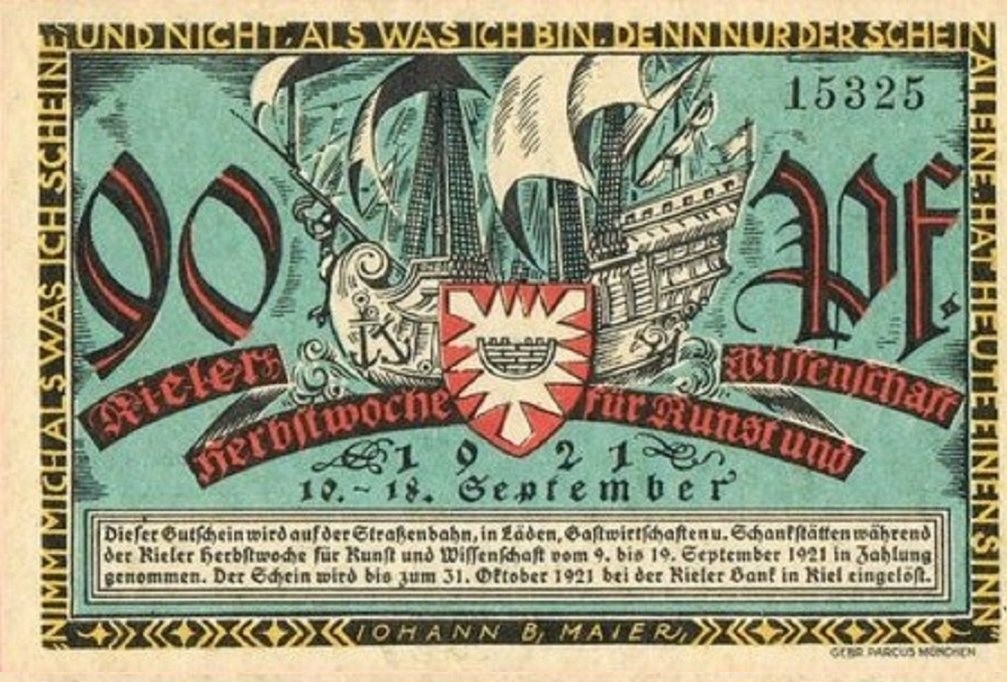
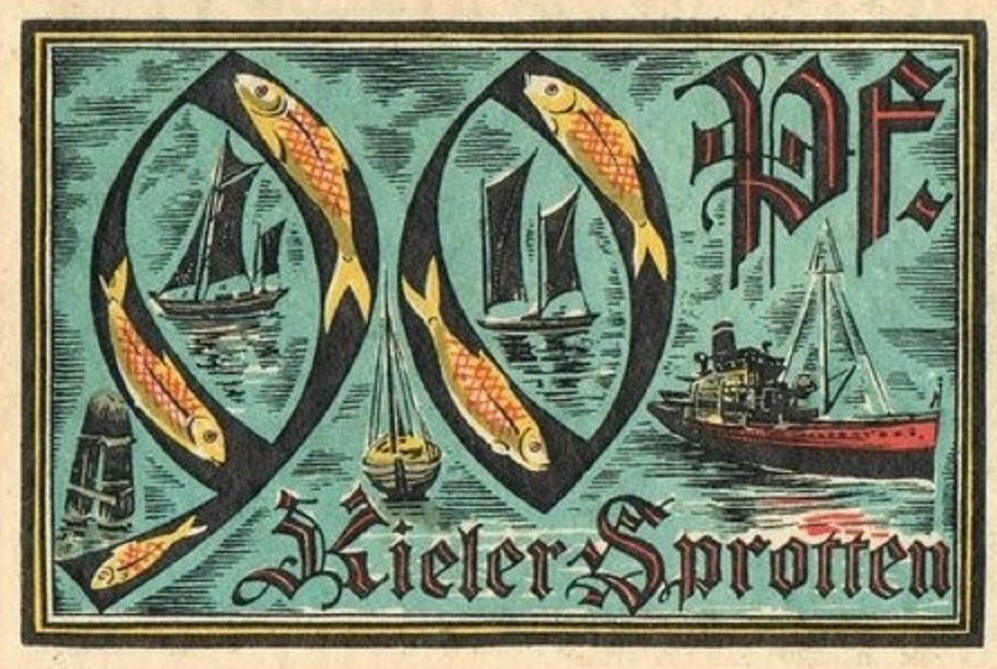
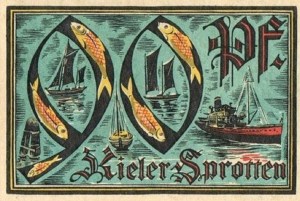 Emergency money from Kiel, 1921 with Hanse Kogge and Kieler Sprotten.
In fact, however, the Kiel sprats are already mentioned in the book „Neuste Länder- und Völkerkunde“, volume 4 of the Geographical Institute in Weimar from 1809. There, on page 198, the sentence: „The Kiel kippers and sprats are highly appreciated“ can be found. Since this mention of the Kiel sprat was already made 35 years before the opening of the railway line Altona-Kiel in 1844, the history of shipping stamps cannot be the reason for the name Kiel sprat. Rather, the sprat is an original Kiel specialty, which was later also produced in Eckernförde. The already well-known name Kieler Sprotte was kept.
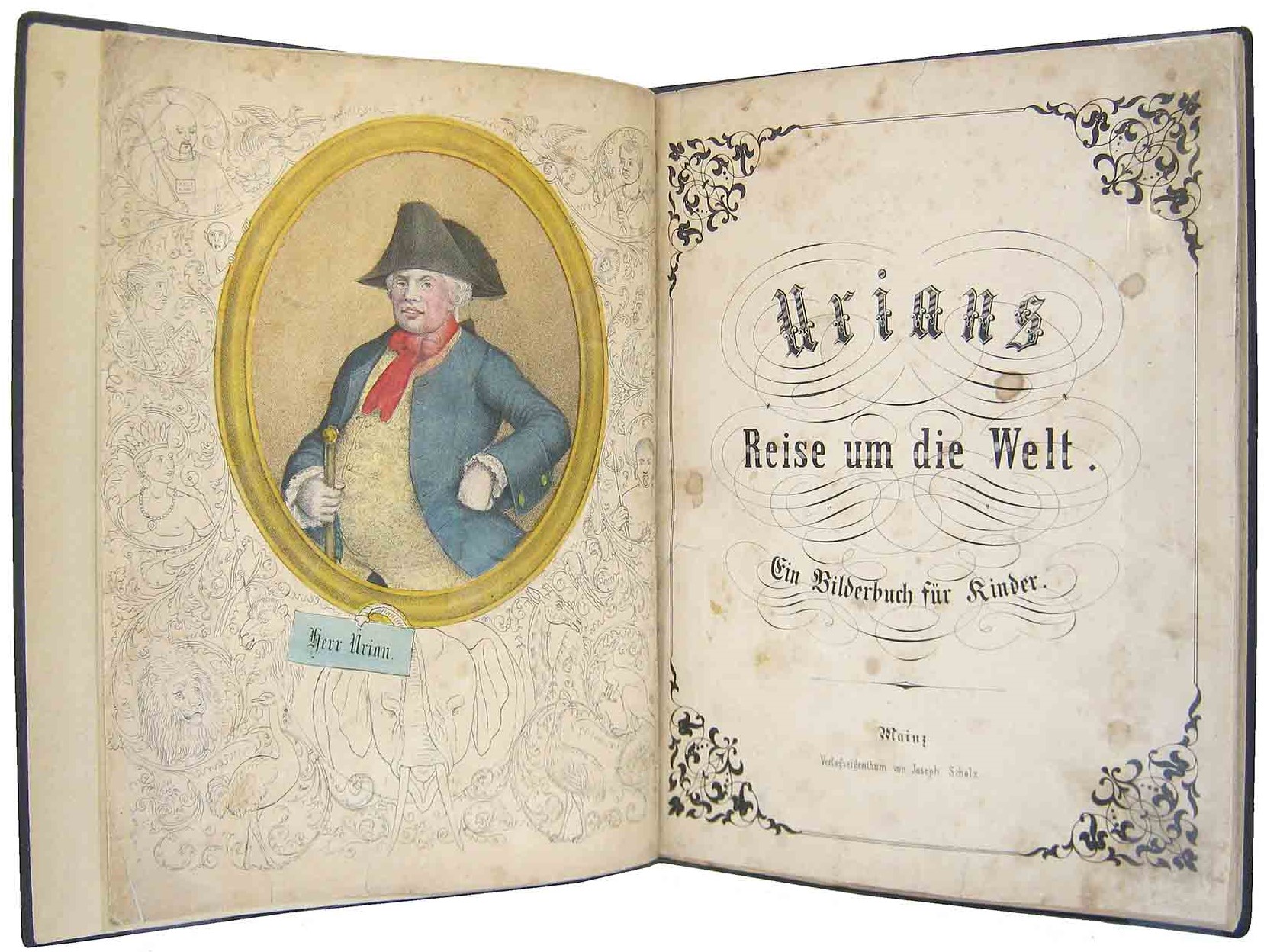
There is an older reference to keel as the place of origin of the Kiel sprat. In the poem „Urians Reise um die Welt“ by Matthias Claudius from 1786 it says: „D’rauf kauf‘ ich etwas kalte Kost / und Kieler Sprott und Kuchen“. Reads: „Therefore I bought some cold food, as well as Kiel Sprats and cake“.
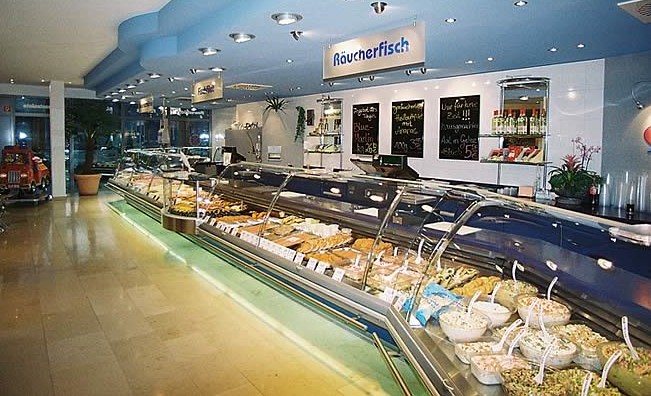
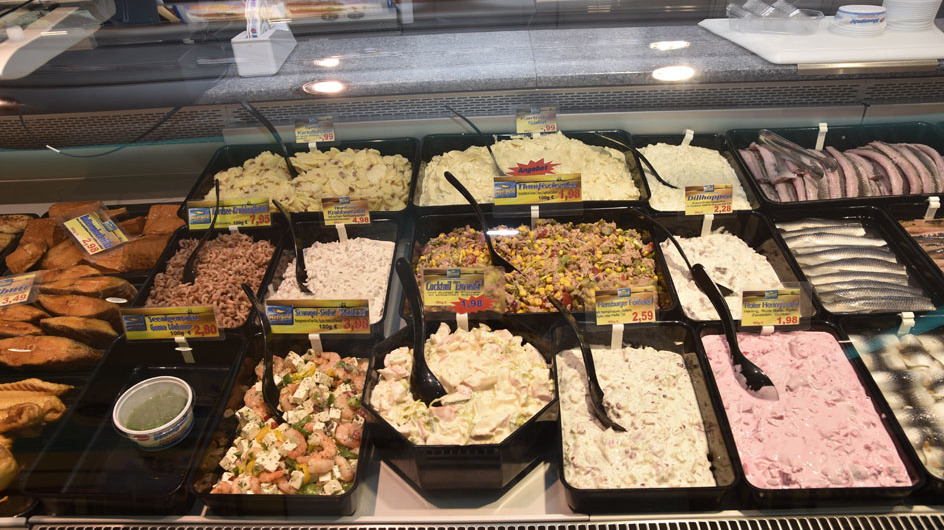
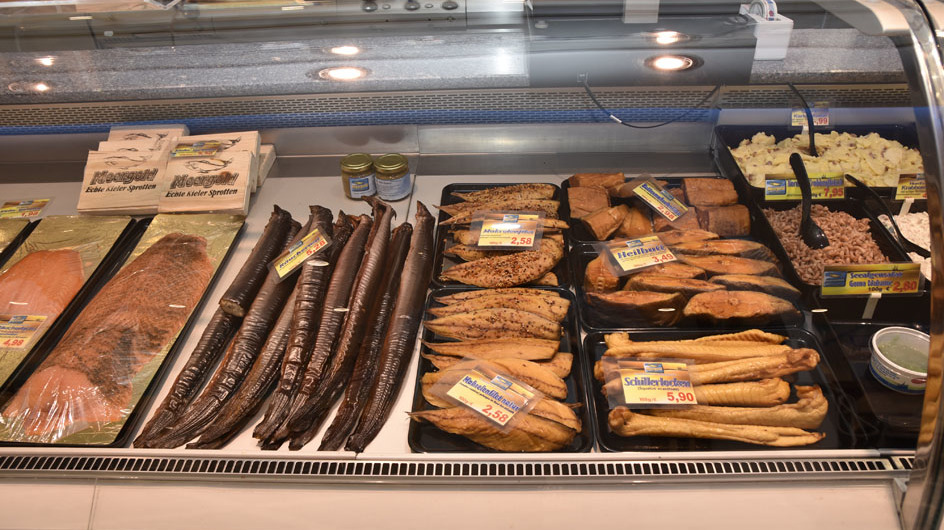
YES, my dear readers, that’s buying fish/seafood in Germany !! Above and below a small choice of fresh produce, the part with seafood salads (different Hering salads, Dillhappen, tuna mixture, shrimp cocktail, and much more) and the smoked fish area (smoked eel, Schillerlocken, smoked and spiced-herbed salmon and much more) with „Kieler Sprotten“ of course. In Uruguay, „ON THE OCEAN“, no seafood shop available, except a few stalls where some fishermen try to sell their catch – that’s it – very very sad!
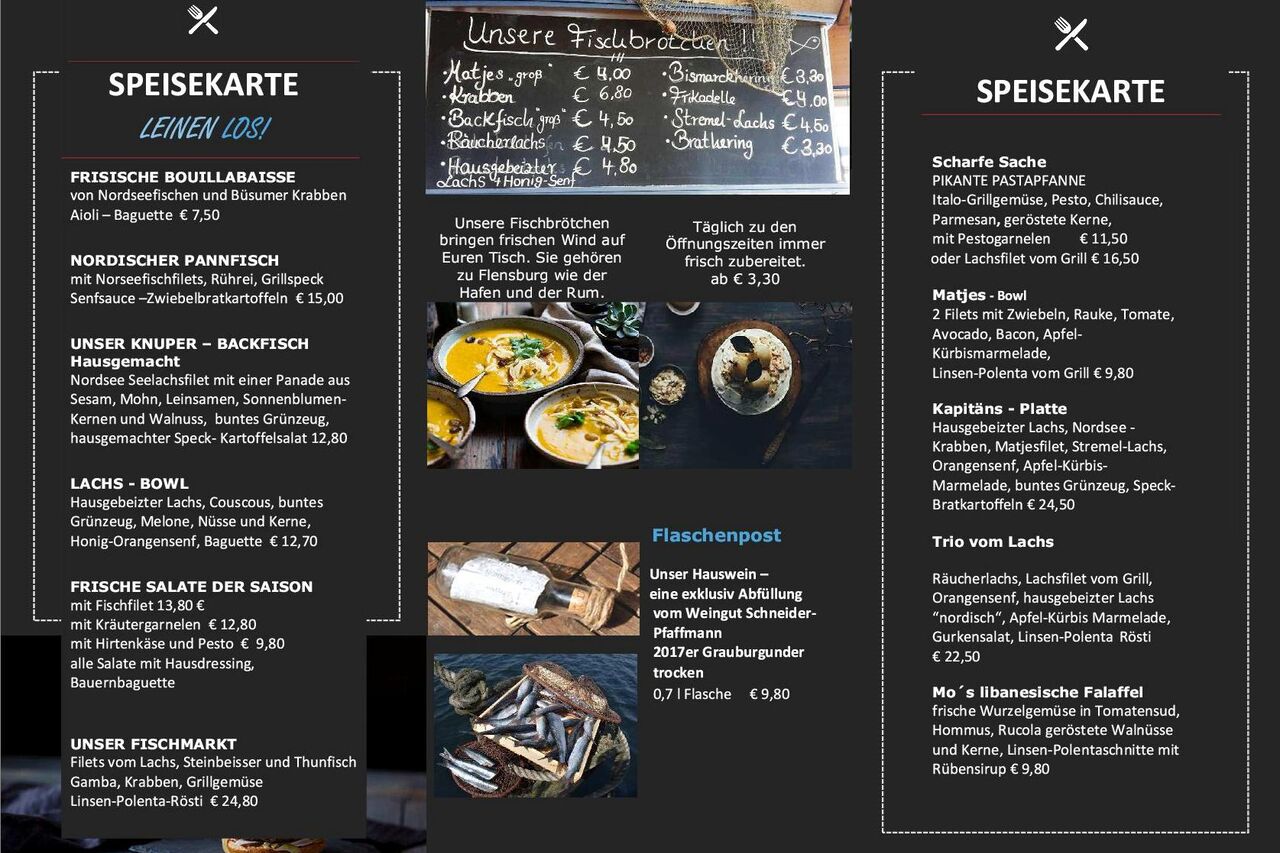
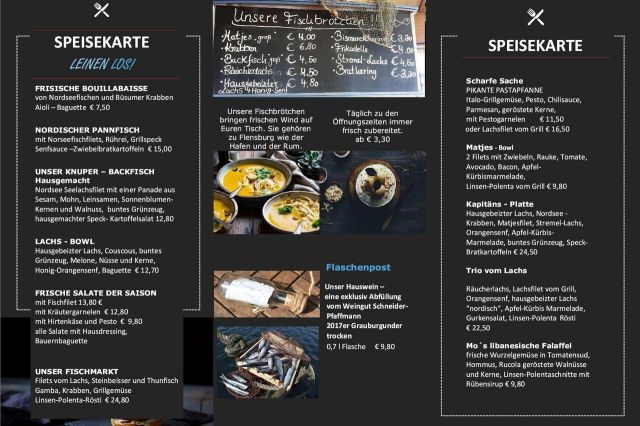 The menu card of a German Seafood restaurant in Flensburg, called „The Sprotte“, mouthwatering !
Genuine Kiel sprats.
Genuine Kiel sprats are smoked in the traditional Altonaer oven over beech and alder wood. First, they are dried with the oven door open, because if they are smoked too early, they become mushy and fall off the pole. Hartmut Hesse, who was in charge of the family smokehouse for decades, installed 8 such ovens in a row. Hesse stood in front of the ovens for up to 14 hours every day and supervised the correct smoking temperature. Today he supervises the „Eckernförder Fischerei Museum“ and from time to time (once a year during the Sprat Days) he heats one of the old ovens.
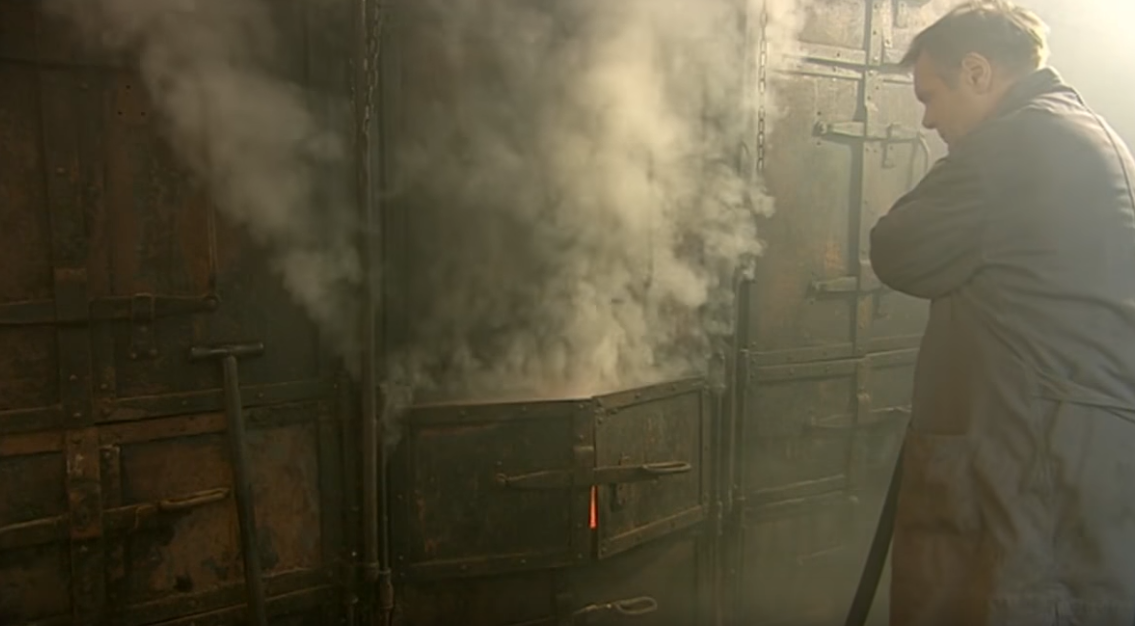
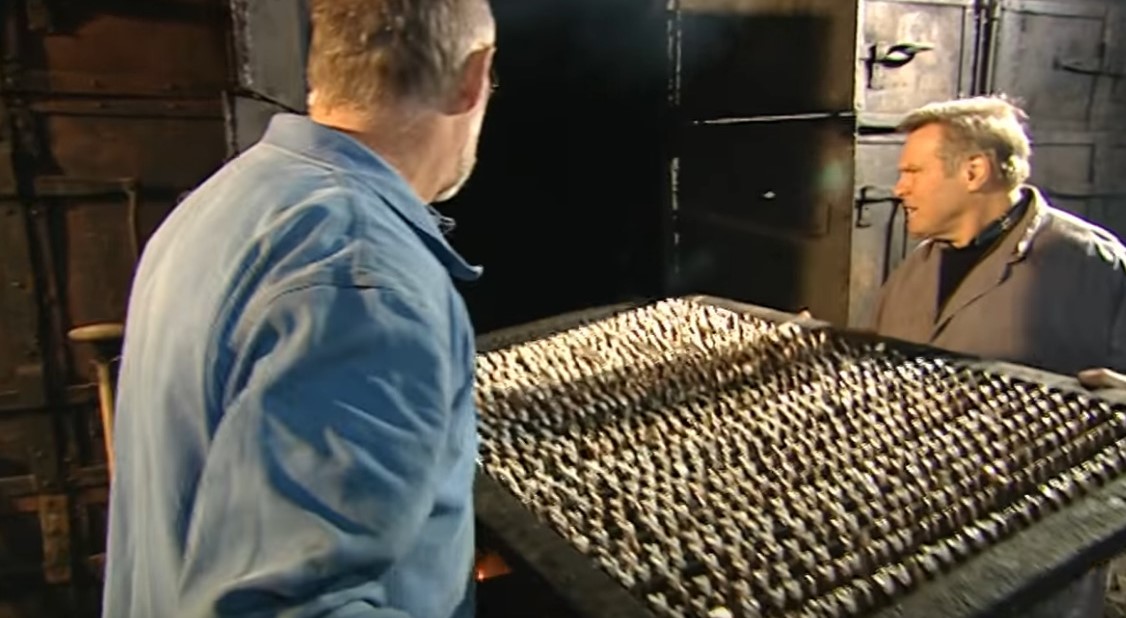
In the time before the 2nd World War, there were still more than 60 smokehouses in Eckernförde. The smoke wafted so strongly through this place that at times you could only see the feet of people you met on the street.
This, hundreds of years old smoking method, which gives the sprats their special taste, was finally the „end“ for this smoking method because this traditional smoking method does not correspond to the modern emission standards.
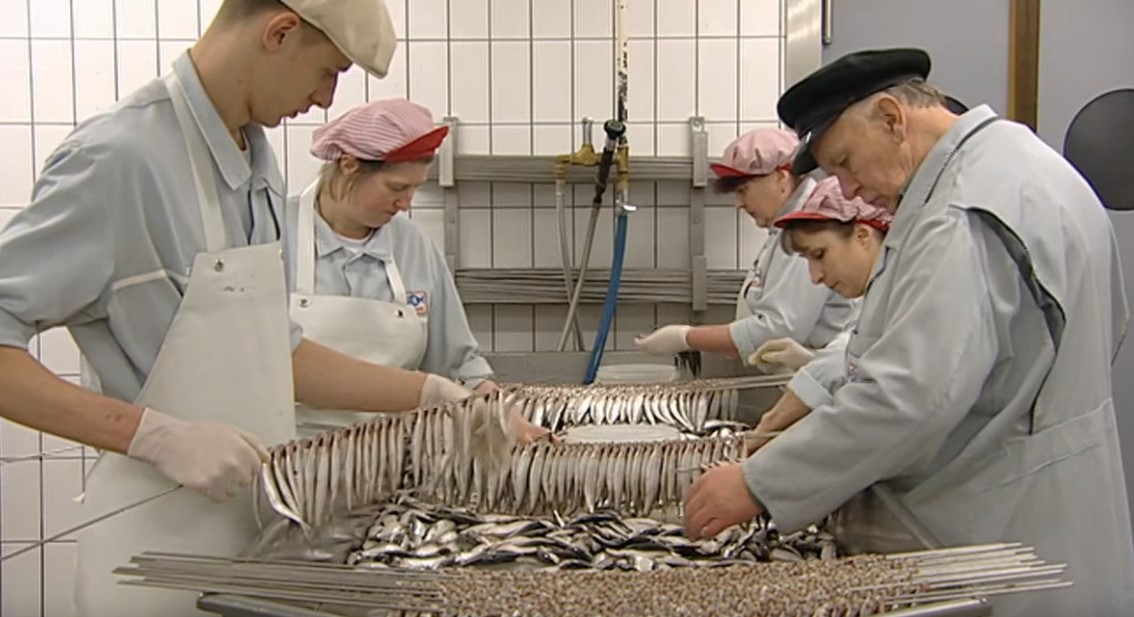
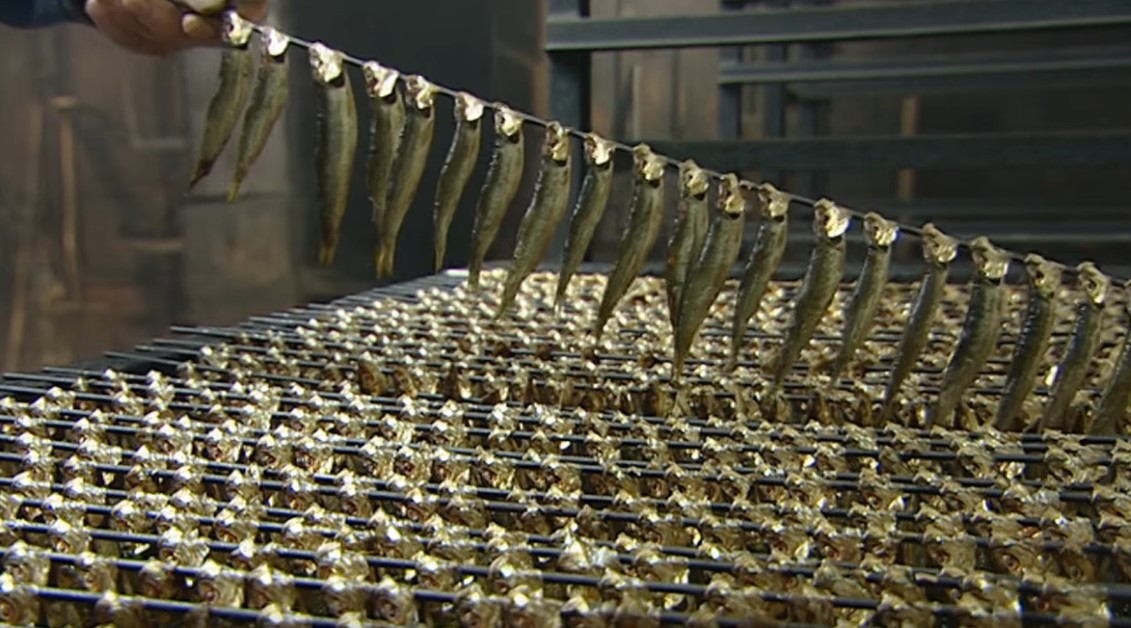
In many places, however, the Altonaer Ofen has given way to modern, gas-fired smoking ovens. This means that a good deal of the typical taste is lost, even though today’s sprat sellers write „smoked over beechwood“ and the like on their fish tins and packaging. „Genuine Kiel sprat“ must also come from the greater Kiel Bay Area.
Kiel’s sprats today.
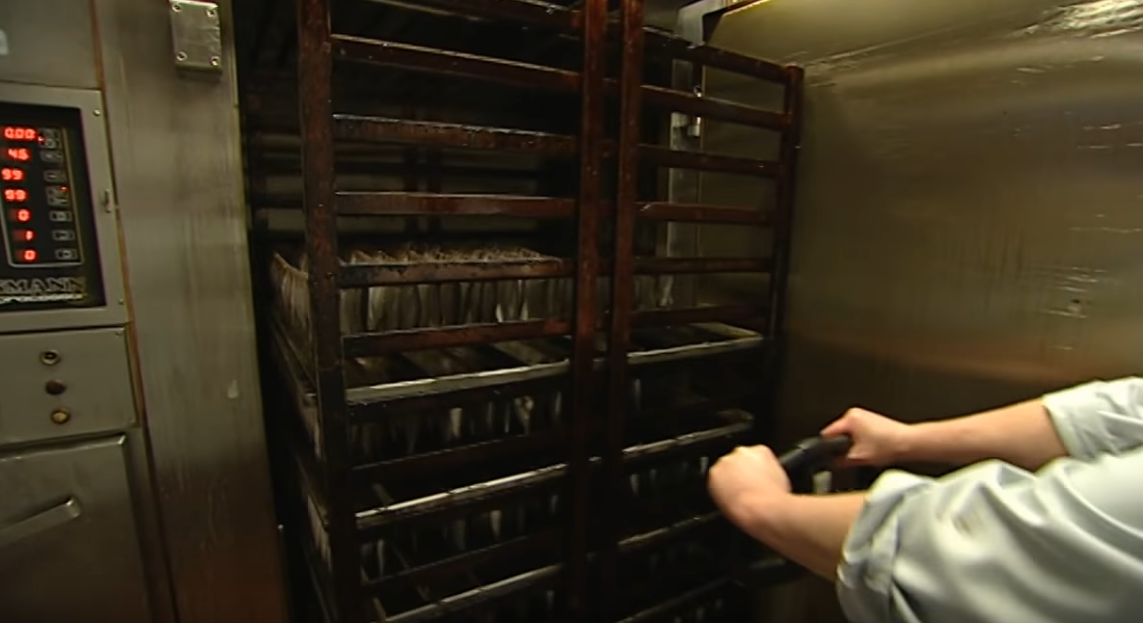
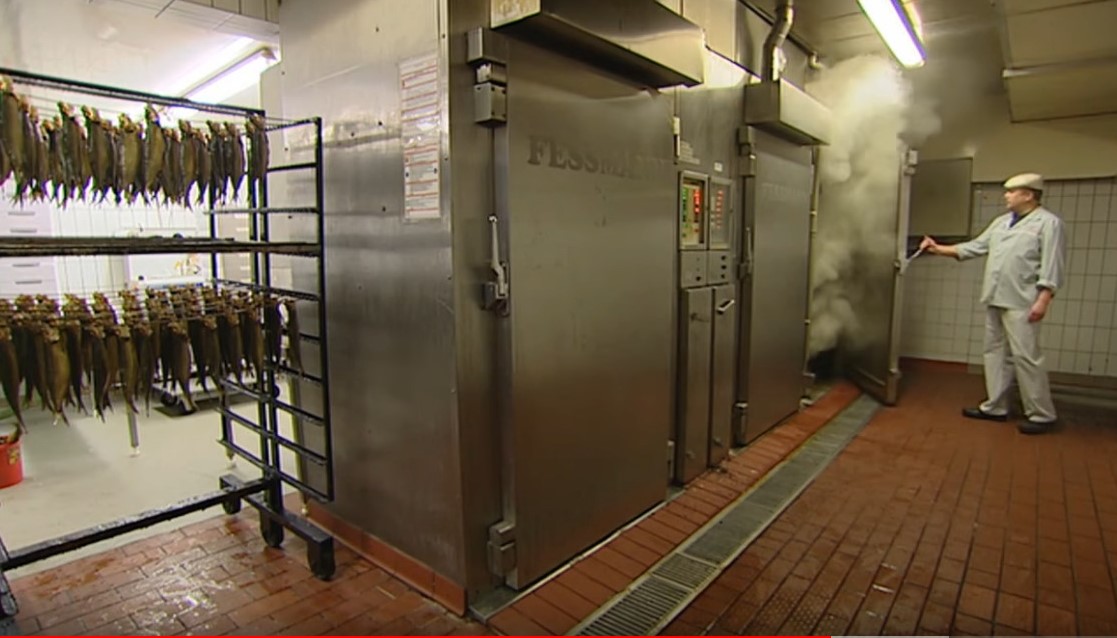
Today’s smoked fish specialty „Kieler Sprotte“ comes from Eckernförde. The Robin & Kruse smoker is the only still approved Kiel sprat smoker in Germany. As the many distributors do, which they market everywhere Kiel Sprat, I can not say, there will certainly be a kind of franchise system behind it.
In any case, the Kiel sprat is one of the smoked fish products to which the saying „In Eckernför, dor hebbt se’t rut, ut Sülver Gold to maken“ (In Eckernförde they have the knack of making gold from silver) refers. What is meant is the golden color that the silver fish get through the smoking process.
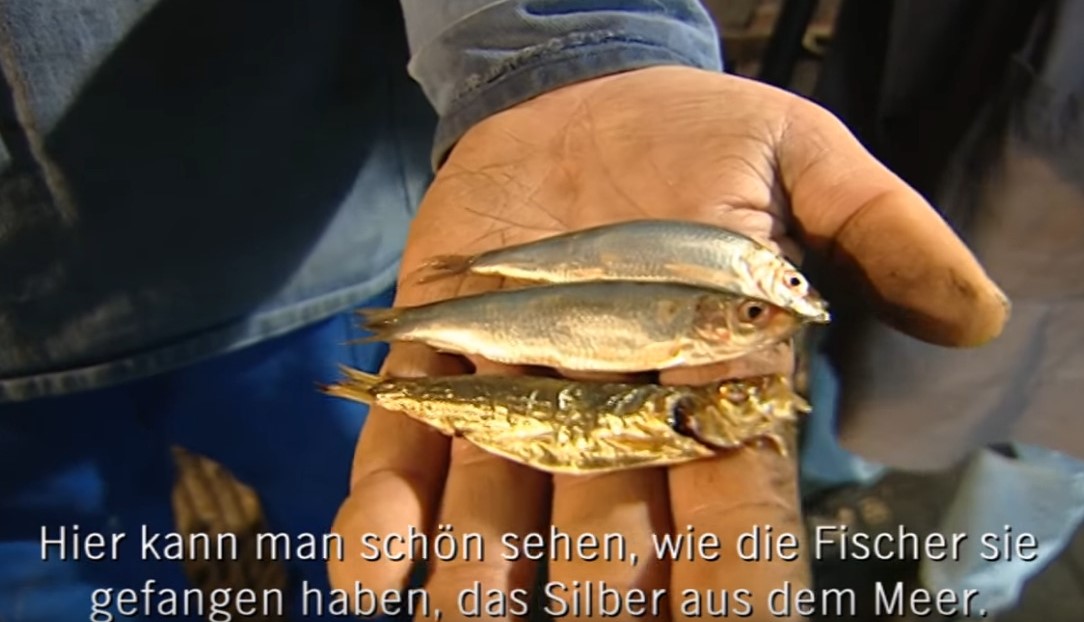
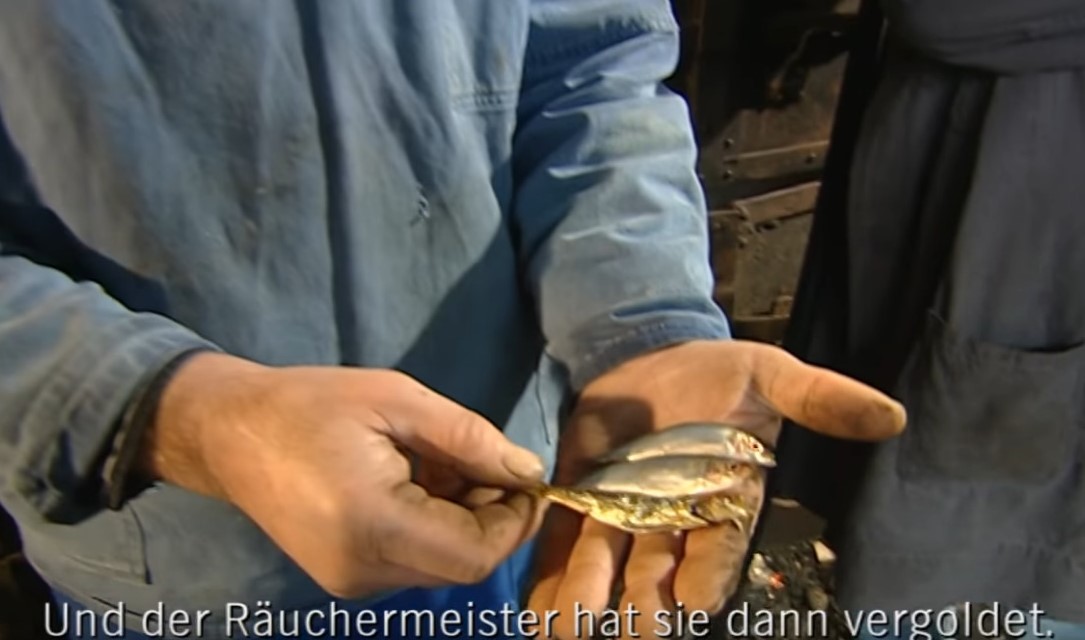
Unfortunately, the market for sprat is not big enough to expand the business. Much larger quantities of sprat could be caught, but there is only one buyer (Robin & Kruse). As fresh fish the sprat is absolutely worthless.
 Kruse’s own sprat label.
There are of course other competitors on the world market who catch, smoke and market sprat, such as the countries around the Baltic Sea, especially Denmark, Russia and Latvia.
How is the sprat eaten?
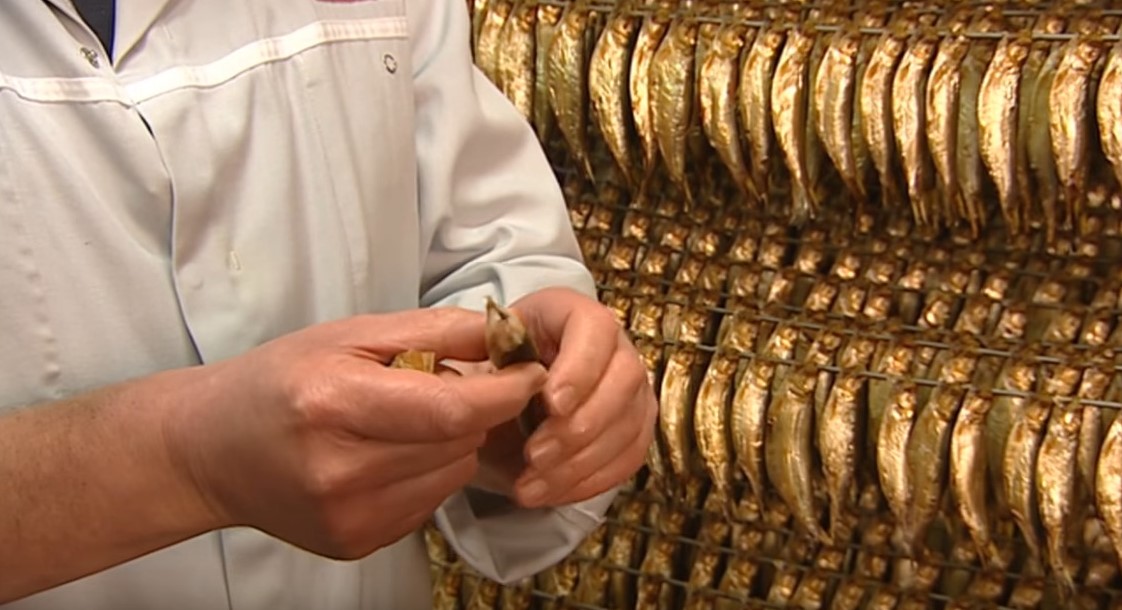
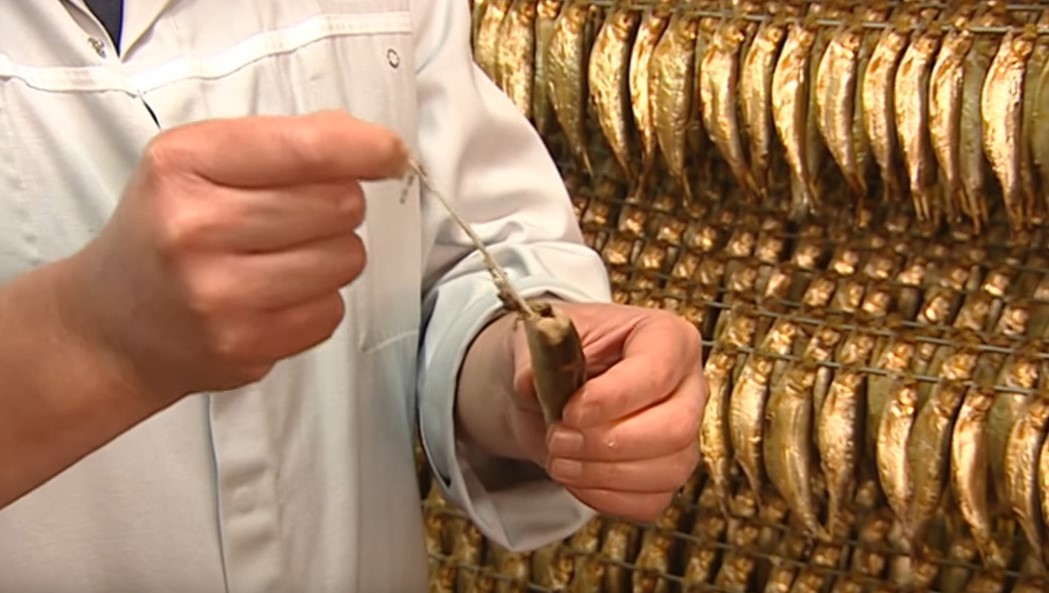
There are many methods to eat sprats. From eating the whole sprat to filleting it. I have adopted the method as I learned it in Eckernförde. You crack the head and tail off, it doesn’t taste very good anyway.
Then you take the sprat between thumb and forefinger, press lightly on the belly so that the sprat opens a little and then you pull out the main bone of the sprat. Now it is soft and
wonderful tasty to eat. See pics above. All pics will supersize if you click on them.
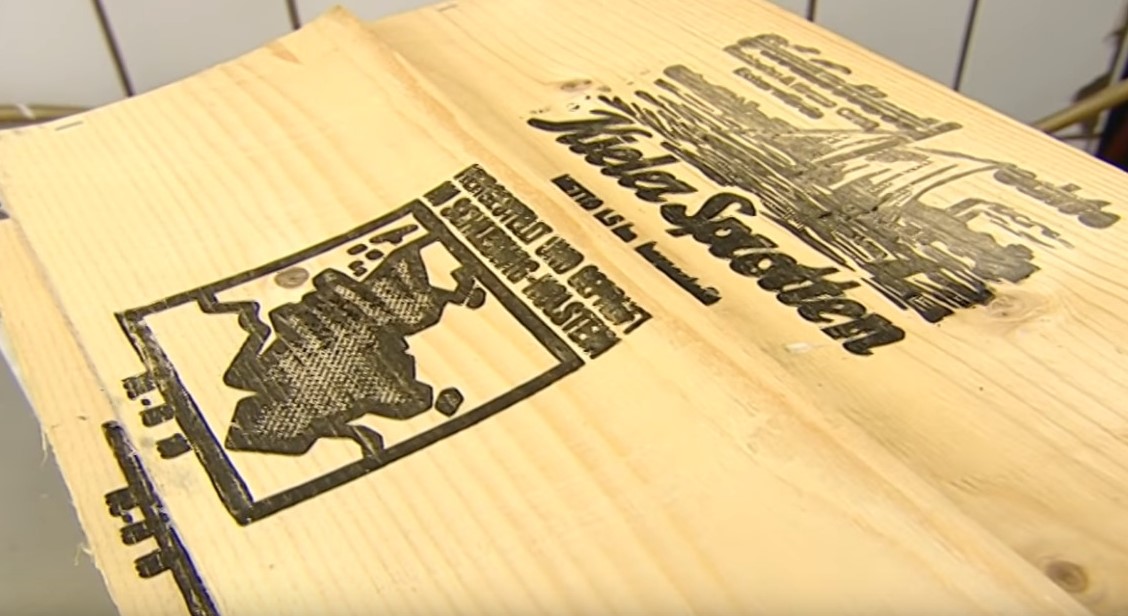
More of Kiels Sprats.
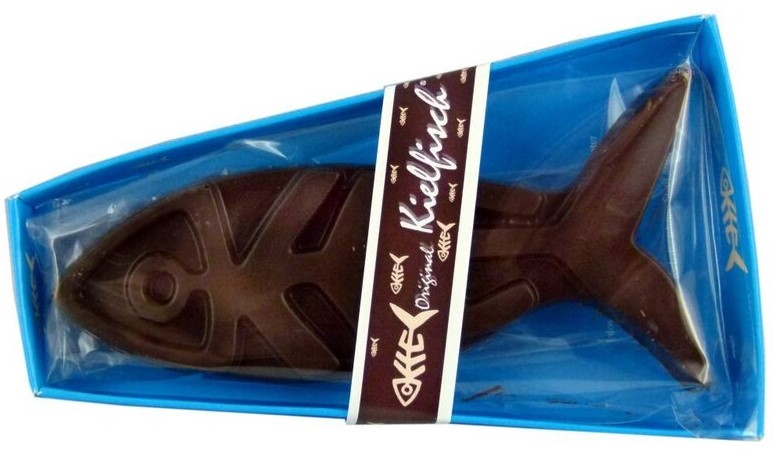
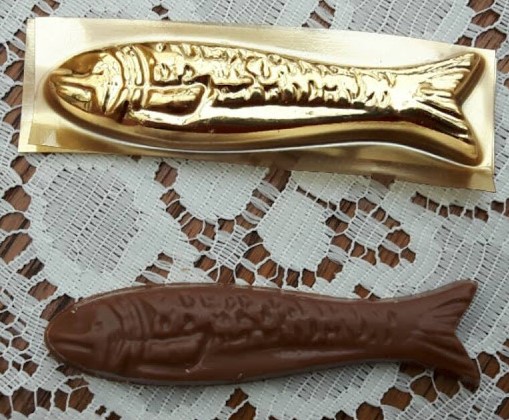
Some shops in the region also offer a chocolate version, which – similar to cat’s tongue – imitates the fish specialty in shape and packaging (a small wooden box).
Figuratively speaking, the term „Kiel sprat“ is used for an old-established or native citizen of Kiel, whether male or female.
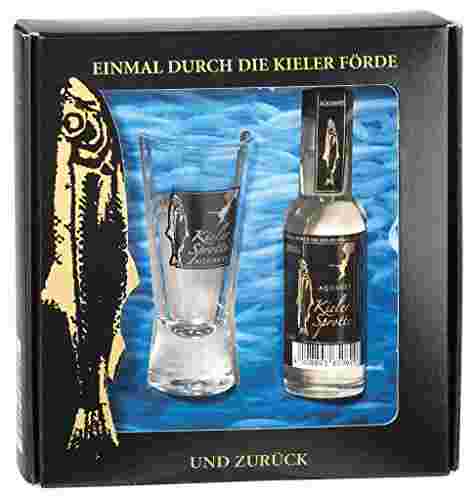
Furthermore, aquavit has been produced in Kiel by Bela (Spirituosen Manufaktur Bartels-Langness) for quite some time now. It is also called „Kieler Sprotte“ and is characterized by the fact that it is driven through the sprat route across the Kiel Fjord according to the old tradition. The picture down here – you are invited for a taste of „Kieler Sprotten“.
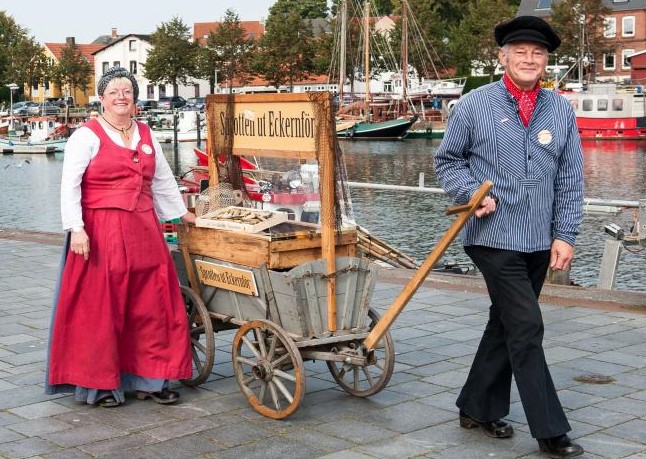
Fine spirit with caraway.
Fish dishes and noble brandy go together perfectly. Thus Bartels-Langness created the „Kieler Sprotte Aquavit“ for highest pleasure. Before it goes on sale, the bottles traditionally sail through the Kiel Fjord – onboard a Hanseatic cog.
When the replica of the medieval cog sets sails in the port of Kiel, it becomes clear that the noble cargo is of an extraordinary nature: whole pallets of Kiel sprat Aquavit are stored in the belly of the wooden cargo ship that an association voluntarily keeps in service.
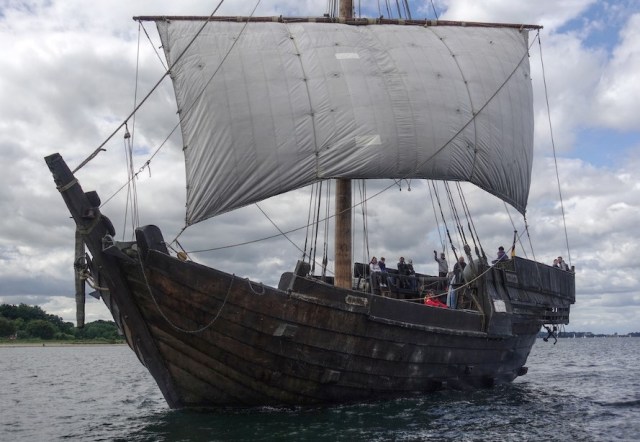 Don’t get it wrong – these „small looking“ ships are very solid and can load a lot, see pic down.
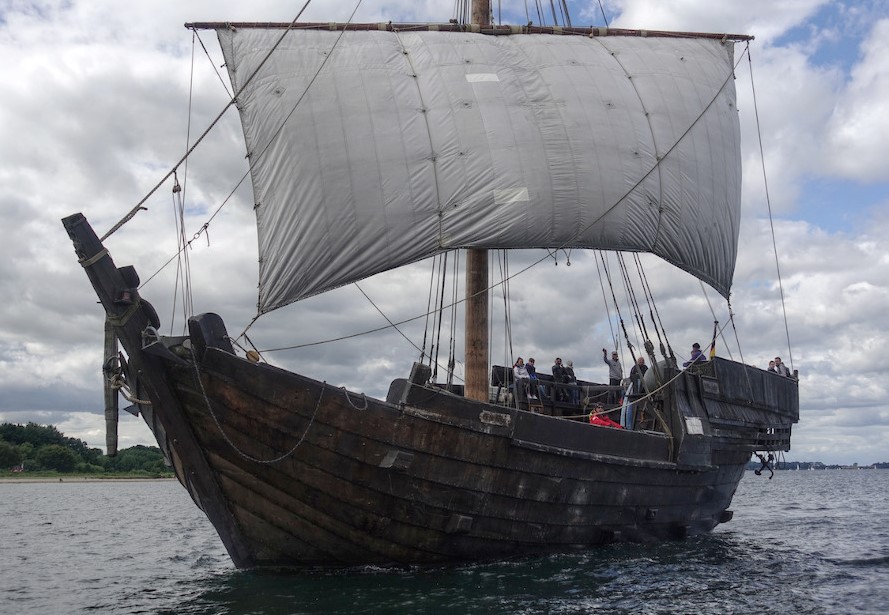
„In this way we are continuing an old tradition of the Ellerbeck fisher women: Our Aquavit also travels the classic sprat route across the Kiel Fjord and since 2017 to Eckernförde for the Sprat Days and back“, says Sven Harm, production manager in the spirits factory at Bartels-Langness in Kiel. „In the old days, sprats were transported in small fishing boats. Today, the Aquavit is traditionally transported on the „Kieler Hansekogge“ at Whitsun.
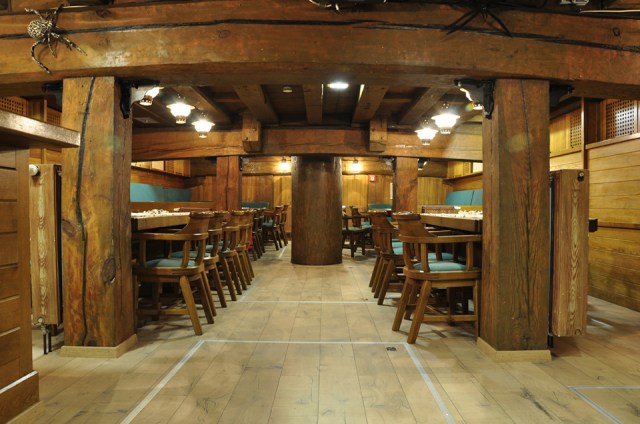 Inside a Hanse Kogge, see how stable they are made – they load up to 300 metric tons.
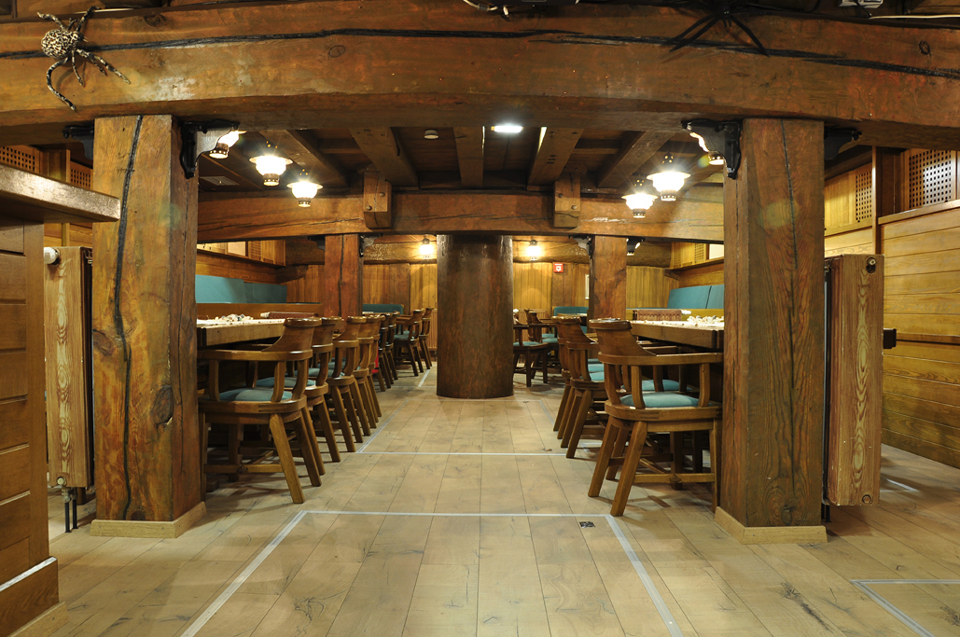
Also this year the Hansekogge will sail with the high-percentage cargo through the Kiel Fjord some sea miles to Eckernförde. There, the Sprat Days are celebrated every year from May 18th to 21st, because even today the real Kiel sprats come in wooden crates from fish smokehouses in Eckernförde.
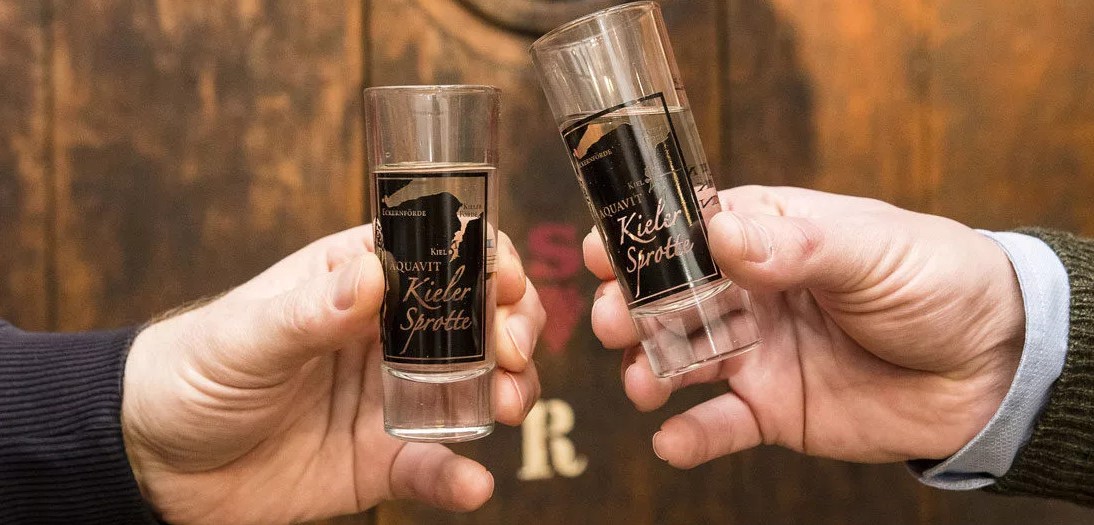
„It fits perfectly when our typical Nordic aquavit is enjoyed with hearty fish dishes during sprat days,“ says Sven Harm. The caraway brandy also tastes great with beer. The quality mark „Geprüfte Qualität Schleswig-Holstein“ (tested quality of Schleswig-Holstein) signals to the connoisseur that the high-proofed spirit is produced exclusively in the far north, namely in the spirit cellar of Bartels-Langness in Kiel. By the way, connoisseurs enjoy the Aquavit exclusively in one way: ice-cold! Try to enjoy once the KIELER SPROTTEN !
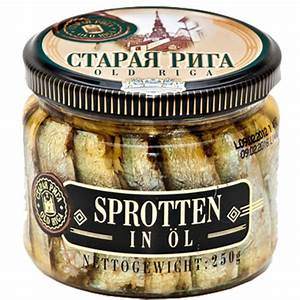
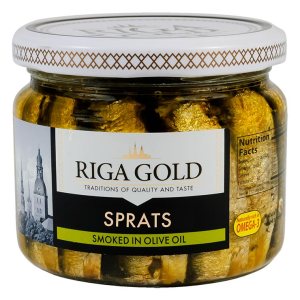 Left the German variaty. The right picture shows Riga Gold as we can buy it in Uruguay.
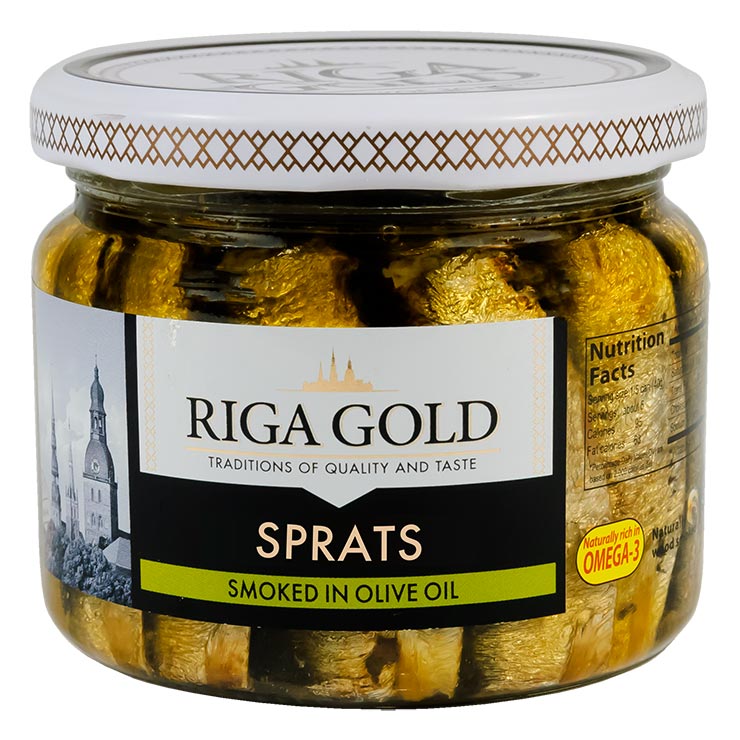
Of course the Kieler sprat also has its competition. Especially in Riga the sprats are marketed under the name Riga Gold.
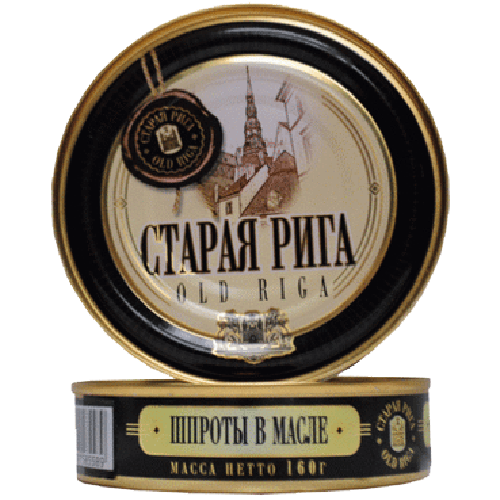
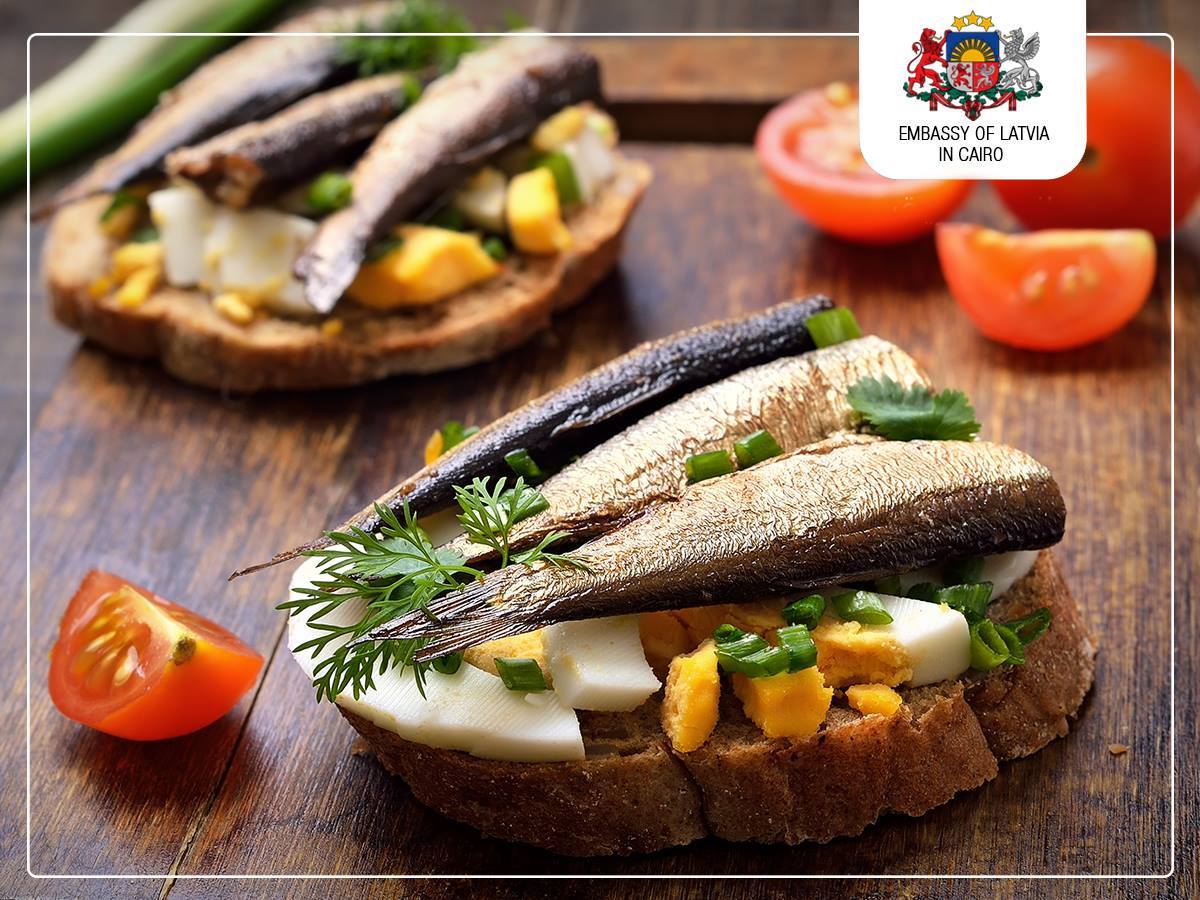
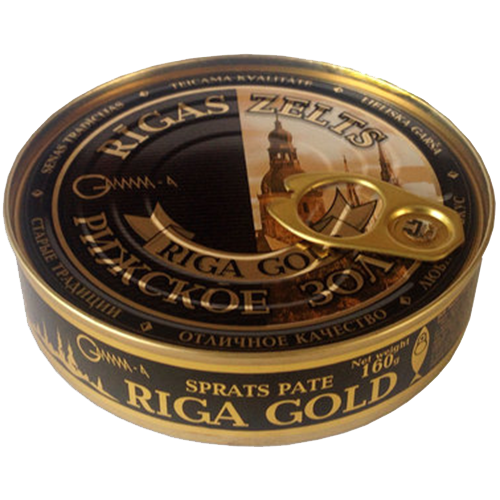 I am sure that Riga makes more in sales than Kiel, they are as good as the Kiel Sprats and are much better promoted as you can see the add from the Latvian Embassy down here.
More Kiel Sprats to buy in the market.
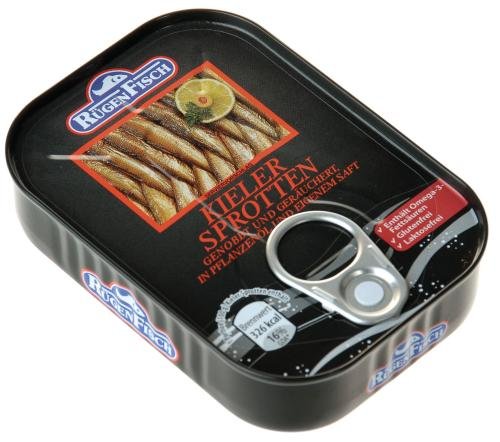
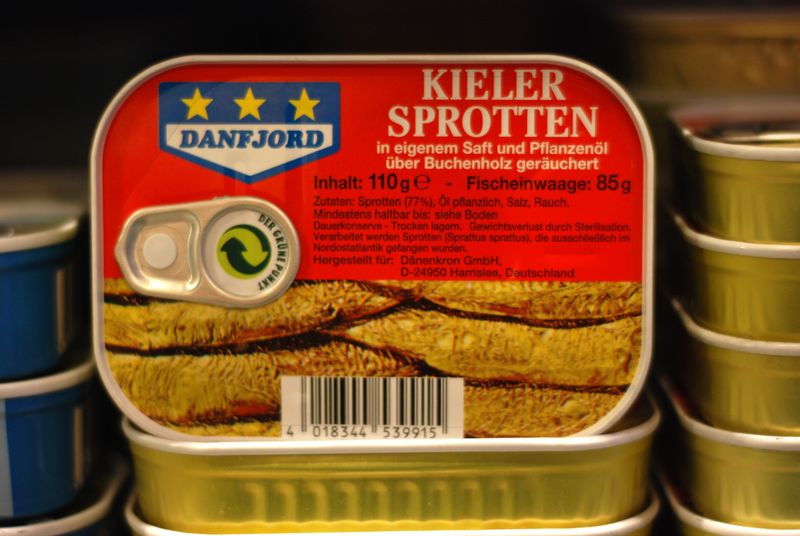
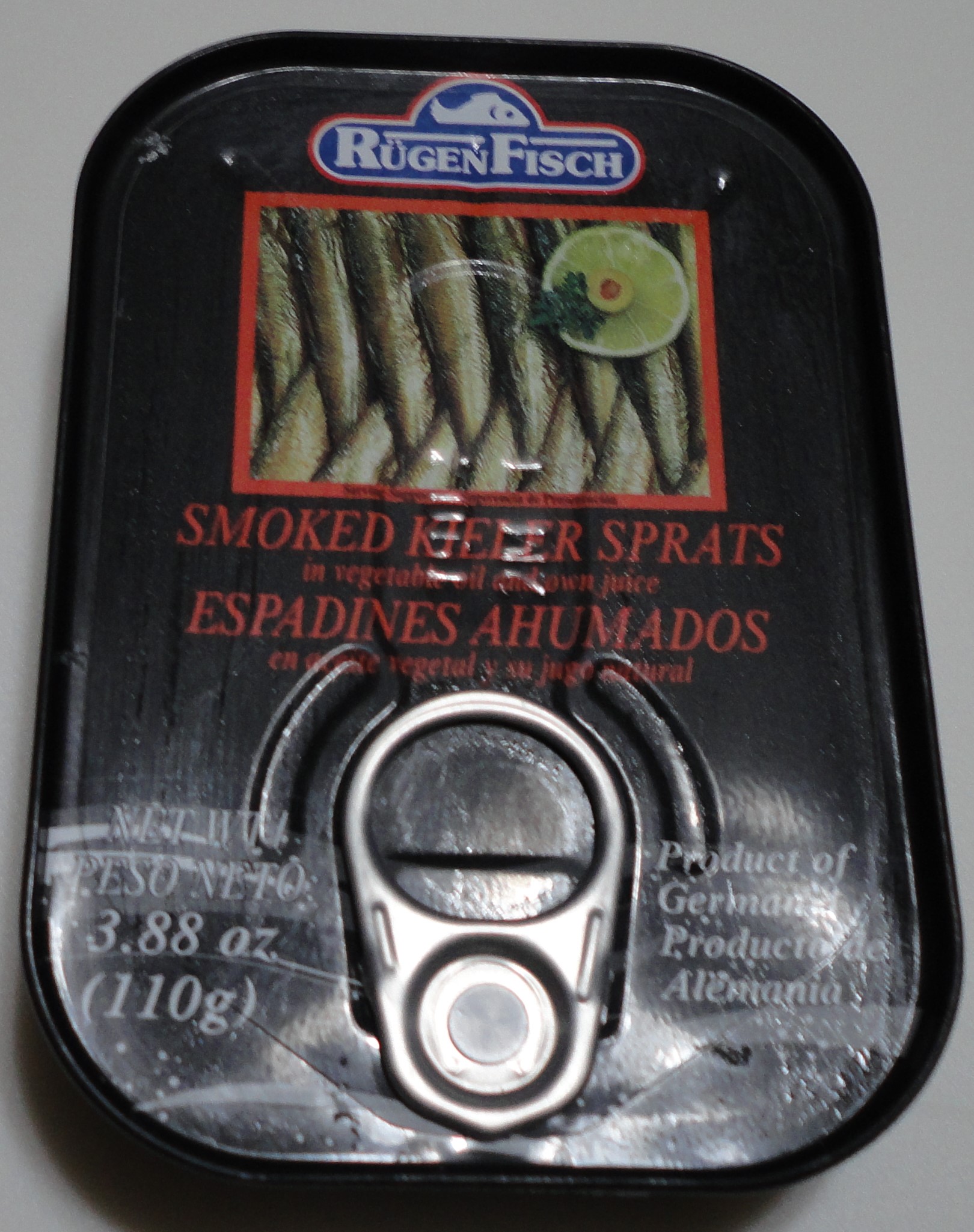 Left the „Kiel Sprats“ from „RügenFisch“ in Germany, about 1,20 euros per 110g tin. On the right the same sprats we buy here in Uruguay for 4,40 euros a tin. Riga Gold, like above in a 200g glass, is also 4,40 euro here, that’s half the price !!
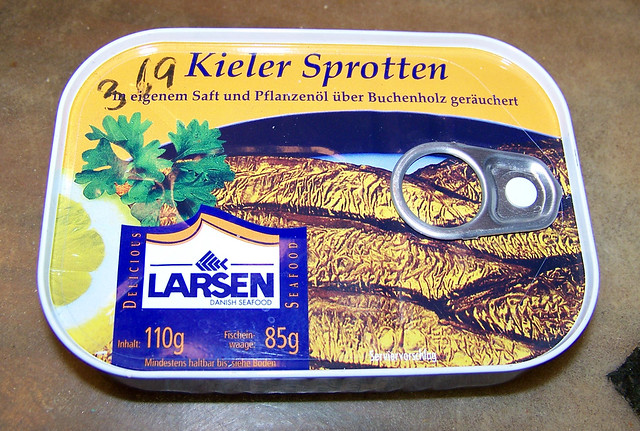
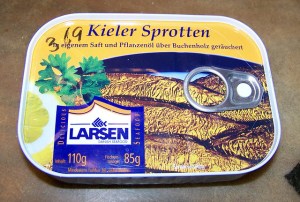 These are the Original Kieler Sprotten, licenced or franchise, or WHATEVER !!??
Monument to Sprats in Mamonovo.
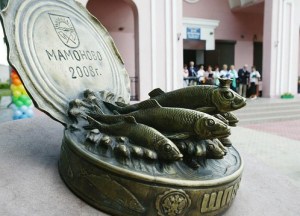
 Left: The Sprats Monument in Mamonovo, Russia. Right: Sprats transport of Heiligenbeil.
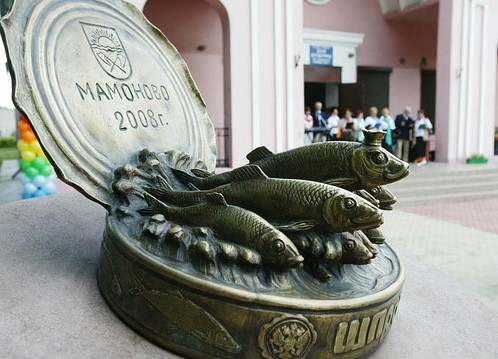
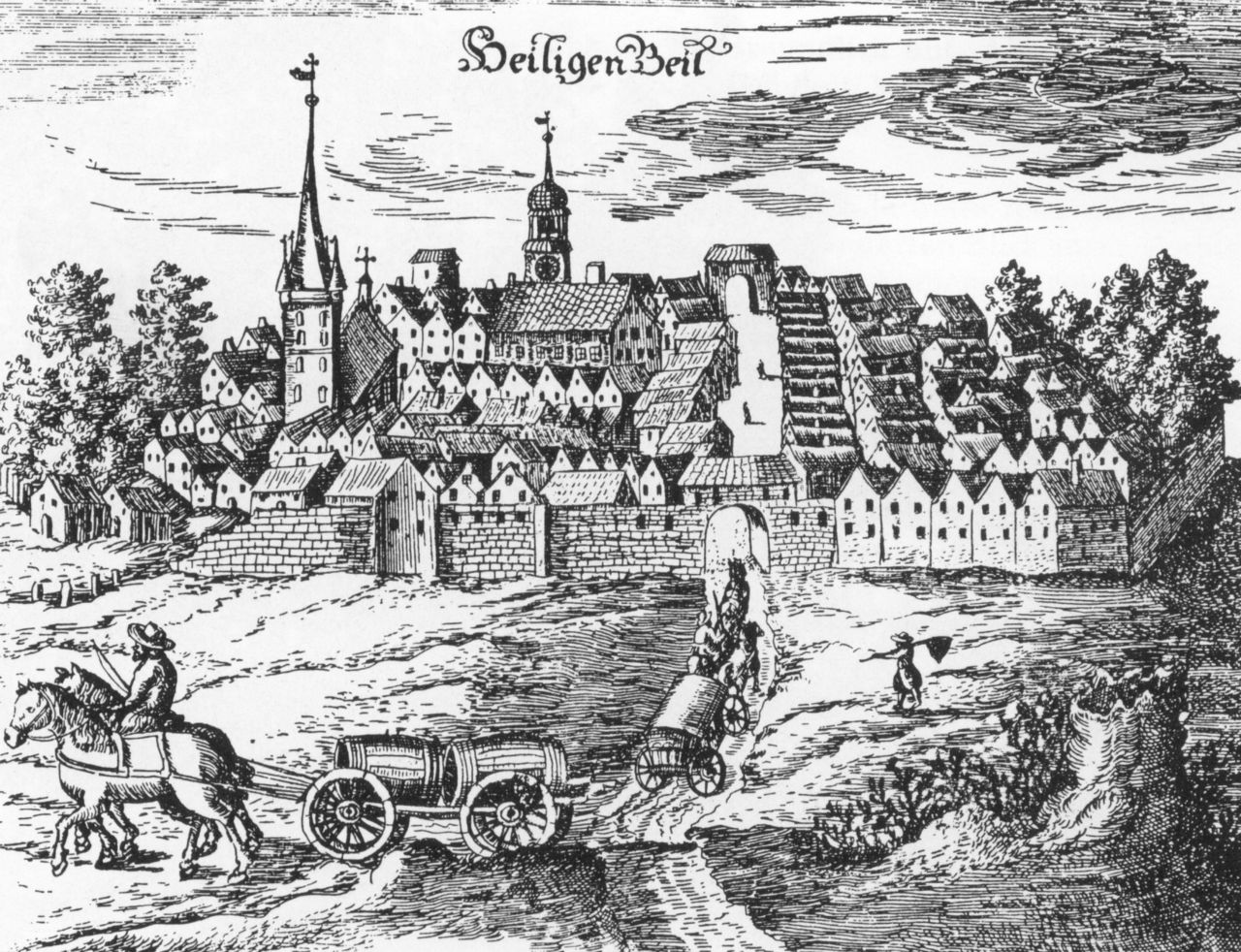
Mamonovo is a small city on the Polish border. It was formerly known as Heiligenbeil (copper engraving right). Today in the Russian enclave Kaliningrad, historically it was the German Königsberg. Heiligenbeil was always a center of the Baltic Sea for sprats, as one can see the sprats transport in barrels around the 16th century.
Here some ideas on how to enjoy sprats, they are delicious, just try it out.
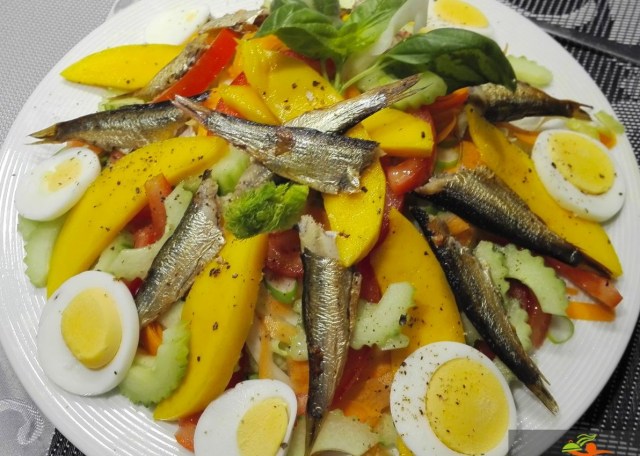
Absolute delicious, mixed salad with mangoes, eggs, and sprats.
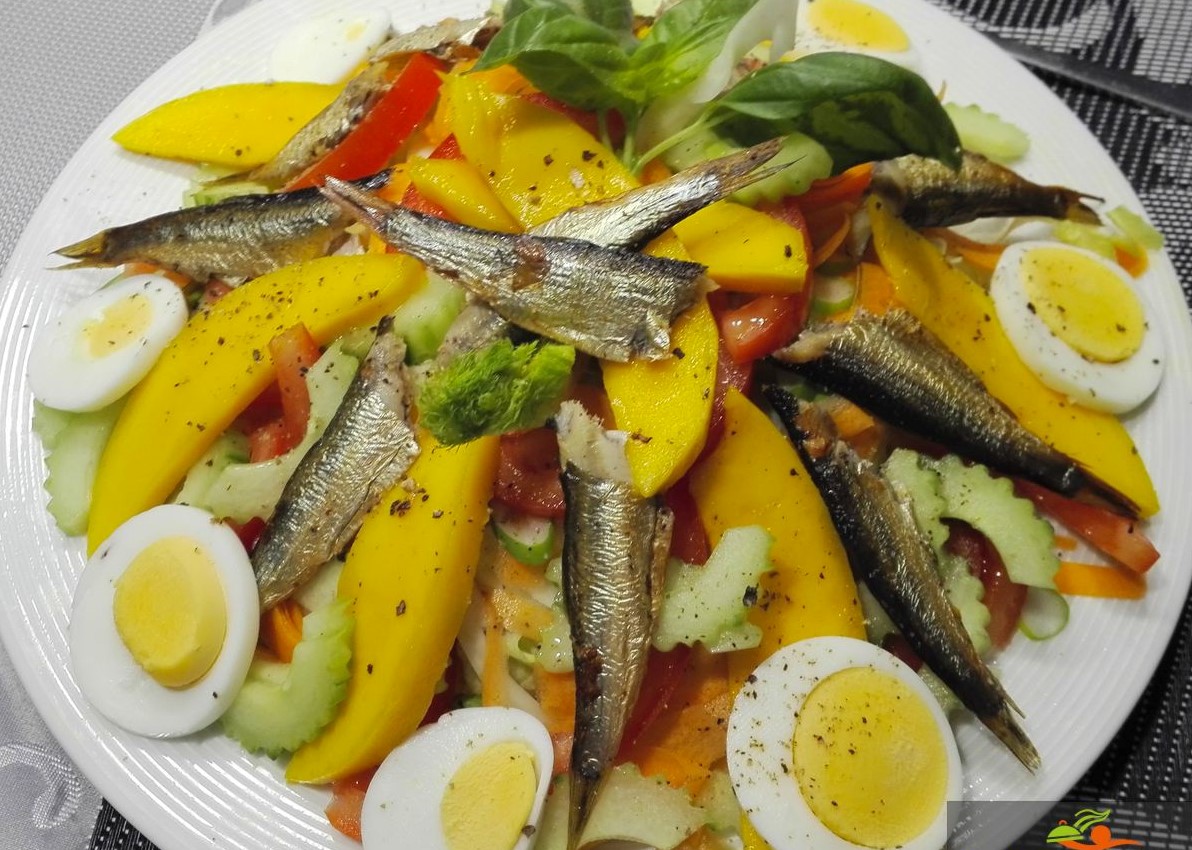
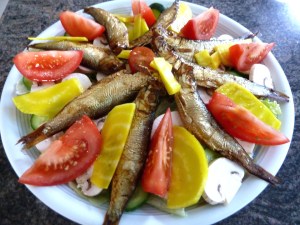
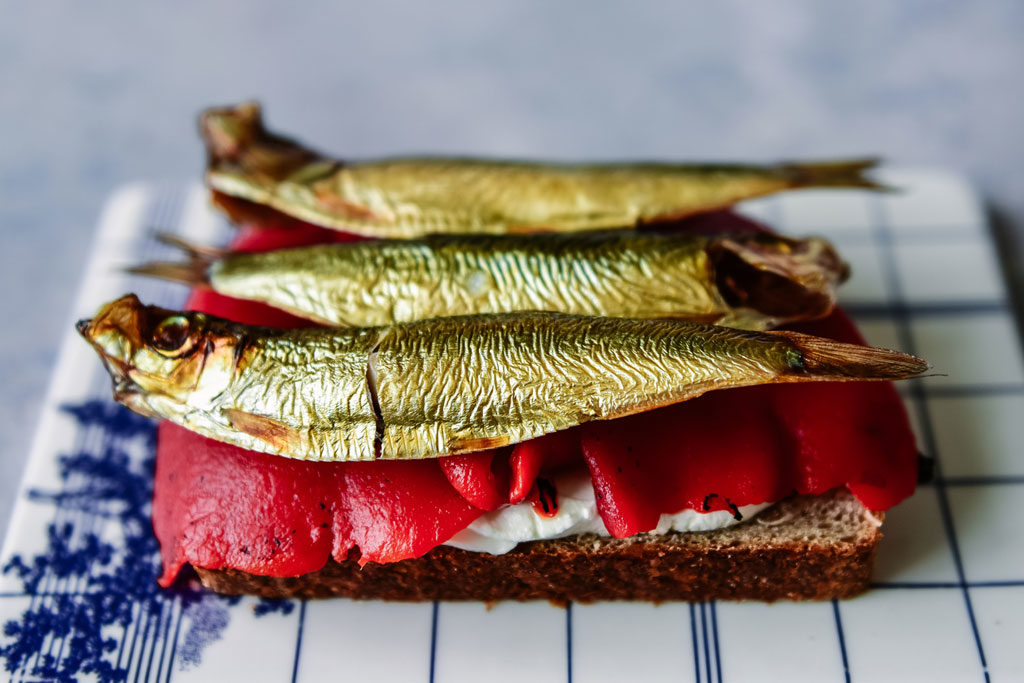
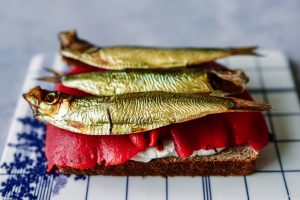 Left: A mixed salad with sprats. Right: A slice of bread with smoked paprika on creme freche.

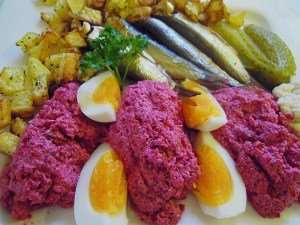
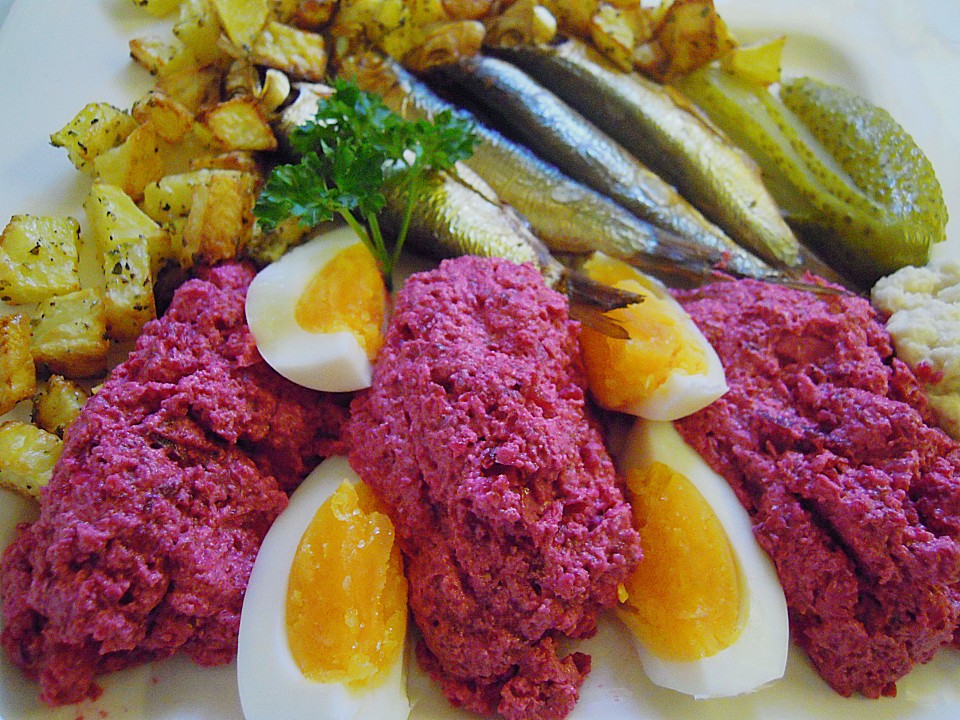
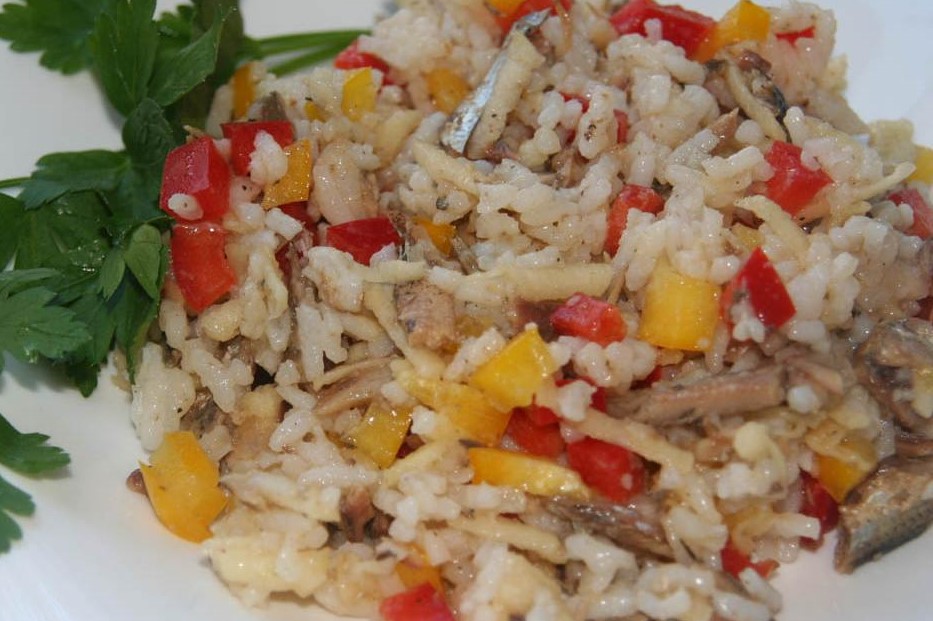
 Left: Typical Northern Germany, sprats, fried Potatoes and beetroot mousse. Right: Rice salad with sprats.
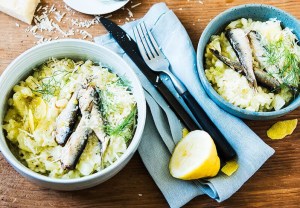
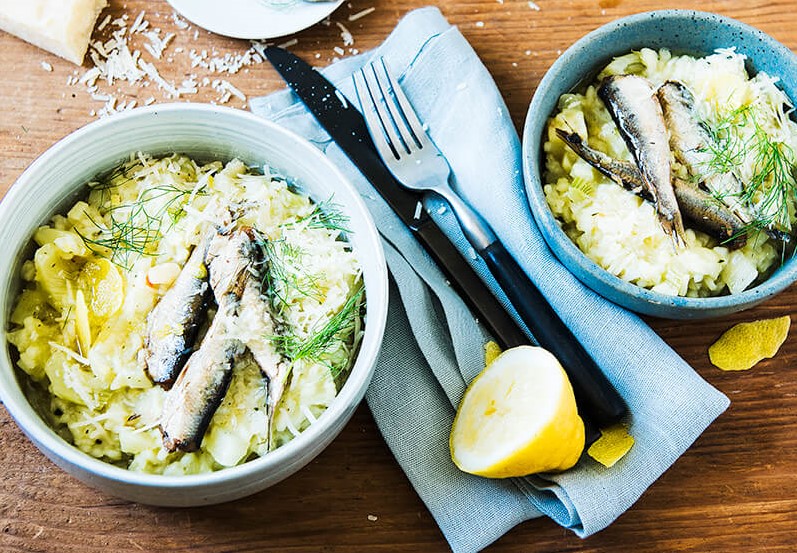
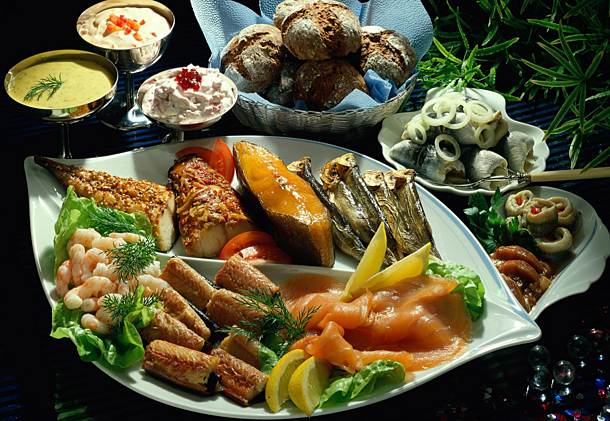
 Finally some gourmet ideas. Left, a fennel and lemon risotto with sprats. Right, a delight for you and your guests, a smoked fish platter with full-grain bread rolls and different dips.
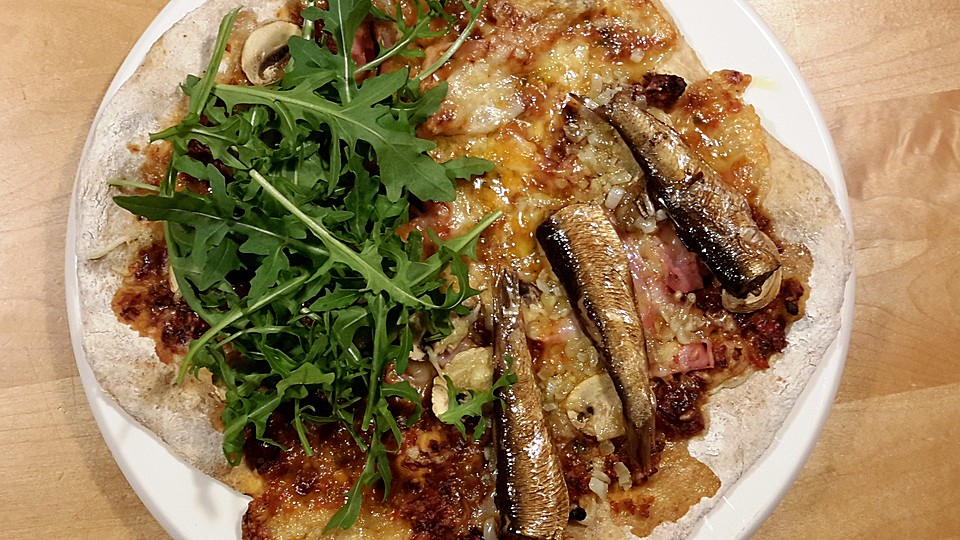
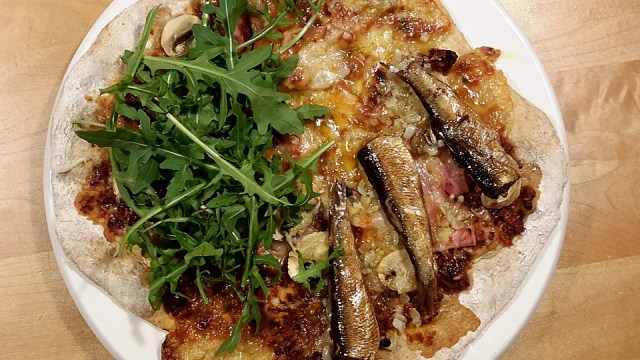 Try this fantastic Pizza with Emmentaler, Tomato pesto, Ham, Mushrooms, Mozzarella, Garlic in oil, Arugula and Sprats. You will love it.
Guten Appetit – Buen Provecho – Bon Appetit – Smakelijk Eten !!


Weer een heel interessant artikel. Ik wist niet dat de sprot uit Duitsland kwam. weer wat geleerd. Ik maakte in de jaren 1970-1980 van schoongemaakte sprot een slaatje om op een toastje te presenteren. Sprot was n.l. niet toen. Maar wel lekker
LikeLike