
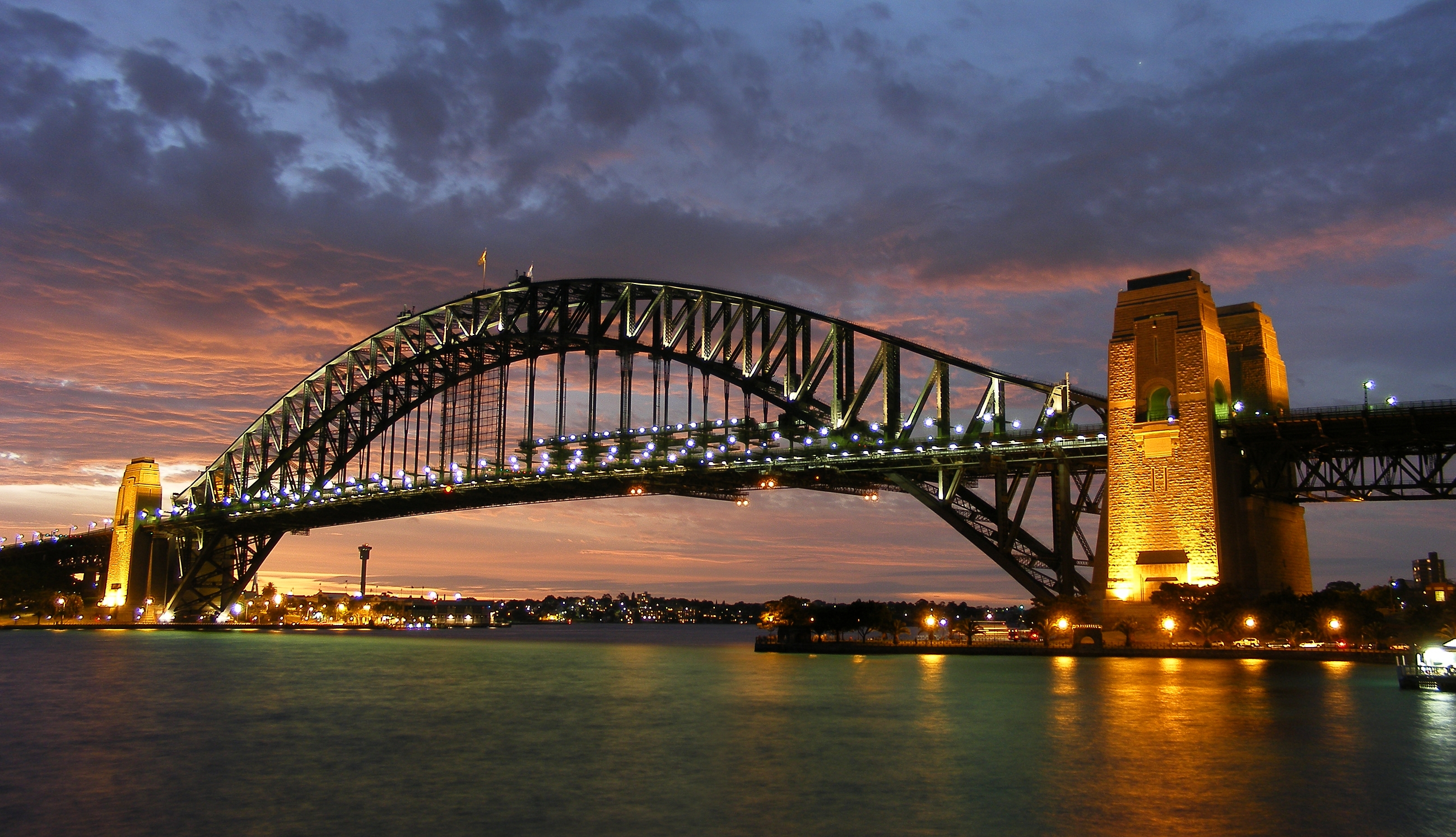
Since we lived so many years in Australia, friends and many readers asked for more posts about this country, but not the normal tourist information. After all the articles about Aboriginal Art and History, I will fulfill your desires with some articles in loose succession. Let’s start with this Sydney icon, the famous harbour bridge. Some information and pictures I use here, are taken from New South Wales Government web information.
The Sydney Icon in Australia.
Sydney Harbour Bridge: The arch bridge that transformed Sydney.
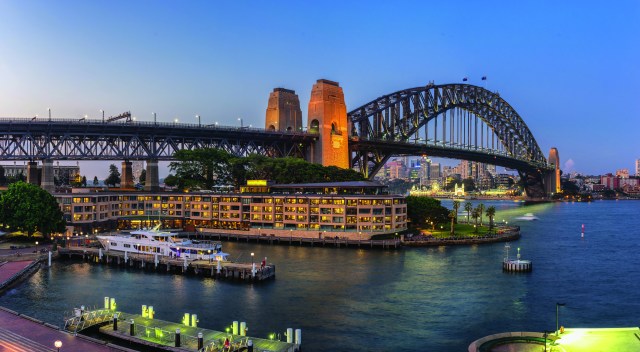
Sydney Harbour Bridge. In the foreground the luxurious Park Hyatt Harbor Hotel, with spectacular views.
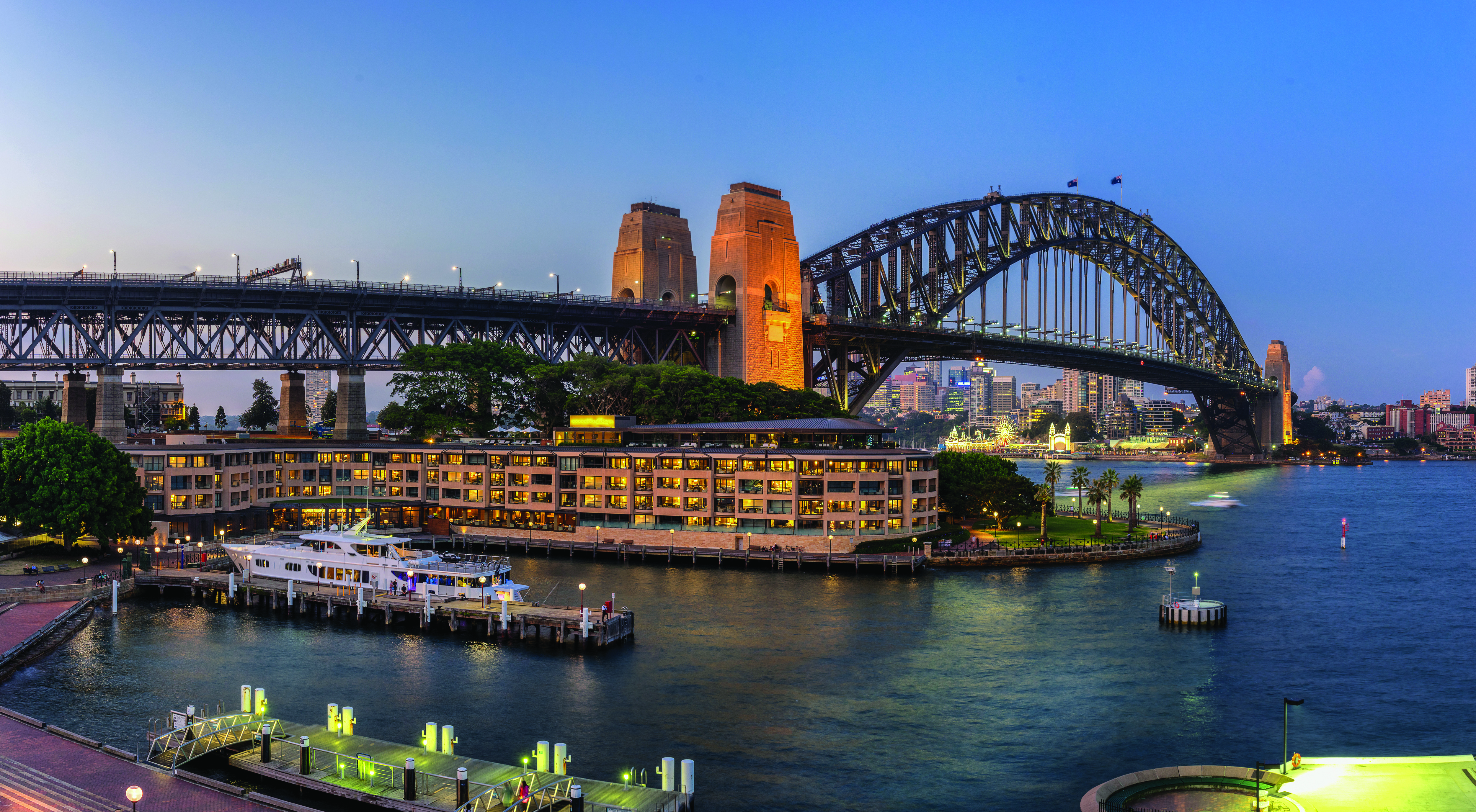
Few people are aware that the Australian flags fluttering atop the Sydney Harbour Bridge are replaced every four to six months. This is just one of the many routine maintenance tasks handled each day by a staff of 100 people. They are responsible for protecting both the beauty and operation of the famous bridge, which has become a symbol of Sydney and of Australia around the world.
Ever since its inauguration in 1932, this iconic arched bridge connecting the central business district with the North Shore has changed along with its city, the capital of New South Wales. Back when it opened, daily traffic on its six original lanes was 11,000 vehicles. Today that number has risen to more than 180,000 – PER DAY.
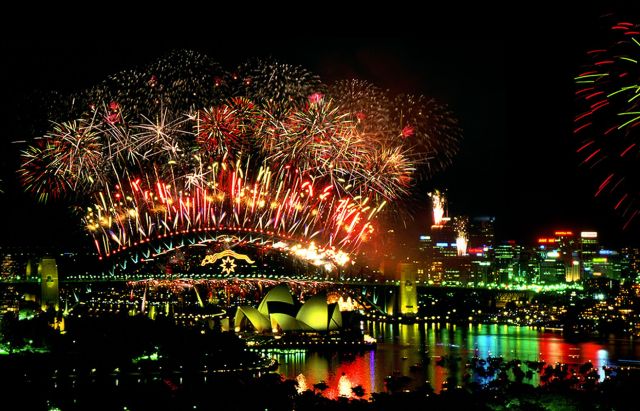
Centenary of federation fireworks in 2000.
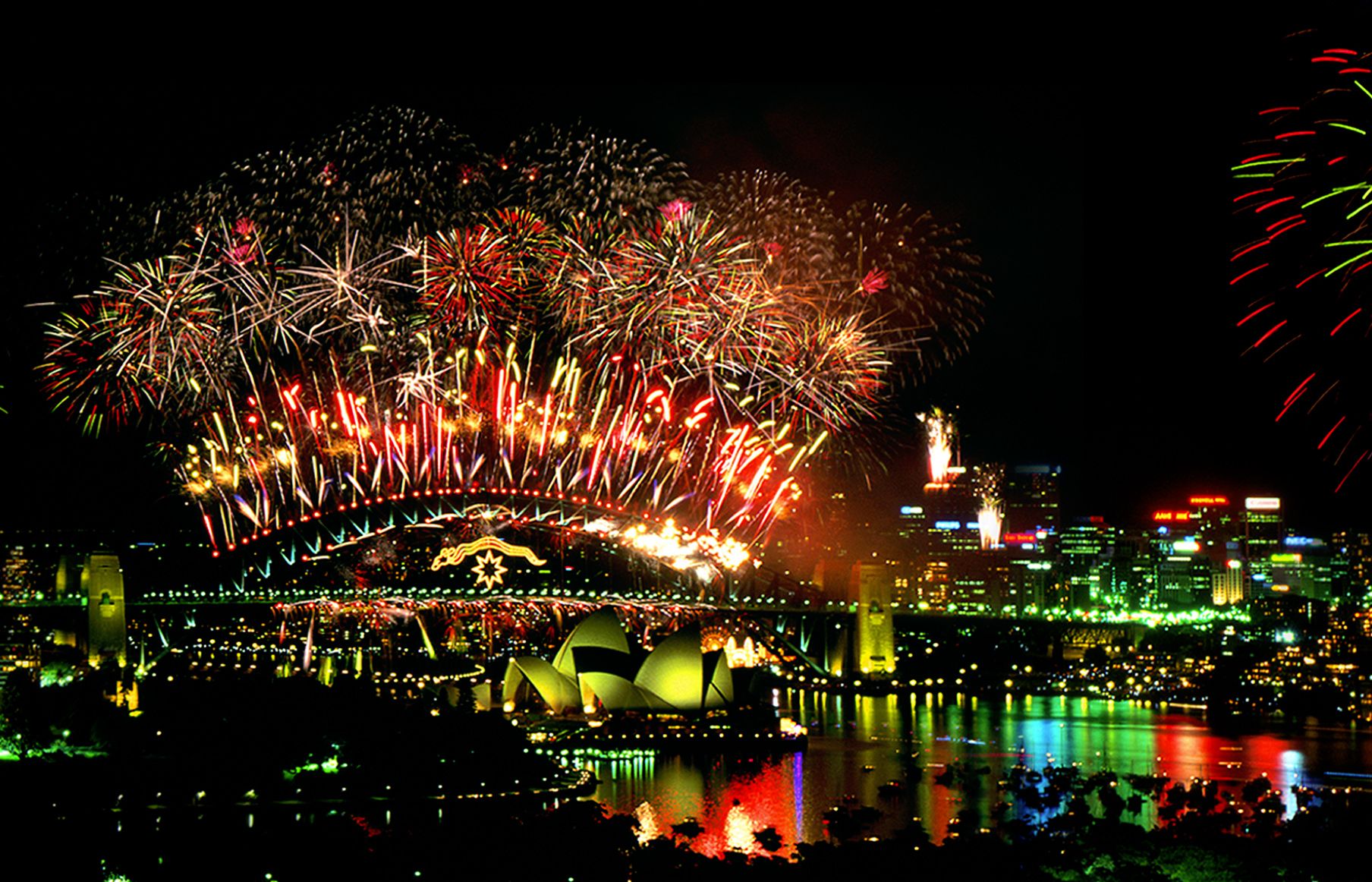
The bridge has not only marked the history of the city; it established new aesthetic and functional parameters for the construction industry and was deemed an International Historic Civil Engineering Landmark in 1988.
Since then Sydney has changed. It has become a modern capital thanks to the new and ambitious Sydney Metro project that is revolutionizing the city’s mobility. And its famous bridge has remained at the service of the city’s development.
Sydney Harbour Bridge: Over one hundred years in the making.
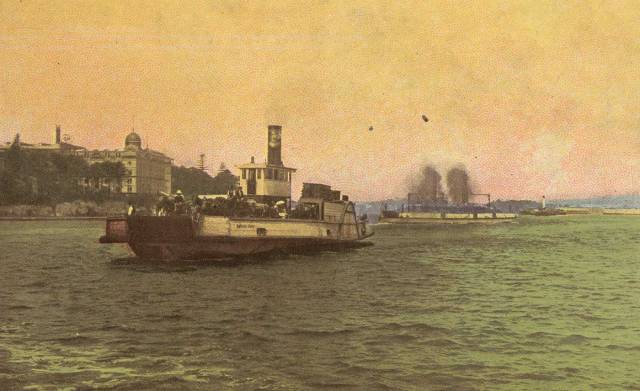 Ferry crossing between South and North Sydney, about 1900.
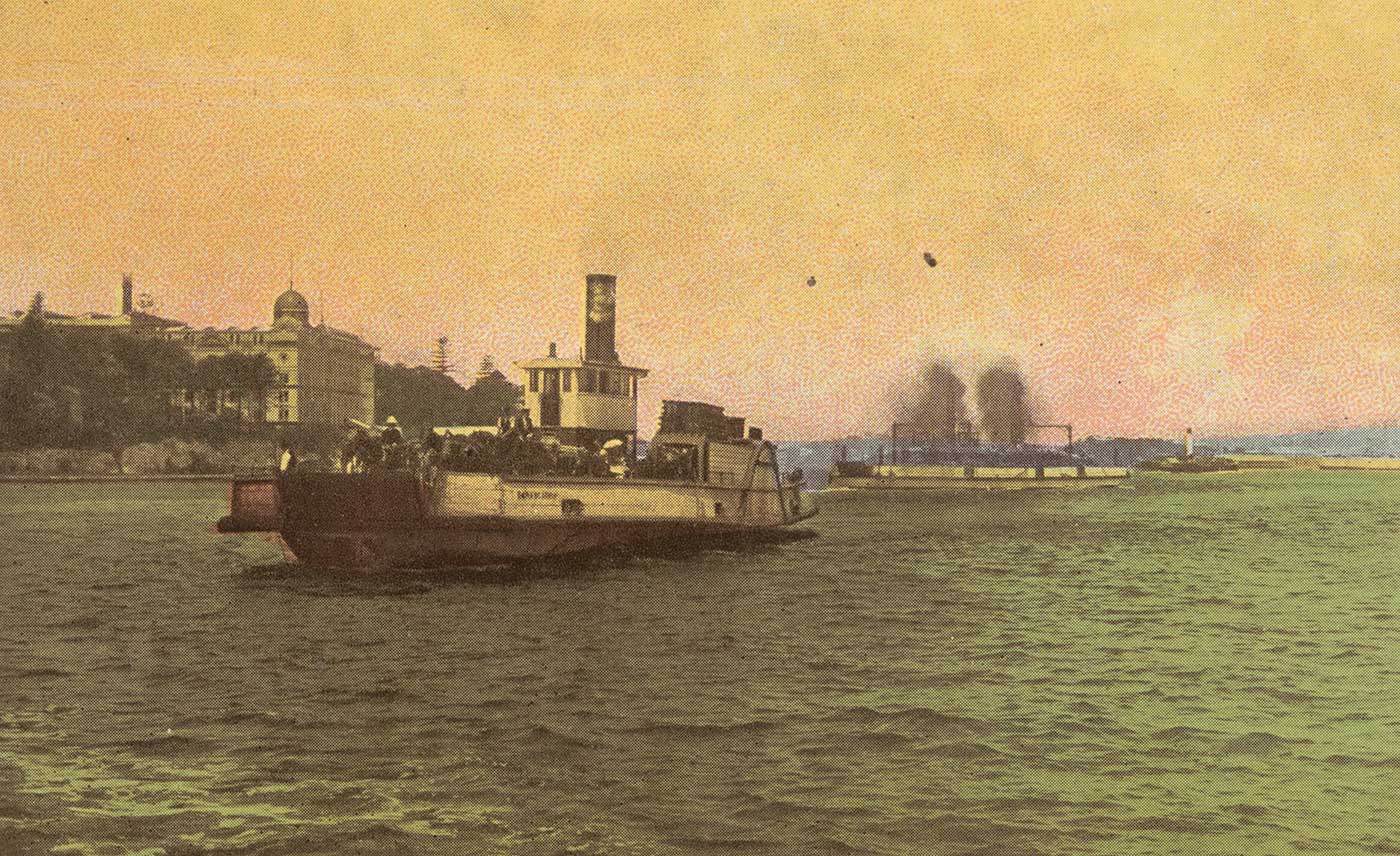
The first plans to build a bridge in Sydney Harbour date back as far as 1815. But for a variety of reasons, the final project for the construction of the bridge was not approved until the 20th century.
John Bradfield submitted a proposal for the bridge in 1912 and was appointed Chief Engineer of Sydney Harbour Bridge and Metropolitan Railway Construction in 1914, and a bill approving construction for a bridge of a different design was passed in 1916 by the New South Wales Legislative Assembly. But it was blocked by the state Legislative Council during World War I so that the country could focus its economic resources to support the war effort.
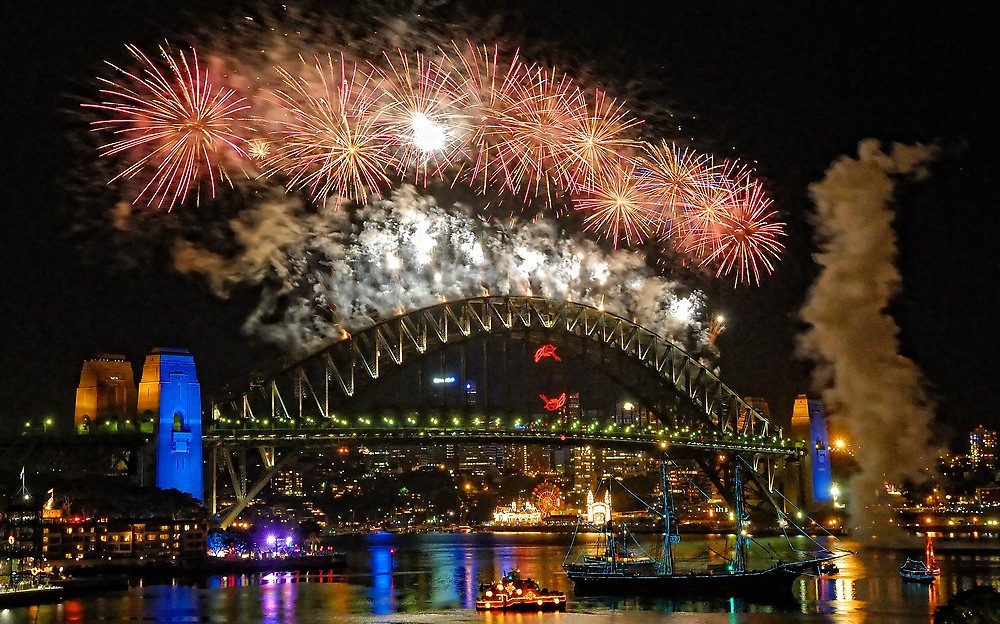
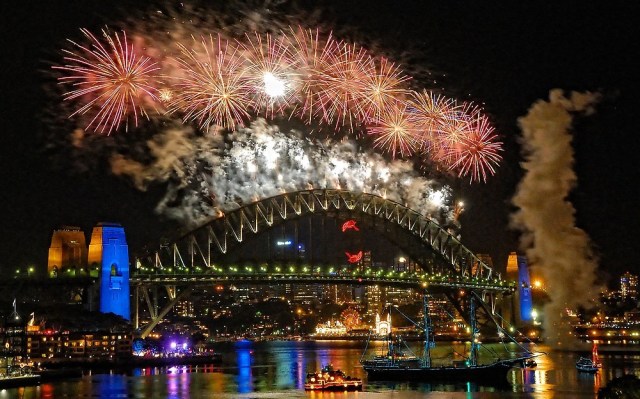 The new Millenium in 2000. In Australia open fire during the hot summer season is strongly prohibited, that’s why the harbour bridge fireworks are so spectacular every year. This in 2000 when we still lived there.
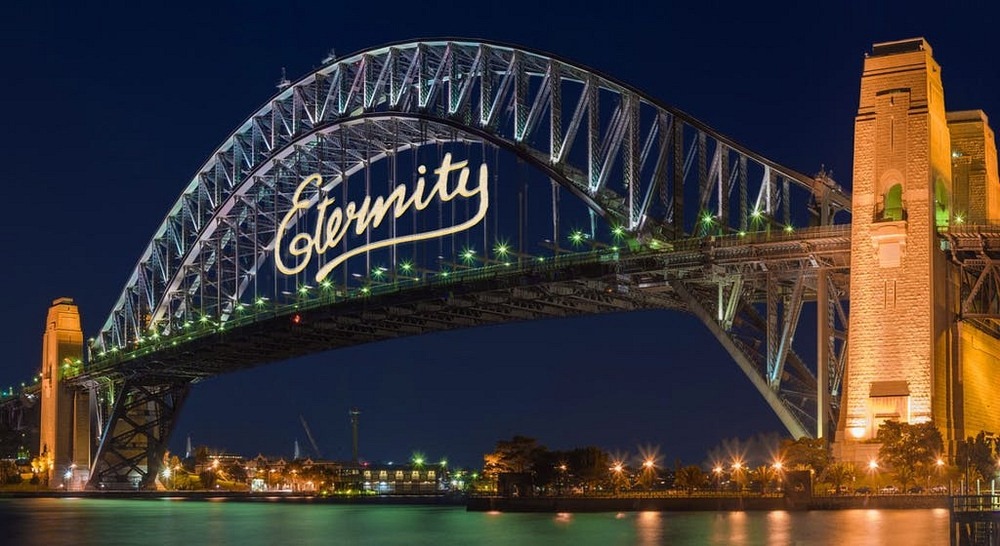
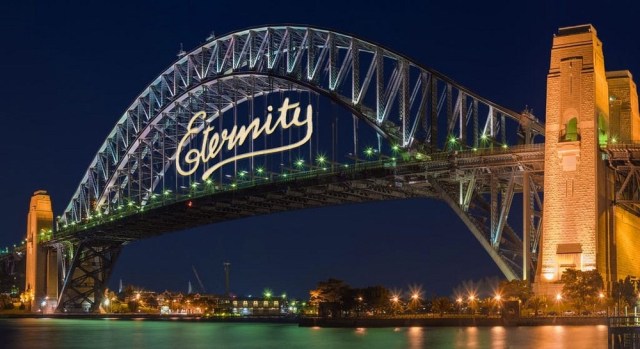 Fireworks 2000 ended with the massive display of „Eternity“, a spectacular surprise to everyone.
At the end of the war, Bradfield resumed work and in 1921 presented a new plan for an arched bridge. Both Bradfield and the NSW Department of Public Works used the Hell Gate Bridge in New York City as a basis for a reformulated Sydney Bridge design. On 24 March 1922, 6 years after the New York bridge opened, the construction contract was awarded to an English company, Dorman Long and Co Ltd because it had already worked on such bridges in the past.
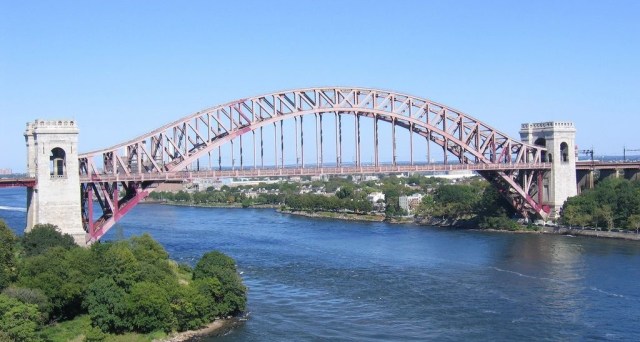
The Hell Gate Bridge, originally the New York Connecting Railroad Bridge or The East River Arch Bridge, is a 1,017-foot (310 m) steel through arch railroad bridge in New York City. Inaugurated in 1917 and constructed by Gustav Lindenthal (May 21, 1850 – July 31, 1935), an Austrian born civil engineer who designed the Hell Gate Bridge in New York City.
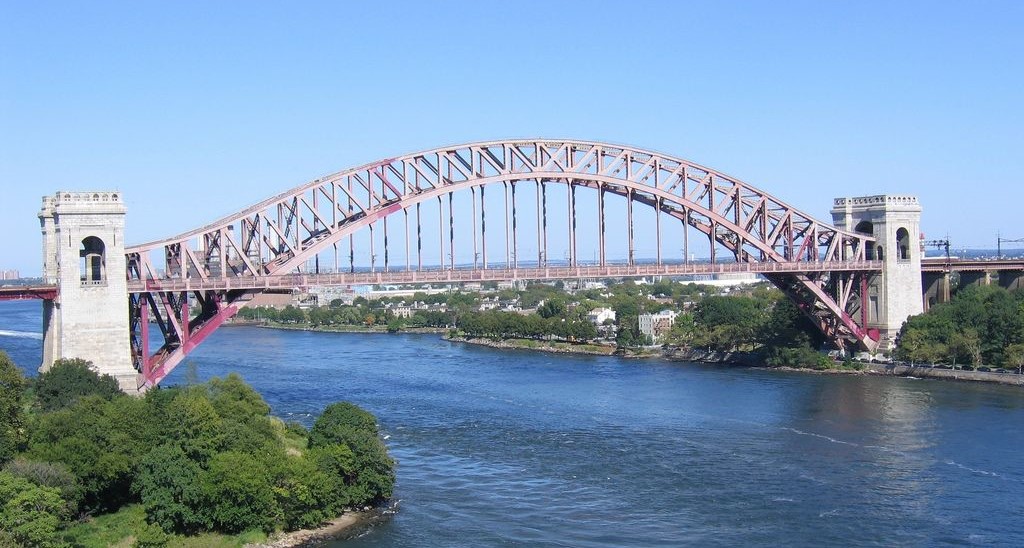
With the city’s first underground railway construction underway, the bridge was designed to accommodate rail traffic. The final version of the Sydney Harbour Bridge, therefore, had six lanes for road traffic, two for railway lines, and one pedestrian footpath.
The construction of the Sydney Harbour Bridge.
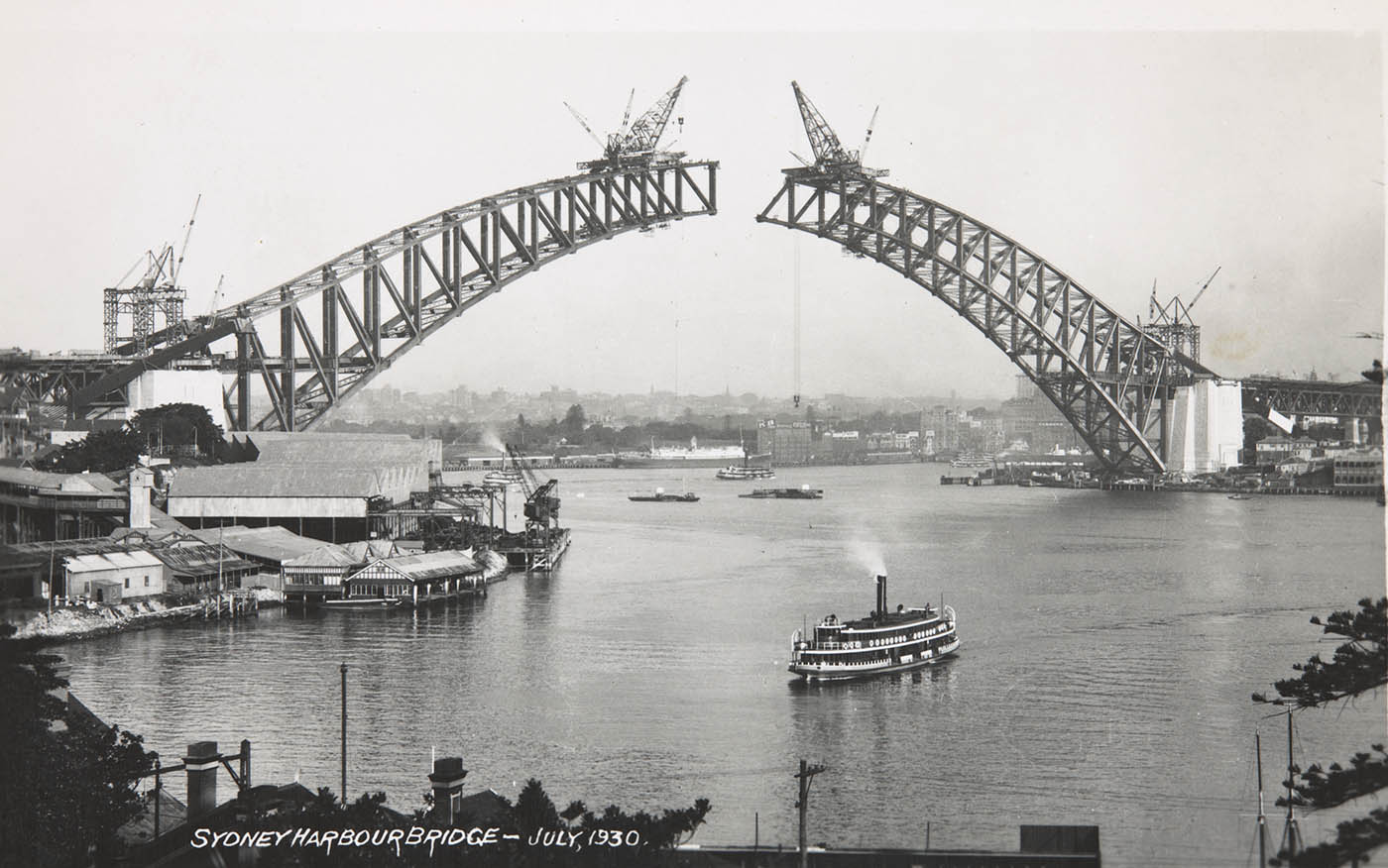
Construction of the bridge kicked off with the laying of the first stone 28 July 1923, under the supervision of Bradfield who continued to oversee it until the end. First came the laying of the foundations, and work on the arch began on 26 October 1928. The construction of the arch started from either side, although the work on the southern side went slightly in advance to check for construction errors and not to repeat them on the other side.
The two sides of the bridge finally met on 19 August 1930, which was a day of celebration for the entire city. At that point the roadworks began: the span was completed in June 1931, when all the gas, power, water, and telephone lines were also set up. The first test was on 19 January 1932 and two months later, on 19 March 1932, the bridge was opened to the public.
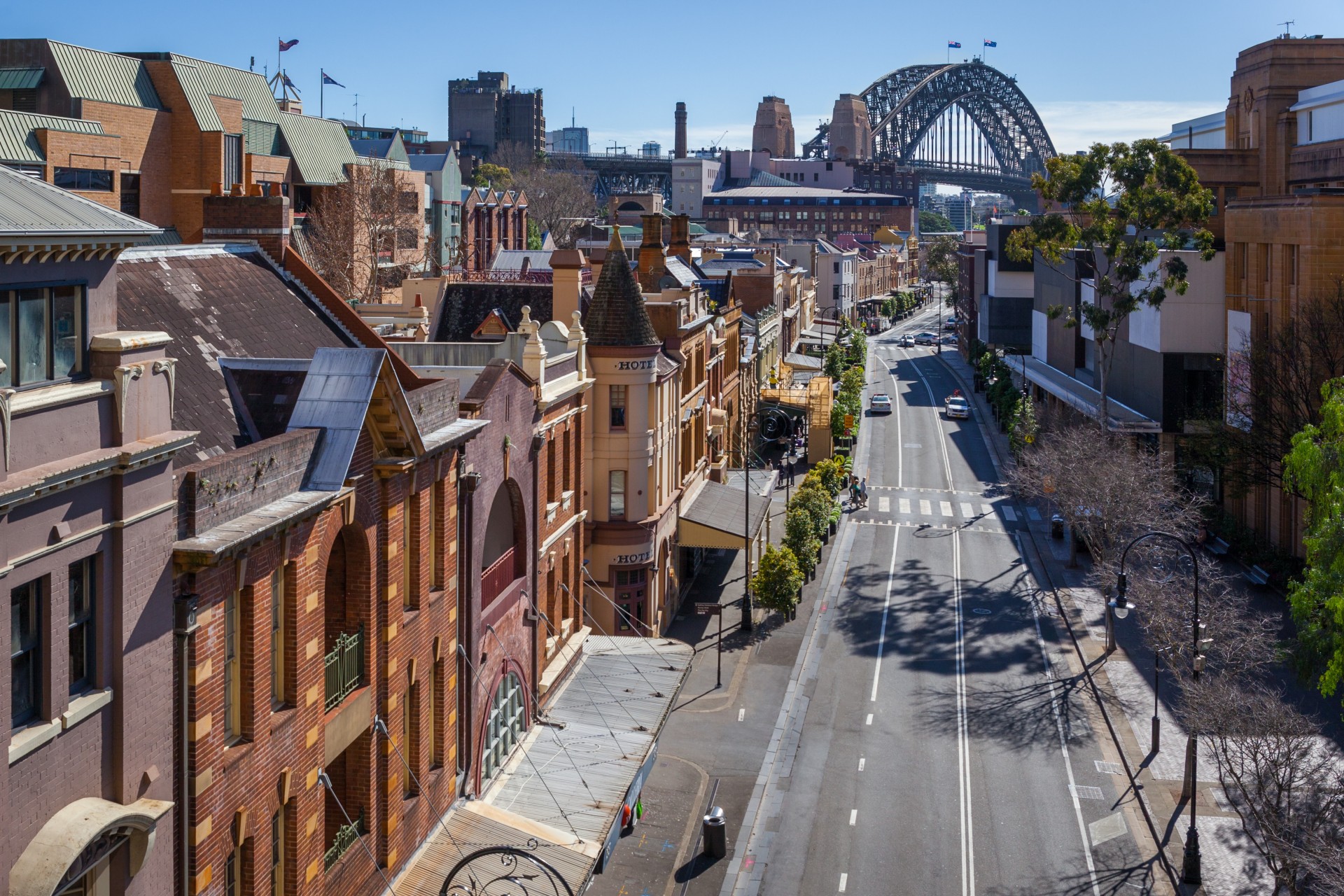
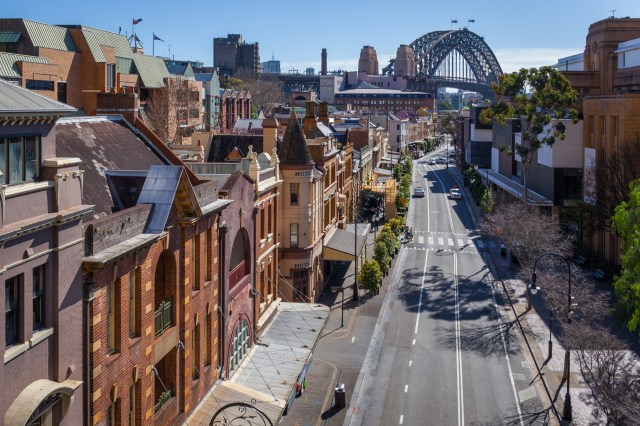 George Street at The Rocks leading towards the Park Hyatt Hotel and the Harbour Bridge. Notice the „HOTEL“ with the pointed tower on the medium left side of the picture (click on picture). In there you will find one of the oldest and most typical pubs in this area. Worth to sip a few lagers there.
The Premier of New South Wales Jack Lang declared the bridge’s inauguration day a holiday. Hundreds of thousands of people flocked to admire the new bridge, making the celebration the largest public events in the city’s history.
Once completed, the Sydney Harbour Bridge measured 1,149 meters (3,769 feet) long and 49 meters (160 feet) wide, and the steel mounted on the bridge weighed 52,800 tonnes.
The resulting infrastructure is an essential part of the city’s life, as well as being beautiful. It immediately became a symbol of Sydney around the world.
Bradfield, the Subway, and modern Skytrain.
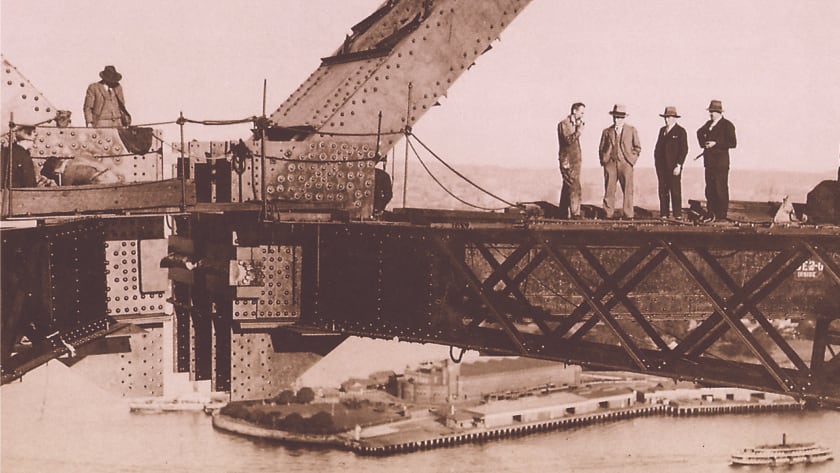
A continuous line connects the story of John Bradfield, Chief Engineer of Sydney Harbour Bridge and Metropolitan Railway Construction, with Sydney Metro and the city’s modern evolution — which got a huge boost from the Sydney Metro project still underway.
On the city’s streets, people still call Bradfield “the father of modern Sydney” today because along with the famous arched bridge, the engineer — born on 26 December 1867 in Sandgate, Queensland – also designed and supported the city’s first subway line.
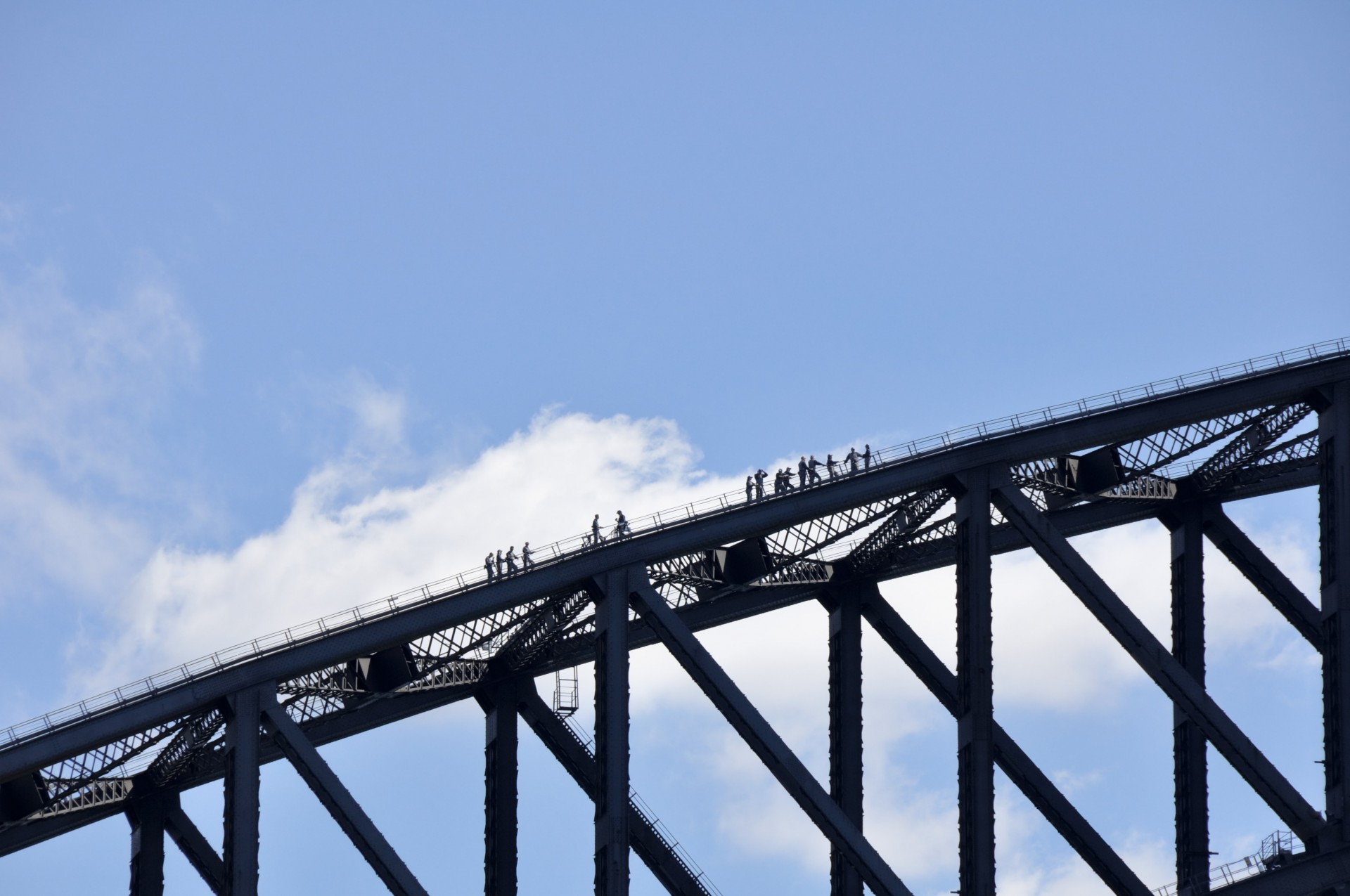
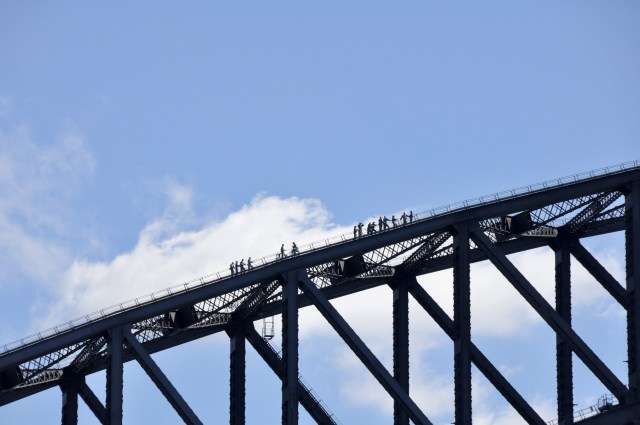 Bridge Climb, see information further down.
After the bridge project was approved, the engineer set to work on a new urban transport system that could support the city’s demographic development. In 1915 he proposed an electric subway. The project was temporarily blocked during World War I but was approved at the end of the war, and the first stations opened in 1926. The Sydney Metro has become one of the most modern and technologically-advanced subways in the world.
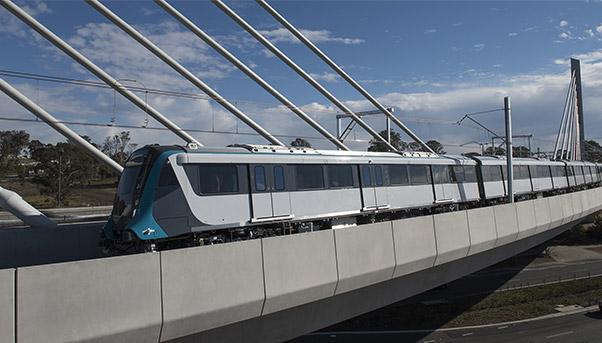 The Metro Skytrain Bridge Sydney.
The Sydney Metro is the natural evolution of this vision. This ambitious design for a new metro network is partly already completed. The Webuild Group (Salini Impregilo) has been commissioned to build the so-called Skytrain Bridge on the Sydney Metro Northwest line, a viaduct 4 kilometers (2.8 miles) long and a curved, cable-stayed bridge measuring 270 meters (885 feet). The finished bridge has been awarded the “2018 Project of the Year” award by Engineering News-Record magazine, as well as being included by the Infrastructure Sustainability Council of Australia in the “World Class Best Practice” category in terms of sustainability.
 One of the best views of Sydney. Taken from the north, showing from left to right, Rose Bay, Woolloomooloo (a word with 8 o’s), Pott’s Point, The Sydney Opera House, downtown with the Sydney Tower, of course The Bridge, then Millers Point Yacht Harbour, Sydney Harbour, Goat Island, and Balmain Peninsula.

Some Sydney Harbor Bridge facts.
Sydney Harbour Bridge was first proposed way back in 1815.
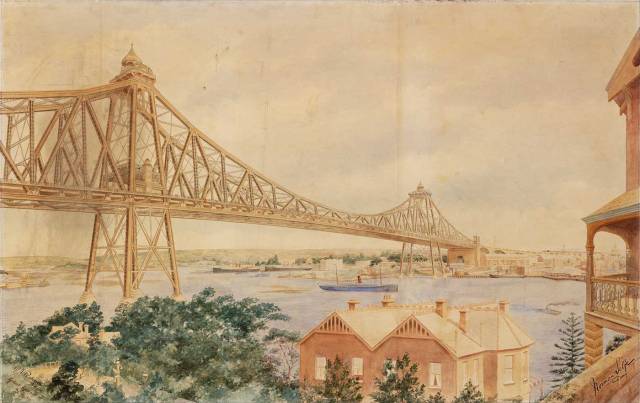 Early bridge design for Sydney harbour, about 1902.
The first instance of the iconic Sydney Harbour Bridge history can be traced back to the year 1815. It was at this time that proposals to connect the North and South shores of Sydney Harbour surfaced when architect Francis Greenway proposed the plan to Governor Lachlan Macquarie. Furthermore, naval architect Robert Brindley proposed in 1840 that a floating bridge be built. In 1857, Engineer Peter Henderson put forth the first known drawing of a proposed bridge across the harbour. Moreover, a truss bridge was proposed in 1879 and a high-level bridge in 1880. Although none of these proposals materialized at their times, the idea had already struck the right chord. The need for a bridge rose to prominence since the only way to cross the harbor was to either take a ferry or trek for 12 miles around the shore. But lack of concrete plans and unavailability of the requisite technology halted the plan for about a century.
John Bradfield is known as the Father of the Sydney Harbour Bridge.
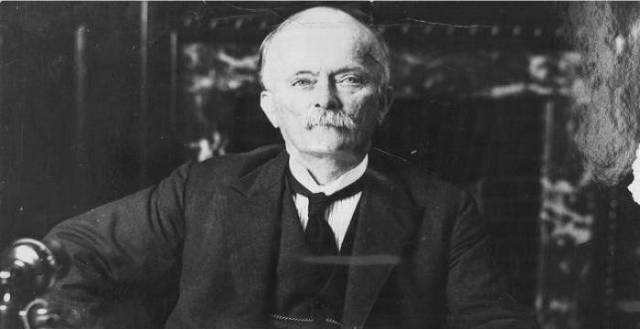 John Bradfield.
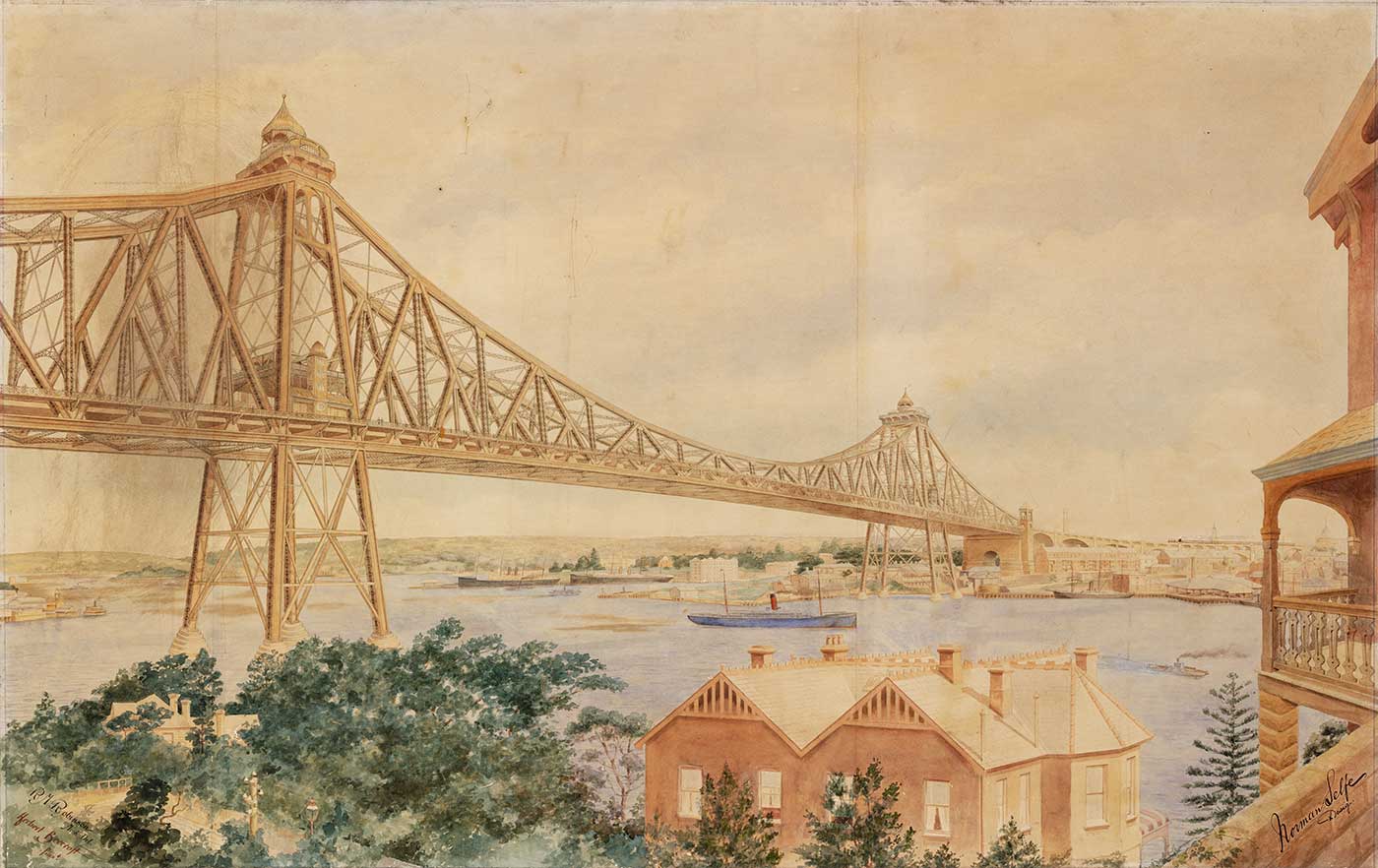
In 1900, the Lyne Government famously organized a global competition for the design and construction of the harbour bridge. While the outcome of the competition could not materialize due to controversy, a local engineer Norman Selfe won the second competition by proposing the design for a steel cantilever bridge. But an economic downturn and a change of government drained his efforts in vain, halting the construction. Plans to construct a bridge over Sydney Harbour surfaced again in the year 1912 when John Bradfield, a civil engineer who was working with the New South Wales Department of Public Works, put forth his ideas to the Australian parliament. He envisioned the bridge as one of two designs – a suspension design or a cantilever design. The cantilever bridge design was finally accepted and John was appointed as the project lead. But World War I interfered with the construction of the bridge and almost a decade passed before funding for the bridge was secured. As Bradfield would ultimately supervise the construction of the bridge, he is regarded as the “Father of the Sydney Harbour Bridge“.
The debate of the true designer of the bridge remains unresolved.
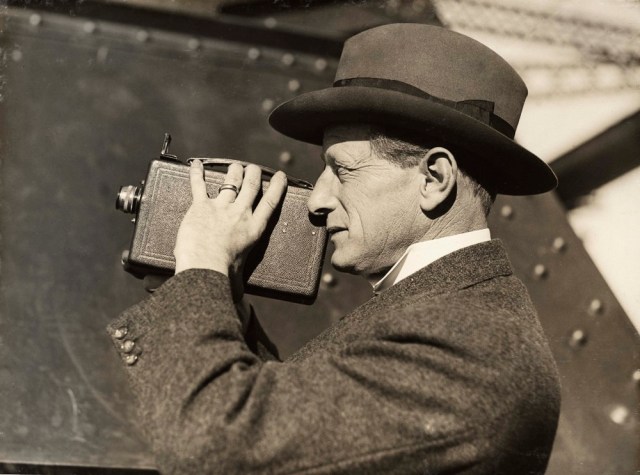 Ralph Freeman.
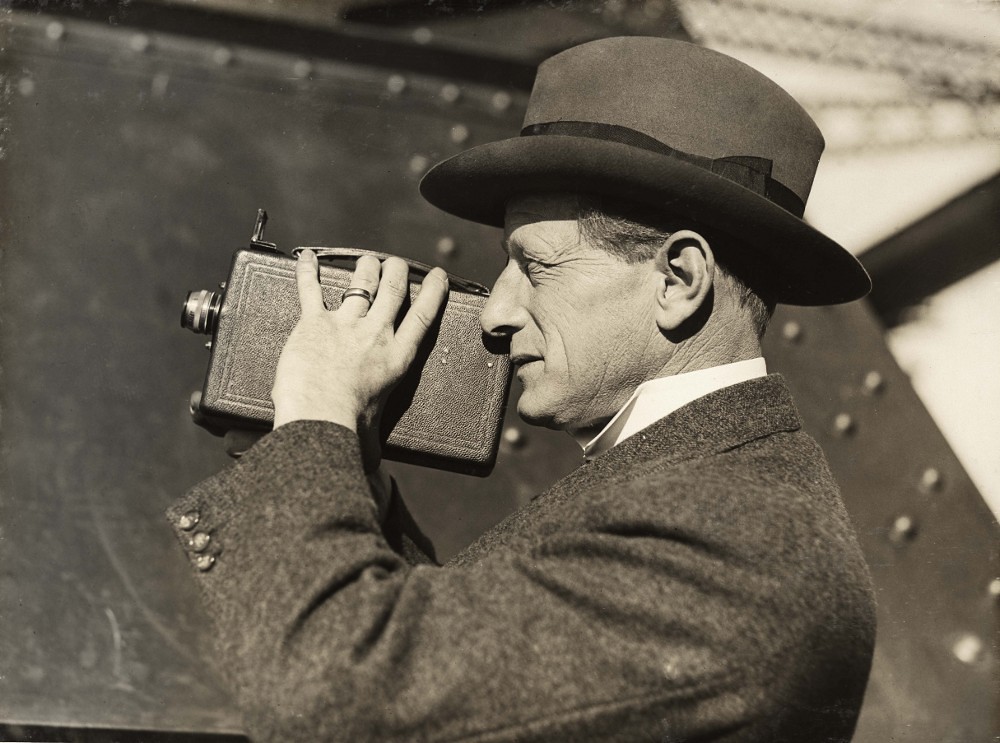
By the time the First World War ended, advancement in the science of steelmaking had made it possible to construct an arch bridge. The cantilever design was eventually discarded in favor of a steel-arch design, primarily because it was much easier to construct and was capable of handling heavier loads. An arch bridge is a bridge with abutments at each end shaped as a curved arch. The contract of building the bridge was awarded to Dorman Long and Co., a British company. Sir Ralph Freeman, an English civil engineer, was hired to undertake the detailed design work of the structure. Construction eventually began in 1924 under the supervision of Bradfield. Bradfield came forth with the complete ideation of the bridge, but Ralph Freeman considered himself to be its true designer. Although his claim was supported by a few authorities, the controversy has not been resolved to date! While it would be so easy, because the design was taken from the Hell Gates Bridge in New York, constructed 10 years earlier.
It took 8 years to construct the Sydney Harbour Bridge.
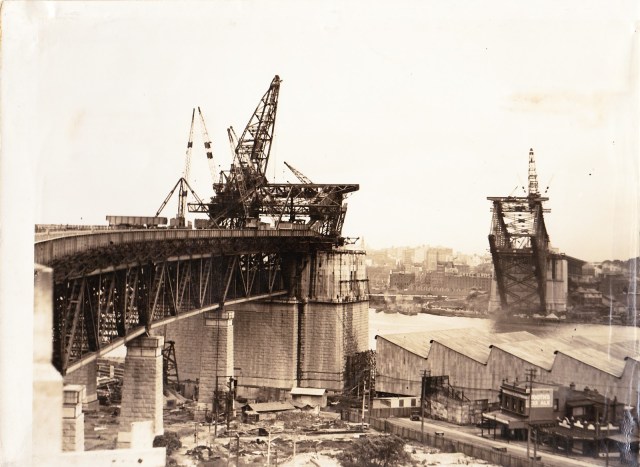 Sydney Harbour Bridge Construction from the north side. The southern side was always a bit advanced.
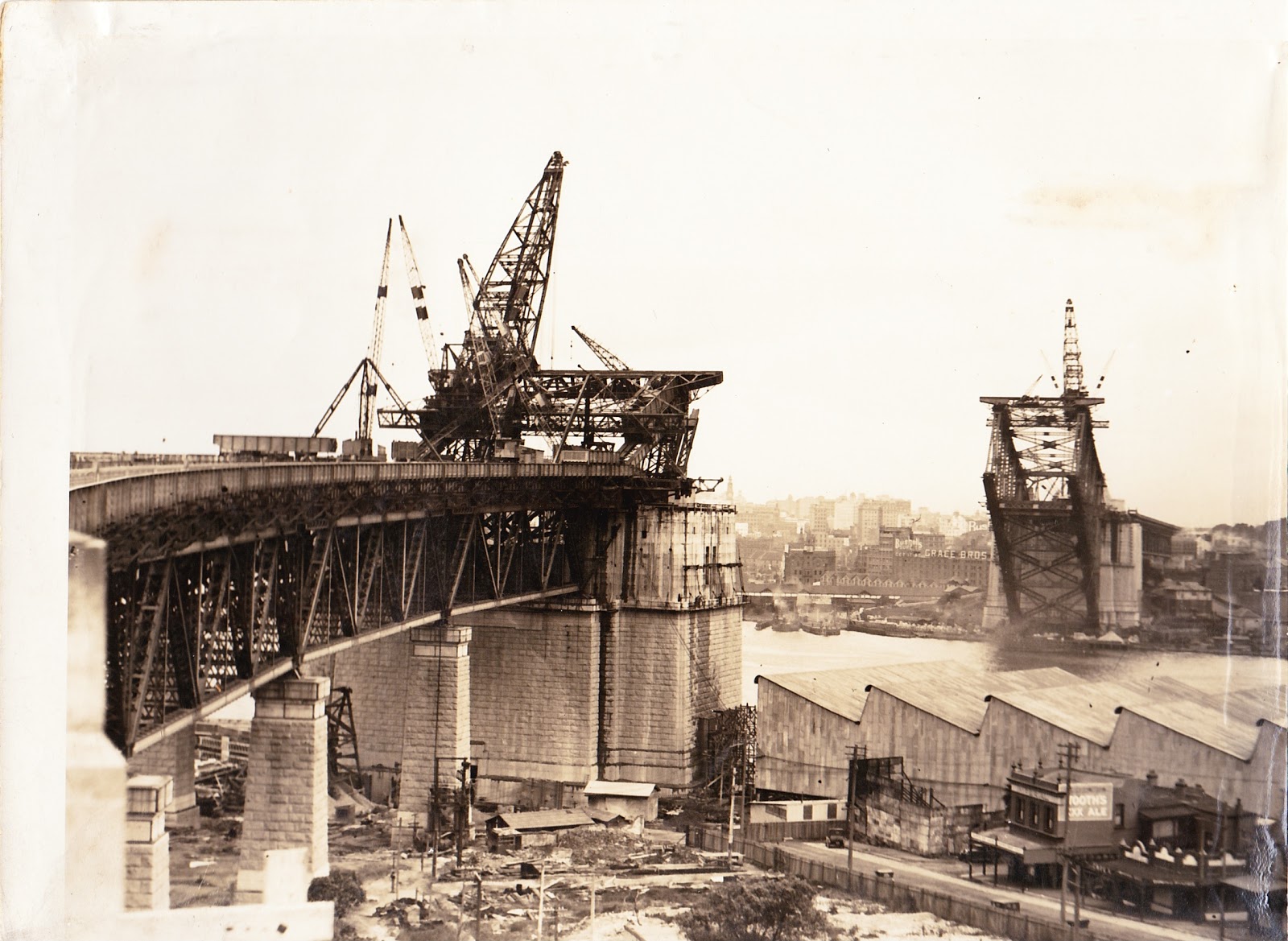
The construction of the Sydney Harbour Bridge officially began in July 1923 with the “turning of the first sod ceremony“. On the other hand, the construction of the arch began in October 1928. August 1930 marked the meeting of the two arch halves and work on the deck consequently commenced. Finally, the bridge was inaugurated on 19th March 1932, taking eight years for its construction to complete. It took a total costing of $A 13.5 Million to complete the bridge and this was finally paid off for only in 1988. It is also estimated that a total of 469 buildings on the northern shore were demolished to pave way for the construction of the bridge. This included both private homes and commercial operations.
A nice and short video shown the construction of the Sydney Harbour Bridge, copyrighted by The New South Wales Government. Have a look. Click on:
The following video shows lots of information about the history, story, and construction of this famous bridge. If you are interested you should watch it. Click on:
The above DVD was picked up in a flea market at The Rocks and has no indication of when it was originally produced. Apologies if any copyright has been infringed – but it deserves a wider audience!
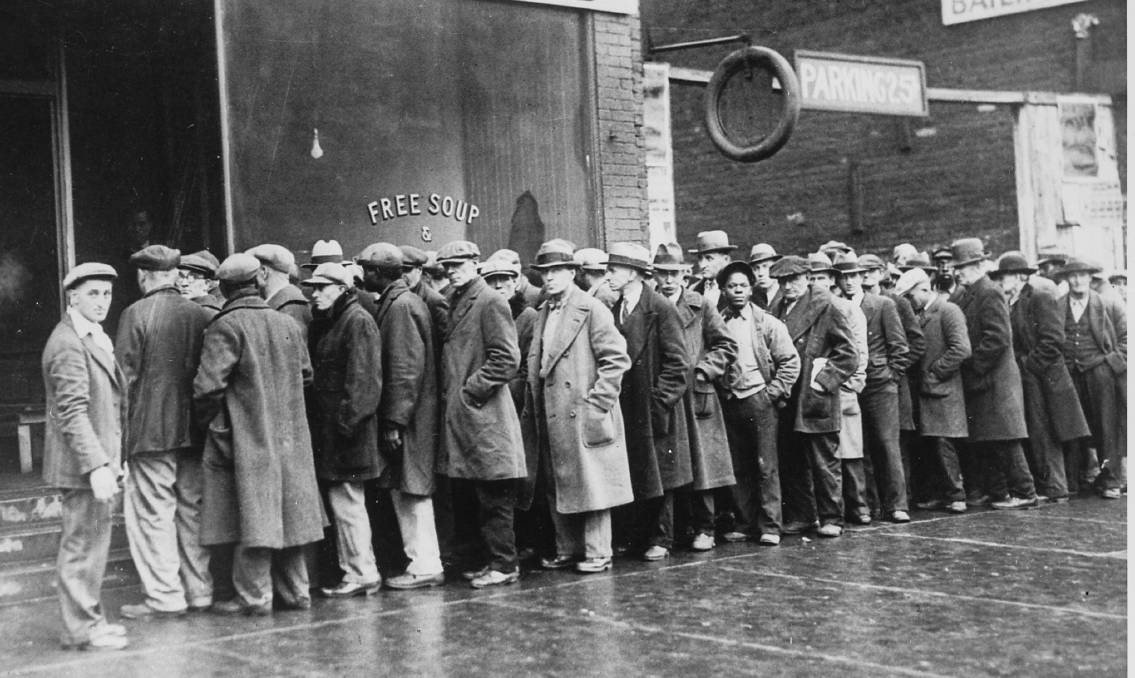
The bridge was a savior for depression-era workers.
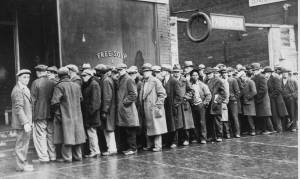
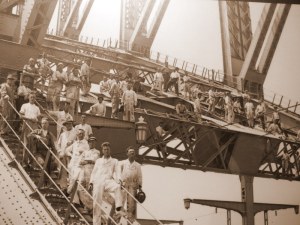 Hunger during the great depression. About 1400 had work at the bridge construction.
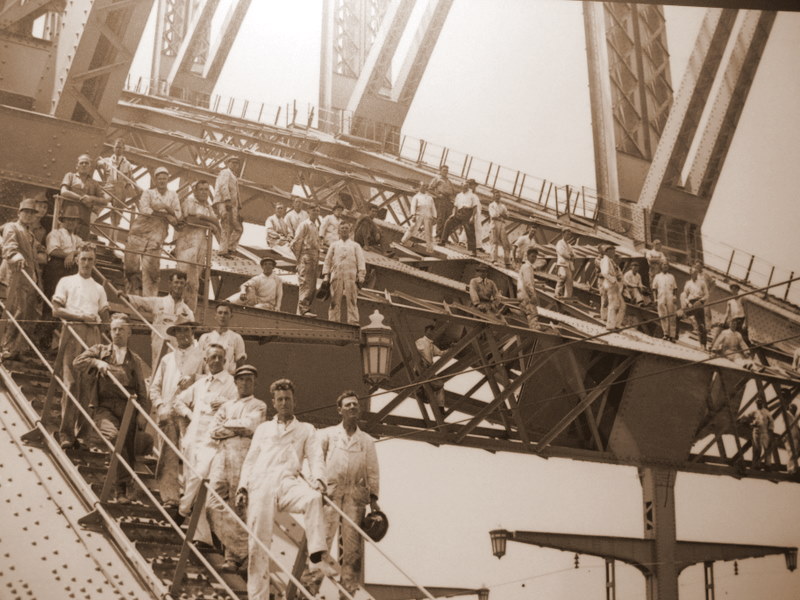
52,800 tonnes of steel, 3200 tonnes of rivets, 95,000-meter cubic of concrete, and 272,000 liters of paint were used in the initial construction of the Sydney Harbour Bridge. It took 1400 workers to take the bridge from ideation to completion. The lives of 16 workers were lost in accidents over the years. During the course of its construction, a total of 6 million steel rivets were manually driven into the bridge by the hands of the workers. Since all this and more involved the input of countless man-hours, the bridge earned the nickname “The Iron Lung“. The modern nickname is „The Coathanger“. Moreover, it was widely regarded as a triumph over depression times by giving employment to many depression-era workers.
Pylons, Museum and Bridge Climb.
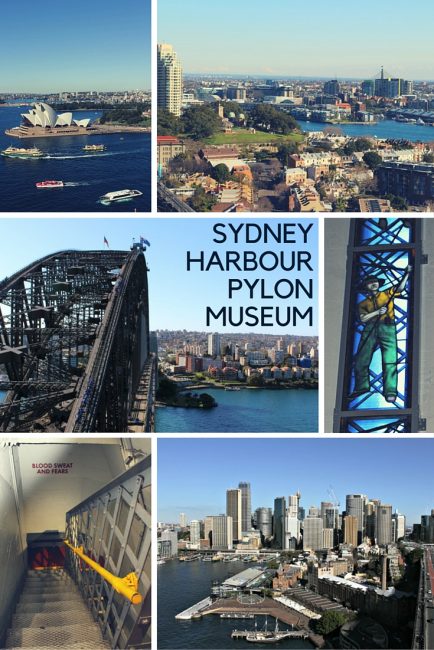
Four majestic pylons were erected simply to add aesthetic value. Each end of the arch of the Sydney Harbour Bridge is marked by the presence of a pair of high concrete pylons that are faced with granite. A total of 18,000 cubic meters of granite was quarried by around 250 Australian, Italian, and Scottish stonemasons to construct the pylons. It is interesting to note that all this effort was originally made to add only to the aesthetic value of the bridge.
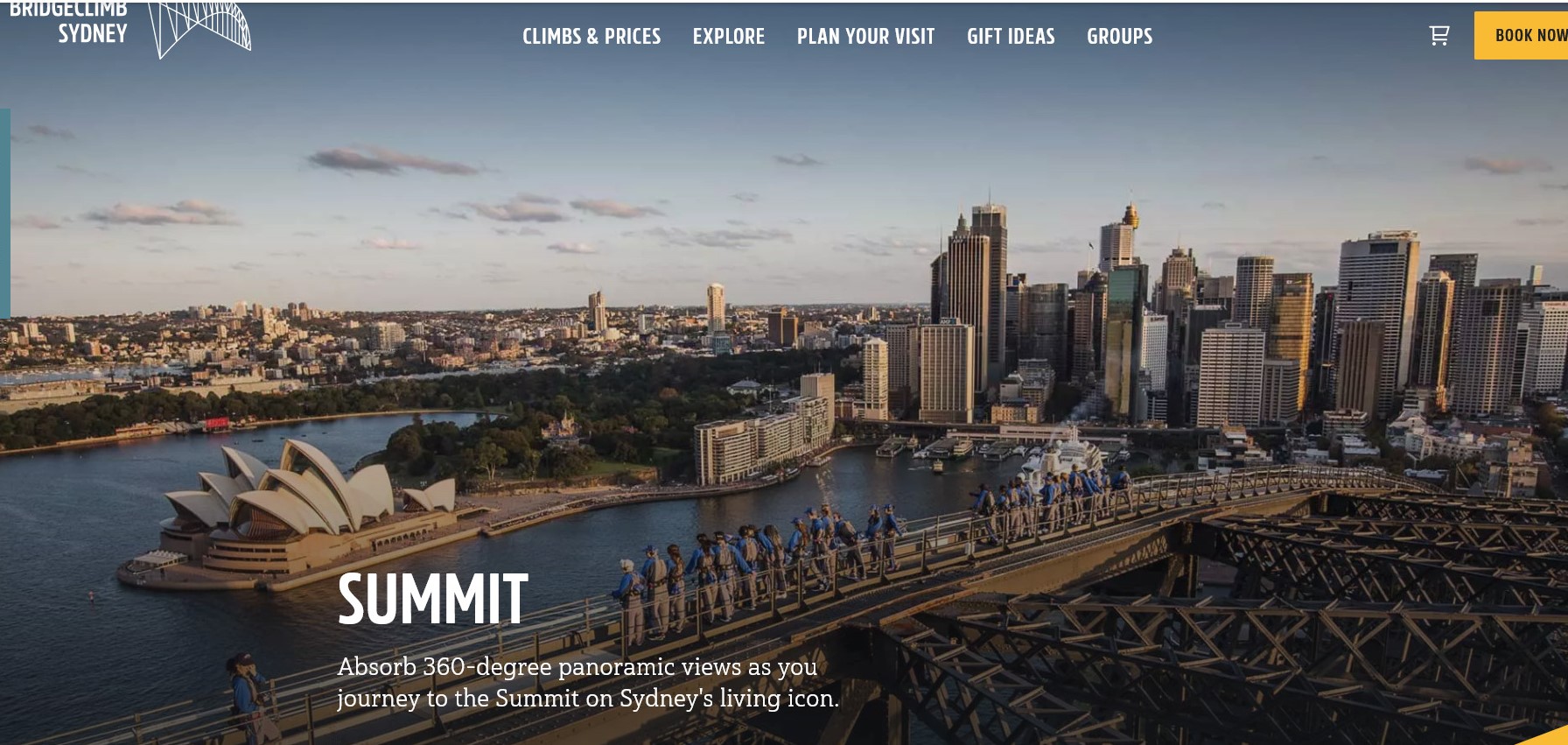
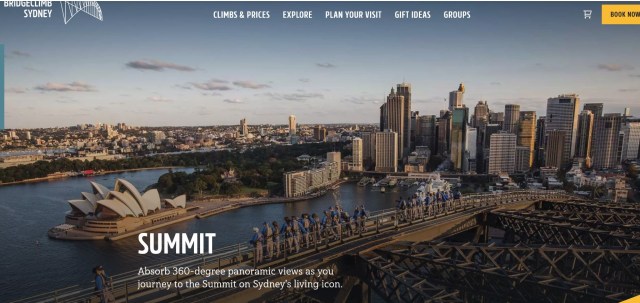 You can make your reservations through the website „Bridge Climb Sydney“. It’s a spectacular experience to be on top of this bridge. But being honest, if you are on holiday, would you spend almost A THOUSAND BUCKS (A$ 1.000,–) for 2 ? That is 2 weeks holiday-living in Australia or a return flight Sydney-Perth for 2 !
The South-East Pylon has been open to the public since 1934 and today it is home to the Pylon Lookout Museum. Entry fee is A$ 19,–. Of course, all prices are subject to change.
Despite the price, the Bridge Climb is booked forward for many months, so you need to plan your climb long in advance. Every ticket to the top includes a Climb group photo, a BridgeClimb cap, a certificate of achievement, and free entry to The Pylon Lookout.
The fee is A$ 268,– to 410,–. One can choose for a Dawn, Day, Twilight, or Night Climb!
Maintenance of the bridge costs A$5 million per year.
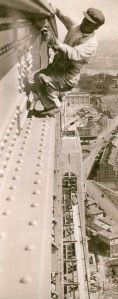
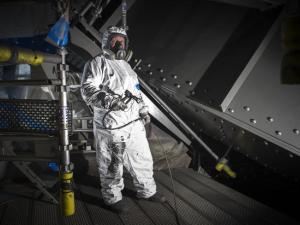 Bridge painting then and now.
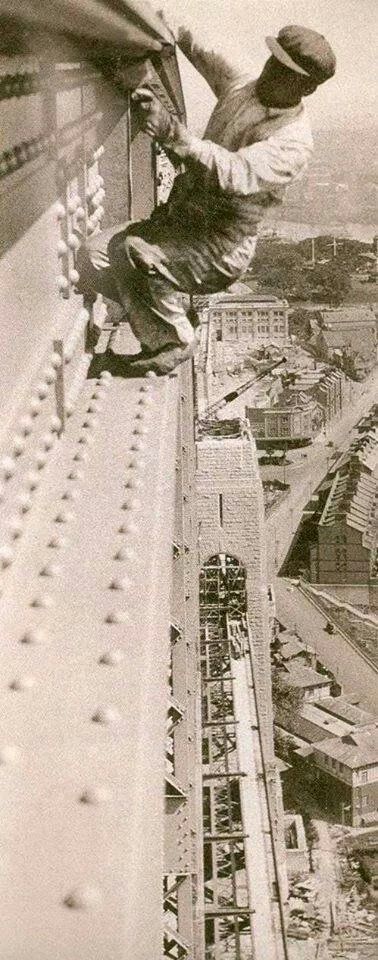
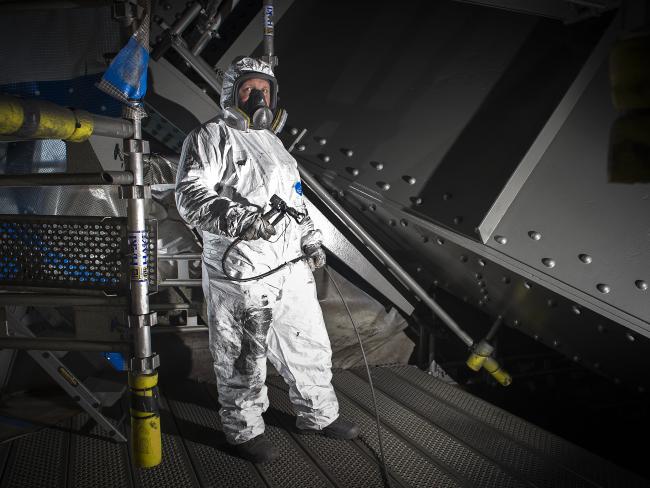
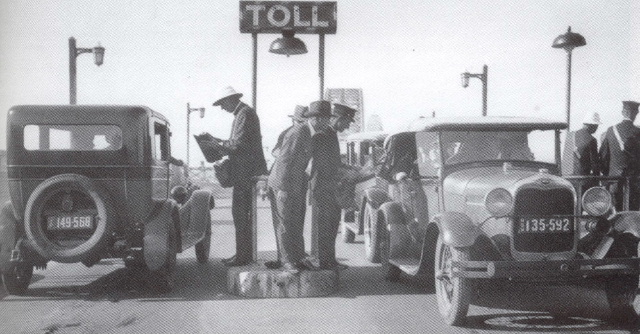
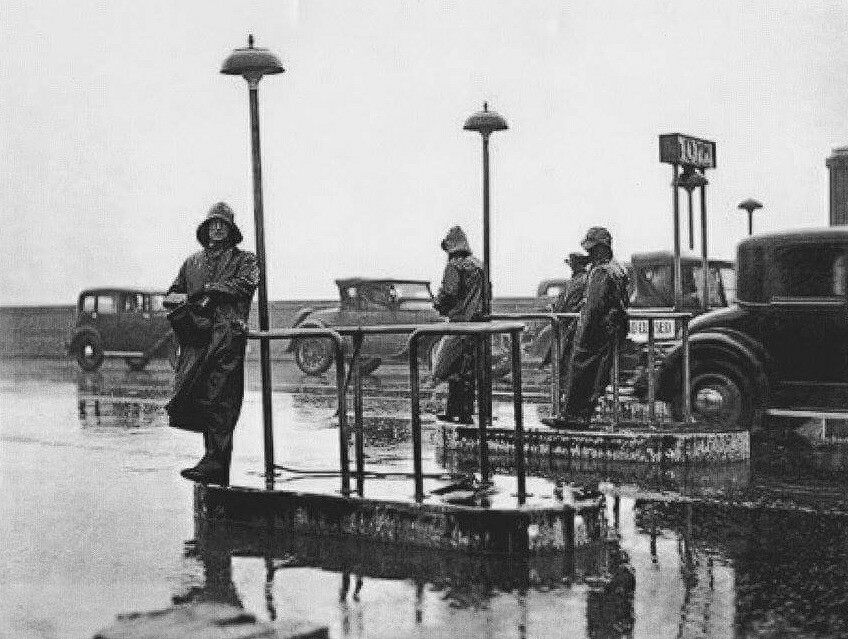
The Sydney Harbour Bridge features four railroad tracks, a highway, and two pedestrian walkways along its length. More than 160,000 vehicles, 200 trains, and 1600 bicycles cross the Sydney Harbour Bridge every day today (2010 statistics). In 1932, this number was about 11,000. At the time the bridge opened, the initial toll for a car was 6 pence (5 cents), and 3 pence (2 cents) for a horse and rider. Today, the toll stands at $3 dollars. The majority of this fund is utilized to cover the maintenance of the bridge that amounts to a whopping $5 million per year! Moreover, painting the bridge is a never-ending task with approximately 80,000 liters (21,000 gallons) of paint being required for every coat. While some parts last up to 30 years, others have to be painted every 5 years.
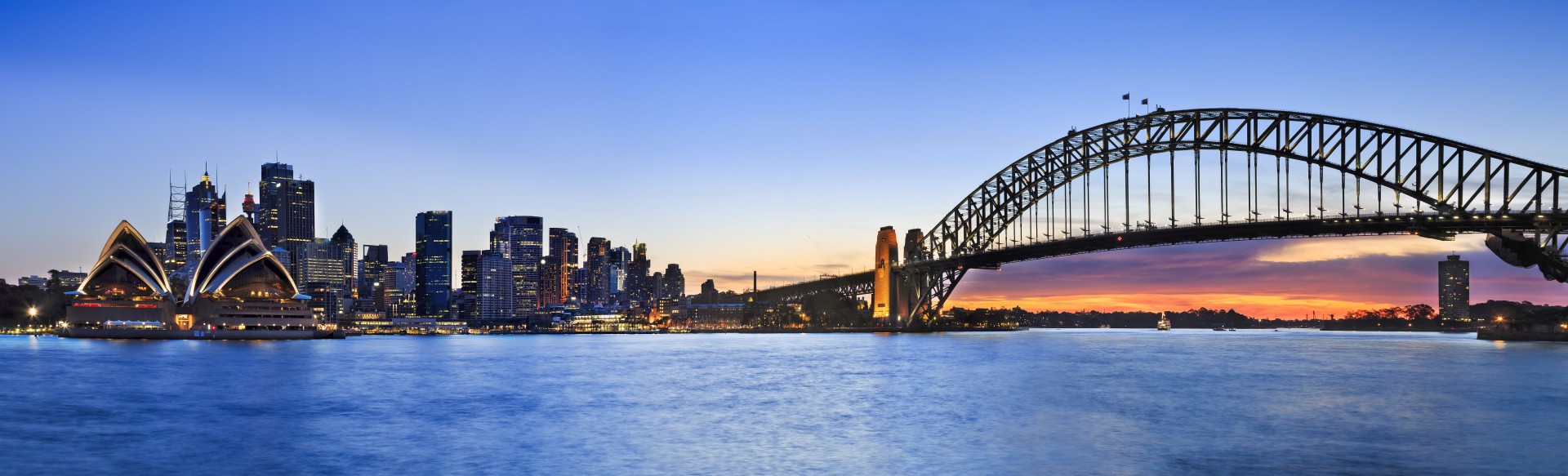
My little addition to this article. We crossed this bridge innumerable times and every time it was a highlight, an adventure. Crossing the bridge by foot is even a challenge, if you do its amazing, but choose a sunny, clear day without wind. The natural breeze on the bridge will be still strong enough.
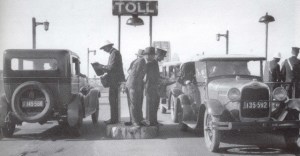
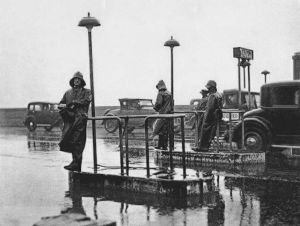 Toll collectors at the bridge in 1932.
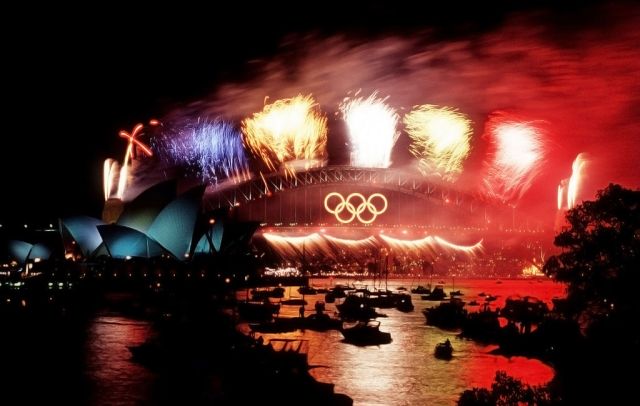 Closing ceremony fireworks for the 2000 Olympics in Sydney, we watched from „Mrs. Macquarie’s Chair“. It was kind of very windy that night in Sydney. But its still one of the best places to take pictures of the harbour bridge and the Opera house.
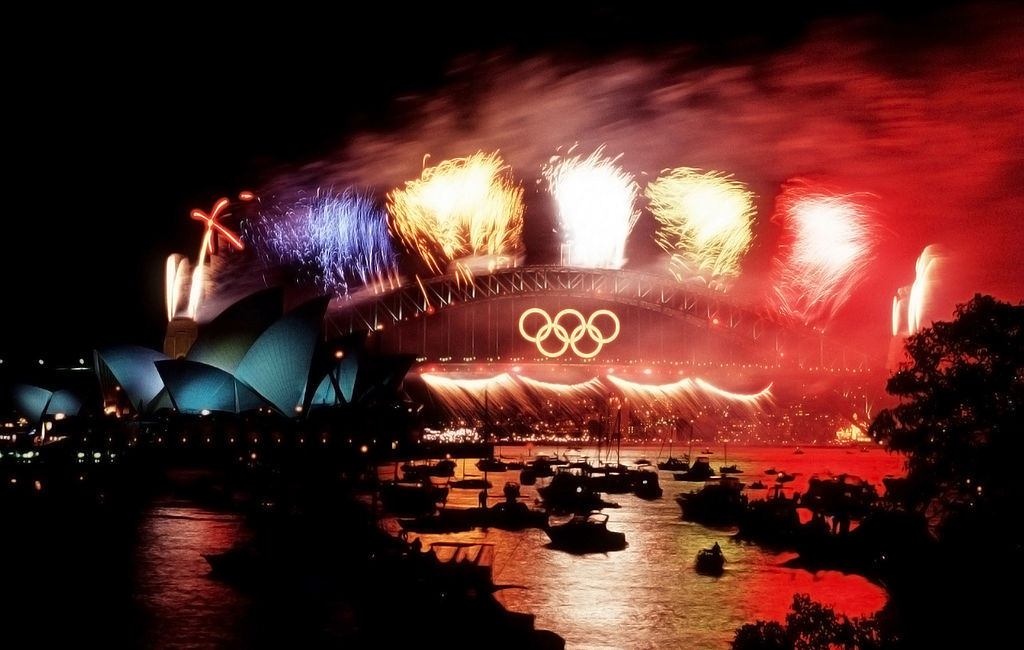
If you cross the bridge by car, you have to pay bridge-toll to enter the city center, if you drive out to North Sydney, its free of charge. A small try to leave the traffic out of the city. Even if there is a wonderful tunnel now to shortcut the trip between North Sydney and the South, we always used the bridge, it’s just a great feeling and brilliant views.

