
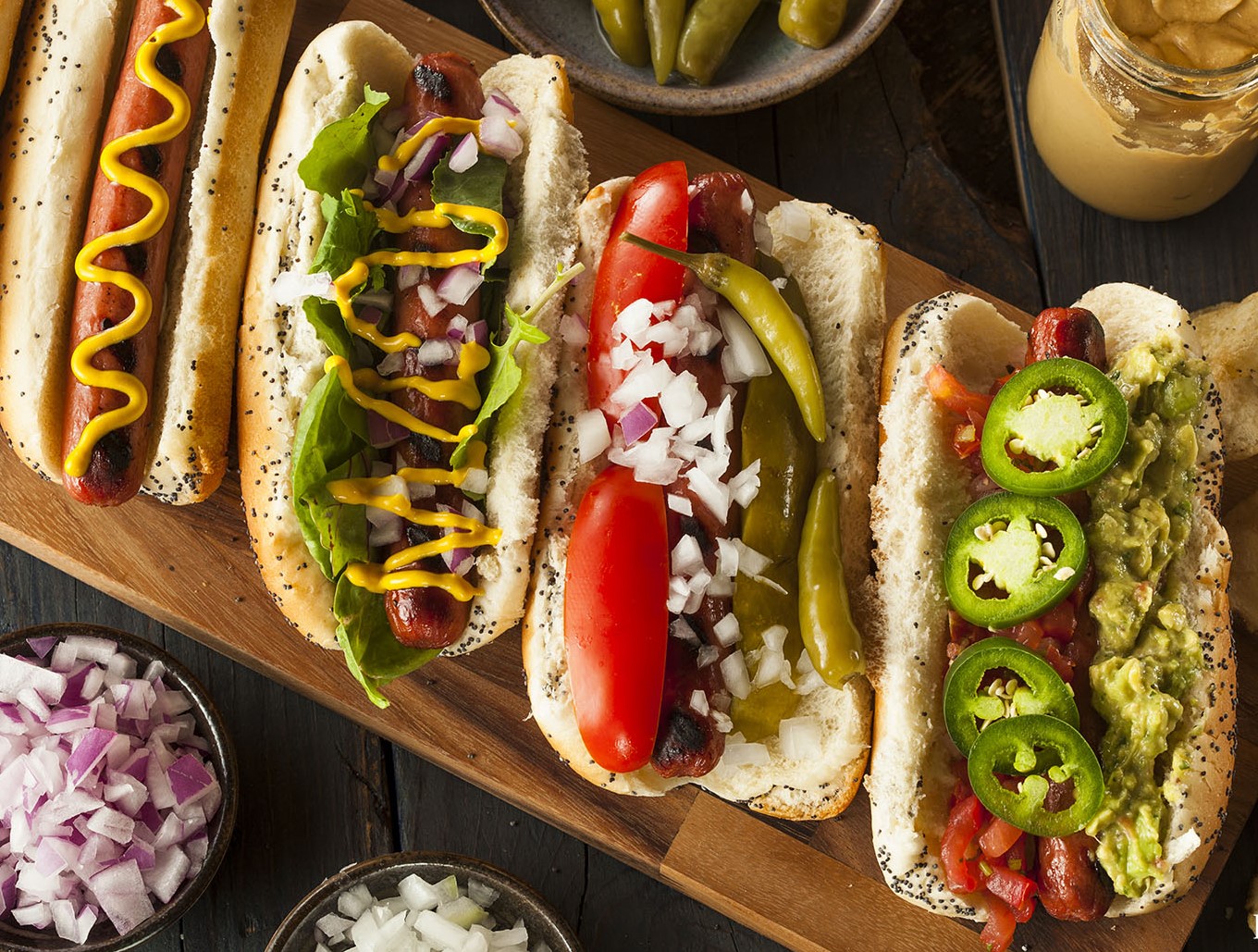
Recently I read about this coming Saturday, the 4th of July, the day the United States will celebrate their Independence Day. Reading more about some facts I learned that on this coming holiday’s the Americans will reportedly consume over 160.000.000 (hundred and sixty million) HOT DOGS. WOW, I thought and directly decided to go deeper into the hot dog story, and of course history, and share it with you.
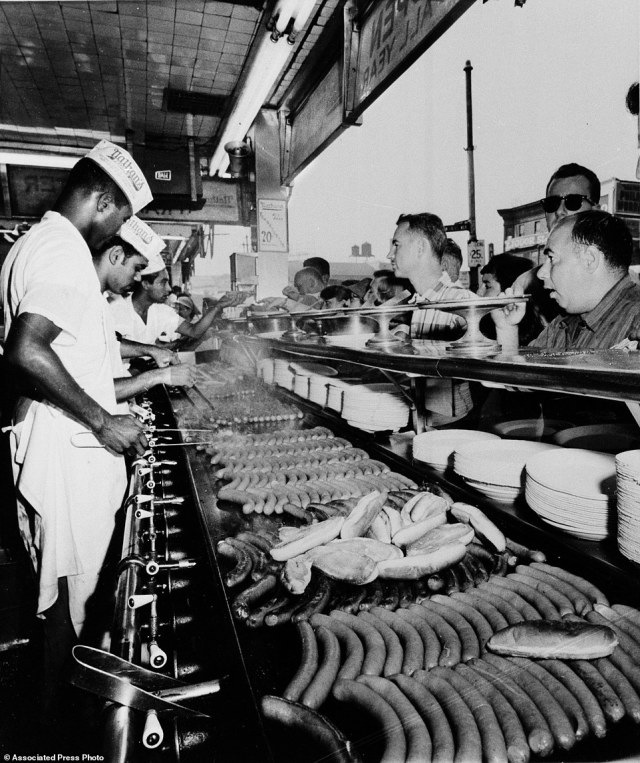
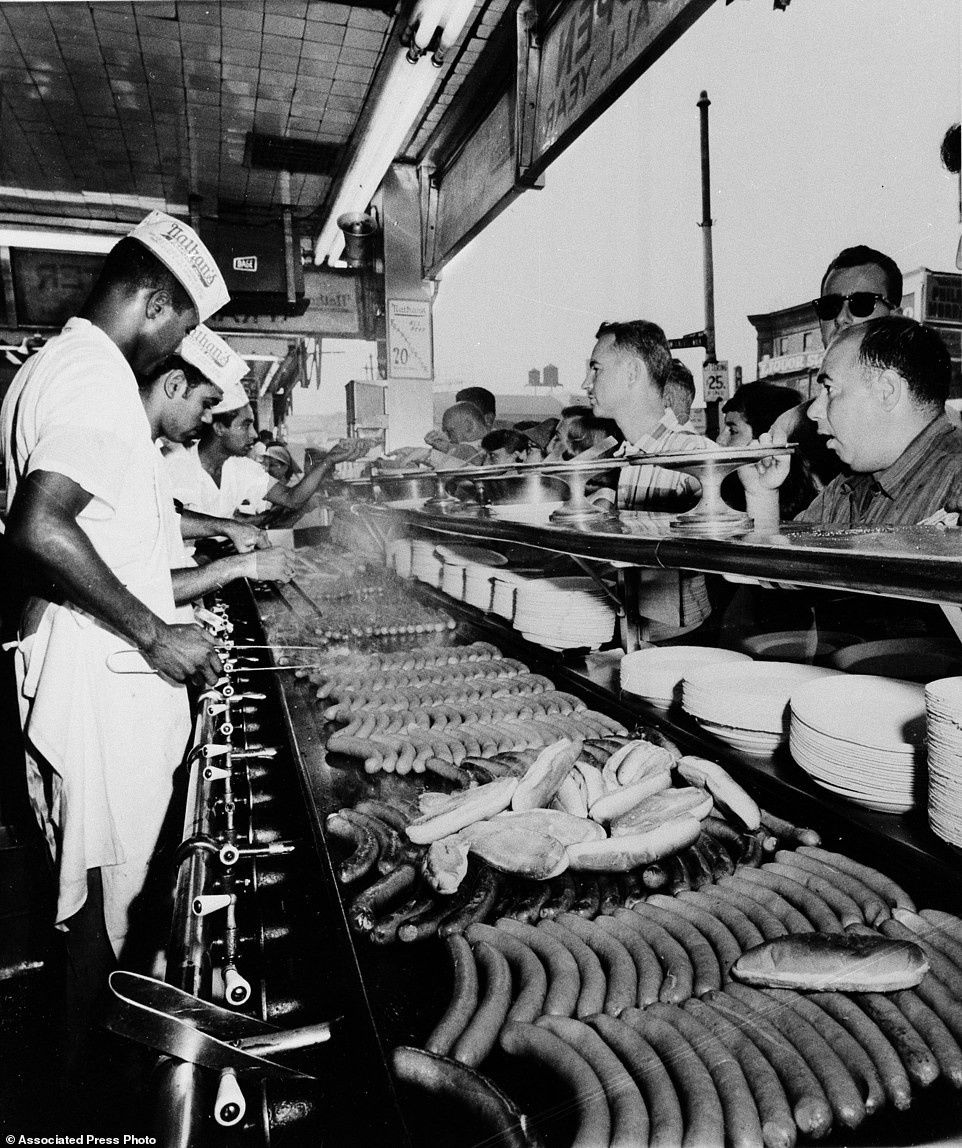
1958 file photo APP. Independence Day (4th of July) hot dogs are cooked on the grill as customers line up at Nathan’s Grill in Coney Island.
Independence Day.
The Fourth of July—also known as Independence Day or July 4th—has been a federal holiday in the United States since 1941, but the tradition of Independence Day celebrations goes back to the 18th century and the American Revolution. On July 2nd, 1776, the Continental Congress voted in favor of independence, and two days later delegates from the 13 colonies adopted the Declaration of Independence, a historic document drafted by Thomas Jefferson. From 1776 to the present day, July 4th has been celebrated as the birth of American independence, with festivities ranging from fireworks, parades, and concerts to more casual family gatherings, barbecues, and eating hot dogs.
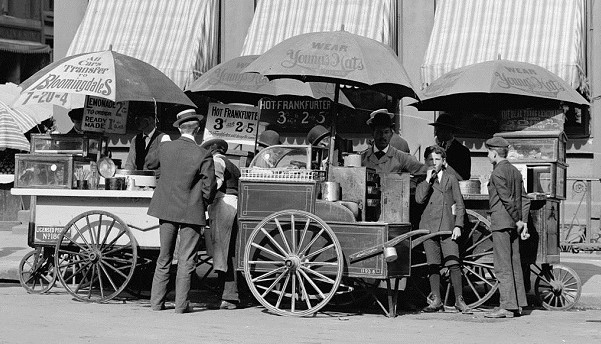 This is how it all started with Hot Dogs. First, they were called just Frankfurts.
The Hot Dog.
 Hot Dogs are coming in hundreds of variations. Almost everyone’s taste can be fulfilled. The most important – number 1 – ingredient is mustard – of course – then followed by ketchup, onions, chilli, sauerkraut, cheese, and much much more.

The hot dog is the quintessential summer food: cheap, tasty, great for grills, and forgiving of even the most inexperienced backyard cooks. But who made the first hot dog? Historians believe that its origins can be traced all the way back to the era of the notorious Roman emperor Nero, whose cook, Gaius, may have linked the first sausages. In Roman times, it was customary to starve pigs for one week before the slaughter. Gaius was watching over his kitchen when he realized that one pig had been brought out fully roasted, but somehow not cleaned. He stuck a knife into the belly to see if the roast was edible, and out popped the intestines: empty because of the starvation diet and puffed from the heat. According to legend, Gaius exclaimed, “I have discovered something of great importance!” He stuffed the intestines with ground game meats mixed with spices and wheat, and the sausage was created.
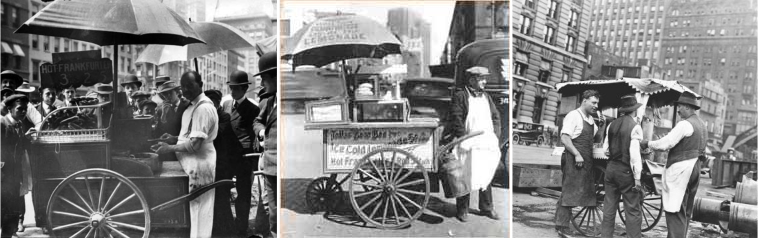
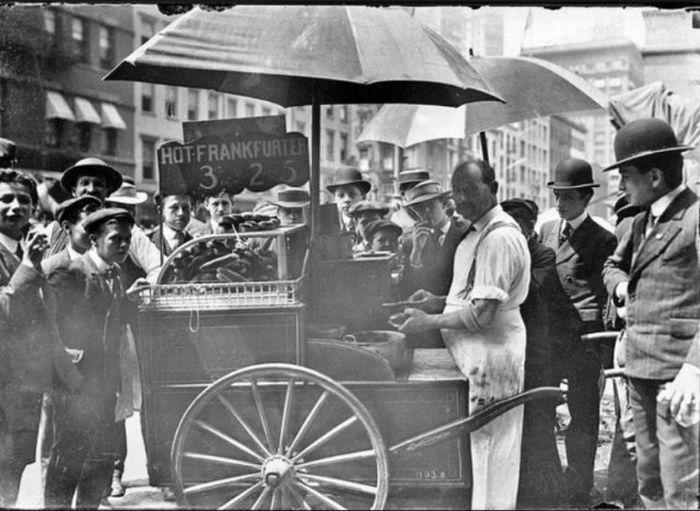
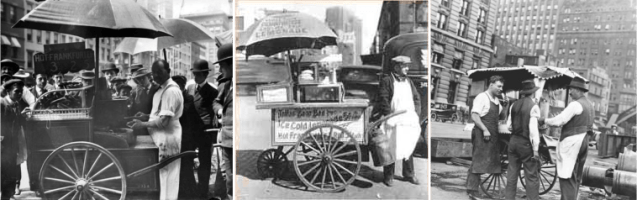 Hot Dog carts throughout New York.
After that, the sausage traveled across Europe, making its way eventually to present-day Germany. The Germans took to the sausage as their own, creating scores of different versions to be enjoyed with beer and kraut. In fact, two German towns vie to be the original birthplace of the modern hot dog. Frankfurt claims the Frankfurter was invented there over 500 years ago, in 1484 – eight years before Columbus set sail for America. But the people of Vienna, Austria say they are the true originators of the “Wienerwurst.”
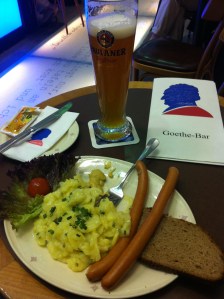
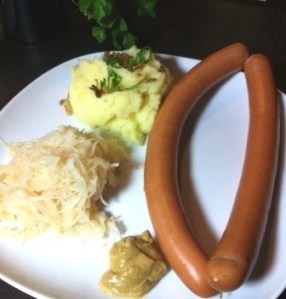 Typical German sausages (the hot dog) since 1484, enjoyed with beer, potato salad, bread and Sauerkraut.
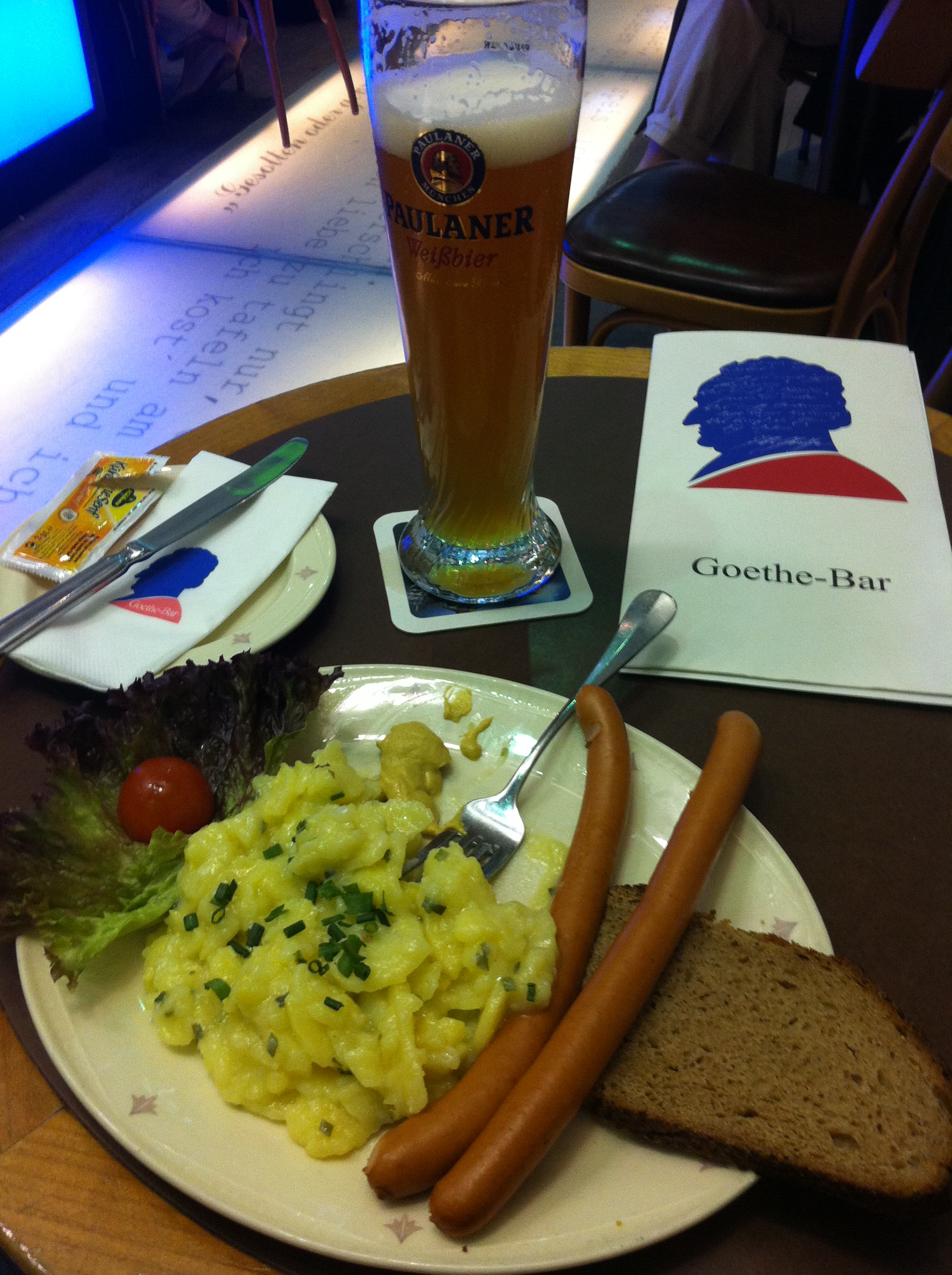
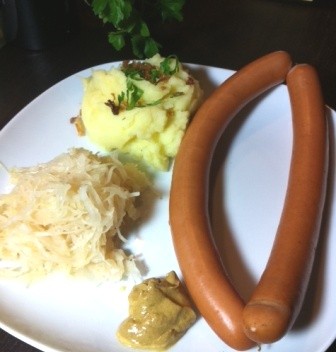
However, the very origin of the hot dog can be traced back to Germany with the invention of the Frankfurter in the late 1600s by Johann Georghehner, a butcher who lived in Coburg, Germany. No matter which town might have originated this particular sausage, it’s generally agreed that German immigrants to New York were the first to sell „Wieners“, or „Frankfurters“, from a pushcart, in the 1860s.
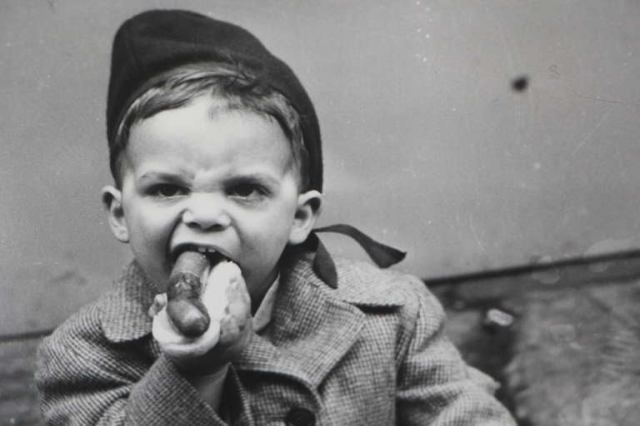 You can’t stop people loving their „dogs“. Remember – 160Million, just in the USA, this coming July 4th.
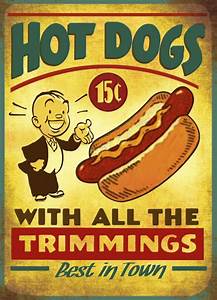
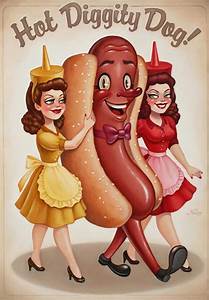 Lovely old Hot Dog advertizing.
Flee hot and sticky Manhattan for the soothing breezes of the Coney Island seashore. The beachside Brooklyn amusement park is a mixture of kitsch and family-friendly fun. Its wooden boardwalk and golden sand are crowded with rides, games, and food joints that have catered to hardworking New Yorkers for more than a century. On the corner of Surf and Stillwell Avenues, a swell of beachgoers line up under tall, white signs bearing the name „Nathan’s Famous“ that proudly advertises: „This is the original: World famous Frankfurters since 1916“.
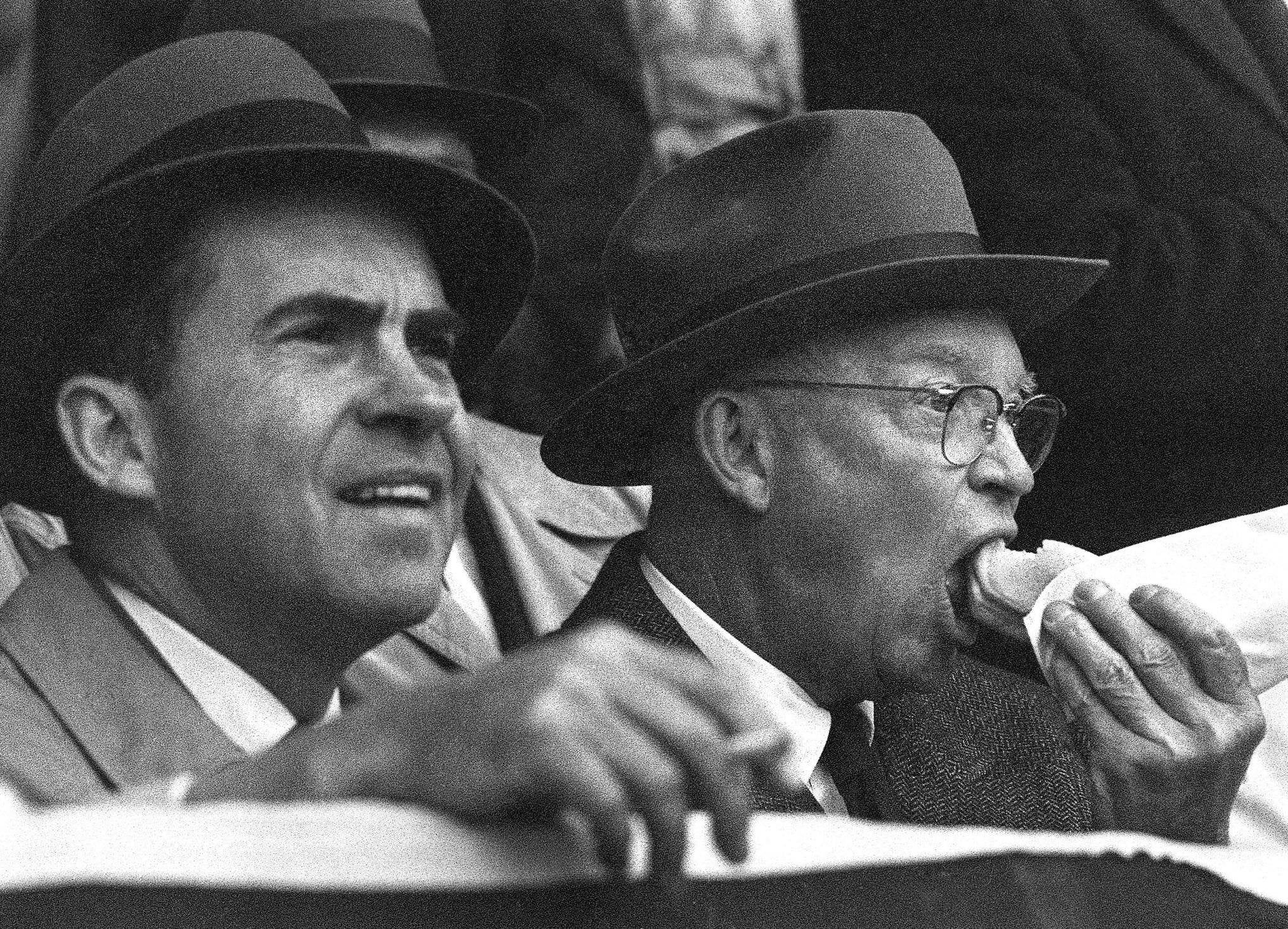
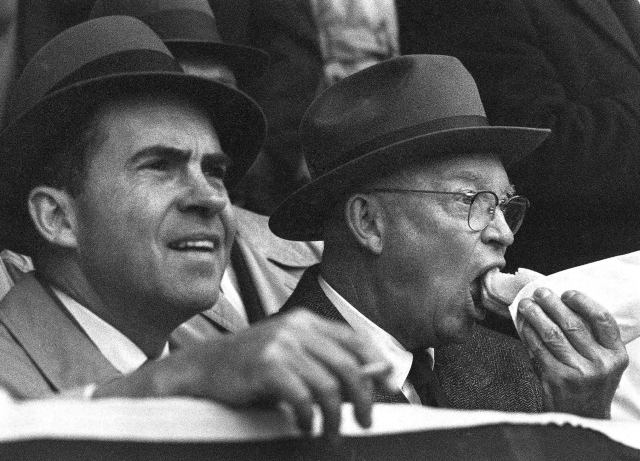 President Eisenhower (eating a hot dog) and Vicepresident Nixon during a baseball game 1960.
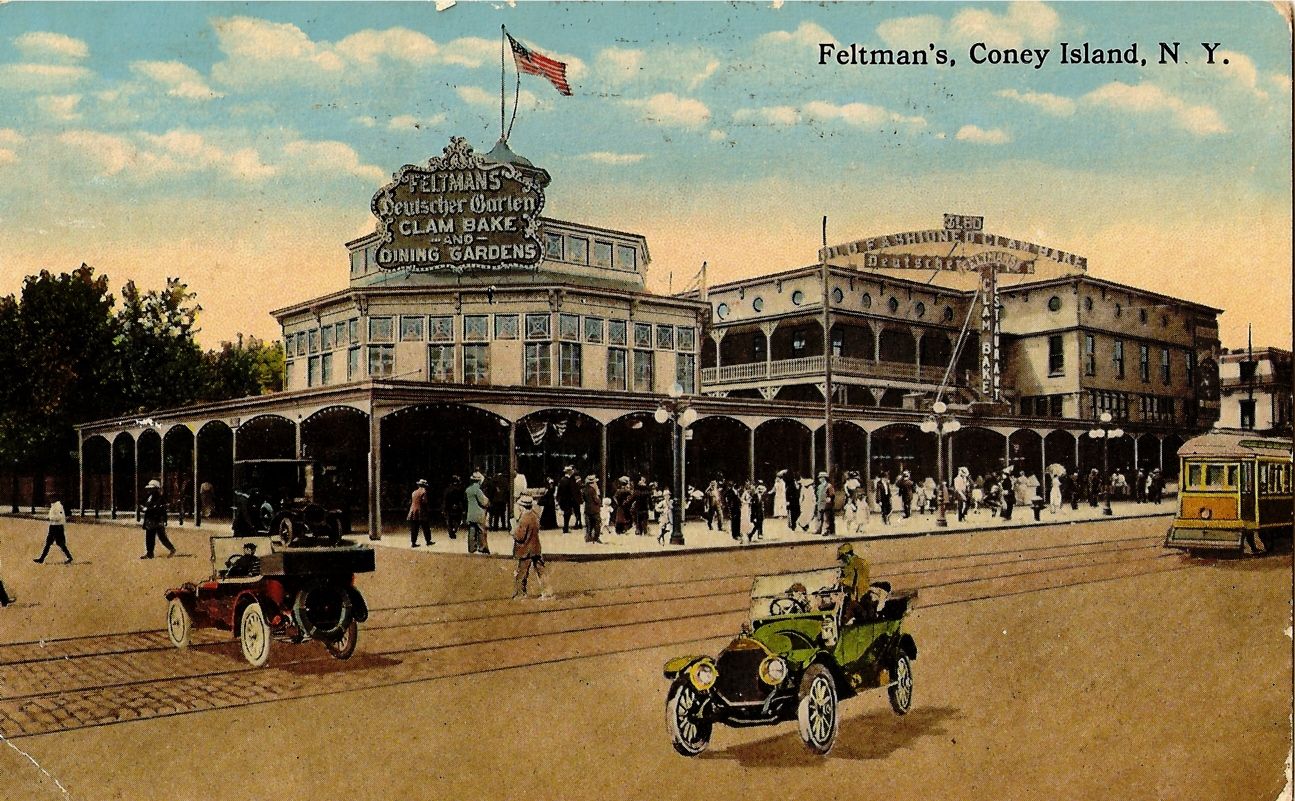
Feltman’s of Coney Island: The original hot dog – 1867’.
Up to that point, one may have thought that Coney Island hot dogs began and ended with Nathan’s, whose name has been synonymous with the seaside theme park for as long as anyone can remember. But while Nathan’s boasts that it’s „the original“, it turns out that they weren’t even the first company on the boardwalk to bun a hot dog. According to Brooklyn native and Coney Island historian Michael Quinn, a German immigrant named Charles L. Feltman was serving hot dogs along the bustling strip decades before Nathan’s was conceived.
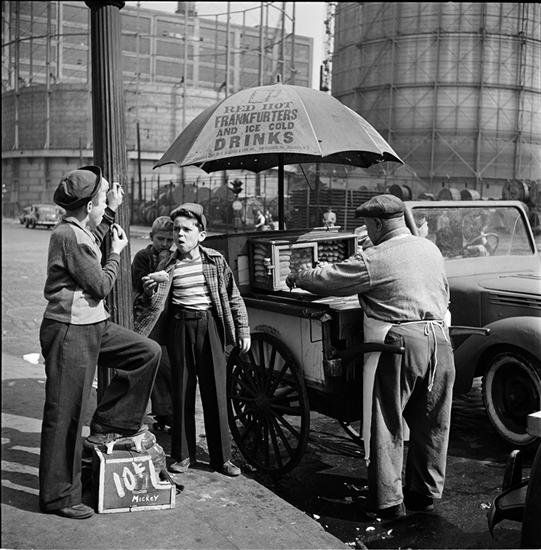 Hot Dog pushcart, like Feltman’s had.
Feltman came to the US in 1856. Like many German immigrants at the time, he brought with him a fondness for the Frankfurter sausages that were common in his homeland. A trained baker, Feltman opened a Brooklyn bakery in 1865 and earned a decent living delivering pies to Coney Island businesses from a pushcart, while selling clams on the side.
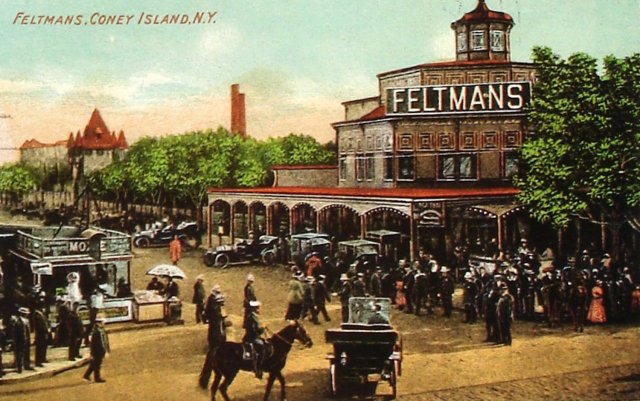 Feltman’s Coney Island, a whole block of entertainment and Hot Dogs.
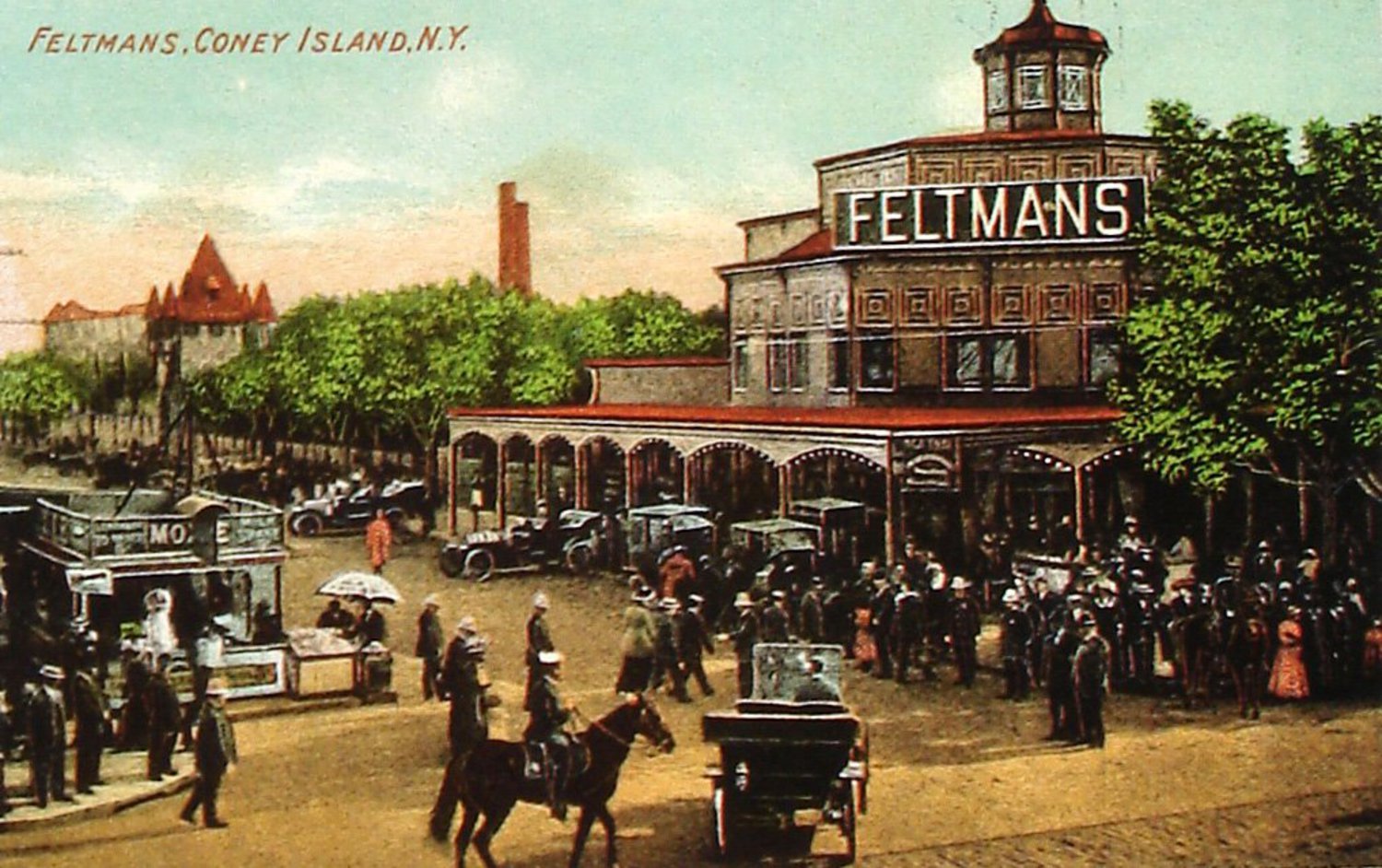
As the newly opened Coney Island and Brooklyn Railroad brought many more people to the seaside from Manhattan in the late 1860s, customers told Feltman that they wanted to eat hot food, not cold clams, according to Richard F. Snow, the former editor of American Heritage Magazine. So in 1867, Feltman called on the wheelwright who’d originally made his cart and asked him to modify it. The craftsman built a custom charcoal brazier for cooking sausages and a metal box for warming bread.
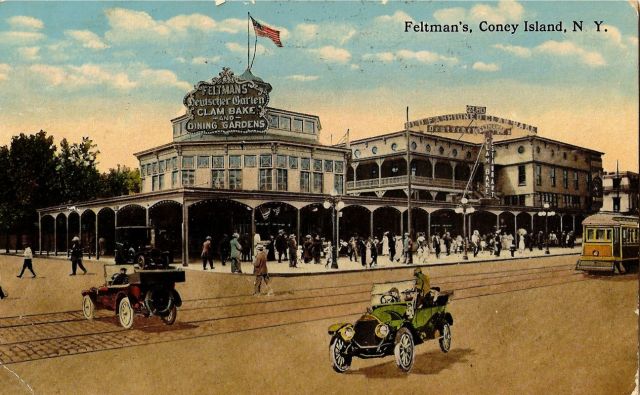 Feltman’s American beachside take on the German beer-garden specialty proved to be a sizzling success.
That summer, as much of the nation, was recovering from the Civil War, Feltman pushed his custom cart up and down the Coney Island sand, selling nearly 4.000 „Coney Island Red Hots“ in his signature long bun for a nickel each. It was that bun, a modification from the way Frankfurters were served back in Germany without bread, that made the sausage easy to eat at the beach. The term „hot dog“ wouldn’t be coined for some years yet.
How the name „Hot Dog“ was born.
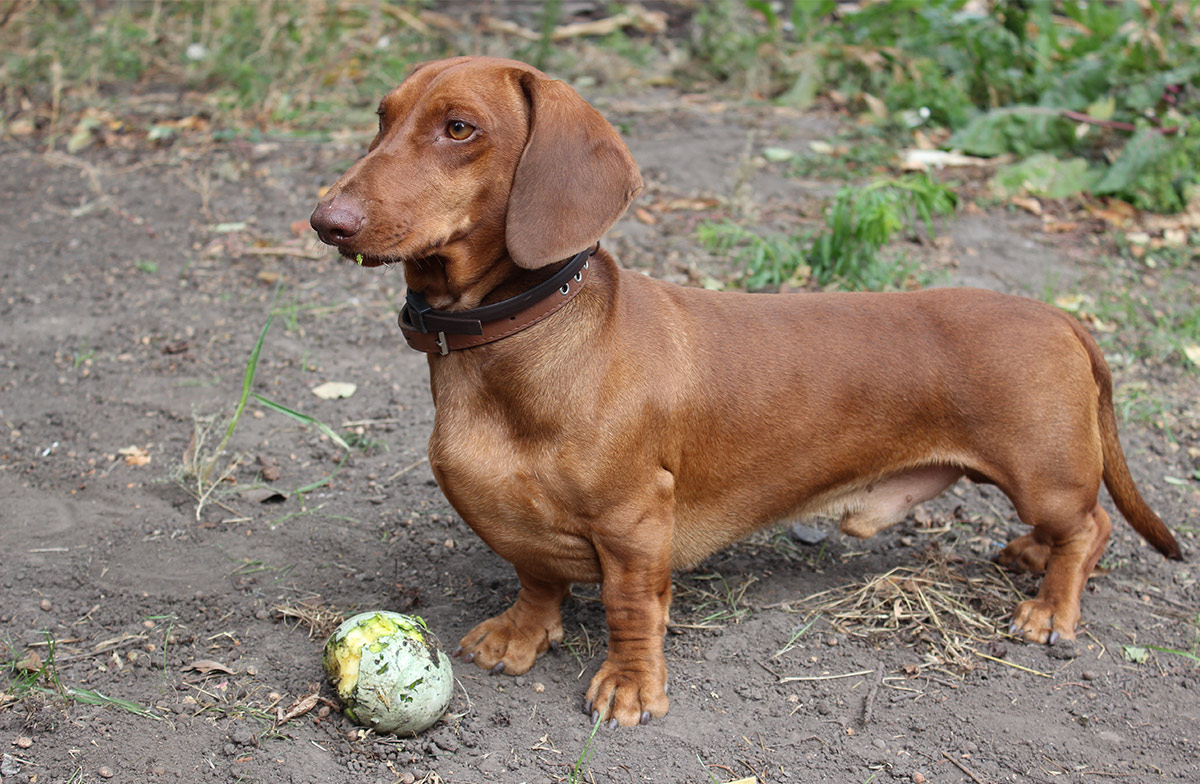
„Get your dachshund sausages while they’re red hot!“ … References to dachshund sausages and ultimately hot dogs can be traced to German immigrants in the 1800s. These immigrants brought not only sausages to America but dachshund dogs too. The name most likely began as a joke about the Germans‘ small, long, thin dogs.
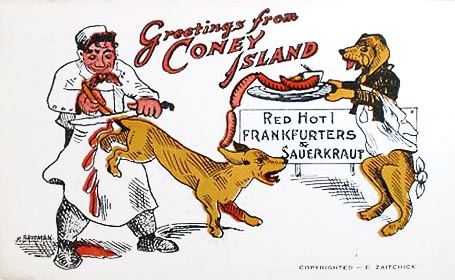 How Hot Dogs are made.
Did you know how this thin sausage got the name – „Hot Dog“?
Well, there are several versions of how the name „Hot Dog“ came about, but two of these versions may have been largely accepted, yet they are really not the true story.
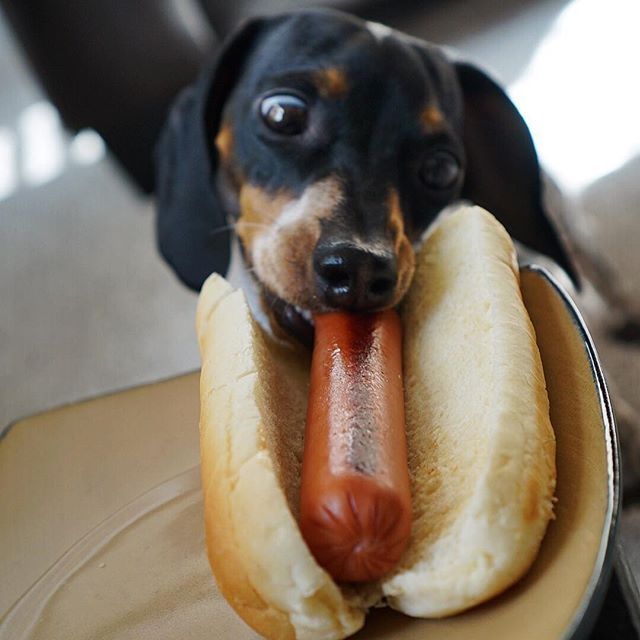 A real Hot Dog who loves Hot Dogs, what a little connoisseur.
One of the accepted versions:
In the mid-19th century, German immigrant butchers in the United States began selling variations of sausages, some of which were thin and long, like the dog breed dachshund. They jokingly called these dachshund sausages. Over time, the phrase may have been bastardized into “hot dog”.
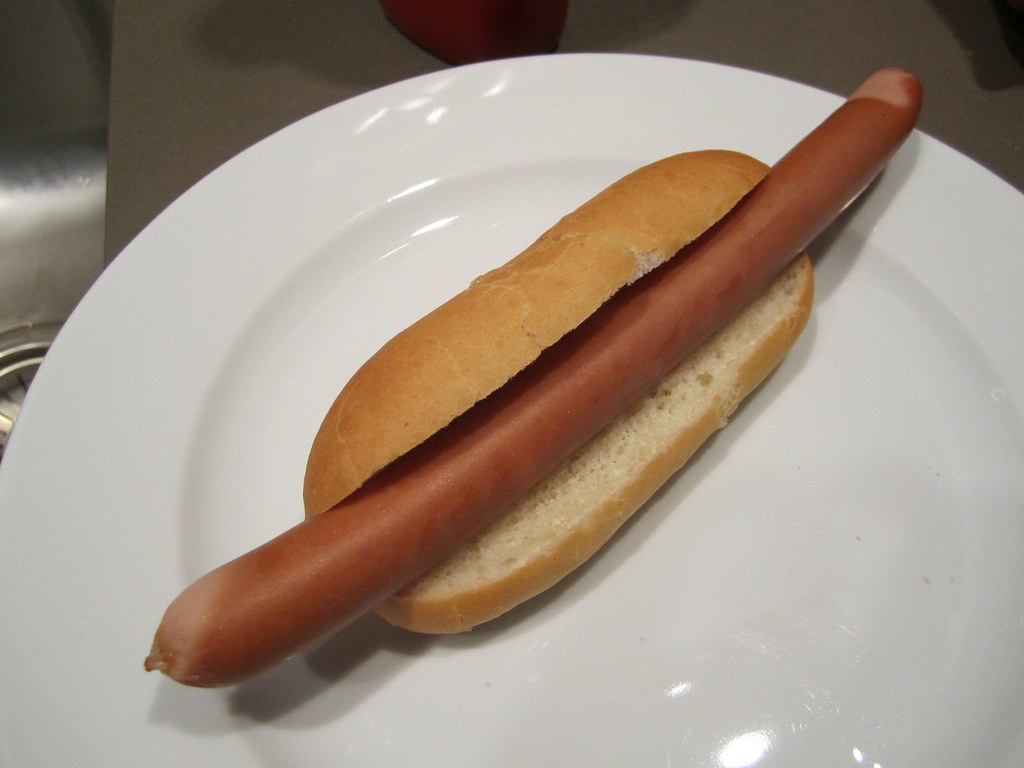
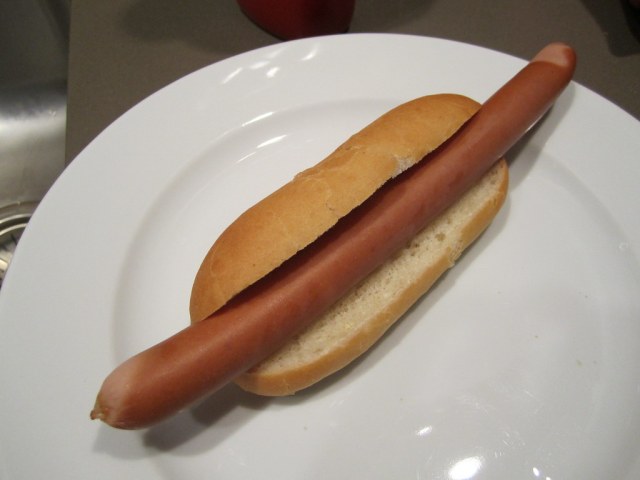 The typical, everywhere known, „naked“ German Bockwurst, about 25cm long and 2cm thick.
The other accepted version:
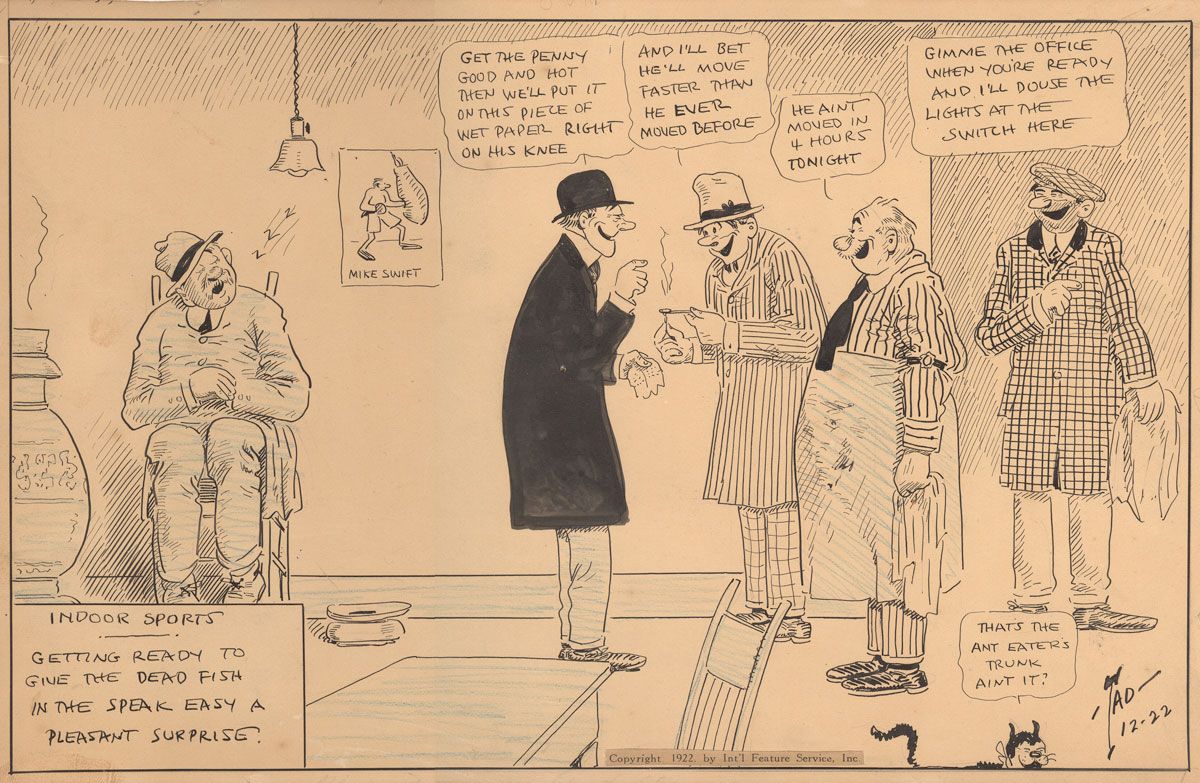
A sports cartoonist T. A. „Tad“ Dorgan, who caricatured German figures as dachshunds in the early 1900s, generally earns credit for popularizing the term „hot dog“, because he could not spell dachshund. Over time, the thin german sausage took the name „hot dog.“
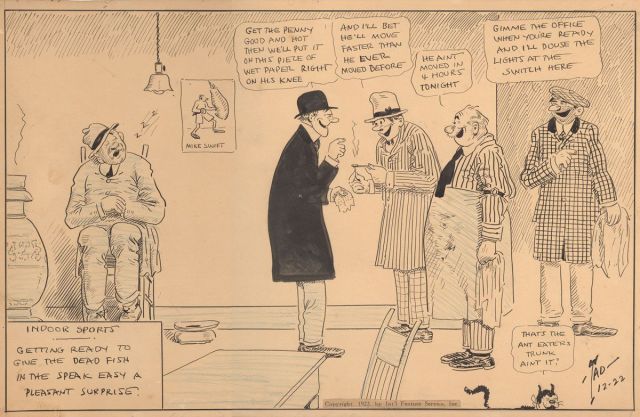 One of the typical Tad Dorgan cartoons, about inside sports, 1922.
Now, the True Story of „Hot Dog“.
In 1887, a young man decided to print a program for a baseball game in Columbus Ohio, because „you can’t tell the players without a scorecard“. From that venture, Harry Stevens expanded to other venues, hawking soft drinks and sausages to the enthusiastic crowd.
 The lovely authentic real famous original HOT DOG !

Then a local New York cartoonist, Tad Dorgan, observing Stevens selling „the red hot sausages in a bun at New York Polo Grounds soon drew a cartoon showing the sausages styled with faces and legs and stevens barking the sales. Dorgan coined the phrase „Hot Dog“. Sadly the original cartoon was never found.
This cartoon publication got several owners of confectionery business interested in selling at sports venues and ushered in the beginning of the concession industry and the start of H.M Stevens Concession company.
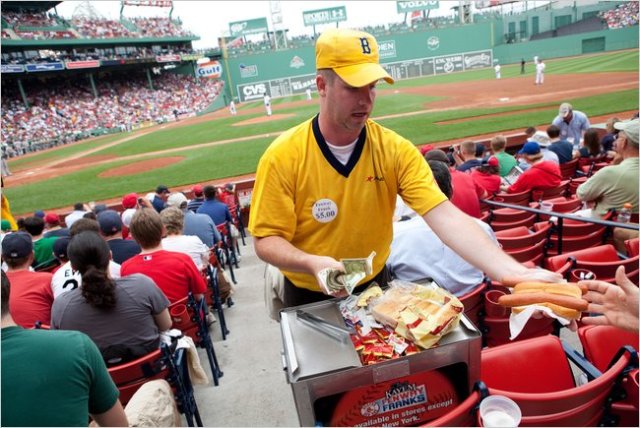 That’s a cocession.
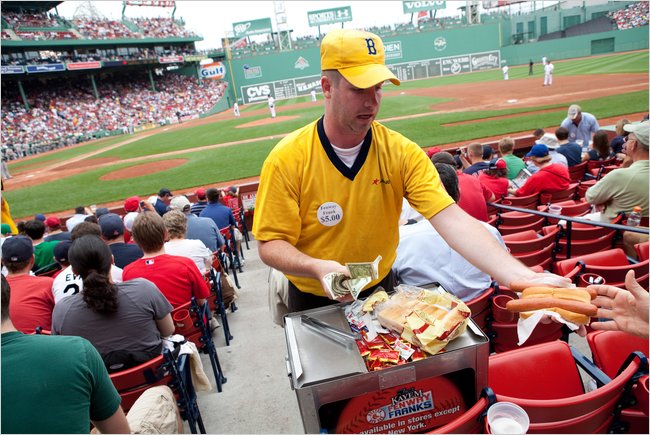
What is the Concession in Sports Business?
A concession is a stand (snack kiosk or snack bar) where fans (spectators) can purchase snacks or food in a stadium or other sporting event arena.
Charles L. Feltman.
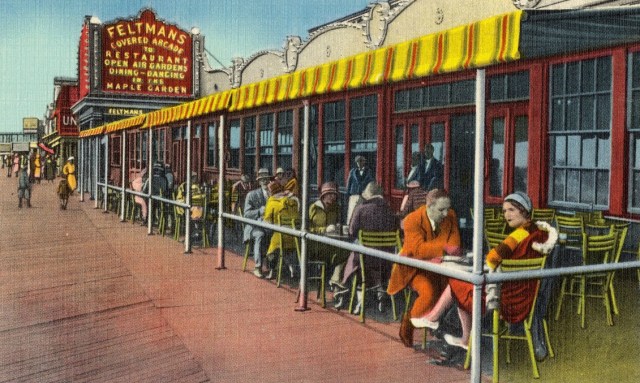 Feltman’s covered arcade on Coney Island.
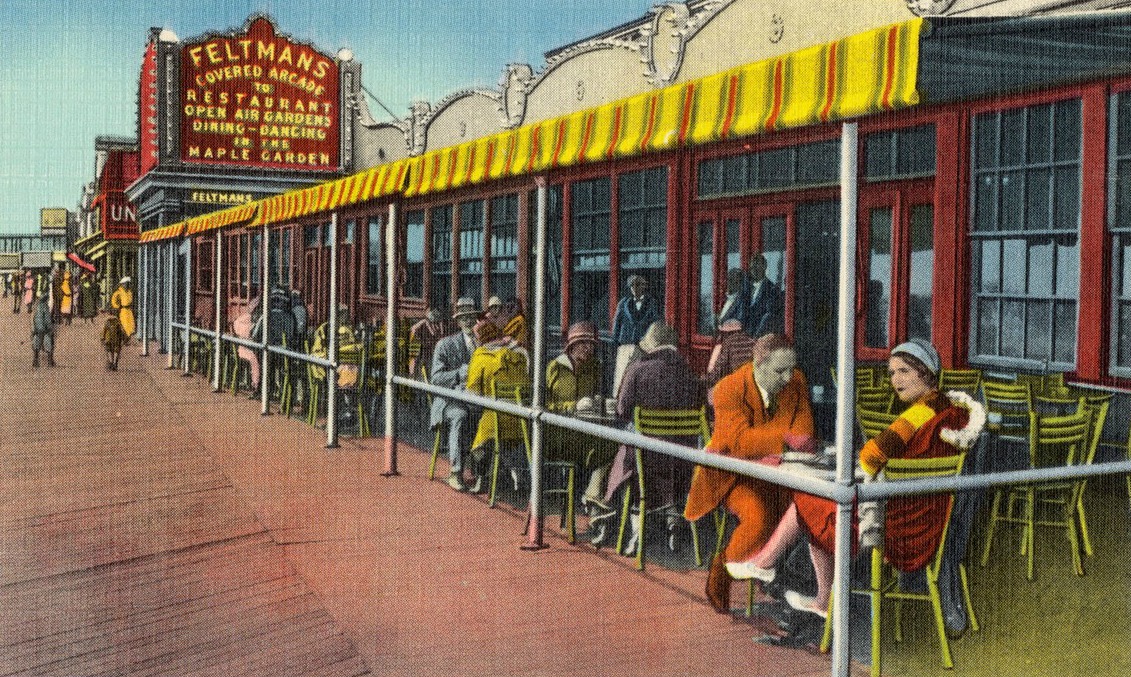
In 1871, Feltman leased a small seaside plot on West 10th Street and opened a restaurant called Feltman’s Ocean Pavilion. With success came expansion, and by the turn of the century, Feltman’s humble pie cart had grown into a full-on empire spanning an entire block – complete with nine restaurants, a roller coaster, carousel, ballroom, outdoor movie theatre, hotel, beer garden, bathhouse, pavilion and Alpine village that once hosted US president William Howard Taft.
According to Sharon Seitz and Stuart Miller in their book, „The Other Islands of New York City“, Feltman even persuaded Andrew Culver, president of the Prospect Park and Coney Island Railroad, to extend his new railroad’s timetable so customers could stay at Feltman’s for dinner. At its peak, Feltman’s managed to churn out up to 40,000 red hots a day, as well as seafood dinners in the more salubrious surroundings of his Ocean Pavilion complex. Feltman died in 1910 as a wealthy man. His company, by then managed by his sons Charles and Alfred, employed more than 1.000 people, and by the 1920s, Feltman’s was considered the largest restaurant in the world.
 Hot dogs were first invented by Charles L Feltman in 1867, and they quickly became a success.
Nathan Handwerker.
In the midst of this early 20th-Century red hot boom, the Feltman family hired a Polish immigrant named Nathan Handwerker whose job was to slice the rolls. According to Lloyd Handwerker (Nathan’s grandson) in his book „Famous Nathan“, after two friends encouraged Handwerker to open up his own red hot business, he sometimes slept on the kitchen floor at Feltman’s to save money. Then in 1916, armed with a $300 loan and his wife’s family recipe, Handwerker opened his own shop mere blocks away from his old employer. Handwerker realized that to compete he needed to appeal to the masses, so he sold his hot dogs at a nickel each, undercutting Feltman’s, who charged a dime for theirs.
After a rocky ride during the Great Depression and World War Two, the Feltman family eventually sold their business in the 1940s. The new owners nursed along with a business whose tagline had once had been the „caterer to millions“ before closing its doors for good in 1954. For the first time in over half a century, Nathan’s was the only hot dog to be reckoned with on Coney Island’s boardwalk, and the many fans of Feltman’s larger, juicier franks were left hungry for more.
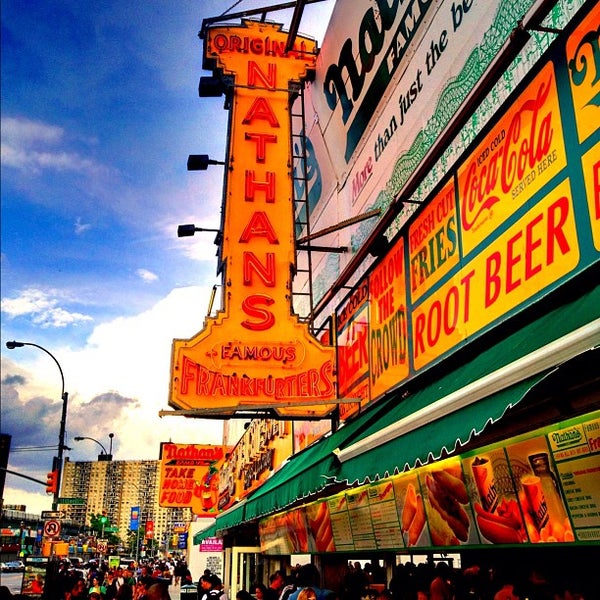 In 1916, one of Feltman’s former employees, Nathan Handwerker, opened his own hot dog shop just blocks away from his old employer.
“My grandfather was a faithful Feltman’s customer during the Depression-era,” historian Quinn said. “How did the two compare?” Quinn was asked once.
“My grandfather said he always preferred the overall quality of Feltman’s to Nathan’s,” he replied. Even though Quinn wasn’t alive to ever taste the original Feltman’s hot dogs before it closed, his grandfather’s stories of eating Coney Island red hots stayed with him – so much so that as an adult, “I set out to recreate my grandfather’s experience,” he told.
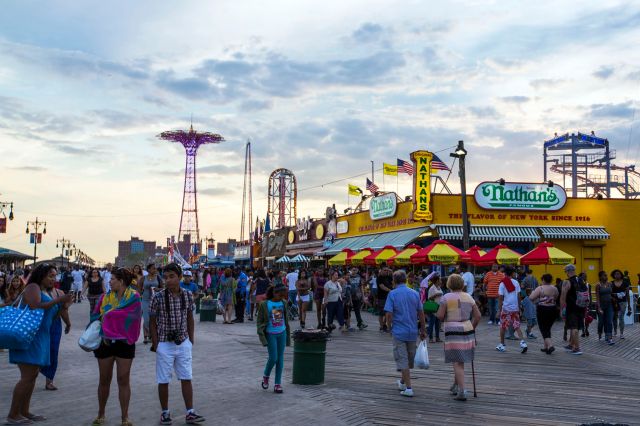
The hot dog’s iconic home is on the boardwalk at New York’s Coney Island.
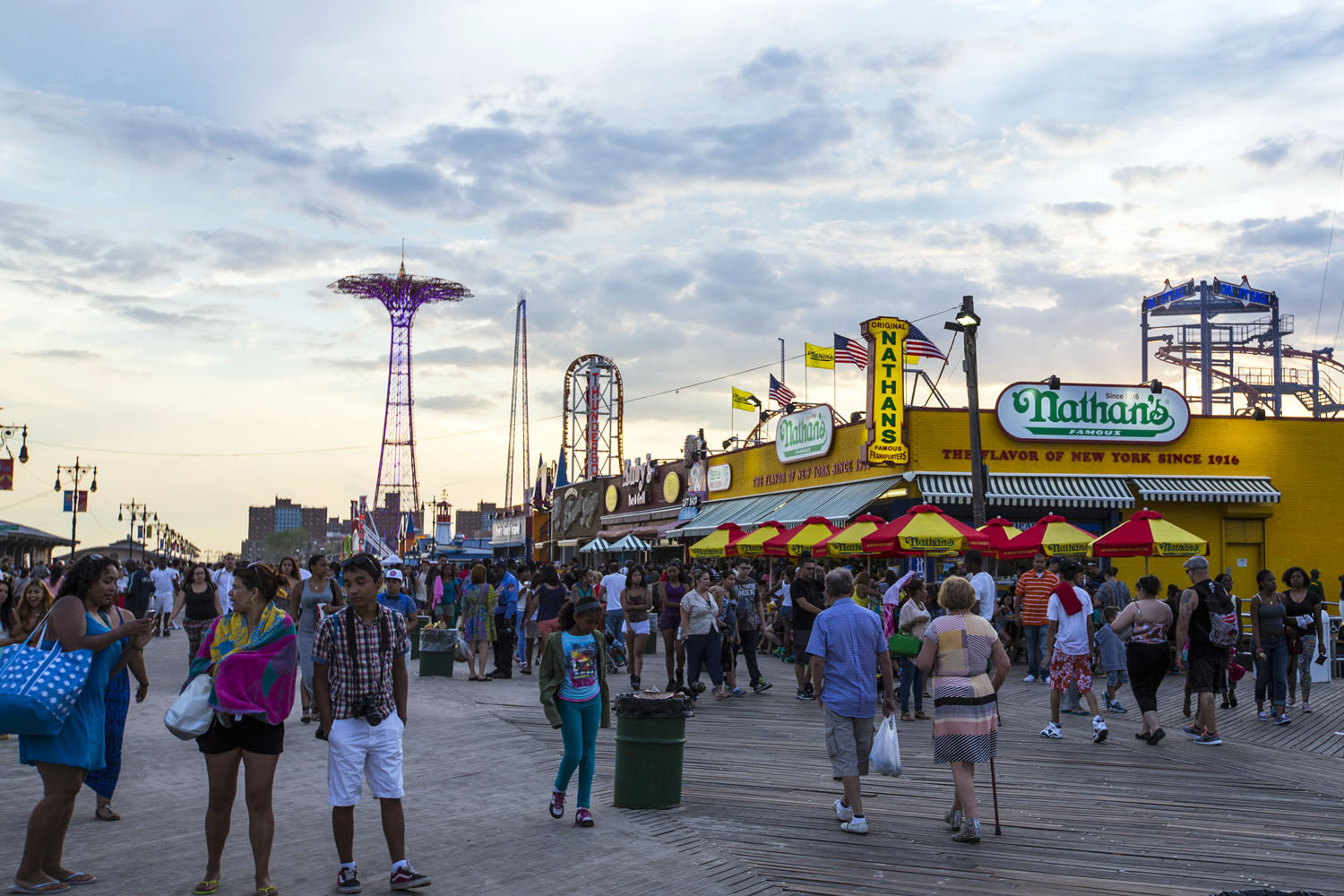
Quinn and his two brothers grew up in southern Brooklyn, and Coney Island was their playground. As a child, Quinn dreamed of opening a business with his siblings, but when his brother Jimmy passed away in the World Trade Center on 9/11, he and his brother Joe decided to honor Jimmy by resurrecting the Feltman’s brand. Fortunately, Quinn’s grandfather was good friends with a former employee who made Feltman’s hot dogs and he gave him the original Frankfurter spice blend Feltman used in his red hots. Quinn’s grandfather later passed this recipe along to Quinn. Several years and a “few bucks” later, Quinn purchased the Feltman’s name in 2015 and opened a tiny takeout window from the inside of a theatre in the East Village. He was finally able to reopen Feltman’s in the exact same location as Feltman’s original Coney Island restaurant in May 2017.
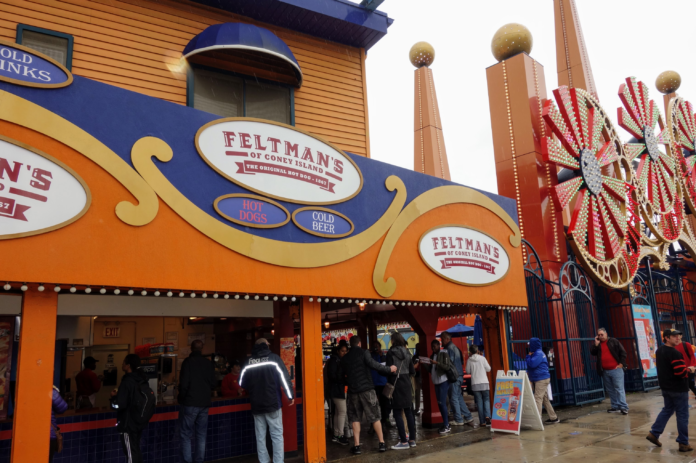
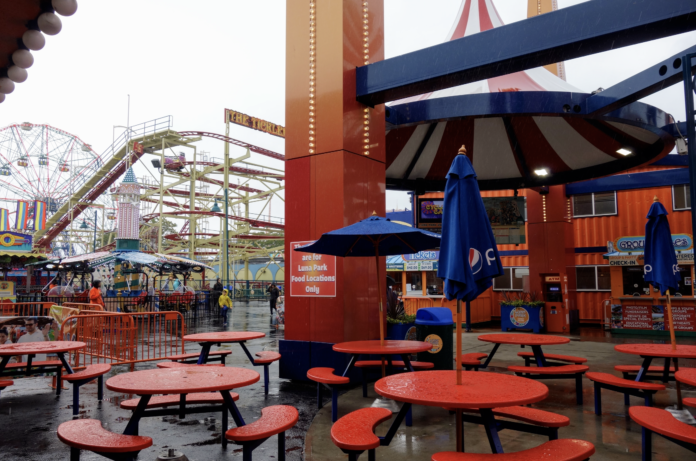
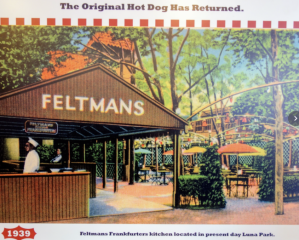
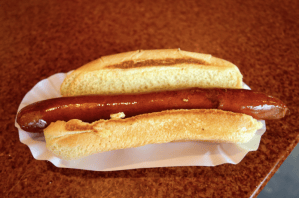
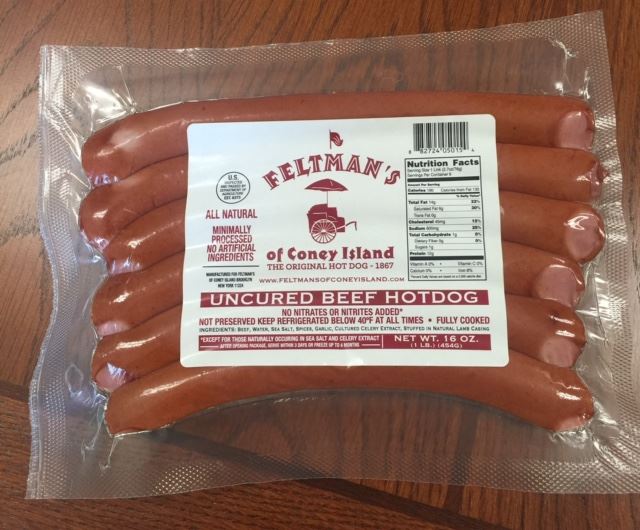
„Feltman’s – the original hot dog” is officially back in Coney Island, corner of Surf Avenue and West 10th street, the exact spot where Charles Feltman opened its first stand to sell hot dogs on a Thursday 150 years ago. The hot dogs are made with all-natural beef, garlic, sea salt, zero nitrates, and no artificial ingredients.
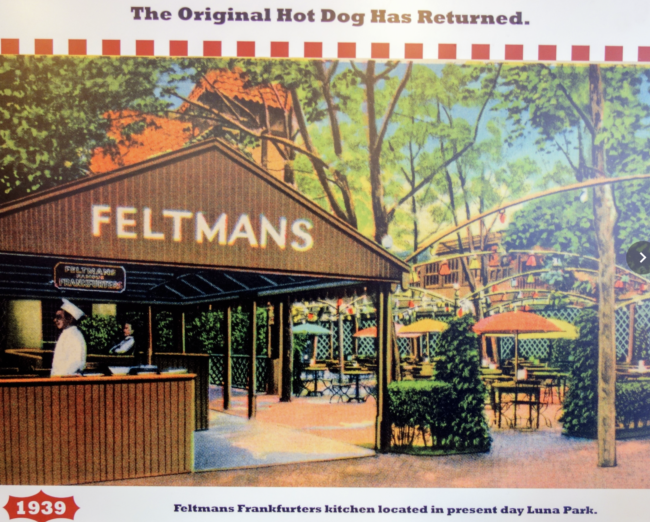
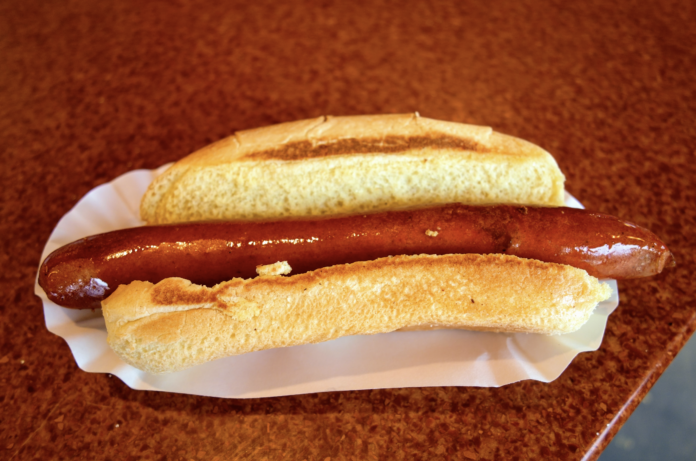
It’s likely to be the best hot dog you’ll ever eat in your life.
As the historical wooden Cyclone creaked and rattled in the background, a small group of customers gathered outside Feltman’s. Quinn asked if one wanted to try one of his red hots. Made from premium beef with just the right measure of spices and no additives. Customer: „It was as tasty as he had promised“. He added a heap of sauerkraut to give just a hint of sharpness, and a squirt of mustard made with his own recipe.
 Some of the Feltman’s Red Hots – Hot Dogs.
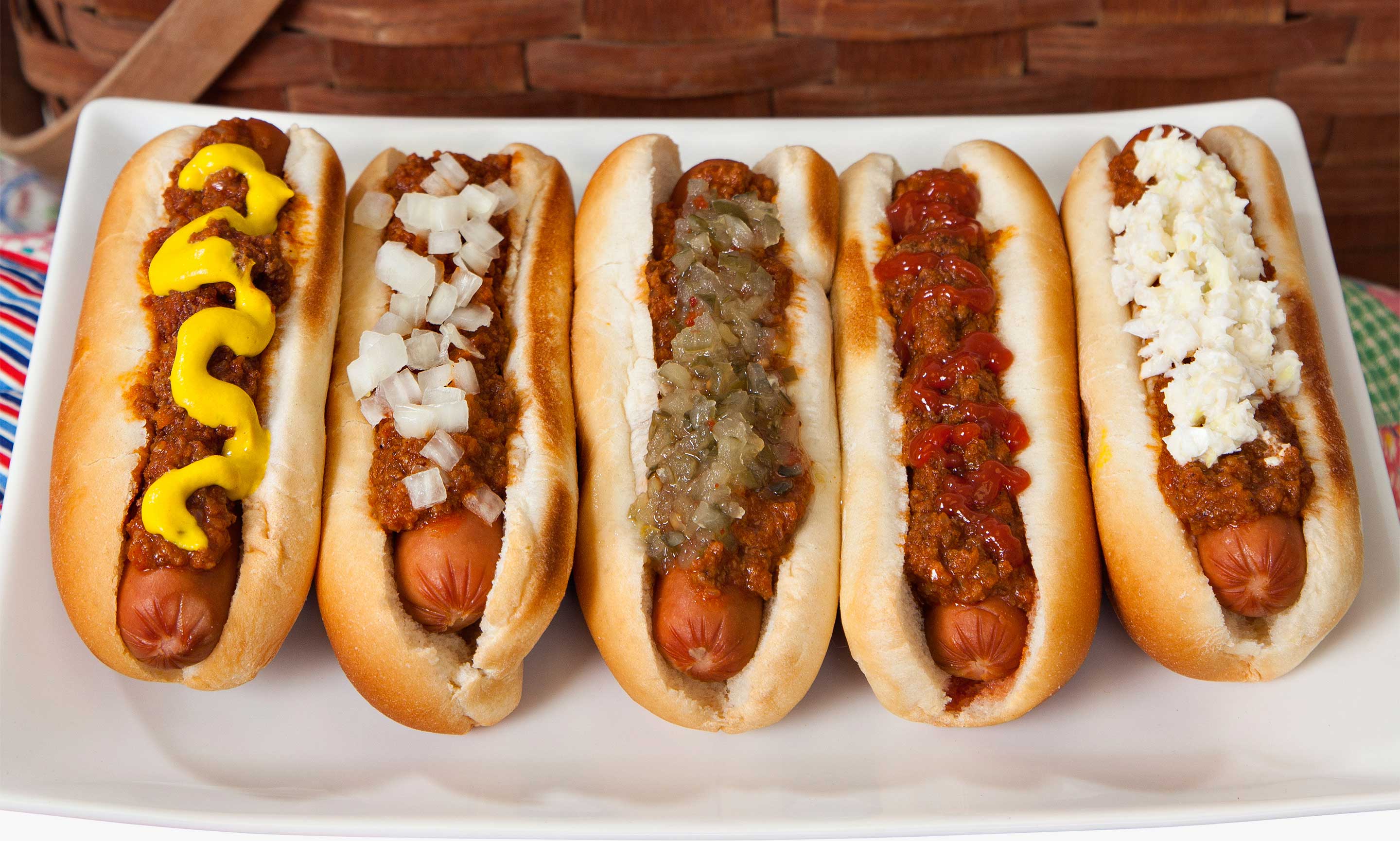
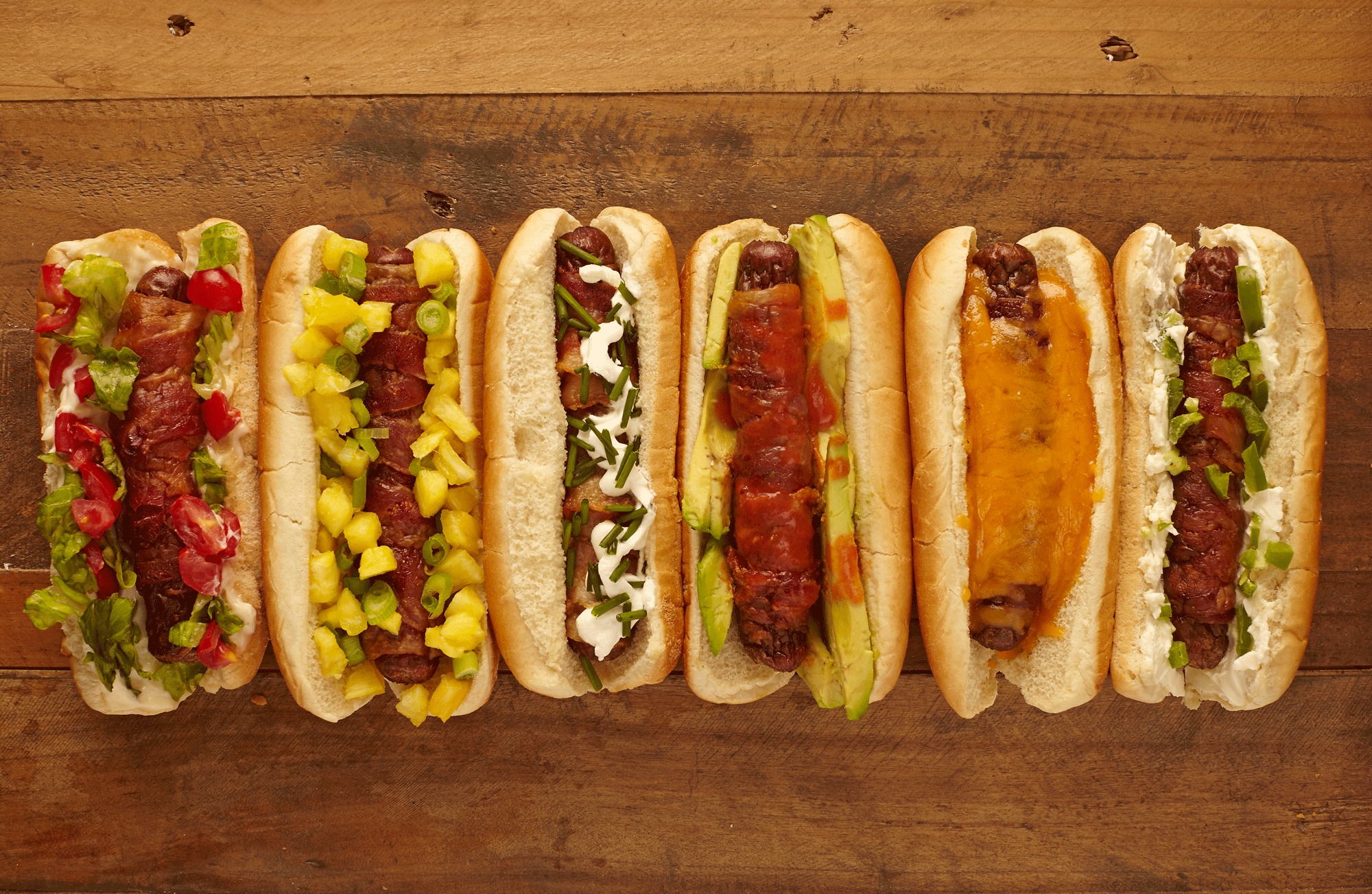
It was good – so good in fact, that in the past few years, Feltman’s has been named one of the US’ 10 best hot dogs by The Daily Meal, with Gothamist declaring, “There is only one item on the Feltman’s menu, and it’s a hot dog… but it’s likely to be the best hot dog you’ll ever eat in your life“. Last year, the company set the Guinness World Record for creating the world’s largest hot dog, a 75lb, 5ft-long bunned behemoth, down here.
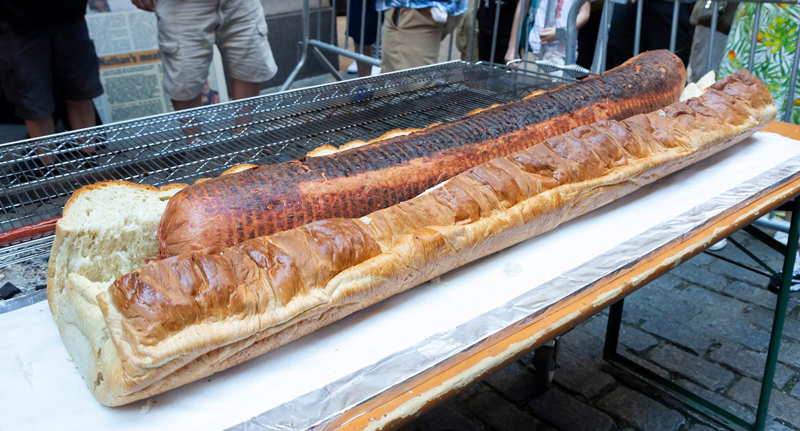
And strangely enough, even as the coronavirus pandemic has brought the US to a standstill and put the kibosh on things like baseball games, backyard grills and picnics, The New York Times recently reported that Feltman’s business is booming, with supermarket sales up 100% and online sales up 200%.
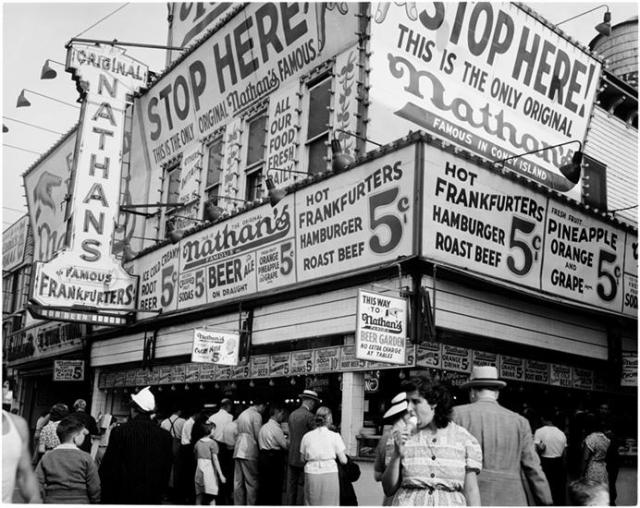 When Feltman’s closed its doors in 1954, Nathan’s was the only hot dog to be reckoned with on Coney Island’s boardwalk, picture 1939.
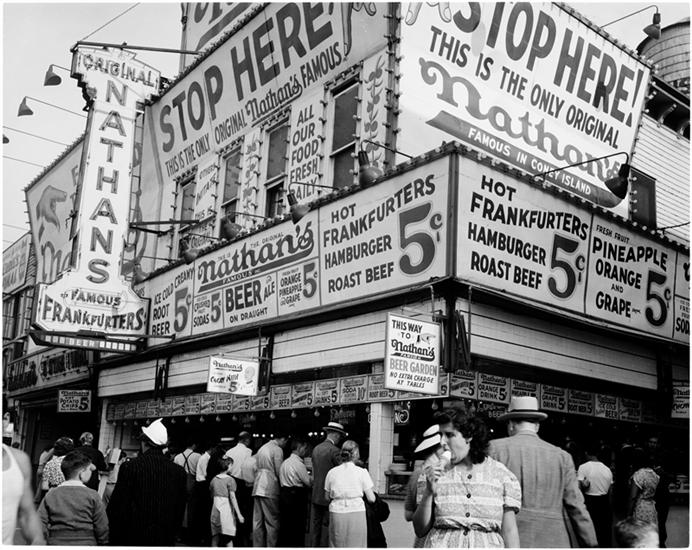
And what of Nathan’s? Handwerker’s business acumen and his wife’s grandmother’s recipe laid the foundation for an international empire whose products are now sold in more than 55,000 supermarkets, stores, and restaurants across more than 10 countries.
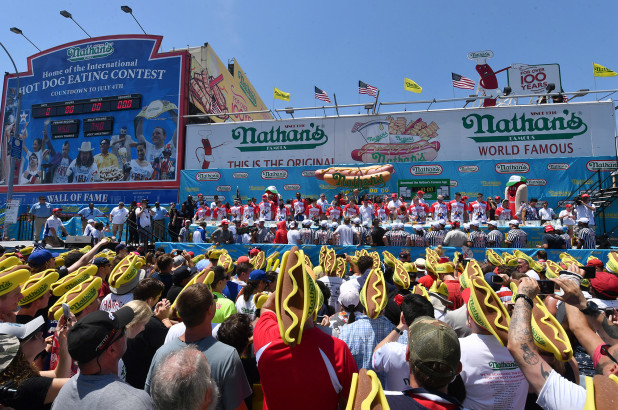 Nathan’s July 4th Hot Dog Eating Contest in 2019. The Hot Dog Eating Contest 2020 to take place without a live audience, because of the Covid-19 restrictions. The winner in 2019 was Joey Chestnut, winning since 2007 the contest 12 times in a row, except 2015, eating 71 hot dogs in a bun within 10 minutes. He also holds the world record with 74 HDB within 10 minutes.
Today, Nathan’s Famous Inc.’s international Hot Dog Eating Contest, which has taken place each 4 July since 1972 at its original Coney Island location, is televised across the country. While Nathan’s name and its annual gross income of more than $40 million now dominate Feltman’s franks, that doesn’t necessarily mean they’re the best. Allegedly, the Guinness World Records competitive eater Takeru Kobayashi (who knows a thing or two about seasoned sausage after winning the Nathan’s Hot Dog Eating Contest six straight times, 2001-2006) prefers the taste of Feltman’s. Click on Wikipedia to see what this slim and tiny Japanese guy can eat and how many competitions he already won, it’s amazing.
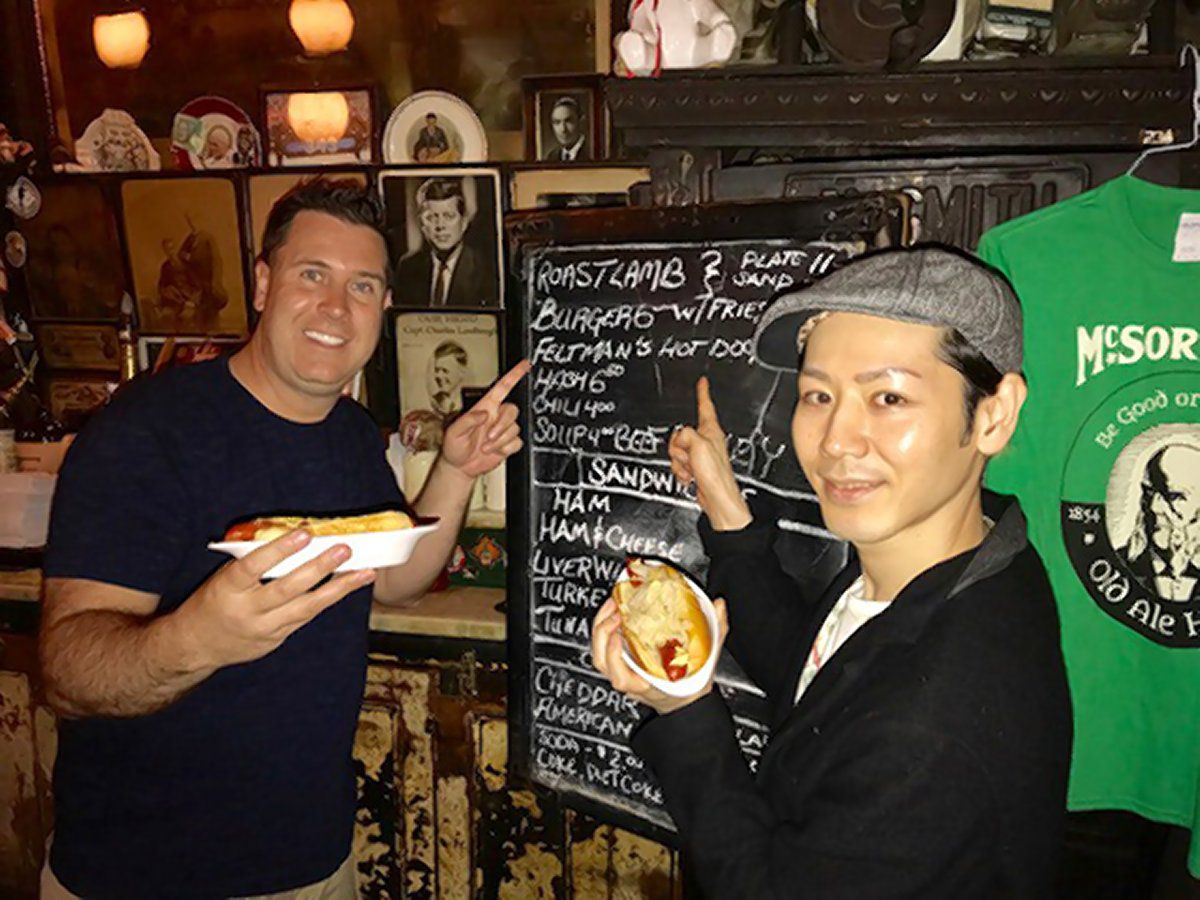
But don’t just take Kobayashi’s word for it. Find Feltman’s in the supermarket aisle, order Nathan’s across the globe, and decide for yourself which is your favorite.
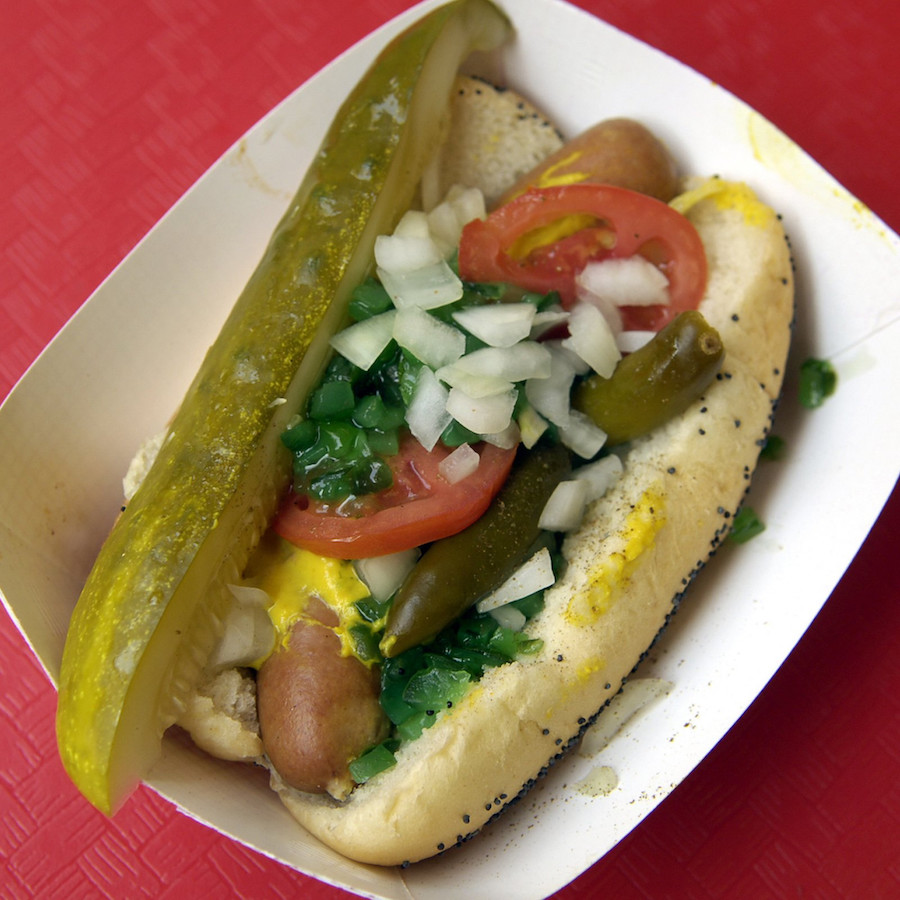
Today, the Chicago-style hot dog is an all-beef, natural casing hot dog topped with yellow mustard, chopped white onions, sliced or wedged fresh tomatoes, a dill pickle, and sweet pickle relish dyed bright green, pickled peppers, and a dash of celery salt served on a poppy seed bun.
 They like it sour (to many pickles for me) in Chicago.
Countries around the world from Sweden to Vietnam have taken the idea of the classic hot dog, with German roots and American zest, and have put their own twist on the comfort-food classic. Notice a few varieties from around the world.
12 Best Hot Dogs From Around The World.
Click on the pictures below, most of them will supersize, to get your mouth watering !
South Korea.
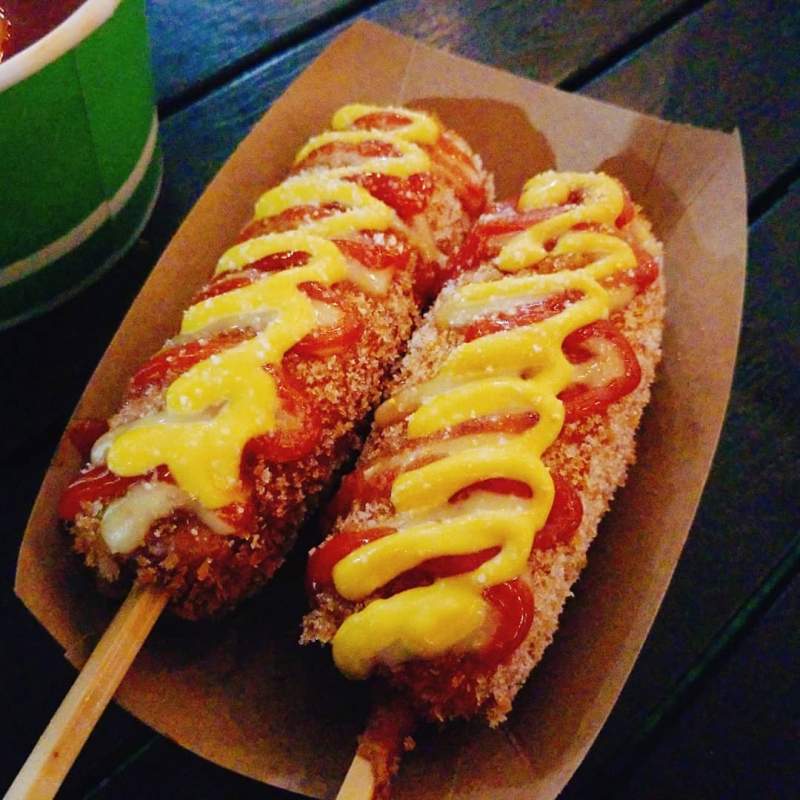
Hands down, these hotdogs are some favorite on the list. They come in a „corndog“ shape that is familiar to many Americans. The sausage is coated with delicious breading, deep-fried, and then served with ketchup and mustard. They taste fantastic,
Argentina/Uruguay.
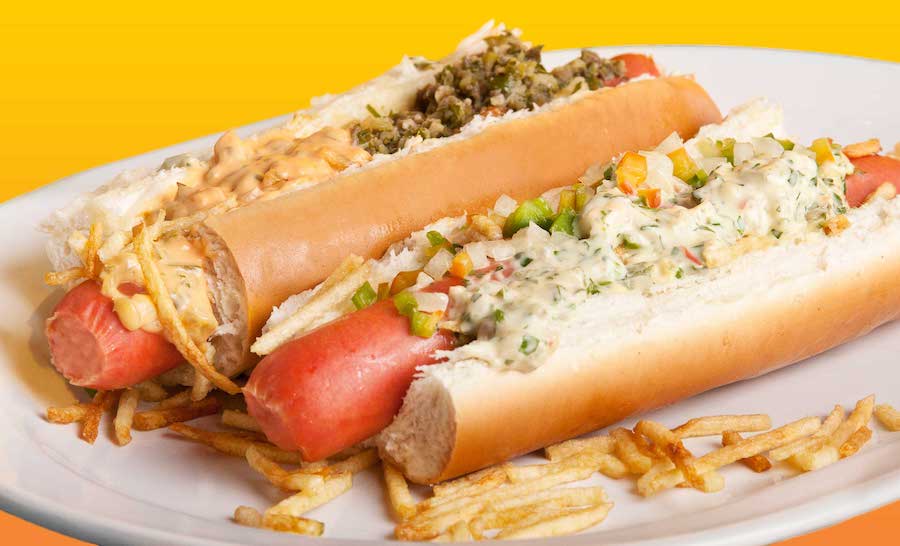
The Argentinian/Uruguayan Pancho is special because it’s, sometimes, very thick and large. In addition to that, they sprinkle it with thinly cut potatoes which they (adorably) call „Lluvia de Papa“ which translates to „potato rain“. These hotdogs are usually served with a sauce that is a mixture of ketchup, mayo, and mustard. And – most food stalls have a long list of additions, you like. I had hundreds of them in the last 10 years here.
Sweden.
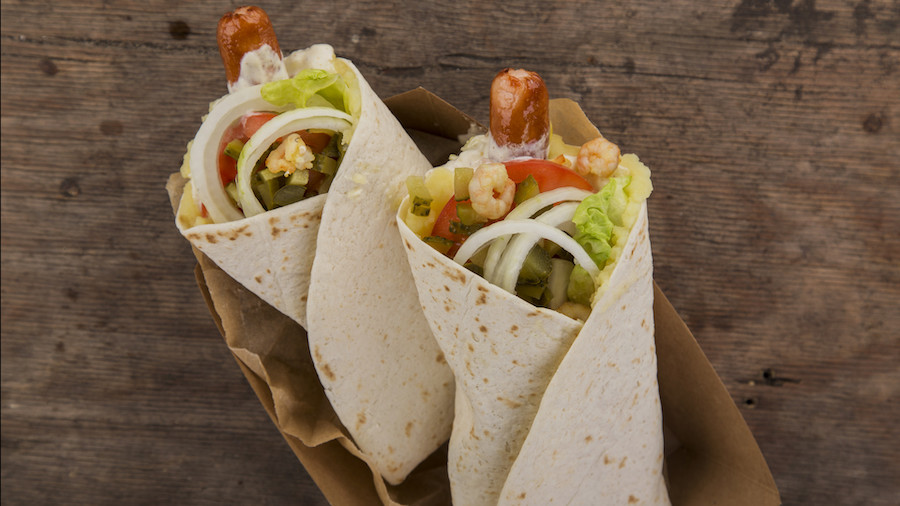
Okay, this hotdog is technically a wrap, called „Tunnbrödsrulle“, but I couldn’t skip it on this list. This hotdog is its own meal in and of itself! It comes with sausage, fried onions, mashed potatoes, and many other optional toppings to match your taste! During many trips to Sweden we had the chance to taste them over and over again, always delicious.
Germany.
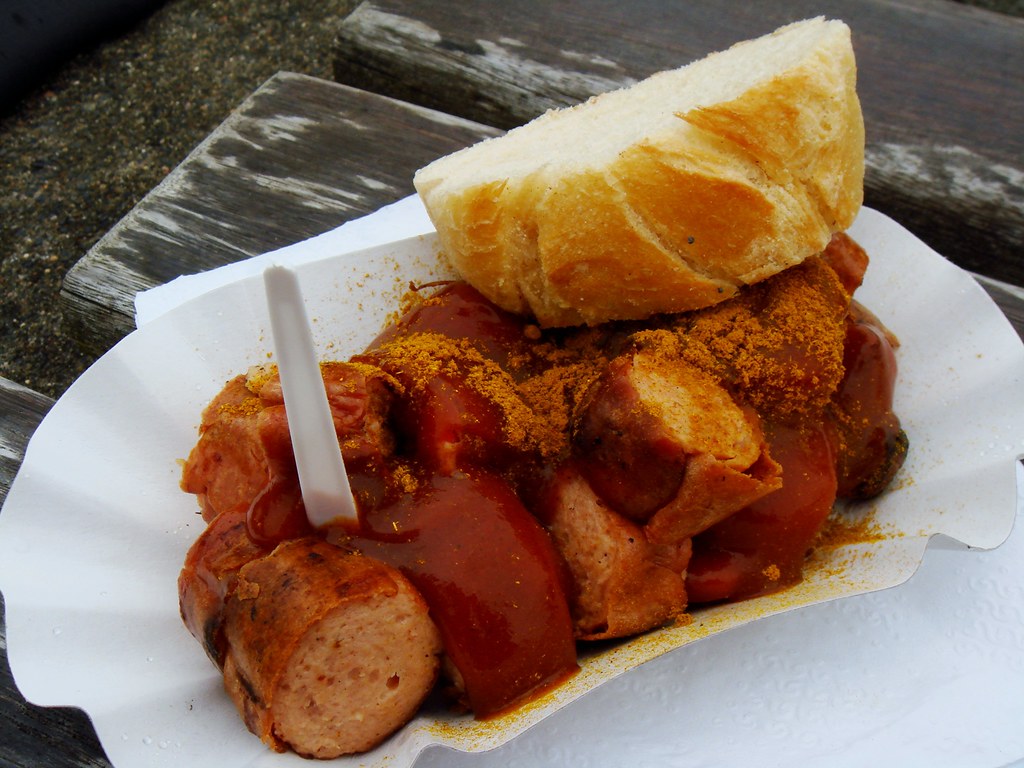

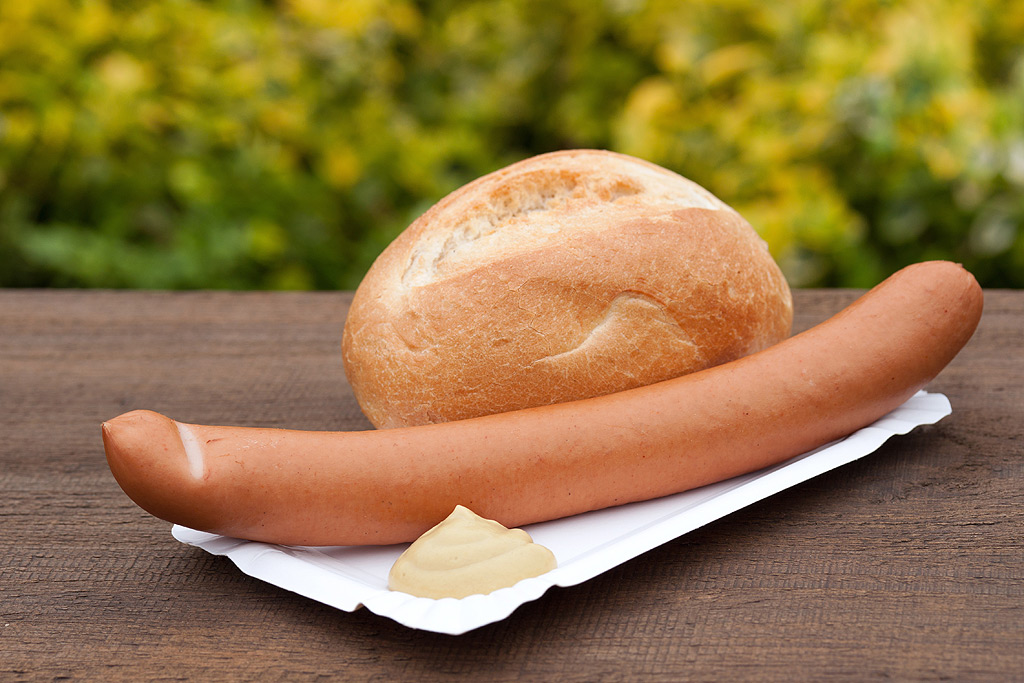
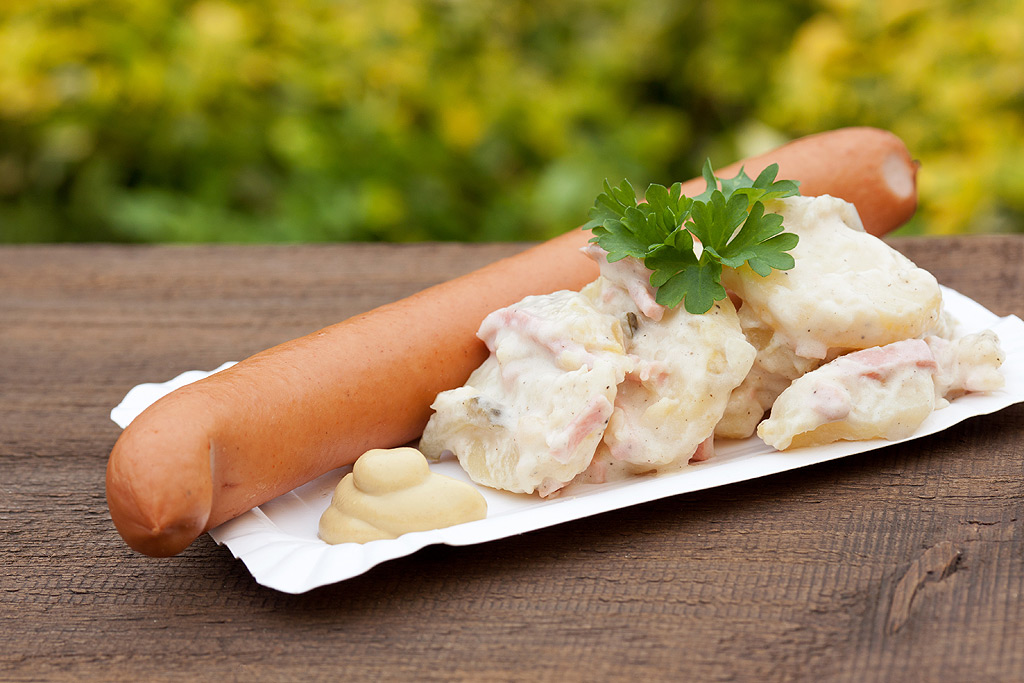
 This was/is the way how we German’s grow up with, a“Bockwurst“ (cooked Frankfurter or Wiener) with a roll or potato salad, both with mustard. The Currywurst is a later invention and based mostly with a „Bratwurst“ (grilled).
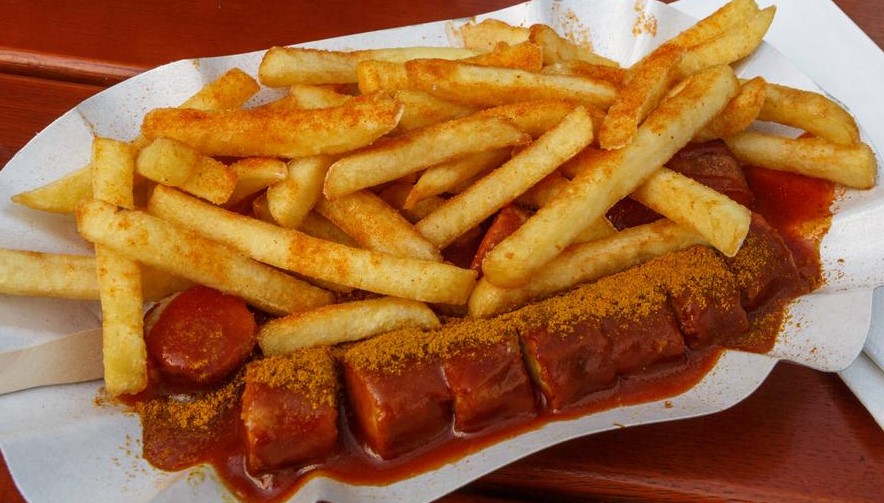
While there is no shortage of sausage dishes in Germany, especially the „Bratwurst“, the one that most resembles a hot dog today is known as „Currywurst“ and needs to be mentioned. In this case, the „bun“ is served on the side („Brötchen“ – a roll), and most often french fries instead. The main focus is the sliced Wurst topped with slightly spicy ketchup infused with curry. What would be a German without his „Wurst“ ?
Australia.
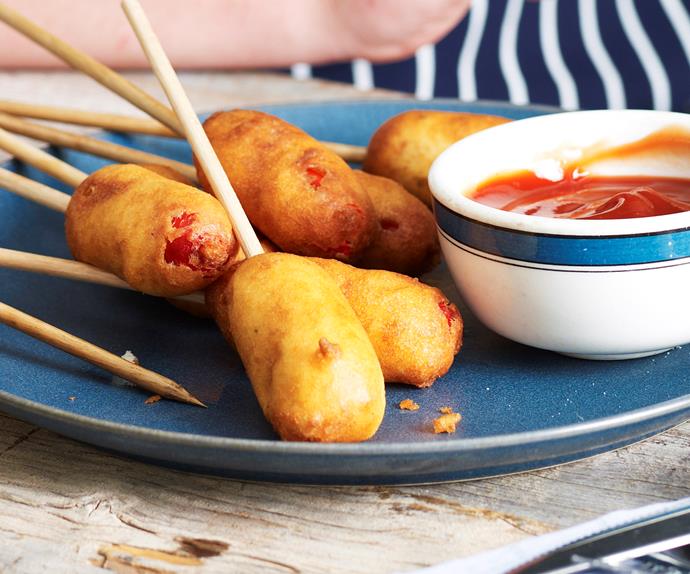
Australians serve traditional-style hot dogs on buns and top them with shredded cheese and fried onion. But one particular specialty is known by a few names: the „Dagwood Dog“ or the „Pluto Pup“ or „Dippy Dog“. This is essentially a dog that’s coated in wheat- or corn-based batter and then fried, similar to a corn dog, and then topped with ketchup to complete the Aussie delicacy. Not so much my taste at all. I liked more their sausage pie.
Hawaii.
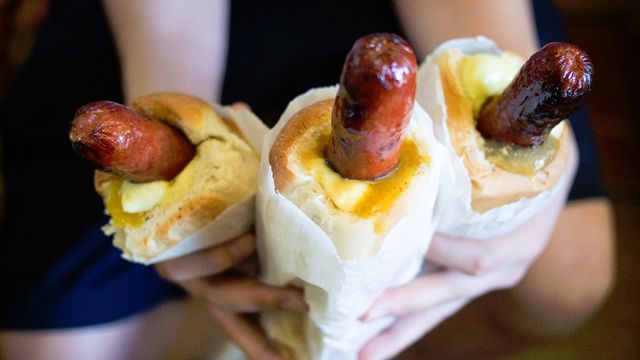
In the sunny state of Hawaii, locals are all about the pineapple. So, naturally, they even top their hot dogs with the delectable fruit. Known as the „Puka Dog“. It’s constructed by starting with the actual hot dog and tucking it inside a special mini loaf of bread. Then they top it with extras like pineapple relish, guava mustard, and garlic lemon sauce. I loved it very much, its a refreshing dog variation.
Venezuela.
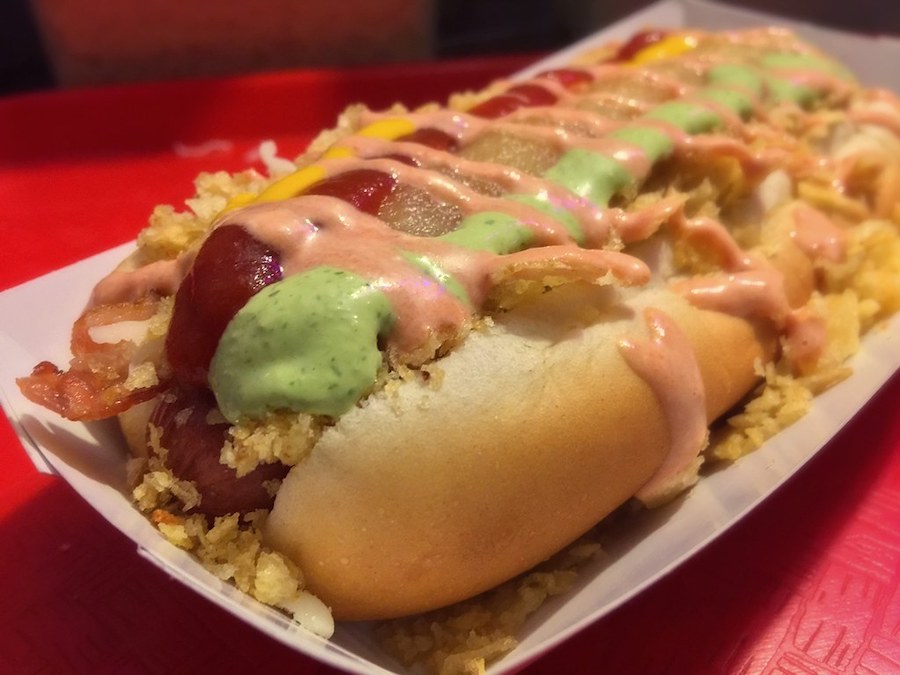
The „Perro“ (dog) or „The Asquerosito“ (the disgusting one) hotdog from Venezuela might seem like your basic „hotdog with everything“. But looks can be deceiving. Even though the base of the hotdog consists of typically boiled sausage, carrot, diced onions, and crispy potato sticks, it’s the sauce that makes these special. Beyond the classics like ketchup and mayo, you can also choose to go for a sweet corn sauce, barbecue sauce, or the Venezuelan special – „Alemana“ (a Curry infused German sauce). Delicious, trust me.
Mexico.
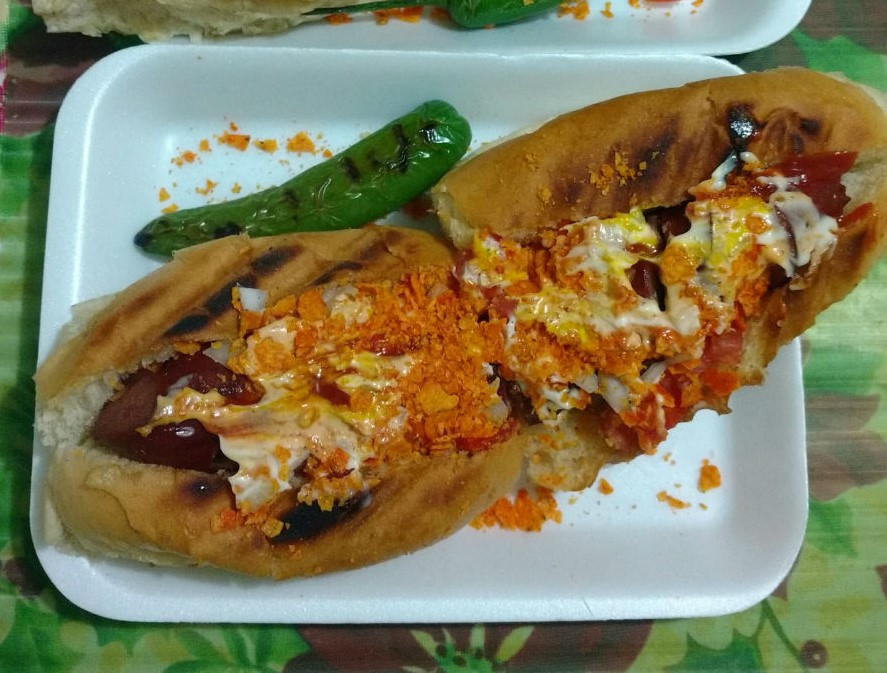
You know what makes absolutely anything better? Bacon. These Mexican hotdogs (appropriately named „Jochos“ or “Dogos”) come with sausages that are wrapped in bacon and then grilled, absolutely delicious. They often come with onions and tomatoes, plus chilli’s and beans to really double down on the food groups that make a dish „Mexican“.
France.
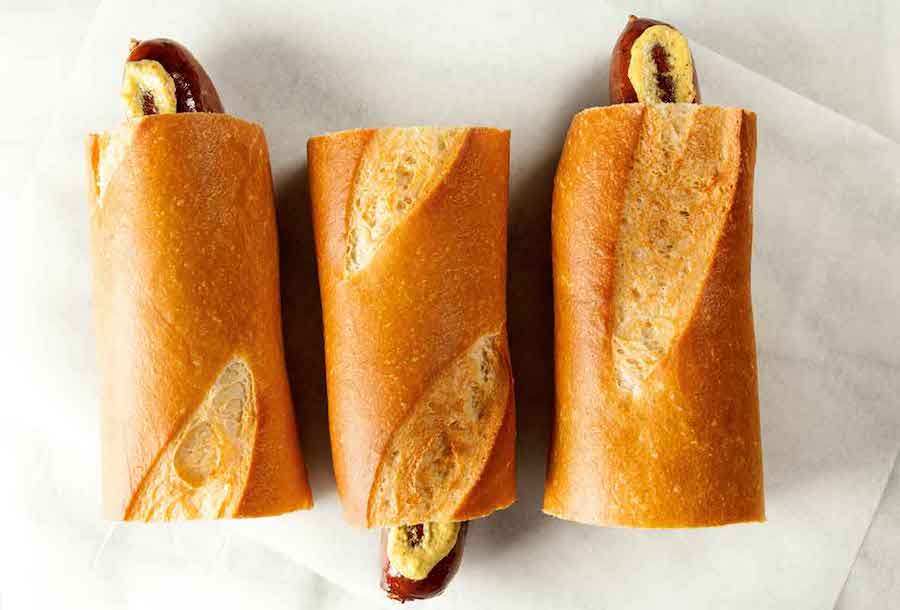
The go-to hotdog type of gas stations worldwide, the French hotdog is special because it comes with a sausage that’s inside a baguette, in a cavity of scooped out bread, and with a crispy crust. To make your French hotdog extra French – add some delicious melted Gruyére cheese (because, like the Mexican hotdog above – you have to double down on the stereotypes, being real French). Because of the amazing baguette its a favourite.
Netherlands.
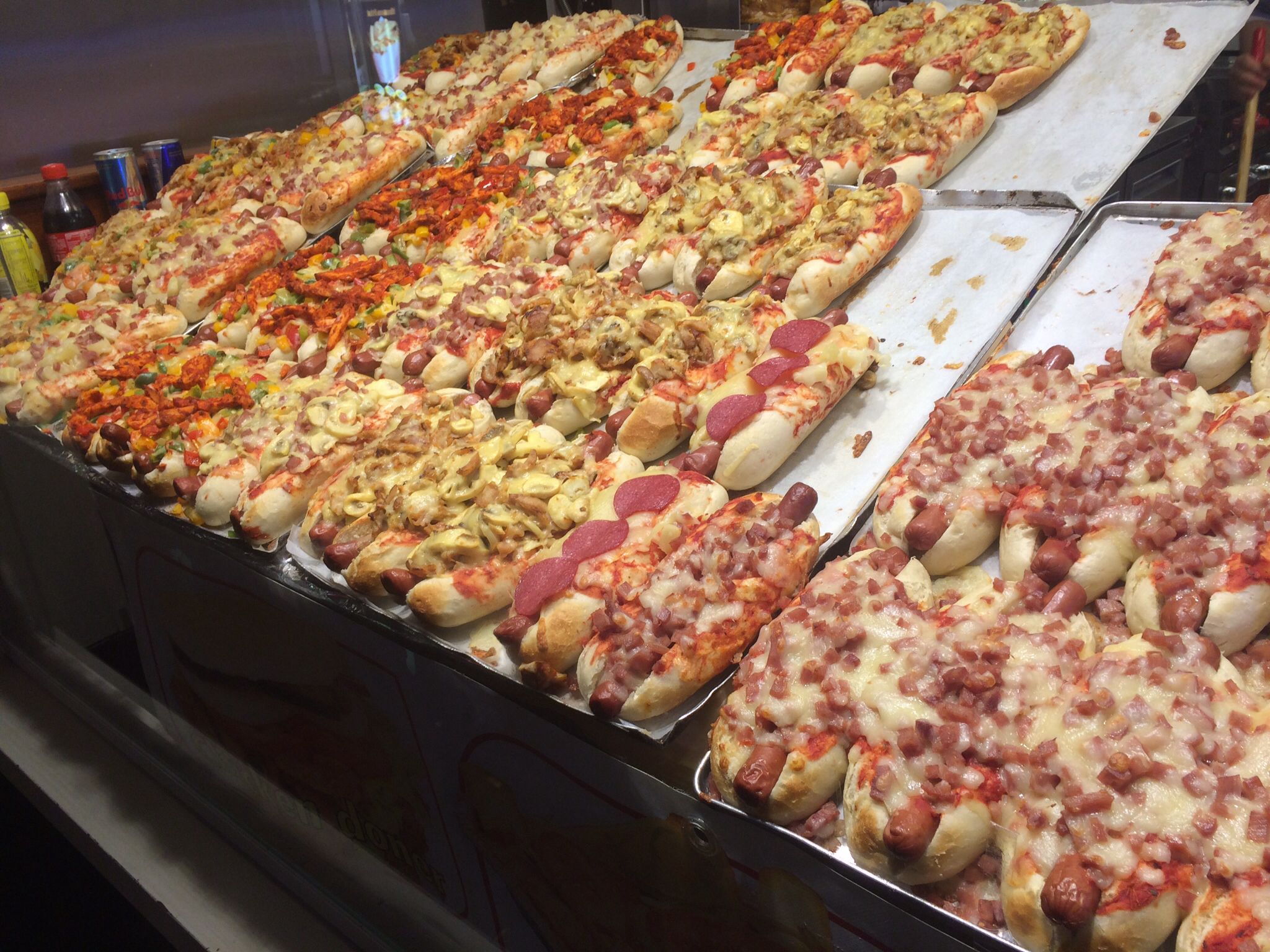
Amsterdam has a very serious version of the hot dog known to locals as „The Stoner“. The Amsterdam hot dog is a cross between a normal hot dog and a pizza, making it the perfect late-night snack for those visiting Amsterdam. There are dozens of varieties like you have dozens of pizza toppings. It’s a bun with sausage and lots of pizza toppings, then baked.
China.
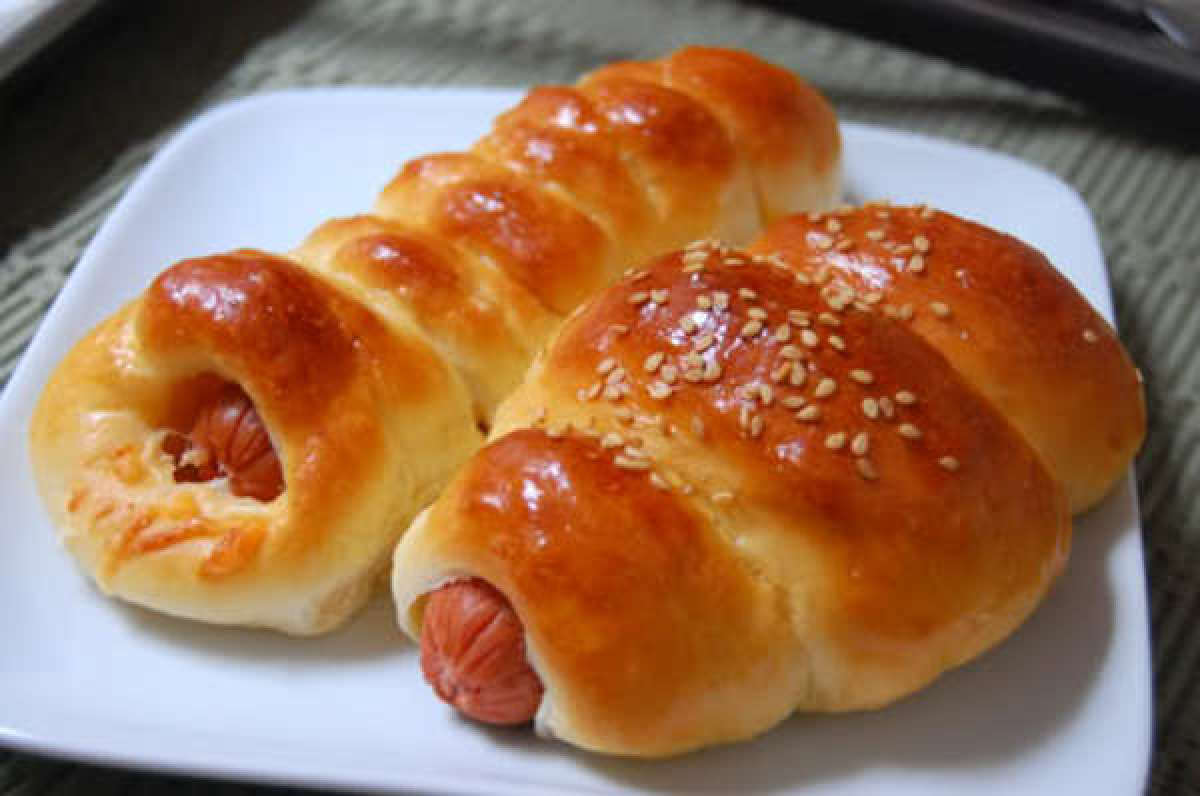
China’s hot dogs are baked inside warm, dough-like buns, very similar to the dumplings that the Chinese are known for. While they are smaller in size than American hot dogs, these yummy treats still satisfy. They are often topped with sesame seeds for an extra kick.
Iceland.
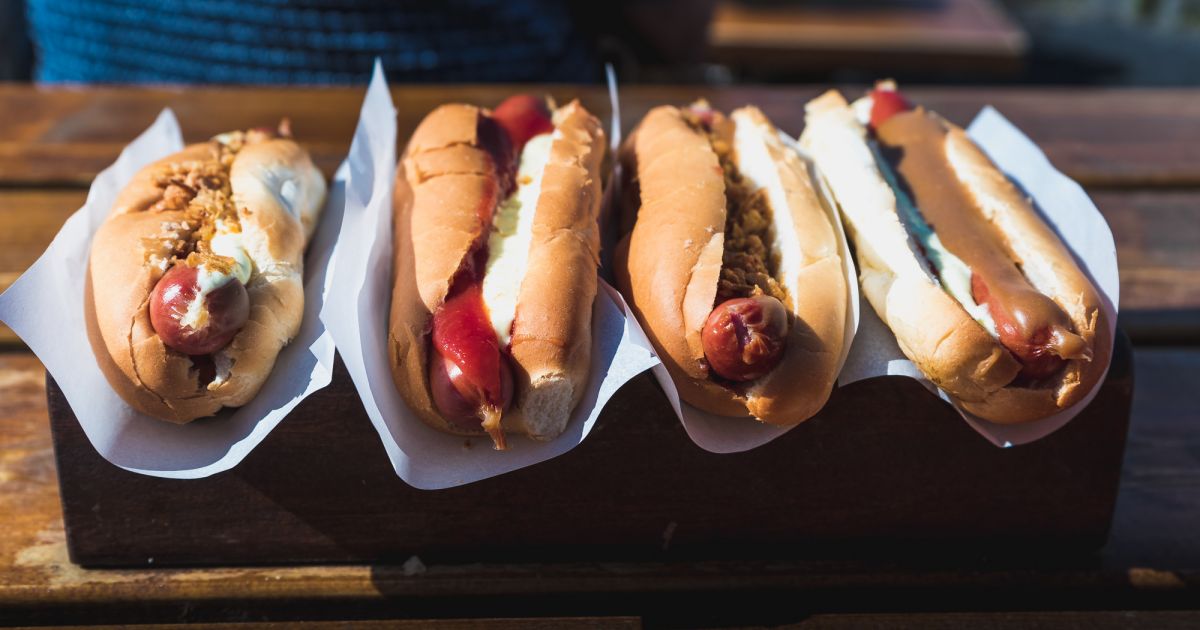
The Icelandic version of the hot dog starts with a frank that’s a mixture of pork, beef, and lamb. Then it’s topped with „pylsusinnep“, an Icelandic version of mustard that’s brown and sweet (looks a bit ugly like …. but it tastes good). The adventurous hot dog eaters top it with remoulade, a condiment made of mayonnaise mixed with capers, mustard, herbs, anchovies, and gherkins. That’s the „fishy“ influence of the island. Strange but „lecker“.
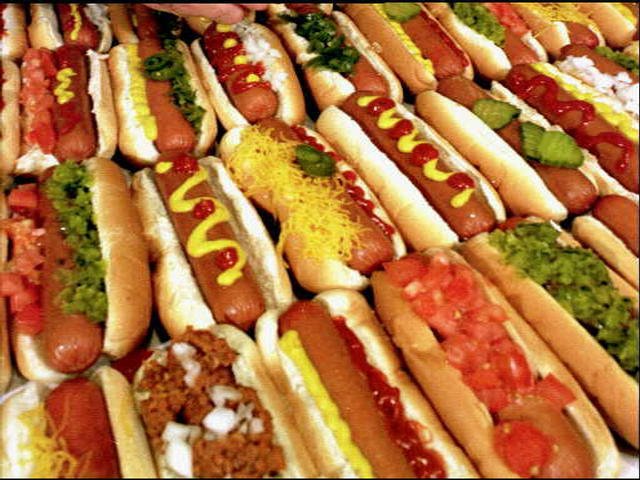
Every hot dog, stuck in a bun, is a canvas. And come summertime, millions of Americans become backyard food artists, covering their dogs with inspired combinations of toppings, from the canonical (relish, mustard, ketchup) to the totally avant-garde (peanut butter, bananas, Parmesan cheese). There are to be the most inspired patio Picassos out there. Don’t forget, about 160.000.000 are going down on the 4th of July anyway.
This is the „New German Hot Dog Cuisine“.
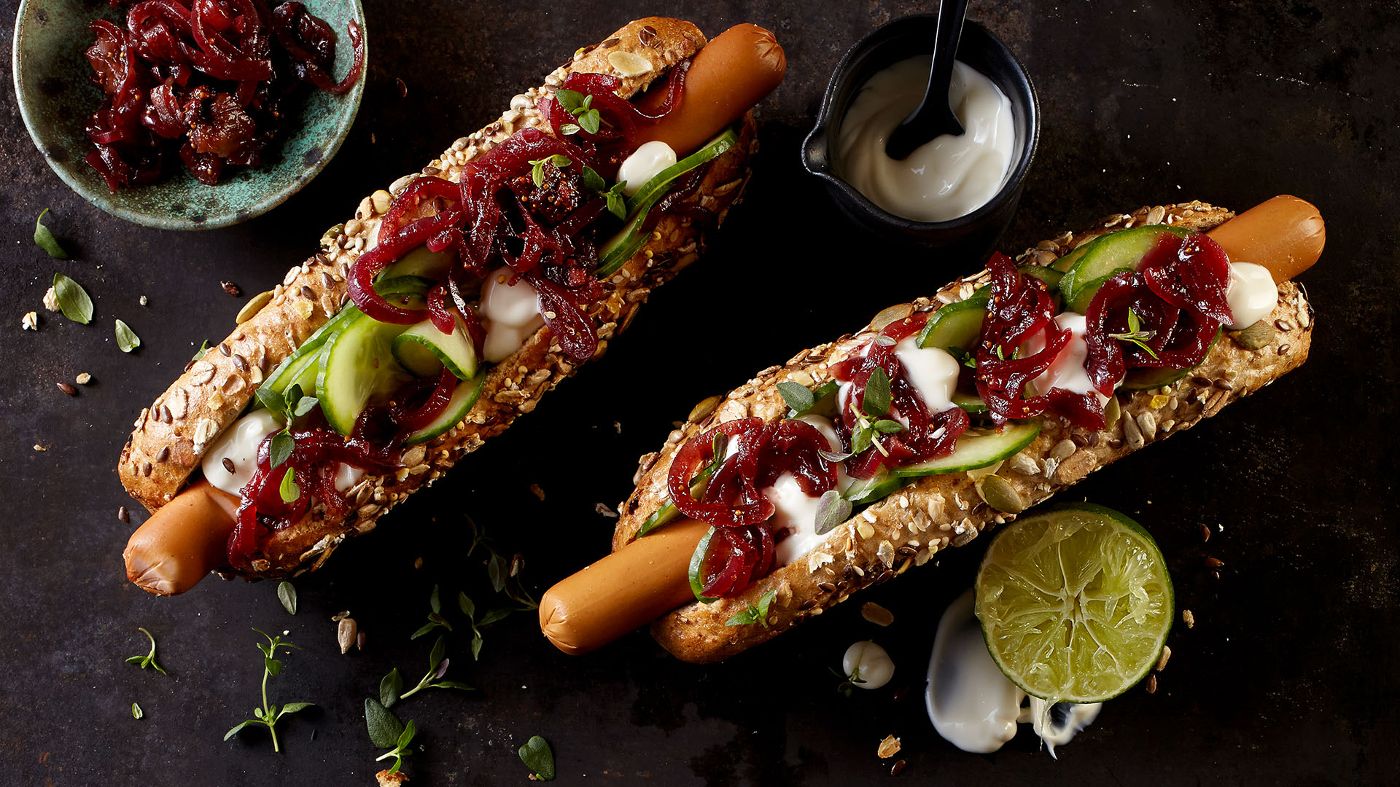
Vegetarian sausages, click on the picture above – delicious recipe down here:
Ingredients.
4 full grain bars – wholemeal sticks
250 g red onions
1 thumb-sized piece of ginger
1 garlic clove
25 g dried figs
20 g brown sugar
1 bay leaf
50 ml balsamic vinegar
peel of 1 untreated lime
50 g mayonnaise
1 cucumber
4 vegetarian sausages
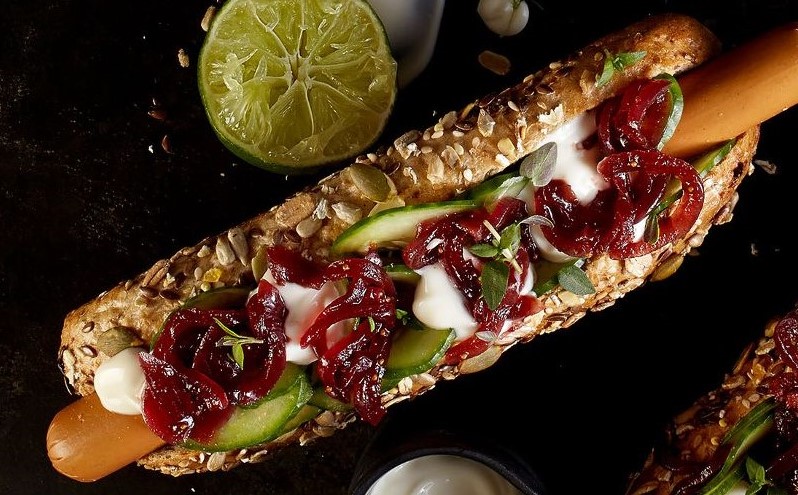
 German Vegetarian Sausages, excellent tasting hot dogs.

How to do.
Peel onions and cut them into fine rings. Peel and finely chop the ginger and garlic. Finely dice figs. Caramelise brown sugar in a pot. Sauté onions, ginger, figs, and garlic in it. Add bay leaf. Deglaze with balsamic vinegar and simmer on a low heat for 15 minutes. Let it cool down afterward.
In the meantime, mix lime zest and mayonnaise. Wash the cucumber, grate dry and cut into fine slices. Warm the sausages in water over low heat. Cut wholemeal sticks lengthwise. Spread with lime mayonnaise. Cover the lower halves with 1 sausage, cucumber and onion chutney each. Place the upper halves on top and serve.
Writing this article I was getting so hungry on hot dogs, that I had some today, 6 of them (yes I am a good eater). German Frankfurters light grilled in a German „Brötchen“ topped with ketchup, baked and raw onions, mustard, a few drops of Terriyaki sauce, and crispy ice salat aside, feeling full and happy now.
Taste yourself a Hot Dog this coming weekend. For you – Happy 4th of July !


You are so right Mike with your opinion about hotdogs Downunder. They are all worthless. Better having a good pie, steak and onion, kidney, or sausage chili pie, just to tell a few favorites.
CheeRoo around the globe.
LikeLike
Adding a comment sent to my private address:
Hi Mike,
you forgot to mention Switzerland. My home country has some excesses of hot dogs too.
Her the good, the bad, and the ugly.
Good:
I love mushrooms on a burger, so why not load up a hot dog with tons of sautéed mushrooms and a good helping of Swiss cheese?
These „Alpine hot dogs“ called, combine great mushroom flavor with yummy all-beef hot dogs and great creamy nutty Swiss cheese.
Every bite is delicious.
Bad and Ugly:
In the Steigenberger Hotel in Davos one can have this bad tasting and ugly looking dog for 38,–swiss franc (about US$ 42,–). It is a
tasteless sausage with some pickles and fried dry onions in a tasteless bun. A small bottle of Mineral water to wash it down will set
you back 7,–swiss franc (US$ 7,50).
Cheers Mathis.
LikeLike
Hello, my friendly readers,
thank you very much for your kind comments.
Thanks to Mathis for the critics about Swiss hot dogs !
Here an update from last Saturday, the 4th of July and
the held Nathan’s competition.
Coney Island in the US has hosted a special socially-distanced version
of an annual hot dog eating contest amid the coronavirus pandemic.
New records were set in both the men’s and women’s categories at the
climate-controlled indoor event in Brooklyn, New York City, on Saturday.
Californian Joey „Jaws“ Chestnut won the men’s division for the 13th time,
swallowing 75 hot dogs in 10 minutes.
Miki Sudo, from Connecticut, took the women’s title by downing 48.5 hot’s.
The contest is usually held outdoors and is watched by thousands of people
lining the beach, this year they had to make modifications because of Corona.
The Fourth of July competition – Nathan’s Hot Dog Eating Contest – has
reportedly taken place every year on the US Independence Day holiday since
immigrant Nathan Handwerker opened his stand on Coney Island in 1916.
If you are interested, watch the following YouTube movies, worth while:
Hope you enjoyed the „hot dog story“. Till next week with another highlight,
stay healthy, cheers, Mike.
LikeLike