
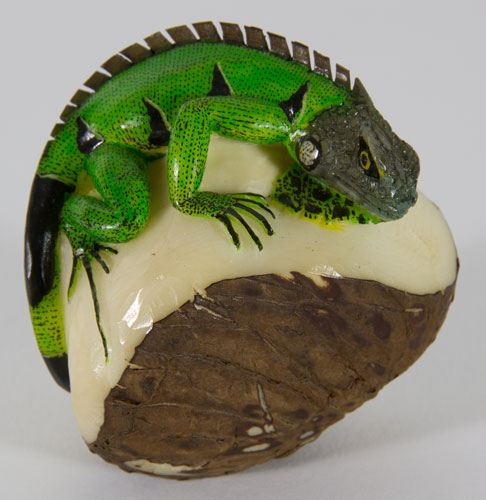
 Finest Tagua Nut art.
For many years we lived in Panama, there we came of course across the indigenous local artists. Just visiting one of the many souvenir markets or events could bring you in personal contact with them. Or, as we did, an adventures tour through the Darien jungle.
During the years I was always fascinated how creative the aboriginal descendant carvers used the palm-nut (Tagua Nut) to produce fantastic little items, mostly simulations of the domestic wildlife. I couldn’t resist to buy some of these local souvenirs. Because they are so beautiful that I like to tell you about and show to you some items out of my collection.
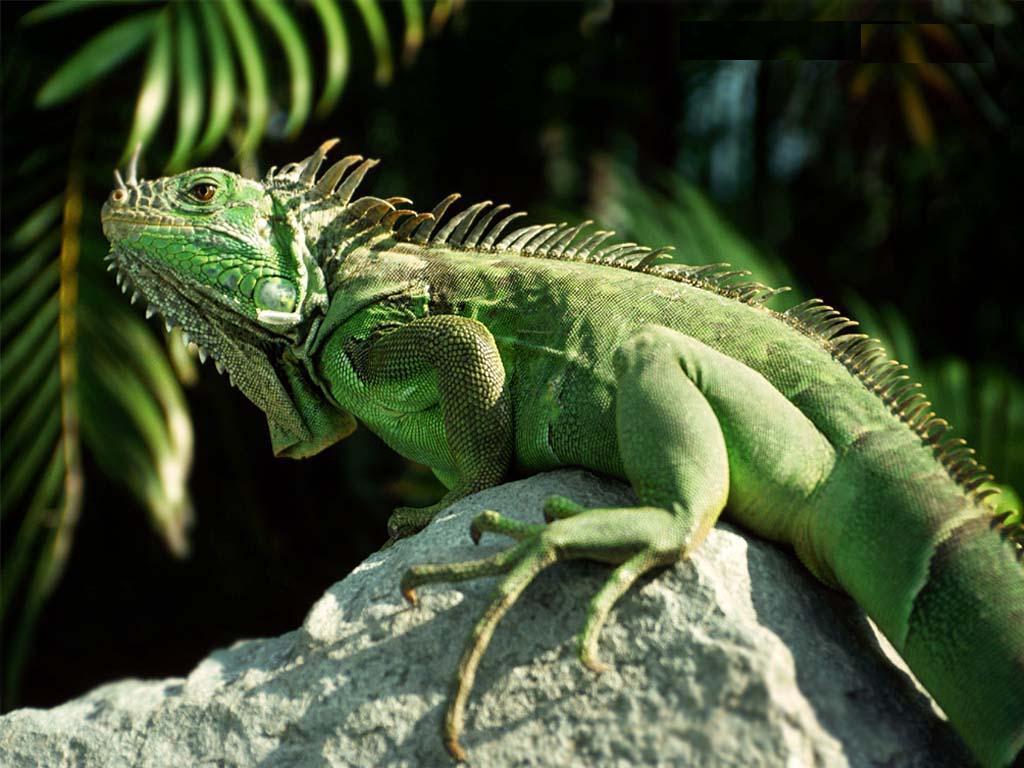
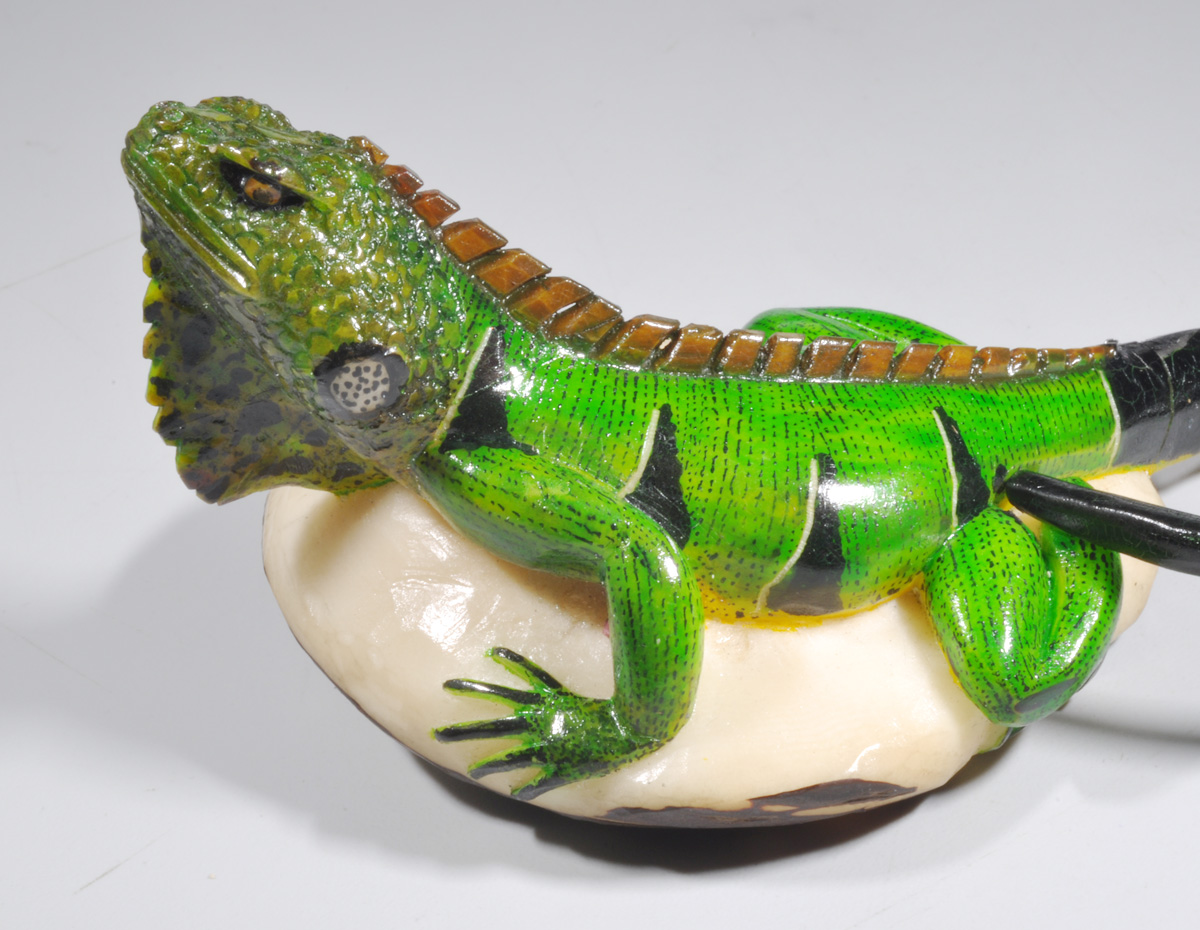
 The green Iguana. Native to Panama, this one has about 50cm body length without the tail (they can reach up to 2 meters in total). Often held as pets, completely harmless, they nurture fruits and vegs. Indian artists like to carve them into Tagua Nuts as you can see above, but then just 4cm long.
The Elephant Palm.
Since 1990, when the ban on trading ivory came into effect, vegetable ivory has celebrated a veritable comeback.
Some members of the arecaceae (palm plants) family, phytelephas macrocarpa and phytelephas aequatorialis, produce so-called vegetable ivory. The name derives from the greek phyton for „plant elephant“ (phyto-elephas) which evidently needs no translation. Hardly has a nickname been more justified, as a glance at the physical data given below will testify.
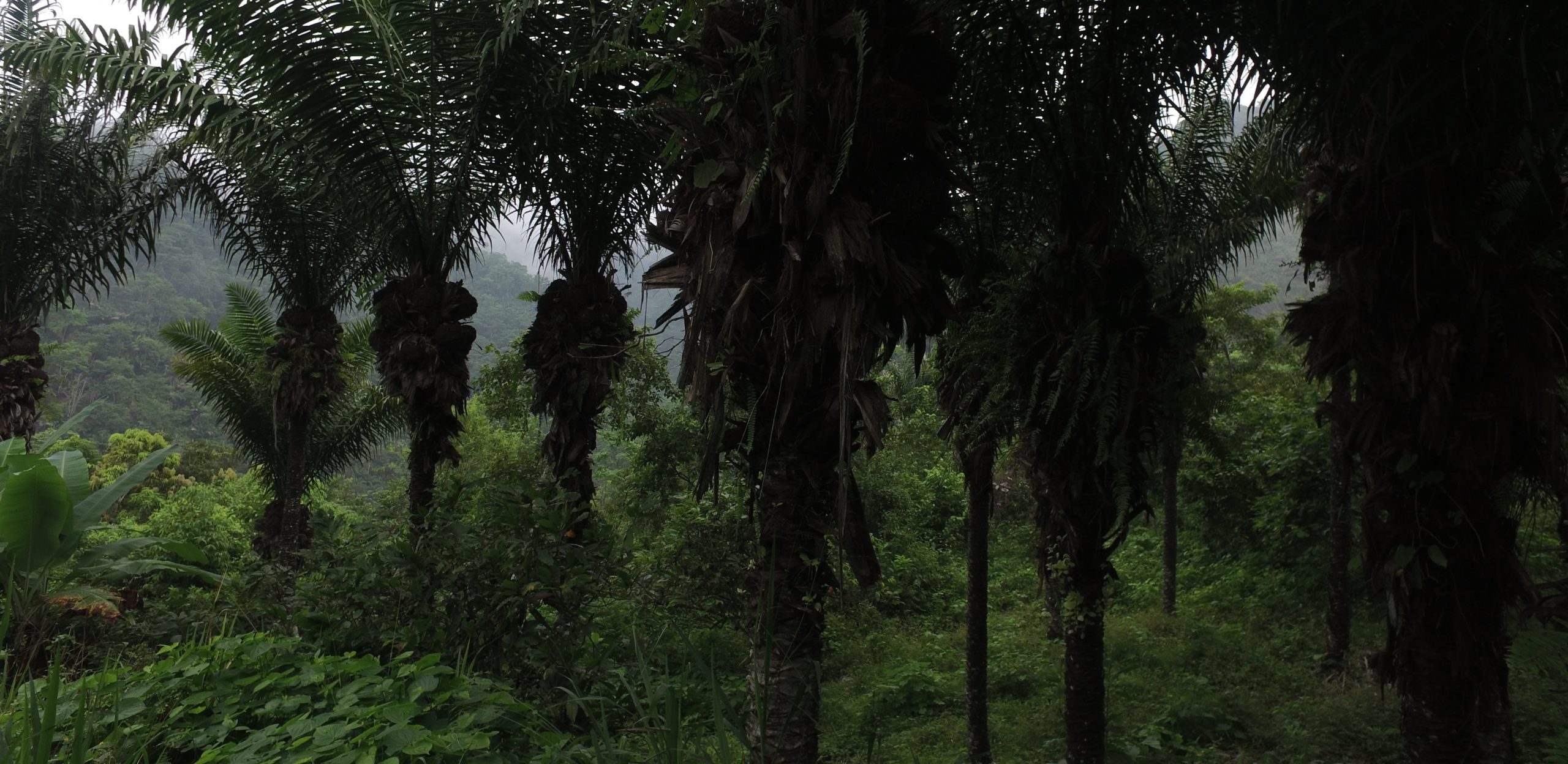
This very attractive plant prospers in the humid rain-forests of the Central and South Americas, from Panama to Ecuador and grows medium size to a height of 10 meters.
Female specimens of the Ivory-nut Palm, as it is commonly called, bear fruits reaching the size of a watermelon and weighing up to 10kgs. The fruits grow in clusters, so-called cabezas, containing 6 to 9 seeds each, which can be up to 15cms in length.
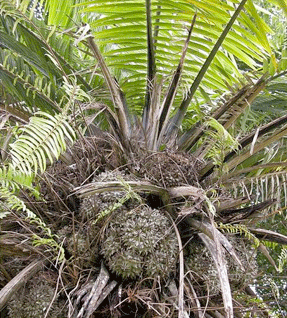 Fruit clusters of the Ivory-Nut-Palm.
The majority of these „nuts“, however, measure 4 to 6 cm. In Ecuador, the main producing region, these nuts are called Taguas, a name which quickly took hold in the international trade language.
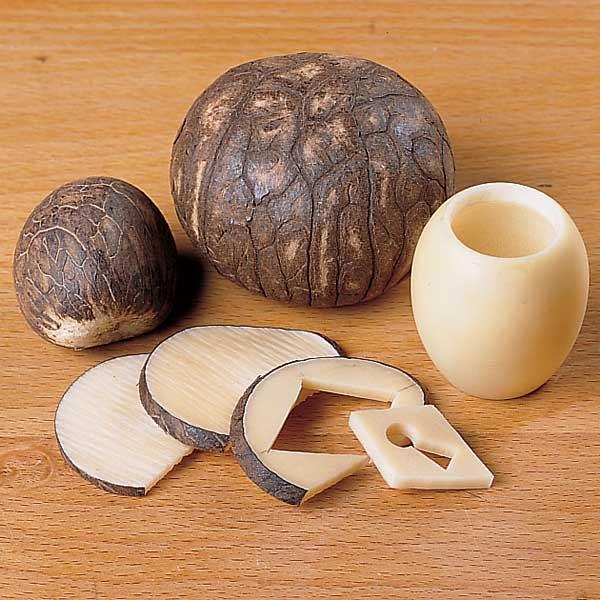
Freshly harvested Taguas contain a milky fluid, not unlike coconut milk and equally potable, and need to dry in the sun for several months. During that drying period the milky fluid solidifies and reaches its final hardness.
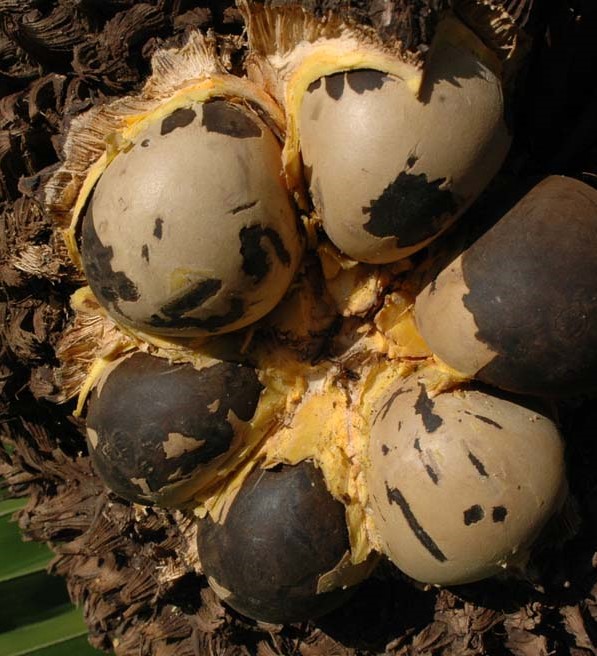
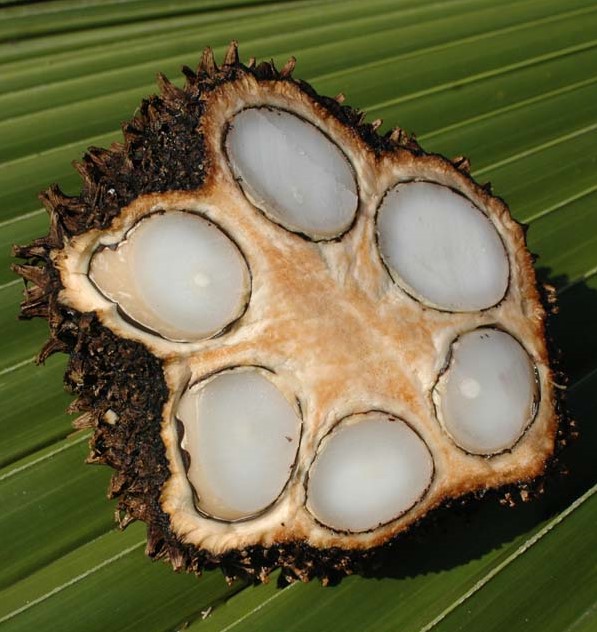
Do you know the Tagua Nut ?
The carvings on the Tagua Nut originally depicted the various animals of the region; however, in the 19th century, several household items such as buttons (notice the antique Tagua Nut buttons in the head-picture above), jewelry, figurines, billiard balls, dice and chess figurines, formerly made of animal ivory, began to be produced as a cheaper and renewable alternative which could easily be colored by the use of dyes.
 Some primitive tools produce finest art work.
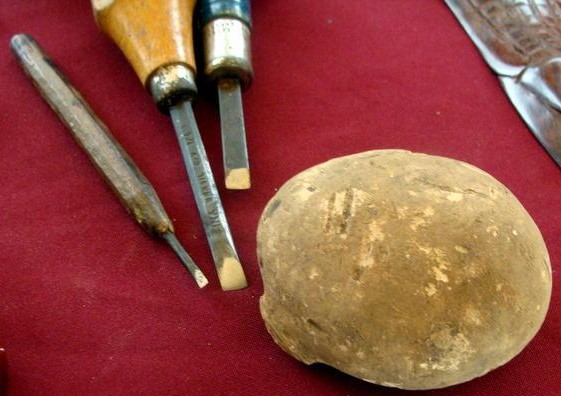
Tagua Nuts, when ripe, are fully edible and have a consistency of jelly, the center of which holding a milky-sweet liquid. Once these nuts fall from the palms they are harvested and dried for several weeks. After they are dried, Tagua Nuts are made of pure cellulose.
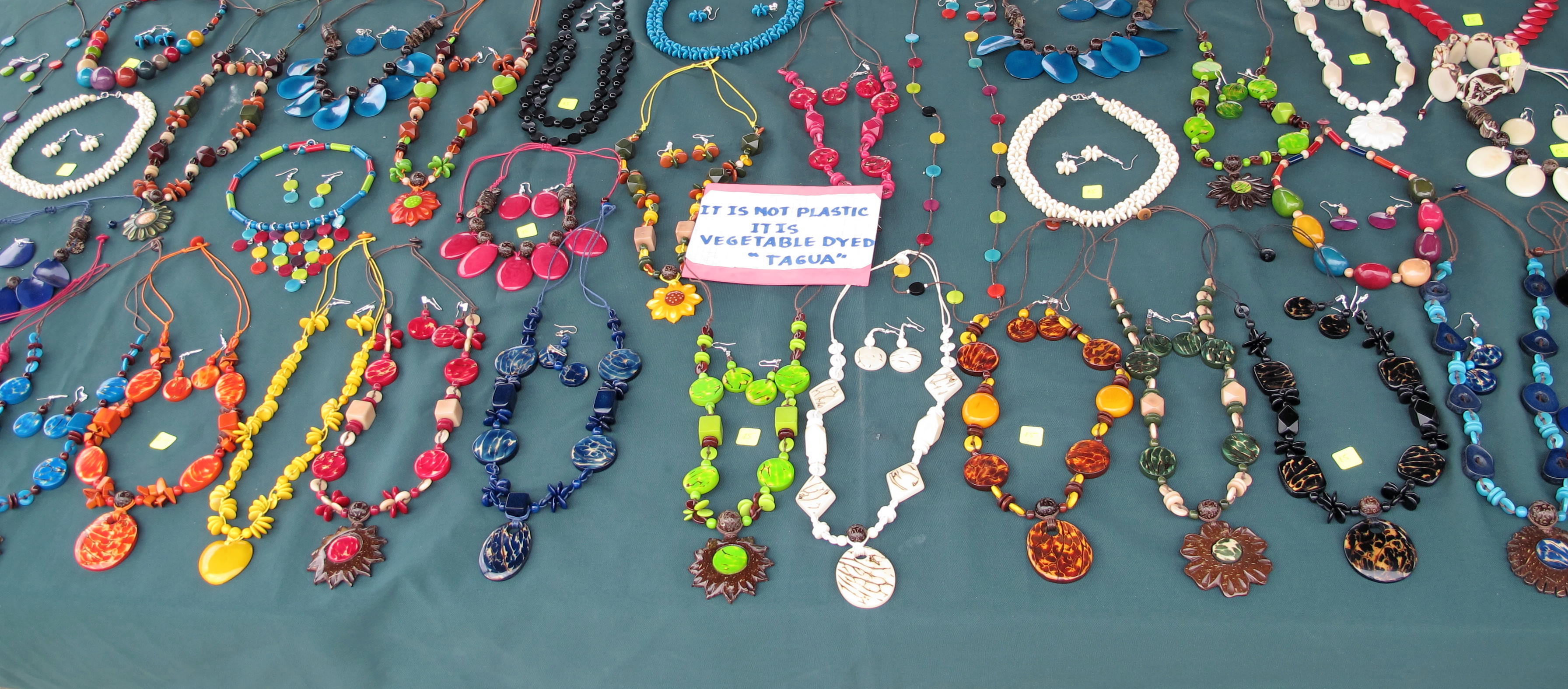
Indigenous peoples such as the Embera and Wounaan (formerly known as the Choco tribe of Panama, which was wrong) maintain a sustainable income from the production and sale of Tagua Nut carvings. Due to this income, the increasingly declining rain-forest does not need to be cleared for farmland or pastures for grazing animals.
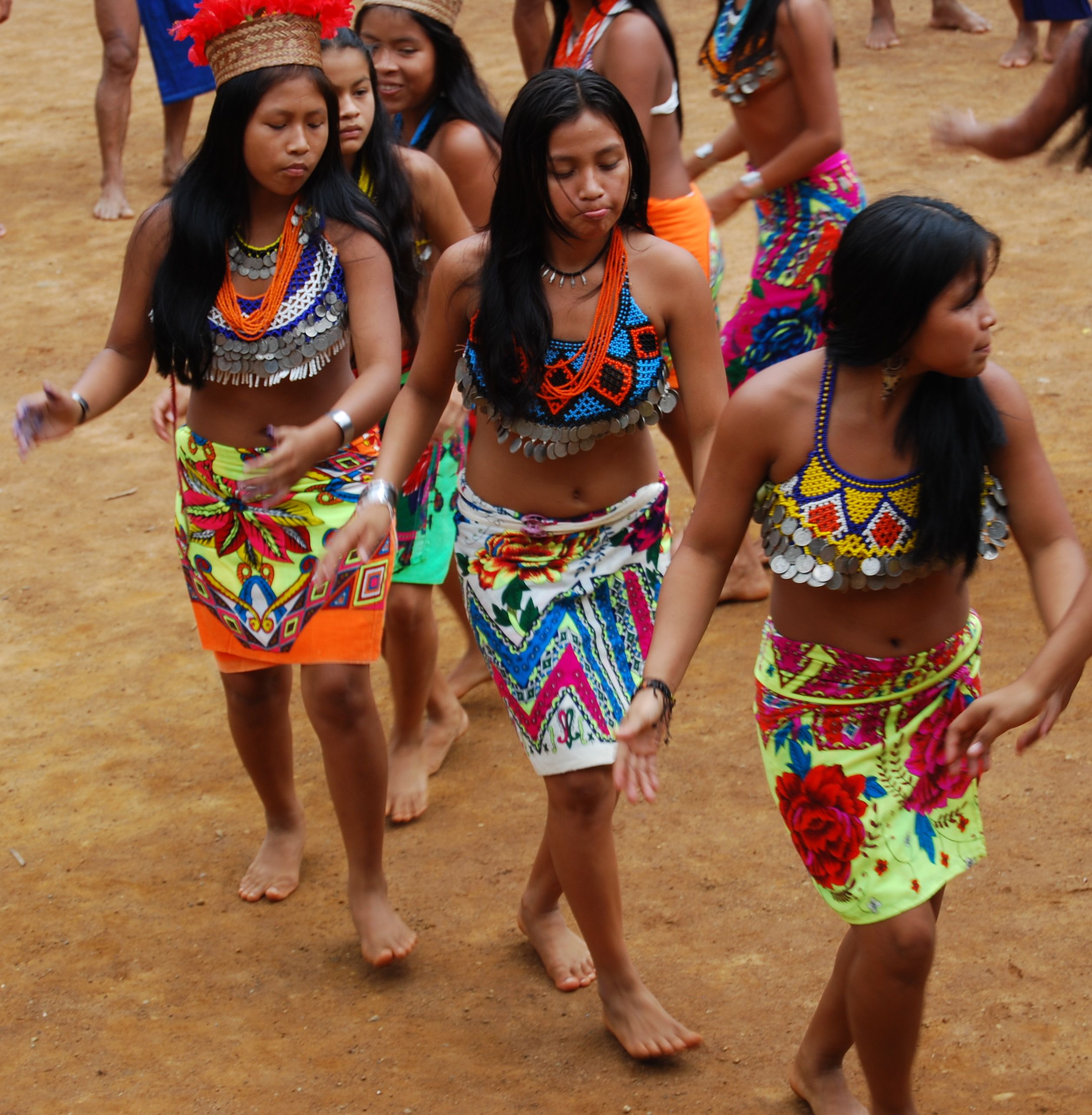
 Embera girls performing a traditional pelican dance. They all wear their colorful skirts and tops made from shells, Tagua Nuts and coins.
The Darien Jungle.
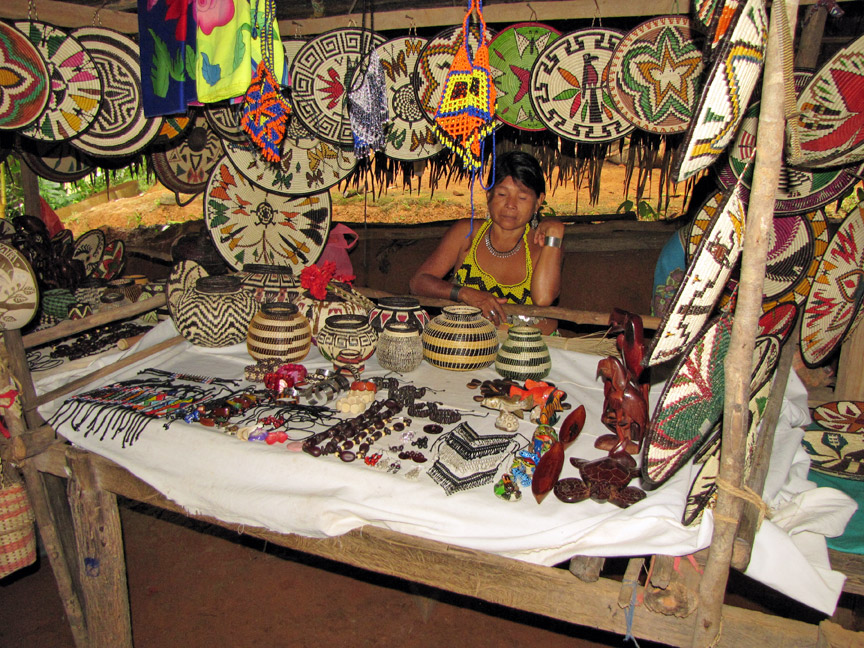
The Darien jungle region in Panama is home of the Wounaan and Embera Indians which are famous for the handcraft of Molas, Tagua Nut Carvings and Baskets, see both pictures down here. The Wounaan and Embera traditionally live in the Choco Bioregion, the tropical rainforest lowlands on the Pacific Coast of Eastern Panama and Colombia.
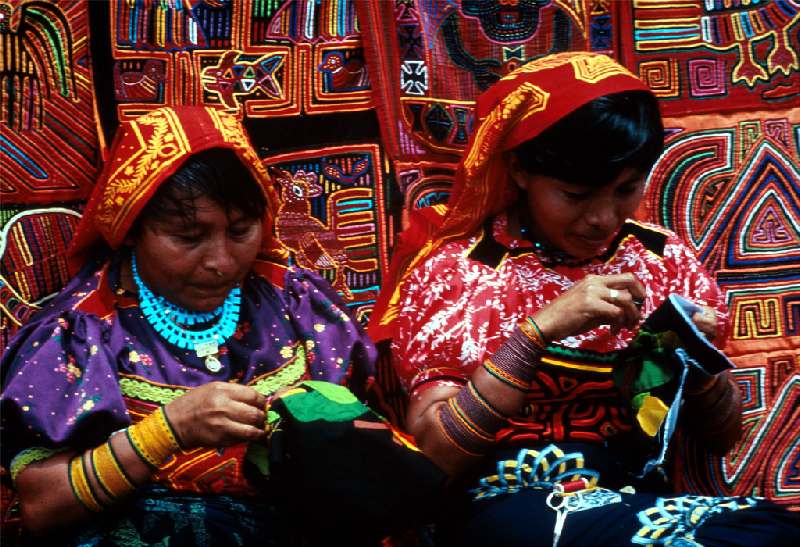
Its called Darien Province in Panama and Department of Choco in Colombia. This is land that is so difficult of access that even today the Pan-American Highway (highway 1 in Panama or the Interamericana) stops at the town of Yaviza (that point called „The End of Safety“) in Panama and does not continue on through the 106 kilometer long „Darien Jungle Gap“, now the Darien National Park. It is the only section of the highway between Alaska in the north and Tierra Del Fuego in the south that is still missing.
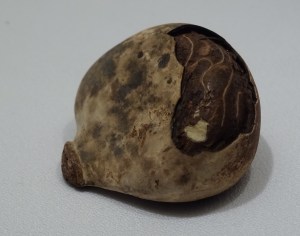
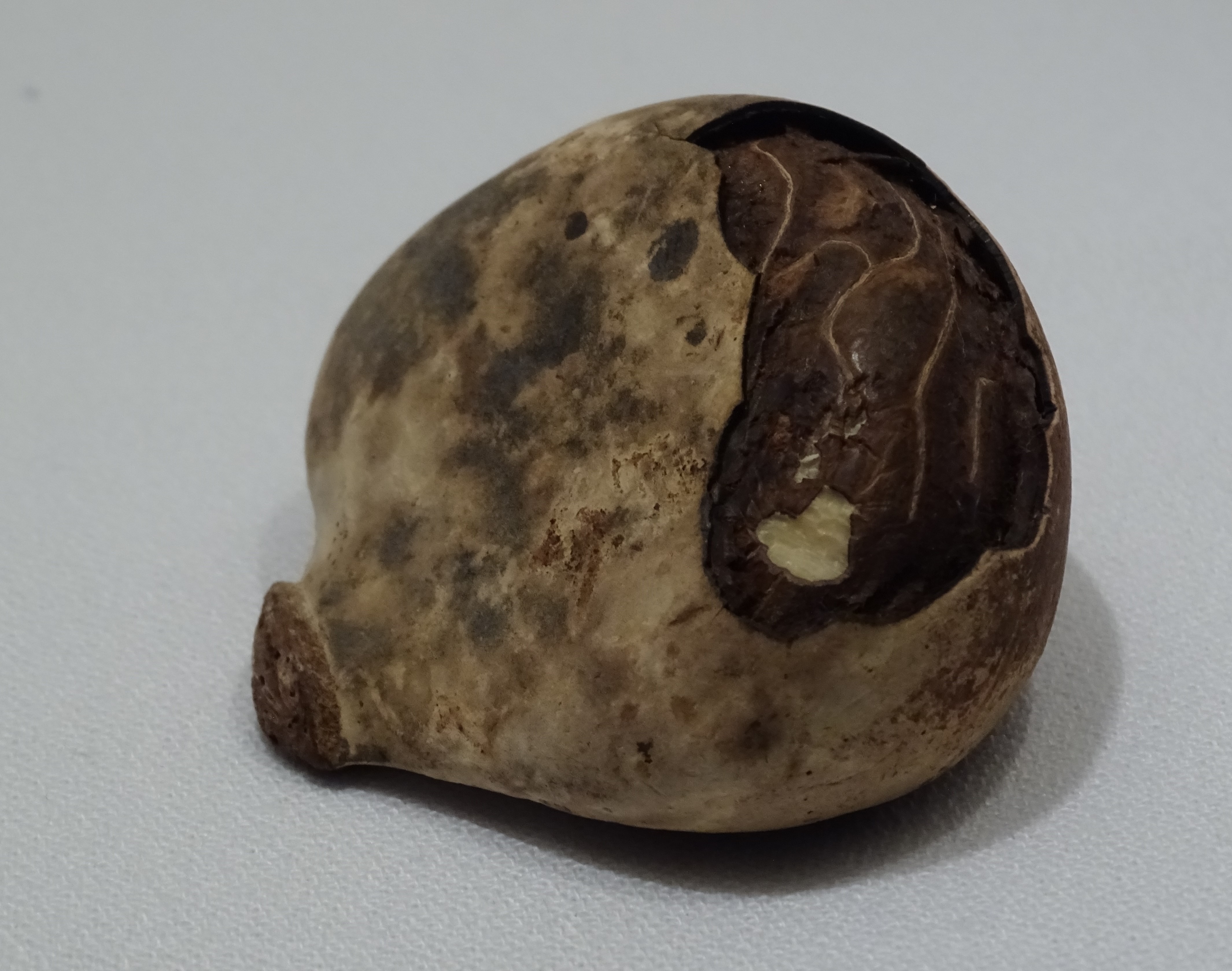
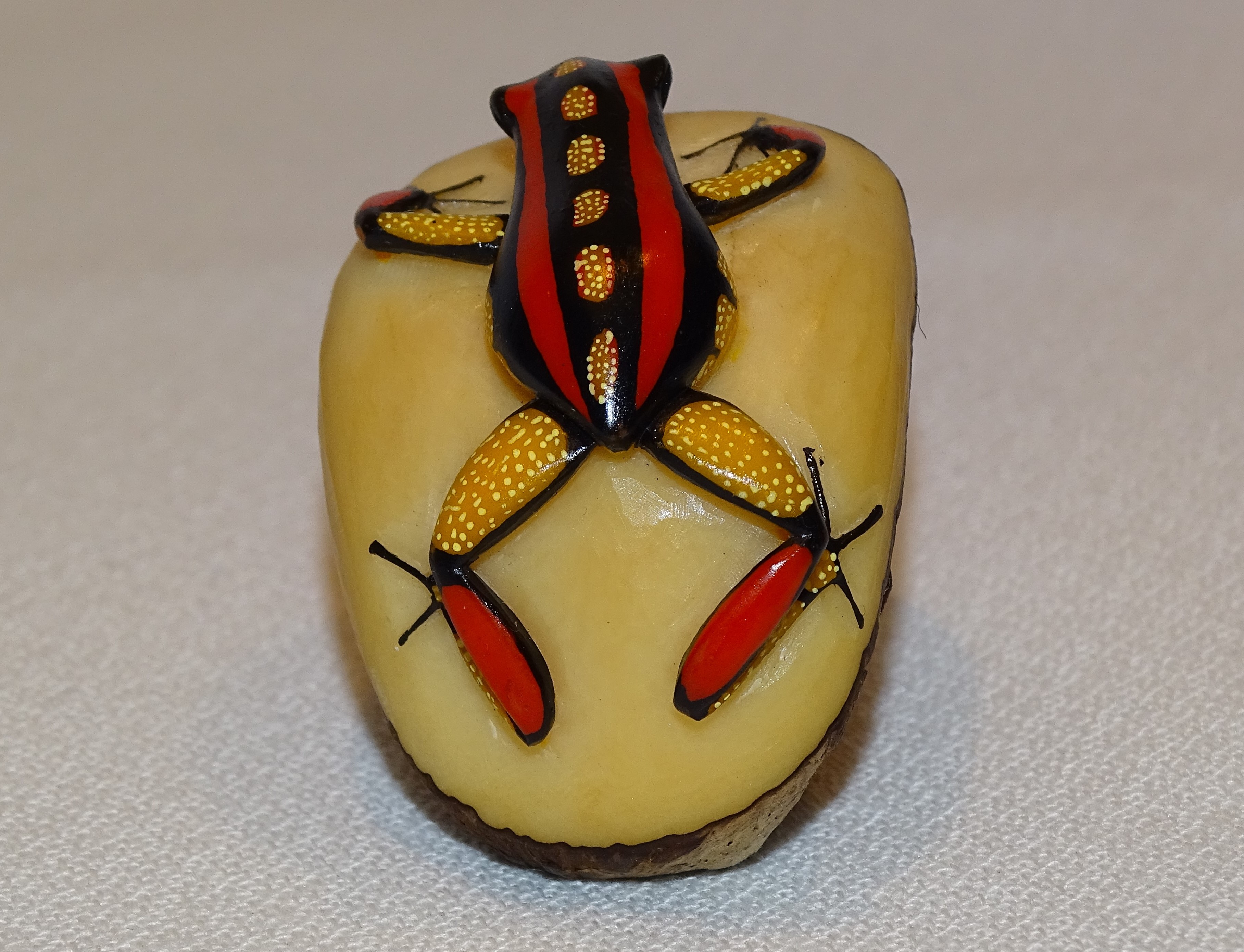
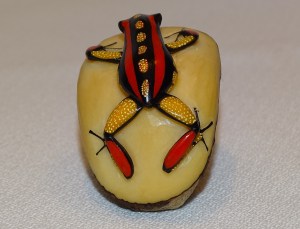 Left the raw nut and right what an artist is carving out of it. This beautiful little firefrog item measures 7×4 centimeters and was carved 2006 by Hernan from the Wounaan tribe in Panama.
Inexpensive Vegetable Ivory.
Before the introduction of inexpensive plastic buttons, about 20% of buttons manufactured in the United States were made from Tagua Nuts. In the 1920’s Tagua exports brought $5 million per year into Ecuador. Ecological groups have been instrumental in increasing the number of major companies who are once again using Tagua, a sustainably harvested natural resource, for buttons. See head picture of buttons.
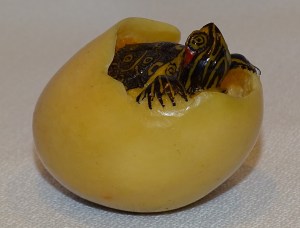
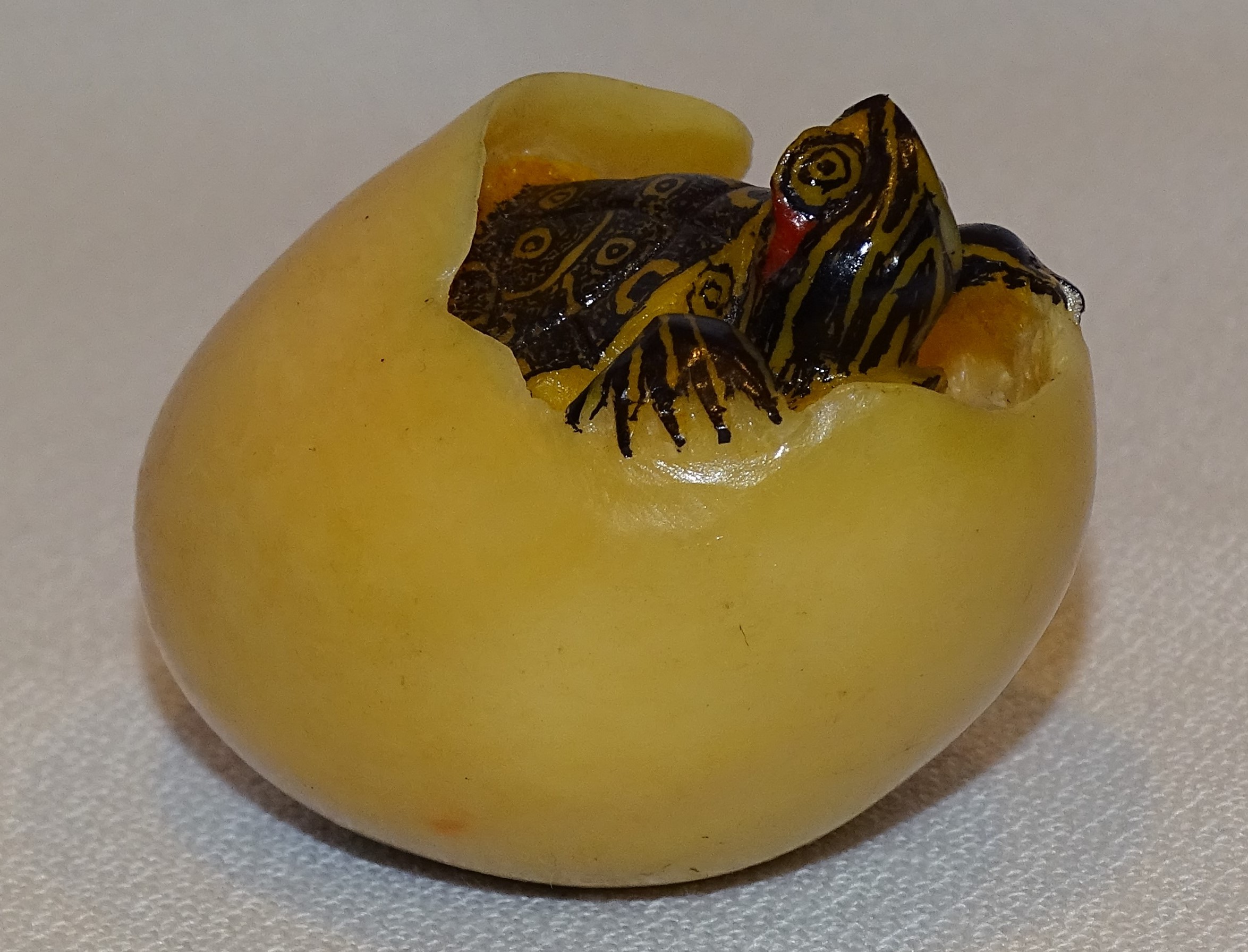
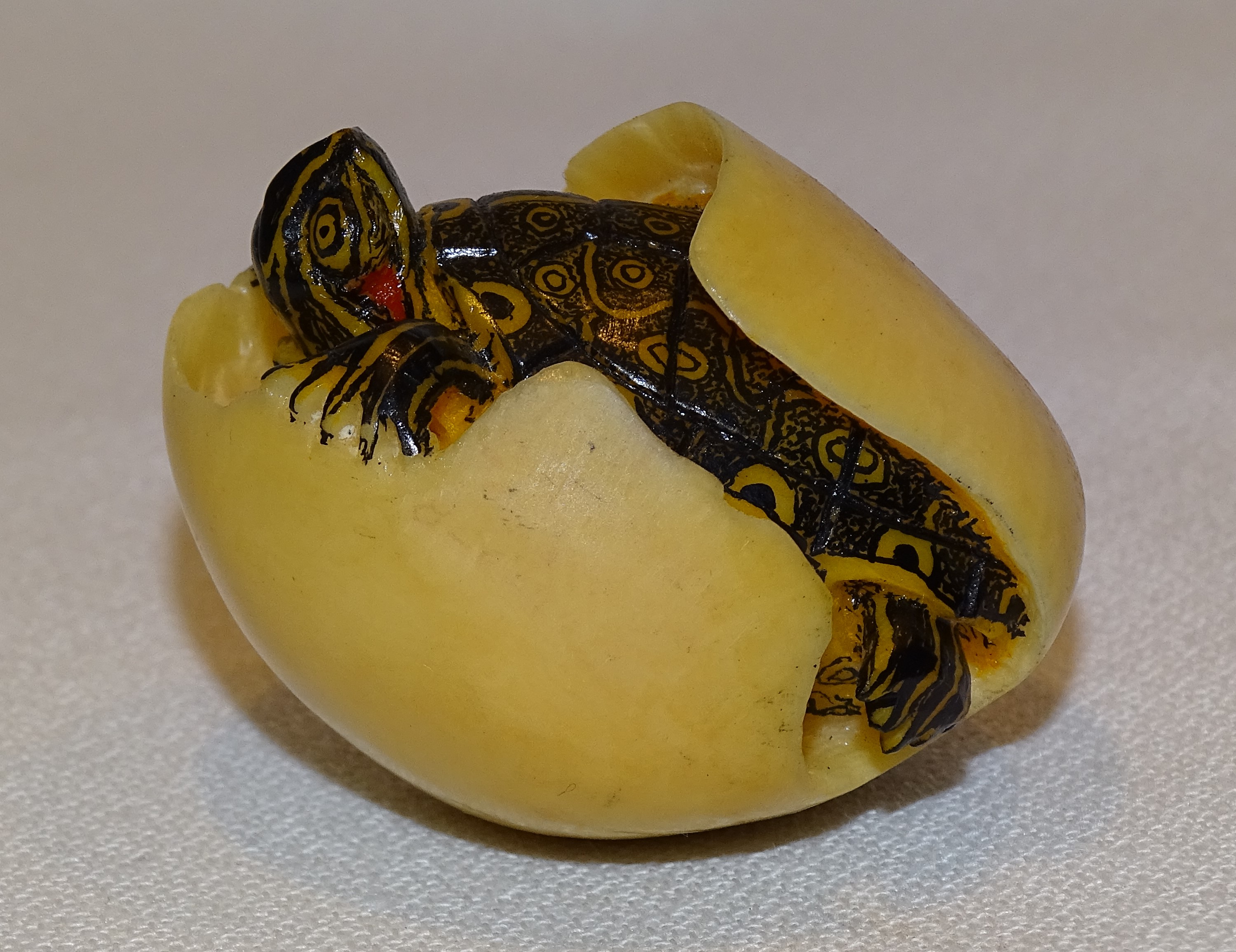
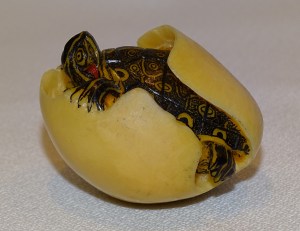 Baby turtle hatching from an egg. No, not a real egg, this piece is carved out of a Tagua Nut – same as the little leopard in the next picture down..
But what about the demand for elephant ivory? No artificial plastic can take its place; however, vegetable ivory is a very desirable substitute. Like elephant ivory, it is completely natural and it comes from a marvelous wild creature.
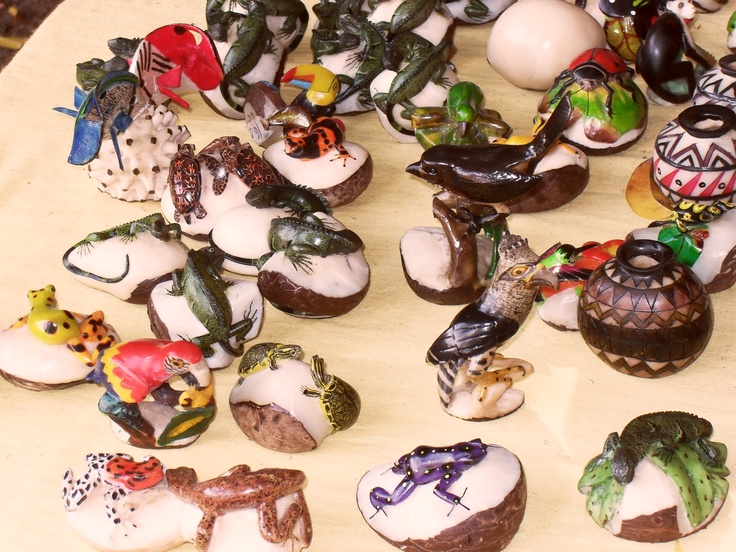
 Tagua Nut carvings on a Panama market booth.
Unlike elephants which must die for their precious ivory, Tagua palms are a renewable resource; as long as their native habitat is preserved and sufficient seeds are left to perpetuate the palms. A single female Tagua palm may produce up to 50 pounds of nuts in a year, that’s roughly the amount of ivory in an average African elephant tusk. The elephant, however, yields its ivory only once while the palm produces nuts year after year.
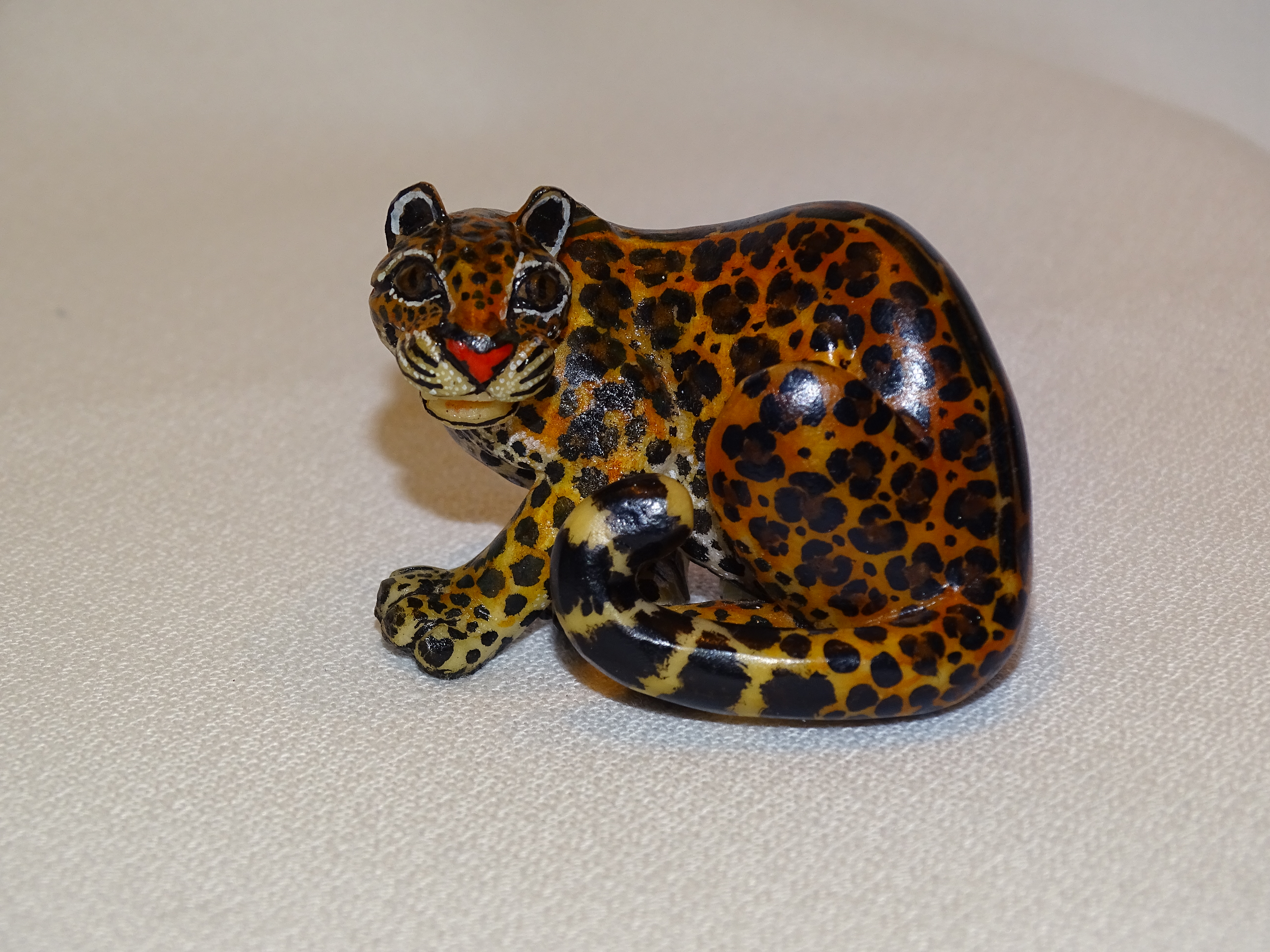
Tagua Nut Carvings Handcrafted in Panama.
The Tagua Nut has a strong resemblance to animal ivory, making it a wonderful resource for creating all types of beautiful things. Because of this, nowadays we see the Tagua Nut again becoming very popular as more and more people are fighting to protect endangered species used for ivory.
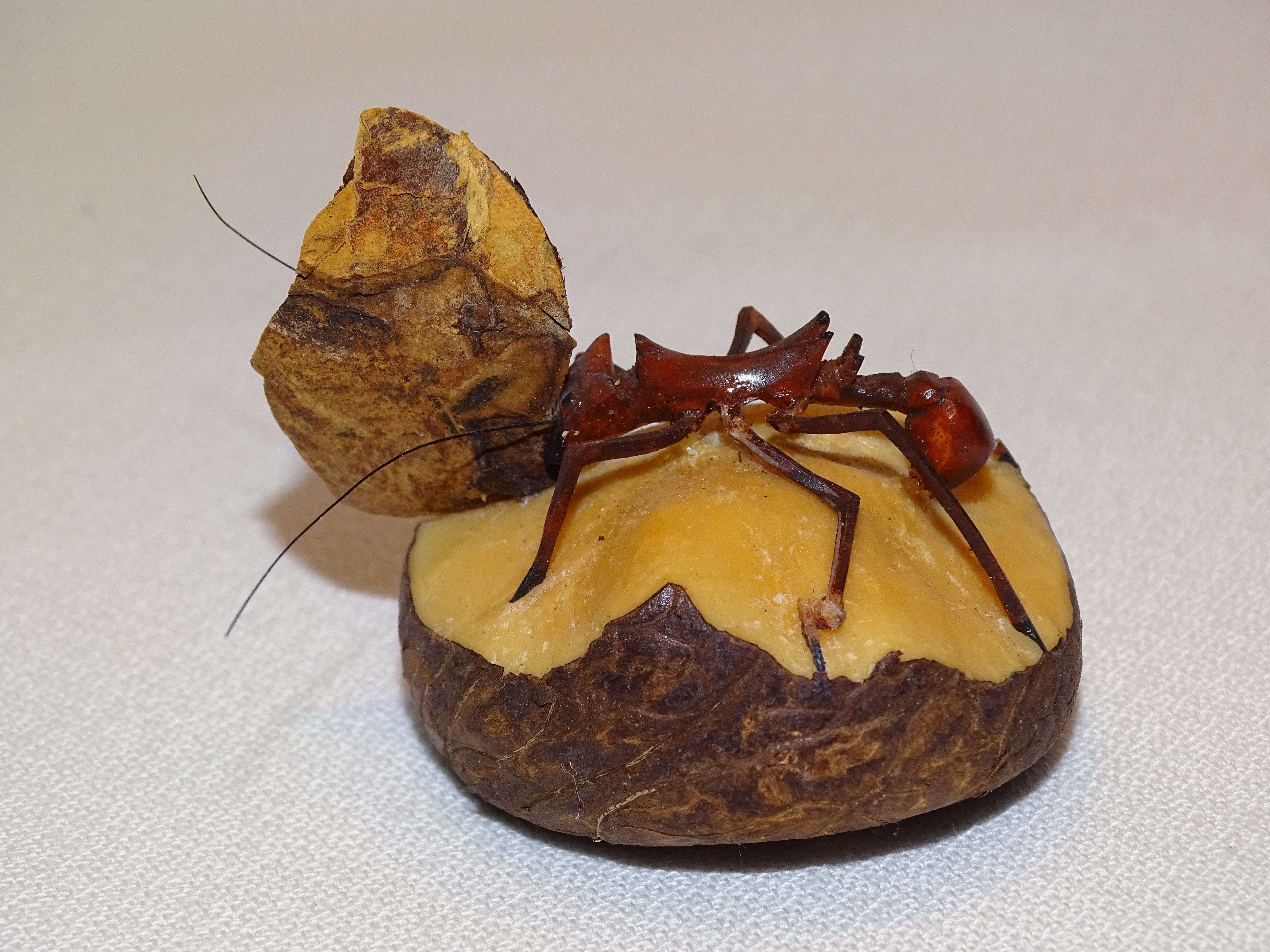
 Leaf-cutter ant carved as one peace out of the nut. Sadly a leg broke during our last move from Panama.
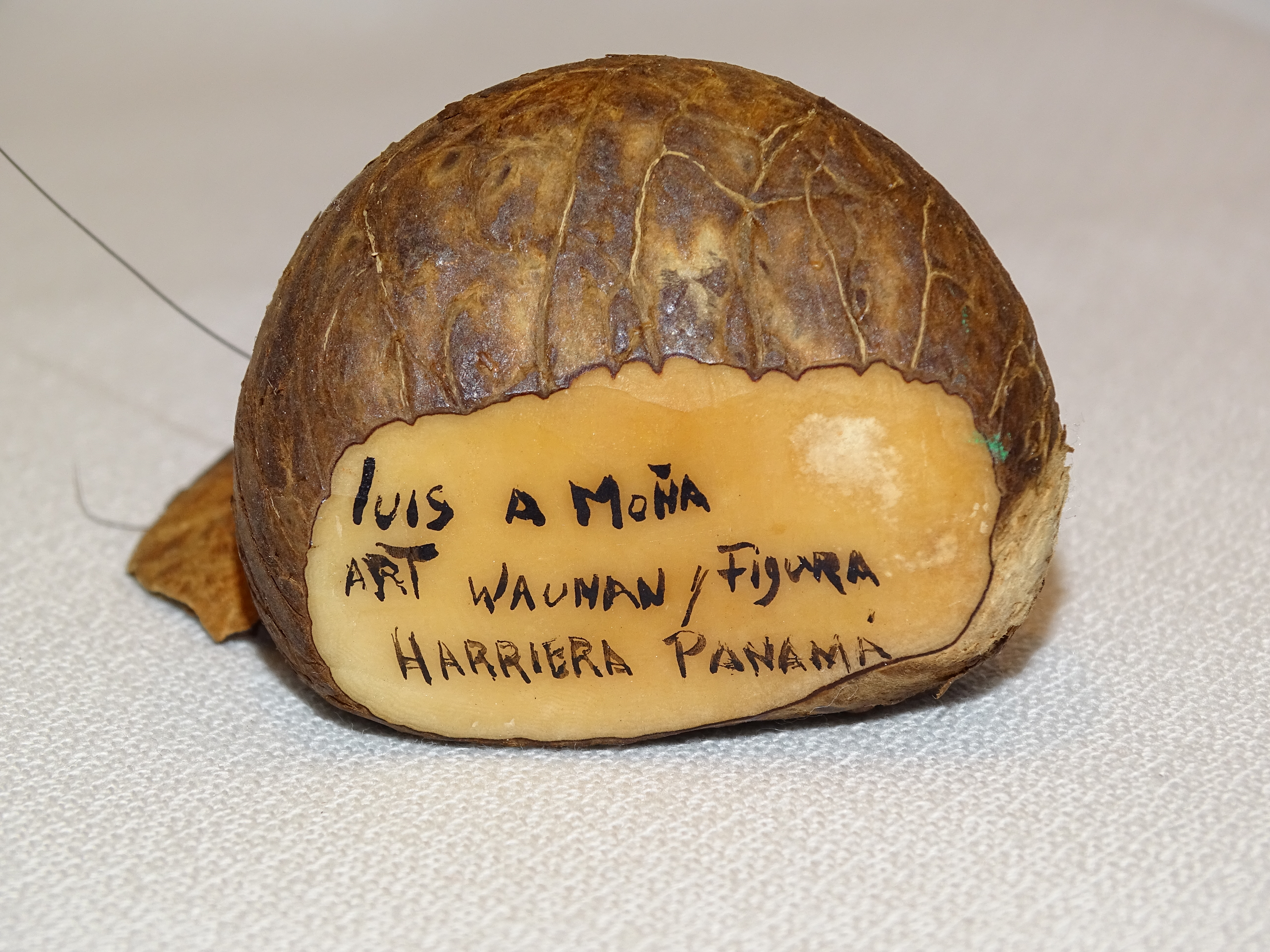
Tagua nut carvings from Panama have been such a great source of income for the forest people, giving them back self-sufficiency and pride. Many of these people are no longer able to live a full tribal life simply because of the demise of the rain-forest so this type of harvesting allows them to retain their sense of self and history.
 Excellent carved set of 2 lizards out of one nut. Click on pictures to supersize the view.
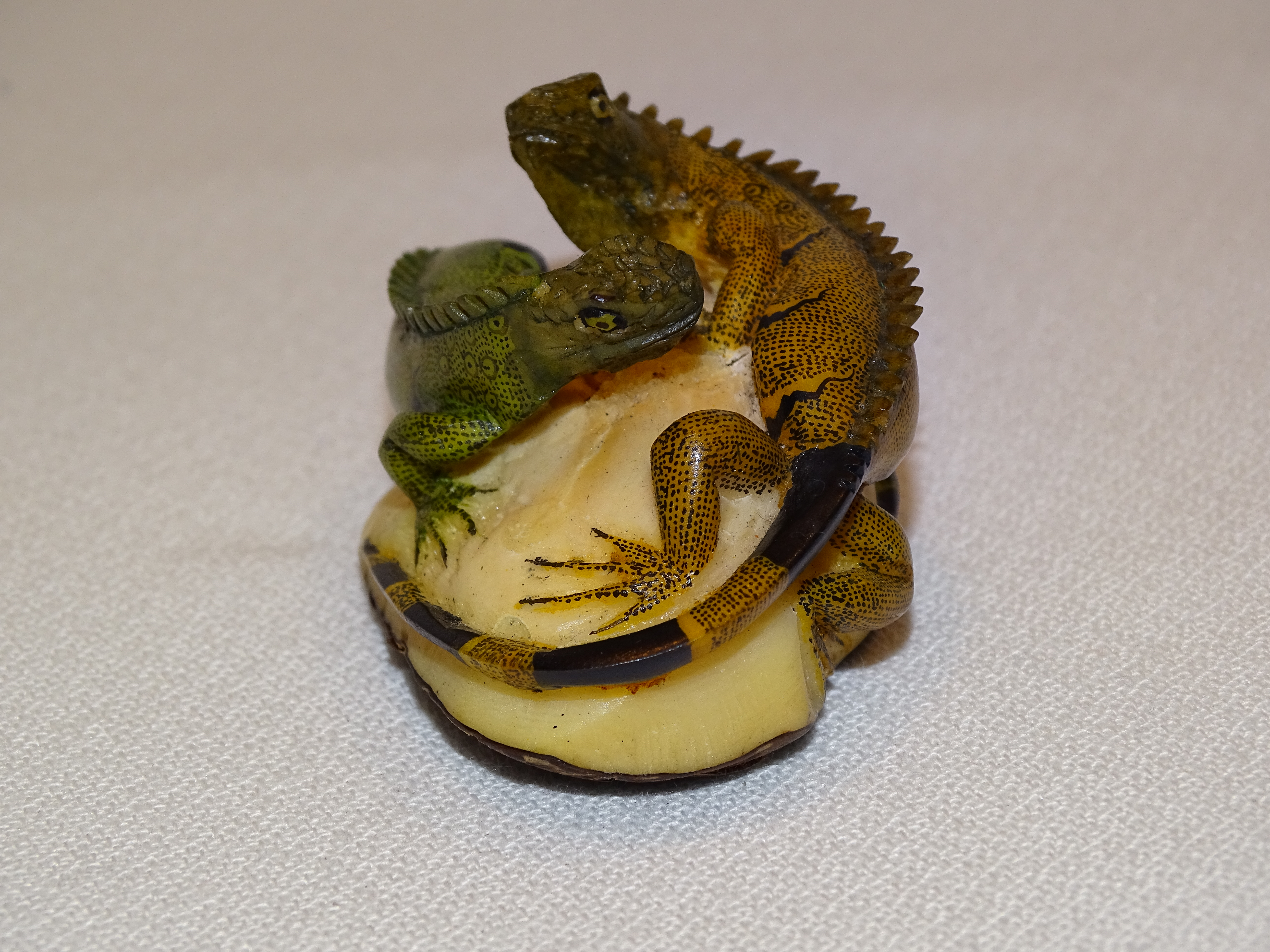
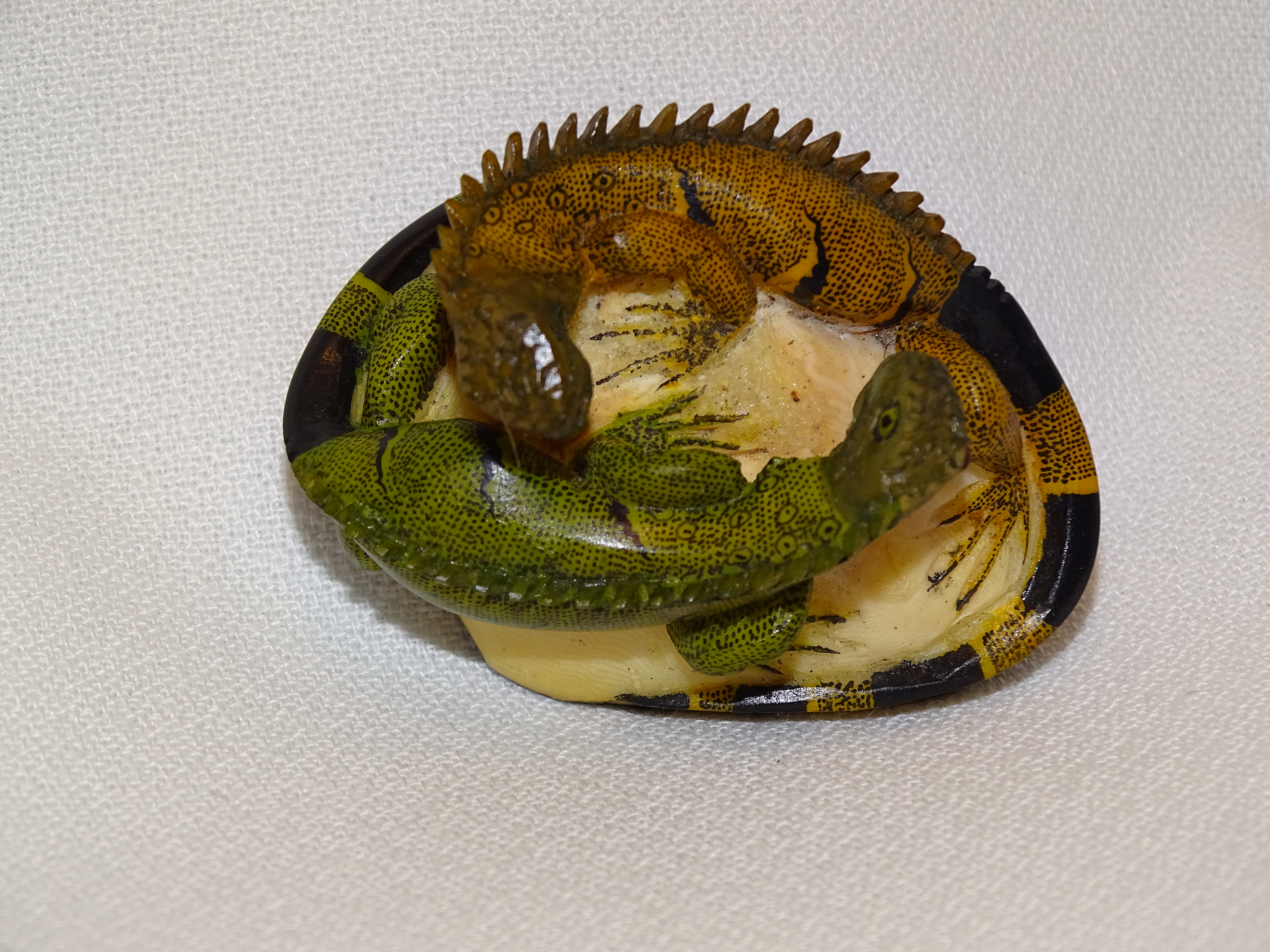
Once the Tagua Nuts are picked from the ground, the artisans carve them into amazing pieces. You will find that many of the Tagua Nut carvings from Panama depict the nature of the rain-forest to include monkeys, birds, and various other animals. In fact, the carvings are typically considered an artistic expression for these tribal men, giving them the opportunity to incorporate their feelings, dreams, and aspirations into the designs.
Mi Pueblito in Panama City.
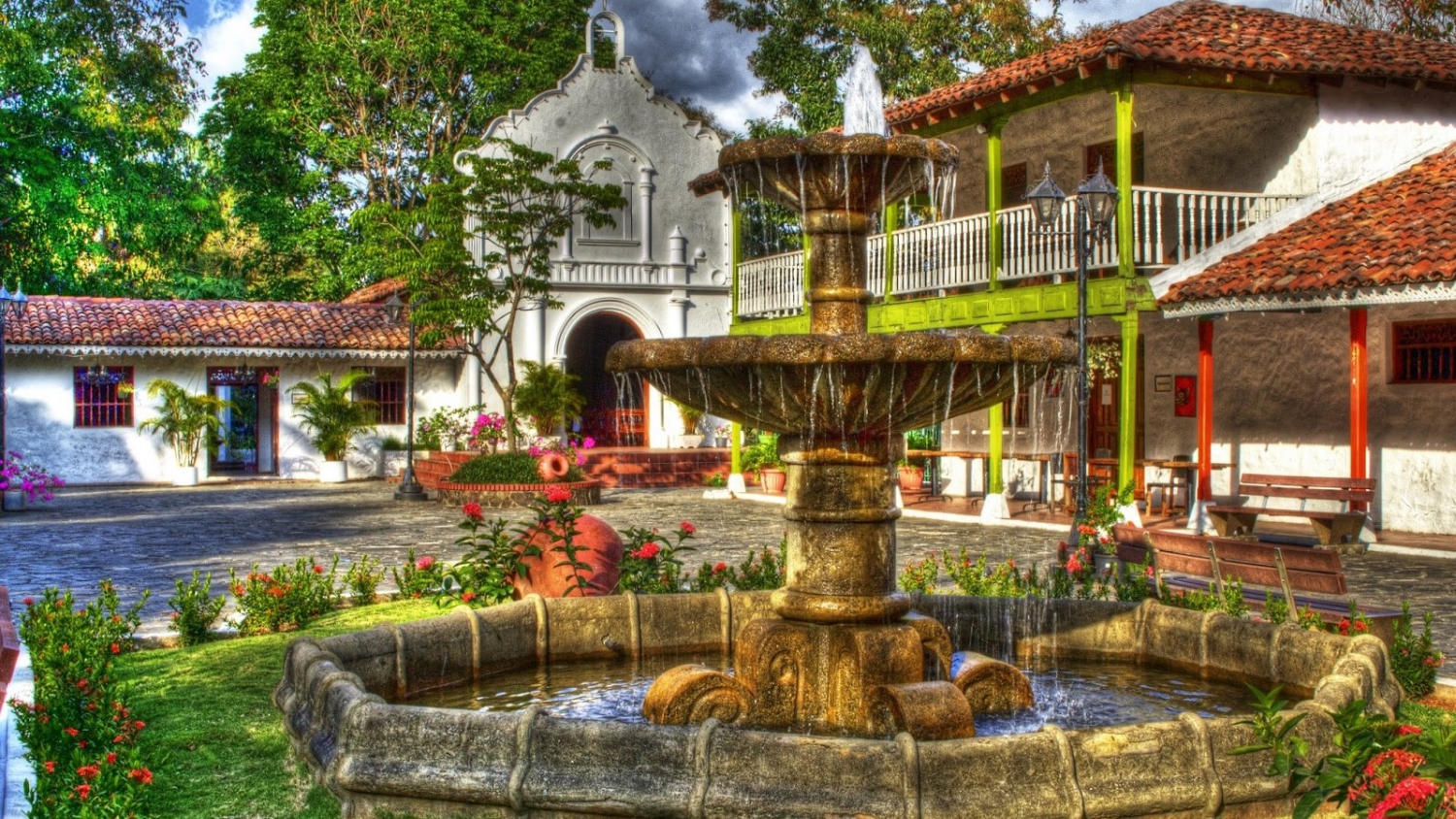
This is an example of many typical houses displayed at Mi Pueblito in Panama City, Panama. These red tile roof houses were built by the campesinos of Panama’s countryside. It was a tradition to build these houses during a social community activity called “Junta de Embarre”. If you visit Panama you should visit „Mi Pueblito“ as well, its worth while.

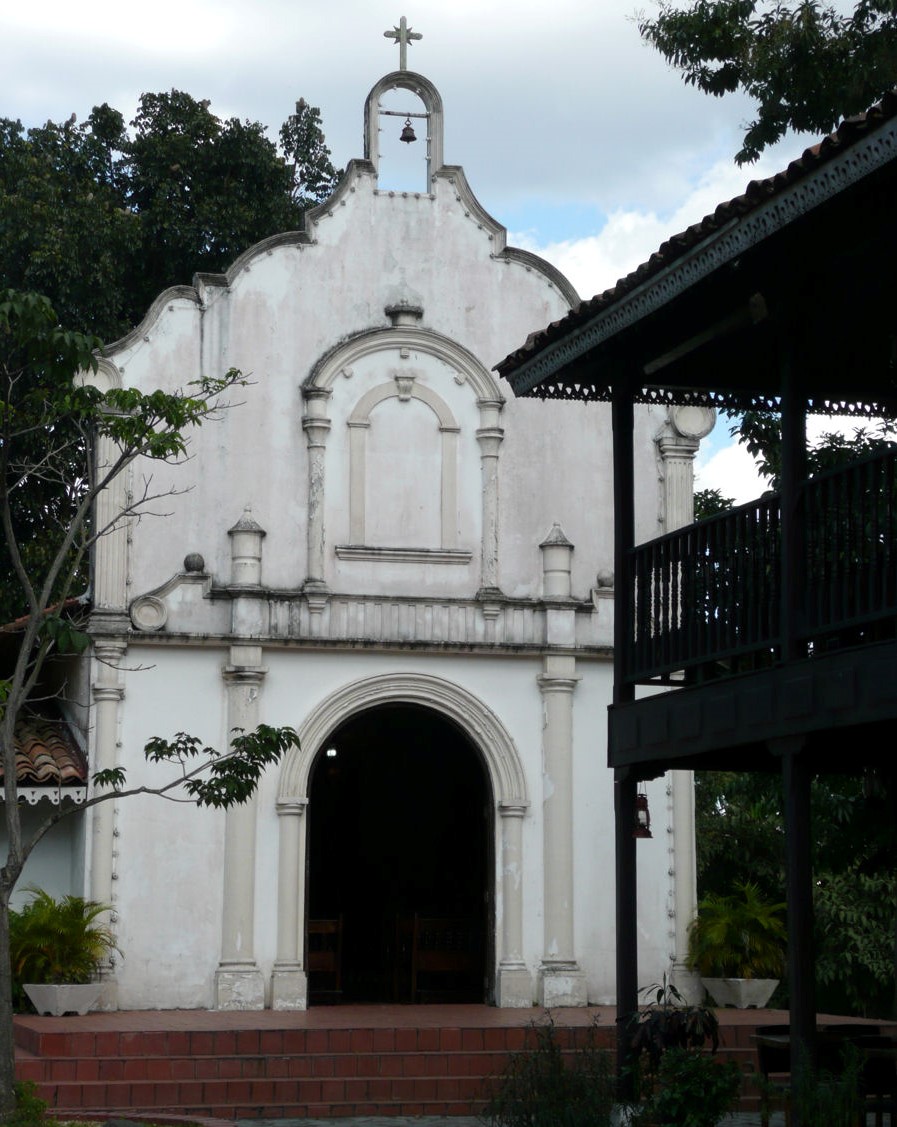
Beautiful little church erected in the center of Mi Pueblito.
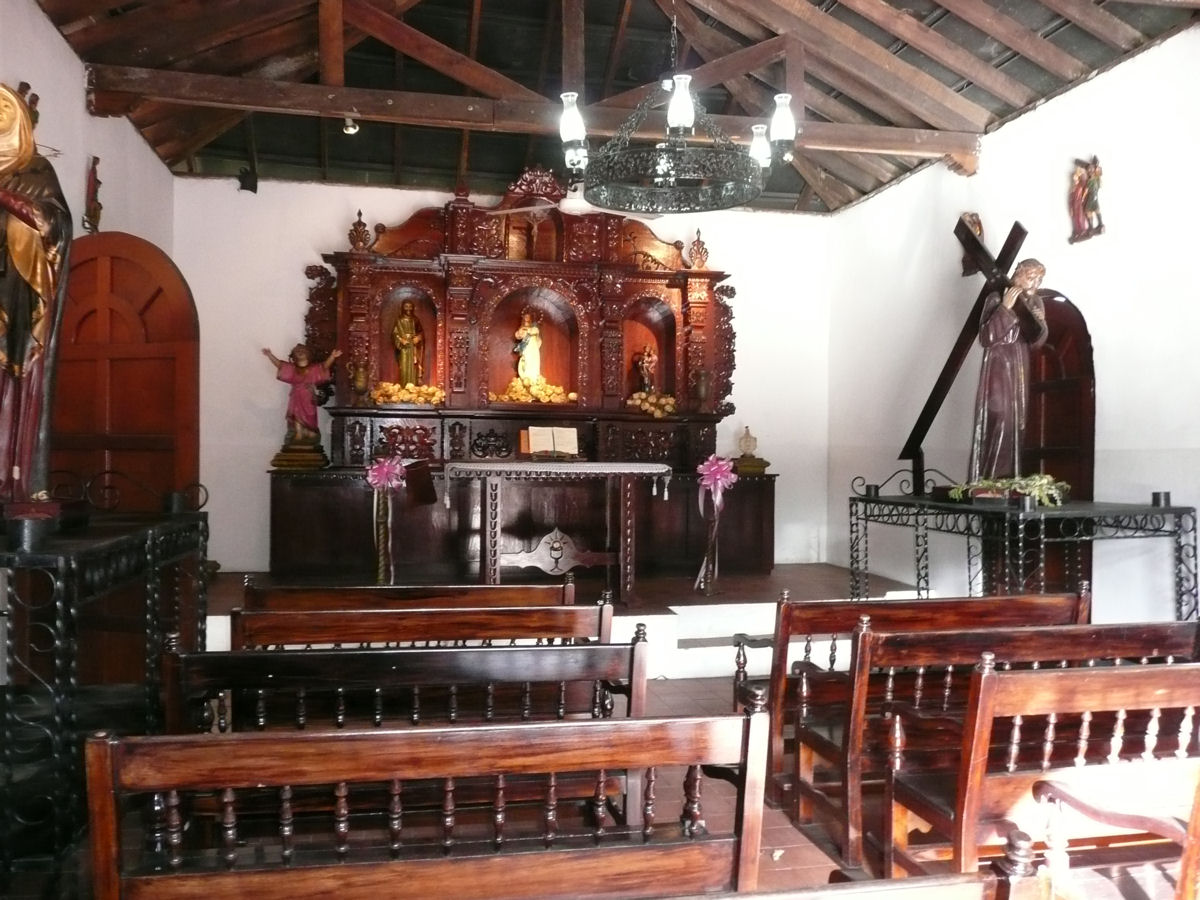
The men would collectively mix mud and grass to build the houses while drinking a fermented corn beverage called chicha fuerte, seco or chirrico. The women of the community would prepare lunch and dinner for the hungry mix of men taking part in the event. The whole town participated, and in less than one day, a new home was erected.
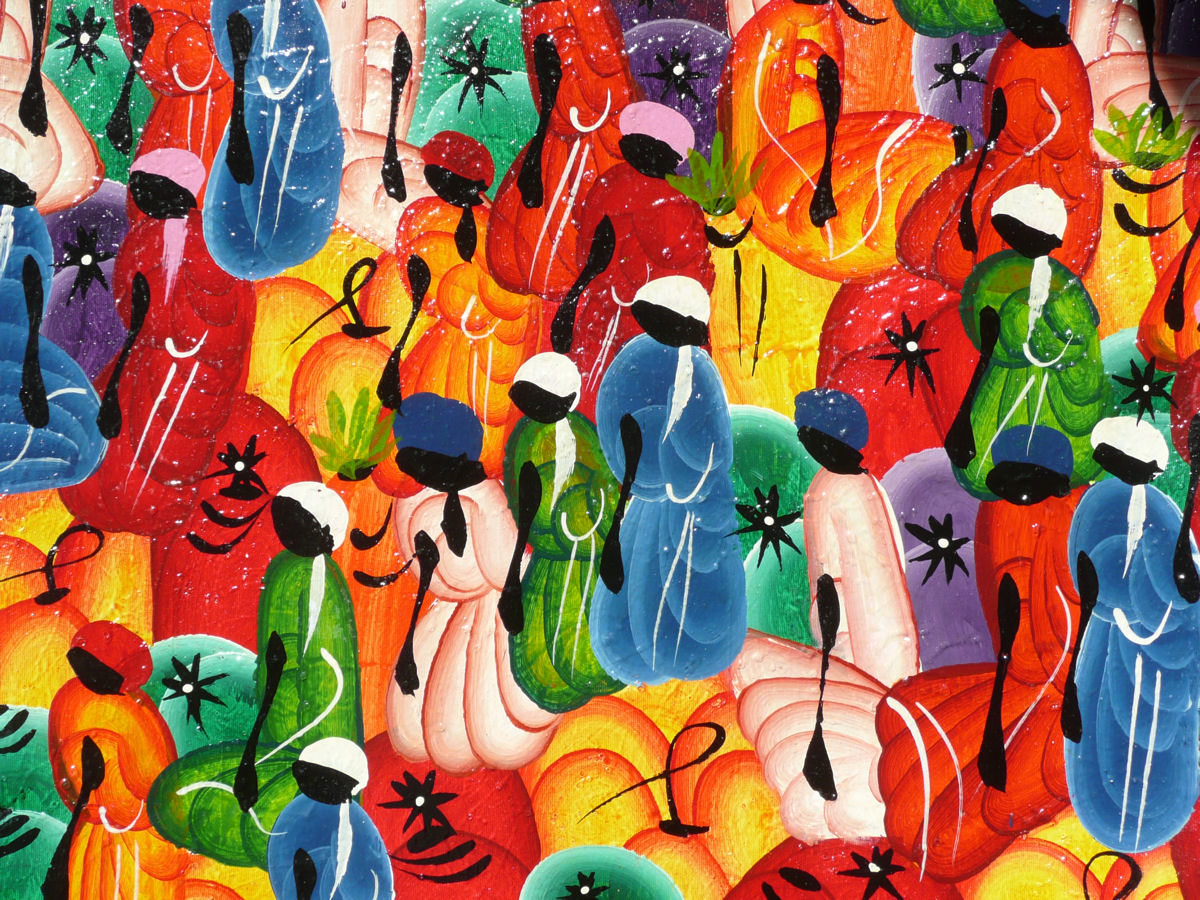
After the mud dried up, the houses were painted and decorated. This is an example of the Panama of yesteryear which is evaporating rapidly as the new generation of Panamanians build more modern homes in the name of progress. See all the indigenous art works, like above, which are shown in dozens of stalls throughout the little village.
Fine Collectors Items.
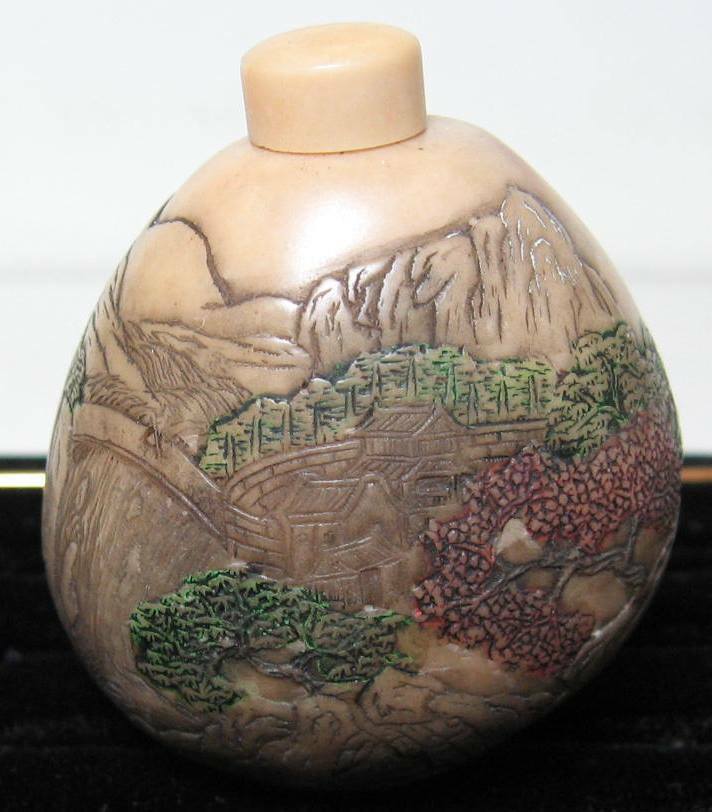
Something different is this Tagua Nut carving from around 1860-1870. A Chinese Tagua Nut snuff bottle 19th – Qing Dynasty. This Chinese Tagua Nut snuff bottle shows engraved and colored detail of a continuous mountain landscape scene which covers virtually the whole bottle. The scene shows buildings in the mountains with a bridge giving access over a gorge in front of a large waterfall. There is a figure crossing the bridge with a staff in his hand. The waterfall forms a river which flows around the base of the bottle. This bottle admires the minute detail in the engraving/carving. The bottle has it’s original stopper and measures 48 mm in height. Valued in auction for about US$ 2.000,–.
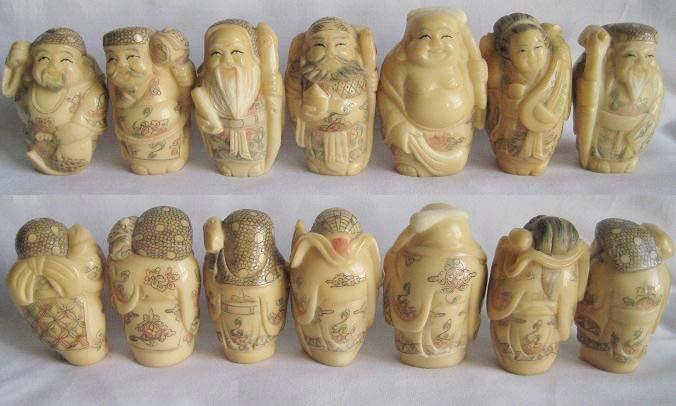
Some more nice Tagua Nut carvings will be found during the centuries in Japanese Netsuke carvings. If you are interested have a look into the Internet. See down here some fantastic examples of Netsuke carvings from the 19th century.

Above: Very rare set of the 7 lucky gods. Tagua Nut Netsuke. Auction value US$ 600,–.
 This kind of Panamanian Tagua Nut carving art is a bit cheaper then the Chinese Snuff Bottle above. About 30 to 40 US$. The prices range normally between 20 and 80 US$. Click on pictures, many of them will supersize.
Additional Information.
I posted this article about the carving and the souvenir item, but some Export company’s sell Tagua Nut powder, that „grows wildly“ in the Ecuadorian and Panamanian rainforest, in the cosmetic world the name is INCI: Phytelephas aequatorilis Seed Powder, this ingredient for formulation cosmetics has organic ingredients, not tested on animals, vegan and sustainability, it’s a replacement for plastic micro-beads.
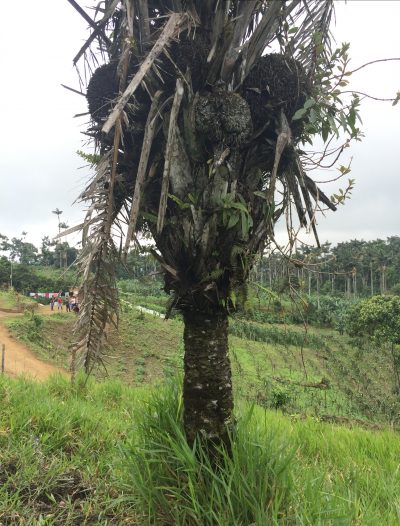
 Tagua Nut Palm, in distance a palm tree farm.
The Tagua powder product is absolutely pure with chemical and additive free processes.
With the latest technology in production processes and experience in what it can do, an extraordinary team of people specialized in each area, their experience and knowledge make the quality safe and reliable.
 The Tagua powder.
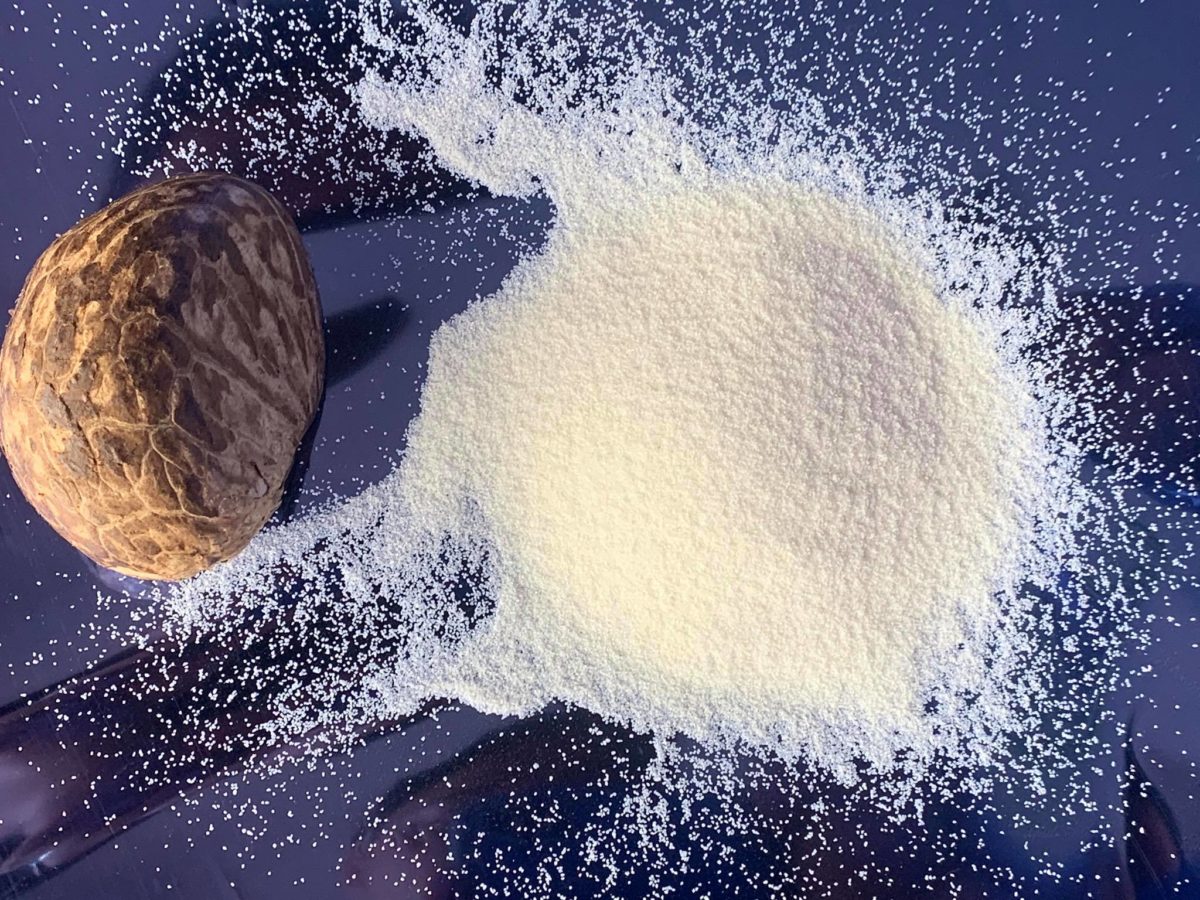
This natural ingredient to formulate exfoliator, scrubs, cleansing powder, soaps, gel, face-mask, toothpaste, body cream, base material, texturizer, skin care, exfoliation, cream, botanical and much much more. The abrasive Tagua facilitate removal of dead cells and therefore smoothen, cleanse and regenerate the skin.
Panama In Total Lock-down.
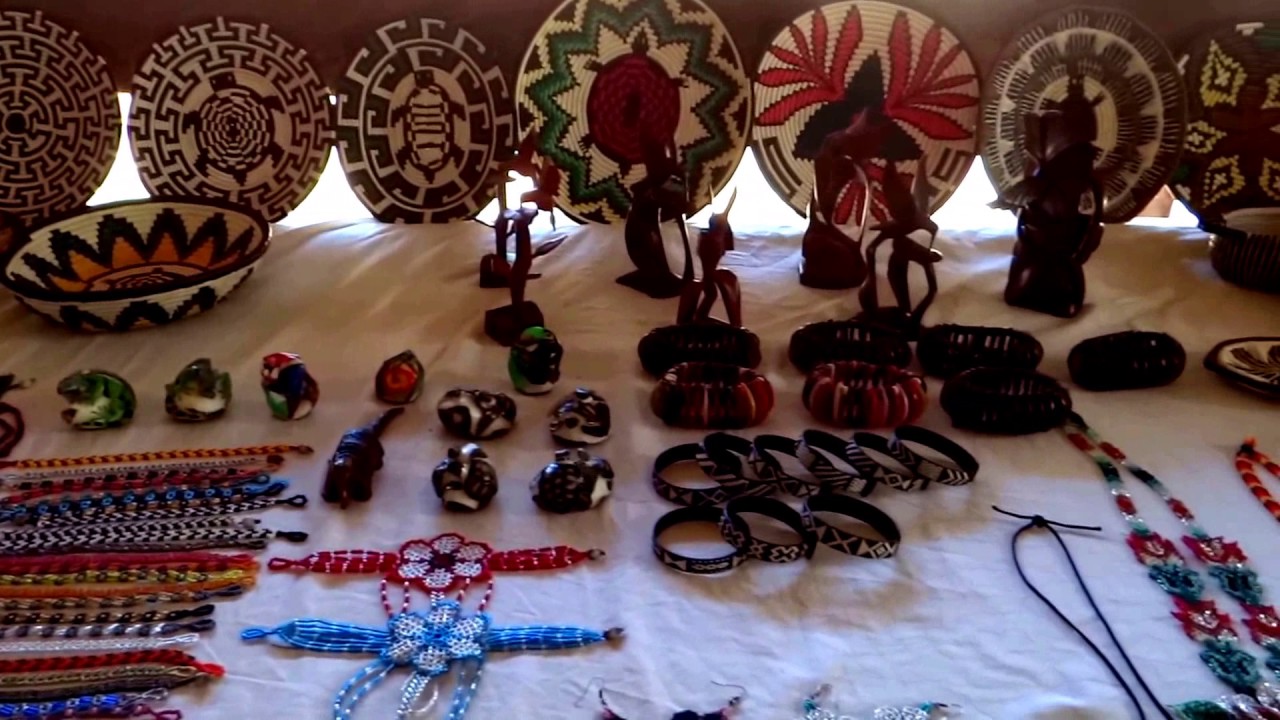
During the actual Corona crisis is Panama, as many other country’s, in full lock-down. No tourists means no sales, no food, no medicine. That is what is happening to the Kuna, Wounaan and Embera tribes in Panama. They are desperate and need help.
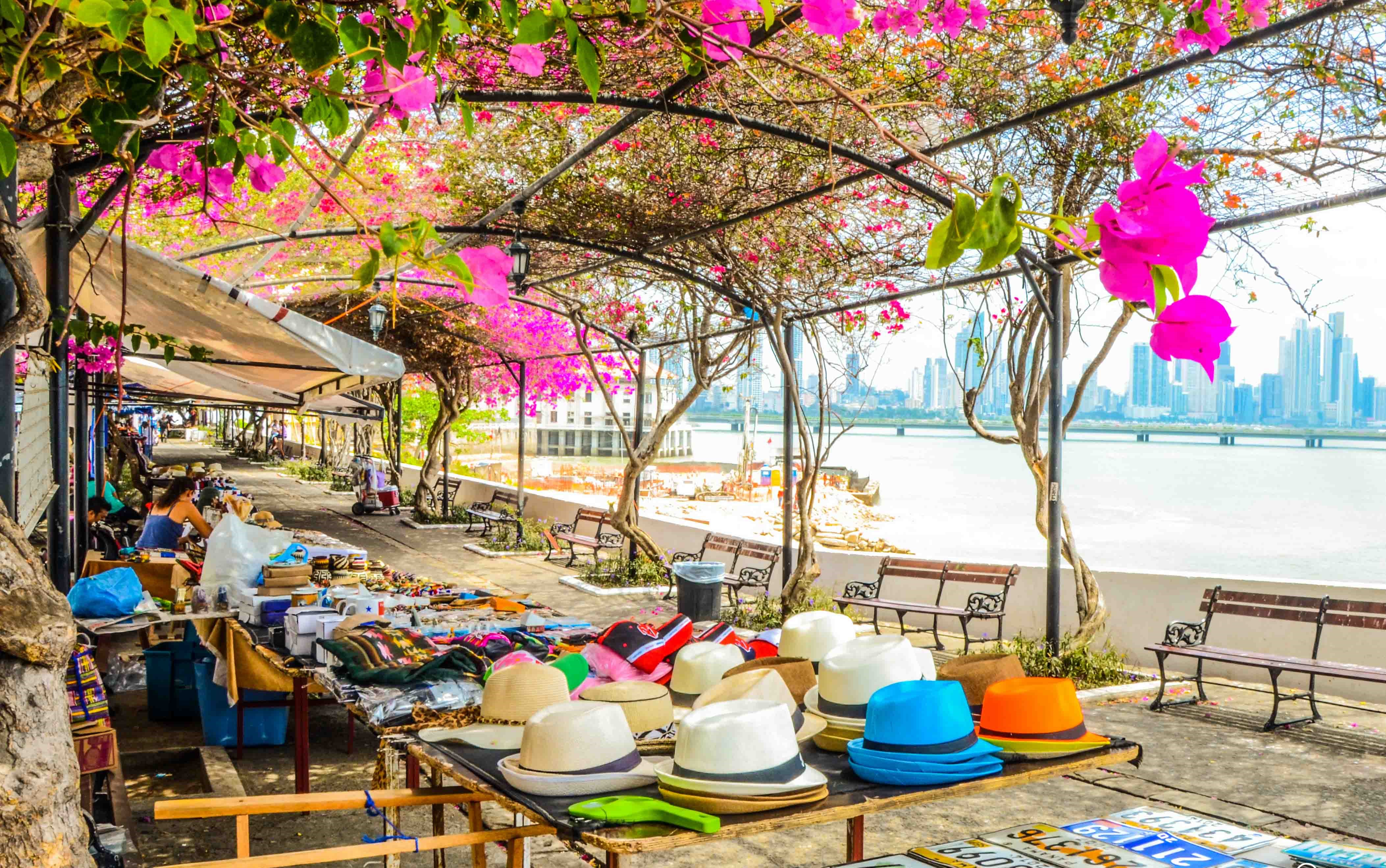
 Empty tourist markets during the lock-down along the causeway. Click on pic, it will supersize and show in distance the skyline of Panama City.
Dealers like Traderbrock, Molamagic and Molamadness will match all sales revenue and use it to purchase Molas, Tagua Carvings and Baskets for the next 60 days. They have church pastors and others that sell regularly via photos. The art is in an amazing quality and shipped through the mail. Now it is critical to help the poorest.
If you are interested to purchase this kind of art, go through the internet.


Wat weer een erg goed en voor mij interessant artikel Mike. Ik kocht ook via een tussenpersoon noten en zaden als kralen, toen ik nog als hobby byouteriën maken had. Ook ivoor heb ik nog uit de tijd dat het mocht. Niet veel hoor. Maar wat een prachtige kunst en ik hoop zo dat de bevolking het kan blijven maken. Lieve groet van Wilma
LikeLike
Hello Mike,
what a fantastic post about our home country again. Since I have also a small collection of tagua carvings, I appreciate the information and the link to order some very much. It’s hard for everyone during the lock down, we hope to go back for our buffalo events very soon.
Hugs to Anna and ciao from all of us, Luigi.
LikeLike
Hello, marvelous post about something I’ve never seen. In particular I did not know about billiard balls or chess boards made from Tagua nuts. Thanks for sharing. Keep it up my friend.
LikeLike