
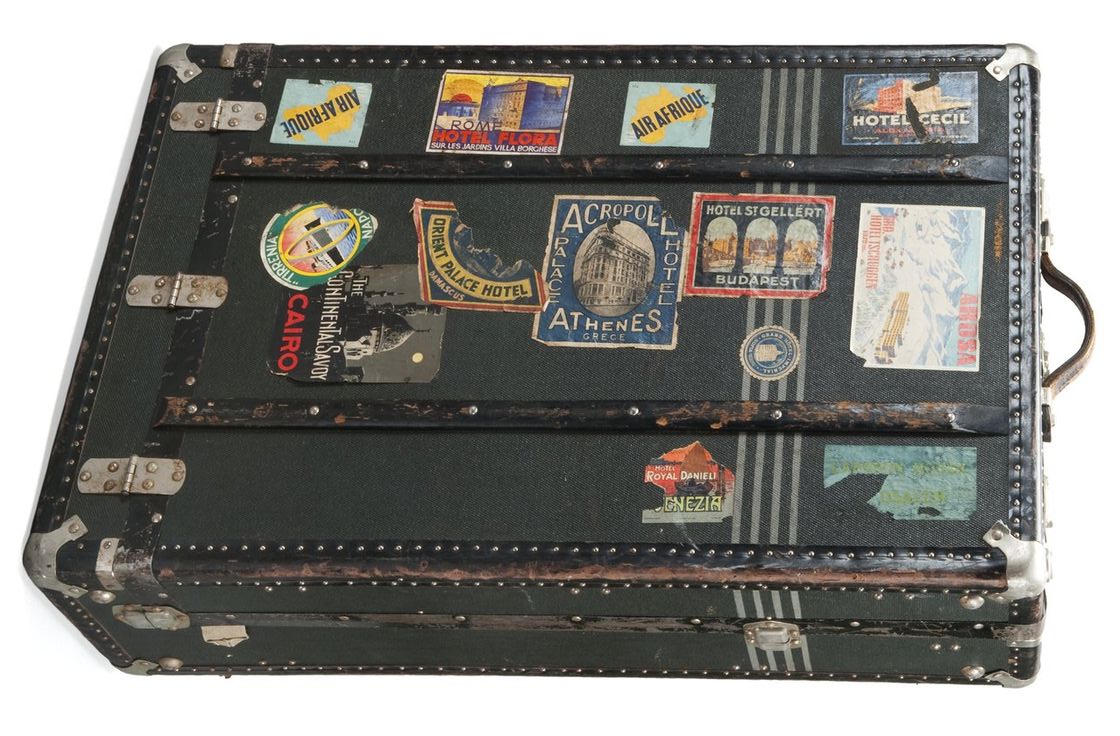
LUGGAGE LABELS HAVE AN INTRICATE LANGUAGE.
I wish they could also speak, as the story’s they could tell would be of far greater essence than what we see through them or what we can learn from researching hotel history. Some people have hobbies that others will question, but it is very personal and individual, that’s why we should give everyone his or hers freedom to do or collect what they like.
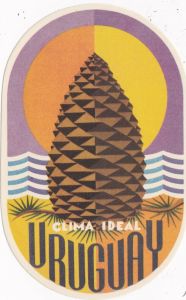 A large colorful Uruguayan luggage label from the 1920’s.
My small luggage label collection from Uruguay, collected in the early years of living in this country, like other ephemera collections I have about Uruguay, told me about the heritage, people and mentality of the new country I lived in. Now, 10 years later, I like to share it with you and give a background to the hotel history in Uruguay, if I found some.
My passion for research led me to research the history of many things in Uruguay, as churches, as architecture, city’s, landscapes, as music or the local money and now the hotels, which led to this collection. Just have a look under the category Uruguay and you’ll find many posts. The following luggage labels are shown in oversize, other pictures smaller, but if you click on them most of them will supersize, just try it.
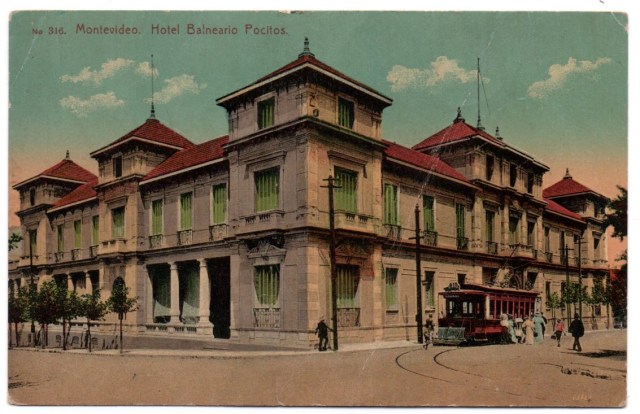
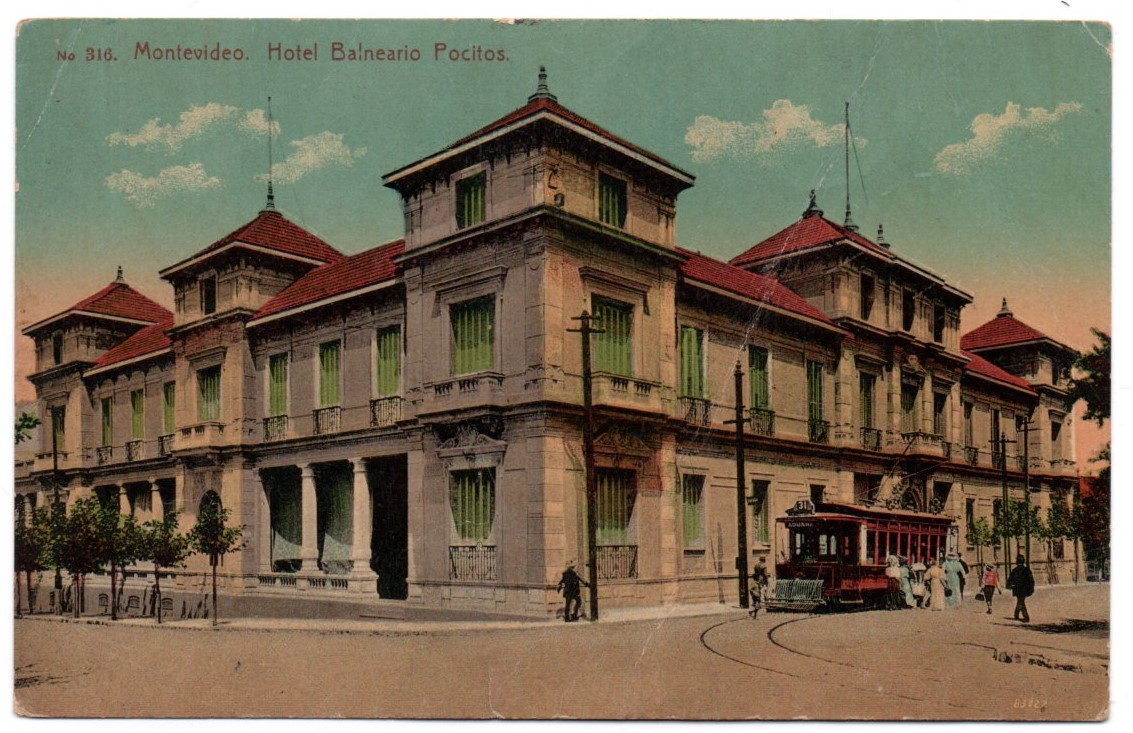
Very old hotel post card from Uruguay. This was the time of Hotel Luggage Labels.
To predict the future, we must first understand the past.
The hotel has always had an element of romance and mystique, even in the days of the hospice, the inn, the khan and the caravanserai. Being cocooned in the safety, warmth and conviviality of the inn with its food and drink, away from the treacherous environment of the long journey has always been a subject of social conversation even though hotels’ beginnings in the Middle Ages were simple and barely functional, and a far cry from romantic.
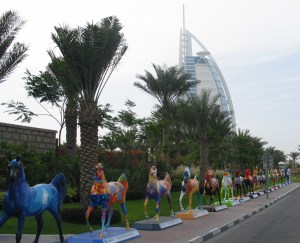
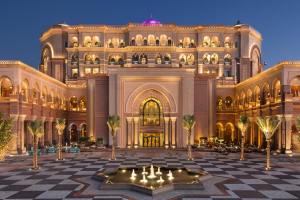 Some of the most luxurious hotels, the Burj Al Arab (left) and the Emirates Palace (right). Click on pics to size up.
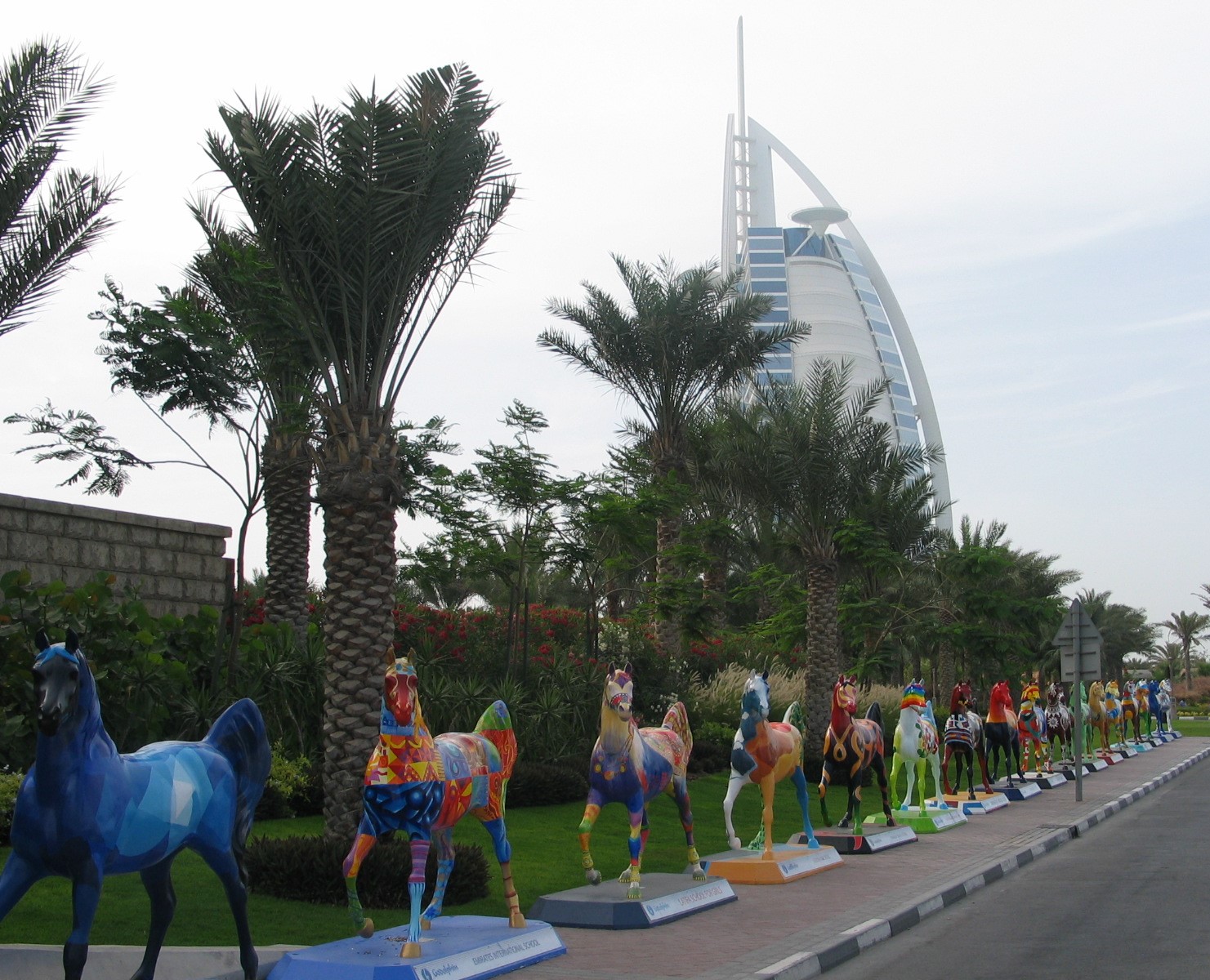
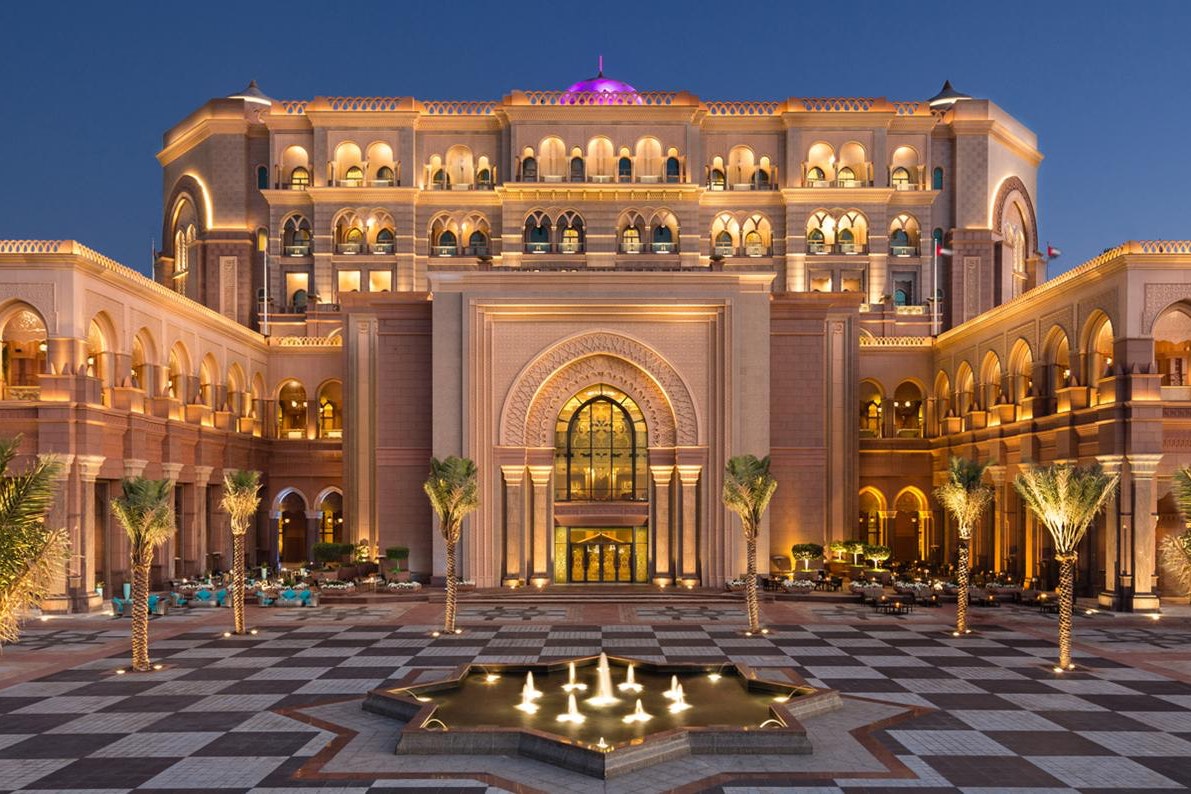
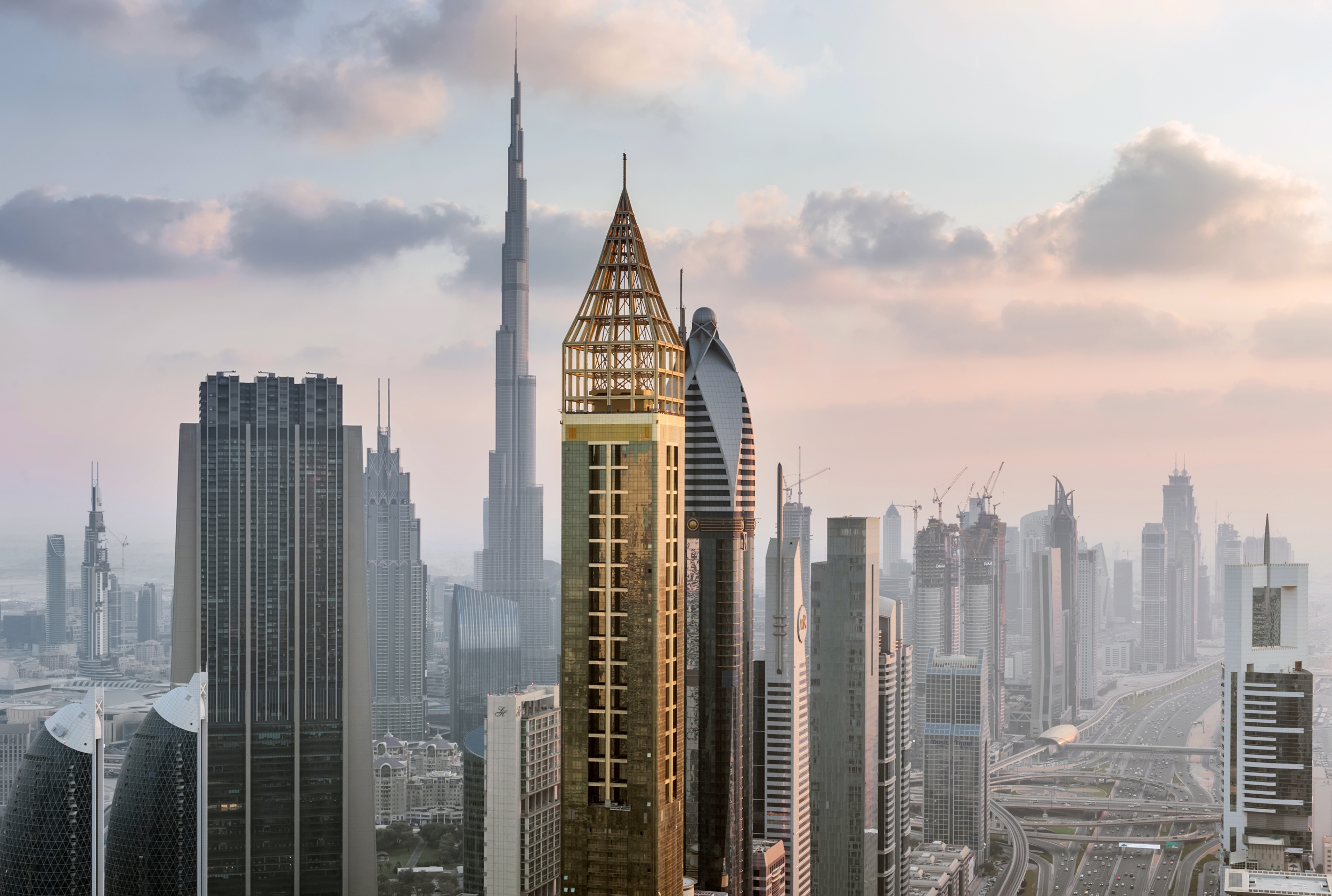
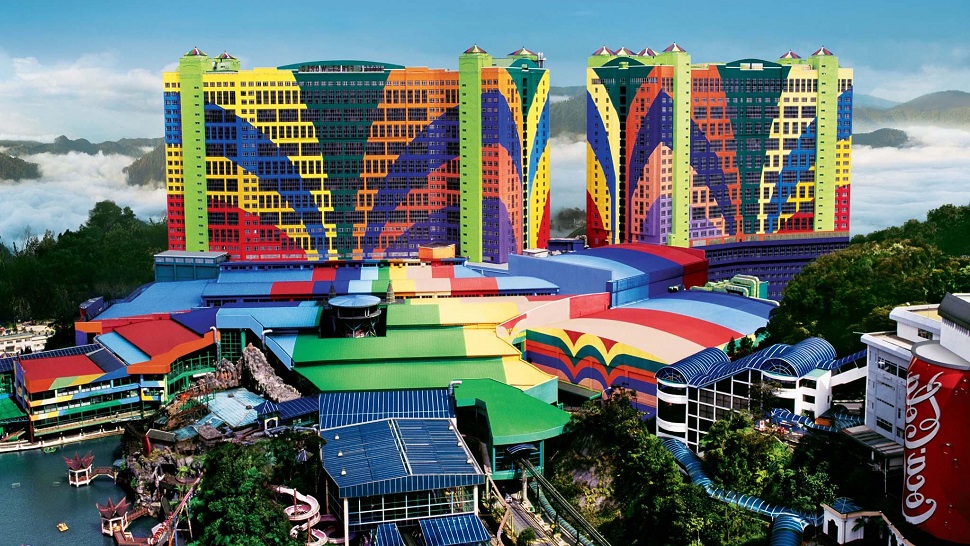
From the Hospes-Hospitis and stark monks’ shelters known as Hospitale in the Middle Ages with only a few mattresses, tables and chairs, we have come a long way to the days of the newest luxury hotels. The Burj Al Arab Hotel in Dubai or Emirates Palace in Abu Dhabi or the largest in the world, the First World Hotel in Malaysia with 7350 rooms or the tallest in the world, the Gevora Hotel in Dubai with a height of 357 meters.
 The tallest in the world, the Gevora, Dubai (left) and the largest, First World in Malaysian mountains (right).
Innkeepers were always prominent figures, running simple family establishments of varying repute. We still have small family-run hotels or boutiques like the Hoshi Ryokan run by the 46th generation of the family since 717 AD but the real modern day innkeepers are international chains that grew from a single or like the classic Mandarin and Oriental two hotels.
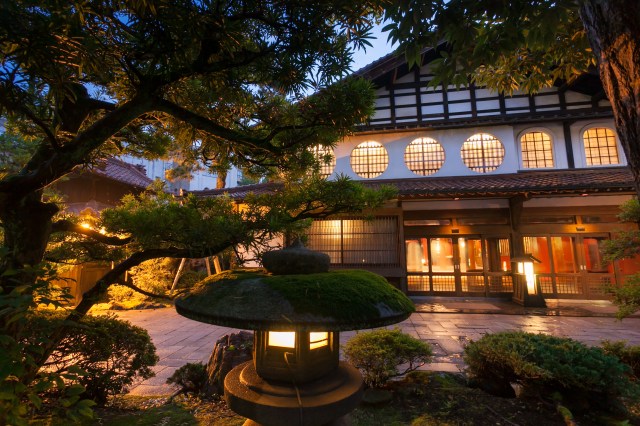 The Hoshi Ryokan.
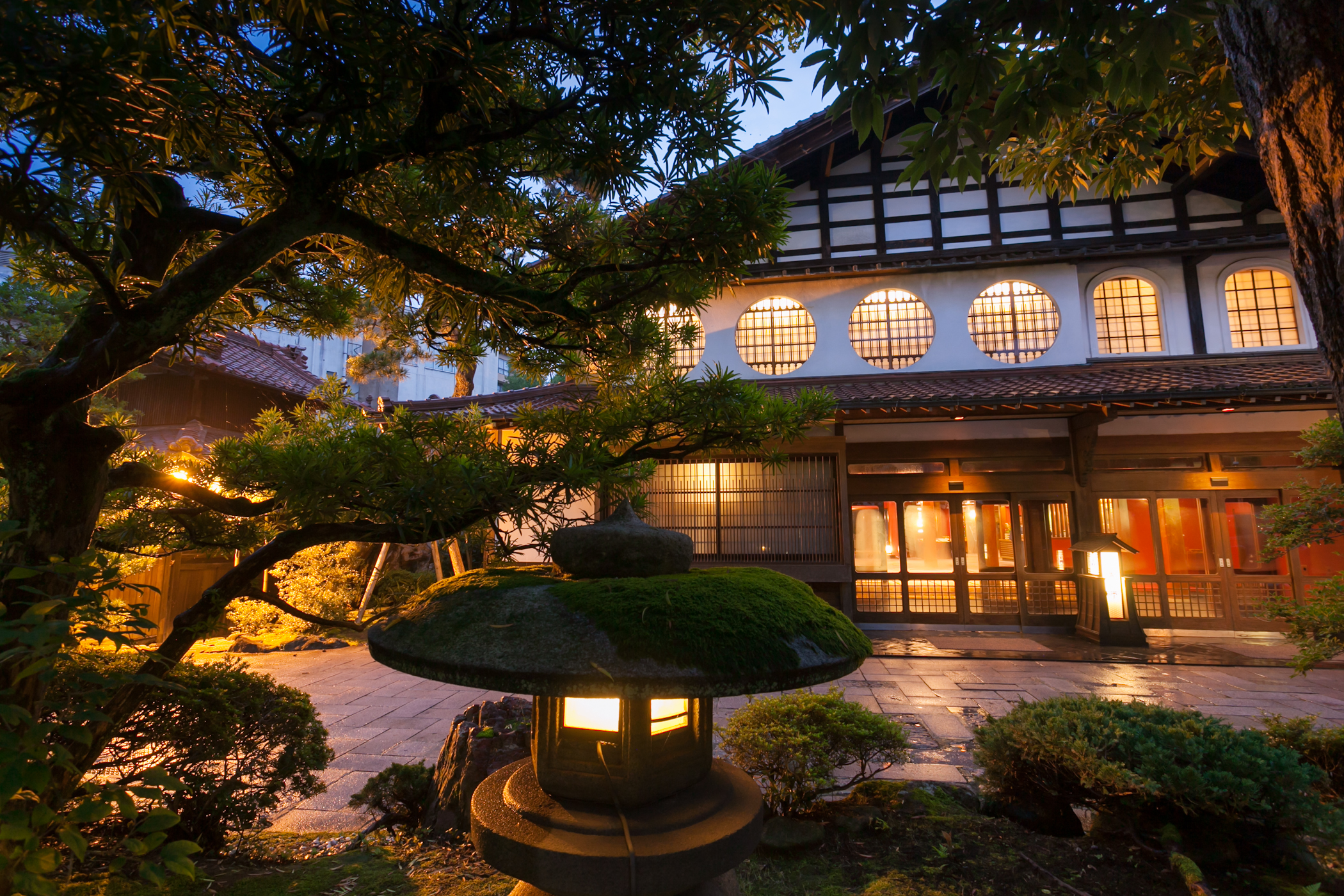
Hoshi Ryokan, Japan.
Where in the world is the oldest hotel? Consult the Guiness Book of World Records and they’ll tell you it’s in Japan: the Hoshi Ryokan was long purported to be the oldest hotel, although it has since been displaced by another Japanese hotel. Nonetheless, the Hoshi Ryokan opened its doors in 718 and never looked back; the inn has been in the family for 46 generations and has been serving guests for over 1,200 years. The hotel is a traditional Japanese Inn (ryokan) and features an ofuro, a traditional Japanese bathing room.
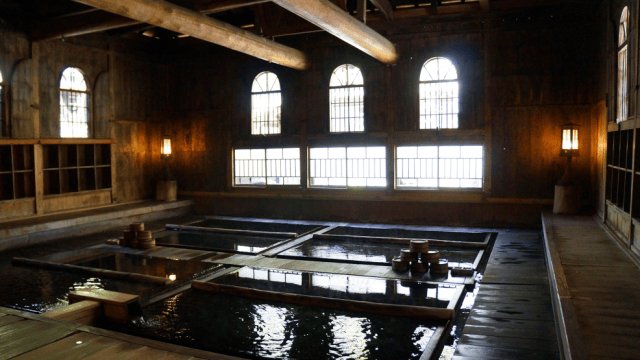 The Hoshi Ryokan Ofuro.
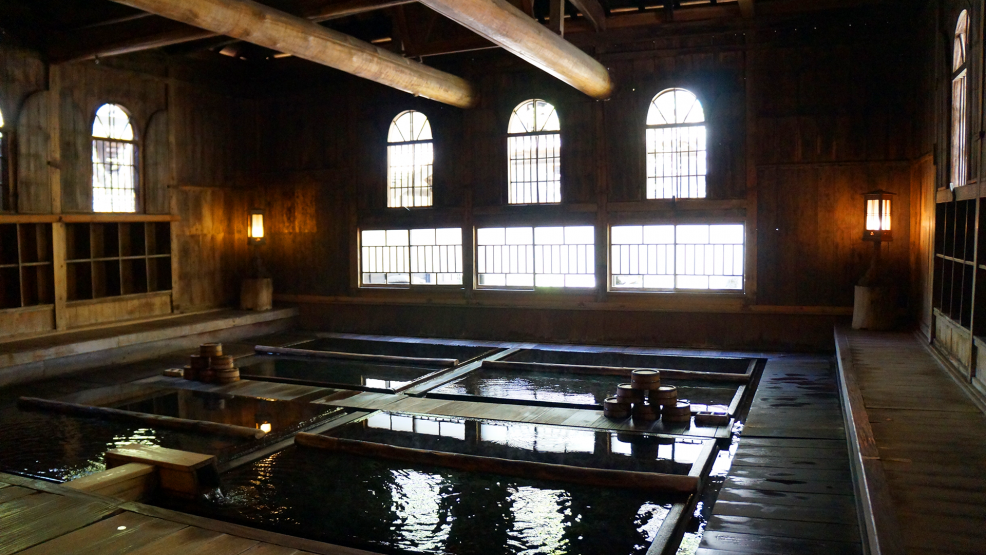
In areas with onsen, hot springs, the ofuro will use water from the spring. Ryokan also allow visitors to wear yukata, a more relaxed version of traditional Japanese dress, and most have a relatively informal entrance where guests can congregate and even speak with the owner. Hoshi Ryokan is located in the Awazu Onsen area of Komatsu.
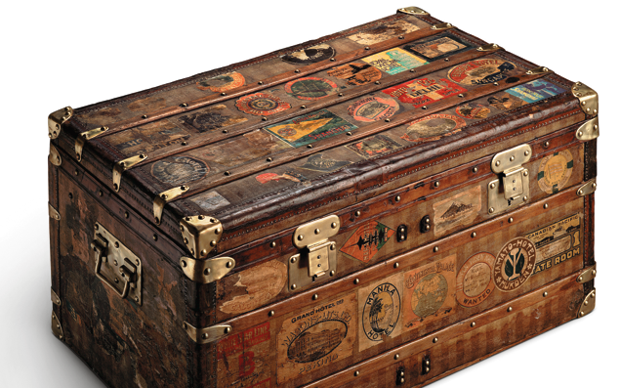
Hotel luggage labels.
Hotels evolved in 19th century into temples of refinement and luxury. The labels of those hotels often adorned the trunks and luggage of the well-traveled as status symbols. The sticky label tradition continued through the two world wars and was gradually replaced or expunged from existence.
My little collection of Uruguayan labels focuses on yesteryear’s „exotic“, may be once famous hotels that no longer exist, and on the Grande Dame symbols of the Belle Epoque that still survive today. This collection is not special, like other international labels are, but that’s what exists and I think its worth to show. And – its part of Uruguayans history.
Luggage labels of hotels started around the 1850’s and went on for a whole century. Master designer and famous artists were involved as well as unknown people which just took over the style of time, especially Art Nouveau and Art Deco.
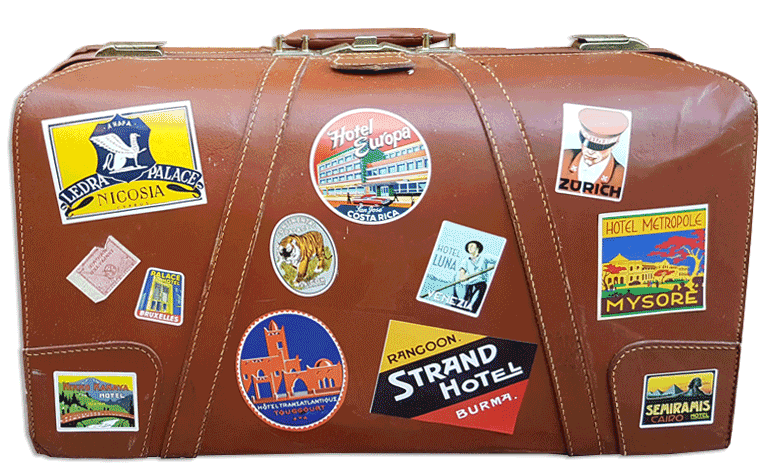
They focused on the symbolic human flavor of the place rather than the hotel, displaying confidence, understating merits while making „location“ the key message. No wonder the classic three key success factors for hotel investment are commonly known today as „location, location and location“. What was visible is the clear division between hotels serving clients at a destination and those that were a destination themselves. This is a concept we still rely upon today.
Labels tell us the distinction between persuasion and positioning (in today’s marketing language). The self-confident labels of distinction were understated but exhibited signs of quality. Some were obviously produced without much thought, in a haphazard composition of meritless graphic message.
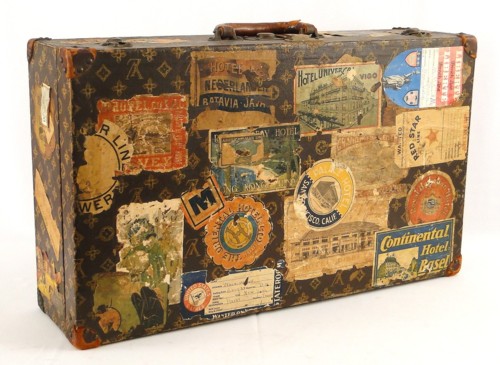
We smile at the naivete of history, but 100 years later I still see a huge variety in the presentation ability of hoteliers. Some labels also hint at the continuum between business and leisure, seriousness and fun, adult and family, an early indicator of market segmentation. During that process one secretly should ask, „what would the sticky label of this hotel look like if we were in the golden era of luggage labels“??
Lets start with my Uruguayan collection.
San Rafael Hotel, Punta del Este.
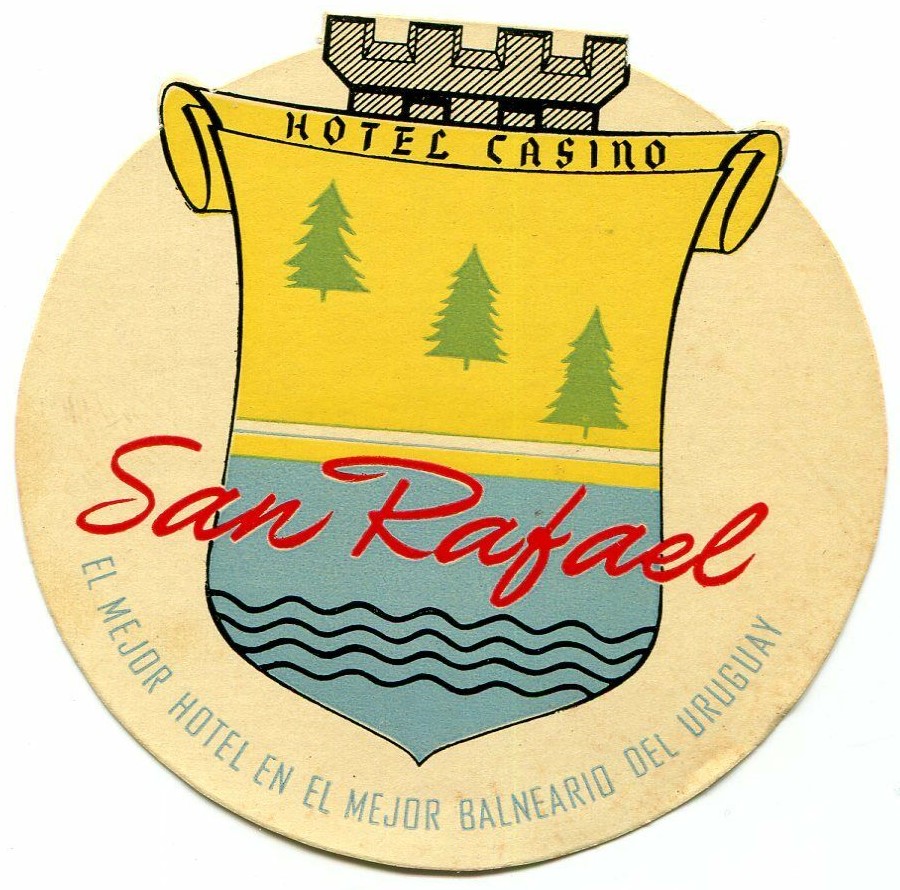
The construction of the San Rafael Hotel began in 1945, and the inauguration ceremony was held on December 11, 1948.
With its impressive Tudor style, the San Rafael, which made the „Playa Brava“ – the beach next to it – famous, opened an Eastward path for a resort that had remained until then within the limits of the Peninsula.
For over fifty years, the San Rafael Hotel has been not only an example of excellence but also a symbol of Punta del Este.
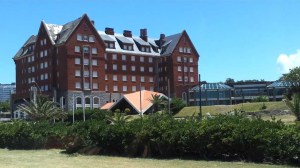
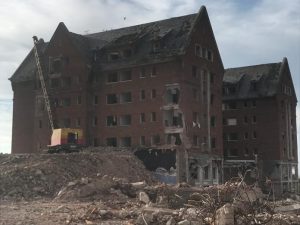 San Rafael Hotel in operation for many years, now demolished.
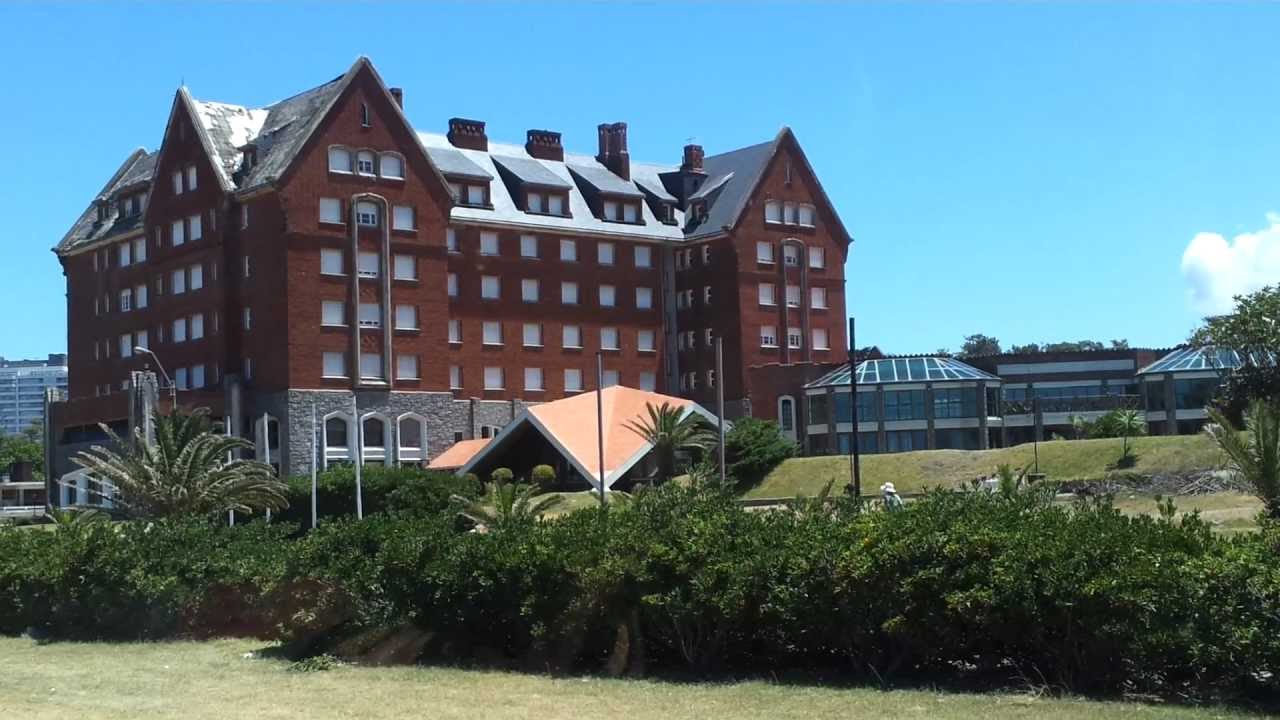
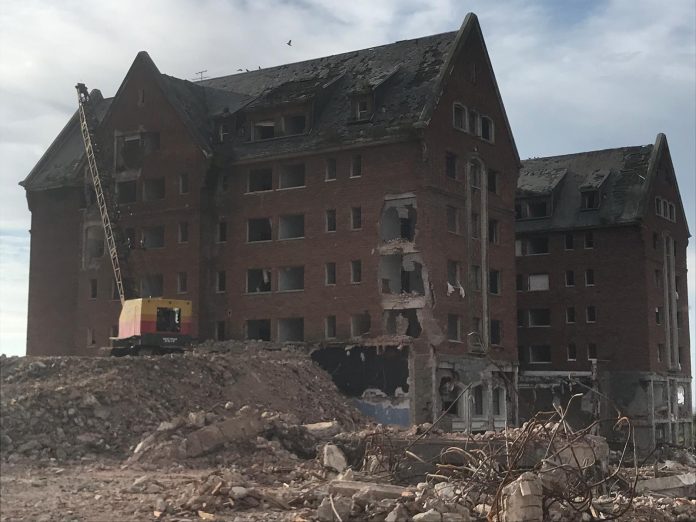
Located by the sea, between the dunes and the forests that surround it, the hotel rises majestically above the skyline of one of the most important residential areas of the resort.
Since its inauguration, the San Rafael Hotel has been visited by hundreds of celebrities coming to this country, and has been the venue for very important events.
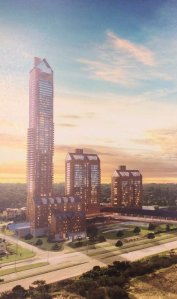 Some architect ideas.
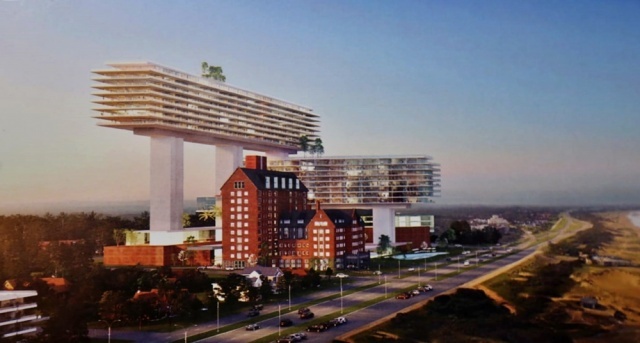
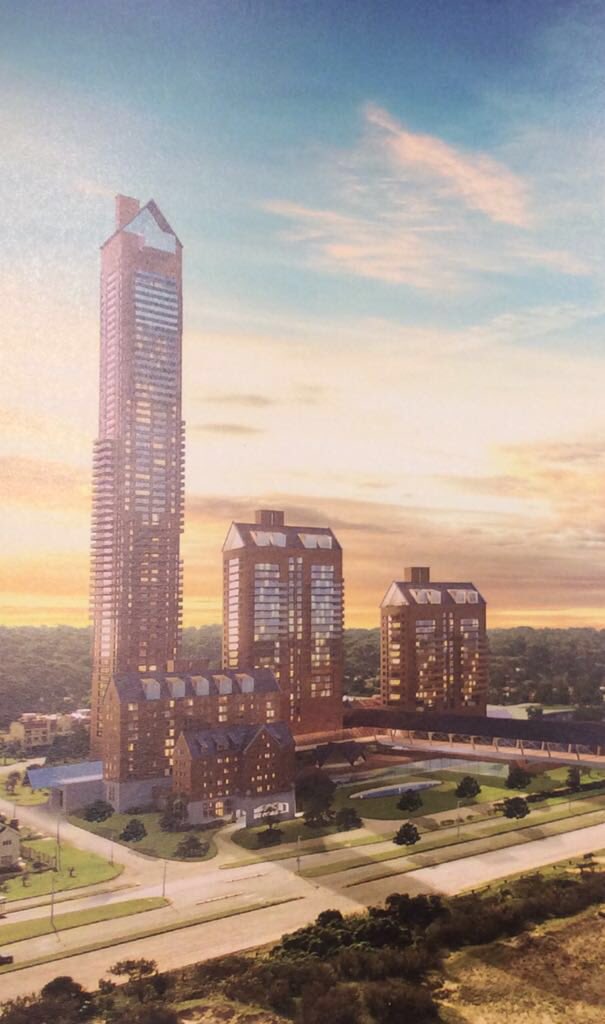
Not all ideas are good nor are good ideas accepted. Something like this happens in Punta del Este where Rafael Vinoly, an Uruguayan citizen and Argentine architect, presented a project to develop what was to be the largest luxury complex in South America.
In almost 3 blocks at the 11th stop of La Brava, next to the Hotel de San Rafael and in front of the most exclusive beaches of Punta del Este, Vinoly proposed to build 3 buildings, one of 268 meters high that would become the second highest tower in South America. Behind the Great Tower of Santiago de Chile (300 meters) and above the Alvear Tower of Buenos Aires (230 meters). We have to wait and see what really will be achieved in the future.
Argentino Hotel, Piriapolis.
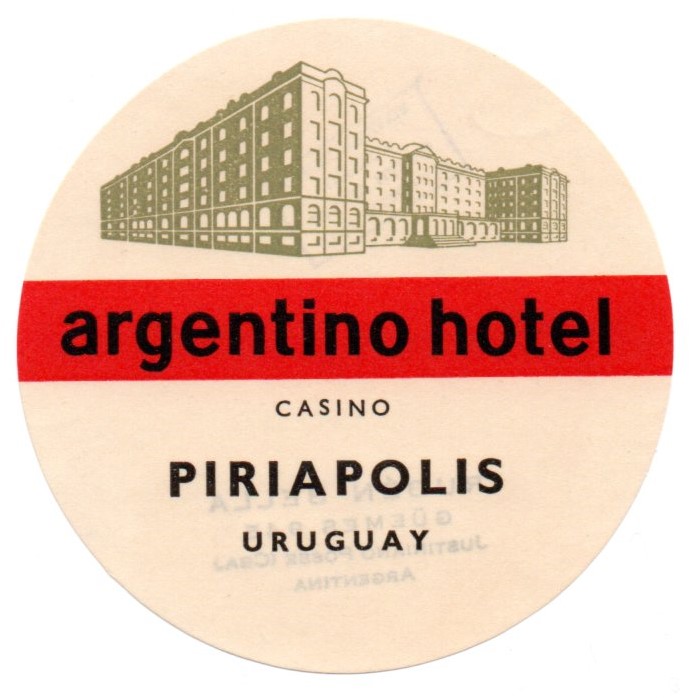
In 1930 Francisco Piria, creator of the Piriapolis spa, after having made 22 trips to Europe, inaugurated this hotel in the image and likeness of the great hotels of the Costa Azul. He imported from Europe all the best and most modern things; furniture, linen, crockery, kitchen facilities, washing machines, etc.
Since then, the first facilities for the use of Thalassotherapy (therapeutic use of sea water) were already in place, and this would turn the Argentino Hotel into a pioneer in the development of tourism and in particular, in health tourism until today.
Along with its permanent innovative creativity as a fundamental premise, creating constant differentials and in a continuous contribution of new proposals, the Argentino Hotel Casino & Resort of today, fulfills the legacy of its creator.
 The still existing Argentino Hotel.
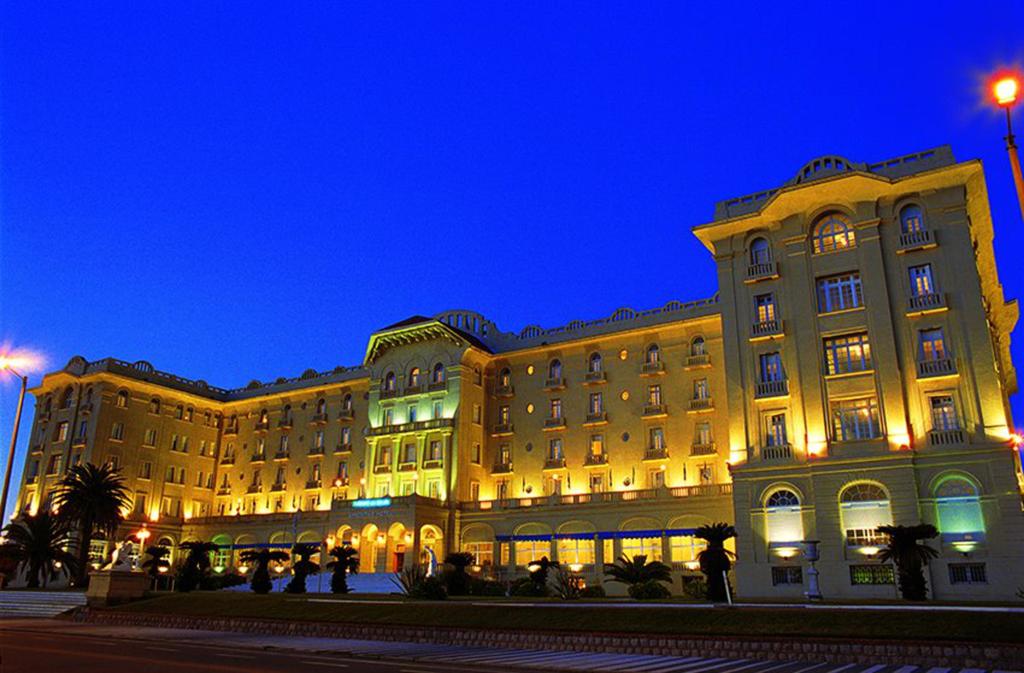
The Argentino Hotel was the crowning achievement of the masterpiece thought and built on a whim by Francisco Piria for this magical city by the sea which is called Piriapolis. His skills as a town planner, businessman and alchemist forged the personality of a man who could see much more than sand dunes, sea and hills. And after much work and effort, the dreams which kept him awake at night came to life.
Perhaps that is the reason why such a big hotel was being built for its time, as if this great building would have wanted to leave trace of a glorious past for this region of the world and its inhabitants. See also my posts on Francisco Piria under the Tag „Uruguay“.
La Solana del Mar, Punta Ballena.
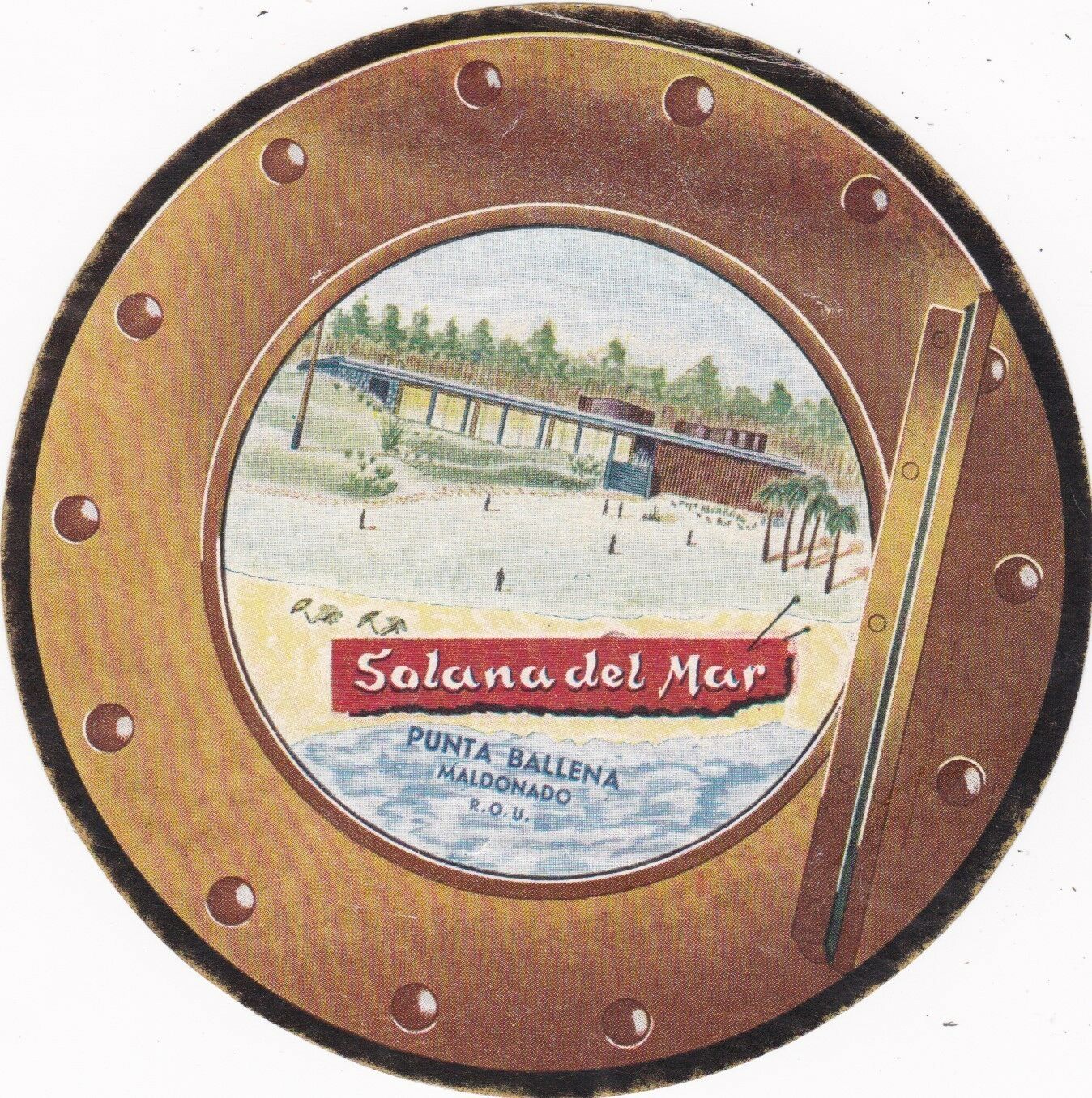
La Solana Boutique Hotel, an exclusive Boutique Hotel in Punta del Este, is located in Solana Beach. The Hotel was built in an emblematic building created in 1947 by a well – known architect and landscape designer, Antonio Bonet, and it is protected as a National Historic Monument. With only six rooms, La Solana offers a blend of nature and stone, set in a lush landscaped garden on the calm Solana Beach. La Solana Boutique Hotel devotes its potential to provide a place of rest and relaxation for its guests.
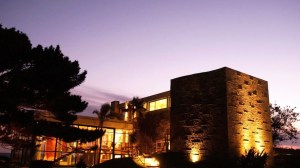 La Solana del Mar.
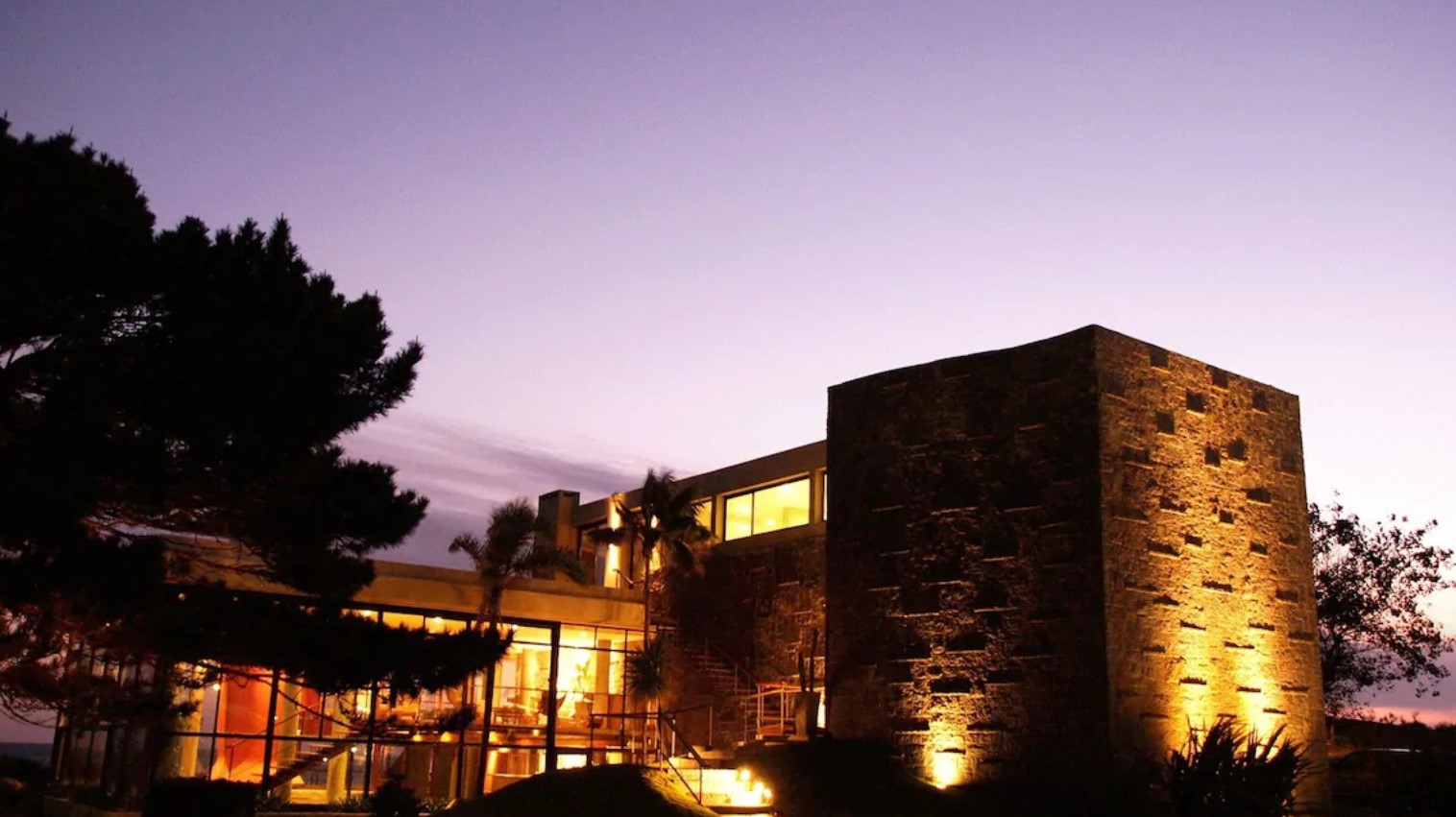
Architect Antoni Bonet, known as Antonio Bonet (Barcelona 1913 – 1989), was an architect, urban planner and designer who lived in the Rio de la Plata area for most of his life. While living in Punta Ballena during the 40’s, he was asked to plan the urbanization of the area, but he also built houses and furniture of cutting edge design. He believed that both architecture and furniture should be at society’s service. He built numerous buildings along the coast of Punta Ballena (notable ones are Hotel Solana del Mar and the Belingieri house in Portezuelo), where he performed the urbanization. He founded the Austral Group with Ferrari, Hardoy and J. Kurchan, he is said to have been the creator, together with his partners, of the mythical BKF chair, along with other antique furniture, considered objects of art by experts. The different rooms in La Solana boast a beautiful collection of Bonet furniture.
Hotel Ermitage, Montevideo.
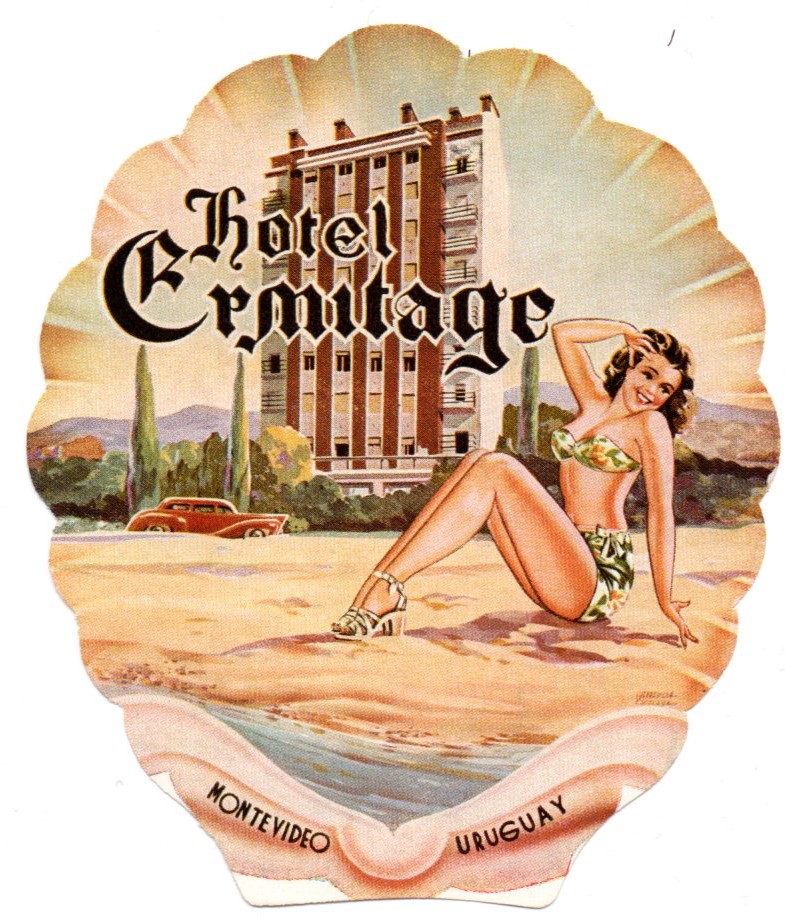
Built in 1945 with the solidity, spaciousness and use of noble materials characteristic of that time, in the middle of a residential area and near the famous Pocitos Beach.
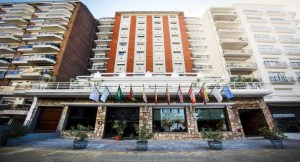 Hotel Ermitage.
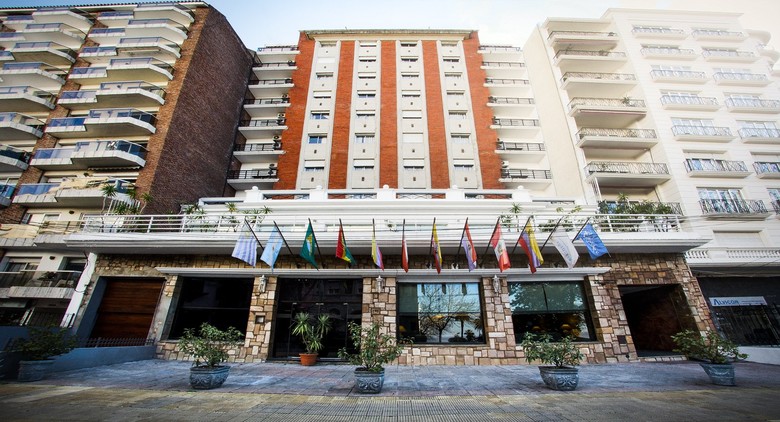
Integrating a well cared for square dating from the beginning of the last century where you can enjoy all year round the incomparable postcard that means the sunrise.
Hotel Columbia, Montevideo.
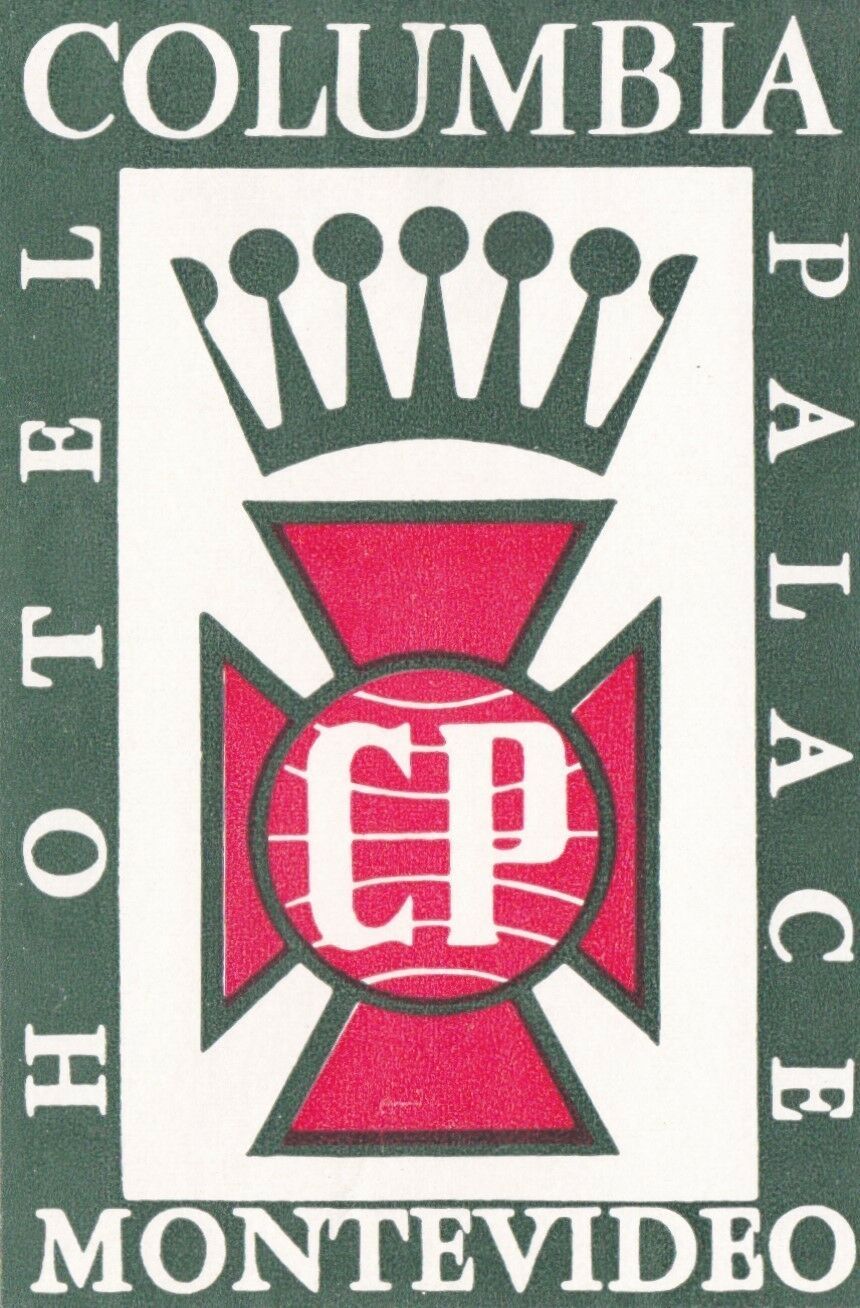
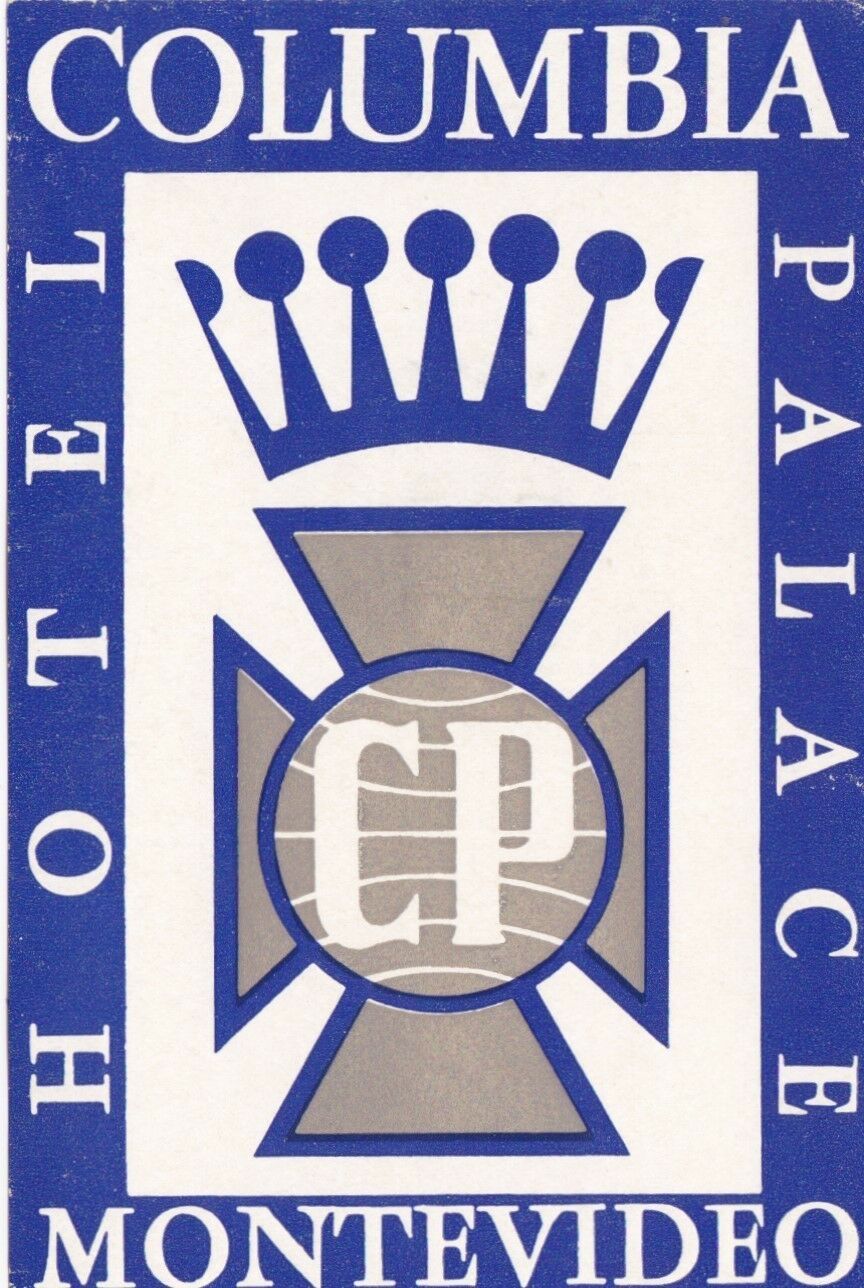
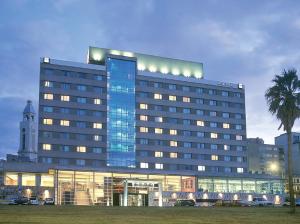 Hotel Columbia.
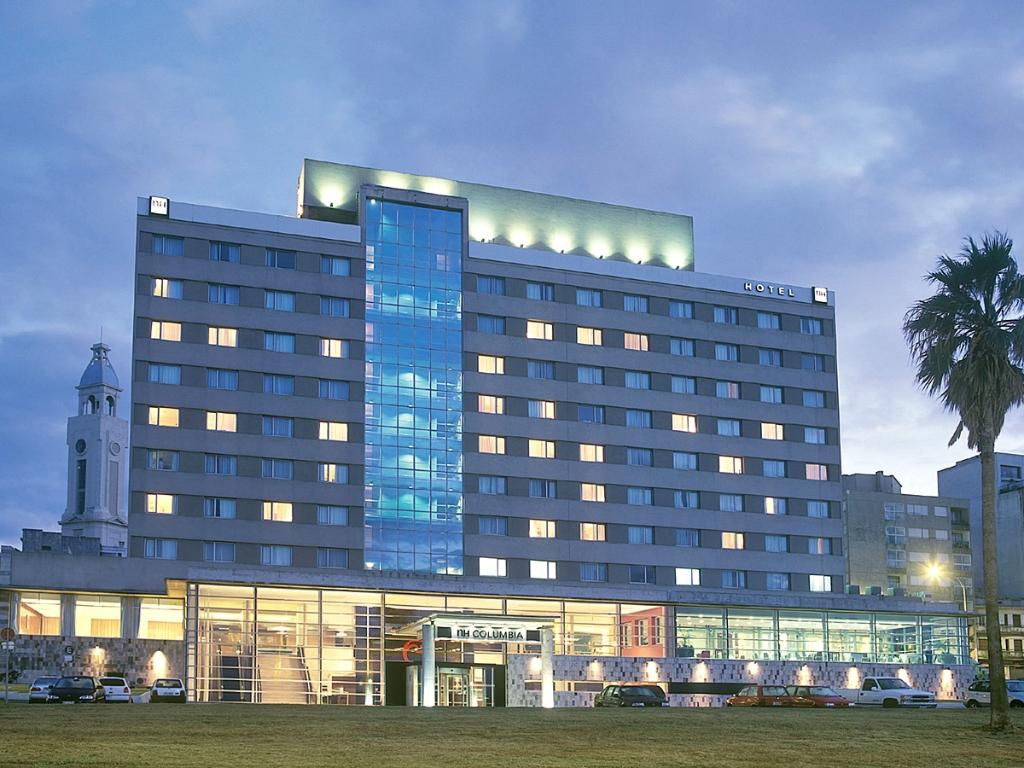
Montevideo Columbia Hotel is in Montevideo’s old quarter – the city’s most historic neighborhood. From here you’re within walking distance of the major tourist attractions. It is also right on the Montevideo Riverside Rambla, a 25-kilometer stretch that’s great for biking and running. Consequently the hotel enjoys spectacular views of De La Plata river.
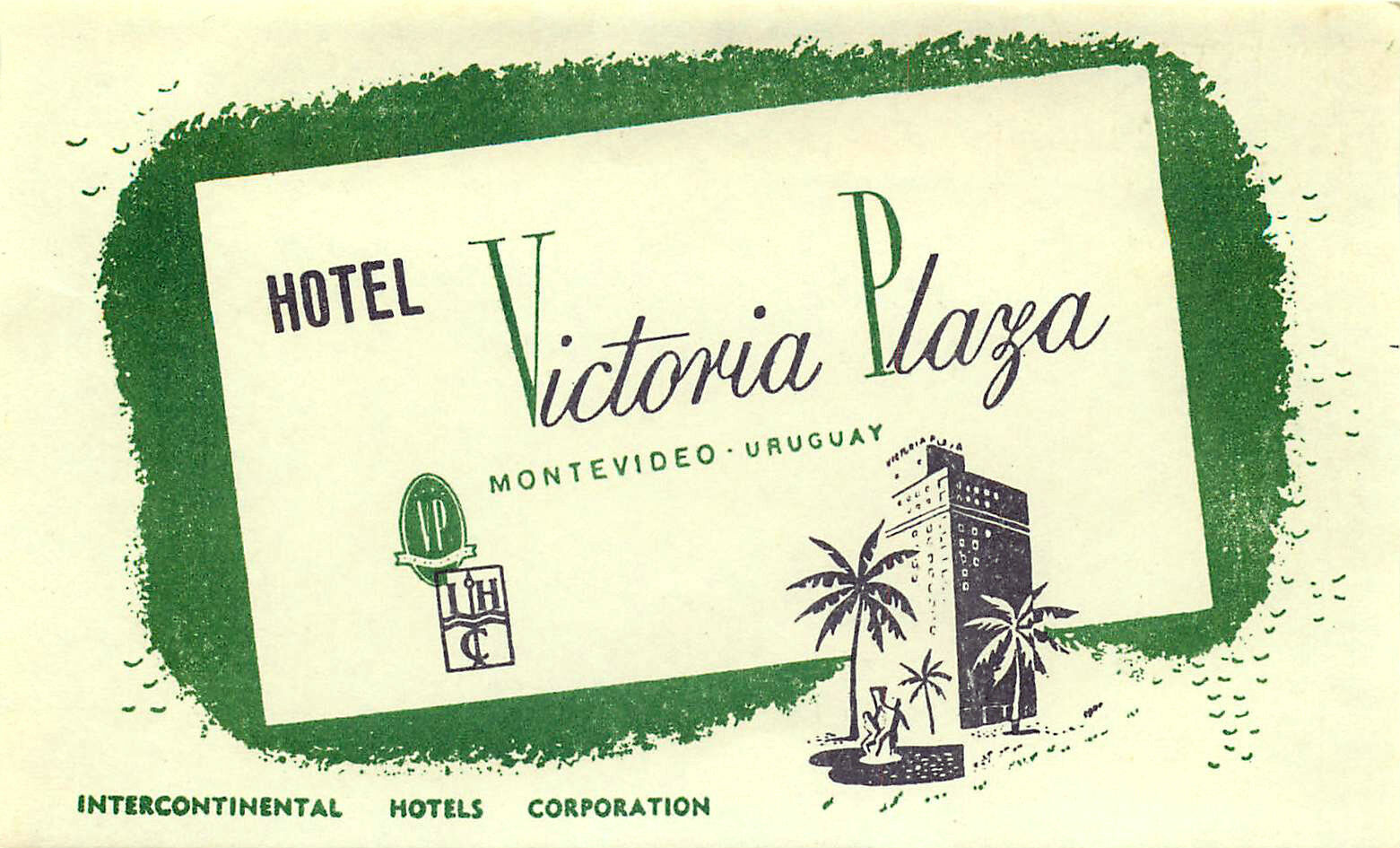
Hotel Victoria Plaza, Montevideo.
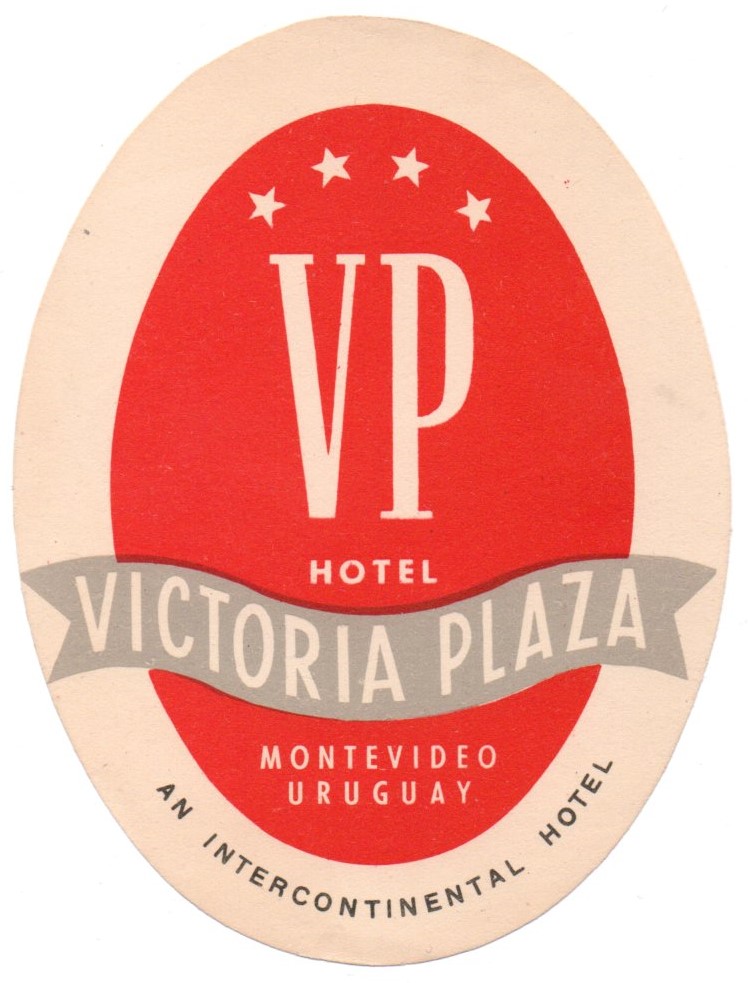
The Radisson Montevideo Victoria Plaza Hotel is a hotel located in the central Plaza Independencia in the Old City of Montevideo. It is operated by Radisson. The Radisson Montevideo Hotel has 232 rooms and contains a casino and a convention center. Food is served by the Arcadia Restaurant, located on the 25th floor.
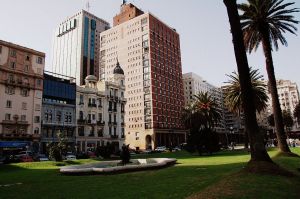 The Radisson Montevideo Victoria Plaza Hotel.
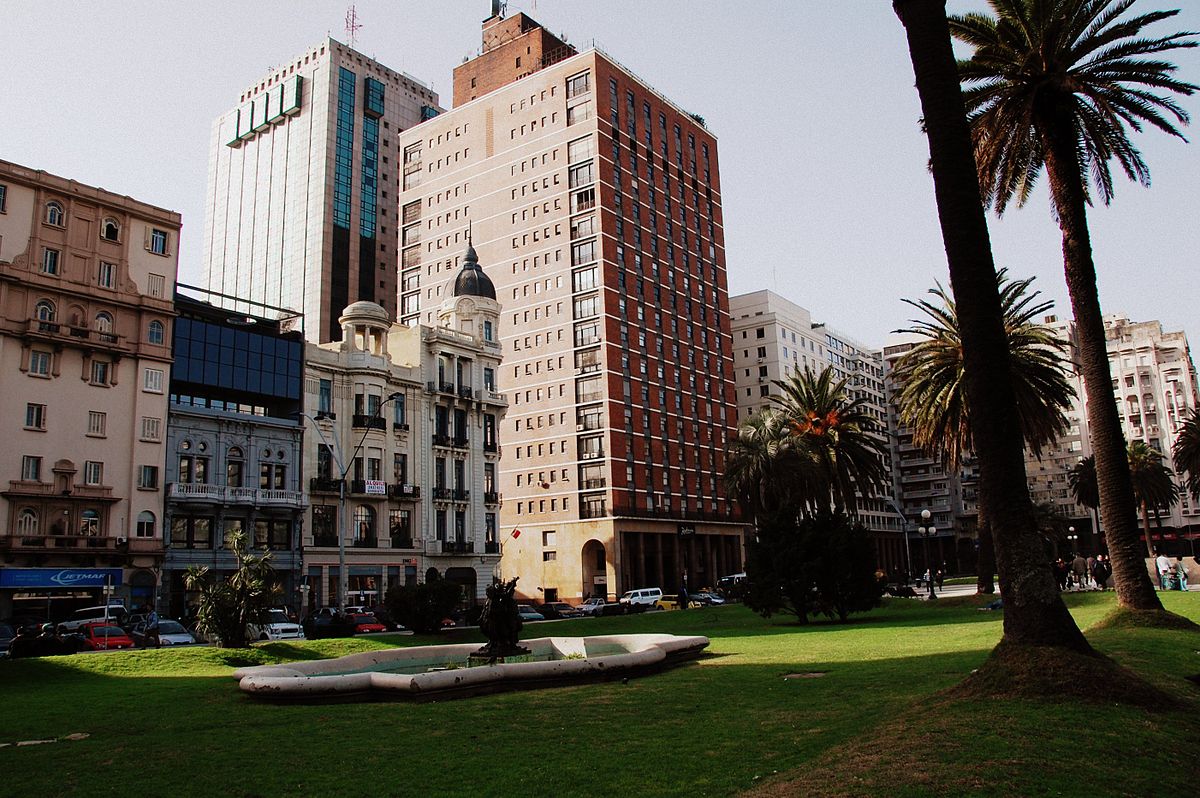
The original building of the Victoria Plaza Hotel was inaugurated on December 15, 1952 and designed by Argentine architects SEPRA. For many years it was the only five star hotel in Montevideo. In 1996 a second building (see pic above) was added, designed by architects Gomez Platero, Cohe and Alberti. In the 1960s it was owned by the Intercontinental hotel chain, and since 1999 it has been managed by the Radisson chain.
In 1996, when the second tower was inaugurated, many of the rooms in the old building were used to house offices, taking advantage of its privileged location, in front of the Presidential building, the Palacio Salvo and the Teatro Solís and a few blocks from the city’s financial center. Its still a famous meeting point in the city of Montevideo.
Hotel La Alhambra, Montevideo.
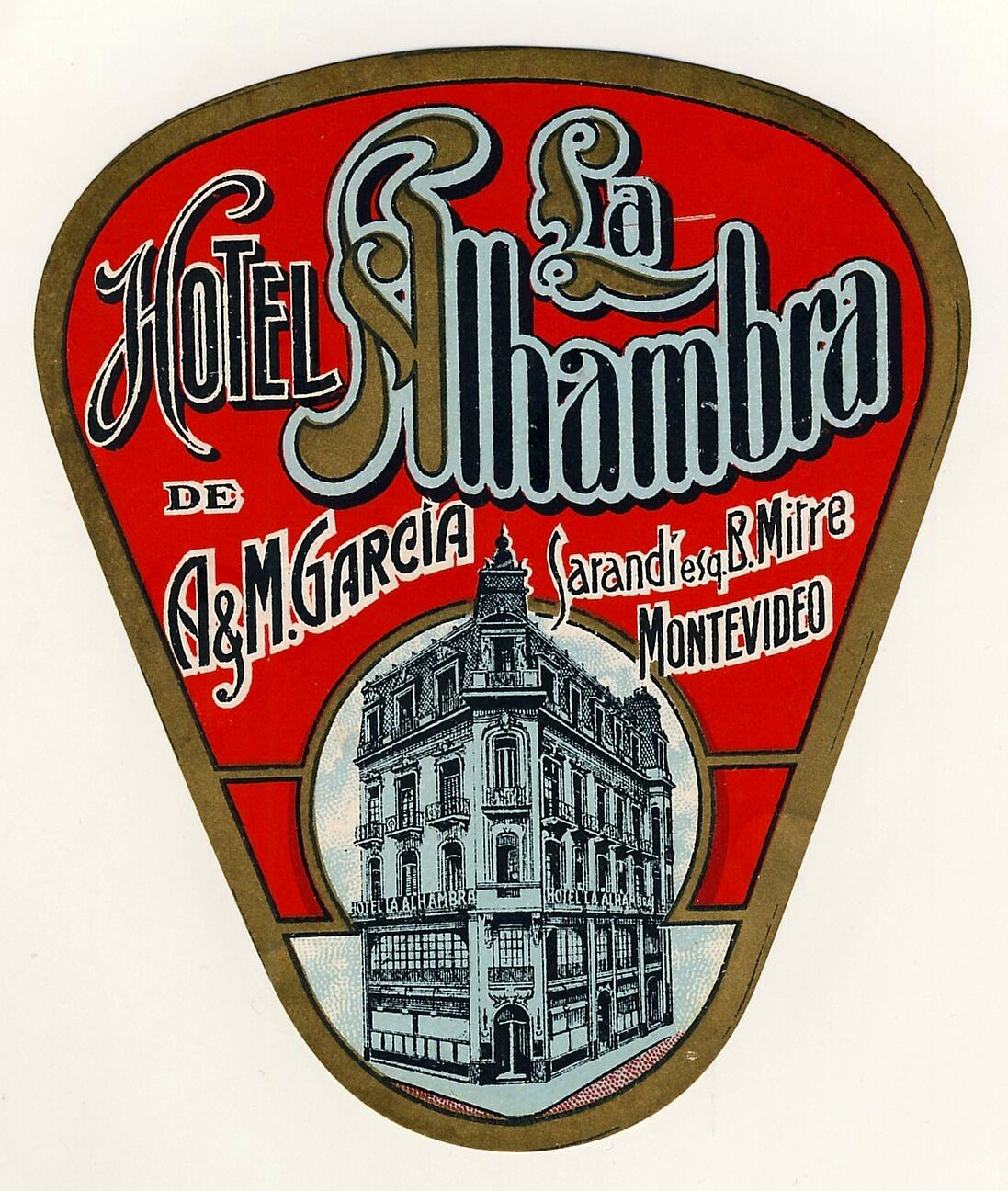
 Hotel La Alhambra de Garcia.
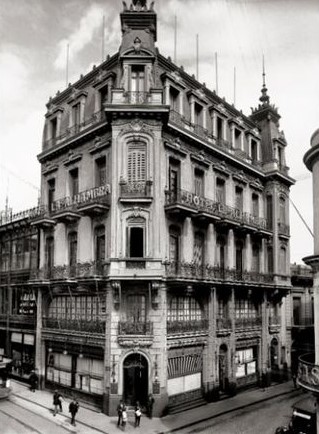
Grand Hotel, Ex – Lanata, Montevideo.
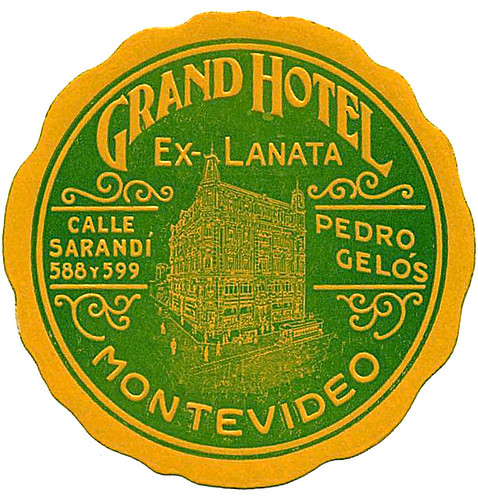
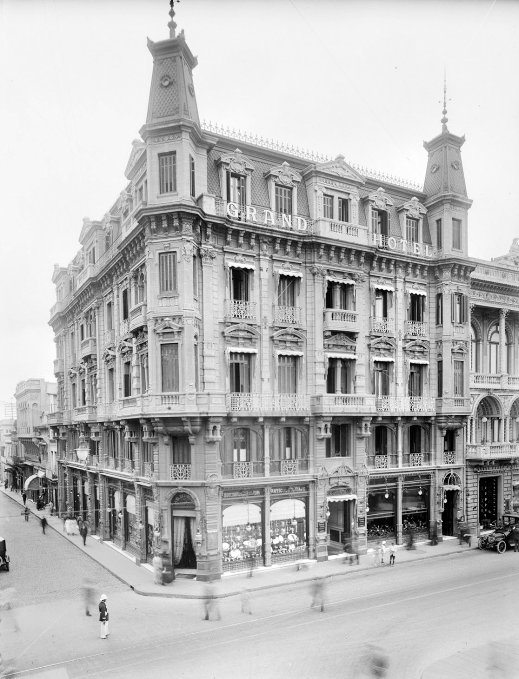
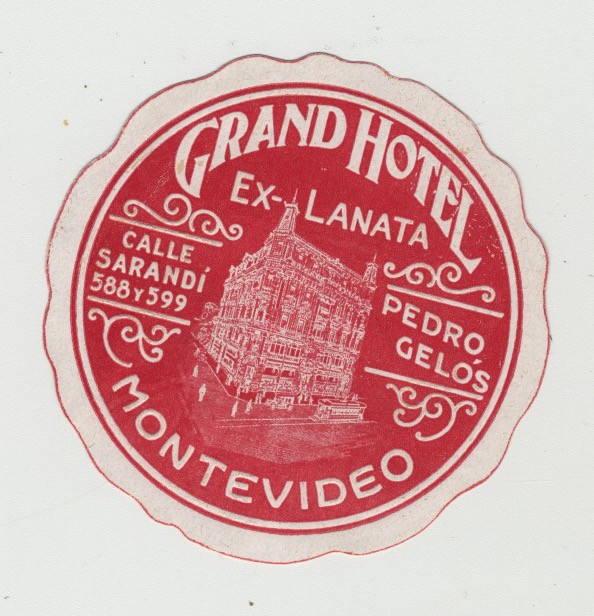
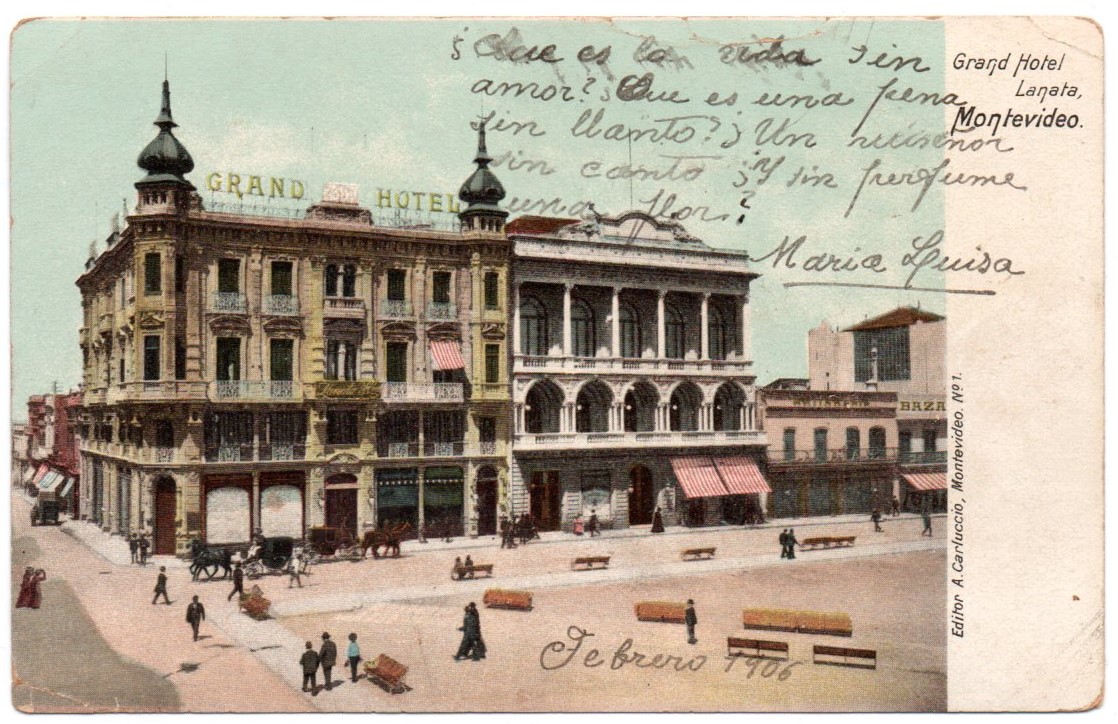
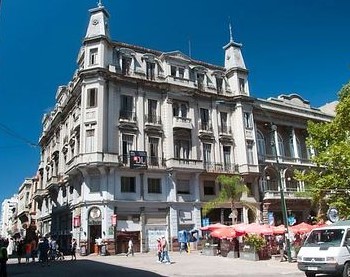
Grand Hotel (Ex – Lanata) en 1906 and 1926, Sarandí y Juan Carlos Gómez.
Palacio Florida Hotel, Montevideo
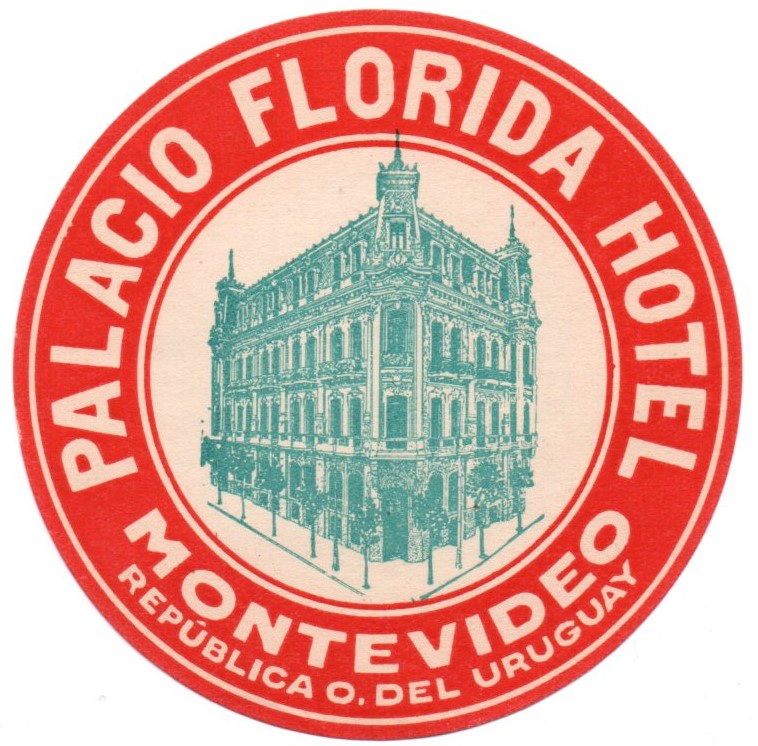
During the first two decades of the last century, the political will to turn Montevideo into a „great seaside resort“ encouraged the construction of large hotel complexes on the Rambla (Parque Hotel, Carrasco) and several buildings of similar typology and architectural style in the city center. Some examples are still part of the urban scenario, although with adaptations to new contexts of use (the case of the former Hotel Colón -current IDB headquarters-, the Alhambra and the Grand Hotel Lanata). They all look similar.
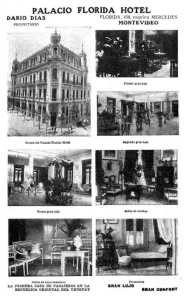
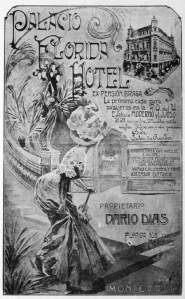 Click on pics to supersize.
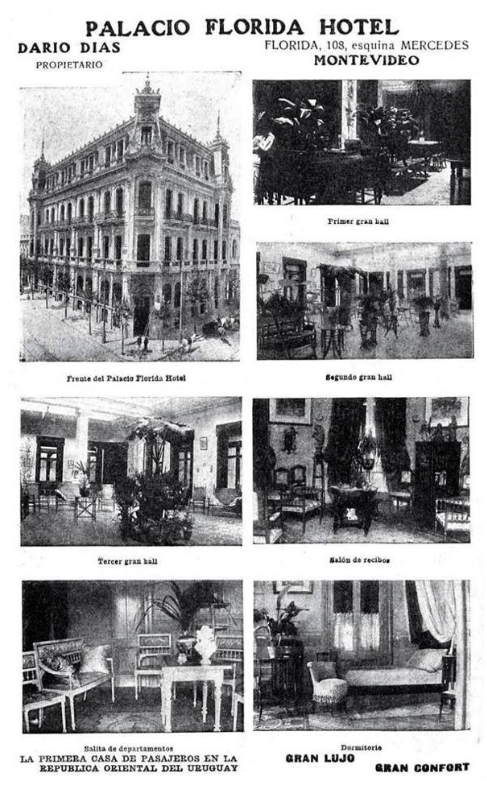
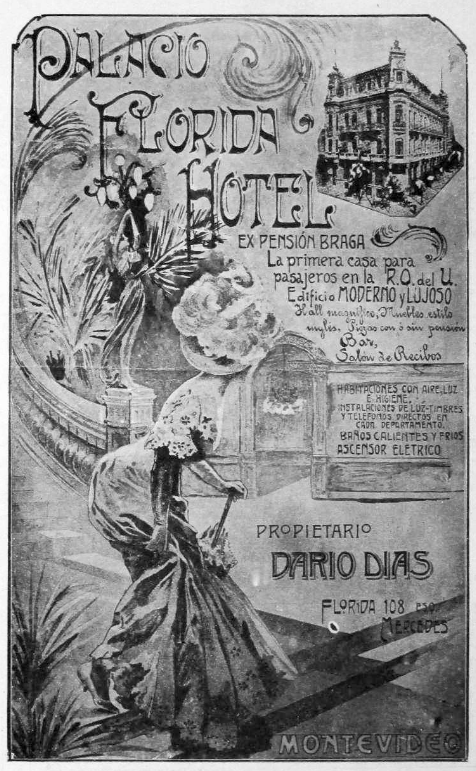
The Palacio Florida Hotel was not so lucky. Just like the former Hotel Colón -which is notoriously similar- it suffered the ravages of time, but its functional decadence was not followed by the possibility of recycling, which, by placing it in a new context of use, would save its urban values. Demolished in the sixties (or seventies, there is no precise date), in its place was a wasteland where a few years ago a large car park was built.
Parque Hotel Casino, Montevideo.
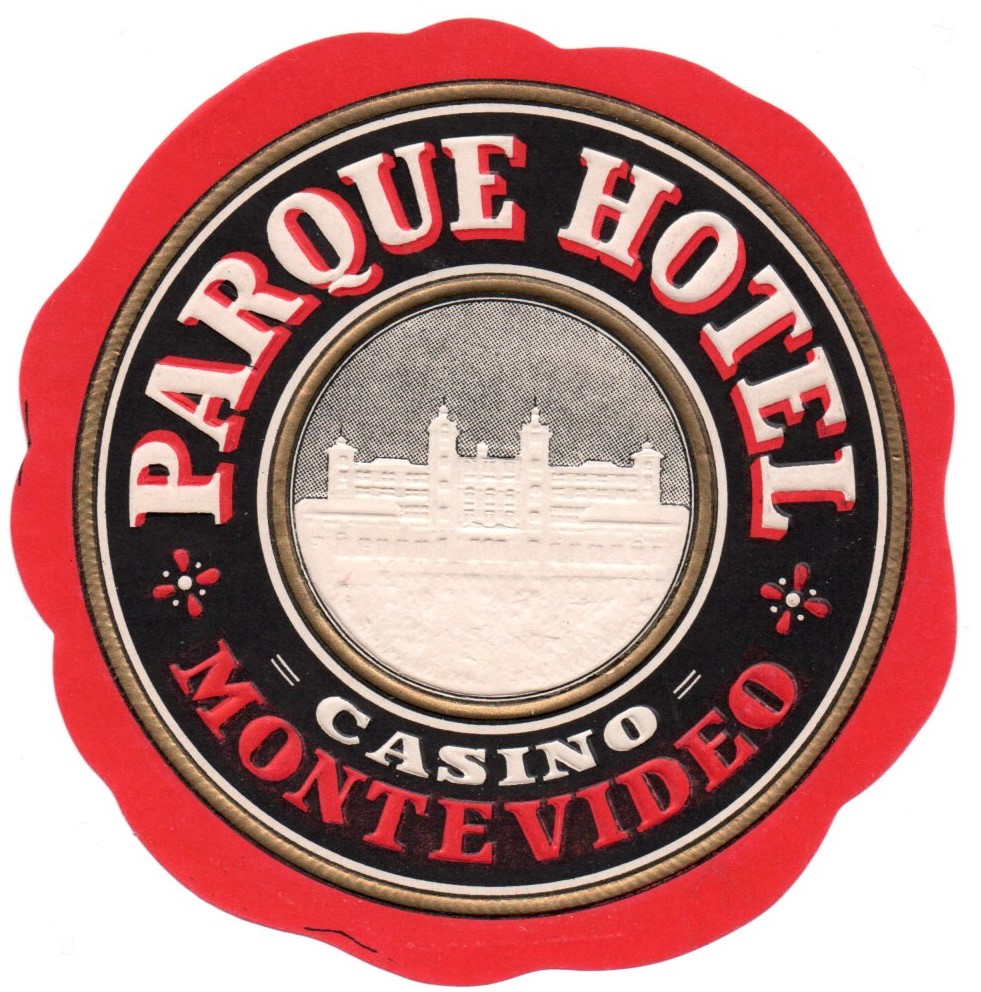
On May 17, 1906, the firm Luis Crodara y Cía. requested from the Municipality of Montevideo the authorization to build a building for the headquarters of the „Hotel-Theatre-Casino del Parque Urbano“ in an area near the beach of the old salting house of Ramírez, on the original plans of the French architect Pierre Lorenzi.
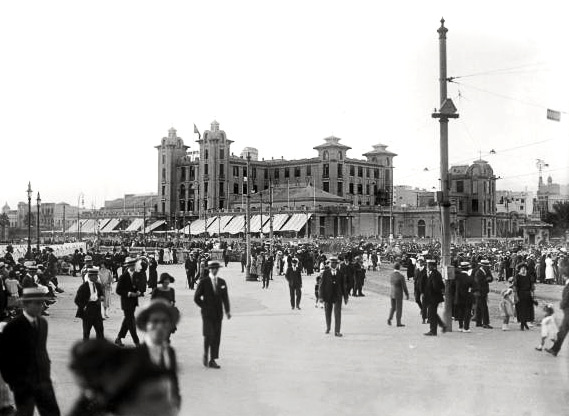
On December 30, 1909 it was inaugurated at the intersection of the current Rambla Presidente Wilson, Juan D. Jackson, Dr. Luis Piera and Dr. Pablo de Maria. The inauguration was scheduled for Christmas Eve 1909, but the delay in the arrival of the ship that transported the kitchens from Germany forced the postponement of the ceremony to December 30. And even on that day it was known that the small and striking electrical appliances in the rooms would not be working, that the elevators would only be in use 10 days later, that the heating boilers would not be ready until April.
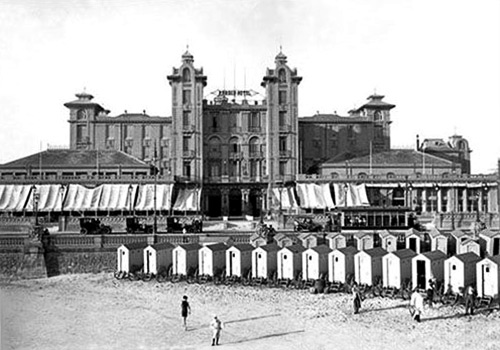
On the opening night, the French chandeliers shone in the huge halls, the dining rooms, the magnificent hall, the tea room, the dance hall, and the Casino, while two big orchestras hired in Buenos Aires livened up the meeting and then the dance.
The new electric trams, inaugurated three years earlier, reached the Parque Urbano (now Parque Rodó) and the first taxis were waiting at the doors of the luxurious hotel.
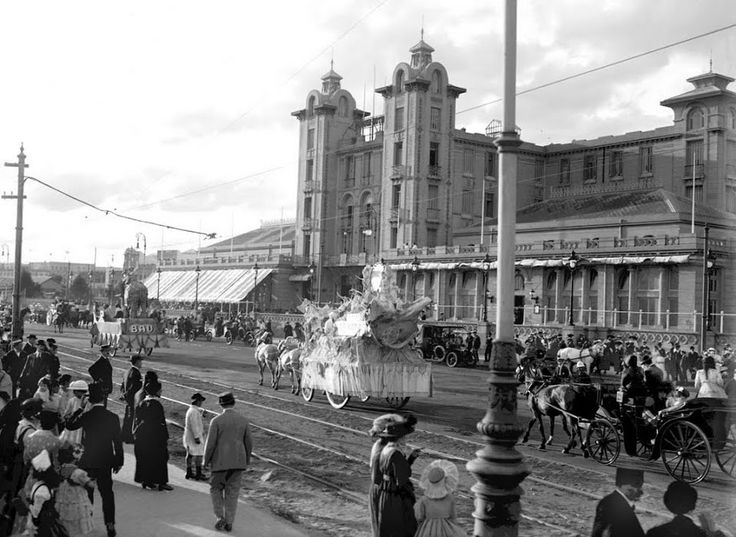
On December 1, 1915, the Municipality of the capital, being mayor Don Santiago Rivas, acquired the premises from the „Sociedad Anónima Casino Parque Hotel“, in the amount of one million one hundred thousand pesos.
From its early days, the „Parque Hotel“ was an important center of Montevidean social life, with memorable parties in its halls and, during Carnival, it was the venue for memorable „Veglioni“ with performances by famous international and Rio de Janeiro orchestras, including Armando Orefiche’s „Los Lecuona Cuban Boy“.
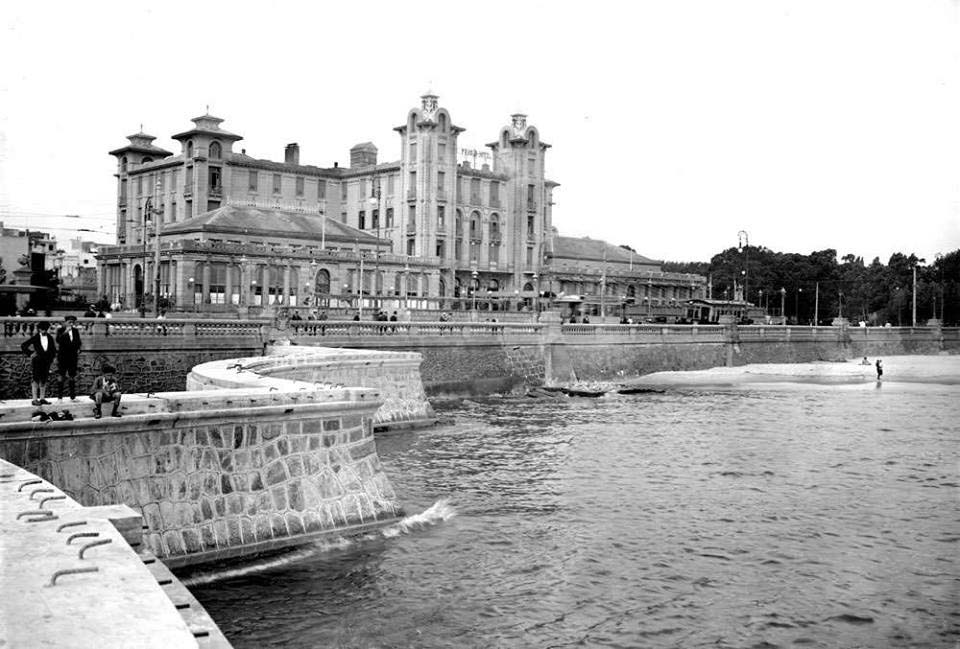
In 1975 the Parque Rodó, including the El Retiro building, was declared a National Historic Monument.
From 1986 the building housed the Casa de Andalucía Civil Association, the name and function by which it was known until the installation of the Parque Hotel Casino, except for a short period when it became a restaurant again.
In 2012, work will begin on its restoration, adapting the building to house the Casino. Today the building shows off its best qualities while maintaining the essential characteristics of Scasso’s work.
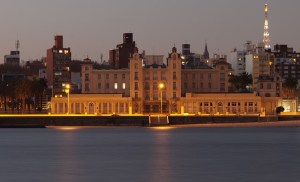 The current building of the Casino Parque Hotel.
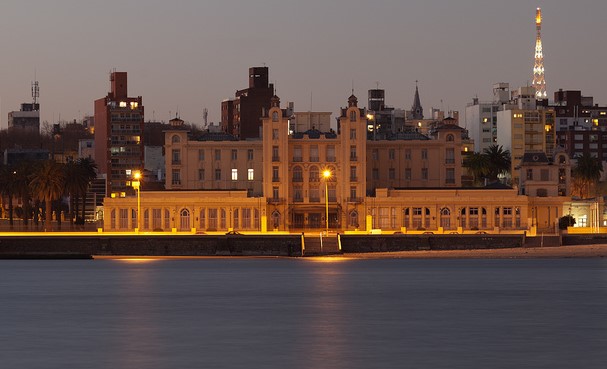
The current building, which has been completely restored, dates from around 1900. At the beginning it was supposedly a dairy and then a restaurant until in 1930 Juan Antonio Scasso -architect among other great works of the Centennial Stadium, the Malvín Experimental School and the current Naval School- projected and built the municipal restaurant El Retiro del Parque Rodó, reformulating the whole and proposing a very similar arrangement to the current one.
The successive extensions and modifications were made maintaining the architectural language used by Scasso: gable roofs of French tiles, wooden structures, semicircular arches and facades with white textured plaster. Festivals, carnival balls, shows and film screenings took place at the El Retiro restaurant.
I really hope you enjoy this little history excurse into the Uruguayan Hotel Landscape. Please stay tuned to the second part of this article.


Het was weer een mooi en interessant stuk dat je geschreven hebt. Ik ontvang jouw post nu eindelijk per email. Bij mijn oude pc lukte dat niet meer. Die labels zijn PRACHTIG. Wat heb je toch veel verzamelingen. Maar hotels spreken je natuurlijk ook erg aan. Wat zitten er prachtige gebouwen tussen. Ik lees je artikels dus in het Nederlands en in de laatste zin wordt history excurse vertaald als geschiedenisverpleegster. Gelukkig kan ik de Engelse tekst ook lezen.
Weer dank. Hartelijke groeten Wilma
LikeLike
Dank je wel voor je vriendelijke opmerkingen.
Je hebt gelijk, er zijn hier veel mooie gebouwen.
Montevideo is de stad van de Art Deco,
so als Buenos Aires is de stad van de Art Nouveau.
De moeite waard om het te zien.
Zou geweldig zijn voor de belangen van Ed.
Collecties van mij – ja – je weet niet eens een derde
van hen, ha ha.
Lieve groeten uit Uruguay, Mike.
LikeLike