
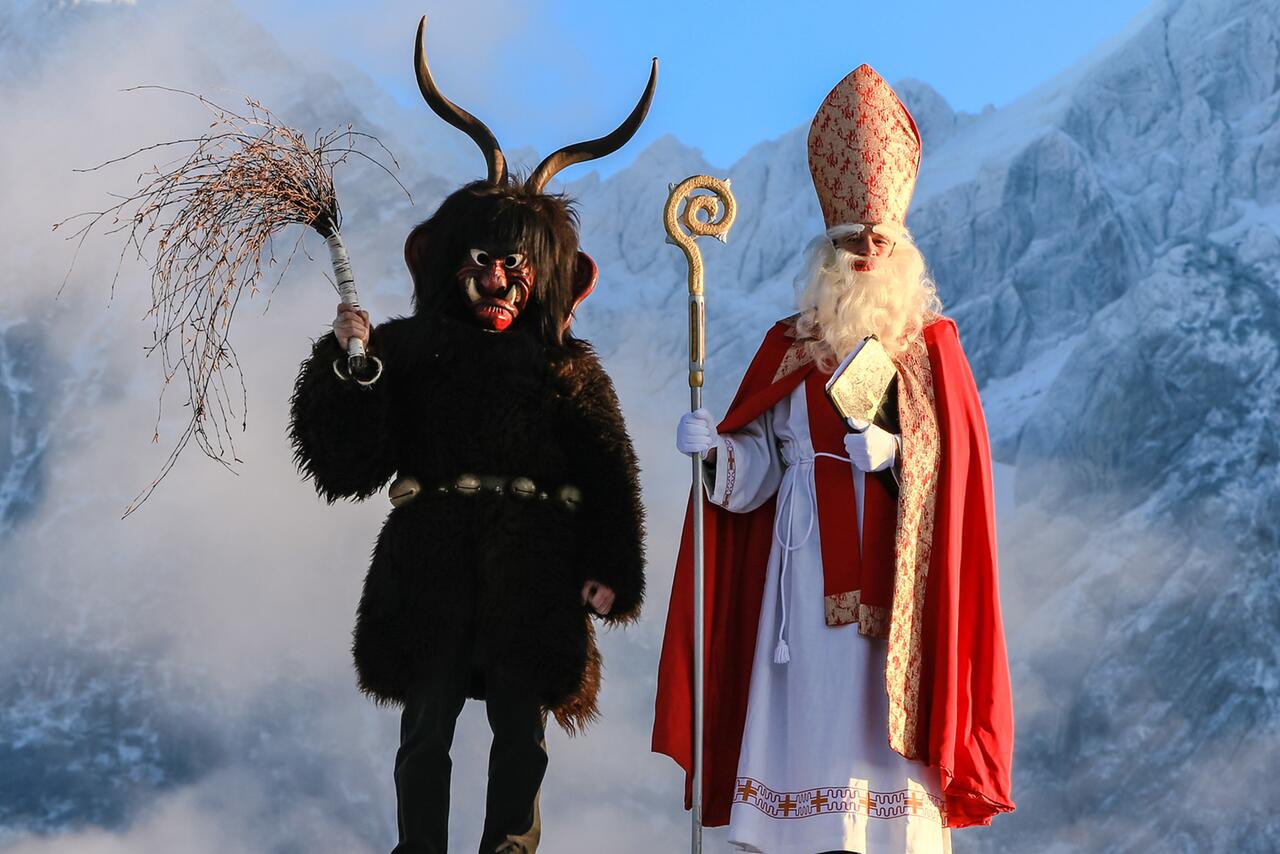
Who was St. Nicholas?
Accompanied by Knecht Ruprecht (servant Ruprecht), St. Nicholas traditionally bestows good children. But where does the custom of the stuffed boot come from – and was it really the person of Santa Claus?
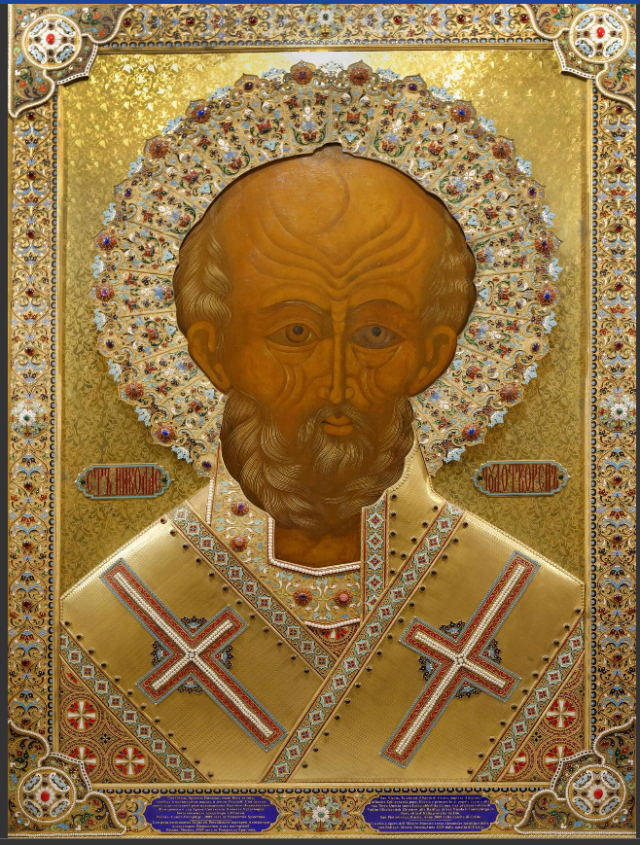 A St. Nicholas icon from around 1300.
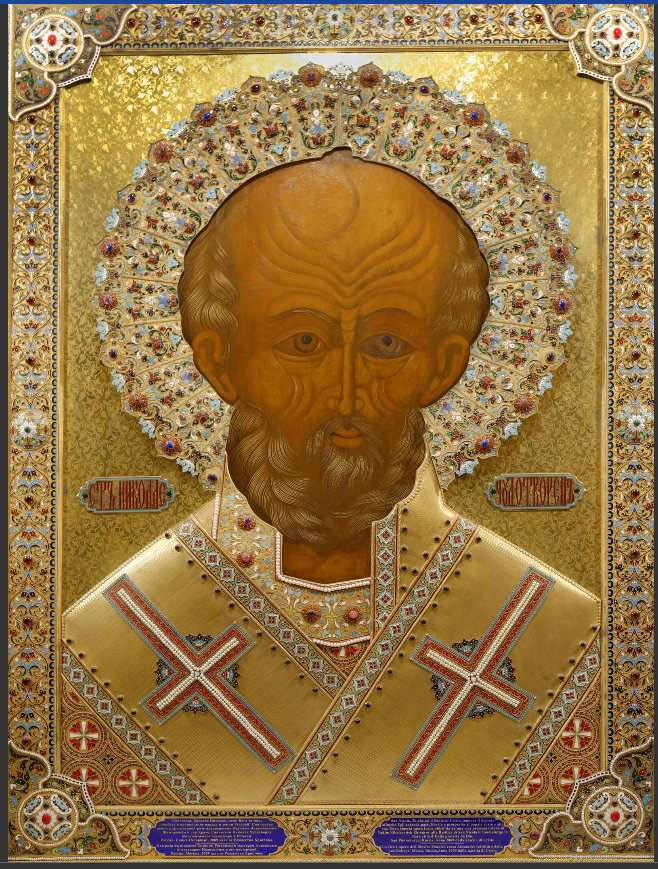
The candy-filled boot on the morning of December 6 is part of a custom dating back to the Bishop of Myra – better known as: Nicholas. He is considered a friend of the children, patron of the prisoners, patron saint of seafarers, merchants, martyrs and helpers.
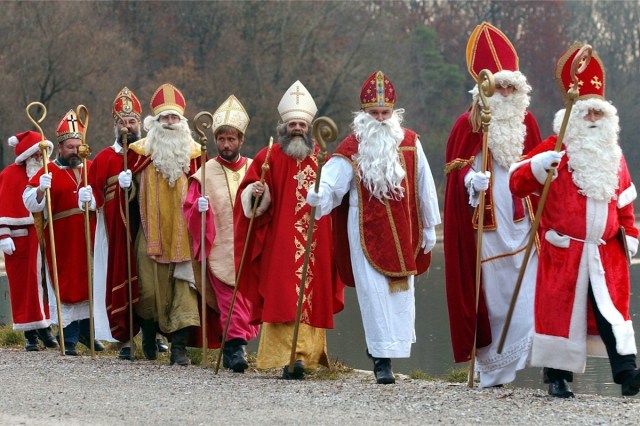 St. Nikolaus festivities in Germany.
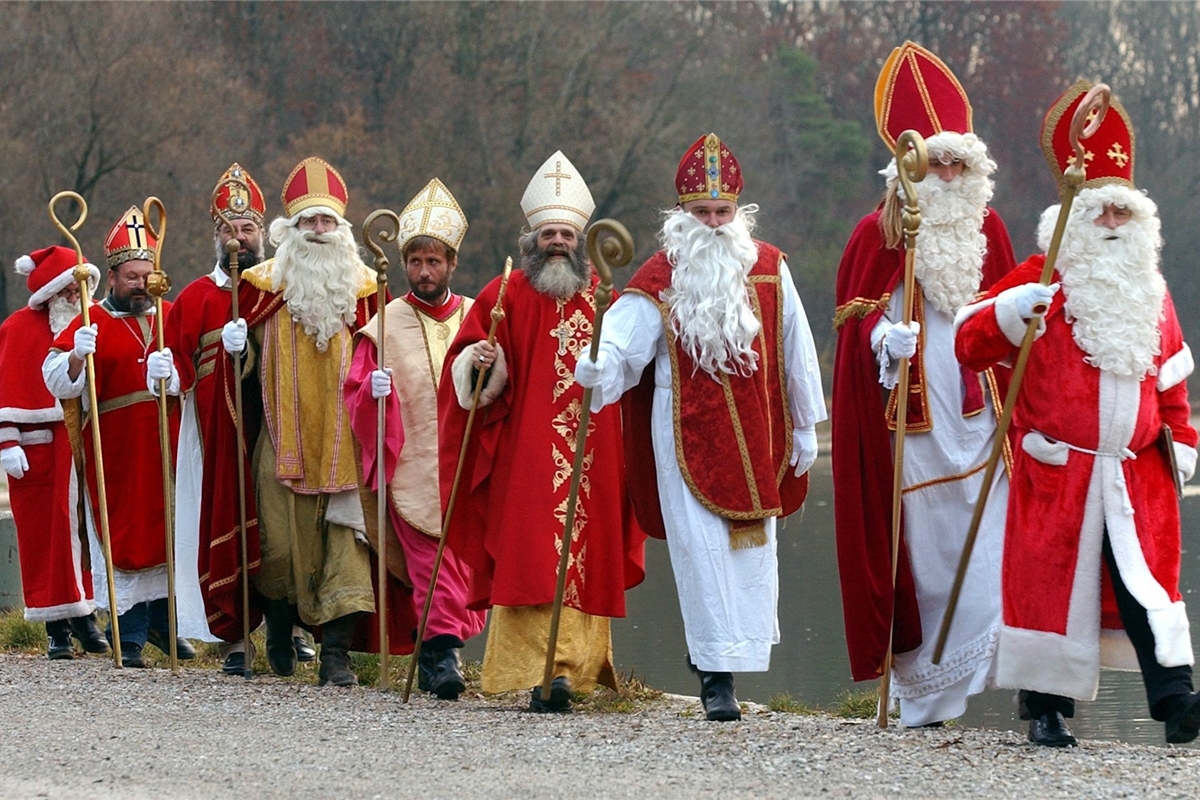
Saint Nicholas of Myra (traditionally 15 March 270 – 6 December 343), also known as Nicholas of Bari, was an early Christian bishop of the ancient Greek maritime city of Myra in Asia Minor (Ancient Greek: Μύρα, modern-day Demre, Turkey) during the time of the Roman Empire. Very little is known about the historical Saint Nicholas.
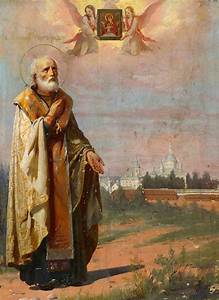
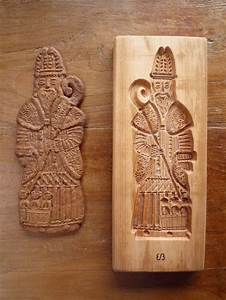
The earliest accounts of his life were written centuries after his death and contain many legendary elaborations. He is said to have been born in the Greek seaport of Patara, Lycia in Asia Minor to wealthy Christian parents.
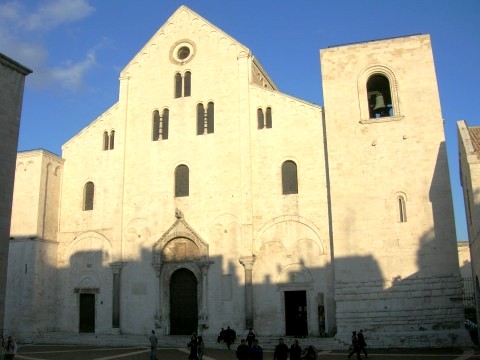
Basilica di San Nicola in Bari, Italy where most of the relics of Saint Nicholas are kept today.
Fewer than 200 years after Nicholas’s death, the St. Nicholas Church was built in Myra under the orders of Theodosius II over the site of the church, where he had served as bishop and Nicholas’s remains were moved to a sarcophagus in that church. In 1087, while the Greek Christian inhabitants of the region were subjugated by the newly arrived Muslim Seljuk Turks, and soon after their church was declared to be in schism by the Catholic church, a group of merchants from the Italian city of Bari removed the major bones of Nicholas’s skeleton from his sarcophagus in the church without authorization and brought them to their hometown, where they are now enshrined in the Basilica di San Nicola.
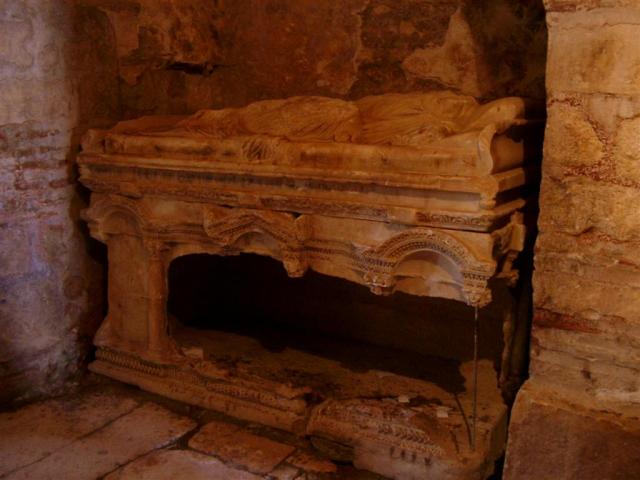 The desecrated sarcophagus in the St. Nicholas Church, Demre, where Saint Nicholas’s bones were kept before they were removed and taken to Bari in 1087. Wikipedia.
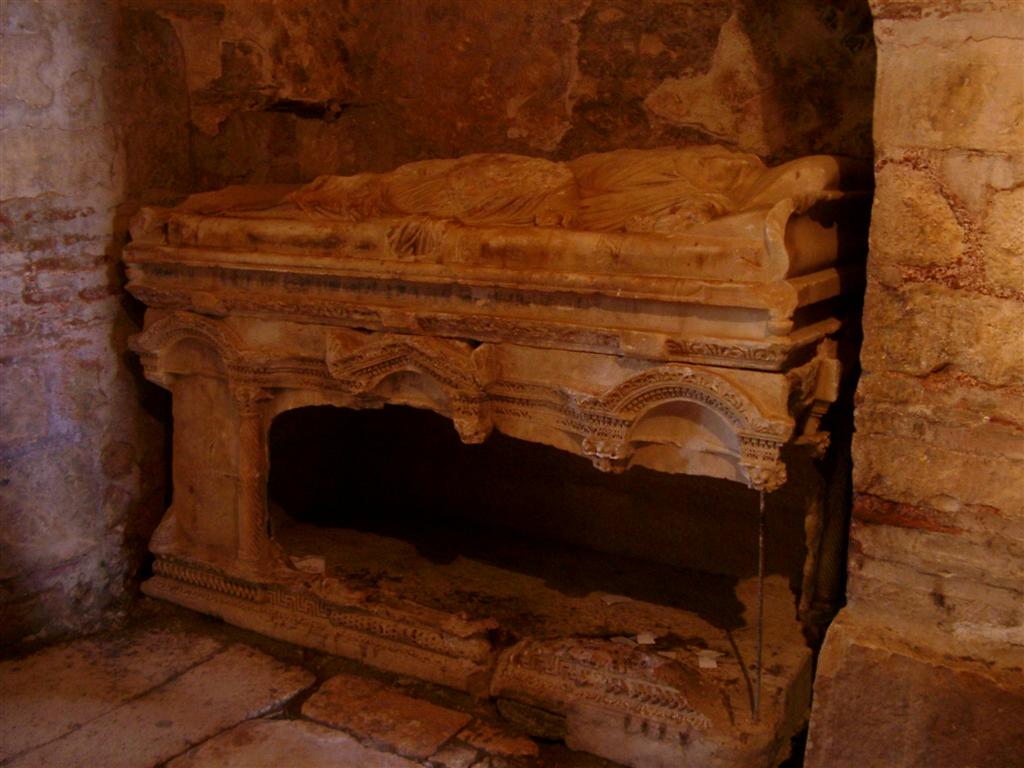
The remaining bone fragments from the sarcophagus were later removed by Venetian sailors and taken to Venice during the First Crusade. His relics in Bari are said to exude a miraculous watery substance known as „manna“ or „myrrh“, which some members of the faithful regard as possessing supernatural powers.
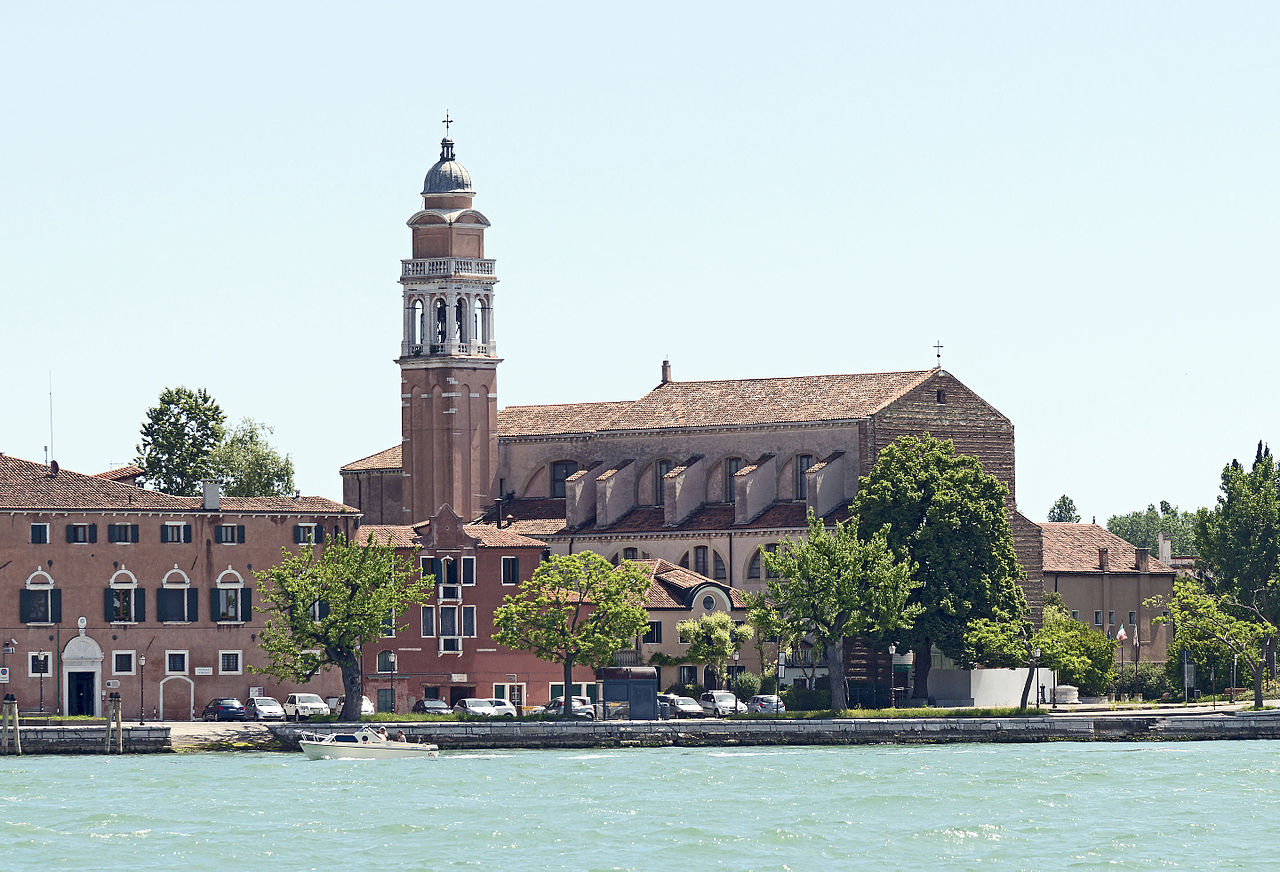
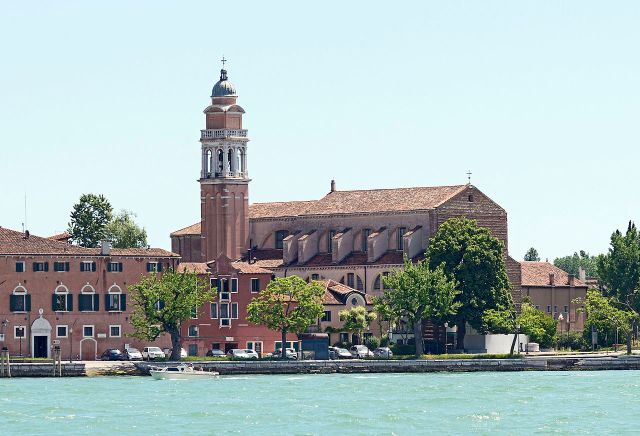 The church of San Nicolo al Lido in Venice claims to hold roughly 500 bone fragments from Nicholas’s skeleton, which scientific examinations have confirmed are anatomically compatible with the bones in the Basilica di San Nicola in Bari.
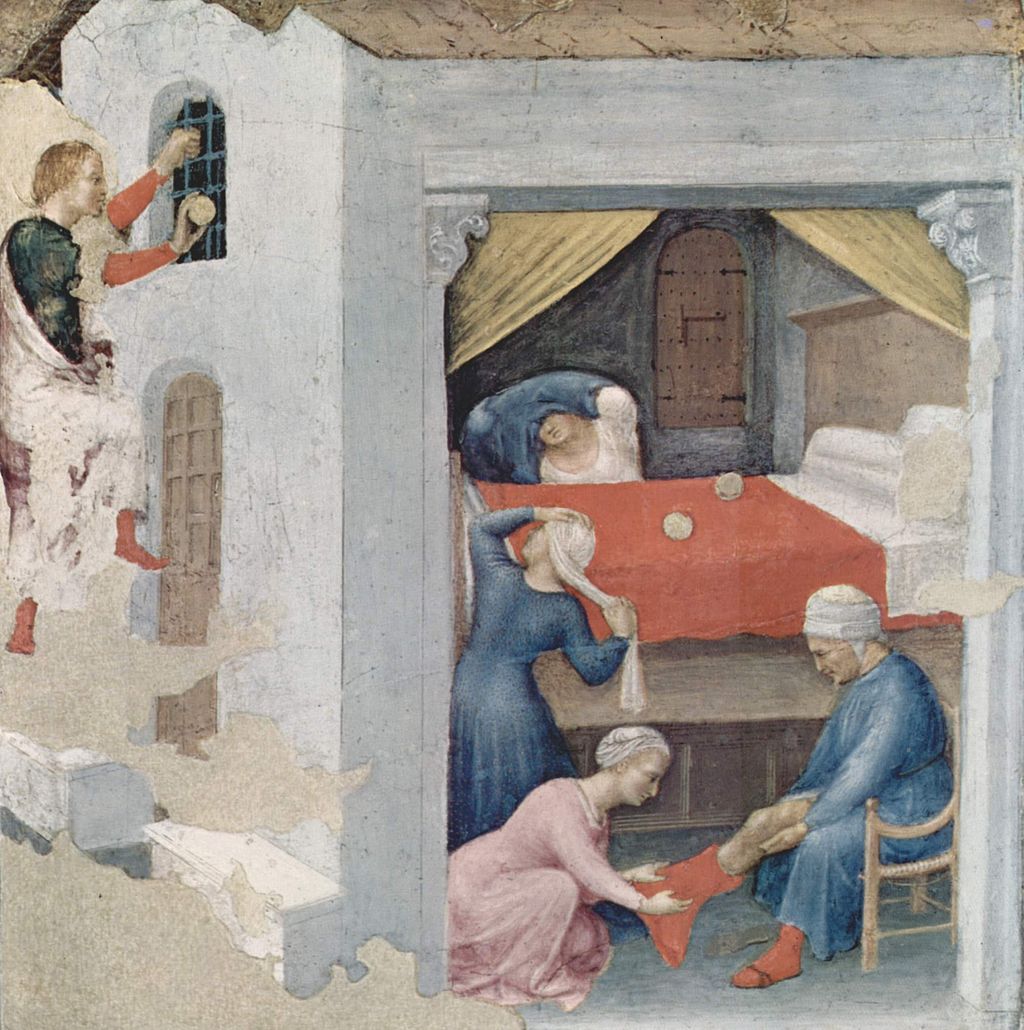
According to tradition, Nicholas should have distributed the assets of his parents, after they had died, to the poor. So one night he passed the house of a destitute family. Secretly he is said to have thrown money through the window or through the fireplace into the socks hung in it. He is said to have prevented the daughters of the family from having to prostitute themselves to earn money.
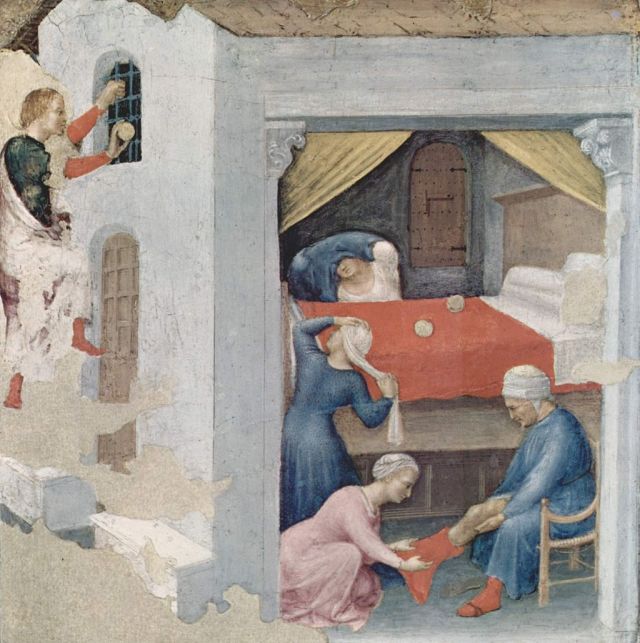 The dowry for the three virgins (Gentile da Fabriano, c. 1425, Pinacoteca Vaticana, Rome). Wikipedia.
Where does the boot use on St. Nicholas Day come from?
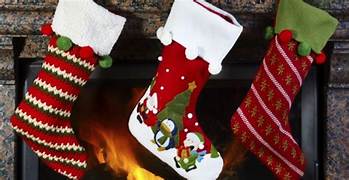
Today, boots are put out the front of the house or big socks hanging in front the fireplace, on the evening before St. Nicholas‘ Day so that they can be filled with sweets at night. But shoes were not always used for that: in the past, children made small ships out of paper or other materials.
For, according to legend, the bishop rescued distressed sailors from death by preventing a heavy storm. So he became the patron saint of sailors. Later, the tradition of the so-called „Schiffchensetzens“ (setting the ships) was then replaced by shoes, stockings or gifts.
Who is Knecht Ruprecht?
Knecht Ruprecht is the antagonist to Nicholas. He is the gloomy companion of the saint who punishes the naughty children with the rod. Over time, however, this figure was defused more and more and became more of a kind of assistant. So also in the poem by Theodor Storm from the year 1862.
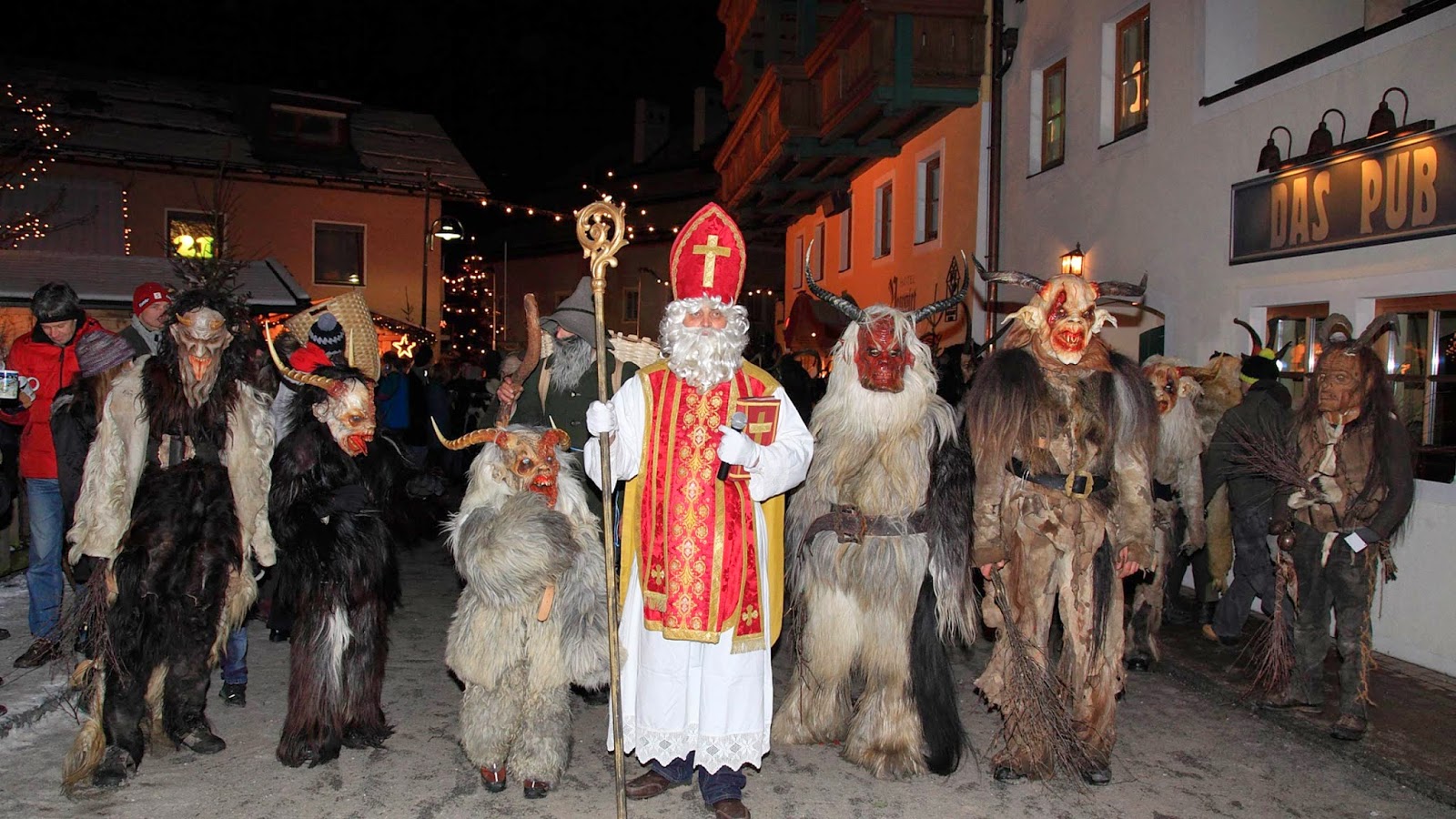
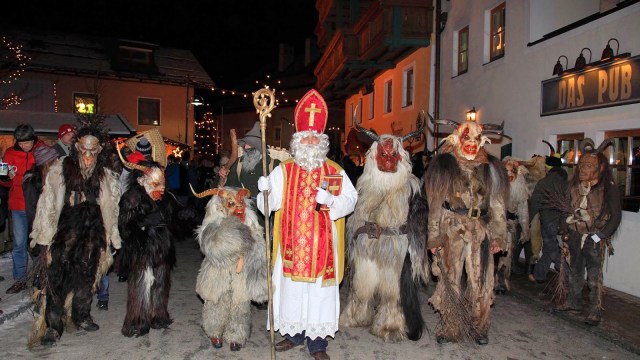 In Austria, the celebration of Krampus/Christmas takes things closer to the truth.
The first priests ever had “royal” Anunnaki blood and they were the ones who conducted the human and animal sacrifices dedicated to the “gods”. The “gods” then used to eat the fresh hearts of the sacrificed children and drink their adrenaline-filled blood. Today’s highest ranking prelates still conduct these rituals in secret ceremonies, while the rest of them are required to conduct an open phony version of the same ritual, the liturgy.
 It is tradition and not racism – YOU IDIOTS !!

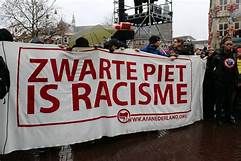

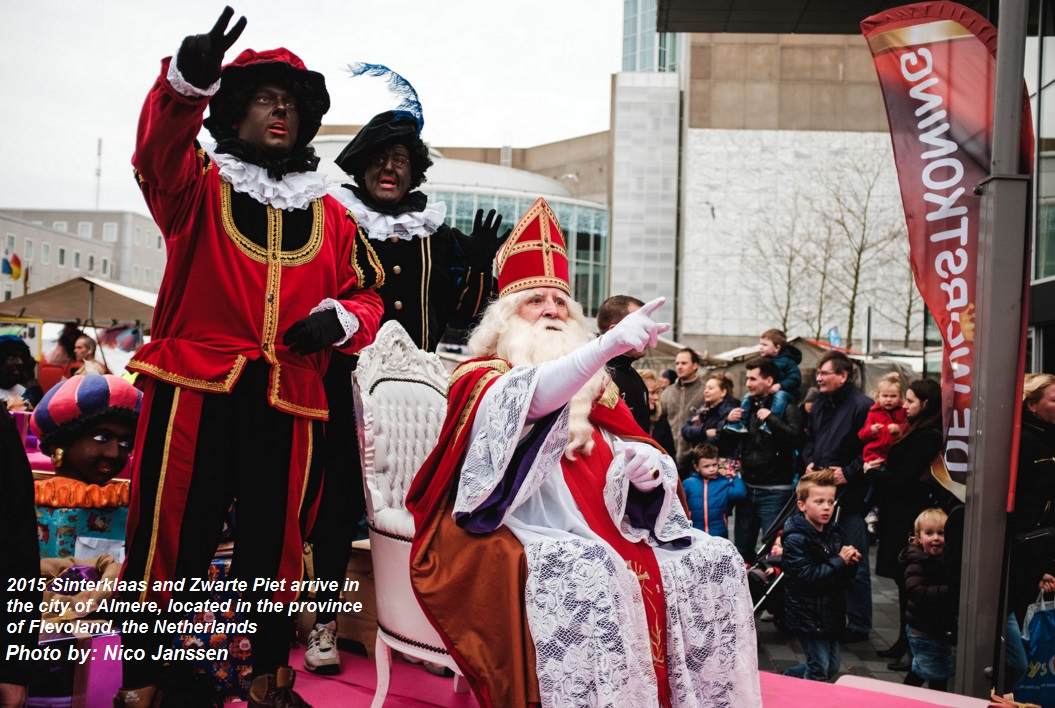
Depending on the region and country, the companion of Nicholas has different names – he is also known as „Krampus“, „Bullerklas“ or „Belzebub“, in the Netherlands he is called „Zwarte Piet“ (Black Piet). During the annual processions, the Santa Claus helpers have black painted faces. Nowadays the figure is controversial and is referred to by critics as a racist symbol. What a bullshit some grousing complainers start ! Forget about those idiots and celebrate your fiestas as it was done when you were young and as it was done since hundreds of years ! Fight the complainers !!!

