
About seventy years ago, an epidemic swept across America (and a short time later throughout the whole world) affecting millions and millions of people and lasting for many years. No corner of the country’s was safe; it reached into homes in every city and every country town.
Fortunately, the epidemic was not fatal. In fact, people felt better because of it. The epidemic was called Canasta. The American leading magazines wrote stories about it. Newsweek reported that Canasta now rivaled Monopoly and Mah-Jong, the two biggest games of all time.
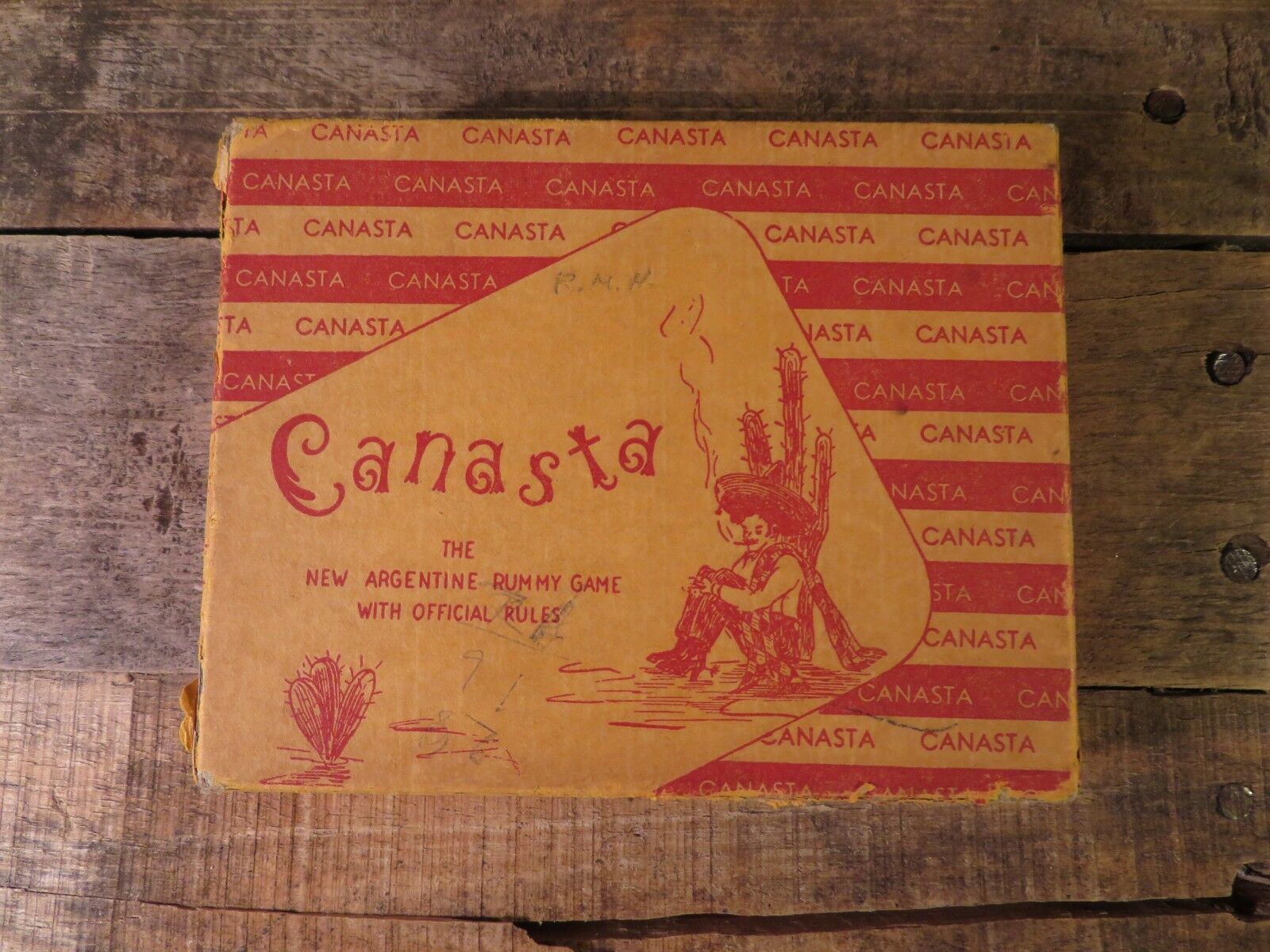
Time magazine noted how it had spread across the entire hemisphere. Fortune magazine recorded that Canasta books and card deck sales were breaking all prior records. Life featured a cover story about the game and published its rules inside. The New York Times Magazine covered the game several times over the next five years.
Canasta is a high-scoring, partnership, rummy-like card game. If you look in compendiums of game rules, you’ll likely find some mention of the fact that the game came from South America, and that Uruguay was the country of origin.
In the Beginning
In the age without television or internet, playing cards were surely one of the favorite pastimes. There were two very specific inventors of the game. Amazingly, their names were not known in the United States until after the game’s popularity had peaked. Only then did Americans learn that an attorney named Segundo Santos and an architect named Alberto Serrato had purposely set out to create the game and had named it, whimsically, Canasta.
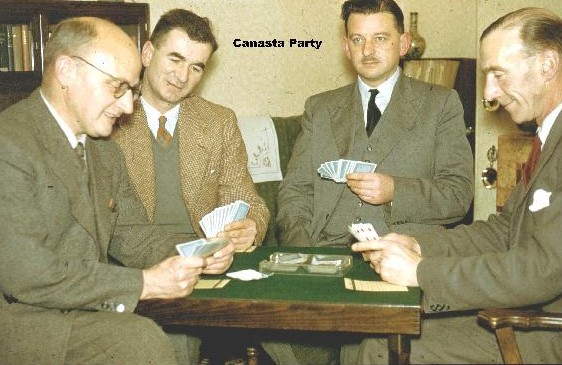
Michael Scully of Coronet magazine published their story in 1953 and thus finally enlightened the entire country. (Coronet was the chief digest-size rival to Reader’s Digest back then.) The origin of Canasta dates back to 1939. At that time, Bridge had established itself as the card game of choice, especially among professional people.
This held true in Montevideo, Uruguay, where Segundo Santos was a member of the elite Jockey Club.
Jockey Club Montevideo.
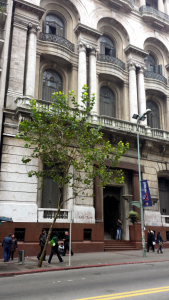 See my post about the Jockey Club Montevideo:
https://myuytips.com/2015/11/09/jockey-club-montevideo/
The custom there was to relax with a game of cards before dinner with associates. But Segundo found it hard to stop playing after just an hour or two, and on most nights he kept at it for six hours. In the mornings, he felt dull and mentally exhausted, and it eventually dawned on him that he was working two shifts, one in the office and one in the club, and that this might have a bad effect on his career.
And so he had arrived at a moment of truth. He asked himself: Am I an attorney or a bridge player? He decided on the former.
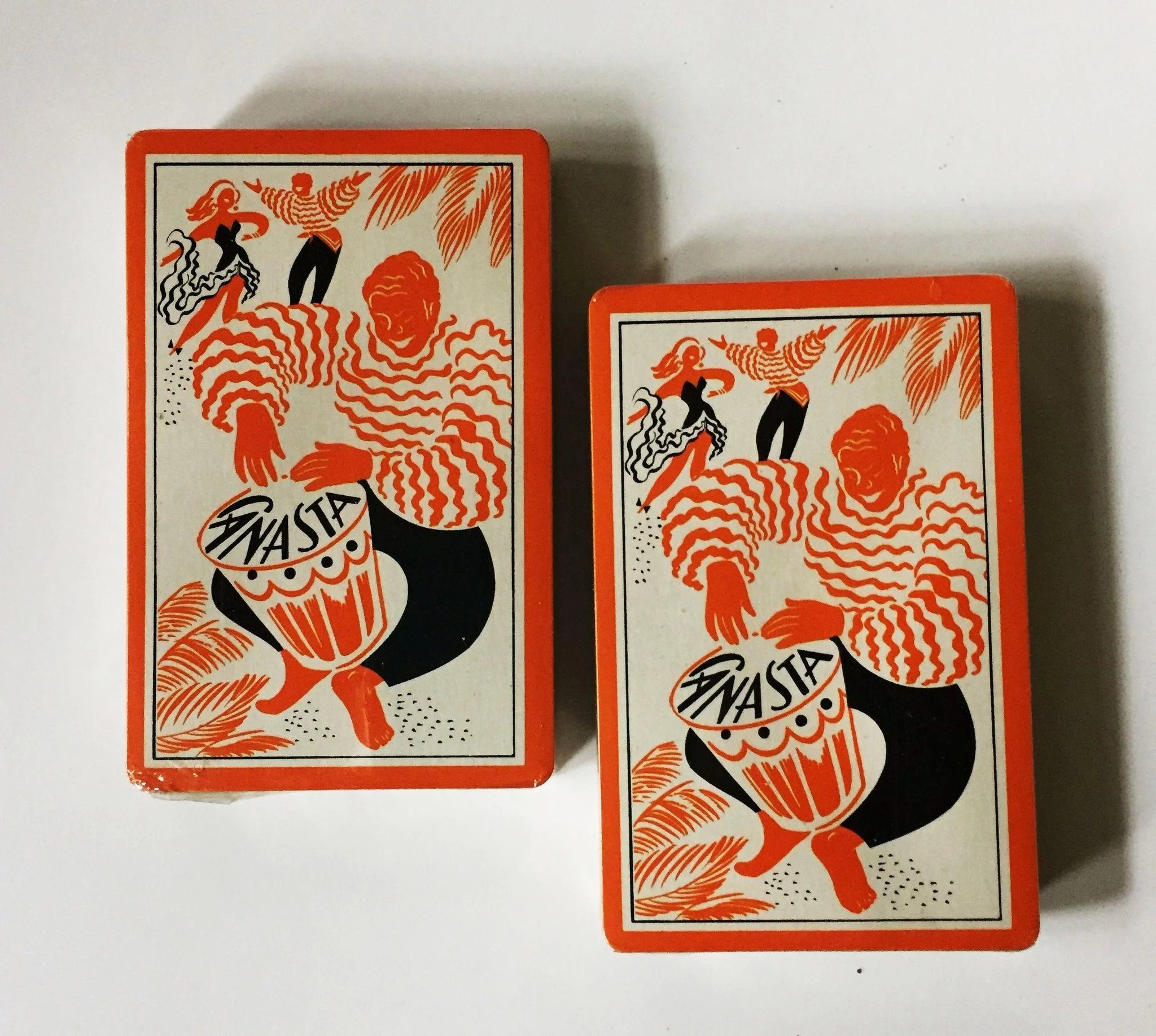
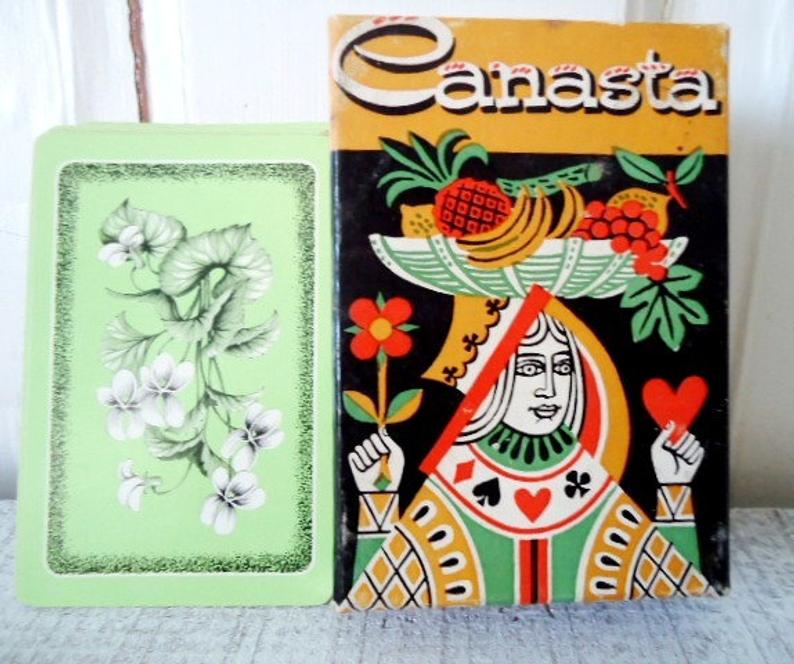
Though he continued to go to the Jockey Club for dinner, he shifted from Bridge to Rummy, which other members played as a light warm-up for Bridge. Segundo liked Rummy but thought it involved too much chance. He began to think about a combination of the best elements of Bridge, Rummy, and a Rummy variant called „cooncan.“ He enlisted the aid of his bridge partner, Alberto Serrato. For weeks they played with variations of their basic „blending“ idea, discarding at least six before settling on a double-deck partnership game involving melding, adding to melds, and the ability to claim the entire discard pile under the right circumstances.
When they were satisfied that they had something worthwhile, they invited Arturo Gomez Harley and Ricardo Sanguinetti to play a trial game. These two friends loved the new game instantly. Gomez Harley then popped a key question, „What do you call it?“
Basket Case
Santos had merely referred to it as „The Game.“ But now, while sitting in a restaurant at their „play-test“ table, he noticed the small wicker basket they had borrowed from a waiter to store their cards. „Canastillo,“ Santos replied matter-of-factly, which in Spanish means „little basket.“ A bit later, someone suggested shortening it to „Canasta“ („basket“). This name was easy to say, and had a nice ring to it, thanks to its repeating a’s (comparable to the repeating o’s in Monopoly). The name stuck.
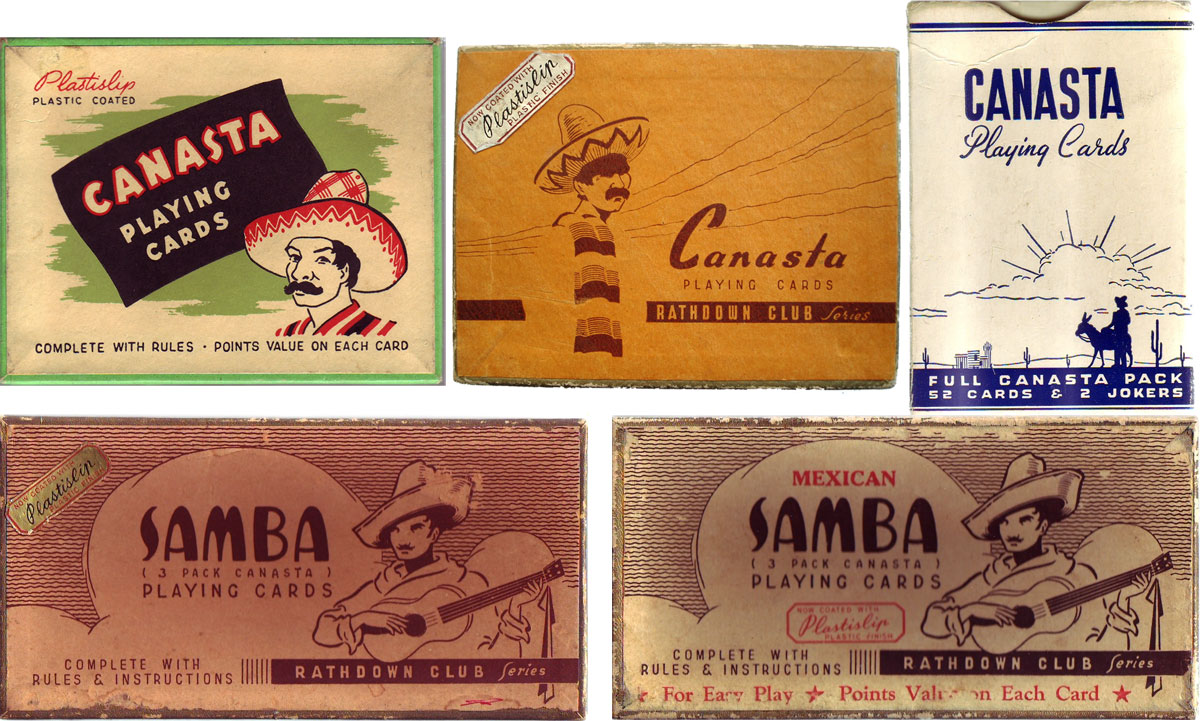
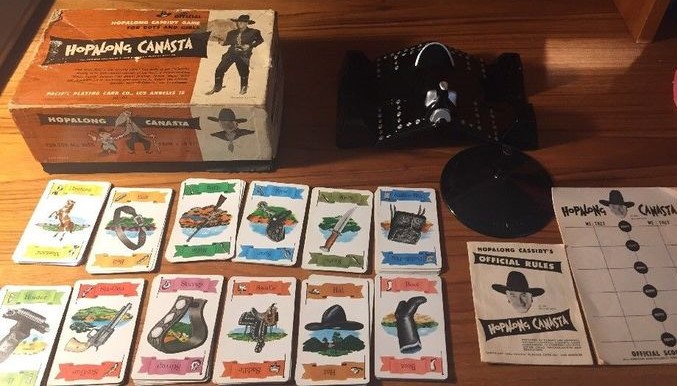
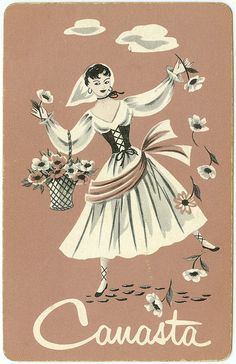
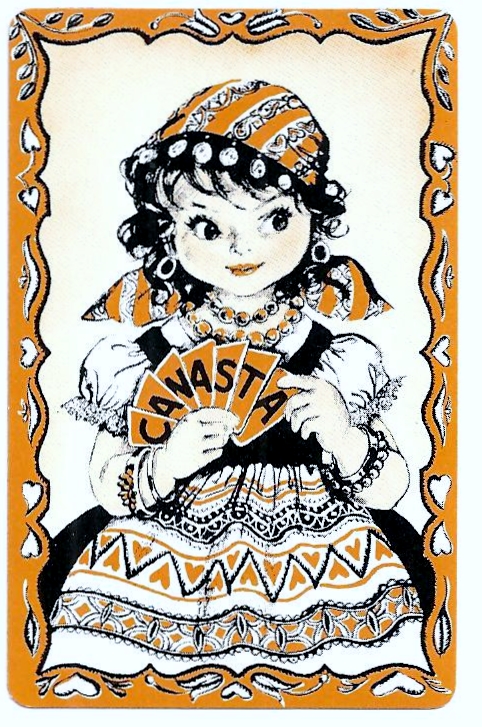
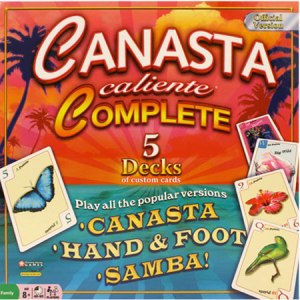 All kinds of names were used and rules differed a bit. Click on pics for a better view.
Even before the name was fixed, the game was spreading like wildfire within the Jockey Club, throughout the city of Montevideo, and then up the coastline of Uruguay. Soon it crossed the border to Argentina. Vacationing Argentinians took the game back to their country, where it managed to chase bridge out of their prestigious Club de Bridge.
Then it jumped to Chile and Peru and Brazil. The epidemic was now a continental affair. Why didn’t Canasta jump immediately to the United States? Most likely because of the Second World War. With airline service largely suspended, Canasta had to wait until after the war was over before it was flown north. Ironically, the first person to make real money with the game was neither Santos nor Serrato but Josephine Artayate de Viel, a visitor to New York from Buenos Aires. In 1949 she introduced it to New York friends and the game took over the Regency Club in Manhattan. This prompted a publisher to ask her to codify the rules for publication. And so she did.
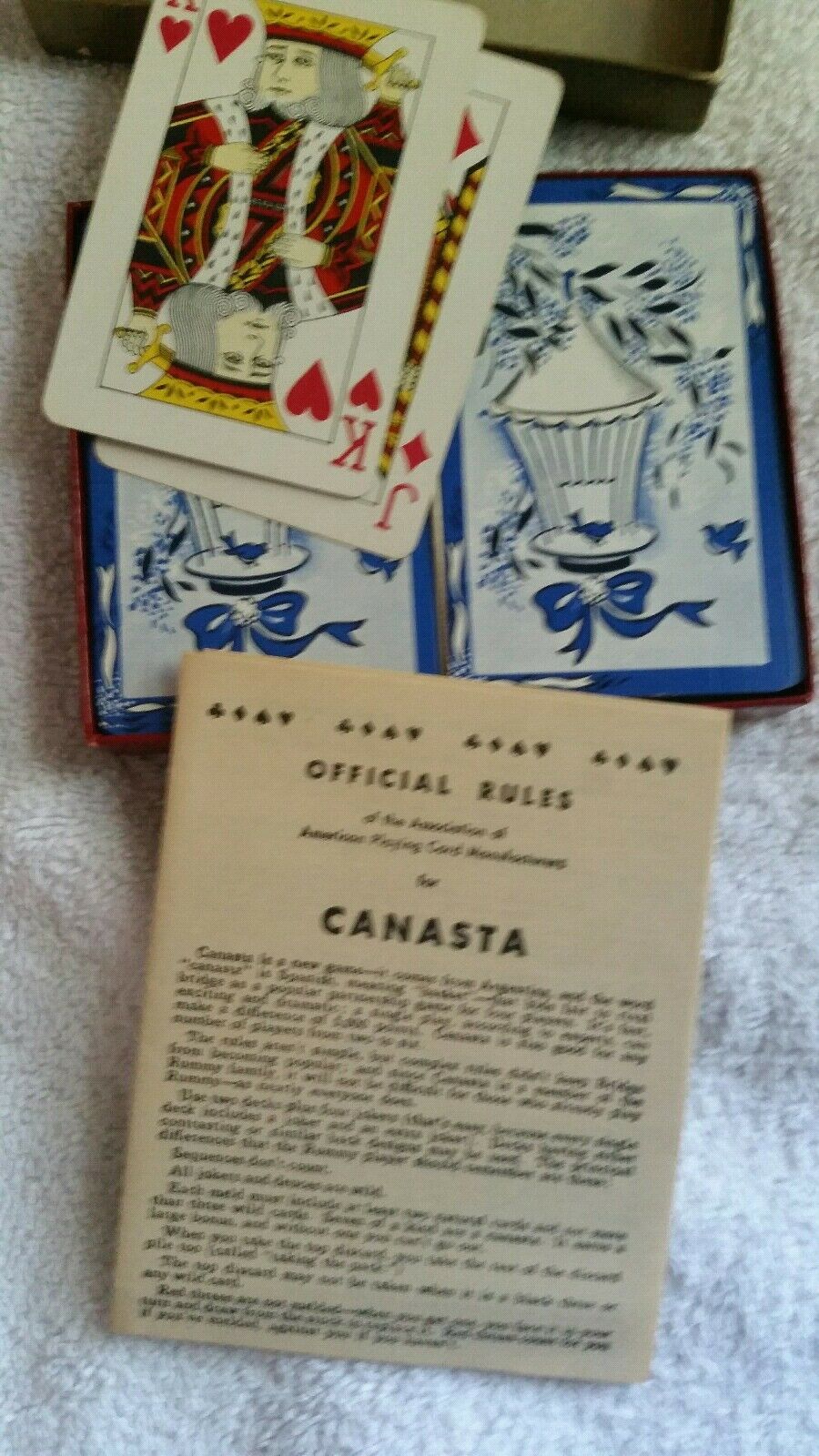
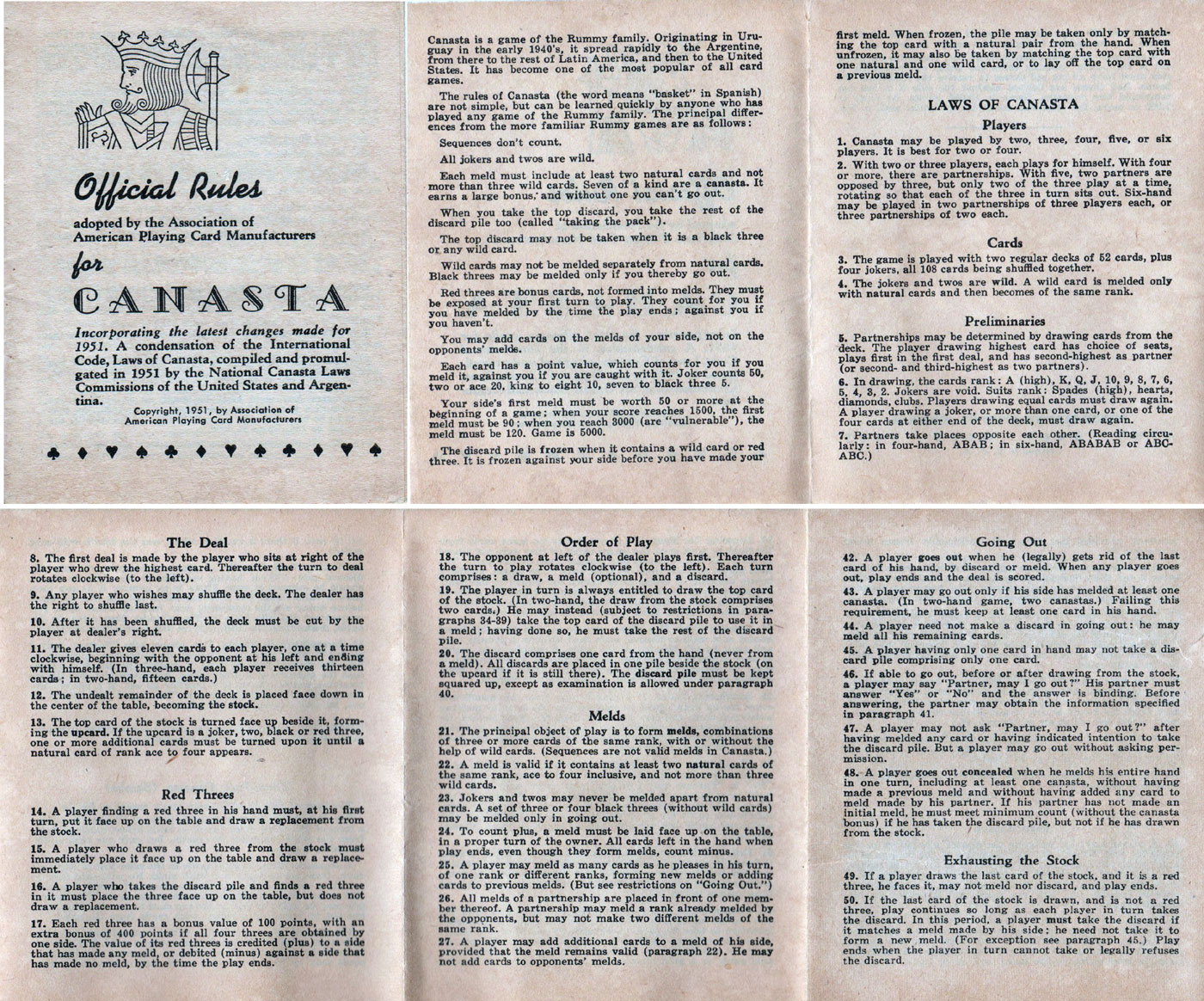
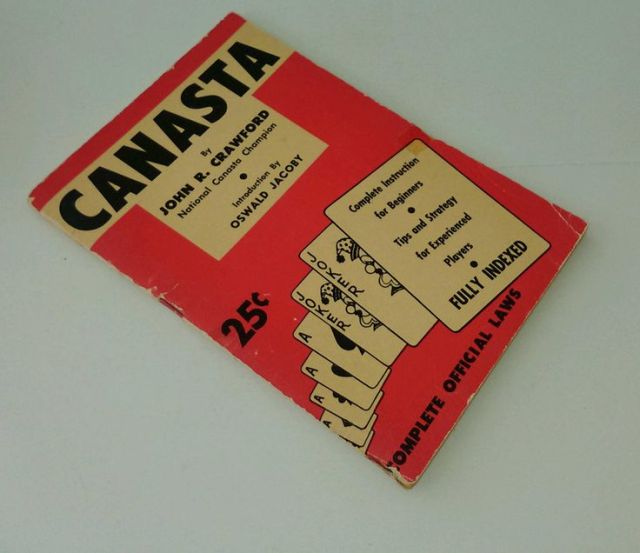 First Canasta Rule-book in the US, from 1951. Down here the by-pack-rules from American Card Manuf.-Co.
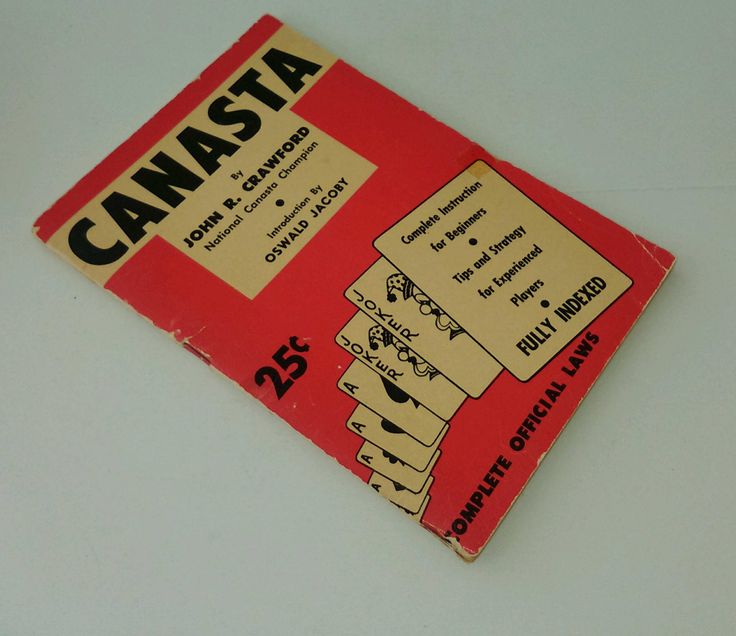
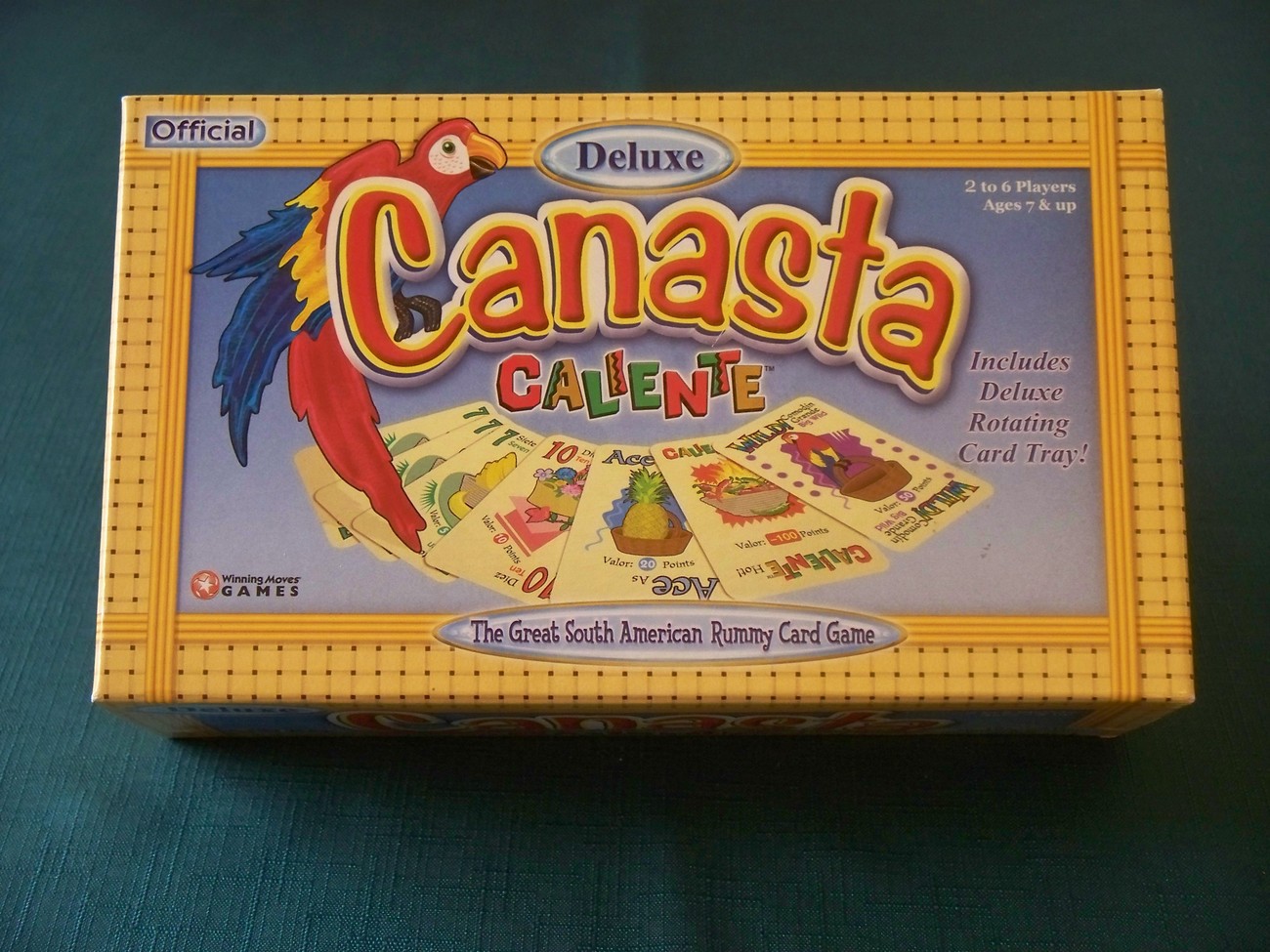
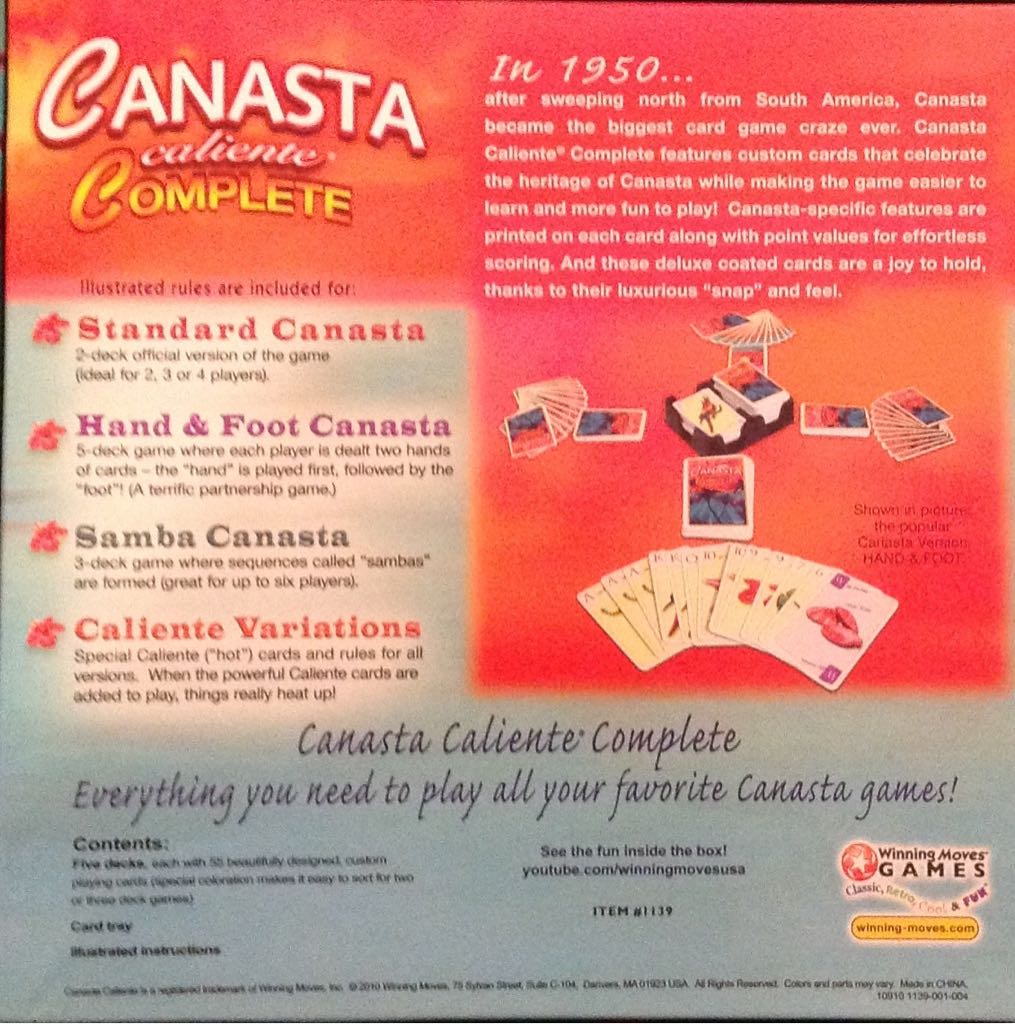
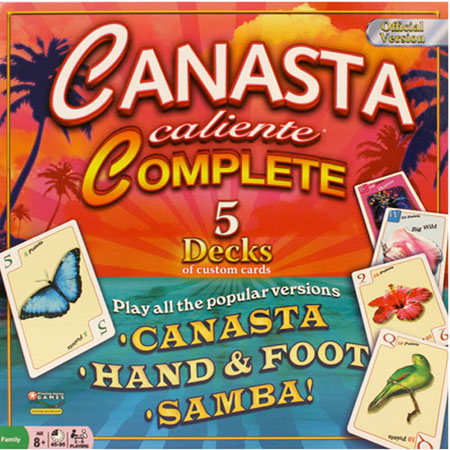
Winning Moves added optional Caliente (hot) cards so that a player with a reduced hand can still play, which is sometimes not possible in the original game.
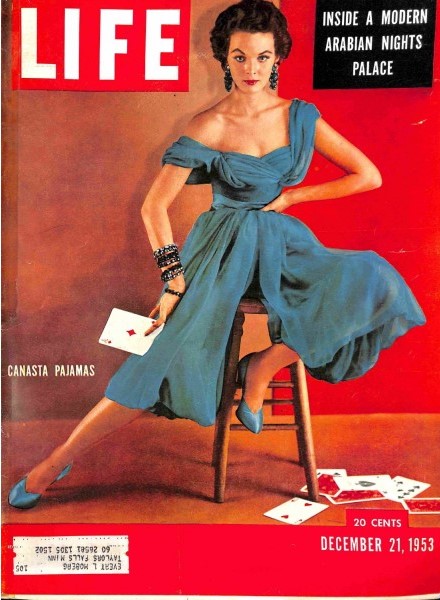
By 1953, over 30 books about Canasta had been published, many climbing into The New York Times Best Seller List. The game spread globally. Soldiers stationed in Japan and Germany brought it with them from the States; and it spread throughout Asia and Europe. Soviet Olympic athletes played it despite their government’s aversion to „decadent“ American culture. See Life magazine from December 1953 down here.
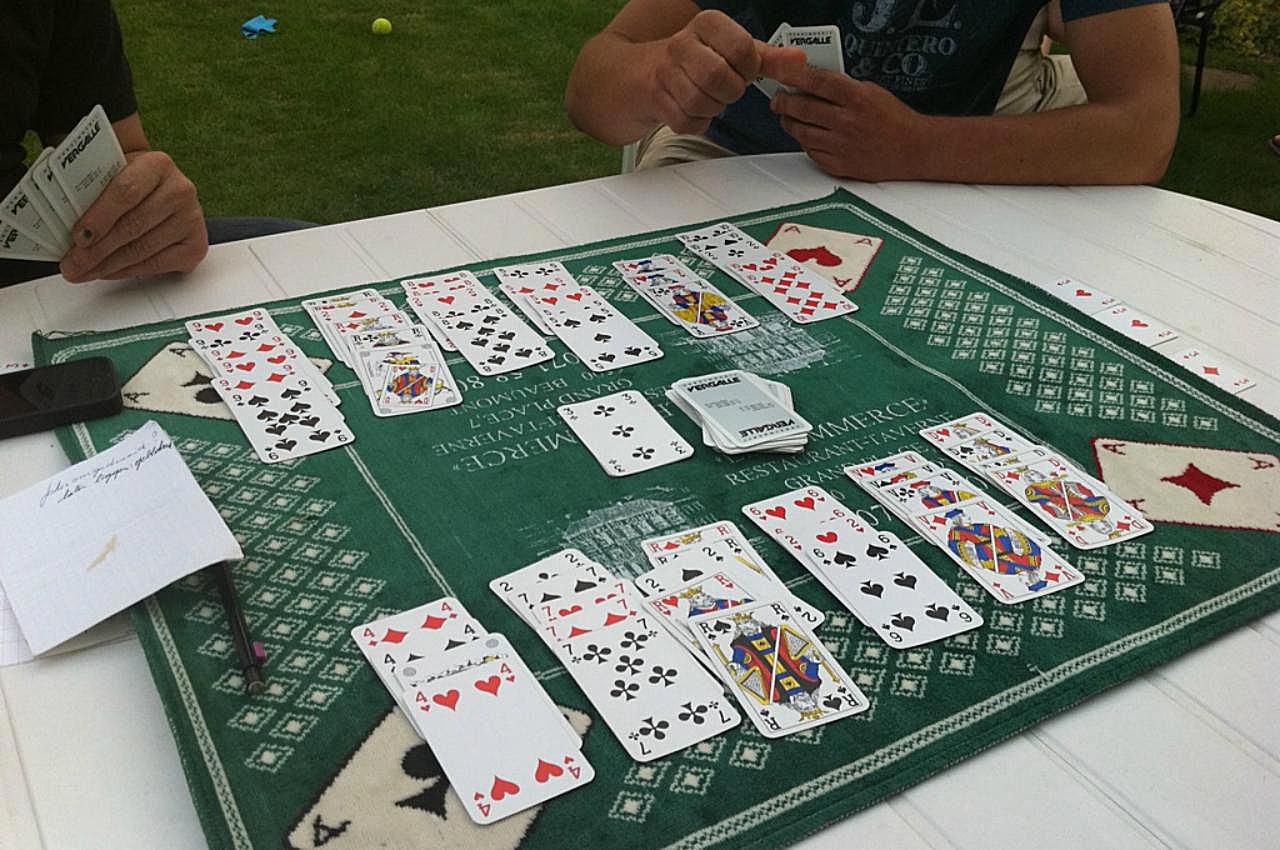
When I was a young boy in the 1950’s, my parents were crazy about Canasta. I remember that they were every weekend with friends together to play a few games. Sometimes they were sitting the whole night with lots of snacks and drinks as well as smoking cigarettes and cigars. In summertime they even played during a Sunday picnic, sitting at riverside.
The Craze Subsides.
As for Segundo Santos, he was bewildered by all the excitement. He was quoted as saying, „I was just trying to get my mind off of Bridge“. As an attorney, he knew it might be pointless to try to copyright the rules of his game. „You can’t copyright a thing with antecedents like that,“ he said. Neither he nor Serrato did, and as a result Canasta became their gift to the world.
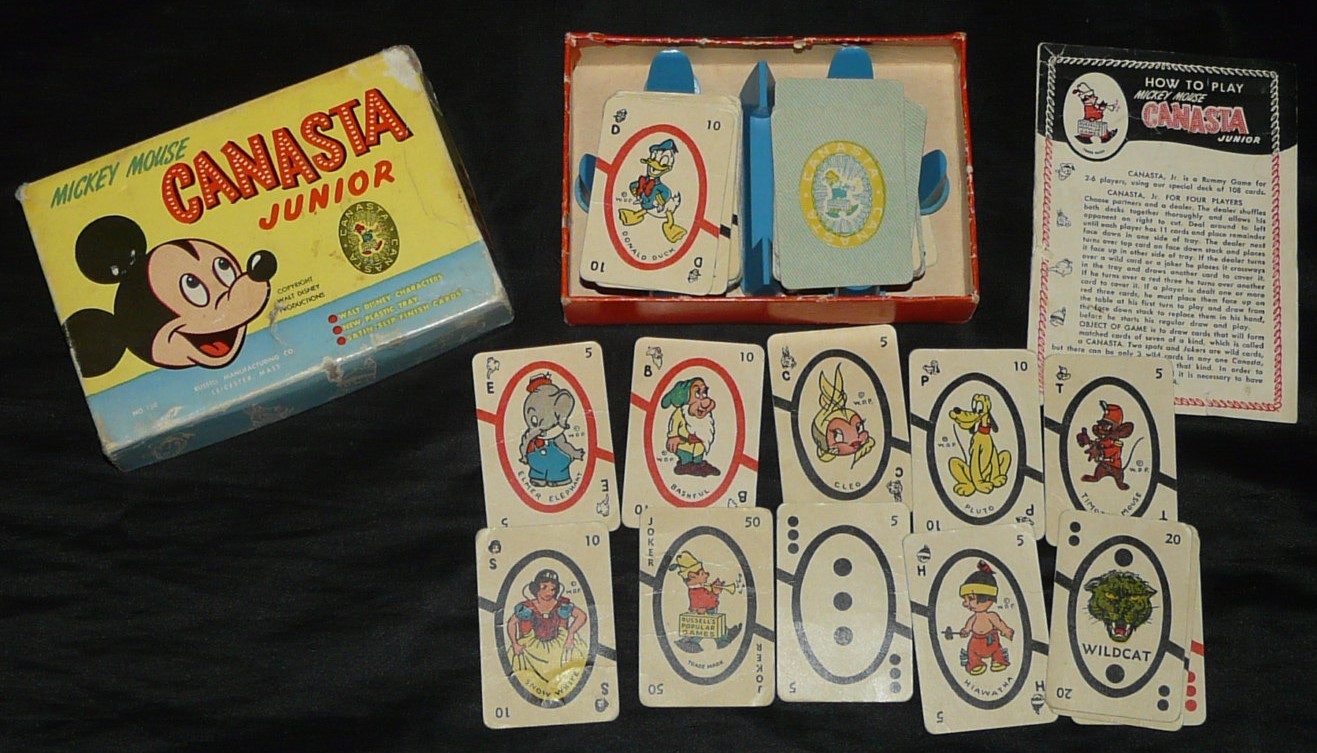
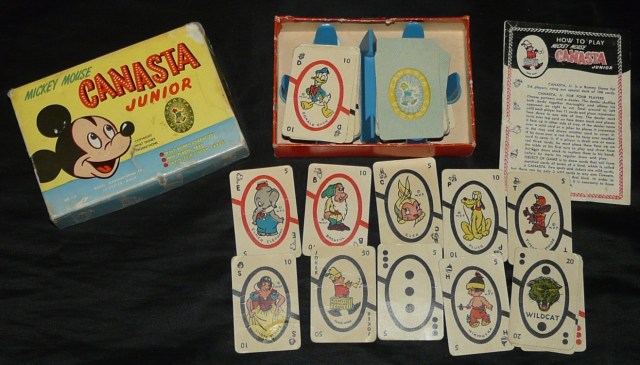 Marketing made business, Disney created a Canasta Junior Special for kids.
According to copyright laws, you can’t copyright an idea for a game, only the particular expression of its rules. Had Santos and/or Serrato taken out a copyright, the game would probably never have become the sensation it became. Other companies wanting to publish the game to cash in on its popularity would have had to publish a variation of it in order to circumvent the copyright.
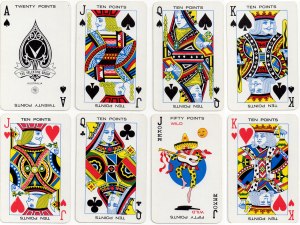 Cards with printed „Canasta value“.
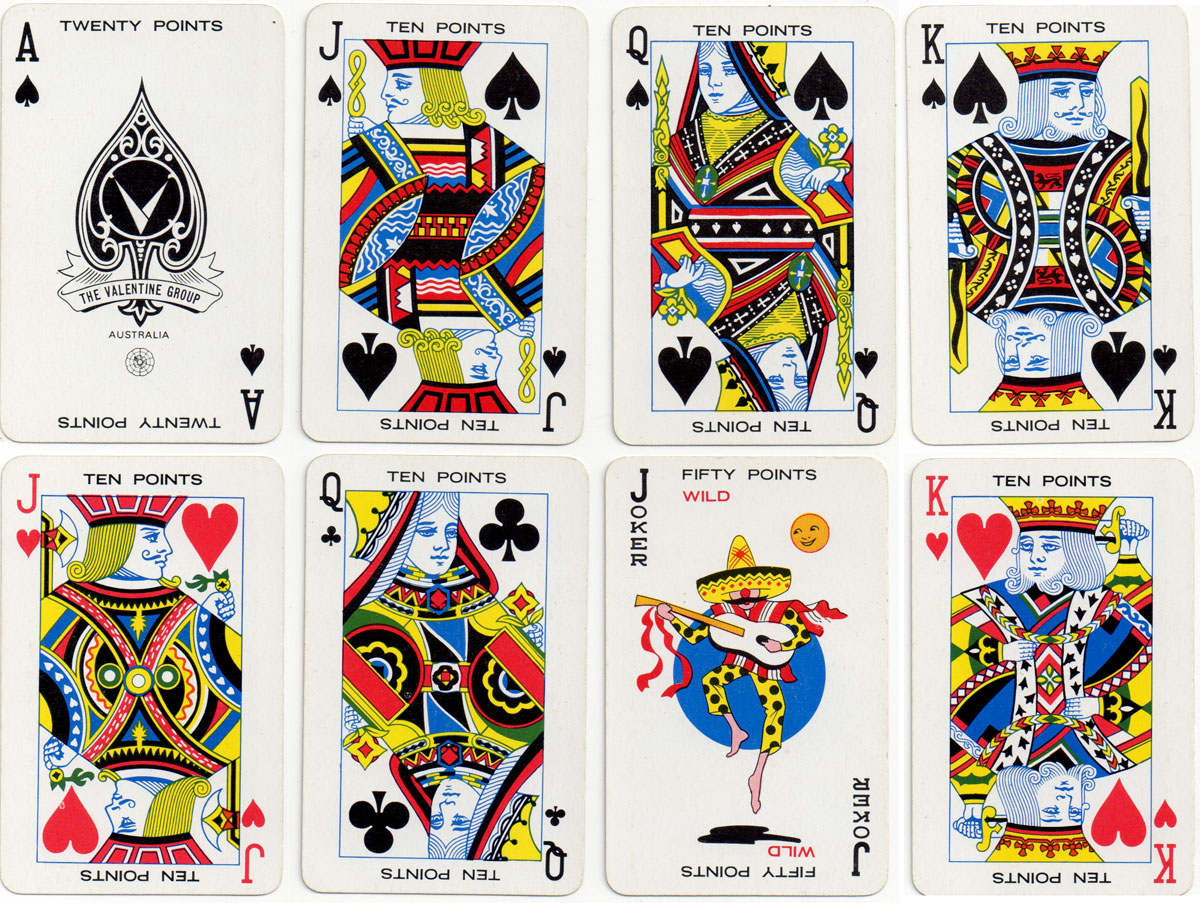
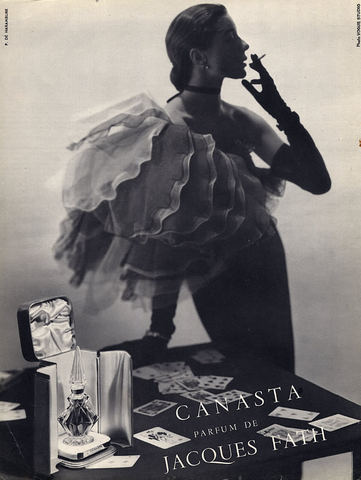
There thus would not have been one universally accepted way to play, which, in the early days of a game, is an essential condition to foster the spread of its popularity. Dozens of firms did in fact try to get a piece of the Canasta bonanza. Not only were card sets and books published, but so were coffee mugs, ashtrays, dresses, and dolls—to name but a few products that in some way tried to exploit Canasta’s popularity.
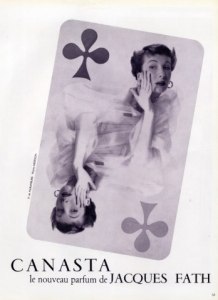
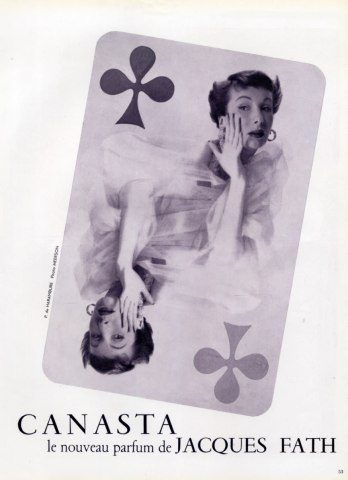
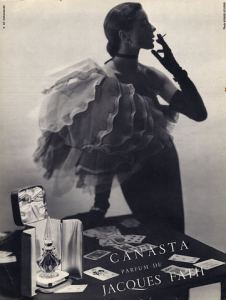 Canasta perfume.
What finally ended the craze was the production of countless variations, like Samba and Bolivia and Argentine Canasta. The multiplicity of variants led to great confusion—new players could never be sure which variation was preferred.
When the dust settled, original Canasta regained its foothold and quietly became a staple of play among countless card players.

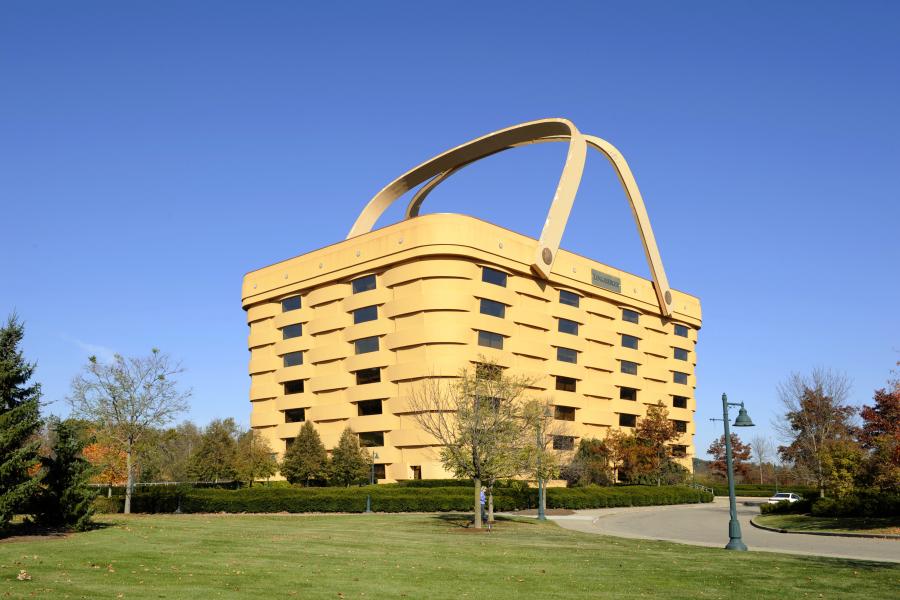
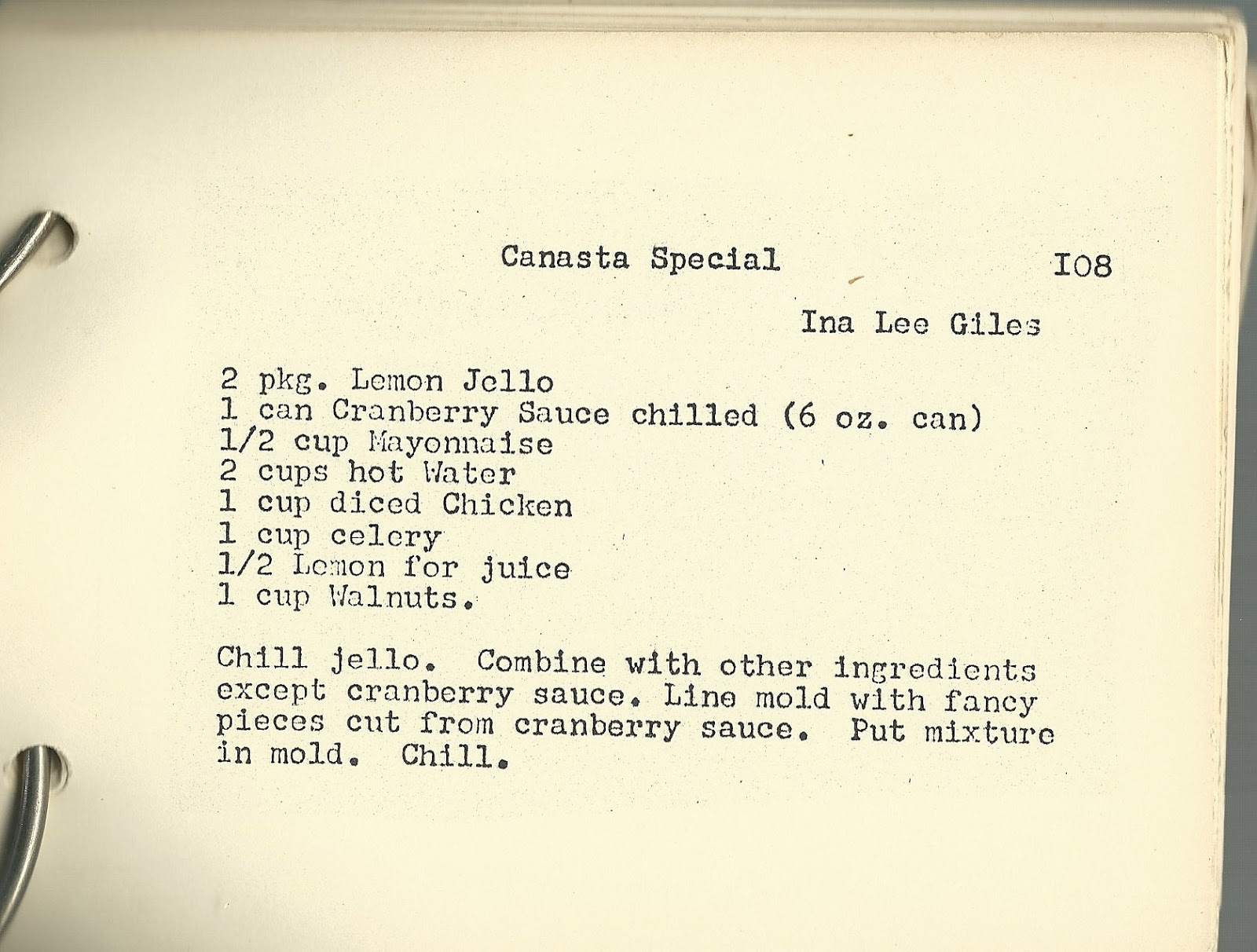
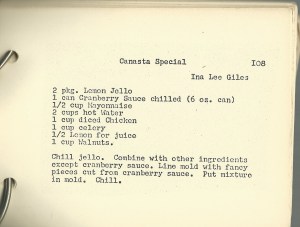 In Taiwan does excist a „Canasta Hotel“ and it was created a „Canasta Special“ dish.
Canasta is one of those rare standard games that begs for its own custom deck of cards because each card has a scoring value (not necessarily its numerical value), some cards have very special play characteristics, and suits are irrelevant.
Canasta Caliente features the authentic original game play. „The only addition we made,“ says Orbanes, „is two optional Caliente (hot) cards to correct a minor flaw in the original game: a reduced hand is sometimes a problem that can’t be overcome.“
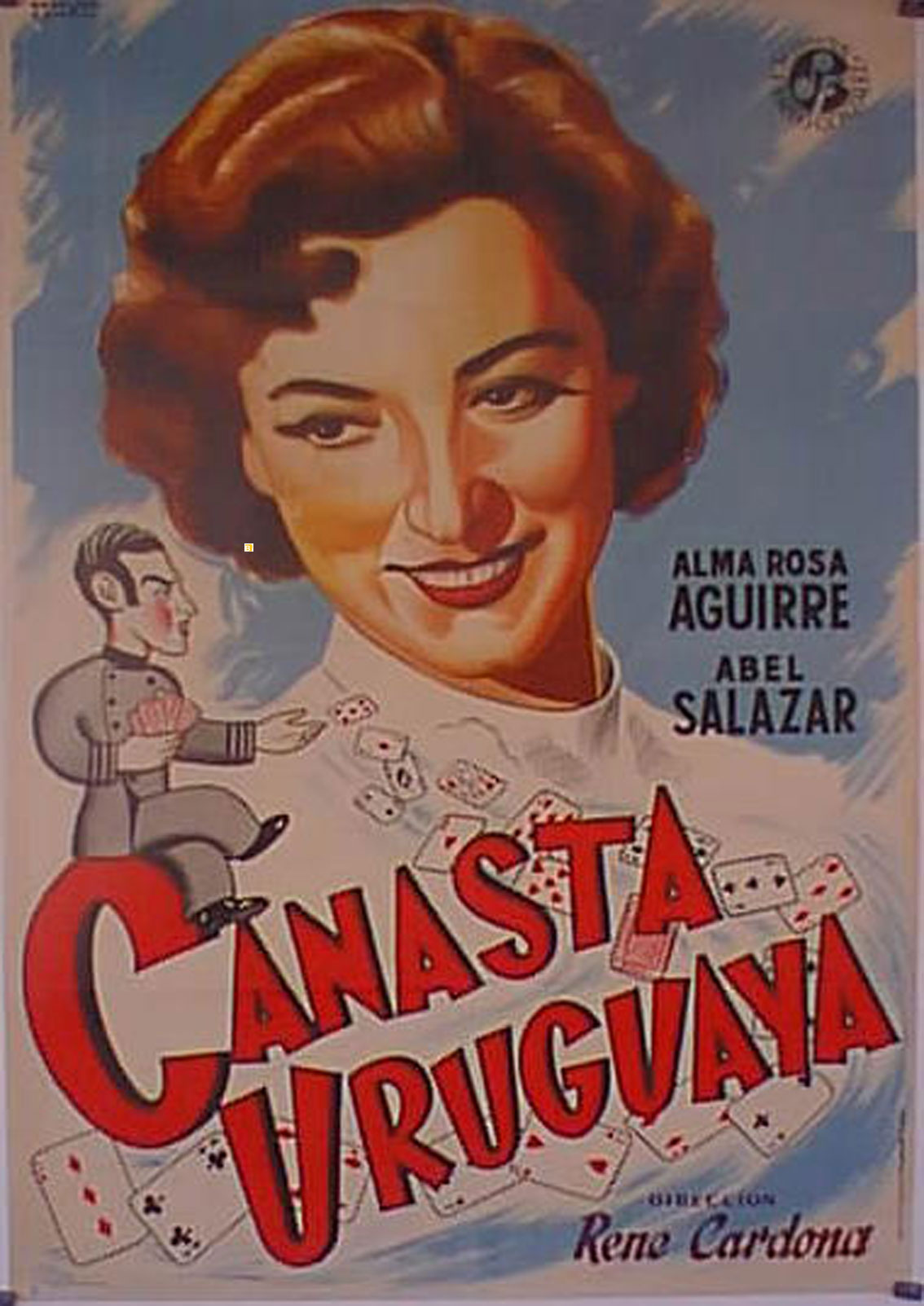
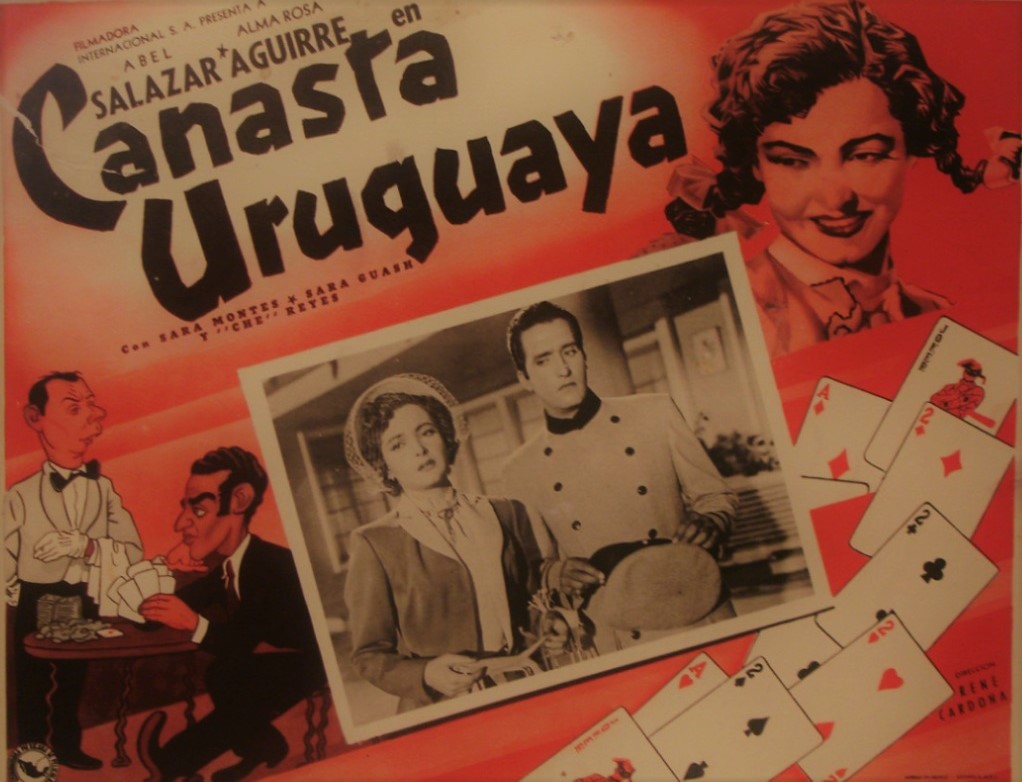
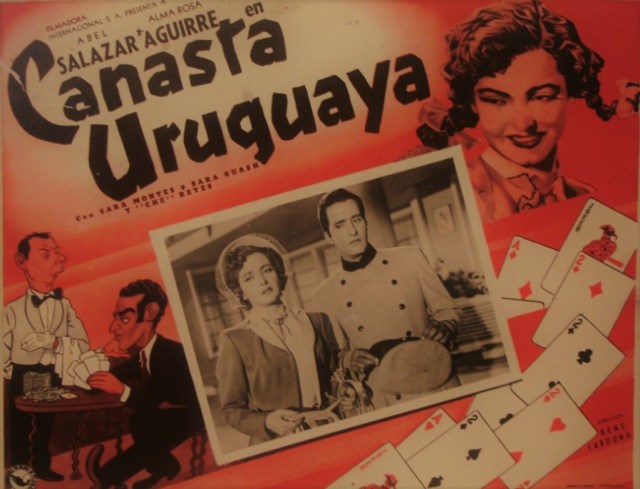 And – it was even worth to make a movie about. Filmed and released 1951 in Mexico.
Interesting story about an Uruguayan invention. Why not leaving the computers and cell phones aside and learn/play a card game, like Canasta, with family or friends. ENJOY !!

