
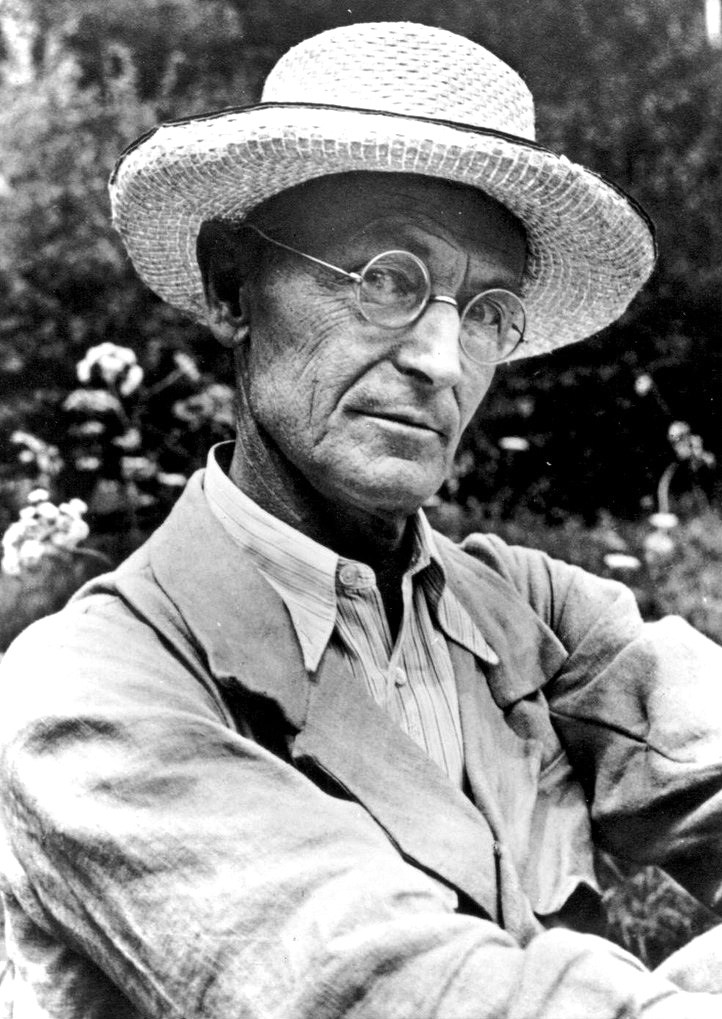
A few weeks ago I told you that I am back reading Hermann Hesse. Your reactions generated lots of interest in themes as such. That’s why I come up today with a bit of philosophy about Hermann Hesse’s comments on Reading-Types.
“At the hour when our imagination and our ability to associate are at their height, we really no longer read what is printed on the paper but swim in a stream of impulses and inspirations that reach us from what we are reading.” (Umberto Eco) .
Hermann Hesse on the Three Types of Readers and the Most Transcendent Form of Reading.
Hermann Hesse, German novelist, poet and painter (July 2, 1877–August 9, 1962) placed this paradoxical nature of categories at the heart of his taxonomy of the three types of readers — a sort of fluid hierarchy of reading modes, which he outlined in an altogether magnificent 1920 essay titled “On Reading Books.”
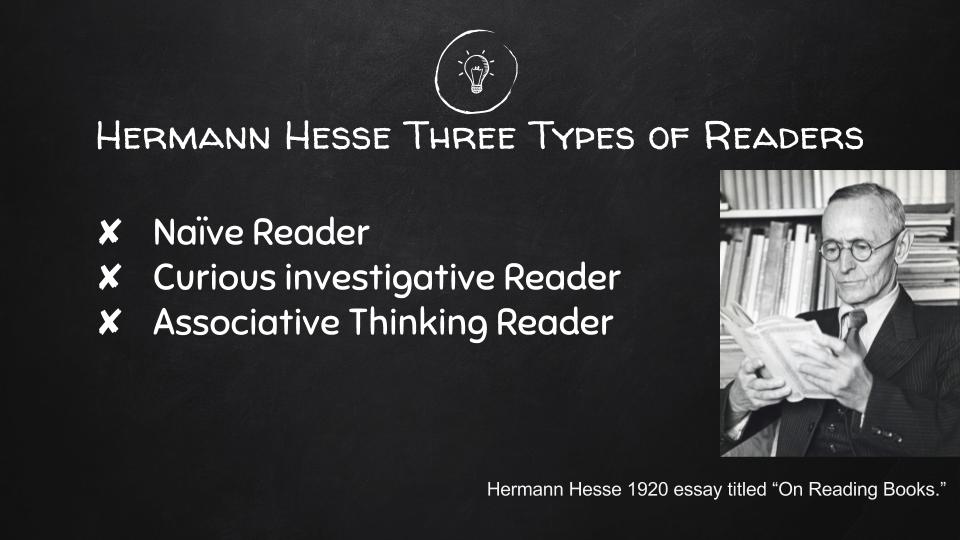
From ancient mythology to modern psychology, Hesse notes, the human experience is strewn with such taxonomies of character. He writes:
„We have an inborn tendency to establish types in our minds and to divide mankind according to them. But, however advantageous and revealing such categories may be, no matter whether they spring from purely personal experience or from attempting a scientific establishment of types, at times it is a good and fruitful exercise to take a cross section of experience in another way and discover that each person bears traces of every type within himself and that diverse characters and temperaments can be found as alternating characteristics within a single individual“.
There are, Hesse argues, such distinct temperaments when it comes to our personality as readers:
„Since you may take a completely different attitude toward anything in the world, so you may toward the book“.
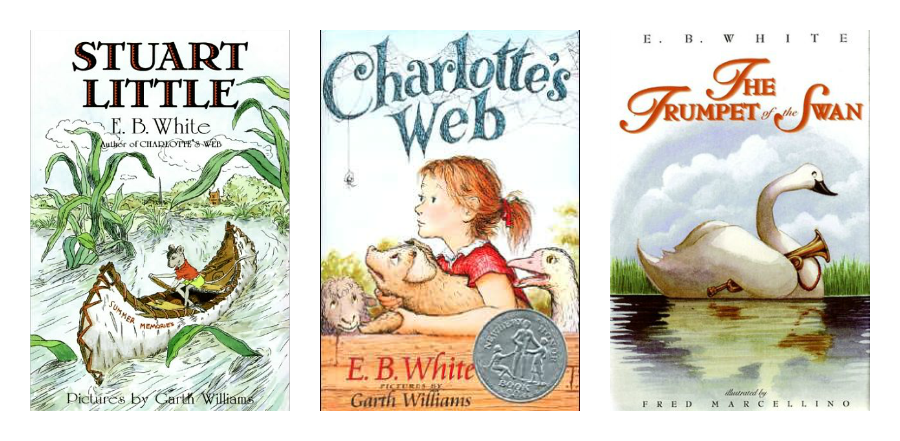
Half a century before E.B. White proclaimed that children are “the most attentive, curious, eager, observant, sensitive, quick, and generally congenial readers on earth,” Hesse offers a hierarchical taxonomy predicated on the same sentiment. He outlines three key types, which can similarly coexist within a single reader over the course of a lifetime, beginning with the naive reader — the reader who experiences a book merely as content, be it intellectual or aesthetic:
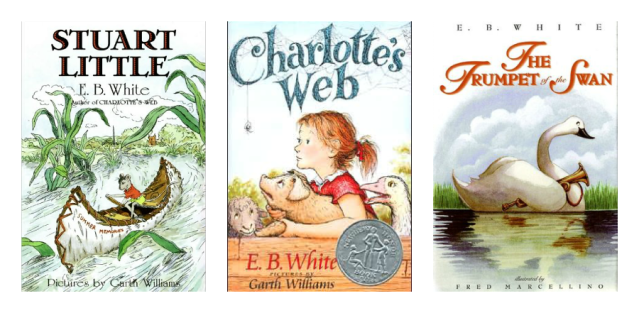 Elwyn Brooks White, American writer of children’s books ( July 11, 1899 – October 1, 1985).
The Naive Reader.
„Everyone reads naively at times. This reader consumes a book as one consumes food, he eats and drinks to satiety, he is simply a taker, be he a boy with a book about Indians, a servant girl with a novel about countesses, or a student with Schopenhauer. This kind of reader is not related to a book as one person is to another but rather as a horse to his manager or perhaps as a horse to his driver: the book leads, the reader follows. The substance is taken objectively, accepted as reality. But the substance is only one consideration! There are also highly educated, very refined readers, especially of belles letters, who belong entirely to the class of the naïve… What the material, setting, and action are to simple souls, the art, language education, and intellectuality of the writer are to these cultivated readers“.
„This kind of reader assumes in an uncomplicated way that a book is there simply and solely to be read faithfully and attentively and to be judged according to its content or its form. Just as a loaf of bread is there to be eaten and a bed to be slept in“.
He then turns to the second type of reader, which one might call (though Hesse does not provide a concrete term) the imaginative investigator — a reader endowed with childlike wonderment, who sees past the superficialities of content to plumb the depths of the writer’s creative impulse:
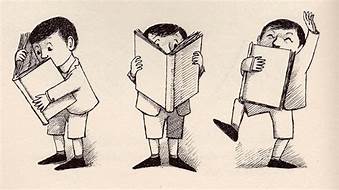
Art by Maurice Sendak for The Big Green Book by Robert Graves.
The Imaginative Investigative Reader.
„If one follows one’s nature and not one’s education one becomes a child again and begins to play with things; the bread becomes a mountain to bore tunnels into, and the bed a cave, a garden, a snow field. Something of this child-likeness, this genius for play, is exhibited by the second type of reader. This reader treasures neither the substance nor the form of a book as its single most important value. He knows, in the way children know, that every object can have ten or a hundred meanings for the mind. He can, for example, watch a poet or philosopher struggling to persuade himself and this reader of his interpretation and evaluation of things, and he can smile because he sees in the apparent choice and freedom of the poet simply compulsion and passivity. This reader is already so far advanced that he knows what professors of literature and literary critics are mostly completely ignorant of: the there is no such thing as a free choice of material or form“.
„From this point of view the so-called aesthetic values almost disappear, and it can be precisely the writer’s mishaps and uncertainties that furnish much the greatest charm and value. For this reader follows the poet not the way a horse obeys his driver but the way a hunter follows his prey, and a glimpse suddenly gained into what lies beyond the apparent freedom of the poet, into the poet’s compulsion and passivity, can enchant him more than all the elegance of good technique and cultivated style“.
Next comes the final type of reader, who is really a non-reader but rather a dreamer and interpreter:
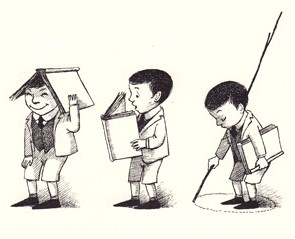
Art by Maurice Sendak for The Big Green Book by Robert Graves.
The Associative Thinking Reader.
„The third and last type of reader … is apparently the exact reverse of what is generally called a “good” reader. He is so completely an individual, so very much himself, that he confronts his reading matter with complete freedom. He wishes neither to educate nor to entertain himself, he uses a book exactly like any other object in the world, for him it is simply a point of departure and a stimulus. Essentially it makes no difference to him what he reads. He does not need a philosopher in order to learn from him, to adopt his teaching, or to attack or criticize him. He does not read a poet to accept his interpretation of the world; he interprets it for himself. He is, if you like, completely a child. He plays with everything — and from one point of view there is nothing more fruitful and rewarding than to play with everything. If this reader finds a beautiful sentence in a book, a truth, a word of wisdom, he begins by experimentally turning it upside down“.
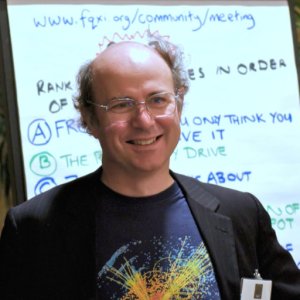 Frank Wilczek, American physicist and Nobel price winner (born 1951 …).
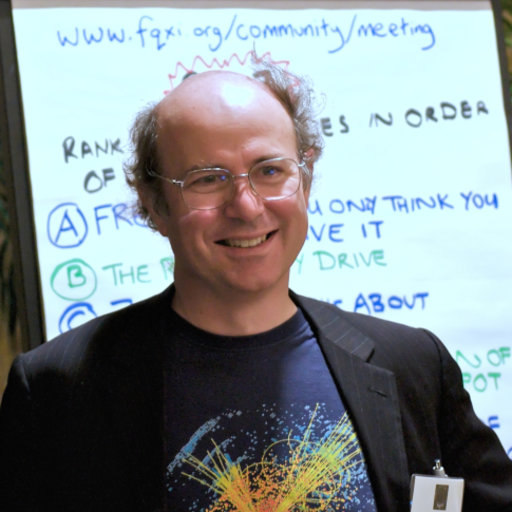
In a sentiment which Nobel-winning physicist Frank Wilczek would come to echo nearly a century later in his assertion that “you can recognize a deep truth by the feature that its opposite is also a deep truth,” Hesse adds:
„This reader has known for a long time that for each truth the opposite also is true. He has known for a long time that every intellectual point of view is a pole to which an equally valid anti-pole exists. He is a child insofar as he puts a high value on associative thinking, but he knows the other sort as well“.
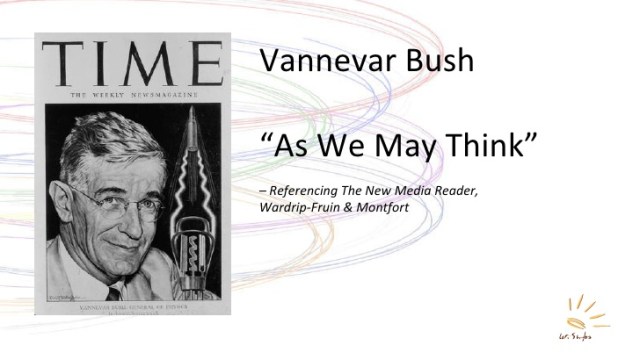 Vannevar Bush, American inventor (March 11, 1890 – June 28, 1974).
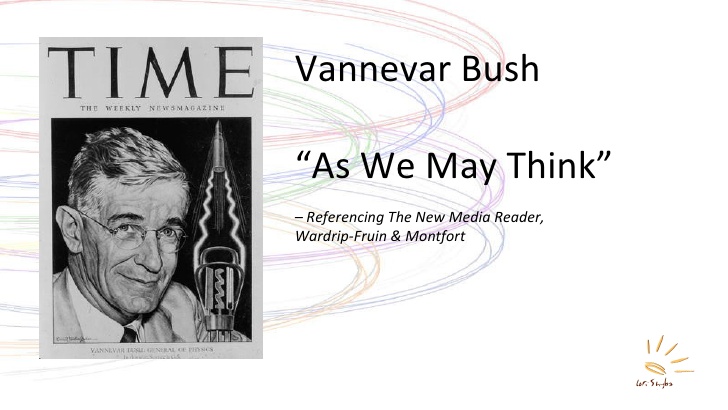
But what grants this reader her or his superiority over the other types is, above all, a trained capacity for associative thinking that turns the reading material into a springboard for indiscriminate curiosity from which to leap far beyond the particular substance of the particular book. (A quarter century later, the inventor Vannevar Bush would describe the same psychological orientation in his prescient vision for the type of person who would triumph in the Information Age — the person who can “find delight in the task of establishing useful trails through the enormous mass of the common record.”) Hesse writes:
„This reader is able, or rather each one of us is able, at the hour in which he is at this stage, to read whatever he likes, a novel or grammar, a railroad timetable, a galley proof from the printer. At the hour when our imagination and our ability to associate are at their height, we really no longer read what is printed on the paper but swim in a stream of impulses and inspirations that reach us from what we are reading. They may come out of the text, they may simply emerge from the type face. An advertisement in a newspaper can become a revelation; the most exhilarating, the most affirmative thoughts can spring from a completely irrelevant word if one turns it about, playing with its letters as with a jigsaw puzzle. In this stage one can read the story of Little Read Riding Hood as a cosmogony or philosophy, or as a flowery erotic poem. Or one can read the label „Colorado Maduro“on a box of cigars, play with the words, letters, and sounds, and thereby take a tour through the hundred kingdoms of knowledge, memory, and thought“.
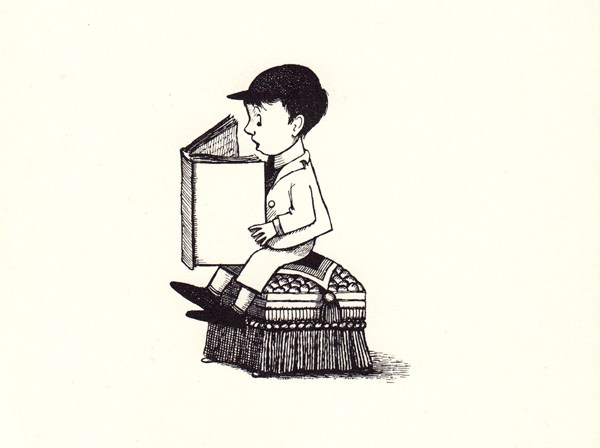
Art by Maurice Sendak, American Childrens book illustrator (June 10, 1928 – May 8, 2012) for The Big Green Book by Robert Graves, British poet (24 July 1895 – 7 December 1985) .
Hesse addresses the potential protestation that using a book as the trigger for a Rube Goldberg machine of interpretive associations is not “reading” at all — for is it really reading to devour „a page of Goethe unconcerned about Goethe’s intentions and meanings“? The objector, he imagines, would accuse this reading mode of being „the lowest, most childish and barbaric“ of all. The objection, he concedes, is a valid one. And yet it contains within its validity the very point — each mode of reading is necessary for a full life, but it is insufficient in and of itself. „It must be emphasized that no one of us need belong permanently to any one of these types“, he cautions. In a passage that calls to mind Umberto Eco’s notion of the antilibrary, Hesse writes:
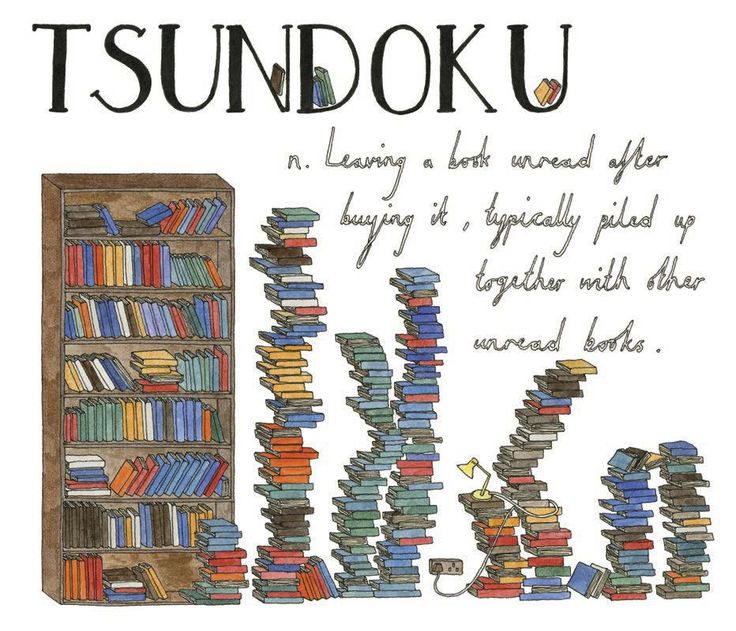
 Umberto Eco, Italian novelist (5 January 1932 – 19 February 2016) „The Antilibrary“.
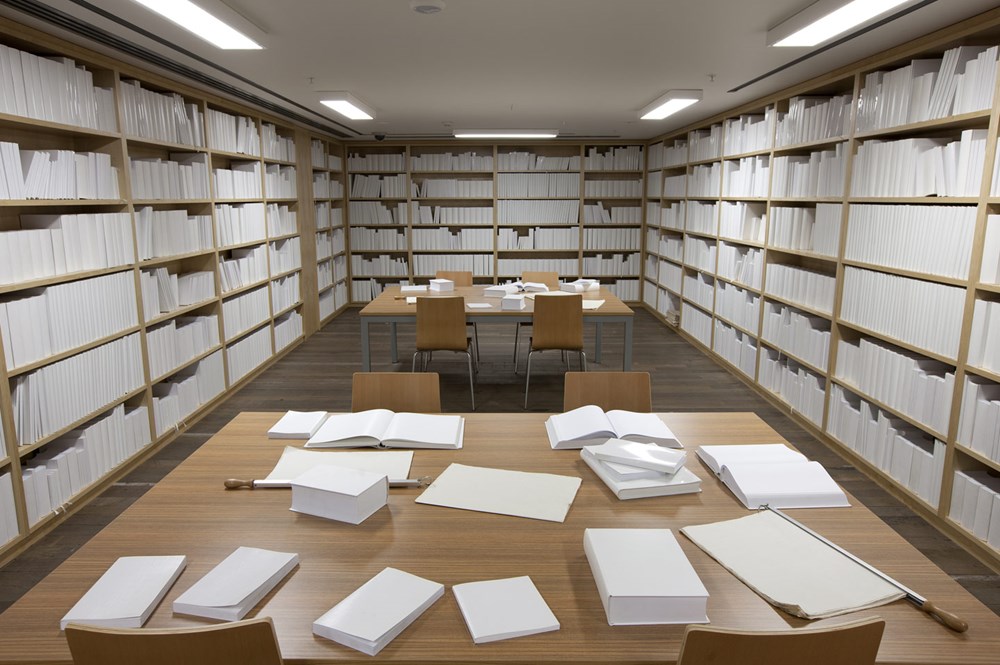
„The reader at the their stage is no longer a reader. The person who remained there permanently would soon not read at all, for the design in a rug or the arrangement of the stones in a wall would be of exactly as great a value to him as the most beautiful page full of the best-arranged letters. The one book for him would be a page with the letters of the alphabet“.
So be it: the reader at the last stage is really no longer a reader at all, he doesn’t give a hoot about Goethe, he doesn’t read Shakespeare. The reader in the last stage simply doesn’t read any more. Why books? Has he not the entire world within himself?
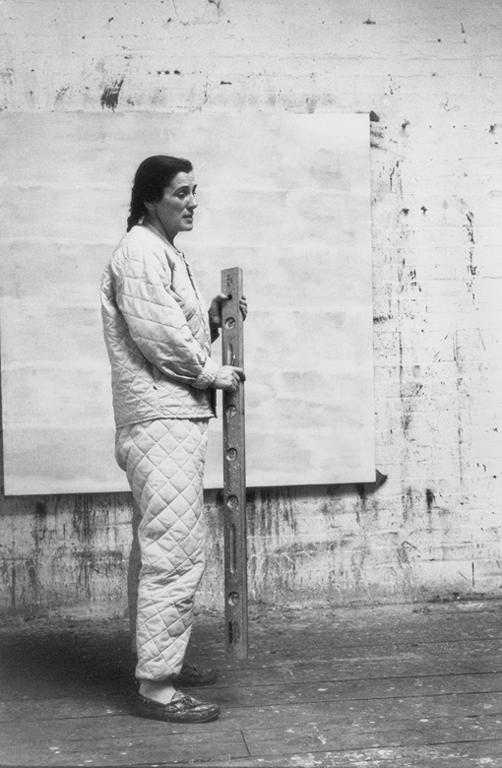 Agnes Martin, Canadian artist (March 22, 1912 – December 16, 2004), „We all have the same inner life“ !!
Half a century before Agnes Martin’s memorable observation that “we all have the same inner life, but – the artist has to recognize what it is,” Hesse adds:
„Whoever remained permanently at this stage would not read any more, but no one does remain permanently at this stage. But whoever is not acquainted with this stage is a poor, an immature reader. He does not know that all the poetry and all the philosophy in the world lie within him too, that he greatest poet drew from no other source than the one each of us has within his own being. For just once in your life remain for an hour, a day at the third stage, the stage of not-reading-any-more. You will thereafter (it’s so easy to slip back) be that much better a reader, that much better a listener and interpreter of everything written. Stand just once at the stage where the stone by the road means as much to you as Goethe and Tolstoy, you will thereafter gain from Goethe, Tolstoy, and all poets infinitely more value, more sap and honey, more affirmation of life and of yourself than ever before. For the works of Goethe are not Goethe and the volumes of Dostoevsky are not Dostoevsky, they are only an attempt, a dubious and never successful attempt, to conjure up the many-voiced multitudinous world of which he was the central point“.
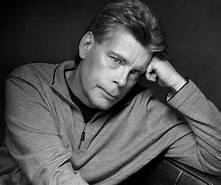 Stephen King, American author (September 21, 1947 …).
Hesse likens this type of reading to a dream, or perhaps to what Stephen King has termed “the art of creative sleep.” Dreaming transmogrifies the raw material of reality, gathered in our waking life, into fanciful creations of the consciousness set free from the constraints of reality. Similarly, this type of reading uses the actual text on the page as raw material for the imaginative meanderings of the mind. Hesse writes:
„A dream is the opening through which you see into the content of your soul, and this content is the world, no more and no less than the world, the whole world from your birth up to today, from Homer to Heinrich Mann, from Japan to Gibraltar, from Sirius to the Earth, from Red Riding Hood to Bergson. — And to the extent that your attempt to write down your dream is related to the world that embraces that dream, so the work of an author is related to what he tired to say“.
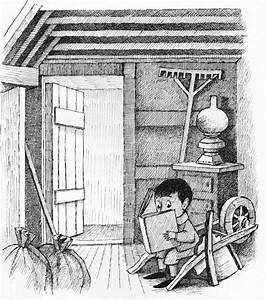
Art by Maurice Sendak for The Big Green Book by Robert Graves.
„Without having recognized this, be it only a single time, in all its infinite fullness and inexhaustible significance, you stand handicapped before every poet and thinker, you take for the whole what is a small part, you believe in interpretations that barely touch the surface“.
„The third stage at which you are most yourself will put an end to your reading, will dissolve poetry, will dissolve art, will dissolve world history. And yet unless you intuitively know this stage, you will never read any book, any science or art except as a schoolboy reads his grammar“.
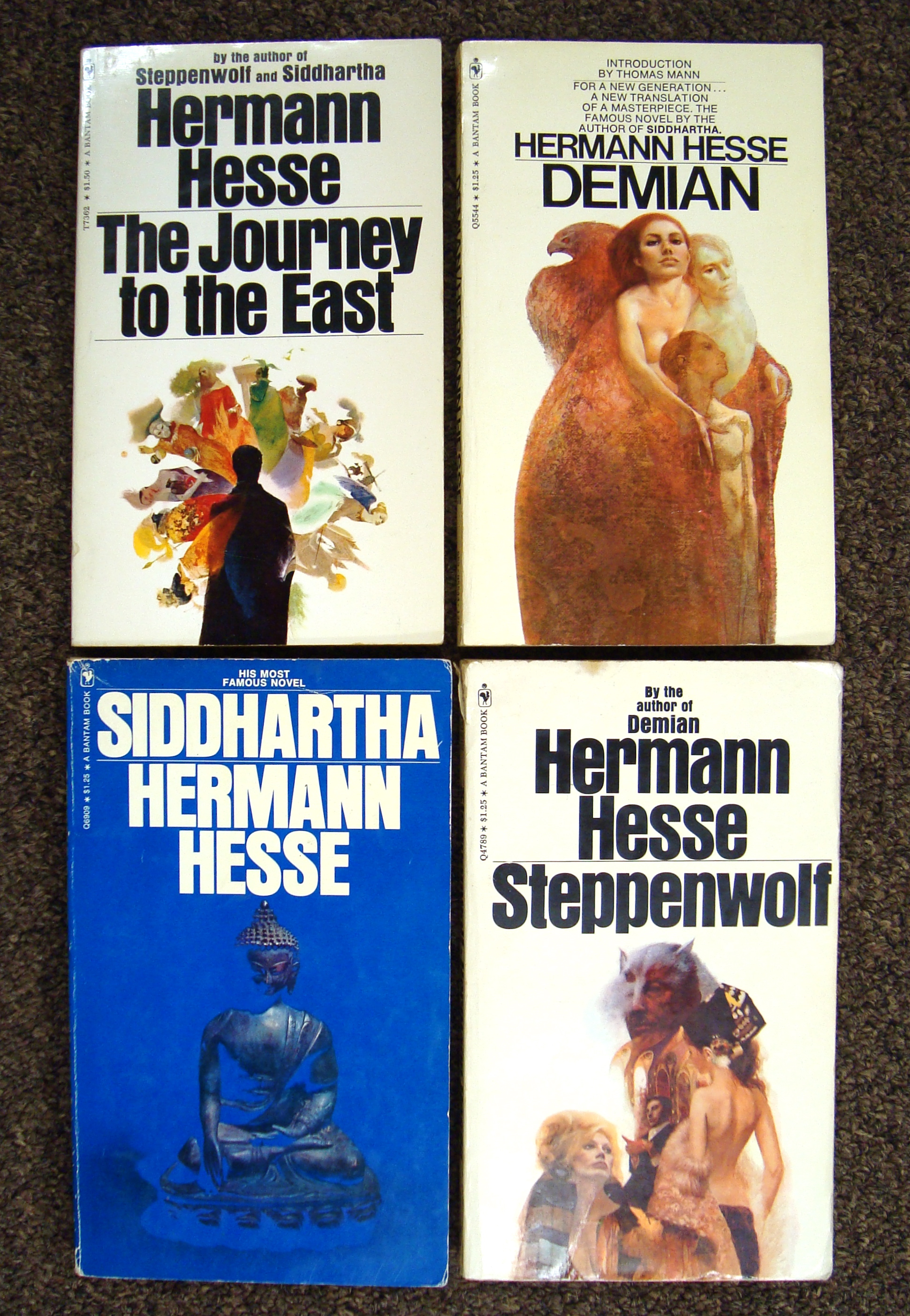
Did you enjoy this post ? Then be adventurous and read Hermann Hesse !

