
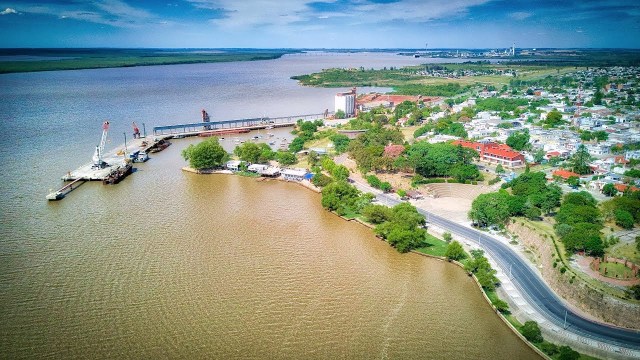
 Harbour area at the Uruguay River in Fray Bentos, Uruguay.
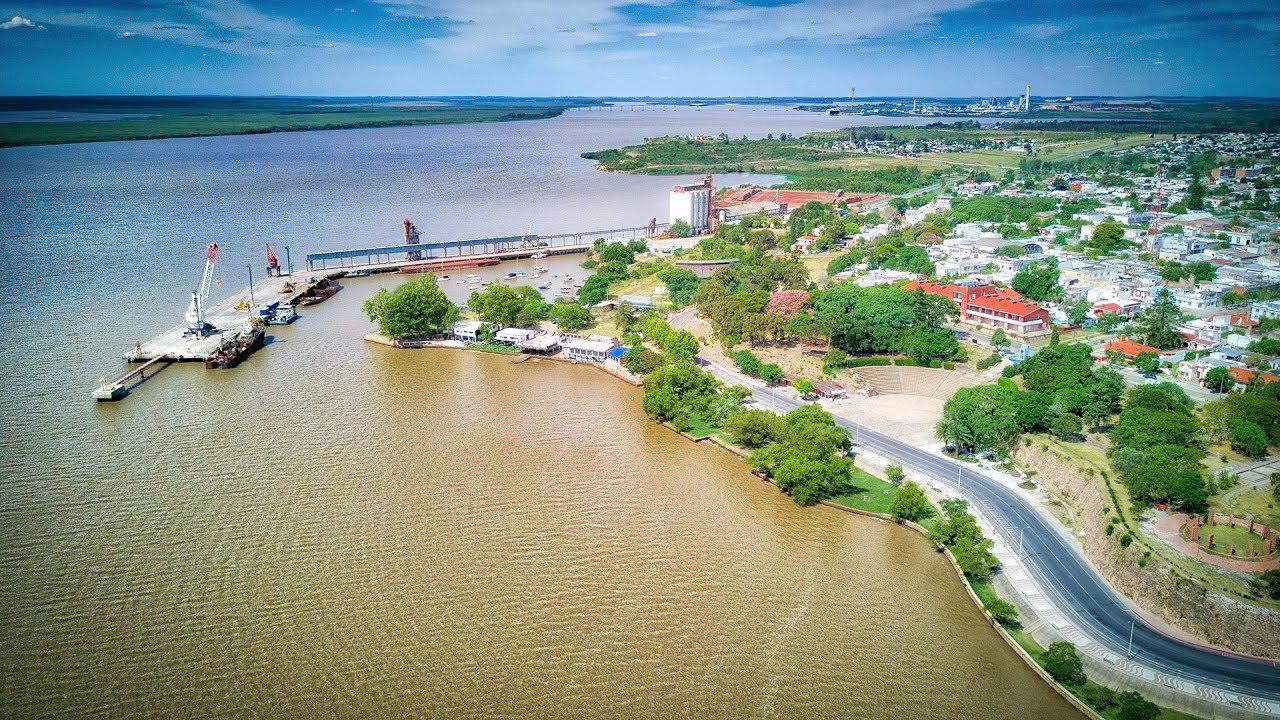
Commercial Activities.
The major agricultural products are wheat, rice, barley, corn, sorghum, sugarcane, potatoes, and fruits. The bulk of livestock are cattle, sheep, and horses. Pigs, chickens, turkeys, and rabbits are also significant. Fishery is a major economic activity, and there is some mussel aquaculture and seal harvesting. The major exports are meat, leather products, wool, rice, dairy products, and hydroelectric power. The main imports are vehicles, electrical machinery, metals, heavy industrial machinery, and crude petroleum.
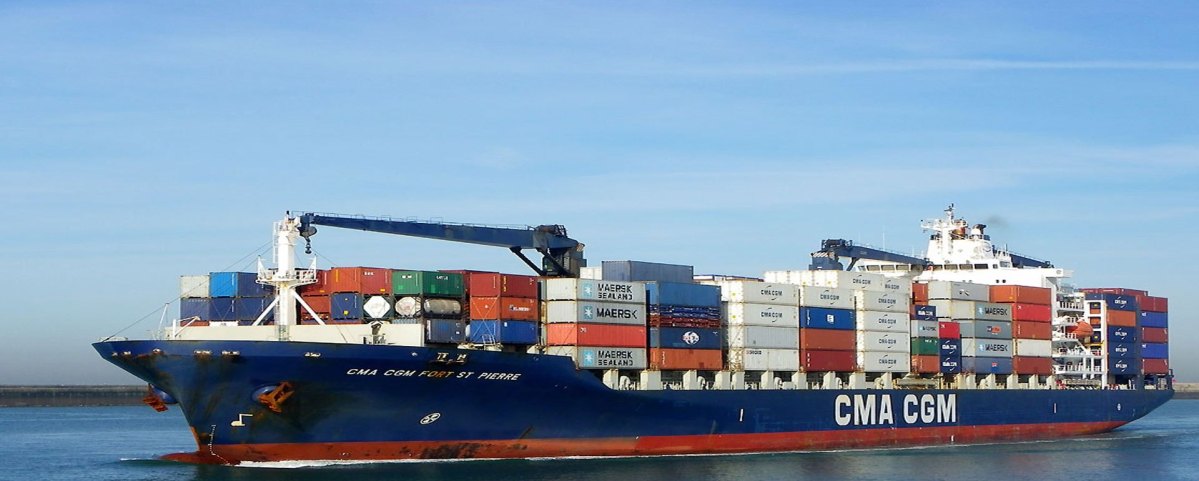
There is a good highway system and some railroads and waterways. There are ports and harbors at Montevideo, Colonia, Punta del Este, Fray Bentos, Nueva Palmira, Paysandu, and Piriapolis.
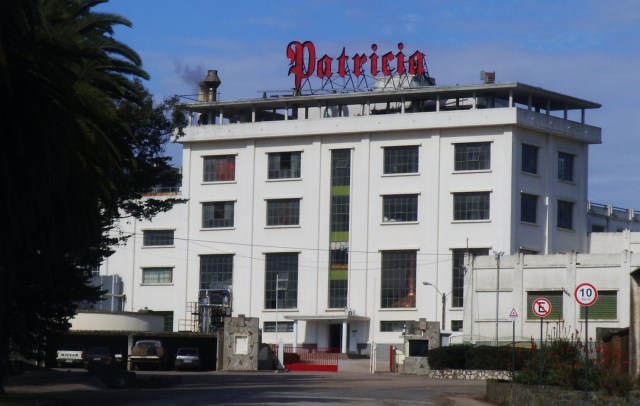
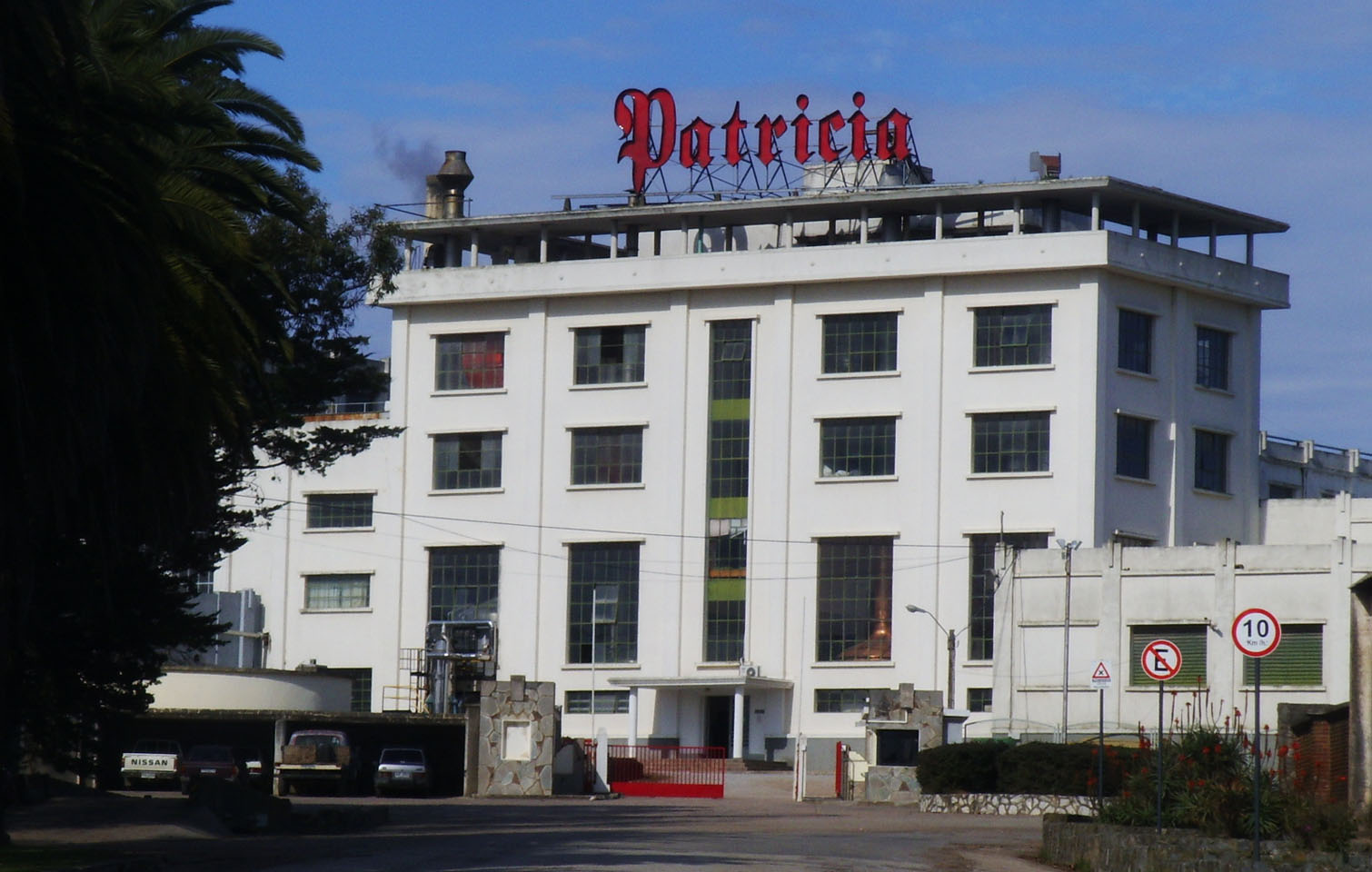
Patricia brewery Uruguay.
Major Industries.
Industry became a significant factor in the economy in the second half of the twentieth century. This sector manufactures primarily food products, petroleum products, alcoholic (mainly beer and wine) and nonalcoholic beverages, chemicals and chemical products, textiles, clothing, hydraulic cement, gypsum, tobacco products, electrical appliances, and transportation equipment.
 Finland’s UPM has a pulp mill plant in Fray Bentos, a successful investment despite ongoing disputes with Argentina.
Trade.
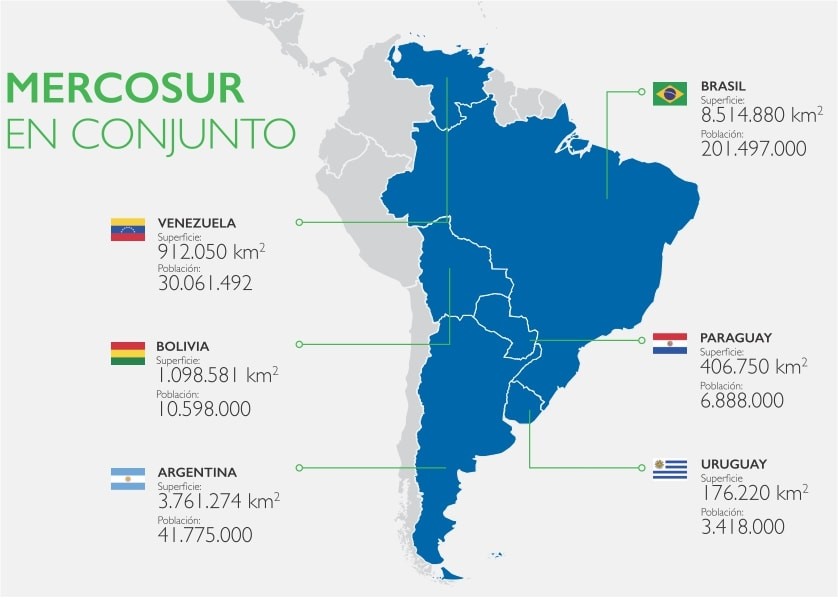
Uruguay is part of the Mercado Común del Sur (Mercosur) free-trade area. Almost half the country’s exports go to Argentina and Brazil. Other significant export recipients are the European Union countries (20 percent) and the United States (7 percent). Imports come mainly from the Mercosur partners (43 percent), the European Union (20 percent) and the United States (11 percent).
Division of Labor.
Among people 14 to 55 years old, 61 percent are economically active. Among those working, 12 percent are in the primary sector, 25 percent in the secondary sector, and 63 percent in the tertiary sector. Schooling is obligatory, and children are not in the workforce.

Industrial jobs are supposedly granted on the basis of qualifications, but since major industries are government-owned, many openings are filled through partisan connections with the political party in power. This practice is particularly important in appointments for public positions. This has resulted in an oversized government workforce.
Child Rearing and Education.
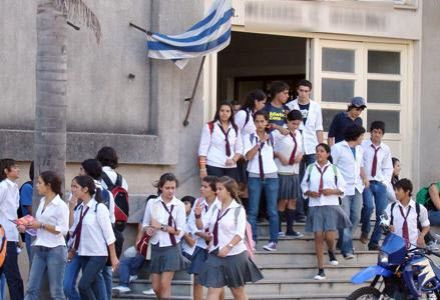
Since the 1870s, primary education and secondary education have been based on the French model. Religion was banned from public schools in 1909. All public primary school children wear a white coat and a blue ribbon as a tie. Private school children wear uniforms, that are similar to those in British schools.
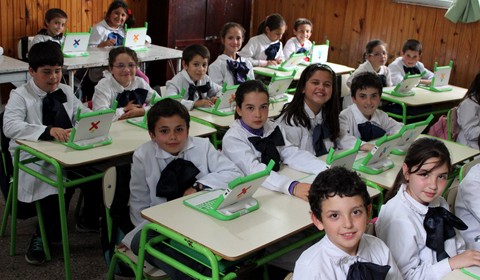 School kids in Uruguay, boys and girls alike, wear a uniform. This is mostly a simple white coat with a very big dark (blue or black) loop. All kids have access to learn computers. The school system is not to bad, but filled with many failure weeks and holidays. Summer holiday is almost 3 month !!
Industrial jobs are supposedly granted on the basis of qualifications, but since major industries are government-owned, many openings are filled through partisan connections with the political party in power. This practice is particularly important in appointments for public positions. This has resulted in an oversized government workforce.
Higher Education.
A university education is highly valued. There are three universities. The Universidad de La República is public and free and specializes in the natural, physical, and medical sciences. The Universidad Católica, which is run privately by the Catholic Church, specializes in the social sciences. The Universidad ORT, associated with the Jewish ORT constructivist educational movement, specializes in technical studies. There are active links with Argentinean and Brazilian universities.
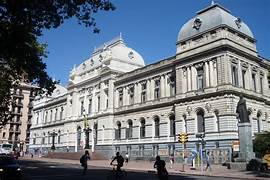
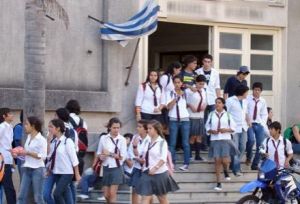 University and students in Montevideo, Uruguay.
Classes and Castes.
Uruguay has long had a high standard of living, and its social, religious, political, and labor conditions are among the freest in South America. The state has provided universal free education since the late 1870s. However, there is social polarization; 13 percent of people in Montevideo and 16 percent in the interior live below the poverty line, and the unemployment rate is high. The relatively small upper class includes the ranching, business, professional, and political elites.
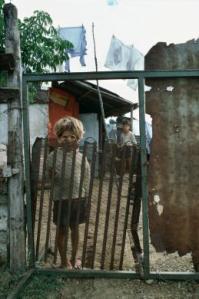
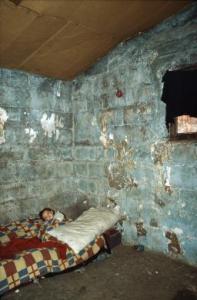 Slum in Montevideo.
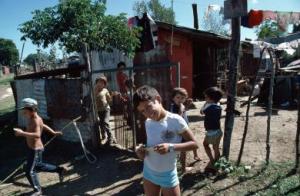
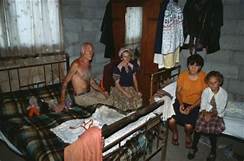
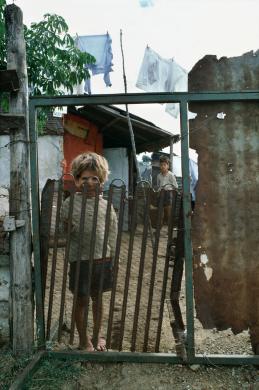
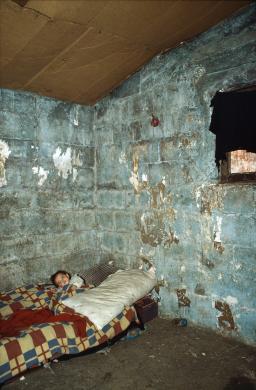
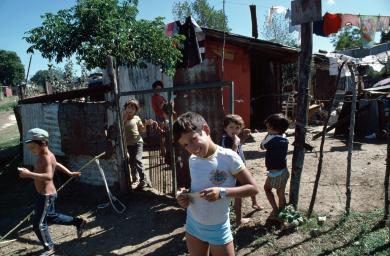
The two major minorities—the mestizos and the African-Uruguayans—are overwhelmingly in the low and lower-middle classes. During the wars for independence and later struggles for power, those ethnic groups were recruited into the militias, and they still often join the armed forces. Many African-Uruguayans are employed in domestic service or work as musicians and entertainers. There is no overt bigotry against minorities.
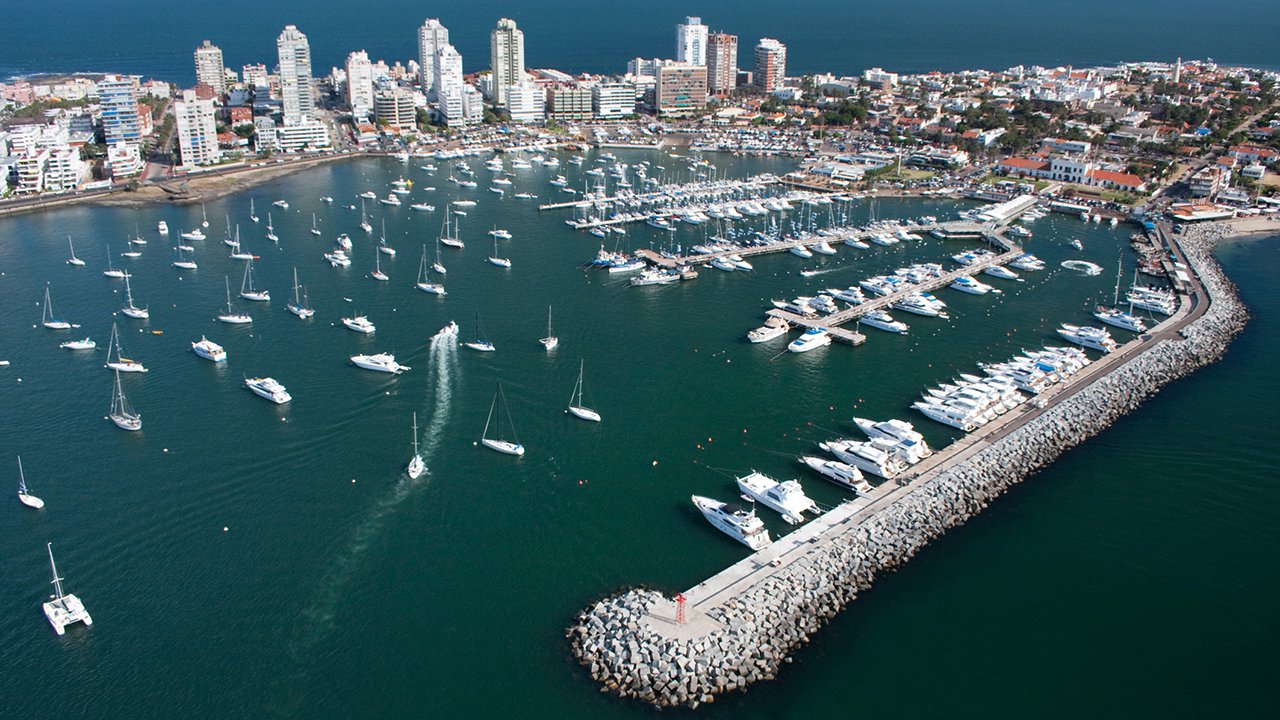
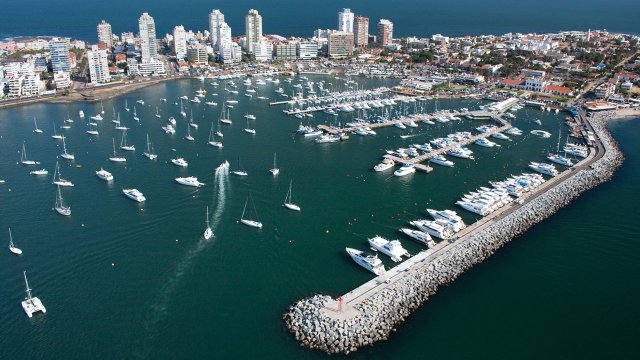 Harbor of Punta del Este, the Uruguayan Juppy beach town.
Symbols of Social Stratification.
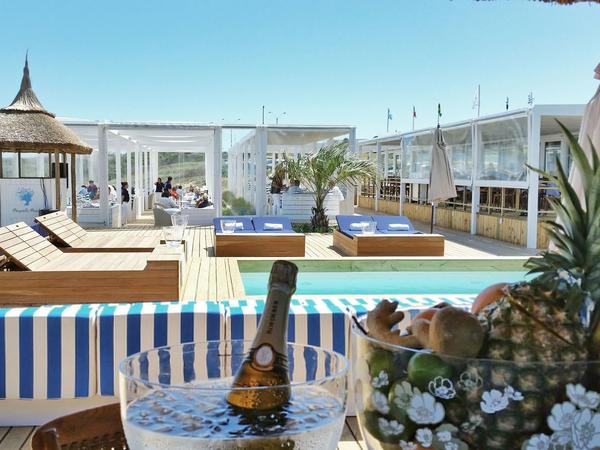
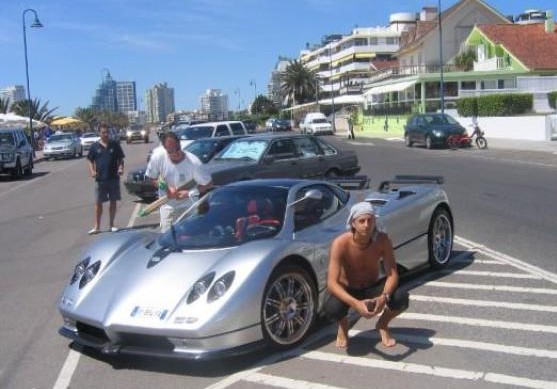
Montevideans stress their closeness to Europeans in appearance and life styles. Upper-class and middle-class people are very conscious of grooming and dress. In rural areas, many people still wear gaucho-influenced clothing. There is an inverse correlation between social class and the use of slang and gauchesco words. Car ownership is still seen as a social class symbol, and being a fan of certain soccer clubs also is said to be related to social class. Belonging to exclusive clubs is a symbol of social status. Where people spend their summer vacations and the beaches they go to are also related to social status.
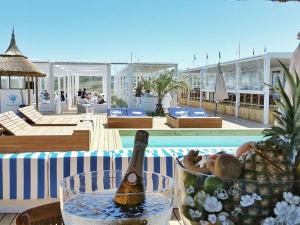
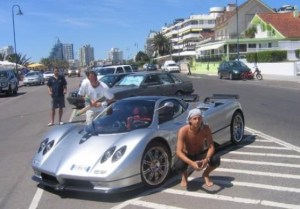 Important social status, beach club in Punta del Este, or luxury cars and beach life in Uruguay
Government.
Uruguay is a republic characterized by the presence of representative democracy at all levels of government; elections are held every five years. People are generally well informed about politics, and voting is compulsory after the age of eighteen. The election for president is unique in that the primaries and the voting occur simultaneously. People vote for candidates on open lists from each party; those who receive the most votes are the official candidates, and the presidency goes to the party with an absolute majority of votes.
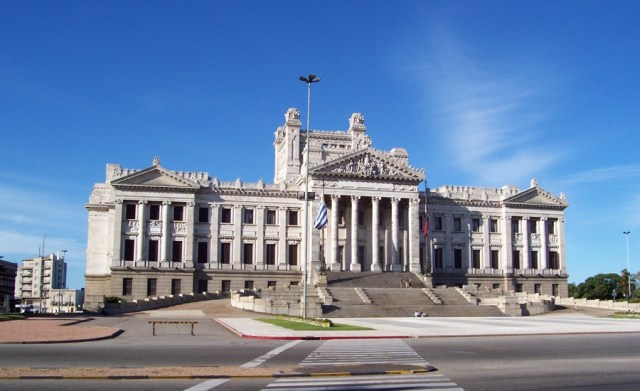 Palace Legislativo in Montevideo, Uruguay.
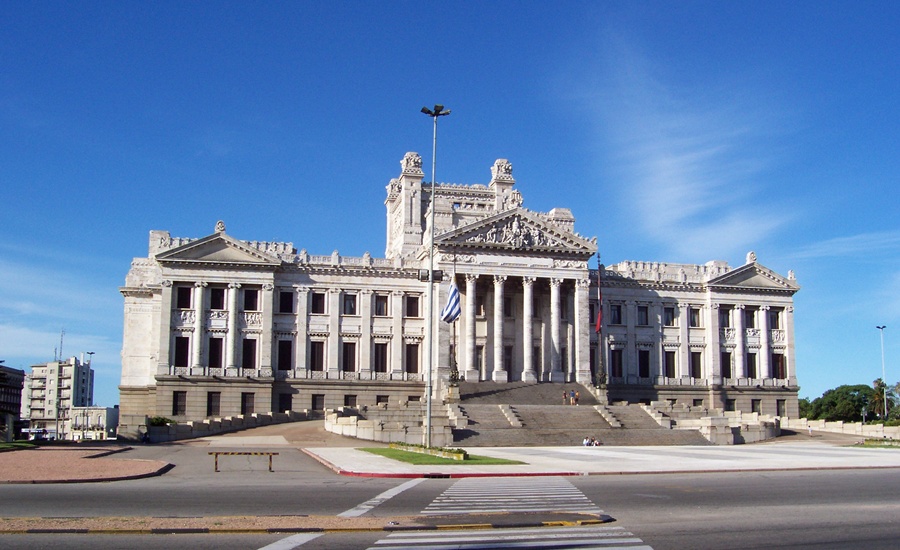
The executive branch consists of a president and twelve appointed ministers. The legislative branch consists of a bicameral general assembly with ninety-nine representatives and thirty senators and the vice president. The Supreme Court is the highest body in a judicial branch based on Spanish civil law.
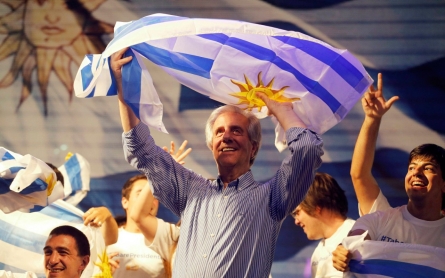 Sitting president Vasquez.
Leadership and Political Officials.
The major political forces are the mostly centrist Colorado Party (currently in power), the center to right Blanco or Nacional Party (strong in rural areas), and a coalition of leftist parties, the „Broad Front,“ which dominates the municipal government of the capital.
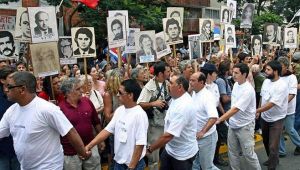
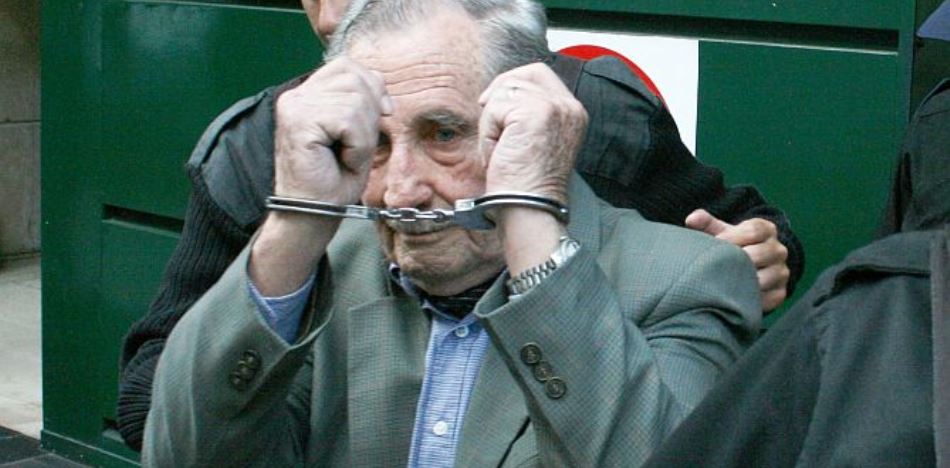
 Last dictator of Uruguay died at 91 in 2016.
Social Problems and Control.
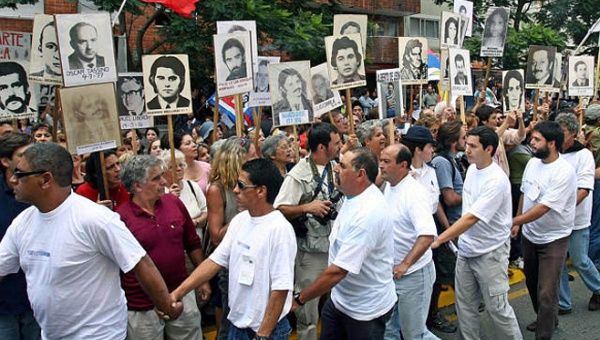
Before the 1970s, Uruguay was known as the freest and safest South American country, with an exemplary judiciary system. During the military dictatorship (1973–1985), personal and human rights were suspended, and formal social control was directed at suppressing „subversive“ activities. As a result, many thousands of people left the country as political refugees, and many who stayed were imprisoned, tortured, or killed by the police and the military. After democracy was reestablished, the country returned to the previous system of social control.
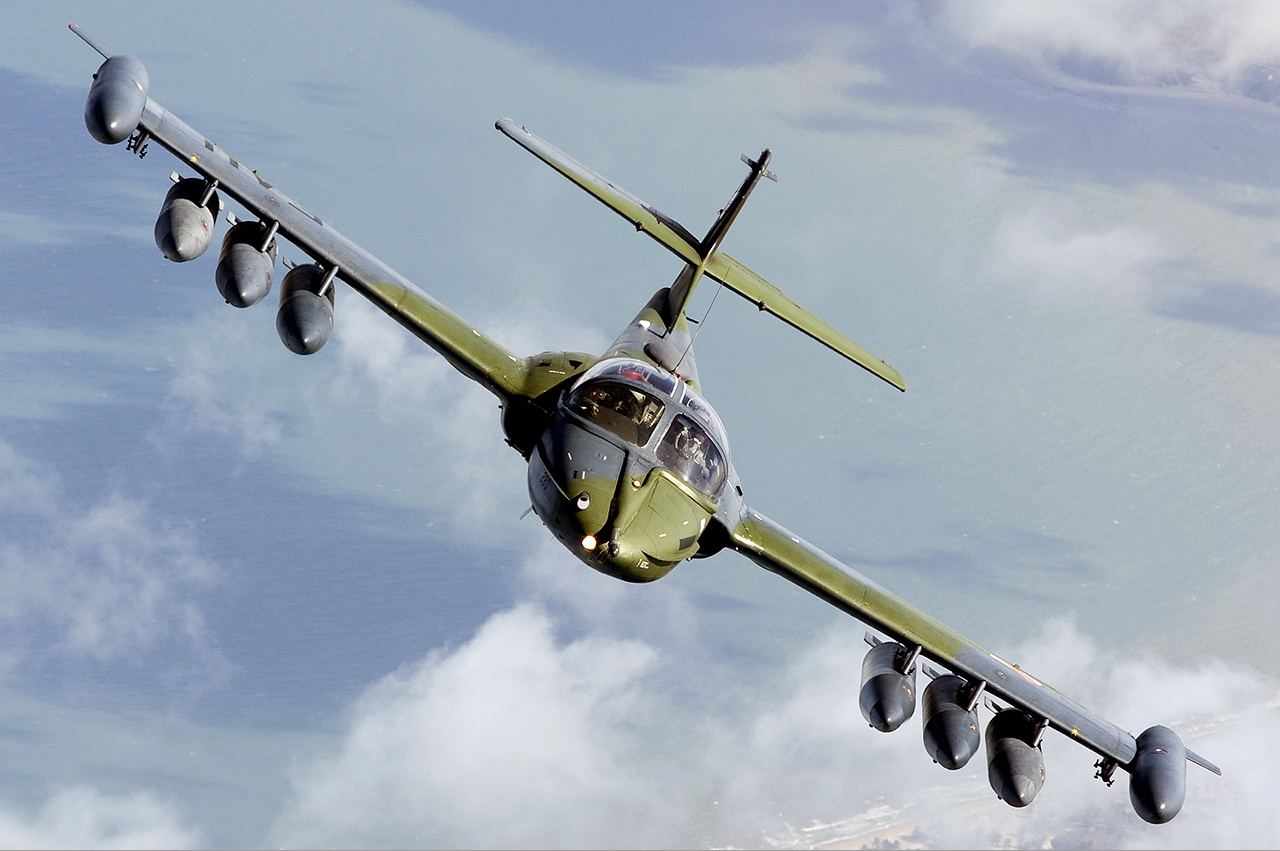
 Uruguayan Air Force and Navy.
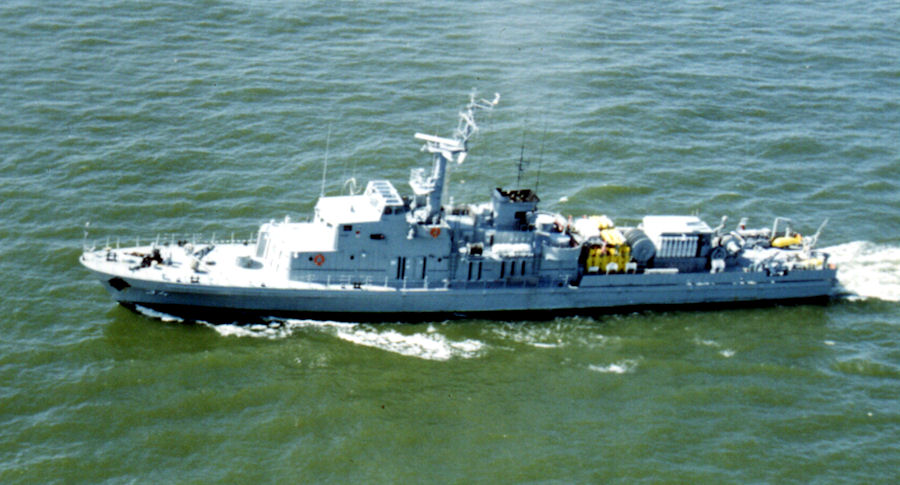
Military Activity.
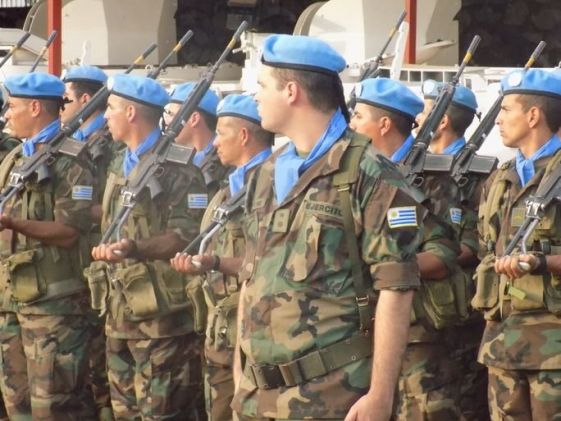
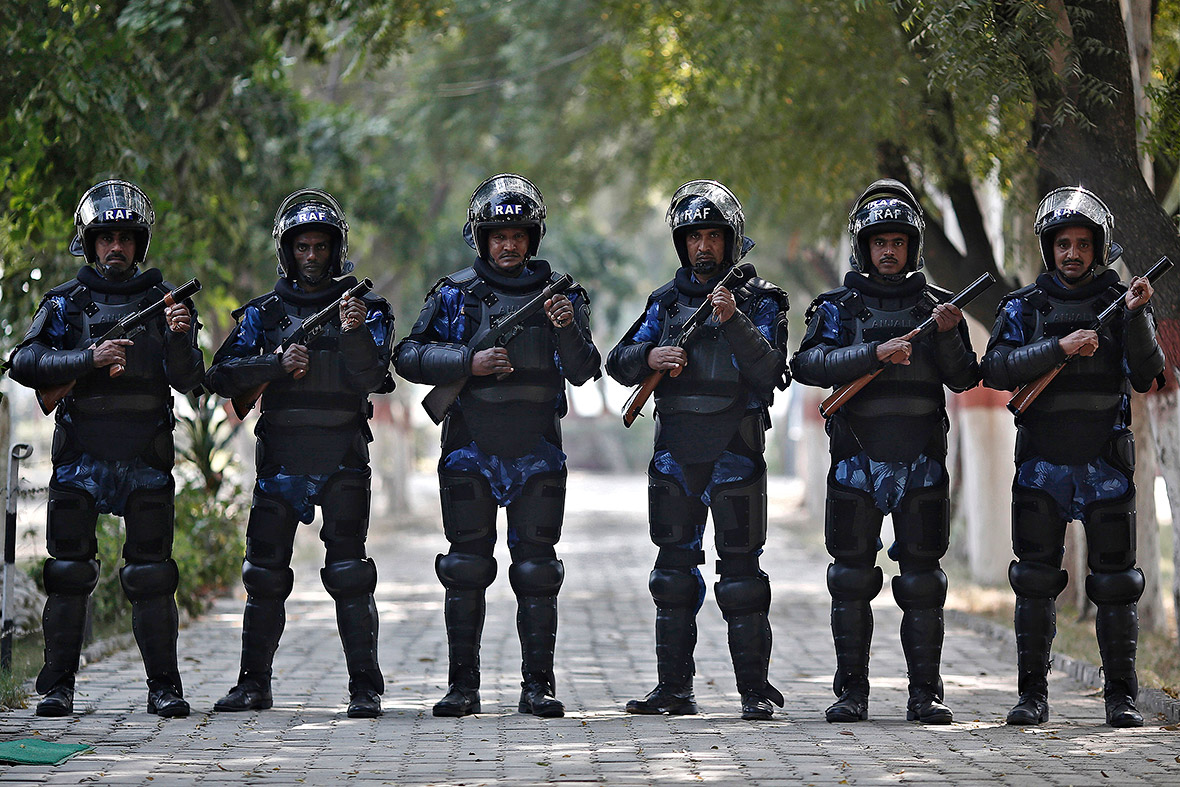
Military expenditures were high during the dictatorship of the 1970s and 1980s. At the present time, those expenditures are much lower (less than 1 percent of the GDP). The Navy and Air Force are very small and military service is not compulsory. Sadly to see that US-Americans try to influence (of course under the carpet) all kinds of military activities.
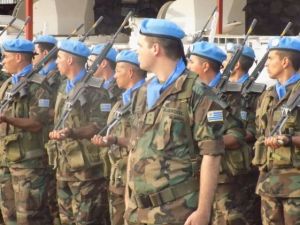
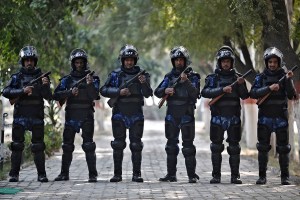 Army and police force in Uruguay.
Social Welfare and Change Programs
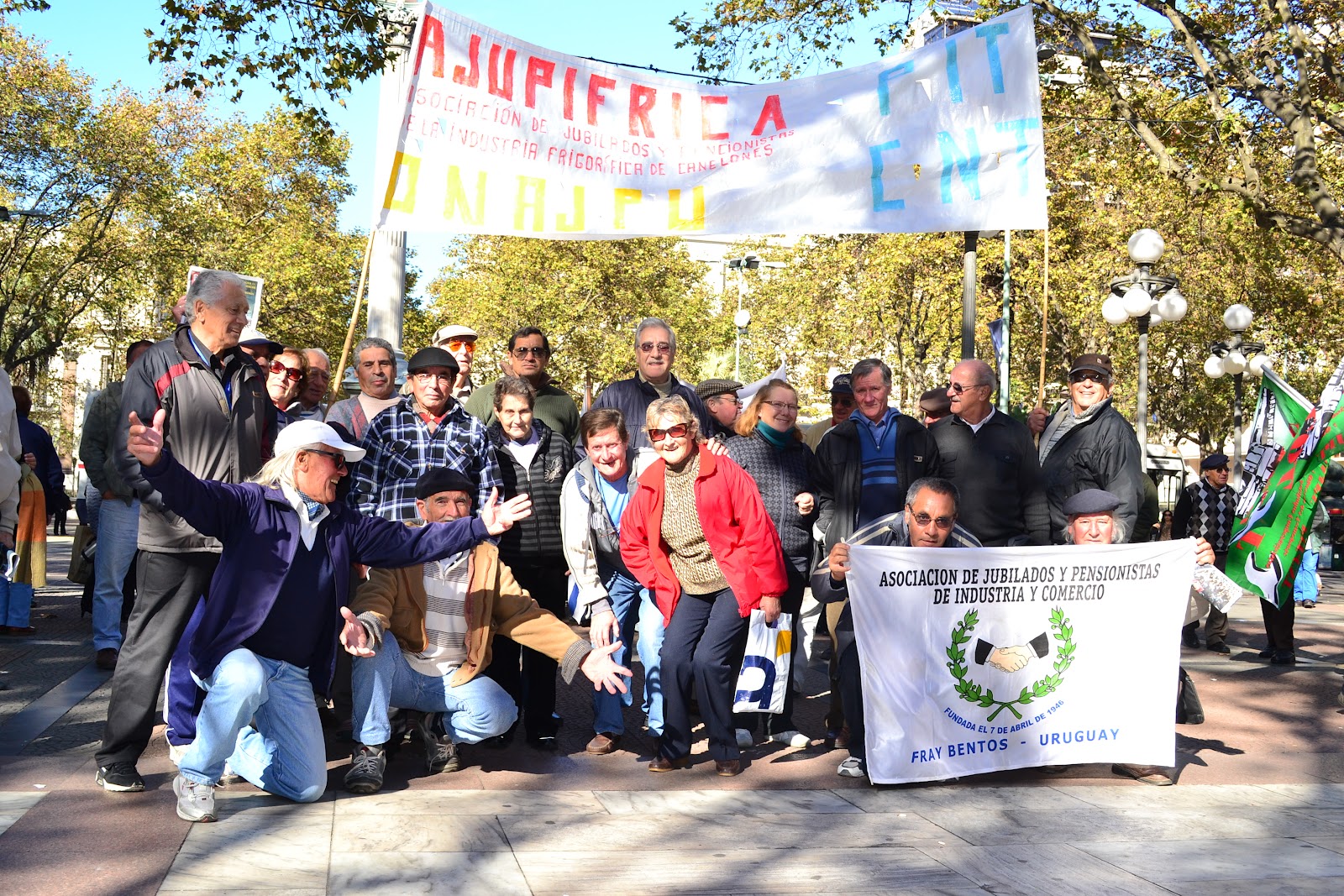
Because of its achievements in social security, public education, and health care in the first half of the twentieth century, Uruguay is known as Latin America’s „first welfare nation.“ After the economy entered a period of decline, the growth of the government and public bureaucracy continued. The retirement of these public servants has created a disproportionate number of pensioners, and the country has gained the nickname El País de los Jubilados („The Country of Pensioners“).
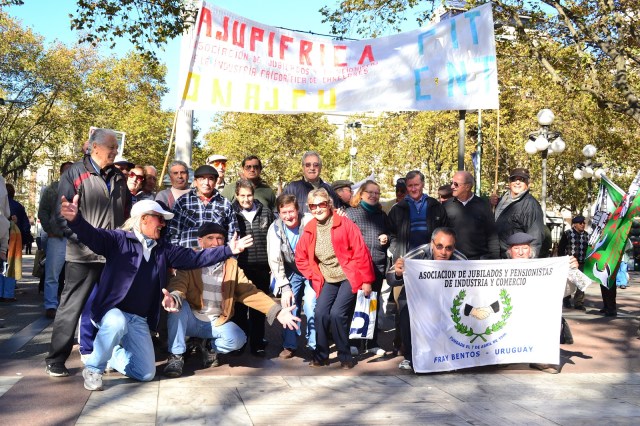 Club de Jubilados del Uruguay. Much in Uruguay is focused on the immense amount of pensioners, like the health system etc. That’s why also pensioned foreigners are feeling so well here.
Gender Roles.
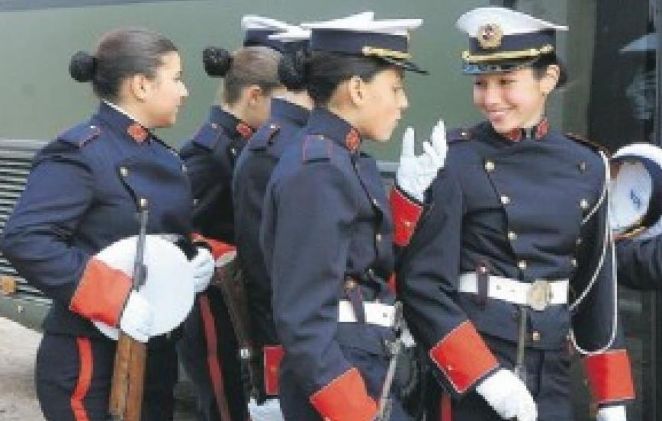
There is a very high proportion of women in the labor force. Legally, men and women have equal rights to power, authority, and privileges. However, an overwhelming majority of the higher economic, professional, political, social, and religious positions are held by men.
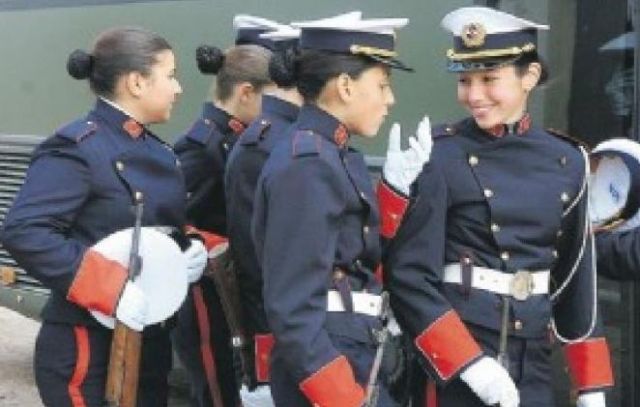 No gender problem in Uruguayan forces, as military, guards and police.
Marriage and Family.
Marriage. Official marriages have been civil since 1837; marriages are not arranged and are monogamous. About 48 percent of persons older than 15 years old are married, 10 percent live together, 28 percent are single, 4 percent are divorced, 2 percent are separated, and 8 percent are widows and widowers.
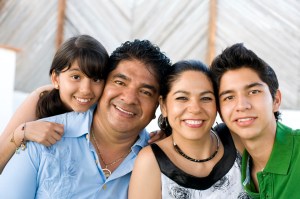 Typical Latino family in Uruguay.

Although the typical domestic unit is a nuclear family with one of two children plus the grandparents, extended family networks usually are preserved. Large family reunions are held at least once a year. Authority in the household is divided between the husband and the wife. Many couples live with the parents of the husband or wife, and it is not uncommon for a widowed grandmother to assume the role of a matriarch. Children stay at home until late in life, but older widows and widowers increasingly live alone, to the point where the government has identified old age isolation as a major social and health problem.
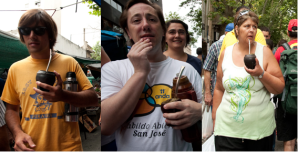 Uruguay etiquette.
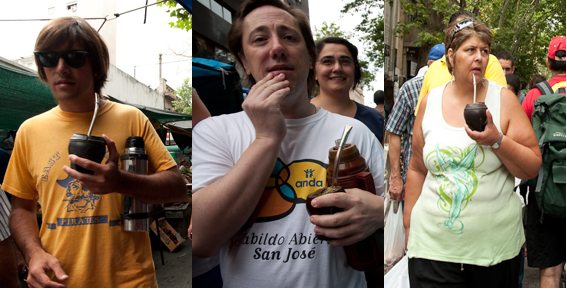
Etiquette.
Uruguayans are quite traditional and do not welcome criticism from foreigners. Sometimes this ignoring of criticism is a big problem, because even fair, or constructive help-critic is not welcome. They love to do their same mistakes on and on. About this kind of culture, behavior and personal structures can be written a whole book. I was told that even a law is in existance that „who blames someone else in public (like: that restaurant is not good or this neighbor is an idiot – even if its true) can be sentenced to jail“.

They also do not appreciate being confused with Paraguayans or Argentinians. Otherwise, people are friendly and easygoing. They are very calm and they do not like problems. Not liking problems results often in not acting. In Uruguay they let things slumber til the problem is forgotten. same also at courts or other government institutions, nothing happens, all will be retarded til people give up.
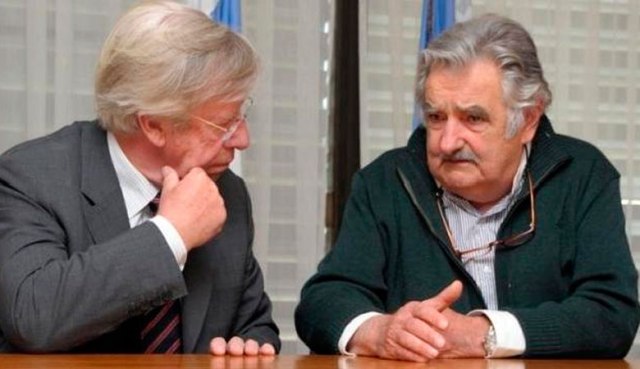 He always gave and took critisism, „Pepe“ Mujica, former president of Uruguay (right).
Uruguayans don’t like to say „NO“ – that means they can promise (with the most honest face) the blue from the sky and they don’t care about breaking the word and not keeping anything. Although tactful, people are frank and direct and maintain a close distance when speaking. Close acquaintances of the opposite sex greet each other with one kiss on the cheek.
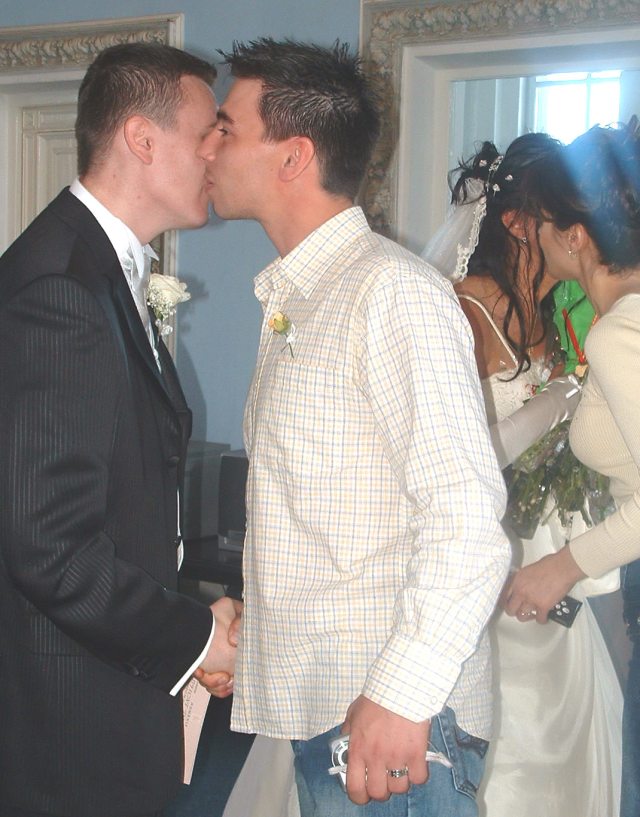 In Uruguay its etiquette to kiss all and everyone, everywhere and all the time, particularly same gender kissing.
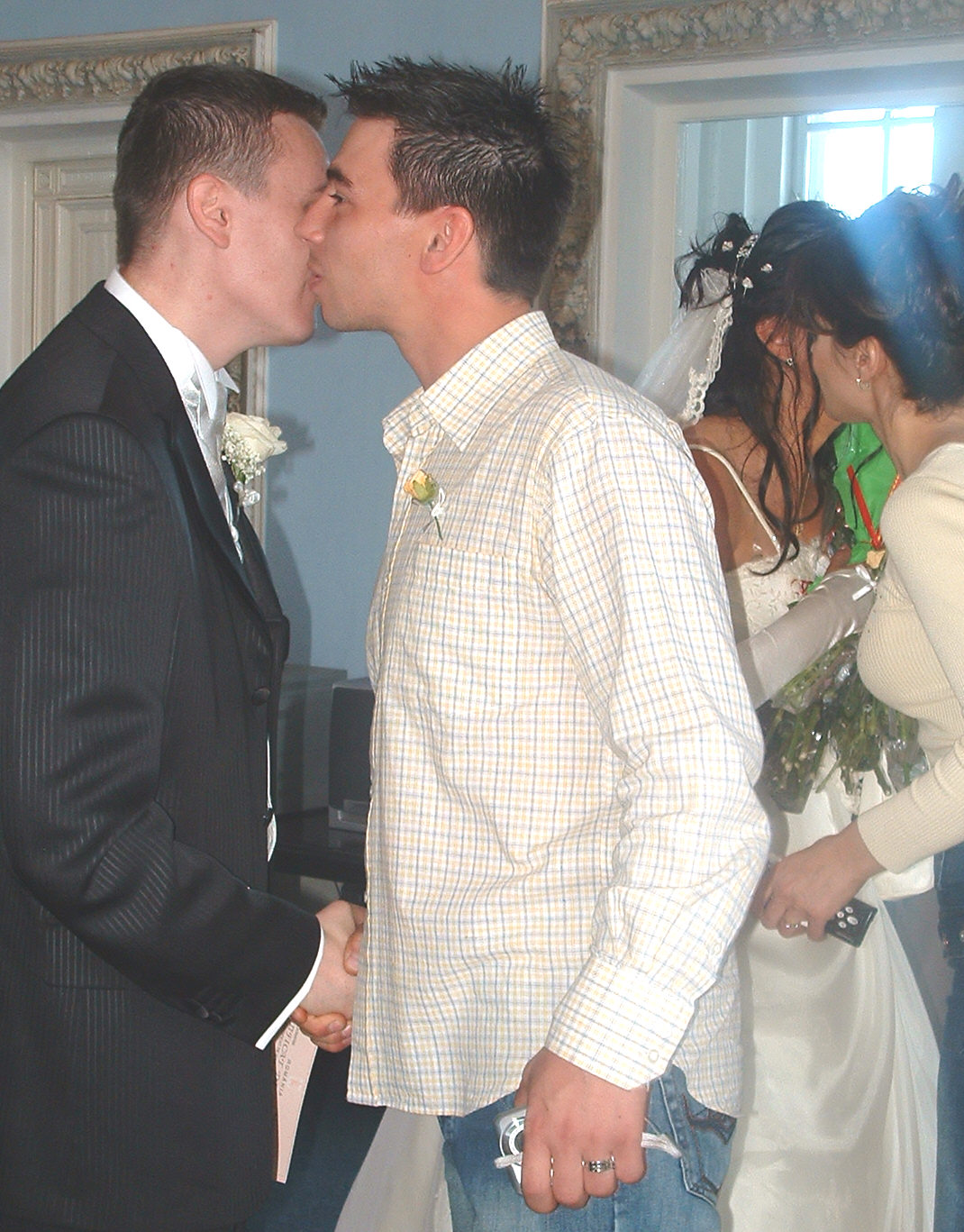
A national behavioral particularity is the conspicuous „following gaze“ that males direct to females to indicate that they are attractive. In many cases this is accompanied by verbal expressions called piropos, which are sometimes abusive and usually are ignored.
Religious Beliefs.
The church and state have been officially separated since 1917. The constitution protects religious freedom, but people are not devout and daily life is highly secular. More than one-third of the people profess no religion. Approximately 60 percent of the population is nominally Catholic, but only a minority attend church regularly (mostly those in the upper classes). Recently, the Padre Pio revitalization movement has been a source of converts for the Catholic Church.
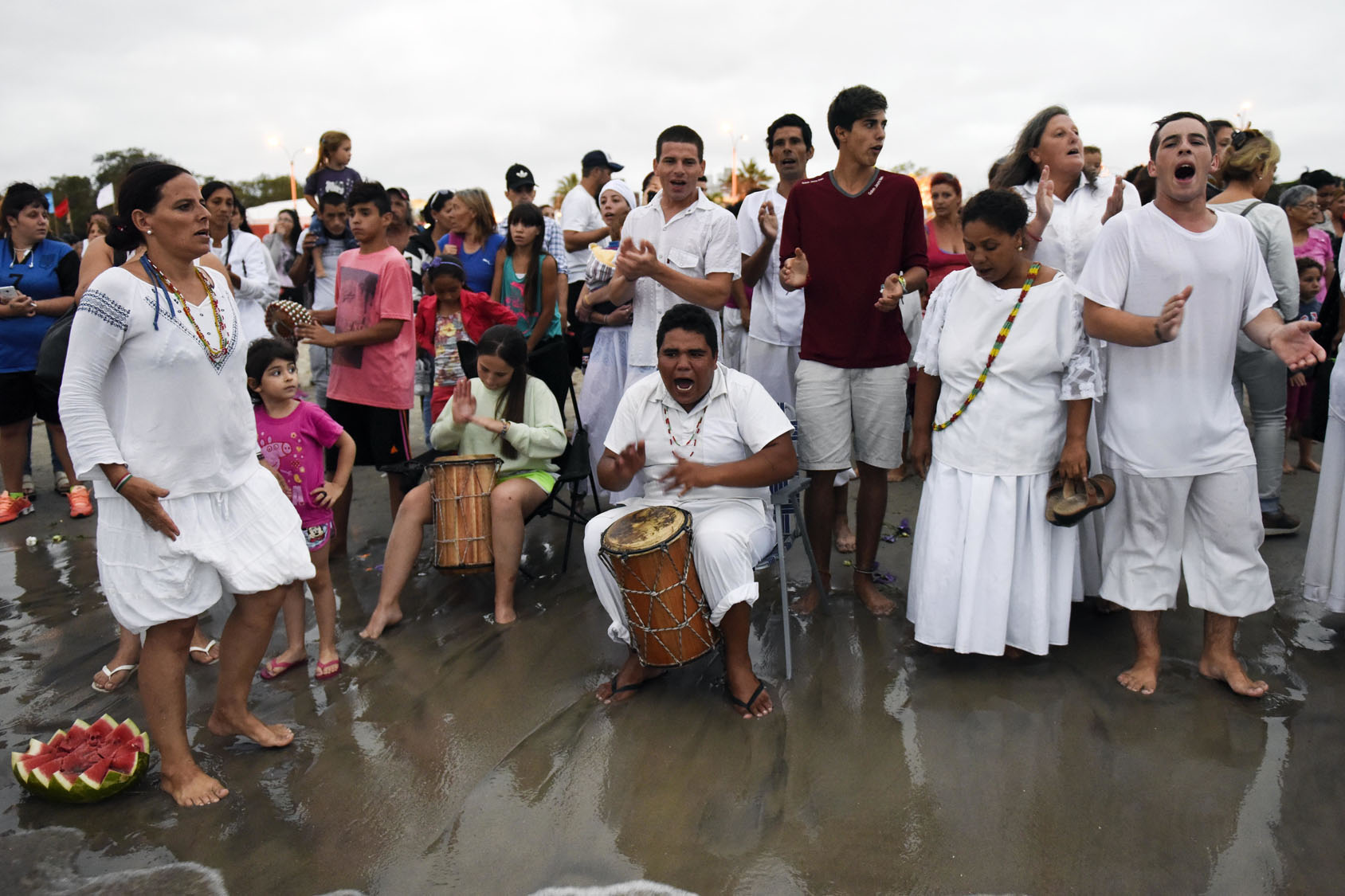
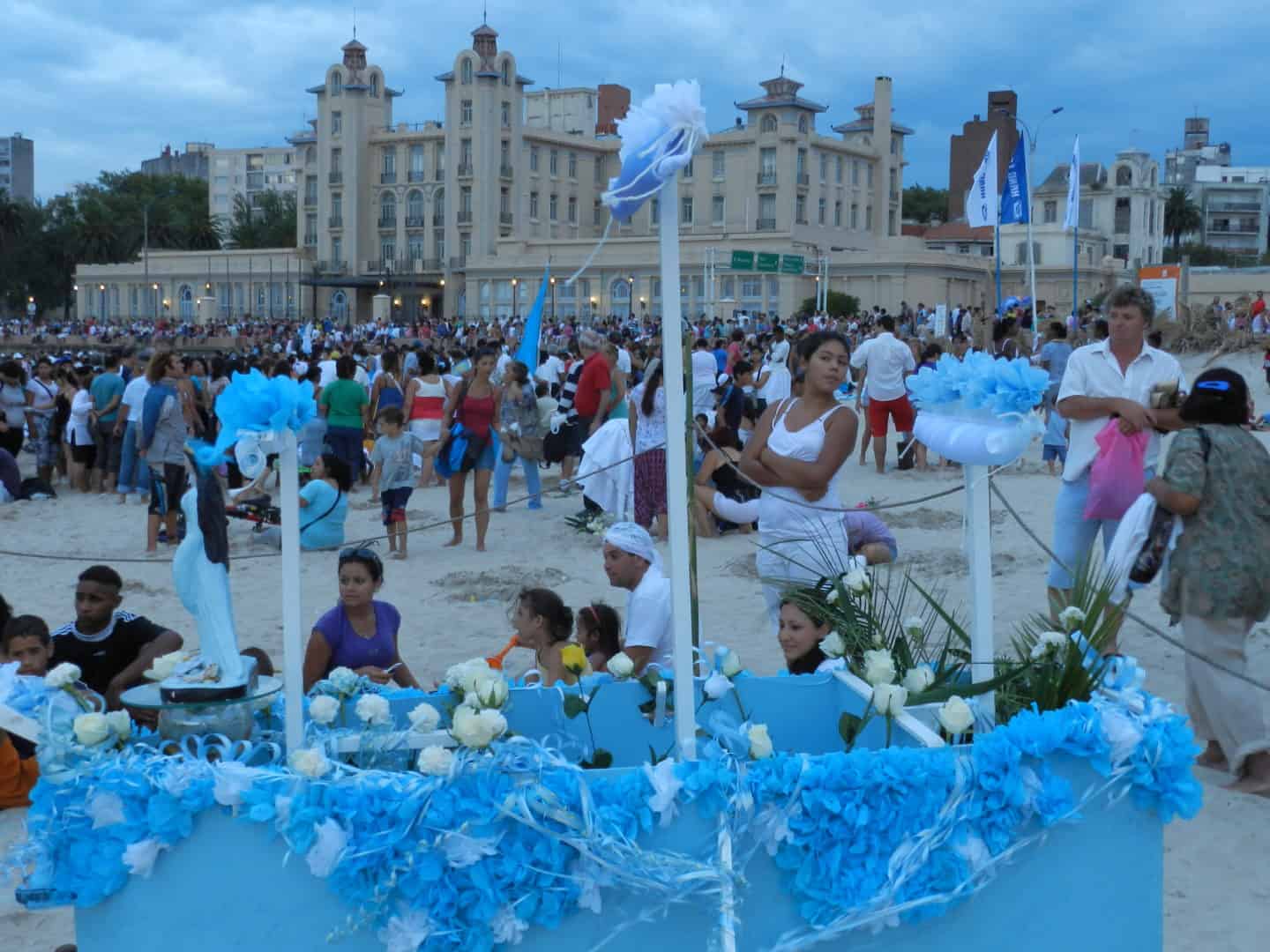
Worshippers sing to honor the African sea goddess Yemanja, at the sea shore in Montevideo, Uruguay, Thursday, Feb. 2, 2017. Thousands of worshippers come to the beach on Yemanja’s feast day, bearing candles, flowers, perfumes and fruit to show their gratitude for her blessings. The celebration coincides with the Roman Catholic feast day of the Virgin of Candelaria, marked Feb. 2. (AP Photo/Matilde Campodonico)
Free worshipping in Uruguay.
The Jewish community, which once constituted about 2 percent of the population, is dwindling because of emigration to Israel. There is also a small proportion of people who practice Africanderived religions. Protestants represent less than 4 percent of the population.
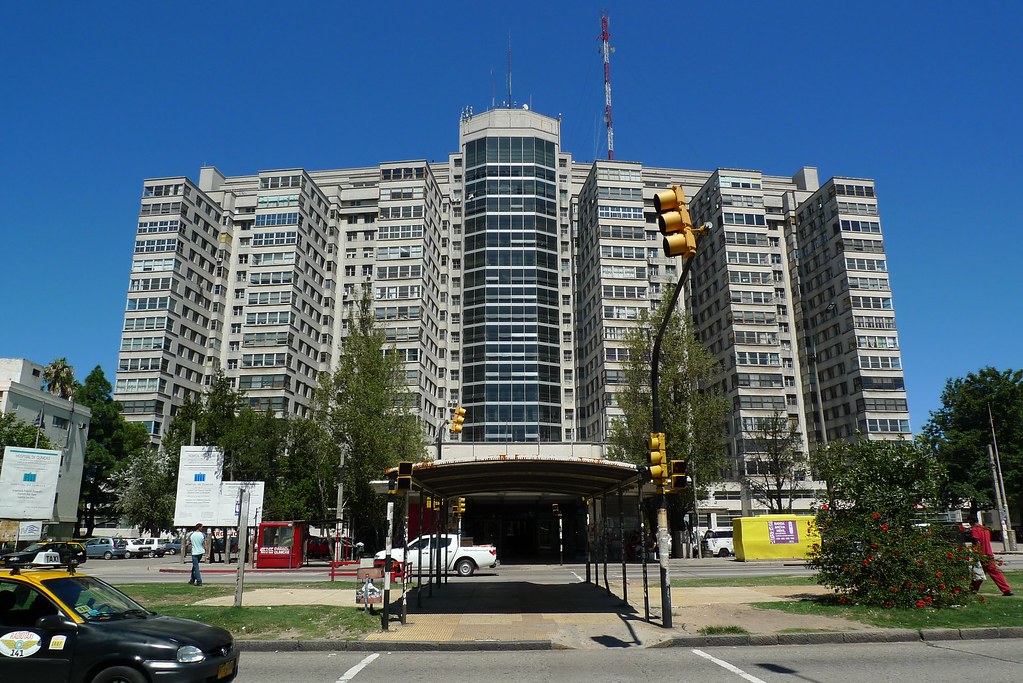
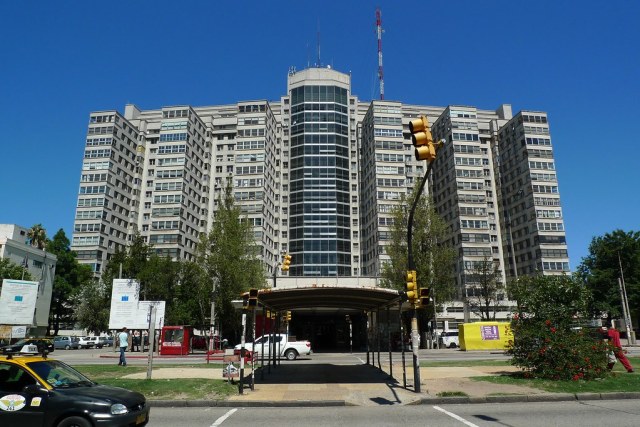 Hospital de Clinicas in Montevideo.
Medicine and Health Care.
Cardiovascular diseases are the leading cause of death, and hypertension is among the primary causes for medical visits. Dietary factors are implicated in this pattern: fat consumption is very high, and fiber intake is low. A high prevalence of obesity is associated with a high incidence of diabetes. Cancer accounts for 23 percent of all deaths. The high rate of lung cancer is related to the prevalence of smoking, particularly among men. Alcoholism is a problem among men age twenty to fifty years, which is associated with a high prevalence of cirrhosis of the liver.
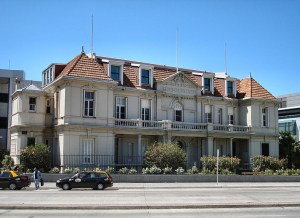
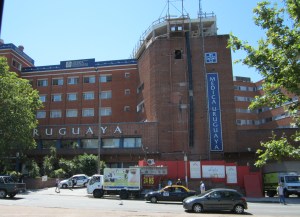 Left the British hospital and right the Uruguaya. British sponsored by Great Britain.
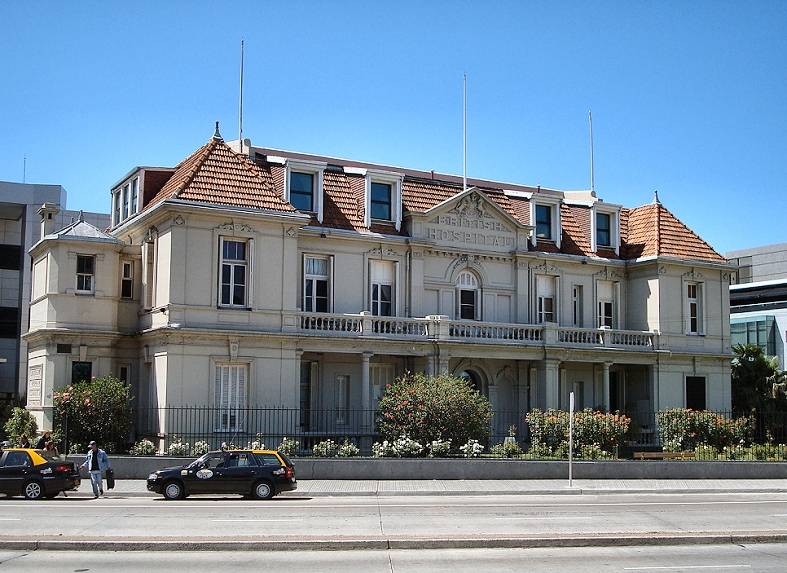
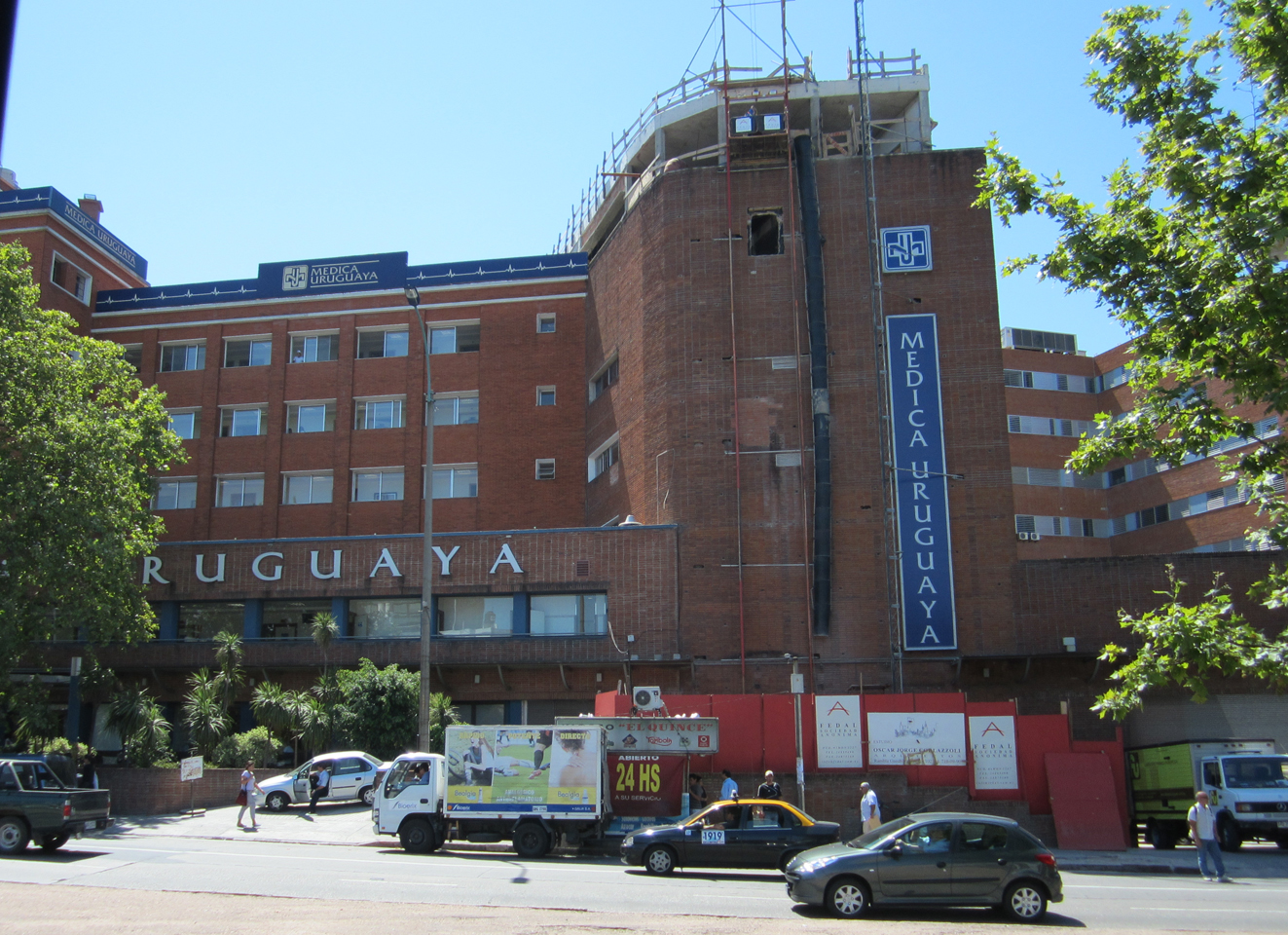
Approximately 60 percent of the population is covered by private nonprofit collective health care associations known as mutualistas. Free coverage through the Ministry of Public Health covers approximately 20 percent of the population, and military and/or police or private company insurance covers approximately 10 percent. The rest of the population has no formal coverage.

 The largest at the moment and we think the best is Espanola. They really can keep up with most other international health care facilities.
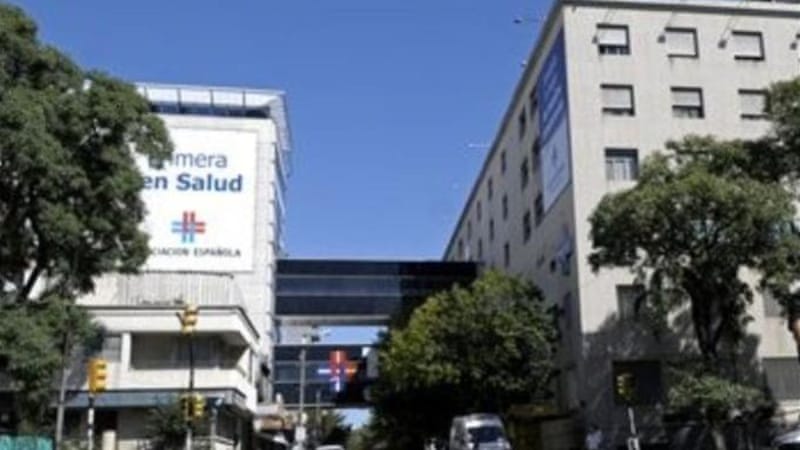

Complementary and alternative medicine has not been practiced traditionally. However, in recent years this pattern has been changing (e.g., acupuncture, homeopathy, and herbal medicine). All in all is the medical service in uruguay very good. In our retired age we need a bit more of healthcare and we are very pleased here with the service, the prices and the high quality of medical facilities.
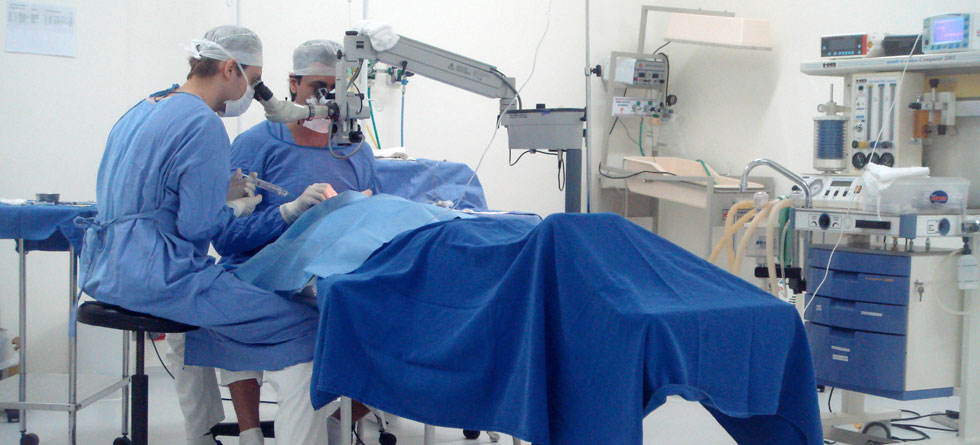
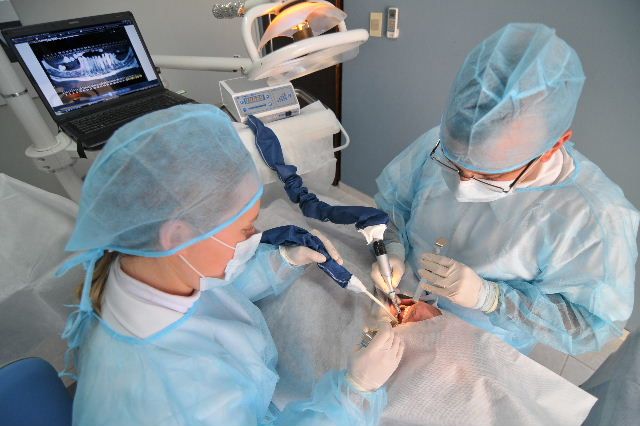
The health cover system in Uruguay is for most people a bit inscrutable, because there are so many different ones and they all have their own planes and systems. But in total they are cheap (we pay for a 100% full service around US$ 70,– per person and month). Above that they work with dozens and dozens of highest quality specialized private clinics, by example extreme modern and specialized doctors in eye-retina-clinics or in dental-clinics.
Secular Celebrations.
Traditional Catholic holidays have been secularized and renamed. For example, Christmas is called Family Day and Easter Holy Week is called Tourism Week.
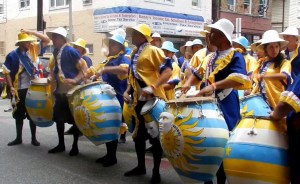 The day of the goddess of the sea or the carneval candombe is more important in uruguay then any kind of church and religion.
Holidays also celebrated in other Latin American countries include New Year’s Day, Carnaval, Worker’s Day (1 May), the Day of the Americas (12 October), and the Day of the Deceased (2 November). Holidays related to the nation’s history are the 33 Patriots Day (19 April), Battle of Las Piedras (18 May), José Artigas’s Birthday (19 June), Constitution Day (18 July), and Independence Day (25 August).
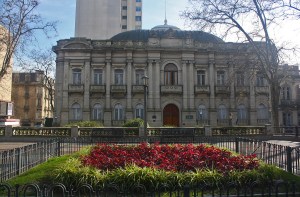
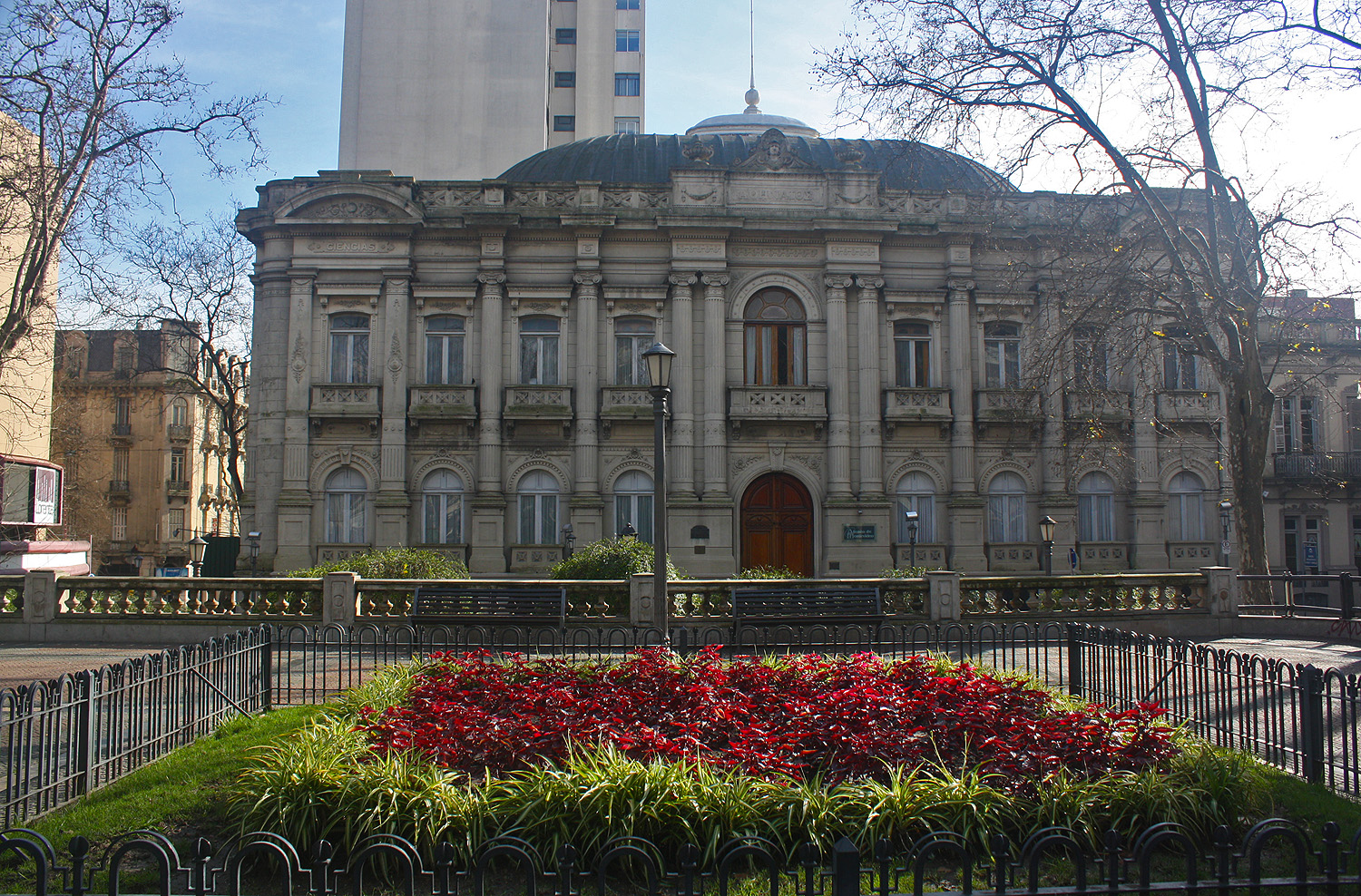
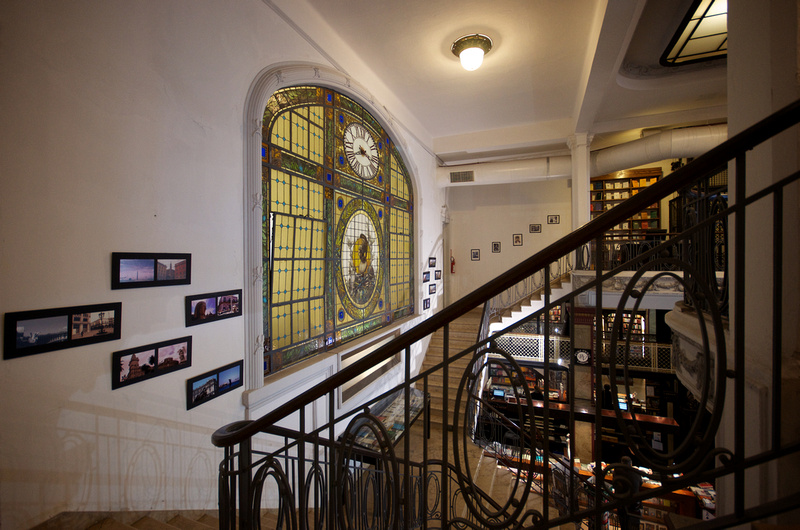
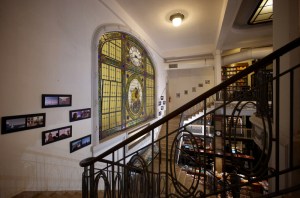 The Ateneo de Montevideo is a center of art since 1886.
The Arts and Humanities.
Support for the Arts. Artists are self-supporting, but receive some funding from the government and private institutions. The Ateneo de Montevideo is a meeting place for those involved in artistic and humanistic activities. Its worth a visit, especial the library and the art deco cafe and exhibition rooms.
Literature.
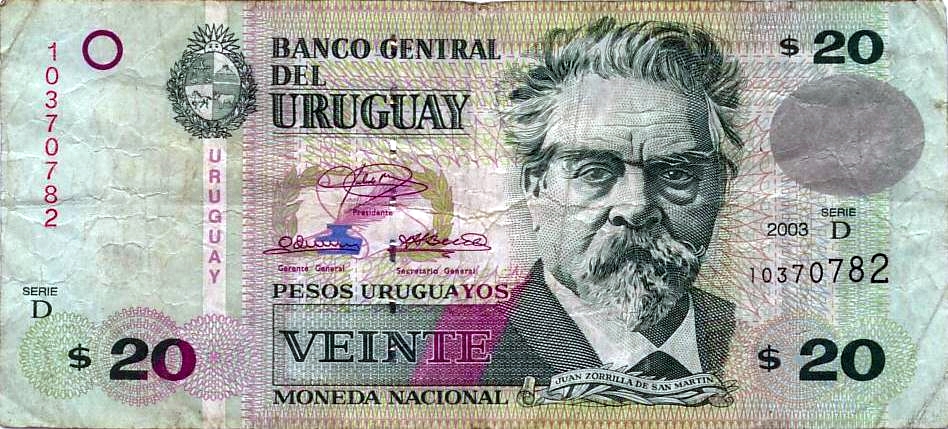
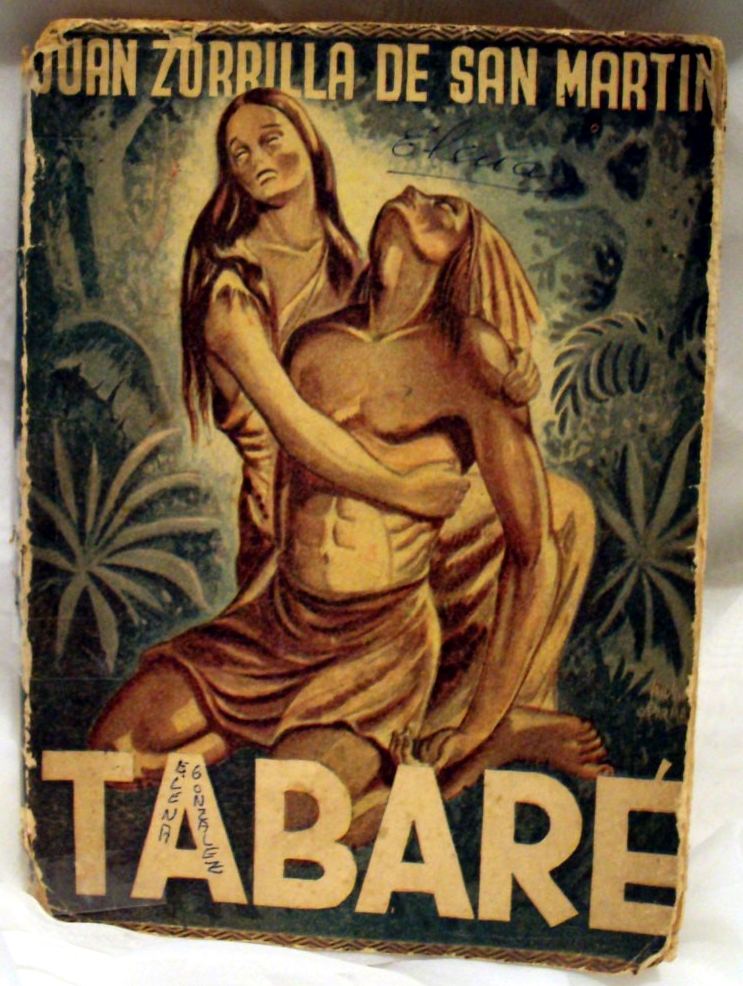
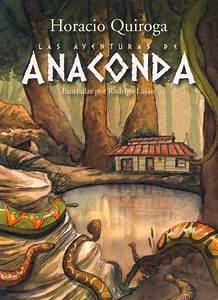
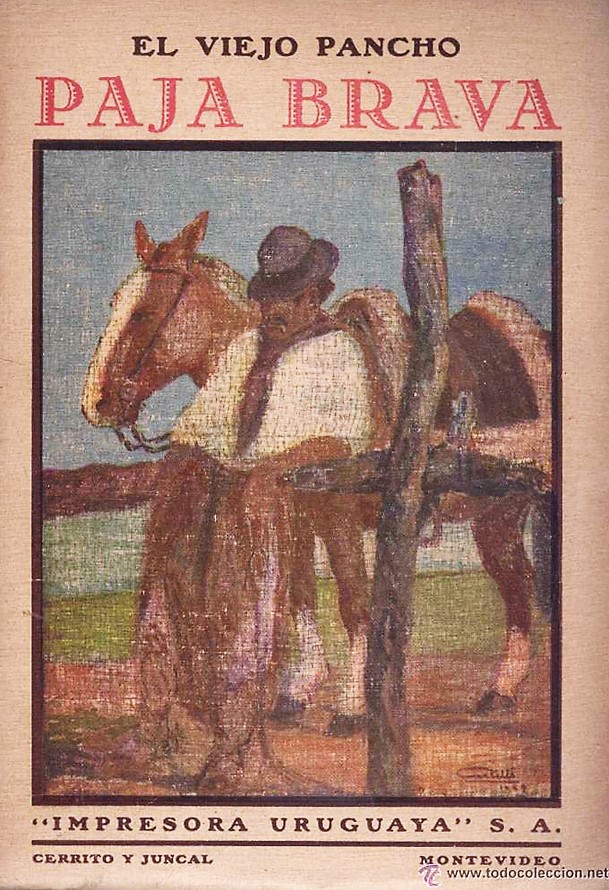
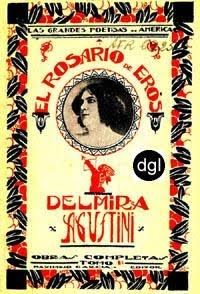
Among the most important writers are José Enrique Rodó, a philosophical essayist; Juan Zorrilla de San Martín, the author of Tabaré, an epic poem about a heroic Charrúa mestizo; Horacio Quiroga, a modernist short story writer; and José Alonso y Trelles (called el viejo pancho), who wrote about the gauchos. Female poets include Delmira Agustini and Juana de Ibarbourou.
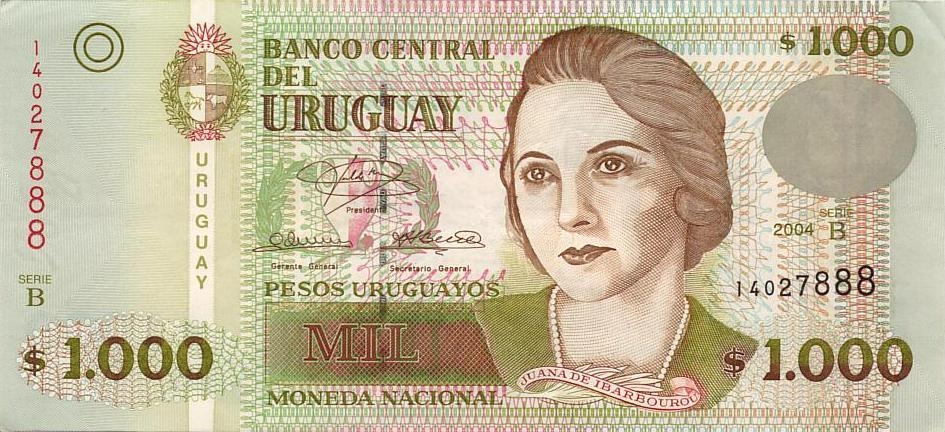
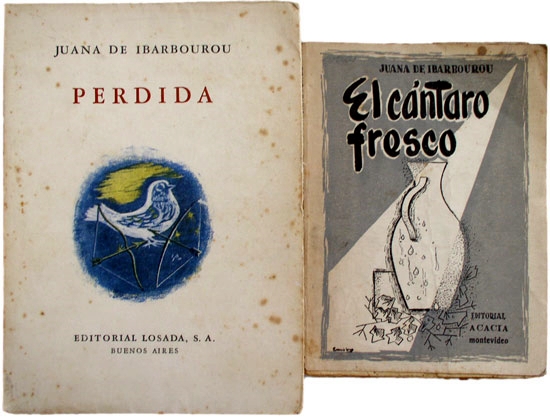
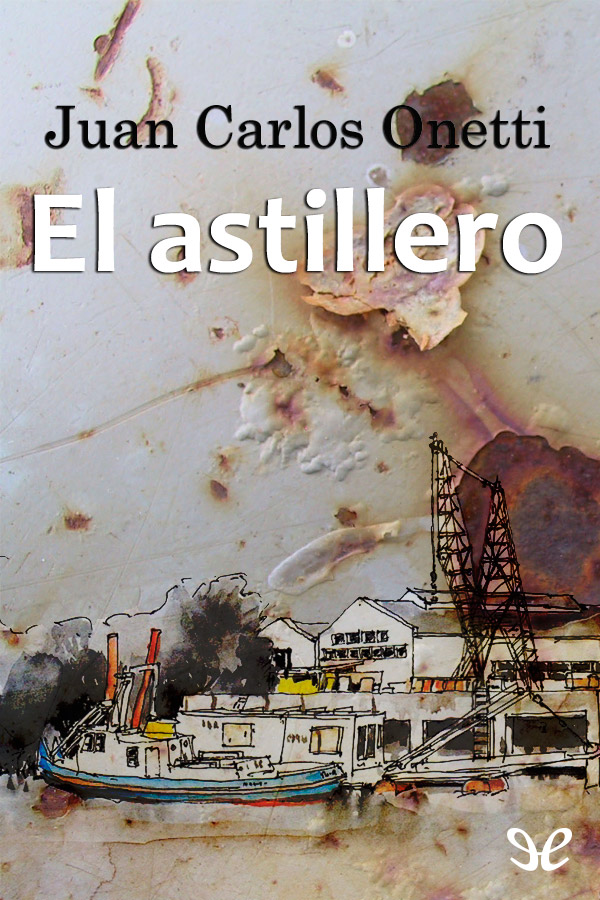
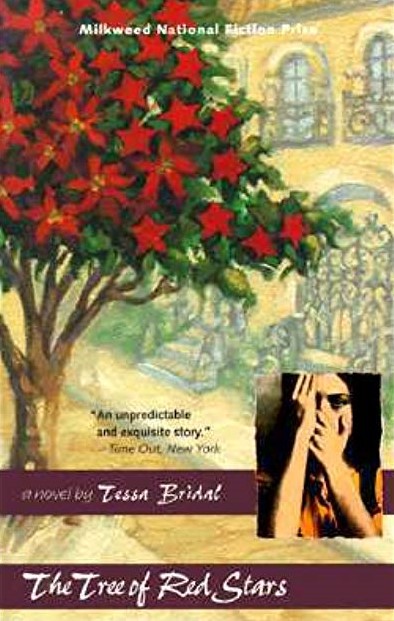
More recent writers include Mario Benedetti, Eduardo Galeano, and Juan Carlos Onetti and Tessa Bridal (who wrote the novel The Tree of Red Stars, a depiction of the national culture in the 1960 and 1970s). These books are real interesting to read.
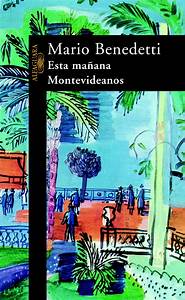
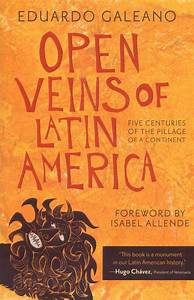

 Tessa, translated into many languages.

 And this is an Uruguayan MUST READ:
Nando Parrado co-wrote the 2006 book Miracle in the Andes: 72 Days on the Mountain and My Long Trek Home, with Vince Rause. In Miracle in the Andes. Nando Parrado returns to the events described in Piers Paul Read’s 1974 book, Alive: The Story of the Andes Survivors (which tells the story of the people, most of whom were part of a Uruguayan rugby team consisting of alumni of Stella Maris College (Montevideo), who were on Uruguayan Air Force Flight 571, which crashed into the Andes mountains on October 13, 1972). When what little food they had ran out after ten days, those still alive agreed that after their death the others should eat their bodies to survive.
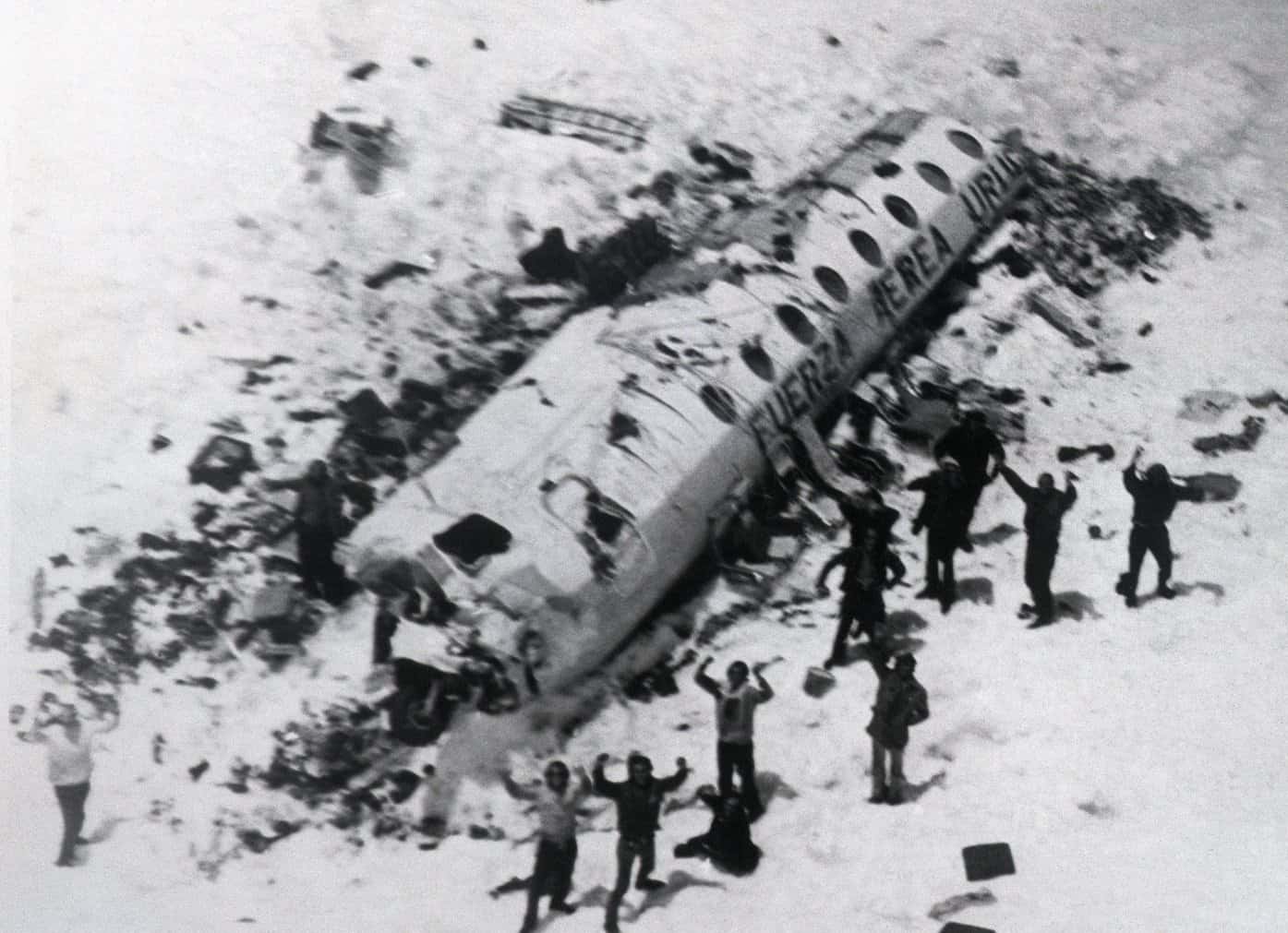

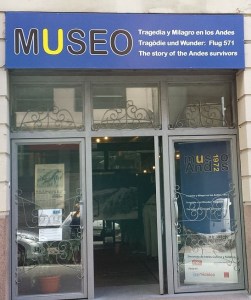 A movie was made and a museum opened in Montevideo – to track the whole true story about surviving in the Andes.
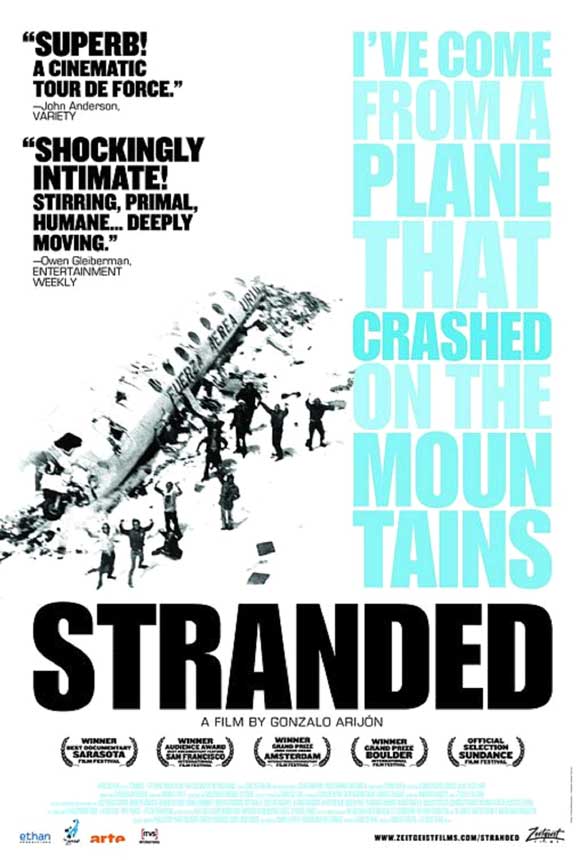
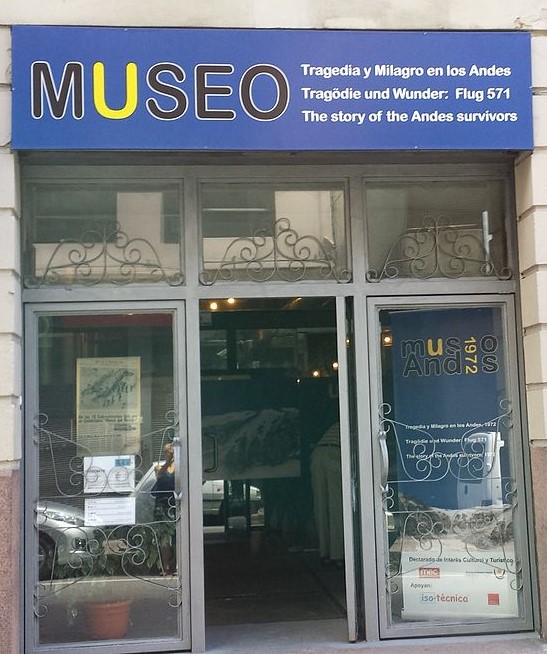
Piers Paul Read’s version was published two years after the rescue and was based upon interviews with the survivors. Miracle of the Andes, however, is told from Nando Parrado’s point of view 34 years later.
Graphic Arts.
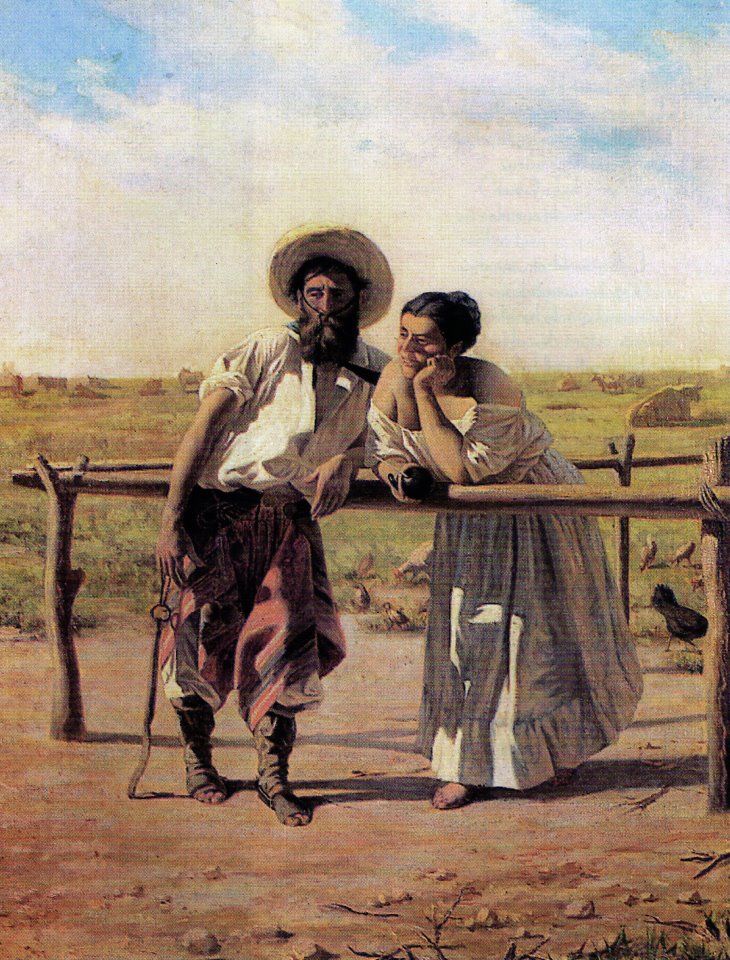
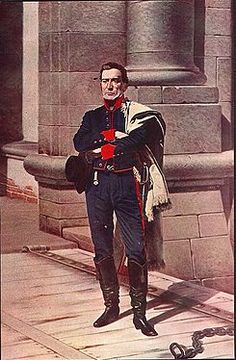
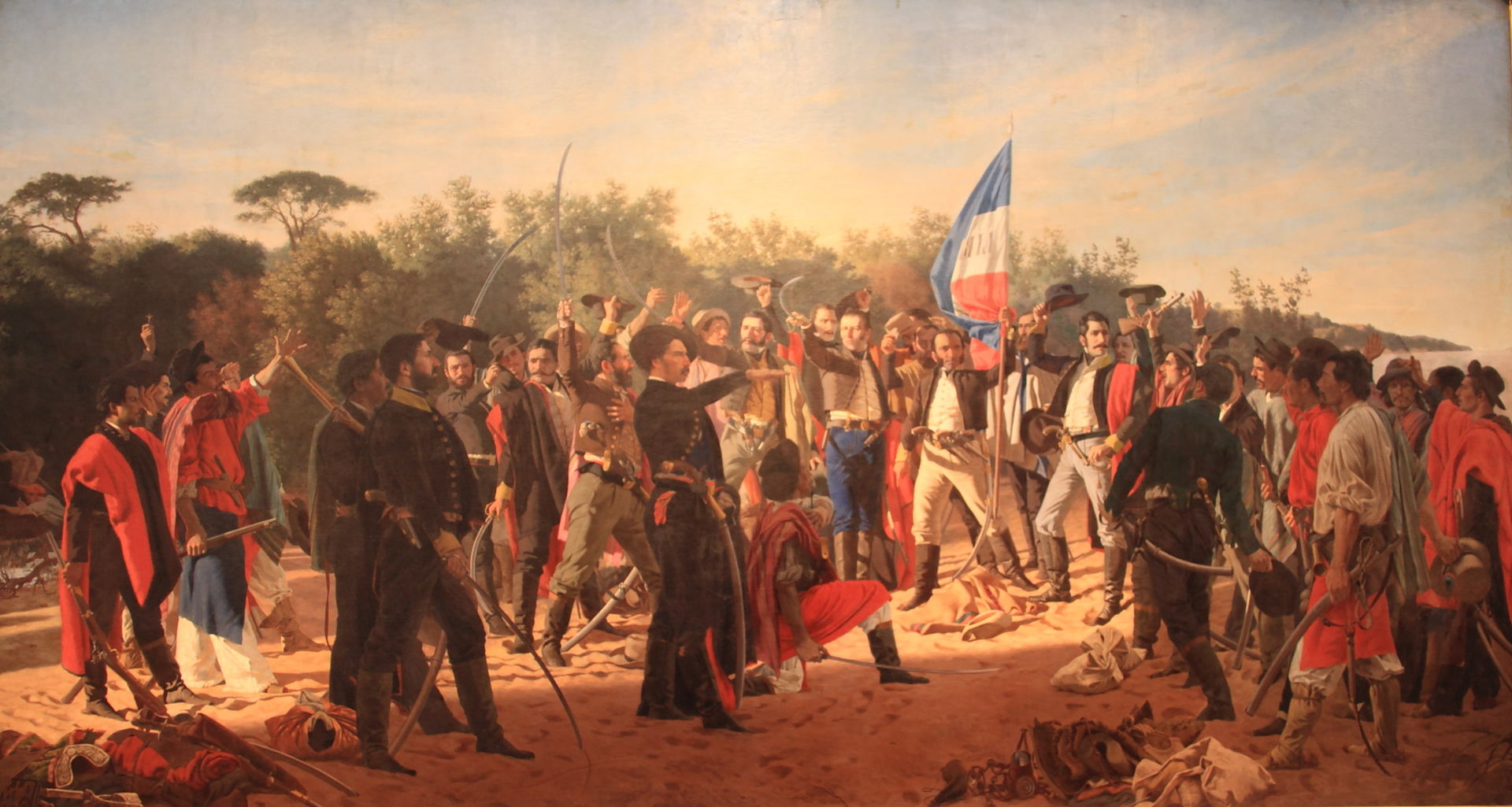
There are many museums and galleries. Some of the best known painters are Juan Manuel Blanes (June 8, 1830 – April 15, 1901), a realist known for historical paintings and gaucho motifs and historic impressions.
 Uno de los tres chiripaes, 1881 by Blanes.
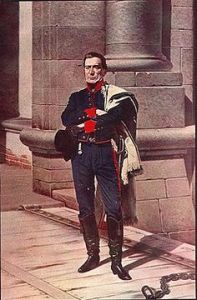 Artigas in Ciudadela, 1884 by Blanes.
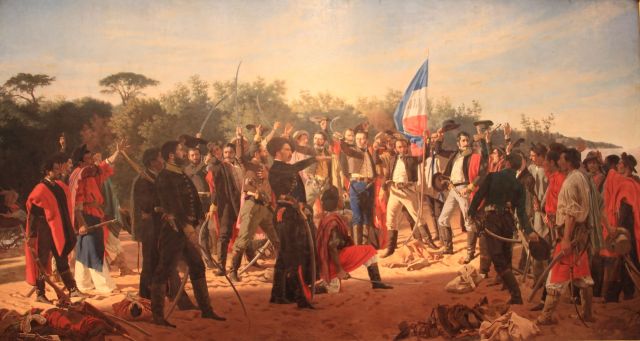 Oath of the Thirty-Three Orientales, 1878 by Blanes. For sure one of the greatest Uruguayan artists.
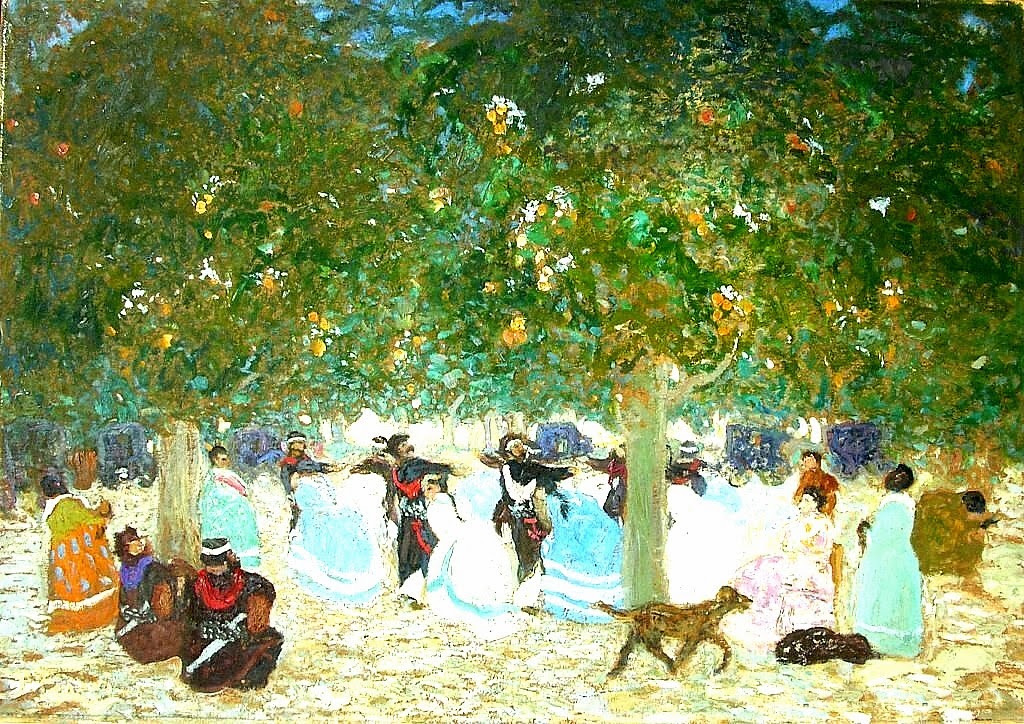
Pedro Figari (June 29, 1861 – July 24, 1938) , a postimpressionist who specialized in bucolic colonial and early twentieth-century scenes (including aspects of black Uruguayans‘ life) was a Uruguayan painter, lawyer, writer, and politician.
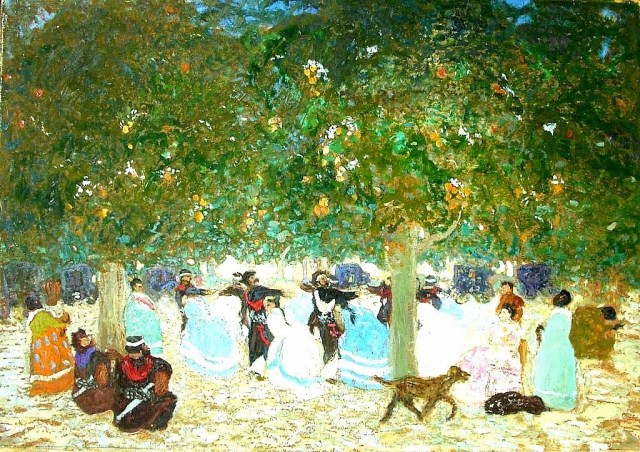 Pericon Under Orange Trees, around 1900 by Figari.
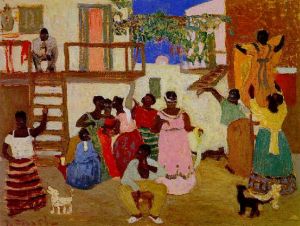
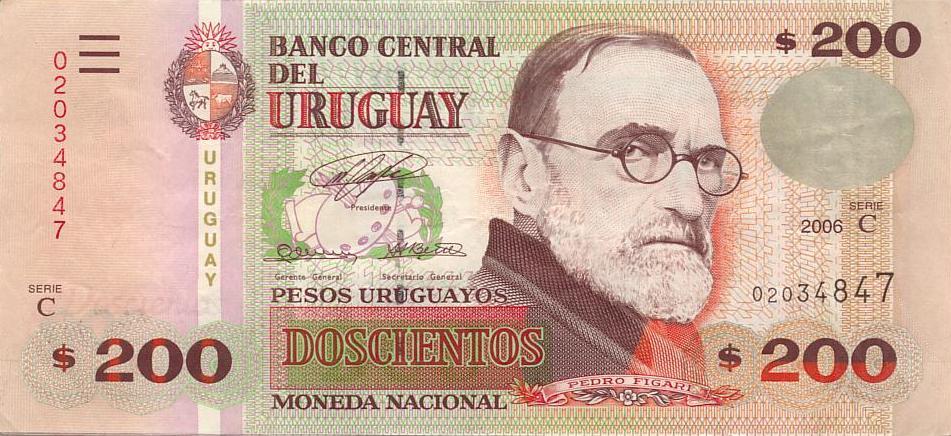
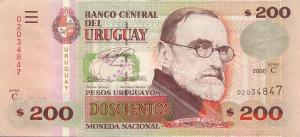 The Origins of Tango and Milonga, around 1920 by Figari. Figari made it onto the 200 peso note.
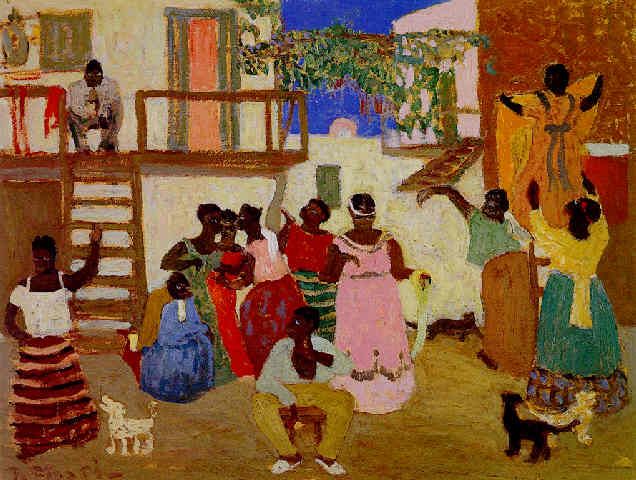
Joaquín Torres Garcia (28 July 1874 – 8 August 1949) was a Spanish Uruguayan artist painter, sculptor, muralist, novelist, writer, teacher and theorist, active in Spain, United States, Italy, France and Uruguay.
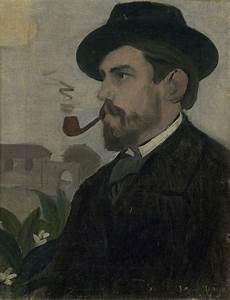
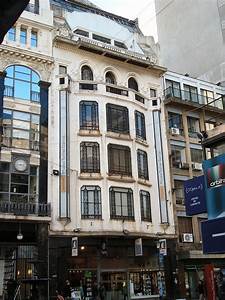 Torres Garcia, left and the Garcia museum in Montevideo, right. Garcia is one of the highest sought after and paid for Uruguayan artists.
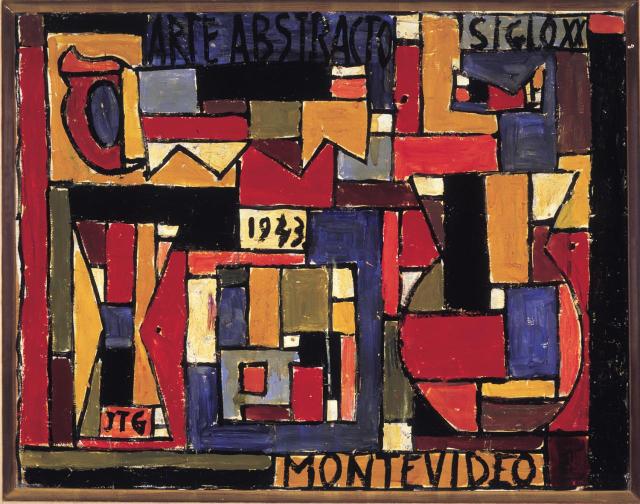 Garcias art is mostly surrealistic, primitiv and abstract, often called universal costructivism.
Renowned sculptors include José Belloni, José Luis Zorrilla de San Martín, Edmundo Prati and Jaime Nowinsky.
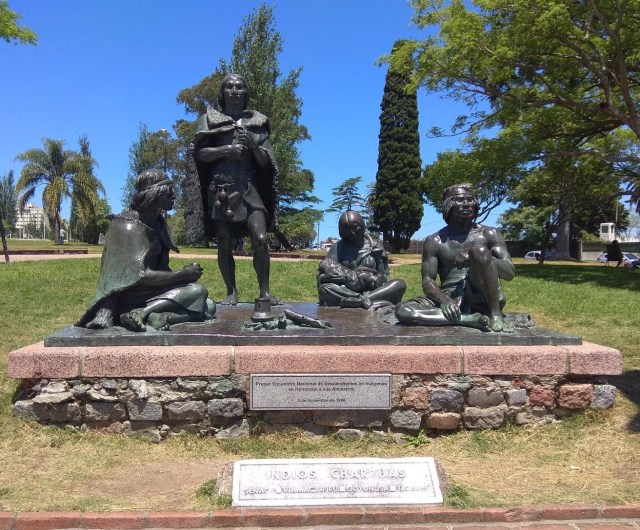 The famous Charrua monument in Montevideo is an artwork of Edmundo Prati (17 April 1889 – 24 November 1970).
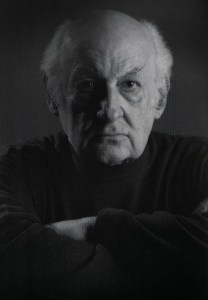
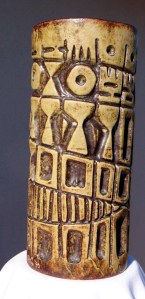
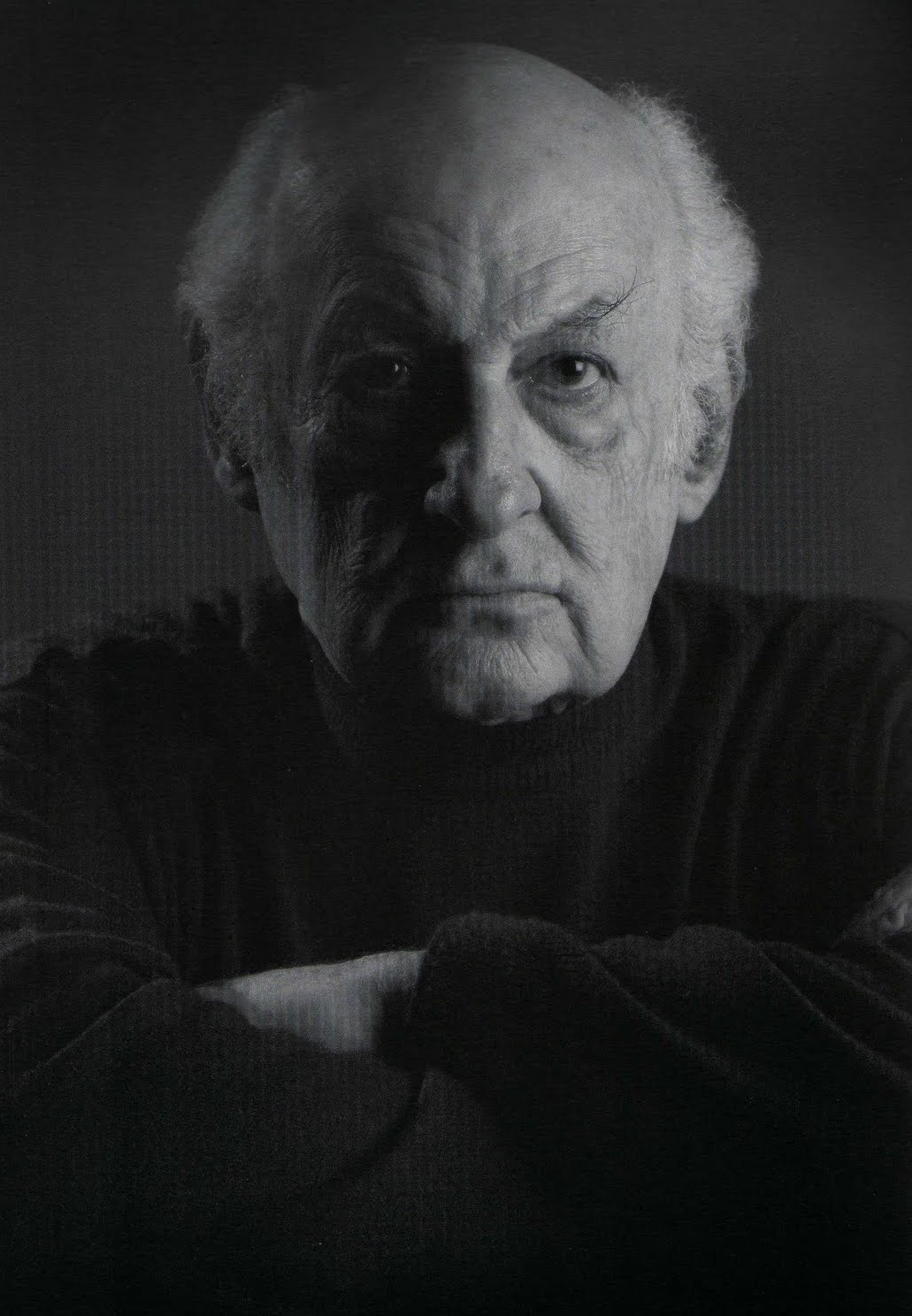
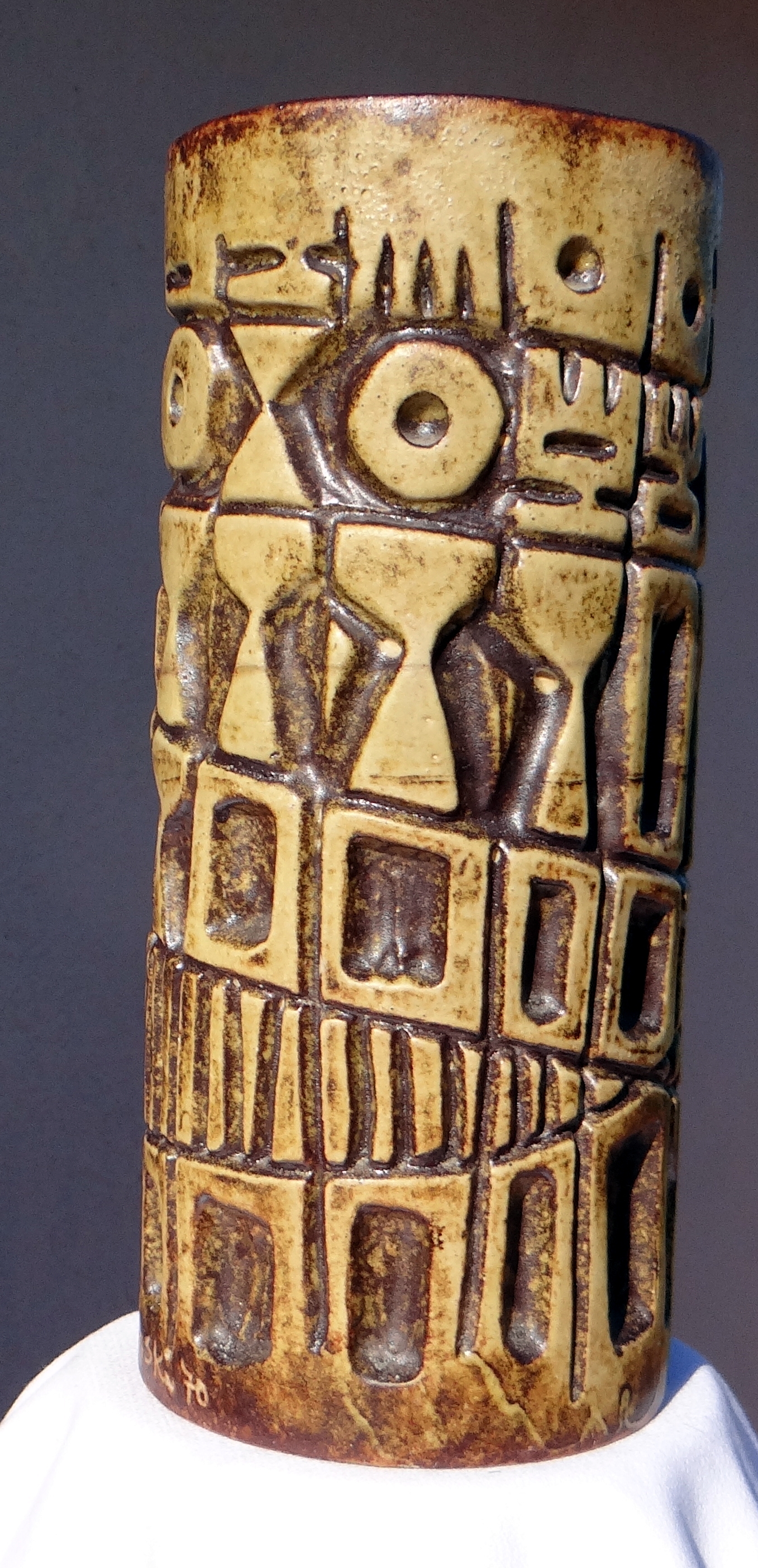
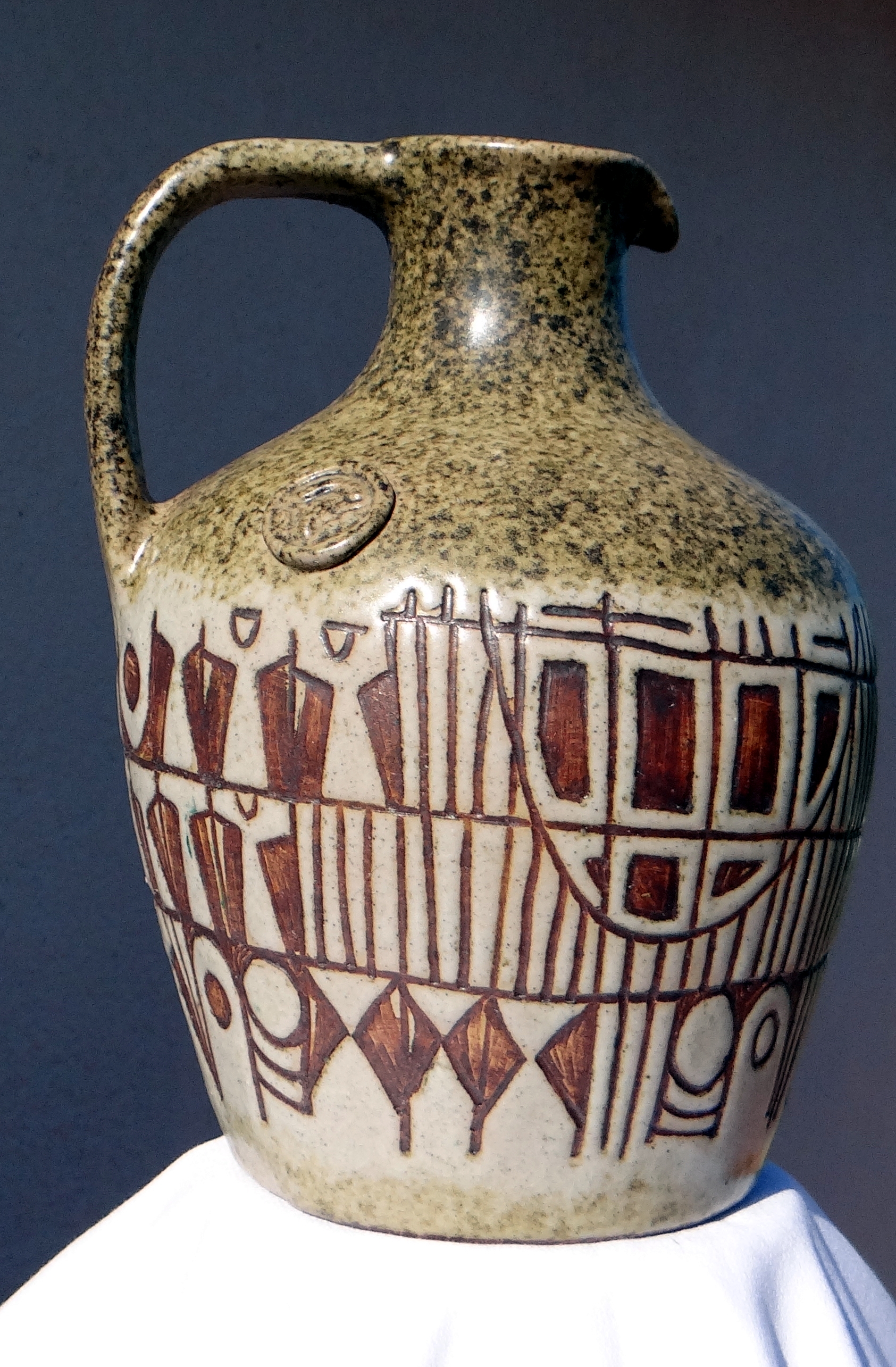
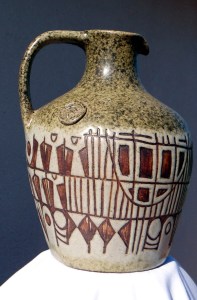 Jaime Nowinsky, autodidact, sculptor and painter (1934 -). Ceramics of my private collection.
Performance Arts.
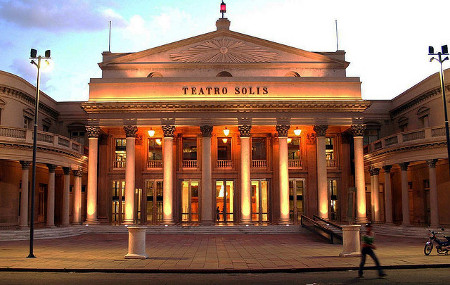
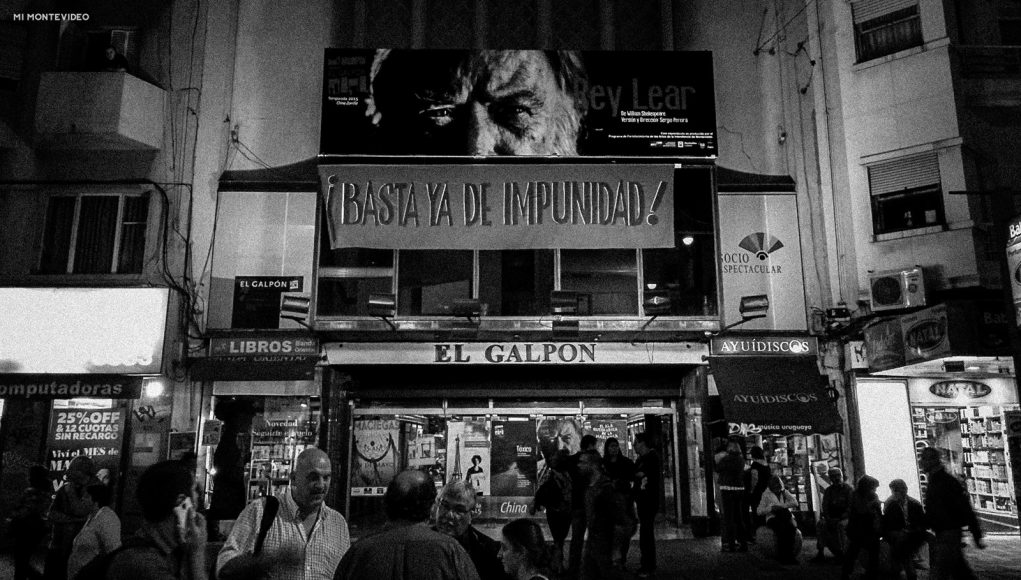
The Teatro Solis and the El Galpón theater are important sites for theatrical and musical presentations. Among classical composers, Eduardo Fabini (18 May 1882 – 17 May 1950) is the best known Uruguayan internationally.
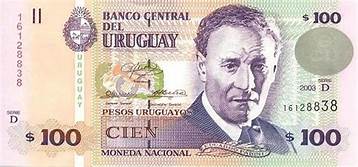
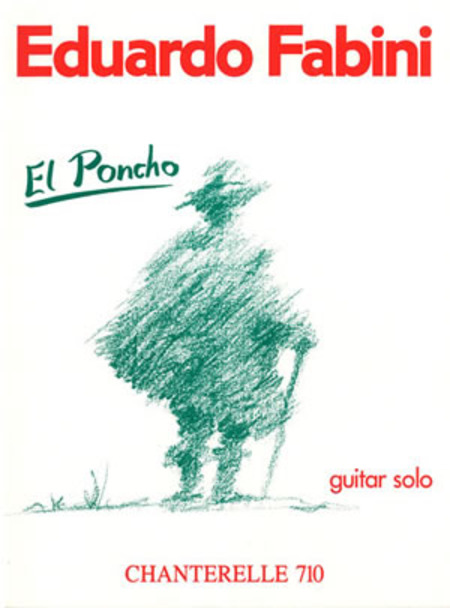
Many musical and dance traditions derive from Europe, with local variations. Others are native to Uruguay and Argentina, particularly the tango.
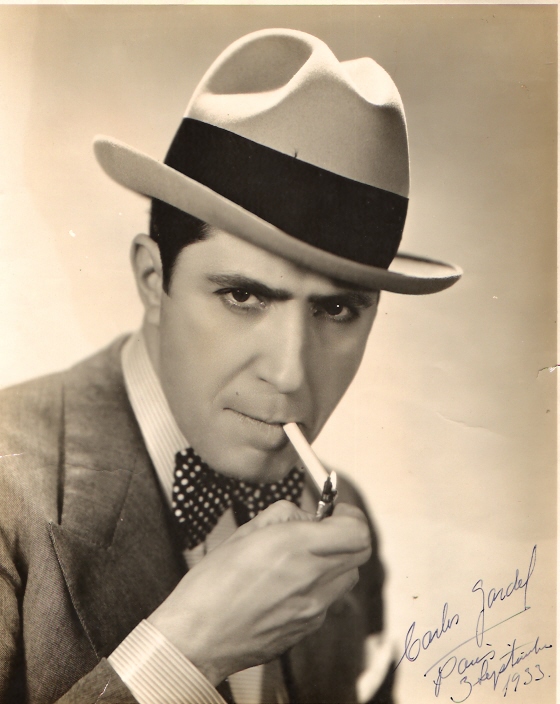
Toulouse, France was the birthplace of Carlos Gardel. A French-Argentine singer and actor, the most famous interpreter of the tango. This man with the hat is still seen everywhere, every bar, cafe, restaurant or else has an old picture from Gardel with hat on their wall.
Seeking for an Identity.
Miniature children’s playing cards depicting popular heroes and celebrities on the backs. Similar packs were published showing football players and popular sayings and proverbs. The fronts of the cards show standard Spanish-suited cards printed in blue and orange, in the Catalan style. The ace of coins depicts symbols of commerce and national triumph, and the four of coins depicts a quiver of arrows and a shield. Cards of this type are examples of playing cards used for educational purposes besides providing entertainment value to young people.
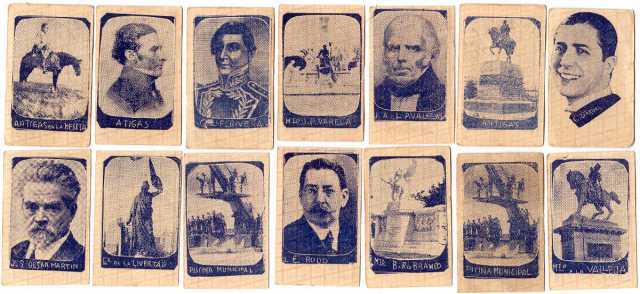 Its amazing, these „hero cards“ mainly show the old – 150 years past – celebrities and hero’s – AND Gardel, a Non-Urugayan. Playing Card set from 1928, manufacturer unknown.
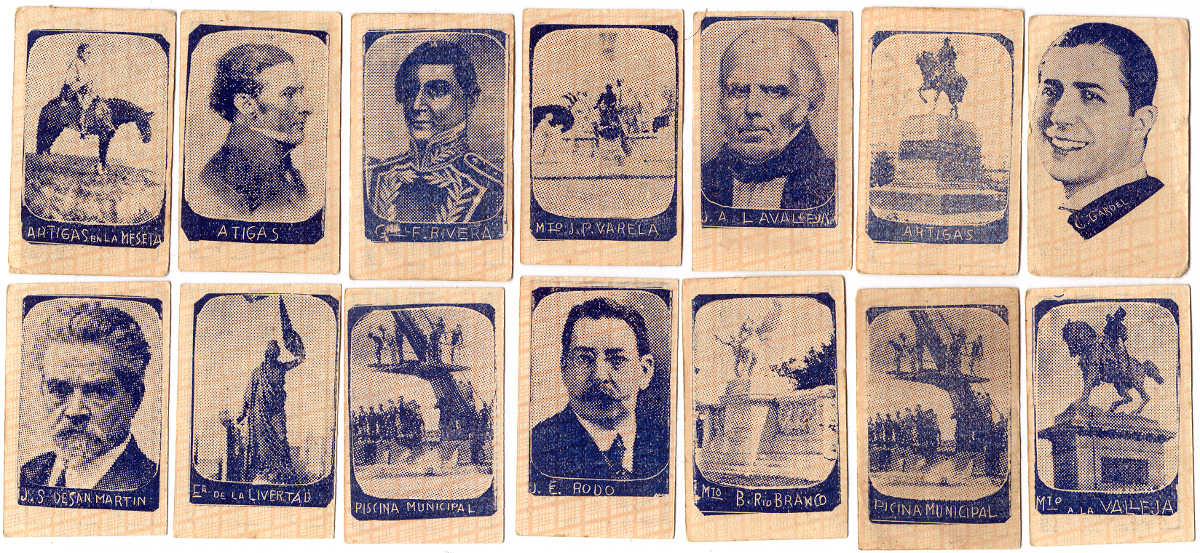
Gardel became an Uruguayan icon (no one knows really why, because he is Argentinian, and still lives 100 years on. Gardel died in an airplane crash (in 1935 in Medellin, Colombia, only 45 years old) at the height of his career, becoming an archetypal tragic hero mourned throughout Latin America. For many, Gardel embodies the soul of the tango style.
Millions of Gardel’s fans throughout Latin America went into mourning. Hordes came to pay their respects as his body was taken from Colombia through New York City and Rio de Janeiro. Thousands rendered homage during the two days he lay in state in Montevideo, the city in which his mother lived at the time.
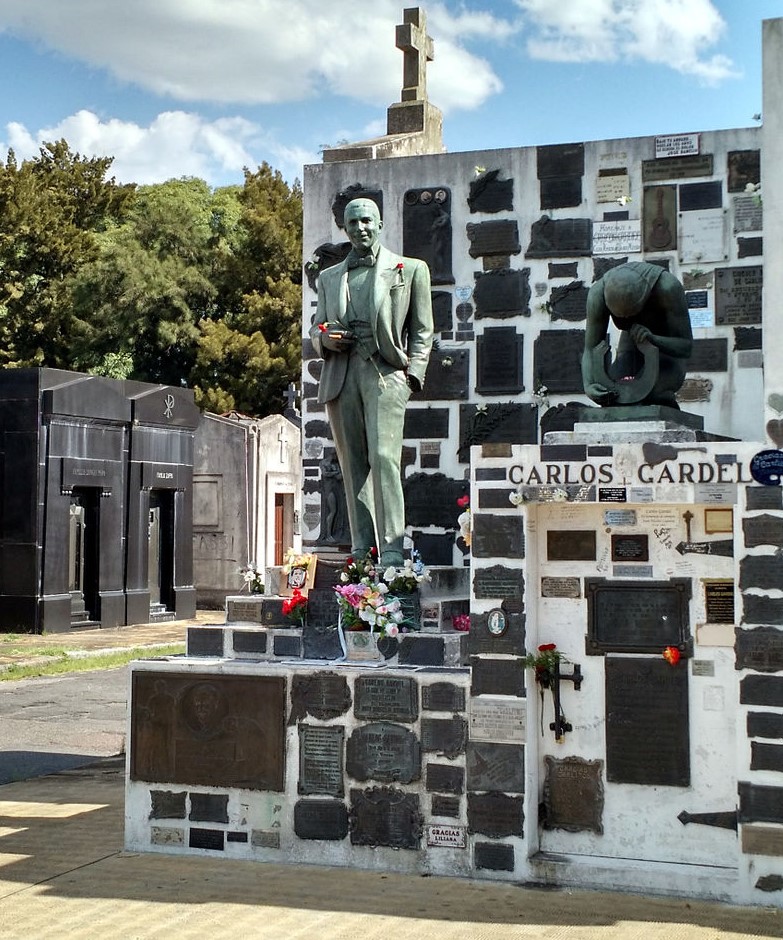
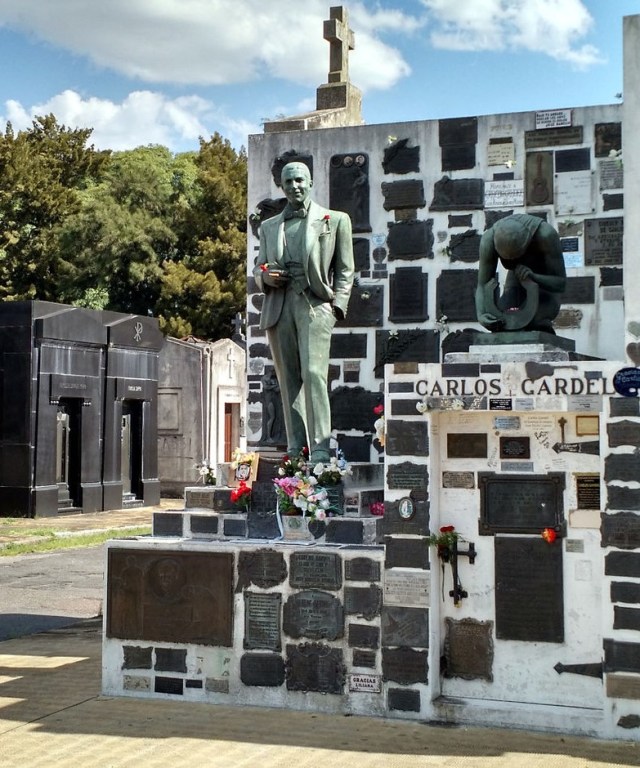 Very rarely seen and visited, Carlos Gardel’s grave at La Chacarita Cemetery, in Buenos Aires Argentina.
The „theater“ what Uruguayans make around Gardel is typical of the finding process of a meaning and culture identity the nation and country of Uruguay lives through. They really would like to have an modern icon like Gardel in their own history. Uruguayans are a happy and funny people. They would like to have a positive (like a musician or actor as Gardel) hero. Unfortunately, they only have idols of war history. Between Artigas, Lavalleja (the 1840’s-50’s) and Suarez, Forlan (the living footballers in recent 2000’s) is nothing, absolutely nothing !!
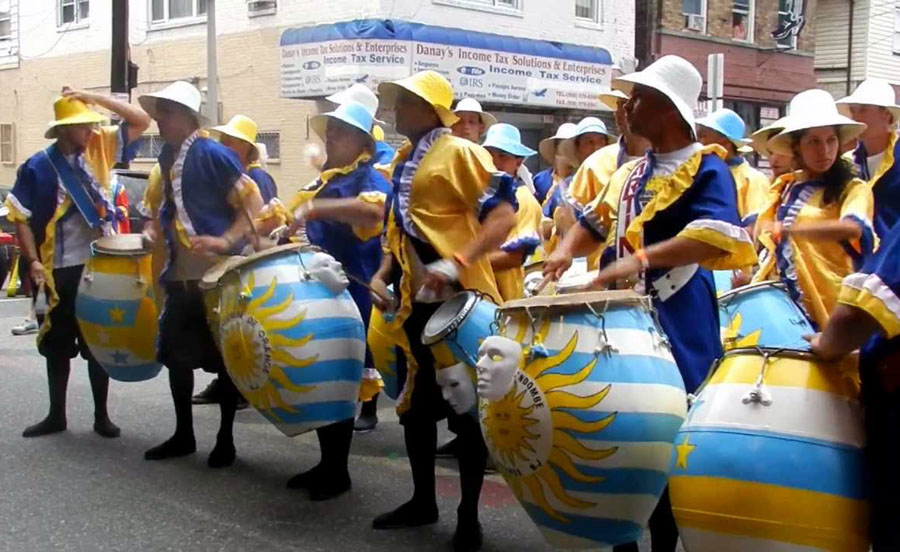
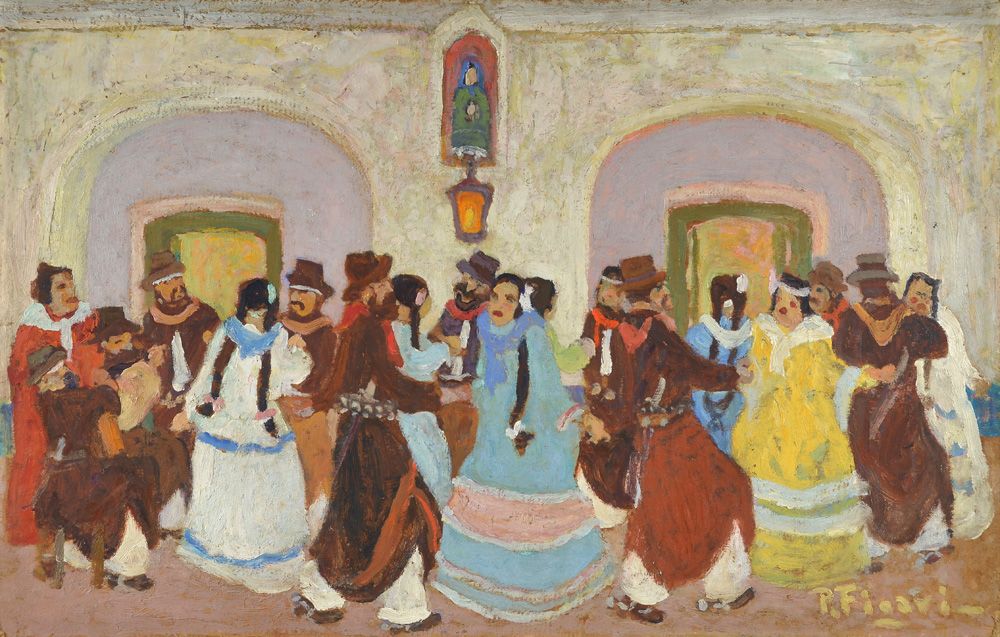
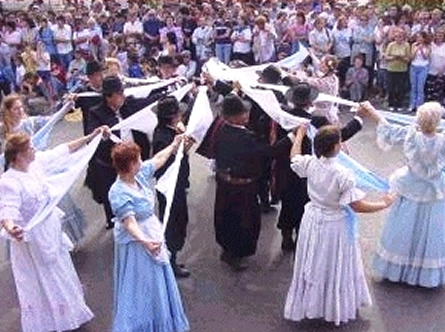
There are many folkloric musical styles and dances, such as Pericón (the national dance). Another important musical style is candombe. This is a typical Afro-Uruguayan musical style played with three kinds of drums. These drums are crafted individually, and each is said to have a unique sound. Candombe can be heard throughout Montevideo during the February Carnaval ( no – one can hear it all the time, the bum bum is everywhere and all year round), when ensembles of marching drummers cruise the streets.
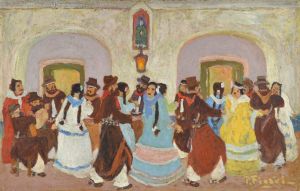
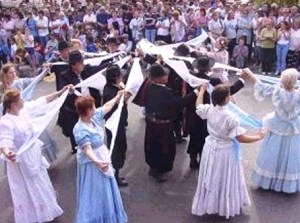 Pericon painted by Figari. and on the right the modern version as street dance. This dance is also nationally performed in Argentina and Paraguay.
Llamadas are parades of competing groups of dancers who move to the rhythm of the candombe (the public is also welcome to join the dancers). These events are typical of the neighborhoods where most Afro-Montevideans live. Carnaval includes other cultural expressions, such as murgas which are musical groups that make fun of the social and political events of the year.
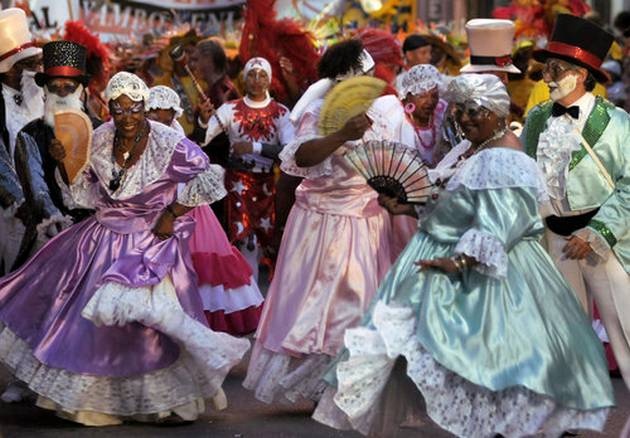
Above, candombe during Uruguayan carnival. The shows, the history and the performance are amazing. If you are interested read all my other posts about Uruguay and history. Hope you enjoyed this Uruguayan excurse.
Bibliography.
Davis, William C. Warnings from the Far South, Democracy versus Dictatorship in Uruguay, Argentina, and Chile, 1995.
Ferguson, J. Halcro. The River Plate Republics, Argentina, Paraguay, Uruguay, 1965.
Fitzgibbon, Russell H. Uruguay, Portrait of a Democracy, 1966.
Gilio, Maria E. The Tupamaro Guerrillas, 1972.
Hudson, Rex A., and Sandra W. Meditz. Uruguay: A Country Study, 2nd ed., 1992.
Weinstein, Martin. Uruguay, the Politics of Failure, 1975.

