

Uruguay.
10 years we live now in Uruguay and for 5 years I write this blog, about everything I like and I am interested in. Of course after so many years in a foreign country one has a deeper insight and a deeper personal opinion about this chosen „home-country“. During the many years people asked me always to give more information about this country – but there is so much written – which I won’t repeat and repeat.
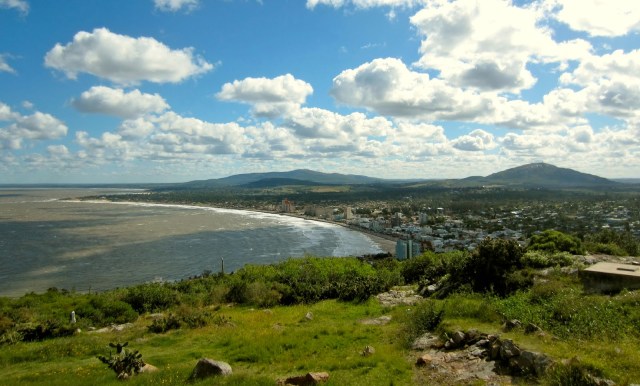 Once Uruguay was the Switzerland of South America, this is long long time over. Here the bay of Piriapolis.
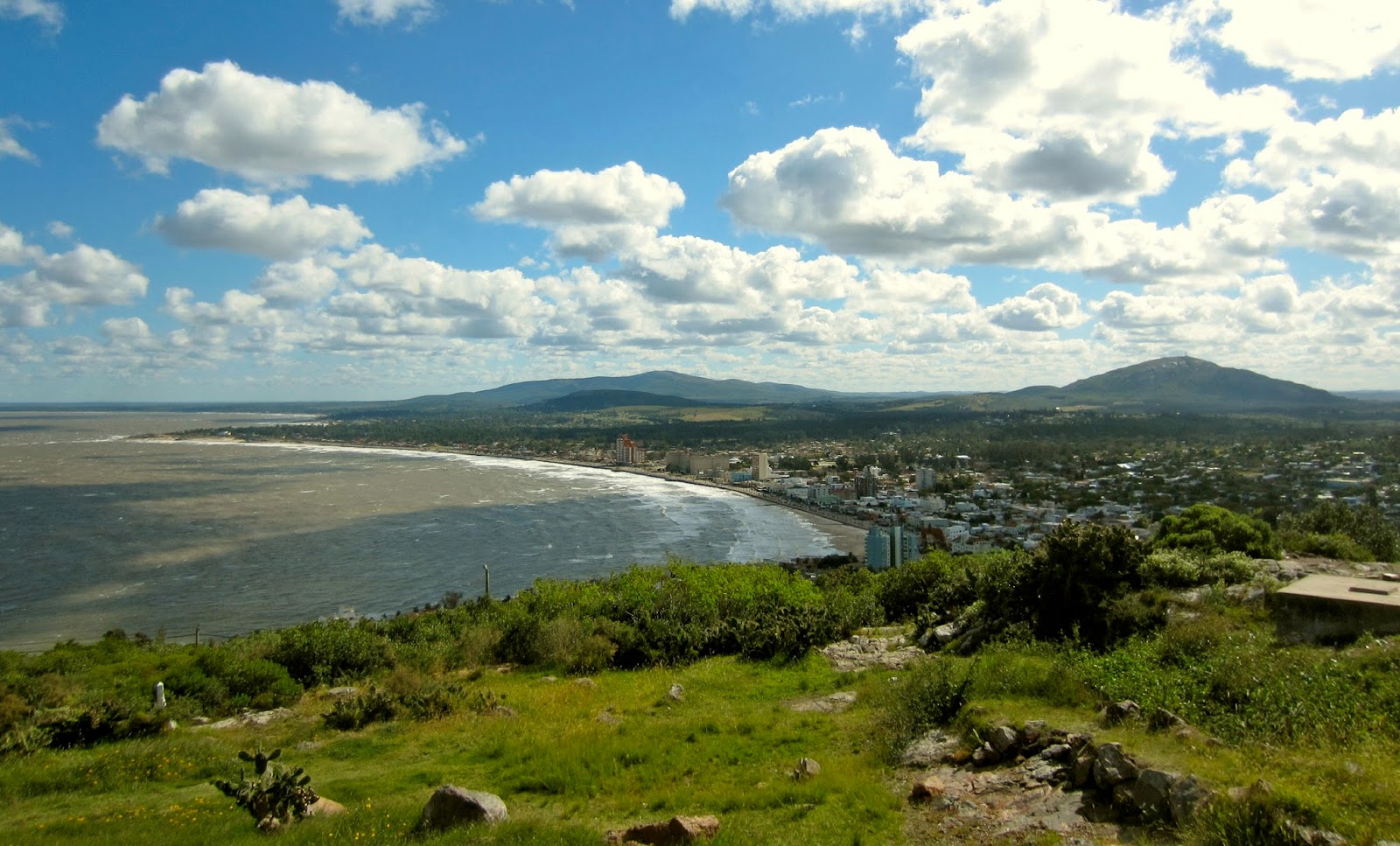
But a brief oversight, with a lot additional pictures (what I always like to do – a picture says mor then 1000 words, right) should do the job and give you a better view about the so named „Switzerland of South America“. This article is coming in 2 parts and will have no claim of completeness, but my personal views and sentiment will be added.
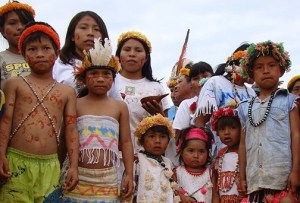
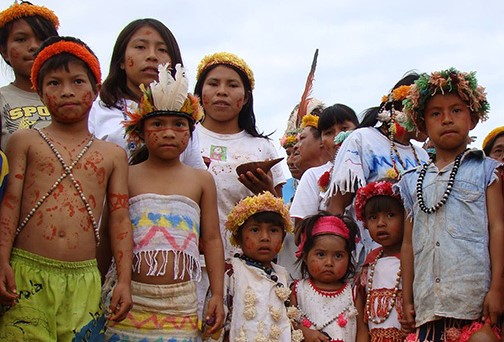
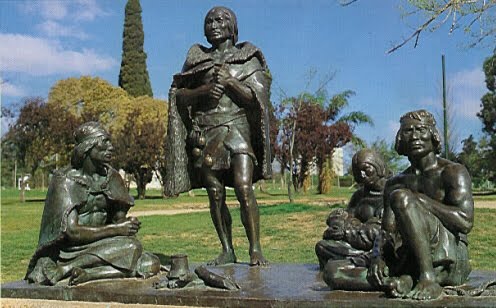
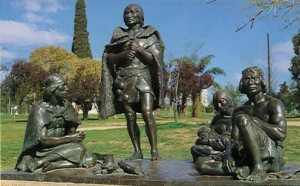 Guarani/Charuas indigenous people from South America. In Uruguay just left as some monuments.
Identification.
The name Oriental Republic of Uruguay – República Oriental del Uruguay, derives from the fact that the country lies east of the Uruguay River, a major tributary of the Rio de la Plata estuary. Before independence, it was known as Banda Oriental del Uruguay . The name „Uruguay“ is a Guaraní word meaning „river of shellfish,“ or „river the uru birds come from.“
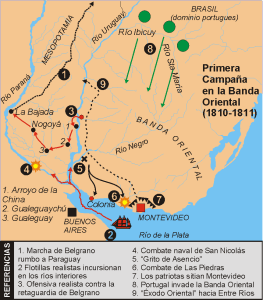
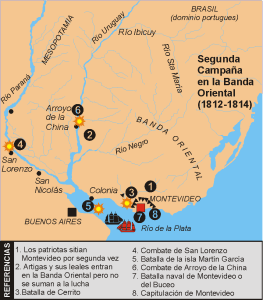 Click on pictures to supersize for a better view.
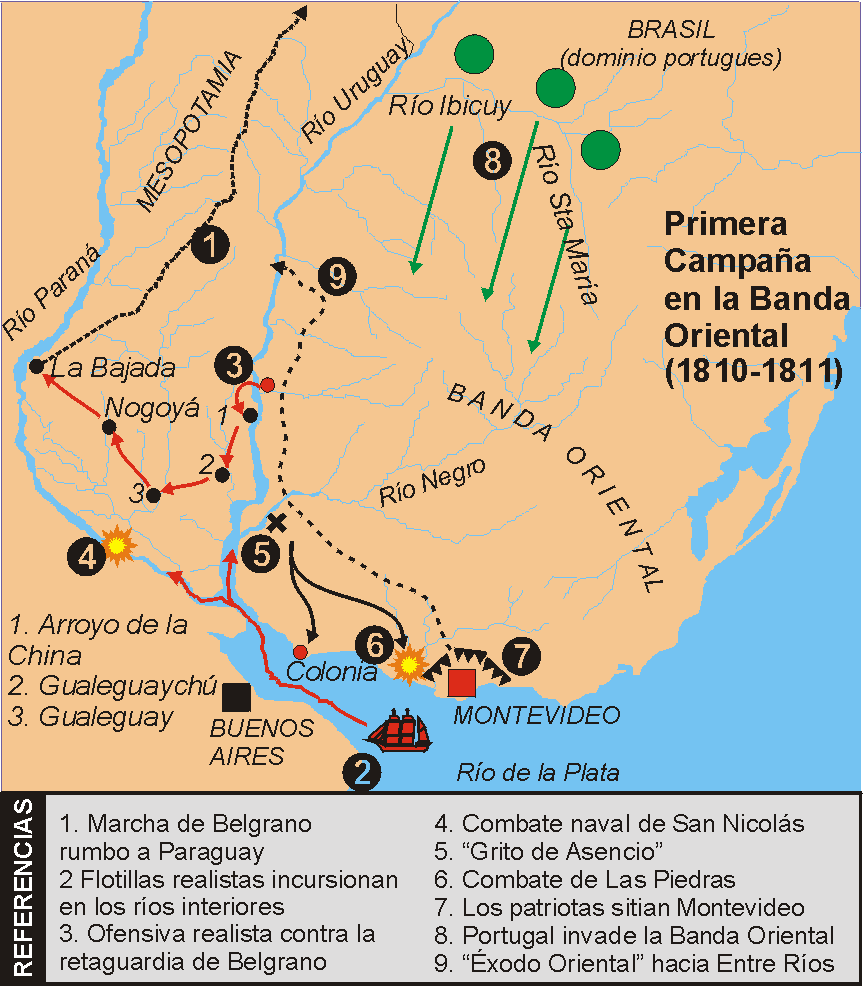
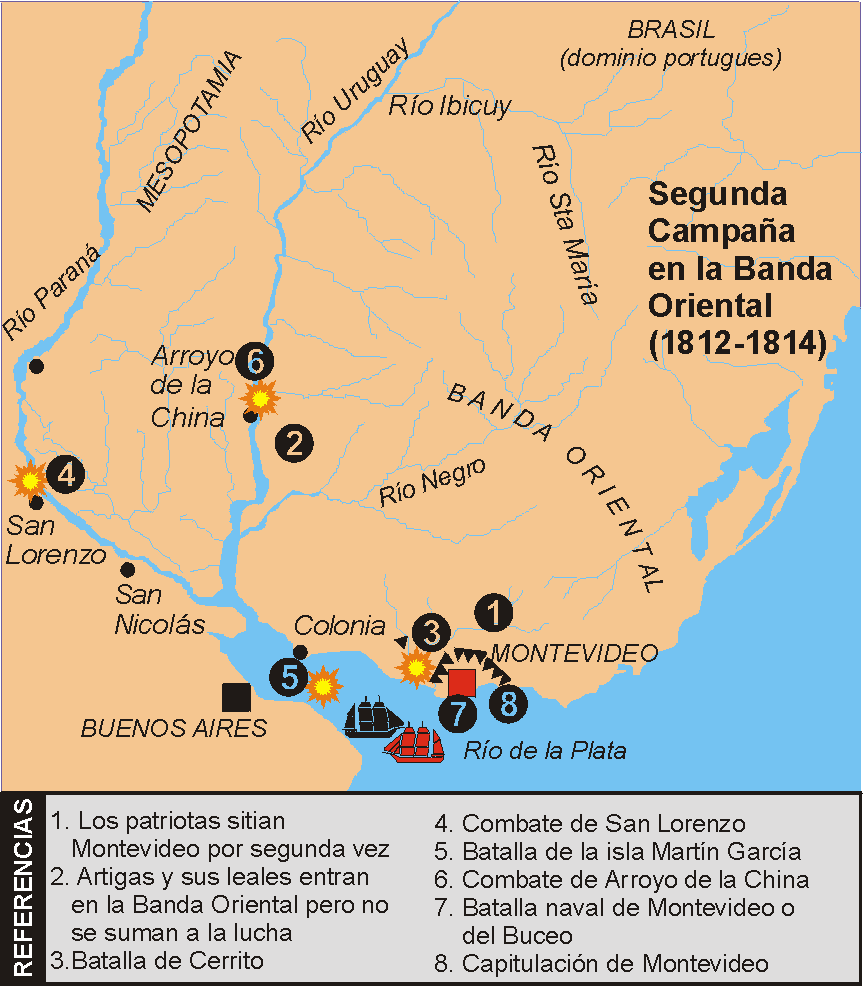
Uruguayans have a strong sense of national identity and patriotism. There are no alternative traditions or nationalities within the country.
Location and Geography.
Uruguay is on the southeastern Atlantic coast of the Southern Cone of South America, bordering Argentina to the west and south and Brazil to the north. The Atlantic Ocean is on the east and the estuary of the Río de la Plata is on the south.
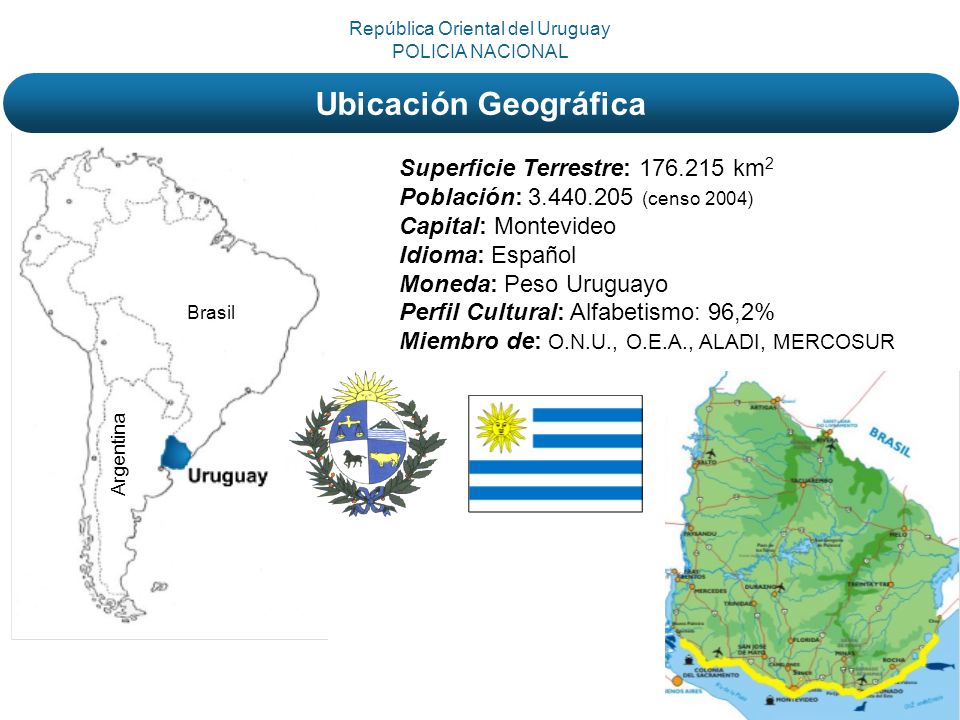
Most of the country consists of gently rolling plains interrupted by two ridges of low hills. The remainder consists of fertile coastal and riverine lowlands, including a narrow sandy and marshy coastal plain. The many beaches are an important tourist attraction.
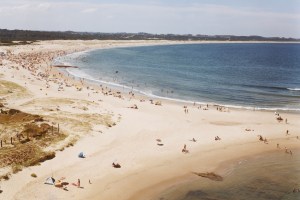 Endless beaches in Uruguay, here Jose Ignacio.
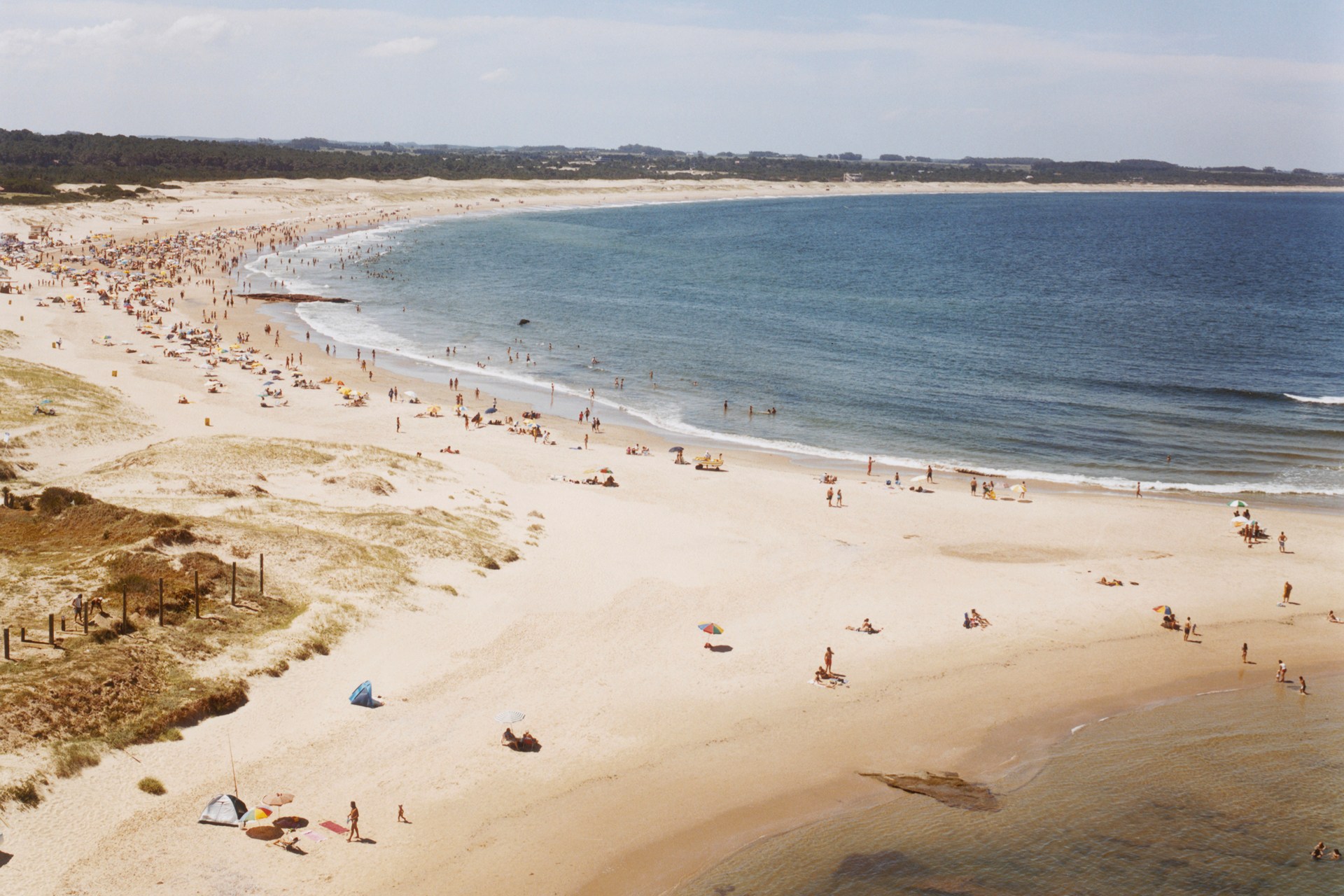
The climate is generally mild, and freezing temperatures are almost unknown. Because of the absence of mountains, all the regions are vulnerable to rapid changes in weather.
Grasslands and agricultural lands cover the majority of the country. There are also some limited extensions of gallery forests and palm tree savannas. The main cultural differences are related to rural (9 percent) versus urban populations (91 percent), and whether people live in the capital or the interior towns.
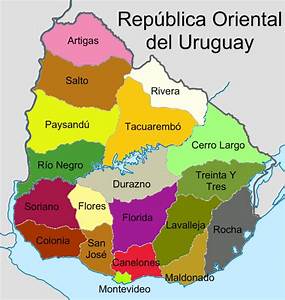 The country is divided into nineteen administrative departamentos, each with a capital town.
Demography.
The total population is approximately 3.45 million. About half of the population lives in the capital, Montevideo, and its metropolitan area. The second largest city, Salto, has ninety thousand inhabitants. Much of the hinterland is very sparsely populated. As a result of emigration, there could be as many people of Uruguayan descent living outside as inside the country. As by example, there are about 40.000 Uruguayans living in Australia.
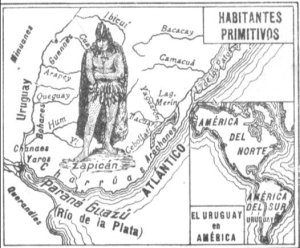
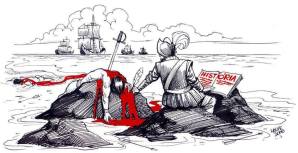 INVADED, ULTRAJATED AND SLAVED TO A GOD WITH A CROSS THAT NOBODY KNEW. Click on pics.
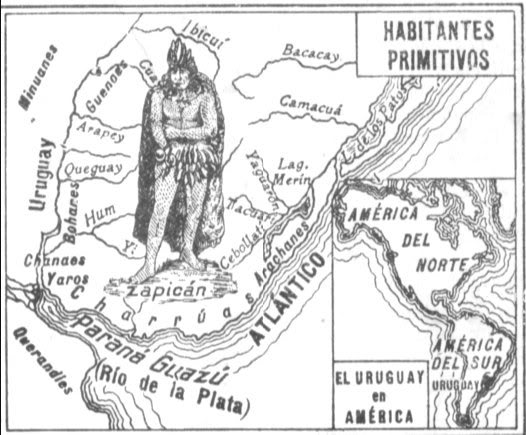
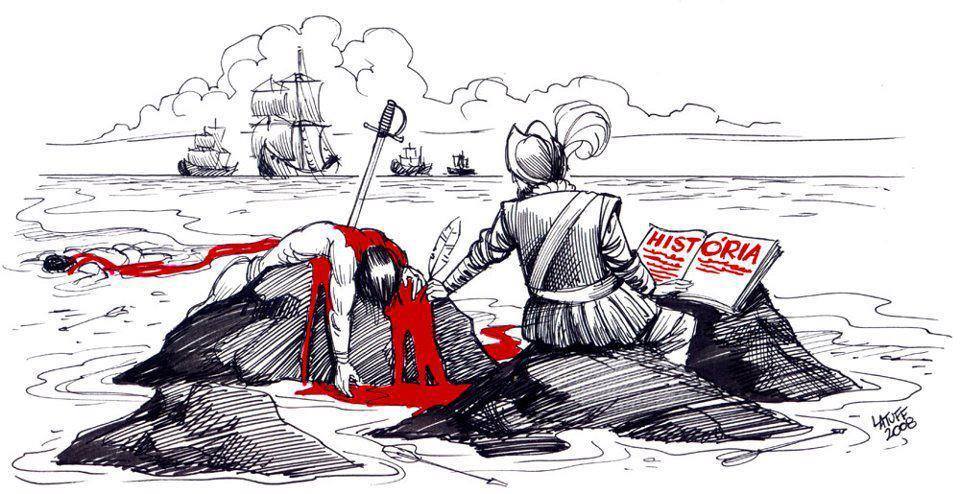
Most of the indigenous population was exterminated by the nineteenth century, and those who survived were assimilated. The ethnic composition of the population is 90 percent European (predominantly Spanish and Italian), and 6 percent of the people are partly of Native American descent. Africans, 4 percent of the population, mainly in Montevideo, were imported as slaves to work in the ports, in the processing of meat and hides, and as servants.
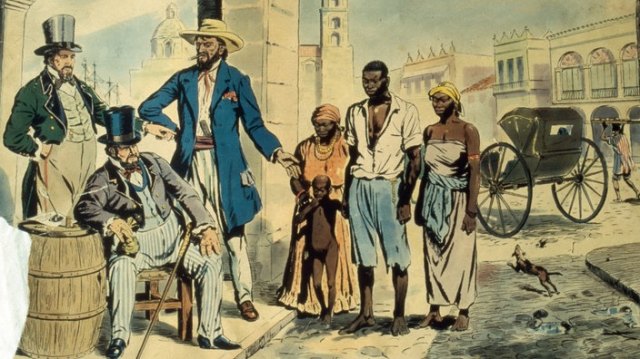 Slavery and slave trade in Montevideo.
Linguistic Affiliation.
The prevalent language is a variety of Spanish known as Rioplatense or Platellano . In rural areas, gauchesco/criollo, the creole dialect spoken by the eighteenth- and nineteenth-century gauchos, is still influential. Gauchesco has been preserved in literature, music, and jokes, and is part of the national identity. Along the Brazilian border, a local dialect called portunol or brasilero is spoken.
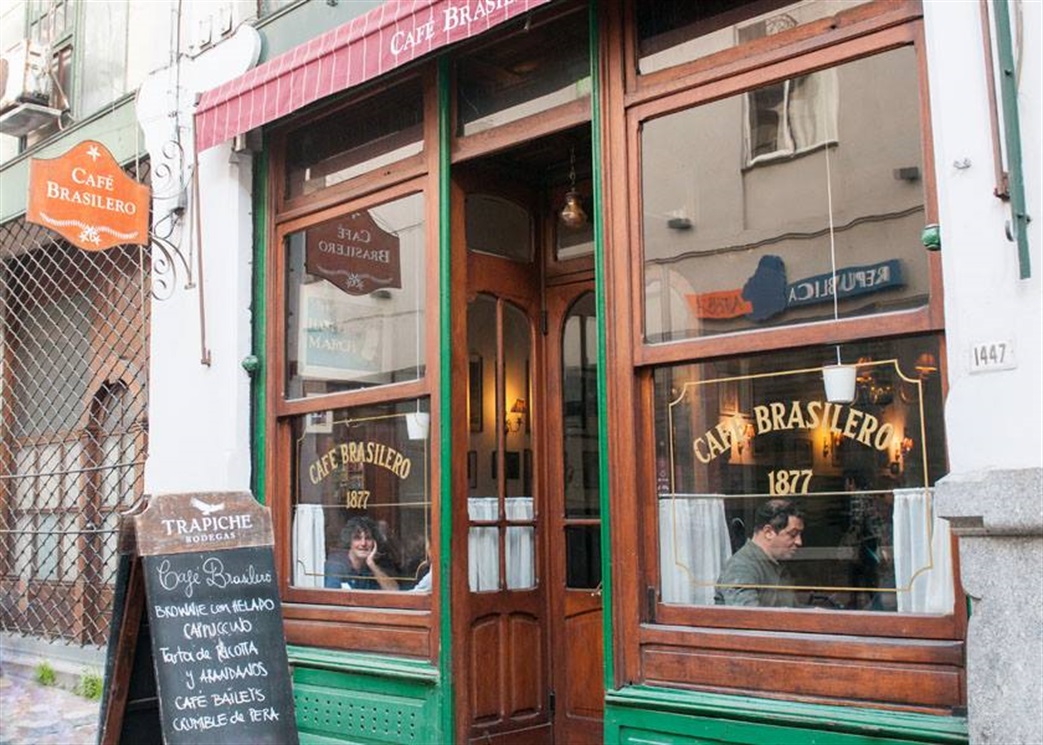
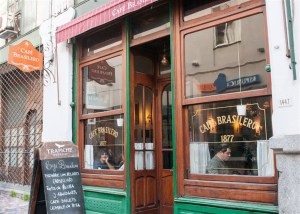 Cafe Brasilero, Montevideo, since 1877. Called one of the 50 top cafes in the world. Don’t know why, its a nice cafe – but not very special – food and service is average.
It is a mixture of Spanish and Portuguese. English has influenced the language of technology and the slang used by young people. The last 10 years more and more English came up as international needed communication, through to more and more tourism in Uruguay.
Symbolism.
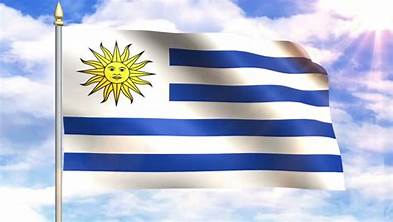
The color sky-blue ( celeste ) is a powerful symbol that represents freedom and independence. It is present in the four horizontal stripes of the flag that alternate with five white ones. A sun with a face in the upper corner also symbolizes independence. It is also the color worn by the national soccer team.
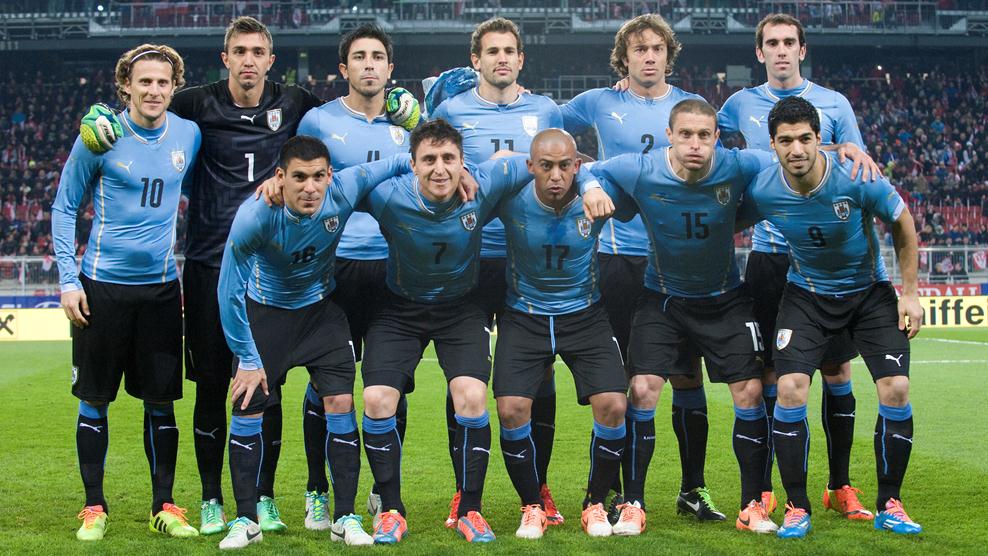
Soccer is the national sport and occupies a central place in the life of the nation. The entire population is united behind the national combined team, but fan’s allegiance is divided among the rival local teams (Penarol and Nacional are the most popular ones). Many figures of speech and cultural metaphors revolve around soccer.
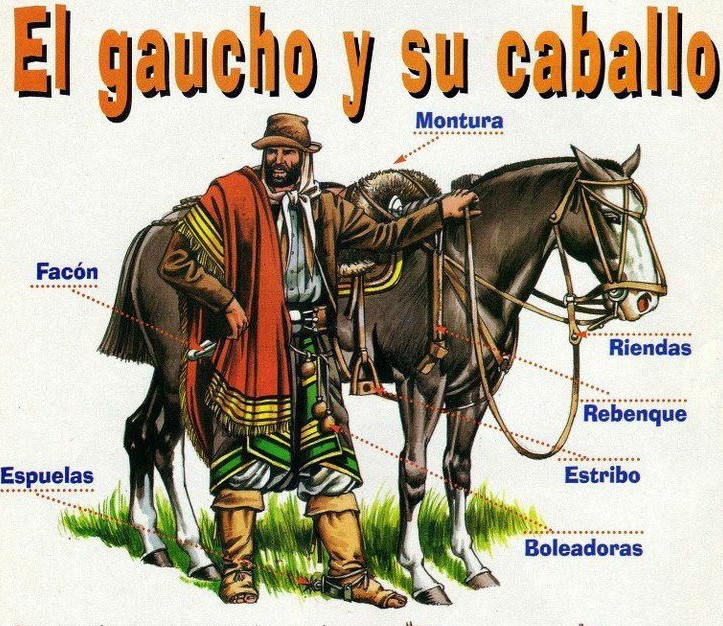
Another central symbolic element is the figure of the gaucho. The original gauchos were an equestrian ethnic group similar to North American cowboys. Cattle and horses introduced by the Spanish in the sixteenth and seventeenth centuries multiplied in the grasslands and roamed freely over the land. Some Spaniards became semi nomadic exploiters of this resource, and local native residents also learned to ride horses and live off wild cattle.
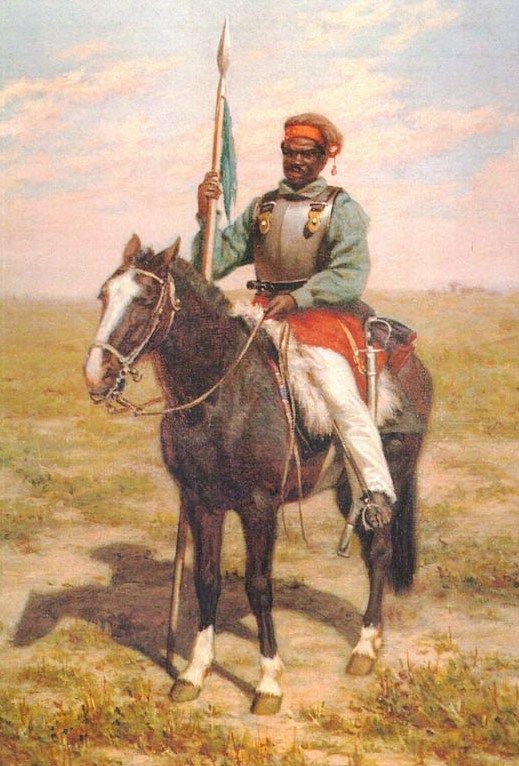
 Painting by Juan Manuel Blanes. Cklick on pic.
Gauchos originated as mestizos in these prairies (pampas) of southern South America. Originally, they were equestrian hunters of cattle for hides, beef or salting, and horses for riding. Later they traded in contraband, worked on the cattle and sheep ranches, and served as militia during the struggle for independence and as mercenarios for post-independence caudillos .
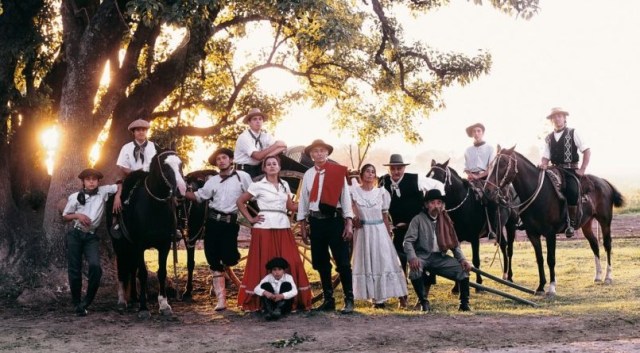 The pride lives on in Uruguayan Charrua/Gaucho tribes. Look at the faces ! Arrogance or proudness ?
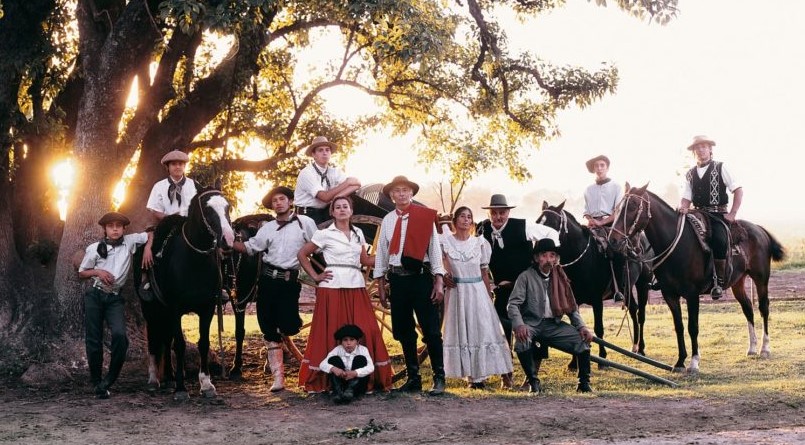
The gaucho image has become the embodiment of the national character. The idealized gaucho is strong, brave, loyal, proud but humble, honorable, generous, straightforward, clever, patient, wise but melancholic from hardship, and free and independent. The Charrúa, a dominant fierce and independent regional First Nation, although annihilated by the Europeans, is imagined to still live in the spirit of the gaucho mestizo and the Uruguayans (who sometimes called themselves „charruas“).
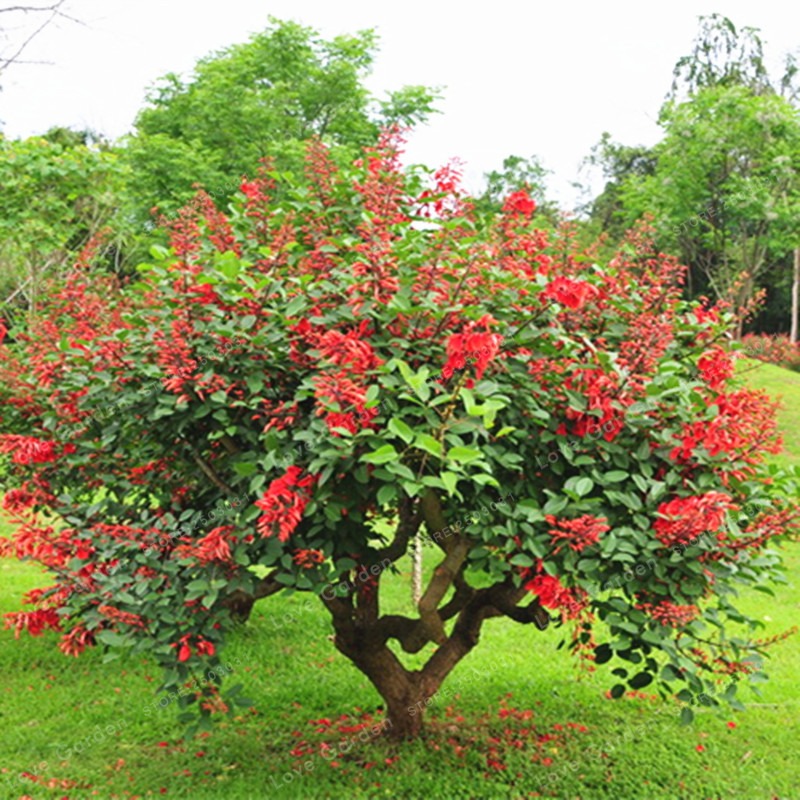
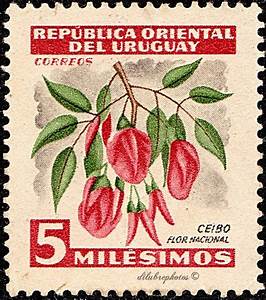
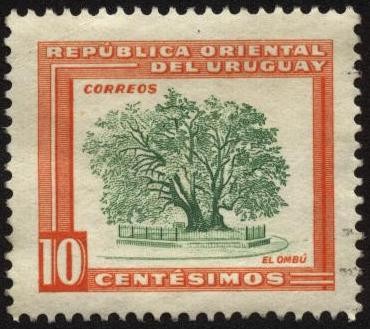
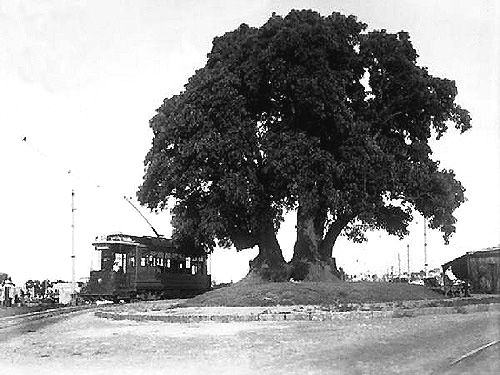
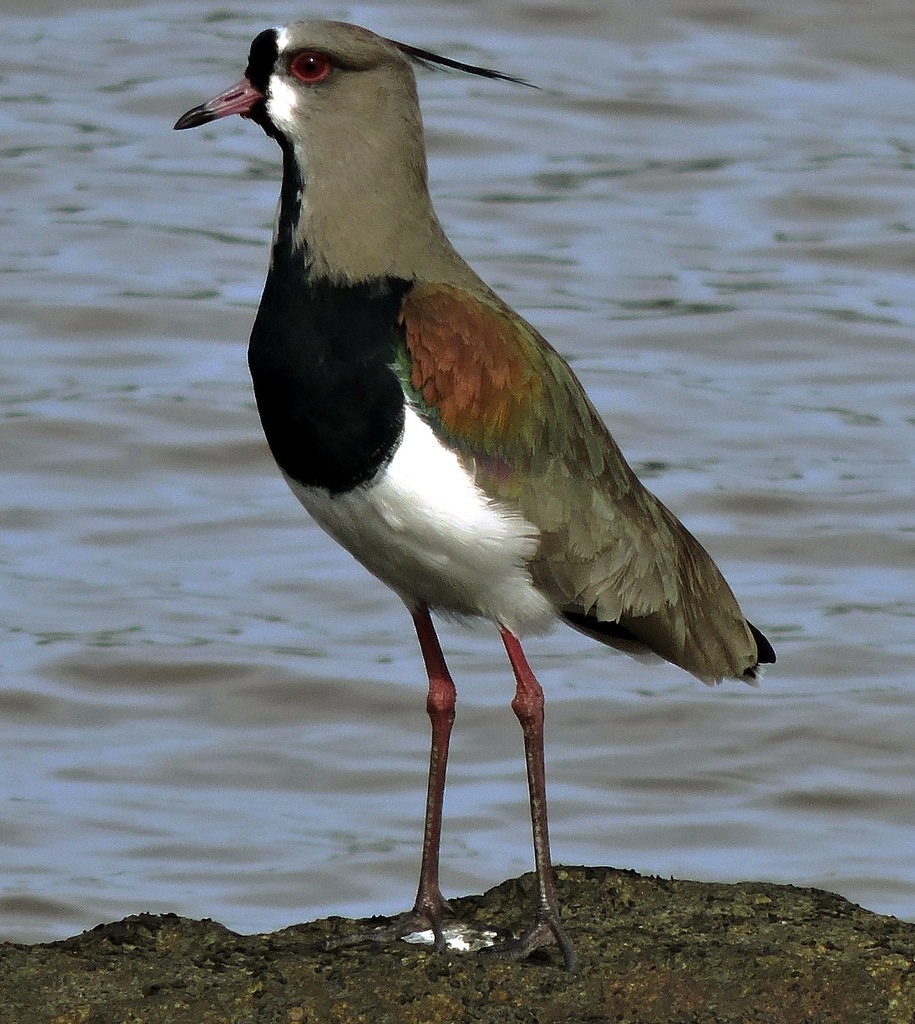
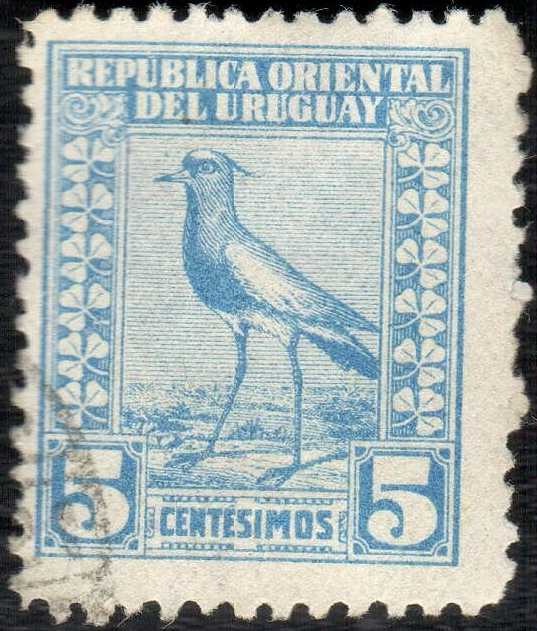
The national flower is the CEIBO and the most symbolically significant tree is the OMBU. The TEROTERO bird is a common literary symbol for the audacious, bold, attentive, and vivacious nature of the gaucho. I don’t like this bird, its an always noisy, crying bugger.
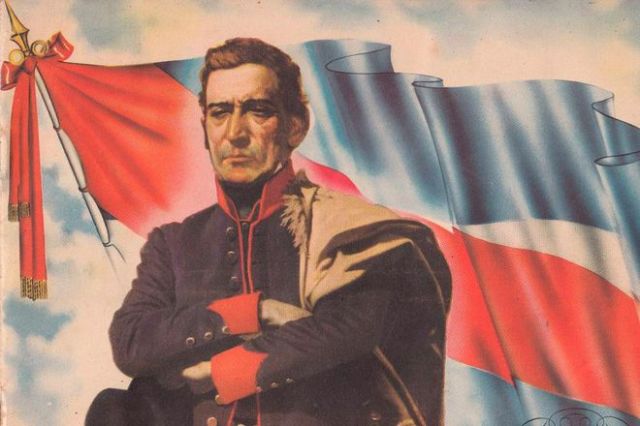 Jose Gervasio Artigas. (19th of June 1764 – 23rd of September 1850) was a national hero of Uruguay, sometimes also called „the father of Uruguayan nationhood“.
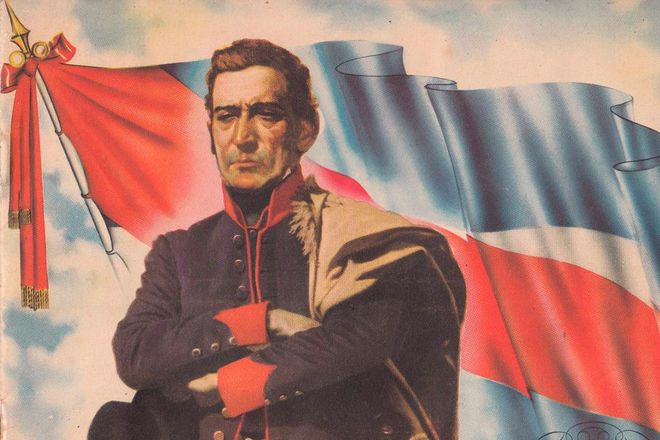
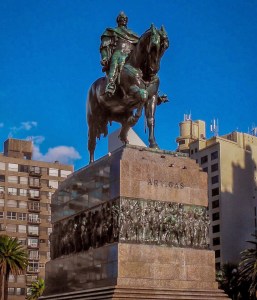
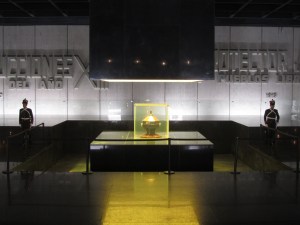 Jose Artigas mausoleum on and under plaza independencia in Montevideo, worth a visit.
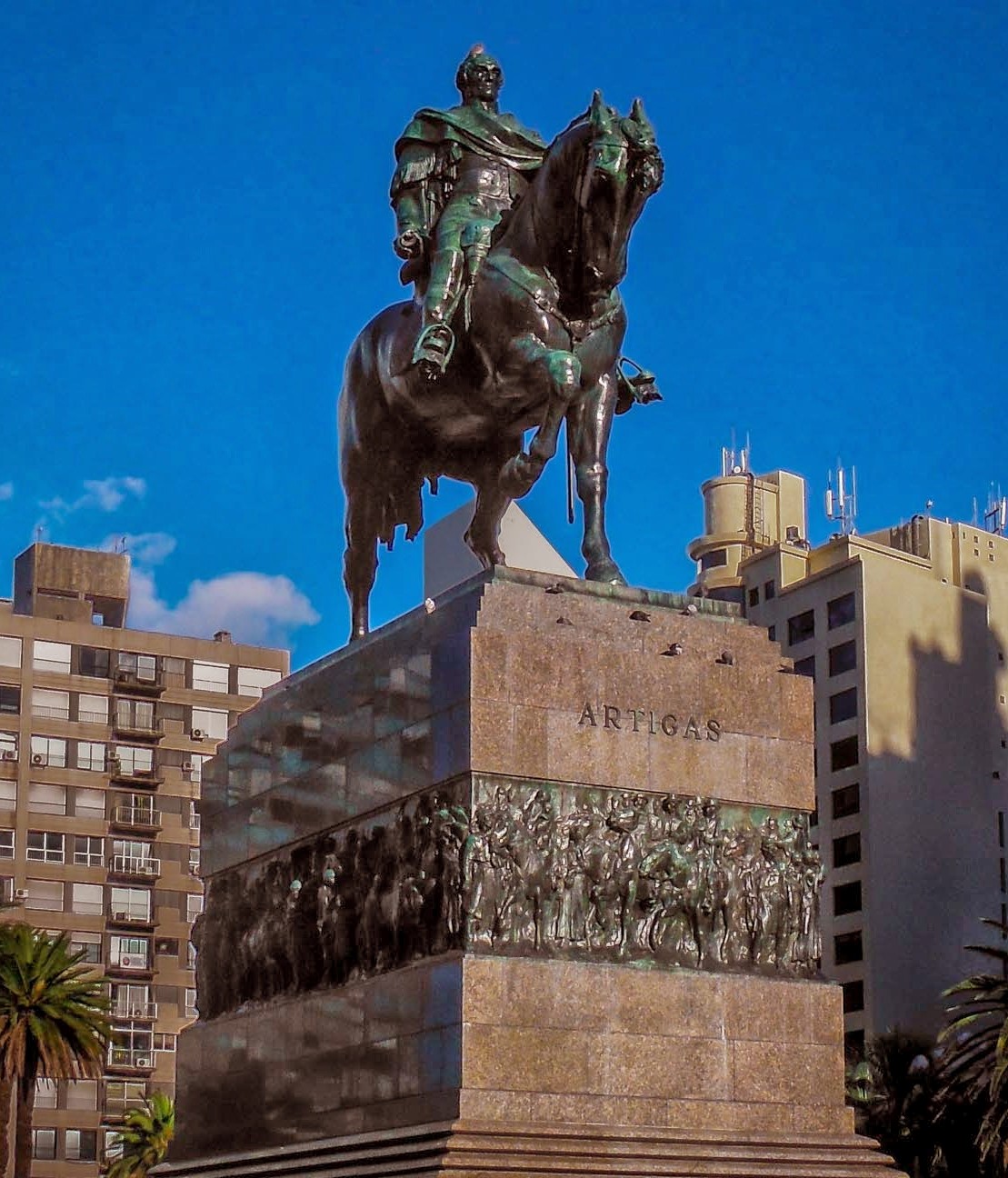
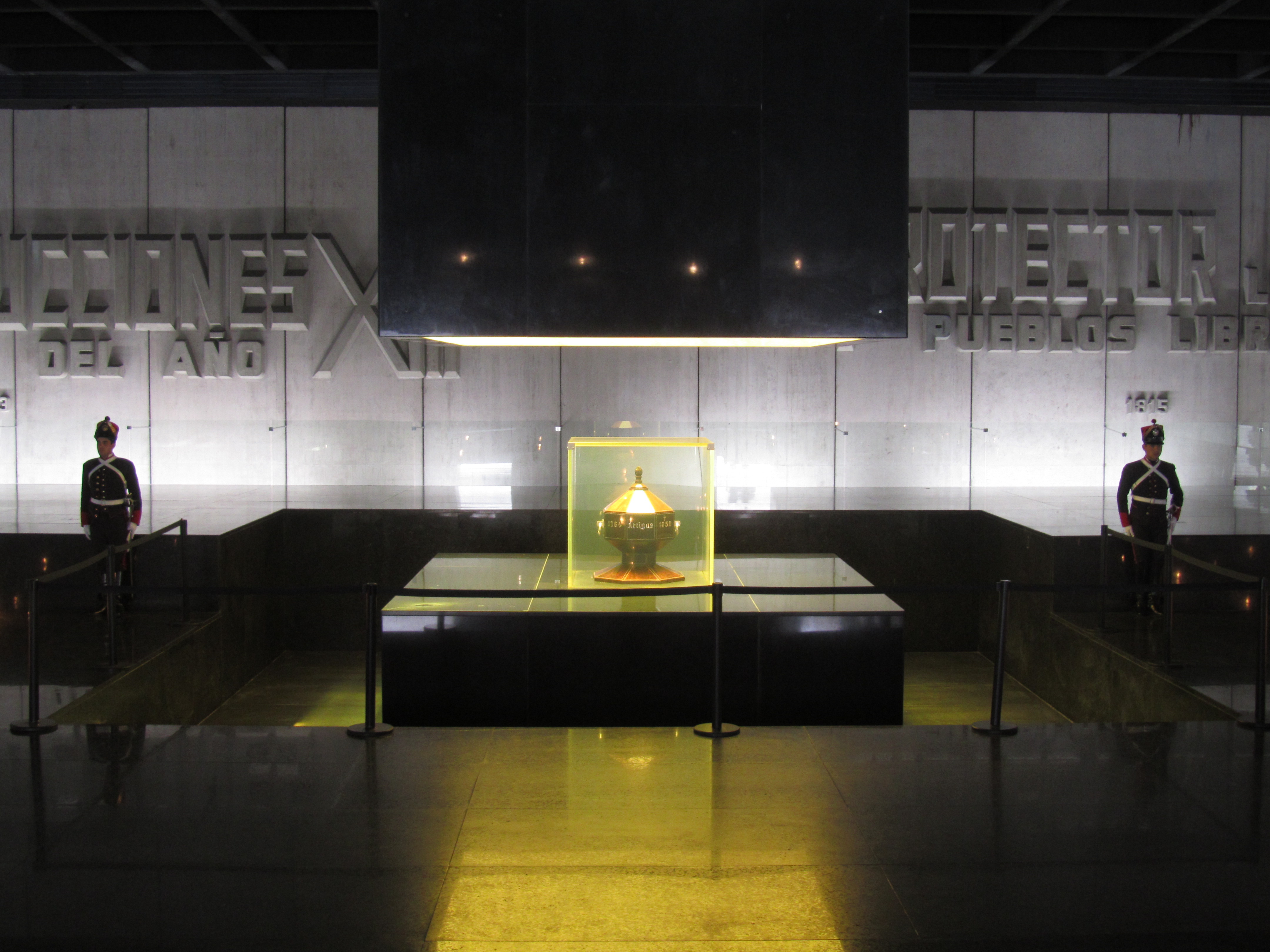
Another important symbol is the historical figure of José Gervasio Artigas, who is considered the father of independence and political nationalism. All political parties refer to Artigas in their platforms. Artigas‘ flag is still used as a patriotic symbol and was adopted by the Tupamaros. The number 33 has nationalistic connotations, being related to the 33 Patriots, but this a bit later.
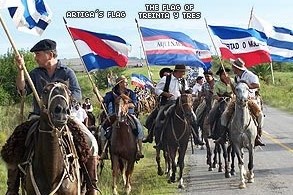 The Artigas flag used by Tupamaros.
History and Ethnic Relations.
Emergence of the Nation. The colonial period from 1516 to 1810 was characterized by a struggle for control of the area by Spain and Portugal, with minor incursions by the British and French. It was during this time that Montevideo was founded (1726). Between 1811 and 1827, during the wars of independence, the formation of the national identity materialized around the epics of Artigas and the 33 Orientales.
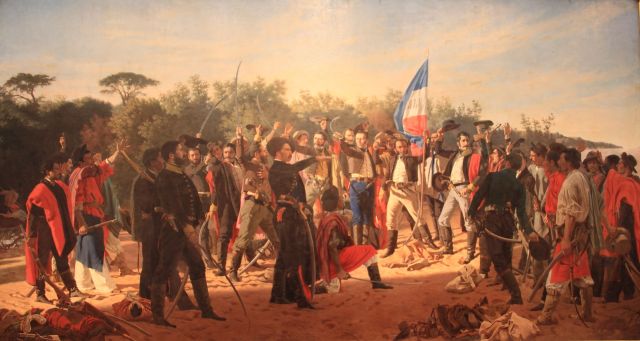 Oath of the 33 Orientales in 1825. Famous painting (c.1875-77) by Juan Manuel Blanes.
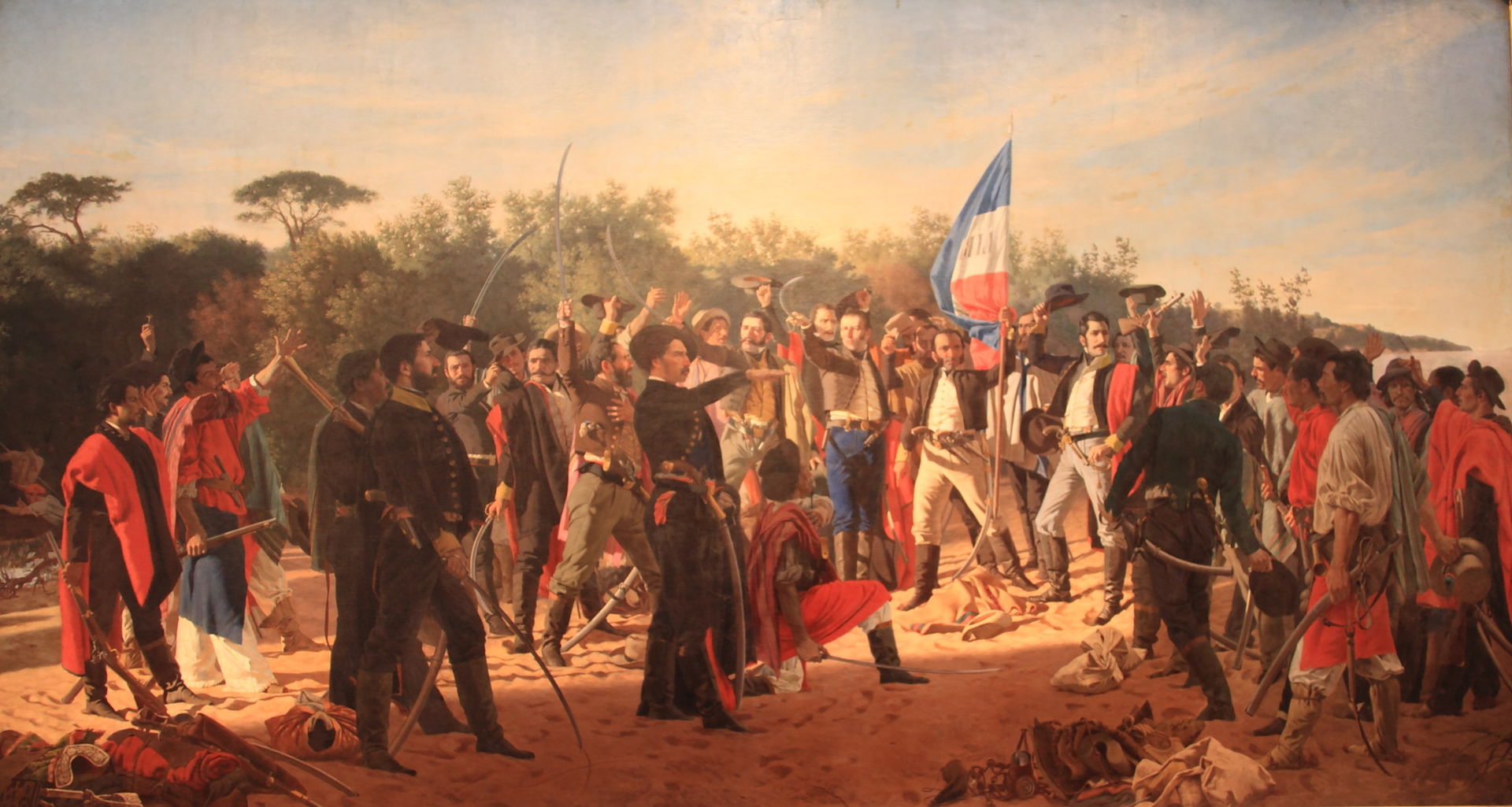
In 1828, Uruguay gained independence as a buffer state between Argentina and Brazil. Until the early twentieth century, the country engaged in an internal contest for political power through civil wars, dictatorships, and caudillismo . Polarization of the contending factions resulted in the formation of two opposing parties: the Blancos and Colorados, means the whites and the colored.
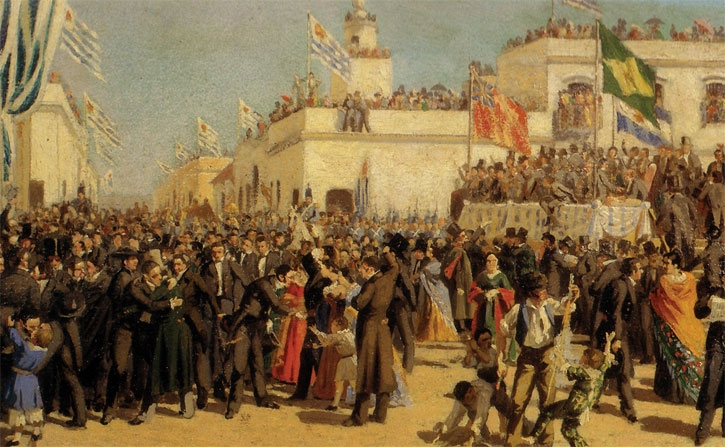 Over several years the independence was fought. With treaty of Montevideo, signed at 27th of August 1828, Uruguay called itself independent.The first Constitution of Uruguay dates back to 1830. Drafted by the Constituent Assembly, summoned in the Church of La Aguada in 1829, it was sworn by the citizens on 18th of July 1830 (see above).
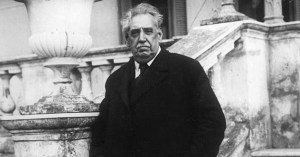 President from 1904-1907 and 1911-1915.
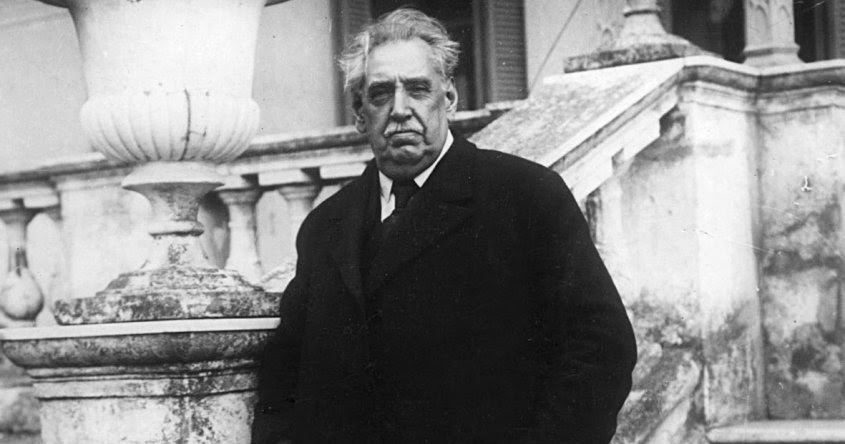
In the early 1900s, under the leadership of President José Batlle y Ordónez, the nation achieved political stability and implemented social reforms. A period of prosperity that lasted until about 1950 transformed the country into „the Switzerland of South America.
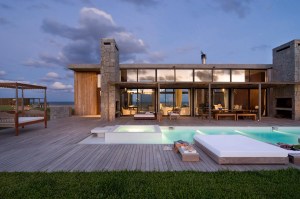 Prosperity in Uruguay for many years.
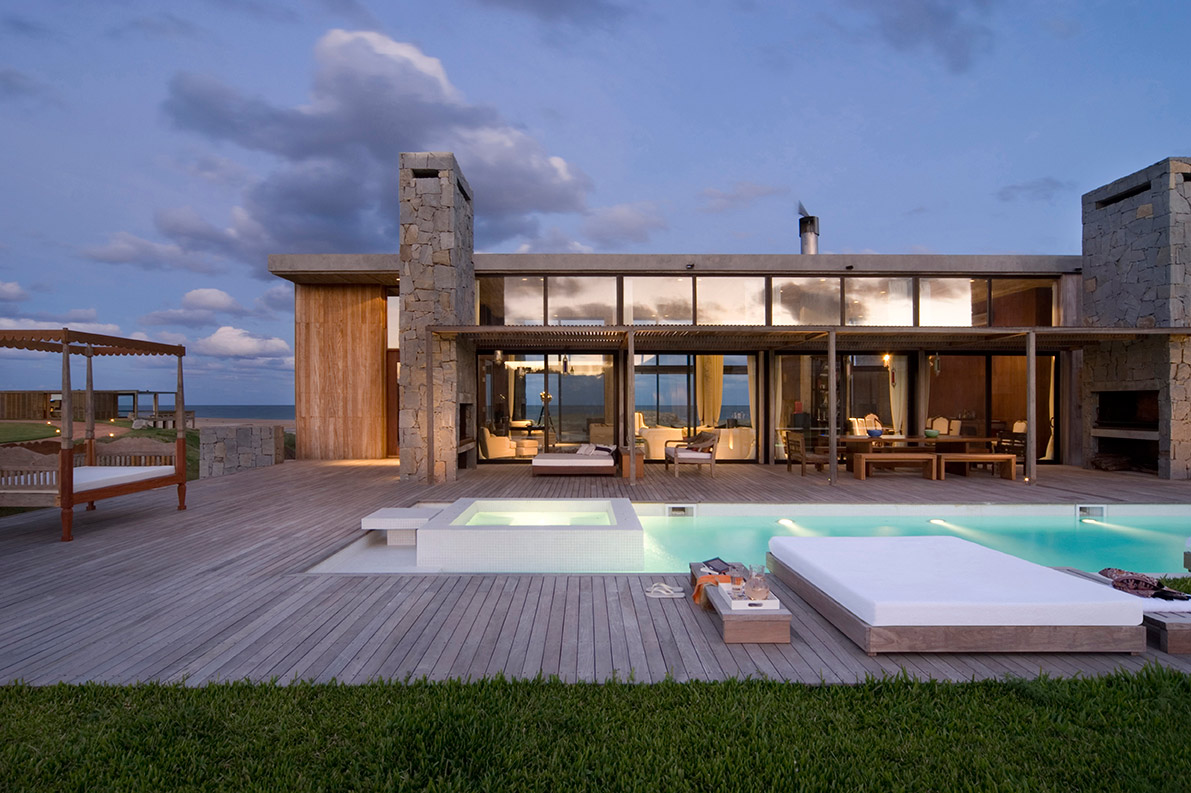
„Out of this time, the late 40’s and 50’s most of the housing results. People were well situated and had mostly 2 to 3 houses, including their coastal holiday homes. They are worn down now and thousands are for sale. A surplus of real estate rubbish in Uruguay.
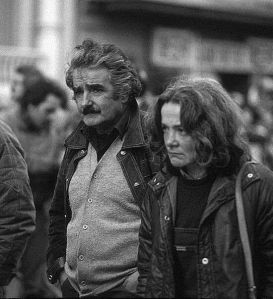
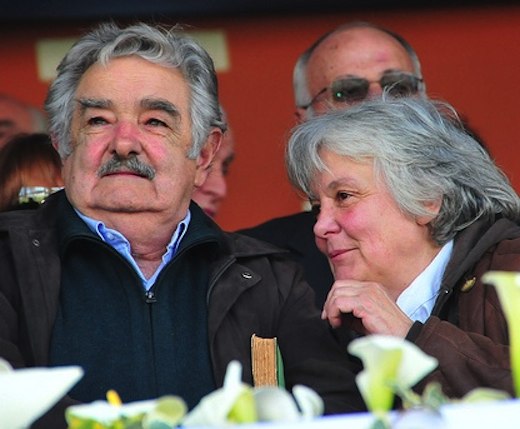
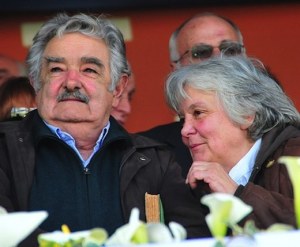 Most famous Tupamaros in Uruguay, Jose Mujica and his wife Lucia. Jose Mujica, was president of Uruguay from 2010 til 2015 and called „Pepe, the poorest president in the world“.
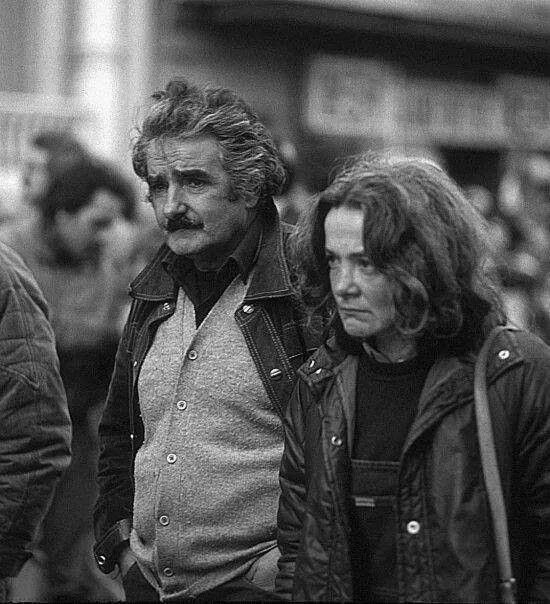
Change in the international markets and an oversized government created economic hardship in the 1960s. Political instability ensued and, compounded by civil unrest and the appearance of the Tupamaro guerrilla movement, culminated in a coup and a military dictatorship in 1973. The new democratic period started with the 1984 presidential election. Since that time, the Blancos and Colorados have alternated in controlling the presidency. Not one of them very succesful, it all languishes along.
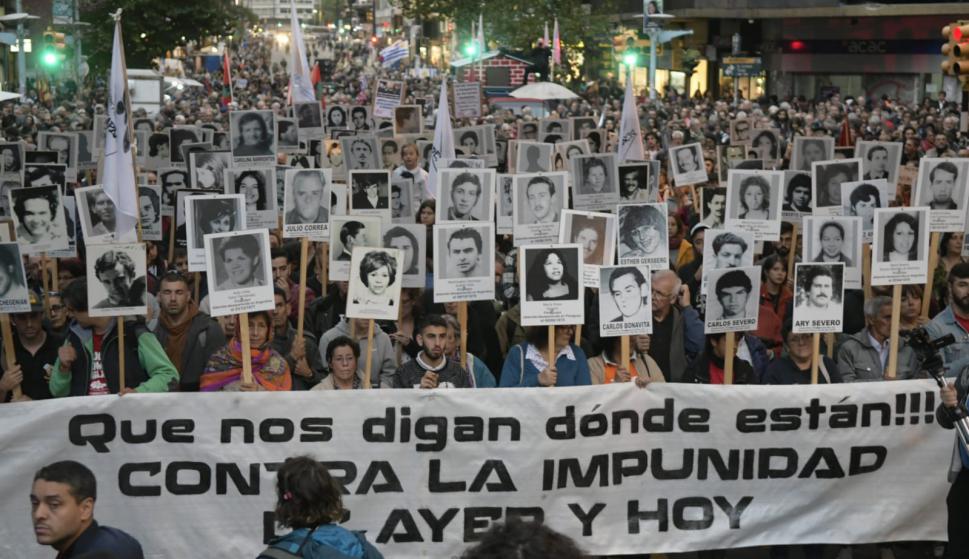
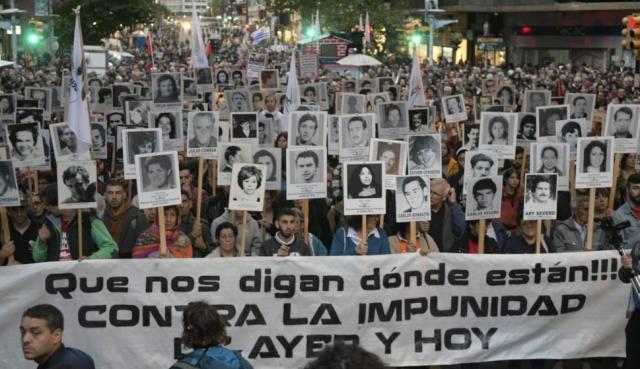 During the Silent March, thousands of Uruguayans marched against impunity demanding justice for the 200 people disappeared during the 12 years of military dictatorship.
National Identity.
The national identity is a historical blend resulting from the struggle to maintain freedom from Spain and later from Argentina and Brazil, the gaucho culture, African slave roots, political caudillismo; and a European cultural and intellectual model. A caudillo (old Spanish: cabdillo, from Latin capitellum, diminutive of caput „head“) is a type of personalist leader wielding military and political power. There is no precise definition of caudillo, which is often used interchangeably with „dictator“ and „strongman“.
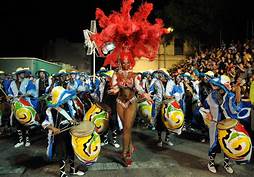 The national identity is a permanent „life balancing act“ between football and carnival…….
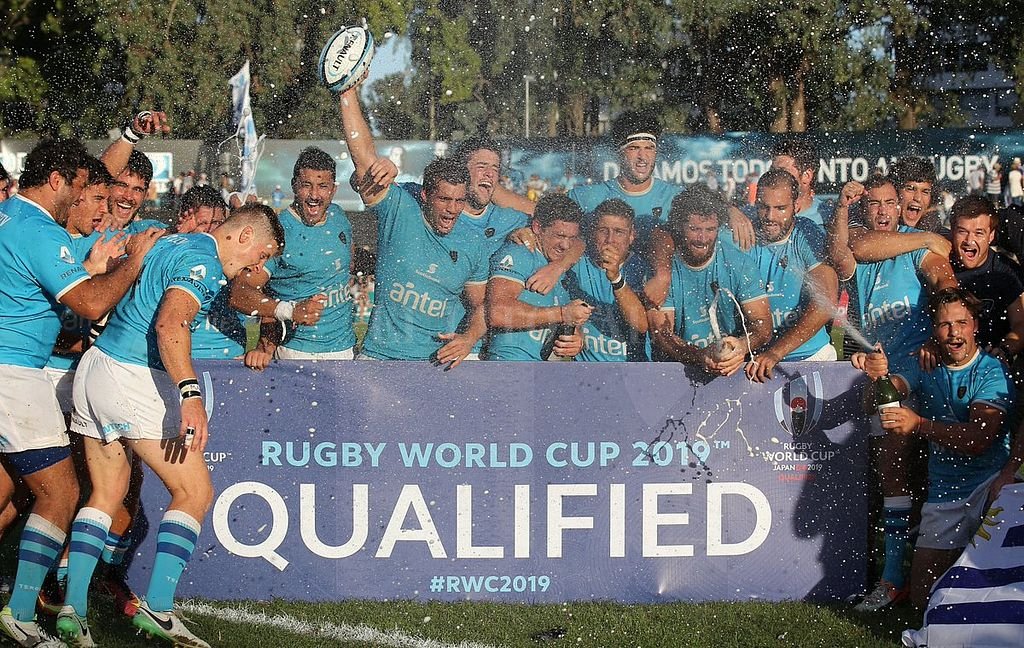
Outward appearance and being flashy are less important than what lies beneath the surface and Uruguay seems to take this to an extreme. Money isn’t spent on great buildings or clothing, as these will one day be gone, so why not enjoy the now, for there is only now. This attitude is a relative of Uruguay’s Spanish past, one of relaxation and taking one’s time to enjoy the moment and the present company.
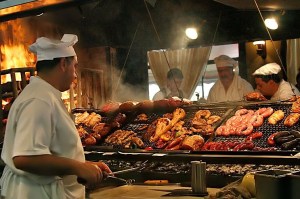
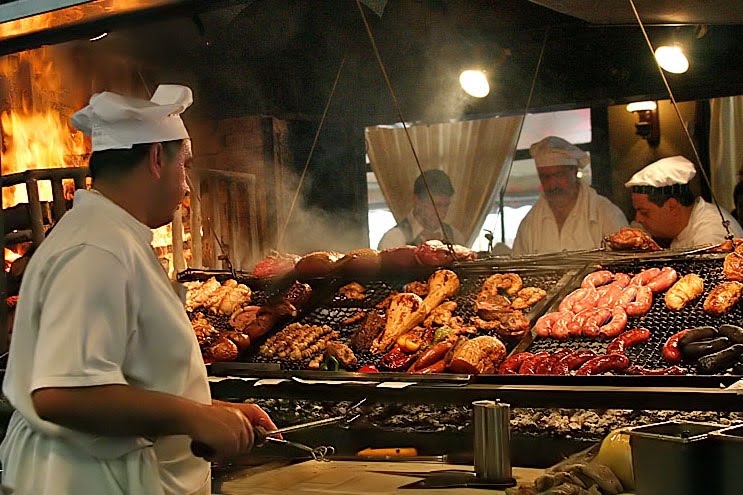
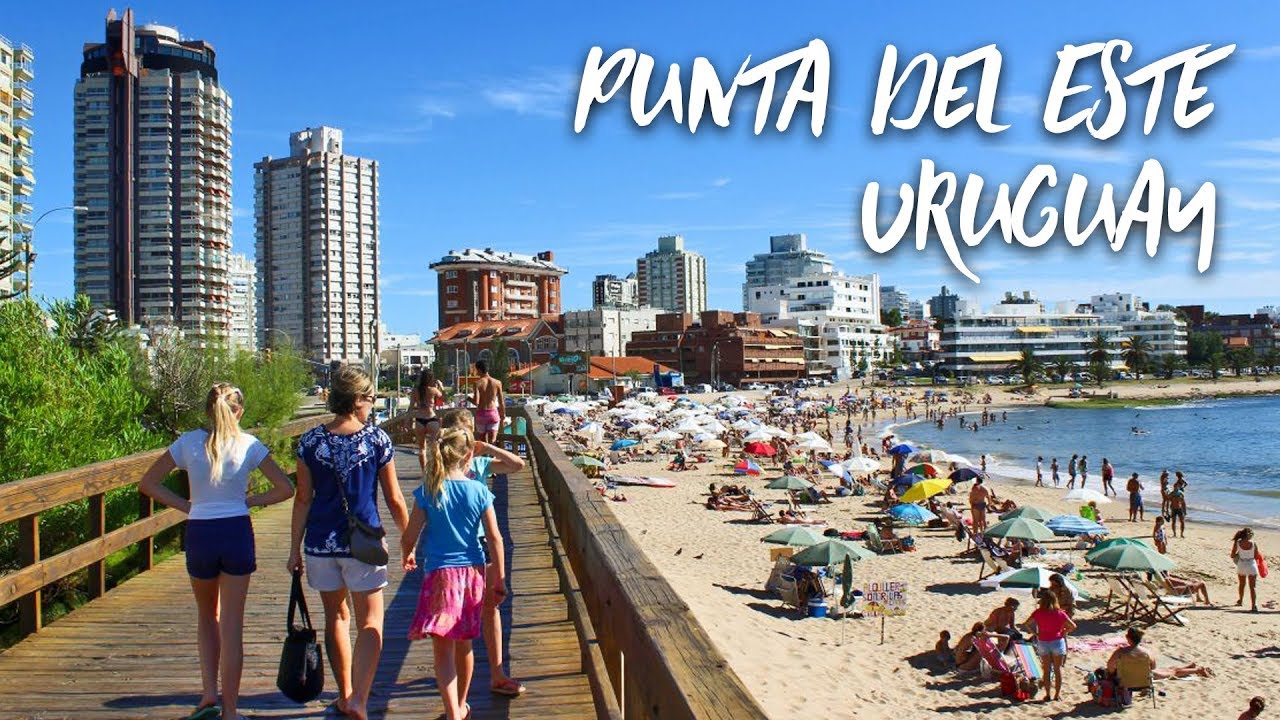
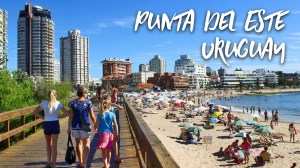 ……and between asado and beachlife. Uruguayans don’t like to take life to serious, that’s why they are…..
Uruguay is rooted in Spanish culture and the way of life reminds the visitor of this at every turn. Yet the country is understated in many ways as it lacks the flamboyant architecture, dress, dancing, and foods. The people are fairly modest and care more about a Saturday with family than they do visiting the newest art gallery or creating art themselves. Uruguay also lacks much influence from the indigenous people in their culture as most of the people are primarily ethnic European.
 …..happy Uruguayans – MAY BE !!!
Most people in Uruguay identify as being Uruguayan and this is truly tied to the culture. A part of that culture is its inclusivity, as it is very open and nearly any citizen of the country is welcomed to be considered „Uruguayan,“ (even foreigners) no matter their ethnicity.
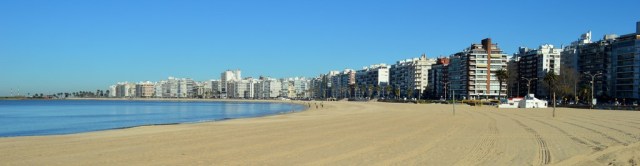 Montevideo skyline from the 1950/60’s.
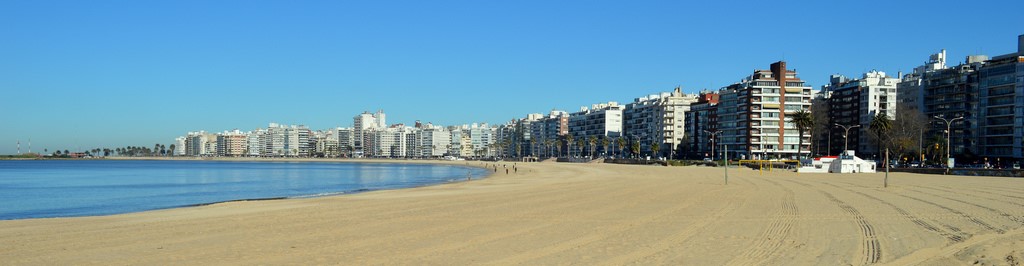
Urbanism and Architecture.
Montevideo is a modern city with a European flavor. When we came here first in 2009 we thought to be in Barcelona in the 1960’s !! The character of the old part of the city, which was originally within a defensive stone wall, has been preserved to some extent. There are many parks, some very large. Public spaces follow the Spanish model and are open to everyone. Brick and mortar and concrete and stone are the dominant construction materials. Montevideo is also called the „City of Art Deco“ against Buenos Aires as the „City of Art Nouveau“.
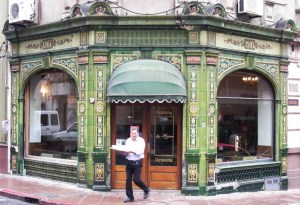
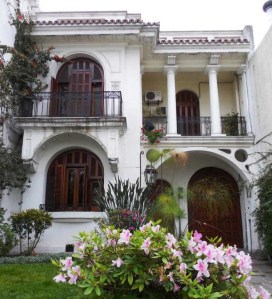 Art Deco par excellance in Montevideo.
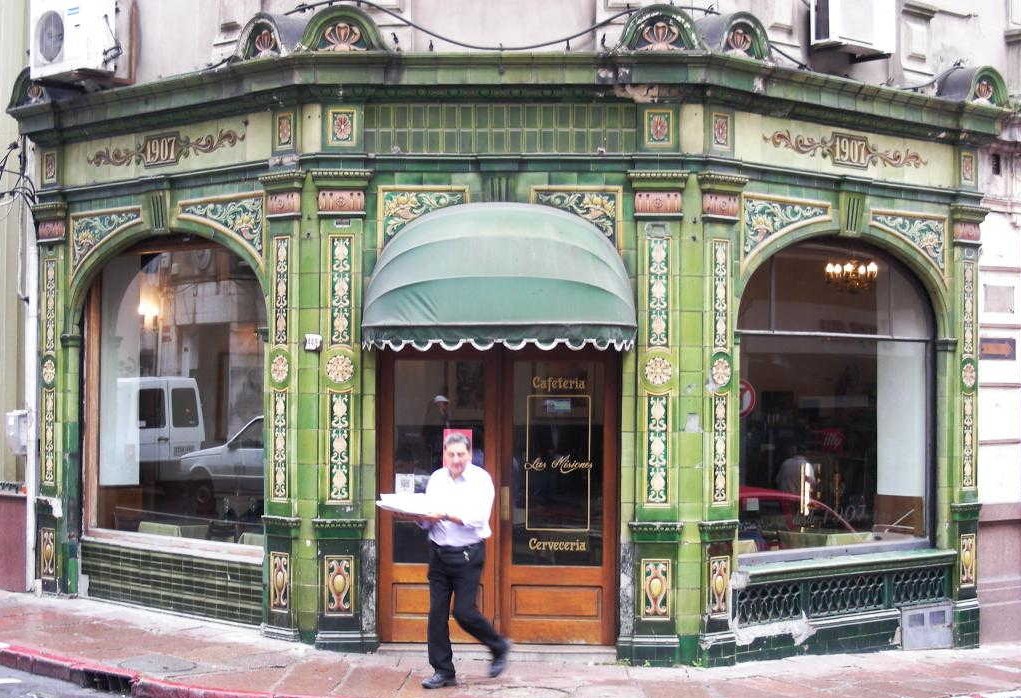
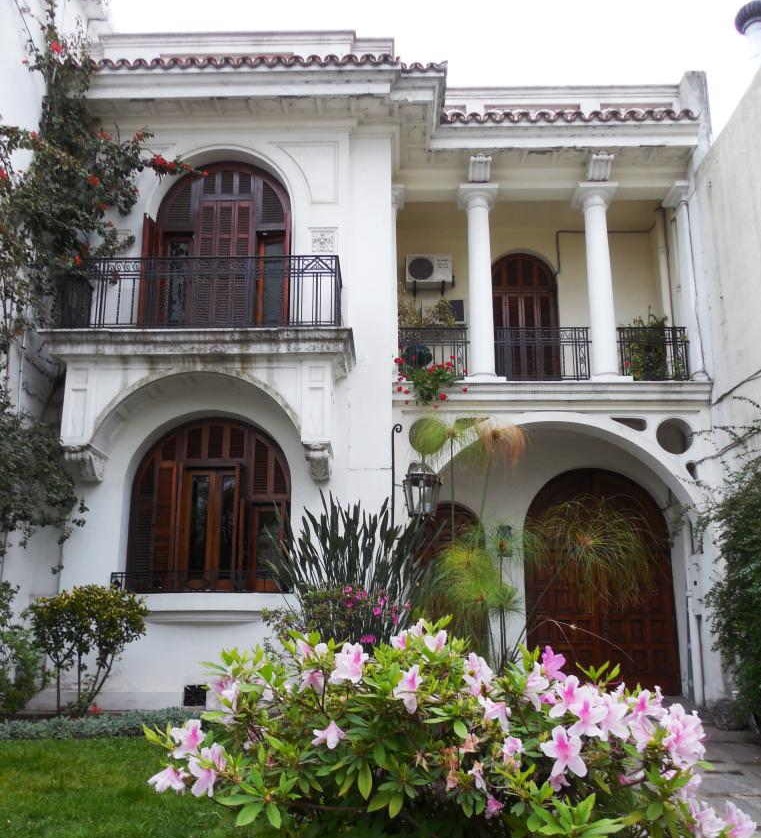
The urban centers in the interior are much less imposing and lively, sometimes even very ugly and dozens of years behind modern world. Of note are the historic quarters of Colonia del Sacramento (founded in 1680 by the Portuguese), which UNESCO has declared a World Heritage City. The beach resort towns and cities are modern and active in the summer; Punta del Este has become a center for international meetings, golf tournaments, and film festivals. In remote rural areas, some gauchos still live in the traditional rancho, a simple adobe construction with a thatched roof.
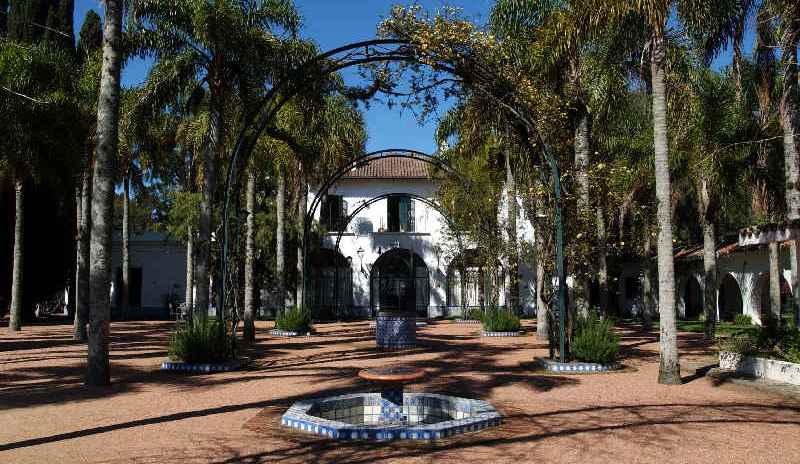
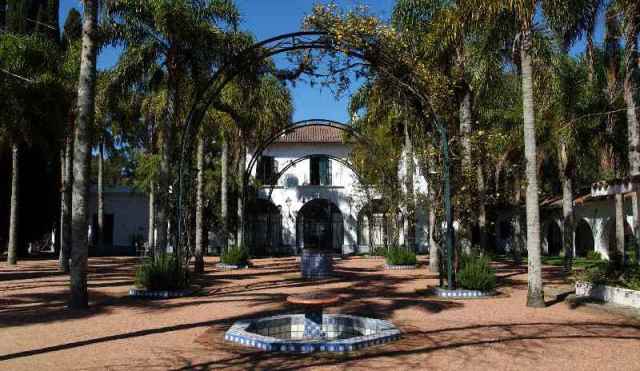 They are still there in Uruguay, great old Estancias, to visit, to buy, to live in, if you like.
Food in Daily Life.
Meat, particularly beef, is the mainstay of the diet. I’ve read one statistic that Uruguayans have 9 times a meat meal per week !! The national dish is the asado (barbecued meat). The parrillada (beef and entrails) is the most typical dish. It contains a varied assortment of parts, the most common being beef ribs, kidneys, salivary glands or sweetbreads (mollejas), small intestine (chinchulines) or large intestine (tripa gorda), and sweet blood pudding sausage (morcilla dulce).
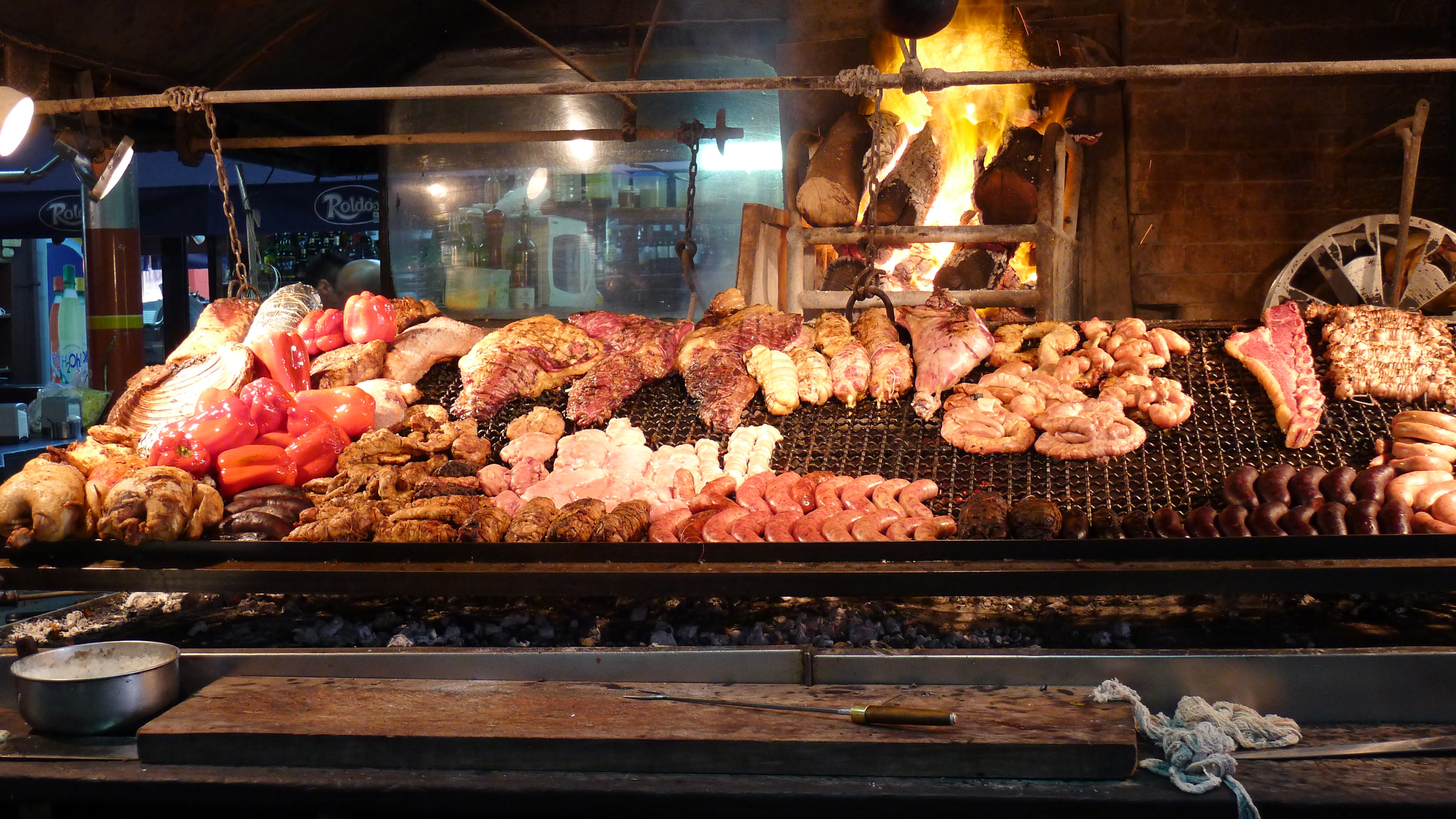
It is sometimes hard to get real good meat quality, because out of the old times, the Uruguayans eat the leftovers and export the valuables. Additional, they have very strange meat cuttings here and use meat mostly bloody and fresh. Hard to get a good steak like in the US or Australia. Since 10 years I try to get „baby back ribs“ (US-American cut) – its just impossible.
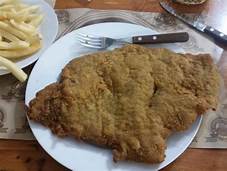
 Loveless and unappetizing! On the plate thrown meat in Uruguay, few french fries next to it, that’s it.
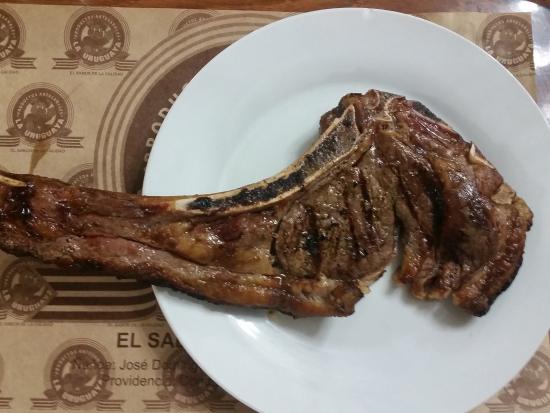
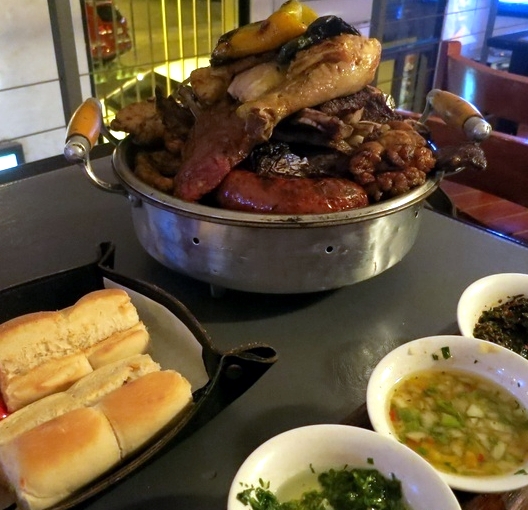 That’s the opposite, full bowl of all kind of different meat. Served with dry rolls and some chimichurri.
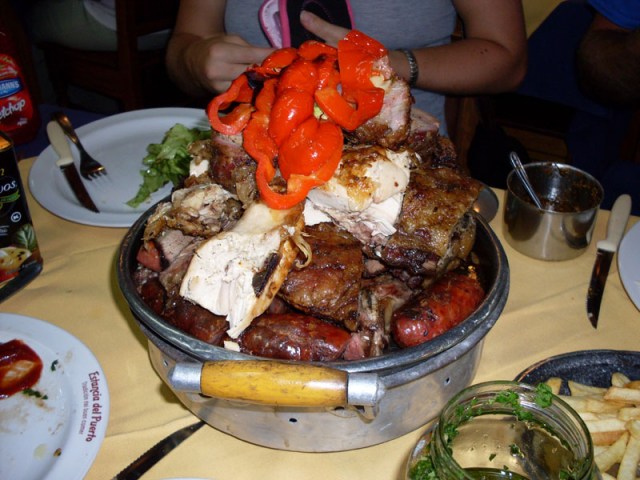 And a similar one at the table, this time a bit appealing decorated.
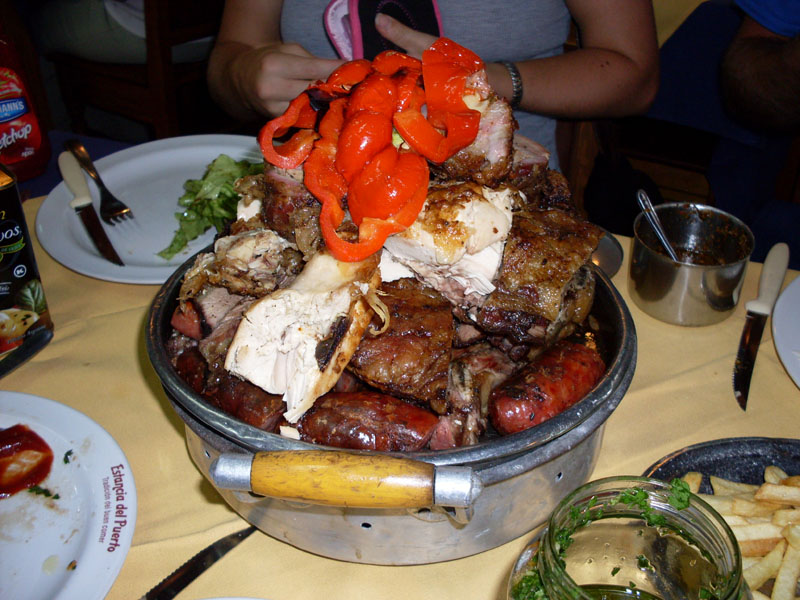
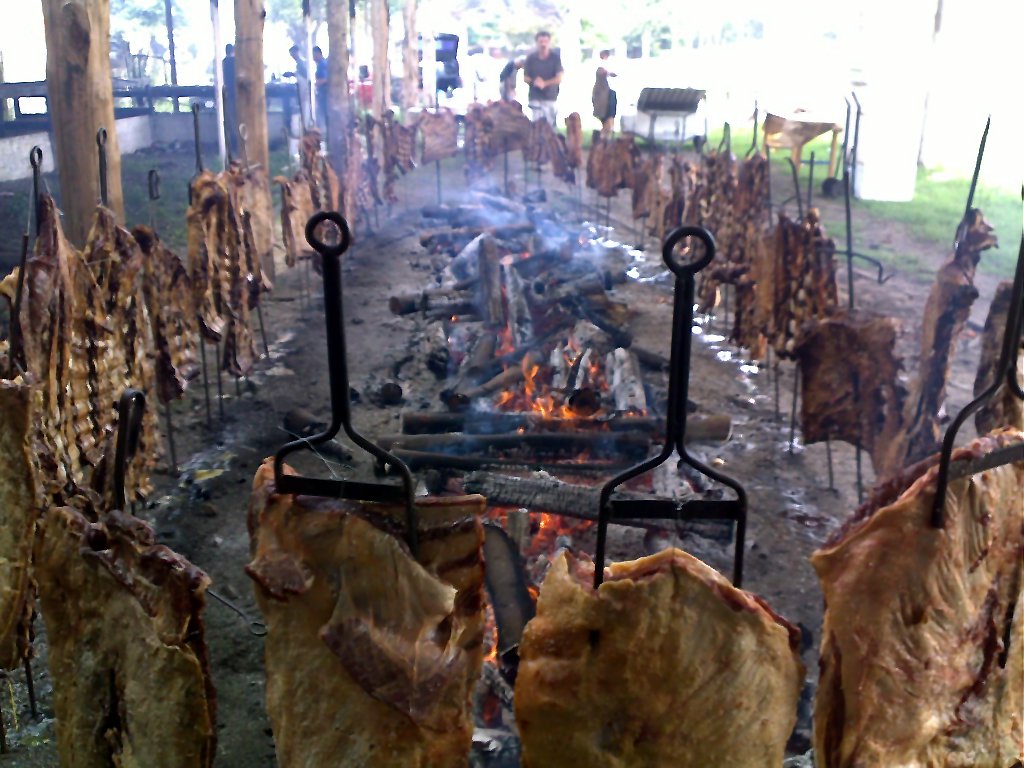
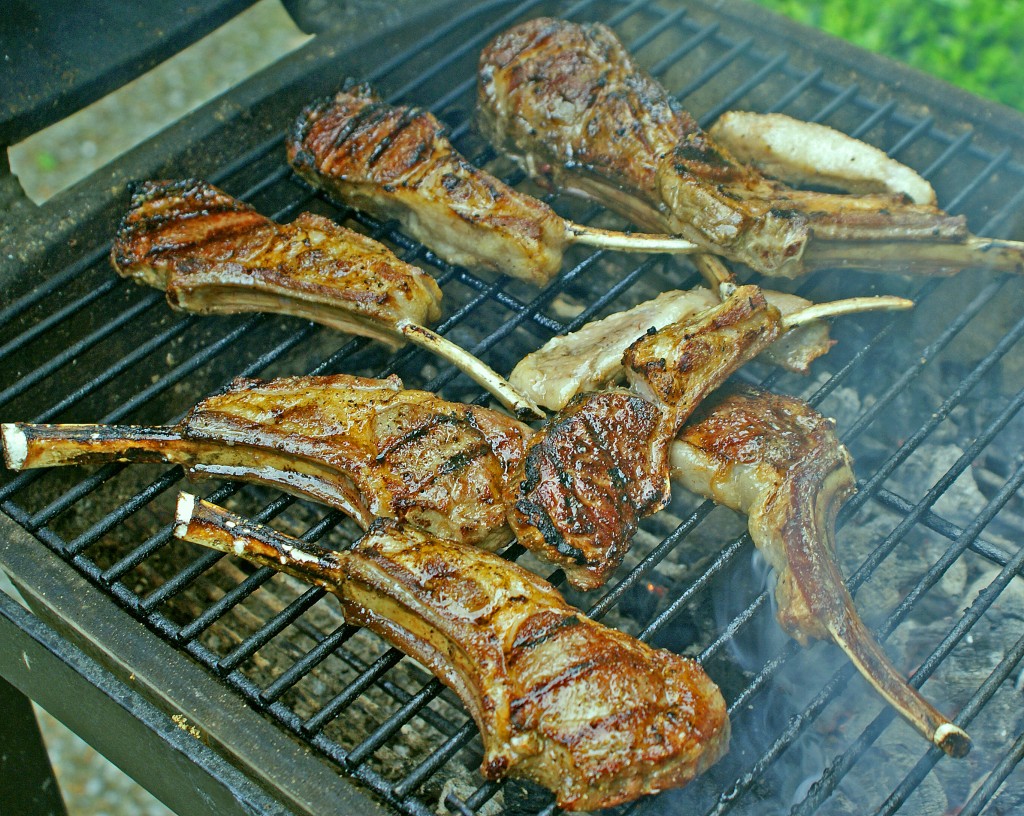
Pork sausage usually is served as an appetizer. Barbecued lamb is consumed in large quantities, particularly in rural areas, but again in such a strange cut that’s not appetizing. At rural banquets, entire cows or intire sheepsides are barbecued slowly with their hides. uruguay is through and through a meat country – nothing wrong with it – but with such a long and attractive coastline, no fish, no seafood at all. To a gourmand a terrible situation.
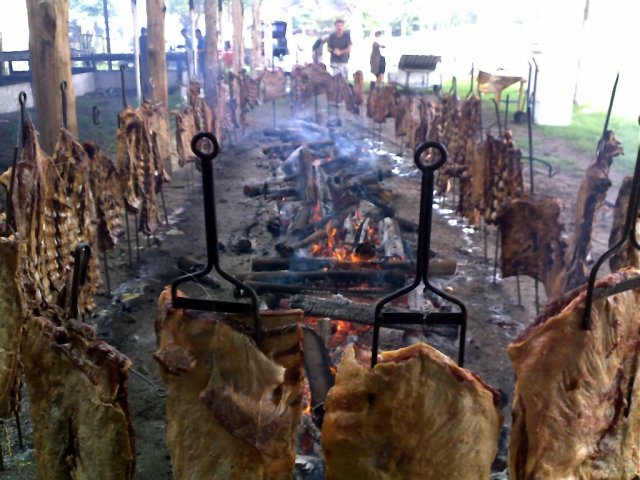 Whole sheep sides during a rural BBQ. That’s delicious, I can tell you. See down here the results.
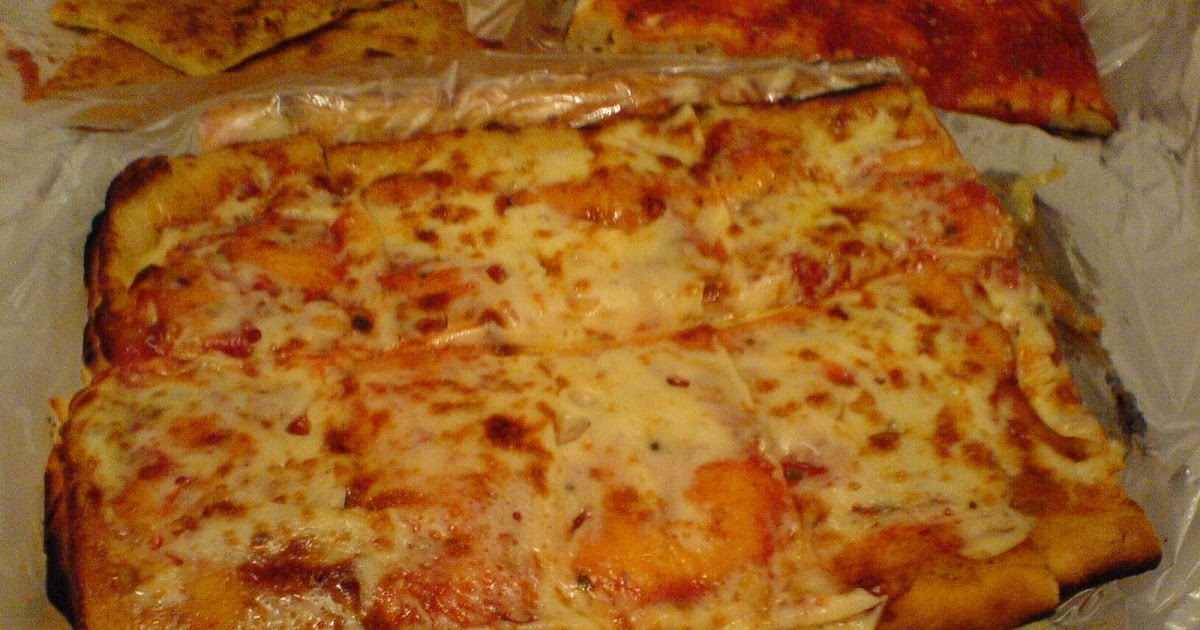
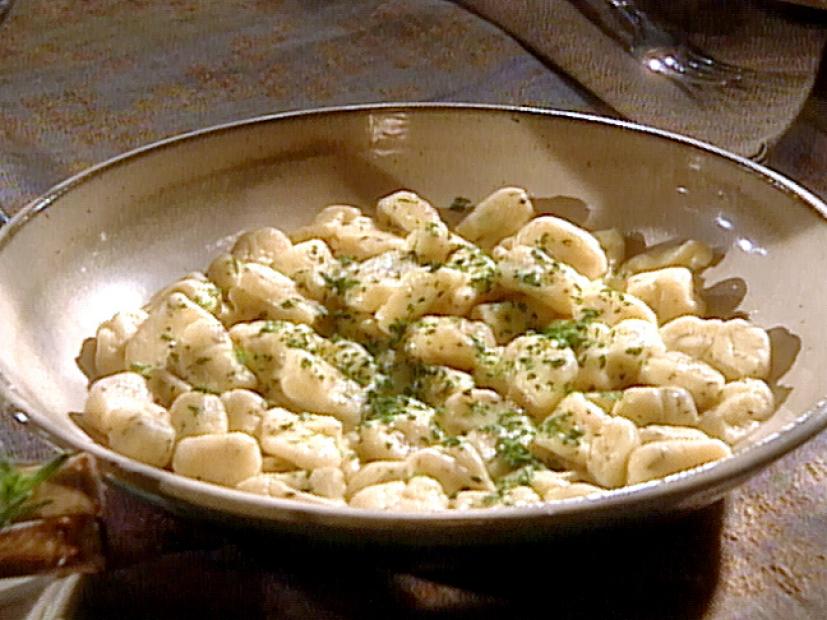
As a result of Italian immigration in the late 1800s and early 1900s, pasta is a national food. Sunday is the preferred day for eating pasta, of course now added with pizza. Most home cooking has a Spanish influence, and meals almost invariably include soup. The cooking is often tasteless to international palates, no seasoning, no variety’s – often boring.
 Very boring pizza, bit tomato sauce and tons of cheep cheese. Next to it the typical potato gnocci, bit sprinkled with oregano, served on monthly gnocci day. Not my favorite.
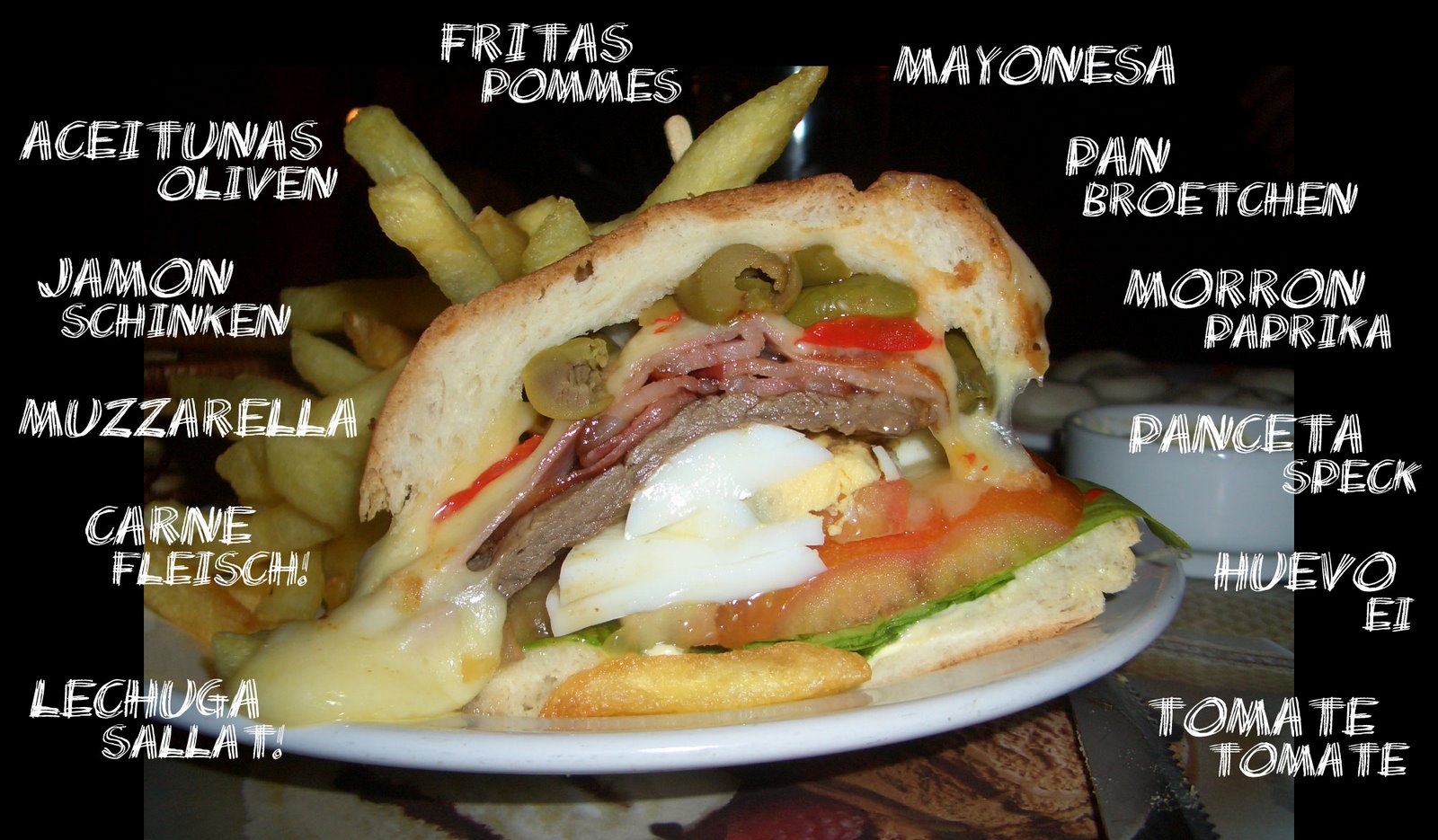
A standard fast food is chivito, a substantial steak sandwich. Another unique snack is wedges of fainá a chickpea flour pancake. Portions in Uruguay are always oversized and not very appetizing celebrated. A mixed salad, by example, is „a few green leaves with a tomato cut in quarters“.
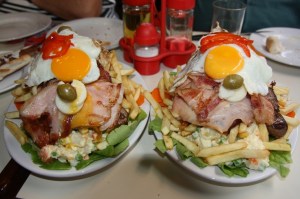
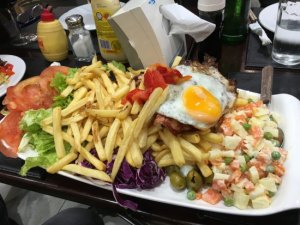 Chivito’s are oversized burgers with everything and I mean everything. The taste is not as important as the bursting amount of food on the plate. Of course there are some places where you get real fine food and I love it – but we talk about the Uruguayan lifestyle at the moment and they don’t care much about quality food, as long as it is MUCH MORE !
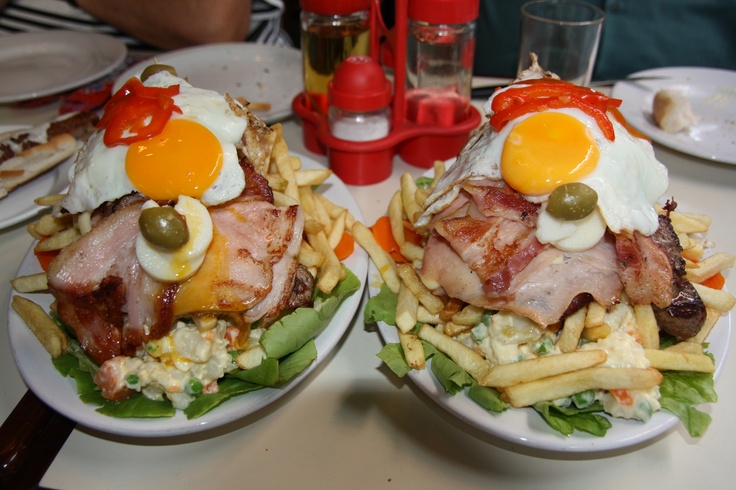
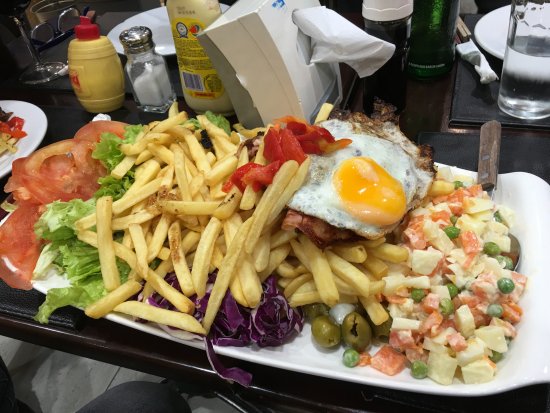
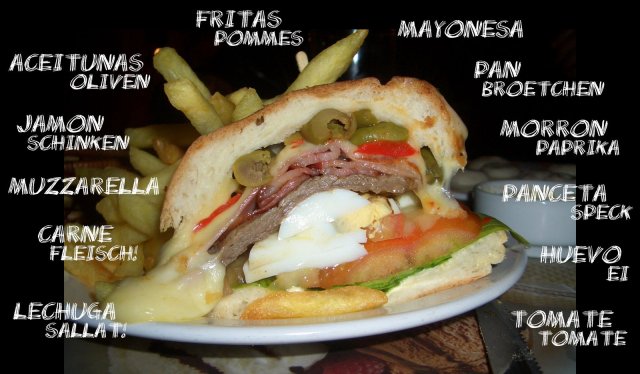 The basic chivito recipe.
Mate – which is a strong tea- like beverage made by infusing coarsely ground leaves of Yerba. Mate with hot water in a gourd and sipped through a metal straw with a terminal filter (bombilla), is drunk at home, at work, at the beach, at soccer games and in public places. Also during driving – typical Uruguay driving is: Mate pot in the left hand, under left arm the hot water bottle, cigarette in the mouth, right hand holds the cell phone and they speed like hell, steering with the knees.
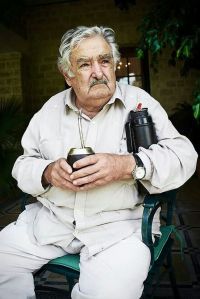
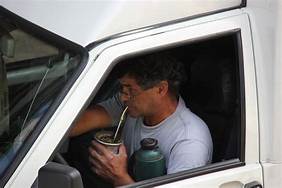
Nothing is more typical in Uruguay: Left, former Urugayan president „Pepe“ Mujica. Right, the typical dangerous driving. I tried a few times mate and it is ones taste or not. There is no discussion possible, because its a matter of mentality and local lifestyle. I am not grown up with it, so I feel always a bit stupid all day long with a teat in my mouth – my problem, I know.
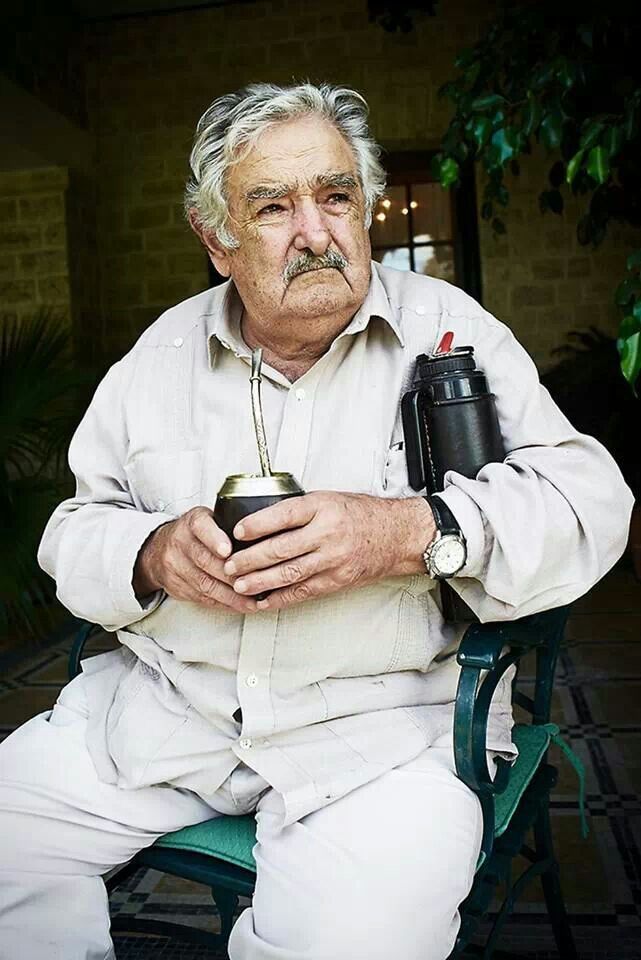
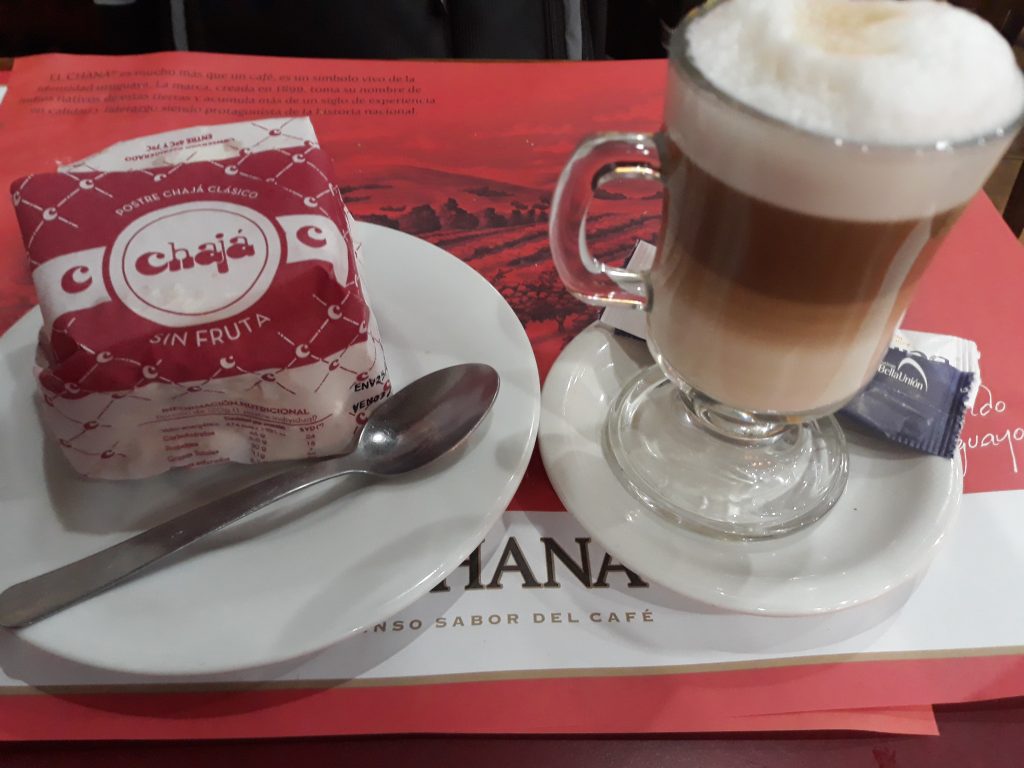
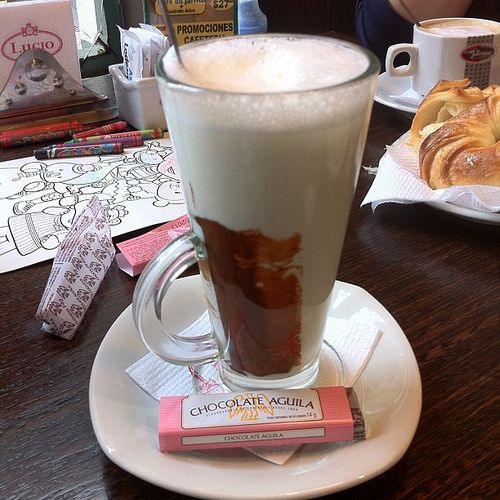
Coffee is drunk as espresso or with milk. Tea usually is drunk with milk. Very typical the cortado, a layered mix of milk, coffee, milkfoam. Or typical the „Submarine“, a glass of hot milk with a stick of chocolate inside – makes a nice chocolaty cacao.
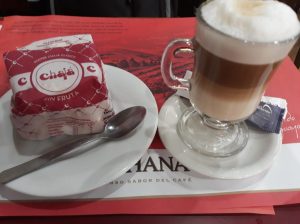
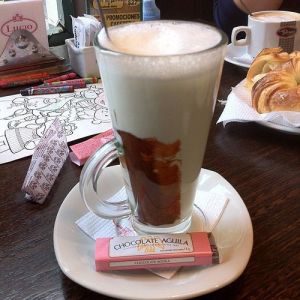 Delicious coffee drink, the cortado, served with a local cookie, the chaja. next to it the „submarine“.
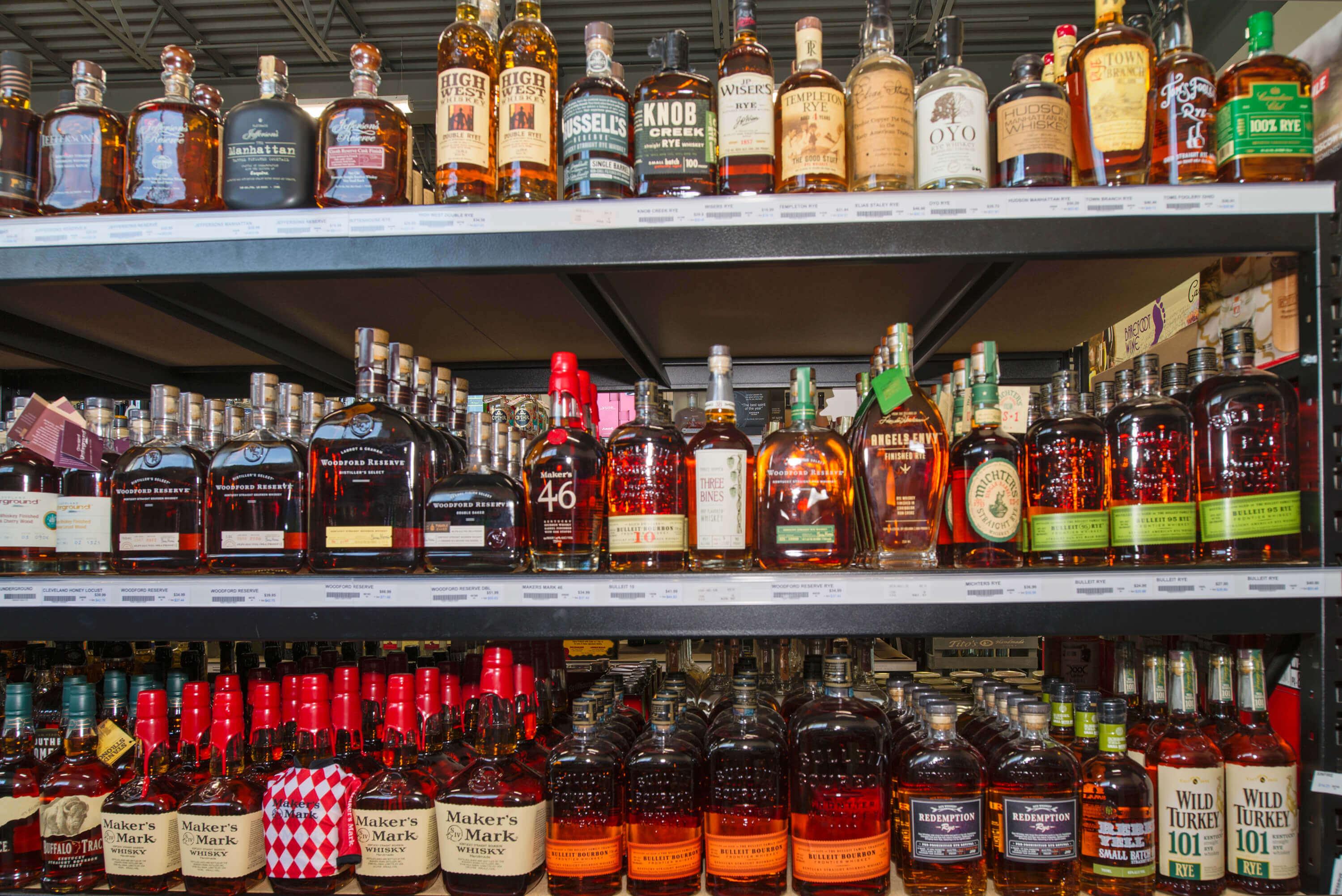
Breakfast is a light meal. Traditionally, lunch and dinner are the main meals. Lunch is mostly served around 2.00pm to 4.00pm and dinner served far after 9.00pm. Wine and beer commonly accompany the main meals and are available in wide ranges and excellent qualities. Another Uruguayan delight is Whisky (all imported). A regional supermarket, at least, sells 30 to 40 different Whisky brands and varieties. Therefore it is almost impossible to get only one bottle of good Cognac, Armagnac or alike. Look down here.
Food Customs at Ceremonial Occasions.
More elaborate meals are eaten at anniversaries, birthdays, promotions, and other special occasions. People take advantage of any event or occasion to eat their favorite dishes or have an outdoor barbecue. The most important special meal of the year is the Christmas Eve dinner.
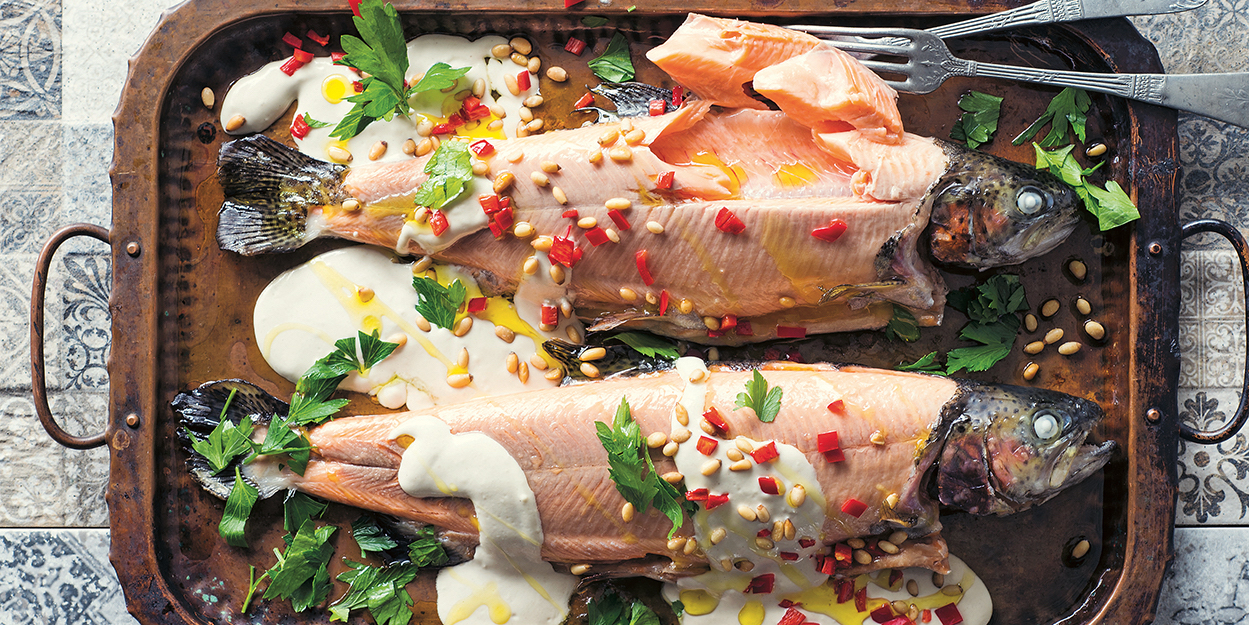
Don’t get me wrong, there is some excellent food in Uruguay and there are some very nice restaurants and lots of people trying the best to serve fresh and delicious. But there is no competition at all against (by example) Peru or Chile or else. It is just the refinement of old Gaucho Culture and that is the modern Uruguayan culture. Recently we had near Eden in Maldonado a rainbow trout lunch – never had a better one in my life ! Thumbs up !
Basic Economy.
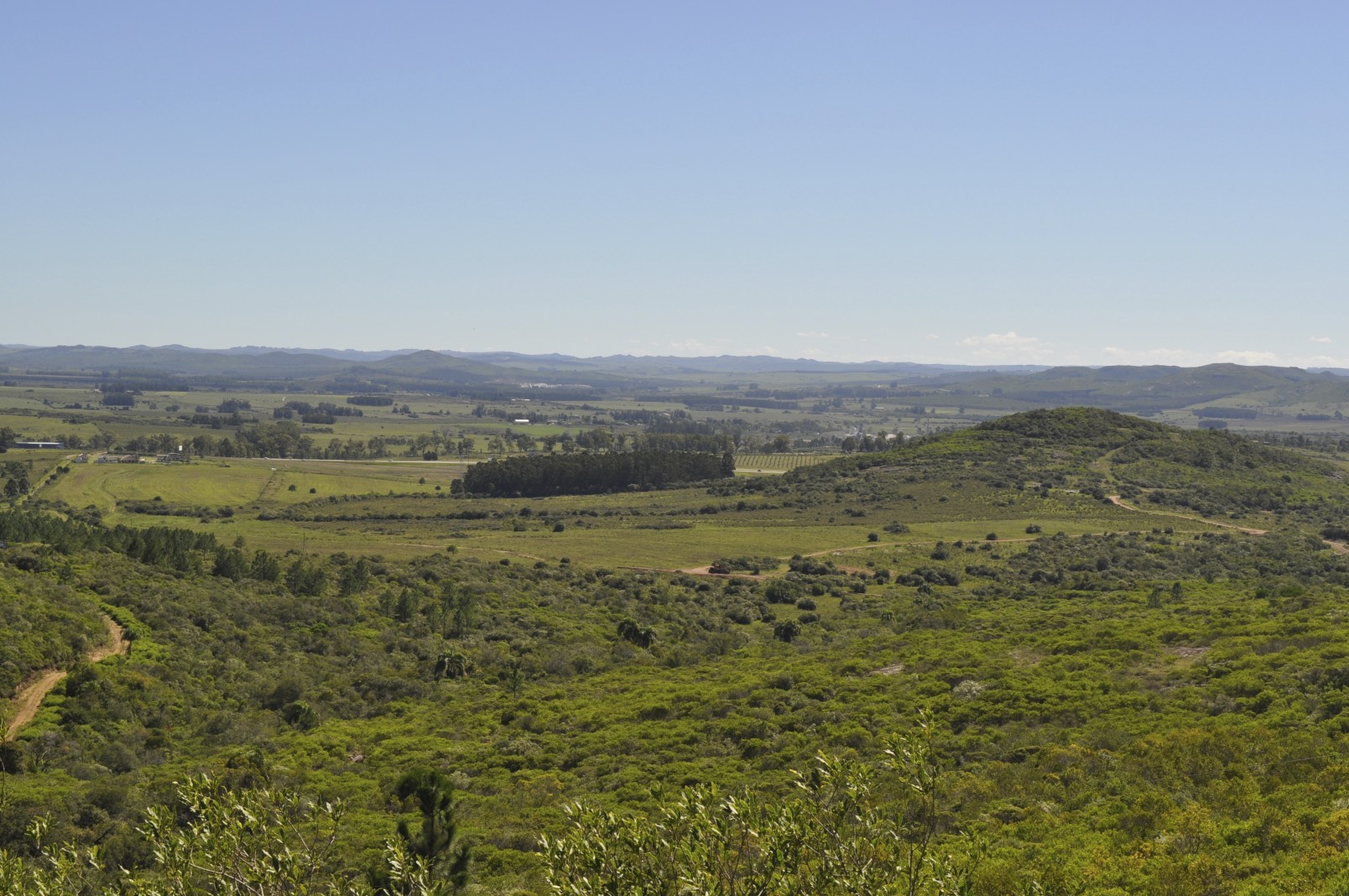
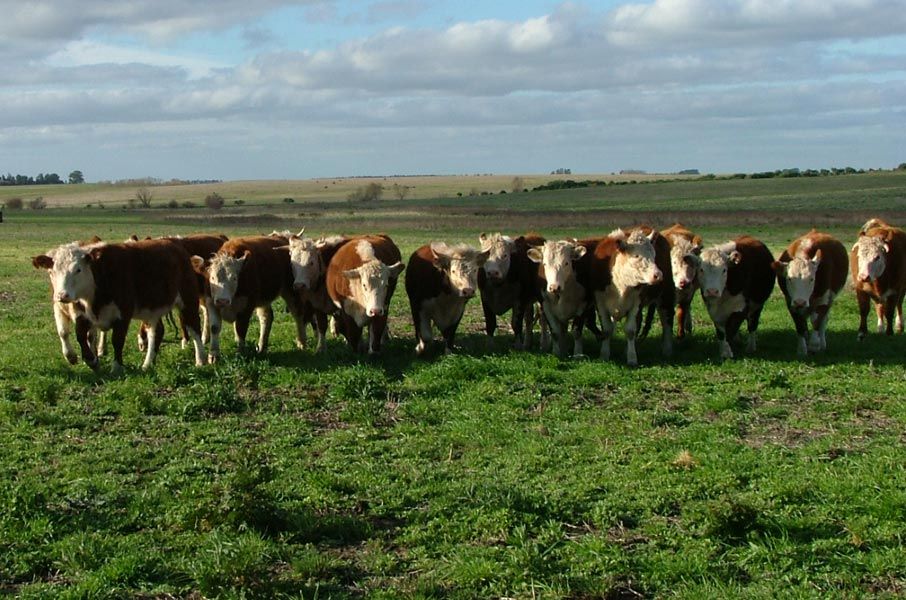
Services and export-oriented herding and agricultural production and industry, a relatively even distribution of income, and high levels of social spending characterize the economy. The main natural resources are pastures (more than 75 percent of the land), agriculture (10 percent of the land), hydro power, and fisheries. Mineral resources are scanty, and the country does not produce petroleum.
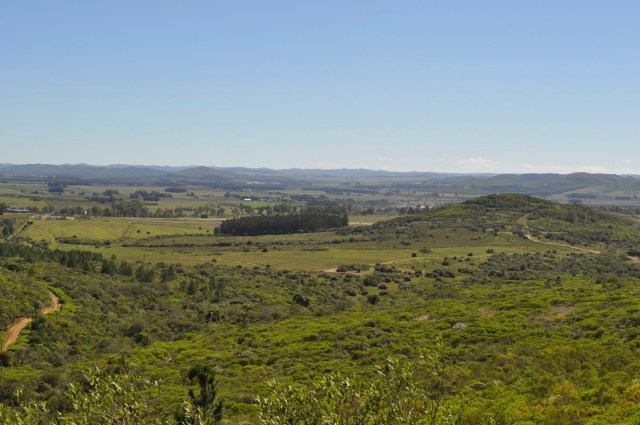 The natural look of more then 75% in Uruguay.
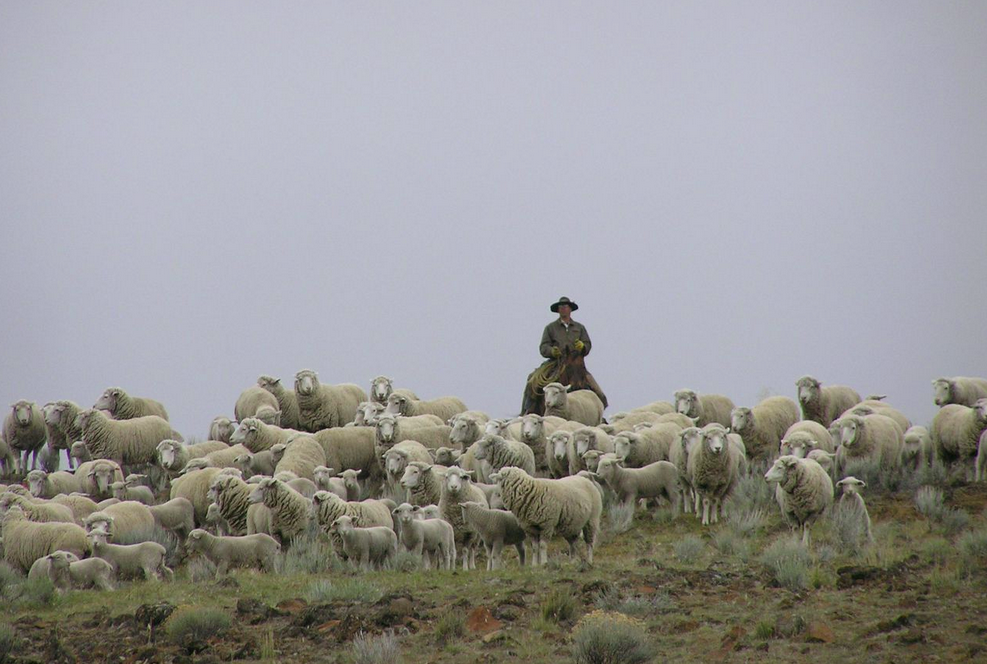
Raw wool and beef still represent about a third of exports by value, but sheep and cattle products account for more than 90 percent of exports.
Three-fifths of the economic output is produced by a well-educated workforce in the service sector, mainly in public services and tourism. As a result of welfare state social policies and political favors in the past, there is a disproportionate number of public servants and retired citizens, and only around 32 percent of the population is economically active.
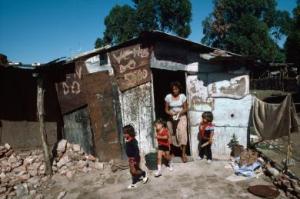
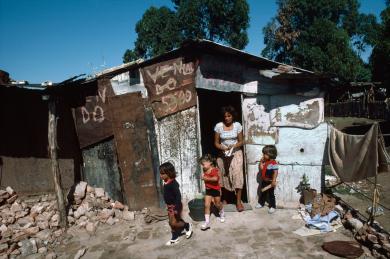
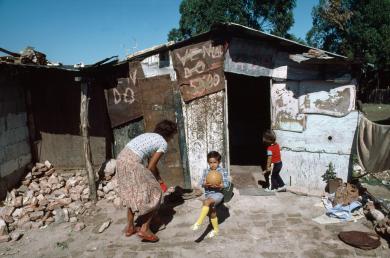
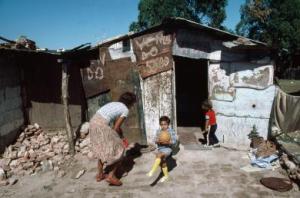 Therefore many many Uruguayans live in poverty. Slum life in Montevideo.
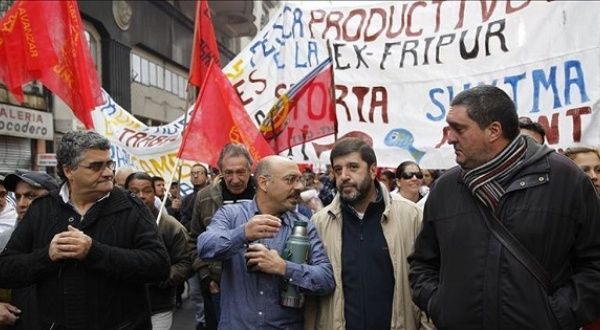
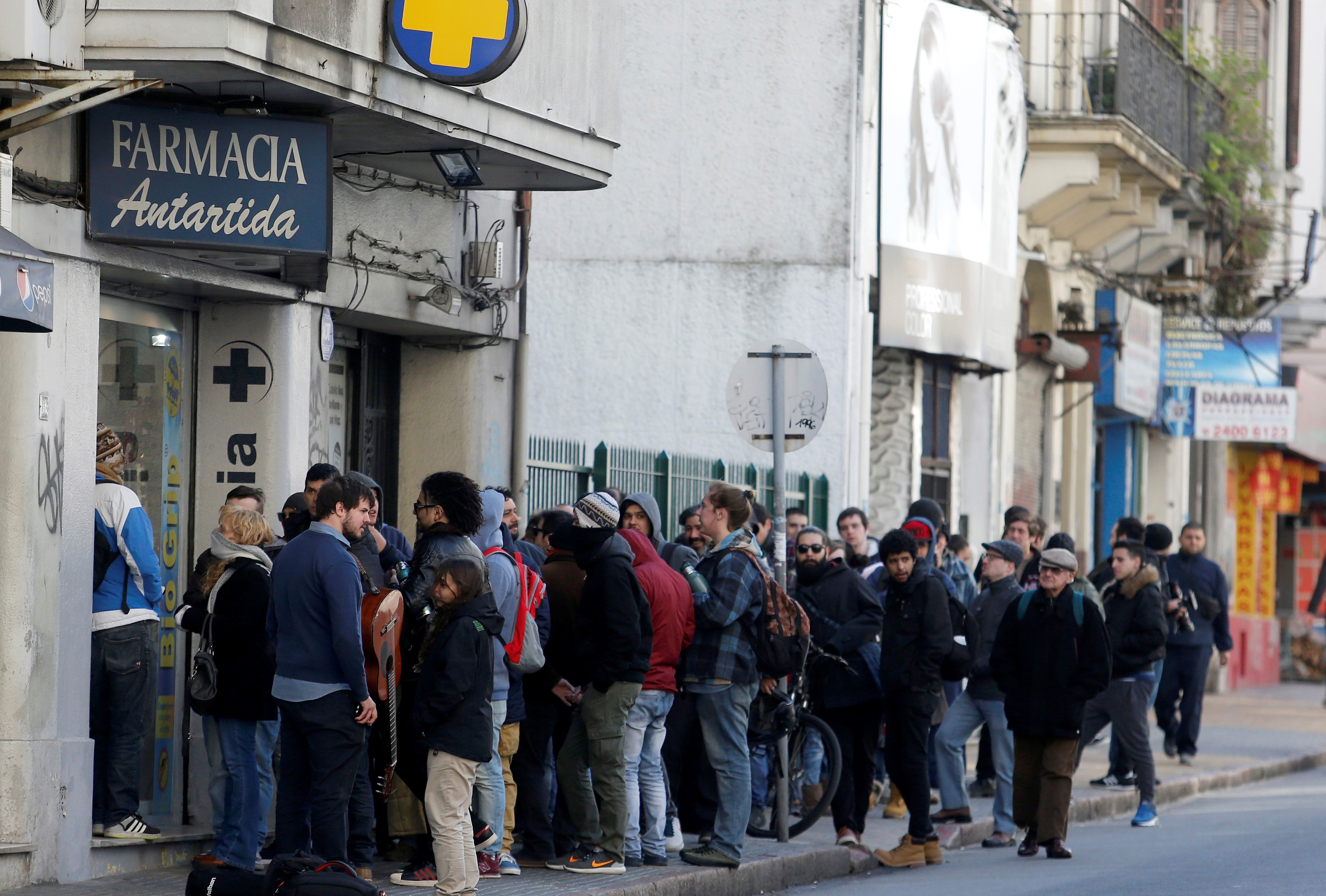
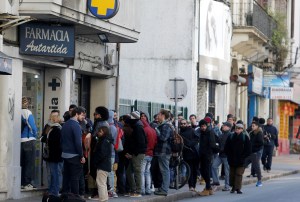 Uruguayan workers on strike and waiting for the weekly marijuana allotment at a Farmacia. Why work if you can dream along, the government is paying for it.
The government owns and operates the railroads, the national airline, a shipping fleet, the telephone and telegraph system, petroleum and alcohol refining and processing, and the cement industry. However, privatization has become more prevalent. The currency is the peso, but strong bound with the US-dollar.
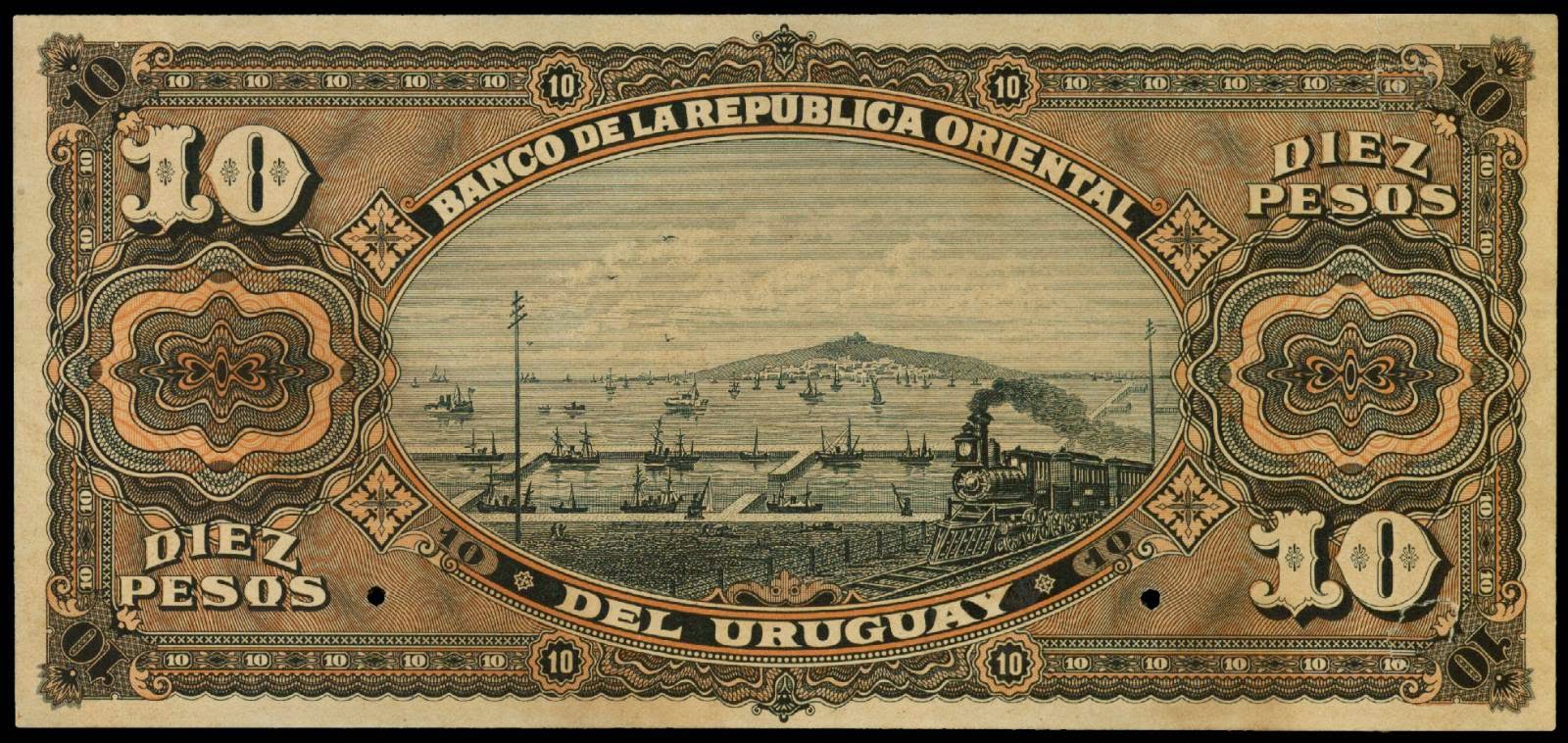
 A strong Uruguayan peso is history, the US$ rules the country.
There is almost no competition in Uruguayan business. Good and intelligent customer service is widely unknown and customers have the feeling they work for the employees and not other way round. If you don’t like anything, you can’t go somewhere else, all bigger companies have their monopol – „eat it or die“! At work employees enjoy themselves, otherwise they don’t need to go for work. Nothing really happens and goes forward. Economy is a sleeping matter, the youth has almost no chance and many go abroad to find their chances.
Land Tenure and Property.
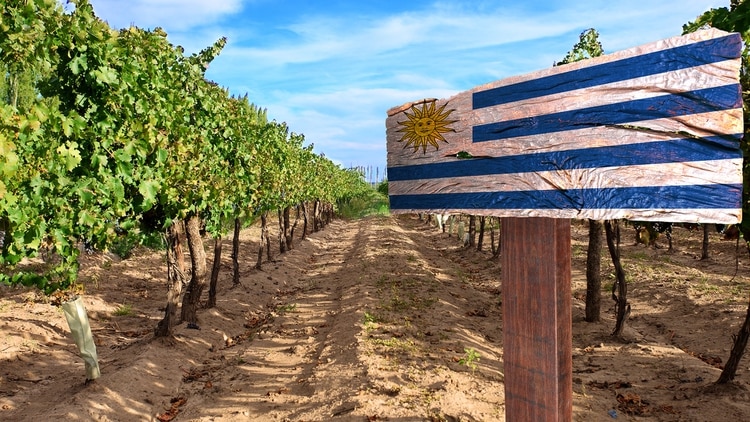
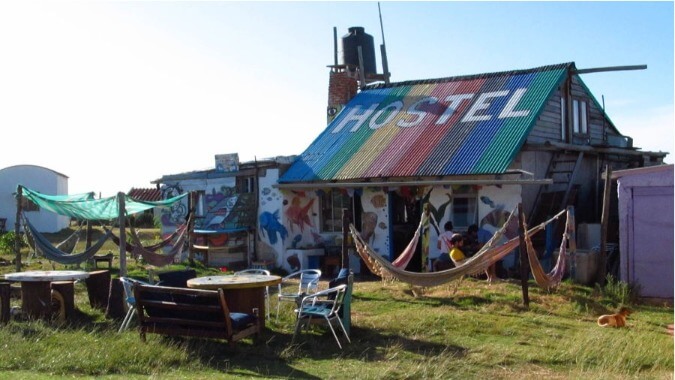
Most land is privately owned, and more than half the territory is divided into large landed ranches that belong to a few families. These properties began to be fenced after the introduction of wool-producing sheep. Historically, land was obtained through titles given by Spanish and Portuguese representatives, distributed by caudillos, or informally occupied. Legal land titles now are registered. Many try to be in business in Uruguay !
Stay tuned to part 2 of this post. Meantime take the chance to read all my other posts about Uruguay, you are only a short click away !
Bibliography.
Davis, William C. Warnings from the Far South, Democracy versus Dictatorship in Uruguay, Argentina, and Chile, 1995.
Ferguson, J. Halcro. The River Plate Republics, Argentina, Paraguay, Uruguay, 1965.
Fitzgibbon, Russell H. Uruguay, Portrait of a Democracy, 1966.
Gilio, Maria E. The Tupamaro Guerrillas, 1972.
Hudson, Rex A., and Sandra W. Meditz. Uruguay: A Country Study, 2nd ed., 1992.
Weinstein, Martin. Uruguay, the Politics of Failure, 1975.

