
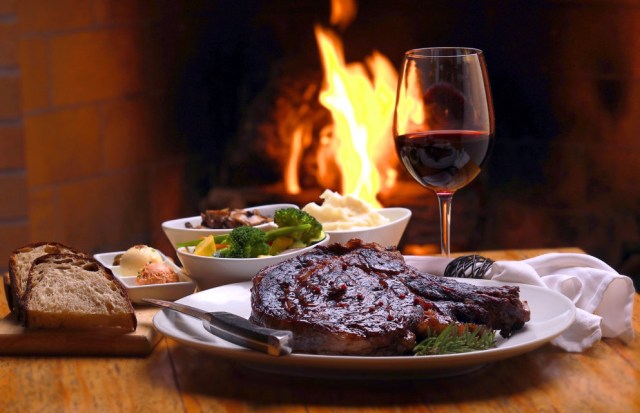
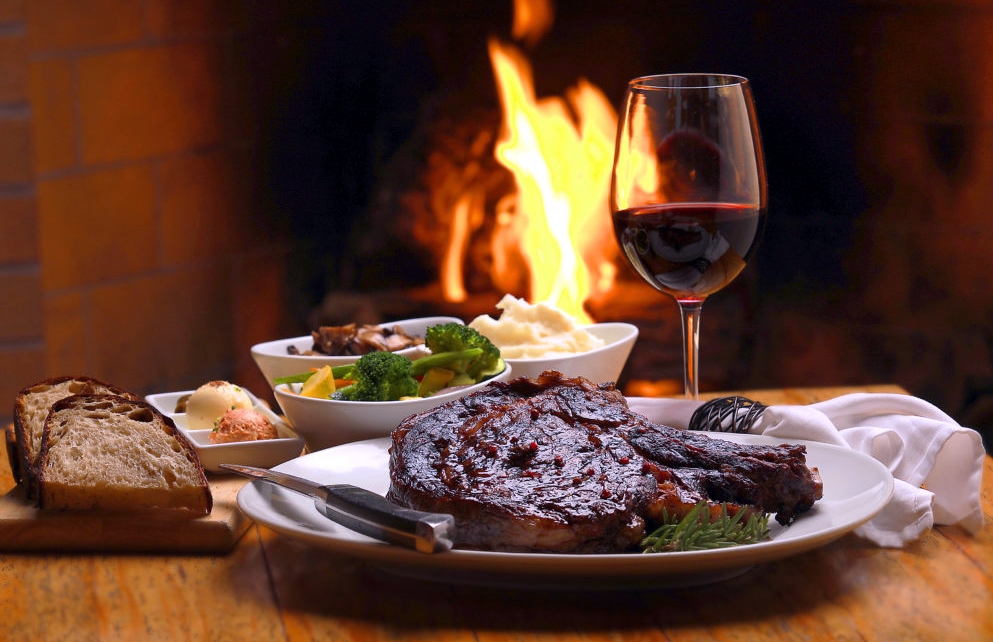
 What a feast, a wonderful Angus steak (450g – 14oz, bone-in ribeye), fresh vegetables, garlic mash, wild mushrooms and three kinds of steak butter. Accomplished with German bread and a strong red wine as well as the atmosphere in front of a crackling open fire . Picture from Saddles Steakhouse at Sonoma. This delicious meal was US$68,–pp incl. wine. WOW !
Last week we had a small „boy’s party“ with fantastic „German potato salad“ and „40-day dry-aged steak“ from the grill. It was delicious as above, but much cheaper. Of course we had a discussion about steaks. What kind, how they are named and what’s the best way to grill it, in a pan or on the „barbie“.
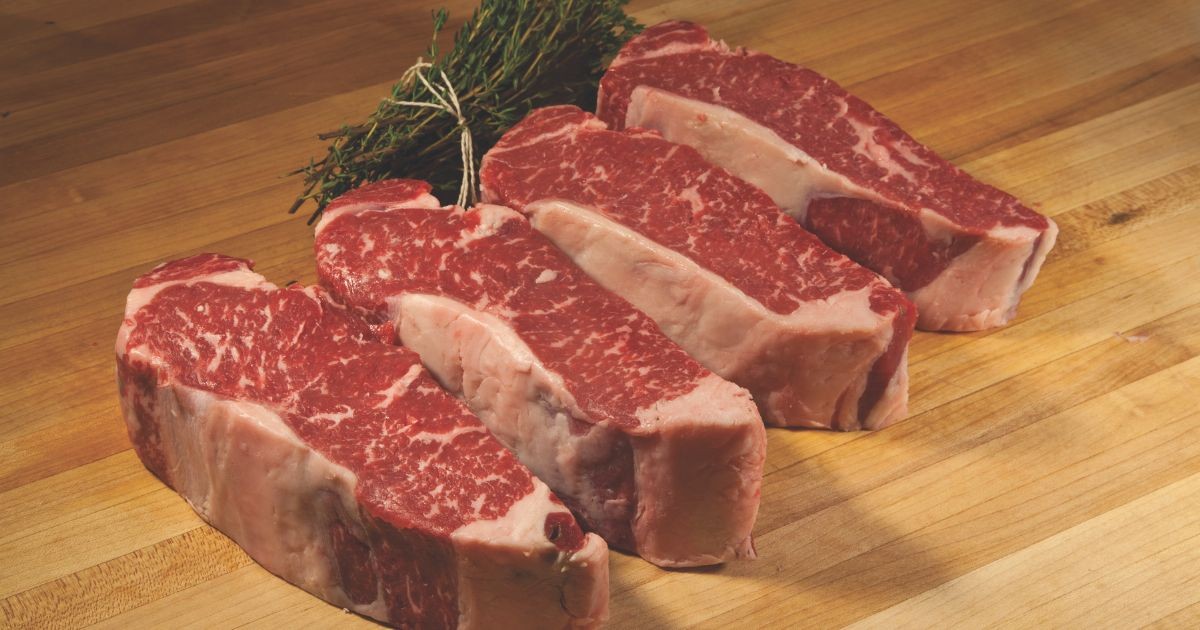
 Our dry aged sirloins. In Uruguay I paid US$ 17,50 per kilogram. In the US they charge for the above 4 sirloins, 16 oz each, 40 days aged (same as we had) around US$ 256,– (that’s US$ 128,– per kilo), seen at „Goldbelly’s“. Unbelievable ! Don’t worry, their delivery is included !
It direct inspired me to write a few basics down, especially because the BBQ season in our southern hemisphere just started. It is so much written about the perfect steak and so many information’s are available that I will concentrate on some basic knowledge only. Still – during my research I came along almost 200 different designations of steak. And that did not include all the steak recipe names. have a look at the following:
https://www.chefs-resources.com/types-of-meat/beef/cuts-of-beef/cuts-of-steak-and-alternate-steak-names/
There are hundreds of different names for steaks sold at restaurants and supermarkets, just in the US.
What’s a steak ?
A steak is a meat generally sliced across the muscle fibers, potentially including a bone. In a larger sense, there are also fish steaks, ground meat steaks, pork steaks and many other varieties of steak.
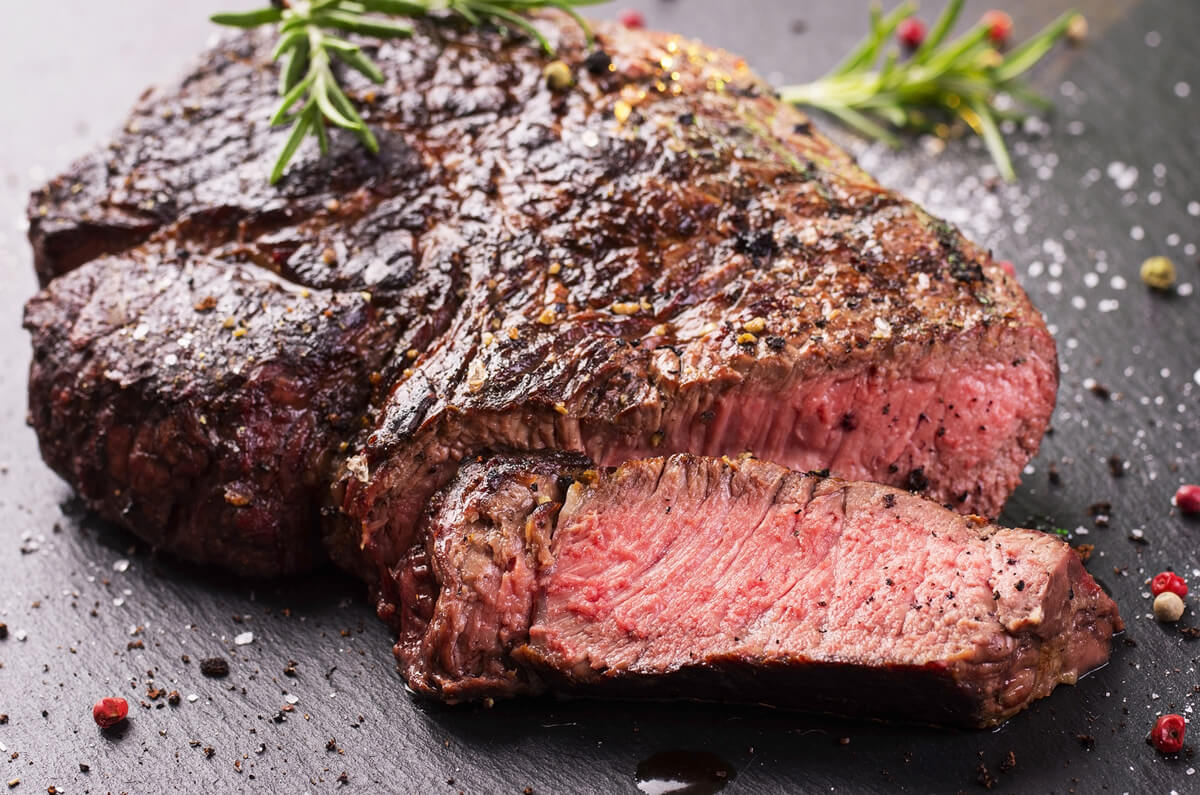
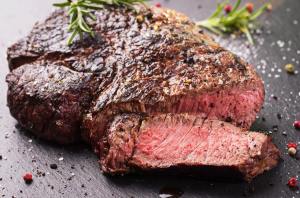 That’s a steak I like ! A 1-pounder, means about 500 gram (16 oz) of finest sirloin, cooked to perfection. Crusty brown outside, juicy and soft rose inside.
Steak is usually grilled, but can be pan-fried or broiled in the oven. Steak can also be cooked in sauce, such as in steak and kidney pie, or minced and formed into patties, such as hamburgers.
Steaks are often cut from grazing animals, usually farmed, other than cattle, including chicken, bison, camel, goat, horse, kangaroo, sheep, ostrich, pigs, reindeer, turkey, deer and zebu as well as various types of fish, especially salmon and large pelagic fish such as swordfish, tuna, shark and marlin.
In this article we will concentrate on „beef steak“ in our usual form of usage.
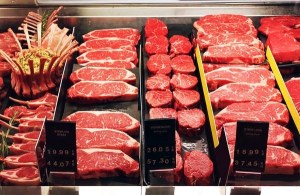 Every butcher should have the chance to offer his cuts like this. But sadly the reality is different.
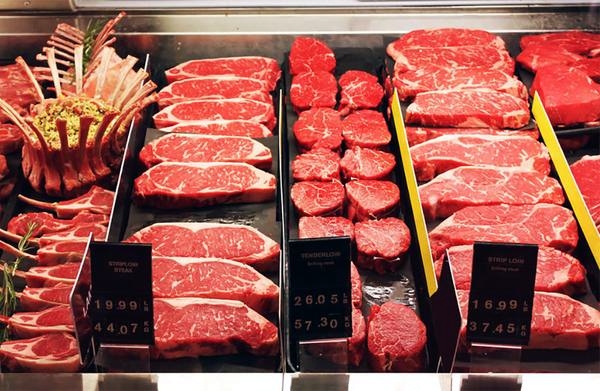
Four cuts of Steak one should know about.
Let’s talk steak – a big, beautiful slab of beef. in my early years I used to only eat steak when I was treated to an old-school steakhouse, while visiting the US or Australia. And while I relished every minute of those meals, the menu always intimidated me. What was the difference between a New York steak and a ribeye ? Why was filet mignon so freakin‘ expensive ? And why we could’nt have restaurants like that in Germany – now we have !
Whether you cook steak at home or save it for a special occasion out like we did, it’s important to know your high-end steak cuts. Here are the four most popular ones, and we’ll cover where they’re cut from, what they taste like, and how best to cook them.
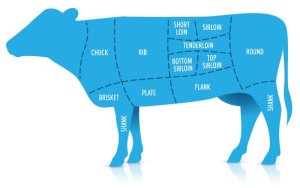 These cut descriptions are US-American and can differ throughout the rest of the world, especially in beef countries like Australia or Argentina and Uruguay. The American cut names are the most well known.
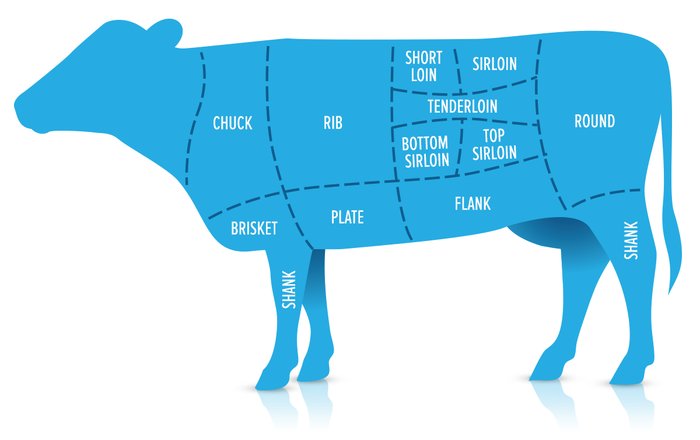
Where Are They From?
Let’s take a look at the cow diagram above. All four of these steaks come from a few muscles in the same general area toward the top of the steer: the short loin, tenderloin, and the ribs. These muscles aren’t exercised very much or contain a lot of connective tissues that need to be cooked for a long time to be broken down. As contrary we know the shank ( osso bucco or haxn etc.) which needs hours of cooking.
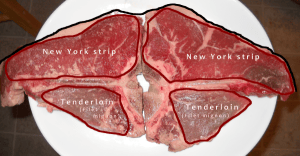 Before cutting into T-bone’s.
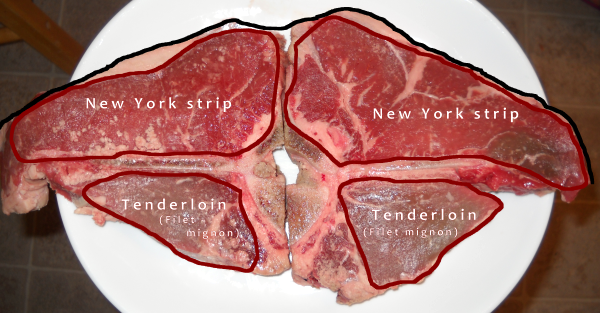
As a result, these steaks are much more tender than other cuts of beef, and fast cooking and intense heat are all that’s needed to char and brown the outside of these meats while the inside can be eaten as rare as you like.
Why Are These Steaks So Expensive?
Relative to the size of the steer, these premium cuts are only a small percentage, which contribute to their premium prices.
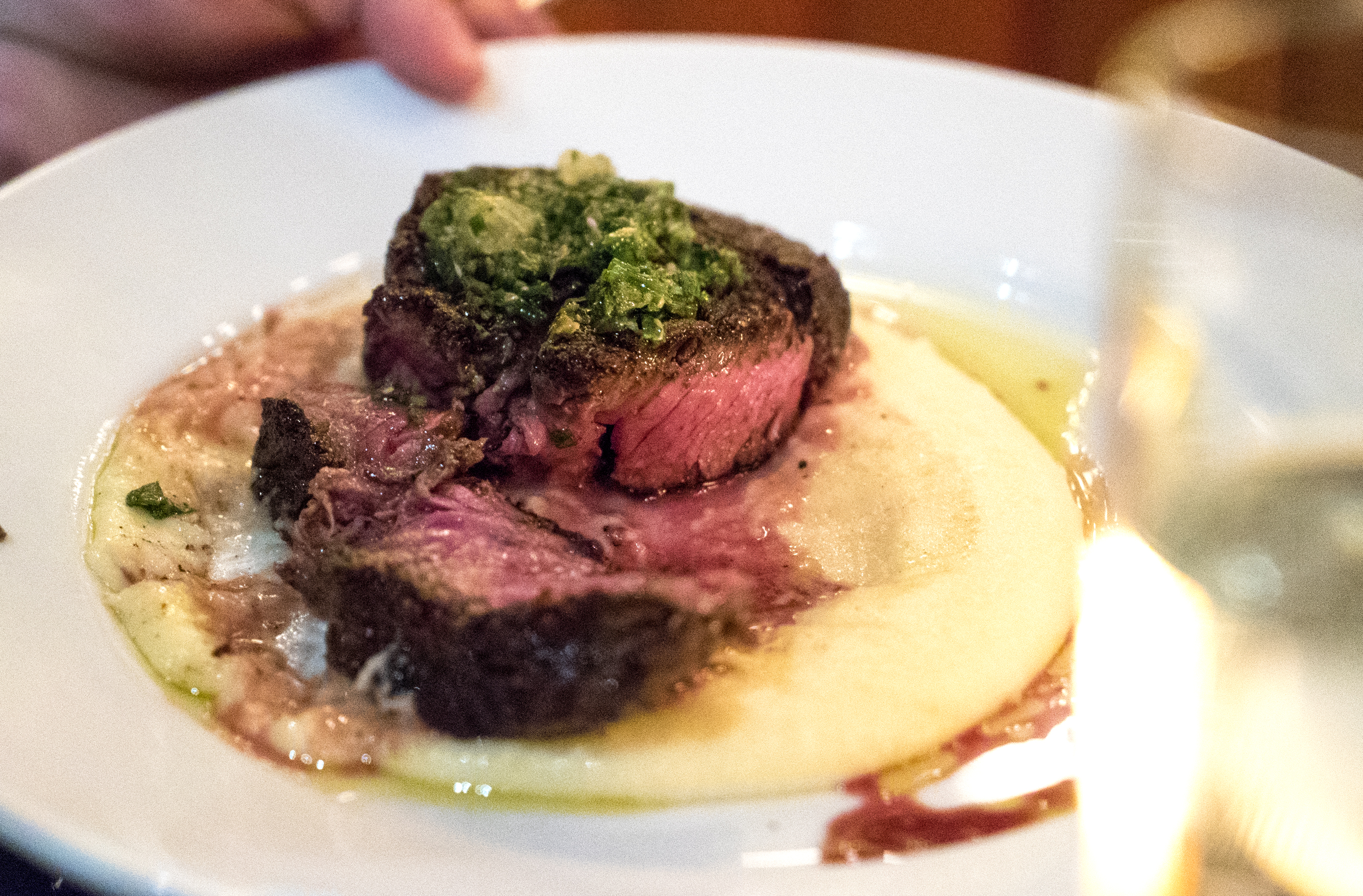
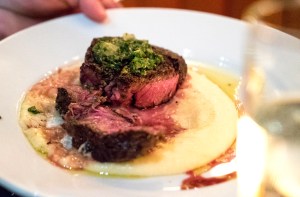 Filet Mignon on garlic mash, cooked medium rare.
Since they’re expensive, it’s really worth knowing how each one is different so you buy the one that you like the best! Do you like big beefy flavor, or is the tenderest cut your favorite? Here’s everything you need to know about each important cut so that you make a wise choice. But don’t try in Uruguay, these cuts are widely unknown and almost not available. The broad mass of Uruguayans eat what’s cheap and often crap to my taste. Real good meat (and expensive) is exported and very hard to get here.
1. Tenderloin.
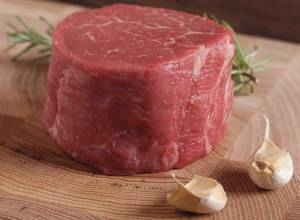 A Tenderloin or filet steak. In French, the word filet means ribbon, and the filets, two per animal, run like ribbons down the base of the spine. These two muscles on the animal move very little and, consequently, remain tender, hence, the tenderloin.
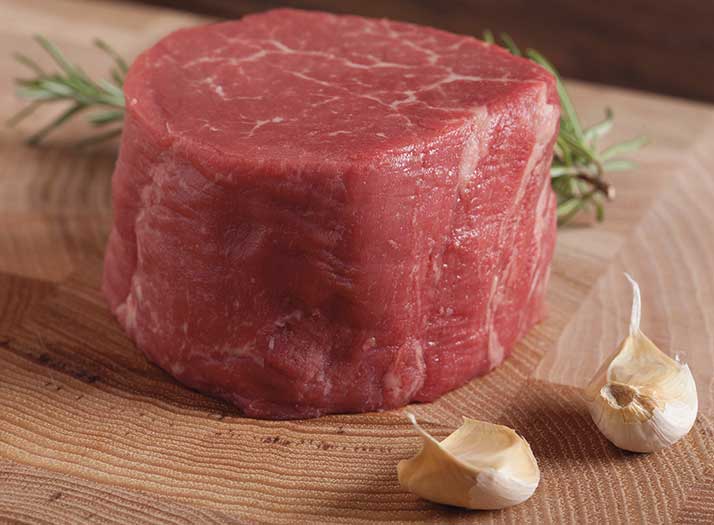
Other names: Filet Mignon, Chateaubriand, fillet, filet.
How it’s sold: Mostly boneless; the most expensive cut of steak.
Where it’s from: Short loin and sirloin, under the ribs. A whole tenderloin starts out wide and then tapers at the other end (the „tail“). Filet Mignon is from the smaller end; Chateaubriand the thicker end.
What it looks like: When trimmed of silver skin, gristle, and fat, tenderloin is small and compact. The meat is lean and very fine-grained in texture. Because of its smaller shape, tenderloin steaks are cut thicker than most other steaks.
What it tastes like:The tenderest of all the steaks and lean, tenderloin is buttery and mild in flavor.
How to cook it: Because cuts of tenderloin tend to be thick, the best way to cook it is to sear the outside until browned, then finish the cooking in the gentle, even heat of an oven.
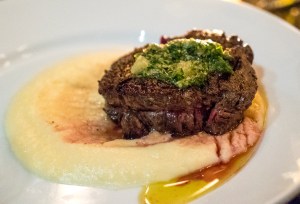 Small/dainty and no bone, that’s Filet Mignon.
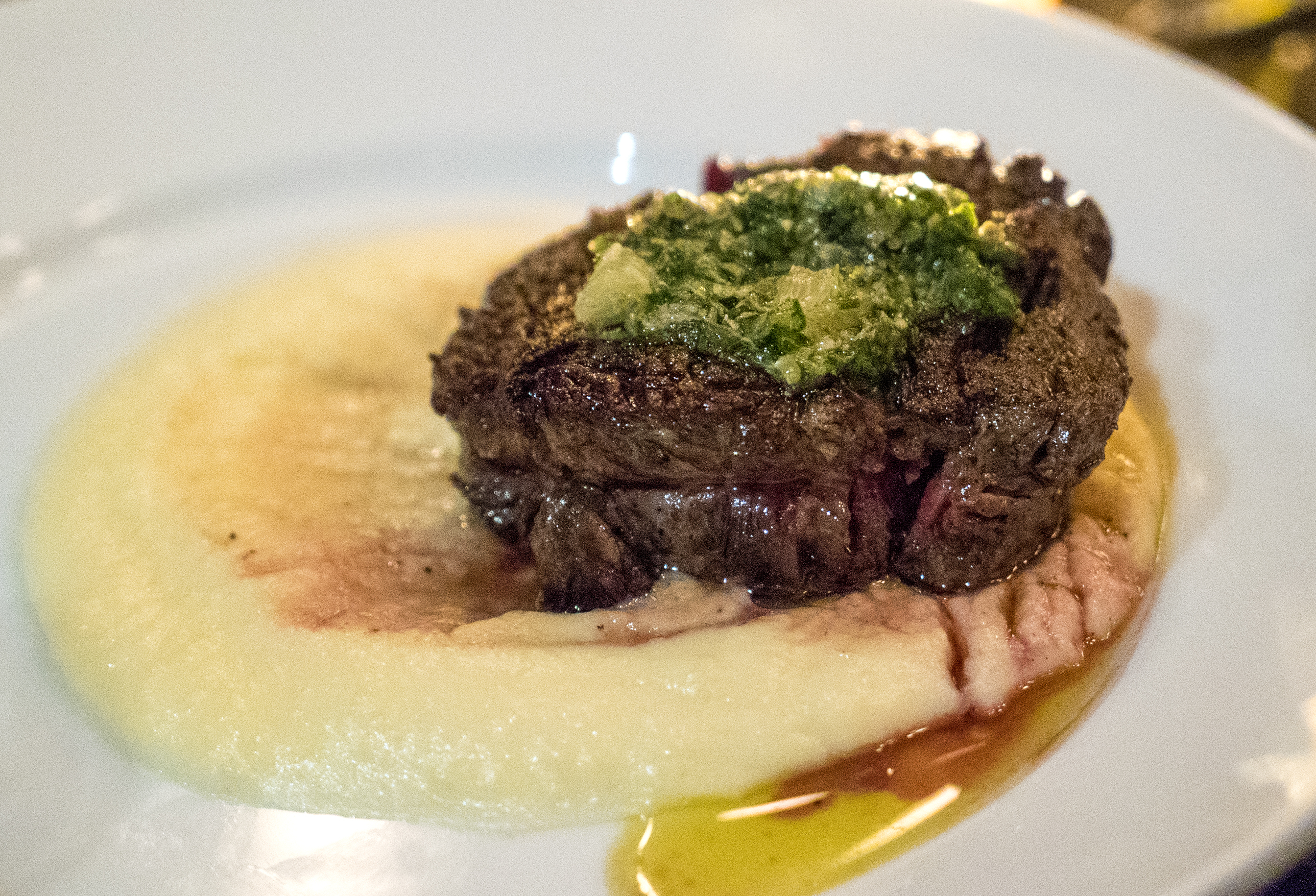
Filet, in culinary terminology, means boneless. Mignon, in French, means dainty or small. As such, this is a steak ideally suited for „chicks“: small/dainty, and with no bone.
2. New York Strip.
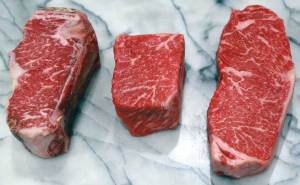 Some New York cuts, with bone or no bone.
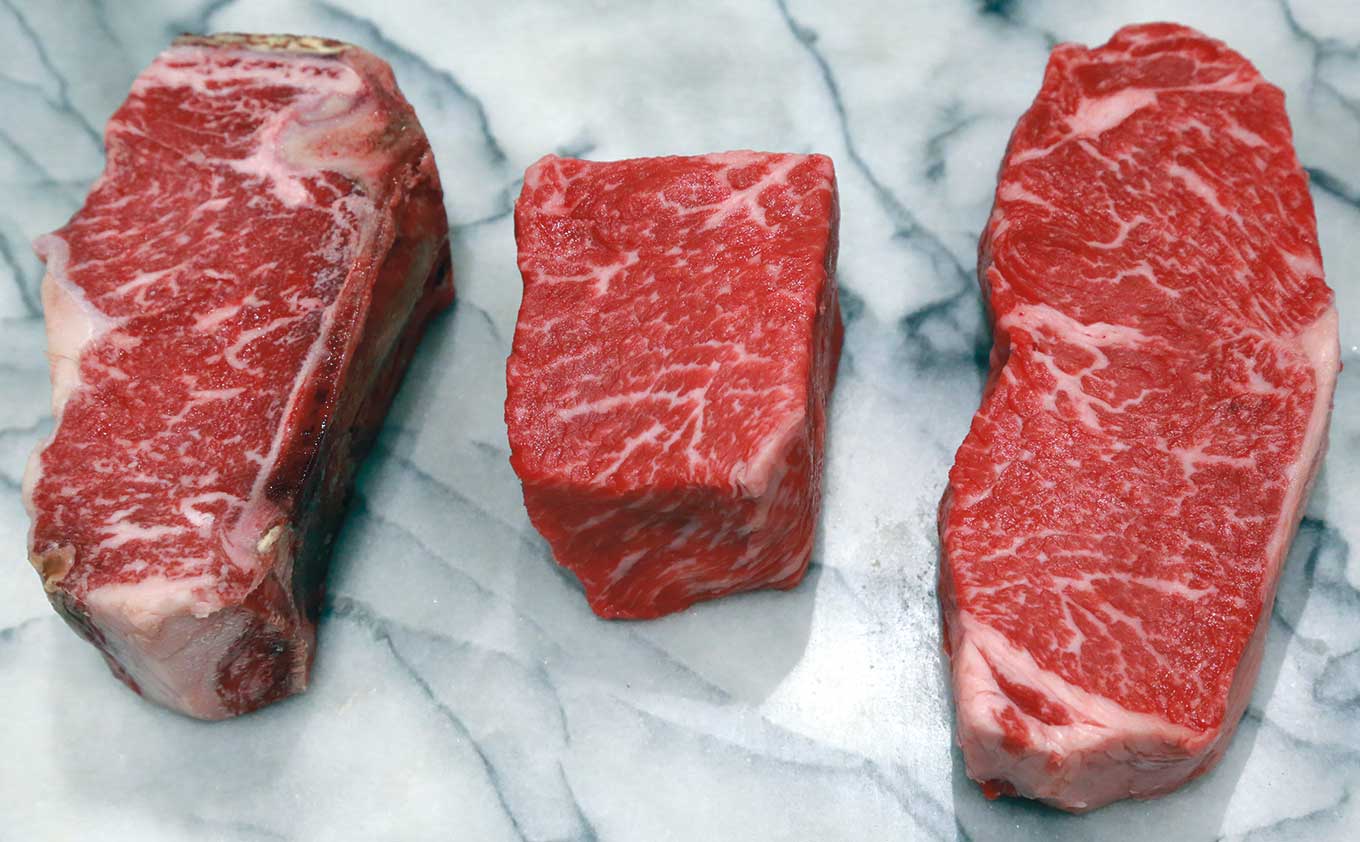
The New York is a strip steak from the short loin, located next to the top of the tenderloin. Speculation is that the Kansas City strip steak changed its label to New York through the cut’s association with Delmonico’s restaurant in the Big Apple. The strip steak popularized near the stockyards of Kansas City traditionally is a bone-in cut. New York strips often are boneless.
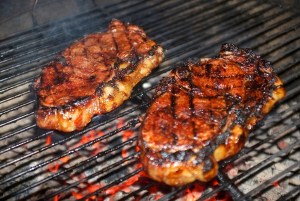 Grilled New York Top Sirloin.
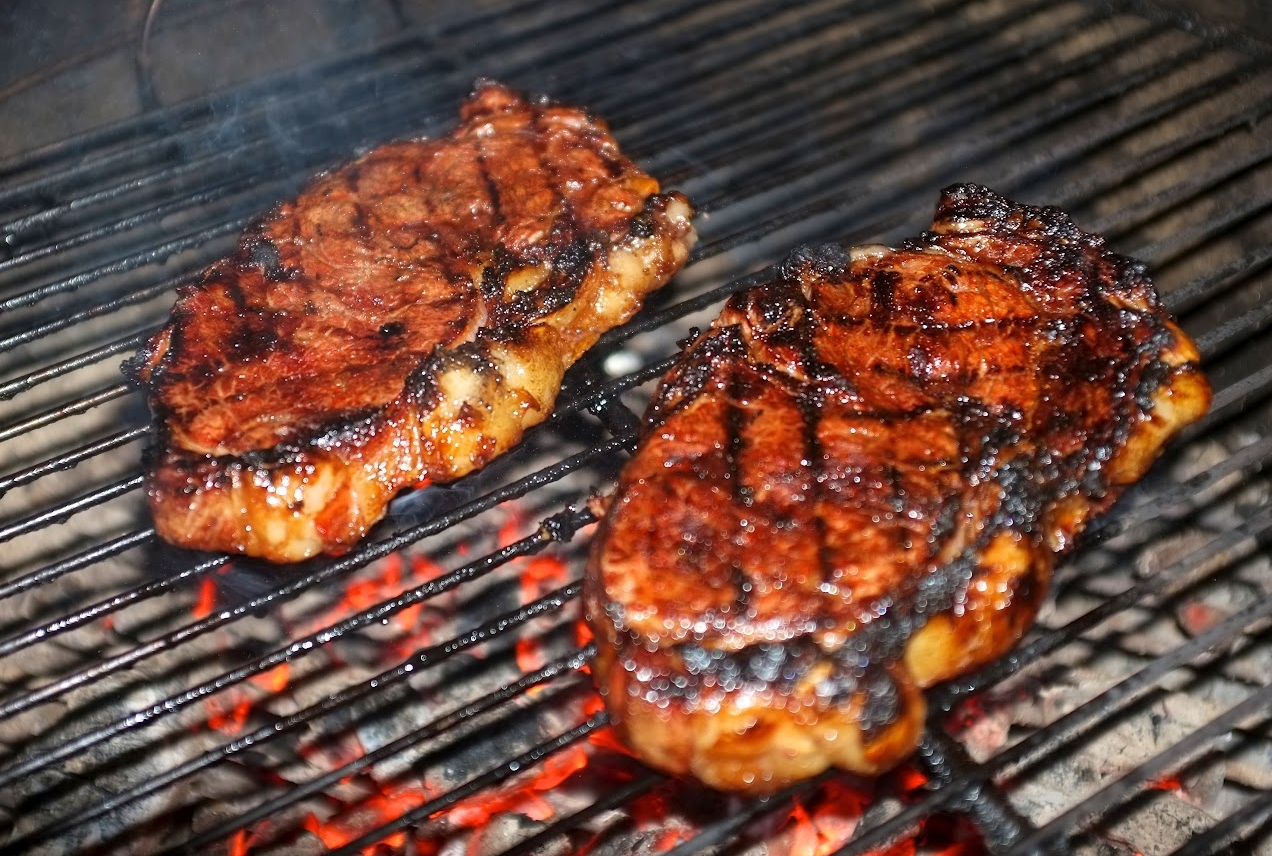
Other names: Strip, Manhattan, Kansas City strip, top sirloin, top loin, contre-filet.
How it’s sold: Usually boneless.
Where it’s from: Short loin behind the ribs.
What it looks like: Fat on one edge of the steak. While there is some fat marbling throughout, there are no large pockets of fat. The meat is fine-grained in texture.
What it tastes like: With medium fat content, New York strips are tender, but not as tender as tenderloins or ribeyes, and have good, beefy flavor.
How to cook it: Cook over high heat – pan-sear, broil, or grill.
3. T-Bone.
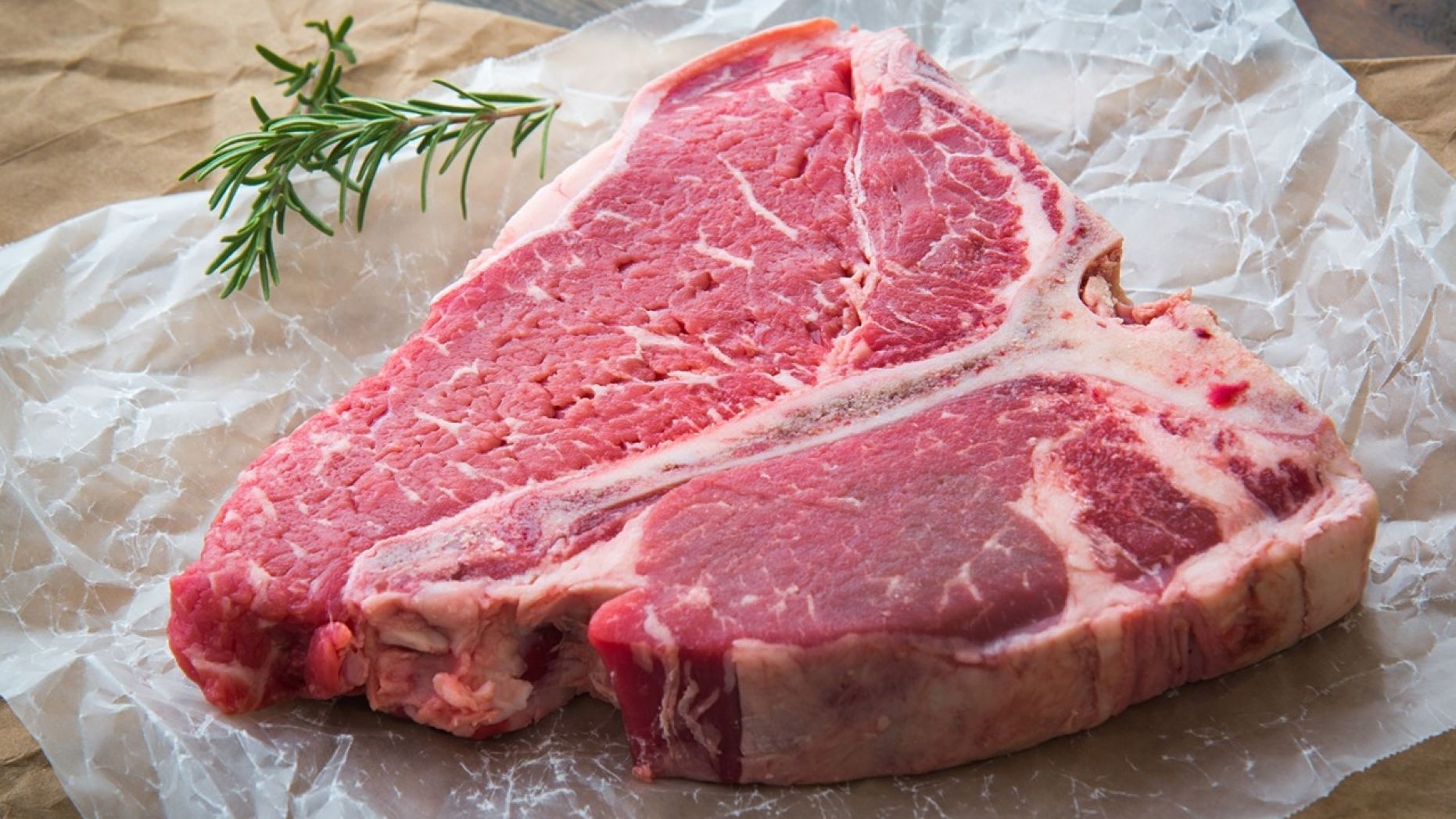
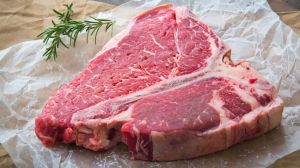 The typical T-bone steak.
Other names: Porterhouse.
How it’s sold: Bone in. Usually the Porterhouse has a thicker part of tenderloin.
Where it’s from: A cross section of the unfilleted short loin.
What it looks like: The name says it all; there is a T-shaped bone with meat on both sides of the longer portion of the bone. On one side is a piece of the tenderloin (smaller part), and the other side is New York strip (bigger part). Generous fat marbling throughout.
What it tastes like: You get the best of both worlds with this cut: super-tender, buttery tenderloin, and beefy, juicy strip steak.
How to cook it: Because there are basically two different kinds of steak in one cut, you have to be careful when cooking since the tenderloin will cook more quickly than the strip side. Try to keep the tenderloin further away from the heat source. Use a two-level fire when grilling or position it away from the heating element if broiling.
 Typical T-bone on the grill.
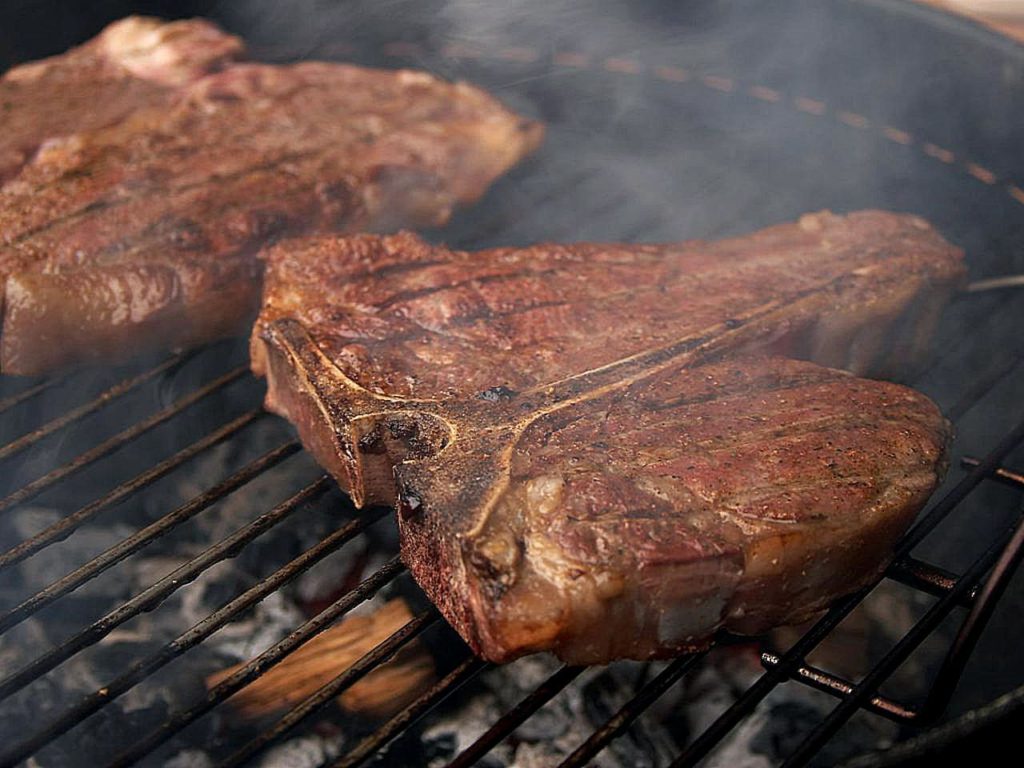
T-bones and porterhouse steaks sit next to each other on the muscles and contain both the New York and the filet. The porterhouse comes from the section further back than the T-bone, so the tenderloin is larger. Both have a distinctive T-shaped bone. As for the name porterhouse, food historians don’t seem to agree. Some attribute it to a New York tavern that served porter and steak, others to a Cambridge, Massachusetts, hotelier named Zachariah Porter. Most claims date back to the early nineteenth century, which tells us this steak will not go out of popularity any time soon.
 Is it a T-bone or a Porterhouse ? Very confusing.
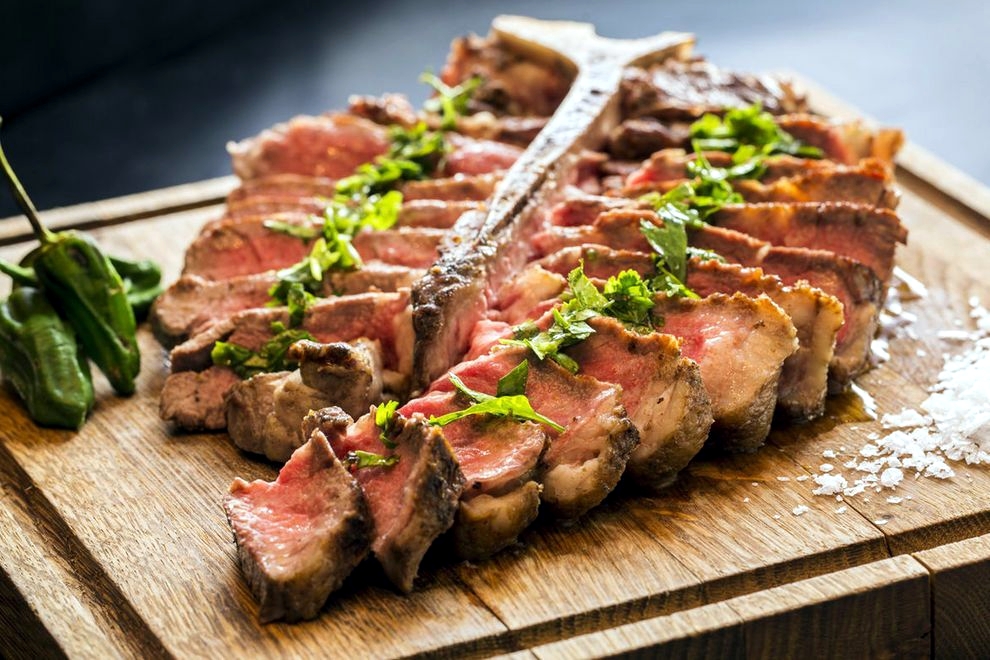
While, T-bones are cut from the short loin like the Porterhouse, according to the USDA, only steaks cut at least 1.25” thick can wear the Porterhouse name. Some people think this is the thickness of the cut when it’s served on your plate, but it’s actually 1.25” from the bone to the widest part of the Filet. To achieve this, the chop is taken from the rear end of the short loin, the thickest part of the tenderloin. T-bones, on the other hand, include a smaller cut of filet.
4. Ribeye.
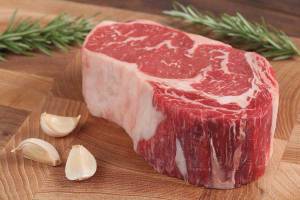 Beautiful 2 inch Ribeye steak.
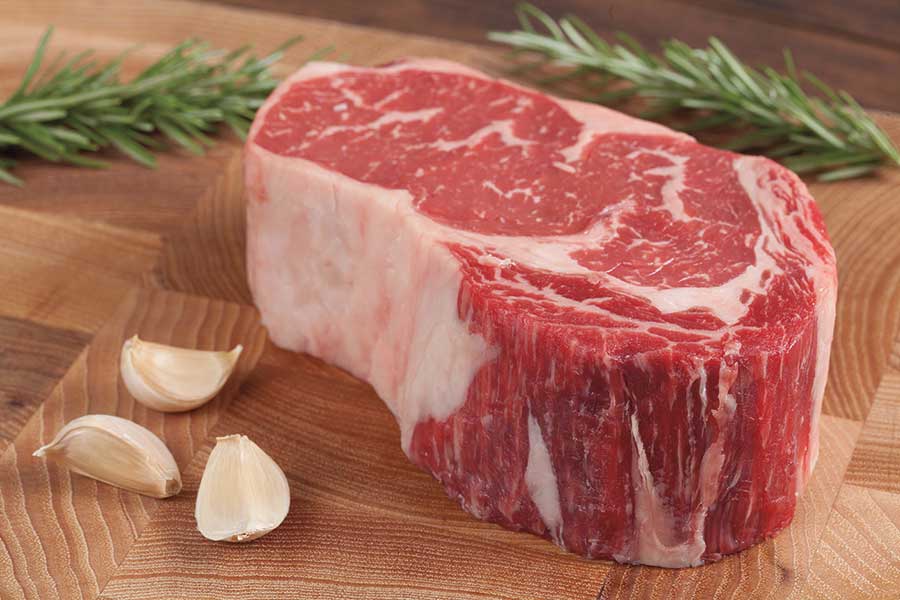
Other names: Entrecote, Delmonico, Scotch fillet, Spencer, market etc.
How it’s sold: Bone in or boneless.
Where it’s from: Upper rib-cage. Ribeyes are basically a prime rib or standing rib roast cut down into individual steaks.
What it looks like: Lots of fat marbling the meat and large pockets of fat interspersed throughout. The middle (central eye) has a finer grain while the outer section is looser and fattier.
What it tastes like: Super beefy, juicy, and flavorful.
How to cook it: Cook over high heat — pan sear, broil, or grill. With the high fat content, though, you need to be careful about flareups.
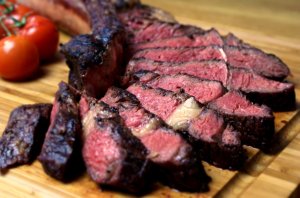 Ribeye grilled to perfection. One can still see the fat-eye after cutting. It melts in your mouth.
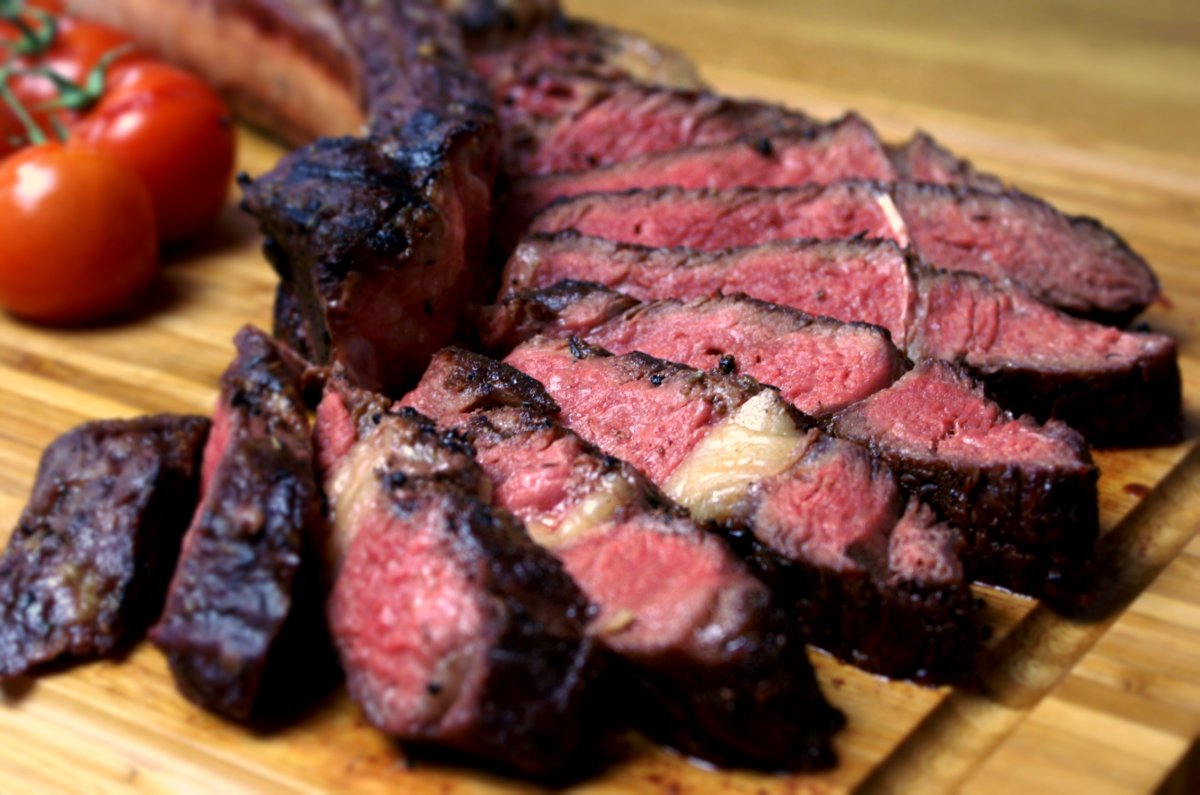
Not so much of a labeling mystery when you look at the cut, the ribeye is one of the most flavorful of all steaks, bone-in or boneless. The loin has an eye-shaped piece of meat surrounded by a fat cap. This part of the long loin muscle sits further forward than the short loin and may not be as tender as the New York or the filet but is the cut used to grade the animal, based on the fat marbling.
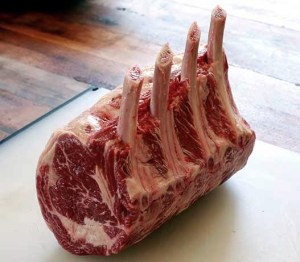
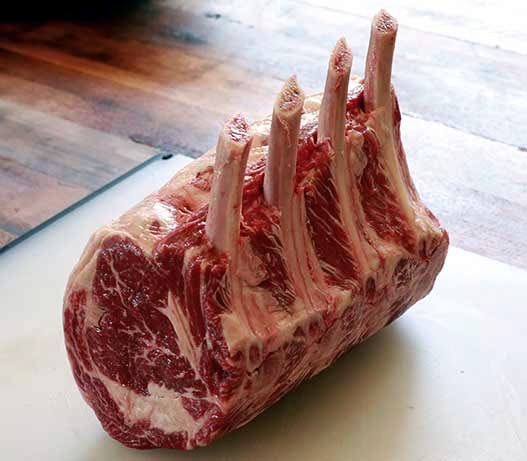
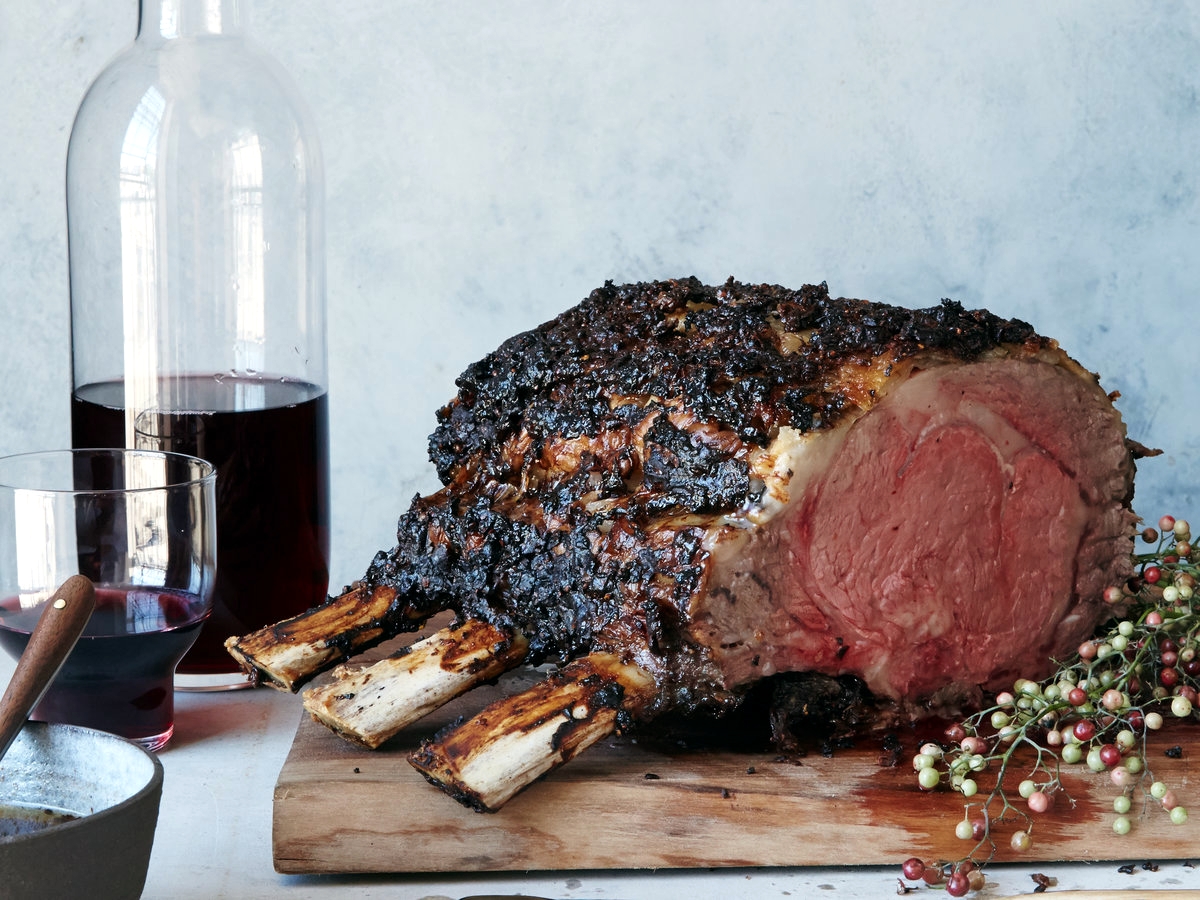
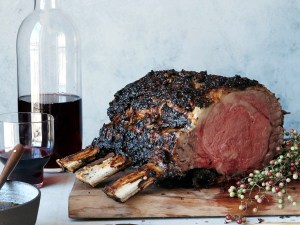 Beautiful rack of prime-rib. cooked as a pepper crusted roast. The definition „prime“ does not certify a quality, it just tells the position where the cut came from.
General advice on grilling steak.
1. A quality steak does not need to be marinated. Successive chemical reactions gradually form aromatic composites and brown pigments. This process is optimal at 150 C (300 F). This reaction is very important as it optimizes the taste.
2. Avoid adding spices during or after cooking. Salt will dry the surface of the meat and pepper might burn the steak. Let your guests season their steak to their own taste, AFTER serving. Good service is offering salt, pepper, steak-butter and/or different sauces.
3. Do not cook meat immediately after taking it out of the refrigerator. Keep your steak at room temperature for 30 to 60 minutes before cooking to prevent thermal shock and avoid that the steak only cooks on the exterior. This mistake is made very often and people end up with „burned meat outside“ and „raw, under-cooked meat inside“.
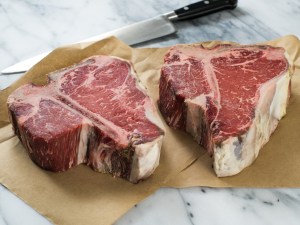
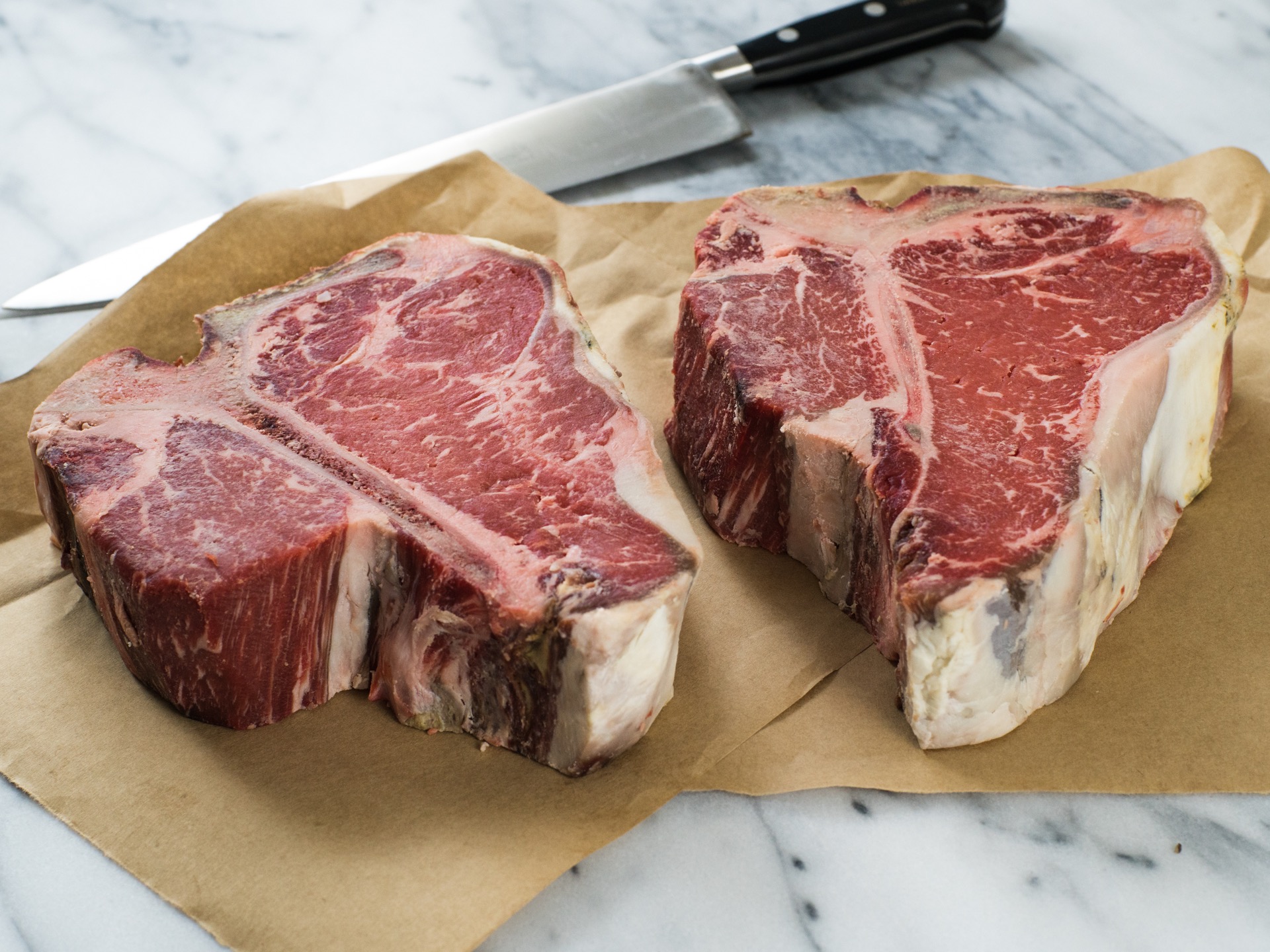
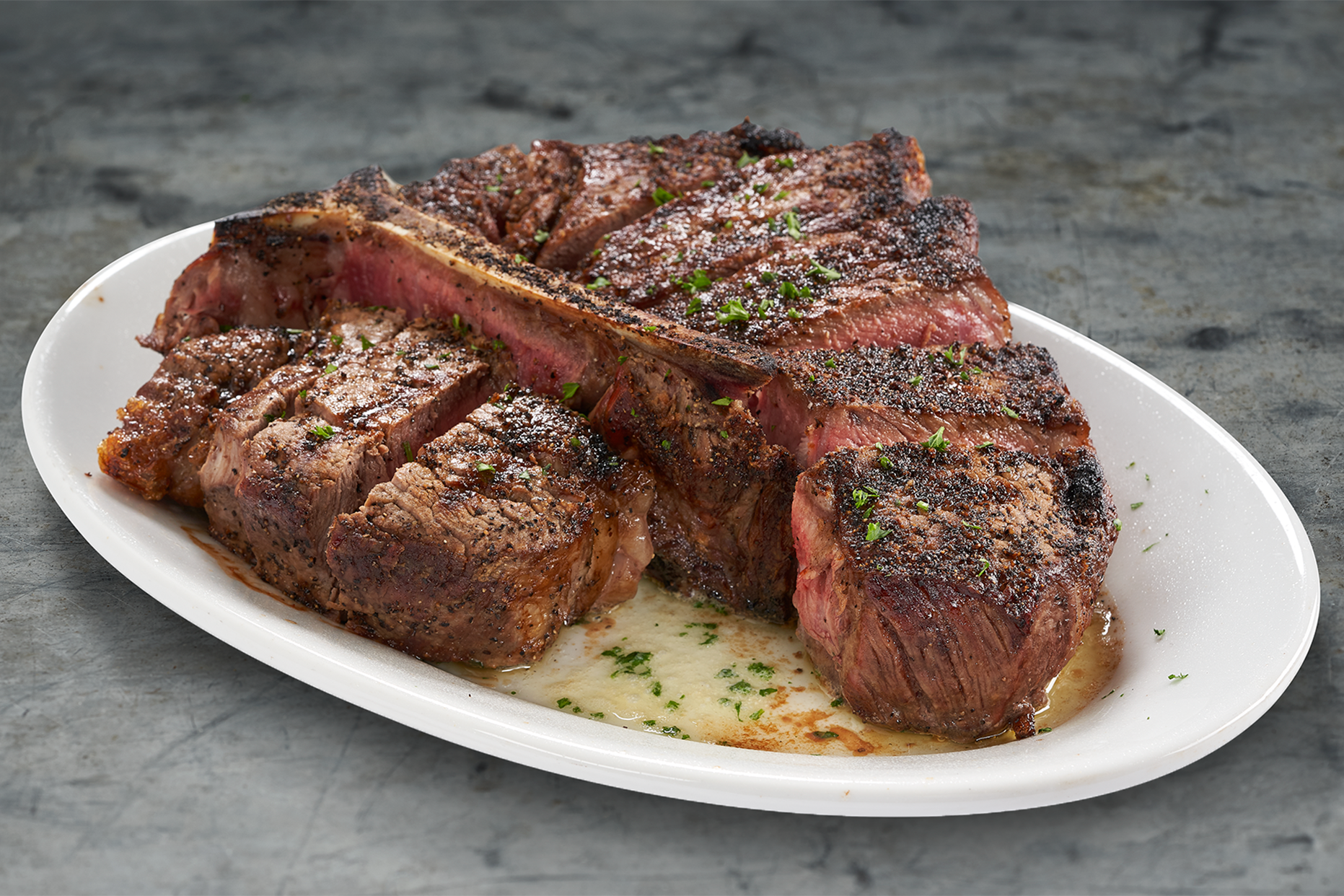
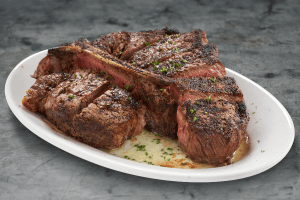 Fantastic porterhouse steaks. Bone-in grilling needs a bit experience, because one can burn the meat far from the bone and still leave the meat direct on the bone under cooked.
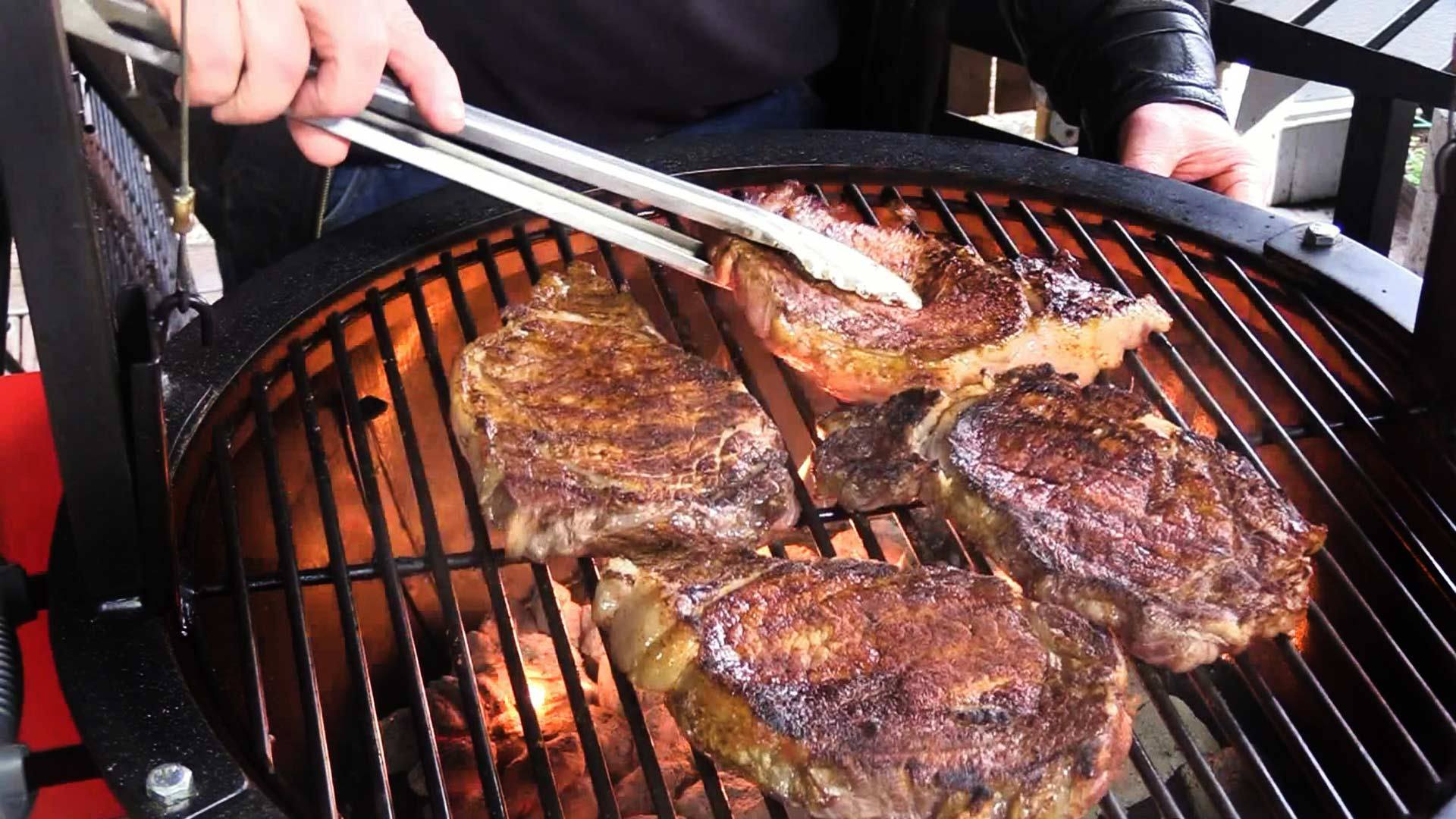
4. Cook the meat on a pre-heated surface. It has to sizzle. If you do not hear any sizzling, the temperature is too low. Remove it and wait until the temperature rises. Sear the steak and do not move it. Let the heat do its job. Turn the steak only once. Do not puncture the meat, that only allows the juices and the flavor to escape. Use claws instead. Do not cut a piece of meat to check if it is cooked. Simply press down on the steak. If meat is firm, it is well done; less firm, less done.
5. Do not use butter, it burns at 120-130 C (250 F). It will give a bad taste to the meat and is also unhealthy. Use a higher temperature cooking oil such as sunflower oil.
6. After cooking, let the meat stand for one minute under indirect heat. Remove from heat and let stand for another 3 to 5 minutes depending on thickness. This enables the redistribution of juice throughout the entire piece giving it a uniform color and a more easy to chew texture.
7. Finally, don’t be afraid of thick cuts, between 3 and 5 centimeters (around 2 inch). Those cuts will give you good „meat room“ for a delicious crust and a soft, juicy inside.
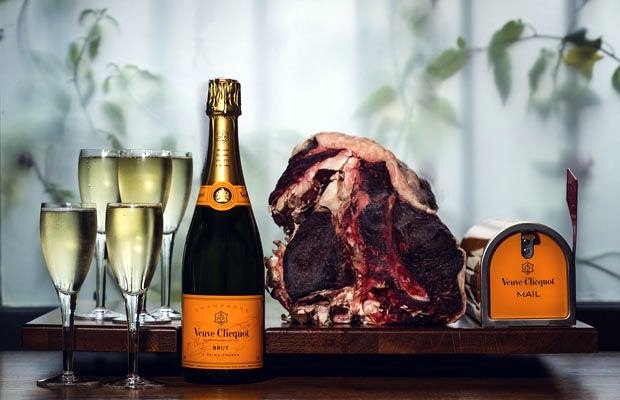
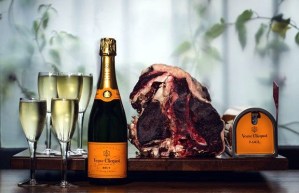 Advertising of Veuve Clicquot. Shown with a 70 day dry aged T-bone rack. Isn’t that some kind of decadence ?
Specific advice on cooking dry-aged beef.
The aged rib steak, unique in itself, requires a slightly different cooking method than that of the traditional beef. You must make sure that your cooking oil (if you use oil) can withstand high temperatures. You must also make sure that the oil is very hot or that the grill is at maximum.
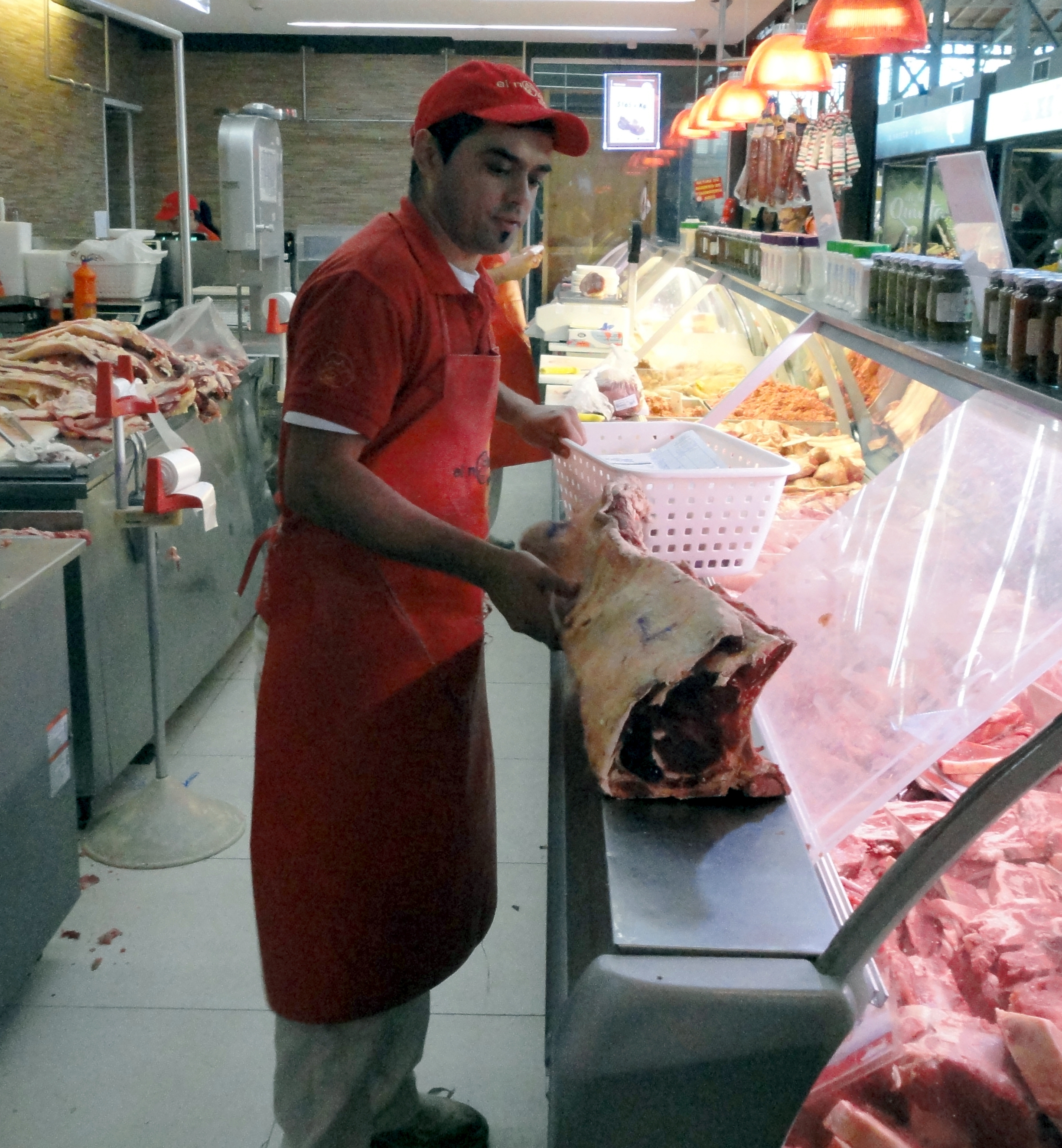
Here in Uruguay is one butchery able to sell dry aged meat. The offer is usually between 25 and 30 days aged and they sell „bone in ribeye“ as a standing rib roast. Price is around $580,–pesos per kilogram (c. US$18,–dollars). Different cuts or longer aging is available on preorder. One has to buy the whole roast. See my post „MAM Montevideo“, May 2017.
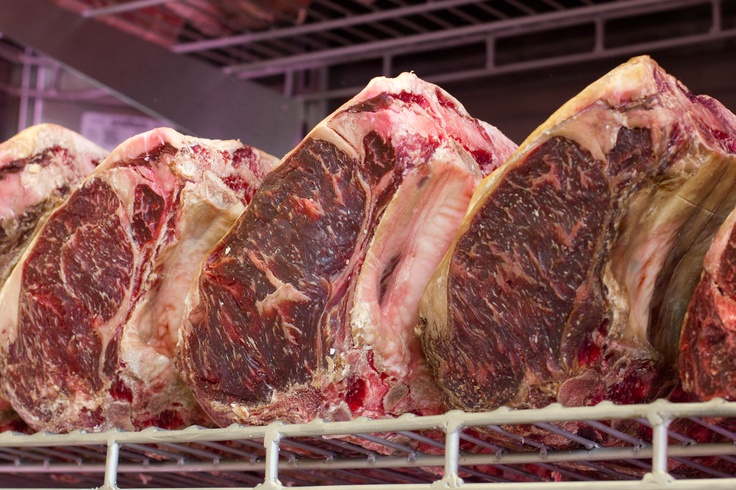
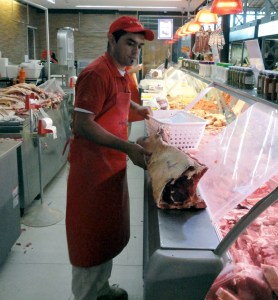 My Rack of dry-aged ribeye at MAM, Montevideo. Purchased for our „little steak party“, around 6 1/2 kilogram. It was a preorder for 40 days aging, absolute fantastic. The unused piece is frozen till our Christmas Chateaubriand.
How to do.
* Place the steak on a pre-heated (very hot) surface, do not puncture or move it. You can brush a bit oil on the grill, nothing else. No seasoning, nothing on the meat – please ! When you put your meat on the hot surface it MUST SIZZLE !
* When you reach half the cooking time (see below), turn the steak. But, please, not with a fork, use tongs and turn carefully. Just one turn – that’s it !
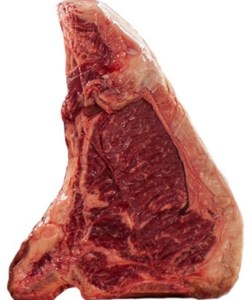
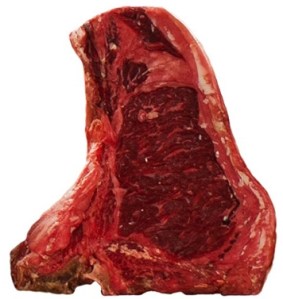
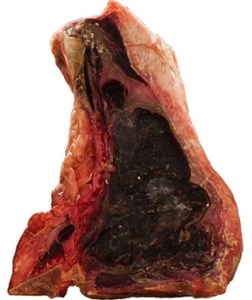
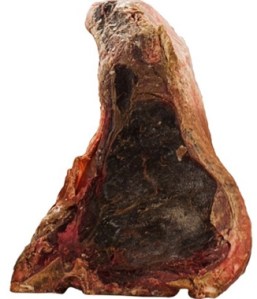
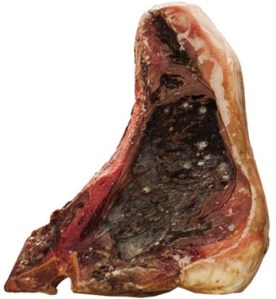
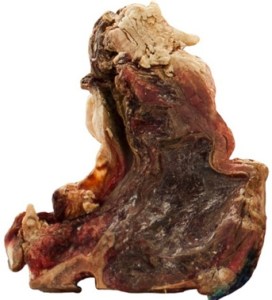 The above 6 pictures show the dry aging process between 20 and 100 days. If you buy dry aged beef then your butcher will always cut off the moldy front side, don’t worry.
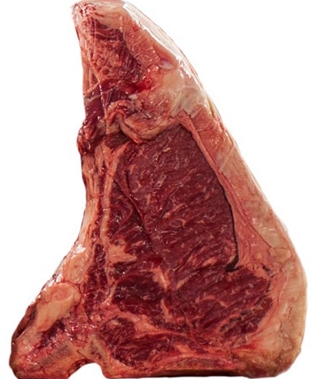
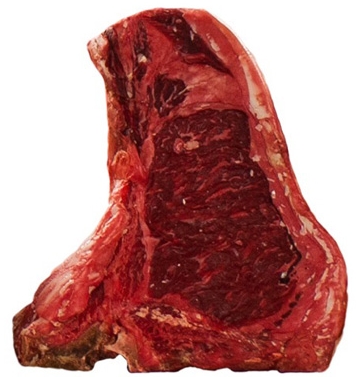
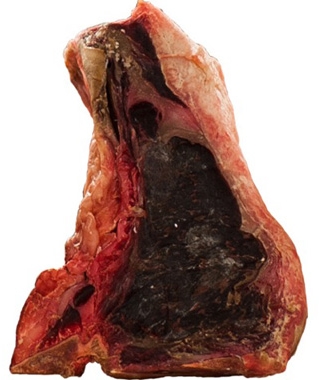
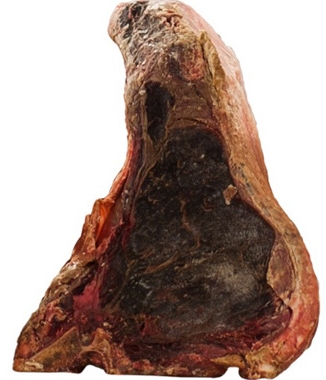
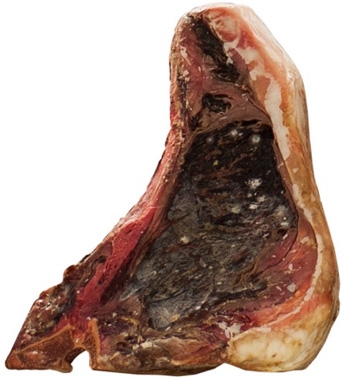
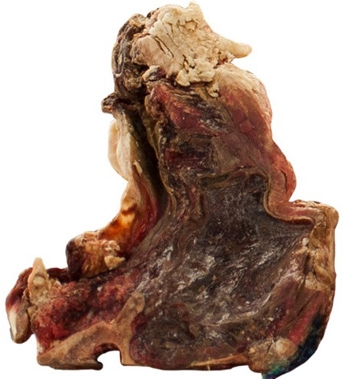
* Do not exceed the suggested cooking time. This cooking time delivers a wonderful crust and inside „juicy rose = medium“, in Uruguay we would say „al punto“. In general you’ll find out your own best cooking time, but dry aged meat needs a shorter cooking time.
* Remove the steak and place in a pre-heated oven at 160 C (325 F) for 2 minutes. I like to skip this part and let the steak rest under a foil for 2-5 minutes. Be patient and wait !
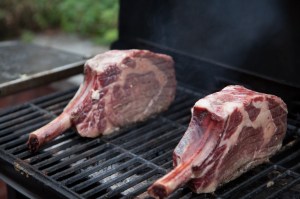 Standing steaks, for grilling or resting. Perfect as you can see on white covered coal, smoke from sizzling hot iron and no flame ! Flames are on many pictures to see, but that’s made for the pic – we don’t want it during grilling, except sometimes a bit when juice is dripping down.
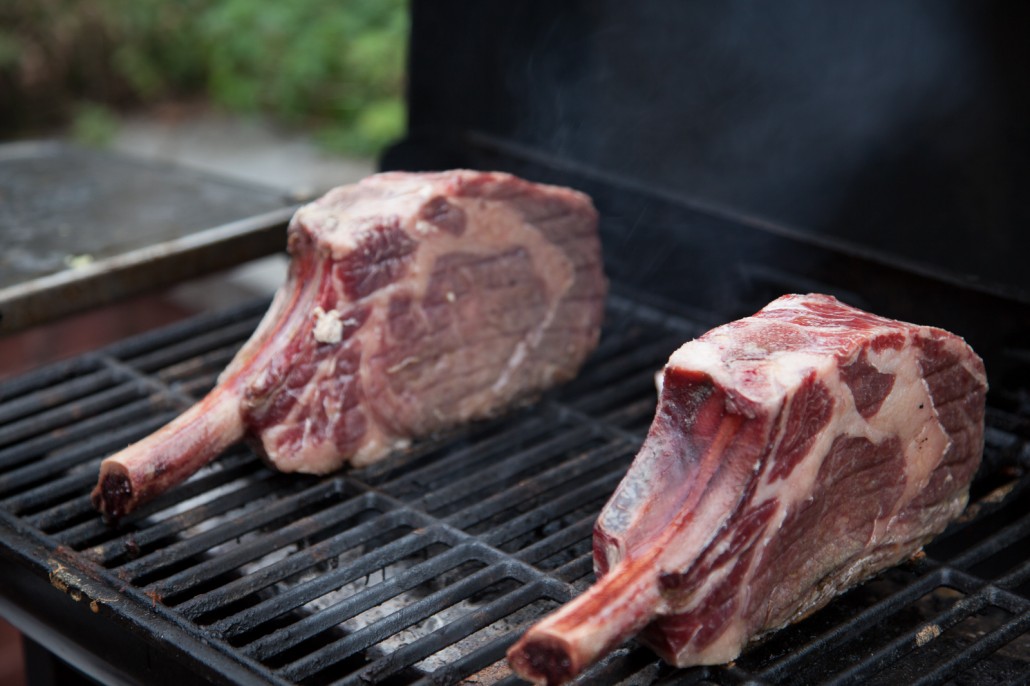
* On a grill, let the steak stand ( on the bone or fatty side) on the upper grill for 1 minute.
* The steak must be rare, but room temperature.
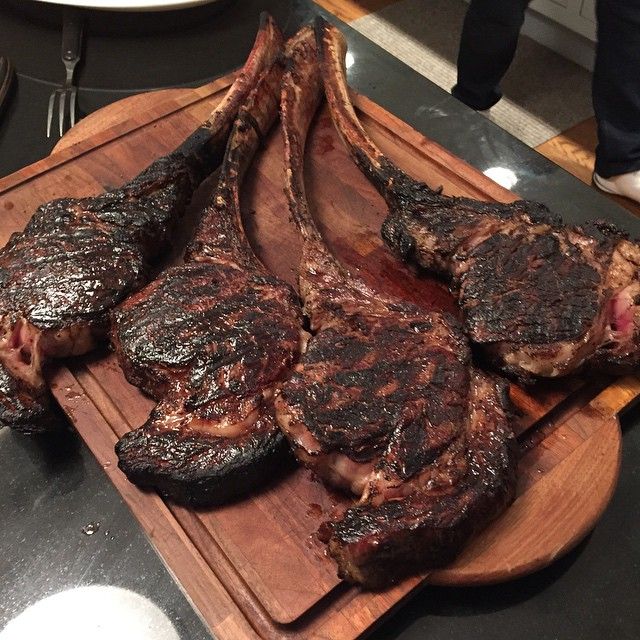
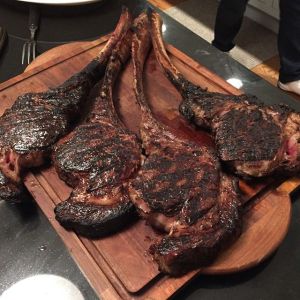 30 day aged „tomahawk“ rib steak. They leave the rib bone uncut, that it looks like a tomahawk. Made to show off in restaurants. I did that once for friends, to show off, as said. We had great fun to hold it in our hand and chew it from the bone.
Cooking times:
Dry aged rib steak (25 – 40 days) cooking must be rare.
Cooking time, in the heavy cast iron pan or on the grill:
Cut 1 1/4 inch – 6 min; 4 min
Cut 1 1/2 inch – 7 min; 5 min
Cut 2 inches – 10 min; 7 min
These times will result in a medium-rare, juicy steak. DO NOT EXCEED THE COOKING TIMES ! In case you like to grill thicker pieces of meat, then I suggest the cooking method like a Chateaubriand. But that’s a different story, may be in an upcoming post.
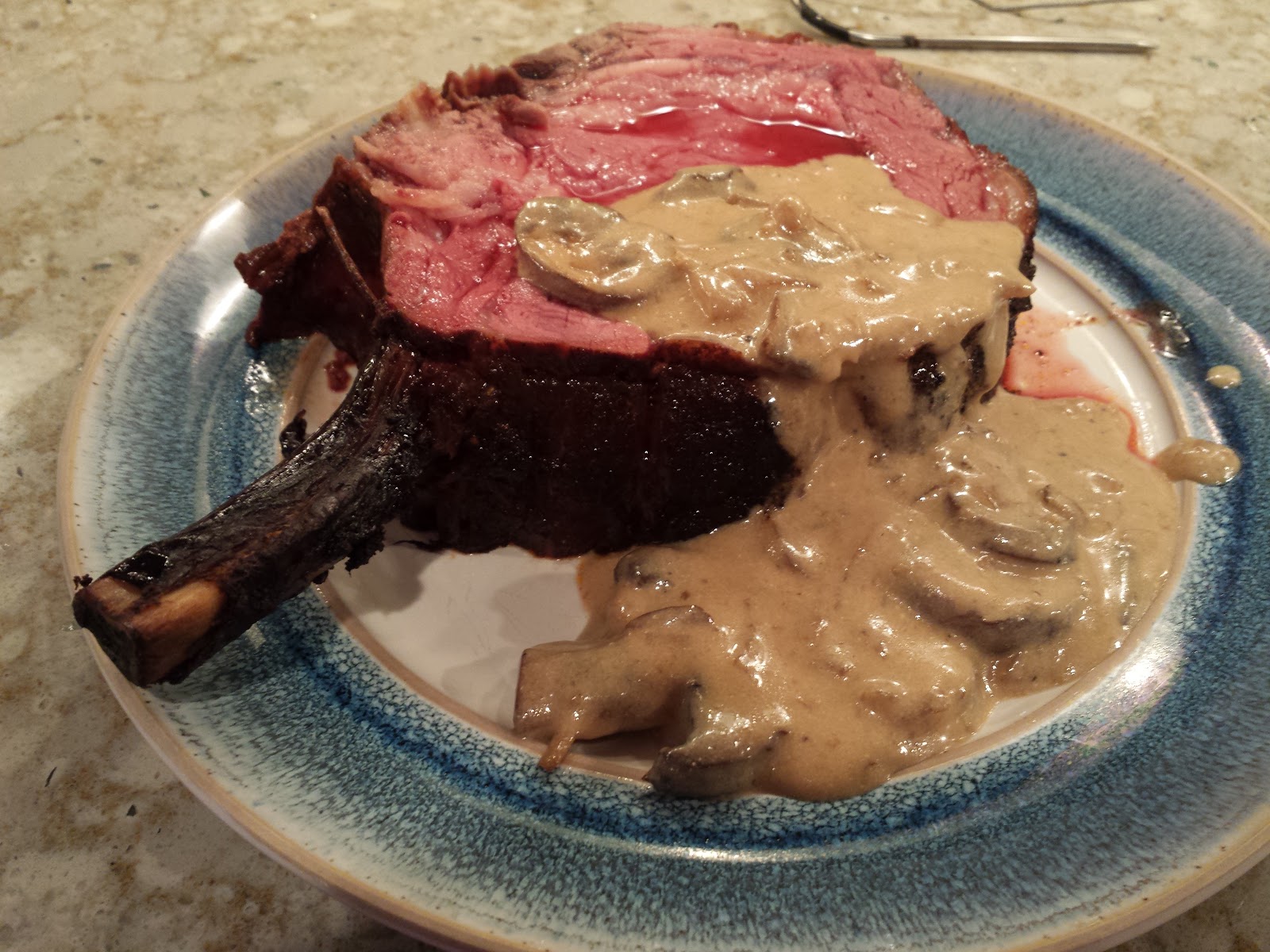
 Absolute mouthwatering, a coffee roasted rib on the bone, cooked medium rare (the 1 1/2 inch cut, see above). Served with a creamy mushroom gravy. In Germany they call this recipe „Jaegersteak“ (hunters steak). I love to make this kind of accompanying sauce with fresh button mushrooms, double cream and a few shots of good Cognac.
Tips.
Germans like to marinate steaks before grilling. Since everything depends on personal taste we should accept that style. But then I suggest to take cheaper parts of the steer, by example chuck steaks (in German Nackensteaks).
 German „Nackensteak“. Mostly marinated already.
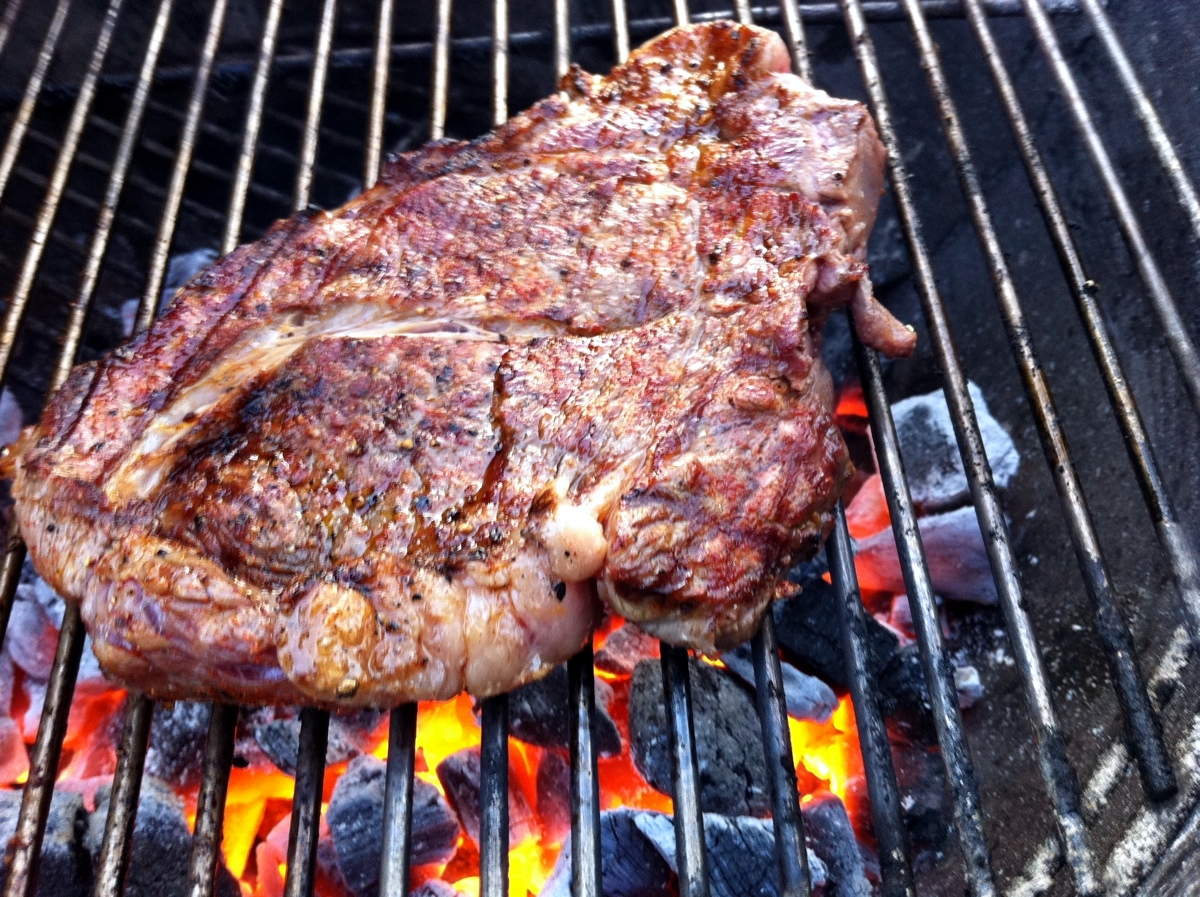
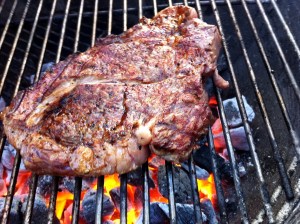
Other ways to grill a steak is to use from begin on BBQ-sauce and burn the sauce into the meat. I like that sometimes, but … My way with lamb, throwing some sprigs of rosemary on the fire and let the smoke raise into the meat, possible with beef too. Another way is to use beer throughout the grilling, mostly strong dark-beer, flavoring the meat.
A quick reminder.
Prepare the grill ! Be sure your grate is cleaned after every use. Dirty grills not only spread bacteria, they also create burnt flavors into your meat. After cleaning, lightly rub the grate portion with oil and set aside until the coals are ready.
 WRONG !! Never use forks to „prick“ your steak. Juices will run out of the „wound“.
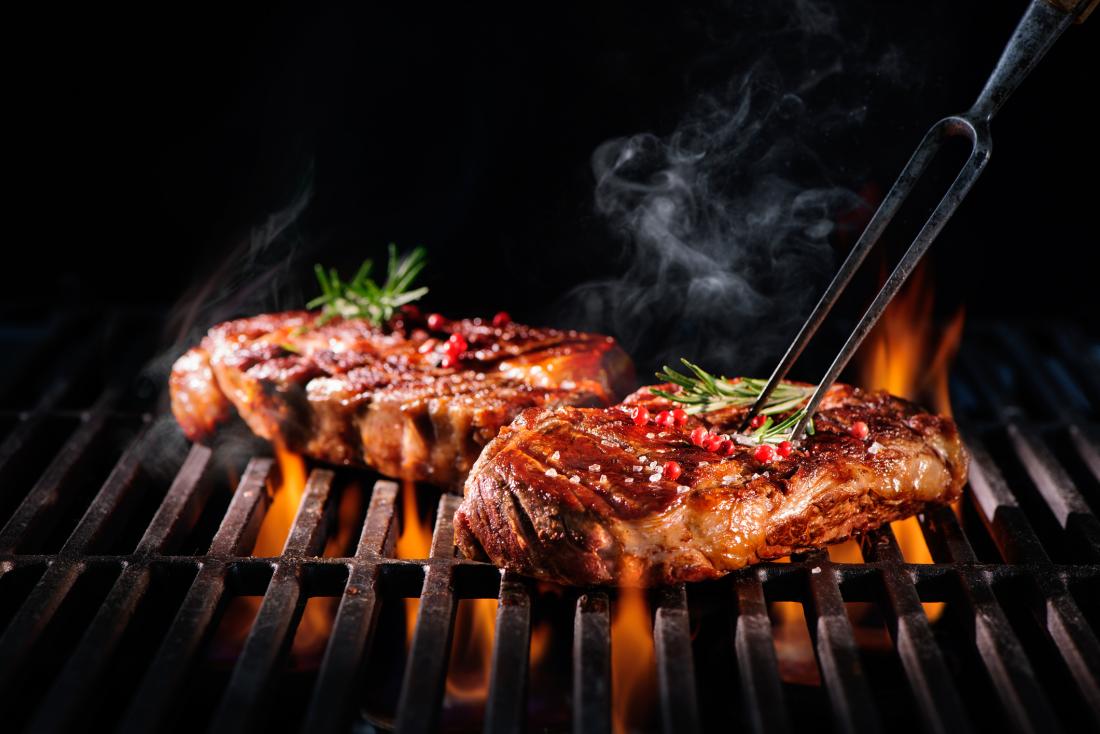
Watch your coals ! Coals should be arranged in the bottom of your grill on a circular pile, slightly higher in the middle. Avoid using any flammable liquids or lighter fluids as these can impart a chemical taste to your gourmet BBQ steaks. Light with the use of newspaper or small pieces of hardwood. Once aflame, cover until coals are 200-240 C (400-500 F) degrees. An infrared thermometer can help out here.
The right grill time ! A quality gourmet steak of about 2 1/2 cm (1 inch) thickness should need a total of about 6-8 minutes of cooking time to reach medium rare BBQ steak perfection. A meat thermometer is your friend here. Just remember the internal temperature should be around 70-80 C (135-140 F) degree. Want to get extra fancy with those grill marks? Try rotating your steak 90 degrees once on each side in between flips to create hash-mark perfection.
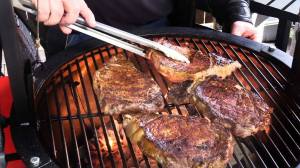 RIGHT !! Use tongs for your steak to save damage.
Rest is always the best ! Just because you’re grilling your steaks on the BBQ doesn’t mean you can skip the vital rest stage. Remove the steaks to a platter and allow to rest for at least five minutes before serving. I suggest using this opportunity to finish one of your favorite BBQ sides, or enjoy a drink with friends.
Final Tip – about Knives.
Steak knives – serrated or non?
I am not a knife snob, but I’ve got decent knives that I take good care of for cooking. For eating, eh, not so much. I’m not a big fan of serrated blades, except as bread knife. I strongly suggest that you click on the knife pictures to have a good view.
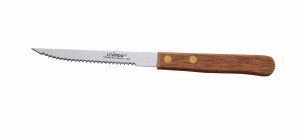 The knife I do not like – it will tear your meat.
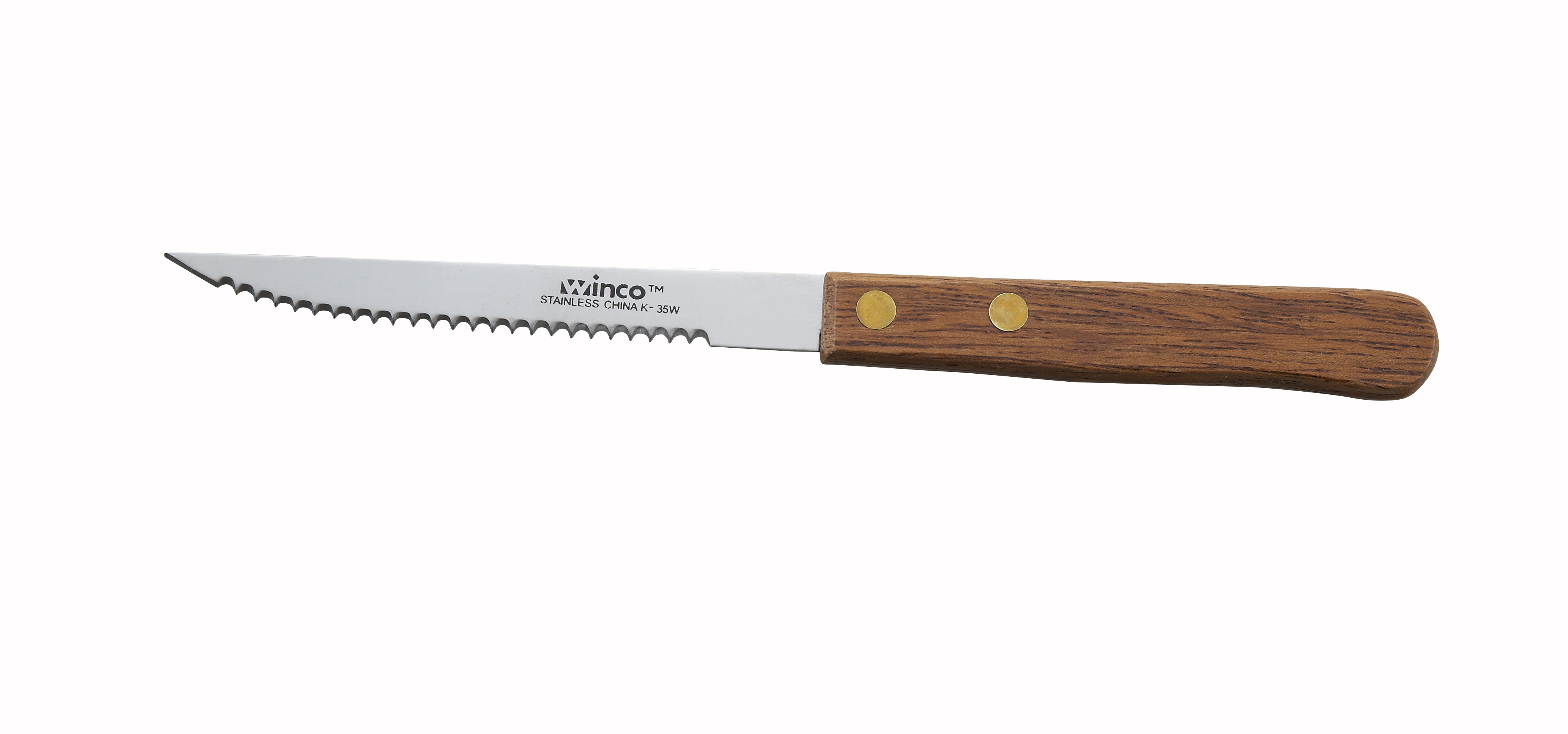
Straight-edge knives cut far better (assuming your steak isn’t so tough you literally have to saw through it), but they’ll need constant maintenance since they dull quickly when cutting on hard ceramic plates. You’d have to sharpen them fairly regularly. Serrated knives are worse at cutting, but since the „valleys“ of the knife don’t contact the plate, they don’t dull. That makes serrated knives far less hassle-some to maintain.
 Left, a very expensive „Kai Shun Damast Steak Knife“. Right the high quality German steak knife I use. It’s fun to hold it in your hand and feel the blade gliding through the meat like through butter. Those knives add a lot of fun to your delicious steak meal. As usual click on pics to supersize.
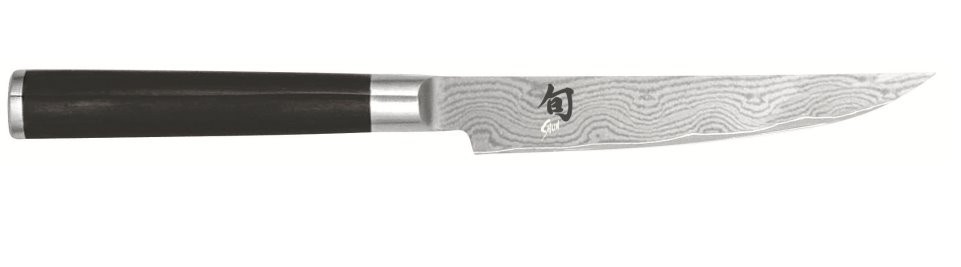

Personally I don’t care for a serrated blade at all other than a bread knife. Serrated does too much damage. Eating a piece of steak that has been cut with a sharp blade has a better mouth feel to me. The only place for serrated steak knives is a restaurant where, I understand that, it’s far to expensive to maintain. At home, go with the good stuff.
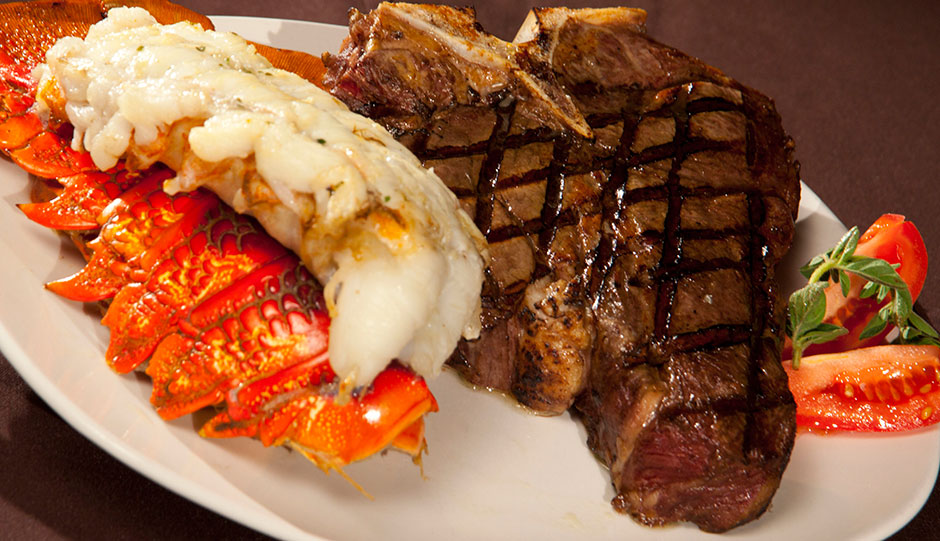 The Australian way to enjoy a steak is called „Surf and Turf“ (free translation: water and land = seafood and meat). The combination can be as different as the cook decides, here LOBSTER and T-BONE. Enjoy! Enjoy!


Hello everyone,
thanks very much for all your comments.
Yes, I like to post an article about steak sauces.
One of my favorite ones is already posted in article „My Whisky Ribs“, May 2017. Have a look.
Chateaubriand is a great specialty of steak and we
plan it as this years Christmas dinner. Then I’ll post it !
Stay tuned, Mike.
LikeLike
Sorry guys, I have no idea why your comments are not coming through.
But I will, as always, answer your questions. Partly I have already.
To Mathis, I agree with you fully. There is no best between – say – fillet or ribeye or,or, or…
It all depends on personal taste, on the occasion (home BBQ with friends or fine restaurant visit with clients) and it depends on cooking style, side dishes etc. etc.
For Luigi, yes you are right, the above link opens an unbelievable source of information. Read the steak section, its fantastic. And repository in Panama was to me always the fresh butchers at PriceSmart.
Cheers to all, Mike.
LikeLike