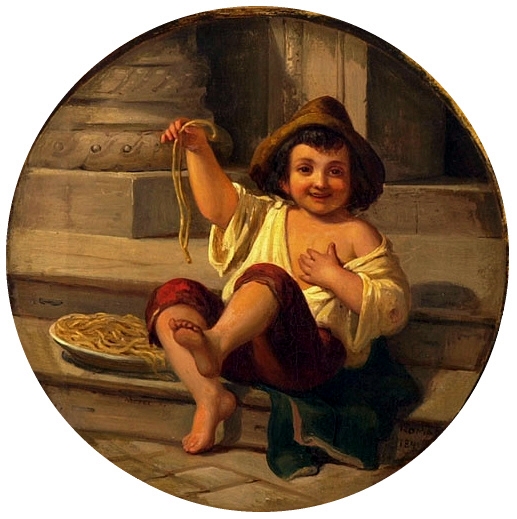
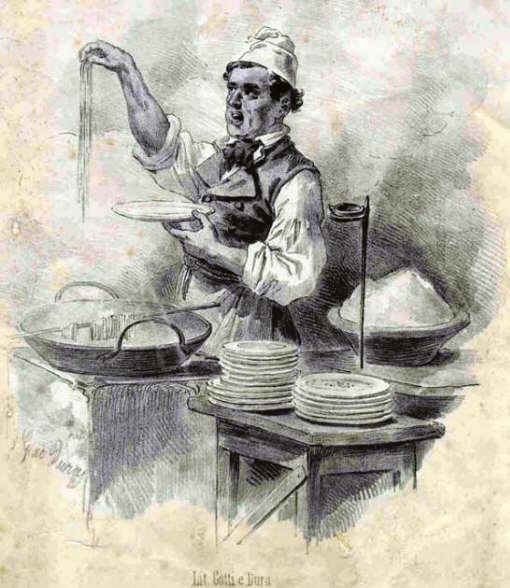
Hello my dear readers, that pasta post was good fun, as I can see on results and mails. From all over the world 72 people send their answers. Thanks very much to everyone ! I like the above picture very much, it is a painting from Julius Moser, „The Spaghetti Boy, 1808“. But first, as I promised, a bit more about pasta.
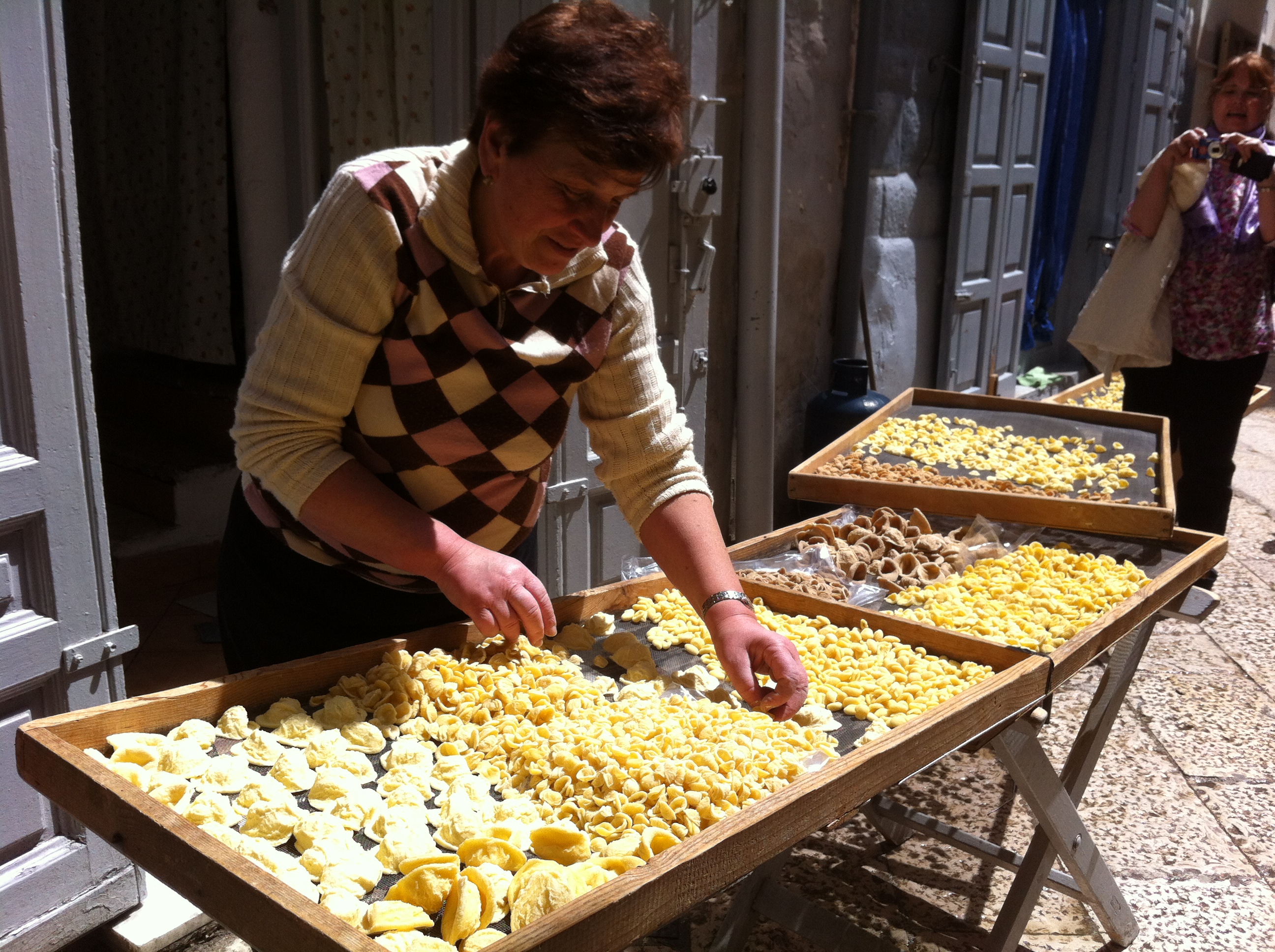
 A lady in Bologna, Italy selling her homemade pasta in front her home. Click on pic to enjoy a better view.
More History.
Pasta, with its long, multicultural history, is a culinary connection to our past.
While we do think of pasta as a culturally Italian food, it is likely the descendant of ancient Asian noodles. A common belief about pasta is that it was brought to Italy from China by Marco Polo during the 13th century. In his book, “The Travels of Marco Polo,” there is a passage that briefly mentions his introduction to a plant that produced flour, possibly a “breadfruit tree”.
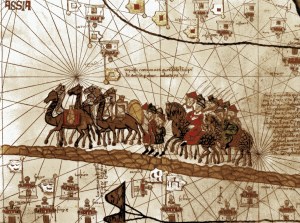 Marco Polo’s travel in Asia.
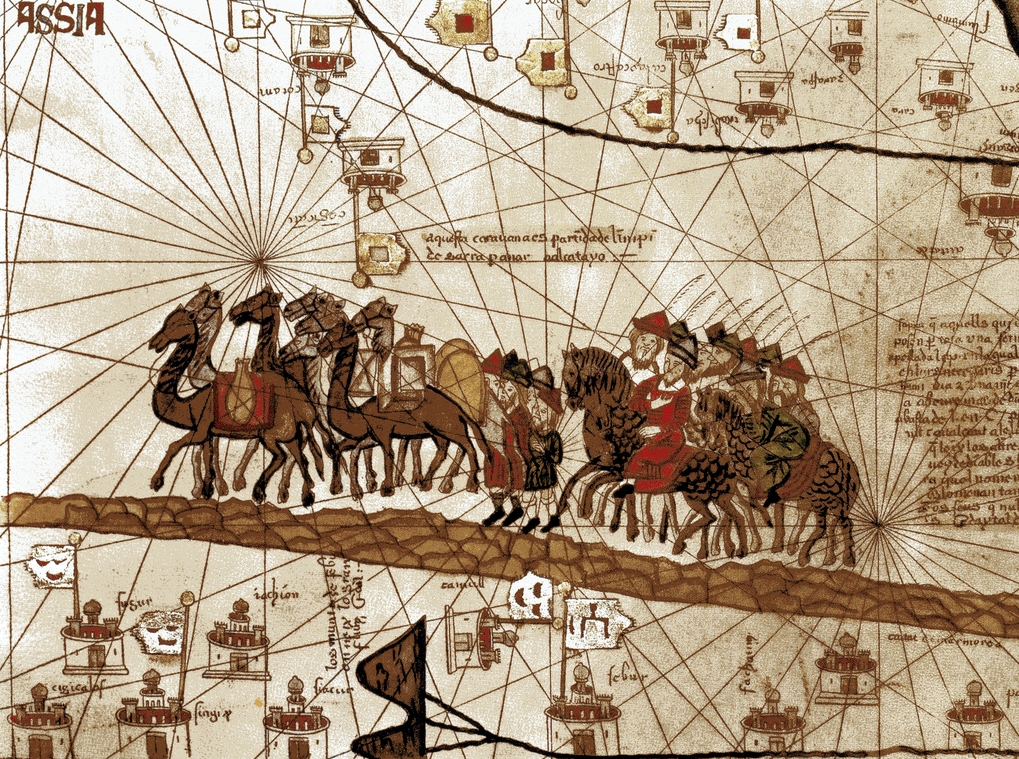
The Chinese used this plant to create a meal similar to barley flour. The barley-like meal Polo mentioned was used to make several pasta-like dishes, including one described as “lagana” (lasagna). Since Polo’s original text no longer exists, the book relies heavily on retelling’s by various authors and experts. This, combined with the fact that pasta was already gaining popularity in other areas of Italy during the 13th century, makes it very unlikely that Marco Polo was the first to introduce pasta to Italy.
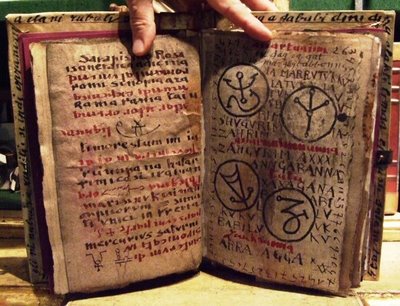
 A pasta recipe. Description in the „history of necronomicon“, written in Damascus 738 AD. This copy was found in the library of the University of Buenos Aires, Argentina.
Noodles existed in Asia long before Polo’s trip to China. Archaeologists believe that central Asia is most likely the first area to have produced noodles thousands of years ago. From Asia, it traveled westward. The way it reached Europe is unclear, though there are many theories—some believe that nomadic Arabs are responsible for bringing early forms of pasta westward.
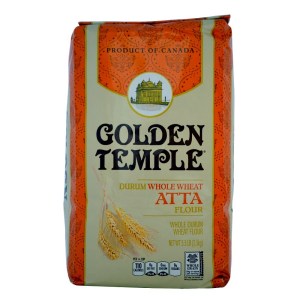 Durum wheat flour.
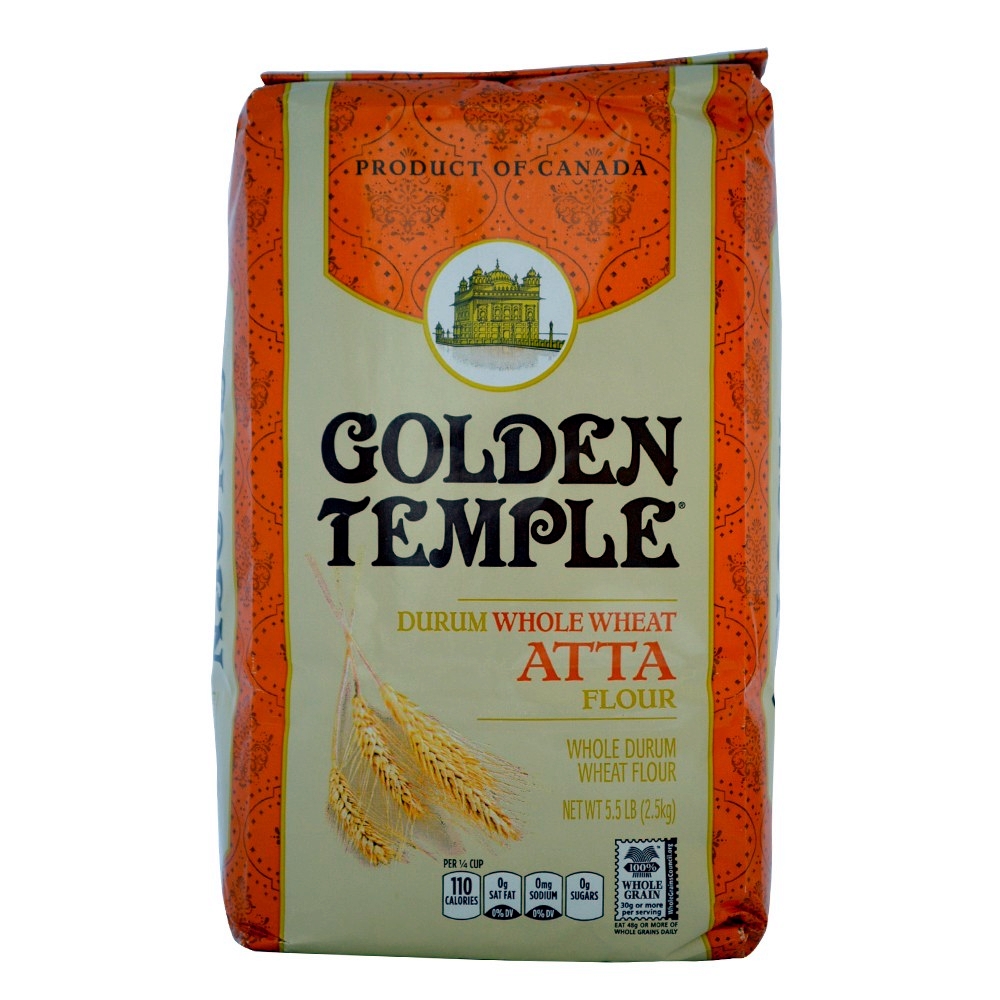
Once it reached the Mediterranean the process was refined, and durum wheat became the ingredient of choice for pasta flour because of its high gluten content and long shelf life. When durum wheat pasta is dried, it lasts indefinitely, making it a very convenient food to store. Over time, because of pasta’s affordability, shelf life, and versatility, it became firmly rooted in Italian culture.
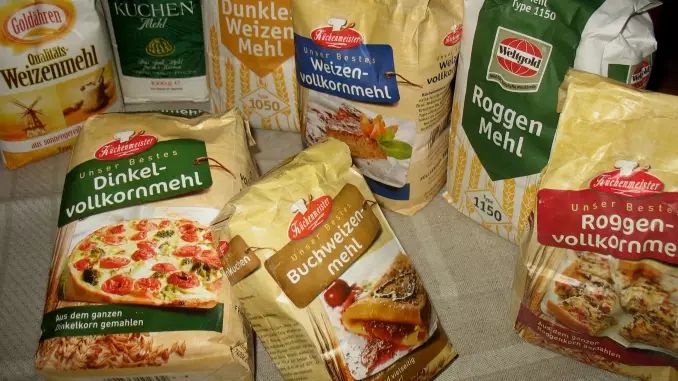
 In Germany its called „Weizenmehl“.
The warm Mediterranean climate of Italy is suited to growing fresh vegetables and herbs, which meant that Italians could get creative with a delicious variety of pasta sauces. Tomato-based sauces emerged as a favorite complement to pasta, and tomatoes remain the most popular ingredient in pasta sauce today.
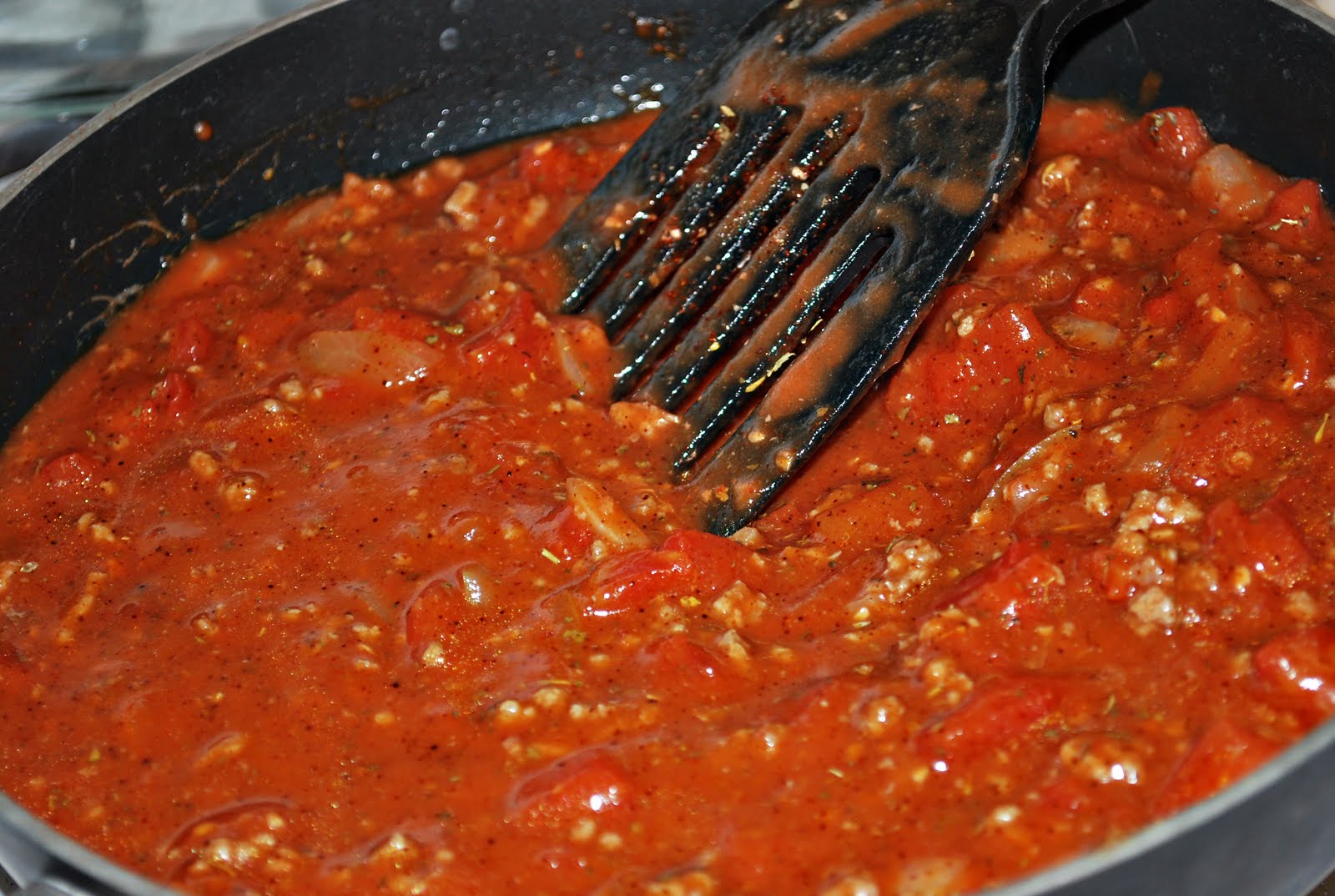
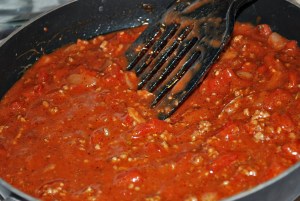 Most popular, tomato based pasta sauces.
Early Spanish settlers were among the first to bring pasta to America. Believe it or not, it was Thomas Jefferson that helped give pasta an initial push into popularity. During an extended stay in Paris from 1784-1789, Jefferson ate what he called macaroni. Back then, the word could have referred to any shape of pasta. He enjoyed the dish so much that he returned to America with two cases in tow. When his supply ran out, he sent for reinforcements via a friend from Naples.
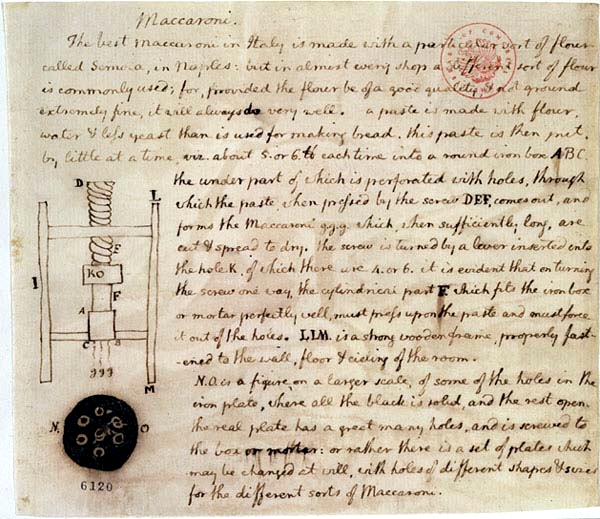
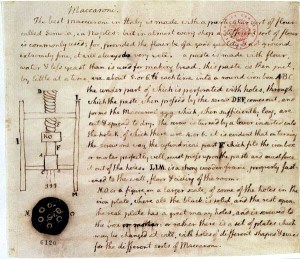 Jefferson discovered the dish while living in France and became so enamored with it that he sketched a “maccaroni” machine. He first served the delicacy at a state dinner in 1802, at the White House. And back in those days, anything served at the White House became the talk of the town.
During the late 19th century, when a large group of immigrants relocated from Italy to America (most from Naples), pasta became a common food in the states. They have been making spaghetti in America ever since.
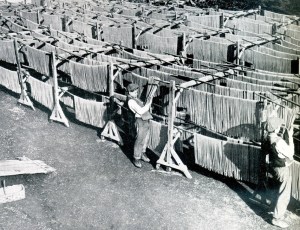
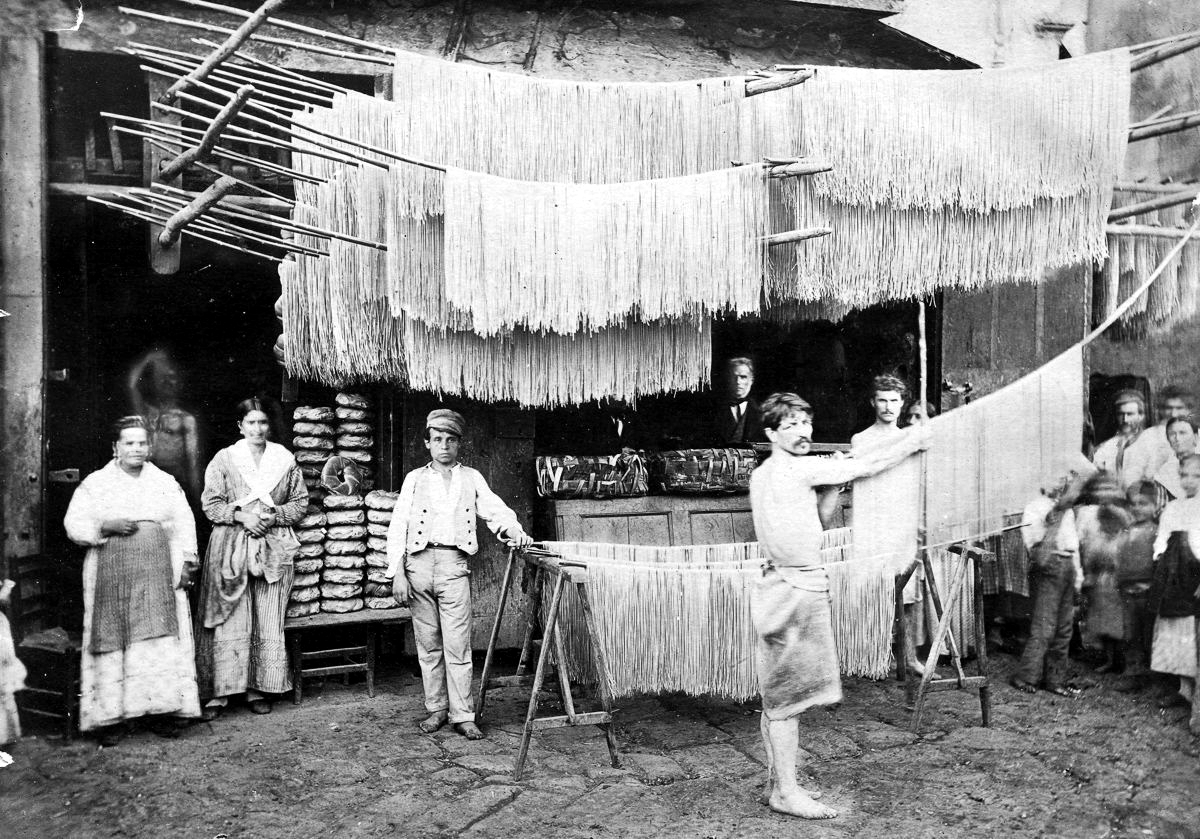
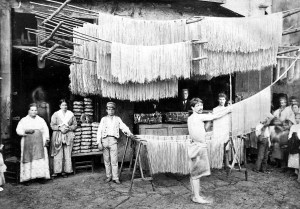 Italian spaghetti drying in Naples around 1900. Pasta making for the Americas.
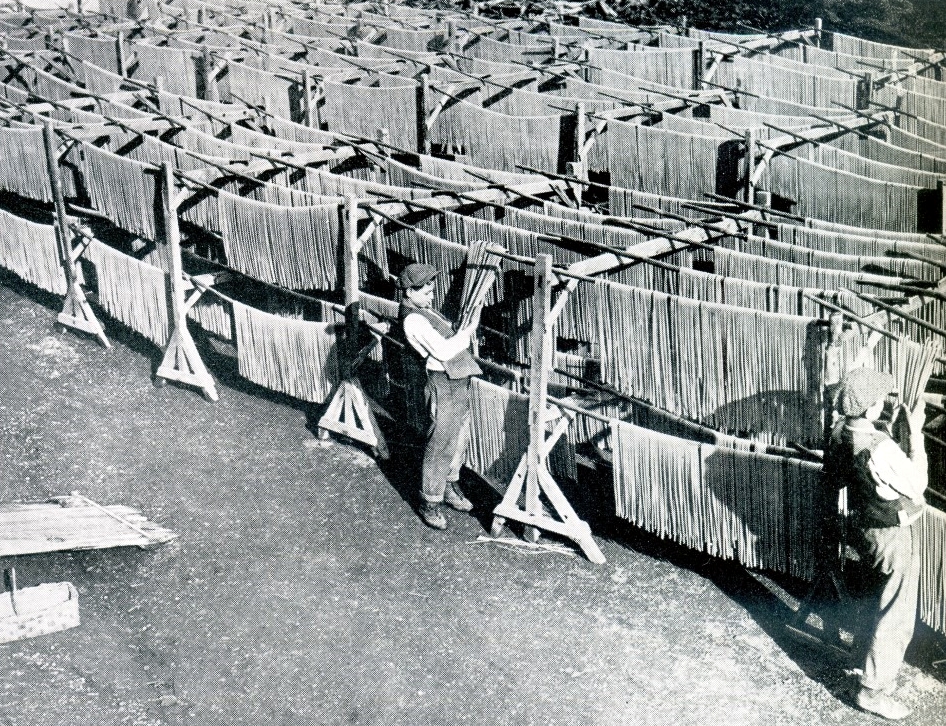
Today, pasta is generally cooked by boiling the dough. The first evidence of pasta being boiled comes from the Jerusalem Talmud. The Talmud includes a discussion on whether or not boiled dough should be considered unleavened bread under Jewish law. Pasta was likely boiled before the Talmud was written, but this is the first text reference to the cooking method.
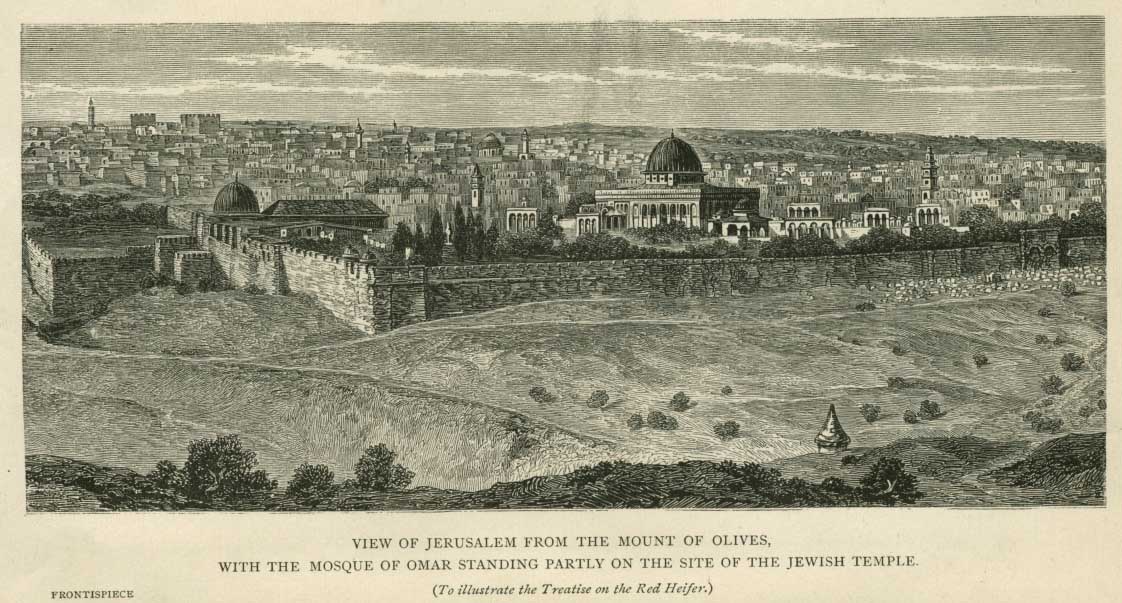
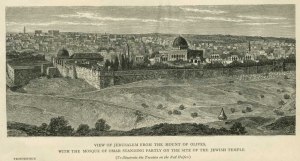 Frontispiece of the Jerusalem Talmud. Sacred texts in about 60 book volumes.
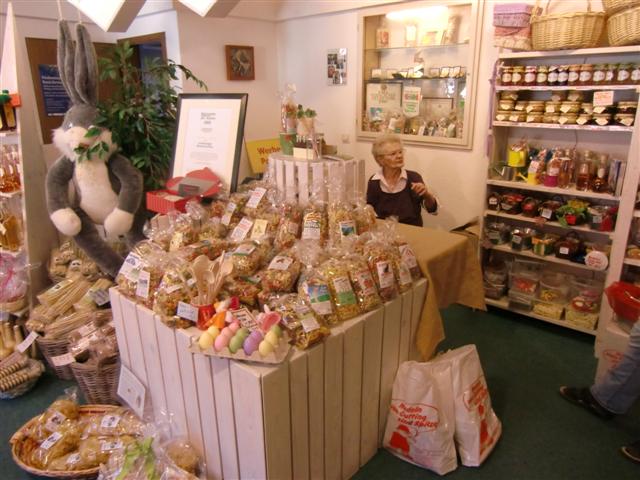
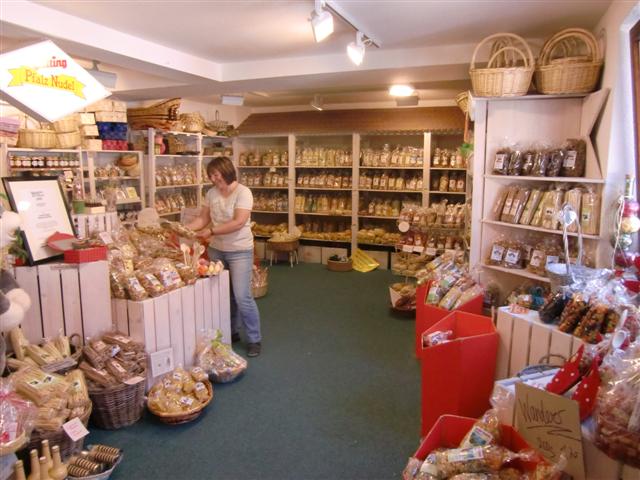
The world is most familiar with dried pastas imported from Italy. Dried pasta is usually made from semolina, or purified durum wheat. Semolina isn’t overly absorbent, which makes for great „al dente“ style pasta. It also has a long shelf life, unlike fresh pasta.

 This pasta shop in Germany, called „Pfalznudel“, is specialized on dry pasta. Look at the variety.
Al Dente.
As Wikipedia describes, in cooking, al dente is a pasta that is cooked to be firm to the bite.The etymology is Italian „to the tooth“.
 This means you still can „bite“ it, in German „es hat Biss“. That’s how pasta should be.

In contemporary Italian cooking, the term identifies the ideal consistency for pasta and involves a brief cooking time. Molto al dente is the culinary term for slightly undercooked pasta. Undercooking pasta is used in the first round of cooking when a pasta dish is going to be cooked twice.
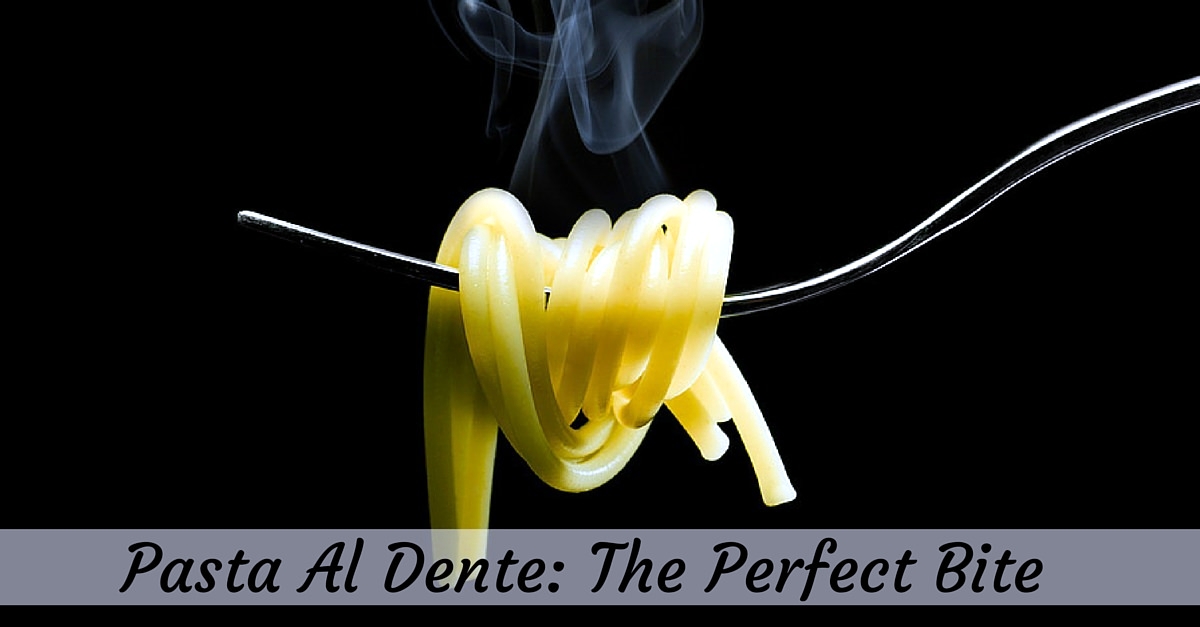
Pasta that is cooked al dente has a lower glycemic index than pasta that is cooked soft. When cooking commercial pasta, the al dente phase occurs right after the white of the pasta center disappears. Also known as pasta that is neither too hard nor too soft.
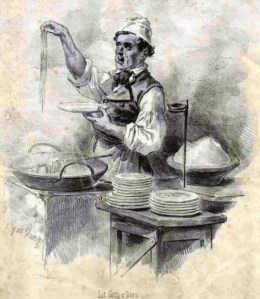 The spaghetti seller, known in Italy as „maccaronaro“.
Test Results.
Pasta is, for all intents and purposes, a comfort food. One of its most comforting qualities is how little it has changed over the centuries. It is still made with the same essential ingredients and preparations that it has been since antiquity. When we eat pasta, we can be assured of the likelihood that our ancestors, and our ancestor’s ancestors, ate something similar.
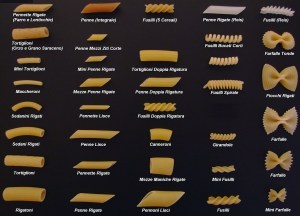
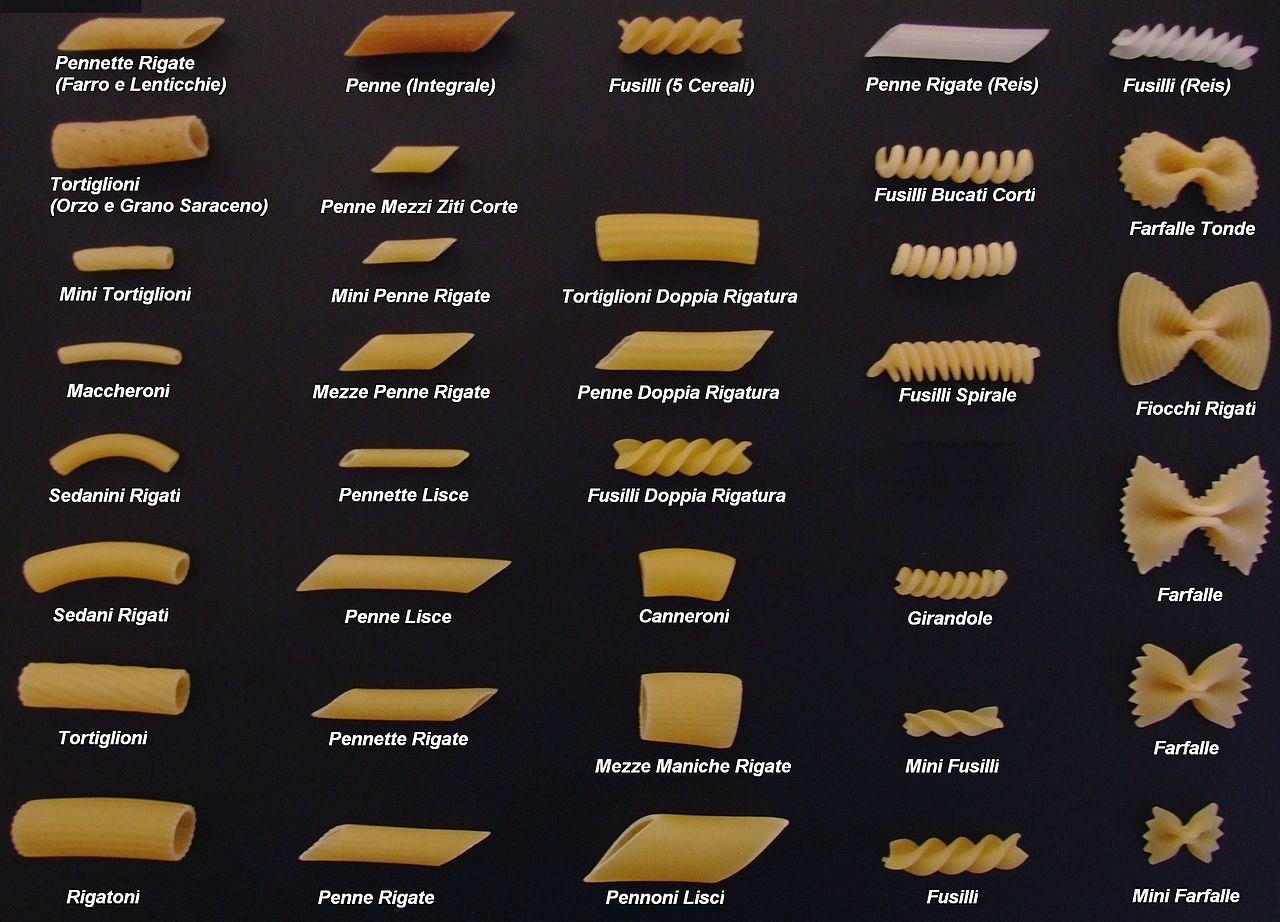
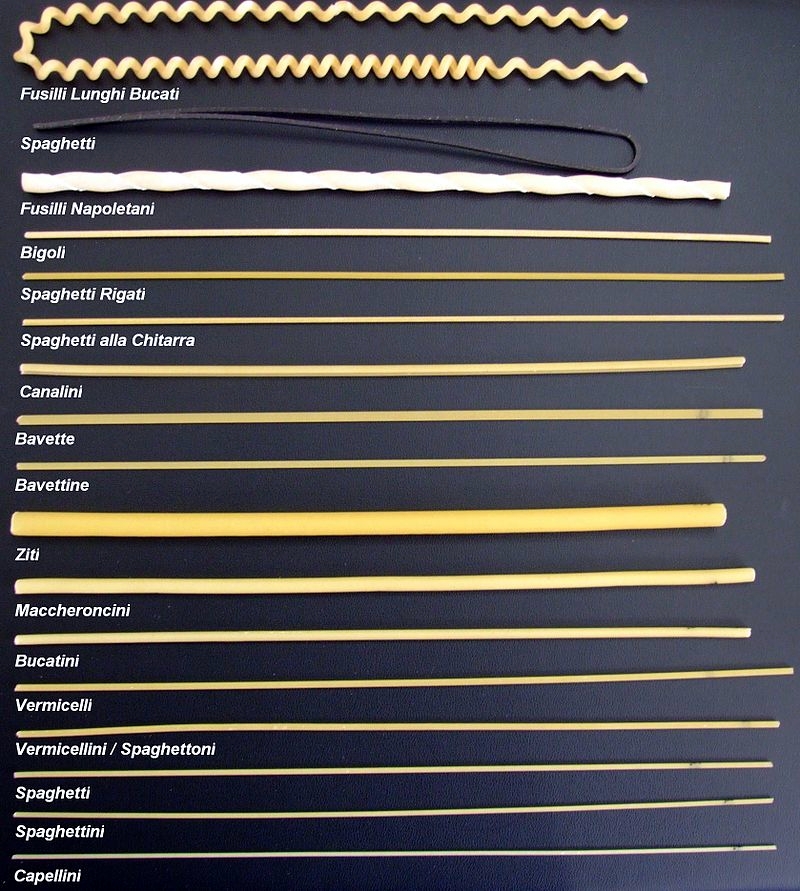
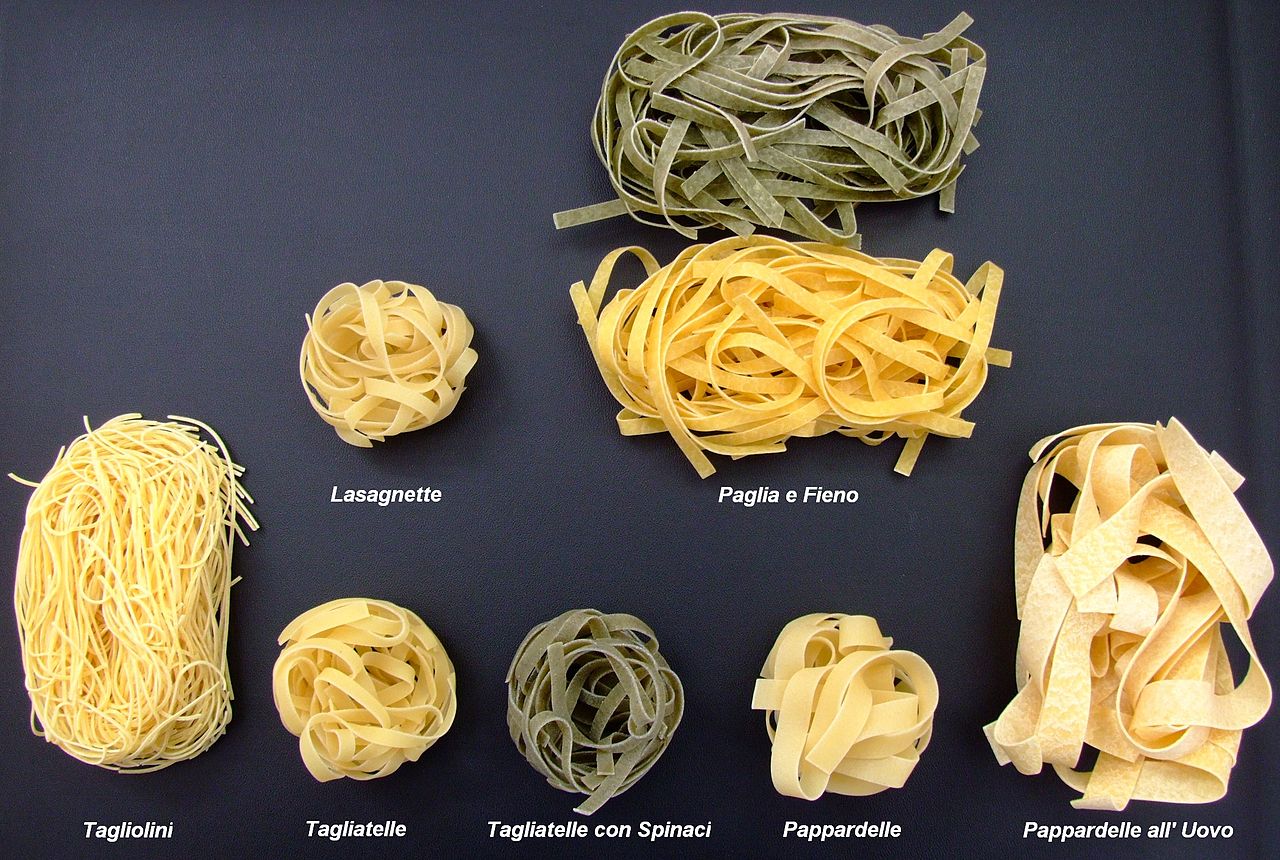
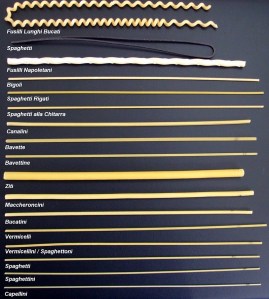 Pasta overview 1 (short pasta) and 2 (long pasta). Click on pics to supersize. Some of these pics are from Wikipedia, as always about using pics, please read my comment about it in the header „Information“ – THANKS !
Out of the hundreds of different pastas and pasta dishes, I picked out 14 more or less known common Italian pasta terms. No. 1 Spaghetti and 13 more for the test. During this week I received 72 results from 16 different countries. Wonderful – THANKS very much for participating.
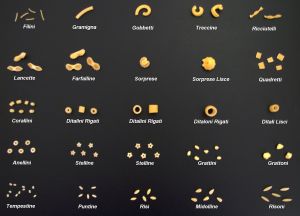
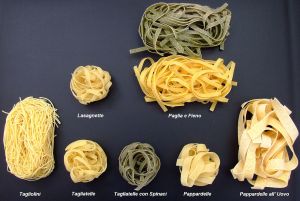 Pasta overview 3 (soup pasta) and 4 (egg pasta). Click on pics to supersize.
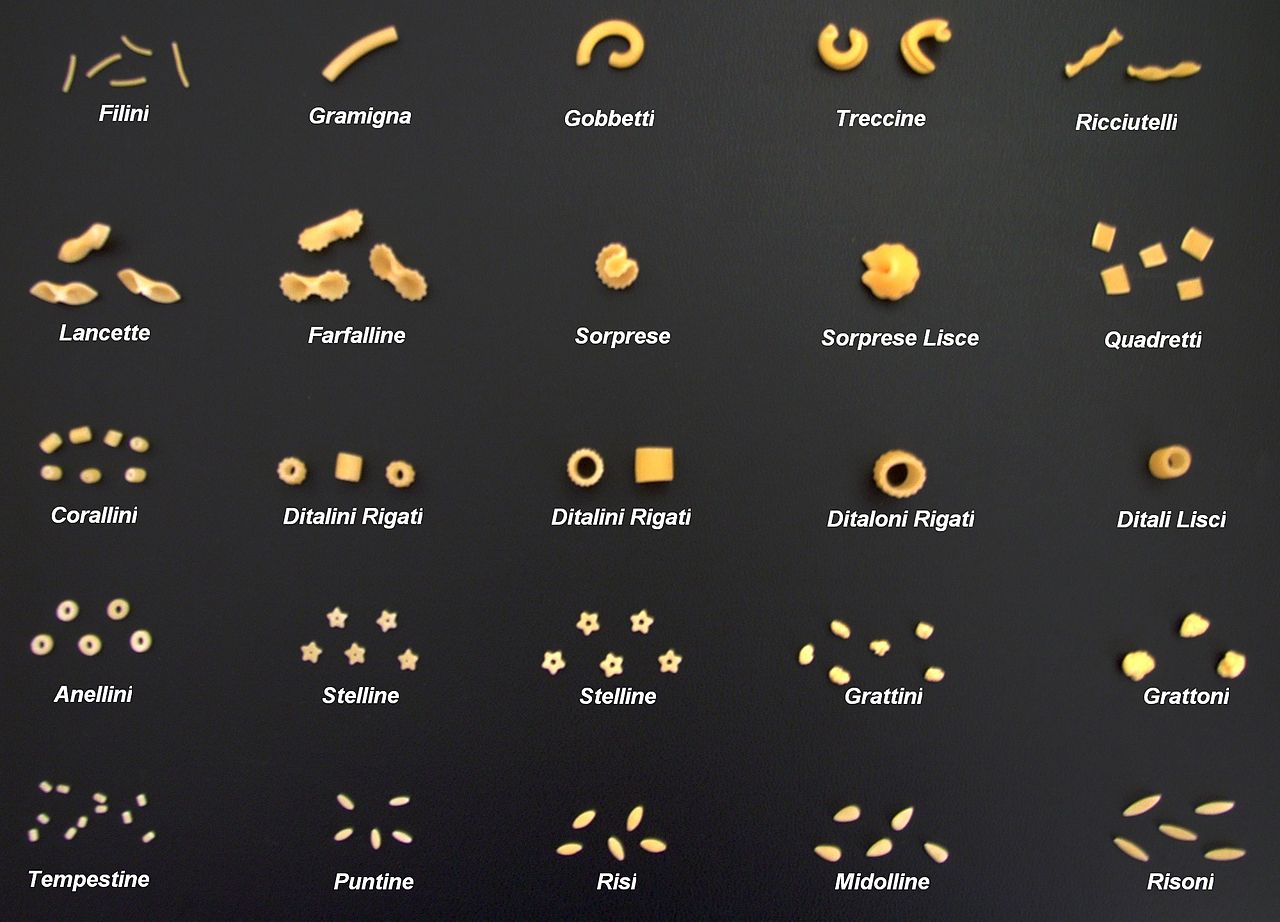
As a few of you asked for it, I will leave out „ALL“ names and personal hints. Out of 72 :
7 named right all 13 dishes ( 2 from Italy, 1 from Panama – but an Italian, and 1 each
from China, New Zealand , Germany, Switzerland).
2 named right 12 dishes (from Netherlands and Canada).
10 named right 11 dishes.
14 named right 10 dishes.
22 named right 9 dishes.
8 named right 8 dishes.
9 named right 5-7 dishes.
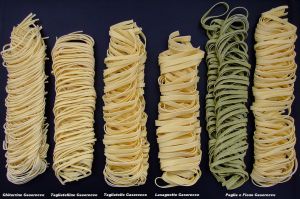
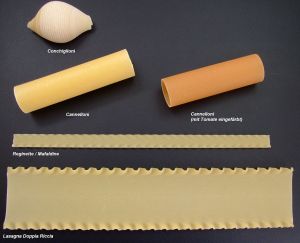 Pasta overview 5 (fresh pasta) and 6 (to bake pasta). Click on pics to supersize.
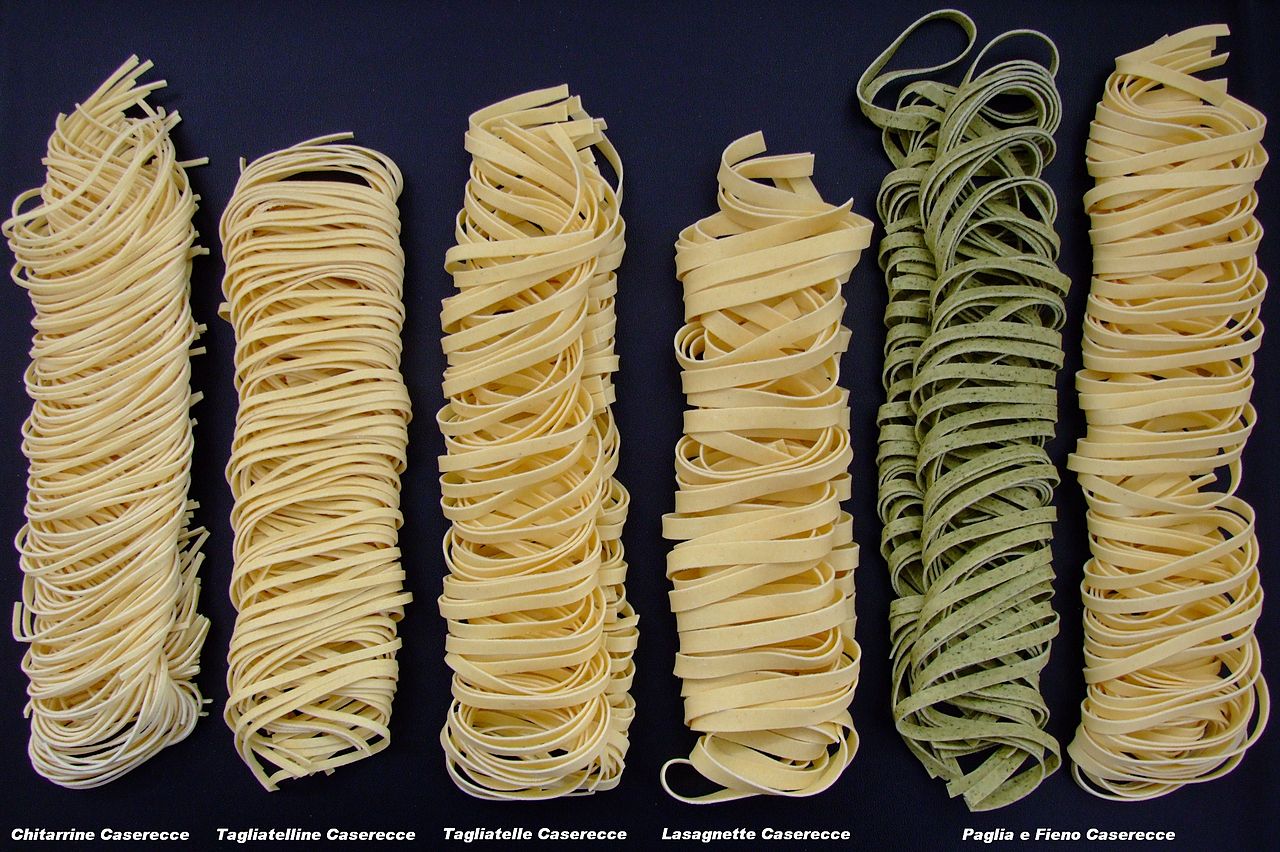
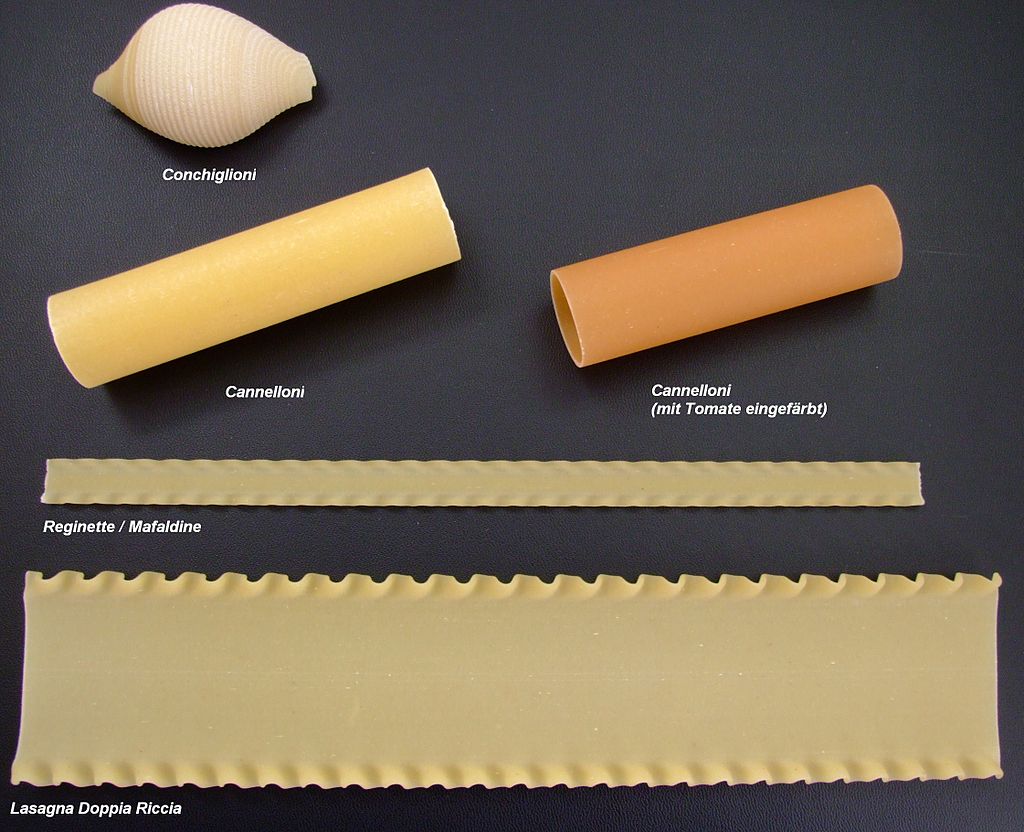
The right dish names were: A-3, B-3, C-2, D-3, E-3, F-1, G-2, H-1, I-3, J-3, K-1, L-1, M-1.
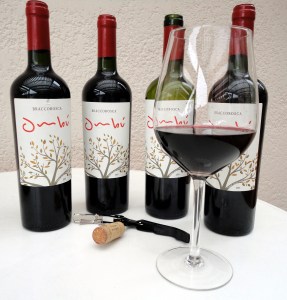 A surprise for an Italian (Sicily) reader. OMBU wine.
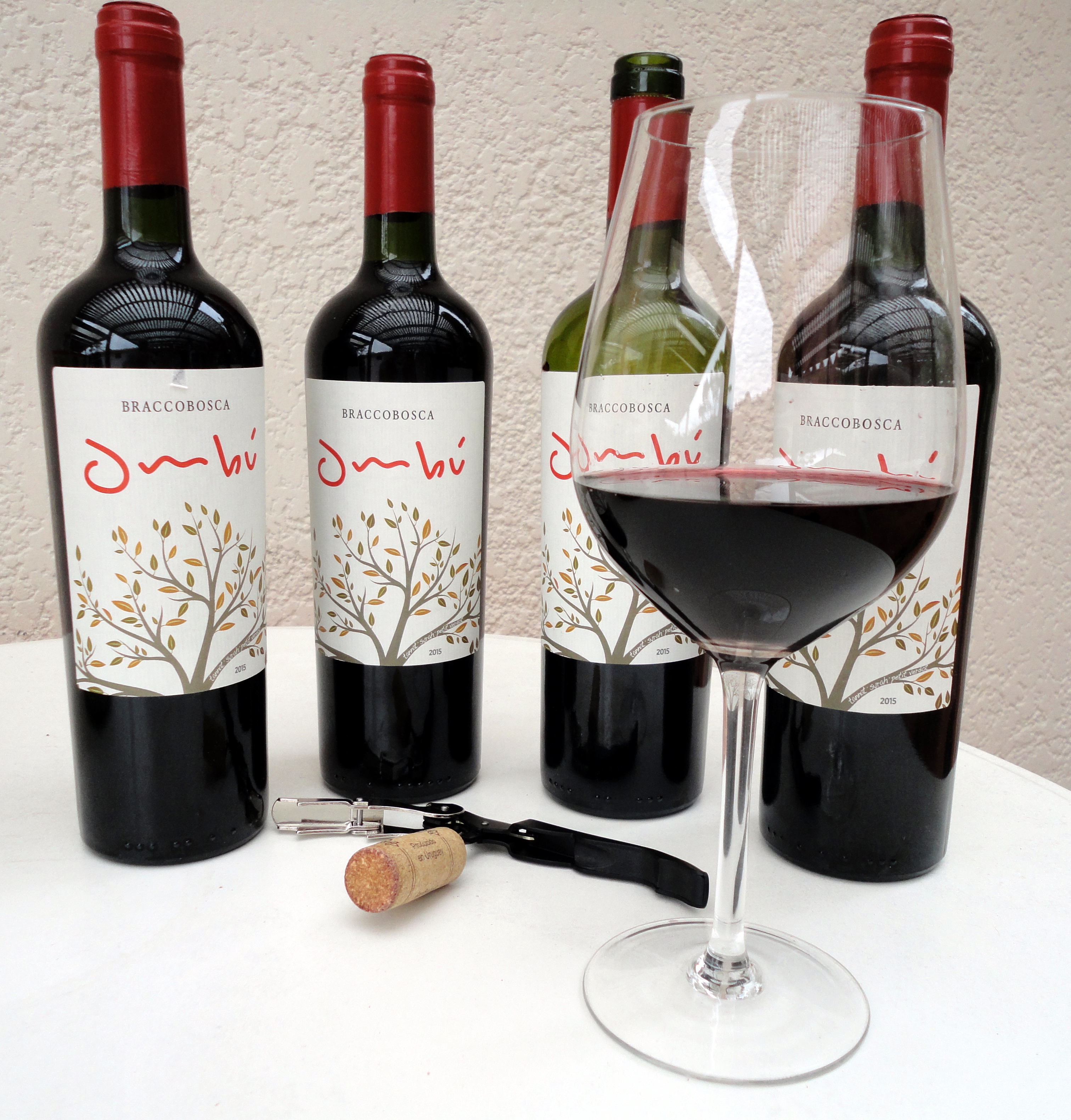
Finally a surprise for our 7 winners. For you I was raffling a box of my favorite Uruguayan wine. Its an „Ombu Tannat“ and will be sent from the German Importer. The winner is in Italy and I will ask you for your address in a separate mail. CONGRATULATIONS !!!
How delicious is pasta and wine ? A reason to celebrate your new knowledge. Enjoy !!!