
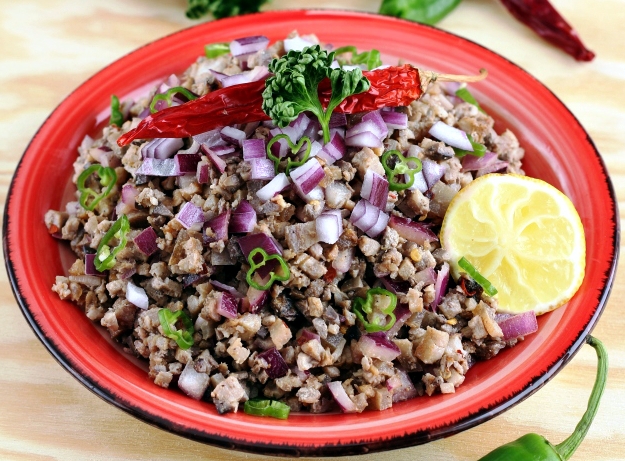
In an interview with CNN-Philippines a few weeks ago, Anthony Bourdain stated: „Sisig is perfectly positioned to win the hearts and minds of the world“.
He went on to say, “I think it’s the most likely to convince people abroad who have had no exposure to Philippine food to maybe look further and investigate further beyond sisig. I think that’s the one that’s gonna hook them.”
I can’t agree with him, especially not for the western world. Our culture doesn’t like so much cooking with lots of different ingredients and spices. Everything has to go easy and fast, best a bag into the micro and push a button ! But – time will show, who knows !!
 The Classic – Pork Sisig from the Philippines.
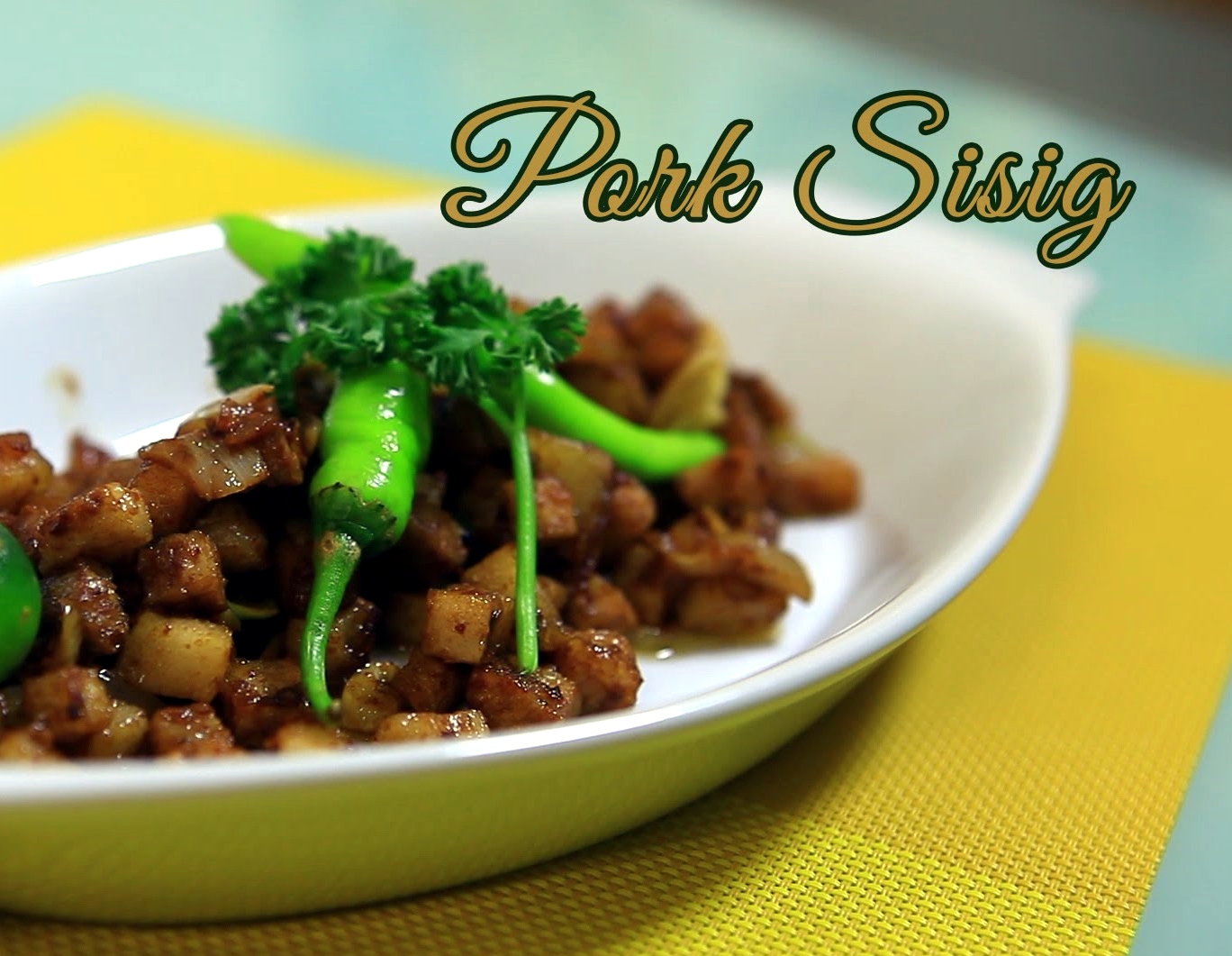
Reading this interview brought back my memories about several trips to the Philippines and the great food I could experience there. One of the highlights always was sisig. After reading about Bourdains comment, I directly had the sisig taste on my palate and decided to invite some friends and cook sisig for us, what we did. Find the recipe further down.
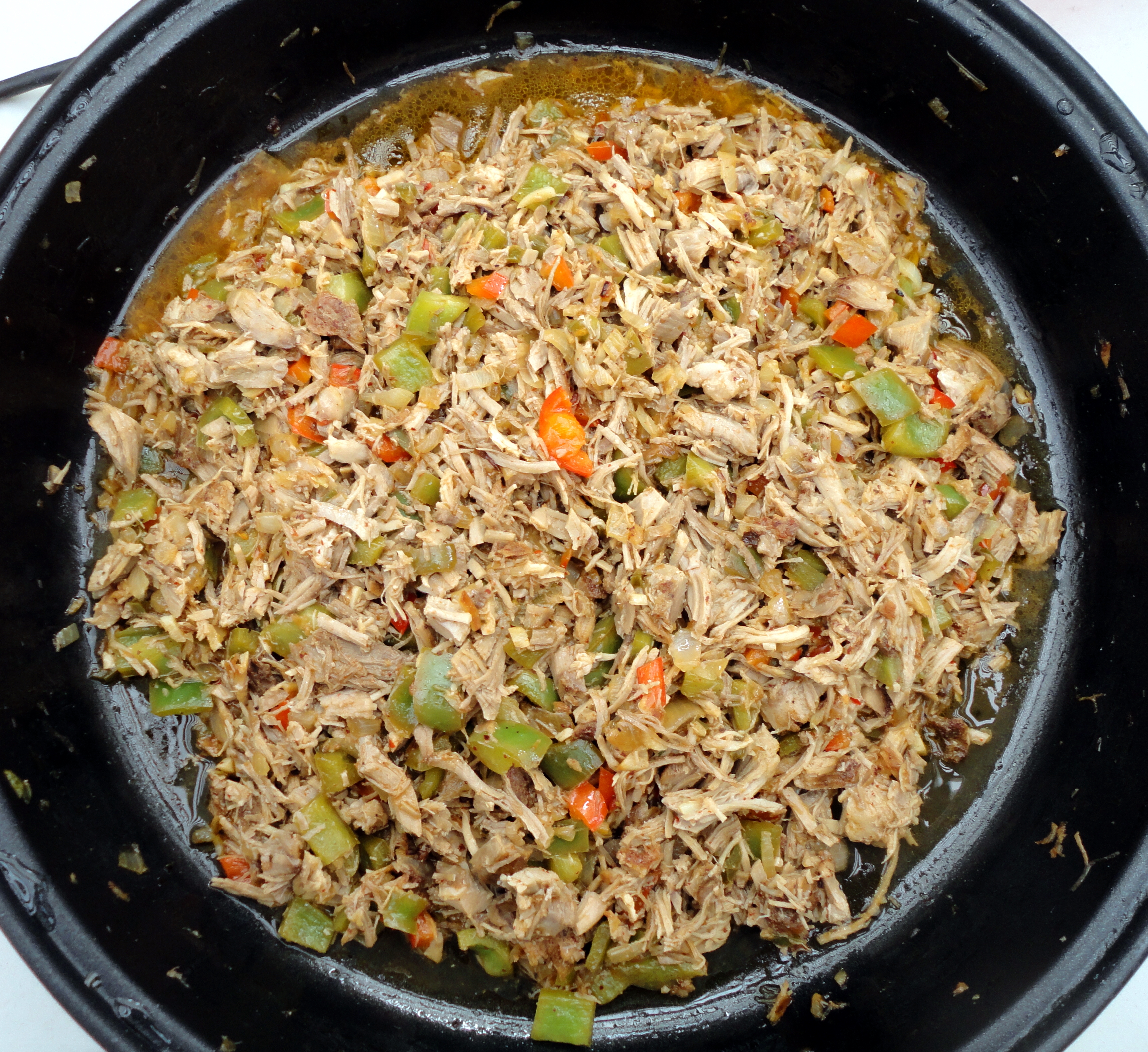
 May be my sisig wasn’t to bad after all. I am not a food photograph, that’s why some color is missing. But the taste, I’ll tell you – to die for !! The secret of cooking dishes as such is the typical „Eastern“ balance between „sour – sweet – salty – spicy“.
But, what the hell is sisig ?
Sisig is a Filipino dish made from parts of pig’s head and liver, usually seasoned with calamansi and chilli’s.
Sisig was first mentioned in a Kapampangan dictionary in the 17th Century meaning „to snack on something sour“ and „salad“. It usually refers to fruits, often unripe or half-ripe, sometimes dipped in salt and vinegar. It also refers to a method of preparing fish and meat, especially pork, which is marinated in a sour liquid such as lemon juice or vinegar, then seasoned with salt, pepper and other spices.
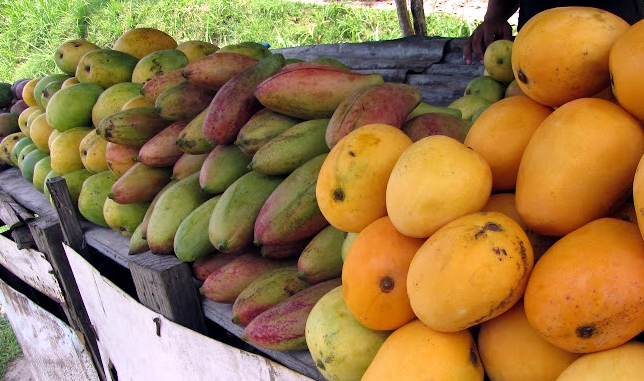
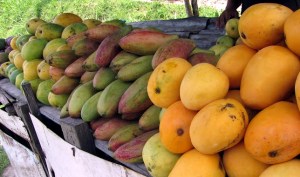 Middle pile are the „green mangos“, while the right and the left pile of fruits are the mangos we mostly know. Click on pic to supersize and have a good look !
Just a jump of my mind.
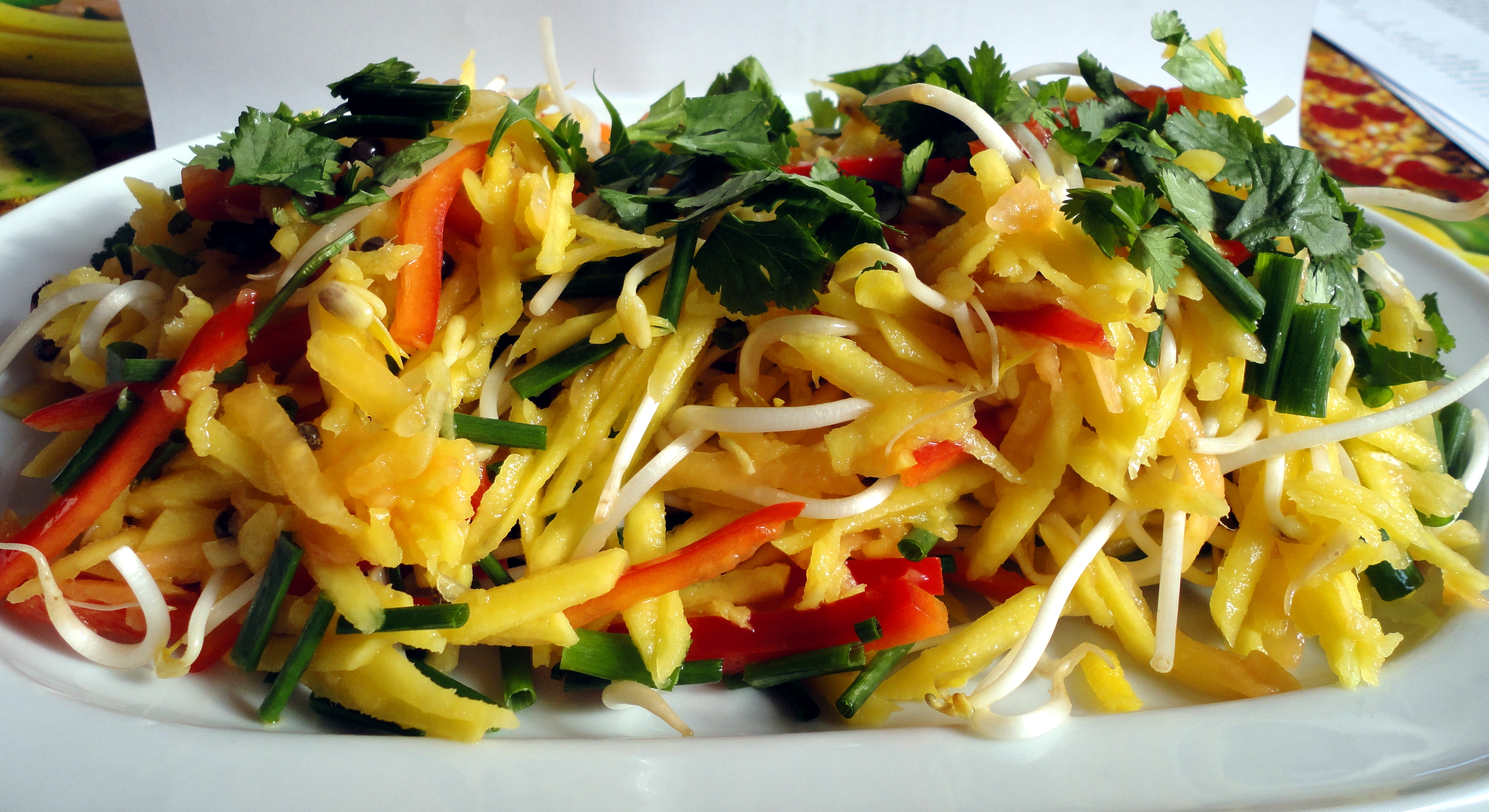
Most Latin American ceviche recipes are based on such kind of marinade. We had in Panama a huge tree with green mango’s, very rare fruit (not an unripe normal mango fruit) and I didn’t know what to do with it. When the locals came asking if they may harvest the fruits, I learned how they use it. They slice/shred the fruit very thin and mix it with some salt, vinegar and red onion to a salad. What a delicious surprise, tasty, refreshing and a wonderful accomplishment to any kind of food. After all it was a similar recipe as I knew from Thailand already. See picture down here.
 This Thai green mango salad I made beside our sisig last week. It was a delicious salad mainly made from unripe mangos and green Papaya, mixed with coriander, onion and more.
Origin
The origins of the word dates back to 1732, and was recorded by Augustinian friar Diego Bergano in his Vocabulary of the Kapampangan Language in Spanish and Dictionary of the Spanish Language in Kapampangan. Bergano defines sisig as a „salad, including green papaya, or green guava eaten with a dressing of salt, pepper, garlic and vinegar.“ There is no mention of how long this cooking style has existed prior to the coming of the Spaniards during the „Age of Conquest“. The introduction of meat into the dish does not have an exact date as well.
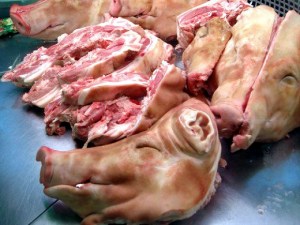 Sisig’s pig head ingredients.
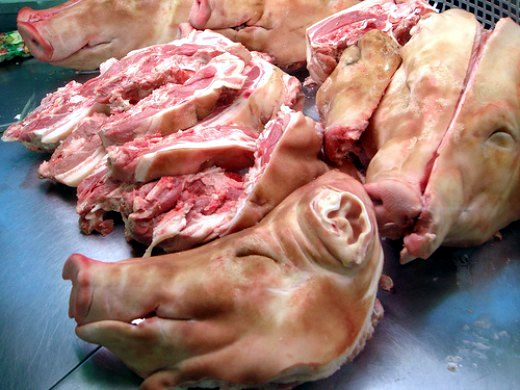
Locals believe that the addition of a pig’s head and innards in the dish came from „recycling“ the excess meat from the commissaries of Clark Air Base in Angeles City, Pampanga. Pig heads were purchased cheap since they were not used in preparing meals for the U.S. Air Force personnel stationed there during the American Occupation of Luzon and Visayas. Some modern explanation is to put sisig into a shortcut of „sizzling pig“, but this is untrue.
Sisig still has many variations with recipes varying from city to city, and sometimes, family to family, in the Kapampangan province.
 The „Queens“ restaurant in Pampanga.
Sisig queen
Lucia Cunanan of Angeles City, also known as „Aling Lucing,“ has been credited with reinventing sisig by using a sizzling plate to make the dish crispier. The Philippine Department of Tourism has acknowledged that her „Aling Lucing’s“ restaurant had established Angeles City as the „Sisig Capital of the Philippines“ in 1974.
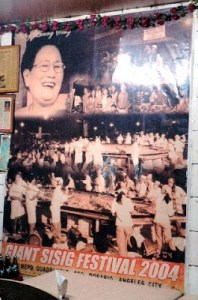 The Pampanga Sisig Queen.
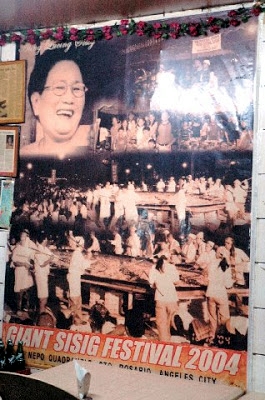
Aling Lucing’s Sisig is the pride of Pampanga with its original location in the „riles“ or located near the railroad in Angeles City. Also, Aling Lucing is the Grand Slam Winner of the 3rd Sisig Festival in Angeles City held Dec. 2-3, 2005 besting 176 other contestants !
Cunanan’s trademark sisig was developed in mid-1974 when she served a concoction of boiled and chopped pig ears and cheeks seasoned with vinegar, calamansi juice, chopped onions and chicken liver and served in hot plates. Today, varieties include sisig ala pizzailo, pork combination, green mussels or tahong, mixed seafood, ostrich sisig, crocodile sisig, spicy python, frog sisig and tokwa’t baboy, among others.
 That’s how it looks like, often served with an egg on top . Sorry, can’t make out the pics watermark for photo-rights. A few pics I used in this post are from Pinoy’s.
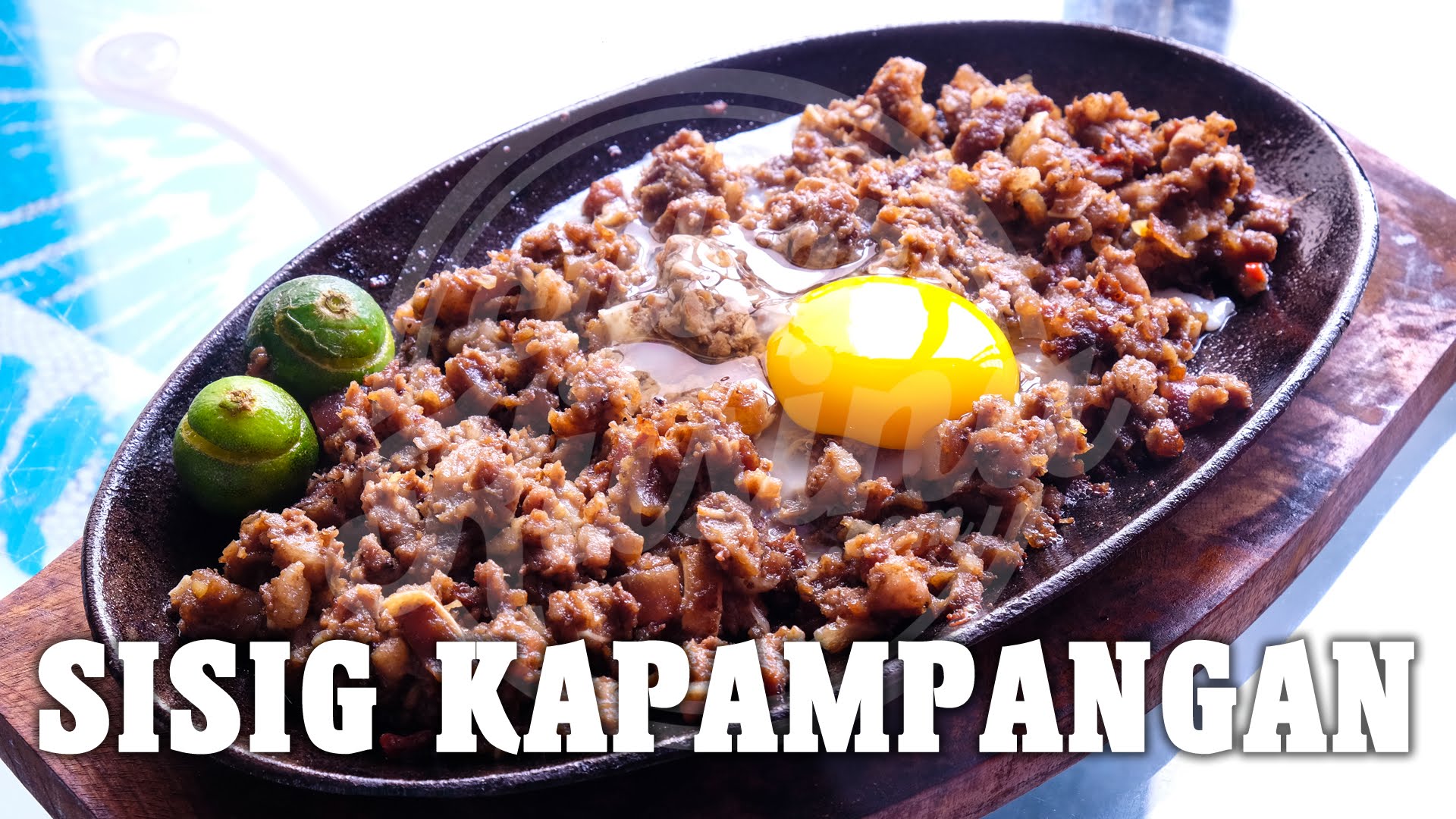
Preparation
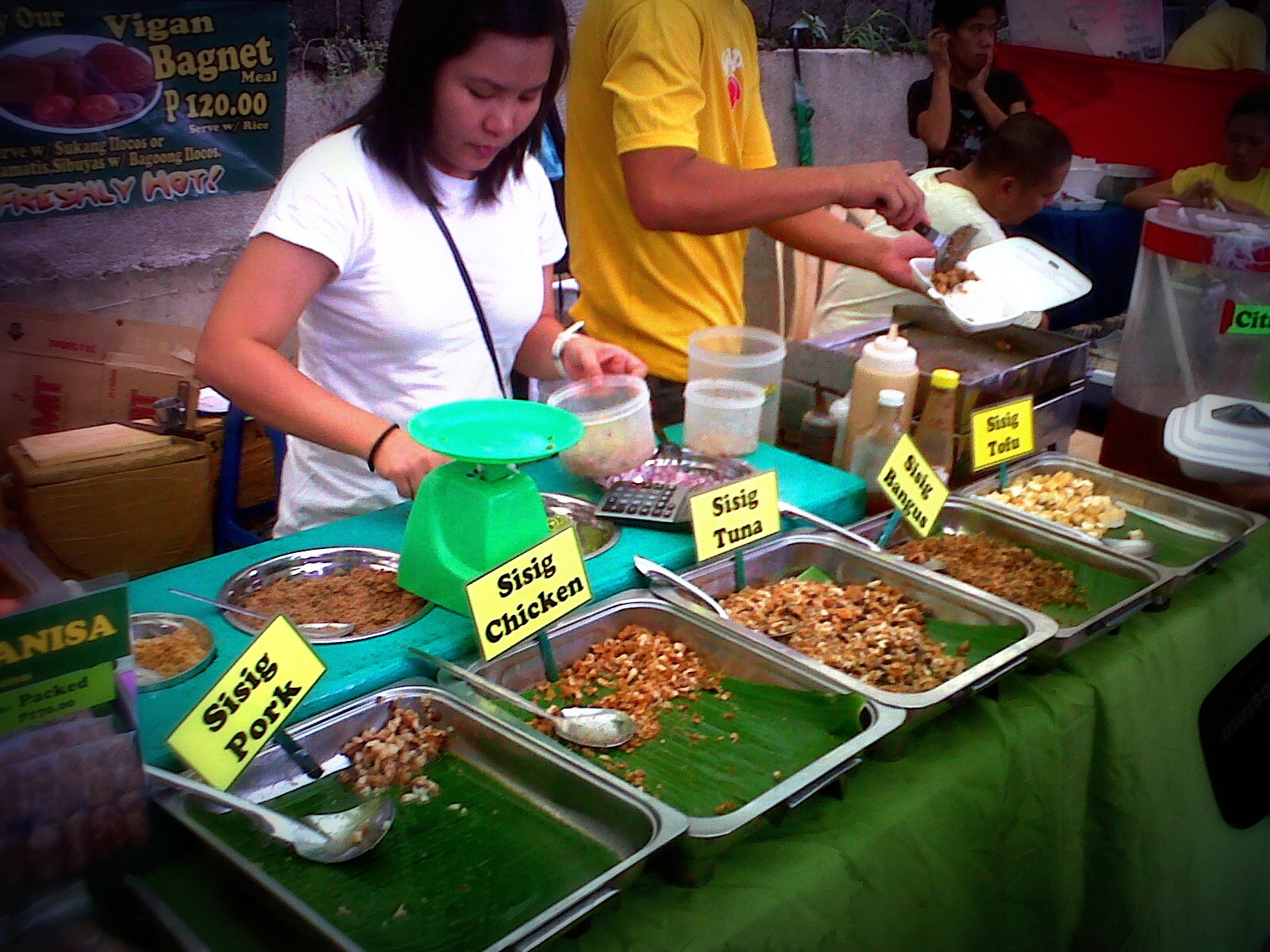
According to Cunanan’s recipe, preparing sisig comes in three phases: boiling, broiling and finally grilling. A pig’s head is first boiled to remove hairs and to tenderize it. Portions of it are then chopped and grilled or broiled. Finally, coarsely chopped onions are added and served on a sizzling plate. Variations of sisig may add any of the following: eggs, ox brains, chicharon (pork cracklings), pork or chicken liver, and even mayonnaise. Recently, local chefs have experimented with ingredients other than pork such as chicken, squid, tuna, and tofu.
 Different sisig supply’s during a festival. Panlasang.
Annual Sisig Festival
The annual „Sisig Festival“ (Sadsaran Qng Angeles) is held every year during the month of December in Angeles City, Pampanga, celebrating the Kapampangan dish. It started in 2003 and was made an annual festival by Mayor Carmelo Lazatin on December 2004 to promote the city’s culinary prowess. The festival also features a contest where chefs compete in making dishes, primarily sisig.
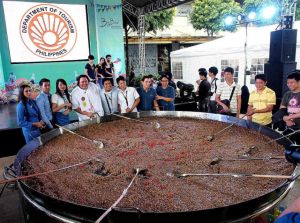 Giant sisig at the sisig festival.
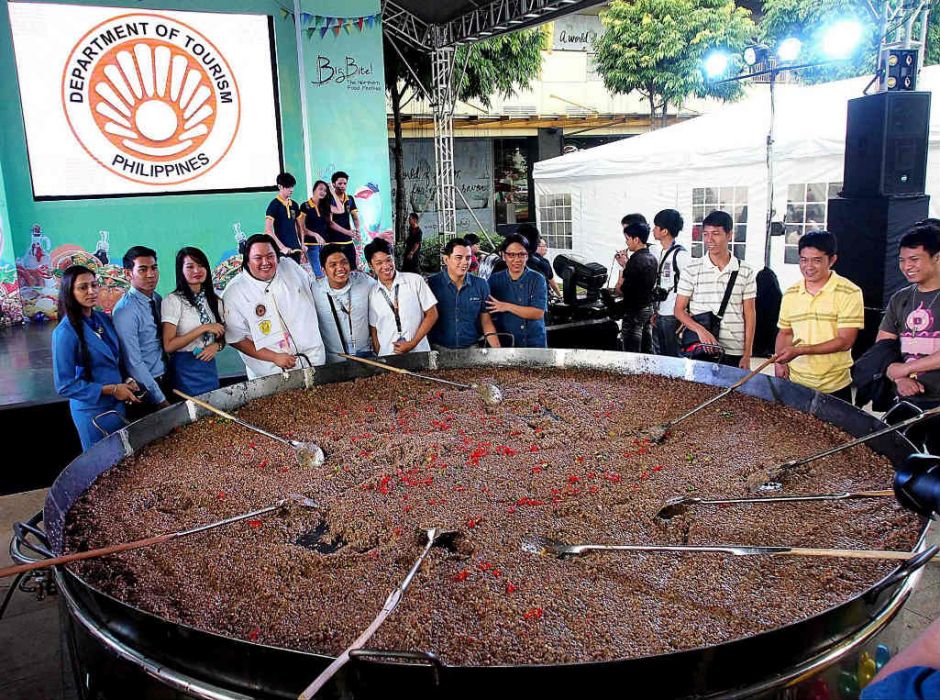
The newly-revived Sisig Fiesta was a one-day event that will line up a sisig sampler banquet, sisig, and BBQ stalls, cooking demonstrations with celebrity chefs, and showcase Angeleno culinary talent through competitions. The event will also be enjoyed by everyone through live bands, dancing, and night market.
Sisig „my version“ ready to go.
My sisig recipe.
As you know now, sisig can be made with dozens of different ingredients. In our western culture, meals with ingredients like pigheads, snouts, pigface, ears and more isn’t very common. They are hard to get and even harder to serve to friends.
That’s why I decided to make some delicious „Pulled Pork“, out of the butt, and use it for my sisig meal. You should have seen the happy faces.
 Ingredients for an original sisig, made as mentioned before. Preparing the pork-meat. Pic by primeyoulife.
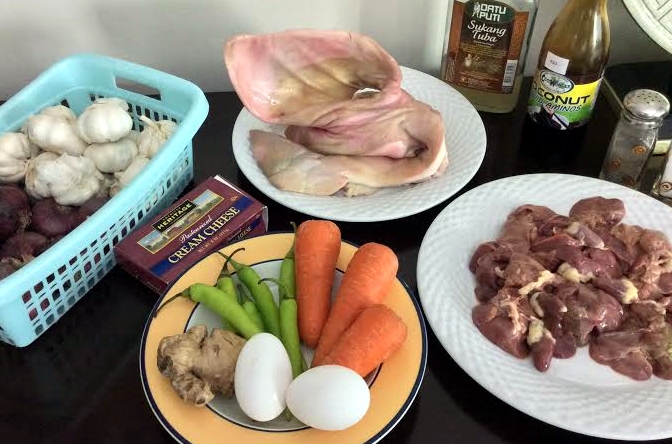
Ingredients:
Pork,
if you like to do it ORIGINAL.
750g (1 1/2 lb) pork cheek
500g (1 lb) pork ears
500g (1 lb) pork, chicken, or beef liver
1 cup pineapple juice
1 teaspoon black peppercorns
1 large yellow onion, sliced
1 head garlic
1/2 cup dark soy sauce
Salt to taste
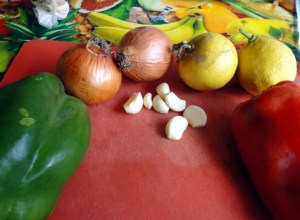 Easy with a few ingredients only.
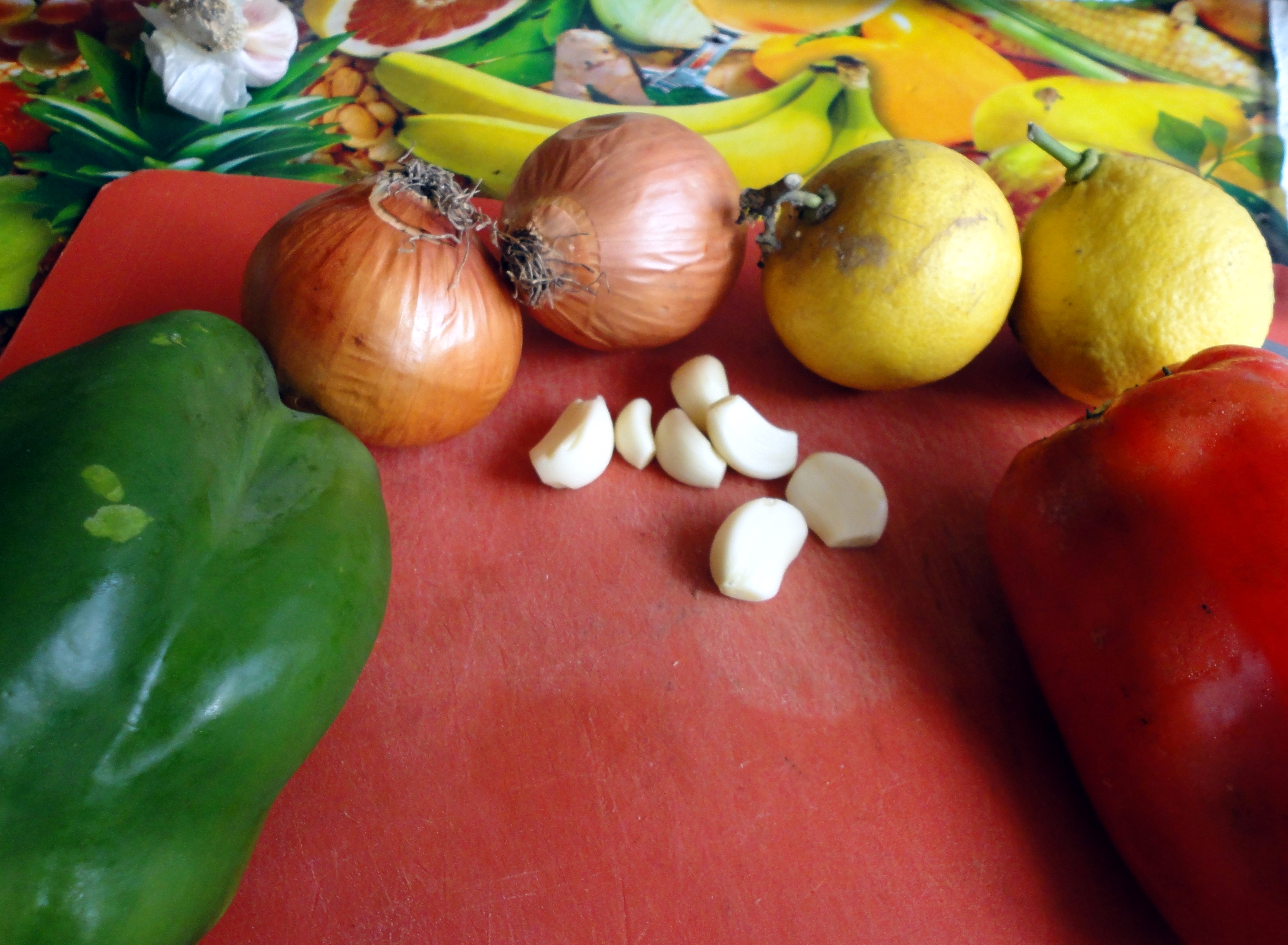
Sisig,
like I did, with about 2000g (4lb) pulled pork shoulder.
2 tablespoons butter or cooking oil (peanut, coconut, vegetable)
2 medium yellow onions, diced
1/2 green paprika, coarsely chopped
1/2 red paprika, coarsely chopped
1 tablespoon ginger, finely chopped
5 cloves garlic, finely chopped
4 small chilli, red and/or green, finely chopped (less for a less spicy sisig)
1/4 cup dark soy sauce
1/2 cup Paombong or coconut vinegar (any good white vinegar will do too)
1/4 cup calamansi juice (substitute can be lemon or lime juice if unavailable)
3 tablespoons mayonnaise
Salt and pepper to taste
Sorry folks, but I refuse to use the American names „chili pepper“ for chilli and „bell pepper“ for paprika. Why ? – I am, so as my blog is, international.
 Using my „Pulled Pork“ as the meat base.
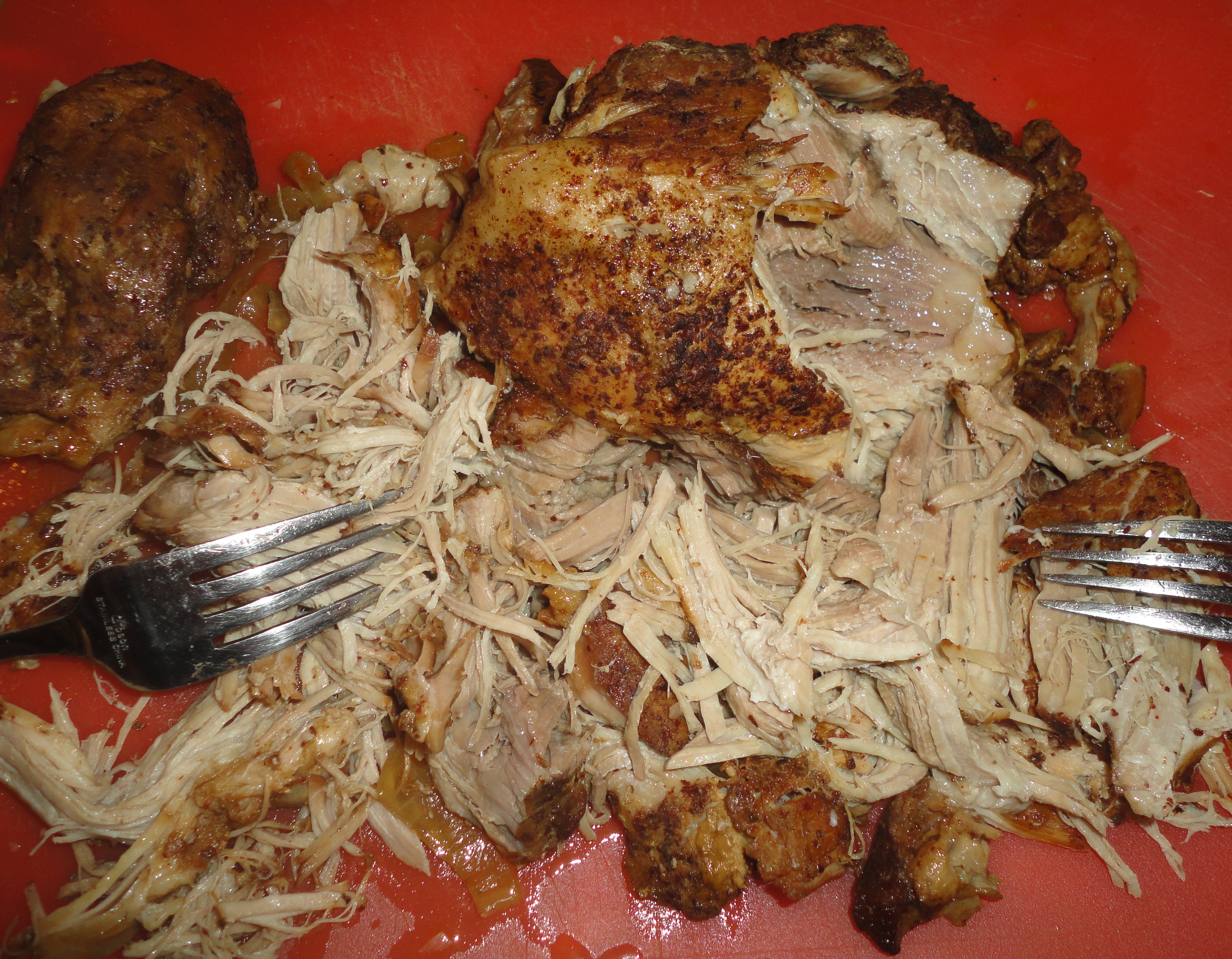
How to do.
Chop the meat into small pieces, about 1 1/2 to 3 cm (1/2 to 1 inch) in square. Reason is, that my sisig is pretty juicy.
For smaller, finer sisig you can use a food processor, pulsing the meat for 2-3 seconds at a time. But here you need to „fry“ it dry, otherwise you end up with some mash.
Melt the butter in a large skillet and add the chopped onions and garlic.
Cook these together for 2-3 minutes, stirring occasionally, till onions get soft.
 All dry ingredients ready to fry till „aldente“.
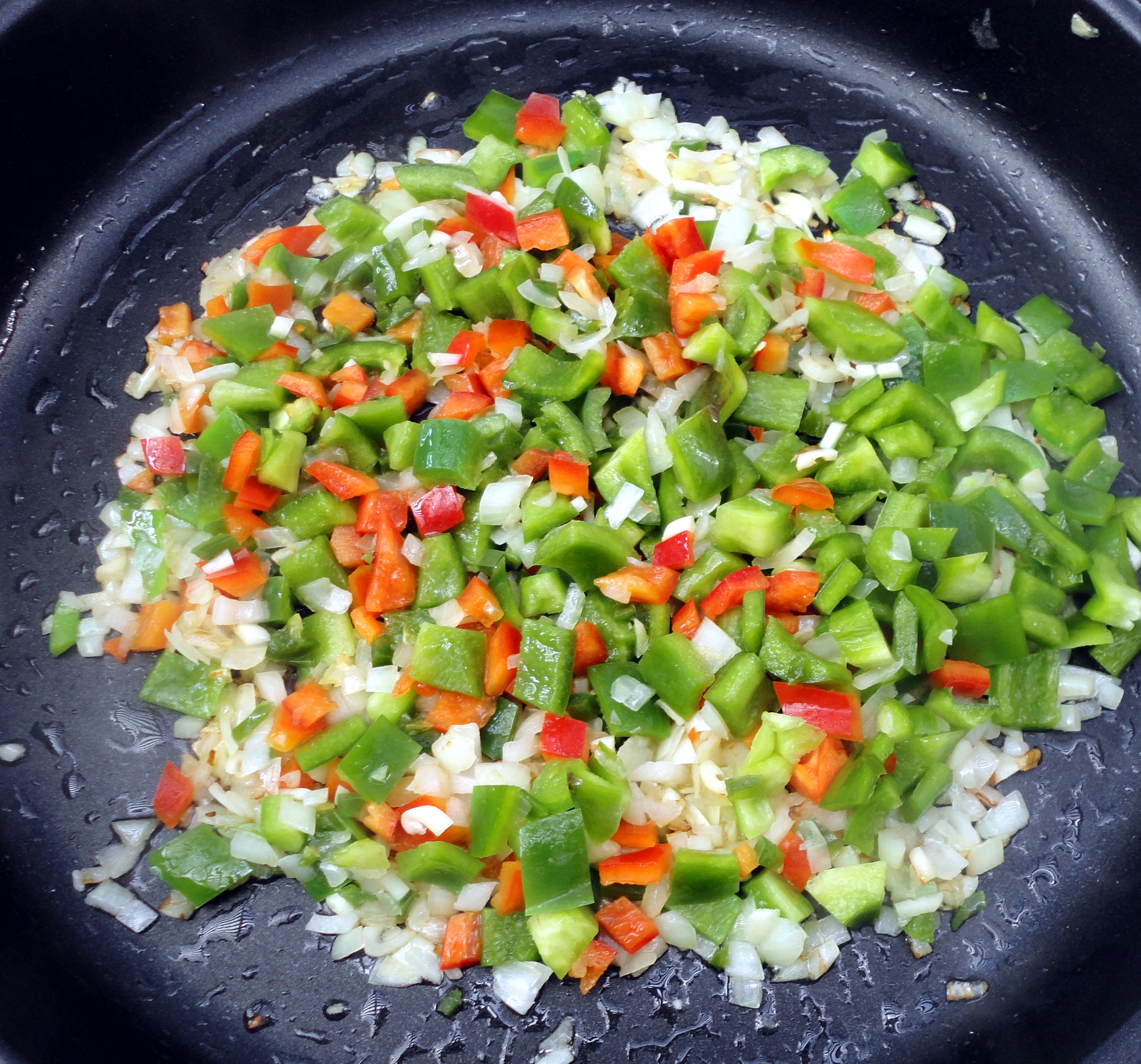
Add the chopped paprika, chilli and ginger.
Stir the mixture to coat everything in butter, then cook for another 1-2 minutes.
Then add the meat to the skillet and stir.
While the meat is already cooked, this marinates the meat in the sisig and brings the whole dish together.
Finally add the calamansi, vinegar, and soy sauce and stir them in to coat the rest of the ingredients.
 All wet ingredients added, to cook through.
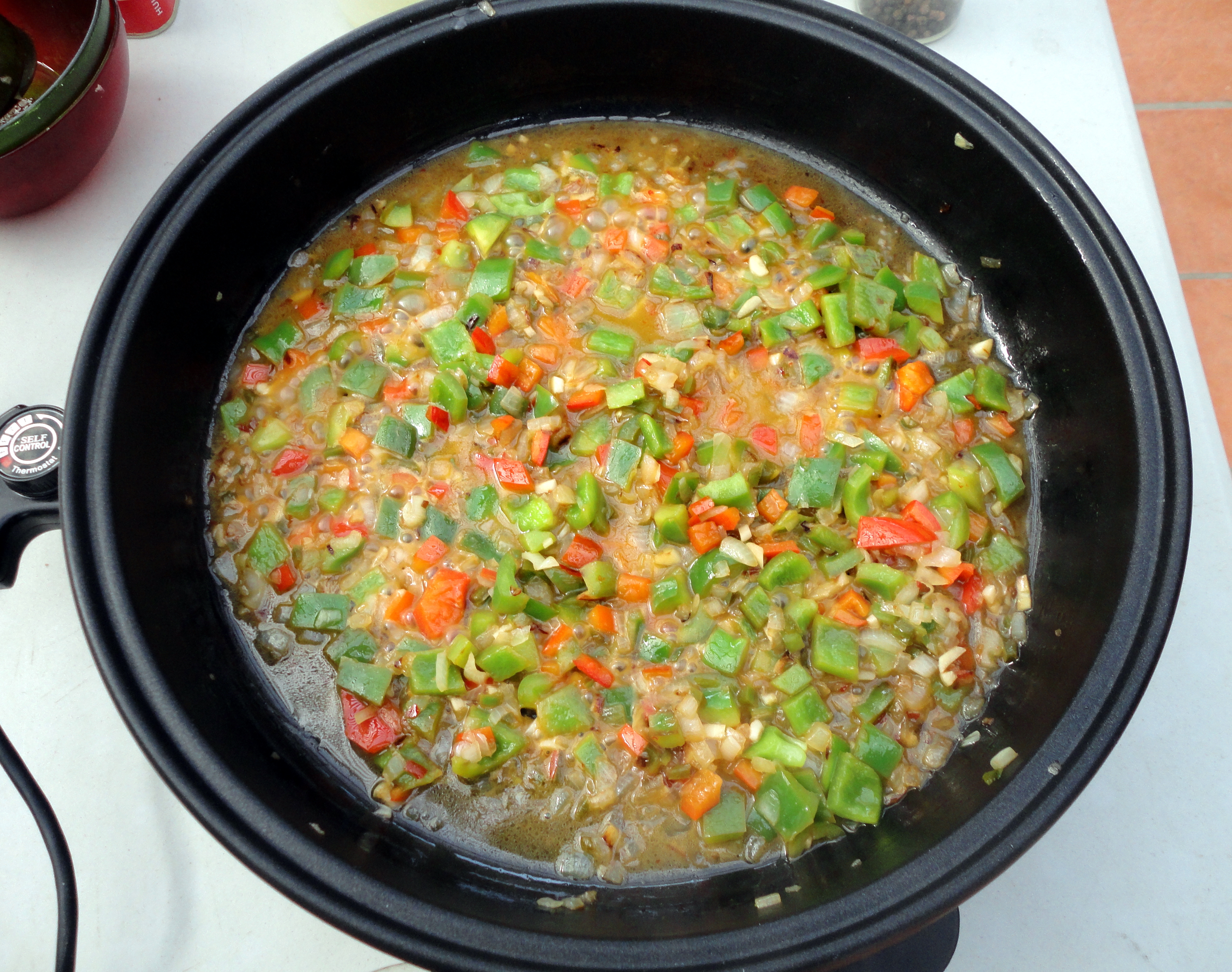
Cook everything together for about 4 minutes.
Since the meat is already cooked, just to mix all the flavors together and reheat the pork.
If you like it juicy, as I did here, poor at the end a few tablespoons of your „pulled pork juice“ into the whole dish.
I always keep that juice anyhow to make my own BBQ sauce.
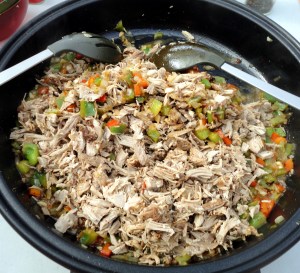 My sisig wasn’t so bad – after all.
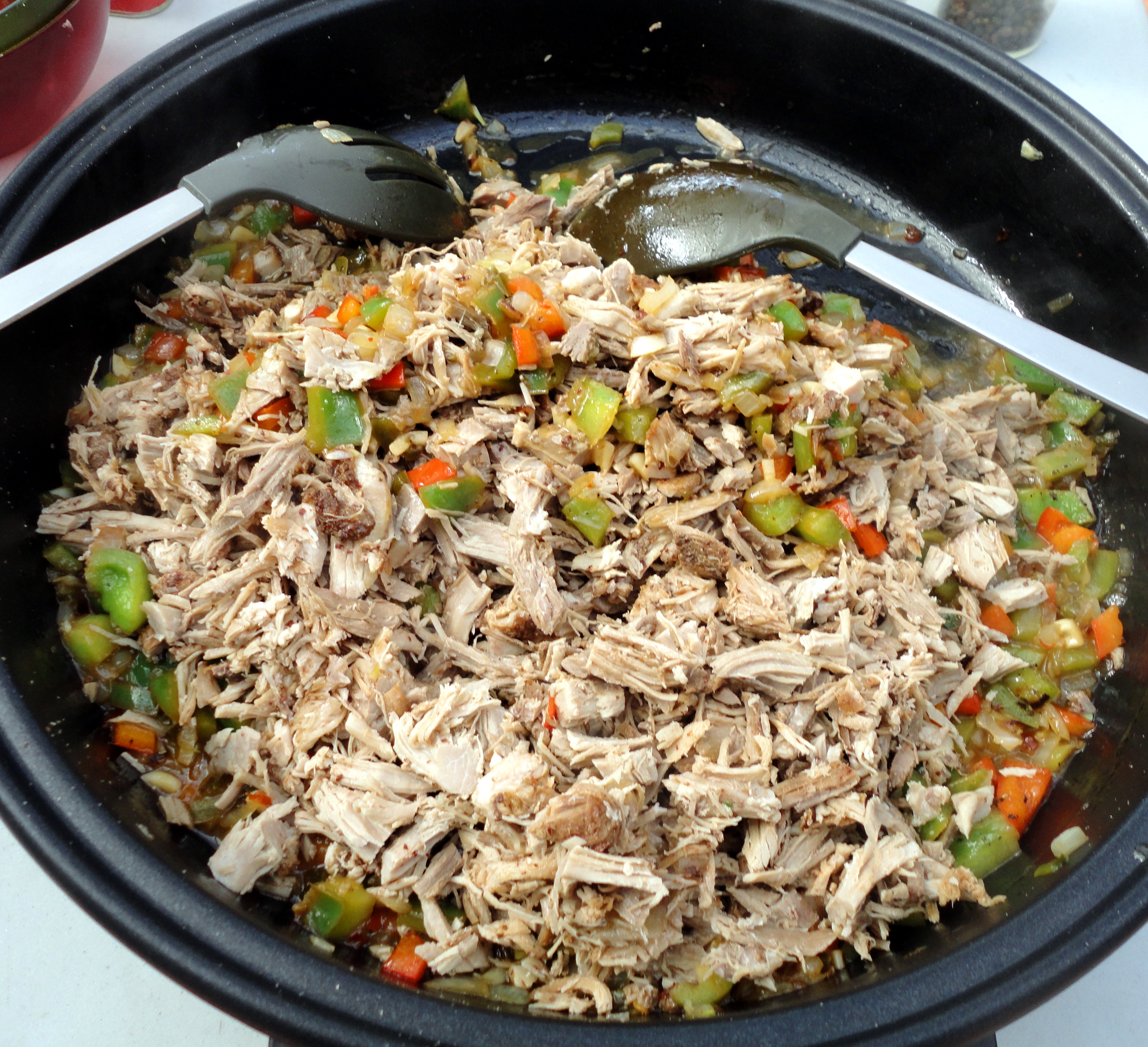
Sisig is often served with an egg on top, or alongside of rice. We had some rice too, but no raw red onion, garlic or fresh chilli. Western palates are not prepared for such „goodies“.
Enjoy your dish !

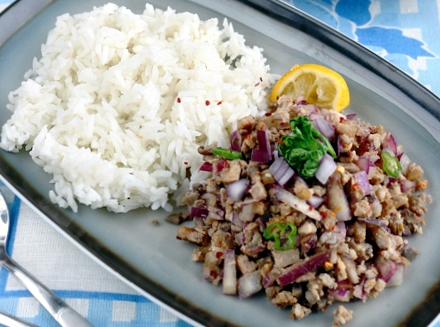
 Restaurant serve of sizzling sisig. With an egg or some rice, or both. Whatever one likes.
Tips.
Serve hot with rice, may be also a fresh asian salad, or just plain with an egg and baguette.
Try different cuts of meat. Pork belly, which is rich in fat, cooks particularly well on the grill and can make decadent sisig. But that has to stay „dry“.
Even those that don’t enjoy pork can still enjoy sisig. By example monk fish (also mackerel or our local corvina) sisig. Debone and fry a white, mild fish, then add it to the sisig mixture as it cooks.
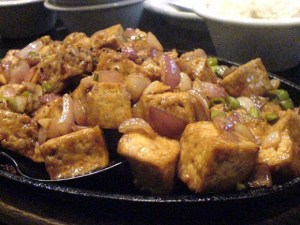
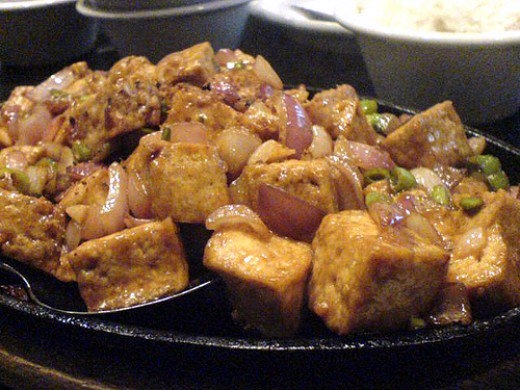
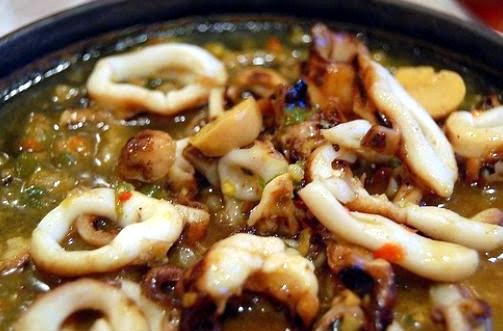
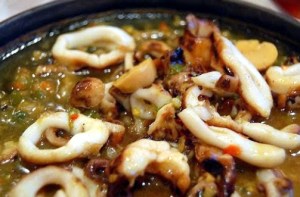 On the left some tofu sisig and on the right some seafood sisig. Both are worth to try, especially as a vegetarian.
Add mayonnaise with the wet ingredients for a richer, thicker sisig. In my recipe I left out the mayo. Many recipes in the Philippines use mayonnaise (mostly homemade) as a binding agent, holding the ingredients together in a light sauce.
The traditional binding agent of sisig is actually pork brains, but this variation is for more adventurous eaters.
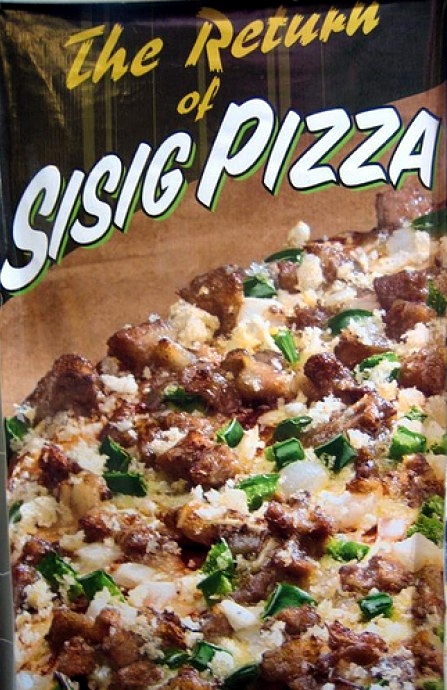
 The „market“ is not sleeping. Premade sisig pizza toppings. Just warm it up. Great stuff for lazy cooks and microwave lovers. Nothing for me !
Spice up your sisig with a custom spice mixture. There are a lot of different spices to throw in the sisig along with your vegetables and pork. Try tossing these ingredients for the last 4-5 minutes of cooking:
1 cube vegetable, chicken, or beef bouillon.
1 tablespoon Chinese 5 spice seasoning.
1-2 crushed bay leaves.
1/2 cup chopped cilantro.
1 teaspoon orange or lemon zest.
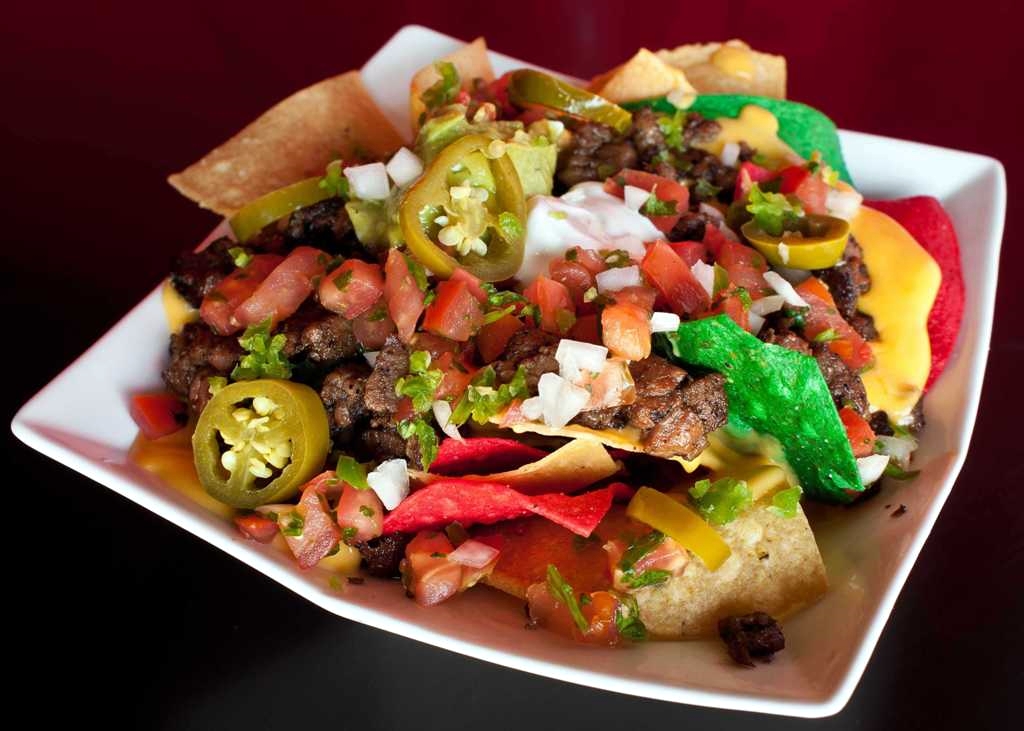
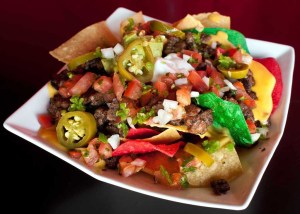 And here we have the Mexican variation, sisig nachos or sisig burritos. All is possible with sisig. May be Anthony Bourdain is right after all.
Thai style could be to use 1/2 a cup of sweet/sour Thai sauce, cilantro and peanuts.
Recipe for the oven:
Mix the pork with the garlic, ginger, soy sauce, onions, chili powder, and 2 tablespoons of vegetable oil.
Refrigerate this pork/mixture/marinade overnight.
Preheat an oven at 350 degrees and cook the pork for 3 hours in a roasting pan.
Cool the pork and chop it into small bits, then continue the recipe as if you had finished grilling it. This recipe works fantastic as a topping on pizza’s. Be creative – TRY !!
 Pizza Hut picked up the idea time ago, not too stupid eeh ? Lechon is a well known pork dish in many country’s around the world, so as the Philippines. The add, as seen above, is from Manila, Philippines.

 And finally another Philippines dish, „Spicy Seafood Sisig Pizza with Thai Basil and Fried Garlic“. A specialty on Cebu, on of the most wonderful destinations of the „1000 islands“ (Philippines), served with a local beer.
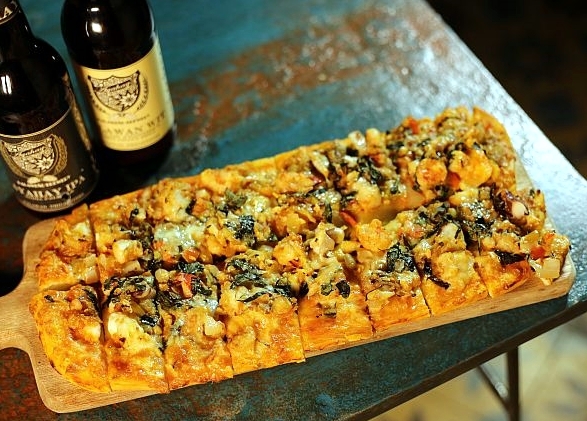
Just by the way – Philippinos enjoy their sisig with a cold beer, mostly San Miguel (its origin is Belgium, but since 1880 on the islands), Red Horse or Katipunan.
Enjoy this wonderful meal as we did and Anthony Bourdain suggests.


Hi Mike,
we tried the sisig last night, instead the usual Saturday BBQ.
It was fantastic ! Thanks for the idea and recipe. We will do that again.
Old Hoo-roo !!
LikeLike
Thanks very much Orca,
but by cooking such a fine dish
you only can honor yourself.
Hiya Mike.
LikeLike
Hi Mike,
wonderful and mouthwatering pics and recipe again – THANKS !
Is there a chance to post the recipe for this green Thai salad ?
Appreciated, Sascia.
LikeLike
Hello Sascia,
thanks v.m. for your warm words.
Yes – no problem – I will post the Thai salad.
Had already some success with my Thai cooking
here in Uruguay. People don’t know about, they
eat meat (cheap bbq chops) all the time. Stat’s
show that UY’s have meat 9 times a week !!???!!
Stay tuned, abrazos Mike.
LikeLike