
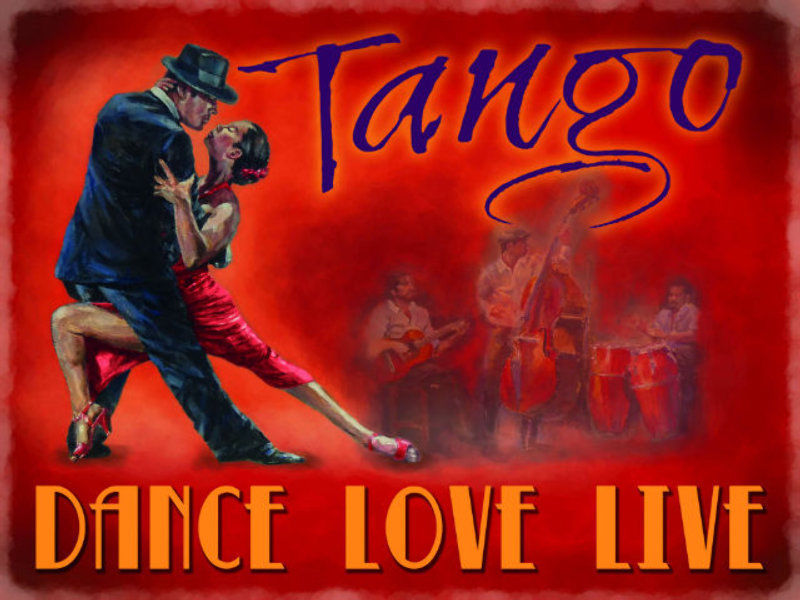
The origin of the term Tango is unclear and controversial. For the first time tango is mentioned in a dictionary, the „Dictionnaire de Voces Cubanas Provincial Esteban Pichardo“ from the year 1836. There is given as meaning: „Meeting of the newcomers from Africa Negroes, dancing to the sound of their drums and timpani (tambores y Atabales)“.
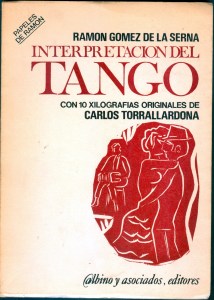
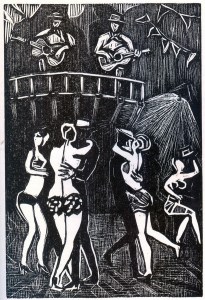
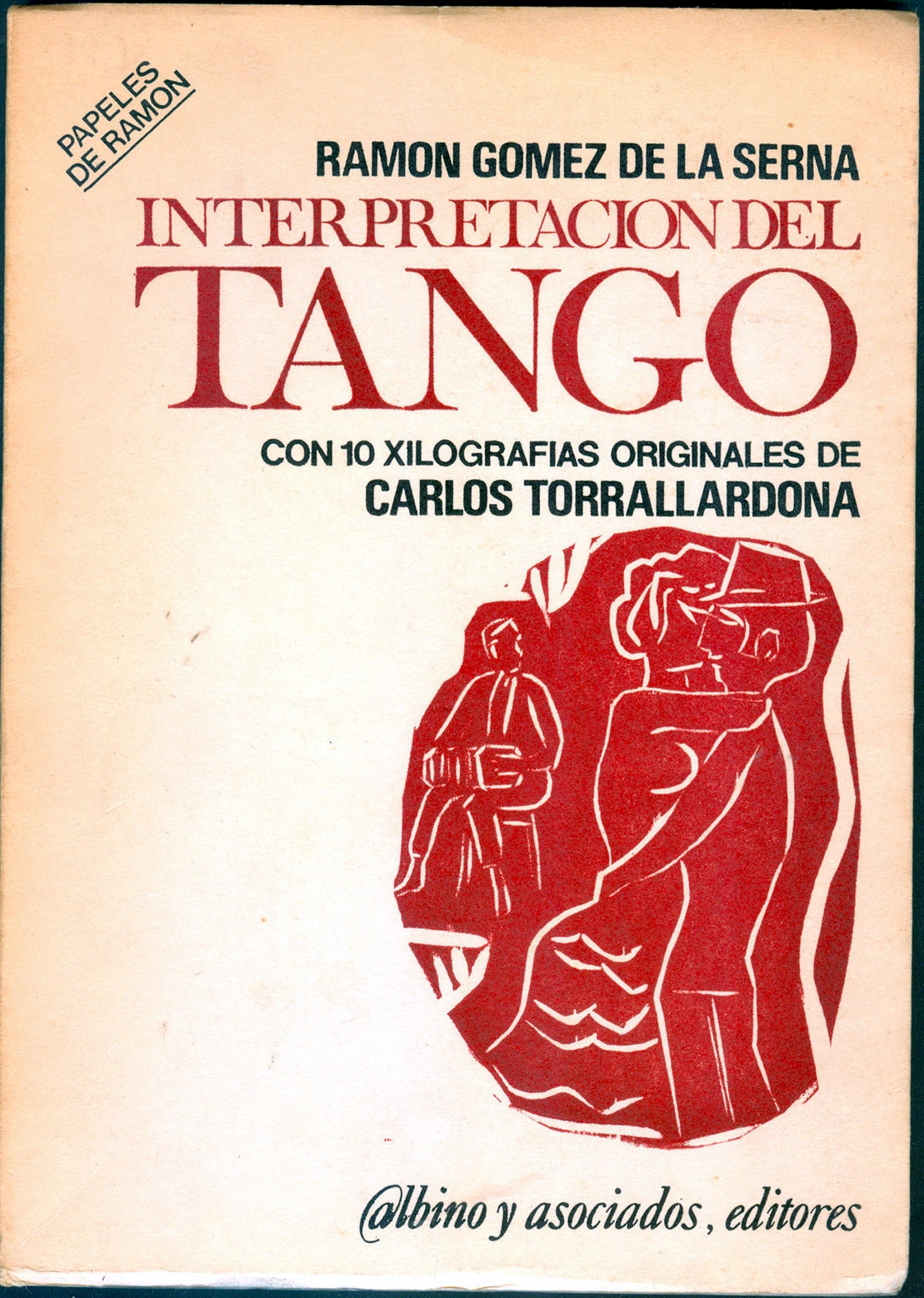
Interpretation of Tango, interesting book about everything Tango, xylographie (woodcut) from contents.
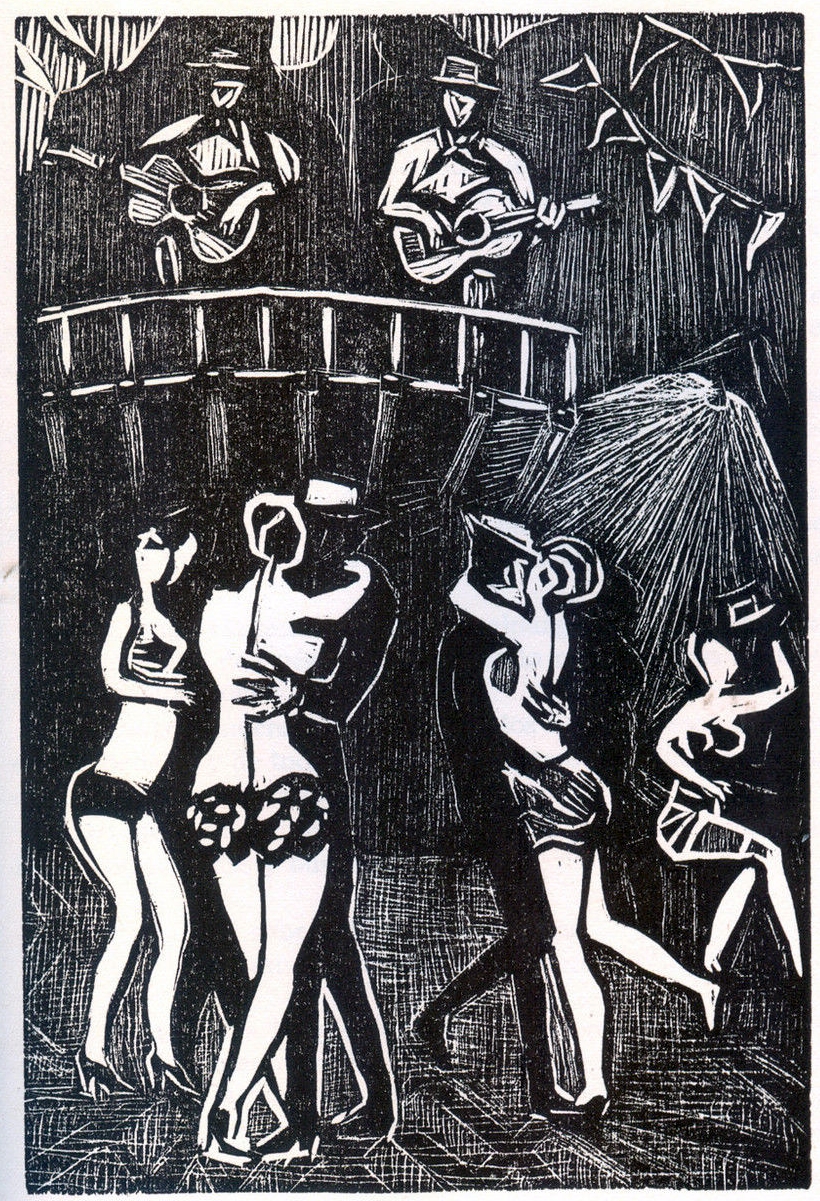
Tango is a rhythm that has its roots in the poor areas of Montevideo around 1880. Then it was extended to other areas and countries. Tango is African-Montevidean [Uruguayan], Tango has black curls in its roots. It was born in the „San Felipe Academy“ [Montevideo], a Montevidean warehouse used for public dances, among gangsters and black people. Then it emigrated to underworld areas of Buenos Aires. This also implies that different forms of dance were originated in the neighborhoods of Montevideo, Uruguay in the last part of the 19th century.
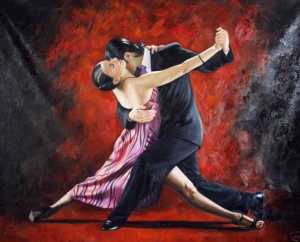 The art of Tango dancing.
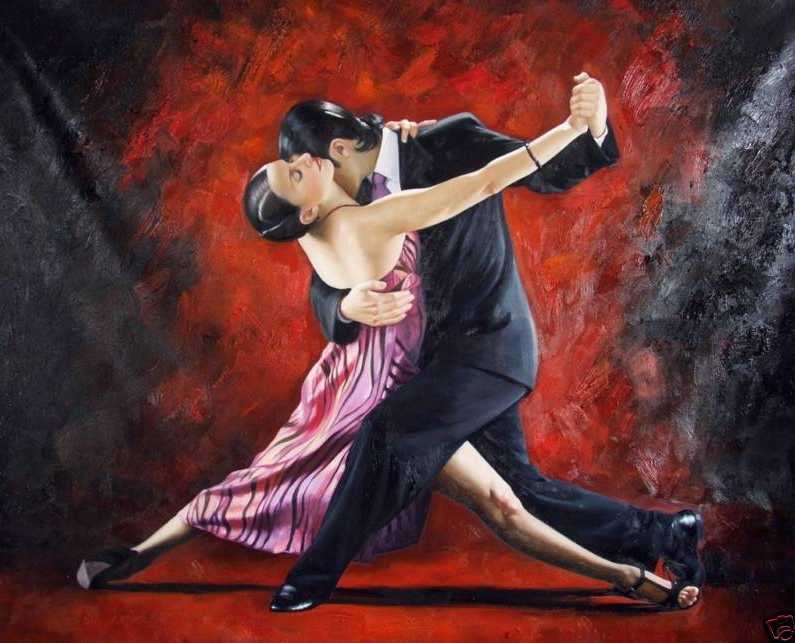
Tango History.
The History of Tango starts on the Río de la Plata area. In the metropolitan areas of Buenos Aires and Montevideo. The most diverse people and cultures met at the end of the 19th century. Although the African-American element in rhythm and choreography of the tango is barely visible, but still the Candombe of Creoles and blacks are an important influence.
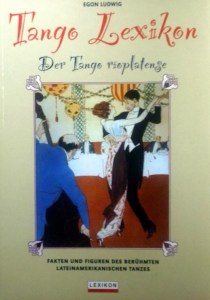 Most impressive German Tango Lexicon „Tango Rioplatense“.
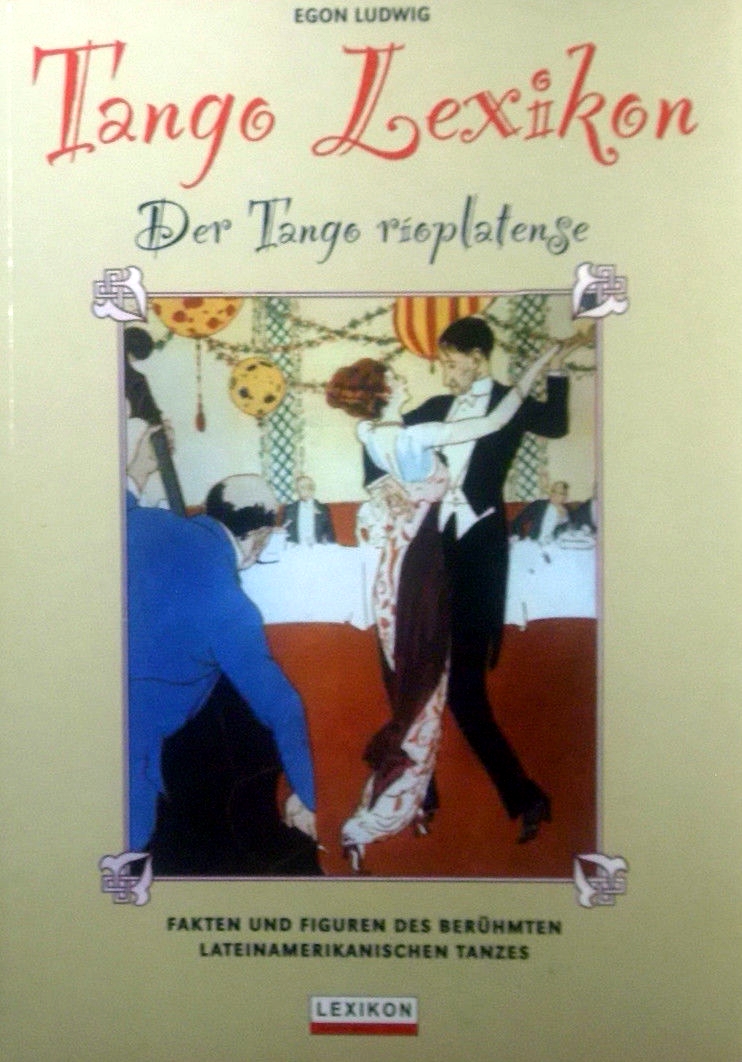
Flute, violin and guitar were initially the standard tools of musicians pulling through pubs, dance halls and streets. Later, piano and bandoneon prevailed as a typical tango instrument. In the port neighborhoods, the barrios (districts) and the Arrabales (suburban areas), in an environment of unemployment, petty crime and prostitution, the tango became an expression of existential distress and human loneliness.
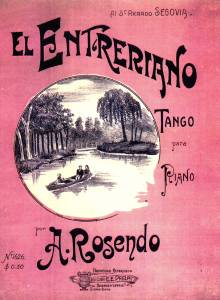 Title page of a later edition of „El Entreriano“.
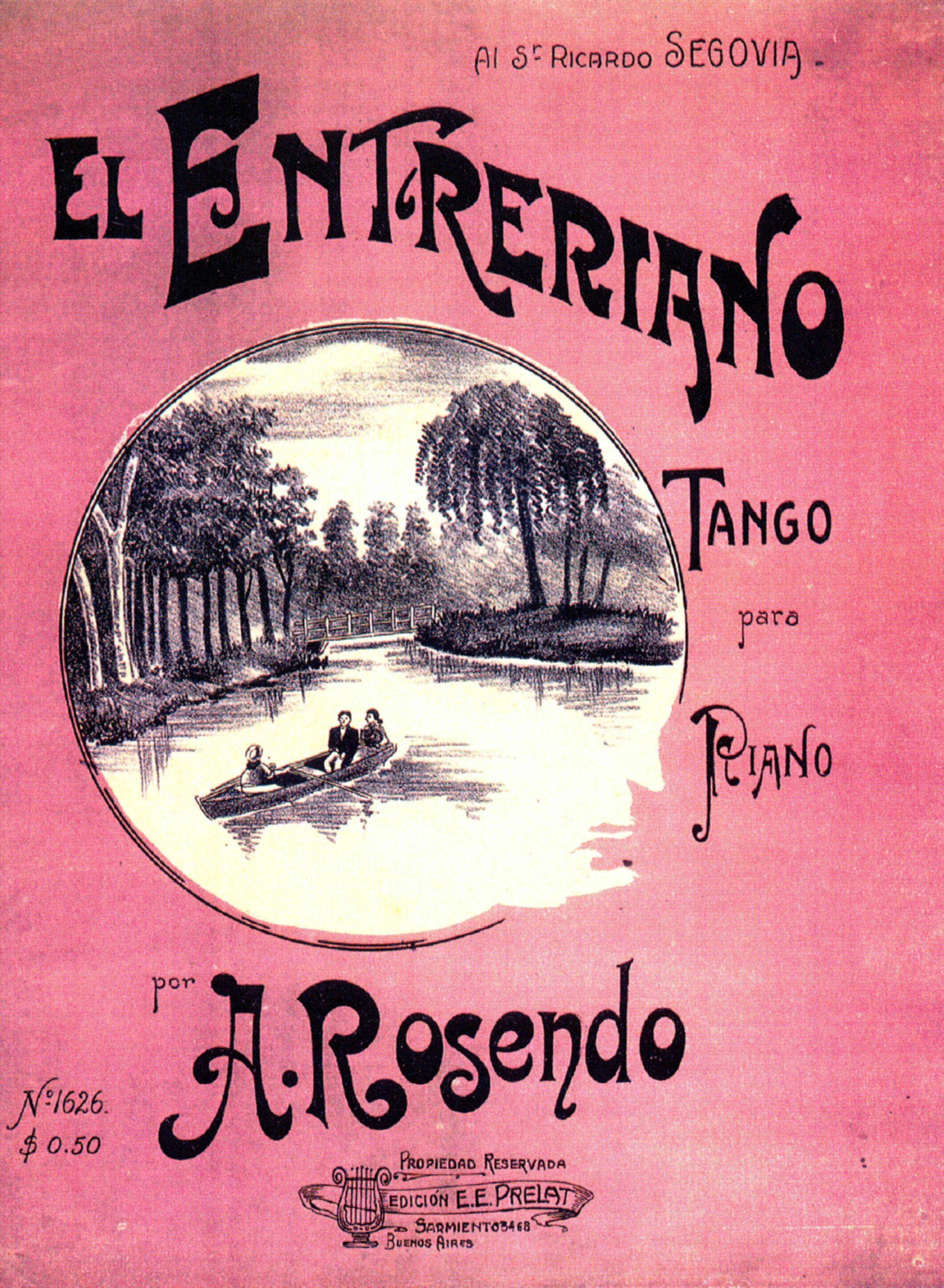
The first published score, which was called Tango for piano, entitled „El Entreriano“ and came from the pen of the mulatto Anselmo Rosendo Mendizabal.
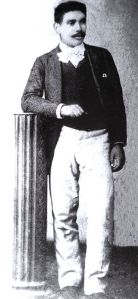 Anselmo Rosendo Mendizabal.
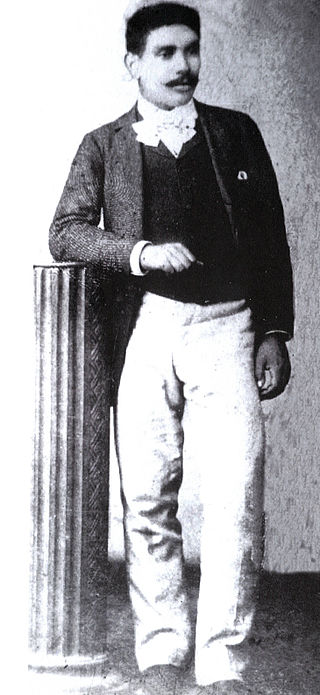
The period 1880-1917 is called the era of the Guardia Vieja (Old Guard). Of the approximately 30 well-known musicians of this time hardly biographical details are known. Most came from extremely poor immigrant families and were able to achieve through their music modest live earnings. The most representative figure is Angel Gregorio Villoldo, a true criollo (Creole).
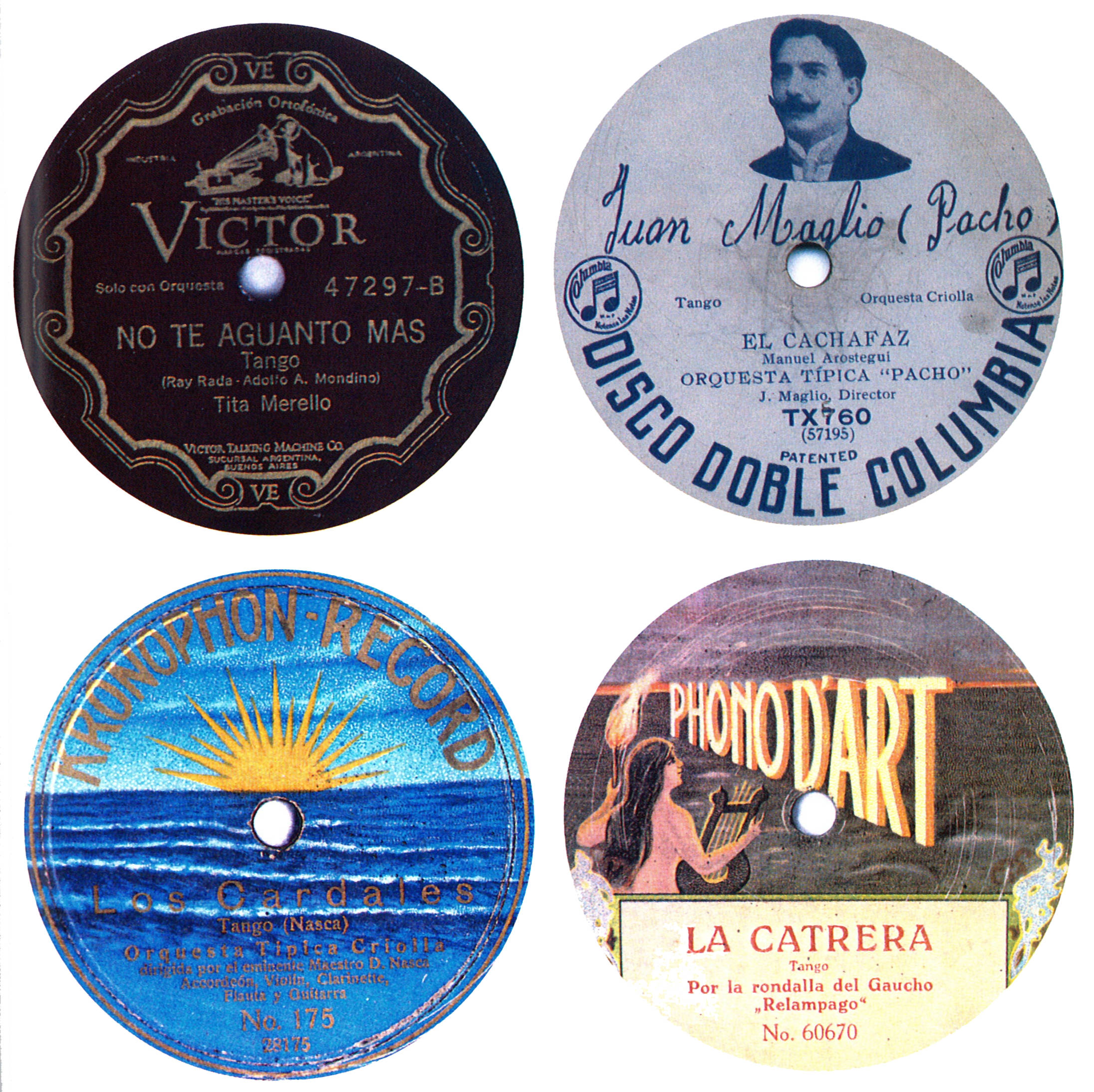
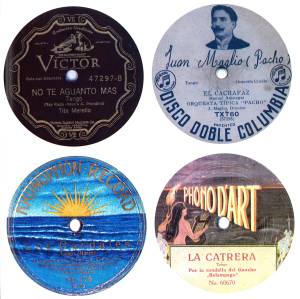 Record labels of the time „Guardia Vieja“.
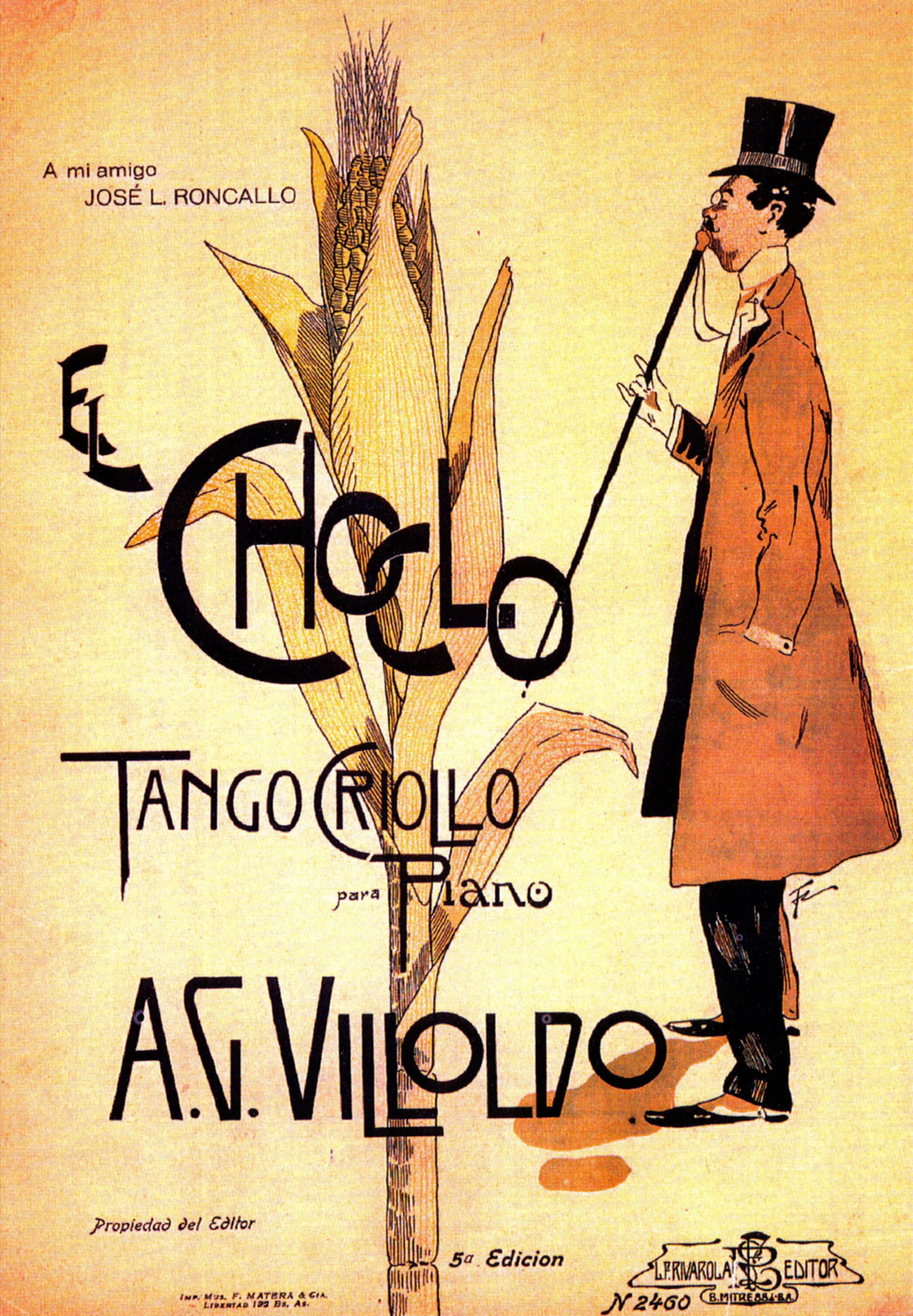
He had worked as a truck driver and in slaughterhouses, was later circus clown and journalist. The vernacular gave him the honorary title „El papa del tango criollo“. He was singer and guitarist and played a, fastened to a rack, harmonica. He soon realized the possibilities of new media record, film and radio, which significantly contributed to the success of the tango. His most famous piece with the ambiguous title El choclo (The corn on the cob) dates back to 1903 and was shortly thereafter released on vinyl.
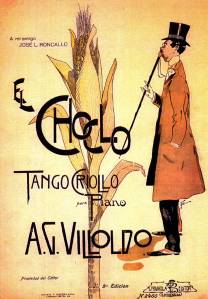 Beautiful designed title page of „El Choclo“.
As early as 1890, the Tango had become an integral part of popular culture on the Rio de la Plata. But in the upper classes it was, because of its origin in the immigrant districts and brothels, continued an expression of depravity and impoverishment. From conservative journalists and sections of the upper class, Tango was ignored or discredited. However, the majority of the population streamed to the milongas (local dance events).
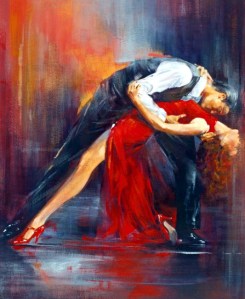 Why is this „dirty“, I think its sportive and expression.
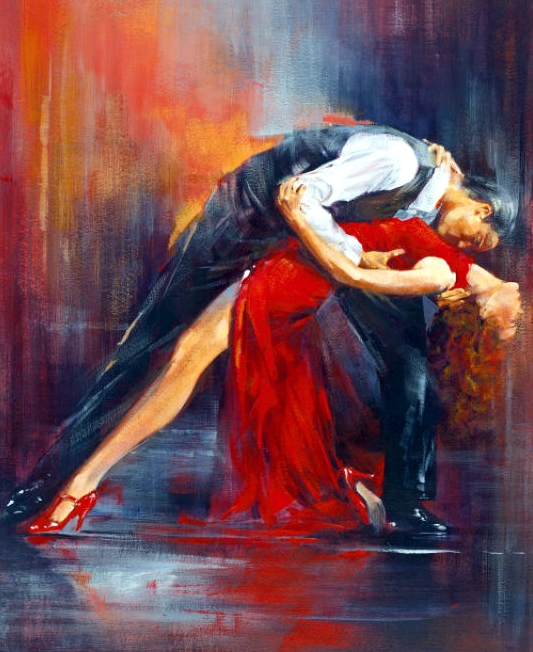
To adjust the „salacious“ dance from the South American suburbs to the movement concepts of European ballroom, dance teachers and choreographers developed the „European Ballroom Dancing“, Tango. But – time goes by – today the „dirty“ Tango is as fashioned as it was around the nineteen hundreds.
 Tango is sexy, it is art.
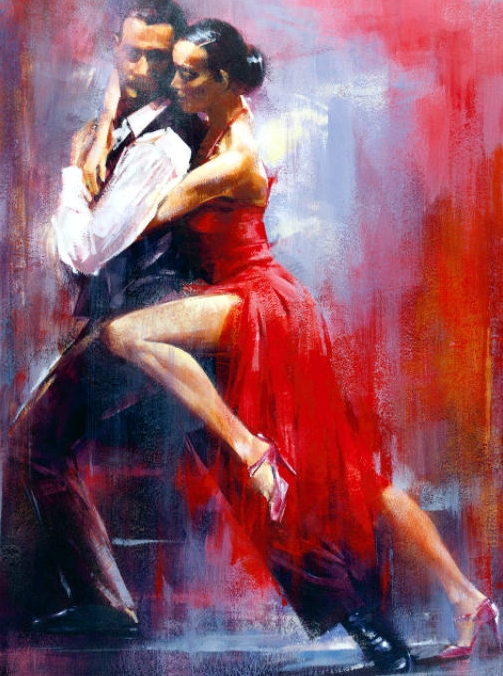
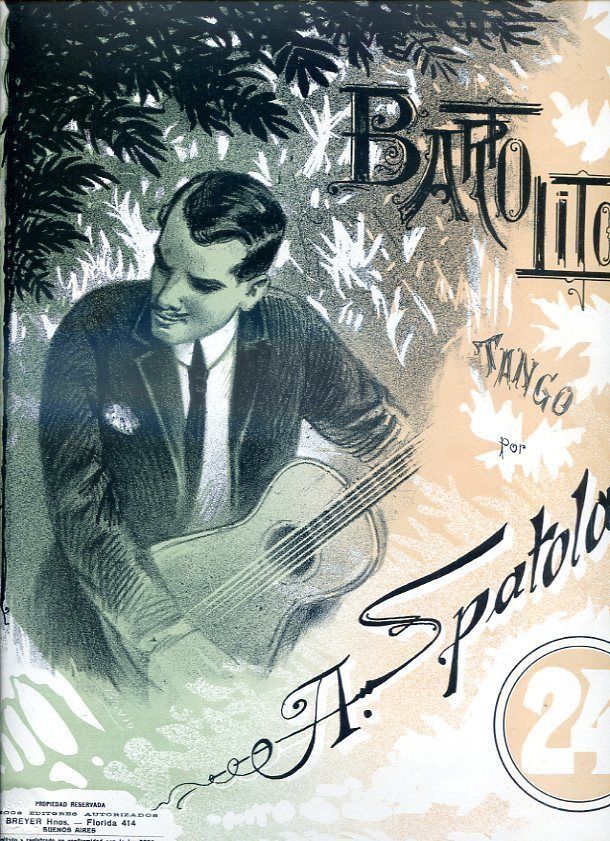
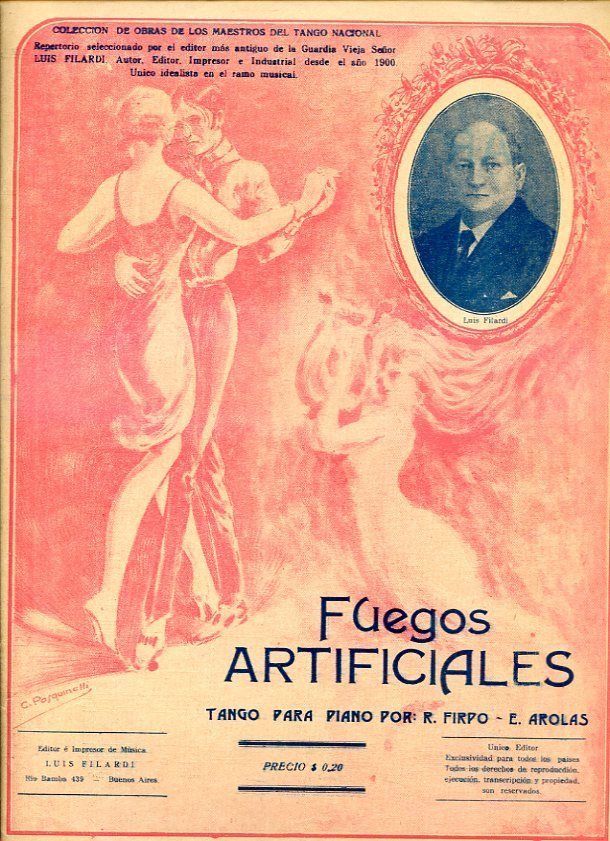
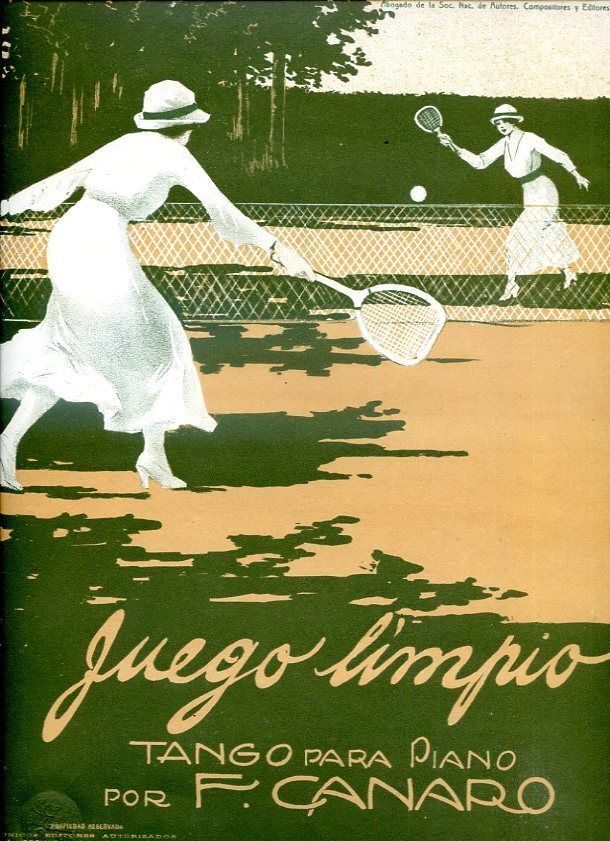
Collecting Tango music sheets.
Down here some Urugayan examples from the authors collection:
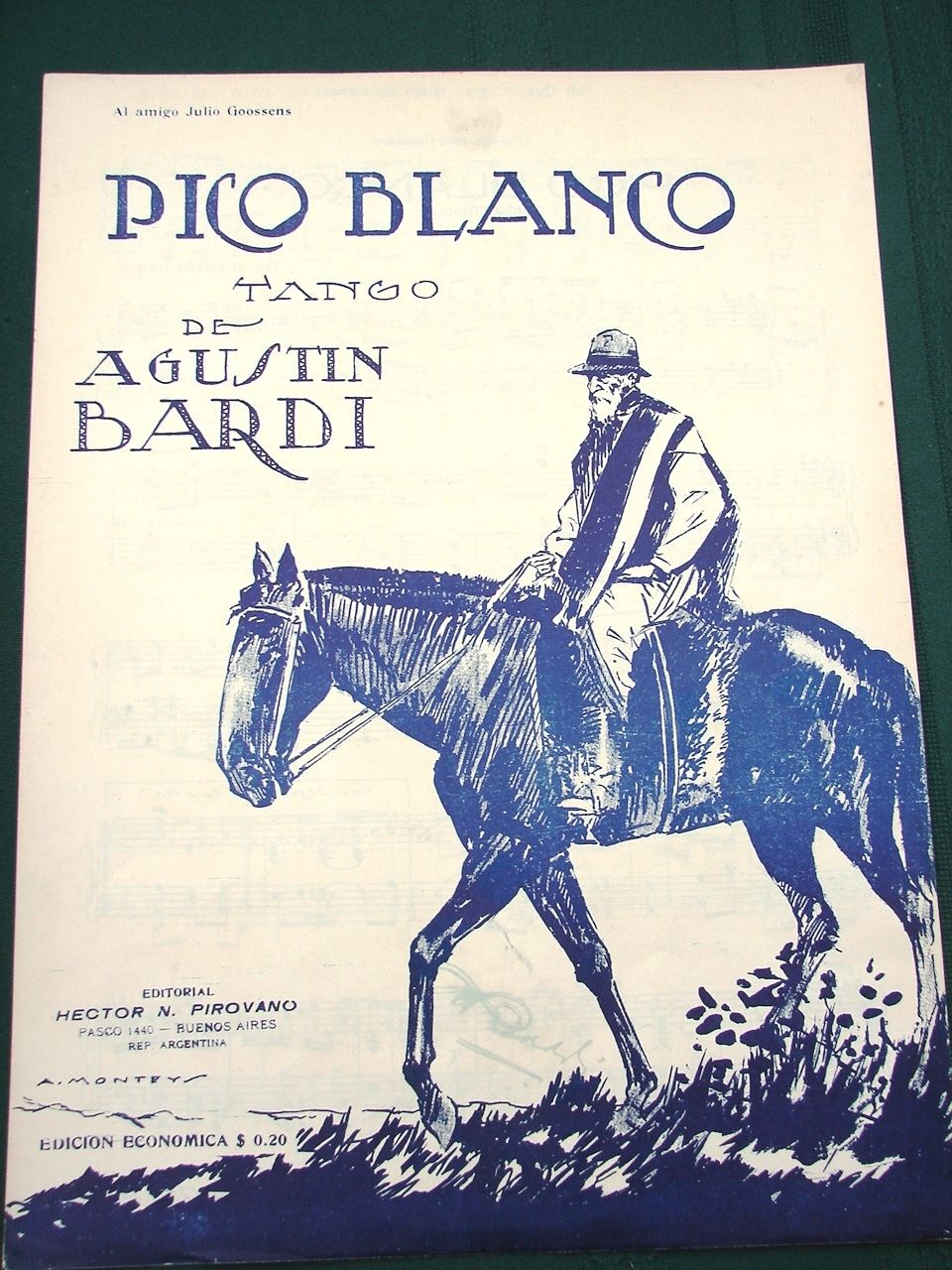
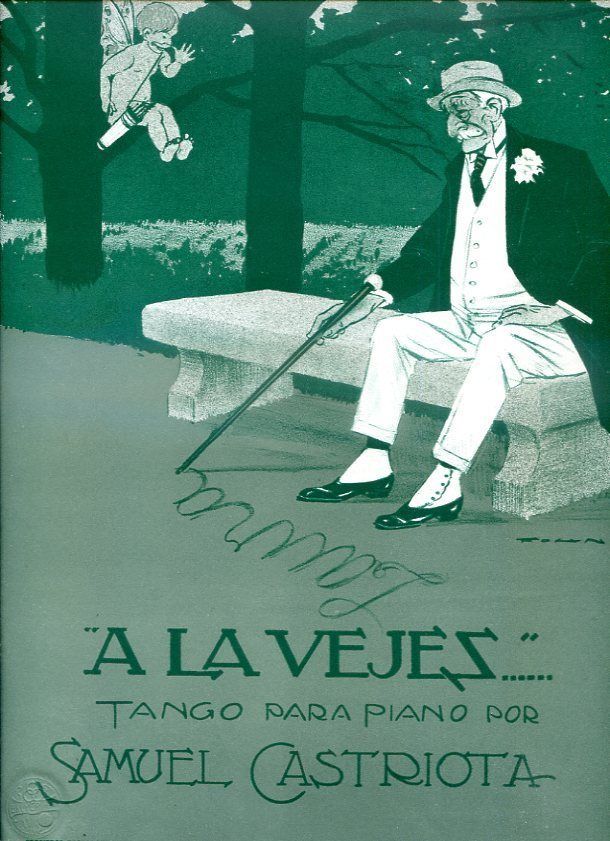
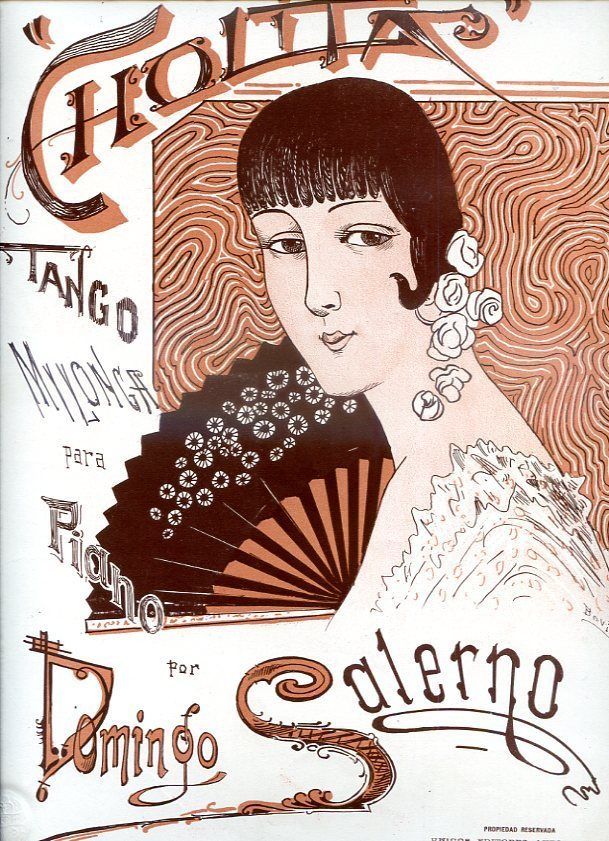
Carlos Gardel.
It was 1917, when Carlos Gardel „Mi noche triste“ recorded, the era of the Tango song began. The music by Samuel Castriota and text by Pascual Contursi is considered the first classic Tango Canción. The sung Tango with its distinct (and even social criticism) texts became more important for the general public. The upper class, although committed love the best tango orchestra for exclusive salon events, but only under the condition to be perfectly behaved and sing no tango lyrics. However, the darlings of the audience were throughout the 20s singers. A shock was the death of Gardel in 1935. The cult of the singer with the nickname Zorzal (The Blackbird), El Mago (the magician) and finally El Mudo (The Mute) is today worshiped in Argentina and Uruguay.
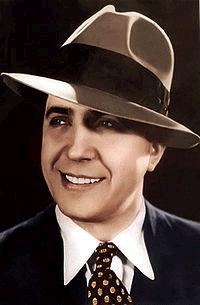 Carlos Gardel.
Carlos Gardel, Charles Romuald Gardes actually (* December 11, 1890 Toulouse, France (according to other sources: December 11, 1887 in Tacuarembó, Uruguay); † June 24, 1935 in a plane crash in Medellin, Colombia), was a tango singer and composer. Gardel is one of the most important personalities of the Tango in the first half of the 20th century.
The question of the birth of Gardel was hotly debated in the past and resulted in Uruguay and Argentina to repeated controversy.
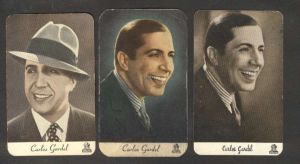 Carlos Gardel, always smiling.
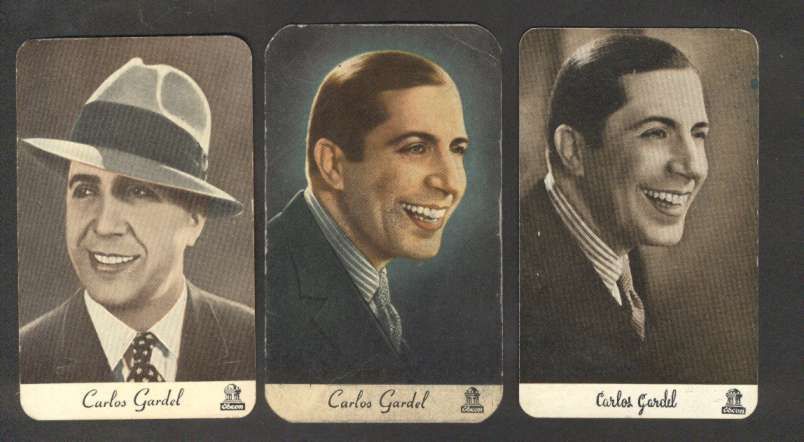
The prevailing view today is that Gardel was born in Toulouse, France. In a handwritten will, which was presented by Gardels executor Armando Defino after his death to the public, Gardel said to have declared himself to have been born in Toulouse as Charles Romuald Gardes.
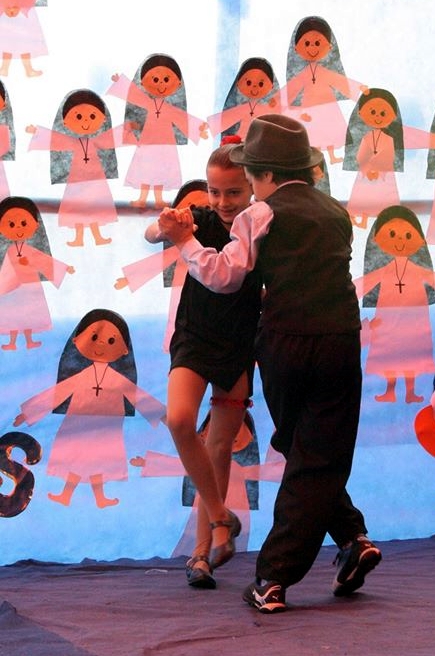
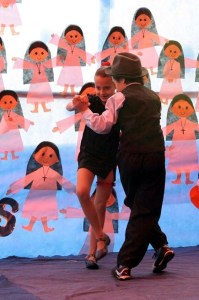 Young Tango Masters in Montevideo.
On 8 October 1920, he told the Uruguayan consulate in Buenos Aires, he was born on 11 December 1887 in Tacuarembó (Uruguay). He further stated that his father Carlos and his mother were Uruguayans. These entries about his origins were then also in the passport, found on June 24, 1935 after the plane crash in Medellin with his remains.
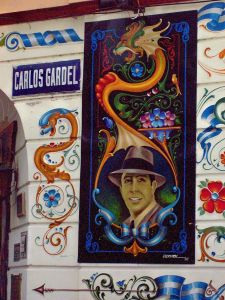 Street, named after „Carlos Gardel“, in Buenos Aires.
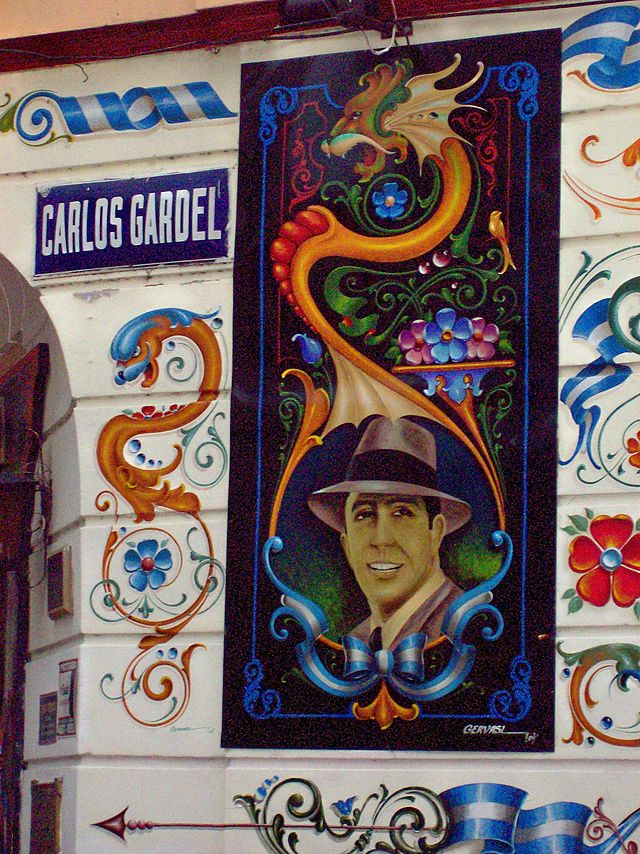
Who knows what is right or wrong, what is true or false. The whole Tango history is an ongoing controversy between Uruguay and Argentina. No wonder, both countries and areas developed shoulder on shoulder during a few hundred years. Anyway Gardel is buried in Buenos Aires and a street is named after him.
Some of Gardels famous Tango songs, now UNESCO documentary heritage:
Mi noche triste (1917)
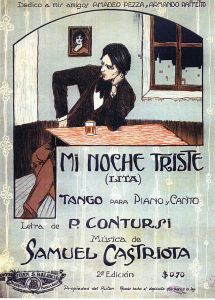
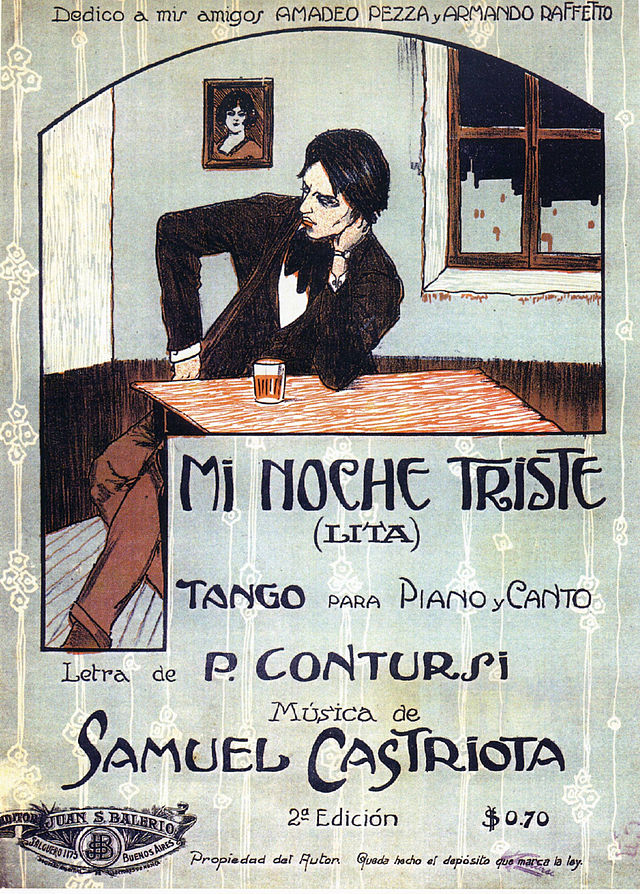
Extremely rare sheet music from 1917. The score´s title of Mi noche triste,
the first tango-song ever. Lyrics by Pascual Contursi; music by Samuel Castriota;
recorded the very first time by Carlos Gardel in May 1917.
Mano a mano (1923, new recorded 1927)
Si supieras (La cumparsita) (1924, new recorded 1927)
Noche de reyes (1927)
Milonga Sentimental (1931)
Tomo y obligo (1931)
Melodía de arrabal (1933)
Mi Buenos Aires querido (1934)
Amores de estudiante (1934)
Golondrinas (1934)
Volver (1935)
Por una cabeza (1935)
Volvió una noche (1935)
El día que me quieras (1935)
Lejana tierra mía (1935)
Sus ojos se cerraron (1935)
Guitarra mía (1935)
Gardels original recordings have been declared by the UNESCO World Documentary Heritage on 1.September 2003. And after many years of controversy, Uruguay finally and officially declared 1936 Gardels birth place in France.
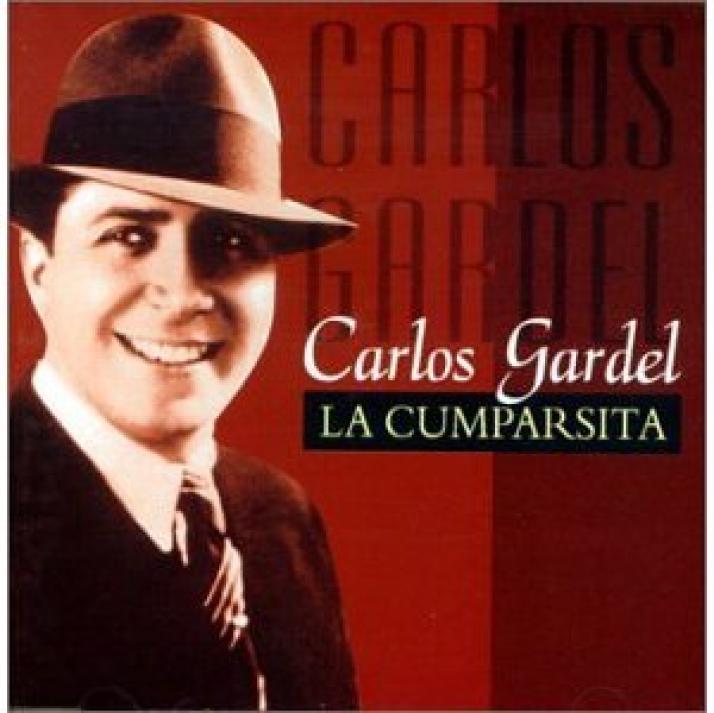
Carlos Gardel was for sure the best singer to present the wonderful Tango
„La Cumparsita“. If you enjoyed the story about Urugayan Tango, then read the second part, about the most famous Tango in the world, La Cumparsita. It is as controversy and exciting as the whole Tango story itself. Stay tuned, I will post 4 parts about Tango.


In 580 Khz AM radio band CW58 Radio Clarín broadcasts 24/7 tango music. Every „even“ hour of the day starts with half an hour of Gardel songs. They stream too:http://www.radioclarin.com/home.htm
LikeLike
Fantastic, thanks very much for this great information !
Tango lovers will much appreciate, so do I !
LikeLike